window.__IS_SSR__=true
window.__INITIAL_STATE__={
"attachmentsReducer": {
"audio_0": {
"type": "attachments",
"id": "audio_0",
"imgSizes": {
"kqedFullSize": {
"file": "https://ww2.kqed.org/news/wp-content/themes/KQED-unified/img/audio_bgs/background0.jpg"
}
}
},
"audio_1": {
"type": "attachments",
"id": "audio_1",
"imgSizes": {
"kqedFullSize": {
"file": "https://ww2.kqed.org/news/wp-content/themes/KQED-unified/img/audio_bgs/background1.jpg"
}
}
},
"audio_2": {
"type": "attachments",
"id": "audio_2",
"imgSizes": {
"kqedFullSize": {
"file": "https://ww2.kqed.org/news/wp-content/themes/KQED-unified/img/audio_bgs/background2.jpg"
}
}
},
"audio_3": {
"type": "attachments",
"id": "audio_3",
"imgSizes": {
"kqedFullSize": {
"file": "https://ww2.kqed.org/news/wp-content/themes/KQED-unified/img/audio_bgs/background3.jpg"
}
}
},
"audio_4": {
"type": "attachments",
"id": "audio_4",
"imgSizes": {
"kqedFullSize": {
"file": "https://ww2.kqed.org/news/wp-content/themes/KQED-unified/img/audio_bgs/background4.jpg"
}
}
},
"placeholder": {
"type": "attachments",
"id": "placeholder",
"imgSizes": {
"thumbnail": {
"file": "https://cdn.kqed.org/wp-content/uploads/2024/12/KQED-Default-Image-816638274-2000x1333-1-160x107.jpg",
"width": 160,
"height": 107,
"mimeType": "image/jpeg"
},
"medium": {
"file": "https://cdn.kqed.org/wp-content/uploads/2024/12/KQED-Default-Image-816638274-2000x1333-1-800x533.jpg",
"width": 800,
"height": 533,
"mimeType": "image/jpeg"
},
"medium_large": {
"file": "https://cdn.kqed.org/wp-content/uploads/2024/12/KQED-Default-Image-816638274-2000x1333-1-768x512.jpg",
"width": 768,
"height": 512,
"mimeType": "image/jpeg"
},
"large": {
"file": "https://cdn.kqed.org/wp-content/uploads/2024/12/KQED-Default-Image-816638274-2000x1333-1-1020x680.jpg",
"width": 1020,
"height": 680,
"mimeType": "image/jpeg"
},
"1536x1536": {
"file": "https://cdn.kqed.org/wp-content/uploads/2024/12/KQED-Default-Image-816638274-2000x1333-1-1536x1024.jpg",
"width": 1536,
"height": 1024,
"mimeType": "image/jpeg"
},
"fd-lrg": {
"file": "https://cdn.kqed.org/wp-content/uploads/2024/12/KQED-Default-Image-816638274-2000x1333-1-1536x1024.jpg",
"width": 1536,
"height": 1024,
"mimeType": "image/jpeg"
},
"fd-med": {
"file": "https://cdn.kqed.org/wp-content/uploads/2024/12/KQED-Default-Image-816638274-2000x1333-1-1020x680.jpg",
"width": 1020,
"height": 680,
"mimeType": "image/jpeg"
},
"fd-sm": {
"file": "https://cdn.kqed.org/wp-content/uploads/2024/12/KQED-Default-Image-816638274-2000x1333-1-800x533.jpg",
"width": 800,
"height": 533,
"mimeType": "image/jpeg"
},
"post-thumbnail": {
"file": "https://cdn.kqed.org/wp-content/uploads/2024/12/KQED-Default-Image-816638274-2000x1333-1-672x372.jpg",
"width": 672,
"height": 372,
"mimeType": "image/jpeg"
},
"twentyfourteen-full-width": {
"file": "https://cdn.kqed.org/wp-content/uploads/2024/12/KQED-Default-Image-816638274-2000x1333-1-1038x576.jpg",
"width": 1038,
"height": 576,
"mimeType": "image/jpeg"
},
"xxsmall": {
"file": "https://cdn.kqed.org/wp-content/uploads/2024/12/KQED-Default-Image-816638274-2000x1333-1-160x107.jpg",
"width": 160,
"height": 107,
"mimeType": "image/jpeg"
},
"xsmall": {
"file": "https://cdn.kqed.org/wp-content/uploads/2024/12/KQED-Default-Image-816638274-2000x1333-1-672x372.jpg",
"width": 672,
"height": 372,
"mimeType": "image/jpeg"
},
"small": {
"file": "https://cdn.kqed.org/wp-content/uploads/2024/12/KQED-Default-Image-816638274-2000x1333-1-672x372.jpg",
"width": 672,
"height": 372,
"mimeType": "image/jpeg"
},
"xlarge": {
"file": "https://cdn.kqed.org/wp-content/uploads/2024/12/KQED-Default-Image-816638274-2000x1333-1-1020x680.jpg",
"width": 1020,
"height": 680,
"mimeType": "image/jpeg"
},
"full-width": {
"file": "https://cdn.kqed.org/wp-content/uploads/2024/12/KQED-Default-Image-816638274-2000x1333-1-1920x1280.jpg",
"width": 1920,
"height": 1280,
"mimeType": "image/jpeg"
},
"guest-author-32": {
"file": "https://cdn.kqed.org/wp-content/uploads/2025/01/KQED-Default-Image-816638274-1333x1333-1-160x160.jpg",
"width": 32,
"height": 32,
"mimeType": "image/jpeg"
},
"guest-author-50": {
"file": "https://cdn.kqed.org/wp-content/uploads/2025/01/KQED-Default-Image-816638274-1333x1333-1-160x160.jpg",
"width": 50,
"height": 50,
"mimeType": "image/jpeg"
},
"guest-author-64": {
"file": "https://cdn.kqed.org/wp-content/uploads/2025/01/KQED-Default-Image-816638274-1333x1333-1-160x160.jpg",
"width": 64,
"height": 64,
"mimeType": "image/jpeg"
},
"guest-author-96": {
"file": "https://cdn.kqed.org/wp-content/uploads/2025/01/KQED-Default-Image-816638274-1333x1333-1-160x160.jpg",
"width": 96,
"height": 96,
"mimeType": "image/jpeg"
},
"guest-author-128": {
"file": "https://cdn.kqed.org/wp-content/uploads/2025/01/KQED-Default-Image-816638274-1333x1333-1-160x160.jpg",
"width": 128,
"height": 128,
"mimeType": "image/jpeg"
},
"detail": {
"file": "https://cdn.kqed.org/wp-content/uploads/2025/01/KQED-Default-Image-816638274-1333x1333-1-160x160.jpg",
"width": 160,
"height": 160,
"mimeType": "image/jpeg"
},
"kqedFullSize": {
"file": "https://cdn.kqed.org/wp-content/uploads/2024/12/KQED-Default-Image-816638274-2000x1333-1.jpg",
"width": 2000,
"height": 1333
}
}
},
"news_11665311": {
"type": "attachments",
"id": "news_11665311",
"meta": {
"index": "attachments_1716263798",
"site": "news",
"id": "11665311",
"found": true
},
"parent": 11665310,
"imgSizes": {
"small": {
"file": "https://ww2.kqed.org/app/uploads/sites/10/2018/04/GettyImages-950407328-520x354.jpg",
"width": 520,
"mimeType": "image/jpeg",
"height": 354
},
"twentyfourteen-full-width": {
"file": "https://ww2.kqed.org/app/uploads/sites/10/2018/04/GettyImages-950407328-1038x576.jpg",
"width": 1038,
"mimeType": "image/jpeg",
"height": 576
},
"thumbnail": {
"file": "https://ww2.kqed.org/app/uploads/sites/10/2018/04/GettyImages-950407328-160x109.jpg",
"width": 160,
"mimeType": "image/jpeg",
"height": 109
},
"fd-sm": {
"file": "https://ww2.kqed.org/app/uploads/sites/10/2018/04/GettyImages-950407328-960x654.jpg",
"width": 960,
"mimeType": "image/jpeg",
"height": 654
},
"post-thumbnail": {
"file": "https://ww2.kqed.org/app/uploads/sites/10/2018/04/GettyImages-950407328-672x372.jpg",
"width": 672,
"mimeType": "image/jpeg",
"height": 372
},
"xsmall": {
"file": "https://ww2.kqed.org/app/uploads/sites/10/2018/04/GettyImages-950407328-375x256.jpg",
"width": 375,
"mimeType": "image/jpeg",
"height": 256
},
"kqedFullSize": {
"file": "https://ww2.kqed.org/app/uploads/sites/10/2018/04/GettyImages-950407328-e1524947017908.jpg",
"width": 1920,
"height": 1308
},
"large": {
"file": "https://ww2.kqed.org/app/uploads/sites/10/2018/04/GettyImages-950407328-1020x695.jpg",
"width": 1020,
"mimeType": "image/jpeg",
"height": 695
},
"xlarge": {
"file": "https://ww2.kqed.org/app/uploads/sites/10/2018/04/GettyImages-950407328-1180x804.jpg",
"width": 1180,
"mimeType": "image/jpeg",
"height": 804
},
"complete_open_graph": {
"file": "https://ww2.kqed.org/app/uploads/sites/10/2018/04/GettyImages-950407328-1200x818.jpg",
"width": 1200,
"mimeType": "image/jpeg",
"height": 818
},
"guest-author-50": {
"file": "https://ww2.kqed.org/app/uploads/sites/10/2018/04/GettyImages-950407328-50x50.jpg",
"width": 50,
"mimeType": "image/jpeg",
"height": 50
},
"guest-author-96": {
"file": "https://ww2.kqed.org/app/uploads/sites/10/2018/04/GettyImages-950407328-96x96.jpg",
"width": 96,
"mimeType": "image/jpeg",
"height": 96
},
"medium": {
"file": "https://ww2.kqed.org/app/uploads/sites/10/2018/04/GettyImages-950407328-800x545.jpg",
"width": 800,
"mimeType": "image/jpeg",
"height": 545
},
"guest-author-64": {
"file": "https://ww2.kqed.org/app/uploads/sites/10/2018/04/GettyImages-950407328-64x64.jpg",
"width": 64,
"mimeType": "image/jpeg",
"height": 64
},
"guest-author-32": {
"file": "https://ww2.kqed.org/app/uploads/sites/10/2018/04/GettyImages-950407328-32x32.jpg",
"width": 32,
"mimeType": "image/jpeg",
"height": 32
},
"fd-lrg": {
"file": "https://ww2.kqed.org/app/uploads/sites/10/2018/04/GettyImages-950407328-1920x1308.jpg",
"width": 1920,
"mimeType": "image/jpeg",
"height": 1308
},
"fd-med": {
"file": "https://ww2.kqed.org/app/uploads/sites/10/2018/04/GettyImages-950407328-1180x804.jpg",
"width": 1180,
"mimeType": "image/jpeg",
"height": 804
},
"full-width": {
"file": "https://ww2.kqed.org/app/uploads/sites/10/2018/04/GettyImages-950407328-1920x1308.jpg",
"width": 1920,
"mimeType": "image/jpeg",
"height": 1308
},
"detail": {
"file": "https://ww2.kqed.org/app/uploads/sites/10/2018/04/GettyImages-950407328-150x150.jpg",
"width": 150,
"mimeType": "image/jpeg",
"height": 150
},
"guest-author-128": {
"file": "https://ww2.kqed.org/app/uploads/sites/10/2018/04/GettyImages-950407328-128x128.jpg",
"width": 128,
"mimeType": "image/jpeg",
"height": 128
},
"xxsmall": {
"file": "https://ww2.kqed.org/app/uploads/sites/10/2018/04/GettyImages-950407328-240x164.jpg",
"width": 240,
"mimeType": "image/jpeg",
"height": 164
}
},
"publishDate": 1524946985,
"modified": 1524947010,
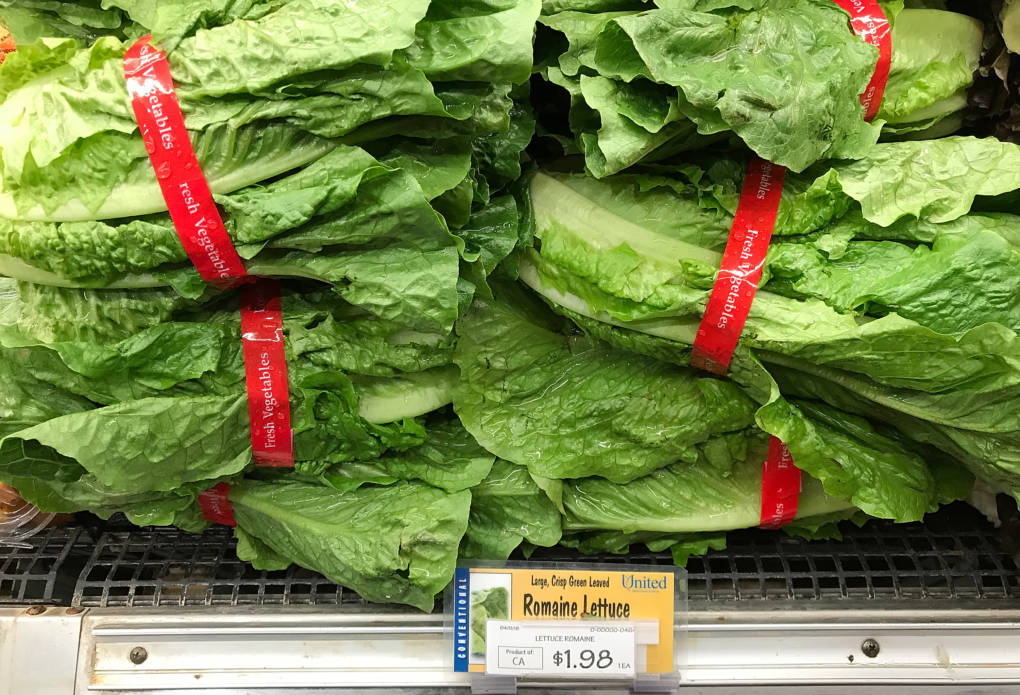
"caption": "Romaine lettuce is displayed on a shelf at a supermarket on April 23, 2018 in San Rafael, California. Keep reading for what we know about cyclosporiasis and California.",
"description": "Romaine lettuce is displayed on a shelf at a supermarket on April 23, 2018 in San Rafael, California. The Food and Drug Administration and the Centers for Disease Control and Prevention is advising American consumers to throw away and avoid eating Romaine lettuce, especially if its origin is from Yuma, Arizona as investigators try to figure out the cause of an E. coli outbreak.",
"title": "CDC Warns Americans Against Eating Romaine Lettuce After E Coli Outbreak",
"credit": "Justin Sullivan/Getty Images",
"status": "inherit",
"isLoading": false,
"fetchFailed": false
},
"news_11391652": {
"type": "attachments",
"id": "news_11391652",
"meta": {
"index": "attachments_1716263798",
"site": "news",
"id": "11391652",
"found": true
},
"parent": 11391651,
"imgSizes": {
"small": {
"file": "https://ww2.kqed.org/app/uploads/sites/10/2017/04/gettyimages-84674999-272e4d9602509b640a3288b5aa8fd95454c9a110-520x389.jpg",
"width": 520,
"mimeType": "image/jpeg",
"height": 389
},
"twentyfourteen-full-width": {
"file": "https://ww2.kqed.org/app/uploads/sites/10/2017/04/gettyimages-84674999-272e4d9602509b640a3288b5aa8fd95454c9a110-1038x576.jpg",
"width": 1038,
"mimeType": "image/jpeg",
"height": 576
},
"thumbnail": {
"file": "https://ww2.kqed.org/app/uploads/sites/10/2017/04/gettyimages-84674999-272e4d9602509b640a3288b5aa8fd95454c9a110-160x120.jpg",
"width": 160,
"mimeType": "image/jpeg",
"height": 120
},
"fd-sm": {
"file": "https://ww2.kqed.org/app/uploads/sites/10/2017/04/gettyimages-84674999-272e4d9602509b640a3288b5aa8fd95454c9a110-960x719.jpg",
"width": 960,
"mimeType": "image/jpeg",
"height": 719
},
"post-thumbnail": {
"file": "https://ww2.kqed.org/app/uploads/sites/10/2017/04/gettyimages-84674999-272e4d9602509b640a3288b5aa8fd95454c9a110-672x372.jpg",
"width": 672,
"mimeType": "image/jpeg",
"height": 372
},
"xsmall": {
"file": "https://ww2.kqed.org/app/uploads/sites/10/2017/04/gettyimages-84674999-272e4d9602509b640a3288b5aa8fd95454c9a110-375x281.jpg",
"width": 375,
"mimeType": "image/jpeg",
"height": 281
},
"kqedFullSize": {
"file": "https://ww2.kqed.org/app/uploads/sites/10/2017/04/gettyimages-84674999-272e4d9602509b640a3288b5aa8fd95454c9a110-e1491337540814.jpg",
"width": 1920,
"height": 1438
},
"large": {
"file": "https://ww2.kqed.org/app/uploads/sites/10/2017/04/gettyimages-84674999-272e4d9602509b640a3288b5aa8fd95454c9a110-1020x764.jpg",
"width": 1020,
"mimeType": "image/jpeg",
"height": 764
},
"xlarge": {
"file": "https://ww2.kqed.org/app/uploads/sites/10/2017/04/gettyimages-84674999-272e4d9602509b640a3288b5aa8fd95454c9a110-1180x884.jpg",
"width": 1180,
"mimeType": "image/jpeg",
"height": 884
},
"guest-author-50": {
"file": "https://ww2.kqed.org/app/uploads/sites/10/2017/04/gettyimages-84674999-272e4d9602509b640a3288b5aa8fd95454c9a110-50x50.jpg",
"width": 50,
"mimeType": "image/jpeg",
"height": 50
},
"guest-author-96": {
"file": "https://ww2.kqed.org/app/uploads/sites/10/2017/04/gettyimages-84674999-272e4d9602509b640a3288b5aa8fd95454c9a110-96x96.jpg",
"width": 96,
"mimeType": "image/jpeg",
"height": 96
},
"medium": {
"file": "https://ww2.kqed.org/app/uploads/sites/10/2017/04/gettyimages-84674999-272e4d9602509b640a3288b5aa8fd95454c9a110-800x599.jpg",
"width": 800,
"mimeType": "image/jpeg",
"height": 599
},
"guest-author-64": {
"file": "https://ww2.kqed.org/app/uploads/sites/10/2017/04/gettyimages-84674999-272e4d9602509b640a3288b5aa8fd95454c9a110-64x64.jpg",
"width": 64,
"mimeType": "image/jpeg",
"height": 64
},
"guest-author-32": {
"file": "https://ww2.kqed.org/app/uploads/sites/10/2017/04/gettyimages-84674999-272e4d9602509b640a3288b5aa8fd95454c9a110-32x32.jpg",
"width": 32,
"mimeType": "image/jpeg",
"height": 32
},
"fd-lrg": {
"file": "https://ww2.kqed.org/app/uploads/sites/10/2017/04/gettyimages-84674999-272e4d9602509b640a3288b5aa8fd95454c9a110-1920x1438.jpg",
"width": 1920,
"mimeType": "image/jpeg",
"height": 1438
},
"fd-med": {
"file": "https://ww2.kqed.org/app/uploads/sites/10/2017/04/gettyimages-84674999-272e4d9602509b640a3288b5aa8fd95454c9a110-1180x884.jpg",
"width": 1180,
"mimeType": "image/jpeg",
"height": 884
},
"full-width": {
"file": "https://ww2.kqed.org/app/uploads/sites/10/2017/04/gettyimages-84674999-272e4d9602509b640a3288b5aa8fd95454c9a110-1920x1438.jpg",
"width": 1920,
"mimeType": "image/jpeg",
"height": 1438
},
"detail": {
"file": "https://ww2.kqed.org/app/uploads/sites/10/2017/04/gettyimages-84674999-272e4d9602509b640a3288b5aa8fd95454c9a110-150x150.jpg",
"width": 150,
"mimeType": "image/jpeg",
"height": 150
},
"guest-author-128": {
"file": "https://ww2.kqed.org/app/uploads/sites/10/2017/04/gettyimages-84674999-272e4d9602509b640a3288b5aa8fd95454c9a110-128x128.jpg",
"width": 128,
"mimeType": "image/jpeg",
"height": 128
},
"xxsmall": {
"file": "https://ww2.kqed.org/app/uploads/sites/10/2017/04/gettyimages-84674999-272e4d9602509b640a3288b5aa8fd95454c9a110-240x180.jpg",
"width": 240,
"mimeType": "image/jpeg",
"height": 180
}
},
"publishDate": 1491337453,
"modified": 1491337590,
"caption": "Signage is seen at the State of California Department of Motor Vehicles (DMV) in Pasadena, California.",
"description": "Signage is seen at the State of California Department of Motor Vehicles (DMV) in Pasadena, California.",
"title": "Signage is seen at the State of California Department of Motor Vehicles (DMV) in Pasadena, California.",
"credit": "David McNew/Getty Images",
"status": "inherit",
"isLoading": false,
"fetchFailed": false
},
"news_12090146": {
"type": "attachments",
"id": "news_12090146",
"meta": {
"index": "attachments_1716263798",
"site": "news",
"id": "12090146",
"found": true
},
"title": "Seattle Mariners v San Francisco Giants",
"publishDate": 1783466012,
"status": "inherit",
"parent": 12089894,
"modified": 1783466070,
"caption": "Mike Yastrzemski and Heliot Ramos of the San Francisco Giants celebrate after Yastrzemski hit a three-run home run against the Seattle Mariners in the bottom of the fourth inning at Oracle Park on April 6, 2025 in San Francisco, California. ",
"credit": "Thearon W. Henderson/Getty Images",
"altTag": null,
"description": null,
"imgSizes": {
"thumbnail": {
"file": "https://cdn.kqed.org/wp-content/uploads/sites/10/2026/07/GettyImages-2208881091-160x108.jpg",
"width": 160,
"height": 108,
"mimeType": "image/jpeg"
},
"1536x1536": {
"file": "https://cdn.kqed.org/wp-content/uploads/sites/10/2026/07/GettyImages-2208881091-1536x1037.jpg",
"width": 1536,
"height": 1037,
"mimeType": "image/jpeg"
},
"post-thumbnail": {
"file": "https://cdn.kqed.org/wp-content/uploads/sites/10/2026/07/GettyImages-2208881091-672x372.jpg",
"width": 672,
"height": 372,
"mimeType": "image/jpeg"
},
"twentyfourteen-full-width": {
"file": "https://cdn.kqed.org/wp-content/uploads/sites/10/2026/07/GettyImages-2208881091-1038x576.jpg",
"width": 1038,
"height": 576,
"mimeType": "image/jpeg"
},
"npr-cds-wide": {
"file": "https://cdn.kqed.org/wp-content/uploads/sites/10/2026/07/GettyImages-2208881091-1200x675.jpg",
"width": 1200,
"height": 675,
"mimeType": "image/jpeg"
},
"npr-cds-square": {
"file": "https://cdn.kqed.org/wp-content/uploads/sites/10/2026/07/GettyImages-2208881091-600x600.jpg",
"width": 600,
"height": 600,
"mimeType": "image/jpeg"
},
"kqedFullSize": {
"file": "https://cdn.kqed.org/wp-content/uploads/sites/10/2026/07/GettyImages-2208881091.jpg",
"width": 1980,
"height": 1337
}
},
"isLoading": false,
"fetchFailed": false
},
"news_12076722": {
"type": "attachments",
"id": "news_12076722",
"meta": {
"index": "attachments_1716263798",
"site": "news",
"id": "12076722",
"found": true
},
"title": "IMG_1406",
"publishDate": 1773770098,
"status": "inherit",
"parent": 12076503,
"modified": 1773770129,
"caption": "With the World Cup around the corner, here are the Bay Area soccer teams to know.",
"credit": "Anna Vignet/KQED",
"altTag": null,
"description": null,
"imgSizes": {
"medium": {
"file": "https://cdn.kqed.org/wp-content/uploads/sites/10/2026/03/IMG_1406-2000x1500.jpg",
"width": 2000,
"height": 1500,
"mimeType": "image/jpeg"
},
"large": {
"file": "https://cdn.kqed.org/wp-content/uploads/sites/10/2026/03/IMG_1406-2000x1500.jpg",
"width": 2000,
"height": 1500,
"mimeType": "image/jpeg"
},
"thumbnail": {
"file": "https://cdn.kqed.org/wp-content/uploads/sites/10/2026/03/IMG_1406-160x120.jpg",
"width": 160,
"height": 120,
"mimeType": "image/jpeg"
},
"1536x1536": {
"file": "https://cdn.kqed.org/wp-content/uploads/sites/10/2026/03/IMG_1406-1536x1152.jpg",
"width": 1536,
"height": 1152,
"mimeType": "image/jpeg"
},
"2048x2048": {
"file": "https://cdn.kqed.org/wp-content/uploads/sites/10/2026/03/IMG_1406-2048x1536.jpg",
"width": 2048,
"height": 1536,
"mimeType": "image/jpeg"
},
"post-thumbnail": {
"file": "https://cdn.kqed.org/wp-content/uploads/sites/10/2026/03/IMG_1406-672x372.jpg",
"width": 672,
"height": 372,
"mimeType": "image/jpeg"
},
"twentyfourteen-full-width": {
"file": "https://cdn.kqed.org/wp-content/uploads/sites/10/2026/03/IMG_1406-1038x576.jpg",
"width": 1038,
"height": 576,
"mimeType": "image/jpeg"
},
"full-width": {
"file": "https://cdn.kqed.org/wp-content/uploads/sites/10/2026/03/IMG_1406-2000x1500.jpg",
"width": 2000,
"height": 1500,
"mimeType": "image/jpeg"
},
"npr-cds-wide": {
"file": "https://cdn.kqed.org/wp-content/uploads/sites/10/2026/03/IMG_1406-1200x675.jpg",
"width": 1200,
"height": 675,
"mimeType": "image/jpeg"
},
"kqedFullSize": {
"file": "https://cdn.kqed.org/wp-content/uploads/sites/10/2026/03/IMG_1406.jpg",
"width": 2560,
"height": 1920
}
},
"isLoading": false,
"fetchFailed": false
},
"news_12088068": {
"type": "attachments",
"id": "news_12088068",
"meta": {
"index": "attachments_1716263798",
"site": "news",
"id": "12088068",
"found": true
},
"title": "Sonoma State Historic Park",
"publishDate": 1781799569,
"status": "inherit",
"parent": 12088039,
"modified": 1781799590,
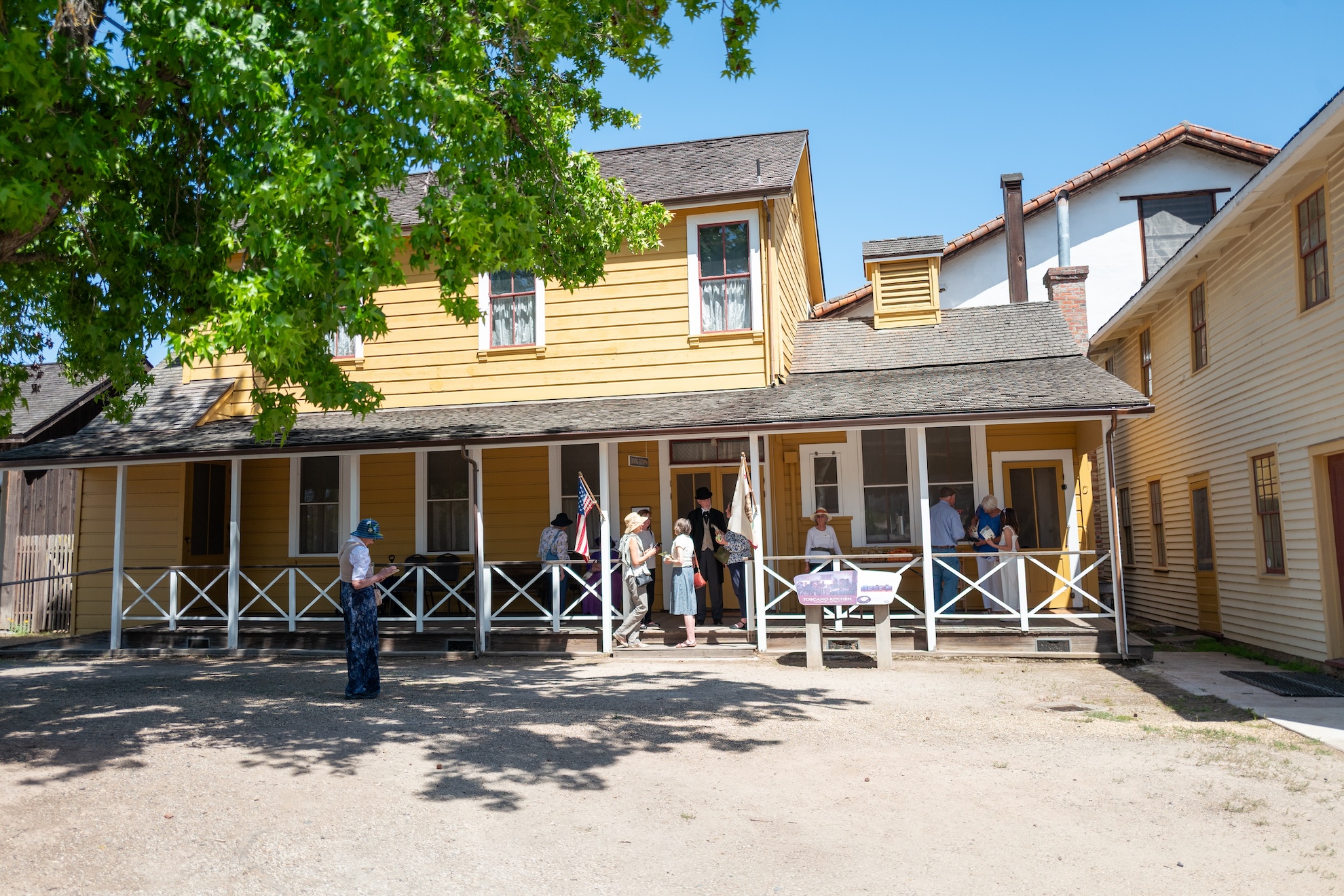
"caption": "Historical buildings are visible at Sonoma State Historic Park, Sonoma, California, May 31, 2026. ",
"credit": "Smith Collection/Gado via Getty Images",
"altTag": null,
"description": null,
"imgSizes": {
"thumbnail": {
"file": "https://cdn.kqed.org/wp-content/uploads/sites/10/2026/06/GettyImages-2279689075-160x107.jpg",
"width": 160,
"height": 107,
"mimeType": "image/jpeg"
},
"1536x1536": {
"file": "https://cdn.kqed.org/wp-content/uploads/sites/10/2026/06/GettyImages-2279689075-1536x1024.jpg",
"width": 1536,
"height": 1024,
"mimeType": "image/jpeg"
},
"post-thumbnail": {
"file": "https://cdn.kqed.org/wp-content/uploads/sites/10/2026/06/GettyImages-2279689075-672x372.jpg",
"width": 672,
"height": 372,
"mimeType": "image/jpeg"
},
"twentyfourteen-full-width": {
"file": "https://cdn.kqed.org/wp-content/uploads/sites/10/2026/06/GettyImages-2279689075-1038x576.jpg",
"width": 1038,
"height": 576,
"mimeType": "image/jpeg"
},
"npr-cds-wide": {
"file": "https://cdn.kqed.org/wp-content/uploads/sites/10/2026/06/GettyImages-2279689075-1200x675.jpg",
"width": 1200,
"height": 675,
"mimeType": "image/jpeg"
},
"npr-cds-square": {
"file": "https://cdn.kqed.org/wp-content/uploads/sites/10/2026/06/GettyImages-2279689075-600x600.jpg",
"width": 600,
"height": 600,
"mimeType": "image/jpeg"
},
"kqedFullSize": {
"file": "https://cdn.kqed.org/wp-content/uploads/sites/10/2026/06/GettyImages-2279689075.jpg",
"width": 1980,
"height": 1320
}
},
"isLoading": false,
"fetchFailed": false
},
"news_12050034": {
"type": "attachments",
"id": "news_12050034",
"meta": {
"index": "attachments_1716263798",
"site": "news",
"id": "12050034",
"found": true
},
"title": "CalFreshCM1",
"publishDate": 1753736489,
"status": "inherit",
"parent": 12050032,
"modified": 1783017028,
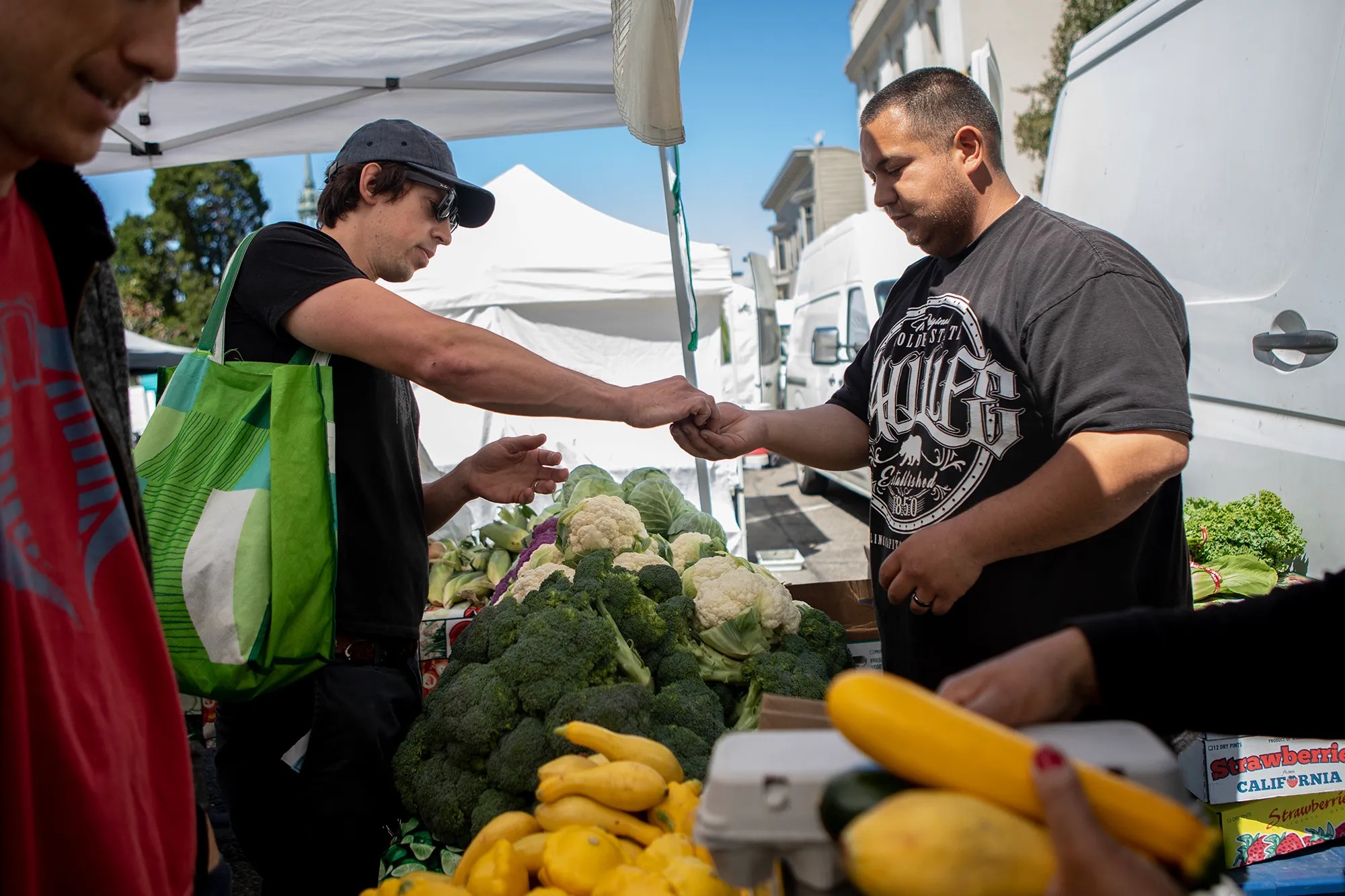
"caption": "The Ecology Center farmers' market in downtown Berkeley on July 13, 2019. CalFresh participants can purchase tokens at the market using their benefits card and can receive up to $10 in additional tokens specifically for fruits and vegetables.",
"credit": "Anne Wernikoff/CalMatters",
"altTag": null,
"description": null,
"imgSizes": {
"thumbnail": {
"file": "https://cdn.kqed.org/wp-content/uploads/sites/10/2025/07/CalFreshCM1-160x107.jpg",
"width": 160,
"height": 107,
"mimeType": "image/jpeg"
},
"1536x1536": {
"file": "https://cdn.kqed.org/wp-content/uploads/sites/10/2025/07/CalFreshCM1-1536x1024.jpg",
"width": 1536,
"height": 1024,
"mimeType": "image/jpeg"
},
"post-thumbnail": {
"file": "https://cdn.kqed.org/wp-content/uploads/sites/10/2025/07/CalFreshCM1-672x372.jpg",
"width": 672,
"height": 372,
"mimeType": "image/jpeg"
},
"twentyfourteen-full-width": {
"file": "https://cdn.kqed.org/wp-content/uploads/sites/10/2025/07/CalFreshCM1-1038x576.jpg",
"width": 1038,
"height": 576,
"mimeType": "image/jpeg"
},
"kqedFullSize": {
"file": "https://cdn.kqed.org/wp-content/uploads/sites/10/2025/07/CalFreshCM1.jpg",
"width": 2000,
"height": 1333
}
},
"isLoading": false,
"fetchFailed": false
},
"news_12078496": {
"type": "attachments",
"id": "news_12078496",
"meta": {
"index": "attachments_1716263798",
"site": "news",
"id": "12078496",
"found": true
},
"title": "Producer Prices",
"publishDate": 1775161780,
"status": "inherit",
"parent": 12078490,
"modified": 1775161888,
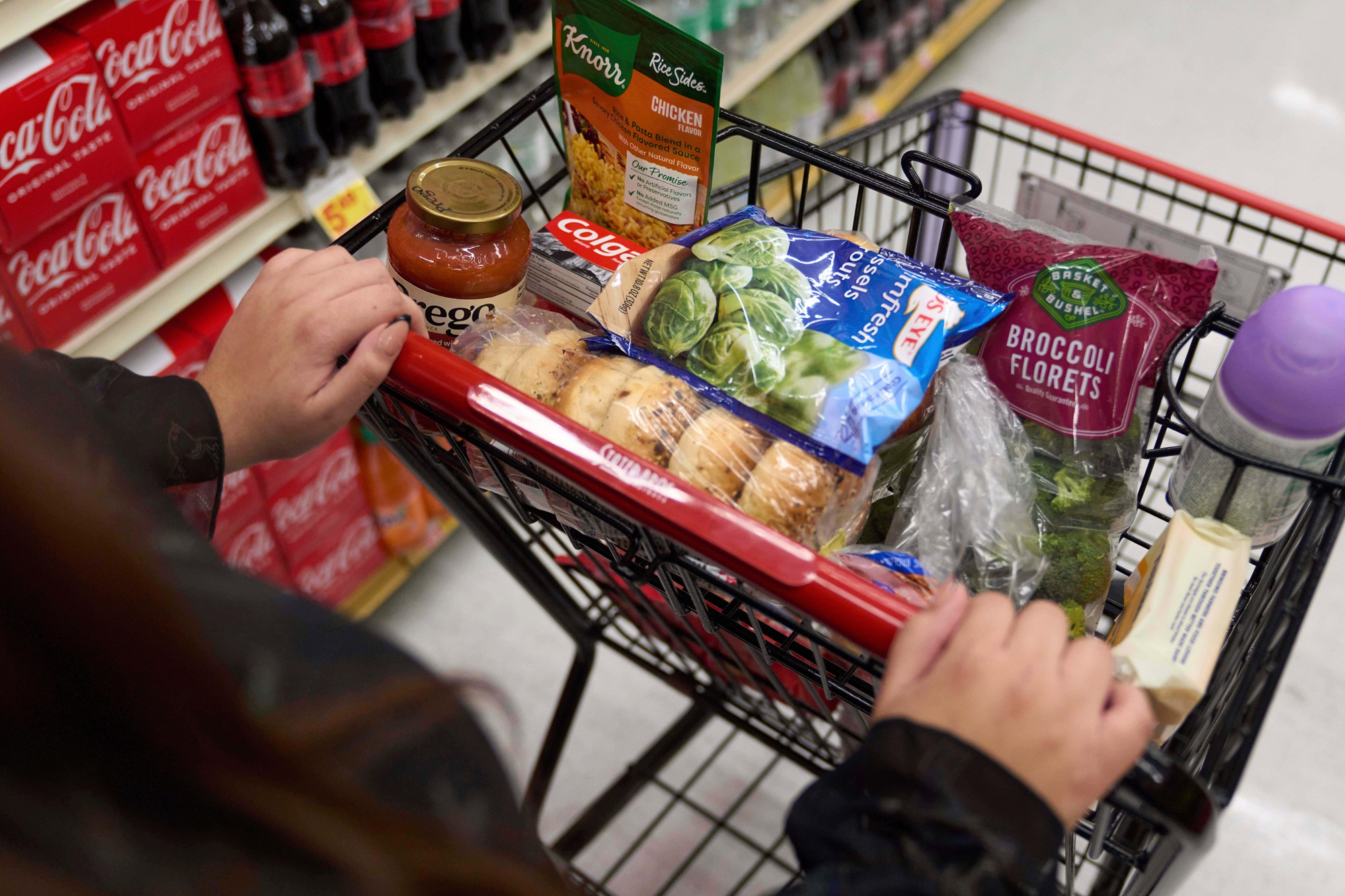
"caption": "A California's SNAP benefits shopper pushes a cart through a supermarket in Bellflower, California, on Feb. 13, 2023.",
"credit": "Allison Dinner/AP Photo",
"altTag": null,
"description": null,
"imgSizes": {
"thumbnail": {
"file": "https://cdn.kqed.org/wp-content/uploads/sites/10/2026/04/GroceriesAP-160x107.jpg",
"width": 160,
"height": 107,
"mimeType": "image/jpeg"
},
"1536x1536": {
"file": "https://cdn.kqed.org/wp-content/uploads/sites/10/2026/04/GroceriesAP-1536x1024.jpg",
"width": 1536,
"height": 1024,
"mimeType": "image/jpeg"
},
"post-thumbnail": {
"file": "https://cdn.kqed.org/wp-content/uploads/sites/10/2026/04/GroceriesAP-672x372.jpg",
"width": 672,
"height": 372,
"mimeType": "image/jpeg"
},
"twentyfourteen-full-width": {
"file": "https://cdn.kqed.org/wp-content/uploads/sites/10/2026/04/GroceriesAP-1038x576.jpg",
"width": 1038,
"height": 576,
"mimeType": "image/jpeg"
},
"npr-cds-wide": {
"file": "https://cdn.kqed.org/wp-content/uploads/sites/10/2026/04/GroceriesAP-1200x675.jpg",
"width": 1200,
"height": 675,
"mimeType": "image/jpeg"
},
"npr-cds-square": {
"file": "https://cdn.kqed.org/wp-content/uploads/sites/10/2026/04/GroceriesAP-600x600.jpg",
"width": 600,
"height": 600,
"mimeType": "image/jpeg"
},
"kqedFullSize": {
"file": "https://cdn.kqed.org/wp-content/uploads/sites/10/2026/04/GroceriesAP.jpg",
"width": 2000,
"height": 1333
}
},
"isLoading": false,
"fetchFailed": false
},
"news_12089577": {
"type": "attachments",
"id": "news_12089577",
"meta": {
"index": "attachments_1716263798",
"site": "news",
"id": "12089577",
"found": true
},
"title": "President Trump Attends Supreme Court Arguments Involving His Birthright Citizenship Order",
"publishDate": 1782933898,
"status": "inherit",
"parent": 12089505,
"modified": 1782933929,
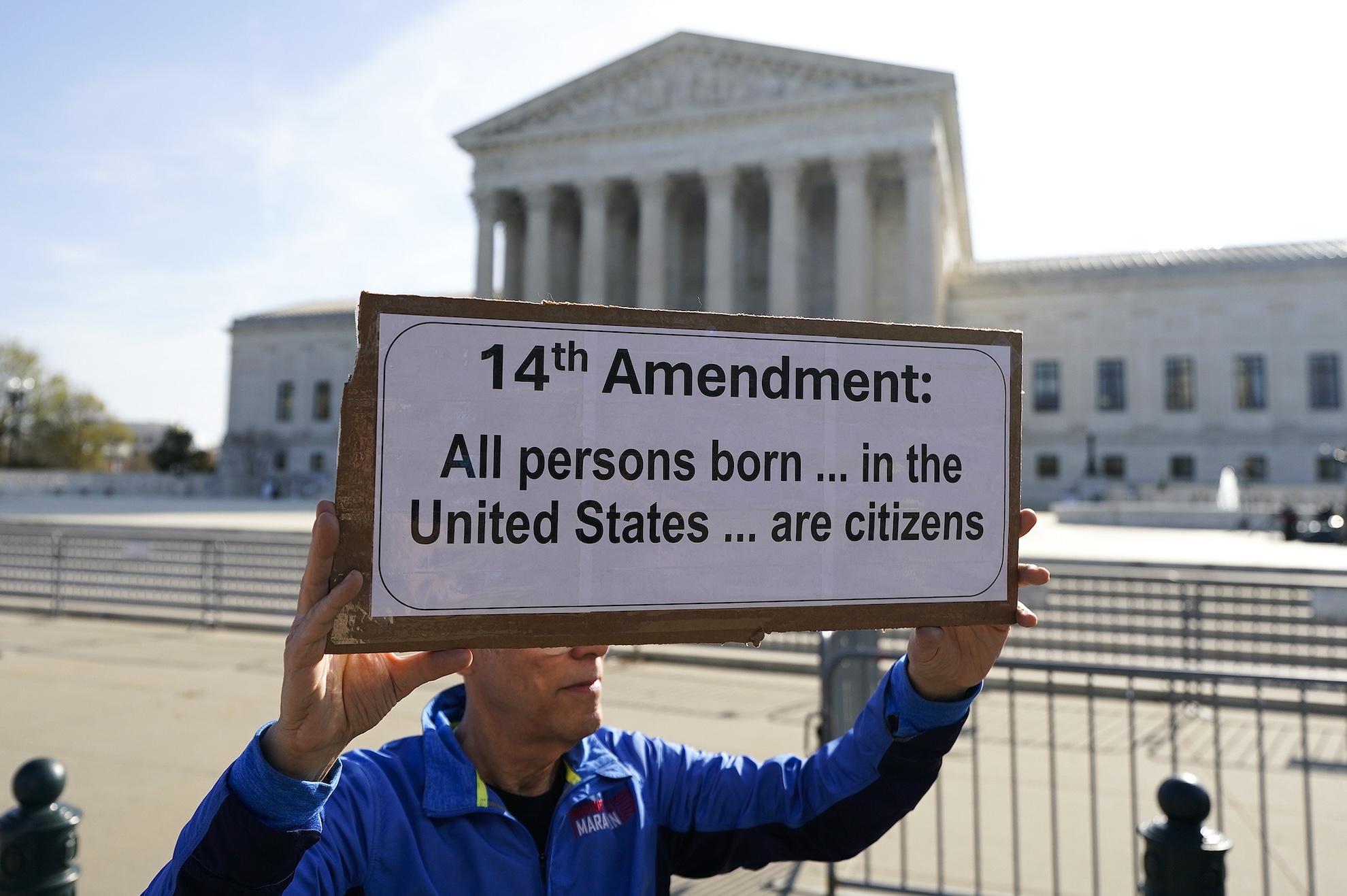
"caption": "People demonstrate outside the U.S. Supreme Court ahead of U.S. President Donald Trump's expected arrival on April 1, 2026 in Washington, D.C. The Supreme Court is hearing oral arguments in Trump v. Barbara to determine if President Trump's executive order ending birthright citizenship is constitutional. According to historians and the Court, this is the first time a sitting president has attended oral arguments at the nation's highest court. ",
"credit": "Al Drago/Getty Images",
"altTag": null,
"description": null,
"imgSizes": {
"thumbnail": {
"file": "https://cdn.kqed.org/wp-content/uploads/sites/10/2026/07/GettyImages-2269380398-160x106.jpg",
"width": 160,
"height": 106,
"mimeType": "image/jpeg"
},
"1536x1536": {
"file": "https://cdn.kqed.org/wp-content/uploads/sites/10/2026/07/GettyImages-2269380398-1536x1022.jpg",
"width": 1536,
"height": 1022,
"mimeType": "image/jpeg"
},
"post-thumbnail": {
"file": "https://cdn.kqed.org/wp-content/uploads/sites/10/2026/07/GettyImages-2269380398-672x372.jpg",
"width": 672,
"height": 372,
"mimeType": "image/jpeg"
},
"twentyfourteen-full-width": {
"file": "https://cdn.kqed.org/wp-content/uploads/sites/10/2026/07/GettyImages-2269380398-1038x576.jpg",
"width": 1038,
"height": 576,
"mimeType": "image/jpeg"
},
"npr-cds-wide": {
"file": "https://cdn.kqed.org/wp-content/uploads/sites/10/2026/07/GettyImages-2269380398-1200x675.jpg",
"width": 1200,
"height": 675,
"mimeType": "image/jpeg"
},
"npr-cds-square": {
"file": "https://cdn.kqed.org/wp-content/uploads/sites/10/2026/07/GettyImages-2269380398-600x600.jpg",
"width": 600,
"height": 600,
"mimeType": "image/jpeg"
},
"kqedFullSize": {
"file": "https://cdn.kqed.org/wp-content/uploads/sites/10/2026/07/GettyImages-2269380398.jpg",
"width": 1980,
"height": 1317
}
},
"isLoading": false,
"fetchFailed": false
},
"news_12088799": {
"type": "attachments",
"id": "news_12088799",
"meta": {
"index": "attachments_1716263798",
"site": "news",
"id": "12088799",
"found": true
},
"title": "4th of July Fireworks in San Francisco",
"publishDate": 1782340644,
"status": "inherit",
"parent": 12088793,
"modified": 1782340674,
"caption": "Fireworks illuminate the sky over San Francisco's Golden Gate Bridge as seen from Marin Headlands in Sausalito, California, on July 4, 2024. ",
"credit": "Tayfun Coskun/Anadolu via Getty Images",
"altTag": null,
"description": null,
"imgSizes": {
"thumbnail": {
"file": "https://cdn.kqed.org/wp-content/uploads/sites/10/2026/06/SFFireworksGGBGetty-160x105.jpg",
"width": 160,
"height": 105,
"mimeType": "image/jpeg"
},
"1536x1536": {
"file": "https://cdn.kqed.org/wp-content/uploads/sites/10/2026/06/SFFireworksGGBGetty-1536x1012.jpg",
"width": 1536,
"height": 1012,
"mimeType": "image/jpeg"
},
"post-thumbnail": {
"file": "https://cdn.kqed.org/wp-content/uploads/sites/10/2026/06/SFFireworksGGBGetty-672x372.jpg",
"width": 672,
"height": 372,
"mimeType": "image/jpeg"
},
"twentyfourteen-full-width": {
"file": "https://cdn.kqed.org/wp-content/uploads/sites/10/2026/06/SFFireworksGGBGetty-1038x576.jpg",
"width": 1038,
"height": 576,
"mimeType": "image/jpeg"
},
"npr-cds-wide": {
"file": "https://cdn.kqed.org/wp-content/uploads/sites/10/2026/06/SFFireworksGGBGetty-1200x675.jpg",
"width": 1200,
"height": 675,
"mimeType": "image/jpeg"
},
"npr-cds-square": {
"file": "https://cdn.kqed.org/wp-content/uploads/sites/10/2026/06/SFFireworksGGBGetty-600x600.jpg",
"width": 600,
"height": 600,
"mimeType": "image/jpeg"
},
"kqedFullSize": {
"file": "https://cdn.kqed.org/wp-content/uploads/sites/10/2026/06/SFFireworksGGBGetty.jpg",
"width": 2000,
"height": 1318
}
},
"isLoading": false,
"fetchFailed": false
},
"news_12089378": {
"type": "attachments",
"id": "news_12089378",
"meta": {
"index": "attachments_1716263798",
"site": "news",
"id": "12089378",
"found": true
},
"title": "Marshall Gold Discovery State Park",
"publishDate": 1782845992,
"status": "inherit",
"parent": 12089221,
"modified": 1782847887,
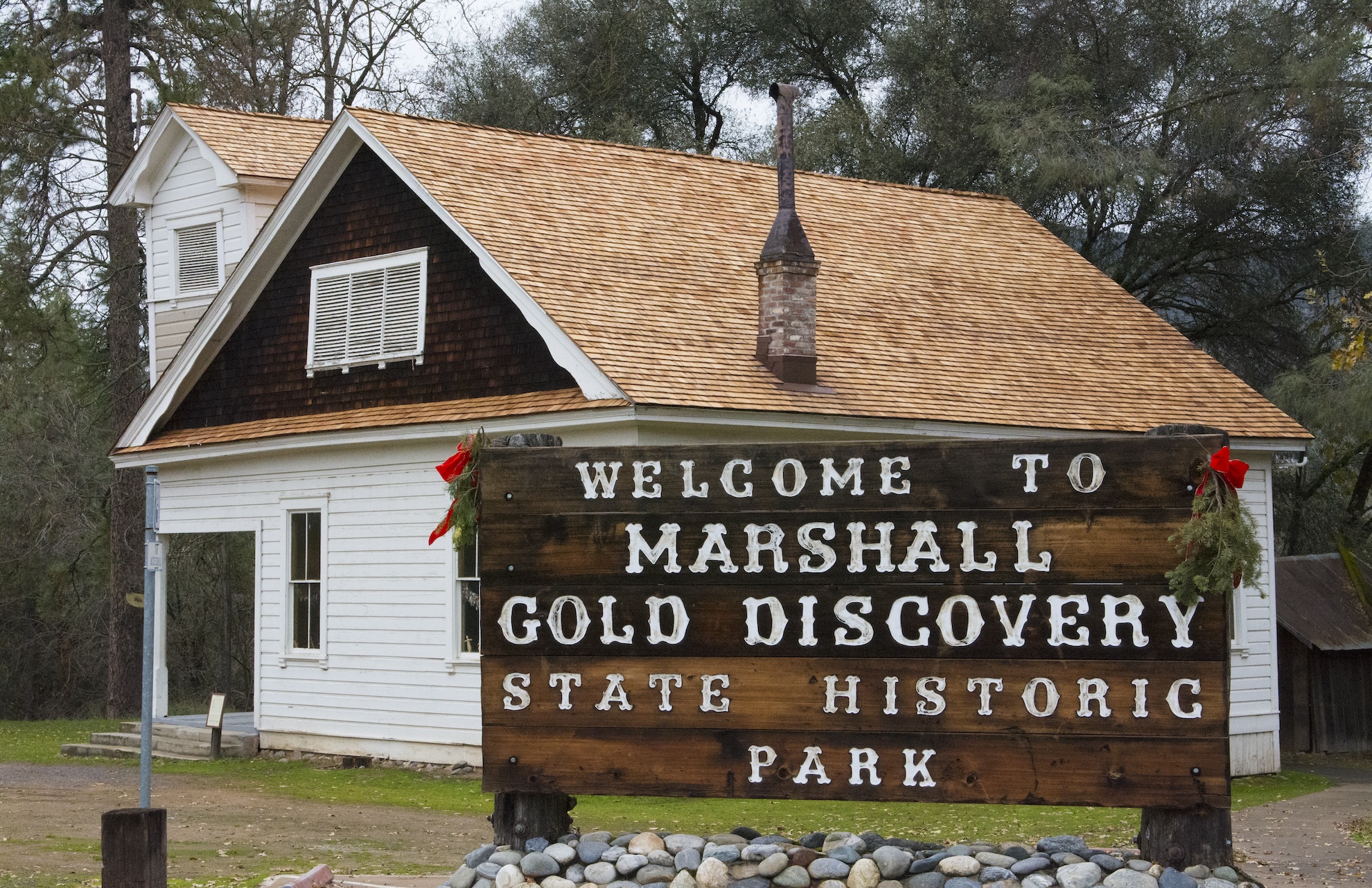
"caption": "Coloma, California's Marshall Gold Discovery State Park, where gold was first discovered in 1885.",
"credit": "Education Images/Universal Images Group via Getty Images",
"altTag": null,
"description": null,
"imgSizes": {
"thumbnail": {
"file": "https://cdn.kqed.org/wp-content/uploads/sites/10/2026/06/GettyImages-614276824-160x104.jpg",
"width": 160,
"height": 104,
"mimeType": "image/jpeg"
},
"1536x1536": {
"file": "https://cdn.kqed.org/wp-content/uploads/sites/10/2026/06/GettyImages-614276824-1536x994.jpg",
"width": 1536,
"height": 994,
"mimeType": "image/jpeg"
},
"post-thumbnail": {
"file": "https://cdn.kqed.org/wp-content/uploads/sites/10/2026/06/GettyImages-614276824-672x372.jpg",
"width": 672,
"height": 372,
"mimeType": "image/jpeg"
},
"twentyfourteen-full-width": {
"file": "https://cdn.kqed.org/wp-content/uploads/sites/10/2026/06/GettyImages-614276824-1038x576.jpg",
"width": 1038,
"height": 576,
"mimeType": "image/jpeg"
},
"npr-cds-wide": {
"file": "https://cdn.kqed.org/wp-content/uploads/sites/10/2026/06/GettyImages-614276824-1200x675.jpg",
"width": 1200,
"height": 675,
"mimeType": "image/jpeg"
},
"npr-cds-square": {
"file": "https://cdn.kqed.org/wp-content/uploads/sites/10/2026/06/GettyImages-614276824-600x600.jpg",
"width": 600,
"height": 600,
"mimeType": "image/jpeg"
},
"kqedFullSize": {
"file": "https://cdn.kqed.org/wp-content/uploads/sites/10/2026/06/GettyImages-614276824.jpg",
"width": 1980,
"height": 1281
}
},
"isLoading": false,
"fetchFailed": false
},
"news_12089016": {
"type": "attachments",
"id": "news_12089016",
"meta": {
"index": "attachments_1716263798",
"site": "news",
"id": "12089016",
"found": true
},
"title": "Chicago Cubs v San Francisco Giants",
"publishDate": 1782495418,
"status": "inherit",
"parent": 12089008,
"modified": 1782495442,
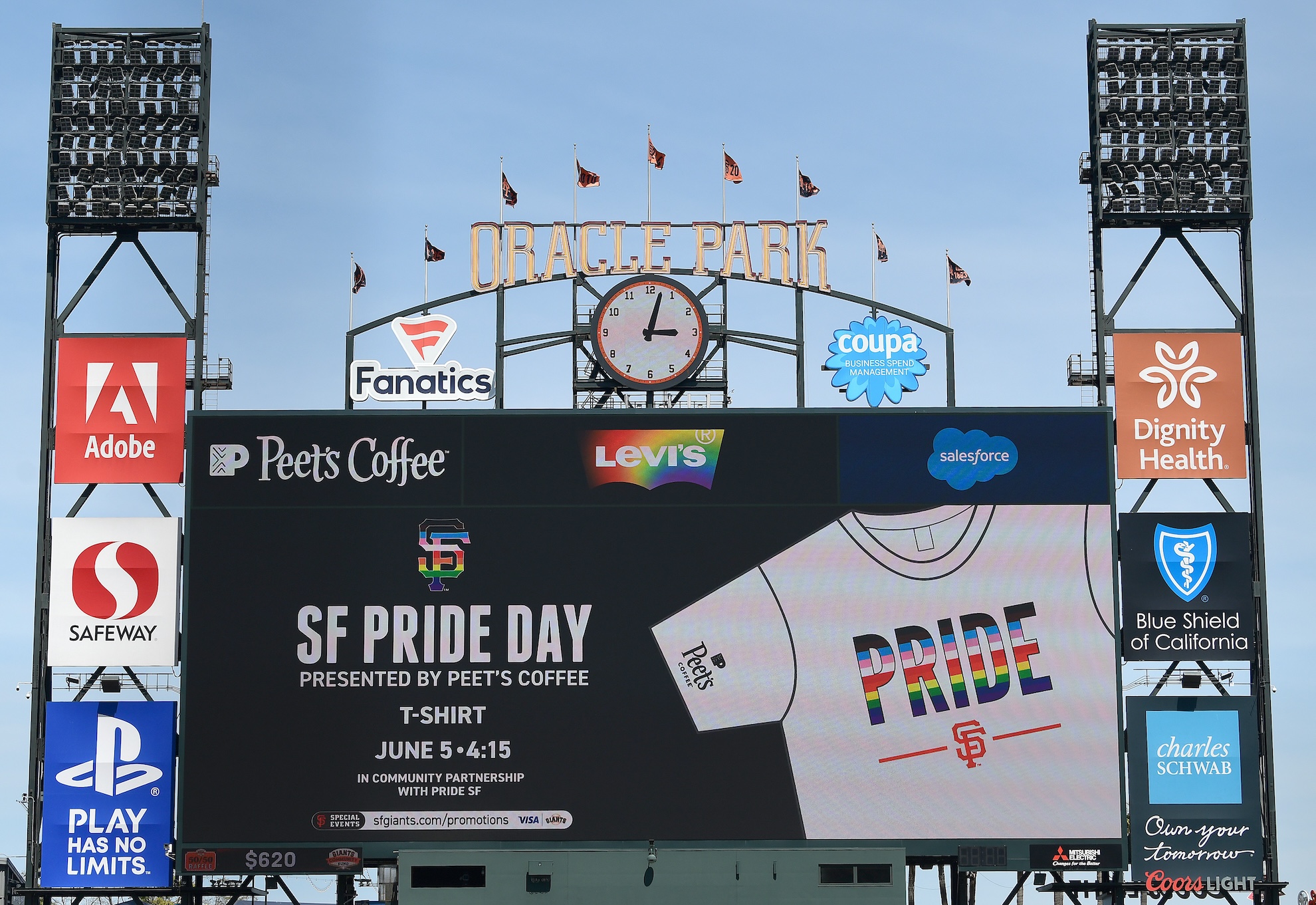
"caption": "A detailed view of the scoreboard inside Oracle Park promoting San Francisco Pride Day prior to the start of the game between the Chicago Cubs and San Francisco Giants at Oracle Park on June 5, 2021 in San Francisco, California. ",
"credit": "Thearon W. Henderson/Getty Images",
"altTag": null,
"description": null,
"imgSizes": {
"thumbnail": {
"file": "https://cdn.kqed.org/wp-content/uploads/sites/10/2026/06/GettyImages-1322007030-160x110.jpg",
"width": 160,
"height": 110,
"mimeType": "image/jpeg"
},
"1536x1536": {
"file": "https://cdn.kqed.org/wp-content/uploads/sites/10/2026/06/GettyImages-1322007030-1536x1056.jpg",
"width": 1536,
"height": 1056,
"mimeType": "image/jpeg"
},
"post-thumbnail": {
"file": "https://cdn.kqed.org/wp-content/uploads/sites/10/2026/06/GettyImages-1322007030-672x372.jpg",
"width": 672,
"height": 372,
"mimeType": "image/jpeg"
},
"twentyfourteen-full-width": {
"file": "https://cdn.kqed.org/wp-content/uploads/sites/10/2026/06/GettyImages-1322007030-1038x576.jpg",
"width": 1038,
"height": 576,
"mimeType": "image/jpeg"
},
"npr-cds-wide": {
"file": "https://cdn.kqed.org/wp-content/uploads/sites/10/2026/06/GettyImages-1322007030-1200x675.jpg",
"width": 1200,
"height": 675,
"mimeType": "image/jpeg"
},
"npr-cds-square": {
"file": "https://cdn.kqed.org/wp-content/uploads/sites/10/2026/06/GettyImages-1322007030-600x600.jpg",
"width": 600,
"height": 600,
"mimeType": "image/jpeg"
},
"kqedFullSize": {
"file": "https://cdn.kqed.org/wp-content/uploads/sites/10/2026/06/GettyImages-1322007030.jpg",
"width": 1980,
"height": 1361
}
},
"isLoading": false,
"fetchFailed": false
},
"news_12089021": {
"type": "attachments",
"id": "news_12089021",
"meta": {
"index": "attachments_1716263798",
"site": "news",
"id": "12089021",
"found": true
},
"title": "Türkiye v USA: Group D - FIFA World Cup 2026",
"publishDate": 1782495725,
"status": "inherit",
"parent": 12088896,
"modified": 1782495778,
"caption": "Auston Trusty #6 of the United States celebrates with teammates after scoring his team's first goal during the FIFA World Cup 2026 Group D match between Türkiye and USA at Los Angeles Stadium on June 25, 2026, in Inglewood, California. ",
"credit": "Jamie Squire/Getty Images",
"altTag": null,
"description": null,
"imgSizes": {
"thumbnail": {
"file": "https://cdn.kqed.org/wp-content/uploads/sites/10/2026/06/USAWorldCupGetty1-160x109.jpg",
"width": 160,
"height": 109,
"mimeType": "image/jpeg"
},
"1536x1536": {
"file": "https://cdn.kqed.org/wp-content/uploads/sites/10/2026/06/USAWorldCupGetty1-1536x1042.jpg",
"width": 1536,
"height": 1042,
"mimeType": "image/jpeg"
},
"post-thumbnail": {
"file": "https://cdn.kqed.org/wp-content/uploads/sites/10/2026/06/USAWorldCupGetty1-672x372.jpg",
"width": 672,
"height": 372,
"mimeType": "image/jpeg"
},
"twentyfourteen-full-width": {
"file": "https://cdn.kqed.org/wp-content/uploads/sites/10/2026/06/USAWorldCupGetty1-1038x576.jpg",
"width": 1038,
"height": 576,
"mimeType": "image/jpeg"
},
"npr-cds-wide": {
"file": "https://cdn.kqed.org/wp-content/uploads/sites/10/2026/06/USAWorldCupGetty1-1200x675.jpg",
"width": 1200,
"height": 675,
"mimeType": "image/jpeg"
},
"npr-cds-square": {
"file": "https://cdn.kqed.org/wp-content/uploads/sites/10/2026/06/USAWorldCupGetty1-600x600.jpg",
"width": 600,
"height": 600,
"mimeType": "image/jpeg"
},
"kqedFullSize": {
"file": "https://cdn.kqed.org/wp-content/uploads/sites/10/2026/06/USAWorldCupGetty1.jpg",
"width": 2000,
"height": 1357
}
},
"isLoading": false,
"fetchFailed": false
}
},
"audioPlayerReducer": {
"postId": "stream_live",
"isPaused": true,
"isPlaying": false,
"pfsActive": false,
"pledgeModalIsOpen": true,
"playerDrawerIsOpen": false,
"liveAudioPlayStartedAt": 0,
"liveAudioPlayContext": ""
},
"authorsReducer": {
"carlysevern": {
"type": "authors",
"id": "3243",
"meta": {
"index": "authors_1716337520",
"id": "3243",
"found": true
},
"name": "Carly Severn",
"firstName": "Carly",
"lastName": "Severn",
"slug": "carlysevern",
"email": "csevern@kqed.org",
"display_author_email": false,
"staff_mastheads": [
"news"
],
"title": "Senior Editor, Audience News ",
"bio": "Carly is KQED's Senior Editor of Audience News on the Digital News team, and has reported for the California Report Magazine, Bay Curious and KQED Arts. She's formerly the host of \u003ca href=\"http://ww2.kqed.org/pop/category/the-cooler/\" rel=\"noopener noreferrer\">The Cooler\u003c/a> podcast.",
"avatar": "https://secure.gravatar.com/avatar/54037bf5c128fe678f0ef26cec97a93f2e7f220a22d7285703328f12c42c1b1d?s=600&d=blank&r=g",
"twitter": "teacupinthebay",
"bluesky": null,
"facebook": null,
"instagram": null,
"linkedin": null,
"sites": [
{
"site": "",
"roles": [
"editor"
]
},
{
"site": "arts",
"roles": [
"editor"
]
},
{
"site": "news",
"roles": [
"administrator"
]
},
{
"site": "pop",
"roles": [
"editor"
]
},
{
"site": "futureofyou",
"roles": [
"editor"
]
},
{
"site": "about",
"roles": [
"administrator"
]
},
{
"site": "mindshift",
"roles": [
"editor"
]
},
{
"site": "bayareabites",
"roles": [
"editor"
]
},
{
"site": "stateofhealth",
"roles": [
"editor"
]
},
{
"site": "science",
"roles": [
"editor"
]
},
{
"site": "food",
"roles": [
"contributor"
]
},
{
"site": "forum",
"roles": [
"editor"
]
},
{
"site": "perspectives",
"roles": [
"administrator"
]
},
{
"site": "liveblog",
"roles": [
"editor"
]
}
],
"headData": {
"title": "Carly Severn | KQED",
"description": "Senior Editor, Audience News ",
"ogImgSrc": "https://secure.gravatar.com/avatar/54037bf5c128fe678f0ef26cec97a93f2e7f220a22d7285703328f12c42c1b1d?s=600&d=blank&r=g",
"twImgSrc": "https://secure.gravatar.com/avatar/54037bf5c128fe678f0ef26cec97a93f2e7f220a22d7285703328f12c42c1b1d?s=600&d=blank&r=g"
},
"isLoading": false,
"link": "/author/carlysevern"
},
"ccabreralomeli": {
"type": "authors",
"id": "11708",
"meta": {
"index": "authors_1716337520",
"id": "11708",
"found": true
},
"name": "Carlos Cabrera-Lomelí",
"firstName": "Carlos",
"lastName": "Cabrera-Lomelí",
"slug": "ccabreralomeli",
"email": "ccabreralomeli@KQED.org",
"display_author_email": true,
"staff_mastheads": [
"news"
],
"title": "Community Reporter",
"bio": "Carlos Cabrera-Lomelí is a community reporter with KQED's digital engagement team. He also reports and co-produces for KQED's bilingual news hub KQED en Español. He grew up in San Francisco's Mission District and has previously worked with Univision, 48 Hills and REFORMA in Mexico City.",
"avatar": "https://secure.gravatar.com/avatar/c309be9665e484f887b818c89e273ecc673004f426f36b24d00a4d813a2e0518?s=600&d=blank&r=g",
"twitter": "@LomeliCabrera",
"bluesky": null,
"facebook": null,
"instagram": null,
"linkedin": null,
"sites": [
{
"site": "arts",
"roles": [
"editor"
]
},
{
"site": "news",
"roles": [
"editor"
]
},
{
"site": "about",
"roles": [
"editor"
]
},
{
"site": "science",
"roles": [
"editor"
]
},
{
"site": "perspectives",
"roles": [
"editor"
]
},
{
"site": "elections",
"roles": [
"editor"
]
},
{
"site": "liveblog",
"roles": [
"contributor"
]
}
],
"headData": {
"title": "Carlos Cabrera-Lomelí | KQED",
"description": "Community Reporter",
"ogImgSrc": "https://secure.gravatar.com/avatar/c309be9665e484f887b818c89e273ecc673004f426f36b24d00a4d813a2e0518?s=600&d=blank&r=g",
"twImgSrc": "https://secure.gravatar.com/avatar/c309be9665e484f887b818c89e273ecc673004f426f36b24d00a4d813a2e0518?s=600&d=blank&r=g"
},
"isLoading": false,
"link": "/author/ccabreralomeli"
},
"ibloom": {
"type": "authors",
"id": "11805",
"meta": {
"index": "authors_1716337520",
"id": "11805",
"found": true
},
"name": "Izzy Bloom",
"firstName": "Izzy",
"lastName": "Bloom",
"slug": "ibloom",
"email": "ibloom@kqed.org",
"display_author_email": false,
"staff_mastheads": [],
"title": "KQED Reporter & Producer",
"bio": "Izzy is a reporter and producer on KQED's California Politics & Government Desk. She joined the desk in 2024 to produce Political Breakdown, covering local and national elections and attending the RNC and DNC in Milwaukee and Chicago. \r\n\r\nBefore that, Izzy was a producer on The California Report and reported long-form stories for The California Report Magazine. She was a finalist for the Third Coast/Richard H. Driehaus Foundation Competition and was awarded for her reporting on indigenous land back by the Society of Professional Journalists. Izzy received her master's in journalism from the University of California, Berkeley.",
"avatar": "https://secure.gravatar.com/avatar/cc4d272ca430783ee1a8efac470a6b1e0fdd082c3beb61da019801d0ff751c8c?s=600&d=blank&r=g",
"twitter": null,
"bluesky": null,
"facebook": null,
"instagram": null,
"linkedin": null,
"sites": [
{
"site": "news",
"roles": [
"editor"
]
},
{
"site": "perspectives",
"roles": [
"editor"
]
}
],
"headData": {
"title": "Izzy Bloom | KQED",
"description": "KQED Reporter & Producer",
"ogImgSrc": "https://secure.gravatar.com/avatar/cc4d272ca430783ee1a8efac470a6b1e0fdd082c3beb61da019801d0ff751c8c?s=600&d=blank&r=g",
"twImgSrc": "https://secure.gravatar.com/avatar/cc4d272ca430783ee1a8efac470a6b1e0fdd082c3beb61da019801d0ff751c8c?s=600&d=blank&r=g"
},
"isLoading": false,
"link": "/author/ibloom"
},
"nkhan": {
"type": "authors",
"id": "11867",
"meta": {
"index": "authors_1716337520",
"id": "11867",
"found": true
},
"name": "Nisa Khan",
"firstName": "Nisa",
"lastName": "Khan",
"slug": "nkhan",
"email": "nkhan@kqed.org",
"display_author_email": false,
"staff_mastheads": [],
"title": "KQED Contributor",
"bio": "Nisa Khan is a reporter for KQED's Audience News Desk. She was formerly a data reporter at Michigan Radio. She earned a Bachelor of Science in Information from the University of Michigan and a Master of Arts in Communication from Stanford University.",
"avatar": "https://secure.gravatar.com/avatar/8720459eef081ff64582b3506b124d58523e80e120704a0cbd9892533c914991?s=600&d=blank&r=g",
"twitter": "mnisakhan",
"bluesky": null,
"facebook": null,
"instagram": null,
"linkedin": null,
"sites": [
{
"site": "arts",
"roles": [
"editor"
]
},
{
"site": "news",
"roles": [
"editor"
]
},
{
"site": "science",
"roles": [
"editor",
"author"
]
},
{
"site": "forum",
"roles": [
"editor"
]
},
{
"site": "liveblog",
"roles": [
"contributor"
]
}
],
"headData": {
"title": "Nisa Khan | KQED",
"description": "KQED Contributor",
"ogImgSrc": "https://secure.gravatar.com/avatar/8720459eef081ff64582b3506b124d58523e80e120704a0cbd9892533c914991?s=600&d=blank&r=g",
"twImgSrc": "https://secure.gravatar.com/avatar/8720459eef081ff64582b3506b124d58523e80e120704a0cbd9892533c914991?s=600&d=blank&r=g"
},
"isLoading": false,
"link": "/author/nkhan"
},
"kdebenedetti": {
"type": "authors",
"id": "11913",
"meta": {
"index": "authors_1716337520",
"id": "11913",
"found": true
},
"name": "Katie DeBenedetti",
"firstName": "Katie",
"lastName": "DeBenedetti",
"slug": "kdebenedetti",
"email": "kdebenedetti@kqed.org",
"display_author_email": false,
"staff_mastheads": [
"news",
"science"
],
"title": "KQED Contributor",
"bio": "Katie DeBenedetti is a digital reporter covering daily news for the Express Desk. Prior to joining KQED as a culture reporting intern in January 2024, she covered education and city government for the Napa Valley Register.",
"avatar": "https://secure.gravatar.com/avatar/6e31073cb8f7e4214ab03f42771d0f45?s=600&d=blank&r=g",
"twitter": null,
"facebook": null,
"instagram": null,
"linkedin": null,
"sites": [
{
"site": "news",
"roles": [
"author"
]
},
{
"site": "science",
"roles": [
"author"
]
},
{
"site": "liveblog",
"roles": [
"author"
]
}
],
"headData": {
"title": "Katie DeBenedetti | KQED",
"description": "KQED Contributor",
"ogImgSrc": "https://secure.gravatar.com/avatar/6e31073cb8f7e4214ab03f42771d0f45?s=600&d=blank&r=g",
"twImgSrc": "https://secure.gravatar.com/avatar/6e31073cb8f7e4214ab03f42771d0f45?s=600&d=blank&r=g"
},
"isLoading": false,
"link": "/author/kdebenedetti"
},
"sarahwright": {
"type": "authors",
"id": "11956",
"meta": {
"index": "authors_1716337520",
"id": "11956",
"found": true
},
"name": "Sarah Wright",
"firstName": "Sarah",
"lastName": "Wright",
"slug": "sarahwright",
"email": "swright@kqed.org",
"display_author_email": true,
"staff_mastheads": [],
"title": "Outdoors Engagement Reporter",
"bio": "Sarah Wright is KQED's Outdoors Engagement Reporter. Originally from Lake Tahoe, she completed a thru-hike of the Pacific Crest Trail in 2019 and was a U.S. Fulbright Program grantee to Argentina in 2023. Her journalism has appeared in The Guardian, The San Francisco Standard, The Palo Alto Weekly and the Half Moon Bay Review.",
"avatar": "https://secure.gravatar.com/avatar/c161a3d6441865cba25e6db4fa561099ad665799e9432e34da2b84d7e371524c?s=600&d=blank&r=g",
"twitter": null,
"bluesky": null,
"facebook": null,
"instagram": null,
"linkedin": null,
"sites": [
{
"site": "arts",
"roles": [
"editor"
]
},
{
"site": "news",
"roles": [
"editor"
]
},
{
"site": "science",
"roles": [
"contributor",
"author"
]
},
{
"site": "forum",
"roles": [
"editor"
]
}
],
"headData": {
"title": "Sarah Wright | KQED",
"description": "Outdoors Engagement Reporter",
"ogImgSrc": "https://secure.gravatar.com/avatar/c161a3d6441865cba25e6db4fa561099ad665799e9432e34da2b84d7e371524c?s=600&d=blank&r=g",
"twImgSrc": "https://secure.gravatar.com/avatar/c161a3d6441865cba25e6db4fa561099ad665799e9432e34da2b84d7e371524c?s=600&d=blank&r=g"
},
"isLoading": false,
"link": "/author/sarahwright"
}
},
"pagesReducer": {
"news_category_guides-and-explainers": {
"type": "terms",
"id": "news_34168",
"meta": {
"index": "terms_1716263798",
"site": "news",
"id": "34168",
"score": 14.406026
},
"name": "Guides and Explainers",
"slug": "guides-and-explainers",
"taxonomy": "category",
"description": null,
"featImg": null,
"headData": {
"title": "Guides and Explainers Archives | KQED News",
"description": null,
"ogTitle": null,
"ogDescription": null,
"ogImgId": null,
"twTitle": null,
"twDescription": null,
"twImgId": null
},
"ttid": 34185,
"isLoading": false,
"title": "Guides and Explainers",
"pageMeta": {
"site": "news",
"WpPageTemplate": "page-topic-editorial",
"currentPage": 5
},
"blocks": [
{
"blockName": "kqed/post-list",
"attrs": {
"layout": "cardArticle2",
"query": "posts/news?category=guides-and-explainers",
"seeMore": false,
"paginated": true,
"page": 5
}
},
{
"blockName": "kqed/ad"
}
]
}
},
"pfsSessionReducer": {},
"postsReducer": {
"stream_live": {
"type": "live",
"id": "stream_live",
"audioUrl": "https://streams.kqed.org/kqedradio",
"title": "Live Stream",
"excerpt": "Live Stream information currently unavailable.",
"link": "/radio",
"featImg": "",
"label": {
"name": "KQED Live",
"link": "/"
}
},
"stream_kqedNewscast": {
"type": "posts",
"id": "stream_kqedNewscast",
"audioUrl": "https://www.kqed.org/.stream/anon/radio/RDnews/newscast.mp3?_=1",
"title": "KQED Newscast",
"featImg": "",
"label": {
"name": "88.5 FM",
"link": "/"
}
},
"news_12090791": {
"type": "posts",
"id": "news_12090791",
"meta": {
"index": "posts_1716263798",
"site": "news",
"id": "12090791",
"score": null,
"sort": [
1784064840000
]
},
"guestAuthors": [],
"slug": "cyclosporiasis-symptoms-california-parasite-explosive-diarrhea-foodborne-cyclospora-michigan-outbreak-fruits-vegetables-incubation-antibiotics",
"title": "Cyclosporiasis and the Bay Area: What to Know About the ‘Explosive Diarrhea’ Parasite Surging in the US",
"publishDate": 1784064840,
"format": "standard",
"headTitle": "Cyclosporiasis and the Bay Area: What to Know About the ‘Explosive Diarrhea’ Parasite Surging in the US | KQED",
"labelTerm": {
"site": "news"
},
"content": "\u003cp>Let’s face it: Headlines about “explosive diarrhea” are the headlines \u003cem>nobody \u003c/em>wants to see.\u003c/p>\n\n\n\n\u003cp>But amid the current national outbreak of cyclosporiasis — a foodborne stomach parasite that’s infected thousands of people around the United States — it’s hard to avoid the updates about the severe cramping, bloating and yes, the “watery diarrhea with frequent, sometimes explosive, bowel movements” (in the Centers for Disease Control and Prevention’s own \u003ca href=\"https://www.cdc.gov/cyclosporiasis/hcp/clinical-overview/index.html\">words\u003c/a>) this disease causes.\u003c/p>\n\n\n\n\u003cp>On Tuesday, the Centers for Disease Control and Prevention \u003ca href=\"https://www.cdc.gov/han/php/notices/han00531.html\">announced \u003c/a>that the agency had received reports of 1,645 confirmed domestic cases of cyclosporiasis — but was aware of over 5,000 more cases that required confirmation. So far, \u003ca href=\"https://www.michigan.gov/mdhhs/keep-mi-healthy/infectious-diseases/infectious-disease-outbreaks\">Michigan\u003c/a> has experienced the worst rises in cyclosporiasis cases, reporting well over 4,000 cases as of Thursday. Other states reporting surges of the disease include \u003ca href=\"https://www.cbsnews.com/newyork/news/cyclosporiasis-cases-new-york-state/\">New York\u003c/a>, \u003ca href=\"https://news.wttw.com/2026/07/13/illinois-confirms-194-probable-cases-cyclosporiasis-parasitic-inspection-spreads\">Illinois\u003c/a>, \u003ca href=\"https://odh.ohio.gov/media-center/ODH-News-Releases/cyclosporiasis-news-release-070826\">Ohio\u003c/a> and \u003ca href=\"https://www.usatoday.com/story/news/health/2026/07/13/texas-cyclospora-cases-count-cyclosporiasis-symptoms-and-treatment/90904130007/\">Texas\u003c/a>. \u003c/p>\n\n\n\n\u003cfigure class=\"wp-block-image size-full\">\u003cimg loading=\"lazy\" decoding=\"async\" width=\"1200\" height=\"800\" src=\"https://cdn.kqed.org/wp-content/uploads/sites/10/2025/10/072419-Rural-Doctor-AW-CM-10_scr.jpg\" alt=\"\" class=\"wp-image-12061658\" srcset=\"https://cdn.kqed.org/wp-content/uploads/sites/10/2025/10/072419-Rural-Doctor-AW-CM-10_scr.jpg 1200w, https://cdn.kqed.org/wp-content/uploads/sites/10/2025/10/072419-Rural-Doctor-AW-CM-10_scr-160x107.jpg 160w\" sizes=\"auto, (max-width: 1200px) 100vw, 1200px\">\u003cfigcaption class=\"wp-element-caption\">A doctor listens to a patient’s heartbeat at the Mountain Valley Health Center in Bieber on July 24, 2019. (Anne Wernikoff for CalMatters)\u003c/figcaption>\u003c/figure>\n\n\n\n\u003cp>On Thursday, \u003cem>the Washington Post\u003c/em> reported that global fresh foods producer Taylor Farms had been identified as\u003ca href=\"https://www.washingtonpost.com/health/2026/07/16/lettuce-supplier-is-potential-source-cyclosporiasis-outbreak-investigators-say/\"> a potential source of the outbreak\u003c/a>. According to anonymous sources, investigators are probing shredded iceberg lettuce supplied to certain Taco Bell restaurants as potentially harboring the intestinal parasite.\u003c/p>\n\n\n\n\u003cp>Some good news, however: \u003ca href=\"https://www.cdph.ca.gov/Programs/OPA/Pages/NR26-024.aspx\">The California Department of Public Health\u003c/a> says that California “is not one of the states currently experiencing an increase in cases of cyclosporiasis,” and that to date, the state has actually seen fewer cases of cyclosporiasis this year than it did in the same period in 2025: 41, compared to last year’s 80. The agency also doesn’t believe these current California cyclospora cases are even linked to the outbreaks affecting other states.\u003c/p>\n\n\n\n\u003cp>[ad fullwidth]\u003c/p>\n\u003cp>But if you’re in the Bay Area — or are planning to visit any of the affected states in the coming weeks — what should you know about your individual risk of cyclosporiasis? What’s the source of this outbreak? Should you be thinking about your fruits and vegetables differently right now, and how can you reduce your family’s chances of being hit by this truly unpleasant disease this summer?\u003c/p>\n\n\n\n\u003cp>Keep reading for what we know about cyclosporiasis and California. (And be aware since we’re talking about explosive diarrhea here, the details below are not really lunchtime reading.)\u003c/p>\n\n\n\n\u003cp>\u003cstrong>Jump straight to:\u003c/strong>\u003c/p>\n\n\n\n\u003cul class=\"wp-block-list\">\n\u003cli>\u003cstrong>\u003ca href=\"#jump-symptoms\">What are the symptoms of cyclosporiasis?\u003c/a>\u003c/strong>\u003c/li>\n\n\n\n\u003cli>\u003cstrong>\u003ca href=\"#jump-foods\">What foods could be causing this outbreak?\u003c/a>\u003c/strong>\u003c/li>\n\n\n\n\u003cli>\u003cstrong>\u003ca href=\"#california-cases\">Should Californians be doing anything differently right now?\u003c/a>\u003c/strong>\u003c/li>\n\n\n\n\u003cli>\u003cstrong>\u003ca href=\"#diarrhea-panicking\">I’ve got diarrhea. Is it cyclosporiasis or something else?\u003c/a>\u003c/strong>\u003c/li>\n\u003c/ul>\n\n\n\n\u003ch2 class=\"wp-block-heading\">What is cyclosporiasis, and how do people get infected? \u003c/h2>\n\n\n\n\u003cp>Cyclosporiasis — pronounced “\u003ca href=\"https://www.cdph.ca.gov/Programs/CID/DCDC/Pages/Cyclosporiasis.aspx\">sigh-clo-spore-EYE-uh-sis\u003c/a>”, similarly to “psoriasis” — is a gastrointestinal disease caused by the cyclospora parasite.\u003c/p>\n\n\n\n\u003cp>This parasite, which is \u003ca href=\"https://dph.illinois.gov/topics-services/diseases-and-conditions/diseases-a-z-list/diseases/cyclospora.html\">too small \u003c/a>to be seen with the human eye, lives in the poop of people infected with cyclosporiasis. Other people can then become infected also by ingesting food or drink that’s contaminated with those feces — for example, fresh fruits or vegetables that have been washed with contaminated water.\u003c/p>\n\n\n\n\u003cfigure class=\"wp-block-image size-full\">\u003cimg loading=\"lazy\" decoding=\"async\" width=\"2121\" height=\"1414\" src=\"https://cdn.kqed.org/wp-content/uploads/sites/10/2024/12/GettyImages-1253748945.jpg\" alt=\"\" class=\"wp-image-12020078\" srcset=\"https://cdn.kqed.org/wp-content/uploads/sites/10/2024/12/GettyImages-1253748945.jpg 2121w, https://cdn.kqed.org/wp-content/uploads/sites/10/2024/12/GettyImages-1253748945-800x533.jpg 800w, https://cdn.kqed.org/wp-content/uploads/sites/10/2024/12/GettyImages-1253748945-1020x680.jpg 1020w, https://cdn.kqed.org/wp-content/uploads/sites/10/2024/12/GettyImages-1253748945-160x107.jpg 160w, https://cdn.kqed.org/wp-content/uploads/sites/10/2024/12/GettyImages-1253748945-1536x1024.jpg 1536w, https://cdn.kqed.org/wp-content/uploads/sites/10/2024/12/GettyImages-1253748945-2048x1365.jpg 2048w, https://cdn.kqed.org/wp-content/uploads/sites/10/2024/12/GettyImages-1253748945-1920x1280.jpg 1920w\" sizes=\"auto, (max-width: 2121px) 100vw, 2121px\">\u003cfigcaption class=\"wp-element-caption\">The CDC recommends washing fruits and vegetables, among other steps. (Hispanolistic/Getty Images)\u003c/figcaption>\u003c/figure>\n\n\n\n\u003cp>Cyclosporiasis isn’t a new disease, and California “experiences cases of cyclosporiasis every year,” according to a July 13 statement by CDPH. \u003c/p>\n\n\n\n\u003cp>“It’s been around for a long time, but this year it’s notable for the rate of increase, which is itself explosive,” said Dr. Peter Chin-Hong, an infectious disease expert at UCSF.\u003c/p>\n\n\n\n\u003cp>But — so far, at least — that’s all in other states. CDPH said that from January to June 2026, \u003ca href=\"https://www.cdph.ca.gov/Programs/OPA/Pages/NR26-024.aspx\">California reported 41 provisional cases of cyclosporiasis\u003c/a>, “compared to 80 cases during the same period in 2025.” \u003c/p>\n\n\n\n\u003ch2 class=\"wp-block-heading\">Is cyclosporiasis in California right now?\u003c/h2>\n\n\n\n\u003cp>Because cyclosporiasis isn’t a new disease, California “experiences cases of cyclosporiasis every year,” according to a Monday statement by CDPH. \u003c/p>\n\n\n\n\u003cp>“It’s been around for a long time, but this year it’s notable for the rate of increase, which is itself explosive,” said Dr. Peter Chin-Hong, an infectious disease expert at UCSF.\u003c/p>\n\n\n\n\u003cfigure class=\"wp-block-image size-full\">\u003cimg loading=\"lazy\" decoding=\"async\" width=\"2120\" height=\"1414\" src=\"https://cdn.kqed.org/wp-content/uploads/sites/10/2022/12/GettyImages-1301584009.jpg\" alt=\"Female doctor wearing full PPE suit, face mask, and face shield working with pathogen samples in lab.\" class=\"wp-image-11935274\" srcset=\"https://cdn.kqed.org/wp-content/uploads/sites/10/2022/12/GettyImages-1301584009.jpg 2120w, https://cdn.kqed.org/wp-content/uploads/sites/10/2022/12/GettyImages-1301584009-800x534.jpg 800w, https://cdn.kqed.org/wp-content/uploads/sites/10/2022/12/GettyImages-1301584009-1020x680.jpg 1020w, https://cdn.kqed.org/wp-content/uploads/sites/10/2022/12/GettyImages-1301584009-160x107.jpg 160w, https://cdn.kqed.org/wp-content/uploads/sites/10/2022/12/GettyImages-1301584009-1536x1024.jpg 1536w, https://cdn.kqed.org/wp-content/uploads/sites/10/2022/12/GettyImages-1301584009-2048x1366.jpg 2048w, https://cdn.kqed.org/wp-content/uploads/sites/10/2022/12/GettyImages-1301584009-1920x1281.jpg 1920w\" sizes=\"auto, (max-width: 2120px) 100vw, 2120px\">\u003cfigcaption class=\"wp-element-caption\">A researcher works in a biochemist laboratory. (Luis Alvarez/Getty Images)\u003c/figcaption>\u003c/figure>\n\n\n\n\u003cp>But — so far, at least — that’s all in other states. CDPH said that from January to June 2026, California reported 41 provisional cases of cyclosporiasis, “compared to 80 cases during the same period in 2025.” The agency said that most of these 2026 California cases are associated with recent international travel.\u003c/p>\n\n\n\n\u003cp>Since May 1, CDPH has reported just four California cases of cyclospora in people who’d been infected within the United States — two of whom had visited the Midwest.\u003c/p>\n\n\n\n\u003cp>For context, based on their 2015-2025 figures CDPH’s annual average for cyclosporiasis cases is 106. “Current counts for 2026 fall within expected ranges,” said the agency.\u003c/p>\n\n\n\n\u003cp>As of their most recently available figures released Monday, the Centers for Disease Control and Prevention is only \u003ca href=\"https://www.cdc.gov/cyclosporiasis/php/surveillance/index.html\">reporting \u003c/a>between one and 10 cases in the whole state, although the agency’s \u003ca href=\"https://www.cdc.gov/cyclosporiasis/php/surveillance/index.html\">map \u003c/a>of nationwide cases generally lags behind the figures being reported by the states themselves.\u003c/p>\n\n\n\n\u003ch2 class=\"wp-block-heading\" id=\"jump-symptoms\">What are the symptoms of cyclosporiasis, and how fast do they start?\u003c/h2>\n\n\n\n\u003cp>Cyclosporiasis symptoms take a surprisingly long time to show up after you eat food contaminated with the cyclospora parasite: around one week, and up to two weeks. \u003c/p>\n\n\n\n\u003cp>This incubation time makes it even harder to trace the source of an outbreak, Chin-Hong said, since not only is it often difficult to remember exactly what you ate over a week ago, but by that time, contaminated produce may have cycled out of the store where you bought it.\u003c/p>\n\n\n\n\u003cp>According to the California Department of Public Health, the symptoms of cyclosporiasis include:\u003c/p>\n\n\n\n\u003cul class=\"wp-block-list\">\n\u003cli>Watery diarrhea\u003c/li>\n\n\n\n\u003cli>Loss of appetite\u003c/li>\n\n\n\n\u003cli>Weight loss\u003c/li>\n\n\n\n\u003cli>Bloating\u003c/li>\n\n\n\n\u003cli>Stomach cramps\u003c/li>\n\n\n\n\u003cli>Increased gas\u003c/li>\n\n\n\n\u003cli>Nausea\u003c/li>\n\n\n\n\u003cli>Fatigue\u003c/li>\n\u003c/ul>\n\n\n\n\u003cp>This all happens because when it gets into your small intestines, the cyclospora parasite begins to reproduce. In addition to inflaming your insides, the parasite makes it far harder for the intestines to absorb any fluids or food — meaning it all passes straight through your system, resulting in that watery, often explosive diarrhea. (Vomiting with cyclosporiasis is far less common, Chin-Hong said.)\u003c/p>\n\n\n\n\u003cp>One hopeful bit of information: Some people who get infected with cyclospora don’t actually get any symptoms at all. But if you’re still curious (and don’t mind graphic descriptions of symptoms), you can \u003ca href=\"https://www.reddit.com/r/AMA/comments/1uvrfr7/i_have_the_gut_parasite_everyone_is_talking_about/\">browse this Reddit AMA \u003c/a>with someone who said they’ve had cyclosporiasis for the last month.\u003c/p>\n\n\n\n\u003ch2 class=\"wp-block-heading\">How long can cyclosporiasis last, and is it treatable?\u003c/h2>\n\n\n\n\u003cp>What distinguishes the symptoms of cyclospora infection from, say, a gnarly bout of food poisoning?\u003c/p>\n\n\n\n\u003cp>The answer is that cyclosporiasis is likely to cause what Chin-Hong calls a “chronic diarrhea pattern, where you have diarrhea that might get better, and then it gets worse again and goes up and down” — for several weeks or even longer.\u003c/p>\n\n\n\n\u003cfigure class=\"wp-block-image size-full\">\u003cimg loading=\"lazy\" decoding=\"async\" width=\"1920\" height=\"1280\" src=\"https://cdn.kqed.org/wp-content/uploads/sites/10/2024/05/GettyImages-1297701066_qut.jpg\" alt=\"\" class=\"wp-image-11987440\" srcset=\"https://cdn.kqed.org/wp-content/uploads/sites/10/2024/05/GettyImages-1297701066_qut.jpg 1920w, https://cdn.kqed.org/wp-content/uploads/sites/10/2024/05/GettyImages-1297701066_qut-800x533.jpg 800w, https://cdn.kqed.org/wp-content/uploads/sites/10/2024/05/GettyImages-1297701066_qut-1020x680.jpg 1020w, https://cdn.kqed.org/wp-content/uploads/sites/10/2024/05/GettyImages-1297701066_qut-160x107.jpg 160w, https://cdn.kqed.org/wp-content/uploads/sites/10/2024/05/GettyImages-1297701066_qut-1536x1024.jpg 1536w\" sizes=\"auto, (max-width: 1920px) 100vw, 1920px\">\u003cfigcaption class=\"wp-element-caption\">A registered nurse prepares a dose of the Moderna vaccine at St. Rose Hospital in Hayward, California, on Friday, Jan. 8, 2021. (Jessica Christian/The San Francisco Chronicle via Getty Images)\u003c/figcaption>\u003c/figure>\n\n\n\n\u003cp>And whereas other conditions like norovirus will eventually go away on their own, you’ll need treatment with antibiotics to resolve a cyclospora infection and make that diarrhea finally stop. \u003c/p>\n\n\n\n\u003cp>Anyone who suspects they have a cyclospora infection should reach out to their healthcare provider for a diagnosis, after which they can be prescribed a 7-10 day course of \u003ca href=\"https://www.cdph.ca.gov/Programs/CID/DCDC/Pages/Cyclosporiasis.aspx\">trimethoprim-sulfamethoxazole\u003c/a>. “Some immune-compromised individuals may need a longer course,” Chin-Hong said.\u003c/p>\n\n\n\n\u003ch2 class=\"wp-block-heading\">What do we know about what’s causing the current surge in cyclospora cases?\u003c/h2>\n\n\n\n\u003cp>While the \u003ca href=\"https://apnews.com/article/cyclospora-produce-washing-tips-022730ccbc514e15b1f0021c47bf1b68\">source \u003c/a>of the cyclosporiasis outbreak in the Midwest still isn’t officially known, on Thursday \u003cem>the Washington Post\u003c/em> reported that, according to anonymous sources, lettuce supplied by Taylor Farms to certain Taco Bell restaurants had been identified as\u003ca href=\"https://www.washingtonpost.com/health/2026/07/16/lettuce-supplier-is-potential-source-cyclosporiasis-outbreak-investigators-say/\"> a potential source of the outbreak\u003c/a>.\u003c/p>\n\n\n\n\u003cp>Taylor Farms, which has its corporate headquarters in Salinas, had previously \u003ca href=\"https://www.fda.gov/food/outbreaks-foodborne-illness/outbreak-investigation-e-coli-o157h7-onions-october-2024\">recalled its yellow onions \u003c/a>in 2024 after a multi-state E. coli outbreak linked to burgers served at McDonald’s restaurants. \u003c/p>\n\n\n\n\u003cp>At a Tuesday media briefing, CDC officials said that the agency believed that the cyclospora outbreaks in Michigan, Ohio, West Virginia and Kentucky were linked.\u003c/p>\n\n\n\n\u003cfigure class=\"wp-block-image size-full\">\u003cimg loading=\"lazy\" decoding=\"async\" width=\"1920\" height=\"1234\" src=\"https://cdn.kqed.org/wp-content/uploads/sites/10/2018/06/GettyImages-823604062-e1529109234155.jpg\" alt=\"\" class=\"wp-image-11675259\">\u003cfigcaption class=\"wp-element-caption\">Fresh raspberries for sale at a farmers market. (Paul J. Richards/AFP-Getty Images)\u003c/figcaption>\u003c/figure>\n\n\n\n\u003cp>\u003ca href=\"https://www.fda.gov/food/foodborne-pathogens/cyclospora\">According to the Food and Drug Administration\u003c/a>, historic outbreaks of cyclosporiasis in the U.S. have been associated with lettuce, raspberries, basil, cilantro and snow peas. In the past, people have been infected by consuming fruits or vegetables that were exposed to feces-contaminated irrigation water. Also, it’s possible that food distributors may channel contaminated foods to both grocery stores and restaurants, making it hard to discern where tainted food came from.\u003c/p>\n\n\n\n\u003cp>The CDC has faced \u003ca href=\"https://www.theguardian.com/us-news/2026/jul/13/cyclospora-outbreak-parasite-explosive-diarrhea\">criticism \u003c/a>in recent weeks for how federal cuts to state and local health department funding — totaling over $11 billion — may have impacted the agency’s ability to track this outbreak. \u003c/p>\n\n\n\n\u003cp>“They’ve cut down a lot on the surveillance systems that allow these things to be easily controlled,” said Chin-Hong. “And the longer it goes on, the harder it is to go and try to interview all these [patients] and to confirm the test with a lab test.”\u003c/p>\n\n\n\n\u003cp>In July 2025, President Donald Trump’s second administration also reduced the scope of \u003ca href=\"https://www.cdc.gov/foodnet/index.html\">a federal program \u003c/a>that monitors for foodborne outbreaks like cyclosporiasis.\u003c/p>\n\n\n\n\u003ch2 class=\"wp-block-heading\" id=\"jump-foods\">If I’m visiting an area with a cyclosporiasis outbreak, should I be avoiding certain foods to lower my risk?\u003c/h2>\n\n\n\n\u003cp>Cooking your produce to an internal temperature of at least 158 degrees will kill cyclospora.\u003c/p>\n\n\n\n\u003cp>But cooking your fruits and vegetables this way might not always be realistic. And while washing produce \u003ca href=\"https://www.npr.org/2026/07/10/nx-s1-5887517/cyclospora-outbreaks-grow-in-the-midwest\">isn’t guaranteed to remove all traces of cyclospora\u003c/a>, when done thoroughly, it could help reduce your risk of infection. \u003c/p>\n\n\n\n\u003cfigure class=\"wp-block-image size-full\">\u003cimg loading=\"lazy\" decoding=\"async\" width=\"2000\" height=\"1333\" src=\"https://cdn.kqed.org/wp-content/uploads/sites/10/2025/12/CalFreshGetty.jpg\" alt=\"\" class=\"wp-image-12066124\" srcset=\"https://cdn.kqed.org/wp-content/uploads/sites/10/2025/12/CalFreshGetty.jpg 2000w, https://cdn.kqed.org/wp-content/uploads/sites/10/2025/12/CalFreshGetty-160x107.jpg 160w, https://cdn.kqed.org/wp-content/uploads/sites/10/2025/12/CalFreshGetty-1536x1024.jpg 1536w\" sizes=\"auto, (max-width: 2000px) 100vw, 2000px\">\u003cfigcaption class=\"wp-element-caption\">A cropped photo of a female hand carrying a shopping basket while choosing vegetables at a supermarket. Grocery shopping concept. (Oscar Wong/Getty Images)\u003c/figcaption>\u003c/figure>\n\n\n\n\u003cp>Dr. Erika Noel, an assistant professor at Hawaii’s medical school and a pediatrician on the island of Kauai, shared \u003ca href=\"https://apnews.com/article/cyclospora-produce-washing-tips-022730ccbc514e15b1f0021c47bf1b68\">the following tips\u003c/a> for washing produce with the \u003cem>Associated Press\u003c/em>:\u003c/p>\n\n\n\n\u003cul class=\"wp-block-list\">\n\u003cli>When washing items like cilantro and basil, separate the leaves.\u003c/li>\n\n\n\n\u003cli>For green onions, cut off the roots, remove the outer layer and run them under water while rubbing the surface.\u003c/li>\n\n\n\n\u003cli>Research shows that washing fruits and vegetables in vinegar can be helpful. Vinegar won’t kill the parasite but can help remove it. Noel recommends submerging produce in a bowl filled with three parts water and one part vinegar and swishing it around for a few minutes. Using a salad spinner to rinse with water can help get rid of the vinegary taste.\u003c/li>\n\n\n\n\u003cli>Instead of purchasing pre-mixed salad and washing individual leaves, opt for a head of lettuce and remove the outer layer.\u003c/li>\n\n\n\n\u003cli>For melons, scrub the outside before cutting through, as the knife can carry germs from the rind into the fruit inside.\u003c/li>\n\n\n\n\u003cli>Peel fruits and vegetables as much as possible.\u003c/li>\n\u003c/ul>\n\n\n\n\u003cp>Don’t forget to wash cutting boards and countertops. Alcohol-based hand sanitizers don’t kill cyclospora, but soap and water are highly effective at killing or removing the parasite from hands.\u003c/p>\n\n\n\n\u003ch2 class=\"wp-block-heading\" id=\"california-cases\">Even with low case counts in California, I’m really worried about getting cyclosporiasis. What should I be doing?\u003c/h2>\n\n\n\n\u003cp>First of all, remember that according to CDPH, “there are no known local outbreaks in California, and no California cases are currently known to be linked to multistate outbreaks under investigation by the CDC.” The CDC’s \u003ca href=\"https://www.cdc.gov/cyclosporiasis/php/surveillance/index.html\">surveillance map\u003c/a>, last updated on Tuesday, shows “1-10” cases currently reported in California.\u003c/p>\n\n\n\n\u003cp>“We would have seen it if it was some distributor that we had, that the Midwest groceries or restaurants also use,” Chin-Hong said. “Because it should all happen at the same time.” And because of the foodborne nature of cyclosporiasis, and the lack of human-to-human transmission, “it’s not like somebody from Michigan travels to California and then spreads it around,” he said.\u003c/p>\n\n\n\n\u003cfigure class=\"wp-block-image size-full\">\u003cimg loading=\"lazy\" decoding=\"async\" width=\"2000\" height=\"1334\" src=\"https://cdn.kqed.org/wp-content/uploads/sites/10/2026/02/02122026_LBR3_3SISGDN-86-KQED.jpg\" alt=\"\" class=\"wp-image-12073464\" srcset=\"https://cdn.kqed.org/wp-content/uploads/sites/10/2026/02/02122026_LBR3_3SISGDN-86-KQED.jpg 2000w, https://cdn.kqed.org/wp-content/uploads/sites/10/2026/02/02122026_LBR3_3SISGDN-86-KQED-160x107.jpg 160w, https://cdn.kqed.org/wp-content/uploads/sites/10/2026/02/02122026_LBR3_3SISGDN-86-KQED-1536x1025.jpg 1536w\" sizes=\"auto, (max-width: 2000px) 100vw, 2000px\">\u003cfigcaption class=\"wp-element-caption\">Kenny McDowell holds a handful of onion microgreens at Three Sisters Garden in West Sacramento on Feb. 12, 2026. (Louis Bryant III for KQED)\u003c/figcaption>\u003c/figure>\n\n\n\n\u003cp>But all this might not stop you \u003cem>worrying \u003c/em>about cyclosporiasis. Chin-Hong said that he’s still eating fruits and vegetables “with wild abandon,” albeit while washing his hands and his produce carefully — “especially green leafy vegetables under running water.” \u003c/p>\n\n\n\n\u003cp>If you’re anxious about inadvertently eating foods that might be linked to the current outbreaks in the Midwest, you might consider sourcing your produce from local farms to be more secure in where your food has come from, Chin-Hong said.\u003c/p>\n\n\n\n\u003cp>Still worried? Chin-Hong said you could avoid higher-risk items that have traditionally been implicated in previous cyclosporiasis outbreaks, like leafy greens in bagged salad mixes, fresh herbs like cilantro and berries. \u003c/p>\n\n\n\n\u003cp>Instead, he said you could opt for “lower-risk choices” like bananas, oranges, avocados, melon and mangoes, because these options have rinds or skin that are removed before eating. When cutting into thick-skinned produce like melon, be sure to wash not just its outside but also your knife and your hands, to make sure you’re not accidentally pushing any contamination from the skin into the flesh. \u003c/p>\n\n\n\n\u003cp>And as tough as the symptoms are, remember that effective antibiotic treatment for cyclosporiasis \u003cem>is \u003c/em>available should the worst happen, he said.\u003c/p>\n\n\n\n\u003ch2 class=\"wp-block-heading\" id=\"diarrhea-panicking\">I’ve got diarrhea, and now I’m panicking. Could this be cyclosporiasis? \u003c/h2>\n\n\n\n\u003cp>Right now in the Bay Area, getting diarrhea is \u003cem>way \u003c/em>more likely to be due to another gastrointestinal disease.\u003c/p>\n\n\n\n\u003cp>According to Stanford University’s WastewaterSCAN, a team that measures viral levels in human sewage, both \u003ca href=\"https://data.wastewaterscan.org/tracker/?charts=CocBEAA4AUgAUgY1NzlkYTNSBjM3NDMwYVIGZTllODdlUgYwN2NlZDdSBjhhOWI0YlIGYzhkMzU3UgYyNTQ4MTlSBmRkMzZmYlIGZmEyZDYzUgZiNzIzYWVSBmJjNzlmOVIGODRkNDg5UgZkZGU4OGZaB05vcm9fRzJ4xwGKAQZhNjg1ZDK4AYsI&selectedChartId=a685d2\">Norovirus\u003c/a> and \u003ca href=\"https://data.wastewaterscan.org/tracker/?charts=CoQBEAA4AUgAUgY1NzlkYTNSBjM3NDMwYVIGZTllODdlUgYwN2NlZDdSBjhhOWI0YlIGYzhkMzU3UgYyNTQ4MTlSBmRkMzZmYlIGZmEyZDYzUgZiNzIzYWVSBmJjNzlmOVIGODRkNDg5UgZkZGU4OGZaBFJvdGF4xwGKAQZhNjg1ZDK4AYsI&selectedChartId=a685d2\">Rotavirus\u003c/a> — gastrointestinal diseases which, like cyclosporiasis, cause prolonged diarrhea — have been detected in over 99% of samples from their sites across the Bay Area in the last three weeks.\u003c/p>\n\n\n\n\u003cfigure class=\"wp-block-image size-full\">\u003cimg loading=\"lazy\" decoding=\"async\" width=\"1200\" height=\"823\" src=\"https://cdn.kqed.org/wp-content/uploads/sites/10/2024/12/download-1.jpg\" alt=\"Shopper push carts down a meat aisle in a supermarket.\" class=\"wp-image-12017243\" srcset=\"https://cdn.kqed.org/wp-content/uploads/sites/10/2024/12/download-1.jpg 1200w, https://cdn.kqed.org/wp-content/uploads/sites/10/2024/12/download-1-800x549.jpg 800w, https://cdn.kqed.org/wp-content/uploads/sites/10/2024/12/download-1-1020x700.jpg 1020w, https://cdn.kqed.org/wp-content/uploads/sites/10/2024/12/download-1-160x110.jpg 160w\" sizes=\"auto, (max-width: 1200px) 100vw, 1200px\">\u003cfigcaption class=\"wp-element-caption\">Customers shop in the deli meat aisle of a grocery store in Miami in October. In 2024, Americans saw an increase in recalls of food and cosmetic products, with three main pathogens — salmonella, listeria and E. coli — posing the greatest overall risk of severe illness. (Joe Raedle/Getty Images)\u003c/figcaption>\u003c/figure>\n\n\n\n\u003cp>While the seasonal waves of these viruses are coming to an end, both Norovirus and Rotavirus “are commonly detected in wastewater year-round,” WastewaterSCAN’s Amanda Bidwell said.\u003c/p>\n\n\n\n\u003cp>Unlike these other diseases, you’ll know it’s cyclosporiasis if your diarrhea just won’t go away, Chin-Hong said.\u003c/p>\n\n\n\n\u003ch2 class=\"wp-block-heading\">Can humans transmit cyclosporiasis to each other?\u003c/h2>\n\n\n\n\u003cp>Not in the way you might be thinking. You’re far, far more likely to get cyclosporiasis from ingesting food or fluid that’s contaminated with the \u003cem>feces \u003c/em>from an infected person you don’t even know — for example, by eating fruit that was washed in water that contained feces — than by being near a person with cyclosporiasis.\u003c/p>\n\n\n\n\n\n\u003cp>Even if you have to share a bathroom with someone with cyclosporiasis-induced diarrhea, or help an infected family member clean up, you’re still unlikely to get infected by that person directly. \u003c/p>\n\n\n\n\u003cp>That’s because the parasitic cells pooped out by someone infected with cyclosporiasis need to be in the environment a good while — “days to weeks,” according to CDPH — and then be activated by enough heat to actually become infectious themselves. \u003c/p>\n\n\n\n\u003cp>So as unpleasant as the whole situation might be in general, you aren’t at immediate risk of cyclospora infection from an infected person’s poop.\u003c/p>\n\n\n\n\u003ch2 class=\"wp-block-heading\">\u003cstrong>How dangerous is a cyclospora infection?\u003c/strong>\u003c/h2>\n\n\n\n\u003cp>Cyclosporiasis is not fatal, and \u003ca href=\"https://www.cdc.gov/cyclosporiasis/php/surveillance/index.html\">no deaths \u003c/a>have been reported to the CDC during this current outbreak. \u003c/p>\n\n\n\n\u003cp>But Chin-Hong said that the dehydration this kind of prolonged diarrhea can cause still poses a danger to the very young and the very old, in how it could impact their organs.\u003c/p>\n\n\n\n\u003cp>So far, 141 people have been \u003ca href=\"https://www.cdc.gov/han/php/notices/han00531.html\">hospitalized \u003c/a>nationwide with cyclosporiasis, according to the CDC’s numbers from Tuesday — 9% of confirmed cases.\u003c/p>\n\n\n\n\u003cp>\u003cem>This story contains reporting from the Associated Press.\u003c/em>\u003c/p>\n\n\n\n\u003cp>[ad floatright]\u003c/p>\n\u003cp>\u003c/p>\n\n",
"blocks": [
{
"blockName": "core/paragraph",
"attrs": [],
"innerHTML": "\n\u003cp>Let’s face it: Headlines about “explosive diarrhea” are the headlines \u003cem>nobody \u003c/em>wants to see.\u003c/p>\n",
"innerContent": [
"\n\u003cp>Let’s face it: Headlines about “explosive diarrhea” are the headlines \u003cem>nobody \u003c/em>wants to see.\u003c/p>\n"
],
"innerBlocks": []
},
{
"blockName": "core/paragraph",
"attrs": [],
"innerHTML": "\n\u003cp>But amid the current national outbreak of cyclosporiasis — a foodborne stomach parasite that’s infected thousands of people around the United States — it’s hard to avoid the updates about the severe cramping, bloating and yes, the “watery diarrhea with frequent, sometimes explosive, bowel movements” (in the Centers for Disease Control and Prevention’s own \u003ca href=\"https://www.cdc.gov/cyclosporiasis/hcp/clinical-overview/index.html\">words\u003c/a>) this disease causes.\u003c/p>\n",
"innerContent": [
"\n\u003cp>But amid the current national outbreak of cyclosporiasis — a foodborne stomach parasite that’s infected thousands of people around the United States — it’s hard to avoid the updates about the severe cramping, bloating and yes, the “watery diarrhea with frequent, sometimes explosive, bowel movements” (in the Centers for Disease Control and Prevention’s own \u003ca href=\"https://www.cdc.gov/cyclosporiasis/hcp/clinical-overview/index.html\">words\u003c/a>) this disease causes.\u003c/p>\n"
],
"innerBlocks": []
},
{
"blockName": "core/paragraph",
"attrs": [],
"innerHTML": "\n\u003cp>On Tuesday, the Centers for Disease Control and Prevention \u003ca href=\"https://www.cdc.gov/han/php/notices/han00531.html\">announced \u003c/a>that the agency had received reports of 1,645 confirmed domestic cases of cyclosporiasis — but was aware of over 5,000 more cases that required confirmation. So far, \u003ca href=\"https://www.michigan.gov/mdhhs/keep-mi-healthy/infectious-diseases/infectious-disease-outbreaks\">Michigan\u003c/a> has experienced the worst rises in cyclosporiasis cases, reporting well over 4,000 cases as of Thursday. Other states reporting surges of the disease include \u003ca href=\"https://www.cbsnews.com/newyork/news/cyclosporiasis-cases-new-york-state/\">New York\u003c/a>, \u003ca href=\"https://news.wttw.com/2026/07/13/illinois-confirms-194-probable-cases-cyclosporiasis-parasitic-inspection-spreads\">Illinois\u003c/a>, \u003ca href=\"https://odh.ohio.gov/media-center/ODH-News-Releases/cyclosporiasis-news-release-070826\">Ohio\u003c/a> and \u003ca href=\"https://www.usatoday.com/story/news/health/2026/07/13/texas-cyclospora-cases-count-cyclosporiasis-symptoms-and-treatment/90904130007/\">Texas\u003c/a>. \u003c/p>\n",
"innerContent": [
"\n\u003cp>On Tuesday, the Centers for Disease Control and Prevention \u003ca href=\"https://www.cdc.gov/han/php/notices/han00531.html\">announced \u003c/a>that the agency had received reports of 1,645 confirmed domestic cases of cyclosporiasis — but was aware of over 5,000 more cases that required confirmation. So far, \u003ca href=\"https://www.michigan.gov/mdhhs/keep-mi-healthy/infectious-diseases/infectious-disease-outbreaks\">Michigan\u003c/a> has experienced the worst rises in cyclosporiasis cases, reporting well over 4,000 cases as of Thursday. Other states reporting surges of the disease include \u003ca href=\"https://www.cbsnews.com/newyork/news/cyclosporiasis-cases-new-york-state/\">New York\u003c/a>, \u003ca href=\"https://news.wttw.com/2026/07/13/illinois-confirms-194-probable-cases-cyclosporiasis-parasitic-inspection-spreads\">Illinois\u003c/a>, \u003ca href=\"https://odh.ohio.gov/media-center/ODH-News-Releases/cyclosporiasis-news-release-070826\">Ohio\u003c/a> and \u003ca href=\"https://www.usatoday.com/story/news/health/2026/07/13/texas-cyclospora-cases-count-cyclosporiasis-symptoms-and-treatment/90904130007/\">Texas\u003c/a>. \u003c/p>\n"
],
"innerBlocks": []
},
{
"blockName": "core/image",
"attrs": {
"id": 12061658,
"sizeSlug": "full",
"linkDestination": "none",
"imageCredit": "Anne Wernikoff for CalMatters",
"srcset": "https://cdn.kqed.org/wp-content/uploads/sites/10/2025/10/072419-Rural-Doctor-AW-CM-10_scr.jpg 1200w, https://cdn.kqed.org/wp-content/uploads/sites/10/2025/10/072419-Rural-Doctor-AW-CM-10_scr-160x107.jpg 160w",
"sizes": "(min-width: 992px) min(100vw, 1536px), (min-width: 768px) min(100vw, 1280px), min(100vw, 1020px)"
},
"innerHTML": "\n\u003cfigure class=\"wp-block-image size-full\">\u003cimg src=\"https://cdn.kqed.org/wp-content/uploads/sites/10/2025/10/072419-Rural-Doctor-AW-CM-10_scr.jpg\" alt=\"\" class=\"wp-image-12061658\" srcset=\"https://cdn.kqed.org/wp-content/uploads/sites/10/2025/10/072419-Rural-Doctor-AW-CM-10_scr.jpg 1200w, https://cdn.kqed.org/wp-content/uploads/sites/10/2025/10/072419-Rural-Doctor-AW-CM-10_scr-160x107.jpg 160w\" sizes=\"(min-width: 992px) min(100vw, 1536px), (min-width: 768px) min(100vw, 1280px), min(100vw, 1020px)\"/>\u003cfigcaption class=\"wp-element-caption\">A doctor listens to a patient’s heartbeat at the Mountain Valley Health Center in Bieber on July 24, 2019. \u003c/figcaption>\u003c/figure>\n",
"innerContent": [
"\n\u003cfigure class=\"wp-block-image size-full\">\u003cimg src=\"https://cdn.kqed.org/wp-content/uploads/sites/10/2025/10/072419-Rural-Doctor-AW-CM-10_scr.jpg\" alt=\"\" class=\"wp-image-12061658\"/>\u003cfigcaption class=\"wp-element-caption\">A doctor listens to a patient’s heartbeat at the Mountain Valley Health Center in Bieber on July 24, 2019. \u003c/figcaption>\u003c/figure>\n"
],
"innerBlocks": []
},
{
"blockName": "core/paragraph",
"attrs": [],
"innerHTML": "\n\u003cp>On Thursday, \u003cem>the Washington Post\u003c/em> reported that global fresh foods producer Taylor Farms had been identified as\u003ca href=\"https://www.washingtonpost.com/health/2026/07/16/lettuce-supplier-is-potential-source-cyclosporiasis-outbreak-investigators-say/\"> a potential source of the outbreak\u003c/a>. According to anonymous sources, investigators are probing shredded iceberg lettuce supplied to certain Taco Bell restaurants as potentially harboring the intestinal parasite.\u003c/p>\n",
"innerContent": [
"\n\u003cp>On Thursday, \u003cem>the Washington Post\u003c/em> reported that global fresh foods producer Taylor Farms had been identified as\u003ca href=\"https://www.washingtonpost.com/health/2026/07/16/lettuce-supplier-is-potential-source-cyclosporiasis-outbreak-investigators-say/\"> a potential source of the outbreak\u003c/a>. According to anonymous sources, investigators are probing shredded iceberg lettuce supplied to certain Taco Bell restaurants as potentially harboring the intestinal parasite.\u003c/p>\n"
],
"innerBlocks": []
},
{
"blockName": "core/paragraph",
"attrs": [],
"innerHTML": "\n\u003cp>Some good news, however: \u003ca href=\"https://www.cdph.ca.gov/Programs/OPA/Pages/NR26-024.aspx\">The California Department of Public Health\u003c/a> says that California “is not one of the states currently experiencing an increase in cases of cyclosporiasis,” and that to date, the state has actually seen fewer cases of cyclosporiasis this year than it did in the same period in 2025: 41, compared to last year’s 80. The agency also doesn’t believe these current California cyclospora cases are even linked to the outbreaks affecting other states.\u003c/p>\n",
"innerContent": [
"\n\u003cp>Some good news, however: \u003ca href=\"https://www.cdph.ca.gov/Programs/OPA/Pages/NR26-024.aspx\">The California Department of Public Health\u003c/a> says that California “is not one of the states currently experiencing an increase in cases of cyclosporiasis,” and that to date, the state has actually seen fewer cases of cyclosporiasis this year than it did in the same period in 2025: 41, compared to last year’s 80. The agency also doesn’t believe these current California cyclospora cases are even linked to the outbreaks affecting other states.\u003c/p>\n"
],
"innerBlocks": []
},
{
"blockName": "kqed/ad",
"attrs": {
"format": "fullwidth"
},
"innerBlocks": [],
"innerHTML": "",
"innerContent": []
},
{
"blockName": "core/paragraph",
"attrs": [],
"innerHTML": "\n\u003cp>But if you’re in the Bay Area — or are planning to visit any of the affected states in the coming weeks — what should you know about your individual risk of cyclosporiasis? What’s the source of this outbreak? Should you be thinking about your fruits and vegetables differently right now, and how can you reduce your family’s chances of being hit by this truly unpleasant disease this summer?\u003c/p>\n",
"innerContent": [
"\n\u003cp>But if you’re in the Bay Area — or are planning to visit any of the affected states in the coming weeks — what should you know about your individual risk of cyclosporiasis? What’s the source of this outbreak? Should you be thinking about your fruits and vegetables differently right now, and how can you reduce your family’s chances of being hit by this truly unpleasant disease this summer?\u003c/p>\n"
],
"innerBlocks": []
},
{
"blockName": "core/paragraph",
"attrs": [],
"innerHTML": "\n\u003cp>Keep reading for what we know about cyclosporiasis and California. (And be aware since we’re talking about explosive diarrhea here, the details below are not really lunchtime reading.)\u003c/p>\n",
"innerContent": [
"\n\u003cp>Keep reading for what we know about cyclosporiasis and California. (And be aware since we’re talking about explosive diarrhea here, the details below are not really lunchtime reading.)\u003c/p>\n"
],
"innerBlocks": []
},
{
"blockName": "core/paragraph",
"attrs": [],
"innerHTML": "\n\u003cp>\u003cstrong>Jump straight to:\u003c/strong>\u003c/p>\n",
"innerContent": [
"\n\u003cp>\u003cstrong>Jump straight to:\u003c/strong>\u003c/p>\n"
],
"innerBlocks": []
},
{
"blockName": "core/list",
"attrs": {
"items": [
"What are the symptoms of cyclosporiasis?",
"What foods could be causing this outbreak?",
"Should Californians be doing anything differently right now?",
"I’ve got diarrhea. Is it cyclosporiasis or something else?"
]
},
"innerHTML": "\n\u003cul class=\"wp-block-list\">\n\n\n\n\n\n\u003c/ul>\n",
"innerContent": [
"\n\u003cul class=\"wp-block-list\">",
null,
"\n\n",
null,
"\n\n",
null,
"\n\n",
null,
"\u003c/ul>\n"
],
"innerBlocks": [
{
"blockName": "core/list-item",
"attrs": [],
"innerBlocks": [],
"innerHTML": "\n\u003cli>\u003cstrong>\u003ca href=\"#jump-symptoms\">What are the symptoms of cyclosporiasis?\u003c/a>\u003c/strong>\u003c/li>\n",
"innerContent": [
"\n\u003cli>\u003cstrong>\u003ca href=\"#jump-symptoms\">What are the symptoms of cyclosporiasis?\u003c/a>\u003c/strong>\u003c/li>\n"
]
},
{
"blockName": "core/list-item",
"attrs": [],
"innerBlocks": [],
"innerHTML": "\n\u003cli>\u003cstrong>\u003ca href=\"#jump-foods\">What foods could be causing this outbreak?\u003c/a>\u003c/strong>\u003c/li>\n",
"innerContent": [
"\n\u003cli>\u003cstrong>\u003ca href=\"#jump-foods\">What foods could be causing this outbreak?\u003c/a>\u003c/strong>\u003c/li>\n"
]
},
{
"blockName": "core/list-item",
"attrs": [],
"innerBlocks": [],
"innerHTML": "\n\u003cli>\u003cstrong>\u003ca href=\"#california-cases\">Should Californians be doing anything differently right now?\u003c/a>\u003c/strong>\u003c/li>\n",
"innerContent": [
"\n\u003cli>\u003cstrong>\u003ca href=\"#california-cases\">Should Californians be doing anything differently right now?\u003c/a>\u003c/strong>\u003c/li>\n"
]
},
{
"blockName": "core/list-item",
"attrs": [],
"innerBlocks": [],
"innerHTML": "\n\u003cli>\u003cstrong>\u003ca href=\"#diarrhea-panicking\">I’ve got diarrhea. Is it cyclosporiasis or something else?\u003c/a>\u003c/strong>\u003c/li>\n",
"innerContent": [
"\n\u003cli>\u003cstrong>\u003ca href=\"#diarrhea-panicking\">I’ve got diarrhea. Is it cyclosporiasis or something else?\u003c/a>\u003c/strong>\u003c/li>\n"
]
}
]
},
{
"blockName": "core/heading",
"attrs": {
"text": "What is cyclosporiasis, and how do people get infected? ",
"level": 2
},
"innerHTML": "\n\u003ch2 class=\"wp-block-heading\">What is cyclosporiasis, and how do people get infected? \u003c/h2>\n",
"innerContent": [
"\n\u003ch2 class=\"wp-block-heading\">What is cyclosporiasis, and how do people get infected? \u003c/h2>\n"
],
"innerBlocks": []
},
{
"blockName": "core/paragraph",
"attrs": [],
"innerHTML": "\n\u003cp>Cyclosporiasis — pronounced “\u003ca href=\"https://www.cdph.ca.gov/Programs/CID/DCDC/Pages/Cyclosporiasis.aspx\">sigh-clo-spore-EYE-uh-sis\u003c/a>”, similarly to “psoriasis” — is a gastrointestinal disease caused by the cyclospora parasite.\u003c/p>\n",
"innerContent": [
"\n\u003cp>Cyclosporiasis — pronounced “\u003ca href=\"https://www.cdph.ca.gov/Programs/CID/DCDC/Pages/Cyclosporiasis.aspx\">sigh-clo-spore-EYE-uh-sis\u003c/a>”, similarly to “psoriasis” — is a gastrointestinal disease caused by the cyclospora parasite.\u003c/p>\n"
],
"innerBlocks": []
},
{
"blockName": "core/paragraph",
"attrs": [],
"innerHTML": "\n\u003cp>This parasite, which is \u003ca href=\"https://dph.illinois.gov/topics-services/diseases-and-conditions/diseases-a-z-list/diseases/cyclospora.html\">too small \u003c/a>to be seen with the human eye, lives in the poop of people infected with cyclosporiasis. Other people can then become infected also by ingesting food or drink that’s contaminated with those feces — for example, fresh fruits or vegetables that have been washed with contaminated water.\u003c/p>\n",
"innerContent": [
"\n\u003cp>This parasite, which is \u003ca href=\"https://dph.illinois.gov/topics-services/diseases-and-conditions/diseases-a-z-list/diseases/cyclospora.html\">too small \u003c/a>to be seen with the human eye, lives in the poop of people infected with cyclosporiasis. Other people can then become infected also by ingesting food or drink that’s contaminated with those feces — for example, fresh fruits or vegetables that have been washed with contaminated water.\u003c/p>\n"
],
"innerBlocks": []
},
{
"blockName": "core/image",
"attrs": {
"id": 12020078,
"sizeSlug": "full",
"linkDestination": "none",
"imageCredit": "Hispanolistic/Getty Images",
"srcset": "https://cdn.kqed.org/wp-content/uploads/sites/10/2024/12/GettyImages-1253748945.jpg 2121w, https://cdn.kqed.org/wp-content/uploads/sites/10/2024/12/GettyImages-1253748945-800x533.jpg 800w, https://cdn.kqed.org/wp-content/uploads/sites/10/2024/12/GettyImages-1253748945-1020x680.jpg 1020w, https://cdn.kqed.org/wp-content/uploads/sites/10/2024/12/GettyImages-1253748945-160x107.jpg 160w, https://cdn.kqed.org/wp-content/uploads/sites/10/2024/12/GettyImages-1253748945-1536x1024.jpg 1536w, https://cdn.kqed.org/wp-content/uploads/sites/10/2024/12/GettyImages-1253748945-2048x1365.jpg 2048w, https://cdn.kqed.org/wp-content/uploads/sites/10/2024/12/GettyImages-1253748945-1920x1280.jpg 1920w",
"sizes": "(min-width: 992px) min(100vw, 1536px), (min-width: 768px) min(100vw, 1280px), min(100vw, 1020px)"
},
"innerHTML": "\n\u003cfigure class=\"wp-block-image size-full\">\u003cimg src=\"https://cdn.kqed.org/wp-content/uploads/sites/10/2024/12/GettyImages-1253748945.jpg\" alt=\"\" class=\"wp-image-12020078\" srcset=\"https://cdn.kqed.org/wp-content/uploads/sites/10/2024/12/GettyImages-1253748945.jpg 2121w, https://cdn.kqed.org/wp-content/uploads/sites/10/2024/12/GettyImages-1253748945-800x533.jpg 800w, https://cdn.kqed.org/wp-content/uploads/sites/10/2024/12/GettyImages-1253748945-1020x680.jpg 1020w, https://cdn.kqed.org/wp-content/uploads/sites/10/2024/12/GettyImages-1253748945-160x107.jpg 160w, https://cdn.kqed.org/wp-content/uploads/sites/10/2024/12/GettyImages-1253748945-1536x1024.jpg 1536w, https://cdn.kqed.org/wp-content/uploads/sites/10/2024/12/GettyImages-1253748945-2048x1365.jpg 2048w, https://cdn.kqed.org/wp-content/uploads/sites/10/2024/12/GettyImages-1253748945-1920x1280.jpg 1920w\" sizes=\"(min-width: 992px) min(100vw, 1536px), (min-width: 768px) min(100vw, 1280px), min(100vw, 1020px)\"/>\u003cfigcaption class=\"wp-element-caption\">The CDC recommends washing fruits and vegetables, among other steps.\u003c/figcaption>\u003c/figure>\n",
"innerContent": [
"\n\u003cfigure class=\"wp-block-image size-full\">\u003cimg src=\"https://cdn.kqed.org/wp-content/uploads/sites/10/2024/12/GettyImages-1253748945.jpg\" alt=\"\" class=\"wp-image-12020078\"/>\u003cfigcaption class=\"wp-element-caption\">The CDC recommends washing fruits and vegetables, among other steps.\u003c/figcaption>\u003c/figure>\n"
],
"innerBlocks": []
},
{
"blockName": "core/paragraph",
"attrs": [],
"innerHTML": "\n\u003cp>Cyclosporiasis isn’t a new disease, and California “experiences cases of cyclosporiasis every year,” according to a July 13 statement by CDPH. \u003c/p>\n",
"innerContent": [
"\n\u003cp>Cyclosporiasis isn’t a new disease, and California “experiences cases of cyclosporiasis every year,” according to a July 13 statement by CDPH. \u003c/p>\n"
],
"innerBlocks": []
},
{
"blockName": "core/paragraph",
"attrs": [],
"innerHTML": "\n\u003cp>“It’s been around for a long time, but this year it’s notable for the rate of increase, which is itself explosive,” said Dr. Peter Chin-Hong, an infectious disease expert at UCSF.\u003c/p>\n",
"innerContent": [
"\n\u003cp>“It’s been around for a long time, but this year it’s notable for the rate of increase, which is itself explosive,” said Dr. Peter Chin-Hong, an infectious disease expert at UCSF.\u003c/p>\n"
],
"innerBlocks": []
},
{
"blockName": "core/paragraph",
"attrs": [],
"innerHTML": "\n\u003cp>But — so far, at least — that’s all in other states. CDPH said that from January to June 2026, \u003ca href=\"https://www.cdph.ca.gov/Programs/OPA/Pages/NR26-024.aspx\">California reported 41 provisional cases of cyclosporiasis\u003c/a>, “compared to 80 cases during the same period in 2025.” \u003c/p>\n",
"innerContent": [
"\n\u003cp>But — so far, at least — that’s all in other states. CDPH said that from January to June 2026, \u003ca href=\"https://www.cdph.ca.gov/Programs/OPA/Pages/NR26-024.aspx\">California reported 41 provisional cases of cyclosporiasis\u003c/a>, “compared to 80 cases during the same period in 2025.” \u003c/p>\n"
],
"innerBlocks": []
},
{
"blockName": "core/heading",
"attrs": {
"text": "Is cyclosporiasis in California right now?",
"level": 2
},
"innerHTML": "\n\u003ch2 class=\"wp-block-heading\">Is cyclosporiasis in California right now?\u003c/h2>\n",
"innerContent": [
"\n\u003ch2 class=\"wp-block-heading\">Is cyclosporiasis in California right now?\u003c/h2>\n"
],
"innerBlocks": []
},
{
"blockName": "core/paragraph",
"attrs": [],
"innerHTML": "\n\u003cp>Because cyclosporiasis isn’t a new disease, California “experiences cases of cyclosporiasis every year,” according to a Monday statement by CDPH. \u003c/p>\n",
"innerContent": [
"\n\u003cp>Because cyclosporiasis isn’t a new disease, California “experiences cases of cyclosporiasis every year,” according to a Monday statement by CDPH. \u003c/p>\n"
],
"innerBlocks": []
},
{
"blockName": "core/paragraph",
"attrs": [],
"innerHTML": "\n\u003cp>“It’s been around for a long time, but this year it’s notable for the rate of increase, which is itself explosive,” said Dr. Peter Chin-Hong, an infectious disease expert at UCSF.\u003c/p>\n",
"innerContent": [
"\n\u003cp>“It’s been around for a long time, but this year it’s notable for the rate of increase, which is itself explosive,” said Dr. Peter Chin-Hong, an infectious disease expert at UCSF.\u003c/p>\n"
],
"innerBlocks": []
},
{
"blockName": "core/image",
"attrs": {
"id": 11935274,
"sizeSlug": "full",
"linkDestination": "none",
"imageCredit": "Luis Alvarez/Getty Images",
"srcset": "https://cdn.kqed.org/wp-content/uploads/sites/10/2022/12/GettyImages-1301584009.jpg 2120w, https://cdn.kqed.org/wp-content/uploads/sites/10/2022/12/GettyImages-1301584009-800x534.jpg 800w, https://cdn.kqed.org/wp-content/uploads/sites/10/2022/12/GettyImages-1301584009-1020x680.jpg 1020w, https://cdn.kqed.org/wp-content/uploads/sites/10/2022/12/GettyImages-1301584009-160x107.jpg 160w, https://cdn.kqed.org/wp-content/uploads/sites/10/2022/12/GettyImages-1301584009-1536x1024.jpg 1536w, https://cdn.kqed.org/wp-content/uploads/sites/10/2022/12/GettyImages-1301584009-2048x1366.jpg 2048w, https://cdn.kqed.org/wp-content/uploads/sites/10/2022/12/GettyImages-1301584009-1920x1281.jpg 1920w",
"sizes": "(min-width: 992px) min(100vw, 1536px), (min-width: 768px) min(100vw, 1280px), min(100vw, 1020px)"
},
"innerHTML": "\n\u003cfigure class=\"wp-block-image size-full\">\u003cimg src=\"https://cdn.kqed.org/wp-content/uploads/sites/10/2022/12/GettyImages-1301584009.jpg\" alt=\"Female doctor wearing full PPE suit, face mask, and face shield working with pathogen samples in lab.\" class=\"wp-image-11935274\" srcset=\"https://cdn.kqed.org/wp-content/uploads/sites/10/2022/12/GettyImages-1301584009.jpg 2120w, https://cdn.kqed.org/wp-content/uploads/sites/10/2022/12/GettyImages-1301584009-800x534.jpg 800w, https://cdn.kqed.org/wp-content/uploads/sites/10/2022/12/GettyImages-1301584009-1020x680.jpg 1020w, https://cdn.kqed.org/wp-content/uploads/sites/10/2022/12/GettyImages-1301584009-160x107.jpg 160w, https://cdn.kqed.org/wp-content/uploads/sites/10/2022/12/GettyImages-1301584009-1536x1024.jpg 1536w, https://cdn.kqed.org/wp-content/uploads/sites/10/2022/12/GettyImages-1301584009-2048x1366.jpg 2048w, https://cdn.kqed.org/wp-content/uploads/sites/10/2022/12/GettyImages-1301584009-1920x1281.jpg 1920w\" sizes=\"(min-width: 992px) min(100vw, 1536px), (min-width: 768px) min(100vw, 1280px), min(100vw, 1020px)\"/>\u003cfigcaption class=\"wp-element-caption\">A researcher works in a biochemist laboratory. \u003c/figcaption>\u003c/figure>\n",
"innerContent": [
"\n\u003cfigure class=\"wp-block-image size-full\">\u003cimg src=\"https://cdn.kqed.org/wp-content/uploads/sites/10/2022/12/GettyImages-1301584009.jpg\" alt=\"Female doctor wearing full PPE suit, face mask, and face shield working with pathogen samples in lab.\" class=\"wp-image-11935274\"/>\u003cfigcaption class=\"wp-element-caption\">A researcher works in a biochemist laboratory. \u003c/figcaption>\u003c/figure>\n"
],
"innerBlocks": []
},
{
"blockName": "core/paragraph",
"attrs": [],
"innerHTML": "\n\u003cp>But — so far, at least — that’s all in other states. CDPH said that from January to June 2026, California reported 41 provisional cases of cyclosporiasis, “compared to 80 cases during the same period in 2025.” The agency said that most of these 2026 California cases are associated with recent international travel.\u003c/p>\n",
"innerContent": [
"\n\u003cp>But — so far, at least — that’s all in other states. CDPH said that from January to June 2026, California reported 41 provisional cases of cyclosporiasis, “compared to 80 cases during the same period in 2025.” The agency said that most of these 2026 California cases are associated with recent international travel.\u003c/p>\n"
],
"innerBlocks": []
},
{
"blockName": "core/paragraph",
"attrs": [],
"innerHTML": "\n\u003cp>Since May 1, CDPH has reported just four California cases of cyclospora in people who’d been infected within the United States — two of whom had visited the Midwest.\u003c/p>\n",
"innerContent": [
"\n\u003cp>Since May 1, CDPH has reported just four California cases of cyclospora in people who’d been infected within the United States — two of whom had visited the Midwest.\u003c/p>\n"
],
"innerBlocks": []
},
{
"blockName": "core/paragraph",
"attrs": [],
"innerHTML": "\n\u003cp>For context, based on their 2015-2025 figures CDPH’s annual average for cyclosporiasis cases is 106. “Current counts for 2026 fall within expected ranges,” said the agency.\u003c/p>\n",
"innerContent": [
"\n\u003cp>For context, based on their 2015-2025 figures CDPH’s annual average for cyclosporiasis cases is 106. “Current counts for 2026 fall within expected ranges,” said the agency.\u003c/p>\n"
],
"innerBlocks": []
},
{
"blockName": "core/paragraph",
"attrs": [],
"innerHTML": "\n\u003cp>As of their most recently available figures released Monday, the Centers for Disease Control and Prevention is only \u003ca href=\"https://www.cdc.gov/cyclosporiasis/php/surveillance/index.html\">reporting \u003c/a>between one and 10 cases in the whole state, although the agency’s \u003ca href=\"https://www.cdc.gov/cyclosporiasis/php/surveillance/index.html\">map \u003c/a>of nationwide cases generally lags behind the figures being reported by the states themselves.\u003c/p>\n",
"innerContent": [
"\n\u003cp>As of their most recently available figures released Monday, the Centers for Disease Control and Prevention is only \u003ca href=\"https://www.cdc.gov/cyclosporiasis/php/surveillance/index.html\">reporting \u003c/a>between one and 10 cases in the whole state, although the agency’s \u003ca href=\"https://www.cdc.gov/cyclosporiasis/php/surveillance/index.html\">map \u003c/a>of nationwide cases generally lags behind the figures being reported by the states themselves.\u003c/p>\n"
],
"innerBlocks": []
},
{
"blockName": "core/heading",
"attrs": {
"text": "What are the symptoms of cyclosporiasis, and how fast do they start?",
"level": 2
},
"innerHTML": "\n\u003ch2 class=\"wp-block-heading\" id=\"jump-symptoms\">What are the symptoms of cyclosporiasis, and how fast do they start?\u003c/h2>\n",
"innerContent": [
"\n\u003ch2 class=\"wp-block-heading\" id=\"jump-symptoms\">What are the symptoms of cyclosporiasis, and how fast do they start?\u003c/h2>\n"
],
"innerBlocks": []
},
{
"blockName": "core/paragraph",
"attrs": [],
"innerHTML": "\n\u003cp>Cyclosporiasis symptoms take a surprisingly long time to show up after you eat food contaminated with the cyclospora parasite: around one week, and up to two weeks. \u003c/p>\n",
"innerContent": [
"\n\u003cp>Cyclosporiasis symptoms take a surprisingly long time to show up after you eat food contaminated with the cyclospora parasite: around one week, and up to two weeks. \u003c/p>\n"
],
"innerBlocks": []
},
{
"blockName": "core/paragraph",
"attrs": [],
"innerHTML": "\n\u003cp>This incubation time makes it even harder to trace the source of an outbreak, Chin-Hong said, since not only is it often difficult to remember exactly what you ate over a week ago, but by that time, contaminated produce may have cycled out of the store where you bought it.\u003c/p>\n",
"innerContent": [
"\n\u003cp>This incubation time makes it even harder to trace the source of an outbreak, Chin-Hong said, since not only is it often difficult to remember exactly what you ate over a week ago, but by that time, contaminated produce may have cycled out of the store where you bought it.\u003c/p>\n"
],
"innerBlocks": []
},
{
"blockName": "core/paragraph",
"attrs": [],
"innerHTML": "\n\u003cp>According to the California Department of Public Health, the symptoms of cyclosporiasis include:\u003c/p>\n",
"innerContent": [
"\n\u003cp>According to the California Department of Public Health, the symptoms of cyclosporiasis include:\u003c/p>\n"
],
"innerBlocks": []
},
{
"blockName": "core/list",
"attrs": {
"items": [
"Watery diarrhea",
"Loss of appetite",
"Weight loss",
"Bloating",
"Stomach cramps",
"Increased gas",
"Nausea",
"Fatigue"
]
},
"innerHTML": "\n\u003cul class=\"wp-block-list\">\n\n\n\n\n\n\n\n\n\n\n\n\n\n\u003c/ul>\n",
"innerContent": [
"\n\u003cul class=\"wp-block-list\">",
null,
"\n\n",
null,
"\n\n",
null,
"\n\n",
null,
"\n\n",
null,
"\n\n",
null,
"\n\n",
null,
"\n\n",
null,
"\u003c/ul>\n"
],
"innerBlocks": [
{
"blockName": "core/list-item",
"attrs": [],
"innerBlocks": [],
"innerHTML": "\n\u003cli>Watery diarrhea\u003c/li>\n",
"innerContent": [
"\n\u003cli>Watery diarrhea\u003c/li>\n"
]
},
{
"blockName": "core/list-item",
"attrs": [],
"innerBlocks": [],
"innerHTML": "\n\u003cli>Loss of appetite\u003c/li>\n",
"innerContent": [
"\n\u003cli>Loss of appetite\u003c/li>\n"
]
},
{
"blockName": "core/list-item",
"attrs": [],
"innerBlocks": [],
"innerHTML": "\n\u003cli>Weight loss\u003c/li>\n",
"innerContent": [
"\n\u003cli>Weight loss\u003c/li>\n"
]
},
{
"blockName": "core/list-item",
"attrs": [],
"innerBlocks": [],
"innerHTML": "\n\u003cli>Bloating\u003c/li>\n",
"innerContent": [
"\n\u003cli>Bloating\u003c/li>\n"
]
},
{
"blockName": "core/list-item",
"attrs": [],
"innerBlocks": [],
"innerHTML": "\n\u003cli>Stomach cramps\u003c/li>\n",
"innerContent": [
"\n\u003cli>Stomach cramps\u003c/li>\n"
]
},
{
"blockName": "core/list-item",
"attrs": [],
"innerBlocks": [],
"innerHTML": "\n\u003cli>Increased gas\u003c/li>\n",
"innerContent": [
"\n\u003cli>Increased gas\u003c/li>\n"
]
},
{
"blockName": "core/list-item",
"attrs": [],
"innerBlocks": [],
"innerHTML": "\n\u003cli>Nausea\u003c/li>\n",
"innerContent": [
"\n\u003cli>Nausea\u003c/li>\n"
]
},
{
"blockName": "core/list-item",
"attrs": [],
"innerBlocks": [],
"innerHTML": "\n\u003cli>Fatigue\u003c/li>\n",
"innerContent": [
"\n\u003cli>Fatigue\u003c/li>\n"
]
}
]
},
{
"blockName": "core/paragraph",
"attrs": [],
"innerHTML": "\n\u003cp>This all happens because when it gets into your small intestines, the cyclospora parasite begins to reproduce. In addition to inflaming your insides, the parasite makes it far harder for the intestines to absorb any fluids or food — meaning it all passes straight through your system, resulting in that watery, often explosive diarrhea. (Vomiting with cyclosporiasis is far less common, Chin-Hong said.)\u003c/p>\n",
"innerContent": [
"\n\u003cp>This all happens because when it gets into your small intestines, the cyclospora parasite begins to reproduce. In addition to inflaming your insides, the parasite makes it far harder for the intestines to absorb any fluids or food — meaning it all passes straight through your system, resulting in that watery, often explosive diarrhea. (Vomiting with cyclosporiasis is far less common, Chin-Hong said.)\u003c/p>\n"
],
"innerBlocks": []
},
{
"blockName": "core/paragraph",
"attrs": [],
"innerHTML": "\n\u003cp>One hopeful bit of information: Some people who get infected with cyclospora don’t actually get any symptoms at all. But if you’re still curious (and don’t mind graphic descriptions of symptoms), you can \u003ca href=\"https://www.reddit.com/r/AMA/comments/1uvrfr7/i_have_the_gut_parasite_everyone_is_talking_about/\">browse this Reddit AMA \u003c/a>with someone who said they’ve had cyclosporiasis for the last month.\u003c/p>\n",
"innerContent": [
"\n\u003cp>One hopeful bit of information: Some people who get infected with cyclospora don’t actually get any symptoms at all. But if you’re still curious (and don’t mind graphic descriptions of symptoms), you can \u003ca href=\"https://www.reddit.com/r/AMA/comments/1uvrfr7/i_have_the_gut_parasite_everyone_is_talking_about/\">browse this Reddit AMA \u003c/a>with someone who said they’ve had cyclosporiasis for the last month.\u003c/p>\n"
],
"innerBlocks": []
},
{
"blockName": "core/heading",
"attrs": {
"text": "How long can cyclosporiasis last, and is it treatable?",
"level": 2
},
"innerHTML": "\n\u003ch2 class=\"wp-block-heading\">How long can cyclosporiasis last, and is it treatable?\u003c/h2>\n",
"innerContent": [
"\n\u003ch2 class=\"wp-block-heading\">How long can cyclosporiasis last, and is it treatable?\u003c/h2>\n"
],
"innerBlocks": []
},
{
"blockName": "core/paragraph",
"attrs": [],
"innerHTML": "\n\u003cp>What distinguishes the symptoms of cyclospora infection from, say, a gnarly bout of food poisoning?\u003c/p>\n",
"innerContent": [
"\n\u003cp>What distinguishes the symptoms of cyclospora infection from, say, a gnarly bout of food poisoning?\u003c/p>\n"
],
"innerBlocks": []
},
{
"blockName": "core/paragraph",
"attrs": [],
"innerHTML": "\n\u003cp>The answer is that cyclosporiasis is likely to cause what Chin-Hong calls a “chronic diarrhea pattern, where you have diarrhea that might get better, and then it gets worse again and goes up and down” — for several weeks or even longer.\u003c/p>\n",
"innerContent": [
"\n\u003cp>The answer is that cyclosporiasis is likely to cause what Chin-Hong calls a “chronic diarrhea pattern, where you have diarrhea that might get better, and then it gets worse again and goes up and down” — for several weeks or even longer.\u003c/p>\n"
],
"innerBlocks": []
},
{
"blockName": "core/image",
"attrs": {
"id": 11987440,
"sizeSlug": "full",
"linkDestination": "none",
"imageCredit": "Jessica Christian/The San Francisco Chronicle via Getty Images",
"srcset": "https://cdn.kqed.org/wp-content/uploads/sites/10/2024/05/GettyImages-1297701066_qut.jpg 1920w, https://cdn.kqed.org/wp-content/uploads/sites/10/2024/05/GettyImages-1297701066_qut-800x533.jpg 800w, https://cdn.kqed.org/wp-content/uploads/sites/10/2024/05/GettyImages-1297701066_qut-1020x680.jpg 1020w, https://cdn.kqed.org/wp-content/uploads/sites/10/2024/05/GettyImages-1297701066_qut-160x107.jpg 160w, https://cdn.kqed.org/wp-content/uploads/sites/10/2024/05/GettyImages-1297701066_qut-1536x1024.jpg 1536w",
"sizes": "(min-width: 992px) min(100vw, 1536px), (min-width: 768px) min(100vw, 1280px), min(100vw, 1020px)"
},
"innerHTML": "\n\u003cfigure class=\"wp-block-image size-full\">\u003cimg src=\"https://cdn.kqed.org/wp-content/uploads/sites/10/2024/05/GettyImages-1297701066_qut.jpg\" alt=\"\" class=\"wp-image-11987440\" srcset=\"https://cdn.kqed.org/wp-content/uploads/sites/10/2024/05/GettyImages-1297701066_qut.jpg 1920w, https://cdn.kqed.org/wp-content/uploads/sites/10/2024/05/GettyImages-1297701066_qut-800x533.jpg 800w, https://cdn.kqed.org/wp-content/uploads/sites/10/2024/05/GettyImages-1297701066_qut-1020x680.jpg 1020w, https://cdn.kqed.org/wp-content/uploads/sites/10/2024/05/GettyImages-1297701066_qut-160x107.jpg 160w, https://cdn.kqed.org/wp-content/uploads/sites/10/2024/05/GettyImages-1297701066_qut-1536x1024.jpg 1536w\" sizes=\"(min-width: 992px) min(100vw, 1536px), (min-width: 768px) min(100vw, 1280px), min(100vw, 1020px)\"/>\u003cfigcaption class=\"wp-element-caption\">A registered nurse prepares a dose of the Moderna vaccine at St. Rose Hospital in Hayward, California, on Friday, Jan. 8, 2021.\u003c/figcaption>\u003c/figure>\n",
"innerContent": [
"\n\u003cfigure class=\"wp-block-image size-full\">\u003cimg src=\"https://cdn.kqed.org/wp-content/uploads/sites/10/2024/05/GettyImages-1297701066_qut.jpg\" alt=\"\" class=\"wp-image-11987440\"/>\u003cfigcaption class=\"wp-element-caption\">A registered nurse prepares a dose of the Moderna vaccine at St. Rose Hospital in Hayward, California, on Friday, Jan. 8, 2021.\u003c/figcaption>\u003c/figure>\n"
],
"innerBlocks": []
},
{
"blockName": "core/paragraph",
"attrs": [],
"innerHTML": "\n\u003cp>And whereas other conditions like norovirus will eventually go away on their own, you’ll need treatment with antibiotics to resolve a cyclospora infection and make that diarrhea finally stop. \u003c/p>\n",
"innerContent": [
"\n\u003cp>And whereas other conditions like norovirus will eventually go away on their own, you’ll need treatment with antibiotics to resolve a cyclospora infection and make that diarrhea finally stop. \u003c/p>\n"
],
"innerBlocks": []
},
{
"blockName": "core/paragraph",
"attrs": [],
"innerHTML": "\n\u003cp>Anyone who suspects they have a cyclospora infection should reach out to their healthcare provider for a diagnosis, after which they can be prescribed a 7-10 day course of \u003ca href=\"https://www.cdph.ca.gov/Programs/CID/DCDC/Pages/Cyclosporiasis.aspx\">trimethoprim-sulfamethoxazole\u003c/a>. “Some immune-compromised individuals may need a longer course,” Chin-Hong said.\u003c/p>\n",
"innerContent": [
"\n\u003cp>Anyone who suspects they have a cyclospora infection should reach out to their healthcare provider for a diagnosis, after which they can be prescribed a 7-10 day course of \u003ca href=\"https://www.cdph.ca.gov/Programs/CID/DCDC/Pages/Cyclosporiasis.aspx\">trimethoprim-sulfamethoxazole\u003c/a>. “Some immune-compromised individuals may need a longer course,” Chin-Hong said.\u003c/p>\n"
],
"innerBlocks": []
},
{
"blockName": "core/heading",
"attrs": {
"text": "What do we know about what’s causing the current surge in cyclospora cases?",
"level": 2
},
"innerHTML": "\n\u003ch2 class=\"wp-block-heading\">What do we know about what’s causing the current surge in cyclospora cases?\u003c/h2>\n",
"innerContent": [
"\n\u003ch2 class=\"wp-block-heading\">What do we know about what’s causing the current surge in cyclospora cases?\u003c/h2>\n"
],
"innerBlocks": []
},
{
"blockName": "core/paragraph",
"attrs": [],
"innerHTML": "\n\u003cp>While the \u003ca href=\"https://apnews.com/article/cyclospora-produce-washing-tips-022730ccbc514e15b1f0021c47bf1b68\">source \u003c/a>of the cyclosporiasis outbreak in the Midwest still isn’t officially known, on Thursday \u003cem>the Washington Post\u003c/em> reported that, according to anonymous sources, lettuce supplied by Taylor Farms to certain Taco Bell restaurants had been identified as\u003ca href=\"https://www.washingtonpost.com/health/2026/07/16/lettuce-supplier-is-potential-source-cyclosporiasis-outbreak-investigators-say/\"> a potential source of the outbreak\u003c/a>.\u003c/p>\n",
"innerContent": [
"\n\u003cp>While the \u003ca href=\"https://apnews.com/article/cyclospora-produce-washing-tips-022730ccbc514e15b1f0021c47bf1b68\">source \u003c/a>of the cyclosporiasis outbreak in the Midwest still isn’t officially known, on Thursday \u003cem>the Washington Post\u003c/em> reported that, according to anonymous sources, lettuce supplied by Taylor Farms to certain Taco Bell restaurants had been identified as\u003ca href=\"https://www.washingtonpost.com/health/2026/07/16/lettuce-supplier-is-potential-source-cyclosporiasis-outbreak-investigators-say/\"> a potential source of the outbreak\u003c/a>.\u003c/p>\n"
],
"innerBlocks": []
},
{
"blockName": "core/paragraph",
"attrs": [],
"innerHTML": "\n\u003cp>Taylor Farms, which has its corporate headquarters in Salinas, had previously \u003ca href=\"https://www.fda.gov/food/outbreaks-foodborne-illness/outbreak-investigation-e-coli-o157h7-onions-october-2024\">recalled its yellow onions \u003c/a>in 2024 after a multi-state E. coli outbreak linked to burgers served at McDonald’s restaurants. \u003c/p>\n",
"innerContent": [
"\n\u003cp>Taylor Farms, which has its corporate headquarters in Salinas, had previously \u003ca href=\"https://www.fda.gov/food/outbreaks-foodborne-illness/outbreak-investigation-e-coli-o157h7-onions-october-2024\">recalled its yellow onions \u003c/a>in 2024 after a multi-state E. coli outbreak linked to burgers served at McDonald’s restaurants. \u003c/p>\n"
],
"innerBlocks": []
},
{
"blockName": "core/paragraph",
"attrs": [],
"innerHTML": "\n\u003cp>At a Tuesday media briefing, CDC officials said that the agency believed that the cyclospora outbreaks in Michigan, Ohio, West Virginia and Kentucky were linked.\u003c/p>\n",
"innerContent": [
"\n\u003cp>At a Tuesday media briefing, CDC officials said that the agency believed that the cyclospora outbreaks in Michigan, Ohio, West Virginia and Kentucky were linked.\u003c/p>\n"
],
"innerBlocks": []
},
{
"blockName": "core/image",
"attrs": {
"id": 11675259,
"sizeSlug": "full",
"linkDestination": "none",
"imageCredit": "Paul J. Richards/AFP-Getty Images"
},
"innerHTML": "\n\u003cfigure class=\"wp-block-image size-full\">\u003cimg src=\"https://cdn.kqed.org/wp-content/uploads/sites/10/2018/06/GettyImages-823604062-e1529109234155.jpg\" alt=\"\" class=\"wp-image-11675259\"/>\u003cfigcaption class=\"wp-element-caption\">Fresh raspberries for sale at a farmers market.\u003c/figcaption>\u003c/figure>\n",
"innerContent": [
"\n\u003cfigure class=\"wp-block-image size-full\">\u003cimg src=\"https://cdn.kqed.org/wp-content/uploads/sites/10/2018/06/GettyImages-823604062-e1529109234155.jpg\" alt=\"\" class=\"wp-image-11675259\"/>\u003cfigcaption class=\"wp-element-caption\">Fresh raspberries for sale at a farmers market.\u003c/figcaption>\u003c/figure>\n"
],
"innerBlocks": []
},
{
"blockName": "core/paragraph",
"attrs": [],
"innerHTML": "\n\u003cp>\u003ca href=\"https://www.fda.gov/food/foodborne-pathogens/cyclospora\">According to the Food and Drug Administration\u003c/a>, historic outbreaks of cyclosporiasis in the U.S. have been associated with lettuce, raspberries, basil, cilantro and snow peas. In the past, people have been infected by consuming fruits or vegetables that were exposed to feces-contaminated irrigation water. Also, it’s possible that food distributors may channel contaminated foods to both grocery stores and restaurants, making it hard to discern where tainted food came from.\u003c/p>\n",
"innerContent": [
"\n\u003cp>\u003ca href=\"https://www.fda.gov/food/foodborne-pathogens/cyclospora\">According to the Food and Drug Administration\u003c/a>, historic outbreaks of cyclosporiasis in the U.S. have been associated with lettuce, raspberries, basil, cilantro and snow peas. In the past, people have been infected by consuming fruits or vegetables that were exposed to feces-contaminated irrigation water. Also, it’s possible that food distributors may channel contaminated foods to both grocery stores and restaurants, making it hard to discern where tainted food came from.\u003c/p>\n"
],
"innerBlocks": []
},
{
"blockName": "core/paragraph",
"attrs": [],
"innerHTML": "\n\u003cp>The CDC has faced \u003ca href=\"https://www.theguardian.com/us-news/2026/jul/13/cyclospora-outbreak-parasite-explosive-diarrhea\">criticism \u003c/a>in recent weeks for how federal cuts to state and local health department funding — totaling over $11 billion — may have impacted the agency’s ability to track this outbreak. \u003c/p>\n",
"innerContent": [
"\n\u003cp>The CDC has faced \u003ca href=\"https://www.theguardian.com/us-news/2026/jul/13/cyclospora-outbreak-parasite-explosive-diarrhea\">criticism \u003c/a>in recent weeks for how federal cuts to state and local health department funding — totaling over $11 billion — may have impacted the agency’s ability to track this outbreak. \u003c/p>\n"
],
"innerBlocks": []
},
{
"blockName": "core/paragraph",
"attrs": [],
"innerHTML": "\n\u003cp>“They’ve cut down a lot on the surveillance systems that allow these things to be easily controlled,” said Chin-Hong. “And the longer it goes on, the harder it is to go and try to interview all these [patients] and to confirm the test with a lab test.”\u003c/p>\n",
"innerContent": [
"\n\u003cp>“They’ve cut down a lot on the surveillance systems that allow these things to be easily controlled,” said Chin-Hong. “And the longer it goes on, the harder it is to go and try to interview all these [patients] and to confirm the test with a lab test.”\u003c/p>\n"
],
"innerBlocks": []
},
{
"blockName": "core/paragraph",
"attrs": [],
"innerHTML": "\n\u003cp>In July 2025, President Donald Trump’s second administration also reduced the scope of \u003ca href=\"https://www.cdc.gov/foodnet/index.html\">a federal program \u003c/a>that monitors for foodborne outbreaks like cyclosporiasis.\u003c/p>\n",
"innerContent": [
"\n\u003cp>In July 2025, President Donald Trump’s second administration also reduced the scope of \u003ca href=\"https://www.cdc.gov/foodnet/index.html\">a federal program \u003c/a>that monitors for foodborne outbreaks like cyclosporiasis.\u003c/p>\n"
],
"innerBlocks": []
},
{
"blockName": "core/heading",
"attrs": {
"text": "If I’m visiting an area with a cyclosporiasis outbreak, should I be avoiding certain foods to lower my risk?",
"level": 2
},
"innerHTML": "\n\u003ch2 class=\"wp-block-heading\" id=\"jump-foods\">If I’m visiting an area with a cyclosporiasis outbreak, should I be avoiding certain foods to lower my risk?\u003c/h2>\n",
"innerContent": [
"\n\u003ch2 class=\"wp-block-heading\" id=\"jump-foods\">If I’m visiting an area with a cyclosporiasis outbreak, should I be avoiding certain foods to lower my risk?\u003c/h2>\n"
],
"innerBlocks": []
},
{
"blockName": "core/paragraph",
"attrs": [],
"innerHTML": "\n\u003cp>Cooking your produce to an internal temperature of at least 158 degrees will kill cyclospora.\u003c/p>\n",
"innerContent": [
"\n\u003cp>Cooking your produce to an internal temperature of at least 158 degrees will kill cyclospora.\u003c/p>\n"
],
"innerBlocks": []
},
{
"blockName": "core/paragraph",
"attrs": [],
"innerHTML": "\n\u003cp>But cooking your fruits and vegetables this way might not always be realistic. And while washing produce \u003ca href=\"https://www.npr.org/2026/07/10/nx-s1-5887517/cyclospora-outbreaks-grow-in-the-midwest\">isn’t guaranteed to remove all traces of cyclospora\u003c/a>, when done thoroughly, it could help reduce your risk of infection. \u003c/p>\n",
"innerContent": [
"\n\u003cp>But cooking your fruits and vegetables this way might not always be realistic. And while washing produce \u003ca href=\"https://www.npr.org/2026/07/10/nx-s1-5887517/cyclospora-outbreaks-grow-in-the-midwest\">isn’t guaranteed to remove all traces of cyclospora\u003c/a>, when done thoroughly, it could help reduce your risk of infection. \u003c/p>\n"
],
"innerBlocks": []
},
{
"blockName": "core/image",
"attrs": {
"id": 12066124,
"sizeSlug": "full",
"linkDestination": "none",
"imageCredit": "Oscar Wong/Getty Images",
"srcset": "https://cdn.kqed.org/wp-content/uploads/sites/10/2025/12/CalFreshGetty.jpg 2000w, https://cdn.kqed.org/wp-content/uploads/sites/10/2025/12/CalFreshGetty-160x107.jpg 160w, https://cdn.kqed.org/wp-content/uploads/sites/10/2025/12/CalFreshGetty-1536x1024.jpg 1536w",
"sizes": "(min-width: 992px) min(100vw, 1536px), (min-width: 768px) min(100vw, 1280px), min(100vw, 1020px)"
},
"innerHTML": "\n\u003cfigure class=\"wp-block-image size-full\">\u003cimg src=\"https://cdn.kqed.org/wp-content/uploads/sites/10/2025/12/CalFreshGetty.jpg\" alt=\"\" class=\"wp-image-12066124\" srcset=\"https://cdn.kqed.org/wp-content/uploads/sites/10/2025/12/CalFreshGetty.jpg 2000w, https://cdn.kqed.org/wp-content/uploads/sites/10/2025/12/CalFreshGetty-160x107.jpg 160w, https://cdn.kqed.org/wp-content/uploads/sites/10/2025/12/CalFreshGetty-1536x1024.jpg 1536w\" sizes=\"(min-width: 992px) min(100vw, 1536px), (min-width: 768px) min(100vw, 1280px), min(100vw, 1020px)\"/>\u003cfigcaption class=\"wp-element-caption\">A cropped photo of a female hand carrying a shopping basket while choosing vegetables at a supermarket. Grocery shopping concept.\u003c/figcaption>\u003c/figure>\n",
"innerContent": [
"\n\u003cfigure class=\"wp-block-image size-full\">\u003cimg src=\"https://cdn.kqed.org/wp-content/uploads/sites/10/2025/12/CalFreshGetty.jpg\" alt=\"\" class=\"wp-image-12066124\"/>\u003cfigcaption class=\"wp-element-caption\">A cropped photo of a female hand carrying a shopping basket while choosing vegetables at a supermarket. Grocery shopping concept.\u003c/figcaption>\u003c/figure>\n"
],
"innerBlocks": []
},
{
"blockName": "core/paragraph",
"attrs": [],
"innerHTML": "\n\u003cp>Dr. Erika Noel, an assistant professor at Hawaii’s medical school and a pediatrician on the island of Kauai, shared \u003ca href=\"https://apnews.com/article/cyclospora-produce-washing-tips-022730ccbc514e15b1f0021c47bf1b68\">the following tips\u003c/a> for washing produce with the \u003cem>Associated Press\u003c/em>:\u003c/p>\n",
"innerContent": [
"\n\u003cp>Dr. Erika Noel, an assistant professor at Hawaii’s medical school and a pediatrician on the island of Kauai, shared \u003ca href=\"https://apnews.com/article/cyclospora-produce-washing-tips-022730ccbc514e15b1f0021c47bf1b68\">the following tips\u003c/a> for washing produce with the \u003cem>Associated Press\u003c/em>:\u003c/p>\n"
],
"innerBlocks": []
},
{
"blockName": "core/list",
"attrs": {
"items": [
"When washing items like cilantro and basil, separate the leaves.",
"For green onions, cut off the roots, remove the outer layer and run them under water while rubbing the surface.",
"Research shows that washing fruits and vegetables in vinegar can be helpful. Vinegar won’t kill the parasite but can help remove it. Noel recommends submerging produce in a bowl filled with three parts water and one part vinegar and swishing it around for a few minutes. Using a salad spinner to rinse with water can help get rid of the vinegary taste.",
"Instead of purchasing pre-mixed salad and washing individual leaves, opt for a head of lettuce and remove the outer layer.",
"For melons, scrub the outside before cutting through, as the knife can carry germs from the rind into the fruit inside.",
"Peel fruits and vegetables as much as possible."
]
},
"innerHTML": "\n\u003cul class=\"wp-block-list\">\n\n\n\n\n\n\n\n\n\n\u003c/ul>\n",
"innerContent": [
"\n\u003cul class=\"wp-block-list\">",
null,
"\n\n",
null,
"\n\n",
null,
"\n\n",
null,
"\n\n",
null,
"\n\n",
null,
"\u003c/ul>\n"
],
"innerBlocks": [
{
"blockName": "core/list-item",
"attrs": [],
"innerBlocks": [],
"innerHTML": "\n\u003cli>When washing items like cilantro and basil, separate the leaves.\u003c/li>\n",
"innerContent": [
"\n\u003cli>When washing items like cilantro and basil, separate the leaves.\u003c/li>\n"
]
},
{
"blockName": "core/list-item",
"attrs": [],
"innerBlocks": [],
"innerHTML": "\n\u003cli>For green onions, cut off the roots, remove the outer layer and run them under water while rubbing the surface.\u003c/li>\n",
"innerContent": [
"\n\u003cli>For green onions, cut off the roots, remove the outer layer and run them under water while rubbing the surface.\u003c/li>\n"
]
},
{
"blockName": "core/list-item",
"attrs": [],
"innerBlocks": [],
"innerHTML": "\n\u003cli>Research shows that washing fruits and vegetables in vinegar can be helpful. Vinegar won’t kill the parasite but can help remove it. Noel recommends submerging produce in a bowl filled with three parts water and one part vinegar and swishing it around for a few minutes. Using a salad spinner to rinse with water can help get rid of the vinegary taste.\u003c/li>\n",
"innerContent": [
"\n\u003cli>Research shows that washing fruits and vegetables in vinegar can be helpful. Vinegar won’t kill the parasite but can help remove it. Noel recommends submerging produce in a bowl filled with three parts water and one part vinegar and swishing it around for a few minutes. Using a salad spinner to rinse with water can help get rid of the vinegary taste.\u003c/li>\n"
]
},
{
"blockName": "core/list-item",
"attrs": [],
"innerBlocks": [],
"innerHTML": "\n\u003cli>Instead of purchasing pre-mixed salad and washing individual leaves, opt for a head of lettuce and remove the outer layer.\u003c/li>\n",
"innerContent": [
"\n\u003cli>Instead of purchasing pre-mixed salad and washing individual leaves, opt for a head of lettuce and remove the outer layer.\u003c/li>\n"
]
},
{
"blockName": "core/list-item",
"attrs": [],
"innerBlocks": [],
"innerHTML": "\n\u003cli>For melons, scrub the outside before cutting through, as the knife can carry germs from the rind into the fruit inside.\u003c/li>\n",
"innerContent": [
"\n\u003cli>For melons, scrub the outside before cutting through, as the knife can carry germs from the rind into the fruit inside.\u003c/li>\n"
]
},
{
"blockName": "core/list-item",
"attrs": [],
"innerBlocks": [],
"innerHTML": "\n\u003cli>Peel fruits and vegetables as much as possible.\u003c/li>\n",
"innerContent": [
"\n\u003cli>Peel fruits and vegetables as much as possible.\u003c/li>\n"
]
}
]
},
{
"blockName": "core/paragraph",
"attrs": [],
"innerHTML": "\n\u003cp>Don’t forget to wash cutting boards and countertops. Alcohol-based hand sanitizers don’t kill cyclospora, but soap and water are highly effective at killing or removing the parasite from hands.\u003c/p>\n",
"innerContent": [
"\n\u003cp>Don’t forget to wash cutting boards and countertops. Alcohol-based hand sanitizers don’t kill cyclospora, but soap and water are highly effective at killing or removing the parasite from hands.\u003c/p>\n"
],
"innerBlocks": []
},
{
"blockName": "core/heading",
"attrs": {
"text": "Even with low case counts in California, I’m really worried about getting cyclosporiasis. What should I be doing?",
"level": 2
},
"innerHTML": "\n\u003ch2 class=\"wp-block-heading\" id=\"california-cases\">Even with low case counts in California, I’m really worried about getting cyclosporiasis. What should I be doing?\u003c/h2>\n",
"innerContent": [
"\n\u003ch2 class=\"wp-block-heading\" id=\"california-cases\">Even with low case counts in California, I’m really worried about getting cyclosporiasis. What should I be doing?\u003c/h2>\n"
],
"innerBlocks": []
},
{
"blockName": "core/paragraph",
"attrs": [],
"innerHTML": "\n\u003cp>First of all, remember that according to CDPH, “there are no known local outbreaks in California, and no California cases are currently known to be linked to multistate outbreaks under investigation by the CDC.” The CDC’s \u003ca href=\"https://www.cdc.gov/cyclosporiasis/php/surveillance/index.html\">surveillance map\u003c/a>, last updated on Tuesday, shows “1-10” cases currently reported in California.\u003c/p>\n",
"innerContent": [
"\n\u003cp>First of all, remember that according to CDPH, “there are no known local outbreaks in California, and no California cases are currently known to be linked to multistate outbreaks under investigation by the CDC.” The CDC’s \u003ca href=\"https://www.cdc.gov/cyclosporiasis/php/surveillance/index.html\">surveillance map\u003c/a>, last updated on Tuesday, shows “1-10” cases currently reported in California.\u003c/p>\n"
],
"innerBlocks": []
},
{
"blockName": "core/paragraph",
"attrs": [],
"innerHTML": "\n\u003cp>“We would have seen it if it was some distributor that we had, that the Midwest groceries or restaurants also use,” Chin-Hong said. “Because it should all happen at the same time.” And because of the foodborne nature of cyclosporiasis, and the lack of human-to-human transmission, “it’s not like somebody from Michigan travels to California and then spreads it around,” he said.\u003c/p>\n",
"innerContent": [
"\n\u003cp>“We would have seen it if it was some distributor that we had, that the Midwest groceries or restaurants also use,” Chin-Hong said. “Because it should all happen at the same time.” And because of the foodborne nature of cyclosporiasis, and the lack of human-to-human transmission, “it’s not like somebody from Michigan travels to California and then spreads it around,” he said.\u003c/p>\n"
],
"innerBlocks": []
},
{
"blockName": "core/image",
"attrs": {
"id": 12073464,
"sizeSlug": "full",
"linkDestination": "none",
"imageCredit": "Louis Bryant III for KQED",
"srcset": "https://cdn.kqed.org/wp-content/uploads/sites/10/2026/02/02122026_LBR3_3SISGDN-86-KQED.jpg 2000w, https://cdn.kqed.org/wp-content/uploads/sites/10/2026/02/02122026_LBR3_3SISGDN-86-KQED-160x107.jpg 160w, https://cdn.kqed.org/wp-content/uploads/sites/10/2026/02/02122026_LBR3_3SISGDN-86-KQED-1536x1025.jpg 1536w",
"sizes": "(min-width: 992px) min(100vw, 1536px), (min-width: 768px) min(100vw, 1280px), min(100vw, 1020px)"
},
"innerHTML": "\n\u003cfigure class=\"wp-block-image size-full\">\u003cimg src=\"https://cdn.kqed.org/wp-content/uploads/sites/10/2026/02/02122026_LBR3_3SISGDN-86-KQED.jpg\" alt=\"\" class=\"wp-image-12073464\" srcset=\"https://cdn.kqed.org/wp-content/uploads/sites/10/2026/02/02122026_LBR3_3SISGDN-86-KQED.jpg 2000w, https://cdn.kqed.org/wp-content/uploads/sites/10/2026/02/02122026_LBR3_3SISGDN-86-KQED-160x107.jpg 160w, https://cdn.kqed.org/wp-content/uploads/sites/10/2026/02/02122026_LBR3_3SISGDN-86-KQED-1536x1025.jpg 1536w\" sizes=\"(min-width: 992px) min(100vw, 1536px), (min-width: 768px) min(100vw, 1280px), min(100vw, 1020px)\"/>\u003cfigcaption class=\"wp-element-caption\">Kenny McDowell holds a handful of onion microgreens at Three Sisters Garden in West Sacramento on Feb. 12, 2026.\u003c/figcaption>\u003c/figure>\n",
"innerContent": [
"\n\u003cfigure class=\"wp-block-image size-full\">\u003cimg src=\"https://cdn.kqed.org/wp-content/uploads/sites/10/2026/02/02122026_LBR3_3SISGDN-86-KQED.jpg\" alt=\"\" class=\"wp-image-12073464\"/>\u003cfigcaption class=\"wp-element-caption\">Kenny McDowell holds a handful of onion microgreens at Three Sisters Garden in West Sacramento on Feb. 12, 2026.\u003c/figcaption>\u003c/figure>\n"
],
"innerBlocks": []
},
{
"blockName": "core/paragraph",
"attrs": [],
"innerHTML": "\n\u003cp>But all this might not stop you \u003cem>worrying \u003c/em>about cyclosporiasis. Chin-Hong said that he’s still eating fruits and vegetables “with wild abandon,” albeit while washing his hands and his produce carefully — “especially green leafy vegetables under running water.” \u003c/p>\n",
"innerContent": [
"\n\u003cp>But all this might not stop you \u003cem>worrying \u003c/em>about cyclosporiasis. Chin-Hong said that he’s still eating fruits and vegetables “with wild abandon,” albeit while washing his hands and his produce carefully — “especially green leafy vegetables under running water.” \u003c/p>\n"
],
"innerBlocks": []
},
{
"blockName": "core/paragraph",
"attrs": [],
"innerHTML": "\n\u003cp>If you’re anxious about inadvertently eating foods that might be linked to the current outbreaks in the Midwest, you might consider sourcing your produce from local farms to be more secure in where your food has come from, Chin-Hong said.\u003c/p>\n",
"innerContent": [
"\n\u003cp>If you’re anxious about inadvertently eating foods that might be linked to the current outbreaks in the Midwest, you might consider sourcing your produce from local farms to be more secure in where your food has come from, Chin-Hong said.\u003c/p>\n"
],
"innerBlocks": []
},
{
"blockName": "core/paragraph",
"attrs": [],
"innerHTML": "\n\u003cp>Still worried? Chin-Hong said you could avoid higher-risk items that have traditionally been implicated in previous cyclosporiasis outbreaks, like leafy greens in bagged salad mixes, fresh herbs like cilantro and berries. \u003c/p>\n",
"innerContent": [
"\n\u003cp>Still worried? Chin-Hong said you could avoid higher-risk items that have traditionally been implicated in previous cyclosporiasis outbreaks, like leafy greens in bagged salad mixes, fresh herbs like cilantro and berries. \u003c/p>\n"
],
"innerBlocks": []
},
{
"blockName": "core/paragraph",
"attrs": [],
"innerHTML": "\n\u003cp>Instead, he said you could opt for “lower-risk choices” like bananas, oranges, avocados, melon and mangoes, because these options have rinds or skin that are removed before eating. When cutting into thick-skinned produce like melon, be sure to wash not just its outside but also your knife and your hands, to make sure you’re not accidentally pushing any contamination from the skin into the flesh. \u003c/p>\n",
"innerContent": [
"\n\u003cp>Instead, he said you could opt for “lower-risk choices” like bananas, oranges, avocados, melon and mangoes, because these options have rinds or skin that are removed before eating. When cutting into thick-skinned produce like melon, be sure to wash not just its outside but also your knife and your hands, to make sure you’re not accidentally pushing any contamination from the skin into the flesh. \u003c/p>\n"
],
"innerBlocks": []
},
{
"blockName": "core/paragraph",
"attrs": [],
"innerHTML": "\n\u003cp>And as tough as the symptoms are, remember that effective antibiotic treatment for cyclosporiasis \u003cem>is \u003c/em>available should the worst happen, he said.\u003c/p>\n",
"innerContent": [
"\n\u003cp>And as tough as the symptoms are, remember that effective antibiotic treatment for cyclosporiasis \u003cem>is \u003c/em>available should the worst happen, he said.\u003c/p>\n"
],
"innerBlocks": []
},
{
"blockName": "core/heading",
"attrs": {
"text": "I’ve got diarrhea, and now I’m panicking. Could this be cyclosporiasis? ",
"level": 2
},
"innerHTML": "\n\u003ch2 class=\"wp-block-heading\" id=\"diarrhea-panicking\">I’ve got diarrhea, and now I’m panicking. Could this be cyclosporiasis? \u003c/h2>\n",
"innerContent": [
"\n\u003ch2 class=\"wp-block-heading\" id=\"diarrhea-panicking\">I’ve got diarrhea, and now I’m panicking. Could this be cyclosporiasis? \u003c/h2>\n"
],
"innerBlocks": []
},
{
"blockName": "core/paragraph",
"attrs": [],
"innerHTML": "\n\u003cp>Right now in the Bay Area, getting diarrhea is \u003cem>way \u003c/em>more likely to be due to another gastrointestinal disease.\u003c/p>\n",
"innerContent": [
"\n\u003cp>Right now in the Bay Area, getting diarrhea is \u003cem>way \u003c/em>more likely to be due to another gastrointestinal disease.\u003c/p>\n"
],
"innerBlocks": []
},
{
"blockName": "core/paragraph",
"attrs": [],
"innerHTML": "\n\u003cp>According to Stanford University’s WastewaterSCAN, a team that measures viral levels in human sewage, both \u003ca href=\"https://data.wastewaterscan.org/tracker/?charts=CocBEAA4AUgAUgY1NzlkYTNSBjM3NDMwYVIGZTllODdlUgYwN2NlZDdSBjhhOWI0YlIGYzhkMzU3UgYyNTQ4MTlSBmRkMzZmYlIGZmEyZDYzUgZiNzIzYWVSBmJjNzlmOVIGODRkNDg5UgZkZGU4OGZaB05vcm9fRzJ4xwGKAQZhNjg1ZDK4AYsI&selectedChartId=a685d2\">Norovirus\u003c/a> and \u003ca href=\"https://data.wastewaterscan.org/tracker/?charts=CoQBEAA4AUgAUgY1NzlkYTNSBjM3NDMwYVIGZTllODdlUgYwN2NlZDdSBjhhOWI0YlIGYzhkMzU3UgYyNTQ4MTlSBmRkMzZmYlIGZmEyZDYzUgZiNzIzYWVSBmJjNzlmOVIGODRkNDg5UgZkZGU4OGZaBFJvdGF4xwGKAQZhNjg1ZDK4AYsI&selectedChartId=a685d2\">Rotavirus\u003c/a> — gastrointestinal diseases which, like cyclosporiasis, cause prolonged diarrhea — have been detected in over 99% of samples from their sites across the Bay Area in the last three weeks.\u003c/p>\n",
"innerContent": [
"\n\u003cp>According to Stanford University’s WastewaterSCAN, a team that measures viral levels in human sewage, both \u003ca href=\"https://data.wastewaterscan.org/tracker/?charts=CocBEAA4AUgAUgY1NzlkYTNSBjM3NDMwYVIGZTllODdlUgYwN2NlZDdSBjhhOWI0YlIGYzhkMzU3UgYyNTQ4MTlSBmRkMzZmYlIGZmEyZDYzUgZiNzIzYWVSBmJjNzlmOVIGODRkNDg5UgZkZGU4OGZaB05vcm9fRzJ4xwGKAQZhNjg1ZDK4AYsI&selectedChartId=a685d2\">Norovirus\u003c/a> and \u003ca href=\"https://data.wastewaterscan.org/tracker/?charts=CoQBEAA4AUgAUgY1NzlkYTNSBjM3NDMwYVIGZTllODdlUgYwN2NlZDdSBjhhOWI0YlIGYzhkMzU3UgYyNTQ4MTlSBmRkMzZmYlIGZmEyZDYzUgZiNzIzYWVSBmJjNzlmOVIGODRkNDg5UgZkZGU4OGZaBFJvdGF4xwGKAQZhNjg1ZDK4AYsI&selectedChartId=a685d2\">Rotavirus\u003c/a> — gastrointestinal diseases which, like cyclosporiasis, cause prolonged diarrhea — have been detected in over 99% of samples from their sites across the Bay Area in the last three weeks.\u003c/p>\n"
],
"innerBlocks": []
},
{
"blockName": "core/image",
"attrs": {
"id": 12017243,
"sizeSlug": "full",
"linkDestination": "none",
"imageCredit": "Joe Raedle/Getty Images",
"srcset": "https://cdn.kqed.org/wp-content/uploads/sites/10/2024/12/download-1.jpg 1200w, https://cdn.kqed.org/wp-content/uploads/sites/10/2024/12/download-1-800x549.jpg 800w, https://cdn.kqed.org/wp-content/uploads/sites/10/2024/12/download-1-1020x700.jpg 1020w, https://cdn.kqed.org/wp-content/uploads/sites/10/2024/12/download-1-160x110.jpg 160w",
"sizes": "(min-width: 992px) min(100vw, 1536px), (min-width: 768px) min(100vw, 1280px), min(100vw, 1020px)"
},
"innerHTML": "\n\u003cfigure class=\"wp-block-image size-full\">\u003cimg src=\"https://cdn.kqed.org/wp-content/uploads/sites/10/2024/12/download-1.jpg\" alt=\"Shopper push carts down a meat aisle in a supermarket.\" class=\"wp-image-12017243\" srcset=\"https://cdn.kqed.org/wp-content/uploads/sites/10/2024/12/download-1.jpg 1200w, https://cdn.kqed.org/wp-content/uploads/sites/10/2024/12/download-1-800x549.jpg 800w, https://cdn.kqed.org/wp-content/uploads/sites/10/2024/12/download-1-1020x700.jpg 1020w, https://cdn.kqed.org/wp-content/uploads/sites/10/2024/12/download-1-160x110.jpg 160w\" sizes=\"(min-width: 992px) min(100vw, 1536px), (min-width: 768px) min(100vw, 1280px), min(100vw, 1020px)\"/>\u003cfigcaption class=\"wp-element-caption\">Customers shop in the deli meat aisle of a grocery store in Miami in October. In 2024, Americans saw an increase in recalls of food and cosmetic products, with three main pathogens — salmonella, listeria and E. coli — posing the greatest overall risk of severe illness.\u003c/figcaption>\u003c/figure>\n",
"innerContent": [
"\n\u003cfigure class=\"wp-block-image size-full\">\u003cimg src=\"https://cdn.kqed.org/wp-content/uploads/sites/10/2024/12/download-1.jpg\" alt=\"Shopper push carts down a meat aisle in a supermarket.\" class=\"wp-image-12017243\"/>\u003cfigcaption class=\"wp-element-caption\">Customers shop in the deli meat aisle of a grocery store in Miami in October. In 2024, Americans saw an increase in recalls of food and cosmetic products, with three main pathogens — salmonella, listeria and E. coli — posing the greatest overall risk of severe illness.\u003c/figcaption>\u003c/figure>\n"
],
"innerBlocks": []
},
{
"blockName": "core/paragraph",
"attrs": [],
"innerHTML": "\n\u003cp>While the seasonal waves of these viruses are coming to an end, both Norovirus and Rotavirus “are commonly detected in wastewater year-round,” WastewaterSCAN’s Amanda Bidwell said.\u003c/p>\n",
"innerContent": [
"\n\u003cp>While the seasonal waves of these viruses are coming to an end, both Norovirus and Rotavirus “are commonly detected in wastewater year-round,” WastewaterSCAN’s Amanda Bidwell said.\u003c/p>\n"
],
"innerBlocks": []
},
{
"blockName": "core/paragraph",
"attrs": [],
"innerHTML": "\n\u003cp>Unlike these other diseases, you’ll know it’s cyclosporiasis if your diarrhea just won’t go away, Chin-Hong said.\u003c/p>\n",
"innerContent": [
"\n\u003cp>Unlike these other diseases, you’ll know it’s cyclosporiasis if your diarrhea just won’t go away, Chin-Hong said.\u003c/p>\n"
],
"innerBlocks": []
},
{
"blockName": "core/heading",
"attrs": {
"text": "Can humans transmit cyclosporiasis to each other?",
"level": 2
},
"innerHTML": "\n\u003ch2 class=\"wp-block-heading\">Can humans transmit cyclosporiasis to each other?\u003c/h2>\n",
"innerContent": [
"\n\u003ch2 class=\"wp-block-heading\">Can humans transmit cyclosporiasis to each other?\u003c/h2>\n"
],
"innerBlocks": []
},
{
"blockName": "core/paragraph",
"attrs": [],
"innerHTML": "\n\u003cp>Not in the way you might be thinking. You’re far, far more likely to get cyclosporiasis from ingesting food or fluid that’s contaminated with the \u003cem>feces \u003c/em>from an infected person you don’t even know — for example, by eating fruit that was washed in water that contained feces — than by being near a person with cyclosporiasis.\u003c/p>\n",
"innerContent": [
"\n\u003cp>Not in the way you might be thinking. You’re far, far more likely to get cyclosporiasis from ingesting food or fluid that’s contaminated with the \u003cem>feces \u003c/em>from an infected person you don’t even know — for example, by eating fruit that was washed in water that contained feces — than by being near a person with cyclosporiasis.\u003c/p>\n"
],
"innerBlocks": []
},
{
"blockName": "kqed-v2/related-articles",
"attrs": {
"postIds": [
"news_12087535"
],
"label": "Related Articles",
"maxPosts": 1,
"showImages": false,
"heroImage": "https://cdn.kqed.org/wp-content/uploads/sites/10/2026/01/GettyImages-2242752228-scaled-e1769196948121.jpg"
},
"innerHTML": "",
"innerContent": [],
"innerBlocks": []
},
{
"blockName": "core/paragraph",
"attrs": [],
"innerHTML": "\n\u003cp>Even if you have to share a bathroom with someone with cyclosporiasis-induced diarrhea, or help an infected family member clean up, you’re still unlikely to get infected by that person directly. \u003c/p>\n",
"innerContent": [
"\n\u003cp>Even if you have to share a bathroom with someone with cyclosporiasis-induced diarrhea, or help an infected family member clean up, you’re still unlikely to get infected by that person directly. \u003c/p>\n"
],
"innerBlocks": []
},
{
"blockName": "core/paragraph",
"attrs": [],
"innerHTML": "\n\u003cp>That’s because the parasitic cells pooped out by someone infected with cyclosporiasis need to be in the environment a good while — “days to weeks,” according to CDPH — and then be activated by enough heat to actually become infectious themselves. \u003c/p>\n",
"innerContent": [
"\n\u003cp>That’s because the parasitic cells pooped out by someone infected with cyclosporiasis need to be in the environment a good while — “days to weeks,” according to CDPH — and then be activated by enough heat to actually become infectious themselves. \u003c/p>\n"
],
"innerBlocks": []
},
{
"blockName": "core/paragraph",
"attrs": [],
"innerHTML": "\n\u003cp>So as unpleasant as the whole situation might be in general, you aren’t at immediate risk of cyclospora infection from an infected person’s poop.\u003c/p>\n",
"innerContent": [
"\n\u003cp>So as unpleasant as the whole situation might be in general, you aren’t at immediate risk of cyclospora infection from an infected person’s poop.\u003c/p>\n"
],
"innerBlocks": []
},
{
"blockName": "core/heading",
"attrs": {
"text": "How dangerous is a cyclospora infection?",
"level": 2
},
"innerHTML": "\n\u003ch2 class=\"wp-block-heading\">\u003cstrong>How dangerous is a cyclospora infection?\u003c/strong>\u003c/h2>\n",
"innerContent": [
"\n\u003ch2 class=\"wp-block-heading\">\u003cstrong>How dangerous is a cyclospora infection?\u003c/strong>\u003c/h2>\n"
],
"innerBlocks": []
},
{
"blockName": "core/paragraph",
"attrs": [],
"innerHTML": "\n\u003cp>Cyclosporiasis is not fatal, and \u003ca href=\"https://www.cdc.gov/cyclosporiasis/php/surveillance/index.html\">no deaths \u003c/a>have been reported to the CDC during this current outbreak. \u003c/p>\n",
"innerContent": [
"\n\u003cp>Cyclosporiasis is not fatal, and \u003ca href=\"https://www.cdc.gov/cyclosporiasis/php/surveillance/index.html\">no deaths \u003c/a>have been reported to the CDC during this current outbreak. \u003c/p>\n"
],
"innerBlocks": []
},
{
"blockName": "core/paragraph",
"attrs": [],
"innerHTML": "\n\u003cp>But Chin-Hong said that the dehydration this kind of prolonged diarrhea can cause still poses a danger to the very young and the very old, in how it could impact their organs.\u003c/p>\n",
"innerContent": [
"\n\u003cp>But Chin-Hong said that the dehydration this kind of prolonged diarrhea can cause still poses a danger to the very young and the very old, in how it could impact their organs.\u003c/p>\n"
],
"innerBlocks": []
},
{
"blockName": "core/paragraph",
"attrs": [],
"innerHTML": "\n\u003cp>So far, 141 people have been \u003ca href=\"https://www.cdc.gov/han/php/notices/han00531.html\">hospitalized \u003c/a>nationwide with cyclosporiasis, according to the CDC’s numbers from Tuesday — 9% of confirmed cases.\u003c/p>\n",
"innerContent": [
"\n\u003cp>So far, 141 people have been \u003ca href=\"https://www.cdc.gov/han/php/notices/han00531.html\">hospitalized \u003c/a>nationwide with cyclosporiasis, according to the CDC’s numbers from Tuesday — 9% of confirmed cases.\u003c/p>\n"
],
"innerBlocks": []
},
{
"blockName": "core/paragraph",
"attrs": [],
"innerHTML": "\n\u003cp>\u003cem>This story contains reporting from the Associated Press.\u003c/em>\u003c/p>\n",
"innerContent": [
"\n\u003cp>\u003cem>This story contains reporting from the Associated Press.\u003c/em>\u003c/p>\n"
],
"innerBlocks": []
},
{
"blockName": "kqed/ad",
"attrs": {
"format": "floatright"
},
"innerBlocks": [],
"innerHTML": "",
"innerContent": []
},
{
"blockName": "core/paragraph",
"attrs": [],
"innerHTML": "\n\u003cp>\u003c/p>\n",
"innerContent": [
"\n\u003cp>\u003c/p>\n"
],
"innerBlocks": []
}
],
"excerpt": "Cases of a stomach parasite that causes abdominal pain and severe diarrhea have been rising in other states. How worried should you be in California?",
"status": "publish",
"parent": 0,
"modified": 1784246678,
"stats": {
"hasAudio": false,
"hasVideo": false,
"hasChartOrMap": false,
"iframeSrcs": [],
"hasGoogleForm": false,
"hasGallery": false,
"hasHearkenModule": false,
"hasPolis": false,
"paragraphCount": 61,
"wordCount": 2808
},
"headData": {
"title": "Cyclosporiasis and the Bay Area: What to Know About the ‘Explosive Diarrhea’ Parasite Surging in the US | KQED",
"description": "Cases of a stomach parasite that causes abdominal pain and severe diarrhea have been rising in other states. How worried should you be in California?",
"ogTitle": "",
"ogDescription": "",
"ogImgId": "",
"twTitle": "",
"twDescription": "",
"twImgId": "",
"schema": {
"@context": "https://schema.org",
"@type": "NewsArticle",
"headline": "Cyclosporiasis and the Bay Area: What to Know About the ‘Explosive Diarrhea’ Parasite Surging in the US",
"datePublished": "2026-07-14T14:34:00-07:00",
"dateModified": "2026-07-16T17:04:38-07:00",
"image": "https://cdn.kqed.org/wp-content/uploads/2020/02/KQED-OG-Image@1x.png",
"isAccessibleForFree": "True",
"publisher": {
"@type": "NewsMediaOrganization",
"@id": "https://www.kqed.org/#organization",
"name": "KQED",
"logo": "https://cdn.kqed.org/wp-content/uploads/2020/02/KQED-OG-Image@1x.png",
"url": "https://www.kqed.org",
"sameAs": [
"https://www.facebook.com/KQED",
"https://twitter.com/KQED",
"https://www.instagram.com/kqed/",
"https://www.tiktok.com/@kqedofficial",
"https://www.linkedin.com/company/kqed",
"https://www.youtube.com/channel/UCeC0IOo7i1P_61zVUWbJ4nw"
]
}
}
},
"primaryCategory": {
"termId": 34168,
"slug": "guides-and-explainers",
"name": "Guides and Explainers"
},
"sticky": false,
"nprStoryId": "kqed-12090791",
"templateType": "standard",
"featuredImageType": "standard",
"excludeFromSiteSearch": "Include",
"articleAge": "0",
"path": "/news/12090791/cyclosporiasis-symptoms-california-parasite-explosive-diarrhea-foodborne-cyclospora-michigan-outbreak-fruits-vegetables-incubation-antibiotics",
"audioTrackLength": null,
"parsedContent": [
{
"type": "contentString",
"content": "\u003cdiv class=\"post-body\">\u003cp>\u003cp>Let’s face it: Headlines about “explosive diarrhea” are the headlines \u003cem>nobody \u003c/em>wants to see.\u003c/p>\n\n\n\n\u003cp>But amid the current national outbreak of cyclosporiasis — a foodborne stomach parasite that’s infected thousands of people around the United States — it’s hard to avoid the updates about the severe cramping, bloating and yes, the “watery diarrhea with frequent, sometimes explosive, bowel movements” (in the Centers for Disease Control and Prevention’s own \u003ca href=\"https://www.cdc.gov/cyclosporiasis/hcp/clinical-overview/index.html\">words\u003c/a>) this disease causes.\u003c/p>\n\n\n\n\u003cp>On Tuesday, the Centers for Disease Control and Prevention \u003ca href=\"https://www.cdc.gov/han/php/notices/han00531.html\">announced \u003c/a>that the agency had received reports of 1,645 confirmed domestic cases of cyclosporiasis — but was aware of over 5,000 more cases that required confirmation. So far, \u003ca href=\"https://www.michigan.gov/mdhhs/keep-mi-healthy/infectious-diseases/infectious-disease-outbreaks\">Michigan\u003c/a> has experienced the worst rises in cyclosporiasis cases, reporting well over 4,000 cases as of Thursday. Other states reporting surges of the disease include \u003ca href=\"https://www.cbsnews.com/newyork/news/cyclosporiasis-cases-new-york-state/\">New York\u003c/a>, \u003ca href=\"https://news.wttw.com/2026/07/13/illinois-confirms-194-probable-cases-cyclosporiasis-parasitic-inspection-spreads\">Illinois\u003c/a>, \u003ca href=\"https://odh.ohio.gov/media-center/ODH-News-Releases/cyclosporiasis-news-release-070826\">Ohio\u003c/a> and \u003ca href=\"https://www.usatoday.com/story/news/health/2026/07/13/texas-cyclospora-cases-count-cyclosporiasis-symptoms-and-treatment/90904130007/\">Texas\u003c/a>. \u003c/p>\n\n\n\n\u003cfigure class=\"wp-block-image size-full\">\u003cimg loading=\"lazy\" decoding=\"async\" width=\"1200\" height=\"800\" src=\"https://cdn.kqed.org/wp-content/uploads/sites/10/2025/10/072419-Rural-Doctor-AW-CM-10_scr.jpg\" alt=\"\" class=\"wp-image-12061658\" srcset=\"https://cdn.kqed.org/wp-content/uploads/sites/10/2025/10/072419-Rural-Doctor-AW-CM-10_scr.jpg 1200w, https://cdn.kqed.org/wp-content/uploads/sites/10/2025/10/072419-Rural-Doctor-AW-CM-10_scr-160x107.jpg 160w\" sizes=\"auto, (max-width: 1200px) 100vw, 1200px\">\u003cfigcaption class=\"wp-element-caption\">A doctor listens to a patient’s heartbeat at the Mountain Valley Health Center in Bieber on July 24, 2019. (Anne Wernikoff for CalMatters)\u003c/figcaption>\u003c/figure>\n\n\n\n\u003cp>On Thursday, \u003cem>the Washington Post\u003c/em> reported that global fresh foods producer Taylor Farms had been identified as\u003ca href=\"https://www.washingtonpost.com/health/2026/07/16/lettuce-supplier-is-potential-source-cyclosporiasis-outbreak-investigators-say/\"> a potential source of the outbreak\u003c/a>. According to anonymous sources, investigators are probing shredded iceberg lettuce supplied to certain Taco Bell restaurants as potentially harboring the intestinal parasite.\u003c/p>\n\n\n\n\u003cp>Some good news, however: \u003ca href=\"https://www.cdph.ca.gov/Programs/OPA/Pages/NR26-024.aspx\">The California Department of Public Health\u003c/a> says that California “is not one of the states currently experiencing an increase in cases of cyclosporiasis,” and that to date, the state has actually seen fewer cases of cyclosporiasis this year than it did in the same period in 2025: 41, compared to last year’s 80. The agency also doesn’t believe these current California cyclospora cases are even linked to the outbreaks affecting other states.\u003c/p>\n\n\n\n\u003cp>\u003c/p>\u003c/div>",
"attributes": {
"named": {},
"numeric": []
}
},
{
"type": "component",
"content": "",
"name": "ad",
"attributes": {
"named": {
"label": "fullwidth"
},
"numeric": [
"fullwidth"
]
}
},
{
"type": "contentString",
"content": "\u003cdiv class=\"post-body\">\u003cp>\u003c/p>\n\u003cp>But if you’re in the Bay Area — or are planning to visit any of the affected states in the coming weeks — what should you know about your individual risk of cyclosporiasis? What’s the source of this outbreak? Should you be thinking about your fruits and vegetables differently right now, and how can you reduce your family’s chances of being hit by this truly unpleasant disease this summer?\u003c/p>\n\n\n\n\u003cp>Keep reading for what we know about cyclosporiasis and California. (And be aware since we’re talking about explosive diarrhea here, the details below are not really lunchtime reading.)\u003c/p>\n\n\n\n\u003cp>\u003cstrong>Jump straight to:\u003c/strong>\u003c/p>\n\n\n\n\u003cul class=\"wp-block-list\">\n\u003cli>\u003cstrong>\u003ca href=\"#jump-symptoms\">What are the symptoms of cyclosporiasis?\u003c/a>\u003c/strong>\u003c/li>\n\n\n\n\u003cli>\u003cstrong>\u003ca href=\"#jump-foods\">What foods could be causing this outbreak?\u003c/a>\u003c/strong>\u003c/li>\n\n\n\n\u003cli>\u003cstrong>\u003ca href=\"#california-cases\">Should Californians be doing anything differently right now?\u003c/a>\u003c/strong>\u003c/li>\n\n\n\n\u003cli>\u003cstrong>\u003ca href=\"#diarrhea-panicking\">I’ve got diarrhea. Is it cyclosporiasis or something else?\u003c/a>\u003c/strong>\u003c/li>\n\u003c/ul>\n\n\n\n\u003ch2 class=\"wp-block-heading\">What is cyclosporiasis, and how do people get infected? \u003c/h2>\n\n\n\n\u003cp>Cyclosporiasis — pronounced “\u003ca href=\"https://www.cdph.ca.gov/Programs/CID/DCDC/Pages/Cyclosporiasis.aspx\">sigh-clo-spore-EYE-uh-sis\u003c/a>”, similarly to “psoriasis” — is a gastrointestinal disease caused by the cyclospora parasite.\u003c/p>\n\n\n\n\u003cp>This parasite, which is \u003ca href=\"https://dph.illinois.gov/topics-services/diseases-and-conditions/diseases-a-z-list/diseases/cyclospora.html\">too small \u003c/a>to be seen with the human eye, lives in the poop of people infected with cyclosporiasis. Other people can then become infected also by ingesting food or drink that’s contaminated with those feces — for example, fresh fruits or vegetables that have been washed with contaminated water.\u003c/p>\n\n\n\n\u003cfigure class=\"wp-block-image size-full\">\u003cimg loading=\"lazy\" decoding=\"async\" width=\"2121\" height=\"1414\" src=\"https://cdn.kqed.org/wp-content/uploads/sites/10/2024/12/GettyImages-1253748945.jpg\" alt=\"\" class=\"wp-image-12020078\" srcset=\"https://cdn.kqed.org/wp-content/uploads/sites/10/2024/12/GettyImages-1253748945.jpg 2121w, https://cdn.kqed.org/wp-content/uploads/sites/10/2024/12/GettyImages-1253748945-800x533.jpg 800w, https://cdn.kqed.org/wp-content/uploads/sites/10/2024/12/GettyImages-1253748945-1020x680.jpg 1020w, https://cdn.kqed.org/wp-content/uploads/sites/10/2024/12/GettyImages-1253748945-160x107.jpg 160w, https://cdn.kqed.org/wp-content/uploads/sites/10/2024/12/GettyImages-1253748945-1536x1024.jpg 1536w, https://cdn.kqed.org/wp-content/uploads/sites/10/2024/12/GettyImages-1253748945-2048x1365.jpg 2048w, https://cdn.kqed.org/wp-content/uploads/sites/10/2024/12/GettyImages-1253748945-1920x1280.jpg 1920w\" sizes=\"auto, (max-width: 2121px) 100vw, 2121px\">\u003cfigcaption class=\"wp-element-caption\">The CDC recommends washing fruits and vegetables, among other steps. (Hispanolistic/Getty Images)\u003c/figcaption>\u003c/figure>\n\n\n\n\u003cp>Cyclosporiasis isn’t a new disease, and California “experiences cases of cyclosporiasis every year,” according to a July 13 statement by CDPH. \u003c/p>\n\n\n\n\u003cp>“It’s been around for a long time, but this year it’s notable for the rate of increase, which is itself explosive,” said Dr. Peter Chin-Hong, an infectious disease expert at UCSF.\u003c/p>\n\n\n\n\u003cp>But — so far, at least — that’s all in other states. CDPH said that from January to June 2026, \u003ca href=\"https://www.cdph.ca.gov/Programs/OPA/Pages/NR26-024.aspx\">California reported 41 provisional cases of cyclosporiasis\u003c/a>, “compared to 80 cases during the same period in 2025.” \u003c/p>\n\n\n\n\u003ch2 class=\"wp-block-heading\">Is cyclosporiasis in California right now?\u003c/h2>\n\n\n\n\u003cp>Because cyclosporiasis isn’t a new disease, California “experiences cases of cyclosporiasis every year,” according to a Monday statement by CDPH. \u003c/p>\n\n\n\n\u003cp>“It’s been around for a long time, but this year it’s notable for the rate of increase, which is itself explosive,” said Dr. Peter Chin-Hong, an infectious disease expert at UCSF.\u003c/p>\n\n\n\n\u003cfigure class=\"wp-block-image size-full\">\u003cimg loading=\"lazy\" decoding=\"async\" width=\"2120\" height=\"1414\" src=\"https://cdn.kqed.org/wp-content/uploads/sites/10/2022/12/GettyImages-1301584009.jpg\" alt=\"Female doctor wearing full PPE suit, face mask, and face shield working with pathogen samples in lab.\" class=\"wp-image-11935274\" srcset=\"https://cdn.kqed.org/wp-content/uploads/sites/10/2022/12/GettyImages-1301584009.jpg 2120w, https://cdn.kqed.org/wp-content/uploads/sites/10/2022/12/GettyImages-1301584009-800x534.jpg 800w, https://cdn.kqed.org/wp-content/uploads/sites/10/2022/12/GettyImages-1301584009-1020x680.jpg 1020w, https://cdn.kqed.org/wp-content/uploads/sites/10/2022/12/GettyImages-1301584009-160x107.jpg 160w, https://cdn.kqed.org/wp-content/uploads/sites/10/2022/12/GettyImages-1301584009-1536x1024.jpg 1536w, https://cdn.kqed.org/wp-content/uploads/sites/10/2022/12/GettyImages-1301584009-2048x1366.jpg 2048w, https://cdn.kqed.org/wp-content/uploads/sites/10/2022/12/GettyImages-1301584009-1920x1281.jpg 1920w\" sizes=\"auto, (max-width: 2120px) 100vw, 2120px\">\u003cfigcaption class=\"wp-element-caption\">A researcher works in a biochemist laboratory. (Luis Alvarez/Getty Images)\u003c/figcaption>\u003c/figure>\n\n\n\n\u003cp>But — so far, at least — that’s all in other states. CDPH said that from January to June 2026, California reported 41 provisional cases of cyclosporiasis, “compared to 80 cases during the same period in 2025.” The agency said that most of these 2026 California cases are associated with recent international travel.\u003c/p>\n\n\n\n\u003cp>Since May 1, CDPH has reported just four California cases of cyclospora in people who’d been infected within the United States — two of whom had visited the Midwest.\u003c/p>\n\n\n\n\u003cp>For context, based on their 2015-2025 figures CDPH’s annual average for cyclosporiasis cases is 106. “Current counts for 2026 fall within expected ranges,” said the agency.\u003c/p>\n\n\n\n\u003cp>As of their most recently available figures released Monday, the Centers for Disease Control and Prevention is only \u003ca href=\"https://www.cdc.gov/cyclosporiasis/php/surveillance/index.html\">reporting \u003c/a>between one and 10 cases in the whole state, although the agency’s \u003ca href=\"https://www.cdc.gov/cyclosporiasis/php/surveillance/index.html\">map \u003c/a>of nationwide cases generally lags behind the figures being reported by the states themselves.\u003c/p>\n\n\n\n\u003ch2 class=\"wp-block-heading\" id=\"jump-symptoms\">What are the symptoms of cyclosporiasis, and how fast do they start?\u003c/h2>\n\n\n\n\u003cp>Cyclosporiasis symptoms take a surprisingly long time to show up after you eat food contaminated with the cyclospora parasite: around one week, and up to two weeks. \u003c/p>\n\n\n\n\u003cp>This incubation time makes it even harder to trace the source of an outbreak, Chin-Hong said, since not only is it often difficult to remember exactly what you ate over a week ago, but by that time, contaminated produce may have cycled out of the store where you bought it.\u003c/p>\n\n\n\n\u003cp>According to the California Department of Public Health, the symptoms of cyclosporiasis include:\u003c/p>\n\n\n\n\u003cul class=\"wp-block-list\">\n\u003cli>Watery diarrhea\u003c/li>\n\n\n\n\u003cli>Loss of appetite\u003c/li>\n\n\n\n\u003cli>Weight loss\u003c/li>\n\n\n\n\u003cli>Bloating\u003c/li>\n\n\n\n\u003cli>Stomach cramps\u003c/li>\n\n\n\n\u003cli>Increased gas\u003c/li>\n\n\n\n\u003cli>Nausea\u003c/li>\n\n\n\n\u003cli>Fatigue\u003c/li>\n\u003c/ul>\n\n\n\n\u003cp>This all happens because when it gets into your small intestines, the cyclospora parasite begins to reproduce. In addition to inflaming your insides, the parasite makes it far harder for the intestines to absorb any fluids or food — meaning it all passes straight through your system, resulting in that watery, often explosive diarrhea. (Vomiting with cyclosporiasis is far less common, Chin-Hong said.)\u003c/p>\n\n\n\n\u003cp>One hopeful bit of information: Some people who get infected with cyclospora don’t actually get any symptoms at all. But if you’re still curious (and don’t mind graphic descriptions of symptoms), you can \u003ca href=\"https://www.reddit.com/r/AMA/comments/1uvrfr7/i_have_the_gut_parasite_everyone_is_talking_about/\">browse this Reddit AMA \u003c/a>with someone who said they’ve had cyclosporiasis for the last month.\u003c/p>\n\n\n\n\u003ch2 class=\"wp-block-heading\">How long can cyclosporiasis last, and is it treatable?\u003c/h2>\n\n\n\n\u003cp>What distinguishes the symptoms of cyclospora infection from, say, a gnarly bout of food poisoning?\u003c/p>\n\n\n\n\u003cp>The answer is that cyclosporiasis is likely to cause what Chin-Hong calls a “chronic diarrhea pattern, where you have diarrhea that might get better, and then it gets worse again and goes up and down” — for several weeks or even longer.\u003c/p>\n\n\n\n\u003cfigure class=\"wp-block-image size-full\">\u003cimg loading=\"lazy\" decoding=\"async\" width=\"1920\" height=\"1280\" src=\"https://cdn.kqed.org/wp-content/uploads/sites/10/2024/05/GettyImages-1297701066_qut.jpg\" alt=\"\" class=\"wp-image-11987440\" srcset=\"https://cdn.kqed.org/wp-content/uploads/sites/10/2024/05/GettyImages-1297701066_qut.jpg 1920w, https://cdn.kqed.org/wp-content/uploads/sites/10/2024/05/GettyImages-1297701066_qut-800x533.jpg 800w, https://cdn.kqed.org/wp-content/uploads/sites/10/2024/05/GettyImages-1297701066_qut-1020x680.jpg 1020w, https://cdn.kqed.org/wp-content/uploads/sites/10/2024/05/GettyImages-1297701066_qut-160x107.jpg 160w, https://cdn.kqed.org/wp-content/uploads/sites/10/2024/05/GettyImages-1297701066_qut-1536x1024.jpg 1536w\" sizes=\"auto, (max-width: 1920px) 100vw, 1920px\">\u003cfigcaption class=\"wp-element-caption\">A registered nurse prepares a dose of the Moderna vaccine at St. Rose Hospital in Hayward, California, on Friday, Jan. 8, 2021. (Jessica Christian/The San Francisco Chronicle via Getty Images)\u003c/figcaption>\u003c/figure>\n\n\n\n\u003cp>And whereas other conditions like norovirus will eventually go away on their own, you’ll need treatment with antibiotics to resolve a cyclospora infection and make that diarrhea finally stop. \u003c/p>\n\n\n\n\u003cp>Anyone who suspects they have a cyclospora infection should reach out to their healthcare provider for a diagnosis, after which they can be prescribed a 7-10 day course of \u003ca href=\"https://www.cdph.ca.gov/Programs/CID/DCDC/Pages/Cyclosporiasis.aspx\">trimethoprim-sulfamethoxazole\u003c/a>. “Some immune-compromised individuals may need a longer course,” Chin-Hong said.\u003c/p>\n\n\n\n\u003ch2 class=\"wp-block-heading\">What do we know about what’s causing the current surge in cyclospora cases?\u003c/h2>\n\n\n\n\u003cp>While the \u003ca href=\"https://apnews.com/article/cyclospora-produce-washing-tips-022730ccbc514e15b1f0021c47bf1b68\">source \u003c/a>of the cyclosporiasis outbreak in the Midwest still isn’t officially known, on Thursday \u003cem>the Washington Post\u003c/em> reported that, according to anonymous sources, lettuce supplied by Taylor Farms to certain Taco Bell restaurants had been identified as\u003ca href=\"https://www.washingtonpost.com/health/2026/07/16/lettuce-supplier-is-potential-source-cyclosporiasis-outbreak-investigators-say/\"> a potential source of the outbreak\u003c/a>.\u003c/p>\n\n\n\n\u003cp>Taylor Farms, which has its corporate headquarters in Salinas, had previously \u003ca href=\"https://www.fda.gov/food/outbreaks-foodborne-illness/outbreak-investigation-e-coli-o157h7-onions-october-2024\">recalled its yellow onions \u003c/a>in 2024 after a multi-state E. coli outbreak linked to burgers served at McDonald’s restaurants. \u003c/p>\n\n\n\n\u003cp>At a Tuesday media briefing, CDC officials said that the agency believed that the cyclospora outbreaks in Michigan, Ohio, West Virginia and Kentucky were linked.\u003c/p>\n\n\n\n\u003cfigure class=\"wp-block-image size-full\">\u003cimg loading=\"lazy\" decoding=\"async\" width=\"1920\" height=\"1234\" src=\"https://cdn.kqed.org/wp-content/uploads/sites/10/2018/06/GettyImages-823604062-e1529109234155.jpg\" alt=\"\" class=\"wp-image-11675259\">\u003cfigcaption class=\"wp-element-caption\">Fresh raspberries for sale at a farmers market. (Paul J. Richards/AFP-Getty Images)\u003c/figcaption>\u003c/figure>\n\n\n\n\u003cp>\u003ca href=\"https://www.fda.gov/food/foodborne-pathogens/cyclospora\">According to the Food and Drug Administration\u003c/a>, historic outbreaks of cyclosporiasis in the U.S. have been associated with lettuce, raspberries, basil, cilantro and snow peas. In the past, people have been infected by consuming fruits or vegetables that were exposed to feces-contaminated irrigation water. Also, it’s possible that food distributors may channel contaminated foods to both grocery stores and restaurants, making it hard to discern where tainted food came from.\u003c/p>\n\n\n\n\u003cp>The CDC has faced \u003ca href=\"https://www.theguardian.com/us-news/2026/jul/13/cyclospora-outbreak-parasite-explosive-diarrhea\">criticism \u003c/a>in recent weeks for how federal cuts to state and local health department funding — totaling over $11 billion — may have impacted the agency’s ability to track this outbreak. \u003c/p>\n\n\n\n\u003cp>“They’ve cut down a lot on the surveillance systems that allow these things to be easily controlled,” said Chin-Hong. “And the longer it goes on, the harder it is to go and try to interview all these [patients] and to confirm the test with a lab test.”\u003c/p>\n\n\n\n\u003cp>In July 2025, President Donald Trump’s second administration also reduced the scope of \u003ca href=\"https://www.cdc.gov/foodnet/index.html\">a federal program \u003c/a>that monitors for foodborne outbreaks like cyclosporiasis.\u003c/p>\n\n\n\n\u003ch2 class=\"wp-block-heading\" id=\"jump-foods\">If I’m visiting an area with a cyclosporiasis outbreak, should I be avoiding certain foods to lower my risk?\u003c/h2>\n\n\n\n\u003cp>Cooking your produce to an internal temperature of at least 158 degrees will kill cyclospora.\u003c/p>\n\n\n\n\u003cp>But cooking your fruits and vegetables this way might not always be realistic. And while washing produce \u003ca href=\"https://www.npr.org/2026/07/10/nx-s1-5887517/cyclospora-outbreaks-grow-in-the-midwest\">isn’t guaranteed to remove all traces of cyclospora\u003c/a>, when done thoroughly, it could help reduce your risk of infection. \u003c/p>\n\n\n\n\u003cfigure class=\"wp-block-image size-full\">\u003cimg loading=\"lazy\" decoding=\"async\" width=\"2000\" height=\"1333\" src=\"https://cdn.kqed.org/wp-content/uploads/sites/10/2025/12/CalFreshGetty.jpg\" alt=\"\" class=\"wp-image-12066124\" srcset=\"https://cdn.kqed.org/wp-content/uploads/sites/10/2025/12/CalFreshGetty.jpg 2000w, https://cdn.kqed.org/wp-content/uploads/sites/10/2025/12/CalFreshGetty-160x107.jpg 160w, https://cdn.kqed.org/wp-content/uploads/sites/10/2025/12/CalFreshGetty-1536x1024.jpg 1536w\" sizes=\"auto, (max-width: 2000px) 100vw, 2000px\">\u003cfigcaption class=\"wp-element-caption\">A cropped photo of a female hand carrying a shopping basket while choosing vegetables at a supermarket. Grocery shopping concept. (Oscar Wong/Getty Images)\u003c/figcaption>\u003c/figure>\n\n\n\n\u003cp>Dr. Erika Noel, an assistant professor at Hawaii’s medical school and a pediatrician on the island of Kauai, shared \u003ca href=\"https://apnews.com/article/cyclospora-produce-washing-tips-022730ccbc514e15b1f0021c47bf1b68\">the following tips\u003c/a> for washing produce with the \u003cem>Associated Press\u003c/em>:\u003c/p>\n\n\n\n\u003cul class=\"wp-block-list\">\n\u003cli>When washing items like cilantro and basil, separate the leaves.\u003c/li>\n\n\n\n\u003cli>For green onions, cut off the roots, remove the outer layer and run them under water while rubbing the surface.\u003c/li>\n\n\n\n\u003cli>Research shows that washing fruits and vegetables in vinegar can be helpful. Vinegar won’t kill the parasite but can help remove it. Noel recommends submerging produce in a bowl filled with three parts water and one part vinegar and swishing it around for a few minutes. Using a salad spinner to rinse with water can help get rid of the vinegary taste.\u003c/li>\n\n\n\n\u003cli>Instead of purchasing pre-mixed salad and washing individual leaves, opt for a head of lettuce and remove the outer layer.\u003c/li>\n\n\n\n\u003cli>For melons, scrub the outside before cutting through, as the knife can carry germs from the rind into the fruit inside.\u003c/li>\n\n\n\n\u003cli>Peel fruits and vegetables as much as possible.\u003c/li>\n\u003c/ul>\n\n\n\n\u003cp>Don’t forget to wash cutting boards and countertops. Alcohol-based hand sanitizers don’t kill cyclospora, but soap and water are highly effective at killing or removing the parasite from hands.\u003c/p>\n\n\n\n\u003ch2 class=\"wp-block-heading\" id=\"california-cases\">Even with low case counts in California, I’m really worried about getting cyclosporiasis. What should I be doing?\u003c/h2>\n\n\n\n\u003cp>First of all, remember that according to CDPH, “there are no known local outbreaks in California, and no California cases are currently known to be linked to multistate outbreaks under investigation by the CDC.” The CDC’s \u003ca href=\"https://www.cdc.gov/cyclosporiasis/php/surveillance/index.html\">surveillance map\u003c/a>, last updated on Tuesday, shows “1-10” cases currently reported in California.\u003c/p>\n\n\n\n\u003cp>“We would have seen it if it was some distributor that we had, that the Midwest groceries or restaurants also use,” Chin-Hong said. “Because it should all happen at the same time.” And because of the foodborne nature of cyclosporiasis, and the lack of human-to-human transmission, “it’s not like somebody from Michigan travels to California and then spreads it around,” he said.\u003c/p>\n\n\n\n\u003cfigure class=\"wp-block-image size-full\">\u003cimg loading=\"lazy\" decoding=\"async\" width=\"2000\" height=\"1334\" src=\"https://cdn.kqed.org/wp-content/uploads/sites/10/2026/02/02122026_LBR3_3SISGDN-86-KQED.jpg\" alt=\"\" class=\"wp-image-12073464\" srcset=\"https://cdn.kqed.org/wp-content/uploads/sites/10/2026/02/02122026_LBR3_3SISGDN-86-KQED.jpg 2000w, https://cdn.kqed.org/wp-content/uploads/sites/10/2026/02/02122026_LBR3_3SISGDN-86-KQED-160x107.jpg 160w, https://cdn.kqed.org/wp-content/uploads/sites/10/2026/02/02122026_LBR3_3SISGDN-86-KQED-1536x1025.jpg 1536w\" sizes=\"auto, (max-width: 2000px) 100vw, 2000px\">\u003cfigcaption class=\"wp-element-caption\">Kenny McDowell holds a handful of onion microgreens at Three Sisters Garden in West Sacramento on Feb. 12, 2026. (Louis Bryant III for KQED)\u003c/figcaption>\u003c/figure>\n\n\n\n\u003cp>But all this might not stop you \u003cem>worrying \u003c/em>about cyclosporiasis. Chin-Hong said that he’s still eating fruits and vegetables “with wild abandon,” albeit while washing his hands and his produce carefully — “especially green leafy vegetables under running water.” \u003c/p>\n\n\n\n\u003cp>If you’re anxious about inadvertently eating foods that might be linked to the current outbreaks in the Midwest, you might consider sourcing your produce from local farms to be more secure in where your food has come from, Chin-Hong said.\u003c/p>\n\n\n\n\u003cp>Still worried? Chin-Hong said you could avoid higher-risk items that have traditionally been implicated in previous cyclosporiasis outbreaks, like leafy greens in bagged salad mixes, fresh herbs like cilantro and berries. \u003c/p>\n\n\n\n\u003cp>Instead, he said you could opt for “lower-risk choices” like bananas, oranges, avocados, melon and mangoes, because these options have rinds or skin that are removed before eating. When cutting into thick-skinned produce like melon, be sure to wash not just its outside but also your knife and your hands, to make sure you’re not accidentally pushing any contamination from the skin into the flesh. \u003c/p>\n\n\n\n\u003cp>And as tough as the symptoms are, remember that effective antibiotic treatment for cyclosporiasis \u003cem>is \u003c/em>available should the worst happen, he said.\u003c/p>\n\n\n\n\u003ch2 class=\"wp-block-heading\" id=\"diarrhea-panicking\">I’ve got diarrhea, and now I’m panicking. Could this be cyclosporiasis? \u003c/h2>\n\n\n\n\u003cp>Right now in the Bay Area, getting diarrhea is \u003cem>way \u003c/em>more likely to be due to another gastrointestinal disease.\u003c/p>\n\n\n\n\u003cp>According to Stanford University’s WastewaterSCAN, a team that measures viral levels in human sewage, both \u003ca href=\"https://data.wastewaterscan.org/tracker/?charts=CocBEAA4AUgAUgY1NzlkYTNSBjM3NDMwYVIGZTllODdlUgYwN2NlZDdSBjhhOWI0YlIGYzhkMzU3UgYyNTQ4MTlSBmRkMzZmYlIGZmEyZDYzUgZiNzIzYWVSBmJjNzlmOVIGODRkNDg5UgZkZGU4OGZaB05vcm9fRzJ4xwGKAQZhNjg1ZDK4AYsI&selectedChartId=a685d2\">Norovirus\u003c/a> and \u003ca href=\"https://data.wastewaterscan.org/tracker/?charts=CoQBEAA4AUgAUgY1NzlkYTNSBjM3NDMwYVIGZTllODdlUgYwN2NlZDdSBjhhOWI0YlIGYzhkMzU3UgYyNTQ4MTlSBmRkMzZmYlIGZmEyZDYzUgZiNzIzYWVSBmJjNzlmOVIGODRkNDg5UgZkZGU4OGZaBFJvdGF4xwGKAQZhNjg1ZDK4AYsI&selectedChartId=a685d2\">Rotavirus\u003c/a> — gastrointestinal diseases which, like cyclosporiasis, cause prolonged diarrhea — have been detected in over 99% of samples from their sites across the Bay Area in the last three weeks.\u003c/p>\n\n\n\n\u003cfigure class=\"wp-block-image size-full\">\u003cimg loading=\"lazy\" decoding=\"async\" width=\"1200\" height=\"823\" src=\"https://cdn.kqed.org/wp-content/uploads/sites/10/2024/12/download-1.jpg\" alt=\"Shopper push carts down a meat aisle in a supermarket.\" class=\"wp-image-12017243\" srcset=\"https://cdn.kqed.org/wp-content/uploads/sites/10/2024/12/download-1.jpg 1200w, https://cdn.kqed.org/wp-content/uploads/sites/10/2024/12/download-1-800x549.jpg 800w, https://cdn.kqed.org/wp-content/uploads/sites/10/2024/12/download-1-1020x700.jpg 1020w, https://cdn.kqed.org/wp-content/uploads/sites/10/2024/12/download-1-160x110.jpg 160w\" sizes=\"auto, (max-width: 1200px) 100vw, 1200px\">\u003cfigcaption class=\"wp-element-caption\">Customers shop in the deli meat aisle of a grocery store in Miami in October. In 2024, Americans saw an increase in recalls of food and cosmetic products, with three main pathogens — salmonella, listeria and E. coli — posing the greatest overall risk of severe illness. (Joe Raedle/Getty Images)\u003c/figcaption>\u003c/figure>\n\n\n\n\u003cp>While the seasonal waves of these viruses are coming to an end, both Norovirus and Rotavirus “are commonly detected in wastewater year-round,” WastewaterSCAN’s Amanda Bidwell said.\u003c/p>\n\n\n\n\u003cp>Unlike these other diseases, you’ll know it’s cyclosporiasis if your diarrhea just won’t go away, Chin-Hong said.\u003c/p>\n\n\n\n\u003ch2 class=\"wp-block-heading\">Can humans transmit cyclosporiasis to each other?\u003c/h2>\n\n\n\n\u003cp>Not in the way you might be thinking. You’re far, far more likely to get cyclosporiasis from ingesting food or fluid that’s contaminated with the \u003cem>feces \u003c/em>from an infected person you don’t even know — for example, by eating fruit that was washed in water that contained feces — than by being near a person with cyclosporiasis.\u003c/p>\n\n\n\n\n\n\u003cp>Even if you have to share a bathroom with someone with cyclosporiasis-induced diarrhea, or help an infected family member clean up, you’re still unlikely to get infected by that person directly. \u003c/p>\n\n\n\n\u003cp>That’s because the parasitic cells pooped out by someone infected with cyclosporiasis need to be in the environment a good while — “days to weeks,” according to CDPH — and then be activated by enough heat to actually become infectious themselves. \u003c/p>\n\n\n\n\u003cp>So as unpleasant as the whole situation might be in general, you aren’t at immediate risk of cyclospora infection from an infected person’s poop.\u003c/p>\n\n\n\n\u003ch2 class=\"wp-block-heading\">\u003cstrong>How dangerous is a cyclospora infection?\u003c/strong>\u003c/h2>\n\n\n\n\u003cp>Cyclosporiasis is not fatal, and \u003ca href=\"https://www.cdc.gov/cyclosporiasis/php/surveillance/index.html\">no deaths \u003c/a>have been reported to the CDC during this current outbreak. \u003c/p>\n\n\n\n\u003cp>But Chin-Hong said that the dehydration this kind of prolonged diarrhea can cause still poses a danger to the very young and the very old, in how it could impact their organs.\u003c/p>\n\n\n\n\u003cp>So far, 141 people have been \u003ca href=\"https://www.cdc.gov/han/php/notices/han00531.html\">hospitalized \u003c/a>nationwide with cyclosporiasis, according to the CDC’s numbers from Tuesday — 9% of confirmed cases.\u003c/p>\n\n\n\n\u003cp>\u003cem>This story contains reporting from the Associated Press.\u003c/em>\u003c/p>\n\n\n\n\u003cp>\u003c/p>\u003c/div>",
"attributes": {
"named": {},
"numeric": []
}
},
{
"type": "component",
"content": "",
"name": "ad",
"attributes": {
"named": {
"label": "floatright"
},
"numeric": [
"floatright"
]
}
},
{
"type": "contentString",
"content": "\u003cdiv class=\"post-body\">\u003cp>\u003c/p>\n\u003cp>\u003c/p>\n\n\u003c/div>\u003c/p>",
"attributes": {
"named": {},
"numeric": []
}
}
],
"link": "/news/12090791/cyclosporiasis-symptoms-california-parasite-explosive-diarrhea-foodborne-cyclospora-michigan-outbreak-fruits-vegetables-incubation-antibiotics",
"authors": [
"3243"
],
"categories": [
"news_34168",
"news_457",
"news_8"
],
"tags": [
"news_32707",
"news_22221",
"news_35888",
"news_35641",
"news_17996"
],
"featImg": "news_11665311",
"label": "news"
},
"news_12090223": {
"type": "posts",
"id": "news_12090223",
"meta": {
"index": "posts_1716263798",
"site": "news",
"id": "12090223",
"score": null,
"sort": [
1783612859000
]
},
"guestAuthors": [],
"slug": "california-dmv-retest-written-test-letter-retake-irregularities-appointment",
"title": "Got a ‘Retake Your Test’ Letter From the DMV? It’s Real — and Here’s What to Do",
"publishDate": 1783612859,
"format": "standard",
"headTitle": "Got a ‘Retake Your Test’ Letter From the DMV? It’s Real — and Here’s What to Do | KQED",
"labelTerm": {
"site": "news"
},
"content": "\u003cp>More than 10,000 \u003ca href=\"https://www.kqed.org/news/tag/california\">Californians\u003c/a> are receiving letters informing them that they need to retake their written driver’s license tests. Unfortunately for unlucky recipients, the letters aren’t part of a sophisticated scam, as Redditors have been \u003ca href=\"https://www.reddit.com/r/DMV/comments/1um1s4j/many_california_drivers_to_retake_written_dmv/\">speculating\u003c/a> — or perhaps hoping.\u003c/p>\n\u003cp>Sorry to say, the notices are real, according to the California Department of Motor Vehicles — and as of this week, the agency has confirmed that they’re prompted by suspicions of cheating. All this means that people who receive these letters will indeed need to retake their written knowledge test to stay on the roads.\u003c/p>\n\u003cp>If you did receive a dreaded DMV letter, here’s what you need to know about why you’re being asked to retake your test, how to do it and what could happen if you don’t.\u003c/p>\n\u003cp>[ad fullwidth]\u003c/p>\n\u003ch2>Who has to retake their driver’s test?\u003c/h2>\n\u003cp>If you took your California written driver’s license tests between July 2025 and April 2026, look out for a letter.\u003c/p>\n\u003cp>The DMV says about 11,000 people across the state who took the exam during that period will have to retake the test.\u003c/p>\n\u003cp>The affected licenses don’t appear to be isolated to one region — people from Los Angeles to San Francisco have \u003ca href=\"https://www.reddit.com/r/DMV/comments/1um1s4j/many_california_drivers_to_retake_written_dmv/\">taken to social media\u003c/a> to say they’re headed to the DMV.\u003c/p>\n\u003cfigure id=\"attachment_12032226\" class=\"wp-caption aligncenter\" style=\"max-width: 2000px\">\u003cimg loading=\"lazy\" decoding=\"async\" class=\"wp-image-12032226 size-full\" src=\"https://cdn.kqed.org/wp-content/uploads/sites/10/2025/03/IMG_6860_qed.jpg\" alt=\"\" width=\"2000\" height=\"1333\" srcset=\"https://cdn.kqed.org/wp-content/uploads/sites/10/2025/03/IMG_6860_qed.jpg 2000w, https://cdn.kqed.org/wp-content/uploads/sites/10/2025/03/IMG_6860_qed-800x533.jpg 800w, https://cdn.kqed.org/wp-content/uploads/sites/10/2025/03/IMG_6860_qed-1020x680.jpg 1020w, https://cdn.kqed.org/wp-content/uploads/sites/10/2025/03/IMG_6860_qed-160x107.jpg 160w, https://cdn.kqed.org/wp-content/uploads/sites/10/2025/03/IMG_6860_qed-1536x1024.jpg 1536w, https://cdn.kqed.org/wp-content/uploads/sites/10/2025/03/IMG_6860_qed-1920x1280.jpg 1920w\" sizes=\"auto, (max-width: 2000px) 100vw, 2000px\">\u003cfigcaption class=\"wp-caption-text\">Traffic on Interstate 550 in Oakland flowing with cars. \u003ccite>(Joyce Tsai/KQED)\u003c/cite>\u003c/figcaption>\u003c/figure>\n\u003ch2>Why is the DMV making me take my test again?\u003c/h2>\n\u003cp>The DMV initially kept it vague — only saying that they identified “anomalies” in “certain” test results.\u003c/p>\n\u003cp>This week, though, the agency said it flagged the results after finding irregularities that “may indicate instances of cheating.”\u003c/p>\n\u003cp>These irregularities are “test taker related,” according to the DMV, “and not the result of an internal DMV technical issue, or involvement of artificial intelligence.”\u003c/p>\n\u003ch2>I got a DMV letter. Am I in trouble?\u003c/h2>\n\u003cp>If you got a notice, don’t panic. The DMV said that it’s not a final determination that cheating occurred, but only that your test result was identified as “potentially problematic.”\u003c/p>\n\u003cp>The agency didn’t offer any specifics about \u003cem>how\u003c/em> test takers might have cheated, but it said multiple cases have been turned over to county district attorneys for prosecution.\u003c/p>\n\u003cp>Several state lawmakers have also sent the DMV letters asking for more details on the nature of any cheating.\u003c/p>\n\u003ch2>Do I have to retake the practical test or just the written test?\u003c/h2>\n\u003cp>Don’t worry, you won’t have to get graded on your actual driving behind the wheel.\u003c/p>\n\u003cp>But that’s not to say you shouldn’t brush up on the rules of the road ahead of retaking your written test. \u003ca href=\"https://www.reddit.com/r/DMV/comments/1u72dw2/is_this_legitimate_will_i_need_to_redo_the_behind/\">Some people online\u003c/a> say they failed the exam when they went in for their retest and had their license revoked. \u003cstrong>Jump straight to: \u003ca href=\"#HowtostudyforyourDMVretest\">How to study for your DMV retest.\u003c/a>\u003c/strong>\u003c/p>\n\u003ch2>How do I retake the test, and how fast do I have to do it?\u003c/h2>\n\u003cp>You’ll have to make an appointment online for an in-person test.\u003c/p>\n\u003cp>The letters mailed out include a QR code that you can scan with your cell phone camera, which will route you directly to a \u003ca href=\"https://www.dmv.ca.gov/portal/appointments/select-appointment-type\">page on the DMV website\u003c/a> that has a “reevaluation” sign-up link.\u003c/p>\n\u003cfigure id=\"attachment_11699281\" class=\"wp-caption aligncenter\" style=\"max-width: 1920px\">\u003cimg loading=\"lazy\" decoding=\"async\" class=\"size-full wp-image-11699281\" src=\"https://cdn.kqed.org/wp-content/uploads/sites/10/2018/10/DMVEntrance.jpg\" alt=\"The entrance to a California Department of Motor Vehicles (DMV) office in Corte Madera.\" width=\"1920\" height=\"1356\" srcset=\"https://cdn.kqed.org/wp-content/uploads/sites/10/2018/10/DMVEntrance.jpg 1920w, https://cdn.kqed.org/wp-content/uploads/sites/10/2018/10/DMVEntrance-160x113.jpg 160w, https://cdn.kqed.org/wp-content/uploads/sites/10/2018/10/DMVEntrance-800x565.jpg 800w, https://cdn.kqed.org/wp-content/uploads/sites/10/2018/10/DMVEntrance-1020x720.jpg 1020w, https://cdn.kqed.org/wp-content/uploads/sites/10/2018/10/DMVEntrance-1200x848.jpg 1200w, https://cdn.kqed.org/wp-content/uploads/sites/10/2018/10/DMVEntrance-1180x833.jpg 1180w, https://cdn.kqed.org/wp-content/uploads/sites/10/2018/10/DMVEntrance-960x678.jpg 960w, https://cdn.kqed.org/wp-content/uploads/sites/10/2018/10/DMVEntrance-240x170.jpg 240w, https://cdn.kqed.org/wp-content/uploads/sites/10/2018/10/DMVEntrance-375x265.jpg 375w, https://cdn.kqed.org/wp-content/uploads/sites/10/2018/10/DMVEntrance-520x367.jpg 520w\" sizes=\"auto, (max-width: 1920px) 100vw, 1920px\">\u003cfigcaption class=\"wp-caption-text\">The entrance to a California Department of Motor Vehicles (DMV) office in Corte Madera. \u003ccite>(Justin Sullivan/Getty Images)\u003c/cite>\u003c/figcaption>\u003c/figure>\n\u003cp>If you’d rather go to the site on a computer or in your internet browser, click on the “Appointments” page at \u003ca href=\"http://dmv.ca.gov\">dmv.ca.gov\u003c/a> and look for the “knowledge test reevaluation” button.\u003c/p>\n\u003cp>But be warned: the letters say that you need to retake the exam within 30 days of the date the notice was issued, located in the top left corner, to keep your California driver’s license.\u003c/p>\n\u003ch2>Do I \u003cem>have \u003c/em>to make a DMV appointment to retake my test, and what do I need to bring with me?\u003c/h2>\n\u003cp>Yes. The letter says appointments are required for the reevaluation.\u003c/p>\n\u003cp>When you go to your appointment, be sure to bring a copy of the notice requiring reevaluation, as well as your driver’s license card, temporary license, or instruction permit, whichever you have.[aside postID=news_12089236 hero='https://cdn.kqed.org/wp-content/uploads/sites/10/2026/04/GroceriesAP.jpg']\u003c/p>\n\u003ch2>What if there are no available DMV appointments near me to retake the test within 30 days?\u003c/h2>\n\u003cp>A spokesperson for the DMV told KQED that there have been “no known issues getting [appointments]” and plenty are available. A DMV that’s further away from you may have more appointments available.\u003c/p>\n\u003ch2>\u003ca id=\"HowtostudyforyourDMVretest\">\u003c/a>What if I fail my retest? Can I take the test again?\u003c/h2>\n\u003cp>Some people who have gone in for the reevaluation say \u003ca href=\"https://www.reddit.com/r/DMV/comments/1u72dw2/is_this_legitimate_will_i_need_to_redo_the_behind/\">they’ve failed\u003c/a> and had their physical driver’s licenses taken by the DMV. They were able to reapply, retake the written test, and be issued a new temporary license within days — still with no road test needed.\u003c/p>\n\u003cp>It could be worthwhile to study up before your appointment (or just test your knowledge if you’re just curious how you’d hypothetically perform, like this reporter). The DMV provides \u003ca href=\"https://www.dmv.ca.gov/portal/driver-education-and-safety/educational-materials/sample-driver-license-dl-knowledge-tests/\">sample tests\u003c/a> in multiple languages, and proficient Googlers may also be able to find apparent sample questions online via sites that are not affiliated with the DMV.\u003c/p>\n\u003ch2>What happens if I don’t retake the test within 30 days?\u003c/h2>\n\u003cp>Your license will be canceled — which means you cannot drive. It also means that your license will not be a valid form of identification.\u003c/p>\n\u003cp>If your license \u003cem>does \u003c/em>lapse, the DMV says you are eligible to immediately reapply. It’s not clear if you would need to retake the road test in that case.\u003c/p>\n\u003cp>\u003c/p>\n",
"blocks": [],
"excerpt": "Around 11,000 California drivers need to retake their written driver's tests or risk losing their licenses, according to the DMV. Here’s what’s going on.",
"status": "publish",
"parent": 0,
"modified": 1784056781,
"stats": {
"hasAudio": false,
"hasVideo": false,
"hasChartOrMap": false,
"iframeSrcs": [],
"hasGoogleForm": false,
"hasGallery": false,
"hasHearkenModule": false,
"hasPolis": false,
"paragraphCount": 27,
"wordCount": 996
},
"headData": {
"title": "Got a ‘Retake Your Test’ Letter From the DMV? It’s Real — and Here’s What to Do | KQED",
"description": "Around 11,000 California drivers need to retake their written driver's tests or risk losing their licenses, according to the DMV. Here’s what’s going on.",
"ogTitle": "",
"ogDescription": "",
"ogImgId": "",
"twTitle": "",
"twDescription": "",
"twImgId": "",
"schema": {
"@context": "https://schema.org",
"@type": "NewsArticle",
"headline": "Got a ‘Retake Your Test’ Letter From the DMV? It’s Real — and Here’s What to Do",
"datePublished": "2026-07-09T09:00:59-07:00",
"dateModified": "2026-07-14T12:19:41-07:00",
"image": "https://cdn.kqed.org/wp-content/uploads/2020/02/KQED-OG-Image@1x.png",
"isAccessibleForFree": "True",
"publisher": {
"@type": "NewsMediaOrganization",
"@id": "https://www.kqed.org/#organization",
"name": "KQED",
"logo": "https://cdn.kqed.org/wp-content/uploads/2020/02/KQED-OG-Image@1x.png",
"url": "https://www.kqed.org",
"sameAs": [
"https://www.facebook.com/KQED",
"https://twitter.com/KQED",
"https://www.instagram.com/kqed/",
"https://www.tiktok.com/@kqedofficial",
"https://www.linkedin.com/company/kqed",
"https://www.youtube.com/channel/UCeC0IOo7i1P_61zVUWbJ4nw"
]
}
}
},
"primaryCategory": {
"termId": 34168,
"slug": "guides-and-explainers",
"name": "Guides and Explainers"
},
"sticky": false,
"nprStoryId": "kqed-12090223",
"templateType": "standard",
"featuredImageType": "standard",
"excludeFromSiteSearch": "Include",
"articleAge": "0",
"path": "/news/12090223/california-dmv-retest-written-test-letter-retake-irregularities-appointment",
"audioTrackLength": null,
"parsedContent": [
{
"type": "contentString",
"content": "\u003cdiv class=\"post-body\">\u003cp>\u003cp>More than 10,000 \u003ca href=\"https://www.kqed.org/news/tag/california\">Californians\u003c/a> are receiving letters informing them that they need to retake their written driver’s license tests. Unfortunately for unlucky recipients, the letters aren’t part of a sophisticated scam, as Redditors have been \u003ca href=\"https://www.reddit.com/r/DMV/comments/1um1s4j/many_california_drivers_to_retake_written_dmv/\">speculating\u003c/a> — or perhaps hoping.\u003c/p>\n\u003cp>Sorry to say, the notices are real, according to the California Department of Motor Vehicles — and as of this week, the agency has confirmed that they’re prompted by suspicions of cheating. All this means that people who receive these letters will indeed need to retake their written knowledge test to stay on the roads.\u003c/p>\n\u003cp>If you did receive a dreaded DMV letter, here’s what you need to know about why you’re being asked to retake your test, how to do it and what could happen if you don’t.\u003c/p>\n\u003cp>\u003c/p>\u003c/div>",
"attributes": {
"named": {},
"numeric": []
}
},
{
"type": "component",
"content": "",
"name": "ad",
"attributes": {
"named": {
"label": "fullwidth"
},
"numeric": [
"fullwidth"
]
}
},
{
"type": "contentString",
"content": "\u003cdiv class=\"post-body\">\u003cp>\u003c/p>\n\u003ch2>Who has to retake their driver’s test?\u003c/h2>\n\u003cp>If you took your California written driver’s license tests between July 2025 and April 2026, look out for a letter.\u003c/p>\n\u003cp>The DMV says about 11,000 people across the state who took the exam during that period will have to retake the test.\u003c/p>\n\u003cp>The affected licenses don’t appear to be isolated to one region — people from Los Angeles to San Francisco have \u003ca href=\"https://www.reddit.com/r/DMV/comments/1um1s4j/many_california_drivers_to_retake_written_dmv/\">taken to social media\u003c/a> to say they’re headed to the DMV.\u003c/p>\n\u003cfigure id=\"attachment_12032226\" class=\"wp-caption aligncenter\" style=\"max-width: 2000px\">\u003cimg loading=\"lazy\" decoding=\"async\" class=\"wp-image-12032226 size-full\" src=\"https://cdn.kqed.org/wp-content/uploads/sites/10/2025/03/IMG_6860_qed.jpg\" alt=\"\" width=\"2000\" height=\"1333\" srcset=\"https://cdn.kqed.org/wp-content/uploads/sites/10/2025/03/IMG_6860_qed.jpg 2000w, https://cdn.kqed.org/wp-content/uploads/sites/10/2025/03/IMG_6860_qed-800x533.jpg 800w, https://cdn.kqed.org/wp-content/uploads/sites/10/2025/03/IMG_6860_qed-1020x680.jpg 1020w, https://cdn.kqed.org/wp-content/uploads/sites/10/2025/03/IMG_6860_qed-160x107.jpg 160w, https://cdn.kqed.org/wp-content/uploads/sites/10/2025/03/IMG_6860_qed-1536x1024.jpg 1536w, https://cdn.kqed.org/wp-content/uploads/sites/10/2025/03/IMG_6860_qed-1920x1280.jpg 1920w\" sizes=\"auto, (max-width: 2000px) 100vw, 2000px\">\u003cfigcaption class=\"wp-caption-text\">Traffic on Interstate 550 in Oakland flowing with cars. \u003ccite>(Joyce Tsai/KQED)\u003c/cite>\u003c/figcaption>\u003c/figure>\n\u003ch2>Why is the DMV making me take my test again?\u003c/h2>\n\u003cp>The DMV initially kept it vague — only saying that they identified “anomalies” in “certain” test results.\u003c/p>\n\u003cp>This week, though, the agency said it flagged the results after finding irregularities that “may indicate instances of cheating.”\u003c/p>\n\u003cp>These irregularities are “test taker related,” according to the DMV, “and not the result of an internal DMV technical issue, or involvement of artificial intelligence.”\u003c/p>\n\u003ch2>I got a DMV letter. Am I in trouble?\u003c/h2>\n\u003cp>If you got a notice, don’t panic. The DMV said that it’s not a final determination that cheating occurred, but only that your test result was identified as “potentially problematic.”\u003c/p>\n\u003cp>The agency didn’t offer any specifics about \u003cem>how\u003c/em> test takers might have cheated, but it said multiple cases have been turned over to county district attorneys for prosecution.\u003c/p>\n\u003cp>Several state lawmakers have also sent the DMV letters asking for more details on the nature of any cheating.\u003c/p>\n\u003ch2>Do I have to retake the practical test or just the written test?\u003c/h2>\n\u003cp>Don’t worry, you won’t have to get graded on your actual driving behind the wheel.\u003c/p>\n\u003cp>But that’s not to say you shouldn’t brush up on the rules of the road ahead of retaking your written test. \u003ca href=\"https://www.reddit.com/r/DMV/comments/1u72dw2/is_this_legitimate_will_i_need_to_redo_the_behind/\">Some people online\u003c/a> say they failed the exam when they went in for their retest and had their license revoked. \u003cstrong>Jump straight to: \u003ca href=\"#HowtostudyforyourDMVretest\">How to study for your DMV retest.\u003c/a>\u003c/strong>\u003c/p>\n\u003ch2>How do I retake the test, and how fast do I have to do it?\u003c/h2>\n\u003cp>You’ll have to make an appointment online for an in-person test.\u003c/p>\n\u003cp>The letters mailed out include a QR code that you can scan with your cell phone camera, which will route you directly to a \u003ca href=\"https://www.dmv.ca.gov/portal/appointments/select-appointment-type\">page on the DMV website\u003c/a> that has a “reevaluation” sign-up link.\u003c/p>\n\u003cfigure id=\"attachment_11699281\" class=\"wp-caption aligncenter\" style=\"max-width: 1920px\">\u003cimg loading=\"lazy\" decoding=\"async\" class=\"size-full wp-image-11699281\" src=\"https://cdn.kqed.org/wp-content/uploads/sites/10/2018/10/DMVEntrance.jpg\" alt=\"The entrance to a California Department of Motor Vehicles (DMV) office in Corte Madera.\" width=\"1920\" height=\"1356\" srcset=\"https://cdn.kqed.org/wp-content/uploads/sites/10/2018/10/DMVEntrance.jpg 1920w, https://cdn.kqed.org/wp-content/uploads/sites/10/2018/10/DMVEntrance-160x113.jpg 160w, https://cdn.kqed.org/wp-content/uploads/sites/10/2018/10/DMVEntrance-800x565.jpg 800w, https://cdn.kqed.org/wp-content/uploads/sites/10/2018/10/DMVEntrance-1020x720.jpg 1020w, https://cdn.kqed.org/wp-content/uploads/sites/10/2018/10/DMVEntrance-1200x848.jpg 1200w, https://cdn.kqed.org/wp-content/uploads/sites/10/2018/10/DMVEntrance-1180x833.jpg 1180w, https://cdn.kqed.org/wp-content/uploads/sites/10/2018/10/DMVEntrance-960x678.jpg 960w, https://cdn.kqed.org/wp-content/uploads/sites/10/2018/10/DMVEntrance-240x170.jpg 240w, https://cdn.kqed.org/wp-content/uploads/sites/10/2018/10/DMVEntrance-375x265.jpg 375w, https://cdn.kqed.org/wp-content/uploads/sites/10/2018/10/DMVEntrance-520x367.jpg 520w\" sizes=\"auto, (max-width: 1920px) 100vw, 1920px\">\u003cfigcaption class=\"wp-caption-text\">The entrance to a California Department of Motor Vehicles (DMV) office in Corte Madera. \u003ccite>(Justin Sullivan/Getty Images)\u003c/cite>\u003c/figcaption>\u003c/figure>\n\u003cp>If you’d rather go to the site on a computer or in your internet browser, click on the “Appointments” page at \u003ca href=\"http://dmv.ca.gov\">dmv.ca.gov\u003c/a> and look for the “knowledge test reevaluation” button.\u003c/p>\n\u003cp>But be warned: the letters say that you need to retake the exam within 30 days of the date the notice was issued, located in the top left corner, to keep your California driver’s license.\u003c/p>\n\u003ch2>Do I \u003cem>have \u003c/em>to make a DMV appointment to retake my test, and what do I need to bring with me?\u003c/h2>\n\u003cp>Yes. The letter says appointments are required for the reevaluation.\u003c/p>\n\u003cp>When you go to your appointment, be sure to bring a copy of the notice requiring reevaluation, as well as your driver’s license card, temporary license, or instruction permit, whichever you have.\u003c/p>\u003c/div>",
"attributes": {
"named": {},
"numeric": []
}
},
{
"type": "component",
"content": "",
"name": "aside",
"attributes": {
"named": {
"postid": "news_12089236",
"hero": "https://cdn.kqed.org/wp-content/uploads/sites/10/2026/04/GroceriesAP.jpg",
"label": ""
},
"numeric": []
}
},
{
"type": "contentString",
"content": "\u003cdiv class=\"post-body\">\u003cp>\u003c/p>\n\u003ch2>What if there are no available DMV appointments near me to retake the test within 30 days?\u003c/h2>\n\u003cp>A spokesperson for the DMV told KQED that there have been “no known issues getting [appointments]” and plenty are available. A DMV that’s further away from you may have more appointments available.\u003c/p>\n\u003ch2>\u003ca id=\"HowtostudyforyourDMVretest\">\u003c/a>What if I fail my retest? Can I take the test again?\u003c/h2>\n\u003cp>Some people who have gone in for the reevaluation say \u003ca href=\"https://www.reddit.com/r/DMV/comments/1u72dw2/is_this_legitimate_will_i_need_to_redo_the_behind/\">they’ve failed\u003c/a> and had their physical driver’s licenses taken by the DMV. They were able to reapply, retake the written test, and be issued a new temporary license within days — still with no road test needed.\u003c/p>\n\u003cp>It could be worthwhile to study up before your appointment (or just test your knowledge if you’re just curious how you’d hypothetically perform, like this reporter). The DMV provides \u003ca href=\"https://www.dmv.ca.gov/portal/driver-education-and-safety/educational-materials/sample-driver-license-dl-knowledge-tests/\">sample tests\u003c/a> in multiple languages, and proficient Googlers may also be able to find apparent sample questions online via sites that are not affiliated with the DMV.\u003c/p>\n\u003ch2>What happens if I don’t retake the test within 30 days?\u003c/h2>\n\u003cp>Your license will be canceled — which means you cannot drive. It also means that your license will not be a valid form of identification.\u003c/p>\n\u003cp>If your license \u003cem>does \u003c/em>lapse, the DMV says you are eligible to immediately reapply. It’s not clear if you would need to retake the road test in that case.\u003c/p>\n\u003cp>\u003c/p>\n\u003c/div>\u003c/p>",
"attributes": {
"named": {},
"numeric": []
}
}
],
"link": "/news/12090223/california-dmv-retest-written-test-letter-retake-irregularities-appointment",
"authors": [
"11913",
"3243"
],
"categories": [
"news_31795",
"news_34168",
"news_8",
"news_1397"
],
"tags": [
"news_32707",
"news_18538",
"news_35345",
"news_35344",
"news_36371",
"news_17940",
"news_35888",
"news_20517"
],
"featImg": "news_11391652",
"label": "news"
},
"news_12089894": {
"type": "posts",
"id": "news_12089894",
"meta": {
"index": "posts_1716263798",
"site": "news",
"id": "12089894",
"score": null,
"sort": [
1783519241000
]
},
"guestAuthors": [],
"slug": "how-to-watch-bay-area-baseball-on-a-budget",
"title": "How to Watch Bay Area Baseball on a Budget",
"publishDate": 1783519241,
"format": "standard",
"headTitle": "How to Watch Bay Area Baseball on a Budget | KQED",
"labelTerm": {
"site": "news"
},
"content": "\u003cp>\u003cem>This story is part of \u003c/em>\u003ca href=\"https://www.kqed.org/affordability\">\u003cem>How We Get By\u003c/em>\u003c/a>\u003cem>, a KQED series exploring how people are coping with rising costs in the Bay Area and California. Find the \u003c/em>\u003ca href=\"https://www.kqed.org/affordability\">\u003cem>full series here\u003c/em>\u003c/a>\u003cem>.\u003c/em>\u003c/p>\n\u003cp>Some Bay Area \u003ca href=\"https://www.kqed.org/news/tag/baseball\">baseball\u003c/a> fans may say that watching your team play at their home field, surrounded by fans buzzing with excitement before first pitch — is priceless.\u003c/p>\n\u003cp>But others will tell you that living here is only getting \u003ca href=\"https://www.kqed.org/affordability\">much more expensive\u003c/a> — and that they’ll gladly find ways to save while supporting their team.\u003c/p>\n\u003cp>[ad fullwidth]\u003c/p>\n\u003cp>With the start of July, we’re roughly halfway through the regular Major League Baseball season.\u003c/p>\n\u003cp>And while Bay Area baseball fans are still mourning the \u003ca href=\"https://www.kqed.org/news/12006567/photos-fans-flood-coliseum-to-bid-emotional-farewell-at-as-last-game-in-oakland\">loss of the A’s\u003c/a> (based in West Sacramento for now before their move to Las Vegas in 2028), there are teams all over the region to root for — including the San Francisco Giants, of course.\u003c/p>\n\u003cp>We dived into the numbers — and asked the experts — to learn the best strategies for enjoying baseball in person with family and friends while keeping costs down.\u003c/p>\n\u003cul>\n\u003cli>\u003cstrong>Jump straight to: \u003ca href=\"#CosteffectivealternativestowatchingtheGiants\">Cost-effective alternatives to watching the Giants\u003c/a>\u003c/strong>\u003c/li>\n\u003c/ul>\n\u003cfigure id=\"attachment_12046979\" class=\"wp-caption aligncenter\" style=\"max-width: 1999px\">\u003cimg loading=\"lazy\" decoding=\"async\" class=\"size-full wp-image-12046979\" src=\"https://cdn.kqed.org/wp-content/uploads/sites/10/2025/07/250521-BaseballPsychology-50-BL_qed.jpg\" alt=\"\" width=\"1999\" height=\"1333\" srcset=\"https://cdn.kqed.org/wp-content/uploads/sites/10/2025/07/250521-BaseballPsychology-50-BL_qed.jpg 1999w, https://cdn.kqed.org/wp-content/uploads/sites/10/2025/07/250521-BaseballPsychology-50-BL_qed-160x107.jpg 160w, https://cdn.kqed.org/wp-content/uploads/sites/10/2025/07/250521-BaseballPsychology-50-BL_qed-1536x1024.jpg 1536w\" sizes=\"auto, (max-width: 1999px) 100vw, 1999px\">\u003cfigcaption class=\"wp-caption-text\">San Francisco Giants right fielder Mike Yastrzemski runs to first base after hitting the ball during a game against the Kansas City Royals at Oracle Park on May 21, 2025. Off the field, he advocates for mental health awareness in professional sports.\u003c/figcaption>\u003c/figure>\n\u003ch2>Cutting down on costs for SF Giants tickets\u003c/h2>\n\u003cp>The Giants may be having a rough season — it’s tough to see them so far from the Dodgers and Padres in league standings — but fans are still snatching up good seats. A Giants spokesperson shared four different ways with us to save on tickets this season:\u003c/p>\n\u003cp>\u003cstrong>Fan Value Games\u003c/strong>\u003c/p>\n\u003cp>For \u003ca href=\"https://www.mlb.com/giants/tickets/specials/fan-value-games\">select games\u003c/a> this season, you can get tickets in either the 300 section (the “nosebleed” seats) or the bleachers (behind left field, so no views of the Bay) starting at $16.\u003c/p>\n\u003cp>Keep in mind that the cheapest tickets in the 300 section run out pretty quickly and some games only have bleacher seats left — so you may have better luck at finding 300 section seats for games scheduled later this summer.\u003c/p>\n\u003cp>\u003cstrong>Summer Brews & Baseball\u003c/strong>\u003c/p>\n\u003cp>For July home games (which include games against the Toronto Blue Jays, Colorado Rockies, Los Angeles Angels and Milwaukee Brewers), you can buy \u003ca href=\"https://www.mlb.com/giants/tickets/specials/beer\">discounted Summer Brews & Baseball tickets\u003c/a> which will also include a voucher for a Coors Light beer or another concession item up to $17 in value.[aside postID=news_12089221 hero='https://cdn.kqed.org/wp-content/uploads/sites/10/2026/06/GettyImages-614276824.jpg']As of this story’s publication, some games still have seats starting at $19, but others are seeing the cheaper tickets go much faster — so be quick.\u003c/p>\n\u003cp>\u003cstrong>Special ticket offers for certain fans\u003c/strong>\u003c/p>\n\u003cp>The Giants offer up to a 40% discount for students, educators, healthcare workers, seniors and military members. Friday games usually have the biggest discounts — but you will have to buy tickets online through the official Giants ticket platform to confirm you qualify.\u003c/p>\n\u003cp>Students, for example, will have to confirm their university and school-provided email, while healthcare workers will need to upload a photo of their work-issued ID or another confirming document.\u003c/p>\n\u003cp>\u003cstrong>Weekend Four Packs\u003c/strong>\u003c/p>\n\u003cp>These are \u003ca href=\"https://www.mlb.com/giants/tickets/specials/weekend-offer\">discounted ticket packs\u003c/a> that come with a $20 voucher for food or drink purchases at the stadium. They’re only available for Friday and weekend games, and while the Giants advertise that a four-ticket pack starts at $139 (roughly $35 per ticket), what you end up paying depends on available seats. For some games, individual tickets that qualify for this offer range from $67 to $150.\u003c/p>\n\u003ch2>Other ways to save at an SF Giants game\u003c/h2>\n\u003cp>\u003cstrong>Get creative with your seats\u003c/strong>\u003c/p>\n\u003cp>Remember, if you want tickets for less than $100, you’ll most likely have to stick to higher seats in the 300 section of the stadium. But longtime fans say that even if seats are far away from the action on the field, you’re still going to have a good time.\u003c/p>\n\u003cp>“With Giants games, you don’t have to feel stressed out about buying an expensive ticket in the 100 section,” San Francisco baseball fan Max Fisher said. “If you get the cheapest ticket and sit in the 300 section, you look out at the Bay, the boats going by and Treasure Island. It’s just really beautiful no matter where you sit.”\u003c/p>\n\u003cfigure id=\"attachment_11993353\" class=\"wp-caption aligncenter\" style=\"max-width: 1920px\">\u003cimg loading=\"lazy\" decoding=\"async\" class=\"size-full wp-image-11993353\" src=\"https://cdn.kqed.org/wp-content/uploads/sites/10/2024/07/240708-WillieMaysCelebration-121-BL.jpg\" alt=\"A white man wearing a black baseball cap and woman wearing a white hat clap in their seats.\" width=\"1920\" height=\"1280\" srcset=\"https://cdn.kqed.org/wp-content/uploads/sites/10/2024/07/240708-WillieMaysCelebration-121-BL.jpg 1920w, https://cdn.kqed.org/wp-content/uploads/sites/10/2024/07/240708-WillieMaysCelebration-121-BL-800x533.jpg 800w, https://cdn.kqed.org/wp-content/uploads/sites/10/2024/07/240708-WillieMaysCelebration-121-BL-1020x680.jpg 1020w, https://cdn.kqed.org/wp-content/uploads/sites/10/2024/07/240708-WillieMaysCelebration-121-BL-160x107.jpg 160w, https://cdn.kqed.org/wp-content/uploads/sites/10/2024/07/240708-WillieMaysCelebration-121-BL-1536x1024.jpg 1536w\" sizes=\"auto, (max-width: 1920px) 100vw, 1920px\">\u003cfigcaption class=\"wp-caption-text\">Clark Hancock, 73, claps during a Celebration of Life for Willie Mays, the San Francisco Giants Hall of Famer, at Oracle Park in San Francisco on July 8, 2024. Hancock traveled from Vegas for the celebration. \u003ccite>(Beth LaBerge/KQED)\u003c/cite>\u003c/figcaption>\u003c/figure>\n\u003cp>Want to try your luck at catching a foul ball? You still have a slim chance of doing so in the first ten rows of the 300 section, Fisher said. “Which is fun — at least for people who think they have a chance to do that.”\u003c/p>\n\u003cp>If you end up in the bleachers facing away from the Bay, you’ll be in one of the most energized areas of the stadium. “The bleachers are super lively and a ton of fun to hang out with a lot of the local die-hard fans,” Fisher said.\u003c/p>\n\u003cp>And for the more adventurous, you can also consider \u003ca href=\"https://www.kqed.org/news/12039317/watch-sf-giants-kayak-rental-mccovey-cove-this-season\">renting a kayak\u003c/a> and watching the game while floating on the Bay. A three-hour reservation can range from $89 to $120 (additional fees not included) per person.\u003c/p>\n\u003cp>\u003cstrong>Bring your own food \u003c/strong>\u003c/p>\n\u003cp>While you may be craving pretzels or chicken tenders while watching the game, one way to save money at Oracle Park is by bringing in your own food. You can bring outside food as long as it’s stored in a container that follows \u003ca href=\"https://www.mlb.com/giants/ballpark/information/permitted-items\">stadium guidelines\u003c/a> (meaning: no coolers or massive backpacks). The same goes for water, as long as it’s brought in a reusable bottle. Outside alcoholic beverages, however, are not permitted.\u003c/p>\n\u003cp>\u003cstrong>Look for free merch\u003c/strong>\u003c/p>\n\u003cp>There are a bunch of free merch days on the \u003ca href=\"https://www.mlb.com/giants/tickets/promotions\">Giants schedule\u003c/a>: when the first few thousand fans at a game can receive a free bobblehead or special themed merch. But be ready, these giveaways can be \u003ca href=\"https://www.sfgate.com/giants/article/sf-giants-fans-furious-latest-giveaway-debacle-20368800.php\">quite competitive\u003c/a> — many fans waited for hours before a game against the Atlanta Braves last year just to get a Hello Kitty jersey.\u003c/p>\n\u003cfigure id=\"attachment_11745841\" class=\"wp-caption aligncenter\" style=\"max-width: 1920px\">\u003cimg loading=\"lazy\" decoding=\"async\" class=\"size-full wp-image-11745841\" src=\"https://cdn.kqed.org/wp-content/uploads/sites/10/2019/05/RS37014_IMG_0523-qut.jpg\" alt=\"Some of the many bobbleheads the Giants have produced since 1999 include musical legends Tony Bennett, Frank Sinatra and Carlos Santana.\" width=\"1920\" height=\"1440\" srcset=\"https://cdn.kqed.org/wp-content/uploads/sites/10/2019/05/RS37014_IMG_0523-qut.jpg 1920w, https://cdn.kqed.org/wp-content/uploads/sites/10/2019/05/RS37014_IMG_0523-qut-160x120.jpg 160w, https://cdn.kqed.org/wp-content/uploads/sites/10/2019/05/RS37014_IMG_0523-qut-800x600.jpg 800w, https://cdn.kqed.org/wp-content/uploads/sites/10/2019/05/RS37014_IMG_0523-qut-1020x765.jpg 1020w, https://cdn.kqed.org/wp-content/uploads/sites/10/2019/05/RS37014_IMG_0523-qut-1200x900.jpg 1200w, https://cdn.kqed.org/wp-content/uploads/sites/10/2019/05/RS37014_IMG_0523-qut-1832x1374.jpg 1832w, https://cdn.kqed.org/wp-content/uploads/sites/10/2019/05/RS37014_IMG_0523-qut-1376x1032.jpg 1376w, https://cdn.kqed.org/wp-content/uploads/sites/10/2019/05/RS37014_IMG_0523-qut-1044x783.jpg 1044w, https://cdn.kqed.org/wp-content/uploads/sites/10/2019/05/RS37014_IMG_0523-qut-632x474.jpg 632w, https://cdn.kqed.org/wp-content/uploads/sites/10/2019/05/RS37014_IMG_0523-qut-536x402.jpg 536w\" sizes=\"auto, (max-width: 1920px) 100vw, 1920px\">\u003cfigcaption class=\"wp-caption-text\">Some of the many bobbleheads the Giants have produced since 1999 include musical legends Tony Bennett, Frank Sinatra and Carlos Santana. \u003ccite>(Ryan Levi/KQED)\u003c/cite>\u003c/figcaption>\u003c/figure>\n\u003cp>(Going with young kids and worried that your budget won’t cover regular merch? Take them for a \u003ca href=\"https://www.tiktok.com/@steph.l.harris/video/7219723813364256042\">walk around the stadium\u003c/a> to keep them entertained. Walk to the left field bleachers to the Coca-Cola slide, get a selfie with the biggest baseball glove in the world and hit some whiffle balls in the 50-by-50 foot replica of Oracle Park.)\u003c/p>\n\u003cp>\u003cstrong>Save on parking\u003c/strong>\u003c/p>\n\u003cp>If you \u003cem>really\u003c/em> need to drive but want to save on parking, you can book a spot at a parking lot near Oracle Park ahead of time with booking website SpotHero. A three-hour reservation in the Mission Bay neighborhood can range from $10 up to $26 in the pricier Chase Center parking lot.\u003c/p>\n\u003cp>If you’re trying to avoid paying for a spot entirely, some fans recommend parking near Mission and 16th Street and taking the 22 Muni bus straight to Oracle Park.\u003c/p>\n\u003cp>\u003cstrong>Take public transit\u003c/strong>\u003c/p>\n\u003cp>There are plenty of public transportation options available near Oracle Park to save on gas and parking.\u003c/p>\n\u003cp>\u003cem>Coming in from San Mateo County and downtown San José? \u003c/em>Take Caltrain to 4th and King station. Adult ticket prices depend on how far you’re traveling: Coming from San José will cost $10.75, while a trip from Redwood City will be $6.25.\u003c/p>\n\u003cfigure id=\"attachment_12081645\" class=\"wp-caption aligncenter\" style=\"max-width: 2000px\">\u003cimg loading=\"lazy\" decoding=\"async\" class=\"size-full wp-image-12081645\" src=\"https://cdn.kqed.org/wp-content/uploads/sites/10/2026/04/260428-TRANSITRIDERSHIPREBOUND00197_TV-KQED.jpg\" alt=\"\" width=\"2000\" height=\"1333\" srcset=\"https://cdn.kqed.org/wp-content/uploads/sites/10/2026/04/260428-TRANSITRIDERSHIPREBOUND00197_TV-KQED.jpg 2000w, https://cdn.kqed.org/wp-content/uploads/sites/10/2026/04/260428-TRANSITRIDERSHIPREBOUND00197_TV-KQED-160x107.jpg 160w, https://cdn.kqed.org/wp-content/uploads/sites/10/2026/04/260428-TRANSITRIDERSHIPREBOUND00197_TV-KQED-1536x1024.jpg 1536w\" sizes=\"auto, (max-width: 2000px) 100vw, 2000px\">\u003cfigcaption class=\"wp-caption-text\">Trains are stationed at the Caltrain station on King and Fourth streets in San Francisco on April 27, 2026. \u003ccite>(Tâm Vũ/KQED)\u003c/cite>\u003c/figcaption>\u003c/figure>\n\u003cp>Youth tickets (18 and under) are priced at $1, regardless of the distance.\u003c/p>\n\u003cp>\u003cem>Coming in from the East Bay? \u003c/em>Take BART to Powell Street station, where you can transfer to either \u003ca href=\"https://www.sfmta.com/maps/muni-metro-map\">Muni Metro\u003c/a>’s Judah or T Third line. While Muni fare is fixed (currently $2.85 per adult and free for youth 18 and under), BART will charge you based on how long your trip is.\u003c/p>\n\u003ch2>\u003ca id=\"CosteffectivealternativestowatchingtheGiants\">\u003c/a>There’s a lot of baseball beyond Oracle Park\u003c/h2>\n\u003cp>While you may love the Giants (or the view from Oracle Park), getting to San Francisco still means investing time and money. Luckily, you still have plenty of options in other parts of the Bay Area to enjoy a good ballgame.\u003c/p>\n\u003cp>\u003cstrong>The Oakland Ballers\u003c/strong>\u003c/p>\n\u003cp>In just its third season in existence, this East Bay team has already \u003ca href=\"https://www.kqed.org/news/12057075/ballers-bring-home-oaklands-first-baseball-title-since-1989\">claimed\u003c/a> one Pioneer League Championship — the Town’s first baseball championship since 1989, when the Athletics still called the Coliseum home.\u003c/p>\n\u003cp>As for the Ballers’ home, that’s Raimondi Park: located about a 20-minute walk or 10-minute bus ride from West Oakland BART station.\u003c/p>\n\u003cp>After the A’s left the city in 2024, the Ballers sought to bring different parts of the Oakland identity into the field. Too $hort has performed at a game this season already, followed by a punk rock night a few weeks later.\u003c/p>\n\u003cfigure id=\"attachment_12058699\" class=\"wp-caption aligncenter\" style=\"max-width: 2000px\">\u003cimg loading=\"lazy\" decoding=\"async\" class=\"size-full wp-image-12058699\" src=\"https://cdn.kqed.org/wp-content/uploads/sites/10/2025/10/20251005_OaklandBallersParade_GC-29_qed.jpg\" alt='A Black woman wearing yellow clothing waves while holding a green sign that says \"Built by Oakland\" in a red vehicle.' width=\"2000\" height=\"1333\" srcset=\"https://cdn.kqed.org/wp-content/uploads/sites/10/2025/10/20251005_OaklandBallersParade_GC-29_qed.jpg 2000w, https://cdn.kqed.org/wp-content/uploads/sites/10/2025/10/20251005_OaklandBallersParade_GC-29_qed-160x107.jpg 160w, https://cdn.kqed.org/wp-content/uploads/sites/10/2025/10/20251005_OaklandBallersParade_GC-29_qed-1536x1024.jpg 1536w\" sizes=\"auto, (max-width: 2000px) 100vw, 2000px\">\u003cfigcaption class=\"wp-caption-text\">Oakland Mayor Barbara Lee attends the Oakland Ballers championship parade in Oakland on October 5, 2025. \u003ccite>(Gina Castro/KQED)\u003c/cite>\u003c/figcaption>\u003c/figure>\n\u003cp>\u003cem>Cost: General admission seats behind first and third base usually go for less than $25. Seats behind the pitcher can range from $35 to $50. Fieldside seats are offered at $105. \u003c/em>\u003c/p>\n\u003cp>\u003cem>Keep an eye out for deals specific to \u003c/em>\u003ca href=\"https://www.oaklandballers.com/news/2026/04/10-things-to-know-about-2026\">\u003cem>the day of the week\u003c/em>\u003c/a>\u003cem> as well. On Wednesday, for example, if you buy food at the game, you’ll get $15 off your first food order.\u003c/em>\u003c/p>\n\u003cp>\u003cstrong>The San José Giants\u003c/strong>\u003c/p>\n\u003cp>The Single-A minor league affiliate of the San Francisco Giants plays at Excite Ballpark, south of San José’s downtown.\u003c/p>\n\u003cp>For many South Bay families, a San José Giants game is \u003ca href=\"https://www.reddit.com/r/SanJose/comments/1bv1vzs/first_timer_at_sj_giants_game_any_tips/\">tradition\u003c/a>: churros from Olimpos (pretty big portions going for about $6), watching Gigante — one of the \u003cem>most\u003c/em> enthusiastic mascots in baseball — dance all over the field, and a spectacular fireworks show at the end of most games.\u003c/p>\n\u003cfigure id=\"attachment_12029836\" class=\"wp-caption aligncenter\" style=\"max-width: 2000px\">\u003cimg loading=\"lazy\" decoding=\"async\" class=\"size-full wp-image-12029836\" src=\"https://cdn.kqed.org/wp-content/uploads/sites/10/2025/03/SanJoseGiantsGetty.jpg\" alt=\"\" width=\"2000\" height=\"1333\" srcset=\"https://cdn.kqed.org/wp-content/uploads/sites/10/2025/03/SanJoseGiantsGetty.jpg 2000w, https://cdn.kqed.org/wp-content/uploads/sites/10/2025/03/SanJoseGiantsGetty-800x533.jpg 800w, https://cdn.kqed.org/wp-content/uploads/sites/10/2025/03/SanJoseGiantsGetty-1020x680.jpg 1020w, https://cdn.kqed.org/wp-content/uploads/sites/10/2025/03/SanJoseGiantsGetty-160x107.jpg 160w, https://cdn.kqed.org/wp-content/uploads/sites/10/2025/03/SanJoseGiantsGetty-1536x1024.jpg 1536w, https://cdn.kqed.org/wp-content/uploads/sites/10/2025/03/SanJoseGiantsGetty-1920x1280.jpg 1920w\" sizes=\"auto, (max-width: 2000px) 100vw, 2000px\">\u003cfigcaption class=\"wp-caption-text\">San José Giants’ Ryan Lormand is tagged out at home by High Desert Mavericks catcher Travis Scott while trying to score on a fly ball in the third inning at Municipal Stadium, in San José, California, on July 9, 2009. \u003ccite>(Chris Talley/Icon SMI/Corbis/Icon Sportswire via Getty Images)\u003c/cite>\u003c/figcaption>\u003c/figure>\n\u003cp>\u003cem>Cost: Seating behind the pitcher can range from $8 in the upper section to $35 in rows closest to the field. You can also reserve a picnic table that can sit up to eight guests (normally $23.50 per person) near first base.\u003c/em>\u003c/p>\n\u003cp>\u003cstrong>San José National Adult Baseball Association teams\u003c/strong>\u003c/p>\n\u003cp>Comprising dozens of teams located in the South Bay, the East Bay and the Peninsula, NABA welcomes college-level and former pro-level players.\u003c/p>\n\u003cp>Most games are free and played at public parks or high schools.\u003c/p>\n\u003cp>The regular summer season for NABA’s three divisions lasts 12 weeks from March till the end of July. You can find the complete \u003ca href=\"https://www.sjnaba.org/teams/default.asp?u=SANJOSENABA&s=baseball&p=schedule&d=ALL&div=ALL\">schedule of upcoming games here\u003c/a>.\u003c/p>\n\u003cp>\u003cem>Cost: Games are free and played across the Bay Area.\u003c/em>\u003c/p>\n\u003cp>\u003cem>This story includes reporting by KQED’s \u003ca href=\"https://www.kqed.org/author/emanoukian\">Elize Manoukian\u003c/a>.\u003c/em>\u003c/p>\n\u003cp>[ad floatright]\u003c/p>\n",
"blocks": [],
"excerpt": "Love baseball but trying to save money? Whether you’re trying to root for the San Francisco Giants at Oracle Park or the Bay Area’s other baseball teams, there are ways for fans to keep a budget.",
"status": "publish",
"parent": 0,
"modified": 1783466096,
"stats": {
"hasAudio": false,
"hasVideo": false,
"hasChartOrMap": false,
"iframeSrcs": [],
"hasGoogleForm": false,
"hasGallery": false,
"hasHearkenModule": false,
"hasPolis": false,
"paragraphCount": 55,
"wordCount": 1939
},
"headData": {
"title": "How to Watch Bay Area Baseball on a Budget | KQED",
"description": "Love baseball but trying to save money? Whether you’re trying to root for the San Francisco Giants at Oracle Park or the Bay Area’s other baseball teams, there are ways for fans to keep a budget.",
"ogTitle": "",
"ogDescription": "",
"ogImgId": "",
"twTitle": "",
"twDescription": "",
"twImgId": "",
"schema": {
"@context": "https://schema.org",
"@type": "NewsArticle",
"headline": "How to Watch Bay Area Baseball on a Budget",
"datePublished": "2026-07-08T07:00:41-07:00",
"dateModified": "2026-07-07T16:14:56-07:00",
"image": "https://cdn.kqed.org/wp-content/uploads/2020/02/KQED-OG-Image@1x.png",
"isAccessibleForFree": "True",
"publisher": {
"@type": "NewsMediaOrganization",
"@id": "https://www.kqed.org/#organization",
"name": "KQED",
"logo": "https://cdn.kqed.org/wp-content/uploads/2020/02/KQED-OG-Image@1x.png",
"url": "https://www.kqed.org",
"sameAs": [
"https://www.facebook.com/KQED",
"https://twitter.com/KQED",
"https://www.instagram.com/kqed/",
"https://www.tiktok.com/@kqedofficial",
"https://www.linkedin.com/company/kqed",
"https://www.youtube.com/channel/UCeC0IOo7i1P_61zVUWbJ4nw"
]
}
}
},
"primaryCategory": {
"termId": 10,
"slug": "sports",
"name": "Sports"
},
"sticky": false,
"templateType": "standard",
"featuredImageType": "standard",
"excludeFromSiteSearch": "Include",
"articleAge": "0",
"path": "/news/12089894/how-to-watch-bay-area-baseball-on-a-budget",
"audioTrackLength": null,
"parsedContent": [
{
"type": "contentString",
"content": "\u003cdiv class=\"post-body\">\u003cp>\u003cp>\u003cem>This story is part of \u003c/em>\u003ca href=\"https://www.kqed.org/affordability\">\u003cem>How We Get By\u003c/em>\u003c/a>\u003cem>, a KQED series exploring how people are coping with rising costs in the Bay Area and California. Find the \u003c/em>\u003ca href=\"https://www.kqed.org/affordability\">\u003cem>full series here\u003c/em>\u003c/a>\u003cem>.\u003c/em>\u003c/p>\n\u003cp>Some Bay Area \u003ca href=\"https://www.kqed.org/news/tag/baseball\">baseball\u003c/a> fans may say that watching your team play at their home field, surrounded by fans buzzing with excitement before first pitch — is priceless.\u003c/p>\n\u003cp>But others will tell you that living here is only getting \u003ca href=\"https://www.kqed.org/affordability\">much more expensive\u003c/a> — and that they’ll gladly find ways to save while supporting their team.\u003c/p>\n\u003cp>\u003c/p>\u003c/div>",
"attributes": {
"named": {},
"numeric": []
}
},
{
"type": "component",
"content": "",
"name": "ad",
"attributes": {
"named": {
"label": "fullwidth"
},
"numeric": [
"fullwidth"
]
}
},
{
"type": "contentString",
"content": "\u003cdiv class=\"post-body\">\u003cp>\u003c/p>\n\u003cp>With the start of July, we’re roughly halfway through the regular Major League Baseball season.\u003c/p>\n\u003cp>And while Bay Area baseball fans are still mourning the \u003ca href=\"https://www.kqed.org/news/12006567/photos-fans-flood-coliseum-to-bid-emotional-farewell-at-as-last-game-in-oakland\">loss of the A’s\u003c/a> (based in West Sacramento for now before their move to Las Vegas in 2028), there are teams all over the region to root for — including the San Francisco Giants, of course.\u003c/p>\n\u003cp>We dived into the numbers — and asked the experts — to learn the best strategies for enjoying baseball in person with family and friends while keeping costs down.\u003c/p>\n\u003cul>\n\u003cli>\u003cstrong>Jump straight to: \u003ca href=\"#CosteffectivealternativestowatchingtheGiants\">Cost-effective alternatives to watching the Giants\u003c/a>\u003c/strong>\u003c/li>\n\u003c/ul>\n\u003cfigure id=\"attachment_12046979\" class=\"wp-caption aligncenter\" style=\"max-width: 1999px\">\u003cimg loading=\"lazy\" decoding=\"async\" class=\"size-full wp-image-12046979\" src=\"https://cdn.kqed.org/wp-content/uploads/sites/10/2025/07/250521-BaseballPsychology-50-BL_qed.jpg\" alt=\"\" width=\"1999\" height=\"1333\" srcset=\"https://cdn.kqed.org/wp-content/uploads/sites/10/2025/07/250521-BaseballPsychology-50-BL_qed.jpg 1999w, https://cdn.kqed.org/wp-content/uploads/sites/10/2025/07/250521-BaseballPsychology-50-BL_qed-160x107.jpg 160w, https://cdn.kqed.org/wp-content/uploads/sites/10/2025/07/250521-BaseballPsychology-50-BL_qed-1536x1024.jpg 1536w\" sizes=\"auto, (max-width: 1999px) 100vw, 1999px\">\u003cfigcaption class=\"wp-caption-text\">San Francisco Giants right fielder Mike Yastrzemski runs to first base after hitting the ball during a game against the Kansas City Royals at Oracle Park on May 21, 2025. Off the field, he advocates for mental health awareness in professional sports.\u003c/figcaption>\u003c/figure>\n\u003ch2>Cutting down on costs for SF Giants tickets\u003c/h2>\n\u003cp>The Giants may be having a rough season — it’s tough to see them so far from the Dodgers and Padres in league standings — but fans are still snatching up good seats. A Giants spokesperson shared four different ways with us to save on tickets this season:\u003c/p>\n\u003cp>\u003cstrong>Fan Value Games\u003c/strong>\u003c/p>\n\u003cp>For \u003ca href=\"https://www.mlb.com/giants/tickets/specials/fan-value-games\">select games\u003c/a> this season, you can get tickets in either the 300 section (the “nosebleed” seats) or the bleachers (behind left field, so no views of the Bay) starting at $16.\u003c/p>\n\u003cp>Keep in mind that the cheapest tickets in the 300 section run out pretty quickly and some games only have bleacher seats left — so you may have better luck at finding 300 section seats for games scheduled later this summer.\u003c/p>\n\u003cp>\u003cstrong>Summer Brews & Baseball\u003c/strong>\u003c/p>\n\u003cp>For July home games (which include games against the Toronto Blue Jays, Colorado Rockies, Los Angeles Angels and Milwaukee Brewers), you can buy \u003ca href=\"https://www.mlb.com/giants/tickets/specials/beer\">discounted Summer Brews & Baseball tickets\u003c/a> which will also include a voucher for a Coors Light beer or another concession item up to $17 in value.\u003c/p>\u003c/div>",
"attributes": {
"named": {},
"numeric": []
}
},
{
"type": "component",
"content": "",
"name": "aside",
"attributes": {
"named": {
"postid": "news_12089221",
"hero": "https://cdn.kqed.org/wp-content/uploads/sites/10/2026/06/GettyImages-614276824.jpg",
"label": ""
},
"numeric": []
}
},
{
"type": "contentString",
"content": "\u003cdiv class=\"post-body\">\u003cp>As of this story’s publication, some games still have seats starting at $19, but others are seeing the cheaper tickets go much faster — so be quick.\u003c/p>\n\u003cp>\u003cstrong>Special ticket offers for certain fans\u003c/strong>\u003c/p>\n\u003cp>The Giants offer up to a 40% discount for students, educators, healthcare workers, seniors and military members. Friday games usually have the biggest discounts — but you will have to buy tickets online through the official Giants ticket platform to confirm you qualify.\u003c/p>\n\u003cp>Students, for example, will have to confirm their university and school-provided email, while healthcare workers will need to upload a photo of their work-issued ID or another confirming document.\u003c/p>\n\u003cp>\u003cstrong>Weekend Four Packs\u003c/strong>\u003c/p>\n\u003cp>These are \u003ca href=\"https://www.mlb.com/giants/tickets/specials/weekend-offer\">discounted ticket packs\u003c/a> that come with a $20 voucher for food or drink purchases at the stadium. They’re only available for Friday and weekend games, and while the Giants advertise that a four-ticket pack starts at $139 (roughly $35 per ticket), what you end up paying depends on available seats. For some games, individual tickets that qualify for this offer range from $67 to $150.\u003c/p>\n\u003ch2>Other ways to save at an SF Giants game\u003c/h2>\n\u003cp>\u003cstrong>Get creative with your seats\u003c/strong>\u003c/p>\n\u003cp>Remember, if you want tickets for less than $100, you’ll most likely have to stick to higher seats in the 300 section of the stadium. But longtime fans say that even if seats are far away from the action on the field, you’re still going to have a good time.\u003c/p>\n\u003cp>“With Giants games, you don’t have to feel stressed out about buying an expensive ticket in the 100 section,” San Francisco baseball fan Max Fisher said. “If you get the cheapest ticket and sit in the 300 section, you look out at the Bay, the boats going by and Treasure Island. It’s just really beautiful no matter where you sit.”\u003c/p>\n\u003cfigure id=\"attachment_11993353\" class=\"wp-caption aligncenter\" style=\"max-width: 1920px\">\u003cimg loading=\"lazy\" decoding=\"async\" class=\"size-full wp-image-11993353\" src=\"https://cdn.kqed.org/wp-content/uploads/sites/10/2024/07/240708-WillieMaysCelebration-121-BL.jpg\" alt=\"A white man wearing a black baseball cap and woman wearing a white hat clap in their seats.\" width=\"1920\" height=\"1280\" srcset=\"https://cdn.kqed.org/wp-content/uploads/sites/10/2024/07/240708-WillieMaysCelebration-121-BL.jpg 1920w, https://cdn.kqed.org/wp-content/uploads/sites/10/2024/07/240708-WillieMaysCelebration-121-BL-800x533.jpg 800w, https://cdn.kqed.org/wp-content/uploads/sites/10/2024/07/240708-WillieMaysCelebration-121-BL-1020x680.jpg 1020w, https://cdn.kqed.org/wp-content/uploads/sites/10/2024/07/240708-WillieMaysCelebration-121-BL-160x107.jpg 160w, https://cdn.kqed.org/wp-content/uploads/sites/10/2024/07/240708-WillieMaysCelebration-121-BL-1536x1024.jpg 1536w\" sizes=\"auto, (max-width: 1920px) 100vw, 1920px\">\u003cfigcaption class=\"wp-caption-text\">Clark Hancock, 73, claps during a Celebration of Life for Willie Mays, the San Francisco Giants Hall of Famer, at Oracle Park in San Francisco on July 8, 2024. Hancock traveled from Vegas for the celebration. \u003ccite>(Beth LaBerge/KQED)\u003c/cite>\u003c/figcaption>\u003c/figure>\n\u003cp>Want to try your luck at catching a foul ball? You still have a slim chance of doing so in the first ten rows of the 300 section, Fisher said. “Which is fun — at least for people who think they have a chance to do that.”\u003c/p>\n\u003cp>If you end up in the bleachers facing away from the Bay, you’ll be in one of the most energized areas of the stadium. “The bleachers are super lively and a ton of fun to hang out with a lot of the local die-hard fans,” Fisher said.\u003c/p>\n\u003cp>And for the more adventurous, you can also consider \u003ca href=\"https://www.kqed.org/news/12039317/watch-sf-giants-kayak-rental-mccovey-cove-this-season\">renting a kayak\u003c/a> and watching the game while floating on the Bay. A three-hour reservation can range from $89 to $120 (additional fees not included) per person.\u003c/p>\n\u003cp>\u003cstrong>Bring your own food \u003c/strong>\u003c/p>\n\u003cp>While you may be craving pretzels or chicken tenders while watching the game, one way to save money at Oracle Park is by bringing in your own food. You can bring outside food as long as it’s stored in a container that follows \u003ca href=\"https://www.mlb.com/giants/ballpark/information/permitted-items\">stadium guidelines\u003c/a> (meaning: no coolers or massive backpacks). The same goes for water, as long as it’s brought in a reusable bottle. Outside alcoholic beverages, however, are not permitted.\u003c/p>\n\u003cp>\u003cstrong>Look for free merch\u003c/strong>\u003c/p>\n\u003cp>There are a bunch of free merch days on the \u003ca href=\"https://www.mlb.com/giants/tickets/promotions\">Giants schedule\u003c/a>: when the first few thousand fans at a game can receive a free bobblehead or special themed merch. But be ready, these giveaways can be \u003ca href=\"https://www.sfgate.com/giants/article/sf-giants-fans-furious-latest-giveaway-debacle-20368800.php\">quite competitive\u003c/a> — many fans waited for hours before a game against the Atlanta Braves last year just to get a Hello Kitty jersey.\u003c/p>\n\u003cfigure id=\"attachment_11745841\" class=\"wp-caption aligncenter\" style=\"max-width: 1920px\">\u003cimg loading=\"lazy\" decoding=\"async\" class=\"size-full wp-image-11745841\" src=\"https://cdn.kqed.org/wp-content/uploads/sites/10/2019/05/RS37014_IMG_0523-qut.jpg\" alt=\"Some of the many bobbleheads the Giants have produced since 1999 include musical legends Tony Bennett, Frank Sinatra and Carlos Santana.\" width=\"1920\" height=\"1440\" srcset=\"https://cdn.kqed.org/wp-content/uploads/sites/10/2019/05/RS37014_IMG_0523-qut.jpg 1920w, https://cdn.kqed.org/wp-content/uploads/sites/10/2019/05/RS37014_IMG_0523-qut-160x120.jpg 160w, https://cdn.kqed.org/wp-content/uploads/sites/10/2019/05/RS37014_IMG_0523-qut-800x600.jpg 800w, https://cdn.kqed.org/wp-content/uploads/sites/10/2019/05/RS37014_IMG_0523-qut-1020x765.jpg 1020w, https://cdn.kqed.org/wp-content/uploads/sites/10/2019/05/RS37014_IMG_0523-qut-1200x900.jpg 1200w, https://cdn.kqed.org/wp-content/uploads/sites/10/2019/05/RS37014_IMG_0523-qut-1832x1374.jpg 1832w, https://cdn.kqed.org/wp-content/uploads/sites/10/2019/05/RS37014_IMG_0523-qut-1376x1032.jpg 1376w, https://cdn.kqed.org/wp-content/uploads/sites/10/2019/05/RS37014_IMG_0523-qut-1044x783.jpg 1044w, https://cdn.kqed.org/wp-content/uploads/sites/10/2019/05/RS37014_IMG_0523-qut-632x474.jpg 632w, https://cdn.kqed.org/wp-content/uploads/sites/10/2019/05/RS37014_IMG_0523-qut-536x402.jpg 536w\" sizes=\"auto, (max-width: 1920px) 100vw, 1920px\">\u003cfigcaption class=\"wp-caption-text\">Some of the many bobbleheads the Giants have produced since 1999 include musical legends Tony Bennett, Frank Sinatra and Carlos Santana. \u003ccite>(Ryan Levi/KQED)\u003c/cite>\u003c/figcaption>\u003c/figure>\n\u003cp>(Going with young kids and worried that your budget won’t cover regular merch? Take them for a \u003ca href=\"https://www.tiktok.com/@steph.l.harris/video/7219723813364256042\">walk around the stadium\u003c/a> to keep them entertained. Walk to the left field bleachers to the Coca-Cola slide, get a selfie with the biggest baseball glove in the world and hit some whiffle balls in the 50-by-50 foot replica of Oracle Park.)\u003c/p>\n\u003cp>\u003cstrong>Save on parking\u003c/strong>\u003c/p>\n\u003cp>If you \u003cem>really\u003c/em> need to drive but want to save on parking, you can book a spot at a parking lot near Oracle Park ahead of time with booking website SpotHero. A three-hour reservation in the Mission Bay neighborhood can range from $10 up to $26 in the pricier Chase Center parking lot.\u003c/p>\n\u003cp>If you’re trying to avoid paying for a spot entirely, some fans recommend parking near Mission and 16th Street and taking the 22 Muni bus straight to Oracle Park.\u003c/p>\n\u003cp>\u003cstrong>Take public transit\u003c/strong>\u003c/p>\n\u003cp>There are plenty of public transportation options available near Oracle Park to save on gas and parking.\u003c/p>\n\u003cp>\u003cem>Coming in from San Mateo County and downtown San José? \u003c/em>Take Caltrain to 4th and King station. Adult ticket prices depend on how far you’re traveling: Coming from San José will cost $10.75, while a trip from Redwood City will be $6.25.\u003c/p>\n\u003cfigure id=\"attachment_12081645\" class=\"wp-caption aligncenter\" style=\"max-width: 2000px\">\u003cimg loading=\"lazy\" decoding=\"async\" class=\"size-full wp-image-12081645\" src=\"https://cdn.kqed.org/wp-content/uploads/sites/10/2026/04/260428-TRANSITRIDERSHIPREBOUND00197_TV-KQED.jpg\" alt=\"\" width=\"2000\" height=\"1333\" srcset=\"https://cdn.kqed.org/wp-content/uploads/sites/10/2026/04/260428-TRANSITRIDERSHIPREBOUND00197_TV-KQED.jpg 2000w, https://cdn.kqed.org/wp-content/uploads/sites/10/2026/04/260428-TRANSITRIDERSHIPREBOUND00197_TV-KQED-160x107.jpg 160w, https://cdn.kqed.org/wp-content/uploads/sites/10/2026/04/260428-TRANSITRIDERSHIPREBOUND00197_TV-KQED-1536x1024.jpg 1536w\" sizes=\"auto, (max-width: 2000px) 100vw, 2000px\">\u003cfigcaption class=\"wp-caption-text\">Trains are stationed at the Caltrain station on King and Fourth streets in San Francisco on April 27, 2026. \u003ccite>(Tâm Vũ/KQED)\u003c/cite>\u003c/figcaption>\u003c/figure>\n\u003cp>Youth tickets (18 and under) are priced at $1, regardless of the distance.\u003c/p>\n\u003cp>\u003cem>Coming in from the East Bay? \u003c/em>Take BART to Powell Street station, where you can transfer to either \u003ca href=\"https://www.sfmta.com/maps/muni-metro-map\">Muni Metro\u003c/a>’s Judah or T Third line. While Muni fare is fixed (currently $2.85 per adult and free for youth 18 and under), BART will charge you based on how long your trip is.\u003c/p>\n\u003ch2>\u003ca id=\"CosteffectivealternativestowatchingtheGiants\">\u003c/a>There’s a lot of baseball beyond Oracle Park\u003c/h2>\n\u003cp>While you may love the Giants (or the view from Oracle Park), getting to San Francisco still means investing time and money. Luckily, you still have plenty of options in other parts of the Bay Area to enjoy a good ballgame.\u003c/p>\n\u003cp>\u003cstrong>The Oakland Ballers\u003c/strong>\u003c/p>\n\u003cp>In just its third season in existence, this East Bay team has already \u003ca href=\"https://www.kqed.org/news/12057075/ballers-bring-home-oaklands-first-baseball-title-since-1989\">claimed\u003c/a> one Pioneer League Championship — the Town’s first baseball championship since 1989, when the Athletics still called the Coliseum home.\u003c/p>\n\u003cp>As for the Ballers’ home, that’s Raimondi Park: located about a 20-minute walk or 10-minute bus ride from West Oakland BART station.\u003c/p>\n\u003cp>After the A’s left the city in 2024, the Ballers sought to bring different parts of the Oakland identity into the field. Too $hort has performed at a game this season already, followed by a punk rock night a few weeks later.\u003c/p>\n\u003cfigure id=\"attachment_12058699\" class=\"wp-caption aligncenter\" style=\"max-width: 2000px\">\u003cimg loading=\"lazy\" decoding=\"async\" class=\"size-full wp-image-12058699\" src=\"https://cdn.kqed.org/wp-content/uploads/sites/10/2025/10/20251005_OaklandBallersParade_GC-29_qed.jpg\" alt='A Black woman wearing yellow clothing waves while holding a green sign that says \"Built by Oakland\" in a red vehicle.' width=\"2000\" height=\"1333\" srcset=\"https://cdn.kqed.org/wp-content/uploads/sites/10/2025/10/20251005_OaklandBallersParade_GC-29_qed.jpg 2000w, https://cdn.kqed.org/wp-content/uploads/sites/10/2025/10/20251005_OaklandBallersParade_GC-29_qed-160x107.jpg 160w, https://cdn.kqed.org/wp-content/uploads/sites/10/2025/10/20251005_OaklandBallersParade_GC-29_qed-1536x1024.jpg 1536w\" sizes=\"auto, (max-width: 2000px) 100vw, 2000px\">\u003cfigcaption class=\"wp-caption-text\">Oakland Mayor Barbara Lee attends the Oakland Ballers championship parade in Oakland on October 5, 2025. \u003ccite>(Gina Castro/KQED)\u003c/cite>\u003c/figcaption>\u003c/figure>\n\u003cp>\u003cem>Cost: General admission seats behind first and third base usually go for less than $25. Seats behind the pitcher can range from $35 to $50. Fieldside seats are offered at $105. \u003c/em>\u003c/p>\n\u003cp>\u003cem>Keep an eye out for deals specific to \u003c/em>\u003ca href=\"https://www.oaklandballers.com/news/2026/04/10-things-to-know-about-2026\">\u003cem>the day of the week\u003c/em>\u003c/a>\u003cem> as well. On Wednesday, for example, if you buy food at the game, you’ll get $15 off your first food order.\u003c/em>\u003c/p>\n\u003cp>\u003cstrong>The San José Giants\u003c/strong>\u003c/p>\n\u003cp>The Single-A minor league affiliate of the San Francisco Giants plays at Excite Ballpark, south of San José’s downtown.\u003c/p>\n\u003cp>For many South Bay families, a San José Giants game is \u003ca href=\"https://www.reddit.com/r/SanJose/comments/1bv1vzs/first_timer_at_sj_giants_game_any_tips/\">tradition\u003c/a>: churros from Olimpos (pretty big portions going for about $6), watching Gigante — one of the \u003cem>most\u003c/em> enthusiastic mascots in baseball — dance all over the field, and a spectacular fireworks show at the end of most games.\u003c/p>\n\u003cfigure id=\"attachment_12029836\" class=\"wp-caption aligncenter\" style=\"max-width: 2000px\">\u003cimg loading=\"lazy\" decoding=\"async\" class=\"size-full wp-image-12029836\" src=\"https://cdn.kqed.org/wp-content/uploads/sites/10/2025/03/SanJoseGiantsGetty.jpg\" alt=\"\" width=\"2000\" height=\"1333\" srcset=\"https://cdn.kqed.org/wp-content/uploads/sites/10/2025/03/SanJoseGiantsGetty.jpg 2000w, https://cdn.kqed.org/wp-content/uploads/sites/10/2025/03/SanJoseGiantsGetty-800x533.jpg 800w, https://cdn.kqed.org/wp-content/uploads/sites/10/2025/03/SanJoseGiantsGetty-1020x680.jpg 1020w, https://cdn.kqed.org/wp-content/uploads/sites/10/2025/03/SanJoseGiantsGetty-160x107.jpg 160w, https://cdn.kqed.org/wp-content/uploads/sites/10/2025/03/SanJoseGiantsGetty-1536x1024.jpg 1536w, https://cdn.kqed.org/wp-content/uploads/sites/10/2025/03/SanJoseGiantsGetty-1920x1280.jpg 1920w\" sizes=\"auto, (max-width: 2000px) 100vw, 2000px\">\u003cfigcaption class=\"wp-caption-text\">San José Giants’ Ryan Lormand is tagged out at home by High Desert Mavericks catcher Travis Scott while trying to score on a fly ball in the third inning at Municipal Stadium, in San José, California, on July 9, 2009. \u003ccite>(Chris Talley/Icon SMI/Corbis/Icon Sportswire via Getty Images)\u003c/cite>\u003c/figcaption>\u003c/figure>\n\u003cp>\u003cem>Cost: Seating behind the pitcher can range from $8 in the upper section to $35 in rows closest to the field. You can also reserve a picnic table that can sit up to eight guests (normally $23.50 per person) near first base.\u003c/em>\u003c/p>\n\u003cp>\u003cstrong>San José National Adult Baseball Association teams\u003c/strong>\u003c/p>\n\u003cp>Comprising dozens of teams located in the South Bay, the East Bay and the Peninsula, NABA welcomes college-level and former pro-level players.\u003c/p>\n\u003cp>Most games are free and played at public parks or high schools.\u003c/p>\n\u003cp>The regular summer season for NABA’s three divisions lasts 12 weeks from March till the end of July. You can find the complete \u003ca href=\"https://www.sjnaba.org/teams/default.asp?u=SANJOSENABA&s=baseball&p=schedule&d=ALL&div=ALL\">schedule of upcoming games here\u003c/a>.\u003c/p>\n\u003cp>\u003cem>Cost: Games are free and played across the Bay Area.\u003c/em>\u003c/p>\n\u003cp>\u003cem>This story includes reporting by KQED’s \u003ca href=\"https://www.kqed.org/author/emanoukian\">Elize Manoukian\u003c/a>.\u003c/em>\u003c/p>\n\u003cp>\u003c/p>\u003c/div>",
"attributes": {
"named": {},
"numeric": []
}
},
{
"type": "component",
"content": "",
"name": "ad",
"attributes": {
"named": {
"label": "floatright"
},
"numeric": [
"floatright"
]
}
},
{
"type": "contentString",
"content": "\u003cdiv class=\"post-body\">\u003cp>\u003c/p>\n\u003c/div>\u003c/p>",
"attributes": {
"named": {},
"numeric": []
}
}
],
"link": "/news/12089894/how-to-watch-bay-area-baseball-on-a-budget",
"authors": [
"11708"
],
"categories": [
"news_34168",
"news_8",
"news_10"
],
"tags": [
"news_26598",
"news_32707",
"news_510",
"news_36350",
"news_35888",
"news_27626",
"news_27",
"news_34078"
],
"featImg": "news_12090146",
"label": "news"
},
"news_12076503": {
"type": "posts",
"id": "news_12076503",
"meta": {
"index": "posts_1716263798",
"site": "news",
"id": "12076503",
"score": null,
"sort": [
1783459834000
]
},
"guestAuthors": [],
"slug": "mens-world-cup-soccer-san-francisco-bay-area-tickets-matches-santa-clara-levis-stadium",
"title": "The US May Be Out of the World Cup. But Bay Area Soccer Is Here to Stay",
"publishDate": 1783459834,
"format": "standard",
"headTitle": "The US May Be Out of the World Cup. But Bay Area Soccer Is Here to Stay | KQED",
"labelTerm": {
"site": "news"
},
"content": "\u003cp>The U.S. men’s national soccer team has been eliminated from the 2026 World Cup, and the global tournament’s six \u003ca href=\"https://www.kqed.org/forum/2010101913251/the-world-cup-heads-to-california\">Bay Area\u003c/a> matches have wrapped. The games at Levi’s Stadium in Santa Clara brought hundreds of thousands of visitors — and an estimated economic impact of $555 million — to the Bay.\u003c/p>\n\u003cp>But while the tournament promised to put the region at the center of global soccer, many residents know: the sport already thrives here year-round.\u003c/p>\n\u003cp>And it’s not just at the pro level. While the region’s two top division teams, San José Earthquakes and Bay FC, fill up PayPal Park with tens of thousands of fans, fields across the region are packed on any given weekend with local teams and their devoted fans, reflecting a soccer culture that long predates the World Cup.\u003c/p>\n\u003cp>So if you missed the big matches, soccer fans — or anyone curious about the sport and the community around it — can still find plenty of Bay Area teams to root for. Keep reading to learn more about just some of these soccer teams that proudly represent our region.\u003c/p>\n\u003cp>[ad fullwidth]\u003c/p>\n\u003ch2>Oakland Roots\u003c/h2>\n\u003cp>Where else could you see E-40 perform at a soccer halftime show than in Oakland?\u003c/p>\n\u003cp>The Bay Area hip-hop legend played some of his biggest hits to thousands of fans at the home opener for the \u003ca href=\"https://www.kqed.org/arts/13987541/the-\">Oakland Roots\u003c/a> at the Coliseum earlier this year. The club — playing since 2019 and currently competing in the men’s USL Championship league — is now fighting for a spot in the playoffs. Many fans say that rooting for the team reminds them of when the Raiders and A’s played in Oakland.\u003c/p>\n\u003cfigure id=\"attachment_12032644\" class=\"wp-caption aligncenter\" style=\"max-width: 2000px\">\u003cimg loading=\"lazy\" decoding=\"async\" class=\"wp-image-12032644 size-full\" src=\"https://cdn.kqed.org/wp-content/uploads/sites/10/2025/03/20250322_Roots_8209.jpg\" alt=\"\" width=\"2000\" height=\"1333\" srcset=\"https://cdn.kqed.org/wp-content/uploads/sites/10/2025/03/20250322_Roots_8209.jpg 2000w, https://cdn.kqed.org/wp-content/uploads/sites/10/2025/03/20250322_Roots_8209-800x533.jpg 800w, https://cdn.kqed.org/wp-content/uploads/sites/10/2025/03/20250322_Roots_8209-1020x680.jpg 1020w, https://cdn.kqed.org/wp-content/uploads/sites/10/2025/03/20250322_Roots_8209-160x107.jpg 160w, https://cdn.kqed.org/wp-content/uploads/sites/10/2025/03/20250322_Roots_8209-1536x1024.jpg 1536w, https://cdn.kqed.org/wp-content/uploads/sites/10/2025/03/20250322_Roots_8209-1920x1280.jpg 1920w\" sizes=\"auto, (max-width: 2000px) 100vw, 2000px\">\u003cfigcaption class=\"wp-caption-text\">More than 26,000 fans packed the Oakland Roots home opener at the Oakland Coliseum on March 22, 2025, in Oakland, California. This was the first Roots game played in the storied stadium. \u003ccite>(David M. Barreda/KQED)\u003c/cite>\u003c/figcaption>\u003c/figure>\n\u003cp>“It’s good for us to have some sports here again,” said Oakland resident Tatiana Wells. While she did not play soccer growing up, she said that the sport finally caught her attention when the Roots proudly claimed the Town.\u003c/p>\n\u003cp>Her recommendation to other Oaklanders? “Start following soccer and follow our local club!”\u003c/p>\n\u003ch2>Oakland Soul\u003c/h2>\n\u003cp>In 2023, the Roots launched Oakland Soul, currently competing in the women’s \u003ca href=\"https://www.uslwleague.com/league-teams\">USL W League\u003c/a>. The team finished third in its division, outperforming more well-established teams. The team had some fantastic performances this season, winning 6-0 against Marin FC Siren on June 17.\u003c/p>\n\u003cp>“At an Oakland Soul game, you see so many families coming out because they want to enjoy the sunshine on a Sunday afternoon,” said Tommy Hodul, vice president of public relations for the Roots and Soul. “And it’s a beautiful experience.”\u003c/p>\n\u003cfigure id=\"attachment_12076747\" class=\"wp-caption aligncenter\" style=\"max-width: 2000px\">\u003cimg loading=\"lazy\" decoding=\"async\" class=\"size-full wp-image-12076747\" src=\"https://cdn.kqed.org/wp-content/uploads/sites/10/2026/03/OaklandSoulGetty.jpg\" alt=\"\" width=\"2000\" height=\"1333\" srcset=\"https://cdn.kqed.org/wp-content/uploads/sites/10/2026/03/OaklandSoulGetty.jpg 2000w, https://cdn.kqed.org/wp-content/uploads/sites/10/2026/03/OaklandSoulGetty-160x107.jpg 160w, https://cdn.kqed.org/wp-content/uploads/sites/10/2026/03/OaklandSoulGetty-1536x1024.jpg 1536w\" sizes=\"auto, (max-width: 2000px) 100vw, 2000px\">\u003cfigcaption class=\"wp-caption-text\">Aaliyah Schinaman #5 of the Oakland Soul SC fights for a loose ball with Jessie Halladay #3 of the San Francisco Glens during a USL W League playoff game between Oakland Soul SC and San Francisco Glens at Skyline College on July 7, 2023, in San Bruno, California. \u003ccite>(Doug Zimmerman/ISI Photos/Getty Images)\u003c/cite>\u003c/figcaption>\u003c/figure>\n\u003cp>Thanks to USL W League rules, Soul can build their roster with student-athletes from the Bay Area’s universities. That gives local players a big opportunity to develop their talent before going pro. Santa Clara-raised Shae Murison became Soul’s top scorer last season and is now set to join the Utah Royals FC in the National Women’s Soccer League.\u003c/p>\n\u003cp>Oakland Soul’s regular season schedule for next year is set to start in May.\u003c/p>\n\u003ch2>San Francisco City FC\u003c/h2>\n\u003cp>Have you seen folks walking around with a soccer jersey that boldly features the \u003ca href=\"https://themunistore.com/blogs/news/theworm?srsltid=AfmBOorFEiLSbPQVlazXmofpz_-yrf5wYzA6CQ_j08Gn5GUtbBHmF-DB\">Muni logo\u003c/a>?\u003c/p>\n\u003cp>That’s the jersey for \u003ca href=\"https://www.kqed.org/news/12084932/as-the-bay-area-prepares-for-world-cup-a-san-francisco-team-looks-for-a-way-forward\">San Francisco City FC\u003c/a>, which plays in the semi-professional men’s USL League Two. Most players are students at nearby universities — cheered on by an extensive network of supporters that resembles what you’d see in Latin American and European clubs.\u003c/p>\n\u003cfigure id=\"attachment_12084946\" class=\"wp-caption aligncenter\" style=\"max-width: 2000px\">\u003cimg loading=\"lazy\" decoding=\"async\" class=\"size-full wp-image-12084946\" src=\"https://cdn.kqed.org/wp-content/uploads/sites/10/2026/05/260522-SF-City-FC-vs.-Davis-Legacy-AC-05-KQED.jpg\" alt=\"\" width=\"2000\" height=\"1333\" srcset=\"https://cdn.kqed.org/wp-content/uploads/sites/10/2026/05/260522-SF-City-FC-vs.-Davis-Legacy-AC-05-KQED.jpg 2000w, https://cdn.kqed.org/wp-content/uploads/sites/10/2026/05/260522-SF-City-FC-vs.-Davis-Legacy-AC-05-KQED-160x107.jpg 160w, https://cdn.kqed.org/wp-content/uploads/sites/10/2026/05/260522-SF-City-FC-vs.-Davis-Legacy-AC-05-KQED-1536x1024.jpg 1536w\" sizes=\"auto, (max-width: 2000px) 100vw, 2000px\">\u003cfigcaption class=\"wp-caption-text\">Players from the San Francisco City Football Club face off with the opposing Davis Legacy Soccer Club during a game at Kezar Stadium on May 17. 2026. \u003ccite>(Aryk Copley for KQED)\u003c/cite>\u003c/figcaption>\u003c/figure>\n\u003cp>Filmmaker Daniel Díaz moved to San Francisco from London five years ago and wanted to find a club that he could build a relationship with, like what he already has with his favorite British team, Tottenham Hotspur. Back in London, Díaz and other Tottenham fans fill up the stadium singing, “When the Spurs go marching in,” to the tune of “When the Saints Go Marching In.”\u003c/p>\n\u003cp>“I think the moment that really tugged on my heartstrings was hearing San Francisco City fans singing their song, ‘When the fog comes rolling in,’” Díaz said. “That was the moment I knew that this is my club, that I’m in the right place.”\u003c/p>\n\u003cfigure id=\"attachment_12084943\" class=\"wp-caption aligncenter\" style=\"max-width: 2000px\">\u003cimg loading=\"lazy\" decoding=\"async\" class=\"size-full wp-image-12084943\" src=\"https://cdn.kqed.org/wp-content/uploads/sites/10/2026/05/260522-SF-City-FC-vs.-Davis-Legacy-AC-02-KQED.jpg\" alt=\"\" width=\"2000\" height=\"1333\" srcset=\"https://cdn.kqed.org/wp-content/uploads/sites/10/2026/05/260522-SF-City-FC-vs.-Davis-Legacy-AC-02-KQED.jpg 2000w, https://cdn.kqed.org/wp-content/uploads/sites/10/2026/05/260522-SF-City-FC-vs.-Davis-Legacy-AC-02-KQED-160x107.jpg 160w, https://cdn.kqed.org/wp-content/uploads/sites/10/2026/05/260522-SF-City-FC-vs.-Davis-Legacy-AC-02-KQED-1536x1024.jpg 1536w\" sizes=\"auto, (max-width: 2000px) 100vw, 2000px\">\u003cfigcaption class=\"wp-caption-text\">Goalkeeper for the Davis Legacy Soccer Club leaps to block a shot during a warmup for their game against the San Francisco City Football Club at Kezar Stadium on May 17. 2026. \u003ccite>(Aryk Copley for KQED)\u003c/cite>\u003c/figcaption>\u003c/figure>\n\u003cp>Outside the field, San Francisco City fans are particularly creative in building community. Their jerseys each year feature San Francisco landmarks beloved by locals: Sutro Tower, the Japantown Peace Pagoda and the \u003ca href=\"https://www.instagram.com/p/C4-7sQ0La2C/\">parrots of Telegraph Hill\u003c/a>. The club has even organized several \u003ca href=\"https://www.sfmta.com/hop-muni-beer-crawl\">pub crawls\u003c/a> with the city’s Municipal Transportation Agency.\u003c/p>\n\u003cp>Many fans have team memberships, which give them the right to vote on almost every major decision. Similar to how professional teams in Germany operate, SF City runs on a \u003ca href=\"https://www.dw.com/en/the-501-rule-in-german-football-what-you-need-to-know/a-72952820\">50+1 ownership model\u003c/a>, where club members hold a majority of team shares.\u003c/p>\n\u003cp>With 10 wins (and only one loss and one draw), SF City FC has dominated its division this season. The team has two \u003ca href=\"https://www.sfcityfc.com/schedule\">regular-season matches left\u003c/a> and has a strong chance of advancing to the playoffs, representing Northern California in the national USL League Two tournament.\u003c/p>\n\u003ch2>Afghan Premier FC\u003c/h2>\n\u003cp>For more than 30 years, Afghan Premier Football Club has developed soccer talent in Fremont — home to one of the \u003ca href=\"https://www.kqed.org/news/12053196/how-fremont-became-a-hub-for-afghan-americans\">largest Afghan communities\u003c/a> in the nation.\u003c/p>\n\u003cp>“Fremont was the hub for Afghan refugees in the late ’80s and early ’90s,” said Afghan Premier FC coach Musa Mojaddedi, who first joined the team as a player more than two decades ago. “There were even parts of Fremont known as ‘Little Kabul.’”[aside postID=news_12088892 hero='https://cdn.kqed.org/wp-content/uploads/sites/10/2026/06/260617-WORLDCUPDIASPORA00995_TV-KQED.jpg']Among the Afghan families settling down in the East Bay, there were also young men who loved soccer and wanted to keep playing in their new home. That’s how Afghan Premier FC — then known as Afghan Soccer Club — was born in 1991. The team travelled extensively around the world playing against other clubs in the Afghan diaspora, but it wouldn’t be until 2024 that Afghan Premier FC joined a semi-professional league in California.\u003c/p>\n\u003cp>“The team is not just open to Afghan players,” said Mojaddedi. “It’s open to diversity, no matter your race, culture, background, or religion.”\u003c/p>\n\u003cp>Last year, the team joined the \u003ca href=\"https://www.theleaguefc.com/our-clubs-west\">League for Clubs\u003c/a> — and while Mojaddedi is excited about playing against teams from all over the state, he points out that the team relies heavily on its community to survive. “We try to raise funds from local sponsors as much as we can, from donations, from friends, family,” he said, “because most players are college students.”\u003c/p>\n\u003cp>Afghan Premier’s home field is at Fremont’s Ohlone College, and while their league’s season began earlier, the team postponed their games till the first week of April to accommodate the players observing the \u003ca href=\"https://www.kqed.org/news/12073604/2026-ramadan-mubarak-where-to-find-iftar-suhoor-san-francisco-bay-area\">holy month of Ramadan\u003c/a>.\u003c/p>\n\u003cp>While the team advanced to the semifinals in this season’s playoffs, it fell against Roseville’s Iron Rose FC on June 27.\u003c/p>\n\u003ch2>El Farolito SC\u003c/h2>\n\u003cp>If this team’s name sounds familiar to you, that’s because, yes: it’s named after the longstanding San Francisco-based taquería chain El Farolito.\u003c/p>\n\u003cp>The restaurant’s founder, Salvador López, started the team back in 1985, and players sport a bright yellow and blue soccer kit — the same color palette you’ll see in any of the El Farolito taquerías. The team competes in the semi-professional National Premier Soccer League and features many players with previous experience at the professional level in Latin America.\u003c/p>\n\u003cp>“The people who are behind the taquerías and everybody who’s part of the soccer team, we’re a big family,” said Santiago López, who now leads the team after his father’s passing in 2021. “We have a big responsibility representing this name and the Mission District.”\u003c/p>\n\u003cfigure id=\"attachment_12076742\" class=\"wp-caption aligncenter\" style=\"max-width: 2000px\">\u003cimg loading=\"lazy\" decoding=\"async\" class=\"size-full wp-image-12076742\" src=\"https://cdn.kqed.org/wp-content/uploads/sites/10/2026/03/ElFarolitoSoccerGetty.jpg\" alt=\"\" width=\"2000\" height=\"1334\" srcset=\"https://cdn.kqed.org/wp-content/uploads/sites/10/2026/03/ElFarolitoSoccerGetty.jpg 2000w, https://cdn.kqed.org/wp-content/uploads/sites/10/2026/03/ElFarolitoSoccerGetty-160x107.jpg 160w, https://cdn.kqed.org/wp-content/uploads/sites/10/2026/03/ElFarolitoSoccerGetty-1536x1025.jpg 1536w\" sizes=\"auto, (max-width: 2000px) 100vw, 2000px\">\u003cfigcaption class=\"wp-caption-text\">Ramón Córdoba, #4 of El Farolito, huddles with his teammates in the locker room before a 2025 U.S. Open Cup Third Round game against Sacramento Republic at Heart Health Park on April 16, 2025, in Sacramento, California. \u003ccite>(Doug Zimmerman/ISI Photos/USSF/Getty Images for USSF)\u003c/cite>\u003c/figcaption>\u003c/figure>\n\u003cp>El Farolito made it all the way to the NPSL National Championship final last year but lost 3-2 to Hickory FC from North Carolina. But López is confident in his team, who have also won their conference title four years in a row.\u003c/p>\n\u003cp>“We’re not a club that just wants to sit in the same spot and just compete locally,” he said. “Fans might see a new local talent that eventually turns pro.”\u003c/p>\n\u003cp>El Farolito is currently at the top of its division in the NPSL and will play in its conference semifinals on Friday. If the team wins, it could potentially play against the Oakland Stompers — another historic Bay Area soccer institution — in a bid to claim the title of the best NPSL squad in the region.\u003c/p>\n\u003cp>\u003cem>This story has been updated to reflect that San Francisco City FC’s season opener against San Juan SC will be played at San Francisco State University’s Cox Stadium.\u003c/em>\u003c/p>\n\u003cp>[ad floatright]\u003c/p>\n",
"blocks": [],
"excerpt": "You can support local teams that proudly represent the region’s culture and history. Here are a few to start following now.",
"status": "publish",
"parent": 0,
"modified": 1783724937,
"stats": {
"hasAudio": false,
"hasVideo": false,
"hasChartOrMap": false,
"iframeSrcs": [],
"hasGoogleForm": false,
"hasGallery": false,
"hasHearkenModule": false,
"hasPolis": false,
"paragraphCount": 34,
"wordCount": 1758
},
"headData": {
"title": "The US May Be Out of the World Cup. But Bay Area Soccer Is Here to Stay | KQED",
"description": "You can support local teams that proudly represent the region’s culture and history. Here are a few to start following now.",
"ogTitle": "",
"ogDescription": "",
"ogImgId": "",
"twTitle": "",
"twDescription": "",
"twImgId": "",
"schema": {
"@context": "https://schema.org",
"@type": "NewsArticle",
"headline": "The US May Be Out of the World Cup. But Bay Area Soccer Is Here to Stay",
"datePublished": "2026-07-07T14:30:34-07:00",
"dateModified": "2026-07-10T16:08:57-07:00",
"image": "https://cdn.kqed.org/wp-content/uploads/2020/02/KQED-OG-Image@1x.png",
"isAccessibleForFree": "True",
"publisher": {
"@type": "NewsMediaOrganization",
"@id": "https://www.kqed.org/#organization",
"name": "KQED",
"logo": "https://cdn.kqed.org/wp-content/uploads/2020/02/KQED-OG-Image@1x.png",
"url": "https://www.kqed.org",
"sameAs": [
"https://www.facebook.com/KQED",
"https://twitter.com/KQED",
"https://www.instagram.com/kqed/",
"https://www.tiktok.com/@kqedofficial",
"https://www.linkedin.com/company/kqed",
"https://www.youtube.com/channel/UCeC0IOo7i1P_61zVUWbJ4nw"
]
}
}
},
"primaryCategory": {
"termId": 34168,
"slug": "guides-and-explainers",
"name": "Guides and Explainers"
},
"audioUrl": "https://traffic.omny.fm/d/clips/0af137ef-751e-4b19-a055-aaef00d2d578/ffca7e9f-6831-41c5-bcaf-aaef00f5a073/cff4181c-6043-4565-a6b6-b4830115008c/audio.mp3",
"sticky": false,
"nprStoryId": "kqed-12076503",
"templateType": "standard",
"featuredImageType": "standard",
"excludeFromSiteSearch": "Include",
"articleAge": "0",
"path": "/news/12076503/mens-world-cup-soccer-san-francisco-bay-area-tickets-matches-santa-clara-levis-stadium",
"audioTrackLength": null,
"parsedContent": [
{
"type": "contentString",
"content": "\u003cdiv class=\"post-body\">\u003cp>\u003cp>The U.S. men’s national soccer team has been eliminated from the 2026 World Cup, and the global tournament’s six \u003ca href=\"https://www.kqed.org/forum/2010101913251/the-world-cup-heads-to-california\">Bay Area\u003c/a> matches have wrapped. The games at Levi’s Stadium in Santa Clara brought hundreds of thousands of visitors — and an estimated economic impact of $555 million — to the Bay.\u003c/p>\n\u003cp>But while the tournament promised to put the region at the center of global soccer, many residents know: the sport already thrives here year-round.\u003c/p>\n\u003cp>And it’s not just at the pro level. While the region’s two top division teams, San José Earthquakes and Bay FC, fill up PayPal Park with tens of thousands of fans, fields across the region are packed on any given weekend with local teams and their devoted fans, reflecting a soccer culture that long predates the World Cup.\u003c/p>\n\u003cp>So if you missed the big matches, soccer fans — or anyone curious about the sport and the community around it — can still find plenty of Bay Area teams to root for. Keep reading to learn more about just some of these soccer teams that proudly represent our region.\u003c/p>\n\u003cp>\u003c/p>\u003c/div>",
"attributes": {
"named": {},
"numeric": []
}
},
{
"type": "component",
"content": "",
"name": "ad",
"attributes": {
"named": {
"label": "fullwidth"
},
"numeric": [
"fullwidth"
]
}
},
{
"type": "contentString",
"content": "\u003cdiv class=\"post-body\">\u003cp>\u003c/p>\n\u003ch2>Oakland Roots\u003c/h2>\n\u003cp>Where else could you see E-40 perform at a soccer halftime show than in Oakland?\u003c/p>\n\u003cp>The Bay Area hip-hop legend played some of his biggest hits to thousands of fans at the home opener for the \u003ca href=\"https://www.kqed.org/arts/13987541/the-\">Oakland Roots\u003c/a> at the Coliseum earlier this year. The club — playing since 2019 and currently competing in the men’s USL Championship league — is now fighting for a spot in the playoffs. Many fans say that rooting for the team reminds them of when the Raiders and A’s played in Oakland.\u003c/p>\n\u003cfigure id=\"attachment_12032644\" class=\"wp-caption aligncenter\" style=\"max-width: 2000px\">\u003cimg loading=\"lazy\" decoding=\"async\" class=\"wp-image-12032644 size-full\" src=\"https://cdn.kqed.org/wp-content/uploads/sites/10/2025/03/20250322_Roots_8209.jpg\" alt=\"\" width=\"2000\" height=\"1333\" srcset=\"https://cdn.kqed.org/wp-content/uploads/sites/10/2025/03/20250322_Roots_8209.jpg 2000w, https://cdn.kqed.org/wp-content/uploads/sites/10/2025/03/20250322_Roots_8209-800x533.jpg 800w, https://cdn.kqed.org/wp-content/uploads/sites/10/2025/03/20250322_Roots_8209-1020x680.jpg 1020w, https://cdn.kqed.org/wp-content/uploads/sites/10/2025/03/20250322_Roots_8209-160x107.jpg 160w, https://cdn.kqed.org/wp-content/uploads/sites/10/2025/03/20250322_Roots_8209-1536x1024.jpg 1536w, https://cdn.kqed.org/wp-content/uploads/sites/10/2025/03/20250322_Roots_8209-1920x1280.jpg 1920w\" sizes=\"auto, (max-width: 2000px) 100vw, 2000px\">\u003cfigcaption class=\"wp-caption-text\">More than 26,000 fans packed the Oakland Roots home opener at the Oakland Coliseum on March 22, 2025, in Oakland, California. This was the first Roots game played in the storied stadium. \u003ccite>(David M. Barreda/KQED)\u003c/cite>\u003c/figcaption>\u003c/figure>\n\u003cp>“It’s good for us to have some sports here again,” said Oakland resident Tatiana Wells. While she did not play soccer growing up, she said that the sport finally caught her attention when the Roots proudly claimed the Town.\u003c/p>\n\u003cp>Her recommendation to other Oaklanders? “Start following soccer and follow our local club!”\u003c/p>\n\u003ch2>Oakland Soul\u003c/h2>\n\u003cp>In 2023, the Roots launched Oakland Soul, currently competing in the women’s \u003ca href=\"https://www.uslwleague.com/league-teams\">USL W League\u003c/a>. The team finished third in its division, outperforming more well-established teams. The team had some fantastic performances this season, winning 6-0 against Marin FC Siren on June 17.\u003c/p>\n\u003cp>“At an Oakland Soul game, you see so many families coming out because they want to enjoy the sunshine on a Sunday afternoon,” said Tommy Hodul, vice president of public relations for the Roots and Soul. “And it’s a beautiful experience.”\u003c/p>\n\u003cfigure id=\"attachment_12076747\" class=\"wp-caption aligncenter\" style=\"max-width: 2000px\">\u003cimg loading=\"lazy\" decoding=\"async\" class=\"size-full wp-image-12076747\" src=\"https://cdn.kqed.org/wp-content/uploads/sites/10/2026/03/OaklandSoulGetty.jpg\" alt=\"\" width=\"2000\" height=\"1333\" srcset=\"https://cdn.kqed.org/wp-content/uploads/sites/10/2026/03/OaklandSoulGetty.jpg 2000w, https://cdn.kqed.org/wp-content/uploads/sites/10/2026/03/OaklandSoulGetty-160x107.jpg 160w, https://cdn.kqed.org/wp-content/uploads/sites/10/2026/03/OaklandSoulGetty-1536x1024.jpg 1536w\" sizes=\"auto, (max-width: 2000px) 100vw, 2000px\">\u003cfigcaption class=\"wp-caption-text\">Aaliyah Schinaman #5 of the Oakland Soul SC fights for a loose ball with Jessie Halladay #3 of the San Francisco Glens during a USL W League playoff game between Oakland Soul SC and San Francisco Glens at Skyline College on July 7, 2023, in San Bruno, California. \u003ccite>(Doug Zimmerman/ISI Photos/Getty Images)\u003c/cite>\u003c/figcaption>\u003c/figure>\n\u003cp>Thanks to USL W League rules, Soul can build their roster with student-athletes from the Bay Area’s universities. That gives local players a big opportunity to develop their talent before going pro. Santa Clara-raised Shae Murison became Soul’s top scorer last season and is now set to join the Utah Royals FC in the National Women’s Soccer League.\u003c/p>\n\u003cp>Oakland Soul’s regular season schedule for next year is set to start in May.\u003c/p>\n\u003ch2>San Francisco City FC\u003c/h2>\n\u003cp>Have you seen folks walking around with a soccer jersey that boldly features the \u003ca href=\"https://themunistore.com/blogs/news/theworm?srsltid=AfmBOorFEiLSbPQVlazXmofpz_-yrf5wYzA6CQ_j08Gn5GUtbBHmF-DB\">Muni logo\u003c/a>?\u003c/p>\n\u003cp>That’s the jersey for \u003ca href=\"https://www.kqed.org/news/12084932/as-the-bay-area-prepares-for-world-cup-a-san-francisco-team-looks-for-a-way-forward\">San Francisco City FC\u003c/a>, which plays in the semi-professional men’s USL League Two. Most players are students at nearby universities — cheered on by an extensive network of supporters that resembles what you’d see in Latin American and European clubs.\u003c/p>\n\u003cfigure id=\"attachment_12084946\" class=\"wp-caption aligncenter\" style=\"max-width: 2000px\">\u003cimg loading=\"lazy\" decoding=\"async\" class=\"size-full wp-image-12084946\" src=\"https://cdn.kqed.org/wp-content/uploads/sites/10/2026/05/260522-SF-City-FC-vs.-Davis-Legacy-AC-05-KQED.jpg\" alt=\"\" width=\"2000\" height=\"1333\" srcset=\"https://cdn.kqed.org/wp-content/uploads/sites/10/2026/05/260522-SF-City-FC-vs.-Davis-Legacy-AC-05-KQED.jpg 2000w, https://cdn.kqed.org/wp-content/uploads/sites/10/2026/05/260522-SF-City-FC-vs.-Davis-Legacy-AC-05-KQED-160x107.jpg 160w, https://cdn.kqed.org/wp-content/uploads/sites/10/2026/05/260522-SF-City-FC-vs.-Davis-Legacy-AC-05-KQED-1536x1024.jpg 1536w\" sizes=\"auto, (max-width: 2000px) 100vw, 2000px\">\u003cfigcaption class=\"wp-caption-text\">Players from the San Francisco City Football Club face off with the opposing Davis Legacy Soccer Club during a game at Kezar Stadium on May 17. 2026. \u003ccite>(Aryk Copley for KQED)\u003c/cite>\u003c/figcaption>\u003c/figure>\n\u003cp>Filmmaker Daniel Díaz moved to San Francisco from London five years ago and wanted to find a club that he could build a relationship with, like what he already has with his favorite British team, Tottenham Hotspur. Back in London, Díaz and other Tottenham fans fill up the stadium singing, “When the Spurs go marching in,” to the tune of “When the Saints Go Marching In.”\u003c/p>\n\u003cp>“I think the moment that really tugged on my heartstrings was hearing San Francisco City fans singing their song, ‘When the fog comes rolling in,’” Díaz said. “That was the moment I knew that this is my club, that I’m in the right place.”\u003c/p>\n\u003cfigure id=\"attachment_12084943\" class=\"wp-caption aligncenter\" style=\"max-width: 2000px\">\u003cimg loading=\"lazy\" decoding=\"async\" class=\"size-full wp-image-12084943\" src=\"https://cdn.kqed.org/wp-content/uploads/sites/10/2026/05/260522-SF-City-FC-vs.-Davis-Legacy-AC-02-KQED.jpg\" alt=\"\" width=\"2000\" height=\"1333\" srcset=\"https://cdn.kqed.org/wp-content/uploads/sites/10/2026/05/260522-SF-City-FC-vs.-Davis-Legacy-AC-02-KQED.jpg 2000w, https://cdn.kqed.org/wp-content/uploads/sites/10/2026/05/260522-SF-City-FC-vs.-Davis-Legacy-AC-02-KQED-160x107.jpg 160w, https://cdn.kqed.org/wp-content/uploads/sites/10/2026/05/260522-SF-City-FC-vs.-Davis-Legacy-AC-02-KQED-1536x1024.jpg 1536w\" sizes=\"auto, (max-width: 2000px) 100vw, 2000px\">\u003cfigcaption class=\"wp-caption-text\">Goalkeeper for the Davis Legacy Soccer Club leaps to block a shot during a warmup for their game against the San Francisco City Football Club at Kezar Stadium on May 17. 2026. \u003ccite>(Aryk Copley for KQED)\u003c/cite>\u003c/figcaption>\u003c/figure>\n\u003cp>Outside the field, San Francisco City fans are particularly creative in building community. Their jerseys each year feature San Francisco landmarks beloved by locals: Sutro Tower, the Japantown Peace Pagoda and the \u003ca href=\"https://www.instagram.com/p/C4-7sQ0La2C/\">parrots of Telegraph Hill\u003c/a>. The club has even organized several \u003ca href=\"https://www.sfmta.com/hop-muni-beer-crawl\">pub crawls\u003c/a> with the city’s Municipal Transportation Agency.\u003c/p>\n\u003cp>Many fans have team memberships, which give them the right to vote on almost every major decision. Similar to how professional teams in Germany operate, SF City runs on a \u003ca href=\"https://www.dw.com/en/the-501-rule-in-german-football-what-you-need-to-know/a-72952820\">50+1 ownership model\u003c/a>, where club members hold a majority of team shares.\u003c/p>\n\u003cp>With 10 wins (and only one loss and one draw), SF City FC has dominated its division this season. The team has two \u003ca href=\"https://www.sfcityfc.com/schedule\">regular-season matches left\u003c/a> and has a strong chance of advancing to the playoffs, representing Northern California in the national USL League Two tournament.\u003c/p>\n\u003ch2>Afghan Premier FC\u003c/h2>\n\u003cp>For more than 30 years, Afghan Premier Football Club has developed soccer talent in Fremont — home to one of the \u003ca href=\"https://www.kqed.org/news/12053196/how-fremont-became-a-hub-for-afghan-americans\">largest Afghan communities\u003c/a> in the nation.\u003c/p>\n\u003cp>“Fremont was the hub for Afghan refugees in the late ’80s and early ’90s,” said Afghan Premier FC coach Musa Mojaddedi, who first joined the team as a player more than two decades ago. “There were even parts of Fremont known as ‘Little Kabul.’”\u003c/p>\u003c/div>",
"attributes": {
"named": {},
"numeric": []
}
},
{
"type": "component",
"content": "",
"name": "aside",
"attributes": {
"named": {
"postid": "news_12088892",
"hero": "https://cdn.kqed.org/wp-content/uploads/sites/10/2026/06/260617-WORLDCUPDIASPORA00995_TV-KQED.jpg",
"label": ""
},
"numeric": []
}
},
{
"type": "contentString",
"content": "\u003cdiv class=\"post-body\">\u003cp>Among the Afghan families settling down in the East Bay, there were also young men who loved soccer and wanted to keep playing in their new home. That’s how Afghan Premier FC — then known as Afghan Soccer Club — was born in 1991. The team travelled extensively around the world playing against other clubs in the Afghan diaspora, but it wouldn’t be until 2024 that Afghan Premier FC joined a semi-professional league in California.\u003c/p>\n\u003cp>“The team is not just open to Afghan players,” said Mojaddedi. “It’s open to diversity, no matter your race, culture, background, or religion.”\u003c/p>\n\u003cp>Last year, the team joined the \u003ca href=\"https://www.theleaguefc.com/our-clubs-west\">League for Clubs\u003c/a> — and while Mojaddedi is excited about playing against teams from all over the state, he points out that the team relies heavily on its community to survive. “We try to raise funds from local sponsors as much as we can, from donations, from friends, family,” he said, “because most players are college students.”\u003c/p>\n\u003cp>Afghan Premier’s home field is at Fremont’s Ohlone College, and while their league’s season began earlier, the team postponed their games till the first week of April to accommodate the players observing the \u003ca href=\"https://www.kqed.org/news/12073604/2026-ramadan-mubarak-where-to-find-iftar-suhoor-san-francisco-bay-area\">holy month of Ramadan\u003c/a>.\u003c/p>\n\u003cp>While the team advanced to the semifinals in this season’s playoffs, it fell against Roseville’s Iron Rose FC on June 27.\u003c/p>\n\u003ch2>El Farolito SC\u003c/h2>\n\u003cp>If this team’s name sounds familiar to you, that’s because, yes: it’s named after the longstanding San Francisco-based taquería chain El Farolito.\u003c/p>\n\u003cp>The restaurant’s founder, Salvador López, started the team back in 1985, and players sport a bright yellow and blue soccer kit — the same color palette you’ll see in any of the El Farolito taquerías. The team competes in the semi-professional National Premier Soccer League and features many players with previous experience at the professional level in Latin America.\u003c/p>\n\u003cp>“The people who are behind the taquerías and everybody who’s part of the soccer team, we’re a big family,” said Santiago López, who now leads the team after his father’s passing in 2021. “We have a big responsibility representing this name and the Mission District.”\u003c/p>\n\u003cfigure id=\"attachment_12076742\" class=\"wp-caption aligncenter\" style=\"max-width: 2000px\">\u003cimg loading=\"lazy\" decoding=\"async\" class=\"size-full wp-image-12076742\" src=\"https://cdn.kqed.org/wp-content/uploads/sites/10/2026/03/ElFarolitoSoccerGetty.jpg\" alt=\"\" width=\"2000\" height=\"1334\" srcset=\"https://cdn.kqed.org/wp-content/uploads/sites/10/2026/03/ElFarolitoSoccerGetty.jpg 2000w, https://cdn.kqed.org/wp-content/uploads/sites/10/2026/03/ElFarolitoSoccerGetty-160x107.jpg 160w, https://cdn.kqed.org/wp-content/uploads/sites/10/2026/03/ElFarolitoSoccerGetty-1536x1025.jpg 1536w\" sizes=\"auto, (max-width: 2000px) 100vw, 2000px\">\u003cfigcaption class=\"wp-caption-text\">Ramón Córdoba, #4 of El Farolito, huddles with his teammates in the locker room before a 2025 U.S. Open Cup Third Round game against Sacramento Republic at Heart Health Park on April 16, 2025, in Sacramento, California. \u003ccite>(Doug Zimmerman/ISI Photos/USSF/Getty Images for USSF)\u003c/cite>\u003c/figcaption>\u003c/figure>\n\u003cp>El Farolito made it all the way to the NPSL National Championship final last year but lost 3-2 to Hickory FC from North Carolina. But López is confident in his team, who have also won their conference title four years in a row.\u003c/p>\n\u003cp>“We’re not a club that just wants to sit in the same spot and just compete locally,” he said. “Fans might see a new local talent that eventually turns pro.”\u003c/p>\n\u003cp>El Farolito is currently at the top of its division in the NPSL and will play in its conference semifinals on Friday. If the team wins, it could potentially play against the Oakland Stompers — another historic Bay Area soccer institution — in a bid to claim the title of the best NPSL squad in the region.\u003c/p>\n\u003cp>\u003cem>This story has been updated to reflect that San Francisco City FC’s season opener against San Juan SC will be played at San Francisco State University’s Cox Stadium.\u003c/em>\u003c/p>\n\u003cp>\u003c/p>\u003c/div>",
"attributes": {
"named": {},
"numeric": []
}
},
{
"type": "component",
"content": "",
"name": "ad",
"attributes": {
"named": {
"label": "floatright"
},
"numeric": [
"floatright"
]
}
},
{
"type": "contentString",
"content": "\u003cdiv class=\"post-body\">\u003cp>\u003c/p>\n\u003c/div>\u003c/p>",
"attributes": {
"named": {},
"numeric": []
}
}
],
"link": "/news/12076503/mens-world-cup-soccer-san-francisco-bay-area-tickets-matches-santa-clara-levis-stadium",
"authors": [
"11708"
],
"categories": [
"news_34168",
"news_28250",
"news_8",
"news_10"
],
"tags": [
"news_32707",
"news_1386",
"news_32793",
"news_33130",
"news_32791",
"news_35888",
"news_34054",
"news_32794",
"news_38",
"news_1489",
"news_34078",
"news_6464"
],
"featImg": "news_12076722",
"label": "news"
},
"news_12088039": {
"type": "posts",
"id": "news_12088039",
"meta": {
"index": "posts_1716263798",
"site": "news",
"id": "12088039",
"score": null,
"sort": [
1783359942000
]
},
"guestAuthors": [],
"slug": "california-now-offers-free-passes-to-state-historic-parks-just-dont-miss-the-deadline",
"title": "Monday’s Your Last Chance for a Free Pass to all State Historic Parks (Just Don’t Miss the Deadline)",
"publishDate": 1783359942,
"format": "standard",
"headTitle": "Monday’s Your Last Chance for a Free Pass to all State Historic Parks (Just Don’t Miss the Deadline) | KQED",
"labelTerm": {
"site": "news"
},
"content": "\u003cp>More than two dozen \u003ca href=\"https://www.kqed.org/news/11910495/how-to-get-free-entry-to-california-state-parks-with-your-library-card\">state historic parks\u003c/a> are free through the end of the year in honor of \u003ca href=\"https://www.kqed.org/arts/13990478/juneteenth-events-bay-area-guide-2026\">Juneteenth \u003c/a>— and the 250th anniversary of the signing of the Declaration of Independence.\u003c/p>\n\u003cp>Gov. Gavin Newsom announced the \u003ca href=\"https://www.parks.ca.gov/?page_id=30966\">free “special edition Historian Passport,”\u003c/a> which typically costs $50, as a rebuke to \u003ca href=\"https://www.kqed.org/news/12056140/trump-directs-national-parks-to-erase-histories-that-disparage-americans\">President Donald Trump’s attempts to “rewrite the past,\u003c/a>” according to \u003ca href=\"https://www.parks.ca.gov/NewsRelease/1533\">a news release by the governor’s office.\u003c/a>\u003c/p>\n\u003cp>Since his inauguration, \u003ca href=\"https://www.kqed.org/news/12055659/national-park-service-california-yosemite-muir-woods-trump-executive-order\">Trump has ordered\u003c/a> staff working at all National Park Service locations to remove any content that casts Americans in a negative light from parks, monuments and memorials.\u003c/p>\n\u003cp>[ad fullwidth]\u003c/p>\n\u003cp>“California doesn’t hide from hard truths and uncomfortable history — in fact, we embrace it and learn from it,” Newsom wrote.\u003c/p>\n\u003cp>Californians can \u003ca href=\"https://reservecalifornia.com/passes/advancepasses\">download the state historic park pass for free\u003c/a> and use it as many times as they want through the end of 2026 — as long as they download it before the deadline of Monday, July 6. The pass gives \u003ca href=\"https://www.kqed.org/news/12089221/got-your-free-state-historic-parks-pass-heres-three-ideas-for-where-to-use-it-near-the-bay-area\">free entry to state historic parks\u003c/a> for up to four people.\u003c/p>\n\u003cp> \u003c/p>\n\u003cp>\u003cstrong>Jump to: \u003c/strong>\u003c/p>\n\u003cul>\n\u003cli>\u003cstrong>\u003ca href=\"#Howtodownloadafreestatehistoricparkspass\"> How to download a free state historic parks pass\u003c/a>\u003c/strong>\u003c/li>\n\u003cli>\u003cstrong>\u003ca href=\"#StatehistoricparksneartheBayAreatovisitforfree\"> State historic parks near the Bay Area to visit for free \u003c/a>\u003c/strong>\u003c/li>\n\u003c/ul>\n\u003cp>The Historian Passport grants entry to more than 30 state historic parks, including parks like \u003ca href=\"https://www.parks.ca.gov/?page_id=465\">Olompali \u003c/a>and \u003ca href=\"https://www.parks.ca.gov/?page_id=494\">Malakoff Diggins\u003c/a> which, rather than just providing outdoor recreation, also have an educational emphasis on the state’s history.\u003c/p>\n\u003cfigure id=\"attachment_12086607\" class=\"wp-caption aligncenter\" style=\"max-width: 2000px\">\u003cimg loading=\"lazy\" decoding=\"async\" class=\"size-full wp-image-12086607\" src=\"https://cdn.kqed.org/wp-content/uploads/sites/10/2026/06/Jack-London-State-Historic-Park-Getty.jpg\" alt=\"\" width=\"2000\" height=\"1324\" srcset=\"https://cdn.kqed.org/wp-content/uploads/sites/10/2026/06/Jack-London-State-Historic-Park-Getty.jpg 2000w, https://cdn.kqed.org/wp-content/uploads/sites/10/2026/06/Jack-London-State-Historic-Park-Getty-160x106.jpg 160w, https://cdn.kqed.org/wp-content/uploads/sites/10/2026/06/Jack-London-State-Historic-Park-Getty-1536x1017.jpg 1536w\" sizes=\"auto, (max-width: 2000px) 100vw, 2000px\">\u003cfigcaption class=\"wp-caption-text\">Jack London State Historic Park in Napa Valley, California. \u003ccite>(Ablokhin via Getty Images)\u003c/cite>\u003c/figcaption>\u003c/figure>\n\u003cp>\u003ca href=\"https://www.parks.ca.gov/?page_id=25543\">Many of these parks tell the story of the state’s cultural or indigenous history\u003c/a>, from missions and museums to temples and the site that sparked the California Gold Rush.\u003c/p>\n\u003cp>Newsom made a \u003ca href=\"https://www.kqed.org/news/12070184/california-state-parks-are-free-this-mlk-day\">similar move to make state parks free for Martin Luther King Jr. Day\u003c/a> this year, in response to Trump’s decision to eliminate the holiday from the list of fee-free days at national parks across the country, replacing it with his birthday on Flag Day.\u003c/p>\n\u003ch2>\u003ca id=\"Howtodownloadafreestatehistoricparkspass\">\u003c/a>How to get your free Historian Passport for up to four people\u003c/h2>\n\u003cp>You must make an account with the state’s reservation site \u003ca href=\"http://reservecalifornia.com\">ReserveCalifornia.com\u003c/a> to obtain a Historian Pass before Monday’s deadline.[aside postID=news_12089221 hero='https://cdn.kqed.org/wp-content/uploads/sites/10/2026/06/GettyImages-614276824.jpg']Then, visit the site’s \u003ca href=\"https://reservecalifornia.com/passes/advancepasses\">Advance Passes page\u003c/a> and select “Special Edition Historian Passport” from the dropdown menu, which will show as costing $0. No payment information is required.\u003c/p>\n\u003cp>After checking out, you’ll receive an email with an attached PDF version of your Historian Passport.\u003c/p>\n\u003cp>The state recommends you print off this PDF to present at any California state historic park for free entry, although you may just be able to show the image on your phone too.\u003c/p>\n\u003cp>Bear in mind that cellphone service may be poor at many state historic parks, so it’s worth screenshotting the PDF to save it as an image on your phone in case you’re unable to search your email.\u003c/p>\n\u003cp>Looking for free entry to other state parks that aren’t included in the Historian Passport? \u003ca href=\"https://www.kqed.org/news/11910495/how-to-get-free-entry-to-california-state-parks-with-your-library-card\">Consider checking out a parks pass from your local library\u003c/a>, which provides these passes as part of the California State Library Parks Pass program.\u003c/p>\n\u003ch2>\u003ca id=\"StatehistoricparksneartheBayAreatovisitforfree\">\u003c/a>Northern California State Historic Parks to visit for free this year with a Historian Passport\u003c/h2>\n\u003cp>Take a look at our recommendations for \u003ca href=\"https://www.kqed.org/news/12089221/got-your-free-state-historic-parks-pass-heres-three-ideas-for-where-to-use-it-near-the-bay-area\">three great days out based around state historic parks\u003c/a> — all within driving distance of the Bay Area. Or choose from these state historic parks:\u003c/p>\n\u003cp>\u003cstrong>Bay Area\u003c/strong>\u003c/p>\n\u003cul>\n\u003cli>\u003ca href=\"https://www.parks.ca.gov/?page_id=482\">Bale Grist Mill State Historic Park\u003c/a> in St. Helena\u003c/li>\n\u003cli>\u003ca href=\"https://www.parks.ca.gov/?page_id=475\">Benicia Capitol State Historic Park\u003c/a> in Benicia\u003c/li>\n\u003cli>\u003ca href=\"https://www.parks.ca.gov/?page_id=478\">Jack London State Historic Park\u003c/a> in Glen Ellen\u003c/li>\n\u003cli>\u003ca href=\"https://www.parks.ca.gov/?page_id=465\">Olompali State Historic Park\u003c/a> in Novato\u003c/li>\n\u003cli>\u003ca href=\"https://www.parks.ca.gov/?page_id=474\">Petaluma Adobe State Historic Park\u003c/a> in Petaluma\u003c/li>\n\u003cli>\u003ca href=\"https://www.parks.ca.gov/?page_id=479\">Sonoma State Historic Park\u003c/a> in Sonoma\u003c/li>\n\u003c/ul>\n\u003cp>\u003cstrong>Sacramento area\u003c/strong>\u003c/p>\n\u003cul>\n\u003cli>\u003ca href=\"https://www.parks.ca.gov/?page_id=486\">State Indian Museum State Historic Park\u003c/a> in Sacramento\u003c/li>\n\u003cli>\u003ca href=\"https://www.parks.ca.gov/?page_id=485\">Sutter’s Fort State Historic Park\u003c/a> in Sacramento\u003c/li>\n\u003c/ul>\n\u003cp>\u003cstrong>Sierra foothills\u003c/strong>\u003c/p>\n\u003cul>\n\u003cli>\u003ca href=\"https://www.parks.ca.gov/?page_id=509\">Bodie State Historic Park\u003c/a> in Bridgeport\u003c/li>\n\u003cli>\u003ca href=\"https://www.parks.ca.gov/?page_id=588\">California State Mining and Mineral Museum\u003c/a> in Mariposa\u003c/li>\n\u003cli>\u003ca href=\"https://www.parks.ca.gov/?page_id=499\">Empire Mine State Historic Park\u003c/a> in Grass Valley\u003c/li>\n\u003cli>\u003ca href=\"https://www.parks.ca.gov/?page_id=553\">Indian Grinding Rock State Historic Park\u003c/a> in Jackson\u003c/li>\n\u003cli>\u003ca href=\"https://www.parks.ca.gov/?page_id=494\">Malakoff Diggins State Historic Park\u003c/a> in Nevada City\u003c/li>\n\u003cli>\u003ca href=\"https://www.parks.ca.gov/?page_id=484\">Marshall Gold Discovery State Historic Park\u003c/a> in Coloma\u003c/li>\n\u003c/ul>\n\u003cp>\u003cem>KQED’s \u003ca href=\"https://www.kqed.org/author/carlysevern\">Carly Severn\u003c/a> contributed to this report.\u003c/em>\u003c/p>\n\u003cp>\u003c/p>\n",
"blocks": [],
"excerpt": "An annual pass that’s usually $50 is free to download — but only through July 6.",
"status": "publish",
"parent": 0,
"modified": 1783359991,
"stats": {
"hasAudio": false,
"hasVideo": false,
"hasChartOrMap": false,
"iframeSrcs": [],
"hasGoogleForm": false,
"hasGallery": false,
"hasHearkenModule": false,
"hasPolis": false,
"paragraphCount": 21,
"wordCount": 727
},
"headData": {
"title": "Monday’s Your Last Chance for a Free Pass to all State Historic Parks (Just Don’t Miss the Deadline) | KQED",
"description": "An annual pass that’s usually $50 is free to download — but only through July 6.",
"ogTitle": "",
"ogDescription": "",
"ogImgId": "",
"twTitle": "",
"twDescription": "",
"twImgId": "",
"schema": {
"@context": "https://schema.org",
"@type": "NewsArticle",
"headline": "Monday’s Your Last Chance for a Free Pass to all State Historic Parks (Just Don’t Miss the Deadline)",
"datePublished": "2026-07-06T10:45:42-07:00",
"dateModified": "2026-07-06T10:46:31-07:00",
"image": "https://cdn.kqed.org/wp-content/uploads/2020/02/KQED-OG-Image@1x.png",
"isAccessibleForFree": "True",
"publisher": {
"@type": "NewsMediaOrganization",
"@id": "https://www.kqed.org/#organization",
"name": "KQED",
"logo": "https://cdn.kqed.org/wp-content/uploads/2020/02/KQED-OG-Image@1x.png",
"url": "https://www.kqed.org",
"sameAs": [
"https://www.facebook.com/KQED",
"https://twitter.com/KQED",
"https://www.instagram.com/kqed/",
"https://www.tiktok.com/@kqedofficial",
"https://www.linkedin.com/company/kqed",
"https://www.youtube.com/channel/UCeC0IOo7i1P_61zVUWbJ4nw"
]
}
}
},
"primaryCategory": {
"termId": 34168,
"slug": "guides-and-explainers",
"name": "Guides and Explainers"
},
"sticky": false,
"nprStoryId": "kqed-12088039",
"templateType": "standard",
"featuredImageType": "standard",
"excludeFromSiteSearch": "Include",
"articleAge": "0",
"path": "/news/12088039/california-now-offers-free-passes-to-state-historic-parks-just-dont-miss-the-deadline",
"audioTrackLength": null,
"parsedContent": [
{
"type": "contentString",
"content": "\u003cdiv class=\"post-body\">\u003cp>\u003cp>More than two dozen \u003ca href=\"https://www.kqed.org/news/11910495/how-to-get-free-entry-to-california-state-parks-with-your-library-card\">state historic parks\u003c/a> are free through the end of the year in honor of \u003ca href=\"https://www.kqed.org/arts/13990478/juneteenth-events-bay-area-guide-2026\">Juneteenth \u003c/a>— and the 250th anniversary of the signing of the Declaration of Independence.\u003c/p>\n\u003cp>Gov. Gavin Newsom announced the \u003ca href=\"https://www.parks.ca.gov/?page_id=30966\">free “special edition Historian Passport,”\u003c/a> which typically costs $50, as a rebuke to \u003ca href=\"https://www.kqed.org/news/12056140/trump-directs-national-parks-to-erase-histories-that-disparage-americans\">President Donald Trump’s attempts to “rewrite the past,\u003c/a>” according to \u003ca href=\"https://www.parks.ca.gov/NewsRelease/1533\">a news release by the governor’s office.\u003c/a>\u003c/p>\n\u003cp>Since his inauguration, \u003ca href=\"https://www.kqed.org/news/12055659/national-park-service-california-yosemite-muir-woods-trump-executive-order\">Trump has ordered\u003c/a> staff working at all National Park Service locations to remove any content that casts Americans in a negative light from parks, monuments and memorials.\u003c/p>\n\u003cp>\u003c/p>\u003c/div>",
"attributes": {
"named": {},
"numeric": []
}
},
{
"type": "component",
"content": "",
"name": "ad",
"attributes": {
"named": {
"label": "fullwidth"
},
"numeric": [
"fullwidth"
]
}
},
{
"type": "contentString",
"content": "\u003cdiv class=\"post-body\">\u003cp>\u003c/p>\n\u003cp>“California doesn’t hide from hard truths and uncomfortable history — in fact, we embrace it and learn from it,” Newsom wrote.\u003c/p>\n\u003cp>Californians can \u003ca href=\"https://reservecalifornia.com/passes/advancepasses\">download the state historic park pass for free\u003c/a> and use it as many times as they want through the end of 2026 — as long as they download it before the deadline of Monday, July 6. The pass gives \u003ca href=\"https://www.kqed.org/news/12089221/got-your-free-state-historic-parks-pass-heres-three-ideas-for-where-to-use-it-near-the-bay-area\">free entry to state historic parks\u003c/a> for up to four people.\u003c/p>\n\u003cp> \u003c/p>\n\u003cp>\u003cstrong>Jump to: \u003c/strong>\u003c/p>\n\u003cul>\n\u003cli>\u003cstrong>\u003ca href=\"#Howtodownloadafreestatehistoricparkspass\"> How to download a free state historic parks pass\u003c/a>\u003c/strong>\u003c/li>\n\u003cli>\u003cstrong>\u003ca href=\"#StatehistoricparksneartheBayAreatovisitforfree\"> State historic parks near the Bay Area to visit for free \u003c/a>\u003c/strong>\u003c/li>\n\u003c/ul>\n\u003cp>The Historian Passport grants entry to more than 30 state historic parks, including parks like \u003ca href=\"https://www.parks.ca.gov/?page_id=465\">Olompali \u003c/a>and \u003ca href=\"https://www.parks.ca.gov/?page_id=494\">Malakoff Diggins\u003c/a> which, rather than just providing outdoor recreation, also have an educational emphasis on the state’s history.\u003c/p>\n\u003cfigure id=\"attachment_12086607\" class=\"wp-caption aligncenter\" style=\"max-width: 2000px\">\u003cimg loading=\"lazy\" decoding=\"async\" class=\"size-full wp-image-12086607\" src=\"https://cdn.kqed.org/wp-content/uploads/sites/10/2026/06/Jack-London-State-Historic-Park-Getty.jpg\" alt=\"\" width=\"2000\" height=\"1324\" srcset=\"https://cdn.kqed.org/wp-content/uploads/sites/10/2026/06/Jack-London-State-Historic-Park-Getty.jpg 2000w, https://cdn.kqed.org/wp-content/uploads/sites/10/2026/06/Jack-London-State-Historic-Park-Getty-160x106.jpg 160w, https://cdn.kqed.org/wp-content/uploads/sites/10/2026/06/Jack-London-State-Historic-Park-Getty-1536x1017.jpg 1536w\" sizes=\"auto, (max-width: 2000px) 100vw, 2000px\">\u003cfigcaption class=\"wp-caption-text\">Jack London State Historic Park in Napa Valley, California. \u003ccite>(Ablokhin via Getty Images)\u003c/cite>\u003c/figcaption>\u003c/figure>\n\u003cp>\u003ca href=\"https://www.parks.ca.gov/?page_id=25543\">Many of these parks tell the story of the state’s cultural or indigenous history\u003c/a>, from missions and museums to temples and the site that sparked the California Gold Rush.\u003c/p>\n\u003cp>Newsom made a \u003ca href=\"https://www.kqed.org/news/12070184/california-state-parks-are-free-this-mlk-day\">similar move to make state parks free for Martin Luther King Jr. Day\u003c/a> this year, in response to Trump’s decision to eliminate the holiday from the list of fee-free days at national parks across the country, replacing it with his birthday on Flag Day.\u003c/p>\n\u003ch2>\u003ca id=\"Howtodownloadafreestatehistoricparkspass\">\u003c/a>How to get your free Historian Passport for up to four people\u003c/h2>\n\u003cp>You must make an account with the state’s reservation site \u003ca href=\"http://reservecalifornia.com\">ReserveCalifornia.com\u003c/a> to obtain a Historian Pass before Monday’s deadline.\u003c/p>\u003c/div>",
"attributes": {
"named": {},
"numeric": []
}
},
{
"type": "component",
"content": "",
"name": "aside",
"attributes": {
"named": {
"postid": "news_12089221",
"hero": "https://cdn.kqed.org/wp-content/uploads/sites/10/2026/06/GettyImages-614276824.jpg",
"label": ""
},
"numeric": []
}
},
{
"type": "contentString",
"content": "\u003cdiv class=\"post-body\">\u003cp>Then, visit the site’s \u003ca href=\"https://reservecalifornia.com/passes/advancepasses\">Advance Passes page\u003c/a> and select “Special Edition Historian Passport” from the dropdown menu, which will show as costing $0. No payment information is required.\u003c/p>\n\u003cp>After checking out, you’ll receive an email with an attached PDF version of your Historian Passport.\u003c/p>\n\u003cp>The state recommends you print off this PDF to present at any California state historic park for free entry, although you may just be able to show the image on your phone too.\u003c/p>\n\u003cp>Bear in mind that cellphone service may be poor at many state historic parks, so it’s worth screenshotting the PDF to save it as an image on your phone in case you’re unable to search your email.\u003c/p>\n\u003cp>Looking for free entry to other state parks that aren’t included in the Historian Passport? \u003ca href=\"https://www.kqed.org/news/11910495/how-to-get-free-entry-to-california-state-parks-with-your-library-card\">Consider checking out a parks pass from your local library\u003c/a>, which provides these passes as part of the California State Library Parks Pass program.\u003c/p>\n\u003ch2>\u003ca id=\"StatehistoricparksneartheBayAreatovisitforfree\">\u003c/a>Northern California State Historic Parks to visit for free this year with a Historian Passport\u003c/h2>\n\u003cp>Take a look at our recommendations for \u003ca href=\"https://www.kqed.org/news/12089221/got-your-free-state-historic-parks-pass-heres-three-ideas-for-where-to-use-it-near-the-bay-area\">three great days out based around state historic parks\u003c/a> — all within driving distance of the Bay Area. Or choose from these state historic parks:\u003c/p>\n\u003cp>\u003cstrong>Bay Area\u003c/strong>\u003c/p>\n\u003cul>\n\u003cli>\u003ca href=\"https://www.parks.ca.gov/?page_id=482\">Bale Grist Mill State Historic Park\u003c/a> in St. Helena\u003c/li>\n\u003cli>\u003ca href=\"https://www.parks.ca.gov/?page_id=475\">Benicia Capitol State Historic Park\u003c/a> in Benicia\u003c/li>\n\u003cli>\u003ca href=\"https://www.parks.ca.gov/?page_id=478\">Jack London State Historic Park\u003c/a> in Glen Ellen\u003c/li>\n\u003cli>\u003ca href=\"https://www.parks.ca.gov/?page_id=465\">Olompali State Historic Park\u003c/a> in Novato\u003c/li>\n\u003cli>\u003ca href=\"https://www.parks.ca.gov/?page_id=474\">Petaluma Adobe State Historic Park\u003c/a> in Petaluma\u003c/li>\n\u003cli>\u003ca href=\"https://www.parks.ca.gov/?page_id=479\">Sonoma State Historic Park\u003c/a> in Sonoma\u003c/li>\n\u003c/ul>\n\u003cp>\u003cstrong>Sacramento area\u003c/strong>\u003c/p>\n\u003cul>\n\u003cli>\u003ca href=\"https://www.parks.ca.gov/?page_id=486\">State Indian Museum State Historic Park\u003c/a> in Sacramento\u003c/li>\n\u003cli>\u003ca href=\"https://www.parks.ca.gov/?page_id=485\">Sutter’s Fort State Historic Park\u003c/a> in Sacramento\u003c/li>\n\u003c/ul>\n\u003cp>\u003cstrong>Sierra foothills\u003c/strong>\u003c/p>\n\u003cul>\n\u003cli>\u003ca href=\"https://www.parks.ca.gov/?page_id=509\">Bodie State Historic Park\u003c/a> in Bridgeport\u003c/li>\n\u003cli>\u003ca href=\"https://www.parks.ca.gov/?page_id=588\">California State Mining and Mineral Museum\u003c/a> in Mariposa\u003c/li>\n\u003cli>\u003ca href=\"https://www.parks.ca.gov/?page_id=499\">Empire Mine State Historic Park\u003c/a> in Grass Valley\u003c/li>\n\u003cli>\u003ca href=\"https://www.parks.ca.gov/?page_id=553\">Indian Grinding Rock State Historic Park\u003c/a> in Jackson\u003c/li>\n\u003cli>\u003ca href=\"https://www.parks.ca.gov/?page_id=494\">Malakoff Diggins State Historic Park\u003c/a> in Nevada City\u003c/li>\n\u003cli>\u003ca href=\"https://www.parks.ca.gov/?page_id=484\">Marshall Gold Discovery State Historic Park\u003c/a> in Coloma\u003c/li>\n\u003c/ul>\n\u003cp>\u003cem>KQED’s \u003ca href=\"https://www.kqed.org/author/carlysevern\">Carly Severn\u003c/a> contributed to this report.\u003c/em>\u003c/p>\n\u003cp>\u003c/p>\n\u003c/div>\u003c/p>",
"attributes": {
"named": {},
"numeric": []
}
}
],
"link": "/news/12088039/california-now-offers-free-passes-to-state-historic-parks-just-dont-miss-the-deadline",
"authors": [
"11956"
],
"categories": [
"news_31795",
"news_34168",
"news_28250",
"news_8"
],
"tags": [
"news_32707",
"news_24345",
"news_35888",
"news_27626",
"news_34236",
"news_23528",
"news_36379",
"news_2905"
],
"featImg": "news_12088068",
"label": "news"
},
"news_12089686": {
"type": "posts",
"id": "news_12089686",
"meta": {
"index": "posts_1716263798",
"site": "news",
"id": "12089686",
"score": null,
"sort": [
1783009862000
]
},
"guestAuthors": [],
"slug": "funding-secured-for-california-program-providing-fruits-and-veggies-to-low-income-families",
"title": "Funding Secured for California Program Providing Fruits and Veggies to Low-Income Families",
"publishDate": 1783009862,
"format": "standard",
"headTitle": "Funding Secured for California Program Providing Fruits and Veggies to Low-Income Families | KQED",
"labelTerm": {
"site": "news"
},
"content": "\u003cp>An \u003ca href=\"https://www.kqed.org/news/12066120/calfresh-snap-benefits-free-food-stamps-fruit-vegetables-ebt-program\">EBT program\u003c/a> providing extra money for fruits and vegetables for families on CalFresh will live to see the rest of the year, Fremont Assemblymember Alex Lee and food justice advocates announced Wednesday afternoon.\u003c/p>\n\u003cp>According to \u003ca href=\"https://lee.asmdc.org/press-releases/20260701-assemblymember-alex-lee-secures-20-million-restart-calfresh-fruit-and\">a news release\u003c/a> from Lee’s office, $20 million has been set aside in the 2026-27 state budget to keep the program alive.\u003c/p>\n\u003cp>“At a time when the federal government is gutting our social services, the program has been crucial to combating food insecurity statewide,” Lee said. “It serves as a national model for reducing hunger, delivering real dollars back into the pockets of over half a million people.”\u003c/p>\n\u003cp>[ad fullwidth]\u003c/p>\n\u003cp>The \u003ca href=\"https://www.kqed.org/news/12066120/calfresh-snap-benefits-free-food-stamps-fruit-vegetables-ebt-program\">CalFresh Fruit and Vegetable EBT Program\u003c/a> provides recipients with up to $60 of free produce each month, in addition to their regular benefits.\u003c/p>\n\u003cp>The program works like this: When customers purchase food at \u003ca href=\"https://www.cdss.ca.gov/inforesources/ebt/california-fruit-vegetable-ebt-pilot-project\">participating markets\u003c/a>, like Arteaga’s Food Center in San José, they just swipe their Electronic Benefit Transfer (EBT) card. For every purchase of fresh fruits and vegetables with that card, customers receive an instant rebate each month, applied to their card. The rebate money can be spent on any food or goods covered by CalFresh, like meat, eggs and dairy. But it is not limited to fruits and vegetables alone.\u003c/p>\n\u003cp>In the month of May alone, the CalFresh Fruit and Vegetable program disbursed over $5 million through EBT cards and served just under 100,000 California households, according to Grecia Marquez-Nieblas, senior manager at the food policy nonprofit Fullwell, which has \u003ca href=\"https://www.fullwell.us/fruit-vegetable-supplemental-benefits\">backed the program\u003c/a>.\u003c/p>\n\u003cfigure id=\"attachment_12064448\" class=\"wp-caption aligncenter\" style=\"max-width: 2000px\">\u003cimg loading=\"lazy\" decoding=\"async\" class=\"size-full wp-image-12064448\" src=\"https://cdn.kqed.org/wp-content/uploads/sites/10/2025/11/251113-SNAPDELAYSFEATURE01284_TV-KQED.jpg\" alt=\"\" width=\"2000\" height=\"1333\" srcset=\"https://cdn.kqed.org/wp-content/uploads/sites/10/2025/11/251113-SNAPDELAYSFEATURE01284_TV-KQED.jpg 2000w, https://cdn.kqed.org/wp-content/uploads/sites/10/2025/11/251113-SNAPDELAYSFEATURE01284_TV-KQED-160x107.jpg 160w, https://cdn.kqed.org/wp-content/uploads/sites/10/2025/11/251113-SNAPDELAYSFEATURE01284_TV-KQED-1536x1024.jpg 1536w\" sizes=\"auto, (max-width: 2000px) 100vw, 2000px\">\u003cfigcaption class=\"wp-caption-text\">A person stands across advertisements for CalFresh as she holds her groceries from the Alameda Food Bank at the 12th Street BART Station in Oakland on Nov. 14, 2025. \u003ccite>(Tâm Vũ/KQED)\u003c/cite>\u003c/figcaption>\u003c/figure>\n\u003cp>But last month, \u003ca href=\"https://www.kqed.org/news/12086730/a-california-program-providing-fruits-and-veggies-to-low-income-families-is-running-out\">food security advocates expressed concern\u003c/a> over the program’s possible termination, pointing to the limited, one-time allocation of $36 million from the \u003ca href=\"https://static1.squarespace.com/static/66184abd58ff422558949380/t/6a0669dde25eb37abe71018c/1778805213910/Supplemental+Benefits+2026-27+Budget+Fact+Sheet+5.14.26.pdf\">2025-26\u003c/a> state budget, which was beginning to dwindle\u003c/p>\n\u003cp>“Overwhelmingly, folks have been telling us that they want it to continue, that it’s made a really positive impact on them,” Marquez-Nieblas said to KQED in early June. “Their diabetes is better managed, their high blood pressure is better managed.”\u003c/p>\n\u003cp>According to Lee’s news release, the program was paused at the end of June.\u003c/p>\n\u003cp>Fullwell’s deputy director, Lena Brook, explained in an email to KQED that the CalFresh Fruit and Vegetable EBT Program’s restart date hasn’t been set yet. Brook estimated that the new funding will support the program for around four more months.[aside postID=news_12086730 hero='https://cdn.kqed.org/wp-content/uploads/sites/10/2016/09/11104717-thumb-e1764880797557.jpg']“Given that low-income Californians are facing unprecedented economic challenges, this investment in our nutrition safety net could not have come at a better time,” Brook said in the Wednesday news release.\u003c/p>\n\u003cp>The $20 million still falls short of \u003ca href=\"https://static1.squarespace.com/static/66184abd58ff422558949380/t/6a0669dde25eb37abe71018c/1778805213910/Supplemental+Benefits+2026-27+Budget+Fact+Sheet+5.14.26.pdf\">the $100 million\u003c/a> that food advocates at Fullwell hoped to see poured into the program, which would sustain it “for a full year and allow it to expand to additional retail locations to serve more CalFresh families in new regions of the state.”\u003c/p>\n\u003cp>Fullwell’s \u003ca href=\"https://static1.squarespace.com/static/66184abd58ff422558949380/t/6a0669dde25eb37abe71018c/1778805213910/Supplemental+Benefits+2026-27+Budget+Fact+Sheet+5.14.26.pdf\">May fact sheet\u003c/a> estimated that $55 million would keep the program active for a full year without interruption.\u003c/p>\n\u003cp>Food security advocates like Brook have emphasized the need for the state to support CalFresh recipients after the effects of President Donald Trump’s H.R.1 cuts dawned on California.\u003c/p>\n\u003cp>In April, most \u003ca href=\"https://www.kqed.org/news/12078168/april-1-snap-food-stamps-cal-fresh-eligibility-change-2026-immigrants-refugees-asylum-seekers-recertify-where-to-find-food-bank\">humanitarian immigrants in California \u003c/a>lost eligibility for the Supplemental Nutrition Assistance Program, or SNAP. Two months later, for the first time since the COVID-19 pandemic, California \u003ca href=\"https://www.kqed.org/news/12083922/calfresh-snap-new-work-requirements-rules-2026-hr1-eligibility-who-is-exempt-food-stamps\">began enforcing new and more rigorous federal guidelines\u003c/a> that require some CalFresh recipients to work 20 hours a week, or an average of 80 hours a month — with a stark reduction in food benefits for those who don’t fulfill those requirements.\u003c/p>\n\u003cp>“This $20 million in program funding will help bridge the significant gap created by H.R. 1 spending cuts and ensure that California’s most vulnerable populations are able to afford the nutritious food they need and want,” Brook said.\u003c/p>\n\u003cp>\u003c/p>\n",
"blocks": [],
"excerpt": "Last month, food advocates rang the alarm over the CalFresh Fruit and Vegetable EBT Program’s possible termination due to a lack of funding in this year’s state budget.",
"status": "publish",
"parent": 0,
"modified": 1783017149,
"stats": {
"hasAudio": false,
"hasVideo": false,
"hasChartOrMap": false,
"iframeSrcs": [],
"hasGoogleForm": false,
"hasGallery": false,
"hasHearkenModule": false,
"hasPolis": false,
"paragraphCount": 17,
"wordCount": 719
},
"headData": {
"title": "Funding Secured for California Program Providing Fruits and Veggies to Low-Income Families | KQED",
"description": "Last month, food advocates rang the alarm over the CalFresh Fruit and Vegetable EBT Program’s possible termination due to a lack of funding in this year’s state budget.",
"ogTitle": "",
"ogDescription": "",
"ogImgId": "",
"twTitle": "",
"twDescription": "",
"twImgId": "",
"schema": {
"@context": "https://schema.org",
"@type": "NewsArticle",
"headline": "Funding Secured for California Program Providing Fruits and Veggies to Low-Income Families",
"datePublished": "2026-07-02T09:31:02-07:00",
"dateModified": "2026-07-02T11:32:29-07:00",
"image": "https://cdn.kqed.org/wp-content/uploads/2020/02/KQED-OG-Image@1x.png",
"isAccessibleForFree": "True",
"publisher": {
"@type": "NewsMediaOrganization",
"@id": "https://www.kqed.org/#organization",
"name": "KQED",
"logo": "https://cdn.kqed.org/wp-content/uploads/2020/02/KQED-OG-Image@1x.png",
"url": "https://www.kqed.org",
"sameAs": [
"https://www.facebook.com/KQED",
"https://twitter.com/KQED",
"https://www.instagram.com/kqed/",
"https://www.tiktok.com/@kqedofficial",
"https://www.linkedin.com/company/kqed",
"https://www.youtube.com/channel/UCeC0IOo7i1P_61zVUWbJ4nw"
]
}
}
},
"primaryCategory": {
"termId": 31795,
"slug": "california",
"name": "California"
},
"sticky": false,
"nprStoryId": "kqed-12089686",
"templateType": "standard",
"featuredImageType": "standard",
"excludeFromSiteSearch": "Include",
"articleAge": "0",
"path": "/news/12089686/funding-secured-for-california-program-providing-fruits-and-veggies-to-low-income-families",
"audioTrackLength": null,
"parsedContent": [
{
"type": "contentString",
"content": "\u003cdiv class=\"post-body\">\u003cp>\u003cp>An \u003ca href=\"https://www.kqed.org/news/12066120/calfresh-snap-benefits-free-food-stamps-fruit-vegetables-ebt-program\">EBT program\u003c/a> providing extra money for fruits and vegetables for families on CalFresh will live to see the rest of the year, Fremont Assemblymember Alex Lee and food justice advocates announced Wednesday afternoon.\u003c/p>\n\u003cp>According to \u003ca href=\"https://lee.asmdc.org/press-releases/20260701-assemblymember-alex-lee-secures-20-million-restart-calfresh-fruit-and\">a news release\u003c/a> from Lee’s office, $20 million has been set aside in the 2026-27 state budget to keep the program alive.\u003c/p>\n\u003cp>“At a time when the federal government is gutting our social services, the program has been crucial to combating food insecurity statewide,” Lee said. “It serves as a national model for reducing hunger, delivering real dollars back into the pockets of over half a million people.”\u003c/p>\n\u003cp>\u003c/p>\u003c/div>",
"attributes": {
"named": {},
"numeric": []
}
},
{
"type": "component",
"content": "",
"name": "ad",
"attributes": {
"named": {
"label": "fullwidth"
},
"numeric": [
"fullwidth"
]
}
},
{
"type": "contentString",
"content": "\u003cdiv class=\"post-body\">\u003cp>\u003c/p>\n\u003cp>The \u003ca href=\"https://www.kqed.org/news/12066120/calfresh-snap-benefits-free-food-stamps-fruit-vegetables-ebt-program\">CalFresh Fruit and Vegetable EBT Program\u003c/a> provides recipients with up to $60 of free produce each month, in addition to their regular benefits.\u003c/p>\n\u003cp>The program works like this: When customers purchase food at \u003ca href=\"https://www.cdss.ca.gov/inforesources/ebt/california-fruit-vegetable-ebt-pilot-project\">participating markets\u003c/a>, like Arteaga’s Food Center in San José, they just swipe their Electronic Benefit Transfer (EBT) card. For every purchase of fresh fruits and vegetables with that card, customers receive an instant rebate each month, applied to their card. The rebate money can be spent on any food or goods covered by CalFresh, like meat, eggs and dairy. But it is not limited to fruits and vegetables alone.\u003c/p>\n\u003cp>In the month of May alone, the CalFresh Fruit and Vegetable program disbursed over $5 million through EBT cards and served just under 100,000 California households, according to Grecia Marquez-Nieblas, senior manager at the food policy nonprofit Fullwell, which has \u003ca href=\"https://www.fullwell.us/fruit-vegetable-supplemental-benefits\">backed the program\u003c/a>.\u003c/p>\n\u003cfigure id=\"attachment_12064448\" class=\"wp-caption aligncenter\" style=\"max-width: 2000px\">\u003cimg loading=\"lazy\" decoding=\"async\" class=\"size-full wp-image-12064448\" src=\"https://cdn.kqed.org/wp-content/uploads/sites/10/2025/11/251113-SNAPDELAYSFEATURE01284_TV-KQED.jpg\" alt=\"\" width=\"2000\" height=\"1333\" srcset=\"https://cdn.kqed.org/wp-content/uploads/sites/10/2025/11/251113-SNAPDELAYSFEATURE01284_TV-KQED.jpg 2000w, https://cdn.kqed.org/wp-content/uploads/sites/10/2025/11/251113-SNAPDELAYSFEATURE01284_TV-KQED-160x107.jpg 160w, https://cdn.kqed.org/wp-content/uploads/sites/10/2025/11/251113-SNAPDELAYSFEATURE01284_TV-KQED-1536x1024.jpg 1536w\" sizes=\"auto, (max-width: 2000px) 100vw, 2000px\">\u003cfigcaption class=\"wp-caption-text\">A person stands across advertisements for CalFresh as she holds her groceries from the Alameda Food Bank at the 12th Street BART Station in Oakland on Nov. 14, 2025. \u003ccite>(Tâm Vũ/KQED)\u003c/cite>\u003c/figcaption>\u003c/figure>\n\u003cp>But last month, \u003ca href=\"https://www.kqed.org/news/12086730/a-california-program-providing-fruits-and-veggies-to-low-income-families-is-running-out\">food security advocates expressed concern\u003c/a> over the program’s possible termination, pointing to the limited, one-time allocation of $36 million from the \u003ca href=\"https://static1.squarespace.com/static/66184abd58ff422558949380/t/6a0669dde25eb37abe71018c/1778805213910/Supplemental+Benefits+2026-27+Budget+Fact+Sheet+5.14.26.pdf\">2025-26\u003c/a> state budget, which was beginning to dwindle\u003c/p>\n\u003cp>“Overwhelmingly, folks have been telling us that they want it to continue, that it’s made a really positive impact on them,” Marquez-Nieblas said to KQED in early June. “Their diabetes is better managed, their high blood pressure is better managed.”\u003c/p>\n\u003cp>According to Lee’s news release, the program was paused at the end of June.\u003c/p>\n\u003cp>Fullwell’s deputy director, Lena Brook, explained in an email to KQED that the CalFresh Fruit and Vegetable EBT Program’s restart date hasn’t been set yet. Brook estimated that the new funding will support the program for around four more months.\u003c/p>\u003c/div>",
"attributes": {
"named": {},
"numeric": []
}
},
{
"type": "component",
"content": "",
"name": "aside",
"attributes": {
"named": {
"postid": "news_12086730",
"hero": "https://cdn.kqed.org/wp-content/uploads/sites/10/2016/09/11104717-thumb-e1764880797557.jpg",
"label": ""
},
"numeric": []
}
},
{
"type": "contentString",
"content": "\u003cdiv class=\"post-body\">\u003cp>“Given that low-income Californians are facing unprecedented economic challenges, this investment in our nutrition safety net could not have come at a better time,” Brook said in the Wednesday news release.\u003c/p>\n\u003cp>The $20 million still falls short of \u003ca href=\"https://static1.squarespace.com/static/66184abd58ff422558949380/t/6a0669dde25eb37abe71018c/1778805213910/Supplemental+Benefits+2026-27+Budget+Fact+Sheet+5.14.26.pdf\">the $100 million\u003c/a> that food advocates at Fullwell hoped to see poured into the program, which would sustain it “for a full year and allow it to expand to additional retail locations to serve more CalFresh families in new regions of the state.”\u003c/p>\n\u003cp>Fullwell’s \u003ca href=\"https://static1.squarespace.com/static/66184abd58ff422558949380/t/6a0669dde25eb37abe71018c/1778805213910/Supplemental+Benefits+2026-27+Budget+Fact+Sheet+5.14.26.pdf\">May fact sheet\u003c/a> estimated that $55 million would keep the program active for a full year without interruption.\u003c/p>\n\u003cp>Food security advocates like Brook have emphasized the need for the state to support CalFresh recipients after the effects of President Donald Trump’s H.R.1 cuts dawned on California.\u003c/p>\n\u003cp>In April, most \u003ca href=\"https://www.kqed.org/news/12078168/april-1-snap-food-stamps-cal-fresh-eligibility-change-2026-immigrants-refugees-asylum-seekers-recertify-where-to-find-food-bank\">humanitarian immigrants in California \u003c/a>lost eligibility for the Supplemental Nutrition Assistance Program, or SNAP. Two months later, for the first time since the COVID-19 pandemic, California \u003ca href=\"https://www.kqed.org/news/12083922/calfresh-snap-new-work-requirements-rules-2026-hr1-eligibility-who-is-exempt-food-stamps\">began enforcing new and more rigorous federal guidelines\u003c/a> that require some CalFresh recipients to work 20 hours a week, or an average of 80 hours a month — with a stark reduction in food benefits for those who don’t fulfill those requirements.\u003c/p>\n\u003cp>“This $20 million in program funding will help bridge the significant gap created by H.R. 1 spending cuts and ensure that California’s most vulnerable populations are able to afford the nutritious food they need and want,” Brook said.\u003c/p>\n\u003cp>\u003c/p>\n\u003c/div>\u003c/p>",
"attributes": {
"named": {},
"numeric": []
}
}
],
"link": "/news/12089686/funding-secured-for-california-program-providing-fruits-and-veggies-to-low-income-families",
"authors": [
"11867"
],
"categories": [
"news_31795",
"news_24114",
"news_34168",
"news_8"
],
"tags": [
"news_32707",
"news_22578",
"news_18538",
"news_29806",
"news_333",
"news_23122",
"news_21602",
"news_22992",
"news_36039"
],
"featImg": "news_12050034",
"label": "news"
},
"news_12089236": {
"type": "posts",
"id": "news_12089236",
"meta": {
"index": "posts_1716263798",
"site": "news",
"id": "12089236",
"score": null,
"sort": [
1782938516000
]
},
"guestAuthors": [],
"slug": "new-california-laws-take-effect-including-all-gender-bathrooms-and-food-use-by-dates",
"title": "All-Gender Bathrooms, ‘Use-by’ Dates, Loud Ads: The New California Laws to Know",
"publishDate": 1782938516,
"format": "standard",
"headTitle": "All-Gender Bathrooms, ‘Use-by’ Dates, Loud Ads: The New California Laws to Know | KQED",
"labelTerm": {
"site": "news"
},
"content": "\u003cp>With the start of the \u003ca href=\"https://www.kqed.org/news/12083617/newsom-touts-dominance-of-california-in-final-budget-proposal\">new fiscal year in California\u003c/a> on Wednesday, dozens of laws take effect, including a zoning overhaul to boost denser housing development near transit, requirements for an all-gender bathroom in every school and streamlined rules for food labeling.\u003c/p>\n\u003cp>Because of California’s size and its major role in the U.S. economy, some of its laws are likely to have a cascading effect even for people outside the state.\u003c/p>\n\u003cp>Here are some of the new laws that are now live:\u003c/p>\n\u003cp>[ad fullwidth]\u003c/p>\n\u003ch2>Changes to schools\u003c/h2>\n\u003cp>Several new laws will affect California’s schools and students this year.\u003c/p>\n\u003cp>SB 760 requires every school district, county office of education and charter school serving any grades from kindergarten to grade 12 to provide and maintain at least \u003ca href=\"https://www.kqed.org/news/11941766/all-gender-bathrooms-in-every-k-12-school-proposes-california-bill-but-some-bay-area-districts-are-way-ahead\">one all-gender restroom\u003c/a> at each school.\u003c/p>\n\u003cp>That restroom must include clear signage indicating it’s open to all genders and be unlocked and easily accessible to students. The restrooms are held to the same standards as gendered restrooms, regularly cleaned and stocked with toilet paper, soap and paper towels or hand dryers. Schools can convert an existing restroom to satisfy the requirement.\u003c/p>\n\u003cfigure id=\"attachment_12089436\" class=\"wp-caption aligncenter\" style=\"max-width: 2000px\">\u003cimg loading=\"lazy\" decoding=\"async\" class=\"size-full wp-image-12089436\" src=\"https://cdn.kqed.org/wp-content/uploads/sites/10/2026/06/AllgenderrestroomSFGetty.jpg\" alt=\"\" width=\"2000\" height=\"1333\" srcset=\"https://cdn.kqed.org/wp-content/uploads/sites/10/2026/06/AllgenderrestroomSFGetty.jpg 2000w, https://cdn.kqed.org/wp-content/uploads/sites/10/2026/06/AllgenderrestroomSFGetty-160x107.jpg 160w, https://cdn.kqed.org/wp-content/uploads/sites/10/2026/06/AllgenderrestroomSFGetty-1536x1024.jpg 1536w\" sizes=\"auto, (max-width: 2000px) 100vw, 2000px\">\u003cfigcaption class=\"wp-caption-text\">A gender inclusive restroom sign in the Mission District of San Francisco, California, on July 18, 2019. \u003ccite>(Smith Collection/Gado via Getty Images)\u003c/cite>\u003c/figcaption>\u003c/figure>\n\u003cp>“Across the country, we’ve seen a growing number of states pass laws limiting restroom access for transgender students or requiring students to use facilities based on their sex assigned at birth,” said Jorge Reyes Salinas, the communications director for Equality California, which sponsored the bill. “And California has chosen this different approach, which is expanding options rather than restricting them.”\u003c/p>\n\u003cp>Schools are facing another deadline ahead of the next academic year. Under AB 3216, every school district, charter school and county office of education must now have a policy limiting or \u003ca href=\"https://www.kqed.org/news/12000954/smartphone-bans-havent-worked-in-california-schools-but-some-districts-share-advice-on-what-may-work\">banning the use of smartphones\u003c/a> unless in the case of an emergency.\u003c/p>\n\u003cp>“We know that excessive smartphone use increases anxiety, depression, and other mental health issues — but we have the power to intervene,” Gov. Gavin Newsom said in a press release when he signed the legislation in 2024. “This new law will help students focus on academics, social development, and the world in front of them, not their screens, when they’re in school.”\u003c/p>\n\u003cp>Additionally, public middle and high schools, along with public colleges and universities, must now print the Trevor Project’s \u003ca href=\"https://www.kqed.org/news/12060369/tracking-newsoms-record-on-pro-lgbtq-laws-signed-and-vetoed-this-session\">LGBTQ+ suicide hotline number\u003c/a> on student ID cards.\u003c/p>\n\u003cp>Los Angeles Assemblymember Mark González authored AB 727 last year in direct response to President Donald Trump’s termination of the dedicated LGBTQ+ option for youth who contact the 988 crisis intervention hotline.\u003c/p>\n\u003ch2>New privacy protections for transgender Californians\u003c/h2>\n\u003cp>In California, when transgender and nonbinary people \u003ca href=\"https://www.kqed.org/news/12029428/how-californians-can-start-changing-names-and-gender-markers-on-government-ids\">change their names, gender and sex identifiers\u003c/a> on official documents, those petitions are public records that have, in some cases, led to people being forcibly outed and harassed.[aside postID=news_12089029 hero='https://cdn.kqed.org/wp-content/uploads/sites/10/2026/06/GettyImages-2261843469-scaled.jpg']In 2024, a transgender \u003ca href=\"https://www.sfchronicle.com/politics/article/gender-identity-privacy-ruling-19874612.php\">woman in Stanislaus County\u003c/a> sued for the right to seal her records after she was outed on social media. A state appeals court ruled she had a right to keep those records confidential to avoid threats and harassment.\u003c/p>\n\u003cp>While a 2023 law already required courts to keep those records confidential for minors, the Transgender Privacy Act extends that protection to people of all ages this year.\u003c/p>\n\u003cp>“As the Trump Administration attempts to make transgender and nonbinary people the scapegoats for their fascist takeover, California must stand up to protect them,” state Sen. Scott Wiener, D-San Francisco, said in a press release.\u003c/p>\n\u003cp>SB 59 applies to any petition filed on or after July 1, and people with older records can request their records be made confidential as well. It also prohibits anyone other than the petitioner from posting confidential records online.\u003c/p>\n\u003ch2>Food labeling laws\u003c/h2>\n\u003cp>California is now the first state in the nation to standardize confusing food date labels. Manufacturers use more than 50 different phrases, such as “sell by,” “use by,” “best by,” “expires by,” “freeze by” and “freshest before.”\u003c/p>\n\u003cp>Now, only two labels are permitted: “BEST if Used by” will indicate a food’s peak quality, and “USE by” will signal when a food item is no longer safe to eat.\u003c/p>\n\u003cfigure id=\"attachment_12089242\" class=\"wp-caption aligncenter\" style=\"max-width: 2000px\">\u003cimg loading=\"lazy\" decoding=\"async\" class=\"size-full wp-image-12089242\" src=\"https://cdn.kqed.org/wp-content/uploads/sites/10/2026/06/GroceryStoreAisleGetty.jpg\" alt=\"\" width=\"2000\" height=\"1500\" srcset=\"https://cdn.kqed.org/wp-content/uploads/sites/10/2026/06/GroceryStoreAisleGetty.jpg 2000w, https://cdn.kqed.org/wp-content/uploads/sites/10/2026/06/GroceryStoreAisleGetty-160x120.jpg 160w, https://cdn.kqed.org/wp-content/uploads/sites/10/2026/06/GroceryStoreAisleGetty-1536x1152.jpg 1536w\" sizes=\"auto, (max-width: 2000px) 100vw, 2000px\">\u003cfigcaption class=\"wp-caption-text\">A view down an aisle at a Safeway supermarket in Walnut Creek, California, on July 22, 2025. \u003ccite>(Smith Collection/Gado via Getty Images)\u003c/cite>\u003c/figcaption>\u003c/figure>\n\u003cp>Many of the other labels were meant to help store clerks with inventory management, but they often confuse consumers who may ultimately throw away food out of fear of getting sick, contributing to the state’s \u003ca href=\"https://irwin.asmdc.org/press-releases/20240928-california-becomes-first-state-ban-sell-dates-packaged-foods\">6 million tons of food waste\u003c/a> each year.\u003c/p>\n\u003cp>“AB 660 is a monumental step to keep money in the pockets of consumers while helping the environment and the planet,” said Thousand Oaks Assemblymember Jacqui Irwin, who authored the bill, in a 2024 press release.\u003c/p>\n\u003cp>In another first-in-the-nation food law, California now requires restaurants with 20 or more locations to disclose allergens on their menus, either in physical or digital form. It covers the nine major food allergens: milk, eggs, fish, shellfish, tree nuts, peanuts, wheat, sesame and soybeans.\u003c/p>\n\u003ch2>Denser housing near transit\u003c/h2>\n\u003cp>California passed a wave of \u003ca href=\"https://www.kqed.org/news/12068746/2025-was-a-blockbuster-year-for-housing-laws-what-does-that-mean-for-2026\">blockbuster housing laws\u003c/a> in 2025.\u003c/p>\n\u003cp>In an effort to address the state’s housing crisis, a new law makes it easier to build multi-family housing near transit stops like trains and buses.\u003c/p>\n\u003cp>SB 79, among the \u003ca href=\"https://www.kqed.org/news/12059533/newsom-signs-ambitious-bill-to-boost-housing-density-near-public-transit\">most significant housing bills\u003c/a> in decades, overrides local government zoning restrictions to allow for taller, denser housing within a half-mile of major transit hubs.\u003c/p>\n\u003cfigure id=\"attachment_12042674\" class=\"wp-caption aligncenter\" style=\"max-width: 2000px\">\u003cimg loading=\"lazy\" decoding=\"async\" class=\"wp-image-12042674 size-full\" src=\"https://cdn.kqed.org/wp-content/uploads/sites/10/2025/06/008_KQED_Housing_Oakland_02212020_3485_qed.jpg\" alt=\"\" width=\"2000\" height=\"1333\" srcset=\"https://cdn.kqed.org/wp-content/uploads/sites/10/2025/06/008_KQED_Housing_Oakland_02212020_3485_qed.jpg 2000w, https://cdn.kqed.org/wp-content/uploads/sites/10/2025/06/008_KQED_Housing_Oakland_02212020_3485_qed-800x533.jpg 800w, https://cdn.kqed.org/wp-content/uploads/sites/10/2025/06/008_KQED_Housing_Oakland_02212020_3485_qed-1020x680.jpg 1020w, https://cdn.kqed.org/wp-content/uploads/sites/10/2025/06/008_KQED_Housing_Oakland_02212020_3485_qed-160x107.jpg 160w, https://cdn.kqed.org/wp-content/uploads/sites/10/2025/06/008_KQED_Housing_Oakland_02212020_3485_qed-1536x1024.jpg 1536w, https://cdn.kqed.org/wp-content/uploads/sites/10/2025/06/008_KQED_Housing_Oakland_02212020_3485_qed-1920x1280.jpg 1920w\" sizes=\"auto, (max-width: 2000px) 100vw, 2000px\">\u003cfigcaption class=\"wp-caption-text\">Apartment buildings under construction near MacArthur BART station in Oakland, on Feb. 21, 2020. \u003ccite>(Beth LaBerge/KQED)\u003c/cite>\u003c/figcaption>\u003c/figure>\n\u003cp>Wiener, who authored the bill, argues it gets at the heart of the state’s affordability crisis while also boosting revenue for public transit agencies, many of which have faced severe budget crunches since ridership plummeted during the pandemic.\u003c/p>\n\u003cp>“SB 79 unwinds decades of overly restrictive land use policies that have driven housing costs to astronomical levels, forcing millions of people to move far away from jobs and transit, to face massive commutes, or to leave California entirely,” Wiener said in a statement. “By allowing more homes to be built near public transportation, SB 79 also strengthens our transit systems, increases transit ridership, and reduces traffic congestion and carbon emissions.”\u003c/p>\n\u003ch2>Tighter gun restrictions\u003c/h2>\n\u003cp>California now bans the sale of “Glock-style” handguns, aiming to close a loophole that makes it possible to easily convert certain semiautomatic pistols into fully automatic weapons. The conversion uses a device called a “switch” that can be made at home with a 3D printer and installed with a screwdriver.\u003c/p>\n\u003cp>“No gun sold in California should be just a screwdriver away from becoming a machine gun,” San Francisco Assemblymember Catherine Stefani, who co-authored AB 1127, said in a statement. “We are closing a deadly loophole that has fueled gun violence in our communities.”\u003c/p>\n\u003cfigure id=\"attachment_11766933\" class=\"wp-caption aligncenter\" style=\"max-width: 1920px\">\u003cimg loading=\"lazy\" decoding=\"async\" class=\"wp-image-11766933 size-full\" src=\"https://cdn.kqed.org/wp-content/uploads/sites/10/2019/08/RS14463_159548787-qut.jpg\" alt=\"A second term for Donald Trump could overturn strict gun control laws enacted in Democratic-leaning states such as California. wins a second term next year and Republicans hold the Senate, will take such an expansive view of Second Amendment rights that they might overturn strict gun control laws enacted in Democratic-leaning states.\" width=\"1920\" height=\"1252\" srcset=\"https://cdn.kqed.org/wp-content/uploads/sites/10/2019/08/RS14463_159548787-qut.jpg 1920w, https://cdn.kqed.org/wp-content/uploads/sites/10/2019/08/RS14463_159548787-qut-160x104.jpg 160w, https://cdn.kqed.org/wp-content/uploads/sites/10/2019/08/RS14463_159548787-qut-800x522.jpg 800w, https://cdn.kqed.org/wp-content/uploads/sites/10/2019/08/RS14463_159548787-qut-1020x665.jpg 1020w, https://cdn.kqed.org/wp-content/uploads/sites/10/2019/08/RS14463_159548787-qut-1200x783.jpg 1200w\" sizes=\"auto, (max-width: 1920px) 100vw, 1920px\">\u003cfigcaption class=\"wp-caption-text\">Tighter gun restrictions are a part of a slate of new California laws that take effect on July 1. \u003ccite>(George Frey/Getty Images)\u003c/cite>\u003c/figcaption>\u003c/figure>\n\u003cp>A second law, SB 241, requires firearms dealers to complete an annual training that includes identifying straw purchasers, preventing the theft of firearms and ammunition and recognizing buyers who may use the gun unlawfully or to harm themselves.\u003c/p>\n\u003cp>A third law, signed in 2023 and effective July 1, adds “ghost gun” parts to the definition of a firearm for the purposes of reporting a lost or stolen firearm.\u003c/p>\n\u003cp>Existing law required gun owners to report the loss or theft of a firearm within five days of when they reasonably should have known. Now, AB 725 extends that requirement to firearm frames, receivers and precursor parts, with failure to report punishable as an infraction or misdemeanor.\u003c/p>\n\u003ch2>Retiring Native American mascots\u003c/h2>\n\u003cp>California public schools are now barred from using any derogatory Native American term as a school or athletic team name, mascot or nickname.\u003c/p>\n\u003cp>The bill, AB 3074, expands a 2015 law that banned only the term “Redskins.” It now includes, but is not limited to, Apaches, Big Reds, Braves, Chiefs, Chieftains, Chippewa, Comanches, Indians, Savages, Squaw and Tribe.\u003c/p>\n\u003cp>Schools operated by a tribe or tribal organization are exempted from this law.\u003c/p>\n\u003cp>In 2005, the American Psychological Association called on schools and sports teams to \u003ca href=\"https://www.apa.org/pi/oema/resources/indian-mascots\">retire the use of all American Indian mascots\u003c/a> and symbols, citing research that they have a negative effect on the self-esteem and mental health of Indigenous children.\u003c/p>\n\u003ch2>New rules for tech\u003c/h2>\n\u003cp>No more lunging for the remote when the TV volume spikes at a commercial break. SB 576 stops streaming platforms like Netflix and YouTube from playing ads louder than the video content.\u003c/p>\n\u003cp>The rule builds on a federal law, the Commercial Advertisement Loudness Mitigation (CALM) Act, which already applies to broadcast television stations and cable operators but not streaming services.\u003c/p>\n\u003cp>Another tech-driven change in California will affect autonomous vehicles like Waymo and robotaxis, which can now be cited for traffic violations. Under AB1777, the companies must also set up 24/7 emergency response telephone lines for passengers and first responders.\u003c/p>\n\u003cp>[ad floatright]\u003c/p>\n",
"blocks": [],
"excerpt": "From standardized food date labels to quieter streaming ads, a slate of new California laws takes effect July 1. ",
"status": "publish",
"parent": 0,
"modified": 1782938503,
"stats": {
"hasAudio": false,
"hasVideo": false,
"hasChartOrMap": false,
"iframeSrcs": [],
"hasGoogleForm": false,
"hasGallery": false,
"hasHearkenModule": false,
"hasPolis": false,
"paragraphCount": 39,
"wordCount": 1583
},
"headData": {
"title": "All-Gender Bathrooms, ‘Use-by’ Dates, Loud Ads: The New California Laws to Know | KQED",
"description": "From standardized food date labels to quieter streaming ads, a slate of new California laws takes effect July 1. ",
"ogTitle": "",
"ogDescription": "",
"ogImgId": "",
"twTitle": "",
"twDescription": "",
"twImgId": "",
"schema": {
"@context": "https://schema.org",
"@type": "NewsArticle",
"headline": "All-Gender Bathrooms, ‘Use-by’ Dates, Loud Ads: The New California Laws to Know",
"datePublished": "2026-07-01T13:41:56-07:00",
"dateModified": "2026-07-01T13:41:43-07:00",
"image": "https://cdn.kqed.org/wp-content/uploads/2020/02/KQED-OG-Image@1x.png",
"isAccessibleForFree": "True",
"publisher": {
"@type": "NewsMediaOrganization",
"@id": "https://www.kqed.org/#organization",
"name": "KQED",
"logo": "https://cdn.kqed.org/wp-content/uploads/2020/02/KQED-OG-Image@1x.png",
"url": "https://www.kqed.org",
"sameAs": [
"https://www.facebook.com/KQED",
"https://twitter.com/KQED",
"https://www.instagram.com/kqed/",
"https://www.tiktok.com/@kqedofficial",
"https://www.linkedin.com/company/kqed",
"https://www.youtube.com/channel/UCeC0IOo7i1P_61zVUWbJ4nw"
]
}
}
},
"primaryCategory": {
"termId": 13,
"slug": "politics",
"name": "Politics"
},
"sticky": false,
"nprStoryId": "kqed-12089236",
"templateType": "standard",
"featuredImageType": "standard",
"excludeFromSiteSearch": "Include",
"articleAge": "0",
"path": "/news/12089236/new-california-laws-take-effect-including-all-gender-bathrooms-and-food-use-by-dates",
"audioTrackLength": null,
"parsedContent": [
{
"type": "contentString",
"content": "\u003cdiv class=\"post-body\">\u003cp>\u003cp>With the start of the \u003ca href=\"https://www.kqed.org/news/12083617/newsom-touts-dominance-of-california-in-final-budget-proposal\">new fiscal year in California\u003c/a> on Wednesday, dozens of laws take effect, including a zoning overhaul to boost denser housing development near transit, requirements for an all-gender bathroom in every school and streamlined rules for food labeling.\u003c/p>\n\u003cp>Because of California’s size and its major role in the U.S. economy, some of its laws are likely to have a cascading effect even for people outside the state.\u003c/p>\n\u003cp>Here are some of the new laws that are now live:\u003c/p>\n\u003cp>\u003c/p>\u003c/div>",
"attributes": {
"named": {},
"numeric": []
}
},
{
"type": "component",
"content": "",
"name": "ad",
"attributes": {
"named": {
"label": "fullwidth"
},
"numeric": [
"fullwidth"
]
}
},
{
"type": "contentString",
"content": "\u003cdiv class=\"post-body\">\u003cp>\u003c/p>\n\u003ch2>Changes to schools\u003c/h2>\n\u003cp>Several new laws will affect California’s schools and students this year.\u003c/p>\n\u003cp>SB 760 requires every school district, county office of education and charter school serving any grades from kindergarten to grade 12 to provide and maintain at least \u003ca href=\"https://www.kqed.org/news/11941766/all-gender-bathrooms-in-every-k-12-school-proposes-california-bill-but-some-bay-area-districts-are-way-ahead\">one all-gender restroom\u003c/a> at each school.\u003c/p>\n\u003cp>That restroom must include clear signage indicating it’s open to all genders and be unlocked and easily accessible to students. The restrooms are held to the same standards as gendered restrooms, regularly cleaned and stocked with toilet paper, soap and paper towels or hand dryers. Schools can convert an existing restroom to satisfy the requirement.\u003c/p>\n\u003cfigure id=\"attachment_12089436\" class=\"wp-caption aligncenter\" style=\"max-width: 2000px\">\u003cimg loading=\"lazy\" decoding=\"async\" class=\"size-full wp-image-12089436\" src=\"https://cdn.kqed.org/wp-content/uploads/sites/10/2026/06/AllgenderrestroomSFGetty.jpg\" alt=\"\" width=\"2000\" height=\"1333\" srcset=\"https://cdn.kqed.org/wp-content/uploads/sites/10/2026/06/AllgenderrestroomSFGetty.jpg 2000w, https://cdn.kqed.org/wp-content/uploads/sites/10/2026/06/AllgenderrestroomSFGetty-160x107.jpg 160w, https://cdn.kqed.org/wp-content/uploads/sites/10/2026/06/AllgenderrestroomSFGetty-1536x1024.jpg 1536w\" sizes=\"auto, (max-width: 2000px) 100vw, 2000px\">\u003cfigcaption class=\"wp-caption-text\">A gender inclusive restroom sign in the Mission District of San Francisco, California, on July 18, 2019. \u003ccite>(Smith Collection/Gado via Getty Images)\u003c/cite>\u003c/figcaption>\u003c/figure>\n\u003cp>“Across the country, we’ve seen a growing number of states pass laws limiting restroom access for transgender students or requiring students to use facilities based on their sex assigned at birth,” said Jorge Reyes Salinas, the communications director for Equality California, which sponsored the bill. “And California has chosen this different approach, which is expanding options rather than restricting them.”\u003c/p>\n\u003cp>Schools are facing another deadline ahead of the next academic year. Under AB 3216, every school district, charter school and county office of education must now have a policy limiting or \u003ca href=\"https://www.kqed.org/news/12000954/smartphone-bans-havent-worked-in-california-schools-but-some-districts-share-advice-on-what-may-work\">banning the use of smartphones\u003c/a> unless in the case of an emergency.\u003c/p>\n\u003cp>“We know that excessive smartphone use increases anxiety, depression, and other mental health issues — but we have the power to intervene,” Gov. Gavin Newsom said in a press release when he signed the legislation in 2024. “This new law will help students focus on academics, social development, and the world in front of them, not their screens, when they’re in school.”\u003c/p>\n\u003cp>Additionally, public middle and high schools, along with public colleges and universities, must now print the Trevor Project’s \u003ca href=\"https://www.kqed.org/news/12060369/tracking-newsoms-record-on-pro-lgbtq-laws-signed-and-vetoed-this-session\">LGBTQ+ suicide hotline number\u003c/a> on student ID cards.\u003c/p>\n\u003cp>Los Angeles Assemblymember Mark González authored AB 727 last year in direct response to President Donald Trump’s termination of the dedicated LGBTQ+ option for youth who contact the 988 crisis intervention hotline.\u003c/p>\n\u003ch2>New privacy protections for transgender Californians\u003c/h2>\n\u003cp>In California, when transgender and nonbinary people \u003ca href=\"https://www.kqed.org/news/12029428/how-californians-can-start-changing-names-and-gender-markers-on-government-ids\">change their names, gender and sex identifiers\u003c/a> on official documents, those petitions are public records that have, in some cases, led to people being forcibly outed and harassed.\u003c/p>\u003c/div>",
"attributes": {
"named": {},
"numeric": []
}
},
{
"type": "component",
"content": "",
"name": "aside",
"attributes": {
"named": {
"postid": "news_12089029",
"hero": "https://cdn.kqed.org/wp-content/uploads/sites/10/2026/06/GettyImages-2261843469-scaled.jpg",
"label": ""
},
"numeric": []
}
},
{
"type": "contentString",
"content": "\u003cdiv class=\"post-body\">\u003cp>In 2024, a transgender \u003ca href=\"https://www.sfchronicle.com/politics/article/gender-identity-privacy-ruling-19874612.php\">woman in Stanislaus County\u003c/a> sued for the right to seal her records after she was outed on social media. A state appeals court ruled she had a right to keep those records confidential to avoid threats and harassment.\u003c/p>\n\u003cp>While a 2023 law already required courts to keep those records confidential for minors, the Transgender Privacy Act extends that protection to people of all ages this year.\u003c/p>\n\u003cp>“As the Trump Administration attempts to make transgender and nonbinary people the scapegoats for their fascist takeover, California must stand up to protect them,” state Sen. Scott Wiener, D-San Francisco, said in a press release.\u003c/p>\n\u003cp>SB 59 applies to any petition filed on or after July 1, and people with older records can request their records be made confidential as well. It also prohibits anyone other than the petitioner from posting confidential records online.\u003c/p>\n\u003ch2>Food labeling laws\u003c/h2>\n\u003cp>California is now the first state in the nation to standardize confusing food date labels. Manufacturers use more than 50 different phrases, such as “sell by,” “use by,” “best by,” “expires by,” “freeze by” and “freshest before.”\u003c/p>\n\u003cp>Now, only two labels are permitted: “BEST if Used by” will indicate a food’s peak quality, and “USE by” will signal when a food item is no longer safe to eat.\u003c/p>\n\u003cfigure id=\"attachment_12089242\" class=\"wp-caption aligncenter\" style=\"max-width: 2000px\">\u003cimg loading=\"lazy\" decoding=\"async\" class=\"size-full wp-image-12089242\" src=\"https://cdn.kqed.org/wp-content/uploads/sites/10/2026/06/GroceryStoreAisleGetty.jpg\" alt=\"\" width=\"2000\" height=\"1500\" srcset=\"https://cdn.kqed.org/wp-content/uploads/sites/10/2026/06/GroceryStoreAisleGetty.jpg 2000w, https://cdn.kqed.org/wp-content/uploads/sites/10/2026/06/GroceryStoreAisleGetty-160x120.jpg 160w, https://cdn.kqed.org/wp-content/uploads/sites/10/2026/06/GroceryStoreAisleGetty-1536x1152.jpg 1536w\" sizes=\"auto, (max-width: 2000px) 100vw, 2000px\">\u003cfigcaption class=\"wp-caption-text\">A view down an aisle at a Safeway supermarket in Walnut Creek, California, on July 22, 2025. \u003ccite>(Smith Collection/Gado via Getty Images)\u003c/cite>\u003c/figcaption>\u003c/figure>\n\u003cp>Many of the other labels were meant to help store clerks with inventory management, but they often confuse consumers who may ultimately throw away food out of fear of getting sick, contributing to the state’s \u003ca href=\"https://irwin.asmdc.org/press-releases/20240928-california-becomes-first-state-ban-sell-dates-packaged-foods\">6 million tons of food waste\u003c/a> each year.\u003c/p>\n\u003cp>“AB 660 is a monumental step to keep money in the pockets of consumers while helping the environment and the planet,” said Thousand Oaks Assemblymember Jacqui Irwin, who authored the bill, in a 2024 press release.\u003c/p>\n\u003cp>In another first-in-the-nation food law, California now requires restaurants with 20 or more locations to disclose allergens on their menus, either in physical or digital form. It covers the nine major food allergens: milk, eggs, fish, shellfish, tree nuts, peanuts, wheat, sesame and soybeans.\u003c/p>\n\u003ch2>Denser housing near transit\u003c/h2>\n\u003cp>California passed a wave of \u003ca href=\"https://www.kqed.org/news/12068746/2025-was-a-blockbuster-year-for-housing-laws-what-does-that-mean-for-2026\">blockbuster housing laws\u003c/a> in 2025.\u003c/p>\n\u003cp>In an effort to address the state’s housing crisis, a new law makes it easier to build multi-family housing near transit stops like trains and buses.\u003c/p>\n\u003cp>SB 79, among the \u003ca href=\"https://www.kqed.org/news/12059533/newsom-signs-ambitious-bill-to-boost-housing-density-near-public-transit\">most significant housing bills\u003c/a> in decades, overrides local government zoning restrictions to allow for taller, denser housing within a half-mile of major transit hubs.\u003c/p>\n\u003cfigure id=\"attachment_12042674\" class=\"wp-caption aligncenter\" style=\"max-width: 2000px\">\u003cimg loading=\"lazy\" decoding=\"async\" class=\"wp-image-12042674 size-full\" src=\"https://cdn.kqed.org/wp-content/uploads/sites/10/2025/06/008_KQED_Housing_Oakland_02212020_3485_qed.jpg\" alt=\"\" width=\"2000\" height=\"1333\" srcset=\"https://cdn.kqed.org/wp-content/uploads/sites/10/2025/06/008_KQED_Housing_Oakland_02212020_3485_qed.jpg 2000w, https://cdn.kqed.org/wp-content/uploads/sites/10/2025/06/008_KQED_Housing_Oakland_02212020_3485_qed-800x533.jpg 800w, https://cdn.kqed.org/wp-content/uploads/sites/10/2025/06/008_KQED_Housing_Oakland_02212020_3485_qed-1020x680.jpg 1020w, https://cdn.kqed.org/wp-content/uploads/sites/10/2025/06/008_KQED_Housing_Oakland_02212020_3485_qed-160x107.jpg 160w, https://cdn.kqed.org/wp-content/uploads/sites/10/2025/06/008_KQED_Housing_Oakland_02212020_3485_qed-1536x1024.jpg 1536w, https://cdn.kqed.org/wp-content/uploads/sites/10/2025/06/008_KQED_Housing_Oakland_02212020_3485_qed-1920x1280.jpg 1920w\" sizes=\"auto, (max-width: 2000px) 100vw, 2000px\">\u003cfigcaption class=\"wp-caption-text\">Apartment buildings under construction near MacArthur BART station in Oakland, on Feb. 21, 2020. \u003ccite>(Beth LaBerge/KQED)\u003c/cite>\u003c/figcaption>\u003c/figure>\n\u003cp>Wiener, who authored the bill, argues it gets at the heart of the state’s affordability crisis while also boosting revenue for public transit agencies, many of which have faced severe budget crunches since ridership plummeted during the pandemic.\u003c/p>\n\u003cp>“SB 79 unwinds decades of overly restrictive land use policies that have driven housing costs to astronomical levels, forcing millions of people to move far away from jobs and transit, to face massive commutes, or to leave California entirely,” Wiener said in a statement. “By allowing more homes to be built near public transportation, SB 79 also strengthens our transit systems, increases transit ridership, and reduces traffic congestion and carbon emissions.”\u003c/p>\n\u003ch2>Tighter gun restrictions\u003c/h2>\n\u003cp>California now bans the sale of “Glock-style” handguns, aiming to close a loophole that makes it possible to easily convert certain semiautomatic pistols into fully automatic weapons. The conversion uses a device called a “switch” that can be made at home with a 3D printer and installed with a screwdriver.\u003c/p>\n\u003cp>“No gun sold in California should be just a screwdriver away from becoming a machine gun,” San Francisco Assemblymember Catherine Stefani, who co-authored AB 1127, said in a statement. “We are closing a deadly loophole that has fueled gun violence in our communities.”\u003c/p>\n\u003cfigure id=\"attachment_11766933\" class=\"wp-caption aligncenter\" style=\"max-width: 1920px\">\u003cimg loading=\"lazy\" decoding=\"async\" class=\"wp-image-11766933 size-full\" src=\"https://cdn.kqed.org/wp-content/uploads/sites/10/2019/08/RS14463_159548787-qut.jpg\" alt=\"A second term for Donald Trump could overturn strict gun control laws enacted in Democratic-leaning states such as California. wins a second term next year and Republicans hold the Senate, will take such an expansive view of Second Amendment rights that they might overturn strict gun control laws enacted in Democratic-leaning states.\" width=\"1920\" height=\"1252\" srcset=\"https://cdn.kqed.org/wp-content/uploads/sites/10/2019/08/RS14463_159548787-qut.jpg 1920w, https://cdn.kqed.org/wp-content/uploads/sites/10/2019/08/RS14463_159548787-qut-160x104.jpg 160w, https://cdn.kqed.org/wp-content/uploads/sites/10/2019/08/RS14463_159548787-qut-800x522.jpg 800w, https://cdn.kqed.org/wp-content/uploads/sites/10/2019/08/RS14463_159548787-qut-1020x665.jpg 1020w, https://cdn.kqed.org/wp-content/uploads/sites/10/2019/08/RS14463_159548787-qut-1200x783.jpg 1200w\" sizes=\"auto, (max-width: 1920px) 100vw, 1920px\">\u003cfigcaption class=\"wp-caption-text\">Tighter gun restrictions are a part of a slate of new California laws that take effect on July 1. \u003ccite>(George Frey/Getty Images)\u003c/cite>\u003c/figcaption>\u003c/figure>\n\u003cp>A second law, SB 241, requires firearms dealers to complete an annual training that includes identifying straw purchasers, preventing the theft of firearms and ammunition and recognizing buyers who may use the gun unlawfully or to harm themselves.\u003c/p>\n\u003cp>A third law, signed in 2023 and effective July 1, adds “ghost gun” parts to the definition of a firearm for the purposes of reporting a lost or stolen firearm.\u003c/p>\n\u003cp>Existing law required gun owners to report the loss or theft of a firearm within five days of when they reasonably should have known. Now, AB 725 extends that requirement to firearm frames, receivers and precursor parts, with failure to report punishable as an infraction or misdemeanor.\u003c/p>\n\u003ch2>Retiring Native American mascots\u003c/h2>\n\u003cp>California public schools are now barred from using any derogatory Native American term as a school or athletic team name, mascot or nickname.\u003c/p>\n\u003cp>The bill, AB 3074, expands a 2015 law that banned only the term “Redskins.” It now includes, but is not limited to, Apaches, Big Reds, Braves, Chiefs, Chieftains, Chippewa, Comanches, Indians, Savages, Squaw and Tribe.\u003c/p>\n\u003cp>Schools operated by a tribe or tribal organization are exempted from this law.\u003c/p>\n\u003cp>In 2005, the American Psychological Association called on schools and sports teams to \u003ca href=\"https://www.apa.org/pi/oema/resources/indian-mascots\">retire the use of all American Indian mascots\u003c/a> and symbols, citing research that they have a negative effect on the self-esteem and mental health of Indigenous children.\u003c/p>\n\u003ch2>New rules for tech\u003c/h2>\n\u003cp>No more lunging for the remote when the TV volume spikes at a commercial break. SB 576 stops streaming platforms like Netflix and YouTube from playing ads louder than the video content.\u003c/p>\n\u003cp>The rule builds on a federal law, the Commercial Advertisement Loudness Mitigation (CALM) Act, which already applies to broadcast television stations and cable operators but not streaming services.\u003c/p>\n\u003cp>Another tech-driven change in California will affect autonomous vehicles like Waymo and robotaxis, which can now be cited for traffic violations. Under AB1777, the companies must also set up 24/7 emergency response telephone lines for passengers and first responders.\u003c/p>\n\u003cp>\u003c/p>\u003c/div>",
"attributes": {
"named": {},
"numeric": []
}
},
{
"type": "component",
"content": "",
"name": "ad",
"attributes": {
"named": {
"label": "floatright"
},
"numeric": [
"floatright"
]
}
},
{
"type": "contentString",
"content": "\u003cdiv class=\"post-body\">\u003cp>\u003c/p>\n\u003c/div>\u003c/p>",
"attributes": {
"named": {},
"numeric": []
}
}
],
"link": "/news/12089236/new-california-laws-take-effect-including-all-gender-bathrooms-and-food-use-by-dates",
"authors": [
"11805"
],
"categories": [
"news_31795",
"news_34168",
"news_8",
"news_13"
],
"tags": [
"news_32707",
"news_18538",
"news_22307",
"news_27626",
"news_34377",
"news_37085",
"news_2141",
"news_17968",
"news_4950"
],
"featImg": "news_12078496",
"label": "news"
},
"news_12089505": {
"type": "posts",
"id": "news_12089505",
"meta": {
"index": "posts_1716263798",
"site": "news",
"id": "12089505",
"score": null,
"sort": [
1782934290000
]
},
"guestAuthors": [],
"slug": "supreme-court-birthright-citizenship-decision-trump-who-is-us-citizen-14th-amendment",
"title": "After the Supreme Court’s Ruling, What Are US Birthright Citizenship Rules Now?",
"publishDate": 1782934290,
"format": "standard",
"headTitle": "After the Supreme Court’s Ruling, What Are US Birthright Citizenship Rules Now? | KQED",
"labelTerm": {
"site": "news"
},
"content": "\u003cp>On Tuesday, the Supreme Court \u003ca href=\"https://www.kqed.org/news/12086891/supreme-court-upholds-birthright-citizenship\">struck down\u003c/a> an executive order from President Donald Trump that would have drastically changed the rules for which children born in the U.S. get to claim American citizenship.\u003c/p>\n\u003cp>\u003ca href=\"https://www.kqed.org/news/12089306/birthright-citizenship-is-the-story-of-san-francisco-advocates-celebrate-ruling\">Bay Area immigrant rights advocates\u003c/a> and legal experts celebrated the court’s decision in \u003cem>Trump v. Barbara, \u003c/em>which affirmed the \u003ca href=\"https://www.kqed.org/news/12015449/a-129-year-old-san-francisco-lawsuit-could-stop-trump-from-ending-birthright-citizenship\">long-standing\u003c/a> interpretation of the \u003ca href=\"https://constitution.congress.gov/constitution/amendment-14/\">14th Amendment\u003c/a> of the U.S. Constitution to mean that all babies born on American soil are U.S. citizens, with some minor exceptions.\u003c/p>\n\u003cp>[ad fullwidth]\u003c/p>\n\u003cp>Their opinions closely referenced a 1898 Supreme Court ruling in a case involving a \u003ca href=\"https://www.kqed.org/news/12088125/as-america-turns-250-san-franciscos-role-in-defining-citizenship-endures\">San Francisco-born man, Wong Kim Ark\u003c/a>, which decided that the 14th Amendment also included the children of immigrants, regardless of their parents’ origin.\u003c/p>\n\u003cp>“Citizenship, then and now, was the right to have rights — to freely participate in our political community, ” Chief Justice John Roberts wrote for the court’s majority on Tuesday. “We keep that promise today.”\u003c/p>\n\u003cul>\n\u003cli>\u003cstrong>Jump straight to: \u003ca href=\"#CouldTrumptryagaintochangebirthrightcitizenship\">Could Trump try again to change birthright citizenship?\u003c/a>\u003c/strong>\u003c/li>\n\u003c/ul>\n\u003cp>Keep reading for what to know about birthright citizenship in the U.S. right now — especially if you’re planning on having a baby.\u003c/p>\n\u003cfigure id=\"attachment_12088372\" class=\"wp-caption aligncenter\" style=\"max-width: 2000px\">\u003cimg loading=\"lazy\" decoding=\"async\" class=\"size-full wp-image-12088372\" src=\"https://cdn.kqed.org/wp-content/uploads/sites/10/2026/06/20260607-ChinatownActivism-JY-02.jpg\" alt=\"\" width=\"2000\" height=\"1333\" srcset=\"https://cdn.kqed.org/wp-content/uploads/sites/10/2026/06/20260607-ChinatownActivism-JY-02.jpg 2000w, https://cdn.kqed.org/wp-content/uploads/sites/10/2026/06/20260607-ChinatownActivism-JY-02-160x107.jpg 160w, https://cdn.kqed.org/wp-content/uploads/sites/10/2026/06/20260607-ChinatownActivism-JY-02-1536x1024.jpg 1536w\" sizes=\"auto, (max-width: 2000px) 100vw, 2000px\">\u003cfigcaption class=\"wp-caption-text\">“I am an American” in various languages is etched into a plaque honoring Wong Kim Ark in San Francisco’s Chinatown on June 7, 2026. \u003ccite>(Juliana Yamada/KQED)\u003c/cite>\u003c/figcaption>\u003c/figure>\n\u003ch2>What should parents know about US birthright citizenship rules?\u003c/h2>\n\u003cp>On his first day back in the White House, Trump signed an executive order blocking automatic U.S. citizenship not just for children born to undocumented immigrants, but to all newborns who do not have at least one parent who is a U.S. citizen or legal permanent resident. In its \u003ca href=\"https://www.supremecourt.gov/DocketPDF/25/25-365/383785/20251106155818044_25-365%20Trump%20v.%20Barbara.pdf\">case briefs\u003c/a>, the administration argued that these children are not “subject to the United States’ jurisdiction and therefore not entitled to birthright citizenship.”\u003c/p>\n\u003cp>But that order has now been declared unconstitutional by the highest court in the land, said UC Davis law professor Gabriel “Jack” Chin.\u003c/p>\n\u003cp>“Are the children of undocumented immigrants U.S. citizens? Yes,” he said. “Are the children of temporary immigrants U.S. citizens? Yes.”\u003c/p>\n\u003cfigure id=\"attachment_12089188\" class=\"wp-caption aligncenter\" style=\"max-width: 1980px\">\u003cimg loading=\"lazy\" decoding=\"async\" class=\"size-full wp-image-12089188\" src=\"https://cdn.kqed.org/wp-content/uploads/sites/10/2026/06/GettyImages-2221594152.jpg\" alt=\"\" width=\"1980\" height=\"1320\" srcset=\"https://cdn.kqed.org/wp-content/uploads/sites/10/2026/06/GettyImages-2221594152.jpg 1980w, https://cdn.kqed.org/wp-content/uploads/sites/10/2026/06/GettyImages-2221594152-160x107.jpg 160w, https://cdn.kqed.org/wp-content/uploads/sites/10/2026/06/GettyImages-2221594152-1536x1024.jpg 1536w\" sizes=\"auto, (max-width: 1980px) 100vw, 1980px\">\u003cfigcaption class=\"wp-caption-text\">Demonstrators hold up an anti-Trump sign outside the U.S. Supreme Court in Washington, D.C, on June 27, 2025. The Supreme Court is to issue its final rulings on Friday ahead of its summer break, including cases involving birthright citizenship, porn site age verification, students and LGBTQ-themed content, and voting rights. President Donald Trump said Friday he can now push through a raft of controversial policies after the Supreme Court handed him a “giant win” by curbing the ability of lone judges to block his powers nationwide. In a 6-3 ruling stemming from Trump’s bid to end birthright citizenship, the court said nationwide injunctions issued by individual district court judges likely exceed their authority. \u003ccite>(Alex Wroblewski/AFP via Getty Images)\u003c/cite>\u003c/figcaption>\u003c/figure>\n\u003cp>“Every child born in the United States is a U.S. citizen,” he said, with very narrow exceptions for children of diplomats or of an invading military.\u003c/p>\n\u003cp>Trump has claimed \u003ca href=\"https://www.cnn.com/audio/podcasts/one-thing/episodes/929a9656-29c6-11ef-8cc2-ab0e7162e086\">multiple times\u003c/a> that the U.S. is the “only country in the world” that grants citizenship automatically if a baby is born on its soil. But that is an exaggeration, UC Law professor Ming Chen said.\u003c/p>\n\u003cp>While it’s true many European and Asian nations base a child’s citizenship on their parents’ origin — a policy called \u003cem>jus sanguis\u003c/em> in Latin — Chen points out that there’s a historical reason why the U.S. and other countries in the \u003ca href=\"https://www.pewresearch.org/short-reads/2026/03/31/us-style-birthright-citizenship-is-uncommon-around-the-world/\">Western Hemisphere \u003c/a>have adopted \u003ca href=\"https://www.americanimmigrationcouncil.org/about-immigration/birthright-citizenship/\">\u003cem>jus solis\u003c/em>\u003c/a> instead — basing citizenship on where a baby is born.\u003c/p>\n\u003cp>“The countries of the ‘New World’ tend to use \u003cem>jus solis\u003c/em> precisely because they want to encourage migration and growth of their nation,” she said. “This original purpose and interpretation are directly relevant for a place like California that has so many immigrants who have come to the U.S. to settle down and make a life.”\u003c/p>\n\u003ch2>Expecting a baby? Get their birth certificate — and keep it safe\u003c/h2>\n\u003cp>If immigrant parents are expecting a baby soon, they won’t need to worry about Trump’s executive order after Tuesday’s Supreme Court ruling, Chin said. But, he added, it’s still important for parents to confirm that they receive a birth certificate when their baby is born, to prove in the future that their child \u003cem>was \u003c/em>born in the U.S.\u003c/p>\n\u003cp>“With [current] immigration enforcement that’s often \u003ca href=\"https://www.aclu-wi.org/news/racial-profiling-rampant-after-supreme-court-ruling/\">based on race\u003c/a>, every individual has to be prepared — particularly non-white individuals — to prove that they are U.S. citizens,” he said. Receiving a birth certificate is standard routine in hospital births, but Chin said that once parents have this document, “hang on to it.”\u003c/p>\n\u003cp>Several Bay Area immigration law experts KQED spoke with agreed with Chin’s recommendation.\u003c/p>\n\u003cfigure id=\"attachment_12088380\" class=\"wp-caption aligncenter\" style=\"max-width: 2000px\">\u003cimg loading=\"lazy\" decoding=\"async\" class=\"size-full wp-image-12088380\" src=\"https://cdn.kqed.org/wp-content/uploads/sites/10/2026/06/GettyImages-2268796836.jpg\" alt=\"\" width=\"2000\" height=\"1354\" srcset=\"https://cdn.kqed.org/wp-content/uploads/sites/10/2026/06/GettyImages-2268796836.jpg 2000w, https://cdn.kqed.org/wp-content/uploads/sites/10/2026/06/GettyImages-2268796836-160x108.jpg 160w, https://cdn.kqed.org/wp-content/uploads/sites/10/2026/06/GettyImages-2268796836-1536x1040.jpg 1536w\" sizes=\"auto, (max-width: 2000px) 100vw, 2000px\">\u003cfigcaption class=\"wp-caption-text\">American Civil Liberties Union (ACLU) lawyer Cecillia Wang speaks outside the U.S. Supreme Court in Washington, D.C., on April 1, 2026. President Donald Trump attended in person as the U.S. Supreme Court heard a landmark case weighing the constitutionality of his contentious bid to end birthright citizenship, an extraordinary and possibly unprecedented move for the nation’s highest office. \u003ccite>(Mandel NGAN/AFP via Getty Images)\u003c/cite>\u003c/figcaption>\u003c/figure>\n\u003cp>Lourdes Martínez, co-director of the immigrants rights program at Oakland’s Centro Legal de la Raza, pointed out that some parents without a legal immigration status may be thinking about returning to their country of origin in response to other restrictive immigration policies by the Trump administration.\u003c/p>\n\u003cp>If that’s what parents are planning, Martínez recommended they should be familiar with the rights that their U.S.-born children have if they leave the country with them.\u003c/p>\n\u003cp>“Citizens always retain the ability to return to the U.S. and to live here,” she said, pointing out that keeping a child’s birth certificate safe will protect their claim to U.S. citizenship in the future. “There’s a very strong message of belonging to this nation.”\u003c/p>\n\u003cp>And even if parents don’t have a clear path to U.S. citizenship, Martínez added they can talk with their children about what it means to be a citizen of a nation. In the U.S., that includes the right to vote in elections once a person turns 18 and the obligation to \u003ca href=\"https://www.kqed.org/news/12050406/jury-duty-california-summons-notice-time-reschedule-who-is-exempt\">serve on a jury\u003c/a> when called upon. Men — both citizens and most non-citizens — must also sign up for the\u003ca href=\"https://www.sss.gov/register/\"> Selective Service\u003c/a> between the ages of 18-25.\u003c/p>\n\u003cp>“This court has reaffirmed a fundamental constitutional principle that birthright citizenship is not subject to political wins or executive overreach,” Martínez said. “It’s based on the principle that a person’s citizenship should come from their place of birth in the United States and not from their parents.”\u003c/p>\n\u003ch2>\u003ca id=\"CouldTrumptryagaintochangebirthrightcitizenship\">\u003c/a>Can Trump still try to change birthright citizenship?\u003c/h2>\n\u003cp>A few hours after the Supreme Court’s decision, Trump celebrated \u003ca href=\"https://truthsocial.com/@realDonaldTrump/posts/116840065501020055\">on Truth Social\u003c/a> that the justices had sided with him in other legal battles, while adding: “We also had the Birthright Citizenship loss, which we will work to correct in Congress.”\u003c/p>\n\u003cp>While Justice Brett Kavanaugh ended up agreeing with the court’s ruling, he wrote a separate opinion arguing that Trump’s executive order violated a federal statute which grants immigrants’ children citizenship, but that it didn’t violate the Constitution — suggesting birthright citizenship might not be guaranteed.\u003c/p>\n\u003cp>Congress “could amend” that law, Kavanaugh wrote, “or otherwise enact new legislation establishing exceptions to birthright citizenship for children born to foreign citizens unlawfully or temporarily in the country. But,” he said, “Congress has not yet done so.”\u003c/p>\n\u003cfigure id=\"attachment_11697068\" class=\"wp-caption aligncenter\" style=\"max-width: 1920px\">\u003cimg loading=\"lazy\" decoding=\"async\" class=\"size-full wp-image-11697068\" src=\"https://cdn.kqed.org/wp-content/uploads/sites/10/2018/10/gettyimages-1041985118_custom-19024f8ba9ae85df4961b836de1a900a745fd244-e1538846620436.jpg\" alt=\"Judge Brett Kavanaugh testifies to the Senate Judiciary Committee during his Supreme Court confirmation hearing on Capitol Hill on Sept. 27. The Senate is taking a final vote on his nomination on Saturday.\" width=\"1920\" height=\"1235\">\u003cfigcaption class=\"wp-caption-text\">Judge Brett Kavanaugh testifies to the Senate Judiciary Committee during his Supreme Court confirmation hearing on Capitol Hill.\u003c/figcaption>\u003c/figure>\n\u003cp>But as Chin from UC Davis stressed, the court’s majority explicitly affirmed that the 14th Amendment protects birthright citizenship. And regular legislation from Congress cannot overrule the Constitution, he said.\u003c/p>\n\u003cp>“This is a constitutional decision,” Chin said. “They can propose a constitutional amendment, but the chances that it would pass are very low.”\u003c/p>\n\u003cp>Any amendment to the Constitution would require the votes of two-thirds of both the Senate and the House of Representatives, along with the approval of three-fourths of state governments — that’s at least 37 out of the 50 states voting in favor of the change.[aside postID=news_12089306 hero='https://cdn.kqed.org/wp-content/uploads/sites/10/2026/06/GettyImages-2268794801-scaled.jpg']Republicans currently have complete control over 29 state legislatures, still far below what they need. And Democrats have made it clear that they are not interested in limiting birthright citizenship.\u003c/p>\n\u003cp>“Birthright citizenship as a legal matter is over. As a political matter, maybe not,” Chin said, adding that the Trump administration remains committed to a restrictive immigration agenda.\u003c/p>\n\u003cp>But this ruling is still a relief for many immigrant parents, Huy Tran, executive director of the San José-based SIREN Immigrant Rights, said. “If you are expecting, focus on your family,” he said. “Focus on giving birth.”\u003c/p>\n\u003cp>And if parents do not have a legal immigration status at the moment, Tran recommended that they should \u003ca href=\"https://www.kqed.org/news/12026817/ice-schools-and-children-what-families-should-know\">still plan\u003c/a> for an immigration enforcement operation that could split up their family.\u003c/p>\n\u003cp>That includes, he added, learning how to accurately identify officers from agencies like Immigration and Customs Enforcement and reporting any sightings to a local rapid response network — volunteers who work \u003ca href=\"https://www.kqed.org/news/12050993/a-day-in-the-life-of-san-joses-rapid-response-network-built-to-resist-ice-fear\">around the clock\u003c/a> to verify possible ICE activity.\u003c/p>\n\u003cp>“If there are folks who have any questions about their status or need some legal help, call your rapid response network,” Tran said.\u003c/p>\n\u003ch2>Rapid response networks in the Bay Area:\u003c/h2>\n\u003cp>Alameda County Immigration Legal and Education Partnership: 510-241-4011\u003c/p>\n\u003cp>Marin County: 415-991-4545\u003c/p>\n\u003cp>San Francisco: 415-200-1548\u003c/p>\n\u003cp>San Mateo County: 203-666-4472\u003c/p>\n\u003cp>Santa Clara County: 408-290-1144\u003c/p>\n\u003cp>Stand Together Contra Costa: 925-900-5151\u003c/p>\n\u003cp>Napa, Sonoma and Solano counties: 707-800-4544\u003c/p>\n\u003cp>[ad floatright]\u003c/p>\n",
"blocks": [],
"excerpt": "The Supreme Court overturned President Donald Trump’s executive order ending birthright citizenship. Here’s what the ruling means for immigrant families, expecting parents and the future of the 14th Amendment. ",
"status": "publish",
"parent": 0,
"modified": 1782939473,
"stats": {
"hasAudio": false,
"hasVideo": false,
"hasChartOrMap": false,
"iframeSrcs": [],
"hasGoogleForm": false,
"hasGallery": false,
"hasHearkenModule": false,
"hasPolis": false,
"paragraphCount": 40,
"wordCount": 1750
},
"headData": {
"title": "After the Supreme Court’s Ruling, What Are US Birthright Citizenship Rules Now? | KQED",
"description": "The Supreme Court overturned President Donald Trump’s executive order ending birthright citizenship. Here’s what the ruling means for immigrant families, expecting parents and the future of the 14th Amendment. ",
"ogTitle": "",
"ogDescription": "",
"ogImgId": "",
"twTitle": "",
"twDescription": "",
"twImgId": "",
"schema": {
"@context": "https://schema.org",
"@type": "NewsArticle",
"headline": "After the Supreme Court’s Ruling, What Are US Birthright Citizenship Rules Now?",
"datePublished": "2026-07-01T12:31:30-07:00",
"dateModified": "2026-07-01T13:57:53-07:00",
"image": "https://cdn.kqed.org/wp-content/uploads/2020/02/KQED-OG-Image@1x.png",
"isAccessibleForFree": "True",
"publisher": {
"@type": "NewsMediaOrganization",
"@id": "https://www.kqed.org/#organization",
"name": "KQED",
"logo": "https://cdn.kqed.org/wp-content/uploads/2020/02/KQED-OG-Image@1x.png",
"url": "https://www.kqed.org",
"sameAs": [
"https://www.facebook.com/KQED",
"https://twitter.com/KQED",
"https://www.instagram.com/kqed/",
"https://www.tiktok.com/@kqedofficial",
"https://www.linkedin.com/company/kqed",
"https://www.youtube.com/channel/UCeC0IOo7i1P_61zVUWbJ4nw"
]
}
}
},
"primaryCategory": {
"termId": 6188,
"slug": "law-and-justice",
"name": "Law and Justice"
},
"sticky": false,
"nprStoryId": "kqed-12089505",
"templateType": "standard",
"featuredImageType": "standard",
"excludeFromSiteSearch": "Include",
"articleAge": "0",
"path": "/news/12089505/supreme-court-birthright-citizenship-decision-trump-who-is-us-citizen-14th-amendment",
"audioTrackLength": null,
"parsedContent": [
{
"type": "contentString",
"content": "\u003cdiv class=\"post-body\">\u003cp>\u003cp>On Tuesday, the Supreme Court \u003ca href=\"https://www.kqed.org/news/12086891/supreme-court-upholds-birthright-citizenship\">struck down\u003c/a> an executive order from President Donald Trump that would have drastically changed the rules for which children born in the U.S. get to claim American citizenship.\u003c/p>\n\u003cp>\u003ca href=\"https://www.kqed.org/news/12089306/birthright-citizenship-is-the-story-of-san-francisco-advocates-celebrate-ruling\">Bay Area immigrant rights advocates\u003c/a> and legal experts celebrated the court’s decision in \u003cem>Trump v. Barbara, \u003c/em>which affirmed the \u003ca href=\"https://www.kqed.org/news/12015449/a-129-year-old-san-francisco-lawsuit-could-stop-trump-from-ending-birthright-citizenship\">long-standing\u003c/a> interpretation of the \u003ca href=\"https://constitution.congress.gov/constitution/amendment-14/\">14th Amendment\u003c/a> of the U.S. Constitution to mean that all babies born on American soil are U.S. citizens, with some minor exceptions.\u003c/p>\n\u003cp>\u003c/p>\u003c/div>",
"attributes": {
"named": {},
"numeric": []
}
},
{
"type": "component",
"content": "",
"name": "ad",
"attributes": {
"named": {
"label": "fullwidth"
},
"numeric": [
"fullwidth"
]
}
},
{
"type": "contentString",
"content": "\u003cdiv class=\"post-body\">\u003cp>\u003c/p>\n\u003cp>Their opinions closely referenced a 1898 Supreme Court ruling in a case involving a \u003ca href=\"https://www.kqed.org/news/12088125/as-america-turns-250-san-franciscos-role-in-defining-citizenship-endures\">San Francisco-born man, Wong Kim Ark\u003c/a>, which decided that the 14th Amendment also included the children of immigrants, regardless of their parents’ origin.\u003c/p>\n\u003cp>“Citizenship, then and now, was the right to have rights — to freely participate in our political community, ” Chief Justice John Roberts wrote for the court’s majority on Tuesday. “We keep that promise today.”\u003c/p>\n\u003cul>\n\u003cli>\u003cstrong>Jump straight to: \u003ca href=\"#CouldTrumptryagaintochangebirthrightcitizenship\">Could Trump try again to change birthright citizenship?\u003c/a>\u003c/strong>\u003c/li>\n\u003c/ul>\n\u003cp>Keep reading for what to know about birthright citizenship in the U.S. right now — especially if you’re planning on having a baby.\u003c/p>\n\u003cfigure id=\"attachment_12088372\" class=\"wp-caption aligncenter\" style=\"max-width: 2000px\">\u003cimg loading=\"lazy\" decoding=\"async\" class=\"size-full wp-image-12088372\" src=\"https://cdn.kqed.org/wp-content/uploads/sites/10/2026/06/20260607-ChinatownActivism-JY-02.jpg\" alt=\"\" width=\"2000\" height=\"1333\" srcset=\"https://cdn.kqed.org/wp-content/uploads/sites/10/2026/06/20260607-ChinatownActivism-JY-02.jpg 2000w, https://cdn.kqed.org/wp-content/uploads/sites/10/2026/06/20260607-ChinatownActivism-JY-02-160x107.jpg 160w, https://cdn.kqed.org/wp-content/uploads/sites/10/2026/06/20260607-ChinatownActivism-JY-02-1536x1024.jpg 1536w\" sizes=\"auto, (max-width: 2000px) 100vw, 2000px\">\u003cfigcaption class=\"wp-caption-text\">“I am an American” in various languages is etched into a plaque honoring Wong Kim Ark in San Francisco’s Chinatown on June 7, 2026. \u003ccite>(Juliana Yamada/KQED)\u003c/cite>\u003c/figcaption>\u003c/figure>\n\u003ch2>What should parents know about US birthright citizenship rules?\u003c/h2>\n\u003cp>On his first day back in the White House, Trump signed an executive order blocking automatic U.S. citizenship not just for children born to undocumented immigrants, but to all newborns who do not have at least one parent who is a U.S. citizen or legal permanent resident. In its \u003ca href=\"https://www.supremecourt.gov/DocketPDF/25/25-365/383785/20251106155818044_25-365%20Trump%20v.%20Barbara.pdf\">case briefs\u003c/a>, the administration argued that these children are not “subject to the United States’ jurisdiction and therefore not entitled to birthright citizenship.”\u003c/p>\n\u003cp>But that order has now been declared unconstitutional by the highest court in the land, said UC Davis law professor Gabriel “Jack” Chin.\u003c/p>\n\u003cp>“Are the children of undocumented immigrants U.S. citizens? Yes,” he said. “Are the children of temporary immigrants U.S. citizens? Yes.”\u003c/p>\n\u003cfigure id=\"attachment_12089188\" class=\"wp-caption aligncenter\" style=\"max-width: 1980px\">\u003cimg loading=\"lazy\" decoding=\"async\" class=\"size-full wp-image-12089188\" src=\"https://cdn.kqed.org/wp-content/uploads/sites/10/2026/06/GettyImages-2221594152.jpg\" alt=\"\" width=\"1980\" height=\"1320\" srcset=\"https://cdn.kqed.org/wp-content/uploads/sites/10/2026/06/GettyImages-2221594152.jpg 1980w, https://cdn.kqed.org/wp-content/uploads/sites/10/2026/06/GettyImages-2221594152-160x107.jpg 160w, https://cdn.kqed.org/wp-content/uploads/sites/10/2026/06/GettyImages-2221594152-1536x1024.jpg 1536w\" sizes=\"auto, (max-width: 1980px) 100vw, 1980px\">\u003cfigcaption class=\"wp-caption-text\">Demonstrators hold up an anti-Trump sign outside the U.S. Supreme Court in Washington, D.C, on June 27, 2025. The Supreme Court is to issue its final rulings on Friday ahead of its summer break, including cases involving birthright citizenship, porn site age verification, students and LGBTQ-themed content, and voting rights. President Donald Trump said Friday he can now push through a raft of controversial policies after the Supreme Court handed him a “giant win” by curbing the ability of lone judges to block his powers nationwide. In a 6-3 ruling stemming from Trump’s bid to end birthright citizenship, the court said nationwide injunctions issued by individual district court judges likely exceed their authority. \u003ccite>(Alex Wroblewski/AFP via Getty Images)\u003c/cite>\u003c/figcaption>\u003c/figure>\n\u003cp>“Every child born in the United States is a U.S. citizen,” he said, with very narrow exceptions for children of diplomats or of an invading military.\u003c/p>\n\u003cp>Trump has claimed \u003ca href=\"https://www.cnn.com/audio/podcasts/one-thing/episodes/929a9656-29c6-11ef-8cc2-ab0e7162e086\">multiple times\u003c/a> that the U.S. is the “only country in the world” that grants citizenship automatically if a baby is born on its soil. But that is an exaggeration, UC Law professor Ming Chen said.\u003c/p>\n\u003cp>While it’s true many European and Asian nations base a child’s citizenship on their parents’ origin — a policy called \u003cem>jus sanguis\u003c/em> in Latin — Chen points out that there’s a historical reason why the U.S. and other countries in the \u003ca href=\"https://www.pewresearch.org/short-reads/2026/03/31/us-style-birthright-citizenship-is-uncommon-around-the-world/\">Western Hemisphere \u003c/a>have adopted \u003ca href=\"https://www.americanimmigrationcouncil.org/about-immigration/birthright-citizenship/\">\u003cem>jus solis\u003c/em>\u003c/a> instead — basing citizenship on where a baby is born.\u003c/p>\n\u003cp>“The countries of the ‘New World’ tend to use \u003cem>jus solis\u003c/em> precisely because they want to encourage migration and growth of their nation,” she said. “This original purpose and interpretation are directly relevant for a place like California that has so many immigrants who have come to the U.S. to settle down and make a life.”\u003c/p>\n\u003ch2>Expecting a baby? Get their birth certificate — and keep it safe\u003c/h2>\n\u003cp>If immigrant parents are expecting a baby soon, they won’t need to worry about Trump’s executive order after Tuesday’s Supreme Court ruling, Chin said. But, he added, it’s still important for parents to confirm that they receive a birth certificate when their baby is born, to prove in the future that their child \u003cem>was \u003c/em>born in the U.S.\u003c/p>\n\u003cp>“With [current] immigration enforcement that’s often \u003ca href=\"https://www.aclu-wi.org/news/racial-profiling-rampant-after-supreme-court-ruling/\">based on race\u003c/a>, every individual has to be prepared — particularly non-white individuals — to prove that they are U.S. citizens,” he said. Receiving a birth certificate is standard routine in hospital births, but Chin said that once parents have this document, “hang on to it.”\u003c/p>\n\u003cp>Several Bay Area immigration law experts KQED spoke with agreed with Chin’s recommendation.\u003c/p>\n\u003cfigure id=\"attachment_12088380\" class=\"wp-caption aligncenter\" style=\"max-width: 2000px\">\u003cimg loading=\"lazy\" decoding=\"async\" class=\"size-full wp-image-12088380\" src=\"https://cdn.kqed.org/wp-content/uploads/sites/10/2026/06/GettyImages-2268796836.jpg\" alt=\"\" width=\"2000\" height=\"1354\" srcset=\"https://cdn.kqed.org/wp-content/uploads/sites/10/2026/06/GettyImages-2268796836.jpg 2000w, https://cdn.kqed.org/wp-content/uploads/sites/10/2026/06/GettyImages-2268796836-160x108.jpg 160w, https://cdn.kqed.org/wp-content/uploads/sites/10/2026/06/GettyImages-2268796836-1536x1040.jpg 1536w\" sizes=\"auto, (max-width: 2000px) 100vw, 2000px\">\u003cfigcaption class=\"wp-caption-text\">American Civil Liberties Union (ACLU) lawyer Cecillia Wang speaks outside the U.S. Supreme Court in Washington, D.C., on April 1, 2026. President Donald Trump attended in person as the U.S. Supreme Court heard a landmark case weighing the constitutionality of his contentious bid to end birthright citizenship, an extraordinary and possibly unprecedented move for the nation’s highest office. \u003ccite>(Mandel NGAN/AFP via Getty Images)\u003c/cite>\u003c/figcaption>\u003c/figure>\n\u003cp>Lourdes Martínez, co-director of the immigrants rights program at Oakland’s Centro Legal de la Raza, pointed out that some parents without a legal immigration status may be thinking about returning to their country of origin in response to other restrictive immigration policies by the Trump administration.\u003c/p>\n\u003cp>If that’s what parents are planning, Martínez recommended they should be familiar with the rights that their U.S.-born children have if they leave the country with them.\u003c/p>\n\u003cp>“Citizens always retain the ability to return to the U.S. and to live here,” she said, pointing out that keeping a child’s birth certificate safe will protect their claim to U.S. citizenship in the future. “There’s a very strong message of belonging to this nation.”\u003c/p>\n\u003cp>And even if parents don’t have a clear path to U.S. citizenship, Martínez added they can talk with their children about what it means to be a citizen of a nation. In the U.S., that includes the right to vote in elections once a person turns 18 and the obligation to \u003ca href=\"https://www.kqed.org/news/12050406/jury-duty-california-summons-notice-time-reschedule-who-is-exempt\">serve on a jury\u003c/a> when called upon. Men — both citizens and most non-citizens — must also sign up for the\u003ca href=\"https://www.sss.gov/register/\"> Selective Service\u003c/a> between the ages of 18-25.\u003c/p>\n\u003cp>“This court has reaffirmed a fundamental constitutional principle that birthright citizenship is not subject to political wins or executive overreach,” Martínez said. “It’s based on the principle that a person’s citizenship should come from their place of birth in the United States and not from their parents.”\u003c/p>\n\u003ch2>\u003ca id=\"CouldTrumptryagaintochangebirthrightcitizenship\">\u003c/a>Can Trump still try to change birthright citizenship?\u003c/h2>\n\u003cp>A few hours after the Supreme Court’s decision, Trump celebrated \u003ca href=\"https://truthsocial.com/@realDonaldTrump/posts/116840065501020055\">on Truth Social\u003c/a> that the justices had sided with him in other legal battles, while adding: “We also had the Birthright Citizenship loss, which we will work to correct in Congress.”\u003c/p>\n\u003cp>While Justice Brett Kavanaugh ended up agreeing with the court’s ruling, he wrote a separate opinion arguing that Trump’s executive order violated a federal statute which grants immigrants’ children citizenship, but that it didn’t violate the Constitution — suggesting birthright citizenship might not be guaranteed.\u003c/p>\n\u003cp>Congress “could amend” that law, Kavanaugh wrote, “or otherwise enact new legislation establishing exceptions to birthright citizenship for children born to foreign citizens unlawfully or temporarily in the country. But,” he said, “Congress has not yet done so.”\u003c/p>\n\u003cfigure id=\"attachment_11697068\" class=\"wp-caption aligncenter\" style=\"max-width: 1920px\">\u003cimg loading=\"lazy\" decoding=\"async\" class=\"size-full wp-image-11697068\" src=\"https://cdn.kqed.org/wp-content/uploads/sites/10/2018/10/gettyimages-1041985118_custom-19024f8ba9ae85df4961b836de1a900a745fd244-e1538846620436.jpg\" alt=\"Judge Brett Kavanaugh testifies to the Senate Judiciary Committee during his Supreme Court confirmation hearing on Capitol Hill on Sept. 27. The Senate is taking a final vote on his nomination on Saturday.\" width=\"1920\" height=\"1235\">\u003cfigcaption class=\"wp-caption-text\">Judge Brett Kavanaugh testifies to the Senate Judiciary Committee during his Supreme Court confirmation hearing on Capitol Hill.\u003c/figcaption>\u003c/figure>\n\u003cp>But as Chin from UC Davis stressed, the court’s majority explicitly affirmed that the 14th Amendment protects birthright citizenship. And regular legislation from Congress cannot overrule the Constitution, he said.\u003c/p>\n\u003cp>“This is a constitutional decision,” Chin said. “They can propose a constitutional amendment, but the chances that it would pass are very low.”\u003c/p>\n\u003cp>Any amendment to the Constitution would require the votes of two-thirds of both the Senate and the House of Representatives, along with the approval of three-fourths of state governments — that’s at least 37 out of the 50 states voting in favor of the change.\u003c/p>\u003c/div>",
"attributes": {
"named": {},
"numeric": []
}
},
{
"type": "component",
"content": "",
"name": "aside",
"attributes": {
"named": {
"postid": "news_12089306",
"hero": "https://cdn.kqed.org/wp-content/uploads/sites/10/2026/06/GettyImages-2268794801-scaled.jpg",
"label": ""
},
"numeric": []
}
},
{
"type": "contentString",
"content": "\u003cdiv class=\"post-body\">\u003cp>Republicans currently have complete control over 29 state legislatures, still far below what they need. And Democrats have made it clear that they are not interested in limiting birthright citizenship.\u003c/p>\n\u003cp>“Birthright citizenship as a legal matter is over. As a political matter, maybe not,” Chin said, adding that the Trump administration remains committed to a restrictive immigration agenda.\u003c/p>\n\u003cp>But this ruling is still a relief for many immigrant parents, Huy Tran, executive director of the San José-based SIREN Immigrant Rights, said. “If you are expecting, focus on your family,” he said. “Focus on giving birth.”\u003c/p>\n\u003cp>And if parents do not have a legal immigration status at the moment, Tran recommended that they should \u003ca href=\"https://www.kqed.org/news/12026817/ice-schools-and-children-what-families-should-know\">still plan\u003c/a> for an immigration enforcement operation that could split up their family.\u003c/p>\n\u003cp>That includes, he added, learning how to accurately identify officers from agencies like Immigration and Customs Enforcement and reporting any sightings to a local rapid response network — volunteers who work \u003ca href=\"https://www.kqed.org/news/12050993/a-day-in-the-life-of-san-joses-rapid-response-network-built-to-resist-ice-fear\">around the clock\u003c/a> to verify possible ICE activity.\u003c/p>\n\u003cp>“If there are folks who have any questions about their status or need some legal help, call your rapid response network,” Tran said.\u003c/p>\n\u003ch2>Rapid response networks in the Bay Area:\u003c/h2>\n\u003cp>Alameda County Immigration Legal and Education Partnership: 510-241-4011\u003c/p>\n\u003cp>Marin County: 415-991-4545\u003c/p>\n\u003cp>San Francisco: 415-200-1548\u003c/p>\n\u003cp>San Mateo County: 203-666-4472\u003c/p>\n\u003cp>Santa Clara County: 408-290-1144\u003c/p>\n\u003cp>Stand Together Contra Costa: 925-900-5151\u003c/p>\n\u003cp>Napa, Sonoma and Solano counties: 707-800-4544\u003c/p>\n\u003cp>\u003c/p>\u003c/div>",
"attributes": {
"named": {},
"numeric": []
}
},
{
"type": "component",
"content": "",
"name": "ad",
"attributes": {
"named": {
"label": "floatright"
},
"numeric": [
"floatright"
]
}
},
{
"type": "contentString",
"content": "\u003cdiv class=\"post-body\">\u003cp>\u003c/p>\n\u003c/div>\u003c/p>",
"attributes": {
"named": {},
"numeric": []
}
}
],
"link": "/news/12089505/supreme-court-birthright-citizenship-decision-trump-who-is-us-citizen-14th-amendment",
"authors": [
"11708"
],
"categories": [
"news_34168",
"news_6188",
"news_8"
],
"tags": [
"news_32707",
"news_34903",
"news_1323",
"news_35888",
"news_20202",
"news_1172"
],
"featImg": "news_12089577",
"label": "news"
},
"news_12088793": {
"type": "posts",
"id": "news_12088793",
"meta": {
"index": "posts_1716263798",
"site": "news",
"id": "12088793",
"score": null,
"sort": [
1782928254000
]
},
"guestAuthors": [],
"slug": "golden-gate-bridge-closed-for-fireworks-july-4-san-francisco-street-closures-detour-2026",
"title": "Heads Up: 101 and the Golden Gate Bridge Will Close (Temporarily) Saturday for a Lot of Fireworks",
"publishDate": 1782928254,
"format": "standard",
"headTitle": "Heads Up: 101 and the Golden Gate Bridge Will Close (Temporarily) Saturday for a Lot of Fireworks | KQED",
"labelTerm": {
"site": "news"
},
"content": "\u003cp>In honor of America’s 250th anniversary, San Francisco will be \u003ca href=\"https://www.kqed.org/news/12088123/where-to-see-fireworks-4th-july-independence-day-san-francisco-bay-area-golden-gate-bridge-fourth-america-250\">launching its annual free fireworks show\u003c/a> from the Golden Gate Bridge on Saturday – causing a number of closures on the bridge that weekend to drivers, pedestrians and cyclists, as well as closures on Highway 101.\u003c/p>\n\u003cp>San Francisco’s July 4 fireworks will begin around 9:30 p.m. that day – marking \u003ca href=\"https://www.goldengate.org/july-4-golden-gate-bridge-fireworks-show/\">only the third time the Golden Gate Bridge has hosted a fireworks display \u003c/a>since it \u003ca href=\"https://www.goldengate.org/exhibits/facts-and-figures-about-the-bridge/\">opened to pedestrians and vehicles almost 90 years ago\u003c/a>.\u003c/p>\n\u003cp>According to the San Francisco Municipal Transportation Agency, there will also be fireworks launched from barges in the bay near Crissy Field and Pier 39.\u003c/p>\n\u003cp>[ad fullwidth]\u003c/p>\n\u003cp>The city’s yearly fireworks show for the Fourth usually takes place at Fisherman’s Wharf, meaning some drivers and pedestrians may be taken by surprise by the traffic notices and closures around the bridge that day.\u003c/p>\n\u003cp>So whether you’re a resident trying to get home or a visitor to the city just hoping to see the Golden Gate Bridge on July 4, keep reading on what to expect around the area during the sure-to-be crowded festivities.\u003c/p>\n\u003cp>Due to the July 4 holiday \u003cem>and\u003c/em> \u003ca href=\"https://www.kqed.org/news/12088896/world-cup-tickets-us-mens-national-soccer-team-bay-area-july-1-bosnia-herzegovina-levis-stadium\">the World Cup game in Santa Clara on Wednesday\u003c/a>, you should also expect a heightened law enforcement presence and more security measures.\u003c/p>\n\u003cfigure id=\"attachment_12087140\" class=\"wp-caption aligncenter\" style=\"max-width: 2000px\">\u003cimg loading=\"lazy\" decoding=\"async\" class=\"size-full wp-image-12087140\" src=\"https://cdn.kqed.org/wp-content/uploads/sites/10/2026/06/260610-BayAreaStadiumTour-26-BL_KQED.jpg\" alt=\"\" width=\"2000\" height=\"1333\" srcset=\"https://cdn.kqed.org/wp-content/uploads/sites/10/2026/06/260610-BayAreaStadiumTour-26-BL_KQED.jpg 2000w, https://cdn.kqed.org/wp-content/uploads/sites/10/2026/06/260610-BayAreaStadiumTour-26-BL_KQED-160x107.jpg 160w, https://cdn.kqed.org/wp-content/uploads/sites/10/2026/06/260610-BayAreaStadiumTour-26-BL_KQED-1536x1024.jpg 1536w\" sizes=\"auto, (max-width: 2000px) 100vw, 2000px\">\u003cfigcaption class=\"wp-caption-text\">The San Francisco Bay Area Stadium, temporarily renamed from Levi’s Stadium for the 2026 FIFA World Cup, in Santa Clara on June 10, 2026, where six tournament matches will be played. \u003ccite>(Beth LaBerge/KQED)\u003c/cite>\u003c/figcaption>\u003c/figure>\n\u003cp>The San Francisco Police Department and California Highway Patrol will be fully staffed that weekend, according to city officials during \u003ca href=\"https://www.instagram.com/reel/DaLzH1LyIrv/\">a Monday press conference\u003c/a>.\u003c/p>\n\u003cp>“We are coordinated, and we are confident that we will provide a safe, welcoming experience for our residents and our visitors,” Mayor Daniel Lurie said.\u003c/p>\n\u003cp>You can also check out KQED’s \u003ca href=\"https://www.kqed.org/news/12088123/where-to-see-fireworks-4th-july-independence-day-san-francisco-bay-area-golden-gate-bridge-fourth-america-250\">guide to fireworks shows across the Bay Area\u003c/a>, as well as other Independence Day events and installations.\u003c/p>\n\u003cul>\n\u003cli>\u003cstrong>Jump to: \u003ca href=\"#WheresthebestplacetowatchtheGoldenGateBridgefireworks\">Where’s the best place to watch the Golden Gate Bridge fireworks?\u003c/a>\u003c/strong>\u003c/li>\n\u003c/ul>\n\u003ch2>\u003cb>Golden Gate Bridge and other road closures to cars\u003c/b>\u003c/h2>\n\u003cp>On Saturday, July 4, the Golden Gate Bridge will be fully closed to cars “from shortly before” the 9:30 p.m. scheduled fireworks display start time until “shortly after” the end of the fireworks show, \u003ca href=\"https://www.sf.gov/event-20260704-fourth-of-july-fireworks-on-golden-gate-bridge\">according to the city\u003c/a>.\u003ca href=\"https://www.sf.gov/event-20260704-fourth-of-july-fireworks-on-golden-gate-bridge\"> \u003c/a>\u003c/p>\n\u003cp>“Closure duration may change based on operational needs,” the city’s website reads, and you should “expect delays before the bridge reopens.” \u003ca href=\"https://dot.ca.gov/caltrans-near-me/district-4/d4-news/2026-06-29-us101-golden-gate-bridge-closures\">According to Caltrans\u003c/a>, however, the Golden Gate Bridge is “scheduled to be closed” between 9 p.m. and 10 p.m.\u003c/p>\n\u003cfigure id=\"attachment_12088816\" class=\"wp-caption aligncenter\" style=\"max-width: 2000px\">\u003cimg loading=\"lazy\" decoding=\"async\" class=\"size-full wp-image-12088816\" src=\"https://cdn.kqed.org/wp-content/uploads/sites/10/2026/06/SFFireworksGGBGetty2.jpg\" alt=\"\" width=\"2000\" height=\"1333\" srcset=\"https://cdn.kqed.org/wp-content/uploads/sites/10/2026/06/SFFireworksGGBGetty2.jpg 2000w, https://cdn.kqed.org/wp-content/uploads/sites/10/2026/06/SFFireworksGGBGetty2-160x107.jpg 160w, https://cdn.kqed.org/wp-content/uploads/sites/10/2026/06/SFFireworksGGBGetty2-1536x1024.jpg 1536w\" sizes=\"auto, (max-width: 2000px) 100vw, 2000px\">\u003cfigcaption class=\"wp-caption-text\">San Francisco’s Fourth of July fireworks show is visible through the Golden Gate Bridge in San Francisco, California, on July 4, 2013. \u003ccite>(Carlos Avila Gonzalez/San Francisco Chronicle via Getty Images)\u003c/cite>\u003c/figcaption>\u003c/figure>\n\u003cp>Highway 101 will also be temporarily closed on both sides of the Golden Gate Bridge starting at 8 p.m.:\u003c/p>\n\u003cp>In San Francisco, northbound 101 will be closed:\u003c/p>\n\u003cul>\n\u003cli>At the Lincoln Boulevard off-ramp (through the Presidio)\u003c/li>\n\u003cli>At the on- and off-ramps at Girard Street\u003c/li>\n\u003cli>At the 101/State Route 1 interchange off-ramp and the SR-1 off-ramp at Lake Street\u003c/li>\n\u003c/ul>\n\u003cp>In Marin County, southbound 101 will be closed from the Spencer Avenue off-ramp, just before the Robin Williams Tunnel. \u003ca href=\"https://dot.ca.gov/caltrans-near-me/district-4/d4-news/2026-06-29-us101-golden-gate-bridge-closures\">See Caltrans’ maps of the 101 closures on July 4.\u003c/a>\u003c/p>\n\u003cp>You can periodically check t\u003ca href=\"https://www.sfmta.com/project-updates/july-4th-extra-service\">he SFMTA website for any more updates on street closures\u003c/a>. You can also view the \u003ca href=\"https://www.sfmta.com/files/styles/constrain/public/images/2026-06/4%20map.png?itok=zz3vOOLZ\">SFMTA’s maps on street\u003c/a> and \u003ca href=\"https://www.sfmta.com/files/styles/constrain/public/images/2026-06/4%20msp%202.png?itok=ObU78PgH\">road closures\u003c/a>.\u003c/p>\n\u003cp>Golden Gate Bridge authorities are encouraging motorists \u003ca href=\"https://www.goldengate.org/july-4-golden-gate-bridge-fireworks-show/\">“to use alternate Bay Area crossings the evening of July 4,”\u003c/a> namely the San Francisco-Oakland Bay Bridge (I-80) to the east.\u003c/p>\n\u003cp>According to \u003ca href=\"https://www.goldengate.org/july-4-golden-gate-bridge-fireworks-show/\">the Golden Gate Bridge’s webpage\u003c/a>, northbound travelers can take I-80 East across the East Bay, and then merge onto I-580 West toward Richmond/San Rafael and cross the Richmond-San Rafael Bridge (with tolls) to reconnect with U.S. Highway 101 in Marin County.\u003c/p>\n\u003cfigure id=\"attachment_12079176\" class=\"wp-caption aligncenter\" style=\"max-width: 1999px\">\u003cimg loading=\"lazy\" decoding=\"async\" class=\"size-full wp-image-12079176\" src=\"https://cdn.kqed.org/wp-content/uploads/sites/10/2026/04/260408-I80Closure-03-BL_qed.jpg\" alt=\"\" width=\"1999\" height=\"1333\" srcset=\"https://cdn.kqed.org/wp-content/uploads/sites/10/2026/04/260408-I80Closure-03-BL_qed.jpg 1999w, https://cdn.kqed.org/wp-content/uploads/sites/10/2026/04/260408-I80Closure-03-BL_qed-160x107.jpg 160w, https://cdn.kqed.org/wp-content/uploads/sites/10/2026/04/260408-I80Closure-03-BL_qed-1536x1024.jpg 1536w\" sizes=\"auto, (max-width: 1999px) 100vw, 1999px\">\u003cfigcaption class=\"wp-caption-text\">The Ninth Street onramp for eastbound I-80 in San Francisco on April 8, 2026. \u003ccite>(Beth LaBerge/KQED)\u003c/cite>\u003c/figcaption>\u003c/figure>\n\u003cp>Southbound travelers can take I-580 East across the Richmond-San Rafael Bridge toll-free, merge onto I-80 West across the Bay Bridge (with tolls), and enter San Francisco.\u003c/p>\n\u003cp>According to \u003ca href=\"https://www.sfmta.com/project-updates/july-4th-extra-service#streetshttps://www.sfmta.com/project-updates/july-4th-extra-service#streets\">SFMTA\u003c/a>, there will also be road closures in the city on:\u003c/p>\n\u003cul>\n\u003cli>Jefferson Street, between Hyde Street and the Embarcadero from 1 p.m. until 11 p.m. (Embarcadero traffic will be routed onto Beach Street.)\u003c/li>\n\u003cli>Streets in the Fisherman’s Wharf and Marina neighborhoods from around 8 p.m. until 11 p.m. These will only be for local access, as “only residents, guests and deliveries will be permitted to access streets north of Bay, Alhambra and Francisco streets as well as Chestnut Street between Fillmore Street and Van Ness Avenue after 8 p.m,” according to an SFMTA news release.\u003c/li>\n\u003c/ul>\n\u003ch2>Golden Gate Bridge closures to pedestrians and bicyclists\u003c/h2>\n\u003cp>There will also be \u003ca href=\"https://www.sf.gov/event-20260704-fourth-of-july-fireworks-on-golden-gate-bridge\">closures for pedestrians and bicyclists\u003c/a> on the bridge, who are \u003ca href=\"https://www.goldengate.org/bridge/visiting-the-bridge/bikes-pedestrians/\">usually able to walk across the bridge well into the evening\u003c/a>\u003cspan style=\"margin: 0px;padding: 0px\">\u003ca href=\"https://www.goldengate.org/bridge/visiting-the-bridge/bikes-pedestrians/\" target=\"_blank\" rel=\"noopener\">,\u003c/a>\u003c/span> and cycle across it 24/7.[aside postID=news_12088123 hero='https://cdn.kqed.org/wp-content/uploads/sites/10/2026/06/SFFireworksGetty.jpg']On Friday, July 3, at 5 a.m., there will be a partial closure of the east sidewalk (the side facing San Francisco) in the central portion between the two bridge towers. This closure will last until Sunday, 5 a.m.\u003c/p>\n\u003cp>The west sidewalk is slated to remain \u003cem>open \u003c/em>during regular hours on July 3 and July 4 from 5 a.m. to 8 p.m.\u003c/p>\n\u003cp>However, around the time of the Saturday fireworks show from 8 p.m. to 10 p.m., both the east and west sidewalks will be completely closed to bicyclists and pedestrians. At 10 p.m., the west sidewalk will open, but only for bicyclists.\u003c/p>\n\u003cp>Pedestrian access will \u003ca href=\"https://www.goldengate.org/july-4-golden-gate-bridge-fireworks-show/\">be back to normal on Sunday\u003c/a>, reopening at 5 a.m.\u003c/p>\n\u003ch2>Parking near the Golden Gate Bridge on July 4\u003c/h2>\n\u003cp>Parking lots at the south end of the bridge will also be \u003ca href=\"https://www.goldengate.org/july-4-golden-gate-bridge-fireworks-show/\">closed for most of the day\u003c/a> on Saturday, July 4, from 11 a.m. to the end of the fireworks shows.\u003c/p>\n\u003cp>If you are driving into the area to see the fireworks on the bridge, \u003ca href=\"https://www.sf.gov/event-20260704-fourth-of-july-fireworks-on-golden-gate-bridge\">the city warns\u003c/a> that “driving into the Presidio is strongly discouraged — parking lots fill early, close when full, and special event parking fees will be in effect.”\u003c/p>\n\u003cp>You may have some luck finding a parking space on \u003ca href=\"https://spothero.com/search?starts=2026-07-04T10%3A00&ends=2026-07-04T23%3A30&view=dl&id=26&kind=city\">a third-party parking website, SpotHero\u003c/a>. If you do go this (also difficult route), \u003ca href=\"https://www.kqed.org/news/11959799/how-to-avoid-a-car-break-in-bay-area\">be sure not to keep anything visible inside your vehicle\u003c/a>.\u003c/p>\n\u003ch2>Your transit options to the Golden Gate Bridge on July 4\u003c/h2>\n\u003cp>\u003ca href=\"https://www.sfmta.com/routes/28-19th-avenue\">Muni’s 28 19th Avenue route\u003c/a> is the major way to get to the Golden Gate Bridge area to see the city’s July 4 fireworks. There will be extra services for this bus route on Saturday, as well as the \u003ca href=\"https://www.sfmta.com/project-updates/july-4th-extra-service#streets\">49 Van Ness/Mission, S Shuttle Market Street and T Third\u003c/a> routes.\u003c/p>\n\u003cp>Other \u003ca href=\"https://www.sfmta.com/project-updates/july-4th-extra-service#Muni\">extra services\u003c/a> for July 4 include:\u003c/p>\n\u003cul>\n\u003cli>Extra light rail services in the Market Street and Central subways in the afternoon\u003c/li>\n\u003cli>Three S Shuttle trains in the Market Street Subway between West Portal and Embarcadero stations, approximately every 20 minutes starting at 4 p.m. until midnight\u003c/li>\n\u003cli>Three additional T Third Street trains between Chinatown – Rose Pak Station and Bayshore Boulevard & Sunnydale Avenue starting at 3 p.m. until midnight.\u003c/li>\n\u003c/ul>\n\u003cp>There will also be extra shuttles provided from 4 p.m. to 11:30 p.m, \u003ca href=\"https://www.sfmta.com/project-updates/july-4th-extra-service\">according to SFMTA\u003c/a>.\u003c/p>\n\u003cp>One will run from Powell Street Station at Cyril Magnin and Market Street along the 38 Geary route to Van Ness Avenue and along the 49 Van Ness/Mission route to Marina Middle School at Chestnut and Fillmore.\u003c/p>\n\u003cfigure id=\"attachment_12089527\" class=\"wp-caption aligncenter\" style=\"max-width: 2000px\">\u003cimg loading=\"lazy\" decoding=\"async\" class=\"size-full wp-image-12089527\" src=\"https://cdn.kqed.org/wp-content/uploads/sites/10/2026/06/Fireworks-Transit-Hubs-and-Shuttles.jpg\" alt=\"\" width=\"2000\" height=\"1196\" srcset=\"https://cdn.kqed.org/wp-content/uploads/sites/10/2026/06/Fireworks-Transit-Hubs-and-Shuttles.jpg 2000w, https://cdn.kqed.org/wp-content/uploads/sites/10/2026/06/Fireworks-Transit-Hubs-and-Shuttles-160x96.jpg 160w, https://cdn.kqed.org/wp-content/uploads/sites/10/2026/06/Fireworks-Transit-Hubs-and-Shuttles-1536x919.jpg 1536w\" sizes=\"auto, (max-width: 2000px) 100vw, 2000px\">\u003cfigcaption class=\"wp-caption-text\">A map illustrating the Muni routes you can use to see the city’s July 4 fireworks on the Golden Gate Bridge. \u003ccite>(Courtesy of SFMTA)\u003c/cite>\u003c/figcaption>\u003c/figure>\n\u003cp>The other shuttle will run from Embarcadero Station along the F Market line to North Point and Kearny streets.\u003c/p>\n\u003cp>The city is also setting up “transit hubs” near the fireworks – places where shuttles and buses will drop off and pick up people – and are located at Marina Middle School, Van Ness/Bay and Pier 39.\u003c/p>\n\u003cp>Be sure to follow \u003ca href=\"https://www.sfmta.com/project-updates/july-4th-extra-service#Muni\">SFMTA’s website for any impacts to other Muni routes\u003c/a>.\u003c/p>\n\u003ch2>\u003ca id=\"WheresthebestplacetowatchtheGoldenGateBridgefireworks\">\u003c/a>Where can I watch the Golden Gate Bridge fireworks?\u003c/h2>\n\u003cp>According \u003ca href=\"https://www.sf.gov/event-20260704-fourth-of-july-fireworks-on-golden-gate-bridge\">to the city,\u003c/a> the best viewing locations for the July 4 display will be Crissy Field, Marina Green, Pier 39 and the Northern Embarcadero.\u003c/p>\n\u003cp>Officials recommend\u003cem> avoiding \u003c/em>the Ferry Building and Embarcadero waterfront, since there will be no view of the fireworks there, and views of the Golden Gate Bridge fireworks will also be limited at Ocean Beach.\u003c/p>\n\u003cp>See our \u003ca href=\"https://www.kqed.org/news/12088123/where-to-see-fireworks-4th-july-independence-day-san-francisco-bay-area-golden-gate-bridge-fourth-america-250\">full guide to fireworks shows across the Bay Area\u003c/a>, as well as other Independence Day parades, parties and exhibits across the region.\u003c/p>\n\u003cp>\u003ci>\u003cspan style=\"font-weight: 400\">KQED’s Carly Severn contributed to this report.\u003c/span>\u003c/i>\u003c/p>\n\u003cp>[ad floatright]\u003c/p>\n",
"blocks": [],
"excerpt": "San Francisco’s Fourth of July fireworks show is moving from Fisherman’s Wharf to the Golden Gate Bridge this year — and drivers and pedestrians alike should know what the road closures will mean.",
"status": "publish",
"parent": 0,
"modified": 1782931454,
"stats": {
"hasAudio": false,
"hasVideo": false,
"hasChartOrMap": false,
"iframeSrcs": [],
"hasGoogleForm": false,
"hasGallery": false,
"hasHearkenModule": false,
"hasPolis": false,
"paragraphCount": 39,
"wordCount": 1551
},
"headData": {
"title": "Heads Up: 101 and the Golden Gate Bridge Will Close (Temporarily) Saturday for a Lot of Fireworks | KQED",
"description": "San Francisco’s Fourth of July fireworks show is moving from Fisherman’s Wharf to the Golden Gate Bridge this year — and drivers and pedestrians alike should know what the road closures will mean.",
"ogTitle": "",
"ogDescription": "",
"ogImgId": "",
"twTitle": "",
"twDescription": "",
"twImgId": "",
"schema": {
"@context": "https://schema.org",
"@type": "NewsArticle",
"headline": "Heads Up: 101 and the Golden Gate Bridge Will Close (Temporarily) Saturday for a Lot of Fireworks",
"datePublished": "2026-07-01T10:50:54-07:00",
"dateModified": "2026-07-01T11:44:14-07:00",
"image": "https://cdn.kqed.org/wp-content/uploads/2020/02/KQED-OG-Image@1x.png",
"isAccessibleForFree": "True",
"publisher": {
"@type": "NewsMediaOrganization",
"@id": "https://www.kqed.org/#organization",
"name": "KQED",
"logo": "https://cdn.kqed.org/wp-content/uploads/2020/02/KQED-OG-Image@1x.png",
"url": "https://www.kqed.org",
"sameAs": [
"https://www.facebook.com/KQED",
"https://twitter.com/KQED",
"https://www.instagram.com/kqed/",
"https://www.tiktok.com/@kqedofficial",
"https://www.linkedin.com/company/kqed",
"https://www.youtube.com/channel/UCeC0IOo7i1P_61zVUWbJ4nw"
]
}
}
},
"primaryCategory": {
"termId": 34168,
"slug": "guides-and-explainers",
"name": "Guides and Explainers"
},
"sticky": false,
"nprStoryId": "kqed-12088793",
"templateType": "standard",
"featuredImageType": "standard",
"excludeFromSiteSearch": "Include",
"articleAge": "0",
"path": "/news/12088793/golden-gate-bridge-closed-for-fireworks-july-4-san-francisco-street-closures-detour-2026",
"audioTrackLength": null,
"parsedContent": [
{
"type": "contentString",
"content": "\u003cdiv class=\"post-body\">\u003cp>\u003cp>In honor of America’s 250th anniversary, San Francisco will be \u003ca href=\"https://www.kqed.org/news/12088123/where-to-see-fireworks-4th-july-independence-day-san-francisco-bay-area-golden-gate-bridge-fourth-america-250\">launching its annual free fireworks show\u003c/a> from the Golden Gate Bridge on Saturday – causing a number of closures on the bridge that weekend to drivers, pedestrians and cyclists, as well as closures on Highway 101.\u003c/p>\n\u003cp>San Francisco’s July 4 fireworks will begin around 9:30 p.m. that day – marking \u003ca href=\"https://www.goldengate.org/july-4-golden-gate-bridge-fireworks-show/\">only the third time the Golden Gate Bridge has hosted a fireworks display \u003c/a>since it \u003ca href=\"https://www.goldengate.org/exhibits/facts-and-figures-about-the-bridge/\">opened to pedestrians and vehicles almost 90 years ago\u003c/a>.\u003c/p>\n\u003cp>According to the San Francisco Municipal Transportation Agency, there will also be fireworks launched from barges in the bay near Crissy Field and Pier 39.\u003c/p>\n\u003cp>\u003c/p>\u003c/div>",
"attributes": {
"named": {},
"numeric": []
}
},
{
"type": "component",
"content": "",
"name": "ad",
"attributes": {
"named": {
"label": "fullwidth"
},
"numeric": [
"fullwidth"
]
}
},
{
"type": "contentString",
"content": "\u003cdiv class=\"post-body\">\u003cp>\u003c/p>\n\u003cp>The city’s yearly fireworks show for the Fourth usually takes place at Fisherman’s Wharf, meaning some drivers and pedestrians may be taken by surprise by the traffic notices and closures around the bridge that day.\u003c/p>\n\u003cp>So whether you’re a resident trying to get home or a visitor to the city just hoping to see the Golden Gate Bridge on July 4, keep reading on what to expect around the area during the sure-to-be crowded festivities.\u003c/p>\n\u003cp>Due to the July 4 holiday \u003cem>and\u003c/em> \u003ca href=\"https://www.kqed.org/news/12088896/world-cup-tickets-us-mens-national-soccer-team-bay-area-july-1-bosnia-herzegovina-levis-stadium\">the World Cup game in Santa Clara on Wednesday\u003c/a>, you should also expect a heightened law enforcement presence and more security measures.\u003c/p>\n\u003cfigure id=\"attachment_12087140\" class=\"wp-caption aligncenter\" style=\"max-width: 2000px\">\u003cimg loading=\"lazy\" decoding=\"async\" class=\"size-full wp-image-12087140\" src=\"https://cdn.kqed.org/wp-content/uploads/sites/10/2026/06/260610-BayAreaStadiumTour-26-BL_KQED.jpg\" alt=\"\" width=\"2000\" height=\"1333\" srcset=\"https://cdn.kqed.org/wp-content/uploads/sites/10/2026/06/260610-BayAreaStadiumTour-26-BL_KQED.jpg 2000w, https://cdn.kqed.org/wp-content/uploads/sites/10/2026/06/260610-BayAreaStadiumTour-26-BL_KQED-160x107.jpg 160w, https://cdn.kqed.org/wp-content/uploads/sites/10/2026/06/260610-BayAreaStadiumTour-26-BL_KQED-1536x1024.jpg 1536w\" sizes=\"auto, (max-width: 2000px) 100vw, 2000px\">\u003cfigcaption class=\"wp-caption-text\">The San Francisco Bay Area Stadium, temporarily renamed from Levi’s Stadium for the 2026 FIFA World Cup, in Santa Clara on June 10, 2026, where six tournament matches will be played. \u003ccite>(Beth LaBerge/KQED)\u003c/cite>\u003c/figcaption>\u003c/figure>\n\u003cp>The San Francisco Police Department and California Highway Patrol will be fully staffed that weekend, according to city officials during \u003ca href=\"https://www.instagram.com/reel/DaLzH1LyIrv/\">a Monday press conference\u003c/a>.\u003c/p>\n\u003cp>“We are coordinated, and we are confident that we will provide a safe, welcoming experience for our residents and our visitors,” Mayor Daniel Lurie said.\u003c/p>\n\u003cp>You can also check out KQED’s \u003ca href=\"https://www.kqed.org/news/12088123/where-to-see-fireworks-4th-july-independence-day-san-francisco-bay-area-golden-gate-bridge-fourth-america-250\">guide to fireworks shows across the Bay Area\u003c/a>, as well as other Independence Day events and installations.\u003c/p>\n\u003cul>\n\u003cli>\u003cstrong>Jump to: \u003ca href=\"#WheresthebestplacetowatchtheGoldenGateBridgefireworks\">Where’s the best place to watch the Golden Gate Bridge fireworks?\u003c/a>\u003c/strong>\u003c/li>\n\u003c/ul>\n\u003ch2>\u003cb>Golden Gate Bridge and other road closures to cars\u003c/b>\u003c/h2>\n\u003cp>On Saturday, July 4, the Golden Gate Bridge will be fully closed to cars “from shortly before” the 9:30 p.m. scheduled fireworks display start time until “shortly after” the end of the fireworks show, \u003ca href=\"https://www.sf.gov/event-20260704-fourth-of-july-fireworks-on-golden-gate-bridge\">according to the city\u003c/a>.\u003ca href=\"https://www.sf.gov/event-20260704-fourth-of-july-fireworks-on-golden-gate-bridge\"> \u003c/a>\u003c/p>\n\u003cp>“Closure duration may change based on operational needs,” the city’s website reads, and you should “expect delays before the bridge reopens.” \u003ca href=\"https://dot.ca.gov/caltrans-near-me/district-4/d4-news/2026-06-29-us101-golden-gate-bridge-closures\">According to Caltrans\u003c/a>, however, the Golden Gate Bridge is “scheduled to be closed” between 9 p.m. and 10 p.m.\u003c/p>\n\u003cfigure id=\"attachment_12088816\" class=\"wp-caption aligncenter\" style=\"max-width: 2000px\">\u003cimg loading=\"lazy\" decoding=\"async\" class=\"size-full wp-image-12088816\" src=\"https://cdn.kqed.org/wp-content/uploads/sites/10/2026/06/SFFireworksGGBGetty2.jpg\" alt=\"\" width=\"2000\" height=\"1333\" srcset=\"https://cdn.kqed.org/wp-content/uploads/sites/10/2026/06/SFFireworksGGBGetty2.jpg 2000w, https://cdn.kqed.org/wp-content/uploads/sites/10/2026/06/SFFireworksGGBGetty2-160x107.jpg 160w, https://cdn.kqed.org/wp-content/uploads/sites/10/2026/06/SFFireworksGGBGetty2-1536x1024.jpg 1536w\" sizes=\"auto, (max-width: 2000px) 100vw, 2000px\">\u003cfigcaption class=\"wp-caption-text\">San Francisco’s Fourth of July fireworks show is visible through the Golden Gate Bridge in San Francisco, California, on July 4, 2013. \u003ccite>(Carlos Avila Gonzalez/San Francisco Chronicle via Getty Images)\u003c/cite>\u003c/figcaption>\u003c/figure>\n\u003cp>Highway 101 will also be temporarily closed on both sides of the Golden Gate Bridge starting at 8 p.m.:\u003c/p>\n\u003cp>In San Francisco, northbound 101 will be closed:\u003c/p>\n\u003cul>\n\u003cli>At the Lincoln Boulevard off-ramp (through the Presidio)\u003c/li>\n\u003cli>At the on- and off-ramps at Girard Street\u003c/li>\n\u003cli>At the 101/State Route 1 interchange off-ramp and the SR-1 off-ramp at Lake Street\u003c/li>\n\u003c/ul>\n\u003cp>In Marin County, southbound 101 will be closed from the Spencer Avenue off-ramp, just before the Robin Williams Tunnel. \u003ca href=\"https://dot.ca.gov/caltrans-near-me/district-4/d4-news/2026-06-29-us101-golden-gate-bridge-closures\">See Caltrans’ maps of the 101 closures on July 4.\u003c/a>\u003c/p>\n\u003cp>You can periodically check t\u003ca href=\"https://www.sfmta.com/project-updates/july-4th-extra-service\">he SFMTA website for any more updates on street closures\u003c/a>. You can also view the \u003ca href=\"https://www.sfmta.com/files/styles/constrain/public/images/2026-06/4%20map.png?itok=zz3vOOLZ\">SFMTA’s maps on street\u003c/a> and \u003ca href=\"https://www.sfmta.com/files/styles/constrain/public/images/2026-06/4%20msp%202.png?itok=ObU78PgH\">road closures\u003c/a>.\u003c/p>\n\u003cp>Golden Gate Bridge authorities are encouraging motorists \u003ca href=\"https://www.goldengate.org/july-4-golden-gate-bridge-fireworks-show/\">“to use alternate Bay Area crossings the evening of July 4,”\u003c/a> namely the San Francisco-Oakland Bay Bridge (I-80) to the east.\u003c/p>\n\u003cp>According to \u003ca href=\"https://www.goldengate.org/july-4-golden-gate-bridge-fireworks-show/\">the Golden Gate Bridge’s webpage\u003c/a>, northbound travelers can take I-80 East across the East Bay, and then merge onto I-580 West toward Richmond/San Rafael and cross the Richmond-San Rafael Bridge (with tolls) to reconnect with U.S. Highway 101 in Marin County.\u003c/p>\n\u003cfigure id=\"attachment_12079176\" class=\"wp-caption aligncenter\" style=\"max-width: 1999px\">\u003cimg loading=\"lazy\" decoding=\"async\" class=\"size-full wp-image-12079176\" src=\"https://cdn.kqed.org/wp-content/uploads/sites/10/2026/04/260408-I80Closure-03-BL_qed.jpg\" alt=\"\" width=\"1999\" height=\"1333\" srcset=\"https://cdn.kqed.org/wp-content/uploads/sites/10/2026/04/260408-I80Closure-03-BL_qed.jpg 1999w, https://cdn.kqed.org/wp-content/uploads/sites/10/2026/04/260408-I80Closure-03-BL_qed-160x107.jpg 160w, https://cdn.kqed.org/wp-content/uploads/sites/10/2026/04/260408-I80Closure-03-BL_qed-1536x1024.jpg 1536w\" sizes=\"auto, (max-width: 1999px) 100vw, 1999px\">\u003cfigcaption class=\"wp-caption-text\">The Ninth Street onramp for eastbound I-80 in San Francisco on April 8, 2026. \u003ccite>(Beth LaBerge/KQED)\u003c/cite>\u003c/figcaption>\u003c/figure>\n\u003cp>Southbound travelers can take I-580 East across the Richmond-San Rafael Bridge toll-free, merge onto I-80 West across the Bay Bridge (with tolls), and enter San Francisco.\u003c/p>\n\u003cp>According to \u003ca href=\"https://www.sfmta.com/project-updates/july-4th-extra-service#streetshttps://www.sfmta.com/project-updates/july-4th-extra-service#streets\">SFMTA\u003c/a>, there will also be road closures in the city on:\u003c/p>\n\u003cul>\n\u003cli>Jefferson Street, between Hyde Street and the Embarcadero from 1 p.m. until 11 p.m. (Embarcadero traffic will be routed onto Beach Street.)\u003c/li>\n\u003cli>Streets in the Fisherman’s Wharf and Marina neighborhoods from around 8 p.m. until 11 p.m. These will only be for local access, as “only residents, guests and deliveries will be permitted to access streets north of Bay, Alhambra and Francisco streets as well as Chestnut Street between Fillmore Street and Van Ness Avenue after 8 p.m,” according to an SFMTA news release.\u003c/li>\n\u003c/ul>\n\u003ch2>Golden Gate Bridge closures to pedestrians and bicyclists\u003c/h2>\n\u003cp>There will also be \u003ca href=\"https://www.sf.gov/event-20260704-fourth-of-july-fireworks-on-golden-gate-bridge\">closures for pedestrians and bicyclists\u003c/a> on the bridge, who are \u003ca href=\"https://www.goldengate.org/bridge/visiting-the-bridge/bikes-pedestrians/\">usually able to walk across the bridge well into the evening\u003c/a>\u003cspan style=\"margin: 0px;padding: 0px\">\u003ca href=\"https://www.goldengate.org/bridge/visiting-the-bridge/bikes-pedestrians/\" target=\"_blank\" rel=\"noopener\">,\u003c/a>\u003c/span> and cycle across it 24/7.\u003c/p>\u003c/div>",
"attributes": {
"named": {},
"numeric": []
}
},
{
"type": "component",
"content": "",
"name": "aside",
"attributes": {
"named": {
"postid": "news_12088123",
"hero": "https://cdn.kqed.org/wp-content/uploads/sites/10/2026/06/SFFireworksGetty.jpg",
"label": ""
},
"numeric": []
}
},
{
"type": "contentString",
"content": "\u003cdiv class=\"post-body\">\u003cp>On Friday, July 3, at 5 a.m., there will be a partial closure of the east sidewalk (the side facing San Francisco) in the central portion between the two bridge towers. This closure will last until Sunday, 5 a.m.\u003c/p>\n\u003cp>The west sidewalk is slated to remain \u003cem>open \u003c/em>during regular hours on July 3 and July 4 from 5 a.m. to 8 p.m.\u003c/p>\n\u003cp>However, around the time of the Saturday fireworks show from 8 p.m. to 10 p.m., both the east and west sidewalks will be completely closed to bicyclists and pedestrians. At 10 p.m., the west sidewalk will open, but only for bicyclists.\u003c/p>\n\u003cp>Pedestrian access will \u003ca href=\"https://www.goldengate.org/july-4-golden-gate-bridge-fireworks-show/\">be back to normal on Sunday\u003c/a>, reopening at 5 a.m.\u003c/p>\n\u003ch2>Parking near the Golden Gate Bridge on July 4\u003c/h2>\n\u003cp>Parking lots at the south end of the bridge will also be \u003ca href=\"https://www.goldengate.org/july-4-golden-gate-bridge-fireworks-show/\">closed for most of the day\u003c/a> on Saturday, July 4, from 11 a.m. to the end of the fireworks shows.\u003c/p>\n\u003cp>If you are driving into the area to see the fireworks on the bridge, \u003ca href=\"https://www.sf.gov/event-20260704-fourth-of-july-fireworks-on-golden-gate-bridge\">the city warns\u003c/a> that “driving into the Presidio is strongly discouraged — parking lots fill early, close when full, and special event parking fees will be in effect.”\u003c/p>\n\u003cp>You may have some luck finding a parking space on \u003ca href=\"https://spothero.com/search?starts=2026-07-04T10%3A00&ends=2026-07-04T23%3A30&view=dl&id=26&kind=city\">a third-party parking website, SpotHero\u003c/a>. If you do go this (also difficult route), \u003ca href=\"https://www.kqed.org/news/11959799/how-to-avoid-a-car-break-in-bay-area\">be sure not to keep anything visible inside your vehicle\u003c/a>.\u003c/p>\n\u003ch2>Your transit options to the Golden Gate Bridge on July 4\u003c/h2>\n\u003cp>\u003ca href=\"https://www.sfmta.com/routes/28-19th-avenue\">Muni’s 28 19th Avenue route\u003c/a> is the major way to get to the Golden Gate Bridge area to see the city’s July 4 fireworks. There will be extra services for this bus route on Saturday, as well as the \u003ca href=\"https://www.sfmta.com/project-updates/july-4th-extra-service#streets\">49 Van Ness/Mission, S Shuttle Market Street and T Third\u003c/a> routes.\u003c/p>\n\u003cp>Other \u003ca href=\"https://www.sfmta.com/project-updates/july-4th-extra-service#Muni\">extra services\u003c/a> for July 4 include:\u003c/p>\n\u003cul>\n\u003cli>Extra light rail services in the Market Street and Central subways in the afternoon\u003c/li>\n\u003cli>Three S Shuttle trains in the Market Street Subway between West Portal and Embarcadero stations, approximately every 20 minutes starting at 4 p.m. until midnight\u003c/li>\n\u003cli>Three additional T Third Street trains between Chinatown – Rose Pak Station and Bayshore Boulevard & Sunnydale Avenue starting at 3 p.m. until midnight.\u003c/li>\n\u003c/ul>\n\u003cp>There will also be extra shuttles provided from 4 p.m. to 11:30 p.m, \u003ca href=\"https://www.sfmta.com/project-updates/july-4th-extra-service\">according to SFMTA\u003c/a>.\u003c/p>\n\u003cp>One will run from Powell Street Station at Cyril Magnin and Market Street along the 38 Geary route to Van Ness Avenue and along the 49 Van Ness/Mission route to Marina Middle School at Chestnut and Fillmore.\u003c/p>\n\u003cfigure id=\"attachment_12089527\" class=\"wp-caption aligncenter\" style=\"max-width: 2000px\">\u003cimg loading=\"lazy\" decoding=\"async\" class=\"size-full wp-image-12089527\" src=\"https://cdn.kqed.org/wp-content/uploads/sites/10/2026/06/Fireworks-Transit-Hubs-and-Shuttles.jpg\" alt=\"\" width=\"2000\" height=\"1196\" srcset=\"https://cdn.kqed.org/wp-content/uploads/sites/10/2026/06/Fireworks-Transit-Hubs-and-Shuttles.jpg 2000w, https://cdn.kqed.org/wp-content/uploads/sites/10/2026/06/Fireworks-Transit-Hubs-and-Shuttles-160x96.jpg 160w, https://cdn.kqed.org/wp-content/uploads/sites/10/2026/06/Fireworks-Transit-Hubs-and-Shuttles-1536x919.jpg 1536w\" sizes=\"auto, (max-width: 2000px) 100vw, 2000px\">\u003cfigcaption class=\"wp-caption-text\">A map illustrating the Muni routes you can use to see the city’s July 4 fireworks on the Golden Gate Bridge. \u003ccite>(Courtesy of SFMTA)\u003c/cite>\u003c/figcaption>\u003c/figure>\n\u003cp>The other shuttle will run from Embarcadero Station along the F Market line to North Point and Kearny streets.\u003c/p>\n\u003cp>The city is also setting up “transit hubs” near the fireworks – places where shuttles and buses will drop off and pick up people – and are located at Marina Middle School, Van Ness/Bay and Pier 39.\u003c/p>\n\u003cp>Be sure to follow \u003ca href=\"https://www.sfmta.com/project-updates/july-4th-extra-service#Muni\">SFMTA’s website for any impacts to other Muni routes\u003c/a>.\u003c/p>\n\u003ch2>\u003ca id=\"WheresthebestplacetowatchtheGoldenGateBridgefireworks\">\u003c/a>Where can I watch the Golden Gate Bridge fireworks?\u003c/h2>\n\u003cp>According \u003ca href=\"https://www.sf.gov/event-20260704-fourth-of-july-fireworks-on-golden-gate-bridge\">to the city,\u003c/a> the best viewing locations for the July 4 display will be Crissy Field, Marina Green, Pier 39 and the Northern Embarcadero.\u003c/p>\n\u003cp>Officials recommend\u003cem> avoiding \u003c/em>the Ferry Building and Embarcadero waterfront, since there will be no view of the fireworks there, and views of the Golden Gate Bridge fireworks will also be limited at Ocean Beach.\u003c/p>\n\u003cp>See our \u003ca href=\"https://www.kqed.org/news/12088123/where-to-see-fireworks-4th-july-independence-day-san-francisco-bay-area-golden-gate-bridge-fourth-america-250\">full guide to fireworks shows across the Bay Area\u003c/a>, as well as other Independence Day parades, parties and exhibits across the region.\u003c/p>\n\u003cp>\u003ci>\u003cspan style=\"font-weight: 400\">KQED’s Carly Severn contributed to this report.\u003c/span>\u003c/i>\u003c/p>\n\u003cp>\u003c/p>\u003c/div>",
"attributes": {
"named": {},
"numeric": []
}
},
{
"type": "component",
"content": "",
"name": "ad",
"attributes": {
"named": {
"label": "floatright"
},
"numeric": [
"floatright"
]
}
},
{
"type": "contentString",
"content": "\u003cdiv class=\"post-body\">\u003cp>\u003c/p>\n\u003c/div>\u003c/p>",
"attributes": {
"named": {},
"numeric": []
}
}
],
"link": "/news/12088793/golden-gate-bridge-closed-for-fireworks-july-4-san-francisco-street-closures-detour-2026",
"authors": [
"11867"
],
"categories": [
"news_34168",
"news_28250",
"news_8"
],
"tags": [
"news_2654",
"news_32707",
"news_1386",
"news_4090",
"news_1620",
"news_34081",
"news_35888",
"news_1619",
"news_1616",
"news_1276",
"news_38",
"news_20517"
],
"featImg": "news_12088799",
"label": "news"
},
"news_12089221": {
"type": "posts",
"id": "news_12089221",
"meta": {
"index": "posts_1716263798",
"site": "news",
"id": "12089221",
"score": null,
"sort": [
1782903601000
]
},
"guestAuthors": [],
"slug": "got-your-free-state-historic-parks-pass-heres-three-ideas-for-where-to-use-it-near-the-bay-area",
"title": "Got Your Free State Historic Parks Pass? Here Are 3 Ideas for Where to Use It Near the Bay Area",
"publishDate": 1782903601,
"format": "standard",
"headTitle": "Got Your Free State Historic Parks Pass? Here Are 3 Ideas for Where to Use It Near the Bay Area | KQED",
"labelTerm": {
"site": "news"
},
"content": "\u003cp>If you’re a California resident, the state is offering you\u003ca href=\"https://www.kqed.org/news/12088039/california-now-offers-free-passes-to-state-historic-parks-just-dont-miss-the-deadline\"> a free pass to all state historical parks\u003c/a> — usually worth $50 — that you can use for the rest of 2026.\u003c/p>\n\u003cp>The California State Parks \u003ca href=\"https://www.kqed.org/news/12088039/california-now-offers-free-passes-to-state-historic-parks-just-dont-miss-the-deadline\">Historian Passport\u003c/a> is available to download for free until July 6, and offers no-cost entry to more than 30 state historic parks — for up to four people — as many times as you like over the next six months.\u003c/p>\n\u003cp>If you’ve already downloaded your free pass from \u003ca href=\"http://reservecalifornia.com\">reservecalifornia.com\u003c/a>, you might be wondering which state historic parks to use it at.\u003c/p>\n\u003cp>[ad fullwidth]\u003c/p>\n\u003cp>That’s why we delved into three spots — each no more than a few hours from the Bay Area — where you can spend the whole day immersed in history, with a taste of outdoors exploration on the side.\u003c/p>\n\u003cp>That’s the main draw of these state historic parks, said Ryan Forbes, spokesperson for California State Parks. Visiting them is “both an adventure and a chance to learn a lot about our past.”\u003c/p>\n\u003cp>Keep reading for three ideas for where to use your free California State Parks Historian Passport. And if you haven’t downloaded yours yet, \u003ca href=\"https://www.kqed.org/news/12088039/california-now-offers-free-passes-to-state-historic-parks-just-dont-miss-the-deadline\">make sure you do so\u003c/a> before the state’s deadline on July 6.\u003c/p>\n\u003ch2>Idea 1: Marshall Gold Discovery State Historic Park, Sierra Foothills\u003c/h2>\n\u003cp>Nestled in the Sierra Foothills in the town of Coloma is \u003ca href=\"https://www.parks.ca.gov/?page_id=484\">Marshall Gold Discovery State Park\u003c/a>, the site of Sutter’s Mill where James Marshall first discovered gold, ushering in the California Gold Rush.\u003c/p>\n\u003cp>Holly Thane, an interpreter at the park, said the park shares this history, its subsequent effect on the indigenous people living in the area and on the natural environment and its agricultural future.\u003c/p>\n\u003cp>If you’ve never been to this state historic park before, Thane suggested taking a \u003ca href=\"https://www.marshallgold.com/gold-discovery-tour\">guided walking tour of the park\u003c/a>, exploring the museum and — if they’re open — popping into the old Coloma buildings.\u003c/p>\n\u003cfigure id=\"attachment_12089381\" class=\"wp-caption aligncenter\" style=\"max-width: 1980px\">\u003cimg loading=\"lazy\" decoding=\"async\" class=\"size-full wp-image-12089381\" src=\"https://cdn.kqed.org/wp-content/uploads/sites/10/2026/06/GettyImages-564090483.jpg\" alt=\"\" width=\"1980\" height=\"1321\" srcset=\"https://cdn.kqed.org/wp-content/uploads/sites/10/2026/06/GettyImages-564090483.jpg 1980w, https://cdn.kqed.org/wp-content/uploads/sites/10/2026/06/GettyImages-564090483-160x107.jpg 160w, https://cdn.kqed.org/wp-content/uploads/sites/10/2026/06/GettyImages-564090483-1536x1025.jpg 1536w\" sizes=\"auto, (max-width: 1980px) 100vw, 1980px\">\u003cfigcaption class=\"wp-caption-text\">The U.S. Post Office in Coloma on the south fork of the American River in El Dorado County, California. \u003ccite>(Carol M. Highsmith/Buyenlarge/Getty Images)\u003c/cite>\u003c/figcaption>\u003c/figure>\n\u003cp>You can also try your luck at panning for gold, either with an instructor in a prepared trough that’s been filled with real gold, fool’s gold and red garnets, which are gemstones or on your own in the South Fork of the American River at the park’s gold panning beach.\u003c/p>\n\u003cp>Just know ahead of time: The walking tour costs $3 per person, and the panning tour is $12 — costs that \u003cem>aren’t \u003c/em>included in your Historian Passport pass. Panning in the river is free, but unless you have one already, you will need to purchase a pan from the gift shop.\u003c/p>\n\u003cp>The plus side? You get to keep any gold you find.\u003c/p>\n\u003cp>Thane suggested coming to the park in the mornings during the summer, as later in the day can get both busy and hot — and staff doesn’t run the tours if the temperature gets above 95 degrees. If you’re heading to the river, Thane stressed that anyone planning to bathe or swim should absolutely use the lifejackets the park supplies, given \u003ca href=\"https://www.kqed.org/news/12045255/south-yuba-state-park-american-river-safety-2025-weather\">how quickly this cold river moves\u003c/a>.[aside postID=news_12088718 hero='https://cdn.kqed.org/wp-content/uploads/sites/10/2026/05/052626LAKE-TAHOE-_GH_060-KQED.jpg']Marshall Gold Discovery is an interactive park, but Thane said first-time visitors are often most surprised by the diversity of the people who came to the area in the 19th century in search of gold, “looking for that opportunity to better their lives, to provide for their families,” she said.\u003c/p>\n\u003cp>\u003cstrong>Want to make it a day trip? \u003c/strong>\u003c/p>\n\u003cp>Experience the South Fork of the American River yourself with a \u003ca href=\"https://www.blm.gov/visit/south-fork-american-river\">rafting trip, or snag a nearby spot\u003c/a> at one of the many campgrounds and make a weekend out of your trip. Thane also suggested visiting the nearby wineries for tastings or tours.\u003c/p>\n\u003ch2>Idea 2: Olompali State Historic Park, Marin\u003c/h2>\n\u003cp>Right here in the Bay Area is our own slice of state history at \u003ca href=\"https://www.parks.ca.gov/?page_id=465\">Olompali State Historic Park\u003c/a>, the site of the \u003ca href=\"https://www.parks.ca.gov/pages/465/files/OlompaliWebBrochure2011.pdf\">oldest surviving house north of the San Francisco Bay.\u003c/a> This structure was built by the head of the Olompali band of the Coast Miwok people, who would go on to become the only Native American to be given a land grant in northern \u003ca href=\"https://postalmuseum.si.edu/exhibition/celebrating-hispanic-heritage-settlements/alta-california\">Alta California\u003c/a>.\u003c/p>\n\u003cp>This place is also oft-overlooked, Forbes said, because it’s right off Highway 101 but easy to miss.\u003c/p>\n\u003cp>“Olompali is one of the places that I would call one of our little hidden treasures,” Forbes said. “Most people don’t think to go to it, but it is a site with probably some of the most rich history that you can find in any of our parks.”\u003c/p>\n\u003cfigure id=\"attachment_12089382\" class=\"wp-caption aligncenter\" style=\"max-width: 1980px\">\u003cimg loading=\"lazy\" decoding=\"async\" class=\"size-full wp-image-12089382\" src=\"https://cdn.kqed.org/wp-content/uploads/sites/10/2026/06/GettyImages-1392638826.jpg\" alt=\"\" width=\"1980\" height=\"1320\" srcset=\"https://cdn.kqed.org/wp-content/uploads/sites/10/2026/06/GettyImages-1392638826.jpg 1980w, https://cdn.kqed.org/wp-content/uploads/sites/10/2026/06/GettyImages-1392638826-160x107.jpg 160w, https://cdn.kqed.org/wp-content/uploads/sites/10/2026/06/GettyImages-1392638826-1536x1024.jpg 1536w\" sizes=\"auto, (max-width: 1980px) 100vw, 1980px\">\u003cfigcaption class=\"wp-caption-text\">Point San Pablo is seen from this drone view in Richmond, California, on Tuesday, March 22, 2022. \u003ccite>(Jane Tyska/Digital First Media/East Bay Times via Getty Images)\u003c/cite>\u003c/figcaption>\u003c/figure>\n\u003cp>People have been living in the area “almost continuously for 8,000 years,” Forbes said. It’s also the site of a brief battle during the \u003ca href=\"https://www.nps.gov/articles/bearflag.htm\">1846 Bear Flag Revolt\u003c/a> and would go on to have many renters and owners, including ranchers, Jesuit priests, the Grateful Dead and members of a hippie commune. “It’s a web of different stories,” Forbes said.\u003c/p>\n\u003cp>You may come to Olompali for the history, but you can stay for the excellent hiking. Once you’re done exploring the historic buildings, you can choose from a \u003ca href=\"https://www.alltrails.com/trail/us/california/olompali-trail\">three-mile loop trail\u003c/a> that meanders through oak woodlands and grassland before opening up onto views of San Pablo Bay or the \u003ca href=\"https://www.alltrails.com/trail/us/california/miwok-to-upper-mt-burdell-trail\">longer 9-mile out-and-back to the top of Mt. Burdell\u003c/a> for a bird’s-eye view of the Bay, “depending on how ambitious you feel,” Forbes said.\u003c/p>\n\u003cp>\u003cstrong>Want to make it a day trip? \u003c/strong>\u003c/p>\n\u003cp>Bring a cooler or bag lunch and set up for a picnic near the historic area, which Forbes said is particularly family-friendly. Or, if you and your family are more the adventurous type, a network of trails connects the state and local parks in this area — so you can explore even farther into Marin County Parks and beyond.\u003c/p>\n\u003ch2>Idea 3: Jack London State Historic Park, Sonoma\u003c/h2>\n\u003cp>Located in Glen Ellen off of Highway 12 between Sonoma and Santa Rosa, \u003ca href=\"https://www.parks.ca.gov/?page_id=478\">Jack London State Historic Park\u003c/a> memorializes the famous writer and the Sonoma Valley home he shared with his wife Charmain. The entire park is 1,400 acres, with more than 26 miles of trails to explore.\u003c/p>\n\u003cp>“It’s an incredibly well-preserved property with redwoods,” Forbes said.\u003c/p>\n\u003cp>For first-time visitors, Forbes suggested starting with the visitor center in “The House of Happy Walls” before heading down a short trail to Wolf House, a mansion the Londons had built but which burned down before they could enjoy it.\u003c/p>\n\u003cfigure id=\"attachment_12089383\" class=\"wp-caption aligncenter\" style=\"max-width: 1980px\">\u003cimg loading=\"lazy\" decoding=\"async\" class=\"size-full wp-image-12089383\" src=\"https://cdn.kqed.org/wp-content/uploads/sites/10/2026/06/GettyImages-1408721159.jpg\" alt=\"\" width=\"1980\" height=\"1275\" srcset=\"https://cdn.kqed.org/wp-content/uploads/sites/10/2026/06/GettyImages-1408721159.jpg 1980w, https://cdn.kqed.org/wp-content/uploads/sites/10/2026/06/GettyImages-1408721159-160x103.jpg 160w, https://cdn.kqed.org/wp-content/uploads/sites/10/2026/06/GettyImages-1408721159-1536x989.jpg 1536w\" sizes=\"auto, (max-width: 1980px) 100vw, 1980px\">\u003cfigcaption class=\"wp-caption-text\">The study where author Jack London did much of his writing is seen in Glen Ellen, California, on April 5, 2013. \u003ccite>(Paul Chinn/The San Francisco Chronicle via Getty Images)\u003c/cite>\u003c/figcaption>\u003c/figure>\n\u003cp>Along the way, you can explore Jack London’s grave before taking on any of the more rugged corners of the park — which has everything from creeks to orchards to meadows to redwood groves.\u003c/p>\n\u003cp>“Keep in mind, if you go to somewhere like Jack London, you might start in the museum and maybe end up on a hike out in the redwoods,” Forbes said. “So, prepare for not just history, but for a full adventure.” In other words, dress accordingly.\u003c/p>\n\u003cp>\u003cstrong>Want to make it a day trip?\u003c/strong>\u003c/p>\n\u003cp>While you’re out visiting Jack London, be sure to stop in the town of Sonoma on your way in, where you can grab lunch and also pop into Sonoma State Historic Park, which is also free under the historian pass.\u003c/p>\n\u003cp>If you’re looking for even more hiking, pop over to \u003ca href=\"https://www.parks.ca.gov/?page_id=481\">Sugarloaf Ridge State Park\u003c/a> or head north to \u003ca href=\"https://www.parks.ca.gov/?page_id=477\">Bothe-Napa Valley State Park,\u003c/a> all the way to \u003ca href=\"https://www.parks.ca.gov/?page_id=472\">Robert Louis Stevenson State Park\u003c/a>, where you can hike to the top of Mt. St. Helena and — on a clear day — see all the way to Mt. Shasta. Don’t forget to stop at the many wineries on the way to make a whole day out of it.\u003c/p>\n\u003ch2>Want even more ideas for state historic parks to visit for free?\u003c/h2>\n\u003cp>\u003ca href=\"https://www.parks.ca.gov/?page_id=485\">\u003cstrong>Sutter’s Fort State Historic Park\u003c/strong>\u003c/a>\u003c/p>\n\u003cp>The first permanent European colonial settlement in the Central Valley, now on display at Sutter’s Fort, is not just a celebration of the Gold Rush, but also a lesson in its founders’ exploits of Native American people and lands — and the ripple effects of the Gold Rush across the state.\u003c/p>\n\u003cp>\u003ca href=\"https://www.parks.ca.gov/?page_id=494\">\u003cstrong>Malakoff Diggins State Historic Park\u003c/strong>\u003c/a>\u003c/p>\n\u003cp>Home to the state’s largest hydraulic gold mine, Malakoff Diggins explores the boom and bust of the Gold Rush, as visitors can explore the historic ghost town of North Bloomfield (formerly known as Humbug) and its more than 20 miles of hiking. The park’s rustic cabins are also a great spot for \u003ca href=\"https://www.kqed.org/news/12044161/bay-area-camping-alternatives-glamping-yurts-cabins-big-sur\">glamping\u003c/a>.\u003c/p>\n\u003cp>\u003ca href=\"https://www.parks.ca.gov/?page_id=509\">\u003cstrong>Bodie State Historic Park\u003c/strong>\u003c/a>\u003c/p>\n\u003cp>This eerie park is a long way away from the Bay, but if ghost towns are your thing, look no further. Making the trek all the way to the Eastern Sierra is worth it to explore \u003ca href=\"https://www.kqed.org/news/11640709/how-this-ghost-towns-curse-backfired-on-park-rangers\">the deserted streets of Bodie\u003c/a>, a former Gold Rush boomtown of around 8,000 people that suffered from extreme population loss and fires and that’s now preserved in “arrested decay.”\u003c/p>\n\u003cp>[ad floatright]\u003c/p>\n",
"blocks": [],
"excerpt": "A free pass for all state historic parks is available to download until July 6 — and it’s good for the rest of the year.",
"status": "publish",
"parent": 0,
"modified": 1782926356,
"stats": {
"hasAudio": false,
"hasVideo": false,
"hasChartOrMap": false,
"iframeSrcs": [],
"hasGoogleForm": false,
"hasGallery": false,
"hasHearkenModule": false,
"hasPolis": false,
"paragraphCount": 38,
"wordCount": 1646
},
"headData": {
"title": "Got Your Free State Historic Parks Pass? Here Are 3 Ideas for Where to Use It Near the Bay Area | KQED",
"description": "A free pass for all state historic parks is available to download until July 6 — and it’s good for the rest of the year.",
"ogTitle": "",
"ogDescription": "",
"ogImgId": "",
"twTitle": "",
"twDescription": "",
"twImgId": "",
"schema": {
"@context": "https://schema.org",
"@type": "NewsArticle",
"headline": "Got Your Free State Historic Parks Pass? Here Are 3 Ideas for Where to Use It Near the Bay Area",
"datePublished": "2026-07-01T04:00:01-07:00",
"dateModified": "2026-07-01T10:19:16-07:00",
"image": "https://cdn.kqed.org/wp-content/uploads/2020/02/KQED-OG-Image@1x.png",
"isAccessibleForFree": "True",
"publisher": {
"@type": "NewsMediaOrganization",
"@id": "https://www.kqed.org/#organization",
"name": "KQED",
"logo": "https://cdn.kqed.org/wp-content/uploads/2020/02/KQED-OG-Image@1x.png",
"url": "https://www.kqed.org",
"sameAs": [
"https://www.facebook.com/KQED",
"https://twitter.com/KQED",
"https://www.instagram.com/kqed/",
"https://www.tiktok.com/@kqedofficial",
"https://www.linkedin.com/company/kqed",
"https://www.youtube.com/channel/UCeC0IOo7i1P_61zVUWbJ4nw"
]
}
}
},
"primaryCategory": {
"termId": 34168,
"slug": "guides-and-explainers",
"name": "Guides and Explainers"
},
"sticky": false,
"nprStoryId": "kqed-12089221",
"templateType": "standard",
"featuredImageType": "standard",
"excludeFromSiteSearch": "Include",
"articleAge": "0",
"path": "/news/12089221/got-your-free-state-historic-parks-pass-heres-three-ideas-for-where-to-use-it-near-the-bay-area",
"audioTrackLength": null,
"parsedContent": [
{
"type": "contentString",
"content": "\u003cdiv class=\"post-body\">\u003cp>\u003cp>If you’re a California resident, the state is offering you\u003ca href=\"https://www.kqed.org/news/12088039/california-now-offers-free-passes-to-state-historic-parks-just-dont-miss-the-deadline\"> a free pass to all state historical parks\u003c/a> — usually worth $50 — that you can use for the rest of 2026.\u003c/p>\n\u003cp>The California State Parks \u003ca href=\"https://www.kqed.org/news/12088039/california-now-offers-free-passes-to-state-historic-parks-just-dont-miss-the-deadline\">Historian Passport\u003c/a> is available to download for free until July 6, and offers no-cost entry to more than 30 state historic parks — for up to four people — as many times as you like over the next six months.\u003c/p>\n\u003cp>If you’ve already downloaded your free pass from \u003ca href=\"http://reservecalifornia.com\">reservecalifornia.com\u003c/a>, you might be wondering which state historic parks to use it at.\u003c/p>\n\u003cp>\u003c/p>\u003c/div>",
"attributes": {
"named": {},
"numeric": []
}
},
{
"type": "component",
"content": "",
"name": "ad",
"attributes": {
"named": {
"label": "fullwidth"
},
"numeric": [
"fullwidth"
]
}
},
{
"type": "contentString",
"content": "\u003cdiv class=\"post-body\">\u003cp>\u003c/p>\n\u003cp>That’s why we delved into three spots — each no more than a few hours from the Bay Area — where you can spend the whole day immersed in history, with a taste of outdoors exploration on the side.\u003c/p>\n\u003cp>That’s the main draw of these state historic parks, said Ryan Forbes, spokesperson for California State Parks. Visiting them is “both an adventure and a chance to learn a lot about our past.”\u003c/p>\n\u003cp>Keep reading for three ideas for where to use your free California State Parks Historian Passport. And if you haven’t downloaded yours yet, \u003ca href=\"https://www.kqed.org/news/12088039/california-now-offers-free-passes-to-state-historic-parks-just-dont-miss-the-deadline\">make sure you do so\u003c/a> before the state’s deadline on July 6.\u003c/p>\n\u003ch2>Idea 1: Marshall Gold Discovery State Historic Park, Sierra Foothills\u003c/h2>\n\u003cp>Nestled in the Sierra Foothills in the town of Coloma is \u003ca href=\"https://www.parks.ca.gov/?page_id=484\">Marshall Gold Discovery State Park\u003c/a>, the site of Sutter’s Mill where James Marshall first discovered gold, ushering in the California Gold Rush.\u003c/p>\n\u003cp>Holly Thane, an interpreter at the park, said the park shares this history, its subsequent effect on the indigenous people living in the area and on the natural environment and its agricultural future.\u003c/p>\n\u003cp>If you’ve never been to this state historic park before, Thane suggested taking a \u003ca href=\"https://www.marshallgold.com/gold-discovery-tour\">guided walking tour of the park\u003c/a>, exploring the museum and — if they’re open — popping into the old Coloma buildings.\u003c/p>\n\u003cfigure id=\"attachment_12089381\" class=\"wp-caption aligncenter\" style=\"max-width: 1980px\">\u003cimg loading=\"lazy\" decoding=\"async\" class=\"size-full wp-image-12089381\" src=\"https://cdn.kqed.org/wp-content/uploads/sites/10/2026/06/GettyImages-564090483.jpg\" alt=\"\" width=\"1980\" height=\"1321\" srcset=\"https://cdn.kqed.org/wp-content/uploads/sites/10/2026/06/GettyImages-564090483.jpg 1980w, https://cdn.kqed.org/wp-content/uploads/sites/10/2026/06/GettyImages-564090483-160x107.jpg 160w, https://cdn.kqed.org/wp-content/uploads/sites/10/2026/06/GettyImages-564090483-1536x1025.jpg 1536w\" sizes=\"auto, (max-width: 1980px) 100vw, 1980px\">\u003cfigcaption class=\"wp-caption-text\">The U.S. Post Office in Coloma on the south fork of the American River in El Dorado County, California. \u003ccite>(Carol M. Highsmith/Buyenlarge/Getty Images)\u003c/cite>\u003c/figcaption>\u003c/figure>\n\u003cp>You can also try your luck at panning for gold, either with an instructor in a prepared trough that’s been filled with real gold, fool’s gold and red garnets, which are gemstones or on your own in the South Fork of the American River at the park’s gold panning beach.\u003c/p>\n\u003cp>Just know ahead of time: The walking tour costs $3 per person, and the panning tour is $12 — costs that \u003cem>aren’t \u003c/em>included in your Historian Passport pass. Panning in the river is free, but unless you have one already, you will need to purchase a pan from the gift shop.\u003c/p>\n\u003cp>The plus side? You get to keep any gold you find.\u003c/p>\n\u003cp>Thane suggested coming to the park in the mornings during the summer, as later in the day can get both busy and hot — and staff doesn’t run the tours if the temperature gets above 95 degrees. If you’re heading to the river, Thane stressed that anyone planning to bathe or swim should absolutely use the lifejackets the park supplies, given \u003ca href=\"https://www.kqed.org/news/12045255/south-yuba-state-park-american-river-safety-2025-weather\">how quickly this cold river moves\u003c/a>.\u003c/p>\u003c/div>",
"attributes": {
"named": {},
"numeric": []
}
},
{
"type": "component",
"content": "",
"name": "aside",
"attributes": {
"named": {
"postid": "news_12088718",
"hero": "https://cdn.kqed.org/wp-content/uploads/sites/10/2026/05/052626LAKE-TAHOE-_GH_060-KQED.jpg",
"label": ""
},
"numeric": []
}
},
{
"type": "contentString",
"content": "\u003cdiv class=\"post-body\">\u003cp>Marshall Gold Discovery is an interactive park, but Thane said first-time visitors are often most surprised by the diversity of the people who came to the area in the 19th century in search of gold, “looking for that opportunity to better their lives, to provide for their families,” she said.\u003c/p>\n\u003cp>\u003cstrong>Want to make it a day trip? \u003c/strong>\u003c/p>\n\u003cp>Experience the South Fork of the American River yourself with a \u003ca href=\"https://www.blm.gov/visit/south-fork-american-river\">rafting trip, or snag a nearby spot\u003c/a> at one of the many campgrounds and make a weekend out of your trip. Thane also suggested visiting the nearby wineries for tastings or tours.\u003c/p>\n\u003ch2>Idea 2: Olompali State Historic Park, Marin\u003c/h2>\n\u003cp>Right here in the Bay Area is our own slice of state history at \u003ca href=\"https://www.parks.ca.gov/?page_id=465\">Olompali State Historic Park\u003c/a>, the site of the \u003ca href=\"https://www.parks.ca.gov/pages/465/files/OlompaliWebBrochure2011.pdf\">oldest surviving house north of the San Francisco Bay.\u003c/a> This structure was built by the head of the Olompali band of the Coast Miwok people, who would go on to become the only Native American to be given a land grant in northern \u003ca href=\"https://postalmuseum.si.edu/exhibition/celebrating-hispanic-heritage-settlements/alta-california\">Alta California\u003c/a>.\u003c/p>\n\u003cp>This place is also oft-overlooked, Forbes said, because it’s right off Highway 101 but easy to miss.\u003c/p>\n\u003cp>“Olompali is one of the places that I would call one of our little hidden treasures,” Forbes said. “Most people don’t think to go to it, but it is a site with probably some of the most rich history that you can find in any of our parks.”\u003c/p>\n\u003cfigure id=\"attachment_12089382\" class=\"wp-caption aligncenter\" style=\"max-width: 1980px\">\u003cimg loading=\"lazy\" decoding=\"async\" class=\"size-full wp-image-12089382\" src=\"https://cdn.kqed.org/wp-content/uploads/sites/10/2026/06/GettyImages-1392638826.jpg\" alt=\"\" width=\"1980\" height=\"1320\" srcset=\"https://cdn.kqed.org/wp-content/uploads/sites/10/2026/06/GettyImages-1392638826.jpg 1980w, https://cdn.kqed.org/wp-content/uploads/sites/10/2026/06/GettyImages-1392638826-160x107.jpg 160w, https://cdn.kqed.org/wp-content/uploads/sites/10/2026/06/GettyImages-1392638826-1536x1024.jpg 1536w\" sizes=\"auto, (max-width: 1980px) 100vw, 1980px\">\u003cfigcaption class=\"wp-caption-text\">Point San Pablo is seen from this drone view in Richmond, California, on Tuesday, March 22, 2022. \u003ccite>(Jane Tyska/Digital First Media/East Bay Times via Getty Images)\u003c/cite>\u003c/figcaption>\u003c/figure>\n\u003cp>People have been living in the area “almost continuously for 8,000 years,” Forbes said. It’s also the site of a brief battle during the \u003ca href=\"https://www.nps.gov/articles/bearflag.htm\">1846 Bear Flag Revolt\u003c/a> and would go on to have many renters and owners, including ranchers, Jesuit priests, the Grateful Dead and members of a hippie commune. “It’s a web of different stories,” Forbes said.\u003c/p>\n\u003cp>You may come to Olompali for the history, but you can stay for the excellent hiking. Once you’re done exploring the historic buildings, you can choose from a \u003ca href=\"https://www.alltrails.com/trail/us/california/olompali-trail\">three-mile loop trail\u003c/a> that meanders through oak woodlands and grassland before opening up onto views of San Pablo Bay or the \u003ca href=\"https://www.alltrails.com/trail/us/california/miwok-to-upper-mt-burdell-trail\">longer 9-mile out-and-back to the top of Mt. Burdell\u003c/a> for a bird’s-eye view of the Bay, “depending on how ambitious you feel,” Forbes said.\u003c/p>\n\u003cp>\u003cstrong>Want to make it a day trip? \u003c/strong>\u003c/p>\n\u003cp>Bring a cooler or bag lunch and set up for a picnic near the historic area, which Forbes said is particularly family-friendly. Or, if you and your family are more the adventurous type, a network of trails connects the state and local parks in this area — so you can explore even farther into Marin County Parks and beyond.\u003c/p>\n\u003ch2>Idea 3: Jack London State Historic Park, Sonoma\u003c/h2>\n\u003cp>Located in Glen Ellen off of Highway 12 between Sonoma and Santa Rosa, \u003ca href=\"https://www.parks.ca.gov/?page_id=478\">Jack London State Historic Park\u003c/a> memorializes the famous writer and the Sonoma Valley home he shared with his wife Charmain. The entire park is 1,400 acres, with more than 26 miles of trails to explore.\u003c/p>\n\u003cp>“It’s an incredibly well-preserved property with redwoods,” Forbes said.\u003c/p>\n\u003cp>For first-time visitors, Forbes suggested starting with the visitor center in “The House of Happy Walls” before heading down a short trail to Wolf House, a mansion the Londons had built but which burned down before they could enjoy it.\u003c/p>\n\u003cfigure id=\"attachment_12089383\" class=\"wp-caption aligncenter\" style=\"max-width: 1980px\">\u003cimg loading=\"lazy\" decoding=\"async\" class=\"size-full wp-image-12089383\" src=\"https://cdn.kqed.org/wp-content/uploads/sites/10/2026/06/GettyImages-1408721159.jpg\" alt=\"\" width=\"1980\" height=\"1275\" srcset=\"https://cdn.kqed.org/wp-content/uploads/sites/10/2026/06/GettyImages-1408721159.jpg 1980w, https://cdn.kqed.org/wp-content/uploads/sites/10/2026/06/GettyImages-1408721159-160x103.jpg 160w, https://cdn.kqed.org/wp-content/uploads/sites/10/2026/06/GettyImages-1408721159-1536x989.jpg 1536w\" sizes=\"auto, (max-width: 1980px) 100vw, 1980px\">\u003cfigcaption class=\"wp-caption-text\">The study where author Jack London did much of his writing is seen in Glen Ellen, California, on April 5, 2013. \u003ccite>(Paul Chinn/The San Francisco Chronicle via Getty Images)\u003c/cite>\u003c/figcaption>\u003c/figure>\n\u003cp>Along the way, you can explore Jack London’s grave before taking on any of the more rugged corners of the park — which has everything from creeks to orchards to meadows to redwood groves.\u003c/p>\n\u003cp>“Keep in mind, if you go to somewhere like Jack London, you might start in the museum and maybe end up on a hike out in the redwoods,” Forbes said. “So, prepare for not just history, but for a full adventure.” In other words, dress accordingly.\u003c/p>\n\u003cp>\u003cstrong>Want to make it a day trip?\u003c/strong>\u003c/p>\n\u003cp>While you’re out visiting Jack London, be sure to stop in the town of Sonoma on your way in, where you can grab lunch and also pop into Sonoma State Historic Park, which is also free under the historian pass.\u003c/p>\n\u003cp>If you’re looking for even more hiking, pop over to \u003ca href=\"https://www.parks.ca.gov/?page_id=481\">Sugarloaf Ridge State Park\u003c/a> or head north to \u003ca href=\"https://www.parks.ca.gov/?page_id=477\">Bothe-Napa Valley State Park,\u003c/a> all the way to \u003ca href=\"https://www.parks.ca.gov/?page_id=472\">Robert Louis Stevenson State Park\u003c/a>, where you can hike to the top of Mt. St. Helena and — on a clear day — see all the way to Mt. Shasta. Don’t forget to stop at the many wineries on the way to make a whole day out of it.\u003c/p>\n\u003ch2>Want even more ideas for state historic parks to visit for free?\u003c/h2>\n\u003cp>\u003ca href=\"https://www.parks.ca.gov/?page_id=485\">\u003cstrong>Sutter’s Fort State Historic Park\u003c/strong>\u003c/a>\u003c/p>\n\u003cp>The first permanent European colonial settlement in the Central Valley, now on display at Sutter’s Fort, is not just a celebration of the Gold Rush, but also a lesson in its founders’ exploits of Native American people and lands — and the ripple effects of the Gold Rush across the state.\u003c/p>\n\u003cp>\u003ca href=\"https://www.parks.ca.gov/?page_id=494\">\u003cstrong>Malakoff Diggins State Historic Park\u003c/strong>\u003c/a>\u003c/p>\n\u003cp>Home to the state’s largest hydraulic gold mine, Malakoff Diggins explores the boom and bust of the Gold Rush, as visitors can explore the historic ghost town of North Bloomfield (formerly known as Humbug) and its more than 20 miles of hiking. The park’s rustic cabins are also a great spot for \u003ca href=\"https://www.kqed.org/news/12044161/bay-area-camping-alternatives-glamping-yurts-cabins-big-sur\">glamping\u003c/a>.\u003c/p>\n\u003cp>\u003ca href=\"https://www.parks.ca.gov/?page_id=509\">\u003cstrong>Bodie State Historic Park\u003c/strong>\u003c/a>\u003c/p>\n\u003cp>This eerie park is a long way away from the Bay, but if ghost towns are your thing, look no further. Making the trek all the way to the Eastern Sierra is worth it to explore \u003ca href=\"https://www.kqed.org/news/11640709/how-this-ghost-towns-curse-backfired-on-park-rangers\">the deserted streets of Bodie\u003c/a>, a former Gold Rush boomtown of around 8,000 people that suffered from extreme population loss and fires and that’s now preserved in “arrested decay.”\u003c/p>\n\u003cp>\u003c/p>\u003c/div>",
"attributes": {
"named": {},
"numeric": []
}
},
{
"type": "component",
"content": "",
"name": "ad",
"attributes": {
"named": {
"label": "floatright"
},
"numeric": [
"floatright"
]
}
},
{
"type": "contentString",
"content": "\u003cdiv class=\"post-body\">\u003cp>\u003c/p>\n\u003c/div>\u003c/p>",
"attributes": {
"named": {},
"numeric": []
}
}
],
"link": "/news/12089221/got-your-free-state-historic-parks-pass-heres-three-ideas-for-where-to-use-it-near-the-bay-area",
"authors": [
"11956"
],
"categories": [
"news_31795",
"news_34168",
"news_28250",
"news_8"
],
"tags": [
"news_32707",
"news_1386",
"news_3631",
"news_18538",
"news_20397",
"news_24345",
"news_35888",
"news_27626",
"news_17925",
"news_36379",
"news_2905"
],
"featImg": "news_12089378",
"label": "news"
},
"news_12089008": {
"type": "posts",
"id": "news_12089008",
"meta": {
"index": "posts_1716263798",
"site": "news",
"id": "12089008",
"score": null,
"sort": [
1782558057000
]
},
"guestAuthors": [],
"slug": "as-sf-giants-pride-night-fallout-continues-fans-recall-historic-1994-aids-benefit",
"title": "As SF Giants’ Pride Night Fallout Continues, Fans Recall Historic 1994 AIDS Benefit",
"publishDate": 1782558057,
"format": "standard",
"headTitle": "As SF Giants’ Pride Night Fallout Continues, Fans Recall Historic 1994 AIDS Benefit | KQED",
"labelTerm": {
"site": "news"
},
"content": "\u003cp>Thirty-two years ago, Lynn Struiksma attended a momentous \u003ca href=\"https://www.kqed.org/news/tag/giants\">San Francisco Giants\u003c/a> game.\u003c/p>\n\u003cp>A devoted San Diego Padres fan, Struiksma, then a student at San Francisco State University, decided to give Bay Area baseball a chance by buying a ticket for the July 31, 1994, afternoon game against the Colorado Rockies.\u003c/p>\n\u003cp>Only while listening to the radio in the days beforehand did he learn that the game would be observing “Until There’s a Cure Day” — an event founded by a \u003ca href=\"https://www.until.org/about-us.html\">Bay Area-based\u003c/a> national organization that promotes HIV and AIDS awareness.\u003c/p>\n\u003cp>[ad fullwidth]\u003c/p>\n\u003cp>The game, which marked the first time a major professional sports organization hosted a benefit for \u003ca href=\"https://www.mlb.com/giants/history/timeline-1990s\">HIV\u003c/a> \u003ca href=\"https://www.mlb.com/giants/history/timeline-1990s\">and AIDS\u003c/a>, has resurfaced in collective memory over the past few weeks, as the fallout continues from a protest by four pitchers during the \u003ca href=\"https://www.kqed.org/news/12087912/after-sf-giants-pride-night-culture-clash-scott-wiener-claps-back-at-republicans\">team’s Pride Month celebration\u003c/a>.\u003c/p>\n\u003cp>As lawmakers, Major League Baseball, and fans have entered the fray, KQED looked back on the sports history episode to understand how it got started — and how much has changed.\u003c/p>\n\u003ch2>‘A swell of connection’\u003c/h2>\n\u003cp>There were a couple of key figures behind the 1994 “Until There’s a Cure Day.”\u003c/p>\n\u003cp>According to \u003ca href=\"https://www.outsports.com/2020/12/1/21754607/san-francisco-giants-mlb-aids-hiv-awareness-until-theres-a-cure-day/\">OutSports\u003c/a>, one reason is that new owner Peter Magowan wanted to ask the city for a new stadium. In campaigning for the new structure, Magowan made moves to connect with people across the Bay Area through community outreach — and San Francisco was deep in HIV/AIDS advocacy.\u003c/p>\n\u003cp>At the time, \u003ca href=\"https://www.pbs.org/newshour/health/remembering-a-tough-time\">San Franciscans\u003c/a> were reeling from the devastation of the AIDS epidemic, with \u003ca href=\"https://www.pbs.org/newshour/health/remembering-a-tough-time\">around 20,000 city residents dying\u003c/a> during the crisis. Because so many were gay men or part of the LGBTQ+ community, bias and homophobia allowed their suffering to go \u003ca href=\"https://www.aclu.org/podcast/how-act-up-changed-the-face-of-aids-and-activism\">unacknowledged \u003c/a>by governments and medical authorities for years.\u003c/p>\n\u003cfigure id=\"attachment_12089147\" class=\"wp-caption aligncenter\" style=\"max-width: 1443px\">\u003cimg loading=\"lazy\" decoding=\"async\" class=\"wp-image-12089147 size-full\" src=\"https://cdn.kqed.org/wp-content/uploads/sites/10/2026/06/GettyImages-1322405139.jpg\" alt=\"\" width=\"1443\" height=\"931\" srcset=\"https://cdn.kqed.org/wp-content/uploads/sites/10/2026/06/GettyImages-1322405139.jpg 1443w, https://cdn.kqed.org/wp-content/uploads/sites/10/2026/06/GettyImages-1322405139-160x103.jpg 160w\" sizes=\"auto, (max-width: 1443px) 100vw, 1443px\">\u003cfigcaption class=\"wp-caption-text\">From left: Giants President Peter Magowan, Mary Fisher, AIDS activist and keynote speaker, along with her sons, Zachary, 6, and Max, 8, and Giants’ Rod Beck. Max Fisher, 6, slips out the back of his chair during “Until There’s A Cure” pregame ceremonies on July 28, 1996. \u003ccite>(Lea Suzuki/The San Francisco Chronicle via Getty Images)\u003c/cite>\u003c/figcaption>\u003c/figure>\n\u003cp>“This special day will give our fans an opportunity to learn more about the disease, which affects all of us,” Magowan said at the time, according to the \u003cem>Bay Area Reporter. \u003c/em>“This is not a baseball event, it’s a humanitarian event.”\u003c/p>\n\u003cp>According to the Giants’ promotional flyer for the 1994 event, the team vowed to donate $1 from every ticket sold to AIDS research and education. Players would also wear a red ribbon on their uniforms, “which I thought was very cool,” Struiksma said.\u003c/p>\n\u003cp>“It did feel like, ‘Hmm, this is something a little different,’” recalled Struiksma, who now lives in Los Angeles, where he works in the film industry. “‘Something we’re not used to.’”\u003c/p>\n\u003cp>Another major reason was \u003ca href=\"https://www.sfchronicle.com/totalsf/article/giants-rod-beck-aids-19594162.php\">a supportive manager, Dusty Baker\u003c/a>, and the fact that HIV/AIDS advocacy was already being pursued by star Giants player Rod Beck, after being deeply moved by a 1993 documentary about \u003ca href=\"https://www.sfchronicle.com/totalsf/article/giants-rod-beck-aids-19594162.php\">Ryan White\u003c/a>, a young boy living with AIDS.[aside postID=news_12087912 hero='https://cdn.kqed.org/wp-content/uploads/sites/10/2026/06/SFGiantsLandenRouppGetty.jpg']But the lead-up to the event wasn’t without some protest and pushback, according to \u003ca href=\"https://www.washingtonpost.com/archive/sports/1994/08/01/giants-join-fight-vs-aids/ac59ce23-7910-4241-a976-0410c3f094b2/?_pml=1\">the \u003cem>Washington Post\u003c/em>\u003c/a>. Giants vice president for business operations Pat Gallagher noted “some negative phone calls.”\u003c/p>\n\u003cp>The ongoing stigma around HIV and AIDs was apparent. Calling it “a controversial cause,” Magowan told \u003ca href=\"https://www.latimes.com/archives/la-xpm-1994-08-01-sp-22364-story.html\">the \u003cem>LA Times\u003c/em>\u003c/a> in 1994 that “A lot of people associate it with a certain lifestyle — I think incorrectly … AIDS can affect anybody, whatever lifestyle, whatever sex, whatever age.”\u003c/p>\n\u003cp>“I’ve worked here for 18 years, and nothing else we’ve ever done has been universally accepted by everyone in the organization,” Gallagher said\u003cem>. \u003c/em>“Because we live in San Francisco, everyone’s been touched in some way by HIV and AIDS.”\u003c/p>\n\u003cp>“I don’t care how you get it,” said \u003ca href=\"https://www.washingtonpost.com/archive/sports/1994/08/01/giants-join-fight-vs-aids/ac59ce23-7910-4241-a976-0410c3f094b2/?_pml=1\">another player, Todd Benzinger\u003c/a>. “No one deserves it.”\u003c/p>\n\u003cp>But once the game started, the commemoration felt like a natural fit, Struiksma said, “maybe because it’s San Francisco.”\u003c/p>\n\u003cp>Among thousands of fans decked in orange and black, Struiksma sat high up in the stands of Candlestick Park, \u003ca href=\"https://www.kqed.org/news/10583120/watch-the-slow-demolition-of-candlestick-park\">the Giants’ previous home before Oracle Park\u003c/a>. From his vantage point, he got a perfect view of the field where Giants players organized themselves into the shape of a giant ribbon.\u003c/p>\n\u003cp>Then, members of the opposing team that day, the Rockies, were brought onto the field where they, too, joined the formation. Outlets at the time \u003ca href=\"https://www.sfgate.com/news/article/MARK-SIMON-Atlanta-Braves-Join-Giants-AIDS-2972390.php\">reported\u003c/a> that Giants star player Barry Bonds had waved to the Rockies to bring them in.\u003c/p>\n\u003cfigure id=\"attachment_12089146\" class=\"wp-caption aligncenter\" style=\"max-width: 1925px\">\u003cimg loading=\"lazy\" decoding=\"async\" class=\"size-full wp-image-12089146\" src=\"https://cdn.kqed.org/wp-content/uploads/sites/10/2026/06/GettyImages-1195131082.jpg\" alt=\"\" width=\"1925\" height=\"1699\" srcset=\"https://cdn.kqed.org/wp-content/uploads/sites/10/2026/06/GettyImages-1195131082.jpg 1925w, https://cdn.kqed.org/wp-content/uploads/sites/10/2026/06/GettyImages-1195131082-160x141.jpg 160w, https://cdn.kqed.org/wp-content/uploads/sites/10/2026/06/GettyImages-1195131082-1536x1356.jpg 1536w\" sizes=\"auto, (max-width: 1925px) 100vw, 1925px\">\u003cfigcaption class=\"wp-caption-text\">San Francisco Giants left fielder Barry Bonds greets volunteers during a pregame benefit for Until There’s a Cure Day, the sixth annual Aids benefit program sponsored by the Giants Aug. 15, 1999. The Giants played the New York Mets after the benefit. \u003ccite>(Monica Davey/AFP via Getty Images)\u003c/cite>\u003c/figcaption>\u003c/figure>\n\u003cp>“You felt a swell of connection to the team. A connection to community,” Struiksma said. “It really was just one of those games where it’s like, ‘This is amazing, what’s happening right now.’” And over three decades later, “I’m almost getting choked up talking about it now,” he said.\u003c/p>\n\u003cp>At the event, Beck listed the names of children who died of AIDS. Quilts — a longtime way of \u003ca href=\"https://www.aidsmemorial.org/quilt\">memorializing \u003c/a>those lost to AIDS — were \u003ca href=\"https://www.sfchronicle.com/totalsf/article/giants-rod-beck-aids-19594162.php\">laid out \u003c/a>on the field.\u003c/p>\n\u003cp>“This might be the single most significant day since we’ve all heard of this disease,” Beck told the \u003cem>Washington Post \u003c/em>after the event in 1994, which ultimately raised over $100,000.\u003c/p>\n\u003cp>Of course, it was business as usual during the actual game. Struiksma said that he remembered a fight that broke out on the field. “There was a real, like, dichotomy of emotions during the game,” he said.\u003c/p>\n\u003ch2>‘A slap in the face’\u003c/h2>\n\u003cp>Many SF Giants fans have referenced the historic nature of 1994’s “Until There’s a Cure Day” event in recent weeks, after \u003ca href=\"https://www.kqed.org/news/12087912/after-sf-giants-pride-night-culture-clash-scott-wiener-claps-back-at-republicans\">four SF Giants players\u003c/a> staged an apparent protest against the team’s Pride Night on June 12.\u003c/p>\n\u003cp>Three players wrote controversial Bible verses often cited by anti-gay conservative Christians on the team’s rainbow-themed Pride Month caps. The team was \u003ca href=\"https://www.nbcbayarea.com/news/sports/mlb-commissioner-giants-pride-night/4103023/\">not required \u003c/a>to wear them, according to NBC Bay Area. One player opted to wear the standard black-and-orange cap instead.\u003c/p>\n\u003cp>The reaction was swift and strong, with LGBTQ+ \u003ca href=\"https://sfstandard.com/2026/06/24/sf-giants-pride-night-maga-backlash/\">fans and allies \u003c/a>alike protesting the team with Pride and trans flags at Oracle Park.\u003c/p>\n\u003cfigure id=\"attachment_12089153\" class=\"wp-caption aligncenter\" style=\"max-width: 2000px\">\u003cimg loading=\"lazy\" decoding=\"async\" class=\"size-full wp-image-12089153\" src=\"https://cdn.kqed.org/wp-content/uploads/sites/10/2026/06/SFGiantsProtestPrideGetty.jpg\" alt=\"\" width=\"2000\" height=\"1333\" srcset=\"https://cdn.kqed.org/wp-content/uploads/sites/10/2026/06/SFGiantsProtestPrideGetty.jpg 2000w, https://cdn.kqed.org/wp-content/uploads/sites/10/2026/06/SFGiantsProtestPrideGetty-160x107.jpg 160w, https://cdn.kqed.org/wp-content/uploads/sites/10/2026/06/SFGiantsProtestPrideGetty-1536x1024.jpg 1536w\" sizes=\"auto, (max-width: 2000px) 100vw, 2000px\">\u003cfigcaption class=\"wp-caption-text\">From left: Jim Soos, Noah Wallace, Matt Foley and a person who gave their initials as J.P., protest outside Oracle Park ahead of the San Francisco Giants’ MLB game against the Athletics at Oracle Park in San Francisco, on Tuesday, June 23, 2026. A demonstration was held against four Giants pitchers who wrote Bible verses on their caps and opted out of wearing the team’s Pride-themed gear during the Giants’ Pride Night celebration on June 12. \u003ccite>(Santiago Mejia/San Francisco Chronicle via Getty Images)\u003c/cite>\u003c/figcaption>\u003c/figure>\n\u003cp>“I didn’t see them attempting to come out with this pro-Bible rhetoric any other night of the week, so it did feel like a very specific slap in the face for their queer-coded fans,” said Sarah, a one queer Giants fan who called into \u003ca href=\"https://www.kqed.org/forum/2010101914206/sf-giants-pride-night-fallout-amplifies\">KQED Forum earlier this week\u003c/a>.\u003c/p>\n\u003cp>“Across the board, just think it was a giant ‘L’ for the Giants, who don’t need any more help with ‘L’s,’ because their record is doing that for them,” the caller said.\u003c/p>\n\u003cp>Ann Killion, a \u003cem>San Francisco Chronicle \u003c/em>sports columnist, \u003ca href=\"https://www.kqed.org/forum/2010101914206/sf-giants-pride-night-fallout-amplifies\">told Forum\u003c/a> that Giants fans “feel like on a night that was meant to celebrate the joy of inclusiveness, that these players kind of co-opted the whole event and hijacked it — and turned around and basically flipped the metaphorical bird to them.”\u003c/p>\n\u003cp>Killian said fans also felt let down by the response from the Giants’ management, who issued a “kind of both-sides-ing type of statement, full of platitudes, ‘We’re sorry if you’re hurt,’ and then went radio silent,” she said. “They kind of let this thing build and build and build.”\u003c/p>\n\u003cfigure id=\"attachment_12089144\" class=\"wp-caption aligncenter\" style=\"max-width: 1707px\">\u003cimg loading=\"lazy\" decoding=\"async\" class=\"size-full wp-image-12089144\" src=\"https://cdn.kqed.org/wp-content/uploads/sites/10/2026/06/SF-giants-poster-2000-RESIZED-scaled.jpg\" alt=\"\" width=\"1707\" height=\"2560\" srcset=\"https://cdn.kqed.org/wp-content/uploads/sites/10/2026/06/SF-giants-poster-2000-RESIZED-scaled.jpg 1707w, https://cdn.kqed.org/wp-content/uploads/sites/10/2026/06/SF-giants-poster-2000-RESIZED-160x240.jpg 160w, https://cdn.kqed.org/wp-content/uploads/sites/10/2026/06/SF-giants-poster-2000-RESIZED-1024x1536.jpg 1024w, https://cdn.kqed.org/wp-content/uploads/sites/10/2026/06/SF-giants-poster-2000-RESIZED-1366x2048.jpg 1366w\" sizes=\"auto, (max-width: 1707px) 100vw, 1707px\">\u003cfigcaption class=\"wp-caption-text\">A flyer from 1994 promoting the SF Giants’ AIDS awareness night, “Until There’s a Cure Day.” \u003ccite>(Courtesy of the San Francisco GLBT Historical Society)\u003c/cite>\u003c/figcaption>\u003c/figure>\n\u003cp>Major League Baseball issued a warning to the players for writing on their uniforms, which is against uniform regulations. However, the situation quickly escalated, with the Department of Justice under President Donald Trump announcing its intent to launch \u003ca href=\"https://www.kron4.com/sports/doj-to-investigate-mlb-over-giants-pride-night-protest/\">an investigation into the MLB\u003c/a>’s response to the Pride Night protest.\u003c/p>\n\u003cp>Baseball is “probably the most conservative of the big professional team sports in America,” with many players coming from suburbs and smaller towns, Killion said. But a protest like this in San Francisco stung extra hard.\u003c/p>\n\u003cp>“This is where the Giants are honestly hurt by their own good work in the past, because they have been so upfront,” SFGate sports editor Alex Simon said on Forum.\u003c/p>\n\u003cp>An HIV and AIDS awareness night has been a tradition for the Giants since that first event in 1994, and while the Los Angeles Dodgers hosted the first \u003ca href=\"https://www.espn.com/mlb/story?id=9670811&src=desktop\">Pride Night\u003c/a> in 2013, the Giants were the very first team to bring the \u003ca href=\"https://www.greensportsalliance.org/media/giants-to-become-first-mlb-team-to-incorporate-pride-colors-into-on-field-uniforms-in-honor-of-the-lgbtq-community-and-pride-celebrations\">Pride flag \u003c/a>onto the field in 2021. In 2023, when the league adopted \u003ca href=\"https://www.nbcbayarea.com/news/sports/mlb-commissioner-giants-pride-night/4103023/\">a policy\u003c/a> that would stop teams from wearing special uniforms on celebration days, with some exceptions, the Giants and the Dodgers requested to be exempted for Pride.\u003c/p>\n\u003cp>“The fan base is very much more upset at the team and the organization, really beyond what the players themselves have done,” Simon said.\u003c/p>\n\u003ch2>Remembering how far we’ve come\u003c/h2>\n\u003cp>Tiffany Babb, a Southern California writer who runs \u003ca href=\"https://www.thefanfiles.com/\">The Fan Files\u003c/a>, is a queer baseball fan who has been following the SF Giants case closely. Babb has felt a decline in enthusiasm for Pride Nights in sports teams in recent years — something she attributes to the U.S. becoming more conservative in many ways.\u003c/p>\n\u003cp>“I remember like three, four years ago, they kept those [Pride] logos up all month,” she said.\u003c/p>\n\u003cfigure id=\"attachment_12089154\" class=\"wp-caption aligncenter\" style=\"max-width: 2000px\">\u003cimg loading=\"lazy\" decoding=\"async\" class=\"size-full wp-image-12089154\" src=\"https://cdn.kqed.org/wp-content/uploads/sites/10/2026/06/SFGiantsPrideLogoGetty.jpg\" alt=\"\" width=\"2000\" height=\"1333\" srcset=\"https://cdn.kqed.org/wp-content/uploads/sites/10/2026/06/SFGiantsPrideLogoGetty.jpg 2000w, https://cdn.kqed.org/wp-content/uploads/sites/10/2026/06/SFGiantsPrideLogoGetty-160x107.jpg 160w, https://cdn.kqed.org/wp-content/uploads/sites/10/2026/06/SFGiantsPrideLogoGetty-1536x1024.jpg 1536w\" sizes=\"auto, (max-width: 2000px) 100vw, 2000px\">\u003cfigcaption class=\"wp-caption-text\">The San Francisco Giants’ pride logo in right field during a MLB game between the Athletics and the San Francisco Giants on June 23, 2026, at Oracle Park in San Francisco, California. \u003ccite>(Trinity Machan/Icon Sportswire via Getty Images)\u003c/cite>\u003c/figcaption>\u003c/figure>\n\u003cp>And the SF Giants debacle has presented an opportunity for the Trump administration to jump on board with the pushback. On X, Vice President J.D. Vance \u003ca href=\"https://x.com/JDVance/status/2066922921046544396\">wrote:\u003c/a> “Trump won, we don’t have to do this anymore.”\u003c/p>\n\u003cp>“Whether or not the players intended to do this, it is a very popular narrative that ‘Christians are under attack in the United States,’” Babb said. “And it is a very useful narrative for the president.”\u003c/p>\n\u003cp>It’s why, she said, remembering the 1994 “Until There’s A Cure Day” is still important for fans 32 years later.[aside postID=news_12086888 hero='https://cdn.kqed.org/wp-content/uploads/sites/10/2025/06/250629-SFPrideParade-30-BL.jpg']“Not just because of San Francisco’s long history with the queer community, but also because a lot of people like to treat activism in baseball as a brand new thing that was just invented in 2012,” she said. “There’s a long history of this — pretty much since the beginning of baseball.”\u003c/p>\n\u003cp>The Giants’ first event in 1994 “was such a good, earlier example of this kind of conversation, but in a positive way.”\u003c/p>\n\u003cp>For Babbs, it’s about reminding people what — and who — has come before. For example, \u003ca href=\"https://www.espn.com/mlb/story/_/id/48979319/dodgers-honor-gay-trailblazers-burke-bean-stadium-display\">Dodgers icon Glenn Burke, \u003c/a>who died at age 42 in 1995, was among the first major league players to come out as gay.\u003c/p>\n\u003cp>“Glenn Burke — if he hadn’t died of AIDS — he would still be around,” she said. “That generation was not that long ago.”\u003c/p>\n\u003cp>“It’s important for us to keep their memories alive … Because once you start to forget about history, people can twist it into whatever they want.”\u003c/p>\n\u003cp>\u003cem>KQED’s \u003c/em>\u003ca href=\"https://www.kqed.org/author/kdebenedetti\">\u003cem>Katie DeBenedetti\u003c/em>\u003c/a>\u003cem> and \u003c/em>\u003ca href=\"https://www.kqed.org/author/amadrigal\">\u003cem>Alexis Madrigal\u003c/em>\u003c/a>\u003cem> contributed to this report.\u003c/em>\u003c/p>\n\u003cp>[ad floatright]\u003c/p>\n",
"blocks": [],
"excerpt": "As San Francisco’s MLB team faces continued backlash over its Pride Night controversy, fans are revisiting the team's groundbreaking 1994 HIV/AIDS benefit game — the first in pro sports.",
"status": "publish",
"parent": 0,
"modified": 1782757834,
"stats": {
"hasAudio": false,
"hasVideo": false,
"hasChartOrMap": false,
"iframeSrcs": [],
"hasGoogleForm": false,
"hasGallery": false,
"hasHearkenModule": false,
"hasPolis": false,
"paragraphCount": 46,
"wordCount": 2182
},
"headData": {
"title": "As SF Giants’ Pride Night Fallout Continues, Fans Recall Historic 1994 AIDS Benefit | KQED",
"description": "As San Francisco’s MLB team faces continued backlash over its Pride Night controversy, fans are revisiting the team's groundbreaking 1994 HIV/AIDS benefit game — the first in pro sports.",
"ogTitle": "",
"ogDescription": "",
"ogImgId": "",
"twTitle": "",
"twDescription": "",
"twImgId": "",
"schema": {
"@context": "https://schema.org",
"@type": "NewsArticle",
"headline": "As SF Giants’ Pride Night Fallout Continues, Fans Recall Historic 1994 AIDS Benefit",
"datePublished": "2026-06-27T04:00:57-07:00",
"dateModified": "2026-06-29T11:30:34-07:00",
"image": "https://cdn.kqed.org/wp-content/uploads/2020/02/KQED-OG-Image@1x.png",
"isAccessibleForFree": "True",
"publisher": {
"@type": "NewsMediaOrganization",
"@id": "https://www.kqed.org/#organization",
"name": "KQED",
"logo": "https://cdn.kqed.org/wp-content/uploads/2020/02/KQED-OG-Image@1x.png",
"url": "https://www.kqed.org",
"sameAs": [
"https://www.facebook.com/KQED",
"https://twitter.com/KQED",
"https://www.instagram.com/kqed/",
"https://www.tiktok.com/@kqedofficial",
"https://www.linkedin.com/company/kqed",
"https://www.youtube.com/channel/UCeC0IOo7i1P_61zVUWbJ4nw"
]
}
}
},
"primaryCategory": {
"termId": 34168,
"slug": "guides-and-explainers",
"name": "Guides and Explainers"
},
"sticky": false,
"nprStoryId": "kqed-12089008",
"templateType": "standard",
"featuredImageType": "standard",
"excludeFromSiteSearch": "Include",
"articleAge": "0",
"path": "/news/12089008/as-sf-giants-pride-night-fallout-continues-fans-recall-historic-1994-aids-benefit",
"audioTrackLength": null,
"parsedContent": [
{
"type": "contentString",
"content": "\u003cdiv class=\"post-body\">\u003cp>\u003cp>Thirty-two years ago, Lynn Struiksma attended a momentous \u003ca href=\"https://www.kqed.org/news/tag/giants\">San Francisco Giants\u003c/a> game.\u003c/p>\n\u003cp>A devoted San Diego Padres fan, Struiksma, then a student at San Francisco State University, decided to give Bay Area baseball a chance by buying a ticket for the July 31, 1994, afternoon game against the Colorado Rockies.\u003c/p>\n\u003cp>Only while listening to the radio in the days beforehand did he learn that the game would be observing “Until There’s a Cure Day” — an event founded by a \u003ca href=\"https://www.until.org/about-us.html\">Bay Area-based\u003c/a> national organization that promotes HIV and AIDS awareness.\u003c/p>\n\u003cp>\u003c/p>\u003c/div>",
"attributes": {
"named": {},
"numeric": []
}
},
{
"type": "component",
"content": "",
"name": "ad",
"attributes": {
"named": {
"label": "fullwidth"
},
"numeric": [
"fullwidth"
]
}
},
{
"type": "contentString",
"content": "\u003cdiv class=\"post-body\">\u003cp>\u003c/p>\n\u003cp>The game, which marked the first time a major professional sports organization hosted a benefit for \u003ca href=\"https://www.mlb.com/giants/history/timeline-1990s\">HIV\u003c/a> \u003ca href=\"https://www.mlb.com/giants/history/timeline-1990s\">and AIDS\u003c/a>, has resurfaced in collective memory over the past few weeks, as the fallout continues from a protest by four pitchers during the \u003ca href=\"https://www.kqed.org/news/12087912/after-sf-giants-pride-night-culture-clash-scott-wiener-claps-back-at-republicans\">team’s Pride Month celebration\u003c/a>.\u003c/p>\n\u003cp>As lawmakers, Major League Baseball, and fans have entered the fray, KQED looked back on the sports history episode to understand how it got started — and how much has changed.\u003c/p>\n\u003ch2>‘A swell of connection’\u003c/h2>\n\u003cp>There were a couple of key figures behind the 1994 “Until There’s a Cure Day.”\u003c/p>\n\u003cp>According to \u003ca href=\"https://www.outsports.com/2020/12/1/21754607/san-francisco-giants-mlb-aids-hiv-awareness-until-theres-a-cure-day/\">OutSports\u003c/a>, one reason is that new owner Peter Magowan wanted to ask the city for a new stadium. In campaigning for the new structure, Magowan made moves to connect with people across the Bay Area through community outreach — and San Francisco was deep in HIV/AIDS advocacy.\u003c/p>\n\u003cp>At the time, \u003ca href=\"https://www.pbs.org/newshour/health/remembering-a-tough-time\">San Franciscans\u003c/a> were reeling from the devastation of the AIDS epidemic, with \u003ca href=\"https://www.pbs.org/newshour/health/remembering-a-tough-time\">around 20,000 city residents dying\u003c/a> during the crisis. Because so many were gay men or part of the LGBTQ+ community, bias and homophobia allowed their suffering to go \u003ca href=\"https://www.aclu.org/podcast/how-act-up-changed-the-face-of-aids-and-activism\">unacknowledged \u003c/a>by governments and medical authorities for years.\u003c/p>\n\u003cfigure id=\"attachment_12089147\" class=\"wp-caption aligncenter\" style=\"max-width: 1443px\">\u003cimg loading=\"lazy\" decoding=\"async\" class=\"wp-image-12089147 size-full\" src=\"https://cdn.kqed.org/wp-content/uploads/sites/10/2026/06/GettyImages-1322405139.jpg\" alt=\"\" width=\"1443\" height=\"931\" srcset=\"https://cdn.kqed.org/wp-content/uploads/sites/10/2026/06/GettyImages-1322405139.jpg 1443w, https://cdn.kqed.org/wp-content/uploads/sites/10/2026/06/GettyImages-1322405139-160x103.jpg 160w\" sizes=\"auto, (max-width: 1443px) 100vw, 1443px\">\u003cfigcaption class=\"wp-caption-text\">From left: Giants President Peter Magowan, Mary Fisher, AIDS activist and keynote speaker, along with her sons, Zachary, 6, and Max, 8, and Giants’ Rod Beck. Max Fisher, 6, slips out the back of his chair during “Until There’s A Cure” pregame ceremonies on July 28, 1996. \u003ccite>(Lea Suzuki/The San Francisco Chronicle via Getty Images)\u003c/cite>\u003c/figcaption>\u003c/figure>\n\u003cp>“This special day will give our fans an opportunity to learn more about the disease, which affects all of us,” Magowan said at the time, according to the \u003cem>Bay Area Reporter. \u003c/em>“This is not a baseball event, it’s a humanitarian event.”\u003c/p>\n\u003cp>According to the Giants’ promotional flyer for the 1994 event, the team vowed to donate $1 from every ticket sold to AIDS research and education. Players would also wear a red ribbon on their uniforms, “which I thought was very cool,” Struiksma said.\u003c/p>\n\u003cp>“It did feel like, ‘Hmm, this is something a little different,’” recalled Struiksma, who now lives in Los Angeles, where he works in the film industry. “‘Something we’re not used to.’”\u003c/p>\n\u003cp>Another major reason was \u003ca href=\"https://www.sfchronicle.com/totalsf/article/giants-rod-beck-aids-19594162.php\">a supportive manager, Dusty Baker\u003c/a>, and the fact that HIV/AIDS advocacy was already being pursued by star Giants player Rod Beck, after being deeply moved by a 1993 documentary about \u003ca href=\"https://www.sfchronicle.com/totalsf/article/giants-rod-beck-aids-19594162.php\">Ryan White\u003c/a>, a young boy living with AIDS.\u003c/p>\u003c/div>",
"attributes": {
"named": {},
"numeric": []
}
},
{
"type": "component",
"content": "",
"name": "aside",
"attributes": {
"named": {
"postid": "news_12087912",
"hero": "https://cdn.kqed.org/wp-content/uploads/sites/10/2026/06/SFGiantsLandenRouppGetty.jpg",
"label": ""
},
"numeric": []
}
},
{
"type": "contentString",
"content": "\u003cdiv class=\"post-body\">\u003cp>But the lead-up to the event wasn’t without some protest and pushback, according to \u003ca href=\"https://www.washingtonpost.com/archive/sports/1994/08/01/giants-join-fight-vs-aids/ac59ce23-7910-4241-a976-0410c3f094b2/?_pml=1\">the \u003cem>Washington Post\u003c/em>\u003c/a>. Giants vice president for business operations Pat Gallagher noted “some negative phone calls.”\u003c/p>\n\u003cp>The ongoing stigma around HIV and AIDs was apparent. Calling it “a controversial cause,” Magowan told \u003ca href=\"https://www.latimes.com/archives/la-xpm-1994-08-01-sp-22364-story.html\">the \u003cem>LA Times\u003c/em>\u003c/a> in 1994 that “A lot of people associate it with a certain lifestyle — I think incorrectly … AIDS can affect anybody, whatever lifestyle, whatever sex, whatever age.”\u003c/p>\n\u003cp>“I’ve worked here for 18 years, and nothing else we’ve ever done has been universally accepted by everyone in the organization,” Gallagher said\u003cem>. \u003c/em>“Because we live in San Francisco, everyone’s been touched in some way by HIV and AIDS.”\u003c/p>\n\u003cp>“I don’t care how you get it,” said \u003ca href=\"https://www.washingtonpost.com/archive/sports/1994/08/01/giants-join-fight-vs-aids/ac59ce23-7910-4241-a976-0410c3f094b2/?_pml=1\">another player, Todd Benzinger\u003c/a>. “No one deserves it.”\u003c/p>\n\u003cp>But once the game started, the commemoration felt like a natural fit, Struiksma said, “maybe because it’s San Francisco.”\u003c/p>\n\u003cp>Among thousands of fans decked in orange and black, Struiksma sat high up in the stands of Candlestick Park, \u003ca href=\"https://www.kqed.org/news/10583120/watch-the-slow-demolition-of-candlestick-park\">the Giants’ previous home before Oracle Park\u003c/a>. From his vantage point, he got a perfect view of the field where Giants players organized themselves into the shape of a giant ribbon.\u003c/p>\n\u003cp>Then, members of the opposing team that day, the Rockies, were brought onto the field where they, too, joined the formation. Outlets at the time \u003ca href=\"https://www.sfgate.com/news/article/MARK-SIMON-Atlanta-Braves-Join-Giants-AIDS-2972390.php\">reported\u003c/a> that Giants star player Barry Bonds had waved to the Rockies to bring them in.\u003c/p>\n\u003cfigure id=\"attachment_12089146\" class=\"wp-caption aligncenter\" style=\"max-width: 1925px\">\u003cimg loading=\"lazy\" decoding=\"async\" class=\"size-full wp-image-12089146\" src=\"https://cdn.kqed.org/wp-content/uploads/sites/10/2026/06/GettyImages-1195131082.jpg\" alt=\"\" width=\"1925\" height=\"1699\" srcset=\"https://cdn.kqed.org/wp-content/uploads/sites/10/2026/06/GettyImages-1195131082.jpg 1925w, https://cdn.kqed.org/wp-content/uploads/sites/10/2026/06/GettyImages-1195131082-160x141.jpg 160w, https://cdn.kqed.org/wp-content/uploads/sites/10/2026/06/GettyImages-1195131082-1536x1356.jpg 1536w\" sizes=\"auto, (max-width: 1925px) 100vw, 1925px\">\u003cfigcaption class=\"wp-caption-text\">San Francisco Giants left fielder Barry Bonds greets volunteers during a pregame benefit for Until There’s a Cure Day, the sixth annual Aids benefit program sponsored by the Giants Aug. 15, 1999. The Giants played the New York Mets after the benefit. \u003ccite>(Monica Davey/AFP via Getty Images)\u003c/cite>\u003c/figcaption>\u003c/figure>\n\u003cp>“You felt a swell of connection to the team. A connection to community,” Struiksma said. “It really was just one of those games where it’s like, ‘This is amazing, what’s happening right now.’” And over three decades later, “I’m almost getting choked up talking about it now,” he said.\u003c/p>\n\u003cp>At the event, Beck listed the names of children who died of AIDS. Quilts — a longtime way of \u003ca href=\"https://www.aidsmemorial.org/quilt\">memorializing \u003c/a>those lost to AIDS — were \u003ca href=\"https://www.sfchronicle.com/totalsf/article/giants-rod-beck-aids-19594162.php\">laid out \u003c/a>on the field.\u003c/p>\n\u003cp>“This might be the single most significant day since we’ve all heard of this disease,” Beck told the \u003cem>Washington Post \u003c/em>after the event in 1994, which ultimately raised over $100,000.\u003c/p>\n\u003cp>Of course, it was business as usual during the actual game. Struiksma said that he remembered a fight that broke out on the field. “There was a real, like, dichotomy of emotions during the game,” he said.\u003c/p>\n\u003ch2>‘A slap in the face’\u003c/h2>\n\u003cp>Many SF Giants fans have referenced the historic nature of 1994’s “Until There’s a Cure Day” event in recent weeks, after \u003ca href=\"https://www.kqed.org/news/12087912/after-sf-giants-pride-night-culture-clash-scott-wiener-claps-back-at-republicans\">four SF Giants players\u003c/a> staged an apparent protest against the team’s Pride Night on June 12.\u003c/p>\n\u003cp>Three players wrote controversial Bible verses often cited by anti-gay conservative Christians on the team’s rainbow-themed Pride Month caps. The team was \u003ca href=\"https://www.nbcbayarea.com/news/sports/mlb-commissioner-giants-pride-night/4103023/\">not required \u003c/a>to wear them, according to NBC Bay Area. One player opted to wear the standard black-and-orange cap instead.\u003c/p>\n\u003cp>The reaction was swift and strong, with LGBTQ+ \u003ca href=\"https://sfstandard.com/2026/06/24/sf-giants-pride-night-maga-backlash/\">fans and allies \u003c/a>alike protesting the team with Pride and trans flags at Oracle Park.\u003c/p>\n\u003cfigure id=\"attachment_12089153\" class=\"wp-caption aligncenter\" style=\"max-width: 2000px\">\u003cimg loading=\"lazy\" decoding=\"async\" class=\"size-full wp-image-12089153\" src=\"https://cdn.kqed.org/wp-content/uploads/sites/10/2026/06/SFGiantsProtestPrideGetty.jpg\" alt=\"\" width=\"2000\" height=\"1333\" srcset=\"https://cdn.kqed.org/wp-content/uploads/sites/10/2026/06/SFGiantsProtestPrideGetty.jpg 2000w, https://cdn.kqed.org/wp-content/uploads/sites/10/2026/06/SFGiantsProtestPrideGetty-160x107.jpg 160w, https://cdn.kqed.org/wp-content/uploads/sites/10/2026/06/SFGiantsProtestPrideGetty-1536x1024.jpg 1536w\" sizes=\"auto, (max-width: 2000px) 100vw, 2000px\">\u003cfigcaption class=\"wp-caption-text\">From left: Jim Soos, Noah Wallace, Matt Foley and a person who gave their initials as J.P., protest outside Oracle Park ahead of the San Francisco Giants’ MLB game against the Athletics at Oracle Park in San Francisco, on Tuesday, June 23, 2026. A demonstration was held against four Giants pitchers who wrote Bible verses on their caps and opted out of wearing the team’s Pride-themed gear during the Giants’ Pride Night celebration on June 12. \u003ccite>(Santiago Mejia/San Francisco Chronicle via Getty Images)\u003c/cite>\u003c/figcaption>\u003c/figure>\n\u003cp>“I didn’t see them attempting to come out with this pro-Bible rhetoric any other night of the week, so it did feel like a very specific slap in the face for their queer-coded fans,” said Sarah, a one queer Giants fan who called into \u003ca href=\"https://www.kqed.org/forum/2010101914206/sf-giants-pride-night-fallout-amplifies\">KQED Forum earlier this week\u003c/a>.\u003c/p>\n\u003cp>“Across the board, just think it was a giant ‘L’ for the Giants, who don’t need any more help with ‘L’s,’ because their record is doing that for them,” the caller said.\u003c/p>\n\u003cp>Ann Killion, a \u003cem>San Francisco Chronicle \u003c/em>sports columnist, \u003ca href=\"https://www.kqed.org/forum/2010101914206/sf-giants-pride-night-fallout-amplifies\">told Forum\u003c/a> that Giants fans “feel like on a night that was meant to celebrate the joy of inclusiveness, that these players kind of co-opted the whole event and hijacked it — and turned around and basically flipped the metaphorical bird to them.”\u003c/p>\n\u003cp>Killian said fans also felt let down by the response from the Giants’ management, who issued a “kind of both-sides-ing type of statement, full of platitudes, ‘We’re sorry if you’re hurt,’ and then went radio silent,” she said. “They kind of let this thing build and build and build.”\u003c/p>\n\u003cfigure id=\"attachment_12089144\" class=\"wp-caption aligncenter\" style=\"max-width: 1707px\">\u003cimg loading=\"lazy\" decoding=\"async\" class=\"size-full wp-image-12089144\" src=\"https://cdn.kqed.org/wp-content/uploads/sites/10/2026/06/SF-giants-poster-2000-RESIZED-scaled.jpg\" alt=\"\" width=\"1707\" height=\"2560\" srcset=\"https://cdn.kqed.org/wp-content/uploads/sites/10/2026/06/SF-giants-poster-2000-RESIZED-scaled.jpg 1707w, https://cdn.kqed.org/wp-content/uploads/sites/10/2026/06/SF-giants-poster-2000-RESIZED-160x240.jpg 160w, https://cdn.kqed.org/wp-content/uploads/sites/10/2026/06/SF-giants-poster-2000-RESIZED-1024x1536.jpg 1024w, https://cdn.kqed.org/wp-content/uploads/sites/10/2026/06/SF-giants-poster-2000-RESIZED-1366x2048.jpg 1366w\" sizes=\"auto, (max-width: 1707px) 100vw, 1707px\">\u003cfigcaption class=\"wp-caption-text\">A flyer from 1994 promoting the SF Giants’ AIDS awareness night, “Until There’s a Cure Day.” \u003ccite>(Courtesy of the San Francisco GLBT Historical Society)\u003c/cite>\u003c/figcaption>\u003c/figure>\n\u003cp>Major League Baseball issued a warning to the players for writing on their uniforms, which is against uniform regulations. However, the situation quickly escalated, with the Department of Justice under President Donald Trump announcing its intent to launch \u003ca href=\"https://www.kron4.com/sports/doj-to-investigate-mlb-over-giants-pride-night-protest/\">an investigation into the MLB\u003c/a>’s response to the Pride Night protest.\u003c/p>\n\u003cp>Baseball is “probably the most conservative of the big professional team sports in America,” with many players coming from suburbs and smaller towns, Killion said. But a protest like this in San Francisco stung extra hard.\u003c/p>\n\u003cp>“This is where the Giants are honestly hurt by their own good work in the past, because they have been so upfront,” SFGate sports editor Alex Simon said on Forum.\u003c/p>\n\u003cp>An HIV and AIDS awareness night has been a tradition for the Giants since that first event in 1994, and while the Los Angeles Dodgers hosted the first \u003ca href=\"https://www.espn.com/mlb/story?id=9670811&src=desktop\">Pride Night\u003c/a> in 2013, the Giants were the very first team to bring the \u003ca href=\"https://www.greensportsalliance.org/media/giants-to-become-first-mlb-team-to-incorporate-pride-colors-into-on-field-uniforms-in-honor-of-the-lgbtq-community-and-pride-celebrations\">Pride flag \u003c/a>onto the field in 2021. In 2023, when the league adopted \u003ca href=\"https://www.nbcbayarea.com/news/sports/mlb-commissioner-giants-pride-night/4103023/\">a policy\u003c/a> that would stop teams from wearing special uniforms on celebration days, with some exceptions, the Giants and the Dodgers requested to be exempted for Pride.\u003c/p>\n\u003cp>“The fan base is very much more upset at the team and the organization, really beyond what the players themselves have done,” Simon said.\u003c/p>\n\u003ch2>Remembering how far we’ve come\u003c/h2>\n\u003cp>Tiffany Babb, a Southern California writer who runs \u003ca href=\"https://www.thefanfiles.com/\">The Fan Files\u003c/a>, is a queer baseball fan who has been following the SF Giants case closely. Babb has felt a decline in enthusiasm for Pride Nights in sports teams in recent years — something she attributes to the U.S. becoming more conservative in many ways.\u003c/p>\n\u003cp>“I remember like three, four years ago, they kept those [Pride] logos up all month,” she said.\u003c/p>\n\u003cfigure id=\"attachment_12089154\" class=\"wp-caption aligncenter\" style=\"max-width: 2000px\">\u003cimg loading=\"lazy\" decoding=\"async\" class=\"size-full wp-image-12089154\" src=\"https://cdn.kqed.org/wp-content/uploads/sites/10/2026/06/SFGiantsPrideLogoGetty.jpg\" alt=\"\" width=\"2000\" height=\"1333\" srcset=\"https://cdn.kqed.org/wp-content/uploads/sites/10/2026/06/SFGiantsPrideLogoGetty.jpg 2000w, https://cdn.kqed.org/wp-content/uploads/sites/10/2026/06/SFGiantsPrideLogoGetty-160x107.jpg 160w, https://cdn.kqed.org/wp-content/uploads/sites/10/2026/06/SFGiantsPrideLogoGetty-1536x1024.jpg 1536w\" sizes=\"auto, (max-width: 2000px) 100vw, 2000px\">\u003cfigcaption class=\"wp-caption-text\">The San Francisco Giants’ pride logo in right field during a MLB game between the Athletics and the San Francisco Giants on June 23, 2026, at Oracle Park in San Francisco, California. \u003ccite>(Trinity Machan/Icon Sportswire via Getty Images)\u003c/cite>\u003c/figcaption>\u003c/figure>\n\u003cp>And the SF Giants debacle has presented an opportunity for the Trump administration to jump on board with the pushback. On X, Vice President J.D. Vance \u003ca href=\"https://x.com/JDVance/status/2066922921046544396\">wrote:\u003c/a> “Trump won, we don’t have to do this anymore.”\u003c/p>\n\u003cp>“Whether or not the players intended to do this, it is a very popular narrative that ‘Christians are under attack in the United States,’” Babb said. “And it is a very useful narrative for the president.”\u003c/p>\n\u003cp>It’s why, she said, remembering the 1994 “Until There’s A Cure Day” is still important for fans 32 years later.\u003c/p>\u003c/div>",
"attributes": {
"named": {},
"numeric": []
}
},
{
"type": "component",
"content": "",
"name": "aside",
"attributes": {
"named": {
"postid": "news_12086888",
"hero": "https://cdn.kqed.org/wp-content/uploads/sites/10/2025/06/250629-SFPrideParade-30-BL.jpg",
"label": ""
},
"numeric": []
}
},
{
"type": "contentString",
"content": "\u003cdiv class=\"post-body\">\u003cp>“Not just because of San Francisco’s long history with the queer community, but also because a lot of people like to treat activism in baseball as a brand new thing that was just invented in 2012,” she said. “There’s a long history of this — pretty much since the beginning of baseball.”\u003c/p>\n\u003cp>The Giants’ first event in 1994 “was such a good, earlier example of this kind of conversation, but in a positive way.”\u003c/p>\n\u003cp>For Babbs, it’s about reminding people what — and who — has come before. For example, \u003ca href=\"https://www.espn.com/mlb/story/_/id/48979319/dodgers-honor-gay-trailblazers-burke-bean-stadium-display\">Dodgers icon Glenn Burke, \u003c/a>who died at age 42 in 1995, was among the first major league players to come out as gay.\u003c/p>\n\u003cp>“Glenn Burke — if he hadn’t died of AIDS — he would still be around,” she said. “That generation was not that long ago.”\u003c/p>\n\u003cp>“It’s important for us to keep their memories alive … Because once you start to forget about history, people can twist it into whatever they want.”\u003c/p>\n\u003cp>\u003cem>KQED’s \u003c/em>\u003ca href=\"https://www.kqed.org/author/kdebenedetti\">\u003cem>Katie DeBenedetti\u003c/em>\u003c/a>\u003cem> and \u003c/em>\u003ca href=\"https://www.kqed.org/author/amadrigal\">\u003cem>Alexis Madrigal\u003c/em>\u003c/a>\u003cem> contributed to this report.\u003c/em>\u003c/p>\n\u003cp>\u003c/p>\u003c/div>",
"attributes": {
"named": {},
"numeric": []
}
},
{
"type": "component",
"content": "",
"name": "ad",
"attributes": {
"named": {
"label": "floatright"
},
"numeric": [
"floatright"
]
}
},
{
"type": "contentString",
"content": "\u003cdiv class=\"post-body\">\u003cp>\u003c/p>\n\u003c/div>\u003c/p>",
"attributes": {
"named": {},
"numeric": []
}
}
],
"link": "/news/12089008/as-sf-giants-pride-night-fallout-continues-fans-recall-historic-1994-aids-benefit",
"authors": [
"11867"
],
"categories": [
"news_34168",
"news_28250",
"news_8",
"news_10"
],
"tags": [
"news_32707",
"news_1386",
"news_35888",
"news_27626",
"news_138",
"news_34036",
"news_29548",
"news_20004",
"news_23464",
"news_17152",
"news_34078"
],
"featImg": "news_12089016",
"label": "news"
},
"news_12088896": {
"type": "posts",
"id": "news_12088896",
"meta": {
"index": "posts_1716263798",
"site": "news",
"id": "12088896",
"score": null,
"sort": [
1782498233000
]
},
"guestAuthors": [],
"slug": "world-cup-tickets-us-mens-national-soccer-team-bay-area-july-1-bosnia-herzegovina-levis-stadium",
"title": "Want to Watch the US Play in the World Cup at Levi’s Stadium? It Won’t Be Cheap",
"publishDate": 1782498233,
"format": "standard",
"headTitle": "Want to Watch the US Play in the World Cup at Levi’s Stadium? It Won’t Be Cheap | KQED",
"labelTerm": {
"site": "news"
},
"content": "\u003cp>If you hadn’t already heard, the U.S. men’s national soccer team is coming to the \u003ca href=\"https://www.kqed.org/news/tag/bay-area\">Bay Area\u003c/a> — to play its first World Cup knockout stage match at Levi’s Stadium on Wednesday.\u003c/p>\n\u003cp>Although the team suffered its \u003ca href=\"https://www.npr.org/2026/06/25/nx-s1-5869807/2026-world-cup-fifa-usmnt-turkey\">first loss\u003c/a> in the tournament last week with a 3-2 loss against Turkey — in a true nail-biter of a match that went to overtime — the team has nonetheless advanced to the next phase of the competition after pulling off a pretty historic run in the group stage matches.\u003c/p>\n\u003cp>In the 2022 World Cup, the Americans only scored three goals in the \u003cem>whole tournament\u003c/em>. This year, they’ve already more than doubled that. And even two consecutive wins — first against Paraguay, then Australia — are something the men’s soccer team hasn’t achieved since 1930.\u003c/p>\n\u003cp>[ad fullwidth]\u003c/p>\n\u003cp>Now, the most dominant USMNT of a generation is coming to Santa Clara for the July 1 knockout stage match to play against Bosnia and Herzegovina.\u003c/p>\n\u003cp>And if the fútbol hype is getting to you and you’re tempted to try to see superstar striker Folarin Balogun score — or Christian Pulisic play after finally recovering from his calf injury — you’re not the only one.\u003c/p>\n\u003cfigure id=\"attachment_12089024\" class=\"wp-caption aligncenter\" style=\"max-width: 2000px\">\u003cimg loading=\"lazy\" decoding=\"async\" class=\"wp-image-12089024 size-full\" src=\"https://cdn.kqed.org/wp-content/uploads/sites/10/2026/06/USAWorldCupGetty2.jpg\" alt=\"\" width=\"2000\" height=\"1335\" srcset=\"https://cdn.kqed.org/wp-content/uploads/sites/10/2026/06/USAWorldCupGetty2.jpg 2000w, https://cdn.kqed.org/wp-content/uploads/sites/10/2026/06/USAWorldCupGetty2-160x107.jpg 160w, https://cdn.kqed.org/wp-content/uploads/sites/10/2026/06/USAWorldCupGetty2-1536x1025.jpg 1536w\" sizes=\"auto, (max-width: 2000px) 100vw, 2000px\">\u003cfigcaption class=\"wp-caption-text\">Sebastian Berhalter #14 of the United States celebrates scoring his team’s second goal during the FIFA World Cup 2026 Group D match between Türkiye and USA at Los Angeles Stadium on June 25, 2026, in Inglewood, California. \u003ccite>(Jamie Squire/Getty Images)\u003c/cite>\u003c/figcaption>\u003c/figure>\n\u003cp>Demand for World Cup games has only grown since the tournament kicked off, with many of the more “affordable” seats for the upcoming USMNT match listed online still going for thousands of dollars — although prices for some of these spots have dropped sharply in the immediate run-up to the game.\u003c/p>\n\u003cp>Keep reading for what to know if you’re hoping to see the USMNT play their World Cup knockout match in Santa Clara on Wednesday — how much tickets are going for and how to avoid falling prey to a ticket scam.\u003c/p>\n\u003ch2>Can I still get a ticket to see the United States men’s national soccer team’s Bay Area World Cup match?\u003c/h2>\n\u003cp>FIFA is no longer offering tickets or hospitality packages for the upcoming USMNT match on its \u003ca href=\"https://www.fifa.com/en/tournaments/mens/worldcup/canadamexicousa2026/tickets\">official website\u003c/a>.\u003c/p>\n\u003cp>This means your remaining option is to check out available resale tickets on verified resale sites like Ticketmaster, StubHub, SeatGeek and TickPick.\u003c/p>\n\u003cfigure id=\"attachment_12087136\" class=\"wp-caption aligncenter\" style=\"max-width: 2000px\">\u003cimg loading=\"lazy\" decoding=\"async\" class=\"size-full wp-image-12087136\" src=\"https://cdn.kqed.org/wp-content/uploads/sites/10/2026/06/260610-BayAreaStadiumTour-02-BL_KQED.jpg\" alt=\"\" width=\"2000\" height=\"1333\" srcset=\"https://cdn.kqed.org/wp-content/uploads/sites/10/2026/06/260610-BayAreaStadiumTour-02-BL_KQED.jpg 2000w, https://cdn.kqed.org/wp-content/uploads/sites/10/2026/06/260610-BayAreaStadiumTour-02-BL_KQED-160x107.jpg 160w, https://cdn.kqed.org/wp-content/uploads/sites/10/2026/06/260610-BayAreaStadiumTour-02-BL_KQED-1536x1024.jpg 1536w\" sizes=\"auto, (max-width: 2000px) 100vw, 2000px\">\u003cfigcaption class=\"wp-caption-text\">A team locker room at the San Francisco Bay Area Stadium, temporarily renamed from Levi’s Stadium for the 2026 FIFA World Cup, in Santa Clara on June 10, 2026, where six tournament matches will be played. \u003ccite>(Beth LaBerge/KQED)\u003c/cite>\u003c/figcaption>\u003c/figure>\n\u003cp>If you end up buying tickets on a resale site, you will choose the seat you want and make your payment on that site, but you will then have to confirm that these tickets are now yours on either the official FIFA World Cup 2026 App or the FIFA Resale Marketplace website.\u003c/p>\n\u003cp>As for the actual tickets, they will only be available on FIFA’s FWC2026 Mobile Tickets app — available in both the \u003ca href=\"https://apps.apple.com/us/app/fwc2026-mobile-tickets/id6532603739\">Apple\u003c/a> and \u003ca href=\"https://play.google.com/store/apps/details?id=io.tixngo.app.fifatickets&hl=en_US\">Play\u003c/a> stores.\u003c/p>\n\u003cp>A resale vendor can only transfer the tickets via the FIFA Resale Marketplace — they can’t promise to email or text you your tickets.\u003c/p>\n\u003ch2>How much are tickets for the USMNT’s July 1 World Cup match?\u003c/h2>\n\u003cp>What’s a fair price for tickets? Because FIFA is no longer offering tickets for this match, it’s difficult to say with accuracy. Last week, seats furthest from the field were going for between $2,000 and $4,000, while those closest to the action were surpassing $5,000.\u003c/p>\n\u003cp>However, a day before the match, prices for seats in the 100 section have dropped significantly on StubHub, SeatGeek and TickPick, with some now going for less than $2,500. A few seats in the 400 section — the farthest from the field — were being offered for less than $2,000 on Monday morning. TicketMaster is no longer offering tickets for this match.\u003c/p>\n\u003ch2>Even on verified resale sites, stay alert\u003c/h2>\n\u003cp>A few weeks before the Australia vs. Paraguay match at Levi’s Stadium on June 25, Marin County soccer fan Lei Cai bought two tickets to the game on StubHub. She soon received an email from StubHub telling her that her tickets were ready.\u003c/p>\n\u003cp>But when she logged into the FIFA portal, “that’s when I found out there’s no tickets to claim,” Cai said. And after calling StubHub multiple times for several weeks, trying to get an answer, she was eventually informed by the company that the person who listed the seats online never actually made the tickets available for her.\u003c/p>\n\u003cfigure id=\"attachment_12087142\" class=\"wp-caption aligncenter\" style=\"max-width: 2000px\">\u003cimg loading=\"lazy\" decoding=\"async\" class=\"wp-image-12087142 size-full\" src=\"https://cdn.kqed.org/wp-content/uploads/sites/10/2026/06/260610-BayAreaStadiumTour-51-BL_KQED.jpg\" alt=\"\" width=\"2000\" height=\"1333\" srcset=\"https://cdn.kqed.org/wp-content/uploads/sites/10/2026/06/260610-BayAreaStadiumTour-51-BL_KQED.jpg 2000w, https://cdn.kqed.org/wp-content/uploads/sites/10/2026/06/260610-BayAreaStadiumTour-51-BL_KQED-160x107.jpg 160w, https://cdn.kqed.org/wp-content/uploads/sites/10/2026/06/260610-BayAreaStadiumTour-51-BL_KQED-1536x1024.jpg 1536w\" sizes=\"auto, (max-width: 2000px) 100vw, 2000px\">\u003cfigcaption class=\"wp-caption-text\">The San Francisco Bay Area Stadium, temporarily renamed from Levi’s Stadium for the 2026 FIFA World Cup, in Santa Clara, on June 10, 2026, where six tournament matches will be played. \u003ccite>(Beth LaBerge/KQED)\u003c/cite>\u003c/figcaption>\u003c/figure>\n\u003cp>Cai said StubHub originally offered only a refund for her tickets after learning of the situation. “You should not be able to sell something that doesn’t exist,” Cai said after accepting she wouldn’t be going to the game. “You’re scamming families.”\u003c/p>\n\u003cp>However, after KQED contacted the company requesting comment on Cai’s situation, StubHub reached out to her directly to offer two new, free tickets to the same match — in a seating section much closer to the field.\u003c/p>\n\u003cp>Similar ticket transfer problems have plagued soccer fans \u003ca href=\"https://apnews.com/article/world-cup-ticket-problems-stubhub-fifa-21c31f5cc33012e7f4619d4bff3b44a1\">nationwide\u003c/a>. At Spain’s World Cup match against Cape Verde in Atlanta on June 15, an Associated Press journalist \u003ca href=\"https://apnews.com/article/world-cup-ticket-problems-stubhub-fifa-21c31f5cc33012e7f4619d4bff3b44a1\">encountered\u003c/a> more than a dozen fans who reported being in similar situations, stuck outside the stadium without access to the tickets they thought they’d bought.[aside postID=arts_13990640 hero='https://cdn.kqed.org/wp-content/uploads/sites/2/2026/06/20260528-WORLDCUPBARS-JY-02-KQED.jpg']StubHub told KQED that FIFA’s ticketing app has seen performance issues affecting ticket transfers across all resale platforms, leading to situations where the transfer process couldn’t be completed in time for the match.\u003c/p>\n\u003cp>“Every order is backed by our FanProtect Guarantee and getting fans to their matches remains our top priority for the rest of this tournament,” a company spokesperson said, adding that fans who are still having ticket problems should contact customer services directly and ask for “World Cup specialist support.”\u003c/p>\n\u003cp>In an emailed statement, FIFA told KQED that it “can guarantee the validity and delivery of tickets purchased through its official platforms.” However, the problems that Cai and other fans have experienced on third-party sites have arisen when they can no longer \u003cem>buy \u003c/em>tickets on FIFA’s website.\u003c/p>\n\u003cp>\u003ca href=\"https://help.ticketmaster.com/hc/en-us/articles/9781090147985-Third-Party-Resale-Tickets-Everything-You-Need-to-Know#2026_world_cup\">Ticketmaster\u003c/a>, \u003ca href=\"https://seatgeek.ca/buyer-guarantee\">SeatGeek\u003c/a> and \u003ca href=\"https://www.tickpick.com/buyertrust-guarantee/\">TickPick\u003c/a> also have consumer guarantees listed on their website that promise buyers will receive their tickets on time ahead of the event. If you’ve already bought a ticket, confirm — as soon as possible — that you actually have access to it on the FIFA Resale Marketplace and FWC2026 Mobile Tickets app.\u003c/p>\n\u003cp>And if you don’t see your tickets? Contact the resale site as soon as possible. Have your order number ready, along with any other information you had to share when you made your purchase. In past cases, these sites have usually offered affected customers a full refund, and in some instances, folks got different seats to the same game.\u003c/p>\n\u003ch2>Don’t fall for a scam\u003c/h2>\n\u003cp>Vendor problems on resale sites may encourage some soccer fans to look \u003cem>elsewhere\u003c/em> for a better deal. But talking to strangers on sites that are not verified — like Facebook Marketplace — increases the risk of getting ripped off, Santa Clara County Assistant District Attorney James Gibbons-Shapiro said.\u003c/p>\n\u003cp>“The criminal is simply looking for someone desperate enough to go to the World Cup that they’re willing to send a lot of money right away to a total stranger,” he said.\u003c/p>\n\u003cfigure id=\"attachment_12088839\" class=\"wp-caption aligncenter\" style=\"max-width: 2000px\">\u003cimg loading=\"lazy\" decoding=\"async\" class=\"size-full wp-image-12088839\" src=\"https://cdn.kqed.org/wp-content/uploads/sites/10/2026/06/GettyImages-2282393383-scaled-e1782497582317.jpg\" alt=\"\" width=\"2000\" height=\"1333\">\u003cfigcaption class=\"wp-caption-text\">Weston McKennie of the United States runs with the ball during the FIFA World Cup 2026 Group D match between USA and Australia at Seattle Stadium on June 19, 2026, in Seattle, Washington. \u003ccite>(Emilee Chinn/Getty Images)\u003c/cite>\u003c/figcaption>\u003c/figure>\n\u003cp>If you find seats you like on a verified site like Ticketmaster or SeatGeek, make sure you make the actual payment on this same website — and never on another platform. Scammers often promise you “a better deal” if you make the payment using instant payment sites like Zelle, Venmo and Cash App.\u003c/p>\n\u003cp>But fraudsters aren’t trying to save you money with this suggestion: They’re trying to make it easier for themselves to keep your money.\u003c/p>\n\u003cp>If you paid for seats that are listed on Ticketmaster, for example, but paid the “vendor” on Venmo, you can’t claim Ticketmaster’s buyer protections, as you didn’t actually use the resale site to make a purchase.\u003c/p>\n\u003ch2>No, don’t try to buy a ticket outside Levi’s Stadium on July 1\u003c/h2>\n\u003cp>While some scammers are able to print tickets that look very “realistic,” there are, in fact, no physical tickets being issued during this World Cup. FIFA has adopted a fully electronic model for fans to store and display their tickets on their phones using the FWC2026 Mobile Tickets app.\u003c/p>\n\u003cp>So if someone approaches you outside Levi’s Stadium and offers you a physical ticket, that’s a fake. “Don’t go to the stadium to try to buy a ticket there,” Gibbons-Shapiro said. “You’re not gonna be able to get in, and you’re going to lose all your money.”\u003c/p>\n\u003cfigure id=\"attachment_12087462\" class=\"wp-caption aligncenter\" style=\"max-width: 2000px\">\u003cimg loading=\"lazy\" decoding=\"async\" class=\"size-full wp-image-12087462\" src=\"https://cdn.kqed.org/wp-content/uploads/sites/10/2026/06/061226_WORLDCUPFANS_2163-KQED-1.jpg\" alt=\"\" width=\"2000\" height=\"1333\" srcset=\"https://cdn.kqed.org/wp-content/uploads/sites/10/2026/06/061226_WORLDCUPFANS_2163-KQED-1.jpg 2000w, https://cdn.kqed.org/wp-content/uploads/sites/10/2026/06/061226_WORLDCUPFANS_2163-KQED-1-160x107.jpg 160w, https://cdn.kqed.org/wp-content/uploads/sites/10/2026/06/061226_WORLDCUPFANS_2163-KQED-1-1536x1024.jpg 1536w\" sizes=\"auto, (max-width: 2000px) 100vw, 2000px\">\u003cfigcaption class=\"wp-caption-text\">Fans gather ahead of the USA vs Paraguay World Cup game in Los Angeles on June 12, 2026. \u003ccite>(Lauren Justice for KQED)\u003c/cite>\u003c/figcaption>\u003c/figure>\n\u003cp>Scalpers are actually not permitted on stadium grounds — and reselling tickets near the stadium is a misdemeanor crime in California.\u003c/p>\n\u003cp>Additionally, ticket rules require fans to claim their tickets on FIFA’s platforms at least 1 hour before the match starts; otherwise, they won’t be able to enter the stadium.\u003c/p>\n\u003cp>If someone shows you they have a virtual ticket available on the FIFA Resale Marketplace website — but the game begins in 20 minutes — it’s likely you won’t be able to claim the ticket once the seller has transferred it to you.\u003c/p>\n\u003ch2>I just got scammed buying a fake World Cup ticket. What can I do?\u003c/h2>\n\u003cp>If this were an individual you met online, make sure to document all your communication with them — including screenshots of any messages in case they attempt to delete anything from their end of the conversation.\u003c/p>\n\u003cp>\u003cstrong>If you were scammed online or over the phone:\u003c/strong>\u003c/p>\n\u003cp>You can then report the situation to your local police department, as the city where you live is defined as where the crime took place.\u003c/p>\n\u003cp>\u003cstrong>If you bought the fake ticket in person from a scalper:\u003c/strong>\u003c/p>\n\u003cp>Contact the police department of the city where the transaction took place. “If that happened right outside the stadium, that would be Santa Clara Police Department,” Gibbons-Shapiro said.\u003c/p>\n\u003cfigure id=\"attachment_12085866\" class=\"wp-caption aligncenter\" style=\"max-width: 2000px\">\u003cimg loading=\"lazy\" decoding=\"async\" class=\"size-full wp-image-12085866\" src=\"https://cdn.kqed.org/wp-content/uploads/sites/10/2026/06/FIFAWorldCupLevisStadiumGetty.jpg\" alt=\"\" width=\"2000\" height=\"1235\" srcset=\"https://cdn.kqed.org/wp-content/uploads/sites/10/2026/06/FIFAWorldCupLevisStadiumGetty.jpg 2000w, https://cdn.kqed.org/wp-content/uploads/sites/10/2026/06/FIFAWorldCupLevisStadiumGetty-160x99.jpg 160w, https://cdn.kqed.org/wp-content/uploads/sites/10/2026/06/FIFAWorldCupLevisStadiumGetty-1536x948.jpg 1536w\" sizes=\"auto, (max-width: 2000px) 100vw, 2000px\">\u003cfigcaption class=\"wp-caption-text\">San Francisco Bay Area Stadium (temporarily renamed from Levi’s Stadium for the 2026 FIFA World Cup) in Santa Clara, California, on May 19, 2026. Levi’s Stadium will host six matches during the 2026 FIFA World Cup, including five group stage matches throughout June 2026. \u003ccite>(Josh Edelson/AFP via Getty Images)\u003c/cite>\u003c/figcaption>\u003c/figure>\n\u003cp>You can also file a complaint with the \u003ca href=\"https://oag.ca.gov/contact/consumer-complaint-against-business-or-company\">California Attorney General’s office\u003c/a> or the \u003ca href=\"https://www.bbb.org/file-a-complaint\">Better Business Bureau\u003c/a>.\u003c/p>\n\u003cp>Gibbons-Shapiro said his office is ready to prosecute anyone who tricks others into buying fake World Cup tickets, adding that he would consider that to be a felony.\u003c/p>\n\u003cp>“We have robust teams for consumer protection and theft enforcement,” he said. “We’re going to prosecute the scammers.”\u003c/p>\n\u003cp>If you think you were scammed while using a verified resale site, contact the platform’s customer service team immediately. While it’s not certain that they can get you the seat you initially bought, they can usually help you get your money back — something that’s not guaranteed at all if you contact a stranger making offers on social media.\u003c/p>\n\u003cul>\n\u003cli>\u003cstrong>Ticketmaster:\u003c/strong> Call their customer service line directly at 800-653-8000, available Monday to Friday 6 a.m. to 8:30 p.m. PST, Saturdays 6 a.m. to 7 p.m. PST, and Sundays 6 a.m. to 6 p.m. PST.\u003c/li>\n\u003cli>\u003cstrong>StubHub:\u003c/strong> You can message the customer service team \u003ca href=\"https://my.stubhub.com/contactus\">online\u003c/a> or call 888-720-9452.\u003c/li>\n\u003cli>\u003cstrong>SeatGeek:\u003c/strong> You can message the customer service team \u003ca href=\"https://seatgeek.com/help/articles/8985475094931-Help-with-an-order\">online\u003c/a>, email \u003ca href=\"mailto:hi@seatgeek.com\">hi@seatgeek.com\u003c/a> or call 888-506-4101.\u003c/li>\n\u003cli>\u003cstrong>TickPick:\u003c/strong> You can fill out an \u003ca href=\"https://support.tickpick.com/hc/en-us/requests/new\">online form\u003c/a> or call 845-538-4567.\u003c/li>\n\u003c/ul>\n\u003cp>\u003cem>This story includes reporting from The Associated Press.\u003c/em>\u003c/p>\n\u003cp>[ad floatright]\u003c/p>\n",
"blocks": [],
"excerpt": "Want to see the U.S. men’s national soccer team play in the Bay Area against Bosnia and Herzegovina in the World Cup’s knockout phase? What to know about buying tickets on resale sites.",
"status": "publish",
"parent": 0,
"modified": 1784237081,
"stats": {
"hasAudio": false,
"hasVideo": false,
"hasChartOrMap": false,
"iframeSrcs": [],
"hasGoogleForm": false,
"hasGallery": false,
"hasHearkenModule": false,
"hasPolis": false,
"paragraphCount": 45,
"wordCount": 2203
},
"headData": {
"title": "Want to Watch the US Play in the World Cup at Levi’s Stadium? It Won’t Be Cheap | KQED",
"description": "Want to see the U.S. men’s national soccer team play in the Bay Area against Bosnia and Herzegovina in the World Cup’s knockout phase? What to know about buying tickets on resale sites.",
"ogTitle": "",
"ogDescription": "",
"ogImgId": "",
"twTitle": "",
"twDescription": "",
"twImgId": "",
"schema": {
"@context": "https://schema.org",
"@type": "NewsArticle",
"headline": "Want to Watch the US Play in the World Cup at Levi’s Stadium? It Won’t Be Cheap",
"datePublished": "2026-06-26T11:23:53-07:00",
"dateModified": "2026-07-16T14:24:41-07:00",
"image": "https://cdn.kqed.org/wp-content/uploads/2020/02/KQED-OG-Image@1x.png",
"isAccessibleForFree": "True",
"publisher": {
"@type": "NewsMediaOrganization",
"@id": "https://www.kqed.org/#organization",
"name": "KQED",
"logo": "https://cdn.kqed.org/wp-content/uploads/2020/02/KQED-OG-Image@1x.png",
"url": "https://www.kqed.org",
"sameAs": [
"https://www.facebook.com/KQED",
"https://twitter.com/KQED",
"https://www.instagram.com/kqed/",
"https://www.tiktok.com/@kqedofficial",
"https://www.linkedin.com/company/kqed",
"https://www.youtube.com/channel/UCeC0IOo7i1P_61zVUWbJ4nw"
]
}
}
},
"primaryCategory": {
"termId": 34168,
"slug": "guides-and-explainers",
"name": "Guides and Explainers"
},
"sticky": false,
"nprStoryId": "kqed-12088896",
"templateType": "standard",
"featuredImageType": "standard",
"excludeFromSiteSearch": "Include",
"articleAge": "0",
"path": "/news/12088896/world-cup-tickets-us-mens-national-soccer-team-bay-area-july-1-bosnia-herzegovina-levis-stadium",
"audioTrackLength": null,
"parsedContent": [
{
"type": "contentString",
"content": "\u003cdiv class=\"post-body\">\u003cp>\u003cp>If you hadn’t already heard, the U.S. men’s national soccer team is coming to the \u003ca href=\"https://www.kqed.org/news/tag/bay-area\">Bay Area\u003c/a> — to play its first World Cup knockout stage match at Levi’s Stadium on Wednesday.\u003c/p>\n\u003cp>Although the team suffered its \u003ca href=\"https://www.npr.org/2026/06/25/nx-s1-5869807/2026-world-cup-fifa-usmnt-turkey\">first loss\u003c/a> in the tournament last week with a 3-2 loss against Turkey — in a true nail-biter of a match that went to overtime — the team has nonetheless advanced to the next phase of the competition after pulling off a pretty historic run in the group stage matches.\u003c/p>\n\u003cp>In the 2022 World Cup, the Americans only scored three goals in the \u003cem>whole tournament\u003c/em>. This year, they’ve already more than doubled that. And even two consecutive wins — first against Paraguay, then Australia — are something the men’s soccer team hasn’t achieved since 1930.\u003c/p>\n\u003cp>\u003c/p>\u003c/div>",
"attributes": {
"named": {},
"numeric": []
}
},
{
"type": "component",
"content": "",
"name": "ad",
"attributes": {
"named": {
"label": "fullwidth"
},
"numeric": [
"fullwidth"
]
}
},
{
"type": "contentString",
"content": "\u003cdiv class=\"post-body\">\u003cp>\u003c/p>\n\u003cp>Now, the most dominant USMNT of a generation is coming to Santa Clara for the July 1 knockout stage match to play against Bosnia and Herzegovina.\u003c/p>\n\u003cp>And if the fútbol hype is getting to you and you’re tempted to try to see superstar striker Folarin Balogun score — or Christian Pulisic play after finally recovering from his calf injury — you’re not the only one.\u003c/p>\n\u003cfigure id=\"attachment_12089024\" class=\"wp-caption aligncenter\" style=\"max-width: 2000px\">\u003cimg loading=\"lazy\" decoding=\"async\" class=\"wp-image-12089024 size-full\" src=\"https://cdn.kqed.org/wp-content/uploads/sites/10/2026/06/USAWorldCupGetty2.jpg\" alt=\"\" width=\"2000\" height=\"1335\" srcset=\"https://cdn.kqed.org/wp-content/uploads/sites/10/2026/06/USAWorldCupGetty2.jpg 2000w, https://cdn.kqed.org/wp-content/uploads/sites/10/2026/06/USAWorldCupGetty2-160x107.jpg 160w, https://cdn.kqed.org/wp-content/uploads/sites/10/2026/06/USAWorldCupGetty2-1536x1025.jpg 1536w\" sizes=\"auto, (max-width: 2000px) 100vw, 2000px\">\u003cfigcaption class=\"wp-caption-text\">Sebastian Berhalter #14 of the United States celebrates scoring his team’s second goal during the FIFA World Cup 2026 Group D match between Türkiye and USA at Los Angeles Stadium on June 25, 2026, in Inglewood, California. \u003ccite>(Jamie Squire/Getty Images)\u003c/cite>\u003c/figcaption>\u003c/figure>\n\u003cp>Demand for World Cup games has only grown since the tournament kicked off, with many of the more “affordable” seats for the upcoming USMNT match listed online still going for thousands of dollars — although prices for some of these spots have dropped sharply in the immediate run-up to the game.\u003c/p>\n\u003cp>Keep reading for what to know if you’re hoping to see the USMNT play their World Cup knockout match in Santa Clara on Wednesday — how much tickets are going for and how to avoid falling prey to a ticket scam.\u003c/p>\n\u003ch2>Can I still get a ticket to see the United States men’s national soccer team’s Bay Area World Cup match?\u003c/h2>\n\u003cp>FIFA is no longer offering tickets or hospitality packages for the upcoming USMNT match on its \u003ca href=\"https://www.fifa.com/en/tournaments/mens/worldcup/canadamexicousa2026/tickets\">official website\u003c/a>.\u003c/p>\n\u003cp>This means your remaining option is to check out available resale tickets on verified resale sites like Ticketmaster, StubHub, SeatGeek and TickPick.\u003c/p>\n\u003cfigure id=\"attachment_12087136\" class=\"wp-caption aligncenter\" style=\"max-width: 2000px\">\u003cimg loading=\"lazy\" decoding=\"async\" class=\"size-full wp-image-12087136\" src=\"https://cdn.kqed.org/wp-content/uploads/sites/10/2026/06/260610-BayAreaStadiumTour-02-BL_KQED.jpg\" alt=\"\" width=\"2000\" height=\"1333\" srcset=\"https://cdn.kqed.org/wp-content/uploads/sites/10/2026/06/260610-BayAreaStadiumTour-02-BL_KQED.jpg 2000w, https://cdn.kqed.org/wp-content/uploads/sites/10/2026/06/260610-BayAreaStadiumTour-02-BL_KQED-160x107.jpg 160w, https://cdn.kqed.org/wp-content/uploads/sites/10/2026/06/260610-BayAreaStadiumTour-02-BL_KQED-1536x1024.jpg 1536w\" sizes=\"auto, (max-width: 2000px) 100vw, 2000px\">\u003cfigcaption class=\"wp-caption-text\">A team locker room at the San Francisco Bay Area Stadium, temporarily renamed from Levi’s Stadium for the 2026 FIFA World Cup, in Santa Clara on June 10, 2026, where six tournament matches will be played. \u003ccite>(Beth LaBerge/KQED)\u003c/cite>\u003c/figcaption>\u003c/figure>\n\u003cp>If you end up buying tickets on a resale site, you will choose the seat you want and make your payment on that site, but you will then have to confirm that these tickets are now yours on either the official FIFA World Cup 2026 App or the FIFA Resale Marketplace website.\u003c/p>\n\u003cp>As for the actual tickets, they will only be available on FIFA’s FWC2026 Mobile Tickets app — available in both the \u003ca href=\"https://apps.apple.com/us/app/fwc2026-mobile-tickets/id6532603739\">Apple\u003c/a> and \u003ca href=\"https://play.google.com/store/apps/details?id=io.tixngo.app.fifatickets&hl=en_US\">Play\u003c/a> stores.\u003c/p>\n\u003cp>A resale vendor can only transfer the tickets via the FIFA Resale Marketplace — they can’t promise to email or text you your tickets.\u003c/p>\n\u003ch2>How much are tickets for the USMNT’s July 1 World Cup match?\u003c/h2>\n\u003cp>What’s a fair price for tickets? Because FIFA is no longer offering tickets for this match, it’s difficult to say with accuracy. Last week, seats furthest from the field were going for between $2,000 and $4,000, while those closest to the action were surpassing $5,000.\u003c/p>\n\u003cp>However, a day before the match, prices for seats in the 100 section have dropped significantly on StubHub, SeatGeek and TickPick, with some now going for less than $2,500. A few seats in the 400 section — the farthest from the field — were being offered for less than $2,000 on Monday morning. TicketMaster is no longer offering tickets for this match.\u003c/p>\n\u003ch2>Even on verified resale sites, stay alert\u003c/h2>\n\u003cp>A few weeks before the Australia vs. Paraguay match at Levi’s Stadium on June 25, Marin County soccer fan Lei Cai bought two tickets to the game on StubHub. She soon received an email from StubHub telling her that her tickets were ready.\u003c/p>\n\u003cp>But when she logged into the FIFA portal, “that’s when I found out there’s no tickets to claim,” Cai said. And after calling StubHub multiple times for several weeks, trying to get an answer, she was eventually informed by the company that the person who listed the seats online never actually made the tickets available for her.\u003c/p>\n\u003cfigure id=\"attachment_12087142\" class=\"wp-caption aligncenter\" style=\"max-width: 2000px\">\u003cimg loading=\"lazy\" decoding=\"async\" class=\"wp-image-12087142 size-full\" src=\"https://cdn.kqed.org/wp-content/uploads/sites/10/2026/06/260610-BayAreaStadiumTour-51-BL_KQED.jpg\" alt=\"\" width=\"2000\" height=\"1333\" srcset=\"https://cdn.kqed.org/wp-content/uploads/sites/10/2026/06/260610-BayAreaStadiumTour-51-BL_KQED.jpg 2000w, https://cdn.kqed.org/wp-content/uploads/sites/10/2026/06/260610-BayAreaStadiumTour-51-BL_KQED-160x107.jpg 160w, https://cdn.kqed.org/wp-content/uploads/sites/10/2026/06/260610-BayAreaStadiumTour-51-BL_KQED-1536x1024.jpg 1536w\" sizes=\"auto, (max-width: 2000px) 100vw, 2000px\">\u003cfigcaption class=\"wp-caption-text\">The San Francisco Bay Area Stadium, temporarily renamed from Levi’s Stadium for the 2026 FIFA World Cup, in Santa Clara, on June 10, 2026, where six tournament matches will be played. \u003ccite>(Beth LaBerge/KQED)\u003c/cite>\u003c/figcaption>\u003c/figure>\n\u003cp>Cai said StubHub originally offered only a refund for her tickets after learning of the situation. “You should not be able to sell something that doesn’t exist,” Cai said after accepting she wouldn’t be going to the game. “You’re scamming families.”\u003c/p>\n\u003cp>However, after KQED contacted the company requesting comment on Cai’s situation, StubHub reached out to her directly to offer two new, free tickets to the same match — in a seating section much closer to the field.\u003c/p>\n\u003cp>Similar ticket transfer problems have plagued soccer fans \u003ca href=\"https://apnews.com/article/world-cup-ticket-problems-stubhub-fifa-21c31f5cc33012e7f4619d4bff3b44a1\">nationwide\u003c/a>. At Spain’s World Cup match against Cape Verde in Atlanta on June 15, an Associated Press journalist \u003ca href=\"https://apnews.com/article/world-cup-ticket-problems-stubhub-fifa-21c31f5cc33012e7f4619d4bff3b44a1\">encountered\u003c/a> more than a dozen fans who reported being in similar situations, stuck outside the stadium without access to the tickets they thought they’d bought.\u003c/p>\u003c/div>",
"attributes": {
"named": {},
"numeric": []
}
},
{
"type": "component",
"content": "",
"name": "aside",
"attributes": {
"named": {
"postid": "arts_13990640",
"hero": "https://cdn.kqed.org/wp-content/uploads/sites/2/2026/06/20260528-WORLDCUPBARS-JY-02-KQED.jpg",
"label": ""
},
"numeric": []
}
},
{
"type": "contentString",
"content": "\u003cdiv class=\"post-body\">\u003cp>StubHub told KQED that FIFA’s ticketing app has seen performance issues affecting ticket transfers across all resale platforms, leading to situations where the transfer process couldn’t be completed in time for the match.\u003c/p>\n\u003cp>“Every order is backed by our FanProtect Guarantee and getting fans to their matches remains our top priority for the rest of this tournament,” a company spokesperson said, adding that fans who are still having ticket problems should contact customer services directly and ask for “World Cup specialist support.”\u003c/p>\n\u003cp>In an emailed statement, FIFA told KQED that it “can guarantee the validity and delivery of tickets purchased through its official platforms.” However, the problems that Cai and other fans have experienced on third-party sites have arisen when they can no longer \u003cem>buy \u003c/em>tickets on FIFA’s website.\u003c/p>\n\u003cp>\u003ca href=\"https://help.ticketmaster.com/hc/en-us/articles/9781090147985-Third-Party-Resale-Tickets-Everything-You-Need-to-Know#2026_world_cup\">Ticketmaster\u003c/a>, \u003ca href=\"https://seatgeek.ca/buyer-guarantee\">SeatGeek\u003c/a> and \u003ca href=\"https://www.tickpick.com/buyertrust-guarantee/\">TickPick\u003c/a> also have consumer guarantees listed on their website that promise buyers will receive their tickets on time ahead of the event. If you’ve already bought a ticket, confirm — as soon as possible — that you actually have access to it on the FIFA Resale Marketplace and FWC2026 Mobile Tickets app.\u003c/p>\n\u003cp>And if you don’t see your tickets? Contact the resale site as soon as possible. Have your order number ready, along with any other information you had to share when you made your purchase. In past cases, these sites have usually offered affected customers a full refund, and in some instances, folks got different seats to the same game.\u003c/p>\n\u003ch2>Don’t fall for a scam\u003c/h2>\n\u003cp>Vendor problems on resale sites may encourage some soccer fans to look \u003cem>elsewhere\u003c/em> for a better deal. But talking to strangers on sites that are not verified — like Facebook Marketplace — increases the risk of getting ripped off, Santa Clara County Assistant District Attorney James Gibbons-Shapiro said.\u003c/p>\n\u003cp>“The criminal is simply looking for someone desperate enough to go to the World Cup that they’re willing to send a lot of money right away to a total stranger,” he said.\u003c/p>\n\u003cfigure id=\"attachment_12088839\" class=\"wp-caption aligncenter\" style=\"max-width: 2000px\">\u003cimg loading=\"lazy\" decoding=\"async\" class=\"size-full wp-image-12088839\" src=\"https://cdn.kqed.org/wp-content/uploads/sites/10/2026/06/GettyImages-2282393383-scaled-e1782497582317.jpg\" alt=\"\" width=\"2000\" height=\"1333\">\u003cfigcaption class=\"wp-caption-text\">Weston McKennie of the United States runs with the ball during the FIFA World Cup 2026 Group D match between USA and Australia at Seattle Stadium on June 19, 2026, in Seattle, Washington. \u003ccite>(Emilee Chinn/Getty Images)\u003c/cite>\u003c/figcaption>\u003c/figure>\n\u003cp>If you find seats you like on a verified site like Ticketmaster or SeatGeek, make sure you make the actual payment on this same website — and never on another platform. Scammers often promise you “a better deal” if you make the payment using instant payment sites like Zelle, Venmo and Cash App.\u003c/p>\n\u003cp>But fraudsters aren’t trying to save you money with this suggestion: They’re trying to make it easier for themselves to keep your money.\u003c/p>\n\u003cp>If you paid for seats that are listed on Ticketmaster, for example, but paid the “vendor” on Venmo, you can’t claim Ticketmaster’s buyer protections, as you didn’t actually use the resale site to make a purchase.\u003c/p>\n\u003ch2>No, don’t try to buy a ticket outside Levi’s Stadium on July 1\u003c/h2>\n\u003cp>While some scammers are able to print tickets that look very “realistic,” there are, in fact, no physical tickets being issued during this World Cup. FIFA has adopted a fully electronic model for fans to store and display their tickets on their phones using the FWC2026 Mobile Tickets app.\u003c/p>\n\u003cp>So if someone approaches you outside Levi’s Stadium and offers you a physical ticket, that’s a fake. “Don’t go to the stadium to try to buy a ticket there,” Gibbons-Shapiro said. “You’re not gonna be able to get in, and you’re going to lose all your money.”\u003c/p>\n\u003cfigure id=\"attachment_12087462\" class=\"wp-caption aligncenter\" style=\"max-width: 2000px\">\u003cimg loading=\"lazy\" decoding=\"async\" class=\"size-full wp-image-12087462\" src=\"https://cdn.kqed.org/wp-content/uploads/sites/10/2026/06/061226_WORLDCUPFANS_2163-KQED-1.jpg\" alt=\"\" width=\"2000\" height=\"1333\" srcset=\"https://cdn.kqed.org/wp-content/uploads/sites/10/2026/06/061226_WORLDCUPFANS_2163-KQED-1.jpg 2000w, https://cdn.kqed.org/wp-content/uploads/sites/10/2026/06/061226_WORLDCUPFANS_2163-KQED-1-160x107.jpg 160w, https://cdn.kqed.org/wp-content/uploads/sites/10/2026/06/061226_WORLDCUPFANS_2163-KQED-1-1536x1024.jpg 1536w\" sizes=\"auto, (max-width: 2000px) 100vw, 2000px\">\u003cfigcaption class=\"wp-caption-text\">Fans gather ahead of the USA vs Paraguay World Cup game in Los Angeles on June 12, 2026. \u003ccite>(Lauren Justice for KQED)\u003c/cite>\u003c/figcaption>\u003c/figure>\n\u003cp>Scalpers are actually not permitted on stadium grounds — and reselling tickets near the stadium is a misdemeanor crime in California.\u003c/p>\n\u003cp>Additionally, ticket rules require fans to claim their tickets on FIFA’s platforms at least 1 hour before the match starts; otherwise, they won’t be able to enter the stadium.\u003c/p>\n\u003cp>If someone shows you they have a virtual ticket available on the FIFA Resale Marketplace website — but the game begins in 20 minutes — it’s likely you won’t be able to claim the ticket once the seller has transferred it to you.\u003c/p>\n\u003ch2>I just got scammed buying a fake World Cup ticket. What can I do?\u003c/h2>\n\u003cp>If this were an individual you met online, make sure to document all your communication with them — including screenshots of any messages in case they attempt to delete anything from their end of the conversation.\u003c/p>\n\u003cp>\u003cstrong>If you were scammed online or over the phone:\u003c/strong>\u003c/p>\n\u003cp>You can then report the situation to your local police department, as the city where you live is defined as where the crime took place.\u003c/p>\n\u003cp>\u003cstrong>If you bought the fake ticket in person from a scalper:\u003c/strong>\u003c/p>\n\u003cp>Contact the police department of the city where the transaction took place. “If that happened right outside the stadium, that would be Santa Clara Police Department,” Gibbons-Shapiro said.\u003c/p>\n\u003cfigure id=\"attachment_12085866\" class=\"wp-caption aligncenter\" style=\"max-width: 2000px\">\u003cimg loading=\"lazy\" decoding=\"async\" class=\"size-full wp-image-12085866\" src=\"https://cdn.kqed.org/wp-content/uploads/sites/10/2026/06/FIFAWorldCupLevisStadiumGetty.jpg\" alt=\"\" width=\"2000\" height=\"1235\" srcset=\"https://cdn.kqed.org/wp-content/uploads/sites/10/2026/06/FIFAWorldCupLevisStadiumGetty.jpg 2000w, https://cdn.kqed.org/wp-content/uploads/sites/10/2026/06/FIFAWorldCupLevisStadiumGetty-160x99.jpg 160w, https://cdn.kqed.org/wp-content/uploads/sites/10/2026/06/FIFAWorldCupLevisStadiumGetty-1536x948.jpg 1536w\" sizes=\"auto, (max-width: 2000px) 100vw, 2000px\">\u003cfigcaption class=\"wp-caption-text\">San Francisco Bay Area Stadium (temporarily renamed from Levi’s Stadium for the 2026 FIFA World Cup) in Santa Clara, California, on May 19, 2026. Levi’s Stadium will host six matches during the 2026 FIFA World Cup, including five group stage matches throughout June 2026. \u003ccite>(Josh Edelson/AFP via Getty Images)\u003c/cite>\u003c/figcaption>\u003c/figure>\n\u003cp>You can also file a complaint with the \u003ca href=\"https://oag.ca.gov/contact/consumer-complaint-against-business-or-company\">California Attorney General’s office\u003c/a> or the \u003ca href=\"https://www.bbb.org/file-a-complaint\">Better Business Bureau\u003c/a>.\u003c/p>\n\u003cp>Gibbons-Shapiro said his office is ready to prosecute anyone who tricks others into buying fake World Cup tickets, adding that he would consider that to be a felony.\u003c/p>\n\u003cp>“We have robust teams for consumer protection and theft enforcement,” he said. “We’re going to prosecute the scammers.”\u003c/p>\n\u003cp>If you think you were scammed while using a verified resale site, contact the platform’s customer service team immediately. While it’s not certain that they can get you the seat you initially bought, they can usually help you get your money back — something that’s not guaranteed at all if you contact a stranger making offers on social media.\u003c/p>\n\u003cul>\n\u003cli>\u003cstrong>Ticketmaster:\u003c/strong> Call their customer service line directly at 800-653-8000, available Monday to Friday 6 a.m. to 8:30 p.m. PST, Saturdays 6 a.m. to 7 p.m. PST, and Sundays 6 a.m. to 6 p.m. PST.\u003c/li>\n\u003cli>\u003cstrong>StubHub:\u003c/strong> You can message the customer service team \u003ca href=\"https://my.stubhub.com/contactus\">online\u003c/a> or call 888-720-9452.\u003c/li>\n\u003cli>\u003cstrong>SeatGeek:\u003c/strong> You can message the customer service team \u003ca href=\"https://seatgeek.com/help/articles/8985475094931-Help-with-an-order\">online\u003c/a>, email \u003ca href=\"mailto:hi@seatgeek.com\">hi@seatgeek.com\u003c/a> or call 888-506-4101.\u003c/li>\n\u003cli>\u003cstrong>TickPick:\u003c/strong> You can fill out an \u003ca href=\"https://support.tickpick.com/hc/en-us/requests/new\">online form\u003c/a> or call 845-538-4567.\u003c/li>\n\u003c/ul>\n\u003cp>\u003cem>This story includes reporting from The Associated Press.\u003c/em>\u003c/p>\n\u003cp>\u003c/p>\u003c/div>",
"attributes": {
"named": {},
"numeric": []
}
},
{
"type": "component",
"content": "",
"name": "ad",
"attributes": {
"named": {
"label": "floatright"
},
"numeric": [
"floatright"
]
}
},
{
"type": "contentString",
"content": "\u003cdiv class=\"post-body\">\u003cp>\u003c/p>\n\u003c/div>\u003c/p>",
"attributes": {
"named": {},
"numeric": []
}
}
],
"link": "/news/12088896/world-cup-tickets-us-mens-national-soccer-team-bay-area-july-1-bosnia-herzegovina-levis-stadium",
"authors": [
"11708"
],
"categories": [
"news_34168",
"news_28250",
"news_8",
"news_10"
],
"tags": [
"news_32707",
"news_1386",
"news_35888",
"news_5379",
"news_1489",
"news_21285",
"news_6464"
],
"featImg": "news_12089021",
"label": "news"
}
},
"podcastsReducer": {
"isFetching": false,
"fetchFailed": false,
"hasFetched": false,
"podcasts": {}
},
"radioProgramsReducer": {
"isFetching": false,
"fetchFailed": false,
"hasFetched": false,
"radioPrograms": {}
},
"radioSearchSegmentsReducer": {},
"programsReducer": {
"all-things-considered": {
"id": "all-things-considered",
"title": "All Things Considered",
"info": "Every weekday, \u003cem>All Things Considered\u003c/em> hosts Robert Siegel, Audie Cornish, Ari Shapiro, and Kelly McEvers present the program's trademark mix of news, interviews, commentaries, reviews, and offbeat features. Michel Martin hosts on the weekends.",
"airtime": "MON-FRI 1pm-2pm, 4:30pm-6:30pm\u003cbr />SAT-SUN 5pm-6pm",
"imageSrc": "https://cdn.kqed.org/wp-content/uploads/2024/04/All-Things-Considered-Podcast-Tile-360x360-1.jpg",
"officialWebsiteLink": "https://www.npr.org/programs/all-things-considered/",
"meta": {
"site": "news",
"source": "npr"
},
"link": "/radio/program/all-things-considered"
},
"american-suburb-podcast": {
"id": "american-suburb-podcast",
"title": "American Suburb: The Podcast",
"tagline": "The flip side of gentrification, told through one town",
"info": "Gentrification is changing cities across America, forcing people from neighborhoods they have long called home. Call them the displaced. Now those priced out of the Bay Area are looking for a better life in an unlikely place. American Suburb follows this migration to one California town along the Delta, 45 miles from San Francisco. But is this once sleepy suburb ready for them?",
"imageSrc": "https://cdn.kqed.org/wp-content/uploads/2024/04/American-Suburb-Podcast-Tile-703x703-1.jpg",
"officialWebsiteLink": "/news/series/american-suburb-podcast",
"meta": {
"site": "news",
"source": "kqed",
"order": 19
},
"link": "/news/series/american-suburb-podcast/",
"subscribe": {
"npr": "https://rpb3r.app.goo.gl/RBrW",
"apple": "https://itunes.apple.com/WebObjects/MZStore.woa/wa/viewPodcast?mt=2&id=1287748328",
"tuneIn": "https://tunein.com/radio/American-Suburb-p1086805/",
"rss": "https://ww2.kqed.org/news/series/american-suburb-podcast/feed/podcast",
"google": "https://podcasts.google.com/feed/aHR0cHM6Ly9mZWVkcy5tZWdhcGhvbmUuZm0vS1FJTkMzMDExODgxNjA5"
}
},
"baycurious": {
"id": "baycurious",
"title": "Bay Curious",
"tagline": "Exploring the Bay Area, one question at a time",
"info": "KQED’s new podcast, Bay Curious, gets to the bottom of the mysteries — both profound and peculiar — that give the Bay Area its unique identity. And we’ll do it with your help! You ask the questions. You decide what Bay Curious investigates. And you join us on the journey to find the answers.",
"imageSrc": "https://cdn.kqed.org/wp-content/uploads/2024/04/Bay-Curious-Podcast-Tile-703x703-1.jpg",
"imageAlt": "KQED Bay Curious",
"officialWebsiteLink": "/news/series/baycurious",
"meta": {
"site": "news",
"source": "kqed",
"order": 3
},
"link": "/podcasts/baycurious",
"subscribe": {
"apple": "https://podcasts.apple.com/us/podcast/bay-curious/id1172473406",
"npr": "https://www.npr.org/podcasts/500557090/bay-curious",
"rss": "https://ww2.kqed.org/news/category/bay-curious-podcast/feed/podcast",
"amazon": "https://music.amazon.com/podcasts/9a90d476-aa04-455d-9a4c-0871ed6216d4/bay-curious",
"stitcher": "https://www.stitcher.com/podcast/kqed/bay-curious",
"spotify": "https://open.spotify.com/show/6O76IdmhixfijmhTZLIJ8k"
}
},
"bbc-world-service": {
"id": "bbc-world-service",
"title": "BBC World Service",
"info": "The day's top stories from BBC News compiled twice daily in the week, once at weekends.",
"airtime": "MON-FRI 9pm-10pm, TUE-FRI 1am-2am",
"imageSrc": "https://cdn.kqed.org/wp-content/uploads/2024/04/BBC-World-Service-Podcast-Tile-360x360-1.jpg",
"officialWebsiteLink": "https://www.bbc.co.uk/sounds/play/live:bbc_world_service",
"meta": {
"site": "news",
"source": "BBC World Service"
},
"link": "/radio/program/bbc-world-service",
"subscribe": {
"apple": "https://itunes.apple.com/us/podcast/global-news-podcast/id135067274?mt=2",
"tuneIn": "https://tunein.com/radio/BBC-World-Service-p455581/",
"rss": "https://podcasts.files.bbci.co.uk/p02nq0gn.rss"
}
},
"californiareport": {
"id": "californiareport",
"title": "The California Report",
"tagline": "California, day by day",
"info": "KQED’s statewide radio news program providing daily coverage of issues, trends and public policy decisions.",
"imageSrc": "https://cdn.kqed.org/wp-content/uploads/2024/04/The-California-Report-Podcast-Tile-703x703-1.jpg",
"imageAlt": "KQED The California Report",
"officialWebsiteLink": "/californiareport",
"meta": {
"site": "news",
"source": "kqed",
"order": 8
},
"link": "/californiareport",
"subscribe": {
"apple": "https://podcasts.apple.com/us/podcast/kqeds-the-california-report/id79681292",
"amazon": "https://music.amazon.com/podcasts/26099305-72af-4542-9dde-ac1807fe36d5/kqed-s-the-california-report",
"npr": "https://www.npr.org/podcasts/432285393/the-california-report",
"stitcher": "https://www.stitcher.com/podcast/kqedfm-kqeds-the-california-report-podcast-8838",
"rss": "https://ww2.kqed.org/news/tag/tcram/feed/podcast"
}
},
"californiareportmagazine": {
"id": "californiareportmagazine",
"title": "The California Report Magazine",
"tagline": "Your state, your stories",
"info": "Every week, The California Report Magazine takes you on a road trip for the ears: to visit the places and meet the people who make California unique. The in-depth storytelling podcast from the California Report.",
"airtime": "FRI 4:30pm-5pm, 6:30pm-7pm, 11pm-11:30pm",
"imageSrc": "https://cdn.kqed.org/wp-content/uploads/2024/04/The-California-Report-Magazine-Podcast-Tile-703x703-1.jpg",
"imageAlt": "KQED The California Report Magazine",
"officialWebsiteLink": "/californiareportmagazine",
"meta": {
"site": "news",
"source": "kqed",
"order": 10
},
"link": "/californiareportmagazine",
"subscribe": {
"apple": "https://podcasts.apple.com/us/podcast/the-california-report-magazine/id1314750545",
"google": "https://podcasts.google.com/feed/aHR0cHM6Ly9mZWVkcy5tZWdhcGhvbmUuZm0vS1FJTkM3NjkwNjk1OTAz",
"npr": "https://www.npr.org/podcasts/564733126/the-california-report-magazine",
"stitcher": "https://www.stitcher.com/podcast/kqed/the-california-report-magazine",
"rss": "https://ww2.kqed.org/news/tag/tcrmag/feed/podcast"
}
},
"city-arts": {
"id": "city-arts",
"title": "City Arts & Lectures",
"info": "A one-hour radio program to hear celebrated writers, artists and thinkers address contemporary ideas and values, often discussing the creative process. Please note: tapes or transcripts are not available",
"imageSrc": "https://ww2.kqed.org/radio/wp-content/uploads/sites/50/2018/05/cityartsandlecture-300x300.jpg",
"officialWebsiteLink": "https://www.cityarts.net/",
"airtime": "SUN 1pm-2pm, TUE 10pm, WED 1am",
"meta": {
"site": "news",
"source": "City Arts & Lectures"
},
"link": "https://www.cityarts.net",
"subscribe": {
"tuneIn": "https://tunein.com/radio/City-Arts-and-Lectures-p692/",
"rss": "https://www.cityarts.net/feed/"
}
},
"closealltabs": {
"id": "closealltabs",
"title": "Close All Tabs",
"tagline": "Your irreverent guide to the trends redefining our world",
"info": "Close All Tabs breaks down how digital culture shapes our world through thoughtful insights and irreverent humor.",
"imageSrc": "https://cdn.kqed.org/wp-content/uploads/2025/02/CAT_2_Tile-scaled.jpg",
"imageAlt": "KQED Close All Tabs",
"officialWebsiteLink": "/podcasts/closealltabs",
"meta": {
"site": "news",
"source": "kqed",
"order": 1
},
"link": "/podcasts/closealltabs",
"subscribe": {
"apple": "https://podcasts.apple.com/us/podcast/close-all-tabs/id214663465",
"rss": "https://feeds.megaphone.fm/KQINC6993880386",
"amazon": "https://music.amazon.com/podcasts/92d9d4ac-67a3-4eed-b10a-fb45d45b1ef2/close-all-tabs",
"spotify": "https://open.spotify.com/show/6LAJFHnGK1pYXYzv6SIol6?si=deb0cae19813417c"
}
},
"code-switch-life-kit": {
"id": "code-switch-life-kit",
"title": "Code Switch / Life Kit",
"info": "\u003cem>Code Switch\u003c/em>, which listeners will hear in the first part of the hour, has fearless and much-needed conversations about race. Hosted by journalists of color, the show tackles the subject of race head-on, exploring how it impacts every part of society — from politics and pop culture to history, sports and more.\u003cbr />\u003cbr />\u003cem>Life Kit\u003c/em>, which will be in the second part of the hour, guides you through spaces and feelings no one prepares you for — from finances to mental health, from workplace microaggressions to imposter syndrome, from relationships to parenting. The show features experts with real world experience and shares their knowledge. Because everyone needs a little help being human.\u003cbr />\u003cbr />\u003ca href=\"https://www.npr.org/podcasts/510312/codeswitch\">\u003cem>Code Switch\u003c/em> offical site and podcast\u003c/a>\u003cbr />\u003ca href=\"https://www.npr.org/lifekit\">\u003cem>Life Kit\u003c/em> offical site and podcast\u003c/a>\u003cbr />",
"airtime": "SUN 9pm-10pm",
"imageSrc": "https://cdn.kqed.org/wp-content/uploads/2024/04/Code-Switch-Life-Kit-Podcast-Tile-360x360-1.jpg",
"meta": {
"site": "radio",
"source": "npr"
},
"link": "/radio/program/code-switch-life-kit",
"subscribe": {
"apple": "https://podcasts.apple.com/podcast/1112190608?mt=2&at=11l79Y&ct=nprdirectory",
"google": "https://podcasts.google.com/feed/aHR0cHM6Ly93d3cubnByLm9yZy9yc3MvcG9kY2FzdC5waHA_aWQ9NTEwMzEy",
"spotify": "https://open.spotify.com/show/3bExJ9JQpkwNhoHvaIIuyV",
"rss": "https://feeds.npr.org/510312/podcast.xml"
}
},
"commonwealth-club": {
"id": "commonwealth-club",
"title": "Commonwealth Club of California Podcast",
"info": "The Commonwealth Club of California is the nation's oldest and largest public affairs forum. As a non-partisan forum, The Club brings to the public airwaves diverse viewpoints on important topics. The Club's weekly radio broadcast - the oldest in the U.S., dating back to 1924 - is carried across the nation on public radio stations and is now podcasting. Our website archive features audio of our recent programs, as well as selected speeches from our long and distinguished history. This podcast feed is usually updated twice a week and is always un-edited.",
"airtime": "THU 10pm, FRI 1am",
"imageSrc": "https://cdn.kqed.org/wp-content/uploads/2024/04/Commonwealth-Club-Podcast-Tile-360x360-1.jpg",
"officialWebsiteLink": "https://www.commonwealthclub.org/podcasts",
"meta": {
"site": "news",
"source": "Commonwealth Club of California"
},
"link": "/radio/program/commonwealth-club",
"subscribe": {
"apple": "https://itunes.apple.com/us/podcast/commonwealth-club-of-california-podcast/id976334034?mt=2",
"google": "https://podcasts.google.com/feed/aHR0cDovL3d3dy5jb21tb253ZWFsdGhjbHViLm9yZy9hdWRpby9wb2RjYXN0L3dlZWtseS54bWw",
"tuneIn": "https://tunein.com/radio/Commonwealth-Club-of-California-p1060/"
}
},
"forum": {
"id": "forum",
"title": "Forum",
"tagline": "The conversation starts here",
"info": "KQED’s live call-in program discussing local, state, national and international issues, as well as in-depth interviews.",
"airtime": "MON-FRI 9am-11am, 10pm-11pm",
"imageSrc": "https://cdn.kqed.org/wp-content/uploads/2024/04/Forum-Podcast-Tile-703x703-1.jpg",
"imageAlt": "KQED Forum with Mina Kim and Alexis Madrigal",
"officialWebsiteLink": "/forum",
"meta": {
"site": "news",
"source": "kqed",
"order": 9
},
"link": "/forum",
"subscribe": {
"apple": "https://podcasts.apple.com/us/podcast/kqeds-forum/id73329719",
"google": "https://podcasts.google.com/feed/aHR0cHM6Ly9mZWVkcy5tZWdhcGhvbmUuZm0vS1FJTkM5NTU3MzgxNjMz",
"npr": "https://www.npr.org/podcasts/432307980/forum",
"stitcher": "https://www.stitcher.com/podcast/kqedfm-kqeds-forum-podcast",
"rss": "https://feeds.megaphone.fm/KQINC9557381633"
}
},
"freakonomics-radio": {
"id": "freakonomics-radio",
"title": "Freakonomics Radio",
"info": "Freakonomics Radio is a one-hour award-winning podcast and public-radio project hosted by Stephen Dubner, with co-author Steve Levitt as a regular guest. It is produced in partnership with WNYC.",
"imageSrc": "https://ww2.kqed.org/news/wp-content/uploads/sites/10/2018/05/freakonomicsRadio.png",
"officialWebsiteLink": "http://freakonomics.com/",
"airtime": "SUN 1am-2am, SAT 3pm-4pm",
"meta": {
"site": "radio",
"source": "WNYC"
},
"link": "/radio/program/freakonomics-radio",
"subscribe": {
"npr": "https://rpb3r.app.goo.gl/4s8b",
"apple": "https://itunes.apple.com/us/podcast/freakonomics-radio/id354668519",
"tuneIn": "https://tunein.com/podcasts/WNYC-Podcasts/Freakonomics-Radio-p272293/",
"rss": "https://feeds.feedburner.com/freakonomicsradio"
}
},
"fresh-air": {
"id": "fresh-air",
"title": "Fresh Air",
"info": "Hosted by Terry Gross, \u003cem>Fresh Air from WHYY\u003c/em> is the Peabody Award-winning weekday magazine of contemporary arts and issues. One of public radio's most popular programs, Fresh Air features intimate conversations with today's biggest luminaries.",
"airtime": "MON-FRI 7pm-8pm",
"imageSrc": "https://cdn.kqed.org/wp-content/uploads/2024/04/Fresh-Air-Podcast-Tile-360x360-1.jpg",
"officialWebsiteLink": "https://www.npr.org/programs/fresh-air/",
"meta": {
"site": "radio",
"source": "npr"
},
"link": "/radio/program/fresh-air",
"subscribe": {
"npr": "https://rpb3r.app.goo.gl/4s8b",
"apple": "https://itunes.apple.com/WebObjects/MZStore.woa/wa/viewPodcast?s=143441&mt=2&id=214089682&at=11l79Y&ct=nprdirectory",
"tuneIn": "https://tunein.com/radio/Fresh-Air-p17/",
"rss": "https://feeds.npr.org/381444908/podcast.xml"
}
},
"here-and-now": {
"id": "here-and-now",
"title": "Here & Now",
"info": "A live production of NPR and WBUR Boston, in collaboration with stations across the country, Here & Now reflects the fluid world of news as it's happening in the middle of the day, with timely, in-depth news, interviews and conversation. Hosted by Robin Young, Jeremy Hobson and Tonya Mosley.",
"airtime": "MON-THU 11am-12pm",
"imageSrc": "https://cdn.kqed.org/wp-content/uploads/2024/04/Here-And-Now-Podcast-Tile-360x360-1.jpg",
"officialWebsiteLink": "http://www.wbur.org/hereandnow",
"meta": {
"site": "news",
"source": "npr"
},
"link": "/radio/program/here-and-now",
"subsdcribe": {
"apple": "https://itunes.apple.com/WebObjects/MZStore.woa/wa/viewPodcast?mt=2&id=426698661",
"tuneIn": "https://tunein.com/radio/Here--Now-p211/",
"rss": "https://feeds.npr.org/510051/podcast.xml"
}
},
"hidden-brain": {
"id": "hidden-brain",
"title": "Hidden Brain",
"info": "Shankar Vedantam uses science and storytelling to reveal the unconscious patterns that drive human behavior, shape our choices and direct our relationships.",
"imageSrc": "https://ww2.kqed.org/radio/wp-content/uploads/sites/50/2018/05/hiddenbrain.jpg",
"officialWebsiteLink": "https://www.npr.org/series/423302056/hidden-brain",
"airtime": "SUN 7pm-8pm",
"meta": {
"site": "news",
"source": "NPR"
},
"link": "/radio/program/hidden-brain",
"subscribe": {
"apple": "https://itunes.apple.com/us/podcast/hidden-brain/id1028908750?mt=2",
"tuneIn": "https://tunein.com/podcasts/Science-Podcasts/Hidden-Brain-p787503/",
"rss": "https://feeds.npr.org/510308/podcast.xml"
}
},
"how-i-built-this": {
"id": "how-i-built-this",
"title": "How I Built This with Guy Raz",
"info": "Guy Raz dives into the stories behind some of the world's best known companies. How I Built This weaves a narrative journey about innovators, entrepreneurs and idealists—and the movements they built.",
"imageSrc": "https://ww2.kqed.org/news/wp-content/uploads/sites/10/2018/05/howIBuiltThis.png",
"officialWebsiteLink": "https://www.npr.org/podcasts/510313/how-i-built-this",
"airtime": "SUN 7:30pm-8pm",
"meta": {
"site": "news",
"source": "npr"
},
"link": "/radio/program/how-i-built-this",
"subscribe": {
"npr": "https://rpb3r.app.goo.gl/3zxy",
"apple": "https://itunes.apple.com/us/podcast/how-i-built-this-with-guy-raz/id1150510297?mt=2",
"tuneIn": "https://tunein.com/podcasts/Arts--Culture-Podcasts/How-I-Built-This-p910896/",
"rss": "https://feeds.npr.org/510313/podcast.xml"
}
},
"hyphenacion": {
"id": "hyphenacion",
"title": "Hyphenación",
"tagline": "Where conversation and cultura meet",
"info": "What kind of no sabo word is Hyphenación? For us, it’s about living within a hyphenation. Like being a third-gen Mexican-American from the Texas border now living that Bay Area Chicano life. Like Xorje! Each week we bring together a couple of hyphenated Latinos to talk all about personal life choices: family, careers, relationships, belonging … everything is on the table. ",
"imageSrc": "https://cdn.kqed.org/wp-content/uploads/2025/03/Hyphenacion_FinalAssets_PodcastTile.png",
"imageAlt": "KQED Hyphenación",
"officialWebsiteLink": "/podcasts/hyphenacion",
"meta": {
"site": "news",
"source": "kqed",
"order": 15
},
"link": "/podcasts/hyphenacion",
"subscribe": {
"apple": "https://podcasts.apple.com/us/podcast/hyphenaci%C3%B3n/id1191591838",
"spotify": "https://open.spotify.com/show/2p3Fifq96nw9BPcmFdIq0o?si=39209f7b25774f38",
"youtube": "https://www.youtube.com/c/kqedarts",
"amazon": "https://music.amazon.com/podcasts/6c3dd23c-93fb-4aab-97ba-1725fa6315f1/hyphenaci%C3%B3n",
"rss": "https://feeds.megaphone.fm/KQINC2275451163"
}
},
"jerrybrown": {
"id": "jerrybrown",
"title": "The Political Mind of Jerry Brown",
"tagline": "Lessons from a lifetime in politics",
"info": "The Political Mind of Jerry Brown brings listeners the wisdom of the former Governor, Mayor, and presidential candidate. Scott Shafer interviewed Brown for more than 40 hours, covering the former governor's life and half-century in the political game – and Brown has some lessons he'd like to share. ",
"imageSrc": "https://cdn.kqed.org/wp-content/uploads/2024/04/The-Political-Mind-of-Jerry-Brown-Podcast-Tile-703x703-1.jpg",
"imageAlt": "KQED The Political Mind of Jerry Brown",
"officialWebsiteLink": "/podcasts/jerrybrown",
"meta": {
"site": "news",
"source": "kqed",
"order": 18
},
"link": "/podcasts/jerrybrown",
"subscribe": {
"npr": "https://www.npr.org/podcasts/790253322/the-political-mind-of-jerry-brown",
"apple": "https://itunes.apple.com/us/podcast/id1492194549",
"rss": "https://ww2.kqed.org/news/series/jerrybrown/feed/podcast/",
"tuneIn": "http://tun.in/pjGcK",
"stitcher": "https://www.stitcher.com/podcast/kqed/the-political-mind-of-jerry-brown",
"spotify": "https://open.spotify.com/show/54C1dmuyFyKMFttY6X2j6r?si=K8SgRCoISNK6ZbjpXrX5-w",
"amazon": "https://music.amazon.com/podcasts/44420f75-3b0e-4301-ab3b-16da6b09e543/the-political-mind-of-jerry-brown"
}
},
"latino-usa": {
"id": "latino-usa",
"title": "Latino USA",
"airtime": "MON 1am-2am, SUN 6pm-7pm",
"info": "Latino USA, the radio journal of news and culture, is the only national, English-language radio program produced from a Latino perspective.",
"imageSrc": "https://ww2.kqed.org/radio/wp-content/uploads/sites/50/2018/04/latinoUsa.jpg",
"officialWebsiteLink": "http://latinousa.org/",
"meta": {
"site": "news",
"source": "npr"
},
"link": "/radio/program/latino-usa",
"subscribe": {
"npr": "https://rpb3r.app.goo.gl/xtTd",
"apple": "https://itunes.apple.com/WebObjects/MZStore.woa/wa/viewPodcast?s=143441&mt=2&id=79681317&at=11l79Y&ct=nprdirectory",
"tuneIn": "https://tunein.com/radio/Latino-USA-p621/",
"rss": "https://feeds.npr.org/510016/podcast.xml"
}
},
"marketplace": {
"id": "marketplace",
"title": "Marketplace",
"info": "Our flagship program, helmed by Kai Ryssdal, examines what the day in money delivered, through stories, conversations, newsworthy numbers and more. Updated Monday through Friday at about 3:30 p.m. PT.",
"airtime": "MON-FRI 4pm-4:30pm, MON-WED 6:30pm-7pm",
"imageSrc": "https://cdn.kqed.org/wp-content/uploads/2024/04/Marketplace-Podcast-Tile-360x360-1.jpg",
"officialWebsiteLink": "https://www.marketplace.org/",
"meta": {
"site": "news",
"source": "American Public Media"
},
"link": "/radio/program/marketplace",
"subscribe": {
"apple": "https://itunes.apple.com/WebObjects/MZStore.woa/wa/viewPodcast?s=143441&mt=2&id=201853034&at=11l79Y&ct=nprdirectory",
"tuneIn": "https://tunein.com/radio/APM-Marketplace-p88/",
"rss": "https://feeds.publicradio.org/public_feeds/marketplace-pm/rss/rss"
}
},
"masters-of-scale": {
"id": "masters-of-scale",
"title": "Masters of Scale",
"info": "Masters of Scale is an original podcast in which LinkedIn co-founder and Greylock Partner Reid Hoffman sets out to describe and prove theories that explain how great entrepreneurs take their companies from zero to a gazillion in ingenious fashion.",
"airtime": "Every other Wednesday June 12 through October 16 at 8pm (repeats Thursdays at 2am)",
"imageSrc": "https://cdn.kqed.org/wp-content/uploads/2024/04/Masters-of-Scale-Podcast-Tile-360x360-1.jpg",
"officialWebsiteLink": "https://mastersofscale.com/",
"meta": {
"site": "radio",
"source": "WaitWhat"
},
"link": "/radio/program/masters-of-scale",
"subscribe": {
"apple": "http://mastersofscale.app.link/",
"rss": "https://rss.art19.com/masters-of-scale"
}
},
"mindshift": {
"id": "mindshift",
"title": "MindShift",
"tagline": "A podcast about the future of learning and how we raise our kids",
"info": "The MindShift podcast explores the innovations in education that are shaping how kids learn. Hosts Ki Sung and Katrina Schwartz introduce listeners to educators, researchers, parents and students who are developing effective ways to improve how kids learn. We cover topics like how fed-up administrators are developing surprising tactics to deal with classroom disruptions; how listening to podcasts are helping kids develop reading skills; the consequences of overparenting; and why interdisciplinary learning can engage students on all ends of the traditional achievement spectrum. This podcast is part of the MindShift education site, a division of KQED News. KQED is an NPR/PBS member station based in San Francisco. You can also visit the MindShift website for episodes and supplemental blog posts or tweet us \u003ca href=\"https://twitter.com/MindShiftKQED\">@MindShiftKQED\u003c/a> or visit us at \u003ca href=\"/mindshift\">MindShift.KQED.org\u003c/a>",
"imageSrc": "https://cdn.kqed.org/wp-content/uploads/2024/04/Mindshift-Podcast-Tile-703x703-1.jpg",
"imageAlt": "KQED MindShift: How We Will Learn",
"officialWebsiteLink": "/mindshift/",
"meta": {
"site": "news",
"source": "kqed",
"order": 12
},
"link": "/podcasts/mindshift",
"subscribe": {
"apple": "https://podcasts.apple.com/us/podcast/mindshift-podcast/id1078765985",
"google": "https://podcasts.google.com/feed/aHR0cHM6Ly9mZWVkcy5tZWdhcGhvbmUuZm0vS1FJTkM1NzY0NjAwNDI5",
"npr": "https://www.npr.org/podcasts/464615685/mind-shift-podcast",
"stitcher": "https://www.stitcher.com/podcast/kqed/stories-teachers-share",
"spotify": "https://open.spotify.com/show/0MxSpNYZKNprFLCl7eEtyx"
}
},
"morning-edition": {
"id": "morning-edition",
"title": "Morning Edition",
"info": "\u003cem>Morning Edition\u003c/em> takes listeners around the country and the world with multi-faceted stories and commentaries every weekday. Hosts Steve Inskeep, David Greene and Rachel Martin bring you the latest breaking news and features to prepare you for the day.",
"airtime": "MON-FRI 3am-9am",
"imageSrc": "https://cdn.kqed.org/wp-content/uploads/2024/04/Morning-Edition-Podcast-Tile-360x360-1.jpg",
"officialWebsiteLink": "https://www.npr.org/programs/morning-edition/",
"meta": {
"site": "news",
"source": "npr"
},
"link": "/radio/program/morning-edition"
},
"onourwatch": {
"id": "onourwatch",
"title": "On Our Watch",
"tagline": "Deeply-reported investigative journalism",
"info": "For decades, the process for how police police themselves has been inconsistent – if not opaque. In some states, like California, these proceedings were completely hidden. After a new police transparency law unsealed scores of internal affairs files, our reporters set out to examine these cases and the shadow world of police discipline. On Our Watch brings listeners into the rooms where officers are questioned and witnesses are interrogated to find out who this system is really protecting. Is it the officers, or the public they've sworn to serve?",
"imageSrc": "https://cdn.kqed.org/wp-content/uploads/2024/04/On-Our-Watch-Podcast-Tile-703x703-1.jpg",
"imageAlt": "On Our Watch from NPR and KQED",
"officialWebsiteLink": "/podcasts/onourwatch",
"meta": {
"site": "news",
"source": "kqed",
"order": 11
},
"link": "/podcasts/onourwatch",
"subscribe": {
"apple": "https://podcasts.apple.com/podcast/id1567098962",
"google": "https://podcasts.google.com/feed/aHR0cHM6Ly9mZWVkcy5ucHIub3JnLzUxMDM2MC9wb2RjYXN0LnhtbD9zYz1nb29nbGVwb2RjYXN0cw",
"npr": "https://rpb3r.app.goo.gl/onourwatch",
"spotify": "https://open.spotify.com/show/0OLWoyizopu6tY1XiuX70x",
"tuneIn": "https://tunein.com/radio/On-Our-Watch-p1436229/",
"stitcher": "https://www.stitcher.com/show/on-our-watch",
"rss": "https://feeds.npr.org/510360/podcast.xml"
}
},
"on-the-media": {
"id": "on-the-media",
"title": "On The Media",
"info": "Our weekly podcast explores how the media 'sausage' is made, casts an incisive eye on fluctuations in the marketplace of ideas, and examines threats to the freedom of information and expression in America and abroad. For one hour a week, the show tries to lift the veil from the process of \"making media,\" especially news media, because it's through that lens that we see the world and the world sees us",
"airtime": "SUN 2pm-3pm, MON 12am-1am",
"imageSrc": "https://ww2.kqed.org/radio/wp-content/uploads/sites/50/2018/04/onTheMedia.png",
"officialWebsiteLink": "https://www.wnycstudios.org/shows/otm",
"meta": {
"site": "news",
"source": "wnyc"
},
"link": "/radio/program/on-the-media",
"subscribe": {
"apple": "https://itunes.apple.com/us/podcast/on-the-media/id73330715?mt=2",
"tuneIn": "https://tunein.com/radio/On-the-Media-p69/",
"rss": "http://feeds.wnyc.org/onthemedia"
}
},
"pbs-newshour": {
"id": "pbs-newshour",
"title": "PBS NewsHour",
"info": "Analysis, background reports and updates from the PBS NewsHour putting today's news in context.",
"airtime": "MON-FRI 3pm-4pm",
"imageSrc": "https://cdn.kqed.org/wp-content/uploads/2024/04/PBS-News-Hour-Podcast-Tile-360x360-1.jpg",
"officialWebsiteLink": "https://www.pbs.org/newshour/",
"meta": {
"site": "news",
"source": "pbs"
},
"link": "/radio/program/pbs-newshour",
"subscribe": {
"apple": "https://itunes.apple.com/us/podcast/pbs-newshour-full-show/id394432287?mt=2",
"tuneIn": "https://tunein.com/radio/PBS-NewsHour---Full-Show-p425698/",
"rss": "https://www.pbs.org/newshour/feeds/rss/podcasts/show"
}
},
"perspectives": {
"id": "perspectives",
"title": "Perspectives",
"tagline": "KQED's series of daily listener commentaries since 1991",
"info": "KQED's series of daily listener commentaries since 1991.",
"imageSrc": "https://cdn.kqed.org/wp-content/uploads/2025/01/Perspectives_Tile_Final.jpg",
"imageAlt": "KQED Perspectives",
"officialWebsiteLink": "/perspectives/",
"meta": {
"site": "radio",
"source": "kqed",
"order": 14
},
"link": "/perspectives",
"subscribe": {
"apple": "https://podcasts.apple.com/us/podcast/id73801135",
"npr": "https://www.npr.org/podcasts/432309616/perspectives",
"rss": "https://ww2.kqed.org/perspectives/category/perspectives/feed/",
"google": "https://podcasts.google.com/feed/aHR0cHM6Ly93dzIua3FlZC5vcmcvcGVyc3BlY3RpdmVzL2NhdGVnb3J5L3BlcnNwZWN0aXZlcy9mZWVkLw"
}
},
"planet-money": {
"id": "planet-money",
"title": "Planet Money",
"info": "The economy explained. Imagine you could call up a friend and say, Meet me at the bar and tell me what's going on with the economy. Now imagine that's actually a fun evening.",
"airtime": "SUN 3pm-4pm",
"imageSrc": "https://ww2.kqed.org/radio/wp-content/uploads/sites/50/2018/04/planetmoney.jpg",
"officialWebsiteLink": "https://www.npr.org/sections/money/",
"meta": {
"site": "news",
"source": "npr"
},
"link": "/radio/program/planet-money",
"subscribe": {
"npr": "https://rpb3r.app.goo.gl/M4f5",
"apple": "https://itunes.apple.com/us/podcast/planet-money/id290783428?mt=2",
"tuneIn": "https://tunein.com/podcasts/Business--Economics-Podcasts/Planet-Money-p164680/",
"rss": "https://feeds.npr.org/510289/podcast.xml"
}
},
"politicalbreakdown": {
"id": "politicalbreakdown",
"title": "Political Breakdown",
"tagline": "Politics from a personal perspective",
"info": "Political Breakdown is a new series that explores the political intersection of California and the nation. Each week hosts Scott Shafer and Marisa Lagos are joined with a new special guest to unpack politics -- with personality — and offer an insider’s glimpse at how politics happens.",
"airtime": "THU 6:30pm-7pm",
"imageSrc": "https://cdn.kqed.org/wp-content/uploads/2024/04/Political-Breakdown-2024-Podcast-Tile-703x703-1.jpg",
"imageAlt": "KQED Political Breakdown",
"officialWebsiteLink": "/podcasts/politicalbreakdown",
"meta": {
"site": "radio",
"source": "kqed",
"order": 5
},
"link": "/podcasts/politicalbreakdown",
"subscribe": {
"apple": "https://podcasts.apple.com/us/podcast/political-breakdown/id1327641087",
"amazon": "https://music.amazon.com/podcasts/e0c2d153-ad36-4c8d-901d-f1da6a724824/political-breakdown",
"npr": "https://www.npr.org/podcasts/572155894/political-breakdown",
"stitcher": "https://www.stitcher.com/podcast/kqed/political-breakdown",
"spotify": "https://open.spotify.com/show/07RVyIjIdk2WDuVehvBMoN",
"rss": "https://ww2.kqed.org/news/tag/political-breakdown/feed/podcast"
}
},
"possible": {
"id": "possible",
"title": "Possible",
"info": "Possible is hosted by entrepreneur Reid Hoffman and writer Aria Finger. Together in Possible, Hoffman and Finger lead enlightening discussions about building a brighter collective future. The show features interviews with visionary guests like Trevor Noah, Sam Altman and Janette Sadik-Khan. Possible paints an optimistic portrait of the world we can create through science, policy, business, art and our shared humanity. It asks: What if everything goes right for once? How can we get there? Each episode also includes a short fiction story generated by advanced AI GPT-4, serving as a thought-provoking springboard to speculate how humanity could leverage technology for good.",
"airtime": "SUN 2pm",
"imageSrc": "https://cdn.kqed.org/wp-content/uploads/2024/04/Possible-Podcast-Tile-360x360-1.jpg",
"officialWebsiteLink": "https://www.possible.fm/",
"meta": {
"site": "news",
"source": "Possible"
},
"link": "/radio/program/possible",
"subscribe": {
"apple": "https://podcasts.apple.com/us/podcast/possible/id1677184070",
"spotify": "https://open.spotify.com/show/730YpdUSNlMyPQwNnyjp4k"
}
},
"pri-the-world": {
"id": "pri-the-world",
"title": "PRI's The World: Latest Edition",
"info": "Each weekday, host Marco Werman and his team of producers bring you the world's most interesting stories in an hour of radio that reminds us just how small our planet really is.",
"airtime": "MON-FRI 2pm-3pm",
"imageSrc": "https://cdn.kqed.org/wp-content/uploads/2024/04/The-World-Podcast-Tile-360x360-1.jpg",
"officialWebsiteLink": "https://www.pri.org/programs/the-world",
"meta": {
"site": "news",
"source": "PRI"
},
"link": "/radio/program/pri-the-world",
"subscribe": {
"apple": "https://itunes.apple.com/us/podcast/pris-the-world-latest-edition/id278196007?mt=2",
"tuneIn": "https://tunein.com/podcasts/News--Politics-Podcasts/PRIs-The-World-p24/",
"rss": "http://feeds.feedburner.com/pri/theworld"
}
},
"radiolab": {
"id": "radiolab",
"title": "Radiolab",
"info": "A two-time Peabody Award-winner, Radiolab is an investigation told through sounds and stories, and centered around one big idea. In the Radiolab world, information sounds like music and science and culture collide. Hosted by Jad Abumrad and Robert Krulwich, the show is designed for listeners who demand skepticism, but appreciate wonder. WNYC Studios is the producer of other leading podcasts including Freakonomics Radio, Death, Sex & Money, On the Media and many more.",
"airtime": "SUN 12am-1am, SAT 2pm-3pm",
"imageSrc": "https://ww2.kqed.org/radio/wp-content/uploads/sites/50/2018/04/radiolab1400.png",
"officialWebsiteLink": "https://www.wnycstudios.org/shows/radiolab/",
"meta": {
"site": "science",
"source": "WNYC"
},
"link": "/radio/program/radiolab",
"subscribe": {
"apple": "https://itunes.apple.com/us/podcast/radiolab/id152249110?mt=2",
"tuneIn": "https://tunein.com/radio/RadioLab-p68032/",
"rss": "https://feeds.wnyc.org/radiolab"
}
},
"reveal": {
"id": "reveal",
"title": "Reveal",
"info": "Created by The Center for Investigative Reporting and PRX, Reveal is public radios first one-hour weekly radio show and podcast dedicated to investigative reporting. Credible, fact based and without a partisan agenda, Reveal combines the power and artistry of driveway moment storytelling with data-rich reporting on critically important issues. The result is stories that inform and inspire, arming our listeners with information to right injustices, hold the powerful accountable and improve lives.Reveal is hosted by Al Letson and showcases the award-winning work of CIR and newsrooms large and small across the nation. In a radio and podcast market crowded with choices, Reveal focuses on important and often surprising stories that illuminate the world for our listeners.",
"airtime": "SAT 4pm-5pm",
"imageSrc": "https://ww2.kqed.org/radio/wp-content/uploads/sites/50/2018/04/reveal300px.png",
"officialWebsiteLink": "https://www.revealnews.org/episodes/",
"meta": {
"site": "news",
"source": "npr"
},
"link": "/radio/program/reveal",
"subscribe": {
"apple": "https://itunes.apple.com/us/podcast/reveal/id886009669",
"tuneIn": "https://tunein.com/radio/Reveal-p679597/",
"rss": "http://feeds.revealradio.org/revealpodcast"
}
},
"rightnowish": {
"id": "rightnowish",
"title": "Rightnowish",
"tagline": "Art is where you find it",
"info": "Rightnowish digs into life in the Bay Area right now… ish. Journalist Pendarvis Harshaw takes us to galleries painted on the sides of liquor stores in West Oakland. We'll dance in warehouses in the Bayview, make smoothies with kids in South Berkeley, and listen to classical music in a 1984 Cutlass Supreme in Richmond. Every week, Pen talks to movers and shakers about how the Bay Area shapes what they create, and how they shape the place we call home.",
"imageSrc": "https://cdn.kqed.org/wp-content/uploads/2024/04/Rightnowish-Podcast-Tile-500x500-1.jpg",
"imageAlt": "KQED Rightnowish with Pendarvis Harshaw",
"officialWebsiteLink": "/podcasts/rightnowish",
"meta": {
"site": "arts",
"source": "kqed",
"order": 16
},
"link": "/podcasts/rightnowish",
"subscribe": {
"npr": "https://www.npr.org/podcasts/721590300/rightnowish",
"rss": "https://ww2.kqed.org/arts/programs/rightnowish/feed/podcast",
"apple": "https://podcasts.apple.com/us/podcast/rightnowish/id1482187648",
"stitcher": "https://www.stitcher.com/podcast/kqed/rightnowish",
"google": "https://podcasts.google.com/feed/aHR0cHM6Ly9mZWVkcy5tZWdhcGhvbmUuZm0vS1FJTkMxMjU5MTY3NDc4",
"spotify": "https://open.spotify.com/show/7kEJuafTzTVan7B78ttz1I"
}
},
"science-friday": {
"id": "science-friday",
"title": "Science Friday",
"info": "Science Friday is a weekly science talk show, broadcast live over public radio stations nationwide. Each week, the show focuses on science topics that are in the news and tries to bring an educated, balanced discussion to bear on the scientific issues at hand. Panels of expert guests join host Ira Flatow, a veteran science journalist, to discuss science and to take questions from listeners during the call-in portion of the program.",
"airtime": "FRI 11am-1pm",
"imageSrc": "https://cdn.kqed.org/wp-content/uploads/2024/04/Science-Friday-Podcast-Tile-360x360-1.jpg",
"officialWebsiteLink": "https://www.wnycstudios.org/shows/science-friday",
"meta": {
"site": "news",
"source": "npr"
},
"link": "/radio/program/science-friday",
"subscribe": {
"apple": "https://itunes.apple.com/WebObjects/MZStore.woa/wa/viewPodcast?s=143441&mt=2&id=73329284&at=11l79Y&ct=nprdirectory",
"tuneIn": "https://tunein.com/radio/Science-Friday-p394/",
"rss": "http://feeds.wnyc.org/science-friday"
}
},
"snap-judgment": {
"id": "snap-judgment",
"title": "Snap Judgment",
"tagline": "Real stories with killer beats",
"info": "The Snap Judgment radio show and podcast mixes real stories with killer beats to produce cinematic, dramatic radio. Snap's musical brand of storytelling dares listeners to see the world through the eyes of another. This is storytelling... with a BEAT!! Snap first aired on public radio stations nationwide in July 2010. Today, Snap Judgment airs on over 450 public radio stations and is brought to the airwaves by KQED & PRX.",
"airtime": "SAT 1pm-2pm, 9pm-10pm",
"imageSrc": "https://cdn.kqed.org/wp-content/uploads/2024/05/Snap-Judgment-Podcast-Tile-703x703-1.jpg",
"imageAlt": "KQED Snap Judgment",
"officialWebsiteLink": "https://snapjudgment.org",
"meta": {
"site": "arts",
"source": "kqed",
"order": 4
},
"link": "https://snapjudgment.org",
"subscribe": {
"apple": "https://podcasts.apple.com/us/podcast/snap-judgment/id283657561",
"npr": "https://www.npr.org/podcasts/449018144/snap-judgment",
"stitcher": "https://www.pandora.com/podcast/snap-judgment/PC:241?source=stitcher-sunset",
"spotify": "https://open.spotify.com/show/3Cct7ZWmxHNAtLgBTqjC5v",
"rss": "https://snap.feed.snapjudgment.org/"
}
},
"soldout": {
"id": "soldout",
"title": "SOLD OUT: Rethinking Housing in America",
"tagline": "A new future for housing",
"info": "Sold Out: Rethinking Housing in America",
"imageSrc": "https://cdn.kqed.org/wp-content/uploads/2024/04/Sold-Out-Podcast-Tile-703x703-1.jpg",
"imageAlt": "KQED Sold Out: Rethinking Housing in America",
"officialWebsiteLink": "/podcasts/soldout",
"meta": {
"site": "news",
"source": "kqed",
"order": 13
},
"link": "/podcasts/soldout",
"subscribe": {
"npr": "https://www.npr.org/podcasts/911586047/s-o-l-d-o-u-t-a-new-future-for-housing",
"apple": "https://podcasts.apple.com/us/podcast/introducing-sold-out-rethinking-housing-in-america/id1531354937",
"rss": "https://feeds.megaphone.fm/soldout",
"spotify": "https://open.spotify.com/show/38dTBSk2ISFoPiyYNoKn1X",
"stitcher": "https://www.stitcher.com/podcast/kqed/sold-out-rethinking-housing-in-america",
"tunein": "https://tunein.com/radio/SOLD-OUT-Rethinking-Housing-in-America-p1365871/"
}
},
"spooked": {
"id": "spooked",
"title": "Spooked",
"tagline": "True-life supernatural stories",
"info": "",
"imageSrc": "https://cdn.kqed.org/wp-content/uploads/2024/10/Spooked-Podcast-Tile-703x703-1.jpg",
"imageAlt": "KQED Spooked",
"officialWebsiteLink": "https://spookedpodcast.org/",
"meta": {
"site": "news",
"source": "kqed",
"order": 7
},
"link": "https://spookedpodcast.org/",
"subscribe": {
"apple": "https://podcasts.apple.com/us/podcast/spooked/id1279361017",
"npr": "https://www.npr.org/podcasts/549547848/snap-judgment-presents-spooked",
"spotify": "https://open.spotify.com/show/76571Rfl3m7PLJQZKQIGCT",
"rss": "https://feeds.simplecast.com/TBotaapn"
}
},
"tech-nation": {
"id": "tech-nation",
"title": "Tech Nation Radio Podcast",
"info": "Tech Nation is a weekly public radio program, hosted by Dr. Moira Gunn. Founded in 1993, it has grown from a simple interview show to a multi-faceted production, featuring conversations with noted technology and science leaders, and a weekly science and technology-related commentary.",
"airtime": "FRI 10pm",
"imageSrc": "https://cdn.kqed.org/wp-content/uploads/2024/04/Tech-Nation-Radio-Podcast-Tile-360x360-1.jpg",
"officialWebsiteLink": "http://technation.podomatic.com/",
"meta": {
"site": "science",
"source": "Tech Nation Media"
},
"link": "/radio/program/tech-nation",
"subscribe": {
"rss": "https://technation.podomatic.com/rss2.xml"
}
},
"ted-radio-hour": {
"id": "ted-radio-hour",
"title": "TED Radio Hour",
"info": "The TED Radio Hour is a journey through fascinating ideas, astonishing inventions, fresh approaches to old problems, and new ways to think and create.",
"airtime": "SUN 3pm-4pm, SAT 10pm-11pm",
"imageSrc": "https://ww2.kqed.org/radio/wp-content/uploads/sites/50/2018/04/tedRadioHour.jpg",
"officialWebsiteLink": "https://www.npr.org/programs/ted-radio-hour/?showDate=2018-06-22",
"meta": {
"site": "news",
"source": "npr"
},
"link": "/radio/program/ted-radio-hour",
"subscribe": {
"npr": "https://rpb3r.app.goo.gl/8vsS",
"apple": "https://itunes.apple.com/WebObjects/MZStore.woa/wa/viewPodcast?s=143441&mt=2&id=523121474&at=11l79Y&ct=nprdirectory",
"tuneIn": "https://tunein.com/radio/TED-Radio-Hour-p418021/",
"rss": "https://feeds.npr.org/510298/podcast.xml"
}
},
"thebay": {
"id": "thebay",
"title": "The Bay",
"tagline": "Local news to keep you rooted",
"info": "Host Devin Katayama walks you through the biggest story of the day with reporters and newsmakers.",
"imageSrc": "https://cdn.kqed.org/wp-content/uploads/2024/04/The-Bay-Podcast-Tile-703x703-1.jpg",
"imageAlt": "KQED The Bay",
"officialWebsiteLink": "/podcasts/thebay",
"meta": {
"site": "radio",
"source": "kqed",
"order": 2
},
"link": "/podcasts/thebay",
"subscribe": {
"apple": "https://podcasts.apple.com/us/podcast/the-bay/id1350043452",
"amazon": "https://music.amazon.com/podcasts/d800ea4c-7a2c-42f2-b861-edaf78a5db0b/the-bay",
"npr": "https://www.npr.org/podcasts/586725995/the-bay",
"stitcher": "https://www.stitcher.com/podcast/kqed/the-bay",
"spotify": "https://open.spotify.com/show/4BIKBKIujizLHlIlBNaAqQ",
"rss": "https://feeds.megaphone.fm/KQINC8259786327"
}
},
"thelatest": {
"id": "thelatest",
"title": "The Latest",
"tagline": "Trusted local news in real time",
"info": "",
"imageSrc": "https://cdn.kqed.org/wp-content/uploads/2025/05/The-Latest-2025-Podcast-Tile-703x703-1.jpg",
"imageAlt": "KQED The Latest",
"officialWebsiteLink": "/thelatest",
"meta": {
"site": "news",
"source": "kqed",
"order": 6
},
"link": "/thelatest",
"subscribe": {
"apple": "https://podcasts.apple.com/us/podcast/the-latest-from-kqed/id1197721799",
"npr": "https://www.npr.org/podcasts/1257949365/the-latest-from-k-q-e-d",
"spotify": "https://open.spotify.com/show/5KIIXMgM9GTi5AepwOYvIZ?si=bd3053fec7244dba",
"rss": "https://feeds.megaphone.fm/KQINC9137121918"
}
},
"theleap": {
"id": "theleap",
"title": "The Leap",
"tagline": "What if you closed your eyes, and jumped?",
"info": "Stories about people making dramatic, risky changes, told by award-winning public radio reporter Judy Campbell.",
"imageSrc": "https://cdn.kqed.org/wp-content/uploads/2024/04/The-Leap-Podcast-Tile-703x703-1.jpg",
"imageAlt": "KQED The Leap",
"officialWebsiteLink": "/podcasts/theleap",
"meta": {
"site": "news",
"source": "kqed",
"order": 17
},
"link": "/podcasts/theleap",
"subscribe": {
"apple": "https://podcasts.apple.com/us/podcast/the-leap/id1046668171",
"npr": "https://www.npr.org/podcasts/447248267/the-leap",
"stitcher": "https://www.stitcher.com/podcast/kqed/the-leap",
"spotify": "https://open.spotify.com/show/3sSlVHHzU0ytLwuGs1SD1U",
"rss": "https://ww2.kqed.org/news/programs/the-leap/feed/podcast"
}
},
"the-moth-radio-hour": {
"id": "the-moth-radio-hour",
"title": "The Moth Radio Hour",
"info": "Since its launch in 1997, The Moth has presented thousands of true stories, told live and without notes, to standing-room-only crowds worldwide. Moth storytellers stand alone, under a spotlight, with only a microphone and a roomful of strangers. The storyteller and the audience embark on a high-wire act of shared experience which is both terrifying and exhilarating. Since 2008, The Moth podcast has featured many of our favorite stories told live on Moth stages around the country. For information on all of our programs and live events, visit themoth.org.",
"airtime": "SAT 8pm-9pm and SUN 11am-12pm",
"imageSrc": "https://ww2.kqed.org/radio/wp-content/uploads/sites/50/2018/04/theMoth.jpg",
"officialWebsiteLink": "https://themoth.org/",
"meta": {
"site": "arts",
"source": "prx"
},
"link": "/radio/program/the-moth-radio-hour",
"subscribe": {
"apple": "https://itunes.apple.com/us/podcast/the-moth-podcast/id275699983?mt=2",
"tuneIn": "https://tunein.com/radio/The-Moth-p273888/",
"rss": "http://feeds.themoth.org/themothpodcast"
}
},
"the-new-yorker-radio-hour": {
"id": "the-new-yorker-radio-hour",
"title": "The New Yorker Radio Hour",
"info": "The New Yorker Radio Hour is a weekly program presented by the magazine's editor, David Remnick, and produced by WNYC Studios and The New Yorker. Each episode features a diverse mix of interviews, profiles, storytelling, and an occasional burst of humor inspired by the magazine, and shaped by its writers, artists, and editors. This isn't a radio version of a magazine, but something all its own, reflecting the rich possibilities of audio storytelling and conversation. Theme music for the show was composed and performed by Merrill Garbus of tUnE-YArDs.",
"airtime": "SAT 10am-11am",
"imageSrc": "https://cdn.kqed.org/wp-content/uploads/2024/04/The-New-Yorker-Podcast-Tile-360x360-1.jpg",
"officialWebsiteLink": "https://www.wnycstudios.org/shows/tnyradiohour",
"meta": {
"site": "arts",
"source": "WNYC"
},
"link": "/radio/program/the-new-yorker-radio-hour",
"subscribe": {
"apple": "https://itunes.apple.com/us/podcast/id1050430296",
"tuneIn": "https://tunein.com/podcasts/WNYC-Podcasts/New-Yorker-Radio-Hour-p803804/",
"rss": "https://feeds.feedburner.com/newyorkerradiohour"
}
},
"the-sam-sanders-show": {
"id": "the-sam-sanders-show",
"title": "The Sam Sanders Show",
"info": "One of public radio's most dynamic voices, Sam Sanders helped launch The NPR Politics Podcast and hosted NPR's hit show It's Been A Minute. Now, the award-winning host returns with something brand new, The Sam Sanders Show. Every week, Sam Sanders and friends dig into the culture that shapes our lives: what's driving the biggest trends, how artists really think, and even the memes you can't stop scrolling past. Sam is beloved for his way of unpacking the world and bringing you up close to fresh currents and engaging conversations. The Sam Sanders Show is smart, funny and always a good time.",
"airtime": "FRI 12-1pm AND SAT 11am-12pm",
"imageSrc": "https://cdn.kqed.org/wp-content/uploads/2025/11/The-Sam-Sanders-Show-Podcast-Tile-400x400-1.jpg",
"officialWebsiteLink": "https://www.kcrw.com/shows/the-sam-sanders-show/latest",
"meta": {
"site": "arts",
"source": "KCRW"
},
"link": "https://www.kcrw.com/shows/the-sam-sanders-show/latest",
"subscribe": {
"rss": "https://feed.cdnstream1.com/zjb/feed/download/ac/28/59/ac28594c-e1d0-4231-8728-61865cdc80e8.xml"
}
},
"the-splendid-table": {
"id": "the-splendid-table",
"title": "The Splendid Table",
"info": "\u003cem>The Splendid Table\u003c/em> hosts our nation's conversations about cooking, sustainability and food culture.",
"imageSrc": "https://cdn.kqed.org/wp-content/uploads/2024/04/The-Splendid-Table-Podcast-Tile-360x360-1.jpg",
"officialWebsiteLink": "https://www.splendidtable.org/",
"airtime": "SUN 10-11 pm",
"meta": {
"site": "radio",
"source": "npr"
},
"link": "/radio/program/the-splendid-table"
},
"this-american-life": {
"id": "this-american-life",
"title": "This American Life",
"info": "This American Life is a weekly public radio show, heard by 2.2 million people on more than 500 stations. Another 2.5 million people download the weekly podcast. It is hosted by Ira Glass, produced in collaboration with Chicago Public Media, delivered to stations by PRX The Public Radio Exchange, and has won all of the major broadcasting awards.",
"airtime": "SAT 12pm-1pm, 7pm-8pm",
"imageSrc": "https://ww2.kqed.org/radio/wp-content/uploads/sites/50/2018/04/thisAmericanLife.png",
"officialWebsiteLink": "https://www.thisamericanlife.org/",
"meta": {
"site": "news",
"source": "wbez"
},
"link": "/radio/program/this-american-life",
"subscribe": {
"apple": "https://itunes.apple.com/WebObjects/MZStore.woa/wa/viewPodcast?s=143441&mt=2&id=201671138&at=11l79Y&ct=nprdirectory",
"rss": "https://www.thisamericanlife.org/podcast/rss.xml"
}
},
"tinydeskradio": {
"id": "tinydeskradio",
"title": "Tiny Desk Radio",
"info": "We're bringing the best of Tiny Desk to the airwaves, only on public radio.",
"airtime": "SUN 8pm and SAT 9pm",
"imageSrc": "https://cdn.kqed.org/wp-content/uploads/2025/04/300x300-For-Member-Station-Logo-Tiny-Desk-Radio-@2x.png",
"officialWebsiteLink": "https://www.npr.org/series/g-s1-52030/tiny-desk-radio",
"meta": {
"site": "news",
"source": "npr"
},
"link": "/radio/program/tinydeskradio",
"subscribe": {
"rss": "https://feeds.npr.org/g-s1-52030/rss.xml"
}
},
"wait-wait-dont-tell-me": {
"id": "wait-wait-dont-tell-me",
"title": "Wait Wait... Don't Tell Me!",
"info": "Peter Sagal and Bill Kurtis host the weekly NPR News quiz show alongside some of the best and brightest news and entertainment personalities.",
"airtime": "SUN 10am-11am, SAT 11am-12pm, SAT 6pm-7pm",
"imageSrc": "https://cdn.kqed.org/wp-content/uploads/2024/04/Wait-Wait-Podcast-Tile-300x300-1.jpg",
"officialWebsiteLink": "https://www.npr.org/programs/wait-wait-dont-tell-me/",
"meta": {
"site": "news",
"source": "npr"
},
"link": "/radio/program/wait-wait-dont-tell-me",
"subscribe": {
"npr": "https://rpb3r.app.goo.gl/Xogv",
"apple": "https://itunes.apple.com/WebObjects/MZStore.woa/wa/viewPodcast?s=143441&mt=2&id=121493804&at=11l79Y&ct=nprdirectory",
"tuneIn": "https://tunein.com/radio/Wait-Wait-Dont-Tell-Me-p46/",
"rss": "https://feeds.npr.org/344098539/podcast.xml"
}
},
"weekend-edition-saturday": {
"id": "weekend-edition-saturday",
"title": "Weekend Edition Saturday",
"info": "Weekend Edition Saturday wraps up the week's news and offers a mix of analysis and features on a wide range of topics, including arts, sports, entertainment, and human interest stories. The two-hour program is hosted by NPR's Peabody Award-winning Scott Simon.",
"airtime": "SAT 5am-10am",
"imageSrc": "https://cdn.kqed.org/wp-content/uploads/2024/04/Weekend-Edition-Podcast-Tile-360x360-1.jpg",
"officialWebsiteLink": "https://www.npr.org/programs/weekend-edition-saturday/",
"meta": {
"site": "news",
"source": "npr"
},
"link": "/radio/program/weekend-edition-saturday"
},
"weekend-edition-sunday": {
"id": "weekend-edition-sunday",
"title": "Weekend Edition Sunday",
"info": "Weekend Edition Sunday features interviews with newsmakers, artists, scientists, politicians, musicians, writers, theologians and historians. The program has covered news events from Nelson Mandela's 1990 release from a South African prison to the capture of Saddam Hussein.",
"airtime": "SUN 5am-10am",
"imageSrc": "https://cdn.kqed.org/wp-content/uploads/2024/04/Weekend-Edition-Podcast-Tile-360x360-1.jpg",
"officialWebsiteLink": "https://www.npr.org/programs/weekend-edition-sunday/",
"meta": {
"site": "news",
"source": "npr"
},
"link": "/radio/program/weekend-edition-sunday"
}
},
"racesReducer": {},
"racesGenElectionReducer": {},
"racesGenElection2026Reducer": {},
"radioSchedulesReducer": {},
"listsReducer": {
"posts/news?category=guides-and-explainers": {
"isFetching": false,
"latestQuery": {
"from": 48,
"size": 12
},
"vitalsOnly": false,
"totalRequested": 12,
"isLoading": false,
"isLoadingMore": true,
"total": {
"value": 439,
"relation": "eq"
},
"items": [
"news_12090791",
"news_12090223",
"news_12089894",
"news_12076503",
"news_12088039",
"news_12089686",
"news_12089236",
"news_12089505",
"news_12088793",
"news_12089221",
"news_12089008",
"news_12088896"
],
"complete": true
}
},
"recallGuideReducer": {
"intros": {},
"policy": {},
"candidates": {}
},
"savedArticleReducer": {
"articles": [],
"status": {}
},
"newslettersReducer": {
"isFetching": false,
"fetchFailed": false,
"hasFetched": false,
"newsletters": {},
"isSubscribing": false,
"isUnsubscribing": false,
"subscribedNewsletters": {}
},
"termsReducer": {
"about": {
"name": "About",
"type": "terms",
"id": "about",
"slug": "about",
"link": "/about",
"taxonomy": "site"
},
"arts": {
"name": "Arts & Culture",
"grouping": [
"arts",
"pop",
"trulyca"
],
"description": "KQED Arts provides daily in-depth coverage of the Bay Area's music, art, film, performing arts, literature and arts news, as well as cultural commentary and criticism.",
"type": "terms",
"id": "arts",
"slug": "arts",
"link": "/arts",
"taxonomy": "site"
},
"artschool": {
"name": "Art School",
"parent": "arts",
"type": "terms",
"id": "artschool",
"slug": "artschool",
"link": "/artschool",
"taxonomy": "site"
},
"bayareabites": {
"name": "KQED food",
"grouping": [
"food",
"bayareabites",
"checkplease"
],
"parent": "food",
"type": "terms",
"id": "bayareabites",
"slug": "bayareabites",
"link": "/food",
"taxonomy": "site"
},
"bayareahiphop": {
"name": "Bay Area Hiphop",
"type": "terms",
"id": "bayareahiphop",
"slug": "bayareahiphop",
"link": "/bayareahiphop",
"taxonomy": "site"
},
"campaign21": {
"name": "Campaign 21",
"type": "terms",
"id": "campaign21",
"slug": "campaign21",
"link": "/campaign21",
"taxonomy": "site"
},
"careers": {
"name": "Careers",
"type": "terms",
"id": "careers",
"slug": "careers",
"link": "/careers",
"taxonomy": "site"
},
"checkplease": {
"name": "KQED food",
"grouping": [
"food",
"bayareabites",
"checkplease"
],
"parent": "food",
"type": "terms",
"id": "checkplease",
"slug": "checkplease",
"link": "/food",
"taxonomy": "site"
},
"education": {
"name": "Education",
"grouping": [
"education"
],
"type": "terms",
"id": "education",
"slug": "education",
"link": "/education",
"taxonomy": "site"
},
"elections": {
"name": "Elections",
"type": "terms",
"id": "elections",
"slug": "elections",
"link": "/elections",
"taxonomy": "site"
},
"events": {
"name": "Events",
"type": "terms",
"id": "events",
"slug": "events",
"link": "/events",
"taxonomy": "site"
},
"event": {
"name": "Event",
"alias": "events",
"type": "terms",
"id": "event",
"slug": "event",
"link": "/event",
"taxonomy": "site"
},
"filmschoolshorts": {
"name": "Film School Shorts",
"type": "terms",
"id": "filmschoolshorts",
"slug": "filmschoolshorts",
"link": "/filmschoolshorts",
"taxonomy": "site"
},
"food": {
"name": "KQED food",
"grouping": [
"food",
"bayareabites",
"checkplease"
],
"type": "terms",
"id": "food",
"slug": "food",
"link": "/food",
"taxonomy": "site"
},
"forum": {
"name": "Forum",
"relatedContentQuery": "posts/forum?",
"parent": "news",
"type": "terms",
"id": "forum",
"slug": "forum",
"link": "/forum",
"taxonomy": "site"
},
"futureofyou": {
"name": "Future of You",
"grouping": [
"science",
"futureofyou"
],
"parent": "science",
"type": "terms",
"id": "futureofyou",
"slug": "futureofyou",
"link": "/futureofyou",
"taxonomy": "site"
},
"jpepinheart": {
"name": "KQED food",
"relatedContentQuery": "posts/food,bayareabites,checkplease",
"parent": "food",
"type": "terms",
"id": "jpepinheart",
"slug": "jpepinheart",
"link": "/food",
"taxonomy": "site"
},
"liveblog": {
"name": "Live Blog",
"type": "terms",
"id": "liveblog",
"slug": "liveblog",
"link": "/liveblog",
"taxonomy": "site"
},
"livetv": {
"name": "Live TV",
"parent": "tv",
"type": "terms",
"id": "livetv",
"slug": "livetv",
"link": "/livetv",
"taxonomy": "site"
},
"lowdown": {
"name": "The Lowdown",
"relatedContentQuery": "posts/lowdown?",
"parent": "news",
"type": "terms",
"id": "lowdown",
"slug": "lowdown",
"link": "/lowdown",
"taxonomy": "site"
},
"mindshift": {
"name": "Mindshift",
"parent": "news",
"description": "MindShift explores the future of education by highlighting the innovative – and sometimes counterintuitive – ways educators and parents are helping all children succeed.",
"type": "terms",
"id": "mindshift",
"slug": "mindshift",
"link": "/mindshift",
"taxonomy": "site"
},
"news": {
"name": "News",
"grouping": [
"news",
"forum"
],
"type": "terms",
"id": "news",
"slug": "news",
"link": "/news",
"taxonomy": "site"
},
"newsletters": {
"name": "newsletters",
"type": "terms",
"id": "newsletters",
"slug": "newsletters",
"link": "/newsletters",
"taxonomy": "site"
},
"perspectives": {
"name": "Perspectives",
"parent": "radio",
"type": "terms",
"id": "perspectives",
"slug": "perspectives",
"link": "/perspectives",
"taxonomy": "site"
},
"podcasts": {
"name": "Podcasts",
"type": "terms",
"id": "podcasts",
"slug": "podcasts",
"link": "/podcasts",
"taxonomy": "site"
},
"pop": {
"name": "Pop",
"parent": "arts",
"type": "terms",
"id": "pop",
"slug": "pop",
"link": "/pop",
"taxonomy": "site"
},
"pressroom": {
"name": "Pressroom",
"type": "terms",
"id": "pressroom",
"slug": "pressroom",
"link": "/pressroom",
"taxonomy": "site"
},
"quest": {
"name": "Quest",
"parent": "science",
"type": "terms",
"id": "quest",
"slug": "quest",
"link": "/quest",
"taxonomy": "site"
},
"radio": {
"name": "Radio",
"grouping": [
"forum",
"perspectives"
],
"description": "Listen to KQED Public Radio – home of Forum and The California Report – on 88.5 FM in San Francisco, 89.3 FM in Sacramento, 88.3 FM in Santa Rosa and 88.1 FM in Martinez.",
"type": "terms",
"id": "radio",
"slug": "radio",
"link": "/radio",
"taxonomy": "site"
},
"root": {
"name": "KQED",
"image": "https://ww2.kqed.org/app/uploads/2020/02/KQED-OG-Image@1x.png",
"imageWidth": 1200,
"imageHeight": 630,
"headData": {
"title": "KQED | News, Radio, Podcasts, TV | Public Media for Northern California",
"description": "KQED provides public radio, television, and independent reporting on issues that matter to the Bay Area. We’re the NPR and PBS member station for Northern California."
},
"type": "terms",
"id": "root",
"slug": "root",
"link": "/root",
"taxonomy": "site"
},
"science": {
"name": "Science",
"grouping": [
"science",
"futureofyou"
],
"description": "KQED Science brings you award-winning science and environment coverage from the Bay Area and beyond.",
"type": "terms",
"id": "science",
"slug": "science",
"link": "/science",
"taxonomy": "site"
},
"stateofhealth": {
"name": "State of Health",
"parent": "science",
"type": "terms",
"id": "stateofhealth",
"slug": "stateofhealth",
"link": "/stateofhealth",
"taxonomy": "site"
},
"support": {
"name": "Support",
"type": "terms",
"id": "support",
"slug": "support",
"link": "/support",
"taxonomy": "site"
},
"thedolist": {
"name": "The Do List",
"parent": "arts",
"type": "terms",
"id": "thedolist",
"slug": "thedolist",
"link": "/thedolist",
"taxonomy": "site"
},
"trulyca": {
"name": "Truly CA",
"grouping": [
"arts",
"pop",
"trulyca"
],
"parent": "arts",
"type": "terms",
"id": "trulyca",
"slug": "trulyca",
"link": "/trulyca",
"taxonomy": "site"
},
"tv": {
"name": "TV",
"type": "terms",
"id": "tv",
"slug": "tv",
"link": "/tv",
"taxonomy": "site"
},
"voterguide": {
"name": "Voter Guide",
"parent": "elections",
"alias": "elections",
"type": "terms",
"id": "voterguide",
"slug": "voterguide",
"link": "/voterguide",
"taxonomy": "site"
},
"guiaelectoral": {
"name": "Guia Electoral",
"parent": "elections",
"alias": "elections",
"type": "terms",
"id": "guiaelectoral",
"slug": "guiaelectoral",
"link": "/guiaelectoral",
"taxonomy": "site"
},
"news_category_guides-and-explainers": {
"isLoading": true
},
"news_34168": {
"type": "terms",
"id": "news_34168",
"meta": {
"index": "terms_1716263798",
"site": "news",
"id": "34168",
"found": true
},
"relationships": {},
"name": "Guides and Explainers",
"slug": "guides-and-explainers",
"taxonomy": "category",
"description": null,
"featImg": null,
"headData": {
"title": "Guides and Explainers Archives | KQED News",
"description": null,
"ogTitle": null,
"ogDescription": null,
"ogImgId": null,
"twTitle": null,
"twDescription": null,
"twImgId": null
},
"ttid": 34185,
"isLoading": false,
"link": "/news/category/guides-and-explainers"
},
"news_457": {
"type": "terms",
"id": "news_457",
"meta": {
"index": "terms_1716263798",
"site": "news",
"id": "457",
"found": true
},
"relationships": {},
"featImg": null,
"name": "Health",
"description": null,
"taxonomy": "category",
"headData": {
"twImgId": null,
"twTitle": null,
"ogTitle": null,
"ogImgId": null,
"twDescription": null,
"description": null,
"title": "Health Archives | KQED News",
"ogDescription": null
},
"ttid": 16998,
"slug": "health",
"isLoading": false,
"link": "/news/category/health"
},
"news_8": {
"type": "terms",
"id": "news_8",
"meta": {
"index": "terms_1716263798",
"site": "news",
"id": "8",
"found": true
},
"relationships": {},
"featImg": null,
"name": "News",
"description": null,
"taxonomy": "category",
"headData": {
"twImgId": null,
"twTitle": null,
"ogTitle": null,
"ogImgId": null,
"twDescription": null,
"description": null,
"title": "News Archives | KQED News",
"ogDescription": null
},
"ttid": 8,
"slug": "news",
"isLoading": false,
"link": "/news/category/news"
},
"news_32707": {
"type": "terms",
"id": "news_32707",
"meta": {
"index": "terms_1716263798",
"site": "news",
"id": "32707",
"found": true
},
"relationships": {},
"featImg": null,
"name": "audience-news",
"description": null,
"taxonomy": "tag",
"headData": {
"twImgId": null,
"twTitle": null,
"ogTitle": null,
"ogImgId": null,
"twDescription": null,
"description": null,
"title": "audience-news Archives | KQED News",
"ogDescription": null
},
"ttid": 32724,
"slug": "audience-news",
"isLoading": false,
"link": "/news/tag/audience-news"
},
"news_22221": {
"type": "terms",
"id": "news_22221",
"meta": {
"index": "terms_1716263798",
"site": "news",
"id": "22221",
"found": true
},
"relationships": {},
"featImg": null,
"name": "cdc",
"description": null,
"taxonomy": "tag",
"headData": {
"twImgId": null,
"twTitle": null,
"ogTitle": null,
"ogImgId": null,
"twDescription": null,
"description": null,
"title": "cdc Archives | KQED News",
"ogDescription": null
},
"ttid": 22238,
"slug": "cdc",
"isLoading": false,
"link": "/news/tag/cdc"
},
"news_35888": {
"type": "terms",
"id": "news_35888",
"meta": {
"index": "terms_1716263798",
"site": "news",
"id": "35888",
"found": true
},
"relationships": {},
"name": "featured-audience-news",
"slug": "featured-audience-news",
"taxonomy": "tag",
"description": null,
"featImg": null,
"headData": {
"title": "featured-audience-news | KQED News",
"description": null,
"ogTitle": null,
"ogDescription": null,
"ogImgId": null,
"twTitle": null,
"twDescription": null,
"twImgId": null
},
"ttid": 35905,
"isLoading": false,
"link": "/news/tag/featured-audience-news"
},
"news_35641": {
"type": "terms",
"id": "news_35641",
"meta": {
"index": "terms_1716263798",
"site": "news",
"id": "35641",
"found": true
},
"relationships": {},
"name": "illness",
"slug": "illness",
"taxonomy": "tag",
"description": null,
"featImg": null,
"headData": {
"title": "illness | KQED News",
"description": null,
"ogTitle": null,
"ogDescription": null,
"ogImgId": null,
"twTitle": null,
"twDescription": null,
"twImgId": null
},
"ttid": 35658,
"isLoading": false,
"link": "/news/tag/illness"
},
"news_17996": {
"type": "terms",
"id": "news_17996",
"meta": {
"index": "terms_1716263798",
"site": "news",
"id": "17996",
"found": true
},
"relationships": {},
"featImg": null,
"name": "News",
"description": null,
"taxonomy": "tag",
"headData": {
"twImgId": null,
"twTitle": null,
"ogTitle": null,
"ogImgId": null,
"twDescription": null,
"description": null,
"title": "News Archives | KQED News",
"ogDescription": null
},
"ttid": 18030,
"slug": "news",
"isLoading": false,
"link": "/news/tag/news"
},
"news_33735": {
"type": "terms",
"id": "news_33735",
"meta": {
"index": "terms_1716263798",
"site": "news",
"id": "33735",
"found": true
},
"relationships": {},
"featImg": null,
"name": "Food and Drink",
"description": null,
"taxonomy": "interest",
"headData": {
"twImgId": null,
"twTitle": null,
"ogTitle": null,
"ogImgId": null,
"twDescription": null,
"description": null,
"title": "Food and Drink Archives | KQED News",
"ogDescription": null
},
"ttid": 33752,
"slug": "food-and-drink",
"isLoading": false,
"link": "/news/interest/food-and-drink"
},
"news_33747": {
"type": "terms",
"id": "news_33747",
"meta": {
"index": "terms_1716263798",
"site": "news",
"id": "33747",
"found": true
},
"relationships": {},
"featImg": null,
"name": "Health",
"description": null,
"taxonomy": "interest",
"headData": {
"twImgId": null,
"twTitle": null,
"ogTitle": null,
"ogImgId": null,
"twDescription": null,
"description": null,
"title": "Health Archives | KQED News",
"ogDescription": null
},
"ttid": 33764,
"slug": "health",
"isLoading": false,
"link": "/news/interest/health"
},
"news_31795": {
"type": "terms",
"id": "news_31795",
"meta": {
"index": "terms_1716263798",
"site": "news",
"id": "31795",
"found": true
},
"relationships": {},
"featImg": null,
"name": "California",
"description": null,
"taxonomy": "category",
"headData": {
"twImgId": null,
"twTitle": null,
"ogTitle": null,
"ogImgId": null,
"twDescription": null,
"description": null,
"title": "California Archives | KQED News",
"ogDescription": null
},
"ttid": 31812,
"slug": "california",
"isLoading": false,
"link": "/news/category/california"
},
"news_1397": {
"type": "terms",
"id": "news_1397",
"meta": {
"index": "terms_1716263798",
"site": "news",
"id": "1397",
"found": true
},
"relationships": {},
"featImg": null,
"name": "Transportation",
"description": null,
"taxonomy": "category",
"headData": {
"twImgId": null,
"twTitle": null,
"ogTitle": null,
"ogImgId": null,
"twDescription": null,
"description": null,
"title": "Transportation Archives | KQED News",
"ogDescription": null
},
"ttid": 1409,
"slug": "transportation",
"isLoading": false,
"link": "/news/category/transportation"
},
"news_18538": {
"type": "terms",
"id": "news_18538",
"meta": {
"index": "terms_1716263798",
"site": "news",
"id": "18538",
"found": true
},
"relationships": {},
"featImg": null,
"name": "California",
"description": null,
"taxonomy": "tag",
"headData": {
"twImgId": null,
"twTitle": null,
"ogTitle": null,
"ogImgId": null,
"twDescription": null,
"description": null,
"title": "California Archives | KQED News",
"ogDescription": null
},
"ttid": 31,
"slug": "california",
"isLoading": false,
"link": "/news/tag/california"
},
"news_35345": {
"type": "terms",
"id": "news_35345",
"meta": {
"index": "terms_1716263798",
"site": "news",
"id": "35345",
"found": true
},
"relationships": {},
"name": "California Department of Motor Vehicles",
"slug": "california-department-of-motor-vehicles",
"taxonomy": "tag",
"description": null,
"featImg": null,
"headData": {
"title": "California Department of Motor Vehicles | KQED News",
"description": null,
"ogTitle": null,
"ogDescription": null,
"ogImgId": null,
"twTitle": null,
"twDescription": null,
"twImgId": null
},
"ttid": 35362,
"isLoading": false,
"link": "/news/tag/california-department-of-motor-vehicles"
},
"news_35344": {
"type": "terms",
"id": "news_35344",
"meta": {
"index": "terms_1716263798",
"site": "news",
"id": "35344",
"found": true
},
"relationships": {},
"name": "California DMV",
"slug": "california-dmv",
"taxonomy": "tag",
"description": null,
"featImg": null,
"headData": {
"title": "California DMV | KQED News",
"description": null,
"ogTitle": null,
"ogDescription": null,
"ogImgId": null,
"twTitle": null,
"twDescription": null,
"twImgId": null
},
"ttid": 35361,
"isLoading": false,
"link": "/news/tag/california-dmv"
},
"news_36371": {
"type": "terms",
"id": "news_36371",
"meta": {
"index": "terms_1716263798",
"site": "news",
"id": "36371",
"found": true
},
"relationships": {},
"name": "drivers",
"slug": "drivers",
"taxonomy": "tag",
"description": null,
"featImg": null,
"headData": {
"title": "drivers | KQED News",
"description": null,
"ogTitle": null,
"ogDescription": null,
"ogImgId": null,
"twTitle": null,
"twDescription": null,
"twImgId": null
},
"ttid": 36388,
"isLoading": false,
"link": "/news/tag/drivers"
},
"news_17940": {
"type": "terms",
"id": "news_17940",
"meta": {
"index": "terms_1716263798",
"site": "news",
"id": "17940",
"found": true
},
"relationships": {},
"featImg": null,
"name": "Drivers' Licenses",
"description": null,
"taxonomy": "tag",
"headData": {
"twImgId": null,
"twTitle": null,
"ogTitle": null,
"ogImgId": null,
"twDescription": null,
"description": null,
"title": "Drivers' Licenses Archives | KQED News",
"ogDescription": null
},
"ttid": 17974,
"slug": "drivers-licenses",
"isLoading": false,
"link": "/news/tag/drivers-licenses"
},
"news_20517": {
"type": "terms",
"id": "news_20517",
"meta": {
"index": "terms_1716263798",
"site": "news",
"id": "20517",
"found": true
},
"relationships": {},
"featImg": null,
"name": "transportation",
"description": null,
"taxonomy": "tag",
"headData": {
"twImgId": null,
"twTitle": null,
"ogTitle": null,
"ogImgId": null,
"twDescription": null,
"description": null,
"title": "transportation Archives | KQED News",
"ogDescription": null
},
"ttid": 20534,
"slug": "transportation",
"isLoading": false,
"link": "/news/tag/transportation"
},
"news_33738": {
"type": "terms",
"id": "news_33738",
"meta": {
"index": "terms_1716263798",
"site": "news",
"id": "33738",
"found": true
},
"relationships": {},
"featImg": null,
"name": "California",
"description": null,
"taxonomy": "interest",
"headData": {
"twImgId": null,
"twTitle": null,
"ogTitle": null,
"ogImgId": null,
"twDescription": null,
"description": null,
"title": "California Archives | KQED News",
"ogDescription": null
},
"ttid": 33755,
"slug": "california",
"isLoading": false,
"link": "/news/interest/california"
},
"news_33733": {
"type": "terms",
"id": "news_33733",
"meta": {
"index": "terms_1716263798",
"site": "news",
"id": "33733",
"found": true
},
"relationships": {},
"featImg": null,
"name": "News",
"description": null,
"taxonomy": "interest",
"headData": {
"twImgId": null,
"twTitle": null,
"ogTitle": null,
"ogImgId": null,
"twDescription": null,
"description": null,
"title": "News Archives | KQED News",
"ogDescription": null
},
"ttid": 33750,
"slug": "news",
"isLoading": false,
"link": "/news/interest/news"
},
"news_10": {
"type": "terms",
"id": "news_10",
"meta": {
"index": "terms_1716263798",
"site": "news",
"id": "10",
"found": true
},
"relationships": {},
"featImg": null,
"name": "Sports",
"description": null,
"taxonomy": "category",
"headData": {
"twImgId": null,
"twTitle": null,
"ogTitle": null,
"ogImgId": null,
"twDescription": null,
"description": null,
"title": "Sports Archives | KQED News",
"ogDescription": null
},
"ttid": 10,
"slug": "sports",
"isLoading": false,
"link": "/news/category/sports"
},
"news_26598": {
"type": "terms",
"id": "news_26598",
"meta": {
"index": "terms_1716263798",
"site": "news",
"id": "26598",
"found": true
},
"relationships": {},
"name": "affordability",
"slug": "affordability",
"taxonomy": "tag",
"description": null,
"featImg": null,
"headData": {
"title": "affordability | KQED News",
"description": null,
"ogTitle": null,
"ogDescription": null,
"ogImgId": null,
"twTitle": null,
"twDescription": null,
"twImgId": null,
"metaRobotsNoIndex": "noindex"
},
"ttid": 26615,
"isLoading": false,
"link": "/news/tag/affordability"
},
"news_510": {
"type": "terms",
"id": "news_510",
"meta": {
"index": "terms_1716263798",
"site": "news",
"id": "510",
"found": true
},
"relationships": {},
"featImg": null,
"name": "Caltrain",
"description": null,
"taxonomy": "tag",
"headData": {
"twImgId": null,
"twTitle": null,
"ogTitle": null,
"ogImgId": null,
"twDescription": null,
"description": null,
"title": "Caltrain Archives | KQED News",
"ogDescription": null
},
"ttid": 519,
"slug": "caltrain",
"isLoading": false,
"link": "/news/tag/caltrain"
},
"news_36350": {
"type": "terms",
"id": "news_36350",
"meta": {
"index": "terms_1716263798",
"site": "news",
"id": "36350",
"found": true
},
"relationships": {},
"name": "featured-affordability",
"slug": "featured-affordability",
"taxonomy": "tag",
"description": null,
"featImg": null,
"headData": {
"title": "featured-affordability | KQED News",
"description": null,
"ogTitle": null,
"ogDescription": null,
"ogImgId": null,
"twTitle": null,
"twDescription": null,
"twImgId": null
},
"ttid": 36367,
"isLoading": false,
"link": "/news/tag/featured-affordability"
},
"news_27626": {
"type": "terms",
"id": "news_27626",
"meta": {
"index": "terms_1716263798",
"site": "news",
"id": "27626",
"found": true
},
"relationships": {},
"featImg": null,
"name": "featured-news",
"description": null,
"taxonomy": "tag",
"headData": {
"twImgId": null,
"twTitle": null,
"ogTitle": null,
"ogImgId": null,
"twDescription": null,
"description": null,
"title": "featured-news Archives | KQED News",
"ogDescription": null
},
"ttid": 27643,
"slug": "featured-news",
"isLoading": false,
"link": "/news/tag/featured-news"
},
"news_27": {
"type": "terms",
"id": "news_27",
"meta": {
"index": "terms_1716263798",
"site": "news",
"id": "27",
"found": true
},
"relationships": {},
"featImg": null,
"name": "Giants",
"description": null,
"taxonomy": "tag",
"headData": {
"twImgId": null,
"twTitle": null,
"ogTitle": null,
"ogImgId": null,
"twDescription": null,
"description": null,
"title": "Giants Archives | KQED News",
"ogDescription": null
},
"ttid": 27,
"slug": "giants",
"isLoading": false,
"link": "/news/tag/giants"
},
"news_34078": {
"type": "terms",
"id": "news_34078",
"meta": {
"index": "terms_1716263798",
"site": "news",
"id": "34078",
"found": true
},
"relationships": {},
"featImg": null,
"name": "sports",
"description": null,
"taxonomy": "tag",
"headData": {
"twImgId": null,
"twTitle": null,
"ogTitle": null,
"ogImgId": null,
"twDescription": null,
"description": null,
"title": "sports Archives | KQED News",
"ogDescription": null
},
"ttid": 34095,
"slug": "sports",
"isLoading": false,
"link": "/news/tag/sports"
},
"news_33729": {
"type": "terms",
"id": "news_33729",
"meta": {
"index": "terms_1716263798",
"site": "news",
"id": "33729",
"found": true
},
"relationships": {},
"featImg": null,
"name": "San Francisco",
"description": null,
"taxonomy": "interest",
"headData": {
"twImgId": null,
"twTitle": null,
"ogTitle": null,
"ogImgId": null,
"twDescription": null,
"description": null,
"title": "San Francisco Archives | KQED News",
"ogDescription": null
},
"ttid": 33746,
"slug": "san-francisco",
"isLoading": false,
"link": "/news/interest/san-francisco"
},
"news_33731": {
"type": "terms",
"id": "news_33731",
"meta": {
"index": "terms_1716263798",
"site": "news",
"id": "33731",
"found": true
},
"relationships": {},
"featImg": null,
"name": "South Bay",
"description": null,
"taxonomy": "interest",
"headData": {
"twImgId": null,
"twTitle": null,
"ogTitle": null,
"ogImgId": null,
"twDescription": null,
"description": null,
"title": "South Bay Archives | KQED News",
"ogDescription": null
},
"ttid": 33748,
"slug": "south-bay",
"isLoading": false,
"link": "/news/interest/south-bay"
},
"news_28250": {
"type": "terms",
"id": "news_28250",
"meta": {
"index": "terms_1716263798",
"site": "news",
"id": "28250",
"found": true
},
"relationships": {},
"featImg": null,
"name": "Local",
"description": null,
"taxonomy": "category",
"headData": {
"twImgId": null,
"twTitle": null,
"ogTitle": null,
"ogImgId": null,
"twDescription": null,
"description": null,
"title": "Local Archives | KQED News",
"ogDescription": null
},
"ttid": 28267,
"slug": "local",
"isLoading": false,
"link": "/news/category/local"
},
"news_1386": {
"type": "terms",
"id": "news_1386",
"meta": {
"index": "terms_1716263798",
"site": "news",
"id": "1386",
"found": true
},
"relationships": {},
"featImg": null,
"name": "Bay Area",
"description": null,
"taxonomy": "tag",
"headData": {
"twImgId": null,
"twTitle": null,
"ogTitle": null,
"ogImgId": null,
"twDescription": null,
"description": null,
"title": "Bay Area Archives | KQED News",
"ogDescription": null
},
"ttid": 1398,
"slug": "bay-area",
"isLoading": false,
"link": "/news/tag/bay-area"
},
"news_32793": {
"type": "terms",
"id": "news_32793",
"meta": {
"index": "terms_1716263798",
"site": "news",
"id": "32793",
"found": true
},
"relationships": {},
"featImg": null,
"name": "Bay Area soccer",
"description": null,
"taxonomy": "tag",
"headData": {
"twImgId": null,
"twTitle": null,
"ogTitle": null,
"ogImgId": null,
"twDescription": null,
"description": null,
"title": "Bay Area soccer Archives | KQED News",
"ogDescription": null
},
"ttid": 32810,
"slug": "bay-area-soccer",
"isLoading": false,
"link": "/news/tag/bay-area-soccer"
},
"news_33130": {
"type": "terms",
"id": "news_33130",
"meta": {
"index": "terms_1716263798",
"site": "news",
"id": "33130",
"found": true
},
"relationships": {},
"featImg": null,
"name": "Bay Area sports",
"description": null,
"taxonomy": "tag",
"headData": {
"twImgId": null,
"twTitle": null,
"ogTitle": null,
"ogImgId": null,
"twDescription": null,
"description": null,
"title": "Bay Area sports Archives | KQED News",
"ogDescription": null
},
"ttid": 33147,
"slug": "bay-area-sports",
"isLoading": false,
"link": "/news/tag/bay-area-sports"
},
"news_32791": {
"type": "terms",
"id": "news_32791",
"meta": {
"index": "terms_1716263798",
"site": "news",
"id": "32791",
"found": true
},
"relationships": {},
"name": "Bay FC",
"slug": "bay-fc",
"taxonomy": "tag",
"description": null,
"featImg": null,
"headData": {
"title": "Bay FC | KQED News",
"description": null,
"ogTitle": null,
"ogDescription": null,
"ogImgId": null,
"twTitle": null,
"twDescription": null,
"twImgId": null,
"metaRobotsNoIndex": "noindex"
},
"ttid": 32808,
"isLoading": false,
"link": "/news/tag/bay-fc"
},
"news_34054": {
"type": "terms",
"id": "news_34054",
"meta": {
"index": "terms_1716263798",
"site": "news",
"id": "34054",
"found": true
},
"relationships": {},
"featImg": null,
"name": "oakland",
"description": null,
"taxonomy": "tag",
"headData": {
"twImgId": null,
"twTitle": null,
"ogTitle": null,
"ogImgId": null,
"twDescription": null,
"description": null,
"title": "oakland Archives | KQED News",
"ogDescription": null
},
"ttid": 34071,
"slug": "oakland",
"isLoading": false,
"link": "/news/tag/oakland"
},
"news_32794": {
"type": "terms",
"id": "news_32794",
"meta": {
"index": "terms_1716263798",
"site": "news",
"id": "32794",
"found": true
},
"relationships": {},
"featImg": null,
"name": "Oakland Soul",
"description": null,
"taxonomy": "tag",
"headData": {
"twImgId": null,
"twTitle": null,
"ogTitle": null,
"ogImgId": null,
"twDescription": null,
"description": null,
"title": "Oakland Soul Archives | KQED News",
"ogDescription": null
},
"ttid": 32811,
"slug": "oakland-soul",
"isLoading": false,
"link": "/news/tag/oakland-soul"
},
"news_38": {
"type": "terms",
"id": "news_38",
"meta": {
"index": "terms_1716263798",
"site": "news",
"id": "38",
"found": true
},
"relationships": {},
"featImg": null,
"name": "San Francisco",
"description": null,
"taxonomy": "tag",
"headData": {
"twImgId": null,
"twTitle": null,
"ogTitle": null,
"ogImgId": null,
"twDescription": null,
"description": null,
"title": "San Francisco Archives | KQED News",
"ogDescription": null
},
"ttid": 58,
"slug": "san-francisco",
"isLoading": false,
"link": "/news/tag/san-francisco"
},
"news_1489": {
"type": "terms",
"id": "news_1489",
"meta": {
"index": "terms_1716263798",
"site": "news",
"id": "1489",
"found": true
},
"relationships": {},
"featImg": null,
"name": "soccer",
"description": null,
"taxonomy": "tag",
"headData": {
"twImgId": null,
"twTitle": null,
"ogTitle": null,
"ogImgId": null,
"twDescription": null,
"description": null,
"title": "soccer Archives | KQED News",
"ogDescription": null
},
"ttid": 1501,
"slug": "soccer",
"isLoading": false,
"link": "/news/tag/soccer"
},
"news_6464": {
"type": "terms",
"id": "news_6464",
"meta": {
"index": "terms_1716263798",
"site": "news",
"id": "6464",
"found": true
},
"relationships": {},
"featImg": null,
"name": "World Cup",
"description": null,
"taxonomy": "tag",
"headData": {
"twImgId": null,
"twTitle": null,
"ogTitle": null,
"ogImgId": null,
"twDescription": null,
"description": null,
"title": "World Cup Archives | KQED News",
"ogDescription": null
},
"ttid": 6488,
"slug": "world-cup",
"isLoading": false,
"link": "/news/tag/world-cup"
},
"news_33749": {
"type": "terms",
"id": "news_33749",
"meta": {
"index": "terms_1716263798",
"site": "news",
"id": "33749",
"found": true
},
"relationships": {},
"featImg": null,
"name": "Entertainment",
"description": null,
"taxonomy": "interest",
"headData": {
"twImgId": null,
"twTitle": null,
"ogTitle": null,
"ogImgId": null,
"twDescription": null,
"description": null,
"title": "Entertainment Archives | KQED News",
"ogDescription": null
},
"ttid": 33766,
"slug": "entertainment",
"isLoading": false,
"link": "/news/interest/entertainment"
},
"news_33740": {
"type": "terms",
"id": "news_33740",
"meta": {
"index": "terms_1716263798",
"site": "news",
"id": "33740",
"found": true
},
"relationships": {},
"featImg": null,
"name": "Events",
"description": null,
"taxonomy": "interest",
"headData": {
"twImgId": null,
"twTitle": null,
"ogTitle": null,
"ogImgId": null,
"twDescription": null,
"description": null,
"title": "Events Archives | KQED News",
"ogDescription": null
},
"ttid": 33757,
"slug": "events",
"isLoading": false,
"link": "/news/interest/events"
},
"news_24345": {
"type": "terms",
"id": "news_24345",
"meta": {
"index": "terms_1716263798",
"site": "news",
"id": "24345",
"found": true
},
"relationships": {},
"featImg": null,
"name": "California State Parks",
"description": null,
"taxonomy": "tag",
"headData": {
"twImgId": null,
"twTitle": null,
"ogTitle": null,
"ogImgId": null,
"twDescription": null,
"description": null,
"title": "California State Parks Archives | KQED News",
"ogDescription": null
},
"ttid": 24362,
"slug": "california-state-parks",
"isLoading": false,
"link": "/news/tag/california-state-parks"
},
"news_34236": {
"type": "terms",
"id": "news_34236",
"meta": {
"index": "terms_1716263798",
"site": "news",
"id": "34236",
"found": true
},
"relationships": {},
"name": "June",
"slug": "june",
"taxonomy": "tag",
"description": null,
"featImg": null,
"headData": {
"title": "June Archives | KQED News",
"description": null,
"ogTitle": null,
"ogDescription": null,
"ogImgId": null,
"twTitle": null,
"twDescription": null,
"twImgId": null
},
"ttid": 34253,
"isLoading": false,
"link": "/news/tag/june"
},
"news_23528": {
"type": "terms",
"id": "news_23528",
"meta": {
"index": "terms_1716263798",
"site": "news",
"id": "23528",
"found": true
},
"relationships": {},
"featImg": null,
"name": "Juneteenth",
"description": null,
"taxonomy": "tag",
"headData": {
"twImgId": null,
"twTitle": null,
"ogTitle": null,
"ogImgId": null,
"twDescription": null,
"description": null,
"title": "Juneteenth Archives | KQED News",
"ogDescription": null
},
"ttid": 23545,
"slug": "juneteenth",
"isLoading": false,
"link": "/news/tag/juneteenth"
},
"news_36379": {
"type": "terms",
"id": "news_36379",
"meta": {
"index": "terms_1716263798",
"site": "news",
"id": "36379",
"found": true
},
"relationships": {},
"name": "outdoors",
"slug": "outdoors",
"taxonomy": "tag",
"description": null,
"featImg": null,
"headData": {
"title": "outdoors | KQED News",
"description": null,
"ogTitle": null,
"ogDescription": null,
"ogImgId": null,
"twTitle": null,
"twDescription": null,
"twImgId": null
},
"ttid": 36396,
"isLoading": false,
"link": "/news/tag/outdoors"
},
"news_2905": {
"type": "terms",
"id": "news_2905",
"meta": {
"index": "terms_1716263798",
"site": "news",
"id": "2905",
"found": true
},
"relationships": {},
"featImg": null,
"name": "parks",
"description": null,
"taxonomy": "tag",
"headData": {
"twImgId": null,
"twTitle": null,
"ogTitle": null,
"ogImgId": null,
"twDescription": null,
"description": null,
"title": "parks Archives | KQED News",
"ogDescription": null
},
"ttid": 2923,
"slug": "parks",
"isLoading": false,
"link": "/news/tag/parks"
},
"news_24114": {
"type": "terms",
"id": "news_24114",
"meta": {
"index": "terms_1716263798",
"site": "news",
"id": "24114",
"found": true
},
"relationships": {},
"featImg": null,
"name": "Food",
"description": null,
"taxonomy": "category",
"headData": {
"twImgId": null,
"twTitle": null,
"ogTitle": null,
"ogImgId": null,
"twDescription": null,
"description": null,
"title": "Food Archives | KQED News",
"ogDescription": null
},
"ttid": 24131,
"slug": "food",
"isLoading": false,
"link": "/news/category/food"
},
"news_22578": {
"type": "terms",
"id": "news_22578",
"meta": {
"index": "terms_1716263798",
"site": "news",
"id": "22578",
"found": true
},
"relationships": {},
"featImg": null,
"name": "CalFresh",
"description": null,
"taxonomy": "tag",
"headData": {
"twImgId": null,
"twTitle": null,
"ogTitle": null,
"ogImgId": null,
"twDescription": null,
"description": null,
"title": "CalFresh Archives | KQED News",
"ogDescription": null
},
"ttid": 22595,
"slug": "calfresh",
"isLoading": false,
"link": "/news/tag/calfresh"
},
"news_29806": {
"type": "terms",
"id": "news_29806",
"meta": {
"index": "terms_1716263798",
"site": "news",
"id": "29806",
"found": true
},
"relationships": {},
"name": "EBT",
"slug": "ebt",
"taxonomy": "tag",
"description": null,
"featImg": null,
"headData": {
"title": "EBT | KQED News",
"description": null,
"ogTitle": null,
"ogDescription": null,
"ogImgId": null,
"twTitle": null,
"twDescription": null,
"twImgId": null,
"metaRobotsNoIndex": "noindex"
},
"ttid": 29823,
"isLoading": false,
"link": "/news/tag/ebt"
},
"news_333": {
"type": "terms",
"id": "news_333",
"meta": {
"index": "terms_1716263798",
"site": "news",
"id": "333",
"found": true
},
"relationships": {},
"featImg": null,
"name": "Food",
"description": null,
"taxonomy": "tag",
"headData": {
"twImgId": null,
"twTitle": null,
"ogTitle": null,
"ogImgId": null,
"twDescription": null,
"description": null,
"title": "Food Archives | KQED News",
"ogDescription": null
},
"ttid": 341,
"slug": "food",
"isLoading": false,
"link": "/news/tag/food"
},
"news_23122": {
"type": "terms",
"id": "news_23122",
"meta": {
"index": "terms_1716263798",
"site": "news",
"id": "23122",
"found": true
},
"relationships": {},
"featImg": null,
"name": "food assistance",
"description": null,
"taxonomy": "tag",
"headData": {
"twImgId": null,
"twTitle": null,
"ogTitle": null,
"ogImgId": null,
"twDescription": null,
"description": null,
"title": "food assistance Archives | KQED News",
"ogDescription": null
},
"ttid": 23139,
"slug": "food-assistance",
"isLoading": false,
"link": "/news/tag/food-assistance"
},
"news_21602": {
"type": "terms",
"id": "news_21602",
"meta": {
"index": "terms_1716263798",
"site": "news",
"id": "21602",
"found": true
},
"relationships": {},
"featImg": null,
"name": "food insecurity",
"description": null,
"taxonomy": "tag",
"headData": {
"twImgId": null,
"twTitle": null,
"ogTitle": null,
"ogImgId": null,
"twDescription": null,
"description": null,
"title": "food insecurity Archives | KQED News",
"ogDescription": null
},
"ttid": 21619,
"slug": "food-insecurity",
"isLoading": false,
"link": "/news/tag/food-insecurity"
},
"news_22992": {
"type": "terms",
"id": "news_22992",
"meta": {
"index": "terms_1716263798",
"site": "news",
"id": "22992",
"found": true
},
"relationships": {},
"featImg": null,
"name": "snap",
"description": null,
"taxonomy": "tag",
"headData": {
"twImgId": null,
"twTitle": null,
"ogTitle": null,
"ogImgId": null,
"twDescription": null,
"description": null,
"title": "snap Archives | KQED News",
"ogDescription": null
},
"ttid": 23009,
"slug": "snap",
"isLoading": false,
"link": "/news/tag/snap"
},
"news_36039": {
"type": "terms",
"id": "news_36039",
"meta": {
"index": "terms_1716263798",
"site": "news",
"id": "36039",
"found": true
},
"relationships": {},
"name": "Supplemental Nutrition Assistance Program",
"slug": "supplemental-nutrition-assistance-program",
"taxonomy": "tag",
"description": null,
"featImg": null,
"headData": {
"title": "Supplemental Nutrition Assistance Program | KQED News",
"description": null,
"ogTitle": null,
"ogDescription": null,
"ogImgId": null,
"twTitle": null,
"twDescription": null,
"twImgId": null
},
"ttid": 36056,
"isLoading": false,
"link": "/news/tag/supplemental-nutrition-assistance-program"
},
"news_13": {
"type": "terms",
"id": "news_13",
"meta": {
"index": "terms_1716263798",
"site": "news",
"id": "13",
"found": true
},
"relationships": {},
"name": "Politics",
"slug": "politics",
"taxonomy": "category",
"description": null,
"featImg": null,
"headData": {
"title": "Politics | KQED News",
"description": null,
"ogTitle": null,
"ogDescription": null,
"ogImgId": null,
"twTitle": null,
"twDescription": null,
"twImgId": null
},
"ttid": 13,
"isLoading": false,
"link": "/news/category/politics"
},
"news_22307": {
"type": "terms",
"id": "news_22307",
"meta": {
"index": "terms_1716263798",
"site": "news",
"id": "22307",
"found": true
},
"relationships": {},
"featImg": null,
"name": "california laws",
"description": null,
"taxonomy": "tag",
"headData": {
"twImgId": null,
"twTitle": null,
"ogTitle": null,
"ogImgId": null,
"twDescription": null,
"description": null,
"title": "california laws Archives | KQED News",
"ogDescription": null
},
"ttid": 22324,
"slug": "california-laws",
"isLoading": false,
"link": "/news/tag/california-laws"
},
"news_34377": {
"type": "terms",
"id": "news_34377",
"meta": {
"index": "terms_1716263798",
"site": "news",
"id": "34377",
"found": true
},
"relationships": {},
"name": "featured-politics",
"slug": "featured-politics",
"taxonomy": "tag",
"description": null,
"featImg": null,
"headData": {
"title": "featured-politics Archives | KQED News",
"description": null,
"ogTitle": null,
"ogDescription": null,
"ogImgId": null,
"twTitle": null,
"twDescription": null,
"twImgId": null
},
"ttid": 34394,
"isLoading": false,
"link": "/news/tag/featured-politics"
},
"news_37085": {
"type": "terms",
"id": "news_37085",
"meta": {
"index": "terms_1716263798",
"site": "news",
"id": "37085",
"found": true
},
"relationships": {},
"name": "labeling",
"slug": "labeling",
"taxonomy": "tag",
"description": null,
"featImg": null,
"headData": {
"title": "labeling | KQED News",
"description": null,
"ogTitle": null,
"ogDescription": null,
"ogImgId": null,
"twTitle": null,
"twDescription": null,
"twImgId": null
},
"ttid": 37102,
"isLoading": false,
"link": "/news/tag/labeling"
},
"news_2141": {
"type": "terms",
"id": "news_2141",
"meta": {
"index": "terms_1716263798",
"site": "news",
"id": "2141",
"found": true
},
"relationships": {},
"featImg": null,
"name": "minimum wage",
"description": null,
"taxonomy": "tag",
"headData": {
"twImgId": null,
"twTitle": null,
"ogTitle": null,
"ogImgId": null,
"twDescription": null,
"description": null,
"title": "minimum wage Archives | KQED News",
"ogDescription": null
},
"ttid": 2156,
"slug": "minimum-wage",
"isLoading": false,
"link": "/news/tag/minimum-wage"
},
"news_17968": {
"type": "terms",
"id": "news_17968",
"meta": {
"index": "terms_1716263798",
"site": "news",
"id": "17968",
"found": true
},
"relationships": {},
"name": "Politics",
"slug": "politics",
"taxonomy": "tag",
"description": null,
"featImg": null,
"headData": {
"title": "Politics | KQED News",
"description": null,
"ogTitle": null,
"ogDescription": null,
"ogImgId": null,
"twTitle": null,
"twDescription": null,
"twImgId": null
},
"ttid": 18002,
"isLoading": false,
"link": "/news/tag/politics"
},
"news_4950": {
"type": "terms",
"id": "news_4950",
"meta": {
"index": "terms_1716263798",
"site": "news",
"id": "4950",
"found": true
},
"relationships": {},
"featImg": null,
"name": "smartphones",
"description": null,
"taxonomy": "tag",
"headData": {
"twImgId": null,
"twTitle": null,
"ogTitle": null,
"ogImgId": null,
"twDescription": null,
"description": null,
"title": "smartphones Archives | KQED News",
"ogDescription": null
},
"ttid": 4969,
"slug": "smartphones",
"isLoading": false,
"link": "/news/tag/smartphones"
},
"news_33734": {
"type": "terms",
"id": "news_33734",
"meta": {
"index": "terms_1716263798",
"site": "news",
"id": "33734",
"found": true
},
"relationships": {},
"featImg": null,
"name": "Local Politics",
"description": null,
"taxonomy": "interest",
"headData": {
"twImgId": null,
"twTitle": null,
"ogTitle": null,
"ogImgId": null,
"twDescription": null,
"description": null,
"title": "Local Politics Archives | KQED News",
"ogDescription": null
},
"ttid": 33751,
"slug": "local-politics",
"isLoading": false,
"link": "/news/interest/local-politics"
},
"news_6188": {
"type": "terms",
"id": "news_6188",
"meta": {
"index": "terms_1716263798",
"site": "news",
"id": "6188",
"found": true
},
"relationships": {},
"featImg": null,
"name": "Law and Justice",
"description": null,
"taxonomy": "category",
"headData": {
"twImgId": null,
"twTitle": null,
"ogTitle": null,
"ogImgId": null,
"twDescription": null,
"description": null,
"title": "Law and Justice Archives | KQED News",
"ogDescription": null
},
"ttid": 6212,
"slug": "law-and-justice",
"isLoading": false,
"link": "/news/category/law-and-justice"
},
"news_34903": {
"type": "terms",
"id": "news_34903",
"meta": {
"index": "terms_1716263798",
"site": "news",
"id": "34903",
"found": true
},
"relationships": {},
"name": "birthright citizenship",
"slug": "birthright-citizenship",
"taxonomy": "tag",
"description": null,
"featImg": null,
"headData": {
"title": "birthright citizenship | KQED News",
"description": null,
"ogTitle": null,
"ogDescription": null,
"ogImgId": null,
"twTitle": null,
"twDescription": null,
"twImgId": null
},
"ttid": 34920,
"isLoading": false,
"link": "/news/tag/birthright-citizenship"
},
"news_1323": {
"type": "terms",
"id": "news_1323",
"meta": {
"index": "terms_1716263798",
"site": "news",
"id": "1323",
"found": true
},
"relationships": {},
"featImg": null,
"name": "Donald Trump",
"description": null,
"taxonomy": "tag",
"headData": {
"twImgId": null,
"twTitle": null,
"ogTitle": null,
"ogImgId": null,
"twDescription": null,
"description": null,
"title": "Donald Trump Archives | KQED News",
"ogDescription": null
},
"ttid": 1335,
"slug": "donald-trump",
"isLoading": false,
"link": "/news/tag/donald-trump"
},
"news_20202": {
"type": "terms",
"id": "news_20202",
"meta": {
"index": "terms_1716263798",
"site": "news",
"id": "20202",
"found": true
},
"relationships": {},
"featImg": null,
"name": "immigration",
"description": null,
"taxonomy": "tag",
"headData": {
"twImgId": null,
"twTitle": null,
"ogTitle": null,
"ogImgId": null,
"twDescription": null,
"description": null,
"title": "immigration Archives | KQED News",
"ogDescription": null
},
"ttid": 20219,
"slug": "immigration",
"isLoading": false,
"link": "/news/tag/immigration"
},
"news_1172": {
"type": "terms",
"id": "news_1172",
"meta": {
"index": "terms_1716263798",
"site": "news",
"id": "1172",
"found": true
},
"relationships": {},
"featImg": null,
"name": "U.S. Supreme Court",
"description": null,
"taxonomy": "tag",
"headData": {
"twImgId": null,
"twTitle": null,
"ogTitle": null,
"ogImgId": null,
"twDescription": null,
"description": null,
"title": "U.S. Supreme Court Archives | KQED News",
"ogDescription": null
},
"ttid": 1183,
"slug": "u-s-supreme-court",
"isLoading": false,
"link": "/news/tag/u-s-supreme-court"
},
"news_33748": {
"type": "terms",
"id": "news_33748",
"meta": {
"index": "terms_1716263798",
"site": "news",
"id": "33748",
"found": true
},
"relationships": {},
"featImg": null,
"name": "Immigration",
"description": null,
"taxonomy": "interest",
"headData": {
"twImgId": null,
"twTitle": null,
"ogTitle": null,
"ogImgId": null,
"twDescription": null,
"description": null,
"title": "Immigration Archives | KQED News",
"ogDescription": null
},
"ttid": 33765,
"slug": "immigration",
"isLoading": false,
"link": "/news/interest/immigration"
},
"news_2654": {
"type": "terms",
"id": "news_2654",
"meta": {
"index": "terms_1716263798",
"site": "news",
"id": "2654",
"found": true
},
"relationships": {},
"name": "4th of July",
"slug": "4th-of-july",
"taxonomy": "tag",
"description": null,
"featImg": null,
"headData": {
"title": "4th of July | KQED News",
"description": null,
"ogTitle": null,
"ogDescription": null,
"ogImgId": null,
"twTitle": null,
"twDescription": null,
"twImgId": null,
"metaRobotsNoIndex": "noindex"
},
"ttid": 2671,
"isLoading": false,
"link": "/news/tag/4th-of-july"
},
"news_4090": {
"type": "terms",
"id": "news_4090",
"meta": {
"index": "terms_1716263798",
"site": "news",
"id": "4090",
"found": true
},
"relationships": {},
"featImg": null,
"name": "Bay Area Traffic",
"description": null,
"taxonomy": "tag",
"headData": {
"twImgId": null,
"twTitle": null,
"ogTitle": null,
"ogImgId": null,
"twDescription": null,
"description": "KQED's Bay Area Traffic is your go-to source for the latest updates on traffic conditions. We share real-time traffic reports to help commuters stay informed.",
"title": "Bay Area Traffic Archives | KQED News",
"ogDescription": null
},
"ttid": 4109,
"slug": "bay-area-traffic",
"isLoading": false,
"link": "/news/tag/bay-area-traffic"
},
"news_1620": {
"type": "terms",
"id": "news_1620",
"meta": {
"index": "terms_1716263798",
"site": "news",
"id": "1620",
"found": true
},
"relationships": {},
"featImg": null,
"name": "celebrations",
"description": null,
"taxonomy": "tag",
"headData": {
"twImgId": null,
"twTitle": null,
"ogTitle": null,
"ogImgId": null,
"twDescription": null,
"description": null,
"title": "celebrations Archives | KQED News",
"ogDescription": null
},
"ttid": 1632,
"slug": "celebrations",
"isLoading": false,
"link": "/news/tag/celebrations"
},
"news_34081": {
"type": "terms",
"id": "news_34081",
"meta": {
"index": "terms_1716263798",
"site": "news",
"id": "34081",
"found": true
},
"relationships": {},
"featImg": null,
"name": "events",
"description": null,
"taxonomy": "tag",
"headData": {
"twImgId": null,
"twTitle": null,
"ogTitle": null,
"ogImgId": null,
"twDescription": null,
"description": null,
"title": "events Archives | KQED News",
"ogDescription": null
},
"ttid": 34098,
"slug": "events",
"isLoading": false,
"link": "/news/tag/events"
},
"news_1619": {
"type": "terms",
"id": "news_1619",
"meta": {
"index": "terms_1716263798",
"site": "news",
"id": "1619",
"found": true
},
"relationships": {},
"featImg": null,
"name": "fireworks",
"description": null,
"taxonomy": "tag",
"headData": {
"twImgId": null,
"twTitle": null,
"ogTitle": null,
"ogImgId": null,
"twDescription": null,
"description": null,
"title": "fireworks Archives | KQED News",
"ogDescription": null
},
"ttid": 1631,
"slug": "fireworks",
"isLoading": false,
"link": "/news/tag/fireworks"
},
"news_1616": {
"type": "terms",
"id": "news_1616",
"meta": {
"index": "terms_1716263798",
"site": "news",
"id": "1616",
"found": true
},
"relationships": {},
"featImg": null,
"name": "Fourth of July",
"description": null,
"taxonomy": "tag",
"headData": {
"twImgId": null,
"twTitle": null,
"ogTitle": null,
"ogImgId": null,
"twDescription": null,
"description": null,
"title": "Fourth of July Archives | KQED News",
"ogDescription": null
},
"ttid": 1628,
"slug": "fourth-of-july",
"isLoading": false,
"link": "/news/tag/fourth-of-july"
},
"news_1276": {
"type": "terms",
"id": "news_1276",
"meta": {
"index": "terms_1716263798",
"site": "news",
"id": "1276",
"found": true
},
"relationships": {},
"featImg": null,
"name": "Golden Gate Bridge",
"description": null,
"taxonomy": "tag",
"headData": {
"twImgId": null,
"twTitle": null,
"ogTitle": null,
"ogImgId": null,
"twDescription": null,
"description": null,
"title": "Golden Gate Bridge Archives | KQED News",
"ogDescription": null
},
"ttid": 1288,
"slug": "golden-gate-bridge",
"isLoading": false,
"link": "/news/tag/golden-gate-bridge"
},
"news_3631": {
"type": "terms",
"id": "news_3631",
"meta": {
"index": "terms_1716263798",
"site": "news",
"id": "3631",
"found": true
},
"relationships": {},
"featImg": null,
"name": "Bay Area History",
"description": null,
"taxonomy": "tag",
"headData": {
"twImgId": null,
"twTitle": null,
"ogTitle": null,
"ogImgId": null,
"twDescription": null,
"description": null,
"title": "Bay Area History Archives | KQED News",
"ogDescription": null
},
"ttid": 3649,
"slug": "bay-area-history",
"isLoading": false,
"link": "/news/tag/bay-area-history"
},
"news_20397": {
"type": "terms",
"id": "news_20397",
"meta": {
"index": "terms_1716263798",
"site": "news",
"id": "20397",
"found": true
},
"relationships": {},
"featImg": null,
"name": "California history",
"description": null,
"taxonomy": "tag",
"headData": {
"twImgId": null,
"twTitle": null,
"ogTitle": null,
"ogImgId": null,
"twDescription": null,
"description": null,
"title": "California history Archives | KQED News",
"ogDescription": null
},
"ttid": 20414,
"slug": "california-history",
"isLoading": false,
"link": "/news/tag/california-history"
},
"news_17925": {
"type": "terms",
"id": "news_17925",
"meta": {
"index": "terms_1716263798",
"site": "news",
"id": "17925",
"found": true
},
"relationships": {},
"featImg": null,
"name": "hiking",
"description": null,
"taxonomy": "tag",
"headData": {
"twImgId": null,
"twTitle": null,
"ogTitle": null,
"ogImgId": null,
"twDescription": null,
"description": null,
"title": "hiking Archives | KQED News",
"ogDescription": null
},
"ttid": 17959,
"slug": "hiking",
"isLoading": false,
"link": "/news/tag/hiking"
},
"news_138": {
"type": "terms",
"id": "news_138",
"meta": {
"index": "terms_1716263798",
"site": "news",
"id": "138",
"found": true
},
"relationships": {},
"featImg": null,
"name": "Gay Pride",
"description": null,
"taxonomy": "tag",
"headData": {
"twImgId": null,
"twTitle": null,
"ogTitle": null,
"ogImgId": null,
"twDescription": null,
"description": null,
"title": "Gay Pride Archives | KQED News",
"ogDescription": null
},
"ttid": 142,
"slug": "gay-pride",
"isLoading": false,
"link": "/news/tag/gay-pride"
},
"news_34036": {
"type": "terms",
"id": "news_34036",
"meta": {
"index": "terms_1716263798",
"site": "news",
"id": "34036",
"found": true
},
"relationships": {},
"featImg": null,
"name": "HIV",
"description": null,
"taxonomy": "tag",
"headData": {
"twImgId": null,
"twTitle": null,
"ogTitle": null,
"ogImgId": null,
"twDescription": null,
"description": null,
"title": "HIV Archives | KQED News",
"ogDescription": null
},
"ttid": 34053,
"slug": "hiv",
"isLoading": false,
"link": "/news/tag/hiv"
},
"news_29548": {
"type": "terms",
"id": "news_29548",
"meta": {
"index": "terms_1716263798",
"site": "news",
"id": "29548",
"found": true
},
"relationships": {},
"featImg": null,
"name": "HIV/AIDS",
"description": null,
"taxonomy": "tag",
"headData": {
"twImgId": null,
"twTitle": null,
"ogTitle": null,
"ogImgId": null,
"twDescription": null,
"description": null,
"title": "HIV/AIDS Archives | KQED News",
"ogDescription": null
},
"ttid": 29565,
"slug": "hiv-aids",
"isLoading": false,
"link": "/news/tag/hiv-aids"
},
"news_20004": {
"type": "terms",
"id": "news_20004",
"meta": {
"index": "terms_1716263798",
"site": "news",
"id": "20004",
"found": true
},
"relationships": {},
"featImg": null,
"name": "LGBTQ",
"description": null,
"taxonomy": "tag",
"headData": {
"twImgId": null,
"twTitle": null,
"ogTitle": null,
"ogImgId": null,
"twDescription": null,
"description": null,
"title": "LGBTQ Archives | KQED News",
"ogDescription": null
},
"ttid": 20021,
"slug": "lgbtq",
"isLoading": false,
"link": "/news/tag/lgbtq"
},
"news_23464": {
"type": "terms",
"id": "news_23464",
"meta": {
"index": "terms_1716263798",
"site": "news",
"id": "23464",
"found": true
},
"relationships": {},
"name": "Oracle Arena",
"slug": "oracle-arena",
"taxonomy": "tag",
"description": null,
"featImg": null,
"headData": {
"title": "Oracle Arena | KQED News",
"description": null,
"ogTitle": null,
"ogDescription": null,
"ogImgId": null,
"twTitle": null,
"twDescription": null,
"twImgId": null,
"metaRobotsNoIndex": "noindex"
},
"ttid": 23481,
"isLoading": false,
"link": "/news/tag/oracle-arena"
},
"news_17152": {
"type": "terms",
"id": "news_17152",
"meta": {
"index": "terms_1716263798",
"site": "news",
"id": "17152",
"found": true
},
"relationships": {},
"featImg": null,
"name": "San Francisco Giants",
"description": null,
"taxonomy": "tag",
"headData": {
"twImgId": null,
"twTitle": null,
"ogTitle": null,
"ogImgId": null,
"twDescription": null,
"description": null,
"title": "San Francisco Giants Archives | KQED News",
"ogDescription": null
},
"ttid": 17182,
"slug": "san-francisco-giants",
"isLoading": false,
"link": "/news/tag/san-francisco-giants"
},
"news_5379": {
"type": "terms",
"id": "news_5379",
"meta": {
"index": "terms_1716263798",
"site": "news",
"id": "5379",
"found": true
},
"relationships": {},
"featImg": null,
"name": "Levi's Stadium",
"description": null,
"taxonomy": "tag",
"headData": {
"twImgId": null,
"twTitle": null,
"ogTitle": null,
"ogImgId": null,
"twDescription": null,
"description": null,
"title": "Levi's Stadium Archives | KQED News",
"ogDescription": null
},
"ttid": 5402,
"slug": "levis-stadium",
"isLoading": false,
"link": "/news/tag/levis-stadium"
},
"news_21285": {
"type": "terms",
"id": "news_21285",
"meta": {
"index": "terms_1716263798",
"site": "news",
"id": "21285",
"found": true
},
"relationships": {},
"featImg": null,
"name": "South Bay",
"description": null,
"taxonomy": "tag",
"headData": {
"twImgId": null,
"twTitle": null,
"ogTitle": null,
"ogImgId": null,
"twDescription": null,
"description": null,
"title": "South Bay Archives | KQED News",
"ogDescription": null
},
"ttid": 21302,
"slug": "south-bay",
"isLoading": false,
"link": "/news/tag/south-bay"
}
},
"userPermissionsReducer": {
"wpLoggedIn": false
},
"eventsReducer": {},
"fssReducer": {},
"tvDailyScheduleReducer": {},
"tvWeeklyScheduleReducer": {},
"tvPrimetimeScheduleReducer": {},
"tvMonthlyScheduleReducer": {},
"userAccountReducer": {
"user": {
"email": null,
"emailStatus": "EMAIL_UNVALIDATED",
"loggedStatus": "LOGGED_OUT",
"loggingChecked": false,
"articles": [],
"firstName": null,
"lastName": null,
"phoneNumber": null,
"fetchingMembership": false,
"membershipError": false,
"memberships": [
{
"id": null,
"startDate": null,
"firstName": null,
"lastName": null,
"familyNumber": null,
"memberNumber": null,
"memberSince": null,
"expirationDate": null,
"pfsEligible": false,
"isSustaining": false,
"membershipLevel": "Prospect",
"membershipStatus": "Non Member",
"lastGiftDate": null,
"renewalDate": null,
"lastDonationAmount": null
}
]
},
"authModal": {
"isOpen": false,
"view": "LANDING_VIEW"
},
"error": null
},
"youthMediaReducer": {},
"checkPleaseReducer": {
"filterData": {
"region": {
"key": "Restaurant Region",
"filters": [
"Any Region"
]
},
"cuisine": {
"key": "Restaurant Cuisine",
"filters": [
"Any Cuisine"
]
}
},
"restaurantDataById": {},
"restaurantIdsSorted": [],
"error": null
},
"userAgentReducer": {
"userAgent": "Mozilla/5.0 AppleWebKit/537.36 (KHTML, like Gecko; compatible; ClaudeBot/1.0; +claudebot@anthropic.com)",
"isBot": true
},
"requestOutcomesReducer": {
"notFound": []
}
}