window.__IS_SSR__=true
window.__INITIAL_STATE__={
"attachmentsReducer": {
"audio_0": {
"type": "attachments",
"id": "audio_0",
"imgSizes": {
"kqedFullSize": {
"file": "https://ww2.kqed.org/news/wp-content/themes/KQED-unified/img/audio_bgs/background0.jpg"
}
}
},
"audio_1": {
"type": "attachments",
"id": "audio_1",
"imgSizes": {
"kqedFullSize": {
"file": "https://ww2.kqed.org/news/wp-content/themes/KQED-unified/img/audio_bgs/background1.jpg"
}
}
},
"audio_2": {
"type": "attachments",
"id": "audio_2",
"imgSizes": {
"kqedFullSize": {
"file": "https://ww2.kqed.org/news/wp-content/themes/KQED-unified/img/audio_bgs/background2.jpg"
}
}
},
"audio_3": {
"type": "attachments",
"id": "audio_3",
"imgSizes": {
"kqedFullSize": {
"file": "https://ww2.kqed.org/news/wp-content/themes/KQED-unified/img/audio_bgs/background3.jpg"
}
}
},
"audio_4": {
"type": "attachments",
"id": "audio_4",
"imgSizes": {
"kqedFullSize": {
"file": "https://ww2.kqed.org/news/wp-content/themes/KQED-unified/img/audio_bgs/background4.jpg"
}
}
},
"placeholder": {
"type": "attachments",
"id": "placeholder",
"imgSizes": {
"thumbnail": {
"file": "https://cdn.kqed.org/wp-content/uploads/2024/12/KQED-Default-Image-816638274-2000x1333-1-160x107.jpg",
"width": 160,
"height": 107,
"mimeType": "image/jpeg"
},
"medium": {
"file": "https://cdn.kqed.org/wp-content/uploads/2024/12/KQED-Default-Image-816638274-2000x1333-1-800x533.jpg",
"width": 800,
"height": 533,
"mimeType": "image/jpeg"
},
"medium_large": {
"file": "https://cdn.kqed.org/wp-content/uploads/2024/12/KQED-Default-Image-816638274-2000x1333-1-768x512.jpg",
"width": 768,
"height": 512,
"mimeType": "image/jpeg"
},
"large": {
"file": "https://cdn.kqed.org/wp-content/uploads/2024/12/KQED-Default-Image-816638274-2000x1333-1-1020x680.jpg",
"width": 1020,
"height": 680,
"mimeType": "image/jpeg"
},
"1536x1536": {
"file": "https://cdn.kqed.org/wp-content/uploads/2024/12/KQED-Default-Image-816638274-2000x1333-1-1536x1024.jpg",
"width": 1536,
"height": 1024,
"mimeType": "image/jpeg"
},
"fd-lrg": {
"file": "https://cdn.kqed.org/wp-content/uploads/2024/12/KQED-Default-Image-816638274-2000x1333-1-1536x1024.jpg",
"width": 1536,
"height": 1024,
"mimeType": "image/jpeg"
},
"fd-med": {
"file": "https://cdn.kqed.org/wp-content/uploads/2024/12/KQED-Default-Image-816638274-2000x1333-1-1020x680.jpg",
"width": 1020,
"height": 680,
"mimeType": "image/jpeg"
},
"fd-sm": {
"file": "https://cdn.kqed.org/wp-content/uploads/2024/12/KQED-Default-Image-816638274-2000x1333-1-800x533.jpg",
"width": 800,
"height": 533,
"mimeType": "image/jpeg"
},
"post-thumbnail": {
"file": "https://cdn.kqed.org/wp-content/uploads/2024/12/KQED-Default-Image-816638274-2000x1333-1-672x372.jpg",
"width": 672,
"height": 372,
"mimeType": "image/jpeg"
},
"twentyfourteen-full-width": {
"file": "https://cdn.kqed.org/wp-content/uploads/2024/12/KQED-Default-Image-816638274-2000x1333-1-1038x576.jpg",
"width": 1038,
"height": 576,
"mimeType": "image/jpeg"
},
"xxsmall": {
"file": "https://cdn.kqed.org/wp-content/uploads/2024/12/KQED-Default-Image-816638274-2000x1333-1-160x107.jpg",
"width": 160,
"height": 107,
"mimeType": "image/jpeg"
},
"xsmall": {
"file": "https://cdn.kqed.org/wp-content/uploads/2024/12/KQED-Default-Image-816638274-2000x1333-1-672x372.jpg",
"width": 672,
"height": 372,
"mimeType": "image/jpeg"
},
"small": {
"file": "https://cdn.kqed.org/wp-content/uploads/2024/12/KQED-Default-Image-816638274-2000x1333-1-672x372.jpg",
"width": 672,
"height": 372,
"mimeType": "image/jpeg"
},
"xlarge": {
"file": "https://cdn.kqed.org/wp-content/uploads/2024/12/KQED-Default-Image-816638274-2000x1333-1-1020x680.jpg",
"width": 1020,
"height": 680,
"mimeType": "image/jpeg"
},
"full-width": {
"file": "https://cdn.kqed.org/wp-content/uploads/2024/12/KQED-Default-Image-816638274-2000x1333-1-1920x1280.jpg",
"width": 1920,
"height": 1280,
"mimeType": "image/jpeg"
},
"guest-author-32": {
"file": "https://cdn.kqed.org/wp-content/uploads/2025/01/KQED-Default-Image-816638274-1333x1333-1-160x160.jpg",
"width": 32,
"height": 32,
"mimeType": "image/jpeg"
},
"guest-author-50": {
"file": "https://cdn.kqed.org/wp-content/uploads/2025/01/KQED-Default-Image-816638274-1333x1333-1-160x160.jpg",
"width": 50,
"height": 50,
"mimeType": "image/jpeg"
},
"guest-author-64": {
"file": "https://cdn.kqed.org/wp-content/uploads/2025/01/KQED-Default-Image-816638274-1333x1333-1-160x160.jpg",
"width": 64,
"height": 64,
"mimeType": "image/jpeg"
},
"guest-author-96": {
"file": "https://cdn.kqed.org/wp-content/uploads/2025/01/KQED-Default-Image-816638274-1333x1333-1-160x160.jpg",
"width": 96,
"height": 96,
"mimeType": "image/jpeg"
},
"guest-author-128": {
"file": "https://cdn.kqed.org/wp-content/uploads/2025/01/KQED-Default-Image-816638274-1333x1333-1-160x160.jpg",
"width": 128,
"height": 128,
"mimeType": "image/jpeg"
},
"detail": {
"file": "https://cdn.kqed.org/wp-content/uploads/2025/01/KQED-Default-Image-816638274-1333x1333-1-160x160.jpg",
"width": 160,
"height": 160,
"mimeType": "image/jpeg"
},
"kqedFullSize": {
"file": "https://cdn.kqed.org/wp-content/uploads/2024/12/KQED-Default-Image-816638274-2000x1333-1.jpg",
"width": 2000,
"height": 1333
}
}
},
"news_10527002": {
"type": "attachments",
"id": "news_10527002",
"meta": {
"index": "attachments_1716263798",
"site": "news",
"id": "10527002",
"found": true
},
"parent": 10525865,
"imgSizes": {
"twentyfourteen-full-width": {
"file": "https://ww2.kqed.org/app/uploads/sites/10/2015/05/JerryBrown-1038x576.jpg",
"width": 1038,
"mimeType": "image/jpeg",
"height": 576
},
"thumbnail": {
"file": "https://ww2.kqed.org/app/uploads/sites/10/2015/05/JerryBrown-400x254.jpg",
"width": 400,
"mimeType": "image/jpeg",
"height": 254
},
"fd-sm": {
"file": "https://ww2.kqed.org/app/uploads/sites/10/2015/05/JerryBrown-960x609.jpg",
"width": 960,
"mimeType": "image/jpeg",
"height": 609
},
"post-thumbnail": {
"file": "https://ww2.kqed.org/app/uploads/sites/10/2015/05/JerryBrown-672x372.jpg",
"width": 672,
"mimeType": "image/jpeg",
"height": 372
},
"kqedFullSize": {
"file": "https://ww2.kqed.org/app/uploads/sites/10/2015/05/JerryBrown.jpg",
"width": 1920,
"height": 1217
},
"large": {
"file": "https://ww2.kqed.org/app/uploads/sites/10/2015/05/JerryBrown-1440x913.jpg",
"width": 1440,
"mimeType": "image/jpeg",
"height": 913
},
"guest-author-96": {
"file": "https://ww2.kqed.org/app/uploads/sites/10/2015/05/JerryBrown-96x96.jpg",
"width": 96,
"mimeType": "image/jpeg",
"height": 96
},
"medium": {
"file": "https://ww2.kqed.org/app/uploads/sites/10/2015/05/JerryBrown-800x507.jpg",
"width": 800,
"mimeType": "image/jpeg",
"height": 507
},
"guest-author-64": {
"file": "https://ww2.kqed.org/app/uploads/sites/10/2015/05/JerryBrown-64x64.jpg",
"width": 64,
"mimeType": "image/jpeg",
"height": 64
},
"guest-author-32": {
"file": "https://ww2.kqed.org/app/uploads/sites/10/2015/05/JerryBrown-32x32.jpg",
"width": 32,
"mimeType": "image/jpeg",
"height": 32
},
"fd-med": {
"file": "https://ww2.kqed.org/app/uploads/sites/10/2015/05/JerryBrown-1180x748.jpg",
"width": 1180,
"mimeType": "image/jpeg",
"height": 748
},
"detail": {
"file": "https://ww2.kqed.org/app/uploads/sites/10/2015/05/JerryBrown-75x75.jpg",
"width": 75,
"mimeType": "image/jpeg",
"height": 75
},
"guest-author-128": {
"file": "https://ww2.kqed.org/app/uploads/sites/10/2015/05/JerryBrown-128x128.jpg",
"width": 128,
"mimeType": "image/jpeg",
"height": 128
}
},
"publishDate": 1431712164,
"modified": 1431712193,
"caption": "Gov. Jerry Brown",
"description": "Gov. Jerry Brown",
"title": "JerryBrown",
"credit": "Chip Somodevilla/Getty Images",
"status": "inherit",
"isLoading": false,
"fetchFailed": false
},
"news_10504569": {
"type": "attachments",
"id": "news_10504569",
"meta": {
"index": "attachments_1716263798",
"site": "news",
"id": "10504569",
"found": true
},
"parent": 10491173,
"imgSizes": {
"twentyfourteen-full-width": {
"file": "https://ww2.kqed.org/app/uploads/sites/10/2015/04/jacqueline-on-porch-1038x576.jpg",
"width": 1038,
"mimeType": "image/jpeg",
"height": 576
},
"thumbnail": {
"file": "https://ww2.kqed.org/app/uploads/sites/10/2015/04/jacqueline-on-porch-400x247.jpg",
"width": 400,
"mimeType": "image/jpeg",
"height": 247
},
"fd-sm": {
"file": "https://ww2.kqed.org/app/uploads/sites/10/2015/04/jacqueline-on-porch-960x592.jpg",
"width": 960,
"mimeType": "image/jpeg",
"height": 592
},
"post-thumbnail": {
"file": "https://ww2.kqed.org/app/uploads/sites/10/2015/04/jacqueline-on-porch-672x372.jpg",
"width": 672,
"mimeType": "image/jpeg",
"height": 372
},
"kqedFullSize": {
"file": "https://ww2.kqed.org/app/uploads/sites/10/2015/04/jacqueline-on-porch.jpg",
"width": 1966,
"height": 1212
},
"large": {
"file": "https://ww2.kqed.org/app/uploads/sites/10/2015/04/jacqueline-on-porch-1440x888.jpg",
"width": 1440,
"mimeType": "image/jpeg",
"height": 888
},
"guest-author-96": {
"file": "https://ww2.kqed.org/app/uploads/sites/10/2015/04/jacqueline-on-porch-96x96.jpg",
"width": 96,
"mimeType": "image/jpeg",
"height": 96
},
"medium": {
"file": "https://ww2.kqed.org/app/uploads/sites/10/2015/04/jacqueline-on-porch-800x493.jpg",
"width": 800,
"mimeType": "image/jpeg",
"height": 493
},
"guest-author-64": {
"file": "https://ww2.kqed.org/app/uploads/sites/10/2015/04/jacqueline-on-porch-64x64.jpg",
"width": 64,
"mimeType": "image/jpeg",
"height": 64
},
"guest-author-32": {
"file": "https://ww2.kqed.org/app/uploads/sites/10/2015/04/jacqueline-on-porch-32x32.jpg",
"width": 32,
"mimeType": "image/jpeg",
"height": 32
},
"fd-med": {
"file": "https://ww2.kqed.org/app/uploads/sites/10/2015/04/jacqueline-on-porch-1180x727.jpg",
"width": 1180,
"mimeType": "image/jpeg",
"height": 727
},
"detail": {
"file": "https://ww2.kqed.org/app/uploads/sites/10/2015/04/jacqueline-on-porch-75x75.jpg",
"width": 75,
"mimeType": "image/jpeg",
"height": 75
},
"guest-author-128": {
"file": "https://ww2.kqed.org/app/uploads/sites/10/2015/04/jacqueline-on-porch-128x128.jpg",
"width": 128,
"mimeType": "image/jpeg",
"height": 128
}
},
"publishDate": 1430159717,
"modified": 1430322979,
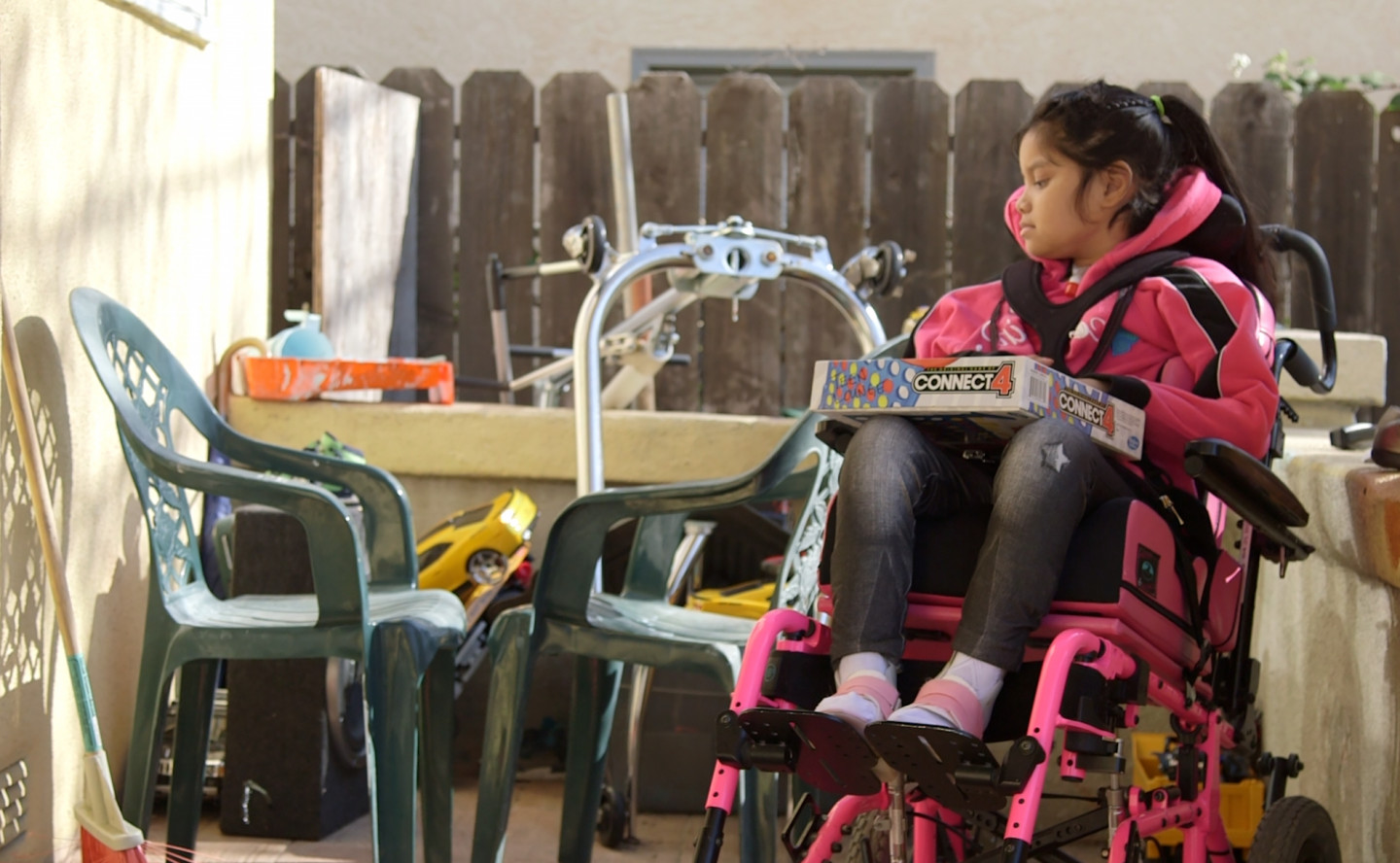
"caption": "9-year-old Jacqueline Funes was paralyzed from the neck down after being shot in the neck while playing in front of her house. (Adam Grossberg/KQED)",
"description": null,
"title": "jacqueline-on-porch",
"credit": null,
"status": "inherit",
"isLoading": false,
"fetchFailed": false
},
"news_10491605": {
"type": "attachments",
"id": "news_10491605",
"meta": {
"index": "attachments_1716263798",
"site": "news",
"id": "10491605",
"found": true
},
"parent": 10490289,
"imgSizes": {
"thumbnail": {
"file": "https://ww2.kqed.org/app/uploads/sites/10/2015/04/Sarah-Motola-ESL2-400x267.jpg",
"width": 400,
"mimeType": "image/jpeg",
"height": 267
},
"fd-sm": {
"file": "https://ww2.kqed.org/app/uploads/sites/10/2015/04/Sarah-Motola-ESL2-320x213.jpg",
"width": 320,
"mimeType": "image/jpeg",
"height": 213
},
"kqedFullSize": {
"file": "https://ww2.kqed.org/app/uploads/sites/10/2015/04/Sarah-Motola-ESL2.jpg",
"width": 480,
"height": 320
},
"guest-author-96": {
"file": "https://ww2.kqed.org/app/uploads/sites/10/2015/04/Sarah-Motola-ESL2-96x96.jpg",
"width": 96,
"mimeType": "image/jpeg",
"height": 96
},
"guest-author-64": {
"file": "https://ww2.kqed.org/app/uploads/sites/10/2015/04/Sarah-Motola-ESL2-64x64.jpg",
"width": 64,
"mimeType": "image/jpeg",
"height": 64
},
"detail": {
"file": "https://ww2.kqed.org/app/uploads/sites/10/2015/04/Sarah-Motola-ESL2-75x75.jpg",
"width": 75,
"mimeType": "image/jpeg",
"height": 75
},
"guest-author-32": {
"file": "https://ww2.kqed.org/app/uploads/sites/10/2015/04/Sarah-Motola-ESL2-32x32.jpg",
"width": 32,
"mimeType": "image/jpeg",
"height": 32
},
"guest-author-128": {
"file": "https://ww2.kqed.org/app/uploads/sites/10/2015/04/Sarah-Motola-ESL2-128x128.jpg",
"width": 128,
"mimeType": "image/jpeg",
"height": 128
}
},
"publishDate": 1429140497,
"modified": 1429140542,
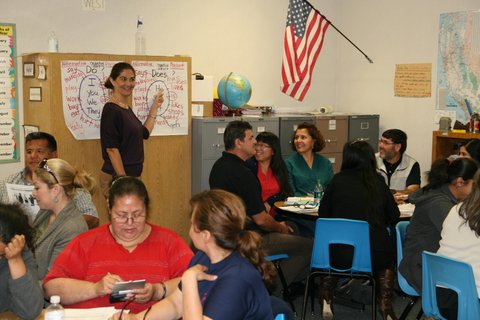
"caption": "Sarah Motola's ESL classroom is always filled to capacity. ",
"description": null,
"title": "Sarah Motola, ESL",
"credit": "Cary Kalfayan/Visalia Adult School",
"status": "inherit",
"isLoading": false,
"fetchFailed": false
},
"news_10498246": {
"type": "attachments",
"id": "news_10498246",
"meta": {
"index": "attachments_1716263798",
"site": "news",
"id": "10498246",
"found": true
},
"parent": 10498240,
"imgSizes": {
"twentyfourteen-full-width": {
"file": "https://ww2.kqed.org/app/uploads/sites/10/2015/04/RS1394_57641874-e1429658894106-1038x576.jpg",
"width": 1038,
"mimeType": "image/jpeg",
"height": 576
},
"thumbnail": {
"file": "https://ww2.kqed.org/app/uploads/sites/10/2015/04/RS1394_57641874-e1429658894106-400x297.jpg",
"width": 400,
"mimeType": "image/jpeg",
"height": 297
},
"fd-sm": {
"file": "https://ww2.kqed.org/app/uploads/sites/10/2015/04/RS1394_57641874-e1429658894106-960x712.jpg",
"width": 960,
"mimeType": "image/jpeg",
"height": 712
},
"post-thumbnail": {
"file": "https://ww2.kqed.org/app/uploads/sites/10/2015/04/RS1394_57641874-e1429658894106-672x372.jpg",
"width": 672,
"mimeType": "image/jpeg",
"height": 372
},
"kqedFullSize": {
"file": "https://ww2.kqed.org/app/uploads/sites/10/2015/04/RS1394_57641874-e1429658905179.jpg",
"width": 1920,
"height": 1424
},
"large": {
"file": "https://ww2.kqed.org/app/uploads/sites/10/2015/04/RS1394_57641874-e1429658894106-1440x1068.jpg",
"width": 1440,
"mimeType": "image/jpeg",
"height": 1068
},
"guest-author-96": {
"file": "https://ww2.kqed.org/app/uploads/sites/10/2015/04/RS1394_57641874-e1429658894106-96x96.jpg",
"width": 96,
"mimeType": "image/jpeg",
"height": 96
},
"medium": {
"file": "https://ww2.kqed.org/app/uploads/sites/10/2015/04/RS1394_57641874-e1429658894106-800x593.jpg",
"width": 800,
"mimeType": "image/jpeg",
"height": 593
},
"guest-author-64": {
"file": "https://ww2.kqed.org/app/uploads/sites/10/2015/04/RS1394_57641874-e1429658894106-64x64.jpg",
"width": 64,
"mimeType": "image/jpeg",
"height": 64
},
"guest-author-32": {
"file": "https://ww2.kqed.org/app/uploads/sites/10/2015/04/RS1394_57641874-e1429658894106-32x32.jpg",
"width": 32,
"mimeType": "image/jpeg",
"height": 32
},
"fd-med": {
"file": "https://ww2.kqed.org/app/uploads/sites/10/2015/04/RS1394_57641874-e1429658894106-1180x875.jpg",
"width": 1180,
"mimeType": "image/jpeg",
"height": 875
},
"detail": {
"file": "https://ww2.kqed.org/app/uploads/sites/10/2015/04/RS1394_57641874-e1429658894106-75x75.jpg",
"width": 75,
"mimeType": "image/jpeg",
"height": 75
},
"guest-author-128": {
"file": "https://ww2.kqed.org/app/uploads/sites/10/2015/04/RS1394_57641874-e1429658894106-128x128.jpg",
"width": 128,
"mimeType": "image/jpeg",
"height": 128
}
},
"publishDate": 1429658813,
"modified": 1429738144,
"caption": "Gov. Jerry Brown may be skeptical, but a majority of likely voters support the idea of a 2016 statewide school bond.",
"description": "MAYWOOD, CA - MAY 17: A worker takes a lunch break during construction of a new school May 17, 2006 in the Los Angeles-area city of Maywood, California. In November, voters, angered that city police were stopping and seizing hundreds of cars whose unlicensed drivers frequently turned out to be illegal immigrants, elected a new majority on the city council. The new council majority promptly voted to eliminate the police department's traffic division, resulting in car impoundments dropping from 240 a month to 40. The city in January also officially opposed a proposed federal law that would have criminalized illegal immigration and forced local police to enforce immigration law. Approximately 96 percent of the city's 29,000 residents is Latino, with an additional 10,000 illegal residents living within city limits, according to estimates. (Photo by David McNew/Getty Images)",
"title": "California Town A 'Sanctuary' For Illegal Immigrants",
"credit": "David McNew/Getty Images",
"status": "inherit",
"isLoading": false,
"fetchFailed": false
},
"news_10491687": {
"type": "attachments",
"id": "news_10491687",
"meta": {
"index": "attachments_1716263798",
"site": "news",
"id": "10491687",
"found": true
},
"parent": 10490169,
"imgSizes": {
"twentyfourteen-full-width": {
"file": "https://ww2.kqed.org/app/uploads/sites/10/2015/04/Trailblazer-1038x576.jpg",
"width": 1038,
"mimeType": "image/jpeg",
"height": 576
},
"thumbnail": {
"file": "https://ww2.kqed.org/app/uploads/sites/10/2015/04/Trailblazer-400x286.jpg",
"width": 400,
"mimeType": "image/jpeg",
"height": 286
},
"fd-sm": {
"file": "https://ww2.kqed.org/app/uploads/sites/10/2015/04/Trailblazer-320x229.jpg",
"width": 320,
"mimeType": "image/jpeg",
"height": 229
},
"post-thumbnail": {
"file": "https://ww2.kqed.org/app/uploads/sites/10/2015/04/Trailblazer-672x372.jpg",
"width": 672,
"mimeType": "image/jpeg",
"height": 372
},
"kqedFullSize": {
"file": "https://ww2.kqed.org/app/uploads/sites/10/2015/04/Trailblazer.jpg",
"width": 1920,
"height": 1371
},
"large": {
"file": "https://ww2.kqed.org/app/uploads/sites/10/2015/04/Trailblazer-1440x1028.jpg",
"width": 1440,
"mimeType": "image/jpeg",
"height": 1028
},
"guest-author-96": {
"file": "https://ww2.kqed.org/app/uploads/sites/10/2015/04/Trailblazer-96x96.jpg",
"width": 96,
"mimeType": "image/jpeg",
"height": 96
},
"medium": {
"file": "https://ww2.kqed.org/app/uploads/sites/10/2015/04/Trailblazer-800x571.jpg",
"width": 800,
"mimeType": "image/jpeg",
"height": 571
},
"guest-author-64": {
"file": "https://ww2.kqed.org/app/uploads/sites/10/2015/04/Trailblazer-64x64.jpg",
"width": 64,
"mimeType": "image/jpeg",
"height": 64
},
"guest-author-32": {
"file": "https://ww2.kqed.org/app/uploads/sites/10/2015/04/Trailblazer-32x32.jpg",
"width": 32,
"mimeType": "image/jpeg",
"height": 32
},
"fd-lrg": {
"file": "https://ww2.kqed.org/app/uploads/sites/10/2015/04/Trailblazer-1180x843.jpg",
"width": 1180,
"mimeType": "image/jpeg",
"height": 843
},
"fd-med": {
"file": "https://ww2.kqed.org/app/uploads/sites/10/2015/04/Trailblazer-768x548.jpg",
"width": 768,
"mimeType": "image/jpeg",
"height": 548
},
"detail": {
"file": "https://ww2.kqed.org/app/uploads/sites/10/2015/04/Trailblazer-75x75.jpg",
"width": 75,
"mimeType": "image/jpeg",
"height": 75
},
"guest-author-128": {
"file": "https://ww2.kqed.org/app/uploads/sites/10/2015/04/Trailblazer-128x128.jpg",
"width": 128,
"mimeType": "image/jpeg",
"height": 128
}
},
"publishDate": 1429145628,
"modified": 1429221231,
"caption": "Willy Parker stands by a trail he's helping shore up. 'It should last a couple hundred years. I think that’s pretty awesome.'",
"description": "Willy Parker stands by a trail he's helping shore up. 'It should last a couple hundred years. I think that’s pretty awesome.'",
"title": "Trailblazer",
"credit": "Lisa Morehouse/KQED",
"status": "inherit",
"isLoading": false,
"fetchFailed": false
},
"news_10488936": {
"type": "attachments",
"id": "news_10488936",
"meta": {
"index": "attachments_1716263798",
"site": "news",
"id": "10488936",
"found": true
},
"parent": 10488680,
"imgSizes": {
"twentyfourteen-full-width": {
"file": "https://ww2.kqed.org/app/uploads/sites/10/2015/04/RS10838_76754172-1-e1428958500455-1038x576.jpg",
"width": 1038,
"mimeType": "image/jpeg",
"height": 576
},
"thumbnail": {
"file": "https://ww2.kqed.org/app/uploads/sites/10/2015/04/RS10838_76754172-1-e1428958500455-400x252.jpg",
"width": 400,
"mimeType": "image/jpeg",
"height": 252
},
"fd-sm": {
"file": "https://ww2.kqed.org/app/uploads/sites/10/2015/04/RS10838_76754172-1-e1428958500455-320x202.jpg",
"width": 320,
"mimeType": "image/jpeg",
"height": 202
},
"post-thumbnail": {
"file": "https://ww2.kqed.org/app/uploads/sites/10/2015/04/RS10838_76754172-1-e1428958500455-672x372.jpg",
"width": 672,
"mimeType": "image/jpeg",
"height": 372
},
"kqedFullSize": {
"file": "https://ww2.kqed.org/app/uploads/sites/10/2015/04/RS10838_76754172-1-e1428958500455.jpg",
"width": 1718,
"height": 1084
},
"large": {
"file": "https://ww2.kqed.org/app/uploads/sites/10/2015/04/RS10838_76754172-1-e1428958500455-1440x909.jpg",
"width": 1440,
"mimeType": "image/jpeg",
"height": 909
},
"guest-author-96": {
"file": "https://ww2.kqed.org/app/uploads/sites/10/2015/04/RS10838_76754172-1-e1428958500455-96x96.jpg",
"width": 96,
"mimeType": "image/jpeg",
"height": 96
},
"medium": {
"file": "https://ww2.kqed.org/app/uploads/sites/10/2015/04/RS10838_76754172-1-e1428958500455-800x505.jpg",
"width": 800,
"mimeType": "image/jpeg",
"height": 505
},
"guest-author-64": {
"file": "https://ww2.kqed.org/app/uploads/sites/10/2015/04/RS10838_76754172-1-e1428958500455-64x64.jpg",
"width": 64,
"mimeType": "image/jpeg",
"height": 64
},
"guest-author-32": {
"file": "https://ww2.kqed.org/app/uploads/sites/10/2015/04/RS10838_76754172-1-e1428958500455-32x32.jpg",
"width": 32,
"mimeType": "image/jpeg",
"height": 32
},
"fd-lrg": {
"file": "https://ww2.kqed.org/app/uploads/sites/10/2015/04/RS10838_76754172-1-e1428958500455-1180x745.jpg",
"width": 1180,
"mimeType": "image/jpeg",
"height": 745
},
"fd-med": {
"file": "https://ww2.kqed.org/app/uploads/sites/10/2015/04/RS10838_76754172-1-e1428958500455-768x485.jpg",
"width": 768,
"mimeType": "image/jpeg",
"height": 485
},
"detail": {
"file": "https://ww2.kqed.org/app/uploads/sites/10/2015/04/RS10838_76754172-1-e1428958500455-75x75.jpg",
"width": 75,
"mimeType": "image/jpeg",
"height": 75
},
"guest-author-128": {
"file": "https://ww2.kqed.org/app/uploads/sites/10/2015/04/RS10838_76754172-1-e1428958500455-128x128.jpg",
"width": 128,
"mimeType": "image/jpeg",
"height": 128
}
},
"publishDate": 1428958456,
"modified": 1428964407,
"caption": "A new statewide poll finds few Californians support existing teacher tenure rules.",
"description": "Teacher instructing class",
"title": "RS10838_76754172 (1)",
"credit": "Getty Images",
"status": "inherit",
"isLoading": false,
"fetchFailed": false
},
"news_10483071": {
"type": "attachments",
"id": "news_10483071",
"meta": {
"index": "attachments_1716263798",
"site": "news",
"id": "10483071",
"found": true
},
"parent": 10482831,
"imgSizes": {
"twentyfourteen-full-width": {
"file": "https://ww2.kqed.org/app/uploads/sites/10/2015/04/Vis-Valley-Middle-Schoolers-1038x576.jpg",
"width": 1038,
"mimeType": "image/jpeg",
"height": 576
},
"thumbnail": {
"file": "https://ww2.kqed.org/app/uploads/sites/10/2015/04/Vis-Valley-Middle-Schoolers-400x300.jpg",
"width": 400,
"mimeType": "image/jpeg",
"height": 300
},
"fd-sm": {
"file": "https://ww2.kqed.org/app/uploads/sites/10/2015/04/Vis-Valley-Middle-Schoolers-320x240.jpg",
"width": 320,
"mimeType": "image/jpeg",
"height": 240
},
"post-thumbnail": {
"file": "https://ww2.kqed.org/app/uploads/sites/10/2015/04/Vis-Valley-Middle-Schoolers-672x372.jpg",
"width": 672,
"mimeType": "image/jpeg",
"height": 372
},
"kqedFullSize": {
"file": "https://ww2.kqed.org/app/uploads/sites/10/2015/04/Vis-Valley-Middle-Schoolers.jpg",
"width": 1920,
"height": 1438
},
"large": {
"file": "https://ww2.kqed.org/app/uploads/sites/10/2015/04/Vis-Valley-Middle-Schoolers-1440x1079.jpg",
"width": 1440,
"mimeType": "image/jpeg",
"height": 1079
},
"guest-author-96": {
"file": "https://ww2.kqed.org/app/uploads/sites/10/2015/04/Vis-Valley-Middle-Schoolers-96x96.jpg",
"width": 96,
"mimeType": "image/jpeg",
"height": 96
},
"medium": {
"file": "https://ww2.kqed.org/app/uploads/sites/10/2015/04/Vis-Valley-Middle-Schoolers-800x599.jpg",
"width": 800,
"mimeType": "image/jpeg",
"height": 599
},
"guest-author-64": {
"file": "https://ww2.kqed.org/app/uploads/sites/10/2015/04/Vis-Valley-Middle-Schoolers-64x64.jpg",
"width": 64,
"mimeType": "image/jpeg",
"height": 64
},
"guest-author-32": {
"file": "https://ww2.kqed.org/app/uploads/sites/10/2015/04/Vis-Valley-Middle-Schoolers-32x32.jpg",
"width": 32,
"mimeType": "image/jpeg",
"height": 32
},
"fd-lrg": {
"file": "https://ww2.kqed.org/app/uploads/sites/10/2015/04/Vis-Valley-Middle-Schoolers-1180x884.jpg",
"width": 1180,
"mimeType": "image/jpeg",
"height": 884
},
"fd-med": {
"file": "https://ww2.kqed.org/app/uploads/sites/10/2015/04/Vis-Valley-Middle-Schoolers-768x575.jpg",
"width": 768,
"mimeType": "image/jpeg",
"height": 575
},
"detail": {
"file": "https://ww2.kqed.org/app/uploads/sites/10/2015/04/Vis-Valley-Middle-Schoolers-75x75.jpg",
"width": 75,
"mimeType": "image/jpeg",
"height": 75
},
"guest-author-128": {
"file": "https://ww2.kqed.org/app/uploads/sites/10/2015/04/Vis-Valley-Middle-Schoolers-128x128.jpg",
"width": 128,
"mimeType": "image/jpeg",
"height": 128
}
},
"publishDate": 1428531700,
"modified": 1428538125,
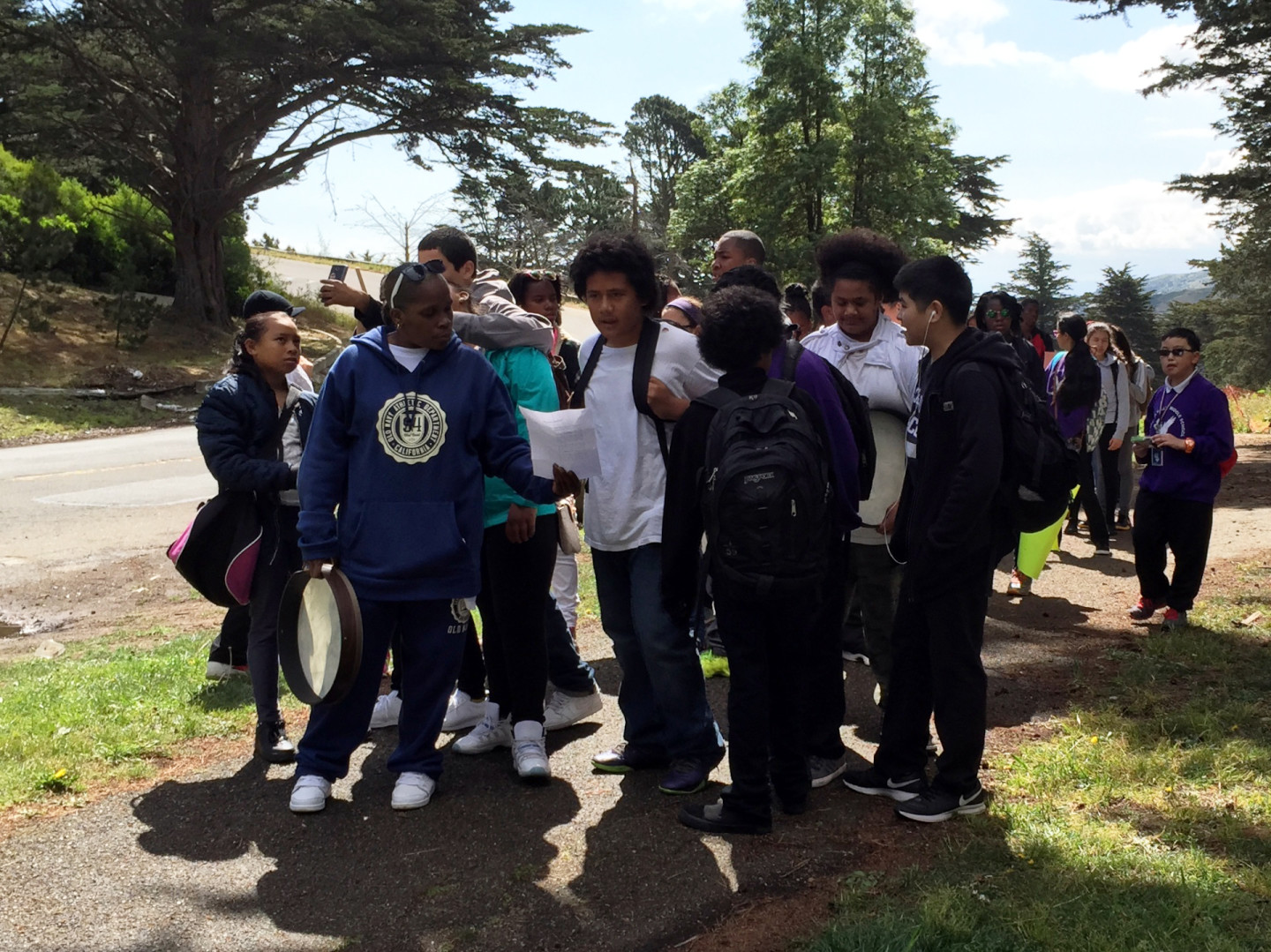
"caption": "Visitacion Valley Middle School students march from their school to June Jordan High School on April 8.",
"description": "Visitacion Valley Middle School students march from their school to June Jordan High School on April 8.",
"title": "Visitacion Valley Middle Schoolers",
"credit": "Alex Emslie/KQED",
"status": "inherit",
"isLoading": false,
"fetchFailed": false
},
"news_10471170": {
"type": "attachments",
"id": "news_10471170",
"meta": {
"index": "attachments_1716263798",
"site": "news",
"id": "10471170",
"found": true
},
"parent": 10469447,
"imgSizes": {
"twentyfourteen-full-width": {
"file": "https://ww2.kqed.org/app/uploads/sites/10/2015/03/RS14663_sitting-together.Still002-qut-1038x576.jpg",
"width": 1038,
"mimeType": "image/jpeg",
"height": 576
},
"thumbnail": {
"file": "https://ww2.kqed.org/app/uploads/sites/10/2015/03/RS14663_sitting-together.Still002-qut-400x225.jpg",
"width": 400,
"mimeType": "image/jpeg",
"height": 225
},
"fd-sm": {
"file": "https://ww2.kqed.org/app/uploads/sites/10/2015/03/RS14663_sitting-together.Still002-qut-320x180.jpg",
"width": 320,
"mimeType": "image/jpeg",
"height": 180
},
"post-thumbnail": {
"file": "https://ww2.kqed.org/app/uploads/sites/10/2015/03/RS14663_sitting-together.Still002-qut-672x372.jpg",
"width": 672,
"mimeType": "image/jpeg",
"height": 372
},
"kqedFullSize": {
"file": "https://ww2.kqed.org/app/uploads/sites/10/2015/03/RS14663_sitting-together.Still002-qut.jpg",
"width": 1920,
"height": 1080
},
"large": {
"file": "https://ww2.kqed.org/app/uploads/sites/10/2015/03/RS14663_sitting-together.Still002-qut-1440x810.jpg",
"width": 1440,
"mimeType": "image/jpeg",
"height": 810
},
"guest-author-96": {
"file": "https://ww2.kqed.org/app/uploads/sites/10/2015/03/RS14663_sitting-together.Still002-qut-96x96.jpg",
"width": 96,
"mimeType": "image/jpeg",
"height": 96
},
"medium": {
"file": "https://ww2.kqed.org/app/uploads/sites/10/2015/03/RS14663_sitting-together.Still002-qut-800x450.jpg",
"width": 800,
"mimeType": "image/jpeg",
"height": 450
},
"guest-author-64": {
"file": "https://ww2.kqed.org/app/uploads/sites/10/2015/03/RS14663_sitting-together.Still002-qut-64x64.jpg",
"width": 64,
"mimeType": "image/jpeg",
"height": 64
},
"guest-author-32": {
"file": "https://ww2.kqed.org/app/uploads/sites/10/2015/03/RS14663_sitting-together.Still002-qut-32x32.jpg",
"width": 32,
"mimeType": "image/jpeg",
"height": 32
},
"fd-lrg": {
"file": "https://ww2.kqed.org/app/uploads/sites/10/2015/03/RS14663_sitting-together.Still002-qut-1180x664.jpg",
"width": 1180,
"mimeType": "image/jpeg",
"height": 664
},
"fd-med": {
"file": "https://ww2.kqed.org/app/uploads/sites/10/2015/03/RS14663_sitting-together.Still002-qut-768x432.jpg",
"width": 768,
"mimeType": "image/jpeg",
"height": 432
},
"detail": {
"file": "https://ww2.kqed.org/app/uploads/sites/10/2015/03/RS14663_sitting-together.Still002-qut-75x75.jpg",
"width": 75,
"mimeType": "image/jpeg",
"height": 75
},
"guest-author-128": {
"file": "https://ww2.kqed.org/app/uploads/sites/10/2015/03/RS14663_sitting-together.Still002-qut-128x128.jpg",
"width": 128,
"mimeType": "image/jpeg",
"height": 128
}
},
"publishDate": 1427737539,
"modified": 1427847248,
"caption": "Students from Marin Academy and Richmond High School interviewed each other for the project.",
"description": "Students from Marin Academy and Richmond High School interviewed each other for the project.",
"title": "RS14663_sitting together.Still002-qut",
"credit": "Dominic Colacchio/KQED",
"status": "inherit",
"isLoading": false,
"fetchFailed": false
},
"news_10416557": {
"type": "attachments",
"id": "news_10416557",
"meta": {
"index": "attachments_1716263798",
"site": "news",
"id": "10416557",
"found": true
},
"parent": 10416421,
"imgSizes": {
"twentyfourteen-full-width": {
"file": "https://ww2.kqed.org/app/uploads/sites/10/2015/01/napolitano-1038x576.jpg",
"width": 1038,
"mimeType": "image/jpeg",
"height": 576
},
"thumbnail": {
"file": "https://ww2.kqed.org/app/uploads/sites/10/2015/01/napolitano-400x267.jpg",
"width": 400,
"mimeType": "image/jpeg",
"height": 267
},
"post-thumbnail": {
"file": "https://ww2.kqed.org/app/uploads/sites/10/2015/01/napolitano-672x372.jpg",
"width": 672,
"mimeType": "image/jpeg",
"height": 372
},
"kqedFullSize": {
"file": "https://ww2.kqed.org/app/uploads/sites/10/2015/01/napolitano-e1422316539897.jpg",
"width": 1440,
"height": 960
},
"large": {
"file": "https://ww2.kqed.org/app/uploads/sites/10/2015/01/napolitano-1440x960.jpg",
"width": 1440,
"mimeType": "image/jpeg",
"height": 960
},
"guest-author-96": {
"file": "https://ww2.kqed.org/app/uploads/sites/10/2015/01/napolitano-96x96.jpg",
"width": 96,
"mimeType": "image/jpeg",
"height": 96
},
"medium": {
"file": "https://ww2.kqed.org/app/uploads/sites/10/2015/01/napolitano-800x533.jpg",
"width": 800,
"mimeType": "image/jpeg",
"height": 533
},
"guest-author-64": {
"file": "https://ww2.kqed.org/app/uploads/sites/10/2015/01/napolitano-64x64.jpg",
"width": 64,
"mimeType": "image/jpeg",
"height": 64
},
"detail": {
"file": "https://ww2.kqed.org/app/uploads/sites/10/2015/01/napolitano-75x75.jpg",
"width": 75,
"mimeType": "image/jpeg",
"height": 75
},
"guest-author-32": {
"file": "https://ww2.kqed.org/app/uploads/sites/10/2015/01/napolitano-32x32.jpg",
"width": 32,
"mimeType": "image/jpeg",
"height": 32
},
"guest-author-128": {
"file": "https://ww2.kqed.org/app/uploads/sites/10/2015/01/napolitano-128x128.jpg",
"width": 128,
"mimeType": "image/jpeg",
"height": 128
}
},
"publishDate": 1422316474,
"modified": 1426803391,
"caption": "University of California President Janet Napolitano in 2013. ",
"description": "University of California President Janet Napolitano in 2013. ",
"title": "Janet Napolitano-University of California",
"credit": "Deborah Svoboda/KQED",
"status": "inherit",
"isLoading": false,
"fetchFailed": false
},
"news_10457984": {
"type": "attachments",
"id": "news_10457984",
"meta": {
"index": "attachments_1716263798",
"site": "news",
"id": "10457984",
"found": true
},
"parent": 10457537,
"imgSizes": {
"twentyfourteen-full-width": {
"file": "https://ww2.kqed.org/app/uploads/sites/10/2016/03/Robert-Snavely-1038x576.jpg",
"width": 1038,
"mimeType": "image/jpeg",
"height": 576
},
"thumbnail": {
"file": "https://ww2.kqed.org/app/uploads/sites/10/2016/03/Robert-Snavely-400x300.jpg",
"width": 400,
"mimeType": "image/jpeg",
"height": 300
},
"fd-sm": {
"file": "https://ww2.kqed.org/app/uploads/sites/10/2016/03/Robert-Snavely-320x240.jpg",
"width": 320,
"mimeType": "image/jpeg",
"height": 240
},
"post-thumbnail": {
"file": "https://ww2.kqed.org/app/uploads/sites/10/2016/03/Robert-Snavely-672x372.jpg",
"width": 672,
"mimeType": "image/jpeg",
"height": 372
},
"kqedFullSize": {
"file": "https://ww2.kqed.org/app/uploads/sites/10/2016/03/Robert-Snavely.jpg",
"width": 4608,
"height": 3456
},
"large": {
"file": "https://ww2.kqed.org/app/uploads/sites/10/2016/03/Robert-Snavely-1440x1080.jpg",
"width": 1440,
"mimeType": "image/jpeg",
"height": 1080
},
"guest-author-96": {
"file": "https://ww2.kqed.org/app/uploads/sites/10/2016/03/Robert-Snavely-96x96.jpg",
"width": 96,
"mimeType": "image/jpeg",
"height": 96
},
"medium": {
"file": "https://ww2.kqed.org/app/uploads/sites/10/2016/03/Robert-Snavely-800x600.jpg",
"width": 800,
"mimeType": "image/jpeg",
"height": 600
},
"guest-author-64": {
"file": "https://ww2.kqed.org/app/uploads/sites/10/2016/03/Robert-Snavely-64x64.jpg",
"width": 64,
"mimeType": "image/jpeg",
"height": 64
},
"guest-author-32": {
"file": "https://ww2.kqed.org/app/uploads/sites/10/2016/03/Robert-Snavely-32x32.jpg",
"width": 32,
"mimeType": "image/jpeg",
"height": 32
},
"fd-lrg": {
"file": "https://ww2.kqed.org/app/uploads/sites/10/2016/03/Robert-Snavely-1180x885.jpg",
"width": 1180,
"mimeType": "image/jpeg",
"height": 885
},
"fd-med": {
"file": "https://ww2.kqed.org/app/uploads/sites/10/2016/03/Robert-Snavely-768x576.jpg",
"width": 768,
"mimeType": "image/jpeg",
"height": 576
},
"detail": {
"file": "https://ww2.kqed.org/app/uploads/sites/10/2016/03/Robert-Snavely-75x75.jpg",
"width": 75,
"mimeType": "image/jpeg",
"height": 75
},
"guest-author-128": {
"file": "https://ww2.kqed.org/app/uploads/sites/10/2016/03/Robert-Snavely-128x128.jpg",
"width": 128,
"mimeType": "image/jpeg",
"height": 128
}
},
"publishDate": 1426559315,
"modified": 1426559374,
"caption": "Robert Snavely, who applied to nearly 30 San Francisco elementary schools for his son, William.",
"description": "Robert Snavely, who applied to nearly 30 San Francisco elementary schools for his son, William.",
"title": "IMG_0279",
"credit": "Jon Brooks/KQED",
"status": "inherit",
"isLoading": false,
"fetchFailed": false
},
"news_10452219": {
"type": "attachments",
"id": "news_10452219",
"meta": {
"index": "attachments_1716263798",
"site": "news",
"id": "10452219",
"found": true
},
"parent": 10444766,
"imgSizes": {
"twentyfourteen-full-width": {
"file": "https://ww2.kqed.org/app/uploads/sites/10/2015/03/RS14433_IMG_20150211_131711-qut-1038x576.jpg",
"width": 1038,
"mimeType": "image/jpeg",
"height": 576
},
"thumbnail": {
"file": "https://ww2.kqed.org/app/uploads/sites/10/2015/03/RS14433_IMG_20150211_131711-qut-400x300.jpg",
"width": 400,
"mimeType": "image/jpeg",
"height": 300
},
"fd-sm": {
"file": "https://ww2.kqed.org/app/uploads/sites/10/2015/03/RS14433_IMG_20150211_131711-qut-320x240.jpg",
"width": 320,
"mimeType": "image/jpeg",
"height": 240
},
"post-thumbnail": {
"file": "https://ww2.kqed.org/app/uploads/sites/10/2015/03/RS14433_IMG_20150211_131711-qut-672x372.jpg",
"width": 672,
"mimeType": "image/jpeg",
"height": 372
},
"kqedFullSize": {
"file": "https://ww2.kqed.org/app/uploads/sites/10/2015/03/RS14433_IMG_20150211_131711-qut.jpg",
"width": 1920,
"height": 1440
},
"large": {
"file": "https://ww2.kqed.org/app/uploads/sites/10/2015/03/RS14433_IMG_20150211_131711-qut-1440x1080.jpg",
"width": 1440,
"mimeType": "image/jpeg",
"height": 1080
},
"guest-author-96": {
"file": "https://ww2.kqed.org/app/uploads/sites/10/2015/03/RS14433_IMG_20150211_131711-qut-96x96.jpg",
"width": 96,
"mimeType": "image/jpeg",
"height": 96
},
"medium": {
"file": "https://ww2.kqed.org/app/uploads/sites/10/2015/03/RS14433_IMG_20150211_131711-qut-800x600.jpg",
"width": 800,
"mimeType": "image/jpeg",
"height": 600
},
"guest-author-64": {
"file": "https://ww2.kqed.org/app/uploads/sites/10/2015/03/RS14433_IMG_20150211_131711-qut-64x64.jpg",
"width": 64,
"mimeType": "image/jpeg",
"height": 64
},
"guest-author-32": {
"file": "https://ww2.kqed.org/app/uploads/sites/10/2015/03/RS14433_IMG_20150211_131711-qut-32x32.jpg",
"width": 32,
"mimeType": "image/jpeg",
"height": 32
},
"fd-lrg": {
"file": "https://ww2.kqed.org/app/uploads/sites/10/2015/03/RS14433_IMG_20150211_131711-qut-1180x885.jpg",
"width": 1180,
"mimeType": "image/jpeg",
"height": 885
},
"fd-med": {
"file": "https://ww2.kqed.org/app/uploads/sites/10/2015/03/RS14433_IMG_20150211_131711-qut-768x576.jpg",
"width": 768,
"mimeType": "image/jpeg",
"height": 576
},
"detail": {
"file": "https://ww2.kqed.org/app/uploads/sites/10/2015/03/RS14433_IMG_20150211_131711-qut-75x75.jpg",
"width": 75,
"mimeType": "image/jpeg",
"height": 75
},
"guest-author-128": {
"file": "https://ww2.kqed.org/app/uploads/sites/10/2015/03/RS14433_IMG_20150211_131711-qut-128x128.jpg",
"width": 128,
"mimeType": "image/jpeg",
"height": 128
}
},
"publishDate": 1426024889,
"modified": 1426282895,
"caption": "Fourth-graders in Ana Thomas' class at Peralta Elementary paint marine animals on fabric for a quilt.",
"description": "Fourth-graders in Ana Thomas' class at Peralta Elementary paint marine animals on fabric for a quilt.",
"title": "RS14433_IMG_20150211_131711-qut",
"credit": "Zaidee Stavely/KQED",
"status": "inherit",
"isLoading": false,
"fetchFailed": false
},
"news_10454904": {
"type": "attachments",
"id": "news_10454904",
"meta": {
"index": "attachments_1716263798",
"site": "news",
"id": "10454904",
"found": true
},
"parent": 10452775,
"imgSizes": {
"twentyfourteen-full-width": {
"file": "https://ww2.kqed.org/app/uploads/sites/10/2015/03/IntercambiosFeat-1038x576.jpg",
"width": 1038,
"mimeType": "image/jpeg",
"height": 576
},
"thumbnail": {
"file": "https://ww2.kqed.org/app/uploads/sites/10/2015/03/IntercambiosFeat-400x233.jpg",
"width": 400,
"mimeType": "image/jpeg",
"height": 233
},
"fd-sm": {
"file": "https://ww2.kqed.org/app/uploads/sites/10/2015/03/IntercambiosFeat-320x186.jpg",
"width": 320,
"mimeType": "image/jpeg",
"height": 186
},
"post-thumbnail": {
"file": "https://ww2.kqed.org/app/uploads/sites/10/2015/03/IntercambiosFeat-672x372.jpg",
"width": 672,
"mimeType": "image/jpeg",
"height": 372
},
"kqedFullSize": {
"file": "https://ww2.kqed.org/app/uploads/sites/10/2015/03/IntercambiosFeat.jpg",
"width": 1920,
"height": 1118
},
"large": {
"file": "https://ww2.kqed.org/app/uploads/sites/10/2015/03/IntercambiosFeat-1440x839.jpg",
"width": 1440,
"mimeType": "image/jpeg",
"height": 839
},
"guest-author-96": {
"file": "https://ww2.kqed.org/app/uploads/sites/10/2015/03/IntercambiosFeat-96x96.jpg",
"width": 96,
"mimeType": "image/jpeg",
"height": 96
},
"medium": {
"file": "https://ww2.kqed.org/app/uploads/sites/10/2015/03/IntercambiosFeat-800x466.jpg",
"width": 800,
"mimeType": "image/jpeg",
"height": 466
},
"guest-author-64": {
"file": "https://ww2.kqed.org/app/uploads/sites/10/2015/03/IntercambiosFeat-64x64.jpg",
"width": 64,
"mimeType": "image/jpeg",
"height": 64
},
"guest-author-32": {
"file": "https://ww2.kqed.org/app/uploads/sites/10/2015/03/IntercambiosFeat-32x32.jpg",
"width": 32,
"mimeType": "image/jpeg",
"height": 32
},
"fd-lrg": {
"file": "https://ww2.kqed.org/app/uploads/sites/10/2015/03/IntercambiosFeat-1180x687.jpg",
"width": 1180,
"mimeType": "image/jpeg",
"height": 687
},
"fd-med": {
"file": "https://ww2.kqed.org/app/uploads/sites/10/2015/03/IntercambiosFeat-768x447.jpg",
"width": 768,
"mimeType": "image/jpeg",
"height": 447
},
"detail": {
"file": "https://ww2.kqed.org/app/uploads/sites/10/2015/03/IntercambiosFeat-75x75.jpg",
"width": 75,
"mimeType": "image/jpeg",
"height": 75
},
"guest-author-128": {
"file": "https://ww2.kqed.org/app/uploads/sites/10/2015/03/IntercambiosFeat-128x128.jpg",
"width": 128,
"mimeType": "image/jpeg",
"height": 128
}
},
"publishDate": 1426288486,
"modified": 1426288565,
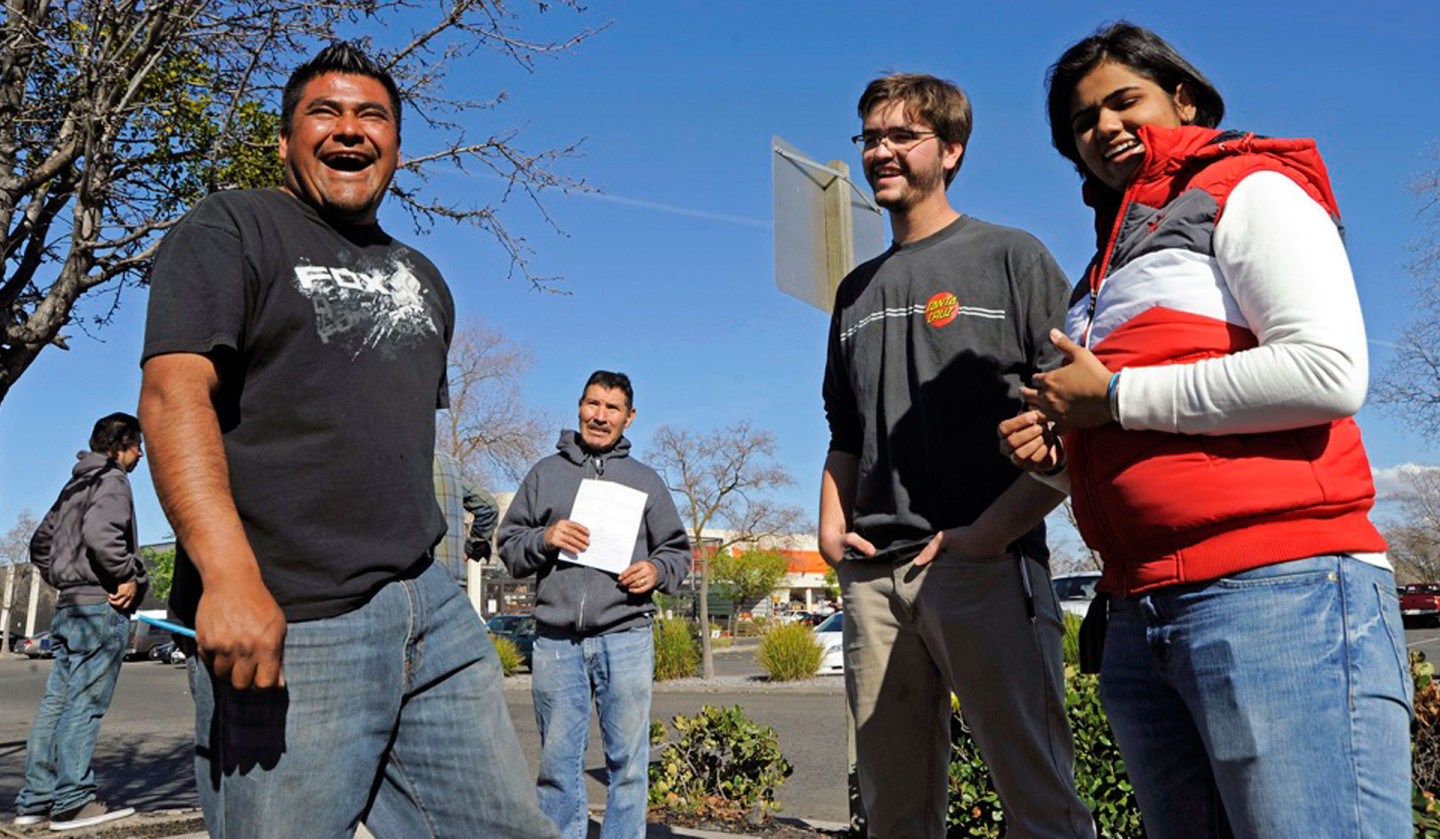
"caption": "Day laborer Pedro Flores (L) and students Wyatt Irmen and Nimra Syed take part in the intercambio.",
"description": "Day laborer Pedro Flores (L) and students Wyatt Irmen and Nimra Syed take part in the intercambio.",
"title": "IntercambiosFeat",
"credit": "Blair Wells/KQED",
"status": "inherit",
"isLoading": false,
"fetchFailed": false
}
},
"audioPlayerReducer": {
"postId": "stream_live",
"isPaused": true,
"isPlaying": false,
"pfsActive": false,
"pledgeModalIsOpen": true,
"playerDrawerIsOpen": false,
"liveAudioPlayStartedAt": 0,
"liveAudioPlayContext": ""
},
"authorsReducer": {
"byline_news_10460465": {
"type": "authors",
"id": "byline_news_10460465",
"meta": {
"override": true
},
"slug": "byline_news_10460465",
"name": "\u003cstrong>Kristin J. Bender\u003cbr />Associated Press\u003c/strong>",
"isLoading": false
},
"byline_news_10452775": {
"type": "authors",
"id": "byline_news_10452775",
"meta": {
"override": true
},
"slug": "byline_news_10452775",
"name": "Tena Rubio",
"isLoading": false
},
"jbrooks": {
"type": "authors",
"id": "80",
"meta": {
"index": "authors_1716337520",
"id": "80",
"found": true
},
"name": "Jon Brooks",
"firstName": "Jon",
"lastName": "Brooks",
"slug": "jbrooks",
"email": "jbrooks@kqed.org",
"display_author_email": true,
"staff_mastheads": [
"science"
],
"title": "Digital Editor",
"bio": "Jon Brooks is a former Digital Editor for KQED Science. He is the former editor of KQED’s daily news blog, News Fix. In 2014, he won a California Journalism Award for his coverage of ride services like Uber and Lyft and the taxi industry. A veteran blogger, he previously worked for Yahoo! in various news writing and editing roles. Jon is also a playwright whose work has been produced in San Francisco, New York, Italy, and around the U.S. He has written about film for his own blog and studied film at Boston University.",
"avatar": "https://secure.gravatar.com/avatar/98887f7ed1c876ed414d4c915e969584?s=600&d=blank&r=g",
"twitter": "jbrooksfoy",
"facebook": null,
"instagram": null,
"linkedin": null,
"sites": [
{
"site": "arts",
"roles": [
"Contributor",
"editor"
]
},
{
"site": "news",
"roles": [
"author"
]
},
{
"site": "futureofyou",
"roles": [
"administrator"
]
},
{
"site": "mindshift",
"roles": [
"editor"
]
},
{
"site": "stateofhealth",
"roles": [
"editor"
]
},
{
"site": "science",
"roles": [
"administrator"
]
},
{
"site": "quest",
"roles": [
"editor"
]
}
],
"headData": {
"title": "Jon Brooks | KQED",
"description": "Digital Editor",
"ogImgSrc": "https://secure.gravatar.com/avatar/98887f7ed1c876ed414d4c915e969584?s=600&d=blank&r=g",
"twImgSrc": "https://secure.gravatar.com/avatar/98887f7ed1c876ed414d4c915e969584?s=600&d=blank&r=g"
},
"isLoading": false,
"link": "/author/jbrooks"
},
"aliceldaniel": {
"type": "authors",
"id": "208",
"meta": {
"index": "authors_1716337520",
"id": "208",
"found": true
},
"name": "Alice Daniel",
"firstName": "Alice",
"lastName": "Daniel",
"slug": "aliceldaniel",
"email": "adaniel@kqed.org",
"display_author_email": false,
"staff_mastheads": [],
"title": null,
"bio": "Alice Daniel loves the listening aspect of reporting because she gets to briefly walk in other people’s shoes. She has rappelled down into caves and gone up in helicopters for KQED’s The California Report but her favorite place to pursue a story is the High Sierra or any family-run bakery, of course. Alice has a masters in journalism from Columbia University and teaches at Fresno State. She is a California Healthline Regional Correspondent and a frequent contributor to Success magazine. In her free time, she skis and hikes, throws pottery, practices piano and looks out the window.",
"avatar": "https://secure.gravatar.com/avatar/e611aa06593b114a67f9f123a8e875ad?s=600&d=blank&r=g",
"twitter": null,
"facebook": null,
"instagram": null,
"linkedin": null,
"sites": [
{
"site": "news",
"roles": [
"author"
]
},
{
"site": "stateofhealth",
"roles": [
"author"
]
}
],
"headData": {
"title": "Alice Daniel | KQED",
"description": null,
"ogImgSrc": "https://secure.gravatar.com/avatar/e611aa06593b114a67f9f123a8e875ad?s=600&d=blank&r=g",
"twImgSrc": "https://secure.gravatar.com/avatar/e611aa06593b114a67f9f123a8e875ad?s=600&d=blank&r=g"
},
"isLoading": false,
"link": "/author/aliceldaniel"
},
"jmyers": {
"type": "authors",
"id": "232",
"meta": {
"index": "authors_1716337520",
"id": "232",
"found": true
},
"name": "John Myers",
"firstName": "John",
"lastName": "Myers",
"slug": "jmyers",
"email": "jmyers@kqed.org",
"display_author_email": false,
"staff_mastheads": [],
"title": null,
"bio": "John Myers is Senior Editor of KQED's new California Politics and Government Desk. A veteran of almost two decades of political coverage, he was KQED's longest serving statehouse bureau chief and recently was political editor for Sacramento's ABC affiliate, News10 (KXTV). John was moderator of the only 2014 gubernatorial debate, and was named by \u003cem>The Washington Post\u003c/em> to two \"Best Of\" lists: the 2015 list of top state politics reporters and 2014's list of America's most influential statehouse reporters.",
"avatar": "https://secure.gravatar.com/avatar/c0ac98482caf0b8229a792662b38722a?s=600&d=blank&r=g",
"twitter": "johnmyers",
"facebook": null,
"instagram": null,
"linkedin": null,
"sites": [
{
"site": "news",
"roles": [
"subscriber"
]
}
],
"headData": {
"title": "John Myers | KQED",
"description": null,
"ogImgSrc": "https://secure.gravatar.com/avatar/c0ac98482caf0b8229a792662b38722a?s=600&d=blank&r=g",
"twImgSrc": "https://secure.gravatar.com/avatar/c0ac98482caf0b8229a792662b38722a?s=600&d=blank&r=g"
},
"isLoading": false,
"link": "/author/jmyers"
},
"aemslie": {
"type": "authors",
"id": "3206",
"meta": {
"index": "authors_1716337520",
"id": "3206",
"found": true
},
"name": "Alex Emslie",
"firstName": "Alex",
"lastName": "Emslie",
"slug": "aemslie",
"email": "aemslie@kqed.org",
"display_author_email": true,
"staff_mastheads": [
"news"
],
"title": "KQED Senior Editor",
"bio": "Alex Emslie is senior editor of talent and development at KQED, where he manages dozens of early career journalists and oversees news department internships.\r\n\r\nHe is a former carpenter and proud graduate of City College of San Francisco and San Francisco State University, where he studied journalism and criminal justice before joining KQED in 2013.\r\n\r\nAlex produced investigative journalism focused on \u003ca href=\"https://www.kqed.org/news/11667594/the-trials-of-marvin-mutch-video\">criminal justice\u003c/a> and policing for most of a decade. He has broken major stories about \u003ca href=\"https://www.kqed.org/news/135682/amid-a-series-of-vallejo-police-shootings-one-officers-name-stands-out\">police use of deadly force\u003c/a>, \u003ca href=\"https://www.kqed.org/news/10454955/racist-texts-prompt-sfpd-internal-investigation\">officer misconduct\u003c/a> and \u003ca href=\"https://www.kqed.org/news/11712239/terrorist-or-troll-judge-to-weigh-whether-oakland-man-really-intended-to-attack-bay-area\">other\u003c/a> \u003ca href=\"https://www.kqed.org/news/11221414/hayward-paid-159000-to-husband-of-retired-police-chief-documents-show\">high\u003c/a>-\u003ca href=\"https://www.kqed.org/news/10622762/the-forgotten-tracking-two-homicides-in-san-francisco-public-housing\">profile\u003c/a> \u003ca href=\"https://www.kqed.org/news/11624516/federal-agency-promoted-ranger-just-months-after-his-gun-was-stolen-and-used-in-steinle-killing\">cases\u003c/a>. He co-founded the \u003ca href=\"https://projects.scpr.org/california-reporting-project/\">California Reporting Project\u003c/a> in 2019 to obtain and report on previously confidential police internal investigations. The effort produced well over 100 original stories and changed the course of multiple criminal cases.\r\n\r\nHis work has been recognized with numerous journalism awards, including a national Edward R. Murrow award for several years of \u003ca href=\"https://www.kqed.org/news/11688481/sfpd-officers-in-mario-woods-case-recount-shooting-in-newly-filed-depositions\">reporting\u003c/a> on the San Francisco Police shooting of Mario Woods. His \u003ca href=\"https://www.kqed.org/news/147854/half-of-those-killed-by-san-francisco-police-are-mentally-ill\">reporting\u003c/a> on police killings of people in psychiatric crisis was cited in amicus briefs before the U.S. Supreme Court.\r\n\r\nAlex now enjoys mentoring the next generation of journalists at KQED.",
"avatar": "https://secure.gravatar.com/avatar/e691e65209f20e9da202bd730ead5663?s=600&d=blank&r=g",
"twitter": "SFNewsReporter",
"facebook": null,
"instagram": null,
"linkedin": null,
"sites": [
{
"site": "arts",
"roles": [
"editor"
]
},
{
"site": "news",
"roles": [
"editor"
]
},
{
"site": "mindshift",
"roles": [
"editor"
]
},
{
"site": "stateofhealth",
"roles": [
"editor"
]
},
{
"site": "science",
"roles": [
"administrator"
]
}
],
"headData": {
"title": "Alex Emslie | KQED",
"description": "KQED Senior Editor",
"ogImgSrc": "https://secure.gravatar.com/avatar/e691e65209f20e9da202bd730ead5663?s=600&d=blank&r=g",
"twImgSrc": "https://secure.gravatar.com/avatar/e691e65209f20e9da202bd730ead5663?s=600&d=blank&r=g"
},
"isLoading": false,
"link": "/author/aemslie"
},
"zstavely": {
"type": "authors",
"id": "3225",
"meta": {
"index": "authors_1716337520",
"id": "3225",
"found": true
},
"name": "Zaidee Stavely",
"firstName": "Zaidee",
"lastName": "Stavely",
"slug": "zstavely",
"email": "zstavely@gmail.com",
"display_author_email": false,
"staff_mastheads": [],
"title": "KQED Contributor",
"bio": "Zaidee Stavely is an award-winning reporter who writes about race, equity, immigration, and education.",
"avatar": "https://secure.gravatar.com/avatar/5154b3ee56a721c916ca429372ae629c?s=600&d=blank&r=g",
"twitter": null,
"facebook": null,
"instagram": null,
"linkedin": null,
"sites": [
{
"site": "news",
"roles": [
"subscriber"
]
},
{
"site": "mindshift",
"roles": [
"contributor"
]
}
],
"headData": {
"title": "Zaidee Stavely | KQED",
"description": "KQED Contributor",
"ogImgSrc": "https://secure.gravatar.com/avatar/5154b3ee56a721c916ca429372ae629c?s=600&d=blank&r=g",
"twImgSrc": "https://secure.gravatar.com/avatar/5154b3ee56a721c916ca429372ae629c?s=600&d=blank&r=g"
},
"isLoading": false,
"link": "/author/zstavely"
},
"lmorehouse": {
"type": "authors",
"id": "3229",
"meta": {
"index": "authors_1716337520",
"id": "3229",
"found": true
},
"name": "Lisa Morehouse",
"firstName": "Lisa",
"lastName": "Morehouse",
"slug": "lmorehouse",
"email": "morehouse.lisa@gmail.com",
"display_author_email": false,
"staff_mastheads": [],
"title": "KQED Contributor",
"bio": "Lisa Morehouse is an award-winning public radio and print journalist, who has filed for National Public Radio, American Public Media, KQED Public Radio, Edutopia, and McSweeney’s. Her reporting has taken her from Samoan traveling circuses to Mississippi Delta classrooms to the homes of Lao refugees in rural Iowa. In addition to reporting, she teaches radio production to at-risk youth in the Bay Area. Her series \u003ca href=\"http://afterthegoldrushradio.com/\">After the Gold Rush\u003c/a> featured the changing industries, populations and identities of rural towns throughout California. She’s now producing \u003ca href=\"http://www.californiafoodways.com/\">California Foodways\u003c/a>, a series exploring the intersections of food, culture, economics, history and labor. Follow along on the \u003ca href=\"https://www.facebook.com/californiafoodways?ref=hl\">Facebook page\u003c/a> or on Twitter @cafoodways.",
"avatar": "https://secure.gravatar.com/avatar/dae74b002a6e256f39abb19d6f5acaea?s=600&d=blank&r=g",
"twitter": null,
"facebook": null,
"instagram": null,
"linkedin": null,
"sites": [
{
"site": "",
"roles": [
"editor"
]
},
{
"site": "news",
"roles": [
"author"
]
}
],
"headData": {
"title": "Lisa Morehouse | KQED",
"description": "KQED Contributor",
"ogImgSrc": "https://secure.gravatar.com/avatar/dae74b002a6e256f39abb19d6f5acaea?s=600&d=blank&r=g",
"twImgSrc": "https://secure.gravatar.com/avatar/dae74b002a6e256f39abb19d6f5acaea?s=600&d=blank&r=g"
},
"isLoading": false,
"link": "/author/lmorehouse"
},
"mlagos": {
"type": "authors",
"id": "3239",
"meta": {
"index": "authors_1716337520",
"id": "3239",
"found": true
},
"name": "Marisa Lagos",
"firstName": "Marisa",
"lastName": "Lagos",
"slug": "mlagos",
"email": "mlagos@kqed.org",
"display_author_email": false,
"staff_mastheads": [
"news"
],
"title": "KQED Contributor",
"bio": "Marisa Lagos is a correspondent for KQED’s California Politics and Government Desk and co-hosts the award-winning show and podcast, Political Breakdown. At KQED, Lagos also conducts reporting, analysis and investigations into state, local and national politics for radio, TV, online and onstage. In 2022, she and co-host, Scott Shafer, moderated the only gubernatorial debate in California. In 2020, the \u003ci>Washington Post\u003c/i> named her one of the top political journalists in California; she was nominated for a Peabody and won several other awards for her work investigating the 2017 California wildfires. She has worked at the \u003ci>San Francisco Chronicle\u003c/i>, \u003ci>San Francisco Examiner\u003c/i> and \u003ci>Los Angeles Times\u003c/i>. A UC Santa Barbara graduate, she lives in San Francisco with her two sons and husband.",
"avatar": "https://secure.gravatar.com/avatar/a261a0d3696fc066871ef96b85b5e7d2?s=600&d=blank&r=g",
"twitter": "@mlagos",
"facebook": null,
"instagram": null,
"linkedin": null,
"sites": [
{
"site": "arts",
"roles": [
"author"
]
},
{
"site": "news",
"roles": [
"editor"
]
},
{
"site": "science",
"roles": [
"editor"
]
},
{
"site": "forum",
"roles": [
"author"
]
},
{
"site": "liveblog",
"roles": [
"author"
]
}
],
"headData": {
"title": "Marisa Lagos | KQED",
"description": "KQED Contributor",
"ogImgSrc": "https://secure.gravatar.com/avatar/a261a0d3696fc066871ef96b85b5e7d2?s=600&d=blank&r=g",
"twImgSrc": "https://secure.gravatar.com/avatar/a261a0d3696fc066871ef96b85b5e7d2?s=600&d=blank&r=g"
},
"isLoading": false,
"link": "/author/mlagos"
}
},
"pagesReducer": {
"news_category_education": {
"type": "terms",
"id": "news_18540",
"meta": {
"index": "terms_1716263798",
"site": "news",
"id": "18540",
"score": 10.973221
},
"featImg": null,
"name": "Education",
"description": null,
"taxonomy": "category",
"headData": {
"twImgId": null,
"twTitle": null,
"ogTitle": null,
"ogImgId": null,
"twDescription": null,
"description": null,
"title": "Education Archives | KQED News",
"ogDescription": null
},
"ttid": 2595,
"slug": "education",
"isLoading": false,
"title": "Education",
"pageMeta": {
"site": "news",
"WpPageTemplate": "page-topic-editorial",
"currentPage": 168
},
"blocks": [
{
"blockName": "kqed/post-list",
"attrs": {
"layout": "cardArticle2",
"query": "posts/news?category=education",
"seeMore": false,
"paginated": true,
"page": 168
}
},
{
"blockName": "kqed/ad"
}
]
}
},
"pfsSessionReducer": {},
"postsReducer": {
"stream_live": {
"type": "live",
"id": "stream_live",
"audioUrl": "https://streams.kqed.org/kqedradio",
"title": "Live Stream",
"excerpt": "Live Stream information currently unavailable.",
"link": "/radio",
"featImg": "",
"label": {
"name": "KQED Live",
"link": "/"
}
},
"stream_kqedNewscast": {
"type": "posts",
"id": "stream_kqedNewscast",
"audioUrl": "https://www.kqed.org/.stream/anon/radio/RDnews/newscast.mp3?_=1",
"title": "KQED Newscast",
"featImg": "",
"label": {
"name": "88.5 FM",
"link": "/"
}
},
"news_10525865": {
"type": "posts",
"id": "news_10525865",
"meta": {
"index": "posts_1716263798",
"site": "news",
"id": "10525865",
"score": null,
"sort": [
1431646682000
]
},
"parent": 0,
"labelTerm": {
"site": "news",
"term": 7051
},
"blocks": [],
"publishDate": 1431646682,
"format": "standard",
"disqusTitle": "Gov. Brown Steers Money Toward Schools, Universities, Tax Credit for Poor",
"title": "Gov. Brown Steers Money Toward Schools, Universities, Tax Credit for Poor",
"headTitle": "FaultLines | KQED News",
"content": "\u003cp>California's rebounding economy will pump $6.7 billion more than expected into state coffers next fiscal year, Gov. Jerry Brown announced Thursday -- a windfall that will mostly benefit K-12 schools and community colleges.\u003c/p>\n\u003cp>But in a $115.3 billion revised budget plan unveiled Thursday, Brown also proposed an earned income tax credit for the state's working poor and announced a deal with University of California President Janet Napolitano to hold tuition at the public university flat for another two years.\u003c/p>\n\u003cp>[soundcloud url=\"https://api.soundcloud.com/tracks/205529290\" params=\"color=ff5500&auto_play=false&hide_related=false&show_comments=true&show_user=true&show_reposts=false\" width=\"100%\" height=\"166\" iframe=\"true\" /]\u003c/p>\n\u003cp>Brown and Napolitano\u003ca href=\"http://www.washingtonpost.com/politics/brown-napolitano-clash-over-proposed-tuition-hike-at-the-university-of-california/2015/01/22/93506c88-a28a-11e4-9f89-561284a573f8_story.html\"> sparred earlier this year\u003c/a> over her insistence that the state provide hundreds of millions more dollars to the UC system if lawmakers wanted to see student fees stay put. After a series of one-on-one meetings through the winter and early spring, Brown said the duo agreed on a plan that will put nearly $450 million in state money over the next three years toward paying down a portion of UC's billions in unfunded pension debt.\u003c/p>\n\u003cp>In return, the university will agree to hold tuition flat for the next two school years and will lower its cap on pensionable earnings by UC employees.\u003c/p>\n\u003caside class=\"pullquote alignright\">'The state is definitely on the rebound from just a few years ago, when the state was mired in red ink.' \u003ccite>Gov. Jerry Brown\u003c/cite>\u003c/aside>\n\u003cp>In unveiling \u003ca href=\"http://www.ebudget.ca.gov/FullBudgetSummary.pdf\" target=\"_blank\">the revised spending plan\u003c/a>, Brown was largely upbeat, noting that the state faced a $26 billion deficit when he was elected five years ago.\u003c/p>\n\u003cp>[ad fullwidth]\u003c/p>\n\u003cp>\"I can say very simply that the state is definitely on the rebound from just a few years ago, when the state was mired in red ink,\" he said. \"The finances have stabilized, we are balancing our budget, and just since January several billion have come into state coffers.\"\u003c/p>\n\u003cp>Most of the additional revenue, under the state constitution, is earmarked for schools: a total of $5.5 billion in new money, raising overall general fund spending to $49.7 in the fiscal year that begins on July 1. Some of that will go toward paying down debt the state owed to schools because of previous years of dismal revenues.\u003c/p>\n\u003cp>Brown's spending plan also sets aside more money for a rainy day fund authorized by voters last fall through Proposition 2. The revised budget adds $633 million in stashed-away funds through the Prop. 2 mandate, and pays down $633 million in existing state debts.\u003c/p>\n\u003cp>But in a nod to legislative Democrats, Brown is also pushing several spending initiatives aimed at helping the millions of Californians who live in poverty. Both Assembly Speaker Toni Atkins (D-San Diego) and Senate President pro Tem Kevin de León (D-Los Angeles) have made clear that their priorities include restoring deep cuts made during the recession to programs that benefit California's poorest residents.\u003c/p>\n\u003caside class=\"pullquote alignleft\">'I couldn’t be happier with the earned income tax proposal. ... I don’t think anybody who works a full-time job should be in poverty in California.' \u003ccite>Assembly Speaker Toni Atkins\u003c/cite>\u003c/aside>\n\u003cp>Brown wants to establish, for the first time ever, a state equivalent of the federal earned income tax credit. His proposal calls for a slightly less generous tax break, set at 85 percent of the federal credit. It would apply to households on the bottom of the income ladder -- for example, a couple without kids that makes just $6,580 a year. On average, according to the governor's office, the tax credit would put about $460 a year back into the pockets of an estimated 825,000 families. The credit would cost the state about $380 million a year.\u003c/p>\n\u003cp>He said the federal credit was established in 1975, when he was first governor, and that it was a program he \"always liked.\"\u003c/p>\n\u003cp>\"Given the tremendous growth in income on the part of higher-income people, I thought it would be reasonable to establish this program in California,\" he said. \"I have always liked the earned income tax credit because it doesn't have any particular bureaucracy, or complexity. It's just a straight deliverance of funding to people who are working very hard and who are earning very little money.\"\u003c/p>\n\u003cp>The governor is also proposing expanding Medi-Cal benefits to undocumented immigrants eligible for permanent residency under a executive order signed by President Obama in November. That order is being \u003ca href=\"http://www.npr.org/2015/02/17/386863032/judge-temporarily-blocks-obamas-executive-action-on-immigration\">challenged in court\u003c/a>, but Brown said that if it's upheld, state health care costs will rise $62 million next fiscal year and $200 million annually in the following years.\u003c/p>\n\u003cp>And the governor said he will push an amnesty program \u003ca href=\"http://ww2.kqed.org/news/2015/04/08/california-poor-subject-to-fines-fees-like-in-ferguson-says-report\" target=\"_blank\">for the estimated 4 million Californians \u003c/a>who have lost their driver's licenses and other privileges because they owe money for unpaid traffic tickets or other minor offenses. On Thursday, he called the spiraling debt related to such infractions a \"hellhole of desperation\" for the state's poor, and said the program would allow people to pay half of what they owe and get their licenses reinstated.\u003c/p>\n\u003cp>Democratic lawmakers have proposed more far-reaching plans, including expanding Medi-Cal to all undocumented immigrants, increasing reimbursement rates for doctors who take Medi-Cal patients, hiking state spending on early childhood education programs, and a\u003ca href=\"http://leginfo.legislature.ca.gov/faces/billNavClient.xhtml;jsessionid=457ab925ef4ba551130faff901cc\" target=\"_blank\">n earned income tax credit that matches the federal one\u003c/a>. While Brown's budget falls short of those proposals, Atkins said it's a good starting place.\u003c/p>\n\u003cp>\"My general takeaway of the governor’s May revision is positive,\" she said in an interview. \"The governor has focused on one of our key priorities, poverty. I couldn't be happier with the earned income tax proposal. We have been working on that for quite a time in the Assembly -- I don't think anybody who works a full-time job should be in poverty in California.\"\u003c/p>\n\u003caside class=\"pullquote alignright\">'The continued investment in schools is really important, but it's only as good as how well the kids are clothed and fed and the living environment they have before they get to school.'\u003ccite>Mike Herald, Western Center on Law and Poverty\u003c/cite>\u003c/aside>\n\u003cp>Atkins also praised Brown's willingness to \"reinvest\" in the UC and California State University systems, though she said there's still work to do in that area, particularly around ensuring CSU is funded as well as UC, and prioritizing in-state students for enrollment and financial aid at both systems. And she noted that the budget includes no new spending on child care and early childhood education, a key priority for both her and de León.\u003c/p>\n\u003cp>\"We know we are not going to get everything we want in this process,\" she said. \"But I think we feel good that this year's budget, and the framework and architecture of it, is gonna help us be successful and make some progress in some key priority areas.\"\u003c/p>\n\u003cp>But advocates for the poor, including Mike Herald, said they are disappointed that Brown isn't addressing many of the state's \"deep poverty issues.\"\u003c/p>\n\u003cp>Herald, from the Western Center on Law and Poverty, said the tax credit is a \"good first step.\"\u003c/p>\n\u003cp>“But it really doesn't address some of the deep poverty issues we’re concerned about -- many families aren't earning money from work and they aren't going to benefit from a tax credit,\" he said.\u003c/p>\n\u003cp>He said the state needs to consider restoring deep cuts made to public assistance programs for the blind, aging and disabled, and should repeal a decades-old law that \u003ca href=\"http://www.sacbee.com/news/politics-government/capitol-alert/article10966202.html\" target=\"_blank\">caps the amount of welfare a family can receive if they have more kids\u003c/a>.\u003c/p>\n\u003cp>\"The continued investment in schools is really important, but it's only as good as how well the kids are clothed and fed and the living environment they have before they get to school,\" he said. \"We think sometimes we are not looking at that side of the equation enough.\"\u003c/p>\n\u003cp>[ad floatright]\u003c/p>\n\u003cp>The Legislature has until June 15 to negotiate and pass a budget for the fiscal year that begins July 1.\u003c/p>\n\n",
"disqusIdentifier": "10525865 http://ww2.kqed.org/news/?p=10525865",
"disqusUrl": "https://ww2.kqed.org/news/2015/05/14/gov-brown-steers-money-toward-schools-universities-tax-credit-for-poor/",
"stats": {
"hasVideo": false,
"hasChartOrMap": false,
"hasAudio": false,
"hasPolis": false,
"wordCount": 1400,
"hasGoogleForm": false,
"hasGallery": false,
"hasHearkenModule": false,
"iframeSrcs": [],
"paragraphCount": 27
},
"modified": 1432320693,
"excerpt": "Budget plan includes deal with UC head Janet Napolitano to hold tuition flat for another two years.",
"headData": {
"twImgId": "",
"twTitle": "",
"ogTitle": "",
"ogImgId": "",
"twDescription": "",
"description": "Budget plan includes deal with UC head Janet Napolitano to hold tuition flat for another two years.",
"title": "Gov. Brown Steers Money Toward Schools, Universities, Tax Credit for Poor | KQED",
"ogDescription": "",
"schema": {
"@context": "https://schema.org",
"@type": "NewsArticle",
"headline": "Gov. Brown Steers Money Toward Schools, Universities, Tax Credit for Poor",
"datePublished": "2015-05-14T16:38:02-07:00",
"dateModified": "2015-05-22T11:51:33-07:00",
"image": "https://cdn.kqed.org/wp-content/uploads/2020/02/KQED-OG-Image@1x.png",
"isAccessibleForFree": "True",
"publisher": {
"@type": "NewsMediaOrganization",
"@id": "https://www.kqed.org/#organization",
"name": "KQED",
"logo": "https://cdn.kqed.org/wp-content/uploads/2020/02/KQED-OG-Image@1x.png",
"url": "https://www.kqed.org",
"sameAs": [
"https://www.facebook.com/KQED",
"https://twitter.com/KQED",
"https://www.instagram.com/kqed/",
"https://www.tiktok.com/@kqedofficial",
"https://www.linkedin.com/company/kqed",
"https://www.youtube.com/channel/UCeC0IOo7i1P_61zVUWbJ4nw"
]
}
}
},
"guestAuthors": [],
"slug": "gov-brown-steers-money-toward-schools-universities-tax-credit-for-poor",
"status": "publish",
"path": "/news/10525865/gov-brown-steers-money-toward-schools-universities-tax-credit-for-poor",
"audioTrackLength": null,
"parsedContent": [
{
"type": "contentString",
"content": "\u003cdiv class=\"post-body\">\u003cp>\u003cp>California's rebounding economy will pump $6.7 billion more than expected into state coffers next fiscal year, Gov. Jerry Brown announced Thursday -- a windfall that will mostly benefit K-12 schools and community colleges.\u003c/p>\n\u003cp>But in a $115.3 billion revised budget plan unveiled Thursday, Brown also proposed an earned income tax credit for the state's working poor and announced a deal with University of California President Janet Napolitano to hold tuition at the public university flat for another two years.\u003c/p>\n\u003cp>\u003c/p>\u003cp>\u003cdiv class='utils-parseShortcode-shortcodes-__shortcodes__shortcodeWrapper'>\n \u003ciframe width='100%' height='166'\n scrolling='no' frameborder='no'\n src='https://w.soundcloud.com/player/?url=https://api.soundcloud.com/tracks/205529290&visual=true&color=ff5500&auto_play=false&hide_related=false&show_comments=true&show_user=true&show_reposts=false'\n title='https://api.soundcloud.com/tracks/205529290'>\n \u003c/iframe>\n \u003c/div>\u003c/p>\u003cp>\u003c/p>\n\u003cp>Brown and Napolitano\u003ca href=\"http://www.washingtonpost.com/politics/brown-napolitano-clash-over-proposed-tuition-hike-at-the-university-of-california/2015/01/22/93506c88-a28a-11e4-9f89-561284a573f8_story.html\"> sparred earlier this year\u003c/a> over her insistence that the state provide hundreds of millions more dollars to the UC system if lawmakers wanted to see student fees stay put. After a series of one-on-one meetings through the winter and early spring, Brown said the duo agreed on a plan that will put nearly $450 million in state money over the next three years toward paying down a portion of UC's billions in unfunded pension debt.\u003c/p>\n\u003cp>In return, the university will agree to hold tuition flat for the next two school years and will lower its cap on pensionable earnings by UC employees.\u003c/p>\n\u003caside class=\"pullquote alignright\">'The state is definitely on the rebound from just a few years ago, when the state was mired in red ink.' \u003ccite>Gov. Jerry Brown\u003c/cite>\u003c/aside>\n\u003cp>In unveiling \u003ca href=\"http://www.ebudget.ca.gov/FullBudgetSummary.pdf\" target=\"_blank\">the revised spending plan\u003c/a>, Brown was largely upbeat, noting that the state faced a $26 billion deficit when he was elected five years ago.\u003c/p>\n\u003cp>\u003c/p>\u003c/div>",
"attributes": {
"named": {},
"numeric": []
}
},
{
"type": "component",
"content": "",
"name": "ad",
"attributes": {
"named": {
"label": "fullwidth"
},
"numeric": [
"fullwidth"
]
}
},
{
"type": "contentString",
"content": "\u003cdiv class=\"post-body\">\u003cp>\u003c/p>\n\u003cp>\"I can say very simply that the state is definitely on the rebound from just a few years ago, when the state was mired in red ink,\" he said. \"The finances have stabilized, we are balancing our budget, and just since January several billion have come into state coffers.\"\u003c/p>\n\u003cp>Most of the additional revenue, under the state constitution, is earmarked for schools: a total of $5.5 billion in new money, raising overall general fund spending to $49.7 in the fiscal year that begins on July 1. Some of that will go toward paying down debt the state owed to schools because of previous years of dismal revenues.\u003c/p>\n\u003cp>Brown's spending plan also sets aside more money for a rainy day fund authorized by voters last fall through Proposition 2. The revised budget adds $633 million in stashed-away funds through the Prop. 2 mandate, and pays down $633 million in existing state debts.\u003c/p>\n\u003cp>But in a nod to legislative Democrats, Brown is also pushing several spending initiatives aimed at helping the millions of Californians who live in poverty. Both Assembly Speaker Toni Atkins (D-San Diego) and Senate President pro Tem Kevin de León (D-Los Angeles) have made clear that their priorities include restoring deep cuts made during the recession to programs that benefit California's poorest residents.\u003c/p>\n\u003caside class=\"pullquote alignleft\">'I couldn’t be happier with the earned income tax proposal. ... I don’t think anybody who works a full-time job should be in poverty in California.' \u003ccite>Assembly Speaker Toni Atkins\u003c/cite>\u003c/aside>\n\u003cp>Brown wants to establish, for the first time ever, a state equivalent of the federal earned income tax credit. His proposal calls for a slightly less generous tax break, set at 85 percent of the federal credit. It would apply to households on the bottom of the income ladder -- for example, a couple without kids that makes just $6,580 a year. On average, according to the governor's office, the tax credit would put about $460 a year back into the pockets of an estimated 825,000 families. The credit would cost the state about $380 million a year.\u003c/p>\n\u003cp>He said the federal credit was established in 1975, when he was first governor, and that it was a program he \"always liked.\"\u003c/p>\n\u003cp>\"Given the tremendous growth in income on the part of higher-income people, I thought it would be reasonable to establish this program in California,\" he said. \"I have always liked the earned income tax credit because it doesn't have any particular bureaucracy, or complexity. It's just a straight deliverance of funding to people who are working very hard and who are earning very little money.\"\u003c/p>\n\u003cp>The governor is also proposing expanding Medi-Cal benefits to undocumented immigrants eligible for permanent residency under a executive order signed by President Obama in November. That order is being \u003ca href=\"http://www.npr.org/2015/02/17/386863032/judge-temporarily-blocks-obamas-executive-action-on-immigration\">challenged in court\u003c/a>, but Brown said that if it's upheld, state health care costs will rise $62 million next fiscal year and $200 million annually in the following years.\u003c/p>\n\u003cp>And the governor said he will push an amnesty program \u003ca href=\"http://ww2.kqed.org/news/2015/04/08/california-poor-subject-to-fines-fees-like-in-ferguson-says-report\" target=\"_blank\">for the estimated 4 million Californians \u003c/a>who have lost their driver's licenses and other privileges because they owe money for unpaid traffic tickets or other minor offenses. On Thursday, he called the spiraling debt related to such infractions a \"hellhole of desperation\" for the state's poor, and said the program would allow people to pay half of what they owe and get their licenses reinstated.\u003c/p>\n\u003cp>Democratic lawmakers have proposed more far-reaching plans, including expanding Medi-Cal to all undocumented immigrants, increasing reimbursement rates for doctors who take Medi-Cal patients, hiking state spending on early childhood education programs, and a\u003ca href=\"http://leginfo.legislature.ca.gov/faces/billNavClient.xhtml;jsessionid=457ab925ef4ba551130faff901cc\" target=\"_blank\">n earned income tax credit that matches the federal one\u003c/a>. While Brown's budget falls short of those proposals, Atkins said it's a good starting place.\u003c/p>\n\u003cp>\"My general takeaway of the governor’s May revision is positive,\" she said in an interview. \"The governor has focused on one of our key priorities, poverty. I couldn't be happier with the earned income tax proposal. We have been working on that for quite a time in the Assembly -- I don't think anybody who works a full-time job should be in poverty in California.\"\u003c/p>\n\u003caside class=\"pullquote alignright\">'The continued investment in schools is really important, but it's only as good as how well the kids are clothed and fed and the living environment they have before they get to school.'\u003ccite>Mike Herald, Western Center on Law and Poverty\u003c/cite>\u003c/aside>\n\u003cp>Atkins also praised Brown's willingness to \"reinvest\" in the UC and California State University systems, though she said there's still work to do in that area, particularly around ensuring CSU is funded as well as UC, and prioritizing in-state students for enrollment and financial aid at both systems. And she noted that the budget includes no new spending on child care and early childhood education, a key priority for both her and de León.\u003c/p>\n\u003cp>\"We know we are not going to get everything we want in this process,\" she said. \"But I think we feel good that this year's budget, and the framework and architecture of it, is gonna help us be successful and make some progress in some key priority areas.\"\u003c/p>\n\u003cp>But advocates for the poor, including Mike Herald, said they are disappointed that Brown isn't addressing many of the state's \"deep poverty issues.\"\u003c/p>\n\u003cp>Herald, from the Western Center on Law and Poverty, said the tax credit is a \"good first step.\"\u003c/p>\n\u003cp>“But it really doesn't address some of the deep poverty issues we’re concerned about -- many families aren't earning money from work and they aren't going to benefit from a tax credit,\" he said.\u003c/p>\n\u003cp>He said the state needs to consider restoring deep cuts made to public assistance programs for the blind, aging and disabled, and should repeal a decades-old law that \u003ca href=\"http://www.sacbee.com/news/politics-government/capitol-alert/article10966202.html\" target=\"_blank\">caps the amount of welfare a family can receive if they have more kids\u003c/a>.\u003c/p>\n\u003cp>\"The continued investment in schools is really important, but it's only as good as how well the kids are clothed and fed and the living environment they have before they get to school,\" he said. \"We think sometimes we are not looking at that side of the equation enough.\"\u003c/p>\n\u003cp>\u003c/p>\u003c/div>",
"attributes": {
"named": {},
"numeric": []
}
},
{
"type": "component",
"content": "",
"name": "ad",
"attributes": {
"named": {
"label": "floatright"
},
"numeric": [
"floatright"
]
}
},
{
"type": "contentString",
"content": "\u003cdiv class=\"post-body\">\u003cp>\u003c/p>\n\u003cp>The Legislature has until June 15 to negotiate and pass a budget for the fiscal year that begins July 1.\u003c/p>\n\n\u003c/div>\u003c/p>",
"attributes": {
"named": {},
"numeric": []
}
}
],
"link": "/news/10525865/gov-brown-steers-money-toward-schools-universities-tax-credit-for-poor",
"authors": [
"3239"
],
"programs": [
"news_7051"
],
"categories": [
"news_18540",
"news_8",
"news_13"
],
"tags": [
"news_17599",
"news_30",
"news_70",
"news_17286",
"news_17041"
],
"featImg": "news_10527002",
"label": "news_7051"
},
"news_10491173": {
"type": "posts",
"id": "news_10491173",
"meta": {
"index": "posts_1716263798",
"site": "news",
"id": "10491173",
"score": null,
"sort": [
1431129611000
]
},
"guestAuthors": [],
"slug": "an-oakland-9-year-old-shot-and-paralyzed-struggles-to-return-to-school",
"title": "An Oakland 9-Year-Old, Shot and Paralyzed, Struggles to Return to School",
"publishDate": 1431129611,
"format": "image",
"headTitle": "An Oakland 9-Year-Old, Shot and Paralyzed, Struggles to Return to School | KQED",
"labelTerm": {
"term": 72,
"site": "news"
},
"content": "\u003cp>\u003cspan style=\"font-size: 4.6875em;float: left;line-height: 0.733em;padding: 0.05em 0.1em 0 0;font-family: times, serif, georgia\">T\u003c/span>wo days before her ninth birthday last May, Jacqueline Funes was in her front yard, on 66th Avenue in East Oakland, playing with her little brother, Jonathan. A van stopped just down the street.\u003c/p>\n\u003cp>Inside their home, Jacqueline’s mom, Silvia Funes, heard gunfire. Jonathan went racing inside to his mom.\u003c/p>\n\u003cp>“Where’s Jackie?” she asked.\u003c/p>\n\u003cp>Outside, Jacqueline lay on the ground. She had been shot in the neck as two assailants from the van opened fire on a man walking nearby.\u003c/p>\n\u003cp>The shooting not only transformed the lives of Jacqueline and her family, but also those of her friends, her classmates and her teachers.\u003c/p>\n\u003cp>[ad fullwidth]\u003c/p>\n\u003cp>“She’ll probably never walk again,” says Liz Torres, who was Jacqueline’s second-grade teacher two years ago at Cox Academy, a charter school in East Oakland. “She’ll probably never use her hands, be able to take care of herself, hold a book again.”\u003c/p>\n\u003cp>Torres gets teary when she says this. There’s something about this shooting she can’t get over. For months after the Jacqueline was wounded, Torres found herself stopping by to visit, first in an Oakland hospital and later at her home.\u003cbr>\n\u003c!-- iframe plugin v.4.3 wordpress.org/plugins/iframe/ -->\u003cbr>\n\u003ciframe loading=\"lazy\" src=\"https://player.vimeo.com/video/126156795\" width=\"768\" height=\"432\" frameborder=\"0\" scrolling=\"yes\" class=\"iframe-class\">\u003c/iframe>\u003c/p>\n\u003cp>\u003cspan style=\"font-size: 4.6875em;float: left;line-height: 0.733em;padding: 0.05em 0.1em 0 0;font-family: times, serif, georgia\">O\u003c/span>ne afternoon in December, Jacqueline is lying in bed at home, a colorful blanket pulled up to her chest, when Torres arrives.\u003c/p>\n\u003cp>So far, almost two months after getting out of the hospital, no one from the Oakland Unified School District has come to Jacqueline’s house to help her with her schooling. Torres has been stopping by to bring her books.\u003c/p>\n\u003cp>“Have you been reading?” Torres asks her. She wants to make sure that Jacqueline, who’s a bookworm, keeps up that habit.\u003c/p>\n\u003cp>Timidly, Jacqueline answers, “Yes.”\u003c/p>\n\u003cp>“What?” Torres teases. “What have you been reading?”\u003c/p>\n\u003caside class=\"alignleft\">\n\u003ch2>\u003ca href=\"http://www.kqed.org/booksandbullets\" target=\"_blank\" rel=\"noopener\">Books and Bullets\u003c/a>\u003c/h2>\n\u003cp>This story is Part 1 in a three-part series.\u003c/p>\n\u003cul>\n\u003cli>\u003ca href=\"http://ww2.kqed.org/news/2015/04/28/an-oakland-9-year-old-shot-and-paralyzed-struggles-to-return-to-school\">An Oakland 9-Year-Old, Shot and Paralyzed, Struggles to Return to School\u003c/a>\u003c/li>\n\u003cli>\u003ca href=\"http://ww2.kqed.org/news/2015/04/29/violence-causes-ripple-effects-for-thousands-of-oakland-students\" target=\"_blank\" rel=\"noopener\">Violence Causes Ripple Effect for Thousands of Oakland Students\u003c/a>\u003c/li>\n\u003cli>\u003ca href=\"http://ww2.kqed.org/news/2015/04/30/mom-seeks-to-make-schools-better-for-kids-traumatized-by-violence\" target=\"_blank\" rel=\"noopener\">Mom Seeks to Make Schools Better for Kids Traumatized by Violence\u003c/a>\u003c/li>\n\u003c/ul>\n\u003c/aside>\n\u003cp>Jacqueline smiles and banters right back. “How old are you, Ms. Torres?”\u003c/p>\n\u003cp>Then, Jacqueline speaks softly to Torres.\u003c/p>\n\u003cp>“I dreamed something sad,” Jacqueline says. “That I can’t stand up, and then when I wake up, I start crying.”\u003c/p>\n\u003cp>Torres leans in closer to hear her.\u003c/p>\n\u003cp>“Why did they have to stop at my house?” Jacqueline asks. “Who were those guys, anyway?”\u003c/p>\n\u003cp>“I don’t know,” Torres answers. “It wasn’t fair, Jackie.”\u003c/p>\n\u003cp>Since the shooting, Jacqueline has been able to move only her head and one arm, but not her fingers. Now, she looks toward the windowsill, where six Disney princess figurines are lined up next to a music box. She asks her teacher to wind it up and open it. They sit still together for a few minutes, listening to a passage from “The Nutcracker.”\u003c/p>\n\u003cp>“Good I’m alive,” says Jacqueline.\u003c/p>\n\u003cp>“Yes, it’s really good you’re alive,” Torres answers.\u003c/p>\n\u003cp>Jacqueline has lost months of schooling. After she was shot, she went through five and a half months of rehabilitation at UCSF Benioff Children’s Hospital in Oakland.\u003c/p>\n\u003cfigure id=\"attachment_10504566\" class=\"wp-caption alignleft\" style=\"max-width: 400px\">\u003ca href=\"http://ww2.kqed.org/news/wp-content/uploads/sites/10/2015/04/silvia_-jackies-mom.jpg\">\u003cimg loading=\"lazy\" decoding=\"async\" class=\"size-thumbnail wp-image-10504566\" src=\"http://ww2.kqed.org/news/wp-content/uploads/sites/10/2015/04/silvia_-jackies-mom-400x241.jpg\" alt=\"Sylvia Funes was frustrated by how long it took the school district to send a teacher for in-home instruction. \" width=\"400\" height=\"241\" srcset=\"https://cdn.kqed.org/wp-content/uploads/sites/10/2015/04/silvia_-jackies-mom-400x241.jpg 400w, https://cdn.kqed.org/wp-content/uploads/sites/10/2015/04/silvia_-jackies-mom-800x482.jpg 800w, https://cdn.kqed.org/wp-content/uploads/sites/10/2015/04/silvia_-jackies-mom-1440x868.jpg 1440w, https://cdn.kqed.org/wp-content/uploads/sites/10/2015/04/silvia_-jackies-mom-1180x711.jpg 1180w, https://cdn.kqed.org/wp-content/uploads/sites/10/2015/04/silvia_-jackies-mom-960x579.jpg 960w\" sizes=\"(max-width: 400px) 100vw, 400px\">\u003c/a>\u003cfigcaption class=\"wp-caption-text\">Silvia Funes was frustrated by how long it took the school district to send a teacher for in-home instruction. \u003ccite>(Adam Grossberg/KQED)\u003c/cite>\u003c/figcaption>\u003c/figure>\n\u003cp>When she was released in October, the hospital sent an assessment to the school district. \u003ca href=\"http://www.cde.ca.gov/sp/eo/hh/hhprogramsummary.asp\">By law, the district had 10 working days to send a teacher\u003c/a> to her home, and \u003ca href=\"http://www.cde.ca.gov/sp/se/lr/\">15 days to begin assessments\u003c/a> to figure out what she would need to go back to school.\u003c/p>\n\u003cp>The family waited for two months. During that time, her mom, Silvia Funes, kept asking for help.\u003c/p>\n\u003cp>“The district hadn’t moved at all,” says Silvia Funes, in her native language, Spanish. “I think maybe they thought that she was just in recuperation, because they didn’t tell me anything. I went to the school, and they asked if a teacher had come. I said no, no one has come.”\u003c/p>\n\u003cp>Oakland district spokesman Troy Flint admits the district took too long and cites several reasons for the delay. He says the hospital did not give the district much advance notice that Jacqueline would be released. Then, he says there was some confusion within the district over whether to send a special education teacher. And on top of that, the district teachers assigned to deliver instruction to students at home had full caseloads in the fall.\u003c/p>\n\u003cp>Silvia Funes was frustrated because, without a teacher, Jacqueline was desperately bored at a time when schoolwork could have boosted her spirits.\u003c/p>\n\u003cp>“She can’t move her body,” Funes says. “But her mind is fine. She can read, she can yell, she can speak.”\u003c/p>\n\u003cfigure id=\"attachment_10504565\" class=\"wp-caption alignright\" style=\"max-width: 400px\">\u003ca href=\"http://ww2.kqed.org/news/wp-content/uploads/sites/10/2015/04/jackie-and-bullet.jpg\">\u003cimg loading=\"lazy\" decoding=\"async\" class=\"size-thumbnail wp-image-10504565\" src=\"http://ww2.kqed.org/news/wp-content/uploads/sites/10/2015/04/jackie-and-bullet-400x241.jpg\" alt=\"Jacquelyn Funes, 9, on her front porch. A bullet hole can be seen in the wall behind her. \" width=\"400\" height=\"241\" srcset=\"https://cdn.kqed.org/wp-content/uploads/sites/10/2015/04/jackie-and-bullet-400x241.jpg 400w, https://cdn.kqed.org/wp-content/uploads/sites/10/2015/04/jackie-and-bullet-800x481.jpg 800w, https://cdn.kqed.org/wp-content/uploads/sites/10/2015/04/jackie-and-bullet-1440x866.jpg 1440w, https://cdn.kqed.org/wp-content/uploads/sites/10/2015/04/jackie-and-bullet-1180x709.jpg 1180w, https://cdn.kqed.org/wp-content/uploads/sites/10/2015/04/jackie-and-bullet-960x577.jpg 960w\" sizes=\"(max-width: 400px) 100vw, 400px\">\u003c/a>\u003cfigcaption class=\"wp-caption-text\">Jacqueline Funes, 9, on her front porch. A bullet hole can be seen in the wall behind her. \u003ccite>(Adam Grossberg/KQED)\u003c/cite>\u003c/figcaption>\u003c/figure>\n\u003cp>\u003cspan style=\"font-size: 4.6875em;float: left;line-height: 0.733em;padding: 0.05em 0.1em 0 0;font-family: times, serif, georgia\">J\u003c/span>acqueline Funes is just one of hundreds of Oakland children whose lives have been drastically altered by violence.\u003c/p>\n\u003cp>Last year, 7 children under 18 were killed, and 88 children were wounded in shootings in the city, the Police Department says. In the previous nine years, 980 kids in Oakland visited emergency rooms for gunshot wounds, according to data from the California Office of Statewide Health Planning and Development.\u003c/p>\n\u003cp>Of course, this kind of trauma inflicts a wide range of psychic wounds on family and friends of those who have been shot. But it also exacts a heavy price on the educational lives of the victims and their schoolmates.\u003c/p>\n\u003cp>We know how many months Jacqueline is behind. But what about the impact on her little brother in second grade? On her neighbors and classmates? How does the fallout from this cumulative violence manifest itself in schools?\u003c/p>\n\u003cp>Jacqueline’s former teacher, Liz Torres, says she’s haunted by the hidden costs.\u003c/p>\n\u003cp>“How do you provide mental health services to hundreds and hundreds of kids? It’s the undetected ones that I’m worried about,” Torres says. “It’s the cousins of Jacqueline, it’s the best friend of Jacqueline, who is now just totally traumatized. It’s the kids that just heard about it, and now are susceptible, because they have all this anger.”\u003c/p>\n\u003cp>Most shootings in Oakland occur in the flatlands of East and West Oakland.\u003c/p>\n\u003cp>Jacqueline attended third grade at \u003ca href=\"http://www.ousd.k12.ca.us/communityunited\">Community United Elementary\u003c/a>. The school is in a neighborhood where shootings are so commonplace that it was locked down several times last year. One of the lockdowns this year was particularly bad, says Marisa Morales, Jacqueline’s third-grade teacher.\u003c/p>\n\u003cp>“There was a drive-by. It was a semiautomatic or something. There were multiple shots,” Morales says. “At 3 o’clock, we had just dismissed our students. We had students everywhere, and families, and kids, little kids. And everybody was just running, trying to get inside the building, trying to shut all the doors. That was a bad one. Most of the time, the lockdowns are so routine, the kids don’t even blink.”\u003c/p>\n\u003cp>\u003c!-- iframe plugin v.4.3 wordpress.org/plugins/iframe/ -->\u003cbr>\n\u003ciframe loading=\"lazy\" width=\"100%\" height=\"166\" scrolling=\"no\" frameborder=\"no\" src=\"https://w.soundcloud.com/player/?url=https%3A//api.soundcloud.com/tracks/202953712&color=ff5500&auto_play=false&hide_related=false&show_comments=true&show_user=true&show_reposts=false\" class=\"iframe-class\">\u003c/iframe>\u003c/p>\n\u003cp>Morales says there was a lot of fear and confusion in her classroom after Jacqueline was shot.\u003c/p>\n\u003cp>“Students were not really sure what had happened,” Morales says. “There were a lot of questions. They thought she might be dead. They didn’t really understand what it would mean that she was paralyzed. That was probably the hardest, explaining to them what that meant, that she was alive, but she couldn’t move.”\u003c/p>\n\u003cp>Students in safer neighorhoods just don’t have this burden.\u003c/p>\n\u003caside class=\"pullquote alignright\">‘Most of the time, the lockdowns are so routine, the kids don’t even blink.’\u003ccite>Marisa Morales, third-grade teacher in Oakland\u003c/cite>\u003c/aside>\n\u003cp>Nobody knows this better than Jacqueline’s second-grade teacher, Liz Torres. She now teaches at \u003ca href=\"http://www.montclairschool.com/\">Montclair Elementary\u003c/a>. It’s a school in the more affluent Oakland hills. The neighborhood doesn’t even register on the Police Department’s \u003ca href=\"http://ec2-54-235-79-104.compute-1.amazonaws.com/oak/groups/police/documents/webcontent/oak050934.pdf\">map of shootings\u003c/a> in the city.\u003c/p>\n\u003cp>Torres says students like Jacqueline and her classmates are at a major disadvantage.\u003c/p>\n\u003cp>“They’ve got so much more work to do than most of my students that walk through my door today at Montclair Elementary, ready to learn, full belly,” Torres says. “They didn’t just walk through a place where their mom was scared they might get shot. They didn’t have that experience.”\u003c/p>\n\u003cp>Torres is acutely aware her students at Montclair are getting an entirely different education from those on 66th Avenue.\u003c/p>\n\u003cp>“We’re in the same city. It’s the same tax dollars. It’s so inequitable,” Torres says. “It’s just, the distribution of support and resources is set up for this to happen.”\u003c/p>\n\u003cp>\u003cspan style=\"font-size: 4.6875em;float: left;line-height: 0.733em;padding: 0.05em 0.1em 0 0;font-family: times, serif, georgia\">B\u003c/span>y this spring, Torres had stopped visiting Jacqueline as often as she had last year. It was an emotional strain for her. And she knew that in January, the school district had finally sent a teacher to Jacqueline’s home to teach her two hours a day.\u003c/p>\n\u003cp>Jacqueline’s mom, Silvia Funes, wanted a full day of instruction.\u003c/p>\n\u003cfigure id=\"attachment_10504571\" class=\"wp-caption alignleft\" style=\"max-width: 400px\">\u003ca href=\"http://ww2.kqed.org/news/wp-content/uploads/sites/10/2015/04/jacqueline-school-bubbles.jpg\">\u003cimg loading=\"lazy\" decoding=\"async\" class=\"size-thumbnail wp-image-10504571\" src=\"http://ww2.kqed.org/news/wp-content/uploads/sites/10/2015/04/jacqueline-school-bubbles-400x305.jpg\" alt=\"Jacquelyn Funes was eager to return to her old school, even if it meant she was the only student in a wheelchair.\" width=\"400\" height=\"305\" srcset=\"https://cdn.kqed.org/wp-content/uploads/sites/10/2015/04/jacqueline-school-bubbles-400x305.jpg 400w, https://cdn.kqed.org/wp-content/uploads/sites/10/2015/04/jacqueline-school-bubbles-800x609.jpg 800w, https://cdn.kqed.org/wp-content/uploads/sites/10/2015/04/jacqueline-school-bubbles-1440x1097.jpg 1440w, https://cdn.kqed.org/wp-content/uploads/sites/10/2015/04/jacqueline-school-bubbles-1180x899.jpg 1180w, https://cdn.kqed.org/wp-content/uploads/sites/10/2015/04/jacqueline-school-bubbles-960x731.jpg 960w, https://cdn.kqed.org/wp-content/uploads/sites/10/2015/04/jacqueline-school-bubbles.jpg 1791w\" sizes=\"(max-width: 400px) 100vw, 400px\">\u003c/a>\u003cfigcaption class=\"wp-caption-text\">Jacqueline Funes was eager to return to her old school, even if it meant she was the only student in a wheelchair. \u003ccite>(Zaidee Stavely/KQED)\u003c/cite>\u003c/figcaption>\u003c/figure>\n\u003cp>“She doesn’t have schoolwork to do here,” says Funes. “That’s what I don’t understand. Why do they give her two hours of class, and count it for a whole day? I know that’s not enough, and it’s not right.”\u003c/p>\n\u003cp>Oakland schools spokesman Troy Flint said the two hours of instruction each day allowed the district to compensate for its earlier delays providing a teacher.\u003c/p>\n\u003cp>“Normally one hour a day of home instruction is the standard,” Flint says. “… In total now, she’s actually received more instruction in terms of total number of hours than if she’d just been receiving the normal complement all along. We have made up the missed time in terms of instruction.”\u003c/p>\n\u003cp>Those two hours a day motivated Jacqueline to get out of bed. She also had nurses coming every day of the week. She was learning how to operate a wheelchair with her head and play games on an iPad with a pointer she held in her mouth.\u003c/p>\n\u003cp>Silvia Funes says that, more than anything, Jacqueline wanted to return to school.\u003c/p>\n\u003cp>“She says she wants to go to the same school, because that’s where all her classmates are, and she loves her teacher, and her teacher loves her,” says Funes.\u003c/p>\n\u003cp>The district initially recommended Jacqueline go to a special school with other kids in wheelchairs and staff to help her. Jacqueline didn’t care for that idea.\u003c/p>\n\u003cp>“She said, ‘If I am in a wheelchair and there are no other kids in wheelchairs at my school, I don’t care,’ ” says Silvia Funes. “She doesn’t let anything stop her.”\u003c/p>\n\u003cp>Funes asked for another meeting to negotiate. And this time, the district agreed to have her return to Community United.\u003c/p>\n\u003cp>\u003cspan style=\"font-size: 4.6875em;float: left;line-height: 0.733em;padding: 0.05em 0.1em 0 0;font-family: times, serif, georgia\">E\u003c/span>arlier this month, almost a full year after she was shot, Jacqueline was back at school, in the fourth grade. She started by going a few hours a day.\u003c/p>\n\u003cfigure id=\"attachment_10504572\" class=\"wp-caption aligncenter\" style=\"max-width: 800px\">\u003ca href=\"http://ww2.kqed.org/news/wp-content/uploads/sites/10/2015/04/jacqueline-school.jpg\">\u003cimg loading=\"lazy\" decoding=\"async\" class=\"size-medium wp-image-10504572\" src=\"http://ww2.kqed.org/news/wp-content/uploads/sites/10/2015/04/jacqueline-school-800x549.jpg\" alt=\"Chris Beatty, assistive technology professional for Oakland's schools, shows Jacquelyn Funes how to operate a laptop with a sensor mounted on her forehead.\" width=\"800\" height=\"549\" srcset=\"https://cdn.kqed.org/wp-content/uploads/sites/10/2015/04/jacqueline-school-800x549.jpg 800w, https://cdn.kqed.org/wp-content/uploads/sites/10/2015/04/jacqueline-school-400x274.jpg 400w, https://cdn.kqed.org/wp-content/uploads/sites/10/2015/04/jacqueline-school-1440x988.jpg 1440w, https://cdn.kqed.org/wp-content/uploads/sites/10/2015/04/jacqueline-school-1180x810.jpg 1180w, https://cdn.kqed.org/wp-content/uploads/sites/10/2015/04/jacqueline-school-960x659.jpg 960w\" sizes=\"(max-width: 800px) 100vw, 800px\">\u003c/a>\u003cfigcaption class=\"wp-caption-text\">Chris Beatty, assistive technology professional for Oakland’s schools, shows Jacqueline Funes how to operate a laptop with a sensor mounted on her forehead. \u003ccite>(Zaidee Stavely/KQED)\u003c/cite>\u003c/figcaption>\u003c/figure>\n\u003cp>The other kids and teacher are glad to see her, greeting her joyfully on the playground.\u003c/p>\n\u003cp>It won’t be easy for Jacqueline. She has months of schooling to make up. In class, she sits at a table in the back, her nurse by her side at all times. To do math, the nurse straps a pencil onto the one hand Jacqueline can move, and guides it over the paper to finish equations.\u003c/p>\n\u003cp>Later, in the library, a technology professional sticks a tiny silver circle to her forehead that allows her to turn pages with a cursor on the computer.\u003c/p>\n\u003cp>One thing is certain: Jacqueline is determined to learn.\u003c/p>\n\u003cp>She tells her mom, “Once I can move my fingers, I’m going to do whatever it takes to grab a pencil.”\u003c/p>\n\u003caside class=\"aligncenter\">\n\u003cp>If you would like to give to the Funes family, you can send a check to:\u003cbr>\n Silvia Funes, c/o Veronica Carrillo, Community United Elementary School, 6701 International Blvd, Oakland, CA 94621.\u003c/p>\n\u003cp>If you would like to donate to an Oakland school like the one Jacqueline Funes attends, you can do so through the fiscal sponsor \u003ca href=\"https://osf.secure.nonprofitsoapbox.com/school-donation\" target=\"_blank\" rel=\"noopener\">Oakland Public Education Fund\u003c/a>.\u003c/p>\n\u003cp>You can find \u003ca href=\"http://www.donorschoose.org/donors/search.html?state=CA&community=1751:3\" target=\"_blank\" rel=\"noopener\">Donors Choose\u003c/a> projects started by teachers at Oakland schools for supplies they need for their classrooms here.\u003c/p>\n\u003cp>You can also give to \u003ca href=\"http://www.childrenshospitaloakland.org/main/giving.aspx\" target=\"_blank\" rel=\"noopener\">Children’s Hospital\u003c/a>.\u003c/p>\u003c/aside>\n\u003cp>\u003cem>This is the first part in our series about how chronic violence in some neighborhoods puts some kids at a disadvantage in school, even before they walk in the door.\u003c/em>\u003cbr>\n\u003cem>\u003cbr>\nThis report was produced in collaboration with \u003ca href=\"http://renjournalism.org/educational-opportunity-reporting-project/\">Renaissance Journalism’s Equity Reporting Project: Restoring the Promise of Education\u003c/a>, with funding from the Ford Foundation. Additional help from the \u003ca href=\"http://www.mesarefuge.org/\">Mesa Refuge\u003c/a>.\u003c/em>\u003c/p>\n\u003cp>[ad floatright]\u003c/p>\n\u003cp>\u003cem>Zaidee Stavely produjo un reportaje en español sobre Jacqueline Funes para Radio Bilingüe. Lo puedes leer y escuchar \u003ca href=\"http://radiobilingue.org/ultimas-noticias/nina-de-nueve-anos-paralizada-por-una-bala-perdida-lucha-para-seguir-estudiando/\" target=\"_blank\" rel=\"noopener\">aquí\u003c/a>.\u003c/em>\u003c/p>\n\n",
"blocks": [],
"excerpt": "Beyond medical challenges, Oakland girl has faced obstacles, including a slow response from the school district. ",
"status": "publish",
"parent": 0,
"modified": 1721150542,
"stats": {
"hasAudio": true,
"hasVideo": true,
"hasChartOrMap": false,
"iframeSrcs": [],
"hasGoogleForm": false,
"hasGallery": false,
"hasHearkenModule": false,
"hasPolis": false,
"paragraphCount": 72,
"wordCount": 2335
},
"headData": {
"title": "An Oakland 9-Year-Old, Shot and Paralyzed, Struggles to Return to School | KQED",
"description": "Beyond medical challenges, Oakland girl has faced obstacles, including a slow response from the school district. ",
"ogTitle": "",
"ogDescription": "",
"ogImgId": "",
"twTitle": "",
"twDescription": "",
"twImgId": "",
"schema": {
"@context": "https://schema.org",
"@type": "NewsArticle",
"headline": "An Oakland 9-Year-Old, Shot and Paralyzed, Struggles to Return to School",
"datePublished": "2015-05-08T17:00:11-07:00",
"dateModified": "2024-07-16T10:22:22-07:00",
"image": "https://cdn.kqed.org/wp-content/uploads/2020/02/KQED-OG-Image@1x.png",
"isAccessibleForFree": "True",
"publisher": {
"@type": "NewsMediaOrganization",
"@id": "https://www.kqed.org/#organization",
"name": "KQED",
"logo": "https://cdn.kqed.org/wp-content/uploads/2020/02/KQED-OG-Image@1x.png",
"url": "https://www.kqed.org",
"sameAs": [
"https://www.facebook.com/KQED",
"https://twitter.com/KQED",
"https://www.instagram.com/kqed/",
"https://www.tiktok.com/@kqedofficial",
"https://www.linkedin.com/company/kqed",
"https://www.youtube.com/channel/UCeC0IOo7i1P_61zVUWbJ4nw"
]
}
}
},
"sticky": false,
"customPermalink": "2015/04/28/an-oakland-9-year-old-shot-and-paralyzed-struggles-to-return-to-school/",
"path": "/news/10491173/an-oakland-9-year-old-shot-and-paralyzed-struggles-to-return-to-school",
"audioTrackLength": null,
"parsedContent": [
{
"type": "contentString",
"content": "\u003cdiv class=\"post-body\">\u003cp>\u003cp>\u003cspan style=\"font-size: 4.6875em;float: left;line-height: 0.733em;padding: 0.05em 0.1em 0 0;font-family: times, serif, georgia\">T\u003c/span>wo days before her ninth birthday last May, Jacqueline Funes was in her front yard, on 66th Avenue in East Oakland, playing with her little brother, Jonathan. A van stopped just down the street.\u003c/p>\n\u003cp>Inside their home, Jacqueline’s mom, Silvia Funes, heard gunfire. Jonathan went racing inside to his mom.\u003c/p>\n\u003cp>“Where’s Jackie?” she asked.\u003c/p>\n\u003cp>Outside, Jacqueline lay on the ground. She had been shot in the neck as two assailants from the van opened fire on a man walking nearby.\u003c/p>\n\u003cp>The shooting not only transformed the lives of Jacqueline and her family, but also those of her friends, her classmates and her teachers.\u003c/p>\n\u003cp>\u003c/p>\u003c/div>",
"attributes": {
"named": {},
"numeric": []
}
},
{
"type": "component",
"content": "",
"name": "ad",
"attributes": {
"named": {
"label": "fullwidth"
},
"numeric": [
"fullwidth"
]
}
},
{
"type": "contentString",
"content": "\u003cdiv class=\"post-body\">\u003cp>\u003c/p>\n\u003cp>“She’ll probably never walk again,” says Liz Torres, who was Jacqueline’s second-grade teacher two years ago at Cox Academy, a charter school in East Oakland. “She’ll probably never use her hands, be able to take care of herself, hold a book again.”\u003c/p>\n\u003cp>Torres gets teary when she says this. There’s something about this shooting she can’t get over. For months after the Jacqueline was wounded, Torres found herself stopping by to visit, first in an Oakland hospital and later at her home.\u003cbr>\n\u003c!-- iframe plugin v.4.3 wordpress.org/plugins/iframe/ -->\u003cbr>\n\u003ciframe loading=\"lazy\" src=\"https://player.vimeo.com/video/126156795\" width=\"768\" height=\"432\" frameborder=\"0\" scrolling=\"yes\" class=\"iframe-class\">\u003c/iframe>\u003c/p>\n\u003cp>\u003cspan style=\"font-size: 4.6875em;float: left;line-height: 0.733em;padding: 0.05em 0.1em 0 0;font-family: times, serif, georgia\">O\u003c/span>ne afternoon in December, Jacqueline is lying in bed at home, a colorful blanket pulled up to her chest, when Torres arrives.\u003c/p>\n\u003cp>So far, almost two months after getting out of the hospital, no one from the Oakland Unified School District has come to Jacqueline’s house to help her with her schooling. Torres has been stopping by to bring her books.\u003c/p>\n\u003cp>“Have you been reading?” Torres asks her. She wants to make sure that Jacqueline, who’s a bookworm, keeps up that habit.\u003c/p>\n\u003cp>Timidly, Jacqueline answers, “Yes.”\u003c/p>\n\u003cp>“What?” Torres teases. “What have you been reading?”\u003c/p>\n\u003caside class=\"alignleft\">\n\u003ch2>\u003ca href=\"http://www.kqed.org/booksandbullets\" target=\"_blank\" rel=\"noopener\">Books and Bullets\u003c/a>\u003c/h2>\n\u003cp>This story is Part 1 in a three-part series.\u003c/p>\n\u003cul>\n\u003cli>\u003ca href=\"http://ww2.kqed.org/news/2015/04/28/an-oakland-9-year-old-shot-and-paralyzed-struggles-to-return-to-school\">An Oakland 9-Year-Old, Shot and Paralyzed, Struggles to Return to School\u003c/a>\u003c/li>\n\u003cli>\u003ca href=\"http://ww2.kqed.org/news/2015/04/29/violence-causes-ripple-effects-for-thousands-of-oakland-students\" target=\"_blank\" rel=\"noopener\">Violence Causes Ripple Effect for Thousands of Oakland Students\u003c/a>\u003c/li>\n\u003cli>\u003ca href=\"http://ww2.kqed.org/news/2015/04/30/mom-seeks-to-make-schools-better-for-kids-traumatized-by-violence\" target=\"_blank\" rel=\"noopener\">Mom Seeks to Make Schools Better for Kids Traumatized by Violence\u003c/a>\u003c/li>\n\u003c/ul>\n\u003c/aside>\n\u003cp>Jacqueline smiles and banters right back. “How old are you, Ms. Torres?”\u003c/p>\n\u003cp>Then, Jacqueline speaks softly to Torres.\u003c/p>\n\u003cp>“I dreamed something sad,” Jacqueline says. “That I can’t stand up, and then when I wake up, I start crying.”\u003c/p>\n\u003cp>Torres leans in closer to hear her.\u003c/p>\n\u003cp>“Why did they have to stop at my house?” Jacqueline asks. “Who were those guys, anyway?”\u003c/p>\n\u003cp>“I don’t know,” Torres answers. “It wasn’t fair, Jackie.”\u003c/p>\n\u003cp>Since the shooting, Jacqueline has been able to move only her head and one arm, but not her fingers. Now, she looks toward the windowsill, where six Disney princess figurines are lined up next to a music box. She asks her teacher to wind it up and open it. They sit still together for a few minutes, listening to a passage from “The Nutcracker.”\u003c/p>\n\u003cp>“Good I’m alive,” says Jacqueline.\u003c/p>\n\u003cp>“Yes, it’s really good you’re alive,” Torres answers.\u003c/p>\n\u003cp>Jacqueline has lost months of schooling. After she was shot, she went through five and a half months of rehabilitation at UCSF Benioff Children’s Hospital in Oakland.\u003c/p>\n\u003cfigure id=\"attachment_10504566\" class=\"wp-caption alignleft\" style=\"max-width: 400px\">\u003ca href=\"http://ww2.kqed.org/news/wp-content/uploads/sites/10/2015/04/silvia_-jackies-mom.jpg\">\u003cimg loading=\"lazy\" decoding=\"async\" class=\"size-thumbnail wp-image-10504566\" src=\"http://ww2.kqed.org/news/wp-content/uploads/sites/10/2015/04/silvia_-jackies-mom-400x241.jpg\" alt=\"Sylvia Funes was frustrated by how long it took the school district to send a teacher for in-home instruction. \" width=\"400\" height=\"241\" srcset=\"https://cdn.kqed.org/wp-content/uploads/sites/10/2015/04/silvia_-jackies-mom-400x241.jpg 400w, https://cdn.kqed.org/wp-content/uploads/sites/10/2015/04/silvia_-jackies-mom-800x482.jpg 800w, https://cdn.kqed.org/wp-content/uploads/sites/10/2015/04/silvia_-jackies-mom-1440x868.jpg 1440w, https://cdn.kqed.org/wp-content/uploads/sites/10/2015/04/silvia_-jackies-mom-1180x711.jpg 1180w, https://cdn.kqed.org/wp-content/uploads/sites/10/2015/04/silvia_-jackies-mom-960x579.jpg 960w\" sizes=\"(max-width: 400px) 100vw, 400px\">\u003c/a>\u003cfigcaption class=\"wp-caption-text\">Silvia Funes was frustrated by how long it took the school district to send a teacher for in-home instruction. \u003ccite>(Adam Grossberg/KQED)\u003c/cite>\u003c/figcaption>\u003c/figure>\n\u003cp>When she was released in October, the hospital sent an assessment to the school district. \u003ca href=\"http://www.cde.ca.gov/sp/eo/hh/hhprogramsummary.asp\">By law, the district had 10 working days to send a teacher\u003c/a> to her home, and \u003ca href=\"http://www.cde.ca.gov/sp/se/lr/\">15 days to begin assessments\u003c/a> to figure out what she would need to go back to school.\u003c/p>\n\u003cp>The family waited for two months. During that time, her mom, Silvia Funes, kept asking for help.\u003c/p>\n\u003cp>“The district hadn’t moved at all,” says Silvia Funes, in her native language, Spanish. “I think maybe they thought that she was just in recuperation, because they didn’t tell me anything. I went to the school, and they asked if a teacher had come. I said no, no one has come.”\u003c/p>\n\u003cp>Oakland district spokesman Troy Flint admits the district took too long and cites several reasons for the delay. He says the hospital did not give the district much advance notice that Jacqueline would be released. Then, he says there was some confusion within the district over whether to send a special education teacher. And on top of that, the district teachers assigned to deliver instruction to students at home had full caseloads in the fall.\u003c/p>\n\u003cp>Silvia Funes was frustrated because, without a teacher, Jacqueline was desperately bored at a time when schoolwork could have boosted her spirits.\u003c/p>\n\u003cp>“She can’t move her body,” Funes says. “But her mind is fine. She can read, she can yell, she can speak.”\u003c/p>\n\u003cfigure id=\"attachment_10504565\" class=\"wp-caption alignright\" style=\"max-width: 400px\">\u003ca href=\"http://ww2.kqed.org/news/wp-content/uploads/sites/10/2015/04/jackie-and-bullet.jpg\">\u003cimg loading=\"lazy\" decoding=\"async\" class=\"size-thumbnail wp-image-10504565\" src=\"http://ww2.kqed.org/news/wp-content/uploads/sites/10/2015/04/jackie-and-bullet-400x241.jpg\" alt=\"Jacquelyn Funes, 9, on her front porch. A bullet hole can be seen in the wall behind her. \" width=\"400\" height=\"241\" srcset=\"https://cdn.kqed.org/wp-content/uploads/sites/10/2015/04/jackie-and-bullet-400x241.jpg 400w, https://cdn.kqed.org/wp-content/uploads/sites/10/2015/04/jackie-and-bullet-800x481.jpg 800w, https://cdn.kqed.org/wp-content/uploads/sites/10/2015/04/jackie-and-bullet-1440x866.jpg 1440w, https://cdn.kqed.org/wp-content/uploads/sites/10/2015/04/jackie-and-bullet-1180x709.jpg 1180w, https://cdn.kqed.org/wp-content/uploads/sites/10/2015/04/jackie-and-bullet-960x577.jpg 960w\" sizes=\"(max-width: 400px) 100vw, 400px\">\u003c/a>\u003cfigcaption class=\"wp-caption-text\">Jacqueline Funes, 9, on her front porch. A bullet hole can be seen in the wall behind her. \u003ccite>(Adam Grossberg/KQED)\u003c/cite>\u003c/figcaption>\u003c/figure>\n\u003cp>\u003cspan style=\"font-size: 4.6875em;float: left;line-height: 0.733em;padding: 0.05em 0.1em 0 0;font-family: times, serif, georgia\">J\u003c/span>acqueline Funes is just one of hundreds of Oakland children whose lives have been drastically altered by violence.\u003c/p>\n\u003cp>Last year, 7 children under 18 were killed, and 88 children were wounded in shootings in the city, the Police Department says. In the previous nine years, 980 kids in Oakland visited emergency rooms for gunshot wounds, according to data from the California Office of Statewide Health Planning and Development.\u003c/p>\n\u003cp>Of course, this kind of trauma inflicts a wide range of psychic wounds on family and friends of those who have been shot. But it also exacts a heavy price on the educational lives of the victims and their schoolmates.\u003c/p>\n\u003cp>We know how many months Jacqueline is behind. But what about the impact on her little brother in second grade? On her neighbors and classmates? How does the fallout from this cumulative violence manifest itself in schools?\u003c/p>\n\u003cp>Jacqueline’s former teacher, Liz Torres, says she’s haunted by the hidden costs.\u003c/p>\n\u003cp>“How do you provide mental health services to hundreds and hundreds of kids? It’s the undetected ones that I’m worried about,” Torres says. “It’s the cousins of Jacqueline, it’s the best friend of Jacqueline, who is now just totally traumatized. It’s the kids that just heard about it, and now are susceptible, because they have all this anger.”\u003c/p>\n\u003cp>Most shootings in Oakland occur in the flatlands of East and West Oakland.\u003c/p>\n\u003cp>Jacqueline attended third grade at \u003ca href=\"http://www.ousd.k12.ca.us/communityunited\">Community United Elementary\u003c/a>. The school is in a neighborhood where shootings are so commonplace that it was locked down several times last year. One of the lockdowns this year was particularly bad, says Marisa Morales, Jacqueline’s third-grade teacher.\u003c/p>\n\u003cp>“There was a drive-by. It was a semiautomatic or something. There were multiple shots,” Morales says. “At 3 o’clock, we had just dismissed our students. We had students everywhere, and families, and kids, little kids. And everybody was just running, trying to get inside the building, trying to shut all the doors. That was a bad one. Most of the time, the lockdowns are so routine, the kids don’t even blink.”\u003c/p>\n\u003cp>\u003c!-- iframe plugin v.4.3 wordpress.org/plugins/iframe/ -->\u003cbr>\n\u003ciframe loading=\"lazy\" width=\"100%\" height=\"166\" scrolling=\"no\" frameborder=\"no\" src=\"https://w.soundcloud.com/player/?url=https%3A//api.soundcloud.com/tracks/202953712&color=ff5500&auto_play=false&hide_related=false&show_comments=true&show_user=true&show_reposts=false\" class=\"iframe-class\">\u003c/iframe>\u003c/p>\n\u003cp>Morales says there was a lot of fear and confusion in her classroom after Jacqueline was shot.\u003c/p>\n\u003cp>“Students were not really sure what had happened,” Morales says. “There were a lot of questions. They thought she might be dead. They didn’t really understand what it would mean that she was paralyzed. That was probably the hardest, explaining to them what that meant, that she was alive, but she couldn’t move.”\u003c/p>\n\u003cp>Students in safer neighorhoods just don’t have this burden.\u003c/p>\n\u003caside class=\"pullquote alignright\">‘Most of the time, the lockdowns are so routine, the kids don’t even blink.’\u003ccite>Marisa Morales, third-grade teacher in Oakland\u003c/cite>\u003c/aside>\n\u003cp>Nobody knows this better than Jacqueline’s second-grade teacher, Liz Torres. She now teaches at \u003ca href=\"http://www.montclairschool.com/\">Montclair Elementary\u003c/a>. It’s a school in the more affluent Oakland hills. The neighborhood doesn’t even register on the Police Department’s \u003ca href=\"http://ec2-54-235-79-104.compute-1.amazonaws.com/oak/groups/police/documents/webcontent/oak050934.pdf\">map of shootings\u003c/a> in the city.\u003c/p>\n\u003cp>Torres says students like Jacqueline and her classmates are at a major disadvantage.\u003c/p>\n\u003cp>“They’ve got so much more work to do than most of my students that walk through my door today at Montclair Elementary, ready to learn, full belly,” Torres says. “They didn’t just walk through a place where their mom was scared they might get shot. They didn’t have that experience.”\u003c/p>\n\u003cp>Torres is acutely aware her students at Montclair are getting an entirely different education from those on 66th Avenue.\u003c/p>\n\u003cp>“We’re in the same city. It’s the same tax dollars. It’s so inequitable,” Torres says. “It’s just, the distribution of support and resources is set up for this to happen.”\u003c/p>\n\u003cp>\u003cspan style=\"font-size: 4.6875em;float: left;line-height: 0.733em;padding: 0.05em 0.1em 0 0;font-family: times, serif, georgia\">B\u003c/span>y this spring, Torres had stopped visiting Jacqueline as often as she had last year. It was an emotional strain for her. And she knew that in January, the school district had finally sent a teacher to Jacqueline’s home to teach her two hours a day.\u003c/p>\n\u003cp>Jacqueline’s mom, Silvia Funes, wanted a full day of instruction.\u003c/p>\n\u003cfigure id=\"attachment_10504571\" class=\"wp-caption alignleft\" style=\"max-width: 400px\">\u003ca href=\"http://ww2.kqed.org/news/wp-content/uploads/sites/10/2015/04/jacqueline-school-bubbles.jpg\">\u003cimg loading=\"lazy\" decoding=\"async\" class=\"size-thumbnail wp-image-10504571\" src=\"http://ww2.kqed.org/news/wp-content/uploads/sites/10/2015/04/jacqueline-school-bubbles-400x305.jpg\" alt=\"Jacquelyn Funes was eager to return to her old school, even if it meant she was the only student in a wheelchair.\" width=\"400\" height=\"305\" srcset=\"https://cdn.kqed.org/wp-content/uploads/sites/10/2015/04/jacqueline-school-bubbles-400x305.jpg 400w, https://cdn.kqed.org/wp-content/uploads/sites/10/2015/04/jacqueline-school-bubbles-800x609.jpg 800w, https://cdn.kqed.org/wp-content/uploads/sites/10/2015/04/jacqueline-school-bubbles-1440x1097.jpg 1440w, https://cdn.kqed.org/wp-content/uploads/sites/10/2015/04/jacqueline-school-bubbles-1180x899.jpg 1180w, https://cdn.kqed.org/wp-content/uploads/sites/10/2015/04/jacqueline-school-bubbles-960x731.jpg 960w, https://cdn.kqed.org/wp-content/uploads/sites/10/2015/04/jacqueline-school-bubbles.jpg 1791w\" sizes=\"(max-width: 400px) 100vw, 400px\">\u003c/a>\u003cfigcaption class=\"wp-caption-text\">Jacqueline Funes was eager to return to her old school, even if it meant she was the only student in a wheelchair. \u003ccite>(Zaidee Stavely/KQED)\u003c/cite>\u003c/figcaption>\u003c/figure>\n\u003cp>“She doesn’t have schoolwork to do here,” says Funes. “That’s what I don’t understand. Why do they give her two hours of class, and count it for a whole day? I know that’s not enough, and it’s not right.”\u003c/p>\n\u003cp>Oakland schools spokesman Troy Flint said the two hours of instruction each day allowed the district to compensate for its earlier delays providing a teacher.\u003c/p>\n\u003cp>“Normally one hour a day of home instruction is the standard,” Flint says. “… In total now, she’s actually received more instruction in terms of total number of hours than if she’d just been receiving the normal complement all along. We have made up the missed time in terms of instruction.”\u003c/p>\n\u003cp>Those two hours a day motivated Jacqueline to get out of bed. She also had nurses coming every day of the week. She was learning how to operate a wheelchair with her head and play games on an iPad with a pointer she held in her mouth.\u003c/p>\n\u003cp>Silvia Funes says that, more than anything, Jacqueline wanted to return to school.\u003c/p>\n\u003cp>“She says she wants to go to the same school, because that’s where all her classmates are, and she loves her teacher, and her teacher loves her,” says Funes.\u003c/p>\n\u003cp>The district initially recommended Jacqueline go to a special school with other kids in wheelchairs and staff to help her. Jacqueline didn’t care for that idea.\u003c/p>\n\u003cp>“She said, ‘If I am in a wheelchair and there are no other kids in wheelchairs at my school, I don’t care,’ ” says Silvia Funes. “She doesn’t let anything stop her.”\u003c/p>\n\u003cp>Funes asked for another meeting to negotiate. And this time, the district agreed to have her return to Community United.\u003c/p>\n\u003cp>\u003cspan style=\"font-size: 4.6875em;float: left;line-height: 0.733em;padding: 0.05em 0.1em 0 0;font-family: times, serif, georgia\">E\u003c/span>arlier this month, almost a full year after she was shot, Jacqueline was back at school, in the fourth grade. She started by going a few hours a day.\u003c/p>\n\u003cfigure id=\"attachment_10504572\" class=\"wp-caption aligncenter\" style=\"max-width: 800px\">\u003ca href=\"http://ww2.kqed.org/news/wp-content/uploads/sites/10/2015/04/jacqueline-school.jpg\">\u003cimg loading=\"lazy\" decoding=\"async\" class=\"size-medium wp-image-10504572\" src=\"http://ww2.kqed.org/news/wp-content/uploads/sites/10/2015/04/jacqueline-school-800x549.jpg\" alt=\"Chris Beatty, assistive technology professional for Oakland's schools, shows Jacquelyn Funes how to operate a laptop with a sensor mounted on her forehead.\" width=\"800\" height=\"549\" srcset=\"https://cdn.kqed.org/wp-content/uploads/sites/10/2015/04/jacqueline-school-800x549.jpg 800w, https://cdn.kqed.org/wp-content/uploads/sites/10/2015/04/jacqueline-school-400x274.jpg 400w, https://cdn.kqed.org/wp-content/uploads/sites/10/2015/04/jacqueline-school-1440x988.jpg 1440w, https://cdn.kqed.org/wp-content/uploads/sites/10/2015/04/jacqueline-school-1180x810.jpg 1180w, https://cdn.kqed.org/wp-content/uploads/sites/10/2015/04/jacqueline-school-960x659.jpg 960w\" sizes=\"(max-width: 800px) 100vw, 800px\">\u003c/a>\u003cfigcaption class=\"wp-caption-text\">Chris Beatty, assistive technology professional for Oakland’s schools, shows Jacqueline Funes how to operate a laptop with a sensor mounted on her forehead. \u003ccite>(Zaidee Stavely/KQED)\u003c/cite>\u003c/figcaption>\u003c/figure>\n\u003cp>The other kids and teacher are glad to see her, greeting her joyfully on the playground.\u003c/p>\n\u003cp>It won’t be easy for Jacqueline. She has months of schooling to make up. In class, she sits at a table in the back, her nurse by her side at all times. To do math, the nurse straps a pencil onto the one hand Jacqueline can move, and guides it over the paper to finish equations.\u003c/p>\n\u003cp>Later, in the library, a technology professional sticks a tiny silver circle to her forehead that allows her to turn pages with a cursor on the computer.\u003c/p>\n\u003cp>One thing is certain: Jacqueline is determined to learn.\u003c/p>\n\u003cp>She tells her mom, “Once I can move my fingers, I’m going to do whatever it takes to grab a pencil.”\u003c/p>\n\u003caside class=\"aligncenter\">\n\u003cp>If you would like to give to the Funes family, you can send a check to:\u003cbr>\n Silvia Funes, c/o Veronica Carrillo, Community United Elementary School, 6701 International Blvd, Oakland, CA 94621.\u003c/p>\n\u003cp>If you would like to donate to an Oakland school like the one Jacqueline Funes attends, you can do so through the fiscal sponsor \u003ca href=\"https://osf.secure.nonprofitsoapbox.com/school-donation\" target=\"_blank\" rel=\"noopener\">Oakland Public Education Fund\u003c/a>.\u003c/p>\n\u003cp>You can find \u003ca href=\"http://www.donorschoose.org/donors/search.html?state=CA&community=1751:3\" target=\"_blank\" rel=\"noopener\">Donors Choose\u003c/a> projects started by teachers at Oakland schools for supplies they need for their classrooms here.\u003c/p>\n\u003cp>You can also give to \u003ca href=\"http://www.childrenshospitaloakland.org/main/giving.aspx\" target=\"_blank\" rel=\"noopener\">Children’s Hospital\u003c/a>.\u003c/p>\u003c/aside>\n\u003cp>\u003cem>This is the first part in our series about how chronic violence in some neighborhoods puts some kids at a disadvantage in school, even before they walk in the door.\u003c/em>\u003cbr>\n\u003cem>\u003cbr>\nThis report was produced in collaboration with \u003ca href=\"http://renjournalism.org/educational-opportunity-reporting-project/\">Renaissance Journalism’s Equity Reporting Project: Restoring the Promise of Education\u003c/a>, with funding from the Ford Foundation. Additional help from the \u003ca href=\"http://www.mesarefuge.org/\">Mesa Refuge\u003c/a>.\u003c/em>\u003c/p>\n\u003cp>\u003c/p>\u003c/div>",
"attributes": {
"named": {},
"numeric": []
}
},
{
"type": "component",
"content": "",
"name": "ad",
"attributes": {
"named": {
"label": "floatright"
},
"numeric": [
"floatright"
]
}
},
{
"type": "contentString",
"content": "\u003cdiv class=\"post-body\">\u003cp>\u003c/p>\n\u003cp>\u003cem>Zaidee Stavely produjo un reportaje en español sobre Jacqueline Funes para Radio Bilingüe. Lo puedes leer y escuchar \u003ca href=\"http://radiobilingue.org/ultimas-noticias/nina-de-nueve-anos-paralizada-por-una-bala-perdida-lucha-para-seguir-estudiando/\" target=\"_blank\" rel=\"noopener\">aquí\u003c/a>.\u003c/em>\u003c/p>\n\n\u003c/div>\u003c/p>",
"attributes": {
"named": {},
"numeric": []
}
}
],
"link": "/news/10491173/an-oakland-9-year-old-shot-and-paralyzed-struggles-to-return-to-school",
"authors": [
"3225"
],
"programs": [
"news_6944",
"news_72"
],
"categories": [
"news_18540",
"news_8"
],
"tags": [
"news_20013",
"news_1826",
"news_150",
"news_18029"
],
"featImg": "news_10504569",
"label": "news_72"
},
"news_10490289": {
"type": "posts",
"id": "news_10490289",
"meta": {
"index": "posts_1716263798",
"site": "news",
"id": "10490289",
"score": null,
"sort": [
1430751636000
]
},
"parent": 0,
"labelTerm": {
"site": "news",
"term": 72
},
"blocks": [],
"publishDate": 1430751636,
"format": "standard",
"disqusTitle": "With New Funds on the Horizon, It's Back to School for Adult Education",
"title": "With New Funds on the Horizon, It's Back to School for Adult Education",
"headTitle": "The California Report | KQED News",
"content": "\u003cp>Sarah Motola’s English-as-a-second-language class at \u003ca href=\"http://www.vusd.org/AdultSchool.cfm\">Visalia Adult School\u003c/a> is prioritizing a list of work habits.\u003c/p>\n\u003cp>“What’s the most important after ‘comes to work on time?’ ” asks Motola. “Follow instructions,” the class says in unison. “OK, good. So let’s make that No.2,” says Motola.\u003c/p>\n\u003cp>The students here learn to use the language to navigate a new system -- get a bank account, talk to a doctor or go to work.\u003c/p>\n\u003cp>They come to the Central Valley from all corners of the globe -- Poland, Iran, Puerto Rico, China, India. “Our eldest student is 88 years old, from Argentina, and then we get a lot of people from Mexico,” says Motola.\u003c/p>\n\u003cp>Some have never been in a classroom before, and some have degrees from other countries. Fatemeh Moin, 60, recently emigrated from Iran. She has been here for only two months, but she’s already enrolled in the ESL class. In Iran, she was a pistachio farmer. She wants to try her luck here.\u003c/p>\n\u003cp>[ad fullwidth]\u003c/p>\n\u003cp>“I want to start here, the same business I had in Iran, so I thought I need to learn English,” says Moin.\u003c/p>\n\u003cp>[soundcloud url=\"https://api.soundcloud.com/tracks/203436771\" params=\"color=ff5500&auto_play=false&hide_related=false&show_comments=true&show_user=true&show_reposts=false\" width=\"100%\" height=\"166\" iframe=\"true\" /]\u003c/p>\n\u003cp>Guadalupe Soto DeHaro came to the United States at age 14 and had five children. Now she’s 37 and she says she finally has time to study English. She wants to better support her children in school. Getting a job was another possibility.\u003c/p>\n\u003cp>“I think I can’t get a job because I don’t speak too much English,” she says. But she’s a quick study and recently got a job at Taco Bell.\u003c/p>\n\u003cp>In another classroom, students do math to prepare for their GED or high school equivalency exam. Many want to go on to community college.\u003c/p>\n\u003cp>Yesenia Jaribay, 28, takes two buses to get here after dropping her kids off at school. She says she left an abusive marriage, and right now she’s just hoping to find work.\u003c/p>\n\u003cp>“It’s really hard to get a job when you don’t finish school,” says Jaribay, who wants to be a psychologist.\u003c/p>\n\u003cfigure id=\"attachment_10490311\" class=\"wp-caption alignleft\" style=\"max-width: 800px\">\u003ca href=\"http://ww2.kqed.org/news/wp-content/uploads/sites/10/2015/04/Sarah-Motola-works-with-a-student1.jpg\">\u003cimg class=\"wp-image-10490311 size-medium\" src=\"http://ww2.kqed.org/news/wp-content/uploads/sites/10/2015/04/Sarah-Motola-works-with-a-student1-800x665.jpg\" alt=\"Student Hilda Sanchez (right) gets help from ESL teacher Sarah Motola.\" width=\"800\" height=\"665\" srcset=\"https://ww2.kqed.org/app/uploads/sites/10/2015/04/Sarah-Motola-works-with-a-student1-800x665.jpg 800w, https://ww2.kqed.org/app/uploads/sites/10/2015/04/Sarah-Motola-works-with-a-student1-400x333.jpg 400w, https://ww2.kqed.org/app/uploads/sites/10/2015/04/Sarah-Motola-works-with-a-student1-1440x1198.jpg 1440w, https://ww2.kqed.org/app/uploads/sites/10/2015/04/Sarah-Motola-works-with-a-student1-1180x982.jpg 1180w, https://ww2.kqed.org/app/uploads/sites/10/2015/04/Sarah-Motola-works-with-a-student1-768x639.jpg 768w, https://ww2.kqed.org/app/uploads/sites/10/2015/04/Sarah-Motola-works-with-a-student1-320x266.jpg 320w, https://ww2.kqed.org/app/uploads/sites/10/2015/04/Sarah-Motola-works-with-a-student1.jpg 2046w\" sizes=\"(max-width: 800px) 100vw, 800px\">\u003c/a>\u003cfigcaption class=\"wp-caption-text\">Student Hilda Sanchez (right) gets help from ESL teacher Sarah Motola. \u003ccite>(Alice Daniel/KQED)\u003c/cite>\u003c/figcaption>\u003c/figure>\n\u003cp>These students are among the lucky ones. They still have an adult school to attend. In the San Joaquin Valley alone, about half the adult schools closed after K-12 school districts shifted the funds to other programs during the recession. The programs that managed to stay open suffered severe cuts.\u003c/p>\n\u003cp>“I’ve got a classroom empty in every building right now because I haven’t been able to re-staff,” says John Werner, an assistant principal at Visalia Adult School.\u003c/p>\n\u003cp>But there’s some good news on the horizon: Gov. Jerry Brown’s proposed budget includes a \u003ca href=\"http://www.google.com/url?sa=t&rct=j&q=&esrc=s&source=web&cd=2&ved=0CCgQFjAB&url=http%3A%2F%2Fwww.ebudget.ca.gov%2F2015-16%2Fpdf%2FBudgetSummary%2FKthru12Education.pdf&ei=u9QuVe-QAdSoyATAuYGAAw&usg=AFQjCNGet1oNKpsgtkn5DNMthFft7_9Ubw&bvm=bv.90790515,d.aWw\">$500 million block grant \u003c/a>to breathe new life into adult education.\u003c/p>\n\u003cp>“I never thought, in my professional career, I’d see dedicated funding come back to adult education,” says Debra Jones, dean of career education practices at the California Community Colleges Chancellor's Office. For her, it’s a social justice issue.\u003c/p>\n\u003cp>“The students are underrepresented students, they’re immigrant students. Some are undocumented,” she says. “They’re disenfranchised in our society, and it’s a really a conversation about poverty and race.”\u003c/p>\n\u003cp>Werner witnesses that poverty every day. “Our area really is the Appalachia of the West,” he says. Adult schools are imperative for economic development, especially in areas like the Central Valley where poverty is rampant, says Werner.\u003c/p>\n\u003cp>“It’s critical to the health of our communities that we invest heavily in education because it’s going to lift us all together,” he adds.\u003c/p>\n\u003cp>The proposed block grant would require school districts, community colleges and other organizations, such as workforce investment boards, to operate in a new way, as local boards or consortia coordinating adult education. These local boards are tasked with assessing community needs and streamlining programs so that nothing is duplicated. These tasks fall under \u003ca href=\"http://ab86.cccco.edu/\">Assembly Bill 86\u003c/a>.\u003c/p>\n\u003cp>Werner says his area is making headway under Sacramento’s orders.\u003c/p>\n\u003cp>“It’s helped us understand who our partners and allies are,” he says. “We’ve been operating in silos to the point that we didn’t know about each other.”\u003c/p>\n\u003cp>This year, a big chunk of the block grant will continue to fund the adult schools that remain in operation. But eventually, the money is slated to flow through the Community Colleges Chancellor's Office rather than the school districts. Some educators say that will just create more bureaucracy.\u003c/p>\n\u003cp>“We would love to see an opportunity to rebuild what was lost. There are so many communities without adult services,” says Karen Arthur, an ESL teacher in Oxnard. But she wants direct funding through the Department of Education.\u003c/p>\n\u003cp>“We don’t want our money tied up in the chancellor’s office. Also, we don’t want to create an entirely new bureaucracy to distribute funds when we have pathways that have worked fine. Honestly, there’s no need to reinvent that wheel,” says Arthur, who started the \u003ca href=\"http://www.a4cas.org/\">Alliance for California Adult Schools \u003c/a>to oppose the consolidation. “We’ve seen so much devastation to the adult school system, and we don’t want to be left vulnerable on the other side of this reform.”\u003c/p>\n\u003cp>However the money flows, students like Tommy Juarez will still be signing up for adult school classes. He’s a tree trimmer -- hard labor, he says -- and he knows if he gets hurt on the job, he’ll be out of work with no pay. He dropped out of high school decades ago. Now he’s working on his GED.\u003c/p>\n\u003cp>“I talked to my kids, I want to set a good example, let them know they should never give up. So I’m back.”\u003c/p>\n\u003cp>\u003c/p>\n\u003cp>Back at adult school -- joining others who may also be able to return under the governor’s block grant.\u003c/p>\n\n",
"disqusIdentifier": "10490289 http://ww2.kqed.org/news/?p=10490289",
"disqusUrl": "https://ww2.kqed.org/news/2015/05/04/with-new-funds-on-the-horizon-its-back-to-school-for-adult-education/",
"stats": {
"hasVideo": false,
"hasChartOrMap": false,
"hasAudio": false,
"hasPolis": false,
"wordCount": 1091,
"hasGoogleForm": false,
"hasGallery": false,
"hasHearkenModule": false,
"iframeSrcs": [],
"paragraphCount": 30
},
"modified": 1430528280,
"excerpt": "Huge demand for classes, such as ESL sessions in Visalia, illustrates need for increase in programs.",
"headData": {
"twImgId": "",
"twTitle": "",
"ogTitle": "",
"ogImgId": "",
"twDescription": "",
"description": "Huge demand for classes, such as ESL sessions in Visalia, illustrates need for increase in programs.",
"title": "With New Funds on the Horizon, It's Back to School for Adult Education | KQED",
"ogDescription": "",
"schema": {
"@context": "https://schema.org",
"@type": "NewsArticle",
"headline": "With New Funds on the Horizon, It's Back to School for Adult Education",
"datePublished": "2015-05-04T08:00:36-07:00",
"dateModified": "2015-05-01T17:58:00-07:00",
"image": "https://cdn.kqed.org/wp-content/uploads/2020/02/KQED-OG-Image@1x.png",
"isAccessibleForFree": "True",
"publisher": {
"@type": "NewsMediaOrganization",
"@id": "https://www.kqed.org/#organization",
"name": "KQED",
"logo": "https://cdn.kqed.org/wp-content/uploads/2020/02/KQED-OG-Image@1x.png",
"url": "https://www.kqed.org",
"sameAs": [
"https://www.facebook.com/KQED",
"https://twitter.com/KQED",
"https://www.instagram.com/kqed/",
"https://www.tiktok.com/@kqedofficial",
"https://www.linkedin.com/company/kqed",
"https://www.youtube.com/channel/UCeC0IOo7i1P_61zVUWbJ4nw"
]
}
}
},
"guestAuthors": [],
"slug": "with-new-funds-on-the-horizon-its-back-to-school-for-adult-education",
"status": "publish",
"path": "/news/10490289/with-new-funds-on-the-horizon-its-back-to-school-for-adult-education",
"audioTrackLength": null,
"parsedContent": [
{
"type": "contentString",
"content": "\u003cdiv class=\"post-body\">\u003cp>\u003cp>Sarah Motola’s English-as-a-second-language class at \u003ca href=\"http://www.vusd.org/AdultSchool.cfm\">Visalia Adult School\u003c/a> is prioritizing a list of work habits.\u003c/p>\n\u003cp>“What’s the most important after ‘comes to work on time?’ ” asks Motola. “Follow instructions,” the class says in unison. “OK, good. So let’s make that No.2,” says Motola.\u003c/p>\n\u003cp>The students here learn to use the language to navigate a new system -- get a bank account, talk to a doctor or go to work.\u003c/p>\n\u003cp>They come to the Central Valley from all corners of the globe -- Poland, Iran, Puerto Rico, China, India. “Our eldest student is 88 years old, from Argentina, and then we get a lot of people from Mexico,” says Motola.\u003c/p>\n\u003cp>Some have never been in a classroom before, and some have degrees from other countries. Fatemeh Moin, 60, recently emigrated from Iran. She has been here for only two months, but she’s already enrolled in the ESL class. In Iran, she was a pistachio farmer. She wants to try her luck here.\u003c/p>\n\u003cp>\u003c/p>\u003c/div>",
"attributes": {
"named": {},
"numeric": []
}
},
{
"type": "component",
"content": "",
"name": "ad",
"attributes": {
"named": {
"label": "fullwidth"
},
"numeric": [
"fullwidth"
]
}
},
{
"type": "contentString",
"content": "\u003cdiv class=\"post-body\">\u003cp>\u003c/p>\n\u003cp>“I want to start here, the same business I had in Iran, so I thought I need to learn English,” says Moin.\u003c/p>\n\u003cp>\u003c/p>\u003cp>\u003cdiv class='utils-parseShortcode-shortcodes-__shortcodes__shortcodeWrapper'>\n \u003ciframe width='100%' height='166'\n scrolling='no' frameborder='no'\n src='https://w.soundcloud.com/player/?url=https://api.soundcloud.com/tracks/203436771&visual=true&color=ff5500&auto_play=false&hide_related=false&show_comments=true&show_user=true&show_reposts=false'\n title='https://api.soundcloud.com/tracks/203436771'>\n \u003c/iframe>\n \u003c/div>\u003c/p>\u003cp>\u003c/p>\n\u003cp>Guadalupe Soto DeHaro came to the United States at age 14 and had five children. Now she’s 37 and she says she finally has time to study English. She wants to better support her children in school. Getting a job was another possibility.\u003c/p>\n\u003cp>“I think I can’t get a job because I don’t speak too much English,” she says. But she’s a quick study and recently got a job at Taco Bell.\u003c/p>\n\u003cp>In another classroom, students do math to prepare for their GED or high school equivalency exam. Many want to go on to community college.\u003c/p>\n\u003cp>Yesenia Jaribay, 28, takes two buses to get here after dropping her kids off at school. She says she left an abusive marriage, and right now she’s just hoping to find work.\u003c/p>\n\u003cp>“It’s really hard to get a job when you don’t finish school,” says Jaribay, who wants to be a psychologist.\u003c/p>\n\u003cfigure id=\"attachment_10490311\" class=\"wp-caption alignleft\" style=\"max-width: 800px\">\u003ca href=\"http://ww2.kqed.org/news/wp-content/uploads/sites/10/2015/04/Sarah-Motola-works-with-a-student1.jpg\">\u003cimg class=\"wp-image-10490311 size-medium\" src=\"http://ww2.kqed.org/news/wp-content/uploads/sites/10/2015/04/Sarah-Motola-works-with-a-student1-800x665.jpg\" alt=\"Student Hilda Sanchez (right) gets help from ESL teacher Sarah Motola.\" width=\"800\" height=\"665\" srcset=\"https://ww2.kqed.org/app/uploads/sites/10/2015/04/Sarah-Motola-works-with-a-student1-800x665.jpg 800w, https://ww2.kqed.org/app/uploads/sites/10/2015/04/Sarah-Motola-works-with-a-student1-400x333.jpg 400w, https://ww2.kqed.org/app/uploads/sites/10/2015/04/Sarah-Motola-works-with-a-student1-1440x1198.jpg 1440w, https://ww2.kqed.org/app/uploads/sites/10/2015/04/Sarah-Motola-works-with-a-student1-1180x982.jpg 1180w, https://ww2.kqed.org/app/uploads/sites/10/2015/04/Sarah-Motola-works-with-a-student1-768x639.jpg 768w, https://ww2.kqed.org/app/uploads/sites/10/2015/04/Sarah-Motola-works-with-a-student1-320x266.jpg 320w, https://ww2.kqed.org/app/uploads/sites/10/2015/04/Sarah-Motola-works-with-a-student1.jpg 2046w\" sizes=\"(max-width: 800px) 100vw, 800px\">\u003c/a>\u003cfigcaption class=\"wp-caption-text\">Student Hilda Sanchez (right) gets help from ESL teacher Sarah Motola. \u003ccite>(Alice Daniel/KQED)\u003c/cite>\u003c/figcaption>\u003c/figure>\n\u003cp>These students are among the lucky ones. They still have an adult school to attend. In the San Joaquin Valley alone, about half the adult schools closed after K-12 school districts shifted the funds to other programs during the recession. The programs that managed to stay open suffered severe cuts.\u003c/p>\n\u003cp>“I’ve got a classroom empty in every building right now because I haven’t been able to re-staff,” says John Werner, an assistant principal at Visalia Adult School.\u003c/p>\n\u003cp>But there’s some good news on the horizon: Gov. Jerry Brown’s proposed budget includes a \u003ca href=\"http://www.google.com/url?sa=t&rct=j&q=&esrc=s&source=web&cd=2&ved=0CCgQFjAB&url=http%3A%2F%2Fwww.ebudget.ca.gov%2F2015-16%2Fpdf%2FBudgetSummary%2FKthru12Education.pdf&ei=u9QuVe-QAdSoyATAuYGAAw&usg=AFQjCNGet1oNKpsgtkn5DNMthFft7_9Ubw&bvm=bv.90790515,d.aWw\">$500 million block grant \u003c/a>to breathe new life into adult education.\u003c/p>\n\u003cp>“I never thought, in my professional career, I’d see dedicated funding come back to adult education,” says Debra Jones, dean of career education practices at the California Community Colleges Chancellor's Office. For her, it’s a social justice issue.\u003c/p>\n\u003cp>“The students are underrepresented students, they’re immigrant students. Some are undocumented,” she says. “They’re disenfranchised in our society, and it’s a really a conversation about poverty and race.”\u003c/p>\n\u003cp>Werner witnesses that poverty every day. “Our area really is the Appalachia of the West,” he says. Adult schools are imperative for economic development, especially in areas like the Central Valley where poverty is rampant, says Werner.\u003c/p>\n\u003cp>“It’s critical to the health of our communities that we invest heavily in education because it’s going to lift us all together,” he adds.\u003c/p>\n\u003cp>The proposed block grant would require school districts, community colleges and other organizations, such as workforce investment boards, to operate in a new way, as local boards or consortia coordinating adult education. These local boards are tasked with assessing community needs and streamlining programs so that nothing is duplicated. These tasks fall under \u003ca href=\"http://ab86.cccco.edu/\">Assembly Bill 86\u003c/a>.\u003c/p>\n\u003cp>Werner says his area is making headway under Sacramento’s orders.\u003c/p>\n\u003cp>“It’s helped us understand who our partners and allies are,” he says. “We’ve been operating in silos to the point that we didn’t know about each other.”\u003c/p>\n\u003cp>This year, a big chunk of the block grant will continue to fund the adult schools that remain in operation. But eventually, the money is slated to flow through the Community Colleges Chancellor's Office rather than the school districts. Some educators say that will just create more bureaucracy.\u003c/p>\n\u003cp>“We would love to see an opportunity to rebuild what was lost. There are so many communities without adult services,” says Karen Arthur, an ESL teacher in Oxnard. But she wants direct funding through the Department of Education.\u003c/p>\n\u003cp>“We don’t want our money tied up in the chancellor’s office. Also, we don’t want to create an entirely new bureaucracy to distribute funds when we have pathways that have worked fine. Honestly, there’s no need to reinvent that wheel,” says Arthur, who started the \u003ca href=\"http://www.a4cas.org/\">Alliance for California Adult Schools \u003c/a>to oppose the consolidation. “We’ve seen so much devastation to the adult school system, and we don’t want to be left vulnerable on the other side of this reform.”\u003c/p>\n\u003cp>However the money flows, students like Tommy Juarez will still be signing up for adult school classes. He’s a tree trimmer -- hard labor, he says -- and he knows if he gets hurt on the job, he’ll be out of work with no pay. He dropped out of high school decades ago. Now he’s working on his GED.\u003c/p>\n\u003cp>“I talked to my kids, I want to set a good example, let them know they should never give up. So I’m back.”\u003c/p>\n\u003cp>\u003c/p>\n\u003cp>Back at adult school -- joining others who may also be able to return under the governor’s block grant.\u003c/p>\n\n\u003c/div>\u003c/p>",
"attributes": {
"named": {},
"numeric": []
}
}
],
"link": "/news/10490289/with-new-funds-on-the-horizon-its-back-to-school-for-adult-education",
"authors": [
"208"
],
"programs": [
"news_72"
],
"categories": [
"news_18540",
"news_8"
],
"tags": [
"news_17766",
"news_17286",
"news_17041"
],
"featImg": "news_10491605",
"label": "news_72"
},
"news_10498240": {
"type": "posts",
"id": "news_10498240",
"meta": {
"index": "posts_1716263798",
"site": "news",
"id": "10498240",
"score": null,
"sort": [
1429761631000
]
},
"parent": 0,
"labelTerm": {
"site": "news",
"term": 7051
},
"blocks": [],
"publishDate": 1429761631,
"format": "standard",
"disqusTitle": "Poll: Californians Willing to Borrow Big in 2016 to Help Schools",
"title": "Poll: Californians Willing to Borrow Big in 2016 to Help Schools",
"headTitle": "Election 2016 | FaultLines | KQED News",
"content": "\u003cp>The times may change, but Californians don't seem to do so when it comes to two things about K-12 public schools: a sense that they need money for construction and renovation, and a willingness to borrow the cash to make that happen.\u003c/p>\n\u003cp>The latest example: A new statewide poll that shows relatively strong support for a 2016 school construction bond, even as the idea continues to be quietly fought in Sacramento by Gov. Jerry Brown.\u003c/p>\n\u003cp>\u003ca href=\"http://www.ppic.org/main/publication.asp?i=1149\" target=\"_blank\">Wednesday night's poll from the nonpartisan Public Policy Institute of California\u003c/a> finds 55 percent of likely voters support the general concept of a school bond on the November 2016 ballot. Broaden the sample size to all adults, and PPIC finds even more -- 66 percent -- who like the idea.\u003c/p>\n\u003cp>\"Our polling consistently shows that local school funding is the top priority,\" said Mark Baldassare, PPIC's president and pollster.\u003c/p>\n\u003cp>The PPIC survey takes the collective California temperature on a number of education-related issues. But the school bond may be the most politically pressing, given the rollicking debate in Sacramento over the issue.\u003c/p>\n\u003cp>[ad fullwidth]\u003c/p>\n\u003cp>In a nutshell: The cupboard is bare when it comes to voter-approved state bonds for school construction and modernization projects. Legislators and education groups have been trying to get a new bond on the ballot, but have run smack into an evolving gubernatorial doctrine that calls for an end to statewide bonds for local school needs.\u003c/p>\n\u003cp>Even so, the idea of a 2016 school bond has some legs, though it comes in just under the historical benchmark (60 percent) that most believe any ballot measure needs at the outset of a campaign if it's to be successful, the belief being that voters tend to lose -- not gain -- interest in propositions as Election Day nears.\u003c/p>\n\u003cp>Given how much talk there's been about how different \"likely voters\" are from the overall public, supporters of a 2016 school bond would certainly hope to grow the electorate; and with a presidential race on next November's ballot, that's certainly a possibility. Using that lens, the PPIC poll shows very few weak spots of support -- mainly more wealthy, white, older Californians.\u003c/p>\n\u003cp>(And yes, they're the ones who traditionally vote more often … hence the lower support among likely voters in the survey.)\u003c/p>\n\u003cp>But what this new snapshot doesn't answer is whether the details matter -- the size of the bond, the kinds of construction and modernization projects. The poll simply asks about support for \"a bond measure on the ballot.\"\u003c/p>\n\u003cp>\"I think these are good numbers,\" said Joe Dixon of the Coalition for Adequate School Housing. And if anyone's watching the polls, it's Dixon and others in his group. They've been waiting for a new school bond. And waiting. And waiting.\u003c/p>\n\u003cp>The \u003ca href=\"http://ww2.kqed.org/news/2015/01/23/showdown-looms-over-california-school-construction-needs/\" target=\"_blank\">quest for a new statewide school bond has been blocked before at the state Capitol by the governor\u003c/a>, who made it known in 2014 that he didn't want another bond competing alongside Proposition 1 (the $7.5 billion water bond). There was also a sense that too much borrowing -- that is, too much new state debt -- wasn't exactly what Brown wanted on his re-election ballot when he was touting his debt reduction efforts since 2011.\u003c/p>\n\u003cp>As such, education groups have all but abandoned the Legislature (even though there's \u003ca href=\"http://www.leginfo.ca.gov/pub/15-16/bill/sen/sb_0101-0150/sb_114_bill_20150407_amended_sen_v97.htm\" target=\"_blank\">a bond measure bill that's pending\u003c/a>). They've drafted their own school bond initiative, \u003ca href=\"https://oag.ca.gov/system/files/initiatives/pdfs/15-0005%20%28Education%20Bond%20Act%29.pdf?\" target=\"_blank\">a $9 billion proposal\u003c/a>, and are already gathering signatures to get it on the ballot.\u003c/p>\n\u003cp>\"It is our go-to plan,\" said Dixon, an assistant superintendent of the Santa Ana Unified School District.\u003c/p>\n\u003cp>As for Brown, his January budget suggested a rethinking of how to pay for school modernization and construction. But since raising the question, there's pretty much been dead silence. The governor largely suggested more reliance on local, not state, measures to boost schools.\u003c/p>\n\u003cp>But those local efforts have had a lower success rate. Unlike the simple majority required on all statewide ballot measures, local school bonds require approval by 55 percent of the ballots cast -- a lower threshold than in the years before 2000, but still high enough to make them a harder sell.\u003c/p>\n\u003cp>And that makes the finding in PPIC's new poll -- 53 percent of likely voters would support a local school bond in their area -- not a great option for bond backers.\u003c/p>\n\u003cp>\u003c/p>\n\u003cp>For months, the question has been whether legislators and the governor would get behind a statewide school bond. Now that's a moot point; the political coalition gathering signatures (and it will have \u003ca href=\"http://ww2.kqed.org/news/2014/12/11/fewest-votes-cast-for-governor-since-1978\" target=\"_blank\">to gather fewer signatures than at any time in more than three decades\u003c/a>) has already ponied up $2.4 million to get it in front of voters next fall. This poll suggests they're starting out with a reasonable shot of getting voters to say yes.\u003c/p>\n\n",
"disqusIdentifier": "10498240 http://ww2.kqed.org/news/?p=10498240",
"disqusUrl": "https://ww2.kqed.org/news/2015/04/22/californians-willing-to-borrow-big-in-2016-to-help-schools/",
"stats": {
"hasVideo": false,
"hasChartOrMap": false,
"hasAudio": false,
"hasPolis": false,
"wordCount": 820,
"hasGoogleForm": false,
"hasGallery": false,
"hasHearkenModule": false,
"iframeSrcs": [],
"paragraphCount": 20
},
"modified": 1474940442,
"excerpt": "In a new poll, 55 percent of likely voters support a 2016 statewide school bond.",
"headData": {
"twImgId": "",
"twTitle": "",
"ogTitle": "",
"ogImgId": "",
"twDescription": "",
"description": "In a new poll, 55 percent of likely voters support a 2016 statewide school bond.",
"title": "Poll: Californians Willing to Borrow Big in 2016 to Help Schools | KQED",
"ogDescription": "",
"schema": {
"@context": "https://schema.org",
"@type": "NewsArticle",
"headline": "Poll: Californians Willing to Borrow Big in 2016 to Help Schools",
"datePublished": "2015-04-22T21:00:31-07:00",
"dateModified": "2016-09-26T18:40:42-07:00",
"image": "https://cdn.kqed.org/wp-content/uploads/2020/02/KQED-OG-Image@1x.png",
"isAccessibleForFree": "True",
"publisher": {
"@type": "NewsMediaOrganization",
"@id": "https://www.kqed.org/#organization",
"name": "KQED",
"logo": "https://cdn.kqed.org/wp-content/uploads/2020/02/KQED-OG-Image@1x.png",
"url": "https://www.kqed.org",
"sameAs": [
"https://www.facebook.com/KQED",
"https://twitter.com/KQED",
"https://www.instagram.com/kqed/",
"https://www.tiktok.com/@kqedofficial",
"https://www.linkedin.com/company/kqed",
"https://www.youtube.com/channel/UCeC0IOo7i1P_61zVUWbJ4nw"
]
}
}
},
"guestAuthors": [],
"slug": "californians-willing-to-borrow-big-in-2016-to-help-schools",
"status": "publish",
"customPermalink": "2015/04/22/californians-willing-to-borrow-big-in-2016-for-schools/",
"nprStoryId": "493832279",
"path": "/news/10498240/californians-willing-to-borrow-big-in-2016-to-help-schools",
"audioTrackLength": null,
"parsedContent": [
{
"type": "contentString",
"content": "\u003cdiv class=\"post-body\">\u003cp>\u003cp>The times may change, but Californians don't seem to do so when it comes to two things about K-12 public schools: a sense that they need money for construction and renovation, and a willingness to borrow the cash to make that happen.\u003c/p>\n\u003cp>The latest example: A new statewide poll that shows relatively strong support for a 2016 school construction bond, even as the idea continues to be quietly fought in Sacramento by Gov. Jerry Brown.\u003c/p>\n\u003cp>\u003ca href=\"http://www.ppic.org/main/publication.asp?i=1149\" target=\"_blank\">Wednesday night's poll from the nonpartisan Public Policy Institute of California\u003c/a> finds 55 percent of likely voters support the general concept of a school bond on the November 2016 ballot. Broaden the sample size to all adults, and PPIC finds even more -- 66 percent -- who like the idea.\u003c/p>\n\u003cp>\"Our polling consistently shows that local school funding is the top priority,\" said Mark Baldassare, PPIC's president and pollster.\u003c/p>\n\u003cp>The PPIC survey takes the collective California temperature on a number of education-related issues. But the school bond may be the most politically pressing, given the rollicking debate in Sacramento over the issue.\u003c/p>\n\u003cp>\u003c/p>\u003c/div>",
"attributes": {
"named": {},
"numeric": []
}
},
{
"type": "component",
"content": "",
"name": "ad",
"attributes": {
"named": {
"label": "fullwidth"
},
"numeric": [
"fullwidth"
]
}
},
{
"type": "contentString",
"content": "\u003cdiv class=\"post-body\">\u003cp>\u003c/p>\n\u003cp>In a nutshell: The cupboard is bare when it comes to voter-approved state bonds for school construction and modernization projects. Legislators and education groups have been trying to get a new bond on the ballot, but have run smack into an evolving gubernatorial doctrine that calls for an end to statewide bonds for local school needs.\u003c/p>\n\u003cp>Even so, the idea of a 2016 school bond has some legs, though it comes in just under the historical benchmark (60 percent) that most believe any ballot measure needs at the outset of a campaign if it's to be successful, the belief being that voters tend to lose -- not gain -- interest in propositions as Election Day nears.\u003c/p>\n\u003cp>Given how much talk there's been about how different \"likely voters\" are from the overall public, supporters of a 2016 school bond would certainly hope to grow the electorate; and with a presidential race on next November's ballot, that's certainly a possibility. Using that lens, the PPIC poll shows very few weak spots of support -- mainly more wealthy, white, older Californians.\u003c/p>\n\u003cp>(And yes, they're the ones who traditionally vote more often … hence the lower support among likely voters in the survey.)\u003c/p>\n\u003cp>But what this new snapshot doesn't answer is whether the details matter -- the size of the bond, the kinds of construction and modernization projects. The poll simply asks about support for \"a bond measure on the ballot.\"\u003c/p>\n\u003cp>\"I think these are good numbers,\" said Joe Dixon of the Coalition for Adequate School Housing. And if anyone's watching the polls, it's Dixon and others in his group. They've been waiting for a new school bond. And waiting. And waiting.\u003c/p>\n\u003cp>The \u003ca href=\"http://ww2.kqed.org/news/2015/01/23/showdown-looms-over-california-school-construction-needs/\" target=\"_blank\">quest for a new statewide school bond has been blocked before at the state Capitol by the governor\u003c/a>, who made it known in 2014 that he didn't want another bond competing alongside Proposition 1 (the $7.5 billion water bond). There was also a sense that too much borrowing -- that is, too much new state debt -- wasn't exactly what Brown wanted on his re-election ballot when he was touting his debt reduction efforts since 2011.\u003c/p>\n\u003cp>As such, education groups have all but abandoned the Legislature (even though there's \u003ca href=\"http://www.leginfo.ca.gov/pub/15-16/bill/sen/sb_0101-0150/sb_114_bill_20150407_amended_sen_v97.htm\" target=\"_blank\">a bond measure bill that's pending\u003c/a>). They've drafted their own school bond initiative, \u003ca href=\"https://oag.ca.gov/system/files/initiatives/pdfs/15-0005%20%28Education%20Bond%20Act%29.pdf?\" target=\"_blank\">a $9 billion proposal\u003c/a>, and are already gathering signatures to get it on the ballot.\u003c/p>\n\u003cp>\"It is our go-to plan,\" said Dixon, an assistant superintendent of the Santa Ana Unified School District.\u003c/p>\n\u003cp>As for Brown, his January budget suggested a rethinking of how to pay for school modernization and construction. But since raising the question, there's pretty much been dead silence. The governor largely suggested more reliance on local, not state, measures to boost schools.\u003c/p>\n\u003cp>But those local efforts have had a lower success rate. Unlike the simple majority required on all statewide ballot measures, local school bonds require approval by 55 percent of the ballots cast -- a lower threshold than in the years before 2000, but still high enough to make them a harder sell.\u003c/p>\n\u003cp>And that makes the finding in PPIC's new poll -- 53 percent of likely voters would support a local school bond in their area -- not a great option for bond backers.\u003c/p>\n\u003cp>\u003c/p>\n\u003cp>For months, the question has been whether legislators and the governor would get behind a statewide school bond. Now that's a moot point; the political coalition gathering signatures (and it will have \u003ca href=\"http://ww2.kqed.org/news/2014/12/11/fewest-votes-cast-for-governor-since-1978\" target=\"_blank\">to gather fewer signatures than at any time in more than three decades\u003c/a>) has already ponied up $2.4 million to get it in front of voters next fall. This poll suggests they're starting out with a reasonable shot of getting voters to say yes.\u003c/p>\n\n\u003c/div>\u003c/p>",
"attributes": {
"named": {},
"numeric": []
}
}
],
"link": "/news/10498240/californians-willing-to-borrow-big-in-2016-to-help-schools",
"authors": [
"232"
],
"programs": [
"news_7051"
],
"series": [
"news_19101"
],
"categories": [
"news_18540",
"news_13"
],
"tags": [
"news_17599",
"news_347",
"news_19909"
],
"featImg": "news_10498246",
"label": "news_7051"
},
"news_10490169": {
"type": "posts",
"id": "news_10490169",
"meta": {
"index": "posts_1716263798",
"site": "news",
"id": "10490169",
"score": null,
"sort": [
1429455605000
]
},
"guestAuthors": [],
"slug": "california-foodways-feeding-the-trailblazers",
"title": "California Foodways: Feeding the Trailblazers",
"publishDate": 1429455605,
"format": "standard",
"headTitle": "California Foodways: Feeding the Trailblazers | KQED",
"labelTerm": {
"term": 26731,
"site": "news"
},
"content": "\u003cp>“Hard work, low pay, miserable conditions, and more!”\u003c/p>\n\u003cp>That’s the actual motto for the California Conservation Corps, the state program that puts young adults to work in emergency response, park improvements and fire protection. In Marin, many corps members — known affectionately as “C’s” – do hard physical work building and maintaining the world-class trails in places like Point Reyes, Mount Tamalpais and Muir Woods.\u003c/p>\n\u003cp>Because the young people burn thousands of calories a day, food plays a crucial role for a CCC crew, and their menu has barely changed since the ’30s.\u003c/p>\n\u003cp>[soundcloud url=”https://api.soundcloud.com/tracks/201327335″ params=”color=ff5500&auto_play=false&hide_related=false&show_comments=true&show_user=true&show_reposts=false” width=”100%” height=”166″ iframe=”true” /]\u003c/p>\n\u003cp>After hiking a couple miles up a wooded path, 20-year-old Willy Parker shows me the huge drainage area he and the rest of the crew are shoring up.\u003c/p>\n\u003cp>[ad fullwidth]\u003c/p>\n\u003cp>“It’ll last for a couple hundred years,” he tells me. “I think that’s pretty awesome.”\u003c/p>\n\u003cp>We’re on a section of trail near Devil’s Gulch Camp in West Marin. I’m trying to understand this puzzle of huge rocks that crew members maneuver to fill a huge hole.\u003c/p>\n\u003cp>Parker tells me we’re looking at about 30 rocks, each as heavy as 100 pounds. Crew members roll rocks down the trail and work in teams, using long metal poles to place them correctly. They mark and chisel the rocks to get the perfect size, so they’ll fit snugly.\u003c/p>\n\u003cp>“They all have to be contacting, one edge to another edge,” says Parker.\u003c/p>\n\u003cfigure id=\"attachment_10491691\" class=\"wp-caption alignright\" style=\"max-width: 495px\">\u003ca href=\"http://ww2.kqed.org/news/wp-content/uploads/sites/10/2015/04/RockAndStone.jpg\">\u003cimg loading=\"lazy\" decoding=\"async\" class=\"wp-image-10491691 \" src=\"http://ww2.kqed.org/news/wp-content/uploads/sites/10/2015/04/RockAndStone-800x633.jpg\" alt=\"California Conservation Corps members, “Cs” for short, roll rocks as heavy as 500 pounds to their work area, set them into place and chisel them for a snug fit.\" width=\"495\" height=\"392\" srcset=\"https://cdn.kqed.org/wp-content/uploads/sites/10/2015/04/RockAndStone-800x633.jpg 800w, https://cdn.kqed.org/wp-content/uploads/sites/10/2015/04/RockAndStone-400x317.jpg 400w, https://cdn.kqed.org/wp-content/uploads/sites/10/2015/04/RockAndStone-1440x1140.jpg 1440w, https://cdn.kqed.org/wp-content/uploads/sites/10/2015/04/RockAndStone-1180x934.jpg 1180w, https://cdn.kqed.org/wp-content/uploads/sites/10/2015/04/RockAndStone-768x608.jpg 768w, https://cdn.kqed.org/wp-content/uploads/sites/10/2015/04/RockAndStone-320x253.jpg 320w, https://cdn.kqed.org/wp-content/uploads/sites/10/2015/04/RockAndStone.jpg 1920w\" sizes=\"auto, (max-width: 495px) 100vw, 495px\">\u003c/a>\u003cfigcaption class=\"wp-caption-text\">California Conservation Corps members, “C’s” for short, roll rocks as heavy as 500 pounds to their work area, set them into place and chisel them for a snug fit. \u003ccite>(Lisa Morehouse/KQED)\u003c/cite>\u003c/figcaption>\u003c/figure>\n\u003cp>That’s to support the tens of thousands of hikers, mountain bikers and horseback riders expected to use this trail. If you hike this trail in a year or two, Parker says, you won’t be able to see the work that went on here.\u003c/p>\n\u003cp>“Over time, the dirt, the leaves will fall over it to make it look natural,” he says.\u003c/p>\n\u003cp>Parker is part of what’s called a spike crew: Members will be working this site off and on for over a year. They spend eight days working, then six days at a residential center near Lake Tahoe. There they get time off and take classes. Like Parker, many work on their GEDs.\u003c/p>\n\u003cp>While these corps members prod heavy stones into place, Samantha Pack and Gabino Lopez have left the trail early to report to KP.\u003c/p>\n\u003cp>“KP stands for kitchen patrol, or kitchen police as we call it,” says Lopez. “It’s the person whose duty it is to take care of the kitchen and camp, all the chores like start the fire, clean around the kitchen.”\u003c/p>\n\u003cp>The kitchen’s really clean, but it’s not much to look at.\u003c/p>\n\u003cp>“Basically, it’s an old burlap tent,” says Pack. “It’s set up with our two stoves, both powered by propane. Two chests are filled with our pots, pans, dishes, and the top is our serving table. It’s a tight space!”\u003c/p>\n\u003cp>Lopez is getting creative, chopping onions and slicing oranges and lemon for the fish they’re serving the 20 crew members and two supervisors. “For us KP’s, we try to make something delicious, just to make the crew feel like they’re at their house.”\u003c/p>\n\u003cp>Each year, the California Conservation Corps hires about 3,000 men and women between 18 and 25. Each has his or her own reasons for joining, but many here, like Samantha Pack, told me they needed some direction.\u003c/p>\n\u003cp>“Everybody has their different problems, but I was very defiant,” she says. “I didn’t know what I wanted. I was always taught to run from my problems. When I started to realize that running wasn’t getting anything done, my mentality changed.”\u003c/p>\n\u003cfigure id=\"attachment_10491694\" class=\"wp-caption alignleft\" style=\"max-width: 800px\">\u003ca href=\"http://ww2.kqed.org/news/wp-content/uploads/sites/10/2015/04/TentCookin.jpg\">\u003cimg loading=\"lazy\" decoding=\"async\" class=\"size-medium wp-image-10491694\" src=\"http://ww2.kqed.org/news/wp-content/uploads/sites/10/2015/04/TentCookin-800x568.jpg\" alt=\"Gabino Lopez, left, and Samantha Pack hard at work on 'kitchen patrol.' \" width=\"800\" height=\"568\" srcset=\"https://cdn.kqed.org/wp-content/uploads/sites/10/2015/04/TentCookin-800x568.jpg 800w, https://cdn.kqed.org/wp-content/uploads/sites/10/2015/04/TentCookin-400x284.jpg 400w, https://cdn.kqed.org/wp-content/uploads/sites/10/2015/04/TentCookin-1440x1023.jpg 1440w, https://cdn.kqed.org/wp-content/uploads/sites/10/2015/04/TentCookin-1180x838.jpg 1180w, https://cdn.kqed.org/wp-content/uploads/sites/10/2015/04/TentCookin-768x546.jpg 768w, https://cdn.kqed.org/wp-content/uploads/sites/10/2015/04/TentCookin-320x227.jpg 320w, https://cdn.kqed.org/wp-content/uploads/sites/10/2015/04/TentCookin.jpg 1920w\" sizes=\"auto, (max-width: 800px) 100vw, 800px\">\u003c/a>\u003cfigcaption class=\"wp-caption-text\">Gabino Lopez, left, and Samantha Pack hard at work on ‘kitchen patrol.’ \u003ccite>(Lisa Morehouse/KQED)\u003c/cite>\u003c/figcaption>\u003c/figure>\n\u003cp>An alumna told her about the program, and the Bakersfield native found she really loves hands-on trail work.\u003c/p>\n\u003cp>“I had never done any labor at all. I grew up not going to school, sitting on the couch,” Pack says. “Then all of a sudden being told, ‘Dig this hole, move this there,’ it really gave me what I guess I always needed. Not only that discipline, but having that urgency to get things done the right way.”\u003c/p>\n\u003cp>“It’s like we’re a big machine as a group, and the KP’s are the batteries to the machine,” says Lopez.\u003c/p>\n\u003cp>Since they’re out here for more than a week, the food for each meal is planned and packed ahead. KP’s can use ingredients creatively, but they have to consider coming meals. Lopez pulls out the eight-day food calendar, labeled for breakfast and dinner.\u003c/p>\n\u003cp>“Today, we’re having fish fillet, rice pilaf, carrots and salad,” he explains. “Day Four, we’re having pork chops, red potatoes, with broccoli and salad.”\u003c/p>\n\u003cp>A few miles away, in his office on Mount Tamalpais, I meet Victor Bjelajac, who oversees maintenance of state parks in Marin. He’s flipping through pages in a binder, looking at old food orders.\u003c/p>\n\u003cp>[contextly_sidebar id=”fSu9GIDgULAADpkMNYluvfByflKgIFTJ”]\u003c/p>\n\u003cp>“This was a group of Civilian Conservation Corps members that were working at Mount Tamalpais. This one was from 1939.”\u003c/p>\n\u003cp>And guess what? It sounds a lot like what the KP crew is making tonight.\u003c/p>\n\u003cp>“For supper, there was fillet of sole, mashed potatoes, creamed carrots, bread, butter,” Bjelajac reads.\u003c/p>\n\u003cp>The similarities in the menu aren’t sentimental. Camp food has always had to fuel large groups for hard labor. Launched in 1933 as a response to the Great Depression, the Civilian Conservation Corps employed millions of young men, many of them veterans, to work on remote, government-owned lands — planting trees, building roadways, updating parks.\u003c/p>\n\u003cp>In Marin, they built trails and camps and a beautiful amphitheater, still in use today. The Corps accepted only men, and the crews were segregated by race.\u003c/p>\n\u003cp>“It seems inconceivable today when you look at California Conservation Corps,” says Bjelajac.\u003c/p>\n\u003cp>The CCC is about a quarter women, and very diverse. But he says what the two have in common is young people, doing important work as a group for the public good. That, and the food.\u003c/p>\n\u003cp>“Part of the culture that’s built around a camp gets built around meals,” he says.\u003c/p>\n\u003cfigure id=\"attachment_10491700\" class=\"wp-caption alignright\" style=\"max-width: 800px\">\u003ca href=\"http://ww2.kqed.org/news/wp-content/uploads/sites/10/2015/04/CampTV.jpg\">\u003cimg loading=\"lazy\" decoding=\"async\" class=\"size-medium wp-image-10491700\" src=\"http://ww2.kqed.org/news/wp-content/uploads/sites/10/2015/04/CampTV-800x655.jpg\" alt=\"Gabino Lopez tends the fire, also known as the camp TV.\" width=\"800\" height=\"655\" srcset=\"https://cdn.kqed.org/wp-content/uploads/sites/10/2015/04/CampTV-800x655.jpg 800w, https://cdn.kqed.org/wp-content/uploads/sites/10/2015/04/CampTV-400x327.jpg 400w, https://cdn.kqed.org/wp-content/uploads/sites/10/2015/04/CampTV-1440x1178.jpg 1440w, https://cdn.kqed.org/wp-content/uploads/sites/10/2015/04/CampTV-1180x966.jpg 1180w, https://cdn.kqed.org/wp-content/uploads/sites/10/2015/04/CampTV-768x628.jpg 768w, https://cdn.kqed.org/wp-content/uploads/sites/10/2015/04/CampTV-320x262.jpg 320w, https://cdn.kqed.org/wp-content/uploads/sites/10/2015/04/CampTV.jpg 1920w\" sizes=\"auto, (max-width: 800px) 100vw, 800px\">\u003c/a>\u003cfigcaption class=\"wp-caption-text\">Gabino Lopez tends the fire, also known as the camp TV. \u003ccite>(Lisa Morehouse/KQED)\u003c/cite>\u003c/figcaption>\u003c/figure>\n\u003cp>Back at camp, Gabino Lopez tends a fire as his fellow corps members start to come off the trail.\u003c/p>\n\u003cp>“I would honestly rather sit at the fire and watch it for three hours than sit at home on a couch and just watch TV,” Lopez says. “I’d rather bathe in a creek than shower in a bathroom. It makes me feel more alive, I think.”\u003c/p>\n\u003cp>And he’s happy pan-frying fish and sauteing carrots in a tent. Willy Parker says that after working all day and hiking down, KP is a life-saver.\u003c/p>\n\u003cp>“Just to get to camp, and the food is smelling good, and everybody just be walking around the KP tent ready to eat,” he says. “So it’s pretty good, we got that right there.”\u003c/p>\n\u003cp>Like a lot of this crew, Parker never went camping or fishing as a kid.\u003c/p>\n\u003cp>“Camping is amazing,” he says with a laugh. “It’s amazing. I hadn’t done none of that till I joined the CCC.”\u003c/p>\n\u003cp>But it’s not just about trying new things. Parker has a 2-year-old daughter at home in Sacramento, and he says being a C gives him purpose, and pride.\u003c/p>\n\u003cp>“To me, I feel like it’s a great experience,” he says. “I can bring my daughter up here when she gets older to understand, and be like, ‘I built this.’ It just opens my heart and my mind. I can do something I never thought I could do.”\u003c/p>\n\u003cp>He says he used to look at trails and ask, “I wonder how you build this? Or who built this? Now, I find myself actually answering my own question.”\u003c/p>\n\u003cp>[ad floatright]\u003c/p>\n\u003cp>\u003cem>The series \u003ca href=\"http://www.californiafoodways.com/\" target=\"_blank\" rel=\"noopener\">California Foodways\u003c/a> is supported in part by \u003ca href=\"http://www.calhum.org/\" target=\"_blank\" rel=\"noopener\">Cal Humanities\u003c/a>. Reporter Lisa Morehouse produced it during a fellowship at \u003ca href=\"http://www.hedgebrook.org/\" target=\"_blank\" rel=\"noopener\">Hedgebrook\u003c/a>, a residency for women writers. \u003c/em>\u003c/p>\n\n",
"blocks": [],
"excerpt": "Camp meals for California Conservation Corps members provide sustenance -- and a helping of camaraderie. ",
"status": "publish",
"parent": 0,
"modified": 1765232471,
"stats": {
"hasAudio": false,
"hasVideo": false,
"hasChartOrMap": false,
"iframeSrcs": [],
"hasGoogleForm": false,
"hasGallery": false,
"hasHearkenModule": false,
"hasPolis": false,
"paragraphCount": 46,
"wordCount": 1538
},
"headData": {
"title": "California Foodways: Feeding the Trailblazers | KQED",
"description": "Camp meals for California Conservation Corps members provide sustenance -- and a helping of camaraderie. ",
"ogTitle": "",
"ogDescription": "",
"ogImgId": "",
"twTitle": "",
"twDescription": "",
"twImgId": "",
"schema": {
"@context": "https://schema.org",
"@type": "NewsArticle",
"headline": "California Foodways: Feeding the Trailblazers",
"datePublished": "2015-04-19T08:00:05-07:00",
"dateModified": "2025-12-08T14:21:11-08:00",
"image": "https://cdn.kqed.org/wp-content/uploads/2020/02/KQED-OG-Image@1x.png",
"isAccessibleForFree": "True",
"publisher": {
"@type": "NewsMediaOrganization",
"@id": "https://www.kqed.org/#organization",
"name": "KQED",
"logo": "https://cdn.kqed.org/wp-content/uploads/2020/02/KQED-OG-Image@1x.png",
"url": "https://www.kqed.org",
"sameAs": [
"https://www.facebook.com/KQED",
"https://twitter.com/KQED",
"https://www.instagram.com/kqed/",
"https://www.tiktok.com/@kqedofficial",
"https://www.linkedin.com/company/kqed",
"https://www.youtube.com/channel/UCeC0IOo7i1P_61zVUWbJ4nw"
]
}
}
},
"primaryCategory": {
"termId": 223,
"slug": "arts-and-culture",
"name": "Arts and Culture"
},
"sticky": false,
"nprStoryId": "kqed-10490169",
"templateType": "standard",
"featuredImageType": "standard",
"excludeFromSiteSearch": "Include",
"articleAge": "0",
"path": "/news/10490169/california-foodways-feeding-the-trailblazers",
"audioTrackLength": null,
"parsedContent": [
{
"type": "contentString",
"content": "\u003cdiv class=\"post-body\">\u003cp>\u003cp>“Hard work, low pay, miserable conditions, and more!”\u003c/p>\n\u003cp>That’s the actual motto for the California Conservation Corps, the state program that puts young adults to work in emergency response, park improvements and fire protection. In Marin, many corps members — known affectionately as “C’s” – do hard physical work building and maintaining the world-class trails in places like Point Reyes, Mount Tamalpais and Muir Woods.\u003c/p>\n\u003cp>Because the young people burn thousands of calories a day, food plays a crucial role for a CCC crew, and their menu has barely changed since the ’30s.\u003c/p>\n\u003cp>\u003c/p>\u003cp>\u003cdiv class='utils-parseShortcode-shortcodes-__shortcodes__shortcodeWrapper'>\n \u003ciframe width='”100%”' height='”166″'\n scrolling='no' frameborder='no'\n src='https://w.soundcloud.com/player/?url=”https://api.soundcloud.com/tracks/201327335″&visual=true&”color=ff5500&auto_play=false&hide_related=false&show_comments=true&show_user=true&show_reposts=false”'\n title='”https://api.soundcloud.com/tracks/201327335″'>\n \u003c/iframe>\n \u003c/div>\u003c/p>\u003cp>\u003c/p>\n\u003cp>After hiking a couple miles up a wooded path, 20-year-old Willy Parker shows me the huge drainage area he and the rest of the crew are shoring up.\u003c/p>\n\u003cp>\u003c/p>\u003c/div>",
"attributes": {
"named": {},
"numeric": []
}
},
{
"type": "component",
"content": "",
"name": "ad",
"attributes": {
"named": {
"label": "fullwidth"
},
"numeric": [
"fullwidth"
]
}
},
{
"type": "contentString",
"content": "\u003cdiv class=\"post-body\">\u003cp>\u003c/p>\n\u003cp>“It’ll last for a couple hundred years,” he tells me. “I think that’s pretty awesome.”\u003c/p>\n\u003cp>We’re on a section of trail near Devil’s Gulch Camp in West Marin. I’m trying to understand this puzzle of huge rocks that crew members maneuver to fill a huge hole.\u003c/p>\n\u003cp>Parker tells me we’re looking at about 30 rocks, each as heavy as 100 pounds. Crew members roll rocks down the trail and work in teams, using long metal poles to place them correctly. They mark and chisel the rocks to get the perfect size, so they’ll fit snugly.\u003c/p>\n\u003cp>“They all have to be contacting, one edge to another edge,” says Parker.\u003c/p>\n\u003cfigure id=\"attachment_10491691\" class=\"wp-caption alignright\" style=\"max-width: 495px\">\u003ca href=\"http://ww2.kqed.org/news/wp-content/uploads/sites/10/2015/04/RockAndStone.jpg\">\u003cimg loading=\"lazy\" decoding=\"async\" class=\"wp-image-10491691 \" src=\"http://ww2.kqed.org/news/wp-content/uploads/sites/10/2015/04/RockAndStone-800x633.jpg\" alt=\"California Conservation Corps members, “Cs” for short, roll rocks as heavy as 500 pounds to their work area, set them into place and chisel them for a snug fit.\" width=\"495\" height=\"392\" srcset=\"https://cdn.kqed.org/wp-content/uploads/sites/10/2015/04/RockAndStone-800x633.jpg 800w, https://cdn.kqed.org/wp-content/uploads/sites/10/2015/04/RockAndStone-400x317.jpg 400w, https://cdn.kqed.org/wp-content/uploads/sites/10/2015/04/RockAndStone-1440x1140.jpg 1440w, https://cdn.kqed.org/wp-content/uploads/sites/10/2015/04/RockAndStone-1180x934.jpg 1180w, https://cdn.kqed.org/wp-content/uploads/sites/10/2015/04/RockAndStone-768x608.jpg 768w, https://cdn.kqed.org/wp-content/uploads/sites/10/2015/04/RockAndStone-320x253.jpg 320w, https://cdn.kqed.org/wp-content/uploads/sites/10/2015/04/RockAndStone.jpg 1920w\" sizes=\"auto, (max-width: 495px) 100vw, 495px\">\u003c/a>\u003cfigcaption class=\"wp-caption-text\">California Conservation Corps members, “C’s” for short, roll rocks as heavy as 500 pounds to their work area, set them into place and chisel them for a snug fit. \u003ccite>(Lisa Morehouse/KQED)\u003c/cite>\u003c/figcaption>\u003c/figure>\n\u003cp>That’s to support the tens of thousands of hikers, mountain bikers and horseback riders expected to use this trail. If you hike this trail in a year or two, Parker says, you won’t be able to see the work that went on here.\u003c/p>\n\u003cp>“Over time, the dirt, the leaves will fall over it to make it look natural,” he says.\u003c/p>\n\u003cp>Parker is part of what’s called a spike crew: Members will be working this site off and on for over a year. They spend eight days working, then six days at a residential center near Lake Tahoe. There they get time off and take classes. Like Parker, many work on their GEDs.\u003c/p>\n\u003cp>While these corps members prod heavy stones into place, Samantha Pack and Gabino Lopez have left the trail early to report to KP.\u003c/p>\n\u003cp>“KP stands for kitchen patrol, or kitchen police as we call it,” says Lopez. “It’s the person whose duty it is to take care of the kitchen and camp, all the chores like start the fire, clean around the kitchen.”\u003c/p>\n\u003cp>The kitchen’s really clean, but it’s not much to look at.\u003c/p>\n\u003cp>“Basically, it’s an old burlap tent,” says Pack. “It’s set up with our two stoves, both powered by propane. Two chests are filled with our pots, pans, dishes, and the top is our serving table. It’s a tight space!”\u003c/p>\n\u003cp>Lopez is getting creative, chopping onions and slicing oranges and lemon for the fish they’re serving the 20 crew members and two supervisors. “For us KP’s, we try to make something delicious, just to make the crew feel like they’re at their house.”\u003c/p>\n\u003cp>Each year, the California Conservation Corps hires about 3,000 men and women between 18 and 25. Each has his or her own reasons for joining, but many here, like Samantha Pack, told me they needed some direction.\u003c/p>\n\u003cp>“Everybody has their different problems, but I was very defiant,” she says. “I didn’t know what I wanted. I was always taught to run from my problems. When I started to realize that running wasn’t getting anything done, my mentality changed.”\u003c/p>\n\u003cfigure id=\"attachment_10491694\" class=\"wp-caption alignleft\" style=\"max-width: 800px\">\u003ca href=\"http://ww2.kqed.org/news/wp-content/uploads/sites/10/2015/04/TentCookin.jpg\">\u003cimg loading=\"lazy\" decoding=\"async\" class=\"size-medium wp-image-10491694\" src=\"http://ww2.kqed.org/news/wp-content/uploads/sites/10/2015/04/TentCookin-800x568.jpg\" alt=\"Gabino Lopez, left, and Samantha Pack hard at work on 'kitchen patrol.' \" width=\"800\" height=\"568\" srcset=\"https://cdn.kqed.org/wp-content/uploads/sites/10/2015/04/TentCookin-800x568.jpg 800w, https://cdn.kqed.org/wp-content/uploads/sites/10/2015/04/TentCookin-400x284.jpg 400w, https://cdn.kqed.org/wp-content/uploads/sites/10/2015/04/TentCookin-1440x1023.jpg 1440w, https://cdn.kqed.org/wp-content/uploads/sites/10/2015/04/TentCookin-1180x838.jpg 1180w, https://cdn.kqed.org/wp-content/uploads/sites/10/2015/04/TentCookin-768x546.jpg 768w, https://cdn.kqed.org/wp-content/uploads/sites/10/2015/04/TentCookin-320x227.jpg 320w, https://cdn.kqed.org/wp-content/uploads/sites/10/2015/04/TentCookin.jpg 1920w\" sizes=\"auto, (max-width: 800px) 100vw, 800px\">\u003c/a>\u003cfigcaption class=\"wp-caption-text\">Gabino Lopez, left, and Samantha Pack hard at work on ‘kitchen patrol.’ \u003ccite>(Lisa Morehouse/KQED)\u003c/cite>\u003c/figcaption>\u003c/figure>\n\u003cp>An alumna told her about the program, and the Bakersfield native found she really loves hands-on trail work.\u003c/p>\n\u003cp>“I had never done any labor at all. I grew up not going to school, sitting on the couch,” Pack says. “Then all of a sudden being told, ‘Dig this hole, move this there,’ it really gave me what I guess I always needed. Not only that discipline, but having that urgency to get things done the right way.”\u003c/p>\n\u003cp>“It’s like we’re a big machine as a group, and the KP’s are the batteries to the machine,” says Lopez.\u003c/p>\n\u003cp>Since they’re out here for more than a week, the food for each meal is planned and packed ahead. KP’s can use ingredients creatively, but they have to consider coming meals. Lopez pulls out the eight-day food calendar, labeled for breakfast and dinner.\u003c/p>\n\u003cp>“Today, we’re having fish fillet, rice pilaf, carrots and salad,” he explains. “Day Four, we’re having pork chops, red potatoes, with broccoli and salad.”\u003c/p>\n\u003cp>A few miles away, in his office on Mount Tamalpais, I meet Victor Bjelajac, who oversees maintenance of state parks in Marin. He’s flipping through pages in a binder, looking at old food orders.\u003c/p>\n\u003cp>\u003c/p>\u003cp>\u003c/p>\u003cp>\u003c/p>\n\u003cp>“This was a group of Civilian Conservation Corps members that were working at Mount Tamalpais. This one was from 1939.”\u003c/p>\n\u003cp>And guess what? It sounds a lot like what the KP crew is making tonight.\u003c/p>\n\u003cp>“For supper, there was fillet of sole, mashed potatoes, creamed carrots, bread, butter,” Bjelajac reads.\u003c/p>\n\u003cp>The similarities in the menu aren’t sentimental. Camp food has always had to fuel large groups for hard labor. Launched in 1933 as a response to the Great Depression, the Civilian Conservation Corps employed millions of young men, many of them veterans, to work on remote, government-owned lands — planting trees, building roadways, updating parks.\u003c/p>\n\u003cp>In Marin, they built trails and camps and a beautiful amphitheater, still in use today. The Corps accepted only men, and the crews were segregated by race.\u003c/p>\n\u003cp>“It seems inconceivable today when you look at California Conservation Corps,” says Bjelajac.\u003c/p>\n\u003cp>The CCC is about a quarter women, and very diverse. But he says what the two have in common is young people, doing important work as a group for the public good. That, and the food.\u003c/p>\n\u003cp>“Part of the culture that’s built around a camp gets built around meals,” he says.\u003c/p>\n\u003cfigure id=\"attachment_10491700\" class=\"wp-caption alignright\" style=\"max-width: 800px\">\u003ca href=\"http://ww2.kqed.org/news/wp-content/uploads/sites/10/2015/04/CampTV.jpg\">\u003cimg loading=\"lazy\" decoding=\"async\" class=\"size-medium wp-image-10491700\" src=\"http://ww2.kqed.org/news/wp-content/uploads/sites/10/2015/04/CampTV-800x655.jpg\" alt=\"Gabino Lopez tends the fire, also known as the camp TV.\" width=\"800\" height=\"655\" srcset=\"https://cdn.kqed.org/wp-content/uploads/sites/10/2015/04/CampTV-800x655.jpg 800w, https://cdn.kqed.org/wp-content/uploads/sites/10/2015/04/CampTV-400x327.jpg 400w, https://cdn.kqed.org/wp-content/uploads/sites/10/2015/04/CampTV-1440x1178.jpg 1440w, https://cdn.kqed.org/wp-content/uploads/sites/10/2015/04/CampTV-1180x966.jpg 1180w, https://cdn.kqed.org/wp-content/uploads/sites/10/2015/04/CampTV-768x628.jpg 768w, https://cdn.kqed.org/wp-content/uploads/sites/10/2015/04/CampTV-320x262.jpg 320w, https://cdn.kqed.org/wp-content/uploads/sites/10/2015/04/CampTV.jpg 1920w\" sizes=\"auto, (max-width: 800px) 100vw, 800px\">\u003c/a>\u003cfigcaption class=\"wp-caption-text\">Gabino Lopez tends the fire, also known as the camp TV. \u003ccite>(Lisa Morehouse/KQED)\u003c/cite>\u003c/figcaption>\u003c/figure>\n\u003cp>Back at camp, Gabino Lopez tends a fire as his fellow corps members start to come off the trail.\u003c/p>\n\u003cp>“I would honestly rather sit at the fire and watch it for three hours than sit at home on a couch and just watch TV,” Lopez says. “I’d rather bathe in a creek than shower in a bathroom. It makes me feel more alive, I think.”\u003c/p>\n\u003cp>And he’s happy pan-frying fish and sauteing carrots in a tent. Willy Parker says that after working all day and hiking down, KP is a life-saver.\u003c/p>\n\u003cp>“Just to get to camp, and the food is smelling good, and everybody just be walking around the KP tent ready to eat,” he says. “So it’s pretty good, we got that right there.”\u003c/p>\n\u003cp>Like a lot of this crew, Parker never went camping or fishing as a kid.\u003c/p>\n\u003cp>“Camping is amazing,” he says with a laugh. “It’s amazing. I hadn’t done none of that till I joined the CCC.”\u003c/p>\n\u003cp>But it’s not just about trying new things. Parker has a 2-year-old daughter at home in Sacramento, and he says being a C gives him purpose, and pride.\u003c/p>\n\u003cp>“To me, I feel like it’s a great experience,” he says. “I can bring my daughter up here when she gets older to understand, and be like, ‘I built this.’ It just opens my heart and my mind. I can do something I never thought I could do.”\u003c/p>\n\u003cp>He says he used to look at trails and ask, “I wonder how you build this? Or who built this? Now, I find myself actually answering my own question.”\u003c/p>\n\u003cp>\u003c/p>\u003c/div>",
"attributes": {
"named": {},
"numeric": []
}
},
{
"type": "component",
"content": "",
"name": "ad",
"attributes": {
"named": {
"label": "floatright"
},
"numeric": [
"floatright"
]
}
},
{
"type": "contentString",
"content": "\u003cdiv class=\"post-body\">\u003cp>\u003c/p>\n\u003cp>\u003cem>The series \u003ca href=\"http://www.californiafoodways.com/\" target=\"_blank\" rel=\"noopener\">California Foodways\u003c/a> is supported in part by \u003ca href=\"http://www.calhum.org/\" target=\"_blank\" rel=\"noopener\">Cal Humanities\u003c/a>. Reporter Lisa Morehouse produced it during a fellowship at \u003ca href=\"http://www.hedgebrook.org/\" target=\"_blank\" rel=\"noopener\">Hedgebrook\u003c/a>, a residency for women writers. \u003c/em>\u003c/p>\n\n\u003c/div>\u003c/p>",
"attributes": {
"named": {},
"numeric": []
}
}
],
"link": "/news/10490169/california-foodways-feeding-the-trailblazers",
"authors": [
"3229"
],
"programs": [
"news_72",
"news_26731"
],
"series": [
"news_17045"
],
"categories": [
"news_223",
"news_18540",
"news_19906",
"news_33520"
],
"tags": [
"news_17286",
"news_17041"
],
"featImg": "news_10491687",
"label": "news_26731"
},
"news_10488680": {
"type": "posts",
"id": "news_10488680",
"meta": {
"index": "posts_1716263798",
"site": "news",
"id": "10488680",
"score": null,
"sort": [
1428962337000
]
},
"guestAuthors": [],
"slug": "clear-poll-murky-politics-on-californias-teacher-tenure-laws",
"title": "Clear Poll, Murky Politics on California's Teacher Tenure Laws",
"publishDate": 1428962337,
"format": "standard",
"headTitle": "Clear Poll, Murky Politics on California’s Teacher Tenure Laws | KQED",
"labelTerm": {
"term": 7051,
"site": "news"
},
"content": "\u003cp>It’s a risky proposition for politicians to sit on the sidelines when public frustration or anger mounts over something, especially in a state like California, where voters wield immense power through the ballot box.\u003c/p>\n\u003cp>And yet a new public poll suggests all the ingredients are there for a political explosion on the value, even the existence, of tenure protection for the state’s public school teachers.\u003c/p>\n\u003cp>“They have a more nuanced view,” said pollster Drew Lieberman about Californians, citing a new survey that shows the public likes teachers but isn’t as enamored of their job protections — the same ones that a Los Angeles judge declared unconstitutional last year.\u003c/p>\n\u003cp>The poll \u003ca href=\"http://www.gqrr.com/articles/2015/4/12/new-university-of-southern-california-dornsife-college-of-letters-arts-and-scienceslos-angeles-times-poll\" target=\"_blank\" rel=\"noopener\">released this past weekend by the University of Southern California and the Los Angeles Times\u003c/a> finds 73 percent of those surveyed would pick some kind of tenure system other than the one that now exists for the state’s teachers. And the single largest bloc of Californians — 38 percent — said that teachers should have no tenure system at all.\u003c/p>\n\u003cp>It was last summer when the current tenure system, which generally provides strong job protections for teachers after two years on the job, was on the losing end of a \u003ca href=\"http://apps.washingtonpost.com/g/documents/local/court-decision-in-vergara-v-california/1031/\" target=\"_blank\" rel=\"noopener\">nationally watched case\u003c/a>, \u003cem>Vergara v. California\u003c/em>. \u003ca href=\"http://www.latimes.com/local/lanow/la-me-ln-governor-appeals-vergara-20140829-story.html\" target=\"_blank\" rel=\"noopener\">Gov. Jerry Brown and education leaders, as well as teachers unions, have appealed the ruling\u003c/a>.\u003c/p>\n\u003cp>[ad fullwidth]\u003c/p>\n\u003cp>The case has produced a lot of headlines but very little movement inside the state Capitol. And yet the new poll suggests real skepticism among the public. Just 7 percent of those surveyed believe the current two-year tenure threshold is the right level. And a whopping 82 percent believe that performance should play more of a role in deciding which teachers to keep and which ones to fire.\u003c/p>\n\u003cp>“Voters overwhelmingly like teachers,” said pollster Lieberman in a Monday conference call with reporters. “But at the same time, they do want this level of accountability.”\u003c/p>\n\u003cp>The poll asks which kinds of teachers should be let go first in the event layoffs are needed at a California public school. Of those surveyed, 53 percent say it should be a teacher who “received poor marks” in classroom observations. Only 8 percent said it should be “a teacher who has less seniority,” even though that is the foundation of California’s “last in, first out” system of teacher job protection.\u003c/p>\n\u003cp>That’s not to say Californians don’t value experienced teachers; the poll finds support for seniority privileges in general.\u003c/p>\n\u003cp>“You still have a majority that say seniority should count for something,” said Lieberman. “It just shouldn’t count for everything.”\u003c/p>\n\u003cp>Still, it’s fascinating that the issue hasn’t gained any traction in Sacramento, where the Vergara ruling hasn’t seemed to produce any noticeable ripples. Only one bill was introduced this winter to address the system that is now in legal limbo. And politically speaking, tenure has withstood almost every challenge. The \u003ca href=\"http://www.nytimes.com/2005/10/20/national/20tenure.html?_r=0\" target=\"_blank\" rel=\"noopener\">last, and most prominent, fight over the system came in 2005\u003c/a>, when organized labor helped defeat Gov. Arnold Schwarzenegger’s \u003ca href=\"http://ballotpedia.org/California_Proposition_74,_Waiting_Period_for_Permanent_Employment_as_a_Teacher_%282005%29\" target=\"_blank\" rel=\"noopener\">Proposition 74\u003c/a>.\u003c/p>\n\u003cp>But the pollsters who conducted the USC/LAT survey believe there are signs of new — and important — divisions on how to reward or punish teachers. In particular, the poll found a racial and ethnic gap when it comes to the value of standardized testing in holding educators accountable. Whites were more leery of the value of testing (40 percent) than were black (55 percent), Latino (52 percent) or Asian Californians (56 percent).\u003c/p>\n\u003cp>Pollster Dave Kanevsky called it a “cultural gap” on how to reward educators.\u003c/p>\n\u003cp>“The question is not whether performance matters” for nonwhites, he said, “but in how to measure performance.”\u003c/p>\n\u003cp>At this juncture, no one seems to be clamoring for a 2016 battle over new teacher tenure rules or performance-based measurements. But the poll numbers suggest an appetite for the debate among many Californians — one that, absent a more thorough and measured discussion in the legislative arena, could become a noisy hunger should tenure critics decide to champion changes on their own.\u003c/p>\n\u003cp>\u003c/p>\n\u003cp>\u003cem>NOTE: An original version of this story said that no bills had been introduced to change the tenure system. That was incorrect; Assembly Bill 1248, to lengthen the tenure process to three years, was introduced in February by Asm. Rocky Chavez (R-Oceanside).\u003c/em>\u003c/p>\n\n",
"blocks": [],
"excerpt": "New poll shows Californians would nix current tenure rules, but no one's proposing to do so ... for now.",
"status": "publish",
"parent": 0,
"modified": 1721106200,
"stats": {
"hasAudio": false,
"hasVideo": false,
"hasChartOrMap": false,
"iframeSrcs": [],
"hasGoogleForm": false,
"hasGallery": false,
"hasHearkenModule": false,
"hasPolis": false,
"paragraphCount": 18,
"wordCount": 762
},
"headData": {
"title": "Clear Poll, Murky Politics on California's Teacher Tenure Laws | KQED",
"description": "New poll shows Californians would nix current tenure rules, but no one's proposing to do so ... for now.",
"ogTitle": "",
"ogDescription": "",
"ogImgId": "",
"twTitle": "",
"twDescription": "",
"twImgId": "",
"schema": {
"@context": "https://schema.org",
"@type": "NewsArticle",
"headline": "Clear Poll, Murky Politics on California's Teacher Tenure Laws",
"datePublished": "2015-04-13T14:58:57-07:00",
"dateModified": "2024-07-15T22:03:20-07:00",
"image": "https://cdn.kqed.org/wp-content/uploads/2020/02/KQED-OG-Image@1x.png",
"isAccessibleForFree": "True",
"publisher": {
"@type": "NewsMediaOrganization",
"@id": "https://www.kqed.org/#organization",
"name": "KQED",
"logo": "https://cdn.kqed.org/wp-content/uploads/2020/02/KQED-OG-Image@1x.png",
"url": "https://www.kqed.org",
"sameAs": [
"https://www.facebook.com/KQED",
"https://twitter.com/KQED",
"https://www.instagram.com/kqed/",
"https://www.tiktok.com/@kqedofficial",
"https://www.linkedin.com/company/kqed",
"https://www.youtube.com/channel/UCeC0IOo7i1P_61zVUWbJ4nw"
]
}
}
},
"sticky": false,
"customPermalink": "2015/04/13/clear-poll-but-murky-politics-on-california-teacher-tenure-laws/",
"path": "/news/10488680/clear-poll-murky-politics-on-californias-teacher-tenure-laws",
"audioTrackLength": null,
"parsedContent": [
{
"type": "contentString",
"content": "\u003cdiv class=\"post-body\">\u003cp>\u003cp>It’s a risky proposition for politicians to sit on the sidelines when public frustration or anger mounts over something, especially in a state like California, where voters wield immense power through the ballot box.\u003c/p>\n\u003cp>And yet a new public poll suggests all the ingredients are there for a political explosion on the value, even the existence, of tenure protection for the state’s public school teachers.\u003c/p>\n\u003cp>“They have a more nuanced view,” said pollster Drew Lieberman about Californians, citing a new survey that shows the public likes teachers but isn’t as enamored of their job protections — the same ones that a Los Angeles judge declared unconstitutional last year.\u003c/p>\n\u003cp>The poll \u003ca href=\"http://www.gqrr.com/articles/2015/4/12/new-university-of-southern-california-dornsife-college-of-letters-arts-and-scienceslos-angeles-times-poll\" target=\"_blank\" rel=\"noopener\">released this past weekend by the University of Southern California and the Los Angeles Times\u003c/a> finds 73 percent of those surveyed would pick some kind of tenure system other than the one that now exists for the state’s teachers. And the single largest bloc of Californians — 38 percent — said that teachers should have no tenure system at all.\u003c/p>\n\u003cp>It was last summer when the current tenure system, which generally provides strong job protections for teachers after two years on the job, was on the losing end of a \u003ca href=\"http://apps.washingtonpost.com/g/documents/local/court-decision-in-vergara-v-california/1031/\" target=\"_blank\" rel=\"noopener\">nationally watched case\u003c/a>, \u003cem>Vergara v. California\u003c/em>. \u003ca href=\"http://www.latimes.com/local/lanow/la-me-ln-governor-appeals-vergara-20140829-story.html\" target=\"_blank\" rel=\"noopener\">Gov. Jerry Brown and education leaders, as well as teachers unions, have appealed the ruling\u003c/a>.\u003c/p>\n\u003cp>\u003c/p>\u003c/div>",
"attributes": {
"named": {},
"numeric": []
}
},
{
"type": "component",
"content": "",
"name": "ad",
"attributes": {
"named": {
"label": "fullwidth"
},
"numeric": [
"fullwidth"
]
}
},
{
"type": "contentString",
"content": "\u003cdiv class=\"post-body\">\u003cp>\u003c/p>\n\u003cp>The case has produced a lot of headlines but very little movement inside the state Capitol. And yet the new poll suggests real skepticism among the public. Just 7 percent of those surveyed believe the current two-year tenure threshold is the right level. And a whopping 82 percent believe that performance should play more of a role in deciding which teachers to keep and which ones to fire.\u003c/p>\n\u003cp>“Voters overwhelmingly like teachers,” said pollster Lieberman in a Monday conference call with reporters. “But at the same time, they do want this level of accountability.”\u003c/p>\n\u003cp>The poll asks which kinds of teachers should be let go first in the event layoffs are needed at a California public school. Of those surveyed, 53 percent say it should be a teacher who “received poor marks” in classroom observations. Only 8 percent said it should be “a teacher who has less seniority,” even though that is the foundation of California’s “last in, first out” system of teacher job protection.\u003c/p>\n\u003cp>That’s not to say Californians don’t value experienced teachers; the poll finds support for seniority privileges in general.\u003c/p>\n\u003cp>“You still have a majority that say seniority should count for something,” said Lieberman. “It just shouldn’t count for everything.”\u003c/p>\n\u003cp>Still, it’s fascinating that the issue hasn’t gained any traction in Sacramento, where the Vergara ruling hasn’t seemed to produce any noticeable ripples. Only one bill was introduced this winter to address the system that is now in legal limbo. And politically speaking, tenure has withstood almost every challenge. The \u003ca href=\"http://www.nytimes.com/2005/10/20/national/20tenure.html?_r=0\" target=\"_blank\" rel=\"noopener\">last, and most prominent, fight over the system came in 2005\u003c/a>, when organized labor helped defeat Gov. Arnold Schwarzenegger’s \u003ca href=\"http://ballotpedia.org/California_Proposition_74,_Waiting_Period_for_Permanent_Employment_as_a_Teacher_%282005%29\" target=\"_blank\" rel=\"noopener\">Proposition 74\u003c/a>.\u003c/p>\n\u003cp>But the pollsters who conducted the USC/LAT survey believe there are signs of new — and important — divisions on how to reward or punish teachers. In particular, the poll found a racial and ethnic gap when it comes to the value of standardized testing in holding educators accountable. Whites were more leery of the value of testing (40 percent) than were black (55 percent), Latino (52 percent) or Asian Californians (56 percent).\u003c/p>\n\u003cp>Pollster Dave Kanevsky called it a “cultural gap” on how to reward educators.\u003c/p>\n\u003cp>“The question is not whether performance matters” for nonwhites, he said, “but in how to measure performance.”\u003c/p>\n\u003cp>At this juncture, no one seems to be clamoring for a 2016 battle over new teacher tenure rules or performance-based measurements. But the poll numbers suggest an appetite for the debate among many Californians — one that, absent a more thorough and measured discussion in the legislative arena, could become a noisy hunger should tenure critics decide to champion changes on their own.\u003c/p>\n\u003cp>\u003c/p>\n\u003cp>\u003cem>NOTE: An original version of this story said that no bills had been introduced to change the tenure system. That was incorrect; Assembly Bill 1248, to lengthen the tenure process to three years, was introduced in February by Asm. Rocky Chavez (R-Oceanside).\u003c/em>\u003c/p>\n\n\u003c/div>\u003c/p>",
"attributes": {
"named": {},
"numeric": []
}
}
],
"link": "/news/10488680/clear-poll-murky-politics-on-californias-teacher-tenure-laws",
"authors": [
"232"
],
"programs": [
"news_7051"
],
"categories": [
"news_18540",
"news_13"
],
"tags": [
"news_20013",
"news_17599",
"news_17041",
"news_6989"
],
"featImg": "news_10488936",
"label": "news_7051"
},
"news_10482831": {
"type": "posts",
"id": "news_10482831",
"meta": {
"index": "posts_1716263798",
"site": "news",
"id": "10482831",
"score": null,
"sort": [
1428540767000
]
},
"parent": 0,
"labelTerm": {
"site": "news",
"term": 6944
},
"blocks": [],
"publishDate": 1428540767,
"format": "standard",
"disqusTitle": "S.F. Visitacion Valley Middle Schoolers March for Equality",
"title": "S.F. Visitacion Valley Middle Schoolers March for Equality",
"headTitle": "News Fix | KQED News",
"content": "\u003cp>It was a march that almost didn't happen.\u003c/p>\n\u003cp>But today, a couple dozen San Francisco students from Visitacion Valley Middle School made a statement on police accountability and violence in their neighborhoods. They took a field trip to a neighboring high school, \u003ca href=\"http://jjse.org/\" target=\"_blank\">June Jordan School for Equity\u003c/a>. And they marched there.\u003c/p>\n\u003cp>That route, through John McLaren Park in southeast San Francisco, wasn't 13-year-old Shauntique Smith-Carter's original idea.\u003c/p>\n\u003cp>\"My whole intention was to walk on both sides of the streets and take up the whole Mission,\" he said, \"and I knew that would probably get ya'lls attention because I know the news. They go for big stories.\"\u003c/p>\n\u003cp>Shauntique's idea started to take off sometime in late February, after he had brought it to a few of his teachers and one assistant principal, Emmanuel Stewart.\u003c/p>\n\u003cp>[ad fullwidth]\u003c/p>\n\u003cp>\"There was a lot going on in the country at that time,\" Stewart said, \"a lot with Ferguson and New York City and Michael Brown. There were a lot of issues, and he came to me and asked, 'What would be the possibility of our school having a march or something positive?' \"\u003c/p>\n\u003cp>[soundcloud url=\"https://api.soundcloud.com/tracks/199911100\" params=\"color=ff5500&auto_play=false&hide_related=false&show_comments=true&show_user=true&show_reposts=false\" width=\"100%\" height=\"166\" iframe=\"true\" /]\u003c/p>\n\u003cp>Stewart said he didn't see why not, and the idea started to gather momentum. Students and teachers from other schools found out and wanted to join.\u003c/p>\n\u003cp>But after more than one school got involved, what was initially a field trip became a districtwide event that had to be approved by the district, and the \"March on the Mission\" was not.\u003c/p>\n\u003cp>\"San Francisco School District risk management said we just didn’t do our due diligence,\" Stewart said.\u003c/p>\n\u003cp>SFUSD's risk management office did not respond to questions about the district's rationale for canceling the march. A school district spokeswoman said SFUSD is supportive of the students' event today. She said she didn't know about the previous plan.\u003c/p>\n\u003cp>There were a few days in mid-March when the students were sure their march was canceled.\u003c/p>\n\u003cp>\"At first I was mad and I wanted to flip out,\" Shauntique said. \"But I kept my calm how my mom taught me, and I thought to myself, what would this lead to, if I flipped out?\"\u003c/p>\n\u003cp>That moment illustrates a transformation the 13-year-old has undergone over the past year, according to Erica Ross, who has legal custody of Shauntique. Shauntique calls her \"mom,\" but he also maintains a relationship with his biological mother, Ross said.\u003c/p>\n\u003cp>\"Shauntique has a little past of fighting and being angry and just not getting along with staff or students,\" she said. Stewart said his relationship with Shauntique has involved a lot of office visits after teachers kicked him out of class.\u003c/p>\n\u003cp>But in February 2014, Shauntique was severely injured -- something he calls a life-changing experience.\u003c/p>\n\u003cp>\"I had did something really bad,\" he said. \"I had stole money from someone, and some other things, and I was supposed to get shot. But he ran me over instead.\"\u003c/p>\n\u003cp>He survived but was hospitalized for months, Ross said, part of the time in a medically induced coma. He had a total of 16 surgeries and carries a metal rod in his right leg and two pins in each of his shoulders.\u003c/p>\n\u003cp>\"I was hanging out in Havenscourt [Oakland] thinking I was a little billy bad butt, but I wasn’t,\" Shauntique said, adding his mother and siblings had always told him to stay away from selling drugs. \"I did my own thing anyway, and I’m crippled now.\"\u003c/p>\n\u003cp>He said when it gets cold, he can feel the metal in his body \"freezing,\" and he exercises every morning to keep his weight down so he doesn't lose his leg.\u003c/p>\n\u003cp>\"From that experience, he realized that’s not the life for him,\" Ross said. \"He wants to pursue a college education; he didn’t feel that way before. He wants to help other people; he was very self-centered and egotistical. And he’s very humble now, a very different kid.\"\u003c/p>\n\u003cp>Then Malcolm X and Martin Luther King Jr. entered Shauntique's life, through the curriculum of a special education teacher. Shauntique suddenly had a teacher he could identify with, who was talking about a subject that resonated.\u003c/p>\n\u003cfigure id=\"attachment_10483077\" class=\"wp-caption alignright\" style=\"max-width: 400px\">\u003ca href=\"http://ww2.kqed.org/news/wp-content/uploads/sites/10/2015/04/RS14774_IMG_1378-qut.jpg\">\u003cimg class=\"size-thumbnail wp-image-10483077\" src=\"http://ww2.kqed.org/news/wp-content/uploads/sites/10/2015/04/RS14774_IMG_1378-qut-400x300.jpg\" alt=\"Visitacion Valley Assistant Principal Emmanuel Stewart pages through a stack of letters on Tuesday, April 7, that he received from students when they were disappointed about the cancellation of their march.\" width=\"400\" height=\"300\" srcset=\"https://ww2.kqed.org/app/uploads/sites/10/2015/04/RS14774_IMG_1378-qut-400x300.jpg 400w, https://ww2.kqed.org/app/uploads/sites/10/2015/04/RS14774_IMG_1378-qut-800x600.jpg 800w, https://ww2.kqed.org/app/uploads/sites/10/2015/04/RS14774_IMG_1378-qut-1440x1080.jpg 1440w, https://ww2.kqed.org/app/uploads/sites/10/2015/04/RS14774_IMG_1378-qut-1180x885.jpg 1180w, https://ww2.kqed.org/app/uploads/sites/10/2015/04/RS14774_IMG_1378-qut-768x576.jpg 768w, https://ww2.kqed.org/app/uploads/sites/10/2015/04/RS14774_IMG_1378-qut-320x240.jpg 320w, https://ww2.kqed.org/app/uploads/sites/10/2015/04/RS14774_IMG_1378-qut.jpg 1920w\" sizes=\"(max-width: 400px) 100vw, 400px\">\u003c/a>\u003cfigcaption class=\"wp-caption-text\">Visitacion Valley Assistant Principal Emmanuel Stewart pages through a stack of letters on Tuesday, April 7, that he received from students when they were disappointed about the cancellation of their march. \u003ccite>(Alex Emslie/KQED)\u003c/cite>\u003c/figcaption>\u003c/figure>\n\u003cp>\"That educator has done an outstanding job of bringing in things that matter to our students, that have them engaged in the classroom,\" Stewart said. \"So this [march] is just one more engagement piece, and I think that has to happen throughout the school.\"\u003c/p>\n\u003cp>Students at Visitacion Valley could use some engagement.\u003c/p>\n\u003cp>There's a higher-than-average number of foster youth at the school, and 84.3 percent of the student body is classified as \"socioeconomically disadvantaged\" by the \u003ca href=\"http://www.sfusd.edu/assets/sfusd-staff/rpa/sarcs2/sarc-868.pdf\" target=\"_blank\">school district\u003c/a>. Only 7 percent of African-American students score at or above proficient in science. The whole student body ranks at about half the rate of the rest of the district for proficiency in English and math.\u003c/p>\n\u003cp>Visitacion Valley Middle School's population last year was about equal parts African-American and Latino students, and those two groups make up more than half the student body. Just 4.3 percent of students there are white. Suspensions \u003ca href=\"http://ww2.kqed.org/news/2015/03/10/with-suspensions-down-some-schools-struggle-to-increase-learning\" target=\"_blank\">started to fall\u003c/a> at the school and districtwide last school year, but Visitacion Valley's suspension rate is still more than six times the district as a whole.\u003c/p>\n\u003cp>On Tuesday morning, Stewart paged through a stack of letters from Shauntique's class. They were delivered after the students learned their march was canceled, and before the idea was resurrected. They're all very similar, though some students added a phrase here or there. Most say:\u003c/p>\n\u003cblockquote>\u003cp>Dear Mr. Stewart,\u003cbr>\nI want to thank you for helping with the March on the Mission. I believe in what you are doing. I just wanted to tell you thank you. Never give up. Never surrender!\u003c/p>\u003c/blockquote>\n\u003cp>\"We figured out a different way of doing it,\" Stewart said. \"They should be able to speak about what’s going on in their community.\"\u003c/p>\n\u003cp>That different way involved scaling back the march. It would be only Visitacion Valley Middle School, and it would be through McLaren Park, not down a busy city street.\u003c/p>\n\u003cp>The students played drums and sang as they walked the mile or so between the schools. An SFUSD spokeswoman said the district could not accommodate KQED reporting on events inside June Jordan.\u003c/p>\n\u003cp>But ninth- and 10th-grade humanities teacher Karen Zapata said the \"students teaching students\" workshops went went well.\u003c/p>\n\u003cp>\"It’s basically our young people showing leadership and sharing their skills as conscious young people with a group of middle schoolers who feel really strongly about injustice,\" Zapata said.\u003c/p>\n\u003cp>Nikki Whittaker, a 16-year-old who facilitated some of the workshops with the middle schoolers, confirmed that a handful of them, including Shauntique, recited portions from Martin Luther King Jr. speeches to an assembly of the whole high school.\u003c/p>\n\u003cp>[ad floatright]\u003c/p>\n\u003cp>\"It was crazy because the middle schoolers had so much opinion in them,\" she said. \"They were so engaged and participating.\"\u003c/p>\n\n",
"disqusIdentifier": "10482831 http://ww2.kqed.org/news/?p=10482831",
"disqusUrl": "https://ww2.kqed.org/news/2015/04/08/s-f-visitacion-valley-middle-schoolers-march-for-equality/",
"stats": {
"hasVideo": false,
"hasChartOrMap": false,
"hasAudio": false,
"hasPolis": false,
"wordCount": 1245,
"hasGoogleForm": false,
"hasGallery": false,
"hasHearkenModule": false,
"iframeSrcs": [],
"paragraphCount": 37
},
"modified": 1428540767,
"excerpt": "Initially stopped by the school district, teachers and administrators kept student-initiated event alive.",
"headData": {
"twImgId": "",
"twTitle": "",
"ogTitle": "",
"ogImgId": "",
"twDescription": "",
"description": "Initially stopped by the school district, teachers and administrators kept student-initiated event alive.",
"title": "S.F. Visitacion Valley Middle Schoolers March for Equality | KQED",
"ogDescription": "",
"schema": {
"@context": "https://schema.org",
"@type": "NewsArticle",
"headline": "S.F. Visitacion Valley Middle Schoolers March for Equality",
"datePublished": "2015-04-08T17:52:47-07:00",
"dateModified": "2015-04-08T17:52:47-07:00",
"image": "https://cdn.kqed.org/wp-content/uploads/2020/02/KQED-OG-Image@1x.png",
"isAccessibleForFree": "True",
"publisher": {
"@type": "NewsMediaOrganization",
"@id": "https://www.kqed.org/#organization",
"name": "KQED",
"logo": "https://cdn.kqed.org/wp-content/uploads/2020/02/KQED-OG-Image@1x.png",
"url": "https://www.kqed.org",
"sameAs": [
"https://www.facebook.com/KQED",
"https://twitter.com/KQED",
"https://www.instagram.com/kqed/",
"https://www.tiktok.com/@kqedofficial",
"https://www.linkedin.com/company/kqed",
"https://www.youtube.com/channel/UCeC0IOo7i1P_61zVUWbJ4nw"
]
}
}
},
"guestAuthors": [],
"slug": "s-f-visitacion-valley-middle-schoolers-march-for-equality",
"status": "publish",
"path": "/news/10482831/s-f-visitacion-valley-middle-schoolers-march-for-equality",
"audioTrackLength": null,
"parsedContent": [
{
"type": "contentString",
"content": "\u003cdiv class=\"post-body\">\u003cp>\u003cp>It was a march that almost didn't happen.\u003c/p>\n\u003cp>But today, a couple dozen San Francisco students from Visitacion Valley Middle School made a statement on police accountability and violence in their neighborhoods. They took a field trip to a neighboring high school, \u003ca href=\"http://jjse.org/\" target=\"_blank\">June Jordan School for Equity\u003c/a>. And they marched there.\u003c/p>\n\u003cp>That route, through John McLaren Park in southeast San Francisco, wasn't 13-year-old Shauntique Smith-Carter's original idea.\u003c/p>\n\u003cp>\"My whole intention was to walk on both sides of the streets and take up the whole Mission,\" he said, \"and I knew that would probably get ya'lls attention because I know the news. They go for big stories.\"\u003c/p>\n\u003cp>Shauntique's idea started to take off sometime in late February, after he had brought it to a few of his teachers and one assistant principal, Emmanuel Stewart.\u003c/p>\n\u003cp>\u003c/p>\u003c/div>",
"attributes": {
"named": {},
"numeric": []
}
},
{
"type": "component",
"content": "",
"name": "ad",
"attributes": {
"named": {
"label": "fullwidth"
},
"numeric": [
"fullwidth"
]
}
},
{
"type": "contentString",
"content": "\u003cdiv class=\"post-body\">\u003cp>\u003c/p>\n\u003cp>\"There was a lot going on in the country at that time,\" Stewart said, \"a lot with Ferguson and New York City and Michael Brown. There were a lot of issues, and he came to me and asked, 'What would be the possibility of our school having a march or something positive?' \"\u003c/p>\n\u003cp>\u003c/p>\u003cp>\u003cdiv class='utils-parseShortcode-shortcodes-__shortcodes__shortcodeWrapper'>\n \u003ciframe width='100%' height='166'\n scrolling='no' frameborder='no'\n src='https://w.soundcloud.com/player/?url=https://api.soundcloud.com/tracks/199911100&visual=true&color=ff5500&auto_play=false&hide_related=false&show_comments=true&show_user=true&show_reposts=false'\n title='https://api.soundcloud.com/tracks/199911100'>\n \u003c/iframe>\n \u003c/div>\u003c/p>\u003cp>\u003c/p>\n\u003cp>Stewart said he didn't see why not, and the idea started to gather momentum. Students and teachers from other schools found out and wanted to join.\u003c/p>\n\u003cp>But after more than one school got involved, what was initially a field trip became a districtwide event that had to be approved by the district, and the \"March on the Mission\" was not.\u003c/p>\n\u003cp>\"San Francisco School District risk management said we just didn’t do our due diligence,\" Stewart said.\u003c/p>\n\u003cp>SFUSD's risk management office did not respond to questions about the district's rationale for canceling the march. A school district spokeswoman said SFUSD is supportive of the students' event today. She said she didn't know about the previous plan.\u003c/p>\n\u003cp>There were a few days in mid-March when the students were sure their march was canceled.\u003c/p>\n\u003cp>\"At first I was mad and I wanted to flip out,\" Shauntique said. \"But I kept my calm how my mom taught me, and I thought to myself, what would this lead to, if I flipped out?\"\u003c/p>\n\u003cp>That moment illustrates a transformation the 13-year-old has undergone over the past year, according to Erica Ross, who has legal custody of Shauntique. Shauntique calls her \"mom,\" but he also maintains a relationship with his biological mother, Ross said.\u003c/p>\n\u003cp>\"Shauntique has a little past of fighting and being angry and just not getting along with staff or students,\" she said. Stewart said his relationship with Shauntique has involved a lot of office visits after teachers kicked him out of class.\u003c/p>\n\u003cp>But in February 2014, Shauntique was severely injured -- something he calls a life-changing experience.\u003c/p>\n\u003cp>\"I had did something really bad,\" he said. \"I had stole money from someone, and some other things, and I was supposed to get shot. But he ran me over instead.\"\u003c/p>\n\u003cp>He survived but was hospitalized for months, Ross said, part of the time in a medically induced coma. He had a total of 16 surgeries and carries a metal rod in his right leg and two pins in each of his shoulders.\u003c/p>\n\u003cp>\"I was hanging out in Havenscourt [Oakland] thinking I was a little billy bad butt, but I wasn’t,\" Shauntique said, adding his mother and siblings had always told him to stay away from selling drugs. \"I did my own thing anyway, and I’m crippled now.\"\u003c/p>\n\u003cp>He said when it gets cold, he can feel the metal in his body \"freezing,\" and he exercises every morning to keep his weight down so he doesn't lose his leg.\u003c/p>\n\u003cp>\"From that experience, he realized that’s not the life for him,\" Ross said. \"He wants to pursue a college education; he didn’t feel that way before. He wants to help other people; he was very self-centered and egotistical. And he’s very humble now, a very different kid.\"\u003c/p>\n\u003cp>Then Malcolm X and Martin Luther King Jr. entered Shauntique's life, through the curriculum of a special education teacher. Shauntique suddenly had a teacher he could identify with, who was talking about a subject that resonated.\u003c/p>\n\u003cfigure id=\"attachment_10483077\" class=\"wp-caption alignright\" style=\"max-width: 400px\">\u003ca href=\"http://ww2.kqed.org/news/wp-content/uploads/sites/10/2015/04/RS14774_IMG_1378-qut.jpg\">\u003cimg class=\"size-thumbnail wp-image-10483077\" src=\"http://ww2.kqed.org/news/wp-content/uploads/sites/10/2015/04/RS14774_IMG_1378-qut-400x300.jpg\" alt=\"Visitacion Valley Assistant Principal Emmanuel Stewart pages through a stack of letters on Tuesday, April 7, that he received from students when they were disappointed about the cancellation of their march.\" width=\"400\" height=\"300\" srcset=\"https://ww2.kqed.org/app/uploads/sites/10/2015/04/RS14774_IMG_1378-qut-400x300.jpg 400w, https://ww2.kqed.org/app/uploads/sites/10/2015/04/RS14774_IMG_1378-qut-800x600.jpg 800w, https://ww2.kqed.org/app/uploads/sites/10/2015/04/RS14774_IMG_1378-qut-1440x1080.jpg 1440w, https://ww2.kqed.org/app/uploads/sites/10/2015/04/RS14774_IMG_1378-qut-1180x885.jpg 1180w, https://ww2.kqed.org/app/uploads/sites/10/2015/04/RS14774_IMG_1378-qut-768x576.jpg 768w, https://ww2.kqed.org/app/uploads/sites/10/2015/04/RS14774_IMG_1378-qut-320x240.jpg 320w, https://ww2.kqed.org/app/uploads/sites/10/2015/04/RS14774_IMG_1378-qut.jpg 1920w\" sizes=\"(max-width: 400px) 100vw, 400px\">\u003c/a>\u003cfigcaption class=\"wp-caption-text\">Visitacion Valley Assistant Principal Emmanuel Stewart pages through a stack of letters on Tuesday, April 7, that he received from students when they were disappointed about the cancellation of their march. \u003ccite>(Alex Emslie/KQED)\u003c/cite>\u003c/figcaption>\u003c/figure>\n\u003cp>\"That educator has done an outstanding job of bringing in things that matter to our students, that have them engaged in the classroom,\" Stewart said. \"So this [march] is just one more engagement piece, and I think that has to happen throughout the school.\"\u003c/p>\n\u003cp>Students at Visitacion Valley could use some engagement.\u003c/p>\n\u003cp>There's a higher-than-average number of foster youth at the school, and 84.3 percent of the student body is classified as \"socioeconomically disadvantaged\" by the \u003ca href=\"http://www.sfusd.edu/assets/sfusd-staff/rpa/sarcs2/sarc-868.pdf\" target=\"_blank\">school district\u003c/a>. Only 7 percent of African-American students score at or above proficient in science. The whole student body ranks at about half the rate of the rest of the district for proficiency in English and math.\u003c/p>\n\u003cp>Visitacion Valley Middle School's population last year was about equal parts African-American and Latino students, and those two groups make up more than half the student body. Just 4.3 percent of students there are white. Suspensions \u003ca href=\"http://ww2.kqed.org/news/2015/03/10/with-suspensions-down-some-schools-struggle-to-increase-learning\" target=\"_blank\">started to fall\u003c/a> at the school and districtwide last school year, but Visitacion Valley's suspension rate is still more than six times the district as a whole.\u003c/p>\n\u003cp>On Tuesday morning, Stewart paged through a stack of letters from Shauntique's class. They were delivered after the students learned their march was canceled, and before the idea was resurrected. They're all very similar, though some students added a phrase here or there. Most say:\u003c/p>\n\u003cblockquote>\u003cp>Dear Mr. Stewart,\u003cbr>\nI want to thank you for helping with the March on the Mission. I believe in what you are doing. I just wanted to tell you thank you. Never give up. Never surrender!\u003c/p>\u003c/blockquote>\n\u003cp>\"We figured out a different way of doing it,\" Stewart said. \"They should be able to speak about what’s going on in their community.\"\u003c/p>\n\u003cp>That different way involved scaling back the march. It would be only Visitacion Valley Middle School, and it would be through McLaren Park, not down a busy city street.\u003c/p>\n\u003cp>The students played drums and sang as they walked the mile or so between the schools. An SFUSD spokeswoman said the district could not accommodate KQED reporting on events inside June Jordan.\u003c/p>\n\u003cp>But ninth- and 10th-grade humanities teacher Karen Zapata said the \"students teaching students\" workshops went went well.\u003c/p>\n\u003cp>\"It’s basically our young people showing leadership and sharing their skills as conscious young people with a group of middle schoolers who feel really strongly about injustice,\" Zapata said.\u003c/p>\n\u003cp>Nikki Whittaker, a 16-year-old who facilitated some of the workshops with the middle schoolers, confirmed that a handful of them, including Shauntique, recited portions from Martin Luther King Jr. speeches to an assembly of the whole high school.\u003c/p>\n\u003cp>\u003c/p>\u003c/div>",
"attributes": {
"named": {},
"numeric": []
}
},
{
"type": "component",
"content": "",
"name": "ad",
"attributes": {
"named": {
"label": "floatright"
},
"numeric": [
"floatright"
]
}
},
{
"type": "contentString",
"content": "\u003cdiv class=\"post-body\">\u003cp>\u003c/p>\n\u003cp>\"It was crazy because the middle schoolers had so much opinion in them,\" she said. \"They were so engaged and participating.\"\u003c/p>\n\n\u003c/div>\u003c/p>",
"attributes": {
"named": {},
"numeric": []
}
}
],
"link": "/news/10482831/s-f-visitacion-valley-middle-schoolers-march-for-equality",
"authors": [
"3206"
],
"programs": [
"news_6944"
],
"categories": [
"news_18540",
"news_8"
],
"tags": [
"news_19971",
"news_4921",
"news_3946"
],
"featImg": "news_10483071",
"label": "news_6944"
},
"news_10469447": {
"type": "posts",
"id": "news_10469447",
"meta": {
"index": "posts_1716263798",
"site": "news",
"id": "10469447",
"score": null,
"sort": [
1428105641000
]
},
"parent": 0,
"labelTerm": {
"site": "news",
"term": 72
},
"blocks": [],
"publishDate": 1428105641,
"format": "standard",
"disqusTitle": "A Tale of Two Schools: Teens From Richmond and Marin Swap Roles on Stage",
"title": "A Tale of Two Schools: Teens From Richmond and Marin Swap Roles on Stage",
"headTitle": "The California Report | KQED News",
"content": "\u003cp>The worlds of Richmond High School and Marin Academy are only one bridge away from each other, but they rarely collide. That was until a theater project asked students from both schools to interview each other, and perform each other's lives on stage.\u003c/p>\n\u003cp>Richmond High is a public school with more than 1,500 students. Marin Academy is a private high school with 400. Nearly all Richmond High students qualify for free and reduced lunch, and most are Latino and African-American. The majority of Marin Academy students pay $38,930 a year in tuition, and most are white.\u003c/p>\n\u003cp>Before going to Richmond High School for the first time, Marin Academy students weren't sure what to expect.\u003c/p>\n\u003cp>\"There's a lot of talk here in Marin, kind of like, 'oh, the East Bay,' and that it's a scary place. So I definitely had some of those seeds planted,\" Maddie Eisler said.\u003c/p>\n\u003cp>[soundcloud url=\"https://api.soundcloud.com/tracks/198663240\" params=\"color=ff5500&auto_play=false&hide_related=false&show_comments=true&show_user=true&show_reposts=false\" width=\"100%\" height=\"166\" iframe=\"true\" /]\u003c/p>\n\u003cp>Will Bewley had only been to Richmond to pick up industrial parts with his father, or car parts at the Pick-n-Pull.\u003c/p>\n\u003cp>[ad fullwidth]\u003c/p>\n\u003cp>\"I think statistics give you a really grim view of things before you go in,\" Bewley said. \"Like when you read that 15 percent of their school is considered proficient at math, and a certain percentage of students don't even speak English, or that people have brought weapons to school. I just knew it was going to be really really different. Or I thought it was going to be really, really, different.\"\u003c/p>\n\u003caside class=\"pullquote alignright\">When you have to walk in another teenager’s shoes, and speak their truths, you come to understand them in a new way.\u003c/aside>\n\u003cp>Richmond High students had their own worries about visiting Marin.\u003c/p>\n\u003cp>\"I was kind of afraid of going there because I thought everyone would be judging me, not only me, but us,\" Brandon Martinez said. \"Like, they were going to be, like, 'Oh these are Richmond High School kids, public school kids, poor kids, they don't know anything,' you know?\"\u003c/p>\n\u003cp>All that changed when the students did documentary theater, which means interviewing someone and then basically becoming them on stage. You have to learn to move the way that person moves, and follow the exact words that person said -- even the ums, the ahs, the likes.\u003c/p>\n\u003cp>So each student met with a student from the other school, and they basically ripped their hearts out, knowing full well that these interviews would end up on stage for everyone to see, performed by the student that interviewed them.\u003c/p>\n\u003cp>\"When I went there, I expected really small, rich-people problems, like, 'Oh, I can’t afford this car,\" Richmond High senior Tiyana Sugimoto said. \"But after transcribing the interviews and reading what the other students wrote, I found that a lot of people have issues that you can’t see. One girl, she has ulcers in her colon. ... It’s a lot. It gets really deep.\"\u003c/p>\n\u003cp>In one scene, a student from Marin Academy speaks the words of a girl from Richmond High.\u003c/p>\n\u003cp>\"I've seen many guns in my life. I’ve had guns pointed to me before ... My brother, he had his best friend die in his arms in front of my sister's house.\"\u003c/p>\n\u003cp>When you have to walk in another teenager’s shoes, and speak their truths, you come to understand them in a different way.\u003c/p>\n\u003cp>\"So many of the kids from Richmond have, obviously, lives so much deeper beyond the fact that their parents don't make as much money as our parents,\" said Kai Barshack from Marin Academy.\u003c/p>\n\u003cp>\"So many of them are passionate about writing or social justice,\" Barshack said. \"I interviewed someone who is just, like, super interested in, like, biology and psychology. The idea of portraying one of those people, really getting inside of them ... our theater teacher was saying, 'It's a lot of pressure, like baring someone's soul on stage.'\"\u003c/p>\n\u003cp>In the play, Barshack portrays Richmond High senior Reggie Edmonds, while Edmonds portrays Barshack. He runs his hands through his hair and muses about privilege.\u003c/p>\n\u003cp>\"I like living in the U.S. and part of the top 1 percent,\" Barshack says. \"I like living in Marin, but we talk so much about privilege here, it makes me sick. Like, acknowledge your privilege. ... Like, yeah. Stop shoving guilt down our throats!\"\u003c/p>\n\u003cfigure id=\"attachment_10471169\" class=\"wp-caption alignleft\" style=\"max-width: 400px\">\u003ca href=\"http://ww2.kqed.org/news/wp-content/uploads/sites/10/2015/03/RS14662_stage-circle.Still001-qut.jpg\">\u003cimg class=\"wp-image-10471169 size-thumbnail\" src=\"http://ww2.kqed.org/news/wp-content/uploads/sites/10/2015/03/RS14662_stage-circle.Still001-qut-400x225.jpg\" alt=\"\" width=\"400\" height=\"225\" srcset=\"https://ww2.kqed.org/app/uploads/sites/10/2015/03/RS14662_stage-circle.Still001-qut-400x225.jpg 400w, https://ww2.kqed.org/app/uploads/sites/10/2015/03/RS14662_stage-circle.Still001-qut-800x450.jpg 800w, https://ww2.kqed.org/app/uploads/sites/10/2015/03/RS14662_stage-circle.Still001-qut-1440x810.jpg 1440w, https://ww2.kqed.org/app/uploads/sites/10/2015/03/RS14662_stage-circle.Still001-qut-1180x664.jpg 1180w, https://ww2.kqed.org/app/uploads/sites/10/2015/03/RS14662_stage-circle.Still001-qut-768x432.jpg 768w, https://ww2.kqed.org/app/uploads/sites/10/2015/03/RS14662_stage-circle.Still001-qut-320x180.jpg 320w, https://ww2.kqed.org/app/uploads/sites/10/2015/03/RS14662_stage-circle.Still001-qut.jpg 1920w\" sizes=\"(max-width: 400px) 100vw, 400px\">\u003c/a>\u003cfigcaption class=\"wp-caption-text\">Students from Richmond High School and Marin Academy form a circle on stage. \u003ccite>(Dominic Colacchio/KQED)\u003c/cite>\u003c/figcaption>\u003c/figure>\n\u003cp>The play, \"Bridging the Bridge,\" is the brainchild of Marin Academy theater teacher Annie Elias and Richmond theater and English teacher Eugenia Ives.\u003c/p>\n\u003cp>Elias has experience in documentary theater, which has been made popular by performing artist Anna Deavere Smith.\u003c/p>\n\u003cp>\"Sometimes my students would use the word ghetto, or other phrases, and I just felt like, 'You know, I don't think they really know what that means,'\" Elias said.\u003c/p>\n\u003cp>Ives lives in Marin but drives every day across the bridge to teach at Richmond High School.\u003c/p>\n\u003cp>\"Something I am so aware of since working in this school, how segregated the Bay Area is. It's shocking to me, actually, to come over the bridge and work in this school every day and to come home, and almost everybody's white where I live,\" Ives said.\u003c/p>\n\u003cp>To create the play students had to break through that segregatio, which meant examining some big differences, even when those differences were uncomfortable. At one point in the play, Marin Academy student Georgia Spears performs as a Richmond High senior talking about receiving her college admissions letter.\u003c/p>\n\u003caside class=\"pullquote alignright\">The play is intertwined with footage of the kids' visits to each other's schools.\u003c/aside>\n\u003cp>\"It said 'Congratulations, you've been accepted to ...', and I was like, 'Whoa!' I was like, 'Mom!' Because I'm the first person in my family to go to college, so it's a pretty big deal.\"\u003c/p>\n\u003cp>A few minutes later, Richmond High's Brandon Martinez performs as a Marin Academy student.\u003c/p>\n\u003cp>\"Cornell University, Yale or Harvard, or any of those. I never thought twice if I got into them, how I would pay for them. Well, yeah, my parents are going to pay for it!\"\u003c/p>\n\u003cp>The play is intertwined with footage of the kids' visits to each other's schools -- their concerns beforehand and their joy at getting to know each other. The audience is left with a play full of honesty and vulnerability -- of people making themselves vulnerable in order to understand each other.\u003c/p>\n\u003cp>Overwhelmingly, students from both schools came away with the feeling that they had a lot in common.\u003c/p>\n\u003cfigure id=\"attachment_10471238\" class=\"wp-caption alignright\" style=\"max-width: 800px\">\u003ca href=\"http://ww2.kqed.org/news/wp-content/uploads/sites/10/2015/03/RS14664_IMG_20150326_201927-qut.jpg\">\u003cimg class=\"size-medium wp-image-10471238\" src=\"http://ww2.kqed.org/news/wp-content/uploads/sites/10/2015/03/RS14664_IMG_20150326_201927-qut-800x600.jpg\" alt='Jamey Williams from Richmond High School and Nick Ogden from Marin Academy play each other in \"Bridging the Bridge.\"' width=\"800\" height=\"600\" srcset=\"https://ww2.kqed.org/app/uploads/sites/10/2015/03/RS14664_IMG_20150326_201927-qut-800x600.jpg 800w, https://ww2.kqed.org/app/uploads/sites/10/2015/03/RS14664_IMG_20150326_201927-qut-400x300.jpg 400w, https://ww2.kqed.org/app/uploads/sites/10/2015/03/RS14664_IMG_20150326_201927-qut-1440x1080.jpg 1440w, https://ww2.kqed.org/app/uploads/sites/10/2015/03/RS14664_IMG_20150326_201927-qut-1180x885.jpg 1180w, https://ww2.kqed.org/app/uploads/sites/10/2015/03/RS14664_IMG_20150326_201927-qut-768x576.jpg 768w, https://ww2.kqed.org/app/uploads/sites/10/2015/03/RS14664_IMG_20150326_201927-qut-320x240.jpg 320w, https://ww2.kqed.org/app/uploads/sites/10/2015/03/RS14664_IMG_20150326_201927-qut.jpg 1920w\" sizes=\"(max-width: 800px) 100vw, 800px\">\u003c/a>\u003cfigcaption class=\"wp-caption-text\">Jamey Williams from Richmond High School and Nick Ogden from Marin Academy play each other in \"Bridging the Bridge.\" \u003ccite>(Zaidee Stavely/KQED)\u003c/cite>\u003c/figcaption>\u003c/figure>\n\u003cp>\"Teenagers, we all pretty much want the same thing, we want freedom, we all want to be liberated, we all want to go out and see the world,\" Richmond student Jamey Williams said.\u003c/p>\n\u003cp>Deshawn Boyd from Richmond bonded with his Marin Academy partner.\u003c/p>\n\u003cp>\"He was on the swim team also. We both like the 49ers and the Warriors. We just had a great connection. I still talk to him every so often, like once or twice a week,\" Boyd said.\u003c/p>\n\u003cp>Some of the other students are also keeping in touch by text message, Instagram or Facebook. Will Bewley says he might even end up at the same college as his Richmond partner, Brandon Martinez.\u003c/p>\n\u003cp>\"Statistics on crime and literacy and how well people can do math don't reflect anything about how nice the people are and what kind of problems they face and how similar they are to you,\" Bewley said.\u003c/p>\n\u003cp>Martinez agreed: \" I don't think having money should separate somebody. That's what I learned. You can be friends with anybody, even if they're rich or poor, not judging someone just by their income.\"\u003c/p>\n\u003cp>It’s going to take a lot of work to stay in touch across the divide. Many of these kids will probably still have very different lives after high school.\u003c/p>\n\u003cp>Their stereotypes of each other were challenged, though. On opening night, Richmond senior Tiyana Sugimoto told adults in the audience they too should challenge their assumptions.\u003c/p>\n\u003cp>\"If high schoolers can put themselves in each other’s shoes and understand each other’s problems, then adults should be able to do it, too,\" Sugimoto said.\u003c/p>\n\u003cp>[ad floatright]\u003c/p>\n\u003cp>The crowd erupted in applause.\u003c/p>\n\n",
"disqusIdentifier": "10469447 http://ww2.kqed.org/news/?p=10469447",
"disqusUrl": "https://ww2.kqed.org/news/2015/04/03/teenagers-from-contrasting-schools-swap-roles-on-stage/",
"stats": {
"hasVideo": false,
"hasChartOrMap": false,
"hasAudio": false,
"hasPolis": false,
"wordCount": 1461,
"hasGoogleForm": false,
"hasGallery": false,
"hasHearkenModule": false,
"iframeSrcs": [],
"paragraphCount": 42
},
"modified": 1428100506,
"excerpt": "A theater project asked students to interview each other, and perform each other’s lives on stage.",
"headData": {
"twImgId": "",
"twTitle": "",
"ogTitle": "",
"ogImgId": "",
"twDescription": "",
"description": "A theater project asked students to interview each other, and perform each other’s lives on stage.",
"title": "A Tale of Two Schools: Teens From Richmond and Marin Swap Roles on Stage | KQED",
"ogDescription": "",
"schema": {
"@context": "https://schema.org",
"@type": "NewsArticle",
"headline": "A Tale of Two Schools: Teens From Richmond and Marin Swap Roles on Stage",
"datePublished": "2015-04-03T17:00:41-07:00",
"dateModified": "2015-04-03T15:35:06-07:00",
"image": "https://cdn.kqed.org/wp-content/uploads/2020/02/KQED-OG-Image@1x.png",
"isAccessibleForFree": "True",
"publisher": {
"@type": "NewsMediaOrganization",
"@id": "https://www.kqed.org/#organization",
"name": "KQED",
"logo": "https://cdn.kqed.org/wp-content/uploads/2020/02/KQED-OG-Image@1x.png",
"url": "https://www.kqed.org",
"sameAs": [
"https://www.facebook.com/KQED",
"https://twitter.com/KQED",
"https://www.instagram.com/kqed/",
"https://www.tiktok.com/@kqedofficial",
"https://www.linkedin.com/company/kqed",
"https://www.youtube.com/channel/UCeC0IOo7i1P_61zVUWbJ4nw"
]
}
}
},
"guestAuthors": [],
"slug": "teenagers-from-contrasting-schools-swap-roles-on-stage",
"status": "publish",
"customPermalink": "2015/03/31/teenagers-from-contrasting-schools-swap-roles-on-stage/",
"path": "/news/10469447/teenagers-from-contrasting-schools-swap-roles-on-stage",
"audioTrackLength": null,
"parsedContent": [
{
"type": "contentString",
"content": "\u003cdiv class=\"post-body\">\u003cp>\u003cp>The worlds of Richmond High School and Marin Academy are only one bridge away from each other, but they rarely collide. That was until a theater project asked students from both schools to interview each other, and perform each other's lives on stage.\u003c/p>\n\u003cp>Richmond High is a public school with more than 1,500 students. Marin Academy is a private high school with 400. Nearly all Richmond High students qualify for free and reduced lunch, and most are Latino and African-American. The majority of Marin Academy students pay $38,930 a year in tuition, and most are white.\u003c/p>\n\u003cp>Before going to Richmond High School for the first time, Marin Academy students weren't sure what to expect.\u003c/p>\n\u003cp>\"There's a lot of talk here in Marin, kind of like, 'oh, the East Bay,' and that it's a scary place. So I definitely had some of those seeds planted,\" Maddie Eisler said.\u003c/p>\n\u003cp>\u003c/p>\u003cp>\u003cdiv class='utils-parseShortcode-shortcodes-__shortcodes__shortcodeWrapper'>\n \u003ciframe width='100%' height='166'\n scrolling='no' frameborder='no'\n src='https://w.soundcloud.com/player/?url=https://api.soundcloud.com/tracks/198663240&visual=true&color=ff5500&auto_play=false&hide_related=false&show_comments=true&show_user=true&show_reposts=false'\n title='https://api.soundcloud.com/tracks/198663240'>\n \u003c/iframe>\n \u003c/div>\u003c/p>\u003cp>\u003c/p>\n\u003cp>Will Bewley had only been to Richmond to pick up industrial parts with his father, or car parts at the Pick-n-Pull.\u003c/p>\n\u003cp>\u003c/p>\u003c/div>",
"attributes": {
"named": {},
"numeric": []
}
},
{
"type": "component",
"content": "",
"name": "ad",
"attributes": {
"named": {
"label": "fullwidth"
},
"numeric": [
"fullwidth"
]
}
},
{
"type": "contentString",
"content": "\u003cdiv class=\"post-body\">\u003cp>\u003c/p>\n\u003cp>\"I think statistics give you a really grim view of things before you go in,\" Bewley said. \"Like when you read that 15 percent of their school is considered proficient at math, and a certain percentage of students don't even speak English, or that people have brought weapons to school. I just knew it was going to be really really different. Or I thought it was going to be really, really, different.\"\u003c/p>\n\u003caside class=\"pullquote alignright\">When you have to walk in another teenager’s shoes, and speak their truths, you come to understand them in a new way.\u003c/aside>\n\u003cp>Richmond High students had their own worries about visiting Marin.\u003c/p>\n\u003cp>\"I was kind of afraid of going there because I thought everyone would be judging me, not only me, but us,\" Brandon Martinez said. \"Like, they were going to be, like, 'Oh these are Richmond High School kids, public school kids, poor kids, they don't know anything,' you know?\"\u003c/p>\n\u003cp>All that changed when the students did documentary theater, which means interviewing someone and then basically becoming them on stage. You have to learn to move the way that person moves, and follow the exact words that person said -- even the ums, the ahs, the likes.\u003c/p>\n\u003cp>So each student met with a student from the other school, and they basically ripped their hearts out, knowing full well that these interviews would end up on stage for everyone to see, performed by the student that interviewed them.\u003c/p>\n\u003cp>\"When I went there, I expected really small, rich-people problems, like, 'Oh, I can’t afford this car,\" Richmond High senior Tiyana Sugimoto said. \"But after transcribing the interviews and reading what the other students wrote, I found that a lot of people have issues that you can’t see. One girl, she has ulcers in her colon. ... It’s a lot. It gets really deep.\"\u003c/p>\n\u003cp>In one scene, a student from Marin Academy speaks the words of a girl from Richmond High.\u003c/p>\n\u003cp>\"I've seen many guns in my life. I’ve had guns pointed to me before ... My brother, he had his best friend die in his arms in front of my sister's house.\"\u003c/p>\n\u003cp>When you have to walk in another teenager’s shoes, and speak their truths, you come to understand them in a different way.\u003c/p>\n\u003cp>\"So many of the kids from Richmond have, obviously, lives so much deeper beyond the fact that their parents don't make as much money as our parents,\" said Kai Barshack from Marin Academy.\u003c/p>\n\u003cp>\"So many of them are passionate about writing or social justice,\" Barshack said. \"I interviewed someone who is just, like, super interested in, like, biology and psychology. The idea of portraying one of those people, really getting inside of them ... our theater teacher was saying, 'It's a lot of pressure, like baring someone's soul on stage.'\"\u003c/p>\n\u003cp>In the play, Barshack portrays Richmond High senior Reggie Edmonds, while Edmonds portrays Barshack. He runs his hands through his hair and muses about privilege.\u003c/p>\n\u003cp>\"I like living in the U.S. and part of the top 1 percent,\" Barshack says. \"I like living in Marin, but we talk so much about privilege here, it makes me sick. Like, acknowledge your privilege. ... Like, yeah. Stop shoving guilt down our throats!\"\u003c/p>\n\u003cfigure id=\"attachment_10471169\" class=\"wp-caption alignleft\" style=\"max-width: 400px\">\u003ca href=\"http://ww2.kqed.org/news/wp-content/uploads/sites/10/2015/03/RS14662_stage-circle.Still001-qut.jpg\">\u003cimg class=\"wp-image-10471169 size-thumbnail\" src=\"http://ww2.kqed.org/news/wp-content/uploads/sites/10/2015/03/RS14662_stage-circle.Still001-qut-400x225.jpg\" alt=\"\" width=\"400\" height=\"225\" srcset=\"https://ww2.kqed.org/app/uploads/sites/10/2015/03/RS14662_stage-circle.Still001-qut-400x225.jpg 400w, https://ww2.kqed.org/app/uploads/sites/10/2015/03/RS14662_stage-circle.Still001-qut-800x450.jpg 800w, https://ww2.kqed.org/app/uploads/sites/10/2015/03/RS14662_stage-circle.Still001-qut-1440x810.jpg 1440w, https://ww2.kqed.org/app/uploads/sites/10/2015/03/RS14662_stage-circle.Still001-qut-1180x664.jpg 1180w, https://ww2.kqed.org/app/uploads/sites/10/2015/03/RS14662_stage-circle.Still001-qut-768x432.jpg 768w, https://ww2.kqed.org/app/uploads/sites/10/2015/03/RS14662_stage-circle.Still001-qut-320x180.jpg 320w, https://ww2.kqed.org/app/uploads/sites/10/2015/03/RS14662_stage-circle.Still001-qut.jpg 1920w\" sizes=\"(max-width: 400px) 100vw, 400px\">\u003c/a>\u003cfigcaption class=\"wp-caption-text\">Students from Richmond High School and Marin Academy form a circle on stage. \u003ccite>(Dominic Colacchio/KQED)\u003c/cite>\u003c/figcaption>\u003c/figure>\n\u003cp>The play, \"Bridging the Bridge,\" is the brainchild of Marin Academy theater teacher Annie Elias and Richmond theater and English teacher Eugenia Ives.\u003c/p>\n\u003cp>Elias has experience in documentary theater, which has been made popular by performing artist Anna Deavere Smith.\u003c/p>\n\u003cp>\"Sometimes my students would use the word ghetto, or other phrases, and I just felt like, 'You know, I don't think they really know what that means,'\" Elias said.\u003c/p>\n\u003cp>Ives lives in Marin but drives every day across the bridge to teach at Richmond High School.\u003c/p>\n\u003cp>\"Something I am so aware of since working in this school, how segregated the Bay Area is. It's shocking to me, actually, to come over the bridge and work in this school every day and to come home, and almost everybody's white where I live,\" Ives said.\u003c/p>\n\u003cp>To create the play students had to break through that segregatio, which meant examining some big differences, even when those differences were uncomfortable. At one point in the play, Marin Academy student Georgia Spears performs as a Richmond High senior talking about receiving her college admissions letter.\u003c/p>\n\u003caside class=\"pullquote alignright\">The play is intertwined with footage of the kids' visits to each other's schools.\u003c/aside>\n\u003cp>\"It said 'Congratulations, you've been accepted to ...', and I was like, 'Whoa!' I was like, 'Mom!' Because I'm the first person in my family to go to college, so it's a pretty big deal.\"\u003c/p>\n\u003cp>A few minutes later, Richmond High's Brandon Martinez performs as a Marin Academy student.\u003c/p>\n\u003cp>\"Cornell University, Yale or Harvard, or any of those. I never thought twice if I got into them, how I would pay for them. Well, yeah, my parents are going to pay for it!\"\u003c/p>\n\u003cp>The play is intertwined with footage of the kids' visits to each other's schools -- their concerns beforehand and their joy at getting to know each other. The audience is left with a play full of honesty and vulnerability -- of people making themselves vulnerable in order to understand each other.\u003c/p>\n\u003cp>Overwhelmingly, students from both schools came away with the feeling that they had a lot in common.\u003c/p>\n\u003cfigure id=\"attachment_10471238\" class=\"wp-caption alignright\" style=\"max-width: 800px\">\u003ca href=\"http://ww2.kqed.org/news/wp-content/uploads/sites/10/2015/03/RS14664_IMG_20150326_201927-qut.jpg\">\u003cimg class=\"size-medium wp-image-10471238\" src=\"http://ww2.kqed.org/news/wp-content/uploads/sites/10/2015/03/RS14664_IMG_20150326_201927-qut-800x600.jpg\" alt='Jamey Williams from Richmond High School and Nick Ogden from Marin Academy play each other in \"Bridging the Bridge.\"' width=\"800\" height=\"600\" srcset=\"https://ww2.kqed.org/app/uploads/sites/10/2015/03/RS14664_IMG_20150326_201927-qut-800x600.jpg 800w, https://ww2.kqed.org/app/uploads/sites/10/2015/03/RS14664_IMG_20150326_201927-qut-400x300.jpg 400w, https://ww2.kqed.org/app/uploads/sites/10/2015/03/RS14664_IMG_20150326_201927-qut-1440x1080.jpg 1440w, https://ww2.kqed.org/app/uploads/sites/10/2015/03/RS14664_IMG_20150326_201927-qut-1180x885.jpg 1180w, https://ww2.kqed.org/app/uploads/sites/10/2015/03/RS14664_IMG_20150326_201927-qut-768x576.jpg 768w, https://ww2.kqed.org/app/uploads/sites/10/2015/03/RS14664_IMG_20150326_201927-qut-320x240.jpg 320w, https://ww2.kqed.org/app/uploads/sites/10/2015/03/RS14664_IMG_20150326_201927-qut.jpg 1920w\" sizes=\"(max-width: 800px) 100vw, 800px\">\u003c/a>\u003cfigcaption class=\"wp-caption-text\">Jamey Williams from Richmond High School and Nick Ogden from Marin Academy play each other in \"Bridging the Bridge.\" \u003ccite>(Zaidee Stavely/KQED)\u003c/cite>\u003c/figcaption>\u003c/figure>\n\u003cp>\"Teenagers, we all pretty much want the same thing, we want freedom, we all want to be liberated, we all want to go out and see the world,\" Richmond student Jamey Williams said.\u003c/p>\n\u003cp>Deshawn Boyd from Richmond bonded with his Marin Academy partner.\u003c/p>\n\u003cp>\"He was on the swim team also. We both like the 49ers and the Warriors. We just had a great connection. I still talk to him every so often, like once or twice a week,\" Boyd said.\u003c/p>\n\u003cp>Some of the other students are also keeping in touch by text message, Instagram or Facebook. Will Bewley says he might even end up at the same college as his Richmond partner, Brandon Martinez.\u003c/p>\n\u003cp>\"Statistics on crime and literacy and how well people can do math don't reflect anything about how nice the people are and what kind of problems they face and how similar they are to you,\" Bewley said.\u003c/p>\n\u003cp>Martinez agreed: \" I don't think having money should separate somebody. That's what I learned. You can be friends with anybody, even if they're rich or poor, not judging someone just by their income.\"\u003c/p>\n\u003cp>It’s going to take a lot of work to stay in touch across the divide. Many of these kids will probably still have very different lives after high school.\u003c/p>\n\u003cp>Their stereotypes of each other were challenged, though. On opening night, Richmond senior Tiyana Sugimoto told adults in the audience they too should challenge their assumptions.\u003c/p>\n\u003cp>\"If high schoolers can put themselves in each other’s shoes and understand each other’s problems, then adults should be able to do it, too,\" Sugimoto said.\u003c/p>\n\u003cp>\u003c/p>\u003c/div>",
"attributes": {
"named": {},
"numeric": []
}
},
{
"type": "component",
"content": "",
"name": "ad",
"attributes": {
"named": {
"label": "floatright"
},
"numeric": [
"floatright"
]
}
},
{
"type": "contentString",
"content": "\u003cdiv class=\"post-body\">\u003cp>\u003c/p>\n\u003cp>The crowd erupted in applause.\u003c/p>\n\n\u003c/div>\u003c/p>",
"attributes": {
"named": {},
"numeric": []
}
}
],
"link": "/news/10469447/teenagers-from-contrasting-schools-swap-roles-on-stage",
"authors": [
"3225"
],
"programs": [
"news_6944",
"news_72"
],
"categories": [
"news_18540",
"news_8"
],
"tags": [
"news_17286",
"news_17041",
"news_4731"
],
"featImg": "news_10471170",
"label": "news_72"
},
"news_10460465": {
"type": "posts",
"id": "news_10460465",
"meta": {
"index": "posts_1716263798",
"site": "news",
"id": "10460465",
"score": null,
"sort": [
1426803590000
]
},
"parent": 0,
"labelTerm": {
"site": "news",
"term": 72
},
"blocks": [],
"publishDate": 1426803590,
"format": "standard",
"disqusTitle": "UC's Napolitano: Sorry I Called Student Protest 'Crap'",
"title": "UC's Napolitano: Sorry I Called Student Protest 'Crap'",
"headTitle": "The California Report | KQED News",
"content": "\u003cp>University of California President Janet Napolitano apologized Thursday for calling chants by students protesting tuition hikes \"crap,\" a remark overheard on an open microphone at a UC Board of Regents meeting.\u003c/p>\n\u003cp>Napolitano, a former Arizona governor and secretary of Homeland Security, opened a regents meeting by expressing contrition, a day after the university's recording of a Wednesday gathering captured her saying, \"We don't have to listen to this crap,\" when she leaned over to the board chairman, who had just activated his microphone.\u003c/p>\n\u003cp>The comment came after several dozen students from UC campuses stripped off their shirts at Wednesday's meeting, tossed fake money in the air and stood on chairs chanting, \"Egregious. Step off it. Put people over profits.\"\u003c/p>\n\u003cp>Students were protesting tuition increases of up to 5 percent in each of the next five years, what they say is a lack of support for black students at UC Berkeley and concern that a possible new campus in Richmond would displace low-income residents.\u003c/p>\n\u003cp>Napolitano apologized Thursday \"for using a word that she doesn't normally use, which was picked up on the mic, and suggested that many of us have been in similar situations where an inadvertent comment was overheard,\" Dianne Klein, spokeswoman for the University of California Office of the President, said in an email.\u003c/p>\n\u003cp>[ad fullwidth]\u003c/p>\n\u003cp>Klein said the time allotted for public comments had ended Wednesday when protesters interrupted.\u003c/p>\n\u003cp>\"This went on for quite some time and when the participants ignored police instructions to end their protest, the board chair began following the established procedure to temporarily shut down the meeting,\" Klein said.\u003c/p>\n\u003cp>\u003c/p>\n\u003cp>Napolitano's comment reflected her personal frustration with disruptions that hinder discussions on topics \"vital to the future of the university and the education of its students,\" Klein said.\u003c/p>\n\n",
"disqusIdentifier": "10460465 http://ww2.kqed.org/news/?p=10460465",
"disqusUrl": "https://ww2.kqed.org/news/2015/03/19/ucs-napolitano-sorry-i-called-student-protest-crap/",
"stats": {
"hasVideo": false,
"hasChartOrMap": false,
"hasAudio": false,
"hasPolis": false,
"wordCount": 299,
"hasGoogleForm": false,
"hasGallery": false,
"hasHearkenModule": false,
"iframeSrcs": [],
"paragraphCount": 10
},
"modified": 1426806015,
"excerpt": "University president apologizes for remark heard as student demonstrators disrupted regents meeting. ",
"headData": {
"twImgId": "",
"twTitle": "",
"ogTitle": "",
"ogImgId": "",
"twDescription": "",
"description": "University president apologizes for remark heard as student demonstrators disrupted regents meeting. ",
"title": "UC's Napolitano: Sorry I Called Student Protest 'Crap' | KQED",
"ogDescription": "",
"schema": {
"@context": "https://schema.org",
"@type": "NewsArticle",
"headline": "UC's Napolitano: Sorry I Called Student Protest 'Crap'",
"datePublished": "2015-03-19T15:19:50-07:00",
"dateModified": "2015-03-19T16:00:15-07:00",
"image": "https://cdn.kqed.org/wp-content/uploads/2020/02/KQED-OG-Image@1x.png",
"isAccessibleForFree": "True",
"publisher": {
"@type": "NewsMediaOrganization",
"@id": "https://www.kqed.org/#organization",
"name": "KQED",
"logo": "https://cdn.kqed.org/wp-content/uploads/2020/02/KQED-OG-Image@1x.png",
"url": "https://www.kqed.org",
"sameAs": [
"https://www.facebook.com/KQED",
"https://twitter.com/KQED",
"https://www.instagram.com/kqed/",
"https://www.tiktok.com/@kqedofficial",
"https://www.linkedin.com/company/kqed",
"https://www.youtube.com/channel/UCeC0IOo7i1P_61zVUWbJ4nw"
]
}
}
},
"guestAuthors": [],
"slug": "ucs-napolitano-sorry-i-called-student-protest-crap",
"status": "publish",
"nprByline": "\u003cstrong>Kristin J. Bender\u003cbr />Associated Press\u003c/strong>",
"path": "/news/10460465/ucs-napolitano-sorry-i-called-student-protest-crap",
"audioTrackLength": null,
"parsedContent": [
{
"type": "contentString",
"content": "\u003cdiv class=\"post-body\">\u003cp>\u003cp>University of California President Janet Napolitano apologized Thursday for calling chants by students protesting tuition hikes \"crap,\" a remark overheard on an open microphone at a UC Board of Regents meeting.\u003c/p>\n\u003cp>Napolitano, a former Arizona governor and secretary of Homeland Security, opened a regents meeting by expressing contrition, a day after the university's recording of a Wednesday gathering captured her saying, \"We don't have to listen to this crap,\" when she leaned over to the board chairman, who had just activated his microphone.\u003c/p>\n\u003cp>The comment came after several dozen students from UC campuses stripped off their shirts at Wednesday's meeting, tossed fake money in the air and stood on chairs chanting, \"Egregious. Step off it. Put people over profits.\"\u003c/p>\n\u003cp>Students were protesting tuition increases of up to 5 percent in each of the next five years, what they say is a lack of support for black students at UC Berkeley and concern that a possible new campus in Richmond would displace low-income residents.\u003c/p>\n\u003cp>Napolitano apologized Thursday \"for using a word that she doesn't normally use, which was picked up on the mic, and suggested that many of us have been in similar situations where an inadvertent comment was overheard,\" Dianne Klein, spokeswoman for the University of California Office of the President, said in an email.\u003c/p>\n\u003cp>\u003c/p>\u003c/div>",
"attributes": {
"named": {},
"numeric": []
}
},
{
"type": "component",
"content": "",
"name": "ad",
"attributes": {
"named": {
"label": "fullwidth"
},
"numeric": [
"fullwidth"
]
}
},
{
"type": "contentString",
"content": "\u003cdiv class=\"post-body\">\u003cp>\u003c/p>\n\u003cp>Klein said the time allotted for public comments had ended Wednesday when protesters interrupted.\u003c/p>\n\u003cp>\"This went on for quite some time and when the participants ignored police instructions to end their protest, the board chair began following the established procedure to temporarily shut down the meeting,\" Klein said.\u003c/p>\n\u003cp>\u003c/p>\n\u003cp>Napolitano's comment reflected her personal frustration with disruptions that hinder discussions on topics \"vital to the future of the university and the education of its students,\" Klein said.\u003c/p>\n\n\u003c/div>\u003c/p>",
"attributes": {
"named": {},
"numeric": []
}
}
],
"link": "/news/10460465/ucs-napolitano-sorry-i-called-student-protest-crap",
"authors": [
"byline_news_10460465"
],
"programs": [
"news_6944",
"news_72"
],
"categories": [
"news_18540",
"news_13"
],
"tags": [
"news_1790",
"news_17286",
"news_17041",
"news_206"
],
"featImg": "news_10416557",
"label": "news_72"
},
"news_10457537": {
"type": "posts",
"id": "news_10457537",
"meta": {
"index": "posts_1716263798",
"site": "news",
"id": "10457537",
"score": null,
"sort": [
1426618841000
]
},
"parent": 0,
"labelTerm": {
"site": "news",
"term": 6944
},
"blocks": [],
"publishDate": 1426618841,
"format": "standard",
"disqusTitle": "Anxious Parents Try to Game System in San Francisco School Lottery",
"title": "Anxious Parents Try to Game System in San Francisco School Lottery",
"headTitle": "News Fix | KQED News",
"content": "\u003cp>Thousands of San Francisco parents are on tenterhooks this week as they wait to find out which schools their kids have been assigned to in the first round of the school district’s lottery. The district sent out those letters last Friday.\u003c/p>\n\u003cp>Having gone through this last year, I know that telling anxious moms and dads to take it easy is useless. There's just too much at stake -- at least in the minds of parents who worry that getting into the wrong kindergarten could herald a life's worth of bad luck and missed opportunities, or at least slam the door on Stanford.\u003c/p>\n\u003cp>For thorough types, preparation for the school lottery can be especially time-consuming. Take Susan Zuckert, who researched schools before her daughter, Mira, went to kindergarten last year.\u003c/p>\n\u003cp>\"I attended workshops given by Parents for Public Schools of San Francisco; I attended talks given by SFUSD, in particular the executive director of the educational placement center. I did a lot of reading. I studied the enrollment catalog. I went to the school district enrollment fair last year and the year before, to get some idea of what I'd be in for. I talked to a lot of parents. And I went on 26 school tours.\"\u003c/p>\n\u003cp>We didn't go on 26 tours; we settled for eight or nine before I decided I couldn't take seeing one more school vegetable garden. It didn't hurt us, though: We got our No. 1 choice.\u003c/p>\n\u003cp>[ad fullwidth]\u003c/p>\n\u003cp>And I can tell you: Winning the lottery felt like, well, winning the lottery.\u003c/p>\n\u003cp>My wife, Molly, recalled the moment I told her the good news.\u003c/p>\n\u003cp>“It actually ranks with the time you called to tell me what gender our child was,\" she said. \"And I remember I was like, ‘\u003cem>Did you read the letter right?\u003c/em> Are you sure?' \"\u003c/p>\n\u003cp>Sure I was sure. I'd read it eight times in a row, scouring for loopholes. We didn't think we'd had any chance of getting our top pick, because we had none of the advantages the school system doles out to certain families applying to certain schools.\u003c/p>\n\u003cp>[soundcloud url=\"https://api.soundcloud.com/tracks/196360313\" params=\"color=ff5500&auto_play=false&hide_related=false&show_comments=true&show_user=true&show_reposts=false\" width=\"100%\" height=\"166\" iframe=\"true\" /]\u003c/p>\n\u003cp>\u003cstrong>How It Works\u003c/strong>\u003c/p>\n\u003cp>First you fill out an application listing all the schools you’d consider sending your kid to, in order of preference.\u003c/p>\n\u003cp>The school system's computer, a HAL-like presence in the minds of parents in search of some individual human consideration, gives advantages in the lottery, depending on which school and grade families are applying to and certain attributes of each household.\u003c/p>\n\u003cp>If your kid already has a sibling attending the school, for instance, you get a big leg up. For kindergarten, you also get a boost if you live in an area with low test scores or you actually live in the school’s official attendance area, among other factors.\u003c/p>\n\u003cp>Otherwise, the computer puts you into a random drawing for your listed schools and tries to assign you one of your choices.\u003c/p>\n\u003cp>And there are rounds. So if you don’t get the school you want at first, you can enter the lottery again and again, hoping someone will eventually drop out of the school you want and you’ll sneak in.\u003c/p>\n\u003cp>“The student assignment process is coined as the largest game of musical chairs that we know possible. Because it really comes down to seats and availability from school to school,\" says Masharika Prejean Maddison, executive director of Parents For Public Schools of San Francisco, an educational and advocacy group.\u003c/p>\n\u003cp>\"The entire process, much to the bemoaning of parents, is an insanely and sometimes intolerably long process, from October to September of any given school year.\"\u003c/p>\n\u003cp>\u003cstrong>Odds Not So Bad \u003c/strong>\u003c/p>\n\u003cp>Prejean Maddison recommends expanding your list to more than just your top few choices. Because if you’re trying to get into one of the more popular schools, the odds are not great. Last year the most requested kindergarten was Clarendon. It had 61 applicants for each available seat. The San Francisco Chronicle reported it was easier to get into Harvard.\u003c/p>\n\u003cp>But most of the time -- 59 percent of the time in 2014 -- parents \u003cem>get\u003c/em> their first choice. And 82 percent got \u003cem>some\u003c/em> school on their list. Still, that left enough families getting shut out of their choices altogether for the transmission of horror stories to erupt on city playgrounds.\u003c/p>\n\u003cp>Elizabeth Drew, for instance, took no comfort in the statistics.\u003c/p>\n\u003cp>“I’ve heard some anecdotes, like people who’ve put 16 schools on their list and didn’t get any of them,\" she told me. “I know several people who’ve waited until the first week of school before their child got into a school that they were willing to attend. That would cause me a lot of anxiety.”\u003c/p>\n\u003cp>Drew is opting out of public school altogether, sending her daughter to private school.\u003c/p>\n\u003cp>Kim Brady, on the other hand, is optimistic about her chances. She's applying to all Spanish-immersion programs for her daughter, Caoilinn, because she and her husband plan on moving to Mexico within a few years.\u003c/p>\n\u003cp>\"I don’t feel stressed about it. I feel like there are spots available.\"\u003c/p>\n\u003cp>She does, however, know some who aren't so sanguine.\u003c/p>\n\u003cp class=\"p1\">\u003cspan class=\"s1\">\"We also have friends with older children, and they’ve gotten really stressed out for months of a time. I have heard of people buying second homes in areas by their school of choice so they can enroll their students there.\" (That wouldn't necessarily ensure their assignment to that school, by the way.)\u003c/span>\u003c/p>\n\u003cp class=\"p1\">Robert Snavely says his family can't afford to do that, and he worries about his son, William, not getting any of the schools on his list, as copious as it is at nearly 30.\u003c/p>\n\u003cp>I asked him how the anxiety level was among his fellow parent-applicants at his preschool co-op.\u003c/p>\n\u003cp>\"I'd say very high, very high,\" he said. \"Many of (William's) classmates' families have decided to either have private school in their back pocket or just have that as their first option altogether, that it’s not worth rolling the dice to get a good school or a bad school.\"\u003c/p>\n\u003cp>When Snavely “rolled the dice” in this year’s lottery, he loaded them, just a little. Before the computer makes its final assignments in the first round, it completes \"transfers,\" or more familiarly, engages in \"swapping.\" That’s when Student A is initially assigned to a school that student B wants more, and vice versa. The computer then trades the two assignments.\u003c/p>\n\u003cp>\"To be honest, Rooftop is probably not the best fit for our son,\" Snavely said, explaining his gambit. \"It might have been fifth, but because it’s so highly ranked, we ranked it second, in case we don’t get Grattan. It’s our belief that the formula the district uses will help us switch back up to Grattan more easily. So it’s sort of holding a better bargaining chip.\"\u003c/p>\n\u003cp>Darlene Lim, the executive director of SFUSD's Educational Placement Center, says this particular strategy won't yield results.\u003c/p>\n\u003cp>\"The transfer mechanism is dependent on what other students have as a tentative assignment going into the transfer process, and there can be no way of knowing or strategizing in order to maximize their chances of a swap,\" she said in an email.\u003c/p>\n\u003cp>Still, the word has gotten out that listing more schools will give you extra \"swapping value,\" something SFUSD acknowledges. Susan Zuckert last year even put some schools on her list she wouldn't have considered sending her child to, just for this reason.\u003c/p>\n\u003cp>\"There was a lot of talk about it, and at some point somebody did tell us, and they said statistically even if you have a bunch of schools in your application you don’t want, somebody else might want them, and if you got one, you would be further up in the swapping hierarchy.\"\u003c/p>\n\u003cp>SFUSD does not want you to do this -- put a school down that you have no intention of sending your child to. And Darlene Lim says there is really no way to game the algorithm.\u003c/p>\n\u003cp>\"I tell parents it’s not a system where they have to strategize. And it was deliberately designed that way because of what we had in our old system. There was a lot of strategizing encouraged in our old system.\"\u003c/p>\n\u003cp>Maddison says she thinks parents have come to view swapping as a \"silver bullet\" for getting into their desired school. But she and Lim both stress that parents should keep it simple: List all the schools that they can envision their kids going to, then rank them in order of preference.\u003c/p>\n\u003cp>Maddison also says if there \u003cem>is\u003c/em> any gaming that goes on, it’s important to narrow the knowledge gap among different populations of parents about how the lottery works.\u003c/p>\n\u003cp>\"Consider the timing of school tours in comparison to when parents are working, the pathways people are sharing information. The options are limited based on timing, language capacity. It’s really important that moving forward when we’re talking about, is the system being gamed, we’re talking about how equitably information is shared across San Francisco.\"\u003c/p>\n\u003cp>And not everyone knows even the basics, Maddison says.\u003c/p>\n\u003cp>\"We’ve heard parents say, 'Well, I just show up at the school closest to me on the first day, and that's it.' \"\u003c/p>\n\u003cp>To get people up to speed, her organization offers workshops on the lottery in Spanish and Chinese in addition to English. Those \u003ca href=\"http://ppssf.org/Events_calendar.html\" target=\"_blank\">workshops\u003c/a> will continue for Round 2 -- for those parents who want to try for a preferable school to the one they were assigned in Round 1.\u003c/p>\n\u003cp>But really, no amount of preparation or statistics is going to assuage the anxiety of some parents where their kids are concerned. So something to consider: Several parents told me the school they didn’t particularly want turned out to be great. And one parent who \u003cem>did\u003c/em> get her top choice ... ended up not liking it so much.\u003c/p>\n\u003cp>So maybe you’re not really a lottery winner or loser until your kid actually goes to school.\u003c/p>\n\u003cp>\u003cem>Update\u003c/em>: Robert Snavely and Kim Brady are two who will have to keep that in mind. Snavely received his letter Monday. He got his fourth choice.\u003c/p>\n\u003cp>\"I'm pretty bummed about it; my wife is more upbeat,\" he wrote me. \"It's Jefferson, which is a good school, but it's not our neighborhood school -- 25 blocks away instead of one. We're probably going to hold out and hope to get a spot at Grattan, our neighborhood school.\"\u003c/p>\n\u003cp>Kim Brady also got the word -- her daughter was assigned to a Spanish-immersion program, but at a school -- Bret Harte -- she didn't even put on her list .\u003c/p>\n\u003cp>She'll be entering Round 2. \"Rolling the dice again,\" she texted me.\u003c/p>\n\u003cp>[ad floatright]\u003c/p>\n\u003cp>\u003cem>If parents want to go into Round 2 to try to get a better assignment, applications are due by April 10. If you like your Round 1 school, the deadline to register is also April 10. You can also do both -- register for your Round 1 school and go into Round 2. You will \u003cstrong>not be at a disadvantage\u003c/strong> in Round 2 if you register for your Round 1 school.\u003c/em>\u003c/p>\n\n",
"disqusIdentifier": "10457537 http://ww2.kqed.org/news/?p=10457537",
"disqusUrl": "https://ww2.kqed.org/news/2015/03/17/anxious-parents-try-to-game-system-in-san-francisco-school-lottery/",
"stats": {
"hasVideo": false,
"hasChartOrMap": false,
"hasAudio": false,
"hasPolis": false,
"wordCount": 1955,
"hasGoogleForm": false,
"hasGallery": false,
"hasHearkenModule": false,
"iframeSrcs": [],
"paragraphCount": 52
},
"modified": 1426691962,
"excerpt": "Thousands of parents anxiously await their Round 1 school assignment letters.",
"headData": {
"twImgId": "",
"twTitle": "",
"ogTitle": "",
"ogImgId": "",
"twDescription": "",
"description": "Thousands of parents anxiously await their Round 1 school assignment letters.",
"title": "Anxious Parents Try to Game System in San Francisco School Lottery | KQED",
"ogDescription": "",
"schema": {
"@context": "https://schema.org",
"@type": "NewsArticle",
"headline": "Anxious Parents Try to Game System in San Francisco School Lottery",
"datePublished": "2015-03-17T12:00:41-07:00",
"dateModified": "2015-03-18T08:19:22-07:00",
"image": "https://cdn.kqed.org/wp-content/uploads/2020/02/KQED-OG-Image@1x.png",
"isAccessibleForFree": "True",
"publisher": {
"@type": "NewsMediaOrganization",
"@id": "https://www.kqed.org/#organization",
"name": "KQED",
"logo": "https://cdn.kqed.org/wp-content/uploads/2020/02/KQED-OG-Image@1x.png",
"url": "https://www.kqed.org",
"sameAs": [
"https://www.facebook.com/KQED",
"https://twitter.com/KQED",
"https://www.instagram.com/kqed/",
"https://www.tiktok.com/@kqedofficial",
"https://www.linkedin.com/company/kqed",
"https://www.youtube.com/channel/UCeC0IOo7i1P_61zVUWbJ4nw"
]
}
}
},
"guestAuthors": [],
"slug": "anxious-parents-try-to-game-system-in-san-francisco-school-lottery",
"status": "publish",
"path": "/news/10457537/anxious-parents-try-to-game-system-in-san-francisco-school-lottery",
"audioTrackLength": null,
"parsedContent": [
{
"type": "contentString",
"content": "\u003cdiv class=\"post-body\">\u003cp>\u003cp>Thousands of San Francisco parents are on tenterhooks this week as they wait to find out which schools their kids have been assigned to in the first round of the school district’s lottery. The district sent out those letters last Friday.\u003c/p>\n\u003cp>Having gone through this last year, I know that telling anxious moms and dads to take it easy is useless. There's just too much at stake -- at least in the minds of parents who worry that getting into the wrong kindergarten could herald a life's worth of bad luck and missed opportunities, or at least slam the door on Stanford.\u003c/p>\n\u003cp>For thorough types, preparation for the school lottery can be especially time-consuming. Take Susan Zuckert, who researched schools before her daughter, Mira, went to kindergarten last year.\u003c/p>\n\u003cp>\"I attended workshops given by Parents for Public Schools of San Francisco; I attended talks given by SFUSD, in particular the executive director of the educational placement center. I did a lot of reading. I studied the enrollment catalog. I went to the school district enrollment fair last year and the year before, to get some idea of what I'd be in for. I talked to a lot of parents. And I went on 26 school tours.\"\u003c/p>\n\u003cp>We didn't go on 26 tours; we settled for eight or nine before I decided I couldn't take seeing one more school vegetable garden. It didn't hurt us, though: We got our No. 1 choice.\u003c/p>\n\u003cp>\u003c/p>\u003c/div>",
"attributes": {
"named": {},
"numeric": []
}
},
{
"type": "component",
"content": "",
"name": "ad",
"attributes": {
"named": {
"label": "fullwidth"
},
"numeric": [
"fullwidth"
]
}
},
{
"type": "contentString",
"content": "\u003cdiv class=\"post-body\">\u003cp>\u003c/p>\n\u003cp>And I can tell you: Winning the lottery felt like, well, winning the lottery.\u003c/p>\n\u003cp>My wife, Molly, recalled the moment I told her the good news.\u003c/p>\n\u003cp>“It actually ranks with the time you called to tell me what gender our child was,\" she said. \"And I remember I was like, ‘\u003cem>Did you read the letter right?\u003c/em> Are you sure?' \"\u003c/p>\n\u003cp>Sure I was sure. I'd read it eight times in a row, scouring for loopholes. We didn't think we'd had any chance of getting our top pick, because we had none of the advantages the school system doles out to certain families applying to certain schools.\u003c/p>\n\u003cp>\u003c/p>\u003cp>\u003cdiv class='utils-parseShortcode-shortcodes-__shortcodes__shortcodeWrapper'>\n \u003ciframe width='100%' height='166'\n scrolling='no' frameborder='no'\n src='https://w.soundcloud.com/player/?url=https://api.soundcloud.com/tracks/196360313&visual=true&color=ff5500&auto_play=false&hide_related=false&show_comments=true&show_user=true&show_reposts=false'\n title='https://api.soundcloud.com/tracks/196360313'>\n \u003c/iframe>\n \u003c/div>\u003c/p>\u003cp>\u003c/p>\n\u003cp>\u003cstrong>How It Works\u003c/strong>\u003c/p>\n\u003cp>First you fill out an application listing all the schools you’d consider sending your kid to, in order of preference.\u003c/p>\n\u003cp>The school system's computer, a HAL-like presence in the minds of parents in search of some individual human consideration, gives advantages in the lottery, depending on which school and grade families are applying to and certain attributes of each household.\u003c/p>\n\u003cp>If your kid already has a sibling attending the school, for instance, you get a big leg up. For kindergarten, you also get a boost if you live in an area with low test scores or you actually live in the school’s official attendance area, among other factors.\u003c/p>\n\u003cp>Otherwise, the computer puts you into a random drawing for your listed schools and tries to assign you one of your choices.\u003c/p>\n\u003cp>And there are rounds. So if you don’t get the school you want at first, you can enter the lottery again and again, hoping someone will eventually drop out of the school you want and you’ll sneak in.\u003c/p>\n\u003cp>“The student assignment process is coined as the largest game of musical chairs that we know possible. Because it really comes down to seats and availability from school to school,\" says Masharika Prejean Maddison, executive director of Parents For Public Schools of San Francisco, an educational and advocacy group.\u003c/p>\n\u003cp>\"The entire process, much to the bemoaning of parents, is an insanely and sometimes intolerably long process, from October to September of any given school year.\"\u003c/p>\n\u003cp>\u003cstrong>Odds Not So Bad \u003c/strong>\u003c/p>\n\u003cp>Prejean Maddison recommends expanding your list to more than just your top few choices. Because if you’re trying to get into one of the more popular schools, the odds are not great. Last year the most requested kindergarten was Clarendon. It had 61 applicants for each available seat. The San Francisco Chronicle reported it was easier to get into Harvard.\u003c/p>\n\u003cp>But most of the time -- 59 percent of the time in 2014 -- parents \u003cem>get\u003c/em> their first choice. And 82 percent got \u003cem>some\u003c/em> school on their list. Still, that left enough families getting shut out of their choices altogether for the transmission of horror stories to erupt on city playgrounds.\u003c/p>\n\u003cp>Elizabeth Drew, for instance, took no comfort in the statistics.\u003c/p>\n\u003cp>“I’ve heard some anecdotes, like people who’ve put 16 schools on their list and didn’t get any of them,\" she told me. “I know several people who’ve waited until the first week of school before their child got into a school that they were willing to attend. That would cause me a lot of anxiety.”\u003c/p>\n\u003cp>Drew is opting out of public school altogether, sending her daughter to private school.\u003c/p>\n\u003cp>Kim Brady, on the other hand, is optimistic about her chances. She's applying to all Spanish-immersion programs for her daughter, Caoilinn, because she and her husband plan on moving to Mexico within a few years.\u003c/p>\n\u003cp>\"I don’t feel stressed about it. I feel like there are spots available.\"\u003c/p>\n\u003cp>She does, however, know some who aren't so sanguine.\u003c/p>\n\u003cp class=\"p1\">\u003cspan class=\"s1\">\"We also have friends with older children, and they’ve gotten really stressed out for months of a time. I have heard of people buying second homes in areas by their school of choice so they can enroll their students there.\" (That wouldn't necessarily ensure their assignment to that school, by the way.)\u003c/span>\u003c/p>\n\u003cp class=\"p1\">Robert Snavely says his family can't afford to do that, and he worries about his son, William, not getting any of the schools on his list, as copious as it is at nearly 30.\u003c/p>\n\u003cp>I asked him how the anxiety level was among his fellow parent-applicants at his preschool co-op.\u003c/p>\n\u003cp>\"I'd say very high, very high,\" he said. \"Many of (William's) classmates' families have decided to either have private school in their back pocket or just have that as their first option altogether, that it’s not worth rolling the dice to get a good school or a bad school.\"\u003c/p>\n\u003cp>When Snavely “rolled the dice” in this year’s lottery, he loaded them, just a little. Before the computer makes its final assignments in the first round, it completes \"transfers,\" or more familiarly, engages in \"swapping.\" That’s when Student A is initially assigned to a school that student B wants more, and vice versa. The computer then trades the two assignments.\u003c/p>\n\u003cp>\"To be honest, Rooftop is probably not the best fit for our son,\" Snavely said, explaining his gambit. \"It might have been fifth, but because it’s so highly ranked, we ranked it second, in case we don’t get Grattan. It’s our belief that the formula the district uses will help us switch back up to Grattan more easily. So it’s sort of holding a better bargaining chip.\"\u003c/p>\n\u003cp>Darlene Lim, the executive director of SFUSD's Educational Placement Center, says this particular strategy won't yield results.\u003c/p>\n\u003cp>\"The transfer mechanism is dependent on what other students have as a tentative assignment going into the transfer process, and there can be no way of knowing or strategizing in order to maximize their chances of a swap,\" she said in an email.\u003c/p>\n\u003cp>Still, the word has gotten out that listing more schools will give you extra \"swapping value,\" something SFUSD acknowledges. Susan Zuckert last year even put some schools on her list she wouldn't have considered sending her child to, just for this reason.\u003c/p>\n\u003cp>\"There was a lot of talk about it, and at some point somebody did tell us, and they said statistically even if you have a bunch of schools in your application you don’t want, somebody else might want them, and if you got one, you would be further up in the swapping hierarchy.\"\u003c/p>\n\u003cp>SFUSD does not want you to do this -- put a school down that you have no intention of sending your child to. And Darlene Lim says there is really no way to game the algorithm.\u003c/p>\n\u003cp>\"I tell parents it’s not a system where they have to strategize. And it was deliberately designed that way because of what we had in our old system. There was a lot of strategizing encouraged in our old system.\"\u003c/p>\n\u003cp>Maddison says she thinks parents have come to view swapping as a \"silver bullet\" for getting into their desired school. But she and Lim both stress that parents should keep it simple: List all the schools that they can envision their kids going to, then rank them in order of preference.\u003c/p>\n\u003cp>Maddison also says if there \u003cem>is\u003c/em> any gaming that goes on, it’s important to narrow the knowledge gap among different populations of parents about how the lottery works.\u003c/p>\n\u003cp>\"Consider the timing of school tours in comparison to when parents are working, the pathways people are sharing information. The options are limited based on timing, language capacity. It’s really important that moving forward when we’re talking about, is the system being gamed, we’re talking about how equitably information is shared across San Francisco.\"\u003c/p>\n\u003cp>And not everyone knows even the basics, Maddison says.\u003c/p>\n\u003cp>\"We’ve heard parents say, 'Well, I just show up at the school closest to me on the first day, and that's it.' \"\u003c/p>\n\u003cp>To get people up to speed, her organization offers workshops on the lottery in Spanish and Chinese in addition to English. Those \u003ca href=\"http://ppssf.org/Events_calendar.html\" target=\"_blank\">workshops\u003c/a> will continue for Round 2 -- for those parents who want to try for a preferable school to the one they were assigned in Round 1.\u003c/p>\n\u003cp>But really, no amount of preparation or statistics is going to assuage the anxiety of some parents where their kids are concerned. So something to consider: Several parents told me the school they didn’t particularly want turned out to be great. And one parent who \u003cem>did\u003c/em> get her top choice ... ended up not liking it so much.\u003c/p>\n\u003cp>So maybe you’re not really a lottery winner or loser until your kid actually goes to school.\u003c/p>\n\u003cp>\u003cem>Update\u003c/em>: Robert Snavely and Kim Brady are two who will have to keep that in mind. Snavely received his letter Monday. He got his fourth choice.\u003c/p>\n\u003cp>\"I'm pretty bummed about it; my wife is more upbeat,\" he wrote me. \"It's Jefferson, which is a good school, but it's not our neighborhood school -- 25 blocks away instead of one. We're probably going to hold out and hope to get a spot at Grattan, our neighborhood school.\"\u003c/p>\n\u003cp>Kim Brady also got the word -- her daughter was assigned to a Spanish-immersion program, but at a school -- Bret Harte -- she didn't even put on her list .\u003c/p>\n\u003cp>She'll be entering Round 2. \"Rolling the dice again,\" she texted me.\u003c/p>\n\u003cp>\u003c/p>\u003c/div>",
"attributes": {
"named": {},
"numeric": []
}
},
{
"type": "component",
"content": "",
"name": "ad",
"attributes": {
"named": {
"label": "floatright"
},
"numeric": [
"floatright"
]
}
},
{
"type": "contentString",
"content": "\u003cdiv class=\"post-body\">\u003cp>\u003c/p>\n\u003cp>\u003cem>If parents want to go into Round 2 to try to get a better assignment, applications are due by April 10. If you like your Round 1 school, the deadline to register is also April 10. You can also do both -- register for your Round 1 school and go into Round 2. You will \u003cstrong>not be at a disadvantage\u003c/strong> in Round 2 if you register for your Round 1 school.\u003c/em>\u003c/p>\n\n\u003c/div>\u003c/p>",
"attributes": {
"named": {},
"numeric": []
}
}
],
"link": "/news/10457537/anxious-parents-try-to-game-system-in-san-francisco-school-lottery",
"authors": [
"80"
],
"programs": [
"news_6944"
],
"categories": [
"news_18540",
"news_8"
],
"tags": [
"news_1290"
],
"featImg": "news_10457984",
"label": "news_6944"
},
"news_10444766": {
"type": "posts",
"id": "news_10444766",
"meta": {
"index": "posts_1716263798",
"site": "news",
"id": "10444766",
"score": null,
"sort": [
1426431603000
]
},
"parent": 0,
"labelTerm": {
"site": "news",
"term": 72
},
"blocks": [],
"publishDate": 1426431603,
"format": "standard",
"disqusTitle": "How California Schools Are Using Art to Boost Achievement",
"title": "How California Schools Are Using Art to Boost Achievement",
"headTitle": "The California Report | KQED News",
"content": "\u003cp>In a first-grade classroom at \u003ca href=\"http://www.peraltaschool.org/\">Peralta Elementary School\u003c/a> in Oakland, children concentrate on detailed pencil drawings of scenes from the underground railroad. Safehouses and trap doors appear on paper. One boy is drawing dogs with pointy teeth.\u003c/p>\n\u003cp>Here at Peralta, art is never just about art. These first-graders are learning about history, but they're also practicing math, measuring with their fingers to figure out where to draw horizon lines. Teacher Pam Lucker is helping the students include perspective.\u003c/p>\n\u003cp>[soundcloud url=\"https://api.soundcloud.com/tracks/195758277\" params=\"color=ff5500&auto_play=false&hide_related=false&show_comments=true&show_user=true&show_reposts=false\" width=\"100%\" height=\"166\" iframe=\"true\" /]\u003c/p>\n\u003cp>\"If I look at this lady, for example, she takes up about three-quarters of the page. Your lady is a little bit bigger, especially her head. ... Do you see that?\" Lucker asks a little girl.\u003c/p>\n\u003cp>After years of arts taking second stage to math and reading, a state task force is now recommending arts be returned to California classrooms as a core subject.\u003c/p>\n\u003cp>[ad fullwidth]\u003c/p>\n\u003cp>Peralta is a model for how art can be woven into every lesson. Even when other schools were dropping the arts, teachers here have integrated art and music into their classes for at least 15 years. Lucker says it helps her as a teacher.\u003c/p>\n\u003cfigure id=\"attachment_10452229\" class=\"wp-caption alignright\" style=\"max-width: 800px\">\u003ca href=\"http://ww2.kqed.org/news/wp-content/uploads/sites/10/2015/03/RS14485_IMG_20150213_125407-qut.jpg\">\u003cimg class=\"size-medium wp-image-10452229\" src=\"http://ww2.kqed.org/news/wp-content/uploads/sites/10/2015/03/RS14485_IMG_20150213_125407-qut-800x600.jpg\" alt=\"Principal Sonia Aramburo tracks student test scores at Mary Chapa Academy in Greenfield, CA.\" width=\"800\" height=\"600\" srcset=\"https://ww2.kqed.org/app/uploads/sites/10/2015/03/RS14485_IMG_20150213_125407-qut-800x600.jpg 800w, https://ww2.kqed.org/app/uploads/sites/10/2015/03/RS14485_IMG_20150213_125407-qut-400x300.jpg 400w, https://ww2.kqed.org/app/uploads/sites/10/2015/03/RS14485_IMG_20150213_125407-qut-1440x1080.jpg 1440w, https://ww2.kqed.org/app/uploads/sites/10/2015/03/RS14485_IMG_20150213_125407-qut-1180x885.jpg 1180w, https://ww2.kqed.org/app/uploads/sites/10/2015/03/RS14485_IMG_20150213_125407-qut-768x576.jpg 768w, https://ww2.kqed.org/app/uploads/sites/10/2015/03/RS14485_IMG_20150213_125407-qut-320x240.jpg 320w, https://ww2.kqed.org/app/uploads/sites/10/2015/03/RS14485_IMG_20150213_125407-qut.jpg 1920w\" sizes=\"(max-width: 800px) 100vw, 800px\">\u003c/a>\u003cfigcaption class=\"wp-caption-text\">Principal Sonia Aramburo tracks student test scores at Mary Chapa Academy in Greenfield, CA. It’s too soon to say if art is changing outcomes, but there’s no question that students here are engaged. \u003ccite>(Zaidee Stavely/KQED)\u003c/cite>\u003c/figcaption>\u003c/figure>\n\u003cp>\"Art and writing are ways that I can take the lids off my kids’ heads and see what’s going on,\" said Lucker. \"It helps me understand what they’re understanding of what I’ve taught.\"\u003c/p>\n\u003cp>Teachers here believe there’s another benefit to art: It teaches kids how to think creatively, which they say is an essential skill for future jobs. Ana Thomas strives to teach multimedia to her fourth-graders. Right now, they're working on an interactive marine wall.\u003c/p>\n\u003cp>\"It'll have these layers to it, where you can flip up and see, maybe the life cycle, with a flipbook, or there'll be a little plastic bag installed, where you can press a button and maybe hear the sound of the California harbor seal,\" said Thomas.\u003c/p>\n\u003cp>Embedding sound was the idea of a student, who is really excited to learn as much as she can about the harbor seal. That's one of the goals of arts-integrated classrooms: to hook students to really delve deep into their schoolwork.\u003c/p>\n\u003cp>\u003cstrong>How One School Reintroduced Art into Education\u003c/strong>\u003c/p>\n\u003cp>So why don’t all schools in California have as much art as Peralta?\u003c/p>\n\u003cp>Well, part of it is money. Budget cuts have pushed art out of many schools in the state. Peralta's principal, Rosette Costello, says parents and teachers have had to cobble together grants and fundraise like crazy to keep their program going. But she thinks there's another reason art is not part of the curriculum at many schools.\u003c/p>\n\u003cp>\"There’s also cultures that say, 'Art no, drill and kill yes,' \" said Costello. \"You know, poor kids, art definitely no, drill and kill definitely yes! And they’ve got it totally backwards!\"\u003c/p>\n\u003cp>It's true that schools that serve low-income students are less likely to have arts in the curriculum. By some estimates, students at the schools with the highest poverty are 50 percent less likely to have access to art in school. That’s partly because some schools dropped the arts to focus on reading and math, in hopes of bringing up test scores.\u003c/p>\n\u003cp>One school that used to have no art is \u003ca href=\"http://mc-greenfield-ca.schoolloop.com/\">Mary Chapa Academy\u003c/a> in Greenfield, California. It’s a huge school in the middle of broccoli country, the Salinas Valley. The vast majority of students here are English learners, and many come from indigenous Triqui families from the state of Oaxaca in Mexico.\u003c/p>\n\u003cp>Sonia Aramburo is the principal of Mary Chapa. She says it was once the lowest-performing school in the state.\u003c/p>\n\u003cp>\"I’ll tell you, when I first came, I was shocked,\" said Aramburo. \"I believe that people believed that our kids could not learn.\"\u003c/p>\n\u003cfigure id=\"attachment_10454829\" class=\"wp-caption alignleft\" style=\"max-width: 800px\">\u003ca href=\"http://ww2.kqed.org/news/wp-content/uploads/sites/10/2015/03/RS14440_IMG_20150213_145454-qut1.jpg\">\u003cimg class=\"wp-image-10454829 size-medium\" src=\"http://ww2.kqed.org/news/wp-content/uploads/sites/10/2015/03/RS14440_IMG_20150213_145454-qut1-800x600.jpg\" alt=\"Children try out new drumsticks at Mary Chapa Academy.\" width=\"800\" height=\"600\" srcset=\"https://ww2.kqed.org/app/uploads/sites/10/2015/03/RS14440_IMG_20150213_145454-qut1-800x600.jpg 800w, https://ww2.kqed.org/app/uploads/sites/10/2015/03/RS14440_IMG_20150213_145454-qut1-400x300.jpg 400w, https://ww2.kqed.org/app/uploads/sites/10/2015/03/RS14440_IMG_20150213_145454-qut1-1440x1080.jpg 1440w, https://ww2.kqed.org/app/uploads/sites/10/2015/03/RS14440_IMG_20150213_145454-qut1-1180x885.jpg 1180w, https://ww2.kqed.org/app/uploads/sites/10/2015/03/RS14440_IMG_20150213_145454-qut1-768x576.jpg 768w, https://ww2.kqed.org/app/uploads/sites/10/2015/03/RS14440_IMG_20150213_145454-qut1-320x240.jpg 320w, https://ww2.kqed.org/app/uploads/sites/10/2015/03/RS14440_IMG_20150213_145454-qut1.jpg 1920w\" sizes=\"(max-width: 800px) 100vw, 800px\">\u003c/a>\u003cfigcaption class=\"wp-caption-text\">Children try out new drumsticks at Mary Chapa Academy. \u003ccite>(Zaidee Stavely/KQED)\u003c/cite>\u003c/figcaption>\u003c/figure>\n\u003cp>Mary Chapa was in program improvement under No Child Left Behind. Up until this school year, most teachers had never done art in their classroom at all, ever.\u003c/p>\n\u003cp>\"At first some of the teachers were like, 'I don’t even want to pick up a colored crayon, ’cause I don’t want to get in trouble.' Because for many years, we were not allowed to,\" said Veronica Hernandez, one of the teachers who's been here the longest.\u003c/p>\n\u003cp>This school year, Mary Chapa was selected to be one of 10 “\u003ca href=\"http://turnaroundarts.pcah.gov/\">turnaround arts\u003c/a>” schools in the state. It’s a national initiative, led by Michelle Obama, to improve academic achievement at low-performing schools by flooding them with art supplies and teaching artists. The initiative started in 2011 at eight schools and has now expanded to 35 schools across the country.\u003c/p>\n\u003cp>High-profile artists adopt each school. Red Hot Chili Peppers drummer Chad Smith adopted Mary Chapa Academy. He’s donated dozens of drums and guitars for music class.\u003c/p>\n\u003cp>Today, though, music teacher Christopher Lopez has the kids wailing away on the backs of chairs. Students are preparing a musical production of \"The Jungle Book\" this spring, and the drum club is going to do a pre-show.\u003c/p>\n\u003cp>\"We’re going to be using trashcans, we’re going to be using 5-gallon buckets, and we’re going to be using cement support molds, as drums,\" said Lopez. \"So, the idea that percussion is everything: These guys can make music anywhere.\"\u003c/p>\n\u003cp>All 900 kids in the school get music once a week with Lopez. You can find him at any time of day teaching the kids to tune their voices to match a note played on an instrument, or to sing scales.\u003c/p>\n\u003cp>\u003cstrong>Introducing Art to All Classes\u003c/strong>\u003c/p>\n\u003cp>Teachers are trying out other kinds of art in their classrooms, too. The turnaround arts program has been in place at Mary Chapa only for a few months, but all the teachers have had some training. If you peek in the classrooms, you can find fifth-graders doing freeze theater tableaus of the Revolutionary War, or second-graders painting oil spills for a unit on the environment.\u003c/p>\n\u003cp>Fourth-graders in Sarah Betz's class have made haiku poetry boxes and topographic maps with beans. She says integrating art has made a difference for her students, especially English learners.\u003c/p>\n\u003cfigure id=\"attachment_10452214\" class=\"wp-caption alignright\" style=\"max-width: 800px\">\u003ca href=\"http://ww2.kqed.org/news/wp-content/uploads/sites/10/2015/03/RS14431_IMG_20150211_110340-qut-1.jpg\">\u003cimg class=\"size-medium wp-image-10452214\" src=\"http://ww2.kqed.org/news/wp-content/uploads/sites/10/2015/03/RS14431_IMG_20150211_110340-qut-1-800x600.jpg\" alt=\"A first grader at Peralta Elementary works on a pencil drawing.\" width=\"800\" height=\"600\" srcset=\"https://ww2.kqed.org/app/uploads/sites/10/2015/03/RS14431_IMG_20150211_110340-qut-1-800x600.jpg 800w, https://ww2.kqed.org/app/uploads/sites/10/2015/03/RS14431_IMG_20150211_110340-qut-1-400x300.jpg 400w, https://ww2.kqed.org/app/uploads/sites/10/2015/03/RS14431_IMG_20150211_110340-qut-1-1440x1080.jpg 1440w, https://ww2.kqed.org/app/uploads/sites/10/2015/03/RS14431_IMG_20150211_110340-qut-1-1180x885.jpg 1180w, https://ww2.kqed.org/app/uploads/sites/10/2015/03/RS14431_IMG_20150211_110340-qut-1-768x576.jpg 768w, https://ww2.kqed.org/app/uploads/sites/10/2015/03/RS14431_IMG_20150211_110340-qut-1-320x240.jpg 320w, https://ww2.kqed.org/app/uploads/sites/10/2015/03/RS14431_IMG_20150211_110340-qut-1.jpg 1920w\" sizes=\"(max-width: 800px) 100vw, 800px\">\u003c/a>\u003cfigcaption class=\"wp-caption-text\">A first-grader at Peralta Elementary works on a pencil drawing. \u003ccite>(Zaidee Stavely/KQED)\u003c/cite>\u003c/figcaption>\u003c/figure>\n\u003cp>\"They’re able to tell me about what they’re learning, not just repeat what they’ve learned,\" said Betz. \"And they ask questions about what they’re learning. They don’t just kind of skim over it.\"\u003c/p>\n\u003cp>At the first turnaround arts schools in the country, math and reading scores went up, more than at comparable schools that were trying other turnaround programs not using the arts.\u003c/p>\n\u003cp>It’s too soon to say if art is changing outcomes at Mary Chapa Academy. But there’s no question that students here are engaged.\u003c/p>\n\u003cp>\"I love art because it makes the kids have a lot of fun and it makes us feel happy!\" said Omar Garcia Perez.\u003c/p>\n\u003cp>What was school like for Omar when there wasn't any art?\u003c/p>\n\u003cp>[ad floatright]\u003c/p>\n\u003cp>\"Boring! We had just to do math and math problems, and mathematics,\" he said.\u003c/p>\n\n",
"disqusIdentifier": "10444766 http://ww2.kqed.org/news/?p=10444766",
"disqusUrl": "https://ww2.kqed.org/news/2015/03/15/schools-turn-to-arts-to-improve-achievement/",
"stats": {
"hasVideo": false,
"hasChartOrMap": false,
"hasAudio": false,
"hasPolis": false,
"wordCount": 1344,
"hasGoogleForm": false,
"hasGallery": false,
"hasHearkenModule": false,
"iframeSrcs": [],
"paragraphCount": 36
},
"modified": 1426297822,
"excerpt": "A school that never had art before this year is now infusing music and visual arts into its curriculum.",
"headData": {
"twImgId": "",
"twTitle": "",
"ogTitle": "",
"ogImgId": "",
"twDescription": "",
"description": "A school that never had art before this year is now infusing music and visual arts into its curriculum.",
"title": "How California Schools Are Using Art to Boost Achievement | KQED",
"ogDescription": "",
"schema": {
"@context": "https://schema.org",
"@type": "NewsArticle",
"headline": "How California Schools Are Using Art to Boost Achievement",
"datePublished": "2015-03-15T08:00:03-07:00",
"dateModified": "2015-03-13T18:50:22-07:00",
"image": "https://cdn.kqed.org/wp-content/uploads/2020/02/KQED-OG-Image@1x.png",
"isAccessibleForFree": "True",
"publisher": {
"@type": "NewsMediaOrganization",
"@id": "https://www.kqed.org/#organization",
"name": "KQED",
"logo": "https://cdn.kqed.org/wp-content/uploads/2020/02/KQED-OG-Image@1x.png",
"url": "https://www.kqed.org",
"sameAs": [
"https://www.facebook.com/KQED",
"https://twitter.com/KQED",
"https://www.instagram.com/kqed/",
"https://www.tiktok.com/@kqedofficial",
"https://www.linkedin.com/company/kqed",
"https://www.youtube.com/channel/UCeC0IOo7i1P_61zVUWbJ4nw"
]
}
}
},
"guestAuthors": [],
"slug": "schools-turn-to-arts-to-improve-achievement",
"status": "publish",
"path": "/news/10444766/schools-turn-to-arts-to-improve-achievement",
"audioTrackLength": null,
"parsedContent": [
{
"type": "contentString",
"content": "\u003cdiv class=\"post-body\">\u003cp>\u003cp>In a first-grade classroom at \u003ca href=\"http://www.peraltaschool.org/\">Peralta Elementary School\u003c/a> in Oakland, children concentrate on detailed pencil drawings of scenes from the underground railroad. Safehouses and trap doors appear on paper. One boy is drawing dogs with pointy teeth.\u003c/p>\n\u003cp>Here at Peralta, art is never just about art. These first-graders are learning about history, but they're also practicing math, measuring with their fingers to figure out where to draw horizon lines. Teacher Pam Lucker is helping the students include perspective.\u003c/p>\n\u003cp>\u003c/p>\u003cp>\u003cdiv class='utils-parseShortcode-shortcodes-__shortcodes__shortcodeWrapper'>\n \u003ciframe width='100%' height='166'\n scrolling='no' frameborder='no'\n src='https://w.soundcloud.com/player/?url=https://api.soundcloud.com/tracks/195758277&visual=true&color=ff5500&auto_play=false&hide_related=false&show_comments=true&show_user=true&show_reposts=false'\n title='https://api.soundcloud.com/tracks/195758277'>\n \u003c/iframe>\n \u003c/div>\u003c/p>\u003cp>\u003c/p>\n\u003cp>\"If I look at this lady, for example, she takes up about three-quarters of the page. Your lady is a little bit bigger, especially her head. ... Do you see that?\" Lucker asks a little girl.\u003c/p>\n\u003cp>After years of arts taking second stage to math and reading, a state task force is now recommending arts be returned to California classrooms as a core subject.\u003c/p>\n\u003cp>\u003c/p>\u003c/div>",
"attributes": {
"named": {},
"numeric": []
}
},
{
"type": "component",
"content": "",
"name": "ad",
"attributes": {
"named": {
"label": "fullwidth"
},
"numeric": [
"fullwidth"
]
}
},
{
"type": "contentString",
"content": "\u003cdiv class=\"post-body\">\u003cp>\u003c/p>\n\u003cp>Peralta is a model for how art can be woven into every lesson. Even when other schools were dropping the arts, teachers here have integrated art and music into their classes for at least 15 years. Lucker says it helps her as a teacher.\u003c/p>\n\u003cfigure id=\"attachment_10452229\" class=\"wp-caption alignright\" style=\"max-width: 800px\">\u003ca href=\"http://ww2.kqed.org/news/wp-content/uploads/sites/10/2015/03/RS14485_IMG_20150213_125407-qut.jpg\">\u003cimg class=\"size-medium wp-image-10452229\" src=\"http://ww2.kqed.org/news/wp-content/uploads/sites/10/2015/03/RS14485_IMG_20150213_125407-qut-800x600.jpg\" alt=\"Principal Sonia Aramburo tracks student test scores at Mary Chapa Academy in Greenfield, CA.\" width=\"800\" height=\"600\" srcset=\"https://ww2.kqed.org/app/uploads/sites/10/2015/03/RS14485_IMG_20150213_125407-qut-800x600.jpg 800w, https://ww2.kqed.org/app/uploads/sites/10/2015/03/RS14485_IMG_20150213_125407-qut-400x300.jpg 400w, https://ww2.kqed.org/app/uploads/sites/10/2015/03/RS14485_IMG_20150213_125407-qut-1440x1080.jpg 1440w, https://ww2.kqed.org/app/uploads/sites/10/2015/03/RS14485_IMG_20150213_125407-qut-1180x885.jpg 1180w, https://ww2.kqed.org/app/uploads/sites/10/2015/03/RS14485_IMG_20150213_125407-qut-768x576.jpg 768w, https://ww2.kqed.org/app/uploads/sites/10/2015/03/RS14485_IMG_20150213_125407-qut-320x240.jpg 320w, https://ww2.kqed.org/app/uploads/sites/10/2015/03/RS14485_IMG_20150213_125407-qut.jpg 1920w\" sizes=\"(max-width: 800px) 100vw, 800px\">\u003c/a>\u003cfigcaption class=\"wp-caption-text\">Principal Sonia Aramburo tracks student test scores at Mary Chapa Academy in Greenfield, CA. It’s too soon to say if art is changing outcomes, but there’s no question that students here are engaged. \u003ccite>(Zaidee Stavely/KQED)\u003c/cite>\u003c/figcaption>\u003c/figure>\n\u003cp>\"Art and writing are ways that I can take the lids off my kids’ heads and see what’s going on,\" said Lucker. \"It helps me understand what they’re understanding of what I’ve taught.\"\u003c/p>\n\u003cp>Teachers here believe there’s another benefit to art: It teaches kids how to think creatively, which they say is an essential skill for future jobs. Ana Thomas strives to teach multimedia to her fourth-graders. Right now, they're working on an interactive marine wall.\u003c/p>\n\u003cp>\"It'll have these layers to it, where you can flip up and see, maybe the life cycle, with a flipbook, or there'll be a little plastic bag installed, where you can press a button and maybe hear the sound of the California harbor seal,\" said Thomas.\u003c/p>\n\u003cp>Embedding sound was the idea of a student, who is really excited to learn as much as she can about the harbor seal. That's one of the goals of arts-integrated classrooms: to hook students to really delve deep into their schoolwork.\u003c/p>\n\u003cp>\u003cstrong>How One School Reintroduced Art into Education\u003c/strong>\u003c/p>\n\u003cp>So why don’t all schools in California have as much art as Peralta?\u003c/p>\n\u003cp>Well, part of it is money. Budget cuts have pushed art out of many schools in the state. Peralta's principal, Rosette Costello, says parents and teachers have had to cobble together grants and fundraise like crazy to keep their program going. But she thinks there's another reason art is not part of the curriculum at many schools.\u003c/p>\n\u003cp>\"There’s also cultures that say, 'Art no, drill and kill yes,' \" said Costello. \"You know, poor kids, art definitely no, drill and kill definitely yes! And they’ve got it totally backwards!\"\u003c/p>\n\u003cp>It's true that schools that serve low-income students are less likely to have arts in the curriculum. By some estimates, students at the schools with the highest poverty are 50 percent less likely to have access to art in school. That’s partly because some schools dropped the arts to focus on reading and math, in hopes of bringing up test scores.\u003c/p>\n\u003cp>One school that used to have no art is \u003ca href=\"http://mc-greenfield-ca.schoolloop.com/\">Mary Chapa Academy\u003c/a> in Greenfield, California. It’s a huge school in the middle of broccoli country, the Salinas Valley. The vast majority of students here are English learners, and many come from indigenous Triqui families from the state of Oaxaca in Mexico.\u003c/p>\n\u003cp>Sonia Aramburo is the principal of Mary Chapa. She says it was once the lowest-performing school in the state.\u003c/p>\n\u003cp>\"I’ll tell you, when I first came, I was shocked,\" said Aramburo. \"I believe that people believed that our kids could not learn.\"\u003c/p>\n\u003cfigure id=\"attachment_10454829\" class=\"wp-caption alignleft\" style=\"max-width: 800px\">\u003ca href=\"http://ww2.kqed.org/news/wp-content/uploads/sites/10/2015/03/RS14440_IMG_20150213_145454-qut1.jpg\">\u003cimg class=\"wp-image-10454829 size-medium\" src=\"http://ww2.kqed.org/news/wp-content/uploads/sites/10/2015/03/RS14440_IMG_20150213_145454-qut1-800x600.jpg\" alt=\"Children try out new drumsticks at Mary Chapa Academy.\" width=\"800\" height=\"600\" srcset=\"https://ww2.kqed.org/app/uploads/sites/10/2015/03/RS14440_IMG_20150213_145454-qut1-800x600.jpg 800w, https://ww2.kqed.org/app/uploads/sites/10/2015/03/RS14440_IMG_20150213_145454-qut1-400x300.jpg 400w, https://ww2.kqed.org/app/uploads/sites/10/2015/03/RS14440_IMG_20150213_145454-qut1-1440x1080.jpg 1440w, https://ww2.kqed.org/app/uploads/sites/10/2015/03/RS14440_IMG_20150213_145454-qut1-1180x885.jpg 1180w, https://ww2.kqed.org/app/uploads/sites/10/2015/03/RS14440_IMG_20150213_145454-qut1-768x576.jpg 768w, https://ww2.kqed.org/app/uploads/sites/10/2015/03/RS14440_IMG_20150213_145454-qut1-320x240.jpg 320w, https://ww2.kqed.org/app/uploads/sites/10/2015/03/RS14440_IMG_20150213_145454-qut1.jpg 1920w\" sizes=\"(max-width: 800px) 100vw, 800px\">\u003c/a>\u003cfigcaption class=\"wp-caption-text\">Children try out new drumsticks at Mary Chapa Academy. \u003ccite>(Zaidee Stavely/KQED)\u003c/cite>\u003c/figcaption>\u003c/figure>\n\u003cp>Mary Chapa was in program improvement under No Child Left Behind. Up until this school year, most teachers had never done art in their classroom at all, ever.\u003c/p>\n\u003cp>\"At first some of the teachers were like, 'I don’t even want to pick up a colored crayon, ’cause I don’t want to get in trouble.' Because for many years, we were not allowed to,\" said Veronica Hernandez, one of the teachers who's been here the longest.\u003c/p>\n\u003cp>This school year, Mary Chapa was selected to be one of 10 “\u003ca href=\"http://turnaroundarts.pcah.gov/\">turnaround arts\u003c/a>” schools in the state. It’s a national initiative, led by Michelle Obama, to improve academic achievement at low-performing schools by flooding them with art supplies and teaching artists. The initiative started in 2011 at eight schools and has now expanded to 35 schools across the country.\u003c/p>\n\u003cp>High-profile artists adopt each school. Red Hot Chili Peppers drummer Chad Smith adopted Mary Chapa Academy. He’s donated dozens of drums and guitars for music class.\u003c/p>\n\u003cp>Today, though, music teacher Christopher Lopez has the kids wailing away on the backs of chairs. Students are preparing a musical production of \"The Jungle Book\" this spring, and the drum club is going to do a pre-show.\u003c/p>\n\u003cp>\"We’re going to be using trashcans, we’re going to be using 5-gallon buckets, and we’re going to be using cement support molds, as drums,\" said Lopez. \"So, the idea that percussion is everything: These guys can make music anywhere.\"\u003c/p>\n\u003cp>All 900 kids in the school get music once a week with Lopez. You can find him at any time of day teaching the kids to tune their voices to match a note played on an instrument, or to sing scales.\u003c/p>\n\u003cp>\u003cstrong>Introducing Art to All Classes\u003c/strong>\u003c/p>\n\u003cp>Teachers are trying out other kinds of art in their classrooms, too. The turnaround arts program has been in place at Mary Chapa only for a few months, but all the teachers have had some training. If you peek in the classrooms, you can find fifth-graders doing freeze theater tableaus of the Revolutionary War, or second-graders painting oil spills for a unit on the environment.\u003c/p>\n\u003cp>Fourth-graders in Sarah Betz's class have made haiku poetry boxes and topographic maps with beans. She says integrating art has made a difference for her students, especially English learners.\u003c/p>\n\u003cfigure id=\"attachment_10452214\" class=\"wp-caption alignright\" style=\"max-width: 800px\">\u003ca href=\"http://ww2.kqed.org/news/wp-content/uploads/sites/10/2015/03/RS14431_IMG_20150211_110340-qut-1.jpg\">\u003cimg class=\"size-medium wp-image-10452214\" src=\"http://ww2.kqed.org/news/wp-content/uploads/sites/10/2015/03/RS14431_IMG_20150211_110340-qut-1-800x600.jpg\" alt=\"A first grader at Peralta Elementary works on a pencil drawing.\" width=\"800\" height=\"600\" srcset=\"https://ww2.kqed.org/app/uploads/sites/10/2015/03/RS14431_IMG_20150211_110340-qut-1-800x600.jpg 800w, https://ww2.kqed.org/app/uploads/sites/10/2015/03/RS14431_IMG_20150211_110340-qut-1-400x300.jpg 400w, https://ww2.kqed.org/app/uploads/sites/10/2015/03/RS14431_IMG_20150211_110340-qut-1-1440x1080.jpg 1440w, https://ww2.kqed.org/app/uploads/sites/10/2015/03/RS14431_IMG_20150211_110340-qut-1-1180x885.jpg 1180w, https://ww2.kqed.org/app/uploads/sites/10/2015/03/RS14431_IMG_20150211_110340-qut-1-768x576.jpg 768w, https://ww2.kqed.org/app/uploads/sites/10/2015/03/RS14431_IMG_20150211_110340-qut-1-320x240.jpg 320w, https://ww2.kqed.org/app/uploads/sites/10/2015/03/RS14431_IMG_20150211_110340-qut-1.jpg 1920w\" sizes=\"(max-width: 800px) 100vw, 800px\">\u003c/a>\u003cfigcaption class=\"wp-caption-text\">A first-grader at Peralta Elementary works on a pencil drawing. \u003ccite>(Zaidee Stavely/KQED)\u003c/cite>\u003c/figcaption>\u003c/figure>\n\u003cp>\"They’re able to tell me about what they’re learning, not just repeat what they’ve learned,\" said Betz. \"And they ask questions about what they’re learning. They don’t just kind of skim over it.\"\u003c/p>\n\u003cp>At the first turnaround arts schools in the country, math and reading scores went up, more than at comparable schools that were trying other turnaround programs not using the arts.\u003c/p>\n\u003cp>It’s too soon to say if art is changing outcomes at Mary Chapa Academy. But there’s no question that students here are engaged.\u003c/p>\n\u003cp>\"I love art because it makes the kids have a lot of fun and it makes us feel happy!\" said Omar Garcia Perez.\u003c/p>\n\u003cp>What was school like for Omar when there wasn't any art?\u003c/p>\n\u003cp>\u003c/p>\u003c/div>",
"attributes": {
"named": {},
"numeric": []
}
},
{
"type": "component",
"content": "",
"name": "ad",
"attributes": {
"named": {
"label": "floatright"
},
"numeric": [
"floatright"
]
}
},
{
"type": "contentString",
"content": "\u003cdiv class=\"post-body\">\u003cp>\u003c/p>\n\u003cp>\"Boring! We had just to do math and math problems, and mathematics,\" he said.\u003c/p>\n\n\u003c/div>\u003c/p>",
"attributes": {
"named": {},
"numeric": []
}
}
],
"link": "/news/10444766/schools-turn-to-arts-to-improve-achievement",
"authors": [
"3225"
],
"programs": [
"news_6944",
"news_72"
],
"categories": [
"news_223",
"news_18540",
"news_8"
],
"tags": [
"news_17766",
"news_17762",
"news_18",
"news_2998",
"news_17286",
"news_17041"
],
"featImg": "news_10452219",
"label": "news_72"
},
"news_10452775": {
"type": "posts",
"id": "news_10452775",
"meta": {
"index": "posts_1716263798",
"site": "news",
"id": "10452775",
"score": null,
"sort": [
1426345209000
]
},
"guestAuthors": [],
"slug": "breaking-down-language-barriers-in-a-sacramento-parking-lot",
"title": "Breaking Down Language Barriers in a Sacramento Parking Lot",
"publishDate": 1426345209,
"format": "audio",
"headTitle": "Breaking Down Language Barriers in a Sacramento Parking Lot | KQED",
"labelTerm": {
"term": 72,
"site": "news"
},
"content": "\u003cp>It’s an ordinary Wednesday afternoon at a bustling Home Depot on Sacramento’s south side. Every possible kind of construction material flows in and out of a very busy parking lot. Paint, plumbing parts, windows, wallboard and lumber are loaded into work trucks and the back of pickups. All are destined for a building project somewhere around California’s state capital. But at one corner of the lot, in the shade of young oak trees, another kind of building project is just getting underway.\u003c/p>\n\u003cp>Surrounded by a loose collection of men in jeans and T-shirts \u003cspan style=\"font-weight: 400\">—\u003c/span> one wearing a straw cowboy hat, and another wearing a gray hoodie \u003cspan style=\"font-weight: 400\">—\u003c/span> stands Heather Hutcheson, an English professor at Cosumnes River College. Most days of the week, she teaches courses in advanced composition and creative writing to a full classroom of college-bound hopefuls. But Wednesdays are different. On these days, she stands on the hot asphalt of this Home Depot parking lot leading what are called intercambios.\u003c/p>\n\u003cp>“They’re English and Spanish exchanges between the guys waiting for work out here on a regular basis and my community college students,” explains Hutcheson.\u003c/p>\n\u003cp>Out here she is called \u003cem>la maestra\u003c/em> or the teacher. Her new \u003cem>estudiantes\u003c/em> are the day laborers who stand side by side in a loose half-circle, listening and writing down the English words and phrases they’re learning in new, brightly colored, lined notepads. Hutcheson pays for the notepads herself.\u003c/p>\n\u003cp>[youtube http://www.youtube.com/watch?v=8grbmaRIECU&w=640&h=360]\u003c/p>\n\u003cp>According to Hutcheson, the idea for these parking lot intercambios was inspired by an unforgettable trip to Mexico.\u003c/p>\n\u003cp>[ad fullwidth]\u003c/p>\n\u003cp>“I had the fantastic, amazing opportunity to be on sabbatical from my teaching position in Oaxaca, Mexico. It was fantastic,” continues Hutcheson. “Every Saturday I would have this intercambio at a local library, where I would speak with strangers one hour in English and one hour in Spanish.”\u003c/p>\n\u003cp>The experience was life-changing. And when she came home, she didn’t want the exchanges to end. That desire drove her straight to this parking lot.\u003c/p>\n\u003cfigure id=\"attachment_10454943\" class=\"wp-caption alignright\" style=\"max-width: 800px\">\u003ca href=\"http://ww2.kqed.org/news/wp-content/uploads/sites/10/2015/03/Intercambio2.jpg\">\u003cimg loading=\"lazy\" decoding=\"async\" class=\"size-medium wp-image-10454943\" src=\"http://ww2.kqed.org/news/wp-content/uploads/sites/10/2015/03/Intercambio2-800x610.jpg\" alt=\"Student Eunice Edigin helps a worker with some English phrases.\" width=\"800\" height=\"610\" srcset=\"https://cdn.kqed.org/wp-content/uploads/sites/10/2015/03/Intercambio2-800x610.jpg 800w, https://cdn.kqed.org/wp-content/uploads/sites/10/2015/03/Intercambio2-400x305.jpg 400w, https://cdn.kqed.org/wp-content/uploads/sites/10/2015/03/Intercambio2-1440x1097.jpg 1440w, https://cdn.kqed.org/wp-content/uploads/sites/10/2015/03/Intercambio2-1180x899.jpg 1180w, https://cdn.kqed.org/wp-content/uploads/sites/10/2015/03/Intercambio2-768x585.jpg 768w, https://cdn.kqed.org/wp-content/uploads/sites/10/2015/03/Intercambio2-320x244.jpg 320w, https://cdn.kqed.org/wp-content/uploads/sites/10/2015/03/Intercambio2.jpg 1920w\" sizes=\"(max-width: 800px) 100vw, 800px\">\u003c/a>\u003cfigcaption class=\"wp-caption-text\">Student Eunice Edigin helps a worker with some English phrases. \u003ccite>(Blair Wells/KQED)\u003c/cite>\u003c/figcaption>\u003c/figure>\n\u003cp>“I pulled up here and said, ‘I’m recently returning from Mexico, and I want to continue to learn Spanish. I’m an English teacher and I can help you learn English. What do you guys think?’ They really thought I was insane, and said, ‘Where’s the classroom?’ I said, ‘This is the classroom.’ They’re like, ‘But no, where are we gonna have classes?’ I was like, ‘No. We’ll stand out here.’ ”\u003c/p>\n\u003cp>And why not? Hutcheson says these men are out here almost every day and there’s a lot of down time while they wait for work.\u003c/p>\n\u003cp>“They’re waiting for day labor jobs, which aren’t coming a lot right now, and they usually stand around under this tree and talk in a circle, exchanging lessons in English and Spanish as the rest of the traffic is passing us by.”\u003c/p>\n\u003cp>One of her students is Iberto, a robust 77-year-old who, like the others in this group, is hoping to become better at speaking and understanding English. It’s important for his work, and he’s looking to Hutcheson for help. At the moment he can’t remember the English word for “store”:\u003c/p>\n\u003cp>Hutcheson: ¿Que es mercado en Ingles?\u003cbr>\nIberto: Ingles, no se.\u003cbr>\nHutcheson: Mercado is store.\u003cbr>\nIberto: Ah, eh store. Store.\u003c/p>\n\u003cp>Some of Hutcheson’s students from the community college join the group. One of the students, Juelle Baker, and a day laborer named Oscar jump right in:\u003c/p>\n\u003cp>Hutcheson: ¿Cuantos años estas aqui?\u003cbr>\nJuelle: How many years have you been here?\u003cbr>\nOscar: Seis años.\u003cbr>\nHutcheson: So, six years ago.\u003c/p>\n\u003cfigure id=\"attachment_10454947\" class=\"wp-caption alignleft\" style=\"max-width: 800px\">\u003ca href=\"http://ww2.kqed.org/news/wp-content/uploads/sites/10/2015/03/Intercambio3.jpg\">\u003cimg loading=\"lazy\" decoding=\"async\" class=\"size-medium wp-image-10454947\" src=\"http://ww2.kqed.org/news/wp-content/uploads/sites/10/2015/03/Intercambio3-800x782.jpg\" alt=\"Heather Hutcheson laughs with one of her estudiantes, Daniel Herrera.\" width=\"800\" height=\"782\" srcset=\"https://cdn.kqed.org/wp-content/uploads/sites/10/2015/03/Intercambio3-800x782.jpg 800w, https://cdn.kqed.org/wp-content/uploads/sites/10/2015/03/Intercambio3-400x391.jpg 400w, https://cdn.kqed.org/wp-content/uploads/sites/10/2015/03/Intercambio3-1440x1407.jpg 1440w, https://cdn.kqed.org/wp-content/uploads/sites/10/2015/03/Intercambio3-1180x1153.jpg 1180w, https://cdn.kqed.org/wp-content/uploads/sites/10/2015/03/Intercambio3-768x750.jpg 768w, https://cdn.kqed.org/wp-content/uploads/sites/10/2015/03/Intercambio3-320x313.jpg 320w, https://cdn.kqed.org/wp-content/uploads/sites/10/2015/03/Intercambio3-32x32.jpg 32w, https://cdn.kqed.org/wp-content/uploads/sites/10/2015/03/Intercambio3-64x64.jpg 64w, https://cdn.kqed.org/wp-content/uploads/sites/10/2015/03/Intercambio3.jpg 1920w\" sizes=\"(max-width: 800px) 100vw, 800px\">\u003c/a>\u003cfigcaption class=\"wp-caption-text\">Heather Hutcheson laughs with one of her estudiantes, Daniel Herrera. \u003ccite>(Blair Wells/KQED)\u003c/cite>\u003c/figcaption>\u003c/figure>\n\u003cp>Juelle says she was nervous about coming, but is glad she did. Hutcheson understands that basic fear, knowing that the conversation is not always easy.\u003c/p>\n\u003cp>“I think a lot of what happens in the language exchange is that we feel stupid or uncomfortable or even ugly in a language that isn’t our native language,” says Hutcheson. “And it’s an uncomfortable feeling, but we all experience it.”\u003c/p>\n\u003cp>Along the way, the students \u003cspan style=\"font-weight: 400\">—\u003c/span> both English and Spanish-speaking \u003cspan style=\"font-weight: 400\">—\u003c/span> stumble over pronunciations and trip on conjugations. But it’s a shared experience in a group that supports each other as they learn. And the best part is they’re having fun trying. Juelle included.\u003c/p>\n\u003cp>“I think it’s pretty cool because it’s like you can learn something \u003cspan style=\"font-weight: 400\">—\u003c/span> you can only learn it firsthand,” she says. “It’s like as much as I sit in a classroom, until you immerse yourself in a different type of environment or language, you’re not really going to learn.”\u003c/p>\n\u003cp>Her sister, Noelle Baker, agrees.\u003c/p>\n\u003cp>“I like the idea because I like the cultural bridge. You get to step over that bridge. You break down those boundaries that separate everybody from one another, because there’s already so much separation based on cultural differences, countries, languages and so on.”\u003c/p>\n\u003cp>One of the day laborers, Pedro Flores, is breaking down boundaries, too. He says it’s thanks to Hutcheson.\u003c/p>\n\u003cfigure id=\"attachment_10455009\" class=\"wp-caption alignright\" style=\"max-width: 800px\">\u003ca href=\"http://ww2.kqed.org/news/wp-content/uploads/sites/10/2015/03/Intercambio4.jpg\">\u003cimg loading=\"lazy\" decoding=\"async\" class=\"size-medium wp-image-10455009\" src=\"http://ww2.kqed.org/news/wp-content/uploads/sites/10/2015/03/Intercambio4-800x508.jpg\" alt=\"Heather Hutcheson brings notepads each week for the estudiantes, so they can write down the English words and phrases they’re learning.\" width=\"800\" height=\"508\" srcset=\"https://cdn.kqed.org/wp-content/uploads/sites/10/2015/03/Intercambio4-800x508.jpg 800w, https://cdn.kqed.org/wp-content/uploads/sites/10/2015/03/Intercambio4-400x254.jpg 400w, https://cdn.kqed.org/wp-content/uploads/sites/10/2015/03/Intercambio4-1440x914.jpg 1440w, https://cdn.kqed.org/wp-content/uploads/sites/10/2015/03/Intercambio4-1180x749.jpg 1180w, https://cdn.kqed.org/wp-content/uploads/sites/10/2015/03/Intercambio4-768x488.jpg 768w, https://cdn.kqed.org/wp-content/uploads/sites/10/2015/03/Intercambio4-320x203.jpg 320w, https://cdn.kqed.org/wp-content/uploads/sites/10/2015/03/Intercambio4.jpg 1920w\" sizes=\"(max-width: 800px) 100vw, 800px\">\u003c/a>\u003cfigcaption class=\"wp-caption-text\">Heather Hutcheson brings notepads each week for the estudiantes, so they can write down the English words and phrases they’re learning. \u003ccite>(Blair Wells/KQED)\u003c/cite>\u003c/figcaption>\u003c/figure>\n\u003cp>“She’s friendly and she helps other people to speak better English. Because sometimes when we speak, any new word like English or in Spanish, it’s nice to write it and remember it another day, to put it in your mind, using it for your life. She give that to me.”\u003c/p>\n\u003cp>A happy Hutcheson says she can see that language is no longer a barrier, but a link to others.\u003c/p>\n\u003cp>“There are no strangers, just people we haven’t met yet. And we need to meet those people because they have a whole lot to offer, whether it’s a little bit of Spanish or polite exchanges or news about the world.”\u003c/p>\n\u003cp>Lately, on occasion, she takes her intercambios out of the parking lot and into nearby restaurants. The group lunches together as they continue their unique Spanish and English exchange and sharing.\u003c/p>\n\u003cp>[ad floatright]\u003c/p>\n\u003cp>A parking lot of strangers has become a table of friends.\u003c/p>\n\n",
"blocks": [],
"excerpt": "Community college professor and her students learn Spanish as they teach English to day laborers.",
"status": "publish",
"parent": 0,
"modified": 1721108069,
"stats": {
"hasAudio": false,
"hasVideo": true,
"hasChartOrMap": false,
"iframeSrcs": [],
"hasGoogleForm": false,
"hasGallery": false,
"hasHearkenModule": false,
"hasPolis": false,
"paragraphCount": 29,
"wordCount": 1176
},
"headData": {
"title": "Breaking Down Language Barriers in a Sacramento Parking Lot | KQED",
"description": "Community college professor and her students learn Spanish as they teach English to day laborers.",
"ogTitle": "",
"ogDescription": "",
"ogImgId": "",
"twTitle": "",
"twDescription": "",
"twImgId": "",
"schema": {
"@context": "https://schema.org",
"@type": "NewsArticle",
"headline": "Breaking Down Language Barriers in a Sacramento Parking Lot",
"datePublished": "2015-03-14T08:00:09-07:00",
"dateModified": "2024-07-15T22:34:29-07:00",
"image": "https://cdn.kqed.org/wp-content/uploads/2020/02/KQED-OG-Image@1x.png",
"isAccessibleForFree": "True",
"publisher": {
"@type": "NewsMediaOrganization",
"@id": "https://www.kqed.org/#organization",
"name": "KQED",
"logo": "https://cdn.kqed.org/wp-content/uploads/2020/02/KQED-OG-Image@1x.png",
"url": "https://www.kqed.org",
"sameAs": [
"https://www.facebook.com/KQED",
"https://twitter.com/KQED",
"https://www.instagram.com/kqed/",
"https://www.tiktok.com/@kqedofficial",
"https://www.linkedin.com/company/kqed",
"https://www.youtube.com/channel/UCeC0IOo7i1P_61zVUWbJ4nw"
]
}
}
},
"audioUrl": "https://www.kqed.org/.stream/anon/radio/tcr/2020/01/RubioHomeDepot.mp3",
"sticky": false,
"nprByline": "Tena Rubio",
"path": "/news/10452775/breaking-down-language-barriers-in-a-sacramento-parking-lot",
"audioTrackLength": null,
"parsedContent": [
{
"type": "contentString",
"content": "\u003cdiv class=\"post-body\">\u003cp>\u003cp>It’s an ordinary Wednesday afternoon at a bustling Home Depot on Sacramento’s south side. Every possible kind of construction material flows in and out of a very busy parking lot. Paint, plumbing parts, windows, wallboard and lumber are loaded into work trucks and the back of pickups. All are destined for a building project somewhere around California’s state capital. But at one corner of the lot, in the shade of young oak trees, another kind of building project is just getting underway.\u003c/p>\n\u003cp>Surrounded by a loose collection of men in jeans and T-shirts \u003cspan style=\"font-weight: 400\">—\u003c/span> one wearing a straw cowboy hat, and another wearing a gray hoodie \u003cspan style=\"font-weight: 400\">—\u003c/span> stands Heather Hutcheson, an English professor at Cosumnes River College. Most days of the week, she teaches courses in advanced composition and creative writing to a full classroom of college-bound hopefuls. But Wednesdays are different. On these days, she stands on the hot asphalt of this Home Depot parking lot leading what are called intercambios.\u003c/p>\n\u003cp>“They’re English and Spanish exchanges between the guys waiting for work out here on a regular basis and my community college students,” explains Hutcheson.\u003c/p>\n\u003cp>Out here she is called \u003cem>la maestra\u003c/em> or the teacher. Her new \u003cem>estudiantes\u003c/em> are the day laborers who stand side by side in a loose half-circle, listening and writing down the English words and phrases they’re learning in new, brightly colored, lined notepads. Hutcheson pays for the notepads herself.\u003c/p>\n\u003cp>\u003c/p>\u003cp>\u003cspan class='utils-parseShortcode-shortcodes-__youtubeShortcode__embedYoutube'>\n \u003cspan class='utils-parseShortcode-shortcodes-__youtubeShortcode__embedYoutubeInside'>\n \u003ciframe\n loading='lazy'\n class='utils-parseShortcode-shortcodes-__youtubeShortcode__youtubePlayer'\n type='text/html'\n src='//www.youtube.com/embed/8grbmaRIECU'\n title='//www.youtube.com/embed/8grbmaRIECU'\n allowfullscreen='true'\n style='border:0;'>\u003c/iframe>\n \u003c/span>\n \u003c/span>\u003c/p>\u003cp>\u003c/p>\n\u003cp>According to Hutcheson, the idea for these parking lot intercambios was inspired by an unforgettable trip to Mexico.\u003c/p>\n\u003cp>\u003c/p>\u003c/div>",
"attributes": {
"named": {},
"numeric": []
}
},
{
"type": "component",
"content": "",
"name": "ad",
"attributes": {
"named": {
"label": "fullwidth"
},
"numeric": [
"fullwidth"
]
}
},
{
"type": "contentString",
"content": "\u003cdiv class=\"post-body\">\u003cp>\u003c/p>\n\u003cp>“I had the fantastic, amazing opportunity to be on sabbatical from my teaching position in Oaxaca, Mexico. It was fantastic,” continues Hutcheson. “Every Saturday I would have this intercambio at a local library, where I would speak with strangers one hour in English and one hour in Spanish.”\u003c/p>\n\u003cp>The experience was life-changing. And when she came home, she didn’t want the exchanges to end. That desire drove her straight to this parking lot.\u003c/p>\n\u003cfigure id=\"attachment_10454943\" class=\"wp-caption alignright\" style=\"max-width: 800px\">\u003ca href=\"http://ww2.kqed.org/news/wp-content/uploads/sites/10/2015/03/Intercambio2.jpg\">\u003cimg loading=\"lazy\" decoding=\"async\" class=\"size-medium wp-image-10454943\" src=\"http://ww2.kqed.org/news/wp-content/uploads/sites/10/2015/03/Intercambio2-800x610.jpg\" alt=\"Student Eunice Edigin helps a worker with some English phrases.\" width=\"800\" height=\"610\" srcset=\"https://cdn.kqed.org/wp-content/uploads/sites/10/2015/03/Intercambio2-800x610.jpg 800w, https://cdn.kqed.org/wp-content/uploads/sites/10/2015/03/Intercambio2-400x305.jpg 400w, https://cdn.kqed.org/wp-content/uploads/sites/10/2015/03/Intercambio2-1440x1097.jpg 1440w, https://cdn.kqed.org/wp-content/uploads/sites/10/2015/03/Intercambio2-1180x899.jpg 1180w, https://cdn.kqed.org/wp-content/uploads/sites/10/2015/03/Intercambio2-768x585.jpg 768w, https://cdn.kqed.org/wp-content/uploads/sites/10/2015/03/Intercambio2-320x244.jpg 320w, https://cdn.kqed.org/wp-content/uploads/sites/10/2015/03/Intercambio2.jpg 1920w\" sizes=\"(max-width: 800px) 100vw, 800px\">\u003c/a>\u003cfigcaption class=\"wp-caption-text\">Student Eunice Edigin helps a worker with some English phrases. \u003ccite>(Blair Wells/KQED)\u003c/cite>\u003c/figcaption>\u003c/figure>\n\u003cp>“I pulled up here and said, ‘I’m recently returning from Mexico, and I want to continue to learn Spanish. I’m an English teacher and I can help you learn English. What do you guys think?’ They really thought I was insane, and said, ‘Where’s the classroom?’ I said, ‘This is the classroom.’ They’re like, ‘But no, where are we gonna have classes?’ I was like, ‘No. We’ll stand out here.’ ”\u003c/p>\n\u003cp>And why not? Hutcheson says these men are out here almost every day and there’s a lot of down time while they wait for work.\u003c/p>\n\u003cp>“They’re waiting for day labor jobs, which aren’t coming a lot right now, and they usually stand around under this tree and talk in a circle, exchanging lessons in English and Spanish as the rest of the traffic is passing us by.”\u003c/p>\n\u003cp>One of her students is Iberto, a robust 77-year-old who, like the others in this group, is hoping to become better at speaking and understanding English. It’s important for his work, and he’s looking to Hutcheson for help. At the moment he can’t remember the English word for “store”:\u003c/p>\n\u003cp>Hutcheson: ¿Que es mercado en Ingles?\u003cbr>\nIberto: Ingles, no se.\u003cbr>\nHutcheson: Mercado is store.\u003cbr>\nIberto: Ah, eh store. Store.\u003c/p>\n\u003cp>Some of Hutcheson’s students from the community college join the group. One of the students, Juelle Baker, and a day laborer named Oscar jump right in:\u003c/p>\n\u003cp>Hutcheson: ¿Cuantos años estas aqui?\u003cbr>\nJuelle: How many years have you been here?\u003cbr>\nOscar: Seis años.\u003cbr>\nHutcheson: So, six years ago.\u003c/p>\n\u003cfigure id=\"attachment_10454947\" class=\"wp-caption alignleft\" style=\"max-width: 800px\">\u003ca href=\"http://ww2.kqed.org/news/wp-content/uploads/sites/10/2015/03/Intercambio3.jpg\">\u003cimg loading=\"lazy\" decoding=\"async\" class=\"size-medium wp-image-10454947\" src=\"http://ww2.kqed.org/news/wp-content/uploads/sites/10/2015/03/Intercambio3-800x782.jpg\" alt=\"Heather Hutcheson laughs with one of her estudiantes, Daniel Herrera.\" width=\"800\" height=\"782\" srcset=\"https://cdn.kqed.org/wp-content/uploads/sites/10/2015/03/Intercambio3-800x782.jpg 800w, https://cdn.kqed.org/wp-content/uploads/sites/10/2015/03/Intercambio3-400x391.jpg 400w, https://cdn.kqed.org/wp-content/uploads/sites/10/2015/03/Intercambio3-1440x1407.jpg 1440w, https://cdn.kqed.org/wp-content/uploads/sites/10/2015/03/Intercambio3-1180x1153.jpg 1180w, https://cdn.kqed.org/wp-content/uploads/sites/10/2015/03/Intercambio3-768x750.jpg 768w, https://cdn.kqed.org/wp-content/uploads/sites/10/2015/03/Intercambio3-320x313.jpg 320w, https://cdn.kqed.org/wp-content/uploads/sites/10/2015/03/Intercambio3-32x32.jpg 32w, https://cdn.kqed.org/wp-content/uploads/sites/10/2015/03/Intercambio3-64x64.jpg 64w, https://cdn.kqed.org/wp-content/uploads/sites/10/2015/03/Intercambio3.jpg 1920w\" sizes=\"(max-width: 800px) 100vw, 800px\">\u003c/a>\u003cfigcaption class=\"wp-caption-text\">Heather Hutcheson laughs with one of her estudiantes, Daniel Herrera. \u003ccite>(Blair Wells/KQED)\u003c/cite>\u003c/figcaption>\u003c/figure>\n\u003cp>Juelle says she was nervous about coming, but is glad she did. Hutcheson understands that basic fear, knowing that the conversation is not always easy.\u003c/p>\n\u003cp>“I think a lot of what happens in the language exchange is that we feel stupid or uncomfortable or even ugly in a language that isn’t our native language,” says Hutcheson. “And it’s an uncomfortable feeling, but we all experience it.”\u003c/p>\n\u003cp>Along the way, the students \u003cspan style=\"font-weight: 400\">—\u003c/span> both English and Spanish-speaking \u003cspan style=\"font-weight: 400\">—\u003c/span> stumble over pronunciations and trip on conjugations. But it’s a shared experience in a group that supports each other as they learn. And the best part is they’re having fun trying. Juelle included.\u003c/p>\n\u003cp>“I think it’s pretty cool because it’s like you can learn something \u003cspan style=\"font-weight: 400\">—\u003c/span> you can only learn it firsthand,” she says. “It’s like as much as I sit in a classroom, until you immerse yourself in a different type of environment or language, you’re not really going to learn.”\u003c/p>\n\u003cp>Her sister, Noelle Baker, agrees.\u003c/p>\n\u003cp>“I like the idea because I like the cultural bridge. You get to step over that bridge. You break down those boundaries that separate everybody from one another, because there’s already so much separation based on cultural differences, countries, languages and so on.”\u003c/p>\n\u003cp>One of the day laborers, Pedro Flores, is breaking down boundaries, too. He says it’s thanks to Hutcheson.\u003c/p>\n\u003cfigure id=\"attachment_10455009\" class=\"wp-caption alignright\" style=\"max-width: 800px\">\u003ca href=\"http://ww2.kqed.org/news/wp-content/uploads/sites/10/2015/03/Intercambio4.jpg\">\u003cimg loading=\"lazy\" decoding=\"async\" class=\"size-medium wp-image-10455009\" src=\"http://ww2.kqed.org/news/wp-content/uploads/sites/10/2015/03/Intercambio4-800x508.jpg\" alt=\"Heather Hutcheson brings notepads each week for the estudiantes, so they can write down the English words and phrases they’re learning.\" width=\"800\" height=\"508\" srcset=\"https://cdn.kqed.org/wp-content/uploads/sites/10/2015/03/Intercambio4-800x508.jpg 800w, https://cdn.kqed.org/wp-content/uploads/sites/10/2015/03/Intercambio4-400x254.jpg 400w, https://cdn.kqed.org/wp-content/uploads/sites/10/2015/03/Intercambio4-1440x914.jpg 1440w, https://cdn.kqed.org/wp-content/uploads/sites/10/2015/03/Intercambio4-1180x749.jpg 1180w, https://cdn.kqed.org/wp-content/uploads/sites/10/2015/03/Intercambio4-768x488.jpg 768w, https://cdn.kqed.org/wp-content/uploads/sites/10/2015/03/Intercambio4-320x203.jpg 320w, https://cdn.kqed.org/wp-content/uploads/sites/10/2015/03/Intercambio4.jpg 1920w\" sizes=\"(max-width: 800px) 100vw, 800px\">\u003c/a>\u003cfigcaption class=\"wp-caption-text\">Heather Hutcheson brings notepads each week for the estudiantes, so they can write down the English words and phrases they’re learning. \u003ccite>(Blair Wells/KQED)\u003c/cite>\u003c/figcaption>\u003c/figure>\n\u003cp>“She’s friendly and she helps other people to speak better English. Because sometimes when we speak, any new word like English or in Spanish, it’s nice to write it and remember it another day, to put it in your mind, using it for your life. She give that to me.”\u003c/p>\n\u003cp>A happy Hutcheson says she can see that language is no longer a barrier, but a link to others.\u003c/p>\n\u003cp>“There are no strangers, just people we haven’t met yet. And we need to meet those people because they have a whole lot to offer, whether it’s a little bit of Spanish or polite exchanges or news about the world.”\u003c/p>\n\u003cp>Lately, on occasion, she takes her intercambios out of the parking lot and into nearby restaurants. The group lunches together as they continue their unique Spanish and English exchange and sharing.\u003c/p>\n\u003cp>\u003c/p>\u003c/div>",
"attributes": {
"named": {},
"numeric": []
}
},
{
"type": "component",
"content": "",
"name": "ad",
"attributes": {
"named": {
"label": "floatright"
},
"numeric": [
"floatright"
]
}
},
{
"type": "contentString",
"content": "\u003cdiv class=\"post-body\">\u003cp>\u003c/p>\n\u003cp>A parking lot of strangers has become a table of friends.\u003c/p>\n\n\u003c/div>\u003c/p>",
"attributes": {
"named": {},
"numeric": []
}
}
],
"link": "/news/10452775/breaking-down-language-barriers-in-a-sacramento-parking-lot",
"authors": [
"byline_news_10452775"
],
"programs": [
"news_6944",
"news_72"
],
"categories": [
"news_18540",
"news_8"
],
"tags": [
"news_20013",
"news_17766",
"news_95",
"news_17286",
"news_17041"
],
"featImg": "news_10454904",
"label": "news_72"
}
},
"podcastsReducer": {
"isFetching": false,
"fetchFailed": false,
"hasFetched": false,
"podcasts": {}
},
"radioProgramsReducer": {
"isFetching": false,
"fetchFailed": false,
"hasFetched": false,
"radioPrograms": {}
},
"radioSearchSegmentsReducer": {},
"programsReducer": {
"all-things-considered": {
"id": "all-things-considered",
"title": "All Things Considered",
"info": "Every weekday, \u003cem>All Things Considered\u003c/em> hosts Robert Siegel, Audie Cornish, Ari Shapiro, and Kelly McEvers present the program's trademark mix of news, interviews, commentaries, reviews, and offbeat features. Michel Martin hosts on the weekends.",
"airtime": "MON-FRI 1pm-2pm, 4:30pm-6:30pm\u003cbr />SAT-SUN 5pm-6pm",
"imageSrc": "https://cdn.kqed.org/wp-content/uploads/2024/04/All-Things-Considered-Podcast-Tile-360x360-1.jpg",
"officialWebsiteLink": "https://www.npr.org/programs/all-things-considered/",
"meta": {
"site": "news",
"source": "npr"
},
"link": "/radio/program/all-things-considered"
},
"american-suburb-podcast": {
"id": "american-suburb-podcast",
"title": "American Suburb: The Podcast",
"tagline": "The flip side of gentrification, told through one town",
"info": "Gentrification is changing cities across America, forcing people from neighborhoods they have long called home. Call them the displaced. Now those priced out of the Bay Area are looking for a better life in an unlikely place. American Suburb follows this migration to one California town along the Delta, 45 miles from San Francisco. But is this once sleepy suburb ready for them?",
"imageSrc": "https://cdn.kqed.org/wp-content/uploads/2024/04/American-Suburb-Podcast-Tile-703x703-1.jpg",
"officialWebsiteLink": "/news/series/american-suburb-podcast",
"meta": {
"site": "news",
"source": "kqed",
"order": 19
},
"link": "/news/series/american-suburb-podcast/",
"subscribe": {
"npr": "https://rpb3r.app.goo.gl/RBrW",
"apple": "https://itunes.apple.com/WebObjects/MZStore.woa/wa/viewPodcast?mt=2&id=1287748328",
"tuneIn": "https://tunein.com/radio/American-Suburb-p1086805/",
"rss": "https://ww2.kqed.org/news/series/american-suburb-podcast/feed/podcast",
"google": "https://podcasts.google.com/feed/aHR0cHM6Ly9mZWVkcy5tZWdhcGhvbmUuZm0vS1FJTkMzMDExODgxNjA5"
}
},
"baycurious": {
"id": "baycurious",
"title": "Bay Curious",
"tagline": "Exploring the Bay Area, one question at a time",
"info": "KQED’s new podcast, Bay Curious, gets to the bottom of the mysteries — both profound and peculiar — that give the Bay Area its unique identity. And we’ll do it with your help! You ask the questions. You decide what Bay Curious investigates. And you join us on the journey to find the answers.",
"imageSrc": "https://cdn.kqed.org/wp-content/uploads/2024/04/Bay-Curious-Podcast-Tile-703x703-1.jpg",
"imageAlt": "KQED Bay Curious",
"officialWebsiteLink": "/news/series/baycurious",
"meta": {
"site": "news",
"source": "kqed",
"order": 3
},
"link": "/podcasts/baycurious",
"subscribe": {
"apple": "https://podcasts.apple.com/us/podcast/bay-curious/id1172473406",
"npr": "https://www.npr.org/podcasts/500557090/bay-curious",
"rss": "https://ww2.kqed.org/news/category/bay-curious-podcast/feed/podcast",
"amazon": "https://music.amazon.com/podcasts/9a90d476-aa04-455d-9a4c-0871ed6216d4/bay-curious",
"stitcher": "https://www.stitcher.com/podcast/kqed/bay-curious",
"spotify": "https://open.spotify.com/show/6O76IdmhixfijmhTZLIJ8k"
}
},
"bbc-world-service": {
"id": "bbc-world-service",
"title": "BBC World Service",
"info": "The day's top stories from BBC News compiled twice daily in the week, once at weekends.",
"airtime": "MON-FRI 9pm-10pm, TUE-FRI 1am-2am",
"imageSrc": "https://cdn.kqed.org/wp-content/uploads/2024/04/BBC-World-Service-Podcast-Tile-360x360-1.jpg",
"officialWebsiteLink": "https://www.bbc.co.uk/sounds/play/live:bbc_world_service",
"meta": {
"site": "news",
"source": "BBC World Service"
},
"link": "/radio/program/bbc-world-service",
"subscribe": {
"apple": "https://itunes.apple.com/us/podcast/global-news-podcast/id135067274?mt=2",
"tuneIn": "https://tunein.com/radio/BBC-World-Service-p455581/",
"rss": "https://podcasts.files.bbci.co.uk/p02nq0gn.rss"
}
},
"californiareport": {
"id": "californiareport",
"title": "The California Report",
"tagline": "California, day by day",
"info": "KQED’s statewide radio news program providing daily coverage of issues, trends and public policy decisions.",
"imageSrc": "https://cdn.kqed.org/wp-content/uploads/2024/04/The-California-Report-Podcast-Tile-703x703-1.jpg",
"imageAlt": "KQED The California Report",
"officialWebsiteLink": "/californiareport",
"meta": {
"site": "news",
"source": "kqed",
"order": 8
},
"link": "/californiareport",
"subscribe": {
"apple": "https://podcasts.apple.com/us/podcast/kqeds-the-california-report/id79681292",
"amazon": "https://music.amazon.com/podcasts/26099305-72af-4542-9dde-ac1807fe36d5/kqed-s-the-california-report",
"npr": "https://www.npr.org/podcasts/432285393/the-california-report",
"stitcher": "https://www.stitcher.com/podcast/kqedfm-kqeds-the-california-report-podcast-8838",
"rss": "https://ww2.kqed.org/news/tag/tcram/feed/podcast"
}
},
"californiareportmagazine": {
"id": "californiareportmagazine",
"title": "The California Report Magazine",
"tagline": "Your state, your stories",
"info": "Every week, The California Report Magazine takes you on a road trip for the ears: to visit the places and meet the people who make California unique. The in-depth storytelling podcast from the California Report.",
"airtime": "FRI 4:30pm-5pm, 6:30pm-7pm, 11pm-11:30pm",
"imageSrc": "https://cdn.kqed.org/wp-content/uploads/2024/04/The-California-Report-Magazine-Podcast-Tile-703x703-1.jpg",
"imageAlt": "KQED The California Report Magazine",
"officialWebsiteLink": "/californiareportmagazine",
"meta": {
"site": "news",
"source": "kqed",
"order": 10
},
"link": "/californiareportmagazine",
"subscribe": {
"apple": "https://podcasts.apple.com/us/podcast/the-california-report-magazine/id1314750545",
"google": "https://podcasts.google.com/feed/aHR0cHM6Ly9mZWVkcy5tZWdhcGhvbmUuZm0vS1FJTkM3NjkwNjk1OTAz",
"npr": "https://www.npr.org/podcasts/564733126/the-california-report-magazine",
"stitcher": "https://www.stitcher.com/podcast/kqed/the-california-report-magazine",
"rss": "https://ww2.kqed.org/news/tag/tcrmag/feed/podcast"
}
},
"city-arts": {
"id": "city-arts",
"title": "City Arts & Lectures",
"info": "A one-hour radio program to hear celebrated writers, artists and thinkers address contemporary ideas and values, often discussing the creative process. Please note: tapes or transcripts are not available",
"imageSrc": "https://ww2.kqed.org/radio/wp-content/uploads/sites/50/2018/05/cityartsandlecture-300x300.jpg",
"officialWebsiteLink": "https://www.cityarts.net/",
"airtime": "SUN 1pm-2pm, TUE 10pm, WED 1am",
"meta": {
"site": "news",
"source": "City Arts & Lectures"
},
"link": "https://www.cityarts.net",
"subscribe": {
"tuneIn": "https://tunein.com/radio/City-Arts-and-Lectures-p692/",
"rss": "https://www.cityarts.net/feed/"
}
},
"closealltabs": {
"id": "closealltabs",
"title": "Close All Tabs",
"tagline": "Your irreverent guide to the trends redefining our world",
"info": "Close All Tabs breaks down how digital culture shapes our world through thoughtful insights and irreverent humor.",
"imageSrc": "https://cdn.kqed.org/wp-content/uploads/2025/02/CAT_2_Tile-scaled.jpg",
"imageAlt": "KQED Close All Tabs",
"officialWebsiteLink": "/podcasts/closealltabs",
"meta": {
"site": "news",
"source": "kqed",
"order": 1
},
"link": "/podcasts/closealltabs",
"subscribe": {
"apple": "https://podcasts.apple.com/us/podcast/close-all-tabs/id214663465",
"rss": "https://feeds.megaphone.fm/KQINC6993880386",
"amazon": "https://music.amazon.com/podcasts/92d9d4ac-67a3-4eed-b10a-fb45d45b1ef2/close-all-tabs",
"spotify": "https://open.spotify.com/show/6LAJFHnGK1pYXYzv6SIol6?si=deb0cae19813417c"
}
},
"code-switch-life-kit": {
"id": "code-switch-life-kit",
"title": "Code Switch / Life Kit",
"info": "\u003cem>Code Switch\u003c/em>, which listeners will hear in the first part of the hour, has fearless and much-needed conversations about race. Hosted by journalists of color, the show tackles the subject of race head-on, exploring how it impacts every part of society — from politics and pop culture to history, sports and more.\u003cbr />\u003cbr />\u003cem>Life Kit\u003c/em>, which will be in the second part of the hour, guides you through spaces and feelings no one prepares you for — from finances to mental health, from workplace microaggressions to imposter syndrome, from relationships to parenting. The show features experts with real world experience and shares their knowledge. Because everyone needs a little help being human.\u003cbr />\u003cbr />\u003ca href=\"https://www.npr.org/podcasts/510312/codeswitch\">\u003cem>Code Switch\u003c/em> offical site and podcast\u003c/a>\u003cbr />\u003ca href=\"https://www.npr.org/lifekit\">\u003cem>Life Kit\u003c/em> offical site and podcast\u003c/a>\u003cbr />",
"airtime": "SUN 9pm-10pm",
"imageSrc": "https://cdn.kqed.org/wp-content/uploads/2024/04/Code-Switch-Life-Kit-Podcast-Tile-360x360-1.jpg",
"meta": {
"site": "radio",
"source": "npr"
},
"link": "/radio/program/code-switch-life-kit",
"subscribe": {
"apple": "https://podcasts.apple.com/podcast/1112190608?mt=2&at=11l79Y&ct=nprdirectory",
"google": "https://podcasts.google.com/feed/aHR0cHM6Ly93d3cubnByLm9yZy9yc3MvcG9kY2FzdC5waHA_aWQ9NTEwMzEy",
"spotify": "https://open.spotify.com/show/3bExJ9JQpkwNhoHvaIIuyV",
"rss": "https://feeds.npr.org/510312/podcast.xml"
}
},
"commonwealth-club": {
"id": "commonwealth-club",
"title": "Commonwealth Club of California Podcast",
"info": "The Commonwealth Club of California is the nation's oldest and largest public affairs forum. As a non-partisan forum, The Club brings to the public airwaves diverse viewpoints on important topics. The Club's weekly radio broadcast - the oldest in the U.S., dating back to 1924 - is carried across the nation on public radio stations and is now podcasting. Our website archive features audio of our recent programs, as well as selected speeches from our long and distinguished history. This podcast feed is usually updated twice a week and is always un-edited.",
"airtime": "THU 10pm, FRI 1am",
"imageSrc": "https://cdn.kqed.org/wp-content/uploads/2024/04/Commonwealth-Club-Podcast-Tile-360x360-1.jpg",
"officialWebsiteLink": "https://www.commonwealthclub.org/podcasts",
"meta": {
"site": "news",
"source": "Commonwealth Club of California"
},
"link": "/radio/program/commonwealth-club",
"subscribe": {
"apple": "https://itunes.apple.com/us/podcast/commonwealth-club-of-california-podcast/id976334034?mt=2",
"google": "https://podcasts.google.com/feed/aHR0cDovL3d3dy5jb21tb253ZWFsdGhjbHViLm9yZy9hdWRpby9wb2RjYXN0L3dlZWtseS54bWw",
"tuneIn": "https://tunein.com/radio/Commonwealth-Club-of-California-p1060/"
}
},
"forum": {
"id": "forum",
"title": "Forum",
"tagline": "The conversation starts here",
"info": "KQED’s live call-in program discussing local, state, national and international issues, as well as in-depth interviews.",
"airtime": "MON-FRI 9am-11am, 10pm-11pm",
"imageSrc": "https://cdn.kqed.org/wp-content/uploads/2024/04/Forum-Podcast-Tile-703x703-1.jpg",
"imageAlt": "KQED Forum with Mina Kim and Alexis Madrigal",
"officialWebsiteLink": "/forum",
"meta": {
"site": "news",
"source": "kqed",
"order": 9
},
"link": "/forum",
"subscribe": {
"apple": "https://podcasts.apple.com/us/podcast/kqeds-forum/id73329719",
"google": "https://podcasts.google.com/feed/aHR0cHM6Ly9mZWVkcy5tZWdhcGhvbmUuZm0vS1FJTkM5NTU3MzgxNjMz",
"npr": "https://www.npr.org/podcasts/432307980/forum",
"stitcher": "https://www.stitcher.com/podcast/kqedfm-kqeds-forum-podcast",
"rss": "https://feeds.megaphone.fm/KQINC9557381633"
}
},
"freakonomics-radio": {
"id": "freakonomics-radio",
"title": "Freakonomics Radio",
"info": "Freakonomics Radio is a one-hour award-winning podcast and public-radio project hosted by Stephen Dubner, with co-author Steve Levitt as a regular guest. It is produced in partnership with WNYC.",
"imageSrc": "https://ww2.kqed.org/news/wp-content/uploads/sites/10/2018/05/freakonomicsRadio.png",
"officialWebsiteLink": "http://freakonomics.com/",
"airtime": "SUN 1am-2am, SAT 3pm-4pm",
"meta": {
"site": "radio",
"source": "WNYC"
},
"link": "/radio/program/freakonomics-radio",
"subscribe": {
"npr": "https://rpb3r.app.goo.gl/4s8b",
"apple": "https://itunes.apple.com/us/podcast/freakonomics-radio/id354668519",
"tuneIn": "https://tunein.com/podcasts/WNYC-Podcasts/Freakonomics-Radio-p272293/",
"rss": "https://feeds.feedburner.com/freakonomicsradio"
}
},
"fresh-air": {
"id": "fresh-air",
"title": "Fresh Air",
"info": "Hosted by Terry Gross, \u003cem>Fresh Air from WHYY\u003c/em> is the Peabody Award-winning weekday magazine of contemporary arts and issues. One of public radio's most popular programs, Fresh Air features intimate conversations with today's biggest luminaries.",
"airtime": "MON-FRI 7pm-8pm",
"imageSrc": "https://cdn.kqed.org/wp-content/uploads/2024/04/Fresh-Air-Podcast-Tile-360x360-1.jpg",
"officialWebsiteLink": "https://www.npr.org/programs/fresh-air/",
"meta": {
"site": "radio",
"source": "npr"
},
"link": "/radio/program/fresh-air",
"subscribe": {
"npr": "https://rpb3r.app.goo.gl/4s8b",
"apple": "https://itunes.apple.com/WebObjects/MZStore.woa/wa/viewPodcast?s=143441&mt=2&id=214089682&at=11l79Y&ct=nprdirectory",
"tuneIn": "https://tunein.com/radio/Fresh-Air-p17/",
"rss": "https://feeds.npr.org/381444908/podcast.xml"
}
},
"here-and-now": {
"id": "here-and-now",
"title": "Here & Now",
"info": "A live production of NPR and WBUR Boston, in collaboration with stations across the country, Here & Now reflects the fluid world of news as it's happening in the middle of the day, with timely, in-depth news, interviews and conversation. Hosted by Robin Young, Jeremy Hobson and Tonya Mosley.",
"airtime": "MON-THU 11am-12pm",
"imageSrc": "https://cdn.kqed.org/wp-content/uploads/2024/04/Here-And-Now-Podcast-Tile-360x360-1.jpg",
"officialWebsiteLink": "http://www.wbur.org/hereandnow",
"meta": {
"site": "news",
"source": "npr"
},
"link": "/radio/program/here-and-now",
"subsdcribe": {
"apple": "https://itunes.apple.com/WebObjects/MZStore.woa/wa/viewPodcast?mt=2&id=426698661",
"tuneIn": "https://tunein.com/radio/Here--Now-p211/",
"rss": "https://feeds.npr.org/510051/podcast.xml"
}
},
"hidden-brain": {
"id": "hidden-brain",
"title": "Hidden Brain",
"info": "Shankar Vedantam uses science and storytelling to reveal the unconscious patterns that drive human behavior, shape our choices and direct our relationships.",
"imageSrc": "https://ww2.kqed.org/radio/wp-content/uploads/sites/50/2018/05/hiddenbrain.jpg",
"officialWebsiteLink": "https://www.npr.org/series/423302056/hidden-brain",
"airtime": "SUN 7pm-8pm",
"meta": {
"site": "news",
"source": "NPR"
},
"link": "/radio/program/hidden-brain",
"subscribe": {
"apple": "https://itunes.apple.com/us/podcast/hidden-brain/id1028908750?mt=2",
"tuneIn": "https://tunein.com/podcasts/Science-Podcasts/Hidden-Brain-p787503/",
"rss": "https://feeds.npr.org/510308/podcast.xml"
}
},
"how-i-built-this": {
"id": "how-i-built-this",
"title": "How I Built This with Guy Raz",
"info": "Guy Raz dives into the stories behind some of the world's best known companies. How I Built This weaves a narrative journey about innovators, entrepreneurs and idealists—and the movements they built.",
"imageSrc": "https://ww2.kqed.org/news/wp-content/uploads/sites/10/2018/05/howIBuiltThis.png",
"officialWebsiteLink": "https://www.npr.org/podcasts/510313/how-i-built-this",
"airtime": "SUN 7:30pm-8pm",
"meta": {
"site": "news",
"source": "npr"
},
"link": "/radio/program/how-i-built-this",
"subscribe": {
"npr": "https://rpb3r.app.goo.gl/3zxy",
"apple": "https://itunes.apple.com/us/podcast/how-i-built-this-with-guy-raz/id1150510297?mt=2",
"tuneIn": "https://tunein.com/podcasts/Arts--Culture-Podcasts/How-I-Built-This-p910896/",
"rss": "https://feeds.npr.org/510313/podcast.xml"
}
},
"hyphenacion": {
"id": "hyphenacion",
"title": "Hyphenación",
"tagline": "Where conversation and cultura meet",
"info": "What kind of no sabo word is Hyphenación? For us, it’s about living within a hyphenation. Like being a third-gen Mexican-American from the Texas border now living that Bay Area Chicano life. Like Xorje! Each week we bring together a couple of hyphenated Latinos to talk all about personal life choices: family, careers, relationships, belonging … everything is on the table. ",
"imageSrc": "https://cdn.kqed.org/wp-content/uploads/2025/03/Hyphenacion_FinalAssets_PodcastTile.png",
"imageAlt": "KQED Hyphenación",
"officialWebsiteLink": "/podcasts/hyphenacion",
"meta": {
"site": "news",
"source": "kqed",
"order": 15
},
"link": "/podcasts/hyphenacion",
"subscribe": {
"apple": "https://podcasts.apple.com/us/podcast/hyphenaci%C3%B3n/id1191591838",
"spotify": "https://open.spotify.com/show/2p3Fifq96nw9BPcmFdIq0o?si=39209f7b25774f38",
"youtube": "https://www.youtube.com/c/kqedarts",
"amazon": "https://music.amazon.com/podcasts/6c3dd23c-93fb-4aab-97ba-1725fa6315f1/hyphenaci%C3%B3n",
"rss": "https://feeds.megaphone.fm/KQINC2275451163"
}
},
"jerrybrown": {
"id": "jerrybrown",
"title": "The Political Mind of Jerry Brown",
"tagline": "Lessons from a lifetime in politics",
"info": "The Political Mind of Jerry Brown brings listeners the wisdom of the former Governor, Mayor, and presidential candidate. Scott Shafer interviewed Brown for more than 40 hours, covering the former governor's life and half-century in the political game – and Brown has some lessons he'd like to share. ",
"imageSrc": "https://cdn.kqed.org/wp-content/uploads/2024/04/The-Political-Mind-of-Jerry-Brown-Podcast-Tile-703x703-1.jpg",
"imageAlt": "KQED The Political Mind of Jerry Brown",
"officialWebsiteLink": "/podcasts/jerrybrown",
"meta": {
"site": "news",
"source": "kqed",
"order": 18
},
"link": "/podcasts/jerrybrown",
"subscribe": {
"npr": "https://www.npr.org/podcasts/790253322/the-political-mind-of-jerry-brown",
"apple": "https://itunes.apple.com/us/podcast/id1492194549",
"rss": "https://ww2.kqed.org/news/series/jerrybrown/feed/podcast/",
"tuneIn": "http://tun.in/pjGcK",
"stitcher": "https://www.stitcher.com/podcast/kqed/the-political-mind-of-jerry-brown",
"spotify": "https://open.spotify.com/show/54C1dmuyFyKMFttY6X2j6r?si=K8SgRCoISNK6ZbjpXrX5-w",
"amazon": "https://music.amazon.com/podcasts/44420f75-3b0e-4301-ab3b-16da6b09e543/the-political-mind-of-jerry-brown"
}
},
"latino-usa": {
"id": "latino-usa",
"title": "Latino USA",
"airtime": "MON 1am-2am, SUN 6pm-7pm",
"info": "Latino USA, the radio journal of news and culture, is the only national, English-language radio program produced from a Latino perspective.",
"imageSrc": "https://ww2.kqed.org/radio/wp-content/uploads/sites/50/2018/04/latinoUsa.jpg",
"officialWebsiteLink": "http://latinousa.org/",
"meta": {
"site": "news",
"source": "npr"
},
"link": "/radio/program/latino-usa",
"subscribe": {
"npr": "https://rpb3r.app.goo.gl/xtTd",
"apple": "https://itunes.apple.com/WebObjects/MZStore.woa/wa/viewPodcast?s=143441&mt=2&id=79681317&at=11l79Y&ct=nprdirectory",
"tuneIn": "https://tunein.com/radio/Latino-USA-p621/",
"rss": "https://feeds.npr.org/510016/podcast.xml"
}
},
"marketplace": {
"id": "marketplace",
"title": "Marketplace",
"info": "Our flagship program, helmed by Kai Ryssdal, examines what the day in money delivered, through stories, conversations, newsworthy numbers and more. Updated Monday through Friday at about 3:30 p.m. PT.",
"airtime": "MON-FRI 4pm-4:30pm, MON-WED 6:30pm-7pm",
"imageSrc": "https://cdn.kqed.org/wp-content/uploads/2024/04/Marketplace-Podcast-Tile-360x360-1.jpg",
"officialWebsiteLink": "https://www.marketplace.org/",
"meta": {
"site": "news",
"source": "American Public Media"
},
"link": "/radio/program/marketplace",
"subscribe": {
"apple": "https://itunes.apple.com/WebObjects/MZStore.woa/wa/viewPodcast?s=143441&mt=2&id=201853034&at=11l79Y&ct=nprdirectory",
"tuneIn": "https://tunein.com/radio/APM-Marketplace-p88/",
"rss": "https://feeds.publicradio.org/public_feeds/marketplace-pm/rss/rss"
}
},
"masters-of-scale": {
"id": "masters-of-scale",
"title": "Masters of Scale",
"info": "Masters of Scale is an original podcast in which LinkedIn co-founder and Greylock Partner Reid Hoffman sets out to describe and prove theories that explain how great entrepreneurs take their companies from zero to a gazillion in ingenious fashion.",
"airtime": "Every other Wednesday June 12 through October 16 at 8pm (repeats Thursdays at 2am)",
"imageSrc": "https://cdn.kqed.org/wp-content/uploads/2024/04/Masters-of-Scale-Podcast-Tile-360x360-1.jpg",
"officialWebsiteLink": "https://mastersofscale.com/",
"meta": {
"site": "radio",
"source": "WaitWhat"
},
"link": "/radio/program/masters-of-scale",
"subscribe": {
"apple": "http://mastersofscale.app.link/",
"rss": "https://rss.art19.com/masters-of-scale"
}
},
"mindshift": {
"id": "mindshift",
"title": "MindShift",
"tagline": "A podcast about the future of learning and how we raise our kids",
"info": "The MindShift podcast explores the innovations in education that are shaping how kids learn. Hosts Ki Sung and Katrina Schwartz introduce listeners to educators, researchers, parents and students who are developing effective ways to improve how kids learn. We cover topics like how fed-up administrators are developing surprising tactics to deal with classroom disruptions; how listening to podcasts are helping kids develop reading skills; the consequences of overparenting; and why interdisciplinary learning can engage students on all ends of the traditional achievement spectrum. This podcast is part of the MindShift education site, a division of KQED News. KQED is an NPR/PBS member station based in San Francisco. You can also visit the MindShift website for episodes and supplemental blog posts or tweet us \u003ca href=\"https://twitter.com/MindShiftKQED\">@MindShiftKQED\u003c/a> or visit us at \u003ca href=\"/mindshift\">MindShift.KQED.org\u003c/a>",
"imageSrc": "https://cdn.kqed.org/wp-content/uploads/2024/04/Mindshift-Podcast-Tile-703x703-1.jpg",
"imageAlt": "KQED MindShift: How We Will Learn",
"officialWebsiteLink": "/mindshift/",
"meta": {
"site": "news",
"source": "kqed",
"order": 12
},
"link": "/podcasts/mindshift",
"subscribe": {
"apple": "https://podcasts.apple.com/us/podcast/mindshift-podcast/id1078765985",
"google": "https://podcasts.google.com/feed/aHR0cHM6Ly9mZWVkcy5tZWdhcGhvbmUuZm0vS1FJTkM1NzY0NjAwNDI5",
"npr": "https://www.npr.org/podcasts/464615685/mind-shift-podcast",
"stitcher": "https://www.stitcher.com/podcast/kqed/stories-teachers-share",
"spotify": "https://open.spotify.com/show/0MxSpNYZKNprFLCl7eEtyx"
}
},
"morning-edition": {
"id": "morning-edition",
"title": "Morning Edition",
"info": "\u003cem>Morning Edition\u003c/em> takes listeners around the country and the world with multi-faceted stories and commentaries every weekday. Hosts Steve Inskeep, David Greene and Rachel Martin bring you the latest breaking news and features to prepare you for the day.",
"airtime": "MON-FRI 3am-9am",
"imageSrc": "https://cdn.kqed.org/wp-content/uploads/2024/04/Morning-Edition-Podcast-Tile-360x360-1.jpg",
"officialWebsiteLink": "https://www.npr.org/programs/morning-edition/",
"meta": {
"site": "news",
"source": "npr"
},
"link": "/radio/program/morning-edition"
},
"onourwatch": {
"id": "onourwatch",
"title": "On Our Watch",
"tagline": "Deeply-reported investigative journalism",
"info": "For decades, the process for how police police themselves has been inconsistent – if not opaque. In some states, like California, these proceedings were completely hidden. After a new police transparency law unsealed scores of internal affairs files, our reporters set out to examine these cases and the shadow world of police discipline. On Our Watch brings listeners into the rooms where officers are questioned and witnesses are interrogated to find out who this system is really protecting. Is it the officers, or the public they've sworn to serve?",
"imageSrc": "https://cdn.kqed.org/wp-content/uploads/2024/04/On-Our-Watch-Podcast-Tile-703x703-1.jpg",
"imageAlt": "On Our Watch from NPR and KQED",
"officialWebsiteLink": "/podcasts/onourwatch",
"meta": {
"site": "news",
"source": "kqed",
"order": 11
},
"link": "/podcasts/onourwatch",
"subscribe": {
"apple": "https://podcasts.apple.com/podcast/id1567098962",
"google": "https://podcasts.google.com/feed/aHR0cHM6Ly9mZWVkcy5ucHIub3JnLzUxMDM2MC9wb2RjYXN0LnhtbD9zYz1nb29nbGVwb2RjYXN0cw",
"npr": "https://rpb3r.app.goo.gl/onourwatch",
"spotify": "https://open.spotify.com/show/0OLWoyizopu6tY1XiuX70x",
"tuneIn": "https://tunein.com/radio/On-Our-Watch-p1436229/",
"stitcher": "https://www.stitcher.com/show/on-our-watch",
"rss": "https://feeds.npr.org/510360/podcast.xml"
}
},
"on-the-media": {
"id": "on-the-media",
"title": "On The Media",
"info": "Our weekly podcast explores how the media 'sausage' is made, casts an incisive eye on fluctuations in the marketplace of ideas, and examines threats to the freedom of information and expression in America and abroad. For one hour a week, the show tries to lift the veil from the process of \"making media,\" especially news media, because it's through that lens that we see the world and the world sees us",
"airtime": "SUN 2pm-3pm, MON 12am-1am",
"imageSrc": "https://ww2.kqed.org/radio/wp-content/uploads/sites/50/2018/04/onTheMedia.png",
"officialWebsiteLink": "https://www.wnycstudios.org/shows/otm",
"meta": {
"site": "news",
"source": "wnyc"
},
"link": "/radio/program/on-the-media",
"subscribe": {
"apple": "https://itunes.apple.com/us/podcast/on-the-media/id73330715?mt=2",
"tuneIn": "https://tunein.com/radio/On-the-Media-p69/",
"rss": "http://feeds.wnyc.org/onthemedia"
}
},
"pbs-newshour": {
"id": "pbs-newshour",
"title": "PBS NewsHour",
"info": "Analysis, background reports and updates from the PBS NewsHour putting today's news in context.",
"airtime": "MON-FRI 3pm-4pm",
"imageSrc": "https://cdn.kqed.org/wp-content/uploads/2024/04/PBS-News-Hour-Podcast-Tile-360x360-1.jpg",
"officialWebsiteLink": "https://www.pbs.org/newshour/",
"meta": {
"site": "news",
"source": "pbs"
},
"link": "/radio/program/pbs-newshour",
"subscribe": {
"apple": "https://itunes.apple.com/us/podcast/pbs-newshour-full-show/id394432287?mt=2",
"tuneIn": "https://tunein.com/radio/PBS-NewsHour---Full-Show-p425698/",
"rss": "https://www.pbs.org/newshour/feeds/rss/podcasts/show"
}
},
"perspectives": {
"id": "perspectives",
"title": "Perspectives",
"tagline": "KQED's series of daily listener commentaries since 1991",
"info": "KQED's series of daily listener commentaries since 1991.",
"imageSrc": "https://cdn.kqed.org/wp-content/uploads/2025/01/Perspectives_Tile_Final.jpg",
"imageAlt": "KQED Perspectives",
"officialWebsiteLink": "/perspectives/",
"meta": {
"site": "radio",
"source": "kqed",
"order": 14
},
"link": "/perspectives",
"subscribe": {
"apple": "https://podcasts.apple.com/us/podcast/id73801135",
"npr": "https://www.npr.org/podcasts/432309616/perspectives",
"rss": "https://ww2.kqed.org/perspectives/category/perspectives/feed/",
"google": "https://podcasts.google.com/feed/aHR0cHM6Ly93dzIua3FlZC5vcmcvcGVyc3BlY3RpdmVzL2NhdGVnb3J5L3BlcnNwZWN0aXZlcy9mZWVkLw"
}
},
"planet-money": {
"id": "planet-money",
"title": "Planet Money",
"info": "The economy explained. Imagine you could call up a friend and say, Meet me at the bar and tell me what's going on with the economy. Now imagine that's actually a fun evening.",
"airtime": "SUN 3pm-4pm",
"imageSrc": "https://ww2.kqed.org/radio/wp-content/uploads/sites/50/2018/04/planetmoney.jpg",
"officialWebsiteLink": "https://www.npr.org/sections/money/",
"meta": {
"site": "news",
"source": "npr"
},
"link": "/radio/program/planet-money",
"subscribe": {
"npr": "https://rpb3r.app.goo.gl/M4f5",
"apple": "https://itunes.apple.com/us/podcast/planet-money/id290783428?mt=2",
"tuneIn": "https://tunein.com/podcasts/Business--Economics-Podcasts/Planet-Money-p164680/",
"rss": "https://feeds.npr.org/510289/podcast.xml"
}
},
"politicalbreakdown": {
"id": "politicalbreakdown",
"title": "Political Breakdown",
"tagline": "Politics from a personal perspective",
"info": "Political Breakdown is a new series that explores the political intersection of California and the nation. Each week hosts Scott Shafer and Marisa Lagos are joined with a new special guest to unpack politics -- with personality — and offer an insider’s glimpse at how politics happens.",
"airtime": "THU 6:30pm-7pm",
"imageSrc": "https://cdn.kqed.org/wp-content/uploads/2024/04/Political-Breakdown-2024-Podcast-Tile-703x703-1.jpg",
"imageAlt": "KQED Political Breakdown",
"officialWebsiteLink": "/podcasts/politicalbreakdown",
"meta": {
"site": "radio",
"source": "kqed",
"order": 5
},
"link": "/podcasts/politicalbreakdown",
"subscribe": {
"apple": "https://podcasts.apple.com/us/podcast/political-breakdown/id1327641087",
"amazon": "https://music.amazon.com/podcasts/e0c2d153-ad36-4c8d-901d-f1da6a724824/political-breakdown",
"npr": "https://www.npr.org/podcasts/572155894/political-breakdown",
"stitcher": "https://www.stitcher.com/podcast/kqed/political-breakdown",
"spotify": "https://open.spotify.com/show/07RVyIjIdk2WDuVehvBMoN",
"rss": "https://ww2.kqed.org/news/tag/political-breakdown/feed/podcast"
}
},
"possible": {
"id": "possible",
"title": "Possible",
"info": "Possible is hosted by entrepreneur Reid Hoffman and writer Aria Finger. Together in Possible, Hoffman and Finger lead enlightening discussions about building a brighter collective future. The show features interviews with visionary guests like Trevor Noah, Sam Altman and Janette Sadik-Khan. Possible paints an optimistic portrait of the world we can create through science, policy, business, art and our shared humanity. It asks: What if everything goes right for once? How can we get there? Each episode also includes a short fiction story generated by advanced AI GPT-4, serving as a thought-provoking springboard to speculate how humanity could leverage technology for good.",
"airtime": "SUN 2pm",
"imageSrc": "https://cdn.kqed.org/wp-content/uploads/2024/04/Possible-Podcast-Tile-360x360-1.jpg",
"officialWebsiteLink": "https://www.possible.fm/",
"meta": {
"site": "news",
"source": "Possible"
},
"link": "/radio/program/possible",
"subscribe": {
"apple": "https://podcasts.apple.com/us/podcast/possible/id1677184070",
"spotify": "https://open.spotify.com/show/730YpdUSNlMyPQwNnyjp4k"
}
},
"pri-the-world": {
"id": "pri-the-world",
"title": "PRI's The World: Latest Edition",
"info": "Each weekday, host Marco Werman and his team of producers bring you the world's most interesting stories in an hour of radio that reminds us just how small our planet really is.",
"airtime": "MON-FRI 2pm-3pm",
"imageSrc": "https://cdn.kqed.org/wp-content/uploads/2024/04/The-World-Podcast-Tile-360x360-1.jpg",
"officialWebsiteLink": "https://www.pri.org/programs/the-world",
"meta": {
"site": "news",
"source": "PRI"
},
"link": "/radio/program/pri-the-world",
"subscribe": {
"apple": "https://itunes.apple.com/us/podcast/pris-the-world-latest-edition/id278196007?mt=2",
"tuneIn": "https://tunein.com/podcasts/News--Politics-Podcasts/PRIs-The-World-p24/",
"rss": "http://feeds.feedburner.com/pri/theworld"
}
},
"radiolab": {
"id": "radiolab",
"title": "Radiolab",
"info": "A two-time Peabody Award-winner, Radiolab is an investigation told through sounds and stories, and centered around one big idea. In the Radiolab world, information sounds like music and science and culture collide. Hosted by Jad Abumrad and Robert Krulwich, the show is designed for listeners who demand skepticism, but appreciate wonder. WNYC Studios is the producer of other leading podcasts including Freakonomics Radio, Death, Sex & Money, On the Media and many more.",
"airtime": "SUN 12am-1am, SAT 2pm-3pm",
"imageSrc": "https://ww2.kqed.org/radio/wp-content/uploads/sites/50/2018/04/radiolab1400.png",
"officialWebsiteLink": "https://www.wnycstudios.org/shows/radiolab/",
"meta": {
"site": "science",
"source": "WNYC"
},
"link": "/radio/program/radiolab",
"subscribe": {
"apple": "https://itunes.apple.com/us/podcast/radiolab/id152249110?mt=2",
"tuneIn": "https://tunein.com/radio/RadioLab-p68032/",
"rss": "https://feeds.wnyc.org/radiolab"
}
},
"reveal": {
"id": "reveal",
"title": "Reveal",
"info": "Created by The Center for Investigative Reporting and PRX, Reveal is public radios first one-hour weekly radio show and podcast dedicated to investigative reporting. Credible, fact based and without a partisan agenda, Reveal combines the power and artistry of driveway moment storytelling with data-rich reporting on critically important issues. The result is stories that inform and inspire, arming our listeners with information to right injustices, hold the powerful accountable and improve lives.Reveal is hosted by Al Letson and showcases the award-winning work of CIR and newsrooms large and small across the nation. In a radio and podcast market crowded with choices, Reveal focuses on important and often surprising stories that illuminate the world for our listeners.",
"airtime": "SAT 4pm-5pm",
"imageSrc": "https://ww2.kqed.org/radio/wp-content/uploads/sites/50/2018/04/reveal300px.png",
"officialWebsiteLink": "https://www.revealnews.org/episodes/",
"meta": {
"site": "news",
"source": "npr"
},
"link": "/radio/program/reveal",
"subscribe": {
"apple": "https://itunes.apple.com/us/podcast/reveal/id886009669",
"tuneIn": "https://tunein.com/radio/Reveal-p679597/",
"rss": "http://feeds.revealradio.org/revealpodcast"
}
},
"rightnowish": {
"id": "rightnowish",
"title": "Rightnowish",
"tagline": "Art is where you find it",
"info": "Rightnowish digs into life in the Bay Area right now… ish. Journalist Pendarvis Harshaw takes us to galleries painted on the sides of liquor stores in West Oakland. We'll dance in warehouses in the Bayview, make smoothies with kids in South Berkeley, and listen to classical music in a 1984 Cutlass Supreme in Richmond. Every week, Pen talks to movers and shakers about how the Bay Area shapes what they create, and how they shape the place we call home.",
"imageSrc": "https://cdn.kqed.org/wp-content/uploads/2024/04/Rightnowish-Podcast-Tile-500x500-1.jpg",
"imageAlt": "KQED Rightnowish with Pendarvis Harshaw",
"officialWebsiteLink": "/podcasts/rightnowish",
"meta": {
"site": "arts",
"source": "kqed",
"order": 16
},
"link": "/podcasts/rightnowish",
"subscribe": {
"npr": "https://www.npr.org/podcasts/721590300/rightnowish",
"rss": "https://ww2.kqed.org/arts/programs/rightnowish/feed/podcast",
"apple": "https://podcasts.apple.com/us/podcast/rightnowish/id1482187648",
"stitcher": "https://www.stitcher.com/podcast/kqed/rightnowish",
"google": "https://podcasts.google.com/feed/aHR0cHM6Ly9mZWVkcy5tZWdhcGhvbmUuZm0vS1FJTkMxMjU5MTY3NDc4",
"spotify": "https://open.spotify.com/show/7kEJuafTzTVan7B78ttz1I"
}
},
"science-friday": {
"id": "science-friday",
"title": "Science Friday",
"info": "Science Friday is a weekly science talk show, broadcast live over public radio stations nationwide. Each week, the show focuses on science topics that are in the news and tries to bring an educated, balanced discussion to bear on the scientific issues at hand. Panels of expert guests join host Ira Flatow, a veteran science journalist, to discuss science and to take questions from listeners during the call-in portion of the program.",
"airtime": "FRI 11am-1pm",
"imageSrc": "https://cdn.kqed.org/wp-content/uploads/2024/04/Science-Friday-Podcast-Tile-360x360-1.jpg",
"officialWebsiteLink": "https://www.wnycstudios.org/shows/science-friday",
"meta": {
"site": "news",
"source": "npr"
},
"link": "/radio/program/science-friday",
"subscribe": {
"apple": "https://itunes.apple.com/WebObjects/MZStore.woa/wa/viewPodcast?s=143441&mt=2&id=73329284&at=11l79Y&ct=nprdirectory",
"tuneIn": "https://tunein.com/radio/Science-Friday-p394/",
"rss": "http://feeds.wnyc.org/science-friday"
}
},
"snap-judgment": {
"id": "snap-judgment",
"title": "Snap Judgment",
"tagline": "Real stories with killer beats",
"info": "The Snap Judgment radio show and podcast mixes real stories with killer beats to produce cinematic, dramatic radio. Snap's musical brand of storytelling dares listeners to see the world through the eyes of another. This is storytelling... with a BEAT!! Snap first aired on public radio stations nationwide in July 2010. Today, Snap Judgment airs on over 450 public radio stations and is brought to the airwaves by KQED & PRX.",
"airtime": "SAT 1pm-2pm, 9pm-10pm",
"imageSrc": "https://cdn.kqed.org/wp-content/uploads/2024/05/Snap-Judgment-Podcast-Tile-703x703-1.jpg",
"imageAlt": "KQED Snap Judgment",
"officialWebsiteLink": "https://snapjudgment.org",
"meta": {
"site": "arts",
"source": "kqed",
"order": 4
},
"link": "https://snapjudgment.org",
"subscribe": {
"apple": "https://podcasts.apple.com/us/podcast/snap-judgment/id283657561",
"npr": "https://www.npr.org/podcasts/449018144/snap-judgment",
"stitcher": "https://www.pandora.com/podcast/snap-judgment/PC:241?source=stitcher-sunset",
"spotify": "https://open.spotify.com/show/3Cct7ZWmxHNAtLgBTqjC5v",
"rss": "https://snap.feed.snapjudgment.org/"
}
},
"soldout": {
"id": "soldout",
"title": "SOLD OUT: Rethinking Housing in America",
"tagline": "A new future for housing",
"info": "Sold Out: Rethinking Housing in America",
"imageSrc": "https://cdn.kqed.org/wp-content/uploads/2024/04/Sold-Out-Podcast-Tile-703x703-1.jpg",
"imageAlt": "KQED Sold Out: Rethinking Housing in America",
"officialWebsiteLink": "/podcasts/soldout",
"meta": {
"site": "news",
"source": "kqed",
"order": 13
},
"link": "/podcasts/soldout",
"subscribe": {
"npr": "https://www.npr.org/podcasts/911586047/s-o-l-d-o-u-t-a-new-future-for-housing",
"apple": "https://podcasts.apple.com/us/podcast/introducing-sold-out-rethinking-housing-in-america/id1531354937",
"rss": "https://feeds.megaphone.fm/soldout",
"spotify": "https://open.spotify.com/show/38dTBSk2ISFoPiyYNoKn1X",
"stitcher": "https://www.stitcher.com/podcast/kqed/sold-out-rethinking-housing-in-america",
"tunein": "https://tunein.com/radio/SOLD-OUT-Rethinking-Housing-in-America-p1365871/"
}
},
"spooked": {
"id": "spooked",
"title": "Spooked",
"tagline": "True-life supernatural stories",
"info": "",
"imageSrc": "https://cdn.kqed.org/wp-content/uploads/2024/10/Spooked-Podcast-Tile-703x703-1.jpg",
"imageAlt": "KQED Spooked",
"officialWebsiteLink": "https://spookedpodcast.org/",
"meta": {
"site": "news",
"source": "kqed",
"order": 7
},
"link": "https://spookedpodcast.org/",
"subscribe": {
"apple": "https://podcasts.apple.com/us/podcast/spooked/id1279361017",
"npr": "https://www.npr.org/podcasts/549547848/snap-judgment-presents-spooked",
"spotify": "https://open.spotify.com/show/76571Rfl3m7PLJQZKQIGCT",
"rss": "https://feeds.simplecast.com/TBotaapn"
}
},
"tech-nation": {
"id": "tech-nation",
"title": "Tech Nation Radio Podcast",
"info": "Tech Nation is a weekly public radio program, hosted by Dr. Moira Gunn. Founded in 1993, it has grown from a simple interview show to a multi-faceted production, featuring conversations with noted technology and science leaders, and a weekly science and technology-related commentary.",
"airtime": "FRI 10pm",
"imageSrc": "https://cdn.kqed.org/wp-content/uploads/2024/04/Tech-Nation-Radio-Podcast-Tile-360x360-1.jpg",
"officialWebsiteLink": "http://technation.podomatic.com/",
"meta": {
"site": "science",
"source": "Tech Nation Media"
},
"link": "/radio/program/tech-nation",
"subscribe": {
"rss": "https://technation.podomatic.com/rss2.xml"
}
},
"ted-radio-hour": {
"id": "ted-radio-hour",
"title": "TED Radio Hour",
"info": "The TED Radio Hour is a journey through fascinating ideas, astonishing inventions, fresh approaches to old problems, and new ways to think and create.",
"airtime": "SUN 3pm-4pm, SAT 10pm-11pm",
"imageSrc": "https://ww2.kqed.org/radio/wp-content/uploads/sites/50/2018/04/tedRadioHour.jpg",
"officialWebsiteLink": "https://www.npr.org/programs/ted-radio-hour/?showDate=2018-06-22",
"meta": {
"site": "news",
"source": "npr"
},
"link": "/radio/program/ted-radio-hour",
"subscribe": {
"npr": "https://rpb3r.app.goo.gl/8vsS",
"apple": "https://itunes.apple.com/WebObjects/MZStore.woa/wa/viewPodcast?s=143441&mt=2&id=523121474&at=11l79Y&ct=nprdirectory",
"tuneIn": "https://tunein.com/radio/TED-Radio-Hour-p418021/",
"rss": "https://feeds.npr.org/510298/podcast.xml"
}
},
"thebay": {
"id": "thebay",
"title": "The Bay",
"tagline": "Local news to keep you rooted",
"info": "Host Devin Katayama walks you through the biggest story of the day with reporters and newsmakers.",
"imageSrc": "https://cdn.kqed.org/wp-content/uploads/2024/04/The-Bay-Podcast-Tile-703x703-1.jpg",
"imageAlt": "KQED The Bay",
"officialWebsiteLink": "/podcasts/thebay",
"meta": {
"site": "radio",
"source": "kqed",
"order": 2
},
"link": "/podcasts/thebay",
"subscribe": {
"apple": "https://podcasts.apple.com/us/podcast/the-bay/id1350043452",
"amazon": "https://music.amazon.com/podcasts/d800ea4c-7a2c-42f2-b861-edaf78a5db0b/the-bay",
"npr": "https://www.npr.org/podcasts/586725995/the-bay",
"stitcher": "https://www.stitcher.com/podcast/kqed/the-bay",
"spotify": "https://open.spotify.com/show/4BIKBKIujizLHlIlBNaAqQ",
"rss": "https://feeds.megaphone.fm/KQINC8259786327"
}
},
"thelatest": {
"id": "thelatest",
"title": "The Latest",
"tagline": "Trusted local news in real time",
"info": "",
"imageSrc": "https://cdn.kqed.org/wp-content/uploads/2025/05/The-Latest-2025-Podcast-Tile-703x703-1.jpg",
"imageAlt": "KQED The Latest",
"officialWebsiteLink": "/thelatest",
"meta": {
"site": "news",
"source": "kqed",
"order": 6
},
"link": "/thelatest",
"subscribe": {
"apple": "https://podcasts.apple.com/us/podcast/the-latest-from-kqed/id1197721799",
"npr": "https://www.npr.org/podcasts/1257949365/the-latest-from-k-q-e-d",
"spotify": "https://open.spotify.com/show/5KIIXMgM9GTi5AepwOYvIZ?si=bd3053fec7244dba",
"rss": "https://feeds.megaphone.fm/KQINC9137121918"
}
},
"theleap": {
"id": "theleap",
"title": "The Leap",
"tagline": "What if you closed your eyes, and jumped?",
"info": "Stories about people making dramatic, risky changes, told by award-winning public radio reporter Judy Campbell.",
"imageSrc": "https://cdn.kqed.org/wp-content/uploads/2024/04/The-Leap-Podcast-Tile-703x703-1.jpg",
"imageAlt": "KQED The Leap",
"officialWebsiteLink": "/podcasts/theleap",
"meta": {
"site": "news",
"source": "kqed",
"order": 17
},
"link": "/podcasts/theleap",
"subscribe": {
"apple": "https://podcasts.apple.com/us/podcast/the-leap/id1046668171",
"npr": "https://www.npr.org/podcasts/447248267/the-leap",
"stitcher": "https://www.stitcher.com/podcast/kqed/the-leap",
"spotify": "https://open.spotify.com/show/3sSlVHHzU0ytLwuGs1SD1U",
"rss": "https://ww2.kqed.org/news/programs/the-leap/feed/podcast"
}
},
"the-moth-radio-hour": {
"id": "the-moth-radio-hour",
"title": "The Moth Radio Hour",
"info": "Since its launch in 1997, The Moth has presented thousands of true stories, told live and without notes, to standing-room-only crowds worldwide. Moth storytellers stand alone, under a spotlight, with only a microphone and a roomful of strangers. The storyteller and the audience embark on a high-wire act of shared experience which is both terrifying and exhilarating. Since 2008, The Moth podcast has featured many of our favorite stories told live on Moth stages around the country. For information on all of our programs and live events, visit themoth.org.",
"airtime": "SAT 8pm-9pm and SUN 11am-12pm",
"imageSrc": "https://ww2.kqed.org/radio/wp-content/uploads/sites/50/2018/04/theMoth.jpg",
"officialWebsiteLink": "https://themoth.org/",
"meta": {
"site": "arts",
"source": "prx"
},
"link": "/radio/program/the-moth-radio-hour",
"subscribe": {
"apple": "https://itunes.apple.com/us/podcast/the-moth-podcast/id275699983?mt=2",
"tuneIn": "https://tunein.com/radio/The-Moth-p273888/",
"rss": "http://feeds.themoth.org/themothpodcast"
}
},
"the-new-yorker-radio-hour": {
"id": "the-new-yorker-radio-hour",
"title": "The New Yorker Radio Hour",
"info": "The New Yorker Radio Hour is a weekly program presented by the magazine's editor, David Remnick, and produced by WNYC Studios and The New Yorker. Each episode features a diverse mix of interviews, profiles, storytelling, and an occasional burst of humor inspired by the magazine, and shaped by its writers, artists, and editors. This isn't a radio version of a magazine, but something all its own, reflecting the rich possibilities of audio storytelling and conversation. Theme music for the show was composed and performed by Merrill Garbus of tUnE-YArDs.",
"airtime": "SAT 10am-11am",
"imageSrc": "https://cdn.kqed.org/wp-content/uploads/2024/04/The-New-Yorker-Podcast-Tile-360x360-1.jpg",
"officialWebsiteLink": "https://www.wnycstudios.org/shows/tnyradiohour",
"meta": {
"site": "arts",
"source": "WNYC"
},
"link": "/radio/program/the-new-yorker-radio-hour",
"subscribe": {
"apple": "https://itunes.apple.com/us/podcast/id1050430296",
"tuneIn": "https://tunein.com/podcasts/WNYC-Podcasts/New-Yorker-Radio-Hour-p803804/",
"rss": "https://feeds.feedburner.com/newyorkerradiohour"
}
},
"the-sam-sanders-show": {
"id": "the-sam-sanders-show",
"title": "The Sam Sanders Show",
"info": "One of public radio's most dynamic voices, Sam Sanders helped launch The NPR Politics Podcast and hosted NPR's hit show It's Been A Minute. Now, the award-winning host returns with something brand new, The Sam Sanders Show. Every week, Sam Sanders and friends dig into the culture that shapes our lives: what's driving the biggest trends, how artists really think, and even the memes you can't stop scrolling past. Sam is beloved for his way of unpacking the world and bringing you up close to fresh currents and engaging conversations. The Sam Sanders Show is smart, funny and always a good time.",
"airtime": "FRI 12-1pm AND SAT 11am-12pm",
"imageSrc": "https://cdn.kqed.org/wp-content/uploads/2025/11/The-Sam-Sanders-Show-Podcast-Tile-400x400-1.jpg",
"officialWebsiteLink": "https://www.kcrw.com/shows/the-sam-sanders-show/latest",
"meta": {
"site": "arts",
"source": "KCRW"
},
"link": "https://www.kcrw.com/shows/the-sam-sanders-show/latest",
"subscribe": {
"rss": "https://feed.cdnstream1.com/zjb/feed/download/ac/28/59/ac28594c-e1d0-4231-8728-61865cdc80e8.xml"
}
},
"the-splendid-table": {
"id": "the-splendid-table",
"title": "The Splendid Table",
"info": "\u003cem>The Splendid Table\u003c/em> hosts our nation's conversations about cooking, sustainability and food culture.",
"imageSrc": "https://cdn.kqed.org/wp-content/uploads/2024/04/The-Splendid-Table-Podcast-Tile-360x360-1.jpg",
"officialWebsiteLink": "https://www.splendidtable.org/",
"airtime": "SUN 10-11 pm",
"meta": {
"site": "radio",
"source": "npr"
},
"link": "/radio/program/the-splendid-table"
},
"this-american-life": {
"id": "this-american-life",
"title": "This American Life",
"info": "This American Life is a weekly public radio show, heard by 2.2 million people on more than 500 stations. Another 2.5 million people download the weekly podcast. It is hosted by Ira Glass, produced in collaboration with Chicago Public Media, delivered to stations by PRX The Public Radio Exchange, and has won all of the major broadcasting awards.",
"airtime": "SAT 12pm-1pm, 7pm-8pm",
"imageSrc": "https://ww2.kqed.org/radio/wp-content/uploads/sites/50/2018/04/thisAmericanLife.png",
"officialWebsiteLink": "https://www.thisamericanlife.org/",
"meta": {
"site": "news",
"source": "wbez"
},
"link": "/radio/program/this-american-life",
"subscribe": {
"apple": "https://itunes.apple.com/WebObjects/MZStore.woa/wa/viewPodcast?s=143441&mt=2&id=201671138&at=11l79Y&ct=nprdirectory",
"rss": "https://www.thisamericanlife.org/podcast/rss.xml"
}
},
"tinydeskradio": {
"id": "tinydeskradio",
"title": "Tiny Desk Radio",
"info": "We're bringing the best of Tiny Desk to the airwaves, only on public radio.",
"airtime": "SUN 8pm and SAT 9pm",
"imageSrc": "https://cdn.kqed.org/wp-content/uploads/2025/04/300x300-For-Member-Station-Logo-Tiny-Desk-Radio-@2x.png",
"officialWebsiteLink": "https://www.npr.org/series/g-s1-52030/tiny-desk-radio",
"meta": {
"site": "news",
"source": "npr"
},
"link": "/radio/program/tinydeskradio",
"subscribe": {
"rss": "https://feeds.npr.org/g-s1-52030/rss.xml"
}
},
"wait-wait-dont-tell-me": {
"id": "wait-wait-dont-tell-me",
"title": "Wait Wait... Don't Tell Me!",
"info": "Peter Sagal and Bill Kurtis host the weekly NPR News quiz show alongside some of the best and brightest news and entertainment personalities.",
"airtime": "SUN 10am-11am, SAT 11am-12pm, SAT 6pm-7pm",
"imageSrc": "https://cdn.kqed.org/wp-content/uploads/2024/04/Wait-Wait-Podcast-Tile-300x300-1.jpg",
"officialWebsiteLink": "https://www.npr.org/programs/wait-wait-dont-tell-me/",
"meta": {
"site": "news",
"source": "npr"
},
"link": "/radio/program/wait-wait-dont-tell-me",
"subscribe": {
"npr": "https://rpb3r.app.goo.gl/Xogv",
"apple": "https://itunes.apple.com/WebObjects/MZStore.woa/wa/viewPodcast?s=143441&mt=2&id=121493804&at=11l79Y&ct=nprdirectory",
"tuneIn": "https://tunein.com/radio/Wait-Wait-Dont-Tell-Me-p46/",
"rss": "https://feeds.npr.org/344098539/podcast.xml"
}
},
"weekend-edition-saturday": {
"id": "weekend-edition-saturday",
"title": "Weekend Edition Saturday",
"info": "Weekend Edition Saturday wraps up the week's news and offers a mix of analysis and features on a wide range of topics, including arts, sports, entertainment, and human interest stories. The two-hour program is hosted by NPR's Peabody Award-winning Scott Simon.",
"airtime": "SAT 5am-10am",
"imageSrc": "https://cdn.kqed.org/wp-content/uploads/2024/04/Weekend-Edition-Podcast-Tile-360x360-1.jpg",
"officialWebsiteLink": "https://www.npr.org/programs/weekend-edition-saturday/",
"meta": {
"site": "news",
"source": "npr"
},
"link": "/radio/program/weekend-edition-saturday"
},
"weekend-edition-sunday": {
"id": "weekend-edition-sunday",
"title": "Weekend Edition Sunday",
"info": "Weekend Edition Sunday features interviews with newsmakers, artists, scientists, politicians, musicians, writers, theologians and historians. The program has covered news events from Nelson Mandela's 1990 release from a South African prison to the capture of Saddam Hussein.",
"airtime": "SUN 5am-10am",
"imageSrc": "https://cdn.kqed.org/wp-content/uploads/2024/04/Weekend-Edition-Podcast-Tile-360x360-1.jpg",
"officialWebsiteLink": "https://www.npr.org/programs/weekend-edition-sunday/",
"meta": {
"site": "news",
"source": "npr"
},
"link": "/radio/program/weekend-edition-sunday"
}
},
"racesReducer": {},
"racesGenElectionReducer": {},
"racesGenElection2026Reducer": {},
"racesGenElection2026PresidentialReducer": {},
"radioSchedulesReducer": {},
"listsReducer": {
"posts/news?category=education": {
"isFetching": false,
"latestQuery": {
"from": 2004,
"size": 12
},
"vitalsOnly": false,
"totalRequested": 12,
"isLoading": false,
"isLoadingMore": true,
"total": {
"value": 2621,
"relation": "eq"
},
"items": [
"news_10525865",
"news_10491173",
"news_10490289",
"news_10498240",
"news_10490169",
"news_10488680",
"news_10482831",
"news_10469447",
"news_10460465",
"news_10457537",
"news_10444766",
"news_10452775"
],
"complete": true
}
},
"recallGuideReducer": {
"intros": {},
"policy": {},
"candidates": {}
},
"savedArticleReducer": {
"articles": [],
"status": {}
},
"newslettersReducer": {
"isFetching": false,
"fetchFailed": false,
"hasFetched": false,
"newsletters": {},
"isSubscribing": false,
"isUnsubscribing": false,
"subscribedNewsletters": {}
},
"termsReducer": {
"about": {
"name": "About",
"type": "terms",
"id": "about",
"slug": "about",
"link": "/about",
"taxonomy": "site"
},
"arts": {
"name": "Arts & Culture",
"grouping": [
"arts",
"pop",
"trulyca"
],
"description": "KQED Arts provides daily in-depth coverage of the Bay Area's music, art, film, performing arts, literature and arts news, as well as cultural commentary and criticism.",
"type": "terms",
"id": "arts",
"slug": "arts",
"link": "/arts",
"taxonomy": "site"
},
"artschool": {
"name": "Art School",
"parent": "arts",
"type": "terms",
"id": "artschool",
"slug": "artschool",
"link": "/artschool",
"taxonomy": "site"
},
"bayareabites": {
"name": "KQED food",
"grouping": [
"food",
"bayareabites",
"checkplease"
],
"parent": "food",
"type": "terms",
"id": "bayareabites",
"slug": "bayareabites",
"link": "/food",
"taxonomy": "site"
},
"bayareahiphop": {
"name": "Bay Area Hiphop",
"type": "terms",
"id": "bayareahiphop",
"slug": "bayareahiphop",
"link": "/bayareahiphop",
"taxonomy": "site"
},
"campaign21": {
"name": "Campaign 21",
"type": "terms",
"id": "campaign21",
"slug": "campaign21",
"link": "/campaign21",
"taxonomy": "site"
},
"careers": {
"name": "Careers",
"type": "terms",
"id": "careers",
"slug": "careers",
"link": "/careers",
"taxonomy": "site"
},
"checkplease": {
"name": "KQED food",
"grouping": [
"food",
"bayareabites",
"checkplease"
],
"parent": "food",
"type": "terms",
"id": "checkplease",
"slug": "checkplease",
"link": "/food",
"taxonomy": "site"
},
"education": {
"name": "Education",
"grouping": [
"education"
],
"type": "terms",
"id": "education",
"slug": "education",
"link": "/education",
"taxonomy": "site"
},
"elections": {
"name": "Elections",
"type": "terms",
"id": "elections",
"slug": "elections",
"link": "/elections",
"taxonomy": "site"
},
"events": {
"name": "Events",
"type": "terms",
"id": "events",
"slug": "events",
"link": "/events",
"taxonomy": "site"
},
"event": {
"name": "Event",
"alias": "events",
"type": "terms",
"id": "event",
"slug": "event",
"link": "/event",
"taxonomy": "site"
},
"filmschoolshorts": {
"name": "Film School Shorts",
"type": "terms",
"id": "filmschoolshorts",
"slug": "filmschoolshorts",
"link": "/filmschoolshorts",
"taxonomy": "site"
},
"food": {
"name": "KQED food",
"grouping": [
"food",
"bayareabites",
"checkplease"
],
"type": "terms",
"id": "food",
"slug": "food",
"link": "/food",
"taxonomy": "site"
},
"forum": {
"name": "Forum",
"relatedContentQuery": "posts/forum?",
"parent": "news",
"type": "terms",
"id": "forum",
"slug": "forum",
"link": "/forum",
"taxonomy": "site"
},
"futureofyou": {
"name": "Future of You",
"grouping": [
"science",
"futureofyou"
],
"parent": "science",
"type": "terms",
"id": "futureofyou",
"slug": "futureofyou",
"link": "/futureofyou",
"taxonomy": "site"
},
"jpepinheart": {
"name": "KQED food",
"relatedContentQuery": "posts/food,bayareabites,checkplease",
"parent": "food",
"type": "terms",
"id": "jpepinheart",
"slug": "jpepinheart",
"link": "/food",
"taxonomy": "site"
},
"liveblog": {
"name": "Live Blog",
"type": "terms",
"id": "liveblog",
"slug": "liveblog",
"link": "/liveblog",
"taxonomy": "site"
},
"livetv": {
"name": "Live TV",
"parent": "tv",
"type": "terms",
"id": "livetv",
"slug": "livetv",
"link": "/livetv",
"taxonomy": "site"
},
"lowdown": {
"name": "The Lowdown",
"relatedContentQuery": "posts/lowdown?",
"parent": "news",
"type": "terms",
"id": "lowdown",
"slug": "lowdown",
"link": "/lowdown",
"taxonomy": "site"
},
"mindshift": {
"name": "Mindshift",
"parent": "news",
"description": "MindShift explores the future of education by highlighting the innovative – and sometimes counterintuitive – ways educators and parents are helping all children succeed.",
"type": "terms",
"id": "mindshift",
"slug": "mindshift",
"link": "/mindshift",
"taxonomy": "site"
},
"news": {
"name": "News",
"grouping": [
"news",
"forum"
],
"type": "terms",
"id": "news",
"slug": "news",
"link": "/news",
"taxonomy": "site"
},
"newsletters": {
"name": "newsletters",
"type": "terms",
"id": "newsletters",
"slug": "newsletters",
"link": "/newsletters",
"taxonomy": "site"
},
"perspectives": {
"name": "Perspectives",
"parent": "radio",
"type": "terms",
"id": "perspectives",
"slug": "perspectives",
"link": "/perspectives",
"taxonomy": "site"
},
"podcasts": {
"name": "Podcasts",
"type": "terms",
"id": "podcasts",
"slug": "podcasts",
"link": "/podcasts",
"taxonomy": "site"
},
"pop": {
"name": "Pop",
"parent": "arts",
"type": "terms",
"id": "pop",
"slug": "pop",
"link": "/pop",
"taxonomy": "site"
},
"pressroom": {
"name": "Pressroom",
"type": "terms",
"id": "pressroom",
"slug": "pressroom",
"link": "/pressroom",
"taxonomy": "site"
},
"quest": {
"name": "Quest",
"parent": "science",
"type": "terms",
"id": "quest",
"slug": "quest",
"link": "/quest",
"taxonomy": "site"
},
"radio": {
"name": "Radio",
"grouping": [
"forum",
"perspectives"
],
"description": "Listen to KQED Public Radio – home of Forum and The California Report – on 88.5 FM in San Francisco, 89.3 FM in Sacramento, 88.3 FM in Santa Rosa and 88.1 FM in Martinez.",
"type": "terms",
"id": "radio",
"slug": "radio",
"link": "/radio",
"taxonomy": "site"
},
"root": {
"name": "KQED",
"image": "https://ww2.kqed.org/app/uploads/2020/02/KQED-OG-Image@1x.png",
"imageWidth": 1200,
"imageHeight": 630,
"headData": {
"title": "KQED | News, Radio, Podcasts, TV | Public Media for Northern California",
"description": "KQED provides public radio, television, and independent reporting on issues that matter to the Bay Area. We’re the NPR and PBS member station for Northern California."
},
"type": "terms",
"id": "root",
"slug": "root",
"link": "/root",
"taxonomy": "site"
},
"science": {
"name": "Science",
"grouping": [
"science",
"futureofyou"
],
"description": "KQED Science brings you award-winning science and environment coverage from the Bay Area and beyond.",
"type": "terms",
"id": "science",
"slug": "science",
"link": "/science",
"taxonomy": "site"
},
"stateofhealth": {
"name": "State of Health",
"parent": "science",
"type": "terms",
"id": "stateofhealth",
"slug": "stateofhealth",
"link": "/stateofhealth",
"taxonomy": "site"
},
"support": {
"name": "Support",
"type": "terms",
"id": "support",
"slug": "support",
"link": "/support",
"taxonomy": "site"
},
"thedolist": {
"name": "The Do List",
"parent": "arts",
"type": "terms",
"id": "thedolist",
"slug": "thedolist",
"link": "/thedolist",
"taxonomy": "site"
},
"trulyca": {
"name": "Truly CA",
"grouping": [
"arts",
"pop",
"trulyca"
],
"parent": "arts",
"type": "terms",
"id": "trulyca",
"slug": "trulyca",
"link": "/trulyca",
"taxonomy": "site"
},
"tv": {
"name": "TV",
"type": "terms",
"id": "tv",
"slug": "tv",
"link": "/tv",
"taxonomy": "site"
},
"voterguide": {
"name": "Voter Guide",
"parent": "elections",
"alias": "elections",
"type": "terms",
"id": "voterguide",
"slug": "voterguide",
"link": "/voterguide",
"taxonomy": "site"
},
"guiaelectoral": {
"name": "Guia Electoral",
"parent": "elections",
"alias": "elections",
"type": "terms",
"id": "guiaelectoral",
"slug": "guiaelectoral",
"link": "/guiaelectoral",
"taxonomy": "site"
},
"news_category_education": {
"isLoading": true
},
"news_18540": {
"type": "terms",
"id": "news_18540",
"meta": {
"index": "terms_1716263798",
"site": "news",
"id": "18540",
"found": true
},
"relationships": {},
"featImg": null,
"name": "Education",
"description": null,
"taxonomy": "category",
"headData": {
"twImgId": null,
"twTitle": null,
"ogTitle": null,
"ogImgId": null,
"twDescription": null,
"description": null,
"title": "Education Archives | KQED News",
"ogDescription": null
},
"ttid": 2595,
"slug": "education",
"isLoading": false,
"link": "/news/category/education"
},
"news_7051": {
"type": "terms",
"id": "news_7051",
"meta": {
"index": "terms_1716263798",
"site": "news",
"id": "7051",
"found": true
},
"relationships": {},
"featImg": "https://ww2.kqed.org/app/uploads/sites/10/2014/10/Faultlines-2.png",
"name": "FaultLines",
"description": null,
"taxonomy": "program",
"headData": {
"twImgId": null,
"twTitle": null,
"ogTitle": null,
"ogImgId": null,
"twDescription": null,
"description": null,
"title": "FaultLines Archives | KQED News",
"ogDescription": null
},
"ttid": 7077,
"slug": "faultlines",
"isLoading": false,
"link": "/news/program/faultlines"
},
"news_8": {
"type": "terms",
"id": "news_8",
"meta": {
"index": "terms_1716263798",
"site": "news",
"id": "8",
"found": true
},
"relationships": {},
"featImg": null,
"name": "News",
"description": null,
"taxonomy": "category",
"headData": {
"twImgId": null,
"twTitle": null,
"ogTitle": null,
"ogImgId": null,
"twDescription": null,
"description": null,
"title": "News Archives | KQED News",
"ogDescription": null
},
"ttid": 8,
"slug": "news",
"isLoading": false,
"link": "/news/category/news"
},
"news_13": {
"type": "terms",
"id": "news_13",
"meta": {
"index": "terms_1716263798",
"site": "news",
"id": "13",
"found": true
},
"relationships": {},
"name": "Politics",
"slug": "politics",
"taxonomy": "category",
"description": null,
"featImg": null,
"headData": {
"title": "Politics | KQED News",
"description": null,
"ogTitle": null,
"ogDescription": null,
"ogImgId": null,
"twTitle": null,
"twDescription": null,
"twImgId": null
},
"ttid": 13,
"isLoading": false,
"link": "/news/category/politics"
},
"news_17599": {
"type": "terms",
"id": "news_17599",
"meta": {
"index": "terms_1716263798",
"site": "news",
"id": "17599",
"found": true
},
"relationships": {},
"featImg": null,
"name": "faultlines-featured",
"description": null,
"taxonomy": "tag",
"headData": {
"twImgId": null,
"twTitle": null,
"ogTitle": null,
"ogImgId": null,
"twDescription": null,
"description": null,
"title": "faultlines-featured Archives | KQED News",
"ogDescription": null
},
"ttid": 17633,
"slug": "faultlines-featured",
"isLoading": false,
"link": "/news/tag/faultlines-featured"
},
"news_30": {
"type": "terms",
"id": "news_30",
"meta": {
"index": "terms_1716263798",
"site": "news",
"id": "30",
"found": true
},
"relationships": {},
"featImg": null,
"name": "Jerry Brown",
"description": null,
"taxonomy": "tag",
"headData": {
"twImgId": null,
"twTitle": null,
"ogTitle": null,
"ogImgId": null,
"twDescription": null,
"description": null,
"title": "Jerry Brown Archives | KQED News",
"ogDescription": null
},
"ttid": 30,
"slug": "jerry-brown",
"isLoading": false,
"link": "/news/tag/jerry-brown"
},
"news_70": {
"type": "terms",
"id": "news_70",
"meta": {
"index": "terms_1716263798",
"site": "news",
"id": "70",
"found": true
},
"relationships": {},
"featImg": null,
"name": "state budget",
"description": null,
"taxonomy": "tag",
"headData": {
"twImgId": null,
"twTitle": null,
"ogTitle": null,
"ogImgId": null,
"twDescription": null,
"description": null,
"title": "state budget Archives | KQED News",
"ogDescription": null
},
"ttid": 71,
"slug": "state-budget",
"isLoading": false,
"link": "/news/tag/state-budget"
},
"news_17286": {
"type": "terms",
"id": "news_17286",
"meta": {
"index": "terms_1716263798",
"site": "news",
"id": "17286",
"found": true
},
"relationships": {},
"featImg": null,
"name": "tcr",
"description": null,
"taxonomy": "tag",
"headData": {
"twImgId": null,
"twTitle": null,
"ogTitle": null,
"ogImgId": null,
"twDescription": null,
"description": null,
"title": "tcr Archives | KQED News",
"ogDescription": null
},
"ttid": 17318,
"slug": "tcr",
"isLoading": false,
"link": "/news/tag/tcr"
},
"news_17041": {
"type": "terms",
"id": "news_17041",
"meta": {
"index": "terms_1716263798",
"site": "news",
"id": "17041",
"found": true
},
"relationships": {},
"featImg": null,
"name": "the-california-report-featured",
"description": null,
"taxonomy": "tag",
"headData": {
"twImgId": null,
"twTitle": null,
"ogTitle": null,
"ogImgId": null,
"twDescription": null,
"description": null,
"title": "the-california-report-featured Archives | KQED News",
"ogDescription": null
},
"ttid": 17067,
"slug": "the-california-report-featured",
"isLoading": false,
"link": "/news/tag/the-california-report-featured"
},
"news_6944": {
"type": "terms",
"id": "news_6944",
"meta": {
"index": "terms_1716263798",
"site": "news",
"id": "6944",
"found": true
},
"relationships": {},
"featImg": "https://ww2.kqed.org/app/uploads/sites/10/2014/10/News-Fix-Logo-Web-Banners-04.png",
"name": "News Fix",
"description": null,
"taxonomy": "program",
"headData": {
"twImgId": null,
"twTitle": null,
"ogTitle": null,
"ogImgId": null,
"twDescription": null,
"description": "The News Fix is a daily news podcast from KQED that breaks down the latest headlines and provides in-depth analysis of the stories that matter to the Bay Area.",
"title": "News Fix - Daily Dose of Bay Area News | KQED",
"ogDescription": null
},
"ttid": 6968,
"slug": "news-fix",
"isLoading": false,
"link": "/news/program/news-fix"
},
"news_72": {
"type": "terms",
"id": "news_72",
"meta": {
"index": "terms_1716263798",
"site": "news",
"id": "72",
"found": true
},
"relationships": {},
"featImg": "https://ww2.kqed.org/app/uploads/sites/10/2014/10/TCR-2-Logo-Web-Banners-03.png",
"name": "The California Report",
"description": null,
"taxonomy": "program",
"headData": {
"twImgId": null,
"twTitle": null,
"ogTitle": null,
"ogImgId": null,
"twDescription": null,
"description": null,
"title": "The California Report Archives | KQED News",
"ogDescription": null
},
"ttid": 6969,
"slug": "the-california-report",
"isLoading": false,
"link": "/news/program/the-california-report"
},
"news_20013": {
"type": "terms",
"id": "news_20013",
"meta": {
"index": "terms_1716263798",
"site": "news",
"id": "20013",
"found": true
},
"relationships": {},
"featImg": null,
"name": "education",
"description": null,
"taxonomy": "tag",
"headData": {
"twImgId": null,
"twTitle": null,
"ogTitle": null,
"ogImgId": null,
"twDescription": null,
"description": null,
"title": "education Archives | KQED News",
"ogDescription": null
},
"ttid": 20030,
"slug": "education",
"isLoading": false,
"link": "/news/tag/education"
},
"news_1826": {
"type": "terms",
"id": "news_1826",
"meta": {
"index": "terms_1716263798",
"site": "news",
"id": "1826",
"found": true
},
"relationships": {},
"featImg": null,
"name": "Oakland Unified School District",
"description": null,
"taxonomy": "tag",
"headData": {
"twImgId": null,
"twTitle": null,
"ogTitle": null,
"ogImgId": null,
"twDescription": null,
"description": null,
"title": "Oakland Unified School District Archives | KQED News",
"ogDescription": null
},
"ttid": 1841,
"slug": "oakland-unified-school-district",
"isLoading": false,
"link": "/news/tag/oakland-unified-school-district"
},
"news_150": {
"type": "terms",
"id": "news_150",
"meta": {
"index": "terms_1716263798",
"site": "news",
"id": "150",
"found": true
},
"relationships": {},
"featImg": null,
"name": "video",
"description": null,
"taxonomy": "tag",
"headData": {
"twImgId": null,
"twTitle": null,
"ogTitle": null,
"ogImgId": null,
"twDescription": null,
"description": null,
"title": "video Archives | KQED News",
"ogDescription": null
},
"ttid": 157,
"slug": "video",
"isLoading": false,
"link": "/news/tag/video"
},
"news_18029": {
"type": "terms",
"id": "news_18029",
"meta": {
"index": "terms_1716263798",
"site": "news",
"id": "18029",
"found": true
},
"relationships": {},
"featImg": null,
"name": "violence",
"description": null,
"taxonomy": "tag",
"headData": {
"twImgId": null,
"twTitle": null,
"ogTitle": null,
"ogImgId": null,
"twDescription": null,
"description": null,
"title": "violence Archives | KQED News",
"ogDescription": null
},
"ttid": 18063,
"slug": "violence",
"isLoading": false,
"link": "/news/tag/violence"
},
"news_17766": {
"type": "terms",
"id": "news_17766",
"meta": {
"index": "terms_1716263798",
"site": "news",
"id": "17766",
"found": true
},
"relationships": {},
"featImg": null,
"name": "English learners",
"description": null,
"taxonomy": "tag",
"headData": {
"twImgId": null,
"twTitle": null,
"ogTitle": null,
"ogImgId": null,
"twDescription": null,
"description": null,
"title": "English learners Archives | KQED News",
"ogDescription": null
},
"ttid": 17800,
"slug": "english-learners",
"isLoading": false,
"link": "/news/tag/english-learners"
},
"news_19101": {
"type": "terms",
"id": "news_19101",
"meta": {
"index": "terms_1716263798",
"site": "news",
"id": "19101",
"found": true
},
"relationships": {},
"featImg": "https://ww2.kqed.org/app/uploads/sites/10/2016/04/election2016_hor.png",
"name": "Election 2016",
"description": null,
"taxonomy": "series",
"headData": {
"twImgId": null,
"twTitle": null,
"ogTitle": null,
"ogImgId": null,
"twDescription": null,
"description": null,
"title": "Election 2016 Archives | KQED News",
"ogDescription": null
},
"ttid": 19118,
"slug": "election-2016",
"isLoading": false,
"link": "/news/series/election-2016"
},
"news_347": {
"type": "terms",
"id": "news_347",
"meta": {
"index": "terms_1716263798",
"site": "news",
"id": "347",
"found": true
},
"relationships": {},
"featImg": null,
"name": "PPIC",
"description": null,
"taxonomy": "tag",
"headData": {
"twImgId": null,
"twTitle": null,
"ogTitle": null,
"ogImgId": null,
"twDescription": null,
"description": null,
"title": "PPIC Archives | KQED News",
"ogDescription": null
},
"ttid": 355,
"slug": "ppic",
"isLoading": false,
"link": "/news/tag/ppic"
},
"news_19909": {
"type": "terms",
"id": "news_19909",
"meta": {
"index": "terms_1716263798",
"site": "news",
"id": "19909",
"found": true
},
"relationships": {},
"featImg": null,
"name": "Proposition 51",
"description": null,
"taxonomy": "tag",
"headData": {
"twImgId": null,
"twTitle": null,
"ogTitle": null,
"ogImgId": null,
"twDescription": null,
"description": null,
"title": "Proposition 51 Archives | KQED News",
"ogDescription": null
},
"ttid": 19926,
"slug": "proposition-51",
"isLoading": false,
"link": "/news/tag/proposition-51"
},
"news_26731": {
"type": "terms",
"id": "news_26731",
"meta": {
"index": "terms_1716263798",
"site": "news",
"id": "26731",
"found": true
},
"relationships": {},
"featImg": null,
"name": "The California Report Magazine",
"description": null,
"taxonomy": "program",
"headData": {
"twImgId": null,
"twTitle": null,
"ogTitle": null,
"ogImgId": null,
"twDescription": null,
"description": null,
"title": "The California Report Magazine Archives | KQED News",
"ogDescription": null
},
"ttid": 26748,
"slug": "the-california-report-magazine",
"isLoading": false,
"link": "/news/program/the-california-report-magazine"
},
"news_17045": {
"type": "terms",
"id": "news_17045",
"meta": {
"index": "terms_1716263798",
"site": "news",
"id": "17045",
"found": true
},
"relationships": {},
"featImg": null,
"name": "California Foodways",
"description": "\u003ca href=\"http://www.californiafoodways.com/\" target=\"_blank\">California Foodways\u003c/a> is a series by independent producer Lisa Morehouse. She's traveling county by county reporting on people and places at the intersection of food, culture, history and economy.\r\n\r\nFollow the series on \u003ca href=\"https://www.facebook.com/californiafoodways\">Facebook\u003c/a> and Twitter \u003ca href=\"https://twitter.com/cafoodways\">@cafoodways.\r\n\u003c/a>\r\n\u003cem>Funded in part by \u003ca href=\"http://www.calhum.org/\">Cal Humanities\u003c/a>.\u003c/em>",
"taxonomy": "series",
"headData": {
"twImgId": null,
"twTitle": null,
"ogTitle": null,
"ogImgId": null,
"twDescription": null,
"description": "California Foodways is a series by independent producer Lisa Morehouse. She's traveling county by county reporting on people and places at the intersection of food, culture, history and economy. Follow the series on Facebook and Twitter @cafoodways. Funded in part by Cal Humanities.",
"title": "California Foodways Archives | KQED News",
"ogDescription": null
},
"ttid": 17073,
"slug": "california-foodways",
"isLoading": false,
"link": "/news/series/california-foodways"
},
"news_223": {
"type": "terms",
"id": "news_223",
"meta": {
"index": "terms_1716263798",
"site": "news",
"id": "223",
"found": true
},
"relationships": {},
"featImg": null,
"name": "Arts and Culture",
"description": null,
"taxonomy": "category",
"headData": {
"twImgId": null,
"twTitle": null,
"ogTitle": null,
"ogImgId": null,
"twDescription": null,
"description": null,
"title": "Arts and Culture Archives | KQED News",
"ogDescription": null
},
"ttid": 231,
"slug": "arts-and-culture",
"isLoading": false,
"link": "/news/category/arts-and-culture"
},
"news_19906": {
"type": "terms",
"id": "news_19906",
"meta": {
"index": "terms_1716263798",
"site": "news",
"id": "19906",
"found": true
},
"relationships": {},
"featImg": null,
"name": "Environment",
"description": null,
"taxonomy": "category",
"headData": {
"twImgId": null,
"twTitle": null,
"ogTitle": null,
"ogImgId": null,
"twDescription": null,
"description": null,
"title": "Environment Archives | KQED News",
"ogDescription": null
},
"ttid": 19923,
"slug": "environment",
"isLoading": false,
"link": "/news/category/environment"
},
"news_33520": {
"type": "terms",
"id": "news_33520",
"meta": {
"index": "terms_1716263798",
"site": "news",
"id": "33520",
"found": true
},
"relationships": {},
"featImg": null,
"name": "Podcast",
"description": null,
"taxonomy": "category",
"headData": {
"twImgId": null,
"twTitle": null,
"ogTitle": null,
"ogImgId": null,
"twDescription": null,
"description": null,
"title": "Podcast Archives | KQED News",
"ogDescription": null
},
"ttid": 33537,
"slug": "podcast",
"isLoading": false,
"link": "/news/category/podcast"
},
"news_6989": {
"type": "terms",
"id": "news_6989",
"meta": {
"index": "terms_1716263798",
"site": "news",
"id": "6989",
"found": true
},
"relationships": {},
"featImg": null,
"name": "Vergara v. California",
"description": null,
"taxonomy": "tag",
"headData": {
"twImgId": null,
"twTitle": null,
"ogTitle": null,
"ogImgId": null,
"twDescription": null,
"description": null,
"title": "Vergara v. California Archives | KQED News",
"ogDescription": null
},
"ttid": 7014,
"slug": "vergara-v-california",
"isLoading": false,
"link": "/news/tag/vergara-v-california"
},
"news_19971": {
"type": "terms",
"id": "news_19971",
"meta": {
"index": "terms_1716263798",
"site": "news",
"id": "19971",
"found": true
},
"relationships": {},
"featImg": null,
"name": "black lives matter",
"description": null,
"taxonomy": "tag",
"headData": {
"twImgId": null,
"twTitle": null,
"ogTitle": null,
"ogImgId": null,
"twDescription": null,
"description": null,
"title": "black lives matter Archives | KQED News",
"ogDescription": null
},
"ttid": 19988,
"slug": "black-lives-matter",
"isLoading": false,
"link": "/news/tag/black-lives-matter"
},
"news_4921": {
"type": "terms",
"id": "news_4921",
"meta": {
"index": "terms_1716263798",
"site": "news",
"id": "4921",
"found": true
},
"relationships": {},
"featImg": null,
"name": "middle school",
"description": null,
"taxonomy": "tag",
"headData": {
"twImgId": null,
"twTitle": null,
"ogTitle": null,
"ogImgId": null,
"twDescription": null,
"description": null,
"title": "middle school Archives | KQED News",
"ogDescription": null
},
"ttid": 4940,
"slug": "middle-school",
"isLoading": false,
"link": "/news/tag/middle-school"
},
"news_3946": {
"type": "terms",
"id": "news_3946",
"meta": {
"index": "terms_1716263798",
"site": "news",
"id": "3946",
"found": true
},
"relationships": {},
"featImg": null,
"name": "San Francisco Unified School District",
"description": null,
"taxonomy": "tag",
"headData": {
"twImgId": null,
"twTitle": null,
"ogTitle": null,
"ogImgId": null,
"twDescription": null,
"description": null,
"title": "San Francisco Unified School District Archives | KQED News",
"ogDescription": null
},
"ttid": 3965,
"slug": "san-francisco-unified-school-district",
"isLoading": false,
"link": "/news/tag/san-francisco-unified-school-district"
},
"news_4731": {
"type": "terms",
"id": "news_4731",
"meta": {
"index": "terms_1716263798",
"site": "news",
"id": "4731",
"found": true
},
"relationships": {},
"featImg": null,
"name": "Theater",
"description": null,
"taxonomy": "tag",
"headData": {
"twImgId": null,
"twTitle": null,
"ogTitle": null,
"ogImgId": null,
"twDescription": null,
"description": null,
"title": "Theater Archives | KQED News",
"ogDescription": null
},
"ttid": 4750,
"slug": "theater",
"isLoading": false,
"link": "/news/tag/theater"
},
"news_1790": {
"type": "terms",
"id": "news_1790",
"meta": {
"index": "terms_1716263798",
"site": "news",
"id": "1790",
"found": true
},
"relationships": {},
"featImg": null,
"name": "Janet Napolitano",
"description": null,
"taxonomy": "tag",
"headData": {
"twImgId": null,
"twTitle": null,
"ogTitle": null,
"ogImgId": null,
"twDescription": null,
"description": null,
"title": "Janet Napolitano Archives | KQED News",
"ogDescription": null
},
"ttid": 1805,
"slug": "janet-napolitano",
"isLoading": false,
"link": "/news/tag/janet-napolitano"
},
"news_206": {
"type": "terms",
"id": "news_206",
"meta": {
"index": "terms_1716263798",
"site": "news",
"id": "206",
"found": true
},
"relationships": {},
"featImg": null,
"name": "University of California",
"description": null,
"taxonomy": "tag",
"headData": {
"twImgId": null,
"twTitle": null,
"ogTitle": null,
"ogImgId": null,
"twDescription": null,
"description": null,
"title": "University of California Archives | KQED News",
"ogDescription": null
},
"ttid": 214,
"slug": "university-of-california",
"isLoading": false,
"link": "/news/tag/university-of-california"
},
"news_1290": {
"type": "terms",
"id": "news_1290",
"meta": {
"index": "terms_1716263798",
"site": "news",
"id": "1290",
"found": true
},
"relationships": {},
"featImg": null,
"name": "SFUSD",
"description": null,
"taxonomy": "tag",
"headData": {
"twImgId": null,
"twTitle": null,
"ogTitle": null,
"ogImgId": null,
"twDescription": null,
"description": null,
"title": "SFUSD Archives | KQED News",
"ogDescription": null
},
"ttid": 1302,
"slug": "sfusd",
"isLoading": false,
"link": "/news/tag/sfusd"
},
"news_17762": {
"type": "terms",
"id": "news_17762",
"meta": {
"index": "terms_1716263798",
"site": "news",
"id": "17762",
"found": true
},
"relationships": {},
"featImg": null,
"name": "kids",
"description": null,
"taxonomy": "tag",
"headData": {
"twImgId": null,
"twTitle": null,
"ogTitle": null,
"ogImgId": null,
"twDescription": null,
"description": null,
"title": "kids Archives | KQED News",
"ogDescription": null
},
"ttid": 17796,
"slug": "kids",
"isLoading": false,
"link": "/news/tag/kids"
},
"news_2998": {
"type": "terms",
"id": "news_2998",
"meta": {
"index": "terms_1716263798",
"site": "news",
"id": "2998",
"found": true
},
"relationships": {},
"featImg": null,
"name": "schools",
"description": null,
"taxonomy": "tag",
"headData": {
"twImgId": null,
"twTitle": null,
"ogTitle": null,
"ogImgId": null,
"twDescription": null,
"description": null,
"title": "schools Archives | KQED News",
"ogDescription": null
},
"ttid": 3016,
"slug": "schools",
"isLoading": false,
"link": "/news/tag/schools"
},
"news_95": {
"type": "terms",
"id": "news_95",
"meta": {
"index": "terms_1716263798",
"site": "news",
"id": "95",
"found": true
},
"relationships": {},
"featImg": null,
"name": "Sacramento",
"description": null,
"taxonomy": "tag",
"headData": {
"twImgId": null,
"twTitle": null,
"ogTitle": null,
"ogImgId": null,
"twDescription": null,
"description": null,
"title": "Sacramento Archives | KQED News",
"ogDescription": null
},
"ttid": 411,
"slug": "sacramento",
"isLoading": false,
"link": "/news/tag/sacramento"
}
},
"userPermissionsReducer": {
"wpLoggedIn": false
},
"eventsReducer": {},
"fssReducer": {},
"tvDailyScheduleReducer": {},
"tvWeeklyScheduleReducer": {},
"tvPrimetimeScheduleReducer": {},
"tvMonthlyScheduleReducer": {},
"userAccountReducer": {
"user": {
"email": null,
"emailStatus": "EMAIL_UNVALIDATED",
"loggedStatus": "LOGGED_OUT",
"loggingChecked": false,
"articles": [],
"firstName": null,
"lastName": null,
"phoneNumber": null,
"fetchingMembership": false,
"membershipError": false,
"memberships": [
{
"id": null,
"startDate": null,
"firstName": null,
"lastName": null,
"familyNumber": null,
"memberNumber": null,
"memberSince": null,
"expirationDate": null,
"pfsEligible": false,
"isSustaining": false,
"membershipLevel": "Prospect",
"membershipStatus": "Non Member",
"lastGiftDate": null,
"renewalDate": null,
"lastDonationAmount": null
}
]
},
"authModal": {
"isOpen": false,
"view": "LANDING_VIEW"
},
"error": null
},
"youthMediaReducer": {},
"checkPleaseReducer": {
"filterData": {
"region": {
"key": "Restaurant Region",
"filters": [
"Any Region"
]
},
"cuisine": {
"key": "Restaurant Cuisine",
"filters": [
"Any Cuisine"
]
}
},
"restaurantDataById": {},
"restaurantIdsSorted": [],
"error": null
},
"userAgentReducer": {
"userAgent": "Mozilla/5.0 AppleWebKit/537.36 (KHTML, like Gecko; compatible; ClaudeBot/1.0; +claudebot@anthropic.com)",
"isBot": true
},
"requestOutcomesReducer": {
"notFound": []
}
}