window.__IS_SSR__=true
window.__INITIAL_STATE__={
"attachmentsReducer": {
"audio_0": {
"type": "attachments",
"id": "audio_0",
"imgSizes": {
"kqedFullSize": {
"file": "https://ww2.kqed.org/news/wp-content/themes/KQED-unified/img/audio_bgs/background0.jpg"
}
}
},
"audio_1": {
"type": "attachments",
"id": "audio_1",
"imgSizes": {
"kqedFullSize": {
"file": "https://ww2.kqed.org/news/wp-content/themes/KQED-unified/img/audio_bgs/background1.jpg"
}
}
},
"audio_2": {
"type": "attachments",
"id": "audio_2",
"imgSizes": {
"kqedFullSize": {
"file": "https://ww2.kqed.org/news/wp-content/themes/KQED-unified/img/audio_bgs/background2.jpg"
}
}
},
"audio_3": {
"type": "attachments",
"id": "audio_3",
"imgSizes": {
"kqedFullSize": {
"file": "https://ww2.kqed.org/news/wp-content/themes/KQED-unified/img/audio_bgs/background3.jpg"
}
}
},
"audio_4": {
"type": "attachments",
"id": "audio_4",
"imgSizes": {
"kqedFullSize": {
"file": "https://ww2.kqed.org/news/wp-content/themes/KQED-unified/img/audio_bgs/background4.jpg"
}
}
},
"placeholder": {
"type": "attachments",
"id": "placeholder",
"imgSizes": {
"thumbnail": {
"file": "https://cdn.kqed.org/wp-content/uploads/2024/12/KQED-Default-Image-816638274-2000x1333-1-160x107.jpg",
"width": 160,
"height": 107,
"mimeType": "image/jpeg"
},
"medium": {
"file": "https://cdn.kqed.org/wp-content/uploads/2024/12/KQED-Default-Image-816638274-2000x1333-1-800x533.jpg",
"width": 800,
"height": 533,
"mimeType": "image/jpeg"
},
"medium_large": {
"file": "https://cdn.kqed.org/wp-content/uploads/2024/12/KQED-Default-Image-816638274-2000x1333-1-768x512.jpg",
"width": 768,
"height": 512,
"mimeType": "image/jpeg"
},
"large": {
"file": "https://cdn.kqed.org/wp-content/uploads/2024/12/KQED-Default-Image-816638274-2000x1333-1-1020x680.jpg",
"width": 1020,
"height": 680,
"mimeType": "image/jpeg"
},
"1536x1536": {
"file": "https://cdn.kqed.org/wp-content/uploads/2024/12/KQED-Default-Image-816638274-2000x1333-1-1536x1024.jpg",
"width": 1536,
"height": 1024,
"mimeType": "image/jpeg"
},
"fd-lrg": {
"file": "https://cdn.kqed.org/wp-content/uploads/2024/12/KQED-Default-Image-816638274-2000x1333-1-1536x1024.jpg",
"width": 1536,
"height": 1024,
"mimeType": "image/jpeg"
},
"fd-med": {
"file": "https://cdn.kqed.org/wp-content/uploads/2024/12/KQED-Default-Image-816638274-2000x1333-1-1020x680.jpg",
"width": 1020,
"height": 680,
"mimeType": "image/jpeg"
},
"fd-sm": {
"file": "https://cdn.kqed.org/wp-content/uploads/2024/12/KQED-Default-Image-816638274-2000x1333-1-800x533.jpg",
"width": 800,
"height": 533,
"mimeType": "image/jpeg"
},
"post-thumbnail": {
"file": "https://cdn.kqed.org/wp-content/uploads/2024/12/KQED-Default-Image-816638274-2000x1333-1-672x372.jpg",
"width": 672,
"height": 372,
"mimeType": "image/jpeg"
},
"twentyfourteen-full-width": {
"file": "https://cdn.kqed.org/wp-content/uploads/2024/12/KQED-Default-Image-816638274-2000x1333-1-1038x576.jpg",
"width": 1038,
"height": 576,
"mimeType": "image/jpeg"
},
"xxsmall": {
"file": "https://cdn.kqed.org/wp-content/uploads/2024/12/KQED-Default-Image-816638274-2000x1333-1-160x107.jpg",
"width": 160,
"height": 107,
"mimeType": "image/jpeg"
},
"xsmall": {
"file": "https://cdn.kqed.org/wp-content/uploads/2024/12/KQED-Default-Image-816638274-2000x1333-1-672x372.jpg",
"width": 672,
"height": 372,
"mimeType": "image/jpeg"
},
"small": {
"file": "https://cdn.kqed.org/wp-content/uploads/2024/12/KQED-Default-Image-816638274-2000x1333-1-672x372.jpg",
"width": 672,
"height": 372,
"mimeType": "image/jpeg"
},
"xlarge": {
"file": "https://cdn.kqed.org/wp-content/uploads/2024/12/KQED-Default-Image-816638274-2000x1333-1-1020x680.jpg",
"width": 1020,
"height": 680,
"mimeType": "image/jpeg"
},
"full-width": {
"file": "https://cdn.kqed.org/wp-content/uploads/2024/12/KQED-Default-Image-816638274-2000x1333-1-1920x1280.jpg",
"width": 1920,
"height": 1280,
"mimeType": "image/jpeg"
},
"guest-author-32": {
"file": "https://cdn.kqed.org/wp-content/uploads/2025/01/KQED-Default-Image-816638274-1333x1333-1-160x160.jpg",
"width": 32,
"height": 32,
"mimeType": "image/jpeg"
},
"guest-author-50": {
"file": "https://cdn.kqed.org/wp-content/uploads/2025/01/KQED-Default-Image-816638274-1333x1333-1-160x160.jpg",
"width": 50,
"height": 50,
"mimeType": "image/jpeg"
},
"guest-author-64": {
"file": "https://cdn.kqed.org/wp-content/uploads/2025/01/KQED-Default-Image-816638274-1333x1333-1-160x160.jpg",
"width": 64,
"height": 64,
"mimeType": "image/jpeg"
},
"guest-author-96": {
"file": "https://cdn.kqed.org/wp-content/uploads/2025/01/KQED-Default-Image-816638274-1333x1333-1-160x160.jpg",
"width": 96,
"height": 96,
"mimeType": "image/jpeg"
},
"guest-author-128": {
"file": "https://cdn.kqed.org/wp-content/uploads/2025/01/KQED-Default-Image-816638274-1333x1333-1-160x160.jpg",
"width": 128,
"height": 128,
"mimeType": "image/jpeg"
},
"detail": {
"file": "https://cdn.kqed.org/wp-content/uploads/2025/01/KQED-Default-Image-816638274-1333x1333-1-160x160.jpg",
"width": 160,
"height": 160,
"mimeType": "image/jpeg"
},
"kqedFullSize": {
"file": "https://cdn.kqed.org/wp-content/uploads/2024/12/KQED-Default-Image-816638274-2000x1333-1.jpg",
"width": 2000,
"height": 1333
}
}
},
"news_11134060": {
"type": "attachments",
"id": "news_11134060",
"meta": {
"index": "attachments_1716263798",
"site": "news",
"id": "11134060",
"found": true
},
"parent": 11133806,
"imgSizes": {
"twentyfourteen-full-width": {
"file": "https://ww2.kqed.org/app/uploads/sites/10/2016/10/RS21551_IMG_20161002_142507-qut-1038x576.jpg",
"width": 1038,
"mimeType": "image/jpeg",
"height": 576
},
"thumbnail": {
"file": "https://ww2.kqed.org/app/uploads/sites/10/2016/10/RS21551_IMG_20161002_142507-qut-400x300.jpg",
"width": 400,
"mimeType": "image/jpeg",
"height": 300
},
"fd-sm": {
"file": "https://ww2.kqed.org/app/uploads/sites/10/2016/10/RS21551_IMG_20161002_142507-qut-960x720.jpg",
"width": 960,
"mimeType": "image/jpeg",
"height": 720
},
"post-thumbnail": {
"file": "https://ww2.kqed.org/app/uploads/sites/10/2016/10/RS21551_IMG_20161002_142507-qut-672x372.jpg",
"width": 672,
"mimeType": "image/jpeg",
"height": 372
},
"kqedFullSize": {
"file": "https://ww2.kqed.org/app/uploads/sites/10/2016/10/RS21551_IMG_20161002_142507-qut.jpg",
"width": 1920,
"height": 1440
},
"large": {
"file": "https://ww2.kqed.org/app/uploads/sites/10/2016/10/RS21551_IMG_20161002_142507-qut-1920x1440.jpg",
"width": 1920,
"mimeType": "image/jpeg",
"height": 1440
},
"guest-author-50": {
"file": "https://ww2.kqed.org/app/uploads/sites/10/2016/10/RS21551_IMG_20161002_142507-qut-50x50.jpg",
"width": 50,
"mimeType": "image/jpeg",
"height": 50
},
"guest-author-96": {
"file": "https://ww2.kqed.org/app/uploads/sites/10/2016/10/RS21551_IMG_20161002_142507-qut-96x96.jpg",
"width": 96,
"mimeType": "image/jpeg",
"height": 96
},
"medium": {
"file": "https://ww2.kqed.org/app/uploads/sites/10/2016/10/RS21551_IMG_20161002_142507-qut-800x600.jpg",
"width": 800,
"mimeType": "image/jpeg",
"height": 600
},
"guest-author-64": {
"file": "https://ww2.kqed.org/app/uploads/sites/10/2016/10/RS21551_IMG_20161002_142507-qut-64x64.jpg",
"width": 64,
"mimeType": "image/jpeg",
"height": 64
},
"guest-author-32": {
"file": "https://ww2.kqed.org/app/uploads/sites/10/2016/10/RS21551_IMG_20161002_142507-qut-32x32.jpg",
"width": 32,
"mimeType": "image/jpeg",
"height": 32
},
"jmtc-small-thumb": {
"file": "https://ww2.kqed.org/app/uploads/sites/10/2016/10/RS21551_IMG_20161002_142507-qut-280x150.jpg",
"width": 280,
"mimeType": "image/jpeg",
"height": 150
},
"fd-lrg": {
"file": "https://ww2.kqed.org/app/uploads/sites/10/2016/10/RS21551_IMG_20161002_142507-qut-1920x1440.jpg",
"width": 1920,
"mimeType": "image/jpeg",
"height": 1440
},
"fd-med": {
"file": "https://ww2.kqed.org/app/uploads/sites/10/2016/10/RS21551_IMG_20161002_142507-qut-1180x885.jpg",
"width": 1180,
"mimeType": "image/jpeg",
"height": 885
},
"detail": {
"file": "https://ww2.kqed.org/app/uploads/sites/10/2016/10/RS21551_IMG_20161002_142507-qut-150x150.jpg",
"width": 150,
"mimeType": "image/jpeg",
"height": 150
},
"guest-author-128": {
"file": "https://ww2.kqed.org/app/uploads/sites/10/2016/10/RS21551_IMG_20161002_142507-qut-128x128.jpg",
"width": 128,
"mimeType": "image/jpeg",
"height": 128
}
},
"publishDate": 1476740974,
"modified": 1476741039,
"caption": "Signs for competing school board candidates vie for space in Sausalito.",
"description": null,
"title": "RS21551_IMG_20161002_142507-qut",
"credit": "Zaidee Stavely/KQED",
"status": "inherit",
"isLoading": false,
"fetchFailed": false
},
"news_11134190": {
"type": "attachments",
"id": "news_11134190",
"meta": {
"index": "attachments_1716263798",
"site": "news",
"id": "11134190",
"found": true
},
"parent": 11133961,
"imgSizes": {
"twentyfourteen-full-width": {
"file": "https://ww2.kqed.org/app/uploads/sites/10/2016/10/142296-full-1-1038x576.jpg",
"width": 1038,
"mimeType": "image/jpeg",
"height": 576
},
"thumbnail": {
"file": "https://ww2.kqed.org/app/uploads/sites/10/2016/10/142296-full-1-400x300.jpg",
"width": 400,
"mimeType": "image/jpeg",
"height": 300
},
"fd-sm": {
"file": "https://ww2.kqed.org/app/uploads/sites/10/2016/10/142296-full-1-960x720.jpg",
"width": 960,
"mimeType": "image/jpeg",
"height": 720
},
"post-thumbnail": {
"file": "https://ww2.kqed.org/app/uploads/sites/10/2016/10/142296-full-1-672x372.jpg",
"width": 672,
"mimeType": "image/jpeg",
"height": 372
},
"kqedFullSize": {
"file": "https://ww2.kqed.org/app/uploads/sites/10/2016/10/142296-full-1.jpg",
"width": 1920,
"height": 1440
},
"large": {
"file": "https://ww2.kqed.org/app/uploads/sites/10/2016/10/142296-full-1-1920x1440.jpg",
"width": 1920,
"mimeType": "image/jpeg",
"height": 1440
},
"guest-author-50": {
"file": "https://ww2.kqed.org/app/uploads/sites/10/2016/10/142296-full-1-50x50.jpg",
"width": 50,
"mimeType": "image/jpeg",
"height": 50
},
"guest-author-96": {
"file": "https://ww2.kqed.org/app/uploads/sites/10/2016/10/142296-full-1-96x96.jpg",
"width": 96,
"mimeType": "image/jpeg",
"height": 96
},
"medium": {
"file": "https://ww2.kqed.org/app/uploads/sites/10/2016/10/142296-full-1-800x600.jpg",
"width": 800,
"mimeType": "image/jpeg",
"height": 600
},
"guest-author-64": {
"file": "https://ww2.kqed.org/app/uploads/sites/10/2016/10/142296-full-1-64x64.jpg",
"width": 64,
"mimeType": "image/jpeg",
"height": 64
},
"guest-author-32": {
"file": "https://ww2.kqed.org/app/uploads/sites/10/2016/10/142296-full-1-32x32.jpg",
"width": 32,
"mimeType": "image/jpeg",
"height": 32
},
"jmtc-small-thumb": {
"file": "https://ww2.kqed.org/app/uploads/sites/10/2016/10/142296-full-1-280x150.jpg",
"width": 280,
"mimeType": "image/jpeg",
"height": 150
},
"fd-lrg": {
"file": "https://ww2.kqed.org/app/uploads/sites/10/2016/10/142296-full-1-1920x1440.jpg",
"width": 1920,
"mimeType": "image/jpeg",
"height": 1440
},
"fd-med": {
"file": "https://ww2.kqed.org/app/uploads/sites/10/2016/10/142296-full-1-1180x885.jpg",
"width": 1180,
"mimeType": "image/jpeg",
"height": 885
},
"detail": {
"file": "https://ww2.kqed.org/app/uploads/sites/10/2016/10/142296-full-1-150x150.jpg",
"width": 150,
"mimeType": "image/jpeg",
"height": 150
},
"guest-author-128": {
"file": "https://ww2.kqed.org/app/uploads/sites/10/2016/10/142296-full-1-128x128.jpg",
"width": 128,
"mimeType": "image/jpeg",
"height": 128
}
},
"publishDate": 1476747686,
"modified": 1476747711,
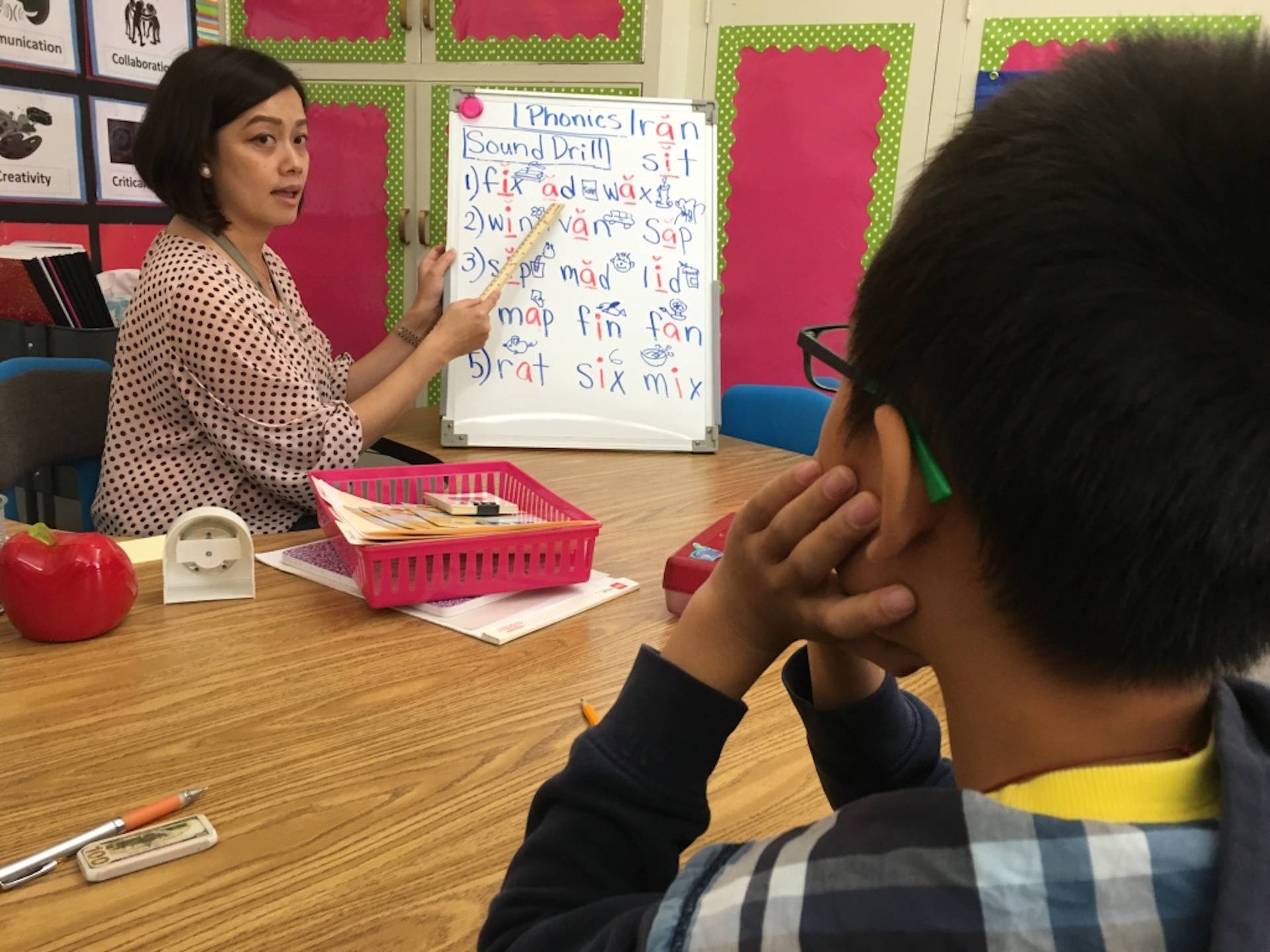
"caption": "San Gabriel teacher Jenny Tan helps a student who's been in the U.S. less than a year learn the basics of English.",
"description": "San Gabriel teacher Jenny Tan helps a student who's been in the U.S. less than a year learn the basics of English.",
"title": "142296-full",
"credit": "Adolfo Guzman-Lopez/KPCC",
"status": "inherit",
"isLoading": false,
"fetchFailed": false
},
"news_11120167": {
"type": "attachments",
"id": "news_11120167",
"meta": {
"index": "attachments_1716263798",
"site": "news",
"id": "11120167",
"found": true
},
"parent": 11116275,
"imgSizes": {
"twentyfourteen-full-width": {
"file": "https://ww2.kqed.org/app/uploads/sites/10/2016/10/WaitingforBus-1038x576.jpg",
"width": 1038,
"mimeType": "image/jpeg",
"height": 576
},
"thumbnail": {
"file": "https://ww2.kqed.org/app/uploads/sites/10/2016/10/WaitingforBus-400x236.jpg",
"width": 400,
"mimeType": "image/jpeg",
"height": 236
},
"fd-sm": {
"file": "https://ww2.kqed.org/app/uploads/sites/10/2016/10/WaitingforBus-960x568.jpg",
"width": 960,
"mimeType": "image/jpeg",
"height": 568
},
"post-thumbnail": {
"file": "https://ww2.kqed.org/app/uploads/sites/10/2016/10/WaitingforBus-672x372.jpg",
"width": 672,
"mimeType": "image/jpeg",
"height": 372
},
"kqedFullSize": {
"file": "https://ww2.kqed.org/app/uploads/sites/10/2016/10/WaitingforBus.jpg",
"width": 1920,
"height": 1135
},
"large": {
"file": "https://ww2.kqed.org/app/uploads/sites/10/2016/10/WaitingforBus-1920x1135.jpg",
"width": 1920,
"mimeType": "image/jpeg",
"height": 1135
},
"guest-author-50": {
"file": "https://ww2.kqed.org/app/uploads/sites/10/2016/10/WaitingforBus-50x50.jpg",
"width": 50,
"mimeType": "image/jpeg",
"height": 50
},
"guest-author-96": {
"file": "https://ww2.kqed.org/app/uploads/sites/10/2016/10/WaitingforBus-96x96.jpg",
"width": 96,
"mimeType": "image/jpeg",
"height": 96
},
"medium": {
"file": "https://ww2.kqed.org/app/uploads/sites/10/2016/10/WaitingforBus-800x473.jpg",
"width": 800,
"mimeType": "image/jpeg",
"height": 473
},
"guest-author-64": {
"file": "https://ww2.kqed.org/app/uploads/sites/10/2016/10/WaitingforBus-64x64.jpg",
"width": 64,
"mimeType": "image/jpeg",
"height": 64
},
"guest-author-32": {
"file": "https://ww2.kqed.org/app/uploads/sites/10/2016/10/WaitingforBus-32x32.jpg",
"width": 32,
"mimeType": "image/jpeg",
"height": 32
},
"jmtc-small-thumb": {
"file": "https://ww2.kqed.org/app/uploads/sites/10/2016/10/WaitingforBus-280x150.jpg",
"width": 280,
"mimeType": "image/jpeg",
"height": 150
},
"fd-lrg": {
"file": "https://ww2.kqed.org/app/uploads/sites/10/2016/10/WaitingforBus-1920x1135.jpg",
"width": 1920,
"mimeType": "image/jpeg",
"height": 1135
},
"fd-med": {
"file": "https://ww2.kqed.org/app/uploads/sites/10/2016/10/WaitingforBus-1180x698.jpg",
"width": 1180,
"mimeType": "image/jpeg",
"height": 698
},
"detail": {
"file": "https://ww2.kqed.org/app/uploads/sites/10/2016/10/WaitingforBus-150x150.jpg",
"width": 150,
"mimeType": "image/jpeg",
"height": 150
},
"guest-author-128": {
"file": "https://ww2.kqed.org/app/uploads/sites/10/2016/10/WaitingforBus-128x128.jpg",
"width": 128,
"mimeType": "image/jpeg",
"height": 128
}
},
"publishDate": 1475874319,
"modified": 1475874369,
"caption": "Thirteen-year-old twins Ruby Barraza and Esmeralda Valdez Barraza catch the 95 bus to Coachella to see some friends.",
"description": "Thirteen-year-old twins Ruby Barraza and Esmeralda Valdez Barraza catch the 95 bus to Coachella to see some friends.",
"title": "WaitingforBus",
"credit": "Bryan Mendez/Coachella Unincorporated",
"status": "inherit",
"isLoading": false,
"fetchFailed": false
},
"news_11117232": {
"type": "attachments",
"id": "news_11117232",
"meta": {
"index": "attachments_1716263798",
"site": "news",
"id": "11117232",
"found": true
},
"parent": 11117231,
"imgSizes": {
"twentyfourteen-full-width": {
"file": "https://ww2.kqed.org/app/uploads/sites/10/2016/10/firefighter_class_sel-19_slide-0fa796386e411ae40a1dc01dacfe45d34883d033-1038x576.jpg",
"width": 1038,
"mimeType": "image/jpeg",
"height": 576
},
"thumbnail": {
"file": "https://ww2.kqed.org/app/uploads/sites/10/2016/10/firefighter_class_sel-19_slide-0fa796386e411ae40a1dc01dacfe45d34883d033-400x267.jpg",
"width": 400,
"mimeType": "image/jpeg",
"height": 267
},
"fd-sm": {
"file": "https://ww2.kqed.org/app/uploads/sites/10/2016/10/firefighter_class_sel-19_slide-0fa796386e411ae40a1dc01dacfe45d34883d033-960x640.jpg",
"width": 960,
"mimeType": "image/jpeg",
"height": 640
},
"post-thumbnail": {
"file": "https://ww2.kqed.org/app/uploads/sites/10/2016/10/firefighter_class_sel-19_slide-0fa796386e411ae40a1dc01dacfe45d34883d033-672x372.jpg",
"width": 672,
"mimeType": "image/jpeg",
"height": 372
},
"kqedFullSize": {
"file": "https://ww2.kqed.org/app/uploads/sites/10/2016/10/firefighter_class_sel-19_slide-0fa796386e411ae40a1dc01dacfe45d34883d033.jpg",
"width": 2997,
"height": 1998
},
"large": {
"file": "https://ww2.kqed.org/app/uploads/sites/10/2016/10/firefighter_class_sel-19_slide-0fa796386e411ae40a1dc01dacfe45d34883d033-1920x1280.jpg",
"width": 1920,
"mimeType": "image/jpeg",
"height": 1280
},
"guest-author-50": {
"file": "https://ww2.kqed.org/app/uploads/sites/10/2016/10/firefighter_class_sel-19_slide-0fa796386e411ae40a1dc01dacfe45d34883d033-50x50.jpg",
"width": 50,
"mimeType": "image/jpeg",
"height": 50
},
"guest-author-96": {
"file": "https://ww2.kqed.org/app/uploads/sites/10/2016/10/firefighter_class_sel-19_slide-0fa796386e411ae40a1dc01dacfe45d34883d033-96x96.jpg",
"width": 96,
"mimeType": "image/jpeg",
"height": 96
},
"medium": {
"file": "https://ww2.kqed.org/app/uploads/sites/10/2016/10/firefighter_class_sel-19_slide-0fa796386e411ae40a1dc01dacfe45d34883d033-800x533.jpg",
"width": 800,
"mimeType": "image/jpeg",
"height": 533
},
"guest-author-64": {
"file": "https://ww2.kqed.org/app/uploads/sites/10/2016/10/firefighter_class_sel-19_slide-0fa796386e411ae40a1dc01dacfe45d34883d033-64x64.jpg",
"width": 64,
"mimeType": "image/jpeg",
"height": 64
},
"guest-author-32": {
"file": "https://ww2.kqed.org/app/uploads/sites/10/2016/10/firefighter_class_sel-19_slide-0fa796386e411ae40a1dc01dacfe45d34883d033-32x32.jpg",
"width": 32,
"mimeType": "image/jpeg",
"height": 32
},
"jmtc-small-thumb": {
"file": "https://ww2.kqed.org/app/uploads/sites/10/2016/10/firefighter_class_sel-19_slide-0fa796386e411ae40a1dc01dacfe45d34883d033-280x150.jpg",
"width": 280,
"mimeType": "image/jpeg",
"height": 150
},
"fd-lrg": {
"file": "https://ww2.kqed.org/app/uploads/sites/10/2016/10/firefighter_class_sel-19_slide-0fa796386e411ae40a1dc01dacfe45d34883d033-1920x1280.jpg",
"width": 1920,
"mimeType": "image/jpeg",
"height": 1280
},
"fd-med": {
"file": "https://ww2.kqed.org/app/uploads/sites/10/2016/10/firefighter_class_sel-19_slide-0fa796386e411ae40a1dc01dacfe45d34883d033-1180x787.jpg",
"width": 1180,
"mimeType": "image/jpeg",
"height": 787
},
"detail": {
"file": "https://ww2.kqed.org/app/uploads/sites/10/2016/10/firefighter_class_sel-19_slide-0fa796386e411ae40a1dc01dacfe45d34883d033-150x150.jpg",
"width": 150,
"mimeType": "image/jpeg",
"height": 150
},
"guest-author-128": {
"file": "https://ww2.kqed.org/app/uploads/sites/10/2016/10/firefighter_class_sel-19_slide-0fa796386e411ae40a1dc01dacfe45d34883d033-128x128.jpg",
"width": 128,
"mimeType": "image/jpeg",
"height": 128
}
},
"publishDate": 1475691588,
"modified": 1475691939,
"caption": "LAFD Capt. Eddie Marez instructs cadets at Banning High on how to operate a fire hose.",
"description": "LAFD Capt. Eddie Marez instructs cadets at Banning High on how to operate a fire hose.\n",
"title": "LAFD Capt. Eddie Marez instructs cadets at Banning High on how to operate a fire hose.",
"credit": "Roxanne Turpen/NPR",
"status": "inherit",
"isLoading": false,
"fetchFailed": false
},
"news_11116223": {
"type": "attachments",
"id": "news_11116223",
"meta": {
"index": "attachments_1716263798",
"site": "news",
"id": "11116223",
"found": true
},
"parent": 11116222,
"imgSizes": {
"twentyfourteen-full-width": {
"file": "https://ww2.kqed.org/app/uploads/sites/10/2016/10/college-debtor_slide-fa42fcd81322d6ad453a2c0285a02513de021e3d-1038x576.jpg",
"width": 1038,
"mimeType": "image/jpeg",
"height": 576
},
"thumbnail": {
"file": "https://ww2.kqed.org/app/uploads/sites/10/2016/10/college-debtor_slide-fa42fcd81322d6ad453a2c0285a02513de021e3d-400x267.jpg",
"width": 400,
"mimeType": "image/jpeg",
"height": 267
},
"fd-sm": {
"file": "https://ww2.kqed.org/app/uploads/sites/10/2016/10/college-debtor_slide-fa42fcd81322d6ad453a2c0285a02513de021e3d-960x640.jpg",
"width": 960,
"mimeType": "image/jpeg",
"height": 640
},
"post-thumbnail": {
"file": "https://ww2.kqed.org/app/uploads/sites/10/2016/10/college-debtor_slide-fa42fcd81322d6ad453a2c0285a02513de021e3d-672x372.jpg",
"width": 672,
"mimeType": "image/jpeg",
"height": 372
},
"kqedFullSize": {
"file": "https://ww2.kqed.org/app/uploads/sites/10/2016/10/college-debtor_slide-fa42fcd81322d6ad453a2c0285a02513de021e3d.jpg",
"width": 2997,
"height": 1998
},
"large": {
"file": "https://ww2.kqed.org/app/uploads/sites/10/2016/10/college-debtor_slide-fa42fcd81322d6ad453a2c0285a02513de021e3d-1920x1280.jpg",
"width": 1920,
"mimeType": "image/jpeg",
"height": 1280
},
"guest-author-50": {
"file": "https://ww2.kqed.org/app/uploads/sites/10/2016/10/college-debtor_slide-fa42fcd81322d6ad453a2c0285a02513de021e3d-50x50.jpg",
"width": 50,
"mimeType": "image/jpeg",
"height": 50
},
"guest-author-96": {
"file": "https://ww2.kqed.org/app/uploads/sites/10/2016/10/college-debtor_slide-fa42fcd81322d6ad453a2c0285a02513de021e3d-96x96.jpg",
"width": 96,
"mimeType": "image/jpeg",
"height": 96
},
"medium": {
"file": "https://ww2.kqed.org/app/uploads/sites/10/2016/10/college-debtor_slide-fa42fcd81322d6ad453a2c0285a02513de021e3d-800x533.jpg",
"width": 800,
"mimeType": "image/jpeg",
"height": 533
},
"guest-author-64": {
"file": "https://ww2.kqed.org/app/uploads/sites/10/2016/10/college-debtor_slide-fa42fcd81322d6ad453a2c0285a02513de021e3d-64x64.jpg",
"width": 64,
"mimeType": "image/jpeg",
"height": 64
},
"guest-author-32": {
"file": "https://ww2.kqed.org/app/uploads/sites/10/2016/10/college-debtor_slide-fa42fcd81322d6ad453a2c0285a02513de021e3d-32x32.jpg",
"width": 32,
"mimeType": "image/jpeg",
"height": 32
},
"jmtc-small-thumb": {
"file": "https://ww2.kqed.org/app/uploads/sites/10/2016/10/college-debtor_slide-fa42fcd81322d6ad453a2c0285a02513de021e3d-280x150.jpg",
"width": 280,
"mimeType": "image/jpeg",
"height": 150
},
"fd-lrg": {
"file": "https://ww2.kqed.org/app/uploads/sites/10/2016/10/college-debtor_slide-fa42fcd81322d6ad453a2c0285a02513de021e3d-1920x1280.jpg",
"width": 1920,
"mimeType": "image/jpeg",
"height": 1280
},
"fd-med": {
"file": "https://ww2.kqed.org/app/uploads/sites/10/2016/10/college-debtor_slide-fa42fcd81322d6ad453a2c0285a02513de021e3d-1180x787.jpg",
"width": 1180,
"mimeType": "image/jpeg",
"height": 787
},
"detail": {
"file": "https://ww2.kqed.org/app/uploads/sites/10/2016/10/college-debtor_slide-fa42fcd81322d6ad453a2c0285a02513de021e3d-150x150.jpg",
"width": 150,
"mimeType": "image/jpeg",
"height": 150
},
"guest-author-128": {
"file": "https://ww2.kqed.org/app/uploads/sites/10/2016/10/college-debtor_slide-fa42fcd81322d6ad453a2c0285a02513de021e3d-128x128.jpg",
"width": 128,
"mimeType": "image/jpeg",
"height": 128
}
},
"publishDate": 1475621510,
"modified": 1475621908,
"caption": null,
"description": "Early last month ITT Tech closed its doors on nearly 40,000 students before they could graduate. Where are they now?",
"title": "Early last month ITT Tech closed its doors on nearly 40,000 students before they could graduate. Where are they now?",
"credit": "LA Johnson/NPR",
"status": "inherit",
"isLoading": false,
"fetchFailed": false
},
"news_11114781": {
"type": "attachments",
"id": "news_11114781",
"meta": {
"index": "attachments_1716263798",
"site": "news",
"id": "11114781",
"found": true
},
"parent": 11114437,
"imgSizes": {
"twentyfourteen-full-width": {
"file": "https://ww2.kqed.org/app/uploads/sites/10/2016/10/MelissaSalcedo-1038x576.jpg",
"width": 1038,
"mimeType": "image/jpeg",
"height": 576
},
"thumbnail": {
"file": "https://ww2.kqed.org/app/uploads/sites/10/2016/10/MelissaSalcedo-400x270.jpg",
"width": 400,
"mimeType": "image/jpeg",
"height": 270
},
"fd-sm": {
"file": "https://ww2.kqed.org/app/uploads/sites/10/2016/10/MelissaSalcedo-960x648.jpg",
"width": 960,
"mimeType": "image/jpeg",
"height": 648
},
"post-thumbnail": {
"file": "https://ww2.kqed.org/app/uploads/sites/10/2016/10/MelissaSalcedo-672x372.jpg",
"width": 672,
"mimeType": "image/jpeg",
"height": 372
},
"kqedFullSize": {
"file": "https://ww2.kqed.org/app/uploads/sites/10/2016/10/MelissaSalcedo.jpg",
"width": 1920,
"height": 1295
},
"large": {
"file": "https://ww2.kqed.org/app/uploads/sites/10/2016/10/MelissaSalcedo-1920x1295.jpg",
"width": 1920,
"mimeType": "image/jpeg",
"height": 1295
},
"guest-author-50": {
"file": "https://ww2.kqed.org/app/uploads/sites/10/2016/10/MelissaSalcedo-50x50.jpg",
"width": 50,
"mimeType": "image/jpeg",
"height": 50
},
"guest-author-96": {
"file": "https://ww2.kqed.org/app/uploads/sites/10/2016/10/MelissaSalcedo-96x96.jpg",
"width": 96,
"mimeType": "image/jpeg",
"height": 96
},
"medium": {
"file": "https://ww2.kqed.org/app/uploads/sites/10/2016/10/MelissaSalcedo-800x540.jpg",
"width": 800,
"mimeType": "image/jpeg",
"height": 540
},
"guest-author-64": {
"file": "https://ww2.kqed.org/app/uploads/sites/10/2016/10/MelissaSalcedo-64x64.jpg",
"width": 64,
"mimeType": "image/jpeg",
"height": 64
},
"guest-author-32": {
"file": "https://ww2.kqed.org/app/uploads/sites/10/2016/10/MelissaSalcedo-32x32.jpg",
"width": 32,
"mimeType": "image/jpeg",
"height": 32
},
"jmtc-small-thumb": {
"file": "https://ww2.kqed.org/app/uploads/sites/10/2016/10/MelissaSalcedo-280x150.jpg",
"width": 280,
"mimeType": "image/jpeg",
"height": 150
},
"fd-lrg": {
"file": "https://ww2.kqed.org/app/uploads/sites/10/2016/10/MelissaSalcedo-1920x1295.jpg",
"width": 1920,
"mimeType": "image/jpeg",
"height": 1295
},
"fd-med": {
"file": "https://ww2.kqed.org/app/uploads/sites/10/2016/10/MelissaSalcedo-1180x796.jpg",
"width": 1180,
"mimeType": "image/jpeg",
"height": 796
},
"detail": {
"file": "https://ww2.kqed.org/app/uploads/sites/10/2016/10/MelissaSalcedo-150x150.jpg",
"width": 150,
"mimeType": "image/jpeg",
"height": 150
},
"guest-author-128": {
"file": "https://ww2.kqed.org/app/uploads/sites/10/2016/10/MelissaSalcedo-128x128.jpg",
"width": 128,
"mimeType": "image/jpeg",
"height": 128
}
},
"publishDate": 1475530640,
"modified": 1475874084,
"caption": "Melissa Salcedo will attend UC Irvine this fall as a freshman. She comes from a large Mexican-American family. The youngest of her siblings, she’s the first in her family to attend UC. Experts say if current trends in tuition increases persist, UC will become the most expensive public higher education system in the country.",
"description": "Melissa Salcedo will attend UC Irvine this fall as a freshman. She comes from a large Mexican-American family. The youngest of her siblings, she’s the first in her family to attend UC. Experts say if current trends in tuition increases persist, UC will become the most expensive public higher education system in the country.",
"title": "MelissaSalcedo",
"credit": "Sarah Salcedo/KQED",
"status": "inherit",
"isLoading": false,
"fetchFailed": false
},
"news_11110847": {
"type": "attachments",
"id": "news_11110847",
"meta": {
"index": "attachments_1716263798",
"site": "news",
"id": "11110847",
"found": true
},
"parent": 11109497,
"imgSizes": {
"twentyfourteen-full-width": {
"file": "https://ww2.kqed.org/app/uploads/sites/10/2016/09/Rosy-1038x576.jpg",
"width": 1038,
"mimeType": "image/jpeg",
"height": 576
},
"thumbnail": {
"file": "https://ww2.kqed.org/app/uploads/sites/10/2016/09/Rosy-400x276.jpg",
"width": 400,
"mimeType": "image/jpeg",
"height": 276
},
"fd-sm": {
"file": "https://ww2.kqed.org/app/uploads/sites/10/2016/09/Rosy-960x662.jpg",
"width": 960,
"mimeType": "image/jpeg",
"height": 662
},
"post-thumbnail": {
"file": "https://ww2.kqed.org/app/uploads/sites/10/2016/09/Rosy-672x372.jpg",
"width": 672,
"mimeType": "image/jpeg",
"height": 372
},
"kqedFullSize": {
"file": "https://ww2.kqed.org/app/uploads/sites/10/2016/09/Rosy.jpg",
"width": 1920,
"height": 1324
},
"large": {
"file": "https://ww2.kqed.org/app/uploads/sites/10/2016/09/Rosy-1920x1324.jpg",
"width": 1920,
"mimeType": "image/jpeg",
"height": 1324
},
"guest-author-50": {
"file": "https://ww2.kqed.org/app/uploads/sites/10/2016/09/Rosy-50x50.jpg",
"width": 50,
"mimeType": "image/jpeg",
"height": 50
},
"guest-author-96": {
"file": "https://ww2.kqed.org/app/uploads/sites/10/2016/09/Rosy-96x96.jpg",
"width": 96,
"mimeType": "image/jpeg",
"height": 96
},
"medium": {
"file": "https://ww2.kqed.org/app/uploads/sites/10/2016/09/Rosy-800x552.jpg",
"width": 800,
"mimeType": "image/jpeg",
"height": 552
},
"guest-author-64": {
"file": "https://ww2.kqed.org/app/uploads/sites/10/2016/09/Rosy-64x64.jpg",
"width": 64,
"mimeType": "image/jpeg",
"height": 64
},
"guest-author-32": {
"file": "https://ww2.kqed.org/app/uploads/sites/10/2016/09/Rosy-32x32.jpg",
"width": 32,
"mimeType": "image/jpeg",
"height": 32
},
"jmtc-small-thumb": {
"file": "https://ww2.kqed.org/app/uploads/sites/10/2016/09/Rosy-280x150.jpg",
"width": 280,
"mimeType": "image/jpeg",
"height": 150
},
"fd-lrg": {
"file": "https://ww2.kqed.org/app/uploads/sites/10/2016/09/Rosy-1920x1324.jpg",
"width": 1920,
"mimeType": "image/jpeg",
"height": 1324
},
"fd-med": {
"file": "https://ww2.kqed.org/app/uploads/sites/10/2016/09/Rosy-1180x814.jpg",
"width": 1180,
"mimeType": "image/jpeg",
"height": 814
},
"detail": {
"file": "https://ww2.kqed.org/app/uploads/sites/10/2016/09/Rosy-150x150.jpg",
"width": 150,
"mimeType": "image/jpeg",
"height": 150
},
"guest-author-128": {
"file": "https://ww2.kqed.org/app/uploads/sites/10/2016/09/Rosy-128x128.jpg",
"width": 128,
"mimeType": "image/jpeg",
"height": 128
}
},
"publishDate": 1475262630,
"modified": 1475274453,
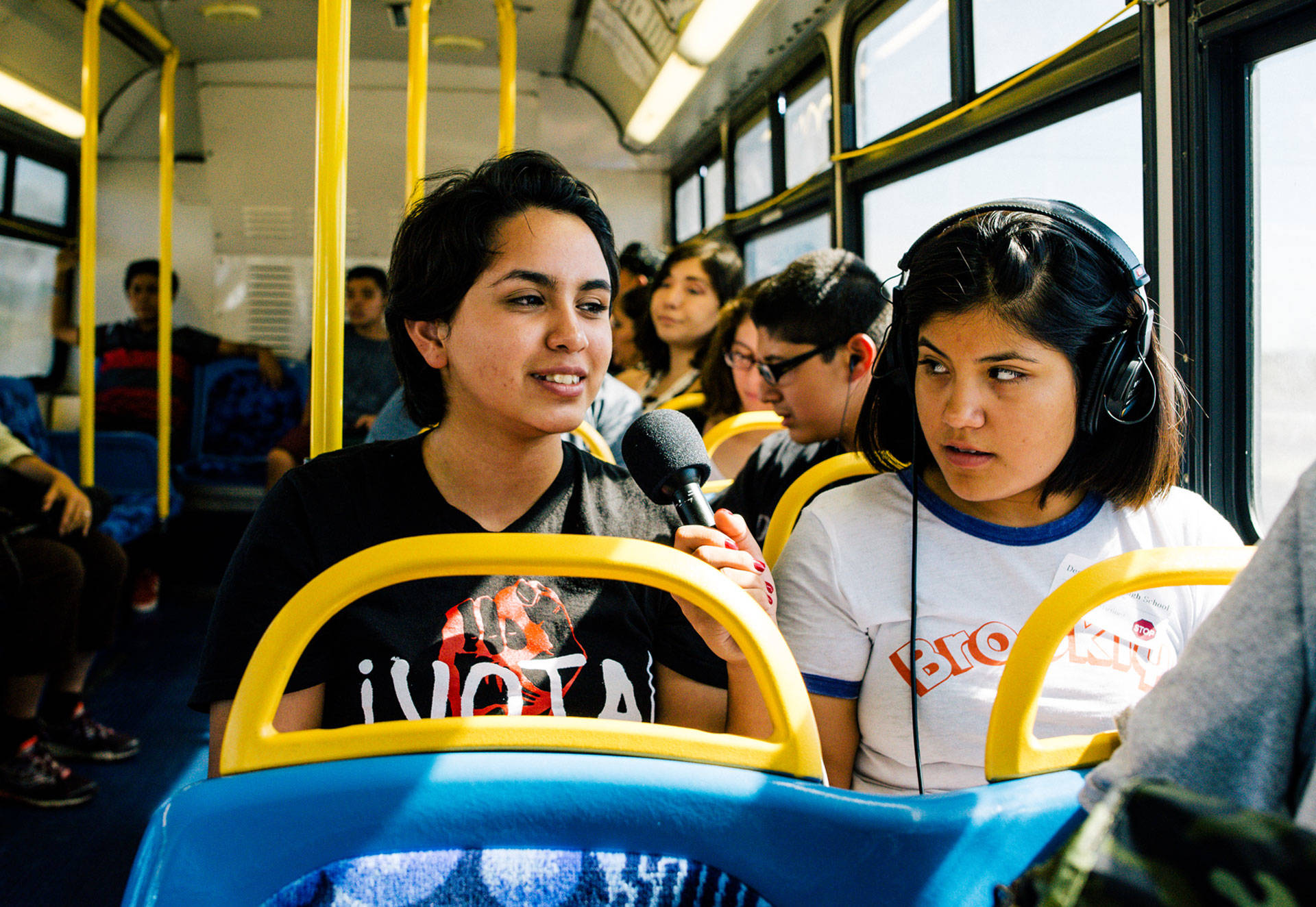
"caption": "Karla Martinez (R) interviews Rosy Mendez on the bus as she heads to the public library to do her homework. 'When I interview someone talking about how they’ve struggled to get food for their family, or struggled to get a job or to keep a job, or how they’ve struggled with deportation, I identify with those things,' says Karla. 'When I’m writing, I can hear myself and I feel like I can give them a voice.'",
"description": "Karla Martinez (R) interviews Rosy Mendez on the bus as she heads to the public library to do her homework. “When I interview someone talking about how they’ve struggled to get food for their family, or struggled to get a job or to keep a job, or how they’ve struggled with deportation, I identify with those things,” says Karla. “When I’m writing, I can hear myself and I feel like I can give them a voice.”",
"title": "Rosy",
"credit": "Bryan Mendez/Coachella Unincorporated",
"status": "inherit",
"isLoading": false,
"fetchFailed": false
},
"forum_2010101856831": {
"type": "attachments",
"id": "forum_2010101856831",
"meta": {
"index": "attachments_1716263798",
"site": "forum",
"id": "2010101856831",
"found": true
},
"parent": 2010101856830,
"imgSizes": {
"twentyfourteen-full-width": {
"file": "https://ww2.kqed.org/app/uploads/sites/43/2016/09/student-at-desk-Francesca-Segre-KQED-1038x576.jpg",
"width": 1038,
"mimeType": "image/jpeg",
"height": 576
},
"thumbnail": {
"file": "https://ww2.kqed.org/app/uploads/sites/43/2016/09/student-at-desk-Francesca-Segre-KQED-400x225.jpg",
"width": 400,
"mimeType": "image/jpeg",
"height": 225
},
"fd-sm": {
"file": "https://ww2.kqed.org/app/uploads/sites/43/2016/09/student-at-desk-Francesca-Segre-KQED-960x540.jpg",
"width": 960,
"mimeType": "image/jpeg",
"height": 540
},
"post-thumbnail": {
"file": "https://ww2.kqed.org/app/uploads/sites/43/2016/09/student-at-desk-Francesca-Segre-KQED-672x372.jpg",
"width": 672,
"mimeType": "image/jpeg",
"height": 372
},
"kqedFullSize": {
"file": "https://ww2.kqed.org/app/uploads/sites/43/2016/09/student-at-desk-Francesca-Segre-KQED.jpg",
"width": 1920,
"height": 1080
},
"large": {
"file": "https://ww2.kqed.org/app/uploads/sites/43/2016/09/student-at-desk-Francesca-Segre-KQED-1180x664.jpg",
"width": 1180,
"mimeType": "image/jpeg",
"height": 664
},
"guest-author-50": {
"file": "https://ww2.kqed.org/app/uploads/sites/43/2016/09/student-at-desk-Francesca-Segre-KQED-50x50.jpg",
"width": 50,
"mimeType": "image/jpeg",
"height": 50
},
"guest-author-96": {
"file": "https://ww2.kqed.org/app/uploads/sites/43/2016/09/student-at-desk-Francesca-Segre-KQED-96x96.jpg",
"width": 96,
"mimeType": "image/jpeg",
"height": 96
},
"medium": {
"file": "https://ww2.kqed.org/app/uploads/sites/43/2016/09/student-at-desk-Francesca-Segre-KQED-800x450.jpg",
"width": 800,
"mimeType": "image/jpeg",
"height": 450
},
"guest-author-64": {
"file": "https://ww2.kqed.org/app/uploads/sites/43/2016/09/student-at-desk-Francesca-Segre-KQED-64x64.jpg",
"width": 64,
"mimeType": "image/jpeg",
"height": 64
},
"guest-author-32": {
"file": "https://ww2.kqed.org/app/uploads/sites/43/2016/09/student-at-desk-Francesca-Segre-KQED-32x32.jpg",
"width": 32,
"mimeType": "image/jpeg",
"height": 32
},
"fd-lrg": {
"file": "https://ww2.kqed.org/app/uploads/sites/43/2016/09/student-at-desk-Francesca-Segre-KQED-1920x1080.jpg",
"width": 1920,
"mimeType": "image/jpeg",
"height": 1080
},
"fd-med": {
"file": "https://ww2.kqed.org/app/uploads/sites/43/2016/09/student-at-desk-Francesca-Segre-KQED-1180x664.jpg",
"width": 1180,
"mimeType": "image/jpeg",
"height": 664
},
"detail": {
"file": "https://ww2.kqed.org/app/uploads/sites/43/2016/09/student-at-desk-Francesca-Segre-KQED-150x150.jpg",
"width": 150,
"mimeType": "image/jpeg",
"height": 150
},
"medium_large": {
"file": "https://ww2.kqed.org/app/uploads/sites/43/2016/09/student-at-desk-Francesca-Segre-KQED-768x432.jpg",
"width": 768,
"mimeType": "image/jpeg",
"height": 432
},
"guest-author-128": {
"file": "https://ww2.kqed.org/app/uploads/sites/43/2016/09/student-at-desk-Francesca-Segre-KQED-128x128.jpg",
"width": 128,
"mimeType": "image/jpeg",
"height": 128
}
},
"publishDate": 1475019713,
"modified": 1475019744,
"caption": null,
"description": null,
"title": "student-at-desk--Francesca-Segre-KQED",
"credit": "Photo: Francesca Segre/KQED",
"status": "inherit",
"isLoading": false,
"fetchFailed": false
},
"news_11106167": {
"type": "attachments",
"id": "news_11106167",
"meta": {
"index": "attachments_1716263798",
"site": "news",
"id": "11106167",
"found": true
},
"parent": 11105174,
"imgSizes": {
"twentyfourteen-full-width": {
"file": "https://ww2.kqed.org/app/uploads/sites/10/2016/09/RonThomas-1038x576.jpg",
"width": 1038,
"mimeType": "image/jpeg",
"height": 576
},
"thumbnail": {
"file": "https://ww2.kqed.org/app/uploads/sites/10/2016/09/RonThomas-400x286.jpg",
"width": 400,
"mimeType": "image/jpeg",
"height": 286
},
"fd-sm": {
"file": "https://ww2.kqed.org/app/uploads/sites/10/2016/09/RonThomas-960x688.jpg",
"width": 960,
"mimeType": "image/jpeg",
"height": 688
},
"post-thumbnail": {
"file": "https://ww2.kqed.org/app/uploads/sites/10/2016/09/RonThomas-672x372.jpg",
"width": 672,
"mimeType": "image/jpeg",
"height": 372
},
"kqedFullSize": {
"file": "https://ww2.kqed.org/app/uploads/sites/10/2016/09/RonThomas.jpg",
"width": 1920,
"height": 1375
},
"large": {
"file": "https://ww2.kqed.org/app/uploads/sites/10/2016/09/RonThomas-1920x1375.jpg",
"width": 1920,
"mimeType": "image/jpeg",
"height": 1375
},
"guest-author-50": {
"file": "https://ww2.kqed.org/app/uploads/sites/10/2016/09/RonThomas-50x50.jpg",
"width": 50,
"mimeType": "image/jpeg",
"height": 50
},
"guest-author-96": {
"file": "https://ww2.kqed.org/app/uploads/sites/10/2016/09/RonThomas-96x96.jpg",
"width": 96,
"mimeType": "image/jpeg",
"height": 96
},
"medium": {
"file": "https://ww2.kqed.org/app/uploads/sites/10/2016/09/RonThomas-800x573.jpg",
"width": 800,
"mimeType": "image/jpeg",
"height": 573
},
"guest-author-64": {
"file": "https://ww2.kqed.org/app/uploads/sites/10/2016/09/RonThomas-64x64.jpg",
"width": 64,
"mimeType": "image/jpeg",
"height": 64
},
"guest-author-32": {
"file": "https://ww2.kqed.org/app/uploads/sites/10/2016/09/RonThomas-32x32.jpg",
"width": 32,
"mimeType": "image/jpeg",
"height": 32
},
"jmtc-small-thumb": {
"file": "https://ww2.kqed.org/app/uploads/sites/10/2016/09/RonThomas-280x150.jpg",
"width": 280,
"mimeType": "image/jpeg",
"height": 150
},
"fd-lrg": {
"file": "https://ww2.kqed.org/app/uploads/sites/10/2016/09/RonThomas-1920x1375.jpg",
"width": 1920,
"mimeType": "image/jpeg",
"height": 1375
},
"fd-med": {
"file": "https://ww2.kqed.org/app/uploads/sites/10/2016/09/RonThomas-1180x845.jpg",
"width": 1180,
"mimeType": "image/jpeg",
"height": 845
},
"detail": {
"file": "https://ww2.kqed.org/app/uploads/sites/10/2016/09/RonThomas-150x150.jpg",
"width": 150,
"mimeType": "image/jpeg",
"height": 150
},
"guest-author-128": {
"file": "https://ww2.kqed.org/app/uploads/sites/10/2016/09/RonThomas-128x128.jpg",
"width": 128,
"mimeType": "image/jpeg",
"height": 128
}
},
"publishDate": 1475000000,
"modified": 1475012218,
"caption": "Chowchilla resident Ron Thomas, who is one-eighth Native American, holds one of the limited edition Redskins 'final season' T-shirts he's made. ",
"description": "Chowchilla resident Ron Thomas, who is one-eighth Native American, holds one of the limited edition Redskins \"final season\" T-shirts he's made. ",
"title": "RonThomas",
"credit": "Alice Daniel/KQED",
"status": "inherit",
"isLoading": false,
"fetchFailed": false
},
"news_10930424": {
"type": "attachments",
"id": "news_10930424",
"meta": {
"index": "attachments_1716263798",
"site": "news",
"id": "10930424",
"found": true
},
"parent": 10930420,
"imgSizes": {
"twentyfourteen-full-width": {
"file": "https://ww2.kqed.org/app/uploads/sites/10/2016/04/7859_transform-1038x576.jpg",
"width": 1038,
"mimeType": "image/jpeg",
"height": 576
},
"thumbnail": {
"file": "https://ww2.kqed.org/app/uploads/sites/10/2016/04/7859_transform-400x267.jpg",
"width": 400,
"mimeType": "image/jpeg",
"height": 267
},
"fd-sm": {
"file": "https://ww2.kqed.org/app/uploads/sites/10/2016/04/7859_transform-960x640.jpg",
"width": 960,
"mimeType": "image/jpeg",
"height": 640
},
"post-thumbnail": {
"file": "https://ww2.kqed.org/app/uploads/sites/10/2016/04/7859_transform-672x372.jpg",
"width": 672,
"mimeType": "image/jpeg",
"height": 372
},
"kqedFullSize": {
"file": "https://ww2.kqed.org/app/uploads/sites/10/2016/04/7859_transform.jpg",
"width": 1920,
"height": 1280
},
"large": {
"file": "https://ww2.kqed.org/app/uploads/sites/10/2016/04/7859_transform-1920x1280.jpg",
"width": 1920,
"mimeType": "image/jpeg",
"height": 1280
},
"guest-author-96": {
"file": "https://ww2.kqed.org/app/uploads/sites/10/2016/04/7859_transform-96x96.jpg",
"width": 96,
"mimeType": "image/jpeg",
"height": 96
},
"medium": {
"file": "https://ww2.kqed.org/app/uploads/sites/10/2016/04/7859_transform-800x533.jpg",
"width": 800,
"mimeType": "image/jpeg",
"height": 533
},
"guest-author-64": {
"file": "https://ww2.kqed.org/app/uploads/sites/10/2016/04/7859_transform-64x64.jpg",
"width": 64,
"mimeType": "image/jpeg",
"height": 64
},
"guest-author-32": {
"file": "https://ww2.kqed.org/app/uploads/sites/10/2016/04/7859_transform-32x32.jpg",
"width": 32,
"mimeType": "image/jpeg",
"height": 32
},
"jmtc-small-thumb": {
"file": "https://ww2.kqed.org/app/uploads/sites/10/2016/04/7859_transform-280x150.jpg",
"width": 280,
"mimeType": "image/jpeg",
"height": 150
},
"fd-lrg": {
"file": "https://ww2.kqed.org/app/uploads/sites/10/2016/04/7859_transform-1920x1280.jpg",
"width": 1920,
"mimeType": "image/jpeg",
"height": 1280
},
"fd-med": {
"file": "https://ww2.kqed.org/app/uploads/sites/10/2016/04/7859_transform-1180x787.jpg",
"width": 1180,
"mimeType": "image/jpeg",
"height": 787
},
"detail": {
"file": "https://ww2.kqed.org/app/uploads/sites/10/2016/04/7859_transform-75x75.jpg",
"width": 75,
"mimeType": "image/jpeg",
"height": 75
},
"guest-author-128": {
"file": "https://ww2.kqed.org/app/uploads/sites/10/2016/04/7859_transform-128x128.jpg",
"width": 128,
"mimeType": "image/jpeg",
"height": 128
}
},
"publishDate": 1460767491,
"modified": 1474049903,
"caption": "Some UC Berkeley students are calling on the school to reinstate a suspended course. ",
"description": "File photo of protests at UC Berkeley.",
"title": "\"Open University\" Strike Held At UC Berkeley",
"credit": "Max Whittaker/Getty Images",
"status": "inherit",
"isLoading": false,
"fetchFailed": false
},
"news_11086738": {
"type": "attachments",
"id": "news_11086738",
"meta": {
"index": "attachments_1716263798",
"site": "news",
"id": "11086738",
"found": true
},
"parent": 11086591,
"imgSizes": {
"twentyfourteen-full-width": {
"file": "https://ww2.kqed.org/app/uploads/sites/10/2016/09/RS18894_GettyImages-52237594-1038x576.jpg",
"width": 1038,
"mimeType": "image/jpeg",
"height": 576
},
"thumbnail": {
"file": "https://ww2.kqed.org/app/uploads/sites/10/2016/09/RS18894_GettyImages-52237594-400x267.jpg",
"width": 400,
"mimeType": "image/jpeg",
"height": 267
},
"fd-sm": {
"file": "https://ww2.kqed.org/app/uploads/sites/10/2016/09/RS18894_GettyImages-52237594-960x641.jpg",
"width": 960,
"mimeType": "image/jpeg",
"height": 641
},
"post-thumbnail": {
"file": "https://ww2.kqed.org/app/uploads/sites/10/2016/09/RS18894_GettyImages-52237594-672x372.jpg",
"width": 672,
"mimeType": "image/jpeg",
"height": 372
},
"kqedFullSize": {
"file": "https://ww2.kqed.org/app/uploads/sites/10/2016/09/RS18894_GettyImages-52237594-e1473798311727.jpg",
"width": 1920,
"height": 1282
},
"large": {
"file": "https://ww2.kqed.org/app/uploads/sites/10/2016/09/RS18894_GettyImages-52237594-1920x1282.jpg",
"width": 1920,
"mimeType": "image/jpeg",
"height": 1282
},
"guest-author-50": {
"file": "https://ww2.kqed.org/app/uploads/sites/10/2016/09/RS18894_GettyImages-52237594-50x50.jpg",
"width": 50,
"mimeType": "image/jpeg",
"height": 50
},
"guest-author-96": {
"file": "https://ww2.kqed.org/app/uploads/sites/10/2016/09/RS18894_GettyImages-52237594-96x96.jpg",
"width": 96,
"mimeType": "image/jpeg",
"height": 96
},
"medium": {
"file": "https://ww2.kqed.org/app/uploads/sites/10/2016/09/RS18894_GettyImages-52237594-800x534.jpg",
"width": 800,
"mimeType": "image/jpeg",
"height": 534
},
"guest-author-64": {
"file": "https://ww2.kqed.org/app/uploads/sites/10/2016/09/RS18894_GettyImages-52237594-64x64.jpg",
"width": 64,
"mimeType": "image/jpeg",
"height": 64
},
"guest-author-32": {
"file": "https://ww2.kqed.org/app/uploads/sites/10/2016/09/RS18894_GettyImages-52237594-32x32.jpg",
"width": 32,
"mimeType": "image/jpeg",
"height": 32
},
"jmtc-small-thumb": {
"file": "https://ww2.kqed.org/app/uploads/sites/10/2016/09/RS18894_GettyImages-52237594-280x150.jpg",
"width": 280,
"mimeType": "image/jpeg",
"height": 150
},
"fd-lrg": {
"file": "https://ww2.kqed.org/app/uploads/sites/10/2016/09/RS18894_GettyImages-52237594-1920x1282.jpg",
"width": 1920,
"mimeType": "image/jpeg",
"height": 1282
},
"fd-med": {
"file": "https://ww2.kqed.org/app/uploads/sites/10/2016/09/RS18894_GettyImages-52237594-1180x788.jpg",
"width": 1180,
"mimeType": "image/jpeg",
"height": 788
},
"detail": {
"file": "https://ww2.kqed.org/app/uploads/sites/10/2016/09/RS18894_GettyImages-52237594-150x150.jpg",
"width": 150,
"mimeType": "image/jpeg",
"height": 150
},
"guest-author-128": {
"file": "https://ww2.kqed.org/app/uploads/sites/10/2016/09/RS18894_GettyImages-52237594-128x128.jpg",
"width": 128,
"mimeType": "image/jpeg",
"height": 128
}
},
"publishDate": 1473798248,
"modified": 1473798808,
"caption": "For the 15th year, UC Berkeley ranked No. 1 on U.S. News & World Report's list of top public universities.",
"description": null,
"title": "UC Berkeley",
"credit": "Justin Sullivan/Getty Image",
"status": "inherit",
"isLoading": false,
"fetchFailed": false
},
"news_11085021": {
"type": "attachments",
"id": "news_11085021",
"meta": {
"index": "attachments_1716263798",
"site": "news",
"id": "11085021",
"found": true
},
"parent": 11081017,
"imgSizes": {
"twentyfourteen-full-width": {
"file": "https://ww2.kqed.org/app/uploads/sites/10/2016/09/sara-1038x576.jpg",
"width": 1038,
"mimeType": "image/jpeg",
"height": 576
},
"thumbnail": {
"file": "https://ww2.kqed.org/app/uploads/sites/10/2016/09/sara-400x300.jpg",
"width": 400,
"mimeType": "image/jpeg",
"height": 300
},
"fd-sm": {
"file": "https://ww2.kqed.org/app/uploads/sites/10/2016/09/sara-960x720.jpg",
"width": 960,
"mimeType": "image/jpeg",
"height": 720
},
"post-thumbnail": {
"file": "https://ww2.kqed.org/app/uploads/sites/10/2016/09/sara-672x372.jpg",
"width": 672,
"mimeType": "image/jpeg",
"height": 372
},
"kqedFullSize": {
"file": "https://ww2.kqed.org/app/uploads/sites/10/2016/09/sara.jpg",
"width": 3264,
"height": 2448
},
"large": {
"file": "https://ww2.kqed.org/app/uploads/sites/10/2016/09/sara-1920x1440.jpg",
"width": 1920,
"mimeType": "image/jpeg",
"height": 1440
},
"guest-author-50": {
"file": "https://ww2.kqed.org/app/uploads/sites/10/2016/09/sara-50x50.jpg",
"width": 50,
"mimeType": "image/jpeg",
"height": 50
},
"guest-author-96": {
"file": "https://ww2.kqed.org/app/uploads/sites/10/2016/09/sara-96x96.jpg",
"width": 96,
"mimeType": "image/jpeg",
"height": 96
},
"medium": {
"file": "https://ww2.kqed.org/app/uploads/sites/10/2016/09/sara-800x600.jpg",
"width": 800,
"mimeType": "image/jpeg",
"height": 600
},
"guest-author-64": {
"file": "https://ww2.kqed.org/app/uploads/sites/10/2016/09/sara-64x64.jpg",
"width": 64,
"mimeType": "image/jpeg",
"height": 64
},
"guest-author-32": {
"file": "https://ww2.kqed.org/app/uploads/sites/10/2016/09/sara-32x32.jpg",
"width": 32,
"mimeType": "image/jpeg",
"height": 32
},
"jmtc-small-thumb": {
"file": "https://ww2.kqed.org/app/uploads/sites/10/2016/09/sara-280x150.jpg",
"width": 280,
"mimeType": "image/jpeg",
"height": 150
},
"fd-lrg": {
"file": "https://ww2.kqed.org/app/uploads/sites/10/2016/09/sara-1920x1440.jpg",
"width": 1920,
"mimeType": "image/jpeg",
"height": 1440
},
"fd-med": {
"file": "https://ww2.kqed.org/app/uploads/sites/10/2016/09/sara-1180x885.jpg",
"width": 1180,
"mimeType": "image/jpeg",
"height": 885
},
"detail": {
"file": "https://ww2.kqed.org/app/uploads/sites/10/2016/09/sara-150x150.jpg",
"width": 150,
"mimeType": "image/jpeg",
"height": 150
},
"guest-author-128": {
"file": "https://ww2.kqed.org/app/uploads/sites/10/2016/09/sara-128x128.jpg",
"width": 128,
"mimeType": "image/jpeg",
"height": 128
}
},
"publishDate": 1473692475,
"modified": 1473803695,
"caption": "Sara Diamond and John Foster say they applied to schools in both Oakland and San Francisco for their daughter, Claire, who says she's looking forward to going to school back in Oakland. Claire (center) dries off from a water fight in her East Oakland neighborhood during the final days of summer.",
"description": null,
"title": "sara",
"credit": "Devin Katayama/KQED",
"status": "inherit",
"isLoading": false,
"fetchFailed": false
}
},
"audioPlayerReducer": {
"postId": "stream_live",
"isPaused": true,
"isPlaying": false,
"pfsActive": false,
"pledgeModalIsOpen": true,
"playerDrawerIsOpen": false,
"liveAudioPlayStartedAt": 0,
"liveAudioPlayContext": ""
},
"authorsReducer": {
"byline_news_11133961": {
"type": "authors",
"id": "byline_news_11133961",
"meta": {
"override": true
},
"slug": "byline_news_11133961",
"name": "Adolfo Guzman-Lopez",
"isLoading": false
},
"byline_news_11117231": {
"type": "authors",
"id": "byline_news_11117231",
"meta": {
"override": true
},
"slug": "byline_news_11117231",
"name": "\u003cstrong>\u003ca href=\"http://www.npr.org/people/2101350/eric-westervelt\">Eric Westervelt\u003c/a>\u003cbr>\u003ca href=\"http://www.npr.org/\">NPR\u003c/a>\u003c/strong>",
"isLoading": false
},
"byline_news_11116222": {
"type": "authors",
"id": "byline_news_11116222",
"meta": {
"override": true
},
"slug": "byline_news_11116222",
"name": "\u003cstrong>\u003ca href=\"http://news.wgbh.org/people/kirk-carapezza\">Kirk Carapezza\u003c/a>\u003cbr>NPR\u003c/strong>",
"isLoading": false
},
"aliceldaniel": {
"type": "authors",
"id": "208",
"meta": {
"index": "authors_1716337520",
"id": "208",
"found": true
},
"name": "Alice Daniel",
"firstName": "Alice",
"lastName": "Daniel",
"slug": "aliceldaniel",
"email": "adaniel@kqed.org",
"display_author_email": false,
"staff_mastheads": [],
"title": null,
"bio": "Alice Daniel loves the listening aspect of reporting because she gets to briefly walk in other people’s shoes. She has rappelled down into caves and gone up in helicopters for KQED’s The California Report but her favorite place to pursue a story is the High Sierra or any family-run bakery, of course. Alice has a masters in journalism from Columbia University and teaches at Fresno State. She is a California Healthline Regional Correspondent and a frequent contributor to Success magazine. In her free time, she skis and hikes, throws pottery, practices piano and looks out the window.",
"avatar": "https://secure.gravatar.com/avatar/e611aa06593b114a67f9f123a8e875ad?s=600&d=blank&r=g",
"twitter": null,
"facebook": null,
"instagram": null,
"linkedin": null,
"sites": [
{
"site": "news",
"roles": [
"author"
]
},
{
"site": "stateofhealth",
"roles": [
"author"
]
}
],
"headData": {
"title": "Alice Daniel | KQED",
"description": null,
"ogImgSrc": "https://secure.gravatar.com/avatar/e611aa06593b114a67f9f123a8e875ad?s=600&d=blank&r=g",
"twImgSrc": "https://secure.gravatar.com/avatar/e611aa06593b114a67f9f123a8e875ad?s=600&d=blank&r=g"
},
"isLoading": false,
"link": "/author/aliceldaniel"
},
"anatintocalis": {
"type": "authors",
"id": "211",
"meta": {
"index": "authors_1716337520",
"id": "211",
"found": true
},
"name": "Ana Tintocalis",
"firstName": "Ana",
"lastName": "Tintocalis",
"slug": "anatintocalis",
"email": "atintocalis@kqed.org",
"display_author_email": false,
"staff_mastheads": [],
"title": null,
"bio": null,
"avatar": "https://secure.gravatar.com/avatar/722c50f51f04eff38fa0e5a3f1d29450?s=600&d=blank&r=g",
"twitter": null,
"facebook": null,
"instagram": null,
"linkedin": null,
"sites": [
{
"site": "news",
"roles": [
"subscriber"
]
},
{
"site": "stateofhealth",
"roles": [
"subscriber"
]
}
],
"headData": {
"title": "Ana Tintocalis | KQED",
"description": null,
"ogImgSrc": "https://secure.gravatar.com/avatar/722c50f51f04eff38fa0e5a3f1d29450?s=600&d=blank&r=g",
"twImgSrc": "https://secure.gravatar.com/avatar/722c50f51f04eff38fa0e5a3f1d29450?s=600&d=blank&r=g"
},
"isLoading": false,
"link": "/author/anatintocalis"
},
"sasha-khokha": {
"type": "authors",
"id": "254",
"meta": {
"index": "authors_1716337520",
"id": "254",
"found": true
},
"name": "Sasha Khokha",
"firstName": "Sasha",
"lastName": "Khokha",
"slug": "sasha-khokha",
"email": "skhokha@kqed.org",
"display_author_email": true,
"staff_mastheads": [
"news"
],
"title": "Host, The California Report Magazine",
"bio": "Sasha Khokha is the host of \u003cem>The California Report's \u003c/em> weekly magazine program, which takes listeners on sound-rich excursions to meet the people that make the Golden State unique -- through audio documentaries and long-form stories. As \u003cem>The California Report's\u003c/em> Central Valley Bureau Chief based in Fresno for nearly a dozen years, Sasha brought the lives and concerns of rural Californians to listeners around the state. Her reporting helped expose the hidden price immigrant women janitors and farmworkers may pay to keep their jobs: sexual assault at work. It inspired two new California laws to protect them from sexual harassment. She was a key member of the reporting team for the Frontline film \u003cem>Rape on the Night Shift, \u003c/em>which was nominated for two national Emmys. Sasha has also won a national Edward R. Murrow and a national PRNDI award for investigative reporting, as well as multiple prizes from the Society for Professional Journalists. Sasha is a proud alum of the UC Berkeley Graduate School of Journalism and Brown University and a member of the South Asian Journalists Association.",
"avatar": "https://secure.gravatar.com/avatar/e4b5e1541aaeea2aa356aa1fb2a68950?s=600&d=blank&r=g",
"twitter": "KQEDSashaKhokha",
"facebook": null,
"instagram": null,
"linkedin": null,
"sites": [
{
"site": "news",
"roles": [
"editor"
]
},
{
"site": "stateofhealth",
"roles": [
"author"
]
},
{
"site": "science",
"roles": [
"author"
]
},
{
"site": "quest",
"roles": [
"subscriber"
]
}
],
"headData": {
"title": "Sasha Khokha | KQED",
"description": "Host, The California Report Magazine",
"ogImgSrc": "https://secure.gravatar.com/avatar/e4b5e1541aaeea2aa356aa1fb2a68950?s=600&d=blank&r=g",
"twImgSrc": "https://secure.gravatar.com/avatar/e4b5e1541aaeea2aa356aa1fb2a68950?s=600&d=blank&r=g"
},
"isLoading": false,
"link": "/author/sasha-khokha"
},
"zstavely": {
"type": "authors",
"id": "3225",
"meta": {
"index": "authors_1716337520",
"id": "3225",
"found": true
},
"name": "Zaidee Stavely",
"firstName": "Zaidee",
"lastName": "Stavely",
"slug": "zstavely",
"email": "zstavely@gmail.com",
"display_author_email": false,
"staff_mastheads": [],
"title": "KQED Contributor",
"bio": "Zaidee Stavely is an award-winning reporter who writes about race, equity, immigration, and education.",
"avatar": "https://secure.gravatar.com/avatar/5154b3ee56a721c916ca429372ae629c?s=600&d=blank&r=g",
"twitter": null,
"facebook": null,
"instagram": null,
"linkedin": null,
"sites": [
{
"site": "news",
"roles": [
"subscriber"
]
},
{
"site": "mindshift",
"roles": [
"contributor"
]
}
],
"headData": {
"title": "Zaidee Stavely | KQED",
"description": "KQED Contributor",
"ogImgSrc": "https://secure.gravatar.com/avatar/5154b3ee56a721c916ca429372ae629c?s=600&d=blank&r=g",
"twImgSrc": "https://secure.gravatar.com/avatar/5154b3ee56a721c916ca429372ae629c?s=600&d=blank&r=g"
},
"isLoading": false,
"link": "/author/zstavely"
},
"dkatayama": {
"type": "authors",
"id": "7240",
"meta": {
"index": "authors_1716337520",
"id": "7240",
"found": true
},
"name": "Devin Katayama",
"firstName": "Devin",
"lastName": "Katayama",
"slug": "dkatayama",
"email": "dkatayama@kqed.org",
"display_author_email": true,
"staff_mastheads": [
"news"
],
"title": "Editor of Talent and Development",
"bio": "Devin Katayama is former Editor of Talent and Development for KQED. He supported our internship program and on-call staff by looking for equitable opportunities to improve the newsroom.\r\n\r\nHe previously hosted The Bay and American Suburb podcasts from KQED News. Prior to returning to the Bay Area in 2015, Devin was the education reporter for WFPL in Louisville and worked as a producer with radio stations in Chicago and Portland, OR. His work has appeared on NPR’s \u003cem>Morning Edition, All Things Considered, The Takeaway\u003c/em> and \u003cem>Here and Now.\u003c/em>\r\n\r\nDevin earned his MA in Journalism from Columbia College Chicago, where he was a Follett Fellow and the recipient of the 2011 Studs Terkel Community Media Workshop Scholarship for his story on Chicago's homeless youth. He won WBUR's 2014 Daniel Schorr award and a regional RTNDA Edward R. Murrow Award for his documentary \"At Risk\" that looked at issues facing some of Louisville's students. Devin has also received numerous local awards from the Associated Press and the Society of Professional Journalists.",
"avatar": "https://secure.gravatar.com/avatar/d0d2978a31002fb2de107921a8e18405?s=600&d=blank&r=g",
"twitter": "RadioDevin",
"facebook": null,
"instagram": null,
"linkedin": null,
"sites": [
{
"site": "arts",
"roles": []
},
{
"site": "news",
"roles": [
"author"
]
},
{
"site": "stateofhealth",
"roles": [
"author"
]
},
{
"site": "forum",
"roles": [
"editor"
]
},
{
"site": "perspectives",
"roles": [
"editor"
]
}
],
"headData": {
"title": "Devin Katayama | KQED",
"description": "Editor of Talent and Development",
"ogImgSrc": "https://secure.gravatar.com/avatar/d0d2978a31002fb2de107921a8e18405?s=600&d=blank&r=g",
"twImgSrc": "https://secure.gravatar.com/avatar/d0d2978a31002fb2de107921a8e18405?s=600&d=blank&r=g"
},
"isLoading": false,
"link": "/author/dkatayama"
},
"ecruzguevarra": {
"type": "authors",
"id": "8654",
"meta": {
"index": "authors_1716337520",
"id": "8654",
"found": true
},
"name": "Ericka Cruz Guevarra",
"firstName": "Ericka",
"lastName": "Cruz Guevarra",
"slug": "ecruzguevarra",
"email": "ecruzguevarra@kqed.org",
"display_author_email": true,
"staff_mastheads": [
"news"
],
"title": "Producer, The Bay Podcast",
"bio": "Ericka Cruz Guevarra is host of \u003ca href=\"https://www.kqed.org/podcasts/thebay\">\u003cem>The Bay\u003c/em>\u003c/a> podcast at KQED. Before host, she was the show’s producer. Her work in that capacity includes a three-part reported series on policing in Vallejo, which won a 2020 excellence in journalism award from the Society of Professional Journalists. Ericka has worked as a breaking news reporter at Oregon Public Broadcasting, helped produce the Code Switch podcast, and was KQED’s inaugural Raul Ramirez Diversity Fund intern. She’s also an alumna of NPR’s Next Generation Radio program. Send her an email if you have strong feelings about whether Fairfield and Suisun City are the Bay. Ericka is represented by SAG-AFTRA.",
"avatar": "https://secure.gravatar.com/avatar/accefc1de4bafc7e234b69bcb9b6f6536c130fd84709bc3069ef11a78787e1bb?s=600&d=blank&r=g",
"twitter": "NotoriousECG",
"bluesky": null,
"facebook": null,
"instagram": null,
"linkedin": null,
"sites": [
{
"site": "arts",
"roles": [
"subscriber"
]
},
{
"site": "news",
"roles": [
"editor",
"manage_categories"
]
},
{
"site": "futureofyou",
"roles": [
"subscriber"
]
},
{
"site": "stateofhealth",
"roles": [
"subscriber"
]
},
{
"site": "science",
"roles": [
"editor"
]
},
{
"site": "forum",
"roles": [
"subscriber"
]
}
],
"headData": {
"title": "Ericka Cruz Guevarra | KQED",
"description": "Producer, The Bay Podcast",
"ogImgSrc": "https://secure.gravatar.com/avatar/accefc1de4bafc7e234b69bcb9b6f6536c130fd84709bc3069ef11a78787e1bb?s=600&d=blank&r=g",
"twImgSrc": "https://secure.gravatar.com/avatar/accefc1de4bafc7e234b69bcb9b6f6536c130fd84709bc3069ef11a78787e1bb?s=600&d=blank&r=g"
},
"isLoading": false,
"link": "/author/ecruzguevarra"
},
"mkrasny": {
"type": "authors",
"id": "11247",
"meta": {
"index": "authors_1716337520",
"id": "11247",
"found": true
},
"name": "Michael Krasny",
"firstName": "Michael",
"lastName": "Krasny",
"slug": "mkrasny",
"email": "mkrasny@kqed.org",
"display_author_email": false,
"staff_mastheads": [],
"title": "KQED Contributor",
"bio": "Michael Krasny was the former host of the program, Forum. He was with ABC in both radio and television and migrated to public broadcasting in 1993. He was a Professor of English at San Francisco State University and also taught at Stanford, the University of San Francisco and the University of California, as well as in the Fulbright International Institutes. A veteran interviewer for the nationally broadcast City Arts and Lectures, he is the author of a number of books, including “Off Mike: A Memoir of Talk Radio and Literary Life” (Stanford University Press) “Spiritual Envy” (New World); “Sound Ideas” (with M.E. Sokolik/ McGraw-Hill); “Let There Be Laughter” (Harper-Collins) as well as the twenty-four lecture series in DVD, audio and book, “Short Story Masterpieces” (The Teaching Company). He has interviewed many of the world’s leading political, cultural, literary, science and technology figures, as well as major figures from the world of entertainment. He is the recipient of many awards and honors including the S.Y. Agnon Medal for Intellectual Achievement; The Eugene Block Award for Human Rights Journalism; the James Madison Freedom of Information Award; the Excellence in Journalism Award from the National Lesbian and Gay Journalists Association; Career Achievement Award from the Society of Professional Journalists and an award from the Radio and Television News Directors Association. He holds a B.A. (cum laude) and M.A. from Ohio University and a PhD from the University of Wisconsin.",
"avatar": "https://secure.gravatar.com/avatar/243c9ef51f3b90a42850d3a766d24865?s=600&d=blank&r=g",
"twitter": null,
"facebook": null,
"instagram": null,
"linkedin": null,
"sites": [
{
"site": "forum",
"roles": [
"subscriber"
]
}
],
"headData": {
"title": "Michael Krasny | KQED",
"description": "KQED Contributor",
"ogImgSrc": "https://secure.gravatar.com/avatar/243c9ef51f3b90a42850d3a766d24865?s=600&d=blank&r=g",
"twImgSrc": "https://secure.gravatar.com/avatar/243c9ef51f3b90a42850d3a766d24865?s=600&d=blank&r=g"
},
"isLoading": false,
"link": "/author/mkrasny"
}
},
"pagesReducer": {
"news_category_education": {
"type": "terms",
"id": "news_18540",
"meta": {
"index": "terms_1716263798",
"site": "news",
"id": "18540",
"score": 10.973179
},
"featImg": null,
"name": "Education",
"description": null,
"taxonomy": "category",
"headData": {
"twImgId": null,
"twTitle": null,
"ogTitle": null,
"ogImgId": null,
"twDescription": null,
"description": null,
"title": "Education Archives | KQED News",
"ogDescription": null
},
"ttid": 2595,
"slug": "education",
"isLoading": false,
"title": "Education",
"pageMeta": {
"site": "news",
"WpPageTemplate": "page-topic-editorial",
"currentPage": 155
},
"blocks": [
{
"blockName": "kqed/post-list",
"attrs": {
"layout": "cardArticle2",
"query": "posts/news?category=education",
"seeMore": false,
"paginated": true,
"page": 155
}
},
{
"blockName": "kqed/ad"
}
]
}
},
"pfsSessionReducer": {},
"postsReducer": {
"stream_live": {
"type": "live",
"id": "stream_live",
"audioUrl": "https://streams.kqed.org/kqedradio",
"title": "Live Stream",
"excerpt": "Live Stream information currently unavailable.",
"link": "/radio",
"featImg": "",
"label": {
"name": "KQED Live",
"link": "/"
}
},
"stream_kqedNewscast": {
"type": "posts",
"id": "stream_kqedNewscast",
"audioUrl": "https://www.kqed.org/.stream/anon/radio/RDnews/newscast.mp3?_=1",
"title": "KQED Newscast",
"featImg": "",
"label": {
"name": "88.5 FM",
"link": "/"
}
},
"news_11133806": {
"type": "posts",
"id": "news_11133806",
"meta": {
"index": "posts_1716263798",
"site": "news",
"id": "11133806",
"score": null,
"sort": [
1476838927000
]
},
"parent": 0,
"labelTerm": {
"site": "news",
"term": 6944
},
"blocks": [],
"publishDate": 1476838927,
"format": "standard",
"disqusTitle": "Charter School Controversy At Heart of School Board Race",
"title": "Charter School Controversy At Heart of School Board Race",
"headTitle": "Election 2016 | News Fix | KQED News",
"content": "\u003cp>\u003cem>As part of our election series “All Politics is Local,” we’re looking at some of the races voters will find lower down on their ballot. We hear plenty about the presidential election. These races are much less publicized, but no less important.\u003c/em>\u003c/p>\n\u003cp>There are only two schools in the tiny \u003ca href=\"http://www.smcsd.org/\" target=\"_blank\">Sausalito-Marin City School District\u003c/a>: a charter school and a traditional public school. Tension is high this election season, after state investigators reported that the school board has favored the charter school over the district school.\u003c/p>\n\u003cp>Four out of five of the current school board members are affiliated with the charter school, \u003ca href=\"http://www.willowcreekacademy.org/\" target=\"_blank\">Willow Creek Academy\u003c/a>. One was a founder, and three are parents, one of whom also serves on the board of the charter school foundation. Many parents at the charter school are worried that two of those board members could be voted out this November.\u003c/p>\n\u003cp>[soundcloud url=\"https://api.soundcloud.com/tracks/288857809\" params=\"color=ff5500&auto_play=false&hide_related=false&show_comments=true&show_user=true&show_reposts=false\" width=\"100%\" height=\"166\" iframe=\"true\" /]\u003c/p>\n\u003cp>\"What we’re doing right now at Willow Creek is working!\" said John Donovan, whose daughter attends fourth grade at the charter school. \"I mean, we’ve got kids from all different walks of life coming in here, working together, studying together.\"\u003c/p>\n\u003cp>[ad fullwidth]\u003c/p>\n\u003cp>Both schools in this district are K-8 and both are about 30 percent Latino and 10 percent Asian, but they have \u003ca href=\"http://dq.cde.ca.gov/dataquest/Enrollment/EthnicEnr.aspx?cChoice=DistEnrEt2&cYear=2015-16&cSelect=2165474--Sausalito%20Marin%20City&TheCounty=&cLevel=District&cTopic=Enrollment&myTimeFrame=S&cType=ALL&cGender=B\" target=\"_blank\">very different percentages\u003c/a> of African-American and white students. At the traditional public school, Bayside Martin Luther King, Jr. Academy, 44 percent of the students last year were African-American, and 9 percent were white. At the charter school, 41 percent were white, and 12 percent were African-American. More than two thirds of the students at the district school qualify for free and reduced-price lunch. At the charter school, less than half of the kids are from such low-income families.\u003c/p>\n\u003cp>Sausalito is so wealthy that the school district receives more money from property taxes than the minimum it would get from the state. The state Fiscal Crisis and Management Assistance Team \u003ca href=\"http://fcmat.org/wp-content/uploads/sites/4/2016/08/Marin-COE-Sausalito-Marin-City-final-report.pdf\" target=\"_blank\">found the school board\u003c/a> diverted some of that money to the charter school that it said should have been used at the district school. But the school board \u003ca href=\"http://www.smcsd.org/files/SMCSD%20-%20Response%20to%20FCMAT%20Report_001.pdf\" target=\"_blank\">denies doing anything wrong\u003c/a>. They say the district school already gets more money per pupil, and to give it additional money would be unfair to the charter school students, many of whom also have high needs.\u003c/p>\n\u003cp>\"My feelings are that if they’re to detract from the charter school, we could jeopardize the progress that this whole district has made and wind up going back fifteen years in our progress,\" Donovan said.\u003c/p>\n\u003cp>Fifteen years ago, a group of parents in Sausalito started the charter school here. It used to share a campus with the traditional public elementary school, but over time, the charter grew to serve more than twice the number of students that the district school serves. Three years ago, the school board decided to move the traditional public school across the highway to Marin City and merge it with the middle school to cut costs.\u003c/p>\n\u003cp>Some parents at the Marin City school, \u003ca href=\"http://www.baysidemlk.org\" target=\"_blank\">Bayside Martin Luther King, Jr. Academy\u003c/a>, see the move as one of many ways the school board has shortchanged their school.\u003c/p>\n\u003cp>\"The board favored them,\" said mother Kahaya Adams. \"It's always favored Willow Creek. It's unacceptable that we have to suffer and get cuts. Willow Creek has teachers' assistants, they have a full P.E. teacher, they have a full math, full science. We don't even have a science teacher!\"\u003c/p>\n\u003cp>Parents said the middle-schoolers at Bayside started the year without textbooks and with no permanent math teacher. Many parents are worried their kids are not being prepared for high school.\u003c/p>\n\u003cp>\"My sixth, seventh and eighth graders do the exact same work,\" said Kimberly Robinson. \"How is that? It’s not fair to these kids. There’s no way that they would let Willow Creek be going without books. We’re this far into the school year and we’re just now getting our books in.\"\u003c/p>\n\u003cp>Robinson and other parents at the Marin City school say they plan to vote for the two candidates who are challenging the school board incumbents.\u003c/p>\n\u003cp>The battle playing out in this tiny district is not so different than in other school boards in California. School board races in California seem to be attracting more attention than in the past, in part because of the state's new policies on school funding. In addition to changing the way money is allocated to school districts, California's funding formula also gives local school boards more control over how to spend money.\u003c/p>\n\u003cp>\"Urban and suburban school districts have become a battleground for a number of high profile issues,\" said Bruce Fuller, professor of education and public policy at UC Berkeley. \"One is charter schools.\"\u003c/p>\n\u003cp>In bigger districts, charter school backers and teachers' unions (which oppose charters) contribute campaign funds to influence elections.\u003c/p>\n\u003cp>\u003c/p>\n\u003cp>\"If voters don’t show up, we’re going to give power away to these special interests, rather than electing board members who have the broad interests of trying to improve schools for all kids,\" said Fuller.\u003c/p>\n\n",
"disqusIdentifier": "11133806 http://ww2.kqed.org/news/?p=11133806",
"disqusUrl": "https://ww2.kqed.org/news/2016/10/18/charter-school-controversy-at-heart-of-school-board-race/",
"stats": {
"hasVideo": false,
"hasChartOrMap": false,
"hasAudio": false,
"hasPolis": false,
"wordCount": 945,
"hasGoogleForm": false,
"hasGallery": false,
"hasHearkenModule": false,
"iframeSrcs": [],
"paragraphCount": 20
},
"modified": 1478028414,
"excerpt": "Heated election centers on question of equity to all kids in tiny Marin County school district.",
"headData": {
"twImgId": "",
"twTitle": "",
"ogTitle": "",
"ogImgId": "",
"twDescription": "",
"description": "Heated election centers on question of equity to all kids in tiny Marin County school district.",
"title": "Charter School Controversy At Heart of School Board Race | KQED",
"ogDescription": "",
"schema": {
"@context": "https://schema.org",
"@type": "NewsArticle",
"headline": "Charter School Controversy At Heart of School Board Race",
"datePublished": "2016-10-18T18:02:07-07:00",
"dateModified": "2016-11-01T12:26:54-07:00",
"image": "https://cdn.kqed.org/wp-content/uploads/2020/02/KQED-OG-Image@1x.png",
"isAccessibleForFree": "True",
"publisher": {
"@type": "NewsMediaOrganization",
"@id": "https://www.kqed.org/#organization",
"name": "KQED",
"logo": "https://cdn.kqed.org/wp-content/uploads/2020/02/KQED-OG-Image@1x.png",
"url": "https://www.kqed.org",
"sameAs": [
"https://www.facebook.com/KQED",
"https://twitter.com/KQED",
"https://www.instagram.com/kqed/",
"https://www.tiktok.com/@kqedofficial",
"https://www.linkedin.com/company/kqed",
"https://www.youtube.com/channel/UCeC0IOo7i1P_61zVUWbJ4nw"
]
}
}
},
"guestAuthors": [],
"slug": "charter-school-controversy-at-heart-of-school-board-race",
"status": "publish",
"path": "/news/11133806/charter-school-controversy-at-heart-of-school-board-race",
"audioTrackLength": null,
"parsedContent": [
{
"type": "contentString",
"content": "\u003cdiv class=\"post-body\">\u003cp>\u003cp>\u003cem>As part of our election series “All Politics is Local,” we’re looking at some of the races voters will find lower down on their ballot. We hear plenty about the presidential election. These races are much less publicized, but no less important.\u003c/em>\u003c/p>\n\u003cp>There are only two schools in the tiny \u003ca href=\"http://www.smcsd.org/\" target=\"_blank\">Sausalito-Marin City School District\u003c/a>: a charter school and a traditional public school. Tension is high this election season, after state investigators reported that the school board has favored the charter school over the district school.\u003c/p>\n\u003cp>Four out of five of the current school board members are affiliated with the charter school, \u003ca href=\"http://www.willowcreekacademy.org/\" target=\"_blank\">Willow Creek Academy\u003c/a>. One was a founder, and three are parents, one of whom also serves on the board of the charter school foundation. Many parents at the charter school are worried that two of those board members could be voted out this November.\u003c/p>\n\u003cp>\u003c/p>\u003cp>\u003cdiv class='utils-parseShortcode-shortcodes-__shortcodes__shortcodeWrapper'>\n \u003ciframe width='100%' height='166'\n scrolling='no' frameborder='no'\n src='https://w.soundcloud.com/player/?url=https://api.soundcloud.com/tracks/288857809&visual=true&color=ff5500&auto_play=false&hide_related=false&show_comments=true&show_user=true&show_reposts=false'\n title='https://api.soundcloud.com/tracks/288857809'>\n \u003c/iframe>\n \u003c/div>\u003c/p>\u003cp>\u003c/p>\n\u003cp>\"What we’re doing right now at Willow Creek is working!\" said John Donovan, whose daughter attends fourth grade at the charter school. \"I mean, we’ve got kids from all different walks of life coming in here, working together, studying together.\"\u003c/p>\n\u003cp>\u003c/p>\u003c/div>",
"attributes": {
"named": {},
"numeric": []
}
},
{
"type": "component",
"content": "",
"name": "ad",
"attributes": {
"named": {
"label": "fullwidth"
},
"numeric": [
"fullwidth"
]
}
},
{
"type": "contentString",
"content": "\u003cdiv class=\"post-body\">\u003cp>\u003c/p>\n\u003cp>Both schools in this district are K-8 and both are about 30 percent Latino and 10 percent Asian, but they have \u003ca href=\"http://dq.cde.ca.gov/dataquest/Enrollment/EthnicEnr.aspx?cChoice=DistEnrEt2&cYear=2015-16&cSelect=2165474--Sausalito%20Marin%20City&TheCounty=&cLevel=District&cTopic=Enrollment&myTimeFrame=S&cType=ALL&cGender=B\" target=\"_blank\">very different percentages\u003c/a> of African-American and white students. At the traditional public school, Bayside Martin Luther King, Jr. Academy, 44 percent of the students last year were African-American, and 9 percent were white. At the charter school, 41 percent were white, and 12 percent were African-American. More than two thirds of the students at the district school qualify for free and reduced-price lunch. At the charter school, less than half of the kids are from such low-income families.\u003c/p>\n\u003cp>Sausalito is so wealthy that the school district receives more money from property taxes than the minimum it would get from the state. The state Fiscal Crisis and Management Assistance Team \u003ca href=\"http://fcmat.org/wp-content/uploads/sites/4/2016/08/Marin-COE-Sausalito-Marin-City-final-report.pdf\" target=\"_blank\">found the school board\u003c/a> diverted some of that money to the charter school that it said should have been used at the district school. But the school board \u003ca href=\"http://www.smcsd.org/files/SMCSD%20-%20Response%20to%20FCMAT%20Report_001.pdf\" target=\"_blank\">denies doing anything wrong\u003c/a>. They say the district school already gets more money per pupil, and to give it additional money would be unfair to the charter school students, many of whom also have high needs.\u003c/p>\n\u003cp>\"My feelings are that if they’re to detract from the charter school, we could jeopardize the progress that this whole district has made and wind up going back fifteen years in our progress,\" Donovan said.\u003c/p>\n\u003cp>Fifteen years ago, a group of parents in Sausalito started the charter school here. It used to share a campus with the traditional public elementary school, but over time, the charter grew to serve more than twice the number of students that the district school serves. Three years ago, the school board decided to move the traditional public school across the highway to Marin City and merge it with the middle school to cut costs.\u003c/p>\n\u003cp>Some parents at the Marin City school, \u003ca href=\"http://www.baysidemlk.org\" target=\"_blank\">Bayside Martin Luther King, Jr. Academy\u003c/a>, see the move as one of many ways the school board has shortchanged their school.\u003c/p>\n\u003cp>\"The board favored them,\" said mother Kahaya Adams. \"It's always favored Willow Creek. It's unacceptable that we have to suffer and get cuts. Willow Creek has teachers' assistants, they have a full P.E. teacher, they have a full math, full science. We don't even have a science teacher!\"\u003c/p>\n\u003cp>Parents said the middle-schoolers at Bayside started the year without textbooks and with no permanent math teacher. Many parents are worried their kids are not being prepared for high school.\u003c/p>\n\u003cp>\"My sixth, seventh and eighth graders do the exact same work,\" said Kimberly Robinson. \"How is that? It’s not fair to these kids. There’s no way that they would let Willow Creek be going without books. We’re this far into the school year and we’re just now getting our books in.\"\u003c/p>\n\u003cp>Robinson and other parents at the Marin City school say they plan to vote for the two candidates who are challenging the school board incumbents.\u003c/p>\n\u003cp>The battle playing out in this tiny district is not so different than in other school boards in California. School board races in California seem to be attracting more attention than in the past, in part because of the state's new policies on school funding. In addition to changing the way money is allocated to school districts, California's funding formula also gives local school boards more control over how to spend money.\u003c/p>\n\u003cp>\"Urban and suburban school districts have become a battleground for a number of high profile issues,\" said Bruce Fuller, professor of education and public policy at UC Berkeley. \"One is charter schools.\"\u003c/p>\n\u003cp>In bigger districts, charter school backers and teachers' unions (which oppose charters) contribute campaign funds to influence elections.\u003c/p>\n\u003cp>\u003c/p>\n\u003cp>\"If voters don’t show up, we’re going to give power away to these special interests, rather than electing board members who have the broad interests of trying to improve schools for all kids,\" said Fuller.\u003c/p>\n\n\u003c/div>\u003c/p>",
"attributes": {
"named": {},
"numeric": []
}
}
],
"link": "/news/11133806/charter-school-controversy-at-heart-of-school-board-race",
"authors": [
"3225"
],
"programs": [
"news_6944"
],
"series": [
"news_19101"
],
"categories": [
"news_18540",
"news_13"
],
"featImg": "news_11134060",
"label": "news_6944"
},
"news_11133961": {
"type": "posts",
"id": "news_11133961",
"meta": {
"index": "posts_1716263798",
"site": "news",
"id": "11133961",
"score": null,
"sort": [
1476799222000
]
},
"guestAuthors": [],
"slug": "proposition-58-would-undo-limitations-on-bilingual-education",
"title": "Proposition 58 Would Undo Limitations on Bilingual Education",
"publishDate": 1476799222,
"format": "standard",
"headTitle": "Proposition 58 Would Undo Limitations on Bilingual Education | KQED",
"labelTerm": {
"term": 72,
"site": "news"
},
"content": "\u003cp>[dropcap]T[/dropcap]hey are third-, fourth- and fifth-graders, but the English lessons are at a kindergarten level.\u003c/p>\n\u003cp>Most of these students are able to write full compositions in their native languages, said the school’s principal, Jim Symonds. So the ideal approach would be to continue \u003ca href=\"http://www.scpr.org/news/2016/09/28/65207/a-bold-new-approach-to-english-proficiency-for-kid/\">teaching them in their native language\u003c/a> to keep their brains stimulated, while folding in English language instruction.\u003c/p>\n\u003cp>“If we could spend more time teaching them in their native language and working on that proficiency and getting to those higher-level thinking skills, I think they’d be that much further ahead academically and be able to pick up English faster,” said Symonds.\u003c/p>\n\u003cp>But current state law prevents the school from teaching them using those methods.\u003c/p>\n\u003cp>Instead, the English in Public Schools Initiative, which California voters approved in 1998, requires that the students spend one year in a sheltered class like this one, taking all of their classes in English, before transitioning to mainstream classes at their grade level.\u003c/p>\n\u003cp>[ad fullwidth]\u003c/p>\n\u003cp>\u003ca href=\"http://www.scpr.org/news/2016/10/03/64930/election-2016-faq-proposition-58-non-english-langu/\">Proposition 58\u003c/a>, on California’s general election ballot, would remove those limits on native language instruction. The measure would directly affect instruction for the state’s 1.3 million English learners and indirectly for those students whose parents want them to be bilingual.\u003c/p>\n\u003cp>The initiative has drawn wide support from educators, who point to research in the last decade that suggests young people who learn multiple languages improve their brain’s ability to focus and manage several tasks at the same time, which are the keys to learning.\u003c/p>\n\u003cp>It’s also supported by dozens of Democratic elected officials, the California Association for Bilingual Education, the Los Angeles Chamber of Commerce, the Advancement Project and the think tank EdTrust West.\u003c/p>\n\u003cp>The proposition’s strongest opponent is the man who created the bilingual education limits through Proposition 227, the original ballot measure passed 18 years ago.\u003c/p>\n\u003cp>“Bilingual education is dead and it’s not coming back,” said Ron Unz, the Silicon Valley entrepreneur who authored and funded Proposition 227.\u003c/p>\n\u003cp>At the time Proposition 227 made it on the ballot, more than 400,000 students were enrolled in bilingual education programs in California schools.\u003c/p>\n\u003cp>“The old system put hundreds of thousands — a good fraction of 1 million students — in a program where they were not taught English as soon as they started school,” Unz said.\u003c/p>\n\u003cp>Some of the bilingual education programs immersed students in their native language — largely Spanish — while dual immersion programs focused on Spanish instruction and built up English gradually from the early grades. At the time, many Californians were worried about increasing levels of immigration and were concerned about how newly arrived students were acclimating to their schools.\u003c/p>\n\u003cp>Unz and others seized on the failings of some bilingual programs to underline that many students languished without properly learning English and transitioning to standard classes.\u003c/p>\n\u003cp>Supporters of Proposition 58 don’t disagree entirely.[contextly_sidebar id=”KIauSBiMJMT1a9s4YFGctZWoYWT58a3S”]\u003c/p>\n\u003cp>“The programs were literally all over the place,” said Marcelo Suárez-Orozco, dean of the University of California Los Angeles Graduate School of Education & Information Studies. “Each district, each school, seemed to have its own set of priorities and rules and predilections when it came to bilingual education.”\u003c/p>\n\u003cp>Proposition 227, he said, was a political response to the failings of bilingual education that largely eliminated bilingual education rather than find what was working.\u003c/p>\n\u003cp>But a lot has changed in California since Proposition 227. Latinos are now the state’s largest ethnic group, while Latino representation in Sacramento has also increased. Bilingualism has become accepted as a point of cultural pride, while the changing workforce has put a premium on workers who speak multiple languages.\u003c/p>\n\u003cp>“We now know in California that it’s not just a cool thing to have your child be bilingual. We actually know that it’s important for our children to have more than one language early on,” said University of Southern California education researcher Gisele Ragusa.\u003c/p>\n\u003cp>The new measure would keep the current English immersion programs as a minimum requirement for English learners, but would allow school districts to create their own bilingual education programs as they see fit to serve those students.\u003c/p>\n\u003cp>The measure would also allow schools to use as much of a student’s native language as they see fit to support a student’s learning.\u003c/p>\n\u003caside class=\"pullquote alignright\">‘We are sending messages to them that the language of power isn’t their own and it’s incredibly discriminatory.’\u003ccite>Gisele Ragusa\u003c/cite>\u003c/aside>\n\u003cp>If the state’s English learner students have struggled because state rules limit the amount of native language support, the lifting of those limits by Proposition 58 could improve their learning at a time when there’s a deep achievement gap between most English learners and their white and Asian counterparts.\u003c/p>\n\u003cp>Many students struggle in an environment in which they have to abandon the familiarity of their native language.\u003c/p>\n\u003cp>“If we say to them, when you come to school you can’t speak the language you’ve been speaking for four years, five years, three years at home, we are sending messages to them that the language of power isn’t their own, and it’s incredibly discriminatory,” Ragusa said.\u003c/p>\n\u003cp>If Californians pass the ballot measure, future classes for students learning English might look something like the dual language program that exists at McKinley Elementary School just down the hall from the newcomer class.\u003c/p>\n\u003cp>Under the current law, courses can be taught in more than one language if the parents of each child participating in the program sign a waiver.\u003c/p>\n\u003cp>McKinley started such a program for Spanish three years ago, and the students enrolled are a mix of English learners and native English speakers.\u003c/p>\n\u003cp>Teacher Consuelo Gomez and an aide walk around a kindergarten classroom helping students recognize basic Spanish words by asking them to identify pictures. The question and answer between teacher and student is sometimes in Spanish, and sometimes a mixture of English and Spanish.\u003c/p>\n\u003cp>The approach, principal Symonds said, is to gradually build up these kids’ mental ability to learn two languages.\u003c/p>\n\u003cp>In kindergarten, the instruction is 90 percent in Spanish and 10 percent in English, Symonds said. The amount of instruction in English gradually increases each year as students progress through elementary school, until roughly half of class time is spent in English and half in Spanish.\u003c/p>\n\u003cp>“We’re immersing them in two languages,” he said. “We’re looking at the long-term picture of student achievement. The gains, we’re not going to start seeing until the upper grades and into high school,” he said.\u003c/p>\n\u003cp>The current bilingual education limits, Symonds said, are like a timer that forces kids to sink or swim in their new language without the lifeline of their native language. The only clock that should be ticking, he said, is kids’ ability to learn.\u003c/p>\n\u003cp>“Kids evolve naturally, and you know, some countries that we know don’t start reading until they’re 6 or 7 years old,” he said.\u003c/p>\n\u003cp>Whether or not the limits on bilingual education are lifted will be up to voters in November.\u003c/p>\n\u003cp>\u003cstrong>Series: \u003cem>California Counts\u003c/em>\u003c/strong>\u003c/p>\n\u003cp>\u003cem>California Counts is a collaboration of KPBS, KPCC, KQED and Capital Public Radio to report on the 2016 election. The coverage focuses on major issues and solicits diverse voices on what’s important to the future of California.\u003c/em>\u003c/p>\n\u003cp>[ad floatright]\u003c/p>\n\u003cp>\u003ca href=\"http://www.scpr.org/issues/california-counts\">Read more in this series\u003c/a> and let us know your thoughts on Twitter using the hashtag \u003ca href=\"https://twitter.com/search?q=%23iamsouthla&src=typd\">#\u003c/a>\u003ca href=\"https://twitter.com/search?q=%23CACounts&src=typd\">CACounts\u003c/a>.\u003c/p>\n\n",
"blocks": [],
"excerpt": "California schools are limited in how much of a foreign language they can use to help English learner students. Proposition 58 would undo those limits.",
"status": "publish",
"parent": 0,
"modified": 1721108920,
"stats": {
"hasAudio": false,
"hasVideo": false,
"hasChartOrMap": false,
"iframeSrcs": [],
"hasGoogleForm": false,
"hasGallery": false,
"hasHearkenModule": false,
"hasPolis": false,
"paragraphCount": 39,
"wordCount": 1299
},
"headData": {
"title": "Proposition 58 Would Undo Limitations on Bilingual Education | KQED",
"description": "California schools are limited in how much of a foreign language they can use to help English learner students. Proposition 58 would undo those limits.",
"ogTitle": "",
"ogDescription": "",
"ogImgId": "",
"twTitle": "",
"twDescription": "",
"twImgId": "",
"schema": {
"@context": "https://schema.org",
"@type": "NewsArticle",
"headline": "Proposition 58 Would Undo Limitations on Bilingual Education",
"datePublished": "2016-10-18T07:00:22-07:00",
"dateModified": "2024-07-15T22:48:40-07:00",
"image": "https://cdn.kqed.org/wp-content/uploads/2020/02/KQED-OG-Image@1x.png",
"isAccessibleForFree": "True",
"publisher": {
"@type": "NewsMediaOrganization",
"@id": "https://www.kqed.org/#organization",
"name": "KQED",
"logo": "https://cdn.kqed.org/wp-content/uploads/2020/02/KQED-OG-Image@1x.png",
"url": "https://www.kqed.org",
"sameAs": [
"https://www.facebook.com/KQED",
"https://twitter.com/KQED",
"https://www.instagram.com/kqed/",
"https://www.tiktok.com/@kqedofficial",
"https://www.linkedin.com/company/kqed",
"https://www.youtube.com/channel/UCeC0IOo7i1P_61zVUWbJ4nw"
]
}
}
},
"sticky": false,
"nprByline": "Adolfo Guzman-Lopez",
"path": "/news/11133961/proposition-58-would-undo-limitations-on-bilingual-education",
"audioTrackLength": null,
"parsedContent": [
{
"type": "contentString",
"content": "\u003cdiv class=\"post-body\">\u003cp>\u003cp>\u003c/p>\u003cp>\u003cspan class=\"utils-parseShortcode-shortcodes-__dropcapShortcode__dropcap\">T\u003c/span>\u003c/p>\u003cp>hey are third-, fourth- and fifth-graders, but the English lessons are at a kindergarten level.\u003c/p>\n\u003cp>Most of these students are able to write full compositions in their native languages, said the school’s principal, Jim Symonds. So the ideal approach would be to continue \u003ca href=\"http://www.scpr.org/news/2016/09/28/65207/a-bold-new-approach-to-english-proficiency-for-kid/\">teaching them in their native language\u003c/a> to keep their brains stimulated, while folding in English language instruction.\u003c/p>\n\u003cp>“If we could spend more time teaching them in their native language and working on that proficiency and getting to those higher-level thinking skills, I think they’d be that much further ahead academically and be able to pick up English faster,” said Symonds.\u003c/p>\n\u003cp>But current state law prevents the school from teaching them using those methods.\u003c/p>\n\u003cp>Instead, the English in Public Schools Initiative, which California voters approved in 1998, requires that the students spend one year in a sheltered class like this one, taking all of their classes in English, before transitioning to mainstream classes at their grade level.\u003c/p>\n\u003cp>\u003c/p>\u003c/div>",
"attributes": {
"named": {},
"numeric": []
}
},
{
"type": "component",
"content": "",
"name": "ad",
"attributes": {
"named": {
"label": "fullwidth"
},
"numeric": [
"fullwidth"
]
}
},
{
"type": "contentString",
"content": "\u003cdiv class=\"post-body\">\u003cp>\u003c/p>\n\u003cp>\u003ca href=\"http://www.scpr.org/news/2016/10/03/64930/election-2016-faq-proposition-58-non-english-langu/\">Proposition 58\u003c/a>, on California’s general election ballot, would remove those limits on native language instruction. The measure would directly affect instruction for the state’s 1.3 million English learners and indirectly for those students whose parents want them to be bilingual.\u003c/p>\n\u003cp>The initiative has drawn wide support from educators, who point to research in the last decade that suggests young people who learn multiple languages improve their brain’s ability to focus and manage several tasks at the same time, which are the keys to learning.\u003c/p>\n\u003cp>It’s also supported by dozens of Democratic elected officials, the California Association for Bilingual Education, the Los Angeles Chamber of Commerce, the Advancement Project and the think tank EdTrust West.\u003c/p>\n\u003cp>The proposition’s strongest opponent is the man who created the bilingual education limits through Proposition 227, the original ballot measure passed 18 years ago.\u003c/p>\n\u003cp>“Bilingual education is dead and it’s not coming back,” said Ron Unz, the Silicon Valley entrepreneur who authored and funded Proposition 227.\u003c/p>\n\u003cp>At the time Proposition 227 made it on the ballot, more than 400,000 students were enrolled in bilingual education programs in California schools.\u003c/p>\n\u003cp>“The old system put hundreds of thousands — a good fraction of 1 million students — in a program where they were not taught English as soon as they started school,” Unz said.\u003c/p>\n\u003cp>Some of the bilingual education programs immersed students in their native language — largely Spanish — while dual immersion programs focused on Spanish instruction and built up English gradually from the early grades. At the time, many Californians were worried about increasing levels of immigration and were concerned about how newly arrived students were acclimating to their schools.\u003c/p>\n\u003cp>Unz and others seized on the failings of some bilingual programs to underline that many students languished without properly learning English and transitioning to standard classes.\u003c/p>\n\u003cp>Supporters of Proposition 58 don’t disagree entirely.\u003c/p>\u003cp>\u003c/p>\u003cp>\u003c/p>\n\u003cp>“The programs were literally all over the place,” said Marcelo Suárez-Orozco, dean of the University of California Los Angeles Graduate School of Education & Information Studies. “Each district, each school, seemed to have its own set of priorities and rules and predilections when it came to bilingual education.”\u003c/p>\n\u003cp>Proposition 227, he said, was a political response to the failings of bilingual education that largely eliminated bilingual education rather than find what was working.\u003c/p>\n\u003cp>But a lot has changed in California since Proposition 227. Latinos are now the state’s largest ethnic group, while Latino representation in Sacramento has also increased. Bilingualism has become accepted as a point of cultural pride, while the changing workforce has put a premium on workers who speak multiple languages.\u003c/p>\n\u003cp>“We now know in California that it’s not just a cool thing to have your child be bilingual. We actually know that it’s important for our children to have more than one language early on,” said University of Southern California education researcher Gisele Ragusa.\u003c/p>\n\u003cp>The new measure would keep the current English immersion programs as a minimum requirement for English learners, but would allow school districts to create their own bilingual education programs as they see fit to serve those students.\u003c/p>\n\u003cp>The measure would also allow schools to use as much of a student’s native language as they see fit to support a student’s learning.\u003c/p>\n\u003caside class=\"pullquote alignright\">‘We are sending messages to them that the language of power isn’t their own and it’s incredibly discriminatory.’\u003ccite>Gisele Ragusa\u003c/cite>\u003c/aside>\n\u003cp>If the state’s English learner students have struggled because state rules limit the amount of native language support, the lifting of those limits by Proposition 58 could improve their learning at a time when there’s a deep achievement gap between most English learners and their white and Asian counterparts.\u003c/p>\n\u003cp>Many students struggle in an environment in which they have to abandon the familiarity of their native language.\u003c/p>\n\u003cp>“If we say to them, when you come to school you can’t speak the language you’ve been speaking for four years, five years, three years at home, we are sending messages to them that the language of power isn’t their own, and it’s incredibly discriminatory,” Ragusa said.\u003c/p>\n\u003cp>If Californians pass the ballot measure, future classes for students learning English might look something like the dual language program that exists at McKinley Elementary School just down the hall from the newcomer class.\u003c/p>\n\u003cp>Under the current law, courses can be taught in more than one language if the parents of each child participating in the program sign a waiver.\u003c/p>\n\u003cp>McKinley started such a program for Spanish three years ago, and the students enrolled are a mix of English learners and native English speakers.\u003c/p>\n\u003cp>Teacher Consuelo Gomez and an aide walk around a kindergarten classroom helping students recognize basic Spanish words by asking them to identify pictures. The question and answer between teacher and student is sometimes in Spanish, and sometimes a mixture of English and Spanish.\u003c/p>\n\u003cp>The approach, principal Symonds said, is to gradually build up these kids’ mental ability to learn two languages.\u003c/p>\n\u003cp>In kindergarten, the instruction is 90 percent in Spanish and 10 percent in English, Symonds said. The amount of instruction in English gradually increases each year as students progress through elementary school, until roughly half of class time is spent in English and half in Spanish.\u003c/p>\n\u003cp>“We’re immersing them in two languages,” he said. “We’re looking at the long-term picture of student achievement. The gains, we’re not going to start seeing until the upper grades and into high school,” he said.\u003c/p>\n\u003cp>The current bilingual education limits, Symonds said, are like a timer that forces kids to sink or swim in their new language without the lifeline of their native language. The only clock that should be ticking, he said, is kids’ ability to learn.\u003c/p>\n\u003cp>“Kids evolve naturally, and you know, some countries that we know don’t start reading until they’re 6 or 7 years old,” he said.\u003c/p>\n\u003cp>Whether or not the limits on bilingual education are lifted will be up to voters in November.\u003c/p>\n\u003cp>\u003cstrong>Series: \u003cem>California Counts\u003c/em>\u003c/strong>\u003c/p>\n\u003cp>\u003cem>California Counts is a collaboration of KPBS, KPCC, KQED and Capital Public Radio to report on the 2016 election. The coverage focuses on major issues and solicits diverse voices on what’s important to the future of California.\u003c/em>\u003c/p>\n\u003cp>\u003c/p>\u003c/div>",
"attributes": {
"named": {},
"numeric": []
}
},
{
"type": "component",
"content": "",
"name": "ad",
"attributes": {
"named": {
"label": "floatright"
},
"numeric": [
"floatright"
]
}
},
{
"type": "contentString",
"content": "\u003cdiv class=\"post-body\">\u003cp>\u003c/p>\n\u003cp>\u003ca href=\"http://www.scpr.org/issues/california-counts\">Read more in this series\u003c/a> and let us know your thoughts on Twitter using the hashtag \u003ca href=\"https://twitter.com/search?q=%23iamsouthla&src=typd\">#\u003c/a>\u003ca href=\"https://twitter.com/search?q=%23CACounts&src=typd\">CACounts\u003c/a>.\u003c/p>\n\n\u003c/div>\u003c/p>",
"attributes": {
"named": {},
"numeric": []
}
}
],
"link": "/news/11133961/proposition-58-would-undo-limitations-on-bilingual-education",
"authors": [
"byline_news_11133961"
],
"programs": [
"news_72"
],
"series": [
"news_19101"
],
"categories": [
"news_18540",
"news_8"
],
"tags": [
"news_18177",
"news_19217",
"news_23394",
"news_2998",
"news_17286",
"news_17041"
],
"featImg": "news_11134190",
"label": "news_72"
},
"news_11116275": {
"type": "posts",
"id": "news_11116275",
"meta": {
"index": "posts_1716263798",
"site": "news",
"id": "11116275",
"score": null,
"sort": [
1475874839000
]
},
"parent": 0,
"labelTerm": {
"site": "news",
"term": 72
},
"blocks": [],
"publishDate": 1475874839,
"format": "audio",
"disqusTitle": "Young, Latino, and Hanging Onto the California Dream",
"title": "Young, Latino, and Hanging Onto the California Dream",
"headTitle": "The California Report | KQED News",
"content": "\u003cp>Latinos make up the majority of California's young people. So their future helps shape the future of the state. That’s why we dedicated a special edition of our broadcast last week to exploring challenges Latino youth face when it comes to education, jobs and financial security.\u003c/p>\n\u003cp>It’s part of a collaboration with NPR called \u003ca href=\"https://ww2.kqed.org/news/tag/a-nation-engaged/\" target=\"_blank\">A Nation Engaged\u003c/a>, about unlocking economic opportunities for more Americans.\u003c/p>\n\u003cp>We met UC students mired in debt, a teen who has to take a long bus ride to get on the internet and a young single mom who’s struggling to get her GED.\u003c/p>\n\u003ch2>\u003ca href=\"https://ww2.kqed.org/news/2016/10/02/when-a-jobs-not-enough-to-get-you-off-food-stamps/\" target=\"_blank\">When a Job’s Not Enough to Get You Off Food Stamps\u003c/a>\u003c/h2>\n\u003cfigure id=\"attachment_11120016\" class=\"wp-caption aligncenter\" style=\"max-width: 800px\">\u003cimg class=\"wp-image-11120016 size-medium\" src=\"http://ww2.kqed.org/news/wp-content/uploads/sites/10/2016/10/Lupe-800x523.jpg\" alt='“I need to get this diploma,” says Guadalupe Beltran. “I need to get this out of the way, it’s like a big ol’ stone that’s right there. I need to move it.\"' width=\"800\" height=\"523\" srcset=\"https://ww2.kqed.org/app/uploads/sites/10/2016/10/Lupe-800x523.jpg 800w, https://ww2.kqed.org/app/uploads/sites/10/2016/10/Lupe-400x261.jpg 400w, https://ww2.kqed.org/app/uploads/sites/10/2016/10/Lupe.jpg 1920w, https://ww2.kqed.org/app/uploads/sites/10/2016/10/Lupe-1180x771.jpg 1180w, https://ww2.kqed.org/app/uploads/sites/10/2016/10/Lupe-960x628.jpg 960w\" sizes=\"(max-width: 800px) 100vw, 800px\">\u003cfigcaption class=\"wp-caption-text\">Young mom Guadalupe Beltran got a job and got off welfare, but five years later she's still not making enough to get by without food stamps. \u003ccite>(Vanessa Rancano/KQED)\u003c/cite>\u003c/figcaption>\u003c/figure>\n\u003cp>\u003cstrong>Guadalupe Beltran\u003c/strong> is a young mom who's working full time, but who still relies on food stamps. She’s part of a program in Fresno that’s trying to get her into a higher-paying job. But first, she needs to get her GED.\u003c/p>\n\u003cp>\"I need to get this diploma,\" says Beltran. “I need to get this out of the way, it’s like a big ole’ stone that’s right there. I need to move it.\"\u003c/p>\n\u003ch2>\u003ca href=\"https://ww2.kqed.org/news/2016/10/03/the-evolution-of-californias-college-promise-as-told-through-4-students/\" target=\"_blank\">The Evolution of California’s ‘College Promise,’ as Told Through 4 Students\u003c/a>\u003c/h2>\n\u003cfigure id=\"attachment_11120073\" class=\"wp-caption aligncenter\" style=\"max-width: 800px\">\u003cimg class=\"wp-image-11120073 size-medium\" src=\"http://ww2.kqed.org/news/wp-content/uploads/sites/10/2016/10/Guillermo-800x525-1-800x525.jpg\" alt=\"A recent graduate of UC Santa Cruz, Guillermo Rogel qualified for the Blue and Gold Opportunity Plan — but he’s still $45,000 in debt. \" width=\"800\" height=\"525\" srcset=\"https://ww2.kqed.org/app/uploads/sites/10/2016/10/Guillermo-800x525-1.jpg 800w, https://ww2.kqed.org/app/uploads/sites/10/2016/10/Guillermo-800x525-1-400x263.jpg 400w\" sizes=\"(max-width: 800px) 100vw, 800px\">\u003cfigcaption class=\"wp-caption-text\">A recent graduate of UC Santa Cruz, Guillermo Rogel, qualified for the Blue and Gold Opportunity Plan — but he’s still $45,000 in debt. \u003ccite>(John O’Brein/KUOW)\u003c/cite>\u003c/figcaption>\u003c/figure>\n\u003cp>\u003cstrong>Guillermo Rogel\u003c/strong> is a 22-year-old from Riverside who reached his dream of graduating from a UC campus. But now he’s saddled with $45,000 in debt. Experts say if current trends in tuition increases persist, the University of California will become the most expensive public higher education system in the country. We hear from four UC alums and students -- from the 1950s to the present -- about the evolving promise of a free college education.\u003c/p>\n\u003cp>[ad fullwidth]\u003c/p>\n\u003cp>“It definitely is a scary thought to think about. There’s $45,000 in debt that I have to get over before I can really take on the rest of life,” says Rogel.\u003c/p>\n\u003ch2>\u003ca href=\"https://ww2.kqed.org/news/2016/10/01/how-far-would-you-ride-a-bus-to-get-your-homework-done/\" target=\"_blank\">How Far Would You Ride a Bus to Get Your Homework Done?\u003c/a>\u003c/h2>\n\u003cfigure id=\"attachment_11120082\" class=\"wp-caption aligncenter\" style=\"max-width: 800px\">\u003cimg class=\"size-medium wp-image-11120082\" src=\"http://ww2.kqed.org/news/wp-content/uploads/sites/10/2016/10/Rosy-1920x1324-800x552.jpg\" alt=\"Rosy Mendez (L) rides a slow-moving bus through the Eastern Coachella valley to get to the library to get her homework done.\" width=\"800\" height=\"552\" srcset=\"https://ww2.kqed.org/app/uploads/sites/10/2016/10/Rosy-1920x1324-800x552.jpg 800w, https://ww2.kqed.org/app/uploads/sites/10/2016/10/Rosy-1920x1324-400x276.jpg 400w, https://ww2.kqed.org/app/uploads/sites/10/2016/10/Rosy-1920x1324.jpg 1920w, https://ww2.kqed.org/app/uploads/sites/10/2016/10/Rosy-1920x1324-1180x814.jpg 1180w, https://ww2.kqed.org/app/uploads/sites/10/2016/10/Rosy-1920x1324-960x662.jpg 960w\" sizes=\"(max-width: 800px) 100vw, 800px\">\u003cfigcaption class=\"wp-caption-text\">Rosy Mendez (L) rides a slow-moving bus through the Eastern Coachella Valley to get to the library to get her homework done. \u003ccite>(Bryan Mendez/Coachella Unincorporated)\u003c/cite>\u003c/figcaption>\u003c/figure>\n\u003cp>\u003cstrong>Rosy Mendez\u003c/strong> has to take a windy, slow-moving bus through the desert to the public library each day to be able to do her homework. The daughter of farmworkers, she has no internet service at home. We teamed up with youth reporters from \u003ca href=\"http://coachellaunincorporated.org/\">Coachella Unincorporated\u003c/a> to explore how transportation challenges can affect opportunities for Latino youth in the Coachella Valley desert.\u003c/p>\n\u003cp>\"Transportation does have a lot to do with the opportunity you’re afforded,” says youth reporter Karla Martinez, who interviewed Rosy Mendez on the bus. “It kind of limits you. Like, can I get to the next stop, can I get to the next goal in my life?\"\u003c/p>\n\u003cp>Listen to the full show:\u003c/p>\n\u003cp>\u003c/p>\n\u003cp>[soundcloud url=\"https://api.soundcloud.com/tracks/286623632\" params=\"auto_play=false&hide_related=false&show_comments=true&show_user=true&show_reposts=false&visual=true\" width=\"100%\" height=\"450\" iframe=\"true\" /]\u003c/p>\n\n",
"disqusIdentifier": "11116275 http://ww2.kqed.org/news/?p=11116275",
"disqusUrl": "https://ww2.kqed.org/news/2016/10/07/young-latino-and-hanging-onto-the-california-dream/",
"stats": {
"hasVideo": false,
"hasChartOrMap": false,
"hasAudio": false,
"hasPolis": false,
"wordCount": 583,
"hasGoogleForm": false,
"hasGallery": false,
"hasHearkenModule": false,
"iframeSrcs": [],
"paragraphCount": 13
},
"modified": 1475889435,
"excerpt": "In a special broadcast we talk to UC students mired in debt, a teen who has to take a long bus ride to get on the internet and a young single mom who’s struggling to get her GED.",
"headData": {
"twImgId": "",
"twTitle": "",
"ogTitle": "",
"ogImgId": "",
"twDescription": "",
"description": "In a special broadcast we talk to UC students mired in debt, a teen who has to take a long bus ride to get on the internet and a young single mom who’s struggling to get her GED.",
"title": "Young, Latino, and Hanging Onto the California Dream | KQED",
"ogDescription": "",
"schema": {
"@context": "https://schema.org",
"@type": "NewsArticle",
"headline": "Young, Latino, and Hanging Onto the California Dream",
"datePublished": "2016-10-07T14:13:59-07:00",
"dateModified": "2016-10-07T18:17:15-07:00",
"image": "https://cdn.kqed.org/wp-content/uploads/2020/02/KQED-OG-Image@1x.png",
"isAccessibleForFree": "True",
"publisher": {
"@type": "NewsMediaOrganization",
"@id": "https://www.kqed.org/#organization",
"name": "KQED",
"logo": "https://cdn.kqed.org/wp-content/uploads/2020/02/KQED-OG-Image@1x.png",
"url": "https://www.kqed.org",
"sameAs": [
"https://www.facebook.com/KQED",
"https://twitter.com/KQED",
"https://www.instagram.com/kqed/",
"https://www.tiktok.com/@kqedofficial",
"https://www.linkedin.com/company/kqed",
"https://www.youtube.com/channel/UCeC0IOo7i1P_61zVUWbJ4nw"
]
}
}
},
"guestAuthors": [],
"slug": "young-latino-and-hanging-onto-the-california-dream",
"status": "publish",
"audioUrl": "http://www.kqed.org/.stream/anon/radio/tcrmag/2016/09/2016-09-30-tcrmag.mp3",
"guestFields": "0",
"nprStoryId": "497093373",
"path": "/news/11116275/young-latino-and-hanging-onto-the-california-dream",
"audioTrackLength": null,
"parsedContent": [
{
"type": "contentString",
"content": "\u003cdiv class=\"post-body\">\u003cp>\u003cp>Latinos make up the majority of California's young people. So their future helps shape the future of the state. That’s why we dedicated a special edition of our broadcast last week to exploring challenges Latino youth face when it comes to education, jobs and financial security.\u003c/p>\n\u003cp>It’s part of a collaboration with NPR called \u003ca href=\"https://ww2.kqed.org/news/tag/a-nation-engaged/\" target=\"_blank\">A Nation Engaged\u003c/a>, about unlocking economic opportunities for more Americans.\u003c/p>\n\u003cp>We met UC students mired in debt, a teen who has to take a long bus ride to get on the internet and a young single mom who’s struggling to get her GED.\u003c/p>\n\u003ch2>\u003ca href=\"https://ww2.kqed.org/news/2016/10/02/when-a-jobs-not-enough-to-get-you-off-food-stamps/\" target=\"_blank\">When a Job’s Not Enough to Get You Off Food Stamps\u003c/a>\u003c/h2>\n\u003cfigure id=\"attachment_11120016\" class=\"wp-caption aligncenter\" style=\"max-width: 800px\">\u003cimg class=\"wp-image-11120016 size-medium\" src=\"http://ww2.kqed.org/news/wp-content/uploads/sites/10/2016/10/Lupe-800x523.jpg\" alt='“I need to get this diploma,” says Guadalupe Beltran. “I need to get this out of the way, it’s like a big ol’ stone that’s right there. I need to move it.\"' width=\"800\" height=\"523\" srcset=\"https://ww2.kqed.org/app/uploads/sites/10/2016/10/Lupe-800x523.jpg 800w, https://ww2.kqed.org/app/uploads/sites/10/2016/10/Lupe-400x261.jpg 400w, https://ww2.kqed.org/app/uploads/sites/10/2016/10/Lupe.jpg 1920w, https://ww2.kqed.org/app/uploads/sites/10/2016/10/Lupe-1180x771.jpg 1180w, https://ww2.kqed.org/app/uploads/sites/10/2016/10/Lupe-960x628.jpg 960w\" sizes=\"(max-width: 800px) 100vw, 800px\">\u003cfigcaption class=\"wp-caption-text\">Young mom Guadalupe Beltran got a job and got off welfare, but five years later she's still not making enough to get by without food stamps. \u003ccite>(Vanessa Rancano/KQED)\u003c/cite>\u003c/figcaption>\u003c/figure>\n\u003cp>\u003cstrong>Guadalupe Beltran\u003c/strong> is a young mom who's working full time, but who still relies on food stamps. She’s part of a program in Fresno that’s trying to get her into a higher-paying job. But first, she needs to get her GED.\u003c/p>\n\u003cp>\"I need to get this diploma,\" says Beltran. “I need to get this out of the way, it’s like a big ole’ stone that’s right there. I need to move it.\"\u003c/p>\n\u003ch2>\u003ca href=\"https://ww2.kqed.org/news/2016/10/03/the-evolution-of-californias-college-promise-as-told-through-4-students/\" target=\"_blank\">The Evolution of California’s ‘College Promise,’ as Told Through 4 Students\u003c/a>\u003c/h2>\n\u003cfigure id=\"attachment_11120073\" class=\"wp-caption aligncenter\" style=\"max-width: 800px\">\u003cimg class=\"wp-image-11120073 size-medium\" src=\"http://ww2.kqed.org/news/wp-content/uploads/sites/10/2016/10/Guillermo-800x525-1-800x525.jpg\" alt=\"A recent graduate of UC Santa Cruz, Guillermo Rogel qualified for the Blue and Gold Opportunity Plan — but he’s still $45,000 in debt. \" width=\"800\" height=\"525\" srcset=\"https://ww2.kqed.org/app/uploads/sites/10/2016/10/Guillermo-800x525-1.jpg 800w, https://ww2.kqed.org/app/uploads/sites/10/2016/10/Guillermo-800x525-1-400x263.jpg 400w\" sizes=\"(max-width: 800px) 100vw, 800px\">\u003cfigcaption class=\"wp-caption-text\">A recent graduate of UC Santa Cruz, Guillermo Rogel, qualified for the Blue and Gold Opportunity Plan — but he’s still $45,000 in debt. \u003ccite>(John O’Brein/KUOW)\u003c/cite>\u003c/figcaption>\u003c/figure>\n\u003cp>\u003cstrong>Guillermo Rogel\u003c/strong> is a 22-year-old from Riverside who reached his dream of graduating from a UC campus. But now he’s saddled with $45,000 in debt. Experts say if current trends in tuition increases persist, the University of California will become the most expensive public higher education system in the country. We hear from four UC alums and students -- from the 1950s to the present -- about the evolving promise of a free college education.\u003c/p>\n\u003cp>\u003c/p>\u003c/div>",
"attributes": {
"named": {},
"numeric": []
}
},
{
"type": "component",
"content": "",
"name": "ad",
"attributes": {
"named": {
"label": "fullwidth"
},
"numeric": [
"fullwidth"
]
}
},
{
"type": "contentString",
"content": "\u003cdiv class=\"post-body\">\u003cp>\u003c/p>\n\u003cp>“It definitely is a scary thought to think about. There’s $45,000 in debt that I have to get over before I can really take on the rest of life,” says Rogel.\u003c/p>\n\u003ch2>\u003ca href=\"https://ww2.kqed.org/news/2016/10/01/how-far-would-you-ride-a-bus-to-get-your-homework-done/\" target=\"_blank\">How Far Would You Ride a Bus to Get Your Homework Done?\u003c/a>\u003c/h2>\n\u003cfigure id=\"attachment_11120082\" class=\"wp-caption aligncenter\" style=\"max-width: 800px\">\u003cimg class=\"size-medium wp-image-11120082\" src=\"http://ww2.kqed.org/news/wp-content/uploads/sites/10/2016/10/Rosy-1920x1324-800x552.jpg\" alt=\"Rosy Mendez (L) rides a slow-moving bus through the Eastern Coachella valley to get to the library to get her homework done.\" width=\"800\" height=\"552\" srcset=\"https://ww2.kqed.org/app/uploads/sites/10/2016/10/Rosy-1920x1324-800x552.jpg 800w, https://ww2.kqed.org/app/uploads/sites/10/2016/10/Rosy-1920x1324-400x276.jpg 400w, https://ww2.kqed.org/app/uploads/sites/10/2016/10/Rosy-1920x1324.jpg 1920w, https://ww2.kqed.org/app/uploads/sites/10/2016/10/Rosy-1920x1324-1180x814.jpg 1180w, https://ww2.kqed.org/app/uploads/sites/10/2016/10/Rosy-1920x1324-960x662.jpg 960w\" sizes=\"(max-width: 800px) 100vw, 800px\">\u003cfigcaption class=\"wp-caption-text\">Rosy Mendez (L) rides a slow-moving bus through the Eastern Coachella Valley to get to the library to get her homework done. \u003ccite>(Bryan Mendez/Coachella Unincorporated)\u003c/cite>\u003c/figcaption>\u003c/figure>\n\u003cp>\u003cstrong>Rosy Mendez\u003c/strong> has to take a windy, slow-moving bus through the desert to the public library each day to be able to do her homework. The daughter of farmworkers, she has no internet service at home. We teamed up with youth reporters from \u003ca href=\"http://coachellaunincorporated.org/\">Coachella Unincorporated\u003c/a> to explore how transportation challenges can affect opportunities for Latino youth in the Coachella Valley desert.\u003c/p>\n\u003cp>\"Transportation does have a lot to do with the opportunity you’re afforded,” says youth reporter Karla Martinez, who interviewed Rosy Mendez on the bus. “It kind of limits you. Like, can I get to the next stop, can I get to the next goal in my life?\"\u003c/p>\n\u003cp>Listen to the full show:\u003c/p>\n\u003cp>\u003c/p>\n\u003cp>\u003c/p>\u003cp>\u003cdiv class='utils-parseShortcode-shortcodes-__shortcodes__shortcodeWrapper'>\n \u003ciframe width='100%' height='450'\n scrolling='no' frameborder='no'\n src='https://w.soundcloud.com/player/?url=https://api.soundcloud.com/tracks/286623632&visual=true&auto_play=false&hide_related=false&show_comments=true&show_user=true&show_reposts=false&visual=true'\n title='https://api.soundcloud.com/tracks/286623632'>\n \u003c/iframe>\n \u003c/div>\u003c/p>\u003cp>\u003c/p>\n\n\u003c/div>\u003c/p>",
"attributes": {
"named": {},
"numeric": []
}
}
],
"link": "/news/11116275/young-latino-and-hanging-onto-the-california-dream",
"authors": [
"254"
],
"programs": [
"news_72"
],
"categories": [
"news_1758",
"news_18540",
"news_1169",
"news_8",
"news_1397"
],
"tags": [
"news_19958",
"news_18142",
"news_17286"
],
"affiliates": [
"news_20012"
],
"featImg": "news_11120167",
"label": "news_72"
},
"news_11117231": {
"type": "posts",
"id": "news_11117231",
"meta": {
"index": "posts_1716263798",
"site": "news",
"id": "11117231",
"score": null,
"sort": [
1475695258000
]
},
"parent": 0,
"labelTerm": {},
"blocks": [],
"publishDate": 1475695258,
"format": "image",
"disqusTitle": "Can a School District Help Diversify a Fire Department?",
"title": "Can a School District Help Diversify a Fire Department?",
"headTitle": "The California Report | KQED News",
"content": "\u003cp>It's 8:30 a.m. and the sun is already heating up the artificial turf at Banning High School's football field. Some 70 ninth- and 10th-graders line up on their stomachs for pushups.\u003c/p>\n\u003cp>For some of these kids, the \"pushup ready\" pose looks like a cross between an aborted yoga position and a nap.\u003c/p>\n\u003cp>\"Come on! Butts down, hips off the ground, shoulders over your hand!\" barks Los Angeles Fire Capt. Eddie Marez.\u003c/p>\n\u003cp>\"Down!\"\u003c/p>\n\u003cp>\"One, sir!\" the sleepy students shout.\u003c/p>\n\u003cp>[ad fullwidth]\u003c/p>\n\u003cp>\"Didn't say 'up' yet. Start all over!\" Marez yells.\u003c/p>\n\u003cp>The students, dressed in blue T-shirts and shorts that say \"LAFD Academy,\" try again in unison.\u003c/p>\n\u003cp>Most students don't make it to 10.\u003c/p>\n\u003cp>The morning workout at this school in L.A.'s Wilmington neighborhood is part of two new LAFD magnet school programs. The department hopes to inspire future firefighters or emergency medical technicians — and recruit more women and minorities — in a department that remains nearly 97 percent male and about 50 percent white.\u003c/p>\n\u003cp>Indeed, L.A. \u003ca href=\"http://www.wnyc.org/story/trying-change-fdnys-longstanding-lack-diversity/\">isn't alone\u003c/a>. Nationally, the firefighting ranks are \u003ca href=\"http://www.nfpa.org/news-and-research/fire-statistics-and-reports/fire-statistics/the-fire-service/administration/firefighting-occupations-by-women-and-race\">largely white and overwhelmingly male\u003c/a>.\u003c/p>\n\u003cp>\"We provide a better level of service to the public when we walk into somebody's home for a medical call, and if they see a female or a Hispanic or an Asian person, they can connect with us better,\" says L.A. Fire Chief Ralph Terrazas. \"It's not only a challenge for the Los Angeles Fire Department, it's a challenge for all fire departments: We are all competing to hire from a very small population of females\" who want to join the profession.\u003c/p>\n\u003cp>If you're trying to excite students about a career in firefighting or emergency response, it doesn't hurt to fire up Engine 38 and simulate battling a fire.\u003c/p>\n\u003cp>In the parking lot near Banning High's football field, Marez barks: \"Let's go ladies, let's put this fire out!\"\u003c/p>\n\u003cfigure id=\"attachment_11117233\" class=\"wp-caption aligncenter\" style=\"max-width: 800px\">\u003cimg class=\"size-medium wp-image-11117233\" src=\"http://ww2.kqed.org/news/wp-content/uploads/sites/10/2016/10/firefighter_class_sel-23_slide-7e60b16f0dcfae113b41d53edeee97dc524956ae-800x533.jpg\" alt=\"Gail Sonoda (R), an instructor and firefighter with the Los Angeles Fire Department, teaches young cadets how to work a hydrant.\" width=\"800\" height=\"533\" srcset=\"https://ww2.kqed.org/app/uploads/sites/10/2016/10/firefighter_class_sel-23_slide-7e60b16f0dcfae113b41d53edeee97dc524956ae-800x533.jpg 800w, https://ww2.kqed.org/app/uploads/sites/10/2016/10/firefighter_class_sel-23_slide-7e60b16f0dcfae113b41d53edeee97dc524956ae-400x267.jpg 400w, https://ww2.kqed.org/app/uploads/sites/10/2016/10/firefighter_class_sel-23_slide-7e60b16f0dcfae113b41d53edeee97dc524956ae-1920x1280.jpg 1920w, https://ww2.kqed.org/app/uploads/sites/10/2016/10/firefighter_class_sel-23_slide-7e60b16f0dcfae113b41d53edeee97dc524956ae-1180x787.jpg 1180w, https://ww2.kqed.org/app/uploads/sites/10/2016/10/firefighter_class_sel-23_slide-7e60b16f0dcfae113b41d53edeee97dc524956ae-960x640.jpg 960w\" sizes=\"(max-width: 800px) 100vw, 800px\">\u003cfigcaption class=\"wp-caption-text\">Gail Sonoda (R), an instructor and firefighter with the Los Angeles Fire Department, teaches young cadets how to work a hydrant. \u003ccite>(Roxanne Turpen/NPR)\u003c/cite>\u003c/figcaption>\u003c/figure>\n\u003cp>Jessica Melgoza, 14, and a friend get ready to let rip with a large fire hose.\u003c/p>\n\u003cp>\"You got about 100 pounds here between the two of you.\"\u003c/p>\n\u003cp>\"Oh, God!\" Melgoza says, apprehensively.\u003c/p>\n\u003cp>\"You're gonna be just fine,\" the veteran fire captain cautions. \"Open it up nice and slow.\"\u003c/p>\n\u003cp>The girls tighten their grip on the hose. As the water shoots out, they pull the large nozzle back slowly.\u003c/p>\n\u003cp>\"It felt awesome! This is something I've wanted to do for a while,\" Melgoza says afterward. \"Pretty heavy. I think it weighs more than me!\"\u003c/p>\n\u003cp>Melgoza, a freshman, says she's interested in a career as a first responder. Maybe fire, maybe law enforcement.\u003c/p>\n\u003cp>I ask her if she's concerned that it's a male-dominated field.\u003c/p>\n\u003cp>\"No,\" she says quickly. \"There is a lady trying to become president now. No one thought that could happen. And I think girls have the same opportunity to do anything guys can do. I mean, we have a firefighter right here that's a woman!\"\u003c/p>\n\u003cp>She's talking about Gail Sonoda, an instructor — and firefighter — here.\u003c/p>\n\u003cp>\"Something like this can be very empowering for young females,\" Sonoda says. It can build a foundation of confidence, she adds, \"that they can do something guys can do, not only firefighting but anything else they set their minds to.\"\u003c/p>\n\u003cp>At Banning High, 21 of the 74 firefighter cadets are female. Across town at Wilson High — the other LAFD magnet program — one-quarter are female.\u003c/p>\n\u003cfigure id=\"attachment_11117236\" class=\"wp-caption aligncenter\" style=\"max-width: 800px\">\u003cimg class=\"size-medium wp-image-11117236\" src=\"http://ww2.kqed.org/news/wp-content/uploads/sites/10/2016/10/firefighter_class_sel-13_slide-1ec3e0dd9321e7a146fa6d57b095d18974d49eff-800x533.jpg\" alt=\"Students in the LAFD's new magnet school program race with fire hoses during a morning workout at Banning High.\" width=\"800\" height=\"533\" srcset=\"https://ww2.kqed.org/app/uploads/sites/10/2016/10/firefighter_class_sel-13_slide-1ec3e0dd9321e7a146fa6d57b095d18974d49eff-800x533.jpg 800w, https://ww2.kqed.org/app/uploads/sites/10/2016/10/firefighter_class_sel-13_slide-1ec3e0dd9321e7a146fa6d57b095d18974d49eff-400x267.jpg 400w, https://ww2.kqed.org/app/uploads/sites/10/2016/10/firefighter_class_sel-13_slide-1ec3e0dd9321e7a146fa6d57b095d18974d49eff-1920x1280.jpg 1920w, https://ww2.kqed.org/app/uploads/sites/10/2016/10/firefighter_class_sel-13_slide-1ec3e0dd9321e7a146fa6d57b095d18974d49eff-1180x787.jpg 1180w, https://ww2.kqed.org/app/uploads/sites/10/2016/10/firefighter_class_sel-13_slide-1ec3e0dd9321e7a146fa6d57b095d18974d49eff-960x640.jpg 960w\" sizes=\"(max-width: 800px) 100vw, 800px\">\u003cfigcaption class=\"wp-caption-text\">Students in the LAFD's new magnet school program race with fire hoses during a morning workout at Banning High. \u003ccite>(Roxanne Turpen/NPR)\u003c/cite>\u003c/figcaption>\u003c/figure>\n\u003cp>\"OK, who's next?\" Sonoda asks a group of girls huddled around a fire hydrant for a lesson on how to use a hydrant wrench. \"Who's the strongest here?\"\u003c/p>\n\u003cp>The instructors offer the sweaty students a tough-love mix of PE teacher and drill sergeant as groups race each other across the field carrying heavy fire hoses: \"Run run run! Good job. Hustle up!\"\u003c/p>\n\u003cp>The workouts aren't for show. It's a huge part of this program, which includes CPR, first aid, and fire science and technology classes, in addition to the regular high school curriculum.\u003c/p>\n\u003cp>The fact is, Sonoda says, when adult recruits wash out of the L.A. fire academy -- especially females -- it's usually during the strenuous boot camp, where candidates have to wrestle ladders, tools, equipment and hoses, wearing full work gear during simulated fires.\u003c/p>\n\u003cp>\"The hands-on portion, it's a lot of skills involved,\" Sonoda explains. \"And if they are able to be strong physically,\" then learning those skills early is important.\u003c/p>\n\u003cp>The magnet program, \"encourages me to do better in school, to stay focused,\" says 15-year-old Wendy Gomez. For now, anyway, she's determined to forge a career as a first responder. \"If I become a firefighter I'll be the first one in my family. They're very supportive. [They] tell me, 'Don't give up.' \"\u003c/p>\n\u003cp>Students in the program who may end up later trying to get into the department's training academy \"are going to have a huge leg up on other candidates by knowing everything the way L.A. City does what they do,\" Capt. Marez says. \"We're introducing tools and equipment, our department's organizations and our terminology.\"\u003c/p>\n\u003cfigure id=\"attachment_11117294\" class=\"wp-caption aligncenter\" style=\"max-width: 800px\">\u003cimg class=\"size-medium wp-image-11117294\" src=\"http://ww2.kqed.org/news/wp-content/uploads/sites/10/2016/10/FireTriptych-800x810.jpg\" alt=\"Hoses piled neatly on a firetruck at Banning High School's firefighting program in Los Angeles; students line up for exercises; helmets stacked on the bumper of a fire truck.\" width=\"800\" height=\"810\" srcset=\"https://ww2.kqed.org/app/uploads/sites/10/2016/10/FireTriptych-800x810.jpg 800w, https://ww2.kqed.org/app/uploads/sites/10/2016/10/FireTriptych-400x405.jpg 400w, https://ww2.kqed.org/app/uploads/sites/10/2016/10/FireTriptych.jpg 1920w, https://ww2.kqed.org/app/uploads/sites/10/2016/10/FireTriptych-1180x1194.jpg 1180w, https://ww2.kqed.org/app/uploads/sites/10/2016/10/FireTriptych-960x972.jpg 960w, https://ww2.kqed.org/app/uploads/sites/10/2016/10/FireTriptych-32x32.jpg 32w, https://ww2.kqed.org/app/uploads/sites/10/2016/10/FireTriptych-50x50.jpg 50w, https://ww2.kqed.org/app/uploads/sites/10/2016/10/FireTriptych-64x64.jpg 64w, https://ww2.kqed.org/app/uploads/sites/10/2016/10/FireTriptych-96x96.jpg 96w\" sizes=\"(max-width: 800px) 100vw, 800px\">\u003cfigcaption class=\"wp-caption-text\">Hoses piled neatly on a firetruck at Banning High School's firefighting program in Los Angeles; students line up for exercises; helmets stacked on the bumper of a firetruck. \u003ccite>(Roxanne Turpen/NPR)\u003c/cite>\u003c/figcaption>\u003c/figure>\n\u003cp>What's not clear is whether the program's academic quality will match the technical and physical sides.\u003c/p>\n\u003cp>\"The preliminary results show that the grades -- across the board -- have increased with these kids,\" says Terrazas, \"because they feel part of a team.\"\u003c/p>\n\u003cp>The operative word there is preliminary. It's far too soon to tell. The LAFD's two magnet programs have been up and running only since August.\u003c/p>\n\u003cp>Under \u003ca href=\"State%20law%20forbids%20governments%20from%20setting%20hiring%20quotas%20for%20women%20and%20minorities,%20and%20city%20officials%20say%20programs%20such%20as%20the%20new%20magnet%20school%20are%20the%20best%20hope%20of%20increasing%20future%20diversity%20by%20enticing%20more%20members%20of%20underrepresented%20groups%20to%20apply.\">California law\u003c/a>, government agencies can't set hiring quotas for women and minorities.\u003c/p>\n\u003cp>So Terrazas sees these fire magnet programs as key to boosting diversity in the ranks. He plans to add two more firefighting magnet programs next year. \"My vision for the future is that we develop a feeder pool so that we can set (the students) on the right course for whatever they do life.\"\u003c/p>\n\u003cp>Terrazas knows that, in all likelihood, only a small percentage of these students are likely to end up as firefighters or EMTs.\u003c/p>\n\u003cp>\"But I look at the bigger picture,\" the chief adds. \"If we don't hire them as firefighters, we are going to develop better citizens. We are going to help them, hopefully, pursue education. Go to college, the military. Whatever they decide to do.\"\u003c/p>\n\u003cp>[ad floatright]\u003c/p>\n\u003cp>Copyright 2016 NPR. To see more, visit http://www.npr.org/.\u003c/p>\n\n",
"disqusIdentifier": "11117231 http://ww2.kqed.org/news/?p=11117231",
"disqusUrl": "https://ww2.kqed.org/news/2016/10/05/can-a-school-district-help-diversify-a-fire-department/",
"stats": {
"hasVideo": false,
"hasChartOrMap": false,
"hasAudio": false,
"hasPolis": false,
"wordCount": 1160,
"hasGoogleForm": false,
"hasGallery": false,
"hasHearkenModule": false,
"iframeSrcs": [],
"paragraphCount": 42
},
"modified": 1475702693,
"excerpt": "In an effort to boost diversity and interest in firefighting, the Los Angeles Fire Department created special career-focused programs in local high schools.",
"headData": {
"twImgId": "",
"twTitle": "",
"ogTitle": "",
"ogImgId": "",
"twDescription": "",
"description": "In an effort to boost diversity and interest in firefighting, the Los Angeles Fire Department created special career-focused programs in local high schools.",
"title": "Can a School District Help Diversify a Fire Department? | KQED",
"ogDescription": "",
"schema": {
"@context": "https://schema.org",
"@type": "NewsArticle",
"headline": "Can a School District Help Diversify a Fire Department?",
"datePublished": "2016-10-05T12:20:58-07:00",
"dateModified": "2016-10-05T14:24:53-07:00",
"image": "https://cdn.kqed.org/wp-content/uploads/2020/02/KQED-OG-Image@1x.png",
"isAccessibleForFree": "True",
"publisher": {
"@type": "NewsMediaOrganization",
"@id": "https://www.kqed.org/#organization",
"name": "KQED",
"logo": "https://cdn.kqed.org/wp-content/uploads/2020/02/KQED-OG-Image@1x.png",
"url": "https://www.kqed.org",
"sameAs": [
"https://www.facebook.com/KQED",
"https://twitter.com/KQED",
"https://www.instagram.com/kqed/",
"https://www.tiktok.com/@kqedofficial",
"https://www.linkedin.com/company/kqed",
"https://www.youtube.com/channel/UCeC0IOo7i1P_61zVUWbJ4nw"
]
}
}
},
"guestAuthors": [],
"slug": "can-a-school-district-help-diversify-a-fire-department",
"status": "publish",
"sourceUrl": "http://www.npr.org/",
"nprApiLink": "http://api.npr.org/query?id=493141278&apiKey=MDAxOTAwOTE4MDEyMTkxMDAzNjczZDljZA004",
"nprByline": "\u003cstrong>\u003ca href=\"http://www.npr.org/people/2101350/eric-westervelt\">Eric Westervelt\u003c/a>\u003cbr>\u003ca href=\"http://www.npr.org/\">NPR\u003c/a>\u003c/strong>",
"nprStoryDate": "Wed, 05 Oct 2016 06:00:00 -0400",
"nprLastModifiedDate": "Wed, 05 Oct 2016 14:16:26 -0400",
"nprHtmlLink": "http://www.npr.org/sections/ed/2016/10/05/493141278/can-a-school-district-help-diversify-a-fire-department?ft=nprml&f=493141278",
"nprImageAgency": "Roxanne Turpen for NPR",
"source": "NPR",
"nprStoryId": "493141278",
"nprRetrievedStory": "1",
"nprPubDate": "Wed, 05 Oct 2016 14:16:00 -0400",
"path": "/news/11117231/can-a-school-district-help-diversify-a-fire-department",
"audioTrackLength": null,
"parsedContent": [
{
"type": "contentString",
"content": "\u003cdiv class=\"post-body\">\u003cp>\u003cp>It's 8:30 a.m. and the sun is already heating up the artificial turf at Banning High School's football field. Some 70 ninth- and 10th-graders line up on their stomachs for pushups.\u003c/p>\n\u003cp>For some of these kids, the \"pushup ready\" pose looks like a cross between an aborted yoga position and a nap.\u003c/p>\n\u003cp>\"Come on! Butts down, hips off the ground, shoulders over your hand!\" barks Los Angeles Fire Capt. Eddie Marez.\u003c/p>\n\u003cp>\"Down!\"\u003c/p>\n\u003cp>\"One, sir!\" the sleepy students shout.\u003c/p>\n\u003cp>\u003c/p>\u003c/div>",
"attributes": {
"named": {},
"numeric": []
}
},
{
"type": "component",
"content": "",
"name": "ad",
"attributes": {
"named": {
"label": "fullwidth"
},
"numeric": [
"fullwidth"
]
}
},
{
"type": "contentString",
"content": "\u003cdiv class=\"post-body\">\u003cp>\u003c/p>\n\u003cp>\"Didn't say 'up' yet. Start all over!\" Marez yells.\u003c/p>\n\u003cp>The students, dressed in blue T-shirts and shorts that say \"LAFD Academy,\" try again in unison.\u003c/p>\n\u003cp>Most students don't make it to 10.\u003c/p>\n\u003cp>The morning workout at this school in L.A.'s Wilmington neighborhood is part of two new LAFD magnet school programs. The department hopes to inspire future firefighters or emergency medical technicians — and recruit more women and minorities — in a department that remains nearly 97 percent male and about 50 percent white.\u003c/p>\n\u003cp>Indeed, L.A. \u003ca href=\"http://www.wnyc.org/story/trying-change-fdnys-longstanding-lack-diversity/\">isn't alone\u003c/a>. Nationally, the firefighting ranks are \u003ca href=\"http://www.nfpa.org/news-and-research/fire-statistics-and-reports/fire-statistics/the-fire-service/administration/firefighting-occupations-by-women-and-race\">largely white and overwhelmingly male\u003c/a>.\u003c/p>\n\u003cp>\"We provide a better level of service to the public when we walk into somebody's home for a medical call, and if they see a female or a Hispanic or an Asian person, they can connect with us better,\" says L.A. Fire Chief Ralph Terrazas. \"It's not only a challenge for the Los Angeles Fire Department, it's a challenge for all fire departments: We are all competing to hire from a very small population of females\" who want to join the profession.\u003c/p>\n\u003cp>If you're trying to excite students about a career in firefighting or emergency response, it doesn't hurt to fire up Engine 38 and simulate battling a fire.\u003c/p>\n\u003cp>In the parking lot near Banning High's football field, Marez barks: \"Let's go ladies, let's put this fire out!\"\u003c/p>\n\u003cfigure id=\"attachment_11117233\" class=\"wp-caption aligncenter\" style=\"max-width: 800px\">\u003cimg class=\"size-medium wp-image-11117233\" src=\"http://ww2.kqed.org/news/wp-content/uploads/sites/10/2016/10/firefighter_class_sel-23_slide-7e60b16f0dcfae113b41d53edeee97dc524956ae-800x533.jpg\" alt=\"Gail Sonoda (R), an instructor and firefighter with the Los Angeles Fire Department, teaches young cadets how to work a hydrant.\" width=\"800\" height=\"533\" srcset=\"https://ww2.kqed.org/app/uploads/sites/10/2016/10/firefighter_class_sel-23_slide-7e60b16f0dcfae113b41d53edeee97dc524956ae-800x533.jpg 800w, https://ww2.kqed.org/app/uploads/sites/10/2016/10/firefighter_class_sel-23_slide-7e60b16f0dcfae113b41d53edeee97dc524956ae-400x267.jpg 400w, https://ww2.kqed.org/app/uploads/sites/10/2016/10/firefighter_class_sel-23_slide-7e60b16f0dcfae113b41d53edeee97dc524956ae-1920x1280.jpg 1920w, https://ww2.kqed.org/app/uploads/sites/10/2016/10/firefighter_class_sel-23_slide-7e60b16f0dcfae113b41d53edeee97dc524956ae-1180x787.jpg 1180w, https://ww2.kqed.org/app/uploads/sites/10/2016/10/firefighter_class_sel-23_slide-7e60b16f0dcfae113b41d53edeee97dc524956ae-960x640.jpg 960w\" sizes=\"(max-width: 800px) 100vw, 800px\">\u003cfigcaption class=\"wp-caption-text\">Gail Sonoda (R), an instructor and firefighter with the Los Angeles Fire Department, teaches young cadets how to work a hydrant. \u003ccite>(Roxanne Turpen/NPR)\u003c/cite>\u003c/figcaption>\u003c/figure>\n\u003cp>Jessica Melgoza, 14, and a friend get ready to let rip with a large fire hose.\u003c/p>\n\u003cp>\"You got about 100 pounds here between the two of you.\"\u003c/p>\n\u003cp>\"Oh, God!\" Melgoza says, apprehensively.\u003c/p>\n\u003cp>\"You're gonna be just fine,\" the veteran fire captain cautions. \"Open it up nice and slow.\"\u003c/p>\n\u003cp>The girls tighten their grip on the hose. As the water shoots out, they pull the large nozzle back slowly.\u003c/p>\n\u003cp>\"It felt awesome! This is something I've wanted to do for a while,\" Melgoza says afterward. \"Pretty heavy. I think it weighs more than me!\"\u003c/p>\n\u003cp>Melgoza, a freshman, says she's interested in a career as a first responder. Maybe fire, maybe law enforcement.\u003c/p>\n\u003cp>I ask her if she's concerned that it's a male-dominated field.\u003c/p>\n\u003cp>\"No,\" she says quickly. \"There is a lady trying to become president now. No one thought that could happen. And I think girls have the same opportunity to do anything guys can do. I mean, we have a firefighter right here that's a woman!\"\u003c/p>\n\u003cp>She's talking about Gail Sonoda, an instructor — and firefighter — here.\u003c/p>\n\u003cp>\"Something like this can be very empowering for young females,\" Sonoda says. It can build a foundation of confidence, she adds, \"that they can do something guys can do, not only firefighting but anything else they set their minds to.\"\u003c/p>\n\u003cp>At Banning High, 21 of the 74 firefighter cadets are female. Across town at Wilson High — the other LAFD magnet program — one-quarter are female.\u003c/p>\n\u003cfigure id=\"attachment_11117236\" class=\"wp-caption aligncenter\" style=\"max-width: 800px\">\u003cimg class=\"size-medium wp-image-11117236\" src=\"http://ww2.kqed.org/news/wp-content/uploads/sites/10/2016/10/firefighter_class_sel-13_slide-1ec3e0dd9321e7a146fa6d57b095d18974d49eff-800x533.jpg\" alt=\"Students in the LAFD's new magnet school program race with fire hoses during a morning workout at Banning High.\" width=\"800\" height=\"533\" srcset=\"https://ww2.kqed.org/app/uploads/sites/10/2016/10/firefighter_class_sel-13_slide-1ec3e0dd9321e7a146fa6d57b095d18974d49eff-800x533.jpg 800w, https://ww2.kqed.org/app/uploads/sites/10/2016/10/firefighter_class_sel-13_slide-1ec3e0dd9321e7a146fa6d57b095d18974d49eff-400x267.jpg 400w, https://ww2.kqed.org/app/uploads/sites/10/2016/10/firefighter_class_sel-13_slide-1ec3e0dd9321e7a146fa6d57b095d18974d49eff-1920x1280.jpg 1920w, https://ww2.kqed.org/app/uploads/sites/10/2016/10/firefighter_class_sel-13_slide-1ec3e0dd9321e7a146fa6d57b095d18974d49eff-1180x787.jpg 1180w, https://ww2.kqed.org/app/uploads/sites/10/2016/10/firefighter_class_sel-13_slide-1ec3e0dd9321e7a146fa6d57b095d18974d49eff-960x640.jpg 960w\" sizes=\"(max-width: 800px) 100vw, 800px\">\u003cfigcaption class=\"wp-caption-text\">Students in the LAFD's new magnet school program race with fire hoses during a morning workout at Banning High. \u003ccite>(Roxanne Turpen/NPR)\u003c/cite>\u003c/figcaption>\u003c/figure>\n\u003cp>\"OK, who's next?\" Sonoda asks a group of girls huddled around a fire hydrant for a lesson on how to use a hydrant wrench. \"Who's the strongest here?\"\u003c/p>\n\u003cp>The instructors offer the sweaty students a tough-love mix of PE teacher and drill sergeant as groups race each other across the field carrying heavy fire hoses: \"Run run run! Good job. Hustle up!\"\u003c/p>\n\u003cp>The workouts aren't for show. It's a huge part of this program, which includes CPR, first aid, and fire science and technology classes, in addition to the regular high school curriculum.\u003c/p>\n\u003cp>The fact is, Sonoda says, when adult recruits wash out of the L.A. fire academy -- especially females -- it's usually during the strenuous boot camp, where candidates have to wrestle ladders, tools, equipment and hoses, wearing full work gear during simulated fires.\u003c/p>\n\u003cp>\"The hands-on portion, it's a lot of skills involved,\" Sonoda explains. \"And if they are able to be strong physically,\" then learning those skills early is important.\u003c/p>\n\u003cp>The magnet program, \"encourages me to do better in school, to stay focused,\" says 15-year-old Wendy Gomez. For now, anyway, she's determined to forge a career as a first responder. \"If I become a firefighter I'll be the first one in my family. They're very supportive. [They] tell me, 'Don't give up.' \"\u003c/p>\n\u003cp>Students in the program who may end up later trying to get into the department's training academy \"are going to have a huge leg up on other candidates by knowing everything the way L.A. City does what they do,\" Capt. Marez says. \"We're introducing tools and equipment, our department's organizations and our terminology.\"\u003c/p>\n\u003cfigure id=\"attachment_11117294\" class=\"wp-caption aligncenter\" style=\"max-width: 800px\">\u003cimg class=\"size-medium wp-image-11117294\" src=\"http://ww2.kqed.org/news/wp-content/uploads/sites/10/2016/10/FireTriptych-800x810.jpg\" alt=\"Hoses piled neatly on a firetruck at Banning High School's firefighting program in Los Angeles; students line up for exercises; helmets stacked on the bumper of a fire truck.\" width=\"800\" height=\"810\" srcset=\"https://ww2.kqed.org/app/uploads/sites/10/2016/10/FireTriptych-800x810.jpg 800w, https://ww2.kqed.org/app/uploads/sites/10/2016/10/FireTriptych-400x405.jpg 400w, https://ww2.kqed.org/app/uploads/sites/10/2016/10/FireTriptych.jpg 1920w, https://ww2.kqed.org/app/uploads/sites/10/2016/10/FireTriptych-1180x1194.jpg 1180w, https://ww2.kqed.org/app/uploads/sites/10/2016/10/FireTriptych-960x972.jpg 960w, https://ww2.kqed.org/app/uploads/sites/10/2016/10/FireTriptych-32x32.jpg 32w, https://ww2.kqed.org/app/uploads/sites/10/2016/10/FireTriptych-50x50.jpg 50w, https://ww2.kqed.org/app/uploads/sites/10/2016/10/FireTriptych-64x64.jpg 64w, https://ww2.kqed.org/app/uploads/sites/10/2016/10/FireTriptych-96x96.jpg 96w\" sizes=\"(max-width: 800px) 100vw, 800px\">\u003cfigcaption class=\"wp-caption-text\">Hoses piled neatly on a firetruck at Banning High School's firefighting program in Los Angeles; students line up for exercises; helmets stacked on the bumper of a firetruck. \u003ccite>(Roxanne Turpen/NPR)\u003c/cite>\u003c/figcaption>\u003c/figure>\n\u003cp>What's not clear is whether the program's academic quality will match the technical and physical sides.\u003c/p>\n\u003cp>\"The preliminary results show that the grades -- across the board -- have increased with these kids,\" says Terrazas, \"because they feel part of a team.\"\u003c/p>\n\u003cp>The operative word there is preliminary. It's far too soon to tell. The LAFD's two magnet programs have been up and running only since August.\u003c/p>\n\u003cp>Under \u003ca href=\"State%20law%20forbids%20governments%20from%20setting%20hiring%20quotas%20for%20women%20and%20minorities,%20and%20city%20officials%20say%20programs%20such%20as%20the%20new%20magnet%20school%20are%20the%20best%20hope%20of%20increasing%20future%20diversity%20by%20enticing%20more%20members%20of%20underrepresented%20groups%20to%20apply.\">California law\u003c/a>, government agencies can't set hiring quotas for women and minorities.\u003c/p>\n\u003cp>So Terrazas sees these fire magnet programs as key to boosting diversity in the ranks. He plans to add two more firefighting magnet programs next year. \"My vision for the future is that we develop a feeder pool so that we can set (the students) on the right course for whatever they do life.\"\u003c/p>\n\u003cp>Terrazas knows that, in all likelihood, only a small percentage of these students are likely to end up as firefighters or EMTs.\u003c/p>\n\u003cp>\"But I look at the bigger picture,\" the chief adds. \"If we don't hire them as firefighters, we are going to develop better citizens. We are going to help them, hopefully, pursue education. Go to college, the military. Whatever they decide to do.\"\u003c/p>\n\u003cp>\u003c/p>\u003c/div>",
"attributes": {
"named": {},
"numeric": []
}
},
{
"type": "component",
"content": "",
"name": "ad",
"attributes": {
"named": {
"label": "floatright"
},
"numeric": [
"floatright"
]
}
},
{
"type": "contentString",
"content": "\u003cdiv class=\"post-body\">\u003cp>\u003c/p>\n\u003cp>Copyright 2016 NPR. To see more, visit http://www.npr.org/.\u003c/p>\n\n\u003c/div>\u003c/p>",
"attributes": {
"named": {},
"numeric": []
}
}
],
"link": "/news/11117231/can-a-school-district-help-diversify-a-fire-department",
"authors": [
"byline_news_11117231"
],
"programs": [
"news_72"
],
"categories": [
"news_18540",
"news_8"
],
"tags": [
"news_17687",
"news_18512",
"news_4",
"news_17286"
],
"affiliates": [
"news_253"
],
"featImg": "news_11117232",
"label": "source_news_11117231"
},
"news_11116222": {
"type": "posts",
"id": "news_11116222",
"meta": {
"index": "posts_1716263798",
"site": "news",
"id": "11116222",
"score": null,
"sort": [
1475622974000
]
},
"guestAuthors": [],
"slug": "where-are-the-40000-students-itt-tech-left-behind-when-it-closed",
"title": "Where Are the 40,000 Students ITT Tech Left Behind When It Closed?",
"publishDate": 1475622974,
"format": "standard",
"headTitle": "Where Are the 40,000 Students ITT Tech Left Behind When It Closed? | KQED",
"labelTerm": {},
"content": "\u003cp>Two years ago, William McNeil lost his retail job at Sears and was looking to improve his life. Around the same time, he got a bunch of emails promising a path to a new career from ITT Technical Institute, the for-profit college chain.\u003c/p>\n\u003cp>So, McNeil, who’s 57, signed up online to get more information about the school and got several calls from an ITT recruiter. Desperate to get back on track, he decided it was worth the $20,000 in government-backed loans to pursue an associate’s degree in networking technology at the school.\u003c/p>\n\u003cp>“I liked computers and I figured it was something that’s going to be around a while, and only get more intense,” he says.\u003c/p>\n\u003cp>At the campus in Norwood, Massachusetts, outside of Boston, he earned a 3.5 grade-point average and says he felt confident that, with a degree, he’d be able to find work.\u003c/p>\n\u003cp>“Everything was looking good and I was just about to start my final quarter,” he says. “I would’ve graduated with my associate’s degree in December, and there went the rug out from under my feet.”\u003c/p>\n\u003cp>[ad fullwidth]\u003c/p>\n\u003cp>That was last month, when ITT shut down all of its 137 locations. Two of those locations were in the Bay Area, one in Concord and the other in Oakland. The federal government cut off student aid because the school’s accreditor found it had lied about its graduation and job-placement figures.\u003c/p>\n\u003cp>Nearly 40,000 students, including McNeil, were left scrambling, wondering if their time and money spent at ITT Tech would pay off at all, anywhere.\u003c/p>\n\u003cp>Since then, community and nonprofit private schools across the country have been holding open houses to recruit former ITT students.\u003c/p>\n\u003cp>McNeil is trying to convince admissions officers at the Ben Franklin Institute of Technology, a nonprofit two-year college in Boston, to give him credit for coursework he’s already done at ITT.\u003c/p>\n\u003cp>As McNeil, and thousands of other former ITT students can probably tell you, that’s not easy.\u003c/p>\n\u003cp>“We’re sitting down with each individual student, one by one, to make sure that they are ready because we don’t want to put them in a class that they’re not ready for,” says Marvin Loiseau, Ben Franklin’s admissions director.\u003c/p>\n\u003cp>He and McNeil go through each course, making a plan for the next year. “Why should they be penalized because their school closed down?” Loiseau asks.\u003c/p>\n\u003cp>This is an issue, and not just for former ITT Tech students. It can be difficult to transfer credits between two-year and four-year schools, for-profit and nonprofit colleges across the country. And, for many low-income students, the path to graduation isn’t clear.\u003c/p>\n\u003cp>“They don’t typically go to one institution and stay there on a residential campus for four years and graduate,” Bill Moses of the Kresge Foundation says. “They take longer, they often go to more than one institution, they go to very different kinds of institutions.”\u003c/p>\n\u003cp>So one idea, Moses says, is for colleges, states and accreditors to rethink how they measure and transfer credits.\u003c/p>\n\u003cp>“Could you have statewide, or at least metro-area wide, articulation agreements so it’s easier for lower-income students — particularly the students who go to ITT and other for-profits — to transfer?”\u003c/p>\n\u003cp>Giving students credit for what they know, rather than time spent in the classroom, Moses says, would solve many of today’s college credit problems.\u003c/p>\n\u003cp>\u003c/p>\n\u003cp>The U.S. Education Department is backing that idea. For now, former ITT students who can’t transfer their credits are eligible for debt relief, but that would mean starting from square one.\u003c/p>\n\u003cdiv class=\"fullattribution\">Copyright 2016 WGBH Radio. To see more, visit \u003ca href=\"http://www.wgbhnews.org\">WGBH Radio\u003c/a>.\u003cimg decoding=\"async\" src=\"http://www.google-analytics.com/__utm.gif?utmac=UA-5828686-4&utmdt=Where+Are+The+40%2C000+Students+ITT+Tech+Left+Behind+When+It+Closed%3F&utme=8(APIKey)9(MDAxOTAwOTE4MDEyMTkxMDAzNjczZDljZA004)\">\u003c/div>\n\n",
"blocks": [],
"excerpt": "Community and nonprofit colleges across the country are recruiting former ITT Tech students who face a tough decision: transfer credits, or lose them for debt relief.",
"status": "publish",
"parent": 0,
"modified": 1721109094,
"stats": {
"hasAudio": false,
"hasVideo": false,
"hasChartOrMap": false,
"iframeSrcs": [],
"hasGoogleForm": false,
"hasGallery": false,
"hasHearkenModule": false,
"hasPolis": false,
"paragraphCount": 20,
"wordCount": 661
},
"headData": {
"title": "Where Are the 40,000 Students ITT Tech Left Behind When It Closed? | KQED",
"description": "Community and nonprofit colleges across the country are recruiting former ITT Tech students who face a tough decision: transfer credits, or lose them for debt relief.",
"ogTitle": "",
"ogDescription": "",
"ogImgId": "",
"twTitle": "",
"twDescription": "",
"twImgId": "",
"schema": {
"@context": "https://schema.org",
"@type": "NewsArticle",
"headline": "Where Are the 40,000 Students ITT Tech Left Behind When It Closed?",
"datePublished": "2016-10-04T16:16:14-07:00",
"dateModified": "2024-07-15T22:51:34-07:00",
"image": "https://cdn.kqed.org/wp-content/uploads/2020/02/KQED-OG-Image@1x.png",
"isAccessibleForFree": "True",
"publisher": {
"@type": "NewsMediaOrganization",
"@id": "https://www.kqed.org/#organization",
"name": "KQED",
"logo": "https://cdn.kqed.org/wp-content/uploads/2020/02/KQED-OG-Image@1x.png",
"url": "https://www.kqed.org",
"sameAs": [
"https://www.facebook.com/KQED",
"https://twitter.com/KQED",
"https://www.instagram.com/kqed/",
"https://www.tiktok.com/@kqedofficial",
"https://www.linkedin.com/company/kqed",
"https://www.youtube.com/channel/UCeC0IOo7i1P_61zVUWbJ4nw"
]
}
}
},
"source": "NPR",
"sourceUrl": "http://www.npr.org",
"sticky": false,
"nprImageCredit": "LA Johnson",
"nprByline": "\u003cstrong>\u003ca href=\"http://news.wgbh.org/people/kirk-carapezza\">Kirk Carapezza\u003c/a>\u003cbr>NPR\u003c/strong>",
"nprImageAgency": "NPR",
"nprStoryId": "496422628",
"nprApiLink": "http://api.npr.org/query?id=496422628&apiKey=MDAxOTAwOTE4MDEyMTkxMDAzNjczZDljZA004",
"nprHtmlLink": "http://www.npr.org/sections/ed/2016/10/04/496422628/where-are-the-forty-thousand-students-itt-tech-left-behind-when-it-closed?ft=nprml&f=496422628",
"nprRetrievedStory": "1",
"nprPubDate": "Tue, 04 Oct 2016 17:27:00 -0400",
"nprStoryDate": "Tue, 04 Oct 2016 08:21:00 -0400",
"nprLastModifiedDate": "Tue, 04 Oct 2016 17:27:20 -0400",
"path": "/news/11116222/where-are-the-40000-students-itt-tech-left-behind-when-it-closed",
"audioTrackLength": null,
"parsedContent": [
{
"type": "contentString",
"content": "\u003cdiv class=\"post-body\">\u003cp>\u003cp>Two years ago, William McNeil lost his retail job at Sears and was looking to improve his life. Around the same time, he got a bunch of emails promising a path to a new career from ITT Technical Institute, the for-profit college chain.\u003c/p>\n\u003cp>So, McNeil, who’s 57, signed up online to get more information about the school and got several calls from an ITT recruiter. Desperate to get back on track, he decided it was worth the $20,000 in government-backed loans to pursue an associate’s degree in networking technology at the school.\u003c/p>\n\u003cp>“I liked computers and I figured it was something that’s going to be around a while, and only get more intense,” he says.\u003c/p>\n\u003cp>At the campus in Norwood, Massachusetts, outside of Boston, he earned a 3.5 grade-point average and says he felt confident that, with a degree, he’d be able to find work.\u003c/p>\n\u003cp>“Everything was looking good and I was just about to start my final quarter,” he says. “I would’ve graduated with my associate’s degree in December, and there went the rug out from under my feet.”\u003c/p>\n\u003cp>\u003c/p>\u003c/div>",
"attributes": {
"named": {},
"numeric": []
}
},
{
"type": "component",
"content": "",
"name": "ad",
"attributes": {
"named": {
"label": "fullwidth"
},
"numeric": [
"fullwidth"
]
}
},
{
"type": "contentString",
"content": "\u003cdiv class=\"post-body\">\u003cp>\u003c/p>\n\u003cp>That was last month, when ITT shut down all of its 137 locations. Two of those locations were in the Bay Area, one in Concord and the other in Oakland. The federal government cut off student aid because the school’s accreditor found it had lied about its graduation and job-placement figures.\u003c/p>\n\u003cp>Nearly 40,000 students, including McNeil, were left scrambling, wondering if their time and money spent at ITT Tech would pay off at all, anywhere.\u003c/p>\n\u003cp>Since then, community and nonprofit private schools across the country have been holding open houses to recruit former ITT students.\u003c/p>\n\u003cp>McNeil is trying to convince admissions officers at the Ben Franklin Institute of Technology, a nonprofit two-year college in Boston, to give him credit for coursework he’s already done at ITT.\u003c/p>\n\u003cp>As McNeil, and thousands of other former ITT students can probably tell you, that’s not easy.\u003c/p>\n\u003cp>“We’re sitting down with each individual student, one by one, to make sure that they are ready because we don’t want to put them in a class that they’re not ready for,” says Marvin Loiseau, Ben Franklin’s admissions director.\u003c/p>\n\u003cp>He and McNeil go through each course, making a plan for the next year. “Why should they be penalized because their school closed down?” Loiseau asks.\u003c/p>\n\u003cp>This is an issue, and not just for former ITT Tech students. It can be difficult to transfer credits between two-year and four-year schools, for-profit and nonprofit colleges across the country. And, for many low-income students, the path to graduation isn’t clear.\u003c/p>\n\u003cp>“They don’t typically go to one institution and stay there on a residential campus for four years and graduate,” Bill Moses of the Kresge Foundation says. “They take longer, they often go to more than one institution, they go to very different kinds of institutions.”\u003c/p>\n\u003cp>So one idea, Moses says, is for colleges, states and accreditors to rethink how they measure and transfer credits.\u003c/p>\n\u003cp>“Could you have statewide, or at least metro-area wide, articulation agreements so it’s easier for lower-income students — particularly the students who go to ITT and other for-profits — to transfer?”\u003c/p>\n\u003cp>Giving students credit for what they know, rather than time spent in the classroom, Moses says, would solve many of today’s college credit problems.\u003c/p>\n\u003cp>\u003c/p>\n\u003cp>The U.S. Education Department is backing that idea. For now, former ITT students who can’t transfer their credits are eligible for debt relief, but that would mean starting from square one.\u003c/p>\n\u003cdiv class=\"fullattribution\">Copyright 2016 WGBH Radio. To see more, visit \u003ca href=\"http://www.wgbhnews.org\">WGBH Radio\u003c/a>.\u003cimg decoding=\"async\" src=\"http://www.google-analytics.com/__utm.gif?utmac=UA-5828686-4&utmdt=Where+Are+The+40%2C000+Students+ITT+Tech+Left+Behind+When+It+Closed%3F&utme=8(APIKey)9(MDAxOTAwOTE4MDEyMTkxMDAzNjczZDljZA004)\">\u003c/div>\n\n\u003c/div>\u003c/p>",
"attributes": {
"named": {},
"numeric": []
}
}
],
"link": "/news/11116222/where-are-the-40000-students-itt-tech-left-behind-when-it-closed",
"authors": [
"byline_news_11116222"
],
"programs": [
"news_6944",
"news_72"
],
"categories": [
"news_18540",
"news_8"
],
"tags": [
"news_20013",
"news_17996",
"news_17286"
],
"featImg": "news_11116223",
"label": "source_news_11116222"
},
"news_11114437": {
"type": "posts",
"id": "news_11114437",
"meta": {
"index": "posts_1716263798",
"site": "news",
"id": "11114437",
"score": null,
"sort": [
1475539237000
]
},
"parent": 0,
"labelTerm": {
"site": "news",
"term": 72
},
"blocks": [],
"publishDate": 1475539237,
"format": "audio",
"disqusTitle": "The Evolution of California’s ‘College Promise,’ as Told Through 4 Students",
"title": "The Evolution of California’s ‘College Promise,’ as Told Through 4 Students",
"headTitle": "The California Report | KQED News",
"content": "\u003cp>Does higher education in California still unlock economic opportunities for young people? I explored that question by looking at the cost of a college degree through the lives of four students at very different points in California's history.\u003c/p>\n\u003ch2>The 1950s -- The early years\u003c/h2>\n\u003cp>\u003cb>Student: Darline Miller, UC Berkeley \u003c/b>\u003c/p>\n\u003cfigure id=\"attachment_11114859\" class=\"wp-caption alignleft\" style=\"max-width: 800px\">\u003cimg class=\"size-medium wp-image-11114859\" src=\"http://ww2.kqed.org/news/wp-content/uploads/sites/10/2016/10/DarlineMiller2-800x923.jpg\" alt=\"Darline Miller attended UC Berkeley during the 1950s when student fees were at an all-time low. “The atmosphere was electric,” she recalls. “There was nothing arduous about the college application process. There was no competition… you could just get in.”\" width=\"800\" height=\"923\" srcset=\"https://ww2.kqed.org/app/uploads/sites/10/2016/10/DarlineMiller2-800x923.jpg 800w, https://ww2.kqed.org/app/uploads/sites/10/2016/10/DarlineMiller2-400x461.jpg 400w, https://ww2.kqed.org/app/uploads/sites/10/2016/10/DarlineMiller2.jpg 1920w, https://ww2.kqed.org/app/uploads/sites/10/2016/10/DarlineMiller2-1180x1361.jpg 1180w, https://ww2.kqed.org/app/uploads/sites/10/2016/10/DarlineMiller2-960x1108.jpg 960w\" sizes=\"(max-width: 800px) 100vw, 800px\">\u003cfigcaption class=\"wp-caption-text\">Darline Miller attended UC Berkeley during the 1950s when student fees were at an all-time low. \u003ccite>(Courtesy Darline Miller)\u003c/cite>\u003c/figcaption>\u003c/figure>\n\u003cp>Darline Miller attended \u003ca href=\"http://www.berkeley.edu/\">UC Berkeley\u003c/a> after high school during the 1950s, when student fees were at an all-time low. Students paid an $84 “incidental fee” each year. Tuition for nonresidents was $300 per year.\u003c/p>\n\u003cp>During this time, the undergraduate population was mostly white. Many students were also World War II veterans going to college on the\u003ca href=\"http://www.benefits.va.gov/gibill/history.asp\"> GI Bill\u003c/a>, a law that offered financial aid and a range of other services.\u003c/p>\n\u003cp>“The atmosphere was electric,” Miller, now 87, recalls. “There was nothing arduous about the college application process. There was no competition … you could just get in.”\u003c/p>\n\u003cp>[ad fullwidth]\u003c/p>\n\u003cp>Coming from Olympia, Washington, Miller remembers hopping on the local city bus to simply observe all the interesting people and places on Berkeley streets. She rented an apartment six blocks from campus for $35 per month.\u003c/p>\n\u003cp>Miller attended UC Berkeley for two years but she left school to start a family, like many women during this era. She later returned to college, got her degree, and became an educator.\u003c/p>\n\u003ch2>The 1960s -- California’s bold experiment\u003c/h2>\n\u003cp>\u003cb>Student: John Tintocalis, California State University, Los Angeles\u003c/b>\u003c/p>\n\u003cfigure id=\"attachment_11114954\" class=\"wp-caption alignleft\" style=\"max-width: 800px\">\u003cimg class=\"size-medium wp-image-11114954\" src=\"http://ww2.kqed.org/news/wp-content/uploads/sites/10/2016/10/JohnT800-800x1194.jpg\" alt=\"John Tintocalis was part of a wave of young baby boomers living in other states who heard about California's college promise of the '60s.\" width=\"800\" height=\"1194\" srcset=\"https://ww2.kqed.org/app/uploads/sites/10/2016/10/JohnT800.jpg 800w, https://ww2.kqed.org/app/uploads/sites/10/2016/10/JohnT800-400x597.jpg 400w\" sizes=\"(max-width: 800px) 100vw, 800px\">\u003cfigcaption class=\"wp-caption-text\">John Tintocalis was part of a wave of young baby boomers living in other states who heard about California's college promise of the '60s. \u003ccite>(Courtesy Ana Tintocalis)\u003c/cite>\u003c/figcaption>\u003c/figure>\n\u003cp>John Tintocalis was born and raised in Concord, New Hampshire, but moved to California during the 1960s to take advantage of what he called a “golden opportunity” in higher education.\u003c/p>\n\u003cp>During this decade, California embarked on a bold new experiment under \u003ca href=\"http://www.ucop.edu/acadinit/mastplan/MasterPlan1960.pdf\">the Master Plan for Higher Education\u003c/a>, a groundbreaking law that established a three-tiered higher education system consisting of \u003ca href=\"http://universityofcalifornia.edu/\">UC\u003c/a>, \u003ca href=\"https://www2.calstate.edu/\">CSU\u003c/a> and\u003ca href=\"http://www.cccco.edu/\"> community colleges\u003c/a>.\u003c/p>\n\u003cp>The belief was that all young people -- regardless of their academic level or family income -- should have a chance to get a college degree at little or no cost.\u003c/p>\n\u003cp>Tintocalis was part of a wave of young baby boomers living in other states who heard about this college promise and settled in California.\u003c/p>\n\u003cp>While there was more diversity on CSU campuses, most of the student population continued to be white.\u003c/p>\n\u003cp>Tintocalis attended \u003ca href=\"https://www.calstatela.edu/\">CSU Los Angeles, \u003c/a>which -- like most CSU campuses at the time -- required residents to pay roughly $300-$500 in tuition. The system remains fairly affordable relative to comparable institutions in other states.\u003c/p>\n\u003cp>Tintocalis graduated with little debt and a degree in education. He worked as a public school teacher for more than 30 years in Palmdale, a desert community in northeast L.A. County. He passed away in 2012.\u003c/p>\n\u003cp>“He was very proud of what he accomplished,” says Rosa Tintocalis, John’s wife. “He would say, ‘Quality education is not just for private schools. You can have a tremendous education in state-run schools.’ ”\u003c/p>\n\u003ch2>2010-2016 -- Drowning in debt\u003c/h2>\n\u003cp>\u003cb>Student: Guillermo Rogel, UC Berkeley\u003c/b>\u003c/p>\n\u003cfigure id=\"attachment_11114966\" class=\"wp-caption aligncenter\" style=\"max-width: 800px\">\u003cimg class=\"wp-image-11114966 size-medium\" src=\"http://ww2.kqed.org/news/wp-content/uploads/sites/10/2016/10/Guillermo-800x525.jpg\" alt=\"A recent graduate of UC Santa Cruz, Guermillo Rogel qualified for the Blue and Gold Opportunity Plan -- but he's still $45,000 in debt.\" width=\"800\" height=\"525\" srcset=\"https://ww2.kqed.org/app/uploads/sites/10/2016/10/Guillermo-800x525.jpg 800w, https://ww2.kqed.org/app/uploads/sites/10/2016/10/Guillermo-400x262.jpg 400w, https://ww2.kqed.org/app/uploads/sites/10/2016/10/Guillermo.jpg 1920w, https://ww2.kqed.org/app/uploads/sites/10/2016/10/Guillermo-1180x774.jpg 1180w, https://ww2.kqed.org/app/uploads/sites/10/2016/10/Guillermo-960x630.jpg 960w\" sizes=\"(max-width: 800px) 100vw, 800px\">\u003cfigcaption class=\"wp-caption-text\">A recent graduate of UC Santa Cruz, Guillermo Rogel qualified for the Blue and Gold Opportunity Plan -- but he's still $45,000 in debt. \u003ccite>(John O’Brein/KUOW)\u003c/cite>\u003c/figcaption>\u003c/figure>\n\u003cp>Guillermo Rogel, 22, is from Riverside and graduated from \u003ca href=\"https://www.ucsc.edu/\">UC Santa Cruz\u003c/a> in June 2016. He represents the new face of higher education in the Golden State.\u003c/p>\n\u003cp>Latino students now make up more than 20 percent of the undergraduate population at UC -- the biggest demographic shift the system has experienced. More than 72 percent of these students are the first in their families to go to college and come from low-income families.\u003c/p>\n\u003cp>Beginning in 2010, however, UC tuition and fees experienced a dramatic and relentless upward climb, more than tripling, reaching over $12,000 per year at UC and over $6,000 per year at CSU.\u003c/p>\n\u003cp>For low-income students, UC created the \u003ca href=\"http://admission.universityofcalifornia.edu/paying-for-uc/glossary/blue-and-gold/\">Blue and Gold Opportunity Plan\u003c/a>, which covers tuition as long as their families make less than $80,000 per year.\u003c/p>\n\u003cp>Rogel qualified for this financial aid program, but he's still $45,000 in debt. Rogel says expensive student housing and everyday costs like food and school supplies forced him to rack up the debt.\u003c/p>\n\u003cp>\"I’m always hoping that Congress is going to do something at the federal level that would abolish all of student debt,” Rogel says. “It’s definitely scary to think about. There’s $45,000 in debt that I have to get over before I can really take on the rest of life.”\u003c/p>\n\u003cp>Rogel now works as a student organizer for Washington state’s university system.\u003c/p>\n\u003ch2>2016 and beyond -- Free tuition for all?\u003c/h2>\n\u003cp>\u003cb>Student: Melissa Salcedo, UC Irvine\u003c/b>\u003c/p>\n\u003cfigure id=\"attachment_11114781\" class=\"wp-caption aligncenter\" style=\"max-width: 800px\">\u003cimg class=\"size-medium wp-image-11114781\" src=\"http://ww2.kqed.org/news/wp-content/uploads/sites/10/2016/10/MelissaSalcedo-800x540.jpg\" alt=\"Melissa Salcedo will attend UC Irvine this fall as a freshman. She’s the first in her family to attend UC. Experts say if current trends in tuition increases persist, UC will become the most expensive public higher education system in the country.\" width=\"800\" height=\"540\" srcset=\"https://ww2.kqed.org/app/uploads/sites/10/2016/10/MelissaSalcedo-800x540.jpg 800w, https://ww2.kqed.org/app/uploads/sites/10/2016/10/MelissaSalcedo-400x270.jpg 400w, https://ww2.kqed.org/app/uploads/sites/10/2016/10/MelissaSalcedo.jpg 1920w, https://ww2.kqed.org/app/uploads/sites/10/2016/10/MelissaSalcedo-1180x796.jpg 1180w, https://ww2.kqed.org/app/uploads/sites/10/2016/10/MelissaSalcedo-960x648.jpg 960w\" sizes=\"(max-width: 800px) 100vw, 800px\">\u003cfigcaption class=\"wp-caption-text\">Melissa Salcedo will attend UC Irvine this fall as a freshman. She’s the first in her family to attend UC. Experts say if current trends in tuition increases persist, UC will become the most expensive public higher education system in the country. \u003ccite>(Sarah Salcedo/KQED)\u003c/cite>\u003c/figcaption>\u003c/figure>\n\u003cp>Melissa Salcedo, 18, will attend \u003ca href=\"https://uci.edu/\">UC Irvine\u003c/a> this fall as a college freshman. The San Diego native comes from a large Mexican-American family, with four brothers and one sister. Salcedo is the youngest and the first in her family to attend UC. She plans to major in creative writing.\u003c/p>\n\u003cp>Salcedo, however, is attending UC at a time when the system continues to be overwhelmed -- changing demographics, soaring housing prices, more student demand and less state support for public universities are to blame.\u003c/p>\n\u003cp>Thanks to a special budget agreement between Gov. Jerry Brown and UC, tuition has remained stable over the past several years, with average tuition and fees costing $13,000 a year for undergraduates. In exchange for no tuition increases, the state is giving UC more state funding as long as the system enrolls more California residents.\u003c/p>\n\u003cp>[contextly_sidebar id=\"MqR9s5Zs7TrMorOT96gWVtHKwJ70iGj5\"]\u003c/p>\n\u003cp>Salcedo is also a recipient of UC’s Blue and Gold Opportunity financial aid program. But her mother, Becky Salcedo, says the family is still struggling to pay escalating student fees.\u003c/p>\n\u003cp>“Melissa knows we would do whatever we can to help her go through because this is what she wants,” Becky Salcedo says. “So yes, dollar signs are going through your head. You’re thinking about what else is coming our way.”\u003c/p>\n\u003cp>Efforts to institute a \"debt free college education\" have become the focal point for many lawmakers, including presidential candidate Hillary Clinton. But some question whether that can realistically be accomplished.\u003c/p>\n\u003cp>[ad floatright]\u003c/p>\n\u003cp>Experts say if current trends in tuition increases persist, UC will become the most expensive public higher education system in the country. However, UC tuition remains substantially lower than that of most private institutions.\u003c/p>\n\n",
"disqusIdentifier": "11114437 http://ww2.kqed.org/news/?p=11114437",
"disqusUrl": "https://ww2.kqed.org/news/2016/10/03/the-evolution-of-californias-college-promise-as-told-through-4-students/",
"stats": {
"hasVideo": false,
"hasChartOrMap": false,
"hasAudio": false,
"hasPolis": false,
"wordCount": 1166,
"hasGoogleForm": false,
"hasGallery": false,
"hasHearkenModule": false,
"iframeSrcs": [],
"paragraphCount": 35
},
"modified": 1475874126,
"excerpt": "With more California public university students drowning in debt, does a college degree still offer the same economic opportunities after graduation?",
"headData": {
"twImgId": "",
"twTitle": "",
"ogTitle": "",
"ogImgId": "",
"twDescription": "",
"description": "With more California public university students drowning in debt, does a college degree still offer the same economic opportunities after graduation?",
"title": "The Evolution of California’s ‘College Promise,’ as Told Through 4 Students | KQED",
"ogDescription": "",
"schema": {
"@context": "https://schema.org",
"@type": "NewsArticle",
"headline": "The Evolution of California’s ‘College Promise,’ as Told Through 4 Students",
"datePublished": "2016-10-03T17:00:37-07:00",
"dateModified": "2016-10-07T14:02:06-07:00",
"image": "https://cdn.kqed.org/wp-content/uploads/2020/02/KQED-OG-Image@1x.png",
"isAccessibleForFree": "True",
"publisher": {
"@type": "NewsMediaOrganization",
"@id": "https://www.kqed.org/#organization",
"name": "KQED",
"logo": "https://cdn.kqed.org/wp-content/uploads/2020/02/KQED-OG-Image@1x.png",
"url": "https://www.kqed.org",
"sameAs": [
"https://www.facebook.com/KQED",
"https://twitter.com/KQED",
"https://www.instagram.com/kqed/",
"https://www.tiktok.com/@kqedofficial",
"https://www.linkedin.com/company/kqed",
"https://www.youtube.com/channel/UCeC0IOo7i1P_61zVUWbJ4nw"
]
}
}
},
"guestAuthors": [],
"slug": "the-evolution-of-californias-college-promise-as-told-through-4-students",
"status": "publish",
"audioUrl": "http://www.kqed.org/.stream/anon/radio/tcrmag/2016/09/2016-09-30c-tcrmag.mp3",
"guestFields": "0",
"nprStoryId": "496475041",
"path": "/news/11114437/the-evolution-of-californias-college-promise-as-told-through-4-students",
"audioTrackLength": null,
"parsedContent": [
{
"type": "contentString",
"content": "\u003cdiv class=\"post-body\">\u003cp>\u003cp>Does higher education in California still unlock economic opportunities for young people? I explored that question by looking at the cost of a college degree through the lives of four students at very different points in California's history.\u003c/p>\n\u003ch2>The 1950s -- The early years\u003c/h2>\n\u003cp>\u003cb>Student: Darline Miller, UC Berkeley \u003c/b>\u003c/p>\n\u003cfigure id=\"attachment_11114859\" class=\"wp-caption alignleft\" style=\"max-width: 800px\">\u003cimg class=\"size-medium wp-image-11114859\" src=\"http://ww2.kqed.org/news/wp-content/uploads/sites/10/2016/10/DarlineMiller2-800x923.jpg\" alt=\"Darline Miller attended UC Berkeley during the 1950s when student fees were at an all-time low. “The atmosphere was electric,” she recalls. “There was nothing arduous about the college application process. There was no competition… you could just get in.”\" width=\"800\" height=\"923\" srcset=\"https://ww2.kqed.org/app/uploads/sites/10/2016/10/DarlineMiller2-800x923.jpg 800w, https://ww2.kqed.org/app/uploads/sites/10/2016/10/DarlineMiller2-400x461.jpg 400w, https://ww2.kqed.org/app/uploads/sites/10/2016/10/DarlineMiller2.jpg 1920w, https://ww2.kqed.org/app/uploads/sites/10/2016/10/DarlineMiller2-1180x1361.jpg 1180w, https://ww2.kqed.org/app/uploads/sites/10/2016/10/DarlineMiller2-960x1108.jpg 960w\" sizes=\"(max-width: 800px) 100vw, 800px\">\u003cfigcaption class=\"wp-caption-text\">Darline Miller attended UC Berkeley during the 1950s when student fees were at an all-time low. \u003ccite>(Courtesy Darline Miller)\u003c/cite>\u003c/figcaption>\u003c/figure>\n\u003cp>Darline Miller attended \u003ca href=\"http://www.berkeley.edu/\">UC Berkeley\u003c/a> after high school during the 1950s, when student fees were at an all-time low. Students paid an $84 “incidental fee” each year. Tuition for nonresidents was $300 per year.\u003c/p>\n\u003cp>During this time, the undergraduate population was mostly white. Many students were also World War II veterans going to college on the\u003ca href=\"http://www.benefits.va.gov/gibill/history.asp\"> GI Bill\u003c/a>, a law that offered financial aid and a range of other services.\u003c/p>\n\u003cp>“The atmosphere was electric,” Miller, now 87, recalls. “There was nothing arduous about the college application process. There was no competition … you could just get in.”\u003c/p>\n\u003cp>\u003c/p>\u003c/div>",
"attributes": {
"named": {},
"numeric": []
}
},
{
"type": "component",
"content": "",
"name": "ad",
"attributes": {
"named": {
"label": "fullwidth"
},
"numeric": [
"fullwidth"
]
}
},
{
"type": "contentString",
"content": "\u003cdiv class=\"post-body\">\u003cp>\u003c/p>\n\u003cp>Coming from Olympia, Washington, Miller remembers hopping on the local city bus to simply observe all the interesting people and places on Berkeley streets. She rented an apartment six blocks from campus for $35 per month.\u003c/p>\n\u003cp>Miller attended UC Berkeley for two years but she left school to start a family, like many women during this era. She later returned to college, got her degree, and became an educator.\u003c/p>\n\u003ch2>The 1960s -- California’s bold experiment\u003c/h2>\n\u003cp>\u003cb>Student: John Tintocalis, California State University, Los Angeles\u003c/b>\u003c/p>\n\u003cfigure id=\"attachment_11114954\" class=\"wp-caption alignleft\" style=\"max-width: 800px\">\u003cimg class=\"size-medium wp-image-11114954\" src=\"http://ww2.kqed.org/news/wp-content/uploads/sites/10/2016/10/JohnT800-800x1194.jpg\" alt=\"John Tintocalis was part of a wave of young baby boomers living in other states who heard about California's college promise of the '60s.\" width=\"800\" height=\"1194\" srcset=\"https://ww2.kqed.org/app/uploads/sites/10/2016/10/JohnT800.jpg 800w, https://ww2.kqed.org/app/uploads/sites/10/2016/10/JohnT800-400x597.jpg 400w\" sizes=\"(max-width: 800px) 100vw, 800px\">\u003cfigcaption class=\"wp-caption-text\">John Tintocalis was part of a wave of young baby boomers living in other states who heard about California's college promise of the '60s. \u003ccite>(Courtesy Ana Tintocalis)\u003c/cite>\u003c/figcaption>\u003c/figure>\n\u003cp>John Tintocalis was born and raised in Concord, New Hampshire, but moved to California during the 1960s to take advantage of what he called a “golden opportunity” in higher education.\u003c/p>\n\u003cp>During this decade, California embarked on a bold new experiment under \u003ca href=\"http://www.ucop.edu/acadinit/mastplan/MasterPlan1960.pdf\">the Master Plan for Higher Education\u003c/a>, a groundbreaking law that established a three-tiered higher education system consisting of \u003ca href=\"http://universityofcalifornia.edu/\">UC\u003c/a>, \u003ca href=\"https://www2.calstate.edu/\">CSU\u003c/a> and\u003ca href=\"http://www.cccco.edu/\"> community colleges\u003c/a>.\u003c/p>\n\u003cp>The belief was that all young people -- regardless of their academic level or family income -- should have a chance to get a college degree at little or no cost.\u003c/p>\n\u003cp>Tintocalis was part of a wave of young baby boomers living in other states who heard about this college promise and settled in California.\u003c/p>\n\u003cp>While there was more diversity on CSU campuses, most of the student population continued to be white.\u003c/p>\n\u003cp>Tintocalis attended \u003ca href=\"https://www.calstatela.edu/\">CSU Los Angeles, \u003c/a>which -- like most CSU campuses at the time -- required residents to pay roughly $300-$500 in tuition. The system remains fairly affordable relative to comparable institutions in other states.\u003c/p>\n\u003cp>Tintocalis graduated with little debt and a degree in education. He worked as a public school teacher for more than 30 years in Palmdale, a desert community in northeast L.A. County. He passed away in 2012.\u003c/p>\n\u003cp>“He was very proud of what he accomplished,” says Rosa Tintocalis, John’s wife. “He would say, ‘Quality education is not just for private schools. You can have a tremendous education in state-run schools.’ ”\u003c/p>\n\u003ch2>2010-2016 -- Drowning in debt\u003c/h2>\n\u003cp>\u003cb>Student: Guillermo Rogel, UC Berkeley\u003c/b>\u003c/p>\n\u003cfigure id=\"attachment_11114966\" class=\"wp-caption aligncenter\" style=\"max-width: 800px\">\u003cimg class=\"wp-image-11114966 size-medium\" src=\"http://ww2.kqed.org/news/wp-content/uploads/sites/10/2016/10/Guillermo-800x525.jpg\" alt=\"A recent graduate of UC Santa Cruz, Guermillo Rogel qualified for the Blue and Gold Opportunity Plan -- but he's still $45,000 in debt.\" width=\"800\" height=\"525\" srcset=\"https://ww2.kqed.org/app/uploads/sites/10/2016/10/Guillermo-800x525.jpg 800w, https://ww2.kqed.org/app/uploads/sites/10/2016/10/Guillermo-400x262.jpg 400w, https://ww2.kqed.org/app/uploads/sites/10/2016/10/Guillermo.jpg 1920w, https://ww2.kqed.org/app/uploads/sites/10/2016/10/Guillermo-1180x774.jpg 1180w, https://ww2.kqed.org/app/uploads/sites/10/2016/10/Guillermo-960x630.jpg 960w\" sizes=\"(max-width: 800px) 100vw, 800px\">\u003cfigcaption class=\"wp-caption-text\">A recent graduate of UC Santa Cruz, Guillermo Rogel qualified for the Blue and Gold Opportunity Plan -- but he's still $45,000 in debt. \u003ccite>(John O’Brein/KUOW)\u003c/cite>\u003c/figcaption>\u003c/figure>\n\u003cp>Guillermo Rogel, 22, is from Riverside and graduated from \u003ca href=\"https://www.ucsc.edu/\">UC Santa Cruz\u003c/a> in June 2016. He represents the new face of higher education in the Golden State.\u003c/p>\n\u003cp>Latino students now make up more than 20 percent of the undergraduate population at UC -- the biggest demographic shift the system has experienced. More than 72 percent of these students are the first in their families to go to college and come from low-income families.\u003c/p>\n\u003cp>Beginning in 2010, however, UC tuition and fees experienced a dramatic and relentless upward climb, more than tripling, reaching over $12,000 per year at UC and over $6,000 per year at CSU.\u003c/p>\n\u003cp>For low-income students, UC created the \u003ca href=\"http://admission.universityofcalifornia.edu/paying-for-uc/glossary/blue-and-gold/\">Blue and Gold Opportunity Plan\u003c/a>, which covers tuition as long as their families make less than $80,000 per year.\u003c/p>\n\u003cp>Rogel qualified for this financial aid program, but he's still $45,000 in debt. Rogel says expensive student housing and everyday costs like food and school supplies forced him to rack up the debt.\u003c/p>\n\u003cp>\"I’m always hoping that Congress is going to do something at the federal level that would abolish all of student debt,” Rogel says. “It’s definitely scary to think about. There’s $45,000 in debt that I have to get over before I can really take on the rest of life.”\u003c/p>\n\u003cp>Rogel now works as a student organizer for Washington state’s university system.\u003c/p>\n\u003ch2>2016 and beyond -- Free tuition for all?\u003c/h2>\n\u003cp>\u003cb>Student: Melissa Salcedo, UC Irvine\u003c/b>\u003c/p>\n\u003cfigure id=\"attachment_11114781\" class=\"wp-caption aligncenter\" style=\"max-width: 800px\">\u003cimg class=\"size-medium wp-image-11114781\" src=\"http://ww2.kqed.org/news/wp-content/uploads/sites/10/2016/10/MelissaSalcedo-800x540.jpg\" alt=\"Melissa Salcedo will attend UC Irvine this fall as a freshman. She’s the first in her family to attend UC. Experts say if current trends in tuition increases persist, UC will become the most expensive public higher education system in the country.\" width=\"800\" height=\"540\" srcset=\"https://ww2.kqed.org/app/uploads/sites/10/2016/10/MelissaSalcedo-800x540.jpg 800w, https://ww2.kqed.org/app/uploads/sites/10/2016/10/MelissaSalcedo-400x270.jpg 400w, https://ww2.kqed.org/app/uploads/sites/10/2016/10/MelissaSalcedo.jpg 1920w, https://ww2.kqed.org/app/uploads/sites/10/2016/10/MelissaSalcedo-1180x796.jpg 1180w, https://ww2.kqed.org/app/uploads/sites/10/2016/10/MelissaSalcedo-960x648.jpg 960w\" sizes=\"(max-width: 800px) 100vw, 800px\">\u003cfigcaption class=\"wp-caption-text\">Melissa Salcedo will attend UC Irvine this fall as a freshman. She’s the first in her family to attend UC. Experts say if current trends in tuition increases persist, UC will become the most expensive public higher education system in the country. \u003ccite>(Sarah Salcedo/KQED)\u003c/cite>\u003c/figcaption>\u003c/figure>\n\u003cp>Melissa Salcedo, 18, will attend \u003ca href=\"https://uci.edu/\">UC Irvine\u003c/a> this fall as a college freshman. The San Diego native comes from a large Mexican-American family, with four brothers and one sister. Salcedo is the youngest and the first in her family to attend UC. She plans to major in creative writing.\u003c/p>\n\u003cp>Salcedo, however, is attending UC at a time when the system continues to be overwhelmed -- changing demographics, soaring housing prices, more student demand and less state support for public universities are to blame.\u003c/p>\n\u003cp>Thanks to a special budget agreement between Gov. Jerry Brown and UC, tuition has remained stable over the past several years, with average tuition and fees costing $13,000 a year for undergraduates. In exchange for no tuition increases, the state is giving UC more state funding as long as the system enrolls more California residents.\u003c/p>\n\u003cp>\u003c/p>\u003cp>\u003c/p>\u003cp>\u003c/p>\n\u003cp>Salcedo is also a recipient of UC’s Blue and Gold Opportunity financial aid program. But her mother, Becky Salcedo, says the family is still struggling to pay escalating student fees.\u003c/p>\n\u003cp>“Melissa knows we would do whatever we can to help her go through because this is what she wants,” Becky Salcedo says. “So yes, dollar signs are going through your head. You’re thinking about what else is coming our way.”\u003c/p>\n\u003cp>Efforts to institute a \"debt free college education\" have become the focal point for many lawmakers, including presidential candidate Hillary Clinton. But some question whether that can realistically be accomplished.\u003c/p>\n\u003cp>\u003c/p>\u003c/div>",
"attributes": {
"named": {},
"numeric": []
}
},
{
"type": "component",
"content": "",
"name": "ad",
"attributes": {
"named": {
"label": "floatright"
},
"numeric": [
"floatright"
]
}
},
{
"type": "contentString",
"content": "\u003cdiv class=\"post-body\">\u003cp>\u003c/p>\n\u003cp>Experts say if current trends in tuition increases persist, UC will become the most expensive public higher education system in the country. However, UC tuition remains substantially lower than that of most private institutions.\u003c/p>\n\n\u003c/div>\u003c/p>",
"attributes": {
"named": {},
"numeric": []
}
}
],
"link": "/news/11114437/the-evolution-of-californias-college-promise-as-told-through-4-students",
"authors": [
"211"
],
"programs": [
"news_6944",
"news_72"
],
"categories": [
"news_1758",
"news_18540",
"news_8"
],
"tags": [
"news_19958",
"news_221",
"news_17286",
"news_17041",
"news_797",
"news_206"
],
"featImg": "news_11114781",
"label": "news_72"
},
"news_11109497": {
"type": "posts",
"id": "news_11109497",
"meta": {
"index": "posts_1716263798",
"site": "news",
"id": "11109497",
"score": null,
"sort": [
1475306119000
]
},
"parent": 0,
"labelTerm": {
"site": "news",
"term": 72
},
"blocks": [],
"publishDate": 1475306119,
"format": "standard",
"disqusTitle": "How Far Would You Ride a Bus to Get Your Homework Done?",
"title": "How Far Would You Ride a Bus to Get Your Homework Done?",
"headTitle": "The California Report | KQED News",
"content": "\u003cp>There’s something empowering but terrifying about handing my microphone over to a 17-year-old to do a radio interview for me. Will she ask the questions I would? Will she remember to press \"record\"?\u003c/p>\n\u003cp>I decided to trust youth reporter \u003ca href=\"http://coachellaunincorporated.org/?s=karla+martinez\">Karla Martinez \u003c/a>with my mic recently, as we spent the day boarding slow-moving buses winding their way through the rural desert near the Salton Sea.\u003c/p>\n\u003cp>Karla writes for \u003ca href=\"http://coachellaunincorporated.org/\" target=\"_blank\">Coachella Unincorporated\u003c/a>, a youth-run magazine documenting life in the rural Eastern Coachella Valley. She and 21-year-old photographer \u003ca href=\"http://coachellaunincorporated.org/?s=Bryan+Mendez\">Bryan Mendez \u003c/a>have been \u003ca href=\"http://coachellaunincorporated.org/?s=transportation\">reporting on the challenges\u003c/a> young people here encounter when it comes to transportation. So if we’re going to talk to teenagers riding a public bus, why not have them talk to one of their peers?\u003c/p>\n\u003cp>[soundcloud url=\"https://api.soundcloud.com/tracks/285516619\" params=\"color=ff5500&auto_play=false&hide_related=false&show_comments=true&show_user=true&show_reposts=false\" width=\"100%\" height=\"166\" iframe=\"true\" /]\u003c/p>\n\u003cp>As we boarded the bus, Karla said, \"Transportation does have a lot to do with the opportunities you’re afforded. It kind of limits you -- can I get to the next stop? Can I get to the next goal of my life?\"\u003c/p>\n\u003cp>[ad fullwidth]\u003c/p>\n\u003cp>Karla understands this well. When she was a baby, her own mom -- then a 16-year-old herself -- lugged her on the bus to public high school, sometimes walking 15 minutes in the heat to get to the bus stop. As Karla grew up, her mom vowed never to have her daughter rely on the public bus, because it comes so infrequently and takes so long to get places. Karla’s mom drives her most places.\u003c/p>\n\u003cfigure id=\"attachment_11111000\" class=\"wp-caption aligncenter\" style=\"max-width: 1920px\">\u003cimg class=\"wp-image-11111000 size-full\" src=\"http://ww2.kqed.org/news/wp-content/uploads/sites/10/2016/09/RosyLibrary.jpg\" alt=\"Rosy Mendez takes a long bus ride to the public library to get online and do her homework in an air conditioned space. Her family can’t afford internet at home.\" width=\"1920\" height=\"1157\" srcset=\"https://ww2.kqed.org/app/uploads/sites/10/2016/09/RosyLibrary.jpg 1920w, https://ww2.kqed.org/app/uploads/sites/10/2016/09/RosyLibrary-400x241.jpg 400w, https://ww2.kqed.org/app/uploads/sites/10/2016/09/RosyLibrary-800x482.jpg 800w, https://ww2.kqed.org/app/uploads/sites/10/2016/09/RosyLibrary-1180x711.jpg 1180w, https://ww2.kqed.org/app/uploads/sites/10/2016/09/RosyLibrary-960x579.jpg 960w\" sizes=\"(max-width: 1920px) 100vw, 1920px\">\u003cfigcaption class=\"wp-caption-text\">Rosy Mendez takes a long bus ride to the public library to get online and do her homework in an air-conditioned space. Her family can’t afford internet at home. \u003ccite>(Bryan Mendez/Coachella Unincorporated)\u003c/cite>\u003c/figcaption>\u003c/figure>\n\u003cp>But 16-year-old Rosy Mendez’s mom doesn’t drive, and her dad leaves early to work in the fields. She has no other choice but to take the public bus to a library to get her homework done. Her family doesn’t have internet access, and her high school’s library closes early. The bus comes only once an hour, so if she misses it, she has to wait in the searing heat for the next one. Here’s an excerpt of Karla's interview with her:\u003c/p>\n\u003cblockquote>\u003cp>\u003cb>How does it feel to have to get on the bus and go to where you need to after a long day?\u003c/b>\u003c/p>\n\u003cp>\u003cb>ROSY MENDEZ\u003c/b>: It’s exhausting, because I have to go all the way over there, wait a couple hours, get home, eat, then be able to do all of my homework if I don’t have time to finish it. And then I end up going to bed around 10, 11. It’s exhausting.\u003c/p>\n\u003cp>\u003cb>In what ways do you feel like the service could be improved for all these young people who use the bus?\u003c/b>\u003c/p>\n\u003cp>\u003cb>MENDEZ\u003c/b>: They could improve on the way that they manage the schedule so there are more buses. For me, every hour is better than having to wait three.\u003c/p>\n\u003cp>\u003cb>How do you feel like the public transportation in the East Valley kind of decides what the future is for the youth in terms of economic opportunity, getting a job, going to school?\u003c/b>\u003c/p>\n\u003cp>\u003cb>MENDEZ\u003c/b>: Well, if the bus comes only once an hour or every three hours, it’s difficult to get to school or a job, or your work. It's just very stressful to fix your schedule and modify it to fit the bus schedule. If you aren’t early to where you need to go, you could get fired, or miss important things from school.\u003c/p>\n\u003cp>\u003cb>When you’re on the bus, when you’re zoning out and listening to music, what goes through your mind?\u003c/b>\u003c/p>\n\u003cp>\u003cb>MENDEZ\u003c/b>: I’m usually just thinking about my work, how am I going to get it done?\u003c/p>\u003c/blockquote>\n\u003cp>In the middle of their interview, the transmission overheats and the bus stalls. It starts back up again, but then has to stop for a long train at a railroad crossing and take a detour because of construction. All of that means it takes nearly 45 minutes to go just 5 miles.\u003c/p>\n\u003cp>But Rosy is determined to make the bus journey, because she says doing her homework at the library is the only way for her to succeed in school.\u003c/p>\n\u003cp>\"I just want to do engineering, 'cuz I know in my culture, women don’t really do that kind of stuff, so I kind of want to break that barrier,” Rosy tells Karla. “My plan is to be able to go to College of the Desert, the local community college, and then transfer to San Diego State University.\"\u003c/p>\n\u003cfigure id=\"attachment_11110998\" class=\"wp-caption aligncenter\" style=\"max-width: 1920px\">\u003cimg class=\"wp-image-11110998 size-full\" src=\"http://ww2.kqed.org/news/wp-content/uploads/sites/10/2016/09/RosyImprov.jpg\" alt='Rosy Mendez in her improv class at Desert Mirage High School. “I love photography and drama,” she says. “But my dream is to become an engineer.\"' width=\"1920\" height=\"1236\" srcset=\"https://ww2.kqed.org/app/uploads/sites/10/2016/09/RosyImprov.jpg 1920w, https://ww2.kqed.org/app/uploads/sites/10/2016/09/RosyImprov-400x258.jpg 400w, https://ww2.kqed.org/app/uploads/sites/10/2016/09/RosyImprov-800x515.jpg 800w, https://ww2.kqed.org/app/uploads/sites/10/2016/09/RosyImprov-1180x760.jpg 1180w, https://ww2.kqed.org/app/uploads/sites/10/2016/09/RosyImprov-960x618.jpg 960w\" sizes=\"(max-width: 1920px) 100vw, 1920px\">\u003cfigcaption class=\"wp-caption-text\">Rosy Mendez in her improv class at Desert Mirage High School. 'I love photography and drama,' she says. 'But my dream is to become an engineer.' \u003ccite>(Bryan Mendez/Coachella Unincorporated)\u003c/cite>\u003c/figcaption>\u003c/figure>\n\u003cp>But Rosy says she’s lucky that her school is on a line where the bus stops once an hour. Some buses come only once every three hours. And some bus stops have no benches, no shade, while summer temperatures here can sizzle past 120 degrees.\u003c/p>\n\u003cp>We finally get to the library, where Rosy takes out her ruler, pencil and the iPad she’s borrowing from school, to get going on her homework. I ask her what motivates her to take all these extra steps to succeed in school, to find things like internet, air conditioning, a quiet place to work. Things so many young people in California just take for granted.\u003c/p>\n\u003cp>\"I just want to help out my family, get a good job once I graduate and get my degree,” says Rosy. \"They’re the ones who keep me going.\"\u003c/p>\n\u003cp>At the end of a long day riding the bus, I ask Karla what she learned.\u003c/p>\n\u003cp>[ad floatright]\u003c/p>\n\u003cp>\"We met people who, no matter what time they have to wake up, no matter what sacrifices they have to make, they’re going to get that bus, and they’re gonna go where they need to go,” she tells me. \"Nothing’s impossible. The impossible doesn’t exist here for people who are low on resources.\"\u003c/p>\n\n",
"disqusIdentifier": "11109497 http://ww2.kqed.org/news/?p=11109497",
"disqusUrl": "https://ww2.kqed.org/news/2016/10/01/how-far-would-you-ride-a-bus-to-get-your-homework-done/",
"stats": {
"hasVideo": false,
"hasChartOrMap": false,
"hasAudio": false,
"hasPolis": false,
"wordCount": 1083,
"hasGoogleForm": false,
"hasGallery": false,
"hasHearkenModule": false,
"iframeSrcs": [],
"paragraphCount": 25
},
"modified": 1475288008,
"excerpt": "For Rosy Mendez and other Coachella Valley youth, getting internet access means going to the library. And going to the library means a long bus ride after waiting in sweltering heat.",
"headData": {
"twImgId": "",
"twTitle": "",
"ogTitle": "",
"ogImgId": "",
"twDescription": "",
"description": "For Rosy Mendez and other Coachella Valley youth, getting internet access means going to the library. And going to the library means a long bus ride after waiting in sweltering heat.",
"title": "How Far Would You Ride a Bus to Get Your Homework Done? | KQED",
"ogDescription": "",
"schema": {
"@context": "https://schema.org",
"@type": "NewsArticle",
"headline": "How Far Would You Ride a Bus to Get Your Homework Done?",
"datePublished": "2016-10-01T00:15:19-07:00",
"dateModified": "2016-09-30T19:13:28-07:00",
"image": "https://cdn.kqed.org/wp-content/uploads/2020/02/KQED-OG-Image@1x.png",
"isAccessibleForFree": "True",
"publisher": {
"@type": "NewsMediaOrganization",
"@id": "https://www.kqed.org/#organization",
"name": "KQED",
"logo": "https://cdn.kqed.org/wp-content/uploads/2020/02/KQED-OG-Image@1x.png",
"url": "https://www.kqed.org",
"sameAs": [
"https://www.facebook.com/KQED",
"https://twitter.com/KQED",
"https://www.instagram.com/kqed/",
"https://www.tiktok.com/@kqedofficial",
"https://www.linkedin.com/company/kqed",
"https://www.youtube.com/channel/UCeC0IOo7i1P_61zVUWbJ4nw"
]
}
}
},
"guestAuthors": [],
"slug": "how-far-would-you-ride-a-bus-to-get-your-homework-done",
"status": "publish",
"nprStoryId": "496181020",
"path": "/news/11109497/how-far-would-you-ride-a-bus-to-get-your-homework-done",
"audioTrackLength": null,
"parsedContent": [
{
"type": "contentString",
"content": "\u003cdiv class=\"post-body\">\u003cp>\u003cp>There’s something empowering but terrifying about handing my microphone over to a 17-year-old to do a radio interview for me. Will she ask the questions I would? Will she remember to press \"record\"?\u003c/p>\n\u003cp>I decided to trust youth reporter \u003ca href=\"http://coachellaunincorporated.org/?s=karla+martinez\">Karla Martinez \u003c/a>with my mic recently, as we spent the day boarding slow-moving buses winding their way through the rural desert near the Salton Sea.\u003c/p>\n\u003cp>Karla writes for \u003ca href=\"http://coachellaunincorporated.org/\" target=\"_blank\">Coachella Unincorporated\u003c/a>, a youth-run magazine documenting life in the rural Eastern Coachella Valley. She and 21-year-old photographer \u003ca href=\"http://coachellaunincorporated.org/?s=Bryan+Mendez\">Bryan Mendez \u003c/a>have been \u003ca href=\"http://coachellaunincorporated.org/?s=transportation\">reporting on the challenges\u003c/a> young people here encounter when it comes to transportation. So if we’re going to talk to teenagers riding a public bus, why not have them talk to one of their peers?\u003c/p>\n\u003cp>\u003c/p>\u003cp>\u003cdiv class='utils-parseShortcode-shortcodes-__shortcodes__shortcodeWrapper'>\n \u003ciframe width='100%' height='166'\n scrolling='no' frameborder='no'\n src='https://w.soundcloud.com/player/?url=https://api.soundcloud.com/tracks/285516619&visual=true&color=ff5500&auto_play=false&hide_related=false&show_comments=true&show_user=true&show_reposts=false'\n title='https://api.soundcloud.com/tracks/285516619'>\n \u003c/iframe>\n \u003c/div>\u003c/p>\u003cp>\u003c/p>\n\u003cp>As we boarded the bus, Karla said, \"Transportation does have a lot to do with the opportunities you’re afforded. It kind of limits you -- can I get to the next stop? Can I get to the next goal of my life?\"\u003c/p>\n\u003cp>\u003c/p>\u003c/div>",
"attributes": {
"named": {},
"numeric": []
}
},
{
"type": "component",
"content": "",
"name": "ad",
"attributes": {
"named": {
"label": "fullwidth"
},
"numeric": [
"fullwidth"
]
}
},
{
"type": "contentString",
"content": "\u003cdiv class=\"post-body\">\u003cp>\u003c/p>\n\u003cp>Karla understands this well. When she was a baby, her own mom -- then a 16-year-old herself -- lugged her on the bus to public high school, sometimes walking 15 minutes in the heat to get to the bus stop. As Karla grew up, her mom vowed never to have her daughter rely on the public bus, because it comes so infrequently and takes so long to get places. Karla’s mom drives her most places.\u003c/p>\n\u003cfigure id=\"attachment_11111000\" class=\"wp-caption aligncenter\" style=\"max-width: 1920px\">\u003cimg class=\"wp-image-11111000 size-full\" src=\"http://ww2.kqed.org/news/wp-content/uploads/sites/10/2016/09/RosyLibrary.jpg\" alt=\"Rosy Mendez takes a long bus ride to the public library to get online and do her homework in an air conditioned space. Her family can’t afford internet at home.\" width=\"1920\" height=\"1157\" srcset=\"https://ww2.kqed.org/app/uploads/sites/10/2016/09/RosyLibrary.jpg 1920w, https://ww2.kqed.org/app/uploads/sites/10/2016/09/RosyLibrary-400x241.jpg 400w, https://ww2.kqed.org/app/uploads/sites/10/2016/09/RosyLibrary-800x482.jpg 800w, https://ww2.kqed.org/app/uploads/sites/10/2016/09/RosyLibrary-1180x711.jpg 1180w, https://ww2.kqed.org/app/uploads/sites/10/2016/09/RosyLibrary-960x579.jpg 960w\" sizes=\"(max-width: 1920px) 100vw, 1920px\">\u003cfigcaption class=\"wp-caption-text\">Rosy Mendez takes a long bus ride to the public library to get online and do her homework in an air-conditioned space. Her family can’t afford internet at home. \u003ccite>(Bryan Mendez/Coachella Unincorporated)\u003c/cite>\u003c/figcaption>\u003c/figure>\n\u003cp>But 16-year-old Rosy Mendez’s mom doesn’t drive, and her dad leaves early to work in the fields. She has no other choice but to take the public bus to a library to get her homework done. Her family doesn’t have internet access, and her high school’s library closes early. The bus comes only once an hour, so if she misses it, she has to wait in the searing heat for the next one. Here’s an excerpt of Karla's interview with her:\u003c/p>\n\u003cblockquote>\u003cp>\u003cb>How does it feel to have to get on the bus and go to where you need to after a long day?\u003c/b>\u003c/p>\n\u003cp>\u003cb>ROSY MENDEZ\u003c/b>: It’s exhausting, because I have to go all the way over there, wait a couple hours, get home, eat, then be able to do all of my homework if I don’t have time to finish it. And then I end up going to bed around 10, 11. It’s exhausting.\u003c/p>\n\u003cp>\u003cb>In what ways do you feel like the service could be improved for all these young people who use the bus?\u003c/b>\u003c/p>\n\u003cp>\u003cb>MENDEZ\u003c/b>: They could improve on the way that they manage the schedule so there are more buses. For me, every hour is better than having to wait three.\u003c/p>\n\u003cp>\u003cb>How do you feel like the public transportation in the East Valley kind of decides what the future is for the youth in terms of economic opportunity, getting a job, going to school?\u003c/b>\u003c/p>\n\u003cp>\u003cb>MENDEZ\u003c/b>: Well, if the bus comes only once an hour or every three hours, it’s difficult to get to school or a job, or your work. It's just very stressful to fix your schedule and modify it to fit the bus schedule. If you aren’t early to where you need to go, you could get fired, or miss important things from school.\u003c/p>\n\u003cp>\u003cb>When you’re on the bus, when you’re zoning out and listening to music, what goes through your mind?\u003c/b>\u003c/p>\n\u003cp>\u003cb>MENDEZ\u003c/b>: I’m usually just thinking about my work, how am I going to get it done?\u003c/p>\u003c/blockquote>\n\u003cp>In the middle of their interview, the transmission overheats and the bus stalls. It starts back up again, but then has to stop for a long train at a railroad crossing and take a detour because of construction. All of that means it takes nearly 45 minutes to go just 5 miles.\u003c/p>\n\u003cp>But Rosy is determined to make the bus journey, because she says doing her homework at the library is the only way for her to succeed in school.\u003c/p>\n\u003cp>\"I just want to do engineering, 'cuz I know in my culture, women don’t really do that kind of stuff, so I kind of want to break that barrier,” Rosy tells Karla. “My plan is to be able to go to College of the Desert, the local community college, and then transfer to San Diego State University.\"\u003c/p>\n\u003cfigure id=\"attachment_11110998\" class=\"wp-caption aligncenter\" style=\"max-width: 1920px\">\u003cimg class=\"wp-image-11110998 size-full\" src=\"http://ww2.kqed.org/news/wp-content/uploads/sites/10/2016/09/RosyImprov.jpg\" alt='Rosy Mendez in her improv class at Desert Mirage High School. “I love photography and drama,” she says. “But my dream is to become an engineer.\"' width=\"1920\" height=\"1236\" srcset=\"https://ww2.kqed.org/app/uploads/sites/10/2016/09/RosyImprov.jpg 1920w, https://ww2.kqed.org/app/uploads/sites/10/2016/09/RosyImprov-400x258.jpg 400w, https://ww2.kqed.org/app/uploads/sites/10/2016/09/RosyImprov-800x515.jpg 800w, https://ww2.kqed.org/app/uploads/sites/10/2016/09/RosyImprov-1180x760.jpg 1180w, https://ww2.kqed.org/app/uploads/sites/10/2016/09/RosyImprov-960x618.jpg 960w\" sizes=\"(max-width: 1920px) 100vw, 1920px\">\u003cfigcaption class=\"wp-caption-text\">Rosy Mendez in her improv class at Desert Mirage High School. 'I love photography and drama,' she says. 'But my dream is to become an engineer.' \u003ccite>(Bryan Mendez/Coachella Unincorporated)\u003c/cite>\u003c/figcaption>\u003c/figure>\n\u003cp>But Rosy says she’s lucky that her school is on a line where the bus stops once an hour. Some buses come only once every three hours. And some bus stops have no benches, no shade, while summer temperatures here can sizzle past 120 degrees.\u003c/p>\n\u003cp>We finally get to the library, where Rosy takes out her ruler, pencil and the iPad she’s borrowing from school, to get going on her homework. I ask her what motivates her to take all these extra steps to succeed in school, to find things like internet, air conditioning, a quiet place to work. Things so many young people in California just take for granted.\u003c/p>\n\u003cp>\"I just want to help out my family, get a good job once I graduate and get my degree,” says Rosy. \"They’re the ones who keep me going.\"\u003c/p>\n\u003cp>At the end of a long day riding the bus, I ask Karla what she learned.\u003c/p>\n\u003cp>\u003c/p>\u003c/div>",
"attributes": {
"named": {},
"numeric": []
}
},
{
"type": "component",
"content": "",
"name": "ad",
"attributes": {
"named": {
"label": "floatright"
},
"numeric": [
"floatright"
]
}
},
{
"type": "contentString",
"content": "\u003cdiv class=\"post-body\">\u003cp>\u003c/p>\n\u003cp>\"We met people who, no matter what time they have to wake up, no matter what sacrifices they have to make, they’re going to get that bus, and they’re gonna go where they need to go,” she tells me. \"Nothing’s impossible. The impossible doesn’t exist here for people who are low on resources.\"\u003c/p>\n\n\u003c/div>\u003c/p>",
"attributes": {
"named": {},
"numeric": []
}
}
],
"link": "/news/11109497/how-far-would-you-ride-a-bus-to-get-your-homework-done",
"authors": [
"254"
],
"programs": [
"news_72"
],
"categories": [
"news_1758",
"news_18540",
"news_457",
"news_8",
"news_1397"
],
"tags": [
"news_19958",
"news_20000",
"news_17286",
"news_17041"
],
"featImg": "news_11110847",
"label": "news_72"
},
"forum_2010101856830": {
"type": "posts",
"id": "forum_2010101856830",
"meta": {
"index": "posts_1716263798",
"site": "forum",
"id": "2010101856830",
"score": null,
"sort": [
1475083800000
]
},
"parent": 0,
"labelTerm": {
"site": "forum",
"term": 3
},
"blocks": [],
"publishDate": 1475019759,
"format": "audio",
"title": "Proposition 55 Would Extend Prop 30 Income Taxes to Fund Schools, Health Care",
"headTitle": "Proposition 55 Would Extend Prop 30 Income Taxes to Fund Schools, Health Care | KQED",
"content": "\u003cp>Four years ago voters approved Proposition 30, Governor Jerry Brown’s proposal to raise sales and income taxes to fund schools. Those taxes, which have raised about $6 billion each year, are set to expire in December. Proposition 55 would extend the income tax increases for another 12 years to fund schools and health care programs for low-income families. The measure would levy a 1 percent tax on individuals making $250,000 per year, and a 3 percent tax on those making more than $500,000 per year.\u003c/p>\n\u003cp>[ad fullwidth]\u003c/p>\u003cp>\u003c/p>\n",
"stats": {
"hasVideo": false,
"hasChartOrMap": false,
"hasAudio": false,
"hasPolis": false,
"wordCount": 97,
"hasGoogleForm": false,
"hasGallery": false,
"hasHearkenModule": false,
"iframeSrcs": [],
"paragraphCount": 3
},
"modified": 1704434976,
"excerpt": "Proposition 55 would extend the Prop 30 income tax increases for another 12 years.",
"headData": {
"twImgId": "",
"twTitle": "",
"ogTitle": "",
"ogImgId": "",
"twDescription": "",
"description": "Proposition 55 would extend the Prop 30 income tax increases for another 12 years.",
"title": "Proposition 55 Would Extend Prop 30 Income Taxes to Fund Schools, Health Care | KQED",
"ogDescription": "",
"schema": {
"@context": "https://schema.org",
"@type": "Article",
"headline": "Proposition 55 Would Extend Prop 30 Income Taxes to Fund Schools, Health Care",
"datePublished": "2016-09-27T16:42:39-07:00",
"dateModified": "2024-01-04T22:09:36-08:00",
"image": "https://cdn.kqed.org/wp-content/uploads/2020/02/KQED-OG-Image@1x.png"
}
},
"guestAuthors": [],
"slug": "prop-55-would-extend-prop-30-income-taxes-to-fund-schools-health-care",
"status": "publish",
"audioUrl": "https://www.kqed.org/.stream/mp3splice/radio/forum/2016/09/Forum20160928bb.mp3",
"forumGuests": [
{
"name": "Marisa Lagos",
"bio": "reporter, KQED's California Politics & Government Desk"
},
{
"name": "Dan Reynolds",
"bio": "spokesperson, Yes on Prop 55"
},
{
"name": "David Wolfe",
"bio": "opposed to Prop 55; legislative director, Howard Jarvis Taxpayers Association"
}
],
"airdate": 1475083800,
"sticky": false,
"nprStoryId": "495704354",
"path": "/forum/2010101856830/prop-55-would-extend-prop-30-income-taxes-to-fund-schools-health-care",
"audioDuration": 1695000,
"audioTrackLength": null,
"parsedContent": [
{
"type": "contentString",
"content": "\u003cdiv class=\"post-body\">\u003cp>\u003cp>Four years ago voters approved Proposition 30, Governor Jerry Brown’s proposal to raise sales and income taxes to fund schools. Those taxes, which have raised about $6 billion each year, are set to expire in December. Proposition 55 would extend the income tax increases for another 12 years to fund schools and health care programs for low-income families. The measure would levy a 1 percent tax on individuals making $250,000 per year, and a 3 percent tax on those making more than $500,000 per year.\u003c/p>\n\u003cp>\u003c/p>\u003c/div>",
"attributes": {
"named": {},
"numeric": []
}
},
{
"type": "component",
"content": "",
"name": "ad",
"attributes": {
"named": {
"label": "fullwidth"
},
"numeric": [
"fullwidth"
]
}
},
{
"type": "contentString",
"content": "\u003cdiv class=\"post-body\">\u003cp>\u003c/p>\u003cp>\u003c/p>\n\u003c/div>\u003c/p>",
"attributes": {
"named": {},
"numeric": []
}
}
],
"link": "/forum/2010101856830/prop-55-would-extend-prop-30-income-taxes-to-fund-schools-health-care",
"authors": [
"11247"
],
"programs": [
"forum_3"
],
"series": [
"forum_157"
],
"categories": [
"forum_1623"
],
"tags": [
"forum_244",
"forum_310"
],
"featImg": "forum_2010101856831",
"label": "forum_3"
},
"news_11105174": {
"type": "posts",
"id": "news_11105174",
"meta": {
"index": "posts_1716263798",
"site": "news",
"id": "11105174",
"score": null,
"sort": [
1475003319000
]
},
"guestAuthors": [],
"slug": "chowchilla-school-must-drop-redskins-name-but-town-wont-let-go-easily",
"title": "Chowchilla School Must Drop ’Redskins’ Name, But Town Won’t Let It Go Easily",
"publishDate": 1475003319,
"format": "standard",
"headTitle": "Chowchilla School Must Drop ’Redskins’ Name, But Town Won’t Let It Go Easily | KQED",
"labelTerm": {
"term": 72,
"site": "news"
},
"content": "\u003cp>Ron Thomas is a third-generation graduate of the Chowchilla High School Redskins, class of ’87. His son is a senior there now and a member of the last Chowchilla High School football team that will be called the Redskins.\u003c/p>\n\u003cp>Chowchilla is one of four high schools in California that has a Redskins mascot. But by January 2017, there won’t be any. Last year, Gov. Jerry Brown signed the \u003ca href=\"https://leginfo.legislature.ca.gov/faces/billNavClient.xhtml?bill_id=201520160AB30\">California Racial Mascots Act\u003c/a> banning the name Redskins from high school football teams by the end of this year.\u003c/p>\n\u003cp>The law doesn’t sit well with Thomas and many other people from the small Central Valley town of Chowchilla, about 40 miles north of Fresno.\u003c/p>\n\u003cp>“People around Chowchilla, we’re still salt of the earth, man of the dirt, hard-working people, and it’s like we really don’t like Sacramento coming in and messing with our way of life,” Thomas says.\u003c/p>\n\u003cp>[soundcloud url=”https://api.soundcloud.com/tracks/284982626″ params=”color=ff5500&auto_play=false&hide_related=false&show_comments=true&show_user=true&show_reposts=false” width=”100%” height=”166″ iframe=”true” /]\u003c/p>\n\u003cp>He says the town’s identity is tied to the Redskins name, so much so that the town isn’t ready to give it up entirely. To honor the high school’s centennial celebration, the Chowchilla City Council recently introduced a plan to put up honorary “Redskin Way” street signs on the road that goes by the school. The original Humboldt Avenue street signs would also remain.\u003c/p>\n\u003cp>[ad fullwidth]\u003c/p>\n\u003cp>“This is a way to maintain our heritage without losing who Chowchilla is,” says Thomas, who runs a screen-printing business that sells sports clothing with the Redskins logo.\u003c/p>\n\u003caside class=\"pullquote alignright\">‘It doesn’t honor Native Americans. … It’s offensive and disgusting.’\u003ccite>Dahkota Kicking Bear Brown\u003c/cite>\u003c/aside>\n\u003cp>Thomas says he is one-eighth Native American. “I’m a card-carrying member of the Miwok nation out of Mariposa,” he says. The term Redskins doesn’t offend him, he says. He says it honors the Native Americans who lived here many years ago.\u003c/p>\n\u003cp>But Dahkota Kicking Bear Brown, a student activist at Stanford University and founder of the nonprofit Native Education Raising Dedicated Students, or \u003ca href=\"http://www.nativenerds.org/contact--history.html\">NERDS\u003c/a>, disagrees.\u003c/p>\n\u003cp>“It doesn’t honor Native Americans,” he says. “It’s offensive and disgusting.” The term Redskins originated when bounty hunters got paid for the scalps of Native Americans, he says.\u003c/p>\n\u003cp>He says the town shouldn’t use the word anywhere. “The term is a derogatory term. It’s defined as a racial slur,” he says. “This word for a lot of native people brings back really bad memories.”\u003c/p>\n\u003cp>\u003c/p>\n\u003cp>City Council members declined to comment on the signs. The council is expected to take a final vote this week on whether to make the signs.\u003c/p>\n\n",
"blocks": [],
"excerpt": "Under a new law, Chowchilla High School must drop its ‘Redskins’ mascot. The City Council recently introduced a plan to put up honorary 'Redskin Way' street signs.",
"status": "publish",
"parent": 0,
"modified": 1721109028,
"stats": {
"hasAudio": false,
"hasVideo": false,
"hasChartOrMap": false,
"iframeSrcs": [],
"hasGoogleForm": false,
"hasGallery": false,
"hasHearkenModule": false,
"hasPolis": false,
"paragraphCount": 14,
"wordCount": 509
},
"headData": {
"title": "Chowchilla School Must Drop ’Redskins’ Name, But Town Won’t Let It Go Easily | KQED",
"description": "Under a new law, Chowchilla High School must drop its ‘Redskins’ mascot. The City Council recently introduced a plan to put up honorary 'Redskin Way' street signs.",
"ogTitle": "",
"ogDescription": "",
"ogImgId": "",
"twTitle": "",
"twDescription": "",
"twImgId": "",
"schema": {
"@context": "https://schema.org",
"@type": "NewsArticle",
"headline": "Chowchilla School Must Drop ’Redskins’ Name, But Town Won’t Let It Go Easily",
"datePublished": "2016-09-27T12:08:39-07:00",
"dateModified": "2024-07-15T22:50:28-07:00",
"image": "https://cdn.kqed.org/wp-content/uploads/2020/02/KQED-OG-Image@1x.png",
"isAccessibleForFree": "True",
"publisher": {
"@type": "NewsMediaOrganization",
"@id": "https://www.kqed.org/#organization",
"name": "KQED",
"logo": "https://cdn.kqed.org/wp-content/uploads/2020/02/KQED-OG-Image@1x.png",
"url": "https://www.kqed.org",
"sameAs": [
"https://www.facebook.com/KQED",
"https://twitter.com/KQED",
"https://www.instagram.com/kqed/",
"https://www.tiktok.com/@kqedofficial",
"https://www.linkedin.com/company/kqed",
"https://www.youtube.com/channel/UCeC0IOo7i1P_61zVUWbJ4nw"
]
}
}
},
"sticky": false,
"nprStoryId": "495664944",
"path": "/news/11105174/chowchilla-school-must-drop-redskins-name-but-town-wont-let-go-easily",
"audioTrackLength": null,
"parsedContent": [
{
"type": "contentString",
"content": "\u003cdiv class=\"post-body\">\u003cp>\u003cp>Ron Thomas is a third-generation graduate of the Chowchilla High School Redskins, class of ’87. His son is a senior there now and a member of the last Chowchilla High School football team that will be called the Redskins.\u003c/p>\n\u003cp>Chowchilla is one of four high schools in California that has a Redskins mascot. But by January 2017, there won’t be any. Last year, Gov. Jerry Brown signed the \u003ca href=\"https://leginfo.legislature.ca.gov/faces/billNavClient.xhtml?bill_id=201520160AB30\">California Racial Mascots Act\u003c/a> banning the name Redskins from high school football teams by the end of this year.\u003c/p>\n\u003cp>The law doesn’t sit well with Thomas and many other people from the small Central Valley town of Chowchilla, about 40 miles north of Fresno.\u003c/p>\n\u003cp>“People around Chowchilla, we’re still salt of the earth, man of the dirt, hard-working people, and it’s like we really don’t like Sacramento coming in and messing with our way of life,” Thomas says.\u003c/p>\n\u003cp>\u003c/p>\u003cp>\u003cdiv class='utils-parseShortcode-shortcodes-__shortcodes__shortcodeWrapper'>\n \u003ciframe width='”100%”' height='”166″'\n scrolling='no' frameborder='no'\n src='https://w.soundcloud.com/player/?url=”https://api.soundcloud.com/tracks/284982626″&visual=true&”color=ff5500&auto_play=false&hide_related=false&show_comments=true&show_user=true&show_reposts=false”'\n title='”https://api.soundcloud.com/tracks/284982626″'>\n \u003c/iframe>\n \u003c/div>\u003c/p>\u003cp>\u003c/p>\n\u003cp>He says the town’s identity is tied to the Redskins name, so much so that the town isn’t ready to give it up entirely. To honor the high school’s centennial celebration, the Chowchilla City Council recently introduced a plan to put up honorary “Redskin Way” street signs on the road that goes by the school. The original Humboldt Avenue street signs would also remain.\u003c/p>\n\u003cp>\u003c/p>\u003c/div>",
"attributes": {
"named": {},
"numeric": []
}
},
{
"type": "component",
"content": "",
"name": "ad",
"attributes": {
"named": {
"label": "fullwidth"
},
"numeric": [
"fullwidth"
]
}
},
{
"type": "contentString",
"content": "\u003cdiv class=\"post-body\">\u003cp>\u003c/p>\n\u003cp>“This is a way to maintain our heritage without losing who Chowchilla is,” says Thomas, who runs a screen-printing business that sells sports clothing with the Redskins logo.\u003c/p>\n\u003caside class=\"pullquote alignright\">‘It doesn’t honor Native Americans. … It’s offensive and disgusting.’\u003ccite>Dahkota Kicking Bear Brown\u003c/cite>\u003c/aside>\n\u003cp>Thomas says he is one-eighth Native American. “I’m a card-carrying member of the Miwok nation out of Mariposa,” he says. The term Redskins doesn’t offend him, he says. He says it honors the Native Americans who lived here many years ago.\u003c/p>\n\u003cp>But Dahkota Kicking Bear Brown, a student activist at Stanford University and founder of the nonprofit Native Education Raising Dedicated Students, or \u003ca href=\"http://www.nativenerds.org/contact--history.html\">NERDS\u003c/a>, disagrees.\u003c/p>\n\u003cp>“It doesn’t honor Native Americans,” he says. “It’s offensive and disgusting.” The term Redskins originated when bounty hunters got paid for the scalps of Native Americans, he says.\u003c/p>\n\u003cp>He says the town shouldn’t use the word anywhere. “The term is a derogatory term. It’s defined as a racial slur,” he says. “This word for a lot of native people brings back really bad memories.”\u003c/p>\n\u003cp>\u003c/p>\n\u003cp>City Council members declined to comment on the signs. The council is expected to take a final vote this week on whether to make the signs.\u003c/p>\n\n\u003c/div>\u003c/p>",
"attributes": {
"named": {},
"numeric": []
}
}
],
"link": "/news/11105174/chowchilla-school-must-drop-redskins-name-but-town-wont-let-go-easily",
"authors": [
"208"
],
"programs": [
"news_72"
],
"categories": [
"news_18540",
"news_6188",
"news_8",
"news_10"
],
"tags": [
"news_17725",
"news_1262",
"news_19216",
"news_17286"
],
"featImg": "news_11106167",
"label": "news_72"
},
"news_11090441": {
"type": "posts",
"id": "news_11090441",
"meta": {
"index": "posts_1716263798",
"site": "news",
"id": "11090441",
"score": null,
"sort": [
1474318895000
]
},
"parent": 0,
"labelTerm": {
"site": "news",
"term": 6944
},
"blocks": [],
"publishDate": 1474318895,
"format": "standard",
"disqusTitle": "Update: UC Berkeley Reinstates Palestine History Class After Outcry",
"title": "Update: UC Berkeley Reinstates Palestine History Class After Outcry",
"headTitle": "News Fix | KQED News",
"content": "\u003cp>\u003cstrong>Associated Press Update: Sept. 19, 2016\u003c/strong>\u003c/p>\n\u003cp>UC Berkeley administrators have reinstated a Palestinian history class amid an outcry over its suspension last week.\u003c/p>\n\u003cp>The school's social science dean announced Monday in a \u003ca href=\"https://www.scribd.com/document/324567658/Hesse-Letter-Regarding-ES198-Fall-2016\">letter to faculty\u003c/a> that the ethnic studies class was reinstated after the teacher revised the course description.\u003c/p>\n\u003cp>Dean of Social Sciences Carla Hesse suspended the Tuesday night class last week after receiving a complaint from Jewish and civil rights groups that the course syllabus for \"Palestine: A Colonial Settler Analysis\" appeared to describe a politically motivated, anti-Semitic class. The dean said the class wasn't formally vetted to ensure it wasn't espousing a single political viewpoint.\u003c/p>\n\u003cp>The suspension triggered protests from critics who said the action threatened academic freedom.\u003c/p>\n\u003cp>[ad fullwidth]\u003c/p>\n\u003cp>The one-unit class is taught by student Paul Hadweh, who demanded an apology from administrators Monday.\u003c/p>\n\u003cp>\u003cstrong>Original Post:\u003c/strong>\u003c/p>\n\u003cp>After UC Berkeley suspended a course that civil rights groups say promoted anti-Semitic viewpoints, a letter signed by \"Every Student of Ethnic Studies 198\" and published online stated that the decision to suspend the class was a \"violation of our academic freedom.\"\u003c/p>\n\u003cp>\u003ca href=\"https://medium.com/@ethnicstudies198/an-open-letter-to-the-uc-berkeley-administration-regarding-academic-freedom-1bf60c9a040e#.rzv049b26\">The letter\u003c/a>, posted on the blogging website Medium on Thursday, was addressed to \"Chancellor Nicholas Dirks, Executive Dean of Letters and Sciences Carla Hesse, et al.\" In it, students wrote that the claims against the course, \"Ethnic Studies 198: Palestine: A Settler Colonial Analysis,\" are \"wholly unfounded, and do not reflect the views and opinions of those of us who were excited to engage with this material, and one another, in open academic inquiry.\"\u003c/p>\n\u003cp>The students and the faculty adviser were made aware of the suspension of the course on Tuesday -- the same day 43 Jewish and civil rights groups \u003ca href=\"http://www.amchainitiative.org/letter-to-uc-berkeley-chancellor-dirks\">sent a letter\u003c/a> addressed to Dirks, saying the course objectives are politically motivated, anti-Semitic and \"are intended to indoctrinate students to hate the Jewish state and take action to eliminate it.\"\u003c/p>\n\u003cp>Campus spokesman Dan Mogulof \u003ca href=\"http://www.dailycal.org/2016/09/15/uc-berkeley-suspends-mistakenly-approved-palestine-decal-amid-outcry/\">told the Daily Californian\u003c/a> that the suspension was a result of missteps in the courses' approval process, not the content. Mogulof told the paper that the acting chair of the ethnic studies department approved the course despite not having the authority to do so.\u003c/p>\n\u003cp>The class was one of the \u003ca href=\"http://www.decal.org/courses/4237\">DeCal courses\u003c/a> offered at UC Berkeley -- classes facilitated by students. DeCal courses do not count toward major requirements, and are typically taken to help students meet minimum workload requirements.\u003c/p>\n\u003cp>Mogulof told KQED that Executive Dean of Letters and Sciences Carla Hesse has seen the students’ letter and is reviewing the course in accordance with the DeCal approval process.\u003c/p>\n\u003cp>The Daily Californian asked Mogulof about instructions on the official DeCal website, which state that DeCal proposals in the College of Letters & Sciences do not need to be submitted to the dean. Mogulof said Hesse was unaware of this exemption on the site, and that she has continued to ask to see the proposals.\u003c/p>\n\u003cp>Hesse is expected to make a decision about the fate of the course early next week.\u003c/p>\n\u003cp>According to the \u003ca href=\"http://www.decal.org/courses/4237\">class syllabus\u003c/a>, the course, taught by undergraduate student Paul Hadweh, would examine historical developments in Palestine from the 1800s to present \"through the lens of settler colonialism.\" The syllabus also said the course would explore \"the connection between Zionism and settler colonialism, and the ways in which it has manifested, and continues to manifest, in Palestine.\"\u003c/p>\n\u003cp>In \u003ca href=\"http://palestinelegal.org/news/2016/9/14/uc-berkeley-censors-course-on-palestine-and-settler-colonialism\">a statement published\u003c/a> on Palestine Legal's website, Hadweh said he complied with policies and procedures for DeCal courses. He added that the course was designed to provide students the opportunity to \"critically engage\" with Palestine's colonial past.\u003c/p>\n\u003cp>\"Thirty-one students showed up to a class limited to 24,\" said Hadweh in the statement. \"We expanded the limit and 26 enrolled. Now UC Berkeley has censored the class before we could even have one discussion. That’s not the education we signed up for.\"\u003c/p>\n\u003cp>Students enrolled in the course demanded that the class be reinstated. Here's more from the letter:\u003c/p>\n\u003cblockquote>\n\u003cp id=\"9594\" class=\"graf--p graf-after--p\">This is an alarming development to have transpire on the same campus that not only hosted the Free Speech Movement, but which also routinely claims and utilizes the same Movement’s legacy to market itself as a world-class institution, a bastion of tolerance and diversity, and the site of intellectual inquiry — inquiry that is sometimes discomforting, but always enriching. Your decision constitutes nothing less than an act of discrimination against students who wanted to debate and discuss this contentious issue in a spirit of genuine sincerity, mutual respect, and open-minded curiosity.\u003c/p>\n\u003cp id=\"37e2\" class=\"graf--p graf-after--p\">Again: the decision to suspend our course is both discriminatory and a violation of our academic freedom. We demand the reinstatement of the course.\u003c/p>\n\u003c/blockquote>\n\u003cp>\u003c/p>\n\u003cp>In March, the University of California's Board of Regents unanimously \u003ca href=\"http://regents.universityofcalifornia.edu/aar/mare.pdf\">adopted a policy\u003c/a> against intolerance after growing concern over a reported increase in incidents reflecting anti-Semitism on UC campuses.\u003c/p>\n\n",
"disqusIdentifier": "11090441 http://ww2.kqed.org/news/?p=11090441",
"disqusUrl": "https://ww2.kqed.org/news/2016/09/19/uc-berkeley-students-say-suspension-of-course-violates-academic-freedom/",
"stats": {
"hasVideo": false,
"hasChartOrMap": false,
"hasAudio": false,
"hasPolis": false,
"wordCount": 822,
"hasGoogleForm": false,
"hasGallery": false,
"hasHearkenModule": false,
"iframeSrcs": [],
"paragraphCount": 22
},
"modified": 1474320791,
"excerpt": "Civil rights and Jewish groups had alleged the course was politically motivated and promoted anti-Semitism.",
"headData": {
"twImgId": "",
"twTitle": "",
"ogTitle": "",
"ogImgId": "",
"twDescription": "",
"description": "Civil rights and Jewish groups had alleged the course was politically motivated and promoted anti-Semitism.",
"title": "Update: UC Berkeley Reinstates Palestine History Class After Outcry | KQED",
"ogDescription": "",
"schema": {
"@context": "https://schema.org",
"@type": "NewsArticle",
"headline": "Update: UC Berkeley Reinstates Palestine History Class After Outcry",
"datePublished": "2016-09-19T14:01:35-07:00",
"dateModified": "2016-09-19T14:33:11-07:00",
"image": "https://cdn.kqed.org/wp-content/uploads/2020/02/KQED-OG-Image@1x.png",
"isAccessibleForFree": "True",
"publisher": {
"@type": "NewsMediaOrganization",
"@id": "https://www.kqed.org/#organization",
"name": "KQED",
"logo": "https://cdn.kqed.org/wp-content/uploads/2020/02/KQED-OG-Image@1x.png",
"url": "https://www.kqed.org",
"sameAs": [
"https://www.facebook.com/KQED",
"https://twitter.com/KQED",
"https://www.instagram.com/kqed/",
"https://www.tiktok.com/@kqedofficial",
"https://www.linkedin.com/company/kqed",
"https://www.youtube.com/channel/UCeC0IOo7i1P_61zVUWbJ4nw"
]
}
}
},
"guestAuthors": [],
"slug": "uc-berkeley-students-say-suspension-of-course-violates-academic-freedom",
"status": "publish",
"nprStoryId": "494309815",
"path": "/news/11090441/uc-berkeley-students-say-suspension-of-course-violates-academic-freedom",
"audioTrackLength": null,
"parsedContent": [
{
"type": "contentString",
"content": "\u003cdiv class=\"post-body\">\u003cp>\u003cp>\u003cstrong>Associated Press Update: Sept. 19, 2016\u003c/strong>\u003c/p>\n\u003cp>UC Berkeley administrators have reinstated a Palestinian history class amid an outcry over its suspension last week.\u003c/p>\n\u003cp>The school's social science dean announced Monday in a \u003ca href=\"https://www.scribd.com/document/324567658/Hesse-Letter-Regarding-ES198-Fall-2016\">letter to faculty\u003c/a> that the ethnic studies class was reinstated after the teacher revised the course description.\u003c/p>\n\u003cp>Dean of Social Sciences Carla Hesse suspended the Tuesday night class last week after receiving a complaint from Jewish and civil rights groups that the course syllabus for \"Palestine: A Colonial Settler Analysis\" appeared to describe a politically motivated, anti-Semitic class. The dean said the class wasn't formally vetted to ensure it wasn't espousing a single political viewpoint.\u003c/p>\n\u003cp>The suspension triggered protests from critics who said the action threatened academic freedom.\u003c/p>\n\u003cp>\u003c/p>\u003c/div>",
"attributes": {
"named": {},
"numeric": []
}
},
{
"type": "component",
"content": "",
"name": "ad",
"attributes": {
"named": {
"label": "fullwidth"
},
"numeric": [
"fullwidth"
]
}
},
{
"type": "contentString",
"content": "\u003cdiv class=\"post-body\">\u003cp>\u003c/p>\n\u003cp>The one-unit class is taught by student Paul Hadweh, who demanded an apology from administrators Monday.\u003c/p>\n\u003cp>\u003cstrong>Original Post:\u003c/strong>\u003c/p>\n\u003cp>After UC Berkeley suspended a course that civil rights groups say promoted anti-Semitic viewpoints, a letter signed by \"Every Student of Ethnic Studies 198\" and published online stated that the decision to suspend the class was a \"violation of our academic freedom.\"\u003c/p>\n\u003cp>\u003ca href=\"https://medium.com/@ethnicstudies198/an-open-letter-to-the-uc-berkeley-administration-regarding-academic-freedom-1bf60c9a040e#.rzv049b26\">The letter\u003c/a>, posted on the blogging website Medium on Thursday, was addressed to \"Chancellor Nicholas Dirks, Executive Dean of Letters and Sciences Carla Hesse, et al.\" In it, students wrote that the claims against the course, \"Ethnic Studies 198: Palestine: A Settler Colonial Analysis,\" are \"wholly unfounded, and do not reflect the views and opinions of those of us who were excited to engage with this material, and one another, in open academic inquiry.\"\u003c/p>\n\u003cp>The students and the faculty adviser were made aware of the suspension of the course on Tuesday -- the same day 43 Jewish and civil rights groups \u003ca href=\"http://www.amchainitiative.org/letter-to-uc-berkeley-chancellor-dirks\">sent a letter\u003c/a> addressed to Dirks, saying the course objectives are politically motivated, anti-Semitic and \"are intended to indoctrinate students to hate the Jewish state and take action to eliminate it.\"\u003c/p>\n\u003cp>Campus spokesman Dan Mogulof \u003ca href=\"http://www.dailycal.org/2016/09/15/uc-berkeley-suspends-mistakenly-approved-palestine-decal-amid-outcry/\">told the Daily Californian\u003c/a> that the suspension was a result of missteps in the courses' approval process, not the content. Mogulof told the paper that the acting chair of the ethnic studies department approved the course despite not having the authority to do so.\u003c/p>\n\u003cp>The class was one of the \u003ca href=\"http://www.decal.org/courses/4237\">DeCal courses\u003c/a> offered at UC Berkeley -- classes facilitated by students. DeCal courses do not count toward major requirements, and are typically taken to help students meet minimum workload requirements.\u003c/p>\n\u003cp>Mogulof told KQED that Executive Dean of Letters and Sciences Carla Hesse has seen the students’ letter and is reviewing the course in accordance with the DeCal approval process.\u003c/p>\n\u003cp>The Daily Californian asked Mogulof about instructions on the official DeCal website, which state that DeCal proposals in the College of Letters & Sciences do not need to be submitted to the dean. Mogulof said Hesse was unaware of this exemption on the site, and that she has continued to ask to see the proposals.\u003c/p>\n\u003cp>Hesse is expected to make a decision about the fate of the course early next week.\u003c/p>\n\u003cp>According to the \u003ca href=\"http://www.decal.org/courses/4237\">class syllabus\u003c/a>, the course, taught by undergraduate student Paul Hadweh, would examine historical developments in Palestine from the 1800s to present \"through the lens of settler colonialism.\" The syllabus also said the course would explore \"the connection between Zionism and settler colonialism, and the ways in which it has manifested, and continues to manifest, in Palestine.\"\u003c/p>\n\u003cp>In \u003ca href=\"http://palestinelegal.org/news/2016/9/14/uc-berkeley-censors-course-on-palestine-and-settler-colonialism\">a statement published\u003c/a> on Palestine Legal's website, Hadweh said he complied with policies and procedures for DeCal courses. He added that the course was designed to provide students the opportunity to \"critically engage\" with Palestine's colonial past.\u003c/p>\n\u003cp>\"Thirty-one students showed up to a class limited to 24,\" said Hadweh in the statement. \"We expanded the limit and 26 enrolled. Now UC Berkeley has censored the class before we could even have one discussion. That’s not the education we signed up for.\"\u003c/p>\n\u003cp>Students enrolled in the course demanded that the class be reinstated. Here's more from the letter:\u003c/p>\n\u003cblockquote>\n\u003cp id=\"9594\" class=\"graf--p graf-after--p\">This is an alarming development to have transpire on the same campus that not only hosted the Free Speech Movement, but which also routinely claims and utilizes the same Movement’s legacy to market itself as a world-class institution, a bastion of tolerance and diversity, and the site of intellectual inquiry — inquiry that is sometimes discomforting, but always enriching. Your decision constitutes nothing less than an act of discrimination against students who wanted to debate and discuss this contentious issue in a spirit of genuine sincerity, mutual respect, and open-minded curiosity.\u003c/p>\n\u003cp id=\"37e2\" class=\"graf--p graf-after--p\">Again: the decision to suspend our course is both discriminatory and a violation of our academic freedom. We demand the reinstatement of the course.\u003c/p>\n\u003c/blockquote>\n\u003cp>\u003c/p>\n\u003cp>In March, the University of California's Board of Regents unanimously \u003ca href=\"http://regents.universityofcalifornia.edu/aar/mare.pdf\">adopted a policy\u003c/a> against intolerance after growing concern over a reported increase in incidents reflecting anti-Semitism on UC campuses.\u003c/p>\n\n\u003c/div>\u003c/p>",
"attributes": {
"named": {},
"numeric": []
}
}
],
"link": "/news/11090441/uc-berkeley-students-say-suspension-of-course-violates-academic-freedom",
"authors": [
"8654"
],
"programs": [
"news_6944"
],
"categories": [
"news_18540",
"news_8"
],
"tags": [
"news_19203",
"news_17597"
],
"featImg": "news_10930424",
"label": "news_6944"
},
"news_11086591": {
"type": "posts",
"id": "news_11086591",
"meta": {
"index": "posts_1716263798",
"site": "news",
"id": "11086591",
"score": null,
"sort": [
1473811783000
]
},
"parent": 0,
"labelTerm": {
"site": "news",
"term": 72
},
"blocks": [],
"publishDate": 1473811783,
"format": "standard",
"disqusTitle": "Six UCs Rank Top in the Country, Despite Problems",
"title": "Six UCs Rank Top in the Country, Despite Problems",
"headTitle": "The California Report | KQED News",
"content": "\u003cp>Despite budget cuts, a \u003ca href=\"https://ww2.kqed.org/forum/2016/07/12/one-in-five-uc-students-struggles-to-pay-for-food-study-finds/\">squeeze for resources\u003c/a> and a new, arguably \u003ca href=\"https://ww2.kqed.org/news/2016/06/14/big-change-to-uc-application-essay-requirements-stresses-students-out/\">more stressful\u003c/a> application process systemwide, six University of California campuses made the Top 10 on U.S News & World Report's \u003ca href=\"http://colleges.usnews.rankingsandreviews.com/best-colleges/rankings/national-universities/top-public\">list\u003c/a> of the nation's best public universities.\u003c/p>\n\u003cp>UC Berkeley ranked No. 1 for the 15th year in a row, followed by UCLA at No. 2, UC Santa Barbara at No. 8 and UC Irvine at No. 9. UC San Diego and UC Davis tied for the No. 10 spot with the University of Illinois Urbana-Champaign and the University of Wisconsin-Madison.\u003c/p>\n\u003cp>In \u003ca href=\"http://universityofcalifornia.edu/news/6-uc-campuses-named-among-nation-s-top-10-public-universities\">a newsletter\u003c/a> on the University of California website, UC President Janet Napolitano said the rankings were a reflection of the quality of a UC education.\u003c/p>\n\u003cp>“That six of our campuses are in the top 10 reflects the commitment to excellence found among our students, faculty and staff systemwide. These rankings capture what we already know -- UC students obtain a world-class education at a great value,” said Napolitano in the newsletter.\u003c/p>\n\u003cp>But the UC system was not without problems this past year.\u003c/p>\n\u003cp>[ad fullwidth]\u003c/p>\n\u003cp>In March, the California state auditor found the UC system undermined in-state students by tripling the number of admitted nonresident students who are less qualified but who pay more in tuition. This came as concern over funding for the system, which serves\u003cstrong> \u003c/strong>more than 238,000 students and more than 190,000 faculty and staff, became the subject of \u003ca href=\"http://ww2.kqed.org/news/2014/11/20/gov-brown-and-uc-president-napolitano-very-different-views-of-ucs-future/\">disagreement\u003c/a> between Gov. Jerry Brown and Napolitano.\u003c/p>\n\u003cp>[contextly_sidebar id=\"H65IzngiltzjmbCWP54AkGCwinrwdj3s\"]\u003c/p>\n\u003cp>Budgets are also a concern for students on an individual level. A report released in July found that one in five UC students said they experienced food insecurity in the past year due to limited resources.\u003c/p>\n\u003cp>At the No. 1-ranked public school, Chancellor Nicholas B. Dirks \u003ca href=\"http://chancellor.berkeley.edu/announcement-comprehensive-planning-and-analysis-process\">announced \u003c/a>in February that a $150 million deficit -- which accounts for about 6 percent of UC Berkeley's $2.4 billion budget -- posed a threat to the school's long-term stability.\u003c/p>\n\u003cp>Dirks \u003ca href=\"http://ww2.kqed.org/news/2016/08/16/uc-berkeley-chancellor-announces-resignation/\" target=\"_blank\">recently resigned\u003c/a> his position after a three-year tenure marked by widespread criticism of his administration's handling of a series of high-profile sexual harassment cases.\u003c/p>\n\u003cp>\u003c/p>\n\u003cp>U.S. News & World Report's rankings, \u003ca href=\"http://www.usnews.com/education/best-colleges/articles/how-us-news-calculated-the-rankings\">based on indicators\u003c/a> such as graduation rates, first-year student retention and the strength of the faculty, are \u003ca href=\"http://www.npr.org/2011/08/31/140086119/famous-college-ranking-lists-failing-america\">not without criticism\u003c/a>. The report also no longer comfortably monopolizes the world of college rankings. Washington Monthly, Forbes, CNN Money and even the Department of Education now \u003ca href=\"http://www.scpr.org/news/2016/09/13/64607/which-college-rankings-should-you-heed-npr-rates-t/\">release their own \u003c/a>rankings and reviews.\u003c/p>\n\n",
"disqusIdentifier": "11086591 http://ww2.kqed.org/news/?p=11086591",
"disqusUrl": "https://ww2.kqed.org/news/2016/09/13/six-ucs-rank-top-in-the-country-despite-problems/",
"stats": {
"hasVideo": false,
"hasChartOrMap": false,
"hasAudio": false,
"hasPolis": false,
"wordCount": 444,
"hasGoogleForm": false,
"hasGallery": false,
"hasHearkenModule": false,
"iframeSrcs": [],
"paragraphCount": 13
},
"modified": 1473869116,
"excerpt": "For the 15th year in a row, UC Berkeley held its spot as the No. 1 public school in the country.",
"headData": {
"twImgId": "",
"twTitle": "",
"ogTitle": "",
"ogImgId": "",
"twDescription": "",
"description": "For the 15th year in a row, UC Berkeley held its spot as the No. 1 public school in the country.",
"title": "Six UCs Rank Top in the Country, Despite Problems | KQED",
"ogDescription": "",
"schema": {
"@context": "https://schema.org",
"@type": "NewsArticle",
"headline": "Six UCs Rank Top in the Country, Despite Problems",
"datePublished": "2016-09-13T17:09:43-07:00",
"dateModified": "2016-09-14T09:05:16-07:00",
"image": "https://cdn.kqed.org/wp-content/uploads/2020/02/KQED-OG-Image@1x.png",
"isAccessibleForFree": "True",
"publisher": {
"@type": "NewsMediaOrganization",
"@id": "https://www.kqed.org/#organization",
"name": "KQED",
"logo": "https://cdn.kqed.org/wp-content/uploads/2020/02/KQED-OG-Image@1x.png",
"url": "https://www.kqed.org",
"sameAs": [
"https://www.facebook.com/KQED",
"https://twitter.com/KQED",
"https://www.instagram.com/kqed/",
"https://www.tiktok.com/@kqedofficial",
"https://www.linkedin.com/company/kqed",
"https://www.youtube.com/channel/UCeC0IOo7i1P_61zVUWbJ4nw"
]
}
}
},
"guestAuthors": [],
"slug": "six-ucs-rank-top-in-the-country-despite-problems",
"status": "publish",
"nprStoryId": "493838784",
"path": "/news/11086591/six-ucs-rank-top-in-the-country-despite-problems",
"audioTrackLength": null,
"parsedContent": [
{
"type": "contentString",
"content": "\u003cdiv class=\"post-body\">\u003cp>\u003cp>Despite budget cuts, a \u003ca href=\"https://ww2.kqed.org/forum/2016/07/12/one-in-five-uc-students-struggles-to-pay-for-food-study-finds/\">squeeze for resources\u003c/a> and a new, arguably \u003ca href=\"https://ww2.kqed.org/news/2016/06/14/big-change-to-uc-application-essay-requirements-stresses-students-out/\">more stressful\u003c/a> application process systemwide, six University of California campuses made the Top 10 on U.S News & World Report's \u003ca href=\"http://colleges.usnews.rankingsandreviews.com/best-colleges/rankings/national-universities/top-public\">list\u003c/a> of the nation's best public universities.\u003c/p>\n\u003cp>UC Berkeley ranked No. 1 for the 15th year in a row, followed by UCLA at No. 2, UC Santa Barbara at No. 8 and UC Irvine at No. 9. UC San Diego and UC Davis tied for the No. 10 spot with the University of Illinois Urbana-Champaign and the University of Wisconsin-Madison.\u003c/p>\n\u003cp>In \u003ca href=\"http://universityofcalifornia.edu/news/6-uc-campuses-named-among-nation-s-top-10-public-universities\">a newsletter\u003c/a> on the University of California website, UC President Janet Napolitano said the rankings were a reflection of the quality of a UC education.\u003c/p>\n\u003cp>“That six of our campuses are in the top 10 reflects the commitment to excellence found among our students, faculty and staff systemwide. These rankings capture what we already know -- UC students obtain a world-class education at a great value,” said Napolitano in the newsletter.\u003c/p>\n\u003cp>But the UC system was not without problems this past year.\u003c/p>\n\u003cp>\u003c/p>\u003c/div>",
"attributes": {
"named": {},
"numeric": []
}
},
{
"type": "component",
"content": "",
"name": "ad",
"attributes": {
"named": {
"label": "fullwidth"
},
"numeric": [
"fullwidth"
]
}
},
{
"type": "contentString",
"content": "\u003cdiv class=\"post-body\">\u003cp>\u003c/p>\n\u003cp>In March, the California state auditor found the UC system undermined in-state students by tripling the number of admitted nonresident students who are less qualified but who pay more in tuition. This came as concern over funding for the system, which serves\u003cstrong> \u003c/strong>more than 238,000 students and more than 190,000 faculty and staff, became the subject of \u003ca href=\"http://ww2.kqed.org/news/2014/11/20/gov-brown-and-uc-president-napolitano-very-different-views-of-ucs-future/\">disagreement\u003c/a> between Gov. Jerry Brown and Napolitano.\u003c/p>\n\u003cp>\u003c/p>\u003cp>\u003c/p>\u003cp>\u003c/p>\n\u003cp>Budgets are also a concern for students on an individual level. A report released in July found that one in five UC students said they experienced food insecurity in the past year due to limited resources.\u003c/p>\n\u003cp>At the No. 1-ranked public school, Chancellor Nicholas B. Dirks \u003ca href=\"http://chancellor.berkeley.edu/announcement-comprehensive-planning-and-analysis-process\">announced \u003c/a>in February that a $150 million deficit -- which accounts for about 6 percent of UC Berkeley's $2.4 billion budget -- posed a threat to the school's long-term stability.\u003c/p>\n\u003cp>Dirks \u003ca href=\"http://ww2.kqed.org/news/2016/08/16/uc-berkeley-chancellor-announces-resignation/\" target=\"_blank\">recently resigned\u003c/a> his position after a three-year tenure marked by widespread criticism of his administration's handling of a series of high-profile sexual harassment cases.\u003c/p>\n\u003cp>\u003c/p>\n\u003cp>U.S. News & World Report's rankings, \u003ca href=\"http://www.usnews.com/education/best-colleges/articles/how-us-news-calculated-the-rankings\">based on indicators\u003c/a> such as graduation rates, first-year student retention and the strength of the faculty, are \u003ca href=\"http://www.npr.org/2011/08/31/140086119/famous-college-ranking-lists-failing-america\">not without criticism\u003c/a>. The report also no longer comfortably monopolizes the world of college rankings. Washington Monthly, Forbes, CNN Money and even the Department of Education now \u003ca href=\"http://www.scpr.org/news/2016/09/13/64607/which-college-rankings-should-you-heed-npr-rates-t/\">release their own \u003c/a>rankings and reviews.\u003c/p>\n\n\u003c/div>\u003c/p>",
"attributes": {
"named": {},
"numeric": []
}
}
],
"link": "/news/11086591/six-ucs-rank-top-in-the-country-despite-problems",
"authors": [
"8654"
],
"programs": [
"news_6944",
"news_72"
],
"categories": [
"news_18540",
"news_8"
],
"tags": [
"news_1790",
"news_206"
],
"featImg": "news_11086738",
"label": "news_72"
},
"news_11081017": {
"type": "posts",
"id": "news_11081017",
"meta": {
"index": "posts_1716263798",
"site": "news",
"id": "11081017",
"score": null,
"sort": [
1473797004000
]
},
"parent": 0,
"labelTerm": {
"site": "news",
"term": 6944
},
"blocks": [],
"publishDate": 1473797004,
"format": "standard",
"disqusTitle": "Why Oakland Students Leave for Public Schools in Other Cities",
"title": "Why Oakland Students Leave for Public Schools in Other Cities",
"headTitle": "News Fix | KQED News",
"content": "\u003cp>John Foster and Sara Diamond didn’t leave the Oakland Unified School District because they were unhappy with their school choices.\u003c/p>\n\u003cp>They say they wanted an alternative to Oakland schools for practical reasons. Foster worked in San Francisco, where his daughter Claire's day care was also located. So father and daughter had a routine of commuting together from East Oakland.\u003c/p>\n\u003cp>“I would take her with a baby carrier and I would read to her on BART, and for several years that's how we did it,” said Foster.\u003c/p>\n\u003cp>Both parents were very pleased that Foster had this time together with Claire.\u003c/p>\n\u003cp>“We wanted to make sure we had those morning and evening commute hours with her as a family,” said Diamond, Claire’s mom.\u003c/p>\n\u003cp>[ad fullwidth]\u003c/p>\n\u003cp>When it came time to choose an elementary school for Claire, the couple applied for an interdistrict transfer to a San Francisco public school. Luckily, they were able to meet one of several qualifications that districts require in order to allow a student to leave one public school district to attend another.\u003c/p>\n\u003cp>They weighed the benefits of keeping Claire in an Oakland public school, but ultimately decided to preserve what family time they could. So they took the transfer, and the BART rides kept going.\u003c/p>\n\u003cp>Hundreds of Oakland families have asked to enroll their children in schools outside the district, but transfers \u003cem>into\u003c/em> the district are rare. Only a few dozen non-Oakland families apply to get into Oakland public schools. This migration of students from Oakland to Berkeley, Piedmont, San Leandro and other cities concerns the district, which now wants to study these families making the choice to leave.\u003c/p>\n\u003cp>\"It’s evidence of us not appealing to the community fully,\" said Charles Wilson, new director of district enrollment.\u003c/p>\n\u003cp>There are holes in the data kept by Oakland Unified. A KQED analysis found that though the district knows how many students requested transfers for recent school years -- 1,522 for 2015-16, for instance -- it doesn't keep an exact count of how many requests it receives or how many are approved.\u003c/p>\n\u003cp>Wilson said digital record keeping for interdistrict transfers started only a few years ago, and there was no formal process to collect the data.\u003c/p>\n\u003cfigure id=\"attachment_11085022\" class=\"wp-caption alignleft\" style=\"max-width: 800px\">\u003cimg class=\"size-medium wp-image-11085022\" src=\"http://ww2.kqed.org/news/wp-content/uploads/sites/10/2016/09/wilson-800x600.jpg\" alt=\"Charles Wilson became the new enrollment director for Oakland Unified earlier this year. He says he wants to find out which families are requesting interdistrict transfers down to the ZIP code to better understand where they're living and why they want to leave.\" width=\"800\" height=\"600\" srcset=\"https://ww2.kqed.org/app/uploads/sites/10/2016/09/wilson-800x600.jpg 800w, https://ww2.kqed.org/app/uploads/sites/10/2016/09/wilson-400x300.jpg 400w, https://ww2.kqed.org/app/uploads/sites/10/2016/09/wilson-1920x1440.jpg 1920w, https://ww2.kqed.org/app/uploads/sites/10/2016/09/wilson-1180x885.jpg 1180w, https://ww2.kqed.org/app/uploads/sites/10/2016/09/wilson-960x720.jpg 960w\" sizes=\"(max-width: 800px) 100vw, 800px\">\u003cfigcaption class=\"wp-caption-text\">Charles Wilson became the new enrollment director for Oakland Unified earlier this year. He says he wants to find out which families are requesting interdistrict transfers down to the ZIP code to better understand where they're living and why they want to leave. \u003ccite>(Devin Katayama/KQED)\u003c/cite>\u003c/figcaption>\u003c/figure>\n\u003cp>Wilson said his goal is to figure out who these students are and then hold focus groups with the families to see what the district can learn about why they’re choosing to leave -- beyond the reasons they’re giving for requesting the transfers.\u003c/p>\n\u003cp>“It is sort of the canary in the coal mine of the larger symptom of why are people not choosing Oakland public schools,” said Wilson.\u003c/p>\n\u003cp>The district estimates roughly a quarter of Oakland's school-age children are choosing schools other than Oakland public and charter schools. That’s about 16,000 students. Most are choosing private schools, but there isn’t a lot of information on these families that can help the district address their reasons for opting out of the district.\u003c/p>\n\u003cp>\u003cstrong>Why Families Say They're Requesting Other Districts\u003c/strong>\u003c/p>\n\u003cp>Families must meet certain criteria to be approved for an interdistrict transfer. Legitimate reasons include: the student's parent works in another district, the student has special health or safety concerns, a sibling attends another district, or a special program exists in another district.\u003c/p>\n\u003cp>But requesting a transfer just to attend a better school elsewhere doesn’t work, said Wilson. The accepting district also has to approve the transfer.\u003c/p>\n\u003cp>[chartSchoolReasons]\u003c/p>\n\u003cp>Data from the transfer application don’t always tell the full story.\u003c/p>\n\u003cp>Sara Diamond said the main reason she requested a transfer was to preserve family time. But she acknowledged that school quality did play a small role.\u003c/p>\n\u003cp>“Our general sense after comparing schools in both districts was that in general San Francisco was doing a better job at that time,” she said.\u003c/p>\n\u003cp>The primary reason interdistrict transfers are granted is because a parent or guardian works in the requested district. This makes up more than one-third of Oakland requests to transfer out.\u003c/p>\n\u003cp>Last year, 70 families said they wanted to transfer out because of health and safety concerns.\u003c/p>\n\u003cp>Many families are choosing to send their kids outside the district during key transitions, such as the beginning of middle and high school. About 41 percent of interdistrict transfers are requested in the high school years, with the largest number happening in ninth grade, the analysis showed.\u003c/p>\n\u003cp>Wilson notes the district loses its largest number of students in sixth grade, with many going to private schools.\u003c/p>\n\u003cp>KQED's map shows how many Oakland families requested to transfer for each school district. The data do not include how many were granted a transfer, but Wilson said about 80 to 90 percent of requests are approved.\u003c/p>\n\u003caside>Interdistrict Transfer Requests From Oakland to Other Districts, 2015-16\n\u003cp>\u003c!-- iframe plugin v.4.3 wordpress.org/plugins/iframe/ -->\u003cbr>\n\u003ciframe width=\"100%\" height=\"520\" frameborder=\"0\" src=\"https://kqednews.carto.com/viz/5b6ad846-7545-11e6-8277-0ef7f98ade21/embed_map\" scrolling=\"yes\" class=\"iframe-class\">\u003c/iframe>\u003c/p>\n\u003cp>\u003cspan style=\"font-size: 0.6255em;float: left\">Data from the Oakland Unified School District. School names are as written in the application.\u003c/span>\u003cbr>\n\u003cspan style=\"font-size: 0.6255em;float: right\">Lisa Pickoff-White/KQED\u003c/span>\u003c/p>\u003c/aside>\n\u003cp> \u003c/p>\n\u003cp>\u003cstrong>Berkeley Gets the Most Oakland Students\u003c/strong>\u003c/p>\n\u003cp>Oakland’s neighbors, including San Leandro, Alameda, Piedmont, San Francisco and Emeryville, get large chunks of Oakland students. Berkeley gets the most.\u003c/p>\n\u003cp>Over the last two years, the Berkeley Unified School District has accepted about 75 percent of all requests, said admissions manager Francisco Martinez. Most of those are for families who work for Berkeley Unified, he said. Last year, Berkeley had more than 700 interdistrict transfer students. Of those, about 40 percent were from Oakland.\u003c/p>\n\u003cp>School districts have some level of discretion for which students they accept. School boards in each district set those policies, and if interdistrict transfer students don’t maintain adequate eligibility, the district can send them back to the home district.\u003c/p>\n\u003cp>“If they are accepted, they have to have satisfactory grades, attendance and behavior,” Martinez said.\u003c/p>\n\u003cp>\u003cstrong>Coming Back to Oakland\u003c/strong>\u003c/p>\n\u003cp>As head of Oakland Unified enrollment, Wilson has made a few minor changes to the enrollment process to make families feel more welcome. But he said many families are still competing for a select few schools.\u003c/p>\n\u003cp>“The history of a school and a community lingers for many, many years even if the leadership and staff has changed and the culture has changed,” he said. “I don’t think the perceptions of quality about some of our secondary programs are really corroborated by what we’re really doing.”\u003c/p>\n\u003cp>As Claire was graduating from elementary school, her family applied to public, private and charter schools in both Oakland and San Francisco. But Claire is older now and she told her parents she wanted to go to school in Oakland.\u003c/p>\n\u003cp>This time around, Diamond says, she felt Oakland Unified was doing a better job educating kids. The family went on school visits and looked at classroom size, how long teachers and principals had been at the school and state test scores.\u003c/p>\n\u003cp>Her conclusion?\u003c/p>\n\u003cp>“The system is not broken, public schools are good, and diverse schools in diverse urban communities are good,” Diamond said.\u003c/p>\n\u003cp>[ad floatright]\u003c/p>\n\u003cp>The family was happy with their two middle school picks in Oakland, and now Claire is attending Edna Brewer, on 13th Avenue, the border between the city's Trestle Glen and Glenview neighborhoods. Still, when Claire gets to high school, Diamond said she will probably re-evaluate and go through the whole process again.\u003c/p>\n\n",
"disqusIdentifier": "11081017 http://ww2.kqed.org/news/?p=11081017",
"disqusUrl": "https://ww2.kqed.org/news/2016/09/13/why-oakland-students-leave-for-public-schools-in-other-cities/",
"stats": {
"hasVideo": false,
"hasChartOrMap": false,
"hasAudio": false,
"hasPolis": false,
"wordCount": 1293,
"hasGoogleForm": false,
"hasGallery": false,
"hasHearkenModule": false,
"iframeSrcs": [],
"paragraphCount": 43
},
"modified": 1473830717,
"excerpt": "Why do families opt out of Oakland's public schools? District wants to hold focus groups to find out. ",
"headData": {
"twImgId": "",
"twTitle": "",
"ogTitle": "",
"ogImgId": "",
"twDescription": "",
"description": "Why do families opt out of Oakland's public schools? District wants to hold focus groups to find out. ",
"title": "Why Oakland Students Leave for Public Schools in Other Cities | KQED",
"ogDescription": "",
"schema": {
"@context": "https://schema.org",
"@type": "NewsArticle",
"headline": "Why Oakland Students Leave for Public Schools in Other Cities",
"datePublished": "2016-09-13T13:03:24-07:00",
"dateModified": "2016-09-13T22:25:17-07:00",
"image": "https://cdn.kqed.org/wp-content/uploads/2020/02/KQED-OG-Image@1x.png",
"isAccessibleForFree": "True",
"publisher": {
"@type": "NewsMediaOrganization",
"@id": "https://www.kqed.org/#organization",
"name": "KQED",
"logo": "https://cdn.kqed.org/wp-content/uploads/2020/02/KQED-OG-Image@1x.png",
"url": "https://www.kqed.org",
"sameAs": [
"https://www.facebook.com/KQED",
"https://twitter.com/KQED",
"https://www.instagram.com/kqed/",
"https://www.tiktok.com/@kqedofficial",
"https://www.linkedin.com/company/kqed",
"https://www.youtube.com/channel/UCeC0IOo7i1P_61zVUWbJ4nw"
]
}
}
},
"guestAuthors": [],
"slug": "why-oakland-students-leave-for-public-schools-in-other-cities",
"status": "publish",
"nprStoryId": "493803312",
"path": "/news/11081017/why-oakland-students-leave-for-public-schools-in-other-cities",
"audioTrackLength": null,
"parsedContent": [
{
"type": "contentString",
"content": "\u003cdiv class=\"post-body\">\u003cp>\u003cp>John Foster and Sara Diamond didn’t leave the Oakland Unified School District because they were unhappy with their school choices.\u003c/p>\n\u003cp>They say they wanted an alternative to Oakland schools for practical reasons. Foster worked in San Francisco, where his daughter Claire's day care was also located. So father and daughter had a routine of commuting together from East Oakland.\u003c/p>\n\u003cp>“I would take her with a baby carrier and I would read to her on BART, and for several years that's how we did it,” said Foster.\u003c/p>\n\u003cp>Both parents were very pleased that Foster had this time together with Claire.\u003c/p>\n\u003cp>“We wanted to make sure we had those morning and evening commute hours with her as a family,” said Diamond, Claire’s mom.\u003c/p>\n\u003cp>\u003c/p>\u003c/div>",
"attributes": {
"named": {},
"numeric": []
}
},
{
"type": "component",
"content": "",
"name": "ad",
"attributes": {
"named": {
"label": "fullwidth"
},
"numeric": [
"fullwidth"
]
}
},
{
"type": "contentString",
"content": "\u003cdiv class=\"post-body\">\u003cp>\u003c/p>\n\u003cp>When it came time to choose an elementary school for Claire, the couple applied for an interdistrict transfer to a San Francisco public school. Luckily, they were able to meet one of several qualifications that districts require in order to allow a student to leave one public school district to attend another.\u003c/p>\n\u003cp>They weighed the benefits of keeping Claire in an Oakland public school, but ultimately decided to preserve what family time they could. So they took the transfer, and the BART rides kept going.\u003c/p>\n\u003cp>Hundreds of Oakland families have asked to enroll their children in schools outside the district, but transfers \u003cem>into\u003c/em> the district are rare. Only a few dozen non-Oakland families apply to get into Oakland public schools. This migration of students from Oakland to Berkeley, Piedmont, San Leandro and other cities concerns the district, which now wants to study these families making the choice to leave.\u003c/p>\n\u003cp>\"It’s evidence of us not appealing to the community fully,\" said Charles Wilson, new director of district enrollment.\u003c/p>\n\u003cp>There are holes in the data kept by Oakland Unified. A KQED analysis found that though the district knows how many students requested transfers for recent school years -- 1,522 for 2015-16, for instance -- it doesn't keep an exact count of how many requests it receives or how many are approved.\u003c/p>\n\u003cp>Wilson said digital record keeping for interdistrict transfers started only a few years ago, and there was no formal process to collect the data.\u003c/p>\n\u003cfigure id=\"attachment_11085022\" class=\"wp-caption alignleft\" style=\"max-width: 800px\">\u003cimg class=\"size-medium wp-image-11085022\" src=\"http://ww2.kqed.org/news/wp-content/uploads/sites/10/2016/09/wilson-800x600.jpg\" alt=\"Charles Wilson became the new enrollment director for Oakland Unified earlier this year. He says he wants to find out which families are requesting interdistrict transfers down to the ZIP code to better understand where they're living and why they want to leave.\" width=\"800\" height=\"600\" srcset=\"https://ww2.kqed.org/app/uploads/sites/10/2016/09/wilson-800x600.jpg 800w, https://ww2.kqed.org/app/uploads/sites/10/2016/09/wilson-400x300.jpg 400w, https://ww2.kqed.org/app/uploads/sites/10/2016/09/wilson-1920x1440.jpg 1920w, https://ww2.kqed.org/app/uploads/sites/10/2016/09/wilson-1180x885.jpg 1180w, https://ww2.kqed.org/app/uploads/sites/10/2016/09/wilson-960x720.jpg 960w\" sizes=\"(max-width: 800px) 100vw, 800px\">\u003cfigcaption class=\"wp-caption-text\">Charles Wilson became the new enrollment director for Oakland Unified earlier this year. He says he wants to find out which families are requesting interdistrict transfers down to the ZIP code to better understand where they're living and why they want to leave. \u003ccite>(Devin Katayama/KQED)\u003c/cite>\u003c/figcaption>\u003c/figure>\n\u003cp>Wilson said his goal is to figure out who these students are and then hold focus groups with the families to see what the district can learn about why they’re choosing to leave -- beyond the reasons they’re giving for requesting the transfers.\u003c/p>\n\u003cp>“It is sort of the canary in the coal mine of the larger symptom of why are people not choosing Oakland public schools,” said Wilson.\u003c/p>\n\u003cp>The district estimates roughly a quarter of Oakland's school-age children are choosing schools other than Oakland public and charter schools. That’s about 16,000 students. Most are choosing private schools, but there isn’t a lot of information on these families that can help the district address their reasons for opting out of the district.\u003c/p>\n\u003cp>\u003cstrong>Why Families Say They're Requesting Other Districts\u003c/strong>\u003c/p>\n\u003cp>Families must meet certain criteria to be approved for an interdistrict transfer. Legitimate reasons include: the student's parent works in another district, the student has special health or safety concerns, a sibling attends another district, or a special program exists in another district.\u003c/p>\n\u003cp>But requesting a transfer just to attend a better school elsewhere doesn’t work, said Wilson. The accepting district also has to approve the transfer.\u003c/p>\n\u003cp>[chartSchoolReasons]\u003c/p>\n\u003cp>Data from the transfer application don’t always tell the full story.\u003c/p>\n\u003cp>Sara Diamond said the main reason she requested a transfer was to preserve family time. But she acknowledged that school quality did play a small role.\u003c/p>\n\u003cp>“Our general sense after comparing schools in both districts was that in general San Francisco was doing a better job at that time,” she said.\u003c/p>\n\u003cp>The primary reason interdistrict transfers are granted is because a parent or guardian works in the requested district. This makes up more than one-third of Oakland requests to transfer out.\u003c/p>\n\u003cp>Last year, 70 families said they wanted to transfer out because of health and safety concerns.\u003c/p>\n\u003cp>Many families are choosing to send their kids outside the district during key transitions, such as the beginning of middle and high school. About 41 percent of interdistrict transfers are requested in the high school years, with the largest number happening in ninth grade, the analysis showed.\u003c/p>\n\u003cp>Wilson notes the district loses its largest number of students in sixth grade, with many going to private schools.\u003c/p>\n\u003cp>KQED's map shows how many Oakland families requested to transfer for each school district. The data do not include how many were granted a transfer, but Wilson said about 80 to 90 percent of requests are approved.\u003c/p>\n\u003caside>Interdistrict Transfer Requests From Oakland to Other Districts, 2015-16\n\u003cp>\u003c!-- iframe plugin v.4.3 wordpress.org/plugins/iframe/ -->\u003cbr>\n\u003ciframe width=\"100%\" height=\"520\" frameborder=\"0\" src=\"https://kqednews.carto.com/viz/5b6ad846-7545-11e6-8277-0ef7f98ade21/embed_map\" scrolling=\"yes\" class=\"iframe-class\">\u003c/iframe>\u003c/p>\n\u003cp>\u003cspan style=\"font-size: 0.6255em;float: left\">Data from the Oakland Unified School District. School names are as written in the application.\u003c/span>\u003cbr>\n\u003cspan style=\"font-size: 0.6255em;float: right\">Lisa Pickoff-White/KQED\u003c/span>\u003c/p>\u003c/aside>\n\u003cp> \u003c/p>\n\u003cp>\u003cstrong>Berkeley Gets the Most Oakland Students\u003c/strong>\u003c/p>\n\u003cp>Oakland’s neighbors, including San Leandro, Alameda, Piedmont, San Francisco and Emeryville, get large chunks of Oakland students. Berkeley gets the most.\u003c/p>\n\u003cp>Over the last two years, the Berkeley Unified School District has accepted about 75 percent of all requests, said admissions manager Francisco Martinez. Most of those are for families who work for Berkeley Unified, he said. Last year, Berkeley had more than 700 interdistrict transfer students. Of those, about 40 percent were from Oakland.\u003c/p>\n\u003cp>School districts have some level of discretion for which students they accept. School boards in each district set those policies, and if interdistrict transfer students don’t maintain adequate eligibility, the district can send them back to the home district.\u003c/p>\n\u003cp>“If they are accepted, they have to have satisfactory grades, attendance and behavior,” Martinez said.\u003c/p>\n\u003cp>\u003cstrong>Coming Back to Oakland\u003c/strong>\u003c/p>\n\u003cp>As head of Oakland Unified enrollment, Wilson has made a few minor changes to the enrollment process to make families feel more welcome. But he said many families are still competing for a select few schools.\u003c/p>\n\u003cp>“The history of a school and a community lingers for many, many years even if the leadership and staff has changed and the culture has changed,” he said. “I don’t think the perceptions of quality about some of our secondary programs are really corroborated by what we’re really doing.”\u003c/p>\n\u003cp>As Claire was graduating from elementary school, her family applied to public, private and charter schools in both Oakland and San Francisco. But Claire is older now and she told her parents she wanted to go to school in Oakland.\u003c/p>\n\u003cp>This time around, Diamond says, she felt Oakland Unified was doing a better job educating kids. The family went on school visits and looked at classroom size, how long teachers and principals had been at the school and state test scores.\u003c/p>\n\u003cp>Her conclusion?\u003c/p>\n\u003cp>“The system is not broken, public schools are good, and diverse schools in diverse urban communities are good,” Diamond said.\u003c/p>\n\u003cp>\u003c/p>\u003c/div>",
"attributes": {
"named": {},
"numeric": []
}
},
{
"type": "component",
"content": "",
"name": "ad",
"attributes": {
"named": {
"label": "floatright"
},
"numeric": [
"floatright"
]
}
},
{
"type": "contentString",
"content": "\u003cdiv class=\"post-body\">\u003cp>\u003c/p>\n\u003cp>The family was happy with their two middle school picks in Oakland, and now Claire is attending Edna Brewer, on 13th Avenue, the border between the city's Trestle Glen and Glenview neighborhoods. Still, when Claire gets to high school, Diamond said she will probably re-evaluate and go through the whole process again.\u003c/p>\n\n\u003c/div>\u003c/p>",
"attributes": {
"named": {},
"numeric": []
}
}
],
"link": "/news/11081017/why-oakland-students-leave-for-public-schools-in-other-cities",
"authors": [
"7240"
],
"programs": [
"news_6944"
],
"categories": [
"news_18540",
"news_8"
],
"tags": [
"news_19542",
"news_1826"
],
"featImg": "news_11085021",
"label": "news_6944"
}
},
"podcastsReducer": {
"isFetching": false,
"fetchFailed": false,
"hasFetched": false,
"podcasts": {}
},
"radioProgramsReducer": {
"isFetching": false,
"fetchFailed": false,
"hasFetched": false,
"radioPrograms": {}
},
"radioSearchSegmentsReducer": {},
"programsReducer": {
"all-things-considered": {
"id": "all-things-considered",
"title": "All Things Considered",
"info": "Every weekday, \u003cem>All Things Considered\u003c/em> hosts Robert Siegel, Audie Cornish, Ari Shapiro, and Kelly McEvers present the program's trademark mix of news, interviews, commentaries, reviews, and offbeat features. Michel Martin hosts on the weekends.",
"airtime": "MON-FRI 1pm-2pm, 4:30pm-6:30pm\u003cbr />SAT-SUN 5pm-6pm",
"imageSrc": "https://cdn.kqed.org/wp-content/uploads/2024/04/All-Things-Considered-Podcast-Tile-360x360-1.jpg",
"officialWebsiteLink": "https://www.npr.org/programs/all-things-considered/",
"meta": {
"site": "news",
"source": "npr"
},
"link": "/radio/program/all-things-considered"
},
"american-suburb-podcast": {
"id": "american-suburb-podcast",
"title": "American Suburb: The Podcast",
"tagline": "The flip side of gentrification, told through one town",
"info": "Gentrification is changing cities across America, forcing people from neighborhoods they have long called home. Call them the displaced. Now those priced out of the Bay Area are looking for a better life in an unlikely place. American Suburb follows this migration to one California town along the Delta, 45 miles from San Francisco. But is this once sleepy suburb ready for them?",
"imageSrc": "https://cdn.kqed.org/wp-content/uploads/2024/04/American-Suburb-Podcast-Tile-703x703-1.jpg",
"officialWebsiteLink": "/news/series/american-suburb-podcast",
"meta": {
"site": "news",
"source": "kqed",
"order": 19
},
"link": "/news/series/american-suburb-podcast/",
"subscribe": {
"npr": "https://rpb3r.app.goo.gl/RBrW",
"apple": "https://itunes.apple.com/WebObjects/MZStore.woa/wa/viewPodcast?mt=2&id=1287748328",
"tuneIn": "https://tunein.com/radio/American-Suburb-p1086805/",
"rss": "https://ww2.kqed.org/news/series/american-suburb-podcast/feed/podcast",
"google": "https://podcasts.google.com/feed/aHR0cHM6Ly9mZWVkcy5tZWdhcGhvbmUuZm0vS1FJTkMzMDExODgxNjA5"
}
},
"baycurious": {
"id": "baycurious",
"title": "Bay Curious",
"tagline": "Exploring the Bay Area, one question at a time",
"info": "KQED’s new podcast, Bay Curious, gets to the bottom of the mysteries — both profound and peculiar — that give the Bay Area its unique identity. And we’ll do it with your help! You ask the questions. You decide what Bay Curious investigates. And you join us on the journey to find the answers.",
"imageSrc": "https://cdn.kqed.org/wp-content/uploads/2024/04/Bay-Curious-Podcast-Tile-703x703-1.jpg",
"imageAlt": "KQED Bay Curious",
"officialWebsiteLink": "/news/series/baycurious",
"meta": {
"site": "news",
"source": "kqed",
"order": 3
},
"link": "/podcasts/baycurious",
"subscribe": {
"apple": "https://podcasts.apple.com/us/podcast/bay-curious/id1172473406",
"npr": "https://www.npr.org/podcasts/500557090/bay-curious",
"rss": "https://ww2.kqed.org/news/category/bay-curious-podcast/feed/podcast",
"amazon": "https://music.amazon.com/podcasts/9a90d476-aa04-455d-9a4c-0871ed6216d4/bay-curious",
"stitcher": "https://www.stitcher.com/podcast/kqed/bay-curious",
"spotify": "https://open.spotify.com/show/6O76IdmhixfijmhTZLIJ8k"
}
},
"bbc-world-service": {
"id": "bbc-world-service",
"title": "BBC World Service",
"info": "The day's top stories from BBC News compiled twice daily in the week, once at weekends.",
"airtime": "MON-FRI 9pm-10pm, TUE-FRI 1am-2am",
"imageSrc": "https://cdn.kqed.org/wp-content/uploads/2024/04/BBC-World-Service-Podcast-Tile-360x360-1.jpg",
"officialWebsiteLink": "https://www.bbc.co.uk/sounds/play/live:bbc_world_service",
"meta": {
"site": "news",
"source": "BBC World Service"
},
"link": "/radio/program/bbc-world-service",
"subscribe": {
"apple": "https://itunes.apple.com/us/podcast/global-news-podcast/id135067274?mt=2",
"tuneIn": "https://tunein.com/radio/BBC-World-Service-p455581/",
"rss": "https://podcasts.files.bbci.co.uk/p02nq0gn.rss"
}
},
"californiareport": {
"id": "californiareport",
"title": "The California Report",
"tagline": "California, day by day",
"info": "KQED’s statewide radio news program providing daily coverage of issues, trends and public policy decisions.",
"imageSrc": "https://cdn.kqed.org/wp-content/uploads/2024/04/The-California-Report-Podcast-Tile-703x703-1.jpg",
"imageAlt": "KQED The California Report",
"officialWebsiteLink": "/californiareport",
"meta": {
"site": "news",
"source": "kqed",
"order": 8
},
"link": "/californiareport",
"subscribe": {
"apple": "https://podcasts.apple.com/us/podcast/kqeds-the-california-report/id79681292",
"amazon": "https://music.amazon.com/podcasts/26099305-72af-4542-9dde-ac1807fe36d5/kqed-s-the-california-report",
"npr": "https://www.npr.org/podcasts/432285393/the-california-report",
"stitcher": "https://www.stitcher.com/podcast/kqedfm-kqeds-the-california-report-podcast-8838",
"rss": "https://ww2.kqed.org/news/tag/tcram/feed/podcast"
}
},
"californiareportmagazine": {
"id": "californiareportmagazine",
"title": "The California Report Magazine",
"tagline": "Your state, your stories",
"info": "Every week, The California Report Magazine takes you on a road trip for the ears: to visit the places and meet the people who make California unique. The in-depth storytelling podcast from the California Report.",
"airtime": "FRI 4:30pm-5pm, 6:30pm-7pm, 11pm-11:30pm",
"imageSrc": "https://cdn.kqed.org/wp-content/uploads/2024/04/The-California-Report-Magazine-Podcast-Tile-703x703-1.jpg",
"imageAlt": "KQED The California Report Magazine",
"officialWebsiteLink": "/californiareportmagazine",
"meta": {
"site": "news",
"source": "kqed",
"order": 10
},
"link": "/californiareportmagazine",
"subscribe": {
"apple": "https://podcasts.apple.com/us/podcast/the-california-report-magazine/id1314750545",
"google": "https://podcasts.google.com/feed/aHR0cHM6Ly9mZWVkcy5tZWdhcGhvbmUuZm0vS1FJTkM3NjkwNjk1OTAz",
"npr": "https://www.npr.org/podcasts/564733126/the-california-report-magazine",
"stitcher": "https://www.stitcher.com/podcast/kqed/the-california-report-magazine",
"rss": "https://ww2.kqed.org/news/tag/tcrmag/feed/podcast"
}
},
"city-arts": {
"id": "city-arts",
"title": "City Arts & Lectures",
"info": "A one-hour radio program to hear celebrated writers, artists and thinkers address contemporary ideas and values, often discussing the creative process. Please note: tapes or transcripts are not available",
"imageSrc": "https://ww2.kqed.org/radio/wp-content/uploads/sites/50/2018/05/cityartsandlecture-300x300.jpg",
"officialWebsiteLink": "https://www.cityarts.net/",
"airtime": "SUN 1pm-2pm, TUE 10pm, WED 1am",
"meta": {
"site": "news",
"source": "City Arts & Lectures"
},
"link": "https://www.cityarts.net",
"subscribe": {
"tuneIn": "https://tunein.com/radio/City-Arts-and-Lectures-p692/",
"rss": "https://www.cityarts.net/feed/"
}
},
"closealltabs": {
"id": "closealltabs",
"title": "Close All Tabs",
"tagline": "Your irreverent guide to the trends redefining our world",
"info": "Close All Tabs breaks down how digital culture shapes our world through thoughtful insights and irreverent humor.",
"imageSrc": "https://cdn.kqed.org/wp-content/uploads/2025/02/CAT_2_Tile-scaled.jpg",
"imageAlt": "KQED Close All Tabs",
"officialWebsiteLink": "/podcasts/closealltabs",
"meta": {
"site": "news",
"source": "kqed",
"order": 1
},
"link": "/podcasts/closealltabs",
"subscribe": {
"apple": "https://podcasts.apple.com/us/podcast/close-all-tabs/id214663465",
"rss": "https://feeds.megaphone.fm/KQINC6993880386",
"amazon": "https://music.amazon.com/podcasts/92d9d4ac-67a3-4eed-b10a-fb45d45b1ef2/close-all-tabs",
"spotify": "https://open.spotify.com/show/6LAJFHnGK1pYXYzv6SIol6?si=deb0cae19813417c"
}
},
"code-switch-life-kit": {
"id": "code-switch-life-kit",
"title": "Code Switch / Life Kit",
"info": "\u003cem>Code Switch\u003c/em>, which listeners will hear in the first part of the hour, has fearless and much-needed conversations about race. Hosted by journalists of color, the show tackles the subject of race head-on, exploring how it impacts every part of society — from politics and pop culture to history, sports and more.\u003cbr />\u003cbr />\u003cem>Life Kit\u003c/em>, which will be in the second part of the hour, guides you through spaces and feelings no one prepares you for — from finances to mental health, from workplace microaggressions to imposter syndrome, from relationships to parenting. The show features experts with real world experience and shares their knowledge. Because everyone needs a little help being human.\u003cbr />\u003cbr />\u003ca href=\"https://www.npr.org/podcasts/510312/codeswitch\">\u003cem>Code Switch\u003c/em> offical site and podcast\u003c/a>\u003cbr />\u003ca href=\"https://www.npr.org/lifekit\">\u003cem>Life Kit\u003c/em> offical site and podcast\u003c/a>\u003cbr />",
"airtime": "SUN 9pm-10pm",
"imageSrc": "https://cdn.kqed.org/wp-content/uploads/2024/04/Code-Switch-Life-Kit-Podcast-Tile-360x360-1.jpg",
"meta": {
"site": "radio",
"source": "npr"
},
"link": "/radio/program/code-switch-life-kit",
"subscribe": {
"apple": "https://podcasts.apple.com/podcast/1112190608?mt=2&at=11l79Y&ct=nprdirectory",
"google": "https://podcasts.google.com/feed/aHR0cHM6Ly93d3cubnByLm9yZy9yc3MvcG9kY2FzdC5waHA_aWQ9NTEwMzEy",
"spotify": "https://open.spotify.com/show/3bExJ9JQpkwNhoHvaIIuyV",
"rss": "https://feeds.npr.org/510312/podcast.xml"
}
},
"commonwealth-club": {
"id": "commonwealth-club",
"title": "Commonwealth Club of California Podcast",
"info": "The Commonwealth Club of California is the nation's oldest and largest public affairs forum. As a non-partisan forum, The Club brings to the public airwaves diverse viewpoints on important topics. The Club's weekly radio broadcast - the oldest in the U.S., dating back to 1924 - is carried across the nation on public radio stations and is now podcasting. Our website archive features audio of our recent programs, as well as selected speeches from our long and distinguished history. This podcast feed is usually updated twice a week and is always un-edited.",
"airtime": "THU 10pm, FRI 1am",
"imageSrc": "https://cdn.kqed.org/wp-content/uploads/2024/04/Commonwealth-Club-Podcast-Tile-360x360-1.jpg",
"officialWebsiteLink": "https://www.commonwealthclub.org/podcasts",
"meta": {
"site": "news",
"source": "Commonwealth Club of California"
},
"link": "/radio/program/commonwealth-club",
"subscribe": {
"apple": "https://itunes.apple.com/us/podcast/commonwealth-club-of-california-podcast/id976334034?mt=2",
"google": "https://podcasts.google.com/feed/aHR0cDovL3d3dy5jb21tb253ZWFsdGhjbHViLm9yZy9hdWRpby9wb2RjYXN0L3dlZWtseS54bWw",
"tuneIn": "https://tunein.com/radio/Commonwealth-Club-of-California-p1060/"
}
},
"forum": {
"id": "forum",
"title": "Forum",
"tagline": "The conversation starts here",
"info": "KQED’s live call-in program discussing local, state, national and international issues, as well as in-depth interviews.",
"airtime": "MON-FRI 9am-11am, 10pm-11pm",
"imageSrc": "https://cdn.kqed.org/wp-content/uploads/2024/04/Forum-Podcast-Tile-703x703-1.jpg",
"imageAlt": "KQED Forum with Mina Kim and Alexis Madrigal",
"officialWebsiteLink": "/forum",
"meta": {
"site": "news",
"source": "kqed",
"order": 9
},
"link": "/forum",
"subscribe": {
"apple": "https://podcasts.apple.com/us/podcast/kqeds-forum/id73329719",
"google": "https://podcasts.google.com/feed/aHR0cHM6Ly9mZWVkcy5tZWdhcGhvbmUuZm0vS1FJTkM5NTU3MzgxNjMz",
"npr": "https://www.npr.org/podcasts/432307980/forum",
"stitcher": "https://www.stitcher.com/podcast/kqedfm-kqeds-forum-podcast",
"rss": "https://feeds.megaphone.fm/KQINC9557381633"
}
},
"freakonomics-radio": {
"id": "freakonomics-radio",
"title": "Freakonomics Radio",
"info": "Freakonomics Radio is a one-hour award-winning podcast and public-radio project hosted by Stephen Dubner, with co-author Steve Levitt as a regular guest. It is produced in partnership with WNYC.",
"imageSrc": "https://ww2.kqed.org/news/wp-content/uploads/sites/10/2018/05/freakonomicsRadio.png",
"officialWebsiteLink": "http://freakonomics.com/",
"airtime": "SUN 1am-2am, SAT 3pm-4pm",
"meta": {
"site": "radio",
"source": "WNYC"
},
"link": "/radio/program/freakonomics-radio",
"subscribe": {
"npr": "https://rpb3r.app.goo.gl/4s8b",
"apple": "https://itunes.apple.com/us/podcast/freakonomics-radio/id354668519",
"tuneIn": "https://tunein.com/podcasts/WNYC-Podcasts/Freakonomics-Radio-p272293/",
"rss": "https://feeds.feedburner.com/freakonomicsradio"
}
},
"fresh-air": {
"id": "fresh-air",
"title": "Fresh Air",
"info": "Hosted by Terry Gross, \u003cem>Fresh Air from WHYY\u003c/em> is the Peabody Award-winning weekday magazine of contemporary arts and issues. One of public radio's most popular programs, Fresh Air features intimate conversations with today's biggest luminaries.",
"airtime": "MON-FRI 7pm-8pm",
"imageSrc": "https://cdn.kqed.org/wp-content/uploads/2024/04/Fresh-Air-Podcast-Tile-360x360-1.jpg",
"officialWebsiteLink": "https://www.npr.org/programs/fresh-air/",
"meta": {
"site": "radio",
"source": "npr"
},
"link": "/radio/program/fresh-air",
"subscribe": {
"npr": "https://rpb3r.app.goo.gl/4s8b",
"apple": "https://itunes.apple.com/WebObjects/MZStore.woa/wa/viewPodcast?s=143441&mt=2&id=214089682&at=11l79Y&ct=nprdirectory",
"tuneIn": "https://tunein.com/radio/Fresh-Air-p17/",
"rss": "https://feeds.npr.org/381444908/podcast.xml"
}
},
"here-and-now": {
"id": "here-and-now",
"title": "Here & Now",
"info": "A live production of NPR and WBUR Boston, in collaboration with stations across the country, Here & Now reflects the fluid world of news as it's happening in the middle of the day, with timely, in-depth news, interviews and conversation. Hosted by Robin Young, Jeremy Hobson and Tonya Mosley.",
"airtime": "MON-THU 11am-12pm",
"imageSrc": "https://cdn.kqed.org/wp-content/uploads/2024/04/Here-And-Now-Podcast-Tile-360x360-1.jpg",
"officialWebsiteLink": "http://www.wbur.org/hereandnow",
"meta": {
"site": "news",
"source": "npr"
},
"link": "/radio/program/here-and-now",
"subsdcribe": {
"apple": "https://itunes.apple.com/WebObjects/MZStore.woa/wa/viewPodcast?mt=2&id=426698661",
"tuneIn": "https://tunein.com/radio/Here--Now-p211/",
"rss": "https://feeds.npr.org/510051/podcast.xml"
}
},
"hidden-brain": {
"id": "hidden-brain",
"title": "Hidden Brain",
"info": "Shankar Vedantam uses science and storytelling to reveal the unconscious patterns that drive human behavior, shape our choices and direct our relationships.",
"imageSrc": "https://ww2.kqed.org/radio/wp-content/uploads/sites/50/2018/05/hiddenbrain.jpg",
"officialWebsiteLink": "https://www.npr.org/series/423302056/hidden-brain",
"airtime": "SUN 7pm-8pm",
"meta": {
"site": "news",
"source": "NPR"
},
"link": "/radio/program/hidden-brain",
"subscribe": {
"apple": "https://itunes.apple.com/us/podcast/hidden-brain/id1028908750?mt=2",
"tuneIn": "https://tunein.com/podcasts/Science-Podcasts/Hidden-Brain-p787503/",
"rss": "https://feeds.npr.org/510308/podcast.xml"
}
},
"how-i-built-this": {
"id": "how-i-built-this",
"title": "How I Built This with Guy Raz",
"info": "Guy Raz dives into the stories behind some of the world's best known companies. How I Built This weaves a narrative journey about innovators, entrepreneurs and idealists—and the movements they built.",
"imageSrc": "https://ww2.kqed.org/news/wp-content/uploads/sites/10/2018/05/howIBuiltThis.png",
"officialWebsiteLink": "https://www.npr.org/podcasts/510313/how-i-built-this",
"airtime": "SUN 7:30pm-8pm",
"meta": {
"site": "news",
"source": "npr"
},
"link": "/radio/program/how-i-built-this",
"subscribe": {
"npr": "https://rpb3r.app.goo.gl/3zxy",
"apple": "https://itunes.apple.com/us/podcast/how-i-built-this-with-guy-raz/id1150510297?mt=2",
"tuneIn": "https://tunein.com/podcasts/Arts--Culture-Podcasts/How-I-Built-This-p910896/",
"rss": "https://feeds.npr.org/510313/podcast.xml"
}
},
"hyphenacion": {
"id": "hyphenacion",
"title": "Hyphenación",
"tagline": "Where conversation and cultura meet",
"info": "What kind of no sabo word is Hyphenación? For us, it’s about living within a hyphenation. Like being a third-gen Mexican-American from the Texas border now living that Bay Area Chicano life. Like Xorje! Each week we bring together a couple of hyphenated Latinos to talk all about personal life choices: family, careers, relationships, belonging … everything is on the table. ",
"imageSrc": "https://cdn.kqed.org/wp-content/uploads/2025/03/Hyphenacion_FinalAssets_PodcastTile.png",
"imageAlt": "KQED Hyphenación",
"officialWebsiteLink": "/podcasts/hyphenacion",
"meta": {
"site": "news",
"source": "kqed",
"order": 15
},
"link": "/podcasts/hyphenacion",
"subscribe": {
"apple": "https://podcasts.apple.com/us/podcast/hyphenaci%C3%B3n/id1191591838",
"spotify": "https://open.spotify.com/show/2p3Fifq96nw9BPcmFdIq0o?si=39209f7b25774f38",
"youtube": "https://www.youtube.com/c/kqedarts",
"amazon": "https://music.amazon.com/podcasts/6c3dd23c-93fb-4aab-97ba-1725fa6315f1/hyphenaci%C3%B3n",
"rss": "https://feeds.megaphone.fm/KQINC2275451163"
}
},
"jerrybrown": {
"id": "jerrybrown",
"title": "The Political Mind of Jerry Brown",
"tagline": "Lessons from a lifetime in politics",
"info": "The Political Mind of Jerry Brown brings listeners the wisdom of the former Governor, Mayor, and presidential candidate. Scott Shafer interviewed Brown for more than 40 hours, covering the former governor's life and half-century in the political game – and Brown has some lessons he'd like to share. ",
"imageSrc": "https://cdn.kqed.org/wp-content/uploads/2024/04/The-Political-Mind-of-Jerry-Brown-Podcast-Tile-703x703-1.jpg",
"imageAlt": "KQED The Political Mind of Jerry Brown",
"officialWebsiteLink": "/podcasts/jerrybrown",
"meta": {
"site": "news",
"source": "kqed",
"order": 18
},
"link": "/podcasts/jerrybrown",
"subscribe": {
"npr": "https://www.npr.org/podcasts/790253322/the-political-mind-of-jerry-brown",
"apple": "https://itunes.apple.com/us/podcast/id1492194549",
"rss": "https://ww2.kqed.org/news/series/jerrybrown/feed/podcast/",
"tuneIn": "http://tun.in/pjGcK",
"stitcher": "https://www.stitcher.com/podcast/kqed/the-political-mind-of-jerry-brown",
"spotify": "https://open.spotify.com/show/54C1dmuyFyKMFttY6X2j6r?si=K8SgRCoISNK6ZbjpXrX5-w",
"amazon": "https://music.amazon.com/podcasts/44420f75-3b0e-4301-ab3b-16da6b09e543/the-political-mind-of-jerry-brown"
}
},
"latino-usa": {
"id": "latino-usa",
"title": "Latino USA",
"airtime": "MON 1am-2am, SUN 6pm-7pm",
"info": "Latino USA, the radio journal of news and culture, is the only national, English-language radio program produced from a Latino perspective.",
"imageSrc": "https://ww2.kqed.org/radio/wp-content/uploads/sites/50/2018/04/latinoUsa.jpg",
"officialWebsiteLink": "http://latinousa.org/",
"meta": {
"site": "news",
"source": "npr"
},
"link": "/radio/program/latino-usa",
"subscribe": {
"npr": "https://rpb3r.app.goo.gl/xtTd",
"apple": "https://itunes.apple.com/WebObjects/MZStore.woa/wa/viewPodcast?s=143441&mt=2&id=79681317&at=11l79Y&ct=nprdirectory",
"tuneIn": "https://tunein.com/radio/Latino-USA-p621/",
"rss": "https://feeds.npr.org/510016/podcast.xml"
}
},
"marketplace": {
"id": "marketplace",
"title": "Marketplace",
"info": "Our flagship program, helmed by Kai Ryssdal, examines what the day in money delivered, through stories, conversations, newsworthy numbers and more. Updated Monday through Friday at about 3:30 p.m. PT.",
"airtime": "MON-FRI 4pm-4:30pm, MON-WED 6:30pm-7pm",
"imageSrc": "https://cdn.kqed.org/wp-content/uploads/2024/04/Marketplace-Podcast-Tile-360x360-1.jpg",
"officialWebsiteLink": "https://www.marketplace.org/",
"meta": {
"site": "news",
"source": "American Public Media"
},
"link": "/radio/program/marketplace",
"subscribe": {
"apple": "https://itunes.apple.com/WebObjects/MZStore.woa/wa/viewPodcast?s=143441&mt=2&id=201853034&at=11l79Y&ct=nprdirectory",
"tuneIn": "https://tunein.com/radio/APM-Marketplace-p88/",
"rss": "https://feeds.publicradio.org/public_feeds/marketplace-pm/rss/rss"
}
},
"masters-of-scale": {
"id": "masters-of-scale",
"title": "Masters of Scale",
"info": "Masters of Scale is an original podcast in which LinkedIn co-founder and Greylock Partner Reid Hoffman sets out to describe and prove theories that explain how great entrepreneurs take their companies from zero to a gazillion in ingenious fashion.",
"airtime": "Every other Wednesday June 12 through October 16 at 8pm (repeats Thursdays at 2am)",
"imageSrc": "https://cdn.kqed.org/wp-content/uploads/2024/04/Masters-of-Scale-Podcast-Tile-360x360-1.jpg",
"officialWebsiteLink": "https://mastersofscale.com/",
"meta": {
"site": "radio",
"source": "WaitWhat"
},
"link": "/radio/program/masters-of-scale",
"subscribe": {
"apple": "http://mastersofscale.app.link/",
"rss": "https://rss.art19.com/masters-of-scale"
}
},
"mindshift": {
"id": "mindshift",
"title": "MindShift",
"tagline": "A podcast about the future of learning and how we raise our kids",
"info": "The MindShift podcast explores the innovations in education that are shaping how kids learn. Hosts Ki Sung and Katrina Schwartz introduce listeners to educators, researchers, parents and students who are developing effective ways to improve how kids learn. We cover topics like how fed-up administrators are developing surprising tactics to deal with classroom disruptions; how listening to podcasts are helping kids develop reading skills; the consequences of overparenting; and why interdisciplinary learning can engage students on all ends of the traditional achievement spectrum. This podcast is part of the MindShift education site, a division of KQED News. KQED is an NPR/PBS member station based in San Francisco. You can also visit the MindShift website for episodes and supplemental blog posts or tweet us \u003ca href=\"https://twitter.com/MindShiftKQED\">@MindShiftKQED\u003c/a> or visit us at \u003ca href=\"/mindshift\">MindShift.KQED.org\u003c/a>",
"imageSrc": "https://cdn.kqed.org/wp-content/uploads/2024/04/Mindshift-Podcast-Tile-703x703-1.jpg",
"imageAlt": "KQED MindShift: How We Will Learn",
"officialWebsiteLink": "/mindshift/",
"meta": {
"site": "news",
"source": "kqed",
"order": 12
},
"link": "/podcasts/mindshift",
"subscribe": {
"apple": "https://podcasts.apple.com/us/podcast/mindshift-podcast/id1078765985",
"google": "https://podcasts.google.com/feed/aHR0cHM6Ly9mZWVkcy5tZWdhcGhvbmUuZm0vS1FJTkM1NzY0NjAwNDI5",
"npr": "https://www.npr.org/podcasts/464615685/mind-shift-podcast",
"stitcher": "https://www.stitcher.com/podcast/kqed/stories-teachers-share",
"spotify": "https://open.spotify.com/show/0MxSpNYZKNprFLCl7eEtyx"
}
},
"morning-edition": {
"id": "morning-edition",
"title": "Morning Edition",
"info": "\u003cem>Morning Edition\u003c/em> takes listeners around the country and the world with multi-faceted stories and commentaries every weekday. Hosts Steve Inskeep, David Greene and Rachel Martin bring you the latest breaking news and features to prepare you for the day.",
"airtime": "MON-FRI 3am-9am",
"imageSrc": "https://cdn.kqed.org/wp-content/uploads/2024/04/Morning-Edition-Podcast-Tile-360x360-1.jpg",
"officialWebsiteLink": "https://www.npr.org/programs/morning-edition/",
"meta": {
"site": "news",
"source": "npr"
},
"link": "/radio/program/morning-edition"
},
"onourwatch": {
"id": "onourwatch",
"title": "On Our Watch",
"tagline": "Deeply-reported investigative journalism",
"info": "For decades, the process for how police police themselves has been inconsistent – if not opaque. In some states, like California, these proceedings were completely hidden. After a new police transparency law unsealed scores of internal affairs files, our reporters set out to examine these cases and the shadow world of police discipline. On Our Watch brings listeners into the rooms where officers are questioned and witnesses are interrogated to find out who this system is really protecting. Is it the officers, or the public they've sworn to serve?",
"imageSrc": "https://cdn.kqed.org/wp-content/uploads/2024/04/On-Our-Watch-Podcast-Tile-703x703-1.jpg",
"imageAlt": "On Our Watch from NPR and KQED",
"officialWebsiteLink": "/podcasts/onourwatch",
"meta": {
"site": "news",
"source": "kqed",
"order": 11
},
"link": "/podcasts/onourwatch",
"subscribe": {
"apple": "https://podcasts.apple.com/podcast/id1567098962",
"google": "https://podcasts.google.com/feed/aHR0cHM6Ly9mZWVkcy5ucHIub3JnLzUxMDM2MC9wb2RjYXN0LnhtbD9zYz1nb29nbGVwb2RjYXN0cw",
"npr": "https://rpb3r.app.goo.gl/onourwatch",
"spotify": "https://open.spotify.com/show/0OLWoyizopu6tY1XiuX70x",
"tuneIn": "https://tunein.com/radio/On-Our-Watch-p1436229/",
"stitcher": "https://www.stitcher.com/show/on-our-watch",
"rss": "https://feeds.npr.org/510360/podcast.xml"
}
},
"on-the-media": {
"id": "on-the-media",
"title": "On The Media",
"info": "Our weekly podcast explores how the media 'sausage' is made, casts an incisive eye on fluctuations in the marketplace of ideas, and examines threats to the freedom of information and expression in America and abroad. For one hour a week, the show tries to lift the veil from the process of \"making media,\" especially news media, because it's through that lens that we see the world and the world sees us",
"airtime": "SUN 2pm-3pm, MON 12am-1am",
"imageSrc": "https://ww2.kqed.org/radio/wp-content/uploads/sites/50/2018/04/onTheMedia.png",
"officialWebsiteLink": "https://www.wnycstudios.org/shows/otm",
"meta": {
"site": "news",
"source": "wnyc"
},
"link": "/radio/program/on-the-media",
"subscribe": {
"apple": "https://itunes.apple.com/us/podcast/on-the-media/id73330715?mt=2",
"tuneIn": "https://tunein.com/radio/On-the-Media-p69/",
"rss": "http://feeds.wnyc.org/onthemedia"
}
},
"pbs-newshour": {
"id": "pbs-newshour",
"title": "PBS NewsHour",
"info": "Analysis, background reports and updates from the PBS NewsHour putting today's news in context.",
"airtime": "MON-FRI 3pm-4pm",
"imageSrc": "https://cdn.kqed.org/wp-content/uploads/2024/04/PBS-News-Hour-Podcast-Tile-360x360-1.jpg",
"officialWebsiteLink": "https://www.pbs.org/newshour/",
"meta": {
"site": "news",
"source": "pbs"
},
"link": "/radio/program/pbs-newshour",
"subscribe": {
"apple": "https://itunes.apple.com/us/podcast/pbs-newshour-full-show/id394432287?mt=2",
"tuneIn": "https://tunein.com/radio/PBS-NewsHour---Full-Show-p425698/",
"rss": "https://www.pbs.org/newshour/feeds/rss/podcasts/show"
}
},
"perspectives": {
"id": "perspectives",
"title": "Perspectives",
"tagline": "KQED's series of daily listener commentaries since 1991",
"info": "KQED's series of daily listener commentaries since 1991.",
"imageSrc": "https://cdn.kqed.org/wp-content/uploads/2025/01/Perspectives_Tile_Final.jpg",
"imageAlt": "KQED Perspectives",
"officialWebsiteLink": "/perspectives/",
"meta": {
"site": "radio",
"source": "kqed",
"order": 14
},
"link": "/perspectives",
"subscribe": {
"apple": "https://podcasts.apple.com/us/podcast/id73801135",
"npr": "https://www.npr.org/podcasts/432309616/perspectives",
"rss": "https://ww2.kqed.org/perspectives/category/perspectives/feed/",
"google": "https://podcasts.google.com/feed/aHR0cHM6Ly93dzIua3FlZC5vcmcvcGVyc3BlY3RpdmVzL2NhdGVnb3J5L3BlcnNwZWN0aXZlcy9mZWVkLw"
}
},
"planet-money": {
"id": "planet-money",
"title": "Planet Money",
"info": "The economy explained. Imagine you could call up a friend and say, Meet me at the bar and tell me what's going on with the economy. Now imagine that's actually a fun evening.",
"airtime": "SUN 3pm-4pm",
"imageSrc": "https://ww2.kqed.org/radio/wp-content/uploads/sites/50/2018/04/planetmoney.jpg",
"officialWebsiteLink": "https://www.npr.org/sections/money/",
"meta": {
"site": "news",
"source": "npr"
},
"link": "/radio/program/planet-money",
"subscribe": {
"npr": "https://rpb3r.app.goo.gl/M4f5",
"apple": "https://itunes.apple.com/us/podcast/planet-money/id290783428?mt=2",
"tuneIn": "https://tunein.com/podcasts/Business--Economics-Podcasts/Planet-Money-p164680/",
"rss": "https://feeds.npr.org/510289/podcast.xml"
}
},
"politicalbreakdown": {
"id": "politicalbreakdown",
"title": "Political Breakdown",
"tagline": "Politics from a personal perspective",
"info": "Political Breakdown is a new series that explores the political intersection of California and the nation. Each week hosts Scott Shafer and Marisa Lagos are joined with a new special guest to unpack politics -- with personality — and offer an insider’s glimpse at how politics happens.",
"airtime": "THU 6:30pm-7pm",
"imageSrc": "https://cdn.kqed.org/wp-content/uploads/2024/04/Political-Breakdown-2024-Podcast-Tile-703x703-1.jpg",
"imageAlt": "KQED Political Breakdown",
"officialWebsiteLink": "/podcasts/politicalbreakdown",
"meta": {
"site": "radio",
"source": "kqed",
"order": 5
},
"link": "/podcasts/politicalbreakdown",
"subscribe": {
"apple": "https://podcasts.apple.com/us/podcast/political-breakdown/id1327641087",
"amazon": "https://music.amazon.com/podcasts/e0c2d153-ad36-4c8d-901d-f1da6a724824/political-breakdown",
"npr": "https://www.npr.org/podcasts/572155894/political-breakdown",
"stitcher": "https://www.stitcher.com/podcast/kqed/political-breakdown",
"spotify": "https://open.spotify.com/show/07RVyIjIdk2WDuVehvBMoN",
"rss": "https://ww2.kqed.org/news/tag/political-breakdown/feed/podcast"
}
},
"possible": {
"id": "possible",
"title": "Possible",
"info": "Possible is hosted by entrepreneur Reid Hoffman and writer Aria Finger. Together in Possible, Hoffman and Finger lead enlightening discussions about building a brighter collective future. The show features interviews with visionary guests like Trevor Noah, Sam Altman and Janette Sadik-Khan. Possible paints an optimistic portrait of the world we can create through science, policy, business, art and our shared humanity. It asks: What if everything goes right for once? How can we get there? Each episode also includes a short fiction story generated by advanced AI GPT-4, serving as a thought-provoking springboard to speculate how humanity could leverage technology for good.",
"airtime": "SUN 2pm",
"imageSrc": "https://cdn.kqed.org/wp-content/uploads/2024/04/Possible-Podcast-Tile-360x360-1.jpg",
"officialWebsiteLink": "https://www.possible.fm/",
"meta": {
"site": "news",
"source": "Possible"
},
"link": "/radio/program/possible",
"subscribe": {
"apple": "https://podcasts.apple.com/us/podcast/possible/id1677184070",
"spotify": "https://open.spotify.com/show/730YpdUSNlMyPQwNnyjp4k"
}
},
"pri-the-world": {
"id": "pri-the-world",
"title": "PRI's The World: Latest Edition",
"info": "Each weekday, host Marco Werman and his team of producers bring you the world's most interesting stories in an hour of radio that reminds us just how small our planet really is.",
"airtime": "MON-FRI 2pm-3pm",
"imageSrc": "https://cdn.kqed.org/wp-content/uploads/2024/04/The-World-Podcast-Tile-360x360-1.jpg",
"officialWebsiteLink": "https://www.pri.org/programs/the-world",
"meta": {
"site": "news",
"source": "PRI"
},
"link": "/radio/program/pri-the-world",
"subscribe": {
"apple": "https://itunes.apple.com/us/podcast/pris-the-world-latest-edition/id278196007?mt=2",
"tuneIn": "https://tunein.com/podcasts/News--Politics-Podcasts/PRIs-The-World-p24/",
"rss": "http://feeds.feedburner.com/pri/theworld"
}
},
"radiolab": {
"id": "radiolab",
"title": "Radiolab",
"info": "A two-time Peabody Award-winner, Radiolab is an investigation told through sounds and stories, and centered around one big idea. In the Radiolab world, information sounds like music and science and culture collide. Hosted by Jad Abumrad and Robert Krulwich, the show is designed for listeners who demand skepticism, but appreciate wonder. WNYC Studios is the producer of other leading podcasts including Freakonomics Radio, Death, Sex & Money, On the Media and many more.",
"airtime": "SUN 12am-1am, SAT 2pm-3pm",
"imageSrc": "https://ww2.kqed.org/radio/wp-content/uploads/sites/50/2018/04/radiolab1400.png",
"officialWebsiteLink": "https://www.wnycstudios.org/shows/radiolab/",
"meta": {
"site": "science",
"source": "WNYC"
},
"link": "/radio/program/radiolab",
"subscribe": {
"apple": "https://itunes.apple.com/us/podcast/radiolab/id152249110?mt=2",
"tuneIn": "https://tunein.com/radio/RadioLab-p68032/",
"rss": "https://feeds.wnyc.org/radiolab"
}
},
"reveal": {
"id": "reveal",
"title": "Reveal",
"info": "Created by The Center for Investigative Reporting and PRX, Reveal is public radios first one-hour weekly radio show and podcast dedicated to investigative reporting. Credible, fact based and without a partisan agenda, Reveal combines the power and artistry of driveway moment storytelling with data-rich reporting on critically important issues. The result is stories that inform and inspire, arming our listeners with information to right injustices, hold the powerful accountable and improve lives.Reveal is hosted by Al Letson and showcases the award-winning work of CIR and newsrooms large and small across the nation. In a radio and podcast market crowded with choices, Reveal focuses on important and often surprising stories that illuminate the world for our listeners.",
"airtime": "SAT 4pm-5pm",
"imageSrc": "https://ww2.kqed.org/radio/wp-content/uploads/sites/50/2018/04/reveal300px.png",
"officialWebsiteLink": "https://www.revealnews.org/episodes/",
"meta": {
"site": "news",
"source": "npr"
},
"link": "/radio/program/reveal",
"subscribe": {
"apple": "https://itunes.apple.com/us/podcast/reveal/id886009669",
"tuneIn": "https://tunein.com/radio/Reveal-p679597/",
"rss": "http://feeds.revealradio.org/revealpodcast"
}
},
"rightnowish": {
"id": "rightnowish",
"title": "Rightnowish",
"tagline": "Art is where you find it",
"info": "Rightnowish digs into life in the Bay Area right now… ish. Journalist Pendarvis Harshaw takes us to galleries painted on the sides of liquor stores in West Oakland. We'll dance in warehouses in the Bayview, make smoothies with kids in South Berkeley, and listen to classical music in a 1984 Cutlass Supreme in Richmond. Every week, Pen talks to movers and shakers about how the Bay Area shapes what they create, and how they shape the place we call home.",
"imageSrc": "https://cdn.kqed.org/wp-content/uploads/2024/04/Rightnowish-Podcast-Tile-500x500-1.jpg",
"imageAlt": "KQED Rightnowish with Pendarvis Harshaw",
"officialWebsiteLink": "/podcasts/rightnowish",
"meta": {
"site": "arts",
"source": "kqed",
"order": 16
},
"link": "/podcasts/rightnowish",
"subscribe": {
"npr": "https://www.npr.org/podcasts/721590300/rightnowish",
"rss": "https://ww2.kqed.org/arts/programs/rightnowish/feed/podcast",
"apple": "https://podcasts.apple.com/us/podcast/rightnowish/id1482187648",
"stitcher": "https://www.stitcher.com/podcast/kqed/rightnowish",
"google": "https://podcasts.google.com/feed/aHR0cHM6Ly9mZWVkcy5tZWdhcGhvbmUuZm0vS1FJTkMxMjU5MTY3NDc4",
"spotify": "https://open.spotify.com/show/7kEJuafTzTVan7B78ttz1I"
}
},
"science-friday": {
"id": "science-friday",
"title": "Science Friday",
"info": "Science Friday is a weekly science talk show, broadcast live over public radio stations nationwide. Each week, the show focuses on science topics that are in the news and tries to bring an educated, balanced discussion to bear on the scientific issues at hand. Panels of expert guests join host Ira Flatow, a veteran science journalist, to discuss science and to take questions from listeners during the call-in portion of the program.",
"airtime": "FRI 11am-1pm",
"imageSrc": "https://cdn.kqed.org/wp-content/uploads/2024/04/Science-Friday-Podcast-Tile-360x360-1.jpg",
"officialWebsiteLink": "https://www.wnycstudios.org/shows/science-friday",
"meta": {
"site": "news",
"source": "npr"
},
"link": "/radio/program/science-friday",
"subscribe": {
"apple": "https://itunes.apple.com/WebObjects/MZStore.woa/wa/viewPodcast?s=143441&mt=2&id=73329284&at=11l79Y&ct=nprdirectory",
"tuneIn": "https://tunein.com/radio/Science-Friday-p394/",
"rss": "http://feeds.wnyc.org/science-friday"
}
},
"snap-judgment": {
"id": "snap-judgment",
"title": "Snap Judgment",
"tagline": "Real stories with killer beats",
"info": "The Snap Judgment radio show and podcast mixes real stories with killer beats to produce cinematic, dramatic radio. Snap's musical brand of storytelling dares listeners to see the world through the eyes of another. This is storytelling... with a BEAT!! Snap first aired on public radio stations nationwide in July 2010. Today, Snap Judgment airs on over 450 public radio stations and is brought to the airwaves by KQED & PRX.",
"airtime": "SAT 1pm-2pm, 9pm-10pm",
"imageSrc": "https://cdn.kqed.org/wp-content/uploads/2024/05/Snap-Judgment-Podcast-Tile-703x703-1.jpg",
"imageAlt": "KQED Snap Judgment",
"officialWebsiteLink": "https://snapjudgment.org",
"meta": {
"site": "arts",
"source": "kqed",
"order": 4
},
"link": "https://snapjudgment.org",
"subscribe": {
"apple": "https://podcasts.apple.com/us/podcast/snap-judgment/id283657561",
"npr": "https://www.npr.org/podcasts/449018144/snap-judgment",
"stitcher": "https://www.pandora.com/podcast/snap-judgment/PC:241?source=stitcher-sunset",
"spotify": "https://open.spotify.com/show/3Cct7ZWmxHNAtLgBTqjC5v",
"rss": "https://snap.feed.snapjudgment.org/"
}
},
"soldout": {
"id": "soldout",
"title": "SOLD OUT: Rethinking Housing in America",
"tagline": "A new future for housing",
"info": "Sold Out: Rethinking Housing in America",
"imageSrc": "https://cdn.kqed.org/wp-content/uploads/2024/04/Sold-Out-Podcast-Tile-703x703-1.jpg",
"imageAlt": "KQED Sold Out: Rethinking Housing in America",
"officialWebsiteLink": "/podcasts/soldout",
"meta": {
"site": "news",
"source": "kqed",
"order": 13
},
"link": "/podcasts/soldout",
"subscribe": {
"npr": "https://www.npr.org/podcasts/911586047/s-o-l-d-o-u-t-a-new-future-for-housing",
"apple": "https://podcasts.apple.com/us/podcast/introducing-sold-out-rethinking-housing-in-america/id1531354937",
"rss": "https://feeds.megaphone.fm/soldout",
"spotify": "https://open.spotify.com/show/38dTBSk2ISFoPiyYNoKn1X",
"stitcher": "https://www.stitcher.com/podcast/kqed/sold-out-rethinking-housing-in-america",
"tunein": "https://tunein.com/radio/SOLD-OUT-Rethinking-Housing-in-America-p1365871/"
}
},
"spooked": {
"id": "spooked",
"title": "Spooked",
"tagline": "True-life supernatural stories",
"info": "",
"imageSrc": "https://cdn.kqed.org/wp-content/uploads/2024/10/Spooked-Podcast-Tile-703x703-1.jpg",
"imageAlt": "KQED Spooked",
"officialWebsiteLink": "https://spookedpodcast.org/",
"meta": {
"site": "news",
"source": "kqed",
"order": 7
},
"link": "https://spookedpodcast.org/",
"subscribe": {
"apple": "https://podcasts.apple.com/us/podcast/spooked/id1279361017",
"npr": "https://www.npr.org/podcasts/549547848/snap-judgment-presents-spooked",
"spotify": "https://open.spotify.com/show/76571Rfl3m7PLJQZKQIGCT",
"rss": "https://feeds.simplecast.com/TBotaapn"
}
},
"tech-nation": {
"id": "tech-nation",
"title": "Tech Nation Radio Podcast",
"info": "Tech Nation is a weekly public radio program, hosted by Dr. Moira Gunn. Founded in 1993, it has grown from a simple interview show to a multi-faceted production, featuring conversations with noted technology and science leaders, and a weekly science and technology-related commentary.",
"airtime": "FRI 10pm",
"imageSrc": "https://cdn.kqed.org/wp-content/uploads/2024/04/Tech-Nation-Radio-Podcast-Tile-360x360-1.jpg",
"officialWebsiteLink": "http://technation.podomatic.com/",
"meta": {
"site": "science",
"source": "Tech Nation Media"
},
"link": "/radio/program/tech-nation",
"subscribe": {
"rss": "https://technation.podomatic.com/rss2.xml"
}
},
"ted-radio-hour": {
"id": "ted-radio-hour",
"title": "TED Radio Hour",
"info": "The TED Radio Hour is a journey through fascinating ideas, astonishing inventions, fresh approaches to old problems, and new ways to think and create.",
"airtime": "SUN 3pm-4pm, SAT 10pm-11pm",
"imageSrc": "https://ww2.kqed.org/radio/wp-content/uploads/sites/50/2018/04/tedRadioHour.jpg",
"officialWebsiteLink": "https://www.npr.org/programs/ted-radio-hour/?showDate=2018-06-22",
"meta": {
"site": "news",
"source": "npr"
},
"link": "/radio/program/ted-radio-hour",
"subscribe": {
"npr": "https://rpb3r.app.goo.gl/8vsS",
"apple": "https://itunes.apple.com/WebObjects/MZStore.woa/wa/viewPodcast?s=143441&mt=2&id=523121474&at=11l79Y&ct=nprdirectory",
"tuneIn": "https://tunein.com/radio/TED-Radio-Hour-p418021/",
"rss": "https://feeds.npr.org/510298/podcast.xml"
}
},
"thebay": {
"id": "thebay",
"title": "The Bay",
"tagline": "Local news to keep you rooted",
"info": "Host Devin Katayama walks you through the biggest story of the day with reporters and newsmakers.",
"imageSrc": "https://cdn.kqed.org/wp-content/uploads/2024/04/The-Bay-Podcast-Tile-703x703-1.jpg",
"imageAlt": "KQED The Bay",
"officialWebsiteLink": "/podcasts/thebay",
"meta": {
"site": "radio",
"source": "kqed",
"order": 2
},
"link": "/podcasts/thebay",
"subscribe": {
"apple": "https://podcasts.apple.com/us/podcast/the-bay/id1350043452",
"amazon": "https://music.amazon.com/podcasts/d800ea4c-7a2c-42f2-b861-edaf78a5db0b/the-bay",
"npr": "https://www.npr.org/podcasts/586725995/the-bay",
"stitcher": "https://www.stitcher.com/podcast/kqed/the-bay",
"spotify": "https://open.spotify.com/show/4BIKBKIujizLHlIlBNaAqQ",
"rss": "https://feeds.megaphone.fm/KQINC8259786327"
}
},
"thelatest": {
"id": "thelatest",
"title": "The Latest",
"tagline": "Trusted local news in real time",
"info": "",
"imageSrc": "https://cdn.kqed.org/wp-content/uploads/2025/05/The-Latest-2025-Podcast-Tile-703x703-1.jpg",
"imageAlt": "KQED The Latest",
"officialWebsiteLink": "/thelatest",
"meta": {
"site": "news",
"source": "kqed",
"order": 6
},
"link": "/thelatest",
"subscribe": {
"apple": "https://podcasts.apple.com/us/podcast/the-latest-from-kqed/id1197721799",
"npr": "https://www.npr.org/podcasts/1257949365/the-latest-from-k-q-e-d",
"spotify": "https://open.spotify.com/show/5KIIXMgM9GTi5AepwOYvIZ?si=bd3053fec7244dba",
"rss": "https://feeds.megaphone.fm/KQINC9137121918"
}
},
"theleap": {
"id": "theleap",
"title": "The Leap",
"tagline": "What if you closed your eyes, and jumped?",
"info": "Stories about people making dramatic, risky changes, told by award-winning public radio reporter Judy Campbell.",
"imageSrc": "https://cdn.kqed.org/wp-content/uploads/2024/04/The-Leap-Podcast-Tile-703x703-1.jpg",
"imageAlt": "KQED The Leap",
"officialWebsiteLink": "/podcasts/theleap",
"meta": {
"site": "news",
"source": "kqed",
"order": 17
},
"link": "/podcasts/theleap",
"subscribe": {
"apple": "https://podcasts.apple.com/us/podcast/the-leap/id1046668171",
"npr": "https://www.npr.org/podcasts/447248267/the-leap",
"stitcher": "https://www.stitcher.com/podcast/kqed/the-leap",
"spotify": "https://open.spotify.com/show/3sSlVHHzU0ytLwuGs1SD1U",
"rss": "https://ww2.kqed.org/news/programs/the-leap/feed/podcast"
}
},
"the-moth-radio-hour": {
"id": "the-moth-radio-hour",
"title": "The Moth Radio Hour",
"info": "Since its launch in 1997, The Moth has presented thousands of true stories, told live and without notes, to standing-room-only crowds worldwide. Moth storytellers stand alone, under a spotlight, with only a microphone and a roomful of strangers. The storyteller and the audience embark on a high-wire act of shared experience which is both terrifying and exhilarating. Since 2008, The Moth podcast has featured many of our favorite stories told live on Moth stages around the country. For information on all of our programs and live events, visit themoth.org.",
"airtime": "SAT 8pm-9pm and SUN 11am-12pm",
"imageSrc": "https://ww2.kqed.org/radio/wp-content/uploads/sites/50/2018/04/theMoth.jpg",
"officialWebsiteLink": "https://themoth.org/",
"meta": {
"site": "arts",
"source": "prx"
},
"link": "/radio/program/the-moth-radio-hour",
"subscribe": {
"apple": "https://itunes.apple.com/us/podcast/the-moth-podcast/id275699983?mt=2",
"tuneIn": "https://tunein.com/radio/The-Moth-p273888/",
"rss": "http://feeds.themoth.org/themothpodcast"
}
},
"the-new-yorker-radio-hour": {
"id": "the-new-yorker-radio-hour",
"title": "The New Yorker Radio Hour",
"info": "The New Yorker Radio Hour is a weekly program presented by the magazine's editor, David Remnick, and produced by WNYC Studios and The New Yorker. Each episode features a diverse mix of interviews, profiles, storytelling, and an occasional burst of humor inspired by the magazine, and shaped by its writers, artists, and editors. This isn't a radio version of a magazine, but something all its own, reflecting the rich possibilities of audio storytelling and conversation. Theme music for the show was composed and performed by Merrill Garbus of tUnE-YArDs.",
"airtime": "SAT 10am-11am",
"imageSrc": "https://cdn.kqed.org/wp-content/uploads/2024/04/The-New-Yorker-Podcast-Tile-360x360-1.jpg",
"officialWebsiteLink": "https://www.wnycstudios.org/shows/tnyradiohour",
"meta": {
"site": "arts",
"source": "WNYC"
},
"link": "/radio/program/the-new-yorker-radio-hour",
"subscribe": {
"apple": "https://itunes.apple.com/us/podcast/id1050430296",
"tuneIn": "https://tunein.com/podcasts/WNYC-Podcasts/New-Yorker-Radio-Hour-p803804/",
"rss": "https://feeds.feedburner.com/newyorkerradiohour"
}
},
"the-sam-sanders-show": {
"id": "the-sam-sanders-show",
"title": "The Sam Sanders Show",
"info": "One of public radio's most dynamic voices, Sam Sanders helped launch The NPR Politics Podcast and hosted NPR's hit show It's Been A Minute. Now, the award-winning host returns with something brand new, The Sam Sanders Show. Every week, Sam Sanders and friends dig into the culture that shapes our lives: what's driving the biggest trends, how artists really think, and even the memes you can't stop scrolling past. Sam is beloved for his way of unpacking the world and bringing you up close to fresh currents and engaging conversations. The Sam Sanders Show is smart, funny and always a good time.",
"airtime": "FRI 12-1pm AND SAT 11am-12pm",
"imageSrc": "https://cdn.kqed.org/wp-content/uploads/2025/11/The-Sam-Sanders-Show-Podcast-Tile-400x400-1.jpg",
"officialWebsiteLink": "https://www.kcrw.com/shows/the-sam-sanders-show/latest",
"meta": {
"site": "arts",
"source": "KCRW"
},
"link": "https://www.kcrw.com/shows/the-sam-sanders-show/latest",
"subscribe": {
"rss": "https://feed.cdnstream1.com/zjb/feed/download/ac/28/59/ac28594c-e1d0-4231-8728-61865cdc80e8.xml"
}
},
"the-splendid-table": {
"id": "the-splendid-table",
"title": "The Splendid Table",
"info": "\u003cem>The Splendid Table\u003c/em> hosts our nation's conversations about cooking, sustainability and food culture.",
"imageSrc": "https://cdn.kqed.org/wp-content/uploads/2024/04/The-Splendid-Table-Podcast-Tile-360x360-1.jpg",
"officialWebsiteLink": "https://www.splendidtable.org/",
"airtime": "SUN 10-11 pm",
"meta": {
"site": "radio",
"source": "npr"
},
"link": "/radio/program/the-splendid-table"
},
"this-american-life": {
"id": "this-american-life",
"title": "This American Life",
"info": "This American Life is a weekly public radio show, heard by 2.2 million people on more than 500 stations. Another 2.5 million people download the weekly podcast. It is hosted by Ira Glass, produced in collaboration with Chicago Public Media, delivered to stations by PRX The Public Radio Exchange, and has won all of the major broadcasting awards.",
"airtime": "SAT 12pm-1pm, 7pm-8pm",
"imageSrc": "https://ww2.kqed.org/radio/wp-content/uploads/sites/50/2018/04/thisAmericanLife.png",
"officialWebsiteLink": "https://www.thisamericanlife.org/",
"meta": {
"site": "news",
"source": "wbez"
},
"link": "/radio/program/this-american-life",
"subscribe": {
"apple": "https://itunes.apple.com/WebObjects/MZStore.woa/wa/viewPodcast?s=143441&mt=2&id=201671138&at=11l79Y&ct=nprdirectory",
"rss": "https://www.thisamericanlife.org/podcast/rss.xml"
}
},
"tinydeskradio": {
"id": "tinydeskradio",
"title": "Tiny Desk Radio",
"info": "We're bringing the best of Tiny Desk to the airwaves, only on public radio.",
"airtime": "SUN 8pm and SAT 9pm",
"imageSrc": "https://cdn.kqed.org/wp-content/uploads/2025/04/300x300-For-Member-Station-Logo-Tiny-Desk-Radio-@2x.png",
"officialWebsiteLink": "https://www.npr.org/series/g-s1-52030/tiny-desk-radio",
"meta": {
"site": "news",
"source": "npr"
},
"link": "/radio/program/tinydeskradio",
"subscribe": {
"rss": "https://feeds.npr.org/g-s1-52030/rss.xml"
}
},
"wait-wait-dont-tell-me": {
"id": "wait-wait-dont-tell-me",
"title": "Wait Wait... Don't Tell Me!",
"info": "Peter Sagal and Bill Kurtis host the weekly NPR News quiz show alongside some of the best and brightest news and entertainment personalities.",
"airtime": "SUN 10am-11am, SAT 11am-12pm, SAT 6pm-7pm",
"imageSrc": "https://cdn.kqed.org/wp-content/uploads/2024/04/Wait-Wait-Podcast-Tile-300x300-1.jpg",
"officialWebsiteLink": "https://www.npr.org/programs/wait-wait-dont-tell-me/",
"meta": {
"site": "news",
"source": "npr"
},
"link": "/radio/program/wait-wait-dont-tell-me",
"subscribe": {
"npr": "https://rpb3r.app.goo.gl/Xogv",
"apple": "https://itunes.apple.com/WebObjects/MZStore.woa/wa/viewPodcast?s=143441&mt=2&id=121493804&at=11l79Y&ct=nprdirectory",
"tuneIn": "https://tunein.com/radio/Wait-Wait-Dont-Tell-Me-p46/",
"rss": "https://feeds.npr.org/344098539/podcast.xml"
}
},
"weekend-edition-saturday": {
"id": "weekend-edition-saturday",
"title": "Weekend Edition Saturday",
"info": "Weekend Edition Saturday wraps up the week's news and offers a mix of analysis and features on a wide range of topics, including arts, sports, entertainment, and human interest stories. The two-hour program is hosted by NPR's Peabody Award-winning Scott Simon.",
"airtime": "SAT 5am-10am",
"imageSrc": "https://cdn.kqed.org/wp-content/uploads/2024/04/Weekend-Edition-Podcast-Tile-360x360-1.jpg",
"officialWebsiteLink": "https://www.npr.org/programs/weekend-edition-saturday/",
"meta": {
"site": "news",
"source": "npr"
},
"link": "/radio/program/weekend-edition-saturday"
},
"weekend-edition-sunday": {
"id": "weekend-edition-sunday",
"title": "Weekend Edition Sunday",
"info": "Weekend Edition Sunday features interviews with newsmakers, artists, scientists, politicians, musicians, writers, theologians and historians. The program has covered news events from Nelson Mandela's 1990 release from a South African prison to the capture of Saddam Hussein.",
"airtime": "SUN 5am-10am",
"imageSrc": "https://cdn.kqed.org/wp-content/uploads/2024/04/Weekend-Edition-Podcast-Tile-360x360-1.jpg",
"officialWebsiteLink": "https://www.npr.org/programs/weekend-edition-sunday/",
"meta": {
"site": "news",
"source": "npr"
},
"link": "/radio/program/weekend-edition-sunday"
}
},
"racesReducer": {},
"racesGenElectionReducer": {},
"racesGenElection2026Reducer": {},
"racesGenElection2026PresidentialReducer": {},
"radioSchedulesReducer": {},
"listsReducer": {
"posts/news?category=education": {
"isFetching": false,
"latestQuery": {
"from": 1848,
"size": 12
},
"vitalsOnly": false,
"totalRequested": 12,
"isLoading": false,
"isLoadingMore": true,
"total": {
"value": 2621,
"relation": "eq"
},
"items": [
"news_11133806",
"news_11133961",
"news_11116275",
"news_11117231",
"news_11116222",
"news_11114437",
"news_11109497",
"forum_2010101856830",
"news_11105174",
"news_11090441",
"news_11086591",
"news_11081017"
],
"complete": true
}
},
"recallGuideReducer": {
"intros": {},
"policy": {},
"candidates": {}
},
"savedArticleReducer": {
"articles": [],
"status": {}
},
"newslettersReducer": {
"isFetching": false,
"fetchFailed": false,
"hasFetched": false,
"newsletters": {},
"isSubscribing": false,
"isUnsubscribing": false,
"subscribedNewsletters": {}
},
"termsReducer": {
"about": {
"name": "About",
"type": "terms",
"id": "about",
"slug": "about",
"link": "/about",
"taxonomy": "site"
},
"arts": {
"name": "Arts & Culture",
"grouping": [
"arts",
"pop",
"trulyca"
],
"description": "KQED Arts provides daily in-depth coverage of the Bay Area's music, art, film, performing arts, literature and arts news, as well as cultural commentary and criticism.",
"type": "terms",
"id": "arts",
"slug": "arts",
"link": "/arts",
"taxonomy": "site"
},
"artschool": {
"name": "Art School",
"parent": "arts",
"type": "terms",
"id": "artschool",
"slug": "artschool",
"link": "/artschool",
"taxonomy": "site"
},
"bayareabites": {
"name": "KQED food",
"grouping": [
"food",
"bayareabites",
"checkplease"
],
"parent": "food",
"type": "terms",
"id": "bayareabites",
"slug": "bayareabites",
"link": "/food",
"taxonomy": "site"
},
"bayareahiphop": {
"name": "Bay Area Hiphop",
"type": "terms",
"id": "bayareahiphop",
"slug": "bayareahiphop",
"link": "/bayareahiphop",
"taxonomy": "site"
},
"campaign21": {
"name": "Campaign 21",
"type": "terms",
"id": "campaign21",
"slug": "campaign21",
"link": "/campaign21",
"taxonomy": "site"
},
"careers": {
"name": "Careers",
"type": "terms",
"id": "careers",
"slug": "careers",
"link": "/careers",
"taxonomy": "site"
},
"checkplease": {
"name": "KQED food",
"grouping": [
"food",
"bayareabites",
"checkplease"
],
"parent": "food",
"type": "terms",
"id": "checkplease",
"slug": "checkplease",
"link": "/food",
"taxonomy": "site"
},
"education": {
"name": "Education",
"grouping": [
"education"
],
"type": "terms",
"id": "education",
"slug": "education",
"link": "/education",
"taxonomy": "site"
},
"elections": {
"name": "Elections",
"type": "terms",
"id": "elections",
"slug": "elections",
"link": "/elections",
"taxonomy": "site"
},
"events": {
"name": "Events",
"type": "terms",
"id": "events",
"slug": "events",
"link": "/events",
"taxonomy": "site"
},
"event": {
"name": "Event",
"alias": "events",
"type": "terms",
"id": "event",
"slug": "event",
"link": "/event",
"taxonomy": "site"
},
"filmschoolshorts": {
"name": "Film School Shorts",
"type": "terms",
"id": "filmschoolshorts",
"slug": "filmschoolshorts",
"link": "/filmschoolshorts",
"taxonomy": "site"
},
"food": {
"name": "KQED food",
"grouping": [
"food",
"bayareabites",
"checkplease"
],
"type": "terms",
"id": "food",
"slug": "food",
"link": "/food",
"taxonomy": "site"
},
"forum": {
"name": "Forum",
"relatedContentQuery": "posts/forum?",
"parent": "news",
"type": "terms",
"id": "forum",
"slug": "forum",
"link": "/forum",
"taxonomy": "site"
},
"futureofyou": {
"name": "Future of You",
"grouping": [
"science",
"futureofyou"
],
"parent": "science",
"type": "terms",
"id": "futureofyou",
"slug": "futureofyou",
"link": "/futureofyou",
"taxonomy": "site"
},
"jpepinheart": {
"name": "KQED food",
"relatedContentQuery": "posts/food,bayareabites,checkplease",
"parent": "food",
"type": "terms",
"id": "jpepinheart",
"slug": "jpepinheart",
"link": "/food",
"taxonomy": "site"
},
"liveblog": {
"name": "Live Blog",
"type": "terms",
"id": "liveblog",
"slug": "liveblog",
"link": "/liveblog",
"taxonomy": "site"
},
"livetv": {
"name": "Live TV",
"parent": "tv",
"type": "terms",
"id": "livetv",
"slug": "livetv",
"link": "/livetv",
"taxonomy": "site"
},
"lowdown": {
"name": "The Lowdown",
"relatedContentQuery": "posts/lowdown?",
"parent": "news",
"type": "terms",
"id": "lowdown",
"slug": "lowdown",
"link": "/lowdown",
"taxonomy": "site"
},
"mindshift": {
"name": "Mindshift",
"parent": "news",
"description": "MindShift explores the future of education by highlighting the innovative – and sometimes counterintuitive – ways educators and parents are helping all children succeed.",
"type": "terms",
"id": "mindshift",
"slug": "mindshift",
"link": "/mindshift",
"taxonomy": "site"
},
"news": {
"name": "News",
"grouping": [
"news",
"forum"
],
"type": "terms",
"id": "news",
"slug": "news",
"link": "/news",
"taxonomy": "site"
},
"newsletters": {
"name": "newsletters",
"type": "terms",
"id": "newsletters",
"slug": "newsletters",
"link": "/newsletters",
"taxonomy": "site"
},
"perspectives": {
"name": "Perspectives",
"parent": "radio",
"type": "terms",
"id": "perspectives",
"slug": "perspectives",
"link": "/perspectives",
"taxonomy": "site"
},
"podcasts": {
"name": "Podcasts",
"type": "terms",
"id": "podcasts",
"slug": "podcasts",
"link": "/podcasts",
"taxonomy": "site"
},
"pop": {
"name": "Pop",
"parent": "arts",
"type": "terms",
"id": "pop",
"slug": "pop",
"link": "/pop",
"taxonomy": "site"
},
"pressroom": {
"name": "Pressroom",
"type": "terms",
"id": "pressroom",
"slug": "pressroom",
"link": "/pressroom",
"taxonomy": "site"
},
"quest": {
"name": "Quest",
"parent": "science",
"type": "terms",
"id": "quest",
"slug": "quest",
"link": "/quest",
"taxonomy": "site"
},
"radio": {
"name": "Radio",
"grouping": [
"forum",
"perspectives"
],
"description": "Listen to KQED Public Radio – home of Forum and The California Report – on 88.5 FM in San Francisco, 89.3 FM in Sacramento, 88.3 FM in Santa Rosa and 88.1 FM in Martinez.",
"type": "terms",
"id": "radio",
"slug": "radio",
"link": "/radio",
"taxonomy": "site"
},
"root": {
"name": "KQED",
"image": "https://ww2.kqed.org/app/uploads/2020/02/KQED-OG-Image@1x.png",
"imageWidth": 1200,
"imageHeight": 630,
"headData": {
"title": "KQED | News, Radio, Podcasts, TV | Public Media for Northern California",
"description": "KQED provides public radio, television, and independent reporting on issues that matter to the Bay Area. We’re the NPR and PBS member station for Northern California."
},
"type": "terms",
"id": "root",
"slug": "root",
"link": "/root",
"taxonomy": "site"
},
"science": {
"name": "Science",
"grouping": [
"science",
"futureofyou"
],
"description": "KQED Science brings you award-winning science and environment coverage from the Bay Area and beyond.",
"type": "terms",
"id": "science",
"slug": "science",
"link": "/science",
"taxonomy": "site"
},
"stateofhealth": {
"name": "State of Health",
"parent": "science",
"type": "terms",
"id": "stateofhealth",
"slug": "stateofhealth",
"link": "/stateofhealth",
"taxonomy": "site"
},
"support": {
"name": "Support",
"type": "terms",
"id": "support",
"slug": "support",
"link": "/support",
"taxonomy": "site"
},
"thedolist": {
"name": "The Do List",
"parent": "arts",
"type": "terms",
"id": "thedolist",
"slug": "thedolist",
"link": "/thedolist",
"taxonomy": "site"
},
"trulyca": {
"name": "Truly CA",
"grouping": [
"arts",
"pop",
"trulyca"
],
"parent": "arts",
"type": "terms",
"id": "trulyca",
"slug": "trulyca",
"link": "/trulyca",
"taxonomy": "site"
},
"tv": {
"name": "TV",
"type": "terms",
"id": "tv",
"slug": "tv",
"link": "/tv",
"taxonomy": "site"
},
"voterguide": {
"name": "Voter Guide",
"parent": "elections",
"alias": "elections",
"type": "terms",
"id": "voterguide",
"slug": "voterguide",
"link": "/voterguide",
"taxonomy": "site"
},
"guiaelectoral": {
"name": "Guia Electoral",
"parent": "elections",
"alias": "elections",
"type": "terms",
"id": "guiaelectoral",
"slug": "guiaelectoral",
"link": "/guiaelectoral",
"taxonomy": "site"
},
"news_category_education": {
"isLoading": true
},
"news_18540": {
"type": "terms",
"id": "news_18540",
"meta": {
"index": "terms_1716263798",
"site": "news",
"id": "18540",
"found": true
},
"relationships": {},
"featImg": null,
"name": "Education",
"description": null,
"taxonomy": "category",
"headData": {
"twImgId": null,
"twTitle": null,
"ogTitle": null,
"ogImgId": null,
"twDescription": null,
"description": null,
"title": "Education Archives | KQED News",
"ogDescription": null
},
"ttid": 2595,
"slug": "education",
"isLoading": false,
"link": "/news/category/education"
},
"source_news_11117231": {
"type": "terms",
"id": "source_news_11117231",
"meta": {
"override": true
},
"name": "NPR",
"link": "http://www.npr.org/",
"isLoading": false
},
"source_news_11116222": {
"type": "terms",
"id": "source_news_11116222",
"meta": {
"override": true
},
"name": "NPR",
"link": "http://www.npr.org",
"isLoading": false
},
"news_6944": {
"type": "terms",
"id": "news_6944",
"meta": {
"index": "terms_1716263798",
"site": "news",
"id": "6944",
"found": true
},
"relationships": {},
"featImg": "https://ww2.kqed.org/app/uploads/sites/10/2014/10/News-Fix-Logo-Web-Banners-04.png",
"name": "News Fix",
"description": null,
"taxonomy": "program",
"headData": {
"twImgId": null,
"twTitle": null,
"ogTitle": null,
"ogImgId": null,
"twDescription": null,
"description": "The News Fix is a daily news podcast from KQED that breaks down the latest headlines and provides in-depth analysis of the stories that matter to the Bay Area.",
"title": "News Fix - Daily Dose of Bay Area News | KQED",
"ogDescription": null
},
"ttid": 6968,
"slug": "news-fix",
"isLoading": false,
"link": "/news/program/news-fix"
},
"news_19101": {
"type": "terms",
"id": "news_19101",
"meta": {
"index": "terms_1716263798",
"site": "news",
"id": "19101",
"found": true
},
"relationships": {},
"featImg": "https://ww2.kqed.org/app/uploads/sites/10/2016/04/election2016_hor.png",
"name": "Election 2016",
"description": null,
"taxonomy": "series",
"headData": {
"twImgId": null,
"twTitle": null,
"ogTitle": null,
"ogImgId": null,
"twDescription": null,
"description": null,
"title": "Election 2016 Archives | KQED News",
"ogDescription": null
},
"ttid": 19118,
"slug": "election-2016",
"isLoading": false,
"link": "/news/series/election-2016"
},
"news_13": {
"type": "terms",
"id": "news_13",
"meta": {
"index": "terms_1716263798",
"site": "news",
"id": "13",
"found": true
},
"relationships": {},
"name": "Politics",
"slug": "politics",
"taxonomy": "category",
"description": null,
"featImg": null,
"headData": {
"title": "Politics | KQED News",
"description": null,
"ogTitle": null,
"ogDescription": null,
"ogImgId": null,
"twTitle": null,
"twDescription": null,
"twImgId": null
},
"ttid": 13,
"isLoading": false,
"link": "/news/category/politics"
},
"news_72": {
"type": "terms",
"id": "news_72",
"meta": {
"index": "terms_1716263798",
"site": "news",
"id": "72",
"found": true
},
"relationships": {},
"featImg": "https://ww2.kqed.org/app/uploads/sites/10/2014/10/TCR-2-Logo-Web-Banners-03.png",
"name": "The California Report",
"description": null,
"taxonomy": "program",
"headData": {
"twImgId": null,
"twTitle": null,
"ogTitle": null,
"ogImgId": null,
"twDescription": null,
"description": null,
"title": "The California Report Archives | KQED News",
"ogDescription": null
},
"ttid": 6969,
"slug": "the-california-report",
"isLoading": false,
"link": "/news/program/the-california-report"
},
"news_8": {
"type": "terms",
"id": "news_8",
"meta": {
"index": "terms_1716263798",
"site": "news",
"id": "8",
"found": true
},
"relationships": {},
"featImg": null,
"name": "News",
"description": null,
"taxonomy": "category",
"headData": {
"twImgId": null,
"twTitle": null,
"ogTitle": null,
"ogImgId": null,
"twDescription": null,
"description": null,
"title": "News Archives | KQED News",
"ogDescription": null
},
"ttid": 8,
"slug": "news",
"isLoading": false,
"link": "/news/category/news"
},
"news_18177": {
"type": "terms",
"id": "news_18177",
"meta": {
"index": "terms_1716263798",
"site": "news",
"id": "18177",
"found": true
},
"relationships": {},
"featImg": null,
"name": "bilingual",
"description": null,
"taxonomy": "tag",
"headData": {
"twImgId": null,
"twTitle": null,
"ogTitle": null,
"ogImgId": null,
"twDescription": null,
"description": null,
"title": "bilingual Archives | KQED News",
"ogDescription": null
},
"ttid": 18211,
"slug": "bilingual",
"isLoading": false,
"link": "/news/tag/bilingual"
},
"news_19217": {
"type": "terms",
"id": "news_19217",
"meta": {
"index": "terms_1716263798",
"site": "news",
"id": "19217",
"found": true
},
"relationships": {},
"featImg": null,
"name": "CACounts",
"description": null,
"taxonomy": "tag",
"headData": {
"twImgId": null,
"twTitle": null,
"ogTitle": null,
"ogImgId": null,
"twDescription": null,
"description": null,
"title": "CACounts Archives | KQED News",
"ogDescription": null
},
"ttid": 19234,
"slug": "cacounts",
"isLoading": false,
"link": "/news/tag/cacounts"
},
"news_23394": {
"type": "terms",
"id": "news_23394",
"meta": {
"index": "terms_1716263798",
"site": "news",
"id": "23394",
"found": true
},
"relationships": {},
"featImg": null,
"name": "elections",
"description": null,
"taxonomy": "tag",
"headData": {
"twImgId": null,
"twTitle": null,
"ogTitle": null,
"ogImgId": null,
"twDescription": null,
"description": null,
"title": "elections Archives | KQED News",
"ogDescription": null
},
"ttid": 23411,
"slug": "elections",
"isLoading": false,
"link": "/news/tag/elections"
},
"news_2998": {
"type": "terms",
"id": "news_2998",
"meta": {
"index": "terms_1716263798",
"site": "news",
"id": "2998",
"found": true
},
"relationships": {},
"featImg": null,
"name": "schools",
"description": null,
"taxonomy": "tag",
"headData": {
"twImgId": null,
"twTitle": null,
"ogTitle": null,
"ogImgId": null,
"twDescription": null,
"description": null,
"title": "schools Archives | KQED News",
"ogDescription": null
},
"ttid": 3016,
"slug": "schools",
"isLoading": false,
"link": "/news/tag/schools"
},
"news_17286": {
"type": "terms",
"id": "news_17286",
"meta": {
"index": "terms_1716263798",
"site": "news",
"id": "17286",
"found": true
},
"relationships": {},
"featImg": null,
"name": "tcr",
"description": null,
"taxonomy": "tag",
"headData": {
"twImgId": null,
"twTitle": null,
"ogTitle": null,
"ogImgId": null,
"twDescription": null,
"description": null,
"title": "tcr Archives | KQED News",
"ogDescription": null
},
"ttid": 17318,
"slug": "tcr",
"isLoading": false,
"link": "/news/tag/tcr"
},
"news_17041": {
"type": "terms",
"id": "news_17041",
"meta": {
"index": "terms_1716263798",
"site": "news",
"id": "17041",
"found": true
},
"relationships": {},
"featImg": null,
"name": "the-california-report-featured",
"description": null,
"taxonomy": "tag",
"headData": {
"twImgId": null,
"twTitle": null,
"ogTitle": null,
"ogImgId": null,
"twDescription": null,
"description": null,
"title": "the-california-report-featured Archives | KQED News",
"ogDescription": null
},
"ttid": 17067,
"slug": "the-california-report-featured",
"isLoading": false,
"link": "/news/tag/the-california-report-featured"
},
"news_1758": {
"type": "terms",
"id": "news_1758",
"meta": {
"index": "terms_1716263798",
"site": "news",
"id": "1758",
"found": true
},
"relationships": {},
"featImg": null,
"name": "Economy",
"description": null,
"taxonomy": "category",
"headData": {
"twImgId": null,
"twTitle": null,
"ogTitle": null,
"ogImgId": null,
"twDescription": null,
"description": "Full coverage of the economy",
"title": "Economy Archives | KQED News",
"ogDescription": null
},
"ttid": 2648,
"slug": "economy",
"isLoading": false,
"link": "/news/category/economy"
},
"news_1169": {
"type": "terms",
"id": "news_1169",
"meta": {
"index": "terms_1716263798",
"site": "news",
"id": "1169",
"found": true
},
"relationships": {},
"featImg": null,
"name": "Immigration",
"description": null,
"taxonomy": "category",
"headData": {
"twImgId": null,
"twTitle": null,
"ogTitle": null,
"ogImgId": null,
"twDescription": null,
"description": null,
"title": "Immigration Archives | KQED News",
"ogDescription": null
},
"ttid": 1180,
"slug": "immigration",
"isLoading": false,
"link": "/news/category/immigration"
},
"news_1397": {
"type": "terms",
"id": "news_1397",
"meta": {
"index": "terms_1716263798",
"site": "news",
"id": "1397",
"found": true
},
"relationships": {},
"featImg": null,
"name": "Transportation",
"description": null,
"taxonomy": "category",
"headData": {
"twImgId": null,
"twTitle": null,
"ogTitle": null,
"ogImgId": null,
"twDescription": null,
"description": null,
"title": "Transportation Archives | KQED News",
"ogDescription": null
},
"ttid": 1409,
"slug": "transportation",
"isLoading": false,
"link": "/news/category/transportation"
},
"news_19958": {
"type": "terms",
"id": "news_19958",
"meta": {
"index": "terms_1716263798",
"site": "news",
"id": "19958",
"found": true
},
"relationships": {},
"name": "A Nation Engaged",
"slug": "a-nation-engaged",
"taxonomy": "tag",
"description": null,
"featImg": null,
"headData": {
"title": "A Nation Engaged | KQED News",
"description": null,
"ogTitle": null,
"ogDescription": null,
"ogImgId": null,
"twTitle": null,
"twDescription": null,
"twImgId": null,
"metaRobotsNoIndex": "noindex"
},
"ttid": 19975,
"isLoading": false,
"link": "/news/tag/a-nation-engaged"
},
"news_18142": {
"type": "terms",
"id": "news_18142",
"meta": {
"index": "terms_1716263798",
"site": "news",
"id": "18142",
"found": true
},
"relationships": {},
"featImg": null,
"name": "Latinos",
"description": null,
"taxonomy": "tag",
"headData": {
"twImgId": null,
"twTitle": null,
"ogTitle": null,
"ogImgId": null,
"twDescription": null,
"description": null,
"title": "Latinos Archives | KQED News",
"ogDescription": null
},
"ttid": 18176,
"slug": "latinos",
"isLoading": false,
"link": "/news/tag/latinos"
},
"news_20012": {
"type": "terms",
"id": "news_20012",
"meta": {
"index": "terms_1716263798",
"site": "news",
"id": "20012",
"found": true
},
"relationships": {},
"featImg": null,
"name": "Youth Wire",
"description": null,
"taxonomy": "affiliate",
"headData": {
"twImgId": null,
"twTitle": null,
"ogTitle": null,
"ogImgId": null,
"twDescription": null,
"description": null,
"title": "Youth Wire Archives | KQED Arts",
"ogDescription": null
},
"ttid": 20029,
"slug": "youth-wire",
"isLoading": false,
"link": "/news/affiliate/youth-wire"
},
"news_17687": {
"type": "terms",
"id": "news_17687",
"meta": {
"index": "terms_1716263798",
"site": "news",
"id": "17687",
"found": true
},
"relationships": {},
"featImg": null,
"name": "diversity",
"description": null,
"taxonomy": "tag",
"headData": {
"twImgId": null,
"twTitle": null,
"ogTitle": null,
"ogImgId": null,
"twDescription": null,
"description": null,
"title": "diversity Archives | KQED News",
"ogDescription": null
},
"ttid": 17721,
"slug": "diversity",
"isLoading": false,
"link": "/news/tag/diversity"
},
"news_18512": {
"type": "terms",
"id": "news_18512",
"meta": {
"index": "terms_1716263798",
"site": "news",
"id": "18512",
"found": true
},
"relationships": {},
"featImg": null,
"name": "firefighters",
"description": null,
"taxonomy": "tag",
"headData": {
"twImgId": null,
"twTitle": null,
"ogTitle": null,
"ogImgId": null,
"twDescription": null,
"description": null,
"title": "firefighters Archives | KQED News",
"ogDescription": null
},
"ttid": 18546,
"slug": "firefighters",
"isLoading": false,
"link": "/news/tag/firefighters"
},
"news_4": {
"type": "terms",
"id": "news_4",
"meta": {
"index": "terms_1716263798",
"site": "news",
"id": "4",
"found": true
},
"relationships": {},
"featImg": null,
"name": "los angeles",
"description": null,
"taxonomy": "tag",
"headData": {
"twImgId": null,
"twTitle": null,
"ogTitle": null,
"ogImgId": null,
"twDescription": null,
"description": null,
"title": "los angeles Archives | KQED News",
"ogDescription": null
},
"ttid": 4,
"slug": "los-angeles",
"isLoading": false,
"link": "/news/tag/los-angeles"
},
"news_253": {
"type": "terms",
"id": "news_253",
"meta": {
"index": "terms_1716263798",
"site": "news",
"id": "253",
"found": true
},
"relationships": {},
"featImg": null,
"name": "NPR",
"description": null,
"taxonomy": "affiliate",
"headData": {
"twImgId": null,
"twTitle": null,
"ogTitle": null,
"ogImgId": null,
"twDescription": null,
"description": "KQED is the NPR station for the Bay Area, providing award-winning news, programming, and community engagement.",
"title": "NPR Archives - Get the Latest News and Reports from California | KQED",
"ogDescription": null
},
"ttid": 7083,
"slug": "npr",
"isLoading": false,
"link": "/news/affiliate/npr"
},
"news_20013": {
"type": "terms",
"id": "news_20013",
"meta": {
"index": "terms_1716263798",
"site": "news",
"id": "20013",
"found": true
},
"relationships": {},
"featImg": null,
"name": "education",
"description": null,
"taxonomy": "tag",
"headData": {
"twImgId": null,
"twTitle": null,
"ogTitle": null,
"ogImgId": null,
"twDescription": null,
"description": null,
"title": "education Archives | KQED News",
"ogDescription": null
},
"ttid": 20030,
"slug": "education",
"isLoading": false,
"link": "/news/tag/education"
},
"news_17996": {
"type": "terms",
"id": "news_17996",
"meta": {
"index": "terms_1716263798",
"site": "news",
"id": "17996",
"found": true
},
"relationships": {},
"featImg": null,
"name": "News",
"description": null,
"taxonomy": "tag",
"headData": {
"twImgId": null,
"twTitle": null,
"ogTitle": null,
"ogImgId": null,
"twDescription": null,
"description": null,
"title": "News Archives | KQED News",
"ogDescription": null
},
"ttid": 18030,
"slug": "news",
"isLoading": false,
"link": "/news/tag/news"
},
"news_221": {
"type": "terms",
"id": "news_221",
"meta": {
"index": "terms_1716263798",
"site": "news",
"id": "221",
"found": true
},
"relationships": {},
"featImg": null,
"name": "California State University",
"description": null,
"taxonomy": "tag",
"headData": {
"twImgId": null,
"twTitle": null,
"ogTitle": null,
"ogImgId": null,
"twDescription": null,
"description": null,
"title": "California State University Archives | KQED News",
"ogDescription": null
},
"ttid": 229,
"slug": "california-state-university",
"isLoading": false,
"link": "/news/tag/california-state-university"
},
"news_797": {
"type": "terms",
"id": "news_797",
"meta": {
"index": "terms_1716263798",
"site": "news",
"id": "797",
"found": true
},
"relationships": {},
"featImg": null,
"name": "tuition",
"description": null,
"taxonomy": "tag",
"headData": {
"twImgId": null,
"twTitle": null,
"ogTitle": null,
"ogImgId": null,
"twDescription": null,
"description": null,
"title": "tuition Archives | KQED News",
"ogDescription": null
},
"ttid": 807,
"slug": "tuition",
"isLoading": false,
"link": "/news/tag/tuition"
},
"news_206": {
"type": "terms",
"id": "news_206",
"meta": {
"index": "terms_1716263798",
"site": "news",
"id": "206",
"found": true
},
"relationships": {},
"featImg": null,
"name": "University of California",
"description": null,
"taxonomy": "tag",
"headData": {
"twImgId": null,
"twTitle": null,
"ogTitle": null,
"ogImgId": null,
"twDescription": null,
"description": null,
"title": "University of California Archives | KQED News",
"ogDescription": null
},
"ttid": 214,
"slug": "university-of-california",
"isLoading": false,
"link": "/news/tag/university-of-california"
},
"news_457": {
"type": "terms",
"id": "news_457",
"meta": {
"index": "terms_1716263798",
"site": "news",
"id": "457",
"found": true
},
"relationships": {},
"featImg": null,
"name": "Health",
"description": null,
"taxonomy": "category",
"headData": {
"twImgId": null,
"twTitle": null,
"ogTitle": null,
"ogImgId": null,
"twDescription": null,
"description": null,
"title": "Health Archives | KQED News",
"ogDescription": null
},
"ttid": 16998,
"slug": "health",
"isLoading": false,
"link": "/news/category/health"
},
"news_20000": {
"type": "terms",
"id": "news_20000",
"meta": {
"index": "terms_1716263798",
"site": "news",
"id": "20000",
"found": true
},
"relationships": {},
"featImg": null,
"name": "coachella valley",
"description": null,
"taxonomy": "tag",
"headData": {
"twImgId": null,
"twTitle": null,
"ogTitle": null,
"ogImgId": null,
"twDescription": null,
"description": null,
"title": "coachella valley Archives | KQED News",
"ogDescription": null
},
"ttid": 20017,
"slug": "coachella-valley",
"isLoading": false,
"link": "/news/tag/coachella-valley"
},
"forum_3": {
"type": "terms",
"id": "forum_3",
"meta": {
"index": "terms_1716263798",
"site": "forum",
"id": "3",
"found": true
},
"relationships": {},
"name": "Forum",
"slug": "forum",
"taxonomy": "program",
"description": "\u003cem>Forum\u003c/em> finds the most interesting stories about where we live and who we are, and charts where our region and world are headed. Hosts Mina Kim and Alexis Madrigal invite communities in the Bay Area and California to engage in meaningful conversation in a two-hour live show that informs and challenges listeners with big ideas and different viewpoints.\r\n\r\nAt 9 a.m., Alexis gives the mic to the Bay Area, from San Rafael to San Jose, and at 10 a.m. with Mina, the perspective widens to all of California.Want to call/submit your comments during our live \u003cem>Forum\u003c/em> program Mon-Fri, 9am-11am? We'd love to hear from you! Please dial 866.SF.FORUM or \u003cstrong>(866) 733-6786\u003c/strong>, email \u003ca href=\"mailto:forum@kqed.org\" target=\"_blank\" rel=\"noreferrer noopener\">forum@kqed.org\u003c/a>, \u003ca href=\"https://twitter.com/search?q=%40kqedforum\" target=\"_blank\" rel=\"noreferrer noopener\">tweet\u003c/a>, or post on \u003ca href=\"https://www.facebook.com/KQEDForum/\" target=\"_blank\" rel=\"noreferrer noopener\">Facebook\u003c/a>.",
"featImg": null,
"headData": {
"title": "Forum - Forum",
"description": "Forum finds the most interesting stories about where we live and who we are, and charts where our region and world are headed. Hosts Mina Kim and Alexis Madrigal invite communities in the Bay Area and California to engage in meaningful conversation in a two-hour live show that informs and challenges listeners with big ideas and different viewpoints. At 9 a.m., Alexis gives the mic to the Bay Area, from San Rafael to San Jose, and at 10 a.m. with Mina, the perspective widens to all of California.Want to call/submit your comments during our live Forum program Mon-Fri, 9am-11am? We'd love to hear from you! Please dial 866.SF.FORUM or (866) 733-6786, email forum@kqed.org, tweet, or post on Facebook.",
"ogTitle": null,
"ogDescription": null,
"ogImgId": null,
"twTitle": null,
"twDescription": null,
"twImgId": null
},
"ttid": 3,
"isLoading": false,
"link": "/forum/program/forum"
},
"forum_157": {
"type": "terms",
"id": "forum_157",
"meta": {
"index": "terms_1716263798",
"site": "forum",
"id": "157",
"found": true
},
"relationships": {},
"featImg": null,
"name": "Election 2016",
"description": null,
"taxonomy": "series",
"headData": {
"twImgId": null,
"twTitle": null,
"ogTitle": null,
"ogImgId": null,
"twDescription": null,
"description": null,
"title": "Election 2016 Archives | KQED Arts",
"ogDescription": null
},
"ttid": 157,
"slug": "election-2016",
"isLoading": false,
"link": "/forum/series/election-2016"
},
"forum_1623": {
"type": "terms",
"id": "forum_1623",
"meta": {
"index": "terms_1716263798",
"site": "forum",
"id": "1623",
"found": true
},
"relationships": {},
"featImg": null,
"name": "Podcast",
"description": null,
"taxonomy": "category",
"headData": {
"twImgId": null,
"twTitle": null,
"ogTitle": null,
"ogImgId": null,
"twDescription": null,
"description": null,
"title": "Podcast Archives - KQED Forum",
"ogDescription": null
},
"ttid": 1623,
"slug": "podcast",
"isLoading": false,
"link": "/forum/category/podcast"
},
"forum_244": {
"type": "terms",
"id": "forum_244",
"meta": {
"index": "terms_1716263798",
"site": "forum",
"id": "244",
"found": true
},
"relationships": {},
"featImg": null,
"name": "Elections 2016",
"description": null,
"taxonomy": "tag",
"headData": {
"twImgId": null,
"twTitle": null,
"ogTitle": null,
"ogImgId": null,
"twDescription": null,
"description": null,
"title": "Elections 2016 Archives | KQED Forum",
"ogDescription": null
},
"ttid": 244,
"slug": "elections-2016",
"isLoading": false,
"link": "/forum/tag/elections-2016"
},
"forum_310": {
"type": "terms",
"id": "forum_310",
"meta": {
"index": "terms_1716263798",
"site": "forum",
"id": "310",
"found": true
},
"relationships": {},
"featImg": null,
"name": "Proposition 55",
"description": null,
"taxonomy": "tag",
"headData": {
"twImgId": null,
"twTitle": null,
"ogTitle": null,
"ogImgId": null,
"twDescription": null,
"description": null,
"title": "Proposition 55 Archives | KQED Forum",
"ogDescription": null
},
"ttid": 310,
"slug": "proposition-55",
"isLoading": false,
"link": "/forum/tag/proposition-55"
},
"news_6188": {
"type": "terms",
"id": "news_6188",
"meta": {
"index": "terms_1716263798",
"site": "news",
"id": "6188",
"found": true
},
"relationships": {},
"featImg": null,
"name": "Law and Justice",
"description": null,
"taxonomy": "category",
"headData": {
"twImgId": null,
"twTitle": null,
"ogTitle": null,
"ogImgId": null,
"twDescription": null,
"description": null,
"title": "Law and Justice Archives | KQED News",
"ogDescription": null
},
"ttid": 6212,
"slug": "law-and-justice",
"isLoading": false,
"link": "/news/category/law-and-justice"
},
"news_10": {
"type": "terms",
"id": "news_10",
"meta": {
"index": "terms_1716263798",
"site": "news",
"id": "10",
"found": true
},
"relationships": {},
"featImg": null,
"name": "Sports",
"description": null,
"taxonomy": "category",
"headData": {
"twImgId": null,
"twTitle": null,
"ogTitle": null,
"ogImgId": null,
"twDescription": null,
"description": null,
"title": "Sports Archives | KQED News",
"ogDescription": null
},
"ttid": 10,
"slug": "sports",
"isLoading": false,
"link": "/news/category/sports"
},
"news_17725": {
"type": "terms",
"id": "news_17725",
"meta": {
"index": "terms_1716263798",
"site": "news",
"id": "17725",
"found": true
},
"relationships": {},
"featImg": null,
"name": "criminal justice",
"description": null,
"taxonomy": "tag",
"headData": {
"twImgId": null,
"twTitle": null,
"ogTitle": null,
"ogImgId": null,
"twDescription": null,
"description": null,
"title": "criminal justice Archives | KQED News",
"ogDescription": null
},
"ttid": 17759,
"slug": "criminal-justice",
"isLoading": false,
"link": "/news/tag/criminal-justice"
},
"news_1262": {
"type": "terms",
"id": "news_1262",
"meta": {
"index": "terms_1716263798",
"site": "news",
"id": "1262",
"found": true
},
"relationships": {},
"featImg": null,
"name": "native americans",
"description": null,
"taxonomy": "tag",
"headData": {
"twImgId": null,
"twTitle": null,
"ogTitle": null,
"ogImgId": null,
"twDescription": null,
"description": null,
"title": "native americans Archives | KQED News",
"ogDescription": null
},
"ttid": 1274,
"slug": "native-americans",
"isLoading": false,
"link": "/news/tag/native-americans"
},
"news_19216": {
"type": "terms",
"id": "news_19216",
"meta": {
"index": "terms_1716263798",
"site": "news",
"id": "19216",
"found": true
},
"relationships": {},
"featImg": null,
"name": "racism",
"description": null,
"taxonomy": "tag",
"headData": {
"twImgId": null,
"twTitle": null,
"ogTitle": null,
"ogImgId": null,
"twDescription": null,
"description": null,
"title": "racism Archives | KQED News",
"ogDescription": null
},
"ttid": 19233,
"slug": "racism",
"isLoading": false,
"link": "/news/tag/racism"
},
"news_19203": {
"type": "terms",
"id": "news_19203",
"meta": {
"index": "terms_1716263798",
"site": "news",
"id": "19203",
"found": true
},
"relationships": {},
"featImg": null,
"name": "ethnic studies",
"description": null,
"taxonomy": "tag",
"headData": {
"twImgId": null,
"twTitle": null,
"ogTitle": null,
"ogImgId": null,
"twDescription": null,
"description": null,
"title": "ethnic studies Archives | KQED News",
"ogDescription": null
},
"ttid": 19220,
"slug": "ethnic-studies",
"isLoading": false,
"link": "/news/tag/ethnic-studies"
},
"news_17597": {
"type": "terms",
"id": "news_17597",
"meta": {
"index": "terms_1716263798",
"site": "news",
"id": "17597",
"found": true
},
"relationships": {},
"featImg": null,
"name": "UC Berkeley",
"description": null,
"taxonomy": "tag",
"headData": {
"twImgId": null,
"twTitle": null,
"ogTitle": null,
"ogImgId": null,
"twDescription": null,
"description": null,
"title": "UC Berkeley Archives | KQED News",
"ogDescription": null
},
"ttid": 17631,
"slug": "uc-berkeley",
"isLoading": false,
"link": "/news/tag/uc-berkeley"
},
"news_1790": {
"type": "terms",
"id": "news_1790",
"meta": {
"index": "terms_1716263798",
"site": "news",
"id": "1790",
"found": true
},
"relationships": {},
"featImg": null,
"name": "Janet Napolitano",
"description": null,
"taxonomy": "tag",
"headData": {
"twImgId": null,
"twTitle": null,
"ogTitle": null,
"ogImgId": null,
"twDescription": null,
"description": null,
"title": "Janet Napolitano Archives | KQED News",
"ogDescription": null
},
"ttid": 1805,
"slug": "janet-napolitano",
"isLoading": false,
"link": "/news/tag/janet-napolitano"
},
"news_19542": {
"type": "terms",
"id": "news_19542",
"meta": {
"index": "terms_1716263798",
"site": "news",
"id": "19542",
"found": true
},
"relationships": {},
"featImg": null,
"name": "featured",
"description": null,
"taxonomy": "tag",
"headData": {
"twImgId": null,
"twTitle": null,
"ogTitle": null,
"ogImgId": null,
"twDescription": null,
"description": null,
"title": "featured Archives | KQED News",
"ogDescription": null
},
"ttid": 19559,
"slug": "featured",
"isLoading": false,
"link": "/news/tag/featured"
},
"news_1826": {
"type": "terms",
"id": "news_1826",
"meta": {
"index": "terms_1716263798",
"site": "news",
"id": "1826",
"found": true
},
"relationships": {},
"featImg": null,
"name": "Oakland Unified School District",
"description": null,
"taxonomy": "tag",
"headData": {
"twImgId": null,
"twTitle": null,
"ogTitle": null,
"ogImgId": null,
"twDescription": null,
"description": null,
"title": "Oakland Unified School District Archives | KQED News",
"ogDescription": null
},
"ttid": 1841,
"slug": "oakland-unified-school-district",
"isLoading": false,
"link": "/news/tag/oakland-unified-school-district"
}
},
"userPermissionsReducer": {
"wpLoggedIn": false
},
"eventsReducer": {},
"fssReducer": {},
"tvDailyScheduleReducer": {},
"tvWeeklyScheduleReducer": {},
"tvPrimetimeScheduleReducer": {},
"tvMonthlyScheduleReducer": {},
"userAccountReducer": {
"user": {
"email": null,
"emailStatus": "EMAIL_UNVALIDATED",
"loggedStatus": "LOGGED_OUT",
"loggingChecked": false,
"articles": [],
"firstName": null,
"lastName": null,
"phoneNumber": null,
"fetchingMembership": false,
"membershipError": false,
"memberships": [
{
"id": null,
"startDate": null,
"firstName": null,
"lastName": null,
"familyNumber": null,
"memberNumber": null,
"memberSince": null,
"expirationDate": null,
"pfsEligible": false,
"isSustaining": false,
"membershipLevel": "Prospect",
"membershipStatus": "Non Member",
"lastGiftDate": null,
"renewalDate": null,
"lastDonationAmount": null
}
]
},
"authModal": {
"isOpen": false,
"view": "LANDING_VIEW"
},
"error": null
},
"youthMediaReducer": {},
"checkPleaseReducer": {
"filterData": {
"region": {
"key": "Restaurant Region",
"filters": [
"Any Region"
]
},
"cuisine": {
"key": "Restaurant Cuisine",
"filters": [
"Any Cuisine"
]
}
},
"restaurantDataById": {},
"restaurantIdsSorted": [],
"error": null
},
"userAgentReducer": {
"userAgent": "Mozilla/5.0 AppleWebKit/537.36 (KHTML, like Gecko; compatible; ClaudeBot/1.0; +claudebot@anthropic.com)",
"isBot": true
},
"requestOutcomesReducer": {
"notFound": []
}
}