window.__IS_SSR__=true
window.__INITIAL_STATE__={
"attachmentsReducer": {
"audio_0": {
"type": "attachments",
"id": "audio_0",
"imgSizes": {
"kqedFullSize": {
"file": "https://ww2.kqed.org/news/wp-content/themes/KQED-unified/img/audio_bgs/background0.jpg"
}
}
},
"audio_1": {
"type": "attachments",
"id": "audio_1",
"imgSizes": {
"kqedFullSize": {
"file": "https://ww2.kqed.org/news/wp-content/themes/KQED-unified/img/audio_bgs/background1.jpg"
}
}
},
"audio_2": {
"type": "attachments",
"id": "audio_2",
"imgSizes": {
"kqedFullSize": {
"file": "https://ww2.kqed.org/news/wp-content/themes/KQED-unified/img/audio_bgs/background2.jpg"
}
}
},
"audio_3": {
"type": "attachments",
"id": "audio_3",
"imgSizes": {
"kqedFullSize": {
"file": "https://ww2.kqed.org/news/wp-content/themes/KQED-unified/img/audio_bgs/background3.jpg"
}
}
},
"audio_4": {
"type": "attachments",
"id": "audio_4",
"imgSizes": {
"kqedFullSize": {
"file": "https://ww2.kqed.org/news/wp-content/themes/KQED-unified/img/audio_bgs/background4.jpg"
}
}
},
"placeholder": {
"type": "attachments",
"id": "placeholder",
"imgSizes": {
"thumbnail": {
"file": "https://cdn.kqed.org/wp-content/uploads/2024/12/KQED-Default-Image-816638274-2000x1333-1-160x107.jpg",
"width": 160,
"height": 107,
"mimeType": "image/jpeg"
},
"medium": {
"file": "https://cdn.kqed.org/wp-content/uploads/2024/12/KQED-Default-Image-816638274-2000x1333-1-800x533.jpg",
"width": 800,
"height": 533,
"mimeType": "image/jpeg"
},
"medium_large": {
"file": "https://cdn.kqed.org/wp-content/uploads/2024/12/KQED-Default-Image-816638274-2000x1333-1-768x512.jpg",
"width": 768,
"height": 512,
"mimeType": "image/jpeg"
},
"large": {
"file": "https://cdn.kqed.org/wp-content/uploads/2024/12/KQED-Default-Image-816638274-2000x1333-1-1020x680.jpg",
"width": 1020,
"height": 680,
"mimeType": "image/jpeg"
},
"1536x1536": {
"file": "https://cdn.kqed.org/wp-content/uploads/2024/12/KQED-Default-Image-816638274-2000x1333-1-1536x1024.jpg",
"width": 1536,
"height": 1024,
"mimeType": "image/jpeg"
},
"fd-lrg": {
"file": "https://cdn.kqed.org/wp-content/uploads/2024/12/KQED-Default-Image-816638274-2000x1333-1-1536x1024.jpg",
"width": 1536,
"height": 1024,
"mimeType": "image/jpeg"
},
"fd-med": {
"file": "https://cdn.kqed.org/wp-content/uploads/2024/12/KQED-Default-Image-816638274-2000x1333-1-1020x680.jpg",
"width": 1020,
"height": 680,
"mimeType": "image/jpeg"
},
"fd-sm": {
"file": "https://cdn.kqed.org/wp-content/uploads/2024/12/KQED-Default-Image-816638274-2000x1333-1-800x533.jpg",
"width": 800,
"height": 533,
"mimeType": "image/jpeg"
},
"post-thumbnail": {
"file": "https://cdn.kqed.org/wp-content/uploads/2024/12/KQED-Default-Image-816638274-2000x1333-1-672x372.jpg",
"width": 672,
"height": 372,
"mimeType": "image/jpeg"
},
"twentyfourteen-full-width": {
"file": "https://cdn.kqed.org/wp-content/uploads/2024/12/KQED-Default-Image-816638274-2000x1333-1-1038x576.jpg",
"width": 1038,
"height": 576,
"mimeType": "image/jpeg"
},
"xxsmall": {
"file": "https://cdn.kqed.org/wp-content/uploads/2024/12/KQED-Default-Image-816638274-2000x1333-1-160x107.jpg",
"width": 160,
"height": 107,
"mimeType": "image/jpeg"
},
"xsmall": {
"file": "https://cdn.kqed.org/wp-content/uploads/2024/12/KQED-Default-Image-816638274-2000x1333-1-672x372.jpg",
"width": 672,
"height": 372,
"mimeType": "image/jpeg"
},
"small": {
"file": "https://cdn.kqed.org/wp-content/uploads/2024/12/KQED-Default-Image-816638274-2000x1333-1-672x372.jpg",
"width": 672,
"height": 372,
"mimeType": "image/jpeg"
},
"xlarge": {
"file": "https://cdn.kqed.org/wp-content/uploads/2024/12/KQED-Default-Image-816638274-2000x1333-1-1020x680.jpg",
"width": 1020,
"height": 680,
"mimeType": "image/jpeg"
},
"full-width": {
"file": "https://cdn.kqed.org/wp-content/uploads/2024/12/KQED-Default-Image-816638274-2000x1333-1-1920x1280.jpg",
"width": 1920,
"height": 1280,
"mimeType": "image/jpeg"
},
"guest-author-32": {
"file": "https://cdn.kqed.org/wp-content/uploads/2025/01/KQED-Default-Image-816638274-1333x1333-1-160x160.jpg",
"width": 32,
"height": 32,
"mimeType": "image/jpeg"
},
"guest-author-50": {
"file": "https://cdn.kqed.org/wp-content/uploads/2025/01/KQED-Default-Image-816638274-1333x1333-1-160x160.jpg",
"width": 50,
"height": 50,
"mimeType": "image/jpeg"
},
"guest-author-64": {
"file": "https://cdn.kqed.org/wp-content/uploads/2025/01/KQED-Default-Image-816638274-1333x1333-1-160x160.jpg",
"width": 64,
"height": 64,
"mimeType": "image/jpeg"
},
"guest-author-96": {
"file": "https://cdn.kqed.org/wp-content/uploads/2025/01/KQED-Default-Image-816638274-1333x1333-1-160x160.jpg",
"width": 96,
"height": 96,
"mimeType": "image/jpeg"
},
"guest-author-128": {
"file": "https://cdn.kqed.org/wp-content/uploads/2025/01/KQED-Default-Image-816638274-1333x1333-1-160x160.jpg",
"width": 128,
"height": 128,
"mimeType": "image/jpeg"
},
"detail": {
"file": "https://cdn.kqed.org/wp-content/uploads/2025/01/KQED-Default-Image-816638274-1333x1333-1-160x160.jpg",
"width": 160,
"height": 160,
"mimeType": "image/jpeg"
},
"kqedFullSize": {
"file": "https://cdn.kqed.org/wp-content/uploads/2024/12/KQED-Default-Image-816638274-2000x1333-1.jpg",
"width": 2000,
"height": 1333
}
}
},
"news_11631132": {
"type": "attachments",
"id": "news_11631132",
"meta": {
"index": "attachments_1716263798",
"site": "news",
"id": "11631132",
"found": true
},
"parent": 11631110,
"imgSizes": {
"small": {
"file": "https://ww2.kqed.org/app/uploads/sites/10/2017/11/heroic_111517_final-520x520.jpg",
"width": 520,
"mimeType": "image/jpeg",
"height": 520
},
"twentyfourteen-full-width": {
"file": "https://ww2.kqed.org/app/uploads/sites/10/2017/11/heroic_111517_final-1038x576.jpg",
"width": 1038,
"mimeType": "image/jpeg",
"height": 576
},
"thumbnail": {
"file": "https://ww2.kqed.org/app/uploads/sites/10/2017/11/heroic_111517_final-160x160.jpg",
"width": 160,
"mimeType": "image/jpeg",
"height": 160
},
"fd-sm": {
"file": "https://ww2.kqed.org/app/uploads/sites/10/2017/11/heroic_111517_final-960x960.jpg",
"width": 960,
"mimeType": "image/jpeg",
"height": 960
},
"post-thumbnail": {
"file": "https://ww2.kqed.org/app/uploads/sites/10/2017/11/heroic_111517_final-672x372.jpg",
"width": 672,
"mimeType": "image/jpeg",
"height": 372
},
"xsmall": {
"file": "https://ww2.kqed.org/app/uploads/sites/10/2017/11/heroic_111517_final-375x375.jpg",
"width": 375,
"mimeType": "image/jpeg",
"height": 375
},
"kqedFullSize": {
"file": "https://ww2.kqed.org/app/uploads/sites/10/2017/11/heroic_111517_final.jpg",
"width": 1920,
"height": 1920
},
"large": {
"file": "https://ww2.kqed.org/app/uploads/sites/10/2017/11/heroic_111517_final-1020x1020.jpg",
"width": 1020,
"mimeType": "image/jpeg",
"height": 1020
},
"xlarge": {
"file": "https://ww2.kqed.org/app/uploads/sites/10/2017/11/heroic_111517_final-1180x1180.jpg",
"width": 1180,
"mimeType": "image/jpeg",
"height": 1180
},
"guest-author-50": {
"file": "https://ww2.kqed.org/app/uploads/sites/10/2017/11/heroic_111517_final-50x50.jpg",
"width": 50,
"mimeType": "image/jpeg",
"height": 50
},
"guest-author-96": {
"file": "https://ww2.kqed.org/app/uploads/sites/10/2017/11/heroic_111517_final-96x96.jpg",
"width": 96,
"mimeType": "image/jpeg",
"height": 96
},
"medium": {
"file": "https://ww2.kqed.org/app/uploads/sites/10/2017/11/heroic_111517_final-800x800.jpg",
"width": 800,
"mimeType": "image/jpeg",
"height": 800
},
"guest-author-64": {
"file": "https://ww2.kqed.org/app/uploads/sites/10/2017/11/heroic_111517_final-64x64.jpg",
"width": 64,
"mimeType": "image/jpeg",
"height": 64
},
"guest-author-32": {
"file": "https://ww2.kqed.org/app/uploads/sites/10/2017/11/heroic_111517_final-32x32.jpg",
"width": 32,
"mimeType": "image/jpeg",
"height": 32
},
"fd-lrg": {
"file": "https://ww2.kqed.org/app/uploads/sites/10/2017/11/heroic_111517_final-1920x1920.jpg",
"width": 1920,
"mimeType": "image/jpeg",
"height": 1920
},
"fd-med": {
"file": "https://ww2.kqed.org/app/uploads/sites/10/2017/11/heroic_111517_final-1180x1180.jpg",
"width": 1180,
"mimeType": "image/jpeg",
"height": 1180
},
"full-width": {
"file": "https://ww2.kqed.org/app/uploads/sites/10/2017/11/heroic_111517_final-1920x1920.jpg",
"width": 1920,
"mimeType": "image/jpeg",
"height": 1920
},
"detail": {
"file": "https://ww2.kqed.org/app/uploads/sites/10/2017/11/heroic_111517_final-150x150.jpg",
"width": 150,
"mimeType": "image/jpeg",
"height": 150
},
"guest-author-128": {
"file": "https://ww2.kqed.org/app/uploads/sites/10/2017/11/heroic_111517_final-128x128.jpg",
"width": 128,
"mimeType": "image/jpeg",
"height": 128
},
"xxsmall": {
"file": "https://ww2.kqed.org/app/uploads/sites/10/2017/11/heroic_111517_final-240x240.jpg",
"width": 240,
"mimeType": "image/jpeg",
"height": 240
}
},
"publishDate": 1510778069,
"modified": 1510778102,
"caption": null,
"description": null,
"title": "heroic_111517_final",
"credit": null,
"status": "inherit",
"isLoading": false,
"fetchFailed": false
},
"news_11630117": {
"type": "attachments",
"id": "news_11630117",
"meta": {
"index": "attachments_1716263798",
"site": "news",
"id": "11630117",
"found": true
},
"parent": 11630112,
"imgSizes": {
"small": {
"file": "https://ww2.kqed.org/app/uploads/sites/10/2017/11/IMG_2007-2-520x390.jpg",
"width": 520,
"mimeType": "image/jpeg",
"height": 390
},
"twentyfourteen-full-width": {
"file": "https://ww2.kqed.org/app/uploads/sites/10/2017/11/IMG_2007-2-1038x576.jpg",
"width": 1038,
"mimeType": "image/jpeg",
"height": 576
},
"thumbnail": {
"file": "https://ww2.kqed.org/app/uploads/sites/10/2017/11/IMG_2007-2-160x120.jpg",
"width": 160,
"mimeType": "image/jpeg",
"height": 120
},
"fd-sm": {
"file": "https://ww2.kqed.org/app/uploads/sites/10/2017/11/IMG_2007-2-960x720.jpg",
"width": 960,
"mimeType": "image/jpeg",
"height": 720
},
"post-thumbnail": {
"file": "https://ww2.kqed.org/app/uploads/sites/10/2017/11/IMG_2007-2-672x372.jpg",
"width": 672,
"mimeType": "image/jpeg",
"height": 372
},
"xsmall": {
"file": "https://ww2.kqed.org/app/uploads/sites/10/2017/11/IMG_2007-2-375x281.jpg",
"width": 375,
"mimeType": "image/jpeg",
"height": 281
},
"kqedFullSize": {
"file": "https://ww2.kqed.org/app/uploads/sites/10/2017/11/IMG_2007-2.jpg",
"width": 4032,
"height": 3024
},
"large": {
"file": "https://ww2.kqed.org/app/uploads/sites/10/2017/11/IMG_2007-2-1020x765.jpg",
"width": 1020,
"mimeType": "image/jpeg",
"height": 765
},
"xlarge": {
"file": "https://ww2.kqed.org/app/uploads/sites/10/2017/11/IMG_2007-2-1180x885.jpg",
"width": 1180,
"mimeType": "image/jpeg",
"height": 885
},
"guest-author-50": {
"file": "https://ww2.kqed.org/app/uploads/sites/10/2017/11/IMG_2007-2-50x50.jpg",
"width": 50,
"mimeType": "image/jpeg",
"height": 50
},
"guest-author-96": {
"file": "https://ww2.kqed.org/app/uploads/sites/10/2017/11/IMG_2007-2-96x96.jpg",
"width": 96,
"mimeType": "image/jpeg",
"height": 96
},
"medium": {
"file": "https://ww2.kqed.org/app/uploads/sites/10/2017/11/IMG_2007-2-800x600.jpg",
"width": 800,
"mimeType": "image/jpeg",
"height": 600
},
"guest-author-64": {
"file": "https://ww2.kqed.org/app/uploads/sites/10/2017/11/IMG_2007-2-64x64.jpg",
"width": 64,
"mimeType": "image/jpeg",
"height": 64
},
"guest-author-32": {
"file": "https://ww2.kqed.org/app/uploads/sites/10/2017/11/IMG_2007-2-32x32.jpg",
"width": 32,
"mimeType": "image/jpeg",
"height": 32
},
"fd-lrg": {
"file": "https://ww2.kqed.org/app/uploads/sites/10/2017/11/IMG_2007-2-1920x1440.jpg",
"width": 1920,
"mimeType": "image/jpeg",
"height": 1440
},
"fd-med": {
"file": "https://ww2.kqed.org/app/uploads/sites/10/2017/11/IMG_2007-2-1180x885.jpg",
"width": 1180,
"mimeType": "image/jpeg",
"height": 885
},
"full-width": {
"file": "https://ww2.kqed.org/app/uploads/sites/10/2017/11/IMG_2007-2-1920x1440.jpg",
"width": 1920,
"mimeType": "image/jpeg",
"height": 1440
},
"detail": {
"file": "https://ww2.kqed.org/app/uploads/sites/10/2017/11/IMG_2007-2-150x150.jpg",
"width": 150,
"mimeType": "image/jpeg",
"height": 150
},
"guest-author-128": {
"file": "https://ww2.kqed.org/app/uploads/sites/10/2017/11/IMG_2007-2-128x128.jpg",
"width": 128,
"mimeType": "image/jpeg",
"height": 128
},
"xxsmall": {
"file": "https://ww2.kqed.org/app/uploads/sites/10/2017/11/IMG_2007-2-240x180.jpg",
"width": 240,
"mimeType": "image/jpeg",
"height": 180
}
},
"publishDate": 1510438990,
"modified": 1510442659,
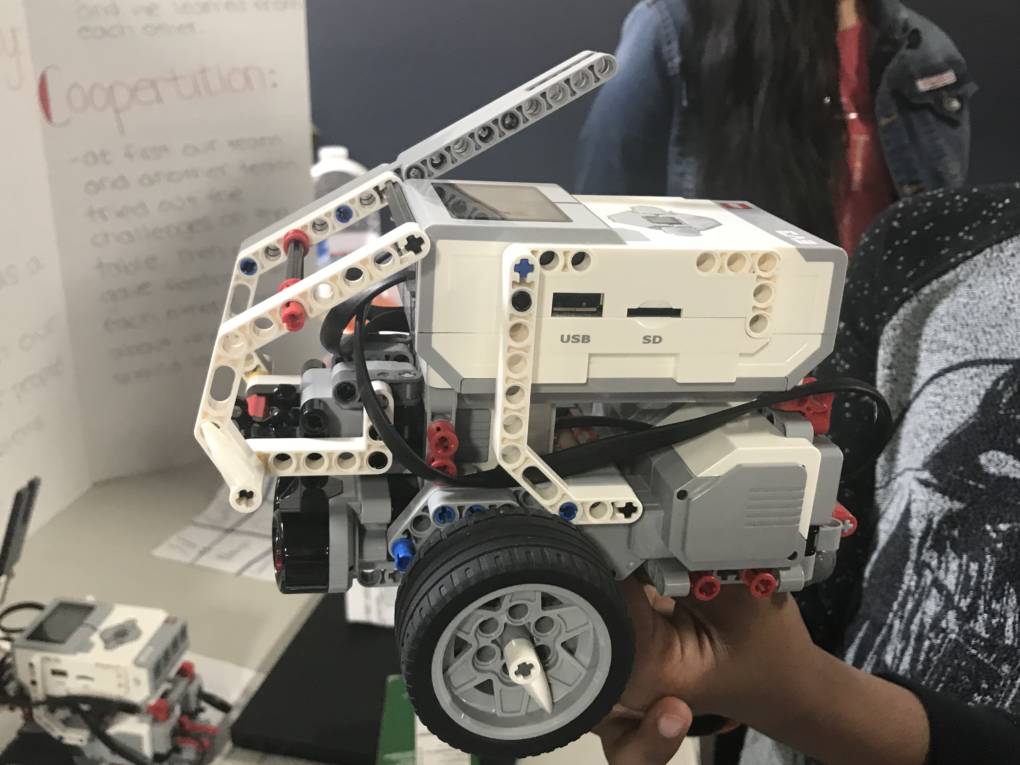
"caption": "This robot was built by fourth, fifth and sixth graders from Fremont at the FIRST LEGO League competition in San Jose. Their team name was the Ogelions. ",
"description": "This robot was built by fourth, fifth and sixth graders from Fremont at the FIRST LEGO League competition in San Jose. Their team name was the Ogelions. ",
"title": "IMG_2007 (2)",
"credit": "Polly Stryker/KQED",
"status": "inherit",
"isLoading": false,
"fetchFailed": false
},
"news_11622912": {
"type": "attachments",
"id": "news_11622912",
"meta": {
"index": "attachments_1716263798",
"site": "news",
"id": "11622912",
"found": true
},
"parent": 11622830,
"imgSizes": {
"small": {
"file": "https://ww2.kqed.org/app/uploads/sites/10/2017/10/CEOWithSchoolImage-520x390.jpg",
"width": 520,
"mimeType": "image/jpeg",
"height": 390
},
"twentyfourteen-full-width": {
"file": "https://ww2.kqed.org/app/uploads/sites/10/2017/10/CEOWithSchoolImage-1038x576.jpg",
"width": 1038,
"mimeType": "image/jpeg",
"height": 576
},
"thumbnail": {
"file": "https://ww2.kqed.org/app/uploads/sites/10/2017/10/CEOWithSchoolImage-160x120.jpg",
"width": 160,
"mimeType": "image/jpeg",
"height": 120
},
"fd-sm": {
"file": "https://ww2.kqed.org/app/uploads/sites/10/2017/10/CEOWithSchoolImage-960x720.jpg",
"width": 960,
"mimeType": "image/jpeg",
"height": 720
},
"post-thumbnail": {
"file": "https://ww2.kqed.org/app/uploads/sites/10/2017/10/CEOWithSchoolImage-672x372.jpg",
"width": 672,
"mimeType": "image/jpeg",
"height": 372
},
"xsmall": {
"file": "https://ww2.kqed.org/app/uploads/sites/10/2017/10/CEOWithSchoolImage-375x281.jpg",
"width": 375,
"mimeType": "image/jpeg",
"height": 281
},
"kqedFullSize": {
"file": "https://ww2.kqed.org/app/uploads/sites/10/2017/10/CEOWithSchoolImage.jpg",
"width": 1920,
"height": 1440
},
"large": {
"file": "https://ww2.kqed.org/app/uploads/sites/10/2017/10/CEOWithSchoolImage-1020x765.jpg",
"width": 1020,
"mimeType": "image/jpeg",
"height": 765
},
"xlarge": {
"file": "https://ww2.kqed.org/app/uploads/sites/10/2017/10/CEOWithSchoolImage-1180x885.jpg",
"width": 1180,
"mimeType": "image/jpeg",
"height": 885
},
"guest-author-50": {
"file": "https://ww2.kqed.org/app/uploads/sites/10/2017/10/CEOWithSchoolImage-50x50.jpg",
"width": 50,
"mimeType": "image/jpeg",
"height": 50
},
"guest-author-96": {
"file": "https://ww2.kqed.org/app/uploads/sites/10/2017/10/CEOWithSchoolImage-96x96.jpg",
"width": 96,
"mimeType": "image/jpeg",
"height": 96
},
"medium": {
"file": "https://ww2.kqed.org/app/uploads/sites/10/2017/10/CEOWithSchoolImage-800x600.jpg",
"width": 800,
"mimeType": "image/jpeg",
"height": 600
},
"guest-author-64": {
"file": "https://ww2.kqed.org/app/uploads/sites/10/2017/10/CEOWithSchoolImage-64x64.jpg",
"width": 64,
"mimeType": "image/jpeg",
"height": 64
},
"guest-author-32": {
"file": "https://ww2.kqed.org/app/uploads/sites/10/2017/10/CEOWithSchoolImage-32x32.jpg",
"width": 32,
"mimeType": "image/jpeg",
"height": 32
},
"fd-lrg": {
"file": "https://ww2.kqed.org/app/uploads/sites/10/2017/10/CEOWithSchoolImage-1920x1440.jpg",
"width": 1920,
"mimeType": "image/jpeg",
"height": 1440
},
"fd-med": {
"file": "https://ww2.kqed.org/app/uploads/sites/10/2017/10/CEOWithSchoolImage-1180x885.jpg",
"width": 1180,
"mimeType": "image/jpeg",
"height": 885
},
"full-width": {
"file": "https://ww2.kqed.org/app/uploads/sites/10/2017/10/CEOWithSchoolImage-1920x1440.jpg",
"width": 1920,
"mimeType": "image/jpeg",
"height": 1440
},
"detail": {
"file": "https://ww2.kqed.org/app/uploads/sites/10/2017/10/CEOWithSchoolImage-150x150.jpg",
"width": 150,
"mimeType": "image/jpeg",
"height": 150
},
"guest-author-128": {
"file": "https://ww2.kqed.org/app/uploads/sites/10/2017/10/CEOWithSchoolImage-128x128.jpg",
"width": 128,
"mimeType": "image/jpeg",
"height": 128
},
"xxsmall": {
"file": "https://ww2.kqed.org/app/uploads/sites/10/2017/10/CEOWithSchoolImage-240x180.jpg",
"width": 240,
"mimeType": "image/jpeg",
"height": 180
}
},
"publishDate": 1507838411,
"modified": 1510266880,
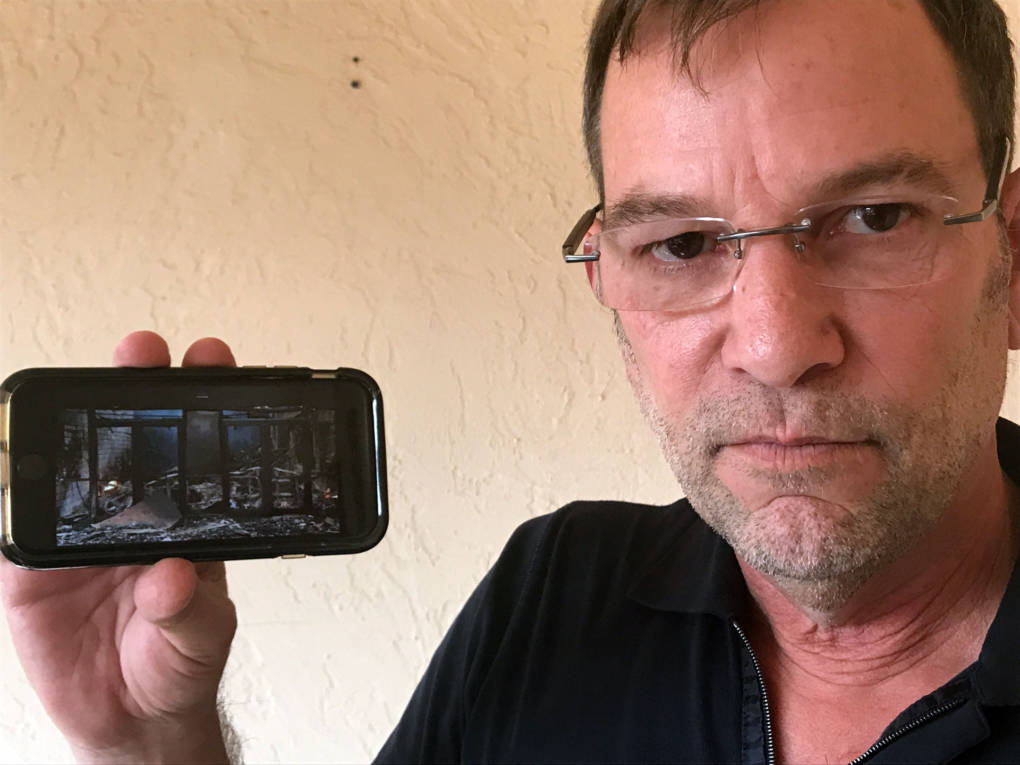
"caption": "Andrew Bailey, CEO of Anova, holds a cellphone with a photo of the school, destroyed by the Tubbs Fire.",
"description": "Andrew Bailey, CEO of Anova, holds a cellphone with a photo of the school, destroyed by the Tubbs Fire.",
"title": "CEOWithSchoolImage",
"credit": "Devin Katayama/KQED ",
"status": "inherit",
"isLoading": false,
"fetchFailed": false
},
"news_11628433": {
"type": "attachments",
"id": "news_11628433",
"meta": {
"index": "attachments_1716263798",
"site": "news",
"id": "11628433",
"found": true
},
"parent": 11628421,
"imgSizes": {
"small": {
"file": "https://ww2.kqed.org/app/uploads/sites/10/2017/11/RS24551__MG_8492-qut-520x347.jpg",
"width": 520,
"mimeType": "image/jpeg",
"height": 347
},
"twentyfourteen-full-width": {
"file": "https://ww2.kqed.org/app/uploads/sites/10/2017/11/RS24551__MG_8492-qut-1038x576.jpg",
"width": 1038,
"mimeType": "image/jpeg",
"height": 576
},
"thumbnail": {
"file": "https://ww2.kqed.org/app/uploads/sites/10/2017/11/RS24551__MG_8492-qut-160x107.jpg",
"width": 160,
"mimeType": "image/jpeg",
"height": 107
},
"fd-sm": {
"file": "https://ww2.kqed.org/app/uploads/sites/10/2017/11/RS24551__MG_8492-qut-960x640.jpg",
"width": 960,
"mimeType": "image/jpeg",
"height": 640
},
"post-thumbnail": {
"file": "https://ww2.kqed.org/app/uploads/sites/10/2017/11/RS24551__MG_8492-qut-672x372.jpg",
"width": 672,
"mimeType": "image/jpeg",
"height": 372
},
"xsmall": {
"file": "https://ww2.kqed.org/app/uploads/sites/10/2017/11/RS24551__MG_8492-qut-375x250.jpg",
"width": 375,
"mimeType": "image/jpeg",
"height": 250
},
"kqedFullSize": {
"file": "https://ww2.kqed.org/app/uploads/sites/10/2017/11/RS24551__MG_8492-qut.jpg",
"width": 1920,
"height": 1280
},
"large": {
"file": "https://ww2.kqed.org/app/uploads/sites/10/2017/11/RS24551__MG_8492-qut-1020x680.jpg",
"width": 1020,
"mimeType": "image/jpeg",
"height": 680
},
"xlarge": {
"file": "https://ww2.kqed.org/app/uploads/sites/10/2017/11/RS24551__MG_8492-qut-1180x787.jpg",
"width": 1180,
"mimeType": "image/jpeg",
"height": 787
},
"guest-author-50": {
"file": "https://ww2.kqed.org/app/uploads/sites/10/2017/11/RS24551__MG_8492-qut-50x50.jpg",
"width": 50,
"mimeType": "image/jpeg",
"height": 50
},
"guest-author-96": {
"file": "https://ww2.kqed.org/app/uploads/sites/10/2017/11/RS24551__MG_8492-qut-96x96.jpg",
"width": 96,
"mimeType": "image/jpeg",
"height": 96
},
"medium": {
"file": "https://ww2.kqed.org/app/uploads/sites/10/2017/11/RS24551__MG_8492-qut-800x533.jpg",
"width": 800,
"mimeType": "image/jpeg",
"height": 533
},
"guest-author-64": {
"file": "https://ww2.kqed.org/app/uploads/sites/10/2017/11/RS24551__MG_8492-qut-64x64.jpg",
"width": 64,
"mimeType": "image/jpeg",
"height": 64
},
"guest-author-32": {
"file": "https://ww2.kqed.org/app/uploads/sites/10/2017/11/RS24551__MG_8492-qut-32x32.jpg",
"width": 32,
"mimeType": "image/jpeg",
"height": 32
},
"fd-lrg": {
"file": "https://ww2.kqed.org/app/uploads/sites/10/2017/11/RS24551__MG_8492-qut-1920x1280.jpg",
"width": 1920,
"mimeType": "image/jpeg",
"height": 1280
},
"fd-med": {
"file": "https://ww2.kqed.org/app/uploads/sites/10/2017/11/RS24551__MG_8492-qut-1180x787.jpg",
"width": 1180,
"mimeType": "image/jpeg",
"height": 787
},
"full-width": {
"file": "https://ww2.kqed.org/app/uploads/sites/10/2017/11/RS24551__MG_8492-qut-1920x1280.jpg",
"width": 1920,
"mimeType": "image/jpeg",
"height": 1280
},
"detail": {
"file": "https://ww2.kqed.org/app/uploads/sites/10/2017/11/RS24551__MG_8492-qut-150x150.jpg",
"width": 150,
"mimeType": "image/jpeg",
"height": 150
},
"guest-author-128": {
"file": "https://ww2.kqed.org/app/uploads/sites/10/2017/11/RS24551__MG_8492-qut-128x128.jpg",
"width": 128,
"mimeType": "image/jpeg",
"height": 128
},
"xxsmall": {
"file": "https://ww2.kqed.org/app/uploads/sites/10/2017/11/RS24551__MG_8492-qut-240x160.jpg",
"width": 240,
"mimeType": "image/jpeg",
"height": 160
}
},
"publishDate": 1509927676,
"modified": 1510009283,
"caption": "Students in class at San Francisco International High School on March 9, 2017.",
"description": null,
"title": "RS24551__MG_8492-qut",
"credit": "Deborah Svoboda/KQED",
"status": "inherit",
"isLoading": false,
"fetchFailed": false
},
"news_11627321": {
"type": "attachments",
"id": "news_11627321",
"meta": {
"index": "attachments_1716263798",
"site": "news",
"id": "11627321",
"found": true
},
"parent": 11627212,
"imgSizes": {
"small": {
"file": "https://ww2.kqed.org/app/uploads/sites/10/2017/10/RS27811_IMG_1080-qut-520x347.jpg",
"width": 520,
"mimeType": "image/jpeg",
"height": 347
},
"twentyfourteen-full-width": {
"file": "https://ww2.kqed.org/app/uploads/sites/10/2017/10/RS27811_IMG_1080-qut-1038x576.jpg",
"width": 1038,
"mimeType": "image/jpeg",
"height": 576
},
"thumbnail": {
"file": "https://ww2.kqed.org/app/uploads/sites/10/2017/10/RS27811_IMG_1080-qut-160x107.jpg",
"width": 160,
"mimeType": "image/jpeg",
"height": 107
},
"fd-sm": {
"file": "https://ww2.kqed.org/app/uploads/sites/10/2017/10/RS27811_IMG_1080-qut-960x640.jpg",
"width": 960,
"mimeType": "image/jpeg",
"height": 640
},
"post-thumbnail": {
"file": "https://ww2.kqed.org/app/uploads/sites/10/2017/10/RS27811_IMG_1080-qut-672x372.jpg",
"width": 672,
"mimeType": "image/jpeg",
"height": 372
},
"xsmall": {
"file": "https://ww2.kqed.org/app/uploads/sites/10/2017/10/RS27811_IMG_1080-qut-375x250.jpg",
"width": 375,
"mimeType": "image/jpeg",
"height": 250
},
"kqedFullSize": {
"file": "https://ww2.kqed.org/app/uploads/sites/10/2017/10/RS27811_IMG_1080-qut.jpg",
"width": 1920,
"height": 1280
},
"large": {
"file": "https://ww2.kqed.org/app/uploads/sites/10/2017/10/RS27811_IMG_1080-qut-1020x680.jpg",
"width": 1020,
"mimeType": "image/jpeg",
"height": 680
},
"xlarge": {
"file": "https://ww2.kqed.org/app/uploads/sites/10/2017/10/RS27811_IMG_1080-qut-1180x787.jpg",
"width": 1180,
"mimeType": "image/jpeg",
"height": 787
},
"guest-author-50": {
"file": "https://ww2.kqed.org/app/uploads/sites/10/2017/10/RS27811_IMG_1080-qut-50x50.jpg",
"width": 50,
"mimeType": "image/jpeg",
"height": 50
},
"guest-author-96": {
"file": "https://ww2.kqed.org/app/uploads/sites/10/2017/10/RS27811_IMG_1080-qut-96x96.jpg",
"width": 96,
"mimeType": "image/jpeg",
"height": 96
},
"medium": {
"file": "https://ww2.kqed.org/app/uploads/sites/10/2017/10/RS27811_IMG_1080-qut-800x533.jpg",
"width": 800,
"mimeType": "image/jpeg",
"height": 533
},
"guest-author-64": {
"file": "https://ww2.kqed.org/app/uploads/sites/10/2017/10/RS27811_IMG_1080-qut-64x64.jpg",
"width": 64,
"mimeType": "image/jpeg",
"height": 64
},
"guest-author-32": {
"file": "https://ww2.kqed.org/app/uploads/sites/10/2017/10/RS27811_IMG_1080-qut-32x32.jpg",
"width": 32,
"mimeType": "image/jpeg",
"height": 32
},
"fd-lrg": {
"file": "https://ww2.kqed.org/app/uploads/sites/10/2017/10/RS27811_IMG_1080-qut-1920x1280.jpg",
"width": 1920,
"mimeType": "image/jpeg",
"height": 1280
},
"fd-med": {
"file": "https://ww2.kqed.org/app/uploads/sites/10/2017/10/RS27811_IMG_1080-qut-1180x787.jpg",
"width": 1180,
"mimeType": "image/jpeg",
"height": 787
},
"full-width": {
"file": "https://ww2.kqed.org/app/uploads/sites/10/2017/10/RS27811_IMG_1080-qut-1920x1280.jpg",
"width": 1920,
"mimeType": "image/jpeg",
"height": 1280
},
"detail": {
"file": "https://ww2.kqed.org/app/uploads/sites/10/2017/10/RS27811_IMG_1080-qut-150x150.jpg",
"width": 150,
"mimeType": "image/jpeg",
"height": 150
},
"guest-author-128": {
"file": "https://ww2.kqed.org/app/uploads/sites/10/2017/10/RS27811_IMG_1080-qut-128x128.jpg",
"width": 128,
"mimeType": "image/jpeg",
"height": 128
},
"xxsmall": {
"file": "https://ww2.kqed.org/app/uploads/sites/10/2017/10/RS27811_IMG_1080-qut-240x160.jpg",
"width": 240,
"mimeType": "image/jpeg",
"height": 160
}
},
"publishDate": 1509495244,
"modified": 1509560888,
"caption": "Abril Barbosa (left), Jennifer Cabrera and Maria Mendoza gather after classes at Santa Rosa Junior College on Oct. 25, 2017. The school was closed for two weeks after the wildfires began. ",
"description": null,
"title": "RS27811_IMG_1080-qut",
"credit": "Farida Jhabvala Romero/KQED",
"status": "inherit",
"isLoading": false,
"fetchFailed": false
},
"news_11626357": {
"type": "attachments",
"id": "news_11626357",
"meta": {
"index": "attachments_1716263798",
"site": "news",
"id": "11626357",
"found": true
},
"parent": 11626285,
"imgSizes": {
"small": {
"file": "https://ww2.kqed.org/app/uploads/sites/10/2017/10/RS27752_IMG_9537-qut-520x347.jpg",
"width": 520,
"mimeType": "image/jpeg",
"height": 347
},
"twentyfourteen-full-width": {
"file": "https://ww2.kqed.org/app/uploads/sites/10/2017/10/RS27752_IMG_9537-qut-1038x576.jpg",
"width": 1038,
"mimeType": "image/jpeg",
"height": 576
},
"thumbnail": {
"file": "https://ww2.kqed.org/app/uploads/sites/10/2017/10/RS27752_IMG_9537-qut-160x107.jpg",
"width": 160,
"mimeType": "image/jpeg",
"height": 107
},
"fd-sm": {
"file": "https://ww2.kqed.org/app/uploads/sites/10/2017/10/RS27752_IMG_9537-qut-960x640.jpg",
"width": 960,
"mimeType": "image/jpeg",
"height": 640
},
"post-thumbnail": {
"file": "https://ww2.kqed.org/app/uploads/sites/10/2017/10/RS27752_IMG_9537-qut-672x372.jpg",
"width": 672,
"mimeType": "image/jpeg",
"height": 372
},
"xsmall": {
"file": "https://ww2.kqed.org/app/uploads/sites/10/2017/10/RS27752_IMG_9537-qut-375x250.jpg",
"width": 375,
"mimeType": "image/jpeg",
"height": 250
},
"kqedFullSize": {
"file": "https://ww2.kqed.org/app/uploads/sites/10/2017/10/RS27752_IMG_9537-qut.jpg",
"width": 1920,
"height": 1280
},
"large": {
"file": "https://ww2.kqed.org/app/uploads/sites/10/2017/10/RS27752_IMG_9537-qut-1020x680.jpg",
"width": 1020,
"mimeType": "image/jpeg",
"height": 680
},
"xlarge": {
"file": "https://ww2.kqed.org/app/uploads/sites/10/2017/10/RS27752_IMG_9537-qut-1180x787.jpg",
"width": 1180,
"mimeType": "image/jpeg",
"height": 787
},
"guest-author-50": {
"file": "https://ww2.kqed.org/app/uploads/sites/10/2017/10/RS27752_IMG_9537-qut-50x50.jpg",
"width": 50,
"mimeType": "image/jpeg",
"height": 50
},
"guest-author-96": {
"file": "https://ww2.kqed.org/app/uploads/sites/10/2017/10/RS27752_IMG_9537-qut-96x96.jpg",
"width": 96,
"mimeType": "image/jpeg",
"height": 96
},
"medium": {
"file": "https://ww2.kqed.org/app/uploads/sites/10/2017/10/RS27752_IMG_9537-qut-800x533.jpg",
"width": 800,
"mimeType": "image/jpeg",
"height": 533
},
"guest-author-64": {
"file": "https://ww2.kqed.org/app/uploads/sites/10/2017/10/RS27752_IMG_9537-qut-64x64.jpg",
"width": 64,
"mimeType": "image/jpeg",
"height": 64
},
"guest-author-32": {
"file": "https://ww2.kqed.org/app/uploads/sites/10/2017/10/RS27752_IMG_9537-qut-32x32.jpg",
"width": 32,
"mimeType": "image/jpeg",
"height": 32
},
"fd-lrg": {
"file": "https://ww2.kqed.org/app/uploads/sites/10/2017/10/RS27752_IMG_9537-qut-1920x1280.jpg",
"width": 1920,
"mimeType": "image/jpeg",
"height": 1280
},
"fd-med": {
"file": "https://ww2.kqed.org/app/uploads/sites/10/2017/10/RS27752_IMG_9537-qut-1180x787.jpg",
"width": 1180,
"mimeType": "image/jpeg",
"height": 787
},
"full-width": {
"file": "https://ww2.kqed.org/app/uploads/sites/10/2017/10/RS27752_IMG_9537-qut-1920x1280.jpg",
"width": 1920,
"mimeType": "image/jpeg",
"height": 1280
},
"detail": {
"file": "https://ww2.kqed.org/app/uploads/sites/10/2017/10/RS27752_IMG_9537-qut-150x150.jpg",
"width": 150,
"mimeType": "image/jpeg",
"height": 150
},
"guest-author-128": {
"file": "https://ww2.kqed.org/app/uploads/sites/10/2017/10/RS27752_IMG_9537-qut-128x128.jpg",
"width": 128,
"mimeType": "image/jpeg",
"height": 128
},
"xxsmall": {
"file": "https://ww2.kqed.org/app/uploads/sites/10/2017/10/RS27752_IMG_9537-qut-240x160.jpg",
"width": 240,
"mimeType": "image/jpeg",
"height": 160
}
},
"publishDate": 1509057956,
"modified": 1509578650,
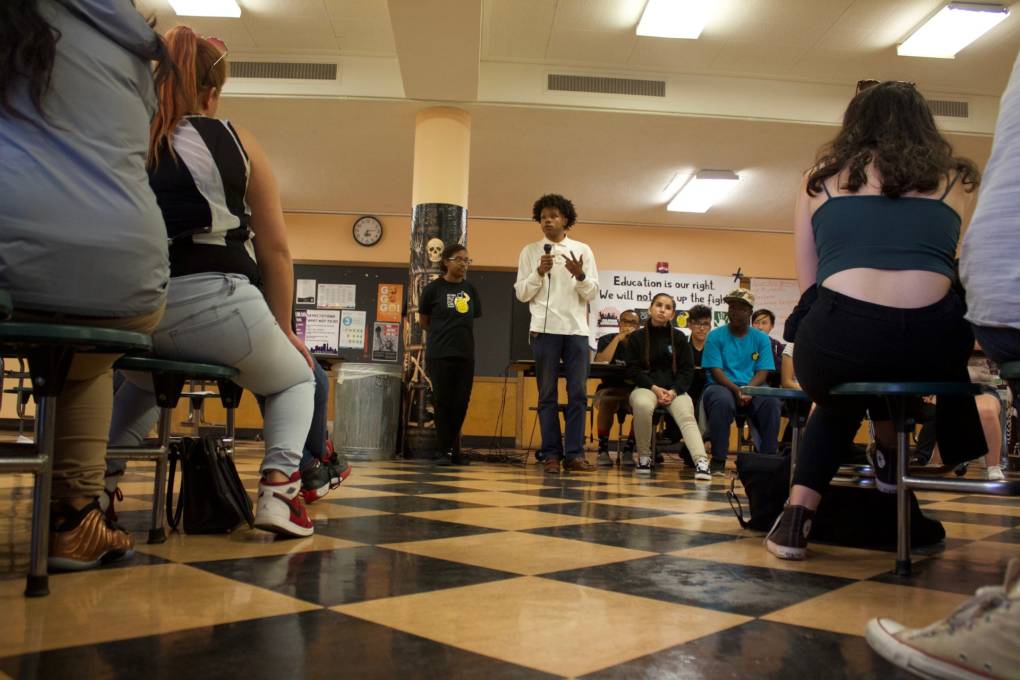
"caption": "Leroy Gatlin, representative from Causa Justa, speaks along with other youth leaders at a town hall in San Francisco, California, on Oct. 25, 2017.",
"description": "Leroy Gatlin, representative from Causa Justa, speaks along with other youth leaders at a town hall in San Francisco, California, on Oct. 25, 2017.",
"title": "RS27752_IMG_9537-qut",
"credit": "Audrey Garces/KQED",
"status": "inherit",
"isLoading": false,
"fetchFailed": false
},
"news_11627240": {
"type": "attachments",
"id": "news_11627240",
"meta": {
"index": "attachments_1716263798",
"site": "news",
"id": "11627240",
"found": true
},
"parent": 11625622,
"imgSizes": {
"small": {
"file": "https://ww2.kqed.org/app/uploads/sites/10/2017/10/SatherGate-520x342.jpg",
"width": 520,
"mimeType": "image/jpeg",
"height": 342
},
"twentyfourteen-full-width": {
"file": "https://ww2.kqed.org/app/uploads/sites/10/2017/10/SatherGate-1038x576.jpg",
"width": 1038,
"mimeType": "image/jpeg",
"height": 576
},
"thumbnail": {
"file": "https://ww2.kqed.org/app/uploads/sites/10/2017/10/SatherGate-160x105.jpg",
"width": 160,
"mimeType": "image/jpeg",
"height": 105
},
"fd-sm": {
"file": "https://ww2.kqed.org/app/uploads/sites/10/2017/10/SatherGate-960x632.jpg",
"width": 960,
"mimeType": "image/jpeg",
"height": 632
},
"post-thumbnail": {
"file": "https://ww2.kqed.org/app/uploads/sites/10/2017/10/SatherGate-672x372.jpg",
"width": 672,
"mimeType": "image/jpeg",
"height": 372
},
"xsmall": {
"file": "https://ww2.kqed.org/app/uploads/sites/10/2017/10/SatherGate-375x247.jpg",
"width": 375,
"mimeType": "image/jpeg",
"height": 247
},
"kqedFullSize": {
"file": "https://ww2.kqed.org/app/uploads/sites/10/2017/10/SatherGate.jpg",
"width": 1920,
"height": 1263
},
"large": {
"file": "https://ww2.kqed.org/app/uploads/sites/10/2017/10/SatherGate-1020x671.jpg",
"width": 1020,
"mimeType": "image/jpeg",
"height": 671
},
"xlarge": {
"file": "https://ww2.kqed.org/app/uploads/sites/10/2017/10/SatherGate-1180x776.jpg",
"width": 1180,
"mimeType": "image/jpeg",
"height": 776
},
"guest-author-50": {
"file": "https://ww2.kqed.org/app/uploads/sites/10/2017/10/SatherGate-50x50.jpg",
"width": 50,
"mimeType": "image/jpeg",
"height": 50
},
"guest-author-96": {
"file": "https://ww2.kqed.org/app/uploads/sites/10/2017/10/SatherGate-96x96.jpg",
"width": 96,
"mimeType": "image/jpeg",
"height": 96
},
"medium": {
"file": "https://ww2.kqed.org/app/uploads/sites/10/2017/10/SatherGate-800x526.jpg",
"width": 800,
"mimeType": "image/jpeg",
"height": 526
},
"guest-author-64": {
"file": "https://ww2.kqed.org/app/uploads/sites/10/2017/10/SatherGate-64x64.jpg",
"width": 64,
"mimeType": "image/jpeg",
"height": 64
},
"guest-author-32": {
"file": "https://ww2.kqed.org/app/uploads/sites/10/2017/10/SatherGate-32x32.jpg",
"width": 32,
"mimeType": "image/jpeg",
"height": 32
},
"fd-lrg": {
"file": "https://ww2.kqed.org/app/uploads/sites/10/2017/10/SatherGate-1920x1263.jpg",
"width": 1920,
"mimeType": "image/jpeg",
"height": 1263
},
"fd-med": {
"file": "https://ww2.kqed.org/app/uploads/sites/10/2017/10/SatherGate-1180x776.jpg",
"width": 1180,
"mimeType": "image/jpeg",
"height": 776
},
"full-width": {
"file": "https://ww2.kqed.org/app/uploads/sites/10/2017/10/SatherGate-1920x1263.jpg",
"width": 1920,
"mimeType": "image/jpeg",
"height": 1263
},
"detail": {
"file": "https://ww2.kqed.org/app/uploads/sites/10/2017/10/SatherGate-150x150.jpg",
"width": 150,
"mimeType": "image/jpeg",
"height": 150
},
"guest-author-128": {
"file": "https://ww2.kqed.org/app/uploads/sites/10/2017/10/SatherGate-128x128.jpg",
"width": 128,
"mimeType": "image/jpeg",
"height": 128
},
"xxsmall": {
"file": "https://ww2.kqed.org/app/uploads/sites/10/2017/10/SatherGate-240x158.jpg",
"width": 240,
"mimeType": "image/jpeg",
"height": 158
}
},
"publishDate": 1509488532,
"modified": 1509488588,
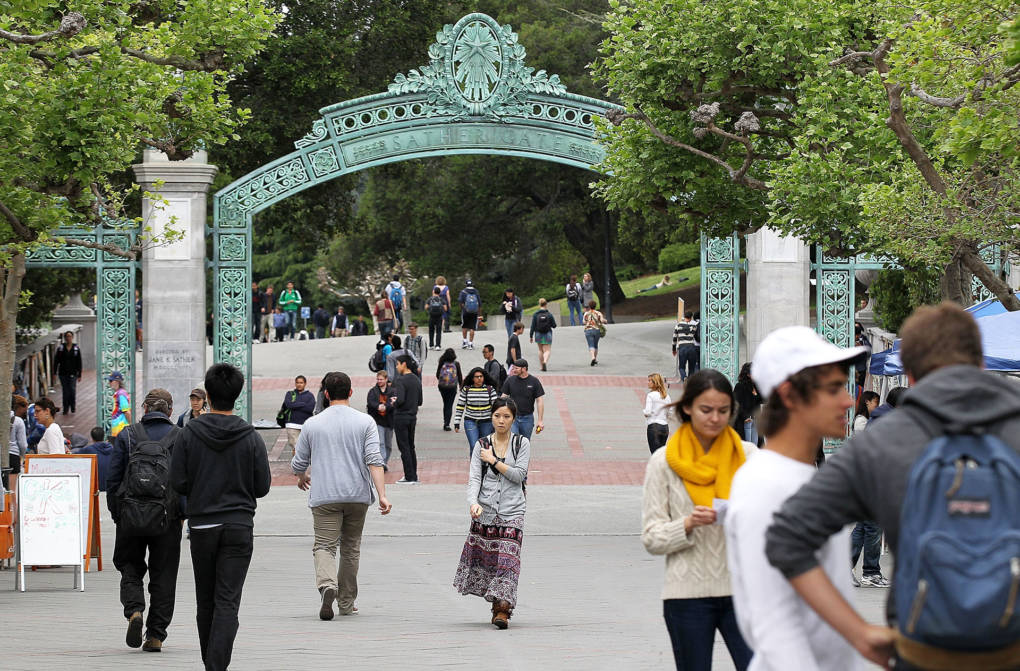
"caption": "Students walk through Sproul Plaza on the UC Berkeley campus.",
"description": "Students walk through Sproul Plaza on the UC Berkeley campus.",
"title": "SatherGate",
"credit": "Justin Sullivan/Getty Images",
"status": "inherit",
"isLoading": false,
"fetchFailed": false
},
"news_11626084": {
"type": "attachments",
"id": "news_11626084",
"meta": {
"index": "attachments_1716263798",
"site": "news",
"id": "11626084",
"found": true
},
"parent": 11626083,
"imgSizes": {
"small": {
"file": "https://ww2.kqed.org/app/uploads/sites/10/2017/10/RS27731_CaliforniaDream_interstate-1920x1080-tight-crop-qut-520x293.jpg",
"width": 520,
"mimeType": "image/jpeg",
"height": 293
},
"twentyfourteen-full-width": {
"file": "https://ww2.kqed.org/app/uploads/sites/10/2017/10/RS27731_CaliforniaDream_interstate-1920x1080-tight-crop-qut-1038x576.jpg",
"width": 1038,
"mimeType": "image/jpeg",
"height": 576
},
"thumbnail": {
"file": "https://ww2.kqed.org/app/uploads/sites/10/2017/10/RS27731_CaliforniaDream_interstate-1920x1080-tight-crop-qut-160x90.jpg",
"width": 160,
"mimeType": "image/jpeg",
"height": 90
},
"fd-sm": {
"file": "https://ww2.kqed.org/app/uploads/sites/10/2017/10/RS27731_CaliforniaDream_interstate-1920x1080-tight-crop-qut-960x540.jpg",
"width": 960,
"mimeType": "image/jpeg",
"height": 540
},
"post-thumbnail": {
"file": "https://ww2.kqed.org/app/uploads/sites/10/2017/10/RS27731_CaliforniaDream_interstate-1920x1080-tight-crop-qut-672x372.jpg",
"width": 672,
"mimeType": "image/jpeg",
"height": 372
},
"xsmall": {
"file": "https://ww2.kqed.org/app/uploads/sites/10/2017/10/RS27731_CaliforniaDream_interstate-1920x1080-tight-crop-qut-375x211.jpg",
"width": 375,
"mimeType": "image/jpeg",
"height": 211
},
"kqedFullSize": {
"file": "https://ww2.kqed.org/app/uploads/sites/10/2017/10/RS27731_CaliforniaDream_interstate-1920x1080-tight-crop-qut.jpg",
"width": 1920,
"height": 1080
},
"large": {
"file": "https://ww2.kqed.org/app/uploads/sites/10/2017/10/RS27731_CaliforniaDream_interstate-1920x1080-tight-crop-qut-1020x574.jpg",
"width": 1020,
"mimeType": "image/jpeg",
"height": 574
},
"xlarge": {
"file": "https://ww2.kqed.org/app/uploads/sites/10/2017/10/RS27731_CaliforniaDream_interstate-1920x1080-tight-crop-qut-1180x664.jpg",
"width": 1180,
"mimeType": "image/jpeg",
"height": 664
},
"guest-author-50": {
"file": "https://ww2.kqed.org/app/uploads/sites/10/2017/10/RS27731_CaliforniaDream_interstate-1920x1080-tight-crop-qut-50x50.jpg",
"width": 50,
"mimeType": "image/jpeg",
"height": 50
},
"guest-author-96": {
"file": "https://ww2.kqed.org/app/uploads/sites/10/2017/10/RS27731_CaliforniaDream_interstate-1920x1080-tight-crop-qut-96x96.jpg",
"width": 96,
"mimeType": "image/jpeg",
"height": 96
},
"medium": {
"file": "https://ww2.kqed.org/app/uploads/sites/10/2017/10/RS27731_CaliforniaDream_interstate-1920x1080-tight-crop-qut-800x450.jpg",
"width": 800,
"mimeType": "image/jpeg",
"height": 450
},
"guest-author-64": {
"file": "https://ww2.kqed.org/app/uploads/sites/10/2017/10/RS27731_CaliforniaDream_interstate-1920x1080-tight-crop-qut-64x64.jpg",
"width": 64,
"mimeType": "image/jpeg",
"height": 64
},
"guest-author-32": {
"file": "https://ww2.kqed.org/app/uploads/sites/10/2017/10/RS27731_CaliforniaDream_interstate-1920x1080-tight-crop-qut-32x32.jpg",
"width": 32,
"mimeType": "image/jpeg",
"height": 32
},
"fd-lrg": {
"file": "https://ww2.kqed.org/app/uploads/sites/10/2017/10/RS27731_CaliforniaDream_interstate-1920x1080-tight-crop-qut-1920x1080.jpg",
"width": 1920,
"mimeType": "image/jpeg",
"height": 1080
},
"fd-med": {
"file": "https://ww2.kqed.org/app/uploads/sites/10/2017/10/RS27731_CaliforniaDream_interstate-1920x1080-tight-crop-qut-1180x664.jpg",
"width": 1180,
"mimeType": "image/jpeg",
"height": 664
},
"full-width": {
"file": "https://ww2.kqed.org/app/uploads/sites/10/2017/10/RS27731_CaliforniaDream_interstate-1920x1080-tight-crop-qut-1920x1080.jpg",
"width": 1920,
"mimeType": "image/jpeg",
"height": 1080
},
"detail": {
"file": "https://ww2.kqed.org/app/uploads/sites/10/2017/10/RS27731_CaliforniaDream_interstate-1920x1080-tight-crop-qut-150x150.jpg",
"width": 150,
"mimeType": "image/jpeg",
"height": 150
},
"guest-author-128": {
"file": "https://ww2.kqed.org/app/uploads/sites/10/2017/10/RS27731_CaliforniaDream_interstate-1920x1080-tight-crop-qut-128x128.jpg",
"width": 128,
"mimeType": "image/jpeg",
"height": 128
},
"xxsmall": {
"file": "https://ww2.kqed.org/app/uploads/sites/10/2017/10/RS27731_CaliforniaDream_interstate-1920x1080-tight-crop-qut-240x135.jpg",
"width": 240,
"mimeType": "image/jpeg",
"height": 135
}
},
"publishDate": 1508975134,
"modified": 1508975194,
"caption": "Pacific Coast Highway 1 road sign",
"description": null,
"title": "RS27731_CaliforniaDream_interstate-1920x1080-tight-crop-qut",
"credit": "Aleksandar Nakic/iStock",
"status": "inherit",
"isLoading": false,
"fetchFailed": false
},
"news_11627084": {
"type": "attachments",
"id": "news_11627084",
"meta": {
"index": "attachments_1716263798",
"site": "news",
"id": "11627084",
"found": true
},
"parent": 11627080,
"imgSizes": {
"small": {
"file": "https://ww2.kqed.org/app/uploads/sites/10/2017/10/BlackStudentAchievementMain-520x342.jpg",
"width": 520,
"mimeType": "image/jpeg",
"height": 342
},
"twentyfourteen-full-width": {
"file": "https://ww2.kqed.org/app/uploads/sites/10/2017/10/BlackStudentAchievementMain-1038x576.jpg",
"width": 1038,
"mimeType": "image/jpeg",
"height": 576
},
"thumbnail": {
"file": "https://ww2.kqed.org/app/uploads/sites/10/2017/10/BlackStudentAchievementMain-160x105.jpg",
"width": 160,
"mimeType": "image/jpeg",
"height": 105
},
"fd-sm": {
"file": "https://ww2.kqed.org/app/uploads/sites/10/2017/10/BlackStudentAchievementMain-960x631.jpg",
"width": 960,
"mimeType": "image/jpeg",
"height": 631
},
"post-thumbnail": {
"file": "https://ww2.kqed.org/app/uploads/sites/10/2017/10/BlackStudentAchievementMain-672x372.jpg",
"width": 672,
"mimeType": "image/jpeg",
"height": 372
},
"xsmall": {
"file": "https://ww2.kqed.org/app/uploads/sites/10/2017/10/BlackStudentAchievementMain-375x246.jpg",
"width": 375,
"mimeType": "image/jpeg",
"height": 246
},
"kqedFullSize": {
"file": "https://ww2.kqed.org/app/uploads/sites/10/2017/10/BlackStudentAchievementMain.jpg",
"width": 1920,
"height": 1261
},
"large": {
"file": "https://ww2.kqed.org/app/uploads/sites/10/2017/10/BlackStudentAchievementMain-1020x670.jpg",
"width": 1020,
"mimeType": "image/jpeg",
"height": 670
},
"xlarge": {
"file": "https://ww2.kqed.org/app/uploads/sites/10/2017/10/BlackStudentAchievementMain-1180x775.jpg",
"width": 1180,
"mimeType": "image/jpeg",
"height": 775
},
"guest-author-50": {
"file": "https://ww2.kqed.org/app/uploads/sites/10/2017/10/BlackStudentAchievementMain-50x50.jpg",
"width": 50,
"mimeType": "image/jpeg",
"height": 50
},
"guest-author-96": {
"file": "https://ww2.kqed.org/app/uploads/sites/10/2017/10/BlackStudentAchievementMain-96x96.jpg",
"width": 96,
"mimeType": "image/jpeg",
"height": 96
},
"medium": {
"file": "https://ww2.kqed.org/app/uploads/sites/10/2017/10/BlackStudentAchievementMain-800x525.jpg",
"width": 800,
"mimeType": "image/jpeg",
"height": 525
},
"guest-author-64": {
"file": "https://ww2.kqed.org/app/uploads/sites/10/2017/10/BlackStudentAchievementMain-64x64.jpg",
"width": 64,
"mimeType": "image/jpeg",
"height": 64
},
"guest-author-32": {
"file": "https://ww2.kqed.org/app/uploads/sites/10/2017/10/BlackStudentAchievementMain-32x32.jpg",
"width": 32,
"mimeType": "image/jpeg",
"height": 32
},
"fd-lrg": {
"file": "https://ww2.kqed.org/app/uploads/sites/10/2017/10/BlackStudentAchievementMain-1920x1261.jpg",
"width": 1920,
"mimeType": "image/jpeg",
"height": 1261
},
"fd-med": {
"file": "https://ww2.kqed.org/app/uploads/sites/10/2017/10/BlackStudentAchievementMain-1180x775.jpg",
"width": 1180,
"mimeType": "image/jpeg",
"height": 775
},
"full-width": {
"file": "https://ww2.kqed.org/app/uploads/sites/10/2017/10/BlackStudentAchievementMain-1920x1261.jpg",
"width": 1920,
"mimeType": "image/jpeg",
"height": 1261
},
"detail": {
"file": "https://ww2.kqed.org/app/uploads/sites/10/2017/10/BlackStudentAchievementMain-150x150.jpg",
"width": 150,
"mimeType": "image/jpeg",
"height": 150
},
"guest-author-128": {
"file": "https://ww2.kqed.org/app/uploads/sites/10/2017/10/BlackStudentAchievementMain-128x128.jpg",
"width": 128,
"mimeType": "image/jpeg",
"height": 128
},
"xxsmall": {
"file": "https://ww2.kqed.org/app/uploads/sites/10/2017/10/BlackStudentAchievementMain-240x158.jpg",
"width": 240,
"mimeType": "image/jpeg",
"height": 158
}
},
"publishDate": 1509477791,
"modified": 1509477834,
"caption": "Principal Charleston Brown oversees dismissal at Willie L. Brown Jr. Middle School in San Francisco’s Bayview neighborhood. His black students struggle to pass state tests in reading and math.",
"description": "Principal Charleston Brown oversees dismissal at Willie L. Brown Jr. Middle School in San Francisco’s Bayview neighborhood. His black students struggle to pass state tests in reading and math.",
"title": "BlackStudentAchievementMain",
"credit": "Penni Gladstone/CALmatters",
"status": "inherit",
"isLoading": false,
"fetchFailed": false
},
"news_11625707": {
"type": "attachments",
"id": "news_11625707",
"meta": {
"index": "attachments_1716263798",
"site": "news",
"id": "11625707",
"found": true
},
"parent": 11624578,
"imgSizes": {
"small": {
"file": "https://ww2.kqed.org/app/uploads/sites/10/2017/10/students-hug2-520x390.jpg",
"width": 520,
"mimeType": "image/jpeg",
"height": 390
},
"twentyfourteen-full-width": {
"file": "https://ww2.kqed.org/app/uploads/sites/10/2017/10/students-hug2-1038x576.jpg",
"width": 1038,
"mimeType": "image/jpeg",
"height": 576
},
"thumbnail": {
"file": "https://ww2.kqed.org/app/uploads/sites/10/2017/10/students-hug2-160x120.jpg",
"width": 160,
"mimeType": "image/jpeg",
"height": 120
},
"fd-sm": {
"file": "https://ww2.kqed.org/app/uploads/sites/10/2017/10/students-hug2-960x720.jpg",
"width": 960,
"mimeType": "image/jpeg",
"height": 720
},
"post-thumbnail": {
"file": "https://ww2.kqed.org/app/uploads/sites/10/2017/10/students-hug2-672x372.jpg",
"width": 672,
"mimeType": "image/jpeg",
"height": 372
},
"xsmall": {
"file": "https://ww2.kqed.org/app/uploads/sites/10/2017/10/students-hug2-375x281.jpg",
"width": 375,
"mimeType": "image/jpeg",
"height": 281
},
"kqedFullSize": {
"file": "https://ww2.kqed.org/app/uploads/sites/10/2017/10/students-hug2-e1508952004235.jpg",
"width": 1920,
"height": 1440
},
"large": {
"file": "https://ww2.kqed.org/app/uploads/sites/10/2017/10/students-hug2-1020x765.jpg",
"width": 1020,
"mimeType": "image/jpeg",
"height": 765
},
"xlarge": {
"file": "https://ww2.kqed.org/app/uploads/sites/10/2017/10/students-hug2-1180x885.jpg",
"width": 1180,
"mimeType": "image/jpeg",
"height": 885
},
"guest-author-50": {
"file": "https://ww2.kqed.org/app/uploads/sites/10/2017/10/students-hug2-50x50.jpg",
"width": 50,
"mimeType": "image/jpeg",
"height": 50
},
"guest-author-96": {
"file": "https://ww2.kqed.org/app/uploads/sites/10/2017/10/students-hug2-96x96.jpg",
"width": 96,
"mimeType": "image/jpeg",
"height": 96
},
"medium": {
"file": "https://ww2.kqed.org/app/uploads/sites/10/2017/10/students-hug2-800x600.jpg",
"width": 800,
"mimeType": "image/jpeg",
"height": 600
},
"guest-author-64": {
"file": "https://ww2.kqed.org/app/uploads/sites/10/2017/10/students-hug2-64x64.jpg",
"width": 64,
"mimeType": "image/jpeg",
"height": 64
},
"guest-author-32": {
"file": "https://ww2.kqed.org/app/uploads/sites/10/2017/10/students-hug2-32x32.jpg",
"width": 32,
"mimeType": "image/jpeg",
"height": 32
},
"fd-lrg": {
"file": "https://ww2.kqed.org/app/uploads/sites/10/2017/10/students-hug2-1920x1440.jpg",
"width": 1920,
"mimeType": "image/jpeg",
"height": 1440
},
"fd-med": {
"file": "https://ww2.kqed.org/app/uploads/sites/10/2017/10/students-hug2-1180x885.jpg",
"width": 1180,
"mimeType": "image/jpeg",
"height": 885
},
"full-width": {
"file": "https://ww2.kqed.org/app/uploads/sites/10/2017/10/students-hug2-1920x1440.jpg",
"width": 1920,
"mimeType": "image/jpeg",
"height": 1440
},
"detail": {
"file": "https://ww2.kqed.org/app/uploads/sites/10/2017/10/students-hug2-150x150.jpg",
"width": 150,
"mimeType": "image/jpeg",
"height": 150
},
"guest-author-128": {
"file": "https://ww2.kqed.org/app/uploads/sites/10/2017/10/students-hug2-128x128.jpg",
"width": 128,
"mimeType": "image/jpeg",
"height": 128
},
"xxsmall": {
"file": "https://ww2.kqed.org/app/uploads/sites/10/2017/10/students-hug2-240x180.jpg",
"width": 240,
"mimeType": "image/jpeg",
"height": 180
}
},
"publishDate": 1508880180,
"modified": 1508951993,
"caption": "Roseland Middle School students find out where to go in their new school. They are sharing space with the district's elementary school.",
"description": null,
"title": "students hug2",
"credit": "Julia McEvoy/KQED",
"status": "inherit",
"isLoading": false,
"fetchFailed": false
},
"news_11625462": {
"type": "attachments",
"id": "news_11625462",
"meta": {
"index": "attachments_1716263798",
"site": "news",
"id": "11625462",
"found": true
},
"parent": 11625455,
"imgSizes": {
"small": {
"file": "https://ww2.kqed.org/app/uploads/sites/10/2017/10/backtoschool_102317_final-520x520.jpg",
"width": 520,
"mimeType": "image/jpeg",
"height": 520
},
"twentyfourteen-full-width": {
"file": "https://ww2.kqed.org/app/uploads/sites/10/2017/10/backtoschool_102317_final-1038x576.jpg",
"width": 1038,
"mimeType": "image/jpeg",
"height": 576
},
"thumbnail": {
"file": "https://ww2.kqed.org/app/uploads/sites/10/2017/10/backtoschool_102317_final-160x160.jpg",
"width": 160,
"mimeType": "image/jpeg",
"height": 160
},
"fd-sm": {
"file": "https://ww2.kqed.org/app/uploads/sites/10/2017/10/backtoschool_102317_final-960x960.jpg",
"width": 960,
"mimeType": "image/jpeg",
"height": 960
},
"post-thumbnail": {
"file": "https://ww2.kqed.org/app/uploads/sites/10/2017/10/backtoschool_102317_final-672x372.jpg",
"width": 672,
"mimeType": "image/jpeg",
"height": 372
},
"xsmall": {
"file": "https://ww2.kqed.org/app/uploads/sites/10/2017/10/backtoschool_102317_final-375x375.jpg",
"width": 375,
"mimeType": "image/jpeg",
"height": 375
},
"kqedFullSize": {
"file": "https://ww2.kqed.org/app/uploads/sites/10/2017/10/backtoschool_102317_final.jpg",
"width": 1920,
"height": 1920
},
"large": {
"file": "https://ww2.kqed.org/app/uploads/sites/10/2017/10/backtoschool_102317_final-1020x1020.jpg",
"width": 1020,
"mimeType": "image/jpeg",
"height": 1020
},
"xlarge": {
"file": "https://ww2.kqed.org/app/uploads/sites/10/2017/10/backtoschool_102317_final-1180x1180.jpg",
"width": 1180,
"mimeType": "image/jpeg",
"height": 1180
},
"guest-author-50": {
"file": "https://ww2.kqed.org/app/uploads/sites/10/2017/10/backtoschool_102317_final-50x50.jpg",
"width": 50,
"mimeType": "image/jpeg",
"height": 50
},
"guest-author-96": {
"file": "https://ww2.kqed.org/app/uploads/sites/10/2017/10/backtoschool_102317_final-96x96.jpg",
"width": 96,
"mimeType": "image/jpeg",
"height": 96
},
"medium": {
"file": "https://ww2.kqed.org/app/uploads/sites/10/2017/10/backtoschool_102317_final-800x800.jpg",
"width": 800,
"mimeType": "image/jpeg",
"height": 800
},
"guest-author-64": {
"file": "https://ww2.kqed.org/app/uploads/sites/10/2017/10/backtoschool_102317_final-64x64.jpg",
"width": 64,
"mimeType": "image/jpeg",
"height": 64
},
"guest-author-32": {
"file": "https://ww2.kqed.org/app/uploads/sites/10/2017/10/backtoschool_102317_final-32x32.jpg",
"width": 32,
"mimeType": "image/jpeg",
"height": 32
},
"fd-lrg": {
"file": "https://ww2.kqed.org/app/uploads/sites/10/2017/10/backtoschool_102317_final-1920x1920.jpg",
"width": 1920,
"mimeType": "image/jpeg",
"height": 1920
},
"fd-med": {
"file": "https://ww2.kqed.org/app/uploads/sites/10/2017/10/backtoschool_102317_final-1180x1180.jpg",
"width": 1180,
"mimeType": "image/jpeg",
"height": 1180
},
"full-width": {
"file": "https://ww2.kqed.org/app/uploads/sites/10/2017/10/backtoschool_102317_final-1920x1920.jpg",
"width": 1920,
"mimeType": "image/jpeg",
"height": 1920
},
"detail": {
"file": "https://ww2.kqed.org/app/uploads/sites/10/2017/10/backtoschool_102317_final-150x150.jpg",
"width": 150,
"mimeType": "image/jpeg",
"height": 150
},
"guest-author-128": {
"file": "https://ww2.kqed.org/app/uploads/sites/10/2017/10/backtoschool_102317_final-128x128.jpg",
"width": 128,
"mimeType": "image/jpeg",
"height": 128
},
"xxsmall": {
"file": "https://ww2.kqed.org/app/uploads/sites/10/2017/10/backtoschool_102317_final-240x240.jpg",
"width": 240,
"mimeType": "image/jpeg",
"height": 240
}
},
"publishDate": 1508793199,
"modified": 1508793230,
"caption": null,
"description": null,
"title": "backtoschool_102317_final",
"credit": null,
"status": "inherit",
"isLoading": false,
"fetchFailed": false
},
"news_11625424": {
"type": "attachments",
"id": "news_11625424",
"meta": {
"index": "attachments_1716263798",
"site": "news",
"id": "11625424",
"found": true
},
"parent": 11625421,
"imgSizes": {
"small": {
"file": "https://ww2.kqed.org/app/uploads/sites/10/2017/10/RS27688_GettyImages-860691504-qut-520x346.jpg",
"width": 520,
"mimeType": "image/jpeg",
"height": 346
},
"twentyfourteen-full-width": {
"file": "https://ww2.kqed.org/app/uploads/sites/10/2017/10/RS27688_GettyImages-860691504-qut-1038x576.jpg",
"width": 1038,
"mimeType": "image/jpeg",
"height": 576
},
"thumbnail": {
"file": "https://ww2.kqed.org/app/uploads/sites/10/2017/10/RS27688_GettyImages-860691504-qut-160x107.jpg",
"width": 160,
"mimeType": "image/jpeg",
"height": 107
},
"fd-sm": {
"file": "https://ww2.kqed.org/app/uploads/sites/10/2017/10/RS27688_GettyImages-860691504-qut-960x639.jpg",
"width": 960,
"mimeType": "image/jpeg",
"height": 639
},
"post-thumbnail": {
"file": "https://ww2.kqed.org/app/uploads/sites/10/2017/10/RS27688_GettyImages-860691504-qut-672x372.jpg",
"width": 672,
"mimeType": "image/jpeg",
"height": 372
},
"xsmall": {
"file": "https://ww2.kqed.org/app/uploads/sites/10/2017/10/RS27688_GettyImages-860691504-qut-375x250.jpg",
"width": 375,
"mimeType": "image/jpeg",
"height": 250
},
"kqedFullSize": {
"file": "https://ww2.kqed.org/app/uploads/sites/10/2017/10/RS27688_GettyImages-860691504-qut.jpg",
"width": 1920,
"height": 1278
},
"large": {
"file": "https://ww2.kqed.org/app/uploads/sites/10/2017/10/RS27688_GettyImages-860691504-qut-1020x679.jpg",
"width": 1020,
"mimeType": "image/jpeg",
"height": 679
},
"xlarge": {
"file": "https://ww2.kqed.org/app/uploads/sites/10/2017/10/RS27688_GettyImages-860691504-qut-1180x785.jpg",
"width": 1180,
"mimeType": "image/jpeg",
"height": 785
},
"guest-author-50": {
"file": "https://ww2.kqed.org/app/uploads/sites/10/2017/10/RS27688_GettyImages-860691504-qut-50x50.jpg",
"width": 50,
"mimeType": "image/jpeg",
"height": 50
},
"guest-author-96": {
"file": "https://ww2.kqed.org/app/uploads/sites/10/2017/10/RS27688_GettyImages-860691504-qut-96x96.jpg",
"width": 96,
"mimeType": "image/jpeg",
"height": 96
},
"medium": {
"file": "https://ww2.kqed.org/app/uploads/sites/10/2017/10/RS27688_GettyImages-860691504-qut-800x533.jpg",
"width": 800,
"mimeType": "image/jpeg",
"height": 533
},
"guest-author-64": {
"file": "https://ww2.kqed.org/app/uploads/sites/10/2017/10/RS27688_GettyImages-860691504-qut-64x64.jpg",
"width": 64,
"mimeType": "image/jpeg",
"height": 64
},
"guest-author-32": {
"file": "https://ww2.kqed.org/app/uploads/sites/10/2017/10/RS27688_GettyImages-860691504-qut-32x32.jpg",
"width": 32,
"mimeType": "image/jpeg",
"height": 32
},
"fd-lrg": {
"file": "https://ww2.kqed.org/app/uploads/sites/10/2017/10/RS27688_GettyImages-860691504-qut-1920x1278.jpg",
"width": 1920,
"mimeType": "image/jpeg",
"height": 1278
},
"fd-med": {
"file": "https://ww2.kqed.org/app/uploads/sites/10/2017/10/RS27688_GettyImages-860691504-qut-1180x785.jpg",
"width": 1180,
"mimeType": "image/jpeg",
"height": 785
},
"full-width": {
"file": "https://ww2.kqed.org/app/uploads/sites/10/2017/10/RS27688_GettyImages-860691504-qut-1920x1278.jpg",
"width": 1920,
"mimeType": "image/jpeg",
"height": 1278
},
"detail": {
"file": "https://ww2.kqed.org/app/uploads/sites/10/2017/10/RS27688_GettyImages-860691504-qut-150x150.jpg",
"width": 150,
"mimeType": "image/jpeg",
"height": 150
},
"guest-author-128": {
"file": "https://ww2.kqed.org/app/uploads/sites/10/2017/10/RS27688_GettyImages-860691504-qut-128x128.jpg",
"width": 128,
"mimeType": "image/jpeg",
"height": 128
},
"xxsmall": {
"file": "https://ww2.kqed.org/app/uploads/sites/10/2017/10/RS27688_GettyImages-860691504-qut-240x160.jpg",
"width": 240,
"mimeType": "image/jpeg",
"height": 160
}
},
"publishDate": 1508774426,
"modified": 1508782838,
"caption": "An aerial view shows a burned school in Santa Rosa on October 12, 2017. ",
"description": "An aerial view shows a burned school in Santa Rosa on October 12, 2017. ",
"title": "US-FIRE-CALIFORNIA",
"credit": "JOSH EDELSON/AFP/Getty Images",
"status": "inherit",
"isLoading": false,
"fetchFailed": false
}
},
"audioPlayerReducer": {
"postId": "stream_live",
"isPaused": true,
"isPlaying": false,
"pfsActive": false,
"pledgeModalIsOpen": true,
"playerDrawerIsOpen": false,
"liveAudioPlayStartedAt": 0,
"liveAudioPlayContext": ""
},
"authorsReducer": {
"byline_news_11625622": {
"type": "authors",
"id": "byline_news_11625622",
"meta": {
"override": true
},
"slug": "byline_news_11625622",
"name": "John R. Thelin, University of Kentucky/The Conversation",
"isLoading": false
},
"byline_news_11627080": {
"type": "authors",
"id": "byline_news_11627080",
"meta": {
"override": true
},
"slug": "byline_news_11627080",
"name": "\u003cstrong>\u003ca href=\"https://calmatters.org/articles/author/jessica-calefati/\">Jessica Calefati\u003c/a>\u003c/strong>",
"isLoading": false
},
"byline_news_11625421": {
"type": "authors",
"id": "byline_news_11625421",
"meta": {
"override": true
},
"slug": "byline_news_11625421",
"name": "Carl Boisrond",
"isLoading": false
},
"gmarzorati": {
"type": "authors",
"id": "227",
"meta": {
"index": "authors_1716337520",
"id": "227",
"found": true
},
"name": "Guy Marzorati",
"firstName": "Guy",
"lastName": "Marzorati",
"slug": "gmarzorati",
"email": "gmarzorati@KQED.org",
"display_author_email": true,
"staff_mastheads": [
"news"
],
"title": "Correspondent",
"bio": "Guy Marzorati is a correspondent on KQED's California Politics and Government Desk, based in San Jose. A graduate of Santa Clara University, Guy joined KQED in 2013. He reports on state and local politics and produces KQED's digital voter guide.",
"avatar": "https://secure.gravatar.com/avatar/e7038b8dbfd55b104369b76b1cd0b9de?s=600&d=blank&r=g",
"twitter": "guymarzorati",
"facebook": null,
"instagram": null,
"linkedin": null,
"sites": [
{
"site": "",
"roles": [
"editor"
]
},
{
"site": "news",
"roles": [
"editor"
]
},
{
"site": "science",
"roles": [
"editor"
]
},
{
"site": "forum",
"roles": [
"editor"
]
},
{
"site": "elections",
"roles": [
"editor"
]
},
{
"site": "liveblog",
"roles": [
"editor"
]
}
],
"headData": {
"title": "Guy Marzorati | KQED",
"description": "Correspondent",
"ogImgSrc": "https://secure.gravatar.com/avatar/e7038b8dbfd55b104369b76b1cd0b9de?s=600&d=blank&r=g",
"twImgSrc": "https://secure.gravatar.com/avatar/e7038b8dbfd55b104369b76b1cd0b9de?s=600&d=blank&r=g"
},
"isLoading": false,
"link": "/author/gmarzorati"
},
"jmcevoy": {
"type": "authors",
"id": "231",
"meta": {
"index": "authors_1716337520",
"id": "231",
"found": true
},
"name": "Julia McEvoy",
"firstName": "Julia",
"lastName": "McEvoy",
"slug": "jmcevoy",
"email": "jmcevoy@KQED.org",
"display_author_email": true,
"staff_mastheads": [
"news"
],
"title": "KQED Senior Editor",
"bio": "Julia McEvoy is KQED's Senior Editor, Education Equity.\r\n\r\nJulia heads KQED’s education coverage examining inequities students face in Bay Area and California schools, and reports on what it will take to educate the next generation.\r\n\r\nJulia's editorial work has received a Peabody Award, a Casey Medal for Coverage of Children and Families, several Edward R. Murrow awards, as well as awards from the Public Radio News Directors Inc. and the Society for Professional Journalists.",
"avatar": "https://secure.gravatar.com/avatar/aec3ce21abe02b302fd33638abd56a22?s=600&d=blank&r=g",
"twitter": "juliamcevoy1",
"facebook": null,
"instagram": null,
"linkedin": null,
"sites": [
{
"site": "news",
"roles": []
},
{
"site": "stateofhealth",
"roles": [
"author"
]
}
],
"headData": {
"title": "Julia McEvoy | KQED",
"description": "KQED Senior Editor",
"ogImgSrc": "https://secure.gravatar.com/avatar/aec3ce21abe02b302fd33638abd56a22?s=600&d=blank&r=g",
"twImgSrc": "https://secure.gravatar.com/avatar/aec3ce21abe02b302fd33638abd56a22?s=600&d=blank&r=g"
},
"isLoading": false,
"link": "/author/jmcevoy"
},
"kqed": {
"type": "authors",
"id": "236",
"meta": {
"index": "authors_1716337520",
"id": "236",
"found": true
},
"name": "KQED News Staff",
"firstName": "KQED News Staff",
"lastName": null,
"slug": "kqed",
"email": "faq@kqed.org",
"display_author_email": false,
"staff_mastheads": [],
"title": null,
"bio": null,
"avatar": "https://secure.gravatar.com/avatar/ef0e801a68c4c54afa9180db14084167?s=600&d=blank&r=g",
"twitter": null,
"facebook": null,
"instagram": null,
"linkedin": null,
"sites": [
{
"site": "arts",
"roles": [
"contributor"
]
},
{
"site": "news",
"roles": [
"editor"
]
},
{
"site": "futureofyou",
"roles": [
"author"
]
}
],
"headData": {
"title": "KQED News Staff | KQED",
"description": null,
"ogImgSrc": "https://secure.gravatar.com/avatar/ef0e801a68c4c54afa9180db14084167?s=600&d=blank&r=g",
"twImgSrc": "https://secure.gravatar.com/avatar/ef0e801a68c4c54afa9180db14084167?s=600&d=blank&r=g"
},
"isLoading": false,
"link": "/author/kqed"
},
"pollystryker": {
"type": "authors",
"id": "250",
"meta": {
"index": "authors_1716337520",
"id": "250",
"found": true
},
"name": "Polly Stryker",
"firstName": "Polly",
"lastName": "Stryker",
"slug": "pollystryker",
"email": "pstryker@kqed.org",
"display_author_email": false,
"staff_mastheads": [
"science"
],
"title": "Editor",
"bio": "Polly Stryker is a former editor for KQED's Science desk. She and reporter/host Rachael Myrow produced the KQED podcast, \u003ca href=\"http://www.npr.org/podcasts/448072249/love-in-the-digital-age\">Love in the Digital Age\u003c/a>.\r\n\r\nPolly has worked for a variety of news and public affairs programs, including most recently as editor of \u003cem>The California Report\u003c/em>. She also edited \u003ca href=\"https://ww2.kqed.org/news/programs/the-california-report\" target=\"_blank\" rel=\"noopener noreferrer\">\u003cem>The California Report'\u003c/em>s\u003c/a> \u003ca href=\"http://www.californiareport.org/healthdialogues/\" target=\"_blank\" rel=\"noopener noreferrer\">“Health Dialogues.”\u003c/a> Before that, she was a producer on \u003cem>\u003ca href=\"http://www.scpr.org/programs/airtalk/\" target=\"_blank\" rel=\"noopener noreferrer\">AirTalk\u003c/a>\u003c/em> with Larry Mantle on \u003ca href=\"http://www.scpr.org/\" target=\"_blank\" rel=\"noopener noreferrer\">KPCC\u003c/a> radio, and \u003cem>\u003ca href=\"http://www.kpbs.org/news/midday-edition/\">These Days\u003c/a>\u003c/em> on KPBS. Polly’s work has won awards from the Radio and Television News Directors Association of Northern California, the Society of Professional Journalists (Southern California and Northern California chapters), the Radio and Television News Association. She's also won a Taste Award.\r\n\r\nShe considers herself to be a citizen of the world, having grown up in Cairo before coming to the United States. Polly speaks Arabic and can say, \"I’d like a martini, please\" in Swahili.",
"avatar": "https://secure.gravatar.com/avatar/5012854a99868cb15a517a876d88f736?s=600&d=blank&r=g",
"twitter": null,
"facebook": null,
"instagram": null,
"linkedin": null,
"sites": [
{
"site": "",
"roles": [
"editor"
]
},
{
"site": "arts",
"roles": [
"administrator"
]
},
{
"site": "news",
"roles": [
"subscriber"
]
},
{
"site": "stateofhealth",
"roles": [
"author"
]
},
{
"site": "science",
"roles": [
"editor"
]
},
{
"site": "forum",
"roles": [
"editor"
]
}
],
"headData": {
"title": "Polly Stryker | KQED",
"description": "Editor",
"ogImgSrc": "https://secure.gravatar.com/avatar/5012854a99868cb15a517a876d88f736?s=600&d=blank&r=g",
"twImgSrc": "https://secure.gravatar.com/avatar/5012854a99868cb15a517a876d88f736?s=600&d=blank&r=g"
},
"isLoading": false,
"link": "/author/pollystryker"
},
"markfiore": {
"type": "authors",
"id": "3236",
"meta": {
"index": "authors_1716337520",
"id": "3236",
"found": true
},
"name": "Mark Fiore",
"firstName": "Mark",
"lastName": "Fiore",
"slug": "markfiore",
"email": "mark@markfiore.com",
"display_author_email": false,
"staff_mastheads": [
"news"
],
"title": "KQED News Cartoonist",
"bio": "\u003ca href=\"http://www.MarkFiore.com\">MarkFiore.com\u003c/a> | \u003ca href=\"https://twitter.com/markfiore\">Follow on Twitter\u003c/a> | \u003ca href=\"https://www.facebook.com/pages/Mark-Fiore-Animated-Political-Cartoons/94451707396?ref=bookmarks\">Facebook\u003c/a> | \u003ca href=\"mailto:mark@markfiore.com\">email\u003c/a>\r\n\r\nPulitzer Prize-winner, Mark Fiore, who the Wall Street Journal has called “the undisputed guru of the form,” creates animated political cartoons in San Francisco, where his work has been featured regularly on the San Francisco Chronicle’s web site, SFGate.com. His work has appeared on Newsweek.com, Slate.com, CBSNews.com, MotherJones.com, DailyKos.com and NPR’s web site. Fiore’s political animation has appeared on CNN, Frontline, Bill Moyers Journal, Salon.com and cable and broadcast outlets across the globe.\r\n\r\nBeginning his professional life by drawing traditional political cartoons for newspapers, Fiore’s work appeared in publications ranging from the Washington Post to the Los Angeles Times. In the late 1990s, he began to experiment with animating political cartoons and, after a short stint at the San Jose Mercury News as their staff cartoonist, Fiore devoted all his energies to animation.\r\nGrowing up in California, Fiore also spent a good portion of his life in the backwoods of Idaho. It was this combination that shaped him politically. Mark majored in political science at Colorado College, where, in a perfect send-off for a cartoonist, he received his diploma in 1991 as commencement speaker Dick Cheney smiled approvingly.\r\nMark Fiore was awarded the Pulitzer Prize for political cartooning in 2010, a Robert F. Kennedy Journalism Award in 2004 and has twice received an Online Journalism Award for commentary from the Online News Association (2002, 2008). Fiore has received two awards for his work in new media from the National Cartoonists Society (2001, 2002), and in 2006 received The James Madison Freedom of Information Award from The Society of Professional Journalists.",
"avatar": "https://secure.gravatar.com/avatar/fc4e2a612b15b67bad0c6f0e1db4ca9b?s=600&d=blank&r=g",
"twitter": "MarkFiore",
"facebook": null,
"instagram": "https://www.instagram.com/markfiore/?hl=en",
"linkedin": null,
"sites": [
{
"site": "arts",
"roles": [
"contributor"
]
},
{
"site": "news",
"roles": [
"editor"
]
},
{
"site": "futureofyou",
"roles": [
"editor"
]
},
{
"site": "science",
"roles": [
"editor"
]
}
],
"headData": {
"title": "Mark Fiore | KQED",
"description": "KQED News Cartoonist",
"ogImgSrc": "https://secure.gravatar.com/avatar/fc4e2a612b15b67bad0c6f0e1db4ca9b?s=600&d=blank&r=g",
"twImgSrc": "https://secure.gravatar.com/avatar/fc4e2a612b15b67bad0c6f0e1db4ca9b?s=600&d=blank&r=g"
},
"isLoading": false,
"link": "/author/markfiore"
},
"dkatayama": {
"type": "authors",
"id": "7240",
"meta": {
"index": "authors_1716337520",
"id": "7240",
"found": true
},
"name": "Devin Katayama",
"firstName": "Devin",
"lastName": "Katayama",
"slug": "dkatayama",
"email": "dkatayama@kqed.org",
"display_author_email": true,
"staff_mastheads": [
"news"
],
"title": "Editor of Talent and Development",
"bio": "Devin Katayama is former Editor of Talent and Development for KQED. He supported our internship program and on-call staff by looking for equitable opportunities to improve the newsroom.\r\n\r\nHe previously hosted The Bay and American Suburb podcasts from KQED News. Prior to returning to the Bay Area in 2015, Devin was the education reporter for WFPL in Louisville and worked as a producer with radio stations in Chicago and Portland, OR. His work has appeared on NPR’s \u003cem>Morning Edition, All Things Considered, The Takeaway\u003c/em> and \u003cem>Here and Now.\u003c/em>\r\n\r\nDevin earned his MA in Journalism from Columbia College Chicago, where he was a Follett Fellow and the recipient of the 2011 Studs Terkel Community Media Workshop Scholarship for his story on Chicago's homeless youth. He won WBUR's 2014 Daniel Schorr award and a regional RTNDA Edward R. Murrow Award for his documentary \"At Risk\" that looked at issues facing some of Louisville's students. Devin has also received numerous local awards from the Associated Press and the Society of Professional Journalists.",
"avatar": "https://secure.gravatar.com/avatar/d0d2978a31002fb2de107921a8e18405?s=600&d=blank&r=g",
"twitter": "RadioDevin",
"facebook": null,
"instagram": null,
"linkedin": null,
"sites": [
{
"site": "arts",
"roles": []
},
{
"site": "news",
"roles": [
"author"
]
},
{
"site": "stateofhealth",
"roles": [
"author"
]
},
{
"site": "forum",
"roles": [
"editor"
]
},
{
"site": "perspectives",
"roles": [
"editor"
]
}
],
"headData": {
"title": "Devin Katayama | KQED",
"description": "Editor of Talent and Development",
"ogImgSrc": "https://secure.gravatar.com/avatar/d0d2978a31002fb2de107921a8e18405?s=600&d=blank&r=g",
"twImgSrc": "https://secure.gravatar.com/avatar/d0d2978a31002fb2de107921a8e18405?s=600&d=blank&r=g"
},
"isLoading": false,
"link": "/author/dkatayama"
},
"fjhabvala": {
"type": "authors",
"id": "8659",
"meta": {
"index": "authors_1716337520",
"id": "8659",
"found": true
},
"name": "Farida Jhabvala Romero",
"firstName": "Farida",
"lastName": "Jhabvala Romero",
"slug": "fjhabvala",
"email": "fjhabvala@kqed.org",
"display_author_email": true,
"staff_mastheads": [
"news"
],
"title": "KQED Contributor",
"bio": "Farida Jhabvala Romero is a Labor Correspondent for KQED. She previously covered immigration. Farida was \u003ca href=\"https://www.ccnma.org/2022-most-influential-latina-journalists\">named\u003c/a> one of the 10 Most Influential Latina Journalists in California in 2022 by the California Chicano News Media Association. Her work has won awards from the Society of Professional Journalists (Northern California), as well as a national and regional Edward M. Murrow Award for the collaborative reporting projects “Dangerous Air” and “Graying California.” Before joining KQED, Farida worked as a producer at Radio Bilingüe, a national public radio network. Farida earned her master’s degree in journalism from Stanford University.",
"avatar": "https://secure.gravatar.com/avatar/f9f022d4e2609741874222a1e9d41f48fea74011aa7c615eef91d9a50c944ebe?s=600&d=blank&r=g",
"twitter": "FaridaJhabvala",
"bluesky": null,
"facebook": null,
"instagram": null,
"linkedin": "https://www.linkedin.com/in/faridajhabvala/",
"sites": [
{
"site": "news",
"roles": [
"editor"
]
},
{
"site": "stateofhealth",
"roles": [
"author"
]
},
{
"site": "liveblog",
"roles": [
"author"
]
}
],
"headData": {
"title": "Farida Jhabvala Romero | KQED",
"description": "KQED Contributor",
"ogImgSrc": "https://secure.gravatar.com/avatar/f9f022d4e2609741874222a1e9d41f48fea74011aa7c615eef91d9a50c944ebe?s=600&d=blank&r=g",
"twImgSrc": "https://secure.gravatar.com/avatar/f9f022d4e2609741874222a1e9d41f48fea74011aa7c615eef91d9a50c944ebe?s=600&d=blank&r=g"
},
"isLoading": false,
"link": "/author/fjhabvala"
},
"agarces": {
"type": "authors",
"id": "11367",
"meta": {
"index": "authors_1716337520",
"id": "11367",
"found": true
},
"name": "Audrey Garces",
"firstName": "Audrey",
"lastName": "Garces",
"slug": "agarces",
"email": "agarces@kqed.org",
"display_author_email": false,
"staff_mastheads": [
"news"
],
"title": "Digital Producer",
"bio": "Audrey is a former digital producer at KQED News. Previously, she was a KQED Raul Ramirez Diversity Fund intern where she developed stories that focused on highlighting diverse voices in journalism. Prior to her work at KQED, she worked as a news intern at the San Francisco Examiner. Audrey graduated from San Francisco State University with a B.A. in journalism and a minor in political science.",
"avatar": "https://secure.gravatar.com/avatar/5211bc2e6a809b9956da169e35ce63d5?s=600&d=blank&r=g",
"twitter": "audgar",
"facebook": null,
"instagram": null,
"linkedin": null,
"sites": [
{
"site": "arts",
"roles": []
},
{
"site": "news",
"roles": [
"subscriber"
]
},
{
"site": "science",
"roles": [
"editor"
]
},
{
"site": "forum",
"roles": [
"editor"
]
},
{
"site": "perspectives",
"roles": [
"administrator"
]
}
],
"headData": {
"title": "Audrey Garces | KQED",
"description": "Digital Producer",
"ogImgSrc": "https://secure.gravatar.com/avatar/5211bc2e6a809b9956da169e35ce63d5?s=600&d=blank&r=g",
"twImgSrc": "https://secure.gravatar.com/avatar/5211bc2e6a809b9956da169e35ce63d5?s=600&d=blank&r=g"
},
"isLoading": false,
"link": "/author/agarces"
}
},
"pagesReducer": {
"news_category_education": {
"type": "terms",
"id": "news_18540",
"meta": {
"index": "terms_1716263798",
"site": "news",
"id": "18540",
"score": 10.973221
},
"featImg": null,
"name": "Education",
"description": null,
"taxonomy": "category",
"headData": {
"twImgId": null,
"twTitle": null,
"ogTitle": null,
"ogImgId": null,
"twDescription": null,
"description": null,
"title": "Education Archives | KQED News",
"ogDescription": null
},
"ttid": 2595,
"slug": "education",
"isLoading": false,
"title": "Education",
"pageMeta": {
"site": "news",
"WpPageTemplate": "page-topic-editorial",
"currentPage": 142
},
"blocks": [
{
"blockName": "kqed/post-list",
"attrs": {
"layout": "cardArticle2",
"query": "posts/news?category=education",
"seeMore": false,
"paginated": true,
"page": 142
}
},
{
"blockName": "kqed/ad"
}
]
}
},
"pfsSessionReducer": {},
"postsReducer": {
"stream_live": {
"type": "live",
"id": "stream_live",
"audioUrl": "https://streams.kqed.org/kqedradio",
"title": "Live Stream",
"excerpt": "Live Stream information currently unavailable.",
"link": "/radio",
"featImg": "",
"label": {
"name": "KQED Live",
"link": "/"
}
},
"stream_kqedNewscast": {
"type": "posts",
"id": "stream_kqedNewscast",
"audioUrl": "https://www.kqed.org/.stream/anon/radio/RDnews/newscast.mp3?_=1",
"title": "KQED Newscast",
"featImg": "",
"label": {
"name": "88.5 FM",
"link": "/"
}
},
"news_11631110": {
"type": "posts",
"id": "news_11631110",
"meta": {
"index": "posts_1716263798",
"site": "news",
"id": "11631110",
"score": null,
"sort": [
1510791536000
]
},
"parent": 0,
"labelTerm": {
"site": "news",
"term": 18515
},
"blocks": [],
"publishDate": 1510791536,
"format": "standard",
"disqusTitle": "Lockdown Prevents 'Bloodbath'",
"title": "Lockdown Prevents 'Bloodbath'",
"headTitle": "Mark Fiore: Drawn to the Bay | KQED News",
"content": "\u003cp>Law enforcement said locked doors \"\u003ca href=\"https://ww2.kqed.org/news/2017/11/14/shootings-at-multiple-sites-kill-three-wound-kids-at-school/\">saved countless lives\u003c/a>\" at Rancho Tehama Elementary School during yesterday's shooting rampage.\u003c/p>\n\u003cp>Video of the attack showed the \u003ca href=\"https://ww2.kqed.org/news/2017/11/15/tehama-county-shooting-left-6-dead-police-say-school-lockdown-saved-students/\">shooter growing frustrated \u003c/a>after six minutes of shooting at locked classrooms, according to Tehama County Assistant Sheriff Phil Johnston, who also urged schools to practice their lockdown procedures.\u003c/p>\n\u003cp>On a tragic day that could have been much worse, the gunman killed five people, wounded 10 and was later killed in a shootout with police.\u003c/p>\n\u003cp>In 2012, following a horrific massacre at a school in Newtown, Connecticut, National Rifle Association CEO Wayne LaPierre held a news conference and said the \u003ca href=\"https://www.npr.org/2012/12/21/167824766/nra-only-thing-that-stops-a-bad-guy-with-a-gun-is-a-good-guy-with-a-gun\">now familiar catch phrase\u003c/a>, \"the only thing that stops a bad guy with a gun, is a good guy with a gun.\"\u003c/p>\n\u003cp>[ad fullwidth]\u003c/p>\u003cp>\u003c/p>\n",
"disqusIdentifier": "11631110 https://ww2.kqed.org/news/?p=11631110",
"disqusUrl": "https://ww2.kqed.org/news/2017/11/15/lockdown-prevents-bloodbath/",
"stats": {
"hasVideo": false,
"hasChartOrMap": false,
"hasAudio": false,
"hasPolis": false,
"wordCount": 128,
"hasGoogleForm": false,
"hasGallery": false,
"hasHearkenModule": false,
"iframeSrcs": [],
"paragraphCount": 6
},
"modified": 1510791536,
"excerpt": "Law enforcement said locked doors 'saved countless lives' at Rancho Tehama Elementary School during Tuesday's shooting rampage.",
"headData": {
"twImgId": "",
"twTitle": "",
"ogTitle": "",
"ogImgId": "",
"twDescription": "",
"description": "Law enforcement said locked doors 'saved countless lives' at Rancho Tehama Elementary School during Tuesday's shooting rampage.",
"title": "Lockdown Prevents 'Bloodbath' | KQED",
"ogDescription": "",
"schema": {
"@context": "https://schema.org",
"@type": "NewsArticle",
"headline": "Lockdown Prevents 'Bloodbath'",
"datePublished": "2017-11-15T16:18:56-08:00",
"dateModified": "2017-11-15T16:18:56-08:00",
"image": "https://cdn.kqed.org/wp-content/uploads/2020/02/KQED-OG-Image@1x.png",
"isAccessibleForFree": "True",
"publisher": {
"@type": "NewsMediaOrganization",
"@id": "https://www.kqed.org/#organization",
"name": "KQED",
"logo": "https://cdn.kqed.org/wp-content/uploads/2020/02/KQED-OG-Image@1x.png",
"url": "https://www.kqed.org",
"sameAs": [
"https://www.facebook.com/KQED",
"https://twitter.com/KQED",
"https://www.instagram.com/kqed/",
"https://www.tiktok.com/@kqedofficial",
"https://www.linkedin.com/company/kqed",
"https://www.youtube.com/channel/UCeC0IOo7i1P_61zVUWbJ4nw"
]
}
}
},
"guestAuthors": [],
"slug": "lockdown-prevents-bloodbath",
"status": "publish",
"path": "/news/11631110/lockdown-prevents-bloodbath",
"audioTrackLength": null,
"parsedContent": [
{
"type": "contentString",
"content": "\u003cdiv class=\"post-body\">\u003cp>\u003cp>Law enforcement said locked doors \"\u003ca href=\"https://ww2.kqed.org/news/2017/11/14/shootings-at-multiple-sites-kill-three-wound-kids-at-school/\">saved countless lives\u003c/a>\" at Rancho Tehama Elementary School during yesterday's shooting rampage.\u003c/p>\n\u003cp>Video of the attack showed the \u003ca href=\"https://ww2.kqed.org/news/2017/11/15/tehama-county-shooting-left-6-dead-police-say-school-lockdown-saved-students/\">shooter growing frustrated \u003c/a>after six minutes of shooting at locked classrooms, according to Tehama County Assistant Sheriff Phil Johnston, who also urged schools to practice their lockdown procedures.\u003c/p>\n\u003cp>On a tragic day that could have been much worse, the gunman killed five people, wounded 10 and was later killed in a shootout with police.\u003c/p>\n\u003cp>In 2012, following a horrific massacre at a school in Newtown, Connecticut, National Rifle Association CEO Wayne LaPierre held a news conference and said the \u003ca href=\"https://www.npr.org/2012/12/21/167824766/nra-only-thing-that-stops-a-bad-guy-with-a-gun-is-a-good-guy-with-a-gun\">now familiar catch phrase\u003c/a>, \"the only thing that stops a bad guy with a gun, is a good guy with a gun.\"\u003c/p>\n\u003cp>\u003c/p>\u003c/div>",
"attributes": {
"named": {},
"numeric": []
}
},
{
"type": "component",
"content": "",
"name": "ad",
"attributes": {
"named": {
"label": "fullwidth"
},
"numeric": [
"fullwidth"
]
}
},
{
"type": "contentString",
"content": "\u003cdiv class=\"post-body\">\u003cp>\u003c/p>\u003cp>\u003c/p>\n\u003c/div>\u003c/p>",
"attributes": {
"named": {},
"numeric": []
}
}
],
"link": "/news/11631110/lockdown-prevents-bloodbath",
"authors": [
"3236"
],
"series": [
"news_18515"
],
"categories": [
"news_18540",
"news_457",
"news_6188",
"news_8",
"news_13"
],
"tags": [
"news_20150",
"news_18246",
"news_20949",
"news_3619",
"news_22002"
],
"featImg": "news_11631132",
"label": "news_18515"
},
"news_11630112": {
"type": "posts",
"id": "news_11630112",
"meta": {
"index": "posts_1716263798",
"site": "news",
"id": "11630112",
"score": null,
"sort": [
1510442904000
]
},
"parent": 0,
"labelTerm": {
"site": "news",
"term": 6944
},
"blocks": [],
"publishDate": 1510442904,
"format": "standard",
"disqusTitle": "PHOTOS: Bay Area Students Turn Legos into Robots",
"title": "PHOTOS: Bay Area Students Turn Legos into Robots",
"headTitle": "News Fix | KQED News",
"content": "\u003cp>What happens when you combine the nostalgia of childhood with the technology of the future?\u003c/p>\n\u003cp>Lego robots happen.\u003c/p>\n\u003cp>This weekend, more than 600 student teams across Northern California (and their robots) participated in qualifying tournaments for the \u003ca href=\"http://www.norcalfll.org/\" rel=\"noopener\" target=\"_blank\">\u003cem>FIRST\u003c/em> LEGO League\u003c/a> competition. The robots were built by the students with Lego pieces and other materials and had to do specific tasks on a pre-set ping-pong sized table — pushing buttons, grabbing Lego items, pulling levers -- all within a set amount of time.\u003c/p>\n\u003cp>The science and engineering competition's theme this year was \u003ca href=\"https://www.first-lego-league.org/en/2017/hydrodynamics.html\" rel=\"noopener\" target=\"_blank\">hydro dynamics\u003c/a>, and the students were responsible for programming their robots to meet the challenges around water. Only around 30 percent of the kids who compete this weekend will move on to the next round.\u003c/p>\n\u003cp>The photos below are from one qualifying event at the Play Space in San Jose. \u003c/p>\n\u003cfigure id=\"attachment_11630115\" class=\"wp-caption aligncenter\" style=\"max-width: 800px\">\u003cimg src=\"https://ww2.kqed.org/news/wp-content/uploads/sites/10/2017/11/IMG_2013-2-800x600.jpg\" alt=\"Roan Kher and Dhruv Nemani are part of the Robomaniacs team. The sixth graders were just some of many Bay Area students competing in the STEM competition.\" width=\"800\" height=\"600\" class=\"size-medium wp-image-11630115\" srcset=\"https://ww2.kqed.org/app/uploads/sites/10/2017/11/IMG_2013-2-800x600.jpg 800w, https://ww2.kqed.org/app/uploads/sites/10/2017/11/IMG_2013-2-160x120.jpg 160w, https://ww2.kqed.org/app/uploads/sites/10/2017/11/IMG_2013-2-1020x765.jpg 1020w, https://ww2.kqed.org/app/uploads/sites/10/2017/11/IMG_2013-2-1920x1440.jpg 1920w, https://ww2.kqed.org/app/uploads/sites/10/2017/11/IMG_2013-2-1180x885.jpg 1180w, https://ww2.kqed.org/app/uploads/sites/10/2017/11/IMG_2013-2-960x720.jpg 960w, https://ww2.kqed.org/app/uploads/sites/10/2017/11/IMG_2013-2-240x180.jpg 240w, https://ww2.kqed.org/app/uploads/sites/10/2017/11/IMG_2013-2-375x281.jpg 375w, https://ww2.kqed.org/app/uploads/sites/10/2017/11/IMG_2013-2-520x390.jpg 520w\" sizes=\"(max-width: 800px) 100vw, 800px\">\u003cfigcaption class=\"wp-caption-text\">Roan Kher and Dhruv Nemani are part of the Robomaniacs team. The sixth graders were just some of many Bay Area students competing in the STEM competition. \u003ccite>(Polly Stryker/KQED)\u003c/cite>\u003c/figcaption>\u003c/figure>\n\u003cfigure id=\"attachment_11630116\" class=\"wp-caption aligncenter\" style=\"max-width: 800px\">\u003cimg src=\"https://ww2.kqed.org/news/wp-content/uploads/sites/10/2017/11/IMG_1972-3-800x600.jpg\" alt=\"Sixth graders on the Robomaniacs team made this robot. The team members are from Cupertino. \" width=\"800\" height=\"600\" class=\"size-medium wp-image-11630116\" srcset=\"https://ww2.kqed.org/app/uploads/sites/10/2017/11/IMG_1972-3-800x600.jpg 800w, https://ww2.kqed.org/app/uploads/sites/10/2017/11/IMG_1972-3-160x120.jpg 160w, https://ww2.kqed.org/app/uploads/sites/10/2017/11/IMG_1972-3-1020x765.jpg 1020w, https://ww2.kqed.org/app/uploads/sites/10/2017/11/IMG_1972-3-1920x1440.jpg 1920w, https://ww2.kqed.org/app/uploads/sites/10/2017/11/IMG_1972-3-1180x885.jpg 1180w, https://ww2.kqed.org/app/uploads/sites/10/2017/11/IMG_1972-3-960x720.jpg 960w, https://ww2.kqed.org/app/uploads/sites/10/2017/11/IMG_1972-3-240x180.jpg 240w, https://ww2.kqed.org/app/uploads/sites/10/2017/11/IMG_1972-3-375x281.jpg 375w, https://ww2.kqed.org/app/uploads/sites/10/2017/11/IMG_1972-3-520x390.jpg 520w\" sizes=\"(max-width: 800px) 100vw, 800px\">\u003cfigcaption class=\"wp-caption-text\">Sixth graders on the Robomaniacs team made this robot. The team members are from Cupertino. \u003ccite>(Polly Stryker/KQED)\u003c/cite>\u003c/figcaption>\u003c/figure>\n\u003cfigure id=\"attachment_11630122\" class=\"wp-caption aligncenter\" style=\"max-width: 800px\">\u003ca href=\"https://ww2.kqed.org/news/wp-content/uploads/sites/10/2017/11/IMG_1975-e1510440194855.jpg\">\u003cimg src=\"https://ww2.kqed.org/news/wp-content/uploads/sites/10/2017/11/IMG_1975-800x600.jpg\" alt=\"\" width=\"800\" height=\"600\" class=\"size-medium wp-image-11630122\">\u003c/a>\u003cfigcaption class=\"wp-caption-text\">Students at the FIRST LEGO League qualifying event had to create robots that would pass three challenges related to hydro dynamics. \u003ccite>(Polly Stryker/KQED)\u003c/cite>\u003c/figcaption>\u003c/figure>\n\u003cfigure id=\"attachment_11630126\" class=\"wp-caption aligncenter\" style=\"max-width: 800px\">\u003cimg src=\"https://ww2.kqed.org/news/wp-content/uploads/sites/10/2017/11/IMG_1984-800x600.jpg\" alt=\"The Alta Vista Aviators take the field. \" width=\"800\" height=\"600\" class=\"size-medium wp-image-11630126\" srcset=\"https://ww2.kqed.org/app/uploads/sites/10/2017/11/IMG_1984-800x600.jpg 800w, https://ww2.kqed.org/app/uploads/sites/10/2017/11/IMG_1984-160x120.jpg 160w, https://ww2.kqed.org/app/uploads/sites/10/2017/11/IMG_1984-1020x765.jpg 1020w, https://ww2.kqed.org/app/uploads/sites/10/2017/11/IMG_1984-1920x1440.jpg 1920w, https://ww2.kqed.org/app/uploads/sites/10/2017/11/IMG_1984-1180x885.jpg 1180w, https://ww2.kqed.org/app/uploads/sites/10/2017/11/IMG_1984-960x720.jpg 960w, https://ww2.kqed.org/app/uploads/sites/10/2017/11/IMG_1984-240x180.jpg 240w, https://ww2.kqed.org/app/uploads/sites/10/2017/11/IMG_1984-375x281.jpg 375w, https://ww2.kqed.org/app/uploads/sites/10/2017/11/IMG_1984-520x390.jpg 520w\" sizes=\"(max-width: 800px) 100vw, 800px\">\u003cfigcaption class=\"wp-caption-text\">The Alta Vista Aviators take the field. \u003ccite>(Polly Stryker/KQED)\u003c/cite>\u003c/figcaption>\u003c/figure>\n\u003cfigure id=\"attachment_11630119\" class=\"wp-caption aligncenter\" style=\"max-width: 800px\">\u003cimg src=\"https://ww2.kqed.org/news/wp-content/uploads/sites/10/2017/11/IMG_1997-800x600.jpg\" alt=\"The Robowarrior team was made up of fourth and fifth graders from San Jose and Cupertino. \" width=\"800\" height=\"600\" class=\"size-medium wp-image-11630119\" srcset=\"https://ww2.kqed.org/app/uploads/sites/10/2017/11/IMG_1997-800x600.jpg 800w, https://ww2.kqed.org/app/uploads/sites/10/2017/11/IMG_1997-160x120.jpg 160w, https://ww2.kqed.org/app/uploads/sites/10/2017/11/IMG_1997-1020x765.jpg 1020w, https://ww2.kqed.org/app/uploads/sites/10/2017/11/IMG_1997-1920x1440.jpg 1920w, https://ww2.kqed.org/app/uploads/sites/10/2017/11/IMG_1997-1180x885.jpg 1180w, https://ww2.kqed.org/app/uploads/sites/10/2017/11/IMG_1997-960x720.jpg 960w, https://ww2.kqed.org/app/uploads/sites/10/2017/11/IMG_1997-240x180.jpg 240w, https://ww2.kqed.org/app/uploads/sites/10/2017/11/IMG_1997-375x281.jpg 375w, https://ww2.kqed.org/app/uploads/sites/10/2017/11/IMG_1997-520x390.jpg 520w\" sizes=\"(max-width: 800px) 100vw, 800px\">\u003cfigcaption class=\"wp-caption-text\">The Robowarrior team was made up of fourth and fifth graders from San Jose and Cupertino. \u003ccite>(Polly Stryker/KQED)\u003c/cite>\u003c/figcaption>\u003c/figure>\n\u003cp>[ad fullwidth]\u003c/p>\u003cp>\u003c/p>\n",
"disqusIdentifier": "11630112 https://ww2.kqed.org/news/?p=11630112",
"disqusUrl": "https://ww2.kqed.org/news/2017/11/11/photos-bay-area-students-turn-legos-into-robots/",
"stats": {
"hasVideo": false,
"hasChartOrMap": false,
"hasAudio": false,
"hasPolis": false,
"wordCount": 246,
"hasGoogleForm": false,
"hasGallery": false,
"hasHearkenModule": false,
"iframeSrcs": [],
"paragraphCount": 7
},
"modified": 1510443183,
"excerpt": "These aren't your standard Lego sets. ",
"headData": {
"twImgId": "",
"twTitle": "",
"ogTitle": "",
"ogImgId": "",
"twDescription": "",
"description": "These aren't your standard Lego sets. ",
"title": "PHOTOS: Bay Area Students Turn Legos into Robots | KQED",
"ogDescription": "",
"schema": {
"@context": "https://schema.org",
"@type": "NewsArticle",
"headline": "PHOTOS: Bay Area Students Turn Legos into Robots",
"datePublished": "2017-11-11T15:28:24-08:00",
"dateModified": "2017-11-11T15:33:03-08:00",
"image": "https://cdn.kqed.org/wp-content/uploads/2020/02/KQED-OG-Image@1x.png",
"isAccessibleForFree": "True",
"publisher": {
"@type": "NewsMediaOrganization",
"@id": "https://www.kqed.org/#organization",
"name": "KQED",
"logo": "https://cdn.kqed.org/wp-content/uploads/2020/02/KQED-OG-Image@1x.png",
"url": "https://www.kqed.org",
"sameAs": [
"https://www.facebook.com/KQED",
"https://twitter.com/KQED",
"https://www.instagram.com/kqed/",
"https://www.tiktok.com/@kqedofficial",
"https://www.linkedin.com/company/kqed",
"https://www.youtube.com/channel/UCeC0IOo7i1P_61zVUWbJ4nw"
]
}
}
},
"guestAuthors": [],
"slug": "photos-bay-area-students-turn-legos-into-robots",
"status": "publish",
"path": "/news/11630112/photos-bay-area-students-turn-legos-into-robots",
"audioTrackLength": null,
"parsedContent": [
{
"type": "contentString",
"content": "\u003cdiv class=\"post-body\">\u003cp>\u003cp>What happens when you combine the nostalgia of childhood with the technology of the future?\u003c/p>\n\u003cp>Lego robots happen.\u003c/p>\n\u003cp>This weekend, more than 600 student teams across Northern California (and their robots) participated in qualifying tournaments for the \u003ca href=\"http://www.norcalfll.org/\" rel=\"noopener\" target=\"_blank\">\u003cem>FIRST\u003c/em> LEGO League\u003c/a> competition. The robots were built by the students with Lego pieces and other materials and had to do specific tasks on a pre-set ping-pong sized table — pushing buttons, grabbing Lego items, pulling levers -- all within a set amount of time.\u003c/p>\n\u003cp>The science and engineering competition's theme this year was \u003ca href=\"https://www.first-lego-league.org/en/2017/hydrodynamics.html\" rel=\"noopener\" target=\"_blank\">hydro dynamics\u003c/a>, and the students were responsible for programming their robots to meet the challenges around water. Only around 30 percent of the kids who compete this weekend will move on to the next round.\u003c/p>\n\u003cp>The photos below are from one qualifying event at the Play Space in San Jose. \u003c/p>\n\u003cfigure id=\"attachment_11630115\" class=\"wp-caption aligncenter\" style=\"max-width: 800px\">\u003cimg src=\"https://ww2.kqed.org/news/wp-content/uploads/sites/10/2017/11/IMG_2013-2-800x600.jpg\" alt=\"Roan Kher and Dhruv Nemani are part of the Robomaniacs team. The sixth graders were just some of many Bay Area students competing in the STEM competition.\" width=\"800\" height=\"600\" class=\"size-medium wp-image-11630115\" srcset=\"https://ww2.kqed.org/app/uploads/sites/10/2017/11/IMG_2013-2-800x600.jpg 800w, https://ww2.kqed.org/app/uploads/sites/10/2017/11/IMG_2013-2-160x120.jpg 160w, https://ww2.kqed.org/app/uploads/sites/10/2017/11/IMG_2013-2-1020x765.jpg 1020w, https://ww2.kqed.org/app/uploads/sites/10/2017/11/IMG_2013-2-1920x1440.jpg 1920w, https://ww2.kqed.org/app/uploads/sites/10/2017/11/IMG_2013-2-1180x885.jpg 1180w, https://ww2.kqed.org/app/uploads/sites/10/2017/11/IMG_2013-2-960x720.jpg 960w, https://ww2.kqed.org/app/uploads/sites/10/2017/11/IMG_2013-2-240x180.jpg 240w, https://ww2.kqed.org/app/uploads/sites/10/2017/11/IMG_2013-2-375x281.jpg 375w, https://ww2.kqed.org/app/uploads/sites/10/2017/11/IMG_2013-2-520x390.jpg 520w\" sizes=\"(max-width: 800px) 100vw, 800px\">\u003cfigcaption class=\"wp-caption-text\">Roan Kher and Dhruv Nemani are part of the Robomaniacs team. The sixth graders were just some of many Bay Area students competing in the STEM competition. \u003ccite>(Polly Stryker/KQED)\u003c/cite>\u003c/figcaption>\u003c/figure>\n\u003cfigure id=\"attachment_11630116\" class=\"wp-caption aligncenter\" style=\"max-width: 800px\">\u003cimg src=\"https://ww2.kqed.org/news/wp-content/uploads/sites/10/2017/11/IMG_1972-3-800x600.jpg\" alt=\"Sixth graders on the Robomaniacs team made this robot. The team members are from Cupertino. \" width=\"800\" height=\"600\" class=\"size-medium wp-image-11630116\" srcset=\"https://ww2.kqed.org/app/uploads/sites/10/2017/11/IMG_1972-3-800x600.jpg 800w, https://ww2.kqed.org/app/uploads/sites/10/2017/11/IMG_1972-3-160x120.jpg 160w, https://ww2.kqed.org/app/uploads/sites/10/2017/11/IMG_1972-3-1020x765.jpg 1020w, https://ww2.kqed.org/app/uploads/sites/10/2017/11/IMG_1972-3-1920x1440.jpg 1920w, https://ww2.kqed.org/app/uploads/sites/10/2017/11/IMG_1972-3-1180x885.jpg 1180w, https://ww2.kqed.org/app/uploads/sites/10/2017/11/IMG_1972-3-960x720.jpg 960w, https://ww2.kqed.org/app/uploads/sites/10/2017/11/IMG_1972-3-240x180.jpg 240w, https://ww2.kqed.org/app/uploads/sites/10/2017/11/IMG_1972-3-375x281.jpg 375w, https://ww2.kqed.org/app/uploads/sites/10/2017/11/IMG_1972-3-520x390.jpg 520w\" sizes=\"(max-width: 800px) 100vw, 800px\">\u003cfigcaption class=\"wp-caption-text\">Sixth graders on the Robomaniacs team made this robot. The team members are from Cupertino. \u003ccite>(Polly Stryker/KQED)\u003c/cite>\u003c/figcaption>\u003c/figure>\n\u003cfigure id=\"attachment_11630122\" class=\"wp-caption aligncenter\" style=\"max-width: 800px\">\u003ca href=\"https://ww2.kqed.org/news/wp-content/uploads/sites/10/2017/11/IMG_1975-e1510440194855.jpg\">\u003cimg src=\"https://ww2.kqed.org/news/wp-content/uploads/sites/10/2017/11/IMG_1975-800x600.jpg\" alt=\"\" width=\"800\" height=\"600\" class=\"size-medium wp-image-11630122\">\u003c/a>\u003cfigcaption class=\"wp-caption-text\">Students at the FIRST LEGO League qualifying event had to create robots that would pass three challenges related to hydro dynamics. \u003ccite>(Polly Stryker/KQED)\u003c/cite>\u003c/figcaption>\u003c/figure>\n\u003cfigure id=\"attachment_11630126\" class=\"wp-caption aligncenter\" style=\"max-width: 800px\">\u003cimg src=\"https://ww2.kqed.org/news/wp-content/uploads/sites/10/2017/11/IMG_1984-800x600.jpg\" alt=\"The Alta Vista Aviators take the field. \" width=\"800\" height=\"600\" class=\"size-medium wp-image-11630126\" srcset=\"https://ww2.kqed.org/app/uploads/sites/10/2017/11/IMG_1984-800x600.jpg 800w, https://ww2.kqed.org/app/uploads/sites/10/2017/11/IMG_1984-160x120.jpg 160w, https://ww2.kqed.org/app/uploads/sites/10/2017/11/IMG_1984-1020x765.jpg 1020w, https://ww2.kqed.org/app/uploads/sites/10/2017/11/IMG_1984-1920x1440.jpg 1920w, https://ww2.kqed.org/app/uploads/sites/10/2017/11/IMG_1984-1180x885.jpg 1180w, https://ww2.kqed.org/app/uploads/sites/10/2017/11/IMG_1984-960x720.jpg 960w, https://ww2.kqed.org/app/uploads/sites/10/2017/11/IMG_1984-240x180.jpg 240w, https://ww2.kqed.org/app/uploads/sites/10/2017/11/IMG_1984-375x281.jpg 375w, https://ww2.kqed.org/app/uploads/sites/10/2017/11/IMG_1984-520x390.jpg 520w\" sizes=\"(max-width: 800px) 100vw, 800px\">\u003cfigcaption class=\"wp-caption-text\">The Alta Vista Aviators take the field. \u003ccite>(Polly Stryker/KQED)\u003c/cite>\u003c/figcaption>\u003c/figure>\n\u003cfigure id=\"attachment_11630119\" class=\"wp-caption aligncenter\" style=\"max-width: 800px\">\u003cimg src=\"https://ww2.kqed.org/news/wp-content/uploads/sites/10/2017/11/IMG_1997-800x600.jpg\" alt=\"The Robowarrior team was made up of fourth and fifth graders from San Jose and Cupertino. \" width=\"800\" height=\"600\" class=\"size-medium wp-image-11630119\" srcset=\"https://ww2.kqed.org/app/uploads/sites/10/2017/11/IMG_1997-800x600.jpg 800w, https://ww2.kqed.org/app/uploads/sites/10/2017/11/IMG_1997-160x120.jpg 160w, https://ww2.kqed.org/app/uploads/sites/10/2017/11/IMG_1997-1020x765.jpg 1020w, https://ww2.kqed.org/app/uploads/sites/10/2017/11/IMG_1997-1920x1440.jpg 1920w, https://ww2.kqed.org/app/uploads/sites/10/2017/11/IMG_1997-1180x885.jpg 1180w, https://ww2.kqed.org/app/uploads/sites/10/2017/11/IMG_1997-960x720.jpg 960w, https://ww2.kqed.org/app/uploads/sites/10/2017/11/IMG_1997-240x180.jpg 240w, https://ww2.kqed.org/app/uploads/sites/10/2017/11/IMG_1997-375x281.jpg 375w, https://ww2.kqed.org/app/uploads/sites/10/2017/11/IMG_1997-520x390.jpg 520w\" sizes=\"(max-width: 800px) 100vw, 800px\">\u003cfigcaption class=\"wp-caption-text\">The Robowarrior team was made up of fourth and fifth graders from San Jose and Cupertino. \u003ccite>(Polly Stryker/KQED)\u003c/cite>\u003c/figcaption>\u003c/figure>\n\u003cp>\u003c/p>\u003c/div>",
"attributes": {
"named": {},
"numeric": []
}
},
{
"type": "component",
"content": "",
"name": "ad",
"attributes": {
"named": {
"label": "fullwidth"
},
"numeric": [
"fullwidth"
]
}
},
{
"type": "contentString",
"content": "\u003cdiv class=\"post-body\">\u003cp>\u003c/p>\u003cp>\u003c/p>\n\u003c/div>\u003c/p>",
"attributes": {
"named": {},
"numeric": []
}
}
],
"link": "/news/11630112/photos-bay-area-students-turn-legos-into-robots",
"authors": [
"250"
],
"programs": [
"news_6944"
],
"categories": [
"news_18540",
"news_8",
"news_356"
],
"tags": [
"news_6793"
],
"featImg": "news_11630117",
"label": "news_6944"
},
"news_11628508": {
"type": "posts",
"id": "news_11628508",
"meta": {
"index": "posts_1716263798",
"site": "news",
"id": "11628508",
"score": null,
"sort": [
1510258266000
]
},
"guestAuthors": [],
"slug": "students-with-autism-back-in-class-after-tubbs-fire-destroyed-their-school",
"title": "Students With Autism Back in Class After Tubbs Fire Destroyed Their School",
"publishDate": 1510258266,
"format": "standard",
"headTitle": "Students With Autism Back in Class After Tubbs Fire Destroyed Their School | KQED",
"labelTerm": {
"term": 6944,
"site": "news"
},
"content": "\u003cp>The sound of laughing children is one of the best indications that the rebirth of a school is really taking hold.\u003c/p>\n\u003cp>That is the opinion of Andrew Bailey, CEO of Anova, a school for children with autism and learning differences that was among the thousands of structures destroyed in the North Bay fires. Anova served 122 students at its Santa Rosa site who were \u003ca href=\"https://ww2.kqed.org/news/2017/10/12/fire-destroys-santa-rosa-school-for-students-with-autism/\">displaced after the Tubbs Fire\u003c/a> spread to parts of the city.\u003c/p>\n\u003cp>Students were back in classes starting Oct. 30, divided among three separate locations. The goal now, which Bailey calls daunting, is to re-establish Anova within the next two months at the Luther Burbank Center for the Arts, which was hosting the school before the fire.\u003c/p>\n\u003cp>In the days after the fire destroyed Anova, several school districts and cities reached out to offer their space as a temporary solution. After getting expedited permits for new locations, Anova classes are now being held at a community center in Healdsburg, a school in Bennett Valley and at Anova’s administration building in Santa Rosa.\u003c/p>\n\u003cp>“Our team couldn’t be happier with how things are going,” Bailey said.\u003c/p>\n\u003cp>[ad fullwidth]\u003c/p>\n\u003cp>Anova opened its temporary locations on the same day that Santa Rosa City Schools reopened the rest of its closed campuses, which was a goal all along, Bailey said.\u003c/p>\n\u003cp>The goal now is to rebuild parts of the Luther Burbank Center that were destroyed and to start classes on that site as soon as possible, he said. As a temporary solution, Anova may consider holding classes in part of the center that wasn’t damaged or in portable facilities in the parking lot, Bailey said.\u003c/p>\n\u003cp>For now, the Luther Burbank Center has offered its space to Anova for its annual Thanksgiving event, which serves dinner to 200-300 people, including students and families.\u003c/p>\n\u003cp>\u003c/p>\n\u003cp>“That will occur in the lobby of the Luther Burbank Center, which will be something of a triumph and homecoming,” Bailey said.\u003c/p>\n\n",
"blocks": [],
"excerpt": "Anova is currently holding classes in three temporary locations in the North Bay.",
"status": "publish",
"parent": 0,
"modified": 1722634884,
"stats": {
"hasAudio": false,
"hasVideo": false,
"hasChartOrMap": false,
"iframeSrcs": [],
"hasGoogleForm": false,
"hasGallery": false,
"hasHearkenModule": false,
"hasPolis": false,
"paragraphCount": 11,
"wordCount": 335
},
"headData": {
"title": "Students With Autism Back in Class After Tubbs Fire Destroyed Their School | KQED",
"description": "Anova is currently holding classes in three temporary locations in the North Bay.",
"ogTitle": "",
"ogDescription": "",
"ogImgId": "",
"twTitle": "",
"twDescription": "",
"twImgId": "",
"schema": {
"@context": "https://schema.org",
"@type": "NewsArticle",
"headline": "Students With Autism Back in Class After Tubbs Fire Destroyed Their School",
"datePublished": "2017-11-09T12:11:06-08:00",
"dateModified": "2024-08-02T14:41:24-07:00",
"image": "https://cdn.kqed.org/wp-content/uploads/2020/02/KQED-OG-Image@1x.png",
"isAccessibleForFree": "True",
"publisher": {
"@type": "NewsMediaOrganization",
"@id": "https://www.kqed.org/#organization",
"name": "KQED",
"logo": "https://cdn.kqed.org/wp-content/uploads/2020/02/KQED-OG-Image@1x.png",
"url": "https://www.kqed.org",
"sameAs": [
"https://www.facebook.com/KQED",
"https://twitter.com/KQED",
"https://www.instagram.com/kqed/",
"https://www.tiktok.com/@kqedofficial",
"https://www.linkedin.com/company/kqed",
"https://www.youtube.com/channel/UCeC0IOo7i1P_61zVUWbJ4nw"
]
}
}
},
"sticky": false,
"path": "/news/11628508/students-with-autism-back-in-class-after-tubbs-fire-destroyed-their-school",
"audioTrackLength": null,
"parsedContent": [
{
"type": "contentString",
"content": "\u003cdiv class=\"post-body\">\u003cp>\u003cp>The sound of laughing children is one of the best indications that the rebirth of a school is really taking hold.\u003c/p>\n\u003cp>That is the opinion of Andrew Bailey, CEO of Anova, a school for children with autism and learning differences that was among the thousands of structures destroyed in the North Bay fires. Anova served 122 students at its Santa Rosa site who were \u003ca href=\"https://ww2.kqed.org/news/2017/10/12/fire-destroys-santa-rosa-school-for-students-with-autism/\">displaced after the Tubbs Fire\u003c/a> spread to parts of the city.\u003c/p>\n\u003cp>Students were back in classes starting Oct. 30, divided among three separate locations. The goal now, which Bailey calls daunting, is to re-establish Anova within the next two months at the Luther Burbank Center for the Arts, which was hosting the school before the fire.\u003c/p>\n\u003cp>In the days after the fire destroyed Anova, several school districts and cities reached out to offer their space as a temporary solution. After getting expedited permits for new locations, Anova classes are now being held at a community center in Healdsburg, a school in Bennett Valley and at Anova’s administration building in Santa Rosa.\u003c/p>\n\u003cp>“Our team couldn’t be happier with how things are going,” Bailey said.\u003c/p>\n\u003cp>\u003c/p>\u003c/div>",
"attributes": {
"named": {},
"numeric": []
}
},
{
"type": "component",
"content": "",
"name": "ad",
"attributes": {
"named": {
"label": "fullwidth"
},
"numeric": [
"fullwidth"
]
}
},
{
"type": "contentString",
"content": "\u003cdiv class=\"post-body\">\u003cp>\u003c/p>\n\u003cp>Anova opened its temporary locations on the same day that Santa Rosa City Schools reopened the rest of its closed campuses, which was a goal all along, Bailey said.\u003c/p>\n\u003cp>The goal now is to rebuild parts of the Luther Burbank Center that were destroyed and to start classes on that site as soon as possible, he said. As a temporary solution, Anova may consider holding classes in part of the center that wasn’t damaged or in portable facilities in the parking lot, Bailey said.\u003c/p>\n\u003cp>For now, the Luther Burbank Center has offered its space to Anova for its annual Thanksgiving event, which serves dinner to 200-300 people, including students and families.\u003c/p>\n\u003cp>\u003c/p>\n\u003cp>“That will occur in the lobby of the Luther Burbank Center, which will be something of a triumph and homecoming,” Bailey said.\u003c/p>\n\n\u003c/div>\u003c/p>",
"attributes": {
"named": {},
"numeric": []
}
}
],
"link": "/news/11628508/students-with-autism-back-in-class-after-tubbs-fire-destroyed-their-school",
"authors": [
"7240"
],
"programs": [
"news_6944"
],
"categories": [
"news_18540",
"news_8"
],
"tags": [
"news_980",
"news_20013",
"news_6615",
"news_474",
"news_21760",
"news_4463"
],
"featImg": "news_11622912",
"label": "news_6944"
},
"news_11628421": {
"type": "posts",
"id": "news_11628421",
"meta": {
"index": "posts_1716263798",
"site": "news",
"id": "11628421",
"score": null,
"sort": [
1509928095000
]
},
"parent": 0,
"labelTerm": {
"site": "news",
"term": 6944
},
"blocks": [],
"publishDate": 1509928095,
"format": "standard",
"disqusTitle": "San Francisco Schools Eye Parcel Tax After Agreement on Teacher Pay",
"title": "San Francisco Schools Eye Parcel Tax After Agreement on Teacher Pay",
"headTitle": "News Fix | KQED News",
"content": "\u003cp>The San Francisco Unified School District and the union representing its teachers and school employees are aiming for a 2018 ballot measure to raise money for teacher pay.\u003c/p>\n\u003cp>The push for a new parcel tax comes after the district and United Educators of San Francisco, which represents more than 6,000 SFUSD employees, announced a tentative agreement on Saturday over teacher compensation.\u003c/p>\n\u003cp>\"This contract is a step forward, but it’s not the end of the struggle to provide sufficient funding for public education,\" said Lita Blanc, president of United Educators of San Francisco.\u003c/p>\n\u003cp>The agreement staved off a strike authorization vote that was set by the union for Wednesday. Teachers in the district had voiced concerns that their pay wasn't enough to \u003ca href=\"https://ww2.kqed.org/forum/2017/05/11/mayor-lee-dedicates-44-million-in-funding-for-teacher-housing/\" target=\"_blank\" rel=\"noopener\">afford to live\u003c/a> in high-cost San Francisco.\u003c/p>\n\u003cp>Included in the new contract is an 11 percent salary increase for teachers over the next three years and an overall compensation boost of 16 percent.\u003c/p>\n\u003cp>[ad fullwidth]\u003c/p>\n\u003cp>Now, the two sides will work together toward getting a parcel tax measure on the June 2018 ballot to fund an additional salary increase of at least 2 percent.\u003c/p>\n\u003cp>Superintendent Vincent Matthews praised the agreement but said that the teacher raises would stretch the district's resources.\u003c/p>\n\u003cp>“If we are going to move forward with increased compensation, then we have to look at either increasing our revenue base or coming together around sacrifices that we have to make,\" Matthews said.\u003c/p>\n\u003cp>He said the district will look into potential budget cuts even if the parcel tax passes.\u003c/p>\n\u003cp>Any potential cuts are likely to be met with resistance from the union. Proposals to eliminate sabbaticals and paid prep periods for AP courses were met with fierce, and ultimately successful, opposition during the current round of talks.\u003c/p>\n\u003cp>Instead, union officials said any cuts should come from SFUSD administration.\u003c/p>\n\u003cp>“We think there are cuts to be made centrally,\" Blanc said, \"but not at the school sites and not in the classrooms.\"\u003c/p>\n\u003cp>\u003c/p>\n\u003cp>Blanc said the new agreement is likely to be ratified in the next month.\u003c/p>\n\n",
"disqusIdentifier": "11628421 https://ww2.kqed.org/news/?p=11628421",
"disqusUrl": "https://ww2.kqed.org/news/2017/11/05/san-francisco-schools-eye-parcel-tax-after-agreement-on-teacher-pay/",
"stats": {
"hasVideo": false,
"hasChartOrMap": false,
"hasAudio": false,
"hasPolis": false,
"wordCount": 346,
"hasGoogleForm": false,
"hasGallery": false,
"hasHearkenModule": false,
"iframeSrcs": [],
"paragraphCount": 15
},
"modified": 1510009375,
"excerpt": "The push for a parcel tax comes after the district and teachers union reached an agreement on a salary hike on Saturday.",
"headData": {
"twImgId": "",
"twTitle": "",
"ogTitle": "",
"ogImgId": "",
"twDescription": "",
"description": "The push for a parcel tax comes after the district and teachers union reached an agreement on a salary hike on Saturday.",
"title": "San Francisco Schools Eye Parcel Tax After Agreement on Teacher Pay | KQED",
"ogDescription": "",
"schema": {
"@context": "https://schema.org",
"@type": "NewsArticle",
"headline": "San Francisco Schools Eye Parcel Tax After Agreement on Teacher Pay",
"datePublished": "2017-11-05T16:28:15-08:00",
"dateModified": "2017-11-06T15:02:55-08:00",
"image": "https://cdn.kqed.org/wp-content/uploads/2020/02/KQED-OG-Image@1x.png",
"isAccessibleForFree": "True",
"publisher": {
"@type": "NewsMediaOrganization",
"@id": "https://www.kqed.org/#organization",
"name": "KQED",
"logo": "https://cdn.kqed.org/wp-content/uploads/2020/02/KQED-OG-Image@1x.png",
"url": "https://www.kqed.org",
"sameAs": [
"https://www.facebook.com/KQED",
"https://twitter.com/KQED",
"https://www.instagram.com/kqed/",
"https://www.tiktok.com/@kqedofficial",
"https://www.linkedin.com/company/kqed",
"https://www.youtube.com/channel/UCeC0IOo7i1P_61zVUWbJ4nw"
]
}
}
},
"guestAuthors": [],
"slug": "san-francisco-schools-eye-parcel-tax-after-agreement-on-teacher-pay",
"status": "publish",
"path": "/news/11628421/san-francisco-schools-eye-parcel-tax-after-agreement-on-teacher-pay",
"audioTrackLength": null,
"parsedContent": [
{
"type": "contentString",
"content": "\u003cdiv class=\"post-body\">\u003cp>\u003cp>The San Francisco Unified School District and the union representing its teachers and school employees are aiming for a 2018 ballot measure to raise money for teacher pay.\u003c/p>\n\u003cp>The push for a new parcel tax comes after the district and United Educators of San Francisco, which represents more than 6,000 SFUSD employees, announced a tentative agreement on Saturday over teacher compensation.\u003c/p>\n\u003cp>\"This contract is a step forward, but it’s not the end of the struggle to provide sufficient funding for public education,\" said Lita Blanc, president of United Educators of San Francisco.\u003c/p>\n\u003cp>The agreement staved off a strike authorization vote that was set by the union for Wednesday. Teachers in the district had voiced concerns that their pay wasn't enough to \u003ca href=\"https://ww2.kqed.org/forum/2017/05/11/mayor-lee-dedicates-44-million-in-funding-for-teacher-housing/\" target=\"_blank\" rel=\"noopener\">afford to live\u003c/a> in high-cost San Francisco.\u003c/p>\n\u003cp>Included in the new contract is an 11 percent salary increase for teachers over the next three years and an overall compensation boost of 16 percent.\u003c/p>\n\u003cp>\u003c/p>\u003c/div>",
"attributes": {
"named": {},
"numeric": []
}
},
{
"type": "component",
"content": "",
"name": "ad",
"attributes": {
"named": {
"label": "fullwidth"
},
"numeric": [
"fullwidth"
]
}
},
{
"type": "contentString",
"content": "\u003cdiv class=\"post-body\">\u003cp>\u003c/p>\n\u003cp>Now, the two sides will work together toward getting a parcel tax measure on the June 2018 ballot to fund an additional salary increase of at least 2 percent.\u003c/p>\n\u003cp>Superintendent Vincent Matthews praised the agreement but said that the teacher raises would stretch the district's resources.\u003c/p>\n\u003cp>“If we are going to move forward with increased compensation, then we have to look at either increasing our revenue base or coming together around sacrifices that we have to make,\" Matthews said.\u003c/p>\n\u003cp>He said the district will look into potential budget cuts even if the parcel tax passes.\u003c/p>\n\u003cp>Any potential cuts are likely to be met with resistance from the union. Proposals to eliminate sabbaticals and paid prep periods for AP courses were met with fierce, and ultimately successful, opposition during the current round of talks.\u003c/p>\n\u003cp>Instead, union officials said any cuts should come from SFUSD administration.\u003c/p>\n\u003cp>“We think there are cuts to be made centrally,\" Blanc said, \"but not at the school sites and not in the classrooms.\"\u003c/p>\n\u003cp>\u003c/p>\n\u003cp>Blanc said the new agreement is likely to be ratified in the next month.\u003c/p>\n\n\u003c/div>\u003c/p>",
"attributes": {
"named": {},
"numeric": []
}
}
],
"link": "/news/11628421/san-francisco-schools-eye-parcel-tax-after-agreement-on-teacher-pay",
"authors": [
"227"
],
"programs": [
"news_6944"
],
"categories": [
"news_18540",
"news_8"
],
"tags": [
"news_20013",
"news_38",
"news_1290",
"news_2044"
],
"featImg": "news_11628433",
"label": "news_6944"
},
"news_11627212": {
"type": "posts",
"id": "news_11627212",
"meta": {
"index": "posts_1716263798",
"site": "news",
"id": "11627212",
"score": null,
"sort": [
1509579659000
]
},
"guestAuthors": [],
"slug": "santa-rosa-college-students-push-forward-after-fires",
"title": "'I Don’t Have Any Books': Students Who Lost Homes to Fires Wrestle With New Reality",
"publishDate": 1509579659,
"format": "audio",
"headTitle": "‘I Don’t Have Any Books’: Students Who Lost Homes to Fires Wrestle With New Reality | KQED",
"labelTerm": {
"term": 72,
"site": "news"
},
"content": "\u003cp>On a recent sunny afternoon, life on campus seemed back to normal at Santa Rosa Junior College, which is now open after closing for two weeks because of the massive North Bay wildfires. Some students rushed to classes while others lingered beneath tall oak trees outside the main library. The air was clear again and free of any smoke.\u003c/p>\n\u003cp>The community college, with more than 27,000 students, was not physically damaged by the Tubbs Fire, which leveled entire neighborhoods in Santa Rosa. But more than 600 students, and dozens of faculty and staff, lost their homes.\u003c/p>\n\u003cp>While displaced students welcomed returning to school as a step toward greater stability in their lives, they said they are coming to grips with new housing, transportation, economic and other challenges.\u003c/p>\n\u003cp>“I almost didn’t come back to school because I don’t have any books. I don’t have any notes. I don’t have any pens or anything,” said 18-year-old Seamus Reed, whose house was one of many destroyed Oct. 9 in the nearby Coffey Park neighborhood.\u003c/p>\n\u003cp>“The first couple of weeks you felt sadness, anger, frustration. And after a while that begins to pass,” said Reed, adding that he gained a sense of “closure” when he returned to see his home’s remains — a mailbox. “At this point in the process, I don’t feel awful anymore.”\u003c/p>\n\u003cp>[ad fullwidth]\u003c/p>\n\u003cp>Now, Reed and his parents are staying with friends in Occidental, a town about 15 miles away. Reed, who doesn’t own a car, said his commute time to school has increased significantly. He didn’t know if he’d be able to continue his job as scheduled at a Trader Joe’s.\u003c/p>\n\u003cp>“For work, I barely have a way to get there,” Reed said.\u003c/p>\n\u003cfigure id=\"attachment_11627322\" class=\"wp-caption aligncenter\" style=\"max-width: 1920px\">\u003cimg loading=\"lazy\" decoding=\"async\" class=\"wp-image-11627322 size-full\" src=\"https://ww2.kqed.org/news/wp-content/uploads/sites/10/2017/10/RS27814_IMG_1063-qut.jpg\" alt=\"\" width=\"1920\" height=\"1280\" srcset=\"https://cdn.kqed.org/wp-content/uploads/sites/10/2017/10/RS27814_IMG_1063-qut.jpg 1920w, https://cdn.kqed.org/wp-content/uploads/sites/10/2017/10/RS27814_IMG_1063-qut-160x107.jpg 160w, https://cdn.kqed.org/wp-content/uploads/sites/10/2017/10/RS27814_IMG_1063-qut-800x533.jpg 800w, https://cdn.kqed.org/wp-content/uploads/sites/10/2017/10/RS27814_IMG_1063-qut-1020x680.jpg 1020w, https://cdn.kqed.org/wp-content/uploads/sites/10/2017/10/RS27814_IMG_1063-qut-1180x787.jpg 1180w, https://cdn.kqed.org/wp-content/uploads/sites/10/2017/10/RS27814_IMG_1063-qut-960x640.jpg 960w, https://cdn.kqed.org/wp-content/uploads/sites/10/2017/10/RS27814_IMG_1063-qut-240x160.jpg 240w, https://cdn.kqed.org/wp-content/uploads/sites/10/2017/10/RS27814_IMG_1063-qut-375x250.jpg 375w, https://cdn.kqed.org/wp-content/uploads/sites/10/2017/10/RS27814_IMG_1063-qut-520x347.jpg 520w\" sizes=\"(max-width: 1920px) 100vw, 1920px\">\u003cfigcaption class=\"wp-caption-text\">Seamus Reed, 18, after returning to classes at Santa Rosa Junior College on Oct. 25, 2017. Reed’s family home was destroyed in the fires. \u003ccite>(Farida Jhabvala Romero/KQED)\u003c/cite>\u003c/figcaption>\u003c/figure>\n\u003cp>Santa Rosa Junior College is trying to help students like Reed by \u003ca href=\"https://firerelief.santarosa.edu\" target=\"_blank\" rel=\"noopener\">raising funds\u003c/a> and giving them $500 each for immediate needs. A campus support center offers impacted students counseling, loaner laptops and free textbooks, among other services.\u003c/p>\n\u003cp>“A lot of students want to return to school and just don’t know how because they have lost everything. Their homes, their cars, their homework,” said Hillary Zarate, a supervisor of the college’s fire relief effort. “They don’t know where to start, where to focus.”\u003c/p>\n\u003cp>At least 180 students have dropped out since the college reopened, and that number is expected to increase, said Pedro Avila, vice president of student services. He worries the most for low-income students and others who might not have as much family support, like first-generation college students.\u003c/p>\n\u003cp>“That’s a population that I personally I’m always concerned about,” said Avila, who used to manage enrollment and admissions at the community college district in Fresno. “It’s more difficult because they don’t have anyone in their household they can turn to and say, ‘Hey, how do we do this?’ or ‘How do I fill this form?’ Little things like that.”\u003c/p>\n\u003cfigure id=\"attachment_11627387\" class=\"wp-caption aligncenter\" style=\"max-width: 1920px\">\u003cimg loading=\"lazy\" decoding=\"async\" class=\"wp-image-11627387 size-full\" src=\"https://ww2.kqed.org/news/wp-content/uploads/sites/10/2017/11/RS27813_IMG_1070-qut-1.jpg\" alt=\"\" width=\"1920\" height=\"1280\" srcset=\"https://cdn.kqed.org/wp-content/uploads/sites/10/2017/11/RS27813_IMG_1070-qut-1.jpg 1920w, https://cdn.kqed.org/wp-content/uploads/sites/10/2017/11/RS27813_IMG_1070-qut-1-160x107.jpg 160w, https://cdn.kqed.org/wp-content/uploads/sites/10/2017/11/RS27813_IMG_1070-qut-1-800x533.jpg 800w, https://cdn.kqed.org/wp-content/uploads/sites/10/2017/11/RS27813_IMG_1070-qut-1-1020x680.jpg 1020w, https://cdn.kqed.org/wp-content/uploads/sites/10/2017/11/RS27813_IMG_1070-qut-1-1180x787.jpg 1180w, https://cdn.kqed.org/wp-content/uploads/sites/10/2017/11/RS27813_IMG_1070-qut-1-960x640.jpg 960w, https://cdn.kqed.org/wp-content/uploads/sites/10/2017/11/RS27813_IMG_1070-qut-1-240x160.jpg 240w, https://cdn.kqed.org/wp-content/uploads/sites/10/2017/11/RS27813_IMG_1070-qut-1-375x250.jpg 375w, https://cdn.kqed.org/wp-content/uploads/sites/10/2017/11/RS27813_IMG_1070-qut-1-520x347.jpg 520w\" sizes=\"(max-width: 1920px) 100vw, 1920px\">\u003cfigcaption class=\"wp-caption-text\">Jenny Chhay takes a break by a sign announcing a “Cozy Zone” at Santa Rosa Junior College on Oct. 25, 2017. Students helped set up a room that offers free massages and aromatherapy to help reduce anxiety and stress after the fires. \u003ccite>(Farida Jhabvala Romero/KQED)\u003c/cite>\u003c/figcaption>\u003c/figure>\n\u003cp>Lupe Duran is the first in his family to go to college. He worries his family won’t be able to find an affordable place to live nearby, as the fires wiped out thousands of homes in the area, which already faced a tight housing market.\u003c/p>\n\u003cp>“Without a stable rock, without a home, how can you expect to have stability in your life?” said Duran, 23, who has been sleeping on a couch with relatives. “If I move from Santa Rosa, I don’t know if I’ll be able to continue to go to this college.”\u003c/p>\n\u003cp>The fire also destroyed the tools for his landscaping business, which helps pay for school. That was a significant economic hit, he said.\u003c/p>\n\u003cp>While Duran is thankful for the support he’s received from the college and other students, he said it’s hard to focus during class. He misses his dog of eight years, a boxer, who was trapped inside his house when the flames came. Duran had been away from home and wasn’t able to get there in time to retrieve her.\u003c/p>\n\u003cp>“The main thing that I just can’t get out of my mind is the loss of my dog, Bella. That’s the only thing I would have grabbed from the house if I could have,” he said.\u003c/p>\n\u003cp>Duran said in spite of the devastation he’s witnessed and felt, he is inspired by the firefighters who came to his town to beat back the flames. That has made him rethink what he wants to study in school.\u003c/p>\n\u003cp>\u003c/p>\n\u003cp>“Now I’m thinking more fire protection, taking fire courses,” Duran said. “I’d be providing a service for my community.”\u003c/p>\n\n",
"blocks": [],
"excerpt": "Hundreds of students at Santa Rosa Junior College lost their homes to the fires. Some said they are facing new economic, housing and other challenges as they try to finish their semester.",
"status": "publish",
"parent": 0,
"modified": 1722634941,
"stats": {
"hasAudio": false,
"hasVideo": false,
"hasChartOrMap": false,
"iframeSrcs": [],
"hasGoogleForm": false,
"hasGallery": false,
"hasHearkenModule": false,
"hasPolis": false,
"paragraphCount": 20,
"wordCount": 920
},
"headData": {
"title": "'I Don’t Have Any Books': Students Who Lost Homes to Fires Wrestle With New Reality | KQED",
"description": "Hundreds of students at Santa Rosa Junior College lost their homes to the fires. Some said they are facing new economic, housing and other challenges as they try to finish their semester.",
"ogTitle": "",
"ogDescription": "",
"ogImgId": "",
"twTitle": "",
"twDescription": "",
"twImgId": "",
"schema": {
"@context": "https://schema.org",
"@type": "NewsArticle",
"headline": "'I Don’t Have Any Books': Students Who Lost Homes to Fires Wrestle With New Reality",
"datePublished": "2017-11-01T16:40:59-07:00",
"dateModified": "2024-08-02T14:42:21-07:00",
"image": "https://cdn.kqed.org/wp-content/uploads/2020/02/KQED-OG-Image@1x.png",
"isAccessibleForFree": "True",
"publisher": {
"@type": "NewsMediaOrganization",
"@id": "https://www.kqed.org/#organization",
"name": "KQED",
"logo": "https://cdn.kqed.org/wp-content/uploads/2020/02/KQED-OG-Image@1x.png",
"url": "https://www.kqed.org",
"sameAs": [
"https://www.facebook.com/KQED",
"https://twitter.com/KQED",
"https://www.instagram.com/kqed/",
"https://www.tiktok.com/@kqedofficial",
"https://www.linkedin.com/company/kqed",
"https://www.youtube.com/channel/UCeC0IOo7i1P_61zVUWbJ4nw"
]
}
}
},
"audioUrl": "https://www.kqed.org/.stream/anon/radio/RDnews/2017/11/RomeroSonomaCollegeStudents.mp3",
"sticky": false,
"path": "/news/11627212/santa-rosa-college-students-push-forward-after-fires",
"audioDuration": 191000,
"audioTrackLength": null,
"parsedContent": [
{
"type": "contentString",
"content": "\u003cdiv class=\"post-body\">\u003cp>\u003cp>On a recent sunny afternoon, life on campus seemed back to normal at Santa Rosa Junior College, which is now open after closing for two weeks because of the massive North Bay wildfires. Some students rushed to classes while others lingered beneath tall oak trees outside the main library. The air was clear again and free of any smoke.\u003c/p>\n\u003cp>The community college, with more than 27,000 students, was not physically damaged by the Tubbs Fire, which leveled entire neighborhoods in Santa Rosa. But more than 600 students, and dozens of faculty and staff, lost their homes.\u003c/p>\n\u003cp>While displaced students welcomed returning to school as a step toward greater stability in their lives, they said they are coming to grips with new housing, transportation, economic and other challenges.\u003c/p>\n\u003cp>“I almost didn’t come back to school because I don’t have any books. I don’t have any notes. I don’t have any pens or anything,” said 18-year-old Seamus Reed, whose house was one of many destroyed Oct. 9 in the nearby Coffey Park neighborhood.\u003c/p>\n\u003cp>“The first couple of weeks you felt sadness, anger, frustration. And after a while that begins to pass,” said Reed, adding that he gained a sense of “closure” when he returned to see his home’s remains — a mailbox. “At this point in the process, I don’t feel awful anymore.”\u003c/p>\n\u003cp>\u003c/p>\u003c/div>",
"attributes": {
"named": {},
"numeric": []
}
},
{
"type": "component",
"content": "",
"name": "ad",
"attributes": {
"named": {
"label": "fullwidth"
},
"numeric": [
"fullwidth"
]
}
},
{
"type": "contentString",
"content": "\u003cdiv class=\"post-body\">\u003cp>\u003c/p>\n\u003cp>Now, Reed and his parents are staying with friends in Occidental, a town about 15 miles away. Reed, who doesn’t own a car, said his commute time to school has increased significantly. He didn’t know if he’d be able to continue his job as scheduled at a Trader Joe’s.\u003c/p>\n\u003cp>“For work, I barely have a way to get there,” Reed said.\u003c/p>\n\u003cfigure id=\"attachment_11627322\" class=\"wp-caption aligncenter\" style=\"max-width: 1920px\">\u003cimg loading=\"lazy\" decoding=\"async\" class=\"wp-image-11627322 size-full\" src=\"https://ww2.kqed.org/news/wp-content/uploads/sites/10/2017/10/RS27814_IMG_1063-qut.jpg\" alt=\"\" width=\"1920\" height=\"1280\" srcset=\"https://cdn.kqed.org/wp-content/uploads/sites/10/2017/10/RS27814_IMG_1063-qut.jpg 1920w, https://cdn.kqed.org/wp-content/uploads/sites/10/2017/10/RS27814_IMG_1063-qut-160x107.jpg 160w, https://cdn.kqed.org/wp-content/uploads/sites/10/2017/10/RS27814_IMG_1063-qut-800x533.jpg 800w, https://cdn.kqed.org/wp-content/uploads/sites/10/2017/10/RS27814_IMG_1063-qut-1020x680.jpg 1020w, https://cdn.kqed.org/wp-content/uploads/sites/10/2017/10/RS27814_IMG_1063-qut-1180x787.jpg 1180w, https://cdn.kqed.org/wp-content/uploads/sites/10/2017/10/RS27814_IMG_1063-qut-960x640.jpg 960w, https://cdn.kqed.org/wp-content/uploads/sites/10/2017/10/RS27814_IMG_1063-qut-240x160.jpg 240w, https://cdn.kqed.org/wp-content/uploads/sites/10/2017/10/RS27814_IMG_1063-qut-375x250.jpg 375w, https://cdn.kqed.org/wp-content/uploads/sites/10/2017/10/RS27814_IMG_1063-qut-520x347.jpg 520w\" sizes=\"(max-width: 1920px) 100vw, 1920px\">\u003cfigcaption class=\"wp-caption-text\">Seamus Reed, 18, after returning to classes at Santa Rosa Junior College on Oct. 25, 2017. Reed’s family home was destroyed in the fires. \u003ccite>(Farida Jhabvala Romero/KQED)\u003c/cite>\u003c/figcaption>\u003c/figure>\n\u003cp>Santa Rosa Junior College is trying to help students like Reed by \u003ca href=\"https://firerelief.santarosa.edu\" target=\"_blank\" rel=\"noopener\">raising funds\u003c/a> and giving them $500 each for immediate needs. A campus support center offers impacted students counseling, loaner laptops and free textbooks, among other services.\u003c/p>\n\u003cp>“A lot of students want to return to school and just don’t know how because they have lost everything. Their homes, their cars, their homework,” said Hillary Zarate, a supervisor of the college’s fire relief effort. “They don’t know where to start, where to focus.”\u003c/p>\n\u003cp>At least 180 students have dropped out since the college reopened, and that number is expected to increase, said Pedro Avila, vice president of student services. He worries the most for low-income students and others who might not have as much family support, like first-generation college students.\u003c/p>\n\u003cp>“That’s a population that I personally I’m always concerned about,” said Avila, who used to manage enrollment and admissions at the community college district in Fresno. “It’s more difficult because they don’t have anyone in their household they can turn to and say, ‘Hey, how do we do this?’ or ‘How do I fill this form?’ Little things like that.”\u003c/p>\n\u003cfigure id=\"attachment_11627387\" class=\"wp-caption aligncenter\" style=\"max-width: 1920px\">\u003cimg loading=\"lazy\" decoding=\"async\" class=\"wp-image-11627387 size-full\" src=\"https://ww2.kqed.org/news/wp-content/uploads/sites/10/2017/11/RS27813_IMG_1070-qut-1.jpg\" alt=\"\" width=\"1920\" height=\"1280\" srcset=\"https://cdn.kqed.org/wp-content/uploads/sites/10/2017/11/RS27813_IMG_1070-qut-1.jpg 1920w, https://cdn.kqed.org/wp-content/uploads/sites/10/2017/11/RS27813_IMG_1070-qut-1-160x107.jpg 160w, https://cdn.kqed.org/wp-content/uploads/sites/10/2017/11/RS27813_IMG_1070-qut-1-800x533.jpg 800w, https://cdn.kqed.org/wp-content/uploads/sites/10/2017/11/RS27813_IMG_1070-qut-1-1020x680.jpg 1020w, https://cdn.kqed.org/wp-content/uploads/sites/10/2017/11/RS27813_IMG_1070-qut-1-1180x787.jpg 1180w, https://cdn.kqed.org/wp-content/uploads/sites/10/2017/11/RS27813_IMG_1070-qut-1-960x640.jpg 960w, https://cdn.kqed.org/wp-content/uploads/sites/10/2017/11/RS27813_IMG_1070-qut-1-240x160.jpg 240w, https://cdn.kqed.org/wp-content/uploads/sites/10/2017/11/RS27813_IMG_1070-qut-1-375x250.jpg 375w, https://cdn.kqed.org/wp-content/uploads/sites/10/2017/11/RS27813_IMG_1070-qut-1-520x347.jpg 520w\" sizes=\"(max-width: 1920px) 100vw, 1920px\">\u003cfigcaption class=\"wp-caption-text\">Jenny Chhay takes a break by a sign announcing a “Cozy Zone” at Santa Rosa Junior College on Oct. 25, 2017. Students helped set up a room that offers free massages and aromatherapy to help reduce anxiety and stress after the fires. \u003ccite>(Farida Jhabvala Romero/KQED)\u003c/cite>\u003c/figcaption>\u003c/figure>\n\u003cp>Lupe Duran is the first in his family to go to college. He worries his family won’t be able to find an affordable place to live nearby, as the fires wiped out thousands of homes in the area, which already faced a tight housing market.\u003c/p>\n\u003cp>“Without a stable rock, without a home, how can you expect to have stability in your life?” said Duran, 23, who has been sleeping on a couch with relatives. “If I move from Santa Rosa, I don’t know if I’ll be able to continue to go to this college.”\u003c/p>\n\u003cp>The fire also destroyed the tools for his landscaping business, which helps pay for school. That was a significant economic hit, he said.\u003c/p>\n\u003cp>While Duran is thankful for the support he’s received from the college and other students, he said it’s hard to focus during class. He misses his dog of eight years, a boxer, who was trapped inside his house when the flames came. Duran had been away from home and wasn’t able to get there in time to retrieve her.\u003c/p>\n\u003cp>“The main thing that I just can’t get out of my mind is the loss of my dog, Bella. That’s the only thing I would have grabbed from the house if I could have,” he said.\u003c/p>\n\u003cp>Duran said in spite of the devastation he’s witnessed and felt, he is inspired by the firefighters who came to his town to beat back the flames. That has made him rethink what he wants to study in school.\u003c/p>\n\u003cp>\u003c/p>\n\u003cp>“Now I’m thinking more fire protection, taking fire courses,” Duran said. “I’d be providing a service for my community.”\u003c/p>\n\n\u003c/div>\u003c/p>",
"attributes": {
"named": {},
"numeric": []
}
}
],
"link": "/news/11627212/santa-rosa-college-students-push-forward-after-fires",
"authors": [
"8659"
],
"programs": [
"news_6944",
"news_72"
],
"categories": [
"news_18540",
"news_8"
],
"tags": [
"news_474",
"news_4463"
],
"featImg": "news_11627321",
"label": "news_72"
},
"news_11626285": {
"type": "posts",
"id": "news_11626285",
"meta": {
"index": "posts_1716263798",
"site": "news",
"id": "11626285",
"score": null,
"sort": [
1509578825000
]
},
"parent": 0,
"labelTerm": {
"site": "news",
"term": 6944
},
"blocks": [],
"publishDate": 1509578825,
"format": "standard",
"disqusTitle": "Suspensions of Black Students on the Increase in San Francisco",
"title": "Suspensions of Black Students on the Increase in San Francisco",
"headTitle": "News Fix | KQED News",
"content": "\u003cp>The suspension rate of black students in the San Francisco Unified School District increased last year during the fall semester for the first time since the district began a \u003ca href=\"http://www.sfusd.edu/en/programs-and-services/restorative-practices.html\">restorative practices program\u003c/a> and adopted a \u003ca href=\"http://www.sfusd.edu/en/news/current-news/2014-news-archive/02/board-establishes-policy-to-further-improve-school-climate-and-reduce-school-suspensions.html\">policy\u003c/a> to curb school suspensions.\u003c/p>\n\u003cp>Black students constituted \u003ca href=\"http://www.sfusd.edu/en/assets/sfusd-staff/about-SFUSD/files/sfusd-facts-at-a-glance.pdf\">only 7 percent\u003c/a> of the student population last year, yet they accounted for nearly 44 percent of all suspensions in the fall semester, according to \u003ca href=\"https://ww2.kqed.org/news/wp-content/uploads/sites/10/2017/11/SFUSD-Suspension-Data-Analysis-Town-Hall.pdf\">data from SFUSD's intervention tracking system.\u003c/a>\u003c/p>\n\u003cp>SFUSD adopted the \u003ca href=\"http://blogs.kqed.org/americangraduate/2014/02/07/s-f-gate-s-f-schools-move-away-from-suspensions/\">\u003cspan style=\"font-weight: 400\">Safe and Supportive Schools Policy\u003c/span>\u003c/a>\u003cspan style=\"font-weight: 400\"> three years ago to put an emphasis on less punitive and more restorative disciplinary practices that provide encouragement for positive behavior. It was slated to be fully implemented by this school year, but SFUSD did not meet this goal.\u003c/span>\u003c/p>\n\u003cp>[contextly_sidebar id=\"wfCGirsXEv8KzMydlpTgZWkyf1egKZ1M\"]\u003c/p>\n\u003cp>SFUSD officials had not commented on the report or the policy's implementation status by the time of publication.\u003c/p>\n\u003cp>[ad fullwidth]\u003c/p>\n\u003cp>“Although, especially here in San Francisco, the black student population is actually very low, black students are still highly disproportionately targeted in suspensions than anyone else,” said Neva Walker, executive director of \u003ca href=\"https://colemanadvocates.org\">\u003cspan style=\"font-weight: 400\">Coleman Advocates for Children and Youth\u003c/span>\u003c/a>\u003cspan style=\"font-weight: 400\">, a nonprofit that advocates for equitable public schools. \u003c/span>\u003c/p>\n\u003cp>Although suspensions went up for students overall in the first semester of 2016 versus 2015, SFUSD’s data reveal black students continue to be the most impacted. Black students experienced an increase of 13 percent for suspensions in that time span, even though their enrollment numbers dropped by 10 percent.\u003c/p>\n\u003cfigure id=\"attachment_11626364\" class=\"wp-caption alignnone\" style=\"max-width: 800px\">\u003cimg class=\"size-medium wp-image-11626364\" src=\"https://ww2.kqed.org/news/wp-content/uploads/sites/10/2017/10/RS27754_IMG_9534-qut-800x533.jpg\" alt=\"\" width=\"800\" height=\"533\" srcset=\"https://ww2.kqed.org/app/uploads/sites/10/2017/10/RS27754_IMG_9534-qut-800x533.jpg 800w, https://ww2.kqed.org/app/uploads/sites/10/2017/10/RS27754_IMG_9534-qut-160x107.jpg 160w, https://ww2.kqed.org/app/uploads/sites/10/2017/10/RS27754_IMG_9534-qut-1020x680.jpg 1020w, https://ww2.kqed.org/app/uploads/sites/10/2017/10/RS27754_IMG_9534-qut.jpg 1920w, https://ww2.kqed.org/app/uploads/sites/10/2017/10/RS27754_IMG_9534-qut-1180x787.jpg 1180w, https://ww2.kqed.org/app/uploads/sites/10/2017/10/RS27754_IMG_9534-qut-960x640.jpg 960w, https://ww2.kqed.org/app/uploads/sites/10/2017/10/RS27754_IMG_9534-qut-240x160.jpg 240w, https://ww2.kqed.org/app/uploads/sites/10/2017/10/RS27754_IMG_9534-qut-375x250.jpg 375w, https://ww2.kqed.org/app/uploads/sites/10/2017/10/RS27754_IMG_9534-qut-520x347.jpg 520w\" sizes=\"(max-width: 800px) 100vw, 800px\">\u003cfigcaption class=\"wp-caption-text\">More than 80 attendees, mostly youth, pack into the cafeteria at the June Jordan School for Equity for a town hall about youth leadership in San Francisco on Oct. 25, 2017. \u003ccite>(Audrey Garces/KQED)\u003c/cite>\u003c/figcaption>\u003c/figure>\n\u003cp>More than 80 people, mostly students from a variety of youth organizations, gathered last week for a town hall to rally youth leadership and discuss the recent data.\u003c/p>\n\u003cp>The host of the event, Coleman Advocates, encourages youth to organize efforts to achieve equitable public schools and disciplinary practices. The organization, along with 30 partners, launched the Solutions Not Suspensions movement that eventually spearheaded the district’s adoption of the policy in 2014.\u003c/p>\n\u003cp>“For true change to happen, it has to be you leading us, and us supporting you along the way,” Walker told the students at the meeting. “It’s going to be interesting to see how you all stand and where we go.”\u003c/p>\n\u003cfigure id=\"attachment_11626371\" class=\"wp-caption alignnone\" style=\"max-width: 800px\">\u003cimg class=\"size-medium wp-image-11626371\" src=\"https://ww2.kqed.org/news/wp-content/uploads/sites/10/2017/10/RS27755_IMG_9517-qut-800x533.jpg\" alt=\"\" width=\"800\" height=\"533\" srcset=\"https://ww2.kqed.org/app/uploads/sites/10/2017/10/RS27755_IMG_9517-qut-800x533.jpg 800w, https://ww2.kqed.org/app/uploads/sites/10/2017/10/RS27755_IMG_9517-qut-160x107.jpg 160w, https://ww2.kqed.org/app/uploads/sites/10/2017/10/RS27755_IMG_9517-qut-1020x680.jpg 1020w, https://ww2.kqed.org/app/uploads/sites/10/2017/10/RS27755_IMG_9517-qut.jpg 1920w, https://ww2.kqed.org/app/uploads/sites/10/2017/10/RS27755_IMG_9517-qut-1180x787.jpg 1180w, https://ww2.kqed.org/app/uploads/sites/10/2017/10/RS27755_IMG_9517-qut-960x640.jpg 960w, https://ww2.kqed.org/app/uploads/sites/10/2017/10/RS27755_IMG_9517-qut-240x160.jpg 240w, https://ww2.kqed.org/app/uploads/sites/10/2017/10/RS27755_IMG_9517-qut-375x250.jpg 375w, https://ww2.kqed.org/app/uploads/sites/10/2017/10/RS27755_IMG_9517-qut-520x347.jpg 520w\" sizes=\"(max-width: 800px) 100vw, 800px\">\u003cfigcaption class=\"wp-caption-text\">A student vote reveals that one of the issues that concerns them the most is that “schools are too racially segregated” in San Francisco. \u003ccite>(Audrey Garces/KQED)\u003c/cite>\u003c/figcaption>\u003c/figure>\n\u003ch2>Disproportionate Punishment\u003c/h2>\n\u003cp>SFUSD saw an initial decline in the number of suspensions overall, and specifically for black students, since adopting the policy in 2014. Fall 2016 is the first fall semester since 2012 that the district has seen an increase in suspensions of black students.\u003c/p>\n\u003cp>Kevine Boggess, director of policy at Coleman Advocates, said the policy has been only partially implemented at some schools, so they are continuing to push for full implementation to truly shift the dynamic toward making the SFUSD a “community school district.”\u003c/p>\n\u003cp>“Our assessment is that the school community as a whole wasn’t united enough, and there wasn’t enough communication and understanding and dialogue, to really successfully transform the institution of the school district,” Boggess said.\u003c/p>\n\u003cfigure id=\"attachment_11626374\" class=\"wp-caption alignnone\" style=\"max-width: 800px\">\u003cimg class=\"wp-image-11626374 size-medium\" src=\"https://ww2.kqed.org/news/wp-content/uploads/sites/10/2017/10/RS27753_IMG_9523-qut-800x533.jpg\" alt=\"\" width=\"800\" height=\"533\" srcset=\"https://ww2.kqed.org/app/uploads/sites/10/2017/10/RS27753_IMG_9523-qut-800x533.jpg 800w, https://ww2.kqed.org/app/uploads/sites/10/2017/10/RS27753_IMG_9523-qut-160x107.jpg 160w, https://ww2.kqed.org/app/uploads/sites/10/2017/10/RS27753_IMG_9523-qut-1020x680.jpg 1020w, https://ww2.kqed.org/app/uploads/sites/10/2017/10/RS27753_IMG_9523-qut.jpg 1920w, https://ww2.kqed.org/app/uploads/sites/10/2017/10/RS27753_IMG_9523-qut-1180x787.jpg 1180w, https://ww2.kqed.org/app/uploads/sites/10/2017/10/RS27753_IMG_9523-qut-960x640.jpg 960w, https://ww2.kqed.org/app/uploads/sites/10/2017/10/RS27753_IMG_9523-qut-240x160.jpg 240w, https://ww2.kqed.org/app/uploads/sites/10/2017/10/RS27753_IMG_9523-qut-375x250.jpg 375w, https://ww2.kqed.org/app/uploads/sites/10/2017/10/RS27753_IMG_9523-qut-520x347.jpg 520w\" sizes=\"(max-width: 800px) 100vw, 800px\">\u003cfigcaption class=\"wp-caption-text\">Youth sign in at a town hall at the June Jordan School for Equity on Oct. 25, 2017, and receive information about Coleman Advocates in San Francisco. \u003ccite>(Audrey Garces/KQED)\u003c/cite>\u003c/figcaption>\u003c/figure>\n\u003cp>Leaders also presented data at the town hall meeting that revealed the number of disciplinary referrals for all students has increased every year since 2013-14, since the new policy has been gradually rolled out. Again, black students are disproportionately affected by this disciplinary practice.\u003c/p>\n\u003cp>In the fall 2016 semester, 4,565 referrals were given to black students. That is more than the total number of black students that attended SFUSD that year.\u003c/p>\n\u003cp>The most common reason cited for referral was disruption, but Walker suggested this is cause for concern. “Disruption can mean dropping a pen. Disruption can mean you ask the question at the wrong time,” she said.\u003c/p>\n\u003cp>Black students also made up more than half of on-campus arrests last fall -- 20 total -- while Latinos were the second-highest ethnicity category, totaling seven arrests.\u003c/p>\n\u003cfigure id=\"attachment_11626369\" class=\"wp-caption alignnone\" style=\"max-width: 800px\">\u003cimg class=\"size-medium wp-image-11626369\" src=\"https://ww2.kqed.org/news/wp-content/uploads/sites/10/2017/10/RS27756_IMG_9506-qut-800x533.jpg\" alt=\"\" width=\"800\" height=\"533\" srcset=\"https://ww2.kqed.org/app/uploads/sites/10/2017/10/RS27756_IMG_9506-qut-800x533.jpg 800w, https://ww2.kqed.org/app/uploads/sites/10/2017/10/RS27756_IMG_9506-qut-160x107.jpg 160w, https://ww2.kqed.org/app/uploads/sites/10/2017/10/RS27756_IMG_9506-qut-1020x680.jpg 1020w, https://ww2.kqed.org/app/uploads/sites/10/2017/10/RS27756_IMG_9506-qut.jpg 1920w, https://ww2.kqed.org/app/uploads/sites/10/2017/10/RS27756_IMG_9506-qut-1180x787.jpg 1180w, https://ww2.kqed.org/app/uploads/sites/10/2017/10/RS27756_IMG_9506-qut-960x640.jpg 960w, https://ww2.kqed.org/app/uploads/sites/10/2017/10/RS27756_IMG_9506-qut-240x160.jpg 240w, https://ww2.kqed.org/app/uploads/sites/10/2017/10/RS27756_IMG_9506-qut-375x250.jpg 375w, https://ww2.kqed.org/app/uploads/sites/10/2017/10/RS27756_IMG_9506-qut-520x347.jpg 520w\" sizes=\"(max-width: 800px) 100vw, 800px\">\u003cfigcaption class=\"wp-caption-text\">Kevine Boggess, director of policy at Coleman Advocates, sits in front of a mural at the organization’s building in San Francisco on Oct. 19, 2017. \u003ccite>(Audrey Garces/KQED)\u003c/cite>\u003c/figcaption>\u003c/figure>\n\u003ch2>Not Only Here\u003c/h2>\n\u003cp>This is not an issue unique to San Francisco public schools. The ACLU found in a \u003ca href=\"https://www.aclu-mo.org/files/2515/0731/5330/ACLU_MO_STPP_Report_for_web.pdf\">\u003cspan style=\"font-weight: 400\">September 2017 study\u003c/span>\u003c/a>\u003cspan style=\"font-weight: 400\"> that black students in Missouri are punished in schools at far higher rates than white students.\u003c/span>\u003c/p>\n\u003cp>According to Boggess, youth leadership is key to addressing this, and it starts with making students feel like they matter.\u003c/p>\n\u003cp>“I would say that most students, and I would even say a lot of parents, don’t feel that their voice is heard,” Boggess said. “They feel forgotten and neglected a lot of times in schools because there’s such big communities it sometimes feels like people fall through the cracks.”\u003c/p>\n\u003cp>Coleman Advocates has two programs, “Youth Making a Change” and “Parents Making a Change,” which were developed to organize low-income parents and students of color around advocacy causes. The group hopes to plan more events throughout the year like the town hall to build engagement between youth.\u003c/p>\n\u003cp>\u003c/p>\n\u003cp>“I don’t like to go off of that notion that youth are the future, because youth are the present,” said Violet Vasquez, representative of \u003ca href=\"http://5elementssf.org\">5 Elements\u003c/a>, speaking at the town hall. “We have the loudest voice, we have the most energy, we have the brightest spirits.”\u003c/p>\n\n",
"disqusIdentifier": "11626285 https://ww2.kqed.org/news/?p=11626285",
"disqusUrl": "https://ww2.kqed.org/news/2017/11/01/suspensions-of-black-students-on-the-increase-in-san-francisco/",
"stats": {
"hasVideo": false,
"hasChartOrMap": false,
"hasAudio": false,
"hasPolis": false,
"wordCount": 974,
"hasGoogleForm": false,
"hasGallery": false,
"hasHearkenModule": false,
"iframeSrcs": [],
"paragraphCount": 24
},
"modified": 1509579838,
"excerpt": "Although only 7 percent of the student population last year, black students got nearly 44 percent of suspensions.",
"headData": {
"twImgId": "",
"twTitle": "",
"ogTitle": "",
"ogImgId": "",
"twDescription": "",
"description": "Although only 7 percent of the student population last year, black students got nearly 44 percent of suspensions.",
"title": "Suspensions of Black Students on the Increase in San Francisco | KQED",
"ogDescription": "",
"schema": {
"@context": "https://schema.org",
"@type": "NewsArticle",
"headline": "Suspensions of Black Students on the Increase in San Francisco",
"datePublished": "2017-11-01T16:27:05-07:00",
"dateModified": "2017-11-01T16:43:58-07:00",
"image": "https://cdn.kqed.org/wp-content/uploads/2020/02/KQED-OG-Image@1x.png",
"isAccessibleForFree": "True",
"publisher": {
"@type": "NewsMediaOrganization",
"@id": "https://www.kqed.org/#organization",
"name": "KQED",
"logo": "https://cdn.kqed.org/wp-content/uploads/2020/02/KQED-OG-Image@1x.png",
"url": "https://www.kqed.org",
"sameAs": [
"https://www.facebook.com/KQED",
"https://twitter.com/KQED",
"https://www.instagram.com/kqed/",
"https://www.tiktok.com/@kqedofficial",
"https://www.linkedin.com/company/kqed",
"https://www.youtube.com/channel/UCeC0IOo7i1P_61zVUWbJ4nw"
]
}
}
},
"guestAuthors": [],
"slug": "suspensions-of-black-students-on-the-increase-in-san-francisco",
"status": "publish",
"path": "/news/11626285/suspensions-of-black-students-on-the-increase-in-san-francisco",
"audioTrackLength": null,
"parsedContent": [
{
"type": "contentString",
"content": "\u003cdiv class=\"post-body\">\u003cp>\u003cp>The suspension rate of black students in the San Francisco Unified School District increased last year during the fall semester for the first time since the district began a \u003ca href=\"http://www.sfusd.edu/en/programs-and-services/restorative-practices.html\">restorative practices program\u003c/a> and adopted a \u003ca href=\"http://www.sfusd.edu/en/news/current-news/2014-news-archive/02/board-establishes-policy-to-further-improve-school-climate-and-reduce-school-suspensions.html\">policy\u003c/a> to curb school suspensions.\u003c/p>\n\u003cp>Black students constituted \u003ca href=\"http://www.sfusd.edu/en/assets/sfusd-staff/about-SFUSD/files/sfusd-facts-at-a-glance.pdf\">only 7 percent\u003c/a> of the student population last year, yet they accounted for nearly 44 percent of all suspensions in the fall semester, according to \u003ca href=\"https://ww2.kqed.org/news/wp-content/uploads/sites/10/2017/11/SFUSD-Suspension-Data-Analysis-Town-Hall.pdf\">data from SFUSD's intervention tracking system.\u003c/a>\u003c/p>\n\u003cp>SFUSD adopted the \u003ca href=\"http://blogs.kqed.org/americangraduate/2014/02/07/s-f-gate-s-f-schools-move-away-from-suspensions/\">\u003cspan style=\"font-weight: 400\">Safe and Supportive Schools Policy\u003c/span>\u003c/a>\u003cspan style=\"font-weight: 400\"> three years ago to put an emphasis on less punitive and more restorative disciplinary practices that provide encouragement for positive behavior. It was slated to be fully implemented by this school year, but SFUSD did not meet this goal.\u003c/span>\u003c/p>\n\u003cp>\u003c/p>\u003cp>\u003c/p>\u003cp>\u003c/p>\n\u003cp>SFUSD officials had not commented on the report or the policy's implementation status by the time of publication.\u003c/p>\n\u003cp>\u003c/p>\u003c/div>",
"attributes": {
"named": {},
"numeric": []
}
},
{
"type": "component",
"content": "",
"name": "ad",
"attributes": {
"named": {
"label": "fullwidth"
},
"numeric": [
"fullwidth"
]
}
},
{
"type": "contentString",
"content": "\u003cdiv class=\"post-body\">\u003cp>\u003c/p>\n\u003cp>“Although, especially here in San Francisco, the black student population is actually very low, black students are still highly disproportionately targeted in suspensions than anyone else,” said Neva Walker, executive director of \u003ca href=\"https://colemanadvocates.org\">\u003cspan style=\"font-weight: 400\">Coleman Advocates for Children and Youth\u003c/span>\u003c/a>\u003cspan style=\"font-weight: 400\">, a nonprofit that advocates for equitable public schools. \u003c/span>\u003c/p>\n\u003cp>Although suspensions went up for students overall in the first semester of 2016 versus 2015, SFUSD’s data reveal black students continue to be the most impacted. Black students experienced an increase of 13 percent for suspensions in that time span, even though their enrollment numbers dropped by 10 percent.\u003c/p>\n\u003cfigure id=\"attachment_11626364\" class=\"wp-caption alignnone\" style=\"max-width: 800px\">\u003cimg class=\"size-medium wp-image-11626364\" src=\"https://ww2.kqed.org/news/wp-content/uploads/sites/10/2017/10/RS27754_IMG_9534-qut-800x533.jpg\" alt=\"\" width=\"800\" height=\"533\" srcset=\"https://ww2.kqed.org/app/uploads/sites/10/2017/10/RS27754_IMG_9534-qut-800x533.jpg 800w, https://ww2.kqed.org/app/uploads/sites/10/2017/10/RS27754_IMG_9534-qut-160x107.jpg 160w, https://ww2.kqed.org/app/uploads/sites/10/2017/10/RS27754_IMG_9534-qut-1020x680.jpg 1020w, https://ww2.kqed.org/app/uploads/sites/10/2017/10/RS27754_IMG_9534-qut.jpg 1920w, https://ww2.kqed.org/app/uploads/sites/10/2017/10/RS27754_IMG_9534-qut-1180x787.jpg 1180w, https://ww2.kqed.org/app/uploads/sites/10/2017/10/RS27754_IMG_9534-qut-960x640.jpg 960w, https://ww2.kqed.org/app/uploads/sites/10/2017/10/RS27754_IMG_9534-qut-240x160.jpg 240w, https://ww2.kqed.org/app/uploads/sites/10/2017/10/RS27754_IMG_9534-qut-375x250.jpg 375w, https://ww2.kqed.org/app/uploads/sites/10/2017/10/RS27754_IMG_9534-qut-520x347.jpg 520w\" sizes=\"(max-width: 800px) 100vw, 800px\">\u003cfigcaption class=\"wp-caption-text\">More than 80 attendees, mostly youth, pack into the cafeteria at the June Jordan School for Equity for a town hall about youth leadership in San Francisco on Oct. 25, 2017. \u003ccite>(Audrey Garces/KQED)\u003c/cite>\u003c/figcaption>\u003c/figure>\n\u003cp>More than 80 people, mostly students from a variety of youth organizations, gathered last week for a town hall to rally youth leadership and discuss the recent data.\u003c/p>\n\u003cp>The host of the event, Coleman Advocates, encourages youth to organize efforts to achieve equitable public schools and disciplinary practices. The organization, along with 30 partners, launched the Solutions Not Suspensions movement that eventually spearheaded the district’s adoption of the policy in 2014.\u003c/p>\n\u003cp>“For true change to happen, it has to be you leading us, and us supporting you along the way,” Walker told the students at the meeting. “It’s going to be interesting to see how you all stand and where we go.”\u003c/p>\n\u003cfigure id=\"attachment_11626371\" class=\"wp-caption alignnone\" style=\"max-width: 800px\">\u003cimg class=\"size-medium wp-image-11626371\" src=\"https://ww2.kqed.org/news/wp-content/uploads/sites/10/2017/10/RS27755_IMG_9517-qut-800x533.jpg\" alt=\"\" width=\"800\" height=\"533\" srcset=\"https://ww2.kqed.org/app/uploads/sites/10/2017/10/RS27755_IMG_9517-qut-800x533.jpg 800w, https://ww2.kqed.org/app/uploads/sites/10/2017/10/RS27755_IMG_9517-qut-160x107.jpg 160w, https://ww2.kqed.org/app/uploads/sites/10/2017/10/RS27755_IMG_9517-qut-1020x680.jpg 1020w, https://ww2.kqed.org/app/uploads/sites/10/2017/10/RS27755_IMG_9517-qut.jpg 1920w, https://ww2.kqed.org/app/uploads/sites/10/2017/10/RS27755_IMG_9517-qut-1180x787.jpg 1180w, https://ww2.kqed.org/app/uploads/sites/10/2017/10/RS27755_IMG_9517-qut-960x640.jpg 960w, https://ww2.kqed.org/app/uploads/sites/10/2017/10/RS27755_IMG_9517-qut-240x160.jpg 240w, https://ww2.kqed.org/app/uploads/sites/10/2017/10/RS27755_IMG_9517-qut-375x250.jpg 375w, https://ww2.kqed.org/app/uploads/sites/10/2017/10/RS27755_IMG_9517-qut-520x347.jpg 520w\" sizes=\"(max-width: 800px) 100vw, 800px\">\u003cfigcaption class=\"wp-caption-text\">A student vote reveals that one of the issues that concerns them the most is that “schools are too racially segregated” in San Francisco. \u003ccite>(Audrey Garces/KQED)\u003c/cite>\u003c/figcaption>\u003c/figure>\n\u003ch2>Disproportionate Punishment\u003c/h2>\n\u003cp>SFUSD saw an initial decline in the number of suspensions overall, and specifically for black students, since adopting the policy in 2014. Fall 2016 is the first fall semester since 2012 that the district has seen an increase in suspensions of black students.\u003c/p>\n\u003cp>Kevine Boggess, director of policy at Coleman Advocates, said the policy has been only partially implemented at some schools, so they are continuing to push for full implementation to truly shift the dynamic toward making the SFUSD a “community school district.”\u003c/p>\n\u003cp>“Our assessment is that the school community as a whole wasn’t united enough, and there wasn’t enough communication and understanding and dialogue, to really successfully transform the institution of the school district,” Boggess said.\u003c/p>\n\u003cfigure id=\"attachment_11626374\" class=\"wp-caption alignnone\" style=\"max-width: 800px\">\u003cimg class=\"wp-image-11626374 size-medium\" src=\"https://ww2.kqed.org/news/wp-content/uploads/sites/10/2017/10/RS27753_IMG_9523-qut-800x533.jpg\" alt=\"\" width=\"800\" height=\"533\" srcset=\"https://ww2.kqed.org/app/uploads/sites/10/2017/10/RS27753_IMG_9523-qut-800x533.jpg 800w, https://ww2.kqed.org/app/uploads/sites/10/2017/10/RS27753_IMG_9523-qut-160x107.jpg 160w, https://ww2.kqed.org/app/uploads/sites/10/2017/10/RS27753_IMG_9523-qut-1020x680.jpg 1020w, https://ww2.kqed.org/app/uploads/sites/10/2017/10/RS27753_IMG_9523-qut.jpg 1920w, https://ww2.kqed.org/app/uploads/sites/10/2017/10/RS27753_IMG_9523-qut-1180x787.jpg 1180w, https://ww2.kqed.org/app/uploads/sites/10/2017/10/RS27753_IMG_9523-qut-960x640.jpg 960w, https://ww2.kqed.org/app/uploads/sites/10/2017/10/RS27753_IMG_9523-qut-240x160.jpg 240w, https://ww2.kqed.org/app/uploads/sites/10/2017/10/RS27753_IMG_9523-qut-375x250.jpg 375w, https://ww2.kqed.org/app/uploads/sites/10/2017/10/RS27753_IMG_9523-qut-520x347.jpg 520w\" sizes=\"(max-width: 800px) 100vw, 800px\">\u003cfigcaption class=\"wp-caption-text\">Youth sign in at a town hall at the June Jordan School for Equity on Oct. 25, 2017, and receive information about Coleman Advocates in San Francisco. \u003ccite>(Audrey Garces/KQED)\u003c/cite>\u003c/figcaption>\u003c/figure>\n\u003cp>Leaders also presented data at the town hall meeting that revealed the number of disciplinary referrals for all students has increased every year since 2013-14, since the new policy has been gradually rolled out. Again, black students are disproportionately affected by this disciplinary practice.\u003c/p>\n\u003cp>In the fall 2016 semester, 4,565 referrals were given to black students. That is more than the total number of black students that attended SFUSD that year.\u003c/p>\n\u003cp>The most common reason cited for referral was disruption, but Walker suggested this is cause for concern. “Disruption can mean dropping a pen. Disruption can mean you ask the question at the wrong time,” she said.\u003c/p>\n\u003cp>Black students also made up more than half of on-campus arrests last fall -- 20 total -- while Latinos were the second-highest ethnicity category, totaling seven arrests.\u003c/p>\n\u003cfigure id=\"attachment_11626369\" class=\"wp-caption alignnone\" style=\"max-width: 800px\">\u003cimg class=\"size-medium wp-image-11626369\" src=\"https://ww2.kqed.org/news/wp-content/uploads/sites/10/2017/10/RS27756_IMG_9506-qut-800x533.jpg\" alt=\"\" width=\"800\" height=\"533\" srcset=\"https://ww2.kqed.org/app/uploads/sites/10/2017/10/RS27756_IMG_9506-qut-800x533.jpg 800w, https://ww2.kqed.org/app/uploads/sites/10/2017/10/RS27756_IMG_9506-qut-160x107.jpg 160w, https://ww2.kqed.org/app/uploads/sites/10/2017/10/RS27756_IMG_9506-qut-1020x680.jpg 1020w, https://ww2.kqed.org/app/uploads/sites/10/2017/10/RS27756_IMG_9506-qut.jpg 1920w, https://ww2.kqed.org/app/uploads/sites/10/2017/10/RS27756_IMG_9506-qut-1180x787.jpg 1180w, https://ww2.kqed.org/app/uploads/sites/10/2017/10/RS27756_IMG_9506-qut-960x640.jpg 960w, https://ww2.kqed.org/app/uploads/sites/10/2017/10/RS27756_IMG_9506-qut-240x160.jpg 240w, https://ww2.kqed.org/app/uploads/sites/10/2017/10/RS27756_IMG_9506-qut-375x250.jpg 375w, https://ww2.kqed.org/app/uploads/sites/10/2017/10/RS27756_IMG_9506-qut-520x347.jpg 520w\" sizes=\"(max-width: 800px) 100vw, 800px\">\u003cfigcaption class=\"wp-caption-text\">Kevine Boggess, director of policy at Coleman Advocates, sits in front of a mural at the organization’s building in San Francisco on Oct. 19, 2017. \u003ccite>(Audrey Garces/KQED)\u003c/cite>\u003c/figcaption>\u003c/figure>\n\u003ch2>Not Only Here\u003c/h2>\n\u003cp>This is not an issue unique to San Francisco public schools. The ACLU found in a \u003ca href=\"https://www.aclu-mo.org/files/2515/0731/5330/ACLU_MO_STPP_Report_for_web.pdf\">\u003cspan style=\"font-weight: 400\">September 2017 study\u003c/span>\u003c/a>\u003cspan style=\"font-weight: 400\"> that black students in Missouri are punished in schools at far higher rates than white students.\u003c/span>\u003c/p>\n\u003cp>According to Boggess, youth leadership is key to addressing this, and it starts with making students feel like they matter.\u003c/p>\n\u003cp>“I would say that most students, and I would even say a lot of parents, don’t feel that their voice is heard,” Boggess said. “They feel forgotten and neglected a lot of times in schools because there’s such big communities it sometimes feels like people fall through the cracks.”\u003c/p>\n\u003cp>Coleman Advocates has two programs, “Youth Making a Change” and “Parents Making a Change,” which were developed to organize low-income parents and students of color around advocacy causes. The group hopes to plan more events throughout the year like the town hall to build engagement between youth.\u003c/p>\n\u003cp>\u003c/p>\n\u003cp>“I don’t like to go off of that notion that youth are the future, because youth are the present,” said Violet Vasquez, representative of \u003ca href=\"http://5elementssf.org\">5 Elements\u003c/a>, speaking at the town hall. “We have the loudest voice, we have the most energy, we have the brightest spirits.”\u003c/p>\n\n\u003c/div>\u003c/p>",
"attributes": {
"named": {},
"numeric": []
}
}
],
"link": "/news/11626285/suspensions-of-black-students-on-the-increase-in-san-francisco",
"authors": [
"11367"
],
"programs": [
"news_6944"
],
"categories": [
"news_18540",
"news_8"
],
"tags": [
"news_6385",
"news_38",
"news_3457"
],
"featImg": "news_11626357",
"label": "news_6944"
},
"news_11625622": {
"type": "posts",
"id": "news_11625622",
"meta": {
"index": "posts_1716263798",
"site": "news",
"id": "11625622",
"score": null,
"sort": [
1509557452000
]
},
"parent": 0,
"labelTerm": {
"site": "news",
"term": 72
},
"blocks": [],
"publishDate": 1509557452,
"format": "image",
"disqusTitle": "California's Higher Education: From American Dream to Dilemma",
"title": "California's Higher Education: From American Dream to Dilemma",
"headTitle": "The California Dream | The California Report | KQED News",
"content": "\u003cp>For the Golden State of California, 1960 was a golden year: It was a time of rapid development, when the state chose to use its tax revenues to fund magnificent freeways and other infrastructure.\u003c/p>\n\u003cp>Part of this massive development was a system of \u003ca href=\"https://doi.org/10.2307/25157701\">public higher education\u003c/a> -- a model that put California center stage in the American imagination.\u003c/p>\n\u003cp>From my perspective as a social historian who started high school in Southern California in 1961 and then entered graduate school at the University of California Berkeley in 1969, the story of higher education in California over the past 60 years has been a fantastic voyage -- albeit with detours and delays.\u003c/p>\n\u003ch2>Start of the Dream\u003c/h2>\n\u003cp>California’s higher education prospects of 1960 were built on a distinctive historical foundation. The idea that the state's colleges and universities could -- and should -- be the \u003ca href=\"http://www.sup.org/books/title/?id=339\">source\u003c/a> of an informed, responsible citizenry and state leadership had been established by legislators and voters by World War I.\u003c/p>\n\u003cp>Robert Gordon Sproul, president of the University of California, who served from 1930 to 1958, built on this early vision. He set up \u003ca href=\"http://www.sup.org/books/title/?id=339\">six campuses statewide\u003c/a> as part of a creation of a multi-campus system to meet California’s growing demand for higher education.\u003c/p>\n\u003cp>[ad fullwidth]\u003c/p>\n\u003cp>[contextly_sidebar id=\"Q0Si8PcyxgEwVaLmJZcISBqzkWGZnokJ\"]\u003c/p>\n\u003cp>After World War II, as returning veterans headed back to school the demand continued to grow: \u003ca href=\"http://www.lib.berkeley.edu/uchistory/archives_exhibits/masterplan/MasterPlan1960.pdf\">Enrollments in universities increased by as much as 50 percent\u003c/a>. At the same time, the \u003ca href=\"http://www.lib.berkeley.edu/uchistory/archives_exhibits/masterplan/MasterPlan1960.pdf\">number of high school graduates\u003c/a> went up as well. The number of campuses needed to be further increased.\u003c/p>\n\u003cp>The rapid growth in potential students coinciding with the crazy quilt of a large number of public and private institutions led to \u003ca href=\"http://www.sup.org/books/title/?id=339\">turf wars\u003c/a>. The foremost problem was a contentious rivalry between the University of California system and other state-funded higher education institutions. Both were \u003ca href=\"http://content.time.com/time/covers/0,16641,19601017,00.html\">in competition\u003c/a> for funding and students.\u003c/p>\n\u003ch2>The Dream Years\u003c/h2>\n\u003cp>When Clark Kerr was named president of the University of California system in 1958, he sought to end the chaos of the \u003ca href=\"http://content.time.com/time/covers/0,16641,19601017,00.html\">statewide academic \"guerrilla warfare.\"\u003c/a> Kerr was an economist who had served for seven years as chancellor of the university’s flagship campus at Berkeley.\u003c/p>\n\u003cp>With Kerr’s efforts higher education became part of the California dream. In 1960 the Legislature passed the Donahoe Act. This legislation included a 246-page report, \u003ca href=\"http://www.lib.berkeley.edu/uchistory/archives_exhibits/masterplan/MasterPlan1960.pdf\">“A Master Plan for Higher Education in California, 1960-1975.”\u003c/a>\u003c/p>\n\u003cp>To reduce chaos, missions were clearly defined for each institutional segment: University of California was to admit the top 12.5 percent of high school graduates, and the California State University and Colleges would draw from the top 33 percent of remaining high school graduates. The others could enroll in junior colleges, later renamed “community colleges.” These junior colleges provided associate degree programs, and their graduates could apply for transfer to the four-year colleges.\u003c/p>\n\u003cfigure id=\"attachment_11627270\" class=\"wp-caption alignright\" style=\"max-width: 400px\">\u003cimg class=\"size-full wp-image-11627270\" src=\"https://ww2.kqed.org/news/wp-content/uploads/sites/10/2017/11/ClarkKerrTime.jpg\" alt=\"Clark Kerr on the cover of TIME magazine on Oct. 17, 1960.\" width=\"400\" height=\"527\" srcset=\"https://ww2.kqed.org/app/uploads/sites/10/2017/11/ClarkKerrTime.jpg 400w, https://ww2.kqed.org/app/uploads/sites/10/2017/11/ClarkKerrTime-160x211.jpg 160w, https://ww2.kqed.org/app/uploads/sites/10/2017/11/ClarkKerrTime-240x316.jpg 240w, https://ww2.kqed.org/app/uploads/sites/10/2017/11/ClarkKerrTime-375x494.jpg 375w\" sizes=\"(max-width: 400px) 100vw, 400px\">\u003cfigcaption class=\"wp-caption-text\">Clark Kerr on the cover of TIME magazine on Oct. 17, 1960. \u003ccite>(\u003ca href=\"http://content.time.com/time/covers/0,16641,19601017,00.html\">TIME\u003c/a>)\u003c/cite>\u003c/figcaption>\u003c/figure>\n\u003cp>The plan gained national attention. On Oct. 17, 1960, TIME magazine featured Clark Kerr on its cover as the \u003ca href=\"http://content.time.com/time/covers/0,16641,19601017,00.html\">“Master Planner.”\u003c/a>\u003c/p>\n\u003cp>A distinctive feature of the California master plan was that the state’s \u003ca href=\"https://www.aiccu.edu/about/\">private colleges and universities (also known as “independent colleges and universities”)\u003c/a> too were included in this public policy, the rationale being that distinguished private colleges and universities such as Stanford, University of Southern California, California Institute of Technology and Claremont Colleges were a unique resource to the state. Their alumni, as skilled professionals and leaders, contributed to the state’s development. These institutions were also major employers within their counties and communities.\u003c/p>\n\u003ch2>Affordable and a Place of Excellence\u003c/h2>\n\u003cp>What is particularly important to note is that the California dream of higher education combined access to higher education with affordability and choice. Until then, the City University of New York (CUNY) had been the only major public higher education system that had a tradition of not charging tuition. But the New York policy for its CUNY segment did not apply to New York’s other public institutions, such as the State University of New York (SUNY).\u003c/p>\n\u003cp>In contrast, the new California policy of no tuition was extended to all public colleges and universities statewide. Furthermore, the master plan promoted \u003ca href=\"http://www.csac.ca.gov/doc.asp?id=128\">state-funded student scholarships\u003c/a> through a state agency created in 1955, the California Student Aid Commission.\u003c/p>\n\u003cp>California came to provide a high quality of education -- the best in the country. A 1966 report by the American Council on Education (based on data collected in 1964) shows that University of California, Berkeley was the \u003ca href=\"https://eric.ed.gov/?id=ED016621\">top university at the time in America\u003c/a> for overall quality in graduate education.\u003c/p>\n\u003cp>Excellence was encouraged and nurtured. Between 1939 and 1968, 12 professors at UC Berkeley had received the Nobel Prize, the \u003ca href=\"https://www.berkeley.edu/news/features/nobel/\">highest number\u003c/a> at any university.\u003c/p>\n\u003cp>Resources were made available for the realization of the dream. As part of passing the Donahoe Act in 1960, the California state government \u003ca href=\"http://content.time.com/time/covers/0,16641,19601017,00.html\">approved $1 billion\u003c/a> (equivalent to about $10 billion in 2017) in funding for higher education facilities. Central to its growth was an expansion of campuses. Between 1964 and 1965 the University of California \u003ca href=\"https://doi.org/10.2307/25157701\">built three new campuses\u003c/a> -- at San Diego, Irvine and Santa Cruz.\u003c/p>\n\u003cfigure id=\"attachment_11625627\" class=\"wp-caption aligncenter\" style=\"max-width: 800px\">\u003cimg class=\"size-medium wp-image-11625627\" src=\"https://ww2.kqed.org/news/wp-content/uploads/sites/10/2017/10/education-irvine-file-20171012-31408-1fra4yz-800x623.jpg\" alt=\"Large buildings on UC Irvine campus, 1966\" width=\"800\" height=\"623\" srcset=\"https://ww2.kqed.org/app/uploads/sites/10/2017/10/education-irvine-file-20171012-31408-1fra4yz-800x623.jpg 800w, https://ww2.kqed.org/app/uploads/sites/10/2017/10/education-irvine-file-20171012-31408-1fra4yz-160x125.jpg 160w, https://ww2.kqed.org/app/uploads/sites/10/2017/10/education-irvine-file-20171012-31408-1fra4yz-1020x794.jpg 1020w, https://ww2.kqed.org/app/uploads/sites/10/2017/10/education-irvine-file-20171012-31408-1fra4yz-960x747.jpg 960w, https://ww2.kqed.org/app/uploads/sites/10/2017/10/education-irvine-file-20171012-31408-1fra4yz-240x187.jpg 240w, https://ww2.kqed.org/app/uploads/sites/10/2017/10/education-irvine-file-20171012-31408-1fra4yz-375x292.jpg 375w, https://ww2.kqed.org/app/uploads/sites/10/2017/10/education-irvine-file-20171012-31408-1fra4yz-520x405.jpg 520w, https://ww2.kqed.org/app/uploads/sites/10/2017/10/education-irvine-file-20171012-31408-1fra4yz.jpg 1024w\" sizes=\"(max-width: 800px) 100vw, 800px\">\u003cfigcaption class=\"wp-caption-text\">University of California, Irvine, 1966. \u003ccite>(\u003ca class=\"source\" href=\"https://www.flickr.com/photos/ocarchives/2868164141/\">Orange County Archives\u003c/a>, \u003ca class=\"license\" href=\"http://creativecommons.org/licenses/by/4.0/\">CC BY\u003c/a>)\u003c/cite>\u003c/figcaption>\u003c/figure>\n\u003ch2>Inflation, Tuition, Loans\u003c/h2>\n\u003cp>By 1967, however, the master plan was encountering problems – it was expensive and increasingly seemed not sustainable.\u003c/p>\n\u003cp>In addressing citizen groups, state Senator George Deukmejian voiced Republican concerns about higher education. According to a front-page story in The Whittier Daily News on October 14, 1967, Deukmejian argued in favor of adding a tuition charge for University of California students and endorsed \u003ca href=\"http://www.newfoundations.com/Clabaugh/CuttingEdge/Reagan.html\">Governor Ronald Reagan’s new “equal education plan.”\u003c/a> The plan called for a modest tuition of $250 per year (worth approximately $2,500 today) for the university and $80 per year in the state colleges (equivalent to $800 per year today).\u003c/p>\n\u003cp>The Republican reform plan included grants or loans to those who could not afford the modest tuition. He noted that half of the enrolled students came from relatively affluent families. Only about 12 percent came from modest-income families earning $6,000 year or less (about $60,000 today).\u003c/p>\n\u003cp>When Deukmejian took office as governor in 1983, he \u003ca href=\"http://www.nytimes.com/1982/12/28/science/california-weighs-end-of-free-college-education.html\">continued\u003c/a> to impose tuition charges on students at the University of California and other state colleges.\u003c/p>\n\u003ch2>The Realities Today\u003c/h2>\n\u003cp>Today, California’s higher education system struggles with budget cuts and an uncertain future. The reasons are many.\u003c/p>\n\u003cp>The percentage of Californians seeking to go to college gradually increased, and so did the overall number of high school graduates. Consequently, the expansion in college enrollments over a little more than a half-century was incredibly large.\u003c/p>\n\u003cp>In 1960, for example, the total enrollment for all institutions in the state was 234,000. By 2015 University of California enrolled 253,000 students at 10 campuses, California State University enrolled 395,000 students at 16 campuses and the community colleges enrolled 1,138,000 at 113 campuses. This was a \u003ca href=\"http://www.lao.ca.gov/handouts/education/2017/Overview_of_Higher_Education_in_California_083117.pdf\">sevenfold enrollment increase\u003c/a> since 1960 – the most among all states in the nation.\u003c/p>\n\u003cp>In contrast to 1960, \u003ca href=\"http://www.lao.ca.gov/handouts/education/2017/Overview_of_Higher_Education_in_California_083117.pdf\">student fees and tuition increased\u003c/a> while state general fund subsidies per student tapered. In 2015, tuition charges at UC were $12,240, a tenfold increase over 1960.\u003c/p>\n\u003cp>During the past four decades, California’s public colleges and universities have \u003ca href=\"http://www.ppic.org/wp-content/uploads/r_0917hj3r.pdf\">endured lean budgets\u003c/a>. The start of this came about in 1978, when \u003ca href=\"http://content.time.com/time/nation/article/0,8599,1904938,00.html\">passage of Proposition 13\u003c/a> placed a ceiling on property taxes, which, among others, had helped provide revenues to the state for meeting expenditures for public education.\u003c/p>\n\u003cfigure id=\"attachment_11625626\" class=\"wp-caption aligncenter\" style=\"max-width: 754px\">\u003cimg class=\"size-full wp-image-11625626\" src=\"https://ww2.kqed.org/news/wp-content/uploads/sites/10/2017/10/education-sign-file-20171012-31414-w0mb4.jpg\" alt=\"\" width=\"754\" height=\"501\" srcset=\"https://ww2.kqed.org/app/uploads/sites/10/2017/10/education-sign-file-20171012-31414-w0mb4.jpg 754w, https://ww2.kqed.org/app/uploads/sites/10/2017/10/education-sign-file-20171012-31414-w0mb4-160x106.jpg 160w, https://ww2.kqed.org/app/uploads/sites/10/2017/10/education-sign-file-20171012-31414-w0mb4-240x159.jpg 240w, https://ww2.kqed.org/app/uploads/sites/10/2017/10/education-sign-file-20171012-31414-w0mb4-375x249.jpg 375w, https://ww2.kqed.org/app/uploads/sites/10/2017/10/education-sign-file-20171012-31414-w0mb4-520x346.jpg 520w\" sizes=\"(max-width: 754px) 100vw, 754px\">\u003cfigcaption class=\"wp-caption-text\">Signs from students who came together from all California university campuses to protest against tuition hikes in November 2009. \u003ccite>(\u003ca class=\"source\" href=\"https://www.flickr.com/photos/42047737@N07/4119078870/\">Sarah Smith\u003c/a>, \u003ca class=\"license\" href=\"http://creativecommons.org/licenses/by-nc-nd/4.0/\">CC BY-NC-ND\u003c/a>)\u003c/cite>\u003c/figcaption>\u003c/figure>\n\u003cp>Today there are concerns that the public universities, as a result of budget cuts, are soon going to be \u003ca href=\"http://stanford.universitypressscholarship.com/view/10.11126/stanford/9780804780506.001.0001/upso-9780804780506\">“public no more.”\u003c/a> As education scholar \u003ca href=\"https://scholars.opb.msu.edu/en/persons/brendan-j-cantwell\">Brendan Cantwell\u003c/a> notes, even the preeminent research university, Berkeley, has been \u003ca href=\"https://theconversation.com/what-berkeleys-budget-cuts-tell-us-about-americas-public-universities-54997\">hit by budget cuts\u003c/a>. At the same time, the state’s outstanding private colleges and universities \u003ca href=\"http://www.economist.com/node/21560290\">have soared\u003c/a> in terms of academic standards, selective admissions, tuition revenues, new construction and federal research grants.\u003c/p>\n\u003cp>The master plan has struggled to keep up. It has gone through many reviews and revisions, the latest of which, in 2017, emphasized improving access and \u003ca href=\"https://edsource.org/2017/college-leaders-urge-changes-to-californias-higher-education-master-plan-to-improve-access-and-affordability/586647\">affordability\u003c/a>.\u003c/p>\n\u003cp>[contextly_sidebar id=\"Zj54hJxcKllWp9ah1EKGpOstj8dhnicR\"]\u003c/p>\n\u003cp>But the convergence of these trends, combined with \u003ca href=\"http://www.economist.com/node/21560290\">fluctuations in the state economy and tax revenues\u003c/a>, have turned the Californian dream of higher education into an American dilemma.\u003c/p>\n\u003ch2>California Dreaming: Questions Ahead\u003c/h2>\n\u003cp>In truth, the 1960 master plan was hardly a panacea for making a college education available to all. It has, however, been an enduring document with its essential principles and goals.\u003c/p>\n\u003cp>To go from the ideal to the real requires attention to the context of a new era.\u003c/p>\n\u003cp>In looking ahead, California’s higher education system faces \u003ca href=\"https://books.google.com/books/about/Excellence.html?id=liE59woX624C\">the challenge\u003c/a> that president of the Ford Foundation John Gardner, a Californian, aptly posed in 1961:\u003c/p>\n\u003cblockquote>\u003cp>\u003cimg src=\"https://counter.theconversation.com/content/84557/count.gif?distributor=republish-lightbox-basic\" alt=\"The Conversation\" width=\"1\" height=\"1\">“Can we be equal and excellent, too?”\u003c/p>\u003c/blockquote>\n\u003cp>\u003cem>\u003ca href=\"https://theconversation.com/profiles/john-r-thelin-410485\">John R. Thelin\u003c/a> is University Research Professor at the \u003ca href=\"http://theconversation.com/institutions/university-of-kentucky-1140\">University of Kentucky\u003c/a>\u003c/em>. This article was originally published on \u003ca href=\"http://theconversation.com\">The Conversation\u003c/a>. Read the \u003ca href=\"https://theconversation.com/californias-higher-education-from-american-dream-to-dilemma-84557\">original article\u003c/a>.\u003c/p>\n\u003cp>\u003cem>\u003ca href=\"https://www.kqed.org/news/series/californiadream/\" target=\"_blank\" rel=\"noopener\">The California Dream series\u003c/a> is a statewide media collaboration of CALmatters, KPBS, KPCC, KQED and Capital Public Radio with support from the Corporation for Public Broadcasting, the James Irvine Foundation and the College Futures Foundation.\u003c/em>\u003c/p>\n\u003cp>\u003cimg class=\"aligncenter size-medium wp-image-11660142\" src=\"https://ww2.kqed.org/news/wp-content/uploads/sites/10/2018/04/CADreamBanner-800x219.jpg\" alt=\"\" width=\"800\" height=\"219\" srcset=\"https://ww2.kqed.org/app/uploads/sites/10/2018/04/CADreamBanner-800x219.jpg 800w, https://ww2.kqed.org/app/uploads/sites/10/2018/04/CADreamBanner-160x44.jpg 160w, https://ww2.kqed.org/app/uploads/sites/10/2018/04/CADreamBanner-1020x280.jpg 1020w, https://ww2.kqed.org/app/uploads/sites/10/2018/04/CADreamBanner-1180x324.jpg 1180w, https://ww2.kqed.org/app/uploads/sites/10/2018/04/CADreamBanner-960x263.jpg 960w, https://ww2.kqed.org/app/uploads/sites/10/2018/04/CADreamBanner-240x66.jpg 240w, https://ww2.kqed.org/app/uploads/sites/10/2018/04/CADreamBanner-375x103.jpg 375w, https://ww2.kqed.org/app/uploads/sites/10/2018/04/CADreamBanner-520x143.jpg 520w, https://ww2.kqed.org/app/uploads/sites/10/2018/04/CADreamBanner.jpg 1867w\" sizes=\"(max-width: 800px) 100vw, 800px\">\u003c/p>\n\u003cp>[ad floatright]\u003c/p>\n\u003cp>http://bit.ly/kqedcadream\u003c/p>\n\n",
"disqusIdentifier": "11625622 https://ww2.kqed.org/news/?p=11625622",
"disqusUrl": "https://ww2.kqed.org/news/2017/11/01/californias-higher-education-from-american-dream-to-dilemma/",
"stats": {
"hasVideo": false,
"hasChartOrMap": false,
"hasAudio": false,
"hasPolis": false,
"wordCount": 1579,
"hasGoogleForm": false,
"hasGallery": false,
"hasHearkenModule": false,
"iframeSrcs": [],
"paragraphCount": 40
},
"modified": 1523647570,
"excerpt": "The story of higher education in California over the past 60 years has been a fantastic voyage -- albeit with detours and delays.",
"headData": {
"twImgId": "",
"twTitle": "",
"ogTitle": "",
"ogImgId": "",
"twDescription": "",
"description": "The story of higher education in California over the past 60 years has been a fantastic voyage -- albeit with detours and delays.",
"title": "California's Higher Education: From American Dream to Dilemma | KQED",
"ogDescription": "",
"schema": {
"@context": "https://schema.org",
"@type": "NewsArticle",
"headline": "California's Higher Education: From American Dream to Dilemma",
"datePublished": "2017-11-01T10:30:52-07:00",
"dateModified": "2018-04-13T12:26:10-07:00",
"image": "https://cdn.kqed.org/wp-content/uploads/2020/02/KQED-OG-Image@1x.png",
"isAccessibleForFree": "True",
"publisher": {
"@type": "NewsMediaOrganization",
"@id": "https://www.kqed.org/#organization",
"name": "KQED",
"logo": "https://cdn.kqed.org/wp-content/uploads/2020/02/KQED-OG-Image@1x.png",
"url": "https://www.kqed.org",
"sameAs": [
"https://www.facebook.com/KQED",
"https://twitter.com/KQED",
"https://www.instagram.com/kqed/",
"https://www.tiktok.com/@kqedofficial",
"https://www.linkedin.com/company/kqed",
"https://www.youtube.com/channel/UCeC0IOo7i1P_61zVUWbJ4nw"
]
}
}
},
"guestAuthors": [],
"slug": "californias-higher-education-from-american-dream-to-dilemma",
"status": "publish",
"nprByline": "John R. Thelin, University of Kentucky/The Conversation",
"path": "/news/11625622/californias-higher-education-from-american-dream-to-dilemma",
"audioTrackLength": null,
"parsedContent": [
{
"type": "contentString",
"content": "\u003cdiv class=\"post-body\">\u003cp>\u003cp>For the Golden State of California, 1960 was a golden year: It was a time of rapid development, when the state chose to use its tax revenues to fund magnificent freeways and other infrastructure.\u003c/p>\n\u003cp>Part of this massive development was a system of \u003ca href=\"https://doi.org/10.2307/25157701\">public higher education\u003c/a> -- a model that put California center stage in the American imagination.\u003c/p>\n\u003cp>From my perspective as a social historian who started high school in Southern California in 1961 and then entered graduate school at the University of California Berkeley in 1969, the story of higher education in California over the past 60 years has been a fantastic voyage -- albeit with detours and delays.\u003c/p>\n\u003ch2>Start of the Dream\u003c/h2>\n\u003cp>California’s higher education prospects of 1960 were built on a distinctive historical foundation. The idea that the state's colleges and universities could -- and should -- be the \u003ca href=\"http://www.sup.org/books/title/?id=339\">source\u003c/a> of an informed, responsible citizenry and state leadership had been established by legislators and voters by World War I.\u003c/p>\n\u003cp>Robert Gordon Sproul, president of the University of California, who served from 1930 to 1958, built on this early vision. He set up \u003ca href=\"http://www.sup.org/books/title/?id=339\">six campuses statewide\u003c/a> as part of a creation of a multi-campus system to meet California’s growing demand for higher education.\u003c/p>\n\u003cp>\u003c/p>\u003c/div>",
"attributes": {
"named": {},
"numeric": []
}
},
{
"type": "component",
"content": "",
"name": "ad",
"attributes": {
"named": {
"label": "fullwidth"
},
"numeric": [
"fullwidth"
]
}
},
{
"type": "contentString",
"content": "\u003cdiv class=\"post-body\">\u003cp>\u003c/p>\n\u003cp>\u003c/p>\u003cp>\u003c/p>\u003cp>\u003c/p>\n\u003cp>After World War II, as returning veterans headed back to school the demand continued to grow: \u003ca href=\"http://www.lib.berkeley.edu/uchistory/archives_exhibits/masterplan/MasterPlan1960.pdf\">Enrollments in universities increased by as much as 50 percent\u003c/a>. At the same time, the \u003ca href=\"http://www.lib.berkeley.edu/uchistory/archives_exhibits/masterplan/MasterPlan1960.pdf\">number of high school graduates\u003c/a> went up as well. The number of campuses needed to be further increased.\u003c/p>\n\u003cp>The rapid growth in potential students coinciding with the crazy quilt of a large number of public and private institutions led to \u003ca href=\"http://www.sup.org/books/title/?id=339\">turf wars\u003c/a>. The foremost problem was a contentious rivalry between the University of California system and other state-funded higher education institutions. Both were \u003ca href=\"http://content.time.com/time/covers/0,16641,19601017,00.html\">in competition\u003c/a> for funding and students.\u003c/p>\n\u003ch2>The Dream Years\u003c/h2>\n\u003cp>When Clark Kerr was named president of the University of California system in 1958, he sought to end the chaos of the \u003ca href=\"http://content.time.com/time/covers/0,16641,19601017,00.html\">statewide academic \"guerrilla warfare.\"\u003c/a> Kerr was an economist who had served for seven years as chancellor of the university’s flagship campus at Berkeley.\u003c/p>\n\u003cp>With Kerr’s efforts higher education became part of the California dream. In 1960 the Legislature passed the Donahoe Act. This legislation included a 246-page report, \u003ca href=\"http://www.lib.berkeley.edu/uchistory/archives_exhibits/masterplan/MasterPlan1960.pdf\">“A Master Plan for Higher Education in California, 1960-1975.”\u003c/a>\u003c/p>\n\u003cp>To reduce chaos, missions were clearly defined for each institutional segment: University of California was to admit the top 12.5 percent of high school graduates, and the California State University and Colleges would draw from the top 33 percent of remaining high school graduates. The others could enroll in junior colleges, later renamed “community colleges.” These junior colleges provided associate degree programs, and their graduates could apply for transfer to the four-year colleges.\u003c/p>\n\u003cfigure id=\"attachment_11627270\" class=\"wp-caption alignright\" style=\"max-width: 400px\">\u003cimg class=\"size-full wp-image-11627270\" src=\"https://ww2.kqed.org/news/wp-content/uploads/sites/10/2017/11/ClarkKerrTime.jpg\" alt=\"Clark Kerr on the cover of TIME magazine on Oct. 17, 1960.\" width=\"400\" height=\"527\" srcset=\"https://ww2.kqed.org/app/uploads/sites/10/2017/11/ClarkKerrTime.jpg 400w, https://ww2.kqed.org/app/uploads/sites/10/2017/11/ClarkKerrTime-160x211.jpg 160w, https://ww2.kqed.org/app/uploads/sites/10/2017/11/ClarkKerrTime-240x316.jpg 240w, https://ww2.kqed.org/app/uploads/sites/10/2017/11/ClarkKerrTime-375x494.jpg 375w\" sizes=\"(max-width: 400px) 100vw, 400px\">\u003cfigcaption class=\"wp-caption-text\">Clark Kerr on the cover of TIME magazine on Oct. 17, 1960. \u003ccite>(\u003ca href=\"http://content.time.com/time/covers/0,16641,19601017,00.html\">TIME\u003c/a>)\u003c/cite>\u003c/figcaption>\u003c/figure>\n\u003cp>The plan gained national attention. On Oct. 17, 1960, TIME magazine featured Clark Kerr on its cover as the \u003ca href=\"http://content.time.com/time/covers/0,16641,19601017,00.html\">“Master Planner.”\u003c/a>\u003c/p>\n\u003cp>A distinctive feature of the California master plan was that the state’s \u003ca href=\"https://www.aiccu.edu/about/\">private colleges and universities (also known as “independent colleges and universities”)\u003c/a> too were included in this public policy, the rationale being that distinguished private colleges and universities such as Stanford, University of Southern California, California Institute of Technology and Claremont Colleges were a unique resource to the state. Their alumni, as skilled professionals and leaders, contributed to the state’s development. These institutions were also major employers within their counties and communities.\u003c/p>\n\u003ch2>Affordable and a Place of Excellence\u003c/h2>\n\u003cp>What is particularly important to note is that the California dream of higher education combined access to higher education with affordability and choice. Until then, the City University of New York (CUNY) had been the only major public higher education system that had a tradition of not charging tuition. But the New York policy for its CUNY segment did not apply to New York’s other public institutions, such as the State University of New York (SUNY).\u003c/p>\n\u003cp>In contrast, the new California policy of no tuition was extended to all public colleges and universities statewide. Furthermore, the master plan promoted \u003ca href=\"http://www.csac.ca.gov/doc.asp?id=128\">state-funded student scholarships\u003c/a> through a state agency created in 1955, the California Student Aid Commission.\u003c/p>\n\u003cp>California came to provide a high quality of education -- the best in the country. A 1966 report by the American Council on Education (based on data collected in 1964) shows that University of California, Berkeley was the \u003ca href=\"https://eric.ed.gov/?id=ED016621\">top university at the time in America\u003c/a> for overall quality in graduate education.\u003c/p>\n\u003cp>Excellence was encouraged and nurtured. Between 1939 and 1968, 12 professors at UC Berkeley had received the Nobel Prize, the \u003ca href=\"https://www.berkeley.edu/news/features/nobel/\">highest number\u003c/a> at any university.\u003c/p>\n\u003cp>Resources were made available for the realization of the dream. As part of passing the Donahoe Act in 1960, the California state government \u003ca href=\"http://content.time.com/time/covers/0,16641,19601017,00.html\">approved $1 billion\u003c/a> (equivalent to about $10 billion in 2017) in funding for higher education facilities. Central to its growth was an expansion of campuses. Between 1964 and 1965 the University of California \u003ca href=\"https://doi.org/10.2307/25157701\">built three new campuses\u003c/a> -- at San Diego, Irvine and Santa Cruz.\u003c/p>\n\u003cfigure id=\"attachment_11625627\" class=\"wp-caption aligncenter\" style=\"max-width: 800px\">\u003cimg class=\"size-medium wp-image-11625627\" src=\"https://ww2.kqed.org/news/wp-content/uploads/sites/10/2017/10/education-irvine-file-20171012-31408-1fra4yz-800x623.jpg\" alt=\"Large buildings on UC Irvine campus, 1966\" width=\"800\" height=\"623\" srcset=\"https://ww2.kqed.org/app/uploads/sites/10/2017/10/education-irvine-file-20171012-31408-1fra4yz-800x623.jpg 800w, https://ww2.kqed.org/app/uploads/sites/10/2017/10/education-irvine-file-20171012-31408-1fra4yz-160x125.jpg 160w, https://ww2.kqed.org/app/uploads/sites/10/2017/10/education-irvine-file-20171012-31408-1fra4yz-1020x794.jpg 1020w, https://ww2.kqed.org/app/uploads/sites/10/2017/10/education-irvine-file-20171012-31408-1fra4yz-960x747.jpg 960w, https://ww2.kqed.org/app/uploads/sites/10/2017/10/education-irvine-file-20171012-31408-1fra4yz-240x187.jpg 240w, https://ww2.kqed.org/app/uploads/sites/10/2017/10/education-irvine-file-20171012-31408-1fra4yz-375x292.jpg 375w, https://ww2.kqed.org/app/uploads/sites/10/2017/10/education-irvine-file-20171012-31408-1fra4yz-520x405.jpg 520w, https://ww2.kqed.org/app/uploads/sites/10/2017/10/education-irvine-file-20171012-31408-1fra4yz.jpg 1024w\" sizes=\"(max-width: 800px) 100vw, 800px\">\u003cfigcaption class=\"wp-caption-text\">University of California, Irvine, 1966. \u003ccite>(\u003ca class=\"source\" href=\"https://www.flickr.com/photos/ocarchives/2868164141/\">Orange County Archives\u003c/a>, \u003ca class=\"license\" href=\"http://creativecommons.org/licenses/by/4.0/\">CC BY\u003c/a>)\u003c/cite>\u003c/figcaption>\u003c/figure>\n\u003ch2>Inflation, Tuition, Loans\u003c/h2>\n\u003cp>By 1967, however, the master plan was encountering problems – it was expensive and increasingly seemed not sustainable.\u003c/p>\n\u003cp>In addressing citizen groups, state Senator George Deukmejian voiced Republican concerns about higher education. According to a front-page story in The Whittier Daily News on October 14, 1967, Deukmejian argued in favor of adding a tuition charge for University of California students and endorsed \u003ca href=\"http://www.newfoundations.com/Clabaugh/CuttingEdge/Reagan.html\">Governor Ronald Reagan’s new “equal education plan.”\u003c/a> The plan called for a modest tuition of $250 per year (worth approximately $2,500 today) for the university and $80 per year in the state colleges (equivalent to $800 per year today).\u003c/p>\n\u003cp>The Republican reform plan included grants or loans to those who could not afford the modest tuition. He noted that half of the enrolled students came from relatively affluent families. Only about 12 percent came from modest-income families earning $6,000 year or less (about $60,000 today).\u003c/p>\n\u003cp>When Deukmejian took office as governor in 1983, he \u003ca href=\"http://www.nytimes.com/1982/12/28/science/california-weighs-end-of-free-college-education.html\">continued\u003c/a> to impose tuition charges on students at the University of California and other state colleges.\u003c/p>\n\u003ch2>The Realities Today\u003c/h2>\n\u003cp>Today, California’s higher education system struggles with budget cuts and an uncertain future. The reasons are many.\u003c/p>\n\u003cp>The percentage of Californians seeking to go to college gradually increased, and so did the overall number of high school graduates. Consequently, the expansion in college enrollments over a little more than a half-century was incredibly large.\u003c/p>\n\u003cp>In 1960, for example, the total enrollment for all institutions in the state was 234,000. By 2015 University of California enrolled 253,000 students at 10 campuses, California State University enrolled 395,000 students at 16 campuses and the community colleges enrolled 1,138,000 at 113 campuses. This was a \u003ca href=\"http://www.lao.ca.gov/handouts/education/2017/Overview_of_Higher_Education_in_California_083117.pdf\">sevenfold enrollment increase\u003c/a> since 1960 – the most among all states in the nation.\u003c/p>\n\u003cp>In contrast to 1960, \u003ca href=\"http://www.lao.ca.gov/handouts/education/2017/Overview_of_Higher_Education_in_California_083117.pdf\">student fees and tuition increased\u003c/a> while state general fund subsidies per student tapered. In 2015, tuition charges at UC were $12,240, a tenfold increase over 1960.\u003c/p>\n\u003cp>During the past four decades, California’s public colleges and universities have \u003ca href=\"http://www.ppic.org/wp-content/uploads/r_0917hj3r.pdf\">endured lean budgets\u003c/a>. The start of this came about in 1978, when \u003ca href=\"http://content.time.com/time/nation/article/0,8599,1904938,00.html\">passage of Proposition 13\u003c/a> placed a ceiling on property taxes, which, among others, had helped provide revenues to the state for meeting expenditures for public education.\u003c/p>\n\u003cfigure id=\"attachment_11625626\" class=\"wp-caption aligncenter\" style=\"max-width: 754px\">\u003cimg class=\"size-full wp-image-11625626\" src=\"https://ww2.kqed.org/news/wp-content/uploads/sites/10/2017/10/education-sign-file-20171012-31414-w0mb4.jpg\" alt=\"\" width=\"754\" height=\"501\" srcset=\"https://ww2.kqed.org/app/uploads/sites/10/2017/10/education-sign-file-20171012-31414-w0mb4.jpg 754w, https://ww2.kqed.org/app/uploads/sites/10/2017/10/education-sign-file-20171012-31414-w0mb4-160x106.jpg 160w, https://ww2.kqed.org/app/uploads/sites/10/2017/10/education-sign-file-20171012-31414-w0mb4-240x159.jpg 240w, https://ww2.kqed.org/app/uploads/sites/10/2017/10/education-sign-file-20171012-31414-w0mb4-375x249.jpg 375w, https://ww2.kqed.org/app/uploads/sites/10/2017/10/education-sign-file-20171012-31414-w0mb4-520x346.jpg 520w\" sizes=\"(max-width: 754px) 100vw, 754px\">\u003cfigcaption class=\"wp-caption-text\">Signs from students who came together from all California university campuses to protest against tuition hikes in November 2009. \u003ccite>(\u003ca class=\"source\" href=\"https://www.flickr.com/photos/42047737@N07/4119078870/\">Sarah Smith\u003c/a>, \u003ca class=\"license\" href=\"http://creativecommons.org/licenses/by-nc-nd/4.0/\">CC BY-NC-ND\u003c/a>)\u003c/cite>\u003c/figcaption>\u003c/figure>\n\u003cp>Today there are concerns that the public universities, as a result of budget cuts, are soon going to be \u003ca href=\"http://stanford.universitypressscholarship.com/view/10.11126/stanford/9780804780506.001.0001/upso-9780804780506\">“public no more.”\u003c/a> As education scholar \u003ca href=\"https://scholars.opb.msu.edu/en/persons/brendan-j-cantwell\">Brendan Cantwell\u003c/a> notes, even the preeminent research university, Berkeley, has been \u003ca href=\"https://theconversation.com/what-berkeleys-budget-cuts-tell-us-about-americas-public-universities-54997\">hit by budget cuts\u003c/a>. At the same time, the state’s outstanding private colleges and universities \u003ca href=\"http://www.economist.com/node/21560290\">have soared\u003c/a> in terms of academic standards, selective admissions, tuition revenues, new construction and federal research grants.\u003c/p>\n\u003cp>The master plan has struggled to keep up. It has gone through many reviews and revisions, the latest of which, in 2017, emphasized improving access and \u003ca href=\"https://edsource.org/2017/college-leaders-urge-changes-to-californias-higher-education-master-plan-to-improve-access-and-affordability/586647\">affordability\u003c/a>.\u003c/p>\n\u003cp>\u003c/p>\u003cp>\u003c/p>\u003cp>\u003c/p>\n\u003cp>But the convergence of these trends, combined with \u003ca href=\"http://www.economist.com/node/21560290\">fluctuations in the state economy and tax revenues\u003c/a>, have turned the Californian dream of higher education into an American dilemma.\u003c/p>\n\u003ch2>California Dreaming: Questions Ahead\u003c/h2>\n\u003cp>In truth, the 1960 master plan was hardly a panacea for making a college education available to all. It has, however, been an enduring document with its essential principles and goals.\u003c/p>\n\u003cp>To go from the ideal to the real requires attention to the context of a new era.\u003c/p>\n\u003cp>In looking ahead, California’s higher education system faces \u003ca href=\"https://books.google.com/books/about/Excellence.html?id=liE59woX624C\">the challenge\u003c/a> that president of the Ford Foundation John Gardner, a Californian, aptly posed in 1961:\u003c/p>\n\u003cblockquote>\u003cp>\u003cimg src=\"https://counter.theconversation.com/content/84557/count.gif?distributor=republish-lightbox-basic\" alt=\"The Conversation\" width=\"1\" height=\"1\">“Can we be equal and excellent, too?”\u003c/p>\u003c/blockquote>\n\u003cp>\u003cem>\u003ca href=\"https://theconversation.com/profiles/john-r-thelin-410485\">John R. Thelin\u003c/a> is University Research Professor at the \u003ca href=\"http://theconversation.com/institutions/university-of-kentucky-1140\">University of Kentucky\u003c/a>\u003c/em>. This article was originally published on \u003ca href=\"http://theconversation.com\">The Conversation\u003c/a>. Read the \u003ca href=\"https://theconversation.com/californias-higher-education-from-american-dream-to-dilemma-84557\">original article\u003c/a>.\u003c/p>\n\u003cp>\u003cem>\u003ca href=\"https://www.kqed.org/news/series/californiadream/\" target=\"_blank\" rel=\"noopener\">The California Dream series\u003c/a> is a statewide media collaboration of CALmatters, KPBS, KPCC, KQED and Capital Public Radio with support from the Corporation for Public Broadcasting, the James Irvine Foundation and the College Futures Foundation.\u003c/em>\u003c/p>\n\u003cp>\u003cimg class=\"aligncenter size-medium wp-image-11660142\" src=\"https://ww2.kqed.org/news/wp-content/uploads/sites/10/2018/04/CADreamBanner-800x219.jpg\" alt=\"\" width=\"800\" height=\"219\" srcset=\"https://ww2.kqed.org/app/uploads/sites/10/2018/04/CADreamBanner-800x219.jpg 800w, https://ww2.kqed.org/app/uploads/sites/10/2018/04/CADreamBanner-160x44.jpg 160w, https://ww2.kqed.org/app/uploads/sites/10/2018/04/CADreamBanner-1020x280.jpg 1020w, https://ww2.kqed.org/app/uploads/sites/10/2018/04/CADreamBanner-1180x324.jpg 1180w, https://ww2.kqed.org/app/uploads/sites/10/2018/04/CADreamBanner-960x263.jpg 960w, https://ww2.kqed.org/app/uploads/sites/10/2018/04/CADreamBanner-240x66.jpg 240w, https://ww2.kqed.org/app/uploads/sites/10/2018/04/CADreamBanner-375x103.jpg 375w, https://ww2.kqed.org/app/uploads/sites/10/2018/04/CADreamBanner-520x143.jpg 520w, https://ww2.kqed.org/app/uploads/sites/10/2018/04/CADreamBanner.jpg 1867w\" sizes=\"(max-width: 800px) 100vw, 800px\">\u003c/p>\n\u003cp>\u003c/p>\u003c/div>",
"attributes": {
"named": {},
"numeric": []
}
},
{
"type": "component",
"content": "",
"name": "ad",
"attributes": {
"named": {
"label": "floatright"
},
"numeric": [
"floatright"
]
}
},
{
"type": "contentString",
"content": "\u003cdiv class=\"post-body\">\u003cp>\u003c/p>\n\u003cp>http://bit.ly/kqedcadream\u003c/p>\n\n\u003c/div>\u003c/p>",
"attributes": {
"named": {},
"numeric": []
}
}
],
"link": "/news/11625622/californias-higher-education-from-american-dream-to-dilemma",
"authors": [
"byline_news_11625622"
],
"programs": [
"news_6944",
"news_72"
],
"series": [
"news_21879"
],
"categories": [
"news_18540",
"news_8"
],
"tags": [
"news_21840",
"news_17286",
"news_206"
],
"featImg": "news_11627240",
"label": "news_72"
},
"news_11626083": {
"type": "posts",
"id": "news_11626083",
"meta": {
"index": "posts_1716263798",
"site": "news",
"id": "11626083",
"score": null,
"sort": [
1509550254000
]
},
"parent": 0,
"labelTerm": {
"site": "news",
"term": 72
},
"blocks": [],
"publishDate": 1509550254,
"format": "standard",
"disqusTitle": "Tell Us: What Is Your 'California Dream'? (And Are You Living It?)",
"title": "Tell Us: What Is Your 'California Dream'? (And Are You Living It?)",
"headTitle": "The California Dream | The California Report | KQED News",
"content": "\u003cp>You became a Californian because someone in your family believed in a dream. A strong public education. The promise of a job. The weather. (Ahhh, the weather.) In its long history, the California Dream has meant different things to different people.\u003c/p>\n\u003cp>Today, the state’s identity is in marked contrast to the rest of the country. The dream may still be alive, but it’s challenged at every corner. What does it mean today?\u003c/p>\n\u003cp>KQED and mission-driven media organizations around the state will \u003ca href=\"https://ww2.kqed.org/news/series/californiadream/\" rel=\"noopener\" target=\"_blank\">explore the California Dream\u003c/a> starting this year. Reporters and producers will tell the personal stories and discuss the ideas that make up the history, future and current state of the California Dream. And we’ll ask: Is the dream still attainable for most people who live here? Share your California Dream in the form below.\u003c/p>\n\u003cp>http://bit.ly/kqedcadream\u003c/p>\n\u003cp>\u003cem>\u003ca href=\"https://www.kqed.org/news/series/californiadream/\" target=\"_blank\" rel=\"noopener\">The California Dream series\u003c/a> is a statewide media collaboration of CALmatters, KPBS, KPCC, KQED and Capital Public Radio with support from the Corporation for Public Broadcasting, the James Irvine Foundation and the College Futures Foundation.\u003c/em>\u003c/p>\n\u003cp>[ad fullwidth]\u003c/p>\n\u003cp>\u003c/p>\n\u003cp>\u003cimg class=\"aligncenter size-medium wp-image-11660142\" src=\"https://ww2.kqed.org/news/wp-content/uploads/sites/10/2018/04/CADreamBanner-800x219.jpg\" alt=\"\" width=\"800\" height=\"219\" srcset=\"https://ww2.kqed.org/app/uploads/sites/10/2018/04/CADreamBanner-800x219.jpg 800w, https://ww2.kqed.org/app/uploads/sites/10/2018/04/CADreamBanner-160x44.jpg 160w, https://ww2.kqed.org/app/uploads/sites/10/2018/04/CADreamBanner-1020x280.jpg 1020w, https://ww2.kqed.org/app/uploads/sites/10/2018/04/CADreamBanner-1180x324.jpg 1180w, https://ww2.kqed.org/app/uploads/sites/10/2018/04/CADreamBanner-960x263.jpg 960w, https://ww2.kqed.org/app/uploads/sites/10/2018/04/CADreamBanner-240x66.jpg 240w, https://ww2.kqed.org/app/uploads/sites/10/2018/04/CADreamBanner-375x103.jpg 375w, https://ww2.kqed.org/app/uploads/sites/10/2018/04/CADreamBanner-520x143.jpg 520w, https://ww2.kqed.org/app/uploads/sites/10/2018/04/CADreamBanner.jpg 1867w\" sizes=\"(max-width: 800px) 100vw, 800px\">\u003c/p>\n\n",
"disqusIdentifier": "11626083 https://ww2.kqed.org/news/?p=11626083",
"disqusUrl": "https://ww2.kqed.org/news/2017/11/01/tell-us-what-is-your-california-dream-and-are-you-living-it/",
"stats": {
"hasVideo": false,
"hasChartOrMap": false,
"hasAudio": false,
"hasPolis": false,
"wordCount": 184,
"hasGoogleForm": false,
"hasGallery": false,
"hasHearkenModule": false,
"iframeSrcs": [],
"paragraphCount": 7
},
"modified": 1523647626,
"excerpt": "KQED and mission-driven media organizations around the state will explore the California Dream starting this year. ",
"headData": {
"twImgId": "",
"twTitle": "",
"ogTitle": "",
"ogImgId": "",
"twDescription": "",
"description": "KQED and mission-driven media organizations around the state will explore the California Dream starting this year. ",
"title": "Tell Us: What Is Your 'California Dream'? (And Are You Living It?) | KQED",
"ogDescription": "",
"schema": {
"@context": "https://schema.org",
"@type": "NewsArticle",
"headline": "Tell Us: What Is Your 'California Dream'? (And Are You Living It?)",
"datePublished": "2017-11-01T08:30:54-07:00",
"dateModified": "2018-04-13T12:27:06-07:00",
"image": "https://cdn.kqed.org/wp-content/uploads/2020/02/KQED-OG-Image@1x.png",
"isAccessibleForFree": "True",
"publisher": {
"@type": "NewsMediaOrganization",
"@id": "https://www.kqed.org/#organization",
"name": "KQED",
"logo": "https://cdn.kqed.org/wp-content/uploads/2020/02/KQED-OG-Image@1x.png",
"url": "https://www.kqed.org",
"sameAs": [
"https://www.facebook.com/KQED",
"https://twitter.com/KQED",
"https://www.instagram.com/kqed/",
"https://www.tiktok.com/@kqedofficial",
"https://www.linkedin.com/company/kqed",
"https://www.youtube.com/channel/UCeC0IOo7i1P_61zVUWbJ4nw"
]
}
}
},
"guestAuthors": [],
"slug": "tell-us-what-is-your-california-dream-and-are-you-living-it",
"status": "publish",
"path": "/news/11626083/tell-us-what-is-your-california-dream-and-are-you-living-it",
"audioTrackLength": null,
"parsedContent": [
{
"type": "contentString",
"content": "\u003cdiv class=\"post-body\">\u003cp>\u003cp>You became a Californian because someone in your family believed in a dream. A strong public education. The promise of a job. The weather. (Ahhh, the weather.) In its long history, the California Dream has meant different things to different people.\u003c/p>\n\u003cp>Today, the state’s identity is in marked contrast to the rest of the country. The dream may still be alive, but it’s challenged at every corner. What does it mean today?\u003c/p>\n\u003cp>KQED and mission-driven media organizations around the state will \u003ca href=\"https://ww2.kqed.org/news/series/californiadream/\" rel=\"noopener\" target=\"_blank\">explore the California Dream\u003c/a> starting this year. Reporters and producers will tell the personal stories and discuss the ideas that make up the history, future and current state of the California Dream. And we’ll ask: Is the dream still attainable for most people who live here? Share your California Dream in the form below.\u003c/p>\n\u003cp>http://bit.ly/kqedcadream\u003c/p>\n\u003cp>\u003cem>\u003ca href=\"https://www.kqed.org/news/series/californiadream/\" target=\"_blank\" rel=\"noopener\">The California Dream series\u003c/a> is a statewide media collaboration of CALmatters, KPBS, KPCC, KQED and Capital Public Radio with support from the Corporation for Public Broadcasting, the James Irvine Foundation and the College Futures Foundation.\u003c/em>\u003c/p>\n\u003cp>\u003c/p>\u003c/div>",
"attributes": {
"named": {},
"numeric": []
}
},
{
"type": "component",
"content": "",
"name": "ad",
"attributes": {
"named": {
"label": "fullwidth"
},
"numeric": [
"fullwidth"
]
}
},
{
"type": "contentString",
"content": "\u003cdiv class=\"post-body\">\u003cp>\u003c/p>\n\u003cp>\u003c/p>\n\u003cp>\u003cimg class=\"aligncenter size-medium wp-image-11660142\" src=\"https://ww2.kqed.org/news/wp-content/uploads/sites/10/2018/04/CADreamBanner-800x219.jpg\" alt=\"\" width=\"800\" height=\"219\" srcset=\"https://ww2.kqed.org/app/uploads/sites/10/2018/04/CADreamBanner-800x219.jpg 800w, https://ww2.kqed.org/app/uploads/sites/10/2018/04/CADreamBanner-160x44.jpg 160w, https://ww2.kqed.org/app/uploads/sites/10/2018/04/CADreamBanner-1020x280.jpg 1020w, https://ww2.kqed.org/app/uploads/sites/10/2018/04/CADreamBanner-1180x324.jpg 1180w, https://ww2.kqed.org/app/uploads/sites/10/2018/04/CADreamBanner-960x263.jpg 960w, https://ww2.kqed.org/app/uploads/sites/10/2018/04/CADreamBanner-240x66.jpg 240w, https://ww2.kqed.org/app/uploads/sites/10/2018/04/CADreamBanner-375x103.jpg 375w, https://ww2.kqed.org/app/uploads/sites/10/2018/04/CADreamBanner-520x143.jpg 520w, https://ww2.kqed.org/app/uploads/sites/10/2018/04/CADreamBanner.jpg 1867w\" sizes=\"(max-width: 800px) 100vw, 800px\">\u003c/p>\n\n\u003c/div>\u003c/p>",
"attributes": {
"named": {},
"numeric": []
}
}
],
"link": "/news/11626083/tell-us-what-is-your-california-dream-and-are-you-living-it",
"authors": [
"236"
],
"programs": [
"news_6944",
"news_72"
],
"series": [
"news_21879"
],
"categories": [
"news_223",
"news_1758",
"news_18540",
"news_19906",
"news_457",
"news_6266",
"news_6188",
"news_8"
],
"tags": [
"news_3921",
"news_21840"
],
"featImg": "news_11626084",
"label": "news_72"
},
"news_11627080": {
"type": "posts",
"id": "news_11627080",
"meta": {
"index": "posts_1716263798",
"site": "news",
"id": "11627080",
"score": null,
"sort": [
1509480094000
]
},
"parent": 0,
"labelTerm": {},
"blocks": [],
"publishDate": 1509480094,
"format": "image",
"disqusTitle": "Why Is San Francisco the State's Worst County for Black Student Achievement?",
"title": "Why Is San Francisco the State's Worst County for Black Student Achievement?",
"headTitle": "The California Report | KQED News",
"content": "\u003cp>Parents from San Francisco’s Bayview neighborhood gathered around school cafeteria tables and listened as administrators delivered a hopeful message: Their children, who all attend Charles R. Drew Preparatory Academy, one of the city’s few schools serving mostly black students, were already on track to do better on next year’s state tests.\u003c/p>\n\u003cp>But the staff didn’t tell the parents about this year’s results, even though the recent meeting had been billed as a forum to discuss the scores, which the state published online several weeks ago. Those results present a much different picture. Nine out of 10 black students at the \u003ca href=\"https://caaspp.cde.ca.gov/sb2017/ViewReport?ps=true&lstTestYear=2017&lstTestType=B&lstGroup=5&lstCounty=38&lstDistrict=68478-000&lstSchool=6104673\">school\u003c/a> had failed reading and math exams.\u003c/p>\n\u003cp>“Really? That’s surprising,” said parent Ashley Wysinger, 31, when a reporter shared the results with her afterward.\u003c/p>\n\u003cp>And Drew isn’t the only place in the city with lackluster scores among black students. Across the district, \u003ca href=\"https://caaspp.cde.ca.gov/sb2017/ViewReport?ps=true&lstTestYear=2017&lstTestType=B&lstGroup=5&lstCounty=38&lstDistrict=68478-000&lstSchool=0000000\">19 percent\u003c/a> of them passed the state test in reading, compared to \u003ca href=\"https://caaspp.cde.ca.gov/sb2017/ViewReport?ps=true&lstTestYear=2017&lstTestType=B&lstGroup=5&lstCounty=00&lstDistrict=00000&lstSchool=0000000\">31 percent\u003c/a> of black students statewide. \u003c/p>\n\u003cp>The result: San Francisco, a progressive enclave and beacon for technological innovation, has the worst black student achievement of any county in California.\u003c/p>\n\u003cp>[ad fullwidth]\u003c/p>\n\u003cp>“We’ve been tilling the field and cultivating the soil, trying to create conditions that will translate into gains on our standardized tests,” Landon Dickey, the district’s special assistant for African-American achievement and leadership, said in an interview. “But those gains haven’t materialized yet.”\u003c/p>\n\u003cp>The problem in San Francisco may be severe, but it’s not unique. Huge gaps between black kids’ scores and those of their white peers have existed in California for decades. And average reading test scores statewide show the problem persists, even as districts make progress narrowing the achievement gap between Latino and white students.\u003c/p>\n\u003caside class=\"pullquote alignright\">'Our African-American students are talented and capable and extremely intelligent. We’re not seeing that reflected in our scores, so we believe that this is a problem with us as adults that we’re working to fix.'\u003ccite>Landon Dickey, S.F. Unified\u003c/cite>\u003c/aside>\n\u003cp>State education officials say schools must work diligently to close those gaps, but some in San Francisco are taking a more aggressive stance. Next month the local NAACP, some faith leaders and parents plan to call on the district to declare the city's black student achievement problem a state of emergency -- a symbolic effort intended to trigger a more urgent response and infusion of district resources.\u003c/p>\n\u003cp>“He who’s behind must run faster in order to catch up,” said Rev. Amos C. Brown, president of the NAACP’s San Francisco branch. “We have not done enough running fast on achievement challenges for black kids in the state of California. It’s an abysmal situation.”\u003c/p>\n\u003cp>San Francisco’s challenges are escalating even as its black population and share of young residents are shrinking. Soaring housing costs have been driving lower- and middle-income families out for decades, and it now has a lower percentage of \u003ca href=\"https://www.nytimes.com/2017/01/21/us/san-francisco-children.html?_r=0\">children\u003c/a> than any other major city in America.\u003c/p>\n\u003cp>Many of the black \u003ca href=\"https://www.nytimes.com/2016/07/21/us/black-exodus-from-san-francisco.html\">families\u003c/a> who remain are concentrated in public housing in the city’s industrial Bayview and Hunters Point neighborhoods near the \u003ca href=\"http://kalw.org/post/san-francisco-shipyard-undoing-toxic-legacy#stream/0\">toxic\u003c/a> naval shipyard whose jobs drew black laborers there around World War II. And their children are concentrated in the flagging neighborhood schools.\u003c/p>\n\u003cp>Dickey, who is black himself, knows what that’s like. He grew up in San Francisco and graduated from Lowell High School in the city’s Lakeshore neighborhood before attending Harvard Business School and advising the city of Boston on school reform. Now he’s back and his sole purpose is to devise a plan to boost black students’ success.\u003c/p>\n\u003cp>Deep poverty and the housing instability and emotional trauma that come with it are some of the key factors impacting their performance on state tests, Dickey said. But the problem isn't purely economic. San Francisco's poor white students outperformed their disadvantaged black peers by more than 30 percentage points, the test results show.\u003c/p>\n\u003cp>[contextly_sidebar id=\"2S8yGeav0XJrr7Q5cOT9E4QtNn7LouNu\"]\u003c/p>\n\u003cp>Aries Bedgood is a junior at Raoul Wallenberg High School in the city’s Fillmore neighborhood, a diminishing hub for black culture. He cited yet another contributing influence: San Francisco’s under-performing black students sometimes ostracize and try to intimidate high-achievers. “If you try to excel in school, other kids will try to get you to back off and blend in,” said Bedgood, who is on track to graduate and plans to go to college. “The community reinforces that. It’s pretty sad.”\u003c/p>\n\u003cp>Dickey also pointed to the unusually high rate of \u003ca href=\"http://www.sfusd.edu/en/assets/sfusd-staff/about-SFUSD/files/board-presentations/2016-12-06_Bayview%20COW_publish.pdf\">turnover\u003c/a> among teachers in the district’s Bayview schools, which is twice as high as in other parts of the city, and the schools’ large share of inexperienced first- and second-year teachers.\u003c/p>\n\u003cp>The kids themselves, he said, are not the problem.\u003c/p>\n\u003cp>“Our African-American students are talented and capable and extremely intelligent,” Dickey said. “We’re not seeing that reflected in our scores, so we continue to believe that this is a problem with us as adults that we’re working to fix.”\u003c/p>\n\u003cfigure id=\"attachment_11627085\" class=\"wp-caption aligncenter\" style=\"max-width: 800px\">\u003cimg src=\"https://ww2.kqed.org/news/wp-content/uploads/sites/10/2017/10/Raushanah-800x549.jpg\" alt=\"Raushanah Riles walks her twin nieces home from pre-school at Charles R. Drew College Preparatory Academy in the Bayview.\" width=\"800\" height=\"549\" class=\"size-medium wp-image-11627085\" srcset=\"https://ww2.kqed.org/app/uploads/sites/10/2017/10/Raushanah-800x549.jpg 800w, https://ww2.kqed.org/app/uploads/sites/10/2017/10/Raushanah-160x110.jpg 160w, https://ww2.kqed.org/app/uploads/sites/10/2017/10/Raushanah-1020x700.jpg 1020w, https://ww2.kqed.org/app/uploads/sites/10/2017/10/Raushanah.jpg 1920w, https://ww2.kqed.org/app/uploads/sites/10/2017/10/Raushanah-1180x809.jpg 1180w, https://ww2.kqed.org/app/uploads/sites/10/2017/10/Raushanah-960x659.jpg 960w, https://ww2.kqed.org/app/uploads/sites/10/2017/10/Raushanah-240x165.jpg 240w, https://ww2.kqed.org/app/uploads/sites/10/2017/10/Raushanah-375x257.jpg 375w, https://ww2.kqed.org/app/uploads/sites/10/2017/10/Raushanah-520x357.jpg 520w\" sizes=\"(max-width: 800px) 100vw, 800px\">\u003cfigcaption class=\"wp-caption-text\">Raushanah Riles walks her twin nieces home from pre-school at Charles R. Drew College Preparatory Academy in the Bayview. \u003ccite>(Penni Gladstone/CALmatters)\u003c/cite>\u003c/figcaption>\u003c/figure>\n\u003cp>His \u003ca href=\"http://www.sfusd.edu/en/news/current-news/2015-news-archive/01/sfusd-alumnus,-landon-dickey,-joins-district-leadership-to-help-improve-outcomes.html\">hiring\u003c/a> almost three years ago was the latest in a long line of ambitious plans aimed at solving the city’s black student achievement problem.\u003c/p>\n\u003cp>First came the 1978 NAACP \u003ca href=\"http://www.sfgate.com/education/article/SAN-FRANCISCO-Judge-puts-end-to-court-s-role-in-2574811.php\">lawsuit\u003c/a> alleging systemic mistreatment of black students, which led a U.S. district judge in 1983 to sign a consent decree ordering the city to desegregate its schools.\u003c/p>\n\u003cp>Then in 2004, a few years after a group of Chinese-American parents challenged that order and forced the city to abandon it, the district transformed several Bayview schools, including Drew, into so-called \u003ca href=\"http://www.sfgate.com/education/article/SAN-FRANCISCO-Dream-Schools-strive-to-raise-bar-2729276.php\">dream\u003c/a> schools. Modeled after Harlem’s successful Frederick Douglas Academy, the dream schools offered Bayview’s black students a longer school day, rigorous academic standards, foreign language instruction, music, art, sports, tutoring and a focus on college and career preparation.\u003c/p>\n\u003cp>While those initiatives may have boosted scores and sparked hope at moments over the last few decades, this year’s test results affirm that little of that sporadic success could be sustained. Third graders' improved performance on the math exam and eighth graders scores on the reading test are two bright spots Dickey said he will highlight in a forthcoming report on the district's efforts to close the achievement gap by 2021, a goal set by the school board.\u003c/p>\n\u003cp>Given how slow progress has been so far and unsure when lasting improvements will come, Dickey said he must pick strategies that won't fade away because of dwindling funding or a change in district leadership. That commitment is especially key given that public school parents make up a smaller share of San Francisco's population than they do in most major cities, minimizing their influence over policymakers.\u003c/p>\n\u003cp>San Francisco may also get some help from the state.\u003c/p>\n\u003cp>Next month, California will begin using a public database called the dashboard to identify school districts where certain types of students, such as poor kids or African-American children, are doing poorly on the state test and struggling in other areas, too. Ones with the lowest levels of achievement in multiple categories will receive support, state Board of Education President Michael Kirst said.\u003c/p>\n\u003cp>“Clearly, there is more work to do,” Kirst said. “We absolutely must continue to address disparities and build on those areas where we are seeing improvement.”\u003c/p>\n\u003cp>[BlackAchievementCounty]\u003c/p>\n\u003cp>One strategy designed to boost academic achievement across the district and better prepare students to join a modern workforce is a citywide focus on science, technology, engineering and math instruction. Willie L. Brown Jr. Middle School anchors that effort in the Bayview.\u003c/p>\n\u003cp>The gleaming $55 million \u003ca href=\"http://kalw.org/post/san-franciscos-new-dream-school-living-its-potential#stream/0\">campus\u003c/a> with state-of-the-art laboratories and floor-to-ceiling windows with panoramic city views opened to fanfare in 2015 on the site of Willie Brown College Preparatory Academy, which was under-enrolled, had low test scores and was crumbling before the city tore it down in 2011.\u003c/p>\n\u003cp>“We are gathered to celebrate the manifestation of a vision,” founding principal Demetrius Hobson said at a ceremony to mark the school’s opening. “A vision that strongly communicates to the children and families of San Francisco that the adults of this city care about their futures.”\u003c/p>\n\u003cp>But the school’s early years have been rocky.\u003c/p>\n\u003cp>Hobson resigned one month into that first school year, and the principal who replaced him \u003ca href=\"http://www.sfexaminer.com/sfs-newest-public-school-loses-second-principal-many-years/\">left\u003c/a> in June at the end of the second. Charleston Brown is running the school now and he’s blunt about the challenges his poor, black students face outside the classroom.\u003c/p>\n\u003cp>[contextly_sidebar id=\"Mc3mZEzqmRGHknP1KfeRUJetCPYctzGU\"]\u003c/p>\n\u003cp>Moments before the bell rang one recent afternoon, he pulled a student into his office to discuss a tiff she’d had with a classmate. Fearing that the argument might balloon into a fight among the girls’ relatives on the sidewalk outside the school, he organized an on-the-spot summit in his office to calm everyone’s nerves.\u003c/p>\n\u003cp>“The events in this community have no choice but to spill over into this school,” said principal Brown, adding that the same was true when he was a black student growing up in South Central Los Angeles.\u003c/p>\n\u003cp>His San Francisco students’ recent test scores further illustrate the steep road ahead.\u003c/p>\n\u003cp>Last academic year, at a school named for the city’s first black mayor, only 10 percent of black students passed the state test in reading and 2 percent passed math—an improvement from the prior school year when none of the school’s black students passed the math exam.\u003c/p>\n\u003cp>Convincing his tween students that he cares about them and persuading their skeptical parents that he has the kids’ best interests at heart will be key to any success he achieves this school year, Brown said.\u003c/p>\n\u003cp>“We have to change the narrative that says you have to come from an established community to have abundant success,” said Brown, who commutes to work from Fairfield each day on a motorcycle. “We will change that narrative. I can’t accept nothin’ less. That’s why I’m still out here.”\u003c/p>\n\u003cfigure id=\"attachment_11627087\" class=\"wp-caption aligncenter\" style=\"max-width: 800px\">\u003cimg src=\"https://ww2.kqed.org/news/wp-content/uploads/sites/10/2017/10/Freeman-800x557.jpg\" alt=\"Officer Rodney Freeman passes out stickers on Third Street in the Bayview, where many black residents live. So many families have left the city due to its high cost of living that it now has a lower percentage of children than any other major U.S. city.\" width=\"800\" height=\"557\" class=\"size-medium wp-image-11627087\" srcset=\"https://ww2.kqed.org/app/uploads/sites/10/2017/10/Freeman-800x557.jpg 800w, https://ww2.kqed.org/app/uploads/sites/10/2017/10/Freeman-160x111.jpg 160w, https://ww2.kqed.org/app/uploads/sites/10/2017/10/Freeman-1020x710.jpg 1020w, https://ww2.kqed.org/app/uploads/sites/10/2017/10/Freeman.jpg 1920w, https://ww2.kqed.org/app/uploads/sites/10/2017/10/Freeman-1180x821.jpg 1180w, https://ww2.kqed.org/app/uploads/sites/10/2017/10/Freeman-960x668.jpg 960w, https://ww2.kqed.org/app/uploads/sites/10/2017/10/Freeman-240x167.jpg 240w, https://ww2.kqed.org/app/uploads/sites/10/2017/10/Freeman-375x261.jpg 375w, https://ww2.kqed.org/app/uploads/sites/10/2017/10/Freeman-520x362.jpg 520w\" sizes=\"(max-width: 800px) 100vw, 800px\">\u003cfigcaption class=\"wp-caption-text\">Officer Rodney Freeman passes out stickers on Third Street in the Bayview, where many black residents live. So many families have left the city due to its high cost of living that it now has a lower percentage of children than any other major U.S. city. \u003ccite>(Penni Gladstone/CALmatters)\u003c/cite>\u003c/figcaption>\u003c/figure>\n\u003cp>Even as the gulf between California’s black and white students endures, some school districts have managed to chip away at it. \u003ca href=\"https://caaspp.cde.ca.gov/sb2017/ViewReport?ps=true&lstTestYear=2017&lstTestType=B&lstGroup=5&lstCounty=10&lstDistrict=76778-000&lstSchool=0000000\">Washington Unified\u003c/a> in Fresno is one of them. The small district serving about 3,000 mostly poor kids shrunk the gap between its black students and white children across the state by 17 percentage points in reading and 8 percentage points in math.\u003c/p>\n\u003cp>As in San Francisco’s district, Washington’s black student population has declined in recent years and many of the families who remain are living in deep poverty, with median annual incomes below $30,000.\u003c/p>\n\u003cp>Superintendent Joey Campbell attributes his district’s success to its focus on what he calls the three Rs— rigor, relevance and relationships. Teachers connecting with their students is step one, he said.\u003c/p>\n\u003cp>“Once that relationship exists and students buy into the idea that their school work matters, our teachers can raise the rigor,” Campbell said.\u003c/p>\n\u003cp>Next comes culturally relevant curriculum, which he described as lessons drawn directly from students’ life experiences in and around Fresno. The formula has worked well for students of all backgrounds, but it has been critical to the district’s success with black students.\u003c/p>\n\u003cp>“We had to earn their trust,” Campbell said.\u003c/p>\n\u003cp>Asked if anyone from the state or county office of education had approached him about sharing the secrets to his success, Campbell said they had not. That’s partly because Gov. Jerry Brown believes school policy is best made not at the state level but locally, where he contends accountability will be greater.\u003c/p>\n\u003cp>But at a recent meeting of Fresno County schools chiefs, Campbell said one of his colleagues lamented that California’s many administrators aren’t talking to and learning from one another.\u003c/p>\n\u003cp>David Plank, who directs a research center at Stanford University called PACE, shares that superintendent’s frustration.\u003c/p>\n\u003cp>“We ought to be learning from districts that have experienced success,” Plank said. “But the state hasn’t set up a learning system or support system that would help them disseminate lessons from those districts. The state has completely abdicated that responsibility.”\u003c/p>\n\u003cp>[ad floatright]\u003c/p>\n\u003cp>\u003ca href=\"http://calmatters.org\">\u003cstrong>\u003cem>CALmatters.org\u003c/em>\u003c/strong>\u003c/a>\u003cstrong>\u003cem> is a nonprofit, nonpartisan media venture explaining California's policies and politics.\u003c/em>\u003c/strong>\u003c/p>\n\n",
"disqusIdentifier": "11627080 https://ww2.kqed.org/news/?p=11627080",
"disqusUrl": "https://ww2.kqed.org/news/2017/10/31/why-is-san-francisco-the-states-worst-county-for-black-student-achievement/",
"stats": {
"hasVideo": false,
"hasChartOrMap": false,
"hasAudio": false,
"hasPolis": false,
"wordCount": 2212,
"hasGoogleForm": false,
"hasGallery": false,
"hasHearkenModule": false,
"iframeSrcs": [],
"paragraphCount": 52
},
"modified": 1509480094,
"excerpt": "Next month the NAACP, faith leaders and parents plan to call on the district to declare the city's black student achievement problem a state of emergency.",
"headData": {
"twImgId": "",
"twTitle": "",
"ogTitle": "",
"ogImgId": "",
"twDescription": "",
"description": "Next month the NAACP, faith leaders and parents plan to call on the district to declare the city's black student achievement problem a state of emergency.",
"title": "Why Is San Francisco the State's Worst County for Black Student Achievement? | KQED",
"ogDescription": "",
"schema": {
"@context": "https://schema.org",
"@type": "NewsArticle",
"headline": "Why Is San Francisco the State's Worst County for Black Student Achievement?",
"datePublished": "2017-10-31T13:01:34-07:00",
"dateModified": "2017-10-31T13:01:34-07:00",
"image": "https://cdn.kqed.org/wp-content/uploads/2020/02/KQED-OG-Image@1x.png",
"isAccessibleForFree": "True",
"publisher": {
"@type": "NewsMediaOrganization",
"@id": "https://www.kqed.org/#organization",
"name": "KQED",
"logo": "https://cdn.kqed.org/wp-content/uploads/2020/02/KQED-OG-Image@1x.png",
"url": "https://www.kqed.org",
"sameAs": [
"https://www.facebook.com/KQED",
"https://twitter.com/KQED",
"https://www.instagram.com/kqed/",
"https://www.tiktok.com/@kqedofficial",
"https://www.linkedin.com/company/kqed",
"https://www.youtube.com/channel/UCeC0IOo7i1P_61zVUWbJ4nw"
]
}
}
},
"guestAuthors": [],
"slug": "why-is-san-francisco-the-states-worst-county-for-black-student-achievement",
"status": "publish",
"sourceUrl": "https://calmatters.org/",
"nprByline": "\u003cstrong>\u003ca href=\"https://calmatters.org/articles/author/jessica-calefati/\">Jessica Calefati\u003c/a>\u003c/strong>",
"source": "CALmatters",
"path": "/news/11627080/why-is-san-francisco-the-states-worst-county-for-black-student-achievement",
"audioTrackLength": null,
"parsedContent": [
{
"type": "contentString",
"content": "\u003cdiv class=\"post-body\">\u003cp>\u003cp>Parents from San Francisco’s Bayview neighborhood gathered around school cafeteria tables and listened as administrators delivered a hopeful message: Their children, who all attend Charles R. Drew Preparatory Academy, one of the city’s few schools serving mostly black students, were already on track to do better on next year’s state tests.\u003c/p>\n\u003cp>But the staff didn’t tell the parents about this year’s results, even though the recent meeting had been billed as a forum to discuss the scores, which the state published online several weeks ago. Those results present a much different picture. Nine out of 10 black students at the \u003ca href=\"https://caaspp.cde.ca.gov/sb2017/ViewReport?ps=true&lstTestYear=2017&lstTestType=B&lstGroup=5&lstCounty=38&lstDistrict=68478-000&lstSchool=6104673\">school\u003c/a> had failed reading and math exams.\u003c/p>\n\u003cp>“Really? That’s surprising,” said parent Ashley Wysinger, 31, when a reporter shared the results with her afterward.\u003c/p>\n\u003cp>And Drew isn’t the only place in the city with lackluster scores among black students. Across the district, \u003ca href=\"https://caaspp.cde.ca.gov/sb2017/ViewReport?ps=true&lstTestYear=2017&lstTestType=B&lstGroup=5&lstCounty=38&lstDistrict=68478-000&lstSchool=0000000\">19 percent\u003c/a> of them passed the state test in reading, compared to \u003ca href=\"https://caaspp.cde.ca.gov/sb2017/ViewReport?ps=true&lstTestYear=2017&lstTestType=B&lstGroup=5&lstCounty=00&lstDistrict=00000&lstSchool=0000000\">31 percent\u003c/a> of black students statewide. \u003c/p>\n\u003cp>The result: San Francisco, a progressive enclave and beacon for technological innovation, has the worst black student achievement of any county in California.\u003c/p>\n\u003cp>\u003c/p>\u003c/div>",
"attributes": {
"named": {},
"numeric": []
}
},
{
"type": "component",
"content": "",
"name": "ad",
"attributes": {
"named": {
"label": "fullwidth"
},
"numeric": [
"fullwidth"
]
}
},
{
"type": "contentString",
"content": "\u003cdiv class=\"post-body\">\u003cp>\u003c/p>\n\u003cp>“We’ve been tilling the field and cultivating the soil, trying to create conditions that will translate into gains on our standardized tests,” Landon Dickey, the district’s special assistant for African-American achievement and leadership, said in an interview. “But those gains haven’t materialized yet.”\u003c/p>\n\u003cp>The problem in San Francisco may be severe, but it’s not unique. Huge gaps between black kids’ scores and those of their white peers have existed in California for decades. And average reading test scores statewide show the problem persists, even as districts make progress narrowing the achievement gap between Latino and white students.\u003c/p>\n\u003caside class=\"pullquote alignright\">'Our African-American students are talented and capable and extremely intelligent. We’re not seeing that reflected in our scores, so we believe that this is a problem with us as adults that we’re working to fix.'\u003ccite>Landon Dickey, S.F. Unified\u003c/cite>\u003c/aside>\n\u003cp>State education officials say schools must work diligently to close those gaps, but some in San Francisco are taking a more aggressive stance. Next month the local NAACP, some faith leaders and parents plan to call on the district to declare the city's black student achievement problem a state of emergency -- a symbolic effort intended to trigger a more urgent response and infusion of district resources.\u003c/p>\n\u003cp>“He who’s behind must run faster in order to catch up,” said Rev. Amos C. Brown, president of the NAACP’s San Francisco branch. “We have not done enough running fast on achievement challenges for black kids in the state of California. It’s an abysmal situation.”\u003c/p>\n\u003cp>San Francisco’s challenges are escalating even as its black population and share of young residents are shrinking. Soaring housing costs have been driving lower- and middle-income families out for decades, and it now has a lower percentage of \u003ca href=\"https://www.nytimes.com/2017/01/21/us/san-francisco-children.html?_r=0\">children\u003c/a> than any other major city in America.\u003c/p>\n\u003cp>Many of the black \u003ca href=\"https://www.nytimes.com/2016/07/21/us/black-exodus-from-san-francisco.html\">families\u003c/a> who remain are concentrated in public housing in the city’s industrial Bayview and Hunters Point neighborhoods near the \u003ca href=\"http://kalw.org/post/san-francisco-shipyard-undoing-toxic-legacy#stream/0\">toxic\u003c/a> naval shipyard whose jobs drew black laborers there around World War II. And their children are concentrated in the flagging neighborhood schools.\u003c/p>\n\u003cp>Dickey, who is black himself, knows what that’s like. He grew up in San Francisco and graduated from Lowell High School in the city’s Lakeshore neighborhood before attending Harvard Business School and advising the city of Boston on school reform. Now he’s back and his sole purpose is to devise a plan to boost black students’ success.\u003c/p>\n\u003cp>Deep poverty and the housing instability and emotional trauma that come with it are some of the key factors impacting their performance on state tests, Dickey said. But the problem isn't purely economic. San Francisco's poor white students outperformed their disadvantaged black peers by more than 30 percentage points, the test results show.\u003c/p>\n\u003cp>\u003c/p>\u003cp>\u003c/p>\u003cp>\u003c/p>\n\u003cp>Aries Bedgood is a junior at Raoul Wallenberg High School in the city’s Fillmore neighborhood, a diminishing hub for black culture. He cited yet another contributing influence: San Francisco’s under-performing black students sometimes ostracize and try to intimidate high-achievers. “If you try to excel in school, other kids will try to get you to back off and blend in,” said Bedgood, who is on track to graduate and plans to go to college. “The community reinforces that. It’s pretty sad.”\u003c/p>\n\u003cp>Dickey also pointed to the unusually high rate of \u003ca href=\"http://www.sfusd.edu/en/assets/sfusd-staff/about-SFUSD/files/board-presentations/2016-12-06_Bayview%20COW_publish.pdf\">turnover\u003c/a> among teachers in the district’s Bayview schools, which is twice as high as in other parts of the city, and the schools’ large share of inexperienced first- and second-year teachers.\u003c/p>\n\u003cp>The kids themselves, he said, are not the problem.\u003c/p>\n\u003cp>“Our African-American students are talented and capable and extremely intelligent,” Dickey said. “We’re not seeing that reflected in our scores, so we continue to believe that this is a problem with us as adults that we’re working to fix.”\u003c/p>\n\u003cfigure id=\"attachment_11627085\" class=\"wp-caption aligncenter\" style=\"max-width: 800px\">\u003cimg src=\"https://ww2.kqed.org/news/wp-content/uploads/sites/10/2017/10/Raushanah-800x549.jpg\" alt=\"Raushanah Riles walks her twin nieces home from pre-school at Charles R. Drew College Preparatory Academy in the Bayview.\" width=\"800\" height=\"549\" class=\"size-medium wp-image-11627085\" srcset=\"https://ww2.kqed.org/app/uploads/sites/10/2017/10/Raushanah-800x549.jpg 800w, https://ww2.kqed.org/app/uploads/sites/10/2017/10/Raushanah-160x110.jpg 160w, https://ww2.kqed.org/app/uploads/sites/10/2017/10/Raushanah-1020x700.jpg 1020w, https://ww2.kqed.org/app/uploads/sites/10/2017/10/Raushanah.jpg 1920w, https://ww2.kqed.org/app/uploads/sites/10/2017/10/Raushanah-1180x809.jpg 1180w, https://ww2.kqed.org/app/uploads/sites/10/2017/10/Raushanah-960x659.jpg 960w, https://ww2.kqed.org/app/uploads/sites/10/2017/10/Raushanah-240x165.jpg 240w, https://ww2.kqed.org/app/uploads/sites/10/2017/10/Raushanah-375x257.jpg 375w, https://ww2.kqed.org/app/uploads/sites/10/2017/10/Raushanah-520x357.jpg 520w\" sizes=\"(max-width: 800px) 100vw, 800px\">\u003cfigcaption class=\"wp-caption-text\">Raushanah Riles walks her twin nieces home from pre-school at Charles R. Drew College Preparatory Academy in the Bayview. \u003ccite>(Penni Gladstone/CALmatters)\u003c/cite>\u003c/figcaption>\u003c/figure>\n\u003cp>His \u003ca href=\"http://www.sfusd.edu/en/news/current-news/2015-news-archive/01/sfusd-alumnus,-landon-dickey,-joins-district-leadership-to-help-improve-outcomes.html\">hiring\u003c/a> almost three years ago was the latest in a long line of ambitious plans aimed at solving the city’s black student achievement problem.\u003c/p>\n\u003cp>First came the 1978 NAACP \u003ca href=\"http://www.sfgate.com/education/article/SAN-FRANCISCO-Judge-puts-end-to-court-s-role-in-2574811.php\">lawsuit\u003c/a> alleging systemic mistreatment of black students, which led a U.S. district judge in 1983 to sign a consent decree ordering the city to desegregate its schools.\u003c/p>\n\u003cp>Then in 2004, a few years after a group of Chinese-American parents challenged that order and forced the city to abandon it, the district transformed several Bayview schools, including Drew, into so-called \u003ca href=\"http://www.sfgate.com/education/article/SAN-FRANCISCO-Dream-Schools-strive-to-raise-bar-2729276.php\">dream\u003c/a> schools. Modeled after Harlem’s successful Frederick Douglas Academy, the dream schools offered Bayview’s black students a longer school day, rigorous academic standards, foreign language instruction, music, art, sports, tutoring and a focus on college and career preparation.\u003c/p>\n\u003cp>While those initiatives may have boosted scores and sparked hope at moments over the last few decades, this year’s test results affirm that little of that sporadic success could be sustained. Third graders' improved performance on the math exam and eighth graders scores on the reading test are two bright spots Dickey said he will highlight in a forthcoming report on the district's efforts to close the achievement gap by 2021, a goal set by the school board.\u003c/p>\n\u003cp>Given how slow progress has been so far and unsure when lasting improvements will come, Dickey said he must pick strategies that won't fade away because of dwindling funding or a change in district leadership. That commitment is especially key given that public school parents make up a smaller share of San Francisco's population than they do in most major cities, minimizing their influence over policymakers.\u003c/p>\n\u003cp>San Francisco may also get some help from the state.\u003c/p>\n\u003cp>Next month, California will begin using a public database called the dashboard to identify school districts where certain types of students, such as poor kids or African-American children, are doing poorly on the state test and struggling in other areas, too. Ones with the lowest levels of achievement in multiple categories will receive support, state Board of Education President Michael Kirst said.\u003c/p>\n\u003cp>“Clearly, there is more work to do,” Kirst said. “We absolutely must continue to address disparities and build on those areas where we are seeing improvement.”\u003c/p>\n\u003cp>[BlackAchievementCounty]\u003c/p>\n\u003cp>One strategy designed to boost academic achievement across the district and better prepare students to join a modern workforce is a citywide focus on science, technology, engineering and math instruction. Willie L. Brown Jr. Middle School anchors that effort in the Bayview.\u003c/p>\n\u003cp>The gleaming $55 million \u003ca href=\"http://kalw.org/post/san-franciscos-new-dream-school-living-its-potential#stream/0\">campus\u003c/a> with state-of-the-art laboratories and floor-to-ceiling windows with panoramic city views opened to fanfare in 2015 on the site of Willie Brown College Preparatory Academy, which was under-enrolled, had low test scores and was crumbling before the city tore it down in 2011.\u003c/p>\n\u003cp>“We are gathered to celebrate the manifestation of a vision,” founding principal Demetrius Hobson said at a ceremony to mark the school’s opening. “A vision that strongly communicates to the children and families of San Francisco that the adults of this city care about their futures.”\u003c/p>\n\u003cp>But the school’s early years have been rocky.\u003c/p>\n\u003cp>Hobson resigned one month into that first school year, and the principal who replaced him \u003ca href=\"http://www.sfexaminer.com/sfs-newest-public-school-loses-second-principal-many-years/\">left\u003c/a> in June at the end of the second. Charleston Brown is running the school now and he’s blunt about the challenges his poor, black students face outside the classroom.\u003c/p>\n\u003cp>\u003c/p>\u003cp>\u003c/p>\u003cp>\u003c/p>\n\u003cp>Moments before the bell rang one recent afternoon, he pulled a student into his office to discuss a tiff she’d had with a classmate. Fearing that the argument might balloon into a fight among the girls’ relatives on the sidewalk outside the school, he organized an on-the-spot summit in his office to calm everyone’s nerves.\u003c/p>\n\u003cp>“The events in this community have no choice but to spill over into this school,” said principal Brown, adding that the same was true when he was a black student growing up in South Central Los Angeles.\u003c/p>\n\u003cp>His San Francisco students’ recent test scores further illustrate the steep road ahead.\u003c/p>\n\u003cp>Last academic year, at a school named for the city’s first black mayor, only 10 percent of black students passed the state test in reading and 2 percent passed math—an improvement from the prior school year when none of the school’s black students passed the math exam.\u003c/p>\n\u003cp>Convincing his tween students that he cares about them and persuading their skeptical parents that he has the kids’ best interests at heart will be key to any success he achieves this school year, Brown said.\u003c/p>\n\u003cp>“We have to change the narrative that says you have to come from an established community to have abundant success,” said Brown, who commutes to work from Fairfield each day on a motorcycle. “We will change that narrative. I can’t accept nothin’ less. That’s why I’m still out here.”\u003c/p>\n\u003cfigure id=\"attachment_11627087\" class=\"wp-caption aligncenter\" style=\"max-width: 800px\">\u003cimg src=\"https://ww2.kqed.org/news/wp-content/uploads/sites/10/2017/10/Freeman-800x557.jpg\" alt=\"Officer Rodney Freeman passes out stickers on Third Street in the Bayview, where many black residents live. So many families have left the city due to its high cost of living that it now has a lower percentage of children than any other major U.S. city.\" width=\"800\" height=\"557\" class=\"size-medium wp-image-11627087\" srcset=\"https://ww2.kqed.org/app/uploads/sites/10/2017/10/Freeman-800x557.jpg 800w, https://ww2.kqed.org/app/uploads/sites/10/2017/10/Freeman-160x111.jpg 160w, https://ww2.kqed.org/app/uploads/sites/10/2017/10/Freeman-1020x710.jpg 1020w, https://ww2.kqed.org/app/uploads/sites/10/2017/10/Freeman.jpg 1920w, https://ww2.kqed.org/app/uploads/sites/10/2017/10/Freeman-1180x821.jpg 1180w, https://ww2.kqed.org/app/uploads/sites/10/2017/10/Freeman-960x668.jpg 960w, https://ww2.kqed.org/app/uploads/sites/10/2017/10/Freeman-240x167.jpg 240w, https://ww2.kqed.org/app/uploads/sites/10/2017/10/Freeman-375x261.jpg 375w, https://ww2.kqed.org/app/uploads/sites/10/2017/10/Freeman-520x362.jpg 520w\" sizes=\"(max-width: 800px) 100vw, 800px\">\u003cfigcaption class=\"wp-caption-text\">Officer Rodney Freeman passes out stickers on Third Street in the Bayview, where many black residents live. So many families have left the city due to its high cost of living that it now has a lower percentage of children than any other major U.S. city. \u003ccite>(Penni Gladstone/CALmatters)\u003c/cite>\u003c/figcaption>\u003c/figure>\n\u003cp>Even as the gulf between California’s black and white students endures, some school districts have managed to chip away at it. \u003ca href=\"https://caaspp.cde.ca.gov/sb2017/ViewReport?ps=true&lstTestYear=2017&lstTestType=B&lstGroup=5&lstCounty=10&lstDistrict=76778-000&lstSchool=0000000\">Washington Unified\u003c/a> in Fresno is one of them. The small district serving about 3,000 mostly poor kids shrunk the gap between its black students and white children across the state by 17 percentage points in reading and 8 percentage points in math.\u003c/p>\n\u003cp>As in San Francisco’s district, Washington’s black student population has declined in recent years and many of the families who remain are living in deep poverty, with median annual incomes below $30,000.\u003c/p>\n\u003cp>Superintendent Joey Campbell attributes his district’s success to its focus on what he calls the three Rs— rigor, relevance and relationships. Teachers connecting with their students is step one, he said.\u003c/p>\n\u003cp>“Once that relationship exists and students buy into the idea that their school work matters, our teachers can raise the rigor,” Campbell said.\u003c/p>\n\u003cp>Next comes culturally relevant curriculum, which he described as lessons drawn directly from students’ life experiences in and around Fresno. The formula has worked well for students of all backgrounds, but it has been critical to the district’s success with black students.\u003c/p>\n\u003cp>“We had to earn their trust,” Campbell said.\u003c/p>\n\u003cp>Asked if anyone from the state or county office of education had approached him about sharing the secrets to his success, Campbell said they had not. That’s partly because Gov. Jerry Brown believes school policy is best made not at the state level but locally, where he contends accountability will be greater.\u003c/p>\n\u003cp>But at a recent meeting of Fresno County schools chiefs, Campbell said one of his colleagues lamented that California’s many administrators aren’t talking to and learning from one another.\u003c/p>\n\u003cp>David Plank, who directs a research center at Stanford University called PACE, shares that superintendent’s frustration.\u003c/p>\n\u003cp>“We ought to be learning from districts that have experienced success,” Plank said. “But the state hasn’t set up a learning system or support system that would help them disseminate lessons from those districts. The state has completely abdicated that responsibility.”\u003c/p>\n\u003cp>\u003c/p>\u003c/div>",
"attributes": {
"named": {},
"numeric": []
}
},
{
"type": "component",
"content": "",
"name": "ad",
"attributes": {
"named": {
"label": "floatright"
},
"numeric": [
"floatright"
]
}
},
{
"type": "contentString",
"content": "\u003cdiv class=\"post-body\">\u003cp>\u003c/p>\n\u003cp>\u003ca href=\"http://calmatters.org\">\u003cstrong>\u003cem>CALmatters.org\u003c/em>\u003c/strong>\u003c/a>\u003cstrong>\u003cem> is a nonprofit, nonpartisan media venture explaining California's policies and politics.\u003c/em>\u003c/strong>\u003c/p>\n\n\u003c/div>\u003c/p>",
"attributes": {
"named": {},
"numeric": []
}
}
],
"link": "/news/11627080/why-is-san-francisco-the-states-worst-county-for-black-student-achievement",
"authors": [
"byline_news_11627080"
],
"programs": [
"news_6944",
"news_72"
],
"categories": [
"news_18540",
"news_8"
],
"tags": [
"news_6385",
"news_38"
],
"affiliates": [
"news_18481"
],
"featImg": "news_11627084",
"label": "source_news_11627080"
},
"news_11624578": {
"type": "posts",
"id": "news_11624578",
"meta": {
"index": "posts_1716263798",
"site": "news",
"id": "11624578",
"score": null,
"sort": [
1508968561000
]
},
"guestAuthors": [],
"slug": "after-wildfires-teachers-juggling-own-emotions-and-students-needs",
"title": "After Wildfires, Teachers Juggling Own Emotions and Students' Needs",
"publishDate": 1508968561,
"format": "standard",
"headTitle": "After Wildfires, Teachers Juggling Own Emotions and Students’ Needs | KQED",
"labelTerm": {
"term": 72,
"site": "news"
},
"content": "\u003cp>Inside the Roseland School District this week, staff are creating space for storytelling and healing with their students.\u003c/p>\n\u003cp>There is simply a lot of relief in being back in school. Seventh-grader Angel Duarte was beaming, even though he’s now sharing a campus with elementary school kids because his school campus, Roseland Collegiate Prep (RCP), suffered extensive fire damage. More than 400 students have been relocated throughout the mostly Latino district.\u003c/p>\n\u003cp>“I’m OK, I guess,” Angel said. “It was really sad watching the fire and what it did. We live near Mark West, near those apartments.”\u003c/p>\n\u003cp>Angel and his family evacuated that night and were out of their home for several days.\u003c/p>\n\u003cp>“We went back to our house but it was really smoky, and there was no gas or power,” he said. The family has now returned home and Angel says things are getting back to normal, though he said it’s still pretty smoky. “I’m just glad it’s intact,” he said.\u003c/p>\n\u003cp>[ad fullwidth]\u003c/p>\n\u003cp>His biggest worry now is getting to school. He used to take the city bus to RCP. Today, his mom had to drive him. He said he needs to sort this out. “Hopefully, I just take the school bus or the city bus because my mom has to work.”\u003c/p>\n\u003cfigure id=\"attachment_11625706\" class=\"wp-caption alignright\" style=\"max-width: 800px\">\u003cimg loading=\"lazy\" decoding=\"async\" class=\"size-medium wp-image-11625706\" src=\"https://ww2.kqed.org/news/wp-content/uploads/sites/10/2017/10/signs-spanish-800x600.jpg\" alt=\"\" width=\"800\" height=\"600\">\u003cfigcaption class=\"wp-caption-text\">Roseland Elementary teachers are trying to support each other, and stay strong for students. \u003ccite>(Julia McEvoy/KQED)\u003c/cite>\u003c/figcaption>\u003c/figure>\n\u003cp>Angel was part of a happily buzzing throng of teachers and students gathered outside Roseland Elementary. There were welcome-back signs and a lot of hugs — and enthusiastic greetings for the 195 middle schoolers who are now sharing this campus with about 600 elementary students. There were also cautions for those middle schoolers at a before-school assembly.\u003c/p>\n\u003cp>“Same rules as RCP, y’all,” Brandy Raymond, RCP’s assistant principal, reminded her students in a before-school assembly. “No gum, no cellphones. And I’d like the language that we use to be respectful and make sure that we are setting good examples for those around us. So make sure you check it in your head before you speak it with your mouth.”\u003c/p>\n\u003cp>There are about 3,000 students in the district, 92 percent of them Latino and 96 percent on free and reduced lunch. The district prioritizes building relationships with their families. When students found out the home of their high school math teacher, Anna Solano, burned in Coffey Park, she was overwhelmed by their response.\u003c/p>\n\u003cp>“The kids have offered me apartments. They have offered me money, food, they send me their address,” Solano said. She worries about two students from her school who lost homes. “They were renters, no insurance.”\u003c/p>\n\u003cp>Wendy Momsen is an eighth-grade teacher at the middle school who has moved into a makeshift classroom with her 30 students.\u003c/p>\n\u003cp>“I talked with some of my kids already and they said, ‘I’m so happy to be back at school!’ And I said, ‘Me too,'” Momsen said.\u003c/p>\n\u003cp>Momsen’s home burned in the Fountaingrove neighborhood. She’s one of 200 teachers in the Sonoma County district who lost their homes and who must juggle putting their own lives back together with school duties.\u003c/p>\n\u003cp>[audio src=\" https://www.kqed.org/.stream/anon/radio/RDnews/2017/10/McEvoyFireSchools.mp3\" title=\"After Wildfires, Teachers Juggling Own Emotions and Students’ Needs\" program=\"KQED News\" image=\"https://ww2.kqed.org/news/wp-content/uploads/sites/10/2017/10/IMG_0062.jpg\"]\u003c/p>\n\u003cp>“I’m so tired of shopping for things, I can’t even tell you,” Momsen said. “Towels and sheets … and we’re kind of doing it military fashion — ‘This mattress looks good, we’ll take three!’ Luckily, my fiancé is good with that. With his military background, he used to move every couple years, so he knows how to get it done.”\u003c/p>\n\u003cp>Momsen and fellow teachers met last week to try to gather their emotions before returning to school this week. There were tears and hugs and people offering each other support. Momsen thinks there is going to be some improvising going on at first.\u003c/p>\n\u003cp>“We all need to give each other a little grace because there’s going to be times when we need it,” she said.\u003c/p>\n\u003cp>Momsen hasn’t been back to her home yet to see if anything is left.\u003c/p>\n\u003cp>“I can’t even wrap my mind around … like where was I? Like what were we doing in social studies? I don’t exactly remember. I don’t think there’s going to be ton of formal learning. It’s going to be a lot of life lessons. Learning to appreciate what we have,” Momsen said.\u003c/p>\n\u003cfigure id=\"attachment_11625719\" class=\"wp-caption alignright\" style=\"max-width: 800px\">\u003cimg loading=\"lazy\" decoding=\"async\" class=\"size-medium wp-image-11625719\" src=\"https://ww2.kqed.org/news/wp-content/uploads/sites/10/2017/10/cute-sign-e1508893467844-800x1067.jpg\" alt=\"\" width=\"800\" height=\"1067\">\u003cfigcaption class=\"wp-caption-text\">Staff is doubling up to create space for middle schoolers. \u003ccite>(Julia McEvoy/KQED)\u003c/cite>\u003c/figcaption>\u003c/figure>\n\u003cp>Roseland Elementary School Principal Michelle Leisen is dealing with survivor’s guilt. Leisen escaped with her family from her Wikiup neighborhood.\u003c/p>\n\u003cp>“It was scary. I ran down to my parents’ home. The hill was on fire above their house,” Leisen said. “Up till then, I had been evacuating and at that point I said, ‘OK, I think I’m fleeing.’ ”\u003c/p>\n\u003cp>Leisen’s family made it out. But she quickly learned one of her neighbors, 27-year-old Christina Hansen, did not. Hansen died in the fire.\u003c/p>\n\u003cp>“We called everyone, but there are always things like, I should have done this or I could have done more,” said Leisen, in tears. “And because you’re safe, you don’t know how to process the guilt involved for people who are not safe.”\u003c/p>\n\u003cp>The joy of this week has simply been bringing this family of educators and students back together. Even if there is a little chaos. When asked what school will be like in this new school for the next few months, seventh-grader Sophia Martinelli shrugged.\u003c/p>\n\u003cp>\u003c/p>\n\u003cp>“I don’t really know. We’re just coming back to school after two weeks from the fire. It feels good to be back at school because it was really boring sitting at home,” she said.\u003c/p>\n\n",
"blocks": [],
"excerpt": "Teachers are trying to support each other and stay strong for their students as they return to class.",
"status": "publish",
"parent": 0,
"modified": 1722634985,
"stats": {
"hasAudio": true,
"hasVideo": false,
"hasChartOrMap": false,
"iframeSrcs": [],
"hasGoogleForm": false,
"hasGallery": false,
"hasHearkenModule": false,
"hasPolis": false,
"paragraphCount": 26,
"wordCount": 1087
},
"headData": {
"title": "After Wildfires, Teachers Juggling Own Emotions and Students' Needs | KQED",
"description": "Teachers are trying to support each other and stay strong for their students as they return to class.",
"ogTitle": "",
"ogDescription": "",
"ogImgId": "",
"twTitle": "",
"twDescription": "",
"twImgId": "",
"schema": {
"@context": "https://schema.org",
"@type": "NewsArticle",
"headline": "After Wildfires, Teachers Juggling Own Emotions and Students' Needs",
"datePublished": "2017-10-25T14:56:01-07:00",
"dateModified": "2024-08-02T14:43:05-07:00",
"image": "https://cdn.kqed.org/wp-content/uploads/2020/02/KQED-OG-Image@1x.png",
"isAccessibleForFree": "True",
"publisher": {
"@type": "NewsMediaOrganization",
"@id": "https://www.kqed.org/#organization",
"name": "KQED",
"logo": "https://cdn.kqed.org/wp-content/uploads/2020/02/KQED-OG-Image@1x.png",
"url": "https://www.kqed.org",
"sameAs": [
"https://www.facebook.com/KQED",
"https://twitter.com/KQED",
"https://www.instagram.com/kqed/",
"https://www.tiktok.com/@kqedofficial",
"https://www.linkedin.com/company/kqed",
"https://www.youtube.com/channel/UCeC0IOo7i1P_61zVUWbJ4nw"
]
}
}
},
"audioUrl": "https://www.kqed.org/.stream/anon/radio/RDnews/2017/10/McEvoyFireSchools.mp3",
"sticky": false,
"path": "/news/11624578/after-wildfires-teachers-juggling-own-emotions-and-students-needs",
"audioDuration": 197000,
"audioTrackLength": null,
"parsedContent": [
{
"type": "contentString",
"content": "\u003cdiv class=\"post-body\">\u003cp>\u003cp>Inside the Roseland School District this week, staff are creating space for storytelling and healing with their students.\u003c/p>\n\u003cp>There is simply a lot of relief in being back in school. Seventh-grader Angel Duarte was beaming, even though he’s now sharing a campus with elementary school kids because his school campus, Roseland Collegiate Prep (RCP), suffered extensive fire damage. More than 400 students have been relocated throughout the mostly Latino district.\u003c/p>\n\u003cp>“I’m OK, I guess,” Angel said. “It was really sad watching the fire and what it did. We live near Mark West, near those apartments.”\u003c/p>\n\u003cp>Angel and his family evacuated that night and were out of their home for several days.\u003c/p>\n\u003cp>“We went back to our house but it was really smoky, and there was no gas or power,” he said. The family has now returned home and Angel says things are getting back to normal, though he said it’s still pretty smoky. “I’m just glad it’s intact,” he said.\u003c/p>\n\u003cp>\u003c/p>\u003c/div>",
"attributes": {
"named": {},
"numeric": []
}
},
{
"type": "component",
"content": "",
"name": "ad",
"attributes": {
"named": {
"label": "fullwidth"
},
"numeric": [
"fullwidth"
]
}
},
{
"type": "contentString",
"content": "\u003cdiv class=\"post-body\">\u003cp>\u003c/p>\n\u003cp>His biggest worry now is getting to school. He used to take the city bus to RCP. Today, his mom had to drive him. He said he needs to sort this out. “Hopefully, I just take the school bus or the city bus because my mom has to work.”\u003c/p>\n\u003cfigure id=\"attachment_11625706\" class=\"wp-caption alignright\" style=\"max-width: 800px\">\u003cimg loading=\"lazy\" decoding=\"async\" class=\"size-medium wp-image-11625706\" src=\"https://ww2.kqed.org/news/wp-content/uploads/sites/10/2017/10/signs-spanish-800x600.jpg\" alt=\"\" width=\"800\" height=\"600\">\u003cfigcaption class=\"wp-caption-text\">Roseland Elementary teachers are trying to support each other, and stay strong for students. \u003ccite>(Julia McEvoy/KQED)\u003c/cite>\u003c/figcaption>\u003c/figure>\n\u003cp>Angel was part of a happily buzzing throng of teachers and students gathered outside Roseland Elementary. There were welcome-back signs and a lot of hugs — and enthusiastic greetings for the 195 middle schoolers who are now sharing this campus with about 600 elementary students. There were also cautions for those middle schoolers at a before-school assembly.\u003c/p>\n\u003cp>“Same rules as RCP, y’all,” Brandy Raymond, RCP’s assistant principal, reminded her students in a before-school assembly. “No gum, no cellphones. And I’d like the language that we use to be respectful and make sure that we are setting good examples for those around us. So make sure you check it in your head before you speak it with your mouth.”\u003c/p>\n\u003cp>There are about 3,000 students in the district, 92 percent of them Latino and 96 percent on free and reduced lunch. The district prioritizes building relationships with their families. When students found out the home of their high school math teacher, Anna Solano, burned in Coffey Park, she was overwhelmed by their response.\u003c/p>\n\u003cp>“The kids have offered me apartments. They have offered me money, food, they send me their address,” Solano said. She worries about two students from her school who lost homes. “They were renters, no insurance.”\u003c/p>\n\u003cp>Wendy Momsen is an eighth-grade teacher at the middle school who has moved into a makeshift classroom with her 30 students.\u003c/p>\n\u003cp>“I talked with some of my kids already and they said, ‘I’m so happy to be back at school!’ And I said, ‘Me too,'” Momsen said.\u003c/p>\n\u003cp>Momsen’s home burned in the Fountaingrove neighborhood. She’s one of 200 teachers in the Sonoma County district who lost their homes and who must juggle putting their own lives back together with school duties.\u003c/p>\n\u003cp>\u003c/p>\u003c/div>",
"attributes": {
"named": {},
"numeric": []
}
},
{
"type": "component",
"content": "",
"name": "audio",
"attributes": {
"named": {
"src": " https://www.kqed.org/.stream/anon/radio/RDnews/2017/10/McEvoyFireSchools.mp3",
"title": "After Wildfires, Teachers Juggling Own Emotions and Students’ Needs",
"program": "KQED News",
"image": "https://ww2.kqed.org/news/wp-content/uploads/sites/10/2017/10/IMG_0062.jpg",
"label": ""
},
"numeric": []
}
},
{
"type": "contentString",
"content": "\u003cdiv class=\"post-body\">\u003cp>\u003c/p>\n\u003cp>“I’m so tired of shopping for things, I can’t even tell you,” Momsen said. “Towels and sheets … and we’re kind of doing it military fashion — ‘This mattress looks good, we’ll take three!’ Luckily, my fiancé is good with that. With his military background, he used to move every couple years, so he knows how to get it done.”\u003c/p>\n\u003cp>Momsen and fellow teachers met last week to try to gather their emotions before returning to school this week. There were tears and hugs and people offering each other support. Momsen thinks there is going to be some improvising going on at first.\u003c/p>\n\u003cp>“We all need to give each other a little grace because there’s going to be times when we need it,” she said.\u003c/p>\n\u003cp>Momsen hasn’t been back to her home yet to see if anything is left.\u003c/p>\n\u003cp>“I can’t even wrap my mind around … like where was I? Like what were we doing in social studies? I don’t exactly remember. I don’t think there’s going to be ton of formal learning. It’s going to be a lot of life lessons. Learning to appreciate what we have,” Momsen said.\u003c/p>\n\u003cfigure id=\"attachment_11625719\" class=\"wp-caption alignright\" style=\"max-width: 800px\">\u003cimg loading=\"lazy\" decoding=\"async\" class=\"size-medium wp-image-11625719\" src=\"https://ww2.kqed.org/news/wp-content/uploads/sites/10/2017/10/cute-sign-e1508893467844-800x1067.jpg\" alt=\"\" width=\"800\" height=\"1067\">\u003cfigcaption class=\"wp-caption-text\">Staff is doubling up to create space for middle schoolers. \u003ccite>(Julia McEvoy/KQED)\u003c/cite>\u003c/figcaption>\u003c/figure>\n\u003cp>Roseland Elementary School Principal Michelle Leisen is dealing with survivor’s guilt. Leisen escaped with her family from her Wikiup neighborhood.\u003c/p>\n\u003cp>“It was scary. I ran down to my parents’ home. The hill was on fire above their house,” Leisen said. “Up till then, I had been evacuating and at that point I said, ‘OK, I think I’m fleeing.’ ”\u003c/p>\n\u003cp>Leisen’s family made it out. But she quickly learned one of her neighbors, 27-year-old Christina Hansen, did not. Hansen died in the fire.\u003c/p>\n\u003cp>“We called everyone, but there are always things like, I should have done this or I could have done more,” said Leisen, in tears. “And because you’re safe, you don’t know how to process the guilt involved for people who are not safe.”\u003c/p>\n\u003cp>The joy of this week has simply been bringing this family of educators and students back together. Even if there is a little chaos. When asked what school will be like in this new school for the next few months, seventh-grader Sophia Martinelli shrugged.\u003c/p>\n\u003cp>\u003c/p>\n\u003cp>“I don’t really know. We’re just coming back to school after two weeks from the fire. It feels good to be back at school because it was really boring sitting at home,” she said.\u003c/p>\n\n\u003c/div>\u003c/p>",
"attributes": {
"named": {},
"numeric": []
}
}
],
"link": "/news/11624578/after-wildfires-teachers-juggling-own-emotions-and-students-needs",
"authors": [
"231"
],
"programs": [
"news_6944",
"news_72"
],
"categories": [
"news_18540",
"news_8"
],
"tags": [
"news_4463"
],
"featImg": "news_11625707",
"label": "news_72"
},
"news_11625455": {
"type": "posts",
"id": "news_11625455",
"meta": {
"index": "posts_1716263798",
"site": "news",
"id": "11625455",
"score": null,
"sort": [
1508797928000
]
},
"guestAuthors": [],
"slug": "back-to-school-bright-spot",
"title": "Back-to-School Bright Spot",
"publishDate": 1508797928,
"format": "standard",
"headTitle": "Back-to-School Bright Spot | KQED",
"labelTerm": {
"term": 18515,
"site": "news"
},
"content": "\u003cp>There’s a back-to-school bright spot as \u003ca href=\"https://ww2.kqed.org/news/2017/10/23/california-wildfires-have-disrupted-school-for-260000-students/\">many Northern California schools reopen\u003c/a> after devastating wildfires.\u003c/p>\n\u003cp>At their peak, fires disrupted classes for 260,000 students in 600 schools.\u003c/p>\n\u003cp>Here’s hoping returning to school will help students achieve some level of normalcy and begin the process of rebuilding communities.\u003c/p>\n\u003cp>[ad fullwidth]\u003c/p>\u003cp>\u003c/p>\n",
"blocks": [],
"excerpt": "There's a back-to-school bright spot as many Northern California schools reopen after devastating wildfires. ",
"status": "publish",
"parent": 0,
"modified": 1722635012,
"stats": {
"hasAudio": false,
"hasVideo": false,
"hasChartOrMap": false,
"iframeSrcs": [],
"hasGoogleForm": false,
"hasGallery": false,
"hasHearkenModule": false,
"hasPolis": false,
"paragraphCount": 5,
"wordCount": 55
},
"headData": {
"title": "Back-to-School Bright Spot | KQED",
"description": "There's a back-to-school bright spot as many Northern California schools reopen after devastating wildfires. ",
"ogTitle": "",
"ogDescription": "",
"ogImgId": "",
"twTitle": "",
"twDescription": "",
"twImgId": "",
"schema": {
"@context": "https://schema.org",
"@type": "NewsArticle",
"headline": "Back-to-School Bright Spot",
"datePublished": "2017-10-23T15:32:08-07:00",
"dateModified": "2024-08-02T14:43:32-07:00",
"image": "https://cdn.kqed.org/wp-content/uploads/2020/02/KQED-OG-Image@1x.png",
"isAccessibleForFree": "True",
"publisher": {
"@type": "NewsMediaOrganization",
"@id": "https://www.kqed.org/#organization",
"name": "KQED",
"logo": "https://cdn.kqed.org/wp-content/uploads/2020/02/KQED-OG-Image@1x.png",
"url": "https://www.kqed.org",
"sameAs": [
"https://www.facebook.com/KQED",
"https://twitter.com/KQED",
"https://www.instagram.com/kqed/",
"https://www.tiktok.com/@kqedofficial",
"https://www.linkedin.com/company/kqed",
"https://www.youtube.com/channel/UCeC0IOo7i1P_61zVUWbJ4nw"
]
}
}
},
"sticky": false,
"path": "/news/11625455/back-to-school-bright-spot",
"audioTrackLength": null,
"parsedContent": [
{
"type": "contentString",
"content": "\u003cdiv class=\"post-body\">\u003cp>\u003cp>There’s a back-to-school bright spot as \u003ca href=\"https://ww2.kqed.org/news/2017/10/23/california-wildfires-have-disrupted-school-for-260000-students/\">many Northern California schools reopen\u003c/a> after devastating wildfires.\u003c/p>\n\u003cp>At their peak, fires disrupted classes for 260,000 students in 600 schools.\u003c/p>\n\u003cp>Here’s hoping returning to school will help students achieve some level of normalcy and begin the process of rebuilding communities.\u003c/p>\n\u003cp>\u003c/p>\u003c/div>",
"attributes": {
"named": {},
"numeric": []
}
},
{
"type": "component",
"content": "",
"name": "ad",
"attributes": {
"named": {
"label": "fullwidth"
},
"numeric": [
"fullwidth"
]
}
},
{
"type": "contentString",
"content": "\u003cdiv class=\"post-body\">\u003cp>\u003c/p>\u003cp>\u003c/p>\n\u003c/div>\u003c/p>",
"attributes": {
"named": {},
"numeric": []
}
}
],
"link": "/news/11625455/back-to-school-bright-spot",
"authors": [
"3236"
],
"series": [
"news_18515"
],
"categories": [
"news_1758",
"news_18540",
"news_19906",
"news_8"
],
"tags": [
"news_21759",
"news_20150",
"news_20949",
"news_21763",
"news_21760",
"news_4463"
],
"featImg": "news_11625462",
"label": "news_18515"
},
"news_11625421": {
"type": "posts",
"id": "news_11625421",
"meta": {
"index": "posts_1716263798",
"site": "news",
"id": "11625421",
"score": null,
"sort": [
1508774525000
]
},
"guestAuthors": [],
"slug": "california-wildfires-have-disrupted-school-for-260000-students",
"title": "California Wildfires Have Disrupted School For 260,000 Students",
"publishDate": 1508774525,
"format": "standard",
"headTitle": "California Wildfires Have Disrupted School For 260,000 Students | KQED",
"labelTerm": {},
"content": "\u003cp>The wildfires in Northern California cut across a wide swath of the state — including dozens of school districts, hundreds of schools and hundreds of thousands of students. At one point, \u003ca href=\"https://www.cde.ca.gov/nr/ne/yr17/yr17rel75.asp\">classes were canceled for 260,000 students in 600 schools\u003c/a>.\u003c/p>\n\u003cp>And while schools are slowly coming back on line, there remain many that may not resume classes for days or even weeks.\u003c/p>\n\u003cp>It’s the latest in a series of crises across the country — including \u003ca href=\"http://www.npr.org/sections/ed/2017/08/30/547280712/houston-school-superintendent-says-a-lot-of-work-ahead-to-open-schools\">hurricanes in Texas\u003c/a>, \u003ca href=\"http://www.npr.org/2017/09/17/551670847/since-hurricane-irma-only-some-students-have-been-able-to-return-to-school-in-mi\">Florida\u003c/a> and \u003ca href=\"http://www.npr.org/sections/ed/2017/10/12/556953509/puerto-rico-s-secretary-of-education-says-its-schools-are-connecting-communities\">Puerto Rico\u003c/a> — that have left millions of children, teachers and parents scrambling both to resume teaching and learning and to confront the trauma that disasters like these can leave in the minds of children.\u003c/p>\n\u003cp>In California, the fires have created a unique set of challenges for schools. In addition to the disruption and trauma, there is the potential health risks of smoke and air quality and damage to school structures. Before children can return, many schools face a costly and lengthy process of “remediation” to ensure that the buildings are safe and the air is clean.\u003c/p>\n\u003cp>Sonoma County was hit particularly hard. There, flames leveled nearly 7,000 structures — mostly homes. In the county seat, Santa Rosa, one school and one educational farm site were completely destroyed.\u003c/p>\n\u003cp>[ad fullwidth]\u003c/p>\n\u003cp>About a dozen other schools suffered varying degrees of smoke damage. Steve Herrington, the Sonoma County superintendent, said about 180 schools were closed between Oct. 9 and Oct. 13. Most have since reopened.\u003c/p>\n\u003cp>About 400 students and 200 staff members have reported losing their homes, he added. The number is almost certainly higher, he said, because the full extent of the damage won’t be known until all schools are up and running.\u003c/p>\n\u003cp>As the school year resumes, “there will be a real need to address the trauma and long-term displacement that so many of our students, their families and their teachers have experienced,” Herrington said.\u003c/p>\n\u003cp>Around the affected region, schools and communities are working to ensure that students have the things they need to come back to school: clothing, backpacks, school supplies, hygiene kits, bicycles and access to trauma-informed care and counseling.\u003c/p>\n\u003cp>Even where the fires were suppressed relatively quickly, fears about their lingering effects remain. In Lake County, 2,207 acres burned. And while the fires \u003ca href=\"http://www.fire.ca.gov/current_incidents/incidentdetails/Index/1876\">are mostly contained and evacuation orders have been lifted\u003c/a>, educators are working to help students with the healing process.\u003c/p>\n\u003cp>Two school districts in the county were shut down last week, but most are now reopened without major structural damage.\u003c/p>\n\u003cp>“One of our main concerns is the poor air quality,” said Jill Ruzicka, communications director at the Lake County Office of Education. That makes sense, considering that the smoke from the wildfires is equivalent to the pollution created by all of the state’s cars \u003ca href=\"https://www.usatoday.com/story/news/nation-now/2017/10/11/air-pollution-california-fires-equals-years-worth-traffic-analyst-says/756602001/\">in a year\u003c/a>.\u003c/p>\n\u003cp>In Mendocino County, north of Sonoma, there was no direct fire damage in any school and every school has reopened. But there is still a lot of work to be done, said Assistant Superintendent Becky Jeffries.\u003c/p>\n\u003cp>\u003c/p>\n\u003cp>Nearly 100 students lost their homes and several staff members did, too. “This is a disaster that will impact our county for more than two weeks,” she said. “Rebuilding will take years.”\u003c/p>\n\n",
"blocks": [],
"excerpt": "The fires have created unique challenges for schools: disruption, trauma, damage to school structures and potential health risks over air quality.",
"status": "publish",
"parent": 0,
"modified": 1722635018,
"stats": {
"hasAudio": false,
"hasVideo": false,
"hasChartOrMap": false,
"iframeSrcs": [],
"hasGoogleForm": false,
"hasGallery": false,
"hasHearkenModule": false,
"hasPolis": false,
"paragraphCount": 16,
"wordCount": 551
},
"headData": {
"title": "California Wildfires Have Disrupted School For 260,000 Students | KQED",
"description": "The fires have created unique challenges for schools: disruption, trauma, damage to school structures and potential health risks over air quality.",
"ogTitle": "",
"ogDescription": "",
"ogImgId": "",
"twTitle": "",
"twDescription": "",
"twImgId": "",
"schema": {
"@context": "https://schema.org",
"@type": "NewsArticle",
"headline": "California Wildfires Have Disrupted School For 260,000 Students",
"datePublished": "2017-10-23T09:02:05-07:00",
"dateModified": "2024-08-02T14:43:38-07:00",
"image": "https://cdn.kqed.org/wp-content/uploads/2020/02/KQED-OG-Image@1x.png",
"isAccessibleForFree": "True",
"publisher": {
"@type": "NewsMediaOrganization",
"@id": "https://www.kqed.org/#organization",
"name": "KQED",
"logo": "https://cdn.kqed.org/wp-content/uploads/2020/02/KQED-OG-Image@1x.png",
"url": "https://www.kqed.org",
"sameAs": [
"https://www.facebook.com/KQED",
"https://twitter.com/KQED",
"https://www.instagram.com/kqed/",
"https://www.tiktok.com/@kqedofficial",
"https://www.linkedin.com/company/kqed",
"https://www.youtube.com/channel/UCeC0IOo7i1P_61zVUWbJ4nw"
]
}
}
},
"source": "NPR",
"sourceUrl": "www.npr.org",
"sticky": false,
"nprImageCredit": "Nick Giblin",
"nprByline": "Carl Boisrond",
"nprImageAgency": "AP",
"nprStoryId": "558754511",
"nprApiLink": "http://api.npr.org/query?id=558754511&apiKey=MDAxOTAwOTE4MDEyMTkxMDAzNjczZDljZA004",
"nprHtmlLink": "http://www.npr.org/sections/ed/2017/10/21/558754511/california-wildfires-have-disrupted-school-for-a-quarter-of-a-million-students?ft=nprml&f=558754511",
"nprRetrievedStory": "1",
"nprPubDate": "Sat, 21 Oct 2017 17:35:00 -0400",
"nprStoryDate": "Sat, 21 Oct 2017 08:35:00 -0400",
"nprLastModifiedDate": "Sat, 21 Oct 2017 17:35:00 -0400",
"path": "/news/11625421/california-wildfires-have-disrupted-school-for-260000-students",
"audioUrl": "https://www.kqed.org/.stream/anon/radio/RDnews/2017/10/McEvoyFireSchools.mp3",
"audioDuration": 197000,
"audioTrackLength": null,
"parsedContent": [
{
"type": "contentString",
"content": "\u003cdiv class=\"post-body\">\u003cp>\u003cp>The wildfires in Northern California cut across a wide swath of the state — including dozens of school districts, hundreds of schools and hundreds of thousands of students. At one point, \u003ca href=\"https://www.cde.ca.gov/nr/ne/yr17/yr17rel75.asp\">classes were canceled for 260,000 students in 600 schools\u003c/a>.\u003c/p>\n\u003cp>And while schools are slowly coming back on line, there remain many that may not resume classes for days or even weeks.\u003c/p>\n\u003cp>It’s the latest in a series of crises across the country — including \u003ca href=\"http://www.npr.org/sections/ed/2017/08/30/547280712/houston-school-superintendent-says-a-lot-of-work-ahead-to-open-schools\">hurricanes in Texas\u003c/a>, \u003ca href=\"http://www.npr.org/2017/09/17/551670847/since-hurricane-irma-only-some-students-have-been-able-to-return-to-school-in-mi\">Florida\u003c/a> and \u003ca href=\"http://www.npr.org/sections/ed/2017/10/12/556953509/puerto-rico-s-secretary-of-education-says-its-schools-are-connecting-communities\">Puerto Rico\u003c/a> — that have left millions of children, teachers and parents scrambling both to resume teaching and learning and to confront the trauma that disasters like these can leave in the minds of children.\u003c/p>\n\u003cp>In California, the fires have created a unique set of challenges for schools. In addition to the disruption and trauma, there is the potential health risks of smoke and air quality and damage to school structures. Before children can return, many schools face a costly and lengthy process of “remediation” to ensure that the buildings are safe and the air is clean.\u003c/p>\n\u003cp>Sonoma County was hit particularly hard. There, flames leveled nearly 7,000 structures — mostly homes. In the county seat, Santa Rosa, one school and one educational farm site were completely destroyed.\u003c/p>\n\u003cp>\u003c/p>\u003c/div>",
"attributes": {
"named": {},
"numeric": []
}
},
{
"type": "component",
"content": "",
"name": "ad",
"attributes": {
"named": {
"label": "fullwidth"
},
"numeric": [
"fullwidth"
]
}
},
{
"type": "contentString",
"content": "\u003cdiv class=\"post-body\">\u003cp>\u003c/p>\n\u003cp>About a dozen other schools suffered varying degrees of smoke damage. Steve Herrington, the Sonoma County superintendent, said about 180 schools were closed between Oct. 9 and Oct. 13. Most have since reopened.\u003c/p>\n\u003cp>About 400 students and 200 staff members have reported losing their homes, he added. The number is almost certainly higher, he said, because the full extent of the damage won’t be known until all schools are up and running.\u003c/p>\n\u003cp>As the school year resumes, “there will be a real need to address the trauma and long-term displacement that so many of our students, their families and their teachers have experienced,” Herrington said.\u003c/p>\n\u003cp>Around the affected region, schools and communities are working to ensure that students have the things they need to come back to school: clothing, backpacks, school supplies, hygiene kits, bicycles and access to trauma-informed care and counseling.\u003c/p>\n\u003cp>Even where the fires were suppressed relatively quickly, fears about their lingering effects remain. In Lake County, 2,207 acres burned. And while the fires \u003ca href=\"http://www.fire.ca.gov/current_incidents/incidentdetails/Index/1876\">are mostly contained and evacuation orders have been lifted\u003c/a>, educators are working to help students with the healing process.\u003c/p>\n\u003cp>Two school districts in the county were shut down last week, but most are now reopened without major structural damage.\u003c/p>\n\u003cp>“One of our main concerns is the poor air quality,” said Jill Ruzicka, communications director at the Lake County Office of Education. That makes sense, considering that the smoke from the wildfires is equivalent to the pollution created by all of the state’s cars \u003ca href=\"https://www.usatoday.com/story/news/nation-now/2017/10/11/air-pollution-california-fires-equals-years-worth-traffic-analyst-says/756602001/\">in a year\u003c/a>.\u003c/p>\n\u003cp>In Mendocino County, north of Sonoma, there was no direct fire damage in any school and every school has reopened. But there is still a lot of work to be done, said Assistant Superintendent Becky Jeffries.\u003c/p>\n\u003cp>\u003c/p>\n\u003cp>Nearly 100 students lost their homes and several staff members did, too. “This is a disaster that will impact our county for more than two weeks,” she said. “Rebuilding will take years.”\u003c/p>\n\n\u003c/div>\u003c/p>",
"attributes": {
"named": {},
"numeric": []
}
}
],
"link": "/news/11625421/california-wildfires-have-disrupted-school-for-260000-students",
"authors": [
"byline_news_11625421"
],
"programs": [
"news_6944",
"news_72"
],
"categories": [
"news_18540",
"news_457",
"news_8"
],
"tags": [
"news_1982",
"news_21774",
"news_2998",
"news_4981",
"news_2044",
"news_17041",
"news_4463"
],
"featImg": "news_11625424",
"label": "source_news_11625421"
}
},
"podcastsReducer": {
"isFetching": false,
"fetchFailed": false,
"hasFetched": false,
"podcasts": {}
},
"radioProgramsReducer": {
"isFetching": false,
"fetchFailed": false,
"hasFetched": false,
"radioPrograms": {}
},
"radioSearchSegmentsReducer": {},
"programsReducer": {
"all-things-considered": {
"id": "all-things-considered",
"title": "All Things Considered",
"info": "Every weekday, \u003cem>All Things Considered\u003c/em> hosts Robert Siegel, Audie Cornish, Ari Shapiro, and Kelly McEvers present the program's trademark mix of news, interviews, commentaries, reviews, and offbeat features. Michel Martin hosts on the weekends.",
"airtime": "MON-FRI 1pm-2pm, 4:30pm-6:30pm\u003cbr />SAT-SUN 5pm-6pm",
"imageSrc": "https://cdn.kqed.org/wp-content/uploads/2024/04/All-Things-Considered-Podcast-Tile-360x360-1.jpg",
"officialWebsiteLink": "https://www.npr.org/programs/all-things-considered/",
"meta": {
"site": "news",
"source": "npr"
},
"link": "/radio/program/all-things-considered"
},
"american-suburb-podcast": {
"id": "american-suburb-podcast",
"title": "American Suburb: The Podcast",
"tagline": "The flip side of gentrification, told through one town",
"info": "Gentrification is changing cities across America, forcing people from neighborhoods they have long called home. Call them the displaced. Now those priced out of the Bay Area are looking for a better life in an unlikely place. American Suburb follows this migration to one California town along the Delta, 45 miles from San Francisco. But is this once sleepy suburb ready for them?",
"imageSrc": "https://cdn.kqed.org/wp-content/uploads/2024/04/American-Suburb-Podcast-Tile-703x703-1.jpg",
"officialWebsiteLink": "/news/series/american-suburb-podcast",
"meta": {
"site": "news",
"source": "kqed",
"order": 19
},
"link": "/news/series/american-suburb-podcast/",
"subscribe": {
"npr": "https://rpb3r.app.goo.gl/RBrW",
"apple": "https://itunes.apple.com/WebObjects/MZStore.woa/wa/viewPodcast?mt=2&id=1287748328",
"tuneIn": "https://tunein.com/radio/American-Suburb-p1086805/",
"rss": "https://ww2.kqed.org/news/series/american-suburb-podcast/feed/podcast",
"google": "https://podcasts.google.com/feed/aHR0cHM6Ly9mZWVkcy5tZWdhcGhvbmUuZm0vS1FJTkMzMDExODgxNjA5"
}
},
"baycurious": {
"id": "baycurious",
"title": "Bay Curious",
"tagline": "Exploring the Bay Area, one question at a time",
"info": "KQED’s new podcast, Bay Curious, gets to the bottom of the mysteries — both profound and peculiar — that give the Bay Area its unique identity. And we’ll do it with your help! You ask the questions. You decide what Bay Curious investigates. And you join us on the journey to find the answers.",
"imageSrc": "https://cdn.kqed.org/wp-content/uploads/2024/04/Bay-Curious-Podcast-Tile-703x703-1.jpg",
"imageAlt": "KQED Bay Curious",
"officialWebsiteLink": "/news/series/baycurious",
"meta": {
"site": "news",
"source": "kqed",
"order": 3
},
"link": "/podcasts/baycurious",
"subscribe": {
"apple": "https://podcasts.apple.com/us/podcast/bay-curious/id1172473406",
"npr": "https://www.npr.org/podcasts/500557090/bay-curious",
"rss": "https://ww2.kqed.org/news/category/bay-curious-podcast/feed/podcast",
"amazon": "https://music.amazon.com/podcasts/9a90d476-aa04-455d-9a4c-0871ed6216d4/bay-curious",
"stitcher": "https://www.stitcher.com/podcast/kqed/bay-curious",
"spotify": "https://open.spotify.com/show/6O76IdmhixfijmhTZLIJ8k"
}
},
"bbc-world-service": {
"id": "bbc-world-service",
"title": "BBC World Service",
"info": "The day's top stories from BBC News compiled twice daily in the week, once at weekends.",
"airtime": "MON-FRI 9pm-10pm, TUE-FRI 1am-2am",
"imageSrc": "https://cdn.kqed.org/wp-content/uploads/2024/04/BBC-World-Service-Podcast-Tile-360x360-1.jpg",
"officialWebsiteLink": "https://www.bbc.co.uk/sounds/play/live:bbc_world_service",
"meta": {
"site": "news",
"source": "BBC World Service"
},
"link": "/radio/program/bbc-world-service",
"subscribe": {
"apple": "https://itunes.apple.com/us/podcast/global-news-podcast/id135067274?mt=2",
"tuneIn": "https://tunein.com/radio/BBC-World-Service-p455581/",
"rss": "https://podcasts.files.bbci.co.uk/p02nq0gn.rss"
}
},
"californiareport": {
"id": "californiareport",
"title": "The California Report",
"tagline": "California, day by day",
"info": "KQED’s statewide radio news program providing daily coverage of issues, trends and public policy decisions.",
"imageSrc": "https://cdn.kqed.org/wp-content/uploads/2024/04/The-California-Report-Podcast-Tile-703x703-1.jpg",
"imageAlt": "KQED The California Report",
"officialWebsiteLink": "/californiareport",
"meta": {
"site": "news",
"source": "kqed",
"order": 8
},
"link": "/californiareport",
"subscribe": {
"apple": "https://podcasts.apple.com/us/podcast/kqeds-the-california-report/id79681292",
"amazon": "https://music.amazon.com/podcasts/26099305-72af-4542-9dde-ac1807fe36d5/kqed-s-the-california-report",
"npr": "https://www.npr.org/podcasts/432285393/the-california-report",
"stitcher": "https://www.stitcher.com/podcast/kqedfm-kqeds-the-california-report-podcast-8838",
"rss": "https://ww2.kqed.org/news/tag/tcram/feed/podcast"
}
},
"californiareportmagazine": {
"id": "californiareportmagazine",
"title": "The California Report Magazine",
"tagline": "Your state, your stories",
"info": "Every week, The California Report Magazine takes you on a road trip for the ears: to visit the places and meet the people who make California unique. The in-depth storytelling podcast from the California Report.",
"airtime": "FRI 4:30pm-5pm, 6:30pm-7pm, 11pm-11:30pm",
"imageSrc": "https://cdn.kqed.org/wp-content/uploads/2024/04/The-California-Report-Magazine-Podcast-Tile-703x703-1.jpg",
"imageAlt": "KQED The California Report Magazine",
"officialWebsiteLink": "/californiareportmagazine",
"meta": {
"site": "news",
"source": "kqed",
"order": 10
},
"link": "/californiareportmagazine",
"subscribe": {
"apple": "https://podcasts.apple.com/us/podcast/the-california-report-magazine/id1314750545",
"google": "https://podcasts.google.com/feed/aHR0cHM6Ly9mZWVkcy5tZWdhcGhvbmUuZm0vS1FJTkM3NjkwNjk1OTAz",
"npr": "https://www.npr.org/podcasts/564733126/the-california-report-magazine",
"stitcher": "https://www.stitcher.com/podcast/kqed/the-california-report-magazine",
"rss": "https://ww2.kqed.org/news/tag/tcrmag/feed/podcast"
}
},
"city-arts": {
"id": "city-arts",
"title": "City Arts & Lectures",
"info": "A one-hour radio program to hear celebrated writers, artists and thinkers address contemporary ideas and values, often discussing the creative process. Please note: tapes or transcripts are not available",
"imageSrc": "https://ww2.kqed.org/radio/wp-content/uploads/sites/50/2018/05/cityartsandlecture-300x300.jpg",
"officialWebsiteLink": "https://www.cityarts.net/",
"airtime": "SUN 1pm-2pm, TUE 10pm, WED 1am",
"meta": {
"site": "news",
"source": "City Arts & Lectures"
},
"link": "https://www.cityarts.net",
"subscribe": {
"tuneIn": "https://tunein.com/radio/City-Arts-and-Lectures-p692/",
"rss": "https://www.cityarts.net/feed/"
}
},
"closealltabs": {
"id": "closealltabs",
"title": "Close All Tabs",
"tagline": "Your irreverent guide to the trends redefining our world",
"info": "Close All Tabs breaks down how digital culture shapes our world through thoughtful insights and irreverent humor.",
"imageSrc": "https://cdn.kqed.org/wp-content/uploads/2025/02/CAT_2_Tile-scaled.jpg",
"imageAlt": "KQED Close All Tabs",
"officialWebsiteLink": "/podcasts/closealltabs",
"meta": {
"site": "news",
"source": "kqed",
"order": 1
},
"link": "/podcasts/closealltabs",
"subscribe": {
"apple": "https://podcasts.apple.com/us/podcast/close-all-tabs/id214663465",
"rss": "https://feeds.megaphone.fm/KQINC6993880386",
"amazon": "https://music.amazon.com/podcasts/92d9d4ac-67a3-4eed-b10a-fb45d45b1ef2/close-all-tabs",
"spotify": "https://open.spotify.com/show/6LAJFHnGK1pYXYzv6SIol6?si=deb0cae19813417c"
}
},
"code-switch-life-kit": {
"id": "code-switch-life-kit",
"title": "Code Switch / Life Kit",
"info": "\u003cem>Code Switch\u003c/em>, which listeners will hear in the first part of the hour, has fearless and much-needed conversations about race. Hosted by journalists of color, the show tackles the subject of race head-on, exploring how it impacts every part of society — from politics and pop culture to history, sports and more.\u003cbr />\u003cbr />\u003cem>Life Kit\u003c/em>, which will be in the second part of the hour, guides you through spaces and feelings no one prepares you for — from finances to mental health, from workplace microaggressions to imposter syndrome, from relationships to parenting. The show features experts with real world experience and shares their knowledge. Because everyone needs a little help being human.\u003cbr />\u003cbr />\u003ca href=\"https://www.npr.org/podcasts/510312/codeswitch\">\u003cem>Code Switch\u003c/em> offical site and podcast\u003c/a>\u003cbr />\u003ca href=\"https://www.npr.org/lifekit\">\u003cem>Life Kit\u003c/em> offical site and podcast\u003c/a>\u003cbr />",
"airtime": "SUN 9pm-10pm",
"imageSrc": "https://cdn.kqed.org/wp-content/uploads/2024/04/Code-Switch-Life-Kit-Podcast-Tile-360x360-1.jpg",
"meta": {
"site": "radio",
"source": "npr"
},
"link": "/radio/program/code-switch-life-kit",
"subscribe": {
"apple": "https://podcasts.apple.com/podcast/1112190608?mt=2&at=11l79Y&ct=nprdirectory",
"google": "https://podcasts.google.com/feed/aHR0cHM6Ly93d3cubnByLm9yZy9yc3MvcG9kY2FzdC5waHA_aWQ9NTEwMzEy",
"spotify": "https://open.spotify.com/show/3bExJ9JQpkwNhoHvaIIuyV",
"rss": "https://feeds.npr.org/510312/podcast.xml"
}
},
"commonwealth-club": {
"id": "commonwealth-club",
"title": "Commonwealth Club of California Podcast",
"info": "The Commonwealth Club of California is the nation's oldest and largest public affairs forum. As a non-partisan forum, The Club brings to the public airwaves diverse viewpoints on important topics. The Club's weekly radio broadcast - the oldest in the U.S., dating back to 1924 - is carried across the nation on public radio stations and is now podcasting. Our website archive features audio of our recent programs, as well as selected speeches from our long and distinguished history. This podcast feed is usually updated twice a week and is always un-edited.",
"airtime": "THU 10pm, FRI 1am",
"imageSrc": "https://cdn.kqed.org/wp-content/uploads/2024/04/Commonwealth-Club-Podcast-Tile-360x360-1.jpg",
"officialWebsiteLink": "https://www.commonwealthclub.org/podcasts",
"meta": {
"site": "news",
"source": "Commonwealth Club of California"
},
"link": "/radio/program/commonwealth-club",
"subscribe": {
"apple": "https://itunes.apple.com/us/podcast/commonwealth-club-of-california-podcast/id976334034?mt=2",
"google": "https://podcasts.google.com/feed/aHR0cDovL3d3dy5jb21tb253ZWFsdGhjbHViLm9yZy9hdWRpby9wb2RjYXN0L3dlZWtseS54bWw",
"tuneIn": "https://tunein.com/radio/Commonwealth-Club-of-California-p1060/"
}
},
"forum": {
"id": "forum",
"title": "Forum",
"tagline": "The conversation starts here",
"info": "KQED’s live call-in program discussing local, state, national and international issues, as well as in-depth interviews.",
"airtime": "MON-FRI 9am-11am, 10pm-11pm",
"imageSrc": "https://cdn.kqed.org/wp-content/uploads/2024/04/Forum-Podcast-Tile-703x703-1.jpg",
"imageAlt": "KQED Forum with Mina Kim and Alexis Madrigal",
"officialWebsiteLink": "/forum",
"meta": {
"site": "news",
"source": "kqed",
"order": 9
},
"link": "/forum",
"subscribe": {
"apple": "https://podcasts.apple.com/us/podcast/kqeds-forum/id73329719",
"google": "https://podcasts.google.com/feed/aHR0cHM6Ly9mZWVkcy5tZWdhcGhvbmUuZm0vS1FJTkM5NTU3MzgxNjMz",
"npr": "https://www.npr.org/podcasts/432307980/forum",
"stitcher": "https://www.stitcher.com/podcast/kqedfm-kqeds-forum-podcast",
"rss": "https://feeds.megaphone.fm/KQINC9557381633"
}
},
"freakonomics-radio": {
"id": "freakonomics-radio",
"title": "Freakonomics Radio",
"info": "Freakonomics Radio is a one-hour award-winning podcast and public-radio project hosted by Stephen Dubner, with co-author Steve Levitt as a regular guest. It is produced in partnership with WNYC.",
"imageSrc": "https://ww2.kqed.org/news/wp-content/uploads/sites/10/2018/05/freakonomicsRadio.png",
"officialWebsiteLink": "http://freakonomics.com/",
"airtime": "SUN 1am-2am, SAT 3pm-4pm",
"meta": {
"site": "radio",
"source": "WNYC"
},
"link": "/radio/program/freakonomics-radio",
"subscribe": {
"npr": "https://rpb3r.app.goo.gl/4s8b",
"apple": "https://itunes.apple.com/us/podcast/freakonomics-radio/id354668519",
"tuneIn": "https://tunein.com/podcasts/WNYC-Podcasts/Freakonomics-Radio-p272293/",
"rss": "https://feeds.feedburner.com/freakonomicsradio"
}
},
"fresh-air": {
"id": "fresh-air",
"title": "Fresh Air",
"info": "Hosted by Terry Gross, \u003cem>Fresh Air from WHYY\u003c/em> is the Peabody Award-winning weekday magazine of contemporary arts and issues. One of public radio's most popular programs, Fresh Air features intimate conversations with today's biggest luminaries.",
"airtime": "MON-FRI 7pm-8pm",
"imageSrc": "https://cdn.kqed.org/wp-content/uploads/2024/04/Fresh-Air-Podcast-Tile-360x360-1.jpg",
"officialWebsiteLink": "https://www.npr.org/programs/fresh-air/",
"meta": {
"site": "radio",
"source": "npr"
},
"link": "/radio/program/fresh-air",
"subscribe": {
"npr": "https://rpb3r.app.goo.gl/4s8b",
"apple": "https://itunes.apple.com/WebObjects/MZStore.woa/wa/viewPodcast?s=143441&mt=2&id=214089682&at=11l79Y&ct=nprdirectory",
"tuneIn": "https://tunein.com/radio/Fresh-Air-p17/",
"rss": "https://feeds.npr.org/381444908/podcast.xml"
}
},
"here-and-now": {
"id": "here-and-now",
"title": "Here & Now",
"info": "A live production of NPR and WBUR Boston, in collaboration with stations across the country, Here & Now reflects the fluid world of news as it's happening in the middle of the day, with timely, in-depth news, interviews and conversation. Hosted by Robin Young, Jeremy Hobson and Tonya Mosley.",
"airtime": "MON-THU 11am-12pm",
"imageSrc": "https://cdn.kqed.org/wp-content/uploads/2024/04/Here-And-Now-Podcast-Tile-360x360-1.jpg",
"officialWebsiteLink": "http://www.wbur.org/hereandnow",
"meta": {
"site": "news",
"source": "npr"
},
"link": "/radio/program/here-and-now",
"subsdcribe": {
"apple": "https://itunes.apple.com/WebObjects/MZStore.woa/wa/viewPodcast?mt=2&id=426698661",
"tuneIn": "https://tunein.com/radio/Here--Now-p211/",
"rss": "https://feeds.npr.org/510051/podcast.xml"
}
},
"hidden-brain": {
"id": "hidden-brain",
"title": "Hidden Brain",
"info": "Shankar Vedantam uses science and storytelling to reveal the unconscious patterns that drive human behavior, shape our choices and direct our relationships.",
"imageSrc": "https://ww2.kqed.org/radio/wp-content/uploads/sites/50/2018/05/hiddenbrain.jpg",
"officialWebsiteLink": "https://www.npr.org/series/423302056/hidden-brain",
"airtime": "SUN 7pm-8pm",
"meta": {
"site": "news",
"source": "NPR"
},
"link": "/radio/program/hidden-brain",
"subscribe": {
"apple": "https://itunes.apple.com/us/podcast/hidden-brain/id1028908750?mt=2",
"tuneIn": "https://tunein.com/podcasts/Science-Podcasts/Hidden-Brain-p787503/",
"rss": "https://feeds.npr.org/510308/podcast.xml"
}
},
"how-i-built-this": {
"id": "how-i-built-this",
"title": "How I Built This with Guy Raz",
"info": "Guy Raz dives into the stories behind some of the world's best known companies. How I Built This weaves a narrative journey about innovators, entrepreneurs and idealists—and the movements they built.",
"imageSrc": "https://ww2.kqed.org/news/wp-content/uploads/sites/10/2018/05/howIBuiltThis.png",
"officialWebsiteLink": "https://www.npr.org/podcasts/510313/how-i-built-this",
"airtime": "SUN 7:30pm-8pm",
"meta": {
"site": "news",
"source": "npr"
},
"link": "/radio/program/how-i-built-this",
"subscribe": {
"npr": "https://rpb3r.app.goo.gl/3zxy",
"apple": "https://itunes.apple.com/us/podcast/how-i-built-this-with-guy-raz/id1150510297?mt=2",
"tuneIn": "https://tunein.com/podcasts/Arts--Culture-Podcasts/How-I-Built-This-p910896/",
"rss": "https://feeds.npr.org/510313/podcast.xml"
}
},
"hyphenacion": {
"id": "hyphenacion",
"title": "Hyphenación",
"tagline": "Where conversation and cultura meet",
"info": "What kind of no sabo word is Hyphenación? For us, it’s about living within a hyphenation. Like being a third-gen Mexican-American from the Texas border now living that Bay Area Chicano life. Like Xorje! Each week we bring together a couple of hyphenated Latinos to talk all about personal life choices: family, careers, relationships, belonging … everything is on the table. ",
"imageSrc": "https://cdn.kqed.org/wp-content/uploads/2025/03/Hyphenacion_FinalAssets_PodcastTile.png",
"imageAlt": "KQED Hyphenación",
"officialWebsiteLink": "/podcasts/hyphenacion",
"meta": {
"site": "news",
"source": "kqed",
"order": 15
},
"link": "/podcasts/hyphenacion",
"subscribe": {
"apple": "https://podcasts.apple.com/us/podcast/hyphenaci%C3%B3n/id1191591838",
"spotify": "https://open.spotify.com/show/2p3Fifq96nw9BPcmFdIq0o?si=39209f7b25774f38",
"youtube": "https://www.youtube.com/c/kqedarts",
"amazon": "https://music.amazon.com/podcasts/6c3dd23c-93fb-4aab-97ba-1725fa6315f1/hyphenaci%C3%B3n",
"rss": "https://feeds.megaphone.fm/KQINC2275451163"
}
},
"jerrybrown": {
"id": "jerrybrown",
"title": "The Political Mind of Jerry Brown",
"tagline": "Lessons from a lifetime in politics",
"info": "The Political Mind of Jerry Brown brings listeners the wisdom of the former Governor, Mayor, and presidential candidate. Scott Shafer interviewed Brown for more than 40 hours, covering the former governor's life and half-century in the political game – and Brown has some lessons he'd like to share. ",
"imageSrc": "https://cdn.kqed.org/wp-content/uploads/2024/04/The-Political-Mind-of-Jerry-Brown-Podcast-Tile-703x703-1.jpg",
"imageAlt": "KQED The Political Mind of Jerry Brown",
"officialWebsiteLink": "/podcasts/jerrybrown",
"meta": {
"site": "news",
"source": "kqed",
"order": 18
},
"link": "/podcasts/jerrybrown",
"subscribe": {
"npr": "https://www.npr.org/podcasts/790253322/the-political-mind-of-jerry-brown",
"apple": "https://itunes.apple.com/us/podcast/id1492194549",
"rss": "https://ww2.kqed.org/news/series/jerrybrown/feed/podcast/",
"tuneIn": "http://tun.in/pjGcK",
"stitcher": "https://www.stitcher.com/podcast/kqed/the-political-mind-of-jerry-brown",
"spotify": "https://open.spotify.com/show/54C1dmuyFyKMFttY6X2j6r?si=K8SgRCoISNK6ZbjpXrX5-w",
"amazon": "https://music.amazon.com/podcasts/44420f75-3b0e-4301-ab3b-16da6b09e543/the-political-mind-of-jerry-brown"
}
},
"latino-usa": {
"id": "latino-usa",
"title": "Latino USA",
"airtime": "MON 1am-2am, SUN 6pm-7pm",
"info": "Latino USA, the radio journal of news and culture, is the only national, English-language radio program produced from a Latino perspective.",
"imageSrc": "https://ww2.kqed.org/radio/wp-content/uploads/sites/50/2018/04/latinoUsa.jpg",
"officialWebsiteLink": "http://latinousa.org/",
"meta": {
"site": "news",
"source": "npr"
},
"link": "/radio/program/latino-usa",
"subscribe": {
"npr": "https://rpb3r.app.goo.gl/xtTd",
"apple": "https://itunes.apple.com/WebObjects/MZStore.woa/wa/viewPodcast?s=143441&mt=2&id=79681317&at=11l79Y&ct=nprdirectory",
"tuneIn": "https://tunein.com/radio/Latino-USA-p621/",
"rss": "https://feeds.npr.org/510016/podcast.xml"
}
},
"marketplace": {
"id": "marketplace",
"title": "Marketplace",
"info": "Our flagship program, helmed by Kai Ryssdal, examines what the day in money delivered, through stories, conversations, newsworthy numbers and more. Updated Monday through Friday at about 3:30 p.m. PT.",
"airtime": "MON-FRI 4pm-4:30pm, MON-WED 6:30pm-7pm",
"imageSrc": "https://cdn.kqed.org/wp-content/uploads/2024/04/Marketplace-Podcast-Tile-360x360-1.jpg",
"officialWebsiteLink": "https://www.marketplace.org/",
"meta": {
"site": "news",
"source": "American Public Media"
},
"link": "/radio/program/marketplace",
"subscribe": {
"apple": "https://itunes.apple.com/WebObjects/MZStore.woa/wa/viewPodcast?s=143441&mt=2&id=201853034&at=11l79Y&ct=nprdirectory",
"tuneIn": "https://tunein.com/radio/APM-Marketplace-p88/",
"rss": "https://feeds.publicradio.org/public_feeds/marketplace-pm/rss/rss"
}
},
"masters-of-scale": {
"id": "masters-of-scale",
"title": "Masters of Scale",
"info": "Masters of Scale is an original podcast in which LinkedIn co-founder and Greylock Partner Reid Hoffman sets out to describe and prove theories that explain how great entrepreneurs take their companies from zero to a gazillion in ingenious fashion.",
"airtime": "Every other Wednesday June 12 through October 16 at 8pm (repeats Thursdays at 2am)",
"imageSrc": "https://cdn.kqed.org/wp-content/uploads/2024/04/Masters-of-Scale-Podcast-Tile-360x360-1.jpg",
"officialWebsiteLink": "https://mastersofscale.com/",
"meta": {
"site": "radio",
"source": "WaitWhat"
},
"link": "/radio/program/masters-of-scale",
"subscribe": {
"apple": "http://mastersofscale.app.link/",
"rss": "https://rss.art19.com/masters-of-scale"
}
},
"mindshift": {
"id": "mindshift",
"title": "MindShift",
"tagline": "A podcast about the future of learning and how we raise our kids",
"info": "The MindShift podcast explores the innovations in education that are shaping how kids learn. Hosts Ki Sung and Katrina Schwartz introduce listeners to educators, researchers, parents and students who are developing effective ways to improve how kids learn. We cover topics like how fed-up administrators are developing surprising tactics to deal with classroom disruptions; how listening to podcasts are helping kids develop reading skills; the consequences of overparenting; and why interdisciplinary learning can engage students on all ends of the traditional achievement spectrum. This podcast is part of the MindShift education site, a division of KQED News. KQED is an NPR/PBS member station based in San Francisco. You can also visit the MindShift website for episodes and supplemental blog posts or tweet us \u003ca href=\"https://twitter.com/MindShiftKQED\">@MindShiftKQED\u003c/a> or visit us at \u003ca href=\"/mindshift\">MindShift.KQED.org\u003c/a>",
"imageSrc": "https://cdn.kqed.org/wp-content/uploads/2024/04/Mindshift-Podcast-Tile-703x703-1.jpg",
"imageAlt": "KQED MindShift: How We Will Learn",
"officialWebsiteLink": "/mindshift/",
"meta": {
"site": "news",
"source": "kqed",
"order": 12
},
"link": "/podcasts/mindshift",
"subscribe": {
"apple": "https://podcasts.apple.com/us/podcast/mindshift-podcast/id1078765985",
"google": "https://podcasts.google.com/feed/aHR0cHM6Ly9mZWVkcy5tZWdhcGhvbmUuZm0vS1FJTkM1NzY0NjAwNDI5",
"npr": "https://www.npr.org/podcasts/464615685/mind-shift-podcast",
"stitcher": "https://www.stitcher.com/podcast/kqed/stories-teachers-share",
"spotify": "https://open.spotify.com/show/0MxSpNYZKNprFLCl7eEtyx"
}
},
"morning-edition": {
"id": "morning-edition",
"title": "Morning Edition",
"info": "\u003cem>Morning Edition\u003c/em> takes listeners around the country and the world with multi-faceted stories and commentaries every weekday. Hosts Steve Inskeep, David Greene and Rachel Martin bring you the latest breaking news and features to prepare you for the day.",
"airtime": "MON-FRI 3am-9am",
"imageSrc": "https://cdn.kqed.org/wp-content/uploads/2024/04/Morning-Edition-Podcast-Tile-360x360-1.jpg",
"officialWebsiteLink": "https://www.npr.org/programs/morning-edition/",
"meta": {
"site": "news",
"source": "npr"
},
"link": "/radio/program/morning-edition"
},
"onourwatch": {
"id": "onourwatch",
"title": "On Our Watch",
"tagline": "Deeply-reported investigative journalism",
"info": "For decades, the process for how police police themselves has been inconsistent – if not opaque. In some states, like California, these proceedings were completely hidden. After a new police transparency law unsealed scores of internal affairs files, our reporters set out to examine these cases and the shadow world of police discipline. On Our Watch brings listeners into the rooms where officers are questioned and witnesses are interrogated to find out who this system is really protecting. Is it the officers, or the public they've sworn to serve?",
"imageSrc": "https://cdn.kqed.org/wp-content/uploads/2024/04/On-Our-Watch-Podcast-Tile-703x703-1.jpg",
"imageAlt": "On Our Watch from NPR and KQED",
"officialWebsiteLink": "/podcasts/onourwatch",
"meta": {
"site": "news",
"source": "kqed",
"order": 11
},
"link": "/podcasts/onourwatch",
"subscribe": {
"apple": "https://podcasts.apple.com/podcast/id1567098962",
"google": "https://podcasts.google.com/feed/aHR0cHM6Ly9mZWVkcy5ucHIub3JnLzUxMDM2MC9wb2RjYXN0LnhtbD9zYz1nb29nbGVwb2RjYXN0cw",
"npr": "https://rpb3r.app.goo.gl/onourwatch",
"spotify": "https://open.spotify.com/show/0OLWoyizopu6tY1XiuX70x",
"tuneIn": "https://tunein.com/radio/On-Our-Watch-p1436229/",
"stitcher": "https://www.stitcher.com/show/on-our-watch",
"rss": "https://feeds.npr.org/510360/podcast.xml"
}
},
"on-the-media": {
"id": "on-the-media",
"title": "On The Media",
"info": "Our weekly podcast explores how the media 'sausage' is made, casts an incisive eye on fluctuations in the marketplace of ideas, and examines threats to the freedom of information and expression in America and abroad. For one hour a week, the show tries to lift the veil from the process of \"making media,\" especially news media, because it's through that lens that we see the world and the world sees us",
"airtime": "SUN 2pm-3pm, MON 12am-1am",
"imageSrc": "https://ww2.kqed.org/radio/wp-content/uploads/sites/50/2018/04/onTheMedia.png",
"officialWebsiteLink": "https://www.wnycstudios.org/shows/otm",
"meta": {
"site": "news",
"source": "wnyc"
},
"link": "/radio/program/on-the-media",
"subscribe": {
"apple": "https://itunes.apple.com/us/podcast/on-the-media/id73330715?mt=2",
"tuneIn": "https://tunein.com/radio/On-the-Media-p69/",
"rss": "http://feeds.wnyc.org/onthemedia"
}
},
"pbs-newshour": {
"id": "pbs-newshour",
"title": "PBS NewsHour",
"info": "Analysis, background reports and updates from the PBS NewsHour putting today's news in context.",
"airtime": "MON-FRI 3pm-4pm",
"imageSrc": "https://cdn.kqed.org/wp-content/uploads/2024/04/PBS-News-Hour-Podcast-Tile-360x360-1.jpg",
"officialWebsiteLink": "https://www.pbs.org/newshour/",
"meta": {
"site": "news",
"source": "pbs"
},
"link": "/radio/program/pbs-newshour",
"subscribe": {
"apple": "https://itunes.apple.com/us/podcast/pbs-newshour-full-show/id394432287?mt=2",
"tuneIn": "https://tunein.com/radio/PBS-NewsHour---Full-Show-p425698/",
"rss": "https://www.pbs.org/newshour/feeds/rss/podcasts/show"
}
},
"perspectives": {
"id": "perspectives",
"title": "Perspectives",
"tagline": "KQED's series of daily listener commentaries since 1991",
"info": "KQED's series of daily listener commentaries since 1991.",
"imageSrc": "https://cdn.kqed.org/wp-content/uploads/2025/01/Perspectives_Tile_Final.jpg",
"imageAlt": "KQED Perspectives",
"officialWebsiteLink": "/perspectives/",
"meta": {
"site": "radio",
"source": "kqed",
"order": 14
},
"link": "/perspectives",
"subscribe": {
"apple": "https://podcasts.apple.com/us/podcast/id73801135",
"npr": "https://www.npr.org/podcasts/432309616/perspectives",
"rss": "https://ww2.kqed.org/perspectives/category/perspectives/feed/",
"google": "https://podcasts.google.com/feed/aHR0cHM6Ly93dzIua3FlZC5vcmcvcGVyc3BlY3RpdmVzL2NhdGVnb3J5L3BlcnNwZWN0aXZlcy9mZWVkLw"
}
},
"planet-money": {
"id": "planet-money",
"title": "Planet Money",
"info": "The economy explained. Imagine you could call up a friend and say, Meet me at the bar and tell me what's going on with the economy. Now imagine that's actually a fun evening.",
"airtime": "SUN 3pm-4pm",
"imageSrc": "https://ww2.kqed.org/radio/wp-content/uploads/sites/50/2018/04/planetmoney.jpg",
"officialWebsiteLink": "https://www.npr.org/sections/money/",
"meta": {
"site": "news",
"source": "npr"
},
"link": "/radio/program/planet-money",
"subscribe": {
"npr": "https://rpb3r.app.goo.gl/M4f5",
"apple": "https://itunes.apple.com/us/podcast/planet-money/id290783428?mt=2",
"tuneIn": "https://tunein.com/podcasts/Business--Economics-Podcasts/Planet-Money-p164680/",
"rss": "https://feeds.npr.org/510289/podcast.xml"
}
},
"politicalbreakdown": {
"id": "politicalbreakdown",
"title": "Political Breakdown",
"tagline": "Politics from a personal perspective",
"info": "Political Breakdown is a new series that explores the political intersection of California and the nation. Each week hosts Scott Shafer and Marisa Lagos are joined with a new special guest to unpack politics -- with personality — and offer an insider’s glimpse at how politics happens.",
"airtime": "THU 6:30pm-7pm",
"imageSrc": "https://cdn.kqed.org/wp-content/uploads/2024/04/Political-Breakdown-2024-Podcast-Tile-703x703-1.jpg",
"imageAlt": "KQED Political Breakdown",
"officialWebsiteLink": "/podcasts/politicalbreakdown",
"meta": {
"site": "radio",
"source": "kqed",
"order": 5
},
"link": "/podcasts/politicalbreakdown",
"subscribe": {
"apple": "https://podcasts.apple.com/us/podcast/political-breakdown/id1327641087",
"amazon": "https://music.amazon.com/podcasts/e0c2d153-ad36-4c8d-901d-f1da6a724824/political-breakdown",
"npr": "https://www.npr.org/podcasts/572155894/political-breakdown",
"stitcher": "https://www.stitcher.com/podcast/kqed/political-breakdown",
"spotify": "https://open.spotify.com/show/07RVyIjIdk2WDuVehvBMoN",
"rss": "https://ww2.kqed.org/news/tag/political-breakdown/feed/podcast"
}
},
"possible": {
"id": "possible",
"title": "Possible",
"info": "Possible is hosted by entrepreneur Reid Hoffman and writer Aria Finger. Together in Possible, Hoffman and Finger lead enlightening discussions about building a brighter collective future. The show features interviews with visionary guests like Trevor Noah, Sam Altman and Janette Sadik-Khan. Possible paints an optimistic portrait of the world we can create through science, policy, business, art and our shared humanity. It asks: What if everything goes right for once? How can we get there? Each episode also includes a short fiction story generated by advanced AI GPT-4, serving as a thought-provoking springboard to speculate how humanity could leverage technology for good.",
"airtime": "SUN 2pm",
"imageSrc": "https://cdn.kqed.org/wp-content/uploads/2024/04/Possible-Podcast-Tile-360x360-1.jpg",
"officialWebsiteLink": "https://www.possible.fm/",
"meta": {
"site": "news",
"source": "Possible"
},
"link": "/radio/program/possible",
"subscribe": {
"apple": "https://podcasts.apple.com/us/podcast/possible/id1677184070",
"spotify": "https://open.spotify.com/show/730YpdUSNlMyPQwNnyjp4k"
}
},
"pri-the-world": {
"id": "pri-the-world",
"title": "PRI's The World: Latest Edition",
"info": "Each weekday, host Marco Werman and his team of producers bring you the world's most interesting stories in an hour of radio that reminds us just how small our planet really is.",
"airtime": "MON-FRI 2pm-3pm",
"imageSrc": "https://cdn.kqed.org/wp-content/uploads/2024/04/The-World-Podcast-Tile-360x360-1.jpg",
"officialWebsiteLink": "https://www.pri.org/programs/the-world",
"meta": {
"site": "news",
"source": "PRI"
},
"link": "/radio/program/pri-the-world",
"subscribe": {
"apple": "https://itunes.apple.com/us/podcast/pris-the-world-latest-edition/id278196007?mt=2",
"tuneIn": "https://tunein.com/podcasts/News--Politics-Podcasts/PRIs-The-World-p24/",
"rss": "http://feeds.feedburner.com/pri/theworld"
}
},
"radiolab": {
"id": "radiolab",
"title": "Radiolab",
"info": "A two-time Peabody Award-winner, Radiolab is an investigation told through sounds and stories, and centered around one big idea. In the Radiolab world, information sounds like music and science and culture collide. Hosted by Jad Abumrad and Robert Krulwich, the show is designed for listeners who demand skepticism, but appreciate wonder. WNYC Studios is the producer of other leading podcasts including Freakonomics Radio, Death, Sex & Money, On the Media and many more.",
"airtime": "SUN 12am-1am, SAT 2pm-3pm",
"imageSrc": "https://ww2.kqed.org/radio/wp-content/uploads/sites/50/2018/04/radiolab1400.png",
"officialWebsiteLink": "https://www.wnycstudios.org/shows/radiolab/",
"meta": {
"site": "science",
"source": "WNYC"
},
"link": "/radio/program/radiolab",
"subscribe": {
"apple": "https://itunes.apple.com/us/podcast/radiolab/id152249110?mt=2",
"tuneIn": "https://tunein.com/radio/RadioLab-p68032/",
"rss": "https://feeds.wnyc.org/radiolab"
}
},
"reveal": {
"id": "reveal",
"title": "Reveal",
"info": "Created by The Center for Investigative Reporting and PRX, Reveal is public radios first one-hour weekly radio show and podcast dedicated to investigative reporting. Credible, fact based and without a partisan agenda, Reveal combines the power and artistry of driveway moment storytelling with data-rich reporting on critically important issues. The result is stories that inform and inspire, arming our listeners with information to right injustices, hold the powerful accountable and improve lives.Reveal is hosted by Al Letson and showcases the award-winning work of CIR and newsrooms large and small across the nation. In a radio and podcast market crowded with choices, Reveal focuses on important and often surprising stories that illuminate the world for our listeners.",
"airtime": "SAT 4pm-5pm",
"imageSrc": "https://ww2.kqed.org/radio/wp-content/uploads/sites/50/2018/04/reveal300px.png",
"officialWebsiteLink": "https://www.revealnews.org/episodes/",
"meta": {
"site": "news",
"source": "npr"
},
"link": "/radio/program/reveal",
"subscribe": {
"apple": "https://itunes.apple.com/us/podcast/reveal/id886009669",
"tuneIn": "https://tunein.com/radio/Reveal-p679597/",
"rss": "http://feeds.revealradio.org/revealpodcast"
}
},
"rightnowish": {
"id": "rightnowish",
"title": "Rightnowish",
"tagline": "Art is where you find it",
"info": "Rightnowish digs into life in the Bay Area right now… ish. Journalist Pendarvis Harshaw takes us to galleries painted on the sides of liquor stores in West Oakland. We'll dance in warehouses in the Bayview, make smoothies with kids in South Berkeley, and listen to classical music in a 1984 Cutlass Supreme in Richmond. Every week, Pen talks to movers and shakers about how the Bay Area shapes what they create, and how they shape the place we call home.",
"imageSrc": "https://cdn.kqed.org/wp-content/uploads/2024/04/Rightnowish-Podcast-Tile-500x500-1.jpg",
"imageAlt": "KQED Rightnowish with Pendarvis Harshaw",
"officialWebsiteLink": "/podcasts/rightnowish",
"meta": {
"site": "arts",
"source": "kqed",
"order": 16
},
"link": "/podcasts/rightnowish",
"subscribe": {
"npr": "https://www.npr.org/podcasts/721590300/rightnowish",
"rss": "https://ww2.kqed.org/arts/programs/rightnowish/feed/podcast",
"apple": "https://podcasts.apple.com/us/podcast/rightnowish/id1482187648",
"stitcher": "https://www.stitcher.com/podcast/kqed/rightnowish",
"google": "https://podcasts.google.com/feed/aHR0cHM6Ly9mZWVkcy5tZWdhcGhvbmUuZm0vS1FJTkMxMjU5MTY3NDc4",
"spotify": "https://open.spotify.com/show/7kEJuafTzTVan7B78ttz1I"
}
},
"science-friday": {
"id": "science-friday",
"title": "Science Friday",
"info": "Science Friday is a weekly science talk show, broadcast live over public radio stations nationwide. Each week, the show focuses on science topics that are in the news and tries to bring an educated, balanced discussion to bear on the scientific issues at hand. Panels of expert guests join host Ira Flatow, a veteran science journalist, to discuss science and to take questions from listeners during the call-in portion of the program.",
"airtime": "FRI 11am-1pm",
"imageSrc": "https://cdn.kqed.org/wp-content/uploads/2024/04/Science-Friday-Podcast-Tile-360x360-1.jpg",
"officialWebsiteLink": "https://www.wnycstudios.org/shows/science-friday",
"meta": {
"site": "news",
"source": "npr"
},
"link": "/radio/program/science-friday",
"subscribe": {
"apple": "https://itunes.apple.com/WebObjects/MZStore.woa/wa/viewPodcast?s=143441&mt=2&id=73329284&at=11l79Y&ct=nprdirectory",
"tuneIn": "https://tunein.com/radio/Science-Friday-p394/",
"rss": "http://feeds.wnyc.org/science-friday"
}
},
"snap-judgment": {
"id": "snap-judgment",
"title": "Snap Judgment",
"tagline": "Real stories with killer beats",
"info": "The Snap Judgment radio show and podcast mixes real stories with killer beats to produce cinematic, dramatic radio. Snap's musical brand of storytelling dares listeners to see the world through the eyes of another. This is storytelling... with a BEAT!! Snap first aired on public radio stations nationwide in July 2010. Today, Snap Judgment airs on over 450 public radio stations and is brought to the airwaves by KQED & PRX.",
"airtime": "SAT 1pm-2pm, 9pm-10pm",
"imageSrc": "https://cdn.kqed.org/wp-content/uploads/2024/05/Snap-Judgment-Podcast-Tile-703x703-1.jpg",
"imageAlt": "KQED Snap Judgment",
"officialWebsiteLink": "https://snapjudgment.org",
"meta": {
"site": "arts",
"source": "kqed",
"order": 4
},
"link": "https://snapjudgment.org",
"subscribe": {
"apple": "https://podcasts.apple.com/us/podcast/snap-judgment/id283657561",
"npr": "https://www.npr.org/podcasts/449018144/snap-judgment",
"stitcher": "https://www.pandora.com/podcast/snap-judgment/PC:241?source=stitcher-sunset",
"spotify": "https://open.spotify.com/show/3Cct7ZWmxHNAtLgBTqjC5v",
"rss": "https://snap.feed.snapjudgment.org/"
}
},
"soldout": {
"id": "soldout",
"title": "SOLD OUT: Rethinking Housing in America",
"tagline": "A new future for housing",
"info": "Sold Out: Rethinking Housing in America",
"imageSrc": "https://cdn.kqed.org/wp-content/uploads/2024/04/Sold-Out-Podcast-Tile-703x703-1.jpg",
"imageAlt": "KQED Sold Out: Rethinking Housing in America",
"officialWebsiteLink": "/podcasts/soldout",
"meta": {
"site": "news",
"source": "kqed",
"order": 13
},
"link": "/podcasts/soldout",
"subscribe": {
"npr": "https://www.npr.org/podcasts/911586047/s-o-l-d-o-u-t-a-new-future-for-housing",
"apple": "https://podcasts.apple.com/us/podcast/introducing-sold-out-rethinking-housing-in-america/id1531354937",
"rss": "https://feeds.megaphone.fm/soldout",
"spotify": "https://open.spotify.com/show/38dTBSk2ISFoPiyYNoKn1X",
"stitcher": "https://www.stitcher.com/podcast/kqed/sold-out-rethinking-housing-in-america",
"tunein": "https://tunein.com/radio/SOLD-OUT-Rethinking-Housing-in-America-p1365871/"
}
},
"spooked": {
"id": "spooked",
"title": "Spooked",
"tagline": "True-life supernatural stories",
"info": "",
"imageSrc": "https://cdn.kqed.org/wp-content/uploads/2024/10/Spooked-Podcast-Tile-703x703-1.jpg",
"imageAlt": "KQED Spooked",
"officialWebsiteLink": "https://spookedpodcast.org/",
"meta": {
"site": "news",
"source": "kqed",
"order": 7
},
"link": "https://spookedpodcast.org/",
"subscribe": {
"apple": "https://podcasts.apple.com/us/podcast/spooked/id1279361017",
"npr": "https://www.npr.org/podcasts/549547848/snap-judgment-presents-spooked",
"spotify": "https://open.spotify.com/show/76571Rfl3m7PLJQZKQIGCT",
"rss": "https://feeds.simplecast.com/TBotaapn"
}
},
"tech-nation": {
"id": "tech-nation",
"title": "Tech Nation Radio Podcast",
"info": "Tech Nation is a weekly public radio program, hosted by Dr. Moira Gunn. Founded in 1993, it has grown from a simple interview show to a multi-faceted production, featuring conversations with noted technology and science leaders, and a weekly science and technology-related commentary.",
"airtime": "FRI 10pm",
"imageSrc": "https://cdn.kqed.org/wp-content/uploads/2024/04/Tech-Nation-Radio-Podcast-Tile-360x360-1.jpg",
"officialWebsiteLink": "http://technation.podomatic.com/",
"meta": {
"site": "science",
"source": "Tech Nation Media"
},
"link": "/radio/program/tech-nation",
"subscribe": {
"rss": "https://technation.podomatic.com/rss2.xml"
}
},
"ted-radio-hour": {
"id": "ted-radio-hour",
"title": "TED Radio Hour",
"info": "The TED Radio Hour is a journey through fascinating ideas, astonishing inventions, fresh approaches to old problems, and new ways to think and create.",
"airtime": "SUN 3pm-4pm, SAT 10pm-11pm",
"imageSrc": "https://ww2.kqed.org/radio/wp-content/uploads/sites/50/2018/04/tedRadioHour.jpg",
"officialWebsiteLink": "https://www.npr.org/programs/ted-radio-hour/?showDate=2018-06-22",
"meta": {
"site": "news",
"source": "npr"
},
"link": "/radio/program/ted-radio-hour",
"subscribe": {
"npr": "https://rpb3r.app.goo.gl/8vsS",
"apple": "https://itunes.apple.com/WebObjects/MZStore.woa/wa/viewPodcast?s=143441&mt=2&id=523121474&at=11l79Y&ct=nprdirectory",
"tuneIn": "https://tunein.com/radio/TED-Radio-Hour-p418021/",
"rss": "https://feeds.npr.org/510298/podcast.xml"
}
},
"thebay": {
"id": "thebay",
"title": "The Bay",
"tagline": "Local news to keep you rooted",
"info": "Host Devin Katayama walks you through the biggest story of the day with reporters and newsmakers.",
"imageSrc": "https://cdn.kqed.org/wp-content/uploads/2024/04/The-Bay-Podcast-Tile-703x703-1.jpg",
"imageAlt": "KQED The Bay",
"officialWebsiteLink": "/podcasts/thebay",
"meta": {
"site": "radio",
"source": "kqed",
"order": 2
},
"link": "/podcasts/thebay",
"subscribe": {
"apple": "https://podcasts.apple.com/us/podcast/the-bay/id1350043452",
"amazon": "https://music.amazon.com/podcasts/d800ea4c-7a2c-42f2-b861-edaf78a5db0b/the-bay",
"npr": "https://www.npr.org/podcasts/586725995/the-bay",
"stitcher": "https://www.stitcher.com/podcast/kqed/the-bay",
"spotify": "https://open.spotify.com/show/4BIKBKIujizLHlIlBNaAqQ",
"rss": "https://feeds.megaphone.fm/KQINC8259786327"
}
},
"thelatest": {
"id": "thelatest",
"title": "The Latest",
"tagline": "Trusted local news in real time",
"info": "",
"imageSrc": "https://cdn.kqed.org/wp-content/uploads/2025/05/The-Latest-2025-Podcast-Tile-703x703-1.jpg",
"imageAlt": "KQED The Latest",
"officialWebsiteLink": "/thelatest",
"meta": {
"site": "news",
"source": "kqed",
"order": 6
},
"link": "/thelatest",
"subscribe": {
"apple": "https://podcasts.apple.com/us/podcast/the-latest-from-kqed/id1197721799",
"npr": "https://www.npr.org/podcasts/1257949365/the-latest-from-k-q-e-d",
"spotify": "https://open.spotify.com/show/5KIIXMgM9GTi5AepwOYvIZ?si=bd3053fec7244dba",
"rss": "https://feeds.megaphone.fm/KQINC9137121918"
}
},
"theleap": {
"id": "theleap",
"title": "The Leap",
"tagline": "What if you closed your eyes, and jumped?",
"info": "Stories about people making dramatic, risky changes, told by award-winning public radio reporter Judy Campbell.",
"imageSrc": "https://cdn.kqed.org/wp-content/uploads/2024/04/The-Leap-Podcast-Tile-703x703-1.jpg",
"imageAlt": "KQED The Leap",
"officialWebsiteLink": "/podcasts/theleap",
"meta": {
"site": "news",
"source": "kqed",
"order": 17
},
"link": "/podcasts/theleap",
"subscribe": {
"apple": "https://podcasts.apple.com/us/podcast/the-leap/id1046668171",
"npr": "https://www.npr.org/podcasts/447248267/the-leap",
"stitcher": "https://www.stitcher.com/podcast/kqed/the-leap",
"spotify": "https://open.spotify.com/show/3sSlVHHzU0ytLwuGs1SD1U",
"rss": "https://ww2.kqed.org/news/programs/the-leap/feed/podcast"
}
},
"the-moth-radio-hour": {
"id": "the-moth-radio-hour",
"title": "The Moth Radio Hour",
"info": "Since its launch in 1997, The Moth has presented thousands of true stories, told live and without notes, to standing-room-only crowds worldwide. Moth storytellers stand alone, under a spotlight, with only a microphone and a roomful of strangers. The storyteller and the audience embark on a high-wire act of shared experience which is both terrifying and exhilarating. Since 2008, The Moth podcast has featured many of our favorite stories told live on Moth stages around the country. For information on all of our programs and live events, visit themoth.org.",
"airtime": "SAT 8pm-9pm and SUN 11am-12pm",
"imageSrc": "https://ww2.kqed.org/radio/wp-content/uploads/sites/50/2018/04/theMoth.jpg",
"officialWebsiteLink": "https://themoth.org/",
"meta": {
"site": "arts",
"source": "prx"
},
"link": "/radio/program/the-moth-radio-hour",
"subscribe": {
"apple": "https://itunes.apple.com/us/podcast/the-moth-podcast/id275699983?mt=2",
"tuneIn": "https://tunein.com/radio/The-Moth-p273888/",
"rss": "http://feeds.themoth.org/themothpodcast"
}
},
"the-new-yorker-radio-hour": {
"id": "the-new-yorker-radio-hour",
"title": "The New Yorker Radio Hour",
"info": "The New Yorker Radio Hour is a weekly program presented by the magazine's editor, David Remnick, and produced by WNYC Studios and The New Yorker. Each episode features a diverse mix of interviews, profiles, storytelling, and an occasional burst of humor inspired by the magazine, and shaped by its writers, artists, and editors. This isn't a radio version of a magazine, but something all its own, reflecting the rich possibilities of audio storytelling and conversation. Theme music for the show was composed and performed by Merrill Garbus of tUnE-YArDs.",
"airtime": "SAT 10am-11am",
"imageSrc": "https://cdn.kqed.org/wp-content/uploads/2024/04/The-New-Yorker-Podcast-Tile-360x360-1.jpg",
"officialWebsiteLink": "https://www.wnycstudios.org/shows/tnyradiohour",
"meta": {
"site": "arts",
"source": "WNYC"
},
"link": "/radio/program/the-new-yorker-radio-hour",
"subscribe": {
"apple": "https://itunes.apple.com/us/podcast/id1050430296",
"tuneIn": "https://tunein.com/podcasts/WNYC-Podcasts/New-Yorker-Radio-Hour-p803804/",
"rss": "https://feeds.feedburner.com/newyorkerradiohour"
}
},
"the-sam-sanders-show": {
"id": "the-sam-sanders-show",
"title": "The Sam Sanders Show",
"info": "One of public radio's most dynamic voices, Sam Sanders helped launch The NPR Politics Podcast and hosted NPR's hit show It's Been A Minute. Now, the award-winning host returns with something brand new, The Sam Sanders Show. Every week, Sam Sanders and friends dig into the culture that shapes our lives: what's driving the biggest trends, how artists really think, and even the memes you can't stop scrolling past. Sam is beloved for his way of unpacking the world and bringing you up close to fresh currents and engaging conversations. The Sam Sanders Show is smart, funny and always a good time.",
"airtime": "FRI 12-1pm AND SAT 11am-12pm",
"imageSrc": "https://cdn.kqed.org/wp-content/uploads/2025/11/The-Sam-Sanders-Show-Podcast-Tile-400x400-1.jpg",
"officialWebsiteLink": "https://www.kcrw.com/shows/the-sam-sanders-show/latest",
"meta": {
"site": "arts",
"source": "KCRW"
},
"link": "https://www.kcrw.com/shows/the-sam-sanders-show/latest",
"subscribe": {
"rss": "https://feed.cdnstream1.com/zjb/feed/download/ac/28/59/ac28594c-e1d0-4231-8728-61865cdc80e8.xml"
}
},
"the-splendid-table": {
"id": "the-splendid-table",
"title": "The Splendid Table",
"info": "\u003cem>The Splendid Table\u003c/em> hosts our nation's conversations about cooking, sustainability and food culture.",
"imageSrc": "https://cdn.kqed.org/wp-content/uploads/2024/04/The-Splendid-Table-Podcast-Tile-360x360-1.jpg",
"officialWebsiteLink": "https://www.splendidtable.org/",
"airtime": "SUN 10-11 pm",
"meta": {
"site": "radio",
"source": "npr"
},
"link": "/radio/program/the-splendid-table"
},
"this-american-life": {
"id": "this-american-life",
"title": "This American Life",
"info": "This American Life is a weekly public radio show, heard by 2.2 million people on more than 500 stations. Another 2.5 million people download the weekly podcast. It is hosted by Ira Glass, produced in collaboration with Chicago Public Media, delivered to stations by PRX The Public Radio Exchange, and has won all of the major broadcasting awards.",
"airtime": "SAT 12pm-1pm, 7pm-8pm",
"imageSrc": "https://ww2.kqed.org/radio/wp-content/uploads/sites/50/2018/04/thisAmericanLife.png",
"officialWebsiteLink": "https://www.thisamericanlife.org/",
"meta": {
"site": "news",
"source": "wbez"
},
"link": "/radio/program/this-american-life",
"subscribe": {
"apple": "https://itunes.apple.com/WebObjects/MZStore.woa/wa/viewPodcast?s=143441&mt=2&id=201671138&at=11l79Y&ct=nprdirectory",
"rss": "https://www.thisamericanlife.org/podcast/rss.xml"
}
},
"tinydeskradio": {
"id": "tinydeskradio",
"title": "Tiny Desk Radio",
"info": "We're bringing the best of Tiny Desk to the airwaves, only on public radio.",
"airtime": "SUN 8pm and SAT 9pm",
"imageSrc": "https://cdn.kqed.org/wp-content/uploads/2025/04/300x300-For-Member-Station-Logo-Tiny-Desk-Radio-@2x.png",
"officialWebsiteLink": "https://www.npr.org/series/g-s1-52030/tiny-desk-radio",
"meta": {
"site": "news",
"source": "npr"
},
"link": "/radio/program/tinydeskradio",
"subscribe": {
"rss": "https://feeds.npr.org/g-s1-52030/rss.xml"
}
},
"wait-wait-dont-tell-me": {
"id": "wait-wait-dont-tell-me",
"title": "Wait Wait... Don't Tell Me!",
"info": "Peter Sagal and Bill Kurtis host the weekly NPR News quiz show alongside some of the best and brightest news and entertainment personalities.",
"airtime": "SUN 10am-11am, SAT 11am-12pm, SAT 6pm-7pm",
"imageSrc": "https://cdn.kqed.org/wp-content/uploads/2024/04/Wait-Wait-Podcast-Tile-300x300-1.jpg",
"officialWebsiteLink": "https://www.npr.org/programs/wait-wait-dont-tell-me/",
"meta": {
"site": "news",
"source": "npr"
},
"link": "/radio/program/wait-wait-dont-tell-me",
"subscribe": {
"npr": "https://rpb3r.app.goo.gl/Xogv",
"apple": "https://itunes.apple.com/WebObjects/MZStore.woa/wa/viewPodcast?s=143441&mt=2&id=121493804&at=11l79Y&ct=nprdirectory",
"tuneIn": "https://tunein.com/radio/Wait-Wait-Dont-Tell-Me-p46/",
"rss": "https://feeds.npr.org/344098539/podcast.xml"
}
},
"weekend-edition-saturday": {
"id": "weekend-edition-saturday",
"title": "Weekend Edition Saturday",
"info": "Weekend Edition Saturday wraps up the week's news and offers a mix of analysis and features on a wide range of topics, including arts, sports, entertainment, and human interest stories. The two-hour program is hosted by NPR's Peabody Award-winning Scott Simon.",
"airtime": "SAT 5am-10am",
"imageSrc": "https://cdn.kqed.org/wp-content/uploads/2024/04/Weekend-Edition-Podcast-Tile-360x360-1.jpg",
"officialWebsiteLink": "https://www.npr.org/programs/weekend-edition-saturday/",
"meta": {
"site": "news",
"source": "npr"
},
"link": "/radio/program/weekend-edition-saturday"
},
"weekend-edition-sunday": {
"id": "weekend-edition-sunday",
"title": "Weekend Edition Sunday",
"info": "Weekend Edition Sunday features interviews with newsmakers, artists, scientists, politicians, musicians, writers, theologians and historians. The program has covered news events from Nelson Mandela's 1990 release from a South African prison to the capture of Saddam Hussein.",
"airtime": "SUN 5am-10am",
"imageSrc": "https://cdn.kqed.org/wp-content/uploads/2024/04/Weekend-Edition-Podcast-Tile-360x360-1.jpg",
"officialWebsiteLink": "https://www.npr.org/programs/weekend-edition-sunday/",
"meta": {
"site": "news",
"source": "npr"
},
"link": "/radio/program/weekend-edition-sunday"
}
},
"racesReducer": {},
"racesGenElectionReducer": {},
"racesGenElection2026Reducer": {},
"racesGenElection2026PresidentialReducer": {},
"radioSchedulesReducer": {},
"listsReducer": {
"posts/news?category=education": {
"isFetching": false,
"latestQuery": {
"from": 1692,
"size": 12
},
"vitalsOnly": false,
"totalRequested": 12,
"isLoading": false,
"isLoadingMore": true,
"total": {
"value": 2621,
"relation": "eq"
},
"items": [
"news_11631110",
"news_11630112",
"news_11628508",
"news_11628421",
"news_11627212",
"news_11626285",
"news_11625622",
"news_11626083",
"news_11627080",
"news_11624578",
"news_11625455",
"news_11625421"
],
"complete": true
}
},
"recallGuideReducer": {
"intros": {},
"policy": {},
"candidates": {}
},
"savedArticleReducer": {
"articles": [],
"status": {}
},
"newslettersReducer": {
"isFetching": false,
"fetchFailed": false,
"hasFetched": false,
"newsletters": {},
"isSubscribing": false,
"isUnsubscribing": false,
"subscribedNewsletters": {}
},
"termsReducer": {
"about": {
"name": "About",
"type": "terms",
"id": "about",
"slug": "about",
"link": "/about",
"taxonomy": "site"
},
"arts": {
"name": "Arts & Culture",
"grouping": [
"arts",
"pop",
"trulyca"
],
"description": "KQED Arts provides daily in-depth coverage of the Bay Area's music, art, film, performing arts, literature and arts news, as well as cultural commentary and criticism.",
"type": "terms",
"id": "arts",
"slug": "arts",
"link": "/arts",
"taxonomy": "site"
},
"artschool": {
"name": "Art School",
"parent": "arts",
"type": "terms",
"id": "artschool",
"slug": "artschool",
"link": "/artschool",
"taxonomy": "site"
},
"bayareabites": {
"name": "KQED food",
"grouping": [
"food",
"bayareabites",
"checkplease"
],
"parent": "food",
"type": "terms",
"id": "bayareabites",
"slug": "bayareabites",
"link": "/food",
"taxonomy": "site"
},
"bayareahiphop": {
"name": "Bay Area Hiphop",
"type": "terms",
"id": "bayareahiphop",
"slug": "bayareahiphop",
"link": "/bayareahiphop",
"taxonomy": "site"
},
"campaign21": {
"name": "Campaign 21",
"type": "terms",
"id": "campaign21",
"slug": "campaign21",
"link": "/campaign21",
"taxonomy": "site"
},
"careers": {
"name": "Careers",
"type": "terms",
"id": "careers",
"slug": "careers",
"link": "/careers",
"taxonomy": "site"
},
"checkplease": {
"name": "KQED food",
"grouping": [
"food",
"bayareabites",
"checkplease"
],
"parent": "food",
"type": "terms",
"id": "checkplease",
"slug": "checkplease",
"link": "/food",
"taxonomy": "site"
},
"education": {
"name": "Education",
"grouping": [
"education"
],
"type": "terms",
"id": "education",
"slug": "education",
"link": "/education",
"taxonomy": "site"
},
"elections": {
"name": "Elections",
"type": "terms",
"id": "elections",
"slug": "elections",
"link": "/elections",
"taxonomy": "site"
},
"events": {
"name": "Events",
"type": "terms",
"id": "events",
"slug": "events",
"link": "/events",
"taxonomy": "site"
},
"event": {
"name": "Event",
"alias": "events",
"type": "terms",
"id": "event",
"slug": "event",
"link": "/event",
"taxonomy": "site"
},
"filmschoolshorts": {
"name": "Film School Shorts",
"type": "terms",
"id": "filmschoolshorts",
"slug": "filmschoolshorts",
"link": "/filmschoolshorts",
"taxonomy": "site"
},
"food": {
"name": "KQED food",
"grouping": [
"food",
"bayareabites",
"checkplease"
],
"type": "terms",
"id": "food",
"slug": "food",
"link": "/food",
"taxonomy": "site"
},
"forum": {
"name": "Forum",
"relatedContentQuery": "posts/forum?",
"parent": "news",
"type": "terms",
"id": "forum",
"slug": "forum",
"link": "/forum",
"taxonomy": "site"
},
"futureofyou": {
"name": "Future of You",
"grouping": [
"science",
"futureofyou"
],
"parent": "science",
"type": "terms",
"id": "futureofyou",
"slug": "futureofyou",
"link": "/futureofyou",
"taxonomy": "site"
},
"jpepinheart": {
"name": "KQED food",
"relatedContentQuery": "posts/food,bayareabites,checkplease",
"parent": "food",
"type": "terms",
"id": "jpepinheart",
"slug": "jpepinheart",
"link": "/food",
"taxonomy": "site"
},
"liveblog": {
"name": "Live Blog",
"type": "terms",
"id": "liveblog",
"slug": "liveblog",
"link": "/liveblog",
"taxonomy": "site"
},
"livetv": {
"name": "Live TV",
"parent": "tv",
"type": "terms",
"id": "livetv",
"slug": "livetv",
"link": "/livetv",
"taxonomy": "site"
},
"lowdown": {
"name": "The Lowdown",
"relatedContentQuery": "posts/lowdown?",
"parent": "news",
"type": "terms",
"id": "lowdown",
"slug": "lowdown",
"link": "/lowdown",
"taxonomy": "site"
},
"mindshift": {
"name": "Mindshift",
"parent": "news",
"description": "MindShift explores the future of education by highlighting the innovative – and sometimes counterintuitive – ways educators and parents are helping all children succeed.",
"type": "terms",
"id": "mindshift",
"slug": "mindshift",
"link": "/mindshift",
"taxonomy": "site"
},
"news": {
"name": "News",
"grouping": [
"news",
"forum"
],
"type": "terms",
"id": "news",
"slug": "news",
"link": "/news",
"taxonomy": "site"
},
"newsletters": {
"name": "newsletters",
"type": "terms",
"id": "newsletters",
"slug": "newsletters",
"link": "/newsletters",
"taxonomy": "site"
},
"perspectives": {
"name": "Perspectives",
"parent": "radio",
"type": "terms",
"id": "perspectives",
"slug": "perspectives",
"link": "/perspectives",
"taxonomy": "site"
},
"podcasts": {
"name": "Podcasts",
"type": "terms",
"id": "podcasts",
"slug": "podcasts",
"link": "/podcasts",
"taxonomy": "site"
},
"pop": {
"name": "Pop",
"parent": "arts",
"type": "terms",
"id": "pop",
"slug": "pop",
"link": "/pop",
"taxonomy": "site"
},
"pressroom": {
"name": "Pressroom",
"type": "terms",
"id": "pressroom",
"slug": "pressroom",
"link": "/pressroom",
"taxonomy": "site"
},
"quest": {
"name": "Quest",
"parent": "science",
"type": "terms",
"id": "quest",
"slug": "quest",
"link": "/quest",
"taxonomy": "site"
},
"radio": {
"name": "Radio",
"grouping": [
"forum",
"perspectives"
],
"description": "Listen to KQED Public Radio – home of Forum and The California Report – on 88.5 FM in San Francisco, 89.3 FM in Sacramento, 88.3 FM in Santa Rosa and 88.1 FM in Martinez.",
"type": "terms",
"id": "radio",
"slug": "radio",
"link": "/radio",
"taxonomy": "site"
},
"root": {
"name": "KQED",
"image": "https://ww2.kqed.org/app/uploads/2020/02/KQED-OG-Image@1x.png",
"imageWidth": 1200,
"imageHeight": 630,
"headData": {
"title": "KQED | News, Radio, Podcasts, TV | Public Media for Northern California",
"description": "KQED provides public radio, television, and independent reporting on issues that matter to the Bay Area. We’re the NPR and PBS member station for Northern California."
},
"type": "terms",
"id": "root",
"slug": "root",
"link": "/root",
"taxonomy": "site"
},
"science": {
"name": "Science",
"grouping": [
"science",
"futureofyou"
],
"description": "KQED Science brings you award-winning science and environment coverage from the Bay Area and beyond.",
"type": "terms",
"id": "science",
"slug": "science",
"link": "/science",
"taxonomy": "site"
},
"stateofhealth": {
"name": "State of Health",
"parent": "science",
"type": "terms",
"id": "stateofhealth",
"slug": "stateofhealth",
"link": "/stateofhealth",
"taxonomy": "site"
},
"support": {
"name": "Support",
"type": "terms",
"id": "support",
"slug": "support",
"link": "/support",
"taxonomy": "site"
},
"thedolist": {
"name": "The Do List",
"parent": "arts",
"type": "terms",
"id": "thedolist",
"slug": "thedolist",
"link": "/thedolist",
"taxonomy": "site"
},
"trulyca": {
"name": "Truly CA",
"grouping": [
"arts",
"pop",
"trulyca"
],
"parent": "arts",
"type": "terms",
"id": "trulyca",
"slug": "trulyca",
"link": "/trulyca",
"taxonomy": "site"
},
"tv": {
"name": "TV",
"type": "terms",
"id": "tv",
"slug": "tv",
"link": "/tv",
"taxonomy": "site"
},
"voterguide": {
"name": "Voter Guide",
"parent": "elections",
"alias": "elections",
"type": "terms",
"id": "voterguide",
"slug": "voterguide",
"link": "/voterguide",
"taxonomy": "site"
},
"guiaelectoral": {
"name": "Guia Electoral",
"parent": "elections",
"alias": "elections",
"type": "terms",
"id": "guiaelectoral",
"slug": "guiaelectoral",
"link": "/guiaelectoral",
"taxonomy": "site"
},
"news_category_education": {
"isLoading": true
},
"news_18540": {
"type": "terms",
"id": "news_18540",
"meta": {
"index": "terms_1716263798",
"site": "news",
"id": "18540",
"found": true
},
"relationships": {},
"featImg": null,
"name": "Education",
"description": null,
"taxonomy": "category",
"headData": {
"twImgId": null,
"twTitle": null,
"ogTitle": null,
"ogImgId": null,
"twDescription": null,
"description": null,
"title": "Education Archives | KQED News",
"ogDescription": null
},
"ttid": 2595,
"slug": "education",
"isLoading": false,
"link": "/news/category/education"
},
"source_news_11627080": {
"type": "terms",
"id": "source_news_11627080",
"meta": {
"override": true
},
"name": "CALmatters",
"link": "https://calmatters.org/",
"isLoading": false
},
"source_news_11625421": {
"type": "terms",
"id": "source_news_11625421",
"meta": {
"override": true
},
"name": "NPR",
"link": "www.npr.org",
"isLoading": false
},
"news_18515": {
"type": "terms",
"id": "news_18515",
"meta": {
"index": "terms_1716263798",
"site": "news",
"id": "18515",
"found": true
},
"relationships": {},
"featImg": "https://ww2.kqed.org/app/uploads/sites/10/2015/09/DrawnBayHeader.jpg",
"name": "Mark Fiore: Drawn to the Bay",
"description": "\"Mark Fiore: Drawn to the Bay\" is a look at the Bay Area through the eyes of a longtime local cartoonist. Sometimes current, sometimes quirky, always interesting and engaging, you can find Drawn to the Bay here and on KQED’s Facebook, Twitter and Instagram feeds Monday through Friday. Mark Fiore is a Pulitzer Prize-winning political animator and cartoonist who hatched in California before the Intertubes were even invented.\r\n",
"taxonomy": "series",
"headData": {
"twImgId": null,
"twTitle": null,
"ogTitle": null,
"ogImgId": null,
"twDescription": null,
"description": "\"Mark Fiore: Drawn to the Bay\" is a look at the Bay Area through the eyes of a longtime local cartoonist. Sometimes current, sometimes quirky, always interesting and engaging, you can find Drawn to the Bay here and on KQED’s Facebook, Twitter and Instagram feeds Monday through Friday. Mark Fiore is a Pulitzer Prize-winning political animator and cartoonist who hatched in California before the Intertubes were even invented.",
"title": "Mark Fiore: Drawn to the Bay Archives | KQED News",
"ogDescription": null
},
"ttid": 18549,
"slug": "mark-fiore-drawn-to-the-bay",
"isLoading": false,
"link": "/news/series/mark-fiore-drawn-to-the-bay"
},
"news_457": {
"type": "terms",
"id": "news_457",
"meta": {
"index": "terms_1716263798",
"site": "news",
"id": "457",
"found": true
},
"relationships": {},
"featImg": null,
"name": "Health",
"description": null,
"taxonomy": "category",
"headData": {
"twImgId": null,
"twTitle": null,
"ogTitle": null,
"ogImgId": null,
"twDescription": null,
"description": null,
"title": "Health Archives | KQED News",
"ogDescription": null
},
"ttid": 16998,
"slug": "health",
"isLoading": false,
"link": "/news/category/health"
},
"news_6188": {
"type": "terms",
"id": "news_6188",
"meta": {
"index": "terms_1716263798",
"site": "news",
"id": "6188",
"found": true
},
"relationships": {},
"featImg": null,
"name": "Law and Justice",
"description": null,
"taxonomy": "category",
"headData": {
"twImgId": null,
"twTitle": null,
"ogTitle": null,
"ogImgId": null,
"twDescription": null,
"description": null,
"title": "Law and Justice Archives | KQED News",
"ogDescription": null
},
"ttid": 6212,
"slug": "law-and-justice",
"isLoading": false,
"link": "/news/category/law-and-justice"
},
"news_8": {
"type": "terms",
"id": "news_8",
"meta": {
"index": "terms_1716263798",
"site": "news",
"id": "8",
"found": true
},
"relationships": {},
"featImg": null,
"name": "News",
"description": null,
"taxonomy": "category",
"headData": {
"twImgId": null,
"twTitle": null,
"ogTitle": null,
"ogImgId": null,
"twDescription": null,
"description": null,
"title": "News Archives | KQED News",
"ogDescription": null
},
"ttid": 8,
"slug": "news",
"isLoading": false,
"link": "/news/category/news"
},
"news_13": {
"type": "terms",
"id": "news_13",
"meta": {
"index": "terms_1716263798",
"site": "news",
"id": "13",
"found": true
},
"relationships": {},
"name": "Politics",
"slug": "politics",
"taxonomy": "category",
"description": null,
"featImg": null,
"headData": {
"title": "Politics | KQED News",
"description": null,
"ogTitle": null,
"ogDescription": null,
"ogImgId": null,
"twTitle": null,
"twDescription": null,
"twImgId": null
},
"ttid": 13,
"isLoading": false,
"link": "/news/category/politics"
},
"news_20150": {
"type": "terms",
"id": "news_20150",
"meta": {
"index": "terms_1716263798",
"site": "news",
"id": "20150",
"found": true
},
"relationships": {},
"featImg": null,
"name": "exclude",
"description": null,
"taxonomy": "tag",
"headData": {
"twImgId": null,
"twTitle": null,
"ogTitle": null,
"ogImgId": null,
"twDescription": null,
"description": null,
"title": "exclude Archives | KQED News",
"ogDescription": null
},
"ttid": 20167,
"slug": "exclude",
"isLoading": false,
"link": "/news/tag/exclude"
},
"news_20949": {
"type": "terms",
"id": "news_20949",
"meta": {
"index": "terms_1716263798",
"site": "news",
"id": "20949",
"found": true
},
"relationships": {},
"featImg": null,
"name": "mark-fiore-drawn-to-the-bay-featured",
"description": null,
"taxonomy": "tag",
"headData": {
"twImgId": null,
"twTitle": null,
"ogTitle": null,
"ogImgId": null,
"twDescription": null,
"description": null,
"title": "mark-fiore-drawn-to-the-bay-featured Archives | KQED News",
"ogDescription": null
},
"ttid": 20966,
"slug": "mark-fiore-drawn-to-the-bay-featured",
"isLoading": false,
"link": "/news/tag/mark-fiore-drawn-to-the-bay-featured"
},
"news_3619": {
"type": "terms",
"id": "news_3619",
"meta": {
"index": "terms_1716263798",
"site": "news",
"id": "3619",
"found": true
},
"relationships": {},
"featImg": null,
"name": "NRA",
"description": null,
"taxonomy": "tag",
"headData": {
"twImgId": null,
"twTitle": null,
"ogTitle": null,
"ogImgId": null,
"twDescription": null,
"description": null,
"title": "NRA Archives | KQED News",
"ogDescription": null
},
"ttid": 3637,
"slug": "nra",
"isLoading": false,
"link": "/news/tag/nra"
},
"news_22002": {
"type": "terms",
"id": "news_22002",
"meta": {
"index": "terms_1716263798",
"site": "news",
"id": "22002",
"found": true
},
"relationships": {},
"name": "Rancho Tehama shooting",
"slug": "rancho-tehama-shooting",
"taxonomy": "tag",
"description": null,
"featImg": null,
"headData": {
"title": "Rancho Tehama shooting | KQED News",
"description": null,
"ogTitle": null,
"ogDescription": null,
"ogImgId": null,
"twTitle": null,
"twDescription": null,
"twImgId": null,
"metaRobotsNoIndex": "noindex"
},
"ttid": 22019,
"isLoading": false,
"link": "/news/tag/rancho-tehama-shooting"
},
"news_6944": {
"type": "terms",
"id": "news_6944",
"meta": {
"index": "terms_1716263798",
"site": "news",
"id": "6944",
"found": true
},
"relationships": {},
"featImg": "https://ww2.kqed.org/app/uploads/sites/10/2014/10/News-Fix-Logo-Web-Banners-04.png",
"name": "News Fix",
"description": null,
"taxonomy": "program",
"headData": {
"twImgId": null,
"twTitle": null,
"ogTitle": null,
"ogImgId": null,
"twDescription": null,
"description": "The News Fix is a daily news podcast from KQED that breaks down the latest headlines and provides in-depth analysis of the stories that matter to the Bay Area.",
"title": "News Fix - Daily Dose of Bay Area News | KQED",
"ogDescription": null
},
"ttid": 6968,
"slug": "news-fix",
"isLoading": false,
"link": "/news/program/news-fix"
},
"news_356": {
"type": "terms",
"id": "news_356",
"meta": {
"index": "terms_1716263798",
"site": "news",
"id": "356",
"found": true
},
"relationships": {},
"featImg": null,
"name": "Science",
"description": null,
"taxonomy": "category",
"headData": {
"twImgId": null,
"twTitle": null,
"ogTitle": null,
"ogImgId": null,
"twDescription": null,
"description": null,
"title": "Science Archives | KQED News",
"ogDescription": null
},
"ttid": 364,
"slug": "science",
"isLoading": false,
"link": "/news/category/science"
},
"news_6793": {
"type": "terms",
"id": "news_6793",
"meta": {
"index": "terms_1716263798",
"site": "news",
"id": "6793",
"found": true
},
"relationships": {},
"featImg": null,
"name": "STEM",
"description": null,
"taxonomy": "tag",
"headData": {
"twImgId": null,
"twTitle": null,
"ogTitle": null,
"ogImgId": null,
"twDescription": null,
"description": null,
"title": "STEM Archives | KQED News",
"ogDescription": null
},
"ttid": 6817,
"slug": "stem",
"isLoading": false,
"link": "/news/tag/stem"
},
"news_980": {
"type": "terms",
"id": "news_980",
"meta": {
"index": "terms_1716263798",
"site": "news",
"id": "980",
"found": true
},
"relationships": {},
"featImg": null,
"name": "autism",
"description": null,
"taxonomy": "tag",
"headData": {
"twImgId": null,
"twTitle": null,
"ogTitle": null,
"ogImgId": null,
"twDescription": null,
"description": null,
"title": "autism Archives | KQED News",
"ogDescription": null
},
"ttid": 990,
"slug": "autism",
"isLoading": false,
"link": "/news/tag/autism"
},
"news_20013": {
"type": "terms",
"id": "news_20013",
"meta": {
"index": "terms_1716263798",
"site": "news",
"id": "20013",
"found": true
},
"relationships": {},
"featImg": null,
"name": "education",
"description": null,
"taxonomy": "tag",
"headData": {
"twImgId": null,
"twTitle": null,
"ogTitle": null,
"ogImgId": null,
"twDescription": null,
"description": null,
"title": "education Archives | KQED News",
"ogDescription": null
},
"ttid": 20030,
"slug": "education",
"isLoading": false,
"link": "/news/tag/education"
},
"news_6615": {
"type": "terms",
"id": "news_6615",
"meta": {
"index": "terms_1716263798",
"site": "news",
"id": "6615",
"found": true
},
"relationships": {},
"featImg": null,
"name": "North Bay",
"description": null,
"taxonomy": "tag",
"headData": {
"twImgId": null,
"twTitle": null,
"ogTitle": null,
"ogImgId": null,
"twDescription": null,
"description": null,
"title": "North Bay Archives | KQED News",
"ogDescription": null
},
"ttid": 6639,
"slug": "north-bay",
"isLoading": false,
"link": "/news/tag/north-bay"
},
"news_474": {
"type": "terms",
"id": "news_474",
"meta": {
"index": "terms_1716263798",
"site": "news",
"id": "474",
"found": true
},
"relationships": {},
"featImg": null,
"name": "Santa Rosa",
"description": null,
"taxonomy": "tag",
"headData": {
"twImgId": null,
"twTitle": null,
"ogTitle": null,
"ogImgId": null,
"twDescription": null,
"description": null,
"title": "Santa Rosa Archives | KQED News",
"ogDescription": null
},
"ttid": 483,
"slug": "santa-rosa",
"isLoading": false,
"link": "/news/tag/santa-rosa"
},
"news_21760": {
"type": "terms",
"id": "news_21760",
"meta": {
"index": "terms_1716263798",
"site": "news",
"id": "21760",
"found": true
},
"relationships": {},
"featImg": null,
"name": "Tubbs Fire",
"description": null,
"taxonomy": "tag",
"headData": {
"twImgId": null,
"twTitle": null,
"ogTitle": null,
"ogImgId": null,
"twDescription": null,
"description": null,
"title": "Tubbs Fire Archives | KQED News",
"ogDescription": null
},
"ttid": 21777,
"slug": "tubbs-fire",
"isLoading": false,
"link": "/news/tag/tubbs-fire"
},
"news_4463": {
"type": "terms",
"id": "news_4463",
"meta": {
"index": "terms_1716263798",
"site": "news",
"id": "4463",
"found": true
},
"relationships": {},
"featImg": null,
"name": "wildfires",
"description": null,
"taxonomy": "tag",
"headData": {
"twImgId": null,
"twTitle": null,
"ogTitle": null,
"ogImgId": null,
"twDescription": null,
"description": null,
"title": "wildfires Archives | KQED News",
"ogDescription": null
},
"ttid": 4482,
"slug": "wildfires",
"isLoading": false,
"link": "/news/tag/wildfires"
},
"news_38": {
"type": "terms",
"id": "news_38",
"meta": {
"index": "terms_1716263798",
"site": "news",
"id": "38",
"found": true
},
"relationships": {},
"featImg": null,
"name": "San Francisco",
"description": null,
"taxonomy": "tag",
"headData": {
"twImgId": null,
"twTitle": null,
"ogTitle": null,
"ogImgId": null,
"twDescription": null,
"description": null,
"title": "San Francisco Archives | KQED News",
"ogDescription": null
},
"ttid": 58,
"slug": "san-francisco",
"isLoading": false,
"link": "/news/tag/san-francisco"
},
"news_1290": {
"type": "terms",
"id": "news_1290",
"meta": {
"index": "terms_1716263798",
"site": "news",
"id": "1290",
"found": true
},
"relationships": {},
"featImg": null,
"name": "SFUSD",
"description": null,
"taxonomy": "tag",
"headData": {
"twImgId": null,
"twTitle": null,
"ogTitle": null,
"ogImgId": null,
"twDescription": null,
"description": null,
"title": "SFUSD Archives | KQED News",
"ogDescription": null
},
"ttid": 1302,
"slug": "sfusd",
"isLoading": false,
"link": "/news/tag/sfusd"
},
"news_2044": {
"type": "terms",
"id": "news_2044",
"meta": {
"index": "terms_1716263798",
"site": "news",
"id": "2044",
"found": true
},
"relationships": {},
"featImg": null,
"name": "teachers",
"description": null,
"taxonomy": "tag",
"headData": {
"twImgId": null,
"twTitle": null,
"ogTitle": null,
"ogImgId": null,
"twDescription": null,
"description": null,
"title": "teachers Archives | KQED News",
"ogDescription": null
},
"ttid": 2059,
"slug": "teachers",
"isLoading": false,
"link": "/news/tag/teachers"
},
"news_72": {
"type": "terms",
"id": "news_72",
"meta": {
"index": "terms_1716263798",
"site": "news",
"id": "72",
"found": true
},
"relationships": {},
"featImg": "https://ww2.kqed.org/app/uploads/sites/10/2014/10/TCR-2-Logo-Web-Banners-03.png",
"name": "The California Report",
"description": null,
"taxonomy": "program",
"headData": {
"twImgId": null,
"twTitle": null,
"ogTitle": null,
"ogImgId": null,
"twDescription": null,
"description": null,
"title": "The California Report Archives | KQED News",
"ogDescription": null
},
"ttid": 6969,
"slug": "the-california-report",
"isLoading": false,
"link": "/news/program/the-california-report"
},
"news_6385": {
"type": "terms",
"id": "news_6385",
"meta": {
"index": "terms_1716263798",
"site": "news",
"id": "6385",
"found": true
},
"relationships": {},
"featImg": null,
"name": "African Americans",
"description": null,
"taxonomy": "tag",
"headData": {
"twImgId": null,
"twTitle": null,
"ogTitle": null,
"ogImgId": null,
"twDescription": null,
"description": null,
"title": "African Americans Archives | KQED News",
"ogDescription": null
},
"ttid": 6409,
"slug": "african-americans",
"isLoading": false,
"link": "/news/tag/african-americans"
},
"news_3457": {
"type": "terms",
"id": "news_3457",
"meta": {
"index": "terms_1716263798",
"site": "news",
"id": "3457",
"found": true
},
"relationships": {},
"name": "Students",
"slug": "students",
"taxonomy": "tag",
"description": null,
"featImg": null,
"headData": {
"title": "Students | KQED News",
"description": null,
"ogTitle": null,
"ogDescription": null,
"ogImgId": null,
"twTitle": null,
"twDescription": null,
"twImgId": null
},
"ttid": 3475,
"isLoading": false,
"link": "/news/tag/students"
},
"news_21879": {
"type": "terms",
"id": "news_21879",
"meta": {
"index": "terms_1716263798",
"site": "news",
"id": "21879",
"found": true
},
"relationships": {},
"featImg": "https://ww2.kqed.org/app/uploads/sites/10/2017/10/interstate-1920x1080-tight-crop.jpg",
"name": "The California Dream",
"description": "\u003ch1>The California Dream\u003c/h1>\r\nYou became a Californian because someone in your family believed in a dream. A strong public education. The promise of a job. The weather. (Ahhh, the weather.) In its long history, the California Dream has meant different things to different people. Today, the state’s identity is in marked contrast to the rest of the country. The dream may still be alive, but it’s challenged at every corner.\r\n\r\nWhat does it mean today?\r\n\r\nKQED and mission-driven media organizations around the state will explore the California Dream starting this year. Reporters and producers will tell the personal stories and discuss the ideas that make up the history, future and current state of the California Dream.\r\n\r\nIs the dream still attainable for most people who live here? \u003ca href=\"https://www.kqed.org/news/11671006/what-was-your-familys-california-dream\">\u003cstrong>Tell us your California Dream story\u003c/strong>\u003c/a>.\r\n\r\n\u003ca href=\"https://www.kqed.org/news/11671006/what-was-your-familys-california-dream\">\u003cimg class=\"aligncenter size-medium wp-image-11660152\" src=\"https://ww2.kqed.org/news/wp-content/uploads/sites/10/2018/04/CADreamBanner-1-800x219.jpg\" alt=\"\" width=\"800\" height=\"219\" />\u003c/a>",
"taxonomy": "series",
"headData": {
"twImgId": null,
"twTitle": null,
"ogTitle": null,
"ogImgId": null,
"twDescription": null,
"description": "The California Dream You became a Californian because someone in your family believed in a dream. A strong public education. The promise of a job. The weather. (Ahhh, the weather.) In its long history, the California Dream has meant different things to different people. Today, the state’s identity is in marked contrast to the rest of the country. The dream may still be alive, but it’s challenged at every corner. What does it mean today? KQED and mission-driven media organizations around the state will explore the California Dream starting this year. Reporters and producers will tell the personal stories and discuss the ideas that make up the history, future and current state of the California Dream. Is the dream still attainable for most people who live here? Tell us your California Dream story.",
"title": "The California Dream Archives | KQED News",
"ogDescription": null
},
"ttid": 21896,
"slug": "californiadream",
"isLoading": false,
"link": "/news/series/californiadream"
},
"news_21840": {
"type": "terms",
"id": "news_21840",
"meta": {
"index": "terms_1716263798",
"site": "news",
"id": "21840",
"found": true
},
"relationships": {},
"featImg": null,
"name": "California Dream",
"description": null,
"taxonomy": "tag",
"headData": {
"twImgId": null,
"twTitle": null,
"ogTitle": null,
"ogImgId": null,
"twDescription": null,
"description": null,
"title": "California Dream Archives | KQED News",
"ogDescription": null
},
"ttid": 21857,
"slug": "california-dream",
"isLoading": false,
"link": "/news/tag/california-dream"
},
"news_17286": {
"type": "terms",
"id": "news_17286",
"meta": {
"index": "terms_1716263798",
"site": "news",
"id": "17286",
"found": true
},
"relationships": {},
"featImg": null,
"name": "tcr",
"description": null,
"taxonomy": "tag",
"headData": {
"twImgId": null,
"twTitle": null,
"ogTitle": null,
"ogImgId": null,
"twDescription": null,
"description": null,
"title": "tcr Archives | KQED News",
"ogDescription": null
},
"ttid": 17318,
"slug": "tcr",
"isLoading": false,
"link": "/news/tag/tcr"
},
"news_206": {
"type": "terms",
"id": "news_206",
"meta": {
"index": "terms_1716263798",
"site": "news",
"id": "206",
"found": true
},
"relationships": {},
"featImg": null,
"name": "University of California",
"description": null,
"taxonomy": "tag",
"headData": {
"twImgId": null,
"twTitle": null,
"ogTitle": null,
"ogImgId": null,
"twDescription": null,
"description": null,
"title": "University of California Archives | KQED News",
"ogDescription": null
},
"ttid": 214,
"slug": "university-of-california",
"isLoading": false,
"link": "/news/tag/university-of-california"
},
"news_223": {
"type": "terms",
"id": "news_223",
"meta": {
"index": "terms_1716263798",
"site": "news",
"id": "223",
"found": true
},
"relationships": {},
"featImg": null,
"name": "Arts and Culture",
"description": null,
"taxonomy": "category",
"headData": {
"twImgId": null,
"twTitle": null,
"ogTitle": null,
"ogImgId": null,
"twDescription": null,
"description": null,
"title": "Arts and Culture Archives | KQED News",
"ogDescription": null
},
"ttid": 231,
"slug": "arts-and-culture",
"isLoading": false,
"link": "/news/category/arts-and-culture"
},
"news_1758": {
"type": "terms",
"id": "news_1758",
"meta": {
"index": "terms_1716263798",
"site": "news",
"id": "1758",
"found": true
},
"relationships": {},
"featImg": null,
"name": "Economy",
"description": null,
"taxonomy": "category",
"headData": {
"twImgId": null,
"twTitle": null,
"ogTitle": null,
"ogImgId": null,
"twDescription": null,
"description": "Full coverage of the economy",
"title": "Economy Archives | KQED News",
"ogDescription": null
},
"ttid": 2648,
"slug": "economy",
"isLoading": false,
"link": "/news/category/economy"
},
"news_19906": {
"type": "terms",
"id": "news_19906",
"meta": {
"index": "terms_1716263798",
"site": "news",
"id": "19906",
"found": true
},
"relationships": {},
"featImg": null,
"name": "Environment",
"description": null,
"taxonomy": "category",
"headData": {
"twImgId": null,
"twTitle": null,
"ogTitle": null,
"ogImgId": null,
"twDescription": null,
"description": null,
"title": "Environment Archives | KQED News",
"ogDescription": null
},
"ttid": 19923,
"slug": "environment",
"isLoading": false,
"link": "/news/category/environment"
},
"news_6266": {
"type": "terms",
"id": "news_6266",
"meta": {
"index": "terms_1716263798",
"site": "news",
"id": "6266",
"found": true
},
"relationships": {},
"featImg": null,
"name": "Housing",
"description": null,
"taxonomy": "category",
"headData": {
"twImgId": null,
"twTitle": null,
"ogTitle": null,
"ogImgId": null,
"twDescription": null,
"description": null,
"title": "Housing Archives | KQED News",
"ogDescription": null
},
"ttid": 6290,
"slug": "housing",
"isLoading": false,
"link": "/news/category/housing"
},
"news_3921": {
"type": "terms",
"id": "news_3921",
"meta": {
"index": "terms_1716263798",
"site": "news",
"id": "3921",
"found": true
},
"relationships": {},
"featImg": null,
"name": "affordable housing",
"description": null,
"taxonomy": "tag",
"headData": {
"twImgId": null,
"twTitle": null,
"ogTitle": null,
"ogImgId": null,
"twDescription": null,
"description": null,
"title": "affordable housing Archives | KQED News",
"ogDescription": null
},
"ttid": 3940,
"slug": "affordable-housing",
"isLoading": false,
"link": "/news/tag/affordable-housing"
},
"news_18481": {
"type": "terms",
"id": "news_18481",
"meta": {
"index": "terms_1716263798",
"site": "news",
"id": "18481",
"found": true
},
"relationships": {},
"featImg": null,
"name": "CALmatters",
"description": null,
"taxonomy": "affiliate",
"headData": {
"twImgId": null,
"twTitle": null,
"ogTitle": null,
"ogImgId": null,
"twDescription": null,
"description": null,
"title": "CALmatters Archives | KQED Arts",
"ogDescription": null
},
"ttid": 18515,
"slug": "calmatters",
"isLoading": false,
"link": "/news/affiliate/calmatters"
},
"news_21759": {
"type": "terms",
"id": "news_21759",
"meta": {
"index": "terms_1716263798",
"site": "news",
"id": "21759",
"found": true
},
"relationships": {},
"featImg": null,
"name": "Atlas Peak Fire",
"description": null,
"taxonomy": "tag",
"headData": {
"twImgId": null,
"twTitle": null,
"ogTitle": null,
"ogImgId": null,
"twDescription": null,
"description": null,
"title": "Atlas Peak Fire Archives | KQED News",
"ogDescription": null
},
"ttid": 21776,
"slug": "atlas-peak-fire",
"isLoading": false,
"link": "/news/tag/atlas-peak-fire"
},
"news_21763": {
"type": "terms",
"id": "news_21763",
"meta": {
"index": "terms_1716263798",
"site": "news",
"id": "21763",
"found": true
},
"relationships": {},
"featImg": null,
"name": "Napa fire",
"description": null,
"taxonomy": "tag",
"headData": {
"twImgId": null,
"twTitle": null,
"ogTitle": null,
"ogImgId": null,
"twDescription": null,
"description": null,
"title": "Napa fire Archives | KQED News",
"ogDescription": null
},
"ttid": 21780,
"slug": "napa-fire",
"isLoading": false,
"link": "/news/tag/napa-fire"
},
"news_1982": {
"type": "terms",
"id": "news_1982",
"meta": {
"index": "terms_1716263798",
"site": "news",
"id": "1982",
"found": true
},
"relationships": {},
"featImg": null,
"name": "Mendocino County",
"description": null,
"taxonomy": "tag",
"headData": {
"twImgId": null,
"twTitle": null,
"ogTitle": null,
"ogImgId": null,
"twDescription": null,
"description": null,
"title": "Mendocino County Archives | KQED News",
"ogDescription": null
},
"ttid": 1997,
"slug": "mendocino-county",
"isLoading": false,
"link": "/news/tag/mendocino-county"
},
"news_21774": {
"type": "terms",
"id": "news_21774",
"meta": {
"index": "terms_1716263798",
"site": "news",
"id": "21774",
"found": true
},
"relationships": {},
"featImg": null,
"name": "North Bay Fires Information",
"description": "Follow the below articles to find shelters, track the fires, official updates, how to protect your health and how to donate.",
"taxonomy": "tag",
"headData": {
"twImgId": null,
"twTitle": null,
"ogTitle": null,
"ogImgId": null,
"twDescription": null,
"description": "Follow the below articles to find shelters, track the fires, official updates, how to protect your health and how to donate.",
"title": "North Bay Fires Information Archives | KQED News",
"ogDescription": null
},
"ttid": 21791,
"slug": "north-bay-fires-information",
"isLoading": false,
"link": "/news/tag/north-bay-fires-information"
},
"news_2998": {
"type": "terms",
"id": "news_2998",
"meta": {
"index": "terms_1716263798",
"site": "news",
"id": "2998",
"found": true
},
"relationships": {},
"featImg": null,
"name": "schools",
"description": null,
"taxonomy": "tag",
"headData": {
"twImgId": null,
"twTitle": null,
"ogTitle": null,
"ogImgId": null,
"twDescription": null,
"description": null,
"title": "schools Archives | KQED News",
"ogDescription": null
},
"ttid": 3016,
"slug": "schools",
"isLoading": false,
"link": "/news/tag/schools"
},
"news_4981": {
"type": "terms",
"id": "news_4981",
"meta": {
"index": "terms_1716263798",
"site": "news",
"id": "4981",
"found": true
},
"relationships": {},
"featImg": null,
"name": "Sonoma County",
"description": null,
"taxonomy": "tag",
"headData": {
"twImgId": null,
"twTitle": null,
"ogTitle": null,
"ogImgId": null,
"twDescription": null,
"description": null,
"title": "Sonoma County Archives | KQED News",
"ogDescription": null
},
"ttid": 5000,
"slug": "sonoma-county",
"isLoading": false,
"link": "/news/tag/sonoma-county"
},
"news_17041": {
"type": "terms",
"id": "news_17041",
"meta": {
"index": "terms_1716263798",
"site": "news",
"id": "17041",
"found": true
},
"relationships": {},
"featImg": null,
"name": "the-california-report-featured",
"description": null,
"taxonomy": "tag",
"headData": {
"twImgId": null,
"twTitle": null,
"ogTitle": null,
"ogImgId": null,
"twDescription": null,
"description": null,
"title": "the-california-report-featured Archives | KQED News",
"ogDescription": null
},
"ttid": 17067,
"slug": "the-california-report-featured",
"isLoading": false,
"link": "/news/tag/the-california-report-featured"
}
},
"userPermissionsReducer": {
"wpLoggedIn": false
},
"eventsReducer": {},
"fssReducer": {},
"tvDailyScheduleReducer": {},
"tvWeeklyScheduleReducer": {},
"tvPrimetimeScheduleReducer": {},
"tvMonthlyScheduleReducer": {},
"userAccountReducer": {
"user": {
"email": null,
"emailStatus": "EMAIL_UNVALIDATED",
"loggedStatus": "LOGGED_OUT",
"loggingChecked": false,
"articles": [],
"firstName": null,
"lastName": null,
"phoneNumber": null,
"fetchingMembership": false,
"membershipError": false,
"memberships": [
{
"id": null,
"startDate": null,
"firstName": null,
"lastName": null,
"familyNumber": null,
"memberNumber": null,
"memberSince": null,
"expirationDate": null,
"pfsEligible": false,
"isSustaining": false,
"membershipLevel": "Prospect",
"membershipStatus": "Non Member",
"lastGiftDate": null,
"renewalDate": null,
"lastDonationAmount": null
}
]
},
"authModal": {
"isOpen": false,
"view": "LANDING_VIEW"
},
"error": null
},
"youthMediaReducer": {},
"checkPleaseReducer": {
"filterData": {
"region": {
"key": "Restaurant Region",
"filters": [
"Any Region"
]
},
"cuisine": {
"key": "Restaurant Cuisine",
"filters": [
"Any Cuisine"
]
}
},
"restaurantDataById": {},
"restaurantIdsSorted": [],
"error": null
},
"userAgentReducer": {
"userAgent": "Mozilla/5.0 AppleWebKit/537.36 (KHTML, like Gecko; compatible; ClaudeBot/1.0; +claudebot@anthropic.com)",
"isBot": true
},
"requestOutcomesReducer": {
"notFound": []
}
}