window.__IS_SSR__=true
window.__INITIAL_STATE__={
"attachmentsReducer": {
"audio_0": {
"type": "attachments",
"id": "audio_0",
"imgSizes": {
"kqedFullSize": {
"file": "https://ww2.kqed.org/news/wp-content/themes/KQED-unified/img/audio_bgs/background0.jpg"
}
}
},
"audio_1": {
"type": "attachments",
"id": "audio_1",
"imgSizes": {
"kqedFullSize": {
"file": "https://ww2.kqed.org/news/wp-content/themes/KQED-unified/img/audio_bgs/background1.jpg"
}
}
},
"audio_2": {
"type": "attachments",
"id": "audio_2",
"imgSizes": {
"kqedFullSize": {
"file": "https://ww2.kqed.org/news/wp-content/themes/KQED-unified/img/audio_bgs/background2.jpg"
}
}
},
"audio_3": {
"type": "attachments",
"id": "audio_3",
"imgSizes": {
"kqedFullSize": {
"file": "https://ww2.kqed.org/news/wp-content/themes/KQED-unified/img/audio_bgs/background3.jpg"
}
}
},
"audio_4": {
"type": "attachments",
"id": "audio_4",
"imgSizes": {
"kqedFullSize": {
"file": "https://ww2.kqed.org/news/wp-content/themes/KQED-unified/img/audio_bgs/background4.jpg"
}
}
},
"placeholder": {
"type": "attachments",
"id": "placeholder",
"imgSizes": {
"thumbnail": {
"file": "https://cdn.kqed.org/wp-content/uploads/2024/12/KQED-Default-Image-816638274-2000x1333-1-160x107.jpg",
"width": 160,
"height": 107,
"mimeType": "image/jpeg"
},
"medium": {
"file": "https://cdn.kqed.org/wp-content/uploads/2024/12/KQED-Default-Image-816638274-2000x1333-1-800x533.jpg",
"width": 800,
"height": 533,
"mimeType": "image/jpeg"
},
"medium_large": {
"file": "https://cdn.kqed.org/wp-content/uploads/2024/12/KQED-Default-Image-816638274-2000x1333-1-768x512.jpg",
"width": 768,
"height": 512,
"mimeType": "image/jpeg"
},
"large": {
"file": "https://cdn.kqed.org/wp-content/uploads/2024/12/KQED-Default-Image-816638274-2000x1333-1-1020x680.jpg",
"width": 1020,
"height": 680,
"mimeType": "image/jpeg"
},
"1536x1536": {
"file": "https://cdn.kqed.org/wp-content/uploads/2024/12/KQED-Default-Image-816638274-2000x1333-1-1536x1024.jpg",
"width": 1536,
"height": 1024,
"mimeType": "image/jpeg"
},
"fd-lrg": {
"file": "https://cdn.kqed.org/wp-content/uploads/2024/12/KQED-Default-Image-816638274-2000x1333-1-1536x1024.jpg",
"width": 1536,
"height": 1024,
"mimeType": "image/jpeg"
},
"fd-med": {
"file": "https://cdn.kqed.org/wp-content/uploads/2024/12/KQED-Default-Image-816638274-2000x1333-1-1020x680.jpg",
"width": 1020,
"height": 680,
"mimeType": "image/jpeg"
},
"fd-sm": {
"file": "https://cdn.kqed.org/wp-content/uploads/2024/12/KQED-Default-Image-816638274-2000x1333-1-800x533.jpg",
"width": 800,
"height": 533,
"mimeType": "image/jpeg"
},
"post-thumbnail": {
"file": "https://cdn.kqed.org/wp-content/uploads/2024/12/KQED-Default-Image-816638274-2000x1333-1-672x372.jpg",
"width": 672,
"height": 372,
"mimeType": "image/jpeg"
},
"twentyfourteen-full-width": {
"file": "https://cdn.kqed.org/wp-content/uploads/2024/12/KQED-Default-Image-816638274-2000x1333-1-1038x576.jpg",
"width": 1038,
"height": 576,
"mimeType": "image/jpeg"
},
"xxsmall": {
"file": "https://cdn.kqed.org/wp-content/uploads/2024/12/KQED-Default-Image-816638274-2000x1333-1-160x107.jpg",
"width": 160,
"height": 107,
"mimeType": "image/jpeg"
},
"xsmall": {
"file": "https://cdn.kqed.org/wp-content/uploads/2024/12/KQED-Default-Image-816638274-2000x1333-1-672x372.jpg",
"width": 672,
"height": 372,
"mimeType": "image/jpeg"
},
"small": {
"file": "https://cdn.kqed.org/wp-content/uploads/2024/12/KQED-Default-Image-816638274-2000x1333-1-672x372.jpg",
"width": 672,
"height": 372,
"mimeType": "image/jpeg"
},
"xlarge": {
"file": "https://cdn.kqed.org/wp-content/uploads/2024/12/KQED-Default-Image-816638274-2000x1333-1-1020x680.jpg",
"width": 1020,
"height": 680,
"mimeType": "image/jpeg"
},
"full-width": {
"file": "https://cdn.kqed.org/wp-content/uploads/2024/12/KQED-Default-Image-816638274-2000x1333-1-1920x1280.jpg",
"width": 1920,
"height": 1280,
"mimeType": "image/jpeg"
},
"guest-author-32": {
"file": "https://cdn.kqed.org/wp-content/uploads/2025/01/KQED-Default-Image-816638274-1333x1333-1-160x160.jpg",
"width": 32,
"height": 32,
"mimeType": "image/jpeg"
},
"guest-author-50": {
"file": "https://cdn.kqed.org/wp-content/uploads/2025/01/KQED-Default-Image-816638274-1333x1333-1-160x160.jpg",
"width": 50,
"height": 50,
"mimeType": "image/jpeg"
},
"guest-author-64": {
"file": "https://cdn.kqed.org/wp-content/uploads/2025/01/KQED-Default-Image-816638274-1333x1333-1-160x160.jpg",
"width": 64,
"height": 64,
"mimeType": "image/jpeg"
},
"guest-author-96": {
"file": "https://cdn.kqed.org/wp-content/uploads/2025/01/KQED-Default-Image-816638274-1333x1333-1-160x160.jpg",
"width": 96,
"height": 96,
"mimeType": "image/jpeg"
},
"guest-author-128": {
"file": "https://cdn.kqed.org/wp-content/uploads/2025/01/KQED-Default-Image-816638274-1333x1333-1-160x160.jpg",
"width": 128,
"height": 128,
"mimeType": "image/jpeg"
},
"detail": {
"file": "https://cdn.kqed.org/wp-content/uploads/2025/01/KQED-Default-Image-816638274-1333x1333-1-160x160.jpg",
"width": 160,
"height": 160,
"mimeType": "image/jpeg"
},
"kqedFullSize": {
"file": "https://cdn.kqed.org/wp-content/uploads/2024/12/KQED-Default-Image-816638274-2000x1333-1.jpg",
"width": 2000,
"height": 1333
}
}
},
"news_11682062": {
"type": "attachments",
"id": "news_11682062",
"meta": {
"index": "attachments_1716263798",
"site": "news",
"id": "11682062",
"found": true
},
"parent": 11682006,
"imgSizes": {
"small": {
"file": "https://ww2.kqed.org/app/uploads/sites/10/2018/07/cowell-520x345.jpg",
"width": 520,
"mimeType": "image/jpeg",
"height": 345
},
"thumbnail": {
"file": "https://ww2.kqed.org/app/uploads/sites/10/2018/07/cowell-160x106.jpg",
"width": 160,
"mimeType": "image/jpeg",
"height": 106
},
"xsmall": {
"file": "https://ww2.kqed.org/app/uploads/sites/10/2018/07/cowell-375x249.jpg",
"width": 375,
"mimeType": "image/jpeg",
"height": 249
},
"kqedFullSize": {
"file": "https://ww2.kqed.org/app/uploads/sites/10/2018/07/cowell.jpg",
"width": 550,
"height": 365
},
"guest-author-50": {
"file": "https://ww2.kqed.org/app/uploads/sites/10/2018/07/cowell-50x50.jpg",
"width": 50,
"mimeType": "image/jpeg",
"height": 50
},
"guest-author-96": {
"file": "https://ww2.kqed.org/app/uploads/sites/10/2018/07/cowell-96x96.jpg",
"width": 96,
"mimeType": "image/jpeg",
"height": 96
},
"guest-author-64": {
"file": "https://ww2.kqed.org/app/uploads/sites/10/2018/07/cowell-64x64.jpg",
"width": 64,
"mimeType": "image/jpeg",
"height": 64
},
"detail": {
"file": "https://ww2.kqed.org/app/uploads/sites/10/2018/07/cowell-150x150.jpg",
"width": 150,
"mimeType": "image/jpeg",
"height": 150
},
"guest-author-32": {
"file": "https://ww2.kqed.org/app/uploads/sites/10/2018/07/cowell-32x32.jpg",
"width": 32,
"mimeType": "image/jpeg",
"height": 32
},
"guest-author-128": {
"file": "https://ww2.kqed.org/app/uploads/sites/10/2018/07/cowell-128x128.jpg",
"width": 128,
"mimeType": "image/jpeg",
"height": 128
},
"xxsmall": {
"file": "https://ww2.kqed.org/app/uploads/sites/10/2018/07/cowell-240x159.jpg",
"width": 240,
"mimeType": "image/jpeg",
"height": 159
}
},
"publishDate": 1532374617,
"modified": 1563399959,
"caption": "John Lee Cowell was arrested for murder in the fatal July 22, 2018, stabbing of Nia Wilson, 18, of Oakland, at the MacArthur BART Station.",
"description": null,
"title": "BART-John Lee Cowell",
"credit": "BART",
"status": "inherit",
"isLoading": false,
"fetchFailed": false
},
"news_11681899": {
"type": "attachments",
"id": "news_11681899",
"meta": {
"index": "attachments_1716263798",
"site": "news",
"id": "11681899",
"found": true
},
"parent": 11681898,
"imgSizes": {
"small": {
"file": "https://ww2.kqed.org/app/uploads/sites/10/2018/07/Teachers-Pension_003-1280x800-520x325.jpg",
"width": 520,
"mimeType": "image/jpeg",
"height": 325
},
"twentyfourteen-full-width": {
"file": "https://ww2.kqed.org/app/uploads/sites/10/2018/07/Teachers-Pension_003-1280x800-1038x576.jpg",
"width": 1038,
"mimeType": "image/jpeg",
"height": 576
},
"thumbnail": {
"file": "https://ww2.kqed.org/app/uploads/sites/10/2018/07/Teachers-Pension_003-1280x800-160x100.jpg",
"width": 160,
"mimeType": "image/jpeg",
"height": 100
},
"fd-sm": {
"file": "https://ww2.kqed.org/app/uploads/sites/10/2018/07/Teachers-Pension_003-1280x800-960x600.jpg",
"width": 960,
"mimeType": "image/jpeg",
"height": 600
},
"post-thumbnail": {
"file": "https://ww2.kqed.org/app/uploads/sites/10/2018/07/Teachers-Pension_003-1280x800-672x372.jpg",
"width": 672,
"mimeType": "image/jpeg",
"height": 372
},
"xsmall": {
"file": "https://ww2.kqed.org/app/uploads/sites/10/2018/07/Teachers-Pension_003-1280x800-375x234.jpg",
"width": 375,
"mimeType": "image/jpeg",
"height": 234
},
"kqedFullSize": {
"file": "https://ww2.kqed.org/app/uploads/sites/10/2018/07/Teachers-Pension_003-1280x800.jpg",
"width": 1280,
"height": 800
},
"large": {
"file": "https://ww2.kqed.org/app/uploads/sites/10/2018/07/Teachers-Pension_003-1280x800-1020x638.jpg",
"width": 1020,
"mimeType": "image/jpeg",
"height": 638
},
"xlarge": {
"file": "https://ww2.kqed.org/app/uploads/sites/10/2018/07/Teachers-Pension_003-1280x800-1180x738.jpg",
"width": 1180,
"mimeType": "image/jpeg",
"height": 738
},
"complete_open_graph": {
"file": "https://ww2.kqed.org/app/uploads/sites/10/2018/07/Teachers-Pension_003-1280x800-1200x750.jpg",
"width": 1200,
"mimeType": "image/jpeg",
"height": 750
},
"guest-author-50": {
"file": "https://ww2.kqed.org/app/uploads/sites/10/2018/07/Teachers-Pension_003-1280x800-50x50.jpg",
"width": 50,
"mimeType": "image/jpeg",
"height": 50
},
"guest-author-96": {
"file": "https://ww2.kqed.org/app/uploads/sites/10/2018/07/Teachers-Pension_003-1280x800-96x96.jpg",
"width": 96,
"mimeType": "image/jpeg",
"height": 96
},
"medium": {
"file": "https://ww2.kqed.org/app/uploads/sites/10/2018/07/Teachers-Pension_003-1280x800-800x500.jpg",
"width": 800,
"mimeType": "image/jpeg",
"height": 500
},
"guest-author-64": {
"file": "https://ww2.kqed.org/app/uploads/sites/10/2018/07/Teachers-Pension_003-1280x800-64x64.jpg",
"width": 64,
"mimeType": "image/jpeg",
"height": 64
},
"guest-author-32": {
"file": "https://ww2.kqed.org/app/uploads/sites/10/2018/07/Teachers-Pension_003-1280x800-32x32.jpg",
"width": 32,
"mimeType": "image/jpeg",
"height": 32
},
"fd-med": {
"file": "https://ww2.kqed.org/app/uploads/sites/10/2018/07/Teachers-Pension_003-1280x800-1180x738.jpg",
"width": 1180,
"mimeType": "image/jpeg",
"height": 738
},
"detail": {
"file": "https://ww2.kqed.org/app/uploads/sites/10/2018/07/Teachers-Pension_003-1280x800-150x150.jpg",
"width": 150,
"mimeType": "image/jpeg",
"height": 150
},
"guest-author-128": {
"file": "https://ww2.kqed.org/app/uploads/sites/10/2018/07/Teachers-Pension_003-1280x800-128x128.jpg",
"width": 128,
"mimeType": "image/jpeg",
"height": 128
},
"xxsmall": {
"file": "https://ww2.kqed.org/app/uploads/sites/10/2018/07/Teachers-Pension_003-1280x800-240x150.jpg",
"width": 240,
"mimeType": "image/jpeg",
"height": 150
}
},
"publishDate": 1532268354,
"modified": 1532268384,
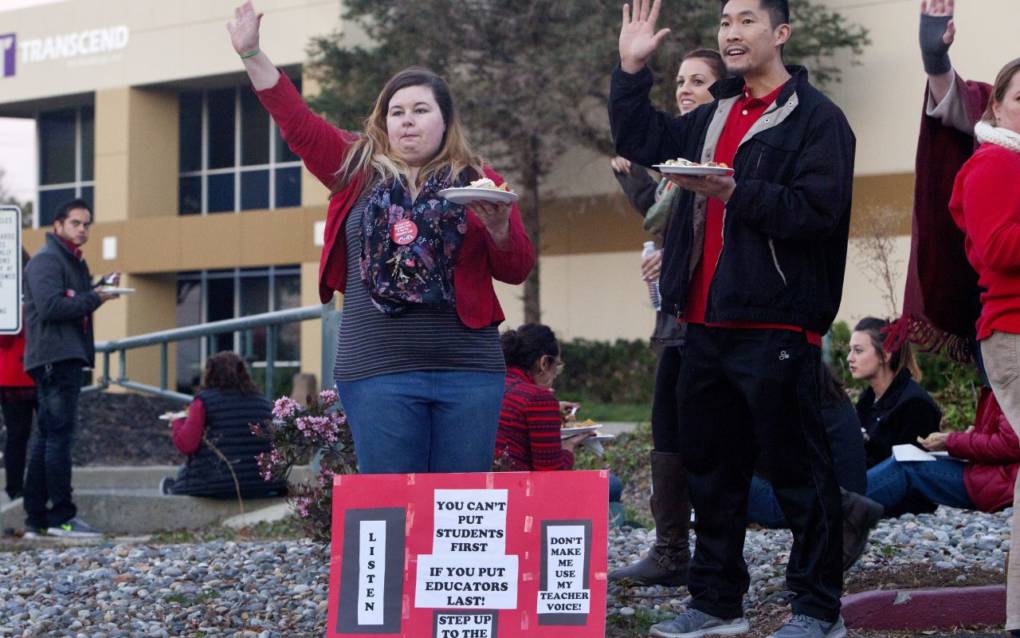
"caption": "Tiffany Stelle and Donald Hui, teachers at Mission San Jose High School in Fremont, joined a tailgating action over stalled contract talks. An agreement has since been reached.",
"description": null,
"title": "Teachers-Pension_003-1280x800",
"credit": "Penni Gladstone/CALmatters",
"status": "inherit",
"isLoading": false,
"fetchFailed": false
},
"news_11681656": {
"type": "attachments",
"id": "news_11681656",
"meta": {
"index": "attachments_1716263798",
"site": "news",
"id": "11681656",
"found": true
},
"parent": 11681655,
"imgSizes": {
"small": {
"file": "https://ww2.kqed.org/app/uploads/sites/10/2018/07/ap_18172691458042_wide-e114593b4a0f1ef2e56b1eb7d3e41cffa79b6f84-520x292.jpg",
"width": 520,
"mimeType": "image/jpeg",
"height": 292
},
"twentyfourteen-full-width": {
"file": "https://ww2.kqed.org/app/uploads/sites/10/2018/07/ap_18172691458042_wide-e114593b4a0f1ef2e56b1eb7d3e41cffa79b6f84-1038x576.jpg",
"width": 1038,
"mimeType": "image/jpeg",
"height": 576
},
"thumbnail": {
"file": "https://ww2.kqed.org/app/uploads/sites/10/2018/07/ap_18172691458042_wide-e114593b4a0f1ef2e56b1eb7d3e41cffa79b6f84-160x90.jpg",
"width": 160,
"mimeType": "image/jpeg",
"height": 90
},
"fd-sm": {
"file": "https://ww2.kqed.org/app/uploads/sites/10/2018/07/ap_18172691458042_wide-e114593b4a0f1ef2e56b1eb7d3e41cffa79b6f84-960x540.jpg",
"width": 960,
"mimeType": "image/jpeg",
"height": 540
},
"post-thumbnail": {
"file": "https://ww2.kqed.org/app/uploads/sites/10/2018/07/ap_18172691458042_wide-e114593b4a0f1ef2e56b1eb7d3e41cffa79b6f84-672x372.jpg",
"width": 672,
"mimeType": "image/jpeg",
"height": 372
},
"xsmall": {
"file": "https://ww2.kqed.org/app/uploads/sites/10/2018/07/ap_18172691458042_wide-e114593b4a0f1ef2e56b1eb7d3e41cffa79b6f84-375x211.jpg",
"width": 375,
"mimeType": "image/jpeg",
"height": 211
},
"kqedFullSize": {
"file": "https://ww2.kqed.org/app/uploads/sites/10/2018/07/ap_18172691458042_wide-e114593b4a0f1ef2e56b1eb7d3e41cffa79b6f84-e1532113017532.jpg",
"width": 1920,
"height": 1080
},
"large": {
"file": "https://ww2.kqed.org/app/uploads/sites/10/2018/07/ap_18172691458042_wide-e114593b4a0f1ef2e56b1eb7d3e41cffa79b6f84-1020x574.jpg",
"width": 1020,
"mimeType": "image/jpeg",
"height": 574
},
"xlarge": {
"file": "https://ww2.kqed.org/app/uploads/sites/10/2018/07/ap_18172691458042_wide-e114593b4a0f1ef2e56b1eb7d3e41cffa79b6f84-1180x664.jpg",
"width": 1180,
"mimeType": "image/jpeg",
"height": 664
},
"complete_open_graph": {
"file": "https://ww2.kqed.org/app/uploads/sites/10/2018/07/ap_18172691458042_wide-e114593b4a0f1ef2e56b1eb7d3e41cffa79b6f84-1200x675.jpg",
"width": 1200,
"mimeType": "image/jpeg",
"height": 675
},
"guest-author-50": {
"file": "https://ww2.kqed.org/app/uploads/sites/10/2018/07/ap_18172691458042_wide-e114593b4a0f1ef2e56b1eb7d3e41cffa79b6f84-50x50.jpg",
"width": 50,
"mimeType": "image/jpeg",
"height": 50
},
"guest-author-96": {
"file": "https://ww2.kqed.org/app/uploads/sites/10/2018/07/ap_18172691458042_wide-e114593b4a0f1ef2e56b1eb7d3e41cffa79b6f84-96x96.jpg",
"width": 96,
"mimeType": "image/jpeg",
"height": 96
},
"medium": {
"file": "https://ww2.kqed.org/app/uploads/sites/10/2018/07/ap_18172691458042_wide-e114593b4a0f1ef2e56b1eb7d3e41cffa79b6f84-800x450.jpg",
"width": 800,
"mimeType": "image/jpeg",
"height": 450
},
"guest-author-64": {
"file": "https://ww2.kqed.org/app/uploads/sites/10/2018/07/ap_18172691458042_wide-e114593b4a0f1ef2e56b1eb7d3e41cffa79b6f84-64x64.jpg",
"width": 64,
"mimeType": "image/jpeg",
"height": 64
},
"guest-author-32": {
"file": "https://ww2.kqed.org/app/uploads/sites/10/2018/07/ap_18172691458042_wide-e114593b4a0f1ef2e56b1eb7d3e41cffa79b6f84-32x32.jpg",
"width": 32,
"mimeType": "image/jpeg",
"height": 32
},
"fd-lrg": {
"file": "https://ww2.kqed.org/app/uploads/sites/10/2018/07/ap_18172691458042_wide-e114593b4a0f1ef2e56b1eb7d3e41cffa79b6f84-1920x1080.jpg",
"width": 1920,
"mimeType": "image/jpeg",
"height": 1080
},
"fd-med": {
"file": "https://ww2.kqed.org/app/uploads/sites/10/2018/07/ap_18172691458042_wide-e114593b4a0f1ef2e56b1eb7d3e41cffa79b6f84-1180x664.jpg",
"width": 1180,
"mimeType": "image/jpeg",
"height": 664
},
"full-width": {
"file": "https://ww2.kqed.org/app/uploads/sites/10/2018/07/ap_18172691458042_wide-e114593b4a0f1ef2e56b1eb7d3e41cffa79b6f84-1920x1080.jpg",
"width": 1920,
"mimeType": "image/jpeg",
"height": 1080
},
"detail": {
"file": "https://ww2.kqed.org/app/uploads/sites/10/2018/07/ap_18172691458042_wide-e114593b4a0f1ef2e56b1eb7d3e41cffa79b6f84-150x150.jpg",
"width": 150,
"mimeType": "image/jpeg",
"height": 150
},
"guest-author-128": {
"file": "https://ww2.kqed.org/app/uploads/sites/10/2018/07/ap_18172691458042_wide-e114593b4a0f1ef2e56b1eb7d3e41cffa79b6f84-128x128.jpg",
"width": 128,
"mimeType": "image/jpeg",
"height": 128
},
"xxsmall": {
"file": "https://ww2.kqed.org/app/uploads/sites/10/2018/07/ap_18172691458042_wide-e114593b4a0f1ef2e56b1eb7d3e41cffa79b6f84-240x135.jpg",
"width": 240,
"mimeType": "image/jpeg",
"height": 135
}
},
"publishDate": 1532112931,
"modified": 1532113037,
"caption": "Secretary of Education Betsy DeVos listens as President Donald Trump speaks during a cabinet meeting at the White House on June 21, 2018. DeVos issued new guidance last fall on how campuses should handle cases of sexual assault.",
"description": "Secretary of Education Betsy DeVos listens as President Donald Trump speaks during a cabinet meeting at the White House on June 21, 2018. DeVos issued new guidance last fall on how campuses should handle cases of sexual assau",
"title": "Secretary of Education Betsy DeVos listens as President Donald Trump speaks during a cabinet meeting at the White House on June 21, 2018. DeVos issued new guidance last fall on how campuses should handle cases of sexual assault.",
"credit": "Evan Vucci/AP",
"status": "inherit",
"isLoading": false,
"fetchFailed": false
},
"news_11681514": {
"type": "attachments",
"id": "news_11681514",
"meta": {
"index": "attachments_1716263798",
"site": "news",
"id": "11681514",
"found": true
},
"parent": 11681511,
"imgSizes": {
"small": {
"file": "https://ww2.kqed.org/app/uploads/sites/10/2018/07/20180718_154941-1280x800-520x325.jpg",
"width": 520,
"mimeType": "image/jpeg",
"height": 325
},
"twentyfourteen-full-width": {
"file": "https://ww2.kqed.org/app/uploads/sites/10/2018/07/20180718_154941-1280x800-1038x576.jpg",
"width": 1038,
"mimeType": "image/jpeg",
"height": 576
},
"thumbnail": {
"file": "https://ww2.kqed.org/app/uploads/sites/10/2018/07/20180718_154941-1280x800-160x100.jpg",
"width": 160,
"mimeType": "image/jpeg",
"height": 100
},
"fd-sm": {
"file": "https://ww2.kqed.org/app/uploads/sites/10/2018/07/20180718_154941-1280x800-960x600.jpg",
"width": 960,
"mimeType": "image/jpeg",
"height": 600
},
"post-thumbnail": {
"file": "https://ww2.kqed.org/app/uploads/sites/10/2018/07/20180718_154941-1280x800-672x372.jpg",
"width": 672,
"mimeType": "image/jpeg",
"height": 372
},
"xsmall": {
"file": "https://ww2.kqed.org/app/uploads/sites/10/2018/07/20180718_154941-1280x800-375x234.jpg",
"width": 375,
"mimeType": "image/jpeg",
"height": 234
},
"kqedFullSize": {
"file": "https://ww2.kqed.org/app/uploads/sites/10/2018/07/20180718_154941-1280x800.jpg",
"width": 1280,
"height": 800
},
"large": {
"file": "https://ww2.kqed.org/app/uploads/sites/10/2018/07/20180718_154941-1280x800-1020x638.jpg",
"width": 1020,
"mimeType": "image/jpeg",
"height": 638
},
"xlarge": {
"file": "https://ww2.kqed.org/app/uploads/sites/10/2018/07/20180718_154941-1280x800-1180x738.jpg",
"width": 1180,
"mimeType": "image/jpeg",
"height": 738
},
"complete_open_graph": {
"file": "https://ww2.kqed.org/app/uploads/sites/10/2018/07/20180718_154941-1280x800-1200x750.jpg",
"width": 1200,
"mimeType": "image/jpeg",
"height": 750
},
"guest-author-50": {
"file": "https://ww2.kqed.org/app/uploads/sites/10/2018/07/20180718_154941-1280x800-50x50.jpg",
"width": 50,
"mimeType": "image/jpeg",
"height": 50
},
"guest-author-96": {
"file": "https://ww2.kqed.org/app/uploads/sites/10/2018/07/20180718_154941-1280x800-96x96.jpg",
"width": 96,
"mimeType": "image/jpeg",
"height": 96
},
"medium": {
"file": "https://ww2.kqed.org/app/uploads/sites/10/2018/07/20180718_154941-1280x800-800x500.jpg",
"width": 800,
"mimeType": "image/jpeg",
"height": 500
},
"guest-author-64": {
"file": "https://ww2.kqed.org/app/uploads/sites/10/2018/07/20180718_154941-1280x800-64x64.jpg",
"width": 64,
"mimeType": "image/jpeg",
"height": 64
},
"guest-author-32": {
"file": "https://ww2.kqed.org/app/uploads/sites/10/2018/07/20180718_154941-1280x800-32x32.jpg",
"width": 32,
"mimeType": "image/jpeg",
"height": 32
},
"fd-med": {
"file": "https://ww2.kqed.org/app/uploads/sites/10/2018/07/20180718_154941-1280x800-1180x738.jpg",
"width": 1180,
"mimeType": "image/jpeg",
"height": 738
},
"detail": {
"file": "https://ww2.kqed.org/app/uploads/sites/10/2018/07/20180718_154941-1280x800-150x150.jpg",
"width": 150,
"mimeType": "image/jpeg",
"height": 150
},
"guest-author-128": {
"file": "https://ww2.kqed.org/app/uploads/sites/10/2018/07/20180718_154941-1280x800-128x128.jpg",
"width": 128,
"mimeType": "image/jpeg",
"height": 128
},
"xxsmall": {
"file": "https://ww2.kqed.org/app/uploads/sites/10/2018/07/20180718_154941-1280x800-240x150.jpg",
"width": 240,
"mimeType": "image/jpeg",
"height": 150
}
},
"publishDate": 1532038916,
"modified": 1532038943,
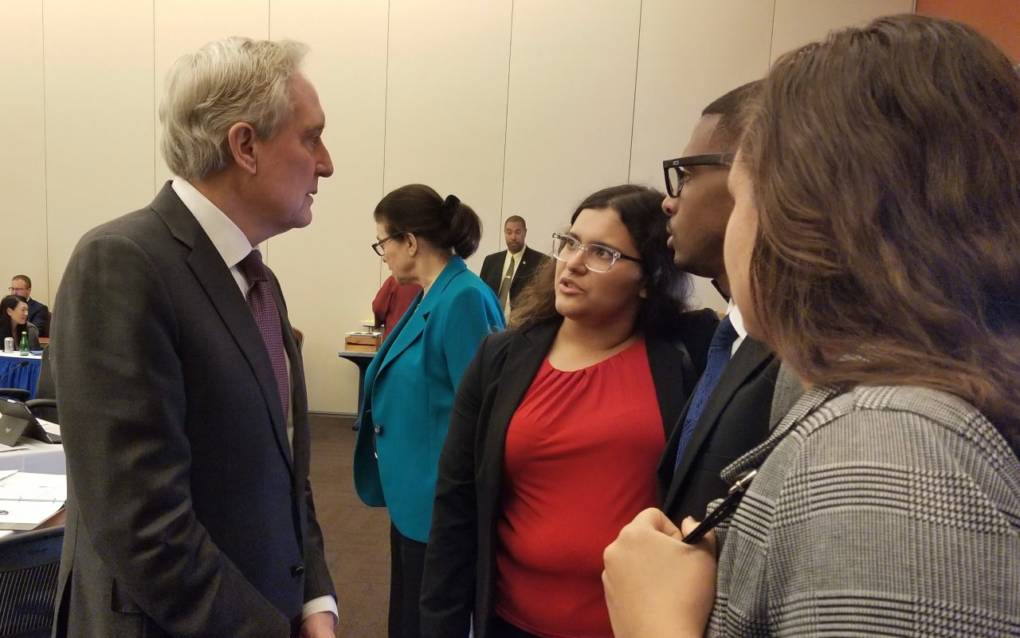
"caption": "UC regent George Kieffer talks with UC San Diego student Caroline Siegel Singh and other student leaders at the July 18 regents' meeting.",
"description": null,
"title": "20180718_154941-1280x800",
"credit": "Felicia Mello/CALmatters",
"status": "inherit",
"isLoading": false,
"fetchFailed": false
},
"news_11572756": {
"type": "attachments",
"id": "news_11572756",
"meta": {
"index": "attachments_1716263798",
"site": "news",
"id": "11572756",
"found": true
},
"parent": 0,
"imgSizes": {
"small": {
"file": "https://ww2.kqed.org/app/uploads/sites/10/2017/07/tcr_archive_background-520x195.jpg",
"width": 520,
"mimeType": "image/jpeg",
"height": 195
},
"twentyfourteen-full-width": {
"file": "https://ww2.kqed.org/app/uploads/sites/10/2017/07/tcr_archive_background-1038x450.jpg",
"width": 1038,
"mimeType": "image/jpeg",
"height": 450
},
"thumbnail": {
"file": "https://ww2.kqed.org/app/uploads/sites/10/2017/07/tcr_archive_background-160x60.jpg",
"width": 160,
"mimeType": "image/jpeg",
"height": 60
},
"fd-sm": {
"file": "https://ww2.kqed.org/app/uploads/sites/10/2017/07/tcr_archive_background-960x360.jpg",
"width": 960,
"mimeType": "image/jpeg",
"height": 360
},
"post-thumbnail": {
"file": "https://ww2.kqed.org/app/uploads/sites/10/2017/07/tcr_archive_background-672x372.jpg",
"width": 672,
"mimeType": "image/jpeg",
"height": 372
},
"xsmall": {
"file": "https://ww2.kqed.org/app/uploads/sites/10/2017/07/tcr_archive_background-375x141.jpg",
"width": 375,
"mimeType": "image/jpeg",
"height": 141
},
"kqedFullSize": {
"file": "https://ww2.kqed.org/app/uploads/sites/10/2017/07/tcr_archive_background.jpg",
"width": 1200,
"height": 450
},
"large": {
"file": "https://ww2.kqed.org/app/uploads/sites/10/2017/07/tcr_archive_background-1020x383.jpg",
"width": 1020,
"mimeType": "image/jpeg",
"height": 383
},
"xlarge": {
"file": "https://ww2.kqed.org/app/uploads/sites/10/2017/07/tcr_archive_background-1180x443.jpg",
"width": 1180,
"mimeType": "image/jpeg",
"height": 443
},
"guest-author-50": {
"file": "https://ww2.kqed.org/app/uploads/sites/10/2017/07/tcr_archive_background-50x50.jpg",
"width": 50,
"mimeType": "image/jpeg",
"height": 50
},
"guest-author-96": {
"file": "https://ww2.kqed.org/app/uploads/sites/10/2017/07/tcr_archive_background-96x96.jpg",
"width": 96,
"mimeType": "image/jpeg",
"height": 96
},
"medium": {
"file": "https://ww2.kqed.org/app/uploads/sites/10/2017/07/tcr_archive_background-800x300.jpg",
"width": 800,
"mimeType": "image/jpeg",
"height": 300
},
"guest-author-64": {
"file": "https://ww2.kqed.org/app/uploads/sites/10/2017/07/tcr_archive_background-64x64.jpg",
"width": 64,
"mimeType": "image/jpeg",
"height": 64
},
"guest-author-32": {
"file": "https://ww2.kqed.org/app/uploads/sites/10/2017/07/tcr_archive_background-32x32.jpg",
"width": 32,
"mimeType": "image/jpeg",
"height": 32
},
"fd-med": {
"file": "https://ww2.kqed.org/app/uploads/sites/10/2017/07/tcr_archive_background-1180x443.jpg",
"width": 1180,
"mimeType": "image/jpeg",
"height": 443
},
"detail": {
"file": "https://ww2.kqed.org/app/uploads/sites/10/2017/07/tcr_archive_background-150x150.jpg",
"width": 150,
"mimeType": "image/jpeg",
"height": 150
},
"guest-author-128": {
"file": "https://ww2.kqed.org/app/uploads/sites/10/2017/07/tcr_archive_background-128x128.jpg",
"width": 128,
"mimeType": "image/jpeg",
"height": 128
},
"xxsmall": {
"file": "https://ww2.kqed.org/app/uploads/sites/10/2017/07/tcr_archive_background-240x90.jpg",
"width": 240,
"mimeType": "image/jpeg",
"height": 90
}
},
"publishDate": 1500316142,
"modified": 1500316142,
"caption": null,
"description": null,
"title": "tcr_archive_background",
"credit": null,
"status": "inherit",
"isLoading": false,
"fetchFailed": false
},
"news_11680363": {
"type": "attachments",
"id": "news_11680363",
"meta": {
"index": "attachments_1716263798",
"site": "news",
"id": "11680363",
"found": true
},
"parent": 11680356,
"imgSizes": {
"small": {
"file": "https://ww2.kqed.org/app/uploads/sites/10/2018/07/Screen-Shot-2018-07-12-at-15.26.00-e1531434493285-520x293.png",
"width": 520,
"mimeType": "image/png",
"height": 293
},
"twentyfourteen-full-width": {
"file": "https://ww2.kqed.org/app/uploads/sites/10/2018/07/Screen-Shot-2018-07-12-at-15.26.00-e1531434493285-1038x576.png",
"width": 1038,
"mimeType": "image/png",
"height": 576
},
"thumbnail": {
"file": "https://ww2.kqed.org/app/uploads/sites/10/2018/07/Screen-Shot-2018-07-12-at-15.26.00-e1531434493285-160x90.png",
"width": 160,
"mimeType": "image/png",
"height": 90
},
"fd-sm": {
"file": "https://ww2.kqed.org/app/uploads/sites/10/2018/07/Screen-Shot-2018-07-12-at-15.26.00-e1531434493285-960x541.png",
"width": 960,
"mimeType": "image/png",
"height": 541
},
"post-thumbnail": {
"file": "https://ww2.kqed.org/app/uploads/sites/10/2018/07/Screen-Shot-2018-07-12-at-15.26.00-e1531434493285-672x372.png",
"width": 672,
"mimeType": "image/png",
"height": 372
},
"xsmall": {
"file": "https://ww2.kqed.org/app/uploads/sites/10/2018/07/Screen-Shot-2018-07-12-at-15.26.00-e1531434493285-375x211.png",
"width": 375,
"mimeType": "image/png",
"height": 211
},
"kqedFullSize": {
"file": "https://ww2.kqed.org/app/uploads/sites/10/2018/07/Screen-Shot-2018-07-12-at-15.26.00-e1531434493285.png",
"width": 1166,
"height": 657
},
"large": {
"file": "https://ww2.kqed.org/app/uploads/sites/10/2018/07/Screen-Shot-2018-07-12-at-15.26.00-e1531434493285-1020x575.png",
"width": 1020,
"mimeType": "image/png",
"height": 575
},
"xlarge": {
"file": "https://ww2.kqed.org/app/uploads/sites/10/2018/07/Screen-Shot-2018-07-12-at-15.26.00-1180x646.png",
"width": 1180,
"mimeType": "image/png",
"height": 646
},
"complete_open_graph": {
"file": "https://ww2.kqed.org/app/uploads/sites/10/2018/07/Screen-Shot-2018-07-12-at-15.26.00-1200x657.png",
"width": 1200,
"mimeType": "image/png",
"height": 657
},
"guest-author-50": {
"file": "https://ww2.kqed.org/app/uploads/sites/10/2018/07/Screen-Shot-2018-07-12-at-15.26.00-e1531434493285-50x50.png",
"width": 50,
"mimeType": "image/png",
"height": 50
},
"guest-author-96": {
"file": "https://ww2.kqed.org/app/uploads/sites/10/2018/07/Screen-Shot-2018-07-12-at-15.26.00-e1531434493285-96x96.png",
"width": 96,
"mimeType": "image/png",
"height": 96
},
"medium": {
"file": "https://ww2.kqed.org/app/uploads/sites/10/2018/07/Screen-Shot-2018-07-12-at-15.26.00-e1531434493285-800x451.png",
"width": 800,
"mimeType": "image/png",
"height": 451
},
"guest-author-64": {
"file": "https://ww2.kqed.org/app/uploads/sites/10/2018/07/Screen-Shot-2018-07-12-at-15.26.00-e1531434493285-64x64.png",
"width": 64,
"mimeType": "image/png",
"height": 64
},
"guest-author-32": {
"file": "https://ww2.kqed.org/app/uploads/sites/10/2018/07/Screen-Shot-2018-07-12-at-15.26.00-e1531434493285-32x32.png",
"width": 32,
"mimeType": "image/png",
"height": 32
},
"fd-med": {
"file": "https://ww2.kqed.org/app/uploads/sites/10/2018/07/Screen-Shot-2018-07-12-at-15.26.00-1180x646.png",
"width": 1180,
"mimeType": "image/png",
"height": 646
},
"detail": {
"file": "https://ww2.kqed.org/app/uploads/sites/10/2018/07/Screen-Shot-2018-07-12-at-15.26.00-e1531434493285-150x150.png",
"width": 150,
"mimeType": "image/png",
"height": 150
},
"guest-author-128": {
"file": "https://ww2.kqed.org/app/uploads/sites/10/2018/07/Screen-Shot-2018-07-12-at-15.26.00-e1531434493285-128x128.png",
"width": 128,
"mimeType": "image/png",
"height": 128
},
"xxsmall": {
"file": "https://ww2.kqed.org/app/uploads/sites/10/2018/07/Screen-Shot-2018-07-12-at-15.26.00-e1531434493285-240x135.png",
"width": 240,
"mimeType": "image/png",
"height": 135
}
},
"publishDate": 1531434391,
"modified": 1531440018,
"caption": "A view of the Art Institute of California campus.",
"description": "A view of the Art Institute of California campus.",
"title": "Screen Shot 2018-07-12 at 15.26.00",
"credit": "Creative Commons",
"status": "inherit",
"isLoading": false,
"fetchFailed": false
},
"news_11680085": {
"type": "attachments",
"id": "news_11680085",
"meta": {
"index": "attachments_1716263798",
"site": "news",
"id": "11680085",
"found": true
},
"parent": 11680078,
"imgSizes": {
"small": {
"file": "https://ww2.kqed.org/app/uploads/sites/10/2018/07/NativeAmericansVUCMain-520x347.jpg",
"width": 520,
"mimeType": "image/jpeg",
"height": 347
},
"twentyfourteen-full-width": {
"file": "https://ww2.kqed.org/app/uploads/sites/10/2018/07/NativeAmericansVUCMain-1038x576.jpg",
"width": 1038,
"mimeType": "image/jpeg",
"height": 576
},
"thumbnail": {
"file": "https://ww2.kqed.org/app/uploads/sites/10/2018/07/NativeAmericansVUCMain-160x107.jpg",
"width": 160,
"mimeType": "image/jpeg",
"height": 107
},
"fd-sm": {
"file": "https://ww2.kqed.org/app/uploads/sites/10/2018/07/NativeAmericansVUCMain-960x640.jpg",
"width": 960,
"mimeType": "image/jpeg",
"height": 640
},
"post-thumbnail": {
"file": "https://ww2.kqed.org/app/uploads/sites/10/2018/07/NativeAmericansVUCMain-672x372.jpg",
"width": 672,
"mimeType": "image/jpeg",
"height": 372
},
"xsmall": {
"file": "https://ww2.kqed.org/app/uploads/sites/10/2018/07/NativeAmericansVUCMain-375x250.jpg",
"width": 375,
"mimeType": "image/jpeg",
"height": 250
},
"kqedFullSize": {
"file": "https://ww2.kqed.org/app/uploads/sites/10/2018/07/NativeAmericansVUCMain.jpg",
"width": 1920,
"height": 1280
},
"large": {
"file": "https://ww2.kqed.org/app/uploads/sites/10/2018/07/NativeAmericansVUCMain-1020x680.jpg",
"width": 1020,
"mimeType": "image/jpeg",
"height": 680
},
"xlarge": {
"file": "https://ww2.kqed.org/app/uploads/sites/10/2018/07/NativeAmericansVUCMain-1180x787.jpg",
"width": 1180,
"mimeType": "image/jpeg",
"height": 787
},
"complete_open_graph": {
"file": "https://ww2.kqed.org/app/uploads/sites/10/2018/07/NativeAmericansVUCMain-1200x800.jpg",
"width": 1200,
"mimeType": "image/jpeg",
"height": 800
},
"guest-author-50": {
"file": "https://ww2.kqed.org/app/uploads/sites/10/2018/07/NativeAmericansVUCMain-50x50.jpg",
"width": 50,
"mimeType": "image/jpeg",
"height": 50
},
"guest-author-96": {
"file": "https://ww2.kqed.org/app/uploads/sites/10/2018/07/NativeAmericansVUCMain-96x96.jpg",
"width": 96,
"mimeType": "image/jpeg",
"height": 96
},
"medium": {
"file": "https://ww2.kqed.org/app/uploads/sites/10/2018/07/NativeAmericansVUCMain-800x533.jpg",
"width": 800,
"mimeType": "image/jpeg",
"height": 533
},
"guest-author-64": {
"file": "https://ww2.kqed.org/app/uploads/sites/10/2018/07/NativeAmericansVUCMain-64x64.jpg",
"width": 64,
"mimeType": "image/jpeg",
"height": 64
},
"guest-author-32": {
"file": "https://ww2.kqed.org/app/uploads/sites/10/2018/07/NativeAmericansVUCMain-32x32.jpg",
"width": 32,
"mimeType": "image/jpeg",
"height": 32
},
"fd-lrg": {
"file": "https://ww2.kqed.org/app/uploads/sites/10/2018/07/NativeAmericansVUCMain-1920x1280.jpg",
"width": 1920,
"mimeType": "image/jpeg",
"height": 1280
},
"fd-med": {
"file": "https://ww2.kqed.org/app/uploads/sites/10/2018/07/NativeAmericansVUCMain-1180x787.jpg",
"width": 1180,
"mimeType": "image/jpeg",
"height": 787
},
"full-width": {
"file": "https://ww2.kqed.org/app/uploads/sites/10/2018/07/NativeAmericansVUCMain-1920x1280.jpg",
"width": 1920,
"mimeType": "image/jpeg",
"height": 1280
},
"detail": {
"file": "https://ww2.kqed.org/app/uploads/sites/10/2018/07/NativeAmericansVUCMain-150x150.jpg",
"width": 150,
"mimeType": "image/jpeg",
"height": 150
},
"guest-author-128": {
"file": "https://ww2.kqed.org/app/uploads/sites/10/2018/07/NativeAmericansVUCMain-128x128.jpg",
"width": 128,
"mimeType": "image/jpeg",
"height": 128
},
"xxsmall": {
"file": "https://ww2.kqed.org/app/uploads/sites/10/2018/07/NativeAmericansVUCMain-240x160.jpg",
"width": 240,
"mimeType": "image/jpeg",
"height": 160
}
},
"publishDate": 1531343922,
"modified": 1531343958,
"caption": "Tribal archaeologist Myra Masiel of the Pechanga Tribe of Luiseño Indians.",
"description": "Tribal archaeologist Myra Masiel of the Pechanga Tribe of Luiseño Indians.",
"title": "NativeAmericansVUCMain",
"credit": "Robbie Short/CALmatters",
"status": "inherit",
"isLoading": false,
"fetchFailed": false
},
"news_11679795": {
"type": "attachments",
"id": "news_11679795",
"meta": {
"index": "attachments_1716263798",
"site": "news",
"id": "11679795",
"found": true
},
"parent": 11679792,
"imgSizes": {
"small": {
"file": "https://ww2.kqed.org/app/uploads/sites/10/2018/07/6291479824_197fdd1283_b-520x347.jpg",
"width": 520,
"mimeType": "image/jpeg",
"height": 347
},
"twentyfourteen-full-width": {
"file": "https://ww2.kqed.org/app/uploads/sites/10/2018/07/6291479824_197fdd1283_b-1024x576.jpg",
"width": 1024,
"mimeType": "image/jpeg",
"height": 576
},
"thumbnail": {
"file": "https://ww2.kqed.org/app/uploads/sites/10/2018/07/6291479824_197fdd1283_b-160x107.jpg",
"width": 160,
"mimeType": "image/jpeg",
"height": 107
},
"fd-sm": {
"file": "https://ww2.kqed.org/app/uploads/sites/10/2018/07/6291479824_197fdd1283_b-960x640.jpg",
"width": 960,
"mimeType": "image/jpeg",
"height": 640
},
"post-thumbnail": {
"file": "https://ww2.kqed.org/app/uploads/sites/10/2018/07/6291479824_197fdd1283_b-672x372.jpg",
"width": 672,
"mimeType": "image/jpeg",
"height": 372
},
"xsmall": {
"file": "https://ww2.kqed.org/app/uploads/sites/10/2018/07/6291479824_197fdd1283_b-375x250.jpg",
"width": 375,
"mimeType": "image/jpeg",
"height": 250
},
"kqedFullSize": {
"file": "https://ww2.kqed.org/app/uploads/sites/10/2018/07/6291479824_197fdd1283_b.jpg",
"width": 1024,
"height": 683
},
"large": {
"file": "https://ww2.kqed.org/app/uploads/sites/10/2018/07/6291479824_197fdd1283_b-1020x680.jpg",
"width": 1020,
"mimeType": "image/jpeg",
"height": 680
},
"guest-author-50": {
"file": "https://ww2.kqed.org/app/uploads/sites/10/2018/07/6291479824_197fdd1283_b-50x50.jpg",
"width": 50,
"mimeType": "image/jpeg",
"height": 50
},
"guest-author-96": {
"file": "https://ww2.kqed.org/app/uploads/sites/10/2018/07/6291479824_197fdd1283_b-96x96.jpg",
"width": 96,
"mimeType": "image/jpeg",
"height": 96
},
"medium": {
"file": "https://ww2.kqed.org/app/uploads/sites/10/2018/07/6291479824_197fdd1283_b-800x534.jpg",
"width": 800,
"mimeType": "image/jpeg",
"height": 534
},
"guest-author-64": {
"file": "https://ww2.kqed.org/app/uploads/sites/10/2018/07/6291479824_197fdd1283_b-64x64.jpg",
"width": 64,
"mimeType": "image/jpeg",
"height": 64
},
"guest-author-32": {
"file": "https://ww2.kqed.org/app/uploads/sites/10/2018/07/6291479824_197fdd1283_b-32x32.jpg",
"width": 32,
"mimeType": "image/jpeg",
"height": 32
},
"detail": {
"file": "https://ww2.kqed.org/app/uploads/sites/10/2018/07/6291479824_197fdd1283_b-150x150.jpg",
"width": 150,
"mimeType": "image/jpeg",
"height": 150
},
"guest-author-128": {
"file": "https://ww2.kqed.org/app/uploads/sites/10/2018/07/6291479824_197fdd1283_b-128x128.jpg",
"width": 128,
"mimeType": "image/jpeg",
"height": 128
},
"xxsmall": {
"file": "https://ww2.kqed.org/app/uploads/sites/10/2018/07/6291479824_197fdd1283_b-240x160.jpg",
"width": 240,
"mimeType": "image/jpeg",
"height": 160
}
},
"publishDate": 1531243922,
"modified": 1531243960,
"caption": " Royce Hall on the UCLA campus. ",
"description": null,
"title": "6291479824_197fdd1283_b",
"credit": "Prayitno Photography/Flickr",
"status": "inherit",
"isLoading": false,
"fetchFailed": false
},
"news_11677085": {
"type": "attachments",
"id": "news_11677085",
"meta": {
"index": "attachments_1716263798",
"site": "news",
"id": "11677085",
"found": true
},
"parent": 11676640,
"imgSizes": {
"small": {
"file": "https://ww2.kqed.org/app/uploads/sites/10/2018/06/RS31578_DestinyGraduation-qut-520x390.jpg",
"width": 520,
"mimeType": "image/jpeg",
"height": 390
},
"twentyfourteen-full-width": {
"file": "https://ww2.kqed.org/app/uploads/sites/10/2018/06/RS31578_DestinyGraduation-qut-1038x576.jpg",
"width": 1038,
"mimeType": "image/jpeg",
"height": 576
},
"thumbnail": {
"file": "https://ww2.kqed.org/app/uploads/sites/10/2018/06/RS31578_DestinyGraduation-qut-160x120.jpg",
"width": 160,
"mimeType": "image/jpeg",
"height": 120
},
"fd-sm": {
"file": "https://ww2.kqed.org/app/uploads/sites/10/2018/06/RS31578_DestinyGraduation-qut-960x720.jpg",
"width": 960,
"mimeType": "image/jpeg",
"height": 720
},
"post-thumbnail": {
"file": "https://ww2.kqed.org/app/uploads/sites/10/2018/06/RS31578_DestinyGraduation-qut-672x372.jpg",
"width": 672,
"mimeType": "image/jpeg",
"height": 372
},
"xsmall": {
"file": "https://ww2.kqed.org/app/uploads/sites/10/2018/06/RS31578_DestinyGraduation-qut-375x281.jpg",
"width": 375,
"mimeType": "image/jpeg",
"height": 281
},
"kqedFullSize": {
"file": "https://ww2.kqed.org/app/uploads/sites/10/2018/06/RS31578_DestinyGraduation-qut.jpg",
"width": 1920,
"height": 1440
},
"large": {
"file": "https://ww2.kqed.org/app/uploads/sites/10/2018/06/RS31578_DestinyGraduation-qut-1020x765.jpg",
"width": 1020,
"mimeType": "image/jpeg",
"height": 765
},
"xlarge": {
"file": "https://ww2.kqed.org/app/uploads/sites/10/2018/06/RS31578_DestinyGraduation-qut-1180x885.jpg",
"width": 1180,
"mimeType": "image/jpeg",
"height": 885
},
"complete_open_graph": {
"file": "https://ww2.kqed.org/app/uploads/sites/10/2018/06/RS31578_DestinyGraduation-qut-1200x900.jpg",
"width": 1200,
"mimeType": "image/jpeg",
"height": 900
},
"guest-author-50": {
"file": "https://ww2.kqed.org/app/uploads/sites/10/2018/06/RS31578_DestinyGraduation-qut-50x50.jpg",
"width": 50,
"mimeType": "image/jpeg",
"height": 50
},
"guest-author-96": {
"file": "https://ww2.kqed.org/app/uploads/sites/10/2018/06/RS31578_DestinyGraduation-qut-96x96.jpg",
"width": 96,
"mimeType": "image/jpeg",
"height": 96
},
"medium": {
"file": "https://ww2.kqed.org/app/uploads/sites/10/2018/06/RS31578_DestinyGraduation-qut-800x600.jpg",
"width": 800,
"mimeType": "image/jpeg",
"height": 600
},
"guest-author-64": {
"file": "https://ww2.kqed.org/app/uploads/sites/10/2018/06/RS31578_DestinyGraduation-qut-64x64.jpg",
"width": 64,
"mimeType": "image/jpeg",
"height": 64
},
"guest-author-32": {
"file": "https://ww2.kqed.org/app/uploads/sites/10/2018/06/RS31578_DestinyGraduation-qut-32x32.jpg",
"width": 32,
"mimeType": "image/jpeg",
"height": 32
},
"fd-lrg": {
"file": "https://ww2.kqed.org/app/uploads/sites/10/2018/06/RS31578_DestinyGraduation-qut-1920x1440.jpg",
"width": 1920,
"mimeType": "image/jpeg",
"height": 1440
},
"fd-med": {
"file": "https://ww2.kqed.org/app/uploads/sites/10/2018/06/RS31578_DestinyGraduation-qut-1180x885.jpg",
"width": 1180,
"mimeType": "image/jpeg",
"height": 885
},
"full-width": {
"file": "https://ww2.kqed.org/app/uploads/sites/10/2018/06/RS31578_DestinyGraduation-qut-1920x1440.jpg",
"width": 1920,
"mimeType": "image/jpeg",
"height": 1440
},
"detail": {
"file": "https://ww2.kqed.org/app/uploads/sites/10/2018/06/RS31578_DestinyGraduation-qut-150x150.jpg",
"width": 150,
"mimeType": "image/jpeg",
"height": 150
},
"guest-author-128": {
"file": "https://ww2.kqed.org/app/uploads/sites/10/2018/06/RS31578_DestinyGraduation-qut-128x128.jpg",
"width": 128,
"mimeType": "image/jpeg",
"height": 128
},
"xxsmall": {
"file": "https://ww2.kqed.org/app/uploads/sites/10/2018/06/RS31578_DestinyGraduation-qut-240x180.jpg",
"width": 240,
"mimeType": "image/jpeg",
"height": 180
}
},
"publishDate": 1529955259,
"modified": 1529955327,
"caption": "Destiny Shabazz, 17, celebrates outside McClymonds High School after her graduation ceremony. She’s headed to Sacramento State University in the fall.",
"description": null,
"title": "RS31578_DestinyGraduation-qut",
"credit": "Lee Romney/KQED",
"status": "inherit",
"isLoading": false,
"fetchFailed": false
},
"news_11678018": {
"type": "attachments",
"id": "news_11678018",
"meta": {
"index": "attachments_1716263798",
"site": "news",
"id": "11678018",
"found": true
},
"parent": 11677912,
"imgSizes": {
"small": {
"file": "https://ww2.kqed.org/app/uploads/sites/10/2018/06/RS31647_IMG_0864-qut-520x390.jpg",
"width": 520,
"mimeType": "image/jpeg",
"height": 390
},
"twentyfourteen-full-width": {
"file": "https://ww2.kqed.org/app/uploads/sites/10/2018/06/RS31647_IMG_0864-qut-1038x576.jpg",
"width": 1038,
"mimeType": "image/jpeg",
"height": 576
},
"thumbnail": {
"file": "https://ww2.kqed.org/app/uploads/sites/10/2018/06/RS31647_IMG_0864-qut-160x120.jpg",
"width": 160,
"mimeType": "image/jpeg",
"height": 120
},
"fd-sm": {
"file": "https://ww2.kqed.org/app/uploads/sites/10/2018/06/RS31647_IMG_0864-qut-960x720.jpg",
"width": 960,
"mimeType": "image/jpeg",
"height": 720
},
"post-thumbnail": {
"file": "https://ww2.kqed.org/app/uploads/sites/10/2018/06/RS31647_IMG_0864-qut-672x372.jpg",
"width": 672,
"mimeType": "image/jpeg",
"height": 372
},
"xsmall": {
"file": "https://ww2.kqed.org/app/uploads/sites/10/2018/06/RS31647_IMG_0864-qut-375x281.jpg",
"width": 375,
"mimeType": "image/jpeg",
"height": 281
},
"kqedFullSize": {
"file": "https://ww2.kqed.org/app/uploads/sites/10/2018/06/RS31647_IMG_0864-qut.jpg",
"width": 1920,
"height": 1440
},
"large": {
"file": "https://ww2.kqed.org/app/uploads/sites/10/2018/06/RS31647_IMG_0864-qut-1020x765.jpg",
"width": 1020,
"mimeType": "image/jpeg",
"height": 765
},
"xlarge": {
"file": "https://ww2.kqed.org/app/uploads/sites/10/2018/06/RS31647_IMG_0864-qut-1180x885.jpg",
"width": 1180,
"mimeType": "image/jpeg",
"height": 885
},
"complete_open_graph": {
"file": "https://ww2.kqed.org/app/uploads/sites/10/2018/06/RS31647_IMG_0864-qut-1200x900.jpg",
"width": 1200,
"mimeType": "image/jpeg",
"height": 900
},
"guest-author-50": {
"file": "https://ww2.kqed.org/app/uploads/sites/10/2018/06/RS31647_IMG_0864-qut-50x50.jpg",
"width": 50,
"mimeType": "image/jpeg",
"height": 50
},
"guest-author-96": {
"file": "https://ww2.kqed.org/app/uploads/sites/10/2018/06/RS31647_IMG_0864-qut-96x96.jpg",
"width": 96,
"mimeType": "image/jpeg",
"height": 96
},
"medium": {
"file": "https://ww2.kqed.org/app/uploads/sites/10/2018/06/RS31647_IMG_0864-qut-800x600.jpg",
"width": 800,
"mimeType": "image/jpeg",
"height": 600
},
"guest-author-64": {
"file": "https://ww2.kqed.org/app/uploads/sites/10/2018/06/RS31647_IMG_0864-qut-64x64.jpg",
"width": 64,
"mimeType": "image/jpeg",
"height": 64
},
"guest-author-32": {
"file": "https://ww2.kqed.org/app/uploads/sites/10/2018/06/RS31647_IMG_0864-qut-32x32.jpg",
"width": 32,
"mimeType": "image/jpeg",
"height": 32
},
"fd-lrg": {
"file": "https://ww2.kqed.org/app/uploads/sites/10/2018/06/RS31647_IMG_0864-qut-1920x1440.jpg",
"width": 1920,
"mimeType": "image/jpeg",
"height": 1440
},
"fd-med": {
"file": "https://ww2.kqed.org/app/uploads/sites/10/2018/06/RS31647_IMG_0864-qut-1180x885.jpg",
"width": 1180,
"mimeType": "image/jpeg",
"height": 885
},
"full-width": {
"file": "https://ww2.kqed.org/app/uploads/sites/10/2018/06/RS31647_IMG_0864-qut-1920x1440.jpg",
"width": 1920,
"mimeType": "image/jpeg",
"height": 1440
},
"detail": {
"file": "https://ww2.kqed.org/app/uploads/sites/10/2018/06/RS31647_IMG_0864-qut-150x150.jpg",
"width": 150,
"mimeType": "image/jpeg",
"height": 150
},
"guest-author-128": {
"file": "https://ww2.kqed.org/app/uploads/sites/10/2018/06/RS31647_IMG_0864-qut-128x128.jpg",
"width": 128,
"mimeType": "image/jpeg",
"height": 128
},
"xxsmall": {
"file": "https://ww2.kqed.org/app/uploads/sites/10/2018/06/RS31647_IMG_0864-qut-240x180.jpg",
"width": 240,
"mimeType": "image/jpeg",
"height": 180
}
},
"publishDate": 1530226208,
"modified": 1530665682,
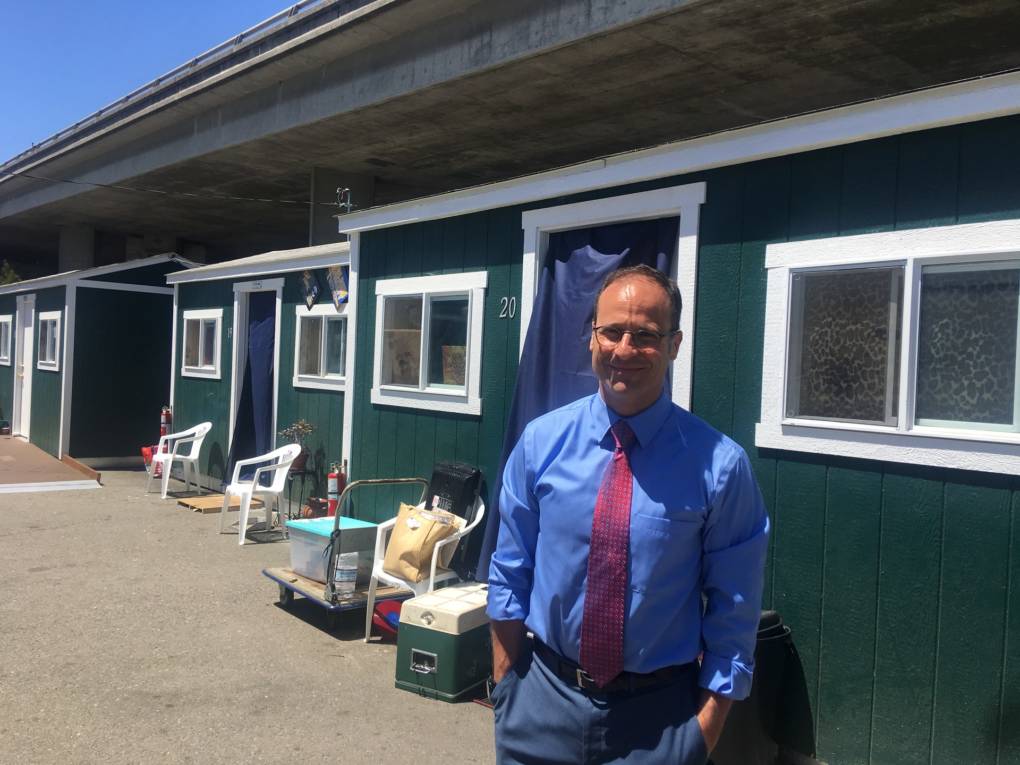
"caption": "Joe DeVries, assistant to Oakland's city administrator, stands in front of one of the cabins where the city has created a community for homeless residents to help them get shelter while they get back on their feet.",
"description": null,
"title": "RS31647_IMG_0864-qut",
"credit": "Brian Watt/KQED",
"status": "inherit",
"isLoading": false,
"fetchFailed": false
},
"news_11677116": {
"type": "attachments",
"id": "news_11677116",
"meta": {
"index": "attachments_1716263798",
"site": "news",
"id": "11677116",
"found": true
},
"parent": 11677080,
"imgSizes": {
"small": {
"file": "https://ww2.kqed.org/app/uploads/sites/10/2018/06/IMG_3962-520x390.jpg",
"width": 520,
"mimeType": "image/jpeg",
"height": 390
},
"twentyfourteen-full-width": {
"file": "https://ww2.kqed.org/app/uploads/sites/10/2018/06/IMG_3962-1038x576.jpg",
"width": 1038,
"mimeType": "image/jpeg",
"height": 576
},
"thumbnail": {
"file": "https://ww2.kqed.org/app/uploads/sites/10/2018/06/IMG_3962-160x120.jpg",
"width": 160,
"mimeType": "image/jpeg",
"height": 120
},
"fd-sm": {
"file": "https://ww2.kqed.org/app/uploads/sites/10/2018/06/IMG_3962-960x720.jpg",
"width": 960,
"mimeType": "image/jpeg",
"height": 720
},
"post-thumbnail": {
"file": "https://ww2.kqed.org/app/uploads/sites/10/2018/06/IMG_3962-672x372.jpg",
"width": 672,
"mimeType": "image/jpeg",
"height": 372
},
"xsmall": {
"file": "https://ww2.kqed.org/app/uploads/sites/10/2018/06/IMG_3962-375x281.jpg",
"width": 375,
"mimeType": "image/jpeg",
"height": 281
},
"kqedFullSize": {
"file": "https://ww2.kqed.org/app/uploads/sites/10/2018/06/IMG_3962-e1530127852297.jpg",
"width": 1920,
"height": 1440
},
"large": {
"file": "https://ww2.kqed.org/app/uploads/sites/10/2018/06/IMG_3962-1020x765.jpg",
"width": 1020,
"mimeType": "image/jpeg",
"height": 765
},
"xlarge": {
"file": "https://ww2.kqed.org/app/uploads/sites/10/2018/06/IMG_3962-1180x885.jpg",
"width": 1180,
"mimeType": "image/jpeg",
"height": 885
},
"complete_open_graph": {
"file": "https://ww2.kqed.org/app/uploads/sites/10/2018/06/IMG_3962-1200x900.jpg",
"width": 1200,
"mimeType": "image/jpeg",
"height": 900
},
"guest-author-50": {
"file": "https://ww2.kqed.org/app/uploads/sites/10/2018/06/IMG_3962-50x50.jpg",
"width": 50,
"mimeType": "image/jpeg",
"height": 50
},
"guest-author-96": {
"file": "https://ww2.kqed.org/app/uploads/sites/10/2018/06/IMG_3962-96x96.jpg",
"width": 96,
"mimeType": "image/jpeg",
"height": 96
},
"medium": {
"file": "https://ww2.kqed.org/app/uploads/sites/10/2018/06/IMG_3962-800x600.jpg",
"width": 800,
"mimeType": "image/jpeg",
"height": 600
},
"guest-author-64": {
"file": "https://ww2.kqed.org/app/uploads/sites/10/2018/06/IMG_3962-64x64.jpg",
"width": 64,
"mimeType": "image/jpeg",
"height": 64
},
"guest-author-32": {
"file": "https://ww2.kqed.org/app/uploads/sites/10/2018/06/IMG_3962-32x32.jpg",
"width": 32,
"mimeType": "image/jpeg",
"height": 32
},
"fd-lrg": {
"file": "https://ww2.kqed.org/app/uploads/sites/10/2018/06/IMG_3962-1920x1440.jpg",
"width": 1920,
"mimeType": "image/jpeg",
"height": 1440
},
"fd-med": {
"file": "https://ww2.kqed.org/app/uploads/sites/10/2018/06/IMG_3962-1180x885.jpg",
"width": 1180,
"mimeType": "image/jpeg",
"height": 885
},
"full-width": {
"file": "https://ww2.kqed.org/app/uploads/sites/10/2018/06/IMG_3962-1920x1440.jpg",
"width": 1920,
"mimeType": "image/jpeg",
"height": 1440
},
"detail": {
"file": "https://ww2.kqed.org/app/uploads/sites/10/2018/06/IMG_3962-150x150.jpg",
"width": 150,
"mimeType": "image/jpeg",
"height": 150
},
"guest-author-128": {
"file": "https://ww2.kqed.org/app/uploads/sites/10/2018/06/IMG_3962-128x128.jpg",
"width": 128,
"mimeType": "image/jpeg",
"height": 128
},
"xxsmall": {
"file": "https://ww2.kqed.org/app/uploads/sites/10/2018/06/IMG_3962-240x180.jpg",
"width": 240,
"mimeType": "image/jpeg",
"height": 180
}
},
"publishDate": 1529957292,
"modified": 1530142950,
"caption": "A homeless encampment called \"The Village\" is located at East 12th Street and 23rd Avenue in Oakland.",
"description": null,
"title": "IMG_3962",
"credit": "Tara Siler/KQED",
"status": "inherit",
"isLoading": false,
"fetchFailed": false
},
"news_11676402": {
"type": "attachments",
"id": "news_11676402",
"meta": {
"index": "attachments_1716263798",
"site": "news",
"id": "11676402",
"found": true
},
"parent": 11676279,
"imgSizes": {
"small": {
"file": "https://ww2.kqed.org/app/uploads/sites/10/2018/06/RS18894_GettyImages-52237594-qut-520x347.jpg",
"width": 520,
"mimeType": "image/jpeg",
"height": 347
},
"twentyfourteen-full-width": {
"file": "https://ww2.kqed.org/app/uploads/sites/10/2018/06/RS18894_GettyImages-52237594-qut-1038x576.jpg",
"width": 1038,
"mimeType": "image/jpeg",
"height": 576
},
"thumbnail": {
"file": "https://ww2.kqed.org/app/uploads/sites/10/2018/06/RS18894_GettyImages-52237594-qut-160x107.jpg",
"width": 160,
"mimeType": "image/jpeg",
"height": 107
},
"fd-sm": {
"file": "https://ww2.kqed.org/app/uploads/sites/10/2018/06/RS18894_GettyImages-52237594-qut-960x641.jpg",
"width": 960,
"mimeType": "image/jpeg",
"height": 641
},
"post-thumbnail": {
"file": "https://ww2.kqed.org/app/uploads/sites/10/2018/06/RS18894_GettyImages-52237594-qut-672x372.jpg",
"width": 672,
"mimeType": "image/jpeg",
"height": 372
},
"xsmall": {
"file": "https://ww2.kqed.org/app/uploads/sites/10/2018/06/RS18894_GettyImages-52237594-qut-375x250.jpg",
"width": 375,
"mimeType": "image/jpeg",
"height": 250
},
"kqedFullSize": {
"file": "https://ww2.kqed.org/app/uploads/sites/10/2018/06/RS18894_GettyImages-52237594-qut.jpg",
"width": 1920,
"height": 1282
},
"large": {
"file": "https://ww2.kqed.org/app/uploads/sites/10/2018/06/RS18894_GettyImages-52237594-qut-1020x681.jpg",
"width": 1020,
"mimeType": "image/jpeg",
"height": 681
},
"xlarge": {
"file": "https://ww2.kqed.org/app/uploads/sites/10/2018/06/RS18894_GettyImages-52237594-qut-1180x788.jpg",
"width": 1180,
"mimeType": "image/jpeg",
"height": 788
},
"complete_open_graph": {
"file": "https://ww2.kqed.org/app/uploads/sites/10/2018/06/RS18894_GettyImages-52237594-qut-1200x801.jpg",
"width": 1200,
"mimeType": "image/jpeg",
"height": 801
},
"guest-author-50": {
"file": "https://ww2.kqed.org/app/uploads/sites/10/2018/06/RS18894_GettyImages-52237594-qut-50x50.jpg",
"width": 50,
"mimeType": "image/jpeg",
"height": 50
},
"guest-author-96": {
"file": "https://ww2.kqed.org/app/uploads/sites/10/2018/06/RS18894_GettyImages-52237594-qut-96x96.jpg",
"width": 96,
"mimeType": "image/jpeg",
"height": 96
},
"medium": {
"file": "https://ww2.kqed.org/app/uploads/sites/10/2018/06/RS18894_GettyImages-52237594-qut-800x534.jpg",
"width": 800,
"mimeType": "image/jpeg",
"height": 534
},
"guest-author-64": {
"file": "https://ww2.kqed.org/app/uploads/sites/10/2018/06/RS18894_GettyImages-52237594-qut-64x64.jpg",
"width": 64,
"mimeType": "image/jpeg",
"height": 64
},
"guest-author-32": {
"file": "https://ww2.kqed.org/app/uploads/sites/10/2018/06/RS18894_GettyImages-52237594-qut-32x32.jpg",
"width": 32,
"mimeType": "image/jpeg",
"height": 32
},
"fd-lrg": {
"file": "https://ww2.kqed.org/app/uploads/sites/10/2018/06/RS18894_GettyImages-52237594-qut-1920x1282.jpg",
"width": 1920,
"mimeType": "image/jpeg",
"height": 1282
},
"fd-med": {
"file": "https://ww2.kqed.org/app/uploads/sites/10/2018/06/RS18894_GettyImages-52237594-qut-1180x788.jpg",
"width": 1180,
"mimeType": "image/jpeg",
"height": 788
},
"full-width": {
"file": "https://ww2.kqed.org/app/uploads/sites/10/2018/06/RS18894_GettyImages-52237594-qut-1920x1282.jpg",
"width": 1920,
"mimeType": "image/jpeg",
"height": 1282
},
"detail": {
"file": "https://ww2.kqed.org/app/uploads/sites/10/2018/06/RS18894_GettyImages-52237594-qut-150x150.jpg",
"width": 150,
"mimeType": "image/jpeg",
"height": 150
},
"guest-author-128": {
"file": "https://ww2.kqed.org/app/uploads/sites/10/2018/06/RS18894_GettyImages-52237594-qut-128x128.jpg",
"width": 128,
"mimeType": "image/jpeg",
"height": 128
},
"xxsmall": {
"file": "https://ww2.kqed.org/app/uploads/sites/10/2018/06/RS18894_GettyImages-52237594-qut-240x160.jpg",
"width": 240,
"mimeType": "image/jpeg",
"height": 160
}
},
"publishDate": 1529628496,
"modified": 1529628550,
"caption": "A new report focuses on UC's response to sexual harassment complaints made by students that involve faculty and staff.",
"description": null,
"title": "RS18894_GettyImages-52237594-qut",
"credit": "Justin Sullivan/Getty Images",
"status": "inherit",
"isLoading": false,
"fetchFailed": false
}
},
"audioPlayerReducer": {
"postId": "stream_live",
"isPaused": true,
"isPlaying": false,
"pfsActive": false,
"pledgeModalIsOpen": true,
"playerDrawerIsOpen": false,
"liveAudioPlayStartedAt": 0,
"liveAudioPlayContext": ""
},
"authorsReducer": {
"byline_news_11681898": {
"type": "authors",
"id": "byline_news_11681898",
"meta": {
"override": true
},
"slug": "byline_news_11681898",
"name": "\u003cstrong>\u003ca href=\"https://calmatters.org/articles/author/jessica-calefati-wp/\">Jessica Calefati\u003c/a>\u003cbr />\u003ca href=\"https://calmatters.org/\">CALmatters\u003c/a>\u003c/strong>",
"isLoading": false
},
"byline_news_11681655": {
"type": "authors",
"id": "byline_news_11681655",
"meta": {
"override": true
},
"slug": "byline_news_11681655",
"name": "Tovia Smith",
"isLoading": false
},
"byline_news_11681511": {
"type": "authors",
"id": "byline_news_11681511",
"meta": {
"override": true
},
"slug": "byline_news_11681511",
"name": "\u003cstrong>\u003ca href=\"https://calmatters.org/articles/author/feliciacalmatters-org/\">Felicia Mello\u003c/a>\u003cbr />\u003ca href=\"https://calmatters.org/\">CALmatters\u003c/a>\u003c/strong>",
"isLoading": false
},
"byline_news_11680078": {
"type": "authors",
"id": "byline_news_11680078",
"meta": {
"override": true
},
"slug": "byline_news_11680078",
"name": "\u003cstrong>\u003ca href=\"https://calmatters.org/articles/author/feliciacalmatters-org/\">Felicia Mello\u003c/a>\u003c/strong>",
"isLoading": false
},
"byline_news_11679792": {
"type": "authors",
"id": "byline_news_11679792",
"meta": {
"override": true
},
"slug": "byline_news_11679792",
"name": "\u003cstrong>\u003ca href=\"https://calmatters.org/articles/author/feliciacalmatters-org/\">Felicia Mello\u003c/a>\u003cbr />\u003ca href=\"https://calmatters.org/\">CALmatters\u003c/a>\u003c/strong>",
"isLoading": false
},
"byline_news_11676640": {
"type": "authors",
"id": "byline_news_11676640",
"meta": {
"override": true
},
"slug": "byline_news_11676640",
"name": "\u003cstrong>Lee Romney\u003c/strong>",
"isLoading": false
},
"danbrekke": {
"type": "authors",
"id": "222",
"meta": {
"index": "authors_1716337520",
"id": "222",
"found": true
},
"name": "Dan Brekke",
"firstName": "Dan",
"lastName": "Brekke",
"slug": "danbrekke",
"email": "dbrekke@kqed.org",
"display_author_email": true,
"staff_mastheads": [
"news",
"science"
],
"title": "KQED Editor and Reporter",
"bio": "Dan Brekke is a reporter and editor for KQED News, responsible for coverage of topics ranging from California water issues to the Bay Area's transportation challenges. In a newsroom career that began in Chicago in 1972, Dan has worked for \u003cem>The San Francisco Examiner,\u003c/em> Wired and TechTV and has been published in The New York Times, The New York Times Magazine, Business 2.0, Salon and elsewhere.\r\n\r\nSince joining KQED in 2007, Dan has reported, edited and produced both radio and online features and breaking news pieces. He has shared as both editor and reporter in four Society of Professional Journalists Norcal Excellence in Journalism awards and one Edward R. Murrow regional award. He was chosen for a spring 2017 residency at the Mesa Refuge to advance his research on California salmon.\r\n\r\nEmail Dan at: \u003ca href=\"mailto:dbrekke@kqed.org\">dbrekke@kqed.org\u003c/a>\r\n\r\n\u003cstrong>Twitter:\u003c/strong> \u003ca href=\"https://twitter.com/danbrekke\" rel=\"noopener noreferrer\">twitter.com/danbrekke\u003c/a>\r\n\u003cstrong>Facebook:\u003c/strong> \u003ca href=\"https://www.facebook.com/danbrekke\" rel=\"noopener noreferrer\">www.facebook.com/danbrekke\u003c/a>\r\n\u003cstrong>LinkedIn:\u003c/strong> \u003ca href=\"https://www.linkedin.com/in/danbrekke\" rel=\"noopener noreferrer\">www.linkedin.com/in/danbrekke\u003c/a>",
"avatar": "https://secure.gravatar.com/avatar/8f1f0d2a978fb3b23426c922c7e2af558fa36905b49c4ce76a97dc3c72d27226?s=600&d=mm&r=g",
"twitter": "danbrekke",
"bluesky": null,
"facebook": null,
"instagram": "https://www.instagram.com/dan.brekke/",
"linkedin": "https://www.linkedin.com/in/danbrekke/",
"sites": [
{
"site": "news",
"roles": [
"administrator",
"create_posts"
]
},
{
"site": "stateofhealth",
"roles": [
"editor"
]
},
{
"site": "science",
"roles": [
"editor"
]
},
{
"site": "quest",
"roles": [
"contributor"
]
},
{
"site": "food",
"roles": [
"contributor"
]
},
{
"site": "forum",
"roles": [
"contributor"
]
},
{
"site": "elections",
"roles": [
"editor"
]
},
{
"site": "liveblog",
"roles": [
"editor"
]
}
],
"headData": {
"title": "Dan Brekke | KQED",
"description": "KQED Editor and Reporter",
"ogImgSrc": "https://secure.gravatar.com/avatar/8f1f0d2a978fb3b23426c922c7e2af558fa36905b49c4ce76a97dc3c72d27226?s=600&d=mm&r=g",
"twImgSrc": "https://secure.gravatar.com/avatar/8f1f0d2a978fb3b23426c922c7e2af558fa36905b49c4ce76a97dc3c72d27226?s=600&d=mm&r=g"
},
"isLoading": false,
"link": "/author/danbrekke"
},
"kqed": {
"type": "authors",
"id": "236",
"meta": {
"index": "authors_1716337520",
"id": "236",
"found": true
},
"name": "KQED News Staff",
"firstName": "KQED News Staff",
"lastName": null,
"slug": "kqed",
"email": "faq@kqed.org",
"display_author_email": false,
"staff_mastheads": [],
"title": null,
"bio": null,
"avatar": "https://secure.gravatar.com/avatar/ef0e801a68c4c54afa9180db14084167?s=600&d=blank&r=g",
"twitter": null,
"facebook": null,
"instagram": null,
"linkedin": null,
"sites": [
{
"site": "arts",
"roles": [
"contributor"
]
},
{
"site": "news",
"roles": [
"editor"
]
},
{
"site": "futureofyou",
"roles": [
"author"
]
}
],
"headData": {
"title": "KQED News Staff | KQED",
"description": null,
"ogImgSrc": "https://secure.gravatar.com/avatar/ef0e801a68c4c54afa9180db14084167?s=600&d=blank&r=g",
"twImgSrc": "https://secure.gravatar.com/avatar/ef0e801a68c4c54afa9180db14084167?s=600&d=blank&r=g"
},
"isLoading": false,
"link": "/author/kqed"
},
"tarasiler": {
"type": "authors",
"id": "257",
"meta": {
"index": "authors_1716337520",
"id": "257",
"found": true
},
"name": "Tara Siler",
"firstName": "Tara",
"lastName": "Siler",
"slug": "tarasiler",
"email": "tsiler@kqed.org",
"display_author_email": false,
"staff_mastheads": [
"news"
],
"title": "KQED Contributor",
"bio": "Tara reports and anchors for KQED news. She covers a range of issues from community-police relations to local politics. Tara started out in community radio in the Bay Area, where she was raised. She eventually moved to Washington DC where she covered Congress for eight years for Pacifica and Monitor Radio. Her stories have also been heard on NPR's All Things Considered, Morning Edition and The World.\r\n\r\nTara lives with her husband in Oakland-- where they raised their two sons. She enjoys spending time with her family, gardening and hiking in the Oakland hills... and keeping up with the news.",
"avatar": "https://secure.gravatar.com/avatar/99802f9746fb80b65fd8ec6c57954450?s=600&d=blank&r=g",
"twitter": null,
"facebook": null,
"instagram": null,
"linkedin": null,
"sites": [
{
"site": "news",
"roles": [
"contributor",
"edit_others_posts"
]
},
{
"site": "stateofhealth",
"roles": [
"author"
]
}
],
"headData": {
"title": "Tara Siler | KQED",
"description": "KQED Contributor",
"ogImgSrc": "https://secure.gravatar.com/avatar/99802f9746fb80b65fd8ec6c57954450?s=600&d=blank&r=g",
"twImgSrc": "https://secure.gravatar.com/avatar/99802f9746fb80b65fd8ec6c57954450?s=600&d=blank&r=g"
},
"isLoading": false,
"link": "/author/tarasiler"
},
"ekelly": {
"type": "authors",
"id": "3211",
"meta": {
"index": "authors_1716337520",
"id": "3211",
"found": true
},
"name": "Erika Kelly",
"firstName": "Erika",
"lastName": "Kelly",
"slug": "ekelly",
"email": "ekelly@KQED.org",
"display_author_email": true,
"staff_mastheads": [
"news"
],
"title": "Deputy Managing Editor",
"bio": "Erika Kelly is deputy managing editor of KQED's newsroom, working with teams covering housing, climate, health, labor and the arts. Previously, she was the senior editor of KQED’s housing affordability desk, leading the team that produced the award winning podcast Sold Out: Rethinking Housing in America. She is a graduate of the Medill School of Journalism and a native of the Greater Chicagoland Area.",
"avatar": "https://secure.gravatar.com/avatar/3653973f475e2af06d52444628a0023a48f83905a9d7ce3a4e45e5ecebcb4230?s=600&d=blank&r=g",
"twitter": null,
"bluesky": null,
"facebook": null,
"instagram": null,
"linkedin": null,
"sites": [
{
"site": "",
"roles": [
"editor"
]
},
{
"site": "arts",
"roles": [
"administrator"
]
},
{
"site": "news",
"roles": [
"administrator"
]
},
{
"site": "science",
"roles": [
"administrator"
]
},
{
"site": "liveblog",
"roles": [
"administrator"
]
}
],
"headData": {
"title": "Erika Kelly | KQED",
"description": "Deputy Managing Editor",
"ogImgSrc": "https://secure.gravatar.com/avatar/3653973f475e2af06d52444628a0023a48f83905a9d7ce3a4e45e5ecebcb4230?s=600&d=blank&r=g",
"twImgSrc": "https://secure.gravatar.com/avatar/3653973f475e2af06d52444628a0023a48f83905a9d7ce3a4e45e5ecebcb4230?s=600&d=blank&r=g"
},
"isLoading": false,
"link": "/author/ekelly"
},
"cveltman": {
"type": "authors",
"id": "8608",
"meta": {
"index": "authors_1716337520",
"id": "8608",
"found": true
},
"name": "Chloe Veltman",
"firstName": "Chloe",
"lastName": "Veltman",
"slug": "cveltman",
"email": "cveltman@kqed.org",
"display_author_email": true,
"staff_mastheads": [],
"title": "Arts and Culture Reporter",
"bio": "Chloe Veltman is a former arts and culture reporter for KQED. Prior to joining the organization, she launched and led the arts bureau at Colorado Public Radio, served as the Bay Area's culture columnist for the New York Times, and was the founder, host and executive producer of VoiceBox, a national award-winning weekly podcast/radio show and live events series all about the human voice. Chloe is the recipient of numerous prizes, grants and fellowships including a Webby Award for her work on interactive storytelling, both the John S Knight Journalism Fellowship and Humanities Center Fellowship at Stanford University, the Sundance Arts Writing Fellowship and a Library of Congress Research Fellowship. She is the author of the book \"On Acting\" and has appeared as a guest lecturer at Yale University and the San Francisco Conservatory of Music among other institutions. She holds a BA in english literature from King's College, Cambridge, and a Masters in Dramaturgy from the Central School of Speech and Drama/Harvard Institute for Advanced Theater Training.\r\n\u003ca href=\"https://www.chloeveltman.com\">www.chloeveltman.com\u003c/a>",
"avatar": "https://secure.gravatar.com/avatar/55403394b00a1ddab683952c2eb2cf85?s=600&d=blank&r=g",
"twitter": "chloeveltman",
"facebook": null,
"instagram": null,
"linkedin": null,
"sites": [
{
"site": "arts",
"roles": []
},
{
"site": "news",
"roles": [
"author"
]
},
{
"site": "pop",
"roles": [
"editor"
]
},
{
"site": "science",
"roles": []
}
],
"headData": {
"title": "Chloe Veltman | KQED",
"description": "Arts and Culture Reporter",
"ogImgSrc": "https://secure.gravatar.com/avatar/55403394b00a1ddab683952c2eb2cf85?s=600&d=blank&r=g",
"twImgSrc": "https://secure.gravatar.com/avatar/55403394b00a1ddab683952c2eb2cf85?s=600&d=blank&r=g"
},
"isLoading": false,
"link": "/author/cveltman"
},
"bwatt": {
"type": "authors",
"id": "11238",
"meta": {
"index": "authors_1716337520",
"id": "11238",
"found": true
},
"name": "Brian Watt",
"firstName": "Brian",
"lastName": "Watt",
"slug": "bwatt",
"email": "bwatt@KQED.org",
"display_author_email": false,
"staff_mastheads": [
"news"
],
"title": "Morning News Anchor",
"bio": "Brian Watt is KQED's morning radio news anchor. He joined the KQED News team in April of 2016. Prior to that, he worked as a Reporter for KPCC in Los Angeles and a producer at \u003cem>Marketplace.\u003c/em>\r\n\r\nDuring eight years at KPCC, Brian covered business and economics, and his work won several awards. In 2008, he won the Los Angeles Press Club’s first-place award for Business and Financial Reporting, Broadcast. He’s also received honorable mention and been first runner up for the Press Club’s Radio Journalist of the Year. He won two Golden Mike awards from the Radio and TV News Association of Southern California.\r\n\r\nBrian holds degrees in theater from Yale University and the Sorbonne, and has worked as an actor in France, Italy, Brazil, Hungary and . . . Hollywood. He appeared in a few television shows, including \u003cem>The West Wing, Judging Amy\u003c/em> and \u003cem>The District.\u003c/em>\r\n\r\nEmail: bwatt@KQED.org Twitter: @RadioBWatt",
"avatar": "https://secure.gravatar.com/avatar/55393ff57ed34e2be773ba4789dd6a19?s=600&d=blank&r=g",
"twitter": "@RadioBWatt",
"facebook": null,
"instagram": null,
"linkedin": null,
"sites": [
{
"site": "arts",
"roles": [
"contributor"
]
},
{
"site": "news",
"roles": [
"editor"
]
}
],
"headData": {
"title": "Brian Watt | KQED",
"description": "Morning News Anchor",
"ogImgSrc": "https://secure.gravatar.com/avatar/55393ff57ed34e2be773ba4789dd6a19?s=600&d=blank&r=g",
"twImgSrc": "https://secure.gravatar.com/avatar/55393ff57ed34e2be773ba4789dd6a19?s=600&d=blank&r=g"
},
"isLoading": false,
"link": "/author/bwatt"
},
"vrancano": {
"type": "authors",
"id": "11276",
"meta": {
"index": "authors_1716337520",
"id": "11276",
"found": true
},
"name": "Vanessa Rancaño",
"firstName": "Vanessa",
"lastName": "Rancaño",
"slug": "vrancano",
"email": "vrancano@kqed.org",
"display_author_email": false,
"staff_mastheads": [
"news"
],
"title": "Reporter",
"bio": "Vanessa Rancaño is a features reporter for KQED. She’s also covered homelessness and education for the station and reported from the Central Valley. Her work has aired across public radio, from flagship national news shows to longform narrative podcasts. Before taking up a mic, she worked as a freelance print journalist. She’s been recognized with a number of national and regional awards. Vanessa grew up in California's Central Valley. She's a former NPR Kroc Fellow, and a graduate of the UC Berkeley Graduate School of Journalism.",
"avatar": "https://secure.gravatar.com/avatar/b3a383dfb0e7ee1c17568f2cf067904ab654d6e3de9743fc661f3c788ade1bed?s=600&d=blank&r=g",
"twitter": "vanessarancano",
"bluesky": null,
"facebook": null,
"instagram": null,
"linkedin": null,
"sites": [
{
"site": "arts",
"roles": [
"editor"
]
},
{
"site": "news",
"roles": [
"editor"
]
},
{
"site": "liveblog",
"roles": [
"contributor"
]
}
],
"headData": {
"title": "Vanessa Rancaño | KQED",
"description": "Reporter",
"ogImgSrc": "https://secure.gravatar.com/avatar/b3a383dfb0e7ee1c17568f2cf067904ab654d6e3de9743fc661f3c788ade1bed?s=600&d=blank&r=g",
"twImgSrc": "https://secure.gravatar.com/avatar/b3a383dfb0e7ee1c17568f2cf067904ab654d6e3de9743fc661f3c788ade1bed?s=600&d=blank&r=g"
},
"isLoading": false,
"link": "/author/vrancano"
}
},
"pagesReducer": {
"news_category_education": {
"type": "terms",
"id": "news_18540",
"meta": {
"index": "terms_1716263798",
"site": "news",
"id": "18540",
"score": 10.973221
},
"featImg": null,
"name": "Education",
"description": null,
"taxonomy": "category",
"headData": {
"twImgId": null,
"twTitle": null,
"ogTitle": null,
"ogImgId": null,
"twDescription": null,
"description": null,
"title": "Education Archives | KQED News",
"ogDescription": null
},
"ttid": 2595,
"slug": "education",
"isLoading": false,
"title": "Education",
"pageMeta": {
"site": "news",
"WpPageTemplate": "page-topic-editorial",
"currentPage": 131
},
"blocks": [
{
"blockName": "kqed/post-list",
"attrs": {
"layout": "cardArticle2",
"query": "posts/news?category=education",
"seeMore": false,
"paginated": true,
"page": 131
}
},
{
"blockName": "kqed/ad"
}
]
}
},
"pfsSessionReducer": {},
"postsReducer": {
"stream_live": {
"type": "live",
"id": "stream_live",
"audioUrl": "https://streams.kqed.org/kqedradio",
"title": "Live Stream",
"excerpt": "Live Stream information currently unavailable.",
"link": "/radio",
"featImg": "",
"label": {
"name": "KQED Live",
"link": "/"
}
},
"stream_kqedNewscast": {
"type": "posts",
"id": "stream_kqedNewscast",
"audioUrl": "https://www.kqed.org/.stream/anon/radio/RDnews/newscast.mp3?_=1",
"title": "KQED Newscast",
"featImg": "",
"label": {
"name": "88.5 FM",
"link": "/"
}
},
"news_11682006": {
"type": "posts",
"id": "news_11682006",
"meta": {
"index": "posts_1716263798",
"site": "news",
"id": "11682006",
"score": null,
"sort": [
1532397618000
]
},
"guestAuthors": [],
"slug": "one-killed-one-wounded-in-oakland-bart-stabbing",
"title": "BART Police Arrest Suspect in Fatal MacArthur Station Knife Attack",
"publishDate": 1532397618,
"format": "standard",
"headTitle": "BART Police Arrest Suspect in Fatal MacArthur Station Knife Attack | KQED",
"labelTerm": {
"term": 72,
"site": "news"
},
"content": "\u003cp>\u003cstrong>Later coverage:\u003c/strong> \u003ca href=\"https://www.kqed.org/news/11682614/bart-stabbing-suspect-charged-with-murder\" rel=\"noopener\" target=\"_blank\">BART Stabbing Suspect Charged With Murder\u003c/a>\u003c/p>\n\u003cp>\u003cstrong>Update, 1:10 p.m. Tuesday:\u003c/strong> John Lee Cowell has been booked under suspicion of first-degree murder and assault with a deadly weapon not a firearm following a fatal stabbing at Oakland’s MacArthur BART Station on Sunday night.\u003c/p>\n\u003cp>Cowell is accused of stabbing Nia Wilson, 18, and her sister, Lahtifa Wilson, 26. Nia died at the scene. Lahtifa was critically injured and has been released from the hospital.\u003c/p>\n\u003cp>Alameda County sheriff’s Sgt. Ray Kelly said Cowell is being held in protective custody at Santa Rita Jail “based on the severity of his charges and the amount of public attention this case is getting.”\u003c/p>\n\u003cp>“There’s people within the jail, I’m sure if they could take a shot at Mr. Cowell, they probably would based on a lot of the sentiment that’s out there right now,” Kelly said.\u003c/p>\n\u003cp>[ad fullwidth]\u003c/p>\n\u003cp>Cowell is expected to be arraigned on Wednesday morning. Kelly said the Sheriff’s Department expects the arraignment will draw large crowds, and the department will likely have extra deputies at the courthouse for security.\u003c/p>\n\u003cp>\u003cstrong>Update, 8:30 p.m. Monday:\u003c/strong> BART says its police officers arrested murder suspect John Lee Cowell at the system’s Pleasant Hill Station.\u003c/p>\n\u003cp>BART said officers took Cowell into custody “without incident” after an anonymous tip from a passenger. Cowell, who police say was captured on surveillance video Sunday night stabbing two women at Oakland’s MacArthur Station, was aboard an Antioch-bound train when he was arrested.\u003c/p>\n\u003cp>Nia Wilson, 18, of Oakland, died in the Sunday night attack. Her sister, Lahtifa Wilson, 26, was critically injured.\u003c/p>\n\u003cp>BART Police Chief Carlos Rojas said during a media briefing in Oakland that two officers found Cowell during a search of the train, which had been held at Pleasant Hill following a passenger’s call that the murder suspect was aboard.\u003c/p>\n\u003cp>Rojas said that Cowell readily admitted his identity and provided a California ID card when officers requested it. Rojas added that Cowell was unarmed when officers detained him around 6:30 p.m.\u003c/p>\n\u003cp>Meantime, a vigil for the stabbing victims at MacArthur Station early Monday evening was followed by a march to downtown Oakland. East Bay Express reporter Darwin BondGraham estimated the crowd that moved south on Telegraph Avenue at 1,000.\u003c/p>\n\u003cp>https://twitter.com/DarwinBondGraha/status/1021568669002825728\u003c/p>\n\u003cp>KQED’s Alex Helmick said several dozen people later gathered at 20th and Broadway, shouting “Pigs go home,” prompting a contingent of five BART police officers to leave the area.\u003c/p>\n\u003cp>Helicopter video from KTVU and ABC7 showed about 50 people gathered nearby, at 17th Street and Telegraph Avenue, with dozens more facing a police line farther down Broadway.\u003c/p>\n\u003cfigure id=\"attachment_11682187\" class=\"wp-caption alignnone\" style=\"max-width: 800px\">\u003ca href=\"https://ww2.kqed.org/news/wp-content/uploads/sites/10/2018/07/wilsonvigil180723.jpg\">\u003cimg loading=\"lazy\" decoding=\"async\" class=\"size-medium wp-image-11682187\" src=\"https://ww2.kqed.org/news/wp-content/uploads/sites/10/2018/07/wilsonvigil180723-800x563.jpg\" alt=\"\" width=\"800\" height=\"563\" srcset=\"https://cdn.kqed.org/wp-content/uploads/sites/10/2018/07/wilsonvigil180723-800x563.jpg 800w, https://cdn.kqed.org/wp-content/uploads/sites/10/2018/07/wilsonvigil180723-160x113.jpg 160w, https://cdn.kqed.org/wp-content/uploads/sites/10/2018/07/wilsonvigil180723-1020x718.jpg 1020w, https://cdn.kqed.org/wp-content/uploads/sites/10/2018/07/wilsonvigil180723-1200x844.jpg 1200w, https://cdn.kqed.org/wp-content/uploads/sites/10/2018/07/wilsonvigil180723.jpg 1920w, https://cdn.kqed.org/wp-content/uploads/sites/10/2018/07/wilsonvigil180723-1180x830.jpg 1180w, https://cdn.kqed.org/wp-content/uploads/sites/10/2018/07/wilsonvigil180723-960x676.jpg 960w, https://cdn.kqed.org/wp-content/uploads/sites/10/2018/07/wilsonvigil180723-240x169.jpg 240w, https://cdn.kqed.org/wp-content/uploads/sites/10/2018/07/wilsonvigil180723-375x264.jpg 375w, https://cdn.kqed.org/wp-content/uploads/sites/10/2018/07/wilsonvigil180723-520x366.jpg 520w\" sizes=\"(max-width: 800px) 100vw, 800px\">\u003c/a>\u003cfigcaption class=\"wp-caption-text\">A vigil for BART stabbing victim Nia Wilson at MacArthur BART turned into a march downtown. Small crowds like this one at 20th Street and Broadway gathered at several locations early Monday evening. \u003ccite>(Alex Helmick/KQED)\u003c/cite>\u003c/figcaption>\u003c/figure>\n\u003cp>\u003cstrong>Original post, last updated 3:30 p.m. Monday:\u003c/strong> Police are searching for a 27-year-old man they say escaped after fatally stabbing an Oakland teenager and seriously wounding her sister at the transit agency’s MacArthur Station.\u003c/p>\n\u003cp>BART Police Chief Carlos Rojas said in a media briefing Monday afternoon that the suspect, identified as John Lee Cowell, was seen in surveillance video attacking the two victims, then changing clothes as he fled through a nearby parking structure.\u003c/p>\n\u003cp>BART also disclosed Monday the deaths of two other patrons that occurred in unrelated incidents over the past week.\u003c/p>\n\u003cp>According to a BART statement on the Sunday night stabbing, the suspect boarded a train with the victims at the system’s Concord Station.\u003c/p>\n\u003cp>BART said transit police officers who were already at MacArthur were alerted at 9:36 p.m. Sunday about a man with a knife on one the station’s two platforms. When they responded, they found Nia Wilson, 18, of Oakland, and her 26-year-old sister, Lahtifa, suffering from stab wounds.\u003c/p>\n\u003cp>Rojas said the two women, along with a third sister, were on the platform to transfer to another train when the suspect approached them with a knife and “struck very rapidly.” He called it “one of the most vicious attacks I’ve seen” in nearly 30 years of police experience.\u003c/p>\n\u003cp>“It was reminiscent of a prison yard assault, where you have an individual with a sharp object or a shank,” Rojas said. “And they do their attack so quickly that before anybody can really react, the person takes off running.”\u003c/p>\n\u003cp>Nia Wilson died at the scene. Her sister was rushed to a hospital with life-threatening injuries.\u003c/p>\n\u003cp>https://twitter.com/meganrcassidy/status/1021296996697559040\u003c/p>\n\u003cp>BART said officers identified Cowell from surveillance images captured by onboard and station platform cameras. They described Cowell as white, 5 feet 8 inches tall, weighing 190 pounds, with short, dark hair and a closely cropped beard and mustache.\u003c/p>\n\u003cp>Rojas said Cowell, who was described as a transient, is “a violent felon who is currently on parole.” He said officers had found a knife they believe to be the weapon used in the attack from a construction site adjacent to MacArthur Station.\u003c/p>\n\u003cfigure id=\"attachment_11682082\" class=\"wp-caption alignright\" style=\"max-width: 204px\">\u003ca href=\"https://ww2.kqed.org/news/wp-content/uploads/sites/10/2018/07/macarthur-murder-suspect-on-platform_original.png\">\u003cimg loading=\"lazy\" decoding=\"async\" class=\"size-full wp-image-11682082\" src=\"https://ww2.kqed.org/news/wp-content/uploads/sites/10/2018/07/macarthur-murder-suspect-on-platform_original.png\" alt=\"\" width=\"204\" height=\"416\" srcset=\"https://cdn.kqed.org/wp-content/uploads/sites/10/2018/07/macarthur-murder-suspect-on-platform_original.png 204w, https://cdn.kqed.org/wp-content/uploads/sites/10/2018/07/macarthur-murder-suspect-on-platform_original-160x326.png 160w\" sizes=\"(max-width: 204px) 100vw, 204px\">\u003c/a>\u003cfigcaption class=\"wp-caption-text\">BART released this surveillance image of John Lee Cowell, named as the suspect in a fatal Sunday night knife attack at Oakland’s MacArthur Station. \u003ccite>(BART)\u003c/cite>\u003c/figcaption>\u003c/figure>\n\u003cp>BART police said Cowell should be considered dangerous and anyone who sees him should immediately call 911.\u003c/p>\n\u003cp>Rojas said the motive for the attack was unknown.\u003c/p>\n\u003cp>Daryle Allums, Nia Wilson’s godfather and a member of Oakland’s “Stop Killing Our Kids” anti-violence group, appeared with Rojas at the media briefing. He said Nia Wilson and her sister “didn’t ask to get cut or stabbed. Those are baby girls. Those are our children.”\u003c/p>\n\u003cp>In the midst of social media threads that have pointed to a possible racial motive for a white suspect’s attack on black women, Allums said, “We need the community, especially the African-American community, to stand down. … I’m in fear right now. We don’t know if this was racist, we don’t know if it was random, we don’t know what it was.”\u003c/p>\n\u003cp>He said Stop Killing Our Kids would hold a vigil at MacArthur Station from 4 p.m. to 7 p.m. Monday.\u003c/p>\n\u003cp>In answer to a reporter’s question, Rojas said police don’t have any information connecting Cowell to hate groups.\u003c/p>\n\u003cp>“But that’s something we haven’t taken off the table, and we’ll look into that,” he said. “I know there’s been a lot of conversation on social media regarding that, but I don’t have one piece of evidence that this is race-related.”\u003c/p>\n\u003ch3>BART Discloses Fatalities in Two Other Incidents\u003c/h3>\n\u003cp>BART police also reported Monday that they were working to identify a suspect seen in a fatal assault early Saturday at Bay Fair Station in San Leandro. They said that at 1:20 a.m. Saturday, officers responded to a report of a man injured on the station platform.\u003c/p>\n\u003cp>The transit agency said a review of surveillance images showed that a man struck Don Stevens, 47, on the side of the head with a closed fist after an argument. Stevens struck his head on the concrete floor of the platform.\u003c/p>\n\u003cp>“The best way I could describe it is cold-cocking him in the side of the head,” Rojas said. “It’s completely unexpected.”\u003c/p>\n\u003cp>Police officers performed CPR until paramedics arrived, BART said, but Stevens was declared brain-dead at a local hospital. He was removed from life support and died Sunday afternoon.\u003c/p>\n\u003cp>BART police describe the suspect as a black male, 5 feet 8 inches tall with a medium build, shoulder-length dreadlocks in a ponytail, and a scruffy beard. The suspect was wearing a white T-shirt and a green jacket at the time of the incident.\u003c/p>\n\u003cfigure id=\"attachment_11682071\" class=\"wp-caption alignnone\" style=\"max-width: 606px\">\u003ca href=\"https://ww2.kqed.org/news/wp-content/uploads/sites/10/2018/07/bayfairsuspect.png\">\u003cimg loading=\"lazy\" decoding=\"async\" class=\"size-full wp-image-11682071\" src=\"https://ww2.kqed.org/news/wp-content/uploads/sites/10/2018/07/bayfairsuspect.png\" alt=\"\" width=\"606\" height=\"743\">\u003c/a>\u003cfigcaption class=\"wp-caption-text\">BART police released this surveillance image of a man they say is a suspect in a fatal assault on another man early Saturday at Bay Fair Station in San Leandro. \u003ccite>(BART)\u003c/cite>\u003c/figcaption>\u003c/figure>\n\u003cp>In a third incident, BART reported that Gerald Busbee, 51, of Pittsburg, died last week two days after suffering what appeared to be minor injuries in an altercation at the Pleasant Hill Station with a fellow passenger identified as Abdul Bey, 20.\u003c/p>\n\u003cp>Rojas said that Busbee was injured in a fight last Wednesday apparently provoked by what he described as “mad-dogging” — a staredown — between the two passengers. Busbee suffered a cut lip and a cut on his knee that Rojas described as about one-eighth of an inch long.\u003c/p>\n\u003cp>Bey was arrested after a lengthy foot pursuit, Rojas said. He was charged at the time with one count of battery on a transit passenger and five counts of resisting arrest.\u003c/p>\n\u003cp>Busbee later went to a local hospital, complaining he wasn’t feeling well, Rojas said. He was sent home after an examination, but was found dead in bed at his home on Friday.\u003c/p>\n\u003cp>The BART chief said an autopsy had determined that the cause of death appeared to be an infection arising from the cut on Busbee’s knee. He said the investigation is ongoing and BART police are conferring with Contra Costa authorities about charges in the case.\u003c/p>\n\u003cp>The three fatal incidents in less than a week appear unprecedented in BART history. The last incident in which a BART passenger died as a result of an attack by a fellow rider occurred in January 2016.\u003c/p>\n\u003cp>That’s when Carlos Misael Funez-Romero, 19, of Antioch was \u003ca href=\"https://www.kqed.org/news/10827994/suspect-escaped-after-fatal-bart-shooting-on-saturday-night\" target=\"_blank\" rel=\"noopener\">shot and killed\u003c/a> aboard a San Francisco-bound train pulling into the West Oakland station.\u003c/p>\n\u003cp>Prior to that killing, the most recent homicide aboard BART was believed to have occurred in the late 1990s.\u003c/p>\n\u003cp>The Funez-Romero killing has not been solved. However, the incident brought to light the fact that virtually all of the “cameras” aboard BART’s train fleet were actually decoys.\u003c/p>\n\u003cp>[ad floatright]\u003c/p>\n\u003cp>The agency has since installed working cameras on all its cars.\u003c/p>\n\n",
"blocks": [],
"excerpt": "Agency says its officers took 27-year-old suspect into custody aboard train at Pleasant Hill station. ",
"status": "publish",
"parent": 0,
"modified": 1730493777,
"stats": {
"hasAudio": false,
"hasVideo": false,
"hasChartOrMap": false,
"iframeSrcs": [],
"hasGoogleForm": false,
"hasGallery": false,
"hasHearkenModule": false,
"hasPolis": false,
"paragraphCount": 48,
"wordCount": 1739
},
"headData": {
"title": "BART Police Arrest Suspect in Fatal MacArthur Station Knife Attack | KQED",
"description": "Agency says its officers took 27-year-old suspect into custody aboard train at Pleasant Hill station. ",
"ogTitle": "",
"ogDescription": "",
"ogImgId": "",
"twTitle": "",
"twDescription": "",
"twImgId": "",
"schema": {
"@context": "https://schema.org",
"@type": "NewsArticle",
"headline": "BART Police Arrest Suspect in Fatal MacArthur Station Knife Attack",
"datePublished": "2018-07-23T19:00:18-07:00",
"dateModified": "2024-11-01T13:42:57-07:00",
"image": "https://cdn.kqed.org/wp-content/uploads/2020/02/KQED-OG-Image@1x.png",
"isAccessibleForFree": "True",
"publisher": {
"@type": "NewsMediaOrganization",
"@id": "https://www.kqed.org/#organization",
"name": "KQED",
"logo": "https://cdn.kqed.org/wp-content/uploads/2020/02/KQED-OG-Image@1x.png",
"url": "https://www.kqed.org",
"sameAs": [
"https://www.facebook.com/KQED",
"https://twitter.com/KQED",
"https://www.instagram.com/kqed/",
"https://www.tiktok.com/@kqedofficial",
"https://www.linkedin.com/company/kqed",
"https://www.youtube.com/channel/UCeC0IOo7i1P_61zVUWbJ4nw"
]
}
}
},
"sticky": false,
"path": "/news/11682006/one-killed-one-wounded-in-oakland-bart-stabbing",
"audioTrackLength": null,
"parsedContent": [
{
"type": "contentString",
"content": "\u003cdiv class=\"post-body\">\u003cp>\u003cp>\u003cstrong>Later coverage:\u003c/strong> \u003ca href=\"https://www.kqed.org/news/11682614/bart-stabbing-suspect-charged-with-murder\" rel=\"noopener\" target=\"_blank\">BART Stabbing Suspect Charged With Murder\u003c/a>\u003c/p>\n\u003cp>\u003cstrong>Update, 1:10 p.m. Tuesday:\u003c/strong> John Lee Cowell has been booked under suspicion of first-degree murder and assault with a deadly weapon not a firearm following a fatal stabbing at Oakland’s MacArthur BART Station on Sunday night.\u003c/p>\n\u003cp>Cowell is accused of stabbing Nia Wilson, 18, and her sister, Lahtifa Wilson, 26. Nia died at the scene. Lahtifa was critically injured and has been released from the hospital.\u003c/p>\n\u003cp>Alameda County sheriff’s Sgt. Ray Kelly said Cowell is being held in protective custody at Santa Rita Jail “based on the severity of his charges and the amount of public attention this case is getting.”\u003c/p>\n\u003cp>“There’s people within the jail, I’m sure if they could take a shot at Mr. Cowell, they probably would based on a lot of the sentiment that’s out there right now,” Kelly said.\u003c/p>\n\u003cp>\u003c/p>\u003c/div>",
"attributes": {
"named": {},
"numeric": []
}
},
{
"type": "component",
"content": "",
"name": "ad",
"attributes": {
"named": {
"label": "fullwidth"
},
"numeric": [
"fullwidth"
]
}
},
{
"type": "contentString",
"content": "\u003cdiv class=\"post-body\">\u003cp>\u003c/p>\n\u003cp>Cowell is expected to be arraigned on Wednesday morning. Kelly said the Sheriff’s Department expects the arraignment will draw large crowds, and the department will likely have extra deputies at the courthouse for security.\u003c/p>\n\u003cp>\u003cstrong>Update, 8:30 p.m. Monday:\u003c/strong> BART says its police officers arrested murder suspect John Lee Cowell at the system’s Pleasant Hill Station.\u003c/p>\n\u003cp>BART said officers took Cowell into custody “without incident” after an anonymous tip from a passenger. Cowell, who police say was captured on surveillance video Sunday night stabbing two women at Oakland’s MacArthur Station, was aboard an Antioch-bound train when he was arrested.\u003c/p>\n\u003cp>Nia Wilson, 18, of Oakland, died in the Sunday night attack. Her sister, Lahtifa Wilson, 26, was critically injured.\u003c/p>\n\u003cp>BART Police Chief Carlos Rojas said during a media briefing in Oakland that two officers found Cowell during a search of the train, which had been held at Pleasant Hill following a passenger’s call that the murder suspect was aboard.\u003c/p>\n\u003cp>Rojas said that Cowell readily admitted his identity and provided a California ID card when officers requested it. Rojas added that Cowell was unarmed when officers detained him around 6:30 p.m.\u003c/p>\n\u003cp>Meantime, a vigil for the stabbing victims at MacArthur Station early Monday evening was followed by a march to downtown Oakland. East Bay Express reporter Darwin BondGraham estimated the crowd that moved south on Telegraph Avenue at 1,000.\u003c/p>\u003c/p>\u003c/div>",
"attributes": {
"named": {},
"numeric": []
}
},
{
"type": "component",
"content": "",
"name": "singleTwitterStatus",
"attributes": {
"named": {
"id": "1021568669002825728"
},
"numeric": []
}
},
{
"type": "contentString",
"content": "\u003cdiv class=\"post-body\">\u003cp>\n\u003cp>KQED’s Alex Helmick said several dozen people later gathered at 20th and Broadway, shouting “Pigs go home,” prompting a contingent of five BART police officers to leave the area.\u003c/p>\n\u003cp>Helicopter video from KTVU and ABC7 showed about 50 people gathered nearby, at 17th Street and Telegraph Avenue, with dozens more facing a police line farther down Broadway.\u003c/p>\n\u003cfigure id=\"attachment_11682187\" class=\"wp-caption alignnone\" style=\"max-width: 800px\">\u003ca href=\"https://ww2.kqed.org/news/wp-content/uploads/sites/10/2018/07/wilsonvigil180723.jpg\">\u003cimg loading=\"lazy\" decoding=\"async\" class=\"size-medium wp-image-11682187\" src=\"https://ww2.kqed.org/news/wp-content/uploads/sites/10/2018/07/wilsonvigil180723-800x563.jpg\" alt=\"\" width=\"800\" height=\"563\" srcset=\"https://cdn.kqed.org/wp-content/uploads/sites/10/2018/07/wilsonvigil180723-800x563.jpg 800w, https://cdn.kqed.org/wp-content/uploads/sites/10/2018/07/wilsonvigil180723-160x113.jpg 160w, https://cdn.kqed.org/wp-content/uploads/sites/10/2018/07/wilsonvigil180723-1020x718.jpg 1020w, https://cdn.kqed.org/wp-content/uploads/sites/10/2018/07/wilsonvigil180723-1200x844.jpg 1200w, https://cdn.kqed.org/wp-content/uploads/sites/10/2018/07/wilsonvigil180723.jpg 1920w, https://cdn.kqed.org/wp-content/uploads/sites/10/2018/07/wilsonvigil180723-1180x830.jpg 1180w, https://cdn.kqed.org/wp-content/uploads/sites/10/2018/07/wilsonvigil180723-960x676.jpg 960w, https://cdn.kqed.org/wp-content/uploads/sites/10/2018/07/wilsonvigil180723-240x169.jpg 240w, https://cdn.kqed.org/wp-content/uploads/sites/10/2018/07/wilsonvigil180723-375x264.jpg 375w, https://cdn.kqed.org/wp-content/uploads/sites/10/2018/07/wilsonvigil180723-520x366.jpg 520w\" sizes=\"(max-width: 800px) 100vw, 800px\">\u003c/a>\u003cfigcaption class=\"wp-caption-text\">A vigil for BART stabbing victim Nia Wilson at MacArthur BART turned into a march downtown. Small crowds like this one at 20th Street and Broadway gathered at several locations early Monday evening. \u003ccite>(Alex Helmick/KQED)\u003c/cite>\u003c/figcaption>\u003c/figure>\n\u003cp>\u003cstrong>Original post, last updated 3:30 p.m. Monday:\u003c/strong> Police are searching for a 27-year-old man they say escaped after fatally stabbing an Oakland teenager and seriously wounding her sister at the transit agency’s MacArthur Station.\u003c/p>\n\u003cp>BART Police Chief Carlos Rojas said in a media briefing Monday afternoon that the suspect, identified as John Lee Cowell, was seen in surveillance video attacking the two victims, then changing clothes as he fled through a nearby parking structure.\u003c/p>\n\u003cp>BART also disclosed Monday the deaths of two other patrons that occurred in unrelated incidents over the past week.\u003c/p>\n\u003cp>According to a BART statement on the Sunday night stabbing, the suspect boarded a train with the victims at the system’s Concord Station.\u003c/p>\n\u003cp>BART said transit police officers who were already at MacArthur were alerted at 9:36 p.m. Sunday about a man with a knife on one the station’s two platforms. When they responded, they found Nia Wilson, 18, of Oakland, and her 26-year-old sister, Lahtifa, suffering from stab wounds.\u003c/p>\n\u003cp>Rojas said the two women, along with a third sister, were on the platform to transfer to another train when the suspect approached them with a knife and “struck very rapidly.” He called it “one of the most vicious attacks I’ve seen” in nearly 30 years of police experience.\u003c/p>\n\u003cp>“It was reminiscent of a prison yard assault, where you have an individual with a sharp object or a shank,” Rojas said. “And they do their attack so quickly that before anybody can really react, the person takes off running.”\u003c/p>\n\u003cp>Nia Wilson died at the scene. Her sister was rushed to a hospital with life-threatening injuries.\u003c/p>\u003c/p>\u003c/div>",
"attributes": {
"named": {},
"numeric": []
}
},
{
"type": "component",
"content": "",
"name": "singleTwitterStatus",
"attributes": {
"named": {
"id": "1021296996697559040"
},
"numeric": []
}
},
{
"type": "contentString",
"content": "\u003cdiv class=\"post-body\">\u003cp>\n\u003cp>BART said officers identified Cowell from surveillance images captured by onboard and station platform cameras. They described Cowell as white, 5 feet 8 inches tall, weighing 190 pounds, with short, dark hair and a closely cropped beard and mustache.\u003c/p>\n\u003cp>Rojas said Cowell, who was described as a transient, is “a violent felon who is currently on parole.” He said officers had found a knife they believe to be the weapon used in the attack from a construction site adjacent to MacArthur Station.\u003c/p>\n\u003cfigure id=\"attachment_11682082\" class=\"wp-caption alignright\" style=\"max-width: 204px\">\u003ca href=\"https://ww2.kqed.org/news/wp-content/uploads/sites/10/2018/07/macarthur-murder-suspect-on-platform_original.png\">\u003cimg loading=\"lazy\" decoding=\"async\" class=\"size-full wp-image-11682082\" src=\"https://ww2.kqed.org/news/wp-content/uploads/sites/10/2018/07/macarthur-murder-suspect-on-platform_original.png\" alt=\"\" width=\"204\" height=\"416\" srcset=\"https://cdn.kqed.org/wp-content/uploads/sites/10/2018/07/macarthur-murder-suspect-on-platform_original.png 204w, https://cdn.kqed.org/wp-content/uploads/sites/10/2018/07/macarthur-murder-suspect-on-platform_original-160x326.png 160w\" sizes=\"(max-width: 204px) 100vw, 204px\">\u003c/a>\u003cfigcaption class=\"wp-caption-text\">BART released this surveillance image of John Lee Cowell, named as the suspect in a fatal Sunday night knife attack at Oakland’s MacArthur Station. \u003ccite>(BART)\u003c/cite>\u003c/figcaption>\u003c/figure>\n\u003cp>BART police said Cowell should be considered dangerous and anyone who sees him should immediately call 911.\u003c/p>\n\u003cp>Rojas said the motive for the attack was unknown.\u003c/p>\n\u003cp>Daryle Allums, Nia Wilson’s godfather and a member of Oakland’s “Stop Killing Our Kids” anti-violence group, appeared with Rojas at the media briefing. He said Nia Wilson and her sister “didn’t ask to get cut or stabbed. Those are baby girls. Those are our children.”\u003c/p>\n\u003cp>In the midst of social media threads that have pointed to a possible racial motive for a white suspect’s attack on black women, Allums said, “We need the community, especially the African-American community, to stand down. … I’m in fear right now. We don’t know if this was racist, we don’t know if it was random, we don’t know what it was.”\u003c/p>\n\u003cp>He said Stop Killing Our Kids would hold a vigil at MacArthur Station from 4 p.m. to 7 p.m. Monday.\u003c/p>\n\u003cp>In answer to a reporter’s question, Rojas said police don’t have any information connecting Cowell to hate groups.\u003c/p>\n\u003cp>“But that’s something we haven’t taken off the table, and we’ll look into that,” he said. “I know there’s been a lot of conversation on social media regarding that, but I don’t have one piece of evidence that this is race-related.”\u003c/p>\n\u003ch3>BART Discloses Fatalities in Two Other Incidents\u003c/h3>\n\u003cp>BART police also reported Monday that they were working to identify a suspect seen in a fatal assault early Saturday at Bay Fair Station in San Leandro. They said that at 1:20 a.m. Saturday, officers responded to a report of a man injured on the station platform.\u003c/p>\n\u003cp>The transit agency said a review of surveillance images showed that a man struck Don Stevens, 47, on the side of the head with a closed fist after an argument. Stevens struck his head on the concrete floor of the platform.\u003c/p>\n\u003cp>“The best way I could describe it is cold-cocking him in the side of the head,” Rojas said. “It’s completely unexpected.”\u003c/p>\n\u003cp>Police officers performed CPR until paramedics arrived, BART said, but Stevens was declared brain-dead at a local hospital. He was removed from life support and died Sunday afternoon.\u003c/p>\n\u003cp>BART police describe the suspect as a black male, 5 feet 8 inches tall with a medium build, shoulder-length dreadlocks in a ponytail, and a scruffy beard. The suspect was wearing a white T-shirt and a green jacket at the time of the incident.\u003c/p>\n\u003cfigure id=\"attachment_11682071\" class=\"wp-caption alignnone\" style=\"max-width: 606px\">\u003ca href=\"https://ww2.kqed.org/news/wp-content/uploads/sites/10/2018/07/bayfairsuspect.png\">\u003cimg loading=\"lazy\" decoding=\"async\" class=\"size-full wp-image-11682071\" src=\"https://ww2.kqed.org/news/wp-content/uploads/sites/10/2018/07/bayfairsuspect.png\" alt=\"\" width=\"606\" height=\"743\">\u003c/a>\u003cfigcaption class=\"wp-caption-text\">BART police released this surveillance image of a man they say is a suspect in a fatal assault on another man early Saturday at Bay Fair Station in San Leandro. \u003ccite>(BART)\u003c/cite>\u003c/figcaption>\u003c/figure>\n\u003cp>In a third incident, BART reported that Gerald Busbee, 51, of Pittsburg, died last week two days after suffering what appeared to be minor injuries in an altercation at the Pleasant Hill Station with a fellow passenger identified as Abdul Bey, 20.\u003c/p>\n\u003cp>Rojas said that Busbee was injured in a fight last Wednesday apparently provoked by what he described as “mad-dogging” — a staredown — between the two passengers. Busbee suffered a cut lip and a cut on his knee that Rojas described as about one-eighth of an inch long.\u003c/p>\n\u003cp>Bey was arrested after a lengthy foot pursuit, Rojas said. He was charged at the time with one count of battery on a transit passenger and five counts of resisting arrest.\u003c/p>\n\u003cp>Busbee later went to a local hospital, complaining he wasn’t feeling well, Rojas said. He was sent home after an examination, but was found dead in bed at his home on Friday.\u003c/p>\n\u003cp>The BART chief said an autopsy had determined that the cause of death appeared to be an infection arising from the cut on Busbee’s knee. He said the investigation is ongoing and BART police are conferring with Contra Costa authorities about charges in the case.\u003c/p>\n\u003cp>The three fatal incidents in less than a week appear unprecedented in BART history. The last incident in which a BART passenger died as a result of an attack by a fellow rider occurred in January 2016.\u003c/p>\n\u003cp>That’s when Carlos Misael Funez-Romero, 19, of Antioch was \u003ca href=\"https://www.kqed.org/news/10827994/suspect-escaped-after-fatal-bart-shooting-on-saturday-night\" target=\"_blank\" rel=\"noopener\">shot and killed\u003c/a> aboard a San Francisco-bound train pulling into the West Oakland station.\u003c/p>\n\u003cp>Prior to that killing, the most recent homicide aboard BART was believed to have occurred in the late 1990s.\u003c/p>\n\u003cp>The Funez-Romero killing has not been solved. However, the incident brought to light the fact that virtually all of the “cameras” aboard BART’s train fleet were actually decoys.\u003c/p>\n\u003cp>\u003c/p>\u003c/div>",
"attributes": {
"named": {},
"numeric": []
}
},
{
"type": "component",
"content": "",
"name": "ad",
"attributes": {
"named": {
"label": "floatright"
},
"numeric": [
"floatright"
]
}
},
{
"type": "contentString",
"content": "\u003cdiv class=\"post-body\">\u003cp>\u003c/p>\n\u003cp>The agency has since installed working cameras on all its cars.\u003c/p>\n\n\u003c/div>\u003c/p>",
"attributes": {
"named": {},
"numeric": []
}
}
],
"link": "/news/11682006/one-killed-one-wounded-in-oakland-bart-stabbing",
"authors": [
"222"
],
"programs": [
"news_72"
],
"categories": [
"news_18540",
"news_8",
"news_33520",
"news_1397"
],
"tags": [
"news_269",
"news_17626",
"news_24620",
"news_20013",
"news_19542",
"news_23776"
],
"featImg": "news_11682062",
"label": "news_72"
},
"news_11681898": {
"type": "posts",
"id": "news_11681898",
"meta": {
"index": "posts_1716263798",
"site": "news",
"id": "11681898",
"score": null,
"sort": [
1532281920000
]
},
"guestAuthors": [],
"slug": "california-teacher-pension-debt-swamps-school-budgets",
"title": "California Teacher Pension Debt Swamps School Budgets",
"publishDate": 1532281920,
"format": "standard",
"headTitle": "California Teacher Pension Debt Swamps School Budgets | KQED",
"labelTerm": {},
"content": "\u003cp>[dropcap]C[/dropcap]alifornia’s public schools have enjoyed a remarkable restoration of funding since the bone-deep cuts they endured during the recession, but many are now facing a grave financial threat as they struggle to protect pensions crucial for teachers’ retirement.\u003c/p>\n\u003cp>Over the next three years, schools may need to use well over half of all the new money they’re projected to receive to cover their growing pension obligations, leaving little extra for classrooms, state Department of Finance and Legislative Analyst’s Office estimates show. This is true even though the California State Teachers’ Retirement System just beat its investment goals for the second straight year.\u003c/p>\n\u003cp>Some districts are predicting deficits and many districts are bracing for what’s to come by cutting programs, reducing staff or drawing down their reserves — even though per-pupil funding is at its highest level in three decades and voters recently extended a tax hike on the rich to help pay for schools.\u003c/p>\n\u003cp>At the same time, some districts are grappling with how to simultaneously afford raises for teachers who have threatened to strike.\u003c/p>\n\u003cp>The situation could become even more bleak if California’s economy doesn’t keep growing.\u003c/p>\n\u003cp>[ad fullwidth]\u003c/p>\n\u003cp>If there’s another recession – which economists say is increasingly likely given the record length of the expansion underway now – the higher pension payments scheduled could push some districts deeper into the red, Legislative Analyst’s Office data indicates.\u003c/p>\n\u003cp>“Many districts’ budgets would be upside down with expenses growing faster than revenues,” said Michael Fine, CEO of the Fiscal Crisis and Management Assistance Team, the state agency responsible for overseeing schools with financial problems.\u003c/p>\n\u003cp>School systems that saved money over the last few years will be able to use it to buy time, Fine said, but those reserves “won’t eliminate the impact or make that problem go away.” Tackling it will likely require new sources of revenue or an array of cuts.\u003c/p>\n\u003cp>“Building maintenance could suffer, grounds care could suffer, class size could suffer, instructional coaches could suffer, athletic programs could suffer, technology could suffer, intervention programs could suffer,” Fine said.\u003c/p>\n\u003cp>The problems stem from the state Legislature’s reticence to mandate steeper payments into the California State Teachers’ Retirement System. The system was badly underfunded and careening toward collapse four years ago when school districts, teachers and the state all agreed to pay more to reduce its unfunded liability, which now stands at $107 billion.\u003c/p>\n\u003cp>Districts took on the greatest share of those new costs, agreeing to increase payments from 8 percent of their payroll in 2013 to 19 percent by 2020.\u003c/p>\n\u003caside class=\"alignleft\">\n\u003c!-- iframe plugin v.4.3 wordpress.org/plugins/iframe/ -->\u003cbr>\n\u003ciframe loading=\"lazy\" src=\"https://e.infogram.com/f998ace5-4597-45ca-a73a-d7e8b24c4e93?src=embed\" title=\"Pension Cost Growth Two \" height=\"1050\" scrolling=\"no\" frameborder=\"0\" style=\"border:none;\" allowfullscreen=\"allowfullscreen\" width=\"100%\" class=\"iframe-class\">\u003c/iframe>\u003cbr>\n\u003c/aside>\n\u003cp>No matter how burdensome the larger and larger pension payments may be, actuaries say they’re necessary to protect teachers’ hard-earned retirement and prevent the system from running out of money. Teachers don’t get social security, and unlike firefighters or police officers, most retirees earn modest pensions of about $55,000 a year.\u003c/p>\n\u003cp>The Brown administration has directed an additional $20 billion to the state’s public schools since 2013 and says districts have had plenty of time to plan for the pension payments ahead. But many school leaders and advocates want the state to invest even more, especially since California still ranks \u003ca href=\"https://edsource.org/2017/how-does-california-rank-in-per-pupil-spending-it-all-depends/577405\" rel=\"noopener\" target=\"_blank\">near the bottom in per-pupil spending\u003c/a> compared to other states.\u003c/p>\n\u003cp>“Knowing that these liabilities were growing, we provided districts with the resources they needed to plan accordingly,” said H.D. Palmer, a spokesman for the state Department of Finance.\u003c/p>\n\u003cp>Meanwhile, the state’s largest teachers union is downplaying the problem and encouraging its members to bargain for raises. California’s teachers may be among the nation’s most generously paid, but they say the money doesn’t go very far because the state’s cost of living is so high.\u003c/p>\n\u003cp>School officials are left with a Gordian knot of politically charged problems, forced to make escalating payments into the pension fund while trying to elevate disadvantaged students’ sagging classroom performance, which remains among the country’s worst despite the state’s big investment in their learning through a \u003ca href=\"https://calmatters.org/articles/california-big-investment-needy-students-few-signs-achievement-gap-closing/\" rel=\"noopener\" target=\"_blank\">policy\u003c/a> championed by Brown.\u003c/p>\n\u003cp>“We need to graduate more kids and close academic achievement gaps, but we can’t move the needle when costs are rising like this,” said Dennis Meyers, executive director of the California School Boards Association, who stressed that his group is not seeking to reduce teachers’ retirement benefits.\u003c/p>\n\u003cp>“We simply need more revenue, and we’re out here waving the white flag, looking for relief,” he said.\u003c/p>\n\u003cp>Each of California’s school districts is bound to tackle these challenges differently, so CALmatters visited three of them whose circumstances are emblematic of what others across the state are experiencing. During those visits, we spoke with the people working to solve the problem.\u003c/p>\n\u003cp>Fremont Unified devotes a greater share of its budget to salary than any other district in the state (discover the percentage devoted to salaries at each of California’s school districts \u003ca href=\"https://calmatters.org/wp-content/uploads/California-School-Districts-Percentage-Budget-Salary.xlsx\" rel=\"noopener\" target=\"_blank\">here\u003c/a>). So when the largest pension payments are phased in, Fremont will be hit especially hard. That means the district’s budget could face cuts even as enrollment in the Bay Area school system grows.\u003c/p>\n\u003cp>Sacramento City Unified knew that larger pension payments were coming and saved money to prepare for them. Then the local teachers union criticized the district for hoarding cash and threatened to strike. Now, the contested funds are being used to finance a raise that teachers say is long overdue and that the county superintendent believes the district can’t afford.\u003c/p>\n\u003cp>And in Los Angeles, growing demand for charter schools and a dwindling birth rate has led to declining enrollment in the district’s own schools, which means pension payments will rise even as the district’s state funding shrinks. School officials recently predicted that a quarter billion dollar budget deficit was just two years away.\u003c/p>\n\u003cp>[dropcap]R[/dropcap]aul Parungao’s distinctive grin and his cheery demeanor belie his concern about Fremont Unified’s finances.\u003c/p>\n\u003cp>Situated between Oakland and San Jose in the pricey Bay Area, the school system pays its employees more than most. That makes it a desirable place to work but also means it will be hit especially hard when the largest payments required under Brown’s pension plan are phased in.\u003c/p>\n\u003cp>“There’s this sense in the community that we’re flush with cash, but I try to remind people about the other half of the story,” said Parungao, the district’s chief business officer.\u003c/p>\n\u003cfigure id=\"attachment_11681903\" class=\"wp-caption alignright\" style=\"max-width: 600px\">\u003cimg loading=\"lazy\" decoding=\"async\" src=\"https://ww2.kqed.org/news/wp-content/uploads/sites/10/2018/07/Teachers-Pension-Fremont_007-600x407.jpg\" alt=\"\" width=\"600\" height=\"407\" class=\"size-full wp-image-11681903\" srcset=\"https://cdn.kqed.org/wp-content/uploads/sites/10/2018/07/Teachers-Pension-Fremont_007-600x407.jpg 600w, https://cdn.kqed.org/wp-content/uploads/sites/10/2018/07/Teachers-Pension-Fremont_007-600x407-160x109.jpg 160w, https://cdn.kqed.org/wp-content/uploads/sites/10/2018/07/Teachers-Pension-Fremont_007-600x407-240x163.jpg 240w, https://cdn.kqed.org/wp-content/uploads/sites/10/2018/07/Teachers-Pension-Fremont_007-600x407-375x254.jpg 375w, https://cdn.kqed.org/wp-content/uploads/sites/10/2018/07/Teachers-Pension-Fremont_007-600x407-520x353.jpg 520w\" sizes=\"(max-width: 600px) 100vw, 600px\">\u003cfigcaption class=\"wp-caption-text\">Raul Parungao, Fremont Unified’s chief business officer, with trustee Michele Berke. \u003ccite>(Penni Gladstone/CALmatters)\u003c/cite>\u003c/figcaption>\u003c/figure>\n\u003cp>Even though revenue is rising because enrollment is growing, the district must hire and pay more employees to serve them. And over the next three years, while Fremont predicts its revenue will grow by $26 million, a 7 percent bump, it also expects its employee pension and health care costs to climb by $14 million, a 23 percent surge.\u003c/p>\n\u003cp>“Here’s the bottom line: The extra revenue we expect to get from the state won’t be enough to keep pace with our pension contributions,” Parungao said. “The problem hasn’t exploded big yet, but it will. It’s only a matter of time. I haven’t met another chief business official who isn’t concerned about this.”\u003c/p>\n\u003cp>Meanwhile, Fremont’s teachers just won a \u003ca href=\"https://www.fremont.k12.ca.us/fusd\" rel=\"noopener\" target=\"_blank\">small raise\u003c/a> after months of protracted negotiations.\u003c/p>\n\u003cp>The current pay scale is competitive, with veterans making $114,000 a year, but leaders of the local union say about half of teachers still don’t make enough to live in the district and must commute from up to an hour away.\u003c/p>\n\u003cp>But no matter how tough it may be for the district to afford this 1 percent pay hike, teachers deserve one, said Victoria Birbeck, the union’s president.\u003c/p>\n\u003caside class=\"alignleft\">\n\u003c!-- iframe plugin v.4.3 wordpress.org/plugins/iframe/ -->\u003cbr>\n\u003ciframe loading=\"lazy\" src=\"https://e.infogram.com/19d30e2b-8791-436d-94de-bd2353e8ac69?src=embed\" title=\"Fremont\" height=\"800\" scrolling=\"no\" frameborder=\"0\" style=\"border:none;\" allowfullscreen=\"allowfullscreen\" width=\"100%\" class=\"iframe-class\">\u003c/iframe>\u003cbr>\n\u003c/aside>\n\u003cp>“The series of small raises we’ve received haven’t covered cost of living,” she said. “Besides, the district has known about the governor’s plan for a few years now. There should have been better planning.”\u003c/p>\n\u003cp>Parungao said planning isn’t the problem.\u003c/p>\n\u003cp>The district stretched to offer teachers a raise last year and even had to shift its budget by millions of dollars to accommodate that 2 percent increase, which came after a 13 percent bump over the prior three years. Plans to upgrade students’ textbooks and computers were postponed and class size for kindergarten, first and second grade students increased slightly.\u003c/p>\n\u003cp>Given the district’s rising pension and other fixed costs, the new agreement’s $7 million price tag will be tough to accommodate. Still, Michele Burke, one of the district’s board members, acknowledged that for many teachers, $1 spent on pensions isn’t as good as $1 spent on salary.\u003c/p>\n\u003cp>“As we negotiate with the union, STRS is the elephant in the room,” she said in an interview before the deal was finalized, referring to the acronym for the California State Teachers’ Retirement System. “We’re paying toward your future, but those payments don’t help put food on the dinner table.”\u003c/p>\n\u003cp>https://youtu.be/KOn_d1ibZeA\u003c/p>\n\u003cp>[dropcap]S[/dropcap]acramento Mayor Darrell Steinberg only worked with a few key players one weekend last fall when he helped broker a deal to avert a citywide teacher strike, and former school board president Jay Hansen was one of them.\u003c/p>\n\u003cp>Hansen had tried for months to negotiate the terms of a pay increase for the city’s 3,000 teachers, but the district and leaders of the local teachers union were far apart and neither side would budge. An acrimonious relationship between the two camps was partly to blame for the impasse.\u003c/p>\n\u003cp>“It’s like the Hatfields and the McCoys,” Hansen said. “No one remembers why they can’t get along.”\u003c/p>\n\u003cp>At issue during the talks was the $81 million sitting in Sacramento City Unified’s savings account, a sum the district had built up over several years with spoils from California’s booming economy.\u003c/p>\n\u003cp>The union said the money should go toward class size reduction and raises for teachers that would make the district a more attractive place to work. Sacramento educators are paid less than their peers in nearby districts, but they also receive more generous lifetime health benefits, records show. The district said that it had saved the money to help cover rising pension and employee health care costs in the lean budget years ahead.\u003c/p>\n\u003caside class=\"alignright\">\n\u003c!-- iframe plugin v.4.3 wordpress.org/plugins/iframe/ -->\u003cbr>\n\u003ciframe loading=\"lazy\" src=\"https://e.infogram.com/36fabd5e-1e48-40df-baff-4d7add5c5696?src=embed\" title=\"Sacramento\" height=\"1000\" scrolling=\"no\" frameborder=\"0\" style=\"border:none;\" allowfullscreen=\"allowfullscreen\" width=\"100%\" class=\"iframe-class\">\u003c/iframe>\u003cbr>\n\u003c/aside>\n\u003cp>In the end, Steinberg helped craft an agreement that gives Sacramento teachers an 11 percent raise over three years. But just a few weeks after Steinberg announced the deal during a celebratory news conference on the steps of City Hall, Sacramento County Superintendent Dave Gordon delivered some bad news: The district can’t afford it.\u003c/p>\n\u003cp>“Based on the review of the public disclosure and the multi-year projections provided by the district, our office has concerns over the district’s ability to afford this compensation package and maintain ongoing fiscal solvency,” Gordon wrote in a December letter to the district.\u003c/p>\n\u003cp>The district’s own budget offers proof of Gordon’s concerns.\u003c/p>\n\u003cp>Over the next three years, the school system anticipates its revenue will grow by $6 million, a 1 percent increase, while its pension and health care costs grow by more than $18 million, an 11 percent increase. A popular summer program for struggling students has already been eliminated to save money.\u003c/p>\n\u003cp>A second letter Gordon sent in January further underscores his concerns. He called the district’s plan to use one-time money to help cover the cost of the new contract a “poor business practice” that “only perpetuates the district’s ongoing structural deficit.”\u003c/p>\n\u003cp>“The pension contributions are putting a strain on everyone’s budgets,” Gordon said in an interview.\u003c/p>\n\u003cp>Even though Hansen had been the union’s adversary during months of stalled contract talks, he defended the district’s decision to offer teachers a raise, calling it “the right thing to do” despite the school system’s escalating pension and health care costs. “We did it anyway,” he added.\u003c/p>\n\u003cp>Steinberg echoed Hansen’s perspective.\u003c/p>\n\u003cp>“A strike would have been calamitous for everybody,” he said. And Sacramento isn’t the only place in California where teachers are thinking about a show of force. At least half a dozen other local unions fighting for higher wages have held labor actions in recent months.\u003c/p>\n\u003cp>In an interview with CALmatters that union leaders cut short after refusing to answer some questions, Sacramento Teachers Association Executive Director John Borsos rejected any suggestion that the district won’t be able to afford the contract it recently signed or that it ever claimed to have needed the money stockpiled in its savings account to cover rising pension costs.\u003c/p>\n\u003cp>“They have more than enough to cover the pension increases,” Borsos said. “And they didn’t make that argument at the bargaining table.”\u003c/p>\n\u003cp>[dropcap]G[/dropcap]ov. Jerry Brown promised his 2014 funding plan would shore-up California’s teacher pension system, but at least one young Los Angeles teacher, Josh Brown, says he’s not counting on it. The Oliver Wendell Holmes Middle School special educator is so worried about the system’s solvency that he has an alternative retirement plan: using a portion of his salary to invest in the stock market.\u003c/p>\n\u003cp>“I’m a fifth-year teacher, I’m 30 years old, and I’m paying into a pension system that may or may not be around when I retire,” he said. “If I were 65-years-old and retiring soon, I would feel differently. Right now, I feel frustrated and worried.”\u003c/p>\n\u003cp>The largest payments required under the plan will be tough for many districts to manage, but they’re going to be especially vexing for large urban districts like Los Angeles Unified, which lost 100,000 students in the last decade and expects to shed more (\u003ca href=\"https://calmatters.org/wp-content/uploads/Los-Angeles-Unified-Underenrolled-Schools-.xlsx\" rel=\"noopener\" target=\"_blank\">here’s the toll\u003c/a> of that under-enrollment, school by school). That’s a problem because California’s schools are funded on a per-pupil basis and fewer students means less money.\u003c/p>\n\u003cp>In Los Angeles, the swift enrollment decline is due to a dwindling birthrate and growing demand for charter schools, which are publicly funded but independently run, meaning their budgets are separate from the district’s.\u003c/p>\n\u003cp>Over the next three years, the district anticipates its employee pension and health care costs will climb $90 million, a 5 percent increase, while its revenue dips about $270 million, a 4 percent decline. The result is a $258 million budget deficit in 2020 that the district can no longer paper over, push off or ignore.\u003c/p>\n\u003cp>“We’re going to have to tighten our belts to save our schools,” said Nick Melvoin, a board member whose stark views on district finances have been criticized by skeptical local union leaders and fellow board members. “We’re in a death spiral.”\u003c/p>\n\u003cp>The district plans to tackle the deficit with a one-time $105 million bailout from the state and central office staff reductions. But observers says officials will soon need to consider some painful measures it has so far been able to avoid, like boosting high school class sizes or closing schools with dwindling numbers of students.\u003c/p>\n\u003cp>At least 55 schools across the district are under-enrolled by a quarter, and 10 of those are half empty, a CALmatters analysis of building capacity and enrollment data shows.\u003c/p>\n\u003cp>“Our costs are rising, and as a result, there are hard choices and trade-offs to make each time we look at the budget,” said Scott Price, the district’s chief financial officer.\u003c/p>\n\u003cfigure id=\"attachment_11681902\" class=\"wp-caption aligncenter\" style=\"max-width: 800px\">\u003cimg loading=\"lazy\" decoding=\"async\" src=\"https://ww2.kqed.org/news/wp-content/uploads/sites/10/2018/07/Austin-Beutner-800x450.jpg\" alt=\"\" width=\"800\" height=\"450\" class=\"size-medium wp-image-11681902\" srcset=\"https://cdn.kqed.org/wp-content/uploads/sites/10/2018/07/Austin-Beutner-800x450.jpg 800w, https://cdn.kqed.org/wp-content/uploads/sites/10/2018/07/Austin-Beutner-160x90.jpg 160w, https://cdn.kqed.org/wp-content/uploads/sites/10/2018/07/Austin-Beutner-1020x574.jpg 1020w, https://cdn.kqed.org/wp-content/uploads/sites/10/2018/07/Austin-Beutner-1200x675.jpg 1200w, https://cdn.kqed.org/wp-content/uploads/sites/10/2018/07/Austin-Beutner-1180x664.jpg 1180w, https://cdn.kqed.org/wp-content/uploads/sites/10/2018/07/Austin-Beutner-960x540.jpg 960w, https://cdn.kqed.org/wp-content/uploads/sites/10/2018/07/Austin-Beutner-240x135.jpg 240w, https://cdn.kqed.org/wp-content/uploads/sites/10/2018/07/Austin-Beutner-375x211.jpg 375w, https://cdn.kqed.org/wp-content/uploads/sites/10/2018/07/Austin-Beutner-520x293.jpg 520w, https://cdn.kqed.org/wp-content/uploads/sites/10/2018/07/Austin-Beutner.jpg 1280w\" sizes=\"(max-width: 800px) 100vw, 800px\">\u003cfigcaption class=\"wp-caption-text\">New L.A. schools Supt. Austin Beutner chats with children at Cleveland Early Education Center/Cleveland Infant Center in Los Angeles. \u003ccite>(Brian van der Brug/Los Angeles Times)\u003c/cite>\u003c/figcaption>\u003c/figure>\n\u003cp>Parent Paul Robak fears that if the district doesn’t tackle its budget problems soon, it could be taken over by the state. At a recent board meeting, he urged the members to reject a healthcare spending plan that would further squeeze the budget. The members listened and thanked him for testifying before approving the agreement.\u003c/p>\n\u003cp>“It’s as if the board members are prancing down the lane and covering their ears, pretending nothing’s wrong,” said Robak, who has been active on the district’s parent councils for a decade. “Everyone will lose if we fail to act.”\u003c/p>\n\u003cp>Board member Kelly Gonez also acknowledged the district’s budget woes and the pressure of rising pension and health care costs but said officials should be trying to ease the pain by finding new sources of revenue, not by making cuts. All but one other board member declined to comment.\u003c/p>\n\u003cp>Even as a fiscal crisis looms, Los Angeles teachers are negotiating for a raise.\u003c/p>\n\u003cp>“Everyone who works in the district comes to work with an expectation they’re going to be treated fairly. They need to be treated fairly,” Austin Beutner, a former investment banker and the district’s new superintendent, told the Los Angeles Times. “How we strike that balance remains to be seen.”\u003c/p>\n\u003cp>United Teachers Los Angeles President Alex Caputo-Pearl declined CALmatters’ request for an interview. However, at a Pepperdine University \u003ca href=\"http://laschoolreport.com/now-is-the-time-pepperdine-gathers-education-policy-voices-to-foster-collaboration/\" rel=\"noopener\" target=\"_blank\">event\u003c/a> held before the state bailout was announced, he pledged to keep pushing for more money and predicted that the state would come through.\u003c/p>\n\u003cp>“If we take it off the table,” Caputo-Pearl said, “then we are acknowledging that the public district system is going to go off a fiscal cliff, which (is something) I’m not willing to acknowledge.”\u003c/p>\n\u003cp>[dropcap]F[/dropcap]looded with calls from anxious school officials, Sen. Anthony Portantino of La Cañada Flintridge and several other Democrats pushed earlier this year for a fix that would boost districts’ funding by $1 billion a year. In the end, Portantino convinced Brown to include about half as much in the state budget he signed a few weeks ago.\u003c/p>\n\u003cp>He insisted that the money be “flexible,” meaning districts may use it to cover rising pension costs or for anything else. But California’s schools are still underfunded compared to other states, and to better fulfill their responsibility to students and taxpayers, that must change, he said.\u003c/p>\n\u003cp>“In a few months, we’ll have a new governor with a new set of priorities,” Portantino said. “Is there more to do? Absolutely.”\u003c/p>\n\u003cp>CalSTRS’ first official report on the impact of districts’ growing pension obligations is due to the Legislature mid next year, when school budgets will likely be squeezed the most.\u003c/p>\n\u003cp>In the meantime, Fine hopes a recession doesn’t strike soon and that districts can manage their budgets without needing to make cuts or send out pink slips. He was a deputy superintendent in Riverside during the Great Recession and remembers how painful it was to carry out round after round of layoffs.\u003c/p>\n\u003cp>“We lost one of the best counselors and some very bright teachers. I had to layoff someone who years earlier had taught my young children how to swim,” Fine said. “I remember their faces.”\u003c/p>\n\u003cp>[ad floatright]\u003c/p>\n\u003cp>\u003cem>\u003ca href=\"https://calmatters.org/\" rel=\"noopener\" target=\"_blank\">CALmatters.org\u003c/a> is a nonprofit, nonpartisan media venture explaining California’s policies and politics.\u003c/em>\u003c/p>\n\n",
"blocks": [],
"excerpt": "Over the next three years, schools may need to use well over half of all the new money they’re projected to receive to cover their growing pension obligations, leaving little extra for classrooms, state Department of Finance and Legislative Analyst’s Office estimates show.",
"status": "publish",
"parent": 0,
"modified": 1721151775,
"stats": {
"hasAudio": false,
"hasVideo": false,
"hasChartOrMap": true,
"iframeSrcs": [
"https://e.infogram.com/f998ace5-4597-45ca-a73a-d7e8b24c4e93",
"https://e.infogram.com/19d30e2b-8791-436d-94de-bd2353e8ac69",
"https://e.infogram.com/36fabd5e-1e48-40df-baff-4d7add5c5696"
],
"hasGoogleForm": false,
"hasGallery": false,
"hasHearkenModule": false,
"hasPolis": false,
"paragraphCount": 76,
"wordCount": 3366
},
"headData": {
"title": "California Teacher Pension Debt Swamps School Budgets | KQED",
"description": "Over the next three years, schools may need to use well over half of all the new money they’re projected to receive to cover their growing pension obligations, leaving little extra for classrooms, state Department of Finance and Legislative Analyst’s Office estimates show.",
"ogTitle": "",
"ogDescription": "",
"ogImgId": "",
"twTitle": "",
"twDescription": "",
"twImgId": "",
"schema": {
"@context": "https://schema.org",
"@type": "NewsArticle",
"headline": "California Teacher Pension Debt Swamps School Budgets",
"datePublished": "2018-07-22T10:52:00-07:00",
"dateModified": "2024-07-16T10:42:55-07:00",
"image": "https://cdn.kqed.org/wp-content/uploads/2020/02/KQED-OG-Image@1x.png",
"isAccessibleForFree": "True",
"publisher": {
"@type": "NewsMediaOrganization",
"@id": "https://www.kqed.org/#organization",
"name": "KQED",
"logo": "https://cdn.kqed.org/wp-content/uploads/2020/02/KQED-OG-Image@1x.png",
"url": "https://www.kqed.org",
"sameAs": [
"https://www.facebook.com/KQED",
"https://twitter.com/KQED",
"https://www.instagram.com/kqed/",
"https://www.tiktok.com/@kqedofficial",
"https://www.linkedin.com/company/kqed",
"https://www.youtube.com/channel/UCeC0IOo7i1P_61zVUWbJ4nw"
]
}
}
},
"source": "CALmatters",
"sourceUrl": "https://calmatters.org/",
"sticky": false,
"nprByline": "\u003cstrong>\u003ca href=\"https://calmatters.org/articles/author/jessica-calefati-wp/\">Jessica Calefati\u003c/a>\u003cbr />\u003ca href=\"https://calmatters.org/\">CALmatters\u003c/a>\u003c/strong>",
"path": "/news/11681898/california-teacher-pension-debt-swamps-school-budgets",
"audioTrackLength": null,
"parsedContent": [
{
"type": "contentString",
"content": "\u003cdiv class=\"post-body\">\u003cp>\u003cp>\u003c/p>\u003cp>\u003cspan class=\"utils-parseShortcode-shortcodes-__dropcapShortcode__dropcap\">C\u003c/span>\u003c/p>\u003cp>alifornia’s public schools have enjoyed a remarkable restoration of funding since the bone-deep cuts they endured during the recession, but many are now facing a grave financial threat as they struggle to protect pensions crucial for teachers’ retirement.\u003c/p>\n\u003cp>Over the next three years, schools may need to use well over half of all the new money they’re projected to receive to cover their growing pension obligations, leaving little extra for classrooms, state Department of Finance and Legislative Analyst’s Office estimates show. This is true even though the California State Teachers’ Retirement System just beat its investment goals for the second straight year.\u003c/p>\n\u003cp>Some districts are predicting deficits and many districts are bracing for what’s to come by cutting programs, reducing staff or drawing down their reserves — even though per-pupil funding is at its highest level in three decades and voters recently extended a tax hike on the rich to help pay for schools.\u003c/p>\n\u003cp>At the same time, some districts are grappling with how to simultaneously afford raises for teachers who have threatened to strike.\u003c/p>\n\u003cp>The situation could become even more bleak if California’s economy doesn’t keep growing.\u003c/p>\n\u003cp>\u003c/p>\u003c/div>",
"attributes": {
"named": {},
"numeric": []
}
},
{
"type": "component",
"content": "",
"name": "ad",
"attributes": {
"named": {
"label": "fullwidth"
},
"numeric": [
"fullwidth"
]
}
},
{
"type": "contentString",
"content": "\u003cdiv class=\"post-body\">\u003cp>\u003c/p>\n\u003cp>If there’s another recession – which economists say is increasingly likely given the record length of the expansion underway now – the higher pension payments scheduled could push some districts deeper into the red, Legislative Analyst’s Office data indicates.\u003c/p>\n\u003cp>“Many districts’ budgets would be upside down with expenses growing faster than revenues,” said Michael Fine, CEO of the Fiscal Crisis and Management Assistance Team, the state agency responsible for overseeing schools with financial problems.\u003c/p>\n\u003cp>School systems that saved money over the last few years will be able to use it to buy time, Fine said, but those reserves “won’t eliminate the impact or make that problem go away.” Tackling it will likely require new sources of revenue or an array of cuts.\u003c/p>\n\u003cp>“Building maintenance could suffer, grounds care could suffer, class size could suffer, instructional coaches could suffer, athletic programs could suffer, technology could suffer, intervention programs could suffer,” Fine said.\u003c/p>\n\u003cp>The problems stem from the state Legislature’s reticence to mandate steeper payments into the California State Teachers’ Retirement System. The system was badly underfunded and careening toward collapse four years ago when school districts, teachers and the state all agreed to pay more to reduce its unfunded liability, which now stands at $107 billion.\u003c/p>\n\u003cp>Districts took on the greatest share of those new costs, agreeing to increase payments from 8 percent of their payroll in 2013 to 19 percent by 2020.\u003c/p>\n\u003caside class=\"alignleft\">\n\u003c!-- iframe plugin v.4.3 wordpress.org/plugins/iframe/ -->\u003cbr>\n\u003ciframe loading=\"lazy\" src=\"https://e.infogram.com/f998ace5-4597-45ca-a73a-d7e8b24c4e93?src=embed\" title=\"Pension Cost Growth Two \" height=\"1050\" scrolling=\"no\" frameborder=\"0\" style=\"border:none;\" allowfullscreen=\"allowfullscreen\" width=\"100%\" class=\"iframe-class\">\u003c/iframe>\u003cbr>\n\u003c/aside>\n\u003cp>No matter how burdensome the larger and larger pension payments may be, actuaries say they’re necessary to protect teachers’ hard-earned retirement and prevent the system from running out of money. Teachers don’t get social security, and unlike firefighters or police officers, most retirees earn modest pensions of about $55,000 a year.\u003c/p>\n\u003cp>The Brown administration has directed an additional $20 billion to the state’s public schools since 2013 and says districts have had plenty of time to plan for the pension payments ahead. But many school leaders and advocates want the state to invest even more, especially since California still ranks \u003ca href=\"https://edsource.org/2017/how-does-california-rank-in-per-pupil-spending-it-all-depends/577405\" rel=\"noopener\" target=\"_blank\">near the bottom in per-pupil spending\u003c/a> compared to other states.\u003c/p>\n\u003cp>“Knowing that these liabilities were growing, we provided districts with the resources they needed to plan accordingly,” said H.D. Palmer, a spokesman for the state Department of Finance.\u003c/p>\n\u003cp>Meanwhile, the state’s largest teachers union is downplaying the problem and encouraging its members to bargain for raises. California’s teachers may be among the nation’s most generously paid, but they say the money doesn’t go very far because the state’s cost of living is so high.\u003c/p>\n\u003cp>School officials are left with a Gordian knot of politically charged problems, forced to make escalating payments into the pension fund while trying to elevate disadvantaged students’ sagging classroom performance, which remains among the country’s worst despite the state’s big investment in their learning through a \u003ca href=\"https://calmatters.org/articles/california-big-investment-needy-students-few-signs-achievement-gap-closing/\" rel=\"noopener\" target=\"_blank\">policy\u003c/a> championed by Brown.\u003c/p>\n\u003cp>“We need to graduate more kids and close academic achievement gaps, but we can’t move the needle when costs are rising like this,” said Dennis Meyers, executive director of the California School Boards Association, who stressed that his group is not seeking to reduce teachers’ retirement benefits.\u003c/p>\n\u003cp>“We simply need more revenue, and we’re out here waving the white flag, looking for relief,” he said.\u003c/p>\n\u003cp>Each of California’s school districts is bound to tackle these challenges differently, so CALmatters visited three of them whose circumstances are emblematic of what others across the state are experiencing. During those visits, we spoke with the people working to solve the problem.\u003c/p>\n\u003cp>Fremont Unified devotes a greater share of its budget to salary than any other district in the state (discover the percentage devoted to salaries at each of California’s school districts \u003ca href=\"https://calmatters.org/wp-content/uploads/California-School-Districts-Percentage-Budget-Salary.xlsx\" rel=\"noopener\" target=\"_blank\">here\u003c/a>). So when the largest pension payments are phased in, Fremont will be hit especially hard. That means the district’s budget could face cuts even as enrollment in the Bay Area school system grows.\u003c/p>\n\u003cp>Sacramento City Unified knew that larger pension payments were coming and saved money to prepare for them. Then the local teachers union criticized the district for hoarding cash and threatened to strike. Now, the contested funds are being used to finance a raise that teachers say is long overdue and that the county superintendent believes the district can’t afford.\u003c/p>\n\u003cp>And in Los Angeles, growing demand for charter schools and a dwindling birth rate has led to declining enrollment in the district’s own schools, which means pension payments will rise even as the district’s state funding shrinks. School officials recently predicted that a quarter billion dollar budget deficit was just two years away.\u003c/p>\n\u003cp>\u003c/p>\u003cp>\u003cspan class=\"utils-parseShortcode-shortcodes-__dropcapShortcode__dropcap\">R\u003c/span>\u003c/p>\u003cp>aul Parungao’s distinctive grin and his cheery demeanor belie his concern about Fremont Unified’s finances.\u003c/p>\n\u003cp>Situated between Oakland and San Jose in the pricey Bay Area, the school system pays its employees more than most. That makes it a desirable place to work but also means it will be hit especially hard when the largest payments required under Brown’s pension plan are phased in.\u003c/p>\n\u003cp>“There’s this sense in the community that we’re flush with cash, but I try to remind people about the other half of the story,” said Parungao, the district’s chief business officer.\u003c/p>\n\u003cfigure id=\"attachment_11681903\" class=\"wp-caption alignright\" style=\"max-width: 600px\">\u003cimg loading=\"lazy\" decoding=\"async\" src=\"https://ww2.kqed.org/news/wp-content/uploads/sites/10/2018/07/Teachers-Pension-Fremont_007-600x407.jpg\" alt=\"\" width=\"600\" height=\"407\" class=\"size-full wp-image-11681903\" srcset=\"https://cdn.kqed.org/wp-content/uploads/sites/10/2018/07/Teachers-Pension-Fremont_007-600x407.jpg 600w, https://cdn.kqed.org/wp-content/uploads/sites/10/2018/07/Teachers-Pension-Fremont_007-600x407-160x109.jpg 160w, https://cdn.kqed.org/wp-content/uploads/sites/10/2018/07/Teachers-Pension-Fremont_007-600x407-240x163.jpg 240w, https://cdn.kqed.org/wp-content/uploads/sites/10/2018/07/Teachers-Pension-Fremont_007-600x407-375x254.jpg 375w, https://cdn.kqed.org/wp-content/uploads/sites/10/2018/07/Teachers-Pension-Fremont_007-600x407-520x353.jpg 520w\" sizes=\"(max-width: 600px) 100vw, 600px\">\u003cfigcaption class=\"wp-caption-text\">Raul Parungao, Fremont Unified’s chief business officer, with trustee Michele Berke. \u003ccite>(Penni Gladstone/CALmatters)\u003c/cite>\u003c/figcaption>\u003c/figure>\n\u003cp>Even though revenue is rising because enrollment is growing, the district must hire and pay more employees to serve them. And over the next three years, while Fremont predicts its revenue will grow by $26 million, a 7 percent bump, it also expects its employee pension and health care costs to climb by $14 million, a 23 percent surge.\u003c/p>\n\u003cp>“Here’s the bottom line: The extra revenue we expect to get from the state won’t be enough to keep pace with our pension contributions,” Parungao said. “The problem hasn’t exploded big yet, but it will. It’s only a matter of time. I haven’t met another chief business official who isn’t concerned about this.”\u003c/p>\n\u003cp>Meanwhile, Fremont’s teachers just won a \u003ca href=\"https://www.fremont.k12.ca.us/fusd\" rel=\"noopener\" target=\"_blank\">small raise\u003c/a> after months of protracted negotiations.\u003c/p>\n\u003cp>The current pay scale is competitive, with veterans making $114,000 a year, but leaders of the local union say about half of teachers still don’t make enough to live in the district and must commute from up to an hour away.\u003c/p>\n\u003cp>But no matter how tough it may be for the district to afford this 1 percent pay hike, teachers deserve one, said Victoria Birbeck, the union’s president.\u003c/p>\n\u003caside class=\"alignleft\">\n\u003c!-- iframe plugin v.4.3 wordpress.org/plugins/iframe/ -->\u003cbr>\n\u003ciframe loading=\"lazy\" src=\"https://e.infogram.com/19d30e2b-8791-436d-94de-bd2353e8ac69?src=embed\" title=\"Fremont\" height=\"800\" scrolling=\"no\" frameborder=\"0\" style=\"border:none;\" allowfullscreen=\"allowfullscreen\" width=\"100%\" class=\"iframe-class\">\u003c/iframe>\u003cbr>\n\u003c/aside>\n\u003cp>“The series of small raises we’ve received haven’t covered cost of living,” she said. “Besides, the district has known about the governor’s plan for a few years now. There should have been better planning.”\u003c/p>\n\u003cp>Parungao said planning isn’t the problem.\u003c/p>\n\u003cp>The district stretched to offer teachers a raise last year and even had to shift its budget by millions of dollars to accommodate that 2 percent increase, which came after a 13 percent bump over the prior three years. Plans to upgrade students’ textbooks and computers were postponed and class size for kindergarten, first and second grade students increased slightly.\u003c/p>\n\u003cp>Given the district’s rising pension and other fixed costs, the new agreement’s $7 million price tag will be tough to accommodate. Still, Michele Burke, one of the district’s board members, acknowledged that for many teachers, $1 spent on pensions isn’t as good as $1 spent on salary.\u003c/p>\n\u003cp>“As we negotiate with the union, STRS is the elephant in the room,” she said in an interview before the deal was finalized, referring to the acronym for the California State Teachers’ Retirement System. “We’re paying toward your future, but those payments don’t help put food on the dinner table.”\u003c/p>\u003c/p>\u003cp>\u003cspan class='utils-parseShortcode-shortcodes-__youtubeShortcode__embedYoutube'>\n \u003cspan class='utils-parseShortcode-shortcodes-__youtubeShortcode__embedYoutubeInside'>\n \u003ciframe\n loading='lazy'\n class='utils-parseShortcode-shortcodes-__youtubeShortcode__youtubePlayer'\n type='text/html'\n src='//www.youtube.com/embed/KOn_d1ibZeA'\n title='//www.youtube.com/embed/KOn_d1ibZeA'\n allowfullscreen='true'\n style='border:0;'>\u003c/iframe>\n \u003c/span>\n \u003c/span>\u003c/p>\u003cp>\u003cp>\u003c/p>\u003cp>\u003cspan class=\"utils-parseShortcode-shortcodes-__dropcapShortcode__dropcap\">S\u003c/span>\u003c/p>\u003cp>acramento Mayor Darrell Steinberg only worked with a few key players one weekend last fall when he helped broker a deal to avert a citywide teacher strike, and former school board president Jay Hansen was one of them.\u003c/p>\n\u003cp>Hansen had tried for months to negotiate the terms of a pay increase for the city’s 3,000 teachers, but the district and leaders of the local teachers union were far apart and neither side would budge. An acrimonious relationship between the two camps was partly to blame for the impasse.\u003c/p>\n\u003cp>“It’s like the Hatfields and the McCoys,” Hansen said. “No one remembers why they can’t get along.”\u003c/p>\n\u003cp>At issue during the talks was the $81 million sitting in Sacramento City Unified’s savings account, a sum the district had built up over several years with spoils from California’s booming economy.\u003c/p>\n\u003cp>The union said the money should go toward class size reduction and raises for teachers that would make the district a more attractive place to work. Sacramento educators are paid less than their peers in nearby districts, but they also receive more generous lifetime health benefits, records show. The district said that it had saved the money to help cover rising pension and employee health care costs in the lean budget years ahead.\u003c/p>\n\u003caside class=\"alignright\">\n\u003c!-- iframe plugin v.4.3 wordpress.org/plugins/iframe/ -->\u003cbr>\n\u003ciframe loading=\"lazy\" src=\"https://e.infogram.com/36fabd5e-1e48-40df-baff-4d7add5c5696?src=embed\" title=\"Sacramento\" height=\"1000\" scrolling=\"no\" frameborder=\"0\" style=\"border:none;\" allowfullscreen=\"allowfullscreen\" width=\"100%\" class=\"iframe-class\">\u003c/iframe>\u003cbr>\n\u003c/aside>\n\u003cp>In the end, Steinberg helped craft an agreement that gives Sacramento teachers an 11 percent raise over three years. But just a few weeks after Steinberg announced the deal during a celebratory news conference on the steps of City Hall, Sacramento County Superintendent Dave Gordon delivered some bad news: The district can’t afford it.\u003c/p>\n\u003cp>“Based on the review of the public disclosure and the multi-year projections provided by the district, our office has concerns over the district’s ability to afford this compensation package and maintain ongoing fiscal solvency,” Gordon wrote in a December letter to the district.\u003c/p>\n\u003cp>The district’s own budget offers proof of Gordon’s concerns.\u003c/p>\n\u003cp>Over the next three years, the school system anticipates its revenue will grow by $6 million, a 1 percent increase, while its pension and health care costs grow by more than $18 million, an 11 percent increase. A popular summer program for struggling students has already been eliminated to save money.\u003c/p>\n\u003cp>A second letter Gordon sent in January further underscores his concerns. He called the district’s plan to use one-time money to help cover the cost of the new contract a “poor business practice” that “only perpetuates the district’s ongoing structural deficit.”\u003c/p>\n\u003cp>“The pension contributions are putting a strain on everyone’s budgets,” Gordon said in an interview.\u003c/p>\n\u003cp>Even though Hansen had been the union’s adversary during months of stalled contract talks, he defended the district’s decision to offer teachers a raise, calling it “the right thing to do” despite the school system’s escalating pension and health care costs. “We did it anyway,” he added.\u003c/p>\n\u003cp>Steinberg echoed Hansen’s perspective.\u003c/p>\n\u003cp>“A strike would have been calamitous for everybody,” he said. And Sacramento isn’t the only place in California where teachers are thinking about a show of force. At least half a dozen other local unions fighting for higher wages have held labor actions in recent months.\u003c/p>\n\u003cp>In an interview with CALmatters that union leaders cut short after refusing to answer some questions, Sacramento Teachers Association Executive Director John Borsos rejected any suggestion that the district won’t be able to afford the contract it recently signed or that it ever claimed to have needed the money stockpiled in its savings account to cover rising pension costs.\u003c/p>\n\u003cp>“They have more than enough to cover the pension increases,” Borsos said. “And they didn’t make that argument at the bargaining table.”\u003c/p>\n\u003cp>\u003c/p>\u003cp>\u003cspan class=\"utils-parseShortcode-shortcodes-__dropcapShortcode__dropcap\">G\u003c/span>\u003c/p>\u003cp>ov. Jerry Brown promised his 2014 funding plan would shore-up California’s teacher pension system, but at least one young Los Angeles teacher, Josh Brown, says he’s not counting on it. The Oliver Wendell Holmes Middle School special educator is so worried about the system’s solvency that he has an alternative retirement plan: using a portion of his salary to invest in the stock market.\u003c/p>\n\u003cp>“I’m a fifth-year teacher, I’m 30 years old, and I’m paying into a pension system that may or may not be around when I retire,” he said. “If I were 65-years-old and retiring soon, I would feel differently. Right now, I feel frustrated and worried.”\u003c/p>\n\u003cp>The largest payments required under the plan will be tough for many districts to manage, but they’re going to be especially vexing for large urban districts like Los Angeles Unified, which lost 100,000 students in the last decade and expects to shed more (\u003ca href=\"https://calmatters.org/wp-content/uploads/Los-Angeles-Unified-Underenrolled-Schools-.xlsx\" rel=\"noopener\" target=\"_blank\">here’s the toll\u003c/a> of that under-enrollment, school by school). That’s a problem because California’s schools are funded on a per-pupil basis and fewer students means less money.\u003c/p>\n\u003cp>In Los Angeles, the swift enrollment decline is due to a dwindling birthrate and growing demand for charter schools, which are publicly funded but independently run, meaning their budgets are separate from the district’s.\u003c/p>\n\u003cp>Over the next three years, the district anticipates its employee pension and health care costs will climb $90 million, a 5 percent increase, while its revenue dips about $270 million, a 4 percent decline. The result is a $258 million budget deficit in 2020 that the district can no longer paper over, push off or ignore.\u003c/p>\n\u003cp>“We’re going to have to tighten our belts to save our schools,” said Nick Melvoin, a board member whose stark views on district finances have been criticized by skeptical local union leaders and fellow board members. “We’re in a death spiral.”\u003c/p>\n\u003cp>The district plans to tackle the deficit with a one-time $105 million bailout from the state and central office staff reductions. But observers says officials will soon need to consider some painful measures it has so far been able to avoid, like boosting high school class sizes or closing schools with dwindling numbers of students.\u003c/p>\n\u003cp>At least 55 schools across the district are under-enrolled by a quarter, and 10 of those are half empty, a CALmatters analysis of building capacity and enrollment data shows.\u003c/p>\n\u003cp>“Our costs are rising, and as a result, there are hard choices and trade-offs to make each time we look at the budget,” said Scott Price, the district’s chief financial officer.\u003c/p>\n\u003cfigure id=\"attachment_11681902\" class=\"wp-caption aligncenter\" style=\"max-width: 800px\">\u003cimg loading=\"lazy\" decoding=\"async\" src=\"https://ww2.kqed.org/news/wp-content/uploads/sites/10/2018/07/Austin-Beutner-800x450.jpg\" alt=\"\" width=\"800\" height=\"450\" class=\"size-medium wp-image-11681902\" srcset=\"https://cdn.kqed.org/wp-content/uploads/sites/10/2018/07/Austin-Beutner-800x450.jpg 800w, https://cdn.kqed.org/wp-content/uploads/sites/10/2018/07/Austin-Beutner-160x90.jpg 160w, https://cdn.kqed.org/wp-content/uploads/sites/10/2018/07/Austin-Beutner-1020x574.jpg 1020w, https://cdn.kqed.org/wp-content/uploads/sites/10/2018/07/Austin-Beutner-1200x675.jpg 1200w, https://cdn.kqed.org/wp-content/uploads/sites/10/2018/07/Austin-Beutner-1180x664.jpg 1180w, https://cdn.kqed.org/wp-content/uploads/sites/10/2018/07/Austin-Beutner-960x540.jpg 960w, https://cdn.kqed.org/wp-content/uploads/sites/10/2018/07/Austin-Beutner-240x135.jpg 240w, https://cdn.kqed.org/wp-content/uploads/sites/10/2018/07/Austin-Beutner-375x211.jpg 375w, https://cdn.kqed.org/wp-content/uploads/sites/10/2018/07/Austin-Beutner-520x293.jpg 520w, https://cdn.kqed.org/wp-content/uploads/sites/10/2018/07/Austin-Beutner.jpg 1280w\" sizes=\"(max-width: 800px) 100vw, 800px\">\u003cfigcaption class=\"wp-caption-text\">New L.A. schools Supt. Austin Beutner chats with children at Cleveland Early Education Center/Cleveland Infant Center in Los Angeles. \u003ccite>(Brian van der Brug/Los Angeles Times)\u003c/cite>\u003c/figcaption>\u003c/figure>\n\u003cp>Parent Paul Robak fears that if the district doesn’t tackle its budget problems soon, it could be taken over by the state. At a recent board meeting, he urged the members to reject a healthcare spending plan that would further squeeze the budget. The members listened and thanked him for testifying before approving the agreement.\u003c/p>\n\u003cp>“It’s as if the board members are prancing down the lane and covering their ears, pretending nothing’s wrong,” said Robak, who has been active on the district’s parent councils for a decade. “Everyone will lose if we fail to act.”\u003c/p>\n\u003cp>Board member Kelly Gonez also acknowledged the district’s budget woes and the pressure of rising pension and health care costs but said officials should be trying to ease the pain by finding new sources of revenue, not by making cuts. All but one other board member declined to comment.\u003c/p>\n\u003cp>Even as a fiscal crisis looms, Los Angeles teachers are negotiating for a raise.\u003c/p>\n\u003cp>“Everyone who works in the district comes to work with an expectation they’re going to be treated fairly. They need to be treated fairly,” Austin Beutner, a former investment banker and the district’s new superintendent, told the Los Angeles Times. “How we strike that balance remains to be seen.”\u003c/p>\n\u003cp>United Teachers Los Angeles President Alex Caputo-Pearl declined CALmatters’ request for an interview. However, at a Pepperdine University \u003ca href=\"http://laschoolreport.com/now-is-the-time-pepperdine-gathers-education-policy-voices-to-foster-collaboration/\" rel=\"noopener\" target=\"_blank\">event\u003c/a> held before the state bailout was announced, he pledged to keep pushing for more money and predicted that the state would come through.\u003c/p>\n\u003cp>“If we take it off the table,” Caputo-Pearl said, “then we are acknowledging that the public district system is going to go off a fiscal cliff, which (is something) I’m not willing to acknowledge.”\u003c/p>\n\u003cp>\u003c/p>\u003cp>\u003cspan class=\"utils-parseShortcode-shortcodes-__dropcapShortcode__dropcap\">F\u003c/span>\u003c/p>\u003cp>looded with calls from anxious school officials, Sen. Anthony Portantino of La Cañada Flintridge and several other Democrats pushed earlier this year for a fix that would boost districts’ funding by $1 billion a year. In the end, Portantino convinced Brown to include about half as much in the state budget he signed a few weeks ago.\u003c/p>\n\u003cp>He insisted that the money be “flexible,” meaning districts may use it to cover rising pension costs or for anything else. But California’s schools are still underfunded compared to other states, and to better fulfill their responsibility to students and taxpayers, that must change, he said.\u003c/p>\n\u003cp>“In a few months, we’ll have a new governor with a new set of priorities,” Portantino said. “Is there more to do? Absolutely.”\u003c/p>\n\u003cp>CalSTRS’ first official report on the impact of districts’ growing pension obligations is due to the Legislature mid next year, when school budgets will likely be squeezed the most.\u003c/p>\n\u003cp>In the meantime, Fine hopes a recession doesn’t strike soon and that districts can manage their budgets without needing to make cuts or send out pink slips. He was a deputy superintendent in Riverside during the Great Recession and remembers how painful it was to carry out round after round of layoffs.\u003c/p>\n\u003cp>“We lost one of the best counselors and some very bright teachers. I had to layoff someone who years earlier had taught my young children how to swim,” Fine said. “I remember their faces.”\u003c/p>\n\u003cp>\u003c/p>\u003c/div>",
"attributes": {
"named": {},
"numeric": []
}
},
{
"type": "component",
"content": "",
"name": "ad",
"attributes": {
"named": {
"label": "floatright"
},
"numeric": [
"floatright"
]
}
},
{
"type": "contentString",
"content": "\u003cdiv class=\"post-body\">\u003cp>\u003c/p>\n\u003cp>\u003cem>\u003ca href=\"https://calmatters.org/\" rel=\"noopener\" target=\"_blank\">CALmatters.org\u003c/a> is a nonprofit, nonpartisan media venture explaining California’s policies and politics.\u003c/em>\u003c/p>\n\n\u003c/div>\u003c/p>",
"attributes": {
"named": {},
"numeric": []
}
}
],
"link": "/news/11681898/california-teacher-pension-debt-swamps-school-budgets",
"authors": [
"byline_news_11681898"
],
"programs": [
"news_72"
],
"categories": [
"news_18540",
"news_8"
],
"tags": [
"news_2044"
],
"affiliates": [
"news_18481"
],
"featImg": "news_11681899",
"label": "source_news_11681898"
},
"news_11681655": {
"type": "posts",
"id": "news_11681655",
"meta": {
"index": "posts_1716263798",
"site": "news",
"id": "11681655",
"score": null,
"sort": [
1532117727000
]
},
"guestAuthors": [],
"slug": "trump-administration-defends-campus-sexual-assault-rules",
"title": "Trump Administration Defends New Campus Sexual Assault Rules in Court",
"publishDate": 1532117727,
"format": "audio",
"headTitle": "Trump Administration Defends New Campus Sexual Assault Rules in Court | KQED",
"labelTerm": {},
"content": "\u003cp>Trump administration lawyers are defending their new rules on how campuses should handle cases of sexual assault. Education Secretary Betsy DeVos issued the new guidance last fall, after scrapping Obama-era rules that she said were forcing schools to violate the due process rights of the accused. But survivors’ advocates filed a federal lawsuit shortly after, arguing DeVos’ replacement guidelines discriminate against alleged victims and discourage them from reporting assaults.\u003c/p>\n\u003cp>“The message that is sent is that the administration believes that women who report sexual harassment and violence are liars,” says Jennifer Reisch, legal director of Equal Rights Advocates, one of three groups who brought the lawsuit. She spoke to reporters Thursday, after a hearing on the lawsuit at the U.S. District Court in San Francisco.\u003c/p>\n\u003cp>DeVos’ interim guidelines allow schools to demand a higher standard of evidence that would make it tougher to prove an assault, permit schools to hear appeals only from the accused, and let investigations go on for an indefinite amount of time. \u003c/p>\n\u003cp>None of that was allowed in the Obama era.\u003c/p>\n\u003cp>The prior administration also used to require schools to protect alleged victims during investigations; now, that’s up to schools’ discretion. And the old norm of making the accused student stay away from the accuser is now considered unfair. Schools are supposed to be even-handed — prompting some to rely on “no-contact” orders that apply mutually to both students. But Reisch argues that putting the onus on alleged victims unfairly punishes them, by restricting where they can go and live.\u003c/p>\n\u003cp>[ad fullwidth]\u003c/p>\n\u003cp>“It is sending a message that you come forward at your peril,” she says.\u003c/p>\n\u003cp>Robin Thurston, a senior counsel for the Democracy Forward Foundation and one of the attorneys bringing the lawsuit against the Trump administration’s guidance says that “survivors are being chilled from coming forward.” \u003c/p>\n\u003cp>“The guidance harms women,” Thurston says. “And we think there’s really significant evidence that the decision-makers at the Department of Education were motivated by a view that women and girls in general make false accusations of sexual assault. And the law is very clear that if the government was motivated by a discriminatory mindset, that’s unconstitutional.” \u003c/p>\n\u003cp>The lawsuit cites public comments from DeVos that plaintiffs say exaggerate the problem of false accusations. It also \u003ca href=\"https://www.npr.org/2017/07/13/537082095/education-department-official-apologizes-for-flippant-campus-sexual-assault-comm\">points to a comment\u003c/a> from the then-acting Assistant Secretary for Civil Rights Candice Jackson, who told \u003cem>The New York Times\u003c/em> last summer that she believed “90 percent” of campus sexual assault allegations are really just about drunk sex, or morning-after regrets. Jackson later apologized for the “flippant” remark, insisting it poorly characterized her actual beliefs. \u003c/p>\n\u003cp>The lawsuit also cites comments from President Trump, who has dismissed women who’ve accused him as “phony accusers” out for “some free fame.” \u003c/p>\n\u003cp>“This discriminatory and stereotyped view of women and girls has become formal White House policy” the suit argues, and the “administration’s animus toward woman gives license to … Executive branch decision makers who share the same discriminatory views.” \u003c/p>\n\u003cp>Government officials declined to comment on pending litigation, but in court papers, attorneys argue that a “handful of statements” do not prove “sexism” or discriminatory intent. They argue the case should be thrown out on procedural grounds, because the plaintiffs haven’t sufficiently established that they were harmed by the new guidance, and because the guidance is only temporary anyway.\u003c/p>\n\u003cp>Defense attorney Justin Dillon, who represents students accused of sexual assault and who’s not involved with the case, calls it “completely frivolous.”\u003c/p>\n\u003cfigure id=\"attachment_11681657\" class=\"wp-caption aligncenter\" style=\"max-width: 800px\">\u003cimg loading=\"lazy\" decoding=\"async\" src=\"https://ww2.kqed.org/news/wp-content/uploads/sites/10/2018/07/ap_17250578528580-e29ca125915e0a954a2f2c4c03069c9f19ad33b3-800x600.jpg\" alt='Sonja Breda, 23, right, holds a sign saying \"Stop Betsy\" as a group of survivors of sexual violence and their supporters gathered to protest proposed changes to Title IX before a speech by Education Secretary Betsy DeVos on Sept. 7, 2017, at the George Mason University Arlington, Va., campus.' width=\"800\" height=\"600\" class=\"size-medium wp-image-11681657\" srcset=\"https://cdn.kqed.org/wp-content/uploads/sites/10/2018/07/ap_17250578528580-e29ca125915e0a954a2f2c4c03069c9f19ad33b3-800x600.jpg 800w, https://cdn.kqed.org/wp-content/uploads/sites/10/2018/07/ap_17250578528580-e29ca125915e0a954a2f2c4c03069c9f19ad33b3-160x120.jpg 160w, https://cdn.kqed.org/wp-content/uploads/sites/10/2018/07/ap_17250578528580-e29ca125915e0a954a2f2c4c03069c9f19ad33b3-1020x765.jpg 1020w, https://cdn.kqed.org/wp-content/uploads/sites/10/2018/07/ap_17250578528580-e29ca125915e0a954a2f2c4c03069c9f19ad33b3-1200x900.jpg 1200w, https://cdn.kqed.org/wp-content/uploads/sites/10/2018/07/ap_17250578528580-e29ca125915e0a954a2f2c4c03069c9f19ad33b3-1920x1440.jpg 1920w, https://cdn.kqed.org/wp-content/uploads/sites/10/2018/07/ap_17250578528580-e29ca125915e0a954a2f2c4c03069c9f19ad33b3-1180x885.jpg 1180w, https://cdn.kqed.org/wp-content/uploads/sites/10/2018/07/ap_17250578528580-e29ca125915e0a954a2f2c4c03069c9f19ad33b3-960x720.jpg 960w, https://cdn.kqed.org/wp-content/uploads/sites/10/2018/07/ap_17250578528580-e29ca125915e0a954a2f2c4c03069c9f19ad33b3-240x180.jpg 240w, https://cdn.kqed.org/wp-content/uploads/sites/10/2018/07/ap_17250578528580-e29ca125915e0a954a2f2c4c03069c9f19ad33b3-375x281.jpg 375w, https://cdn.kqed.org/wp-content/uploads/sites/10/2018/07/ap_17250578528580-e29ca125915e0a954a2f2c4c03069c9f19ad33b3-520x390.jpg 520w\" sizes=\"auto, (max-width: 800px) 100vw, 800px\">\u003cfigcaption class=\"wp-caption-text\">Sonja Breda, 23, right, holds a sign saying “Stop Betsy” as a group of survivors of sexual violence and their supporters gathered to protest proposed changes to Title IX before a speech by Education Secretary Betsy DeVos on Sept. 7, 2017, at the George Mason University Arlington, Va., campus. \u003ccite>(Jacquelyn Martin/AP)\u003c/cite>\u003c/figcaption>\u003c/figure>\n\u003cp>Dillon was the lawyer who sued the Obama administration in 2016, arguing its guidance was unlawful because it didn’t go through the proper approval process. But he says that case was different because it specifically named a student and a school harmed by the policy. That lawsuit was withdrawn after the Obama-era guidance was revoked by the Trump administration.\u003c/p>\n\u003cp>Dillon calls DeVos’ September 2017 guidance a “good tonal shift, and a good signal to universities that the era of ignoring due process is over.” While he says he’s disappointed that it hasn’t yet sparked more changes in campus policies, he says campuses that are making changes are making things more fair.\u003c/p>\n\u003cp>For example, he says DeVos’ new rules protect students from being “ambushed” without knowing the charges or evidence against them, and interim measures now tend to be less “draconian.” And if not, Dillon says, the new guidance makes it easier to assert accused students’ due process rights, as happened when a school kicked one of his clients off campus while an investigation was still pending.\u003c/p>\n\u003cp>“I went to them and cited the guidance and said, ‘You can’t do this, you’re interfering with his education,’ ” he recalls. “And in that case I was able to persuade them to let him back on campus.” \u003c/p>\n\u003cp>For schools, the change has brought some measure of confusion. Most are taking a wait-and-see approach, as DeVos is expected to propose permanent rules this fall. It may take until the end of the school year, or longer, for those rules to be finalized.\u003c/p>\n\u003cp>In the meantime, campuses continue to face lawsuits from alleged victims and increasingly successful legal challenges from accused students.\u003c/p>\n\u003cp>“In a lot of ways, it does feel like you’re a bit caught in the middle,” says Martha Alexander, executive director of the Office Of Institutional Equity and Equal Opportunity and Title IX coordinator for the University of Kentucky.\u003c/p>\n\u003cp>UK just changed its policy in June. It keeps the standard of evidence low, but Alexander says “to make it a more balanced policy to make sure all parties had a fair shot,” it builds in more due process protections for accused students. Hearing panels now need to be unanimous when finding a student at fault, and only accused students are now allowed to bring appeals.\u003c/p>\n\u003cp>“I think that this policy, and these changes, really is a step towards getting to a more fair system,” Alexander says.\u003c/p>\n\u003cp>Many campuses say they welcome what they see as more freedom to set rules as they see fit, with less onerous oversight from the government. \u003c/p>\n\u003cp>Peter McDonough, vice president and general counsel for the American Council on Education, a group that represents college and university presidents, says many college presidents are no longer operating in constant fear of the Department of Education’s Office for Civil Rights, which oversees enforcement of Title IX, the federal law that bars gender discrimination in education.\u003c/p>\n\u003cp>Back in the days of the Obama administration, when an individual student complained to the OCR about his or her school, the office would not only investigate that case — it would automatically trigger a systemic investigation of the school, checking for anything else that might be amiss, which could take years. Campuses felt investigations would stay open “until something was found,” McDonough says, which was viewed as a “gotcha approach.”\u003c/p>\n\u003cp>Under the Trump administration, a student complaint to the government is treated more like an isolated incident. McDonough says schools now see the government as more ally than adversary.\u003c/p>\n\u003cp>But Catherine Lhamon, assistant secretary for civil rights in the Department of Education during the Obama administration, says the OCR must be more aggressive in trying to uncover whether schools are handling all cases fairly.\u003c/p>\n\u003cp>“If the government only investigates [complaints that a student] thinks to bring to the government, the government’s not doing its job,” she says. “And I worry every day that [schools are getting] effectively a pass on complying with the law. And that will ruin young lives,” she says.\u003c/p>\n\u003cp>But if the Trump administration’s approach prompts some schools to ease up on how they handle sexual assault cases, it’s also already prompting others schools to double down, according to Andrew Miltenberg, an attorney who has represented hundreds of accused students.\u003c/p>\n\u003cp>“It’s driven very much by personal politics … as opposed to institutional policy,” he says. “There has been a very palpable sense of, ‘Hell no! Women have rights, and I’m not turning around and changing how we treat rape victims just because we have Donald Trump as a president.’ I’ve heard it too many times to discount,” he says.\u003c/p>\n\u003cp>[ad floatright]\u003c/p>\n\u003cp>Miltenberg says policy corrections are needed, but they must be consistent and measured. Campuses that flout due process protections are as troubling, he says, as schools that are now meting out probations for offenses that used to get expulsions. \u003c/p>\n\u003cdiv class=\"fullattribution\">Copyright 2018 NPR. To see more, visit http://www.npr.org/.\u003cimg decoding=\"async\" src=\"https://www.google-analytics.com/__utm.gif?utmac=UA-5828686-4&utmdt=Trump+Administration+Defends+Campus+Sexual+Assault+Rules&utme=8(APIKey)9(MDAxOTAwOTE4MDEyMTkxMDAzNjczZDljZA004)\">\u003c/div>\n\n",
"blocks": [],
"excerpt": "Trump administration lawyers were in federal court Thursday defending their new rules that would allow schools to demand a higher standard of evidence that would make it tougher to prove an assault. ",
"status": "publish",
"parent": 0,
"modified": 1740612924,
"stats": {
"hasAudio": false,
"hasVideo": false,
"hasChartOrMap": false,
"iframeSrcs": [],
"hasGoogleForm": false,
"hasGallery": false,
"hasHearkenModule": false,
"hasPolis": false,
"paragraphCount": 33,
"wordCount": 1566
},
"headData": {
"title": "Trump Administration Defends New Campus Sexual Assault Rules in Court | KQED",
"description": "Trump administration lawyers were in federal court Thursday defending their new rules that would allow schools to demand a higher standard of evidence that would make it tougher to prove an assault. ",
"ogTitle": "",
"ogDescription": "",
"ogImgId": "",
"twTitle": "",
"twDescription": "",
"twImgId": "",
"schema": {
"@context": "https://schema.org",
"@type": "NewsArticle",
"headline": "Trump Administration Defends New Campus Sexual Assault Rules in Court",
"datePublished": "2018-07-20T13:15:27-07:00",
"dateModified": "2025-02-26T15:35:24-08:00",
"image": "https://cdn.kqed.org/wp-content/uploads/2020/02/KQED-OG-Image@1x.png",
"isAccessibleForFree": "True",
"publisher": {
"@type": "NewsMediaOrganization",
"@id": "https://www.kqed.org/#organization",
"name": "KQED",
"logo": "https://cdn.kqed.org/wp-content/uploads/2020/02/KQED-OG-Image@1x.png",
"url": "https://www.kqed.org",
"sameAs": [
"https://www.facebook.com/KQED",
"https://twitter.com/KQED",
"https://www.instagram.com/kqed/",
"https://www.tiktok.com/@kqedofficial",
"https://www.linkedin.com/company/kqed",
"https://www.youtube.com/channel/UCeC0IOo7i1P_61zVUWbJ4nw"
]
}
}
},
"source": "NPR",
"sourceUrl": "https://www.npr.org/",
"audioUrl": "https://www.kqed.org/.stream/anon/radio/tcr/2018/07/DevosTitle9dillon180720.mp3",
"sticky": false,
"nprImageCredit": "Evan Vucci",
"nprByline": "Tovia Smith",
"nprImageAgency": "AP",
"nprStoryId": "630742928",
"nprApiLink": "http://api.npr.org/query?id=630742928&apiKey=MDAxOTAwOTE4MDEyMTkxMDAzNjczZDljZA004",
"nprHtmlLink": "https://www.npr.org/2018/07/20/630742928/trump-administration-defends-campus-sexual-assault-rules?ft=nprml&f=630742928",
"nprRetrievedStory": "1",
"nprPubDate": "Fri, 20 Jul 2018 13:42:00 -0400",
"nprStoryDate": "Fri, 20 Jul 2018 05:11:00 -0400",
"nprLastModifiedDate": "Fri, 20 Jul 2018 14:39:07 -0400",
"nprAudio": "https://ondemand.npr.org/anon.npr-mp3/npr/me/2018/07/20180720_me_trump_administration_defends_campus_sexual_assault_rules.mp3?orgId=1&topicId=1013&d=293&p=3&story=630742928&ft=nprml&f=630742928",
"nprAudioM3u": "http://api.npr.org/m3u/1630742929-1b63f7.m3u?orgId=1&topicId=1013&d=293&p=3&story=630742928&ft=nprml&f=630742928",
"path": "/news/11681655/trump-administration-defends-campus-sexual-assault-rules",
"audioTrackLength": null,
"parsedContent": [
{
"type": "contentString",
"content": "\u003cdiv class=\"post-body\">\u003cp>\u003cp>Trump administration lawyers are defending their new rules on how campuses should handle cases of sexual assault. Education Secretary Betsy DeVos issued the new guidance last fall, after scrapping Obama-era rules that she said were forcing schools to violate the due process rights of the accused. But survivors’ advocates filed a federal lawsuit shortly after, arguing DeVos’ replacement guidelines discriminate against alleged victims and discourage them from reporting assaults.\u003c/p>\n\u003cp>“The message that is sent is that the administration believes that women who report sexual harassment and violence are liars,” says Jennifer Reisch, legal director of Equal Rights Advocates, one of three groups who brought the lawsuit. She spoke to reporters Thursday, after a hearing on the lawsuit at the U.S. District Court in San Francisco.\u003c/p>\n\u003cp>DeVos’ interim guidelines allow schools to demand a higher standard of evidence that would make it tougher to prove an assault, permit schools to hear appeals only from the accused, and let investigations go on for an indefinite amount of time. \u003c/p>\n\u003cp>None of that was allowed in the Obama era.\u003c/p>\n\u003cp>The prior administration also used to require schools to protect alleged victims during investigations; now, that’s up to schools’ discretion. And the old norm of making the accused student stay away from the accuser is now considered unfair. Schools are supposed to be even-handed — prompting some to rely on “no-contact” orders that apply mutually to both students. But Reisch argues that putting the onus on alleged victims unfairly punishes them, by restricting where they can go and live.\u003c/p>\n\u003cp>\u003c/p>\u003c/div>",
"attributes": {
"named": {},
"numeric": []
}
},
{
"type": "component",
"content": "",
"name": "ad",
"attributes": {
"named": {
"label": "fullwidth"
},
"numeric": [
"fullwidth"
]
}
},
{
"type": "contentString",
"content": "\u003cdiv class=\"post-body\">\u003cp>\u003c/p>\n\u003cp>“It is sending a message that you come forward at your peril,” she says.\u003c/p>\n\u003cp>Robin Thurston, a senior counsel for the Democracy Forward Foundation and one of the attorneys bringing the lawsuit against the Trump administration’s guidance says that “survivors are being chilled from coming forward.” \u003c/p>\n\u003cp>“The guidance harms women,” Thurston says. “And we think there’s really significant evidence that the decision-makers at the Department of Education were motivated by a view that women and girls in general make false accusations of sexual assault. And the law is very clear that if the government was motivated by a discriminatory mindset, that’s unconstitutional.” \u003c/p>\n\u003cp>The lawsuit cites public comments from DeVos that plaintiffs say exaggerate the problem of false accusations. It also \u003ca href=\"https://www.npr.org/2017/07/13/537082095/education-department-official-apologizes-for-flippant-campus-sexual-assault-comm\">points to a comment\u003c/a> from the then-acting Assistant Secretary for Civil Rights Candice Jackson, who told \u003cem>The New York Times\u003c/em> last summer that she believed “90 percent” of campus sexual assault allegations are really just about drunk sex, or morning-after regrets. Jackson later apologized for the “flippant” remark, insisting it poorly characterized her actual beliefs. \u003c/p>\n\u003cp>The lawsuit also cites comments from President Trump, who has dismissed women who’ve accused him as “phony accusers” out for “some free fame.” \u003c/p>\n\u003cp>“This discriminatory and stereotyped view of women and girls has become formal White House policy” the suit argues, and the “administration’s animus toward woman gives license to … Executive branch decision makers who share the same discriminatory views.” \u003c/p>\n\u003cp>Government officials declined to comment on pending litigation, but in court papers, attorneys argue that a “handful of statements” do not prove “sexism” or discriminatory intent. They argue the case should be thrown out on procedural grounds, because the plaintiffs haven’t sufficiently established that they were harmed by the new guidance, and because the guidance is only temporary anyway.\u003c/p>\n\u003cp>Defense attorney Justin Dillon, who represents students accused of sexual assault and who’s not involved with the case, calls it “completely frivolous.”\u003c/p>\n\u003cfigure id=\"attachment_11681657\" class=\"wp-caption aligncenter\" style=\"max-width: 800px\">\u003cimg loading=\"lazy\" decoding=\"async\" src=\"https://ww2.kqed.org/news/wp-content/uploads/sites/10/2018/07/ap_17250578528580-e29ca125915e0a954a2f2c4c03069c9f19ad33b3-800x600.jpg\" alt='Sonja Breda, 23, right, holds a sign saying \"Stop Betsy\" as a group of survivors of sexual violence and their supporters gathered to protest proposed changes to Title IX before a speech by Education Secretary Betsy DeVos on Sept. 7, 2017, at the George Mason University Arlington, Va., campus.' width=\"800\" height=\"600\" class=\"size-medium wp-image-11681657\" srcset=\"https://cdn.kqed.org/wp-content/uploads/sites/10/2018/07/ap_17250578528580-e29ca125915e0a954a2f2c4c03069c9f19ad33b3-800x600.jpg 800w, https://cdn.kqed.org/wp-content/uploads/sites/10/2018/07/ap_17250578528580-e29ca125915e0a954a2f2c4c03069c9f19ad33b3-160x120.jpg 160w, https://cdn.kqed.org/wp-content/uploads/sites/10/2018/07/ap_17250578528580-e29ca125915e0a954a2f2c4c03069c9f19ad33b3-1020x765.jpg 1020w, https://cdn.kqed.org/wp-content/uploads/sites/10/2018/07/ap_17250578528580-e29ca125915e0a954a2f2c4c03069c9f19ad33b3-1200x900.jpg 1200w, https://cdn.kqed.org/wp-content/uploads/sites/10/2018/07/ap_17250578528580-e29ca125915e0a954a2f2c4c03069c9f19ad33b3-1920x1440.jpg 1920w, https://cdn.kqed.org/wp-content/uploads/sites/10/2018/07/ap_17250578528580-e29ca125915e0a954a2f2c4c03069c9f19ad33b3-1180x885.jpg 1180w, https://cdn.kqed.org/wp-content/uploads/sites/10/2018/07/ap_17250578528580-e29ca125915e0a954a2f2c4c03069c9f19ad33b3-960x720.jpg 960w, https://cdn.kqed.org/wp-content/uploads/sites/10/2018/07/ap_17250578528580-e29ca125915e0a954a2f2c4c03069c9f19ad33b3-240x180.jpg 240w, https://cdn.kqed.org/wp-content/uploads/sites/10/2018/07/ap_17250578528580-e29ca125915e0a954a2f2c4c03069c9f19ad33b3-375x281.jpg 375w, https://cdn.kqed.org/wp-content/uploads/sites/10/2018/07/ap_17250578528580-e29ca125915e0a954a2f2c4c03069c9f19ad33b3-520x390.jpg 520w\" sizes=\"auto, (max-width: 800px) 100vw, 800px\">\u003cfigcaption class=\"wp-caption-text\">Sonja Breda, 23, right, holds a sign saying “Stop Betsy” as a group of survivors of sexual violence and their supporters gathered to protest proposed changes to Title IX before a speech by Education Secretary Betsy DeVos on Sept. 7, 2017, at the George Mason University Arlington, Va., campus. \u003ccite>(Jacquelyn Martin/AP)\u003c/cite>\u003c/figcaption>\u003c/figure>\n\u003cp>Dillon was the lawyer who sued the Obama administration in 2016, arguing its guidance was unlawful because it didn’t go through the proper approval process. But he says that case was different because it specifically named a student and a school harmed by the policy. That lawsuit was withdrawn after the Obama-era guidance was revoked by the Trump administration.\u003c/p>\n\u003cp>Dillon calls DeVos’ September 2017 guidance a “good tonal shift, and a good signal to universities that the era of ignoring due process is over.” While he says he’s disappointed that it hasn’t yet sparked more changes in campus policies, he says campuses that are making changes are making things more fair.\u003c/p>\n\u003cp>For example, he says DeVos’ new rules protect students from being “ambushed” without knowing the charges or evidence against them, and interim measures now tend to be less “draconian.” And if not, Dillon says, the new guidance makes it easier to assert accused students’ due process rights, as happened when a school kicked one of his clients off campus while an investigation was still pending.\u003c/p>\n\u003cp>“I went to them and cited the guidance and said, ‘You can’t do this, you’re interfering with his education,’ ” he recalls. “And in that case I was able to persuade them to let him back on campus.” \u003c/p>\n\u003cp>For schools, the change has brought some measure of confusion. Most are taking a wait-and-see approach, as DeVos is expected to propose permanent rules this fall. It may take until the end of the school year, or longer, for those rules to be finalized.\u003c/p>\n\u003cp>In the meantime, campuses continue to face lawsuits from alleged victims and increasingly successful legal challenges from accused students.\u003c/p>\n\u003cp>“In a lot of ways, it does feel like you’re a bit caught in the middle,” says Martha Alexander, executive director of the Office Of Institutional Equity and Equal Opportunity and Title IX coordinator for the University of Kentucky.\u003c/p>\n\u003cp>UK just changed its policy in June. It keeps the standard of evidence low, but Alexander says “to make it a more balanced policy to make sure all parties had a fair shot,” it builds in more due process protections for accused students. Hearing panels now need to be unanimous when finding a student at fault, and only accused students are now allowed to bring appeals.\u003c/p>\n\u003cp>“I think that this policy, and these changes, really is a step towards getting to a more fair system,” Alexander says.\u003c/p>\n\u003cp>Many campuses say they welcome what they see as more freedom to set rules as they see fit, with less onerous oversight from the government. \u003c/p>\n\u003cp>Peter McDonough, vice president and general counsel for the American Council on Education, a group that represents college and university presidents, says many college presidents are no longer operating in constant fear of the Department of Education’s Office for Civil Rights, which oversees enforcement of Title IX, the federal law that bars gender discrimination in education.\u003c/p>\n\u003cp>Back in the days of the Obama administration, when an individual student complained to the OCR about his or her school, the office would not only investigate that case — it would automatically trigger a systemic investigation of the school, checking for anything else that might be amiss, which could take years. Campuses felt investigations would stay open “until something was found,” McDonough says, which was viewed as a “gotcha approach.”\u003c/p>\n\u003cp>Under the Trump administration, a student complaint to the government is treated more like an isolated incident. McDonough says schools now see the government as more ally than adversary.\u003c/p>\n\u003cp>But Catherine Lhamon, assistant secretary for civil rights in the Department of Education during the Obama administration, says the OCR must be more aggressive in trying to uncover whether schools are handling all cases fairly.\u003c/p>\n\u003cp>“If the government only investigates [complaints that a student] thinks to bring to the government, the government’s not doing its job,” she says. “And I worry every day that [schools are getting] effectively a pass on complying with the law. And that will ruin young lives,” she says.\u003c/p>\n\u003cp>But if the Trump administration’s approach prompts some schools to ease up on how they handle sexual assault cases, it’s also already prompting others schools to double down, according to Andrew Miltenberg, an attorney who has represented hundreds of accused students.\u003c/p>\n\u003cp>“It’s driven very much by personal politics … as opposed to institutional policy,” he says. “There has been a very palpable sense of, ‘Hell no! Women have rights, and I’m not turning around and changing how we treat rape victims just because we have Donald Trump as a president.’ I’ve heard it too many times to discount,” he says.\u003c/p>\n\u003cp>\u003c/p>\u003c/div>",
"attributes": {
"named": {},
"numeric": []
}
},
{
"type": "component",
"content": "",
"name": "ad",
"attributes": {
"named": {
"label": "floatright"
},
"numeric": [
"floatright"
]
}
},
{
"type": "contentString",
"content": "\u003cdiv class=\"post-body\">\u003cp>\u003c/p>\n\u003cp>Miltenberg says policy corrections are needed, but they must be consistent and measured. Campuses that flout due process protections are as troubling, he says, as schools that are now meting out probations for offenses that used to get expulsions. \u003c/p>\n\u003cdiv class=\"fullattribution\">Copyright 2018 NPR. To see more, visit http://www.npr.org/.\u003cimg decoding=\"async\" src=\"https://www.google-analytics.com/__utm.gif?utmac=UA-5828686-4&utmdt=Trump+Administration+Defends+Campus+Sexual+Assault+Rules&utme=8(APIKey)9(MDAxOTAwOTE4MDEyMTkxMDAzNjczZDljZA004)\">\u003c/div>\n\n\u003c/div>\u003c/p>",
"attributes": {
"named": {},
"numeric": []
}
}
],
"link": "/news/11681655/trump-administration-defends-campus-sexual-assault-rules",
"authors": [
"byline_news_11681655"
],
"programs": [
"news_72"
],
"categories": [
"news_34167",
"news_18540",
"news_457",
"news_6188",
"news_8",
"news_33520",
"news_13"
],
"tags": [
"news_20504",
"news_17725",
"news_1323",
"news_21804",
"news_1527",
"news_3457",
"news_6215"
],
"affiliates": [
"news_253"
],
"featImg": "news_11681656",
"label": "source_news_11681655"
},
"news_11681511": {
"type": "posts",
"id": "news_11681511",
"meta": {
"index": "posts_1716263798",
"site": "news",
"id": "11681511",
"score": null,
"sort": [
1532042899000
]
},
"parent": 0,
"labelTerm": {},
"blocks": [],
"publishDate": 1532042899,
"format": "standard",
"disqusTitle": "After Years of Tuition Battles, UC and Student Leaders Find Common Ground",
"title": "After Years of Tuition Battles, UC and Student Leaders Find Common Ground",
"headTitle": "The California Report | KQED News",
"content": "\u003cp>The \u003ca href=\"https://www.universityofcalifornia.edu/press-room/uc-board-regents-approve-2018-19-budget-plan-reduced-tuition\" target=\"_blank\" rel=\"noopener\">tuition decrease\u003c/a> that University of California regents approved Thursday amounts to only $60 per year — about the cost of a single used textbook.\u003c/p>\n\u003cp>But what may be more significant about the cost rollback at California’s top public university is the way student leaders found out: on a conference call with university budget staff.\u003c/p>\n\u003cp>“They got on the line and were like, ‘We think we can roll back tuition and here’s why,’ ” said Caroline Siegel Singh, vice president of external affairs for UC San Diego’s student association.\u003c/p>\n\u003cp>The call was part of an increasingly collaborative relationship between UC officials and elected student leadership since the two groups lobbied arm in arm this spring for more funding for cash-strapped campuses.\u003c/p>\n\u003cp>UC signed a \u003ca href=\"https://calmatters.org/wp-content/uploads/UCSA-UCSA-MOU-06-05-2018-FINAL-Signed-by-NB-JG-1.pdf\" target=\"_blank\" rel=\"noopener\">memorandum of understanding\u003c/a> with the University of California Student Association in June that it will consult with them monthly on university budget issues and give the student group at least 30 days’ notice before proposing any tuition increases.\u003c/p>\n\u003cp>[ad fullwidth]\u003c/p>\n\u003cp>At UC regents’ bimonthly meeting today, student association leaders gave a presentation on how they had mobilized dozens of students to testify at state budget hearings, flooded legislators with phone calls and leveraged social media with the hashtag \u003ca href=\"https://twitter.com/search?q=%23FundTheUC&src=tyah\" target=\"_blank\" rel=\"noopener\">#FundTheUC\u003c/a>.\u003c/p>\n\u003cp>The strategy paid off. Gov. Jerry Brown signed a budget for the 2018-2019 year that boosts support for UC by nearly $350 million — though much of that is in one-time funds.\u003c/p>\n\u003cp>“I think your advocacy was extraordinary. I think the way you organize and the message you delivered is the reason why we’re sitting here today so much better than we were a year ago,” regent Sherry Lansing told students.\u003c/p>\n\u003cp>The love fest was a far cry from the often-adversarial relationship between student activists and regents in the past. One reason: UC has needed student voices to make a compelling case to legislators jaded by university \u003ca href=\"https://www.sfchronicle.com/bayarea/article/Auditor-rips-UC-for-keeping-millions-in-secret-11097470.php\" target=\"_blank\" rel=\"noopener\">financial scandals\u003c/a>.\u003c/p>\n\u003cp>The partnership with students came about because of “some of the attitudes in the Legislature about the university and the sense that we needed to address those,” said Board of Regents chair George Kieffer. He said he is making a point to attend student association meetings so the discussion can continue.\u003c/p>\n\u003cp>“UC’s adapting because they’re realizing that what’s been done in the past wasn’t working,” said Siegel Singh.\u003c/p>\n\u003cp>Despite the new collaboration, regents’ meetings can still be a forbidding environment for some students. Police barricades surrounded the conference center on UCSF’s Mission Bay campus, where Wednesday’s meeting took place. Public comment began at the decidedly non-student-friendly hour of 8:30 a.m. and wrapped up in less than two hours.\u003c/p>\n\u003cp>UC Berkeley undergraduate Stephanie Luna, there to ask regents to divest from companies involved in the Trump administration’s immigration crackdown, said the $60 tuition reprieve wouldn’t affect her much.\u003c/p>\n\u003cp>“When the cost of attendance is about $30,000 a year — even more for out-of-state students — $60 is pocket change,” she said.\u003c/p>\n\u003cp>But the slight decrease after years of tuition hikes was a symbolic victory, said Max Lubin, a Berkeley graduate student and former Obama administration staffer who founded the student lobbying group \u003ca href=\"https://carise.org/\" target=\"_blank\" rel=\"noopener\">Rise Inc.\u003c/a> to fight for tuition-free college. The group has brought a sheen of professionalism to students’ grass-roots organizing, incorporating as a 501(c)4 and offering paid fellowships for students to do advocacy work.\u003c/p>\n\u003cp>“If we continue to do what we did this year,” Lubin said, “we can roll tuition back, and we can roll it back to zero.”\u003c/p>\n\u003cp>\u003cem>This story and other higher education coverage are supported by the College Futures Foundation.\u003c/em>\u003c/p>\n\u003cp>\u003c/p>\n\u003cp>\u003cem>\u003ca href=\"https://calmatters.org/\" target=\"_blank\" rel=\"noopener\">CALmatters.org\u003c/a> is a nonprofit, nonpartisan media venture explaining California’s policies and politics.\u003c/em>\u003c/p>\n\n",
"disqusIdentifier": "11681511 https://ww2.kqed.org/news/?p=11681511",
"disqusUrl": "https://ww2.kqed.org/news/2018/07/19/after-years-of-tuition-battles-uc-and-student-leaders-find-common-ground/",
"stats": {
"hasVideo": false,
"hasChartOrMap": false,
"hasAudio": false,
"hasPolis": false,
"wordCount": 660,
"hasGoogleForm": false,
"hasGallery": false,
"hasHearkenModule": false,
"iframeSrcs": [],
"paragraphCount": 20
},
"modified": 1532274339,
"excerpt": "The tuition decrease approved by UC regents amounts to only $60 per year, but reflects an increasingly collaborative relationship between UC officials and elected student leadership.",
"headData": {
"twImgId": "",
"twTitle": "",
"ogTitle": "",
"ogImgId": "",
"twDescription": "",
"description": "The tuition decrease approved by UC regents amounts to only $60 per year, but reflects an increasingly collaborative relationship between UC officials and elected student leadership.",
"title": "After Years of Tuition Battles, UC and Student Leaders Find Common Ground | KQED",
"ogDescription": "",
"schema": {
"@context": "https://schema.org",
"@type": "NewsArticle",
"headline": "After Years of Tuition Battles, UC and Student Leaders Find Common Ground",
"datePublished": "2018-07-19T16:28:19-07:00",
"dateModified": "2018-07-22T08:45:39-07:00",
"image": "https://cdn.kqed.org/wp-content/uploads/2020/02/KQED-OG-Image@1x.png",
"isAccessibleForFree": "True",
"publisher": {
"@type": "NewsMediaOrganization",
"@id": "https://www.kqed.org/#organization",
"name": "KQED",
"logo": "https://cdn.kqed.org/wp-content/uploads/2020/02/KQED-OG-Image@1x.png",
"url": "https://www.kqed.org",
"sameAs": [
"https://www.facebook.com/KQED",
"https://twitter.com/KQED",
"https://www.instagram.com/kqed/",
"https://www.tiktok.com/@kqedofficial",
"https://www.linkedin.com/company/kqed",
"https://www.youtube.com/channel/UCeC0IOo7i1P_61zVUWbJ4nw"
]
}
}
},
"guestAuthors": [],
"slug": "after-years-of-tuition-battles-uc-and-student-leaders-find-common-ground",
"status": "publish",
"sourceUrl": "https://calmatters.org/",
"nprByline": "\u003cstrong>\u003ca href=\"https://calmatters.org/articles/author/feliciacalmatters-org/\">Felicia Mello\u003c/a>\u003cbr />\u003ca href=\"https://calmatters.org/\">CALmatters\u003c/a>\u003c/strong>",
"source": "CALmatters",
"path": "/news/11681511/after-years-of-tuition-battles-uc-and-student-leaders-find-common-ground",
"audioTrackLength": null,
"parsedContent": [
{
"type": "contentString",
"content": "\u003cdiv class=\"post-body\">\u003cp>\u003cp>The \u003ca href=\"https://www.universityofcalifornia.edu/press-room/uc-board-regents-approve-2018-19-budget-plan-reduced-tuition\" target=\"_blank\" rel=\"noopener\">tuition decrease\u003c/a> that University of California regents approved Thursday amounts to only $60 per year — about the cost of a single used textbook.\u003c/p>\n\u003cp>But what may be more significant about the cost rollback at California’s top public university is the way student leaders found out: on a conference call with university budget staff.\u003c/p>\n\u003cp>“They got on the line and were like, ‘We think we can roll back tuition and here’s why,’ ” said Caroline Siegel Singh, vice president of external affairs for UC San Diego’s student association.\u003c/p>\n\u003cp>The call was part of an increasingly collaborative relationship between UC officials and elected student leadership since the two groups lobbied arm in arm this spring for more funding for cash-strapped campuses.\u003c/p>\n\u003cp>UC signed a \u003ca href=\"https://calmatters.org/wp-content/uploads/UCSA-UCSA-MOU-06-05-2018-FINAL-Signed-by-NB-JG-1.pdf\" target=\"_blank\" rel=\"noopener\">memorandum of understanding\u003c/a> with the University of California Student Association in June that it will consult with them monthly on university budget issues and give the student group at least 30 days’ notice before proposing any tuition increases.\u003c/p>\n\u003cp>\u003c/p>\u003c/div>",
"attributes": {
"named": {},
"numeric": []
}
},
{
"type": "component",
"content": "",
"name": "ad",
"attributes": {
"named": {
"label": "fullwidth"
},
"numeric": [
"fullwidth"
]
}
},
{
"type": "contentString",
"content": "\u003cdiv class=\"post-body\">\u003cp>\u003c/p>\n\u003cp>At UC regents’ bimonthly meeting today, student association leaders gave a presentation on how they had mobilized dozens of students to testify at state budget hearings, flooded legislators with phone calls and leveraged social media with the hashtag \u003ca href=\"https://twitter.com/search?q=%23FundTheUC&src=tyah\" target=\"_blank\" rel=\"noopener\">#FundTheUC\u003c/a>.\u003c/p>\n\u003cp>The strategy paid off. Gov. Jerry Brown signed a budget for the 2018-2019 year that boosts support for UC by nearly $350 million — though much of that is in one-time funds.\u003c/p>\n\u003cp>“I think your advocacy was extraordinary. I think the way you organize and the message you delivered is the reason why we’re sitting here today so much better than we were a year ago,” regent Sherry Lansing told students.\u003c/p>\n\u003cp>The love fest was a far cry from the often-adversarial relationship between student activists and regents in the past. One reason: UC has needed student voices to make a compelling case to legislators jaded by university \u003ca href=\"https://www.sfchronicle.com/bayarea/article/Auditor-rips-UC-for-keeping-millions-in-secret-11097470.php\" target=\"_blank\" rel=\"noopener\">financial scandals\u003c/a>.\u003c/p>\n\u003cp>The partnership with students came about because of “some of the attitudes in the Legislature about the university and the sense that we needed to address those,” said Board of Regents chair George Kieffer. He said he is making a point to attend student association meetings so the discussion can continue.\u003c/p>\n\u003cp>“UC’s adapting because they’re realizing that what’s been done in the past wasn’t working,” said Siegel Singh.\u003c/p>\n\u003cp>Despite the new collaboration, regents’ meetings can still be a forbidding environment for some students. Police barricades surrounded the conference center on UCSF’s Mission Bay campus, where Wednesday’s meeting took place. Public comment began at the decidedly non-student-friendly hour of 8:30 a.m. and wrapped up in less than two hours.\u003c/p>\n\u003cp>UC Berkeley undergraduate Stephanie Luna, there to ask regents to divest from companies involved in the Trump administration’s immigration crackdown, said the $60 tuition reprieve wouldn’t affect her much.\u003c/p>\n\u003cp>“When the cost of attendance is about $30,000 a year — even more for out-of-state students — $60 is pocket change,” she said.\u003c/p>\n\u003cp>But the slight decrease after years of tuition hikes was a symbolic victory, said Max Lubin, a Berkeley graduate student and former Obama administration staffer who founded the student lobbying group \u003ca href=\"https://carise.org/\" target=\"_blank\" rel=\"noopener\">Rise Inc.\u003c/a> to fight for tuition-free college. The group has brought a sheen of professionalism to students’ grass-roots organizing, incorporating as a 501(c)4 and offering paid fellowships for students to do advocacy work.\u003c/p>\n\u003cp>“If we continue to do what we did this year,” Lubin said, “we can roll tuition back, and we can roll it back to zero.”\u003c/p>\n\u003cp>\u003cem>This story and other higher education coverage are supported by the College Futures Foundation.\u003c/em>\u003c/p>\n\u003cp>\u003c/p>\n\u003cp>\u003cem>\u003ca href=\"https://calmatters.org/\" target=\"_blank\" rel=\"noopener\">CALmatters.org\u003c/a> is a nonprofit, nonpartisan media venture explaining California’s policies and politics.\u003c/em>\u003c/p>\n\n\u003c/div>\u003c/p>",
"attributes": {
"named": {},
"numeric": []
}
}
],
"link": "/news/11681511/after-years-of-tuition-battles-uc-and-student-leaders-find-common-ground",
"authors": [
"byline_news_11681511"
],
"programs": [
"news_72"
],
"categories": [
"news_18540",
"news_8"
],
"tags": [
"news_797",
"news_206"
],
"affiliates": [
"news_18481"
],
"featImg": "news_11681514",
"label": "source_news_11681511"
},
"news_11680919": {
"type": "posts",
"id": "news_11680919",
"meta": {
"index": "posts_1716263798",
"site": "news",
"id": "11680919",
"score": null,
"sort": [
1531834354000
]
},
"parent": 0,
"labelTerm": {},
"blocks": [],
"publishDate": 1531834354,
"format": "audio",
"disqusTitle": "Firefighter Who Died Near Yosemite Remembered As Integral Part of His Community",
"title": "Firefighter Who Died Near Yosemite Remembered As Integral Part of His Community",
"headTitle": "KQED News",
"content": "\u003ch2>\u003ca href=\"https://www.kqed.org/news/11680746/cal-osha-launches-investigation-into-firefighter-death-near-yosemite\">Firefighter Who Died Near Yosemite Remembered As Integral Part of His Community\u003c/a>\u003c/h2>\n\u003cp>Thirty-six-year-old Braden Varney died fighting the Ferguson fire near Yosemite after his bulldozer rolled over on Saturday. Varney had been building what firefighters call \"indirect line,\" where bulldozers go out in front of the fire to clear vegetation, and make a fire break, to make it difficult for the fire to change direction.\u003c/p>\n\u003ch2>\u003ca href=\"https://www.kqed.org/news/11680868/voter-registration-for-non-citizens-begins-in-s-f-school-board-election\">Voter Registration for Non-Citizens Begins in S.F. School Board Election\u003c/a>\u003c/h2>\n\u003cp>For the first time in California history, non-citizens including undocumented immigrants can now register to vote in upcoming school board elections in San Francisco.\u003cbr>\n\u003cem>Reporter: Chloe Veltman\u003c/em>\u003c/p>\n\u003ch2>\u003ca href=\"https://www.kqed.org/news/11680790/judge-temporarily-halts-deportation-of-reunified-families\" rel=\"noopener\" target=\"_blank\">Federal Judge Temporarily Stops All Deportations of Families Separated at Border\u003c/a>\u003c/h2>\n\u003cp>A federal judge Monday temporarily stopped all deportations of families separated at the border. Some families that have been reunified have been deported. Meanwhile, several immigration attorneys tell KQED that federal officers are pressuring their clients to sign forms agreeing to deportation in exchange to be reunified with their children.\u003c/p>\n\u003ch2>San Francisco High School Students Volunteering at Migrant Shelter in Mexico\u003c/h2>\n\u003cp>Last week, we told you about a group from San Francisco's St. Ignatius School, helping out at a shelter in Nogales, Mexico. Today we check in with Father Peter Neely and 17-year-old Rob Velasco.\u003cbr>\n\u003cem>Reporter: Polly Stryker\u003c/em>\u003c/p>\n\u003cp>[ad fullwidth]\u003c/p>\u003cp>\u003c/p>\n",
"disqusIdentifier": "11680919 https://ww2.kqed.org/news/?p=11680919",
"disqusUrl": "https://ww2.kqed.org/news/2018/07/17/firefighter-who-died-near-yosemite-remembered-as-integral-part-of-his-community/",
"stats": {
"hasVideo": false,
"hasChartOrMap": false,
"hasAudio": false,
"hasPolis": false,
"wordCount": 222,
"hasGoogleForm": false,
"hasGallery": false,
"hasHearkenModule": false,
"iframeSrcs": [],
"paragraphCount": 6
},
"modified": 1531851689,
"excerpt": null,
"headData": {
"twImgId": "",
"twTitle": "",
"ogTitle": "",
"ogImgId": "",
"twDescription": "",
"description": "Firefighter Who Died Near Yosemite Remembered As Integral Part of His Community Thirty-six-year-old Braden Varney died fighting the Ferguson fire near Yosemite after his bulldozer rolled over on Saturday. Varney had been building what firefighters call "indirect line," where bulldozers go out in front of the fire to clear vegetation, and make a fire break,",
"title": "Firefighter Who Died Near Yosemite Remembered As Integral Part of His Community | KQED",
"ogDescription": "",
"schema": {
"@context": "https://schema.org",
"@type": "NewsArticle",
"headline": "Firefighter Who Died Near Yosemite Remembered As Integral Part of His Community",
"datePublished": "2018-07-17T06:32:34-07:00",
"dateModified": "2018-07-17T11:21:29-07:00",
"image": "https://cdn.kqed.org/wp-content/uploads/2020/02/KQED-OG-Image@1x.png",
"isAccessibleForFree": "True",
"publisher": {
"@type": "NewsMediaOrganization",
"@id": "https://www.kqed.org/#organization",
"name": "KQED",
"logo": "https://cdn.kqed.org/wp-content/uploads/2020/02/KQED-OG-Image@1x.png",
"url": "https://www.kqed.org",
"sameAs": [
"https://www.facebook.com/KQED",
"https://twitter.com/KQED",
"https://www.instagram.com/kqed/",
"https://www.tiktok.com/@kqedofficial",
"https://www.linkedin.com/company/kqed",
"https://www.youtube.com/channel/UCeC0IOo7i1P_61zVUWbJ4nw"
]
}
}
},
"guestAuthors": [],
"slug": "firefighter-who-died-near-yosemite-remembered-as-integral-part-of-his-community",
"status": "publish",
"sourceUrl": "https://www.kqed.org/news/tag/tcrarchive/",
"audioUrl": "https://www.kqed.org/.stream/anon/radio/tcr/2018/07/TCRAM20180717.mp3",
"source": "Morning Report",
"path": "/news/11680919/firefighter-who-died-near-yosemite-remembered-as-integral-part-of-his-community",
"audioDuration": 463000,
"audioTrackLength": null,
"parsedContent": [
{
"type": "contentString",
"content": "\u003cdiv class=\"post-body\">\u003cp>\u003ch2>\u003ca href=\"https://www.kqed.org/news/11680746/cal-osha-launches-investigation-into-firefighter-death-near-yosemite\">Firefighter Who Died Near Yosemite Remembered As Integral Part of His Community\u003c/a>\u003c/h2>\n\u003cp>Thirty-six-year-old Braden Varney died fighting the Ferguson fire near Yosemite after his bulldozer rolled over on Saturday. Varney had been building what firefighters call \"indirect line,\" where bulldozers go out in front of the fire to clear vegetation, and make a fire break, to make it difficult for the fire to change direction.\u003c/p>\n\u003ch2>\u003ca href=\"https://www.kqed.org/news/11680868/voter-registration-for-non-citizens-begins-in-s-f-school-board-election\">Voter Registration for Non-Citizens Begins in S.F. School Board Election\u003c/a>\u003c/h2>\n\u003cp>For the first time in California history, non-citizens including undocumented immigrants can now register to vote in upcoming school board elections in San Francisco.\u003cbr>\n\u003cem>Reporter: Chloe Veltman\u003c/em>\u003c/p>\n\u003ch2>\u003ca href=\"https://www.kqed.org/news/11680790/judge-temporarily-halts-deportation-of-reunified-families\" rel=\"noopener\" target=\"_blank\">Federal Judge Temporarily Stops All Deportations of Families Separated at Border\u003c/a>\u003c/h2>\n\u003cp>A federal judge Monday temporarily stopped all deportations of families separated at the border. Some families that have been reunified have been deported. Meanwhile, several immigration attorneys tell KQED that federal officers are pressuring their clients to sign forms agreeing to deportation in exchange to be reunified with their children.\u003c/p>\n\u003ch2>San Francisco High School Students Volunteering at Migrant Shelter in Mexico\u003c/h2>\n\u003cp>Last week, we told you about a group from San Francisco's St. Ignatius School, helping out at a shelter in Nogales, Mexico. Today we check in with Father Peter Neely and 17-year-old Rob Velasco.\u003cbr>\n\u003cem>Reporter: Polly Stryker\u003c/em>\u003c/p>\n\u003cp>\u003c/p>\u003c/div>",
"attributes": {
"named": {},
"numeric": []
}
},
{
"type": "component",
"content": "",
"name": "ad",
"attributes": {
"named": {
"label": "fullwidth"
},
"numeric": [
"fullwidth"
]
}
},
{
"type": "contentString",
"content": "\u003cdiv class=\"post-body\">\u003cp>\u003c/p>\u003cp>\u003c/p>\n\u003c/div>\u003c/p>",
"attributes": {
"named": {},
"numeric": []
}
}
],
"link": "/news/11680919/firefighter-who-died-near-yosemite-remembered-as-integral-part-of-his-community",
"authors": [
"236"
],
"categories": [
"news_18540",
"news_1169",
"news_13"
],
"tags": [
"news_21998",
"news_21268"
],
"featImg": "news_11572756",
"label": "source_news_11680919"
},
"news_11680356": {
"type": "posts",
"id": "news_11680356",
"meta": {
"index": "posts_1716263798",
"site": "news",
"id": "11680356",
"score": null,
"sort": [
1531437380000
]
},
"parent": 0,
"labelTerm": {
"site": "news",
"term": 72
},
"blocks": [],
"publishDate": 1531437380,
"format": "standard",
"disqusTitle": "Two Bay Area Private Colleges to Close, Hundreds of Job Losses",
"title": "Two Bay Area Private Colleges to Close, Hundreds of Job Losses",
"headTitle": "The California Report | KQED News",
"content": "\u003cp>Around 200 faculty and staff will lose their jobs in December, owing to the closure of two Bay Area private colleges.\u003c/p>\n\u003cp>The \u003ca href=\"https://www.artinstitutes.edu/san-francisco\" target=\"_blank\" rel=\"noopener\">Art Institute of California-San Francisco \u003c/a>and the \u003ca href=\"https://www.argosy.edu/locations/san-francisco\" target=\"_blank\" rel=\"noopener\">Alameda campus of Argosy University\u003c/a> are no longer accepting applications, according to their websites.\u003c/p>\n\u003cp>Pittsburgh-based \u003ca href=\"https://www.dcedh.org/\" target=\"_blank\" rel=\"noopener\">Dream Center Education Holdings\u003c/a> acquired the schools last year. The organization runs more than 20 schools throughout California and the U.S, focused on IT, fashion, design and other fields. California is the organization's largest market.\u003c/p>\n\u003cfigure id=\"attachment_11680361\" class=\"wp-caption alignright\" style=\"max-width: 375px\">\u003cimg class=\"size-full wp-image-11680361\" src=\"https://ww2.kqed.org/news/wp-content/uploads/sites/10/2018/07/Class_at_AICA-SF_Labs-e1531434214326.jpeg\" alt=\"A class at the San Francisco campus of the Art Institute of California.\" width=\"375\" height=\"212\" srcset=\"https://ww2.kqed.org/app/uploads/sites/10/2018/07/Class_at_AICA-SF_Labs-e1531434214326.jpeg 375w, https://ww2.kqed.org/app/uploads/sites/10/2018/07/Class_at_AICA-SF_Labs-e1531434214326-160x90.jpeg 160w, https://ww2.kqed.org/app/uploads/sites/10/2018/07/Class_at_AICA-SF_Labs-e1531434214326-240x136.jpeg 240w\" sizes=\"(max-width: 375px) 100vw, 375px\">\u003cfigcaption class=\"wp-caption-text\">A class at the San Francisco campus of the Art Institute of California. \u003ccite>(Photo: Wikipedia )\u003c/cite>\u003c/figcaption>\u003c/figure>\n\u003cp>Dream Center spokeswoman Anne Dean cited declining enrollment and a higher demand for online learning as reasons for the closures.\u003c/p>\n\u003cp>\"Since acquiring these schools in late 2017, we have been undergoing an ongoing process of evaluating the viability of certain campus-based programs relative to student needs and preferences in order to best support our students, both present and future,\" Dean said in an email. \"As a result of that examination, we have made the decision to discontinue campus-based programs for a number of schools within The Art Institutes, Argosy University, and South University systems.\"\u003c/p>\n\u003cp>[ad fullwidth]\u003c/p>\n\u003cp>Dean said the organization is redirecting prospective students to one of its other campuses or its online offerings.\u003c/p>\n\u003cp>\"Current, active students should continue to attend class as scheduled,\" Dean said. \"We will support current students by offering multiple options to continue their education.\"\u003c/p>\n\u003cp>An interesting and perhaps unwelcome side effect of the closure of the San Francisco campus of the Art Institute of California in particular has been the confusion among some members of the public over which Bay Area art school is closing.\u003c/p>\n\u003cp>Gordon Knox, president of \u003ca href=\"//www.sfai.edu\" target=\"_blank\" rel=\"noopener\">the San Francisco Art Institute\u003c/a> (SFAI), a venerable art school that has been in the city since the 19th century, said his organization has received many phone and email inquiries over the past few days about the school's closure.\u003c/p>\n\u003cp>\"It's an unfortunate confusion,\" Knox said. \"We are the school that's been here since 1871, and we are expanding, not contracting.\"\u003c/p>\n\u003cp>To set the record straight, SFAI sent out an email blast Thursday to its mailing list and posted a message on its website explaining the confusion.\u003c/p>\n\u003cp>\u003c/p>\n\u003cp>Headed with the subject line, \"SFAI is not closing!\", the email said:\u003c/p>\n\u003cblockquote>\u003cp>While SFAI may share a similar name to The Art Institute of California, SFAI is a very different art school.\u003c/p>\n\u003cp>Unlike the commercial Art Institute, SFAI is a private, nonprofit institution that has been supporting emerging contemporary artists in the Bay Area since 1871.\u003c/p>\n\u003cp>The Art Institute of California is closing its San Francisco campus, and this news has caused some concern among members of the SFAI community.\u003c/p>\n\u003cp>We’re here to let you know that SFAI isn’t going anywhere! We hope to continue supporting emerging artists for years to come.\u003c/p>\u003c/blockquote>\n\n",
"disqusIdentifier": "11680356 https://ww2.kqed.org/news/?p=11680356",
"disqusUrl": "https://ww2.kqed.org/news/2018/07/12/two-bay-area-private-colleges-to-close-hundreds-of-job-losses/",
"stats": {
"hasVideo": false,
"hasChartOrMap": false,
"hasAudio": false,
"hasPolis": false,
"wordCount": 482,
"hasGoogleForm": false,
"hasGallery": false,
"hasHearkenModule": false,
"iframeSrcs": [],
"paragraphCount": 18
},
"modified": 1531440267,
"excerpt": "Around 200 faculty and staff will lose their jobs in December owing to the closure of the Art Institute of California-San Francisco and the Alameda campus of Argosy University. ",
"headData": {
"twImgId": "",
"twTitle": "",
"ogTitle": "",
"ogImgId": "",
"twDescription": "",
"description": "Around 200 faculty and staff will lose their jobs in December owing to the closure of the Art Institute of California-San Francisco and the Alameda campus of Argosy University. ",
"title": "Two Bay Area Private Colleges to Close, Hundreds of Job Losses | KQED",
"ogDescription": "",
"schema": {
"@context": "https://schema.org",
"@type": "NewsArticle",
"headline": "Two Bay Area Private Colleges to Close, Hundreds of Job Losses",
"datePublished": "2018-07-12T16:16:20-07:00",
"dateModified": "2018-07-12T17:04:27-07:00",
"image": "https://cdn.kqed.org/wp-content/uploads/2020/02/KQED-OG-Image@1x.png",
"isAccessibleForFree": "True",
"publisher": {
"@type": "NewsMediaOrganization",
"@id": "https://www.kqed.org/#organization",
"name": "KQED",
"logo": "https://cdn.kqed.org/wp-content/uploads/2020/02/KQED-OG-Image@1x.png",
"url": "https://www.kqed.org",
"sameAs": [
"https://www.facebook.com/KQED",
"https://twitter.com/KQED",
"https://www.instagram.com/kqed/",
"https://www.tiktok.com/@kqedofficial",
"https://www.linkedin.com/company/kqed",
"https://www.youtube.com/channel/UCeC0IOo7i1P_61zVUWbJ4nw"
]
}
}
},
"guestAuthors": [],
"slug": "two-bay-area-private-colleges-to-close-hundreds-of-job-losses",
"status": "publish",
"path": "/news/11680356/two-bay-area-private-colleges-to-close-hundreds-of-job-losses",
"audioTrackLength": null,
"parsedContent": [
{
"type": "contentString",
"content": "\u003cdiv class=\"post-body\">\u003cp>\u003cp>Around 200 faculty and staff will lose their jobs in December, owing to the closure of two Bay Area private colleges.\u003c/p>\n\u003cp>The \u003ca href=\"https://www.artinstitutes.edu/san-francisco\" target=\"_blank\" rel=\"noopener\">Art Institute of California-San Francisco \u003c/a>and the \u003ca href=\"https://www.argosy.edu/locations/san-francisco\" target=\"_blank\" rel=\"noopener\">Alameda campus of Argosy University\u003c/a> are no longer accepting applications, according to their websites.\u003c/p>\n\u003cp>Pittsburgh-based \u003ca href=\"https://www.dcedh.org/\" target=\"_blank\" rel=\"noopener\">Dream Center Education Holdings\u003c/a> acquired the schools last year. The organization runs more than 20 schools throughout California and the U.S, focused on IT, fashion, design and other fields. California is the organization's largest market.\u003c/p>\n\u003cfigure id=\"attachment_11680361\" class=\"wp-caption alignright\" style=\"max-width: 375px\">\u003cimg class=\"size-full wp-image-11680361\" src=\"https://ww2.kqed.org/news/wp-content/uploads/sites/10/2018/07/Class_at_AICA-SF_Labs-e1531434214326.jpeg\" alt=\"A class at the San Francisco campus of the Art Institute of California.\" width=\"375\" height=\"212\" srcset=\"https://ww2.kqed.org/app/uploads/sites/10/2018/07/Class_at_AICA-SF_Labs-e1531434214326.jpeg 375w, https://ww2.kqed.org/app/uploads/sites/10/2018/07/Class_at_AICA-SF_Labs-e1531434214326-160x90.jpeg 160w, https://ww2.kqed.org/app/uploads/sites/10/2018/07/Class_at_AICA-SF_Labs-e1531434214326-240x136.jpeg 240w\" sizes=\"(max-width: 375px) 100vw, 375px\">\u003cfigcaption class=\"wp-caption-text\">A class at the San Francisco campus of the Art Institute of California. \u003ccite>(Photo: Wikipedia )\u003c/cite>\u003c/figcaption>\u003c/figure>\n\u003cp>Dream Center spokeswoman Anne Dean cited declining enrollment and a higher demand for online learning as reasons for the closures.\u003c/p>\n\u003cp>\"Since acquiring these schools in late 2017, we have been undergoing an ongoing process of evaluating the viability of certain campus-based programs relative to student needs and preferences in order to best support our students, both present and future,\" Dean said in an email. \"As a result of that examination, we have made the decision to discontinue campus-based programs for a number of schools within The Art Institutes, Argosy University, and South University systems.\"\u003c/p>\n\u003cp>\u003c/p>\u003c/div>",
"attributes": {
"named": {},
"numeric": []
}
},
{
"type": "component",
"content": "",
"name": "ad",
"attributes": {
"named": {
"label": "fullwidth"
},
"numeric": [
"fullwidth"
]
}
},
{
"type": "contentString",
"content": "\u003cdiv class=\"post-body\">\u003cp>\u003c/p>\n\u003cp>Dean said the organization is redirecting prospective students to one of its other campuses or its online offerings.\u003c/p>\n\u003cp>\"Current, active students should continue to attend class as scheduled,\" Dean said. \"We will support current students by offering multiple options to continue their education.\"\u003c/p>\n\u003cp>An interesting and perhaps unwelcome side effect of the closure of the San Francisco campus of the Art Institute of California in particular has been the confusion among some members of the public over which Bay Area art school is closing.\u003c/p>\n\u003cp>Gordon Knox, president of \u003ca href=\"//www.sfai.edu\" target=\"_blank\" rel=\"noopener\">the San Francisco Art Institute\u003c/a> (SFAI), a venerable art school that has been in the city since the 19th century, said his organization has received many phone and email inquiries over the past few days about the school's closure.\u003c/p>\n\u003cp>\"It's an unfortunate confusion,\" Knox said. \"We are the school that's been here since 1871, and we are expanding, not contracting.\"\u003c/p>\n\u003cp>To set the record straight, SFAI sent out an email blast Thursday to its mailing list and posted a message on its website explaining the confusion.\u003c/p>\n\u003cp>\u003c/p>\n\u003cp>Headed with the subject line, \"SFAI is not closing!\", the email said:\u003c/p>\n\u003cblockquote>\u003cp>While SFAI may share a similar name to The Art Institute of California, SFAI is a very different art school.\u003c/p>\n\u003cp>Unlike the commercial Art Institute, SFAI is a private, nonprofit institution that has been supporting emerging contemporary artists in the Bay Area since 1871.\u003c/p>\n\u003cp>The Art Institute of California is closing its San Francisco campus, and this news has caused some concern among members of the SFAI community.\u003c/p>\n\u003cp>We’re here to let you know that SFAI isn’t going anywhere! We hope to continue supporting emerging artists for years to come.\u003c/p>\u003c/blockquote>\n\n\u003c/div>\u003c/p>",
"attributes": {
"named": {},
"numeric": []
}
}
],
"link": "/news/11680356/two-bay-area-private-colleges-to-close-hundreds-of-job-losses",
"authors": [
"8608"
],
"programs": [
"news_72"
],
"categories": [
"news_223",
"news_1758",
"news_18540",
"news_8"
],
"tags": [
"news_19904"
],
"featImg": "news_11680363",
"label": "news_72"
},
"news_11680078": {
"type": "posts",
"id": "news_11680078",
"meta": {
"index": "posts_1716263798",
"site": "news",
"id": "11680078",
"score": null,
"sort": [
1531350791000
]
},
"parent": 0,
"labelTerm": {},
"blocks": [],
"publishDate": 1531350791,
"format": "image",
"disqusTitle": "Native American Tribes Clash With UC Over Bones of Their Ancestors",
"title": "Native American Tribes Clash With UC Over Bones of Their Ancestors",
"headTitle": "The California Report | KQED News",
"content": "\u003cp>As tribal archaeologist for the Pechanga Band of Luiseño Indians, Myra Masiel uses her UC Berkeley anthropology training daily. Her mission: track down skeletons of Native Californians extracted from gravesites over the last two centuries and shipped off to museums around the world, and return them to the tribe’s ancestral land near Temecula so they can be reburied with dignity.\u003c/p>\n\u003cp>But lately that quest has put Masiel at odds with her alma mater.\u003c/p>\n\u003cp>The remains of thousands of Native Americans, along with possessions such as beads and fishhooks buried with them, now sit in drawers and boxes at University of California museums. Federal and state laws require their return to tribes able to prove a connection to them. Some tribes accuse university officials of delaying so professors can continue to study the bones, and are pushing state \u003ca href=\"https://leginfo.legislature.ca.gov/faces/billTextClient.xhtml?bill_id=201720180AB2836\">legislation\u003c/a> to force UC to speed its efforts.\u003c/p>\n\u003cp>“As an anthropologist, you don’t own what you’re taking care of. They’re in your care,” said Masiel. “But I think the research community does feel that they own them.”\u003c/p>\n\u003cp>Over decades, archaeologists and common looters excavated Native American cemeteries—some even motivated by the racist eugenics movement, which compared skull shapes to attempt to prove white superiority.\u003c/p>\n\u003cp>[ad fullwidth]\u003c/p>\n\u003cp>In 1990, U.S. \u003ca href=\"https://www.nps.gov/nagpra/mandates/25usc3001etseq.htm\">law\u003c/a> began requiring federally funded museums to list remains in their collections, along with any “associated funerary objects” or other sacred items, and share the list with tribes, who could then make repatriation claims. \u003c/p>\n\u003cp>California \u003ca href=\"https://leginfo.legislature.ca.gov/faces/codes_displayText.xhtml?lawCode=HSC&division=7.&title=&part=2.&chapter=5.&article=1.\">law\u003c/a> extended that approach to state-funded museums. But UC campus responses varied widely. \u003c/p>\n\u003cp>UCLA’s Fowler Museum has transferred nearly all of the 2,300 remains in its collection to tribes, according to its archaeology curator, Wendy Teeter. But at UC Berkeley’s Phoebe Hearst Museum, which holds one of the largest collections of human remains in the country, fewer than 300 bodies have been returned out of more than 9,000.\u003c/p>\n\u003cp>“It’s a huge black eye on the institution,” said Phenocia Bauerle, Berkeley’s director of Native American Student Development. She said the slow pace of repatriation has hurt her ability to build trust with Native American students and tribes.\u003c/p>\n\u003caside class=\"pullquote alignright\">The dispute reflects a longstanding clash of worldviews, with UC academics weighing concerns of descendants against potential research benefits.\u003c/aside>\n\u003cp>Randy Katz, Berkeley’s vice chancellor for research, said the university “works diligently to care for (remains) in a respectful and legal manner.” He noted that he recently appointed more Native Americans to the campus committee reviewing repatriation requests, once dominated by anthropologists and with only one Native American member.\u003c/p>\n\u003cp>Pechanga’s dispute with the Hearst Museum began on San Nicolas Island, a sandy, scrub-covered outpost about 60 miles offshore of Southern California, owned by the Navy. Archaeologists with the Navy and Cal State Los Angeles were digging there, seeking to unravel the mystery of the \u003ca href=\"http://www.latimes.com/local/great-reads/la-me-c1-cave-artifacts-20150305-story.html\">Lone Woman\u003c/a>, a Native American whose story inspired the novel \u003cem>Island of the Blue Dolphins\u003c/em>.\u003c/p>\n\u003cp>That didn’t sit well with the Pechanga tribal council, which said traditional songs and stories prove the tribe’s connection to the island. It filed a petition with the Navy, which agreed the tribe had a cultural affiliation with the area. That meant digging had to stop—and by law, the nearly 500 remains uncovered on the island over the decades could go to the tribe.\u003c/p>\n\u003cp>In what tribal representatives describe as a six-year saga, other museums—including UCLA’s Fowler—have said they will return bodies they have from San Nicolas. The Navy has given permission for island reburial to Pechanga and three other Luiseño and Chumash tribes. But UC Berkeley insists it must conduct its own investigation before returning some of the remains.\u003c/p>\n\u003cp>The dispute reflects a longstanding clash of worldviews, with UC academics weighing concerns of descendants against potential research benefits.\u003c/p>\n\u003cfigure id=\"attachment_11680092\" class=\"wp-caption aligncenter\" style=\"max-width: 800px\">\u003cimg src=\"https://ww2.kqed.org/news/wp-content/uploads/sites/10/2018/07/NativeAmericansMacarro-800x533.jpg\" alt=\"Chairman Mark Macarro of the Pechanga Tribe of Luiseño Indians.\" width=\"800\" height=\"533\" class=\"size-medium wp-image-11680092\" srcset=\"https://ww2.kqed.org/app/uploads/sites/10/2018/07/NativeAmericansMacarro-800x533.jpg 800w, https://ww2.kqed.org/app/uploads/sites/10/2018/07/NativeAmericansMacarro-160x107.jpg 160w, https://ww2.kqed.org/app/uploads/sites/10/2018/07/NativeAmericansMacarro-1020x680.jpg 1020w, https://ww2.kqed.org/app/uploads/sites/10/2018/07/NativeAmericansMacarro-1200x800.jpg 1200w, https://ww2.kqed.org/app/uploads/sites/10/2018/07/NativeAmericansMacarro.jpg 1920w, https://ww2.kqed.org/app/uploads/sites/10/2018/07/NativeAmericansMacarro-1180x787.jpg 1180w, https://ww2.kqed.org/app/uploads/sites/10/2018/07/NativeAmericansMacarro-960x640.jpg 960w, https://ww2.kqed.org/app/uploads/sites/10/2018/07/NativeAmericansMacarro-240x160.jpg 240w, https://ww2.kqed.org/app/uploads/sites/10/2018/07/NativeAmericansMacarro-375x250.jpg 375w, https://ww2.kqed.org/app/uploads/sites/10/2018/07/NativeAmericansMacarro-520x347.jpg 520w\" sizes=\"(max-width: 800px) 100vw, 800px\">\u003cfigcaption class=\"wp-caption-text\">Chairman Mark Macarro of the Pechanga Tribe of Luiseño Indians. \u003ccite>(Robbie Short/CALmatters)\u003c/cite>\u003c/figcaption>\u003c/figure>\n\u003cp>“There’s a wealth of data in the human body,” said Robert Bettinger, professor emeritus of anthropology at UC Davis. “We can trace a whole series of isotopes that will tell us about your diet, about the water you drank and probably the region you came from.”\u003c/p>\n\u003cp>Bettinger worries that if tribes rebury remains without allowing anthropologists to examine them, society will lose the opportunity to gain detailed knowledge about life in western North America before Europeans’ arrival. “Maybe this is patronizing from an archaeologist’s point of view, but I think someday, somebody in the Native American community is going to ask, ‘Why don’t we know this?’ ” he said. “And the answer will be because some of your forebears decided it was more important not to know that.”\u003c/p>\n\u003cp>But for many tribes, the very idea that their ancestors would become research objects is, in Pechanga chairman Mark Macarro’s word, “abhorrent.”\u003c/p>\n\u003cp>“As long as these remains are out there and our people are in pieces in different institutions,” he said, “the tribes have this sense that things are really out of balance.”\u003c/p>\n\u003cp>Macarro subscribes to the Luiseño view that the world was created in the Temecula Valley, and is skeptical of academics who he sees as guessing at history, constantly changing their ideas as new evidence discredits the old ones.\u003c/p>\n\u003cp>“Look, if you want to know the past,” he said, “talk to us.”\u003c/p>\n\u003cp>California’s Assembly has passed legislation by San Diego \u003ca href=\"https://a78.asmdc.org/\">Assemblyman Todd Gloria\u003c/a>, a member of Alaska’s Tlingit Haida tribe, to create a uniform UC repatriation process, overseen by the state’s \u003ca href=\"http://nahc.ca.gov/\">Native American Heritage Commission\u003c/a>. Tribes would have equal representation on campus committees, and the state auditor would review UC’s legal compliance.\u003c/p>\n\u003cp>“If (research) was done in a cooperative fashion with the descendants, maybe something could happen here,” Gloria said. “Sadly, right now the relationship is very adversarial.”\u003c/p>\n\u003cp>Matching centuries-old skeletons with contemporary Native American groups can be challenging. Poor record-keeping abounds. Even when likely descendants are identified, they\u003ca href=\"https://www.gao.gov/assets/310/307856.pdf\"> sometimes lack\u003c/a> the money or land to take on repatriation.\u003c/p>\n\u003cp>UCLA’s Teeter said her team reaches out to tribes to help identify the origin of remains.\u003c/p>\n\u003cp>“We’re not talking about Neanderthals; we’re not talking about Homo erectus. We’re talking about people that are sometimes just a generation or two separated from us,” Teeter said. “There’s more value in making sure our relationships are true and ethical than in trying to hold onto (someone’s) ancestors.”\u003c/p>\n\u003cfigure id=\"attachment_11680095\" class=\"wp-caption alignright\" style=\"max-width: 800px\">\u003cimg src=\"https://ww2.kqed.org/news/wp-content/uploads/sites/10/2018/07/NativeAmericanRemains-800x1067.jpg\" alt=\"Michael Walters, a UC Davis osteologist, shows how he sorts through animal bones from archaeological digs to find any human bones that have been misclassified.\" width=\"800\" height=\"1067\" class=\"size-medium wp-image-11680095\" srcset=\"https://ww2.kqed.org/app/uploads/sites/10/2018/07/NativeAmericanRemains-800x1067.jpg 800w, https://ww2.kqed.org/app/uploads/sites/10/2018/07/NativeAmericanRemains-160x213.jpg 160w, https://ww2.kqed.org/app/uploads/sites/10/2018/07/NativeAmericanRemains-1020x1360.jpg 1020w, https://ww2.kqed.org/app/uploads/sites/10/2018/07/NativeAmericanRemains-900x1200.jpg 900w, https://ww2.kqed.org/app/uploads/sites/10/2018/07/NativeAmericanRemains.jpg 1920w, https://ww2.kqed.org/app/uploads/sites/10/2018/07/NativeAmericanRemains-1180x1573.jpg 1180w, https://ww2.kqed.org/app/uploads/sites/10/2018/07/NativeAmericanRemains-960x1280.jpg 960w, https://ww2.kqed.org/app/uploads/sites/10/2018/07/NativeAmericanRemains-240x320.jpg 240w, https://ww2.kqed.org/app/uploads/sites/10/2018/07/NativeAmericanRemains-375x500.jpg 375w, https://ww2.kqed.org/app/uploads/sites/10/2018/07/NativeAmericanRemains-520x693.jpg 520w\" sizes=\"(max-width: 800px) 100vw, 800px\">\u003cfigcaption class=\"wp-caption-text\">Michael Walters, a UC Davis osteologist, shows how he sorts through animal bones from archaeological digs to find any human bones that have been misclassified. \u003ccite>(Felicia Mello/CALmatters)\u003c/cite>\u003c/figcaption>\u003c/figure>\n\u003cp>Teeter said the collaboration with tribes is one reason for UCLA’s high repatriation rate. At UC Berkeley, by contrast, campus officials have designated more than 80 percent of the remains in its North American collection as “culturally unidentifiable”—a legal limbo that means researchers can study the bones without seeking permission from any tribe. Katz says that’s because they come from a broader range of places and time periods.\u003c/p>\n\u003cp>In a basement room filled with white file boxes, UC Davis osteologist Michael Walters sorts through plastic bags full of bone fragments so small they look like wood chips. He’s searching for human bones that were mislabeled as animal, and sometimes he finds them—a body part from a child, for example, that was so small that an undergraduate in the 1960s decided it must have come from a bird.\u003c/p>\n\u003cp>Walters is part of a three-person team hired by UC Davis to update its inventory of about 300 sets of Native American remains—finding additional bones that researchers in the past missed, and returning those that can be repatriated to tribes.\u003c/p>\n\u003cp>Human bones go to a separate room closed to the public and the press. There, black curtains cover the shelves that house the bodies, the lighting is dim, and there’s an area for tribal representatives to make religious offerings, according to staff.\u003c/p>\n\u003cp>Walters wears gloves, and speaks to the bones while he works. “I do say hello and good morning to them, I apologize for colonialism,” he said. “My goal is to get that person home.”\u003c/p>\n\u003cp>But even this process is controversial. The United Auburn Indian Community says its own claim for repatriation of remains and sacred items from UC Davis has dragged on for years, and objects to scientists handling the bones as disrespectful.\u003c/p>\n\u003cp>The scientists contend they must ensure there’s sufficient evidence to repatriate the bones—or they could be sued by anthropologists who want to study them. In 2012, Bettinger and two other UC scientists seeking DNA to study ancient migrations sued but failed to stop the university from transferring \u003ca href=\"https://www.nytimes.com/2016/02/02/science/tribes-win-in-fight-for-la-jolla-bones-clouds-hopes-for-dna-studies.html\">two 9,000-year-old skeletons\u003c/a> to the Kumeyaay tribes.\u003c/p>\n\u003cp>UC has not taken a position on Gloria’s bill, though Berkeley’s Katz said he’s “concerned that as written it will increase layers of bureaucracy and hobble our ability to act swiftly on the advice of the new (committee) we’ve established that is more representative and inclusive of Native American perspectives.”\u003c/p>\n\u003cp>While the tribes await Senate action, Masiel continues her work. Last month, she flew to Europe to consult with a museum about remains that she says have ties to her people.\u003c/p>\n\u003cp>“The tribe, we’re very patient,” she said. “We don’t forget. I will continue to fight for these people until they get returned back to where they came from.”\u003c/p>\n\u003cp>[ad floatright]\u003c/p>\n\u003cp>\u003ca href=\"http://www.calmatters.org/\">\u003cem>CALmatters.org\u003c/em>\u003c/a>\u003cem> is a nonprofit, nonpartisan media venture explaining California policies and politics. This story and other higher education coverage are supported by the College Futures Foundation.\u003c/em>\u003c/p>\n\n",
"disqusIdentifier": "11680078 https://ww2.kqed.org/news/?p=11680078",
"disqusUrl": "https://ww2.kqed.org/news/2018/07/11/native-american-tribes-clash-with-uc-over-bones-of-their-ancestors/",
"stats": {
"hasVideo": false,
"hasChartOrMap": false,
"hasAudio": false,
"hasPolis": false,
"wordCount": 1719,
"hasGoogleForm": false,
"hasGallery": false,
"hasHearkenModule": false,
"iframeSrcs": [],
"paragraphCount": 38
},
"modified": 1531361441,
"excerpt": "The remains of thousands of Native Americans sit in drawers and boxes at University of California museums. Laws require their return to tribes able to prove a connection to them. But some tribes accuse the university of delaying.",
"headData": {
"twImgId": "",
"twTitle": "",
"ogTitle": "",
"ogImgId": "",
"twDescription": "",
"description": "The remains of thousands of Native Americans sit in drawers and boxes at University of California museums. Laws require their return to tribes able to prove a connection to them. But some tribes accuse the university of delaying.",
"title": "Native American Tribes Clash With UC Over Bones of Their Ancestors | KQED",
"ogDescription": "",
"schema": {
"@context": "https://schema.org",
"@type": "NewsArticle",
"headline": "Native American Tribes Clash With UC Over Bones of Their Ancestors",
"datePublished": "2018-07-11T16:13:11-07:00",
"dateModified": "2018-07-11T19:10:41-07:00",
"image": "https://cdn.kqed.org/wp-content/uploads/2020/02/KQED-OG-Image@1x.png",
"isAccessibleForFree": "True",
"publisher": {
"@type": "NewsMediaOrganization",
"@id": "https://www.kqed.org/#organization",
"name": "KQED",
"logo": "https://cdn.kqed.org/wp-content/uploads/2020/02/KQED-OG-Image@1x.png",
"url": "https://www.kqed.org",
"sameAs": [
"https://www.facebook.com/KQED",
"https://twitter.com/KQED",
"https://www.instagram.com/kqed/",
"https://www.tiktok.com/@kqedofficial",
"https://www.linkedin.com/company/kqed",
"https://www.youtube.com/channel/UCeC0IOo7i1P_61zVUWbJ4nw"
]
}
}
},
"guestAuthors": [],
"slug": "native-american-tribes-clash-with-uc-over-bones-of-their-ancestors",
"status": "publish",
"sourceUrl": "https://calmatters.org/",
"nprByline": "\u003cstrong>\u003ca href=\"https://calmatters.org/articles/author/feliciacalmatters-org/\">Felicia Mello\u003c/a>\u003c/strong>",
"source": "CALmatters",
"path": "/news/11680078/native-american-tribes-clash-with-uc-over-bones-of-their-ancestors",
"audioTrackLength": null,
"parsedContent": [
{
"type": "contentString",
"content": "\u003cdiv class=\"post-body\">\u003cp>\u003cp>As tribal archaeologist for the Pechanga Band of Luiseño Indians, Myra Masiel uses her UC Berkeley anthropology training daily. Her mission: track down skeletons of Native Californians extracted from gravesites over the last two centuries and shipped off to museums around the world, and return them to the tribe’s ancestral land near Temecula so they can be reburied with dignity.\u003c/p>\n\u003cp>But lately that quest has put Masiel at odds with her alma mater.\u003c/p>\n\u003cp>The remains of thousands of Native Americans, along with possessions such as beads and fishhooks buried with them, now sit in drawers and boxes at University of California museums. Federal and state laws require their return to tribes able to prove a connection to them. Some tribes accuse university officials of delaying so professors can continue to study the bones, and are pushing state \u003ca href=\"https://leginfo.legislature.ca.gov/faces/billTextClient.xhtml?bill_id=201720180AB2836\">legislation\u003c/a> to force UC to speed its efforts.\u003c/p>\n\u003cp>“As an anthropologist, you don’t own what you’re taking care of. They’re in your care,” said Masiel. “But I think the research community does feel that they own them.”\u003c/p>\n\u003cp>Over decades, archaeologists and common looters excavated Native American cemeteries—some even motivated by the racist eugenics movement, which compared skull shapes to attempt to prove white superiority.\u003c/p>\n\u003cp>\u003c/p>\u003c/div>",
"attributes": {
"named": {},
"numeric": []
}
},
{
"type": "component",
"content": "",
"name": "ad",
"attributes": {
"named": {
"label": "fullwidth"
},
"numeric": [
"fullwidth"
]
}
},
{
"type": "contentString",
"content": "\u003cdiv class=\"post-body\">\u003cp>\u003c/p>\n\u003cp>In 1990, U.S. \u003ca href=\"https://www.nps.gov/nagpra/mandates/25usc3001etseq.htm\">law\u003c/a> began requiring federally funded museums to list remains in their collections, along with any “associated funerary objects” or other sacred items, and share the list with tribes, who could then make repatriation claims. \u003c/p>\n\u003cp>California \u003ca href=\"https://leginfo.legislature.ca.gov/faces/codes_displayText.xhtml?lawCode=HSC&division=7.&title=&part=2.&chapter=5.&article=1.\">law\u003c/a> extended that approach to state-funded museums. But UC campus responses varied widely. \u003c/p>\n\u003cp>UCLA’s Fowler Museum has transferred nearly all of the 2,300 remains in its collection to tribes, according to its archaeology curator, Wendy Teeter. But at UC Berkeley’s Phoebe Hearst Museum, which holds one of the largest collections of human remains in the country, fewer than 300 bodies have been returned out of more than 9,000.\u003c/p>\n\u003cp>“It’s a huge black eye on the institution,” said Phenocia Bauerle, Berkeley’s director of Native American Student Development. She said the slow pace of repatriation has hurt her ability to build trust with Native American students and tribes.\u003c/p>\n\u003caside class=\"pullquote alignright\">The dispute reflects a longstanding clash of worldviews, with UC academics weighing concerns of descendants against potential research benefits.\u003c/aside>\n\u003cp>Randy Katz, Berkeley’s vice chancellor for research, said the university “works diligently to care for (remains) in a respectful and legal manner.” He noted that he recently appointed more Native Americans to the campus committee reviewing repatriation requests, once dominated by anthropologists and with only one Native American member.\u003c/p>\n\u003cp>Pechanga’s dispute with the Hearst Museum began on San Nicolas Island, a sandy, scrub-covered outpost about 60 miles offshore of Southern California, owned by the Navy. Archaeologists with the Navy and Cal State Los Angeles were digging there, seeking to unravel the mystery of the \u003ca href=\"http://www.latimes.com/local/great-reads/la-me-c1-cave-artifacts-20150305-story.html\">Lone Woman\u003c/a>, a Native American whose story inspired the novel \u003cem>Island of the Blue Dolphins\u003c/em>.\u003c/p>\n\u003cp>That didn’t sit well with the Pechanga tribal council, which said traditional songs and stories prove the tribe’s connection to the island. It filed a petition with the Navy, which agreed the tribe had a cultural affiliation with the area. That meant digging had to stop—and by law, the nearly 500 remains uncovered on the island over the decades could go to the tribe.\u003c/p>\n\u003cp>In what tribal representatives describe as a six-year saga, other museums—including UCLA’s Fowler—have said they will return bodies they have from San Nicolas. The Navy has given permission for island reburial to Pechanga and three other Luiseño and Chumash tribes. But UC Berkeley insists it must conduct its own investigation before returning some of the remains.\u003c/p>\n\u003cp>The dispute reflects a longstanding clash of worldviews, with UC academics weighing concerns of descendants against potential research benefits.\u003c/p>\n\u003cfigure id=\"attachment_11680092\" class=\"wp-caption aligncenter\" style=\"max-width: 800px\">\u003cimg src=\"https://ww2.kqed.org/news/wp-content/uploads/sites/10/2018/07/NativeAmericansMacarro-800x533.jpg\" alt=\"Chairman Mark Macarro of the Pechanga Tribe of Luiseño Indians.\" width=\"800\" height=\"533\" class=\"size-medium wp-image-11680092\" srcset=\"https://ww2.kqed.org/app/uploads/sites/10/2018/07/NativeAmericansMacarro-800x533.jpg 800w, https://ww2.kqed.org/app/uploads/sites/10/2018/07/NativeAmericansMacarro-160x107.jpg 160w, https://ww2.kqed.org/app/uploads/sites/10/2018/07/NativeAmericansMacarro-1020x680.jpg 1020w, https://ww2.kqed.org/app/uploads/sites/10/2018/07/NativeAmericansMacarro-1200x800.jpg 1200w, https://ww2.kqed.org/app/uploads/sites/10/2018/07/NativeAmericansMacarro.jpg 1920w, https://ww2.kqed.org/app/uploads/sites/10/2018/07/NativeAmericansMacarro-1180x787.jpg 1180w, https://ww2.kqed.org/app/uploads/sites/10/2018/07/NativeAmericansMacarro-960x640.jpg 960w, https://ww2.kqed.org/app/uploads/sites/10/2018/07/NativeAmericansMacarro-240x160.jpg 240w, https://ww2.kqed.org/app/uploads/sites/10/2018/07/NativeAmericansMacarro-375x250.jpg 375w, https://ww2.kqed.org/app/uploads/sites/10/2018/07/NativeAmericansMacarro-520x347.jpg 520w\" sizes=\"(max-width: 800px) 100vw, 800px\">\u003cfigcaption class=\"wp-caption-text\">Chairman Mark Macarro of the Pechanga Tribe of Luiseño Indians. \u003ccite>(Robbie Short/CALmatters)\u003c/cite>\u003c/figcaption>\u003c/figure>\n\u003cp>“There’s a wealth of data in the human body,” said Robert Bettinger, professor emeritus of anthropology at UC Davis. “We can trace a whole series of isotopes that will tell us about your diet, about the water you drank and probably the region you came from.”\u003c/p>\n\u003cp>Bettinger worries that if tribes rebury remains without allowing anthropologists to examine them, society will lose the opportunity to gain detailed knowledge about life in western North America before Europeans’ arrival. “Maybe this is patronizing from an archaeologist’s point of view, but I think someday, somebody in the Native American community is going to ask, ‘Why don’t we know this?’ ” he said. “And the answer will be because some of your forebears decided it was more important not to know that.”\u003c/p>\n\u003cp>But for many tribes, the very idea that their ancestors would become research objects is, in Pechanga chairman Mark Macarro’s word, “abhorrent.”\u003c/p>\n\u003cp>“As long as these remains are out there and our people are in pieces in different institutions,” he said, “the tribes have this sense that things are really out of balance.”\u003c/p>\n\u003cp>Macarro subscribes to the Luiseño view that the world was created in the Temecula Valley, and is skeptical of academics who he sees as guessing at history, constantly changing their ideas as new evidence discredits the old ones.\u003c/p>\n\u003cp>“Look, if you want to know the past,” he said, “talk to us.”\u003c/p>\n\u003cp>California’s Assembly has passed legislation by San Diego \u003ca href=\"https://a78.asmdc.org/\">Assemblyman Todd Gloria\u003c/a>, a member of Alaska’s Tlingit Haida tribe, to create a uniform UC repatriation process, overseen by the state’s \u003ca href=\"http://nahc.ca.gov/\">Native American Heritage Commission\u003c/a>. Tribes would have equal representation on campus committees, and the state auditor would review UC’s legal compliance.\u003c/p>\n\u003cp>“If (research) was done in a cooperative fashion with the descendants, maybe something could happen here,” Gloria said. “Sadly, right now the relationship is very adversarial.”\u003c/p>\n\u003cp>Matching centuries-old skeletons with contemporary Native American groups can be challenging. Poor record-keeping abounds. Even when likely descendants are identified, they\u003ca href=\"https://www.gao.gov/assets/310/307856.pdf\"> sometimes lack\u003c/a> the money or land to take on repatriation.\u003c/p>\n\u003cp>UCLA’s Teeter said her team reaches out to tribes to help identify the origin of remains.\u003c/p>\n\u003cp>“We’re not talking about Neanderthals; we’re not talking about Homo erectus. We’re talking about people that are sometimes just a generation or two separated from us,” Teeter said. “There’s more value in making sure our relationships are true and ethical than in trying to hold onto (someone’s) ancestors.”\u003c/p>\n\u003cfigure id=\"attachment_11680095\" class=\"wp-caption alignright\" style=\"max-width: 800px\">\u003cimg src=\"https://ww2.kqed.org/news/wp-content/uploads/sites/10/2018/07/NativeAmericanRemains-800x1067.jpg\" alt=\"Michael Walters, a UC Davis osteologist, shows how he sorts through animal bones from archaeological digs to find any human bones that have been misclassified.\" width=\"800\" height=\"1067\" class=\"size-medium wp-image-11680095\" srcset=\"https://ww2.kqed.org/app/uploads/sites/10/2018/07/NativeAmericanRemains-800x1067.jpg 800w, https://ww2.kqed.org/app/uploads/sites/10/2018/07/NativeAmericanRemains-160x213.jpg 160w, https://ww2.kqed.org/app/uploads/sites/10/2018/07/NativeAmericanRemains-1020x1360.jpg 1020w, https://ww2.kqed.org/app/uploads/sites/10/2018/07/NativeAmericanRemains-900x1200.jpg 900w, https://ww2.kqed.org/app/uploads/sites/10/2018/07/NativeAmericanRemains.jpg 1920w, https://ww2.kqed.org/app/uploads/sites/10/2018/07/NativeAmericanRemains-1180x1573.jpg 1180w, https://ww2.kqed.org/app/uploads/sites/10/2018/07/NativeAmericanRemains-960x1280.jpg 960w, https://ww2.kqed.org/app/uploads/sites/10/2018/07/NativeAmericanRemains-240x320.jpg 240w, https://ww2.kqed.org/app/uploads/sites/10/2018/07/NativeAmericanRemains-375x500.jpg 375w, https://ww2.kqed.org/app/uploads/sites/10/2018/07/NativeAmericanRemains-520x693.jpg 520w\" sizes=\"(max-width: 800px) 100vw, 800px\">\u003cfigcaption class=\"wp-caption-text\">Michael Walters, a UC Davis osteologist, shows how he sorts through animal bones from archaeological digs to find any human bones that have been misclassified. \u003ccite>(Felicia Mello/CALmatters)\u003c/cite>\u003c/figcaption>\u003c/figure>\n\u003cp>Teeter said the collaboration with tribes is one reason for UCLA’s high repatriation rate. At UC Berkeley, by contrast, campus officials have designated more than 80 percent of the remains in its North American collection as “culturally unidentifiable”—a legal limbo that means researchers can study the bones without seeking permission from any tribe. Katz says that’s because they come from a broader range of places and time periods.\u003c/p>\n\u003cp>In a basement room filled with white file boxes, UC Davis osteologist Michael Walters sorts through plastic bags full of bone fragments so small they look like wood chips. He’s searching for human bones that were mislabeled as animal, and sometimes he finds them—a body part from a child, for example, that was so small that an undergraduate in the 1960s decided it must have come from a bird.\u003c/p>\n\u003cp>Walters is part of a three-person team hired by UC Davis to update its inventory of about 300 sets of Native American remains—finding additional bones that researchers in the past missed, and returning those that can be repatriated to tribes.\u003c/p>\n\u003cp>Human bones go to a separate room closed to the public and the press. There, black curtains cover the shelves that house the bodies, the lighting is dim, and there’s an area for tribal representatives to make religious offerings, according to staff.\u003c/p>\n\u003cp>Walters wears gloves, and speaks to the bones while he works. “I do say hello and good morning to them, I apologize for colonialism,” he said. “My goal is to get that person home.”\u003c/p>\n\u003cp>But even this process is controversial. The United Auburn Indian Community says its own claim for repatriation of remains and sacred items from UC Davis has dragged on for years, and objects to scientists handling the bones as disrespectful.\u003c/p>\n\u003cp>The scientists contend they must ensure there’s sufficient evidence to repatriate the bones—or they could be sued by anthropologists who want to study them. In 2012, Bettinger and two other UC scientists seeking DNA to study ancient migrations sued but failed to stop the university from transferring \u003ca href=\"https://www.nytimes.com/2016/02/02/science/tribes-win-in-fight-for-la-jolla-bones-clouds-hopes-for-dna-studies.html\">two 9,000-year-old skeletons\u003c/a> to the Kumeyaay tribes.\u003c/p>\n\u003cp>UC has not taken a position on Gloria’s bill, though Berkeley’s Katz said he’s “concerned that as written it will increase layers of bureaucracy and hobble our ability to act swiftly on the advice of the new (committee) we’ve established that is more representative and inclusive of Native American perspectives.”\u003c/p>\n\u003cp>While the tribes await Senate action, Masiel continues her work. Last month, she flew to Europe to consult with a museum about remains that she says have ties to her people.\u003c/p>\n\u003cp>“The tribe, we’re very patient,” she said. “We don’t forget. I will continue to fight for these people until they get returned back to where they came from.”\u003c/p>\n\u003cp>\u003c/p>\u003c/div>",
"attributes": {
"named": {},
"numeric": []
}
},
{
"type": "component",
"content": "",
"name": "ad",
"attributes": {
"named": {
"label": "floatright"
},
"numeric": [
"floatright"
]
}
},
{
"type": "contentString",
"content": "\u003cdiv class=\"post-body\">\u003cp>\u003c/p>\n\u003cp>\u003ca href=\"http://www.calmatters.org/\">\u003cem>CALmatters.org\u003c/em>\u003c/a>\u003cem> is a nonprofit, nonpartisan media venture explaining California policies and politics. This story and other higher education coverage are supported by the College Futures Foundation.\u003c/em>\u003c/p>\n\n\u003c/div>\u003c/p>",
"attributes": {
"named": {},
"numeric": []
}
}
],
"link": "/news/11680078/native-american-tribes-clash-with-uc-over-bones-of-their-ancestors",
"authors": [
"byline_news_11680078"
],
"programs": [
"news_72"
],
"categories": [
"news_223",
"news_18540",
"news_8"
],
"tags": [
"news_1262",
"news_17041",
"news_206"
],
"affiliates": [
"news_18481"
],
"featImg": "news_11680085",
"label": "source_news_11680078"
},
"news_11679792": {
"type": "posts",
"id": "news_11679792",
"meta": {
"index": "posts_1716263798",
"site": "news",
"id": "11679792",
"score": null,
"sort": [
1531247648000
]
},
"parent": 0,
"labelTerm": {},
"blocks": [],
"publishDate": 1531247648,
"format": "standard",
"disqusTitle": "California’s Gone Without Higher Ed Affirmative Action Since 1996. Black Enrollment at Top UCs Never Recovered",
"title": "California’s Gone Without Higher Ed Affirmative Action Since 1996. Black Enrollment at Top UCs Never Recovered",
"headTitle": "The California Report | KQED News",
"content": "\u003cp>While the Trump administration caused a stir last week when it \u003ca href=\"https://www.reuters.com/article/us-usa-education-race/trump-administration-rolls-back-racial-diversity-guidelines-for-colleges-idUSKBN1JT1HO\" target=\"_blank\" rel=\"noopener\">reversed Obama-era policies encouraging universities to consider racial diversity in admissions\u003c/a>, reaction in California was muted. That’s because California’s public universities have been banned from using race in admissions decisions since voters passed Proposition 209 in 1996.\u003c/p>\n\u003cp>The percentage of African-American, Latino and Native American freshmen enrolling at the University of California plummeted after the proposition went into effect, especially at UC’s most selective campuses, Berkeley and UCLA.\u003c/p>\n\u003cp>Just as striking was the impact on applications — fewer students in those groups were bothering to even apply, a university report \u003ca href=\"https://www.ucop.edu/student-affairs/_files/aa_final2.pdf\" target=\"_blank\" rel=\"noopener\">found\u003c/a>.\u003c/p>\n\u003cp>“I offer California as a cautionary tale to the rest of the nation,” then-UC President Richard Atkinson wrote in a 2003 Washington Post \u003ca href=\"http://www1.ucsc.edu/currents/02-03/04-21/opinion.html\" target=\"_blank\" rel=\"noopener\">op-ed\u003c/a>. “Our experience to date shows that if race cannot be factored into admissions decisions at all, the ethnic diversity of an elite public institution such as the University of California may fall well behind that of the state it serves.”\u003c/p>\n\u003cp>\u003c!-- iframe plugin v.4.3 wordpress.org/plugins/iframe/ -->\u003cbr>\n\u003ciframe src=\"https://e.infogram.com/ed20745b-ddd7-4765-bcf3-e9666fb68976?src=embed\" title=\"UC Freshmen Enrollment Diversity\" height=\"800\" allowfullscreen=\"allowfullscreen\" width=\"100%\" scrolling=\"yes\" class=\"iframe-class\" frameborder=\"0\">\u003c/iframe>\u003c/p>\n\u003cp>[ad fullwidth]\u003c/p>\n\u003cp>Latino enrollment has since rebounded at UC Berkeley and UCLA, due in part to demographic changes in the state. (More than half of California’s public high school graduates are Latino.) But it’s still not proportional to that group’s share of the state population.\u003c/p>\n\u003cp>Meanwhile, black student enrollment at those campuses never recovered. More than 6 percent of incoming UC Berkeley freshmen were African-American in 1995. In 2017, less than 3 percent were.\u003c/p>\n\u003cp>Four years ago, the Legislature considered asking voters to overturn just part of Proposition 209, but \u003ca href=\"https://www.sacbee.com/news/local/education/article2593314.html\" target=\"_blank\" rel=\"noopener\">abandoned\u003c/a> the idea after several Asian-American groups joined Republicans in opposing it, and waged vigorous protests against it. They argued that in California, reinstating affirmative action provisions in state university admissions would disadvantage Asian-Americans, who make up a plurality of the student body at some UC campuses.\u003c/p>\n\u003cp>\u003c/p>\n\u003cp>\u003cem>\u003ca href=\"https://calmatters.org/\" target=\"_blank\" rel=\"noopener\">CALmatters.org\u003c/a> is a nonprofit, nonpartisan media venture explaining California policies and politics. This story and other higher education coverage are supported by the College Futures Foundation.\u003c/em>\u003c/p>\n\n",
"disqusIdentifier": "11679792 https://ww2.kqed.org/news/?p=11679792",
"disqusUrl": "https://ww2.kqed.org/news/2018/07/10/californias-gone-without-higher-ed-affirmative-action-since-1996-black-enrollment-at-top-ucs-never-recovered/",
"stats": {
"hasVideo": false,
"hasChartOrMap": false,
"hasAudio": false,
"hasPolis": false,
"wordCount": 353,
"hasGoogleForm": false,
"hasGallery": false,
"hasHearkenModule": false,
"iframeSrcs": [],
"paragraphCount": 11
},
"modified": 1531266076,
"excerpt": "More than 6 percent of incoming UC Berkeley freshmen were African-American in 1995. In 2017, less than 3 percent were.",
"headData": {
"twImgId": "",
"twTitle": "",
"ogTitle": "",
"ogImgId": "",
"twDescription": "",
"description": "More than 6 percent of incoming UC Berkeley freshmen were African-American in 1995. In 2017, less than 3 percent were.",
"title": "California’s Gone Without Higher Ed Affirmative Action Since 1996. Black Enrollment at Top UCs Never Recovered | KQED",
"ogDescription": "",
"schema": {
"@context": "https://schema.org",
"@type": "NewsArticle",
"headline": "California’s Gone Without Higher Ed Affirmative Action Since 1996. Black Enrollment at Top UCs Never Recovered",
"datePublished": "2018-07-10T11:34:08-07:00",
"dateModified": "2018-07-10T16:41:16-07:00",
"image": "https://cdn.kqed.org/wp-content/uploads/2020/02/KQED-OG-Image@1x.png",
"isAccessibleForFree": "True",
"publisher": {
"@type": "NewsMediaOrganization",
"@id": "https://www.kqed.org/#organization",
"name": "KQED",
"logo": "https://cdn.kqed.org/wp-content/uploads/2020/02/KQED-OG-Image@1x.png",
"url": "https://www.kqed.org",
"sameAs": [
"https://www.facebook.com/KQED",
"https://twitter.com/KQED",
"https://www.instagram.com/kqed/",
"https://www.tiktok.com/@kqedofficial",
"https://www.linkedin.com/company/kqed",
"https://www.youtube.com/channel/UCeC0IOo7i1P_61zVUWbJ4nw"
]
}
}
},
"guestAuthors": [],
"slug": "californias-gone-without-higher-ed-affirmative-action-since-1996-black-enrollment-at-top-ucs-never-recovered",
"status": "publish",
"sourceUrl": "https://calmatters.org/",
"nprByline": "\u003cstrong>\u003ca href=\"https://calmatters.org/articles/author/feliciacalmatters-org/\">Felicia Mello\u003c/a>\u003cbr />\u003ca href=\"https://calmatters.org/\">CALmatters\u003c/a>\u003c/strong>",
"source": "CALmatters",
"path": "/news/11679792/californias-gone-without-higher-ed-affirmative-action-since-1996-black-enrollment-at-top-ucs-never-recovered",
"audioTrackLength": null,
"parsedContent": [
{
"type": "contentString",
"content": "\u003cdiv class=\"post-body\">\u003cp>\u003cp>While the Trump administration caused a stir last week when it \u003ca href=\"https://www.reuters.com/article/us-usa-education-race/trump-administration-rolls-back-racial-diversity-guidelines-for-colleges-idUSKBN1JT1HO\" target=\"_blank\" rel=\"noopener\">reversed Obama-era policies encouraging universities to consider racial diversity in admissions\u003c/a>, reaction in California was muted. That’s because California’s public universities have been banned from using race in admissions decisions since voters passed Proposition 209 in 1996.\u003c/p>\n\u003cp>The percentage of African-American, Latino and Native American freshmen enrolling at the University of California plummeted after the proposition went into effect, especially at UC’s most selective campuses, Berkeley and UCLA.\u003c/p>\n\u003cp>Just as striking was the impact on applications — fewer students in those groups were bothering to even apply, a university report \u003ca href=\"https://www.ucop.edu/student-affairs/_files/aa_final2.pdf\" target=\"_blank\" rel=\"noopener\">found\u003c/a>.\u003c/p>\n\u003cp>“I offer California as a cautionary tale to the rest of the nation,” then-UC President Richard Atkinson wrote in a 2003 Washington Post \u003ca href=\"http://www1.ucsc.edu/currents/02-03/04-21/opinion.html\" target=\"_blank\" rel=\"noopener\">op-ed\u003c/a>. “Our experience to date shows that if race cannot be factored into admissions decisions at all, the ethnic diversity of an elite public institution such as the University of California may fall well behind that of the state it serves.”\u003c/p>\n\u003cp>\u003c!-- iframe plugin v.4.3 wordpress.org/plugins/iframe/ -->\u003cbr>\n\u003ciframe src=\"https://e.infogram.com/ed20745b-ddd7-4765-bcf3-e9666fb68976?src=embed\" title=\"UC Freshmen Enrollment Diversity\" height=\"800\" allowfullscreen=\"allowfullscreen\" width=\"100%\" scrolling=\"yes\" class=\"iframe-class\" frameborder=\"0\">\u003c/iframe>\u003c/p>\n\u003cp>\u003c/p>\u003c/div>",
"attributes": {
"named": {},
"numeric": []
}
},
{
"type": "component",
"content": "",
"name": "ad",
"attributes": {
"named": {
"label": "fullwidth"
},
"numeric": [
"fullwidth"
]
}
},
{
"type": "contentString",
"content": "\u003cdiv class=\"post-body\">\u003cp>\u003c/p>\n\u003cp>Latino enrollment has since rebounded at UC Berkeley and UCLA, due in part to demographic changes in the state. (More than half of California’s public high school graduates are Latino.) But it’s still not proportional to that group’s share of the state population.\u003c/p>\n\u003cp>Meanwhile, black student enrollment at those campuses never recovered. More than 6 percent of incoming UC Berkeley freshmen were African-American in 1995. In 2017, less than 3 percent were.\u003c/p>\n\u003cp>Four years ago, the Legislature considered asking voters to overturn just part of Proposition 209, but \u003ca href=\"https://www.sacbee.com/news/local/education/article2593314.html\" target=\"_blank\" rel=\"noopener\">abandoned\u003c/a> the idea after several Asian-American groups joined Republicans in opposing it, and waged vigorous protests against it. They argued that in California, reinstating affirmative action provisions in state university admissions would disadvantage Asian-Americans, who make up a plurality of the student body at some UC campuses.\u003c/p>\n\u003cp>\u003c/p>\n\u003cp>\u003cem>\u003ca href=\"https://calmatters.org/\" target=\"_blank\" rel=\"noopener\">CALmatters.org\u003c/a> is a nonprofit, nonpartisan media venture explaining California policies and politics. This story and other higher education coverage are supported by the College Futures Foundation.\u003c/em>\u003c/p>\n\n\u003c/div>\u003c/p>",
"attributes": {
"named": {},
"numeric": []
}
}
],
"link": "/news/11679792/californias-gone-without-higher-ed-affirmative-action-since-1996-black-enrollment-at-top-ucs-never-recovered",
"authors": [
"byline_news_11679792"
],
"programs": [
"news_72"
],
"categories": [
"news_18540",
"news_8"
],
"tags": [
"news_206"
],
"affiliates": [
"news_18481"
],
"featImg": "news_11679795",
"label": "source_news_11679792"
},
"news_11676640": {
"type": "posts",
"id": "news_11676640",
"meta": {
"index": "posts_1716263798",
"site": "news",
"id": "11676640",
"score": null,
"sort": [
1530311728000
]
},
"parent": 0,
"labelTerm": {
"site": "news",
"term": 72
},
"blocks": [],
"publishDate": 1530311728,
"format": "audio",
"disqusTitle": "On Her Own at 17, an Oakland Student Blossoms With Love and Support at School",
"title": "On Her Own at 17, an Oakland Student Blossoms With Love and Support at School",
"headTitle": "SF Homeless Project | The California Report | KQED News",
"content": "\u003cp>Destiny Shabazz grins as she opens the door to the West Oakland home where she rents a room. But she can’t show me -- a reporter -- inside. Her housemates like their privacy. She’s barely ever here anyway, Destiny explains, mostly just to sleep on an airbed inside a small converted office.\u003c/p>\n\u003cp>It’s early spring and Destiny’s walking to school. She’s got braces on her teeth and she’s sporting a pair of red sweats. She’s a senior and she’s got a lot on her mind. She’s determined to graduate and attend a four-year college.\u003c/p>\n\u003cp>“Yes, I’m excited to graduate!” she says. But her feelings are complicated. She searches for an Instagram post that resonates and reads it aloud.\u003c/p>\n\u003cp>“When you’re graduating but you’re scared to enter the real world 'cuz you cheated your way through all four years,\" she reads, and then laughs. “That’s, like, the story of me.”\u003c/p>\n\u003cp>School hasn’t been easy for her. Neither has life. Destiny is 17. She’s on her own, and that’s not unusual.\u003c/p>\n\u003cfigure id=\"attachment_11677094\" class=\"wp-caption aligncenter\" style=\"max-width: 1920px\">\u003cimg class=\"size-full wp-image-11677094\" src=\"https://ww2.kqed.org/news/wp-content/uploads/sites/10/2018/06/RS31576_DestinyHomeCAReport-qut.jpg\" alt=\"\" width=\"1920\" height=\"1440\" srcset=\"https://ww2.kqed.org/app/uploads/sites/10/2018/06/RS31576_DestinyHomeCAReport-qut.jpg 1920w, https://ww2.kqed.org/app/uploads/sites/10/2018/06/RS31576_DestinyHomeCAReport-qut-160x120.jpg 160w, https://ww2.kqed.org/app/uploads/sites/10/2018/06/RS31576_DestinyHomeCAReport-qut-800x600.jpg 800w, https://ww2.kqed.org/app/uploads/sites/10/2018/06/RS31576_DestinyHomeCAReport-qut-1020x765.jpg 1020w, https://ww2.kqed.org/app/uploads/sites/10/2018/06/RS31576_DestinyHomeCAReport-qut-1200x900.jpg 1200w, https://ww2.kqed.org/app/uploads/sites/10/2018/06/RS31576_DestinyHomeCAReport-qut-1180x885.jpg 1180w, https://ww2.kqed.org/app/uploads/sites/10/2018/06/RS31576_DestinyHomeCAReport-qut-960x720.jpg 960w, https://ww2.kqed.org/app/uploads/sites/10/2018/06/RS31576_DestinyHomeCAReport-qut-240x180.jpg 240w, https://ww2.kqed.org/app/uploads/sites/10/2018/06/RS31576_DestinyHomeCAReport-qut-375x281.jpg 375w, https://ww2.kqed.org/app/uploads/sites/10/2018/06/RS31576_DestinyHomeCAReport-qut-520x390.jpg 520w\" sizes=\"(max-width: 1920px) 100vw, 1920px\">\u003cfigcaption class=\"wp-caption-text\">Destiny Shabazz, 17, at the West Oakland home where she rents a small room for $300 a month. \u003ccite>(Lee Romney/KALW)\u003c/cite>\u003c/figcaption>\u003c/figure>\n\u003cp>Unaccompanied youth are the \u003ca href=\"https://www.schoolhouseconnection.org/more-homeless-students-2015/\">fastest-growing group of homeless students\u003c/a> in our nation’s schools. Among them are kids who run away from challenges at home, or cross the border into the United States on their own to escape hardship in their native countries. Others, like Destiny, fall through the cracks when their families are displaced.\u003c/p>\n\u003cp>[ad fullwidth]\u003c/p>\n\u003cp>Destiny’s not an adult. She’s not in foster care. And she’s not emancipated. But she is getting by — in some ways, thriving — thanks in part to some grownups at her school, McClymonds High School.\u003c/p>\n\u003cp>In fact, a handful of adults on this West Oakland campus are pretty much raising Destiny now.\u003c/p>\n\u003cp>At the end of the block Destiny points out the house she grew up in with her grandmother, who was her legal guardian. She sighs heavily.\u003c/p>\n\u003cp>“Well, we lost the house really because my grandmother passed away. But before she passed away we were struggling to pay the rent because it kept going up,” Destiny explains. The rent hikes, she says, kicked in when their elderly African-American landlord died and a series of corporate landlords took over.\u003c/p>\n\u003cp>Destiny’s grandmother received a rental subsidy through the federal program known as Section 8. That could have been passed down to Destiny’s brother when their grandma died in 2016, but “he was only 18 or 19. He couldn’t afford it,” Destiny says. “He’d just got outta high school.”\u003c/p>\n\u003caside class=\"alignright\">\n\u003ch4 style=\"text-align: center\">\u003ca href=\"https://www.kqed.org/news/series/sf-homeless-project\" target=\"_blank\" rel=\"noopener\">\u003cspan style=\"color: #000000\">Read More of KQED’s Coverage for the SF Homeless Project\u003c/span>\u003c/a>\u003c/h4>\n\u003cfigure>\u003ca href=\"https://www.kqed.org/news/series/sf-homeless-project\" target=\"_blank\" rel=\"noopener\">\u003cimg src=\"https://ww2.kqed.org/news/wp-content/uploads/sites/10/2016/06/SFHomeless_long_Horizontal-02-e1467163328567.png\" alt=\"\">\u003c/a>\u003c/figure>\n\u003c/aside>\n\u003cp>That brother bounces around now, couch-surfing with friends, essentially homeless. After he and Destiny were evicted, she moved to Pittsburg in the Bay Area for a while to stay with another brother and his family.\u003c/p>\n\u003cp>It didn’t work out. She says it wasn’t healthy for her there. Finding a place on her own was impossible. So Destiny reached out to a former neighbor, who converted her office into a small room. Now Destiny pays $300 a month to stay there.\u003c/p>\n\u003cp>“My grandma always taught me you can’t live somewhere for free, that’s not real,” she says. “People don’t just let you stay places.”\u003c/p>\n\u003cp>Being back in West Oakland feels right, though. Destiny grew up with a ton of kids here. They all call each other \"cousin\" now. She has strong memories of her childhood.\u003c/p>\n\u003cp>“That Boys and Girls Club, there,” she notes. “I been going there since I was like 6 or 7.” She smiles, recalling all the field trips and good times.\u003c/p>\n\u003cfigure id=\"attachment_11677095\" class=\"wp-caption aligncenter\" style=\"max-width: 1920px\">\u003cimg class=\"size-full wp-image-11677095\" src=\"https://ww2.kqed.org/news/wp-content/uploads/sites/10/2018/06/RS31577_DestinyCollegeCareerCtrCAReport-qut.jpg\" alt=\"\" width=\"1920\" height=\"1440\" srcset=\"https://ww2.kqed.org/app/uploads/sites/10/2018/06/RS31577_DestinyCollegeCareerCtrCAReport-qut.jpg 1920w, https://ww2.kqed.org/app/uploads/sites/10/2018/06/RS31577_DestinyCollegeCareerCtrCAReport-qut-160x120.jpg 160w, https://ww2.kqed.org/app/uploads/sites/10/2018/06/RS31577_DestinyCollegeCareerCtrCAReport-qut-800x600.jpg 800w, https://ww2.kqed.org/app/uploads/sites/10/2018/06/RS31577_DestinyCollegeCareerCtrCAReport-qut-1020x765.jpg 1020w, https://ww2.kqed.org/app/uploads/sites/10/2018/06/RS31577_DestinyCollegeCareerCtrCAReport-qut-1200x900.jpg 1200w, https://ww2.kqed.org/app/uploads/sites/10/2018/06/RS31577_DestinyCollegeCareerCtrCAReport-qut-1180x885.jpg 1180w, https://ww2.kqed.org/app/uploads/sites/10/2018/06/RS31577_DestinyCollegeCareerCtrCAReport-qut-960x720.jpg 960w, https://ww2.kqed.org/app/uploads/sites/10/2018/06/RS31577_DestinyCollegeCareerCtrCAReport-qut-240x180.jpg 240w, https://ww2.kqed.org/app/uploads/sites/10/2018/06/RS31577_DestinyCollegeCareerCtrCAReport-qut-375x281.jpg 375w, https://ww2.kqed.org/app/uploads/sites/10/2018/06/RS31577_DestinyCollegeCareerCtrCAReport-qut-520x390.jpg 520w\" sizes=\"(max-width: 1920px) 100vw, 1920px\">\u003cfigcaption class=\"wp-caption-text\">Destiny Shabazz, 17, works on scholarship applications at McClymonds High School’s College & Career Center. \u003ccite>(Lee Romney/KQED)\u003c/cite>\u003c/figcaption>\u003c/figure>\n\u003cp>Since Destiny’s been on her own, she’s been working really hard to boost her grades. She’s closing in on a 3.0 GPA. She has no first period this morning, but she’s headed to school early to work on scholarship applications.\u003c/p>\n\u003cp>When we get to McClymonds High, Destiny bumps into Devan McFadden, a staffer from the \u003ca href=\"http://www.eastbayconsortium.org/about/staff\">East Bay Consortium\u003c/a> who runs the school’s college and career center with help from a district counselor. She’s excited to see him. She tells him she has just submitted her scholarship application to the East Bay College Fund, a couple of days before the deadline.\u003c/p>\n\u003cp>“Yes!! That’s what I like to hear,” McFadden answers.\u003c/p>\n\u003cp>Destiny follows McFadden into the center. It’s one of her main hangouts. One of Destiny’s best friends is here, too, bragging about her. She points out that Destiny just won a Rotary Club speech competition. And that she’s McClymonds' “No. 1 debater.” She even won a \u003ca href=\"https://www.baudl.org/\">Bay Urban Debate League\u003c/a> championship recently.\u003c/p>\n\u003cp>Right before the bell rings, Destiny finally settles down, and asks McFadden for help.\u003c/p>\n\u003cp>“OK, so Devan, I still don’t know what college I should be going to,” she says in a low voice, suddenly deflated.\u003c/p>\n\u003cp>“That’s fine,” he assures her. “You have to wait until you get your financial aid packages from them, to make your decision.”\u003c/p>\n\u003cp>Destiny’s recent spurt of hard work is paying off. By March, she’d already gotten into 20 schools. Most are historically black colleges, with a couple of backup state schools mixed in. Her financial aid is obviously really important.\u003c/p>\n\u003cp>In her AP English class today, the college and career staff take over to help. Oakland Unified School District college career readiness specialist Jamia Morton asks Destiny if she’s seen her financial aid offers.\u003c/p>\n\u003cp>Destiny’s worried. She hasn’t received them yet, she explains to Morton, because “they want to know, like, how am I a ward of the state, how am I independent?” The principal and vice principal are working on letters on Destiny’s behalf, as are several district staffers. Morton agrees to meet Destiny the following week to help her call each school and figure out exactly what they need.\u003c/p>\n\u003cfigure id=\"attachment_11677096\" class=\"wp-caption aligncenter\" style=\"max-width: 1920px\">\u003cimg class=\"size-full wp-image-11677096\" src=\"https://ww2.kqed.org/news/wp-content/uploads/sites/10/2018/06/RS31575_DestinyOfficeCAReport-qut.jpg\" alt=\"\" width=\"1920\" height=\"1440\" srcset=\"https://ww2.kqed.org/app/uploads/sites/10/2018/06/RS31575_DestinyOfficeCAReport-qut.jpg 1920w, https://ww2.kqed.org/app/uploads/sites/10/2018/06/RS31575_DestinyOfficeCAReport-qut-160x120.jpg 160w, https://ww2.kqed.org/app/uploads/sites/10/2018/06/RS31575_DestinyOfficeCAReport-qut-800x600.jpg 800w, https://ww2.kqed.org/app/uploads/sites/10/2018/06/RS31575_DestinyOfficeCAReport-qut-1020x765.jpg 1020w, https://ww2.kqed.org/app/uploads/sites/10/2018/06/RS31575_DestinyOfficeCAReport-qut-1200x900.jpg 1200w, https://ww2.kqed.org/app/uploads/sites/10/2018/06/RS31575_DestinyOfficeCAReport-qut-1180x885.jpg 1180w, https://ww2.kqed.org/app/uploads/sites/10/2018/06/RS31575_DestinyOfficeCAReport-qut-960x720.jpg 960w, https://ww2.kqed.org/app/uploads/sites/10/2018/06/RS31575_DestinyOfficeCAReport-qut-240x180.jpg 240w, https://ww2.kqed.org/app/uploads/sites/10/2018/06/RS31575_DestinyOfficeCAReport-qut-375x281.jpg 375w, https://ww2.kqed.org/app/uploads/sites/10/2018/06/RS31575_DestinyOfficeCAReport-qut-520x390.jpg 520w\" sizes=\"(max-width: 1920px) 100vw, 1920px\">\u003cfigcaption class=\"wp-caption-text\">Destiny Shabazz, 17, gets a hug from a front office administrator at West Oakland’s McClymonds High School. Destiny has no parent or legal guardian. She’s not in foster care, and she’s not emancipated. \u003ccite>(Lee Romney/KQED)\u003c/cite>\u003c/figcaption>\u003c/figure>\n\u003cp>Some students have to deal with parents breathing down their necks about college applications. Destiny has to motivate herself, but she has an army of adults helping to guide her through. Still, it’s complicated.\u003c/p>\n\u003cp>“My situation is, like, sticky, because I’m not emancipated,” Destiny explains after class. “I’m not in foster care, nothing,” she says. “So technically I’m like lost in the system.”\u003c/p>\n\u003cp>After her grandmother died, Destiny looked into the process of becoming emancipated through the courts. But it takes so long, she realized, she’d almost be 18 by the time she got through it. So she just lives in the gray zone.\u003c/p>\n\u003cp>“Sometimes,” she says, “if I have field trips, just so they won’t say nothing, I just sign my granny’s name. I just be like, ‘Whatever, they not even gonna notice.’ ”\u003c/p>\n\u003cp>Signing her dead grandmother’s name was tough on her emotionally, Destiny says. But it turns out plenty of people at school did notice that she was struggling. Destiny talks a lot about her Oakland Unified case manager, Miss Stacy. She’s more like a very involved aunt than a school bureaucrat. It was Miss Stacy — OUSD case manager Stacy Daniels — who helped her start collecting a modest government check. Destiny feels lucky.\u003c/p>\n\u003cp>“I always think, there’s people out there with way worse situations,” she tells me. “What if if you didn’t know what to do? What if Miss Stacy wouldn’t have helped me get my money? What would I have done?”\u003c/p>\n\u003cp>For a time after her grandmother’s death, Destiny says she felt really low. Shut down. She was isolating herself. She realized she needed her community. And she embraced her school life. Here at McClymonds, she’s social and ambitious. She runs track. She’s taking three college-level classes this semester. And she gets a stipend for her leadership roles with the debate team and the school’s Youth and Family Center.\u003c/p>\n\u003cp>And she’s also really resilient, considering 18 young people she knew have been killed. Last year, she says, just a week after a friend was shot to death, “two of my friends got murdered the same day, \u003ca href=\"https://www.sfchronicle.com/crime/article/Slain-Oakland-teen-falls-to-gun-violence-he-had-10645875.php\">Travon and Peek a Boo\u003c/a>. That shook me.”\u003c/p>\n\u003cp>The best friends had graduated from McClymonds, and Destiny said they were like big brothers to her. “That was all within a week,” she said of the three deaths. Their funerals were within a week, too. “Three funerals, three friends. All to gun violence.”\u003c/p>\n\u003cp>But here at McClymonds, the staff and administrators root for her. In the hall between classes, Brian McGhee, McClymonds High School program manager, says Destiny “speaks her truth” and is “an advocate for youth and students of Oakland.”\u003c/p>\n\u003cp>He sees her achieving great things in the political realm, so much so, he says, “when you say [East Bay Congresswoman] Barbara Lee, we say Destiny Shabazz, when we say Rosa Parks, we will say Destiny Shabazz. That’s the level I see her rising to.”\u003c/p>\n\u003cp>She’s not quite there yet though. McGhee calls her “a diamond in the rough ... I mean she got some things, we all got some things we want to work on. And we’re gonna support her.”\u003c/p>\n\u003cp>“I love the support,” Destiny says with a grin. “It never stops. Well, maybe in Algebra 2 class but then you know, it comes back right after.”\u003c/p>\n\u003cp>Algebra 2. That’s one of those things she has to work on. There was no permanent teacher for a chunk of the fall semester. Now it’s Mr. Tivol. And Destiny, well, she finds him condescending. He gets under her skin. The day before I come to school with her, she cussed him out. She was worried about today’s quiz. She apologized in an email. He wrote her back. He encouraged her. Told her not to “sweat it too hard.” But in class, it’s like Destiny can’t stop herself from messing with him.\u003c/p>\n\u003cp>She finishes her quiz early and takes out her iPad, even though that’s against the rules. When Mr. Tivol asks her to put it away, she refuses. So he calls in Will Blackwell, the school’s restorative practices facilitator.\u003c/p>\n\u003cp>Before Destiny leaves with him, she throws her quiz in the trash.\u003c/p>\n\u003cp>In the hallway, Mr. Blackwell talks to her straight. She knows perfectly well that she can’t use the iPad in class, he says. He tells her she doesn’t need to sabotage herself by being so combative.\u003c/p>\n\u003cp>Blackwell knows the students really well. That’s his job. When there’s trouble, he tries to bring the feuding sides together, to help them work it out. After they talk for a bit, he suggests a restorative justice advocate sit down with Mr. Tivol. For a group meeting like this, a student would usually bring a parent or some other adult advocate.\u003c/p>\n\u003cp>“All right now,” Blackwell tells her, “who do we call?”\u003c/p>\n\u003cp>It’s yet one more reminder of Destiny’s unusual situation. Destiny tells Blackwell that she’s “grown,” that she can be at the table by herself.\u003c/p>\n\u003cp>She can, Blackwell agrees. But he persuades her to seek adult backup. Her uncle can come, she says, him,and “Miss Stacy, too.”\u003c/p>\n\u003cp>He promises to schedule the sit-down in the next few weeks.\u003c/p>\n\u003cp>Later that afternoon, Destiny heads to the McClymonds \u003ca href=\"https://www.alternativesinaction.org/mcclymonds/\">Youth and Family Center\u003c/a>. She spends a huge chunk of her life at this center. It’s staffed by a nonprofit called \u003ca href=\"https://www.alternativesinaction.org/\">Alternatives in Action\u003c/a>. And they show her a different kind of love. Destiny is honest about what happened in math class. It doesn’t go over well.\u003c/p>\n\u003cp>“You block your own blessings, you sabotage yourself, right?” Kharyshi Wiginton, then the community programs manager, tells Destiny. “At 17, I need that not to continue to be the story. This is bigger than this moment. In a second you’re not gonna have us. The world is not nice to adults like that. You’re not allowed to just mess up and mess up and mess up.”\u003c/p>\n\u003cp>The clock is ticking for Destiny, and the staff here is worried for her.\u003c/p>\n\u003cp>All the students at McClymonds call Wiginton “Miss K.” She buys Destiny dinner just about every evening. Destiny knows Miss K loves her.\u003c/p>\n\u003cp>“Everybody know[s] that I have two sides; like, I'm still a teenager,” Destiny says after the chaos dies down. She knows she has been through “things that make me act certain ways, you know, argumentative.”\u003c/p>\n\u003cp>Joining debate last fall has given her a way to channel her sharp tongue in a more productive way, she says, but, “I'm still growing.” It wouldn’t be real if the staff at the center didn’t rail on her for her mistakes, she says, “but they love me, too, you know — hard love, tough love.”\u003c/p>\n\u003cp>And thanks in part to them, Destiny has big dreams. She plans to return to Oakland and run for mayor in 2022. She has a vision for what her city needs.\u003c/p>\n\u003cp>“My plans are to change Oakland financially, socially and in equitability,” she explains. “I want Oakland to be like a black Wall Street. I want it to be black schools, black businesses, black courts, black teachers. I don’t want to stop the diversity,” she adds. “That’s not possible, but I know that Oakland is changing from Old Oakland to New Oakland, and the plan for New Oakland has nothing to do with black people.”\u003c/p>\n\u003cp>I check back in with Destiny at the end of the school year. She has chosen Cal State Sacramento, and she’s gotten four scholarships that’ll help with her first year. But she has a ton of catching up to do in Mr. Tivol’s class.\u003c/p>\n\u003cp>Still, Destiny pulls it off. On graduation day, I find her outside the auditorium, wolfing down a hamburger that Miss Stacy just brought her. She’s wearing stylish little shorts under her gown and high-heeled boots made of clear plastic. It’s a big day for her. But she’s had a major setback with her housing.\u003c/p>\n\u003cp>“I feel a little overwhelmed right now. I been real struggling,” she says. “I got kicked out of the house that I was at and now I’m moving around house to house for the last two weeks. It’s been hard.” Then she brightens. “But I’m good, because I’m graduating.”\u003c/p>\n\u003cp>The auditorium is packed. When the music starts and the grads take their seats, Destiny is hamming it up with her friends. And once the ceremony gets started, there’s a surprise for her — from the McClymonds High alumni association.\u003c/p>\n\u003cp>“You only have to hear her name to understand that there are bigger and better things for her,” the association president says in announcing a scholarship winner. “She will attend Sacramento State. ... She also played basketball, ran track, debated and was very active in the community.”\u003c/p>\n\u003cp>Before he even finishes, the crowd starts screaming Destiny’s name. And she’s up and out of her seat, doing a funky little dance on her way to the stage.\u003c/p>\n\u003cp>Everyone knows who he’s talking about.\u003c/p>\n\u003cp>“I might have been calling somebody else,” he tells her with a laugh. Destiny shrugs and responds: “I know.”\u003c/p>\n\u003cp>Destiny got a job at McDonald's. She turns 18 in August. It’s kind of scary. But Miss Stacy plans to stick by her, and a few other mentors have promised to make sure she gets through all four years of college with plenty of support.\u003c/p>\n\u003cp>[ad floatright]\u003c/p>\n\u003cp>\u003cem>An \u003ca href=\"http://kalw.org/post/her-own-17-west-oakland-student-blossoms-love-and-support-school#stream/0\">earlier version of this story\u003c/a> aired on KALW’s Crosscurrents\u003c/em>\u003c/p>\n\n",
"disqusIdentifier": "11676640 https://ww2.kqed.org/news/?p=11676640",
"disqusUrl": "https://ww2.kqed.org/news/2018/06/29/on-her-own-at-17-an-oakland-student-blossoms-with-love-and-support-at-school/",
"stats": {
"hasVideo": false,
"hasChartOrMap": false,
"hasAudio": false,
"hasPolis": false,
"wordCount": 2900,
"hasGoogleForm": false,
"hasGallery": false,
"hasHearkenModule": false,
"iframeSrcs": [],
"paragraphCount": 68
},
"modified": 1530559117,
"excerpt": "\"I’m not emancipated. I’m not in foster care, nothing. So technically I’m like lost in the system.\"",
"headData": {
"twImgId": "",
"twTitle": "",
"ogTitle": "",
"ogImgId": "",
"twDescription": "",
"description": ""I’m not emancipated. I’m not in foster care, nothing. So technically I’m like lost in the system."",
"title": "On Her Own at 17, an Oakland Student Blossoms With Love and Support at School | KQED",
"ogDescription": "",
"schema": {
"@context": "https://schema.org",
"@type": "NewsArticle",
"headline": "On Her Own at 17, an Oakland Student Blossoms With Love and Support at School",
"datePublished": "2018-06-29T15:35:28-07:00",
"dateModified": "2018-07-02T12:18:37-07:00",
"image": "https://cdn.kqed.org/wp-content/uploads/2020/02/KQED-OG-Image@1x.png",
"isAccessibleForFree": "True",
"publisher": {
"@type": "NewsMediaOrganization",
"@id": "https://www.kqed.org/#organization",
"name": "KQED",
"logo": "https://cdn.kqed.org/wp-content/uploads/2020/02/KQED-OG-Image@1x.png",
"url": "https://www.kqed.org",
"sameAs": [
"https://www.facebook.com/KQED",
"https://twitter.com/KQED",
"https://www.instagram.com/kqed/",
"https://www.tiktok.com/@kqedofficial",
"https://www.linkedin.com/company/kqed",
"https://www.youtube.com/channel/UCeC0IOo7i1P_61zVUWbJ4nw"
]
}
}
},
"guestAuthors": [],
"slug": "on-her-own-at-17-an-oakland-student-blossoms-with-love-and-support-at-school",
"status": "publish",
"audioUrl": "https://www.kqed.org/.stream/anon/radio/tcrmag/2018/06/TCRMag20180629a.mp3",
"nprByline": "\u003cstrong>Lee Romney\u003c/strong>",
"path": "/news/11676640/on-her-own-at-17-an-oakland-student-blossoms-with-love-and-support-at-school",
"audioDuration": 701000,
"audioTrackLength": null,
"parsedContent": [
{
"type": "contentString",
"content": "\u003cdiv class=\"post-body\">\u003cp>\u003cp>Destiny Shabazz grins as she opens the door to the West Oakland home where she rents a room. But she can’t show me -- a reporter -- inside. Her housemates like their privacy. She’s barely ever here anyway, Destiny explains, mostly just to sleep on an airbed inside a small converted office.\u003c/p>\n\u003cp>It’s early spring and Destiny’s walking to school. She’s got braces on her teeth and she’s sporting a pair of red sweats. She’s a senior and she’s got a lot on her mind. She’s determined to graduate and attend a four-year college.\u003c/p>\n\u003cp>“Yes, I’m excited to graduate!” she says. But her feelings are complicated. She searches for an Instagram post that resonates and reads it aloud.\u003c/p>\n\u003cp>“When you’re graduating but you’re scared to enter the real world 'cuz you cheated your way through all four years,\" she reads, and then laughs. “That’s, like, the story of me.”\u003c/p>\n\u003cp>School hasn’t been easy for her. Neither has life. Destiny is 17. She’s on her own, and that’s not unusual.\u003c/p>\n\u003cfigure id=\"attachment_11677094\" class=\"wp-caption aligncenter\" style=\"max-width: 1920px\">\u003cimg class=\"size-full wp-image-11677094\" src=\"https://ww2.kqed.org/news/wp-content/uploads/sites/10/2018/06/RS31576_DestinyHomeCAReport-qut.jpg\" alt=\"\" width=\"1920\" height=\"1440\" srcset=\"https://ww2.kqed.org/app/uploads/sites/10/2018/06/RS31576_DestinyHomeCAReport-qut.jpg 1920w, https://ww2.kqed.org/app/uploads/sites/10/2018/06/RS31576_DestinyHomeCAReport-qut-160x120.jpg 160w, https://ww2.kqed.org/app/uploads/sites/10/2018/06/RS31576_DestinyHomeCAReport-qut-800x600.jpg 800w, https://ww2.kqed.org/app/uploads/sites/10/2018/06/RS31576_DestinyHomeCAReport-qut-1020x765.jpg 1020w, https://ww2.kqed.org/app/uploads/sites/10/2018/06/RS31576_DestinyHomeCAReport-qut-1200x900.jpg 1200w, https://ww2.kqed.org/app/uploads/sites/10/2018/06/RS31576_DestinyHomeCAReport-qut-1180x885.jpg 1180w, https://ww2.kqed.org/app/uploads/sites/10/2018/06/RS31576_DestinyHomeCAReport-qut-960x720.jpg 960w, https://ww2.kqed.org/app/uploads/sites/10/2018/06/RS31576_DestinyHomeCAReport-qut-240x180.jpg 240w, https://ww2.kqed.org/app/uploads/sites/10/2018/06/RS31576_DestinyHomeCAReport-qut-375x281.jpg 375w, https://ww2.kqed.org/app/uploads/sites/10/2018/06/RS31576_DestinyHomeCAReport-qut-520x390.jpg 520w\" sizes=\"(max-width: 1920px) 100vw, 1920px\">\u003cfigcaption class=\"wp-caption-text\">Destiny Shabazz, 17, at the West Oakland home where she rents a small room for $300 a month. \u003ccite>(Lee Romney/KALW)\u003c/cite>\u003c/figcaption>\u003c/figure>\n\u003cp>Unaccompanied youth are the \u003ca href=\"https://www.schoolhouseconnection.org/more-homeless-students-2015/\">fastest-growing group of homeless students\u003c/a> in our nation’s schools. Among them are kids who run away from challenges at home, or cross the border into the United States on their own to escape hardship in their native countries. Others, like Destiny, fall through the cracks when their families are displaced.\u003c/p>\n\u003cp>\u003c/p>\u003c/div>",
"attributes": {
"named": {},
"numeric": []
}
},
{
"type": "component",
"content": "",
"name": "ad",
"attributes": {
"named": {
"label": "fullwidth"
},
"numeric": [
"fullwidth"
]
}
},
{
"type": "contentString",
"content": "\u003cdiv class=\"post-body\">\u003cp>\u003c/p>\n\u003cp>Destiny’s not an adult. She’s not in foster care. And she’s not emancipated. But she is getting by — in some ways, thriving — thanks in part to some grownups at her school, McClymonds High School.\u003c/p>\n\u003cp>In fact, a handful of adults on this West Oakland campus are pretty much raising Destiny now.\u003c/p>\n\u003cp>At the end of the block Destiny points out the house she grew up in with her grandmother, who was her legal guardian. She sighs heavily.\u003c/p>\n\u003cp>“Well, we lost the house really because my grandmother passed away. But before she passed away we were struggling to pay the rent because it kept going up,” Destiny explains. The rent hikes, she says, kicked in when their elderly African-American landlord died and a series of corporate landlords took over.\u003c/p>\n\u003cp>Destiny’s grandmother received a rental subsidy through the federal program known as Section 8. That could have been passed down to Destiny’s brother when their grandma died in 2016, but “he was only 18 or 19. He couldn’t afford it,” Destiny says. “He’d just got outta high school.”\u003c/p>\n\u003caside class=\"alignright\">\n\u003ch4 style=\"text-align: center\">\u003ca href=\"https://www.kqed.org/news/series/sf-homeless-project\" target=\"_blank\" rel=\"noopener\">\u003cspan style=\"color: #000000\">Read More of KQED’s Coverage for the SF Homeless Project\u003c/span>\u003c/a>\u003c/h4>\n\u003cfigure>\u003ca href=\"https://www.kqed.org/news/series/sf-homeless-project\" target=\"_blank\" rel=\"noopener\">\u003cimg src=\"https://ww2.kqed.org/news/wp-content/uploads/sites/10/2016/06/SFHomeless_long_Horizontal-02-e1467163328567.png\" alt=\"\">\u003c/a>\u003c/figure>\n\u003c/aside>\n\u003cp>That brother bounces around now, couch-surfing with friends, essentially homeless. After he and Destiny were evicted, she moved to Pittsburg in the Bay Area for a while to stay with another brother and his family.\u003c/p>\n\u003cp>It didn’t work out. She says it wasn’t healthy for her there. Finding a place on her own was impossible. So Destiny reached out to a former neighbor, who converted her office into a small room. Now Destiny pays $300 a month to stay there.\u003c/p>\n\u003cp>“My grandma always taught me you can’t live somewhere for free, that’s not real,” she says. “People don’t just let you stay places.”\u003c/p>\n\u003cp>Being back in West Oakland feels right, though. Destiny grew up with a ton of kids here. They all call each other \"cousin\" now. She has strong memories of her childhood.\u003c/p>\n\u003cp>“That Boys and Girls Club, there,” she notes. “I been going there since I was like 6 or 7.” She smiles, recalling all the field trips and good times.\u003c/p>\n\u003cfigure id=\"attachment_11677095\" class=\"wp-caption aligncenter\" style=\"max-width: 1920px\">\u003cimg class=\"size-full wp-image-11677095\" src=\"https://ww2.kqed.org/news/wp-content/uploads/sites/10/2018/06/RS31577_DestinyCollegeCareerCtrCAReport-qut.jpg\" alt=\"\" width=\"1920\" height=\"1440\" srcset=\"https://ww2.kqed.org/app/uploads/sites/10/2018/06/RS31577_DestinyCollegeCareerCtrCAReport-qut.jpg 1920w, https://ww2.kqed.org/app/uploads/sites/10/2018/06/RS31577_DestinyCollegeCareerCtrCAReport-qut-160x120.jpg 160w, https://ww2.kqed.org/app/uploads/sites/10/2018/06/RS31577_DestinyCollegeCareerCtrCAReport-qut-800x600.jpg 800w, https://ww2.kqed.org/app/uploads/sites/10/2018/06/RS31577_DestinyCollegeCareerCtrCAReport-qut-1020x765.jpg 1020w, https://ww2.kqed.org/app/uploads/sites/10/2018/06/RS31577_DestinyCollegeCareerCtrCAReport-qut-1200x900.jpg 1200w, https://ww2.kqed.org/app/uploads/sites/10/2018/06/RS31577_DestinyCollegeCareerCtrCAReport-qut-1180x885.jpg 1180w, https://ww2.kqed.org/app/uploads/sites/10/2018/06/RS31577_DestinyCollegeCareerCtrCAReport-qut-960x720.jpg 960w, https://ww2.kqed.org/app/uploads/sites/10/2018/06/RS31577_DestinyCollegeCareerCtrCAReport-qut-240x180.jpg 240w, https://ww2.kqed.org/app/uploads/sites/10/2018/06/RS31577_DestinyCollegeCareerCtrCAReport-qut-375x281.jpg 375w, https://ww2.kqed.org/app/uploads/sites/10/2018/06/RS31577_DestinyCollegeCareerCtrCAReport-qut-520x390.jpg 520w\" sizes=\"(max-width: 1920px) 100vw, 1920px\">\u003cfigcaption class=\"wp-caption-text\">Destiny Shabazz, 17, works on scholarship applications at McClymonds High School’s College & Career Center. \u003ccite>(Lee Romney/KQED)\u003c/cite>\u003c/figcaption>\u003c/figure>\n\u003cp>Since Destiny’s been on her own, she’s been working really hard to boost her grades. She’s closing in on a 3.0 GPA. She has no first period this morning, but she’s headed to school early to work on scholarship applications.\u003c/p>\n\u003cp>When we get to McClymonds High, Destiny bumps into Devan McFadden, a staffer from the \u003ca href=\"http://www.eastbayconsortium.org/about/staff\">East Bay Consortium\u003c/a> who runs the school’s college and career center with help from a district counselor. She’s excited to see him. She tells him she has just submitted her scholarship application to the East Bay College Fund, a couple of days before the deadline.\u003c/p>\n\u003cp>“Yes!! That’s what I like to hear,” McFadden answers.\u003c/p>\n\u003cp>Destiny follows McFadden into the center. It’s one of her main hangouts. One of Destiny’s best friends is here, too, bragging about her. She points out that Destiny just won a Rotary Club speech competition. And that she’s McClymonds' “No. 1 debater.” She even won a \u003ca href=\"https://www.baudl.org/\">Bay Urban Debate League\u003c/a> championship recently.\u003c/p>\n\u003cp>Right before the bell rings, Destiny finally settles down, and asks McFadden for help.\u003c/p>\n\u003cp>“OK, so Devan, I still don’t know what college I should be going to,” she says in a low voice, suddenly deflated.\u003c/p>\n\u003cp>“That’s fine,” he assures her. “You have to wait until you get your financial aid packages from them, to make your decision.”\u003c/p>\n\u003cp>Destiny’s recent spurt of hard work is paying off. By March, she’d already gotten into 20 schools. Most are historically black colleges, with a couple of backup state schools mixed in. Her financial aid is obviously really important.\u003c/p>\n\u003cp>In her AP English class today, the college and career staff take over to help. Oakland Unified School District college career readiness specialist Jamia Morton asks Destiny if she’s seen her financial aid offers.\u003c/p>\n\u003cp>Destiny’s worried. She hasn’t received them yet, she explains to Morton, because “they want to know, like, how am I a ward of the state, how am I independent?” The principal and vice principal are working on letters on Destiny’s behalf, as are several district staffers. Morton agrees to meet Destiny the following week to help her call each school and figure out exactly what they need.\u003c/p>\n\u003cfigure id=\"attachment_11677096\" class=\"wp-caption aligncenter\" style=\"max-width: 1920px\">\u003cimg class=\"size-full wp-image-11677096\" src=\"https://ww2.kqed.org/news/wp-content/uploads/sites/10/2018/06/RS31575_DestinyOfficeCAReport-qut.jpg\" alt=\"\" width=\"1920\" height=\"1440\" srcset=\"https://ww2.kqed.org/app/uploads/sites/10/2018/06/RS31575_DestinyOfficeCAReport-qut.jpg 1920w, https://ww2.kqed.org/app/uploads/sites/10/2018/06/RS31575_DestinyOfficeCAReport-qut-160x120.jpg 160w, https://ww2.kqed.org/app/uploads/sites/10/2018/06/RS31575_DestinyOfficeCAReport-qut-800x600.jpg 800w, https://ww2.kqed.org/app/uploads/sites/10/2018/06/RS31575_DestinyOfficeCAReport-qut-1020x765.jpg 1020w, https://ww2.kqed.org/app/uploads/sites/10/2018/06/RS31575_DestinyOfficeCAReport-qut-1200x900.jpg 1200w, https://ww2.kqed.org/app/uploads/sites/10/2018/06/RS31575_DestinyOfficeCAReport-qut-1180x885.jpg 1180w, https://ww2.kqed.org/app/uploads/sites/10/2018/06/RS31575_DestinyOfficeCAReport-qut-960x720.jpg 960w, https://ww2.kqed.org/app/uploads/sites/10/2018/06/RS31575_DestinyOfficeCAReport-qut-240x180.jpg 240w, https://ww2.kqed.org/app/uploads/sites/10/2018/06/RS31575_DestinyOfficeCAReport-qut-375x281.jpg 375w, https://ww2.kqed.org/app/uploads/sites/10/2018/06/RS31575_DestinyOfficeCAReport-qut-520x390.jpg 520w\" sizes=\"(max-width: 1920px) 100vw, 1920px\">\u003cfigcaption class=\"wp-caption-text\">Destiny Shabazz, 17, gets a hug from a front office administrator at West Oakland’s McClymonds High School. Destiny has no parent or legal guardian. She’s not in foster care, and she’s not emancipated. \u003ccite>(Lee Romney/KQED)\u003c/cite>\u003c/figcaption>\u003c/figure>\n\u003cp>Some students have to deal with parents breathing down their necks about college applications. Destiny has to motivate herself, but she has an army of adults helping to guide her through. Still, it’s complicated.\u003c/p>\n\u003cp>“My situation is, like, sticky, because I’m not emancipated,” Destiny explains after class. “I’m not in foster care, nothing,” she says. “So technically I’m like lost in the system.”\u003c/p>\n\u003cp>After her grandmother died, Destiny looked into the process of becoming emancipated through the courts. But it takes so long, she realized, she’d almost be 18 by the time she got through it. So she just lives in the gray zone.\u003c/p>\n\u003cp>“Sometimes,” she says, “if I have field trips, just so they won’t say nothing, I just sign my granny’s name. I just be like, ‘Whatever, they not even gonna notice.’ ”\u003c/p>\n\u003cp>Signing her dead grandmother’s name was tough on her emotionally, Destiny says. But it turns out plenty of people at school did notice that she was struggling. Destiny talks a lot about her Oakland Unified case manager, Miss Stacy. She’s more like a very involved aunt than a school bureaucrat. It was Miss Stacy — OUSD case manager Stacy Daniels — who helped her start collecting a modest government check. Destiny feels lucky.\u003c/p>\n\u003cp>“I always think, there’s people out there with way worse situations,” she tells me. “What if if you didn’t know what to do? What if Miss Stacy wouldn’t have helped me get my money? What would I have done?”\u003c/p>\n\u003cp>For a time after her grandmother’s death, Destiny says she felt really low. Shut down. She was isolating herself. She realized she needed her community. And she embraced her school life. Here at McClymonds, she’s social and ambitious. She runs track. She’s taking three college-level classes this semester. And she gets a stipend for her leadership roles with the debate team and the school’s Youth and Family Center.\u003c/p>\n\u003cp>And she’s also really resilient, considering 18 young people she knew have been killed. Last year, she says, just a week after a friend was shot to death, “two of my friends got murdered the same day, \u003ca href=\"https://www.sfchronicle.com/crime/article/Slain-Oakland-teen-falls-to-gun-violence-he-had-10645875.php\">Travon and Peek a Boo\u003c/a>. That shook me.”\u003c/p>\n\u003cp>The best friends had graduated from McClymonds, and Destiny said they were like big brothers to her. “That was all within a week,” she said of the three deaths. Their funerals were within a week, too. “Three funerals, three friends. All to gun violence.”\u003c/p>\n\u003cp>But here at McClymonds, the staff and administrators root for her. In the hall between classes, Brian McGhee, McClymonds High School program manager, says Destiny “speaks her truth” and is “an advocate for youth and students of Oakland.”\u003c/p>\n\u003cp>He sees her achieving great things in the political realm, so much so, he says, “when you say [East Bay Congresswoman] Barbara Lee, we say Destiny Shabazz, when we say Rosa Parks, we will say Destiny Shabazz. That’s the level I see her rising to.”\u003c/p>\n\u003cp>She’s not quite there yet though. McGhee calls her “a diamond in the rough ... I mean she got some things, we all got some things we want to work on. And we’re gonna support her.”\u003c/p>\n\u003cp>“I love the support,” Destiny says with a grin. “It never stops. Well, maybe in Algebra 2 class but then you know, it comes back right after.”\u003c/p>\n\u003cp>Algebra 2. That’s one of those things she has to work on. There was no permanent teacher for a chunk of the fall semester. Now it’s Mr. Tivol. And Destiny, well, she finds him condescending. He gets under her skin. The day before I come to school with her, she cussed him out. She was worried about today’s quiz. She apologized in an email. He wrote her back. He encouraged her. Told her not to “sweat it too hard.” But in class, it’s like Destiny can’t stop herself from messing with him.\u003c/p>\n\u003cp>She finishes her quiz early and takes out her iPad, even though that’s against the rules. When Mr. Tivol asks her to put it away, she refuses. So he calls in Will Blackwell, the school’s restorative practices facilitator.\u003c/p>\n\u003cp>Before Destiny leaves with him, she throws her quiz in the trash.\u003c/p>\n\u003cp>In the hallway, Mr. Blackwell talks to her straight. She knows perfectly well that she can’t use the iPad in class, he says. He tells her she doesn’t need to sabotage herself by being so combative.\u003c/p>\n\u003cp>Blackwell knows the students really well. That’s his job. When there’s trouble, he tries to bring the feuding sides together, to help them work it out. After they talk for a bit, he suggests a restorative justice advocate sit down with Mr. Tivol. For a group meeting like this, a student would usually bring a parent or some other adult advocate.\u003c/p>\n\u003cp>“All right now,” Blackwell tells her, “who do we call?”\u003c/p>\n\u003cp>It’s yet one more reminder of Destiny’s unusual situation. Destiny tells Blackwell that she’s “grown,” that she can be at the table by herself.\u003c/p>\n\u003cp>She can, Blackwell agrees. But he persuades her to seek adult backup. Her uncle can come, she says, him,and “Miss Stacy, too.”\u003c/p>\n\u003cp>He promises to schedule the sit-down in the next few weeks.\u003c/p>\n\u003cp>Later that afternoon, Destiny heads to the McClymonds \u003ca href=\"https://www.alternativesinaction.org/mcclymonds/\">Youth and Family Center\u003c/a>. She spends a huge chunk of her life at this center. It’s staffed by a nonprofit called \u003ca href=\"https://www.alternativesinaction.org/\">Alternatives in Action\u003c/a>. And they show her a different kind of love. Destiny is honest about what happened in math class. It doesn’t go over well.\u003c/p>\n\u003cp>“You block your own blessings, you sabotage yourself, right?” Kharyshi Wiginton, then the community programs manager, tells Destiny. “At 17, I need that not to continue to be the story. This is bigger than this moment. In a second you’re not gonna have us. The world is not nice to adults like that. You’re not allowed to just mess up and mess up and mess up.”\u003c/p>\n\u003cp>The clock is ticking for Destiny, and the staff here is worried for her.\u003c/p>\n\u003cp>All the students at McClymonds call Wiginton “Miss K.” She buys Destiny dinner just about every evening. Destiny knows Miss K loves her.\u003c/p>\n\u003cp>“Everybody know[s] that I have two sides; like, I'm still a teenager,” Destiny says after the chaos dies down. She knows she has been through “things that make me act certain ways, you know, argumentative.”\u003c/p>\n\u003cp>Joining debate last fall has given her a way to channel her sharp tongue in a more productive way, she says, but, “I'm still growing.” It wouldn’t be real if the staff at the center didn’t rail on her for her mistakes, she says, “but they love me, too, you know — hard love, tough love.”\u003c/p>\n\u003cp>And thanks in part to them, Destiny has big dreams. She plans to return to Oakland and run for mayor in 2022. She has a vision for what her city needs.\u003c/p>\n\u003cp>“My plans are to change Oakland financially, socially and in equitability,” she explains. “I want Oakland to be like a black Wall Street. I want it to be black schools, black businesses, black courts, black teachers. I don’t want to stop the diversity,” she adds. “That’s not possible, but I know that Oakland is changing from Old Oakland to New Oakland, and the plan for New Oakland has nothing to do with black people.”\u003c/p>\n\u003cp>I check back in with Destiny at the end of the school year. She has chosen Cal State Sacramento, and she’s gotten four scholarships that’ll help with her first year. But she has a ton of catching up to do in Mr. Tivol’s class.\u003c/p>\n\u003cp>Still, Destiny pulls it off. On graduation day, I find her outside the auditorium, wolfing down a hamburger that Miss Stacy just brought her. She’s wearing stylish little shorts under her gown and high-heeled boots made of clear plastic. It’s a big day for her. But she’s had a major setback with her housing.\u003c/p>\n\u003cp>“I feel a little overwhelmed right now. I been real struggling,” she says. “I got kicked out of the house that I was at and now I’m moving around house to house for the last two weeks. It’s been hard.” Then she brightens. “But I’m good, because I’m graduating.”\u003c/p>\n\u003cp>The auditorium is packed. When the music starts and the grads take their seats, Destiny is hamming it up with her friends. And once the ceremony gets started, there’s a surprise for her — from the McClymonds High alumni association.\u003c/p>\n\u003cp>“You only have to hear her name to understand that there are bigger and better things for her,” the association president says in announcing a scholarship winner. “She will attend Sacramento State. ... She also played basketball, ran track, debated and was very active in the community.”\u003c/p>\n\u003cp>Before he even finishes, the crowd starts screaming Destiny’s name. And she’s up and out of her seat, doing a funky little dance on her way to the stage.\u003c/p>\n\u003cp>Everyone knows who he’s talking about.\u003c/p>\n\u003cp>“I might have been calling somebody else,” he tells her with a laugh. Destiny shrugs and responds: “I know.”\u003c/p>\n\u003cp>Destiny got a job at McDonald's. She turns 18 in August. It’s kind of scary. But Miss Stacy plans to stick by her, and a few other mentors have promised to make sure she gets through all four years of college with plenty of support.\u003c/p>\n\u003cp>\u003c/p>\u003c/div>",
"attributes": {
"named": {},
"numeric": []
}
},
{
"type": "component",
"content": "",
"name": "ad",
"attributes": {
"named": {
"label": "floatright"
},
"numeric": [
"floatright"
]
}
},
{
"type": "contentString",
"content": "\u003cdiv class=\"post-body\">\u003cp>\u003c/p>\n\u003cp>\u003cem>An \u003ca href=\"http://kalw.org/post/her-own-17-west-oakland-student-blossoms-love-and-support-school#stream/0\">earlier version of this story\u003c/a> aired on KALW’s Crosscurrents\u003c/em>\u003c/p>\n\n\u003c/div>\u003c/p>",
"attributes": {
"named": {},
"numeric": []
}
}
],
"link": "/news/11676640/on-her-own-at-17-an-oakland-student-blossoms-with-love-and-support-at-school",
"authors": [
"byline_news_11676640"
],
"programs": [
"news_72"
],
"series": [
"news_19491"
],
"categories": [
"news_18540",
"news_6266",
"news_8"
],
"tags": [
"news_19542",
"news_18"
],
"featImg": "news_11677085",
"label": "news_72"
},
"news_11677912": {
"type": "posts",
"id": "news_11677912",
"meta": {
"index": "posts_1716263798",
"site": "news",
"id": "11677912",
"score": null,
"sort": [
1530227208000
]
},
"guestAuthors": [],
"slug": "inside-one-of-oaklands-tuff-shed-homeless-communities",
"title": "Inside One of Oakland's 'Tuff Shed' Homeless Communities",
"publishDate": 1530227208,
"format": "audio",
"headTitle": "Inside One of Oakland’s ‘Tuff Shed’ Homeless Communities | KQED",
"labelTerm": {
"term": 72,
"site": "news"
},
"content": "\u003cp>They look like tool sheds, but in two spots in Oakland, they’re serving as temporary homes.\u003c/p>\n\u003cp>The city of Oakland has been experimenting with using Tuff Sheds as transitional housing for people who’ve been living in tents on the streets. Joe DeVries, assistant to Oakland’s city administrator, prefers to call the sheds “cabins.” People began moving into the first cabin community in Oakland, between Castro and Brush streets, in the first days of 2018, after what DeVries says was some pretty heated discussion.\u003c/p>\n\u003caside class=\"alignright\">\n\u003ch4 style=\"text-align: center\">\u003ca href=\"https://www.kqed.org/news/series/sf-homeless-project\" target=\"_blank\" rel=\"noopener\">\u003cspan style=\"color: #000000\">Read More of KQED’s Coverage for the SF Homeless Project\u003c/span>\u003c/a>\u003c/h4>\n\u003cfigure>\u003ca href=\"https://www.kqed.org/news/series/sf-homeless-project\" target=\"_blank\" rel=\"noopener\">\u003cimg decoding=\"async\" src=\"https://ww2.kqed.org/news/wp-content/uploads/sites/10/2016/06/SFHomeless_long_Horizontal-02-e1467163328567.png\" alt=\"\">\u003c/a>\u003c/figure>\n\u003c/aside>\n\u003cp>“It was not as readily accepted at first because no one knew what we were doing,” DeVries says. But since then, he says the place has served at least 57 homeless people and gotten more than 20 into more stable housing. DeVries says one participant recently moved into a transitional housing center and told him, “I’m ready for walls. I don’t want to go back to living in a tent.”\u003c/p>\n\u003cp>The second cabin community is now about a month old. Twenty cabins were built under Interstate 980, where one of Oakland’s largest and most dangerous homeless encampments had grown. The cabins are insulated, with double-pane windows, to keep out cold, heat and noise from nearby BART tracks. Priority was given to people who had been camping out in the area the longest.\u003c/p>\n\u003cp>One resident, who would identify himself only as “Jermaine,” lived on the streets in the area for four years. During that time, he says he was never ready to enter a program, never ready for walls.\u003c/p>\n\u003cp>[ad fullwidth]\u003c/p>\n\u003cp>“I wasn’t ready for the drug programs. I just wasn’t ready,” he says.\u003c/p>\n\u003cfigure id=\"attachment_11677932\" class=\"wp-caption alignright\" style=\"max-width: 640px\">\u003cimg loading=\"lazy\" decoding=\"async\" class=\"size-full wp-image-11677932\" src=\"https://ww2.kqed.org/news/wp-content/uploads/sites/10/2018/06/RS31639_Tuf-Sheds-From-The-Outside-qut.jpg\" alt=\"\" width=\"640\" height=\"480\" srcset=\"https://cdn.kqed.org/wp-content/uploads/sites/10/2018/06/RS31639_Tuf-Sheds-From-The-Outside-qut.jpg 640w, https://cdn.kqed.org/wp-content/uploads/sites/10/2018/06/RS31639_Tuf-Sheds-From-The-Outside-qut-160x120.jpg 160w, https://cdn.kqed.org/wp-content/uploads/sites/10/2018/06/RS31639_Tuf-Sheds-From-The-Outside-qut-240x180.jpg 240w, https://cdn.kqed.org/wp-content/uploads/sites/10/2018/06/RS31639_Tuf-Sheds-From-The-Outside-qut-375x281.jpg 375w, https://cdn.kqed.org/wp-content/uploads/sites/10/2018/06/RS31639_Tuf-Sheds-From-The-Outside-qut-520x390.jpg 520w\" sizes=\"auto, (max-width: 640px) 100vw, 640px\">\u003cfigcaption class=\"wp-caption-text\">Oakland’s Tuff Shed homeless community, at 27th Street and Northgate Avenue, beneath Interstate 980 and BART tracks. \u003ccite>(Erika Kelly/KQED)\u003c/cite>\u003c/figcaption>\u003c/figure>\n\u003cp>But he says three weeks of living in the community changed his outlook. When he recently became very ill, his fellow residents urged him to seek medical treatment.\u003c/p>\n\u003cp>“I was sick, very sick. I didn’t realize how many people still loved me,” Jermaine says.\u003c/p>\n\u003cp>So, is he finally “ready for walls”?\u003c/p>\n\u003cp>\u003c/p>\n\u003cp>“I’m still arguing with my god about it, so to speak,” Jermaine says. “But he’ll let me know something when he’s finished playing with me. I’ll cross that bridge when I get to it.”\u003c/p>\n\n",
"blocks": [],
"excerpt": "The city of Oakland has been experimenting with using Tuff Sheds as transitional housing for people who've been living in tents on the streets.",
"status": "publish",
"parent": 0,
"modified": 1740517640,
"stats": {
"hasAudio": false,
"hasVideo": false,
"hasChartOrMap": false,
"iframeSrcs": [],
"hasGoogleForm": false,
"hasGallery": false,
"hasHearkenModule": false,
"hasPolis": false,
"paragraphCount": 12,
"wordCount": 430
},
"headData": {
"title": "Inside One of Oakland's 'Tuff Shed' Homeless Communities | KQED",
"description": "The city of Oakland has been experimenting with using Tuff Sheds as transitional housing for people who've been living in tents on the streets.",
"ogTitle": "",
"ogDescription": "",
"ogImgId": "",
"twTitle": "",
"twDescription": "",
"twImgId": "",
"schema": {
"@context": "https://schema.org",
"@type": "NewsArticle",
"headline": "Inside One of Oakland's 'Tuff Shed' Homeless Communities",
"datePublished": "2018-06-28T16:06:48-07:00",
"dateModified": "2025-02-25T13:07:20-08:00",
"image": "https://cdn.kqed.org/wp-content/uploads/2020/02/KQED-OG-Image@1x.png",
"isAccessibleForFree": "True",
"publisher": {
"@type": "NewsMediaOrganization",
"@id": "https://www.kqed.org/#organization",
"name": "KQED",
"logo": "https://cdn.kqed.org/wp-content/uploads/2020/02/KQED-OG-Image@1x.png",
"url": "https://www.kqed.org",
"sameAs": [
"https://www.facebook.com/KQED",
"https://twitter.com/KQED",
"https://www.instagram.com/kqed/",
"https://www.tiktok.com/@kqedofficial",
"https://www.linkedin.com/company/kqed",
"https://www.youtube.com/channel/UCeC0IOo7i1P_61zVUWbJ4nw"
]
}
}
},
"audioUrl": "https://www.kqed.org/.stream/anon/radio/RDnews/2018/06/WattOaklandSheds.mp3",
"sticky": false,
"path": "/news/11677912/inside-one-of-oaklands-tuff-shed-homeless-communities",
"audioTrackLength": null,
"parsedContent": [
{
"type": "contentString",
"content": "\u003cdiv class=\"post-body\">\u003cp>\u003cp>They look like tool sheds, but in two spots in Oakland, they’re serving as temporary homes.\u003c/p>\n\u003cp>The city of Oakland has been experimenting with using Tuff Sheds as transitional housing for people who’ve been living in tents on the streets. Joe DeVries, assistant to Oakland’s city administrator, prefers to call the sheds “cabins.” People began moving into the first cabin community in Oakland, between Castro and Brush streets, in the first days of 2018, after what DeVries says was some pretty heated discussion.\u003c/p>\n\u003caside class=\"alignright\">\n\u003ch4 style=\"text-align: center\">\u003ca href=\"https://www.kqed.org/news/series/sf-homeless-project\" target=\"_blank\" rel=\"noopener\">\u003cspan style=\"color: #000000\">Read More of KQED’s Coverage for the SF Homeless Project\u003c/span>\u003c/a>\u003c/h4>\n\u003cfigure>\u003ca href=\"https://www.kqed.org/news/series/sf-homeless-project\" target=\"_blank\" rel=\"noopener\">\u003cimg decoding=\"async\" src=\"https://ww2.kqed.org/news/wp-content/uploads/sites/10/2016/06/SFHomeless_long_Horizontal-02-e1467163328567.png\" alt=\"\">\u003c/a>\u003c/figure>\n\u003c/aside>\n\u003cp>“It was not as readily accepted at first because no one knew what we were doing,” DeVries says. But since then, he says the place has served at least 57 homeless people and gotten more than 20 into more stable housing. DeVries says one participant recently moved into a transitional housing center and told him, “I’m ready for walls. I don’t want to go back to living in a tent.”\u003c/p>\n\u003cp>The second cabin community is now about a month old. Twenty cabins were built under Interstate 980, where one of Oakland’s largest and most dangerous homeless encampments had grown. The cabins are insulated, with double-pane windows, to keep out cold, heat and noise from nearby BART tracks. Priority was given to people who had been camping out in the area the longest.\u003c/p>\n\u003cp>One resident, who would identify himself only as “Jermaine,” lived on the streets in the area for four years. During that time, he says he was never ready to enter a program, never ready for walls.\u003c/p>\n\u003cp>\u003c/p>\u003c/div>",
"attributes": {
"named": {},
"numeric": []
}
},
{
"type": "component",
"content": "",
"name": "ad",
"attributes": {
"named": {
"label": "fullwidth"
},
"numeric": [
"fullwidth"
]
}
},
{
"type": "contentString",
"content": "\u003cdiv class=\"post-body\">\u003cp>\u003c/p>\n\u003cp>“I wasn’t ready for the drug programs. I just wasn’t ready,” he says.\u003c/p>\n\u003cfigure id=\"attachment_11677932\" class=\"wp-caption alignright\" style=\"max-width: 640px\">\u003cimg loading=\"lazy\" decoding=\"async\" class=\"size-full wp-image-11677932\" src=\"https://ww2.kqed.org/news/wp-content/uploads/sites/10/2018/06/RS31639_Tuf-Sheds-From-The-Outside-qut.jpg\" alt=\"\" width=\"640\" height=\"480\" srcset=\"https://cdn.kqed.org/wp-content/uploads/sites/10/2018/06/RS31639_Tuf-Sheds-From-The-Outside-qut.jpg 640w, https://cdn.kqed.org/wp-content/uploads/sites/10/2018/06/RS31639_Tuf-Sheds-From-The-Outside-qut-160x120.jpg 160w, https://cdn.kqed.org/wp-content/uploads/sites/10/2018/06/RS31639_Tuf-Sheds-From-The-Outside-qut-240x180.jpg 240w, https://cdn.kqed.org/wp-content/uploads/sites/10/2018/06/RS31639_Tuf-Sheds-From-The-Outside-qut-375x281.jpg 375w, https://cdn.kqed.org/wp-content/uploads/sites/10/2018/06/RS31639_Tuf-Sheds-From-The-Outside-qut-520x390.jpg 520w\" sizes=\"auto, (max-width: 640px) 100vw, 640px\">\u003cfigcaption class=\"wp-caption-text\">Oakland’s Tuff Shed homeless community, at 27th Street and Northgate Avenue, beneath Interstate 980 and BART tracks. \u003ccite>(Erika Kelly/KQED)\u003c/cite>\u003c/figcaption>\u003c/figure>\n\u003cp>But he says three weeks of living in the community changed his outlook. When he recently became very ill, his fellow residents urged him to seek medical treatment.\u003c/p>\n\u003cp>“I was sick, very sick. I didn’t realize how many people still loved me,” Jermaine says.\u003c/p>\n\u003cp>So, is he finally “ready for walls”?\u003c/p>\n\u003cp>\u003c/p>\n\u003cp>“I’m still arguing with my god about it, so to speak,” Jermaine says. “But he’ll let me know something when he’s finished playing with me. I’ll cross that bridge when I get to it.”\u003c/p>\n\n\u003c/div>\u003c/p>",
"attributes": {
"named": {},
"numeric": []
}
}
],
"link": "/news/11677912/inside-one-of-oaklands-tuff-shed-homeless-communities",
"authors": [
"3211",
"11238"
],
"programs": [
"news_72"
],
"series": [
"news_19491"
],
"categories": [
"news_18540",
"news_6266",
"news_8",
"news_33520"
],
"tags": [
"news_20013",
"news_4020"
],
"featImg": "news_11678018",
"label": "news_72"
},
"news_11677080": {
"type": "posts",
"id": "news_11677080",
"meta": {
"index": "posts_1716263798",
"site": "news",
"id": "11677080",
"score": null,
"sort": [
1530194403000
]
},
"guestAuthors": [],
"slug": "oakland-searches-to-find-new-home-for-homeless-village",
"title": "Oakland Searches to Find New Home for Homeless 'Village'",
"publishDate": 1530194403,
"format": "audio",
"headTitle": "Oakland Searches to Find New Home for Homeless ‘Village’ | KQED",
"labelTerm": {
"term": 72,
"site": "news"
},
"content": "\u003cp>Oakland officials are searching for at least two sites to relocate an estimated 100 homeless people living at the city’s largest encampment, according to Joe DeVries, assistant to the city administrator.\u003c/p>\n\u003cp>Everyone must be out by November when the 23rd Avenue bridge, which passes over the East 12th Street encampment, is scheduled to be retrofitted.\u003c/p>\n\u003caside class=\"alignright\">\n\u003ch4 style=\"text-align: center\">\u003ca href=\"https://www.kqed.org/news/series/sf-homeless-project\" target=\"_blank\" rel=\"noopener\">\u003cspan style=\"color: #000000\">Read More of KQED’s Coverage for the SF Homeless Project\u003c/span>\u003c/a>\u003c/h4>\n\u003cfigure>\u003ca href=\"https://www.kqed.org/news/series/sf-homeless-project\" target=\"_blank\" rel=\"noopener\">\u003cimg decoding=\"async\" src=\"https://ww2.kqed.org/news/wp-content/uploads/sites/10/2016/06/SFHomeless_long_Horizontal-02-e1467163328567.png\" alt=\"\">\u003c/a>\u003c/figure>\n\u003c/aside>\n\u003cp>But the pending move is complicated by ongoing tensions between Oakland and activists with \u003ca href=\"https://www.facebook.com/TheVillageInOakland/\" target=\"_blank\" rel=\"noopener\">The Village\u003c/a>, whose volunteers are building cabins for homeless people at the current site.\u003c/p>\n\u003cp>The encampment is a sprawling collection of tents, tarps and lean-tos. But at the southern end, The Village has constructed six one-room wood cabins providing some order to the surrounding chaos.\u003c/p>\n\u003cfigure id=\"attachment_11677114\" class=\"wp-caption aligncenter\" style=\"max-width: 800px\">\u003cimg loading=\"lazy\" decoding=\"async\" class=\"wp-image-11677114 size-medium\" src=\"https://ww2.kqed.org/news/wp-content/uploads/sites/10/2018/06/IMG_0810-800x600.jpg\" alt=\"\" width=\"800\" height=\"600\" srcset=\"https://cdn.kqed.org/wp-content/uploads/sites/10/2018/06/IMG_0810-800x600.jpg 800w, https://cdn.kqed.org/wp-content/uploads/sites/10/2018/06/IMG_0810-160x120.jpg 160w, https://cdn.kqed.org/wp-content/uploads/sites/10/2018/06/IMG_0810-1020x765.jpg 1020w, https://cdn.kqed.org/wp-content/uploads/sites/10/2018/06/IMG_0810-1200x900.jpg 1200w, https://cdn.kqed.org/wp-content/uploads/sites/10/2018/06/IMG_0810-1920x1440.jpg 1920w, https://cdn.kqed.org/wp-content/uploads/sites/10/2018/06/IMG_0810-1180x885.jpg 1180w, https://cdn.kqed.org/wp-content/uploads/sites/10/2018/06/IMG_0810-960x720.jpg 960w, https://cdn.kqed.org/wp-content/uploads/sites/10/2018/06/IMG_0810-240x180.jpg 240w, https://cdn.kqed.org/wp-content/uploads/sites/10/2018/06/IMG_0810-375x281.jpg 375w, https://cdn.kqed.org/wp-content/uploads/sites/10/2018/06/IMG_0810-520x390.jpg 520w\" sizes=\"auto, (max-width: 800px) 100vw, 800px\">\u003cfigcaption class=\"wp-caption-text\">An area of the East 12th Street encampment, under the 23rd Street bridge — which is scheduled to be retrofitted. \u003ccite>(Tara Siler/KQED)\u003c/cite>\u003c/figcaption>\u003c/figure>\n\u003cp>The Village, a city-sanctioned grass-roots project, is aiming to build a total of 40 of these cabins.\u003c/p>\n\u003cp>[ad fullwidth]\u003c/p>\n\u003cp>“The day I moved in it was beautiful,” says Leonard Williams, who is 57.\u003c/p>\n\u003cfigure id=\"attachment_11677548\" class=\"wp-caption alignright\" style=\"max-width: 800px\">\u003cimg loading=\"lazy\" decoding=\"async\" class=\"wp-image-11677548 size-medium\" src=\"https://ww2.kqed.org/news/wp-content/uploads/sites/10/2018/06/fortara-800x679.jpg\" alt=\"\" width=\"800\" height=\"679\" srcset=\"https://cdn.kqed.org/wp-content/uploads/sites/10/2018/06/fortara-800x679.jpg 800w, https://cdn.kqed.org/wp-content/uploads/sites/10/2018/06/fortara-160x136.jpg 160w, https://cdn.kqed.org/wp-content/uploads/sites/10/2018/06/fortara-1020x866.jpg 1020w, https://cdn.kqed.org/wp-content/uploads/sites/10/2018/06/fortara-1200x1019.jpg 1200w, https://cdn.kqed.org/wp-content/uploads/sites/10/2018/06/fortara-1920x1630.jpg 1920w, https://cdn.kqed.org/wp-content/uploads/sites/10/2018/06/fortara-1180x1002.jpg 1180w, https://cdn.kqed.org/wp-content/uploads/sites/10/2018/06/fortara-960x815.jpg 960w, https://cdn.kqed.org/wp-content/uploads/sites/10/2018/06/fortara-240x204.jpg 240w, https://cdn.kqed.org/wp-content/uploads/sites/10/2018/06/fortara-375x318.jpg 375w, https://cdn.kqed.org/wp-content/uploads/sites/10/2018/06/fortara-520x442.jpg 520w\" sizes=\"auto, (max-width: 800px) 100vw, 800px\">\u003cfigcaption class=\"wp-caption-text\">Leonard Williams recently moved into one of the cabins built by The Village. \u003ccite>(Tara Siler/KQED)\u003c/cite>\u003c/figcaption>\u003c/figure>\n\u003cp>Williams, a former heroin addict, is cradling a tall Colt 45 Malt Liquor. He says he’s been on the streets or in prison nearly his whole life. In a way, this cabin is a step up. “I don’t have to worry about rats coming in,” he says.\u003c/p>\n\u003cp>He says he grew up just a couple of miles from this encampment. His roots are inked across his body — from a “Bay Area” tattoo on his abdomen to an homage to the Raiders spanning his entire back.\u003c/p>\n\u003cp>William is among the more than 85 percent of Oakland’s homeless who are from Alameda County, according to the most recent \u003ca href=\"http://everyonehome.org/everyone-counts/\">Point-In-Time homeless survey.\u003c/a>\u003c/p>\n\u003cp>But now the future of Williams’ small shelter is in question due to the pending bridge construction. At this point he seems resigned to moving again — he’s just hoping the city finds The Village its own site. He also warns that putting too many people in one spot will “cause friction.”\u003c/p>\n\u003cp>Williams knows what he’s talking about — there has been plenty of friction at this encampment — including several rapes and beatings, according to residents.\u003c/p>\n\u003cp>Then there’s friction between The Village and the city.\u003c/p>\n\u003cp>The mistrust began when the city tore down a \u003ca href=\"https://www.kqed.org/news/11299819/oakland-dismantles-tiny-houses-at-homeless-village\" target=\"_blank\" rel=\"noopener\">different Village encampment\u003c/a> at Grove Shafter Park in West Oakland in February 2017. That encampment went up without official permission, and the city deemed it unsafe.\u003c/p>\n\u003cp>Then last fall, the City Council granted The Village the 23rd Avenue site for an encampment. But Village lead organizer Anita De Asis, who goes by the name Needa Bee, says that before organizers had arrived, the city dropped scores of homeless people at the site — far more than they could manage.\u003c/p>\n\u003cp>Since then the numbers at the site have exploded.\u003c/p>\n\u003cp>“I’m very frustrated,” says Bee, who accuses the city of trying to sabotage their grassroots effort.\u003c/p>\n\u003cfigure id=\"attachment_11677112\" class=\"wp-caption aligncenter\" style=\"max-width: 800px\">\u003cimg loading=\"lazy\" decoding=\"async\" class=\"size-medium wp-image-11677112\" src=\"https://ww2.kqed.org/news/wp-content/uploads/sites/10/2018/06/IMG_3961-800x600.jpg\" alt=\"\" width=\"800\" height=\"600\">\u003cfigcaption class=\"wp-caption-text\">Needa Bee, lead organizer for The Village. \u003ccite>(Tara Siler/KQED)\u003c/cite>\u003c/figcaption>\u003c/figure>\n\u003cp>The latest blow to The Village came when the city told the group it would have to move again within a year of arriving — because of the bridge construction.\u003c/p>\n\u003cp>“You’re incompetent or you’re lying,” Bee says. “And either way, it sucks because what you were supposed to do was vet the land.”\u003c/p>\n\u003cp>DeVries, the assistant to the city administrator, says he understands why it might look like incompetence or sabotage. But he explains that it’s hard to predict the schedule of the Department of Transportation.\u003c/p>\n\u003cp>It’s a big city with “a lot of moving parts,” DeVries says.\u003c/p>\n\u003cp>As for moving other homeless people to the East 12th Street site, DeVries says the city only relocated one group of about a dozen people from a nearby median for safety reasons.\u003c/p>\n\u003cp>“We’re trying to solve this homeless crisis together,” DeVries says. “We’re all doing it with good intention.”\u003c/p>\n\u003cp>Despite the skepticism, DeVries says the city is actively searching for new sites: One to be managed by \u003ca href=\"https://www.facebook.com/TheVillageInOakland/\" target=\"_blank\" rel=\"noopener\">The Village\u003c/a> and a second for people with higher needs that would be managed by the city.\u003c/p>\n\u003cp>He’s also hoping to partner with Village organizers to make the transition as smooth as possible.\u003c/p>\n\u003cp>“Because they’ve built relationships with people out there and we do know that those relationships are really critical to get people to seek or accept services,” DeVries says.\u003c/p>\n\u003cp>He says case managers will be starting the intake process soon — interviewing each person to determine their needs and the best path toward more permanent housing.\u003c/p>\n\u003cp>That’s what Leonard Williams says he wants, too. “What I like to do is use this as a stepping stone to get me into a better spot.”\u003c/p>\n\u003cp>\u003c/p>\n\u003cp>Until all this is worked out, Village volunteers plan to keep building more cabins at the current site. Then the next task will be to figure out how these wood structures will be transported to a new home.\u003c/p>\n\n",
"blocks": [],
"excerpt": "The encampment is a sprawling collection of tents, tarps and lean-tos. But at the southern end, The Village has constructed six one-room wood cabins providing some order to the surrounding chaos.",
"status": "publish",
"parent": 0,
"modified": 1740611962,
"stats": {
"hasAudio": false,
"hasVideo": false,
"hasChartOrMap": false,
"iframeSrcs": [],
"hasGoogleForm": false,
"hasGallery": false,
"hasHearkenModule": false,
"hasPolis": false,
"paragraphCount": 30,
"wordCount": 914
},
"headData": {
"title": "Oakland Searches to Find New Home for Homeless 'Village' | KQED",
"description": "The encampment is a sprawling collection of tents, tarps and lean-tos. But at the southern end, The Village has constructed six one-room wood cabins providing some order to the surrounding chaos.",
"ogTitle": "",
"ogDescription": "",
"ogImgId": "",
"twTitle": "",
"twDescription": "",
"twImgId": "",
"schema": {
"@context": "https://schema.org",
"@type": "NewsArticle",
"headline": "Oakland Searches to Find New Home for Homeless 'Village'",
"datePublished": "2018-06-28T07:00:03-07:00",
"dateModified": "2025-02-26T15:19:22-08:00",
"image": "https://cdn.kqed.org/wp-content/uploads/2020/02/KQED-OG-Image@1x.png",
"isAccessibleForFree": "True",
"publisher": {
"@type": "NewsMediaOrganization",
"@id": "https://www.kqed.org/#organization",
"name": "KQED",
"logo": "https://cdn.kqed.org/wp-content/uploads/2020/02/KQED-OG-Image@1x.png",
"url": "https://www.kqed.org",
"sameAs": [
"https://www.facebook.com/KQED",
"https://twitter.com/KQED",
"https://www.instagram.com/kqed/",
"https://www.tiktok.com/@kqedofficial",
"https://www.linkedin.com/company/kqed",
"https://www.youtube.com/channel/UCeC0IOo7i1P_61zVUWbJ4nw"
]
}
}
},
"audioUrl": "https://www.kqed.org/.stream/anon/radio/RDnews/2018/06/SilerOaklandHomeless2.mp3",
"sticky": false,
"path": "/news/11677080/oakland-searches-to-find-new-home-for-homeless-village",
"audioTrackLength": null,
"parsedContent": [
{
"type": "contentString",
"content": "\u003cdiv class=\"post-body\">\u003cp>\u003cp>Oakland officials are searching for at least two sites to relocate an estimated 100 homeless people living at the city’s largest encampment, according to Joe DeVries, assistant to the city administrator.\u003c/p>\n\u003cp>Everyone must be out by November when the 23rd Avenue bridge, which passes over the East 12th Street encampment, is scheduled to be retrofitted.\u003c/p>\n\u003caside class=\"alignright\">\n\u003ch4 style=\"text-align: center\">\u003ca href=\"https://www.kqed.org/news/series/sf-homeless-project\" target=\"_blank\" rel=\"noopener\">\u003cspan style=\"color: #000000\">Read More of KQED’s Coverage for the SF Homeless Project\u003c/span>\u003c/a>\u003c/h4>\n\u003cfigure>\u003ca href=\"https://www.kqed.org/news/series/sf-homeless-project\" target=\"_blank\" rel=\"noopener\">\u003cimg decoding=\"async\" src=\"https://ww2.kqed.org/news/wp-content/uploads/sites/10/2016/06/SFHomeless_long_Horizontal-02-e1467163328567.png\" alt=\"\">\u003c/a>\u003c/figure>\n\u003c/aside>\n\u003cp>But the pending move is complicated by ongoing tensions between Oakland and activists with \u003ca href=\"https://www.facebook.com/TheVillageInOakland/\" target=\"_blank\" rel=\"noopener\">The Village\u003c/a>, whose volunteers are building cabins for homeless people at the current site.\u003c/p>\n\u003cp>The encampment is a sprawling collection of tents, tarps and lean-tos. But at the southern end, The Village has constructed six one-room wood cabins providing some order to the surrounding chaos.\u003c/p>\n\u003cfigure id=\"attachment_11677114\" class=\"wp-caption aligncenter\" style=\"max-width: 800px\">\u003cimg loading=\"lazy\" decoding=\"async\" class=\"wp-image-11677114 size-medium\" src=\"https://ww2.kqed.org/news/wp-content/uploads/sites/10/2018/06/IMG_0810-800x600.jpg\" alt=\"\" width=\"800\" height=\"600\" srcset=\"https://cdn.kqed.org/wp-content/uploads/sites/10/2018/06/IMG_0810-800x600.jpg 800w, https://cdn.kqed.org/wp-content/uploads/sites/10/2018/06/IMG_0810-160x120.jpg 160w, https://cdn.kqed.org/wp-content/uploads/sites/10/2018/06/IMG_0810-1020x765.jpg 1020w, https://cdn.kqed.org/wp-content/uploads/sites/10/2018/06/IMG_0810-1200x900.jpg 1200w, https://cdn.kqed.org/wp-content/uploads/sites/10/2018/06/IMG_0810-1920x1440.jpg 1920w, https://cdn.kqed.org/wp-content/uploads/sites/10/2018/06/IMG_0810-1180x885.jpg 1180w, https://cdn.kqed.org/wp-content/uploads/sites/10/2018/06/IMG_0810-960x720.jpg 960w, https://cdn.kqed.org/wp-content/uploads/sites/10/2018/06/IMG_0810-240x180.jpg 240w, https://cdn.kqed.org/wp-content/uploads/sites/10/2018/06/IMG_0810-375x281.jpg 375w, https://cdn.kqed.org/wp-content/uploads/sites/10/2018/06/IMG_0810-520x390.jpg 520w\" sizes=\"auto, (max-width: 800px) 100vw, 800px\">\u003cfigcaption class=\"wp-caption-text\">An area of the East 12th Street encampment, under the 23rd Street bridge — which is scheduled to be retrofitted. \u003ccite>(Tara Siler/KQED)\u003c/cite>\u003c/figcaption>\u003c/figure>\n\u003cp>The Village, a city-sanctioned grass-roots project, is aiming to build a total of 40 of these cabins.\u003c/p>\n\u003cp>\u003c/p>\u003c/div>",
"attributes": {
"named": {},
"numeric": []
}
},
{
"type": "component",
"content": "",
"name": "ad",
"attributes": {
"named": {
"label": "fullwidth"
},
"numeric": [
"fullwidth"
]
}
},
{
"type": "contentString",
"content": "\u003cdiv class=\"post-body\">\u003cp>\u003c/p>\n\u003cp>“The day I moved in it was beautiful,” says Leonard Williams, who is 57.\u003c/p>\n\u003cfigure id=\"attachment_11677548\" class=\"wp-caption alignright\" style=\"max-width: 800px\">\u003cimg loading=\"lazy\" decoding=\"async\" class=\"wp-image-11677548 size-medium\" src=\"https://ww2.kqed.org/news/wp-content/uploads/sites/10/2018/06/fortara-800x679.jpg\" alt=\"\" width=\"800\" height=\"679\" srcset=\"https://cdn.kqed.org/wp-content/uploads/sites/10/2018/06/fortara-800x679.jpg 800w, https://cdn.kqed.org/wp-content/uploads/sites/10/2018/06/fortara-160x136.jpg 160w, https://cdn.kqed.org/wp-content/uploads/sites/10/2018/06/fortara-1020x866.jpg 1020w, https://cdn.kqed.org/wp-content/uploads/sites/10/2018/06/fortara-1200x1019.jpg 1200w, https://cdn.kqed.org/wp-content/uploads/sites/10/2018/06/fortara-1920x1630.jpg 1920w, https://cdn.kqed.org/wp-content/uploads/sites/10/2018/06/fortara-1180x1002.jpg 1180w, https://cdn.kqed.org/wp-content/uploads/sites/10/2018/06/fortara-960x815.jpg 960w, https://cdn.kqed.org/wp-content/uploads/sites/10/2018/06/fortara-240x204.jpg 240w, https://cdn.kqed.org/wp-content/uploads/sites/10/2018/06/fortara-375x318.jpg 375w, https://cdn.kqed.org/wp-content/uploads/sites/10/2018/06/fortara-520x442.jpg 520w\" sizes=\"auto, (max-width: 800px) 100vw, 800px\">\u003cfigcaption class=\"wp-caption-text\">Leonard Williams recently moved into one of the cabins built by The Village. \u003ccite>(Tara Siler/KQED)\u003c/cite>\u003c/figcaption>\u003c/figure>\n\u003cp>Williams, a former heroin addict, is cradling a tall Colt 45 Malt Liquor. He says he’s been on the streets or in prison nearly his whole life. In a way, this cabin is a step up. “I don’t have to worry about rats coming in,” he says.\u003c/p>\n\u003cp>He says he grew up just a couple of miles from this encampment. His roots are inked across his body — from a “Bay Area” tattoo on his abdomen to an homage to the Raiders spanning his entire back.\u003c/p>\n\u003cp>William is among the more than 85 percent of Oakland’s homeless who are from Alameda County, according to the most recent \u003ca href=\"http://everyonehome.org/everyone-counts/\">Point-In-Time homeless survey.\u003c/a>\u003c/p>\n\u003cp>But now the future of Williams’ small shelter is in question due to the pending bridge construction. At this point he seems resigned to moving again — he’s just hoping the city finds The Village its own site. He also warns that putting too many people in one spot will “cause friction.”\u003c/p>\n\u003cp>Williams knows what he’s talking about — there has been plenty of friction at this encampment — including several rapes and beatings, according to residents.\u003c/p>\n\u003cp>Then there’s friction between The Village and the city.\u003c/p>\n\u003cp>The mistrust began when the city tore down a \u003ca href=\"https://www.kqed.org/news/11299819/oakland-dismantles-tiny-houses-at-homeless-village\" target=\"_blank\" rel=\"noopener\">different Village encampment\u003c/a> at Grove Shafter Park in West Oakland in February 2017. That encampment went up without official permission, and the city deemed it unsafe.\u003c/p>\n\u003cp>Then last fall, the City Council granted The Village the 23rd Avenue site for an encampment. But Village lead organizer Anita De Asis, who goes by the name Needa Bee, says that before organizers had arrived, the city dropped scores of homeless people at the site — far more than they could manage.\u003c/p>\n\u003cp>Since then the numbers at the site have exploded.\u003c/p>\n\u003cp>“I’m very frustrated,” says Bee, who accuses the city of trying to sabotage their grassroots effort.\u003c/p>\n\u003cfigure id=\"attachment_11677112\" class=\"wp-caption aligncenter\" style=\"max-width: 800px\">\u003cimg loading=\"lazy\" decoding=\"async\" class=\"size-medium wp-image-11677112\" src=\"https://ww2.kqed.org/news/wp-content/uploads/sites/10/2018/06/IMG_3961-800x600.jpg\" alt=\"\" width=\"800\" height=\"600\">\u003cfigcaption class=\"wp-caption-text\">Needa Bee, lead organizer for The Village. \u003ccite>(Tara Siler/KQED)\u003c/cite>\u003c/figcaption>\u003c/figure>\n\u003cp>The latest blow to The Village came when the city told the group it would have to move again within a year of arriving — because of the bridge construction.\u003c/p>\n\u003cp>“You’re incompetent or you’re lying,” Bee says. “And either way, it sucks because what you were supposed to do was vet the land.”\u003c/p>\n\u003cp>DeVries, the assistant to the city administrator, says he understands why it might look like incompetence or sabotage. But he explains that it’s hard to predict the schedule of the Department of Transportation.\u003c/p>\n\u003cp>It’s a big city with “a lot of moving parts,” DeVries says.\u003c/p>\n\u003cp>As for moving other homeless people to the East 12th Street site, DeVries says the city only relocated one group of about a dozen people from a nearby median for safety reasons.\u003c/p>\n\u003cp>“We’re trying to solve this homeless crisis together,” DeVries says. “We’re all doing it with good intention.”\u003c/p>\n\u003cp>Despite the skepticism, DeVries says the city is actively searching for new sites: One to be managed by \u003ca href=\"https://www.facebook.com/TheVillageInOakland/\" target=\"_blank\" rel=\"noopener\">The Village\u003c/a> and a second for people with higher needs that would be managed by the city.\u003c/p>\n\u003cp>He’s also hoping to partner with Village organizers to make the transition as smooth as possible.\u003c/p>\n\u003cp>“Because they’ve built relationships with people out there and we do know that those relationships are really critical to get people to seek or accept services,” DeVries says.\u003c/p>\n\u003cp>He says case managers will be starting the intake process soon — interviewing each person to determine their needs and the best path toward more permanent housing.\u003c/p>\n\u003cp>That’s what Leonard Williams says he wants, too. “What I like to do is use this as a stepping stone to get me into a better spot.”\u003c/p>\n\u003cp>\u003c/p>\n\u003cp>Until all this is worked out, Village volunteers plan to keep building more cabins at the current site. Then the next task will be to figure out how these wood structures will be transported to a new home.\u003c/p>\n\n\u003c/div>\u003c/p>",
"attributes": {
"named": {},
"numeric": []
}
}
],
"link": "/news/11677080/oakland-searches-to-find-new-home-for-homeless-village",
"authors": [
"257"
],
"programs": [
"news_72"
],
"series": [
"news_19491"
],
"categories": [
"news_18540",
"news_6266",
"news_8",
"news_33520"
],
"tags": [
"news_20013",
"news_4020"
],
"featImg": "news_11677116",
"label": "news_72"
},
"news_11676279": {
"type": "posts",
"id": "news_11676279",
"meta": {
"index": "posts_1716263798",
"site": "news",
"id": "11676279",
"score": null,
"sort": [
1529672507000
]
},
"parent": 0,
"labelTerm": {
"site": "news"
},
"blocks": [],
"publishDate": 1529672507,
"format": "standard",
"disqusTitle": "New State Report Finds UC Must do More to Prevent Sexual Harassment",
"title": "New State Report Finds UC Must do More to Prevent Sexual Harassment",
"headTitle": "KQED News",
"content": "\u003cp>Despite years of warnings, and efforts at improvement, the University of California is still failing students who complain of sexual harassment, according to a \u003ca href=\"https://www.auditor.ca.gov/reports/2017-125/index.html\" target=\"_blank\" rel=\"noopener\">new report\u003c/a> from the California State Auditor.\u003c/p>\n\u003cp>The report, released Thursday, focuses on UC's response to sexual harassment complaints made by students that involve faculty and staff.\u003c/p>\n\u003cp>The auditor visited three campuses — Berkeley, Los Angeles and Davis — and found the schools have at times failed to inform students of their rights, taken too long to complete investigations and meted out inconsistent and inadequate discipline, which has sometimes resulted in repeat sexual harassment.\u003c/p>\n\u003cp>Between 2014 and 2016 the number of sexual harassment complaints made by students against faculty and staff has doubled, from 100 to 205, according to the auditor's analysis of UC data. The increase is largely a result of efforts by UC to increase outreach to students and improve reporting processes.\u003c/p>\n\u003cp>Despite these efforts, the new report concludes more must be done.\u003c/p>\n\u003cp>[ad fullwidth]\u003c/p>\n\u003cp>In a letter responding to the report, UC President Janet Napolitano highlighted the university's efforts to improve the handling of these complaints, and pointed out that some changes made by UC were not yet in place during the auditor's review.\u003c/p>\n\u003cfigure id=\"attachment_11676403\" class=\"wp-caption aligncenter\" style=\"max-width: 800px\">\u003cimg class=\"size-medium wp-image-11676403\" src=\"https://ww2.kqed.org/news/wp-content/uploads/sites/10/2018/06/fig3-800x455.png\" alt=\"\" width=\"800\" height=\"455\" srcset=\"https://ww2.kqed.org/app/uploads/sites/10/2018/06/fig3-800x455.png 800w, https://ww2.kqed.org/app/uploads/sites/10/2018/06/fig3-160x91.png 160w, https://ww2.kqed.org/app/uploads/sites/10/2018/06/fig3-1020x581.png 1020w, https://ww2.kqed.org/app/uploads/sites/10/2018/06/fig3-1200x683.png 1200w, https://ww2.kqed.org/app/uploads/sites/10/2018/06/fig3-1180x672.png 1180w, https://ww2.kqed.org/app/uploads/sites/10/2018/06/fig3-960x547.png 960w, https://ww2.kqed.org/app/uploads/sites/10/2018/06/fig3-240x137.png 240w, https://ww2.kqed.org/app/uploads/sites/10/2018/06/fig3-375x213.png 375w, https://ww2.kqed.org/app/uploads/sites/10/2018/06/fig3-520x296.png 520w, https://ww2.kqed.org/app/uploads/sites/10/2018/06/fig3.png 1421w\" sizes=\"(max-width: 800px) 100vw, 800px\">\u003cfigcaption class=\"wp-caption-text\">Sexual Harassment Complaints by University Students Against Faculty and Staff January 2007 Through December 2016: * The increase in recorded complaints appears to be linked to a January 2014 White House Task Force and a July 2014 university task force, both focused on improving responses to sexual harassment. \u003ccite>(California State Auditor’s analysis of data obtained from the 10 campuses for substantiated and unsubstantiated complaints made from January 2007 through December 2016.)\u003c/cite>\u003c/figcaption>\u003c/figure>\n\u003cp>The report finds all three campuses took much longer to discipline members of the Academic Senate, including tenured faculty, than other faculty and staff. On average, it took 43 days for staff to get disciplined, while it took 220 days for tenured faculty, according to the auditor.\u003c/p>\n\u003cfigure id=\"attachment_11676405\" class=\"wp-caption aligncenter\" style=\"max-width: 715px\">\u003cimg class=\"wp-image-11676405 size-full\" src=\"https://ww2.kqed.org/news/wp-content/uploads/sites/10/2018/06/fig5.png\" alt=\"Three Campuses Often Did Not Discipline Senate Faculty Promptly: * This case involved multiple complainants. The time shown reflects the days between completion of the last investigation and the discipline date.\" width=\"715\" height=\"863\" srcset=\"https://ww2.kqed.org/app/uploads/sites/10/2018/06/fig5.png 715w, https://ww2.kqed.org/app/uploads/sites/10/2018/06/fig5-160x193.png 160w, https://ww2.kqed.org/app/uploads/sites/10/2018/06/fig5-240x290.png 240w, https://ww2.kqed.org/app/uploads/sites/10/2018/06/fig5-375x453.png 375w, https://ww2.kqed.org/app/uploads/sites/10/2018/06/fig5-520x628.png 520w\" sizes=\"(max-width: 715px) 100vw, 715px\">\u003cfigcaption class=\"wp-caption-text\">Three Campuses Often Did Not Discipline Senate Faculty Promptly: * This case involved multiple complainants. The time shown reflects the days between completion of the last investigation and the discipline date. \u003ccite>(California State Auditor’s analysis of investigation reports and disciplinary documents for 23 sexual harassment complaints from campus offices located at Berkeley, Davis, and Los Angeles.)\u003c/cite>\u003c/figcaption>\u003c/figure>\n\u003cp>The report also finds the three campuses disciplined faculty accused of repeated misconduct inconsistently. The same offense for instance, might result in a negotiated agreement to follow school policy in one instance and a dismissal in another.\u003c/p>\n\u003cp>Between 2008 and 2017, the report finds UC paid out almost $4.5 million in 20 settlements related to sexual harassment complaints. The auditor found the settlements were reasonable.\u003c/p>\n\u003cp>State Auditor Elaine M. Howle recommended UC give the system-wide Title IX office created last year greater authority to set policies and hold campuses accountable for following them. She recommended setting clear time frames for handling cases involving faculty and set policies for ensuring both students making complaints and those accused know their rights.\u003c/p>\n\u003cp>She also encouraged UC to make discipline more consistent and effective by requiring university officials to have campus Title IX coordinators weigh in on appropriate discipline.\u003c/p>\n\u003cp>In her response to State Auditor Howle, Napolitano accepted those recommendations and said UC is committed to implementing them.\u003c/p>\n\u003cp>\u003c/p>\n\u003cp>This is the latest in a series of reviews of UC's sexual harassment policies conducted since 2014, including multiple internal reviews by UC and a four-year investigation by the US Department of Education's Office for Civil Rights that resulted in a \u003ca href=\"https://compliance.berkeley.edu/news/resolution-agreement-us-department-education-office-civil-rights-ocr\" target=\"_blank\" rel=\"noopener\">resolution agreement\u003c/a> with the university system earlier this year.\u003c/p>\n\u003cfigure id=\"attachment_11676407\" class=\"wp-caption aligncenter\" style=\"max-width: 800px\">\u003cimg class=\"size-medium wp-image-11676407\" src=\"https://ww2.kqed.org/news/wp-content/uploads/sites/10/2018/06/fig4-800x775.png\" alt=\"Reviews of the University’s Responses to Sexual Harassment Complaints\" width=\"800\" height=\"775\" srcset=\"https://ww2.kqed.org/app/uploads/sites/10/2018/06/fig4-800x775.png 800w, https://ww2.kqed.org/app/uploads/sites/10/2018/06/fig4-160x155.png 160w, https://ww2.kqed.org/app/uploads/sites/10/2018/06/fig4-240x232.png 240w, https://ww2.kqed.org/app/uploads/sites/10/2018/06/fig4-375x363.png 375w, https://ww2.kqed.org/app/uploads/sites/10/2018/06/fig4-520x504.png 520w, https://ww2.kqed.org/app/uploads/sites/10/2018/06/fig4-32x32.png 32w, https://ww2.kqed.org/app/uploads/sites/10/2018/06/fig4.png 889w\" sizes=\"(max-width: 800px) 100vw, 800px\">\u003cfigcaption class=\"wp-caption-text\">Reviews of the University’s Responses to Sexual Harassment Complaints \u003ccite>(California State Auditor's review of internal and external reviews of the university's response to sexual harassment complaints.)\u003c/cite>\u003c/figcaption>\u003c/figure>\n\n",
"disqusIdentifier": "11676279 https://ww2.kqed.org/news/?p=11676279",
"disqusUrl": "https://ww2.kqed.org/news/2018/06/22/new-state-report-finds-uc-must-do-more-to-prevent-sexual-harassment/",
"stats": {
"hasVideo": false,
"hasChartOrMap": false,
"hasAudio": false,
"hasPolis": false,
"wordCount": 633,
"hasGoogleForm": false,
"hasGallery": false,
"hasHearkenModule": false,
"iframeSrcs": [],
"paragraphCount": 15
},
"modified": 1529629891,
"excerpt": "A new report focuses on UC's response to sexual harassment complaints made by students that involve faculty and staff.",
"headData": {
"twImgId": "",
"twTitle": "",
"ogTitle": "",
"ogImgId": "",
"twDescription": "",
"description": "A new report focuses on UC's response to sexual harassment complaints made by students that involve faculty and staff.",
"title": "New State Report Finds UC Must do More to Prevent Sexual Harassment | KQED",
"ogDescription": "",
"schema": {
"@context": "https://schema.org",
"@type": "NewsArticle",
"headline": "New State Report Finds UC Must do More to Prevent Sexual Harassment",
"datePublished": "2018-06-22T06:01:47-07:00",
"dateModified": "2018-06-21T18:11:31-07:00",
"image": "https://cdn.kqed.org/wp-content/uploads/2020/02/KQED-OG-Image@1x.png",
"isAccessibleForFree": "True",
"publisher": {
"@type": "NewsMediaOrganization",
"@id": "https://www.kqed.org/#organization",
"name": "KQED",
"logo": "https://cdn.kqed.org/wp-content/uploads/2020/02/KQED-OG-Image@1x.png",
"url": "https://www.kqed.org",
"sameAs": [
"https://www.facebook.com/KQED",
"https://twitter.com/KQED",
"https://www.instagram.com/kqed/",
"https://www.tiktok.com/@kqedofficial",
"https://www.linkedin.com/company/kqed",
"https://www.youtube.com/channel/UCeC0IOo7i1P_61zVUWbJ4nw"
]
}
}
},
"guestAuthors": [],
"slug": "new-state-report-finds-uc-must-do-more-to-prevent-sexual-harassment",
"status": "publish",
"path": "/news/11676279/new-state-report-finds-uc-must-do-more-to-prevent-sexual-harassment",
"audioTrackLength": null,
"parsedContent": [
{
"type": "contentString",
"content": "\u003cdiv class=\"post-body\">\u003cp>\u003cp>Despite years of warnings, and efforts at improvement, the University of California is still failing students who complain of sexual harassment, according to a \u003ca href=\"https://www.auditor.ca.gov/reports/2017-125/index.html\" target=\"_blank\" rel=\"noopener\">new report\u003c/a> from the California State Auditor.\u003c/p>\n\u003cp>The report, released Thursday, focuses on UC's response to sexual harassment complaints made by students that involve faculty and staff.\u003c/p>\n\u003cp>The auditor visited three campuses — Berkeley, Los Angeles and Davis — and found the schools have at times failed to inform students of their rights, taken too long to complete investigations and meted out inconsistent and inadequate discipline, which has sometimes resulted in repeat sexual harassment.\u003c/p>\n\u003cp>Between 2014 and 2016 the number of sexual harassment complaints made by students against faculty and staff has doubled, from 100 to 205, according to the auditor's analysis of UC data. The increase is largely a result of efforts by UC to increase outreach to students and improve reporting processes.\u003c/p>\n\u003cp>Despite these efforts, the new report concludes more must be done.\u003c/p>\n\u003cp>\u003c/p>\u003c/div>",
"attributes": {
"named": {},
"numeric": []
}
},
{
"type": "component",
"content": "",
"name": "ad",
"attributes": {
"named": {
"label": "fullwidth"
},
"numeric": [
"fullwidth"
]
}
},
{
"type": "contentString",
"content": "\u003cdiv class=\"post-body\">\u003cp>\u003c/p>\n\u003cp>In a letter responding to the report, UC President Janet Napolitano highlighted the university's efforts to improve the handling of these complaints, and pointed out that some changes made by UC were not yet in place during the auditor's review.\u003c/p>\n\u003cfigure id=\"attachment_11676403\" class=\"wp-caption aligncenter\" style=\"max-width: 800px\">\u003cimg class=\"size-medium wp-image-11676403\" src=\"https://ww2.kqed.org/news/wp-content/uploads/sites/10/2018/06/fig3-800x455.png\" alt=\"\" width=\"800\" height=\"455\" srcset=\"https://ww2.kqed.org/app/uploads/sites/10/2018/06/fig3-800x455.png 800w, https://ww2.kqed.org/app/uploads/sites/10/2018/06/fig3-160x91.png 160w, https://ww2.kqed.org/app/uploads/sites/10/2018/06/fig3-1020x581.png 1020w, https://ww2.kqed.org/app/uploads/sites/10/2018/06/fig3-1200x683.png 1200w, https://ww2.kqed.org/app/uploads/sites/10/2018/06/fig3-1180x672.png 1180w, https://ww2.kqed.org/app/uploads/sites/10/2018/06/fig3-960x547.png 960w, https://ww2.kqed.org/app/uploads/sites/10/2018/06/fig3-240x137.png 240w, https://ww2.kqed.org/app/uploads/sites/10/2018/06/fig3-375x213.png 375w, https://ww2.kqed.org/app/uploads/sites/10/2018/06/fig3-520x296.png 520w, https://ww2.kqed.org/app/uploads/sites/10/2018/06/fig3.png 1421w\" sizes=\"(max-width: 800px) 100vw, 800px\">\u003cfigcaption class=\"wp-caption-text\">Sexual Harassment Complaints by University Students Against Faculty and Staff January 2007 Through December 2016: * The increase in recorded complaints appears to be linked to a January 2014 White House Task Force and a July 2014 university task force, both focused on improving responses to sexual harassment. \u003ccite>(California State Auditor’s analysis of data obtained from the 10 campuses for substantiated and unsubstantiated complaints made from January 2007 through December 2016.)\u003c/cite>\u003c/figcaption>\u003c/figure>\n\u003cp>The report finds all three campuses took much longer to discipline members of the Academic Senate, including tenured faculty, than other faculty and staff. On average, it took 43 days for staff to get disciplined, while it took 220 days for tenured faculty, according to the auditor.\u003c/p>\n\u003cfigure id=\"attachment_11676405\" class=\"wp-caption aligncenter\" style=\"max-width: 715px\">\u003cimg class=\"wp-image-11676405 size-full\" src=\"https://ww2.kqed.org/news/wp-content/uploads/sites/10/2018/06/fig5.png\" alt=\"Three Campuses Often Did Not Discipline Senate Faculty Promptly: * This case involved multiple complainants. The time shown reflects the days between completion of the last investigation and the discipline date.\" width=\"715\" height=\"863\" srcset=\"https://ww2.kqed.org/app/uploads/sites/10/2018/06/fig5.png 715w, https://ww2.kqed.org/app/uploads/sites/10/2018/06/fig5-160x193.png 160w, https://ww2.kqed.org/app/uploads/sites/10/2018/06/fig5-240x290.png 240w, https://ww2.kqed.org/app/uploads/sites/10/2018/06/fig5-375x453.png 375w, https://ww2.kqed.org/app/uploads/sites/10/2018/06/fig5-520x628.png 520w\" sizes=\"(max-width: 715px) 100vw, 715px\">\u003cfigcaption class=\"wp-caption-text\">Three Campuses Often Did Not Discipline Senate Faculty Promptly: * This case involved multiple complainants. The time shown reflects the days between completion of the last investigation and the discipline date. \u003ccite>(California State Auditor’s analysis of investigation reports and disciplinary documents for 23 sexual harassment complaints from campus offices located at Berkeley, Davis, and Los Angeles.)\u003c/cite>\u003c/figcaption>\u003c/figure>\n\u003cp>The report also finds the three campuses disciplined faculty accused of repeated misconduct inconsistently. The same offense for instance, might result in a negotiated agreement to follow school policy in one instance and a dismissal in another.\u003c/p>\n\u003cp>Between 2008 and 2017, the report finds UC paid out almost $4.5 million in 20 settlements related to sexual harassment complaints. The auditor found the settlements were reasonable.\u003c/p>\n\u003cp>State Auditor Elaine M. Howle recommended UC give the system-wide Title IX office created last year greater authority to set policies and hold campuses accountable for following them. She recommended setting clear time frames for handling cases involving faculty and set policies for ensuring both students making complaints and those accused know their rights.\u003c/p>\n\u003cp>She also encouraged UC to make discipline more consistent and effective by requiring university officials to have campus Title IX coordinators weigh in on appropriate discipline.\u003c/p>\n\u003cp>In her response to State Auditor Howle, Napolitano accepted those recommendations and said UC is committed to implementing them.\u003c/p>\n\u003cp>\u003c/p>\n\u003cp>This is the latest in a series of reviews of UC's sexual harassment policies conducted since 2014, including multiple internal reviews by UC and a four-year investigation by the US Department of Education's Office for Civil Rights that resulted in a \u003ca href=\"https://compliance.berkeley.edu/news/resolution-agreement-us-department-education-office-civil-rights-ocr\" target=\"_blank\" rel=\"noopener\">resolution agreement\u003c/a> with the university system earlier this year.\u003c/p>\n\u003cfigure id=\"attachment_11676407\" class=\"wp-caption aligncenter\" style=\"max-width: 800px\">\u003cimg class=\"size-medium wp-image-11676407\" src=\"https://ww2.kqed.org/news/wp-content/uploads/sites/10/2018/06/fig4-800x775.png\" alt=\"Reviews of the University’s Responses to Sexual Harassment Complaints\" width=\"800\" height=\"775\" srcset=\"https://ww2.kqed.org/app/uploads/sites/10/2018/06/fig4-800x775.png 800w, https://ww2.kqed.org/app/uploads/sites/10/2018/06/fig4-160x155.png 160w, https://ww2.kqed.org/app/uploads/sites/10/2018/06/fig4-240x232.png 240w, https://ww2.kqed.org/app/uploads/sites/10/2018/06/fig4-375x363.png 375w, https://ww2.kqed.org/app/uploads/sites/10/2018/06/fig4-520x504.png 520w, https://ww2.kqed.org/app/uploads/sites/10/2018/06/fig4-32x32.png 32w, https://ww2.kqed.org/app/uploads/sites/10/2018/06/fig4.png 889w\" sizes=\"(max-width: 800px) 100vw, 800px\">\u003cfigcaption class=\"wp-caption-text\">Reviews of the University’s Responses to Sexual Harassment Complaints \u003ccite>(California State Auditor's review of internal and external reviews of the university's response to sexual harassment complaints.)\u003c/cite>\u003c/figcaption>\u003c/figure>\n\n\u003c/div>\u003c/p>",
"attributes": {
"named": {},
"numeric": []
}
}
],
"link": "/news/11676279/new-state-report-finds-uc-must-do-more-to-prevent-sexual-harassment",
"authors": [
"11276"
],
"categories": [
"news_18540",
"news_8"
],
"tags": [
"news_2838",
"news_17597",
"news_697",
"news_2792",
"news_206"
],
"featImg": "news_11676402",
"label": "news"
}
},
"podcastsReducer": {
"isFetching": false,
"fetchFailed": false,
"hasFetched": false,
"podcasts": {}
},
"radioProgramsReducer": {
"isFetching": false,
"fetchFailed": false,
"hasFetched": false,
"radioPrograms": {}
},
"radioSearchSegmentsReducer": {},
"programsReducer": {
"all-things-considered": {
"id": "all-things-considered",
"title": "All Things Considered",
"info": "Every weekday, \u003cem>All Things Considered\u003c/em> hosts Robert Siegel, Audie Cornish, Ari Shapiro, and Kelly McEvers present the program's trademark mix of news, interviews, commentaries, reviews, and offbeat features. Michel Martin hosts on the weekends.",
"airtime": "MON-FRI 1pm-2pm, 4:30pm-6:30pm\u003cbr />SAT-SUN 5pm-6pm",
"imageSrc": "https://cdn.kqed.org/wp-content/uploads/2024/04/All-Things-Considered-Podcast-Tile-360x360-1.jpg",
"officialWebsiteLink": "https://www.npr.org/programs/all-things-considered/",
"meta": {
"site": "news",
"source": "npr"
},
"link": "/radio/program/all-things-considered"
},
"american-suburb-podcast": {
"id": "american-suburb-podcast",
"title": "American Suburb: The Podcast",
"tagline": "The flip side of gentrification, told through one town",
"info": "Gentrification is changing cities across America, forcing people from neighborhoods they have long called home. Call them the displaced. Now those priced out of the Bay Area are looking for a better life in an unlikely place. American Suburb follows this migration to one California town along the Delta, 45 miles from San Francisco. But is this once sleepy suburb ready for them?",
"imageSrc": "https://cdn.kqed.org/wp-content/uploads/2024/04/American-Suburb-Podcast-Tile-703x703-1.jpg",
"officialWebsiteLink": "/news/series/american-suburb-podcast",
"meta": {
"site": "news",
"source": "kqed",
"order": 19
},
"link": "/news/series/american-suburb-podcast/",
"subscribe": {
"npr": "https://rpb3r.app.goo.gl/RBrW",
"apple": "https://itunes.apple.com/WebObjects/MZStore.woa/wa/viewPodcast?mt=2&id=1287748328",
"tuneIn": "https://tunein.com/radio/American-Suburb-p1086805/",
"rss": "https://ww2.kqed.org/news/series/american-suburb-podcast/feed/podcast",
"google": "https://podcasts.google.com/feed/aHR0cHM6Ly9mZWVkcy5tZWdhcGhvbmUuZm0vS1FJTkMzMDExODgxNjA5"
}
},
"baycurious": {
"id": "baycurious",
"title": "Bay Curious",
"tagline": "Exploring the Bay Area, one question at a time",
"info": "KQED’s new podcast, Bay Curious, gets to the bottom of the mysteries — both profound and peculiar — that give the Bay Area its unique identity. And we’ll do it with your help! You ask the questions. You decide what Bay Curious investigates. And you join us on the journey to find the answers.",
"imageSrc": "https://cdn.kqed.org/wp-content/uploads/2024/04/Bay-Curious-Podcast-Tile-703x703-1.jpg",
"imageAlt": "KQED Bay Curious",
"officialWebsiteLink": "/news/series/baycurious",
"meta": {
"site": "news",
"source": "kqed",
"order": 3
},
"link": "/podcasts/baycurious",
"subscribe": {
"apple": "https://podcasts.apple.com/us/podcast/bay-curious/id1172473406",
"npr": "https://www.npr.org/podcasts/500557090/bay-curious",
"rss": "https://ww2.kqed.org/news/category/bay-curious-podcast/feed/podcast",
"amazon": "https://music.amazon.com/podcasts/9a90d476-aa04-455d-9a4c-0871ed6216d4/bay-curious",
"stitcher": "https://www.stitcher.com/podcast/kqed/bay-curious",
"spotify": "https://open.spotify.com/show/6O76IdmhixfijmhTZLIJ8k"
}
},
"bbc-world-service": {
"id": "bbc-world-service",
"title": "BBC World Service",
"info": "The day's top stories from BBC News compiled twice daily in the week, once at weekends.",
"airtime": "MON-FRI 9pm-10pm, TUE-FRI 1am-2am",
"imageSrc": "https://cdn.kqed.org/wp-content/uploads/2024/04/BBC-World-Service-Podcast-Tile-360x360-1.jpg",
"officialWebsiteLink": "https://www.bbc.co.uk/sounds/play/live:bbc_world_service",
"meta": {
"site": "news",
"source": "BBC World Service"
},
"link": "/radio/program/bbc-world-service",
"subscribe": {
"apple": "https://itunes.apple.com/us/podcast/global-news-podcast/id135067274?mt=2",
"tuneIn": "https://tunein.com/radio/BBC-World-Service-p455581/",
"rss": "https://podcasts.files.bbci.co.uk/p02nq0gn.rss"
}
},
"californiareport": {
"id": "californiareport",
"title": "The California Report",
"tagline": "California, day by day",
"info": "KQED’s statewide radio news program providing daily coverage of issues, trends and public policy decisions.",
"imageSrc": "https://cdn.kqed.org/wp-content/uploads/2024/04/The-California-Report-Podcast-Tile-703x703-1.jpg",
"imageAlt": "KQED The California Report",
"officialWebsiteLink": "/californiareport",
"meta": {
"site": "news",
"source": "kqed",
"order": 8
},
"link": "/californiareport",
"subscribe": {
"apple": "https://podcasts.apple.com/us/podcast/kqeds-the-california-report/id79681292",
"amazon": "https://music.amazon.com/podcasts/26099305-72af-4542-9dde-ac1807fe36d5/kqed-s-the-california-report",
"npr": "https://www.npr.org/podcasts/432285393/the-california-report",
"stitcher": "https://www.stitcher.com/podcast/kqedfm-kqeds-the-california-report-podcast-8838",
"rss": "https://ww2.kqed.org/news/tag/tcram/feed/podcast"
}
},
"californiareportmagazine": {
"id": "californiareportmagazine",
"title": "The California Report Magazine",
"tagline": "Your state, your stories",
"info": "Every week, The California Report Magazine takes you on a road trip for the ears: to visit the places and meet the people who make California unique. The in-depth storytelling podcast from the California Report.",
"airtime": "FRI 4:30pm-5pm, 6:30pm-7pm, 11pm-11:30pm",
"imageSrc": "https://cdn.kqed.org/wp-content/uploads/2024/04/The-California-Report-Magazine-Podcast-Tile-703x703-1.jpg",
"imageAlt": "KQED The California Report Magazine",
"officialWebsiteLink": "/californiareportmagazine",
"meta": {
"site": "news",
"source": "kqed",
"order": 10
},
"link": "/californiareportmagazine",
"subscribe": {
"apple": "https://podcasts.apple.com/us/podcast/the-california-report-magazine/id1314750545",
"google": "https://podcasts.google.com/feed/aHR0cHM6Ly9mZWVkcy5tZWdhcGhvbmUuZm0vS1FJTkM3NjkwNjk1OTAz",
"npr": "https://www.npr.org/podcasts/564733126/the-california-report-magazine",
"stitcher": "https://www.stitcher.com/podcast/kqed/the-california-report-magazine",
"rss": "https://ww2.kqed.org/news/tag/tcrmag/feed/podcast"
}
},
"city-arts": {
"id": "city-arts",
"title": "City Arts & Lectures",
"info": "A one-hour radio program to hear celebrated writers, artists and thinkers address contemporary ideas and values, often discussing the creative process. Please note: tapes or transcripts are not available",
"imageSrc": "https://ww2.kqed.org/radio/wp-content/uploads/sites/50/2018/05/cityartsandlecture-300x300.jpg",
"officialWebsiteLink": "https://www.cityarts.net/",
"airtime": "SUN 1pm-2pm, TUE 10pm, WED 1am",
"meta": {
"site": "news",
"source": "City Arts & Lectures"
},
"link": "https://www.cityarts.net",
"subscribe": {
"tuneIn": "https://tunein.com/radio/City-Arts-and-Lectures-p692/",
"rss": "https://www.cityarts.net/feed/"
}
},
"closealltabs": {
"id": "closealltabs",
"title": "Close All Tabs",
"tagline": "Your irreverent guide to the trends redefining our world",
"info": "Close All Tabs breaks down how digital culture shapes our world through thoughtful insights and irreverent humor.",
"imageSrc": "https://cdn.kqed.org/wp-content/uploads/2025/02/CAT_2_Tile-scaled.jpg",
"imageAlt": "KQED Close All Tabs",
"officialWebsiteLink": "/podcasts/closealltabs",
"meta": {
"site": "news",
"source": "kqed",
"order": 1
},
"link": "/podcasts/closealltabs",
"subscribe": {
"apple": "https://podcasts.apple.com/us/podcast/close-all-tabs/id214663465",
"rss": "https://feeds.megaphone.fm/KQINC6993880386",
"amazon": "https://music.amazon.com/podcasts/92d9d4ac-67a3-4eed-b10a-fb45d45b1ef2/close-all-tabs",
"spotify": "https://open.spotify.com/show/6LAJFHnGK1pYXYzv6SIol6?si=deb0cae19813417c"
}
},
"code-switch-life-kit": {
"id": "code-switch-life-kit",
"title": "Code Switch / Life Kit",
"info": "\u003cem>Code Switch\u003c/em>, which listeners will hear in the first part of the hour, has fearless and much-needed conversations about race. Hosted by journalists of color, the show tackles the subject of race head-on, exploring how it impacts every part of society — from politics and pop culture to history, sports and more.\u003cbr />\u003cbr />\u003cem>Life Kit\u003c/em>, which will be in the second part of the hour, guides you through spaces and feelings no one prepares you for — from finances to mental health, from workplace microaggressions to imposter syndrome, from relationships to parenting. The show features experts with real world experience and shares their knowledge. Because everyone needs a little help being human.\u003cbr />\u003cbr />\u003ca href=\"https://www.npr.org/podcasts/510312/codeswitch\">\u003cem>Code Switch\u003c/em> offical site and podcast\u003c/a>\u003cbr />\u003ca href=\"https://www.npr.org/lifekit\">\u003cem>Life Kit\u003c/em> offical site and podcast\u003c/a>\u003cbr />",
"airtime": "SUN 9pm-10pm",
"imageSrc": "https://cdn.kqed.org/wp-content/uploads/2024/04/Code-Switch-Life-Kit-Podcast-Tile-360x360-1.jpg",
"meta": {
"site": "radio",
"source": "npr"
},
"link": "/radio/program/code-switch-life-kit",
"subscribe": {
"apple": "https://podcasts.apple.com/podcast/1112190608?mt=2&at=11l79Y&ct=nprdirectory",
"google": "https://podcasts.google.com/feed/aHR0cHM6Ly93d3cubnByLm9yZy9yc3MvcG9kY2FzdC5waHA_aWQ9NTEwMzEy",
"spotify": "https://open.spotify.com/show/3bExJ9JQpkwNhoHvaIIuyV",
"rss": "https://feeds.npr.org/510312/podcast.xml"
}
},
"commonwealth-club": {
"id": "commonwealth-club",
"title": "Commonwealth Club of California Podcast",
"info": "The Commonwealth Club of California is the nation's oldest and largest public affairs forum. As a non-partisan forum, The Club brings to the public airwaves diverse viewpoints on important topics. The Club's weekly radio broadcast - the oldest in the U.S., dating back to 1924 - is carried across the nation on public radio stations and is now podcasting. Our website archive features audio of our recent programs, as well as selected speeches from our long and distinguished history. This podcast feed is usually updated twice a week and is always un-edited.",
"airtime": "THU 10pm, FRI 1am",
"imageSrc": "https://cdn.kqed.org/wp-content/uploads/2024/04/Commonwealth-Club-Podcast-Tile-360x360-1.jpg",
"officialWebsiteLink": "https://www.commonwealthclub.org/podcasts",
"meta": {
"site": "news",
"source": "Commonwealth Club of California"
},
"link": "/radio/program/commonwealth-club",
"subscribe": {
"apple": "https://itunes.apple.com/us/podcast/commonwealth-club-of-california-podcast/id976334034?mt=2",
"google": "https://podcasts.google.com/feed/aHR0cDovL3d3dy5jb21tb253ZWFsdGhjbHViLm9yZy9hdWRpby9wb2RjYXN0L3dlZWtseS54bWw",
"tuneIn": "https://tunein.com/radio/Commonwealth-Club-of-California-p1060/"
}
},
"forum": {
"id": "forum",
"title": "Forum",
"tagline": "The conversation starts here",
"info": "KQED’s live call-in program discussing local, state, national and international issues, as well as in-depth interviews.",
"airtime": "MON-FRI 9am-11am, 10pm-11pm",
"imageSrc": "https://cdn.kqed.org/wp-content/uploads/2024/04/Forum-Podcast-Tile-703x703-1.jpg",
"imageAlt": "KQED Forum with Mina Kim and Alexis Madrigal",
"officialWebsiteLink": "/forum",
"meta": {
"site": "news",
"source": "kqed",
"order": 9
},
"link": "/forum",
"subscribe": {
"apple": "https://podcasts.apple.com/us/podcast/kqeds-forum/id73329719",
"google": "https://podcasts.google.com/feed/aHR0cHM6Ly9mZWVkcy5tZWdhcGhvbmUuZm0vS1FJTkM5NTU3MzgxNjMz",
"npr": "https://www.npr.org/podcasts/432307980/forum",
"stitcher": "https://www.stitcher.com/podcast/kqedfm-kqeds-forum-podcast",
"rss": "https://feeds.megaphone.fm/KQINC9557381633"
}
},
"freakonomics-radio": {
"id": "freakonomics-radio",
"title": "Freakonomics Radio",
"info": "Freakonomics Radio is a one-hour award-winning podcast and public-radio project hosted by Stephen Dubner, with co-author Steve Levitt as a regular guest. It is produced in partnership with WNYC.",
"imageSrc": "https://ww2.kqed.org/news/wp-content/uploads/sites/10/2018/05/freakonomicsRadio.png",
"officialWebsiteLink": "http://freakonomics.com/",
"airtime": "SUN 1am-2am, SAT 3pm-4pm",
"meta": {
"site": "radio",
"source": "WNYC"
},
"link": "/radio/program/freakonomics-radio",
"subscribe": {
"npr": "https://rpb3r.app.goo.gl/4s8b",
"apple": "https://itunes.apple.com/us/podcast/freakonomics-radio/id354668519",
"tuneIn": "https://tunein.com/podcasts/WNYC-Podcasts/Freakonomics-Radio-p272293/",
"rss": "https://feeds.feedburner.com/freakonomicsradio"
}
},
"fresh-air": {
"id": "fresh-air",
"title": "Fresh Air",
"info": "Hosted by Terry Gross, \u003cem>Fresh Air from WHYY\u003c/em> is the Peabody Award-winning weekday magazine of contemporary arts and issues. One of public radio's most popular programs, Fresh Air features intimate conversations with today's biggest luminaries.",
"airtime": "MON-FRI 7pm-8pm",
"imageSrc": "https://cdn.kqed.org/wp-content/uploads/2024/04/Fresh-Air-Podcast-Tile-360x360-1.jpg",
"officialWebsiteLink": "https://www.npr.org/programs/fresh-air/",
"meta": {
"site": "radio",
"source": "npr"
},
"link": "/radio/program/fresh-air",
"subscribe": {
"npr": "https://rpb3r.app.goo.gl/4s8b",
"apple": "https://itunes.apple.com/WebObjects/MZStore.woa/wa/viewPodcast?s=143441&mt=2&id=214089682&at=11l79Y&ct=nprdirectory",
"tuneIn": "https://tunein.com/radio/Fresh-Air-p17/",
"rss": "https://feeds.npr.org/381444908/podcast.xml"
}
},
"here-and-now": {
"id": "here-and-now",
"title": "Here & Now",
"info": "A live production of NPR and WBUR Boston, in collaboration with stations across the country, Here & Now reflects the fluid world of news as it's happening in the middle of the day, with timely, in-depth news, interviews and conversation. Hosted by Robin Young, Jeremy Hobson and Tonya Mosley.",
"airtime": "MON-THU 11am-12pm",
"imageSrc": "https://cdn.kqed.org/wp-content/uploads/2024/04/Here-And-Now-Podcast-Tile-360x360-1.jpg",
"officialWebsiteLink": "http://www.wbur.org/hereandnow",
"meta": {
"site": "news",
"source": "npr"
},
"link": "/radio/program/here-and-now",
"subsdcribe": {
"apple": "https://itunes.apple.com/WebObjects/MZStore.woa/wa/viewPodcast?mt=2&id=426698661",
"tuneIn": "https://tunein.com/radio/Here--Now-p211/",
"rss": "https://feeds.npr.org/510051/podcast.xml"
}
},
"hidden-brain": {
"id": "hidden-brain",
"title": "Hidden Brain",
"info": "Shankar Vedantam uses science and storytelling to reveal the unconscious patterns that drive human behavior, shape our choices and direct our relationships.",
"imageSrc": "https://ww2.kqed.org/radio/wp-content/uploads/sites/50/2018/05/hiddenbrain.jpg",
"officialWebsiteLink": "https://www.npr.org/series/423302056/hidden-brain",
"airtime": "SUN 7pm-8pm",
"meta": {
"site": "news",
"source": "NPR"
},
"link": "/radio/program/hidden-brain",
"subscribe": {
"apple": "https://itunes.apple.com/us/podcast/hidden-brain/id1028908750?mt=2",
"tuneIn": "https://tunein.com/podcasts/Science-Podcasts/Hidden-Brain-p787503/",
"rss": "https://feeds.npr.org/510308/podcast.xml"
}
},
"how-i-built-this": {
"id": "how-i-built-this",
"title": "How I Built This with Guy Raz",
"info": "Guy Raz dives into the stories behind some of the world's best known companies. How I Built This weaves a narrative journey about innovators, entrepreneurs and idealists—and the movements they built.",
"imageSrc": "https://ww2.kqed.org/news/wp-content/uploads/sites/10/2018/05/howIBuiltThis.png",
"officialWebsiteLink": "https://www.npr.org/podcasts/510313/how-i-built-this",
"airtime": "SUN 7:30pm-8pm",
"meta": {
"site": "news",
"source": "npr"
},
"link": "/radio/program/how-i-built-this",
"subscribe": {
"npr": "https://rpb3r.app.goo.gl/3zxy",
"apple": "https://itunes.apple.com/us/podcast/how-i-built-this-with-guy-raz/id1150510297?mt=2",
"tuneIn": "https://tunein.com/podcasts/Arts--Culture-Podcasts/How-I-Built-This-p910896/",
"rss": "https://feeds.npr.org/510313/podcast.xml"
}
},
"hyphenacion": {
"id": "hyphenacion",
"title": "Hyphenación",
"tagline": "Where conversation and cultura meet",
"info": "What kind of no sabo word is Hyphenación? For us, it’s about living within a hyphenation. Like being a third-gen Mexican-American from the Texas border now living that Bay Area Chicano life. Like Xorje! Each week we bring together a couple of hyphenated Latinos to talk all about personal life choices: family, careers, relationships, belonging … everything is on the table. ",
"imageSrc": "https://cdn.kqed.org/wp-content/uploads/2025/03/Hyphenacion_FinalAssets_PodcastTile.png",
"imageAlt": "KQED Hyphenación",
"officialWebsiteLink": "/podcasts/hyphenacion",
"meta": {
"site": "news",
"source": "kqed",
"order": 15
},
"link": "/podcasts/hyphenacion",
"subscribe": {
"apple": "https://podcasts.apple.com/us/podcast/hyphenaci%C3%B3n/id1191591838",
"spotify": "https://open.spotify.com/show/2p3Fifq96nw9BPcmFdIq0o?si=39209f7b25774f38",
"youtube": "https://www.youtube.com/c/kqedarts",
"amazon": "https://music.amazon.com/podcasts/6c3dd23c-93fb-4aab-97ba-1725fa6315f1/hyphenaci%C3%B3n",
"rss": "https://feeds.megaphone.fm/KQINC2275451163"
}
},
"jerrybrown": {
"id": "jerrybrown",
"title": "The Political Mind of Jerry Brown",
"tagline": "Lessons from a lifetime in politics",
"info": "The Political Mind of Jerry Brown brings listeners the wisdom of the former Governor, Mayor, and presidential candidate. Scott Shafer interviewed Brown for more than 40 hours, covering the former governor's life and half-century in the political game – and Brown has some lessons he'd like to share. ",
"imageSrc": "https://cdn.kqed.org/wp-content/uploads/2024/04/The-Political-Mind-of-Jerry-Brown-Podcast-Tile-703x703-1.jpg",
"imageAlt": "KQED The Political Mind of Jerry Brown",
"officialWebsiteLink": "/podcasts/jerrybrown",
"meta": {
"site": "news",
"source": "kqed",
"order": 18
},
"link": "/podcasts/jerrybrown",
"subscribe": {
"npr": "https://www.npr.org/podcasts/790253322/the-political-mind-of-jerry-brown",
"apple": "https://itunes.apple.com/us/podcast/id1492194549",
"rss": "https://ww2.kqed.org/news/series/jerrybrown/feed/podcast/",
"tuneIn": "http://tun.in/pjGcK",
"stitcher": "https://www.stitcher.com/podcast/kqed/the-political-mind-of-jerry-brown",
"spotify": "https://open.spotify.com/show/54C1dmuyFyKMFttY6X2j6r?si=K8SgRCoISNK6ZbjpXrX5-w",
"amazon": "https://music.amazon.com/podcasts/44420f75-3b0e-4301-ab3b-16da6b09e543/the-political-mind-of-jerry-brown"
}
},
"latino-usa": {
"id": "latino-usa",
"title": "Latino USA",
"airtime": "MON 1am-2am, SUN 6pm-7pm",
"info": "Latino USA, the radio journal of news and culture, is the only national, English-language radio program produced from a Latino perspective.",
"imageSrc": "https://ww2.kqed.org/radio/wp-content/uploads/sites/50/2018/04/latinoUsa.jpg",
"officialWebsiteLink": "http://latinousa.org/",
"meta": {
"site": "news",
"source": "npr"
},
"link": "/radio/program/latino-usa",
"subscribe": {
"npr": "https://rpb3r.app.goo.gl/xtTd",
"apple": "https://itunes.apple.com/WebObjects/MZStore.woa/wa/viewPodcast?s=143441&mt=2&id=79681317&at=11l79Y&ct=nprdirectory",
"tuneIn": "https://tunein.com/radio/Latino-USA-p621/",
"rss": "https://feeds.npr.org/510016/podcast.xml"
}
},
"marketplace": {
"id": "marketplace",
"title": "Marketplace",
"info": "Our flagship program, helmed by Kai Ryssdal, examines what the day in money delivered, through stories, conversations, newsworthy numbers and more. Updated Monday through Friday at about 3:30 p.m. PT.",
"airtime": "MON-FRI 4pm-4:30pm, MON-WED 6:30pm-7pm",
"imageSrc": "https://cdn.kqed.org/wp-content/uploads/2024/04/Marketplace-Podcast-Tile-360x360-1.jpg",
"officialWebsiteLink": "https://www.marketplace.org/",
"meta": {
"site": "news",
"source": "American Public Media"
},
"link": "/radio/program/marketplace",
"subscribe": {
"apple": "https://itunes.apple.com/WebObjects/MZStore.woa/wa/viewPodcast?s=143441&mt=2&id=201853034&at=11l79Y&ct=nprdirectory",
"tuneIn": "https://tunein.com/radio/APM-Marketplace-p88/",
"rss": "https://feeds.publicradio.org/public_feeds/marketplace-pm/rss/rss"
}
},
"masters-of-scale": {
"id": "masters-of-scale",
"title": "Masters of Scale",
"info": "Masters of Scale is an original podcast in which LinkedIn co-founder and Greylock Partner Reid Hoffman sets out to describe and prove theories that explain how great entrepreneurs take their companies from zero to a gazillion in ingenious fashion.",
"airtime": "Every other Wednesday June 12 through October 16 at 8pm (repeats Thursdays at 2am)",
"imageSrc": "https://cdn.kqed.org/wp-content/uploads/2024/04/Masters-of-Scale-Podcast-Tile-360x360-1.jpg",
"officialWebsiteLink": "https://mastersofscale.com/",
"meta": {
"site": "radio",
"source": "WaitWhat"
},
"link": "/radio/program/masters-of-scale",
"subscribe": {
"apple": "http://mastersofscale.app.link/",
"rss": "https://rss.art19.com/masters-of-scale"
}
},
"mindshift": {
"id": "mindshift",
"title": "MindShift",
"tagline": "A podcast about the future of learning and how we raise our kids",
"info": "The MindShift podcast explores the innovations in education that are shaping how kids learn. Hosts Ki Sung and Katrina Schwartz introduce listeners to educators, researchers, parents and students who are developing effective ways to improve how kids learn. We cover topics like how fed-up administrators are developing surprising tactics to deal with classroom disruptions; how listening to podcasts are helping kids develop reading skills; the consequences of overparenting; and why interdisciplinary learning can engage students on all ends of the traditional achievement spectrum. This podcast is part of the MindShift education site, a division of KQED News. KQED is an NPR/PBS member station based in San Francisco. You can also visit the MindShift website for episodes and supplemental blog posts or tweet us \u003ca href=\"https://twitter.com/MindShiftKQED\">@MindShiftKQED\u003c/a> or visit us at \u003ca href=\"/mindshift\">MindShift.KQED.org\u003c/a>",
"imageSrc": "https://cdn.kqed.org/wp-content/uploads/2024/04/Mindshift-Podcast-Tile-703x703-1.jpg",
"imageAlt": "KQED MindShift: How We Will Learn",
"officialWebsiteLink": "/mindshift/",
"meta": {
"site": "news",
"source": "kqed",
"order": 12
},
"link": "/podcasts/mindshift",
"subscribe": {
"apple": "https://podcasts.apple.com/us/podcast/mindshift-podcast/id1078765985",
"google": "https://podcasts.google.com/feed/aHR0cHM6Ly9mZWVkcy5tZWdhcGhvbmUuZm0vS1FJTkM1NzY0NjAwNDI5",
"npr": "https://www.npr.org/podcasts/464615685/mind-shift-podcast",
"stitcher": "https://www.stitcher.com/podcast/kqed/stories-teachers-share",
"spotify": "https://open.spotify.com/show/0MxSpNYZKNprFLCl7eEtyx"
}
},
"morning-edition": {
"id": "morning-edition",
"title": "Morning Edition",
"info": "\u003cem>Morning Edition\u003c/em> takes listeners around the country and the world with multi-faceted stories and commentaries every weekday. Hosts Steve Inskeep, David Greene and Rachel Martin bring you the latest breaking news and features to prepare you for the day.",
"airtime": "MON-FRI 3am-9am",
"imageSrc": "https://cdn.kqed.org/wp-content/uploads/2024/04/Morning-Edition-Podcast-Tile-360x360-1.jpg",
"officialWebsiteLink": "https://www.npr.org/programs/morning-edition/",
"meta": {
"site": "news",
"source": "npr"
},
"link": "/radio/program/morning-edition"
},
"onourwatch": {
"id": "onourwatch",
"title": "On Our Watch",
"tagline": "Deeply-reported investigative journalism",
"info": "For decades, the process for how police police themselves has been inconsistent – if not opaque. In some states, like California, these proceedings were completely hidden. After a new police transparency law unsealed scores of internal affairs files, our reporters set out to examine these cases and the shadow world of police discipline. On Our Watch brings listeners into the rooms where officers are questioned and witnesses are interrogated to find out who this system is really protecting. Is it the officers, or the public they've sworn to serve?",
"imageSrc": "https://cdn.kqed.org/wp-content/uploads/2024/04/On-Our-Watch-Podcast-Tile-703x703-1.jpg",
"imageAlt": "On Our Watch from NPR and KQED",
"officialWebsiteLink": "/podcasts/onourwatch",
"meta": {
"site": "news",
"source": "kqed",
"order": 11
},
"link": "/podcasts/onourwatch",
"subscribe": {
"apple": "https://podcasts.apple.com/podcast/id1567098962",
"google": "https://podcasts.google.com/feed/aHR0cHM6Ly9mZWVkcy5ucHIub3JnLzUxMDM2MC9wb2RjYXN0LnhtbD9zYz1nb29nbGVwb2RjYXN0cw",
"npr": "https://rpb3r.app.goo.gl/onourwatch",
"spotify": "https://open.spotify.com/show/0OLWoyizopu6tY1XiuX70x",
"tuneIn": "https://tunein.com/radio/On-Our-Watch-p1436229/",
"stitcher": "https://www.stitcher.com/show/on-our-watch",
"rss": "https://feeds.npr.org/510360/podcast.xml"
}
},
"on-the-media": {
"id": "on-the-media",
"title": "On The Media",
"info": "Our weekly podcast explores how the media 'sausage' is made, casts an incisive eye on fluctuations in the marketplace of ideas, and examines threats to the freedom of information and expression in America and abroad. For one hour a week, the show tries to lift the veil from the process of \"making media,\" especially news media, because it's through that lens that we see the world and the world sees us",
"airtime": "SUN 2pm-3pm, MON 12am-1am",
"imageSrc": "https://ww2.kqed.org/radio/wp-content/uploads/sites/50/2018/04/onTheMedia.png",
"officialWebsiteLink": "https://www.wnycstudios.org/shows/otm",
"meta": {
"site": "news",
"source": "wnyc"
},
"link": "/radio/program/on-the-media",
"subscribe": {
"apple": "https://itunes.apple.com/us/podcast/on-the-media/id73330715?mt=2",
"tuneIn": "https://tunein.com/radio/On-the-Media-p69/",
"rss": "http://feeds.wnyc.org/onthemedia"
}
},
"pbs-newshour": {
"id": "pbs-newshour",
"title": "PBS NewsHour",
"info": "Analysis, background reports and updates from the PBS NewsHour putting today's news in context.",
"airtime": "MON-FRI 3pm-4pm",
"imageSrc": "https://cdn.kqed.org/wp-content/uploads/2024/04/PBS-News-Hour-Podcast-Tile-360x360-1.jpg",
"officialWebsiteLink": "https://www.pbs.org/newshour/",
"meta": {
"site": "news",
"source": "pbs"
},
"link": "/radio/program/pbs-newshour",
"subscribe": {
"apple": "https://itunes.apple.com/us/podcast/pbs-newshour-full-show/id394432287?mt=2",
"tuneIn": "https://tunein.com/radio/PBS-NewsHour---Full-Show-p425698/",
"rss": "https://www.pbs.org/newshour/feeds/rss/podcasts/show"
}
},
"perspectives": {
"id": "perspectives",
"title": "Perspectives",
"tagline": "KQED's series of daily listener commentaries since 1991",
"info": "KQED's series of daily listener commentaries since 1991.",
"imageSrc": "https://cdn.kqed.org/wp-content/uploads/2025/01/Perspectives_Tile_Final.jpg",
"imageAlt": "KQED Perspectives",
"officialWebsiteLink": "/perspectives/",
"meta": {
"site": "radio",
"source": "kqed",
"order": 14
},
"link": "/perspectives",
"subscribe": {
"apple": "https://podcasts.apple.com/us/podcast/id73801135",
"npr": "https://www.npr.org/podcasts/432309616/perspectives",
"rss": "https://ww2.kqed.org/perspectives/category/perspectives/feed/",
"google": "https://podcasts.google.com/feed/aHR0cHM6Ly93dzIua3FlZC5vcmcvcGVyc3BlY3RpdmVzL2NhdGVnb3J5L3BlcnNwZWN0aXZlcy9mZWVkLw"
}
},
"planet-money": {
"id": "planet-money",
"title": "Planet Money",
"info": "The economy explained. Imagine you could call up a friend and say, Meet me at the bar and tell me what's going on with the economy. Now imagine that's actually a fun evening.",
"airtime": "SUN 3pm-4pm",
"imageSrc": "https://ww2.kqed.org/radio/wp-content/uploads/sites/50/2018/04/planetmoney.jpg",
"officialWebsiteLink": "https://www.npr.org/sections/money/",
"meta": {
"site": "news",
"source": "npr"
},
"link": "/radio/program/planet-money",
"subscribe": {
"npr": "https://rpb3r.app.goo.gl/M4f5",
"apple": "https://itunes.apple.com/us/podcast/planet-money/id290783428?mt=2",
"tuneIn": "https://tunein.com/podcasts/Business--Economics-Podcasts/Planet-Money-p164680/",
"rss": "https://feeds.npr.org/510289/podcast.xml"
}
},
"politicalbreakdown": {
"id": "politicalbreakdown",
"title": "Political Breakdown",
"tagline": "Politics from a personal perspective",
"info": "Political Breakdown is a new series that explores the political intersection of California and the nation. Each week hosts Scott Shafer and Marisa Lagos are joined with a new special guest to unpack politics -- with personality — and offer an insider’s glimpse at how politics happens.",
"airtime": "THU 6:30pm-7pm",
"imageSrc": "https://cdn.kqed.org/wp-content/uploads/2024/04/Political-Breakdown-2024-Podcast-Tile-703x703-1.jpg",
"imageAlt": "KQED Political Breakdown",
"officialWebsiteLink": "/podcasts/politicalbreakdown",
"meta": {
"site": "radio",
"source": "kqed",
"order": 5
},
"link": "/podcasts/politicalbreakdown",
"subscribe": {
"apple": "https://podcasts.apple.com/us/podcast/political-breakdown/id1327641087",
"amazon": "https://music.amazon.com/podcasts/e0c2d153-ad36-4c8d-901d-f1da6a724824/political-breakdown",
"npr": "https://www.npr.org/podcasts/572155894/political-breakdown",
"stitcher": "https://www.stitcher.com/podcast/kqed/political-breakdown",
"spotify": "https://open.spotify.com/show/07RVyIjIdk2WDuVehvBMoN",
"rss": "https://ww2.kqed.org/news/tag/political-breakdown/feed/podcast"
}
},
"possible": {
"id": "possible",
"title": "Possible",
"info": "Possible is hosted by entrepreneur Reid Hoffman and writer Aria Finger. Together in Possible, Hoffman and Finger lead enlightening discussions about building a brighter collective future. The show features interviews with visionary guests like Trevor Noah, Sam Altman and Janette Sadik-Khan. Possible paints an optimistic portrait of the world we can create through science, policy, business, art and our shared humanity. It asks: What if everything goes right for once? How can we get there? Each episode also includes a short fiction story generated by advanced AI GPT-4, serving as a thought-provoking springboard to speculate how humanity could leverage technology for good.",
"airtime": "SUN 2pm",
"imageSrc": "https://cdn.kqed.org/wp-content/uploads/2024/04/Possible-Podcast-Tile-360x360-1.jpg",
"officialWebsiteLink": "https://www.possible.fm/",
"meta": {
"site": "news",
"source": "Possible"
},
"link": "/radio/program/possible",
"subscribe": {
"apple": "https://podcasts.apple.com/us/podcast/possible/id1677184070",
"spotify": "https://open.spotify.com/show/730YpdUSNlMyPQwNnyjp4k"
}
},
"pri-the-world": {
"id": "pri-the-world",
"title": "PRI's The World: Latest Edition",
"info": "Each weekday, host Marco Werman and his team of producers bring you the world's most interesting stories in an hour of radio that reminds us just how small our planet really is.",
"airtime": "MON-FRI 2pm-3pm",
"imageSrc": "https://cdn.kqed.org/wp-content/uploads/2024/04/The-World-Podcast-Tile-360x360-1.jpg",
"officialWebsiteLink": "https://www.pri.org/programs/the-world",
"meta": {
"site": "news",
"source": "PRI"
},
"link": "/radio/program/pri-the-world",
"subscribe": {
"apple": "https://itunes.apple.com/us/podcast/pris-the-world-latest-edition/id278196007?mt=2",
"tuneIn": "https://tunein.com/podcasts/News--Politics-Podcasts/PRIs-The-World-p24/",
"rss": "http://feeds.feedburner.com/pri/theworld"
}
},
"radiolab": {
"id": "radiolab",
"title": "Radiolab",
"info": "A two-time Peabody Award-winner, Radiolab is an investigation told through sounds and stories, and centered around one big idea. In the Radiolab world, information sounds like music and science and culture collide. Hosted by Jad Abumrad and Robert Krulwich, the show is designed for listeners who demand skepticism, but appreciate wonder. WNYC Studios is the producer of other leading podcasts including Freakonomics Radio, Death, Sex & Money, On the Media and many more.",
"airtime": "SUN 12am-1am, SAT 2pm-3pm",
"imageSrc": "https://ww2.kqed.org/radio/wp-content/uploads/sites/50/2018/04/radiolab1400.png",
"officialWebsiteLink": "https://www.wnycstudios.org/shows/radiolab/",
"meta": {
"site": "science",
"source": "WNYC"
},
"link": "/radio/program/radiolab",
"subscribe": {
"apple": "https://itunes.apple.com/us/podcast/radiolab/id152249110?mt=2",
"tuneIn": "https://tunein.com/radio/RadioLab-p68032/",
"rss": "https://feeds.wnyc.org/radiolab"
}
},
"reveal": {
"id": "reveal",
"title": "Reveal",
"info": "Created by The Center for Investigative Reporting and PRX, Reveal is public radios first one-hour weekly radio show and podcast dedicated to investigative reporting. Credible, fact based and without a partisan agenda, Reveal combines the power and artistry of driveway moment storytelling with data-rich reporting on critically important issues. The result is stories that inform and inspire, arming our listeners with information to right injustices, hold the powerful accountable and improve lives.Reveal is hosted by Al Letson and showcases the award-winning work of CIR and newsrooms large and small across the nation. In a radio and podcast market crowded with choices, Reveal focuses on important and often surprising stories that illuminate the world for our listeners.",
"airtime": "SAT 4pm-5pm",
"imageSrc": "https://ww2.kqed.org/radio/wp-content/uploads/sites/50/2018/04/reveal300px.png",
"officialWebsiteLink": "https://www.revealnews.org/episodes/",
"meta": {
"site": "news",
"source": "npr"
},
"link": "/radio/program/reveal",
"subscribe": {
"apple": "https://itunes.apple.com/us/podcast/reveal/id886009669",
"tuneIn": "https://tunein.com/radio/Reveal-p679597/",
"rss": "http://feeds.revealradio.org/revealpodcast"
}
},
"rightnowish": {
"id": "rightnowish",
"title": "Rightnowish",
"tagline": "Art is where you find it",
"info": "Rightnowish digs into life in the Bay Area right now… ish. Journalist Pendarvis Harshaw takes us to galleries painted on the sides of liquor stores in West Oakland. We'll dance in warehouses in the Bayview, make smoothies with kids in South Berkeley, and listen to classical music in a 1984 Cutlass Supreme in Richmond. Every week, Pen talks to movers and shakers about how the Bay Area shapes what they create, and how they shape the place we call home.",
"imageSrc": "https://cdn.kqed.org/wp-content/uploads/2024/04/Rightnowish-Podcast-Tile-500x500-1.jpg",
"imageAlt": "KQED Rightnowish with Pendarvis Harshaw",
"officialWebsiteLink": "/podcasts/rightnowish",
"meta": {
"site": "arts",
"source": "kqed",
"order": 16
},
"link": "/podcasts/rightnowish",
"subscribe": {
"npr": "https://www.npr.org/podcasts/721590300/rightnowish",
"rss": "https://ww2.kqed.org/arts/programs/rightnowish/feed/podcast",
"apple": "https://podcasts.apple.com/us/podcast/rightnowish/id1482187648",
"stitcher": "https://www.stitcher.com/podcast/kqed/rightnowish",
"google": "https://podcasts.google.com/feed/aHR0cHM6Ly9mZWVkcy5tZWdhcGhvbmUuZm0vS1FJTkMxMjU5MTY3NDc4",
"spotify": "https://open.spotify.com/show/7kEJuafTzTVan7B78ttz1I"
}
},
"science-friday": {
"id": "science-friday",
"title": "Science Friday",
"info": "Science Friday is a weekly science talk show, broadcast live over public radio stations nationwide. Each week, the show focuses on science topics that are in the news and tries to bring an educated, balanced discussion to bear on the scientific issues at hand. Panels of expert guests join host Ira Flatow, a veteran science journalist, to discuss science and to take questions from listeners during the call-in portion of the program.",
"airtime": "FRI 11am-1pm",
"imageSrc": "https://cdn.kqed.org/wp-content/uploads/2024/04/Science-Friday-Podcast-Tile-360x360-1.jpg",
"officialWebsiteLink": "https://www.wnycstudios.org/shows/science-friday",
"meta": {
"site": "news",
"source": "npr"
},
"link": "/radio/program/science-friday",
"subscribe": {
"apple": "https://itunes.apple.com/WebObjects/MZStore.woa/wa/viewPodcast?s=143441&mt=2&id=73329284&at=11l79Y&ct=nprdirectory",
"tuneIn": "https://tunein.com/radio/Science-Friday-p394/",
"rss": "http://feeds.wnyc.org/science-friday"
}
},
"snap-judgment": {
"id": "snap-judgment",
"title": "Snap Judgment",
"tagline": "Real stories with killer beats",
"info": "The Snap Judgment radio show and podcast mixes real stories with killer beats to produce cinematic, dramatic radio. Snap's musical brand of storytelling dares listeners to see the world through the eyes of another. This is storytelling... with a BEAT!! Snap first aired on public radio stations nationwide in July 2010. Today, Snap Judgment airs on over 450 public radio stations and is brought to the airwaves by KQED & PRX.",
"airtime": "SAT 1pm-2pm, 9pm-10pm",
"imageSrc": "https://cdn.kqed.org/wp-content/uploads/2024/05/Snap-Judgment-Podcast-Tile-703x703-1.jpg",
"imageAlt": "KQED Snap Judgment",
"officialWebsiteLink": "https://snapjudgment.org",
"meta": {
"site": "arts",
"source": "kqed",
"order": 4
},
"link": "https://snapjudgment.org",
"subscribe": {
"apple": "https://podcasts.apple.com/us/podcast/snap-judgment/id283657561",
"npr": "https://www.npr.org/podcasts/449018144/snap-judgment",
"stitcher": "https://www.pandora.com/podcast/snap-judgment/PC:241?source=stitcher-sunset",
"spotify": "https://open.spotify.com/show/3Cct7ZWmxHNAtLgBTqjC5v",
"rss": "https://snap.feed.snapjudgment.org/"
}
},
"soldout": {
"id": "soldout",
"title": "SOLD OUT: Rethinking Housing in America",
"tagline": "A new future for housing",
"info": "Sold Out: Rethinking Housing in America",
"imageSrc": "https://cdn.kqed.org/wp-content/uploads/2024/04/Sold-Out-Podcast-Tile-703x703-1.jpg",
"imageAlt": "KQED Sold Out: Rethinking Housing in America",
"officialWebsiteLink": "/podcasts/soldout",
"meta": {
"site": "news",
"source": "kqed",
"order": 13
},
"link": "/podcasts/soldout",
"subscribe": {
"npr": "https://www.npr.org/podcasts/911586047/s-o-l-d-o-u-t-a-new-future-for-housing",
"apple": "https://podcasts.apple.com/us/podcast/introducing-sold-out-rethinking-housing-in-america/id1531354937",
"rss": "https://feeds.megaphone.fm/soldout",
"spotify": "https://open.spotify.com/show/38dTBSk2ISFoPiyYNoKn1X",
"stitcher": "https://www.stitcher.com/podcast/kqed/sold-out-rethinking-housing-in-america",
"tunein": "https://tunein.com/radio/SOLD-OUT-Rethinking-Housing-in-America-p1365871/"
}
},
"spooked": {
"id": "spooked",
"title": "Spooked",
"tagline": "True-life supernatural stories",
"info": "",
"imageSrc": "https://cdn.kqed.org/wp-content/uploads/2024/10/Spooked-Podcast-Tile-703x703-1.jpg",
"imageAlt": "KQED Spooked",
"officialWebsiteLink": "https://spookedpodcast.org/",
"meta": {
"site": "news",
"source": "kqed",
"order": 7
},
"link": "https://spookedpodcast.org/",
"subscribe": {
"apple": "https://podcasts.apple.com/us/podcast/spooked/id1279361017",
"npr": "https://www.npr.org/podcasts/549547848/snap-judgment-presents-spooked",
"spotify": "https://open.spotify.com/show/76571Rfl3m7PLJQZKQIGCT",
"rss": "https://feeds.simplecast.com/TBotaapn"
}
},
"tech-nation": {
"id": "tech-nation",
"title": "Tech Nation Radio Podcast",
"info": "Tech Nation is a weekly public radio program, hosted by Dr. Moira Gunn. Founded in 1993, it has grown from a simple interview show to a multi-faceted production, featuring conversations with noted technology and science leaders, and a weekly science and technology-related commentary.",
"airtime": "FRI 10pm",
"imageSrc": "https://cdn.kqed.org/wp-content/uploads/2024/04/Tech-Nation-Radio-Podcast-Tile-360x360-1.jpg",
"officialWebsiteLink": "http://technation.podomatic.com/",
"meta": {
"site": "science",
"source": "Tech Nation Media"
},
"link": "/radio/program/tech-nation",
"subscribe": {
"rss": "https://technation.podomatic.com/rss2.xml"
}
},
"ted-radio-hour": {
"id": "ted-radio-hour",
"title": "TED Radio Hour",
"info": "The TED Radio Hour is a journey through fascinating ideas, astonishing inventions, fresh approaches to old problems, and new ways to think and create.",
"airtime": "SUN 3pm-4pm, SAT 10pm-11pm",
"imageSrc": "https://ww2.kqed.org/radio/wp-content/uploads/sites/50/2018/04/tedRadioHour.jpg",
"officialWebsiteLink": "https://www.npr.org/programs/ted-radio-hour/?showDate=2018-06-22",
"meta": {
"site": "news",
"source": "npr"
},
"link": "/radio/program/ted-radio-hour",
"subscribe": {
"npr": "https://rpb3r.app.goo.gl/8vsS",
"apple": "https://itunes.apple.com/WebObjects/MZStore.woa/wa/viewPodcast?s=143441&mt=2&id=523121474&at=11l79Y&ct=nprdirectory",
"tuneIn": "https://tunein.com/radio/TED-Radio-Hour-p418021/",
"rss": "https://feeds.npr.org/510298/podcast.xml"
}
},
"thebay": {
"id": "thebay",
"title": "The Bay",
"tagline": "Local news to keep you rooted",
"info": "Host Devin Katayama walks you through the biggest story of the day with reporters and newsmakers.",
"imageSrc": "https://cdn.kqed.org/wp-content/uploads/2024/04/The-Bay-Podcast-Tile-703x703-1.jpg",
"imageAlt": "KQED The Bay",
"officialWebsiteLink": "/podcasts/thebay",
"meta": {
"site": "radio",
"source": "kqed",
"order": 2
},
"link": "/podcasts/thebay",
"subscribe": {
"apple": "https://podcasts.apple.com/us/podcast/the-bay/id1350043452",
"amazon": "https://music.amazon.com/podcasts/d800ea4c-7a2c-42f2-b861-edaf78a5db0b/the-bay",
"npr": "https://www.npr.org/podcasts/586725995/the-bay",
"stitcher": "https://www.stitcher.com/podcast/kqed/the-bay",
"spotify": "https://open.spotify.com/show/4BIKBKIujizLHlIlBNaAqQ",
"rss": "https://feeds.megaphone.fm/KQINC8259786327"
}
},
"thelatest": {
"id": "thelatest",
"title": "The Latest",
"tagline": "Trusted local news in real time",
"info": "",
"imageSrc": "https://cdn.kqed.org/wp-content/uploads/2025/05/The-Latest-2025-Podcast-Tile-703x703-1.jpg",
"imageAlt": "KQED The Latest",
"officialWebsiteLink": "/thelatest",
"meta": {
"site": "news",
"source": "kqed",
"order": 6
},
"link": "/thelatest",
"subscribe": {
"apple": "https://podcasts.apple.com/us/podcast/the-latest-from-kqed/id1197721799",
"npr": "https://www.npr.org/podcasts/1257949365/the-latest-from-k-q-e-d",
"spotify": "https://open.spotify.com/show/5KIIXMgM9GTi5AepwOYvIZ?si=bd3053fec7244dba",
"rss": "https://feeds.megaphone.fm/KQINC9137121918"
}
},
"theleap": {
"id": "theleap",
"title": "The Leap",
"tagline": "What if you closed your eyes, and jumped?",
"info": "Stories about people making dramatic, risky changes, told by award-winning public radio reporter Judy Campbell.",
"imageSrc": "https://cdn.kqed.org/wp-content/uploads/2024/04/The-Leap-Podcast-Tile-703x703-1.jpg",
"imageAlt": "KQED The Leap",
"officialWebsiteLink": "/podcasts/theleap",
"meta": {
"site": "news",
"source": "kqed",
"order": 17
},
"link": "/podcasts/theleap",
"subscribe": {
"apple": "https://podcasts.apple.com/us/podcast/the-leap/id1046668171",
"npr": "https://www.npr.org/podcasts/447248267/the-leap",
"stitcher": "https://www.stitcher.com/podcast/kqed/the-leap",
"spotify": "https://open.spotify.com/show/3sSlVHHzU0ytLwuGs1SD1U",
"rss": "https://ww2.kqed.org/news/programs/the-leap/feed/podcast"
}
},
"the-moth-radio-hour": {
"id": "the-moth-radio-hour",
"title": "The Moth Radio Hour",
"info": "Since its launch in 1997, The Moth has presented thousands of true stories, told live and without notes, to standing-room-only crowds worldwide. Moth storytellers stand alone, under a spotlight, with only a microphone and a roomful of strangers. The storyteller and the audience embark on a high-wire act of shared experience which is both terrifying and exhilarating. Since 2008, The Moth podcast has featured many of our favorite stories told live on Moth stages around the country. For information on all of our programs and live events, visit themoth.org.",
"airtime": "SAT 8pm-9pm and SUN 11am-12pm",
"imageSrc": "https://ww2.kqed.org/radio/wp-content/uploads/sites/50/2018/04/theMoth.jpg",
"officialWebsiteLink": "https://themoth.org/",
"meta": {
"site": "arts",
"source": "prx"
},
"link": "/radio/program/the-moth-radio-hour",
"subscribe": {
"apple": "https://itunes.apple.com/us/podcast/the-moth-podcast/id275699983?mt=2",
"tuneIn": "https://tunein.com/radio/The-Moth-p273888/",
"rss": "http://feeds.themoth.org/themothpodcast"
}
},
"the-new-yorker-radio-hour": {
"id": "the-new-yorker-radio-hour",
"title": "The New Yorker Radio Hour",
"info": "The New Yorker Radio Hour is a weekly program presented by the magazine's editor, David Remnick, and produced by WNYC Studios and The New Yorker. Each episode features a diverse mix of interviews, profiles, storytelling, and an occasional burst of humor inspired by the magazine, and shaped by its writers, artists, and editors. This isn't a radio version of a magazine, but something all its own, reflecting the rich possibilities of audio storytelling and conversation. Theme music for the show was composed and performed by Merrill Garbus of tUnE-YArDs.",
"airtime": "SAT 10am-11am",
"imageSrc": "https://cdn.kqed.org/wp-content/uploads/2024/04/The-New-Yorker-Podcast-Tile-360x360-1.jpg",
"officialWebsiteLink": "https://www.wnycstudios.org/shows/tnyradiohour",
"meta": {
"site": "arts",
"source": "WNYC"
},
"link": "/radio/program/the-new-yorker-radio-hour",
"subscribe": {
"apple": "https://itunes.apple.com/us/podcast/id1050430296",
"tuneIn": "https://tunein.com/podcasts/WNYC-Podcasts/New-Yorker-Radio-Hour-p803804/",
"rss": "https://feeds.feedburner.com/newyorkerradiohour"
}
},
"the-sam-sanders-show": {
"id": "the-sam-sanders-show",
"title": "The Sam Sanders Show",
"info": "One of public radio's most dynamic voices, Sam Sanders helped launch The NPR Politics Podcast and hosted NPR's hit show It's Been A Minute. Now, the award-winning host returns with something brand new, The Sam Sanders Show. Every week, Sam Sanders and friends dig into the culture that shapes our lives: what's driving the biggest trends, how artists really think, and even the memes you can't stop scrolling past. Sam is beloved for his way of unpacking the world and bringing you up close to fresh currents and engaging conversations. The Sam Sanders Show is smart, funny and always a good time.",
"airtime": "FRI 12-1pm AND SAT 11am-12pm",
"imageSrc": "https://cdn.kqed.org/wp-content/uploads/2025/11/The-Sam-Sanders-Show-Podcast-Tile-400x400-1.jpg",
"officialWebsiteLink": "https://www.kcrw.com/shows/the-sam-sanders-show/latest",
"meta": {
"site": "arts",
"source": "KCRW"
},
"link": "https://www.kcrw.com/shows/the-sam-sanders-show/latest",
"subscribe": {
"rss": "https://feed.cdnstream1.com/zjb/feed/download/ac/28/59/ac28594c-e1d0-4231-8728-61865cdc80e8.xml"
}
},
"the-splendid-table": {
"id": "the-splendid-table",
"title": "The Splendid Table",
"info": "\u003cem>The Splendid Table\u003c/em> hosts our nation's conversations about cooking, sustainability and food culture.",
"imageSrc": "https://cdn.kqed.org/wp-content/uploads/2024/04/The-Splendid-Table-Podcast-Tile-360x360-1.jpg",
"officialWebsiteLink": "https://www.splendidtable.org/",
"airtime": "SUN 10-11 pm",
"meta": {
"site": "radio",
"source": "npr"
},
"link": "/radio/program/the-splendid-table"
},
"this-american-life": {
"id": "this-american-life",
"title": "This American Life",
"info": "This American Life is a weekly public radio show, heard by 2.2 million people on more than 500 stations. Another 2.5 million people download the weekly podcast. It is hosted by Ira Glass, produced in collaboration with Chicago Public Media, delivered to stations by PRX The Public Radio Exchange, and has won all of the major broadcasting awards.",
"airtime": "SAT 12pm-1pm, 7pm-8pm",
"imageSrc": "https://ww2.kqed.org/radio/wp-content/uploads/sites/50/2018/04/thisAmericanLife.png",
"officialWebsiteLink": "https://www.thisamericanlife.org/",
"meta": {
"site": "news",
"source": "wbez"
},
"link": "/radio/program/this-american-life",
"subscribe": {
"apple": "https://itunes.apple.com/WebObjects/MZStore.woa/wa/viewPodcast?s=143441&mt=2&id=201671138&at=11l79Y&ct=nprdirectory",
"rss": "https://www.thisamericanlife.org/podcast/rss.xml"
}
},
"tinydeskradio": {
"id": "tinydeskradio",
"title": "Tiny Desk Radio",
"info": "We're bringing the best of Tiny Desk to the airwaves, only on public radio.",
"airtime": "SUN 8pm and SAT 9pm",
"imageSrc": "https://cdn.kqed.org/wp-content/uploads/2025/04/300x300-For-Member-Station-Logo-Tiny-Desk-Radio-@2x.png",
"officialWebsiteLink": "https://www.npr.org/series/g-s1-52030/tiny-desk-radio",
"meta": {
"site": "news",
"source": "npr"
},
"link": "/radio/program/tinydeskradio",
"subscribe": {
"rss": "https://feeds.npr.org/g-s1-52030/rss.xml"
}
},
"wait-wait-dont-tell-me": {
"id": "wait-wait-dont-tell-me",
"title": "Wait Wait... Don't Tell Me!",
"info": "Peter Sagal and Bill Kurtis host the weekly NPR News quiz show alongside some of the best and brightest news and entertainment personalities.",
"airtime": "SUN 10am-11am, SAT 11am-12pm, SAT 6pm-7pm",
"imageSrc": "https://cdn.kqed.org/wp-content/uploads/2024/04/Wait-Wait-Podcast-Tile-300x300-1.jpg",
"officialWebsiteLink": "https://www.npr.org/programs/wait-wait-dont-tell-me/",
"meta": {
"site": "news",
"source": "npr"
},
"link": "/radio/program/wait-wait-dont-tell-me",
"subscribe": {
"npr": "https://rpb3r.app.goo.gl/Xogv",
"apple": "https://itunes.apple.com/WebObjects/MZStore.woa/wa/viewPodcast?s=143441&mt=2&id=121493804&at=11l79Y&ct=nprdirectory",
"tuneIn": "https://tunein.com/radio/Wait-Wait-Dont-Tell-Me-p46/",
"rss": "https://feeds.npr.org/344098539/podcast.xml"
}
},
"weekend-edition-saturday": {
"id": "weekend-edition-saturday",
"title": "Weekend Edition Saturday",
"info": "Weekend Edition Saturday wraps up the week's news and offers a mix of analysis and features on a wide range of topics, including arts, sports, entertainment, and human interest stories. The two-hour program is hosted by NPR's Peabody Award-winning Scott Simon.",
"airtime": "SAT 5am-10am",
"imageSrc": "https://cdn.kqed.org/wp-content/uploads/2024/04/Weekend-Edition-Podcast-Tile-360x360-1.jpg",
"officialWebsiteLink": "https://www.npr.org/programs/weekend-edition-saturday/",
"meta": {
"site": "news",
"source": "npr"
},
"link": "/radio/program/weekend-edition-saturday"
},
"weekend-edition-sunday": {
"id": "weekend-edition-sunday",
"title": "Weekend Edition Sunday",
"info": "Weekend Edition Sunday features interviews with newsmakers, artists, scientists, politicians, musicians, writers, theologians and historians. The program has covered news events from Nelson Mandela's 1990 release from a South African prison to the capture of Saddam Hussein.",
"airtime": "SUN 5am-10am",
"imageSrc": "https://cdn.kqed.org/wp-content/uploads/2024/04/Weekend-Edition-Podcast-Tile-360x360-1.jpg",
"officialWebsiteLink": "https://www.npr.org/programs/weekend-edition-sunday/",
"meta": {
"site": "news",
"source": "npr"
},
"link": "/radio/program/weekend-edition-sunday"
}
},
"racesReducer": {},
"racesGenElectionReducer": {},
"racesGenElection2026Reducer": {},
"racesGenElection2026PresidentialReducer": {},
"radioSchedulesReducer": {},
"listsReducer": {
"posts/news?category=education": {
"isFetching": false,
"latestQuery": {
"from": 1560,
"size": 12
},
"vitalsOnly": false,
"totalRequested": 12,
"isLoading": false,
"isLoadingMore": true,
"total": {
"value": 2621,
"relation": "eq"
},
"items": [
"news_11682006",
"news_11681898",
"news_11681655",
"news_11681511",
"news_11680919",
"news_11680356",
"news_11680078",
"news_11679792",
"news_11676640",
"news_11677912",
"news_11677080",
"news_11676279"
],
"complete": true
}
},
"recallGuideReducer": {
"intros": {},
"policy": {},
"candidates": {}
},
"savedArticleReducer": {
"articles": [],
"status": {}
},
"newslettersReducer": {
"isFetching": false,
"fetchFailed": false,
"hasFetched": false,
"newsletters": {},
"isSubscribing": false,
"isUnsubscribing": false,
"subscribedNewsletters": {}
},
"termsReducer": {
"about": {
"name": "About",
"type": "terms",
"id": "about",
"slug": "about",
"link": "/about",
"taxonomy": "site"
},
"arts": {
"name": "Arts & Culture",
"grouping": [
"arts",
"pop",
"trulyca"
],
"description": "KQED Arts provides daily in-depth coverage of the Bay Area's music, art, film, performing arts, literature and arts news, as well as cultural commentary and criticism.",
"type": "terms",
"id": "arts",
"slug": "arts",
"link": "/arts",
"taxonomy": "site"
},
"artschool": {
"name": "Art School",
"parent": "arts",
"type": "terms",
"id": "artschool",
"slug": "artschool",
"link": "/artschool",
"taxonomy": "site"
},
"bayareabites": {
"name": "KQED food",
"grouping": [
"food",
"bayareabites",
"checkplease"
],
"parent": "food",
"type": "terms",
"id": "bayareabites",
"slug": "bayareabites",
"link": "/food",
"taxonomy": "site"
},
"bayareahiphop": {
"name": "Bay Area Hiphop",
"type": "terms",
"id": "bayareahiphop",
"slug": "bayareahiphop",
"link": "/bayareahiphop",
"taxonomy": "site"
},
"campaign21": {
"name": "Campaign 21",
"type": "terms",
"id": "campaign21",
"slug": "campaign21",
"link": "/campaign21",
"taxonomy": "site"
},
"careers": {
"name": "Careers",
"type": "terms",
"id": "careers",
"slug": "careers",
"link": "/careers",
"taxonomy": "site"
},
"checkplease": {
"name": "KQED food",
"grouping": [
"food",
"bayareabites",
"checkplease"
],
"parent": "food",
"type": "terms",
"id": "checkplease",
"slug": "checkplease",
"link": "/food",
"taxonomy": "site"
},
"education": {
"name": "Education",
"grouping": [
"education"
],
"type": "terms",
"id": "education",
"slug": "education",
"link": "/education",
"taxonomy": "site"
},
"elections": {
"name": "Elections",
"type": "terms",
"id": "elections",
"slug": "elections",
"link": "/elections",
"taxonomy": "site"
},
"events": {
"name": "Events",
"type": "terms",
"id": "events",
"slug": "events",
"link": "/events",
"taxonomy": "site"
},
"event": {
"name": "Event",
"alias": "events",
"type": "terms",
"id": "event",
"slug": "event",
"link": "/event",
"taxonomy": "site"
},
"filmschoolshorts": {
"name": "Film School Shorts",
"type": "terms",
"id": "filmschoolshorts",
"slug": "filmschoolshorts",
"link": "/filmschoolshorts",
"taxonomy": "site"
},
"food": {
"name": "KQED food",
"grouping": [
"food",
"bayareabites",
"checkplease"
],
"type": "terms",
"id": "food",
"slug": "food",
"link": "/food",
"taxonomy": "site"
},
"forum": {
"name": "Forum",
"relatedContentQuery": "posts/forum?",
"parent": "news",
"type": "terms",
"id": "forum",
"slug": "forum",
"link": "/forum",
"taxonomy": "site"
},
"futureofyou": {
"name": "Future of You",
"grouping": [
"science",
"futureofyou"
],
"parent": "science",
"type": "terms",
"id": "futureofyou",
"slug": "futureofyou",
"link": "/futureofyou",
"taxonomy": "site"
},
"jpepinheart": {
"name": "KQED food",
"relatedContentQuery": "posts/food,bayareabites,checkplease",
"parent": "food",
"type": "terms",
"id": "jpepinheart",
"slug": "jpepinheart",
"link": "/food",
"taxonomy": "site"
},
"liveblog": {
"name": "Live Blog",
"type": "terms",
"id": "liveblog",
"slug": "liveblog",
"link": "/liveblog",
"taxonomy": "site"
},
"livetv": {
"name": "Live TV",
"parent": "tv",
"type": "terms",
"id": "livetv",
"slug": "livetv",
"link": "/livetv",
"taxonomy": "site"
},
"lowdown": {
"name": "The Lowdown",
"relatedContentQuery": "posts/lowdown?",
"parent": "news",
"type": "terms",
"id": "lowdown",
"slug": "lowdown",
"link": "/lowdown",
"taxonomy": "site"
},
"mindshift": {
"name": "Mindshift",
"parent": "news",
"description": "MindShift explores the future of education by highlighting the innovative – and sometimes counterintuitive – ways educators and parents are helping all children succeed.",
"type": "terms",
"id": "mindshift",
"slug": "mindshift",
"link": "/mindshift",
"taxonomy": "site"
},
"news": {
"name": "News",
"grouping": [
"news",
"forum"
],
"type": "terms",
"id": "news",
"slug": "news",
"link": "/news",
"taxonomy": "site"
},
"newsletters": {
"name": "newsletters",
"type": "terms",
"id": "newsletters",
"slug": "newsletters",
"link": "/newsletters",
"taxonomy": "site"
},
"perspectives": {
"name": "Perspectives",
"parent": "radio",
"type": "terms",
"id": "perspectives",
"slug": "perspectives",
"link": "/perspectives",
"taxonomy": "site"
},
"podcasts": {
"name": "Podcasts",
"type": "terms",
"id": "podcasts",
"slug": "podcasts",
"link": "/podcasts",
"taxonomy": "site"
},
"pop": {
"name": "Pop",
"parent": "arts",
"type": "terms",
"id": "pop",
"slug": "pop",
"link": "/pop",
"taxonomy": "site"
},
"pressroom": {
"name": "Pressroom",
"type": "terms",
"id": "pressroom",
"slug": "pressroom",
"link": "/pressroom",
"taxonomy": "site"
},
"quest": {
"name": "Quest",
"parent": "science",
"type": "terms",
"id": "quest",
"slug": "quest",
"link": "/quest",
"taxonomy": "site"
},
"radio": {
"name": "Radio",
"grouping": [
"forum",
"perspectives"
],
"description": "Listen to KQED Public Radio – home of Forum and The California Report – on 88.5 FM in San Francisco, 89.3 FM in Sacramento, 88.3 FM in Santa Rosa and 88.1 FM in Martinez.",
"type": "terms",
"id": "radio",
"slug": "radio",
"link": "/radio",
"taxonomy": "site"
},
"root": {
"name": "KQED",
"image": "https://ww2.kqed.org/app/uploads/2020/02/KQED-OG-Image@1x.png",
"imageWidth": 1200,
"imageHeight": 630,
"headData": {
"title": "KQED | News, Radio, Podcasts, TV | Public Media for Northern California",
"description": "KQED provides public radio, television, and independent reporting on issues that matter to the Bay Area. We’re the NPR and PBS member station for Northern California."
},
"type": "terms",
"id": "root",
"slug": "root",
"link": "/root",
"taxonomy": "site"
},
"science": {
"name": "Science",
"grouping": [
"science",
"futureofyou"
],
"description": "KQED Science brings you award-winning science and environment coverage from the Bay Area and beyond.",
"type": "terms",
"id": "science",
"slug": "science",
"link": "/science",
"taxonomy": "site"
},
"stateofhealth": {
"name": "State of Health",
"parent": "science",
"type": "terms",
"id": "stateofhealth",
"slug": "stateofhealth",
"link": "/stateofhealth",
"taxonomy": "site"
},
"support": {
"name": "Support",
"type": "terms",
"id": "support",
"slug": "support",
"link": "/support",
"taxonomy": "site"
},
"thedolist": {
"name": "The Do List",
"parent": "arts",
"type": "terms",
"id": "thedolist",
"slug": "thedolist",
"link": "/thedolist",
"taxonomy": "site"
},
"trulyca": {
"name": "Truly CA",
"grouping": [
"arts",
"pop",
"trulyca"
],
"parent": "arts",
"type": "terms",
"id": "trulyca",
"slug": "trulyca",
"link": "/trulyca",
"taxonomy": "site"
},
"tv": {
"name": "TV",
"type": "terms",
"id": "tv",
"slug": "tv",
"link": "/tv",
"taxonomy": "site"
},
"voterguide": {
"name": "Voter Guide",
"parent": "elections",
"alias": "elections",
"type": "terms",
"id": "voterguide",
"slug": "voterguide",
"link": "/voterguide",
"taxonomy": "site"
},
"guiaelectoral": {
"name": "Guia Electoral",
"parent": "elections",
"alias": "elections",
"type": "terms",
"id": "guiaelectoral",
"slug": "guiaelectoral",
"link": "/guiaelectoral",
"taxonomy": "site"
},
"news_category_education": {
"isLoading": true
},
"news_18540": {
"type": "terms",
"id": "news_18540",
"meta": {
"index": "terms_1716263798",
"site": "news",
"id": "18540",
"found": true
},
"relationships": {},
"featImg": null,
"name": "Education",
"description": null,
"taxonomy": "category",
"headData": {
"twImgId": null,
"twTitle": null,
"ogTitle": null,
"ogImgId": null,
"twDescription": null,
"description": null,
"title": "Education Archives | KQED News",
"ogDescription": null
},
"ttid": 2595,
"slug": "education",
"isLoading": false,
"link": "/news/category/education"
},
"source_news_11681898": {
"type": "terms",
"id": "source_news_11681898",
"meta": {
"override": true
},
"name": "CALmatters",
"link": "https://calmatters.org/",
"isLoading": false
},
"source_news_11681655": {
"type": "terms",
"id": "source_news_11681655",
"meta": {
"override": true
},
"name": "NPR",
"link": "https://www.npr.org/",
"isLoading": false
},
"source_news_11681511": {
"type": "terms",
"id": "source_news_11681511",
"meta": {
"override": true
},
"name": "CALmatters",
"link": "https://calmatters.org/",
"isLoading": false
},
"source_news_11680919": {
"type": "terms",
"id": "source_news_11680919",
"meta": {
"override": true
},
"name": "Morning Report",
"link": "https://www.kqed.org/news/tag/tcrarchive/",
"isLoading": false
},
"source_news_11680078": {
"type": "terms",
"id": "source_news_11680078",
"meta": {
"override": true
},
"name": "CALmatters",
"link": "https://calmatters.org/",
"isLoading": false
},
"source_news_11679792": {
"type": "terms",
"id": "source_news_11679792",
"meta": {
"override": true
},
"name": "CALmatters",
"link": "https://calmatters.org/",
"isLoading": false
},
"news_72": {
"type": "terms",
"id": "news_72",
"meta": {
"index": "terms_1716263798",
"site": "news",
"id": "72",
"found": true
},
"relationships": {},
"featImg": "https://ww2.kqed.org/app/uploads/sites/10/2014/10/TCR-2-Logo-Web-Banners-03.png",
"name": "The California Report",
"description": null,
"taxonomy": "program",
"headData": {
"twImgId": null,
"twTitle": null,
"ogTitle": null,
"ogImgId": null,
"twDescription": null,
"description": null,
"title": "The California Report Archives | KQED News",
"ogDescription": null
},
"ttid": 6969,
"slug": "the-california-report",
"isLoading": false,
"link": "/news/program/the-california-report"
},
"news_8": {
"type": "terms",
"id": "news_8",
"meta": {
"index": "terms_1716263798",
"site": "news",
"id": "8",
"found": true
},
"relationships": {},
"featImg": null,
"name": "News",
"description": null,
"taxonomy": "category",
"headData": {
"twImgId": null,
"twTitle": null,
"ogTitle": null,
"ogImgId": null,
"twDescription": null,
"description": null,
"title": "News Archives | KQED News",
"ogDescription": null
},
"ttid": 8,
"slug": "news",
"isLoading": false,
"link": "/news/category/news"
},
"news_33520": {
"type": "terms",
"id": "news_33520",
"meta": {
"index": "terms_1716263798",
"site": "news",
"id": "33520",
"found": true
},
"relationships": {},
"featImg": null,
"name": "Podcast",
"description": null,
"taxonomy": "category",
"headData": {
"twImgId": null,
"twTitle": null,
"ogTitle": null,
"ogImgId": null,
"twDescription": null,
"description": null,
"title": "Podcast Archives | KQED News",
"ogDescription": null
},
"ttid": 33537,
"slug": "podcast",
"isLoading": false,
"link": "/news/category/podcast"
},
"news_1397": {
"type": "terms",
"id": "news_1397",
"meta": {
"index": "terms_1716263798",
"site": "news",
"id": "1397",
"found": true
},
"relationships": {},
"featImg": null,
"name": "Transportation",
"description": null,
"taxonomy": "category",
"headData": {
"twImgId": null,
"twTitle": null,
"ogTitle": null,
"ogImgId": null,
"twDescription": null,
"description": null,
"title": "Transportation Archives | KQED News",
"ogDescription": null
},
"ttid": 1409,
"slug": "transportation",
"isLoading": false,
"link": "/news/category/transportation"
},
"news_269": {
"type": "terms",
"id": "news_269",
"meta": {
"index": "terms_1716263798",
"site": "news",
"id": "269",
"found": true
},
"relationships": {},
"featImg": null,
"name": "BART",
"description": null,
"taxonomy": "tag",
"headData": {
"twImgId": null,
"twTitle": null,
"ogTitle": null,
"ogImgId": null,
"twDescription": null,
"description": null,
"title": "BART Archives | KQED News",
"ogDescription": null
},
"ttid": 277,
"slug": "bart",
"isLoading": false,
"link": "/news/tag/bart"
},
"news_17626": {
"type": "terms",
"id": "news_17626",
"meta": {
"index": "terms_1716263798",
"site": "news",
"id": "17626",
"found": true
},
"relationships": {},
"featImg": null,
"name": "crime",
"description": null,
"taxonomy": "tag",
"headData": {
"twImgId": null,
"twTitle": null,
"ogTitle": null,
"ogImgId": null,
"twDescription": null,
"description": null,
"title": "crime Archives | KQED News",
"ogDescription": null
},
"ttid": 17660,
"slug": "crime",
"isLoading": false,
"link": "/news/tag/crime"
},
"news_24620": {
"type": "terms",
"id": "news_24620",
"meta": {
"index": "terms_1716263798",
"site": "news",
"id": "24620",
"found": true
},
"relationships": {},
"featImg": null,
"name": "Dan Brekke",
"description": null,
"taxonomy": "tag",
"headData": {
"twImgId": null,
"twTitle": null,
"ogTitle": null,
"ogImgId": null,
"twDescription": null,
"description": null,
"title": "Dan Brekke Archives | KQED News",
"ogDescription": null
},
"ttid": 24637,
"slug": "dan-brekke",
"isLoading": false,
"link": "/news/tag/dan-brekke"
},
"news_20013": {
"type": "terms",
"id": "news_20013",
"meta": {
"index": "terms_1716263798",
"site": "news",
"id": "20013",
"found": true
},
"relationships": {},
"featImg": null,
"name": "education",
"description": null,
"taxonomy": "tag",
"headData": {
"twImgId": null,
"twTitle": null,
"ogTitle": null,
"ogImgId": null,
"twDescription": null,
"description": null,
"title": "education Archives | KQED News",
"ogDescription": null
},
"ttid": 20030,
"slug": "education",
"isLoading": false,
"link": "/news/tag/education"
},
"news_19542": {
"type": "terms",
"id": "news_19542",
"meta": {
"index": "terms_1716263798",
"site": "news",
"id": "19542",
"found": true
},
"relationships": {},
"featImg": null,
"name": "featured",
"description": null,
"taxonomy": "tag",
"headData": {
"twImgId": null,
"twTitle": null,
"ogTitle": null,
"ogImgId": null,
"twDescription": null,
"description": null,
"title": "featured Archives | KQED News",
"ogDescription": null
},
"ttid": 19559,
"slug": "featured",
"isLoading": false,
"link": "/news/tag/featured"
},
"news_23776": {
"type": "terms",
"id": "news_23776",
"meta": {
"index": "terms_1716263798",
"site": "news",
"id": "23776",
"found": true
},
"relationships": {},
"featImg": null,
"name": "Nia Wilson",
"description": null,
"taxonomy": "tag",
"headData": {
"twImgId": null,
"twTitle": null,
"ogTitle": null,
"ogImgId": null,
"twDescription": null,
"description": null,
"title": "Nia Wilson Archives | KQED News",
"ogDescription": null
},
"ttid": 23793,
"slug": "nia-wilson",
"isLoading": false,
"link": "/news/tag/nia-wilson"
},
"news_2044": {
"type": "terms",
"id": "news_2044",
"meta": {
"index": "terms_1716263798",
"site": "news",
"id": "2044",
"found": true
},
"relationships": {},
"featImg": null,
"name": "teachers",
"description": null,
"taxonomy": "tag",
"headData": {
"twImgId": null,
"twTitle": null,
"ogTitle": null,
"ogImgId": null,
"twDescription": null,
"description": null,
"title": "teachers Archives | KQED News",
"ogDescription": null
},
"ttid": 2059,
"slug": "teachers",
"isLoading": false,
"link": "/news/tag/teachers"
},
"news_18481": {
"type": "terms",
"id": "news_18481",
"meta": {
"index": "terms_1716263798",
"site": "news",
"id": "18481",
"found": true
},
"relationships": {},
"featImg": null,
"name": "CALmatters",
"description": null,
"taxonomy": "affiliate",
"headData": {
"twImgId": null,
"twTitle": null,
"ogTitle": null,
"ogImgId": null,
"twDescription": null,
"description": null,
"title": "CALmatters Archives | KQED Arts",
"ogDescription": null
},
"ttid": 18515,
"slug": "calmatters",
"isLoading": false,
"link": "/news/affiliate/calmatters"
},
"news_34167": {
"type": "terms",
"id": "news_34167",
"meta": {
"index": "terms_1716263798",
"site": "news",
"id": "34167",
"found": true
},
"relationships": {},
"name": "Criminal Justice",
"slug": "criminal-justice",
"taxonomy": "category",
"description": null,
"featImg": null,
"headData": {
"title": "Criminal Justice Archives | KQED News",
"description": null,
"ogTitle": null,
"ogDescription": null,
"ogImgId": null,
"twTitle": null,
"twDescription": null,
"twImgId": null
},
"ttid": 34184,
"isLoading": false,
"link": "/news/category/criminal-justice"
},
"news_457": {
"type": "terms",
"id": "news_457",
"meta": {
"index": "terms_1716263798",
"site": "news",
"id": "457",
"found": true
},
"relationships": {},
"featImg": null,
"name": "Health",
"description": null,
"taxonomy": "category",
"headData": {
"twImgId": null,
"twTitle": null,
"ogTitle": null,
"ogImgId": null,
"twDescription": null,
"description": null,
"title": "Health Archives | KQED News",
"ogDescription": null
},
"ttid": 16998,
"slug": "health",
"isLoading": false,
"link": "/news/category/health"
},
"news_6188": {
"type": "terms",
"id": "news_6188",
"meta": {
"index": "terms_1716263798",
"site": "news",
"id": "6188",
"found": true
},
"relationships": {},
"featImg": null,
"name": "Law and Justice",
"description": null,
"taxonomy": "category",
"headData": {
"twImgId": null,
"twTitle": null,
"ogTitle": null,
"ogImgId": null,
"twDescription": null,
"description": null,
"title": "Law and Justice Archives | KQED News",
"ogDescription": null
},
"ttid": 6212,
"slug": "law-and-justice",
"isLoading": false,
"link": "/news/category/law-and-justice"
},
"news_13": {
"type": "terms",
"id": "news_13",
"meta": {
"index": "terms_1716263798",
"site": "news",
"id": "13",
"found": true
},
"relationships": {},
"name": "Politics",
"slug": "politics",
"taxonomy": "category",
"description": null,
"featImg": null,
"headData": {
"title": "Politics | KQED News",
"description": null,
"ogTitle": null,
"ogDescription": null,
"ogImgId": null,
"twTitle": null,
"twDescription": null,
"twImgId": null
},
"ttid": 13,
"isLoading": false,
"link": "/news/category/politics"
},
"news_20504": {
"type": "terms",
"id": "news_20504",
"meta": {
"index": "terms_1716263798",
"site": "news",
"id": "20504",
"found": true
},
"relationships": {},
"featImg": null,
"name": "Betsy DeVos",
"description": null,
"taxonomy": "tag",
"headData": {
"twImgId": null,
"twTitle": null,
"ogTitle": null,
"ogImgId": null,
"twDescription": null,
"description": null,
"title": "Betsy DeVos Archives | KQED News",
"ogDescription": null
},
"ttid": 20521,
"slug": "betsy-devos",
"isLoading": false,
"link": "/news/tag/betsy-devos"
},
"news_17725": {
"type": "terms",
"id": "news_17725",
"meta": {
"index": "terms_1716263798",
"site": "news",
"id": "17725",
"found": true
},
"relationships": {},
"featImg": null,
"name": "criminal justice",
"description": null,
"taxonomy": "tag",
"headData": {
"twImgId": null,
"twTitle": null,
"ogTitle": null,
"ogImgId": null,
"twDescription": null,
"description": null,
"title": "criminal justice Archives | KQED News",
"ogDescription": null
},
"ttid": 17759,
"slug": "criminal-justice",
"isLoading": false,
"link": "/news/tag/criminal-justice"
},
"news_1323": {
"type": "terms",
"id": "news_1323",
"meta": {
"index": "terms_1716263798",
"site": "news",
"id": "1323",
"found": true
},
"relationships": {},
"featImg": null,
"name": "Donald Trump",
"description": null,
"taxonomy": "tag",
"headData": {
"twImgId": null,
"twTitle": null,
"ogTitle": null,
"ogImgId": null,
"twDescription": null,
"description": null,
"title": "Donald Trump Archives | KQED News",
"ogDescription": null
},
"ttid": 1335,
"slug": "donald-trump",
"isLoading": false,
"link": "/news/tag/donald-trump"
},
"news_21804": {
"type": "terms",
"id": "news_21804",
"meta": {
"index": "terms_1716263798",
"site": "news",
"id": "21804",
"found": true
},
"relationships": {},
"featImg": null,
"name": "MeToo",
"description": null,
"taxonomy": "tag",
"headData": {
"twImgId": null,
"twTitle": null,
"ogTitle": null,
"ogImgId": null,
"twDescription": null,
"description": null,
"title": "MeToo Archives | KQED News",
"ogDescription": null
},
"ttid": 21821,
"slug": "metoo",
"isLoading": false,
"link": "/news/tag/metoo"
},
"news_1527": {
"type": "terms",
"id": "news_1527",
"meta": {
"index": "terms_1716263798",
"site": "news",
"id": "1527",
"found": true
},
"relationships": {},
"featImg": null,
"name": "sexual assault",
"description": null,
"taxonomy": "tag",
"headData": {
"twImgId": null,
"twTitle": null,
"ogTitle": null,
"ogImgId": null,
"twDescription": null,
"description": null,
"title": "sexual assault Archives | KQED News",
"ogDescription": null
},
"ttid": 1539,
"slug": "sexual-assault",
"isLoading": false,
"link": "/news/tag/sexual-assault"
},
"news_3457": {
"type": "terms",
"id": "news_3457",
"meta": {
"index": "terms_1716263798",
"site": "news",
"id": "3457",
"found": true
},
"relationships": {},
"name": "Students",
"slug": "students",
"taxonomy": "tag",
"description": null,
"featImg": null,
"headData": {
"title": "Students | KQED News",
"description": null,
"ogTitle": null,
"ogDescription": null,
"ogImgId": null,
"twTitle": null,
"twDescription": null,
"twImgId": null
},
"ttid": 3475,
"isLoading": false,
"link": "/news/tag/students"
},
"news_6215": {
"type": "terms",
"id": "news_6215",
"meta": {
"index": "terms_1716263798",
"site": "news",
"id": "6215",
"found": true
},
"relationships": {},
"featImg": null,
"name": "Title IX",
"description": null,
"taxonomy": "tag",
"headData": {
"twImgId": null,
"twTitle": null,
"ogTitle": null,
"ogImgId": null,
"twDescription": null,
"description": null,
"title": "Title IX Archives | KQED News",
"ogDescription": null
},
"ttid": 6239,
"slug": "title-ix",
"isLoading": false,
"link": "/news/tag/title-ix"
},
"news_253": {
"type": "terms",
"id": "news_253",
"meta": {
"index": "terms_1716263798",
"site": "news",
"id": "253",
"found": true
},
"relationships": {},
"featImg": null,
"name": "NPR",
"description": null,
"taxonomy": "affiliate",
"headData": {
"twImgId": null,
"twTitle": null,
"ogTitle": null,
"ogImgId": null,
"twDescription": null,
"description": "KQED is the NPR station for the Bay Area, providing award-winning news, programming, and community engagement.",
"title": "NPR Archives - Get the Latest News and Reports from California | KQED",
"ogDescription": null
},
"ttid": 7083,
"slug": "npr",
"isLoading": false,
"link": "/news/affiliate/npr"
},
"news_797": {
"type": "terms",
"id": "news_797",
"meta": {
"index": "terms_1716263798",
"site": "news",
"id": "797",
"found": true
},
"relationships": {},
"featImg": null,
"name": "tuition",
"description": null,
"taxonomy": "tag",
"headData": {
"twImgId": null,
"twTitle": null,
"ogTitle": null,
"ogImgId": null,
"twDescription": null,
"description": null,
"title": "tuition Archives | KQED News",
"ogDescription": null
},
"ttid": 807,
"slug": "tuition",
"isLoading": false,
"link": "/news/tag/tuition"
},
"news_206": {
"type": "terms",
"id": "news_206",
"meta": {
"index": "terms_1716263798",
"site": "news",
"id": "206",
"found": true
},
"relationships": {},
"featImg": null,
"name": "University of California",
"description": null,
"taxonomy": "tag",
"headData": {
"twImgId": null,
"twTitle": null,
"ogTitle": null,
"ogImgId": null,
"twDescription": null,
"description": null,
"title": "University of California Archives | KQED News",
"ogDescription": null
},
"ttid": 214,
"slug": "university-of-california",
"isLoading": false,
"link": "/news/tag/university-of-california"
},
"news_1169": {
"type": "terms",
"id": "news_1169",
"meta": {
"index": "terms_1716263798",
"site": "news",
"id": "1169",
"found": true
},
"relationships": {},
"featImg": null,
"name": "Immigration",
"description": null,
"taxonomy": "category",
"headData": {
"twImgId": null,
"twTitle": null,
"ogTitle": null,
"ogImgId": null,
"twDescription": null,
"description": null,
"title": "Immigration Archives | KQED News",
"ogDescription": null
},
"ttid": 1180,
"slug": "immigration",
"isLoading": false,
"link": "/news/category/immigration"
},
"news_21998": {
"type": "terms",
"id": "news_21998",
"meta": {
"index": "terms_1716263798",
"site": "news",
"id": "21998",
"found": true
},
"relationships": {},
"featImg": null,
"name": "TCRAM",
"description": null,
"taxonomy": "tag",
"headData": {
"twImgId": null,
"twTitle": null,
"ogTitle": null,
"ogImgId": null,
"twDescription": null,
"description": null,
"title": "TCRAM Archives | KQED News",
"ogDescription": null
},
"ttid": 22015,
"slug": "tcram",
"isLoading": false,
"link": "/news/tag/tcram"
},
"news_21268": {
"type": "terms",
"id": "news_21268",
"meta": {
"index": "terms_1716263798",
"site": "news",
"id": "21268",
"found": true
},
"relationships": {},
"featImg": null,
"name": "tcrarchive",
"description": null,
"taxonomy": "tag",
"headData": {
"twImgId": null,
"twTitle": null,
"ogTitle": null,
"ogImgId": null,
"twDescription": null,
"description": null,
"title": "tcrarchive Archives | KQED News",
"ogDescription": null
},
"ttid": 21285,
"slug": "tcrarchive",
"isLoading": false,
"link": "/news/tag/tcrarchive"
},
"news_223": {
"type": "terms",
"id": "news_223",
"meta": {
"index": "terms_1716263798",
"site": "news",
"id": "223",
"found": true
},
"relationships": {},
"featImg": null,
"name": "Arts and Culture",
"description": null,
"taxonomy": "category",
"headData": {
"twImgId": null,
"twTitle": null,
"ogTitle": null,
"ogImgId": null,
"twDescription": null,
"description": null,
"title": "Arts and Culture Archives | KQED News",
"ogDescription": null
},
"ttid": 231,
"slug": "arts-and-culture",
"isLoading": false,
"link": "/news/category/arts-and-culture"
},
"news_1758": {
"type": "terms",
"id": "news_1758",
"meta": {
"index": "terms_1716263798",
"site": "news",
"id": "1758",
"found": true
},
"relationships": {},
"featImg": null,
"name": "Economy",
"description": null,
"taxonomy": "category",
"headData": {
"twImgId": null,
"twTitle": null,
"ogTitle": null,
"ogImgId": null,
"twDescription": null,
"description": "Full coverage of the economy",
"title": "Economy Archives | KQED News",
"ogDescription": null
},
"ttid": 2648,
"slug": "economy",
"isLoading": false,
"link": "/news/category/economy"
},
"news_19904": {
"type": "terms",
"id": "news_19904",
"meta": {
"index": "terms_1716263798",
"site": "news",
"id": "19904",
"found": true
},
"relationships": {},
"name": "Labor",
"slug": "labor",
"taxonomy": "tag",
"description": null,
"featImg": null,
"headData": {
"title": "Labor | KQED News",
"description": null,
"ogTitle": null,
"ogDescription": null,
"ogImgId": null,
"twTitle": null,
"twDescription": null,
"twImgId": null
},
"ttid": 19921,
"isLoading": false,
"link": "/news/tag/labor"
},
"news_1262": {
"type": "terms",
"id": "news_1262",
"meta": {
"index": "terms_1716263798",
"site": "news",
"id": "1262",
"found": true
},
"relationships": {},
"featImg": null,
"name": "native americans",
"description": null,
"taxonomy": "tag",
"headData": {
"twImgId": null,
"twTitle": null,
"ogTitle": null,
"ogImgId": null,
"twDescription": null,
"description": null,
"title": "native americans Archives | KQED News",
"ogDescription": null
},
"ttid": 1274,
"slug": "native-americans",
"isLoading": false,
"link": "/news/tag/native-americans"
},
"news_17041": {
"type": "terms",
"id": "news_17041",
"meta": {
"index": "terms_1716263798",
"site": "news",
"id": "17041",
"found": true
},
"relationships": {},
"featImg": null,
"name": "the-california-report-featured",
"description": null,
"taxonomy": "tag",
"headData": {
"twImgId": null,
"twTitle": null,
"ogTitle": null,
"ogImgId": null,
"twDescription": null,
"description": null,
"title": "the-california-report-featured Archives | KQED News",
"ogDescription": null
},
"ttid": 17067,
"slug": "the-california-report-featured",
"isLoading": false,
"link": "/news/tag/the-california-report-featured"
},
"news_19491": {
"type": "terms",
"id": "news_19491",
"meta": {
"index": "terms_1716263798",
"site": "news",
"id": "19491",
"found": true
},
"relationships": {},
"featImg": "https://ww2.kqed.org/app/uploads/sites/10/2016/06/SFHomeless_long_Horizontal-02-e1467163328567.png",
"name": "SF Homeless Project",
"description": "Thousands of people are homeless in San Francisco, and even more throughout the Bay Area. Despite years of concern and millions of dollars of investment, the problem persists.\r\n\r\nWho are the people who live on the streets and on the edge of homelessness? Why have we failed to create lasting change? And are there solutions that offer hope for the future? \u003cstrong>As part of a collaboration with dozens of Bay Area news organizations, KQED is exploring these questions, and more.\u003c/strong>",
"taxonomy": "series",
"headData": {
"twImgId": null,
"twTitle": null,
"ogTitle": null,
"ogImgId": null,
"twDescription": null,
"description": "KQED's SF Homeless Project is an in-depth look at homelessness in SF. We explore the causes, the challenges, and the efforts being made to address this crisis.",
"title": "SF Homeless Project: Diving into Homelessness in SF | KQED",
"ogDescription": null
},
"ttid": 19508,
"slug": "sf-homeless-project",
"isLoading": false,
"link": "/news/series/sf-homeless-project"
},
"news_6266": {
"type": "terms",
"id": "news_6266",
"meta": {
"index": "terms_1716263798",
"site": "news",
"id": "6266",
"found": true
},
"relationships": {},
"featImg": null,
"name": "Housing",
"description": null,
"taxonomy": "category",
"headData": {
"twImgId": null,
"twTitle": null,
"ogTitle": null,
"ogImgId": null,
"twDescription": null,
"description": null,
"title": "Housing Archives | KQED News",
"ogDescription": null
},
"ttid": 6290,
"slug": "housing",
"isLoading": false,
"link": "/news/category/housing"
},
"news_4020": {
"type": "terms",
"id": "news_4020",
"meta": {
"index": "terms_1716263798",
"site": "news",
"id": "4020",
"found": true
},
"relationships": {},
"name": "Homelessness",
"slug": "homelessness",
"taxonomy": "tag",
"description": null,
"featImg": null,
"headData": {
"title": "Homelessness | KQED News",
"description": null,
"ogTitle": null,
"ogDescription": null,
"ogImgId": null,
"twTitle": null,
"twDescription": null,
"twImgId": null,
"metaRobotsNoIndex": "index"
},
"ttid": 4039,
"isLoading": false,
"link": "/news/tag/homelessness"
},
"news_2838": {
"type": "terms",
"id": "news_2838",
"meta": {
"index": "terms_1716263798",
"site": "news",
"id": "2838",
"found": true
},
"relationships": {},
"featImg": null,
"name": "sexual harassment",
"description": null,
"taxonomy": "tag",
"headData": {
"twImgId": null,
"twTitle": null,
"ogTitle": null,
"ogImgId": null,
"twDescription": null,
"description": null,
"title": "sexual harassment Archives | KQED News",
"ogDescription": null
},
"ttid": 2856,
"slug": "sexual-harassment",
"isLoading": false,
"link": "/news/tag/sexual-harassment"
},
"news_17597": {
"type": "terms",
"id": "news_17597",
"meta": {
"index": "terms_1716263798",
"site": "news",
"id": "17597",
"found": true
},
"relationships": {},
"featImg": null,
"name": "UC Berkeley",
"description": null,
"taxonomy": "tag",
"headData": {
"twImgId": null,
"twTitle": null,
"ogTitle": null,
"ogImgId": null,
"twDescription": null,
"description": null,
"title": "UC Berkeley Archives | KQED News",
"ogDescription": null
},
"ttid": 17631,
"slug": "uc-berkeley",
"isLoading": false,
"link": "/news/tag/uc-berkeley"
},
"news_697": {
"type": "terms",
"id": "news_697",
"meta": {
"index": "terms_1716263798",
"site": "news",
"id": "697",
"found": true
},
"relationships": {},
"featImg": null,
"name": "UC Davis",
"description": null,
"taxonomy": "tag",
"headData": {
"twImgId": null,
"twTitle": null,
"ogTitle": null,
"ogImgId": null,
"twDescription": null,
"description": null,
"title": "UC Davis Archives | KQED News",
"ogDescription": null
},
"ttid": 706,
"slug": "uc-davis",
"isLoading": false,
"link": "/news/tag/uc-davis"
},
"news_2792": {
"type": "terms",
"id": "news_2792",
"meta": {
"index": "terms_1716263798",
"site": "news",
"id": "2792",
"found": true
},
"relationships": {},
"featImg": null,
"name": "UCLA",
"description": null,
"taxonomy": "tag",
"headData": {
"twImgId": null,
"twTitle": null,
"ogTitle": null,
"ogImgId": null,
"twDescription": null,
"description": null,
"title": "UCLA Archives | KQED News",
"ogDescription": null
},
"ttid": 2810,
"slug": "ucla",
"isLoading": false,
"link": "/news/tag/ucla"
}
},
"userPermissionsReducer": {
"wpLoggedIn": false
},
"eventsReducer": {},
"fssReducer": {},
"tvDailyScheduleReducer": {},
"tvWeeklyScheduleReducer": {},
"tvPrimetimeScheduleReducer": {},
"tvMonthlyScheduleReducer": {},
"userAccountReducer": {
"user": {
"email": null,
"emailStatus": "EMAIL_UNVALIDATED",
"loggedStatus": "LOGGED_OUT",
"loggingChecked": false,
"articles": [],
"firstName": null,
"lastName": null,
"phoneNumber": null,
"fetchingMembership": false,
"membershipError": false,
"memberships": [
{
"id": null,
"startDate": null,
"firstName": null,
"lastName": null,
"familyNumber": null,
"memberNumber": null,
"memberSince": null,
"expirationDate": null,
"pfsEligible": false,
"isSustaining": false,
"membershipLevel": "Prospect",
"membershipStatus": "Non Member",
"lastGiftDate": null,
"renewalDate": null,
"lastDonationAmount": null
}
]
},
"authModal": {
"isOpen": false,
"view": "LANDING_VIEW"
},
"error": null
},
"youthMediaReducer": {},
"checkPleaseReducer": {
"filterData": {
"region": {
"key": "Restaurant Region",
"filters": [
"Any Region"
]
},
"cuisine": {
"key": "Restaurant Cuisine",
"filters": [
"Any Cuisine"
]
}
},
"restaurantDataById": {},
"restaurantIdsSorted": [],
"error": null
},
"userAgentReducer": {
"userAgent": "Mozilla/5.0 AppleWebKit/537.36 (KHTML, like Gecko; compatible; ClaudeBot/1.0; +claudebot@anthropic.com)",
"isBot": true
},
"requestOutcomesReducer": {
"notFound": []
}
}