window.__IS_SSR__=true
window.__INITIAL_STATE__={
"attachmentsReducer": {
"audio_0": {
"type": "attachments",
"id": "audio_0",
"imgSizes": {
"kqedFullSize": {
"file": "https://ww2.kqed.org/news/wp-content/themes/KQED-unified/img/audio_bgs/background0.jpg"
}
}
},
"audio_1": {
"type": "attachments",
"id": "audio_1",
"imgSizes": {
"kqedFullSize": {
"file": "https://ww2.kqed.org/news/wp-content/themes/KQED-unified/img/audio_bgs/background1.jpg"
}
}
},
"audio_2": {
"type": "attachments",
"id": "audio_2",
"imgSizes": {
"kqedFullSize": {
"file": "https://ww2.kqed.org/news/wp-content/themes/KQED-unified/img/audio_bgs/background2.jpg"
}
}
},
"audio_3": {
"type": "attachments",
"id": "audio_3",
"imgSizes": {
"kqedFullSize": {
"file": "https://ww2.kqed.org/news/wp-content/themes/KQED-unified/img/audio_bgs/background3.jpg"
}
}
},
"audio_4": {
"type": "attachments",
"id": "audio_4",
"imgSizes": {
"kqedFullSize": {
"file": "https://ww2.kqed.org/news/wp-content/themes/KQED-unified/img/audio_bgs/background4.jpg"
}
}
},
"placeholder": {
"type": "attachments",
"id": "placeholder",
"imgSizes": {
"thumbnail": {
"file": "https://cdn.kqed.org/wp-content/uploads/2024/12/KQED-Default-Image-816638274-2000x1333-1-160x107.jpg",
"width": 160,
"height": 107,
"mimeType": "image/jpeg"
},
"medium": {
"file": "https://cdn.kqed.org/wp-content/uploads/2024/12/KQED-Default-Image-816638274-2000x1333-1-800x533.jpg",
"width": 800,
"height": 533,
"mimeType": "image/jpeg"
},
"medium_large": {
"file": "https://cdn.kqed.org/wp-content/uploads/2024/12/KQED-Default-Image-816638274-2000x1333-1-768x512.jpg",
"width": 768,
"height": 512,
"mimeType": "image/jpeg"
},
"large": {
"file": "https://cdn.kqed.org/wp-content/uploads/2024/12/KQED-Default-Image-816638274-2000x1333-1-1020x680.jpg",
"width": 1020,
"height": 680,
"mimeType": "image/jpeg"
},
"1536x1536": {
"file": "https://cdn.kqed.org/wp-content/uploads/2024/12/KQED-Default-Image-816638274-2000x1333-1-1536x1024.jpg",
"width": 1536,
"height": 1024,
"mimeType": "image/jpeg"
},
"fd-lrg": {
"file": "https://cdn.kqed.org/wp-content/uploads/2024/12/KQED-Default-Image-816638274-2000x1333-1-1536x1024.jpg",
"width": 1536,
"height": 1024,
"mimeType": "image/jpeg"
},
"fd-med": {
"file": "https://cdn.kqed.org/wp-content/uploads/2024/12/KQED-Default-Image-816638274-2000x1333-1-1020x680.jpg",
"width": 1020,
"height": 680,
"mimeType": "image/jpeg"
},
"fd-sm": {
"file": "https://cdn.kqed.org/wp-content/uploads/2024/12/KQED-Default-Image-816638274-2000x1333-1-800x533.jpg",
"width": 800,
"height": 533,
"mimeType": "image/jpeg"
},
"post-thumbnail": {
"file": "https://cdn.kqed.org/wp-content/uploads/2024/12/KQED-Default-Image-816638274-2000x1333-1-672x372.jpg",
"width": 672,
"height": 372,
"mimeType": "image/jpeg"
},
"twentyfourteen-full-width": {
"file": "https://cdn.kqed.org/wp-content/uploads/2024/12/KQED-Default-Image-816638274-2000x1333-1-1038x576.jpg",
"width": 1038,
"height": 576,
"mimeType": "image/jpeg"
},
"xxsmall": {
"file": "https://cdn.kqed.org/wp-content/uploads/2024/12/KQED-Default-Image-816638274-2000x1333-1-160x107.jpg",
"width": 160,
"height": 107,
"mimeType": "image/jpeg"
},
"xsmall": {
"file": "https://cdn.kqed.org/wp-content/uploads/2024/12/KQED-Default-Image-816638274-2000x1333-1-672x372.jpg",
"width": 672,
"height": 372,
"mimeType": "image/jpeg"
},
"small": {
"file": "https://cdn.kqed.org/wp-content/uploads/2024/12/KQED-Default-Image-816638274-2000x1333-1-672x372.jpg",
"width": 672,
"height": 372,
"mimeType": "image/jpeg"
},
"xlarge": {
"file": "https://cdn.kqed.org/wp-content/uploads/2024/12/KQED-Default-Image-816638274-2000x1333-1-1020x680.jpg",
"width": 1020,
"height": 680,
"mimeType": "image/jpeg"
},
"full-width": {
"file": "https://cdn.kqed.org/wp-content/uploads/2024/12/KQED-Default-Image-816638274-2000x1333-1-1920x1280.jpg",
"width": 1920,
"height": 1280,
"mimeType": "image/jpeg"
},
"guest-author-32": {
"file": "https://cdn.kqed.org/wp-content/uploads/2025/01/KQED-Default-Image-816638274-1333x1333-1-160x160.jpg",
"width": 32,
"height": 32,
"mimeType": "image/jpeg"
},
"guest-author-50": {
"file": "https://cdn.kqed.org/wp-content/uploads/2025/01/KQED-Default-Image-816638274-1333x1333-1-160x160.jpg",
"width": 50,
"height": 50,
"mimeType": "image/jpeg"
},
"guest-author-64": {
"file": "https://cdn.kqed.org/wp-content/uploads/2025/01/KQED-Default-Image-816638274-1333x1333-1-160x160.jpg",
"width": 64,
"height": 64,
"mimeType": "image/jpeg"
},
"guest-author-96": {
"file": "https://cdn.kqed.org/wp-content/uploads/2025/01/KQED-Default-Image-816638274-1333x1333-1-160x160.jpg",
"width": 96,
"height": 96,
"mimeType": "image/jpeg"
},
"guest-author-128": {
"file": "https://cdn.kqed.org/wp-content/uploads/2025/01/KQED-Default-Image-816638274-1333x1333-1-160x160.jpg",
"width": 128,
"height": 128,
"mimeType": "image/jpeg"
},
"detail": {
"file": "https://cdn.kqed.org/wp-content/uploads/2025/01/KQED-Default-Image-816638274-1333x1333-1-160x160.jpg",
"width": 160,
"height": 160,
"mimeType": "image/jpeg"
},
"kqedFullSize": {
"file": "https://cdn.kqed.org/wp-content/uploads/2024/12/KQED-Default-Image-816638274-2000x1333-1.jpg",
"width": 2000,
"height": 1333
}
}
},
"news_11560151": {
"type": "attachments",
"id": "news_11560151",
"meta": {
"index": "attachments_1716263798",
"site": "news",
"id": "11560151",
"found": true
},
"parent": 11559755,
"imgSizes": {
"small": {
"file": "https://ww2.kqed.org/app/uploads/sites/10/2017/07/RS25953_IMG_0801-qut-520x347.jpg",
"width": 520,
"mimeType": "image/jpeg",
"height": 347
},
"twentyfourteen-full-width": {
"file": "https://ww2.kqed.org/app/uploads/sites/10/2017/07/RS25953_IMG_0801-qut-1038x576.jpg",
"width": 1038,
"mimeType": "image/jpeg",
"height": 576
},
"thumbnail": {
"file": "https://ww2.kqed.org/app/uploads/sites/10/2017/07/RS25953_IMG_0801-qut-160x107.jpg",
"width": 160,
"mimeType": "image/jpeg",
"height": 107
},
"fd-sm": {
"file": "https://ww2.kqed.org/app/uploads/sites/10/2017/07/RS25953_IMG_0801-qut-960x640.jpg",
"width": 960,
"mimeType": "image/jpeg",
"height": 640
},
"post-thumbnail": {
"file": "https://ww2.kqed.org/app/uploads/sites/10/2017/07/RS25953_IMG_0801-qut-672x372.jpg",
"width": 672,
"mimeType": "image/jpeg",
"height": 372
},
"xsmall": {
"file": "https://ww2.kqed.org/app/uploads/sites/10/2017/07/RS25953_IMG_0801-qut-375x250.jpg",
"width": 375,
"mimeType": "image/jpeg",
"height": 250
},
"kqedFullSize": {
"file": "https://ww2.kqed.org/app/uploads/sites/10/2017/07/RS25953_IMG_0801-qut.jpg",
"width": 1920,
"height": 1280
},
"large": {
"file": "https://ww2.kqed.org/app/uploads/sites/10/2017/07/RS25953_IMG_0801-qut-1020x680.jpg",
"width": 1020,
"mimeType": "image/jpeg",
"height": 680
},
"xlarge": {
"file": "https://ww2.kqed.org/app/uploads/sites/10/2017/07/RS25953_IMG_0801-qut-1180x787.jpg",
"width": 1180,
"mimeType": "image/jpeg",
"height": 787
},
"guest-author-50": {
"file": "https://ww2.kqed.org/app/uploads/sites/10/2017/07/RS25953_IMG_0801-qut-50x50.jpg",
"width": 50,
"mimeType": "image/jpeg",
"height": 50
},
"guest-author-96": {
"file": "https://ww2.kqed.org/app/uploads/sites/10/2017/07/RS25953_IMG_0801-qut-96x96.jpg",
"width": 96,
"mimeType": "image/jpeg",
"height": 96
},
"medium": {
"file": "https://ww2.kqed.org/app/uploads/sites/10/2017/07/RS25953_IMG_0801-qut-800x533.jpg",
"width": 800,
"mimeType": "image/jpeg",
"height": 533
},
"guest-author-64": {
"file": "https://ww2.kqed.org/app/uploads/sites/10/2017/07/RS25953_IMG_0801-qut-64x64.jpg",
"width": 64,
"mimeType": "image/jpeg",
"height": 64
},
"guest-author-32": {
"file": "https://ww2.kqed.org/app/uploads/sites/10/2017/07/RS25953_IMG_0801-qut-32x32.jpg",
"width": 32,
"mimeType": "image/jpeg",
"height": 32
},
"fd-lrg": {
"file": "https://ww2.kqed.org/app/uploads/sites/10/2017/07/RS25953_IMG_0801-qut-1920x1280.jpg",
"width": 1920,
"mimeType": "image/jpeg",
"height": 1280
},
"fd-med": {
"file": "https://ww2.kqed.org/app/uploads/sites/10/2017/07/RS25953_IMG_0801-qut-1180x787.jpg",
"width": 1180,
"mimeType": "image/jpeg",
"height": 787
},
"full-width": {
"file": "https://ww2.kqed.org/app/uploads/sites/10/2017/07/RS25953_IMG_0801-qut-1920x1280.jpg",
"width": 1920,
"mimeType": "image/jpeg",
"height": 1280
},
"detail": {
"file": "https://ww2.kqed.org/app/uploads/sites/10/2017/07/RS25953_IMG_0801-qut-150x150.jpg",
"width": 150,
"mimeType": "image/jpeg",
"height": 150
},
"guest-author-128": {
"file": "https://ww2.kqed.org/app/uploads/sites/10/2017/07/RS25953_IMG_0801-qut-128x128.jpg",
"width": 128,
"mimeType": "image/jpeg",
"height": 128
},
"xxsmall": {
"file": "https://ww2.kqed.org/app/uploads/sites/10/2017/07/RS25953_IMG_0801-qut-240x160.jpg",
"width": 240,
"mimeType": "image/jpeg",
"height": 160
}
},
"publishDate": 1499724521,
"modified": 1499803441,
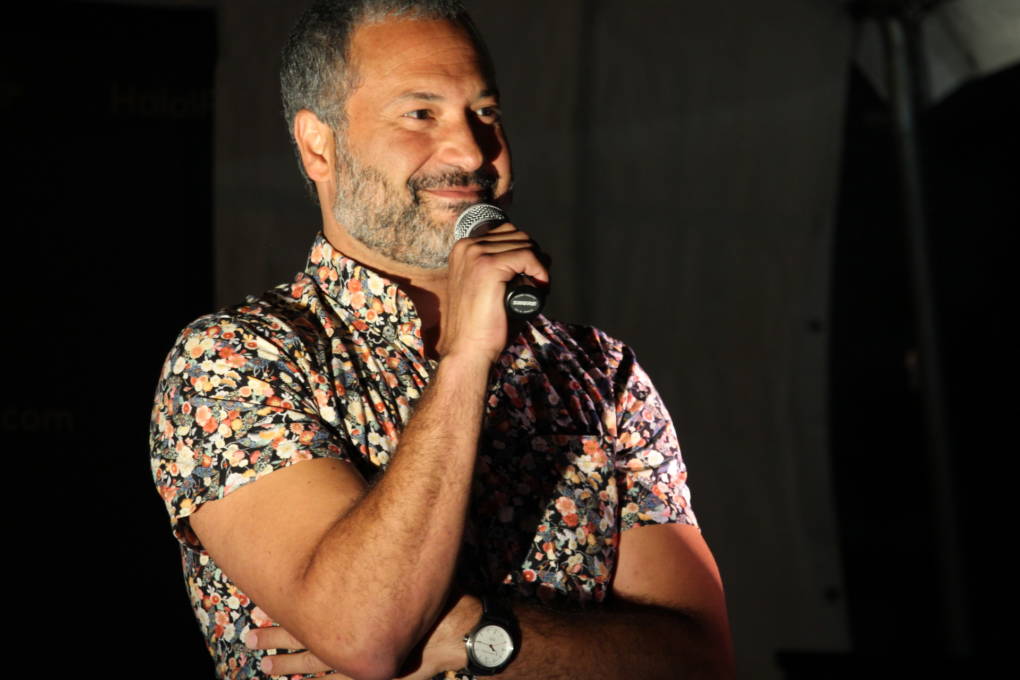
"caption": "Comedian Ahmed Ahmed performs at the Halal Fest in Fremont on July 8, 2017. 'I don’t like getting caught up in all the political stuff. I touch on it to point the elephant in the room and move on,' said Ahmed about his skit.",
"description": "Comedian Ahmed Ahmed performs at the Halal Fest in Fremont on July 8, 2017. 'I don’t like getting caught up in all the political stuff. I touch on it to point the elephant in the room and move on,' said Ahmed about his skit.",
"title": "RS25953_IMG_0801-qut",
"credit": "Farida Jhabvala Romero/KQED",
"status": "inherit",
"isLoading": false,
"fetchFailed": false
},
"news_11553691": {
"type": "attachments",
"id": "news_11553691",
"meta": {
"index": "attachments_1716263798",
"site": "news",
"id": "11553691",
"found": true
},
"parent": 11553605,
"imgSizes": {
"small": {
"file": "https://ww2.kqed.org/app/uploads/sites/10/2017/07/Pollyseeds-band-Photo-credit-Samantha-J-copy-520x325.jpeg",
"width": 520,
"mimeType": "image/jpeg",
"height": 325
},
"twentyfourteen-full-width": {
"file": "https://ww2.kqed.org/app/uploads/sites/10/2017/07/Pollyseeds-band-Photo-credit-Samantha-J-copy-1038x576.jpeg",
"width": 1038,
"mimeType": "image/jpeg",
"height": 576
},
"thumbnail": {
"file": "https://ww2.kqed.org/app/uploads/sites/10/2017/07/Pollyseeds-band-Photo-credit-Samantha-J-copy-160x100.jpeg",
"width": 160,
"mimeType": "image/jpeg",
"height": 100
},
"fd-sm": {
"file": "https://ww2.kqed.org/app/uploads/sites/10/2017/07/Pollyseeds-band-Photo-credit-Samantha-J-copy-960x601.jpeg",
"width": 960,
"mimeType": "image/jpeg",
"height": 601
},
"post-thumbnail": {
"file": "https://ww2.kqed.org/app/uploads/sites/10/2017/07/Pollyseeds-band-Photo-credit-Samantha-J-copy-672x372.jpeg",
"width": 672,
"mimeType": "image/jpeg",
"height": 372
},
"xsmall": {
"file": "https://ww2.kqed.org/app/uploads/sites/10/2017/07/Pollyseeds-band-Photo-credit-Samantha-J-copy-375x235.jpeg",
"width": 375,
"mimeType": "image/jpeg",
"height": 235
},
"kqedFullSize": {
"file": "https://ww2.kqed.org/app/uploads/sites/10/2017/07/Pollyseeds-band-Photo-credit-Samantha-J-copy.jpeg",
"width": 1726,
"height": 1080
},
"large": {
"file": "https://ww2.kqed.org/app/uploads/sites/10/2017/07/Pollyseeds-band-Photo-credit-Samantha-J-copy-1020x638.jpeg",
"width": 1020,
"mimeType": "image/jpeg",
"height": 638
},
"xlarge": {
"file": "https://ww2.kqed.org/app/uploads/sites/10/2017/07/Pollyseeds-band-Photo-credit-Samantha-J-copy-1180x738.jpeg",
"width": 1180,
"mimeType": "image/jpeg",
"height": 738
},
"guest-author-50": {
"file": "https://ww2.kqed.org/app/uploads/sites/10/2017/07/Pollyseeds-band-Photo-credit-Samantha-J-copy-50x50.jpeg",
"width": 50,
"mimeType": "image/jpeg",
"height": 50
},
"guest-author-96": {
"file": "https://ww2.kqed.org/app/uploads/sites/10/2017/07/Pollyseeds-band-Photo-credit-Samantha-J-copy-96x96.jpeg",
"width": 96,
"mimeType": "image/jpeg",
"height": 96
},
"medium": {
"file": "https://ww2.kqed.org/app/uploads/sites/10/2017/07/Pollyseeds-band-Photo-credit-Samantha-J-copy-800x501.jpeg",
"width": 800,
"mimeType": "image/jpeg",
"height": 501
},
"guest-author-64": {
"file": "https://ww2.kqed.org/app/uploads/sites/10/2017/07/Pollyseeds-band-Photo-credit-Samantha-J-copy-64x64.jpeg",
"width": 64,
"mimeType": "image/jpeg",
"height": 64
},
"guest-author-32": {
"file": "https://ww2.kqed.org/app/uploads/sites/10/2017/07/Pollyseeds-band-Photo-credit-Samantha-J-copy-32x32.jpeg",
"width": 32,
"mimeType": "image/jpeg",
"height": 32
},
"fd-med": {
"file": "https://ww2.kqed.org/app/uploads/sites/10/2017/07/Pollyseeds-band-Photo-credit-Samantha-J-copy-1180x738.jpeg",
"width": 1180,
"mimeType": "image/jpeg",
"height": 738
},
"detail": {
"file": "https://ww2.kqed.org/app/uploads/sites/10/2017/07/Pollyseeds-band-Photo-credit-Samantha-J-copy-150x150.jpeg",
"width": 150,
"mimeType": "image/jpeg",
"height": 150
},
"guest-author-128": {
"file": "https://ww2.kqed.org/app/uploads/sites/10/2017/07/Pollyseeds-band-Photo-credit-Samantha-J-copy-128x128.jpeg",
"width": 128,
"mimeType": "image/jpeg",
"height": 128
},
"xxsmall": {
"file": "https://ww2.kqed.org/app/uploads/sites/10/2017/07/Pollyseeds-band-Photo-credit-Samantha-J-copy-240x150.jpeg",
"width": 240,
"mimeType": "image/jpeg",
"height": 150
}
},
"publishDate": 1499450438,
"modified": 1499463890,
"caption": "The Pollyseeds, l-r: Chachi, Rose Gold, Terrace Martin, Wyann Vaughn. ",
"description": null,
"title": "Pollyseeds band Photo credit Samantha J copy",
"credit": "Photo courtesy of Samantha J",
"status": "inherit",
"isLoading": false,
"fetchFailed": false
},
"news_11554380": {
"type": "attachments",
"id": "news_11554380",
"meta": {
"index": "attachments_1716263798",
"site": "news",
"id": "11554380",
"found": true
},
"parent": 11539148,
"imgSizes": {
"small": {
"file": "https://ww2.kqed.org/app/uploads/sites/10/2017/07/DragStoryTime1-520x364.jpg",
"width": 520,
"mimeType": "image/jpeg",
"height": 364
},
"twentyfourteen-full-width": {
"file": "https://ww2.kqed.org/app/uploads/sites/10/2017/07/DragStoryTime1-1038x576.jpg",
"width": 1038,
"mimeType": "image/jpeg",
"height": 576
},
"thumbnail": {
"file": "https://ww2.kqed.org/app/uploads/sites/10/2017/07/DragStoryTime1-160x112.jpg",
"width": 160,
"mimeType": "image/jpeg",
"height": 112
},
"fd-sm": {
"file": "https://ww2.kqed.org/app/uploads/sites/10/2017/07/DragStoryTime1-960x673.jpg",
"width": 960,
"mimeType": "image/jpeg",
"height": 673
},
"post-thumbnail": {
"file": "https://ww2.kqed.org/app/uploads/sites/10/2017/07/DragStoryTime1-672x372.jpg",
"width": 672,
"mimeType": "image/jpeg",
"height": 372
},
"xsmall": {
"file": "https://ww2.kqed.org/app/uploads/sites/10/2017/07/DragStoryTime1-375x263.jpg",
"width": 375,
"mimeType": "image/jpeg",
"height": 263
},
"kqedFullSize": {
"file": "https://ww2.kqed.org/app/uploads/sites/10/2017/07/DragStoryTime1.jpg",
"width": 1920,
"height": 1345
},
"large": {
"file": "https://ww2.kqed.org/app/uploads/sites/10/2017/07/DragStoryTime1-1020x715.jpg",
"width": 1020,
"mimeType": "image/jpeg",
"height": 715
},
"xlarge": {
"file": "https://ww2.kqed.org/app/uploads/sites/10/2017/07/DragStoryTime1-1180x827.jpg",
"width": 1180,
"mimeType": "image/jpeg",
"height": 827
},
"guest-author-50": {
"file": "https://ww2.kqed.org/app/uploads/sites/10/2017/07/DragStoryTime1-50x50.jpg",
"width": 50,
"mimeType": "image/jpeg",
"height": 50
},
"guest-author-96": {
"file": "https://ww2.kqed.org/app/uploads/sites/10/2017/07/DragStoryTime1-96x96.jpg",
"width": 96,
"mimeType": "image/jpeg",
"height": 96
},
"medium": {
"file": "https://ww2.kqed.org/app/uploads/sites/10/2017/07/DragStoryTime1-800x560.jpg",
"width": 800,
"mimeType": "image/jpeg",
"height": 560
},
"guest-author-64": {
"file": "https://ww2.kqed.org/app/uploads/sites/10/2017/07/DragStoryTime1-64x64.jpg",
"width": 64,
"mimeType": "image/jpeg",
"height": 64
},
"guest-author-32": {
"file": "https://ww2.kqed.org/app/uploads/sites/10/2017/07/DragStoryTime1-32x32.jpg",
"width": 32,
"mimeType": "image/jpeg",
"height": 32
},
"fd-lrg": {
"file": "https://ww2.kqed.org/app/uploads/sites/10/2017/07/DragStoryTime1-1920x1345.jpg",
"width": 1920,
"mimeType": "image/jpeg",
"height": 1345
},
"fd-med": {
"file": "https://ww2.kqed.org/app/uploads/sites/10/2017/07/DragStoryTime1-1180x827.jpg",
"width": 1180,
"mimeType": "image/jpeg",
"height": 827
},
"full-width": {
"file": "https://ww2.kqed.org/app/uploads/sites/10/2017/07/DragStoryTime1-1920x1345.jpg",
"width": 1920,
"mimeType": "image/jpeg",
"height": 1345
},
"detail": {
"file": "https://ww2.kqed.org/app/uploads/sites/10/2017/07/DragStoryTime1-150x150.jpg",
"width": 150,
"mimeType": "image/jpeg",
"height": 150
},
"guest-author-128": {
"file": "https://ww2.kqed.org/app/uploads/sites/10/2017/07/DragStoryTime1-128x128.jpg",
"width": 128,
"mimeType": "image/jpeg",
"height": 128
},
"xxsmall": {
"file": "https://ww2.kqed.org/app/uploads/sites/10/2017/07/DragStoryTime1-240x168.jpg",
"width": 240,
"mimeType": "image/jpeg",
"height": 168
}
},
"publishDate": 1499474282,
"modified": 1499474312,
"caption": "Black Benatar reads aloud to children at Dimond Recreation Center in Oakland as part of Drag Queen Story Hour. ",
"description": "Black Benatar reads aloud to children at Dimond Recreation Center in Oakland as part of Drag Queen Story Hour. ",
"title": "DragStoryTime1",
"credit": "Lacy Roberts/KQED",
"status": "inherit",
"isLoading": false,
"fetchFailed": false
},
"arts_13600509": {
"type": "attachments",
"id": "arts_13600509",
"meta": {
"index": "attachments_1716263798",
"site": "arts",
"id": "13600509",
"found": true
},
"parent": 13600361,
"imgSizes": {
"small": {
"file": "https://ww2.kqed.org/app/uploads/sites/2/2017/07/Alexander-Ljung-520x293.jpg",
"width": 520,
"mimeType": "image/jpeg",
"height": 293
},
"twentyfourteen-full-width": {
"file": "https://ww2.kqed.org/app/uploads/sites/2/2017/07/Alexander-Ljung-1038x576.jpg",
"width": 1038,
"mimeType": "image/jpeg",
"height": 576
},
"thumbnail": {
"file": "https://ww2.kqed.org/app/uploads/sites/2/2017/07/Alexander-Ljung-160x90.jpg",
"width": 160,
"mimeType": "image/jpeg",
"height": 90
},
"fd-sm": {
"file": "https://ww2.kqed.org/app/uploads/sites/2/2017/07/Alexander-Ljung-960x540.jpg",
"width": 960,
"mimeType": "image/jpeg",
"height": 540
},
"post-thumbnail": {
"file": "https://ww2.kqed.org/app/uploads/sites/2/2017/07/Alexander-Ljung-672x372.jpg",
"width": 672,
"mimeType": "image/jpeg",
"height": 372
},
"xsmall": {
"file": "https://ww2.kqed.org/app/uploads/sites/2/2017/07/Alexander-Ljung-375x211.jpg",
"width": 375,
"mimeType": "image/jpeg",
"height": 211
},
"kqedFullSize": {
"file": "https://ww2.kqed.org/app/uploads/sites/2/2017/07/Alexander-Ljung.jpg",
"width": 1920,
"height": 1080
},
"large": {
"file": "https://ww2.kqed.org/app/uploads/sites/2/2017/07/Alexander-Ljung-1020x574.jpg",
"width": 1020,
"mimeType": "image/jpeg",
"height": 574
},
"xlarge": {
"file": "https://ww2.kqed.org/app/uploads/sites/2/2017/07/Alexander-Ljung-1180x664.jpg",
"width": 1180,
"mimeType": "image/jpeg",
"height": 664
},
"guest-author-50": {
"file": "https://ww2.kqed.org/app/uploads/sites/2/2017/07/Alexander-Ljung-50x50.jpg",
"width": 50,
"mimeType": "image/jpeg",
"height": 50
},
"guest-author-96": {
"file": "https://ww2.kqed.org/app/uploads/sites/2/2017/07/Alexander-Ljung-96x96.jpg",
"width": 96,
"mimeType": "image/jpeg",
"height": 96
},
"medium": {
"file": "https://ww2.kqed.org/app/uploads/sites/2/2017/07/Alexander-Ljung-800x450.jpg",
"width": 800,
"mimeType": "image/jpeg",
"height": 450
},
"guest-author-64": {
"file": "https://ww2.kqed.org/app/uploads/sites/2/2017/07/Alexander-Ljung-64x64.jpg",
"width": 64,
"mimeType": "image/jpeg",
"height": 64
},
"guest-author-32": {
"file": "https://ww2.kqed.org/app/uploads/sites/2/2017/07/Alexander-Ljung-32x32.jpg",
"width": 32,
"mimeType": "image/jpeg",
"height": 32
},
"fd-lrg": {
"file": "https://ww2.kqed.org/app/uploads/sites/2/2017/07/Alexander-Ljung-1920x1080.jpg",
"width": 1920,
"mimeType": "image/jpeg",
"height": 1080
},
"fd-med": {
"file": "https://ww2.kqed.org/app/uploads/sites/2/2017/07/Alexander-Ljung-1180x664.jpg",
"width": 1180,
"mimeType": "image/jpeg",
"height": 664
},
"full-width": {
"file": "https://ww2.kqed.org/app/uploads/sites/2/2017/07/Alexander-Ljung-1920x1080.jpg",
"width": 1920,
"mimeType": "image/jpeg",
"height": 1080
},
"detail": {
"file": "https://ww2.kqed.org/app/uploads/sites/2/2017/07/Alexander-Ljung-150x150.jpg",
"width": 150,
"mimeType": "image/jpeg",
"height": 150
},
"medium_large": {
"file": "https://ww2.kqed.org/app/uploads/sites/2/2017/07/Alexander-Ljung-768x432.jpg",
"width": 768,
"mimeType": "image/jpeg",
"height": 432
},
"guest-author-128": {
"file": "https://ww2.kqed.org/app/uploads/sites/2/2017/07/Alexander-Ljung-128x128.jpg",
"width": 128,
"mimeType": "image/jpeg",
"height": 128
},
"xxsmall": {
"file": "https://ww2.kqed.org/app/uploads/sites/2/2017/07/Alexander-Ljung-240x135.jpg",
"width": 240,
"mimeType": "image/jpeg",
"height": 135
}
},
"publishDate": 1499372185,
"modified": 1499372275,
"caption": "Founder and CEO of SoundCloud Alexander Ljung speaks onstage at Tech@Fest: SoundCloud Lounge during The New Yorker Festival 2015. ",
"description": "Founder and CEO of SoundCloud Alexander Ljung speaks onstage at Tech@Fest: SoundCloud Lounge during The New Yorker Festival 2015. ",
"title": "The New Yorker Festival 2015 - Tech@Fest: SoundCloud Lounge",
"credit": "Photo: Anna Webber/Getty Images for The New Yorker",
"status": "inherit",
"isLoading": false,
"fetchFailed": false
},
"arts_12217374": {
"type": "attachments",
"id": "arts_12217374",
"meta": {
"index": "attachments_1716263798",
"site": "arts",
"id": "12217374",
"found": true
},
"parent": 12217367,
"imgSizes": {
"twentyfourteen-full-width": {
"file": "https://ww2.kqed.org/app/uploads/sites/2/2016/10/Kamaiyah-and-Hypemen-02-1038x576.jpg",
"width": 1038,
"mimeType": "image/jpeg",
"height": 576
},
"thumbnail": {
"file": "https://ww2.kqed.org/app/uploads/sites/2/2016/10/Kamaiyah-and-Hypemen-02-400x267.jpg",
"width": 400,
"mimeType": "image/jpeg",
"height": 267
},
"fd-sm": {
"file": "https://ww2.kqed.org/app/uploads/sites/2/2016/10/Kamaiyah-and-Hypemen-02-960x640.jpg",
"width": 960,
"mimeType": "image/jpeg",
"height": 640
},
"post-thumbnail": {
"file": "https://ww2.kqed.org/app/uploads/sites/2/2016/10/Kamaiyah-and-Hypemen-02-672x372.jpg",
"width": 672,
"mimeType": "image/jpeg",
"height": 372
},
"kqedFullSize": {
"file": "https://ww2.kqed.org/app/uploads/sites/2/2016/10/Kamaiyah-and-Hypemen-02.jpg",
"width": 1920,
"height": 1280
},
"large": {
"file": "https://ww2.kqed.org/app/uploads/sites/2/2016/10/Kamaiyah-and-Hypemen-02-1180x787.jpg",
"width": 1180,
"mimeType": "image/jpeg",
"height": 787
},
"guest-author-50": {
"file": "https://ww2.kqed.org/app/uploads/sites/2/2016/10/Kamaiyah-and-Hypemen-02-50x50.jpg",
"width": 50,
"mimeType": "image/jpeg",
"height": 50
},
"guest-author-96": {
"file": "https://ww2.kqed.org/app/uploads/sites/2/2016/10/Kamaiyah-and-Hypemen-02-96x96.jpg",
"width": 96,
"mimeType": "image/jpeg",
"height": 96
},
"medium": {
"file": "https://ww2.kqed.org/app/uploads/sites/2/2016/10/Kamaiyah-and-Hypemen-02-800x533.jpg",
"width": 800,
"mimeType": "image/jpeg",
"height": 533
},
"guest-author-64": {
"file": "https://ww2.kqed.org/app/uploads/sites/2/2016/10/Kamaiyah-and-Hypemen-02-64x64.jpg",
"width": 64,
"mimeType": "image/jpeg",
"height": 64
},
"guest-author-32": {
"file": "https://ww2.kqed.org/app/uploads/sites/2/2016/10/Kamaiyah-and-Hypemen-02-32x32.jpg",
"width": 32,
"mimeType": "image/jpeg",
"height": 32
},
"fd-lrg": {
"file": "https://ww2.kqed.org/app/uploads/sites/2/2016/10/Kamaiyah-and-Hypemen-02-1920x1280.jpg",
"width": 1920,
"mimeType": "image/jpeg",
"height": 1280
},
"fd-med": {
"file": "https://ww2.kqed.org/app/uploads/sites/2/2016/10/Kamaiyah-and-Hypemen-02-1180x787.jpg",
"width": 1180,
"mimeType": "image/jpeg",
"height": 787
},
"detail": {
"file": "https://ww2.kqed.org/app/uploads/sites/2/2016/10/Kamaiyah-and-Hypemen-02-150x150.jpg",
"width": 150,
"mimeType": "image/jpeg",
"height": 150
},
"medium_large": {
"file": "https://ww2.kqed.org/app/uploads/sites/2/2016/10/Kamaiyah-and-Hypemen-02-768x512.jpg",
"width": 768,
"mimeType": "image/jpeg",
"height": 512
},
"guest-author-128": {
"file": "https://ww2.kqed.org/app/uploads/sites/2/2016/10/Kamaiyah-and-Hypemen-02-128x128.jpg",
"width": 128,
"mimeType": "image/jpeg",
"height": 128
}
},
"publishDate": 1476728039,
"modified": 1498678694,
"caption": "Kamaiyah and her hypemen rocking ponchos in the rain at the 2016 Treasure Island Music Festival.",
"description": "Kamaiyah and her hypemen rocking ponchos in the rain at the 2016 Treasure Island Music Festival.",
"title": "Kamaiyah and Hypemen 02",
"credit": "Estefany Gonzalez",
"status": "inherit",
"isLoading": false,
"fetchFailed": false
},
"news_11508512": {
"type": "attachments",
"id": "news_11508512",
"meta": {
"index": "attachments_1716263798",
"site": "news",
"id": "11508512",
"found": true
},
"parent": 11508486,
"imgSizes": {
"small": {
"file": "https://ww2.kqed.org/app/uploads/sites/10/2017/06/IMG_6250-e1497394710593-520x293.jpg",
"width": 520,
"mimeType": "image/jpeg",
"height": 293
},
"twentyfourteen-full-width": {
"file": "https://ww2.kqed.org/app/uploads/sites/10/2017/06/IMG_6250-e1497394710593-1038x576.jpg",
"width": 1038,
"mimeType": "image/jpeg",
"height": 576
},
"thumbnail": {
"file": "https://ww2.kqed.org/app/uploads/sites/10/2017/06/IMG_6250-e1497394710593-160x90.jpg",
"width": 160,
"mimeType": "image/jpeg",
"height": 90
},
"fd-sm": {
"file": "https://ww2.kqed.org/app/uploads/sites/10/2017/06/IMG_6250-e1497394710593-960x541.jpg",
"width": 960,
"mimeType": "image/jpeg",
"height": 541
},
"post-thumbnail": {
"file": "https://ww2.kqed.org/app/uploads/sites/10/2017/06/IMG_6250-e1497394710593-672x372.jpg",
"width": 672,
"mimeType": "image/jpeg",
"height": 372
},
"xsmall": {
"file": "https://ww2.kqed.org/app/uploads/sites/10/2017/06/IMG_6250-e1497394710593-375x211.jpg",
"width": 375,
"mimeType": "image/jpeg",
"height": 211
},
"kqedFullSize": {
"file": "https://ww2.kqed.org/app/uploads/sites/10/2017/06/IMG_6250-e1497394710593.jpg",
"width": 2842,
"height": 1602
},
"large": {
"file": "https://ww2.kqed.org/app/uploads/sites/10/2017/06/IMG_6250-e1497394710593-1020x575.jpg",
"width": 1020,
"mimeType": "image/jpeg",
"height": 575
},
"xlarge": {
"file": "https://ww2.kqed.org/app/uploads/sites/10/2017/06/IMG_6250-e1497394710593-1180x665.jpg",
"width": 1180,
"mimeType": "image/jpeg",
"height": 665
},
"guest-author-50": {
"file": "https://ww2.kqed.org/app/uploads/sites/10/2017/06/IMG_6250-e1497394710593-50x50.jpg",
"width": 50,
"mimeType": "image/jpeg",
"height": 50
},
"guest-author-96": {
"file": "https://ww2.kqed.org/app/uploads/sites/10/2017/06/IMG_6250-e1497394710593-96x96.jpg",
"width": 96,
"mimeType": "image/jpeg",
"height": 96
},
"medium": {
"file": "https://ww2.kqed.org/app/uploads/sites/10/2017/06/IMG_6250-e1497394710593-800x451.jpg",
"width": 800,
"mimeType": "image/jpeg",
"height": 451
},
"guest-author-64": {
"file": "https://ww2.kqed.org/app/uploads/sites/10/2017/06/IMG_6250-e1497394710593-64x64.jpg",
"width": 64,
"mimeType": "image/jpeg",
"height": 64
},
"guest-author-32": {
"file": "https://ww2.kqed.org/app/uploads/sites/10/2017/06/IMG_6250-e1497394710593-32x32.jpg",
"width": 32,
"mimeType": "image/jpeg",
"height": 32
},
"fd-lrg": {
"file": "https://ww2.kqed.org/app/uploads/sites/10/2017/06/IMG_6250-e1497394710593-1920x1082.jpg",
"width": 1920,
"mimeType": "image/jpeg",
"height": 1082
},
"fd-med": {
"file": "https://ww2.kqed.org/app/uploads/sites/10/2017/06/IMG_6250-e1497394710593-1180x665.jpg",
"width": 1180,
"mimeType": "image/jpeg",
"height": 665
},
"full-width": {
"file": "https://ww2.kqed.org/app/uploads/sites/10/2017/06/IMG_6250-e1497394710593-1920x1082.jpg",
"width": 1920,
"mimeType": "image/jpeg",
"height": 1082
},
"detail": {
"file": "https://ww2.kqed.org/app/uploads/sites/10/2017/06/IMG_6250-e1497394710593-150x150.jpg",
"width": 150,
"mimeType": "image/jpeg",
"height": 150
},
"guest-author-128": {
"file": "https://ww2.kqed.org/app/uploads/sites/10/2017/06/IMG_6250-e1497394710593-128x128.jpg",
"width": 128,
"mimeType": "image/jpeg",
"height": 128
},
"xxsmall": {
"file": "https://ww2.kqed.org/app/uploads/sites/10/2017/06/IMG_6250-e1497394710593-240x135.jpg",
"width": 240,
"mimeType": "image/jpeg",
"height": 135
}
},
"publishDate": 1497394660,
"modified": 1498684707,
"caption": "Have you got a story about quiet dissent? If so, we want to hear from you!\n",
"description": "Have you got a story about quiet dissent? If so, we want to hear from you!",
"title": "IMG_6250",
"credit": "Chloe Veltman/KQED",
"status": "inherit",
"isLoading": false,
"fetchFailed": false
},
"news_11535643": {
"type": "attachments",
"id": "news_11535643",
"meta": {
"index": "attachments_1716263798",
"site": "news",
"id": "11535643",
"found": true
},
"parent": 11535635,
"imgSizes": {
"small": {
"file": "https://ww2.kqed.org/app/uploads/sites/10/2017/06/dsc09152_wide-1bc29048445eabf0d657fbdbc74efa0a8d6a617c-520x293.jpg",
"width": 520,
"mimeType": "image/jpeg",
"height": 293
},
"twentyfourteen-full-width": {
"file": "https://ww2.kqed.org/app/uploads/sites/10/2017/06/dsc09152_wide-1bc29048445eabf0d657fbdbc74efa0a8d6a617c-1038x576.jpg",
"width": 1038,
"mimeType": "image/jpeg",
"height": 576
},
"thumbnail": {
"file": "https://ww2.kqed.org/app/uploads/sites/10/2017/06/dsc09152_wide-1bc29048445eabf0d657fbdbc74efa0a8d6a617c-160x90.jpg",
"width": 160,
"mimeType": "image/jpeg",
"height": 90
},
"fd-sm": {
"file": "https://ww2.kqed.org/app/uploads/sites/10/2017/06/dsc09152_wide-1bc29048445eabf0d657fbdbc74efa0a8d6a617c-960x540.jpg",
"width": 960,
"mimeType": "image/jpeg",
"height": 540
},
"post-thumbnail": {
"file": "https://ww2.kqed.org/app/uploads/sites/10/2017/06/dsc09152_wide-1bc29048445eabf0d657fbdbc74efa0a8d6a617c-672x372.jpg",
"width": 672,
"mimeType": "image/jpeg",
"height": 372
},
"xsmall": {
"file": "https://ww2.kqed.org/app/uploads/sites/10/2017/06/dsc09152_wide-1bc29048445eabf0d657fbdbc74efa0a8d6a617c-375x211.jpg",
"width": 375,
"mimeType": "image/jpeg",
"height": 211
},
"kqedFullSize": {
"file": "https://ww2.kqed.org/app/uploads/sites/10/2017/06/dsc09152_wide-1bc29048445eabf0d657fbdbc74efa0a8d6a617c-e1498600884808.jpg",
"width": 1920,
"height": 1080
},
"large": {
"file": "https://ww2.kqed.org/app/uploads/sites/10/2017/06/dsc09152_wide-1bc29048445eabf0d657fbdbc74efa0a8d6a617c-1020x574.jpg",
"width": 1020,
"mimeType": "image/jpeg",
"height": 574
},
"xlarge": {
"file": "https://ww2.kqed.org/app/uploads/sites/10/2017/06/dsc09152_wide-1bc29048445eabf0d657fbdbc74efa0a8d6a617c-1180x664.jpg",
"width": 1180,
"mimeType": "image/jpeg",
"height": 664
},
"guest-author-50": {
"file": "https://ww2.kqed.org/app/uploads/sites/10/2017/06/dsc09152_wide-1bc29048445eabf0d657fbdbc74efa0a8d6a617c-50x50.jpg",
"width": 50,
"mimeType": "image/jpeg",
"height": 50
},
"guest-author-96": {
"file": "https://ww2.kqed.org/app/uploads/sites/10/2017/06/dsc09152_wide-1bc29048445eabf0d657fbdbc74efa0a8d6a617c-96x96.jpg",
"width": 96,
"mimeType": "image/jpeg",
"height": 96
},
"medium": {
"file": "https://ww2.kqed.org/app/uploads/sites/10/2017/06/dsc09152_wide-1bc29048445eabf0d657fbdbc74efa0a8d6a617c-800x450.jpg",
"width": 800,
"mimeType": "image/jpeg",
"height": 450
},
"guest-author-64": {
"file": "https://ww2.kqed.org/app/uploads/sites/10/2017/06/dsc09152_wide-1bc29048445eabf0d657fbdbc74efa0a8d6a617c-64x64.jpg",
"width": 64,
"mimeType": "image/jpeg",
"height": 64
},
"guest-author-32": {
"file": "https://ww2.kqed.org/app/uploads/sites/10/2017/06/dsc09152_wide-1bc29048445eabf0d657fbdbc74efa0a8d6a617c-32x32.jpg",
"width": 32,
"mimeType": "image/jpeg",
"height": 32
},
"fd-lrg": {
"file": "https://ww2.kqed.org/app/uploads/sites/10/2017/06/dsc09152_wide-1bc29048445eabf0d657fbdbc74efa0a8d6a617c-1920x1080.jpg",
"width": 1920,
"mimeType": "image/jpeg",
"height": 1080
},
"fd-med": {
"file": "https://ww2.kqed.org/app/uploads/sites/10/2017/06/dsc09152_wide-1bc29048445eabf0d657fbdbc74efa0a8d6a617c-1180x664.jpg",
"width": 1180,
"mimeType": "image/jpeg",
"height": 664
},
"full-width": {
"file": "https://ww2.kqed.org/app/uploads/sites/10/2017/06/dsc09152_wide-1bc29048445eabf0d657fbdbc74efa0a8d6a617c-1920x1080.jpg",
"width": 1920,
"mimeType": "image/jpeg",
"height": 1080
},
"detail": {
"file": "https://ww2.kqed.org/app/uploads/sites/10/2017/06/dsc09152_wide-1bc29048445eabf0d657fbdbc74efa0a8d6a617c-150x150.jpg",
"width": 150,
"mimeType": "image/jpeg",
"height": 150
},
"guest-author-128": {
"file": "https://ww2.kqed.org/app/uploads/sites/10/2017/06/dsc09152_wide-1bc29048445eabf0d657fbdbc74efa0a8d6a617c-128x128.jpg",
"width": 128,
"mimeType": "image/jpeg",
"height": 128
},
"xxsmall": {
"file": "https://ww2.kqed.org/app/uploads/sites/10/2017/06/dsc09152_wide-1bc29048445eabf0d657fbdbc74efa0a8d6a617c-240x135.jpg",
"width": 240,
"mimeType": "image/jpeg",
"height": 135
}
},
"publishDate": 1498600684,
"modified": 1594300021,
"caption": null,
"description": "The view of downtown Los Angeles from Boyle Heights. As more neighborhoods in L.A. gentrify and see rents rise, many residents in this largely working class Latino neighborhood fear their neighborhood could be next. Art galleries have become the focus of concern.",
"title": "The view of downtown Los Angeles from Boyle Heights. As more neighborhoods in LA gentrify and see rents rise, many residents in this largely working class Latino neighborhood fear their neighborhood could be next. Art galleries have become the focus of concern.",
"credit": "Saul Gonzalez/KCRW",
"status": "inherit",
"isLoading": false,
"fetchFailed": false
},
"news_11533693": {
"type": "attachments",
"id": "news_11533693",
"meta": {
"index": "attachments_1716263798",
"site": "news",
"id": "11533693",
"found": true
},
"parent": 11528726,
"imgSizes": {
"small": {
"file": "https://ww2.kqed.org/app/uploads/sites/10/2017/06/RedRockMain-520x329.jpg",
"width": 520,
"mimeType": "image/jpeg",
"height": 329
},
"twentyfourteen-full-width": {
"file": "https://ww2.kqed.org/app/uploads/sites/10/2017/06/RedRockMain-1038x576.jpg",
"width": 1038,
"mimeType": "image/jpeg",
"height": 576
},
"thumbnail": {
"file": "https://ww2.kqed.org/app/uploads/sites/10/2017/06/RedRockMain-160x101.jpg",
"width": 160,
"mimeType": "image/jpeg",
"height": 101
},
"fd-sm": {
"file": "https://ww2.kqed.org/app/uploads/sites/10/2017/06/RedRockMain-960x607.jpg",
"width": 960,
"mimeType": "image/jpeg",
"height": 607
},
"post-thumbnail": {
"file": "https://ww2.kqed.org/app/uploads/sites/10/2017/06/RedRockMain-672x372.jpg",
"width": 672,
"mimeType": "image/jpeg",
"height": 372
},
"xsmall": {
"file": "https://ww2.kqed.org/app/uploads/sites/10/2017/06/RedRockMain-375x237.jpg",
"width": 375,
"mimeType": "image/jpeg",
"height": 237
},
"kqedFullSize": {
"file": "https://ww2.kqed.org/app/uploads/sites/10/2017/06/RedRockMain.jpg",
"width": 1920,
"height": 1214
},
"large": {
"file": "https://ww2.kqed.org/app/uploads/sites/10/2017/06/RedRockMain-1020x645.jpg",
"width": 1020,
"mimeType": "image/jpeg",
"height": 645
},
"xlarge": {
"file": "https://ww2.kqed.org/app/uploads/sites/10/2017/06/RedRockMain-1180x746.jpg",
"width": 1180,
"mimeType": "image/jpeg",
"height": 746
},
"guest-author-50": {
"file": "https://ww2.kqed.org/app/uploads/sites/10/2017/06/RedRockMain-50x50.jpg",
"width": 50,
"mimeType": "image/jpeg",
"height": 50
},
"guest-author-96": {
"file": "https://ww2.kqed.org/app/uploads/sites/10/2017/06/RedRockMain-96x96.jpg",
"width": 96,
"mimeType": "image/jpeg",
"height": 96
},
"medium": {
"file": "https://ww2.kqed.org/app/uploads/sites/10/2017/06/RedRockMain-800x506.jpg",
"width": 800,
"mimeType": "image/jpeg",
"height": 506
},
"guest-author-64": {
"file": "https://ww2.kqed.org/app/uploads/sites/10/2017/06/RedRockMain-64x64.jpg",
"width": 64,
"mimeType": "image/jpeg",
"height": 64
},
"guest-author-32": {
"file": "https://ww2.kqed.org/app/uploads/sites/10/2017/06/RedRockMain-32x32.jpg",
"width": 32,
"mimeType": "image/jpeg",
"height": 32
},
"fd-lrg": {
"file": "https://ww2.kqed.org/app/uploads/sites/10/2017/06/RedRockMain-1920x1214.jpg",
"width": 1920,
"mimeType": "image/jpeg",
"height": 1214
},
"fd-med": {
"file": "https://ww2.kqed.org/app/uploads/sites/10/2017/06/RedRockMain-1180x746.jpg",
"width": 1180,
"mimeType": "image/jpeg",
"height": 746
},
"full-width": {
"file": "https://ww2.kqed.org/app/uploads/sites/10/2017/06/RedRockMain-1920x1214.jpg",
"width": 1920,
"mimeType": "image/jpeg",
"height": 1214
},
"detail": {
"file": "https://ww2.kqed.org/app/uploads/sites/10/2017/06/RedRockMain-150x150.jpg",
"width": 150,
"mimeType": "image/jpeg",
"height": 150
},
"guest-author-128": {
"file": "https://ww2.kqed.org/app/uploads/sites/10/2017/06/RedRockMain-128x128.jpg",
"width": 128,
"mimeType": "image/jpeg",
"height": 128
},
"xxsmall": {
"file": "https://ww2.kqed.org/app/uploads/sites/10/2017/06/RedRockMain-240x152.jpg",
"width": 240,
"mimeType": "image/jpeg",
"height": 152
}
},
"publishDate": 1498512793,
"modified": 1498512827,
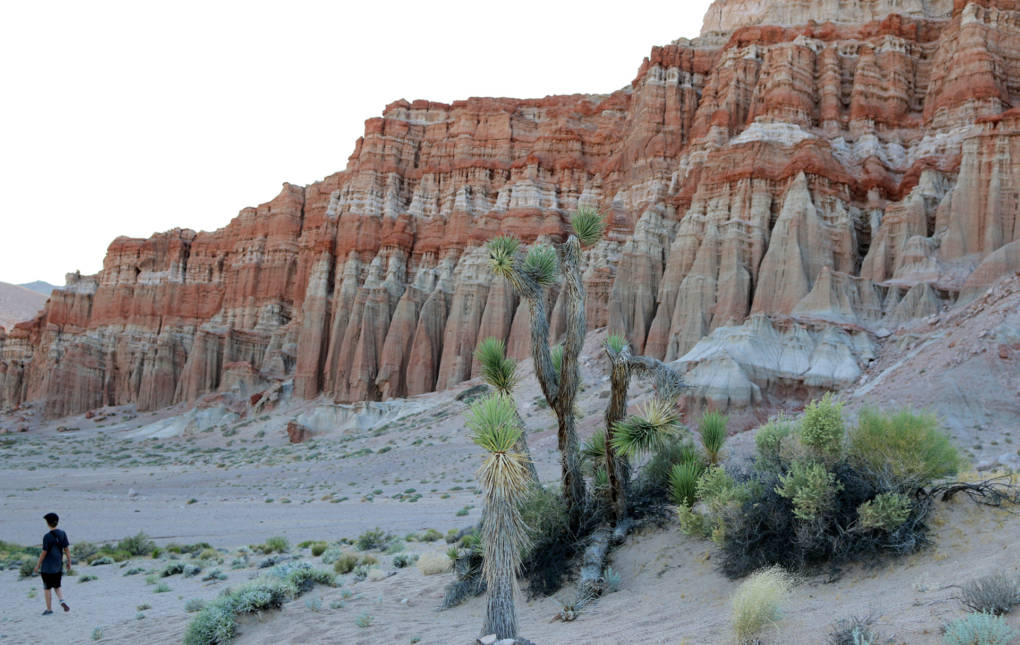
"caption": "Red Rock Canyon looks a little like Utah, except for all the Joshua Trees. ",
"description": "Red Rock Canyon looks a little like Utah, except for all the Joshua Trees. ",
"title": "RedRockMain",
"credit": "Alice Daniel/KQED",
"status": "inherit",
"isLoading": false,
"fetchFailed": false
},
"arts_13501611": {
"type": "attachments",
"id": "arts_13501611",
"meta": {
"index": "attachments_1716263798",
"site": "arts",
"id": "13501611",
"found": true
},
"parent": 0,
"imgSizes": {
"small": {
"file": "https://ww2.kqed.org/app/uploads/sites/2/2017/06/Mural-520x293.jpg",
"width": 520,
"mimeType": "image/jpeg",
"height": 293
},
"twentyfourteen-full-width": {
"file": "https://ww2.kqed.org/app/uploads/sites/2/2017/06/Mural-1038x576.jpg",
"width": 1038,
"mimeType": "image/jpeg",
"height": 576
},
"thumbnail": {
"file": "https://ww2.kqed.org/app/uploads/sites/2/2017/06/Mural-160x90.jpg",
"width": 160,
"mimeType": "image/jpeg",
"height": 90
},
"fd-sm": {
"file": "https://ww2.kqed.org/app/uploads/sites/2/2017/06/Mural-960x540.jpg",
"width": 960,
"mimeType": "image/jpeg",
"height": 540
},
"post-thumbnail": {
"file": "https://ww2.kqed.org/app/uploads/sites/2/2017/06/Mural-672x372.jpg",
"width": 672,
"mimeType": "image/jpeg",
"height": 372
},
"xsmall": {
"file": "https://ww2.kqed.org/app/uploads/sites/2/2017/06/Mural-375x211.jpg",
"width": 375,
"mimeType": "image/jpeg",
"height": 211
},
"kqedFullSize": {
"file": "https://ww2.kqed.org/app/uploads/sites/2/2017/06/Mural.jpg",
"width": 1920,
"height": 1080
},
"large": {
"file": "https://ww2.kqed.org/app/uploads/sites/2/2017/06/Mural-1020x574.jpg",
"width": 1020,
"mimeType": "image/jpeg",
"height": 574
},
"xlarge": {
"file": "https://ww2.kqed.org/app/uploads/sites/2/2017/06/Mural-1180x664.jpg",
"width": 1180,
"mimeType": "image/jpeg",
"height": 664
},
"guest-author-50": {
"file": "https://ww2.kqed.org/app/uploads/sites/2/2017/06/Mural-50x50.jpg",
"width": 50,
"mimeType": "image/jpeg",
"height": 50
},
"guest-author-96": {
"file": "https://ww2.kqed.org/app/uploads/sites/2/2017/06/Mural-96x96.jpg",
"width": 96,
"mimeType": "image/jpeg",
"height": 96
},
"medium": {
"file": "https://ww2.kqed.org/app/uploads/sites/2/2017/06/Mural-800x450.jpg",
"width": 800,
"mimeType": "image/jpeg",
"height": 450
},
"guest-author-64": {
"file": "https://ww2.kqed.org/app/uploads/sites/2/2017/06/Mural-64x64.jpg",
"width": 64,
"mimeType": "image/jpeg",
"height": 64
},
"guest-author-32": {
"file": "https://ww2.kqed.org/app/uploads/sites/2/2017/06/Mural-32x32.jpg",
"width": 32,
"mimeType": "image/jpeg",
"height": 32
},
"fd-lrg": {
"file": "https://ww2.kqed.org/app/uploads/sites/2/2017/06/Mural-1920x1080.jpg",
"width": 1920,
"mimeType": "image/jpeg",
"height": 1080
},
"fd-med": {
"file": "https://ww2.kqed.org/app/uploads/sites/2/2017/06/Mural-1180x664.jpg",
"width": 1180,
"mimeType": "image/jpeg",
"height": 664
},
"full-width": {
"file": "https://ww2.kqed.org/app/uploads/sites/2/2017/06/Mural-1920x1080.jpg",
"width": 1920,
"mimeType": "image/jpeg",
"height": 1080
},
"detail": {
"file": "https://ww2.kqed.org/app/uploads/sites/2/2017/06/Mural-150x150.jpg",
"width": 150,
"mimeType": "image/jpeg",
"height": 150
},
"medium_large": {
"file": "https://ww2.kqed.org/app/uploads/sites/2/2017/06/Mural-768x432.jpg",
"width": 768,
"mimeType": "image/jpeg",
"height": 432
},
"guest-author-128": {
"file": "https://ww2.kqed.org/app/uploads/sites/2/2017/06/Mural-128x128.jpg",
"width": 128,
"mimeType": "image/jpeg",
"height": 128
},
"xxsmall": {
"file": "https://ww2.kqed.org/app/uploads/sites/2/2017/06/Mural-240x135.jpg",
"width": 240,
"mimeType": "image/jpeg",
"height": 135
}
},
"publishDate": 1498241781,
"modified": 1498242133,
"caption": "The refurbished mural above the Mission Cultural Center for Latino Arts after it was unveiled Thursday",
"description": "The refurbished mural above the Mission Cultural Center for Latino Arts",
"title": "Mural",
"credit": "Photo: Kevin L. Jones/KQED",
"status": "inherit",
"isLoading": false,
"fetchFailed": false
},
"news_11524429": {
"type": "attachments",
"id": "news_11524429",
"meta": {
"index": "attachments_1716263798",
"site": "news",
"id": "11524429",
"found": true
},
"parent": 11524318,
"imgSizes": {
"small": {
"file": "https://ww2.kqed.org/app/uploads/sites/10/2017/06/GW-Agave-520x524.jpg",
"width": 520,
"mimeType": "image/jpeg",
"height": 524
},
"twentyfourteen-full-width": {
"file": "https://ww2.kqed.org/app/uploads/sites/10/2017/06/GW-Agave-1038x576.jpg",
"width": 1038,
"mimeType": "image/jpeg",
"height": 576
},
"thumbnail": {
"file": "https://ww2.kqed.org/app/uploads/sites/10/2017/06/GW-Agave-160x161.jpg",
"width": 160,
"mimeType": "image/jpeg",
"height": 161
},
"fd-sm": {
"file": "https://ww2.kqed.org/app/uploads/sites/10/2017/06/GW-Agave-960x967.jpg",
"width": 960,
"mimeType": "image/jpeg",
"height": 967
},
"post-thumbnail": {
"file": "https://ww2.kqed.org/app/uploads/sites/10/2017/06/GW-Agave-672x372.jpg",
"width": 672,
"mimeType": "image/jpeg",
"height": 372
},
"xsmall": {
"file": "https://ww2.kqed.org/app/uploads/sites/10/2017/06/GW-Agave-375x378.jpg",
"width": 375,
"mimeType": "image/jpeg",
"height": 378
},
"kqedFullSize": {
"file": "https://ww2.kqed.org/app/uploads/sites/10/2017/06/GW-Agave.jpg",
"width": 3619,
"height": 3645
},
"large": {
"file": "https://ww2.kqed.org/app/uploads/sites/10/2017/06/GW-Agave-1020x1027.jpg",
"width": 1020,
"mimeType": "image/jpeg",
"height": 1027
},
"xlarge": {
"file": "https://ww2.kqed.org/app/uploads/sites/10/2017/06/GW-Agave-1180x1188.jpg",
"width": 1180,
"mimeType": "image/jpeg",
"height": 1188
},
"guest-author-50": {
"file": "https://ww2.kqed.org/app/uploads/sites/10/2017/06/GW-Agave-50x50.jpg",
"width": 50,
"mimeType": "image/jpeg",
"height": 50
},
"guest-author-96": {
"file": "https://ww2.kqed.org/app/uploads/sites/10/2017/06/GW-Agave-96x96.jpg",
"width": 96,
"mimeType": "image/jpeg",
"height": 96
},
"medium": {
"file": "https://ww2.kqed.org/app/uploads/sites/10/2017/06/GW-Agave-800x806.jpg",
"width": 800,
"mimeType": "image/jpeg",
"height": 806
},
"guest-author-64": {
"file": "https://ww2.kqed.org/app/uploads/sites/10/2017/06/GW-Agave-64x64.jpg",
"width": 64,
"mimeType": "image/jpeg",
"height": 64
},
"guest-author-32": {
"file": "https://ww2.kqed.org/app/uploads/sites/10/2017/06/GW-Agave-32x32.jpg",
"width": 32,
"mimeType": "image/jpeg",
"height": 32
},
"fd-lrg": {
"file": "https://ww2.kqed.org/app/uploads/sites/10/2017/06/GW-Agave-1920x1934.jpg",
"width": 1920,
"mimeType": "image/jpeg",
"height": 1934
},
"fd-med": {
"file": "https://ww2.kqed.org/app/uploads/sites/10/2017/06/GW-Agave-1180x1188.jpg",
"width": 1180,
"mimeType": "image/jpeg",
"height": 1188
},
"full-width": {
"file": "https://ww2.kqed.org/app/uploads/sites/10/2017/06/GW-Agave-1920x1934.jpg",
"width": 1920,
"mimeType": "image/jpeg",
"height": 1934
},
"detail": {
"file": "https://ww2.kqed.org/app/uploads/sites/10/2017/06/GW-Agave-150x150.jpg",
"width": 150,
"mimeType": "image/jpeg",
"height": 150
},
"guest-author-128": {
"file": "https://ww2.kqed.org/app/uploads/sites/10/2017/06/GW-Agave-128x128.jpg",
"width": 128,
"mimeType": "image/jpeg",
"height": 128
},
"xxsmall": {
"file": "https://ww2.kqed.org/app/uploads/sites/10/2017/06/GW-Agave-240x242.jpg",
"width": 240,
"mimeType": "image/jpeg",
"height": 242
}
},
"publishDate": 1498071834,
"modified": 1498155478,
"caption": "Madame Ganna Walska tends to her agave garden at Lotusland.\n",
"description": null,
"title": "GW-Agave",
"credit": "Courtesy of Lotusland",
"status": "inherit",
"isLoading": false,
"fetchFailed": false
},
"news_11520942": {
"type": "attachments",
"id": "news_11520942",
"meta": {
"index": "attachments_1716263798",
"site": "news",
"id": "11520942",
"found": true
},
"parent": 11520594,
"imgSizes": {
"small": {
"file": "https://ww2.kqed.org/app/uploads/sites/10/2017/06/RS25733_WHEEL-qut-1-520x345.jpg",
"width": 520,
"mimeType": "image/jpeg",
"height": 345
},
"twentyfourteen-full-width": {
"file": "https://ww2.kqed.org/app/uploads/sites/10/2017/06/RS25733_WHEEL-qut-1-1038x576.jpg",
"width": 1038,
"mimeType": "image/jpeg",
"height": 576
},
"thumbnail": {
"file": "https://ww2.kqed.org/app/uploads/sites/10/2017/06/RS25733_WHEEL-qut-1-160x106.jpg",
"width": 160,
"mimeType": "image/jpeg",
"height": 106
},
"fd-sm": {
"file": "https://ww2.kqed.org/app/uploads/sites/10/2017/06/RS25733_WHEEL-qut-1-960x636.jpg",
"width": 960,
"mimeType": "image/jpeg",
"height": 636
},
"post-thumbnail": {
"file": "https://ww2.kqed.org/app/uploads/sites/10/2017/06/RS25733_WHEEL-qut-1-672x372.jpg",
"width": 672,
"mimeType": "image/jpeg",
"height": 372
},
"xsmall": {
"file": "https://ww2.kqed.org/app/uploads/sites/10/2017/06/RS25733_WHEEL-qut-1-375x248.jpg",
"width": 375,
"mimeType": "image/jpeg",
"height": 248
},
"kqedFullSize": {
"file": "https://ww2.kqed.org/app/uploads/sites/10/2017/06/RS25733_WHEEL-qut-1.jpg",
"width": 1920,
"height": 1272
},
"large": {
"file": "https://ww2.kqed.org/app/uploads/sites/10/2017/06/RS25733_WHEEL-qut-1-1020x676.jpg",
"width": 1020,
"mimeType": "image/jpeg",
"height": 676
},
"xlarge": {
"file": "https://ww2.kqed.org/app/uploads/sites/10/2017/06/RS25733_WHEEL-qut-1-1180x782.jpg",
"width": 1180,
"mimeType": "image/jpeg",
"height": 782
},
"guest-author-50": {
"file": "https://ww2.kqed.org/app/uploads/sites/10/2017/06/RS25733_WHEEL-qut-1-50x50.jpg",
"width": 50,
"mimeType": "image/jpeg",
"height": 50
},
"guest-author-96": {
"file": "https://ww2.kqed.org/app/uploads/sites/10/2017/06/RS25733_WHEEL-qut-1-96x96.jpg",
"width": 96,
"mimeType": "image/jpeg",
"height": 96
},
"medium": {
"file": "https://ww2.kqed.org/app/uploads/sites/10/2017/06/RS25733_WHEEL-qut-1-800x530.jpg",
"width": 800,
"mimeType": "image/jpeg",
"height": 530
},
"guest-author-64": {
"file": "https://ww2.kqed.org/app/uploads/sites/10/2017/06/RS25733_WHEEL-qut-1-64x64.jpg",
"width": 64,
"mimeType": "image/jpeg",
"height": 64
},
"guest-author-32": {
"file": "https://ww2.kqed.org/app/uploads/sites/10/2017/06/RS25733_WHEEL-qut-1-32x32.jpg",
"width": 32,
"mimeType": "image/jpeg",
"height": 32
},
"fd-lrg": {
"file": "https://ww2.kqed.org/app/uploads/sites/10/2017/06/RS25733_WHEEL-qut-1-1920x1272.jpg",
"width": 1920,
"mimeType": "image/jpeg",
"height": 1272
},
"fd-med": {
"file": "https://ww2.kqed.org/app/uploads/sites/10/2017/06/RS25733_WHEEL-qut-1-1180x782.jpg",
"width": 1180,
"mimeType": "image/jpeg",
"height": 782
},
"full-width": {
"file": "https://ww2.kqed.org/app/uploads/sites/10/2017/06/RS25733_WHEEL-qut-1-1920x1272.jpg",
"width": 1920,
"mimeType": "image/jpeg",
"height": 1272
},
"detail": {
"file": "https://ww2.kqed.org/app/uploads/sites/10/2017/06/RS25733_WHEEL-qut-1-150x150.jpg",
"width": 150,
"mimeType": "image/jpeg",
"height": 150
},
"guest-author-128": {
"file": "https://ww2.kqed.org/app/uploads/sites/10/2017/06/RS25733_WHEEL-qut-1-128x128.jpg",
"width": 128,
"mimeType": "image/jpeg",
"height": 128
},
"xxsmall": {
"file": "https://ww2.kqed.org/app/uploads/sites/10/2017/06/RS25733_WHEEL-qut-1-240x159.jpg",
"width": 240,
"mimeType": "image/jpeg",
"height": 159
}
},
"publishDate": 1497918132,
"modified": 1498255952,
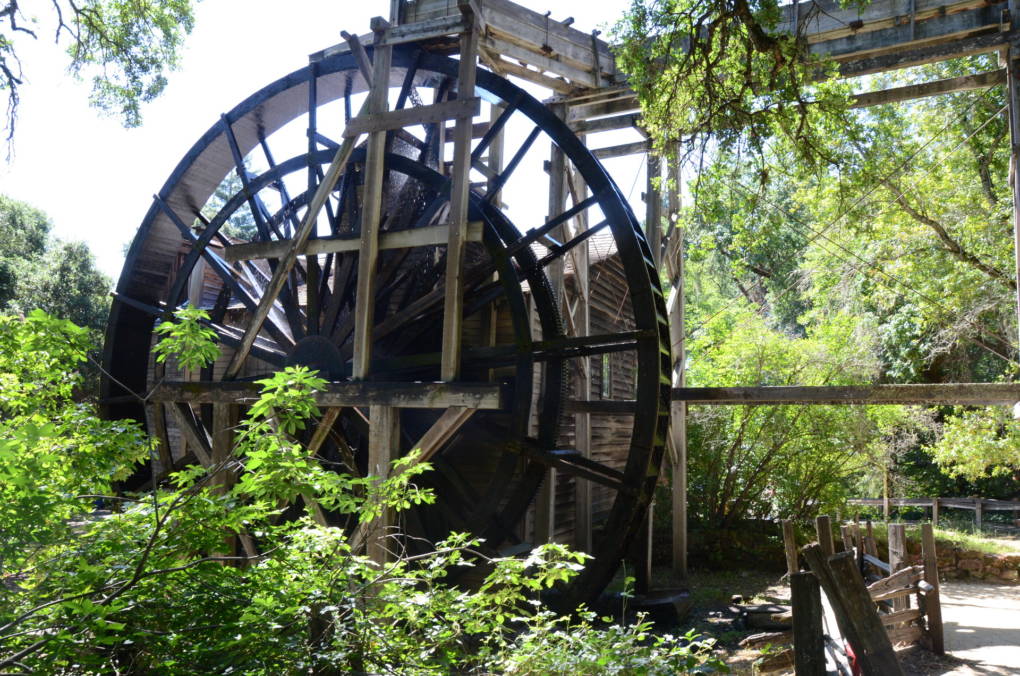
"caption": "At 36 feet tall, the Bale Grist Mill's waterwheel is one of the tallest in North America.",
"description": "At 36 feet tall, the Bale Grist Mill's waterwheel is one of the tallest waterwheels in North America.",
"title": "Waterwheel",
"credit": "Ryan Levi/KQED",
"status": "inherit",
"isLoading": false,
"fetchFailed": false
},
"news_11528889": {
"type": "attachments",
"id": "news_11528889",
"meta": {
"index": "attachments_1716263798",
"site": "news",
"id": "11528889",
"found": true
},
"parent": 11473393,
"imgSizes": {
"small": {
"file": "https://ww2.kqed.org/app/uploads/sites/10/2017/06/StrawberryDoe-520x406.jpg",
"width": 520,
"mimeType": "image/jpeg",
"height": 406
},
"twentyfourteen-full-width": {
"file": "https://ww2.kqed.org/app/uploads/sites/10/2017/06/StrawberryDoe-1038x576.jpg",
"width": 1038,
"mimeType": "image/jpeg",
"height": 576
},
"thumbnail": {
"file": "https://ww2.kqed.org/app/uploads/sites/10/2017/06/StrawberryDoe-160x125.jpg",
"width": 160,
"mimeType": "image/jpeg",
"height": 125
},
"fd-sm": {
"file": "https://ww2.kqed.org/app/uploads/sites/10/2017/06/StrawberryDoe-960x750.jpg",
"width": 960,
"mimeType": "image/jpeg",
"height": 750
},
"post-thumbnail": {
"file": "https://ww2.kqed.org/app/uploads/sites/10/2017/06/StrawberryDoe-672x372.jpg",
"width": 672,
"mimeType": "image/jpeg",
"height": 372
},
"xsmall": {
"file": "https://ww2.kqed.org/app/uploads/sites/10/2017/06/StrawberryDoe-375x293.jpg",
"width": 375,
"mimeType": "image/jpeg",
"height": 293
},
"kqedFullSize": {
"file": "https://ww2.kqed.org/app/uploads/sites/10/2017/06/StrawberryDoe.jpg",
"width": 1920,
"height": 1500
},
"large": {
"file": "https://ww2.kqed.org/app/uploads/sites/10/2017/06/StrawberryDoe-1020x797.jpg",
"width": 1020,
"mimeType": "image/jpeg",
"height": 797
},
"xlarge": {
"file": "https://ww2.kqed.org/app/uploads/sites/10/2017/06/StrawberryDoe-1180x922.jpg",
"width": 1180,
"mimeType": "image/jpeg",
"height": 922
},
"guest-author-50": {
"file": "https://ww2.kqed.org/app/uploads/sites/10/2017/06/StrawberryDoe-50x50.jpg",
"width": 50,
"mimeType": "image/jpeg",
"height": 50
},
"guest-author-96": {
"file": "https://ww2.kqed.org/app/uploads/sites/10/2017/06/StrawberryDoe-96x96.jpg",
"width": 96,
"mimeType": "image/jpeg",
"height": 96
},
"medium": {
"file": "https://ww2.kqed.org/app/uploads/sites/10/2017/06/StrawberryDoe-800x625.jpg",
"width": 800,
"mimeType": "image/jpeg",
"height": 625
},
"guest-author-64": {
"file": "https://ww2.kqed.org/app/uploads/sites/10/2017/06/StrawberryDoe-64x64.jpg",
"width": 64,
"mimeType": "image/jpeg",
"height": 64
},
"guest-author-32": {
"file": "https://ww2.kqed.org/app/uploads/sites/10/2017/06/StrawberryDoe-32x32.jpg",
"width": 32,
"mimeType": "image/jpeg",
"height": 32
},
"fd-lrg": {
"file": "https://ww2.kqed.org/app/uploads/sites/10/2017/06/StrawberryDoe-1920x1500.jpg",
"width": 1920,
"mimeType": "image/jpeg",
"height": 1500
},
"fd-med": {
"file": "https://ww2.kqed.org/app/uploads/sites/10/2017/06/StrawberryDoe-1180x922.jpg",
"width": 1180,
"mimeType": "image/jpeg",
"height": 922
},
"full-width": {
"file": "https://ww2.kqed.org/app/uploads/sites/10/2017/06/StrawberryDoe-1920x1500.jpg",
"width": 1920,
"mimeType": "image/jpeg",
"height": 1500
},
"detail": {
"file": "https://ww2.kqed.org/app/uploads/sites/10/2017/06/StrawberryDoe-150x150.jpg",
"width": 150,
"mimeType": "image/jpeg",
"height": 150
},
"guest-author-128": {
"file": "https://ww2.kqed.org/app/uploads/sites/10/2017/06/StrawberryDoe-128x128.jpg",
"width": 128,
"mimeType": "image/jpeg",
"height": 128
},
"xxsmall": {
"file": "https://ww2.kqed.org/app/uploads/sites/10/2017/06/StrawberryDoe-240x188.jpg",
"width": 240,
"mimeType": "image/jpeg",
"height": 188
}
},
"publishDate": 1498268644,
"modified": 1498268678,
"caption": "Katelyn Johnson displays The Donut Man's calling card: the strawberry donut.",
"description": "Katelyn Johnson displays The Donut Man's calling card: the strawberry donut.",
"title": "StrawberryDoe",
"credit": "Peter Gilstrap/KQED",
"status": "inherit",
"isLoading": false,
"fetchFailed": false
}
},
"audioPlayerReducer": {
"postId": "stream_live",
"isPaused": true,
"isPlaying": false,
"pfsActive": false,
"pledgeModalIsOpen": true,
"playerDrawerIsOpen": false,
"liveAudioPlayStartedAt": 0,
"liveAudioPlayContext": ""
},
"authorsReducer": {
"byline_news_11535635": {
"type": "authors",
"id": "byline_news_11535635",
"meta": {
"override": true
},
"slug": "byline_news_11535635",
"name": "Saul Gonzalez",
"isLoading": false
},
"byline_news_11524318": {
"type": "authors",
"id": "byline_news_11524318",
"meta": {
"override": true
},
"slug": "byline_news_11524318",
"name": "\u003cstrong>Diane Bock\u003c/strong>",
"isLoading": false
},
"byline_news_11473393": {
"type": "authors",
"id": "byline_news_11473393",
"meta": {
"override": true
},
"slug": "byline_news_11473393",
"name": "\u003cstrong>Peter Gilstrap\u003c/strong>",
"isLoading": false
},
"shochman": {
"type": "authors",
"id": "87",
"meta": {
"index": "authors_1716337520",
"id": "87",
"found": true
},
"name": "Steve Hochman",
"firstName": "Steve",
"lastName": "Hochman",
"slug": "shochman",
"email": "sehochman@me.com",
"display_author_email": false,
"staff_mastheads": [],
"title": "KQED Contributor",
"bio": "Steve Hochman has covered popular, and unpopular, music for more than 30 years, most of that time as a key member of the \u003ci>Los Angeles Times\u003c/i>' music team. In that capacity he wrote about the full range of music and musicians, from Hungarian folk to industrial noise, and from 1991 through 2005 wrote the \u003ci>Times\u003c/i>' widely read weekly \"Pop Eye\" column. In addition to his role with \u003ci>The California Report\u003c/i>, he's a music critic for Pasadena station KPCC's morning magazine \u003ci>Take Two\u003c/i> and a regular contributor to Grammy.com, Fender.com and other outlets. His byline has appeared through the years in an array of major publications, including \u003ci>Rolling Stone\u003c/i>, \u003ci>Billboard\u003c/i> and \u003ci>Entertainment Weekly\u003c/i> and New Orleans' \u003ci>Offbeat\u003c/i>.",
"avatar": "https://secure.gravatar.com/avatar/37fbddee9db232a05a1be3b065171301e8baa142626c45b0caa6fc61c25a8c8d?s=600&d=blank&r=g",
"twitter": null,
"bluesky": null,
"facebook": null,
"instagram": null,
"linkedin": null,
"sites": [
{
"site": "arts",
"roles": [
"Contributor",
"subscriber"
]
},
{
"site": "news",
"roles": [
"subscriber"
]
}
],
"headData": {
"title": "Steve Hochman | KQED",
"description": "KQED Contributor",
"ogImgSrc": "https://secure.gravatar.com/avatar/37fbddee9db232a05a1be3b065171301e8baa142626c45b0caa6fc61c25a8c8d?s=600&d=blank&r=g",
"twImgSrc": "https://secure.gravatar.com/avatar/37fbddee9db232a05a1be3b065171301e8baa142626c45b0caa6fc61c25a8c8d?s=600&d=blank&r=g"
},
"isLoading": false,
"link": "/author/shochman"
},
"aliceldaniel": {
"type": "authors",
"id": "208",
"meta": {
"index": "authors_1716337520",
"id": "208",
"found": true
},
"name": "Alice Daniel",
"firstName": "Alice",
"lastName": "Daniel",
"slug": "aliceldaniel",
"email": "adaniel@kqed.org",
"display_author_email": false,
"staff_mastheads": [],
"title": null,
"bio": "Alice Daniel loves the listening aspect of reporting because she gets to briefly walk in other people’s shoes. She has rappelled down into caves and gone up in helicopters for KQED’s The California Report but her favorite place to pursue a story is the High Sierra or any family-run bakery, of course. Alice has a masters in journalism from Columbia University and teaches at Fresno State. She is a California Healthline Regional Correspondent and a frequent contributor to Success magazine. In her free time, she skis and hikes, throws pottery, practices piano and looks out the window.",
"avatar": "https://secure.gravatar.com/avatar/e611aa06593b114a67f9f123a8e875ad?s=600&d=blank&r=g",
"twitter": null,
"facebook": null,
"instagram": null,
"linkedin": null,
"sites": [
{
"site": "news",
"roles": [
"author"
]
},
{
"site": "stateofhealth",
"roles": [
"author"
]
}
],
"headData": {
"title": "Alice Daniel | KQED",
"description": null,
"ogImgSrc": "https://secure.gravatar.com/avatar/e611aa06593b114a67f9f123a8e875ad?s=600&d=blank&r=g",
"twImgSrc": "https://secure.gravatar.com/avatar/e611aa06593b114a67f9f123a8e875ad?s=600&d=blank&r=g"
},
"isLoading": false,
"link": "/author/aliceldaniel"
},
"cveltman": {
"type": "authors",
"id": "8608",
"meta": {
"index": "authors_1716337520",
"id": "8608",
"found": true
},
"name": "Chloe Veltman",
"firstName": "Chloe",
"lastName": "Veltman",
"slug": "cveltman",
"email": "cveltman@kqed.org",
"display_author_email": true,
"staff_mastheads": [],
"title": "Arts and Culture Reporter",
"bio": "Chloe Veltman is a former arts and culture reporter for KQED. Prior to joining the organization, she launched and led the arts bureau at Colorado Public Radio, served as the Bay Area's culture columnist for the New York Times, and was the founder, host and executive producer of VoiceBox, a national award-winning weekly podcast/radio show and live events series all about the human voice. Chloe is the recipient of numerous prizes, grants and fellowships including a Webby Award for her work on interactive storytelling, both the John S Knight Journalism Fellowship and Humanities Center Fellowship at Stanford University, the Sundance Arts Writing Fellowship and a Library of Congress Research Fellowship. She is the author of the book \"On Acting\" and has appeared as a guest lecturer at Yale University and the San Francisco Conservatory of Music among other institutions. She holds a BA in english literature from King's College, Cambridge, and a Masters in Dramaturgy from the Central School of Speech and Drama/Harvard Institute for Advanced Theater Training.\r\n\u003ca href=\"https://www.chloeveltman.com\">www.chloeveltman.com\u003c/a>",
"avatar": "https://secure.gravatar.com/avatar/55403394b00a1ddab683952c2eb2cf85?s=600&d=blank&r=g",
"twitter": "chloeveltman",
"facebook": null,
"instagram": null,
"linkedin": null,
"sites": [
{
"site": "arts",
"roles": []
},
{
"site": "news",
"roles": [
"author"
]
},
{
"site": "pop",
"roles": [
"editor"
]
},
{
"site": "science",
"roles": []
}
],
"headData": {
"title": "Chloe Veltman | KQED",
"description": "Arts and Culture Reporter",
"ogImgSrc": "https://secure.gravatar.com/avatar/55403394b00a1ddab683952c2eb2cf85?s=600&d=blank&r=g",
"twImgSrc": "https://secure.gravatar.com/avatar/55403394b00a1ddab683952c2eb2cf85?s=600&d=blank&r=g"
},
"isLoading": false,
"link": "/author/cveltman"
},
"fjhabvala": {
"type": "authors",
"id": "8659",
"meta": {
"index": "authors_1716337520",
"id": "8659",
"found": true
},
"name": "Farida Jhabvala Romero",
"firstName": "Farida",
"lastName": "Jhabvala Romero",
"slug": "fjhabvala",
"email": "fjhabvala@kqed.org",
"display_author_email": true,
"staff_mastheads": [
"news"
],
"title": "KQED Contributor",
"bio": "Farida Jhabvala Romero is a Labor Correspondent for KQED. She previously covered immigration. Farida was \u003ca href=\"https://www.ccnma.org/2022-most-influential-latina-journalists\">named\u003c/a> one of the 10 Most Influential Latina Journalists in California in 2022 by the California Chicano News Media Association. Her work has won awards from the Society of Professional Journalists (Northern California), as well as a national and regional Edward M. Murrow Award for the collaborative reporting projects “Dangerous Air” and “Graying California.” Before joining KQED, Farida worked as a producer at Radio Bilingüe, a national public radio network. Farida earned her master’s degree in journalism from Stanford University.",
"avatar": "https://secure.gravatar.com/avatar/f9f022d4e2609741874222a1e9d41f48fea74011aa7c615eef91d9a50c944ebe?s=600&d=blank&r=g",
"twitter": "FaridaJhabvala",
"bluesky": null,
"facebook": null,
"instagram": null,
"linkedin": "https://www.linkedin.com/in/faridajhabvala/",
"sites": [
{
"site": "news",
"roles": [
"editor"
]
},
{
"site": "stateofhealth",
"roles": [
"author"
]
},
{
"site": "liveblog",
"roles": [
"author"
]
}
],
"headData": {
"title": "Farida Jhabvala Romero | KQED",
"description": "KQED Contributor",
"ogImgSrc": "https://secure.gravatar.com/avatar/f9f022d4e2609741874222a1e9d41f48fea74011aa7c615eef91d9a50c944ebe?s=600&d=blank&r=g",
"twImgSrc": "https://secure.gravatar.com/avatar/f9f022d4e2609741874222a1e9d41f48fea74011aa7c615eef91d9a50c944ebe?s=600&d=blank&r=g"
},
"isLoading": false,
"link": "/author/fjhabvala"
},
"rlevi": {
"type": "authors",
"id": "11260",
"meta": {
"index": "authors_1716337520",
"id": "11260",
"found": true
},
"name": "Ryan Levi",
"firstName": "Ryan",
"lastName": "Levi",
"slug": "rlevi",
"email": "rlevi@KQED.org",
"display_author_email": false,
"staff_mastheads": [],
"title": "KQED Contributor",
"bio": "Ryan Levi was a reporter and podcast producer at KQED News from 2016-2019. He worked on \u003ca href=\"https://www.kqed.org/news/series/baycurious\">Bay Curious\u003c/a>, \u003ca href=\"https://www.kqed.org/news/tag/the-bay/\">The Bay, \u003c/a>and \u003ca href=\"https://podcasts.apple.com/us/podcast/the-california-report-magazine/id1314750545\">The California Report Magazine\u003c/a>, as well as hosting and producing the weekly \u003ca href=\"https://www.kqed.org/news/program/qedup/\">Q'ed Up podcast. \u003c/a>He also helped inaugurate KQED's weekend news coverage in 2017 as one of two original digital producers. Ryan holds degrees in multimedia journalism and Spanish from the University of Missouri.",
"avatar": "https://secure.gravatar.com/avatar/4cb2ddd028ac8807d1adf09609c5555d?s=600&d=blank&r=g",
"twitter": "ryan_levi",
"facebook": null,
"instagram": null,
"linkedin": null,
"sites": [
{
"site": "arts",
"roles": [
"editor"
]
},
{
"site": "news",
"roles": [
"subscriber"
]
},
{
"site": "stateofhealth",
"roles": [
"editor"
]
},
{
"site": "science",
"roles": [
"editor"
]
},
{
"site": "forum",
"roles": [
"administrator"
]
},
{
"site": "perspectives",
"roles": [
"administrator"
]
}
],
"headData": {
"title": "Ryan Levi | KQED",
"description": "KQED Contributor",
"ogImgSrc": "https://secure.gravatar.com/avatar/4cb2ddd028ac8807d1adf09609c5555d?s=600&d=blank&r=g",
"twImgSrc": "https://secure.gravatar.com/avatar/4cb2ddd028ac8807d1adf09609c5555d?s=600&d=blank&r=g"
},
"isLoading": false,
"link": "/author/rlevi"
},
"btaylor": {
"type": "authors",
"id": "11365",
"meta": {
"index": "authors_1716337520",
"id": "11365",
"found": true
},
"name": "Bianca Taylor",
"firstName": "Bianca",
"lastName": "Taylor",
"slug": "btaylor",
"email": "btaylor@KQED.org",
"display_author_email": false,
"staff_mastheads": [
"news"
],
"title": "Host and Producer ",
"bio": "Bianca Taylor is a news producer and host of KQED's The Latest podcast.\r\n\r\nHer work with KQED has been honored by the Society of Professional Journalists NorCal, the Webby's, the Regional Murrow Awards, and ONA. She has also worked with NPR, the BBC World Service, and the Washington Post Creative Group.\r\n\r\nBianca is represented by SAG-AFTRA.",
"avatar": "https://secure.gravatar.com/avatar/6b9d3f6552dd10470c5d1c2e58cfe717?s=600&d=blank&r=g",
"twitter": "SoundsLkeBianca",
"facebook": null,
"instagram": null,
"linkedin": null,
"sites": [
{
"site": "arts",
"roles": [
"editor"
]
},
{
"site": "news",
"roles": [
"edit_others_posts",
"editor"
]
},
{
"site": "pop",
"roles": [
"editor"
]
},
{
"site": "bayareabites",
"roles": [
"author"
]
},
{
"site": "science",
"roles": [
"editor"
]
},
{
"site": "forum",
"roles": [
"editor"
]
},
{
"site": "radio",
"roles": [
"editor"
]
},
{
"site": "podcasts",
"roles": [
"editor"
]
}
],
"headData": {
"title": "Bianca Taylor | KQED",
"description": "Host and Producer ",
"ogImgSrc": "https://secure.gravatar.com/avatar/6b9d3f6552dd10470c5d1c2e58cfe717?s=600&d=blank&r=g",
"twImgSrc": "https://secure.gravatar.com/avatar/6b9d3f6552dd10470c5d1c2e58cfe717?s=600&d=blank&r=g"
},
"isLoading": false,
"link": "/author/btaylor"
},
"jbote": {
"type": "authors",
"id": "11371",
"meta": {
"index": "authors_1716337520",
"id": "11371",
"found": true
},
"name": "Joshua Bote",
"firstName": "Joshua",
"lastName": "Bote",
"slug": "jbote",
"email": "jbote@kqed.org",
"display_author_email": false,
"staff_mastheads": [],
"title": null,
"bio": "\u003cp class=\"p1\">Joshua Bote is an intern for KQED Arts. A senior at UC Berkeley, Joshua previously served as the Arts & Entertainment Editor at \u003ci>The Daily Californian\u003c/i>, UC Berkeley’s independently-run student newspaper. His work has been published in the \u003cem>East Bay Express.\u003c/em>\u003c/p>\r\n\u003cp class=\"p1\">He’s deeply enamored with Twitter culture, Carly Rae Jepsen, and love-oriented podcasts. He's also slowly learning to appreciate bad award shows. Follow him on Twitter \u003ca href=\"http://twitter.com/joshuaboat\">@joshuaboat\u003c/a>.\u003c/p>",
"avatar": "https://secure.gravatar.com/avatar/f060759cb27bc8b191022334ab99fc5a?s=600&d=blank&r=g",
"twitter": null,
"facebook": null,
"instagram": null,
"linkedin": null,
"sites": [
{
"site": "arts",
"roles": [
"author"
]
}
],
"headData": {
"title": "Joshua Bote | KQED",
"description": null,
"ogImgSrc": "https://secure.gravatar.com/avatar/f060759cb27bc8b191022334ab99fc5a?s=600&d=blank&r=g",
"twImgSrc": "https://secure.gravatar.com/avatar/f060759cb27bc8b191022334ab99fc5a?s=600&d=blank&r=g"
},
"isLoading": false,
"link": "/author/jbote"
}
},
"pagesReducer": {
"news_category_arts-and-culture": {
"type": "terms",
"id": "news_223",
"meta": {
"index": "terms_1716263798",
"site": "news",
"id": "223",
"score": 11.24217
},
"featImg": null,
"name": "Arts and Culture",
"description": null,
"taxonomy": "category",
"headData": {
"twImgId": null,
"twTitle": null,
"ogTitle": null,
"ogImgId": null,
"twDescription": null,
"description": null,
"title": "Arts and Culture Archives | KQED News",
"ogDescription": null
},
"ttid": 231,
"slug": "arts-and-culture",
"isLoading": false,
"title": "Arts and Culture",
"pageMeta": {
"site": "news",
"WpPageTemplate": "page-topic-editorial",
"currentPage": 97
},
"blocks": [
{
"blockName": "kqed/post-list",
"attrs": {
"layout": "cardArticle2",
"query": "posts/news?category=arts-and-culture",
"seeMore": false,
"paginated": true,
"page": 97
}
},
{
"blockName": "kqed/ad"
}
]
}
},
"pfsSessionReducer": {},
"postsReducer": {
"stream_live": {
"type": "live",
"id": "stream_live",
"audioUrl": "https://streams.kqed.org/kqedradio",
"title": "Live Stream",
"excerpt": "Live Stream information currently unavailable.",
"link": "/radio",
"featImg": "",
"label": {
"name": "KQED Live",
"link": "/"
}
},
"stream_kqedNewscast": {
"type": "posts",
"id": "stream_kqedNewscast",
"audioUrl": "https://www.kqed.org/.stream/anon/radio/RDnews/newscast.mp3?_=1",
"title": "KQED Newscast",
"featImg": "",
"label": {
"name": "88.5 FM",
"link": "/"
}
},
"news_11559755": {
"type": "posts",
"id": "news_11559755",
"meta": {
"index": "posts_1716263798",
"site": "news",
"id": "11559755",
"score": null,
"sort": [
1499806920000
]
},
"parent": 0,
"labelTerm": {
"site": "news",
"term": 72
},
"blocks": [],
"publishDate": 1499806920,
"format": "standard",
"disqusTitle": "Muslim Comics Provide Much More Than Laughs at Fremont's Halal Fest",
"title": "Muslim Comics Provide Much More Than Laughs at Fremont's Halal Fest",
"headTitle": "The California Report | KQED News",
"content": "\u003cp>Actor and comedian Ahmed Ahmed stepped on a makeshift stage under a white tent clutching a microphone. He looked out at his audience, mostly Muslim families from across the Bay Area and Silicon Valley who were sitting expectantly on rows of folding chairs.\u003c/p>\n\u003cp>\"This is a very Muslim comedy show because we're doing comedy under a tent,\" said Egyptian-born Ahmed, who has performed nationwide and in Middle Eastern countries for more than a decade. \"And we are starting on time. If Egyptians were putting on this thing, we'd be starting ... tomorrow!\"\u003c/p>\n\u003caside class=\"pullquote alignright\">'Without cross-cultural understandings and handshakes, we live in a very divided world.'\u003ccite>Comedian Ahmed Ahmed\u003c/cite>\u003c/aside>\n\u003cp>Ahmed, of \u003ca href=\"http://www.npr.org/templates/story/story.php?storyId=5589877\">Axis of Evil\u003c/a> Comedy Tour fame, and the other two prominent comedians in Saturday's lineup -- Ramy Youssef and Reginald Moss aka Preacher Moss -- delighted audiences looking for relief from politically charged times and everyday challenges.\u003c/p>\n\u003cp>The comics performed at the fifth annual \u003ca href=\"http://halalfest.com/\" target=\"_blank\" rel=\"noopener noreferrer\">Halal Fest\u003c/a> in Fremont last weekend, which featured a variety of food trucks offering dishes prepared according to Islamic guidelines.\u003c/p>\n\u003cp>Youssef, 26, said this was a \"special\" performance because he is often the only Muslim at the bars and other venues where he performs his stand-up. Helping to dispel stereotypes is just part of his gig.\u003c/p>\n\u003cp>[ad fullwidth]\u003c/p>\n\u003cp>[audio src=\"http://www.kqed.org/.stream/anon/radio/tcr/2017/07/2017-07-10c-tcr.mp3\" Image=\"https://ww2.kqed.org/news/wp-content/uploads/sites/10/2017/07/RS25953_IMG_0801-qut-800x533.jpg\" Title=\"Muslim Comics Lighten Mood at Fremont Halal Festival\" program=\"The California Report\"]\u003c/p>\n\u003cp>\"A lot of people think that Muslims don't laugh, that they are not willing to take a joke,\" said Youssef, chuckling. \"For some it may be true. But for the most part I think we are a group of people who do love to laugh. It’s a big part of our culture.\"\u003c/p>\n\u003cp>During Saturday's performance, Youssef and the other comics touched on their personal experiences dealing with policies that have caused tension and anxiety in Muslim communities throughout the U.S., such as President Trump's travel ban.\u003c/p>\n\u003cp>Youssef told the audience he was \"super upset\" the day the travel ban happened, but that \u003cem>personally\u003c/em> he had a really good day. That's when he was cast for a Taco Bell commercial for fried chicken shell tacos, he said.\u003c/p>\n\u003cp>\"And so I'm watching TV and this guy says, 'This is a terrible day for all Muslims,' and I was like, 'Well, not \u003cem>all. ... \u003c/em>It's making my dreams come true,\" said Youssef to laughter.\u003c/p>\n\u003cp>Then he joked about the taco itself: “The way that it’s fried it’s going to kill more Americans than any refugee could.”\u003c/p>\n\u003cfigure id=\"attachment_11560160\" class=\"wp-caption aligncenter\" style=\"max-width: 1920px\">\u003cimg class=\"wp-image-11560160 size-full\" src=\"https://ww2.kqed.org/news/wp-content/uploads/sites/10/2017/07/RS25954_IMG_0759-qut.jpg\" alt=\"\" width=\"1920\" height=\"1280\" srcset=\"https://ww2.kqed.org/app/uploads/sites/10/2017/07/RS25954_IMG_0759-qut.jpg 1920w, https://ww2.kqed.org/app/uploads/sites/10/2017/07/RS25954_IMG_0759-qut-160x107.jpg 160w, https://ww2.kqed.org/app/uploads/sites/10/2017/07/RS25954_IMG_0759-qut-800x533.jpg 800w, https://ww2.kqed.org/app/uploads/sites/10/2017/07/RS25954_IMG_0759-qut-1020x680.jpg 1020w, https://ww2.kqed.org/app/uploads/sites/10/2017/07/RS25954_IMG_0759-qut-1180x787.jpg 1180w, https://ww2.kqed.org/app/uploads/sites/10/2017/07/RS25954_IMG_0759-qut-960x640.jpg 960w, https://ww2.kqed.org/app/uploads/sites/10/2017/07/RS25954_IMG_0759-qut-240x160.jpg 240w, https://ww2.kqed.org/app/uploads/sites/10/2017/07/RS25954_IMG_0759-qut-375x250.jpg 375w, https://ww2.kqed.org/app/uploads/sites/10/2017/07/RS25954_IMG_0759-qut-520x347.jpg 520w\" sizes=\"(max-width: 1920px) 100vw, 1920px\">\u003cfigcaption class=\"wp-caption-text\">Preacher Moss jokes about having to go twice through security at airports, as a Muslim and as an African-American. \u003ccite>(Farida Jhabvala Romero/KQED)\u003c/cite>\u003c/figcaption>\u003c/figure>\n\u003cp>Ahmed, 44, tackled what it's like to be stopped frequently at airports, and to be thrown in what he called the \"brown room\" at LAX and JFK, where he said authorities \"detain Arabs and Muslims.\"\u003c/p>\n\u003cp>\"There was a white guy with a tan in the \u003cem>brown\u003c/em> room,\" said Ahmed, who grew up in Southern California. \"I walk by and I was like, 'Are you even supposed to be in here?' He was like, ‘I don’t know man, I was in the sun for too long.' \"\u003c/p>\n\u003caside class=\"pullquote alignright\">'Hey, we are part of American society. We have fun, too.'\u003ccite>Irfan Rydhan, Halal Fest organizer\u003c/cite>\u003c/aside>\n\u003cp>Ahmed said one of his goals as a comedian -- particularly while performing in front of diverse audiences -- is to humanize Muslims while making people of all backgrounds laugh.\u003c/p>\n\u003cp>\"I just like to \u003cem>normalize\u003c/em> us,\" he said. \"Cultural diversity is the best. Without cross-cultural understandings and handshakes, we live in a very divided world.'\u003c/p>\n\u003cfigure id=\"attachment_11560155\" class=\"wp-caption aligncenter\" style=\"max-width: 1920px\">\u003cimg class=\"wp-image-11560155 size-full\" src=\"https://ww2.kqed.org/news/wp-content/uploads/sites/10/2017/07/RS25955_IMG_0734-qut-1.jpg\" alt=\"\" width=\"1920\" height=\"1280\" srcset=\"https://ww2.kqed.org/app/uploads/sites/10/2017/07/RS25955_IMG_0734-qut-1.jpg 1920w, https://ww2.kqed.org/app/uploads/sites/10/2017/07/RS25955_IMG_0734-qut-1-160x107.jpg 160w, https://ww2.kqed.org/app/uploads/sites/10/2017/07/RS25955_IMG_0734-qut-1-800x533.jpg 800w, https://ww2.kqed.org/app/uploads/sites/10/2017/07/RS25955_IMG_0734-qut-1-1020x680.jpg 1020w, https://ww2.kqed.org/app/uploads/sites/10/2017/07/RS25955_IMG_0734-qut-1-1180x787.jpg 1180w, https://ww2.kqed.org/app/uploads/sites/10/2017/07/RS25955_IMG_0734-qut-1-960x640.jpg 960w, https://ww2.kqed.org/app/uploads/sites/10/2017/07/RS25955_IMG_0734-qut-1-240x160.jpg 240w, https://ww2.kqed.org/app/uploads/sites/10/2017/07/RS25955_IMG_0734-qut-1-375x250.jpg 375w, https://ww2.kqed.org/app/uploads/sites/10/2017/07/RS25955_IMG_0734-qut-1-520x347.jpg 520w\" sizes=\"(max-width: 1920px) 100vw, 1920px\">\u003cfigcaption class=\"wp-caption-text\">Noni Azhar (right) and his wife, Aiesha (left, in blue) enjoy lamb gyros while awaiting the comedy show at the Halal Fest in Fremont on July 8, 2017. \"With all the stuff happening in the world it's good to laugh,\" said Azhar, who works in IT and lives in San Jose. \"Comedians tackle the world's problems while making people forget some of their challenges.\" \u003ccite>(Farida Jhabvala Romero/KQED)\u003c/cite>\u003c/figcaption>\u003c/figure>\n\u003cp>Zainab Burney came from San Ramon to see the show. She said she's been worried over political news recently, but seeing the comedians live on stage helped her feel more positive, she said.\u003c/p>\n\u003cp>“It helps lighten the mood and bring everybody together as a community,\" said Burney, a mom of three. \"If you can’t laugh, you can’t enjoy life, especially in these tumultuous times.\"\u003c/p>\n\u003cp>This was the first year the Halal Fest offered a comedy lineup, said organizer Irfan Rydhan, adding that the festival's popularity has been growing among Muslims and the general public.\u003c/p>\n\u003cp>\u003c/p>\n\u003cp>\"We want to show another side of Muslims that people don’t see in the news media, and we've been getting a lot of interest,\" said Rydhan, a San Jose native with a day job in construction management. \"We want to show that, 'Hey, we are part of American society. We have fun, too.' ”\u003c/p>\n\n",
"disqusIdentifier": "11559755 https://ww2.kqed.org/news/?p=11559755",
"disqusUrl": "https://ww2.kqed.org/news/2017/07/11/muslim-comics-provide-much-more-than-laughs-at-fremonts-halal-fest/",
"stats": {
"hasVideo": false,
"hasChartOrMap": false,
"hasAudio": true,
"hasPolis": false,
"wordCount": 899,
"hasGoogleForm": false,
"hasGallery": false,
"hasHearkenModule": false,
"iframeSrcs": [],
"paragraphCount": 20
},
"modified": 1499813002,
"excerpt": "'Without cross-cultural understandings and handshakes, we live in a very divided world,' said comedian Ahmed Ahmed. ",
"headData": {
"twImgId": "",
"twTitle": "",
"ogTitle": "",
"ogImgId": "",
"twDescription": "",
"description": "'Without cross-cultural understandings and handshakes, we live in a very divided world,' said comedian Ahmed Ahmed. ",
"title": "Muslim Comics Provide Much More Than Laughs at Fremont's Halal Fest | KQED",
"ogDescription": "",
"schema": {
"@context": "https://schema.org",
"@type": "NewsArticle",
"headline": "Muslim Comics Provide Much More Than Laughs at Fremont's Halal Fest",
"datePublished": "2017-07-11T14:02:00-07:00",
"dateModified": "2017-07-11T15:43:22-07:00",
"image": "https://cdn.kqed.org/wp-content/uploads/2020/02/KQED-OG-Image@1x.png",
"isAccessibleForFree": "True",
"publisher": {
"@type": "NewsMediaOrganization",
"@id": "https://www.kqed.org/#organization",
"name": "KQED",
"logo": "https://cdn.kqed.org/wp-content/uploads/2020/02/KQED-OG-Image@1x.png",
"url": "https://www.kqed.org",
"sameAs": [
"https://www.facebook.com/KQED",
"https://twitter.com/KQED",
"https://www.instagram.com/kqed/",
"https://www.tiktok.com/@kqedofficial",
"https://www.linkedin.com/company/kqed",
"https://www.youtube.com/channel/UCeC0IOo7i1P_61zVUWbJ4nw"
]
}
}
},
"guestAuthors": [],
"slug": "muslim-comics-provide-much-more-than-laughs-at-fremonts-halal-fest",
"status": "publish",
"path": "/news/11559755/muslim-comics-provide-much-more-than-laughs-at-fremonts-halal-fest",
"audioTrackLength": null,
"parsedContent": [
{
"type": "contentString",
"content": "\u003cdiv class=\"post-body\">\u003cp>\u003cp>Actor and comedian Ahmed Ahmed stepped on a makeshift stage under a white tent clutching a microphone. He looked out at his audience, mostly Muslim families from across the Bay Area and Silicon Valley who were sitting expectantly on rows of folding chairs.\u003c/p>\n\u003cp>\"This is a very Muslim comedy show because we're doing comedy under a tent,\" said Egyptian-born Ahmed, who has performed nationwide and in Middle Eastern countries for more than a decade. \"And we are starting on time. If Egyptians were putting on this thing, we'd be starting ... tomorrow!\"\u003c/p>\n\u003caside class=\"pullquote alignright\">'Without cross-cultural understandings and handshakes, we live in a very divided world.'\u003ccite>Comedian Ahmed Ahmed\u003c/cite>\u003c/aside>\n\u003cp>Ahmed, of \u003ca href=\"http://www.npr.org/templates/story/story.php?storyId=5589877\">Axis of Evil\u003c/a> Comedy Tour fame, and the other two prominent comedians in Saturday's lineup -- Ramy Youssef and Reginald Moss aka Preacher Moss -- delighted audiences looking for relief from politically charged times and everyday challenges.\u003c/p>\n\u003cp>The comics performed at the fifth annual \u003ca href=\"http://halalfest.com/\" target=\"_blank\" rel=\"noopener noreferrer\">Halal Fest\u003c/a> in Fremont last weekend, which featured a variety of food trucks offering dishes prepared according to Islamic guidelines.\u003c/p>\n\u003cp>Youssef, 26, said this was a \"special\" performance because he is often the only Muslim at the bars and other venues where he performs his stand-up. Helping to dispel stereotypes is just part of his gig.\u003c/p>\n\u003cp>\u003c/p>\u003c/div>",
"attributes": {
"named": {},
"numeric": []
}
},
{
"type": "component",
"content": "",
"name": "ad",
"attributes": {
"named": {
"label": "fullwidth"
},
"numeric": [
"fullwidth"
]
}
},
{
"type": "contentString",
"content": "\u003cdiv class=\"post-body\">\u003cp>\u003c/p>\n\u003cp>\u003c/p>\u003c/div>",
"attributes": {
"named": {},
"numeric": []
}
},
{
"type": "component",
"content": "",
"name": "audio",
"attributes": {
"named": {
"src": "http://www.kqed.org/.stream/anon/radio/tcr/2017/07/2017-07-10c-tcr.mp3",
"image": "https://ww2.kqed.org/news/wp-content/uploads/sites/10/2017/07/RS25953_IMG_0801-qut-800x533.jpg",
"title": "Muslim Comics Lighten Mood at Fremont Halal Festival",
"program": "The California Report",
"label": ""
},
"numeric": []
}
},
{
"type": "contentString",
"content": "\u003cdiv class=\"post-body\">\u003cp>\u003c/p>\n\u003cp>\"A lot of people think that Muslims don't laugh, that they are not willing to take a joke,\" said Youssef, chuckling. \"For some it may be true. But for the most part I think we are a group of people who do love to laugh. It’s a big part of our culture.\"\u003c/p>\n\u003cp>During Saturday's performance, Youssef and the other comics touched on their personal experiences dealing with policies that have caused tension and anxiety in Muslim communities throughout the U.S., such as President Trump's travel ban.\u003c/p>\n\u003cp>Youssef told the audience he was \"super upset\" the day the travel ban happened, but that \u003cem>personally\u003c/em> he had a really good day. That's when he was cast for a Taco Bell commercial for fried chicken shell tacos, he said.\u003c/p>\n\u003cp>\"And so I'm watching TV and this guy says, 'This is a terrible day for all Muslims,' and I was like, 'Well, not \u003cem>all. ... \u003c/em>It's making my dreams come true,\" said Youssef to laughter.\u003c/p>\n\u003cp>Then he joked about the taco itself: “The way that it’s fried it’s going to kill more Americans than any refugee could.”\u003c/p>\n\u003cfigure id=\"attachment_11560160\" class=\"wp-caption aligncenter\" style=\"max-width: 1920px\">\u003cimg class=\"wp-image-11560160 size-full\" src=\"https://ww2.kqed.org/news/wp-content/uploads/sites/10/2017/07/RS25954_IMG_0759-qut.jpg\" alt=\"\" width=\"1920\" height=\"1280\" srcset=\"https://ww2.kqed.org/app/uploads/sites/10/2017/07/RS25954_IMG_0759-qut.jpg 1920w, https://ww2.kqed.org/app/uploads/sites/10/2017/07/RS25954_IMG_0759-qut-160x107.jpg 160w, https://ww2.kqed.org/app/uploads/sites/10/2017/07/RS25954_IMG_0759-qut-800x533.jpg 800w, https://ww2.kqed.org/app/uploads/sites/10/2017/07/RS25954_IMG_0759-qut-1020x680.jpg 1020w, https://ww2.kqed.org/app/uploads/sites/10/2017/07/RS25954_IMG_0759-qut-1180x787.jpg 1180w, https://ww2.kqed.org/app/uploads/sites/10/2017/07/RS25954_IMG_0759-qut-960x640.jpg 960w, https://ww2.kqed.org/app/uploads/sites/10/2017/07/RS25954_IMG_0759-qut-240x160.jpg 240w, https://ww2.kqed.org/app/uploads/sites/10/2017/07/RS25954_IMG_0759-qut-375x250.jpg 375w, https://ww2.kqed.org/app/uploads/sites/10/2017/07/RS25954_IMG_0759-qut-520x347.jpg 520w\" sizes=\"(max-width: 1920px) 100vw, 1920px\">\u003cfigcaption class=\"wp-caption-text\">Preacher Moss jokes about having to go twice through security at airports, as a Muslim and as an African-American. \u003ccite>(Farida Jhabvala Romero/KQED)\u003c/cite>\u003c/figcaption>\u003c/figure>\n\u003cp>Ahmed, 44, tackled what it's like to be stopped frequently at airports, and to be thrown in what he called the \"brown room\" at LAX and JFK, where he said authorities \"detain Arabs and Muslims.\"\u003c/p>\n\u003cp>\"There was a white guy with a tan in the \u003cem>brown\u003c/em> room,\" said Ahmed, who grew up in Southern California. \"I walk by and I was like, 'Are you even supposed to be in here?' He was like, ‘I don’t know man, I was in the sun for too long.' \"\u003c/p>\n\u003caside class=\"pullquote alignright\">'Hey, we are part of American society. We have fun, too.'\u003ccite>Irfan Rydhan, Halal Fest organizer\u003c/cite>\u003c/aside>\n\u003cp>Ahmed said one of his goals as a comedian -- particularly while performing in front of diverse audiences -- is to humanize Muslims while making people of all backgrounds laugh.\u003c/p>\n\u003cp>\"I just like to \u003cem>normalize\u003c/em> us,\" he said. \"Cultural diversity is the best. Without cross-cultural understandings and handshakes, we live in a very divided world.'\u003c/p>\n\u003cfigure id=\"attachment_11560155\" class=\"wp-caption aligncenter\" style=\"max-width: 1920px\">\u003cimg class=\"wp-image-11560155 size-full\" src=\"https://ww2.kqed.org/news/wp-content/uploads/sites/10/2017/07/RS25955_IMG_0734-qut-1.jpg\" alt=\"\" width=\"1920\" height=\"1280\" srcset=\"https://ww2.kqed.org/app/uploads/sites/10/2017/07/RS25955_IMG_0734-qut-1.jpg 1920w, https://ww2.kqed.org/app/uploads/sites/10/2017/07/RS25955_IMG_0734-qut-1-160x107.jpg 160w, https://ww2.kqed.org/app/uploads/sites/10/2017/07/RS25955_IMG_0734-qut-1-800x533.jpg 800w, https://ww2.kqed.org/app/uploads/sites/10/2017/07/RS25955_IMG_0734-qut-1-1020x680.jpg 1020w, https://ww2.kqed.org/app/uploads/sites/10/2017/07/RS25955_IMG_0734-qut-1-1180x787.jpg 1180w, https://ww2.kqed.org/app/uploads/sites/10/2017/07/RS25955_IMG_0734-qut-1-960x640.jpg 960w, https://ww2.kqed.org/app/uploads/sites/10/2017/07/RS25955_IMG_0734-qut-1-240x160.jpg 240w, https://ww2.kqed.org/app/uploads/sites/10/2017/07/RS25955_IMG_0734-qut-1-375x250.jpg 375w, https://ww2.kqed.org/app/uploads/sites/10/2017/07/RS25955_IMG_0734-qut-1-520x347.jpg 520w\" sizes=\"(max-width: 1920px) 100vw, 1920px\">\u003cfigcaption class=\"wp-caption-text\">Noni Azhar (right) and his wife, Aiesha (left, in blue) enjoy lamb gyros while awaiting the comedy show at the Halal Fest in Fremont on July 8, 2017. \"With all the stuff happening in the world it's good to laugh,\" said Azhar, who works in IT and lives in San Jose. \"Comedians tackle the world's problems while making people forget some of their challenges.\" \u003ccite>(Farida Jhabvala Romero/KQED)\u003c/cite>\u003c/figcaption>\u003c/figure>\n\u003cp>Zainab Burney came from San Ramon to see the show. She said she's been worried over political news recently, but seeing the comedians live on stage helped her feel more positive, she said.\u003c/p>\n\u003cp>“It helps lighten the mood and bring everybody together as a community,\" said Burney, a mom of three. \"If you can’t laugh, you can’t enjoy life, especially in these tumultuous times.\"\u003c/p>\n\u003cp>This was the first year the Halal Fest offered a comedy lineup, said organizer Irfan Rydhan, adding that the festival's popularity has been growing among Muslims and the general public.\u003c/p>\n\u003cp>\u003c/p>\n\u003cp>\"We want to show another side of Muslims that people don’t see in the news media, and we've been getting a lot of interest,\" said Rydhan, a San Jose native with a day job in construction management. \"We want to show that, 'Hey, we are part of American society. We have fun, too.' ”\u003c/p>\n\n\u003c/div>\u003c/p>",
"attributes": {
"named": {},
"numeric": []
}
}
],
"link": "/news/11559755/muslim-comics-provide-much-more-than-laughs-at-fremonts-halal-fest",
"authors": [
"8659"
],
"programs": [
"news_6944",
"news_72"
],
"categories": [
"news_223",
"news_8"
],
"tags": [
"news_21022",
"news_20601",
"news_17286",
"news_20467"
],
"featImg": "news_11560151",
"label": "news_72"
},
"news_11553605": {
"type": "posts",
"id": "news_11553605",
"meta": {
"index": "posts_1716263798",
"site": "news",
"id": "11553605",
"score": null,
"sort": [
1499737546000
]
},
"parent": 0,
"labelTerm": {
"site": "news",
"term": 72
},
"blocks": [],
"publishDate": 1499737546,
"format": "audio",
"disqusTitle": "From Crenshaw to Pt. Reyes: Cool Summer Sounds From Terrace Martin's Pollyseeds and Art Feynman",
"title": "From Crenshaw to Pt. Reyes: Cool Summer Sounds From Terrace Martin's Pollyseeds and Art Feynman",
"headTitle": "The California Report | KQED News",
"content": "\u003cp>The Pollyseeds' \u003ca href=\"http://www.soundsofcrenshaw.com\">“The Sounds of Crenshaw Volume 1”\u003c/a> album is deeply tied to roots in urban Los Angeles. \u003ca href=\"http://westernvinyl.com/artists/art-feynman\">Art Feynman\u003c/a>’s “Blasting Through the Wicker” comes on the heels of a relocation from his longtime East Coast home to Marin County’s relatively rustic Point Reyes. “Crenshaw” is a vibrant community effort, with more than a dozen musicians (including young jazz innovators Kamasi Washington and Robert Glasper) convened by producer-saxophonist-keyboardist Terrace Martin.\u003c/p>\n\u003cp>“Wicker” is a one-man effort made in the artist’s bedroom on a four-track cassette. Martin and crew celebrate the silky sounds of '70s soul and smooth jazz mixed with some hip-hop sensibilities. Feynman (aka Luke Temple of electro-folk band \u003ca href=\"http://herewegomagicband.tumblr.com/\" target=\"_blank\">Here We Go Magic\u003c/a>) draws on the burbling rhythms of African Highlife and German “Krautrock” mixed with the arty moodiness of Radiohead. One is driving around L.A. with the windows rolled down listening to soul station KJLH. The other is a hipster-tribal jam among the redwoods.\u003c/p>\n\u003cp>And yet, a sharp DJ could make a very cool summery pairing of the sexy sidewalk come-on of the Pollyseeds’ “Intentions” (featuring singer-rapper Chachi) and the bristling joy of Feynman’s pulsating “Feeling Good About Feeling Good.” Or, at the other end of a temperate night, the more somber reflection of the former’s “Up & Away” or the very subdued piano-centric “Wake Up” paired with the latter’s “Slow Down.” \u003c/p>\n\u003cp>\u003cimg src=\"https://ww2.kqed.org/news/wp-content/uploads/sites/10/2017/07/RS25935_wv162.2000-qut-800x800.jpg\" alt=\"\" width=\"800\" height=\"800\" class=\"aligncenter size-medium wp-image-11554376\" srcset=\"https://ww2.kqed.org/app/uploads/sites/10/2017/07/RS25935_wv162.2000-qut-800x800.jpg 800w, https://ww2.kqed.org/app/uploads/sites/10/2017/07/RS25935_wv162.2000-qut-160x160.jpg 160w, https://ww2.kqed.org/app/uploads/sites/10/2017/07/RS25935_wv162.2000-qut-1020x1020.jpg 1020w, https://ww2.kqed.org/app/uploads/sites/10/2017/07/RS25935_wv162.2000-qut.jpg 1920w, https://ww2.kqed.org/app/uploads/sites/10/2017/07/RS25935_wv162.2000-qut-1180x1180.jpg 1180w, https://ww2.kqed.org/app/uploads/sites/10/2017/07/RS25935_wv162.2000-qut-960x960.jpg 960w, https://ww2.kqed.org/app/uploads/sites/10/2017/07/RS25935_wv162.2000-qut-240x240.jpg 240w, https://ww2.kqed.org/app/uploads/sites/10/2017/07/RS25935_wv162.2000-qut-375x375.jpg 375w, https://ww2.kqed.org/app/uploads/sites/10/2017/07/RS25935_wv162.2000-qut-520x520.jpg 520w, https://ww2.kqed.org/app/uploads/sites/10/2017/07/RS25935_wv162.2000-qut-32x32.jpg 32w, https://ww2.kqed.org/app/uploads/sites/10/2017/07/RS25935_wv162.2000-qut-50x50.jpg 50w, https://ww2.kqed.org/app/uploads/sites/10/2017/07/RS25935_wv162.2000-qut-64x64.jpg 64w, https://ww2.kqed.org/app/uploads/sites/10/2017/07/RS25935_wv162.2000-qut-96x96.jpg 96w, https://ww2.kqed.org/app/uploads/sites/10/2017/07/RS25935_wv162.2000-qut-128x128.jpg 128w, https://ww2.kqed.org/app/uploads/sites/10/2017/07/RS25935_wv162.2000-qut-150x150.jpg 150w\" sizes=\"(max-width: 800px) 100vw, 800px\">\u003c/p>\n\u003cp>There’s a complementary compatibility to these compelling albums that together strongly evoke seasonal sensibilities and their whiffs of hazy nostalgia. Hey, it’s not all sand and surf here in California, you know. Sorry Dick Dale. Sorry Beach Boys.\u003c/p>\n\u003cp>[ad fullwidth]\u003c/p>\n\u003cp>Though the “Crenshaw” billing — Terrace Martin Presents the Pollyseeds — suggest some sort of anthology or collection, this is a more coherent, consistent whole than last year’s “Velvet Portraits,” nominally Martin’s own project. On paper the two are much the same — both featuring a core group, the Pollyseeds, anchored by Martin, with a host of guests including such notables as sax star Washington, keyboardist Glasper and vocalist Rose Gold. They’re all in the intersecting circles around Kendrick Lamar (Martin was a key figure on several of his projects) and Thundercat, which clearly remains incredibly fertile ground.\u003c/p>\n\u003cp>In contrast to the gallery of “Portraits” of the last album, this is, as the album’s brief Moog-and-guitar prelude puts it, a “Tapestry.” From there, “Chef E Dubble” sets the tone with Glasper’s Fender Rhodes and some breezy sax interplay from Martin (alto) and Washington (tenor), followed by that sexy “Intentions” (“Don’t mind my bad intentions, but you’ve got my attention”). \u003c/p>\n\u003cp>Rose Gold, who also had a couple of star turns on the last Martin album, shines on the sparkling “You and Me.” And the gentle air of wistful nostalgia comes to the fore on two tracks, a slowed-down seven-minute jam on Janet Jackson’s “Funny How Time Flies” (Glasper’s Fender Rhodes topping off an array of synthesizers and vocoder from Martin) and the album-closing “Don’t Trip,” featuring singer Preston Harris, the vibe much like a Stevie Wonder '70s ballad. Wonder, of course, is part of the ownership team of KJLH. So it all comes around on the Crenshaw streets.\u003c/p>\n\u003cfigure id=\"attachment_11554377\" class=\"wp-caption alignright\" style=\"max-width: 800px\">\u003cimg src=\"https://ww2.kqed.org/news/wp-content/uploads/sites/10/2017/07/RS25934_Art-Feynman-3-qut-800x1142.jpg\" alt=\"\" width=\"800\" height=\"1142\" class=\"size-medium wp-image-11554377\" srcset=\"https://ww2.kqed.org/app/uploads/sites/10/2017/07/RS25934_Art-Feynman-3-qut-800x1142.jpg 800w, https://ww2.kqed.org/app/uploads/sites/10/2017/07/RS25934_Art-Feynman-3-qut-160x228.jpg 160w, https://ww2.kqed.org/app/uploads/sites/10/2017/07/RS25934_Art-Feynman-3-qut-1020x1457.jpg 1020w, https://ww2.kqed.org/app/uploads/sites/10/2017/07/RS25934_Art-Feynman-3-qut-1180x1685.jpg 1180w, https://ww2.kqed.org/app/uploads/sites/10/2017/07/RS25934_Art-Feynman-3-qut-960x1371.jpg 960w, https://ww2.kqed.org/app/uploads/sites/10/2017/07/RS25934_Art-Feynman-3-qut-240x343.jpg 240w, https://ww2.kqed.org/app/uploads/sites/10/2017/07/RS25934_Art-Feynman-3-qut-375x536.jpg 375w, https://ww2.kqed.org/app/uploads/sites/10/2017/07/RS25934_Art-Feynman-3-qut-520x743.jpg 520w, https://ww2.kqed.org/app/uploads/sites/10/2017/07/RS25934_Art-Feynman-3-qut.jpg 1500w\" sizes=\"(max-width: 800px) 100vw, 800px\">\u003cfigcaption class=\"wp-caption-text\">Art Feyman is an alter-ego for Luke Temple of the band Here We Go Magic.\u003c/figcaption>\u003c/figure>\n\u003cp>Feynman’s “Wicker,” despite the alter-ego name (a tribute to two of his heroes, the late New York musician Arthur Russell and noted physicist Richard Feynman), is not really a radical departure from Here We Go Magic, which, after all, grew out of a Luke Temple solo venture in the late ‘00s. The debut HWGM album was largely a one-man home recording before he started recruiting partners for touring and more recording. \u003c/p>\n\u003cp>But time, experience, maturity — and the move west — have all brought a nice combo of breeziness and sophistication, of celebration and contemplation to this solo return. It’s easy to see why Radiohead’s Thom Yorke is a Here We Go Magic fan, and several songs, the opening “Eternity in Pictures” and “Slow Down” among them, have very “Kid A”/“OK Computer” feels to them.\u003c/p>\n\u003cp>On the other hand, \"Two Minor” puts words about finding the sweet spot in a contentious relationship to a sweet pop melody fitted over bouncy West African rhythms, and “Hot Night Jeremiah\" – running at more than seven minutes – is twitchy and clangy, a bit like the very early Kraftwerk experiments, before it heads out into the psychedelic ether. And let’s note that this was all done without loops or drum machines, just guitars and percussion. \u003c/p>\n\u003cp>And on the other other hand, “Win Win” contrasts its upbeat title with a very dark, very lo-fi tone, acoustic guitar and spooky keyboards with a nearly submerged croon to his voice, sounding like Feynman/Temple recorded it in total darkness. \u003c/p>\n\u003cp>Well, that happens in summer too.\u003c/p>\n\u003cp>\u003c/p>\n\u003cp>https://www.youtube.com/watch?v=MewaVB21J38\u003c/p>\n\n",
"disqusIdentifier": "11553605 https://ww2.kqed.org/news/?p=11553605",
"disqusUrl": "https://ww2.kqed.org/news/2017/07/10/__trashed-58/",
"stats": {
"hasVideo": true,
"hasChartOrMap": false,
"hasAudio": false,
"hasPolis": false,
"wordCount": 926,
"hasGoogleForm": false,
"hasGallery": false,
"hasHearkenModule": false,
"iframeSrcs": [],
"paragraphCount": 15
},
"modified": 1499737974,
"excerpt": "If you haven't filled up your summer road trip playlists yet, here are a couple contenders, from soul to low-fi psych rock.",
"headData": {
"twImgId": "",
"twTitle": "",
"ogTitle": "",
"ogImgId": "",
"twDescription": "",
"description": "If you haven't filled up your summer road trip playlists yet, here are a couple contenders, from soul to low-fi psych rock.",
"title": "From Crenshaw to Pt. Reyes: Cool Summer Sounds From Terrace Martin's Pollyseeds and Art Feynman | KQED",
"ogDescription": "",
"schema": {
"@context": "https://schema.org",
"@type": "NewsArticle",
"headline": "From Crenshaw to Pt. Reyes: Cool Summer Sounds From Terrace Martin's Pollyseeds and Art Feynman",
"datePublished": "2017-07-10T18:45:46-07:00",
"dateModified": "2017-07-10T18:52:54-07:00",
"image": "https://cdn.kqed.org/wp-content/uploads/2020/02/KQED-OG-Image@1x.png",
"isAccessibleForFree": "True",
"publisher": {
"@type": "NewsMediaOrganization",
"@id": "https://www.kqed.org/#organization",
"name": "KQED",
"logo": "https://cdn.kqed.org/wp-content/uploads/2020/02/KQED-OG-Image@1x.png",
"url": "https://www.kqed.org",
"sameAs": [
"https://www.facebook.com/KQED",
"https://twitter.com/KQED",
"https://www.instagram.com/kqed/",
"https://www.tiktok.com/@kqedofficial",
"https://www.linkedin.com/company/kqed",
"https://www.youtube.com/channel/UCeC0IOo7i1P_61zVUWbJ4nw"
]
}
}
},
"guestAuthors": [],
"slug": "__trashed-58",
"status": "publish",
"audioUrl": "http://www.kqed.org/.stream/anon/radio/tcrmag/2017/07/HochmanMusic.mp3",
"guestFields": "0",
"path": "/news/11553605/__trashed-58",
"audioTrackLength": null,
"parsedContent": [
{
"type": "contentString",
"content": "\u003cdiv class=\"post-body\">\u003cp>\u003cp>The Pollyseeds' \u003ca href=\"http://www.soundsofcrenshaw.com\">“The Sounds of Crenshaw Volume 1”\u003c/a> album is deeply tied to roots in urban Los Angeles. \u003ca href=\"http://westernvinyl.com/artists/art-feynman\">Art Feynman\u003c/a>’s “Blasting Through the Wicker” comes on the heels of a relocation from his longtime East Coast home to Marin County’s relatively rustic Point Reyes. “Crenshaw” is a vibrant community effort, with more than a dozen musicians (including young jazz innovators Kamasi Washington and Robert Glasper) convened by producer-saxophonist-keyboardist Terrace Martin.\u003c/p>\n\u003cp>“Wicker” is a one-man effort made in the artist’s bedroom on a four-track cassette. Martin and crew celebrate the silky sounds of '70s soul and smooth jazz mixed with some hip-hop sensibilities. Feynman (aka Luke Temple of electro-folk band \u003ca href=\"http://herewegomagicband.tumblr.com/\" target=\"_blank\">Here We Go Magic\u003c/a>) draws on the burbling rhythms of African Highlife and German “Krautrock” mixed with the arty moodiness of Radiohead. One is driving around L.A. with the windows rolled down listening to soul station KJLH. The other is a hipster-tribal jam among the redwoods.\u003c/p>\n\u003cp>And yet, a sharp DJ could make a very cool summery pairing of the sexy sidewalk come-on of the Pollyseeds’ “Intentions” (featuring singer-rapper Chachi) and the bristling joy of Feynman’s pulsating “Feeling Good About Feeling Good.” Or, at the other end of a temperate night, the more somber reflection of the former’s “Up & Away” or the very subdued piano-centric “Wake Up” paired with the latter’s “Slow Down.” \u003c/p>\n\u003cp>\u003cimg src=\"https://ww2.kqed.org/news/wp-content/uploads/sites/10/2017/07/RS25935_wv162.2000-qut-800x800.jpg\" alt=\"\" width=\"800\" height=\"800\" class=\"aligncenter size-medium wp-image-11554376\" srcset=\"https://ww2.kqed.org/app/uploads/sites/10/2017/07/RS25935_wv162.2000-qut-800x800.jpg 800w, https://ww2.kqed.org/app/uploads/sites/10/2017/07/RS25935_wv162.2000-qut-160x160.jpg 160w, https://ww2.kqed.org/app/uploads/sites/10/2017/07/RS25935_wv162.2000-qut-1020x1020.jpg 1020w, https://ww2.kqed.org/app/uploads/sites/10/2017/07/RS25935_wv162.2000-qut.jpg 1920w, https://ww2.kqed.org/app/uploads/sites/10/2017/07/RS25935_wv162.2000-qut-1180x1180.jpg 1180w, https://ww2.kqed.org/app/uploads/sites/10/2017/07/RS25935_wv162.2000-qut-960x960.jpg 960w, https://ww2.kqed.org/app/uploads/sites/10/2017/07/RS25935_wv162.2000-qut-240x240.jpg 240w, https://ww2.kqed.org/app/uploads/sites/10/2017/07/RS25935_wv162.2000-qut-375x375.jpg 375w, https://ww2.kqed.org/app/uploads/sites/10/2017/07/RS25935_wv162.2000-qut-520x520.jpg 520w, https://ww2.kqed.org/app/uploads/sites/10/2017/07/RS25935_wv162.2000-qut-32x32.jpg 32w, https://ww2.kqed.org/app/uploads/sites/10/2017/07/RS25935_wv162.2000-qut-50x50.jpg 50w, https://ww2.kqed.org/app/uploads/sites/10/2017/07/RS25935_wv162.2000-qut-64x64.jpg 64w, https://ww2.kqed.org/app/uploads/sites/10/2017/07/RS25935_wv162.2000-qut-96x96.jpg 96w, https://ww2.kqed.org/app/uploads/sites/10/2017/07/RS25935_wv162.2000-qut-128x128.jpg 128w, https://ww2.kqed.org/app/uploads/sites/10/2017/07/RS25935_wv162.2000-qut-150x150.jpg 150w\" sizes=\"(max-width: 800px) 100vw, 800px\">\u003c/p>\n\u003cp>There’s a complementary compatibility to these compelling albums that together strongly evoke seasonal sensibilities and their whiffs of hazy nostalgia. Hey, it’s not all sand and surf here in California, you know. Sorry Dick Dale. Sorry Beach Boys.\u003c/p>\n\u003cp>\u003c/p>\u003c/div>",
"attributes": {
"named": {},
"numeric": []
}
},
{
"type": "component",
"content": "",
"name": "ad",
"attributes": {
"named": {
"label": "fullwidth"
},
"numeric": [
"fullwidth"
]
}
},
{
"type": "contentString",
"content": "\u003cdiv class=\"post-body\">\u003cp>\u003c/p>\n\u003cp>Though the “Crenshaw” billing — Terrace Martin Presents the Pollyseeds — suggest some sort of anthology or collection, this is a more coherent, consistent whole than last year’s “Velvet Portraits,” nominally Martin’s own project. On paper the two are much the same — both featuring a core group, the Pollyseeds, anchored by Martin, with a host of guests including such notables as sax star Washington, keyboardist Glasper and vocalist Rose Gold. They’re all in the intersecting circles around Kendrick Lamar (Martin was a key figure on several of his projects) and Thundercat, which clearly remains incredibly fertile ground.\u003c/p>\n\u003cp>In contrast to the gallery of “Portraits” of the last album, this is, as the album’s brief Moog-and-guitar prelude puts it, a “Tapestry.” From there, “Chef E Dubble” sets the tone with Glasper’s Fender Rhodes and some breezy sax interplay from Martin (alto) and Washington (tenor), followed by that sexy “Intentions” (“Don’t mind my bad intentions, but you’ve got my attention”). \u003c/p>\n\u003cp>Rose Gold, who also had a couple of star turns on the last Martin album, shines on the sparkling “You and Me.” And the gentle air of wistful nostalgia comes to the fore on two tracks, a slowed-down seven-minute jam on Janet Jackson’s “Funny How Time Flies” (Glasper’s Fender Rhodes topping off an array of synthesizers and vocoder from Martin) and the album-closing “Don’t Trip,” featuring singer Preston Harris, the vibe much like a Stevie Wonder '70s ballad. Wonder, of course, is part of the ownership team of KJLH. So it all comes around on the Crenshaw streets.\u003c/p>\n\u003cfigure id=\"attachment_11554377\" class=\"wp-caption alignright\" style=\"max-width: 800px\">\u003cimg src=\"https://ww2.kqed.org/news/wp-content/uploads/sites/10/2017/07/RS25934_Art-Feynman-3-qut-800x1142.jpg\" alt=\"\" width=\"800\" height=\"1142\" class=\"size-medium wp-image-11554377\" srcset=\"https://ww2.kqed.org/app/uploads/sites/10/2017/07/RS25934_Art-Feynman-3-qut-800x1142.jpg 800w, https://ww2.kqed.org/app/uploads/sites/10/2017/07/RS25934_Art-Feynman-3-qut-160x228.jpg 160w, https://ww2.kqed.org/app/uploads/sites/10/2017/07/RS25934_Art-Feynman-3-qut-1020x1457.jpg 1020w, https://ww2.kqed.org/app/uploads/sites/10/2017/07/RS25934_Art-Feynman-3-qut-1180x1685.jpg 1180w, https://ww2.kqed.org/app/uploads/sites/10/2017/07/RS25934_Art-Feynman-3-qut-960x1371.jpg 960w, https://ww2.kqed.org/app/uploads/sites/10/2017/07/RS25934_Art-Feynman-3-qut-240x343.jpg 240w, https://ww2.kqed.org/app/uploads/sites/10/2017/07/RS25934_Art-Feynman-3-qut-375x536.jpg 375w, https://ww2.kqed.org/app/uploads/sites/10/2017/07/RS25934_Art-Feynman-3-qut-520x743.jpg 520w, https://ww2.kqed.org/app/uploads/sites/10/2017/07/RS25934_Art-Feynman-3-qut.jpg 1500w\" sizes=\"(max-width: 800px) 100vw, 800px\">\u003cfigcaption class=\"wp-caption-text\">Art Feyman is an alter-ego for Luke Temple of the band Here We Go Magic.\u003c/figcaption>\u003c/figure>\n\u003cp>Feynman’s “Wicker,” despite the alter-ego name (a tribute to two of his heroes, the late New York musician Arthur Russell and noted physicist Richard Feynman), is not really a radical departure from Here We Go Magic, which, after all, grew out of a Luke Temple solo venture in the late ‘00s. The debut HWGM album was largely a one-man home recording before he started recruiting partners for touring and more recording. \u003c/p>\n\u003cp>But time, experience, maturity — and the move west — have all brought a nice combo of breeziness and sophistication, of celebration and contemplation to this solo return. It’s easy to see why Radiohead’s Thom Yorke is a Here We Go Magic fan, and several songs, the opening “Eternity in Pictures” and “Slow Down” among them, have very “Kid A”/“OK Computer” feels to them.\u003c/p>\n\u003cp>On the other hand, \"Two Minor” puts words about finding the sweet spot in a contentious relationship to a sweet pop melody fitted over bouncy West African rhythms, and “Hot Night Jeremiah\" – running at more than seven minutes – is twitchy and clangy, a bit like the very early Kraftwerk experiments, before it heads out into the psychedelic ether. And let’s note that this was all done without loops or drum machines, just guitars and percussion. \u003c/p>\n\u003cp>And on the other other hand, “Win Win” contrasts its upbeat title with a very dark, very lo-fi tone, acoustic guitar and spooky keyboards with a nearly submerged croon to his voice, sounding like Feynman/Temple recorded it in total darkness. \u003c/p>\n\u003cp>Well, that happens in summer too.\u003c/p>\n\u003cp>\u003c/p>\u003c/p>\u003cp>\u003cspan class='utils-parseShortcode-shortcodes-__youtubeShortcode__embedYoutube'>\n \u003cspan class='utils-parseShortcode-shortcodes-__youtubeShortcode__embedYoutubeInside'>\n \u003ciframe\n loading='lazy'\n class='utils-parseShortcode-shortcodes-__youtubeShortcode__youtubePlayer'\n type='text/html'\n src='//www.youtube.com/embed/MewaVB21J38'\n title='//www.youtube.com/embed/MewaVB21J38'\n allowfullscreen='true'\n style='border:0;'>\u003c/iframe>\n \u003c/span>\n \u003c/span>\u003c/p>\u003cp>\n\u003c/div>\u003c/p>",
"attributes": {
"named": {},
"numeric": []
}
}
],
"link": "/news/11553605/__trashed-58",
"authors": [
"87"
],
"programs": [
"news_72"
],
"categories": [
"news_223"
],
"tags": [
"news_1425",
"news_17051",
"news_17286"
],
"featImg": "news_11553691",
"label": "news_72"
},
"news_11539148": {
"type": "posts",
"id": "news_11539148",
"meta": {
"index": "posts_1716263798",
"site": "news",
"id": "11539148",
"score": null,
"sort": [
1499470200000
]
},
"parent": 0,
"labelTerm": {
"site": "news",
"term": 72
},
"blocks": [],
"publishDate": 1499470200,
"format": "audio",
"disqusTitle": "Drag Queen Story Hour Engages Kids With Reading, Gender Creativity",
"title": "Drag Queen Story Hour Engages Kids With Reading, Gender Creativity",
"headTitle": "The California Report | KQED News",
"content": "\u003cp>A drag queen and a 4-year-old walk into a public library. It's not the setup to a joke -- it's Saturday morning in Oakland at the Drag Queen Story Hour.\u003c/p>\n\u003cp>Hundreds of parents and kids crowded into the Dimond Recreation Center on a recent Saturday to hear drag queen Black Benatar read Pride-themed storybooks.\u003c/p>\n\u003cp>According to its website, \u003ca href=\"https://www.dragqueenstoryhour.org/\" target=\"_blank\" rel=\"noopener noreferrer\">Drag Queen Story Hour\u003c/a> is \"just what it sounds like -- drag queens reading stories to children in libraries, schools and bookstores.\" The program started in San Francisco and has spread to cities across the United States.\u003c/p>\n\u003cp>Miriam Meadow first heard about Drag Queen Story Hour when it was held at the San Francisco Public Library two years ago. She immediately knew she wanted to bring it to the East Bay. Meadow is the children’s librarian at the Dimond Branch Library.\u003c/p>\n\u003cp>She expected 100 people to attend when Drag Queen Story Hour came to Dimond earlier this summer. \"We had 300 people come here today,\" she exclaimed, unable to contain a huge smile.\u003c/p>\n\u003cp>[ad fullwidth]\u003c/p>\n\u003cp>Dressed to the nines wearing glittery makeup, sky-high curls and a green polka-dot dress, Black Benatar could hardly contain her own excitement.\u003c/p>\n\u003cp>“I’m Black Benatar and I love reading to children!” she announced, right after teaching the audience to introduce themselves like a drag queen (it’s not “hello”, but more like “HAAAAAAY.”)\u003c/p>\n\u003cfigure id=\"attachment_11553827\" class=\"wp-caption aligncenter\" style=\"max-width: 800px\">\u003cimg class=\"size-medium wp-image-11553827\" src=\"https://ww2.kqed.org/news/wp-content/uploads/sites/10/2017/07/ReadingQueen2-800x698.jpg\" alt=\"Black Benatar reads to children at Drag Queen Story Hour in Oakland.\" width=\"800\" height=\"698\" srcset=\"https://ww2.kqed.org/app/uploads/sites/10/2017/07/ReadingQueen2-800x698.jpg 800w, https://ww2.kqed.org/app/uploads/sites/10/2017/07/ReadingQueen2-160x140.jpg 160w, https://ww2.kqed.org/app/uploads/sites/10/2017/07/ReadingQueen2-1020x889.jpg 1020w, https://ww2.kqed.org/app/uploads/sites/10/2017/07/ReadingQueen2.jpg 1920w, https://ww2.kqed.org/app/uploads/sites/10/2017/07/ReadingQueen2-1180x1029.jpg 1180w, https://ww2.kqed.org/app/uploads/sites/10/2017/07/ReadingQueen2-960x837.jpg 960w, https://ww2.kqed.org/app/uploads/sites/10/2017/07/ReadingQueen2-240x209.jpg 240w, https://ww2.kqed.org/app/uploads/sites/10/2017/07/ReadingQueen2-375x327.jpg 375w, https://ww2.kqed.org/app/uploads/sites/10/2017/07/ReadingQueen2-520x453.jpg 520w\" sizes=\"(max-width: 800px) 100vw, 800px\">\u003cfigcaption class=\"wp-caption-text\">Black Benatar reads to children at Drag Queen Story Hour in Oakland. \u003ccite>(Lacy Roberts/KQED)\u003c/cite>\u003c/figcaption>\u003c/figure>\n\u003cp>Black Benatar led the audience in traditional children’s songs like \"Old MacDonald\" and \"Twinkle Twinkle Little Star,\" and read some not-so-traditional children’s books whose themes included gay marriage and being transgender. The overwhelming crowd favorite was \"\u003ca href=\"http://myprincessboy.com/\" target=\"_blank\" rel=\"noopener noreferrer\">My Princess Boy\u003c/a>,\" a tale about a young boy who likes to dress like a girl and is still loved by his family.\u003c/p>\n\u003cp>As Black Benatar read aloud (with voices and sound effects, of course), the kids in the crowd were eager participants. They even provided their own commentary. After Black Benatar read a line about people bullying the Princess Boy when he shops for girl’s clothes, a young girl shouted out, “That’s not nice!”\u003c/p>\n\u003cp>“That’s not nice!” Black Benatar echoed emphatically. “It hurts.”\u003c/p>\n\u003cp>Meadow calls Black Benatar a role model and hopes Drag Queen Story Hour will be offered at more libraries in the Oakland Public Library system next summer.\u003c/p>\n\u003cp>\u003c/p>\n\u003cp>“Having gender creativity modeled in this way is so important for young kids,\" she says. \"And to have that incorporated with the joy of sharing books fits right in with the library.\"\u003c/p>\n\n",
"disqusIdentifier": "11539148 http://ww2.kqed.org/news/?p=11539148",
"disqusUrl": "https://ww2.kqed.org/news/2017/07/07/drag-queen-story-hour-engages-kids-with-reading-gender-creativity/",
"stats": {
"hasVideo": false,
"hasChartOrMap": false,
"hasAudio": false,
"hasPolis": false,
"wordCount": 458,
"hasGoogleForm": false,
"hasGallery": false,
"hasHearkenModule": false,
"iframeSrcs": [],
"paragraphCount": 14
},
"modified": 1499474318,
"excerpt": "‘Having gender creativity modeled in this way is so important for young kids,’ says children’s librarian Miriam Meadow. And it's hugely popular.",
"headData": {
"twImgId": "",
"twTitle": "",
"ogTitle": "",
"ogImgId": "",
"twDescription": "",
"description": "‘Having gender creativity modeled in this way is so important for young kids,’ says children’s librarian Miriam Meadow. And it's hugely popular.",
"title": "Drag Queen Story Hour Engages Kids With Reading, Gender Creativity | KQED",
"ogDescription": "",
"schema": {
"@context": "https://schema.org",
"@type": "NewsArticle",
"headline": "Drag Queen Story Hour Engages Kids With Reading, Gender Creativity",
"datePublished": "2017-07-07T16:30:00-07:00",
"dateModified": "2017-07-07T17:38:38-07:00",
"image": "https://cdn.kqed.org/wp-content/uploads/2020/02/KQED-OG-Image@1x.png",
"isAccessibleForFree": "True",
"publisher": {
"@type": "NewsMediaOrganization",
"@id": "https://www.kqed.org/#organization",
"name": "KQED",
"logo": "https://cdn.kqed.org/wp-content/uploads/2020/02/KQED-OG-Image@1x.png",
"url": "https://www.kqed.org",
"sameAs": [
"https://www.facebook.com/KQED",
"https://twitter.com/KQED",
"https://www.instagram.com/kqed/",
"https://www.tiktok.com/@kqedofficial",
"https://www.linkedin.com/company/kqed",
"https://www.youtube.com/channel/UCeC0IOo7i1P_61zVUWbJ4nw"
]
}
}
},
"guestAuthors": [],
"slug": "drag-queen-story-hour-engages-kids-with-reading-gender-creativity",
"status": "publish",
"audioUrl": "http://www.kqed.org/.stream/anon/radio/tcrmag/2017/07/DragQueenStoryTime.mp3",
"guestFields": "0",
"originalAirdate": "2017-07-07 16:30:00",
"WpPageTemplate": "default",
"path": "/news/11539148/drag-queen-story-hour-engages-kids-with-reading-gender-creativity",
"audioTrackLength": null,
"parsedContent": [
{
"type": "contentString",
"content": "\u003cdiv class=\"post-body\">\u003cp>\u003cp>A drag queen and a 4-year-old walk into a public library. It's not the setup to a joke -- it's Saturday morning in Oakland at the Drag Queen Story Hour.\u003c/p>\n\u003cp>Hundreds of parents and kids crowded into the Dimond Recreation Center on a recent Saturday to hear drag queen Black Benatar read Pride-themed storybooks.\u003c/p>\n\u003cp>According to its website, \u003ca href=\"https://www.dragqueenstoryhour.org/\" target=\"_blank\" rel=\"noopener noreferrer\">Drag Queen Story Hour\u003c/a> is \"just what it sounds like -- drag queens reading stories to children in libraries, schools and bookstores.\" The program started in San Francisco and has spread to cities across the United States.\u003c/p>\n\u003cp>Miriam Meadow first heard about Drag Queen Story Hour when it was held at the San Francisco Public Library two years ago. She immediately knew she wanted to bring it to the East Bay. Meadow is the children’s librarian at the Dimond Branch Library.\u003c/p>\n\u003cp>She expected 100 people to attend when Drag Queen Story Hour came to Dimond earlier this summer. \"We had 300 people come here today,\" she exclaimed, unable to contain a huge smile.\u003c/p>\n\u003cp>\u003c/p>\u003c/div>",
"attributes": {
"named": {},
"numeric": []
}
},
{
"type": "component",
"content": "",
"name": "ad",
"attributes": {
"named": {
"label": "fullwidth"
},
"numeric": [
"fullwidth"
]
}
},
{
"type": "contentString",
"content": "\u003cdiv class=\"post-body\">\u003cp>\u003c/p>\n\u003cp>Dressed to the nines wearing glittery makeup, sky-high curls and a green polka-dot dress, Black Benatar could hardly contain her own excitement.\u003c/p>\n\u003cp>“I’m Black Benatar and I love reading to children!” she announced, right after teaching the audience to introduce themselves like a drag queen (it’s not “hello”, but more like “HAAAAAAY.”)\u003c/p>\n\u003cfigure id=\"attachment_11553827\" class=\"wp-caption aligncenter\" style=\"max-width: 800px\">\u003cimg class=\"size-medium wp-image-11553827\" src=\"https://ww2.kqed.org/news/wp-content/uploads/sites/10/2017/07/ReadingQueen2-800x698.jpg\" alt=\"Black Benatar reads to children at Drag Queen Story Hour in Oakland.\" width=\"800\" height=\"698\" srcset=\"https://ww2.kqed.org/app/uploads/sites/10/2017/07/ReadingQueen2-800x698.jpg 800w, https://ww2.kqed.org/app/uploads/sites/10/2017/07/ReadingQueen2-160x140.jpg 160w, https://ww2.kqed.org/app/uploads/sites/10/2017/07/ReadingQueen2-1020x889.jpg 1020w, https://ww2.kqed.org/app/uploads/sites/10/2017/07/ReadingQueen2.jpg 1920w, https://ww2.kqed.org/app/uploads/sites/10/2017/07/ReadingQueen2-1180x1029.jpg 1180w, https://ww2.kqed.org/app/uploads/sites/10/2017/07/ReadingQueen2-960x837.jpg 960w, https://ww2.kqed.org/app/uploads/sites/10/2017/07/ReadingQueen2-240x209.jpg 240w, https://ww2.kqed.org/app/uploads/sites/10/2017/07/ReadingQueen2-375x327.jpg 375w, https://ww2.kqed.org/app/uploads/sites/10/2017/07/ReadingQueen2-520x453.jpg 520w\" sizes=\"(max-width: 800px) 100vw, 800px\">\u003cfigcaption class=\"wp-caption-text\">Black Benatar reads to children at Drag Queen Story Hour in Oakland. \u003ccite>(Lacy Roberts/KQED)\u003c/cite>\u003c/figcaption>\u003c/figure>\n\u003cp>Black Benatar led the audience in traditional children’s songs like \"Old MacDonald\" and \"Twinkle Twinkle Little Star,\" and read some not-so-traditional children’s books whose themes included gay marriage and being transgender. The overwhelming crowd favorite was \"\u003ca href=\"http://myprincessboy.com/\" target=\"_blank\" rel=\"noopener noreferrer\">My Princess Boy\u003c/a>,\" a tale about a young boy who likes to dress like a girl and is still loved by his family.\u003c/p>\n\u003cp>As Black Benatar read aloud (with voices and sound effects, of course), the kids in the crowd were eager participants. They even provided their own commentary. After Black Benatar read a line about people bullying the Princess Boy when he shops for girl’s clothes, a young girl shouted out, “That’s not nice!”\u003c/p>\n\u003cp>“That’s not nice!” Black Benatar echoed emphatically. “It hurts.”\u003c/p>\n\u003cp>Meadow calls Black Benatar a role model and hopes Drag Queen Story Hour will be offered at more libraries in the Oakland Public Library system next summer.\u003c/p>\n\u003cp>\u003c/p>\n\u003cp>“Having gender creativity modeled in this way is so important for young kids,\" she says. \"And to have that incorporated with the joy of sharing books fits right in with the library.\"\u003c/p>\n\n\u003c/div>\u003c/p>",
"attributes": {
"named": {},
"numeric": []
}
}
],
"link": "/news/11539148/drag-queen-story-hour-engages-kids-with-reading-gender-creativity",
"authors": [
"11365"
],
"programs": [
"news_72"
],
"categories": [
"news_223",
"news_18540"
],
"featImg": "news_11554380",
"label": "news_72"
},
"arts_13600361": {
"type": "posts",
"id": "arts_13600361",
"meta": {
"index": "posts_1716263798",
"site": "arts",
"id": "13600361",
"score": null,
"sort": [
1499372440000
]
},
"guestAuthors": [],
"slug": "soundcloud-cuts-173-jobs-shutters-san-francisco-and-london-offices",
"title": "SoundCloud Cuts 173 Jobs, Shutters San Francisco and London Offices",
"publishDate": 1499372440,
"format": "standard",
"headTitle": "SoundCloud Cuts 173 Jobs, Shutters San Francisco and London Offices | KQED",
"labelTerm": {
"site": "arts"
},
"content": "\u003cp>In a drastic push to reduce its operating costs within a saturated music streaming market, SoundCloud shuttered its San Francisco and London offices and laid off almost half of its workforce this week, according to a statement issued by SoundCloud CEO Alexander Ljung.\u003c/p>\n\u003cp>Of its 420 staff members, 173 SoundCloud employees were laid off Thursday — a company reduction of nearly 40 percent. The streaming service, which is headquartered in Berlin, will consolidate its remaining staffers within its Berlin and New York offices.\u003c/p>\n\u003cp>Founded in 2008, SoundCloud has since effectively transitioned from an independent, creator-driven service to a site fully backed by industry stakeholders. It signed licensing and investment deals with all three major labels, the latest of which was an agreement with Sony Music in March last year.\u003c/p>\n\u003cp>“By reducing our costs and continuing our revenue growth, we’re on our path to profitability and in control of SoundCloud’s independent future,” wrote Ljung in the statement.\u003c/p>\n\u003cp>The closures come after a report issued in January that detailed SoundCloud’s financial difficulties. Despite Ljung’s statement, which asserted that the company’s revenue doubled in the past year, a report filed by the music streaming service in January showed a loss of $54 million in 2015. The report also cautioned the possibility of SoundCloud running out of funds by the end of this year, though the company secured $70 million of debt funding in March.\u003c/p>\n\u003cp>[ad fullwidth]\u003c/p>\n\u003cp>French streaming service Deezer is the latest company in the rumor mill for SoundCloud’s potential acquisition. Google, Twitter and most notably Spotify, SoundCloud’s largest competitor, have previously expressed interest in purchasing the beleaguered company. SoundCloud has yet to finalize a deal.\u003c/p>\n\u003cp>\u003c/p>\n\u003cp>Earlier this year, SoundCloud released a reworked version of its paid subscription service, SoundCloud Go, with tiered offerings that compete with sites like Pandora and Spotify.\u003c/p>\n\n",
"blocks": [],
"excerpt": "The Berlin-based streaming service is making drastic decisions to stay afloat in a competitive market.",
"status": "publish",
"parent": 0,
"modified": 1726707282,
"stats": {
"hasAudio": false,
"hasVideo": false,
"hasChartOrMap": false,
"iframeSrcs": [],
"hasGoogleForm": false,
"hasGallery": false,
"hasHearkenModule": false,
"hasPolis": false,
"paragraphCount": 9,
"wordCount": 320
},
"headData": {
"title": "SoundCloud Cuts 173 Jobs, Shutters San Francisco and London Offices | KQED",
"description": "The Berlin-based streaming service is making drastic decisions to stay afloat in a competitive market.",
"ogTitle": "",
"ogDescription": "",
"ogImgId": "",
"twTitle": "",
"twDescription": "",
"twImgId": "",
"schema": {
"@context": "https://schema.org",
"@type": "Article",
"headline": "SoundCloud Cuts 173 Jobs, Shutters San Francisco and London Offices",
"datePublished": "2017-07-06T13:20:40-07:00",
"dateModified": "2024-09-18T17:54:42-07:00",
"image": "https://cdn.kqed.org/wp-content/uploads/2020/02/KQED-OG-Image@1x.png"
}
},
"sticky": false,
"path": "/arts/13600361/soundcloud-cuts-173-jobs-shutters-san-francisco-and-london-offices",
"audioTrackLength": null,
"parsedContent": [
{
"type": "contentString",
"content": "\u003cdiv class=\"post-body\">\u003cp>\u003cp>In a drastic push to reduce its operating costs within a saturated music streaming market, SoundCloud shuttered its San Francisco and London offices and laid off almost half of its workforce this week, according to a statement issued by SoundCloud CEO Alexander Ljung.\u003c/p>\n\u003cp>Of its 420 staff members, 173 SoundCloud employees were laid off Thursday — a company reduction of nearly 40 percent. The streaming service, which is headquartered in Berlin, will consolidate its remaining staffers within its Berlin and New York offices.\u003c/p>\n\u003cp>Founded in 2008, SoundCloud has since effectively transitioned from an independent, creator-driven service to a site fully backed by industry stakeholders. It signed licensing and investment deals with all three major labels, the latest of which was an agreement with Sony Music in March last year.\u003c/p>\n\u003cp>“By reducing our costs and continuing our revenue growth, we’re on our path to profitability and in control of SoundCloud’s independent future,” wrote Ljung in the statement.\u003c/p>\n\u003cp>The closures come after a report issued in January that detailed SoundCloud’s financial difficulties. Despite Ljung’s statement, which asserted that the company’s revenue doubled in the past year, a report filed by the music streaming service in January showed a loss of $54 million in 2015. The report also cautioned the possibility of SoundCloud running out of funds by the end of this year, though the company secured $70 million of debt funding in March.\u003c/p>\n\u003cp>\u003c/p>\u003c/div>",
"attributes": {
"named": {},
"numeric": []
}
},
{
"type": "component",
"content": "",
"name": "ad",
"attributes": {
"named": {
"label": "fullwidth"
},
"numeric": [
"fullwidth"
]
}
},
{
"type": "contentString",
"content": "\u003cdiv class=\"post-body\">\u003cp>\u003c/p>\n\u003cp>French streaming service Deezer is the latest company in the rumor mill for SoundCloud’s potential acquisition. Google, Twitter and most notably Spotify, SoundCloud’s largest competitor, have previously expressed interest in purchasing the beleaguered company. SoundCloud has yet to finalize a deal.\u003c/p>\n\u003cp>\u003c/p>\n\u003cp>Earlier this year, SoundCloud released a reworked version of its paid subscription service, SoundCloud Go, with tiered offerings that compete with sites like Pandora and Spotify.\u003c/p>\n\n\u003c/div>\u003c/p>",
"attributes": {
"named": {},
"numeric": []
}
}
],
"link": "/arts/13600361/soundcloud-cuts-173-jobs-shutters-san-francisco-and-london-offices",
"authors": [
"11371"
],
"categories": [
"arts_69",
"arts_235"
],
"tags": [
"arts_1448",
"arts_596"
],
"featImg": "arts_13600509",
"label": "arts"
},
"arts_13538016": {
"type": "posts",
"id": "arts_13538016",
"meta": {
"index": "posts_1716263798",
"site": "arts",
"id": "13538016",
"score": null,
"sort": [
1498678749000
]
},
"guestAuthors": [],
"slug": "treasure-island-music-festival-postponed-for-2017",
"title": "Treasure Island Music Festival Postponed for 2017",
"publishDate": 1498678749,
"format": "standard",
"headTitle": "Treasure Island Music Festival Postponed for 2017 | KQED",
"labelTerm": {
"site": "arts"
},
"content": "\u003cp>After 10 years, the Treasure Island Music Festival is taking a breather.\u003c/p>\n\u003cp>The two-day festival, held annually since 2007 on man-made Treasure Island, will not return this year, organizers said Wednesday in a press release. The festival is expected to return in 2018 at a different location.\u003c/p>\n\u003cp>“Although the event will no longer be held on Treasure Island, there are no plans to change the festival’s name, if for no other reason than to pay homage to the historic little island that was home to the event for a decade,” said the release.\u003c/p>\n\u003cp>Festival organizers Another Planet Entertainment and Noise Pop have yet to announce where the festival will take place in 2018.\u003c/p>\n\u003cp>The hiatus comes after \u003ca href=\"https://ww2.kqed.org/arts/2016/10/17/photos-and-highlights-from-timf-10-a-rain-soaked-final-fest-on-the-island/\">last year’s festival\u003c/a> was fraught with heavy rain and other issues. The decision to relocate was determined prior to the festival, as construction for the landmark Treasure Island Development project began in March last year on the island’s western shoreline. This resulted in a last-minute relocation for the festival from the Great Lawn to a barren area on the southeast corner of the island.\u003c/p>\n\u003cp>[ad fullwidth]\u003c/p>\n\u003cp>Some acts, including How to Dress Well and Glass Animals, performed abridged sets due to the heavy rain. Others, such as DJs Duke Dumont and Flight Facilities, cancelled their sets outright. To make up for his cancellation, James Blake performed a show at the Fox Theater the Monday after the festival that was free to festival ticketholders.\u003c/p>\n\u003cp class=\"p1\">“Last year’s festival had no impact on the decision to not hold a festival in 2017,” said Alex Scott, executive vice president at Another Planet Entertainment. “We are simply taking the time it takes to finalize the new location, making sure the new site will be one we can settle into for the foreseeable future.”\u003c/p>\n\u003cp>Previous iterations of Treasure Island Music Festival, which officially launched in 2007, were headlined by the likes of Outkast, Beck, LCD Soundsystem and Major Lazer.\u003c/p>\n\u003cp>\u003c/p>\n\u003cp>\u003cimg loading=\"lazy\" decoding=\"async\" class=\"aligncenter size-medium wp-image-12127869\" src=\"https://ww2.kqed.org/arts/wp-content/uploads/sites/2/2016/09/Q.Logo_.Break_-800x78.jpg\" alt=\"\" width=\"800\" height=\"78\" srcset=\"https://cdn.kqed.org/wp-content/uploads/sites/2/2016/09/Q.Logo_.Break_.jpg 800w, https://cdn.kqed.org/wp-content/uploads/sites/2/2016/09/Q.Logo_.Break_-400x39.jpg 400w, https://cdn.kqed.org/wp-content/uploads/sites/2/2016/09/Q.Logo_.Break_-768x75.jpg 768w\" sizes=\"(max-width: 800px) 100vw, 800px\">\u003c/p>\n\n",
"blocks": [],
"excerpt": "The annual two-day festival will return in 2018 at a new location, organizers announced Wednesday. ",
"status": "publish",
"parent": 0,
"modified": 1726707310,
"stats": {
"hasAudio": false,
"hasVideo": false,
"hasChartOrMap": false,
"iframeSrcs": [],
"hasGoogleForm": false,
"hasGallery": false,
"hasHearkenModule": false,
"hasPolis": false,
"paragraphCount": 10,
"wordCount": 337
},
"headData": {
"title": "Treasure Island Music Festival Postponed for 2017 | KQED",
"description": "The annual two-day festival will return in 2018 at a new location, organizers announced Wednesday. ",
"ogTitle": "",
"ogDescription": "",
"ogImgId": "",
"twTitle": "",
"twDescription": "",
"twImgId": "",
"schema": {
"@context": "https://schema.org",
"@type": "Article",
"headline": "Treasure Island Music Festival Postponed for 2017",
"datePublished": "2017-06-28T12:39:09-07:00",
"dateModified": "2024-09-18T17:55:10-07:00",
"image": "https://cdn.kqed.org/wp-content/uploads/2020/02/KQED-OG-Image@1x.png"
}
},
"sticky": false,
"path": "/arts/13538016/treasure-island-music-festival-postponed-for-2017",
"audioTrackLength": null,
"parsedContent": [
{
"type": "contentString",
"content": "\u003cdiv class=\"post-body\">\u003cp>\u003cp>After 10 years, the Treasure Island Music Festival is taking a breather.\u003c/p>\n\u003cp>The two-day festival, held annually since 2007 on man-made Treasure Island, will not return this year, organizers said Wednesday in a press release. The festival is expected to return in 2018 at a different location.\u003c/p>\n\u003cp>“Although the event will no longer be held on Treasure Island, there are no plans to change the festival’s name, if for no other reason than to pay homage to the historic little island that was home to the event for a decade,” said the release.\u003c/p>\n\u003cp>Festival organizers Another Planet Entertainment and Noise Pop have yet to announce where the festival will take place in 2018.\u003c/p>\n\u003cp>The hiatus comes after \u003ca href=\"https://ww2.kqed.org/arts/2016/10/17/photos-and-highlights-from-timf-10-a-rain-soaked-final-fest-on-the-island/\">last year’s festival\u003c/a> was fraught with heavy rain and other issues. The decision to relocate was determined prior to the festival, as construction for the landmark Treasure Island Development project began in March last year on the island’s western shoreline. This resulted in a last-minute relocation for the festival from the Great Lawn to a barren area on the southeast corner of the island.\u003c/p>\n\u003cp>\u003c/p>\u003c/div>",
"attributes": {
"named": {},
"numeric": []
}
},
{
"type": "component",
"content": "",
"name": "ad",
"attributes": {
"named": {
"label": "fullwidth"
},
"numeric": [
"fullwidth"
]
}
},
{
"type": "contentString",
"content": "\u003cdiv class=\"post-body\">\u003cp>\u003c/p>\n\u003cp>Some acts, including How to Dress Well and Glass Animals, performed abridged sets due to the heavy rain. Others, such as DJs Duke Dumont and Flight Facilities, cancelled their sets outright. To make up for his cancellation, James Blake performed a show at the Fox Theater the Monday after the festival that was free to festival ticketholders.\u003c/p>\n\u003cp class=\"p1\">“Last year’s festival had no impact on the decision to not hold a festival in 2017,” said Alex Scott, executive vice president at Another Planet Entertainment. “We are simply taking the time it takes to finalize the new location, making sure the new site will be one we can settle into for the foreseeable future.”\u003c/p>\n\u003cp>Previous iterations of Treasure Island Music Festival, which officially launched in 2007, were headlined by the likes of Outkast, Beck, LCD Soundsystem and Major Lazer.\u003c/p>\n\u003cp>\u003c/p>\n\u003cp>\u003cimg loading=\"lazy\" decoding=\"async\" class=\"aligncenter size-medium wp-image-12127869\" src=\"https://ww2.kqed.org/arts/wp-content/uploads/sites/2/2016/09/Q.Logo_.Break_-800x78.jpg\" alt=\"\" width=\"800\" height=\"78\" srcset=\"https://cdn.kqed.org/wp-content/uploads/sites/2/2016/09/Q.Logo_.Break_.jpg 800w, https://cdn.kqed.org/wp-content/uploads/sites/2/2016/09/Q.Logo_.Break_-400x39.jpg 400w, https://cdn.kqed.org/wp-content/uploads/sites/2/2016/09/Q.Logo_.Break_-768x75.jpg 768w\" sizes=\"(max-width: 800px) 100vw, 800px\">\u003c/p>\n\n\u003c/div>\u003c/p>",
"attributes": {
"named": {},
"numeric": []
}
}
],
"link": "/arts/13538016/treasure-island-music-festival-postponed-for-2017",
"authors": [
"11371"
],
"categories": [
"arts_69",
"arts_235"
],
"tags": [
"arts_1448",
"arts_1925",
"arts_1539"
],
"featImg": "arts_12217374",
"label": "arts"
},
"news_11508486": {
"type": "posts",
"id": "news_11508486",
"meta": {
"index": "posts_1716263798",
"site": "news",
"id": "11508486",
"score": null,
"sort": [
1498682949000
]
},
"guestAuthors": [],
"slug": "kqed-tell-us-your-stories-of-quiet-dissent",
"title": "KQED: Tell Us Your Stories of Quiet Dissent",
"publishDate": 1498682949,
"format": "standard",
"headTitle": "KQED: Tell Us Your Stories of Quiet Dissent | KQED",
"labelTerm": {
"term": 72,
"site": "news"
},
"content": "\u003cp>In an era where people are protesting noisily around the country, we’re looking for stories of quiet resistance.\u003c/p>\n\u003cp>Opting out of the status quo doesn’t have to make a big political statement. Sometimes little acts of dissent can bring about big change. In fact, we tend to forget how much “the power of no” is part of our everyday lives.\u003c/p>\n\u003cp>We’re interested in the reasons why people decide to say no to the apparently minor things that most of us are conditioned to say yes to, and what happens to them and their communities when they refuse to participate.\u003c/p>\n\u003cp>\u003cstrong>Please take our \u003ca href=\"https://docs.google.com/forms/d/1QJCqXE5vvlU2xlRWpwNUjXDKOw0sjmqCtQXOKMILQdQ/edit?ts=594068fe\" target=\"_blank\" rel=\"noopener noreferrer\">short survey\u003c/a> to tell us your story:\u003c/strong>\u003c/p>\n\u003cp>https://docs.google.com/forms/d/1QJCqXE5vvlU2xlRWpwNUjXDKOw0sjmqCtQXOKMILQdQ/edit?ts=594068fe\u003c/p>\n\u003cp>[ad fullwidth]\u003c/p>\n\u003cp>\u003c/p>\n\u003cp>Here are some examples of the sorts of stories we’re interested in hearing — though please don’t limit yourself to these archetypes:\u003c/p>\n\u003cul>\n\u003cli>A member of a group of political activists (e.g., a student or environmental group) who decides not to participate in a particular action with the rest of the group.\u003c/li>\n\u003cli>A person who won’t work more than 40 hours a week on principle even in a workplace where working long hours is the norm.\u003c/li>\n\u003cli>A high-performing student who chooses not to attend a four-year university.\u003c/li>\n\u003cli>\u003cspan style=\"line-height: 1.5\">A parent who chooses not to send their kid(s) to a private or charter school, and instead puts them in the local public school, when their peers actively searched out, applied for and sent their kid(s) to private or charter schools.\u003c/span>\u003c/li>\n\u003cli>\u003cspan style=\"line-height: 1.5\">A couple in a community where everyone typically has lots of children who decide not to have kids.\u003c/span>\u003c/li>\n\u003cli>A prom king or queen who decides not to go to the school prom, even though everyone in their peer group is going.\u003c/li>\n\u003c/ul>\n\n",
"blocks": [],
"excerpt": "In an era where people are protesting noisily around the country, we’re looking for stories of quiet resistance.",
"status": "publish",
"parent": 0,
"modified": 1721110666,
"stats": {
"hasAudio": false,
"hasVideo": false,
"hasChartOrMap": false,
"iframeSrcs": [],
"hasGoogleForm": true,
"hasGallery": false,
"hasHearkenModule": false,
"hasPolis": false,
"paragraphCount": 7,
"wordCount": 313
},
"headData": {
"title": "KQED: Tell Us Your Stories of Quiet Dissent | KQED",
"description": "In an era where people are protesting noisily around the country, we’re looking for stories of quiet resistance.",
"ogTitle": "",
"ogDescription": "",
"ogImgId": "",
"twTitle": "",
"twDescription": "",
"twImgId": "",
"schema": {
"@context": "https://schema.org",
"@type": "NewsArticle",
"headline": "KQED: Tell Us Your Stories of Quiet Dissent",
"datePublished": "2017-06-28T13:49:09-07:00",
"dateModified": "2024-07-15T23:17:46-07:00",
"image": "https://cdn.kqed.org/wp-content/uploads/2020/02/KQED-OG-Image@1x.png",
"isAccessibleForFree": "True",
"publisher": {
"@type": "NewsMediaOrganization",
"@id": "https://www.kqed.org/#organization",
"name": "KQED",
"logo": "https://cdn.kqed.org/wp-content/uploads/2020/02/KQED-OG-Image@1x.png",
"url": "https://www.kqed.org",
"sameAs": [
"https://www.facebook.com/KQED",
"https://twitter.com/KQED",
"https://www.instagram.com/kqed/",
"https://www.tiktok.com/@kqedofficial",
"https://www.linkedin.com/company/kqed",
"https://www.youtube.com/channel/UCeC0IOo7i1P_61zVUWbJ4nw"
]
}
}
},
"sticky": false,
"path": "/news/11508486/kqed-tell-us-your-stories-of-quiet-dissent",
"audioTrackLength": null,
"parsedContent": [
{
"type": "contentString",
"content": "\u003cdiv class=\"post-body\">\u003cp>\u003cp>In an era where people are protesting noisily around the country, we’re looking for stories of quiet resistance.\u003c/p>\n\u003cp>Opting out of the status quo doesn’t have to make a big political statement. Sometimes little acts of dissent can bring about big change. In fact, we tend to forget how much “the power of no” is part of our everyday lives.\u003c/p>\n\u003cp>We’re interested in the reasons why people decide to say no to the apparently minor things that most of us are conditioned to say yes to, and what happens to them and their communities when they refuse to participate.\u003c/p>\n\u003cp>\u003cstrong>Please take our \u003ca href=\"https://docs.google.com/forms/d/1QJCqXE5vvlU2xlRWpwNUjXDKOw0sjmqCtQXOKMILQdQ/edit?ts=594068fe\" target=\"_blank\" rel=\"noopener noreferrer\">short survey\u003c/a> to tell us your story:\u003c/strong>\u003c/p>\n\u003cp>https://docs.google.com/forms/d/1QJCqXE5vvlU2xlRWpwNUjXDKOw0sjmqCtQXOKMILQdQ/edit?ts=594068fe\u003c/p>\n\u003cp>\u003c/p>\u003c/div>",
"attributes": {
"named": {},
"numeric": []
}
},
{
"type": "component",
"content": "",
"name": "ad",
"attributes": {
"named": {
"label": "fullwidth"
},
"numeric": [
"fullwidth"
]
}
},
{
"type": "contentString",
"content": "\u003cdiv class=\"post-body\">\u003cp>\u003c/p>\n\u003cp>\u003c/p>\n\u003cp>Here are some examples of the sorts of stories we’re interested in hearing — though please don’t limit yourself to these archetypes:\u003c/p>\n\u003cul>\n\u003cli>A member of a group of political activists (e.g., a student or environmental group) who decides not to participate in a particular action with the rest of the group.\u003c/li>\n\u003cli>A person who won’t work more than 40 hours a week on principle even in a workplace where working long hours is the norm.\u003c/li>\n\u003cli>A high-performing student who chooses not to attend a four-year university.\u003c/li>\n\u003cli>\u003cspan style=\"line-height: 1.5\">A parent who chooses not to send their kid(s) to a private or charter school, and instead puts them in the local public school, when their peers actively searched out, applied for and sent their kid(s) to private or charter schools.\u003c/span>\u003c/li>\n\u003cli>\u003cspan style=\"line-height: 1.5\">A couple in a community where everyone typically has lots of children who decide not to have kids.\u003c/span>\u003c/li>\n\u003cli>A prom king or queen who decides not to go to the school prom, even though everyone in their peer group is going.\u003c/li>\n\u003c/ul>\n\n\u003c/div>\u003c/p>",
"attributes": {
"named": {},
"numeric": []
}
}
],
"link": "/news/11508486/kqed-tell-us-your-stories-of-quiet-dissent",
"authors": [
"8608"
],
"programs": [
"news_6944",
"news_72"
],
"categories": [
"news_223",
"news_8"
],
"tags": [
"news_23394",
"news_17968"
],
"featImg": "news_11508512",
"label": "news_72"
},
"news_11535635": {
"type": "posts",
"id": "news_11535635",
"meta": {
"index": "posts_1716263798",
"site": "news",
"id": "11535635",
"score": null,
"sort": [
1498654851000
]
},
"parent": 0,
"labelTerm": {},
"blocks": [],
"publishDate": 1498654851,
"format": "image",
"disqusTitle": "In This L.A. Neighborhood, Protest Art Is a Verb",
"title": "In This L.A. Neighborhood, Protest Art Is a Verb",
"headTitle": "The California Report | KQED News",
"content": "\u003cp>For a first-time visitor, Anderson Street in Los Angeles' Boyle Heights neighborhood looks pretty gritty and industrial: old brick workshops, small factories and a steady rumble of delivery trucks driving by.\u003c/p>\n\u003cp>But step inside some of the old, soot-stained buildings and you're in a world of high-end art, with paintings worth thousands of dollars on the walls.\u003c/p>\n\u003cp>Over the last couple of years, about a dozen art galleries have moved to vacant industrial spaces on and around Anderson Street to escape escalating rents in other parts of the city. Their arrival in the largely Latino neighborhood has angered some residents and neighborhood activists. With about a third of its 90,000 residents living below the poverty line, they argue the community has more important needs than art galleries.\u003c/p>\n\u003cp>\u003c!-- iframe plugin v.4.3 wordpress.org/plugins/iframe/ -->\u003cbr>\n\u003ciframe src=\"https://www.npr.org/player/embed/534443389/534516212\" width=\"100%\" height=\"290\" frameborder=\"0\" scrolling=\"no\" title=\"NPR embedded audio player\" class=\"iframe-class\">\u003c/iframe>\u003c/p>\n\u003cp>\"A laundromat, a homeless shelter, affordable housing for people who make less than $20,000 a year, maybe get some parks, and some gardens, \" says Leonardo Vilchis, who is executive director of Union de Vecinos, a Boyle Heights nonprofit that represents low-income residents in the neighborhood.\u003c/p>\n\u003cp>[ad fullwidth]\u003c/p>\n\u003cp>Vilchis fears the art galleries on Anderson Street could represent just the first wave of gentrification in Boyle Heights, a wave that could force longtime residents out as other businesses arrive and rents rise in their wake. Some observers have dubbed this connection between art and gentrification \"art washing.\"\u003c/p>\n\u003cp>\"Put in an art gallery with paintings that cost tens of thousands of dollars and the audience that comes to this place starts looking for other kinds of amenities,\" says Vilchis. \"They look for the brewery, for the coffee shop, for the place to hang out. All of those things increase the cost and the value of the local neighborhood.\"\u003c/p>\n\u003cfigure id=\"attachment_11535651\" class=\"wp-caption aligncenter\" style=\"max-width: 800px\">\u003cimg class=\"size-medium wp-image-11535651\" src=\"https://ww2.kqed.org/news/wp-content/uploads/sites/10/2017/06/dsc09213-dc9c625c760ce4d1667c335db0d34177ae02c896-800x600.jpg\" alt=\"Leonardo Vilchis is executive director of Union de Vecinos, a Boyle Heights nonprofit that represents low-income residents. His group wants the art galleries out of the neighborhood.\" width=\"800\" height=\"600\">\u003cfigcaption class=\"wp-caption-text\">Leonardo Vilchis is executive director of Union de Vecinos, a Boyle Heights nonprofit that represents low-income residents. His group wants the art galleries out of the neighborhood. \u003ccite>(Saul Gonzalez/KCRW)\u003c/cite>\u003c/figcaption>\u003c/figure>\n\u003cp>Eva Chimento, of Chimento Contemporary, admits that before her gallery's opening night she was pretty clueless about this part of Boyle Heights.\u003c/p>\n\u003cp>\u003cem>\"\u003c/em>You know like when you cross the state line there are empty fields that is like 'No Man's Land.' It's not Arizona, it's not California it's just 'No Man's Land.' That's where I thought I was,\" Chimento says.\u003c/p>\n\u003ch3>'Hipster Trash'\u003c/h3>\n\u003cp>Boyle Heights is a community with a long history of protest dating back to the Chicano civil rights movement of the 1960s. And anti-gentrification activists are using some of that same energy in a campaign to force the galleries to leave Boyle Heights.\u003c/p>\n\u003cp>Their tactics include protests in front of the galleries and the posting of mock eviction notices on the businesses' doors.\u003c/p>\n\u003cp>One group has even posted flyers showing a human skull in gun sights and the words \"Boyle Heights is not safe for hipster trash.\"\u003c/p>\n\u003cfigure id=\"attachment_11535669\" class=\"wp-caption aligncenter\" style=\"max-width: 800px\">\u003cimg class=\"size-medium wp-image-11535669\" src=\"https://ww2.kqed.org/news/wp-content/uploads/sites/10/2017/06/dsc09296_wide-fae9b53a5c7671298c1f544cb89011f244c890aa-800x450.jpg\" alt=\"Protesters posted these flyers around Boyle Heights.\" width=\"800\" height=\"450\" srcset=\"https://ww2.kqed.org/app/uploads/sites/10/2017/06/dsc09296_wide-fae9b53a5c7671298c1f544cb89011f244c890aa-800x450.jpg 800w, https://ww2.kqed.org/app/uploads/sites/10/2017/06/dsc09296_wide-fae9b53a5c7671298c1f544cb89011f244c890aa-160x90.jpg 160w, https://ww2.kqed.org/app/uploads/sites/10/2017/06/dsc09296_wide-fae9b53a5c7671298c1f544cb89011f244c890aa-1020x574.jpg 1020w, https://ww2.kqed.org/app/uploads/sites/10/2017/06/dsc09296_wide-fae9b53a5c7671298c1f544cb89011f244c890aa-1920x1080.jpg 1920w, https://ww2.kqed.org/app/uploads/sites/10/2017/06/dsc09296_wide-fae9b53a5c7671298c1f544cb89011f244c890aa-1180x664.jpg 1180w, https://ww2.kqed.org/app/uploads/sites/10/2017/06/dsc09296_wide-fae9b53a5c7671298c1f544cb89011f244c890aa-960x540.jpg 960w, https://ww2.kqed.org/app/uploads/sites/10/2017/06/dsc09296_wide-fae9b53a5c7671298c1f544cb89011f244c890aa-240x135.jpg 240w, https://ww2.kqed.org/app/uploads/sites/10/2017/06/dsc09296_wide-fae9b53a5c7671298c1f544cb89011f244c890aa-375x211.jpg 375w, https://ww2.kqed.org/app/uploads/sites/10/2017/06/dsc09296_wide-fae9b53a5c7671298c1f544cb89011f244c890aa-520x293.jpg 520w\" sizes=\"(max-width: 800px) 100vw, 800px\">\u003cfigcaption class=\"wp-caption-text\">Protesters posted these flyers around Boyle Heights. \u003ccite>(Saul Gonzalez/KCRW)\u003c/cite>\u003c/figcaption>\u003c/figure>\n\u003cp>Last year, the door of a gallery was graffiti-tagged with the words \"F*** White Art.\" That prompted an ongoing hate crime investigation by the Los Angeles Police Department.\u003c/p>\n\u003cp>Vilchis doesn't apologize for these actions, saying that they're the only way Boyle Heights' poor and working-class residents can get attention.\u003c/p>\n\u003cp>He also likens the presence of galleries in the neighborhood to a kind of cancer and believes compromise is impossible, even with gallery owners who say they want to help the community.\u003c/p>\n\u003cp>\u003cem>\"\u003c/em>What you need to do with cancer is you've got to do surgery, right?\" says Vilchis.\"You need to start killing the cells that are creating the cancer. So to say, 'OK, I'm a cancer cell, but I want to be good,' doesn't change the fact that you're a cancer cell. You need to move out.\"\u003c/p>\n\u003cp>And how are the gallery owners reacting to such tough talk?\u003c/p>\n\u003cp>\"It's not intimidating,\" says Mihai Nicodim, owner of the gallery that was graffiti-tagged.\u003c/p>\n\u003cfigure id=\"attachment_11535638\" class=\"wp-caption aligncenter\" style=\"max-width: 800px\">\u003cimg class=\"size-medium wp-image-11535638\" src=\"https://ww2.kqed.org/news/wp-content/uploads/sites/10/2017/06/dsc09734_wide-ae920878b95fca4f73c5650de2a7bc600fd2a851-800x450.jpg\" alt=\"Anti-gentrification activists staged a protest outside Weird Wave Coffee Brewers recently, chanting 'Weird Cafe has got to go.'\" width=\"800\" height=\"450\">\u003cfigcaption class=\"wp-caption-text\">Anti-gentrification activists staged a protest outside Weird Wave Coffee Brewers recently, chanting 'Weird Cafe has got to go.' \u003ccite>(Saul Gonzalez/KCRW)\u003c/cite>\u003c/figcaption>\u003c/figure>\n\u003cp>Nicodim opened his Boyle Heights Gallery in 2015, but he's a longtime figure in the L.A. arts scene.\u003c/p>\n\u003cp>\"I'm not going anywhere,\" Nicodim says.\" I've been here in the downtown area for the last 25 years, I'm not going to go away because someone tells me to just go, you know? I'm home.\"\u003c/p>\n\u003cp>But gallery opponents recently scored their first victory. Citing persistent harassment and trolling, one art space in Boyle Heights closed this year.\u003c/p>\n\u003cp>To celebrate its closure, Vilchis and his fellow anti-gallery activists held a party in front of the building, complete with a mariachi group.\u003c/p>\n\u003cp>As the battle for Boyle Heights continues, gallery owner Eva Chimento is already thinking about her own long-term future in the neighborhood. But she says it has more to do with escalating costs than protests.\u003c/p>\n\u003cp>\"Well, when my lease is up, I may be moving, too,\" Chimento says. \"I might not be able to afford the rent.\"\u003c/p>\n\u003cp>\u003c/p>\n\u003cp>\u003cem>You can follow Saul Gonzalez on Twitter at \u003ca href=\"https://twitter.com/SaulKCRW?ref_src=twsrc%5Egoogle%7Ctwcamp%5Eserp%7Ctwgr%5Eauthor\">@SaulKCRW\u003c/a>.\u003c/em>\u003c/p>\n\u003cdiv class=\"fullattribution\">Copyright 2017 KCRW. To see more, visit \u003ca href=\"http://www.kcrw.com\">KCRW\u003c/a>.\u003cimg src=\"https://www.google-analytics.com/__utm.gif?utmac=UA-5828686-4&utmdt=In+This+LA+Neighborhood%2C+Protest+Art+Is+A+Verb&utme=8(APIKey)9(MDAxOTAwOTE4MDEyMTkxMDAzNjczZDljZA004)\">\u003c/div>\n\n",
"disqusIdentifier": "11535635 https://ww2.kqed.org/news/?p=11535635",
"disqusUrl": "https://ww2.kqed.org/news/2017/06/28/in-this-l-a-neighborhood-protest-art-is-a-verb/",
"stats": {
"hasVideo": false,
"hasChartOrMap": false,
"hasAudio": false,
"hasPolis": false,
"wordCount": 861,
"hasGoogleForm": false,
"hasGallery": false,
"hasHearkenModule": false,
"iframeSrcs": [],
"paragraphCount": 27
},
"modified": 1498610502,
"excerpt": "About a third of Boyle Heights' 90,000 residents live below the poverty line. But lower rents have attracted art galleries to the area, and that's drawing the ire of residents and activists.",
"headData": {
"twImgId": "",
"twTitle": "",
"ogTitle": "",
"ogImgId": "",
"twDescription": "",
"description": "About a third of Boyle Heights' 90,000 residents live below the poverty line. But lower rents have attracted art galleries to the area, and that's drawing the ire of residents and activists.",
"title": "In This L.A. Neighborhood, Protest Art Is a Verb | KQED",
"ogDescription": "",
"schema": {
"@context": "https://schema.org",
"@type": "NewsArticle",
"headline": "In This L.A. Neighborhood, Protest Art Is a Verb",
"datePublished": "2017-06-28T06:00:51-07:00",
"dateModified": "2017-06-27T17:41:42-07:00",
"image": "https://cdn.kqed.org/wp-content/uploads/2020/02/KQED-OG-Image@1x.png",
"isAccessibleForFree": "True",
"publisher": {
"@type": "NewsMediaOrganization",
"@id": "https://www.kqed.org/#organization",
"name": "KQED",
"logo": "https://cdn.kqed.org/wp-content/uploads/2020/02/KQED-OG-Image@1x.png",
"url": "https://www.kqed.org",
"sameAs": [
"https://www.facebook.com/KQED",
"https://twitter.com/KQED",
"https://www.instagram.com/kqed/",
"https://www.tiktok.com/@kqedofficial",
"https://www.linkedin.com/company/kqed",
"https://www.youtube.com/channel/UCeC0IOo7i1P_61zVUWbJ4nw"
]
}
}
},
"guestAuthors": [],
"slug": "in-this-l-a-neighborhood-protest-art-is-a-verb",
"status": "publish",
"nprApiLink": "http://api.npr.org/query?id=534443389&apiKey=MDAxOTAwOTE4MDEyMTkxMDAzNjczZDljZA004",
"nprStoryDate": "Tue, 27 Jun 2017 04:34:00 -0400",
"nprLastModifiedDate": "Tue, 27 Jun 2017 15:12:36 -0400",
"nprHtmlLink": "http://www.npr.org/2017/06/27/534443389/in-this-la-neighborhood-protest-art-is-a-verb?ft=nprml&f=534443389",
"nprAudio": "https://ondemand.npr.org/anon.npr-mp3/npr/me/2017/06/20170627_me_in_this_la_neighborhood_protest_art_is_a_verb.mp3?orgId=55&topicId=1091&aggIds=155914958&d=319&p=3&story=534443389&t=progseg&e=534516090&seg=10&ft=nprml&f=534443389",
"nprImageAgency": "KCRW",
"source": "NPR",
"nprAudioM3u": "http://api.npr.org/m3u/1534516212-6e0b71.m3u?orgId=55&topicId=1091&aggIds=155914958&d=319&p=3&story=534443389&t=progseg&e=534516090&seg=10&ft=nprml&f=534443389",
"nprStoryId": "534443389",
"sourceUrl": "http://www.npr.org/series/155914958/npr-cities",
"nprByline": "Saul Gonzalez",
"nprImageCredit": "Saul Gonzalez",
"nprRetrievedStory": "1",
"nprPubDate": "Tue, 27 Jun 2017 15:12:00 -0400",
"path": "/news/11535635/in-this-l-a-neighborhood-protest-art-is-a-verb",
"audioUrl": "https://ondemand.npr.org/anon.npr-mp3/npr/me/2017/06/20170627_me_in_this_la_neighborhood_protest_art_is_a_verb.mp3?orgId=55&topicId=1091&aggIds=155914958&d=319&p=3&story=534443389&t=progseg&e=534516090&seg=10&ft=nprml&f=534443389",
"audioTrackLength": null,
"parsedContent": [
{
"type": "contentString",
"content": "\u003cdiv class=\"post-body\">\u003cp>\u003cp>For a first-time visitor, Anderson Street in Los Angeles' Boyle Heights neighborhood looks pretty gritty and industrial: old brick workshops, small factories and a steady rumble of delivery trucks driving by.\u003c/p>\n\u003cp>But step inside some of the old, soot-stained buildings and you're in a world of high-end art, with paintings worth thousands of dollars on the walls.\u003c/p>\n\u003cp>Over the last couple of years, about a dozen art galleries have moved to vacant industrial spaces on and around Anderson Street to escape escalating rents in other parts of the city. Their arrival in the largely Latino neighborhood has angered some residents and neighborhood activists. With about a third of its 90,000 residents living below the poverty line, they argue the community has more important needs than art galleries.\u003c/p>\n\u003cp>\u003c!-- iframe plugin v.4.3 wordpress.org/plugins/iframe/ -->\u003cbr>\n\u003ciframe src=\"https://www.npr.org/player/embed/534443389/534516212\" width=\"100%\" height=\"290\" frameborder=\"0\" scrolling=\"no\" title=\"NPR embedded audio player\" class=\"iframe-class\">\u003c/iframe>\u003c/p>\n\u003cp>\"A laundromat, a homeless shelter, affordable housing for people who make less than $20,000 a year, maybe get some parks, and some gardens, \" says Leonardo Vilchis, who is executive director of Union de Vecinos, a Boyle Heights nonprofit that represents low-income residents in the neighborhood.\u003c/p>\n\u003cp>\u003c/p>\u003c/div>",
"attributes": {
"named": {},
"numeric": []
}
},
{
"type": "component",
"content": "",
"name": "ad",
"attributes": {
"named": {
"label": "fullwidth"
},
"numeric": [
"fullwidth"
]
}
},
{
"type": "contentString",
"content": "\u003cdiv class=\"post-body\">\u003cp>\u003c/p>\n\u003cp>Vilchis fears the art galleries on Anderson Street could represent just the first wave of gentrification in Boyle Heights, a wave that could force longtime residents out as other businesses arrive and rents rise in their wake. Some observers have dubbed this connection between art and gentrification \"art washing.\"\u003c/p>\n\u003cp>\"Put in an art gallery with paintings that cost tens of thousands of dollars and the audience that comes to this place starts looking for other kinds of amenities,\" says Vilchis. \"They look for the brewery, for the coffee shop, for the place to hang out. All of those things increase the cost and the value of the local neighborhood.\"\u003c/p>\n\u003cfigure id=\"attachment_11535651\" class=\"wp-caption aligncenter\" style=\"max-width: 800px\">\u003cimg class=\"size-medium wp-image-11535651\" src=\"https://ww2.kqed.org/news/wp-content/uploads/sites/10/2017/06/dsc09213-dc9c625c760ce4d1667c335db0d34177ae02c896-800x600.jpg\" alt=\"Leonardo Vilchis is executive director of Union de Vecinos, a Boyle Heights nonprofit that represents low-income residents. His group wants the art galleries out of the neighborhood.\" width=\"800\" height=\"600\">\u003cfigcaption class=\"wp-caption-text\">Leonardo Vilchis is executive director of Union de Vecinos, a Boyle Heights nonprofit that represents low-income residents. His group wants the art galleries out of the neighborhood. \u003ccite>(Saul Gonzalez/KCRW)\u003c/cite>\u003c/figcaption>\u003c/figure>\n\u003cp>Eva Chimento, of Chimento Contemporary, admits that before her gallery's opening night she was pretty clueless about this part of Boyle Heights.\u003c/p>\n\u003cp>\u003cem>\"\u003c/em>You know like when you cross the state line there are empty fields that is like 'No Man's Land.' It's not Arizona, it's not California it's just 'No Man's Land.' That's where I thought I was,\" Chimento says.\u003c/p>\n\u003ch3>'Hipster Trash'\u003c/h3>\n\u003cp>Boyle Heights is a community with a long history of protest dating back to the Chicano civil rights movement of the 1960s. And anti-gentrification activists are using some of that same energy in a campaign to force the galleries to leave Boyle Heights.\u003c/p>\n\u003cp>Their tactics include protests in front of the galleries and the posting of mock eviction notices on the businesses' doors.\u003c/p>\n\u003cp>One group has even posted flyers showing a human skull in gun sights and the words \"Boyle Heights is not safe for hipster trash.\"\u003c/p>\n\u003cfigure id=\"attachment_11535669\" class=\"wp-caption aligncenter\" style=\"max-width: 800px\">\u003cimg class=\"size-medium wp-image-11535669\" src=\"https://ww2.kqed.org/news/wp-content/uploads/sites/10/2017/06/dsc09296_wide-fae9b53a5c7671298c1f544cb89011f244c890aa-800x450.jpg\" alt=\"Protesters posted these flyers around Boyle Heights.\" width=\"800\" height=\"450\" srcset=\"https://ww2.kqed.org/app/uploads/sites/10/2017/06/dsc09296_wide-fae9b53a5c7671298c1f544cb89011f244c890aa-800x450.jpg 800w, https://ww2.kqed.org/app/uploads/sites/10/2017/06/dsc09296_wide-fae9b53a5c7671298c1f544cb89011f244c890aa-160x90.jpg 160w, https://ww2.kqed.org/app/uploads/sites/10/2017/06/dsc09296_wide-fae9b53a5c7671298c1f544cb89011f244c890aa-1020x574.jpg 1020w, https://ww2.kqed.org/app/uploads/sites/10/2017/06/dsc09296_wide-fae9b53a5c7671298c1f544cb89011f244c890aa-1920x1080.jpg 1920w, https://ww2.kqed.org/app/uploads/sites/10/2017/06/dsc09296_wide-fae9b53a5c7671298c1f544cb89011f244c890aa-1180x664.jpg 1180w, https://ww2.kqed.org/app/uploads/sites/10/2017/06/dsc09296_wide-fae9b53a5c7671298c1f544cb89011f244c890aa-960x540.jpg 960w, https://ww2.kqed.org/app/uploads/sites/10/2017/06/dsc09296_wide-fae9b53a5c7671298c1f544cb89011f244c890aa-240x135.jpg 240w, https://ww2.kqed.org/app/uploads/sites/10/2017/06/dsc09296_wide-fae9b53a5c7671298c1f544cb89011f244c890aa-375x211.jpg 375w, https://ww2.kqed.org/app/uploads/sites/10/2017/06/dsc09296_wide-fae9b53a5c7671298c1f544cb89011f244c890aa-520x293.jpg 520w\" sizes=\"(max-width: 800px) 100vw, 800px\">\u003cfigcaption class=\"wp-caption-text\">Protesters posted these flyers around Boyle Heights. \u003ccite>(Saul Gonzalez/KCRW)\u003c/cite>\u003c/figcaption>\u003c/figure>\n\u003cp>Last year, the door of a gallery was graffiti-tagged with the words \"F*** White Art.\" That prompted an ongoing hate crime investigation by the Los Angeles Police Department.\u003c/p>\n\u003cp>Vilchis doesn't apologize for these actions, saying that they're the only way Boyle Heights' poor and working-class residents can get attention.\u003c/p>\n\u003cp>He also likens the presence of galleries in the neighborhood to a kind of cancer and believes compromise is impossible, even with gallery owners who say they want to help the community.\u003c/p>\n\u003cp>\u003cem>\"\u003c/em>What you need to do with cancer is you've got to do surgery, right?\" says Vilchis.\"You need to start killing the cells that are creating the cancer. So to say, 'OK, I'm a cancer cell, but I want to be good,' doesn't change the fact that you're a cancer cell. You need to move out.\"\u003c/p>\n\u003cp>And how are the gallery owners reacting to such tough talk?\u003c/p>\n\u003cp>\"It's not intimidating,\" says Mihai Nicodim, owner of the gallery that was graffiti-tagged.\u003c/p>\n\u003cfigure id=\"attachment_11535638\" class=\"wp-caption aligncenter\" style=\"max-width: 800px\">\u003cimg class=\"size-medium wp-image-11535638\" src=\"https://ww2.kqed.org/news/wp-content/uploads/sites/10/2017/06/dsc09734_wide-ae920878b95fca4f73c5650de2a7bc600fd2a851-800x450.jpg\" alt=\"Anti-gentrification activists staged a protest outside Weird Wave Coffee Brewers recently, chanting 'Weird Cafe has got to go.'\" width=\"800\" height=\"450\">\u003cfigcaption class=\"wp-caption-text\">Anti-gentrification activists staged a protest outside Weird Wave Coffee Brewers recently, chanting 'Weird Cafe has got to go.' \u003ccite>(Saul Gonzalez/KCRW)\u003c/cite>\u003c/figcaption>\u003c/figure>\n\u003cp>Nicodim opened his Boyle Heights Gallery in 2015, but he's a longtime figure in the L.A. arts scene.\u003c/p>\n\u003cp>\"I'm not going anywhere,\" Nicodim says.\" I've been here in the downtown area for the last 25 years, I'm not going to go away because someone tells me to just go, you know? I'm home.\"\u003c/p>\n\u003cp>But gallery opponents recently scored their first victory. Citing persistent harassment and trolling, one art space in Boyle Heights closed this year.\u003c/p>\n\u003cp>To celebrate its closure, Vilchis and his fellow anti-gallery activists held a party in front of the building, complete with a mariachi group.\u003c/p>\n\u003cp>As the battle for Boyle Heights continues, gallery owner Eva Chimento is already thinking about her own long-term future in the neighborhood. But she says it has more to do with escalating costs than protests.\u003c/p>\n\u003cp>\"Well, when my lease is up, I may be moving, too,\" Chimento says. \"I might not be able to afford the rent.\"\u003c/p>\n\u003cp>\u003c/p>\n\u003cp>\u003cem>You can follow Saul Gonzalez on Twitter at \u003ca href=\"https://twitter.com/SaulKCRW?ref_src=twsrc%5Egoogle%7Ctwcamp%5Eserp%7Ctwgr%5Eauthor\">@SaulKCRW\u003c/a>.\u003c/em>\u003c/p>\n\u003cdiv class=\"fullattribution\">Copyright 2017 KCRW. To see more, visit \u003ca href=\"http://www.kcrw.com\">KCRW\u003c/a>.\u003cimg src=\"https://www.google-analytics.com/__utm.gif?utmac=UA-5828686-4&utmdt=In+This+LA+Neighborhood%2C+Protest+Art+Is+A+Verb&utme=8(APIKey)9(MDAxOTAwOTE4MDEyMTkxMDAzNjczZDljZA004)\">\u003c/div>\n\n\u003c/div>\u003c/p>",
"attributes": {
"named": {},
"numeric": []
}
}
],
"link": "/news/11535635/in-this-l-a-neighborhood-protest-art-is-a-verb",
"authors": [
"byline_news_11535635"
],
"programs": [
"news_72"
],
"categories": [
"news_223",
"news_6266",
"news_8"
],
"tags": [
"news_4613",
"news_4",
"news_17286"
],
"affiliates": [
"news_253"
],
"featImg": "news_11535643",
"label": "source_news_11535635"
},
"news_11528726": {
"type": "posts",
"id": "news_11528726",
"meta": {
"index": "posts_1716263798",
"site": "news",
"id": "11528726",
"score": null,
"sort": [
1498515692000
]
},
"parent": 0,
"labelTerm": {
"site": "news",
"term": 72
},
"blocks": [],
"publishDate": 1498515692,
"format": "audio",
"disqusTitle": "Not Far From Hollywood, This State Park Is a Scene-Stealer",
"title": "Not Far From Hollywood, This State Park Is a Scene-Stealer",
"headTitle": "The California Report | KQED News",
"content": "\u003cp>If you stay in \u003ca href=\"https://www.parks.ca.gov/?page_id=631\" target=\"_blank\" rel=\"noopener noreferrer\">Red Rock Canyon State Park\u003c/a> on a clear night under a crescent moon, make sure to spend some time looking up. Unzip your tent and step out after everyone else has gone to sleep and spend a moment alone on planet Earth. That's what I do on a recent trip here with my two teenage sons.\u003c/p>\n\u003cp>Shooting stars abound. The Milky Way looks like someone took a giant paintbrush and swiped the sky with glitter. The fluted cliffs abutting the campground look like dark curtains cast in moonlight.\u003c/p>\n\u003cp>Except for a random bird call, there's a silence that feels almost pristine.\u003c/p>\n\u003cfigure id=\"attachment_11533697\" class=\"wp-caption alignright\" style=\"max-width: 800px\">\u003cimg class=\"size-medium wp-image-11533697\" src=\"https://ww2.kqed.org/news/wp-content/uploads/sites/10/2017/06/RedRockCamp-800x1106.jpg\" alt=\"Desert cliffs add drama and beauty to Ricardo Campground. \" width=\"800\" height=\"1106\" srcset=\"https://ww2.kqed.org/app/uploads/sites/10/2017/06/RedRockCamp-800x1106.jpg 800w, https://ww2.kqed.org/app/uploads/sites/10/2017/06/RedRockCamp-160x221.jpg 160w, https://ww2.kqed.org/app/uploads/sites/10/2017/06/RedRockCamp-1020x1410.jpg 1020w, https://ww2.kqed.org/app/uploads/sites/10/2017/06/RedRockCamp.jpg 1920w, https://ww2.kqed.org/app/uploads/sites/10/2017/06/RedRockCamp-1180x1631.jpg 1180w, https://ww2.kqed.org/app/uploads/sites/10/2017/06/RedRockCamp-960x1327.jpg 960w, https://ww2.kqed.org/app/uploads/sites/10/2017/06/RedRockCamp-240x332.jpg 240w, https://ww2.kqed.org/app/uploads/sites/10/2017/06/RedRockCamp-375x518.jpg 375w, https://ww2.kqed.org/app/uploads/sites/10/2017/06/RedRockCamp-520x719.jpg 520w\" sizes=\"(max-width: 800px) 100vw, 800px\">\u003cfigcaption class=\"wp-caption-text\">Desert cliffs add drama and beauty to Ricardo Campground. \u003ccite>(Alice Daniel/KQED)\u003c/cite>\u003c/figcaption>\u003c/figure>\n\u003cp>Even during the day, visitors can easily find themselves alone on one of the many trails in the park.\u003c/p>\n\u003cp>There's stunning scenery, but for many travelers, it’s merely a pit stop on Highway 14 on the eastern side of the Sierra Nevada. Travelers point out the red cliffs on the way to Joshua Tree or Death Valley but many fail to delve deeper into this 27,000 acre state park.\u003c/p>\n\u003cp>[ad fullwidth]\u003c/p>\n\u003cp>“Lots of people just pull off the highway, take a few pictures and keep going,” says Park Ranger Damion Laughlin. “They don’t realize how much there is besides what you can see from the highway.”\u003c/p>\n\u003cp>Layers of mudstone and sandstone form buttes and cliffs that tower over Hagen Canyon. Joshua Trees stand guard on the desert floor, and there are way more lizards than people here.\u003c/p>\n\u003cp>It’s no wonder this place has been the backdrop for a lot of Westerns.\u003c/p>\n\u003cfigure id=\"attachment_11528796\" class=\"wp-caption aligncenter\" style=\"max-width: 800px\">\u003cimg class=\"size-medium wp-image-11528796\" src=\"https://ww2.kqed.org/news/wp-content/uploads/sites/10/2017/06/011-800x533.jpg\" alt=\"\" width=\"800\" height=\"533\">\u003cfigcaption class=\"wp-caption-text\">About two hours north of Hollywood, hundreds of movies including Westerns have been filmed here. \u003ccite>(Alice Daniel/KQED)\u003c/cite>\u003c/figcaption>\u003c/figure>\n\u003cp>In the 1953 classic \"Law and Order,\" Ronald Reagan stood on a rock near here and took shots to scare an outlaw.\u003c/p>\n\u003cp>Just a couple hours from Hollywood, this otherworldly landscape has been the setting for \u003ca href=\"https://www.youtube.com/watch?v=kWy86ZENzFk\" target=\"_blank\" rel=\"noopener noreferrer\">hundreds of movies\u003c/a>, TV shows and commercials: \"Buck Rogers,\" \"20,000 Leagues Under the Sea\" and even \"Jurassic Park,\" for a scene that’s supposed to resemble the Montana badlands.\u003c/p>\n\u003cp>We weren’t chased by velociraptors, but my teenage sons and I did escape. We headed deep into the backcountry on some of the rutted dirt roads. It's good to have a four-wheel drive car with high clearance, and plenty of water in case you get stuck.\u003c/p>\n\u003cp>[contextly_sidebar id=\"oJyru51LSamxtXtV6LXSyRwOBiwlf5vP\"]\u003c/p>\n\u003cp>And if you are traveling with teens, they might notice that some of the dirt roads here don’t \u003cem>really\u003c/em> require a driver’s license.\u003c/p>\n\u003cp>\u003c/p>\n\u003cp>My 15-year-old decided this would be a safe place to learn to drive a stick shift. With no one around, we switched seats. But after he forgot to use the break and the car lurched forward one too many times, my nerves got frayed. After all, it wasn't what we came there to do. I’d rather watch the colors of the desert shift in the sunlight and the ravens soar overhead.\u003c/p>\n\u003cfigure id=\"attachment_11528797\" class=\"wp-caption aligncenter\" style=\"max-width: 800px\">\u003cimg class=\"wp-image-11528797 size-medium\" src=\"https://ww2.kqed.org/news/wp-content/uploads/sites/10/2017/06/004-800x533.jpg\" alt=\"\" width=\"800\" height=\"533\" srcset=\"https://ww2.kqed.org/app/uploads/sites/10/2017/06/004-800x533.jpg 800w, https://ww2.kqed.org/app/uploads/sites/10/2017/06/004-160x107.jpg 160w, https://ww2.kqed.org/app/uploads/sites/10/2017/06/004-1020x680.jpg 1020w, https://ww2.kqed.org/app/uploads/sites/10/2017/06/004-1920x1280.jpg 1920w, https://ww2.kqed.org/app/uploads/sites/10/2017/06/004-1180x787.jpg 1180w, https://ww2.kqed.org/app/uploads/sites/10/2017/06/004-960x640.jpg 960w, https://ww2.kqed.org/app/uploads/sites/10/2017/06/004-240x160.jpg 240w, https://ww2.kqed.org/app/uploads/sites/10/2017/06/004-375x250.jpg 375w, https://ww2.kqed.org/app/uploads/sites/10/2017/06/004-520x347.jpg 520w\" sizes=\"(max-width: 800px) 100vw, 800px\">\u003cfigcaption class=\"wp-caption-text\">Spring is a great time to visit. It's not too hot, and wildflowers abound. \u003ccite>(Alice Daniel/KQED)\u003c/cite>\u003c/figcaption>\u003c/figure>\n\n",
"disqusIdentifier": "11528726 https://ww2.kqed.org/news/?p=11528726",
"disqusUrl": "https://ww2.kqed.org/news/2017/06/26/not-far-from-hollywood-this-state-park-is-a-scene-stealer/",
"stats": {
"hasVideo": false,
"hasChartOrMap": false,
"hasAudio": false,
"hasPolis": false,
"wordCount": 547,
"hasGoogleForm": false,
"hasGallery": false,
"hasHearkenModule": false,
"iframeSrcs": [],
"paragraphCount": 16
},
"modified": 1498846943,
"excerpt": "You may have seen it in numerous classic Westerns, but you probably haven’t camped at Red Rock Canyon.",
"headData": {
"twImgId": "",
"twTitle": "",
"ogTitle": "",
"ogImgId": "",
"twDescription": "",
"description": "You may have seen it in numerous classic Westerns, but you probably haven’t camped at Red Rock Canyon.",
"title": "Not Far From Hollywood, This State Park Is a Scene-Stealer | KQED",
"ogDescription": "",
"schema": {
"@context": "https://schema.org",
"@type": "NewsArticle",
"headline": "Not Far From Hollywood, This State Park Is a Scene-Stealer",
"datePublished": "2017-06-26T15:21:32-07:00",
"dateModified": "2017-06-30T11:22:23-07:00",
"image": "https://cdn.kqed.org/wp-content/uploads/2020/02/KQED-OG-Image@1x.png",
"isAccessibleForFree": "True",
"publisher": {
"@type": "NewsMediaOrganization",
"@id": "https://www.kqed.org/#organization",
"name": "KQED",
"logo": "https://cdn.kqed.org/wp-content/uploads/2020/02/KQED-OG-Image@1x.png",
"url": "https://www.kqed.org",
"sameAs": [
"https://www.facebook.com/KQED",
"https://twitter.com/KQED",
"https://www.instagram.com/kqed/",
"https://www.tiktok.com/@kqedofficial",
"https://www.linkedin.com/company/kqed",
"https://www.youtube.com/channel/UCeC0IOo7i1P_61zVUWbJ4nw"
]
}
}
},
"guestAuthors": [],
"slug": "not-far-from-hollywood-this-state-park-is-a-scene-stealer",
"status": "publish",
"audioUrl": "http://www.kqed.org/.stream/anon/radio/tcrmag/2017/06/20170623dtcrmag.mp3",
"guestFields": "0",
"path": "/news/11528726/not-far-from-hollywood-this-state-park-is-a-scene-stealer",
"audioTrackLength": null,
"parsedContent": [
{
"type": "contentString",
"content": "\u003cdiv class=\"post-body\">\u003cp>\u003cp>If you stay in \u003ca href=\"https://www.parks.ca.gov/?page_id=631\" target=\"_blank\" rel=\"noopener noreferrer\">Red Rock Canyon State Park\u003c/a> on a clear night under a crescent moon, make sure to spend some time looking up. Unzip your tent and step out after everyone else has gone to sleep and spend a moment alone on planet Earth. That's what I do on a recent trip here with my two teenage sons.\u003c/p>\n\u003cp>Shooting stars abound. The Milky Way looks like someone took a giant paintbrush and swiped the sky with glitter. The fluted cliffs abutting the campground look like dark curtains cast in moonlight.\u003c/p>\n\u003cp>Except for a random bird call, there's a silence that feels almost pristine.\u003c/p>\n\u003cfigure id=\"attachment_11533697\" class=\"wp-caption alignright\" style=\"max-width: 800px\">\u003cimg class=\"size-medium wp-image-11533697\" src=\"https://ww2.kqed.org/news/wp-content/uploads/sites/10/2017/06/RedRockCamp-800x1106.jpg\" alt=\"Desert cliffs add drama and beauty to Ricardo Campground. \" width=\"800\" height=\"1106\" srcset=\"https://ww2.kqed.org/app/uploads/sites/10/2017/06/RedRockCamp-800x1106.jpg 800w, https://ww2.kqed.org/app/uploads/sites/10/2017/06/RedRockCamp-160x221.jpg 160w, https://ww2.kqed.org/app/uploads/sites/10/2017/06/RedRockCamp-1020x1410.jpg 1020w, https://ww2.kqed.org/app/uploads/sites/10/2017/06/RedRockCamp.jpg 1920w, https://ww2.kqed.org/app/uploads/sites/10/2017/06/RedRockCamp-1180x1631.jpg 1180w, https://ww2.kqed.org/app/uploads/sites/10/2017/06/RedRockCamp-960x1327.jpg 960w, https://ww2.kqed.org/app/uploads/sites/10/2017/06/RedRockCamp-240x332.jpg 240w, https://ww2.kqed.org/app/uploads/sites/10/2017/06/RedRockCamp-375x518.jpg 375w, https://ww2.kqed.org/app/uploads/sites/10/2017/06/RedRockCamp-520x719.jpg 520w\" sizes=\"(max-width: 800px) 100vw, 800px\">\u003cfigcaption class=\"wp-caption-text\">Desert cliffs add drama and beauty to Ricardo Campground. \u003ccite>(Alice Daniel/KQED)\u003c/cite>\u003c/figcaption>\u003c/figure>\n\u003cp>Even during the day, visitors can easily find themselves alone on one of the many trails in the park.\u003c/p>\n\u003cp>There's stunning scenery, but for many travelers, it’s merely a pit stop on Highway 14 on the eastern side of the Sierra Nevada. Travelers point out the red cliffs on the way to Joshua Tree or Death Valley but many fail to delve deeper into this 27,000 acre state park.\u003c/p>\n\u003cp>\u003c/p>\u003c/div>",
"attributes": {
"named": {},
"numeric": []
}
},
{
"type": "component",
"content": "",
"name": "ad",
"attributes": {
"named": {
"label": "fullwidth"
},
"numeric": [
"fullwidth"
]
}
},
{
"type": "contentString",
"content": "\u003cdiv class=\"post-body\">\u003cp>\u003c/p>\n\u003cp>“Lots of people just pull off the highway, take a few pictures and keep going,” says Park Ranger Damion Laughlin. “They don’t realize how much there is besides what you can see from the highway.”\u003c/p>\n\u003cp>Layers of mudstone and sandstone form buttes and cliffs that tower over Hagen Canyon. Joshua Trees stand guard on the desert floor, and there are way more lizards than people here.\u003c/p>\n\u003cp>It’s no wonder this place has been the backdrop for a lot of Westerns.\u003c/p>\n\u003cfigure id=\"attachment_11528796\" class=\"wp-caption aligncenter\" style=\"max-width: 800px\">\u003cimg class=\"size-medium wp-image-11528796\" src=\"https://ww2.kqed.org/news/wp-content/uploads/sites/10/2017/06/011-800x533.jpg\" alt=\"\" width=\"800\" height=\"533\">\u003cfigcaption class=\"wp-caption-text\">About two hours north of Hollywood, hundreds of movies including Westerns have been filmed here. \u003ccite>(Alice Daniel/KQED)\u003c/cite>\u003c/figcaption>\u003c/figure>\n\u003cp>In the 1953 classic \"Law and Order,\" Ronald Reagan stood on a rock near here and took shots to scare an outlaw.\u003c/p>\n\u003cp>Just a couple hours from Hollywood, this otherworldly landscape has been the setting for \u003ca href=\"https://www.youtube.com/watch?v=kWy86ZENzFk\" target=\"_blank\" rel=\"noopener noreferrer\">hundreds of movies\u003c/a>, TV shows and commercials: \"Buck Rogers,\" \"20,000 Leagues Under the Sea\" and even \"Jurassic Park,\" for a scene that’s supposed to resemble the Montana badlands.\u003c/p>\n\u003cp>We weren’t chased by velociraptors, but my teenage sons and I did escape. We headed deep into the backcountry on some of the rutted dirt roads. It's good to have a four-wheel drive car with high clearance, and plenty of water in case you get stuck.\u003c/p>\n\u003cp>\u003c/p>\u003cp>\u003c/p>\u003cp>\u003c/p>\n\u003cp>And if you are traveling with teens, they might notice that some of the dirt roads here don’t \u003cem>really\u003c/em> require a driver’s license.\u003c/p>\n\u003cp>\u003c/p>\n\u003cp>My 15-year-old decided this would be a safe place to learn to drive a stick shift. With no one around, we switched seats. But after he forgot to use the break and the car lurched forward one too many times, my nerves got frayed. After all, it wasn't what we came there to do. I’d rather watch the colors of the desert shift in the sunlight and the ravens soar overhead.\u003c/p>\n\u003cfigure id=\"attachment_11528797\" class=\"wp-caption aligncenter\" style=\"max-width: 800px\">\u003cimg class=\"wp-image-11528797 size-medium\" src=\"https://ww2.kqed.org/news/wp-content/uploads/sites/10/2017/06/004-800x533.jpg\" alt=\"\" width=\"800\" height=\"533\" srcset=\"https://ww2.kqed.org/app/uploads/sites/10/2017/06/004-800x533.jpg 800w, https://ww2.kqed.org/app/uploads/sites/10/2017/06/004-160x107.jpg 160w, https://ww2.kqed.org/app/uploads/sites/10/2017/06/004-1020x680.jpg 1020w, https://ww2.kqed.org/app/uploads/sites/10/2017/06/004-1920x1280.jpg 1920w, https://ww2.kqed.org/app/uploads/sites/10/2017/06/004-1180x787.jpg 1180w, https://ww2.kqed.org/app/uploads/sites/10/2017/06/004-960x640.jpg 960w, https://ww2.kqed.org/app/uploads/sites/10/2017/06/004-240x160.jpg 240w, https://ww2.kqed.org/app/uploads/sites/10/2017/06/004-375x250.jpg 375w, https://ww2.kqed.org/app/uploads/sites/10/2017/06/004-520x347.jpg 520w\" sizes=\"(max-width: 800px) 100vw, 800px\">\u003cfigcaption class=\"wp-caption-text\">Spring is a great time to visit. It's not too hot, and wildflowers abound. \u003ccite>(Alice Daniel/KQED)\u003c/cite>\u003c/figcaption>\u003c/figure>\n\n\u003c/div>\u003c/p>",
"attributes": {
"named": {},
"numeric": []
}
}
],
"link": "/news/11528726/not-far-from-hollywood-this-state-park-is-a-scene-stealer",
"authors": [
"208"
],
"programs": [
"news_72"
],
"categories": [
"news_223",
"news_19906",
"news_8"
],
"tags": [
"news_19623",
"news_17925",
"news_1419",
"news_17286"
],
"featImg": "news_11533693",
"label": "news_72"
},
"arts_13501972": {
"type": "posts",
"id": "arts_13501972",
"meta": {
"index": "posts_1716263798",
"site": "arts",
"id": "13501972",
"score": null,
"sort": [
1498242646000
]
},
"guestAuthors": [],
"slug": "mission-cultural-center-for-latino-arts-unveils-restored-mural",
"title": "Mission Cultural Center for Latino Arts Unveils Restored Mural",
"publishDate": 1498242646,
"format": "standard",
"headTitle": "Mission Cultural Center for Latino Arts Unveils Restored Mural | KQED",
"labelTerm": {
"site": "arts"
},
"content": "\u003cp>Beloved artistic traditions weaved together in front of the Mission Cultural Center for Latino Arts (MCCLA) Thursday evening at the unveiling of the center’s newly restored mural.\u003c/p>\n\u003cp>The celebration captured the Latino-American artistic lineage cultivated in the Mission. With the scent of copal in the air, Aztec dancers from the Mixcoatl Anahuac troupe, dressed in vibrant \u003ci>penacho\u003c/i>s, led the re-dedication for MCCLA’s newly restored mural, “Spirit of the Arts.” The unveiling honored its original artists Carlos Loarca and Betsie Miller-Kusz, in addition to muralists Carlos Gonzalez, Suaro Cervantes, Paul Kensinger and Aureliano Rivera — all of whom received a commendation from the City of San Francisco.\u003c/p>\n\u003cp>“[The mural is] just a testament to the vibrancy and the diversity of this community, and that’s what we’re here celebrating,” said MCCLA Director Jennie Rodriguez in her opening address at the celebration. “In these difficult moments, some of us think that maybe difficult moments are in our way, but it’s a time for the community to come together, and again, pledge their support to these institutions that are here supporting the community as well and bringing a lot of value and quality of life to our communities.”\u003c/p>\n\u003cp>The mural’s month-long restoration process — a collaboration between MCCLA and the San Francisco Arts Commission — comes 35 years after the mural’s original completion.\u003c/p>\n\u003cp>Borrowing from Aztec, Incan and Mayan iconography, “Spirit of the Arts” is sprightly, textured and rich with history and homage. It covers the entirety of the Center’s 3,700 square-foot façade. “Spirit of the Arts” was originally painted in 1982 by Loarca, Miller-Kusz and Manuel Villamor, all of whom returned to work on its restoration to commemorate the center’s role as a fixture of the Mission district’s artistic community.\u003c/p>\n\u003cfigure id=\"attachment_13501610\" class=\"wp-caption alignnone\" style=\"max-width: 800px\">\u003cimg loading=\"lazy\" decoding=\"async\" class=\"size-medium wp-image-13501610\" src=\"https://ww2.kqed.org/arts/wp-content/uploads/sites/2/2017/06/Unveiling-Ceremony-800x600.jpg\" alt=\"Dancers performing in front of the Mission Cultural Center for Latino Arts\" width=\"800\" height=\"600\" srcset=\"https://cdn.kqed.org/wp-content/uploads/sites/2/2017/06/Unveiling-Ceremony-800x600.jpg 800w, https://cdn.kqed.org/wp-content/uploads/sites/2/2017/06/Unveiling-Ceremony-160x120.jpg 160w, https://cdn.kqed.org/wp-content/uploads/sites/2/2017/06/Unveiling-Ceremony-768x576.jpg 768w, https://cdn.kqed.org/wp-content/uploads/sites/2/2017/06/Unveiling-Ceremony-1020x765.jpg 1020w, https://cdn.kqed.org/wp-content/uploads/sites/2/2017/06/Unveiling-Ceremony.jpg 1920w, https://cdn.kqed.org/wp-content/uploads/sites/2/2017/06/Unveiling-Ceremony-1180x885.jpg 1180w, https://cdn.kqed.org/wp-content/uploads/sites/2/2017/06/Unveiling-Ceremony-960x720.jpg 960w, https://cdn.kqed.org/wp-content/uploads/sites/2/2017/06/Unveiling-Ceremony-240x180.jpg 240w, https://cdn.kqed.org/wp-content/uploads/sites/2/2017/06/Unveiling-Ceremony-375x281.jpg 375w, https://cdn.kqed.org/wp-content/uploads/sites/2/2017/06/Unveiling-Ceremony-520x390.jpg 520w\" sizes=\"(max-width: 800px) 100vw, 800px\">\u003cfigcaption class=\"wp-caption-text\">Dancers performing in front of the Mission Cultural Center for Latino Arts. \u003ccite>(Kevin L. Jones/KQED)\u003c/cite>\u003c/figcaption>\u003c/figure>\n\u003cp>In its modern manifestation, the mural symbolizes heightened political stakes both on a local and national level. District 9 Supervisor Hillary Ronen, who was slated to appear at the festivities, was not able to attend due to ongoing city budget negotiations.\u003c/p>\n\u003cp>[ad fullwidth]\u003c/p>\n\u003cp>The Center’s inaugural director, former San Francisco poet laureate Alejandro Murguía, was in attendance for the event, as was former District 9 Supervisor David Campos. Campos, according to a press release, helped secure funding for the restoration project through an add-back.\u003c/p>\n\u003cp>“We’re talking about a president who’s in the process of engaging and pushing forward mass deportation,” Campos said at the event. “It is at a time where that is about to happen at the national level that we need to stand around and say ‘Mr. Trump, Latinos are as much a part of this community as everyone else. Whether you like it or not, we’re here and we’re here to stay. We’re not going away.’ This is our community as much as it is anyone’s, so that’s the message that we hope we’re making.”\u003c/p>\n\u003cp>Opened in 1977, the Mission Cultural Center for Latino Arts is the largest Latino cultural center in the continental United States. The Center hosts art workshops, gallery exhibitions, film screenings and art classes, including an annual summer arts program for local youth.\u003c/p>\n\u003cp>\u003c/p>\n\u003cp>MCCLA, along with the Bayview Opera House, SOMArts and the African American Art and Culture Complex, is one of four city-owned, community-operated art spaces to offer artistic resources to San Francisco residents. The Calle 24 Latino Cultural District, where the center is located, was chosen as a semi-finalist for the California Cultural District’s pilot program.\u003c/p>\n\n",
"blocks": [],
"excerpt": "Historic mural\" Spirit of the Arts\" re-opens with a celebration of the Mission’s Latino cultural history",
"status": "publish",
"parent": 0,
"modified": 1726785606,
"stats": {
"hasAudio": false,
"hasVideo": false,
"hasChartOrMap": false,
"iframeSrcs": [],
"hasGoogleForm": false,
"hasGallery": false,
"hasHearkenModule": false,
"hasPolis": false,
"paragraphCount": 12,
"wordCount": 668
},
"headData": {
"title": "Mission Cultural Center for Latino Arts Unveils Restored Mural | KQED",
"description": "Historic mural" Spirit of the Arts" re-opens with a celebration of the Mission’s Latino cultural history",
"ogTitle": "",
"ogDescription": "",
"ogImgId": "",
"twTitle": "",
"twDescription": "",
"twImgId": "",
"schema": {
"@context": "https://schema.org",
"@type": "Article",
"headline": "Mission Cultural Center for Latino Arts Unveils Restored Mural",
"datePublished": "2017-06-23T11:30:46-07:00",
"dateModified": "2024-09-19T15:40:06-07:00",
"image": "https://cdn.kqed.org/wp-content/uploads/2020/02/KQED-OG-Image@1x.png"
}
},
"sticky": false,
"path": "/arts/13501972/mission-cultural-center-for-latino-arts-unveils-restored-mural",
"audioTrackLength": null,
"parsedContent": [
{
"type": "contentString",
"content": "\u003cdiv class=\"post-body\">\u003cp>\u003cp>Beloved artistic traditions weaved together in front of the Mission Cultural Center for Latino Arts (MCCLA) Thursday evening at the unveiling of the center’s newly restored mural.\u003c/p>\n\u003cp>The celebration captured the Latino-American artistic lineage cultivated in the Mission. With the scent of copal in the air, Aztec dancers from the Mixcoatl Anahuac troupe, dressed in vibrant \u003ci>penacho\u003c/i>s, led the re-dedication for MCCLA’s newly restored mural, “Spirit of the Arts.” The unveiling honored its original artists Carlos Loarca and Betsie Miller-Kusz, in addition to muralists Carlos Gonzalez, Suaro Cervantes, Paul Kensinger and Aureliano Rivera — all of whom received a commendation from the City of San Francisco.\u003c/p>\n\u003cp>“[The mural is] just a testament to the vibrancy and the diversity of this community, and that’s what we’re here celebrating,” said MCCLA Director Jennie Rodriguez in her opening address at the celebration. “In these difficult moments, some of us think that maybe difficult moments are in our way, but it’s a time for the community to come together, and again, pledge their support to these institutions that are here supporting the community as well and bringing a lot of value and quality of life to our communities.”\u003c/p>\n\u003cp>The mural’s month-long restoration process — a collaboration between MCCLA and the San Francisco Arts Commission — comes 35 years after the mural’s original completion.\u003c/p>\n\u003cp>Borrowing from Aztec, Incan and Mayan iconography, “Spirit of the Arts” is sprightly, textured and rich with history and homage. It covers the entirety of the Center’s 3,700 square-foot façade. “Spirit of the Arts” was originally painted in 1982 by Loarca, Miller-Kusz and Manuel Villamor, all of whom returned to work on its restoration to commemorate the center’s role as a fixture of the Mission district’s artistic community.\u003c/p>\n\u003cfigure id=\"attachment_13501610\" class=\"wp-caption alignnone\" style=\"max-width: 800px\">\u003cimg loading=\"lazy\" decoding=\"async\" class=\"size-medium wp-image-13501610\" src=\"https://ww2.kqed.org/arts/wp-content/uploads/sites/2/2017/06/Unveiling-Ceremony-800x600.jpg\" alt=\"Dancers performing in front of the Mission Cultural Center for Latino Arts\" width=\"800\" height=\"600\" srcset=\"https://cdn.kqed.org/wp-content/uploads/sites/2/2017/06/Unveiling-Ceremony-800x600.jpg 800w, https://cdn.kqed.org/wp-content/uploads/sites/2/2017/06/Unveiling-Ceremony-160x120.jpg 160w, https://cdn.kqed.org/wp-content/uploads/sites/2/2017/06/Unveiling-Ceremony-768x576.jpg 768w, https://cdn.kqed.org/wp-content/uploads/sites/2/2017/06/Unveiling-Ceremony-1020x765.jpg 1020w, https://cdn.kqed.org/wp-content/uploads/sites/2/2017/06/Unveiling-Ceremony.jpg 1920w, https://cdn.kqed.org/wp-content/uploads/sites/2/2017/06/Unveiling-Ceremony-1180x885.jpg 1180w, https://cdn.kqed.org/wp-content/uploads/sites/2/2017/06/Unveiling-Ceremony-960x720.jpg 960w, https://cdn.kqed.org/wp-content/uploads/sites/2/2017/06/Unveiling-Ceremony-240x180.jpg 240w, https://cdn.kqed.org/wp-content/uploads/sites/2/2017/06/Unveiling-Ceremony-375x281.jpg 375w, https://cdn.kqed.org/wp-content/uploads/sites/2/2017/06/Unveiling-Ceremony-520x390.jpg 520w\" sizes=\"(max-width: 800px) 100vw, 800px\">\u003cfigcaption class=\"wp-caption-text\">Dancers performing in front of the Mission Cultural Center for Latino Arts. \u003ccite>(Kevin L. Jones/KQED)\u003c/cite>\u003c/figcaption>\u003c/figure>\n\u003cp>In its modern manifestation, the mural symbolizes heightened political stakes both on a local and national level. District 9 Supervisor Hillary Ronen, who was slated to appear at the festivities, was not able to attend due to ongoing city budget negotiations.\u003c/p>\n\u003cp>\u003c/p>\u003c/div>",
"attributes": {
"named": {},
"numeric": []
}
},
{
"type": "component",
"content": "",
"name": "ad",
"attributes": {
"named": {
"label": "fullwidth"
},
"numeric": [
"fullwidth"
]
}
},
{
"type": "contentString",
"content": "\u003cdiv class=\"post-body\">\u003cp>\u003c/p>\n\u003cp>The Center’s inaugural director, former San Francisco poet laureate Alejandro Murguía, was in attendance for the event, as was former District 9 Supervisor David Campos. Campos, according to a press release, helped secure funding for the restoration project through an add-back.\u003c/p>\n\u003cp>“We’re talking about a president who’s in the process of engaging and pushing forward mass deportation,” Campos said at the event. “It is at a time where that is about to happen at the national level that we need to stand around and say ‘Mr. Trump, Latinos are as much a part of this community as everyone else. Whether you like it or not, we’re here and we’re here to stay. We’re not going away.’ This is our community as much as it is anyone’s, so that’s the message that we hope we’re making.”\u003c/p>\n\u003cp>Opened in 1977, the Mission Cultural Center for Latino Arts is the largest Latino cultural center in the continental United States. The Center hosts art workshops, gallery exhibitions, film screenings and art classes, including an annual summer arts program for local youth.\u003c/p>\n\u003cp>\u003c/p>\n\u003cp>MCCLA, along with the Bayview Opera House, SOMArts and the African American Art and Culture Complex, is one of four city-owned, community-operated art spaces to offer artistic resources to San Francisco residents. The Calle 24 Latino Cultural District, where the center is located, was chosen as a semi-finalist for the California Cultural District’s pilot program.\u003c/p>\n\n\u003c/div>\u003c/p>",
"attributes": {
"named": {},
"numeric": []
}
}
],
"link": "/arts/13501972/mission-cultural-center-for-latino-arts-unveils-restored-mural",
"authors": [
"11371"
],
"categories": [
"arts_235"
],
"tags": [
"arts_1448",
"arts_596"
],
"featImg": "arts_13501611",
"label": "arts"
},
"news_11524318": {
"type": "posts",
"id": "news_11524318",
"meta": {
"index": "posts_1716263798",
"site": "news",
"id": "11524318",
"score": null,
"sort": [
1498254217000
]
},
"parent": 0,
"labelTerm": {
"site": "news",
"term": 72
},
"blocks": [],
"publishDate": 1498254217,
"format": "audio",
"disqusTitle": "33 Years After Her Death, Eccentric Opera Singer's Garden Still Grows",
"title": "33 Years After Her Death, Eccentric Opera Singer's Garden Still Grows",
"headTitle": "The California Report | KQED News",
"content": "\u003cp>Like many, Madame Ganna Walska came to California in search of spiritual enlightenment.\u003c/p>\n\u003cp>Walska was a Polish opera diva. She toured Europe and the United States, collecting numerous husbands along the way. In 1941, encouraged by her sixth and final spouse (who was also her yoga guru), she purchased a 37-acre estate in Montecito, in Santa Barbara County. But a few years later, when the marriage fell apart, Walska claimed the estate as her own. She called it \u003ca href=\"http://www.lotusland.org/\" target=\"_blank\" rel=\"noopener noreferrer\">Lotusland\u003c/a>.\u003c/p>\n\u003cfigure id=\"attachment_11524458\" class=\"wp-caption aligncenter\" style=\"max-width: 660px\">\u003cimg class=\"wp-image-11524458 size-full\" src=\"https://ww2.kqed.org/news/wp-content/uploads/sites/10/2017/06/RS25748_MGW-in-Garden-kneeling-qut.jpg\" alt=\"Madame Ganna Walska poses for a photographer in the garden. (Lotusland)\" width=\"660\" height=\"444\" srcset=\"https://ww2.kqed.org/app/uploads/sites/10/2017/06/RS25748_MGW-in-Garden-kneeling-qut.jpg 660w, https://ww2.kqed.org/app/uploads/sites/10/2017/06/RS25748_MGW-in-Garden-kneeling-qut-160x108.jpg 160w, https://ww2.kqed.org/app/uploads/sites/10/2017/06/RS25748_MGW-in-Garden-kneeling-qut-240x161.jpg 240w, https://ww2.kqed.org/app/uploads/sites/10/2017/06/RS25748_MGW-in-Garden-kneeling-qut-375x252.jpg 375w, https://ww2.kqed.org/app/uploads/sites/10/2017/06/RS25748_MGW-in-Garden-kneeling-qut-520x350.jpg 520w\" sizes=\"(max-width: 660px) 100vw, 660px\">\u003cfigcaption class=\"wp-caption-text\">Madame Ganna Walska poses for a photographer in the garden. \u003ccite>(Courtesy of Lotusland)\u003c/cite>\u003c/figcaption>\u003c/figure>\n\u003cp>“It is impossible to separate the creation from the creator. This is a very personal garden. It’s all Madame Ganna Walska,” said Gwen Stauffer, Lotusland’s executive director. She smiled as she described Walska. “She was a collector by heart. She collected all kinds of things, and when she found out plants were collectible she was collecting them with a vengeance, from all over the world.”\u003c/p>\n\u003cp>Eccentric hats, opulent gowns and glittering gemstones took a backseat to exotic flora and fauna. And Walska had an incredible knack for showcasing her newfound passion. For maximum dramatic effect, she’d instruct her gardeners to group hundreds of the same plants together, like the barrel cacti that line the estate’s driveway.\u003c/p>\n\u003cfigure id=\"attachment_11524522\" class=\"wp-caption alignright\" style=\"max-width: 800px\">\u003cimg class=\"wp-image-11524522 size-medium\" src=\"https://ww2.kqed.org/news/wp-content/uploads/sites/10/2017/06/RS25749_IMG_9883-qut-e1498077258498-800x1067.jpg\" alt=\"\" width=\"800\" height=\"1067\" srcset=\"https://ww2.kqed.org/app/uploads/sites/10/2017/06/RS25749_IMG_9883-qut-e1498077258498-800x1067.jpg 800w, https://ww2.kqed.org/app/uploads/sites/10/2017/06/RS25749_IMG_9883-qut-e1498077258498-160x213.jpg 160w, https://ww2.kqed.org/app/uploads/sites/10/2017/06/RS25749_IMG_9883-qut-e1498077258498-1020x1360.jpg 1020w, https://ww2.kqed.org/app/uploads/sites/10/2017/06/RS25749_IMG_9883-qut-e1498077258498-1180x1573.jpg 1180w, https://ww2.kqed.org/app/uploads/sites/10/2017/06/RS25749_IMG_9883-qut-e1498077258498-960x1280.jpg 960w, https://ww2.kqed.org/app/uploads/sites/10/2017/06/RS25749_IMG_9883-qut-e1498077258498-240x320.jpg 240w, https://ww2.kqed.org/app/uploads/sites/10/2017/06/RS25749_IMG_9883-qut-e1498077258498-375x500.jpg 375w, https://ww2.kqed.org/app/uploads/sites/10/2017/06/RS25749_IMG_9883-qut-e1498077258498-520x693.jpg 520w, https://ww2.kqed.org/app/uploads/sites/10/2017/06/RS25749_IMG_9883-qut-e1498077258498.jpg 1440w\" sizes=\"(max-width: 800px) 100vw, 800px\">\u003cfigcaption class=\"wp-caption-text\">Mike Furner's been the gardener at Lotusland for 38 years. \u003ccite>(Diane Bock/KQED)\u003c/cite>\u003c/figcaption>\u003c/figure>\n\u003cp>Mike Furner has worked at Lotusland for 38 years. “When Madame was trying to get ahold of one of the gardeners, she would almost sing out their names.\" In a falsetto voice, he imitated her. “She’d be going, ‘Chaaaarlieeee’ or ‘Mr. Tiiiilst.'\"\u003c/p>\n\u003cp>[ad fullwidth]\u003c/p>\n\u003cp>Today, Furner tends the bromeliad garden. Also known as air plants, they’re tucked into an enchanted forest, just beyond the secluded, fanciful theatre garden where Walska sometimes performed.\u003c/p>\n\u003cp>“To me, it’s pretty magical walking through here,\" said Furner. “You come out of a succulent garden, and bam, there all of a sudden, you’re in this tropical area, as if you were walking through the forest in Costa Rica.”\u003c/p>\n\u003cp>A big part of Lotusland’s charm is the contrast between its classic elements -- like the impressive rose garden and expansive lawns -- and the unique plant specimens that Walska sought out. Her final creation, and a must-see stop on the tour, is the cycad garden. Cycads are Jurassic-era plants that resemble palm trees, and Lotusland features some extraordinarily rare specimens. In 1977, Walska auctioned off her treasured jewelry to create this collection.\u003c/p>\n\u003cp>Walska died at Lotusland in 1984. She was 96. The gardens opened to the public for tours seven years later.\u003c/p>\n\u003cp>Lotusland Director Gwen Stauffer admires Walska and her legacy.\u003c/p>\n\u003cp>“She was extraordinary,\" Stauffer said. \"You know, I can understand why people called her eccentric; she didn’t think like anybody else. Thank goodness, because who else would come up with this incredible, crazy, beautiful designs and these gardens? Normal people don’t do that. This is fun.\"\u003c/p>\n\u003cp>\u003c/p>\n\u003cp>Just like the lady herself, Walska’s horticultural legacy is over-the-top and unforgettable.\u003c/p>\n\n",
"disqusIdentifier": "11524318 https://ww2.kqed.org/news/?p=11524318",
"disqusUrl": "https://ww2.kqed.org/news/2017/06/23/33-years-after-her-death-eccentric-opera-singers-garden-still-grows/",
"stats": {
"hasVideo": false,
"hasChartOrMap": false,
"hasAudio": false,
"hasPolis": false,
"wordCount": 535,
"hasGoogleForm": false,
"hasGallery": false,
"hasHearkenModule": false,
"iframeSrcs": [],
"paragraphCount": 14
},
"modified": 1498267465,
"excerpt": "Like Madame Ganna Walska — the lady who created them — the gardens of Lotusland are over-the-top and unforgettable.",
"headData": {
"twImgId": "",
"twTitle": "",
"ogTitle": "",
"ogImgId": "",
"twDescription": "",
"description": "Like Madame Ganna Walska — the lady who created them — the gardens of Lotusland are over-the-top and unforgettable.",
"title": "33 Years After Her Death, Eccentric Opera Singer's Garden Still Grows | KQED",
"ogDescription": "",
"schema": {
"@context": "https://schema.org",
"@type": "NewsArticle",
"headline": "33 Years After Her Death, Eccentric Opera Singer's Garden Still Grows",
"datePublished": "2017-06-23T14:43:37-07:00",
"dateModified": "2017-06-23T18:24:25-07:00",
"image": "https://cdn.kqed.org/wp-content/uploads/2020/02/KQED-OG-Image@1x.png",
"isAccessibleForFree": "True",
"publisher": {
"@type": "NewsMediaOrganization",
"@id": "https://www.kqed.org/#organization",
"name": "KQED",
"logo": "https://cdn.kqed.org/wp-content/uploads/2020/02/KQED-OG-Image@1x.png",
"url": "https://www.kqed.org",
"sameAs": [
"https://www.facebook.com/KQED",
"https://twitter.com/KQED",
"https://www.instagram.com/kqed/",
"https://www.tiktok.com/@kqedofficial",
"https://www.linkedin.com/company/kqed",
"https://www.youtube.com/channel/UCeC0IOo7i1P_61zVUWbJ4nw"
]
}
}
},
"guestAuthors": [],
"slug": "33-years-after-her-death-eccentric-opera-singers-garden-still-grows",
"status": "publish",
"audioUrl": "http://www.kqed.org/.stream/anon/radio/tcrmag/2017/06/20170623ctcrmag.mp3",
"nprByline": "\u003cstrong>Diane Bock\u003c/strong>",
"guestFields": "0",
"path": "/news/11524318/33-years-after-her-death-eccentric-opera-singers-garden-still-grows",
"audioTrackLength": null,
"parsedContent": [
{
"type": "contentString",
"content": "\u003cdiv class=\"post-body\">\u003cp>\u003cp>Like many, Madame Ganna Walska came to California in search of spiritual enlightenment.\u003c/p>\n\u003cp>Walska was a Polish opera diva. She toured Europe and the United States, collecting numerous husbands along the way. In 1941, encouraged by her sixth and final spouse (who was also her yoga guru), she purchased a 37-acre estate in Montecito, in Santa Barbara County. But a few years later, when the marriage fell apart, Walska claimed the estate as her own. She called it \u003ca href=\"http://www.lotusland.org/\" target=\"_blank\" rel=\"noopener noreferrer\">Lotusland\u003c/a>.\u003c/p>\n\u003cfigure id=\"attachment_11524458\" class=\"wp-caption aligncenter\" style=\"max-width: 660px\">\u003cimg class=\"wp-image-11524458 size-full\" src=\"https://ww2.kqed.org/news/wp-content/uploads/sites/10/2017/06/RS25748_MGW-in-Garden-kneeling-qut.jpg\" alt=\"Madame Ganna Walska poses for a photographer in the garden. (Lotusland)\" width=\"660\" height=\"444\" srcset=\"https://ww2.kqed.org/app/uploads/sites/10/2017/06/RS25748_MGW-in-Garden-kneeling-qut.jpg 660w, https://ww2.kqed.org/app/uploads/sites/10/2017/06/RS25748_MGW-in-Garden-kneeling-qut-160x108.jpg 160w, https://ww2.kqed.org/app/uploads/sites/10/2017/06/RS25748_MGW-in-Garden-kneeling-qut-240x161.jpg 240w, https://ww2.kqed.org/app/uploads/sites/10/2017/06/RS25748_MGW-in-Garden-kneeling-qut-375x252.jpg 375w, https://ww2.kqed.org/app/uploads/sites/10/2017/06/RS25748_MGW-in-Garden-kneeling-qut-520x350.jpg 520w\" sizes=\"(max-width: 660px) 100vw, 660px\">\u003cfigcaption class=\"wp-caption-text\">Madame Ganna Walska poses for a photographer in the garden. \u003ccite>(Courtesy of Lotusland)\u003c/cite>\u003c/figcaption>\u003c/figure>\n\u003cp>“It is impossible to separate the creation from the creator. This is a very personal garden. It’s all Madame Ganna Walska,” said Gwen Stauffer, Lotusland’s executive director. She smiled as she described Walska. “She was a collector by heart. She collected all kinds of things, and when she found out plants were collectible she was collecting them with a vengeance, from all over the world.”\u003c/p>\n\u003cp>Eccentric hats, opulent gowns and glittering gemstones took a backseat to exotic flora and fauna. And Walska had an incredible knack for showcasing her newfound passion. For maximum dramatic effect, she’d instruct her gardeners to group hundreds of the same plants together, like the barrel cacti that line the estate’s driveway.\u003c/p>\n\u003cfigure id=\"attachment_11524522\" class=\"wp-caption alignright\" style=\"max-width: 800px\">\u003cimg class=\"wp-image-11524522 size-medium\" src=\"https://ww2.kqed.org/news/wp-content/uploads/sites/10/2017/06/RS25749_IMG_9883-qut-e1498077258498-800x1067.jpg\" alt=\"\" width=\"800\" height=\"1067\" srcset=\"https://ww2.kqed.org/app/uploads/sites/10/2017/06/RS25749_IMG_9883-qut-e1498077258498-800x1067.jpg 800w, https://ww2.kqed.org/app/uploads/sites/10/2017/06/RS25749_IMG_9883-qut-e1498077258498-160x213.jpg 160w, https://ww2.kqed.org/app/uploads/sites/10/2017/06/RS25749_IMG_9883-qut-e1498077258498-1020x1360.jpg 1020w, https://ww2.kqed.org/app/uploads/sites/10/2017/06/RS25749_IMG_9883-qut-e1498077258498-1180x1573.jpg 1180w, https://ww2.kqed.org/app/uploads/sites/10/2017/06/RS25749_IMG_9883-qut-e1498077258498-960x1280.jpg 960w, https://ww2.kqed.org/app/uploads/sites/10/2017/06/RS25749_IMG_9883-qut-e1498077258498-240x320.jpg 240w, https://ww2.kqed.org/app/uploads/sites/10/2017/06/RS25749_IMG_9883-qut-e1498077258498-375x500.jpg 375w, https://ww2.kqed.org/app/uploads/sites/10/2017/06/RS25749_IMG_9883-qut-e1498077258498-520x693.jpg 520w, https://ww2.kqed.org/app/uploads/sites/10/2017/06/RS25749_IMG_9883-qut-e1498077258498.jpg 1440w\" sizes=\"(max-width: 800px) 100vw, 800px\">\u003cfigcaption class=\"wp-caption-text\">Mike Furner's been the gardener at Lotusland for 38 years. \u003ccite>(Diane Bock/KQED)\u003c/cite>\u003c/figcaption>\u003c/figure>\n\u003cp>Mike Furner has worked at Lotusland for 38 years. “When Madame was trying to get ahold of one of the gardeners, she would almost sing out their names.\" In a falsetto voice, he imitated her. “She’d be going, ‘Chaaaarlieeee’ or ‘Mr. Tiiiilst.'\"\u003c/p>\n\u003cp>\u003c/p>\u003c/div>",
"attributes": {
"named": {},
"numeric": []
}
},
{
"type": "component",
"content": "",
"name": "ad",
"attributes": {
"named": {
"label": "fullwidth"
},
"numeric": [
"fullwidth"
]
}
},
{
"type": "contentString",
"content": "\u003cdiv class=\"post-body\">\u003cp>\u003c/p>\n\u003cp>Today, Furner tends the bromeliad garden. Also known as air plants, they’re tucked into an enchanted forest, just beyond the secluded, fanciful theatre garden where Walska sometimes performed.\u003c/p>\n\u003cp>“To me, it’s pretty magical walking through here,\" said Furner. “You come out of a succulent garden, and bam, there all of a sudden, you’re in this tropical area, as if you were walking through the forest in Costa Rica.”\u003c/p>\n\u003cp>A big part of Lotusland’s charm is the contrast between its classic elements -- like the impressive rose garden and expansive lawns -- and the unique plant specimens that Walska sought out. Her final creation, and a must-see stop on the tour, is the cycad garden. Cycads are Jurassic-era plants that resemble palm trees, and Lotusland features some extraordinarily rare specimens. In 1977, Walska auctioned off her treasured jewelry to create this collection.\u003c/p>\n\u003cp>Walska died at Lotusland in 1984. She was 96. The gardens opened to the public for tours seven years later.\u003c/p>\n\u003cp>Lotusland Director Gwen Stauffer admires Walska and her legacy.\u003c/p>\n\u003cp>“She was extraordinary,\" Stauffer said. \"You know, I can understand why people called her eccentric; she didn’t think like anybody else. Thank goodness, because who else would come up with this incredible, crazy, beautiful designs and these gardens? Normal people don’t do that. This is fun.\"\u003c/p>\n\u003cp>\u003c/p>\n\u003cp>Just like the lady herself, Walska’s horticultural legacy is over-the-top and unforgettable.\u003c/p>\n\n\u003c/div>\u003c/p>",
"attributes": {
"named": {},
"numeric": []
}
}
],
"link": "/news/11524318/33-years-after-her-death-eccentric-opera-singers-garden-still-grows",
"authors": [
"byline_news_11524318"
],
"programs": [
"news_72"
],
"categories": [
"news_223",
"news_19906"
],
"tags": [
"news_19623",
"news_18044",
"news_17286"
],
"featImg": "news_11524429",
"label": "news_72"
},
"news_11520594": {
"type": "posts",
"id": "news_11520594",
"meta": {
"index": "posts_1716263798",
"site": "news",
"id": "11520594",
"score": null,
"sort": [
1498251702000
]
},
"parent": 0,
"labelTerm": {
"site": "news",
"term": 72
},
"blocks": [],
"publishDate": 1498251702,
"format": "audio",
"disqusTitle": "Going to Napa? Take a Break From Wine and Check Out This Mill",
"title": "Going to Napa? Take a Break From Wine and Check Out This Mill",
"headTitle": "The California Report | KQED News",
"content": "\u003cp>It’s easy to miss the Bale Grist Mill.\u003c/p>\n\u003cp>Its nondescript sign off Highway 29 blends in among the dozens of wineries and vineyards that fill the Napa Valley.\u003c/p>\n\u003cp>\"This was here for a very long time, and it sort of became part of the wallpaper,” said Steve Harle. “It's something that people are aware of and used to driving straight past it, but are maybe not used to stopping in.\"\u003c/p>\n\u003cp>Harle is the head miller at the \u003ca href=\"http://napavalleystateparks.org/local-activities-attractions/\" target=\"_blank\" rel=\"noopener noreferrer\">Bale Grist Mill\u003c/a> located in the picturesque upper valley between Calistoga and St. Helena.\u003c/p>\n\u003cp>The mill was founded in the mid-1840s by Dr. Edward Bale, an English surgeon who came to Mexican California on a whaling ship. In 1849, Bale died, leaving his 27-year-old widow Maria Soberanes Bale to care for the mill, their six young children and a sizable debt.\u003c/p>\n\u003cp>[ad fullwidth]\u003c/p>\n\u003cp>[gallery type=\"rectangular\" size=\"medium\" ids=\"11524293,11524294,11524289\"]\u003cbr>\n\u003cem>Archival photos courtesy of the Napa Valley State Parks Association\u003c/em>\u003c/p>\n\u003cp>Maria responded by building one of the largest waterwheels in North America. At 36 feet tall, it was the same height as a modern telephone pole. She needed the big wheel to power the new \u003ca href=\"http://www.historyisfun.org/blog/oliver-evans-invention/\" target=\"_blank\" rel=\"noopener noreferrer\">Evans custom mill\u003c/a> she installed, an automated mill that is considered one of the first continuous production systems in the world.\u003c/p>\n\u003cp>“I never realized a wheel could be so big,” said Pat Cuthbertson, who was visiting from London where she’s toured several other mills. “The wheel is huge compared to what I’ve seen before.”\u003c/p>\n\u003cp>The souped-up mill’s increased productivity -- combined with the thousands of people flowing into California looking for gold in the late 1840s and early 1850s -- took Maria from indebtedness in 1848 to being the third richest person in the Napa Valley by 1853.\u003c/p>\n\u003caside class=\"pullquote alignright\">'It was a wreck. It was a complete derelict mess.'\u003ccite>Mario Scalise,\u003cbr>Mill Historian\u003cbr>\n\u003c/cite>\u003c/aside>\n\u003cp>Maria later gave the mill to one of her daughters, who sold it in 1860. It operated under various owners until the early 1900s when it stopped production completely, falling into disrepair over the years.\u003c/p>\n\u003cp>\"I first came here when I was about seven years old in the early '60s, and back in those days you couldn't get in,” said Mario Scalise, a third-generation miller and the Bale Grist Mill historian. “It was a wreck. It was a complete derelict mess.”\u003c/p>\n\u003cp>The California State Parks took over the mill in the 1970s and started a decades-long restoration process. In 2000, the mill reopened for active milling and for public tours.\u003c/p>\n\u003cp>Harle gives a tour standing in the shadow of Maria Soberanes Bale’s 36-foot waterwheel, a redwood ferris wheel slowly turning with clock-like gears. The wheel connects to the mill building itself, the sidecar to the massive wheel’s motorcycle.\u003c/p>\n\u003cfigure id=\"attachment_11524299\" class=\"wp-caption aligncenter\" style=\"max-width: 800px\">\u003cimg class=\"size-medium wp-image-11524299\" src=\"https://ww2.kqed.org/news/wp-content/uploads/sites/10/2017/06/RS25730_TOUR-qut-1-800x530.jpg\" alt=\"\" width=\"800\" height=\"530\" srcset=\"https://ww2.kqed.org/app/uploads/sites/10/2017/06/RS25730_TOUR-qut-1-800x530.jpg 800w, https://ww2.kqed.org/app/uploads/sites/10/2017/06/RS25730_TOUR-qut-1-160x106.jpg 160w, https://ww2.kqed.org/app/uploads/sites/10/2017/06/RS25730_TOUR-qut-1-1020x676.jpg 1020w, https://ww2.kqed.org/app/uploads/sites/10/2017/06/RS25730_TOUR-qut-1.jpg 1920w, https://ww2.kqed.org/app/uploads/sites/10/2017/06/RS25730_TOUR-qut-1-1180x782.jpg 1180w, https://ww2.kqed.org/app/uploads/sites/10/2017/06/RS25730_TOUR-qut-1-960x636.jpg 960w, https://ww2.kqed.org/app/uploads/sites/10/2017/06/RS25730_TOUR-qut-1-240x159.jpg 240w, https://ww2.kqed.org/app/uploads/sites/10/2017/06/RS25730_TOUR-qut-1-375x248.jpg 375w, https://ww2.kqed.org/app/uploads/sites/10/2017/06/RS25730_TOUR-qut-1-520x345.jpg 520w\" sizes=\"(max-width: 800px) 100vw, 800px\">\u003cfigcaption class=\"wp-caption-text\">Head miller and tour guide Steve Harle (right) tells visitors the history of the Bale Grist Mill. \u003ccite>(Ryan Levi/KQED)\u003c/cite>\u003c/figcaption>\u003c/figure>\n\u003cp>Harle -- dressed like Indiana Jones in a white collared shirt, brown vest and fedora -- leads the group inside the mill for a demonstration. He walks them through the pre-milling process: Grain is dropped into a basin, carried by elevators to a cleaner and dropped into another basin where it awaits milling.\u003c/p>\n\u003cp>Harle gets down on his hands and knees to adjust the two French Buhr millstones between which the grain will actually be milled. Once the millstones are set, he turns a metal crank, opening up the waterwheel and starting the process.\u003c/p>\n\u003cp>[contextly_sidebar id=\"BjhKNvvePq6WpGd1z1TFbbXlja4DRz1q\"]\u003c/p>\n\u003cp>The quiet room begins to hum with the turning of the millstones, and soon it’s overtaken by the “song of the damsel,” an incessant banging of a vertical rod called a damsel, which looks like a metal tuning fork, against the wooden basin.\u003c/p>\n\u003cp>Unlike Scalise, Harle doesn’t have a history in milling.\u003c/p>\n\u003cp>He moved to the Napa Valley a year ago with his family, after living in Australia for about 15 years where he worked in information technology. Harle learned about the mill from his in-laws, who live in the area, and brought his wife and two little kids for a visit.\u003c/p>\n\u003cp>“I just thought, ‘This is awesome,’” he said.\u003c/p>\n\u003cp>Then he saw an ad in the local paper for the head miller position at the Bale Grist Mill and found himself with a decision to make.\u003c/p>\n\u003cfigure id=\"attachment_11524302\" class=\"wp-caption aligncenter\" style=\"max-width: 800px\">\u003cimg class=\"size-medium wp-image-11524302\" src=\"https://ww2.kqed.org/news/wp-content/uploads/sites/10/2017/06/RS25729_HARLE-qut-1-800x530.jpg\" alt=\"\" width=\"800\" height=\"530\" srcset=\"https://ww2.kqed.org/app/uploads/sites/10/2017/06/RS25729_HARLE-qut-1-800x530.jpg 800w, https://ww2.kqed.org/app/uploads/sites/10/2017/06/RS25729_HARLE-qut-1-160x106.jpg 160w, https://ww2.kqed.org/app/uploads/sites/10/2017/06/RS25729_HARLE-qut-1-1020x676.jpg 1020w, https://ww2.kqed.org/app/uploads/sites/10/2017/06/RS25729_HARLE-qut-1.jpg 1920w, https://ww2.kqed.org/app/uploads/sites/10/2017/06/RS25729_HARLE-qut-1-1180x782.jpg 1180w, https://ww2.kqed.org/app/uploads/sites/10/2017/06/RS25729_HARLE-qut-1-960x636.jpg 960w, https://ww2.kqed.org/app/uploads/sites/10/2017/06/RS25729_HARLE-qut-1-240x159.jpg 240w, https://ww2.kqed.org/app/uploads/sites/10/2017/06/RS25729_HARLE-qut-1-375x248.jpg 375w, https://ww2.kqed.org/app/uploads/sites/10/2017/06/RS25729_HARLE-qut-1-520x345.jpg 520w\" sizes=\"(max-width: 800px) 100vw, 800px\">\u003cfigcaption class=\"wp-caption-text\">After moving to the United States from Australia, Harle decided to switch careers from IT to milling. \u003ccite>(Ryan Levi/KQED)\u003c/cite>\u003c/figcaption>\u003c/figure>\n\u003cp>“Do I want to commute two hours a day down to the Bay Area and two hours back, or do I want to maybe take a cut in pay and see my kids a bit more and go and do something like this, which is pretty unique? So I chose the unique option,” Harle said.\u003c/p>\n\u003cp>Now he’s trying to get more people to visit his unique workplace. He said the mill gets a few thousand visitors per year, but could handle a lot more. He’s working on creating more awareness of the landmark through social media and regular community events at the mill.\u003c/p>\n\u003cp>“You might not think you are into this stuff, but it is really impressive that they managed to put something like this together with what they had at hand over 100, 150 years ago,” he said.\u003c/p>\n\u003cp>The couple of dozen visitors out on a recent spring day were certainly impressed.\u003c/p>\n\u003cp>“It's just really interesting to see how everything works the way they used to do it,” said Amber Bamberg, who was visiting from Santa Rosa with her husband. “I could smell the flour when he was milling it.”\u003c/p>\n\u003cfigure id=\"attachment_11524306\" class=\"wp-caption aligncenter\" style=\"max-width: 800px\">\u003cimg class=\"wp-image-11524306 size-medium\" src=\"https://ww2.kqed.org/news/wp-content/uploads/sites/10/2017/06/RS25732_BAMBERGS-qut-1-800x530.jpg\" alt=\"\" width=\"800\" height=\"530\" srcset=\"https://ww2.kqed.org/app/uploads/sites/10/2017/06/RS25732_BAMBERGS-qut-1-800x530.jpg 800w, https://ww2.kqed.org/app/uploads/sites/10/2017/06/RS25732_BAMBERGS-qut-1-160x106.jpg 160w, https://ww2.kqed.org/app/uploads/sites/10/2017/06/RS25732_BAMBERGS-qut-1-1020x676.jpg 1020w, https://ww2.kqed.org/app/uploads/sites/10/2017/06/RS25732_BAMBERGS-qut-1.jpg 1920w, https://ww2.kqed.org/app/uploads/sites/10/2017/06/RS25732_BAMBERGS-qut-1-1180x782.jpg 1180w, https://ww2.kqed.org/app/uploads/sites/10/2017/06/RS25732_BAMBERGS-qut-1-960x636.jpg 960w, https://ww2.kqed.org/app/uploads/sites/10/2017/06/RS25732_BAMBERGS-qut-1-240x159.jpg 240w, https://ww2.kqed.org/app/uploads/sites/10/2017/06/RS25732_BAMBERGS-qut-1-375x248.jpg 375w, https://ww2.kqed.org/app/uploads/sites/10/2017/06/RS25732_BAMBERGS-qut-1-520x345.jpg 520w\" sizes=\"(max-width: 800px) 100vw, 800px\">\u003cfigcaption class=\"wp-caption-text\">Donny and Amber Bamberg stand in front of Maria Soberanes Bale's 36-foot waterwheel. They live just a few miles away in Santa Rosa, but this was their first time at the mill. \u003ccite>(Ryan Levi/KQED)\u003c/cite>\u003c/figcaption>\u003c/figure>\n\u003cp>Amber’s husband Donny Bamberg works with machines all day and spends a lot of time researching how they used to work. He said it was amazing to see the same type of machine he’s read about in books actually being used to produce flour.\u003c/p>\n\u003cp>“We've probably driven past here a hundred times and never really put thought into ‘Hey, what's that?’” said Donny.\u003c/p>\n\u003cp>[ad floatright]\u003c/p>\n\u003cp>“It's something you have to look for,” added Amber. “I'm going to go look for other things like this because this was so much fun.”\u003c/p>\n\n",
"disqusIdentifier": "11520594 https://ww2.kqed.org/news/?p=11520594",
"disqusUrl": "https://ww2.kqed.org/news/2017/06/23/when-in-napa-skip-the-wine-and-head-for-the-mill/",
"stats": {
"hasVideo": false,
"hasChartOrMap": false,
"hasAudio": false,
"hasPolis": false,
"wordCount": 1123,
"hasGoogleForm": false,
"hasGallery": true,
"hasHearkenModule": false,
"iframeSrcs": [],
"paragraphCount": 31
},
"modified": 1498267244,
"excerpt": "The 36-foot-tall Bale Grist Mill has stood in the upper Napa Valley since California was a part of Mexico.",
"headData": {
"twImgId": "",
"twTitle": "",
"ogTitle": "",
"ogImgId": "",
"twDescription": "",
"description": "The 36-foot-tall Bale Grist Mill has stood in the upper Napa Valley since California was a part of Mexico.",
"title": "Going to Napa? Take a Break From Wine and Check Out This Mill | KQED",
"ogDescription": "",
"schema": {
"@context": "https://schema.org",
"@type": "NewsArticle",
"headline": "Going to Napa? Take a Break From Wine and Check Out This Mill",
"datePublished": "2017-06-23T14:01:42-07:00",
"dateModified": "2017-06-23T18:20:44-07:00",
"image": "https://cdn.kqed.org/wp-content/uploads/2020/02/KQED-OG-Image@1x.png",
"isAccessibleForFree": "True",
"publisher": {
"@type": "NewsMediaOrganization",
"@id": "https://www.kqed.org/#organization",
"name": "KQED",
"logo": "https://cdn.kqed.org/wp-content/uploads/2020/02/KQED-OG-Image@1x.png",
"url": "https://www.kqed.org",
"sameAs": [
"https://www.facebook.com/KQED",
"https://twitter.com/KQED",
"https://www.instagram.com/kqed/",
"https://www.tiktok.com/@kqedofficial",
"https://www.linkedin.com/company/kqed",
"https://www.youtube.com/channel/UCeC0IOo7i1P_61zVUWbJ4nw"
]
}
}
},
"guestAuthors": [],
"slug": "when-in-napa-skip-the-wine-and-head-for-the-mill",
"status": "publish",
"audioUrl": "http://www.kqed.org/.stream/anon/radio/tcrmag/2017/06/20170623btcrmag.mp3",
"guestFields": "0",
"path": "/news/11520594/when-in-napa-skip-the-wine-and-head-for-the-mill",
"audioTrackLength": null,
"parsedContent": [
{
"type": "contentString",
"content": "\u003cdiv class=\"post-body\">\u003cp>\u003cp>It’s easy to miss the Bale Grist Mill.\u003c/p>\n\u003cp>Its nondescript sign off Highway 29 blends in among the dozens of wineries and vineyards that fill the Napa Valley.\u003c/p>\n\u003cp>\"This was here for a very long time, and it sort of became part of the wallpaper,” said Steve Harle. “It's something that people are aware of and used to driving straight past it, but are maybe not used to stopping in.\"\u003c/p>\n\u003cp>Harle is the head miller at the \u003ca href=\"http://napavalleystateparks.org/local-activities-attractions/\" target=\"_blank\" rel=\"noopener noreferrer\">Bale Grist Mill\u003c/a> located in the picturesque upper valley between Calistoga and St. Helena.\u003c/p>\n\u003cp>The mill was founded in the mid-1840s by Dr. Edward Bale, an English surgeon who came to Mexican California on a whaling ship. In 1849, Bale died, leaving his 27-year-old widow Maria Soberanes Bale to care for the mill, their six young children and a sizable debt.\u003c/p>\n\u003cp>\u003c/p>\u003c/div>",
"attributes": {
"named": {},
"numeric": []
}
},
{
"type": "component",
"content": "",
"name": "ad",
"attributes": {
"named": {
"label": "fullwidth"
},
"numeric": [
"fullwidth"
]
}
},
{
"type": "contentString",
"content": "\u003cdiv class=\"post-body\">\u003cp>\u003c/p>\n\u003cp>\u003c/p>\u003c/div>",
"attributes": {
"named": {},
"numeric": []
}
},
{
"type": "component",
"content": "",
"name": "gallery",
"attributes": {
"named": {
"type": "rectangular",
"size": "medium",
"ids": "11524293,11524294,11524289",
"label": ""
},
"numeric": []
}
},
{
"type": "contentString",
"content": "\u003cdiv class=\"post-body\">\u003cp>\u003cbr>\n\u003cem>Archival photos courtesy of the Napa Valley State Parks Association\u003c/em>\u003c/p>\n\u003cp>Maria responded by building one of the largest waterwheels in North America. At 36 feet tall, it was the same height as a modern telephone pole. She needed the big wheel to power the new \u003ca href=\"http://www.historyisfun.org/blog/oliver-evans-invention/\" target=\"_blank\" rel=\"noopener noreferrer\">Evans custom mill\u003c/a> she installed, an automated mill that is considered one of the first continuous production systems in the world.\u003c/p>\n\u003cp>“I never realized a wheel could be so big,” said Pat Cuthbertson, who was visiting from London where she’s toured several other mills. “The wheel is huge compared to what I’ve seen before.”\u003c/p>\n\u003cp>The souped-up mill’s increased productivity -- combined with the thousands of people flowing into California looking for gold in the late 1840s and early 1850s -- took Maria from indebtedness in 1848 to being the third richest person in the Napa Valley by 1853.\u003c/p>\n\u003caside class=\"pullquote alignright\">'It was a wreck. It was a complete derelict mess.'\u003ccite>Mario Scalise,\u003cbr>Mill Historian\u003cbr>\n\u003c/cite>\u003c/aside>\n\u003cp>Maria later gave the mill to one of her daughters, who sold it in 1860. It operated under various owners until the early 1900s when it stopped production completely, falling into disrepair over the years.\u003c/p>\n\u003cp>\"I first came here when I was about seven years old in the early '60s, and back in those days you couldn't get in,” said Mario Scalise, a third-generation miller and the Bale Grist Mill historian. “It was a wreck. It was a complete derelict mess.”\u003c/p>\n\u003cp>The California State Parks took over the mill in the 1970s and started a decades-long restoration process. In 2000, the mill reopened for active milling and for public tours.\u003c/p>\n\u003cp>Harle gives a tour standing in the shadow of Maria Soberanes Bale’s 36-foot waterwheel, a redwood ferris wheel slowly turning with clock-like gears. The wheel connects to the mill building itself, the sidecar to the massive wheel’s motorcycle.\u003c/p>\n\u003cfigure id=\"attachment_11524299\" class=\"wp-caption aligncenter\" style=\"max-width: 800px\">\u003cimg class=\"size-medium wp-image-11524299\" src=\"https://ww2.kqed.org/news/wp-content/uploads/sites/10/2017/06/RS25730_TOUR-qut-1-800x530.jpg\" alt=\"\" width=\"800\" height=\"530\" srcset=\"https://ww2.kqed.org/app/uploads/sites/10/2017/06/RS25730_TOUR-qut-1-800x530.jpg 800w, https://ww2.kqed.org/app/uploads/sites/10/2017/06/RS25730_TOUR-qut-1-160x106.jpg 160w, https://ww2.kqed.org/app/uploads/sites/10/2017/06/RS25730_TOUR-qut-1-1020x676.jpg 1020w, https://ww2.kqed.org/app/uploads/sites/10/2017/06/RS25730_TOUR-qut-1.jpg 1920w, https://ww2.kqed.org/app/uploads/sites/10/2017/06/RS25730_TOUR-qut-1-1180x782.jpg 1180w, https://ww2.kqed.org/app/uploads/sites/10/2017/06/RS25730_TOUR-qut-1-960x636.jpg 960w, https://ww2.kqed.org/app/uploads/sites/10/2017/06/RS25730_TOUR-qut-1-240x159.jpg 240w, https://ww2.kqed.org/app/uploads/sites/10/2017/06/RS25730_TOUR-qut-1-375x248.jpg 375w, https://ww2.kqed.org/app/uploads/sites/10/2017/06/RS25730_TOUR-qut-1-520x345.jpg 520w\" sizes=\"(max-width: 800px) 100vw, 800px\">\u003cfigcaption class=\"wp-caption-text\">Head miller and tour guide Steve Harle (right) tells visitors the history of the Bale Grist Mill. \u003ccite>(Ryan Levi/KQED)\u003c/cite>\u003c/figcaption>\u003c/figure>\n\u003cp>Harle -- dressed like Indiana Jones in a white collared shirt, brown vest and fedora -- leads the group inside the mill for a demonstration. He walks them through the pre-milling process: Grain is dropped into a basin, carried by elevators to a cleaner and dropped into another basin where it awaits milling.\u003c/p>\n\u003cp>Harle gets down on his hands and knees to adjust the two French Buhr millstones between which the grain will actually be milled. Once the millstones are set, he turns a metal crank, opening up the waterwheel and starting the process.\u003c/p>\n\u003cp>\u003c/p>\u003cp>\u003c/p>\u003cp>\u003c/p>\n\u003cp>The quiet room begins to hum with the turning of the millstones, and soon it’s overtaken by the “song of the damsel,” an incessant banging of a vertical rod called a damsel, which looks like a metal tuning fork, against the wooden basin.\u003c/p>\n\u003cp>Unlike Scalise, Harle doesn’t have a history in milling.\u003c/p>\n\u003cp>He moved to the Napa Valley a year ago with his family, after living in Australia for about 15 years where he worked in information technology. Harle learned about the mill from his in-laws, who live in the area, and brought his wife and two little kids for a visit.\u003c/p>\n\u003cp>“I just thought, ‘This is awesome,’” he said.\u003c/p>\n\u003cp>Then he saw an ad in the local paper for the head miller position at the Bale Grist Mill and found himself with a decision to make.\u003c/p>\n\u003cfigure id=\"attachment_11524302\" class=\"wp-caption aligncenter\" style=\"max-width: 800px\">\u003cimg class=\"size-medium wp-image-11524302\" src=\"https://ww2.kqed.org/news/wp-content/uploads/sites/10/2017/06/RS25729_HARLE-qut-1-800x530.jpg\" alt=\"\" width=\"800\" height=\"530\" srcset=\"https://ww2.kqed.org/app/uploads/sites/10/2017/06/RS25729_HARLE-qut-1-800x530.jpg 800w, https://ww2.kqed.org/app/uploads/sites/10/2017/06/RS25729_HARLE-qut-1-160x106.jpg 160w, https://ww2.kqed.org/app/uploads/sites/10/2017/06/RS25729_HARLE-qut-1-1020x676.jpg 1020w, https://ww2.kqed.org/app/uploads/sites/10/2017/06/RS25729_HARLE-qut-1.jpg 1920w, https://ww2.kqed.org/app/uploads/sites/10/2017/06/RS25729_HARLE-qut-1-1180x782.jpg 1180w, https://ww2.kqed.org/app/uploads/sites/10/2017/06/RS25729_HARLE-qut-1-960x636.jpg 960w, https://ww2.kqed.org/app/uploads/sites/10/2017/06/RS25729_HARLE-qut-1-240x159.jpg 240w, https://ww2.kqed.org/app/uploads/sites/10/2017/06/RS25729_HARLE-qut-1-375x248.jpg 375w, https://ww2.kqed.org/app/uploads/sites/10/2017/06/RS25729_HARLE-qut-1-520x345.jpg 520w\" sizes=\"(max-width: 800px) 100vw, 800px\">\u003cfigcaption class=\"wp-caption-text\">After moving to the United States from Australia, Harle decided to switch careers from IT to milling. \u003ccite>(Ryan Levi/KQED)\u003c/cite>\u003c/figcaption>\u003c/figure>\n\u003cp>“Do I want to commute two hours a day down to the Bay Area and two hours back, or do I want to maybe take a cut in pay and see my kids a bit more and go and do something like this, which is pretty unique? So I chose the unique option,” Harle said.\u003c/p>\n\u003cp>Now he’s trying to get more people to visit his unique workplace. He said the mill gets a few thousand visitors per year, but could handle a lot more. He’s working on creating more awareness of the landmark through social media and regular community events at the mill.\u003c/p>\n\u003cp>“You might not think you are into this stuff, but it is really impressive that they managed to put something like this together with what they had at hand over 100, 150 years ago,” he said.\u003c/p>\n\u003cp>The couple of dozen visitors out on a recent spring day were certainly impressed.\u003c/p>\n\u003cp>“It's just really interesting to see how everything works the way they used to do it,” said Amber Bamberg, who was visiting from Santa Rosa with her husband. “I could smell the flour when he was milling it.”\u003c/p>\n\u003cfigure id=\"attachment_11524306\" class=\"wp-caption aligncenter\" style=\"max-width: 800px\">\u003cimg class=\"wp-image-11524306 size-medium\" src=\"https://ww2.kqed.org/news/wp-content/uploads/sites/10/2017/06/RS25732_BAMBERGS-qut-1-800x530.jpg\" alt=\"\" width=\"800\" height=\"530\" srcset=\"https://ww2.kqed.org/app/uploads/sites/10/2017/06/RS25732_BAMBERGS-qut-1-800x530.jpg 800w, https://ww2.kqed.org/app/uploads/sites/10/2017/06/RS25732_BAMBERGS-qut-1-160x106.jpg 160w, https://ww2.kqed.org/app/uploads/sites/10/2017/06/RS25732_BAMBERGS-qut-1-1020x676.jpg 1020w, https://ww2.kqed.org/app/uploads/sites/10/2017/06/RS25732_BAMBERGS-qut-1.jpg 1920w, https://ww2.kqed.org/app/uploads/sites/10/2017/06/RS25732_BAMBERGS-qut-1-1180x782.jpg 1180w, https://ww2.kqed.org/app/uploads/sites/10/2017/06/RS25732_BAMBERGS-qut-1-960x636.jpg 960w, https://ww2.kqed.org/app/uploads/sites/10/2017/06/RS25732_BAMBERGS-qut-1-240x159.jpg 240w, https://ww2.kqed.org/app/uploads/sites/10/2017/06/RS25732_BAMBERGS-qut-1-375x248.jpg 375w, https://ww2.kqed.org/app/uploads/sites/10/2017/06/RS25732_BAMBERGS-qut-1-520x345.jpg 520w\" sizes=\"(max-width: 800px) 100vw, 800px\">\u003cfigcaption class=\"wp-caption-text\">Donny and Amber Bamberg stand in front of Maria Soberanes Bale's 36-foot waterwheel. They live just a few miles away in Santa Rosa, but this was their first time at the mill. \u003ccite>(Ryan Levi/KQED)\u003c/cite>\u003c/figcaption>\u003c/figure>\n\u003cp>Amber’s husband Donny Bamberg works with machines all day and spends a lot of time researching how they used to work. He said it was amazing to see the same type of machine he’s read about in books actually being used to produce flour.\u003c/p>\n\u003cp>“We've probably driven past here a hundred times and never really put thought into ‘Hey, what's that?’” said Donny.\u003c/p>\n\u003cp>\u003c/p>\u003c/div>",
"attributes": {
"named": {},
"numeric": []
}
},
{
"type": "component",
"content": "",
"name": "ad",
"attributes": {
"named": {
"label": "floatright"
},
"numeric": [
"floatright"
]
}
},
{
"type": "contentString",
"content": "\u003cdiv class=\"post-body\">\u003cp>\u003c/p>\n\u003cp>“It's something you have to look for,” added Amber. “I'm going to go look for other things like this because this was so much fun.”\u003c/p>\n\n\u003c/div>\u003c/p>",
"attributes": {
"named": {},
"numeric": []
}
}
],
"link": "/news/11520594/when-in-napa-skip-the-wine-and-head-for-the-mill",
"authors": [
"11260"
],
"programs": [
"news_6944",
"news_72"
],
"categories": [
"news_223",
"news_8",
"news_248"
],
"tags": [
"news_20397",
"news_19623",
"news_6850",
"news_17286"
],
"featImg": "news_11520942",
"label": "news_72"
},
"news_11473393": {
"type": "posts",
"id": "news_11473393",
"meta": {
"index": "posts_1716263798",
"site": "news",
"id": "11473393",
"score": null,
"sort": [
1498245653000
]
},
"guestAuthors": [],
"slug": "are-these-the-best-donuts-in-southern-california",
"title": "Are These the Best Donuts in Southern California?",
"publishDate": 1498245653,
"format": "standard",
"headTitle": "Are These the Best Donuts in Southern California? | KQED",
"labelTerm": {
"term": 72,
"site": "news"
},
"content": "\u003cp>Gotham City may have Batman. Metropolis may have Superman. But Glendora has the Donut Man.\u003c/p>\n\u003cp>“I am the Donut Man,” says Jim Nakano. “Everyone calls me that wherever I go now. They don’t know me as Jim anymore. Even my good friends a lot of times say, ‘oh, he’s the Donut Man.’”\u003c/p>\n\u003cp>People come to Nakano for what many call the best donuts in Southern California, lining up at the window of his small shop that’s open 24 hours a day, seven days a week on Route 66.\u003c/p>\n\u003cp>[audio src=\"http://www.kqed.org/.stream/anon/radio/tcrmag/2017/06/20170623atcrmag.mp3\" Image=\"https://u.s.kqed.net/2017/06/23/DonutManSignAud.jpg\" Title=\"Are These the Best Donuts in Southern California?\" program=\"The California Report\"]\u003c/p>\n\u003cp>On this commercial stretch of the Mother Road at 7:30 a.m. on a Monday, there’s not a lot of kicks to get, unless they involve donuts. And at The Donut Man, there’s one kick above all others.\u003c/p>\n\u003cp>[ad fullwidth]\u003c/p>\n\u003cp>“I definitely heard a lot about the strawberry one,” says Jason Abdalla. He’s from Chicago. This is his first Donut Man experience. “That’s like, kind of the iconic one if you look them up online or anything like that.”\u003c/p>\n\u003cp>Abdalla eyes a fresh tray of the legendary strawberry donuts in the window and gives his assessment.\u003c/p>\n\u003cp>“Insane. Absolutely insane,” he says with awed appreciation. “I don’t know how you eat that.”\u003c/p>\n\u003cfigure id=\"attachment_11526966\" class=\"wp-caption aligncenter\" style=\"max-width: 800px\">\u003cimg loading=\"lazy\" decoding=\"async\" src=\"https://ww2.kqed.org/news/wp-content/uploads/sites/10/2017/06/DonutManNakano-800x525.jpg\" alt=\"Jim Nakano, aka the Donut Man, at the shop he's run since 1972 in Glendora.\" width=\"800\" height=\"525\" class=\"size-medium wp-image-11526966\" srcset=\"https://cdn.kqed.org/wp-content/uploads/sites/10/2017/06/DonutManNakano-800x525.jpg 800w, https://cdn.kqed.org/wp-content/uploads/sites/10/2017/06/DonutManNakano-160x105.jpg 160w, https://cdn.kqed.org/wp-content/uploads/sites/10/2017/06/DonutManNakano-1020x670.jpg 1020w, https://cdn.kqed.org/wp-content/uploads/sites/10/2017/06/DonutManNakano.jpg 1920w, https://cdn.kqed.org/wp-content/uploads/sites/10/2017/06/DonutManNakano-1180x775.jpg 1180w, https://cdn.kqed.org/wp-content/uploads/sites/10/2017/06/DonutManNakano-960x631.jpg 960w, https://cdn.kqed.org/wp-content/uploads/sites/10/2017/06/DonutManNakano-240x158.jpg 240w, https://cdn.kqed.org/wp-content/uploads/sites/10/2017/06/DonutManNakano-375x246.jpg 375w, https://cdn.kqed.org/wp-content/uploads/sites/10/2017/06/DonutManNakano-520x342.jpg 520w\" sizes=\"(max-width: 800px) 100vw, 800px\">\u003cfigcaption class=\"wp-caption-text\">Jim Nakano, aka the Donut Man, at the shop he’s run since 1972 in Glendora. \u003ccite>(Peter Gilstrap/KQED)\u003c/cite>\u003c/figcaption>\u003c/figure>\n\u003cp>The source of this insanity, “the strawberry one,” is a shell of fried dough jammed with fresh strawberries drenched in a thick strawberry syrup. It’s been the main attraction at Donut Man since its debut in 1974, two years after the shop opened.\u003c/p>\n\u003cp>“My wife, in the early ’70s, she said we should just go for the American dream and we were thinking, ‘what kind of business?'” recalls Jim Nakano. “And she said to me, ‘I like hot donuts.'”\u003c/p>\n\u003cp>That’s how it all began, though Nakano has survived a lot more than just 45 years in the donut trade. An East L.A. native, he and his family were sent to an internment camp in Arizona during World War II. During the Vietnam War, Nakano joined the Naval Air Corps. He made it through to make a life in donuts.\u003c/p>\n\u003cp>[contextly_sidebar id=”ik3MYCcrevZnqWinPXyuLuThX4RCYTbQ”]\u003c/p>\n\u003cp>That’s what’s happening right now in the small shop, where quarters are close and the handful of employees on the morning shift go about their business — frying, baking, mixing and sprinkling — with military precision.\u003c/p>\n\u003cp>For Katelyn Johnson, who fills fried shells with strawberries, it comes with a sense of pride.\u003c/p>\n\u003cp>“I mean yeah, cause you turn around [to the window], and you watch people’s faces come up and they’re like, ‘Oh my God — that thing’s huge, it’s massive.’”\u003c/p>\n\u003cp>Johnson lays out yet another tray of the confections. The donuts glisten in the morning sun as customers ogle them through the window.\u003c/p>\n\u003cp>“Just looking at them, you get hungry,” she says. “It’s like, you’re happy because people look at it and they’re like, ‘Oh my gosh, I want one.’”\u003c/p>\n\u003cfigure id=\"attachment_11526776\" class=\"wp-caption alignright\" style=\"max-width: 800px\">\u003cimg loading=\"lazy\" decoding=\"async\" src=\"https://ww2.kqed.org/news/wp-content/uploads/sites/10/2017/06/DonutManSign-800x1034.jpg\" alt=\"Jim Nakano says donuts are an anytime of the day food: 'You can eat it in the morning, you can eat it as a snack and you can eat it for lunch because it’s so big.'\" width=\"800\" height=\"1034\" class=\"size-medium wp-image-11526776\" srcset=\"https://cdn.kqed.org/wp-content/uploads/sites/10/2017/06/DonutManSign-800x1034.jpg 800w, https://cdn.kqed.org/wp-content/uploads/sites/10/2017/06/DonutManSign-160x207.jpg 160w, https://cdn.kqed.org/wp-content/uploads/sites/10/2017/06/DonutManSign-1020x1319.jpg 1020w, https://cdn.kqed.org/wp-content/uploads/sites/10/2017/06/DonutManSign.jpg 1920w, https://cdn.kqed.org/wp-content/uploads/sites/10/2017/06/DonutManSign-1180x1525.jpg 1180w, https://cdn.kqed.org/wp-content/uploads/sites/10/2017/06/DonutManSign-960x1241.jpg 960w, https://cdn.kqed.org/wp-content/uploads/sites/10/2017/06/DonutManSign-240x310.jpg 240w, https://cdn.kqed.org/wp-content/uploads/sites/10/2017/06/DonutManSign-375x485.jpg 375w, https://cdn.kqed.org/wp-content/uploads/sites/10/2017/06/DonutManSign-520x672.jpg 520w\" sizes=\"(max-width: 800px) 100vw, 800px\">\u003cfigcaption class=\"wp-caption-text\">Jim Nakano says donuts are an anytime-of-the-day food: ‘You can eat it in the morning, you can eat it as a snack and you can eat it for lunch because it’s so big.’\u003cbr> \u003ccite>(Peter Gilstrap/KQED)\u003c/cite>\u003c/figcaption>\u003c/figure>\n\u003cp>During strawberry season — between February and September — Nakano and his crew of 36 are moving donuts as fast as they can put them out, baking around the clock. Why not? In Nakano’s world, any time is a good time for donuts.\u003c/p>\n\u003cp>“You can eat in the morning, you can eat it as a snack and you can eat it for lunch because it’s so big,” he says. “And a lot of people eat it for desserts in the evening. So you could use that strawberry donut for many uses.”\u003c/p>\n\u003cp>Including glazed apologies.\u003c/p>\n\u003cp>“The strawberries have gotten me out of trouble with the wife so many times,” admits Jim, a Glendora local, who began coming to The Donut Man 40 years ago. He shows up on an almost daily basis, chatting and joking with Nakano and the crew as he picks up a box to take to his job as an usher at Angel Stadium in Anaheim.\u003c/p>\n\u003cp>“The donuts are fantastic, the people are even better,” he says.\u003c/p>\n\u003cp>For Nakano, the feeling is mutual.\u003c/p>\n\u003cp>“I think that’s one of the reasons I’m still here, is that the customers are just so good,” he says. “We’re on about our third generation of kids. You see the grandparents say, ‘God, Jim, I’m bringing in grandkids now and all that’ and I laugh. ‘Yup. I remember when you were kinda young too. We were both young.’”\u003c/p>\n\u003cp>\u003c/p>\n\u003cp>At 77, Nakano is still at the shop every morning at 6:30 a.m. He says he has no interest in retiring from the business of making donuts, and of making people happy.\u003c/p>\n\n",
"blocks": [],
"excerpt": "Customers flock to Jim Nakano's tiny shop, The Donut Man in Glendora, for the legendary strawberry donuts and for the camaraderie.",
"status": "publish",
"parent": 0,
"modified": 1721151525,
"stats": {
"hasAudio": true,
"hasVideo": false,
"hasChartOrMap": false,
"iframeSrcs": [],
"hasGoogleForm": false,
"hasGallery": false,
"hasHearkenModule": false,
"hasPolis": false,
"paragraphCount": 26,
"wordCount": 946
},
"headData": {
"title": "Are These the Best Donuts in Southern California? | KQED",
"description": "Customers flock to Jim Nakano's tiny shop, The Donut Man in Glendora, for the legendary strawberry donuts and for the camaraderie.",
"ogTitle": "",
"ogDescription": "",
"ogImgId": "",
"twTitle": "",
"twDescription": "",
"twImgId": "",
"schema": {
"@context": "https://schema.org",
"@type": "NewsArticle",
"headline": "Are These the Best Donuts in Southern California?",
"datePublished": "2017-06-23T12:20:53-07:00",
"dateModified": "2024-07-16T10:38:45-07:00",
"image": "https://cdn.kqed.org/wp-content/uploads/2020/02/KQED-OG-Image@1x.png",
"isAccessibleForFree": "True",
"publisher": {
"@type": "NewsMediaOrganization",
"@id": "https://www.kqed.org/#organization",
"name": "KQED",
"logo": "https://cdn.kqed.org/wp-content/uploads/2020/02/KQED-OG-Image@1x.png",
"url": "https://www.kqed.org",
"sameAs": [
"https://www.facebook.com/KQED",
"https://twitter.com/KQED",
"https://www.instagram.com/kqed/",
"https://www.tiktok.com/@kqedofficial",
"https://www.linkedin.com/company/kqed",
"https://www.youtube.com/channel/UCeC0IOo7i1P_61zVUWbJ4nw"
]
}
}
},
"audioUrl": "http://www.kqed.org/.stream/anon/radio/tcrmag/2017/06/20170623atcrmag.mp3",
"guestFields": "0",
"sticky": false,
"nprByline": "\u003cstrong>Peter Gilstrap\u003c/strong>",
"path": "/news/11473393/are-these-the-best-donuts-in-southern-california",
"audioTrackLength": null,
"parsedContent": [
{
"type": "contentString",
"content": "\u003cdiv class=\"post-body\">\u003cp>\u003cp>Gotham City may have Batman. Metropolis may have Superman. But Glendora has the Donut Man.\u003c/p>\n\u003cp>“I am the Donut Man,” says Jim Nakano. “Everyone calls me that wherever I go now. They don’t know me as Jim anymore. Even my good friends a lot of times say, ‘oh, he’s the Donut Man.’”\u003c/p>\n\u003cp>People come to Nakano for what many call the best donuts in Southern California, lining up at the window of his small shop that’s open 24 hours a day, seven days a week on Route 66.\u003c/p>\n\u003cp>\u003c/p>\u003c/div>",
"attributes": {
"named": {},
"numeric": []
}
},
{
"type": "component",
"content": "",
"name": "audio",
"attributes": {
"named": {
"src": "http://www.kqed.org/.stream/anon/radio/tcrmag/2017/06/20170623atcrmag.mp3",
"image": "https://u.s.kqed.net/2017/06/23/DonutManSignAud.jpg",
"title": "Are These the Best Donuts in Southern California?",
"program": "The California Report",
"label": ""
},
"numeric": []
}
},
{
"type": "contentString",
"content": "\u003cdiv class=\"post-body\">\u003cp>\u003c/p>\n\u003cp>On this commercial stretch of the Mother Road at 7:30 a.m. on a Monday, there’s not a lot of kicks to get, unless they involve donuts. And at The Donut Man, there’s one kick above all others.\u003c/p>\n\u003cp>\u003c/p>\u003c/div>",
"attributes": {
"named": {},
"numeric": []
}
},
{
"type": "component",
"content": "",
"name": "ad",
"attributes": {
"named": {
"label": "fullwidth"
},
"numeric": [
"fullwidth"
]
}
},
{
"type": "contentString",
"content": "\u003cdiv class=\"post-body\">\u003cp>\u003c/p>\n\u003cp>“I definitely heard a lot about the strawberry one,” says Jason Abdalla. He’s from Chicago. This is his first Donut Man experience. “That’s like, kind of the iconic one if you look them up online or anything like that.”\u003c/p>\n\u003cp>Abdalla eyes a fresh tray of the legendary strawberry donuts in the window and gives his assessment.\u003c/p>\n\u003cp>“Insane. Absolutely insane,” he says with awed appreciation. “I don’t know how you eat that.”\u003c/p>\n\u003cfigure id=\"attachment_11526966\" class=\"wp-caption aligncenter\" style=\"max-width: 800px\">\u003cimg loading=\"lazy\" decoding=\"async\" src=\"https://ww2.kqed.org/news/wp-content/uploads/sites/10/2017/06/DonutManNakano-800x525.jpg\" alt=\"Jim Nakano, aka the Donut Man, at the shop he's run since 1972 in Glendora.\" width=\"800\" height=\"525\" class=\"size-medium wp-image-11526966\" srcset=\"https://cdn.kqed.org/wp-content/uploads/sites/10/2017/06/DonutManNakano-800x525.jpg 800w, https://cdn.kqed.org/wp-content/uploads/sites/10/2017/06/DonutManNakano-160x105.jpg 160w, https://cdn.kqed.org/wp-content/uploads/sites/10/2017/06/DonutManNakano-1020x670.jpg 1020w, https://cdn.kqed.org/wp-content/uploads/sites/10/2017/06/DonutManNakano.jpg 1920w, https://cdn.kqed.org/wp-content/uploads/sites/10/2017/06/DonutManNakano-1180x775.jpg 1180w, https://cdn.kqed.org/wp-content/uploads/sites/10/2017/06/DonutManNakano-960x631.jpg 960w, https://cdn.kqed.org/wp-content/uploads/sites/10/2017/06/DonutManNakano-240x158.jpg 240w, https://cdn.kqed.org/wp-content/uploads/sites/10/2017/06/DonutManNakano-375x246.jpg 375w, https://cdn.kqed.org/wp-content/uploads/sites/10/2017/06/DonutManNakano-520x342.jpg 520w\" sizes=\"(max-width: 800px) 100vw, 800px\">\u003cfigcaption class=\"wp-caption-text\">Jim Nakano, aka the Donut Man, at the shop he’s run since 1972 in Glendora. \u003ccite>(Peter Gilstrap/KQED)\u003c/cite>\u003c/figcaption>\u003c/figure>\n\u003cp>The source of this insanity, “the strawberry one,” is a shell of fried dough jammed with fresh strawberries drenched in a thick strawberry syrup. It’s been the main attraction at Donut Man since its debut in 1974, two years after the shop opened.\u003c/p>\n\u003cp>“My wife, in the early ’70s, she said we should just go for the American dream and we were thinking, ‘what kind of business?'” recalls Jim Nakano. “And she said to me, ‘I like hot donuts.'”\u003c/p>\n\u003cp>That’s how it all began, though Nakano has survived a lot more than just 45 years in the donut trade. An East L.A. native, he and his family were sent to an internment camp in Arizona during World War II. During the Vietnam War, Nakano joined the Naval Air Corps. He made it through to make a life in donuts.\u003c/p>\n\u003cp>\u003c/p>\u003cp>\u003c/p>\u003cp>\u003c/p>\n\u003cp>That’s what’s happening right now in the small shop, where quarters are close and the handful of employees on the morning shift go about their business — frying, baking, mixing and sprinkling — with military precision.\u003c/p>\n\u003cp>For Katelyn Johnson, who fills fried shells with strawberries, it comes with a sense of pride.\u003c/p>\n\u003cp>“I mean yeah, cause you turn around [to the window], and you watch people’s faces come up and they’re like, ‘Oh my God — that thing’s huge, it’s massive.’”\u003c/p>\n\u003cp>Johnson lays out yet another tray of the confections. The donuts glisten in the morning sun as customers ogle them through the window.\u003c/p>\n\u003cp>“Just looking at them, you get hungry,” she says. “It’s like, you’re happy because people look at it and they’re like, ‘Oh my gosh, I want one.’”\u003c/p>\n\u003cfigure id=\"attachment_11526776\" class=\"wp-caption alignright\" style=\"max-width: 800px\">\u003cimg loading=\"lazy\" decoding=\"async\" src=\"https://ww2.kqed.org/news/wp-content/uploads/sites/10/2017/06/DonutManSign-800x1034.jpg\" alt=\"Jim Nakano says donuts are an anytime of the day food: 'You can eat it in the morning, you can eat it as a snack and you can eat it for lunch because it’s so big.'\" width=\"800\" height=\"1034\" class=\"size-medium wp-image-11526776\" srcset=\"https://cdn.kqed.org/wp-content/uploads/sites/10/2017/06/DonutManSign-800x1034.jpg 800w, https://cdn.kqed.org/wp-content/uploads/sites/10/2017/06/DonutManSign-160x207.jpg 160w, https://cdn.kqed.org/wp-content/uploads/sites/10/2017/06/DonutManSign-1020x1319.jpg 1020w, https://cdn.kqed.org/wp-content/uploads/sites/10/2017/06/DonutManSign.jpg 1920w, https://cdn.kqed.org/wp-content/uploads/sites/10/2017/06/DonutManSign-1180x1525.jpg 1180w, https://cdn.kqed.org/wp-content/uploads/sites/10/2017/06/DonutManSign-960x1241.jpg 960w, https://cdn.kqed.org/wp-content/uploads/sites/10/2017/06/DonutManSign-240x310.jpg 240w, https://cdn.kqed.org/wp-content/uploads/sites/10/2017/06/DonutManSign-375x485.jpg 375w, https://cdn.kqed.org/wp-content/uploads/sites/10/2017/06/DonutManSign-520x672.jpg 520w\" sizes=\"(max-width: 800px) 100vw, 800px\">\u003cfigcaption class=\"wp-caption-text\">Jim Nakano says donuts are an anytime-of-the-day food: ‘You can eat it in the morning, you can eat it as a snack and you can eat it for lunch because it’s so big.’\u003cbr> \u003ccite>(Peter Gilstrap/KQED)\u003c/cite>\u003c/figcaption>\u003c/figure>\n\u003cp>During strawberry season — between February and September — Nakano and his crew of 36 are moving donuts as fast as they can put them out, baking around the clock. Why not? In Nakano’s world, any time is a good time for donuts.\u003c/p>\n\u003cp>“You can eat in the morning, you can eat it as a snack and you can eat it for lunch because it’s so big,” he says. “And a lot of people eat it for desserts in the evening. So you could use that strawberry donut for many uses.”\u003c/p>\n\u003cp>Including glazed apologies.\u003c/p>\n\u003cp>“The strawberries have gotten me out of trouble with the wife so many times,” admits Jim, a Glendora local, who began coming to The Donut Man 40 years ago. He shows up on an almost daily basis, chatting and joking with Nakano and the crew as he picks up a box to take to his job as an usher at Angel Stadium in Anaheim.\u003c/p>\n\u003cp>“The donuts are fantastic, the people are even better,” he says.\u003c/p>\n\u003cp>For Nakano, the feeling is mutual.\u003c/p>\n\u003cp>“I think that’s one of the reasons I’m still here, is that the customers are just so good,” he says. “We’re on about our third generation of kids. You see the grandparents say, ‘God, Jim, I’m bringing in grandkids now and all that’ and I laugh. ‘Yup. I remember when you were kinda young too. We were both young.’”\u003c/p>\n\u003cp>\u003c/p>\n\u003cp>At 77, Nakano is still at the shop every morning at 6:30 a.m. He says he has no interest in retiring from the business of making donuts, and of making people happy.\u003c/p>\n\n\u003c/div>\u003c/p>",
"attributes": {
"named": {},
"numeric": []
}
}
],
"link": "/news/11473393/are-these-the-best-donuts-in-southern-california",
"authors": [
"byline_news_11473393"
],
"programs": [
"news_72"
],
"categories": [
"news_223"
],
"tags": [
"news_333",
"news_19623",
"news_17286"
],
"featImg": "news_11528889",
"label": "news_72"
}
},
"podcastsReducer": {
"isFetching": false,
"fetchFailed": false,
"hasFetched": false,
"podcasts": {}
},
"radioProgramsReducer": {
"isFetching": false,
"fetchFailed": false,
"hasFetched": false,
"radioPrograms": {}
},
"radioSearchSegmentsReducer": {},
"programsReducer": {
"all-things-considered": {
"id": "all-things-considered",
"title": "All Things Considered",
"info": "Every weekday, \u003cem>All Things Considered\u003c/em> hosts Robert Siegel, Audie Cornish, Ari Shapiro, and Kelly McEvers present the program's trademark mix of news, interviews, commentaries, reviews, and offbeat features. Michel Martin hosts on the weekends.",
"airtime": "MON-FRI 1pm-2pm, 4:30pm-6:30pm\u003cbr />SAT-SUN 5pm-6pm",
"imageSrc": "https://cdn.kqed.org/wp-content/uploads/2024/04/All-Things-Considered-Podcast-Tile-360x360-1.jpg",
"officialWebsiteLink": "https://www.npr.org/programs/all-things-considered/",
"meta": {
"site": "news",
"source": "npr"
},
"link": "/radio/program/all-things-considered"
},
"american-suburb-podcast": {
"id": "american-suburb-podcast",
"title": "American Suburb: The Podcast",
"tagline": "The flip side of gentrification, told through one town",
"info": "Gentrification is changing cities across America, forcing people from neighborhoods they have long called home. Call them the displaced. Now those priced out of the Bay Area are looking for a better life in an unlikely place. American Suburb follows this migration to one California town along the Delta, 45 miles from San Francisco. But is this once sleepy suburb ready for them?",
"imageSrc": "https://cdn.kqed.org/wp-content/uploads/2024/04/American-Suburb-Podcast-Tile-703x703-1.jpg",
"officialWebsiteLink": "/news/series/american-suburb-podcast",
"meta": {
"site": "news",
"source": "kqed",
"order": 19
},
"link": "/news/series/american-suburb-podcast/",
"subscribe": {
"npr": "https://rpb3r.app.goo.gl/RBrW",
"apple": "https://itunes.apple.com/WebObjects/MZStore.woa/wa/viewPodcast?mt=2&id=1287748328",
"tuneIn": "https://tunein.com/radio/American-Suburb-p1086805/",
"rss": "https://ww2.kqed.org/news/series/american-suburb-podcast/feed/podcast",
"google": "https://podcasts.google.com/feed/aHR0cHM6Ly9mZWVkcy5tZWdhcGhvbmUuZm0vS1FJTkMzMDExODgxNjA5"
}
},
"baycurious": {
"id": "baycurious",
"title": "Bay Curious",
"tagline": "Exploring the Bay Area, one question at a time",
"info": "KQED’s new podcast, Bay Curious, gets to the bottom of the mysteries — both profound and peculiar — that give the Bay Area its unique identity. And we’ll do it with your help! You ask the questions. You decide what Bay Curious investigates. And you join us on the journey to find the answers.",
"imageSrc": "https://cdn.kqed.org/wp-content/uploads/2024/04/Bay-Curious-Podcast-Tile-703x703-1.jpg",
"imageAlt": "KQED Bay Curious",
"officialWebsiteLink": "/news/series/baycurious",
"meta": {
"site": "news",
"source": "kqed",
"order": 3
},
"link": "/podcasts/baycurious",
"subscribe": {
"apple": "https://podcasts.apple.com/us/podcast/bay-curious/id1172473406",
"npr": "https://www.npr.org/podcasts/500557090/bay-curious",
"rss": "https://ww2.kqed.org/news/category/bay-curious-podcast/feed/podcast",
"amazon": "https://music.amazon.com/podcasts/9a90d476-aa04-455d-9a4c-0871ed6216d4/bay-curious",
"stitcher": "https://www.stitcher.com/podcast/kqed/bay-curious",
"spotify": "https://open.spotify.com/show/6O76IdmhixfijmhTZLIJ8k"
}
},
"bbc-world-service": {
"id": "bbc-world-service",
"title": "BBC World Service",
"info": "The day's top stories from BBC News compiled twice daily in the week, once at weekends.",
"airtime": "MON-FRI 9pm-10pm, TUE-FRI 1am-2am",
"imageSrc": "https://cdn.kqed.org/wp-content/uploads/2024/04/BBC-World-Service-Podcast-Tile-360x360-1.jpg",
"officialWebsiteLink": "https://www.bbc.co.uk/sounds/play/live:bbc_world_service",
"meta": {
"site": "news",
"source": "BBC World Service"
},
"link": "/radio/program/bbc-world-service",
"subscribe": {
"apple": "https://itunes.apple.com/us/podcast/global-news-podcast/id135067274?mt=2",
"tuneIn": "https://tunein.com/radio/BBC-World-Service-p455581/",
"rss": "https://podcasts.files.bbci.co.uk/p02nq0gn.rss"
}
},
"californiareport": {
"id": "californiareport",
"title": "The California Report",
"tagline": "California, day by day",
"info": "KQED’s statewide radio news program providing daily coverage of issues, trends and public policy decisions.",
"imageSrc": "https://cdn.kqed.org/wp-content/uploads/2024/04/The-California-Report-Podcast-Tile-703x703-1.jpg",
"imageAlt": "KQED The California Report",
"officialWebsiteLink": "/californiareport",
"meta": {
"site": "news",
"source": "kqed",
"order": 8
},
"link": "/californiareport",
"subscribe": {
"apple": "https://podcasts.apple.com/us/podcast/kqeds-the-california-report/id79681292",
"amazon": "https://music.amazon.com/podcasts/26099305-72af-4542-9dde-ac1807fe36d5/kqed-s-the-california-report",
"npr": "https://www.npr.org/podcasts/432285393/the-california-report",
"stitcher": "https://www.stitcher.com/podcast/kqedfm-kqeds-the-california-report-podcast-8838",
"rss": "https://ww2.kqed.org/news/tag/tcram/feed/podcast"
}
},
"californiareportmagazine": {
"id": "californiareportmagazine",
"title": "The California Report Magazine",
"tagline": "Your state, your stories",
"info": "Every week, The California Report Magazine takes you on a road trip for the ears: to visit the places and meet the people who make California unique. The in-depth storytelling podcast from the California Report.",
"airtime": "FRI 4:30pm-5pm, 6:30pm-7pm, 11pm-11:30pm",
"imageSrc": "https://cdn.kqed.org/wp-content/uploads/2024/04/The-California-Report-Magazine-Podcast-Tile-703x703-1.jpg",
"imageAlt": "KQED The California Report Magazine",
"officialWebsiteLink": "/californiareportmagazine",
"meta": {
"site": "news",
"source": "kqed",
"order": 10
},
"link": "/californiareportmagazine",
"subscribe": {
"apple": "https://podcasts.apple.com/us/podcast/the-california-report-magazine/id1314750545",
"google": "https://podcasts.google.com/feed/aHR0cHM6Ly9mZWVkcy5tZWdhcGhvbmUuZm0vS1FJTkM3NjkwNjk1OTAz",
"npr": "https://www.npr.org/podcasts/564733126/the-california-report-magazine",
"stitcher": "https://www.stitcher.com/podcast/kqed/the-california-report-magazine",
"rss": "https://ww2.kqed.org/news/tag/tcrmag/feed/podcast"
}
},
"city-arts": {
"id": "city-arts",
"title": "City Arts & Lectures",
"info": "A one-hour radio program to hear celebrated writers, artists and thinkers address contemporary ideas and values, often discussing the creative process. Please note: tapes or transcripts are not available",
"imageSrc": "https://ww2.kqed.org/radio/wp-content/uploads/sites/50/2018/05/cityartsandlecture-300x300.jpg",
"officialWebsiteLink": "https://www.cityarts.net/",
"airtime": "SUN 1pm-2pm, TUE 10pm, WED 1am",
"meta": {
"site": "news",
"source": "City Arts & Lectures"
},
"link": "https://www.cityarts.net",
"subscribe": {
"tuneIn": "https://tunein.com/radio/City-Arts-and-Lectures-p692/",
"rss": "https://www.cityarts.net/feed/"
}
},
"closealltabs": {
"id": "closealltabs",
"title": "Close All Tabs",
"tagline": "Your irreverent guide to the trends redefining our world",
"info": "Close All Tabs breaks down how digital culture shapes our world through thoughtful insights and irreverent humor.",
"imageSrc": "https://cdn.kqed.org/wp-content/uploads/2025/02/CAT_2_Tile-scaled.jpg",
"imageAlt": "KQED Close All Tabs",
"officialWebsiteLink": "/podcasts/closealltabs",
"meta": {
"site": "news",
"source": "kqed",
"order": 1
},
"link": "/podcasts/closealltabs",
"subscribe": {
"apple": "https://podcasts.apple.com/us/podcast/close-all-tabs/id214663465",
"rss": "https://feeds.megaphone.fm/KQINC6993880386",
"amazon": "https://music.amazon.com/podcasts/92d9d4ac-67a3-4eed-b10a-fb45d45b1ef2/close-all-tabs",
"spotify": "https://open.spotify.com/show/6LAJFHnGK1pYXYzv6SIol6?si=deb0cae19813417c"
}
},
"code-switch-life-kit": {
"id": "code-switch-life-kit",
"title": "Code Switch / Life Kit",
"info": "\u003cem>Code Switch\u003c/em>, which listeners will hear in the first part of the hour, has fearless and much-needed conversations about race. Hosted by journalists of color, the show tackles the subject of race head-on, exploring how it impacts every part of society — from politics and pop culture to history, sports and more.\u003cbr />\u003cbr />\u003cem>Life Kit\u003c/em>, which will be in the second part of the hour, guides you through spaces and feelings no one prepares you for — from finances to mental health, from workplace microaggressions to imposter syndrome, from relationships to parenting. The show features experts with real world experience and shares their knowledge. Because everyone needs a little help being human.\u003cbr />\u003cbr />\u003ca href=\"https://www.npr.org/podcasts/510312/codeswitch\">\u003cem>Code Switch\u003c/em> offical site and podcast\u003c/a>\u003cbr />\u003ca href=\"https://www.npr.org/lifekit\">\u003cem>Life Kit\u003c/em> offical site and podcast\u003c/a>\u003cbr />",
"airtime": "SUN 9pm-10pm",
"imageSrc": "https://cdn.kqed.org/wp-content/uploads/2024/04/Code-Switch-Life-Kit-Podcast-Tile-360x360-1.jpg",
"meta": {
"site": "radio",
"source": "npr"
},
"link": "/radio/program/code-switch-life-kit",
"subscribe": {
"apple": "https://podcasts.apple.com/podcast/1112190608?mt=2&at=11l79Y&ct=nprdirectory",
"google": "https://podcasts.google.com/feed/aHR0cHM6Ly93d3cubnByLm9yZy9yc3MvcG9kY2FzdC5waHA_aWQ9NTEwMzEy",
"spotify": "https://open.spotify.com/show/3bExJ9JQpkwNhoHvaIIuyV",
"rss": "https://feeds.npr.org/510312/podcast.xml"
}
},
"commonwealth-club": {
"id": "commonwealth-club",
"title": "Commonwealth Club of California Podcast",
"info": "The Commonwealth Club of California is the nation's oldest and largest public affairs forum. As a non-partisan forum, The Club brings to the public airwaves diverse viewpoints on important topics. The Club's weekly radio broadcast - the oldest in the U.S., dating back to 1924 - is carried across the nation on public radio stations and is now podcasting. Our website archive features audio of our recent programs, as well as selected speeches from our long and distinguished history. This podcast feed is usually updated twice a week and is always un-edited.",
"airtime": "THU 10pm, FRI 1am",
"imageSrc": "https://cdn.kqed.org/wp-content/uploads/2024/04/Commonwealth-Club-Podcast-Tile-360x360-1.jpg",
"officialWebsiteLink": "https://www.commonwealthclub.org/podcasts",
"meta": {
"site": "news",
"source": "Commonwealth Club of California"
},
"link": "/radio/program/commonwealth-club",
"subscribe": {
"apple": "https://itunes.apple.com/us/podcast/commonwealth-club-of-california-podcast/id976334034?mt=2",
"google": "https://podcasts.google.com/feed/aHR0cDovL3d3dy5jb21tb253ZWFsdGhjbHViLm9yZy9hdWRpby9wb2RjYXN0L3dlZWtseS54bWw",
"tuneIn": "https://tunein.com/radio/Commonwealth-Club-of-California-p1060/"
}
},
"forum": {
"id": "forum",
"title": "Forum",
"tagline": "The conversation starts here",
"info": "KQED’s live call-in program discussing local, state, national and international issues, as well as in-depth interviews.",
"airtime": "MON-FRI 9am-11am, 10pm-11pm",
"imageSrc": "https://cdn.kqed.org/wp-content/uploads/2024/04/Forum-Podcast-Tile-703x703-1.jpg",
"imageAlt": "KQED Forum with Mina Kim and Alexis Madrigal",
"officialWebsiteLink": "/forum",
"meta": {
"site": "news",
"source": "kqed",
"order": 9
},
"link": "/forum",
"subscribe": {
"apple": "https://podcasts.apple.com/us/podcast/kqeds-forum/id73329719",
"google": "https://podcasts.google.com/feed/aHR0cHM6Ly9mZWVkcy5tZWdhcGhvbmUuZm0vS1FJTkM5NTU3MzgxNjMz",
"npr": "https://www.npr.org/podcasts/432307980/forum",
"stitcher": "https://www.stitcher.com/podcast/kqedfm-kqeds-forum-podcast",
"rss": "https://feeds.megaphone.fm/KQINC9557381633"
}
},
"freakonomics-radio": {
"id": "freakonomics-radio",
"title": "Freakonomics Radio",
"info": "Freakonomics Radio is a one-hour award-winning podcast and public-radio project hosted by Stephen Dubner, with co-author Steve Levitt as a regular guest. It is produced in partnership with WNYC.",
"imageSrc": "https://ww2.kqed.org/news/wp-content/uploads/sites/10/2018/05/freakonomicsRadio.png",
"officialWebsiteLink": "http://freakonomics.com/",
"airtime": "SUN 1am-2am, SAT 3pm-4pm",
"meta": {
"site": "radio",
"source": "WNYC"
},
"link": "/radio/program/freakonomics-radio",
"subscribe": {
"npr": "https://rpb3r.app.goo.gl/4s8b",
"apple": "https://itunes.apple.com/us/podcast/freakonomics-radio/id354668519",
"tuneIn": "https://tunein.com/podcasts/WNYC-Podcasts/Freakonomics-Radio-p272293/",
"rss": "https://feeds.feedburner.com/freakonomicsradio"
}
},
"fresh-air": {
"id": "fresh-air",
"title": "Fresh Air",
"info": "Hosted by Terry Gross, \u003cem>Fresh Air from WHYY\u003c/em> is the Peabody Award-winning weekday magazine of contemporary arts and issues. One of public radio's most popular programs, Fresh Air features intimate conversations with today's biggest luminaries.",
"airtime": "MON-FRI 7pm-8pm",
"imageSrc": "https://cdn.kqed.org/wp-content/uploads/2024/04/Fresh-Air-Podcast-Tile-360x360-1.jpg",
"officialWebsiteLink": "https://www.npr.org/programs/fresh-air/",
"meta": {
"site": "radio",
"source": "npr"
},
"link": "/radio/program/fresh-air",
"subscribe": {
"npr": "https://rpb3r.app.goo.gl/4s8b",
"apple": "https://itunes.apple.com/WebObjects/MZStore.woa/wa/viewPodcast?s=143441&mt=2&id=214089682&at=11l79Y&ct=nprdirectory",
"tuneIn": "https://tunein.com/radio/Fresh-Air-p17/",
"rss": "https://feeds.npr.org/381444908/podcast.xml"
}
},
"here-and-now": {
"id": "here-and-now",
"title": "Here & Now",
"info": "A live production of NPR and WBUR Boston, in collaboration with stations across the country, Here & Now reflects the fluid world of news as it's happening in the middle of the day, with timely, in-depth news, interviews and conversation. Hosted by Robin Young, Jeremy Hobson and Tonya Mosley.",
"airtime": "MON-THU 11am-12pm",
"imageSrc": "https://cdn.kqed.org/wp-content/uploads/2024/04/Here-And-Now-Podcast-Tile-360x360-1.jpg",
"officialWebsiteLink": "http://www.wbur.org/hereandnow",
"meta": {
"site": "news",
"source": "npr"
},
"link": "/radio/program/here-and-now",
"subsdcribe": {
"apple": "https://itunes.apple.com/WebObjects/MZStore.woa/wa/viewPodcast?mt=2&id=426698661",
"tuneIn": "https://tunein.com/radio/Here--Now-p211/",
"rss": "https://feeds.npr.org/510051/podcast.xml"
}
},
"hidden-brain": {
"id": "hidden-brain",
"title": "Hidden Brain",
"info": "Shankar Vedantam uses science and storytelling to reveal the unconscious patterns that drive human behavior, shape our choices and direct our relationships.",
"imageSrc": "https://ww2.kqed.org/radio/wp-content/uploads/sites/50/2018/05/hiddenbrain.jpg",
"officialWebsiteLink": "https://www.npr.org/series/423302056/hidden-brain",
"airtime": "SUN 7pm-8pm",
"meta": {
"site": "news",
"source": "NPR"
},
"link": "/radio/program/hidden-brain",
"subscribe": {
"apple": "https://itunes.apple.com/us/podcast/hidden-brain/id1028908750?mt=2",
"tuneIn": "https://tunein.com/podcasts/Science-Podcasts/Hidden-Brain-p787503/",
"rss": "https://feeds.npr.org/510308/podcast.xml"
}
},
"how-i-built-this": {
"id": "how-i-built-this",
"title": "How I Built This with Guy Raz",
"info": "Guy Raz dives into the stories behind some of the world's best known companies. How I Built This weaves a narrative journey about innovators, entrepreneurs and idealists—and the movements they built.",
"imageSrc": "https://ww2.kqed.org/news/wp-content/uploads/sites/10/2018/05/howIBuiltThis.png",
"officialWebsiteLink": "https://www.npr.org/podcasts/510313/how-i-built-this",
"airtime": "SUN 7:30pm-8pm",
"meta": {
"site": "news",
"source": "npr"
},
"link": "/radio/program/how-i-built-this",
"subscribe": {
"npr": "https://rpb3r.app.goo.gl/3zxy",
"apple": "https://itunes.apple.com/us/podcast/how-i-built-this-with-guy-raz/id1150510297?mt=2",
"tuneIn": "https://tunein.com/podcasts/Arts--Culture-Podcasts/How-I-Built-This-p910896/",
"rss": "https://feeds.npr.org/510313/podcast.xml"
}
},
"hyphenacion": {
"id": "hyphenacion",
"title": "Hyphenación",
"tagline": "Where conversation and cultura meet",
"info": "What kind of no sabo word is Hyphenación? For us, it’s about living within a hyphenation. Like being a third-gen Mexican-American from the Texas border now living that Bay Area Chicano life. Like Xorje! Each week we bring together a couple of hyphenated Latinos to talk all about personal life choices: family, careers, relationships, belonging … everything is on the table. ",
"imageSrc": "https://cdn.kqed.org/wp-content/uploads/2025/03/Hyphenacion_FinalAssets_PodcastTile.png",
"imageAlt": "KQED Hyphenación",
"officialWebsiteLink": "/podcasts/hyphenacion",
"meta": {
"site": "news",
"source": "kqed",
"order": 15
},
"link": "/podcasts/hyphenacion",
"subscribe": {
"apple": "https://podcasts.apple.com/us/podcast/hyphenaci%C3%B3n/id1191591838",
"spotify": "https://open.spotify.com/show/2p3Fifq96nw9BPcmFdIq0o?si=39209f7b25774f38",
"youtube": "https://www.youtube.com/c/kqedarts",
"amazon": "https://music.amazon.com/podcasts/6c3dd23c-93fb-4aab-97ba-1725fa6315f1/hyphenaci%C3%B3n",
"rss": "https://feeds.megaphone.fm/KQINC2275451163"
}
},
"jerrybrown": {
"id": "jerrybrown",
"title": "The Political Mind of Jerry Brown",
"tagline": "Lessons from a lifetime in politics",
"info": "The Political Mind of Jerry Brown brings listeners the wisdom of the former Governor, Mayor, and presidential candidate. Scott Shafer interviewed Brown for more than 40 hours, covering the former governor's life and half-century in the political game – and Brown has some lessons he'd like to share. ",
"imageSrc": "https://cdn.kqed.org/wp-content/uploads/2024/04/The-Political-Mind-of-Jerry-Brown-Podcast-Tile-703x703-1.jpg",
"imageAlt": "KQED The Political Mind of Jerry Brown",
"officialWebsiteLink": "/podcasts/jerrybrown",
"meta": {
"site": "news",
"source": "kqed",
"order": 18
},
"link": "/podcasts/jerrybrown",
"subscribe": {
"npr": "https://www.npr.org/podcasts/790253322/the-political-mind-of-jerry-brown",
"apple": "https://itunes.apple.com/us/podcast/id1492194549",
"rss": "https://ww2.kqed.org/news/series/jerrybrown/feed/podcast/",
"tuneIn": "http://tun.in/pjGcK",
"stitcher": "https://www.stitcher.com/podcast/kqed/the-political-mind-of-jerry-brown",
"spotify": "https://open.spotify.com/show/54C1dmuyFyKMFttY6X2j6r?si=K8SgRCoISNK6ZbjpXrX5-w",
"amazon": "https://music.amazon.com/podcasts/44420f75-3b0e-4301-ab3b-16da6b09e543/the-political-mind-of-jerry-brown"
}
},
"latino-usa": {
"id": "latino-usa",
"title": "Latino USA",
"airtime": "MON 1am-2am, SUN 6pm-7pm",
"info": "Latino USA, the radio journal of news and culture, is the only national, English-language radio program produced from a Latino perspective.",
"imageSrc": "https://ww2.kqed.org/radio/wp-content/uploads/sites/50/2018/04/latinoUsa.jpg",
"officialWebsiteLink": "http://latinousa.org/",
"meta": {
"site": "news",
"source": "npr"
},
"link": "/radio/program/latino-usa",
"subscribe": {
"npr": "https://rpb3r.app.goo.gl/xtTd",
"apple": "https://itunes.apple.com/WebObjects/MZStore.woa/wa/viewPodcast?s=143441&mt=2&id=79681317&at=11l79Y&ct=nprdirectory",
"tuneIn": "https://tunein.com/radio/Latino-USA-p621/",
"rss": "https://feeds.npr.org/510016/podcast.xml"
}
},
"marketplace": {
"id": "marketplace",
"title": "Marketplace",
"info": "Our flagship program, helmed by Kai Ryssdal, examines what the day in money delivered, through stories, conversations, newsworthy numbers and more. Updated Monday through Friday at about 3:30 p.m. PT.",
"airtime": "MON-FRI 4pm-4:30pm, MON-WED 6:30pm-7pm",
"imageSrc": "https://cdn.kqed.org/wp-content/uploads/2024/04/Marketplace-Podcast-Tile-360x360-1.jpg",
"officialWebsiteLink": "https://www.marketplace.org/",
"meta": {
"site": "news",
"source": "American Public Media"
},
"link": "/radio/program/marketplace",
"subscribe": {
"apple": "https://itunes.apple.com/WebObjects/MZStore.woa/wa/viewPodcast?s=143441&mt=2&id=201853034&at=11l79Y&ct=nprdirectory",
"tuneIn": "https://tunein.com/radio/APM-Marketplace-p88/",
"rss": "https://feeds.publicradio.org/public_feeds/marketplace-pm/rss/rss"
}
},
"masters-of-scale": {
"id": "masters-of-scale",
"title": "Masters of Scale",
"info": "Masters of Scale is an original podcast in which LinkedIn co-founder and Greylock Partner Reid Hoffman sets out to describe and prove theories that explain how great entrepreneurs take their companies from zero to a gazillion in ingenious fashion.",
"airtime": "Every other Wednesday June 12 through October 16 at 8pm (repeats Thursdays at 2am)",
"imageSrc": "https://cdn.kqed.org/wp-content/uploads/2024/04/Masters-of-Scale-Podcast-Tile-360x360-1.jpg",
"officialWebsiteLink": "https://mastersofscale.com/",
"meta": {
"site": "radio",
"source": "WaitWhat"
},
"link": "/radio/program/masters-of-scale",
"subscribe": {
"apple": "http://mastersofscale.app.link/",
"rss": "https://rss.art19.com/masters-of-scale"
}
},
"mindshift": {
"id": "mindshift",
"title": "MindShift",
"tagline": "A podcast about the future of learning and how we raise our kids",
"info": "The MindShift podcast explores the innovations in education that are shaping how kids learn. Hosts Ki Sung and Katrina Schwartz introduce listeners to educators, researchers, parents and students who are developing effective ways to improve how kids learn. We cover topics like how fed-up administrators are developing surprising tactics to deal with classroom disruptions; how listening to podcasts are helping kids develop reading skills; the consequences of overparenting; and why interdisciplinary learning can engage students on all ends of the traditional achievement spectrum. This podcast is part of the MindShift education site, a division of KQED News. KQED is an NPR/PBS member station based in San Francisco. You can also visit the MindShift website for episodes and supplemental blog posts or tweet us \u003ca href=\"https://twitter.com/MindShiftKQED\">@MindShiftKQED\u003c/a> or visit us at \u003ca href=\"/mindshift\">MindShift.KQED.org\u003c/a>",
"imageSrc": "https://cdn.kqed.org/wp-content/uploads/2024/04/Mindshift-Podcast-Tile-703x703-1.jpg",
"imageAlt": "KQED MindShift: How We Will Learn",
"officialWebsiteLink": "/mindshift/",
"meta": {
"site": "news",
"source": "kqed",
"order": 12
},
"link": "/podcasts/mindshift",
"subscribe": {
"apple": "https://podcasts.apple.com/us/podcast/mindshift-podcast/id1078765985",
"google": "https://podcasts.google.com/feed/aHR0cHM6Ly9mZWVkcy5tZWdhcGhvbmUuZm0vS1FJTkM1NzY0NjAwNDI5",
"npr": "https://www.npr.org/podcasts/464615685/mind-shift-podcast",
"stitcher": "https://www.stitcher.com/podcast/kqed/stories-teachers-share",
"spotify": "https://open.spotify.com/show/0MxSpNYZKNprFLCl7eEtyx"
}
},
"morning-edition": {
"id": "morning-edition",
"title": "Morning Edition",
"info": "\u003cem>Morning Edition\u003c/em> takes listeners around the country and the world with multi-faceted stories and commentaries every weekday. Hosts Steve Inskeep, David Greene and Rachel Martin bring you the latest breaking news and features to prepare you for the day.",
"airtime": "MON-FRI 3am-9am",
"imageSrc": "https://cdn.kqed.org/wp-content/uploads/2024/04/Morning-Edition-Podcast-Tile-360x360-1.jpg",
"officialWebsiteLink": "https://www.npr.org/programs/morning-edition/",
"meta": {
"site": "news",
"source": "npr"
},
"link": "/radio/program/morning-edition"
},
"onourwatch": {
"id": "onourwatch",
"title": "On Our Watch",
"tagline": "Deeply-reported investigative journalism",
"info": "For decades, the process for how police police themselves has been inconsistent – if not opaque. In some states, like California, these proceedings were completely hidden. After a new police transparency law unsealed scores of internal affairs files, our reporters set out to examine these cases and the shadow world of police discipline. On Our Watch brings listeners into the rooms where officers are questioned and witnesses are interrogated to find out who this system is really protecting. Is it the officers, or the public they've sworn to serve?",
"imageSrc": "https://cdn.kqed.org/wp-content/uploads/2024/04/On-Our-Watch-Podcast-Tile-703x703-1.jpg",
"imageAlt": "On Our Watch from NPR and KQED",
"officialWebsiteLink": "/podcasts/onourwatch",
"meta": {
"site": "news",
"source": "kqed",
"order": 11
},
"link": "/podcasts/onourwatch",
"subscribe": {
"apple": "https://podcasts.apple.com/podcast/id1567098962",
"google": "https://podcasts.google.com/feed/aHR0cHM6Ly9mZWVkcy5ucHIub3JnLzUxMDM2MC9wb2RjYXN0LnhtbD9zYz1nb29nbGVwb2RjYXN0cw",
"npr": "https://rpb3r.app.goo.gl/onourwatch",
"spotify": "https://open.spotify.com/show/0OLWoyizopu6tY1XiuX70x",
"tuneIn": "https://tunein.com/radio/On-Our-Watch-p1436229/",
"stitcher": "https://www.stitcher.com/show/on-our-watch",
"rss": "https://feeds.npr.org/510360/podcast.xml"
}
},
"on-the-media": {
"id": "on-the-media",
"title": "On The Media",
"info": "Our weekly podcast explores how the media 'sausage' is made, casts an incisive eye on fluctuations in the marketplace of ideas, and examines threats to the freedom of information and expression in America and abroad. For one hour a week, the show tries to lift the veil from the process of \"making media,\" especially news media, because it's through that lens that we see the world and the world sees us",
"airtime": "SUN 2pm-3pm, MON 12am-1am",
"imageSrc": "https://ww2.kqed.org/radio/wp-content/uploads/sites/50/2018/04/onTheMedia.png",
"officialWebsiteLink": "https://www.wnycstudios.org/shows/otm",
"meta": {
"site": "news",
"source": "wnyc"
},
"link": "/radio/program/on-the-media",
"subscribe": {
"apple": "https://itunes.apple.com/us/podcast/on-the-media/id73330715?mt=2",
"tuneIn": "https://tunein.com/radio/On-the-Media-p69/",
"rss": "http://feeds.wnyc.org/onthemedia"
}
},
"pbs-newshour": {
"id": "pbs-newshour",
"title": "PBS NewsHour",
"info": "Analysis, background reports and updates from the PBS NewsHour putting today's news in context.",
"airtime": "MON-FRI 3pm-4pm",
"imageSrc": "https://cdn.kqed.org/wp-content/uploads/2024/04/PBS-News-Hour-Podcast-Tile-360x360-1.jpg",
"officialWebsiteLink": "https://www.pbs.org/newshour/",
"meta": {
"site": "news",
"source": "pbs"
},
"link": "/radio/program/pbs-newshour",
"subscribe": {
"apple": "https://itunes.apple.com/us/podcast/pbs-newshour-full-show/id394432287?mt=2",
"tuneIn": "https://tunein.com/radio/PBS-NewsHour---Full-Show-p425698/",
"rss": "https://www.pbs.org/newshour/feeds/rss/podcasts/show"
}
},
"perspectives": {
"id": "perspectives",
"title": "Perspectives",
"tagline": "KQED's series of daily listener commentaries since 1991",
"info": "KQED's series of daily listener commentaries since 1991.",
"imageSrc": "https://cdn.kqed.org/wp-content/uploads/2025/01/Perspectives_Tile_Final.jpg",
"imageAlt": "KQED Perspectives",
"officialWebsiteLink": "/perspectives/",
"meta": {
"site": "radio",
"source": "kqed",
"order": 14
},
"link": "/perspectives",
"subscribe": {
"apple": "https://podcasts.apple.com/us/podcast/id73801135",
"npr": "https://www.npr.org/podcasts/432309616/perspectives",
"rss": "https://ww2.kqed.org/perspectives/category/perspectives/feed/",
"google": "https://podcasts.google.com/feed/aHR0cHM6Ly93dzIua3FlZC5vcmcvcGVyc3BlY3RpdmVzL2NhdGVnb3J5L3BlcnNwZWN0aXZlcy9mZWVkLw"
}
},
"planet-money": {
"id": "planet-money",
"title": "Planet Money",
"info": "The economy explained. Imagine you could call up a friend and say, Meet me at the bar and tell me what's going on with the economy. Now imagine that's actually a fun evening.",
"airtime": "SUN 3pm-4pm",
"imageSrc": "https://ww2.kqed.org/radio/wp-content/uploads/sites/50/2018/04/planetmoney.jpg",
"officialWebsiteLink": "https://www.npr.org/sections/money/",
"meta": {
"site": "news",
"source": "npr"
},
"link": "/radio/program/planet-money",
"subscribe": {
"npr": "https://rpb3r.app.goo.gl/M4f5",
"apple": "https://itunes.apple.com/us/podcast/planet-money/id290783428?mt=2",
"tuneIn": "https://tunein.com/podcasts/Business--Economics-Podcasts/Planet-Money-p164680/",
"rss": "https://feeds.npr.org/510289/podcast.xml"
}
},
"politicalbreakdown": {
"id": "politicalbreakdown",
"title": "Political Breakdown",
"tagline": "Politics from a personal perspective",
"info": "Political Breakdown is a new series that explores the political intersection of California and the nation. Each week hosts Scott Shafer and Marisa Lagos are joined with a new special guest to unpack politics -- with personality — and offer an insider’s glimpse at how politics happens.",
"airtime": "THU 6:30pm-7pm",
"imageSrc": "https://cdn.kqed.org/wp-content/uploads/2024/04/Political-Breakdown-2024-Podcast-Tile-703x703-1.jpg",
"imageAlt": "KQED Political Breakdown",
"officialWebsiteLink": "/podcasts/politicalbreakdown",
"meta": {
"site": "radio",
"source": "kqed",
"order": 5
},
"link": "/podcasts/politicalbreakdown",
"subscribe": {
"apple": "https://podcasts.apple.com/us/podcast/political-breakdown/id1327641087",
"amazon": "https://music.amazon.com/podcasts/e0c2d153-ad36-4c8d-901d-f1da6a724824/political-breakdown",
"npr": "https://www.npr.org/podcasts/572155894/political-breakdown",
"stitcher": "https://www.stitcher.com/podcast/kqed/political-breakdown",
"spotify": "https://open.spotify.com/show/07RVyIjIdk2WDuVehvBMoN",
"rss": "https://ww2.kqed.org/news/tag/political-breakdown/feed/podcast"
}
},
"possible": {
"id": "possible",
"title": "Possible",
"info": "Possible is hosted by entrepreneur Reid Hoffman and writer Aria Finger. Together in Possible, Hoffman and Finger lead enlightening discussions about building a brighter collective future. The show features interviews with visionary guests like Trevor Noah, Sam Altman and Janette Sadik-Khan. Possible paints an optimistic portrait of the world we can create through science, policy, business, art and our shared humanity. It asks: What if everything goes right for once? How can we get there? Each episode also includes a short fiction story generated by advanced AI GPT-4, serving as a thought-provoking springboard to speculate how humanity could leverage technology for good.",
"airtime": "SUN 2pm",
"imageSrc": "https://cdn.kqed.org/wp-content/uploads/2024/04/Possible-Podcast-Tile-360x360-1.jpg",
"officialWebsiteLink": "https://www.possible.fm/",
"meta": {
"site": "news",
"source": "Possible"
},
"link": "/radio/program/possible",
"subscribe": {
"apple": "https://podcasts.apple.com/us/podcast/possible/id1677184070",
"spotify": "https://open.spotify.com/show/730YpdUSNlMyPQwNnyjp4k"
}
},
"pri-the-world": {
"id": "pri-the-world",
"title": "PRI's The World: Latest Edition",
"info": "Each weekday, host Marco Werman and his team of producers bring you the world's most interesting stories in an hour of radio that reminds us just how small our planet really is.",
"airtime": "MON-FRI 2pm-3pm",
"imageSrc": "https://cdn.kqed.org/wp-content/uploads/2024/04/The-World-Podcast-Tile-360x360-1.jpg",
"officialWebsiteLink": "https://www.pri.org/programs/the-world",
"meta": {
"site": "news",
"source": "PRI"
},
"link": "/radio/program/pri-the-world",
"subscribe": {
"apple": "https://itunes.apple.com/us/podcast/pris-the-world-latest-edition/id278196007?mt=2",
"tuneIn": "https://tunein.com/podcasts/News--Politics-Podcasts/PRIs-The-World-p24/",
"rss": "http://feeds.feedburner.com/pri/theworld"
}
},
"radiolab": {
"id": "radiolab",
"title": "Radiolab",
"info": "A two-time Peabody Award-winner, Radiolab is an investigation told through sounds and stories, and centered around one big idea. In the Radiolab world, information sounds like music and science and culture collide. Hosted by Jad Abumrad and Robert Krulwich, the show is designed for listeners who demand skepticism, but appreciate wonder. WNYC Studios is the producer of other leading podcasts including Freakonomics Radio, Death, Sex & Money, On the Media and many more.",
"airtime": "SUN 12am-1am, SAT 2pm-3pm",
"imageSrc": "https://ww2.kqed.org/radio/wp-content/uploads/sites/50/2018/04/radiolab1400.png",
"officialWebsiteLink": "https://www.wnycstudios.org/shows/radiolab/",
"meta": {
"site": "science",
"source": "WNYC"
},
"link": "/radio/program/radiolab",
"subscribe": {
"apple": "https://itunes.apple.com/us/podcast/radiolab/id152249110?mt=2",
"tuneIn": "https://tunein.com/radio/RadioLab-p68032/",
"rss": "https://feeds.wnyc.org/radiolab"
}
},
"reveal": {
"id": "reveal",
"title": "Reveal",
"info": "Created by The Center for Investigative Reporting and PRX, Reveal is public radios first one-hour weekly radio show and podcast dedicated to investigative reporting. Credible, fact based and without a partisan agenda, Reveal combines the power and artistry of driveway moment storytelling with data-rich reporting on critically important issues. The result is stories that inform and inspire, arming our listeners with information to right injustices, hold the powerful accountable and improve lives.Reveal is hosted by Al Letson and showcases the award-winning work of CIR and newsrooms large and small across the nation. In a radio and podcast market crowded with choices, Reveal focuses on important and often surprising stories that illuminate the world for our listeners.",
"airtime": "SAT 4pm-5pm",
"imageSrc": "https://ww2.kqed.org/radio/wp-content/uploads/sites/50/2018/04/reveal300px.png",
"officialWebsiteLink": "https://www.revealnews.org/episodes/",
"meta": {
"site": "news",
"source": "npr"
},
"link": "/radio/program/reveal",
"subscribe": {
"apple": "https://itunes.apple.com/us/podcast/reveal/id886009669",
"tuneIn": "https://tunein.com/radio/Reveal-p679597/",
"rss": "http://feeds.revealradio.org/revealpodcast"
}
},
"rightnowish": {
"id": "rightnowish",
"title": "Rightnowish",
"tagline": "Art is where you find it",
"info": "Rightnowish digs into life in the Bay Area right now… ish. Journalist Pendarvis Harshaw takes us to galleries painted on the sides of liquor stores in West Oakland. We'll dance in warehouses in the Bayview, make smoothies with kids in South Berkeley, and listen to classical music in a 1984 Cutlass Supreme in Richmond. Every week, Pen talks to movers and shakers about how the Bay Area shapes what they create, and how they shape the place we call home.",
"imageSrc": "https://cdn.kqed.org/wp-content/uploads/2024/04/Rightnowish-Podcast-Tile-500x500-1.jpg",
"imageAlt": "KQED Rightnowish with Pendarvis Harshaw",
"officialWebsiteLink": "/podcasts/rightnowish",
"meta": {
"site": "arts",
"source": "kqed",
"order": 16
},
"link": "/podcasts/rightnowish",
"subscribe": {
"npr": "https://www.npr.org/podcasts/721590300/rightnowish",
"rss": "https://ww2.kqed.org/arts/programs/rightnowish/feed/podcast",
"apple": "https://podcasts.apple.com/us/podcast/rightnowish/id1482187648",
"stitcher": "https://www.stitcher.com/podcast/kqed/rightnowish",
"google": "https://podcasts.google.com/feed/aHR0cHM6Ly9mZWVkcy5tZWdhcGhvbmUuZm0vS1FJTkMxMjU5MTY3NDc4",
"spotify": "https://open.spotify.com/show/7kEJuafTzTVan7B78ttz1I"
}
},
"science-friday": {
"id": "science-friday",
"title": "Science Friday",
"info": "Science Friday is a weekly science talk show, broadcast live over public radio stations nationwide. Each week, the show focuses on science topics that are in the news and tries to bring an educated, balanced discussion to bear on the scientific issues at hand. Panels of expert guests join host Ira Flatow, a veteran science journalist, to discuss science and to take questions from listeners during the call-in portion of the program.",
"airtime": "FRI 11am-1pm",
"imageSrc": "https://cdn.kqed.org/wp-content/uploads/2024/04/Science-Friday-Podcast-Tile-360x360-1.jpg",
"officialWebsiteLink": "https://www.wnycstudios.org/shows/science-friday",
"meta": {
"site": "news",
"source": "npr"
},
"link": "/radio/program/science-friday",
"subscribe": {
"apple": "https://itunes.apple.com/WebObjects/MZStore.woa/wa/viewPodcast?s=143441&mt=2&id=73329284&at=11l79Y&ct=nprdirectory",
"tuneIn": "https://tunein.com/radio/Science-Friday-p394/",
"rss": "http://feeds.wnyc.org/science-friday"
}
},
"snap-judgment": {
"id": "snap-judgment",
"title": "Snap Judgment",
"tagline": "Real stories with killer beats",
"info": "The Snap Judgment radio show and podcast mixes real stories with killer beats to produce cinematic, dramatic radio. Snap's musical brand of storytelling dares listeners to see the world through the eyes of another. This is storytelling... with a BEAT!! Snap first aired on public radio stations nationwide in July 2010. Today, Snap Judgment airs on over 450 public radio stations and is brought to the airwaves by KQED & PRX.",
"airtime": "SAT 1pm-2pm, 9pm-10pm",
"imageSrc": "https://cdn.kqed.org/wp-content/uploads/2024/05/Snap-Judgment-Podcast-Tile-703x703-1.jpg",
"imageAlt": "KQED Snap Judgment",
"officialWebsiteLink": "https://snapjudgment.org",
"meta": {
"site": "arts",
"source": "kqed",
"order": 4
},
"link": "https://snapjudgment.org",
"subscribe": {
"apple": "https://podcasts.apple.com/us/podcast/snap-judgment/id283657561",
"npr": "https://www.npr.org/podcasts/449018144/snap-judgment",
"stitcher": "https://www.pandora.com/podcast/snap-judgment/PC:241?source=stitcher-sunset",
"spotify": "https://open.spotify.com/show/3Cct7ZWmxHNAtLgBTqjC5v",
"rss": "https://snap.feed.snapjudgment.org/"
}
},
"soldout": {
"id": "soldout",
"title": "SOLD OUT: Rethinking Housing in America",
"tagline": "A new future for housing",
"info": "Sold Out: Rethinking Housing in America",
"imageSrc": "https://cdn.kqed.org/wp-content/uploads/2024/04/Sold-Out-Podcast-Tile-703x703-1.jpg",
"imageAlt": "KQED Sold Out: Rethinking Housing in America",
"officialWebsiteLink": "/podcasts/soldout",
"meta": {
"site": "news",
"source": "kqed",
"order": 13
},
"link": "/podcasts/soldout",
"subscribe": {
"npr": "https://www.npr.org/podcasts/911586047/s-o-l-d-o-u-t-a-new-future-for-housing",
"apple": "https://podcasts.apple.com/us/podcast/introducing-sold-out-rethinking-housing-in-america/id1531354937",
"rss": "https://feeds.megaphone.fm/soldout",
"spotify": "https://open.spotify.com/show/38dTBSk2ISFoPiyYNoKn1X",
"stitcher": "https://www.stitcher.com/podcast/kqed/sold-out-rethinking-housing-in-america",
"tunein": "https://tunein.com/radio/SOLD-OUT-Rethinking-Housing-in-America-p1365871/"
}
},
"spooked": {
"id": "spooked",
"title": "Spooked",
"tagline": "True-life supernatural stories",
"info": "",
"imageSrc": "https://cdn.kqed.org/wp-content/uploads/2024/10/Spooked-Podcast-Tile-703x703-1.jpg",
"imageAlt": "KQED Spooked",
"officialWebsiteLink": "https://spookedpodcast.org/",
"meta": {
"site": "news",
"source": "kqed",
"order": 7
},
"link": "https://spookedpodcast.org/",
"subscribe": {
"apple": "https://podcasts.apple.com/us/podcast/spooked/id1279361017",
"npr": "https://www.npr.org/podcasts/549547848/snap-judgment-presents-spooked",
"spotify": "https://open.spotify.com/show/76571Rfl3m7PLJQZKQIGCT",
"rss": "https://feeds.simplecast.com/TBotaapn"
}
},
"tech-nation": {
"id": "tech-nation",
"title": "Tech Nation Radio Podcast",
"info": "Tech Nation is a weekly public radio program, hosted by Dr. Moira Gunn. Founded in 1993, it has grown from a simple interview show to a multi-faceted production, featuring conversations with noted technology and science leaders, and a weekly science and technology-related commentary.",
"airtime": "FRI 10pm",
"imageSrc": "https://cdn.kqed.org/wp-content/uploads/2024/04/Tech-Nation-Radio-Podcast-Tile-360x360-1.jpg",
"officialWebsiteLink": "http://technation.podomatic.com/",
"meta": {
"site": "science",
"source": "Tech Nation Media"
},
"link": "/radio/program/tech-nation",
"subscribe": {
"rss": "https://technation.podomatic.com/rss2.xml"
}
},
"ted-radio-hour": {
"id": "ted-radio-hour",
"title": "TED Radio Hour",
"info": "The TED Radio Hour is a journey through fascinating ideas, astonishing inventions, fresh approaches to old problems, and new ways to think and create.",
"airtime": "SUN 3pm-4pm, SAT 10pm-11pm",
"imageSrc": "https://ww2.kqed.org/radio/wp-content/uploads/sites/50/2018/04/tedRadioHour.jpg",
"officialWebsiteLink": "https://www.npr.org/programs/ted-radio-hour/?showDate=2018-06-22",
"meta": {
"site": "news",
"source": "npr"
},
"link": "/radio/program/ted-radio-hour",
"subscribe": {
"npr": "https://rpb3r.app.goo.gl/8vsS",
"apple": "https://itunes.apple.com/WebObjects/MZStore.woa/wa/viewPodcast?s=143441&mt=2&id=523121474&at=11l79Y&ct=nprdirectory",
"tuneIn": "https://tunein.com/radio/TED-Radio-Hour-p418021/",
"rss": "https://feeds.npr.org/510298/podcast.xml"
}
},
"thebay": {
"id": "thebay",
"title": "The Bay",
"tagline": "Local news to keep you rooted",
"info": "Host Devin Katayama walks you through the biggest story of the day with reporters and newsmakers.",
"imageSrc": "https://cdn.kqed.org/wp-content/uploads/2024/04/The-Bay-Podcast-Tile-703x703-1.jpg",
"imageAlt": "KQED The Bay",
"officialWebsiteLink": "/podcasts/thebay",
"meta": {
"site": "radio",
"source": "kqed",
"order": 2
},
"link": "/podcasts/thebay",
"subscribe": {
"apple": "https://podcasts.apple.com/us/podcast/the-bay/id1350043452",
"amazon": "https://music.amazon.com/podcasts/d800ea4c-7a2c-42f2-b861-edaf78a5db0b/the-bay",
"npr": "https://www.npr.org/podcasts/586725995/the-bay",
"stitcher": "https://www.stitcher.com/podcast/kqed/the-bay",
"spotify": "https://open.spotify.com/show/4BIKBKIujizLHlIlBNaAqQ",
"rss": "https://feeds.megaphone.fm/KQINC8259786327"
}
},
"thelatest": {
"id": "thelatest",
"title": "The Latest",
"tagline": "Trusted local news in real time",
"info": "",
"imageSrc": "https://cdn.kqed.org/wp-content/uploads/2025/05/The-Latest-2025-Podcast-Tile-703x703-1.jpg",
"imageAlt": "KQED The Latest",
"officialWebsiteLink": "/thelatest",
"meta": {
"site": "news",
"source": "kqed",
"order": 6
},
"link": "/thelatest",
"subscribe": {
"apple": "https://podcasts.apple.com/us/podcast/the-latest-from-kqed/id1197721799",
"npr": "https://www.npr.org/podcasts/1257949365/the-latest-from-k-q-e-d",
"spotify": "https://open.spotify.com/show/5KIIXMgM9GTi5AepwOYvIZ?si=bd3053fec7244dba",
"rss": "https://feeds.megaphone.fm/KQINC9137121918"
}
},
"theleap": {
"id": "theleap",
"title": "The Leap",
"tagline": "What if you closed your eyes, and jumped?",
"info": "Stories about people making dramatic, risky changes, told by award-winning public radio reporter Judy Campbell.",
"imageSrc": "https://cdn.kqed.org/wp-content/uploads/2024/04/The-Leap-Podcast-Tile-703x703-1.jpg",
"imageAlt": "KQED The Leap",
"officialWebsiteLink": "/podcasts/theleap",
"meta": {
"site": "news",
"source": "kqed",
"order": 17
},
"link": "/podcasts/theleap",
"subscribe": {
"apple": "https://podcasts.apple.com/us/podcast/the-leap/id1046668171",
"npr": "https://www.npr.org/podcasts/447248267/the-leap",
"stitcher": "https://www.stitcher.com/podcast/kqed/the-leap",
"spotify": "https://open.spotify.com/show/3sSlVHHzU0ytLwuGs1SD1U",
"rss": "https://ww2.kqed.org/news/programs/the-leap/feed/podcast"
}
},
"the-moth-radio-hour": {
"id": "the-moth-radio-hour",
"title": "The Moth Radio Hour",
"info": "Since its launch in 1997, The Moth has presented thousands of true stories, told live and without notes, to standing-room-only crowds worldwide. Moth storytellers stand alone, under a spotlight, with only a microphone and a roomful of strangers. The storyteller and the audience embark on a high-wire act of shared experience which is both terrifying and exhilarating. Since 2008, The Moth podcast has featured many of our favorite stories told live on Moth stages around the country. For information on all of our programs and live events, visit themoth.org.",
"airtime": "SAT 8pm-9pm and SUN 11am-12pm",
"imageSrc": "https://ww2.kqed.org/radio/wp-content/uploads/sites/50/2018/04/theMoth.jpg",
"officialWebsiteLink": "https://themoth.org/",
"meta": {
"site": "arts",
"source": "prx"
},
"link": "/radio/program/the-moth-radio-hour",
"subscribe": {
"apple": "https://itunes.apple.com/us/podcast/the-moth-podcast/id275699983?mt=2",
"tuneIn": "https://tunein.com/radio/The-Moth-p273888/",
"rss": "http://feeds.themoth.org/themothpodcast"
}
},
"the-new-yorker-radio-hour": {
"id": "the-new-yorker-radio-hour",
"title": "The New Yorker Radio Hour",
"info": "The New Yorker Radio Hour is a weekly program presented by the magazine's editor, David Remnick, and produced by WNYC Studios and The New Yorker. Each episode features a diverse mix of interviews, profiles, storytelling, and an occasional burst of humor inspired by the magazine, and shaped by its writers, artists, and editors. This isn't a radio version of a magazine, but something all its own, reflecting the rich possibilities of audio storytelling and conversation. Theme music for the show was composed and performed by Merrill Garbus of tUnE-YArDs.",
"airtime": "SAT 10am-11am",
"imageSrc": "https://cdn.kqed.org/wp-content/uploads/2024/04/The-New-Yorker-Podcast-Tile-360x360-1.jpg",
"officialWebsiteLink": "https://www.wnycstudios.org/shows/tnyradiohour",
"meta": {
"site": "arts",
"source": "WNYC"
},
"link": "/radio/program/the-new-yorker-radio-hour",
"subscribe": {
"apple": "https://itunes.apple.com/us/podcast/id1050430296",
"tuneIn": "https://tunein.com/podcasts/WNYC-Podcasts/New-Yorker-Radio-Hour-p803804/",
"rss": "https://feeds.feedburner.com/newyorkerradiohour"
}
},
"the-sam-sanders-show": {
"id": "the-sam-sanders-show",
"title": "The Sam Sanders Show",
"info": "One of public radio's most dynamic voices, Sam Sanders helped launch The NPR Politics Podcast and hosted NPR's hit show It's Been A Minute. Now, the award-winning host returns with something brand new, The Sam Sanders Show. Every week, Sam Sanders and friends dig into the culture that shapes our lives: what's driving the biggest trends, how artists really think, and even the memes you can't stop scrolling past. Sam is beloved for his way of unpacking the world and bringing you up close to fresh currents and engaging conversations. The Sam Sanders Show is smart, funny and always a good time.",
"airtime": "FRI 12-1pm AND SAT 11am-12pm",
"imageSrc": "https://cdn.kqed.org/wp-content/uploads/2025/11/The-Sam-Sanders-Show-Podcast-Tile-400x400-1.jpg",
"officialWebsiteLink": "https://www.kcrw.com/shows/the-sam-sanders-show/latest",
"meta": {
"site": "arts",
"source": "KCRW"
},
"link": "https://www.kcrw.com/shows/the-sam-sanders-show/latest",
"subscribe": {
"rss": "https://feed.cdnstream1.com/zjb/feed/download/ac/28/59/ac28594c-e1d0-4231-8728-61865cdc80e8.xml"
}
},
"the-splendid-table": {
"id": "the-splendid-table",
"title": "The Splendid Table",
"info": "\u003cem>The Splendid Table\u003c/em> hosts our nation's conversations about cooking, sustainability and food culture.",
"imageSrc": "https://cdn.kqed.org/wp-content/uploads/2024/04/The-Splendid-Table-Podcast-Tile-360x360-1.jpg",
"officialWebsiteLink": "https://www.splendidtable.org/",
"airtime": "SUN 10-11 pm",
"meta": {
"site": "radio",
"source": "npr"
},
"link": "/radio/program/the-splendid-table"
},
"this-american-life": {
"id": "this-american-life",
"title": "This American Life",
"info": "This American Life is a weekly public radio show, heard by 2.2 million people on more than 500 stations. Another 2.5 million people download the weekly podcast. It is hosted by Ira Glass, produced in collaboration with Chicago Public Media, delivered to stations by PRX The Public Radio Exchange, and has won all of the major broadcasting awards.",
"airtime": "SAT 12pm-1pm, 7pm-8pm",
"imageSrc": "https://ww2.kqed.org/radio/wp-content/uploads/sites/50/2018/04/thisAmericanLife.png",
"officialWebsiteLink": "https://www.thisamericanlife.org/",
"meta": {
"site": "news",
"source": "wbez"
},
"link": "/radio/program/this-american-life",
"subscribe": {
"apple": "https://itunes.apple.com/WebObjects/MZStore.woa/wa/viewPodcast?s=143441&mt=2&id=201671138&at=11l79Y&ct=nprdirectory",
"rss": "https://www.thisamericanlife.org/podcast/rss.xml"
}
},
"tinydeskradio": {
"id": "tinydeskradio",
"title": "Tiny Desk Radio",
"info": "We're bringing the best of Tiny Desk to the airwaves, only on public radio.",
"airtime": "SUN 8pm and SAT 9pm",
"imageSrc": "https://cdn.kqed.org/wp-content/uploads/2025/04/300x300-For-Member-Station-Logo-Tiny-Desk-Radio-@2x.png",
"officialWebsiteLink": "https://www.npr.org/series/g-s1-52030/tiny-desk-radio",
"meta": {
"site": "news",
"source": "npr"
},
"link": "/radio/program/tinydeskradio",
"subscribe": {
"rss": "https://feeds.npr.org/g-s1-52030/rss.xml"
}
},
"wait-wait-dont-tell-me": {
"id": "wait-wait-dont-tell-me",
"title": "Wait Wait... Don't Tell Me!",
"info": "Peter Sagal and Bill Kurtis host the weekly NPR News quiz show alongside some of the best and brightest news and entertainment personalities.",
"airtime": "SUN 10am-11am, SAT 11am-12pm, SAT 6pm-7pm",
"imageSrc": "https://cdn.kqed.org/wp-content/uploads/2024/04/Wait-Wait-Podcast-Tile-300x300-1.jpg",
"officialWebsiteLink": "https://www.npr.org/programs/wait-wait-dont-tell-me/",
"meta": {
"site": "news",
"source": "npr"
},
"link": "/radio/program/wait-wait-dont-tell-me",
"subscribe": {
"npr": "https://rpb3r.app.goo.gl/Xogv",
"apple": "https://itunes.apple.com/WebObjects/MZStore.woa/wa/viewPodcast?s=143441&mt=2&id=121493804&at=11l79Y&ct=nprdirectory",
"tuneIn": "https://tunein.com/radio/Wait-Wait-Dont-Tell-Me-p46/",
"rss": "https://feeds.npr.org/344098539/podcast.xml"
}
},
"weekend-edition-saturday": {
"id": "weekend-edition-saturday",
"title": "Weekend Edition Saturday",
"info": "Weekend Edition Saturday wraps up the week's news and offers a mix of analysis and features on a wide range of topics, including arts, sports, entertainment, and human interest stories. The two-hour program is hosted by NPR's Peabody Award-winning Scott Simon.",
"airtime": "SAT 5am-10am",
"imageSrc": "https://cdn.kqed.org/wp-content/uploads/2024/04/Weekend-Edition-Podcast-Tile-360x360-1.jpg",
"officialWebsiteLink": "https://www.npr.org/programs/weekend-edition-saturday/",
"meta": {
"site": "news",
"source": "npr"
},
"link": "/radio/program/weekend-edition-saturday"
},
"weekend-edition-sunday": {
"id": "weekend-edition-sunday",
"title": "Weekend Edition Sunday",
"info": "Weekend Edition Sunday features interviews with newsmakers, artists, scientists, politicians, musicians, writers, theologians and historians. The program has covered news events from Nelson Mandela's 1990 release from a South African prison to the capture of Saddam Hussein.",
"airtime": "SUN 5am-10am",
"imageSrc": "https://cdn.kqed.org/wp-content/uploads/2024/04/Weekend-Edition-Podcast-Tile-360x360-1.jpg",
"officialWebsiteLink": "https://www.npr.org/programs/weekend-edition-sunday/",
"meta": {
"site": "news",
"source": "npr"
},
"link": "/radio/program/weekend-edition-sunday"
}
},
"racesReducer": {},
"racesGenElectionReducer": {},
"racesGenElection2026Reducer": {},
"racesGenElection2026PresidentialReducer": {},
"radioSchedulesReducer": {},
"listsReducer": {
"posts/news?category=arts-and-culture": {
"isFetching": false,
"latestQuery": {
"from": 1152,
"size": 12
},
"vitalsOnly": false,
"totalRequested": 12,
"isLoading": false,
"isLoadingMore": true,
"total": {
"value": 2196,
"relation": "eq"
},
"items": [
"news_11559755",
"news_11553605",
"news_11539148",
"arts_13600361",
"arts_13538016",
"news_11508486",
"news_11535635",
"news_11528726",
"arts_13501972",
"news_11524318",
"news_11520594",
"news_11473393"
],
"complete": true
}
},
"recallGuideReducer": {
"intros": {},
"policy": {},
"candidates": {}
},
"savedArticleReducer": {
"articles": [],
"status": {}
},
"newslettersReducer": {
"isFetching": false,
"fetchFailed": false,
"hasFetched": false,
"newsletters": {},
"isSubscribing": false,
"isUnsubscribing": false,
"subscribedNewsletters": {}
},
"termsReducer": {
"about": {
"name": "About",
"type": "terms",
"id": "about",
"slug": "about",
"link": "/about",
"taxonomy": "site"
},
"arts": {
"name": "Arts & Culture",
"grouping": [
"arts",
"pop",
"trulyca"
],
"description": "KQED Arts provides daily in-depth coverage of the Bay Area's music, art, film, performing arts, literature and arts news, as well as cultural commentary and criticism.",
"type": "terms",
"id": "arts",
"slug": "arts",
"link": "/arts",
"taxonomy": "site"
},
"artschool": {
"name": "Art School",
"parent": "arts",
"type": "terms",
"id": "artschool",
"slug": "artschool",
"link": "/artschool",
"taxonomy": "site"
},
"bayareabites": {
"name": "KQED food",
"grouping": [
"food",
"bayareabites",
"checkplease"
],
"parent": "food",
"type": "terms",
"id": "bayareabites",
"slug": "bayareabites",
"link": "/food",
"taxonomy": "site"
},
"bayareahiphop": {
"name": "Bay Area Hiphop",
"type": "terms",
"id": "bayareahiphop",
"slug": "bayareahiphop",
"link": "/bayareahiphop",
"taxonomy": "site"
},
"campaign21": {
"name": "Campaign 21",
"type": "terms",
"id": "campaign21",
"slug": "campaign21",
"link": "/campaign21",
"taxonomy": "site"
},
"careers": {
"name": "Careers",
"type": "terms",
"id": "careers",
"slug": "careers",
"link": "/careers",
"taxonomy": "site"
},
"checkplease": {
"name": "KQED food",
"grouping": [
"food",
"bayareabites",
"checkplease"
],
"parent": "food",
"type": "terms",
"id": "checkplease",
"slug": "checkplease",
"link": "/food",
"taxonomy": "site"
},
"education": {
"name": "Education",
"grouping": [
"education"
],
"type": "terms",
"id": "education",
"slug": "education",
"link": "/education",
"taxonomy": "site"
},
"elections": {
"name": "Elections",
"type": "terms",
"id": "elections",
"slug": "elections",
"link": "/elections",
"taxonomy": "site"
},
"events": {
"name": "Events",
"type": "terms",
"id": "events",
"slug": "events",
"link": "/events",
"taxonomy": "site"
},
"event": {
"name": "Event",
"alias": "events",
"type": "terms",
"id": "event",
"slug": "event",
"link": "/event",
"taxonomy": "site"
},
"filmschoolshorts": {
"name": "Film School Shorts",
"type": "terms",
"id": "filmschoolshorts",
"slug": "filmschoolshorts",
"link": "/filmschoolshorts",
"taxonomy": "site"
},
"food": {
"name": "KQED food",
"grouping": [
"food",
"bayareabites",
"checkplease"
],
"type": "terms",
"id": "food",
"slug": "food",
"link": "/food",
"taxonomy": "site"
},
"forum": {
"name": "Forum",
"relatedContentQuery": "posts/forum?",
"parent": "news",
"type": "terms",
"id": "forum",
"slug": "forum",
"link": "/forum",
"taxonomy": "site"
},
"futureofyou": {
"name": "Future of You",
"grouping": [
"science",
"futureofyou"
],
"parent": "science",
"type": "terms",
"id": "futureofyou",
"slug": "futureofyou",
"link": "/futureofyou",
"taxonomy": "site"
},
"jpepinheart": {
"name": "KQED food",
"relatedContentQuery": "posts/food,bayareabites,checkplease",
"parent": "food",
"type": "terms",
"id": "jpepinheart",
"slug": "jpepinheart",
"link": "/food",
"taxonomy": "site"
},
"liveblog": {
"name": "Live Blog",
"type": "terms",
"id": "liveblog",
"slug": "liveblog",
"link": "/liveblog",
"taxonomy": "site"
},
"livetv": {
"name": "Live TV",
"parent": "tv",
"type": "terms",
"id": "livetv",
"slug": "livetv",
"link": "/livetv",
"taxonomy": "site"
},
"lowdown": {
"name": "The Lowdown",
"relatedContentQuery": "posts/lowdown?",
"parent": "news",
"type": "terms",
"id": "lowdown",
"slug": "lowdown",
"link": "/lowdown",
"taxonomy": "site"
},
"mindshift": {
"name": "Mindshift",
"parent": "news",
"description": "MindShift explores the future of education by highlighting the innovative – and sometimes counterintuitive – ways educators and parents are helping all children succeed.",
"type": "terms",
"id": "mindshift",
"slug": "mindshift",
"link": "/mindshift",
"taxonomy": "site"
},
"news": {
"name": "News",
"grouping": [
"news",
"forum"
],
"type": "terms",
"id": "news",
"slug": "news",
"link": "/news",
"taxonomy": "site"
},
"newsletters": {
"name": "newsletters",
"type": "terms",
"id": "newsletters",
"slug": "newsletters",
"link": "/newsletters",
"taxonomy": "site"
},
"perspectives": {
"name": "Perspectives",
"parent": "radio",
"type": "terms",
"id": "perspectives",
"slug": "perspectives",
"link": "/perspectives",
"taxonomy": "site"
},
"podcasts": {
"name": "Podcasts",
"type": "terms",
"id": "podcasts",
"slug": "podcasts",
"link": "/podcasts",
"taxonomy": "site"
},
"pop": {
"name": "Pop",
"parent": "arts",
"type": "terms",
"id": "pop",
"slug": "pop",
"link": "/pop",
"taxonomy": "site"
},
"pressroom": {
"name": "Pressroom",
"type": "terms",
"id": "pressroom",
"slug": "pressroom",
"link": "/pressroom",
"taxonomy": "site"
},
"quest": {
"name": "Quest",
"parent": "science",
"type": "terms",
"id": "quest",
"slug": "quest",
"link": "/quest",
"taxonomy": "site"
},
"radio": {
"name": "Radio",
"grouping": [
"forum",
"perspectives"
],
"description": "Listen to KQED Public Radio – home of Forum and The California Report – on 88.5 FM in San Francisco, 89.3 FM in Sacramento, 88.3 FM in Santa Rosa and 88.1 FM in Martinez.",
"type": "terms",
"id": "radio",
"slug": "radio",
"link": "/radio",
"taxonomy": "site"
},
"root": {
"name": "KQED",
"image": "https://ww2.kqed.org/app/uploads/2020/02/KQED-OG-Image@1x.png",
"imageWidth": 1200,
"imageHeight": 630,
"headData": {
"title": "KQED | News, Radio, Podcasts, TV | Public Media for Northern California",
"description": "KQED provides public radio, television, and independent reporting on issues that matter to the Bay Area. We’re the NPR and PBS member station for Northern California."
},
"type": "terms",
"id": "root",
"slug": "root",
"link": "/root",
"taxonomy": "site"
},
"science": {
"name": "Science",
"grouping": [
"science",
"futureofyou"
],
"description": "KQED Science brings you award-winning science and environment coverage from the Bay Area and beyond.",
"type": "terms",
"id": "science",
"slug": "science",
"link": "/science",
"taxonomy": "site"
},
"stateofhealth": {
"name": "State of Health",
"parent": "science",
"type": "terms",
"id": "stateofhealth",
"slug": "stateofhealth",
"link": "/stateofhealth",
"taxonomy": "site"
},
"support": {
"name": "Support",
"type": "terms",
"id": "support",
"slug": "support",
"link": "/support",
"taxonomy": "site"
},
"thedolist": {
"name": "The Do List",
"parent": "arts",
"type": "terms",
"id": "thedolist",
"slug": "thedolist",
"link": "/thedolist",
"taxonomy": "site"
},
"trulyca": {
"name": "Truly CA",
"grouping": [
"arts",
"pop",
"trulyca"
],
"parent": "arts",
"type": "terms",
"id": "trulyca",
"slug": "trulyca",
"link": "/trulyca",
"taxonomy": "site"
},
"tv": {
"name": "TV",
"type": "terms",
"id": "tv",
"slug": "tv",
"link": "/tv",
"taxonomy": "site"
},
"voterguide": {
"name": "Voter Guide",
"parent": "elections",
"alias": "elections",
"type": "terms",
"id": "voterguide",
"slug": "voterguide",
"link": "/voterguide",
"taxonomy": "site"
},
"guiaelectoral": {
"name": "Guia Electoral",
"parent": "elections",
"alias": "elections",
"type": "terms",
"id": "guiaelectoral",
"slug": "guiaelectoral",
"link": "/guiaelectoral",
"taxonomy": "site"
},
"news_category_arts-and-culture": {
"isLoading": true
},
"news_223": {
"type": "terms",
"id": "news_223",
"meta": {
"index": "terms_1716263798",
"site": "news",
"id": "223",
"found": true
},
"relationships": {},
"featImg": null,
"name": "Arts and Culture",
"description": null,
"taxonomy": "category",
"headData": {
"twImgId": null,
"twTitle": null,
"ogTitle": null,
"ogImgId": null,
"twDescription": null,
"description": null,
"title": "Arts and Culture Archives | KQED News",
"ogDescription": null
},
"ttid": 231,
"slug": "arts-and-culture",
"isLoading": false,
"link": "/news/category/arts-and-culture"
},
"source_news_11535635": {
"type": "terms",
"id": "source_news_11535635",
"meta": {
"override": true
},
"name": "NPR",
"link": "http://www.npr.org/series/155914958/npr-cities",
"isLoading": false
},
"news_6944": {
"type": "terms",
"id": "news_6944",
"meta": {
"index": "terms_1716263798",
"site": "news",
"id": "6944",
"found": true
},
"relationships": {},
"featImg": "https://ww2.kqed.org/app/uploads/sites/10/2014/10/News-Fix-Logo-Web-Banners-04.png",
"name": "News Fix",
"description": null,
"taxonomy": "program",
"headData": {
"twImgId": null,
"twTitle": null,
"ogTitle": null,
"ogImgId": null,
"twDescription": null,
"description": "The News Fix is a daily news podcast from KQED that breaks down the latest headlines and provides in-depth analysis of the stories that matter to the Bay Area.",
"title": "News Fix - Daily Dose of Bay Area News | KQED",
"ogDescription": null
},
"ttid": 6968,
"slug": "news-fix",
"isLoading": false,
"link": "/news/program/news-fix"
},
"news_72": {
"type": "terms",
"id": "news_72",
"meta": {
"index": "terms_1716263798",
"site": "news",
"id": "72",
"found": true
},
"relationships": {},
"featImg": "https://ww2.kqed.org/app/uploads/sites/10/2014/10/TCR-2-Logo-Web-Banners-03.png",
"name": "The California Report",
"description": null,
"taxonomy": "program",
"headData": {
"twImgId": null,
"twTitle": null,
"ogTitle": null,
"ogImgId": null,
"twDescription": null,
"description": null,
"title": "The California Report Archives | KQED News",
"ogDescription": null
},
"ttid": 6969,
"slug": "the-california-report",
"isLoading": false,
"link": "/news/program/the-california-report"
},
"news_8": {
"type": "terms",
"id": "news_8",
"meta": {
"index": "terms_1716263798",
"site": "news",
"id": "8",
"found": true
},
"relationships": {},
"featImg": null,
"name": "News",
"description": null,
"taxonomy": "category",
"headData": {
"twImgId": null,
"twTitle": null,
"ogTitle": null,
"ogImgId": null,
"twDescription": null,
"description": null,
"title": "News Archives | KQED News",
"ogDescription": null
},
"ttid": 8,
"slug": "news",
"isLoading": false,
"link": "/news/category/news"
},
"news_21022": {
"type": "terms",
"id": "news_21022",
"meta": {
"index": "terms_1716263798",
"site": "news",
"id": "21022",
"found": true
},
"relationships": {},
"featImg": null,
"name": "comedy",
"description": null,
"taxonomy": "tag",
"headData": {
"twImgId": null,
"twTitle": null,
"ogTitle": null,
"ogImgId": null,
"twDescription": null,
"description": null,
"title": "comedy Archives | KQED News",
"ogDescription": null
},
"ttid": 21039,
"slug": "comedy",
"isLoading": false,
"link": "/news/tag/comedy"
},
"news_20601": {
"type": "terms",
"id": "news_20601",
"meta": {
"index": "terms_1716263798",
"site": "news",
"id": "20601",
"found": true
},
"relationships": {},
"featImg": null,
"name": "Muslim",
"description": null,
"taxonomy": "tag",
"headData": {
"twImgId": null,
"twTitle": null,
"ogTitle": null,
"ogImgId": null,
"twDescription": null,
"description": null,
"title": "Muslim Archives | KQED News",
"ogDescription": null
},
"ttid": 20618,
"slug": "muslim",
"isLoading": false,
"link": "/news/tag/muslim"
},
"news_17286": {
"type": "terms",
"id": "news_17286",
"meta": {
"index": "terms_1716263798",
"site": "news",
"id": "17286",
"found": true
},
"relationships": {},
"featImg": null,
"name": "tcr",
"description": null,
"taxonomy": "tag",
"headData": {
"twImgId": null,
"twTitle": null,
"ogTitle": null,
"ogImgId": null,
"twDescription": null,
"description": null,
"title": "tcr Archives | KQED News",
"ogDescription": null
},
"ttid": 17318,
"slug": "tcr",
"isLoading": false,
"link": "/news/tag/tcr"
},
"news_20467": {
"type": "terms",
"id": "news_20467",
"meta": {
"index": "terms_1716263798",
"site": "news",
"id": "20467",
"found": true
},
"relationships": {},
"featImg": null,
"name": "Travel Ban",
"description": null,
"taxonomy": "tag",
"headData": {
"twImgId": null,
"twTitle": null,
"ogTitle": null,
"ogImgId": null,
"twDescription": null,
"description": null,
"title": "Travel Ban Archives | KQED News",
"ogDescription": null
},
"ttid": 20484,
"slug": "travel-ban",
"isLoading": false,
"link": "/news/tag/travel-ban"
},
"news_1425": {
"type": "terms",
"id": "news_1425",
"meta": {
"index": "terms_1716263798",
"site": "news",
"id": "1425",
"found": true
},
"relationships": {},
"featImg": null,
"name": "music",
"description": null,
"taxonomy": "tag",
"headData": {
"twImgId": null,
"twTitle": null,
"ogTitle": null,
"ogImgId": null,
"twDescription": null,
"description": null,
"title": "music Archives | KQED News",
"ogDescription": null
},
"ttid": 1437,
"slug": "music",
"isLoading": false,
"link": "/news/tag/music"
},
"news_17051": {
"type": "terms",
"id": "news_17051",
"meta": {
"index": "terms_1716263798",
"site": "news",
"id": "17051",
"found": true
},
"relationships": {},
"featImg": null,
"name": "Music Review",
"description": null,
"taxonomy": "tag",
"headData": {
"twImgId": null,
"twTitle": null,
"ogTitle": null,
"ogImgId": null,
"twDescription": null,
"description": null,
"title": "Music Review Archives | KQED News",
"ogDescription": null
},
"ttid": 17079,
"slug": "music-review",
"isLoading": false,
"link": "/news/tag/music-review"
},
"news_18540": {
"type": "terms",
"id": "news_18540",
"meta": {
"index": "terms_1716263798",
"site": "news",
"id": "18540",
"found": true
},
"relationships": {},
"featImg": null,
"name": "Education",
"description": null,
"taxonomy": "category",
"headData": {
"twImgId": null,
"twTitle": null,
"ogTitle": null,
"ogImgId": null,
"twDescription": null,
"description": null,
"title": "Education Archives | KQED News",
"ogDescription": null
},
"ttid": 2595,
"slug": "education",
"isLoading": false,
"link": "/news/category/education"
},
"arts_69": {
"type": "terms",
"id": "arts_69",
"meta": {
"index": "terms_1716263798",
"site": "arts",
"id": "69",
"found": true
},
"relationships": {},
"featImg": null,
"name": "Music",
"description": null,
"taxonomy": "category",
"headData": {
"twImgId": null,
"twTitle": null,
"ogTitle": null,
"ogImgId": null,
"twDescription": null,
"description": null,
"title": "Music Archives | KQED Arts",
"ogDescription": null
},
"ttid": 70,
"slug": "music",
"isLoading": false,
"link": "/arts/category/music"
},
"arts_235": {
"type": "terms",
"id": "arts_235",
"meta": {
"index": "terms_1716263798",
"site": "arts",
"id": "235",
"found": true
},
"relationships": {},
"featImg": null,
"name": "News",
"description": null,
"taxonomy": "category",
"headData": {
"twImgId": null,
"twTitle": null,
"ogTitle": null,
"ogImgId": null,
"twDescription": null,
"description": null,
"title": "News Archives | KQED Arts",
"ogDescription": null
},
"ttid": 236,
"slug": "news",
"isLoading": false,
"link": "/arts/category/news"
},
"arts_1448": {
"type": "terms",
"id": "arts_1448",
"meta": {
"index": "terms_1716263798",
"site": "arts",
"id": "1448",
"found": true
},
"relationships": {},
"featImg": null,
"name": "art wire",
"description": null,
"taxonomy": "tag",
"headData": {
"twImgId": null,
"twTitle": null,
"ogTitle": null,
"ogImgId": null,
"twDescription": null,
"description": null,
"title": "art wire Archives | KQED Arts",
"ogDescription": null
},
"ttid": 1460,
"slug": "art-wire",
"isLoading": false,
"link": "/arts/tag/art-wire"
},
"arts_596": {
"type": "terms",
"id": "arts_596",
"meta": {
"index": "terms_1716263798",
"site": "arts",
"id": "596",
"found": true
},
"relationships": {},
"featImg": null,
"name": "ntv",
"description": null,
"taxonomy": "tag",
"headData": {
"twImgId": null,
"twTitle": null,
"ogTitle": null,
"ogImgId": null,
"twDescription": null,
"description": null,
"title": "ntv Archives | KQED Arts",
"ogDescription": null
},
"ttid": 602,
"slug": "ntv",
"isLoading": false,
"link": "/arts/tag/ntv"
},
"arts_1925": {
"type": "terms",
"id": "arts_1925",
"meta": {
"index": "terms_1716263798",
"site": "arts",
"id": "1925",
"found": true
},
"relationships": {},
"featImg": null,
"name": "treasure island",
"description": null,
"taxonomy": "tag",
"headData": {
"twImgId": null,
"twTitle": null,
"ogTitle": null,
"ogImgId": null,
"twDescription": null,
"description": null,
"title": "treasure island Archives | KQED Arts",
"ogDescription": null
},
"ttid": 1937,
"slug": "treasure-island",
"isLoading": false,
"link": "/arts/tag/treasure-island"
},
"arts_1539": {
"type": "terms",
"id": "arts_1539",
"meta": {
"index": "terms_1716263798",
"site": "arts",
"id": "1539",
"found": true
},
"relationships": {},
"featImg": null,
"name": "treasure island music festival",
"description": null,
"taxonomy": "tag",
"headData": {
"twImgId": null,
"twTitle": null,
"ogTitle": null,
"ogImgId": null,
"twDescription": null,
"description": null,
"title": "treasure island music festival Archives | KQED Arts",
"ogDescription": null
},
"ttid": 1551,
"slug": "treasure-island-music-festival",
"isLoading": false,
"link": "/arts/tag/treasure-island-music-festival"
},
"news_23394": {
"type": "terms",
"id": "news_23394",
"meta": {
"index": "terms_1716263798",
"site": "news",
"id": "23394",
"found": true
},
"relationships": {},
"featImg": null,
"name": "elections",
"description": null,
"taxonomy": "tag",
"headData": {
"twImgId": null,
"twTitle": null,
"ogTitle": null,
"ogImgId": null,
"twDescription": null,
"description": null,
"title": "elections Archives | KQED News",
"ogDescription": null
},
"ttid": 23411,
"slug": "elections",
"isLoading": false,
"link": "/news/tag/elections"
},
"news_17968": {
"type": "terms",
"id": "news_17968",
"meta": {
"index": "terms_1716263798",
"site": "news",
"id": "17968",
"found": true
},
"relationships": {},
"name": "Politics",
"slug": "politics",
"taxonomy": "tag",
"description": null,
"featImg": null,
"headData": {
"title": "Politics | KQED News",
"description": null,
"ogTitle": null,
"ogDescription": null,
"ogImgId": null,
"twTitle": null,
"twDescription": null,
"twImgId": null
},
"ttid": 18002,
"isLoading": false,
"link": "/news/tag/politics"
},
"news_6266": {
"type": "terms",
"id": "news_6266",
"meta": {
"index": "terms_1716263798",
"site": "news",
"id": "6266",
"found": true
},
"relationships": {},
"featImg": null,
"name": "Housing",
"description": null,
"taxonomy": "category",
"headData": {
"twImgId": null,
"twTitle": null,
"ogTitle": null,
"ogImgId": null,
"twDescription": null,
"description": null,
"title": "Housing Archives | KQED News",
"ogDescription": null
},
"ttid": 6290,
"slug": "housing",
"isLoading": false,
"link": "/news/category/housing"
},
"news_4613": {
"type": "terms",
"id": "news_4613",
"meta": {
"index": "terms_1716263798",
"site": "news",
"id": "4613",
"found": true
},
"relationships": {},
"featImg": null,
"name": "gentrification",
"description": null,
"taxonomy": "tag",
"headData": {
"twImgId": null,
"twTitle": null,
"ogTitle": null,
"ogImgId": null,
"twDescription": null,
"description": null,
"title": "gentrification Archives | KQED News",
"ogDescription": null
},
"ttid": 4632,
"slug": "gentrification",
"isLoading": false,
"link": "/news/tag/gentrification"
},
"news_4": {
"type": "terms",
"id": "news_4",
"meta": {
"index": "terms_1716263798",
"site": "news",
"id": "4",
"found": true
},
"relationships": {},
"featImg": null,
"name": "los angeles",
"description": null,
"taxonomy": "tag",
"headData": {
"twImgId": null,
"twTitle": null,
"ogTitle": null,
"ogImgId": null,
"twDescription": null,
"description": null,
"title": "los angeles Archives | KQED News",
"ogDescription": null
},
"ttid": 4,
"slug": "los-angeles",
"isLoading": false,
"link": "/news/tag/los-angeles"
},
"news_253": {
"type": "terms",
"id": "news_253",
"meta": {
"index": "terms_1716263798",
"site": "news",
"id": "253",
"found": true
},
"relationships": {},
"featImg": null,
"name": "NPR",
"description": null,
"taxonomy": "affiliate",
"headData": {
"twImgId": null,
"twTitle": null,
"ogTitle": null,
"ogImgId": null,
"twDescription": null,
"description": "KQED is the NPR station for the Bay Area, providing award-winning news, programming, and community engagement.",
"title": "NPR Archives - Get the Latest News and Reports from California | KQED",
"ogDescription": null
},
"ttid": 7083,
"slug": "npr",
"isLoading": false,
"link": "/news/affiliate/npr"
},
"news_19906": {
"type": "terms",
"id": "news_19906",
"meta": {
"index": "terms_1716263798",
"site": "news",
"id": "19906",
"found": true
},
"relationships": {},
"featImg": null,
"name": "Environment",
"description": null,
"taxonomy": "category",
"headData": {
"twImgId": null,
"twTitle": null,
"ogTitle": null,
"ogImgId": null,
"twDescription": null,
"description": null,
"title": "Environment Archives | KQED News",
"ogDescription": null
},
"ttid": 19923,
"slug": "environment",
"isLoading": false,
"link": "/news/category/environment"
},
"news_19623": {
"type": "terms",
"id": "news_19623",
"meta": {
"index": "terms_1716263798",
"site": "news",
"id": "19623",
"found": true
},
"relationships": {},
"featImg": "https://ww2.kqed.org/app/uploads/sites/10/2016/07/Ten-Commandments.jpg",
"name": "Hidden Gems",
"description": "A roller skating rink in a church, a Prohibition-era bowling alley, and a movie set tucked into dunes along the Central Coast. We’ve put together a list of hidden gems in California. ",
"taxonomy": "tag",
"headData": {
"twImgId": null,
"twTitle": null,
"ogTitle": null,
"ogImgId": null,
"twDescription": null,
"description": "A roller skating rink in a church, a Prohibition-era bowling alley, and a movie set tucked into dunes along the Central Coast. We’ve put together a list of hidden gems in California.",
"title": "Hidden Gems Archives | KQED News",
"ogDescription": null
},
"ttid": 19640,
"slug": "hidden-gems",
"isLoading": false,
"link": "/news/tag/hidden-gems"
},
"news_17925": {
"type": "terms",
"id": "news_17925",
"meta": {
"index": "terms_1716263798",
"site": "news",
"id": "17925",
"found": true
},
"relationships": {},
"featImg": null,
"name": "hiking",
"description": null,
"taxonomy": "tag",
"headData": {
"twImgId": null,
"twTitle": null,
"ogTitle": null,
"ogImgId": null,
"twDescription": null,
"description": null,
"title": "hiking Archives | KQED News",
"ogDescription": null
},
"ttid": 17959,
"slug": "hiking",
"isLoading": false,
"link": "/news/tag/hiking"
},
"news_1419": {
"type": "terms",
"id": "news_1419",
"meta": {
"index": "terms_1716263798",
"site": "news",
"id": "1419",
"found": true
},
"relationships": {},
"featImg": null,
"name": "state parks",
"description": null,
"taxonomy": "tag",
"headData": {
"twImgId": null,
"twTitle": null,
"ogTitle": null,
"ogImgId": null,
"twDescription": null,
"description": null,
"title": "state parks Archives | KQED News",
"ogDescription": null
},
"ttid": 1431,
"slug": "state-parks",
"isLoading": false,
"link": "/news/tag/state-parks"
},
"news_18044": {
"type": "terms",
"id": "news_18044",
"meta": {
"index": "terms_1716263798",
"site": "news",
"id": "18044",
"found": true
},
"relationships": {},
"featImg": null,
"name": "Santa Barbara",
"description": null,
"taxonomy": "tag",
"headData": {
"twImgId": null,
"twTitle": null,
"ogTitle": null,
"ogImgId": null,
"twDescription": null,
"description": null,
"title": "Santa Barbara Archives | KQED News",
"ogDescription": null
},
"ttid": 18078,
"slug": "santa-barbara",
"isLoading": false,
"link": "/news/tag/santa-barbara"
},
"news_248": {
"type": "terms",
"id": "news_248",
"meta": {
"index": "terms_1716263798",
"site": "news",
"id": "248",
"found": true
},
"relationships": {},
"featImg": null,
"name": "Technology",
"description": null,
"taxonomy": "category",
"headData": {
"twImgId": null,
"twTitle": null,
"ogTitle": null,
"ogImgId": null,
"twDescription": null,
"description": null,
"title": "Technology Archives | KQED News",
"ogDescription": null
},
"ttid": 256,
"slug": "technology",
"isLoading": false,
"link": "/news/category/technology"
},
"news_20397": {
"type": "terms",
"id": "news_20397",
"meta": {
"index": "terms_1716263798",
"site": "news",
"id": "20397",
"found": true
},
"relationships": {},
"featImg": null,
"name": "California history",
"description": null,
"taxonomy": "tag",
"headData": {
"twImgId": null,
"twTitle": null,
"ogTitle": null,
"ogImgId": null,
"twDescription": null,
"description": null,
"title": "California history Archives | KQED News",
"ogDescription": null
},
"ttid": 20414,
"slug": "california-history",
"isLoading": false,
"link": "/news/tag/california-history"
},
"news_6850": {
"type": "terms",
"id": "news_6850",
"meta": {
"index": "terms_1716263798",
"site": "news",
"id": "6850",
"found": true
},
"relationships": {},
"featImg": null,
"name": "Napa Valley",
"description": null,
"taxonomy": "tag",
"headData": {
"twImgId": null,
"twTitle": null,
"ogTitle": null,
"ogImgId": null,
"twDescription": null,
"description": null,
"title": "Napa Valley Archives | KQED News",
"ogDescription": null
},
"ttid": 6874,
"slug": "napa-valley",
"isLoading": false,
"link": "/news/tag/napa-valley"
},
"news_333": {
"type": "terms",
"id": "news_333",
"meta": {
"index": "terms_1716263798",
"site": "news",
"id": "333",
"found": true
},
"relationships": {},
"featImg": null,
"name": "Food",
"description": null,
"taxonomy": "tag",
"headData": {
"twImgId": null,
"twTitle": null,
"ogTitle": null,
"ogImgId": null,
"twDescription": null,
"description": null,
"title": "Food Archives | KQED News",
"ogDescription": null
},
"ttid": 341,
"slug": "food",
"isLoading": false,
"link": "/news/tag/food"
}
},
"userPermissionsReducer": {
"wpLoggedIn": false
},
"eventsReducer": {},
"fssReducer": {},
"tvDailyScheduleReducer": {},
"tvWeeklyScheduleReducer": {},
"tvPrimetimeScheduleReducer": {},
"tvMonthlyScheduleReducer": {},
"userAccountReducer": {
"user": {
"email": null,
"emailStatus": "EMAIL_UNVALIDATED",
"loggedStatus": "LOGGED_OUT",
"loggingChecked": false,
"articles": [],
"firstName": null,
"lastName": null,
"phoneNumber": null,
"fetchingMembership": false,
"membershipError": false,
"memberships": [
{
"id": null,
"startDate": null,
"firstName": null,
"lastName": null,
"familyNumber": null,
"memberNumber": null,
"memberSince": null,
"expirationDate": null,
"pfsEligible": false,
"isSustaining": false,
"membershipLevel": "Prospect",
"membershipStatus": "Non Member",
"lastGiftDate": null,
"renewalDate": null,
"lastDonationAmount": null
}
]
},
"authModal": {
"isOpen": false,
"view": "LANDING_VIEW"
},
"error": null
},
"youthMediaReducer": {},
"checkPleaseReducer": {
"filterData": {
"region": {
"key": "Restaurant Region",
"filters": [
"Any Region"
]
},
"cuisine": {
"key": "Restaurant Cuisine",
"filters": [
"Any Cuisine"
]
}
},
"restaurantDataById": {},
"restaurantIdsSorted": [],
"error": null
},
"userAgentReducer": {
"userAgent": "Mozilla/5.0 AppleWebKit/537.36 (KHTML, like Gecko; compatible; ClaudeBot/1.0; +claudebot@anthropic.com)",
"isBot": true
},
"requestOutcomesReducer": {
"notFound": []
}
}