window.__IS_SSR__=true
window.__INITIAL_STATE__={
"attachmentsReducer": {
"audio_0": {
"type": "attachments",
"id": "audio_0",
"imgSizes": {
"kqedFullSize": {
"file": "https://ww2.kqed.org/news/wp-content/themes/KQED-unified/img/audio_bgs/background0.jpg"
}
}
},
"audio_1": {
"type": "attachments",
"id": "audio_1",
"imgSizes": {
"kqedFullSize": {
"file": "https://ww2.kqed.org/news/wp-content/themes/KQED-unified/img/audio_bgs/background1.jpg"
}
}
},
"audio_2": {
"type": "attachments",
"id": "audio_2",
"imgSizes": {
"kqedFullSize": {
"file": "https://ww2.kqed.org/news/wp-content/themes/KQED-unified/img/audio_bgs/background2.jpg"
}
}
},
"audio_3": {
"type": "attachments",
"id": "audio_3",
"imgSizes": {
"kqedFullSize": {
"file": "https://ww2.kqed.org/news/wp-content/themes/KQED-unified/img/audio_bgs/background3.jpg"
}
}
},
"audio_4": {
"type": "attachments",
"id": "audio_4",
"imgSizes": {
"kqedFullSize": {
"file": "https://ww2.kqed.org/news/wp-content/themes/KQED-unified/img/audio_bgs/background4.jpg"
}
}
},
"placeholder": {
"type": "attachments",
"id": "placeholder",
"imgSizes": {
"thumbnail": {
"file": "https://cdn.kqed.org/wp-content/uploads/2024/12/KQED-Default-Image-816638274-2000x1333-1-160x107.jpg",
"width": 160,
"height": 107,
"mimeType": "image/jpeg"
},
"medium": {
"file": "https://cdn.kqed.org/wp-content/uploads/2024/12/KQED-Default-Image-816638274-2000x1333-1-800x533.jpg",
"width": 800,
"height": 533,
"mimeType": "image/jpeg"
},
"medium_large": {
"file": "https://cdn.kqed.org/wp-content/uploads/2024/12/KQED-Default-Image-816638274-2000x1333-1-768x512.jpg",
"width": 768,
"height": 512,
"mimeType": "image/jpeg"
},
"large": {
"file": "https://cdn.kqed.org/wp-content/uploads/2024/12/KQED-Default-Image-816638274-2000x1333-1-1020x680.jpg",
"width": 1020,
"height": 680,
"mimeType": "image/jpeg"
},
"1536x1536": {
"file": "https://cdn.kqed.org/wp-content/uploads/2024/12/KQED-Default-Image-816638274-2000x1333-1-1536x1024.jpg",
"width": 1536,
"height": 1024,
"mimeType": "image/jpeg"
},
"fd-lrg": {
"file": "https://cdn.kqed.org/wp-content/uploads/2024/12/KQED-Default-Image-816638274-2000x1333-1-1536x1024.jpg",
"width": 1536,
"height": 1024,
"mimeType": "image/jpeg"
},
"fd-med": {
"file": "https://cdn.kqed.org/wp-content/uploads/2024/12/KQED-Default-Image-816638274-2000x1333-1-1020x680.jpg",
"width": 1020,
"height": 680,
"mimeType": "image/jpeg"
},
"fd-sm": {
"file": "https://cdn.kqed.org/wp-content/uploads/2024/12/KQED-Default-Image-816638274-2000x1333-1-800x533.jpg",
"width": 800,
"height": 533,
"mimeType": "image/jpeg"
},
"post-thumbnail": {
"file": "https://cdn.kqed.org/wp-content/uploads/2024/12/KQED-Default-Image-816638274-2000x1333-1-672x372.jpg",
"width": 672,
"height": 372,
"mimeType": "image/jpeg"
},
"twentyfourteen-full-width": {
"file": "https://cdn.kqed.org/wp-content/uploads/2024/12/KQED-Default-Image-816638274-2000x1333-1-1038x576.jpg",
"width": 1038,
"height": 576,
"mimeType": "image/jpeg"
},
"xxsmall": {
"file": "https://cdn.kqed.org/wp-content/uploads/2024/12/KQED-Default-Image-816638274-2000x1333-1-160x107.jpg",
"width": 160,
"height": 107,
"mimeType": "image/jpeg"
},
"xsmall": {
"file": "https://cdn.kqed.org/wp-content/uploads/2024/12/KQED-Default-Image-816638274-2000x1333-1-672x372.jpg",
"width": 672,
"height": 372,
"mimeType": "image/jpeg"
},
"small": {
"file": "https://cdn.kqed.org/wp-content/uploads/2024/12/KQED-Default-Image-816638274-2000x1333-1-672x372.jpg",
"width": 672,
"height": 372,
"mimeType": "image/jpeg"
},
"xlarge": {
"file": "https://cdn.kqed.org/wp-content/uploads/2024/12/KQED-Default-Image-816638274-2000x1333-1-1020x680.jpg",
"width": 1020,
"height": 680,
"mimeType": "image/jpeg"
},
"full-width": {
"file": "https://cdn.kqed.org/wp-content/uploads/2024/12/KQED-Default-Image-816638274-2000x1333-1-1920x1280.jpg",
"width": 1920,
"height": 1280,
"mimeType": "image/jpeg"
},
"guest-author-32": {
"file": "https://cdn.kqed.org/wp-content/uploads/2025/01/KQED-Default-Image-816638274-1333x1333-1-160x160.jpg",
"width": 32,
"height": 32,
"mimeType": "image/jpeg"
},
"guest-author-50": {
"file": "https://cdn.kqed.org/wp-content/uploads/2025/01/KQED-Default-Image-816638274-1333x1333-1-160x160.jpg",
"width": 50,
"height": 50,
"mimeType": "image/jpeg"
},
"guest-author-64": {
"file": "https://cdn.kqed.org/wp-content/uploads/2025/01/KQED-Default-Image-816638274-1333x1333-1-160x160.jpg",
"width": 64,
"height": 64,
"mimeType": "image/jpeg"
},
"guest-author-96": {
"file": "https://cdn.kqed.org/wp-content/uploads/2025/01/KQED-Default-Image-816638274-1333x1333-1-160x160.jpg",
"width": 96,
"height": 96,
"mimeType": "image/jpeg"
},
"guest-author-128": {
"file": "https://cdn.kqed.org/wp-content/uploads/2025/01/KQED-Default-Image-816638274-1333x1333-1-160x160.jpg",
"width": 128,
"height": 128,
"mimeType": "image/jpeg"
},
"detail": {
"file": "https://cdn.kqed.org/wp-content/uploads/2025/01/KQED-Default-Image-816638274-1333x1333-1-160x160.jpg",
"width": 160,
"height": 160,
"mimeType": "image/jpeg"
},
"kqedFullSize": {
"file": "https://cdn.kqed.org/wp-content/uploads/2024/12/KQED-Default-Image-816638274-2000x1333-1.jpg",
"width": 2000,
"height": 1333
}
}
},
"news_11693883": {
"type": "attachments",
"id": "news_11693883",
"meta": {
"index": "attachments_1716263798",
"site": "news",
"id": "11693883",
"found": true
},
"parent": 11693786,
"imgSizes": {
"small": {
"file": "https://ww2.kqed.org/app/uploads/sites/10/2018/09/donzelli-art-e1537552773834-520x293.jpeg",
"width": 520,
"mimeType": "image/jpeg",
"height": 293
},
"twentyfourteen-full-width": {
"file": "https://ww2.kqed.org/app/uploads/sites/10/2018/09/donzelli-art-e1537552773834-1038x576.jpeg",
"width": 1038,
"mimeType": "image/jpeg",
"height": 576
},
"thumbnail": {
"file": "https://ww2.kqed.org/app/uploads/sites/10/2018/09/donzelli-art-e1537552773834-160x90.jpeg",
"width": 160,
"mimeType": "image/jpeg",
"height": 90
},
"fd-sm": {
"file": "https://ww2.kqed.org/app/uploads/sites/10/2018/09/donzelli-art-e1537552773834-960x541.jpeg",
"width": 960,
"mimeType": "image/jpeg",
"height": 541
},
"post-thumbnail": {
"file": "https://ww2.kqed.org/app/uploads/sites/10/2018/09/donzelli-art-e1537552773834-672x372.jpeg",
"width": 672,
"mimeType": "image/jpeg",
"height": 372
},
"xsmall": {
"file": "https://ww2.kqed.org/app/uploads/sites/10/2018/09/donzelli-art-e1537552773834-375x211.jpeg",
"width": 375,
"mimeType": "image/jpeg",
"height": 211
},
"kqedFullSize": {
"file": "https://ww2.kqed.org/app/uploads/sites/10/2018/09/donzelli-art-e1537554152840.jpeg",
"width": 1920,
"height": 1082
},
"large": {
"file": "https://ww2.kqed.org/app/uploads/sites/10/2018/09/donzelli-art-e1537552773834-1020x575.jpeg",
"width": 1020,
"mimeType": "image/jpeg",
"height": 575
},
"xlarge": {
"file": "https://ww2.kqed.org/app/uploads/sites/10/2018/09/donzelli-art-e1537552773834-1180x665.jpeg",
"width": 1180,
"mimeType": "image/jpeg",
"height": 665
},
"complete_open_graph": {
"file": "https://ww2.kqed.org/app/uploads/sites/10/2018/09/donzelli-art-e1537552773834-1200x676.jpeg",
"width": 1200,
"mimeType": "image/jpeg",
"height": 676
},
"guest-author-50": {
"file": "https://ww2.kqed.org/app/uploads/sites/10/2018/09/donzelli-art-e1537552773834-50x50.jpeg",
"width": 50,
"mimeType": "image/jpeg",
"height": 50
},
"guest-author-96": {
"file": "https://ww2.kqed.org/app/uploads/sites/10/2018/09/donzelli-art-e1537552773834-96x96.jpeg",
"width": 96,
"mimeType": "image/jpeg",
"height": 96
},
"medium": {
"file": "https://ww2.kqed.org/app/uploads/sites/10/2018/09/donzelli-art-e1537552773834-800x451.jpeg",
"width": 800,
"mimeType": "image/jpeg",
"height": 451
},
"guest-author-64": {
"file": "https://ww2.kqed.org/app/uploads/sites/10/2018/09/donzelli-art-e1537552773834-64x64.jpeg",
"width": 64,
"mimeType": "image/jpeg",
"height": 64
},
"guest-author-32": {
"file": "https://ww2.kqed.org/app/uploads/sites/10/2018/09/donzelli-art-e1537552773834-32x32.jpeg",
"width": 32,
"mimeType": "image/jpeg",
"height": 32
},
"fd-lrg": {
"file": "https://ww2.kqed.org/app/uploads/sites/10/2018/09/donzelli-art-e1537552773834-1920x1082.jpeg",
"width": 1920,
"mimeType": "image/jpeg",
"height": 1082
},
"fd-med": {
"file": "https://ww2.kqed.org/app/uploads/sites/10/2018/09/donzelli-art-e1537552773834-1180x665.jpeg",
"width": 1180,
"mimeType": "image/jpeg",
"height": 665
},
"full-width": {
"file": "https://ww2.kqed.org/app/uploads/sites/10/2018/09/donzelli-art-e1537552773834-1920x1082.jpeg",
"width": 1920,
"mimeType": "image/jpeg",
"height": 1082
},
"detail": {
"file": "https://ww2.kqed.org/app/uploads/sites/10/2018/09/donzelli-art-e1537552773834-150x150.jpeg",
"width": 150,
"mimeType": "image/jpeg",
"height": 150
},
"guest-author-128": {
"file": "https://ww2.kqed.org/app/uploads/sites/10/2018/09/donzelli-art-e1537552773834-128x128.jpeg",
"width": 128,
"mimeType": "image/jpeg",
"height": 128
},
"xxsmall": {
"file": "https://ww2.kqed.org/app/uploads/sites/10/2018/09/donzelli-art-e1537552773834-240x135.jpeg",
"width": 240,
"mimeType": "image/jpeg",
"height": 135
}
},
"publishDate": 1537552707,
"modified": 1537554165,
"caption": "A work of art made from scorched debris by Sonoma artist Helena Donzelli. Her home and studio were destroyed in last year's North Bay fires.",
"description": "A work of art by Sonoma artist Helena Donzelli. Her home and studio were destroyed in last year's North Bay fires.",
"title": "donzelli art",
"credit": "Helena Donzelli",
"status": "inherit",
"isLoading": false,
"fetchFailed": false
},
"news_11693305": {
"type": "attachments",
"id": "news_11693305",
"meta": {
"index": "attachments_1716263798",
"site": "news",
"id": "11693305",
"found": true
},
"parent": 11693287,
"imgSizes": {
"small": {
"file": "https://ww2.kqed.org/app/uploads/sites/10/2018/09/out_091818_final-520x345.jpg",
"width": 520,
"mimeType": "image/jpeg",
"height": 345
},
"twentyfourteen-full-width": {
"file": "https://ww2.kqed.org/app/uploads/sites/10/2018/09/out_091818_final-1038x576.jpg",
"width": 1038,
"mimeType": "image/jpeg",
"height": 576
},
"thumbnail": {
"file": "https://ww2.kqed.org/app/uploads/sites/10/2018/09/out_091818_final-160x106.jpg",
"width": 160,
"mimeType": "image/jpeg",
"height": 106
},
"fd-sm": {
"file": "https://ww2.kqed.org/app/uploads/sites/10/2018/09/out_091818_final-960x636.jpg",
"width": 960,
"mimeType": "image/jpeg",
"height": 636
},
"post-thumbnail": {
"file": "https://ww2.kqed.org/app/uploads/sites/10/2018/09/out_091818_final-672x372.jpg",
"width": 672,
"mimeType": "image/jpeg",
"height": 372
},
"xsmall": {
"file": "https://ww2.kqed.org/app/uploads/sites/10/2018/09/out_091818_final-375x248.jpg",
"width": 375,
"mimeType": "image/jpeg",
"height": 248
},
"kqedFullSize": {
"file": "https://ww2.kqed.org/app/uploads/sites/10/2018/09/out_091818_final.jpg",
"width": 1920,
"height": 1272
},
"large": {
"file": "https://ww2.kqed.org/app/uploads/sites/10/2018/09/out_091818_final-1020x676.jpg",
"width": 1020,
"mimeType": "image/jpeg",
"height": 676
},
"xlarge": {
"file": "https://ww2.kqed.org/app/uploads/sites/10/2018/09/out_091818_final-1180x782.jpg",
"width": 1180,
"mimeType": "image/jpeg",
"height": 782
},
"complete_open_graph": {
"file": "https://ww2.kqed.org/app/uploads/sites/10/2018/09/out_091818_final-1200x795.jpg",
"width": 1200,
"mimeType": "image/jpeg",
"height": 795
},
"guest-author-50": {
"file": "https://ww2.kqed.org/app/uploads/sites/10/2018/09/out_091818_final-50x50.jpg",
"width": 50,
"mimeType": "image/jpeg",
"height": 50
},
"guest-author-96": {
"file": "https://ww2.kqed.org/app/uploads/sites/10/2018/09/out_091818_final-96x96.jpg",
"width": 96,
"mimeType": "image/jpeg",
"height": 96
},
"medium": {
"file": "https://ww2.kqed.org/app/uploads/sites/10/2018/09/out_091818_final-800x530.jpg",
"width": 800,
"mimeType": "image/jpeg",
"height": 530
},
"guest-author-64": {
"file": "https://ww2.kqed.org/app/uploads/sites/10/2018/09/out_091818_final-64x64.jpg",
"width": 64,
"mimeType": "image/jpeg",
"height": 64
},
"guest-author-32": {
"file": "https://ww2.kqed.org/app/uploads/sites/10/2018/09/out_091818_final-32x32.jpg",
"width": 32,
"mimeType": "image/jpeg",
"height": 32
},
"fd-lrg": {
"file": "https://ww2.kqed.org/app/uploads/sites/10/2018/09/out_091818_final-1920x1272.jpg",
"width": 1920,
"mimeType": "image/jpeg",
"height": 1272
},
"fd-med": {
"file": "https://ww2.kqed.org/app/uploads/sites/10/2018/09/out_091818_final-1180x782.jpg",
"width": 1180,
"mimeType": "image/jpeg",
"height": 782
},
"full-width": {
"file": "https://ww2.kqed.org/app/uploads/sites/10/2018/09/out_091818_final-1920x1272.jpg",
"width": 1920,
"mimeType": "image/jpeg",
"height": 1272
},
"detail": {
"file": "https://ww2.kqed.org/app/uploads/sites/10/2018/09/out_091818_final-150x150.jpg",
"width": 150,
"mimeType": "image/jpeg",
"height": 150
},
"guest-author-128": {
"file": "https://ww2.kqed.org/app/uploads/sites/10/2018/09/out_091818_final-128x128.jpg",
"width": 128,
"mimeType": "image/jpeg",
"height": 128
},
"xxsmall": {
"file": "https://ww2.kqed.org/app/uploads/sites/10/2018/09/out_091818_final-240x159.jpg",
"width": 240,
"mimeType": "image/jpeg",
"height": 159
}
},
"publishDate": 1537311256,
"modified": 1537311274,
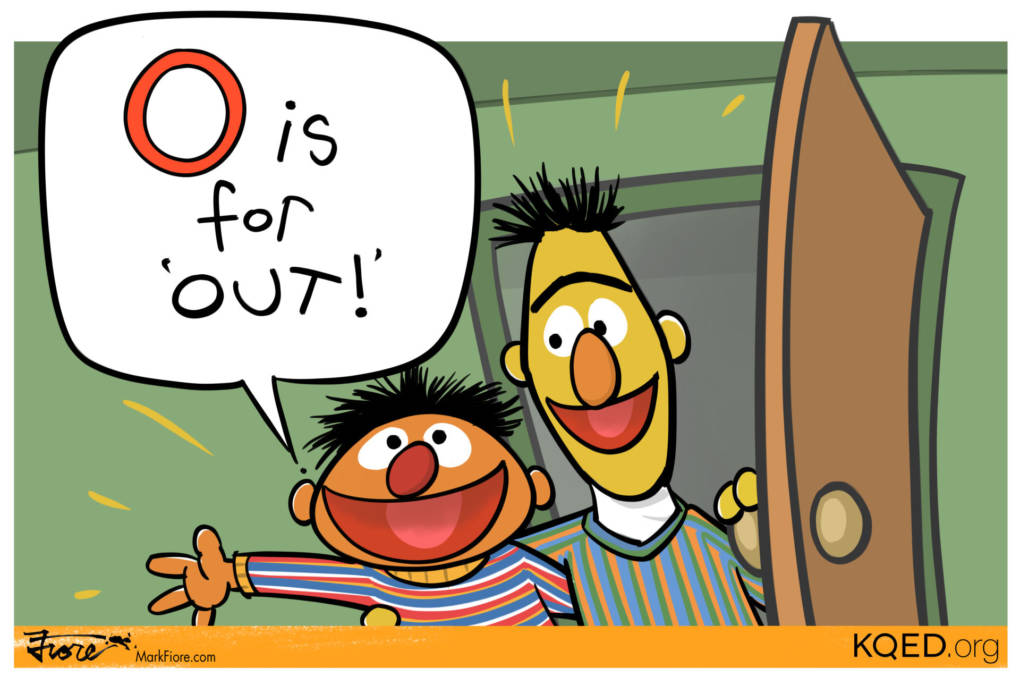
"caption": null,
"description": null,
"title": "out_091818_final",
"credit": null,
"status": "inherit",
"isLoading": false,
"fetchFailed": false
},
"news_11692852": {
"type": "attachments",
"id": "news_11692852",
"meta": {
"index": "attachments_1716263798",
"site": "news",
"id": "11692852",
"found": true
},
"parent": 11692825,
"imgSizes": {
"small": {
"file": "https://ww2.kqed.org/app/uploads/sites/10/2018/09/There-There-520x347.jpg",
"width": 520,
"mimeType": "image/jpeg",
"height": 347
},
"twentyfourteen-full-width": {
"file": "https://ww2.kqed.org/app/uploads/sites/10/2018/09/There-There-1038x576.jpg",
"width": 1038,
"mimeType": "image/jpeg",
"height": 576
},
"thumbnail": {
"file": "https://ww2.kqed.org/app/uploads/sites/10/2018/09/There-There-160x107.jpg",
"width": 160,
"mimeType": "image/jpeg",
"height": 107
},
"fd-sm": {
"file": "https://ww2.kqed.org/app/uploads/sites/10/2018/09/There-There-960x640.jpg",
"width": 960,
"mimeType": "image/jpeg",
"height": 640
},
"post-thumbnail": {
"file": "https://ww2.kqed.org/app/uploads/sites/10/2018/09/There-There-672x372.jpg",
"width": 672,
"mimeType": "image/jpeg",
"height": 372
},
"xsmall": {
"file": "https://ww2.kqed.org/app/uploads/sites/10/2018/09/There-There-375x250.jpg",
"width": 375,
"mimeType": "image/jpeg",
"height": 250
},
"kqedFullSize": {
"file": "https://ww2.kqed.org/app/uploads/sites/10/2018/09/There-There.jpg",
"width": 1920,
"height": 1280
},
"large": {
"file": "https://ww2.kqed.org/app/uploads/sites/10/2018/09/There-There-1020x680.jpg",
"width": 1020,
"mimeType": "image/jpeg",
"height": 680
},
"xlarge": {
"file": "https://ww2.kqed.org/app/uploads/sites/10/2018/09/There-There-1180x787.jpg",
"width": 1180,
"mimeType": "image/jpeg",
"height": 787
},
"complete_open_graph": {
"file": "https://ww2.kqed.org/app/uploads/sites/10/2018/09/There-There-1200x800.jpg",
"width": 1200,
"mimeType": "image/jpeg",
"height": 800
},
"guest-author-50": {
"file": "https://ww2.kqed.org/app/uploads/sites/10/2018/09/There-There-50x50.jpg",
"width": 50,
"mimeType": "image/jpeg",
"height": 50
},
"guest-author-96": {
"file": "https://ww2.kqed.org/app/uploads/sites/10/2018/09/There-There-96x96.jpg",
"width": 96,
"mimeType": "image/jpeg",
"height": 96
},
"medium": {
"file": "https://ww2.kqed.org/app/uploads/sites/10/2018/09/There-There-800x533.jpg",
"width": 800,
"mimeType": "image/jpeg",
"height": 533
},
"guest-author-64": {
"file": "https://ww2.kqed.org/app/uploads/sites/10/2018/09/There-There-64x64.jpg",
"width": 64,
"mimeType": "image/jpeg",
"height": 64
},
"guest-author-32": {
"file": "https://ww2.kqed.org/app/uploads/sites/10/2018/09/There-There-32x32.jpg",
"width": 32,
"mimeType": "image/jpeg",
"height": 32
},
"fd-lrg": {
"file": "https://ww2.kqed.org/app/uploads/sites/10/2018/09/There-There-1920x1280.jpg",
"width": 1920,
"mimeType": "image/jpeg",
"height": 1280
},
"fd-med": {
"file": "https://ww2.kqed.org/app/uploads/sites/10/2018/09/There-There-1180x787.jpg",
"width": 1180,
"mimeType": "image/jpeg",
"height": 787
},
"full-width": {
"file": "https://ww2.kqed.org/app/uploads/sites/10/2018/09/There-There-1920x1280.jpg",
"width": 1920,
"mimeType": "image/jpeg",
"height": 1280
},
"detail": {
"file": "https://ww2.kqed.org/app/uploads/sites/10/2018/09/There-There-150x150.jpg",
"width": 150,
"mimeType": "image/jpeg",
"height": 150
},
"guest-author-128": {
"file": "https://ww2.kqed.org/app/uploads/sites/10/2018/09/There-There-128x128.jpg",
"width": 128,
"mimeType": "image/jpeg",
"height": 128
},
"xxsmall": {
"file": "https://ww2.kqed.org/app/uploads/sites/10/2018/09/There-There-240x160.jpg",
"width": 240,
"mimeType": "image/jpeg",
"height": 160
}
},
"publishDate": 1537137187,
"modified": 1537160550,
"caption": "Tommy Orange is one of several Bay Area authors with spots on the longlists for the 2018 National Book Award. Orange's debut novel, \"There There\" is about the experience of urban Indians in Oakland.",
"description": "Tommy Orange is one of several Bay Area authors with spots on the longlists for the 2018 National Book Award. Orange's debut novel, \"There There\" is about the experience of urban Indians in Oakland.",
"title": "There There",
"credit": "Sandhya DIrks/KQED",
"status": "inherit",
"isLoading": false,
"fetchFailed": false
},
"news_11692159": {
"type": "attachments",
"id": "news_11692159",
"meta": {
"index": "attachments_1716263798",
"site": "news",
"id": "11692159",
"found": true
},
"parent": 11690787,
"imgSizes": {
"small": {
"file": "https://ww2.kqed.org/app/uploads/sites/10/2018/09/sandhya8-520x292.jpg",
"width": 520,
"mimeType": "image/jpeg",
"height": 292
},
"twentyfourteen-full-width": {
"file": "https://ww2.kqed.org/app/uploads/sites/10/2018/09/sandhya8-1038x576.jpg",
"width": 1038,
"mimeType": "image/jpeg",
"height": 576
},
"thumbnail": {
"file": "https://ww2.kqed.org/app/uploads/sites/10/2018/09/sandhya8-160x90.jpg",
"width": 160,
"mimeType": "image/jpeg",
"height": 90
},
"fd-sm": {
"file": "https://ww2.kqed.org/app/uploads/sites/10/2018/09/sandhya8-960x540.jpg",
"width": 960,
"mimeType": "image/jpeg",
"height": 540
},
"post-thumbnail": {
"file": "https://ww2.kqed.org/app/uploads/sites/10/2018/09/sandhya8-672x372.jpg",
"width": 672,
"mimeType": "image/jpeg",
"height": 372
},
"xsmall": {
"file": "https://ww2.kqed.org/app/uploads/sites/10/2018/09/sandhya8-375x211.jpg",
"width": 375,
"mimeType": "image/jpeg",
"height": 211
},
"kqedFullSize": {
"file": "https://ww2.kqed.org/app/uploads/sites/10/2018/09/sandhya8.jpg",
"width": 1080,
"height": 607
},
"large": {
"file": "https://ww2.kqed.org/app/uploads/sites/10/2018/09/sandhya8-1020x573.jpg",
"width": 1020,
"mimeType": "image/jpeg",
"height": 573
},
"guest-author-50": {
"file": "https://ww2.kqed.org/app/uploads/sites/10/2018/09/sandhya8-50x50.jpg",
"width": 50,
"mimeType": "image/jpeg",
"height": 50
},
"guest-author-96": {
"file": "https://ww2.kqed.org/app/uploads/sites/10/2018/09/sandhya8-96x96.jpg",
"width": 96,
"mimeType": "image/jpeg",
"height": 96
},
"medium": {
"file": "https://ww2.kqed.org/app/uploads/sites/10/2018/09/sandhya8-800x450.jpg",
"width": 800,
"mimeType": "image/jpeg",
"height": 450
},
"guest-author-64": {
"file": "https://ww2.kqed.org/app/uploads/sites/10/2018/09/sandhya8-64x64.jpg",
"width": 64,
"mimeType": "image/jpeg",
"height": 64
},
"guest-author-32": {
"file": "https://ww2.kqed.org/app/uploads/sites/10/2018/09/sandhya8-32x32.jpg",
"width": 32,
"mimeType": "image/jpeg",
"height": 32
},
"detail": {
"file": "https://ww2.kqed.org/app/uploads/sites/10/2018/09/sandhya8-150x150.jpg",
"width": 150,
"mimeType": "image/jpeg",
"height": 150
},
"guest-author-128": {
"file": "https://ww2.kqed.org/app/uploads/sites/10/2018/09/sandhya8-128x128.jpg",
"width": 128,
"mimeType": "image/jpeg",
"height": 128
},
"xxsmall": {
"file": "https://ww2.kqed.org/app/uploads/sites/10/2018/09/sandhya8-240x135.jpg",
"width": 240,
"mimeType": "image/jpeg",
"height": 135
}
},
"publishDate": 1536863441,
"modified": 1537107797,
"caption": "\"This was when Lake Merrit used to be poppin'!\" writes @liljohn1tdk in an Instagram post about his experience at Festival at the Lake in the '80s.",
"description": "\"This was when Lake Merrit used to be poppin'!\" writes @liljohn1tdk in an Instagram post about his experience at Festival at the Lake in the 80's.",
"title": "sandhya8",
"credit": "Courtesy of @liljohn1tdk ",
"status": "inherit",
"isLoading": false,
"fetchFailed": false
},
"news_11691806": {
"type": "attachments",
"id": "news_11691806",
"meta": {
"index": "attachments_1716263798",
"site": "news",
"id": "11691806",
"found": true
},
"parent": 11691757,
"imgSizes": {
"small": {
"file": "https://ww2.kqed.org/app/uploads/sites/10/2018/09/RS32764_Screening_at_a_country_town_1931_6297430030-qut-520x437.jpg",
"width": 520,
"mimeType": "image/jpeg",
"height": 437
},
"twentyfourteen-full-width": {
"file": "https://ww2.kqed.org/app/uploads/sites/10/2018/09/RS32764_Screening_at_a_country_town_1931_6297430030-qut-1038x576.jpg",
"width": 1038,
"mimeType": "image/jpeg",
"height": 576
},
"thumbnail": {
"file": "https://ww2.kqed.org/app/uploads/sites/10/2018/09/RS32764_Screening_at_a_country_town_1931_6297430030-qut-160x134.jpg",
"width": 160,
"mimeType": "image/jpeg",
"height": 134
},
"fd-sm": {
"file": "https://ww2.kqed.org/app/uploads/sites/10/2018/09/RS32764_Screening_at_a_country_town_1931_6297430030-qut-960x807.jpg",
"width": 960,
"mimeType": "image/jpeg",
"height": 807
},
"post-thumbnail": {
"file": "https://ww2.kqed.org/app/uploads/sites/10/2018/09/RS32764_Screening_at_a_country_town_1931_6297430030-qut-672x372.jpg",
"width": 672,
"mimeType": "image/jpeg",
"height": 372
},
"xsmall": {
"file": "https://ww2.kqed.org/app/uploads/sites/10/2018/09/RS32764_Screening_at_a_country_town_1931_6297430030-qut-375x315.jpg",
"width": 375,
"mimeType": "image/jpeg",
"height": 315
},
"kqedFullSize": {
"file": "https://ww2.kqed.org/app/uploads/sites/10/2018/09/RS32764_Screening_at_a_country_town_1931_6297430030-qut.jpg",
"width": 1920,
"height": 1613
},
"large": {
"file": "https://ww2.kqed.org/app/uploads/sites/10/2018/09/RS32764_Screening_at_a_country_town_1931_6297430030-qut-1020x857.jpg",
"width": 1020,
"mimeType": "image/jpeg",
"height": 857
},
"xlarge": {
"file": "https://ww2.kqed.org/app/uploads/sites/10/2018/09/RS32764_Screening_at_a_country_town_1931_6297430030-qut-1180x991.jpg",
"width": 1180,
"mimeType": "image/jpeg",
"height": 991
},
"complete_open_graph": {
"file": "https://ww2.kqed.org/app/uploads/sites/10/2018/09/RS32764_Screening_at_a_country_town_1931_6297430030-qut-1200x1008.jpg",
"width": 1200,
"mimeType": "image/jpeg",
"height": 1008
},
"guest-author-50": {
"file": "https://ww2.kqed.org/app/uploads/sites/10/2018/09/RS32764_Screening_at_a_country_town_1931_6297430030-qut-50x50.jpg",
"width": 50,
"mimeType": "image/jpeg",
"height": 50
},
"guest-author-96": {
"file": "https://ww2.kqed.org/app/uploads/sites/10/2018/09/RS32764_Screening_at_a_country_town_1931_6297430030-qut-96x96.jpg",
"width": 96,
"mimeType": "image/jpeg",
"height": 96
},
"medium": {
"file": "https://ww2.kqed.org/app/uploads/sites/10/2018/09/RS32764_Screening_at_a_country_town_1931_6297430030-qut-800x672.jpg",
"width": 800,
"mimeType": "image/jpeg",
"height": 672
},
"guest-author-64": {
"file": "https://ww2.kqed.org/app/uploads/sites/10/2018/09/RS32764_Screening_at_a_country_town_1931_6297430030-qut-64x64.jpg",
"width": 64,
"mimeType": "image/jpeg",
"height": 64
},
"guest-author-32": {
"file": "https://ww2.kqed.org/app/uploads/sites/10/2018/09/RS32764_Screening_at_a_country_town_1931_6297430030-qut-32x32.jpg",
"width": 32,
"mimeType": "image/jpeg",
"height": 32
},
"fd-lrg": {
"file": "https://ww2.kqed.org/app/uploads/sites/10/2018/09/RS32764_Screening_at_a_country_town_1931_6297430030-qut-1920x1613.jpg",
"width": 1920,
"mimeType": "image/jpeg",
"height": 1613
},
"fd-med": {
"file": "https://ww2.kqed.org/app/uploads/sites/10/2018/09/RS32764_Screening_at_a_country_town_1931_6297430030-qut-1180x991.jpg",
"width": 1180,
"mimeType": "image/jpeg",
"height": 991
},
"full-width": {
"file": "https://ww2.kqed.org/app/uploads/sites/10/2018/09/RS32764_Screening_at_a_country_town_1931_6297430030-qut-1920x1613.jpg",
"width": 1920,
"mimeType": "image/jpeg",
"height": 1613
},
"detail": {
"file": "https://ww2.kqed.org/app/uploads/sites/10/2018/09/RS32764_Screening_at_a_country_town_1931_6297430030-qut-150x150.jpg",
"width": 150,
"mimeType": "image/jpeg",
"height": 150
},
"guest-author-128": {
"file": "https://ww2.kqed.org/app/uploads/sites/10/2018/09/RS32764_Screening_at_a_country_town_1931_6297430030-qut-128x128.jpg",
"width": 128,
"mimeType": "image/jpeg",
"height": 128
},
"xxsmall": {
"file": "https://ww2.kqed.org/app/uploads/sites/10/2018/09/RS32764_Screening_at_a_country_town_1931_6297430030-qut-240x202.jpg",
"width": 240,
"mimeType": "image/jpeg",
"height": 202
}
},
"publishDate": 1536691662,
"modified": 1539881956,
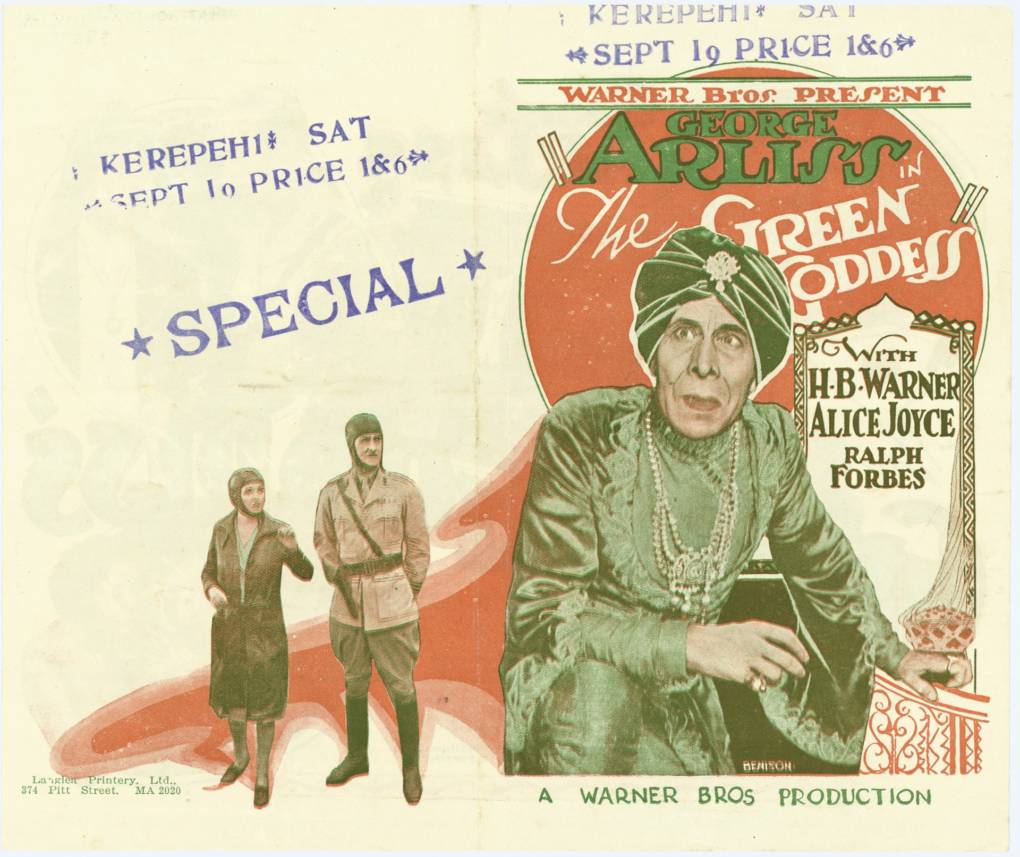
"caption": "British actor George Arliss starred in the play and film versions of 'The Green Goddess.'",
"description": "British actor George Arliss starred in the play and film versions of 'The Green Goddess.'",
"title": "RS32764_Screening_at_a_country_town,_1931_(6297430030)-qut",
"credit": "Flickr: National Library NZ on The Commons",
"status": "inherit",
"isLoading": false,
"fetchFailed": false
},
"news_11692134": {
"type": "attachments",
"id": "news_11692134",
"meta": {
"index": "attachments_1716263798",
"site": "news",
"id": "11692134",
"found": true
},
"parent": 11690787,
"imgSizes": {
"small": {
"file": "https://ww2.kqed.org/app/uploads/sites/10/2018/09/sandhya2-520x416.jpg",
"width": 520,
"mimeType": "image/jpeg",
"height": 416
},
"twentyfourteen-full-width": {
"file": "https://ww2.kqed.org/app/uploads/sites/10/2018/09/sandhya2-1038x576.jpg",
"width": 1038,
"mimeType": "image/jpeg",
"height": 576
},
"thumbnail": {
"file": "https://ww2.kqed.org/app/uploads/sites/10/2018/09/sandhya2-160x128.jpg",
"width": 160,
"mimeType": "image/jpeg",
"height": 128
},
"fd-sm": {
"file": "https://ww2.kqed.org/app/uploads/sites/10/2018/09/sandhya2-960x767.jpg",
"width": 960,
"mimeType": "image/jpeg",
"height": 767
},
"post-thumbnail": {
"file": "https://ww2.kqed.org/app/uploads/sites/10/2018/09/sandhya2-672x372.jpg",
"width": 672,
"mimeType": "image/jpeg",
"height": 372
},
"xsmall": {
"file": "https://ww2.kqed.org/app/uploads/sites/10/2018/09/sandhya2-375x300.jpg",
"width": 375,
"mimeType": "image/jpeg",
"height": 300
},
"kqedFullSize": {
"file": "https://ww2.kqed.org/app/uploads/sites/10/2018/09/sandhya2.jpg",
"width": 1080,
"height": 863
},
"large": {
"file": "https://ww2.kqed.org/app/uploads/sites/10/2018/09/sandhya2-1020x815.jpg",
"width": 1020,
"mimeType": "image/jpeg",
"height": 815
},
"guest-author-50": {
"file": "https://ww2.kqed.org/app/uploads/sites/10/2018/09/sandhya2-50x50.jpg",
"width": 50,
"mimeType": "image/jpeg",
"height": 50
},
"guest-author-96": {
"file": "https://ww2.kqed.org/app/uploads/sites/10/2018/09/sandhya2-96x96.jpg",
"width": 96,
"mimeType": "image/jpeg",
"height": 96
},
"medium": {
"file": "https://ww2.kqed.org/app/uploads/sites/10/2018/09/sandhya2-800x639.jpg",
"width": 800,
"mimeType": "image/jpeg",
"height": 639
},
"guest-author-64": {
"file": "https://ww2.kqed.org/app/uploads/sites/10/2018/09/sandhya2-64x64.jpg",
"width": 64,
"mimeType": "image/jpeg",
"height": 64
},
"guest-author-32": {
"file": "https://ww2.kqed.org/app/uploads/sites/10/2018/09/sandhya2-32x32.jpg",
"width": 32,
"mimeType": "image/jpeg",
"height": 32
},
"detail": {
"file": "https://ww2.kqed.org/app/uploads/sites/10/2018/09/sandhya2-150x150.jpg",
"width": 150,
"mimeType": "image/jpeg",
"height": 150
},
"guest-author-128": {
"file": "https://ww2.kqed.org/app/uploads/sites/10/2018/09/sandhya2-128x128.jpg",
"width": 128,
"mimeType": "image/jpeg",
"height": 128
},
"xxsmall": {
"file": "https://ww2.kqed.org/app/uploads/sites/10/2018/09/sandhya2-240x192.jpg",
"width": 240,
"mimeType": "image/jpeg",
"height": 192
}
},
"publishDate": 1536861059,
"modified": 1537034784,
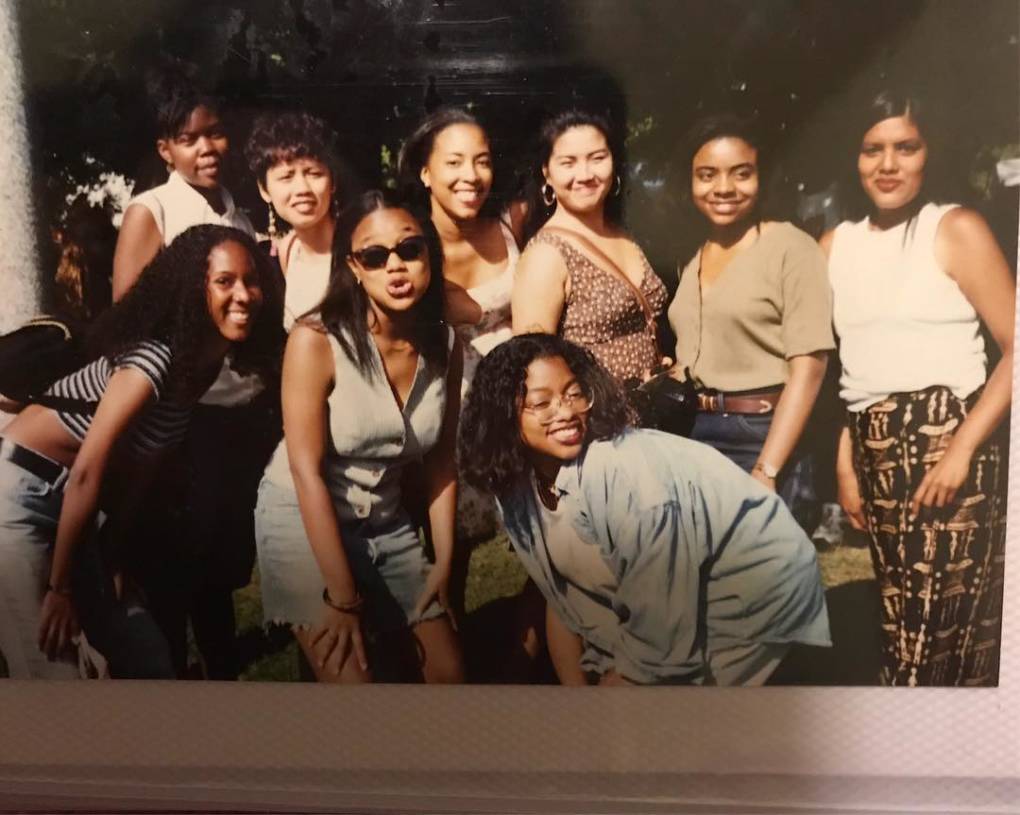
"caption": "\"#Oakland’s finest at Festival at the Lake 1994,\" writes @noblesaa in an Instagram post about the Festival at the Lake.",
"description": "\"#Oakland’s finest at Festival at the Lake 1994,\" writes @noblesaa in an Instagram post about the Festival at the Lake.",
"title": "sandhya2",
"credit": "Courtesy of @noblesaa",
"status": "inherit",
"isLoading": false,
"fetchFailed": false
},
"news_11692434": {
"type": "attachments",
"id": "news_11692434",
"meta": {
"index": "attachments_1716263798",
"site": "news",
"id": "11692434",
"found": true
},
"parent": 11692380,
"imgSizes": {
"small": {
"file": "https://ww2.kqed.org/app/uploads/sites/10/2018/09/brennans180913b-520x406.jpg",
"width": 520,
"mimeType": "image/jpeg",
"height": 406
},
"twentyfourteen-full-width": {
"file": "https://ww2.kqed.org/app/uploads/sites/10/2018/09/brennans180913b-1038x576.jpg",
"width": 1038,
"mimeType": "image/jpeg",
"height": 576
},
"thumbnail": {
"file": "https://ww2.kqed.org/app/uploads/sites/10/2018/09/brennans180913b-160x125.jpg",
"width": 160,
"mimeType": "image/jpeg",
"height": 125
},
"fd-sm": {
"file": "https://ww2.kqed.org/app/uploads/sites/10/2018/09/brennans180913b-960x750.jpg",
"width": 960,
"mimeType": "image/jpeg",
"height": 750
},
"post-thumbnail": {
"file": "https://ww2.kqed.org/app/uploads/sites/10/2018/09/brennans180913b-672x372.jpg",
"width": 672,
"mimeType": "image/jpeg",
"height": 372
},
"xsmall": {
"file": "https://ww2.kqed.org/app/uploads/sites/10/2018/09/brennans180913b-375x293.jpg",
"width": 375,
"mimeType": "image/jpeg",
"height": 293
},
"kqedFullSize": {
"file": "https://ww2.kqed.org/app/uploads/sites/10/2018/09/brennans180913b.jpg",
"width": 1920,
"height": 1499
},
"large": {
"file": "https://ww2.kqed.org/app/uploads/sites/10/2018/09/brennans180913b-1020x796.jpg",
"width": 1020,
"mimeType": "image/jpeg",
"height": 796
},
"xlarge": {
"file": "https://ww2.kqed.org/app/uploads/sites/10/2018/09/brennans180913b-1180x921.jpg",
"width": 1180,
"mimeType": "image/jpeg",
"height": 921
},
"complete_open_graph": {
"file": "https://ww2.kqed.org/app/uploads/sites/10/2018/09/brennans180913b-1200x937.jpg",
"width": 1200,
"mimeType": "image/jpeg",
"height": 937
},
"guest-author-50": {
"file": "https://ww2.kqed.org/app/uploads/sites/10/2018/09/brennans180913b-50x50.jpg",
"width": 50,
"mimeType": "image/jpeg",
"height": 50
},
"guest-author-96": {
"file": "https://ww2.kqed.org/app/uploads/sites/10/2018/09/brennans180913b-96x96.jpg",
"width": 96,
"mimeType": "image/jpeg",
"height": 96
},
"medium": {
"file": "https://ww2.kqed.org/app/uploads/sites/10/2018/09/brennans180913b-800x625.jpg",
"width": 800,
"mimeType": "image/jpeg",
"height": 625
},
"guest-author-64": {
"file": "https://ww2.kqed.org/app/uploads/sites/10/2018/09/brennans180913b-64x64.jpg",
"width": 64,
"mimeType": "image/jpeg",
"height": 64
},
"guest-author-32": {
"file": "https://ww2.kqed.org/app/uploads/sites/10/2018/09/brennans180913b-32x32.jpg",
"width": 32,
"mimeType": "image/jpeg",
"height": 32
},
"fd-lrg": {
"file": "https://ww2.kqed.org/app/uploads/sites/10/2018/09/brennans180913b-1920x1499.jpg",
"width": 1920,
"mimeType": "image/jpeg",
"height": 1499
},
"fd-med": {
"file": "https://ww2.kqed.org/app/uploads/sites/10/2018/09/brennans180913b-1180x921.jpg",
"width": 1180,
"mimeType": "image/jpeg",
"height": 921
},
"full-width": {
"file": "https://ww2.kqed.org/app/uploads/sites/10/2018/09/brennans180913b-1920x1499.jpg",
"width": 1920,
"mimeType": "image/jpeg",
"height": 1499
},
"detail": {
"file": "https://ww2.kqed.org/app/uploads/sites/10/2018/09/brennans180913b-150x150.jpg",
"width": 150,
"mimeType": "image/jpeg",
"height": 150
},
"guest-author-128": {
"file": "https://ww2.kqed.org/app/uploads/sites/10/2018/09/brennans180913b-128x128.jpg",
"width": 128,
"mimeType": "image/jpeg",
"height": 128
},
"xxsmall": {
"file": "https://ww2.kqed.org/app/uploads/sites/10/2018/09/brennans180913b-240x187.jpg",
"width": 240,
"mimeType": "image/jpeg",
"height": 187
}
},
"publishDate": 1536948913,
"modified": 1537084003,
"caption": "Irish coffee was the signature offering at Brennan's, a bar closing Saturday, Sept. 15, just short of its 60th anniversary. ",
"description": "Irish coffee was the signature offering at Brennan's, a bar closing Saturday, Sept. 15, just short of its 60th anniversary. ",
"title": "Brennans-Berkeley",
"credit": "Dan Brekke/KQED",
"status": "inherit",
"isLoading": false,
"fetchFailed": false
},
"news_11691417": {
"type": "attachments",
"id": "news_11691417",
"meta": {
"index": "attachments_1716263798",
"site": "news",
"id": "11691417",
"found": true
},
"parent": 11691396,
"imgSizes": {
"small": {
"file": "https://ww2.kqed.org/app/uploads/sites/10/2018/09/IMG_6734-1-520x347.jpg",
"width": 520,
"mimeType": "image/jpeg",
"height": 347
},
"twentyfourteen-full-width": {
"file": "https://ww2.kqed.org/app/uploads/sites/10/2018/09/IMG_6734-1-1038x576.jpg",
"width": 1038,
"mimeType": "image/jpeg",
"height": 576
},
"thumbnail": {
"file": "https://ww2.kqed.org/app/uploads/sites/10/2018/09/IMG_6734-1-160x107.jpg",
"width": 160,
"mimeType": "image/jpeg",
"height": 107
},
"fd-sm": {
"file": "https://ww2.kqed.org/app/uploads/sites/10/2018/09/IMG_6734-1-960x640.jpg",
"width": 960,
"mimeType": "image/jpeg",
"height": 640
},
"post-thumbnail": {
"file": "https://ww2.kqed.org/app/uploads/sites/10/2018/09/IMG_6734-1-672x372.jpg",
"width": 672,
"mimeType": "image/jpeg",
"height": 372
},
"xsmall": {
"file": "https://ww2.kqed.org/app/uploads/sites/10/2018/09/IMG_6734-1-375x250.jpg",
"width": 375,
"mimeType": "image/jpeg",
"height": 250
},
"kqedFullSize": {
"file": "https://ww2.kqed.org/app/uploads/sites/10/2018/09/IMG_6734-1-e1536530350761.jpg",
"width": 1920,
"height": 1280
},
"large": {
"file": "https://ww2.kqed.org/app/uploads/sites/10/2018/09/IMG_6734-1-1020x680.jpg",
"width": 1020,
"mimeType": "image/jpeg",
"height": 680
},
"xlarge": {
"file": "https://ww2.kqed.org/app/uploads/sites/10/2018/09/IMG_6734-1-1180x787.jpg",
"width": 1180,
"mimeType": "image/jpeg",
"height": 787
},
"complete_open_graph": {
"file": "https://ww2.kqed.org/app/uploads/sites/10/2018/09/IMG_6734-1-1200x800.jpg",
"width": 1200,
"mimeType": "image/jpeg",
"height": 800
},
"guest-author-50": {
"file": "https://ww2.kqed.org/app/uploads/sites/10/2018/09/IMG_6734-1-50x50.jpg",
"width": 50,
"mimeType": "image/jpeg",
"height": 50
},
"guest-author-96": {
"file": "https://ww2.kqed.org/app/uploads/sites/10/2018/09/IMG_6734-1-96x96.jpg",
"width": 96,
"mimeType": "image/jpeg",
"height": 96
},
"medium": {
"file": "https://ww2.kqed.org/app/uploads/sites/10/2018/09/IMG_6734-1-800x533.jpg",
"width": 800,
"mimeType": "image/jpeg",
"height": 533
},
"guest-author-64": {
"file": "https://ww2.kqed.org/app/uploads/sites/10/2018/09/IMG_6734-1-64x64.jpg",
"width": 64,
"mimeType": "image/jpeg",
"height": 64
},
"guest-author-32": {
"file": "https://ww2.kqed.org/app/uploads/sites/10/2018/09/IMG_6734-1-32x32.jpg",
"width": 32,
"mimeType": "image/jpeg",
"height": 32
},
"fd-lrg": {
"file": "https://ww2.kqed.org/app/uploads/sites/10/2018/09/IMG_6734-1-1920x1280.jpg",
"width": 1920,
"mimeType": "image/jpeg",
"height": 1280
},
"fd-med": {
"file": "https://ww2.kqed.org/app/uploads/sites/10/2018/09/IMG_6734-1-1180x787.jpg",
"width": 1180,
"mimeType": "image/jpeg",
"height": 787
},
"full-width": {
"file": "https://ww2.kqed.org/app/uploads/sites/10/2018/09/IMG_6734-1-1920x1280.jpg",
"width": 1920,
"mimeType": "image/jpeg",
"height": 1280
},
"detail": {
"file": "https://ww2.kqed.org/app/uploads/sites/10/2018/09/IMG_6734-1-150x150.jpg",
"width": 150,
"mimeType": "image/jpeg",
"height": 150
},
"guest-author-128": {
"file": "https://ww2.kqed.org/app/uploads/sites/10/2018/09/IMG_6734-1-128x128.jpg",
"width": 128,
"mimeType": "image/jpeg",
"height": 128
},
"xxsmall": {
"file": "https://ww2.kqed.org/app/uploads/sites/10/2018/09/IMG_6734-1-240x160.jpg",
"width": 240,
"mimeType": "image/jpeg",
"height": 160
}
},
"publishDate": 1536530321,
"modified": 1536530360,
"caption": "The community came together Sunday to celebrate Oakland Pride. ",
"description": null,
"title": "IMG_6734",
"credit": "Sara Hossaini/KQED",
"status": "inherit",
"isLoading": false,
"fetchFailed": false
},
"news_11691333": {
"type": "attachments",
"id": "news_11691333",
"meta": {
"index": "attachments_1716263798",
"site": "news",
"id": "11691333",
"found": true
},
"parent": 11691299,
"imgSizes": {
"small": {
"file": "https://ww2.kqed.org/app/uploads/sites/10/2018/09/RS32756_sagey-birthday-party-qut-520x347.jpg",
"width": 520,
"mimeType": "image/jpeg",
"height": 347
},
"twentyfourteen-full-width": {
"file": "https://ww2.kqed.org/app/uploads/sites/10/2018/09/RS32756_sagey-birthday-party-qut-1038x576.jpg",
"width": 1038,
"mimeType": "image/jpeg",
"height": 576
},
"thumbnail": {
"file": "https://ww2.kqed.org/app/uploads/sites/10/2018/09/RS32756_sagey-birthday-party-qut-160x107.jpg",
"width": 160,
"mimeType": "image/jpeg",
"height": 107
},
"fd-sm": {
"file": "https://ww2.kqed.org/app/uploads/sites/10/2018/09/RS32756_sagey-birthday-party-qut-960x640.jpg",
"width": 960,
"mimeType": "image/jpeg",
"height": 640
},
"post-thumbnail": {
"file": "https://ww2.kqed.org/app/uploads/sites/10/2018/09/RS32756_sagey-birthday-party-qut-672x372.jpg",
"width": 672,
"mimeType": "image/jpeg",
"height": 372
},
"xsmall": {
"file": "https://ww2.kqed.org/app/uploads/sites/10/2018/09/RS32756_sagey-birthday-party-qut-375x250.jpg",
"width": 375,
"mimeType": "image/jpeg",
"height": 250
},
"kqedFullSize": {
"file": "https://ww2.kqed.org/app/uploads/sites/10/2018/09/RS32756_sagey-birthday-party-qut.jpg",
"width": 1920,
"height": 1280
},
"large": {
"file": "https://ww2.kqed.org/app/uploads/sites/10/2018/09/RS32756_sagey-birthday-party-qut-1020x680.jpg",
"width": 1020,
"mimeType": "image/jpeg",
"height": 680
},
"xlarge": {
"file": "https://ww2.kqed.org/app/uploads/sites/10/2018/09/RS32756_sagey-birthday-party-qut-1180x787.jpg",
"width": 1180,
"mimeType": "image/jpeg",
"height": 787
},
"complete_open_graph": {
"file": "https://ww2.kqed.org/app/uploads/sites/10/2018/09/RS32756_sagey-birthday-party-qut-1200x800.jpg",
"width": 1200,
"mimeType": "image/jpeg",
"height": 800
},
"guest-author-50": {
"file": "https://ww2.kqed.org/app/uploads/sites/10/2018/09/RS32756_sagey-birthday-party-qut-50x50.jpg",
"width": 50,
"mimeType": "image/jpeg",
"height": 50
},
"guest-author-96": {
"file": "https://ww2.kqed.org/app/uploads/sites/10/2018/09/RS32756_sagey-birthday-party-qut-96x96.jpg",
"width": 96,
"mimeType": "image/jpeg",
"height": 96
},
"medium": {
"file": "https://ww2.kqed.org/app/uploads/sites/10/2018/09/RS32756_sagey-birthday-party-qut-800x533.jpg",
"width": 800,
"mimeType": "image/jpeg",
"height": 533
},
"guest-author-64": {
"file": "https://ww2.kqed.org/app/uploads/sites/10/2018/09/RS32756_sagey-birthday-party-qut-64x64.jpg",
"width": 64,
"mimeType": "image/jpeg",
"height": 64
},
"guest-author-32": {
"file": "https://ww2.kqed.org/app/uploads/sites/10/2018/09/RS32756_sagey-birthday-party-qut-32x32.jpg",
"width": 32,
"mimeType": "image/jpeg",
"height": 32
},
"fd-lrg": {
"file": "https://ww2.kqed.org/app/uploads/sites/10/2018/09/RS32756_sagey-birthday-party-qut-1920x1280.jpg",
"width": 1920,
"mimeType": "image/jpeg",
"height": 1280
},
"fd-med": {
"file": "https://ww2.kqed.org/app/uploads/sites/10/2018/09/RS32756_sagey-birthday-party-qut-1180x787.jpg",
"width": 1180,
"mimeType": "image/jpeg",
"height": 787
},
"full-width": {
"file": "https://ww2.kqed.org/app/uploads/sites/10/2018/09/RS32756_sagey-birthday-party-qut-1920x1280.jpg",
"width": 1920,
"mimeType": "image/jpeg",
"height": 1280
},
"detail": {
"file": "https://ww2.kqed.org/app/uploads/sites/10/2018/09/RS32756_sagey-birthday-party-qut-150x150.jpg",
"width": 150,
"mimeType": "image/jpeg",
"height": 150
},
"guest-author-128": {
"file": "https://ww2.kqed.org/app/uploads/sites/10/2018/09/RS32756_sagey-birthday-party-qut-128x128.jpg",
"width": 128,
"mimeType": "image/jpeg",
"height": 128
},
"xxsmall": {
"file": "https://ww2.kqed.org/app/uploads/sites/10/2018/09/RS32756_sagey-birthday-party-qut-240x160.jpg",
"width": 240,
"mimeType": "image/jpeg",
"height": 160
}
},
"publishDate": 1536455377,
"modified": 1536519736,
"caption": "Oakland resident Noelle Kaplan (L) and her wife Stacey (R) with their daughter Sage at her first birthday party. Sage's\nsecond birthday falls on September 9th, the same day as Oakland\nPride. The Kaplans moved to Oakland in part because they wanted to be somewhere with a lot of other queer families.",
"description": "Oakland resident Noelle Kaplan (L) and her wife Stacey (R) with their daughter Sage at her first birthday party. The Kaplans moved to Oakland in part because they wanted to be somewhere with a lot of other queer families.",
"title": "RS32756_sagey birthday party-qut",
"credit": "Courtesy of Noelle Kaplan",
"status": "inherit",
"isLoading": false,
"fetchFailed": false
},
"news_11691256": {
"type": "attachments",
"id": "news_11691256",
"meta": {
"index": "attachments_1716263798",
"site": "news",
"id": "11691256",
"found": true
},
"parent": 11691252,
"imgSizes": {
"small": {
"file": "https://ww2.kqed.org/app/uploads/sites/10/2018/09/RS11908_10372873_10152331249946939_6849988152875933650_o-659x456-520x360.jpg",
"width": 520,
"mimeType": "image/jpeg",
"height": 360
},
"twentyfourteen-full-width": {
"file": "https://ww2.kqed.org/app/uploads/sites/10/2018/09/RS11908_10372873_10152331249946939_6849988152875933650_o-659x456-1038x576.jpg",
"width": 1038,
"mimeType": "image/jpeg",
"height": 576
},
"thumbnail": {
"file": "https://ww2.kqed.org/app/uploads/sites/10/2018/09/RS11908_10372873_10152331249946939_6849988152875933650_o-659x456-160x111.jpg",
"width": 160,
"mimeType": "image/jpeg",
"height": 111
},
"fd-sm": {
"file": "https://ww2.kqed.org/app/uploads/sites/10/2018/09/RS11908_10372873_10152331249946939_6849988152875933650_o-659x456-960x664.jpg",
"width": 960,
"mimeType": "image/jpeg",
"height": 664
},
"post-thumbnail": {
"file": "https://ww2.kqed.org/app/uploads/sites/10/2018/09/RS11908_10372873_10152331249946939_6849988152875933650_o-659x456-672x372.jpg",
"width": 672,
"mimeType": "image/jpeg",
"height": 372
},
"xsmall": {
"file": "https://ww2.kqed.org/app/uploads/sites/10/2018/09/RS11908_10372873_10152331249946939_6849988152875933650_o-659x456-375x259.jpg",
"width": 375,
"mimeType": "image/jpeg",
"height": 259
},
"kqedFullSize": {
"file": "https://ww2.kqed.org/app/uploads/sites/10/2018/09/RS11908_10372873_10152331249946939_6849988152875933650_o-659x456.jpg",
"width": 1920,
"height": 1328
},
"large": {
"file": "https://ww2.kqed.org/app/uploads/sites/10/2018/09/RS11908_10372873_10152331249946939_6849988152875933650_o-659x456-1020x706.jpg",
"width": 1020,
"mimeType": "image/jpeg",
"height": 706
},
"xlarge": {
"file": "https://ww2.kqed.org/app/uploads/sites/10/2018/09/RS11908_10372873_10152331249946939_6849988152875933650_o-659x456-1180x816.jpg",
"width": 1180,
"mimeType": "image/jpeg",
"height": 816
},
"complete_open_graph": {
"file": "https://ww2.kqed.org/app/uploads/sites/10/2018/09/RS11908_10372873_10152331249946939_6849988152875933650_o-659x456-1200x830.jpg",
"width": 1200,
"mimeType": "image/jpeg",
"height": 830
},
"guest-author-50": {
"file": "https://ww2.kqed.org/app/uploads/sites/10/2018/09/RS11908_10372873_10152331249946939_6849988152875933650_o-659x456-50x50.jpg",
"width": 50,
"mimeType": "image/jpeg",
"height": 50
},
"guest-author-96": {
"file": "https://ww2.kqed.org/app/uploads/sites/10/2018/09/RS11908_10372873_10152331249946939_6849988152875933650_o-659x456-96x96.jpg",
"width": 96,
"mimeType": "image/jpeg",
"height": 96
},
"medium": {
"file": "https://ww2.kqed.org/app/uploads/sites/10/2018/09/RS11908_10372873_10152331249946939_6849988152875933650_o-659x456-800x553.jpg",
"width": 800,
"mimeType": "image/jpeg",
"height": 553
},
"guest-author-64": {
"file": "https://ww2.kqed.org/app/uploads/sites/10/2018/09/RS11908_10372873_10152331249946939_6849988152875933650_o-659x456-64x64.jpg",
"width": 64,
"mimeType": "image/jpeg",
"height": 64
},
"guest-author-32": {
"file": "https://ww2.kqed.org/app/uploads/sites/10/2018/09/RS11908_10372873_10152331249946939_6849988152875933650_o-659x456-32x32.jpg",
"width": 32,
"mimeType": "image/jpeg",
"height": 32
},
"fd-lrg": {
"file": "https://ww2.kqed.org/app/uploads/sites/10/2018/09/RS11908_10372873_10152331249946939_6849988152875933650_o-659x456-1920x1328.jpg",
"width": 1920,
"mimeType": "image/jpeg",
"height": 1328
},
"fd-med": {
"file": "https://ww2.kqed.org/app/uploads/sites/10/2018/09/RS11908_10372873_10152331249946939_6849988152875933650_o-659x456-1180x816.jpg",
"width": 1180,
"mimeType": "image/jpeg",
"height": 816
},
"full-width": {
"file": "https://ww2.kqed.org/app/uploads/sites/10/2018/09/RS11908_10372873_10152331249946939_6849988152875933650_o-659x456-1920x1328.jpg",
"width": 1920,
"mimeType": "image/jpeg",
"height": 1328
},
"detail": {
"file": "https://ww2.kqed.org/app/uploads/sites/10/2018/09/RS11908_10372873_10152331249946939_6849988152875933650_o-659x456-150x150.jpg",
"width": 150,
"mimeType": "image/jpeg",
"height": 150
},
"guest-author-128": {
"file": "https://ww2.kqed.org/app/uploads/sites/10/2018/09/RS11908_10372873_10152331249946939_6849988152875933650_o-659x456-128x128.jpg",
"width": 128,
"mimeType": "image/jpeg",
"height": 128
},
"xxsmall": {
"file": "https://ww2.kqed.org/app/uploads/sites/10/2018/09/RS11908_10372873_10152331249946939_6849988152875933650_o-659x456-240x166.jpg",
"width": 240,
"mimeType": "image/jpeg",
"height": 166
}
},
"publishDate": 1536439032,
"modified": 1536445556,
"caption": "Oakland Pride will take place this Sunday.",
"description": "Oakland Pride will take place Sunday. ",
"title": "RS11908_10372873_10152331249946939_6849988152875933650_o-659x456",
"credit": "Guy Marzorati/KQED",
"status": "inherit",
"isLoading": false,
"fetchFailed": false
},
"news_11690087": {
"type": "attachments",
"id": "news_11690087",
"meta": {
"index": "attachments_1716263798",
"site": "news",
"id": "11690087",
"found": true
},
"parent": 11690086,
"imgSizes": {
"small": {
"file": "https://ww2.kqed.org/app/uploads/sites/10/2018/09/Arleene-1_enl-f8447c3bbc0a4f6ed16cb66412af6ab0f7ca568a-520x346.jpg",
"width": 520,
"mimeType": "image/jpeg",
"height": 346
},
"twentyfourteen-full-width": {
"file": "https://ww2.kqed.org/app/uploads/sites/10/2018/09/Arleene-1_enl-f8447c3bbc0a4f6ed16cb66412af6ab0f7ca568a-1038x576.jpg",
"width": 1038,
"mimeType": "image/jpeg",
"height": 576
},
"thumbnail": {
"file": "https://ww2.kqed.org/app/uploads/sites/10/2018/09/Arleene-1_enl-f8447c3bbc0a4f6ed16cb66412af6ab0f7ca568a-160x107.jpg",
"width": 160,
"mimeType": "image/jpeg",
"height": 107
},
"fd-sm": {
"file": "https://ww2.kqed.org/app/uploads/sites/10/2018/09/Arleene-1_enl-f8447c3bbc0a4f6ed16cb66412af6ab0f7ca568a-960x639.jpg",
"width": 960,
"mimeType": "image/jpeg",
"height": 639
},
"post-thumbnail": {
"file": "https://ww2.kqed.org/app/uploads/sites/10/2018/09/Arleene-1_enl-f8447c3bbc0a4f6ed16cb66412af6ab0f7ca568a-672x372.jpg",
"width": 672,
"mimeType": "image/jpeg",
"height": 372
},
"xsmall": {
"file": "https://ww2.kqed.org/app/uploads/sites/10/2018/09/Arleene-1_enl-f8447c3bbc0a4f6ed16cb66412af6ab0f7ca568a-375x250.jpg",
"width": 375,
"mimeType": "image/jpeg",
"height": 250
},
"kqedFullSize": {
"file": "https://ww2.kqed.org/app/uploads/sites/10/2018/09/Arleene-1_enl-f8447c3bbc0a4f6ed16cb66412af6ab0f7ca568a-e1535835596762.jpg",
"width": 1920,
"height": 1279
},
"large": {
"file": "https://ww2.kqed.org/app/uploads/sites/10/2018/09/Arleene-1_enl-f8447c3bbc0a4f6ed16cb66412af6ab0f7ca568a-1020x679.jpg",
"width": 1020,
"mimeType": "image/jpeg",
"height": 679
},
"xlarge": {
"file": "https://ww2.kqed.org/app/uploads/sites/10/2018/09/Arleene-1_enl-f8447c3bbc0a4f6ed16cb66412af6ab0f7ca568a-1180x786.jpg",
"width": 1180,
"mimeType": "image/jpeg",
"height": 786
},
"complete_open_graph": {
"file": "https://ww2.kqed.org/app/uploads/sites/10/2018/09/Arleene-1_enl-f8447c3bbc0a4f6ed16cb66412af6ab0f7ca568a-1200x799.jpg",
"width": 1200,
"mimeType": "image/jpeg",
"height": 799
},
"guest-author-50": {
"file": "https://ww2.kqed.org/app/uploads/sites/10/2018/09/Arleene-1_enl-f8447c3bbc0a4f6ed16cb66412af6ab0f7ca568a-50x50.jpg",
"width": 50,
"mimeType": "image/jpeg",
"height": 50
},
"guest-author-96": {
"file": "https://ww2.kqed.org/app/uploads/sites/10/2018/09/Arleene-1_enl-f8447c3bbc0a4f6ed16cb66412af6ab0f7ca568a-96x96.jpg",
"width": 96,
"mimeType": "image/jpeg",
"height": 96
},
"medium": {
"file": "https://ww2.kqed.org/app/uploads/sites/10/2018/09/Arleene-1_enl-f8447c3bbc0a4f6ed16cb66412af6ab0f7ca568a-800x533.jpg",
"width": 800,
"mimeType": "image/jpeg",
"height": 533
},
"guest-author-64": {
"file": "https://ww2.kqed.org/app/uploads/sites/10/2018/09/Arleene-1_enl-f8447c3bbc0a4f6ed16cb66412af6ab0f7ca568a-64x64.jpg",
"width": 64,
"mimeType": "image/jpeg",
"height": 64
},
"guest-author-32": {
"file": "https://ww2.kqed.org/app/uploads/sites/10/2018/09/Arleene-1_enl-f8447c3bbc0a4f6ed16cb66412af6ab0f7ca568a-32x32.jpg",
"width": 32,
"mimeType": "image/jpeg",
"height": 32
},
"fd-lrg": {
"file": "https://ww2.kqed.org/app/uploads/sites/10/2018/09/Arleene-1_enl-f8447c3bbc0a4f6ed16cb66412af6ab0f7ca568a-1920x1279.jpg",
"width": 1920,
"mimeType": "image/jpeg",
"height": 1279
},
"fd-med": {
"file": "https://ww2.kqed.org/app/uploads/sites/10/2018/09/Arleene-1_enl-f8447c3bbc0a4f6ed16cb66412af6ab0f7ca568a-1180x786.jpg",
"width": 1180,
"mimeType": "image/jpeg",
"height": 786
},
"full-width": {
"file": "https://ww2.kqed.org/app/uploads/sites/10/2018/09/Arleene-1_enl-f8447c3bbc0a4f6ed16cb66412af6ab0f7ca568a-1920x1279.jpg",
"width": 1920,
"mimeType": "image/jpeg",
"height": 1279
},
"detail": {
"file": "https://ww2.kqed.org/app/uploads/sites/10/2018/09/Arleene-1_enl-f8447c3bbc0a4f6ed16cb66412af6ab0f7ca568a-150x150.jpg",
"width": 150,
"mimeType": "image/jpeg",
"height": 150
},
"guest-author-128": {
"file": "https://ww2.kqed.org/app/uploads/sites/10/2018/09/Arleene-1_enl-f8447c3bbc0a4f6ed16cb66412af6ab0f7ca568a-128x128.jpg",
"width": 128,
"mimeType": "image/jpeg",
"height": 128
},
"xxsmall": {
"file": "https://ww2.kqed.org/app/uploads/sites/10/2018/09/Arleene-1_enl-f8447c3bbc0a4f6ed16cb66412af6ab0f7ca568a-240x160.jpg",
"width": 240,
"mimeType": "image/jpeg",
"height": 160
}
},
"publishDate": 1535835342,
"modified": 1535836309,
"caption": "Arleene Correa Valencia works on a painting in her latest series: In Times of Crisis, En Tiempo de Crisis.",
"description": "Arleene Correa Valencia works on a painting in her latest series: In Times of Crisis, En Tiempo de Crisis.",
"title": "Arleene Correa Valencia works on a painting in her latest series: In Times of Crisis, En Tiempo de Crisis.",
"credit": "Rachael Bongiorno for NPR",
"status": "inherit",
"isLoading": false,
"fetchFailed": false
}
},
"audioPlayerReducer": {
"postId": "stream_live",
"isPaused": true,
"isPlaying": false,
"pfsActive": false,
"pledgeModalIsOpen": true,
"playerDrawerIsOpen": false,
"liveAudioPlayStartedAt": 0,
"liveAudioPlayContext": ""
},
"authorsReducer": {
"byline_news_11690086": {
"type": "authors",
"id": "byline_news_11690086",
"meta": {
"override": true
},
"slug": "byline_news_11690086",
"name": "Rachael Bongiorno",
"isLoading": false
},
"danbrekke": {
"type": "authors",
"id": "222",
"meta": {
"index": "authors_1716337520",
"id": "222",
"found": true
},
"name": "Dan Brekke",
"firstName": "Dan",
"lastName": "Brekke",
"slug": "danbrekke",
"email": "dbrekke@kqed.org",
"display_author_email": true,
"staff_mastheads": [
"news",
"science"
],
"title": "KQED Editor and Reporter",
"bio": "Dan Brekke is a reporter and editor for KQED News, responsible for coverage of topics ranging from California water issues to the Bay Area's transportation challenges. In a newsroom career that began in Chicago in 1972, Dan has worked for \u003cem>The San Francisco Examiner,\u003c/em> Wired and TechTV and has been published in The New York Times, The New York Times Magazine, Business 2.0, Salon and elsewhere.\r\n\r\nSince joining KQED in 2007, Dan has reported, edited and produced both radio and online features and breaking news pieces. He has shared as both editor and reporter in four Society of Professional Journalists Norcal Excellence in Journalism awards and one Edward R. Murrow regional award. He was chosen for a spring 2017 residency at the Mesa Refuge to advance his research on California salmon.\r\n\r\nEmail Dan at: \u003ca href=\"mailto:dbrekke@kqed.org\">dbrekke@kqed.org\u003c/a>\r\n\r\n\u003cstrong>Twitter:\u003c/strong> \u003ca href=\"https://twitter.com/danbrekke\" rel=\"noopener noreferrer\">twitter.com/danbrekke\u003c/a>\r\n\u003cstrong>Facebook:\u003c/strong> \u003ca href=\"https://www.facebook.com/danbrekke\" rel=\"noopener noreferrer\">www.facebook.com/danbrekke\u003c/a>\r\n\u003cstrong>LinkedIn:\u003c/strong> \u003ca href=\"https://www.linkedin.com/in/danbrekke\" rel=\"noopener noreferrer\">www.linkedin.com/in/danbrekke\u003c/a>",
"avatar": "https://secure.gravatar.com/avatar/8f1f0d2a978fb3b23426c922c7e2af558fa36905b49c4ce76a97dc3c72d27226?s=600&d=mm&r=g",
"twitter": "danbrekke",
"bluesky": null,
"facebook": null,
"instagram": "https://www.instagram.com/dan.brekke/",
"linkedin": "https://www.linkedin.com/in/danbrekke/",
"sites": [
{
"site": "news",
"roles": [
"administrator",
"create_posts"
]
},
{
"site": "stateofhealth",
"roles": [
"editor"
]
},
{
"site": "science",
"roles": [
"editor"
]
},
{
"site": "quest",
"roles": [
"contributor"
]
},
{
"site": "food",
"roles": [
"contributor"
]
},
{
"site": "forum",
"roles": [
"contributor"
]
},
{
"site": "elections",
"roles": [
"editor"
]
},
{
"site": "liveblog",
"roles": [
"editor"
]
}
],
"headData": {
"title": "Dan Brekke | KQED",
"description": "KQED Editor and Reporter",
"ogImgSrc": "https://secure.gravatar.com/avatar/8f1f0d2a978fb3b23426c922c7e2af558fa36905b49c4ce76a97dc3c72d27226?s=600&d=mm&r=g",
"twImgSrc": "https://secure.gravatar.com/avatar/8f1f0d2a978fb3b23426c922c7e2af558fa36905b49c4ce76a97dc3c72d27226?s=600&d=mm&r=g"
},
"isLoading": false,
"link": "/author/danbrekke"
},
"sasha-khokha": {
"type": "authors",
"id": "254",
"meta": {
"index": "authors_1716337520",
"id": "254",
"found": true
},
"name": "Sasha Khokha",
"firstName": "Sasha",
"lastName": "Khokha",
"slug": "sasha-khokha",
"email": "skhokha@kqed.org",
"display_author_email": true,
"staff_mastheads": [
"news"
],
"title": "Host, The California Report Magazine",
"bio": "Sasha Khokha is the host of \u003cem>The California Report's \u003c/em> weekly magazine program, which takes listeners on sound-rich excursions to meet the people that make the Golden State unique -- through audio documentaries and long-form stories. As \u003cem>The California Report's\u003c/em> Central Valley Bureau Chief based in Fresno for nearly a dozen years, Sasha brought the lives and concerns of rural Californians to listeners around the state. Her reporting helped expose the hidden price immigrant women janitors and farmworkers may pay to keep their jobs: sexual assault at work. It inspired two new California laws to protect them from sexual harassment. She was a key member of the reporting team for the Frontline film \u003cem>Rape on the Night Shift, \u003c/em>which was nominated for two national Emmys. Sasha has also won a national Edward R. Murrow and a national PRNDI award for investigative reporting, as well as multiple prizes from the Society for Professional Journalists. Sasha is a proud alum of the UC Berkeley Graduate School of Journalism and Brown University and a member of the South Asian Journalists Association.",
"avatar": "https://secure.gravatar.com/avatar/e4b5e1541aaeea2aa356aa1fb2a68950?s=600&d=blank&r=g",
"twitter": "KQEDSashaKhokha",
"facebook": null,
"instagram": null,
"linkedin": null,
"sites": [
{
"site": "news",
"roles": [
"editor"
]
},
{
"site": "stateofhealth",
"roles": [
"author"
]
},
{
"site": "science",
"roles": [
"author"
]
},
{
"site": "quest",
"roles": [
"subscriber"
]
}
],
"headData": {
"title": "Sasha Khokha | KQED",
"description": "Host, The California Report Magazine",
"ogImgSrc": "https://secure.gravatar.com/avatar/e4b5e1541aaeea2aa356aa1fb2a68950?s=600&d=blank&r=g",
"twImgSrc": "https://secure.gravatar.com/avatar/e4b5e1541aaeea2aa356aa1fb2a68950?s=600&d=blank&r=g"
},
"isLoading": false,
"link": "/author/sasha-khokha"
},
"shossaini": {
"type": "authors",
"id": "3214",
"meta": {
"index": "authors_1716337520",
"id": "3214",
"found": true
},
"name": "Sara Hossaini",
"firstName": "Sara",
"lastName": "Hossaini",
"slug": "shossaini",
"email": "shossaini@kqed.org",
"display_author_email": true,
"staff_mastheads": [
"news"
],
"title": "KQED Reporter",
"bio": "Sara Hossaini came to general assignment reporting at KQED in 2013 after two winters reporting at Wyoming Public Radio. She holds a bachelor's degree in broadcast journalism from the University of Nebraska-Lincoln. Her radio romance began after a bitter breakup with documentary film (Ok, maybe it's still complicated). Her first simultaneous jobs in San Francisco were as Associate Producer on a PBS film series through the Center for Asian American Media and as a butler. She likes to trot, plot and make things with her hands.",
"avatar": "https://secure.gravatar.com/avatar/060e9f56b9554e17942e89f413242774?s=600&d=blank&r=g",
"twitter": "mshossaini",
"facebook": null,
"instagram": null,
"linkedin": null,
"sites": [
{
"site": "news",
"roles": [
"author"
]
},
{
"site": "stateofhealth",
"roles": [
"author"
]
}
],
"headData": {
"title": "Sara Hossaini | KQED",
"description": "KQED Reporter",
"ogImgSrc": "https://secure.gravatar.com/avatar/060e9f56b9554e17942e89f413242774?s=600&d=blank&r=g",
"twImgSrc": "https://secure.gravatar.com/avatar/060e9f56b9554e17942e89f413242774?s=600&d=blank&r=g"
},
"isLoading": false,
"link": "/author/shossaini"
},
"markfiore": {
"type": "authors",
"id": "3236",
"meta": {
"index": "authors_1716337520",
"id": "3236",
"found": true
},
"name": "Mark Fiore",
"firstName": "Mark",
"lastName": "Fiore",
"slug": "markfiore",
"email": "mark@markfiore.com",
"display_author_email": false,
"staff_mastheads": [
"news"
],
"title": "KQED News Cartoonist",
"bio": "\u003ca href=\"http://www.MarkFiore.com\">MarkFiore.com\u003c/a> | \u003ca href=\"https://twitter.com/markfiore\">Follow on Twitter\u003c/a> | \u003ca href=\"https://www.facebook.com/pages/Mark-Fiore-Animated-Political-Cartoons/94451707396?ref=bookmarks\">Facebook\u003c/a> | \u003ca href=\"mailto:mark@markfiore.com\">email\u003c/a>\r\n\r\nPulitzer Prize-winner, Mark Fiore, who the Wall Street Journal has called “the undisputed guru of the form,” creates animated political cartoons in San Francisco, where his work has been featured regularly on the San Francisco Chronicle’s web site, SFGate.com. His work has appeared on Newsweek.com, Slate.com, CBSNews.com, MotherJones.com, DailyKos.com and NPR’s web site. Fiore’s political animation has appeared on CNN, Frontline, Bill Moyers Journal, Salon.com and cable and broadcast outlets across the globe.\r\n\r\nBeginning his professional life by drawing traditional political cartoons for newspapers, Fiore’s work appeared in publications ranging from the Washington Post to the Los Angeles Times. In the late 1990s, he began to experiment with animating political cartoons and, after a short stint at the San Jose Mercury News as their staff cartoonist, Fiore devoted all his energies to animation.\r\nGrowing up in California, Fiore also spent a good portion of his life in the backwoods of Idaho. It was this combination that shaped him politically. Mark majored in political science at Colorado College, where, in a perfect send-off for a cartoonist, he received his diploma in 1991 as commencement speaker Dick Cheney smiled approvingly.\r\nMark Fiore was awarded the Pulitzer Prize for political cartooning in 2010, a Robert F. Kennedy Journalism Award in 2004 and has twice received an Online Journalism Award for commentary from the Online News Association (2002, 2008). Fiore has received two awards for his work in new media from the National Cartoonists Society (2001, 2002), and in 2006 received The James Madison Freedom of Information Award from The Society of Professional Journalists.",
"avatar": "https://secure.gravatar.com/avatar/fc4e2a612b15b67bad0c6f0e1db4ca9b?s=600&d=blank&r=g",
"twitter": "MarkFiore",
"facebook": null,
"instagram": "https://www.instagram.com/markfiore/?hl=en",
"linkedin": null,
"sites": [
{
"site": "arts",
"roles": [
"contributor"
]
},
{
"site": "news",
"roles": [
"editor"
]
},
{
"site": "futureofyou",
"roles": [
"editor"
]
},
{
"site": "science",
"roles": [
"editor"
]
}
],
"headData": {
"title": "Mark Fiore | KQED",
"description": "KQED News Cartoonist",
"ogImgSrc": "https://secure.gravatar.com/avatar/fc4e2a612b15b67bad0c6f0e1db4ca9b?s=600&d=blank&r=g",
"twImgSrc": "https://secure.gravatar.com/avatar/fc4e2a612b15b67bad0c6f0e1db4ca9b?s=600&d=blank&r=g"
},
"isLoading": false,
"link": "/author/markfiore"
},
"sdirks": {
"type": "authors",
"id": "7239",
"meta": {
"index": "authors_1716337520",
"id": "7239",
"found": true
},
"name": "Sandhya Dirks",
"firstName": "Sandhya",
"lastName": "Dirks",
"slug": "sdirks",
"email": "sdirks@kqed.org",
"display_author_email": true,
"staff_mastheads": [],
"title": null,
"bio": "Sandhya Dirks was the race and equity reporter at KQED. She approaches race and equity not as a beat, but as a fundamental lens for all investigative and explanatory reporting.\r\n\r\nSandhya covered policing, housing, social justice movements, and the shifting demographics of cities and suburbs.\r\n\r\nShe was the creator and co-host of the podcast American Suburb, about the transformation of suburbia into the most diverse space in American life. She was the editor for Truth Be Told, an advice show for and by people of color. \r\n\r\nHer stories about race, space, and belonging were part of KQED's So Well Spoken project, which won RNDTA's Kaleidoscope award, honoring outstanding achievements in the coverage of diversity.\r\n\r\nPrior to joining KQED in 2015, Sandhya covered the 2012 presidential election from the swing state of Iowa for Iowa Public Radio. At KPBS in San Diego, she broke the story of a sexual harassment scandal that led to the mayor's resignation.\r\n\r\nShe got her start in radio working on documentaries about Oakland that investigated the high drop-out rate in public schools and mistrust between the police and the community.\r\n\r\nSandhya lives in Oakland and believes all stories are stories about power.",
"avatar": "https://secure.gravatar.com/avatar/c0247cb15929cd4c197672fd73d45300?s=600&d=blank&r=g",
"twitter": "audiosand",
"facebook": null,
"instagram": null,
"linkedin": null,
"sites": [
{
"site": "news",
"roles": [
"subscriber"
]
},
{
"site": "stateofhealth",
"roles": [
"author"
]
}
],
"headData": {
"title": "Sandhya Dirks | KQED",
"description": null,
"ogImgSrc": "https://secure.gravatar.com/avatar/c0247cb15929cd4c197672fd73d45300?s=600&d=blank&r=g",
"twImgSrc": "https://secure.gravatar.com/avatar/c0247cb15929cd4c197672fd73d45300?s=600&d=blank&r=g"
},
"isLoading": false,
"link": "/author/sdirks"
},
"cveltman": {
"type": "authors",
"id": "8608",
"meta": {
"index": "authors_1716337520",
"id": "8608",
"found": true
},
"name": "Chloe Veltman",
"firstName": "Chloe",
"lastName": "Veltman",
"slug": "cveltman",
"email": "cveltman@kqed.org",
"display_author_email": true,
"staff_mastheads": [],
"title": "Arts and Culture Reporter",
"bio": "Chloe Veltman is a former arts and culture reporter for KQED. Prior to joining the organization, she launched and led the arts bureau at Colorado Public Radio, served as the Bay Area's culture columnist for the New York Times, and was the founder, host and executive producer of VoiceBox, a national award-winning weekly podcast/radio show and live events series all about the human voice. Chloe is the recipient of numerous prizes, grants and fellowships including a Webby Award for her work on interactive storytelling, both the John S Knight Journalism Fellowship and Humanities Center Fellowship at Stanford University, the Sundance Arts Writing Fellowship and a Library of Congress Research Fellowship. She is the author of the book \"On Acting\" and has appeared as a guest lecturer at Yale University and the San Francisco Conservatory of Music among other institutions. She holds a BA in english literature from King's College, Cambridge, and a Masters in Dramaturgy from the Central School of Speech and Drama/Harvard Institute for Advanced Theater Training.\r\n\u003ca href=\"https://www.chloeveltman.com\">www.chloeveltman.com\u003c/a>",
"avatar": "https://secure.gravatar.com/avatar/55403394b00a1ddab683952c2eb2cf85?s=600&d=blank&r=g",
"twitter": "chloeveltman",
"facebook": null,
"instagram": null,
"linkedin": null,
"sites": [
{
"site": "arts",
"roles": []
},
{
"site": "news",
"roles": [
"author"
]
},
{
"site": "pop",
"roles": [
"editor"
]
},
{
"site": "science",
"roles": []
}
],
"headData": {
"title": "Chloe Veltman | KQED",
"description": "Arts and Culture Reporter",
"ogImgSrc": "https://secure.gravatar.com/avatar/55403394b00a1ddab683952c2eb2cf85?s=600&d=blank&r=g",
"twImgSrc": "https://secure.gravatar.com/avatar/55403394b00a1ddab683952c2eb2cf85?s=600&d=blank&r=g"
},
"isLoading": false,
"link": "/author/cveltman"
},
"rlevi": {
"type": "authors",
"id": "11260",
"meta": {
"index": "authors_1716337520",
"id": "11260",
"found": true
},
"name": "Ryan Levi",
"firstName": "Ryan",
"lastName": "Levi",
"slug": "rlevi",
"email": "rlevi@KQED.org",
"display_author_email": false,
"staff_mastheads": [],
"title": "KQED Contributor",
"bio": "Ryan Levi was a reporter and podcast producer at KQED News from 2016-2019. He worked on \u003ca href=\"https://www.kqed.org/news/series/baycurious\">Bay Curious\u003c/a>, \u003ca href=\"https://www.kqed.org/news/tag/the-bay/\">The Bay, \u003c/a>and \u003ca href=\"https://podcasts.apple.com/us/podcast/the-california-report-magazine/id1314750545\">The California Report Magazine\u003c/a>, as well as hosting and producing the weekly \u003ca href=\"https://www.kqed.org/news/program/qedup/\">Q'ed Up podcast. \u003c/a>He also helped inaugurate KQED's weekend news coverage in 2017 as one of two original digital producers. Ryan holds degrees in multimedia journalism and Spanish from the University of Missouri.",
"avatar": "https://secure.gravatar.com/avatar/4cb2ddd028ac8807d1adf09609c5555d?s=600&d=blank&r=g",
"twitter": "ryan_levi",
"facebook": null,
"instagram": null,
"linkedin": null,
"sites": [
{
"site": "arts",
"roles": [
"editor"
]
},
{
"site": "news",
"roles": [
"subscriber"
]
},
{
"site": "stateofhealth",
"roles": [
"editor"
]
},
{
"site": "science",
"roles": [
"editor"
]
},
{
"site": "forum",
"roles": [
"administrator"
]
},
{
"site": "perspectives",
"roles": [
"administrator"
]
}
],
"headData": {
"title": "Ryan Levi | KQED",
"description": "KQED Contributor",
"ogImgSrc": "https://secure.gravatar.com/avatar/4cb2ddd028ac8807d1adf09609c5555d?s=600&d=blank&r=g",
"twImgSrc": "https://secure.gravatar.com/avatar/4cb2ddd028ac8807d1adf09609c5555d?s=600&d=blank&r=g"
},
"isLoading": false,
"link": "/author/rlevi"
},
"bhernandez": {
"type": "authors",
"id": "11359",
"meta": {
"index": "authors_1716337520",
"id": "11359",
"found": true
},
"name": "Bianca Hernandez",
"firstName": "Bianca",
"lastName": "Hernandez",
"slug": "bhernandez",
"email": "bhernandez@kqed.org",
"display_author_email": false,
"staff_mastheads": [],
"title": "KQED Contributor",
"bio": "Bianca Hernandez is a former Interactive Producer for KQED. She has produced at KGPE, KSEE24 and Sierra Magazine. In 2011 she received an undergraduate degree in Journalism and Anthropology from CSU, Chico . She earned a Master's from the University of Southern California in 2013, where she completed a documentary on teenage farmworkers. She is an avid Jane Austen fan and takes lightsaber combat class for fun.",
"avatar": "https://secure.gravatar.com/avatar/75b3424851e2f9fa131f2cb6a051aeac?s=600&d=blank&r=g",
"twitter": "bookhoarding",
"facebook": null,
"instagram": null,
"linkedin": null,
"sites": [
{
"site": "arts",
"roles": []
},
{
"site": "news",
"roles": []
},
{
"site": "science",
"roles": []
},
{
"site": "forum",
"roles": []
}
],
"headData": {
"title": "Bianca Hernandez | KQED",
"description": "KQED Contributor",
"ogImgSrc": "https://secure.gravatar.com/avatar/75b3424851e2f9fa131f2cb6a051aeac?s=600&d=blank&r=g",
"twImgSrc": "https://secure.gravatar.com/avatar/75b3424851e2f9fa131f2cb6a051aeac?s=600&d=blank&r=g"
},
"isLoading": false,
"link": "/author/bhernandez"
}
},
"pagesReducer": {
"news_category_arts-and-culture": {
"type": "terms",
"id": "news_223",
"meta": {
"index": "terms_1716263798",
"site": "news",
"id": "223",
"score": 11.242002
},
"featImg": null,
"name": "Arts and Culture",
"description": null,
"taxonomy": "category",
"headData": {
"twImgId": null,
"twTitle": null,
"ogTitle": null,
"ogImgId": null,
"twDescription": null,
"description": null,
"title": "Arts and Culture Archives | KQED News",
"ogDescription": null
},
"ttid": 231,
"slug": "arts-and-culture",
"isLoading": false,
"title": "Arts and Culture",
"pageMeta": {
"site": "news",
"WpPageTemplate": "page-topic-editorial",
"currentPage": 71
},
"blocks": [
{
"blockName": "kqed/post-list",
"attrs": {
"layout": "cardArticle2",
"query": "posts/news?category=arts-and-culture",
"seeMore": false,
"paginated": true,
"page": 71
}
},
{
"blockName": "kqed/ad"
}
]
}
},
"pfsSessionReducer": {},
"postsReducer": {
"stream_live": {
"type": "live",
"id": "stream_live",
"audioUrl": "https://streams.kqed.org/kqedradio",
"title": "Live Stream",
"excerpt": "Live Stream information currently unavailable.",
"link": "/radio",
"featImg": "",
"label": {
"name": "KQED Live",
"link": "/"
}
},
"stream_kqedNewscast": {
"type": "posts",
"id": "stream_kqedNewscast",
"audioUrl": "https://www.kqed.org/.stream/anon/radio/RDnews/newscast.mp3?_=1",
"title": "KQED Newscast",
"featImg": "",
"label": {
"name": "88.5 FM",
"link": "/"
}
},
"news_11693786": {
"type": "posts",
"id": "news_11693786",
"meta": {
"index": "posts_1716263798",
"site": "news",
"id": "11693786",
"score": null,
"sort": [
1537555161000
]
},
"guestAuthors": [],
"slug": "fires-devastated-arts-groups-serving-communities-of-color-new-study-shows",
"title": "Fires Devastated Arts Groups Serving Communities of Color, New Study Shows",
"publishDate": 1537555161,
"format": "audio",
"headTitle": "Fires Devastated Arts Groups Serving Communities of Color, New Study Shows | KQED",
"labelTerm": {
"site": "news"
},
"content": "\u003cp>Arts organizations serving communities of color suffered three times as much economic loss as other regional arts nonprofits because of the devastating North Bay fires. That’s according to the findings of a \u003ca href=\"https://ncg.org/resources/north-bay-fires-and-arts-one-year-later\" target=\"_blank\" rel=\"noopener\">new study\u003c/a> out this week.\u003c/p>\n\u003cp>One such organization is the \u003ca href=\"https://www.raizescollective.org/\" target=\"_blank\" rel=\"noopener\">Raizes Collective\u003c/a>, a bilingual Spanish-English arts, culture and environmental education organization based in Santa Rosa.\u003c/p>\n\u003cp>Last October’s fires didn’t destroy the nonprofit’s rented space, said executive director Isabel Lopez. But between redirecting resources to the relief effort and witnessing the displacement of her customer base, Lopez said she lost around $30,000 in earned income. She could no longer make rent.\u003c/p>\n\u003cfigure id=\"attachment_11693805\" class=\"wp-caption aligncenter\" style=\"max-width: 2048px\">\u003cimg loading=\"lazy\" decoding=\"async\" class=\"size-full wp-image-11693805\" src=\"https://ww2.kqed.org/news/wp-content/uploads/sites/10/2018/09/KSRO-photo.jpg\" alt=\"A destroyed arts space in Sonoma County.\" width=\"2048\" height=\"850\" srcset=\"https://cdn.kqed.org/wp-content/uploads/sites/10/2018/09/KSRO-photo.jpg 2048w, https://cdn.kqed.org/wp-content/uploads/sites/10/2018/09/KSRO-photo-160x66.jpg 160w, https://cdn.kqed.org/wp-content/uploads/sites/10/2018/09/KSRO-photo-800x332.jpg 800w, https://cdn.kqed.org/wp-content/uploads/sites/10/2018/09/KSRO-photo-1020x423.jpg 1020w, https://cdn.kqed.org/wp-content/uploads/sites/10/2018/09/KSRO-photo-1200x498.jpg 1200w, https://cdn.kqed.org/wp-content/uploads/sites/10/2018/09/KSRO-photo-1920x797.jpg 1920w, https://cdn.kqed.org/wp-content/uploads/sites/10/2018/09/KSRO-photo-1180x490.jpg 1180w, https://cdn.kqed.org/wp-content/uploads/sites/10/2018/09/KSRO-photo-960x398.jpg 960w, https://cdn.kqed.org/wp-content/uploads/sites/10/2018/09/KSRO-photo-240x100.jpg 240w, https://cdn.kqed.org/wp-content/uploads/sites/10/2018/09/KSRO-photo-375x156.jpg 375w, https://cdn.kqed.org/wp-content/uploads/sites/10/2018/09/KSRO-photo-520x216.jpg 520w\" sizes=\"(max-width: 2048px) 100vw, 2048px\">\u003cfigcaption class=\"wp-caption-text\">A destroyed arts space in Sonoma County. \u003ccite>(KSRO)\u003c/cite>\u003c/figcaption>\u003c/figure>\n\u003cp>“So after November, we had to give it up, just because there wasn’t enough funds to continue being in that space,” Lopez said in a phone interview.\u003c/p>\n\u003cp>Now Lopez runs the collective out of her home office.\u003c/p>\n\u003cp>[ad fullwidth]\u003c/p>\n\u003cp>Emily Katz, a spokeswoman for \u003ca href=\"https://ncg.org/\" target=\"_blank\" rel=\"noopener\">Northern California Grantmakers\u003c/a>, which commissioned the \u003ca href=\"https://ncg.org/resources/north-bay-fires-and-arts-one-year-later\" target=\"_blank\" rel=\"noopener\">“North Bay Fires and the Arts, One Year Later”\u003c/a> study with funding from the \u003ca href=\"https://hewlett.org/\" target=\"_blank\" rel=\"noopener\">Hewlett Foundation\u003c/a>, said her organization plans to further investigate why groups like the Raizes Collective were so disproportionately hit.\u003c/p>\n\u003cp>“This really begs for more investigation,” Katz said.\u003c/p>\n\u003cp>The study also found heavy losses among individual artists living and working in the region.\u003c/p>\n\u003cp>More than 25 percent of the nearly 100 artists who responded to the survey reported losing their homes, studios and workplaces in the disaster. And more than half lost at least two of these spaces.\u003c/p>\n\u003cfigure id=\"attachment_11693880\" class=\"wp-caption alignright\" style=\"max-width: 1536px\">\u003cimg loading=\"lazy\" decoding=\"async\" class=\"wp-image-11693880 size-full\" src=\"https://ww2.kqed.org/news/wp-content/uploads/sites/10/2018/09/Helena-Donzellis-property-in-Sonoma-was-destroyed-in-North-Bay-Fires.jpeg\" alt=\"Helena Donzelli's property in Sonoma was destroyed in North Bay Fires.jpeg\" width=\"1536\" height=\"2048\" srcset=\"https://cdn.kqed.org/wp-content/uploads/sites/10/2018/09/Helena-Donzellis-property-in-Sonoma-was-destroyed-in-North-Bay-Fires.jpeg 1536w, https://cdn.kqed.org/wp-content/uploads/sites/10/2018/09/Helena-Donzellis-property-in-Sonoma-was-destroyed-in-North-Bay-Fires-160x213.jpeg 160w, https://cdn.kqed.org/wp-content/uploads/sites/10/2018/09/Helena-Donzellis-property-in-Sonoma-was-destroyed-in-North-Bay-Fires-800x1067.jpeg 800w, https://cdn.kqed.org/wp-content/uploads/sites/10/2018/09/Helena-Donzellis-property-in-Sonoma-was-destroyed-in-North-Bay-Fires-1020x1360.jpeg 1020w, https://cdn.kqed.org/wp-content/uploads/sites/10/2018/09/Helena-Donzellis-property-in-Sonoma-was-destroyed-in-North-Bay-Fires-900x1200.jpeg 900w, https://cdn.kqed.org/wp-content/uploads/sites/10/2018/09/Helena-Donzellis-property-in-Sonoma-was-destroyed-in-North-Bay-Fires-1180x1573.jpeg 1180w, https://cdn.kqed.org/wp-content/uploads/sites/10/2018/09/Helena-Donzellis-property-in-Sonoma-was-destroyed-in-North-Bay-Fires-960x1280.jpeg 960w, https://cdn.kqed.org/wp-content/uploads/sites/10/2018/09/Helena-Donzellis-property-in-Sonoma-was-destroyed-in-North-Bay-Fires-240x320.jpeg 240w, https://cdn.kqed.org/wp-content/uploads/sites/10/2018/09/Helena-Donzellis-property-in-Sonoma-was-destroyed-in-North-Bay-Fires-375x500.jpeg 375w, https://cdn.kqed.org/wp-content/uploads/sites/10/2018/09/Helena-Donzellis-property-in-Sonoma-was-destroyed-in-North-Bay-Fires-520x693.jpeg 520w\" sizes=\"(max-width: 1536px) 100vw, 1536px\">\u003cfigcaption class=\"wp-caption-text\">Helena Donzelli’s home and studio in Sonoma were destroyed in North Bay Fires. \u003ccite>(Helena Donzelli)\u003c/cite>\u003c/figcaption>\u003c/figure>\n\u003cp>Sonoma sculptor \u003ca href=\"https://helenadonzelli.com/\" target=\"_blank\" rel=\"noopener\">Helena Donzelli’s\u003c/a> home and studio were reduced to rubble. She estimates around $150,000 in damage and she didn’t have renter’s insurance.\u003c/p>\n\u003cp>“I had nothing,” Donzelli said. “I had nothing to work with. I had no place to work.”\u003c/p>\n\u003cp>Donzelli set about finding a new space. In January, she moved into a warehouse in the city of Sonoma. One of her main activities since last October has been making art out of debris rescued from the flames. Now she’s teaching others to do it.\u003c/p>\n\u003cp>“I’m planning on holding some workshops for as many fire survivors who are interested to bring whatever they sifted from their property, and I will help them make art,” Donzelli said.\u003c/p>\n\u003cp>Arts and culture are an important economic driver in Sonoma, Napa and Mendocino counties. The nonprofit arts and culture industry generates more than $80 million in annual economic activity in Sonoma County alone, according to the arts service organization \u003ca href=\"https://www.creativesonoma.org/\" target=\"_blank\" rel=\"noopener\">Creative Sonoma\u003c/a>.\u003c/p>\n\u003cp>The arts also emerged from the study findings as an important way to help the affected North Bay communities to heal.\u003c/p>\n\u003cp>\u003c/p>\n\u003cp>“Through art, through spoken word, through community gatherings, we’re able to heal and talk about all of these things that are affecting our communities,” Lopez said.\u003c/p>\n\n",
"blocks": [],
"excerpt": "The \"North Bay Fires and the Arts, One Year Later\" report also found heavy losses among individual artists living and working in the region.\r\n\r\n",
"status": "publish",
"parent": 0,
"modified": 1722634505,
"stats": {
"hasAudio": false,
"hasVideo": false,
"hasChartOrMap": false,
"iframeSrcs": [],
"hasGoogleForm": false,
"hasGallery": false,
"hasHearkenModule": false,
"hasPolis": false,
"paragraphCount": 18,
"wordCount": 514
},
"headData": {
"title": "Fires Devastated Arts Groups Serving Communities of Color, New Study Shows | KQED",
"description": "The "North Bay Fires and the Arts, One Year Later" report also found heavy losses among individual artists living and working in the region.\r\n\r\n",
"ogTitle": "",
"ogDescription": "",
"ogImgId": "",
"twTitle": "",
"twDescription": "",
"twImgId": "",
"schema": {
"@context": "https://schema.org",
"@type": "NewsArticle",
"headline": "Fires Devastated Arts Groups Serving Communities of Color, New Study Shows",
"datePublished": "2018-09-21T11:39:21-07:00",
"dateModified": "2024-08-02T14:35:05-07:00",
"image": "https://cdn.kqed.org/wp-content/uploads/2020/02/KQED-OG-Image@1x.png",
"isAccessibleForFree": "True",
"publisher": {
"@type": "NewsMediaOrganization",
"@id": "https://www.kqed.org/#organization",
"name": "KQED",
"logo": "https://cdn.kqed.org/wp-content/uploads/2020/02/KQED-OG-Image@1x.png",
"url": "https://www.kqed.org",
"sameAs": [
"https://www.facebook.com/KQED",
"https://twitter.com/KQED",
"https://www.instagram.com/kqed/",
"https://www.tiktok.com/@kqedofficial",
"https://www.linkedin.com/company/kqed",
"https://www.youtube.com/channel/UCeC0IOo7i1P_61zVUWbJ4nw"
]
}
}
},
"audioUrl": "https://www.kqed.org/.stream/anon/radio/RDnews/2018/09/VeltmanSRArts.mp3",
"sticky": false,
"audioTrackLength": 79,
"path": "/news/11693786/fires-devastated-arts-groups-serving-communities-of-color-new-study-shows",
"audioDuration": 66000,
"parsedContent": [
{
"type": "contentString",
"content": "\u003cdiv class=\"post-body\">\u003cp>\u003cp>Arts organizations serving communities of color suffered three times as much economic loss as other regional arts nonprofits because of the devastating North Bay fires. That’s according to the findings of a \u003ca href=\"https://ncg.org/resources/north-bay-fires-and-arts-one-year-later\" target=\"_blank\" rel=\"noopener\">new study\u003c/a> out this week.\u003c/p>\n\u003cp>One such organization is the \u003ca href=\"https://www.raizescollective.org/\" target=\"_blank\" rel=\"noopener\">Raizes Collective\u003c/a>, a bilingual Spanish-English arts, culture and environmental education organization based in Santa Rosa.\u003c/p>\n\u003cp>Last October’s fires didn’t destroy the nonprofit’s rented space, said executive director Isabel Lopez. But between redirecting resources to the relief effort and witnessing the displacement of her customer base, Lopez said she lost around $30,000 in earned income. She could no longer make rent.\u003c/p>\n\u003cfigure id=\"attachment_11693805\" class=\"wp-caption aligncenter\" style=\"max-width: 2048px\">\u003cimg loading=\"lazy\" decoding=\"async\" class=\"size-full wp-image-11693805\" src=\"https://ww2.kqed.org/news/wp-content/uploads/sites/10/2018/09/KSRO-photo.jpg\" alt=\"A destroyed arts space in Sonoma County.\" width=\"2048\" height=\"850\" srcset=\"https://cdn.kqed.org/wp-content/uploads/sites/10/2018/09/KSRO-photo.jpg 2048w, https://cdn.kqed.org/wp-content/uploads/sites/10/2018/09/KSRO-photo-160x66.jpg 160w, https://cdn.kqed.org/wp-content/uploads/sites/10/2018/09/KSRO-photo-800x332.jpg 800w, https://cdn.kqed.org/wp-content/uploads/sites/10/2018/09/KSRO-photo-1020x423.jpg 1020w, https://cdn.kqed.org/wp-content/uploads/sites/10/2018/09/KSRO-photo-1200x498.jpg 1200w, https://cdn.kqed.org/wp-content/uploads/sites/10/2018/09/KSRO-photo-1920x797.jpg 1920w, https://cdn.kqed.org/wp-content/uploads/sites/10/2018/09/KSRO-photo-1180x490.jpg 1180w, https://cdn.kqed.org/wp-content/uploads/sites/10/2018/09/KSRO-photo-960x398.jpg 960w, https://cdn.kqed.org/wp-content/uploads/sites/10/2018/09/KSRO-photo-240x100.jpg 240w, https://cdn.kqed.org/wp-content/uploads/sites/10/2018/09/KSRO-photo-375x156.jpg 375w, https://cdn.kqed.org/wp-content/uploads/sites/10/2018/09/KSRO-photo-520x216.jpg 520w\" sizes=\"(max-width: 2048px) 100vw, 2048px\">\u003cfigcaption class=\"wp-caption-text\">A destroyed arts space in Sonoma County. \u003ccite>(KSRO)\u003c/cite>\u003c/figcaption>\u003c/figure>\n\u003cp>“So after November, we had to give it up, just because there wasn’t enough funds to continue being in that space,” Lopez said in a phone interview.\u003c/p>\n\u003cp>Now Lopez runs the collective out of her home office.\u003c/p>\n\u003cp>\u003c/p>\u003c/div>",
"attributes": {
"named": {},
"numeric": []
}
},
{
"type": "component",
"content": "",
"name": "ad",
"attributes": {
"named": {
"label": "fullwidth"
},
"numeric": [
"fullwidth"
]
}
},
{
"type": "contentString",
"content": "\u003cdiv class=\"post-body\">\u003cp>\u003c/p>\n\u003cp>Emily Katz, a spokeswoman for \u003ca href=\"https://ncg.org/\" target=\"_blank\" rel=\"noopener\">Northern California Grantmakers\u003c/a>, which commissioned the \u003ca href=\"https://ncg.org/resources/north-bay-fires-and-arts-one-year-later\" target=\"_blank\" rel=\"noopener\">“North Bay Fires and the Arts, One Year Later”\u003c/a> study with funding from the \u003ca href=\"https://hewlett.org/\" target=\"_blank\" rel=\"noopener\">Hewlett Foundation\u003c/a>, said her organization plans to further investigate why groups like the Raizes Collective were so disproportionately hit.\u003c/p>\n\u003cp>“This really begs for more investigation,” Katz said.\u003c/p>\n\u003cp>The study also found heavy losses among individual artists living and working in the region.\u003c/p>\n\u003cp>More than 25 percent of the nearly 100 artists who responded to the survey reported losing their homes, studios and workplaces in the disaster. And more than half lost at least two of these spaces.\u003c/p>\n\u003cfigure id=\"attachment_11693880\" class=\"wp-caption alignright\" style=\"max-width: 1536px\">\u003cimg loading=\"lazy\" decoding=\"async\" class=\"wp-image-11693880 size-full\" src=\"https://ww2.kqed.org/news/wp-content/uploads/sites/10/2018/09/Helena-Donzellis-property-in-Sonoma-was-destroyed-in-North-Bay-Fires.jpeg\" alt=\"Helena Donzelli's property in Sonoma was destroyed in North Bay Fires.jpeg\" width=\"1536\" height=\"2048\" srcset=\"https://cdn.kqed.org/wp-content/uploads/sites/10/2018/09/Helena-Donzellis-property-in-Sonoma-was-destroyed-in-North-Bay-Fires.jpeg 1536w, https://cdn.kqed.org/wp-content/uploads/sites/10/2018/09/Helena-Donzellis-property-in-Sonoma-was-destroyed-in-North-Bay-Fires-160x213.jpeg 160w, https://cdn.kqed.org/wp-content/uploads/sites/10/2018/09/Helena-Donzellis-property-in-Sonoma-was-destroyed-in-North-Bay-Fires-800x1067.jpeg 800w, https://cdn.kqed.org/wp-content/uploads/sites/10/2018/09/Helena-Donzellis-property-in-Sonoma-was-destroyed-in-North-Bay-Fires-1020x1360.jpeg 1020w, https://cdn.kqed.org/wp-content/uploads/sites/10/2018/09/Helena-Donzellis-property-in-Sonoma-was-destroyed-in-North-Bay-Fires-900x1200.jpeg 900w, https://cdn.kqed.org/wp-content/uploads/sites/10/2018/09/Helena-Donzellis-property-in-Sonoma-was-destroyed-in-North-Bay-Fires-1180x1573.jpeg 1180w, https://cdn.kqed.org/wp-content/uploads/sites/10/2018/09/Helena-Donzellis-property-in-Sonoma-was-destroyed-in-North-Bay-Fires-960x1280.jpeg 960w, https://cdn.kqed.org/wp-content/uploads/sites/10/2018/09/Helena-Donzellis-property-in-Sonoma-was-destroyed-in-North-Bay-Fires-240x320.jpeg 240w, https://cdn.kqed.org/wp-content/uploads/sites/10/2018/09/Helena-Donzellis-property-in-Sonoma-was-destroyed-in-North-Bay-Fires-375x500.jpeg 375w, https://cdn.kqed.org/wp-content/uploads/sites/10/2018/09/Helena-Donzellis-property-in-Sonoma-was-destroyed-in-North-Bay-Fires-520x693.jpeg 520w\" sizes=\"(max-width: 1536px) 100vw, 1536px\">\u003cfigcaption class=\"wp-caption-text\">Helena Donzelli’s home and studio in Sonoma were destroyed in North Bay Fires. \u003ccite>(Helena Donzelli)\u003c/cite>\u003c/figcaption>\u003c/figure>\n\u003cp>Sonoma sculptor \u003ca href=\"https://helenadonzelli.com/\" target=\"_blank\" rel=\"noopener\">Helena Donzelli’s\u003c/a> home and studio were reduced to rubble. She estimates around $150,000 in damage and she didn’t have renter’s insurance.\u003c/p>\n\u003cp>“I had nothing,” Donzelli said. “I had nothing to work with. I had no place to work.”\u003c/p>\n\u003cp>Donzelli set about finding a new space. In January, she moved into a warehouse in the city of Sonoma. One of her main activities since last October has been making art out of debris rescued from the flames. Now she’s teaching others to do it.\u003c/p>\n\u003cp>“I’m planning on holding some workshops for as many fire survivors who are interested to bring whatever they sifted from their property, and I will help them make art,” Donzelli said.\u003c/p>\n\u003cp>Arts and culture are an important economic driver in Sonoma, Napa and Mendocino counties. The nonprofit arts and culture industry generates more than $80 million in annual economic activity in Sonoma County alone, according to the arts service organization \u003ca href=\"https://www.creativesonoma.org/\" target=\"_blank\" rel=\"noopener\">Creative Sonoma\u003c/a>.\u003c/p>\n\u003cp>The arts also emerged from the study findings as an important way to help the affected North Bay communities to heal.\u003c/p>\n\u003cp>\u003c/p>\n\u003cp>“Through art, through spoken word, through community gatherings, we’re able to heal and talk about all of these things that are affecting our communities,” Lopez said.\u003c/p>\n\n\u003c/div>\u003c/p>",
"attributes": {
"named": {},
"numeric": []
}
}
],
"link": "/news/11693786/fires-devastated-arts-groups-serving-communities-of-color-new-study-shows",
"authors": [
"8608"
],
"categories": [
"news_223",
"news_8"
],
"tags": [
"news_21766",
"news_4463"
],
"featImg": "news_11693883",
"label": "news"
},
"news_11692888": {
"type": "posts",
"id": "news_11692888",
"meta": {
"index": "posts_1716263798",
"site": "news",
"id": "11692888",
"score": null,
"sort": [
1537315325000
]
},
"parent": 0,
"labelTerm": {
"site": "news",
"term": 6944
},
"blocks": [],
"publishDate": 1537315325,
"format": "standard",
"disqusTitle": "East San Jose Community Members Express Frustration Over Mural Removal",
"title": "East San Jose Community Members Express Frustration Over Mural Removal",
"headTitle": "News Fix | KQED News",
"content": "\u003cp>On Sunday, members of San Jose's Chicano community gathered on the East Side to express frustration and call for action after one of the city's oldest murals was painted over under cover of darkness late last month.\u003c/p>\n\u003cp>For three decades, \"Mural de la Raza\" decorated the wall of 2048 Story Road, a former Payless shoe store, with epic scenes from Aztec history, Chicano legends like Cesar Chavez and local sports heroes.\u003c/p>\n\u003cp>A view of the mural as it looked before being painted over:\u003c/p>\n\u003cp>\u003c!-- iframe plugin v.4.3 wordpress.org/plugins/iframe/ -->\u003cbr>\n\u003ciframe src=\"https://www.facebook.com/plugins/post.php?href=https%3A%2F%2Fwww.facebook.com%2Fphoto.php%3Ffbid%3D2154938024794810%26set%3Da.1512542262367726%26type%3D3&width=500\" width=\"500\" height=\"286\" style=\"border:none;overflow:hidden\" scrolling=\"no\" frameborder=\"0\" allowtransparency=\"true\" allow=\"encrypted-media\" class=\"iframe-class\">\u003c/iframe>\u003c/p>\n\u003cp>Artist Jose Meza Velasquez created the mural in 1985 with the help of local youth. He says he could not have predicted how important the piece would become to the area.\u003c/p>\n\u003cp>[ad fullwidth]\u003c/p>\n\u003cp>\"We, as artists, paint the work and we never know what will happen later on,\" says Meza Velasquez.\u003c/p>\n\u003cp>The building changed hands several times over the years, and it was recently sold once again. Jose Valle, a community organizer with local advocacy organization \u003ca href=\"https://www.siliconvalleydebug.org/\" target=\"_blank\" rel=\"noopener\">Silicon Valley De-Bug\u003c/a>, says that despite his organization's efforts to preserve the mural, one morning it was gone.\u003c/p>\n\u003cp>That is, almost all of it. Workers initially left the Virgin of Guadalupe, but she was eventually painted over, too.\u003c/p>\n\u003cp>\"I guess the first round of workers didn't have the heart to finish the job,\" says Valle.\u003c/p>\n\u003cp>The mural was painted over with a solid gray layer of paint, but the wall is now tagged with graffiti. Some of the new messages reflect the mural's original themes of unity and pride.\u003c/p>\n\u003cp>\"This says, 'Down for My Raza,' so that's a message right there,\" says Valle. \"The youth are angry, they're hurt.\"\u003c/p>\n\u003cfigure id=\"attachment_11692882\" class=\"wp-caption alignright\" style=\"max-width: 640px\">\u003cimg class=\"size-large wp-image-11692882\" src=\"https://ww2.kqed.org/news/wp-content/uploads/sites/10/2018/09/IMG_6801-1020x680.jpg\" alt=\"\" width=\"640\" height=\"427\">\u003cfigcaption class=\"wp-caption-text\">Jose Meza Velasquez addresses a crowd near the spot where his mural, \"Mural de La Raza,\" stood for 33 years until it was painted over late last month.\u003c/figcaption>\u003c/figure>\n\u003cp>For Valle and others that grew up here, there's a sense that they are the ones getting painted over amid the pressures of gentrification and divisive political rhetoric on the national stage.\u003c/p>\n\u003cp>\"I'm gonna be honest. Chicano studies is something that unfortunately a lot of us don't get to learn,\" says Valle. \"The only way for someone like me to know my culture and my history is murals like this.\"\u003c/p>\n\u003cp>Valle is asking the city to either help restore the mural or to help organize a similar art project.\u003c/p>\n\u003cp>The day after the mural was painted over, Magdalena Carrasco, San Jose's vice mayor, \u003ca href=\"https://www.facebook.com/VM.MagdalenaCarrasco/posts/2154938238128122?__tn__=C-R\" target=\"_blank\" rel=\"noopener\">posted a message on Facebook\u003c/a> saying that she was working with a coalition of community members to restore the mural in some way.\u003c/p>\n\u003cp>We \"will be working with the community to strategize a solution to restore the mural and or preserve the space. We hope the new property owner is willing to collaborate with us on this opportunity,\" Carrasco wrote.\u003c/p>\n\u003cp>\u003c/p>\n\u003cp>Artist Meza Velazquez says he's also exploring legal action over the destruction of his work.\u003c/p>\n\n",
"disqusIdentifier": "11692888 https://ww2.kqed.org/news/?p=11692888",
"disqusUrl": "https://ww2.kqed.org/news/2018/09/18/east-san-jose-community-members-express-frustration-over-mural-removal/",
"stats": {
"hasVideo": false,
"hasChartOrMap": false,
"hasAudio": false,
"hasPolis": false,
"wordCount": 495,
"hasGoogleForm": false,
"hasGallery": false,
"hasHearkenModule": false,
"iframeSrcs": [],
"paragraphCount": 19
},
"modified": 1537315554,
"excerpt": "\"Mural de la Raza\", a mural painted in 1985 in East San Jose, was painted over in August. Community members gathered over the weekend to express frustration.",
"headData": {
"twImgId": "",
"twTitle": "",
"ogTitle": "",
"ogImgId": "",
"twDescription": "",
"description": ""Mural de la Raza", a mural painted in 1985 in East San Jose, was painted over in August. Community members gathered over the weekend to express frustration.",
"title": "East San Jose Community Members Express Frustration Over Mural Removal | KQED",
"ogDescription": "",
"schema": {
"@context": "https://schema.org",
"@type": "NewsArticle",
"headline": "East San Jose Community Members Express Frustration Over Mural Removal",
"datePublished": "2018-09-18T17:02:05-07:00",
"dateModified": "2018-09-18T17:05:54-07:00",
"image": "https://cdn.kqed.org/wp-content/uploads/2020/02/KQED-OG-Image@1x.png",
"isAccessibleForFree": "True",
"publisher": {
"@type": "NewsMediaOrganization",
"@id": "https://www.kqed.org/#organization",
"name": "KQED",
"logo": "https://cdn.kqed.org/wp-content/uploads/2020/02/KQED-OG-Image@1x.png",
"url": "https://www.kqed.org",
"sameAs": [
"https://www.facebook.com/KQED",
"https://twitter.com/KQED",
"https://www.instagram.com/kqed/",
"https://www.tiktok.com/@kqedofficial",
"https://www.linkedin.com/company/kqed",
"https://www.youtube.com/channel/UCeC0IOo7i1P_61zVUWbJ4nw"
]
}
}
},
"guestAuthors": [],
"slug": "east-san-jose-community-members-express-frustration-over-mural-removal",
"status": "publish",
"path": "/news/11692888/east-san-jose-community-members-express-frustration-over-mural-removal",
"audioTrackLength": null,
"parsedContent": [
{
"type": "contentString",
"content": "\u003cdiv class=\"post-body\">\u003cp>\u003cp>On Sunday, members of San Jose's Chicano community gathered on the East Side to express frustration and call for action after one of the city's oldest murals was painted over under cover of darkness late last month.\u003c/p>\n\u003cp>For three decades, \"Mural de la Raza\" decorated the wall of 2048 Story Road, a former Payless shoe store, with epic scenes from Aztec history, Chicano legends like Cesar Chavez and local sports heroes.\u003c/p>\n\u003cp>A view of the mural as it looked before being painted over:\u003c/p>\n\u003cp>\u003c!-- iframe plugin v.4.3 wordpress.org/plugins/iframe/ -->\u003cbr>\n\u003ciframe src=\"https://www.facebook.com/plugins/post.php?href=https%3A%2F%2Fwww.facebook.com%2Fphoto.php%3Ffbid%3D2154938024794810%26set%3Da.1512542262367726%26type%3D3&width=500\" width=\"500\" height=\"286\" style=\"border:none;overflow:hidden\" scrolling=\"no\" frameborder=\"0\" allowtransparency=\"true\" allow=\"encrypted-media\" class=\"iframe-class\">\u003c/iframe>\u003c/p>\n\u003cp>Artist Jose Meza Velasquez created the mural in 1985 with the help of local youth. He says he could not have predicted how important the piece would become to the area.\u003c/p>\n\u003cp>\u003c/p>\u003c/div>",
"attributes": {
"named": {},
"numeric": []
}
},
{
"type": "component",
"content": "",
"name": "ad",
"attributes": {
"named": {
"label": "fullwidth"
},
"numeric": [
"fullwidth"
]
}
},
{
"type": "contentString",
"content": "\u003cdiv class=\"post-body\">\u003cp>\u003c/p>\n\u003cp>\"We, as artists, paint the work and we never know what will happen later on,\" says Meza Velasquez.\u003c/p>\n\u003cp>The building changed hands several times over the years, and it was recently sold once again. Jose Valle, a community organizer with local advocacy organization \u003ca href=\"https://www.siliconvalleydebug.org/\" target=\"_blank\" rel=\"noopener\">Silicon Valley De-Bug\u003c/a>, says that despite his organization's efforts to preserve the mural, one morning it was gone.\u003c/p>\n\u003cp>That is, almost all of it. Workers initially left the Virgin of Guadalupe, but she was eventually painted over, too.\u003c/p>\n\u003cp>\"I guess the first round of workers didn't have the heart to finish the job,\" says Valle.\u003c/p>\n\u003cp>The mural was painted over with a solid gray layer of paint, but the wall is now tagged with graffiti. Some of the new messages reflect the mural's original themes of unity and pride.\u003c/p>\n\u003cp>\"This says, 'Down for My Raza,' so that's a message right there,\" says Valle. \"The youth are angry, they're hurt.\"\u003c/p>\n\u003cfigure id=\"attachment_11692882\" class=\"wp-caption alignright\" style=\"max-width: 640px\">\u003cimg class=\"size-large wp-image-11692882\" src=\"https://ww2.kqed.org/news/wp-content/uploads/sites/10/2018/09/IMG_6801-1020x680.jpg\" alt=\"\" width=\"640\" height=\"427\">\u003cfigcaption class=\"wp-caption-text\">Jose Meza Velasquez addresses a crowd near the spot where his mural, \"Mural de La Raza,\" stood for 33 years until it was painted over late last month.\u003c/figcaption>\u003c/figure>\n\u003cp>For Valle and others that grew up here, there's a sense that they are the ones getting painted over amid the pressures of gentrification and divisive political rhetoric on the national stage.\u003c/p>\n\u003cp>\"I'm gonna be honest. Chicano studies is something that unfortunately a lot of us don't get to learn,\" says Valle. \"The only way for someone like me to know my culture and my history is murals like this.\"\u003c/p>\n\u003cp>Valle is asking the city to either help restore the mural or to help organize a similar art project.\u003c/p>\n\u003cp>The day after the mural was painted over, Magdalena Carrasco, San Jose's vice mayor, \u003ca href=\"https://www.facebook.com/VM.MagdalenaCarrasco/posts/2154938238128122?__tn__=C-R\" target=\"_blank\" rel=\"noopener\">posted a message on Facebook\u003c/a> saying that she was working with a coalition of community members to restore the mural in some way.\u003c/p>\n\u003cp>We \"will be working with the community to strategize a solution to restore the mural and or preserve the space. We hope the new property owner is willing to collaborate with us on this opportunity,\" Carrasco wrote.\u003c/p>\n\u003cp>\u003c/p>\n\u003cp>Artist Meza Velazquez says he's also exploring legal action over the destruction of his work.\u003c/p>\n\n\u003c/div>\u003c/p>",
"attributes": {
"named": {},
"numeric": []
}
}
],
"link": "/news/11692888/east-san-jose-community-members-express-frustration-over-mural-removal",
"authors": [
"3214"
],
"programs": [
"news_6944"
],
"categories": [
"news_223",
"news_8"
],
"tags": [
"news_1247",
"news_18541"
],
"label": "news_6944"
},
"news_11693287": {
"type": "posts",
"id": "news_11693287",
"meta": {
"index": "posts_1716263798",
"site": "news",
"id": "11693287",
"score": null,
"sort": [
1537311832000
]
},
"parent": 0,
"labelTerm": {
"site": "news",
"term": 18515
},
"blocks": [],
"publishDate": 1537311832,
"format": "standard",
"disqusTitle": "The Happy Couple",
"title": "The Happy Couple",
"headTitle": "Mark Fiore: Drawn to the Bay | KQED News",
"content": "\u003cp>Bert and Ernie were \u003ca href=\"http://bit.ly/fioreberternie\" target=\"_blank\" rel=\"noopener\">outed by Sesame Street writer Mark Saltzman\u003c/a>, although Sesame Workshop — the nonprofit behind the renowned children's show — said, \"they remain puppets, and do not have a sexual orientation.\"\u003c/p>\n\u003cp>Saltzman told \u003ca href=\"https://www.queerty.com/exclusive-bert-ernie-couple-finally-answer-20180916\" target=\"_blank\" rel=\"noopener\">\u003cem>Queerty\u003c/em>\u003c/a> that he based his writing on his relationship with his longtime partner, film editor Arnold Glassman saying, \"I don’t think I’d know how else to write them but as a loving couple.\"\u003c/p>\n\u003cp>Bert and Ernie have lived together for 49 years.\u003c/p>\n\u003cp>[ad fullwidth]\u003c/p>\u003cp>\u003c/p>\n",
"disqusIdentifier": "11693287 https://ww2.kqed.org/news/?p=11693287",
"disqusUrl": "https://ww2.kqed.org/news/2018/09/18/the-happy-couple/",
"stats": {
"hasVideo": false,
"hasChartOrMap": false,
"hasAudio": false,
"hasPolis": false,
"wordCount": 86,
"hasGoogleForm": false,
"hasGallery": false,
"hasHearkenModule": false,
"iframeSrcs": [],
"paragraphCount": 5
},
"modified": 1537311832,
"excerpt": "Bert and Ernie were outed by Sesame Street writer Mark Saltzman, although Sesame Workshop said, \"they remain puppets, and do not have a sexual orientation.\"",
"headData": {
"twImgId": "",
"twTitle": "",
"ogTitle": "",
"ogImgId": "",
"twDescription": "",
"description": "Bert and Ernie were outed by Sesame Street writer Mark Saltzman, although Sesame Workshop said, "they remain puppets, and do not have a sexual orientation."",
"title": "The Happy Couple | KQED",
"ogDescription": "",
"schema": {
"@context": "https://schema.org",
"@type": "NewsArticle",
"headline": "The Happy Couple",
"datePublished": "2018-09-18T16:03:52-07:00",
"dateModified": "2018-09-18T16:03:52-07:00",
"image": "https://cdn.kqed.org/wp-content/uploads/2020/02/KQED-OG-Image@1x.png",
"isAccessibleForFree": "True",
"publisher": {
"@type": "NewsMediaOrganization",
"@id": "https://www.kqed.org/#organization",
"name": "KQED",
"logo": "https://cdn.kqed.org/wp-content/uploads/2020/02/KQED-OG-Image@1x.png",
"url": "https://www.kqed.org",
"sameAs": [
"https://www.facebook.com/KQED",
"https://twitter.com/KQED",
"https://www.instagram.com/kqed/",
"https://www.tiktok.com/@kqedofficial",
"https://www.linkedin.com/company/kqed",
"https://www.youtube.com/channel/UCeC0IOo7i1P_61zVUWbJ4nw"
]
}
}
},
"guestAuthors": [],
"slug": "the-happy-couple",
"status": "publish",
"path": "/news/11693287/the-happy-couple",
"audioTrackLength": null,
"parsedContent": [
{
"type": "contentString",
"content": "\u003cdiv class=\"post-body\">\u003cp>\u003cp>Bert and Ernie were \u003ca href=\"http://bit.ly/fioreberternie\" target=\"_blank\" rel=\"noopener\">outed by Sesame Street writer Mark Saltzman\u003c/a>, although Sesame Workshop — the nonprofit behind the renowned children's show — said, \"they remain puppets, and do not have a sexual orientation.\"\u003c/p>\n\u003cp>Saltzman told \u003ca href=\"https://www.queerty.com/exclusive-bert-ernie-couple-finally-answer-20180916\" target=\"_blank\" rel=\"noopener\">\u003cem>Queerty\u003c/em>\u003c/a> that he based his writing on his relationship with his longtime partner, film editor Arnold Glassman saying, \"I don’t think I’d know how else to write them but as a loving couple.\"\u003c/p>\n\u003cp>Bert and Ernie have lived together for 49 years.\u003c/p>\n\u003cp>\u003c/p>\u003c/div>",
"attributes": {
"named": {},
"numeric": []
}
},
{
"type": "component",
"content": "",
"name": "ad",
"attributes": {
"named": {
"label": "fullwidth"
},
"numeric": [
"fullwidth"
]
}
},
{
"type": "contentString",
"content": "\u003cdiv class=\"post-body\">\u003cp>\u003c/p>\u003cp>\u003c/p>\n\u003c/div>\u003c/p>",
"attributes": {
"named": {},
"numeric": []
}
}
],
"link": "/news/11693287/the-happy-couple",
"authors": [
"3236"
],
"series": [
"news_18515"
],
"categories": [
"news_223",
"news_18540",
"news_8"
],
"tags": [
"news_20949",
"news_322",
"news_3284"
],
"featImg": "news_11693305",
"label": "news_18515"
},
"news_11692825": {
"type": "posts",
"id": "news_11692825",
"meta": {
"index": "posts_1716263798",
"site": "news",
"id": "11692825",
"score": null,
"sort": [
1537138175000
]
},
"parent": 0,
"labelTerm": {
"site": "news"
},
"blocks": [],
"publishDate": 1537138175,
"format": "standard",
"disqusTitle": "Tommy Orange, Rebecca Solnit Among Bay Area Authors Longlisted for 2018 National Book Award",
"title": "Tommy Orange, Rebecca Solnit Among Bay Area Authors Longlisted for 2018 National Book Award",
"headTitle": "KQED News",
"content": "\u003cp>Six authors with significant Bay Area connections are within shouting distance of one of the most prestigious literary awards in the country.\u003c/p>\n\u003cp>Over the course of the last week, the National Book Foundation rolled out its \u003ca href=\"http://www.nationalbook.org/nba2018.html#.W57YEFVKiUn\" target=\"_blank\" rel=\"noopener\">longlists\u003c/a> for the 2018 National Book Award. Longlists feature ten titles for each of the award's five categories: fiction, nonfiction, poetry, young people's literature and, for the \u003ca href=\"https://www.npr.org/2018/09/14/647220955/here-are-the-2018-national-book-award-longlists-featuring-a-fresh-category\" rel=\"noopener\" target=\"_blank\">first time since the 1980s\u003c/a>, translated literature.\u003c/p>\n\u003cp>Last year's winner for fiction was Stanford University alumna, Jesmyn Ward, for her novel, \"Sing, Unburied, Sing.\"\u003c/p>\n\u003cp>The five finalists for each category will be announced on Oct. 10 ahead of the awards ceremony on Nov. 14 in New York City.\u003c/p>\n\u003cp>\u003cstrong>Rae Armantrout, poetry, \u003ca href=\"http://www.nationalbook.org/nba2018-poetry-armantrout-wobble.html\" rel=\"noopener\" target=\"_blank\">\"Wobble\"\u003c/a>\u003c/strong>: Poet Rae Armantrout was born in Vallejo, and after growing up in San Diego, she returned to the Bay Area to graduate from both UC Berkeley and San Francisco State. Armantrout was part of the first generation of the avant-garde \u003ca href=\"https://www.poetryfoundation.org/learn/glossary-terms/language-poetry\" rel=\"noopener\" target=\"_blank\">Langauge poets\u003c/a>, which developed in part in San Francisco. Her publisher describes \"Wobble\" this way: \"Sometimes funny, sometimes alarming, the poems in 'Wobble' play peek-a-boo with doom.\"\u003c/p>\n\u003cp>\u003cstrong>Jamel Brinkley, fiction, \u003ca href=\"http://www.nationalbook.org/nba2018-fic-brinkley-lucky-man.html\" rel=\"noopener\" target=\"_blank\">\"A Lucky Man\"\u003c/a>\u003c/strong>: Jamel Brinkley is currently a Wallace Stegner Fellow in Fiction at Stanford University. The nine stories in his debut short story collection take a critical look at masculinity. KQED Arts' book columnist Ingrid Rojas Contreras \u003ca href=\"https://www.kqed.org/arts/13831050/a-lucky-man-a-feminist-approved-book-about-masculinity\" target=\"_blank\" rel=\"noopener\">wrote of the collection\u003c/a>, \"Brinkley explores black men under both the pressurized violence and bottled up tenderness that undoes them at every turn. This is a book that acknowledges male stereotypes while subverting them and exploring the psychic damage they leave in their wake.\"\u003c/p>\n\u003cp>\u003cstrong>Daniel Gumbiner, fiction, \u003ca href=\"http://www.nationalbook.org/nba2018-fic-gumbiner-boatbuilder.html\" rel=\"noopener\" target=\"_blank\">\"The Boatbuilder\"\u003c/a>\u003c/strong>: Born and raised in Northern California and a graduate of UC Berkeley, Gumbiner sets his debut novel in a fictional coastal town in Northern California, where the main character, Berg, has fled to from San Francisco. Struggling with opioid addiction, Berg befriends and becomes an apprentice to an older artisan boatbuilder who tries to help him through his addiction. According to the \u003ca href=\"https://www.nytimes.com/2018/07/10/books/review-boatbuilder-daniel-gumbiner.html\" rel=\"noopener\" target=\"_blank\">New York Times review\u003c/a>, \" 'The Boatbuilder' offers a decidedly gentle, sometimes quietly rewarding window onto the attempted recovery of an American opioid addict.\"\u003c/p>\n\u003cp>\u003cstrong>Tommy Orange, fiction, \u003ca href=\"http://www.nationalbook.org/nba2018-fic-orange-there-there.html\" rel=\"noopener\" target=\"_blank\">\"There There\"\u003c/a>\u003c/strong>: Oakland native Tommy Orange's debut novel chronicles the experiences of urban Indians living in Oakland. Orange is an enrolled member of the Cheyenne and Arapaho tribes of Oklahoma, and the book weaves the stories of 12 different characters until they collide at the Big Oakland Powwow. Orange's book, along with the films \"Sorry to Bother You\" and \"Blindspotting\" by fellow Oakland natives Boots Riley and Daveed Digs, was part of a \u003ca href=\"https://www.kqed.org/news/11679230/boots-riley-tommy-orange-and-the-summer-of-the-oakland-artist\" target=\"_blank\" rel=\"noopener\">surge in national attention\u003c/a> toward Oakland and gentrification thanks to work by artists of color this year. \"Oakland is in no way destroyed in my mind. It’s different,\" \u003ca href=\"https://www.kqed.org/arts/13835114/tommy-oranges-novel-there-there-is-a-gripping-portrait-of-oakland\" rel=\"noopener\" target=\"_blank\">Orange told KQED Arts' Ingrid Rojas Contreras\u003c/a>. \"But it’s always been changing. The loss of people who called it home for so long due to rising rent and gentrification for me is the biggest loss.\"\u003c/p>\n\u003cp>\u003cstrong>Elizabeth Partridge, young people's literature, \u003ca href=\"http://www.nationalbook.org/nba2018-ypl-partridge-boots-on-the-ground.html#.W57WbVVKiUk\" target=\"_blank\" rel=\"noopener\">\"Boots on the Ground: America’s War in Vietnam\"\u003c/a>\u003c/strong>: Berkeley's Elizabeth Partridge brings the immensity of the Vietnam War to younger readers in \"Boots on the Ground: America's War in Vietnam.\" Partridge, who was a high school and college student in Berkeley in the 1960s, \u003ca href=\"https://www.mercurynews.com/2018/04/03/boots-on-the-ground-gives-young-people-perspective-on-the-vietnam-war/\" target=\"_blank\" rel=\"noopener\">told the San Jose Mercury News\u003c/a> that she was inspired to write the book after visiting the Vietnam Veterans Memorial in Washington, D.C., for the first time. The book intersperses stories of six American soldiers, one American nurse and one Vietnamese refugee with explanatory chapters on key players and events from the era.\u003c/p>\n\u003cp>\u003cstrong>Rebecca Solnit, nonfiction, \u003ca href=\"http://www.nationalbook.org/nba2018-nf-solnit-call-them-by-their-true-names.html\" rel=\"noopener\" target=\"_blank\">\"Call Them by Their True Names: American Crises\"\u003c/a>\u003c/strong>: The Novato-raised and San Francisco-based Solnit's new collection of essays looks at some of the biggest issues facing the United States today including electoral politics, climate change and gentrification. Several of the essays tie directly to the Bay Area including one on the \u003ca href=\"https://www.theguardian.com/us-news/2016/mar/21/death-by-gentrification-the-killing-that-shamed-san-francisco\" target=\"_blank\" rel=\"noopener\">2014 police killing of Alex Nieto\u003c/a> and another on her time with \u003ca href=\"https://www.lionsroar.com/the-key-to-freedom/\" target=\"_blank\" rel=\"noopener\">Jarvis Masters\u003c/a>, a death row inmate at San Quentin State Prison.\u003c/p>\n\u003cp>Several non-Bay Area authors with California connections also earned spots on the longlists:\u003c/p>\n\u003cul>\n\u003cli>Jos Charles, poetry, \"feeld\"\u003c/li>\n\u003cli>Tahereh Mafi, young people's literature, \"A Very Large Expanse of Sea\"\u003c/li>\n\u003cli>Diana Khoi Nguyen, poetry, \"Ghost Of\"\u003c/li>\n\u003cli>Jeffrey Stewart, nonfiction, \"The New Negro: The Life of Alain Locke\"\u003c/li>\n\u003cli>Adam Winkler, nonfiction, \"We the Corporations: How American Businesses Won Their Civil Rights\"\u003c/li>\n\u003cli>Eugene Yelchin, young people's literature, \"The Assassination of Brangwain Spurge\"\u003c/li>\n\u003c/ul>\n\u003cp>[ad fullwidth]\u003c/p>\n\u003cp>\u003c/p>\n",
"disqusIdentifier": "11692825 https://ww2.kqed.org/news/?p=11692825",
"disqusUrl": "https://ww2.kqed.org/news/2018/09/16/tommy-orange-rebecca-solnit-among-bay-area-authors-longlisted-for-2018-national-book-award/",
"stats": {
"hasVideo": false,
"hasChartOrMap": false,
"hasAudio": false,
"hasPolis": false,
"wordCount": 769,
"hasGoogleForm": false,
"hasGallery": false,
"hasHearkenModule": false,
"iframeSrcs": [],
"paragraphCount": 13
},
"modified": 1537160587,
"excerpt": "Six authors with significant Bay Area connections are within shouting distance of one of the most prestigious literary awards in the country.",
"headData": {
"twImgId": "",
"twTitle": "",
"ogTitle": "",
"ogImgId": "",
"twDescription": "",
"description": "Six authors with significant Bay Area connections are within shouting distance of one of the most prestigious literary awards in the country.",
"title": "Tommy Orange, Rebecca Solnit Among Bay Area Authors Longlisted for 2018 National Book Award | KQED",
"ogDescription": "",
"schema": {
"@context": "https://schema.org",
"@type": "NewsArticle",
"headline": "Tommy Orange, Rebecca Solnit Among Bay Area Authors Longlisted for 2018 National Book Award",
"datePublished": "2018-09-16T15:49:35-07:00",
"dateModified": "2018-09-16T22:03:07-07:00",
"image": "https://cdn.kqed.org/wp-content/uploads/2020/02/KQED-OG-Image@1x.png",
"isAccessibleForFree": "True",
"publisher": {
"@type": "NewsMediaOrganization",
"@id": "https://www.kqed.org/#organization",
"name": "KQED",
"logo": "https://cdn.kqed.org/wp-content/uploads/2020/02/KQED-OG-Image@1x.png",
"url": "https://www.kqed.org",
"sameAs": [
"https://www.facebook.com/KQED",
"https://twitter.com/KQED",
"https://www.instagram.com/kqed/",
"https://www.tiktok.com/@kqedofficial",
"https://www.linkedin.com/company/kqed",
"https://www.youtube.com/channel/UCeC0IOo7i1P_61zVUWbJ4nw"
]
}
}
},
"guestAuthors": [],
"slug": "tommy-orange-rebecca-solnit-among-bay-area-authors-longlisted-for-2018-national-book-award",
"status": "publish",
"path": "/news/11692825/tommy-orange-rebecca-solnit-among-bay-area-authors-longlisted-for-2018-national-book-award",
"audioTrackLength": null,
"parsedContent": [
{
"type": "contentString",
"content": "\u003cdiv class=\"post-body\">\u003cp>\u003cp>Six authors with significant Bay Area connections are within shouting distance of one of the most prestigious literary awards in the country.\u003c/p>\n\u003cp>Over the course of the last week, the National Book Foundation rolled out its \u003ca href=\"http://www.nationalbook.org/nba2018.html#.W57YEFVKiUn\" target=\"_blank\" rel=\"noopener\">longlists\u003c/a> for the 2018 National Book Award. Longlists feature ten titles for each of the award's five categories: fiction, nonfiction, poetry, young people's literature and, for the \u003ca href=\"https://www.npr.org/2018/09/14/647220955/here-are-the-2018-national-book-award-longlists-featuring-a-fresh-category\" rel=\"noopener\" target=\"_blank\">first time since the 1980s\u003c/a>, translated literature.\u003c/p>\n\u003cp>Last year's winner for fiction was Stanford University alumna, Jesmyn Ward, for her novel, \"Sing, Unburied, Sing.\"\u003c/p>\n\u003cp>The five finalists for each category will be announced on Oct. 10 ahead of the awards ceremony on Nov. 14 in New York City.\u003c/p>\n\u003cp>\u003cstrong>Rae Armantrout, poetry, \u003ca href=\"http://www.nationalbook.org/nba2018-poetry-armantrout-wobble.html\" rel=\"noopener\" target=\"_blank\">\"Wobble\"\u003c/a>\u003c/strong>: Poet Rae Armantrout was born in Vallejo, and after growing up in San Diego, she returned to the Bay Area to graduate from both UC Berkeley and San Francisco State. Armantrout was part of the first generation of the avant-garde \u003ca href=\"https://www.poetryfoundation.org/learn/glossary-terms/language-poetry\" rel=\"noopener\" target=\"_blank\">Langauge poets\u003c/a>, which developed in part in San Francisco. Her publisher describes \"Wobble\" this way: \"Sometimes funny, sometimes alarming, the poems in 'Wobble' play peek-a-boo with doom.\"\u003c/p>\n\u003cp>\u003cstrong>Jamel Brinkley, fiction, \u003ca href=\"http://www.nationalbook.org/nba2018-fic-brinkley-lucky-man.html\" rel=\"noopener\" target=\"_blank\">\"A Lucky Man\"\u003c/a>\u003c/strong>: Jamel Brinkley is currently a Wallace Stegner Fellow in Fiction at Stanford University. The nine stories in his debut short story collection take a critical look at masculinity. KQED Arts' book columnist Ingrid Rojas Contreras \u003ca href=\"https://www.kqed.org/arts/13831050/a-lucky-man-a-feminist-approved-book-about-masculinity\" target=\"_blank\" rel=\"noopener\">wrote of the collection\u003c/a>, \"Brinkley explores black men under both the pressurized violence and bottled up tenderness that undoes them at every turn. This is a book that acknowledges male stereotypes while subverting them and exploring the psychic damage they leave in their wake.\"\u003c/p>\n\u003cp>\u003cstrong>Daniel Gumbiner, fiction, \u003ca href=\"http://www.nationalbook.org/nba2018-fic-gumbiner-boatbuilder.html\" rel=\"noopener\" target=\"_blank\">\"The Boatbuilder\"\u003c/a>\u003c/strong>: Born and raised in Northern California and a graduate of UC Berkeley, Gumbiner sets his debut novel in a fictional coastal town in Northern California, where the main character, Berg, has fled to from San Francisco. Struggling with opioid addiction, Berg befriends and becomes an apprentice to an older artisan boatbuilder who tries to help him through his addiction. According to the \u003ca href=\"https://www.nytimes.com/2018/07/10/books/review-boatbuilder-daniel-gumbiner.html\" rel=\"noopener\" target=\"_blank\">New York Times review\u003c/a>, \" 'The Boatbuilder' offers a decidedly gentle, sometimes quietly rewarding window onto the attempted recovery of an American opioid addict.\"\u003c/p>\n\u003cp>\u003cstrong>Tommy Orange, fiction, \u003ca href=\"http://www.nationalbook.org/nba2018-fic-orange-there-there.html\" rel=\"noopener\" target=\"_blank\">\"There There\"\u003c/a>\u003c/strong>: Oakland native Tommy Orange's debut novel chronicles the experiences of urban Indians living in Oakland. Orange is an enrolled member of the Cheyenne and Arapaho tribes of Oklahoma, and the book weaves the stories of 12 different characters until they collide at the Big Oakland Powwow. Orange's book, along with the films \"Sorry to Bother You\" and \"Blindspotting\" by fellow Oakland natives Boots Riley and Daveed Digs, was part of a \u003ca href=\"https://www.kqed.org/news/11679230/boots-riley-tommy-orange-and-the-summer-of-the-oakland-artist\" target=\"_blank\" rel=\"noopener\">surge in national attention\u003c/a> toward Oakland and gentrification thanks to work by artists of color this year. \"Oakland is in no way destroyed in my mind. It’s different,\" \u003ca href=\"https://www.kqed.org/arts/13835114/tommy-oranges-novel-there-there-is-a-gripping-portrait-of-oakland\" rel=\"noopener\" target=\"_blank\">Orange told KQED Arts' Ingrid Rojas Contreras\u003c/a>. \"But it’s always been changing. The loss of people who called it home for so long due to rising rent and gentrification for me is the biggest loss.\"\u003c/p>\n\u003cp>\u003cstrong>Elizabeth Partridge, young people's literature, \u003ca href=\"http://www.nationalbook.org/nba2018-ypl-partridge-boots-on-the-ground.html#.W57WbVVKiUk\" target=\"_blank\" rel=\"noopener\">\"Boots on the Ground: America’s War in Vietnam\"\u003c/a>\u003c/strong>: Berkeley's Elizabeth Partridge brings the immensity of the Vietnam War to younger readers in \"Boots on the Ground: America's War in Vietnam.\" Partridge, who was a high school and college student in Berkeley in the 1960s, \u003ca href=\"https://www.mercurynews.com/2018/04/03/boots-on-the-ground-gives-young-people-perspective-on-the-vietnam-war/\" target=\"_blank\" rel=\"noopener\">told the San Jose Mercury News\u003c/a> that she was inspired to write the book after visiting the Vietnam Veterans Memorial in Washington, D.C., for the first time. The book intersperses stories of six American soldiers, one American nurse and one Vietnamese refugee with explanatory chapters on key players and events from the era.\u003c/p>\n\u003cp>\u003cstrong>Rebecca Solnit, nonfiction, \u003ca href=\"http://www.nationalbook.org/nba2018-nf-solnit-call-them-by-their-true-names.html\" rel=\"noopener\" target=\"_blank\">\"Call Them by Their True Names: American Crises\"\u003c/a>\u003c/strong>: The Novato-raised and San Francisco-based Solnit's new collection of essays looks at some of the biggest issues facing the United States today including electoral politics, climate change and gentrification. Several of the essays tie directly to the Bay Area including one on the \u003ca href=\"https://www.theguardian.com/us-news/2016/mar/21/death-by-gentrification-the-killing-that-shamed-san-francisco\" target=\"_blank\" rel=\"noopener\">2014 police killing of Alex Nieto\u003c/a> and another on her time with \u003ca href=\"https://www.lionsroar.com/the-key-to-freedom/\" target=\"_blank\" rel=\"noopener\">Jarvis Masters\u003c/a>, a death row inmate at San Quentin State Prison.\u003c/p>\n\u003cp>Several non-Bay Area authors with California connections also earned spots on the longlists:\u003c/p>\n\u003cul>\n\u003cli>Jos Charles, poetry, \"feeld\"\u003c/li>\n\u003cli>Tahereh Mafi, young people's literature, \"A Very Large Expanse of Sea\"\u003c/li>\n\u003cli>Diana Khoi Nguyen, poetry, \"Ghost Of\"\u003c/li>\n\u003cli>Jeffrey Stewart, nonfiction, \"The New Negro: The Life of Alain Locke\"\u003c/li>\n\u003cli>Adam Winkler, nonfiction, \"We the Corporations: How American Businesses Won Their Civil Rights\"\u003c/li>\n\u003cli>Eugene Yelchin, young people's literature, \"The Assassination of Brangwain Spurge\"\u003c/li>\n\u003c/ul>\n\u003cp>\u003c/p>\u003c/div>",
"attributes": {
"named": {},
"numeric": []
}
},
{
"type": "component",
"content": "",
"name": "ad",
"attributes": {
"named": {
"label": "fullwidth"
},
"numeric": [
"fullwidth"
]
}
},
{
"type": "contentString",
"content": "\u003cdiv class=\"post-body\">\u003cp>\u003c/p>\n\u003cp>\u003c/p>\n\u003c/div>\u003c/p>",
"attributes": {
"named": {},
"numeric": []
}
}
],
"link": "/news/11692825/tommy-orange-rebecca-solnit-among-bay-area-authors-longlisted-for-2018-national-book-award",
"authors": [
"11260"
],
"categories": [
"news_223",
"news_8"
],
"tags": [
"news_18880"
],
"featImg": "news_11692852",
"label": "news"
},
"news_11692711": {
"type": "posts",
"id": "news_11692711",
"meta": {
"index": "posts_1716263798",
"site": "news",
"id": "11692711",
"score": null,
"sort": [
1537092011000
]
},
"guestAuthors": [],
"slug": "looking-back-at-oaklands-festival-at-the-lake",
"title": "Looking Back at Oakland's Festival at the Lake",
"publishDate": 1537092011,
"format": "audio",
"headTitle": "Looking Back at Oakland’s Festival at the Lake | KQED",
"labelTerm": {
"term": 20407,
"site": "news"
},
"content": "\u003cp>\u003cem>Stay caught up with the best of KQED’s reporting each week by subscribing to the \u003ca href=\"https://itunes.apple.com/us/podcast/qed-up/id1197721799?mt=2\" target=\"_blank\" rel=\"noopener\">Q’ed Up podcast\u003c/a>.\u003c/em>\u003c/p>\n\u003ch2>1. \u003ca href=\"https://www.kqed.org/news/11690787/when-oakland-was-a-chocolate-city-a-brief-history-of-festival-at-the-lake\" rel=\"noopener\" target=\"_blank\">When Oakland Was a ‘Chocolate City’: A Brief History of Festival at the Lake\u003c/a>\u003c/h2>\n\u003cfigure id=\"attachment_11692134\" class=\"wp-caption aligncenter\" style=\"max-width: 800px\">\u003cimg loading=\"lazy\" decoding=\"async\" src=\"https://ww2.kqed.org/news/wp-content/uploads/sites/10/2018/09/sandhya2-800x639.jpg\" alt='\"#Oakland’s finest at Festival at the Lake 1994,\" writes @noblesaa in an Instagram post about the Festival at the Lake.' width=\"800\" height=\"639\" class=\"size-medium wp-image-11692134\" srcset=\"https://cdn.kqed.org/wp-content/uploads/sites/10/2018/09/sandhya2-800x639.jpg 800w, https://cdn.kqed.org/wp-content/uploads/sites/10/2018/09/sandhya2-160x128.jpg 160w, https://cdn.kqed.org/wp-content/uploads/sites/10/2018/09/sandhya2-1020x815.jpg 1020w, https://cdn.kqed.org/wp-content/uploads/sites/10/2018/09/sandhya2-960x767.jpg 960w, https://cdn.kqed.org/wp-content/uploads/sites/10/2018/09/sandhya2-240x192.jpg 240w, https://cdn.kqed.org/wp-content/uploads/sites/10/2018/09/sandhya2-375x300.jpg 375w, https://cdn.kqed.org/wp-content/uploads/sites/10/2018/09/sandhya2-520x416.jpg 520w, https://cdn.kqed.org/wp-content/uploads/sites/10/2018/09/sandhya2.jpg 1080w\" sizes=\"(max-width: 800px) 100vw, 800px\">\u003cfigcaption class=\"wp-caption-text\">‘#Oakland’s finest at Festival at the Lake 1994,’ writes @noblesaa in an Instagram post about the Festival at the Lake. \u003ccite>(Courtesy of @noblesaa)\u003c/cite>\u003c/figcaption>\u003c/figure>\n\u003cp>I moved to Oakland about a month ago, and I love it. \u003c/p>\n\u003cp>One of my favorite things to do is go for a run around Lake Merritt. The views of the city over the water are beautiful, and it really feels like the heart of the city.\u003c/p>\n\u003cp>Lake Merritt has been a witness — and some would say a big player — in the city’s ongoing story of race and space. Earlier in the year, the lake went viral when a white woman \u003ca href=\"https://www.youtube.com/watch?v=Fh9D_PUe7QI\" rel=\"noopener\" target=\"_blank\">called the police\u003c/a> on two black men for barbecuing there. Black Oakland responded with a massive “\u003ca href=\"https://www.kqed.org/arts/13832886/were-still-here-bbqn-while-black-draws-out-oaklanders-in-force\" rel=\"noopener\" target=\"_blank\">BBQ’n While Black\u003c/a>” event, which reminded some people of a Lake Merritt summer event that was the place to be in the 1980s and 1990s: \u003ca href=\"https://www.kqed.org/news/11690787/when-oakland-was-a-chocolate-city-a-brief-history-of-festival-at-the-lake\" rel=\"noopener\" target=\"_blank\">Festival at the Lake\u003c/a>.\u003c/p>\n\u003cp>KQED’s Sandhya Dirks talked to the people who were there to reminisce about Festival at the Lake and what the lake means to people today.\u003c/p>\n\u003ch2>2. \u003ca href=\"https://www.kqed.org/news/11692380/brennans-berkeley-closing-september-15-2018\" rel=\"noopener\" target=\"_blank\">Saying goodbye to Brennan’s, a Berkeley institution\u003c/a>\u003c/h2>\n\u003cfigure id=\"attachment_11692434\" class=\"wp-caption aligncenter\" style=\"max-width: 800px\">\u003cimg loading=\"lazy\" decoding=\"async\" src=\"https://ww2.kqed.org/news/wp-content/uploads/sites/10/2018/09/brennans180913b-800x625.jpg\" alt=\"Irish coffee was the signature offering at Brennan's, a bar closing Saturday, Sept. 15, just short of its 60th anniversary. \" width=\"800\" height=\"625\" class=\"size-medium wp-image-11692434\" srcset=\"https://cdn.kqed.org/wp-content/uploads/sites/10/2018/09/brennans180913b-800x625.jpg 800w, https://cdn.kqed.org/wp-content/uploads/sites/10/2018/09/brennans180913b-160x125.jpg 160w, https://cdn.kqed.org/wp-content/uploads/sites/10/2018/09/brennans180913b-1020x796.jpg 1020w, https://cdn.kqed.org/wp-content/uploads/sites/10/2018/09/brennans180913b-1200x937.jpg 1200w, https://cdn.kqed.org/wp-content/uploads/sites/10/2018/09/brennans180913b.jpg 1920w, https://cdn.kqed.org/wp-content/uploads/sites/10/2018/09/brennans180913b-1180x921.jpg 1180w, https://cdn.kqed.org/wp-content/uploads/sites/10/2018/09/brennans180913b-960x750.jpg 960w, https://cdn.kqed.org/wp-content/uploads/sites/10/2018/09/brennans180913b-240x187.jpg 240w, https://cdn.kqed.org/wp-content/uploads/sites/10/2018/09/brennans180913b-375x293.jpg 375w, https://cdn.kqed.org/wp-content/uploads/sites/10/2018/09/brennans180913b-520x406.jpg 520w\" sizes=\"(max-width: 800px) 100vw, 800px\">\u003cfigcaption class=\"wp-caption-text\">Irish coffee was the signature offering at Brennan’s, a bar closing Saturday, Sept. 15, just short of its 60th anniversary. \u003ccite>(Dan Brekke/KQED)\u003c/cite>\u003c/figcaption>\u003c/figure>\n\u003cp>KQED’s Dan Brekke is our resident Bay Area historian (see his fantastic piece on the mysterious \u003ca href=\"https://www.kqed.org/news/11689504/uncovering-the-real-story-behind-the-mysterious-east-bay-walls\" rel=\"noopener\" target=\"_blank\">East Bay Walls\u003c/a>), and if I were a Bay Area institution, Dan is the man I would want to write my eulogy. \u003c/p>\n\u003cp>[ad fullwidth]\u003c/p>\n\u003cp>Brennan’s in Berkeley, which closed this weekend, \u003ca href=\"https://www.kqed.org/news/11692380/brennans-berkeley-closing-september-15-2018\" rel=\"noopener\" target=\"_blank\">received that honor\u003c/a>. It’s worth a read even if, like me, you’ve never been to Brennan’s and now, never will.\u003c/p>\n\u003ch2>3. \u003ca href=\"https://www.kqed.org/news/11691757/golden-state-plate-the-unsavory-history-of-green-goddess-dressing\" rel=\"noopener\" target=\"_blank\">Turns out Green Goddess Dressing has a kind of racist past\u003c/a>\u003c/h2>\n\u003cfigure id=\"attachment_11691806\" class=\"wp-caption aligncenter\" style=\"max-width: 800px\">\u003cimg loading=\"lazy\" decoding=\"async\" src=\"https://ww2.kqed.org/news/wp-content/uploads/sites/10/2018/09/RS32764_Screening_at_a_country_town_1931_6297430030-qut-800x672.jpg\" alt='British actor George Arliss starred in the play and film versions of \"The Green Goddess.\"' width=\"800\" height=\"672\" class=\"size-medium wp-image-11691806\" srcset=\"https://cdn.kqed.org/wp-content/uploads/sites/10/2018/09/RS32764_Screening_at_a_country_town_1931_6297430030-qut-800x672.jpg 800w, https://cdn.kqed.org/wp-content/uploads/sites/10/2018/09/RS32764_Screening_at_a_country_town_1931_6297430030-qut-160x134.jpg 160w, https://cdn.kqed.org/wp-content/uploads/sites/10/2018/09/RS32764_Screening_at_a_country_town_1931_6297430030-qut-1020x857.jpg 1020w, https://cdn.kqed.org/wp-content/uploads/sites/10/2018/09/RS32764_Screening_at_a_country_town_1931_6297430030-qut-1200x1008.jpg 1200w, https://cdn.kqed.org/wp-content/uploads/sites/10/2018/09/RS32764_Screening_at_a_country_town_1931_6297430030-qut.jpg 1920w, https://cdn.kqed.org/wp-content/uploads/sites/10/2018/09/RS32764_Screening_at_a_country_town_1931_6297430030-qut-1180x991.jpg 1180w, https://cdn.kqed.org/wp-content/uploads/sites/10/2018/09/RS32764_Screening_at_a_country_town_1931_6297430030-qut-960x807.jpg 960w, https://cdn.kqed.org/wp-content/uploads/sites/10/2018/09/RS32764_Screening_at_a_country_town_1931_6297430030-qut-240x202.jpg 240w, https://cdn.kqed.org/wp-content/uploads/sites/10/2018/09/RS32764_Screening_at_a_country_town_1931_6297430030-qut-375x315.jpg 375w, https://cdn.kqed.org/wp-content/uploads/sites/10/2018/09/RS32764_Screening_at_a_country_town_1931_6297430030-qut-520x437.jpg 520w\" sizes=\"(max-width: 800px) 100vw, 800px\">\u003cfigcaption class=\"wp-caption-text\">British actor George Arliss starred in the play and film versions of ‘The Green Goddess.’ \u003ccite>(Flickr: National Library NZ on The Commons)\u003c/cite>\u003c/figcaption>\u003c/figure>\n\u003cp>They tell you to never meet your heroes, you’ll just be disappointed. \u003c/p>\n\u003cp>For Sasha Khokha, the amazing host of the California Report Magazine, that hero was \u003ca href=\"https://www.kqed.org/news/11691757/golden-state-plate-the-unsavory-history-of-green-goddess-dressing\" rel=\"noopener\" target=\"_blank\">Green Goddess Dressing\u003c/a>. She grew up thinking of it as “hippie salad dressing” that she got at the health food store.\u003c/p>\n\u003cp>But now she knows that it was inspired by a 1920s play and film called “The Green Goddess” featuring a lot of British white guys playing Indians. Not great. \u003c/p>\n\u003ch2>4. \u003ca href=\"https://www.kqed.org/news/11692123/criminal-convictions-vex-8-million-californians-advocates-see-hope-for-relief\" rel=\"noopener\" target=\"_blank\">‘They won’t hire felons’\u003c/a>\u003c/h2>\n\u003cfigure id=\"attachment_11692164\" class=\"wp-caption aligncenter\" style=\"max-width: 800px\">\u003cimg loading=\"lazy\" decoding=\"async\" src=\"https://ww2.kqed.org/news/wp-content/uploads/sites/10/2018/09/amika-1-800x600.jpeg\" alt=\"Amika Mota with her 3-month-old daughter in Oakland. Mota was a firefighter in prison but can’t get a similar job on the outside because she’s one of 8 million Californians with a criminal conviction on their record.\" width=\"800\" height=\"600\" class=\"size-medium wp-image-11692164\">\u003cfigcaption class=\"wp-caption-text\">Amika Mota with her 3-month-old daughter in Oakland. Mota was a firefighter in prison but can’t get a similar job on the outside because she’s one of 8 million Californians with a criminal conviction on their record. \u003ccite>(Marisa Lagos/KQED)\u003c/cite>\u003c/figcaption>\u003c/figure>\n\u003cp>It’s been a \u003ca href=\"https://www.kqed.org/news/11689707/in-shift-california-lawmakers-embrace-some-ambitious-criminal-justice-reforms\" rel=\"noopener\" target=\"_blank\">good year\u003c/a> for supporters of criminal justice reform in California. Several major pieces of legislation — ending cash bail, opening up police records and making it harder to prosecute teens as adults, to name a few — passed the state Legislature and await Gov. Jerry Brown’s signature.\u003c/p>\n\u003cp>But for the 8 million Californians (that’s one out of every five people in the state) with a criminal conviction on their record, there are thousands of other laws that make their \u003ca href=\"https://www.kqed.org/news/11692123/criminal-convictions-vex-8-million-californians-advocates-see-hope-for-relief\" rel=\"noopener\" target=\"_blank\">lives very hard\u003c/a>.\u003c/p>\n\u003cp>A new report shows just how hard things can be for Californians with criminal convictions, and some advocates are hoping the report acts as a call to push for even more reforms.\u003c/p>\n\u003ch2>5. \u003ca href=\"https://www.kqed.org/news/11691500/could-creating-one-bay-area-city-solve-the-housing-crisis\" rel=\"noopener\" target=\"_blank\">Should the Bay Area become one megacity?\u003c/a>\u003c/h2>\n\u003cfigure id=\"attachment_11691517\" class=\"wp-caption aligncenter\" style=\"max-width: 800px\">\u003cimg loading=\"lazy\" decoding=\"async\" src=\"https://ww2.kqed.org/news/wp-content/uploads/sites/10/2018/09/GettyImages-492064780-800x540.jpg\" alt=\"The Golden Gate Bridge and the San Francisco Bay are seen from above in San Francisco, California.\" width=\"800\" height=\"540\" class=\"size-medium wp-image-11691517\">\u003cfigcaption class=\"wp-caption-text\">The Golden Gate Bridge and San Francisco Bay are seen from above in San Francisco, California. \u003ccite>(Josh Edelson/AFP/Getty Images)\u003c/cite>\u003c/figcaption>\u003c/figure>\n\u003cp>Here’s a wild solution to the Bay Area’s affordable housing crisis: turn the region into \u003ca href=\"https://www.kqed.org/news/11691500/could-creating-one-bay-area-city-solve-the-housing-crisis\" rel=\"noopener\" target=\"_blank\">one giant megacity\u003c/a>.\u003c/p>\n\u003cp>Instead of leaving it up to the region’s 101 cities to try and solve — or ignore — the housing issues in their communities, a megacity in theory could direct resources where they need to go across the region. \u003c/p>\n\u003cp>It could bypass local NIMBYism and finally make a dent in the housing problem. While it’s at it, it could build a truly regional transit system that connects us all in a way that makes commuting easier and better for the environment.\u003c/p>\n\u003cp>Or, communities could still find ways to block development and public transit in the major cities might actually get worse with resources diverted to other parts of the region.\u003c/p>\n\u003cp>\u003c/p>\n\u003cp>Whatever the result would be, it’s highly unlikely that it would ever happen. But it’s a fascinating thought experiment.\u003c/p>\n\n",
"blocks": [],
"excerpt": "Lake Merritt is a witness to many of the hardest battles and greatest celebrations in Oakland.",
"status": "publish",
"parent": 0,
"modified": 1721118035,
"stats": {
"hasAudio": false,
"hasVideo": false,
"hasChartOrMap": false,
"iframeSrcs": [],
"hasGoogleForm": false,
"hasGallery": false,
"hasHearkenModule": false,
"hasPolis": false,
"paragraphCount": 20,
"wordCount": 823
},
"headData": {
"title": "Looking Back at Oakland's Festival at the Lake | KQED",
"description": "Lake Merritt is a witness to many of the hardest battles and greatest celebrations in Oakland.",
"ogTitle": "",
"ogDescription": "",
"ogImgId": "",
"twTitle": "",
"twDescription": "",
"twImgId": "",
"schema": {
"@context": "https://schema.org",
"@type": "NewsArticle",
"headline": "Looking Back at Oakland's Festival at the Lake",
"datePublished": "2018-09-16T03:00:11-07:00",
"dateModified": "2024-07-16T01:20:35-07:00",
"image": "https://cdn.kqed.org/wp-content/uploads/2020/02/KQED-OG-Image@1x.png",
"isAccessibleForFree": "True",
"publisher": {
"@type": "NewsMediaOrganization",
"@id": "https://www.kqed.org/#organization",
"name": "KQED",
"logo": "https://cdn.kqed.org/wp-content/uploads/2020/02/KQED-OG-Image@1x.png",
"url": "https://www.kqed.org",
"sameAs": [
"https://www.facebook.com/KQED",
"https://twitter.com/KQED",
"https://www.instagram.com/kqed/",
"https://www.tiktok.com/@kqedofficial",
"https://www.linkedin.com/company/kqed",
"https://www.youtube.com/channel/UCeC0IOo7i1P_61zVUWbJ4nw"
]
}
}
},
"audioUrl": "https://www.kqed.org/.stream/anon/radio/qed-up/2018/09/QEDUP180916FINAL2.mp3",
"sticky": false,
"audioTrackLength": 483,
"path": "/news/11692711/looking-back-at-oaklands-festival-at-the-lake",
"audioDuration": 484000,
"parsedContent": [
{
"type": "contentString",
"content": "\u003cdiv class=\"post-body\">\u003cp>\u003cp>\u003cem>Stay caught up with the best of KQED’s reporting each week by subscribing to the \u003ca href=\"https://itunes.apple.com/us/podcast/qed-up/id1197721799?mt=2\" target=\"_blank\" rel=\"noopener\">Q’ed Up podcast\u003c/a>.\u003c/em>\u003c/p>\n\u003ch2>1. \u003ca href=\"https://www.kqed.org/news/11690787/when-oakland-was-a-chocolate-city-a-brief-history-of-festival-at-the-lake\" rel=\"noopener\" target=\"_blank\">When Oakland Was a ‘Chocolate City’: A Brief History of Festival at the Lake\u003c/a>\u003c/h2>\n\u003cfigure id=\"attachment_11692134\" class=\"wp-caption aligncenter\" style=\"max-width: 800px\">\u003cimg loading=\"lazy\" decoding=\"async\" src=\"https://ww2.kqed.org/news/wp-content/uploads/sites/10/2018/09/sandhya2-800x639.jpg\" alt='\"#Oakland’s finest at Festival at the Lake 1994,\" writes @noblesaa in an Instagram post about the Festival at the Lake.' width=\"800\" height=\"639\" class=\"size-medium wp-image-11692134\" srcset=\"https://cdn.kqed.org/wp-content/uploads/sites/10/2018/09/sandhya2-800x639.jpg 800w, https://cdn.kqed.org/wp-content/uploads/sites/10/2018/09/sandhya2-160x128.jpg 160w, https://cdn.kqed.org/wp-content/uploads/sites/10/2018/09/sandhya2-1020x815.jpg 1020w, https://cdn.kqed.org/wp-content/uploads/sites/10/2018/09/sandhya2-960x767.jpg 960w, https://cdn.kqed.org/wp-content/uploads/sites/10/2018/09/sandhya2-240x192.jpg 240w, https://cdn.kqed.org/wp-content/uploads/sites/10/2018/09/sandhya2-375x300.jpg 375w, https://cdn.kqed.org/wp-content/uploads/sites/10/2018/09/sandhya2-520x416.jpg 520w, https://cdn.kqed.org/wp-content/uploads/sites/10/2018/09/sandhya2.jpg 1080w\" sizes=\"(max-width: 800px) 100vw, 800px\">\u003cfigcaption class=\"wp-caption-text\">‘#Oakland’s finest at Festival at the Lake 1994,’ writes @noblesaa in an Instagram post about the Festival at the Lake. \u003ccite>(Courtesy of @noblesaa)\u003c/cite>\u003c/figcaption>\u003c/figure>\n\u003cp>I moved to Oakland about a month ago, and I love it. \u003c/p>\n\u003cp>One of my favorite things to do is go for a run around Lake Merritt. The views of the city over the water are beautiful, and it really feels like the heart of the city.\u003c/p>\n\u003cp>Lake Merritt has been a witness — and some would say a big player — in the city’s ongoing story of race and space. Earlier in the year, the lake went viral when a white woman \u003ca href=\"https://www.youtube.com/watch?v=Fh9D_PUe7QI\" rel=\"noopener\" target=\"_blank\">called the police\u003c/a> on two black men for barbecuing there. Black Oakland responded with a massive “\u003ca href=\"https://www.kqed.org/arts/13832886/were-still-here-bbqn-while-black-draws-out-oaklanders-in-force\" rel=\"noopener\" target=\"_blank\">BBQ’n While Black\u003c/a>” event, which reminded some people of a Lake Merritt summer event that was the place to be in the 1980s and 1990s: \u003ca href=\"https://www.kqed.org/news/11690787/when-oakland-was-a-chocolate-city-a-brief-history-of-festival-at-the-lake\" rel=\"noopener\" target=\"_blank\">Festival at the Lake\u003c/a>.\u003c/p>\n\u003cp>KQED’s Sandhya Dirks talked to the people who were there to reminisce about Festival at the Lake and what the lake means to people today.\u003c/p>\n\u003ch2>2. \u003ca href=\"https://www.kqed.org/news/11692380/brennans-berkeley-closing-september-15-2018\" rel=\"noopener\" target=\"_blank\">Saying goodbye to Brennan’s, a Berkeley institution\u003c/a>\u003c/h2>\n\u003cfigure id=\"attachment_11692434\" class=\"wp-caption aligncenter\" style=\"max-width: 800px\">\u003cimg loading=\"lazy\" decoding=\"async\" src=\"https://ww2.kqed.org/news/wp-content/uploads/sites/10/2018/09/brennans180913b-800x625.jpg\" alt=\"Irish coffee was the signature offering at Brennan's, a bar closing Saturday, Sept. 15, just short of its 60th anniversary. \" width=\"800\" height=\"625\" class=\"size-medium wp-image-11692434\" srcset=\"https://cdn.kqed.org/wp-content/uploads/sites/10/2018/09/brennans180913b-800x625.jpg 800w, https://cdn.kqed.org/wp-content/uploads/sites/10/2018/09/brennans180913b-160x125.jpg 160w, https://cdn.kqed.org/wp-content/uploads/sites/10/2018/09/brennans180913b-1020x796.jpg 1020w, https://cdn.kqed.org/wp-content/uploads/sites/10/2018/09/brennans180913b-1200x937.jpg 1200w, https://cdn.kqed.org/wp-content/uploads/sites/10/2018/09/brennans180913b.jpg 1920w, https://cdn.kqed.org/wp-content/uploads/sites/10/2018/09/brennans180913b-1180x921.jpg 1180w, https://cdn.kqed.org/wp-content/uploads/sites/10/2018/09/brennans180913b-960x750.jpg 960w, https://cdn.kqed.org/wp-content/uploads/sites/10/2018/09/brennans180913b-240x187.jpg 240w, https://cdn.kqed.org/wp-content/uploads/sites/10/2018/09/brennans180913b-375x293.jpg 375w, https://cdn.kqed.org/wp-content/uploads/sites/10/2018/09/brennans180913b-520x406.jpg 520w\" sizes=\"(max-width: 800px) 100vw, 800px\">\u003cfigcaption class=\"wp-caption-text\">Irish coffee was the signature offering at Brennan’s, a bar closing Saturday, Sept. 15, just short of its 60th anniversary. \u003ccite>(Dan Brekke/KQED)\u003c/cite>\u003c/figcaption>\u003c/figure>\n\u003cp>KQED’s Dan Brekke is our resident Bay Area historian (see his fantastic piece on the mysterious \u003ca href=\"https://www.kqed.org/news/11689504/uncovering-the-real-story-behind-the-mysterious-east-bay-walls\" rel=\"noopener\" target=\"_blank\">East Bay Walls\u003c/a>), and if I were a Bay Area institution, Dan is the man I would want to write my eulogy. \u003c/p>\n\u003cp>\u003c/p>\u003c/div>",
"attributes": {
"named": {},
"numeric": []
}
},
{
"type": "component",
"content": "",
"name": "ad",
"attributes": {
"named": {
"label": "fullwidth"
},
"numeric": [
"fullwidth"
]
}
},
{
"type": "contentString",
"content": "\u003cdiv class=\"post-body\">\u003cp>\u003c/p>\n\u003cp>Brennan’s in Berkeley, which closed this weekend, \u003ca href=\"https://www.kqed.org/news/11692380/brennans-berkeley-closing-september-15-2018\" rel=\"noopener\" target=\"_blank\">received that honor\u003c/a>. It’s worth a read even if, like me, you’ve never been to Brennan’s and now, never will.\u003c/p>\n\u003ch2>3. \u003ca href=\"https://www.kqed.org/news/11691757/golden-state-plate-the-unsavory-history-of-green-goddess-dressing\" rel=\"noopener\" target=\"_blank\">Turns out Green Goddess Dressing has a kind of racist past\u003c/a>\u003c/h2>\n\u003cfigure id=\"attachment_11691806\" class=\"wp-caption aligncenter\" style=\"max-width: 800px\">\u003cimg loading=\"lazy\" decoding=\"async\" src=\"https://ww2.kqed.org/news/wp-content/uploads/sites/10/2018/09/RS32764_Screening_at_a_country_town_1931_6297430030-qut-800x672.jpg\" alt='British actor George Arliss starred in the play and film versions of \"The Green Goddess.\"' width=\"800\" height=\"672\" class=\"size-medium wp-image-11691806\" srcset=\"https://cdn.kqed.org/wp-content/uploads/sites/10/2018/09/RS32764_Screening_at_a_country_town_1931_6297430030-qut-800x672.jpg 800w, https://cdn.kqed.org/wp-content/uploads/sites/10/2018/09/RS32764_Screening_at_a_country_town_1931_6297430030-qut-160x134.jpg 160w, https://cdn.kqed.org/wp-content/uploads/sites/10/2018/09/RS32764_Screening_at_a_country_town_1931_6297430030-qut-1020x857.jpg 1020w, https://cdn.kqed.org/wp-content/uploads/sites/10/2018/09/RS32764_Screening_at_a_country_town_1931_6297430030-qut-1200x1008.jpg 1200w, https://cdn.kqed.org/wp-content/uploads/sites/10/2018/09/RS32764_Screening_at_a_country_town_1931_6297430030-qut.jpg 1920w, https://cdn.kqed.org/wp-content/uploads/sites/10/2018/09/RS32764_Screening_at_a_country_town_1931_6297430030-qut-1180x991.jpg 1180w, https://cdn.kqed.org/wp-content/uploads/sites/10/2018/09/RS32764_Screening_at_a_country_town_1931_6297430030-qut-960x807.jpg 960w, https://cdn.kqed.org/wp-content/uploads/sites/10/2018/09/RS32764_Screening_at_a_country_town_1931_6297430030-qut-240x202.jpg 240w, https://cdn.kqed.org/wp-content/uploads/sites/10/2018/09/RS32764_Screening_at_a_country_town_1931_6297430030-qut-375x315.jpg 375w, https://cdn.kqed.org/wp-content/uploads/sites/10/2018/09/RS32764_Screening_at_a_country_town_1931_6297430030-qut-520x437.jpg 520w\" sizes=\"(max-width: 800px) 100vw, 800px\">\u003cfigcaption class=\"wp-caption-text\">British actor George Arliss starred in the play and film versions of ‘The Green Goddess.’ \u003ccite>(Flickr: National Library NZ on The Commons)\u003c/cite>\u003c/figcaption>\u003c/figure>\n\u003cp>They tell you to never meet your heroes, you’ll just be disappointed. \u003c/p>\n\u003cp>For Sasha Khokha, the amazing host of the California Report Magazine, that hero was \u003ca href=\"https://www.kqed.org/news/11691757/golden-state-plate-the-unsavory-history-of-green-goddess-dressing\" rel=\"noopener\" target=\"_blank\">Green Goddess Dressing\u003c/a>. She grew up thinking of it as “hippie salad dressing” that she got at the health food store.\u003c/p>\n\u003cp>But now she knows that it was inspired by a 1920s play and film called “The Green Goddess” featuring a lot of British white guys playing Indians. Not great. \u003c/p>\n\u003ch2>4. \u003ca href=\"https://www.kqed.org/news/11692123/criminal-convictions-vex-8-million-californians-advocates-see-hope-for-relief\" rel=\"noopener\" target=\"_blank\">‘They won’t hire felons’\u003c/a>\u003c/h2>\n\u003cfigure id=\"attachment_11692164\" class=\"wp-caption aligncenter\" style=\"max-width: 800px\">\u003cimg loading=\"lazy\" decoding=\"async\" src=\"https://ww2.kqed.org/news/wp-content/uploads/sites/10/2018/09/amika-1-800x600.jpeg\" alt=\"Amika Mota with her 3-month-old daughter in Oakland. Mota was a firefighter in prison but can’t get a similar job on the outside because she’s one of 8 million Californians with a criminal conviction on their record.\" width=\"800\" height=\"600\" class=\"size-medium wp-image-11692164\">\u003cfigcaption class=\"wp-caption-text\">Amika Mota with her 3-month-old daughter in Oakland. Mota was a firefighter in prison but can’t get a similar job on the outside because she’s one of 8 million Californians with a criminal conviction on their record. \u003ccite>(Marisa Lagos/KQED)\u003c/cite>\u003c/figcaption>\u003c/figure>\n\u003cp>It’s been a \u003ca href=\"https://www.kqed.org/news/11689707/in-shift-california-lawmakers-embrace-some-ambitious-criminal-justice-reforms\" rel=\"noopener\" target=\"_blank\">good year\u003c/a> for supporters of criminal justice reform in California. Several major pieces of legislation — ending cash bail, opening up police records and making it harder to prosecute teens as adults, to name a few — passed the state Legislature and await Gov. Jerry Brown’s signature.\u003c/p>\n\u003cp>But for the 8 million Californians (that’s one out of every five people in the state) with a criminal conviction on their record, there are thousands of other laws that make their \u003ca href=\"https://www.kqed.org/news/11692123/criminal-convictions-vex-8-million-californians-advocates-see-hope-for-relief\" rel=\"noopener\" target=\"_blank\">lives very hard\u003c/a>.\u003c/p>\n\u003cp>A new report shows just how hard things can be for Californians with criminal convictions, and some advocates are hoping the report acts as a call to push for even more reforms.\u003c/p>\n\u003ch2>5. \u003ca href=\"https://www.kqed.org/news/11691500/could-creating-one-bay-area-city-solve-the-housing-crisis\" rel=\"noopener\" target=\"_blank\">Should the Bay Area become one megacity?\u003c/a>\u003c/h2>\n\u003cfigure id=\"attachment_11691517\" class=\"wp-caption aligncenter\" style=\"max-width: 800px\">\u003cimg loading=\"lazy\" decoding=\"async\" src=\"https://ww2.kqed.org/news/wp-content/uploads/sites/10/2018/09/GettyImages-492064780-800x540.jpg\" alt=\"The Golden Gate Bridge and the San Francisco Bay are seen from above in San Francisco, California.\" width=\"800\" height=\"540\" class=\"size-medium wp-image-11691517\">\u003cfigcaption class=\"wp-caption-text\">The Golden Gate Bridge and San Francisco Bay are seen from above in San Francisco, California. \u003ccite>(Josh Edelson/AFP/Getty Images)\u003c/cite>\u003c/figcaption>\u003c/figure>\n\u003cp>Here’s a wild solution to the Bay Area’s affordable housing crisis: turn the region into \u003ca href=\"https://www.kqed.org/news/11691500/could-creating-one-bay-area-city-solve-the-housing-crisis\" rel=\"noopener\" target=\"_blank\">one giant megacity\u003c/a>.\u003c/p>\n\u003cp>Instead of leaving it up to the region’s 101 cities to try and solve — or ignore — the housing issues in their communities, a megacity in theory could direct resources where they need to go across the region. \u003c/p>\n\u003cp>It could bypass local NIMBYism and finally make a dent in the housing problem. While it’s at it, it could build a truly regional transit system that connects us all in a way that makes commuting easier and better for the environment.\u003c/p>\n\u003cp>Or, communities could still find ways to block development and public transit in the major cities might actually get worse with resources diverted to other parts of the region.\u003c/p>\n\u003cp>\u003c/p>\n\u003cp>Whatever the result would be, it’s highly unlikely that it would ever happen. But it’s a fascinating thought experiment.\u003c/p>\n\n\u003c/div>\u003c/p>",
"attributes": {
"named": {},
"numeric": []
}
}
],
"link": "/news/11692711/looking-back-at-oaklands-festival-at-the-lake",
"authors": [
"11260"
],
"programs": [
"news_20407"
],
"categories": [
"news_223",
"news_8"
],
"tags": [
"news_20013",
"news_34081",
"news_19542",
"news_20564"
],
"featImg": "news_11692159",
"label": "news_20407"
},
"news_11691757": {
"type": "posts",
"id": "news_11691757",
"meta": {
"index": "posts_1716263798",
"site": "news",
"id": "11691757",
"score": null,
"sort": [
1536967820000
]
},
"guestAuthors": [],
"slug": "golden-state-plate-the-unsavory-history-of-green-goddess-dressing",
"title": "Golden State Plate: The Unsavory History of Green Goddess Dressing",
"publishDate": 1536967820,
"format": "audio",
"headTitle": "Golden State Plate: The Unsavory History of Green Goddess Dressing | KQED",
"labelTerm": {},
"content": "\u003cp>\u003cem>California is the birthplace of many iconic dishes and drinks, from cioppino to mai tais to the fortune cookie. So \u003ca href=\"http://itunes.apple.com/us/podcast/the-california-report-magazine/id1314750545?mt=2\" target=\"_blank\" rel=\"noopener\">The California Report Magazine\u003c/a> decided to look into the origin stories of some of those classics with a new series: \u003cstrong>\u003ca href=\"https://www.kqed.org/news/series/golden-state-plate\" rel=\"noopener\" target=\"_blank\">Golden State Plate\u003c/a>\u003c/strong>.\u003c/em>\u003c/p>\n\u003cp>[dropcap]T[/dropcap]he Palace Hotel in downtown San Francisco is historically notable in a number of ways, including as a place where a \u003ca href=\"https://www.kqed.org/news/105407/death-of-a-president-san-francisco-style\" target=\"_blank\" rel=\"noopener\">sitting president of the United States died\u003c/a>. It’s also the birthplace of a famous California recipe: Green Goddess Dressing.\u003c/p>\n\u003cp>You’ve likely seen the dressing on the shelves at the grocery store, but you may not know the story behind the condiment.\u003c/p>\n\u003cp>Two people who \u003cem>do\u003c/em> know a lot about Green Goddess Dressing are Renee Roberts, who’s worked with the Palace Hotel for more than 20 years, and Laura Borrman, author of the new book \u003ca href=\"https://www.arcadiapublishing.com/Products/9781625859587\" target=\"_blank\" rel=\"noopener\">Iconic San Francisco Dishes, Drinks & Desserts.\u003c/a>\u003c/p>\n\u003cp>I met Roberts and Borrman at the Palace’s Garden Court Restaurant to try some of the famous dressing at its birthplace.\u003c/p>\n\u003cfigure id=\"attachment_11691796\" class=\"wp-caption aligncenter\" style=\"max-width: 800px\">\u003cimg loading=\"lazy\" decoding=\"async\" class=\"size-medium wp-image-11691796\" src=\"https://ww2.kqed.org/news/wp-content/uploads/sites/10/2018/09/RS32620_0E324908-3861-4EE3-AABF-2CF8D737D239-qut-800x600.jpg\" alt=\"\" width=\"800\" height=\"600\" srcset=\"https://cdn.kqed.org/wp-content/uploads/sites/10/2018/09/RS32620_0E324908-3861-4EE3-AABF-2CF8D737D239-qut-800x600.jpg 800w, https://cdn.kqed.org/wp-content/uploads/sites/10/2018/09/RS32620_0E324908-3861-4EE3-AABF-2CF8D737D239-qut-160x120.jpg 160w, https://cdn.kqed.org/wp-content/uploads/sites/10/2018/09/RS32620_0E324908-3861-4EE3-AABF-2CF8D737D239-qut-1020x765.jpg 1020w, https://cdn.kqed.org/wp-content/uploads/sites/10/2018/09/RS32620_0E324908-3861-4EE3-AABF-2CF8D737D239-qut-1200x900.jpg 1200w, https://cdn.kqed.org/wp-content/uploads/sites/10/2018/09/RS32620_0E324908-3861-4EE3-AABF-2CF8D737D239-qut.jpg 1920w, https://cdn.kqed.org/wp-content/uploads/sites/10/2018/09/RS32620_0E324908-3861-4EE3-AABF-2CF8D737D239-qut-1180x885.jpg 1180w, https://cdn.kqed.org/wp-content/uploads/sites/10/2018/09/RS32620_0E324908-3861-4EE3-AABF-2CF8D737D239-qut-960x720.jpg 960w, https://cdn.kqed.org/wp-content/uploads/sites/10/2018/09/RS32620_0E324908-3861-4EE3-AABF-2CF8D737D239-qut-240x180.jpg 240w, https://cdn.kqed.org/wp-content/uploads/sites/10/2018/09/RS32620_0E324908-3861-4EE3-AABF-2CF8D737D239-qut-375x281.jpg 375w, https://cdn.kqed.org/wp-content/uploads/sites/10/2018/09/RS32620_0E324908-3861-4EE3-AABF-2CF8D737D239-qut-520x390.jpg 520w\" sizes=\"(max-width: 800px) 100vw, 800px\">\u003cfigcaption class=\"wp-caption-text\">The Garden Court at the Palace Hotel. \u003ccite>(Sasha Khokha/KQED)\u003c/cite>\u003c/figcaption>\u003c/figure>\n\u003cp>“Sitting here makes you feel sort of automatically connected to history,” says Borrman. “I think about all of the other people who have sat at these tables.”\u003c/p>\n\u003cp>[ad fullwidth]\u003c/p>\n\u003cp>Roberts agrees: “There’s a lot of history here… A lot of people have been through these doors.”\u003c/p>\n\u003cp>This hotel, back in its day, was a place where lots of well-known and wealthy people stayed, like opera star \u003ca href=\"https://en.wikipedia.org/wiki/Luisa_Tetrazzini\" target=\"_blank\" rel=\"noopener\">Luisa Tetrazzini\u003c/a>. The hotel claims to have invented \u003ca href=\"https://www.allrecipes.com/recipe/37784/easy-turkey-tetrazzini/\" target=\"_blank\" rel=\"noopener\">turkey tetrazzini\u003c/a>, named after her.\u003c/p>\n\u003cfigure id=\"attachment_11691797\" class=\"wp-caption aligncenter\" style=\"max-width: 800px\">\u003cimg loading=\"lazy\" decoding=\"async\" class=\"size-medium wp-image-11691797\" src=\"https://ww2.kqed.org/news/wp-content/uploads/sites/10/2018/09/RS32761_Luisa_Tetrazzini_1910-1915-qut-800x1002.jpg\" alt=\"\" width=\"800\" height=\"1002\" srcset=\"https://cdn.kqed.org/wp-content/uploads/sites/10/2018/09/RS32761_Luisa_Tetrazzini_1910-1915-qut-800x1002.jpg 800w, https://cdn.kqed.org/wp-content/uploads/sites/10/2018/09/RS32761_Luisa_Tetrazzini_1910-1915-qut-160x200.jpg 160w, https://cdn.kqed.org/wp-content/uploads/sites/10/2018/09/RS32761_Luisa_Tetrazzini_1910-1915-qut-1020x1278.jpg 1020w, https://cdn.kqed.org/wp-content/uploads/sites/10/2018/09/RS32761_Luisa_Tetrazzini_1910-1915-qut-958x1200.jpg 958w, https://cdn.kqed.org/wp-content/uploads/sites/10/2018/09/RS32761_Luisa_Tetrazzini_1910-1915-qut.jpg 1920w, https://cdn.kqed.org/wp-content/uploads/sites/10/2018/09/RS32761_Luisa_Tetrazzini_1910-1915-qut-1180x1478.jpg 1180w, https://cdn.kqed.org/wp-content/uploads/sites/10/2018/09/RS32761_Luisa_Tetrazzini_1910-1915-qut-960x1203.jpg 960w, https://cdn.kqed.org/wp-content/uploads/sites/10/2018/09/RS32761_Luisa_Tetrazzini_1910-1915-qut-240x301.jpg 240w, https://cdn.kqed.org/wp-content/uploads/sites/10/2018/09/RS32761_Luisa_Tetrazzini_1910-1915-qut-375x470.jpg 375w, https://cdn.kqed.org/wp-content/uploads/sites/10/2018/09/RS32761_Luisa_Tetrazzini_1910-1915-qut-520x651.jpg 520w\" sizes=\"(max-width: 800px) 100vw, 800px\">\u003cfigcaption class=\"wp-caption-text\">Luisa Tetrazzini was a famous opera singer who stayed at the Palace Hotel. \u003ccite>(Wikimedia Commons: Bain News Service, publisher Library of Congress)\u003c/cite>\u003c/figcaption>\u003c/figure>\n\u003cp>Likewise, Green Goddess Dressing was inspired by another star guest: George Arliss.\u003c/p>\n\u003cp>Arliss was the lead actor in the 1920s play, \u003ca href=\"https://en.wikipedia.org/wiki/The_Green_Goddess_(play)\" target=\"_blank\" rel=\"noopener\">The Green Goddess\u003c/a>. While he was staying at the Palace Hotel for a performance, Head Chef Philip Roemer created the special dressing to be served on the starter salad — and the rest is history.\u003c/p>\n\u003cp>“It is a favorite,” Roberts says. “There was a point when someone thought they could change it, and took it off the menu. It lasted for like a day.”\u003c/p>\n\u003cp>“We can’t ignore how there’s something really enchanting about the phrase ‘The Green Goddess,'” says Bormann, who loves the dressing so much, she served it at her wedding.\u003c/p>\n\u003cp>“If you wear a green dress to work, everybody’s calling you the green goddess,” Roberts laughs. “It’s just kind of a thing around here.”\u003c/p>\n\u003cp>So how do you make Green Goddess Dressing?\u003c/p>\n\u003cp>In the kitchen, Executive Banquet Chef Juan Rojas throws all the ingredients in a blender: ice, pasteurized eggs, whole grain mustard, shallots, capers, chives, spinach, fresh tarragon, chopped parsley, tarragon vinaigrette, salt and pepper, some olive oil and lemon juice.\u003c/p>\n\u003cp>The result is a tangy, bright green dressing that is a far cry from the original invented in this kitchen almost 100 years ago.\u003c/p>\n\u003cfigure id=\"attachment_11691763\" class=\"wp-caption aligncenter\" style=\"max-width: 800px\">\u003cimg loading=\"lazy\" decoding=\"async\" class=\"size-medium wp-image-11691763\" src=\"https://ww2.kqed.org/news/wp-content/uploads/sites/10/2018/09/RS32607_alt_780-800x1067.jpg\" alt=\"\" width=\"800\" height=\"1067\" srcset=\"https://cdn.kqed.org/wp-content/uploads/sites/10/2018/09/RS32607_alt_780-800x1067.jpg 800w, https://cdn.kqed.org/wp-content/uploads/sites/10/2018/09/RS32607_alt_780-160x213.jpg 160w, https://cdn.kqed.org/wp-content/uploads/sites/10/2018/09/RS32607_alt_780-1020x1360.jpg 1020w, https://cdn.kqed.org/wp-content/uploads/sites/10/2018/09/RS32607_alt_780-900x1200.jpg 900w, https://cdn.kqed.org/wp-content/uploads/sites/10/2018/09/RS32607_alt_780-1920x2560.jpg 1920w, https://cdn.kqed.org/wp-content/uploads/sites/10/2018/09/RS32607_alt_780-1180x1573.jpg 1180w, https://cdn.kqed.org/wp-content/uploads/sites/10/2018/09/RS32607_alt_780-960x1280.jpg 960w, https://cdn.kqed.org/wp-content/uploads/sites/10/2018/09/RS32607_alt_780-240x320.jpg 240w, https://cdn.kqed.org/wp-content/uploads/sites/10/2018/09/RS32607_alt_780-375x500.jpg 375w, https://cdn.kqed.org/wp-content/uploads/sites/10/2018/09/RS32607_alt_780-520x693.jpg 520w\" sizes=\"(max-width: 800px) 100vw, 800px\">\u003cfigcaption class=\"wp-caption-text\">Executive Banquet Chef at the Palace Hotel, Juan Rojas, with freshly made Green Goddess Dressing. \u003ccite>(Sasha Khokha/KQED)\u003c/cite>\u003c/figcaption>\u003c/figure>\n\u003cp>According to Roberts, the original recipe was heavy on the mayonnaise, and was served on a canned artichoke, considered a luxury in those days.\u003c/p>\n\u003cfigure id=\"attachment_11691764\" class=\"wp-caption aligncenter\" style=\"max-width: 800px\">\u003cimg loading=\"lazy\" decoding=\"async\" class=\"size-medium wp-image-11691764\" src=\"https://ww2.kqed.org/news/wp-content/uploads/sites/10/2018/09/RS32760_GreenGoddessSalad-qut-800x620.jpg\" alt=\"\" width=\"800\" height=\"620\" srcset=\"https://cdn.kqed.org/wp-content/uploads/sites/10/2018/09/RS32760_GreenGoddessSalad-qut-800x620.jpg 800w, https://cdn.kqed.org/wp-content/uploads/sites/10/2018/09/RS32760_GreenGoddessSalad-qut-160x124.jpg 160w, https://cdn.kqed.org/wp-content/uploads/sites/10/2018/09/RS32760_GreenGoddessSalad-qut-1020x791.jpg 1020w, https://cdn.kqed.org/wp-content/uploads/sites/10/2018/09/RS32760_GreenGoddessSalad-qut-1200x930.jpg 1200w, https://cdn.kqed.org/wp-content/uploads/sites/10/2018/09/RS32760_GreenGoddessSalad-qut-1180x915.jpg 1180w, https://cdn.kqed.org/wp-content/uploads/sites/10/2018/09/RS32760_GreenGoddessSalad-qut-960x744.jpg 960w, https://cdn.kqed.org/wp-content/uploads/sites/10/2018/09/RS32760_GreenGoddessSalad-qut-240x186.jpg 240w, https://cdn.kqed.org/wp-content/uploads/sites/10/2018/09/RS32760_GreenGoddessSalad-qut-375x291.jpg 375w, https://cdn.kqed.org/wp-content/uploads/sites/10/2018/09/RS32760_GreenGoddessSalad-qut-520x403.jpg 520w, https://cdn.kqed.org/wp-content/uploads/sites/10/2018/09/RS32760_GreenGoddessSalad-qut.jpg 1433w\" sizes=\"(max-width: 800px) 100vw, 800px\">\u003cfigcaption class=\"wp-caption-text\">Green Goddess Dressing was invented at The Palace Hotel in 1923. \u003ccite>(Courtesy of Renee Roberts)\u003c/cite>\u003c/figcaption>\u003c/figure>\n\u003cp>Today, the Palace has lightened the dressing with olive oil. And there are no canned vegetables in sight.\u003c/p>\n\u003cfigure id=\"attachment_11691772\" class=\"wp-caption aligncenter\" style=\"max-width: 800px\">\u003cimg loading=\"lazy\" decoding=\"async\" class=\"size-medium wp-image-11691772\" src=\"https://ww2.kqed.org/news/wp-content/uploads/sites/10/2018/09/RS32759_Palace-Green-Goddess-Dressing-2-qut-800x533.jpg\" alt=\"\" width=\"800\" height=\"533\" srcset=\"https://cdn.kqed.org/wp-content/uploads/sites/10/2018/09/RS32759_Palace-Green-Goddess-Dressing-2-qut-800x533.jpg 800w, https://cdn.kqed.org/wp-content/uploads/sites/10/2018/09/RS32759_Palace-Green-Goddess-Dressing-2-qut-160x107.jpg 160w, https://cdn.kqed.org/wp-content/uploads/sites/10/2018/09/RS32759_Palace-Green-Goddess-Dressing-2-qut-1020x680.jpg 1020w, https://cdn.kqed.org/wp-content/uploads/sites/10/2018/09/RS32759_Palace-Green-Goddess-Dressing-2-qut-1200x800.jpg 1200w, https://cdn.kqed.org/wp-content/uploads/sites/10/2018/09/RS32759_Palace-Green-Goddess-Dressing-2-qut.jpg 1920w, https://cdn.kqed.org/wp-content/uploads/sites/10/2018/09/RS32759_Palace-Green-Goddess-Dressing-2-qut-1180x787.jpg 1180w, https://cdn.kqed.org/wp-content/uploads/sites/10/2018/09/RS32759_Palace-Green-Goddess-Dressing-2-qut-960x640.jpg 960w, https://cdn.kqed.org/wp-content/uploads/sites/10/2018/09/RS32759_Palace-Green-Goddess-Dressing-2-qut-240x160.jpg 240w, https://cdn.kqed.org/wp-content/uploads/sites/10/2018/09/RS32759_Palace-Green-Goddess-Dressing-2-qut-375x250.jpg 375w, https://cdn.kqed.org/wp-content/uploads/sites/10/2018/09/RS32759_Palace-Green-Goddess-Dressing-2-qut-520x347.jpg 520w\" sizes=\"(max-width: 800px) 100vw, 800px\">\u003cfigcaption class=\"wp-caption-text\">Green Goddess Dressing as its served today at the Palace Hotel’s Garden Court. \u003ccite>(Courtesy of Renee Roberts)\u003c/cite>\u003c/figcaption>\u003c/figure>\n\u003cp>So what about the dressing’s namesake? What exactly was the Green Goddess?\u003c/p>\n\u003cp>This is where things get complicated.\u003c/p>\n\u003cp>After the play finished, two film versions of The Green Goddess were made. And in them, Arliss — a white British actor — starred as an Indian maharajah.\u003c/p>\n\u003cfigure id=\"attachment_11691801\" class=\"wp-caption aligncenter\" style=\"max-width: 800px\">\u003cimg loading=\"lazy\" decoding=\"async\" class=\"size-medium wp-image-11691801\" src=\"https://ww2.kqed.org/news/wp-content/uploads/sites/10/2018/09/RS32762_George_Arliss_in_sultan_costume-qut-800x1735.jpg\" alt=\"\" width=\"800\" height=\"1735\" srcset=\"https://cdn.kqed.org/wp-content/uploads/sites/10/2018/09/RS32762_George_Arliss_in_sultan_costume-qut-800x1735.jpg 800w, https://cdn.kqed.org/wp-content/uploads/sites/10/2018/09/RS32762_George_Arliss_in_sultan_costume-qut-160x347.jpg 160w, https://cdn.kqed.org/wp-content/uploads/sites/10/2018/09/RS32762_George_Arliss_in_sultan_costume-qut-1020x2212.jpg 1020w, https://cdn.kqed.org/wp-content/uploads/sites/10/2018/09/RS32762_George_Arliss_in_sultan_costume-qut-553x1200.jpg 553w, https://cdn.kqed.org/wp-content/uploads/sites/10/2018/09/RS32762_George_Arliss_in_sultan_costume-qut.jpg 1920w, https://cdn.kqed.org/wp-content/uploads/sites/10/2018/09/RS32762_George_Arliss_in_sultan_costume-qut-1180x2559.jpg 1180w, https://cdn.kqed.org/wp-content/uploads/sites/10/2018/09/RS32762_George_Arliss_in_sultan_costume-qut-960x2082.jpg 960w, https://cdn.kqed.org/wp-content/uploads/sites/10/2018/09/RS32762_George_Arliss_in_sultan_costume-qut-240x520.jpg 240w, https://cdn.kqed.org/wp-content/uploads/sites/10/2018/09/RS32762_George_Arliss_in_sultan_costume-qut-375x813.jpg 375w, https://cdn.kqed.org/wp-content/uploads/sites/10/2018/09/RS32762_George_Arliss_in_sultan_costume-qut-520x1127.jpg 520w\" sizes=\"(max-width: 800px) 100vw, 800px\">\u003cfigcaption class=\"wp-caption-text\">English actor George Arliss (1868-1946) in his “Raja” costume. \u003ccite>(George Grantham Bain Collection (Library of Congress) )\u003c/cite>\u003c/figcaption>\u003c/figure>\n\u003cp>All of the other actors were white too. They faked horrendous Indian accents. The film portrayed some of them as savages running around in afros, waving swords.\u003c/p>\n\u003cp>And the Green Goddess? She was a made-up deity in a bad Hollywood version of a Hindu temple.\u003c/p>\n\u003cp>https://www.youtube.com/watch?v=2hldKQSUpgg\u003c/p>\n\u003cp>It’s honestly kind of a blow to me.\u003c/p>\n\u003cp>I love this dressing. I grew up thinking of it as hippie salad dressing, seeing it in the health food store, throwing it on my salads with sunflower seeds and carrots.\u003c/p>\n\u003cp>But my family is Hindu, my dad is from India. And this racist movie from nearly 100 years ago is straight-up worse than Apu on the Simpsons.\u003c/p>\n\u003cp>Sometimes digging into California food history isn’t so savory.\u003c/p>\n\u003cp>But Green Goddess is a California classic because of the things that make it so Californian: the fresh herbs, an obsession with Hollywood celebrity, and simply how good it is.\u003c/p>\n\u003cp>I’m still trying to work through the fact that something so seemingly innocent as salad dressing can carry baggage when my salad arrives: a big mountain of crab on a bed of shaved zucchini on one side of the plate, some greens on the other and a gravy boat full of electric green dressing.\u003c/p>\n\u003cfigure id=\"attachment_11691773\" class=\"wp-caption aligncenter\" style=\"max-width: 800px\">\u003cimg loading=\"lazy\" decoding=\"async\" class=\"size-medium wp-image-11691773\" src=\"https://ww2.kqed.org/news/wp-content/uploads/sites/10/2018/09/RS32615_93004DA1-C92F-48DF-8742-F5D599410B79-qut-800x600.jpg\" alt=\"\" width=\"800\" height=\"600\" srcset=\"https://cdn.kqed.org/wp-content/uploads/sites/10/2018/09/RS32615_93004DA1-C92F-48DF-8742-F5D599410B79-qut-800x600.jpg 800w, https://cdn.kqed.org/wp-content/uploads/sites/10/2018/09/RS32615_93004DA1-C92F-48DF-8742-F5D599410B79-qut-160x120.jpg 160w, https://cdn.kqed.org/wp-content/uploads/sites/10/2018/09/RS32615_93004DA1-C92F-48DF-8742-F5D599410B79-qut-1020x765.jpg 1020w, https://cdn.kqed.org/wp-content/uploads/sites/10/2018/09/RS32615_93004DA1-C92F-48DF-8742-F5D599410B79-qut-1200x900.jpg 1200w, https://cdn.kqed.org/wp-content/uploads/sites/10/2018/09/RS32615_93004DA1-C92F-48DF-8742-F5D599410B79-qut.jpg 1920w, https://cdn.kqed.org/wp-content/uploads/sites/10/2018/09/RS32615_93004DA1-C92F-48DF-8742-F5D599410B79-qut-1180x885.jpg 1180w, https://cdn.kqed.org/wp-content/uploads/sites/10/2018/09/RS32615_93004DA1-C92F-48DF-8742-F5D599410B79-qut-960x720.jpg 960w, https://cdn.kqed.org/wp-content/uploads/sites/10/2018/09/RS32615_93004DA1-C92F-48DF-8742-F5D599410B79-qut-240x180.jpg 240w, https://cdn.kqed.org/wp-content/uploads/sites/10/2018/09/RS32615_93004DA1-C92F-48DF-8742-F5D599410B79-qut-375x281.jpg 375w, https://cdn.kqed.org/wp-content/uploads/sites/10/2018/09/RS32615_93004DA1-C92F-48DF-8742-F5D599410B79-qut-520x390.jpg 520w\" sizes=\"(max-width: 800px) 100vw, 800px\">\u003cfigcaption class=\"wp-caption-text\">The Palace Signature Salad comes with crab and Green Goddess Dressing on the side. \u003ccite>(Sasha Khokha/KQED)\u003c/cite>\u003c/figcaption>\u003c/figure>\n\u003cp>It’s hard to deny: the dressing is really good, despite the problematic origins of its name.\u003c/p>\n\u003cp>Both Borrman and Roberts describe it is as being “so Californian.” And they’re right: the dressing is clean and bright. It’s herbaceous and tangy.\u003c/p>\n\u003cp>But you don’t need to spend $40 on a salad at the Palace Hotel to try Green Goddess Dressing. You can find it pretty much anywhere at any supermarket — or make it yourself:\u003c/p>\n\u003cp>\u003cstrong>The Palace Green Goddess Dressing:\u003c/strong>\u003c/p>\n\u003cul>\n\u003cli>2 bunches of Italian flat leaf parsley (finely chopped)\u003c/li>\n\u003cli>2 bunches fresh chervil (finely chopped)\u003c/li>\n\u003cli>5 bunches tarragon (finely chopped)\u003c/li>\n\u003cli>5 cups fresh spinach\u003c/li>\n\u003cli>1/2 bottle chopped capers\u003c/li>\n\u003cli>1/4 bottle Worcestershire sauce\u003c/li>\n\u003cli>1/2 cup chopped garlic\u003c/li>\n\u003cli>1/4 cup shopped shallots\u003c/li>\n\u003cli>1 tbsp. sugar\u003c/li>\n\u003cli>6 ea anchovies\u003c/li>\n\u003cli>3 cups tarragon vinegar\u003c/li>\n\u003cli>1/2 cup Dijon mustard\u003c/li>\n\u003cli>3 egg yolks\u003c/li>\n\u003cli>6 cups corn oil\u003c/li>\n\u003c/ul>\n\u003cp>[ad floatright]\u003c/p>\n\u003cp>\u003cstrong>Preparation:\u003c/strong>\u003cbr>\nCombine all ingredients (except oil) in blender or in container using immersion blender. Blend on high until smooth. While blending, slowly drizzle oil into mixture. Keep drizzling until oil is gone, then season with salt and pepper to taste. This recipe is for a one gallon batch of dressing. Can be stored in refrigerator for up to 10 days.\u003c/p>\n\n",
"blocks": [],
"excerpt": "California's iconic Green Goddess Dressing may be herbal and delicious — but its name has a not-so-savory history.",
"status": "publish",
"parent": 0,
"modified": 1721118006,
"stats": {
"hasAudio": false,
"hasVideo": true,
"hasChartOrMap": false,
"iframeSrcs": [],
"hasGoogleForm": false,
"hasGallery": false,
"hasHearkenModule": false,
"hasPolis": false,
"paragraphCount": 36,
"wordCount": 1147
},
"headData": {
"title": "Golden State Plate: The Unsavory History of Green Goddess Dressing | KQED",
"description": "California's iconic Green Goddess Dressing may be herbal and delicious — but its name has a not-so-savory history.",
"ogTitle": "",
"ogDescription": "",
"ogImgId": "",
"twTitle": "",
"twDescription": "",
"twImgId": "",
"schema": {
"@context": "https://schema.org",
"@type": "NewsArticle",
"headline": "Golden State Plate: The Unsavory History of Green Goddess Dressing",
"datePublished": "2018-09-14T16:30:20-07:00",
"dateModified": "2024-07-16T01:20:06-07:00",
"image": "https://cdn.kqed.org/wp-content/uploads/2020/02/KQED-OG-Image@1x.png",
"isAccessibleForFree": "True",
"publisher": {
"@type": "NewsMediaOrganization",
"@id": "https://www.kqed.org/#organization",
"name": "KQED",
"logo": "https://cdn.kqed.org/wp-content/uploads/2020/02/KQED-OG-Image@1x.png",
"url": "https://www.kqed.org",
"sameAs": [
"https://www.facebook.com/KQED",
"https://twitter.com/KQED",
"https://www.instagram.com/kqed/",
"https://www.tiktok.com/@kqedofficial",
"https://www.linkedin.com/company/kqed",
"https://www.youtube.com/channel/UCeC0IOo7i1P_61zVUWbJ4nw"
]
}
}
},
"source": "Food",
"sourceUrl": "https://www.kqed.org/food",
"audioUrl": "https://www.kqed.org/.stream/anon/radio/tcrmag/2018/09/GreenGoddess.mp3",
"sticky": false,
"audioTrackLength": 386,
"templateType": "standard",
"featuredImageType": "standard",
"excludeFromSiteSearch": "Include",
"articleAge": "0",
"path": "/news/11691757/golden-state-plate-the-unsavory-history-of-green-goddess-dressing",
"parsedContent": [
{
"type": "contentString",
"content": "\u003cdiv class=\"post-body\">\u003cp>\u003cp>\u003cem>California is the birthplace of many iconic dishes and drinks, from cioppino to mai tais to the fortune cookie. So \u003ca href=\"http://itunes.apple.com/us/podcast/the-california-report-magazine/id1314750545?mt=2\" target=\"_blank\" rel=\"noopener\">The California Report Magazine\u003c/a> decided to look into the origin stories of some of those classics with a new series: \u003cstrong>\u003ca href=\"https://www.kqed.org/news/series/golden-state-plate\" rel=\"noopener\" target=\"_blank\">Golden State Plate\u003c/a>\u003c/strong>.\u003c/em>\u003c/p>\n\u003cp>\u003c/p>\u003cp>\u003cspan class=\"utils-parseShortcode-shortcodes-__dropcapShortcode__dropcap\">T\u003c/span>\u003c/p>\u003cp>he Palace Hotel in downtown San Francisco is historically notable in a number of ways, including as a place where a \u003ca href=\"https://www.kqed.org/news/105407/death-of-a-president-san-francisco-style\" target=\"_blank\" rel=\"noopener\">sitting president of the United States died\u003c/a>. It’s also the birthplace of a famous California recipe: Green Goddess Dressing.\u003c/p>\n\u003cp>You’ve likely seen the dressing on the shelves at the grocery store, but you may not know the story behind the condiment.\u003c/p>\n\u003cp>Two people who \u003cem>do\u003c/em> know a lot about Green Goddess Dressing are Renee Roberts, who’s worked with the Palace Hotel for more than 20 years, and Laura Borrman, author of the new book \u003ca href=\"https://www.arcadiapublishing.com/Products/9781625859587\" target=\"_blank\" rel=\"noopener\">Iconic San Francisco Dishes, Drinks & Desserts.\u003c/a>\u003c/p>\n\u003cp>I met Roberts and Borrman at the Palace’s Garden Court Restaurant to try some of the famous dressing at its birthplace.\u003c/p>\n\u003cfigure id=\"attachment_11691796\" class=\"wp-caption aligncenter\" style=\"max-width: 800px\">\u003cimg loading=\"lazy\" decoding=\"async\" class=\"size-medium wp-image-11691796\" src=\"https://ww2.kqed.org/news/wp-content/uploads/sites/10/2018/09/RS32620_0E324908-3861-4EE3-AABF-2CF8D737D239-qut-800x600.jpg\" alt=\"\" width=\"800\" height=\"600\" srcset=\"https://cdn.kqed.org/wp-content/uploads/sites/10/2018/09/RS32620_0E324908-3861-4EE3-AABF-2CF8D737D239-qut-800x600.jpg 800w, https://cdn.kqed.org/wp-content/uploads/sites/10/2018/09/RS32620_0E324908-3861-4EE3-AABF-2CF8D737D239-qut-160x120.jpg 160w, https://cdn.kqed.org/wp-content/uploads/sites/10/2018/09/RS32620_0E324908-3861-4EE3-AABF-2CF8D737D239-qut-1020x765.jpg 1020w, https://cdn.kqed.org/wp-content/uploads/sites/10/2018/09/RS32620_0E324908-3861-4EE3-AABF-2CF8D737D239-qut-1200x900.jpg 1200w, https://cdn.kqed.org/wp-content/uploads/sites/10/2018/09/RS32620_0E324908-3861-4EE3-AABF-2CF8D737D239-qut.jpg 1920w, https://cdn.kqed.org/wp-content/uploads/sites/10/2018/09/RS32620_0E324908-3861-4EE3-AABF-2CF8D737D239-qut-1180x885.jpg 1180w, https://cdn.kqed.org/wp-content/uploads/sites/10/2018/09/RS32620_0E324908-3861-4EE3-AABF-2CF8D737D239-qut-960x720.jpg 960w, https://cdn.kqed.org/wp-content/uploads/sites/10/2018/09/RS32620_0E324908-3861-4EE3-AABF-2CF8D737D239-qut-240x180.jpg 240w, https://cdn.kqed.org/wp-content/uploads/sites/10/2018/09/RS32620_0E324908-3861-4EE3-AABF-2CF8D737D239-qut-375x281.jpg 375w, https://cdn.kqed.org/wp-content/uploads/sites/10/2018/09/RS32620_0E324908-3861-4EE3-AABF-2CF8D737D239-qut-520x390.jpg 520w\" sizes=\"(max-width: 800px) 100vw, 800px\">\u003cfigcaption class=\"wp-caption-text\">The Garden Court at the Palace Hotel. \u003ccite>(Sasha Khokha/KQED)\u003c/cite>\u003c/figcaption>\u003c/figure>\n\u003cp>“Sitting here makes you feel sort of automatically connected to history,” says Borrman. “I think about all of the other people who have sat at these tables.”\u003c/p>\n\u003cp>\u003c/p>\u003c/div>",
"attributes": {
"named": {},
"numeric": []
}
},
{
"type": "component",
"content": "",
"name": "ad",
"attributes": {
"named": {
"label": "fullwidth"
},
"numeric": [
"fullwidth"
]
}
},
{
"type": "contentString",
"content": "\u003cdiv class=\"post-body\">\u003cp>\u003c/p>\n\u003cp>Roberts agrees: “There’s a lot of history here… A lot of people have been through these doors.”\u003c/p>\n\u003cp>This hotel, back in its day, was a place where lots of well-known and wealthy people stayed, like opera star \u003ca href=\"https://en.wikipedia.org/wiki/Luisa_Tetrazzini\" target=\"_blank\" rel=\"noopener\">Luisa Tetrazzini\u003c/a>. The hotel claims to have invented \u003ca href=\"https://www.allrecipes.com/recipe/37784/easy-turkey-tetrazzini/\" target=\"_blank\" rel=\"noopener\">turkey tetrazzini\u003c/a>, named after her.\u003c/p>\n\u003cfigure id=\"attachment_11691797\" class=\"wp-caption aligncenter\" style=\"max-width: 800px\">\u003cimg loading=\"lazy\" decoding=\"async\" class=\"size-medium wp-image-11691797\" src=\"https://ww2.kqed.org/news/wp-content/uploads/sites/10/2018/09/RS32761_Luisa_Tetrazzini_1910-1915-qut-800x1002.jpg\" alt=\"\" width=\"800\" height=\"1002\" srcset=\"https://cdn.kqed.org/wp-content/uploads/sites/10/2018/09/RS32761_Luisa_Tetrazzini_1910-1915-qut-800x1002.jpg 800w, https://cdn.kqed.org/wp-content/uploads/sites/10/2018/09/RS32761_Luisa_Tetrazzini_1910-1915-qut-160x200.jpg 160w, https://cdn.kqed.org/wp-content/uploads/sites/10/2018/09/RS32761_Luisa_Tetrazzini_1910-1915-qut-1020x1278.jpg 1020w, https://cdn.kqed.org/wp-content/uploads/sites/10/2018/09/RS32761_Luisa_Tetrazzini_1910-1915-qut-958x1200.jpg 958w, https://cdn.kqed.org/wp-content/uploads/sites/10/2018/09/RS32761_Luisa_Tetrazzini_1910-1915-qut.jpg 1920w, https://cdn.kqed.org/wp-content/uploads/sites/10/2018/09/RS32761_Luisa_Tetrazzini_1910-1915-qut-1180x1478.jpg 1180w, https://cdn.kqed.org/wp-content/uploads/sites/10/2018/09/RS32761_Luisa_Tetrazzini_1910-1915-qut-960x1203.jpg 960w, https://cdn.kqed.org/wp-content/uploads/sites/10/2018/09/RS32761_Luisa_Tetrazzini_1910-1915-qut-240x301.jpg 240w, https://cdn.kqed.org/wp-content/uploads/sites/10/2018/09/RS32761_Luisa_Tetrazzini_1910-1915-qut-375x470.jpg 375w, https://cdn.kqed.org/wp-content/uploads/sites/10/2018/09/RS32761_Luisa_Tetrazzini_1910-1915-qut-520x651.jpg 520w\" sizes=\"(max-width: 800px) 100vw, 800px\">\u003cfigcaption class=\"wp-caption-text\">Luisa Tetrazzini was a famous opera singer who stayed at the Palace Hotel. \u003ccite>(Wikimedia Commons: Bain News Service, publisher Library of Congress)\u003c/cite>\u003c/figcaption>\u003c/figure>\n\u003cp>Likewise, Green Goddess Dressing was inspired by another star guest: George Arliss.\u003c/p>\n\u003cp>Arliss was the lead actor in the 1920s play, \u003ca href=\"https://en.wikipedia.org/wiki/The_Green_Goddess_(play)\" target=\"_blank\" rel=\"noopener\">The Green Goddess\u003c/a>. While he was staying at the Palace Hotel for a performance, Head Chef Philip Roemer created the special dressing to be served on the starter salad — and the rest is history.\u003c/p>\n\u003cp>“It is a favorite,” Roberts says. “There was a point when someone thought they could change it, and took it off the menu. It lasted for like a day.”\u003c/p>\n\u003cp>“We can’t ignore how there’s something really enchanting about the phrase ‘The Green Goddess,'” says Bormann, who loves the dressing so much, she served it at her wedding.\u003c/p>\n\u003cp>“If you wear a green dress to work, everybody’s calling you the green goddess,” Roberts laughs. “It’s just kind of a thing around here.”\u003c/p>\n\u003cp>So how do you make Green Goddess Dressing?\u003c/p>\n\u003cp>In the kitchen, Executive Banquet Chef Juan Rojas throws all the ingredients in a blender: ice, pasteurized eggs, whole grain mustard, shallots, capers, chives, spinach, fresh tarragon, chopped parsley, tarragon vinaigrette, salt and pepper, some olive oil and lemon juice.\u003c/p>\n\u003cp>The result is a tangy, bright green dressing that is a far cry from the original invented in this kitchen almost 100 years ago.\u003c/p>\n\u003cfigure id=\"attachment_11691763\" class=\"wp-caption aligncenter\" style=\"max-width: 800px\">\u003cimg loading=\"lazy\" decoding=\"async\" class=\"size-medium wp-image-11691763\" src=\"https://ww2.kqed.org/news/wp-content/uploads/sites/10/2018/09/RS32607_alt_780-800x1067.jpg\" alt=\"\" width=\"800\" height=\"1067\" srcset=\"https://cdn.kqed.org/wp-content/uploads/sites/10/2018/09/RS32607_alt_780-800x1067.jpg 800w, https://cdn.kqed.org/wp-content/uploads/sites/10/2018/09/RS32607_alt_780-160x213.jpg 160w, https://cdn.kqed.org/wp-content/uploads/sites/10/2018/09/RS32607_alt_780-1020x1360.jpg 1020w, https://cdn.kqed.org/wp-content/uploads/sites/10/2018/09/RS32607_alt_780-900x1200.jpg 900w, https://cdn.kqed.org/wp-content/uploads/sites/10/2018/09/RS32607_alt_780-1920x2560.jpg 1920w, https://cdn.kqed.org/wp-content/uploads/sites/10/2018/09/RS32607_alt_780-1180x1573.jpg 1180w, https://cdn.kqed.org/wp-content/uploads/sites/10/2018/09/RS32607_alt_780-960x1280.jpg 960w, https://cdn.kqed.org/wp-content/uploads/sites/10/2018/09/RS32607_alt_780-240x320.jpg 240w, https://cdn.kqed.org/wp-content/uploads/sites/10/2018/09/RS32607_alt_780-375x500.jpg 375w, https://cdn.kqed.org/wp-content/uploads/sites/10/2018/09/RS32607_alt_780-520x693.jpg 520w\" sizes=\"(max-width: 800px) 100vw, 800px\">\u003cfigcaption class=\"wp-caption-text\">Executive Banquet Chef at the Palace Hotel, Juan Rojas, with freshly made Green Goddess Dressing. \u003ccite>(Sasha Khokha/KQED)\u003c/cite>\u003c/figcaption>\u003c/figure>\n\u003cp>According to Roberts, the original recipe was heavy on the mayonnaise, and was served on a canned artichoke, considered a luxury in those days.\u003c/p>\n\u003cfigure id=\"attachment_11691764\" class=\"wp-caption aligncenter\" style=\"max-width: 800px\">\u003cimg loading=\"lazy\" decoding=\"async\" class=\"size-medium wp-image-11691764\" src=\"https://ww2.kqed.org/news/wp-content/uploads/sites/10/2018/09/RS32760_GreenGoddessSalad-qut-800x620.jpg\" alt=\"\" width=\"800\" height=\"620\" srcset=\"https://cdn.kqed.org/wp-content/uploads/sites/10/2018/09/RS32760_GreenGoddessSalad-qut-800x620.jpg 800w, https://cdn.kqed.org/wp-content/uploads/sites/10/2018/09/RS32760_GreenGoddessSalad-qut-160x124.jpg 160w, https://cdn.kqed.org/wp-content/uploads/sites/10/2018/09/RS32760_GreenGoddessSalad-qut-1020x791.jpg 1020w, https://cdn.kqed.org/wp-content/uploads/sites/10/2018/09/RS32760_GreenGoddessSalad-qut-1200x930.jpg 1200w, https://cdn.kqed.org/wp-content/uploads/sites/10/2018/09/RS32760_GreenGoddessSalad-qut-1180x915.jpg 1180w, https://cdn.kqed.org/wp-content/uploads/sites/10/2018/09/RS32760_GreenGoddessSalad-qut-960x744.jpg 960w, https://cdn.kqed.org/wp-content/uploads/sites/10/2018/09/RS32760_GreenGoddessSalad-qut-240x186.jpg 240w, https://cdn.kqed.org/wp-content/uploads/sites/10/2018/09/RS32760_GreenGoddessSalad-qut-375x291.jpg 375w, https://cdn.kqed.org/wp-content/uploads/sites/10/2018/09/RS32760_GreenGoddessSalad-qut-520x403.jpg 520w, https://cdn.kqed.org/wp-content/uploads/sites/10/2018/09/RS32760_GreenGoddessSalad-qut.jpg 1433w\" sizes=\"(max-width: 800px) 100vw, 800px\">\u003cfigcaption class=\"wp-caption-text\">Green Goddess Dressing was invented at The Palace Hotel in 1923. \u003ccite>(Courtesy of Renee Roberts)\u003c/cite>\u003c/figcaption>\u003c/figure>\n\u003cp>Today, the Palace has lightened the dressing with olive oil. And there are no canned vegetables in sight.\u003c/p>\n\u003cfigure id=\"attachment_11691772\" class=\"wp-caption aligncenter\" style=\"max-width: 800px\">\u003cimg loading=\"lazy\" decoding=\"async\" class=\"size-medium wp-image-11691772\" src=\"https://ww2.kqed.org/news/wp-content/uploads/sites/10/2018/09/RS32759_Palace-Green-Goddess-Dressing-2-qut-800x533.jpg\" alt=\"\" width=\"800\" height=\"533\" srcset=\"https://cdn.kqed.org/wp-content/uploads/sites/10/2018/09/RS32759_Palace-Green-Goddess-Dressing-2-qut-800x533.jpg 800w, https://cdn.kqed.org/wp-content/uploads/sites/10/2018/09/RS32759_Palace-Green-Goddess-Dressing-2-qut-160x107.jpg 160w, https://cdn.kqed.org/wp-content/uploads/sites/10/2018/09/RS32759_Palace-Green-Goddess-Dressing-2-qut-1020x680.jpg 1020w, https://cdn.kqed.org/wp-content/uploads/sites/10/2018/09/RS32759_Palace-Green-Goddess-Dressing-2-qut-1200x800.jpg 1200w, https://cdn.kqed.org/wp-content/uploads/sites/10/2018/09/RS32759_Palace-Green-Goddess-Dressing-2-qut.jpg 1920w, https://cdn.kqed.org/wp-content/uploads/sites/10/2018/09/RS32759_Palace-Green-Goddess-Dressing-2-qut-1180x787.jpg 1180w, https://cdn.kqed.org/wp-content/uploads/sites/10/2018/09/RS32759_Palace-Green-Goddess-Dressing-2-qut-960x640.jpg 960w, https://cdn.kqed.org/wp-content/uploads/sites/10/2018/09/RS32759_Palace-Green-Goddess-Dressing-2-qut-240x160.jpg 240w, https://cdn.kqed.org/wp-content/uploads/sites/10/2018/09/RS32759_Palace-Green-Goddess-Dressing-2-qut-375x250.jpg 375w, https://cdn.kqed.org/wp-content/uploads/sites/10/2018/09/RS32759_Palace-Green-Goddess-Dressing-2-qut-520x347.jpg 520w\" sizes=\"(max-width: 800px) 100vw, 800px\">\u003cfigcaption class=\"wp-caption-text\">Green Goddess Dressing as its served today at the Palace Hotel’s Garden Court. \u003ccite>(Courtesy of Renee Roberts)\u003c/cite>\u003c/figcaption>\u003c/figure>\n\u003cp>So what about the dressing’s namesake? What exactly was the Green Goddess?\u003c/p>\n\u003cp>This is where things get complicated.\u003c/p>\n\u003cp>After the play finished, two film versions of The Green Goddess were made. And in them, Arliss — a white British actor — starred as an Indian maharajah.\u003c/p>\n\u003cfigure id=\"attachment_11691801\" class=\"wp-caption aligncenter\" style=\"max-width: 800px\">\u003cimg loading=\"lazy\" decoding=\"async\" class=\"size-medium wp-image-11691801\" src=\"https://ww2.kqed.org/news/wp-content/uploads/sites/10/2018/09/RS32762_George_Arliss_in_sultan_costume-qut-800x1735.jpg\" alt=\"\" width=\"800\" height=\"1735\" srcset=\"https://cdn.kqed.org/wp-content/uploads/sites/10/2018/09/RS32762_George_Arliss_in_sultan_costume-qut-800x1735.jpg 800w, https://cdn.kqed.org/wp-content/uploads/sites/10/2018/09/RS32762_George_Arliss_in_sultan_costume-qut-160x347.jpg 160w, https://cdn.kqed.org/wp-content/uploads/sites/10/2018/09/RS32762_George_Arliss_in_sultan_costume-qut-1020x2212.jpg 1020w, https://cdn.kqed.org/wp-content/uploads/sites/10/2018/09/RS32762_George_Arliss_in_sultan_costume-qut-553x1200.jpg 553w, https://cdn.kqed.org/wp-content/uploads/sites/10/2018/09/RS32762_George_Arliss_in_sultan_costume-qut.jpg 1920w, https://cdn.kqed.org/wp-content/uploads/sites/10/2018/09/RS32762_George_Arliss_in_sultan_costume-qut-1180x2559.jpg 1180w, https://cdn.kqed.org/wp-content/uploads/sites/10/2018/09/RS32762_George_Arliss_in_sultan_costume-qut-960x2082.jpg 960w, https://cdn.kqed.org/wp-content/uploads/sites/10/2018/09/RS32762_George_Arliss_in_sultan_costume-qut-240x520.jpg 240w, https://cdn.kqed.org/wp-content/uploads/sites/10/2018/09/RS32762_George_Arliss_in_sultan_costume-qut-375x813.jpg 375w, https://cdn.kqed.org/wp-content/uploads/sites/10/2018/09/RS32762_George_Arliss_in_sultan_costume-qut-520x1127.jpg 520w\" sizes=\"(max-width: 800px) 100vw, 800px\">\u003cfigcaption class=\"wp-caption-text\">English actor George Arliss (1868-1946) in his “Raja” costume. \u003ccite>(George Grantham Bain Collection (Library of Congress) )\u003c/cite>\u003c/figcaption>\u003c/figure>\n\u003cp>All of the other actors were white too. They faked horrendous Indian accents. The film portrayed some of them as savages running around in afros, waving swords.\u003c/p>\n\u003cp>And the Green Goddess? She was a made-up deity in a bad Hollywood version of a Hindu temple.\u003c/p>\u003c/p>\u003cp>\u003cspan class='utils-parseShortcode-shortcodes-__youtubeShortcode__embedYoutube'>\n \u003cspan class='utils-parseShortcode-shortcodes-__youtubeShortcode__embedYoutubeInside'>\n \u003ciframe\n loading='lazy'\n class='utils-parseShortcode-shortcodes-__youtubeShortcode__youtubePlayer'\n type='text/html'\n src='//www.youtube.com/embed/2hldKQSUpgg'\n title='//www.youtube.com/embed/2hldKQSUpgg'\n allowfullscreen='true'\n style='border:0;'>\u003c/iframe>\n \u003c/span>\n \u003c/span>\u003c/p>\u003cp>\u003cp>It’s honestly kind of a blow to me.\u003c/p>\n\u003cp>I love this dressing. I grew up thinking of it as hippie salad dressing, seeing it in the health food store, throwing it on my salads with sunflower seeds and carrots.\u003c/p>\n\u003cp>But my family is Hindu, my dad is from India. And this racist movie from nearly 100 years ago is straight-up worse than Apu on the Simpsons.\u003c/p>\n\u003cp>Sometimes digging into California food history isn’t so savory.\u003c/p>\n\u003cp>But Green Goddess is a California classic because of the things that make it so Californian: the fresh herbs, an obsession with Hollywood celebrity, and simply how good it is.\u003c/p>\n\u003cp>I’m still trying to work through the fact that something so seemingly innocent as salad dressing can carry baggage when my salad arrives: a big mountain of crab on a bed of shaved zucchini on one side of the plate, some greens on the other and a gravy boat full of electric green dressing.\u003c/p>\n\u003cfigure id=\"attachment_11691773\" class=\"wp-caption aligncenter\" style=\"max-width: 800px\">\u003cimg loading=\"lazy\" decoding=\"async\" class=\"size-medium wp-image-11691773\" src=\"https://ww2.kqed.org/news/wp-content/uploads/sites/10/2018/09/RS32615_93004DA1-C92F-48DF-8742-F5D599410B79-qut-800x600.jpg\" alt=\"\" width=\"800\" height=\"600\" srcset=\"https://cdn.kqed.org/wp-content/uploads/sites/10/2018/09/RS32615_93004DA1-C92F-48DF-8742-F5D599410B79-qut-800x600.jpg 800w, https://cdn.kqed.org/wp-content/uploads/sites/10/2018/09/RS32615_93004DA1-C92F-48DF-8742-F5D599410B79-qut-160x120.jpg 160w, https://cdn.kqed.org/wp-content/uploads/sites/10/2018/09/RS32615_93004DA1-C92F-48DF-8742-F5D599410B79-qut-1020x765.jpg 1020w, https://cdn.kqed.org/wp-content/uploads/sites/10/2018/09/RS32615_93004DA1-C92F-48DF-8742-F5D599410B79-qut-1200x900.jpg 1200w, https://cdn.kqed.org/wp-content/uploads/sites/10/2018/09/RS32615_93004DA1-C92F-48DF-8742-F5D599410B79-qut.jpg 1920w, https://cdn.kqed.org/wp-content/uploads/sites/10/2018/09/RS32615_93004DA1-C92F-48DF-8742-F5D599410B79-qut-1180x885.jpg 1180w, https://cdn.kqed.org/wp-content/uploads/sites/10/2018/09/RS32615_93004DA1-C92F-48DF-8742-F5D599410B79-qut-960x720.jpg 960w, https://cdn.kqed.org/wp-content/uploads/sites/10/2018/09/RS32615_93004DA1-C92F-48DF-8742-F5D599410B79-qut-240x180.jpg 240w, https://cdn.kqed.org/wp-content/uploads/sites/10/2018/09/RS32615_93004DA1-C92F-48DF-8742-F5D599410B79-qut-375x281.jpg 375w, https://cdn.kqed.org/wp-content/uploads/sites/10/2018/09/RS32615_93004DA1-C92F-48DF-8742-F5D599410B79-qut-520x390.jpg 520w\" sizes=\"(max-width: 800px) 100vw, 800px\">\u003cfigcaption class=\"wp-caption-text\">The Palace Signature Salad comes with crab and Green Goddess Dressing on the side. \u003ccite>(Sasha Khokha/KQED)\u003c/cite>\u003c/figcaption>\u003c/figure>\n\u003cp>It’s hard to deny: the dressing is really good, despite the problematic origins of its name.\u003c/p>\n\u003cp>Both Borrman and Roberts describe it is as being “so Californian.” And they’re right: the dressing is clean and bright. It’s herbaceous and tangy.\u003c/p>\n\u003cp>But you don’t need to spend $40 on a salad at the Palace Hotel to try Green Goddess Dressing. You can find it pretty much anywhere at any supermarket — or make it yourself:\u003c/p>\n\u003cp>\u003cstrong>The Palace Green Goddess Dressing:\u003c/strong>\u003c/p>\n\u003cul>\n\u003cli>2 bunches of Italian flat leaf parsley (finely chopped)\u003c/li>\n\u003cli>2 bunches fresh chervil (finely chopped)\u003c/li>\n\u003cli>5 bunches tarragon (finely chopped)\u003c/li>\n\u003cli>5 cups fresh spinach\u003c/li>\n\u003cli>1/2 bottle chopped capers\u003c/li>\n\u003cli>1/4 bottle Worcestershire sauce\u003c/li>\n\u003cli>1/2 cup chopped garlic\u003c/li>\n\u003cli>1/4 cup shopped shallots\u003c/li>\n\u003cli>1 tbsp. sugar\u003c/li>\n\u003cli>6 ea anchovies\u003c/li>\n\u003cli>3 cups tarragon vinegar\u003c/li>\n\u003cli>1/2 cup Dijon mustard\u003c/li>\n\u003cli>3 egg yolks\u003c/li>\n\u003cli>6 cups corn oil\u003c/li>\n\u003c/ul>\n\u003cp>\u003c/p>\u003c/div>",
"attributes": {
"named": {},
"numeric": []
}
},
{
"type": "component",
"content": "",
"name": "ad",
"attributes": {
"named": {
"label": "floatright"
},
"numeric": [
"floatright"
]
}
},
{
"type": "contentString",
"content": "\u003cdiv class=\"post-body\">\u003cp>\u003c/p>\n\u003cp>\u003cstrong>Preparation:\u003c/strong>\u003cbr>\nCombine all ingredients (except oil) in blender or in container using immersion blender. Blend on high until smooth. While blending, slowly drizzle oil into mixture. Keep drizzling until oil is gone, then season with salt and pepper to taste. This recipe is for a one gallon batch of dressing. Can be stored in refrigerator for up to 10 days.\u003c/p>\n\n\u003c/div>\u003c/p>",
"attributes": {
"named": {},
"numeric": []
}
}
],
"link": "/news/11691757/golden-state-plate-the-unsavory-history-of-green-goddess-dressing",
"authors": [
"254"
],
"programs": [
"news_72"
],
"series": [
"news_24115"
],
"categories": [
"news_223",
"news_24114",
"news_8"
],
"tags": [
"news_20397",
"news_333",
"news_24116",
"news_5396",
"news_19216",
"news_6627"
],
"featImg": "news_11691806",
"label": "source_news_11691757"
},
"news_11690787": {
"type": "posts",
"id": "news_11690787",
"meta": {
"index": "posts_1716263798",
"site": "news",
"id": "11690787",
"score": null,
"sort": [
1536959627000
]
},
"guestAuthors": [],
"slug": "when-oakland-was-a-chocolate-city-a-brief-history-of-festival-at-the-lake",
"title": "When Oakland Was a 'Chocolate City': A Brief History of Festival at the Lake",
"publishDate": 1536959627,
"format": "audio",
"headTitle": "When Oakland Was a ‘Chocolate City’: A Brief History of Festival at the Lake | KQED",
"labelTerm": {
"term": 72,
"site": "news"
},
"content": "\u003cp>[dropcap]L[/dropcap]ake Merritt, the man-made lake at the center of Oakland, has been called the city’s beating heart. It is more than a body of water — it is where people gather to celebrate and protest, to party and to mourn.\u003c/p>\n\u003cp>After the election of President Trump, the lake is where liberal Oaklanders showed up to \u003ca href=\"https://www.eastbayexpress.com/SevenDays/archives/2016/11/13/protesters-join-hands-around-lake-merritt-in-oakland-to-protest-trump-hate-crimes\" target=\"_blank\" rel=\"noopener\">hold hands\u003c/a> around the 3.4-mile circumference. When the Ghost Ship fire took 36 lives in December 2016 — many deeply connected to the community — the lake is where people came to hold \u003ca href=\"https://oaklandnorth.net/2016/12/06/ghost-ship-fire-mourners-gather-at-lakeside-vigil-to-grieve-those-lost/\" target=\"_blank\" rel=\"noopener\">vigil\u003c/a>. And for 16 years — from 1982 until 1997 — the beloved Festival at the Lake captured the essence of Oakland.\u003c/p>\n\u003cp>If you stand at the amphitheater on the lake’s southwest corner and look left, you’ll see the Alameda County courthouse. In 1968,\u003ca href=\"http://picturethis.museumca.org/pictures/members-black-panthers-march-outside-alameda-county-courthouse-oakland-during-huey-newtons-\" target=\"_blank\" rel=\"noopener\"> protesters and Black Panthers party members\u003c/a> stood on \u003ca href=\"http://picturethis.museumca.org/pictures/two-black-panther-men-standing-steps-alameda-county-court-house-during-huey-p-newtons-trial\" target=\"_blank\" rel=\"noopener\">the courthouse steps\u003c/a>, holding signs that said “Free Huey,” during the murder trial of Black Panther co-founder Huey Newton. Turn your head, and you see 1200 Lakeshore Avenue. Newton later lived in the penthouse there, with an all-too-perfect view of those same steps, as he descended into drugs and paranoia and the party crumbled around him.\u003c/p>\n\u003cp>It was also here in 2015, right at the amphitheater, that \u003ca href=\"https://soundcloud.com/kqed/who-owns-communal-space-in-oakland\" target=\"_blank\" rel=\"noopener\">a group of black and brown drummers celebrating a red moon\u003c/a> had police called on them by a white resident.\u003c/p>\n\u003cp>The history of the lake tells a story of race and space, who gets to belong and who is permitted access to public space in Oakland. Lake Merritt has been fought over and policed, controlled and patrolled, by residents and city officials alike.\u003c/p>\n\u003cp>[ad fullwidth]\u003c/p>\n\u003cp>The lake became a flashpoint this summer, after \u003ca href=\"https://www.kqed.org/news/11668335/oaklands-response-to-grillingwhileblack-electric-slide\" target=\"_blank\" rel=\"noopener\">a white woman called the police on two black men who were barbecuing\u003c/a>. One of those men was Kenzie Smith.\u003c/p>\n\u003cp>“This lady said that she owned Lake Merritt,” Smith said. “She also told us we were trespassing. Do you not understand how crazy this is?”\u003c/p>\n\u003cfigure id=\"attachment_11692159\" class=\"wp-caption aligncenter\" style=\"max-width: 640px\">\u003cimg loading=\"lazy\" decoding=\"async\" class=\"wp-image-11692159 size-large\" src=\"https://ww2.kqed.org/news/wp-content/uploads/sites/10/2018/09/sandhya8-1020x573.jpg\" alt=\""This was when Lake Merrit used to be poppin'!" writes @liljohn1tdk in an Instagram post about his experience at Festival at the Lake in the 80's.\" width=\"640\" height=\"360\" srcset=\"https://cdn.kqed.org/wp-content/uploads/sites/10/2018/09/sandhya8-1020x573.jpg 1020w, https://cdn.kqed.org/wp-content/uploads/sites/10/2018/09/sandhya8-160x90.jpg 160w, https://cdn.kqed.org/wp-content/uploads/sites/10/2018/09/sandhya8-800x450.jpg 800w, https://cdn.kqed.org/wp-content/uploads/sites/10/2018/09/sandhya8-960x540.jpg 960w, https://cdn.kqed.org/wp-content/uploads/sites/10/2018/09/sandhya8-240x135.jpg 240w, https://cdn.kqed.org/wp-content/uploads/sites/10/2018/09/sandhya8-375x211.jpg 375w, https://cdn.kqed.org/wp-content/uploads/sites/10/2018/09/sandhya8-520x292.jpg 520w, https://cdn.kqed.org/wp-content/uploads/sites/10/2018/09/sandhya8.jpg 1080w\" sizes=\"(max-width: 640px) 100vw, 640px\">\u003cfigcaption class=\"wp-caption-text\">“This was when Lake Merrit used to be poppin’!” writes @liljohn1tdk in an Instagram post about his experience at Festival at the Lake in the 1980s. \u003ccite>(Courtesy of @liljohn1tdk )\u003c/cite>\u003c/figcaption>\u003c/figure>\n\u003cp>Smith said it was here at the lake, a place he’d been coming to since he was a child, that he saw his life flash before his eyes as he watched the woman on the phone with police. “In my mind, psychologically, I’m gonna be honest, I thought I was going to die,” he said. “I was like, this is how it ends.”\u003c/p>\n\u003cp>The incident went viral, becoming a kind of metaphor for the erasure and pushing out of black people by gentrification and a rising tide of racism. It also became one of a wave of stories of black people having police called on them by white people, for what many said was just being in public.\u003c/p>\n\u003cp>Oakland, specifically black Oakland, did not stay quiet. People gathered at the lake to \u003ca href=\"https://www.kqed.org/news/11668335/oaklands-response-to-grillingwhileblack-electric-slide\" target=\"_blank\" rel=\"noopener\">dance the electric slide\u003c/a>, and then on a Sunday in May, hundreds came here to \u003ca href=\"https://www.nytimes.com/2018/05/21/us/oakland-bbq-while-black.html\" target=\"_blank\" rel=\"noopener\">BBQ while black\u003c/a>.\u003c/p>\n\u003cp>Travis Watts lives by the lake, and he said that morning he headed out, like he does almost every Sunday morning, to hang out. “I packed up my baby girl, we got the stroller set up, I had a chair, a little bag and we just took a walk down.”\u003c/p>\n\u003cp>Watts said he could smell the barbecue smoke from his house, and as he drew closer he saw more and more people, gathering and grilling, even early in the morning.\u003c/p>\n\u003cp>“It was brothers out here, no shirt, flipping slabs of ribs, like he was in his backyard,” he said.\u003c/p>\n\u003cp>“I saw people bringing out brand-new grills,” Watts said with obvious joy. “They went to Target and Home Depot to buy a grill.” It was as if, Watts said, the whole community came together to say, “Oh no no. We’re going to BBQ today.”\u003c/p>\n\u003cp>Watts organizes an event called the \u003ca href=\"https://www.facebook.com/OAKFAMBAM/\" target=\"_blank\" rel=\"noopener\">Fam Bam\u003c/a> at Lake Merritt every Fourth of July. But the “BBQing While Black” event transported him back in time.\u003c/p>\n\u003cp>Watts stood by the pillars on the northeast side of the lake and pointed across the water and over the rolling green and concrete walkways at its edges. “From right here, it was just packed, packed. It was the best,” he said smiling. “That was the closest feeling to Festival at the Lake I have gotten to since then. That denseness of, and that variety of, black.”\u003c/p>\n\u003cfigure id=\"attachment_11692145\" class=\"wp-caption alignright\" style=\"max-width: 800px\">\u003cimg loading=\"lazy\" decoding=\"async\" class=\"size-large wp-image-11692145\" src=\"https://ww2.kqed.org/news/wp-content/uploads/sites/10/2018/09/sandhya6-1020x1219.jpg\" alt=\"\" width=\"800\" height=\"925\">\u003cfigcaption class=\"wp-caption-text\">The Festival at the Lake was part music festival, part block party. \u003ccite>(Courtesy of @willsap324)\u003c/cite>\u003c/figcaption>\u003c/figure>\n\u003cp>\u003cstrong>Festival at the Lake\u003c/strong>\u003c/p>\n\u003cp>Festival at the Lake was part music festival, part block party. From 1982 to 1997 it was a gathering of folks from across the town — a multicultural meeting point for all of Oakland to come together.\u003c/p>\n\u003cp>For many who grew up in Oakland in the ’80s and ’90s, it was “the place to be,” said Nicole Lee.\u003c/p>\n\u003cp>Lee, who grew up in Oakland and went to the festival in the ’90s, now organizes \u003ca href=\"https://youthradio.org/arts/510-day-reclaiming-gentrified-spaces-in-oakland/\" target=\"_blank\" rel=\"noopener\">510 Day at Lake Merritt\u003c/a>.\u003c/p>\n\u003cp>“The daytime was kind of like Art + Soul Festival, or the county fair,” Lee said. “There were booths, and your Girl Scout troop, or your dance class from Mosswood Park might perform there and everyone would come out. There were also blues singers, I remember. I think I saw Etta James, actually.”\u003c/p>\n\u003cp>“It was one of those signature events,” said Davey D Cook, known as Davey D. He’s a journalist, DJ and Lake Merritt resident. Like \u003ca href=\"https://www.complex.com/pop-culture/2013/04/the-oral-history-of-freaknik\" target=\"_blank\" rel=\"noopener\">Freaknik in Atlanta\u003c/a>, or Taste of Chicago in Chicago, Festival at the Lake was a destination for black people to see and be seen.\u003c/p>\n\u003cp>“You don’t have a full appreciation of it, until you look back and be like, ‘Wow,’ ” Davey D said. “This is when black folks really came out, were here in full tilt, when Oakland was a chocolate city. And anybody who was anybody would come to this festival.”\u003c/p>\n\u003cp>While acts like Etta James performed on the main stages during the day, the draw for many young people came later. “I never even went to the festival. It wasn’t even about the festival for me,” Travis Watts said.\u003c/p>\n\u003cp>“The evening would be when all the teenagers and young adults would come out,” Lee said.\u003c/p>\n\u003cp>Lee was sitting with Kenzie Smith, who joined in laughing. “Yes, we would,” he said. “My first Festival at the Lake was like when I was 14. I’m not even gonna lie to you all, I went to Festival at the Lake ‘cause of girls.”\u003c/p>\n\u003cfigure id=\"attachment_11692143\" class=\"wp-caption aligncenter\" style=\"max-width: 800px\">\u003cimg loading=\"lazy\" decoding=\"async\" class=\"size-full wp-image-11692143\" src=\"https://ww2.kqed.org/news/wp-content/uploads/sites/10/2018/09/sandhya3.jpg\" alt='\"Back when Festival at the Lake was poppin!\" says @Caliqueen35 in an Instagram post about the Festival at the Lake. ' width=\"800\" height=\"800\" srcset=\"https://cdn.kqed.org/wp-content/uploads/sites/10/2018/09/sandhya3.jpg 643w, https://cdn.kqed.org/wp-content/uploads/sites/10/2018/09/sandhya3-160x160.jpg 160w, https://cdn.kqed.org/wp-content/uploads/sites/10/2018/09/sandhya3-240x240.jpg 240w, https://cdn.kqed.org/wp-content/uploads/sites/10/2018/09/sandhya3-375x375.jpg 375w, https://cdn.kqed.org/wp-content/uploads/sites/10/2018/09/sandhya3-520x520.jpg 520w, https://cdn.kqed.org/wp-content/uploads/sites/10/2018/09/sandhya3-32x32.jpg 32w, https://cdn.kqed.org/wp-content/uploads/sites/10/2018/09/sandhya3-50x50.jpg 50w, https://cdn.kqed.org/wp-content/uploads/sites/10/2018/09/sandhya3-64x64.jpg 64w, https://cdn.kqed.org/wp-content/uploads/sites/10/2018/09/sandhya3-96x96.jpg 96w, https://cdn.kqed.org/wp-content/uploads/sites/10/2018/09/sandhya3-128x128.jpg 128w, https://cdn.kqed.org/wp-content/uploads/sites/10/2018/09/sandhya3-150x150.jpg 150w\" sizes=\"(max-width: 800px) 100vw, 800px\">\u003cfigcaption class=\"wp-caption-text\">“Back when Festival at the Lake was poppin!” says @Caliqueen35 in an Instagram post about the Festival at the Lake. \u003ccite>(Courtesy of @caliqueen35)\u003c/cite>\u003c/figcaption>\u003c/figure>\n\u003cp>That is one of the reasons Watts went, too. “It was just bonkers,” Watts said. “Streets packed, sidewalks packed, people overflowing into the streets.”\u003c/p>\n\u003cp>He remembers dressing up in his finest outfits, like one baby-blue number he described as a giant raincoat, deeply impractical and like a sauna in the hot summer sun. There was “a lot of flirtation, a whole lot,” he said. “You wore your best. You got cut, shaved up, you had your best outfit on, the women were looking good. And everybody was out flirting, strolling around.”\u003c/p>\n\u003cp>“You had to bring your A-game,” Smith said. “When I say your A-game, I mean you had to have your shoes matching with your outfit. You had to have your hair done, if you had gold ones in your mouth, you had to make sure they were super clean. ‘Cause like, women knew, they knew dirty gold. They were dudes walking around the lake with snakes wrapped around them. Like, literally, it was just going down.”\u003c/p>\n\u003cp>Young women got all dolled up, too, said Nicole Lee: “You would put your cutest outfit on, and at that time, you know, best friends would match. So we would like go to Bayfair and get special.” She paused and shook her head, laughing. “So embarrassing. We would get airbrushed T-shirts and matching outfits and go to Festival of the Lake.”\u003c/p>\n\u003cp>“It was a beautiful, beautiful event,” said Watts, sitting on the benches by the pillars. “I mean, right here. It’s like it was yesterday.”\u003c/p>\n\u003cfigure id=\"attachment_11692176\" class=\"wp-caption aligncenter\" style=\"max-width: 800px\">\u003cimg loading=\"lazy\" decoding=\"async\" class=\"size-full wp-image-11692176\" src=\"https://ww2.kqed.org/news/wp-content/uploads/sites/10/2018/09/sandhya10.jpg\" alt='\"Me playing firefighter at #FestivalAtTheLake,\" writes @_raven_nevermore in an Instagram post about her experience in 1987 at the Festival at the Lake.' width=\"800\" height=\"800\" srcset=\"https://cdn.kqed.org/wp-content/uploads/sites/10/2018/09/sandhya10.jpg 612w, https://cdn.kqed.org/wp-content/uploads/sites/10/2018/09/sandhya10-160x160.jpg 160w, https://cdn.kqed.org/wp-content/uploads/sites/10/2018/09/sandhya10-240x240.jpg 240w, https://cdn.kqed.org/wp-content/uploads/sites/10/2018/09/sandhya10-375x375.jpg 375w, https://cdn.kqed.org/wp-content/uploads/sites/10/2018/09/sandhya10-520x520.jpg 520w, https://cdn.kqed.org/wp-content/uploads/sites/10/2018/09/sandhya10-32x32.jpg 32w, https://cdn.kqed.org/wp-content/uploads/sites/10/2018/09/sandhya10-50x50.jpg 50w, https://cdn.kqed.org/wp-content/uploads/sites/10/2018/09/sandhya10-64x64.jpg 64w, https://cdn.kqed.org/wp-content/uploads/sites/10/2018/09/sandhya10-96x96.jpg 96w, https://cdn.kqed.org/wp-content/uploads/sites/10/2018/09/sandhya10-128x128.jpg 128w, https://cdn.kqed.org/wp-content/uploads/sites/10/2018/09/sandhya10-150x150.jpg 150w\" sizes=\"(max-width: 800px) 100vw, 800px\">\u003cfigcaption class=\"wp-caption-text\">“Me playing firefighter at #FestivalAtTheLake,” writes @_raven_nevermore in an Instagram post about her experience in 1987 at the Festival at the Lake. \u003ccite>(Courtesy of @_raven_nevermore)\u003c/cite>\u003c/figcaption>\u003c/figure>\n\u003cp>\u003cstrong>Trouble at the Festival\u003c/strong>\u003c/p>\n\u003cp>Like so many things from one’s childhood, Festival at the Lake is now tinged in the rose-gray light of nostalgia.\u003c/p>\n\u003cp>“We all think of that in some ways as the renaissance era of our lifetime in Oakland,” Lee said. “It also was a challenging era. The early ’90s was a hard time in Oakland, you know. It was the height of the crack epidemic. So yeah, it was a complex time in the city of Oakland.”\u003c/p>\n\u003cp>It was also a time when the war on drugs was amplifying the over-policing of black bodies, especially when they gathered en masse, said Boots Riley, \u003ca href=\"https://www.kqed.org/news/11679230/boots-riley-tommy-orange-and-the-summer-of-the-oakland-artist\" target=\"_blank\" rel=\"noopener\">Oakland activist\u003c/a>, frontman of The Coup, and director of this summer’s breakout film, “\u003ca href=\"http://sorrytobotheryou.movie/\" target=\"_blank\" rel=\"noopener\">Sorry to Bother You\u003c/a>.”\u003c/p>\n\u003cp>“Festival at the Lake, like every year, there was something where at about 6 o’clock, the police would be like, ‘OK everybody go home,’ ” Riley said. “And people are there standing, and they’d start trying to clear people out. It would get to pushing, then pepper-spraying, and that happened a few times before there was rebellion in ‘94.”\u003c/p>\n\u003cp>Fights broke out and other types of violence, too. In a video posted on \u003ca href=\"https://www.youtube.com/watch?v=7p2EwQL4wyY\" target=\"_blank\" rel=\"noopener\">YouTube from around this time\u003c/a>, you can see some young men sexually harassing and possibly assaulting young women. Eventually, cruising laws made it criminal to drive more than once around the lake.\u003c/p>\n\u003cp>People would drink and sometimes become violent, said Davey D. But he said it didn’t have to be that way.\u003c/p>\n\u003cfigure id=\"attachment_11692162\" class=\"wp-caption alignright\" style=\"max-width: 612px\">\u003cimg loading=\"lazy\" decoding=\"async\" class=\"size-full wp-image-11692162\" src=\"https://ww2.kqed.org/news/wp-content/uploads/sites/10/2018/09/sandhya9.jpg\" alt='\"My mom told me she found this in her office,\" writes @erikalizette in a post on Instagram. \"I need these back in my life.\"' width=\"612\" height=\"612\" srcset=\"https://cdn.kqed.org/wp-content/uploads/sites/10/2018/09/sandhya9.jpg 612w, https://cdn.kqed.org/wp-content/uploads/sites/10/2018/09/sandhya9-160x160.jpg 160w, https://cdn.kqed.org/wp-content/uploads/sites/10/2018/09/sandhya9-240x240.jpg 240w, https://cdn.kqed.org/wp-content/uploads/sites/10/2018/09/sandhya9-375x375.jpg 375w, https://cdn.kqed.org/wp-content/uploads/sites/10/2018/09/sandhya9-520x520.jpg 520w, https://cdn.kqed.org/wp-content/uploads/sites/10/2018/09/sandhya9-32x32.jpg 32w, https://cdn.kqed.org/wp-content/uploads/sites/10/2018/09/sandhya9-50x50.jpg 50w, https://cdn.kqed.org/wp-content/uploads/sites/10/2018/09/sandhya9-64x64.jpg 64w, https://cdn.kqed.org/wp-content/uploads/sites/10/2018/09/sandhya9-96x96.jpg 96w, https://cdn.kqed.org/wp-content/uploads/sites/10/2018/09/sandhya9-128x128.jpg 128w, https://cdn.kqed.org/wp-content/uploads/sites/10/2018/09/sandhya9-150x150.jpg 150w\" sizes=\"(max-width: 612px) 100vw, 612px\">\u003cfigcaption class=\"wp-caption-text\">“My mom told me she found this in her office,” writes @erikalizette in a post on Instagram. “I need these back in my life.” \u003ccite>(Courtesy of @erikalizette)\u003c/cite>\u003c/figcaption>\u003c/figure>\n\u003cp>The festival itself, he said, was geared toward older people, even though it was clear young people from across the city were hungry for this kind of celebration. “When the Festival of the Lake was happening, I had meetings at my house with some of the people who were really reluctant to have hip-hop acts and acts for younger people … they didn’t know how to deal with that ’cause they were getting a large influx of younger people.\u003c/p>\n\u003cp>“Instead of saying, ‘Hey, there are popular groups out that would appeal to them,’ ” Davey D said, listing off Digital Underground, Souls of Mischief, Too Short, “they were like, ‘No, we’re not going to go there.’ ”\u003c/p>\n\u003cp>“So you have 100,000 people at Festival at the Lake, you have a good percentage of them being younger folks, and you had very reluctant folks who were putting it together to do something to be very intentional about occupying and accommodating them,” he said.\u003c/p>\n\u003cp>Giving young people something to do, Davey D said, could have changed what happened next.\u003c/p>\n\u003cp>“The tactics used to try and contain and control was a form of social engineering,” he said. “You could of socially engineered it another way, like putting a good party together and making sure that everyone leaves happy and satisfied, versus frustrated and angry.”\u003c/p>\n\u003cp>The festival was disbanded after violent incidents broke out, and the organizers ran out of money.\u003c/p>\n\u003cp>“It really got disbanded,” Davey D said, “because after long days, in the evening, about 6 o’clock when everything was shutting down, people were just hanging out, you’d have a crowd control problem. And one year I was out here, you had aggressive police.”\u003c/p>\n\u003cfigure id=\"attachment_11692155\" class=\"wp-caption aligncenter\" style=\"max-width: 800px\">\u003cimg loading=\"lazy\" decoding=\"async\" class=\"size-large wp-image-11692155\" src=\"https://ww2.kqed.org/news/wp-content/uploads/sites/10/2018/09/sandhya1-1020x1275.jpg\" alt=\"\" width=\"800\" height=\"960\">\u003cfigcaption class=\"wp-caption-text\">People dressed in their finest to come to Festival at the Lake. \u003ccite>(Courtesy of @cottonturner)\u003c/cite>\u003c/figcaption>\u003c/figure>\n\u003cp>\u003cstrong>‘Black Folks Love This Lake’\u003c/strong>\u003c/p>\n\u003cp>What many remember so vividly about Festival at the Lake was a time when the lake was occupied by everyone.\u003c/p>\n\u003cp>“You know, just people being out, enjoying the city, looking cute, feeling like they could take up space, public space, in the city that belongs to us,” Nicole Lee said.\u003c/p>\n\u003cp>For Davey D, it was a lost opportunity. “I don’t think the city of Oakland at that time could fully appreciate how significant that was. I think the city has always kind of — in its leadership over the years — has always kind of taken for granted or downplayed things of significance that have a very different perception elsewhere.”\u003c/p>\n\u003cfigure id=\"attachment_11692173\" class=\"wp-caption alignright\" style=\"max-width: 800px\">\u003cimg loading=\"lazy\" decoding=\"async\" class=\"size-large wp-image-11692173\" src=\"https://ww2.kqed.org/news/wp-content/uploads/sites/10/2018/09/sandhya4-1020x1275.jpg\" alt=\""'Member this? #RealOakland. Where the playas showed up and showed out and the women came out to do one another in they biker shorts and asymmetrical perms... BUT still family friendly really bring the kiddies out," writes @antmooak in an Instagram post about the Festival at the Lake.\" width=\"800\" height=\"960\">\u003cfigcaption class=\"wp-caption-text\">“‘Member this? #RealOakland. Where the playas showed up and showed out and the women came out to do one another in they biker shorts and asymmetrical perms… BUT still family friendly really bring the kiddies out,” writes @antmooak in an Instagram post about the Festival at the Lake. \u003ccite>(Courtesy of @antmooak)\u003c/cite>\u003c/figcaption>\u003c/figure>\n\u003cp>“In the ’90s Oakland was a cultural center for the country,” Lee said. “Like the music that came out of this city changed the face of hip-hop music. Really, literally. This city and black history, black culture and the legacy of black radical activism, you cannot separate those things.”\u003c/p>\n\u003cp>On Sundays after church, this is still where many black families come to grill and hang out. That has taken on a different meaning as many of them have moved out to surrounding areas and return home to Oakland on Sunday to go to church, and afterward to meet up at the lake.\u003c/p>\n\u003cp>“Black folks love this lake,” Travis Watts said. “This is a place where we have great memories, this is where we get to see each other en masse. That’s very important, especially in these times where we are kind of being marginalized even in our own city. This is a city where we really felt like, OK, this is where I’m home. Outside of Oakland I feel like a minority, on my job site I feel like a minority, but in Oakland we were the majority, we were the majority population here. And it felt like a place of rest. It was a place where we could just be comfortable.”\u003c/p>\n\u003cp>Oakland was never quite a majority black city. At the height of its black population in 1980, two years before the Festival at the Lake started, Oakland was 47 percent black.\u003c/p>\n\u003cp>In the 20 years since the Festival at the Lake ended in 1997, that number has been in steep decline, and is now just under 25 percent.\u003c/p>\n\u003cp>Travis Watts pauses. He knows that some of the newer festivals, like his own Fam Bam, or 510 Day, have worked to keep the lake alive for all of Oakland. But even he can’t escape the deeper changes in the city.\u003c/p>\n\u003cp>“It just used to be … you could just see more of a black presence, you know,” Watts said.\u003c/p>\n\u003cp>[ad floatright]\u003c/p>\n\u003cp>“When you get dirty looks walking into a restaurant in Oakland, and you’re like the only black person in a restaurant in Oakland, that’s weird.”\u003c/p>\n\n",
"blocks": [],
"excerpt": "From 1982 to 1997, the event was a gathering of folks from across the town – a multicultural meeting point for all of Oakland to come together.",
"status": "publish",
"parent": 0,
"modified": 1721118039,
"stats": {
"hasAudio": false,
"hasVideo": false,
"hasChartOrMap": false,
"iframeSrcs": [],
"hasGoogleForm": false,
"hasGallery": false,
"hasHearkenModule": false,
"hasPolis": false,
"paragraphCount": 59,
"wordCount": 2693
},
"headData": {
"title": "When Oakland Was a 'Chocolate City': A Brief History of Festival at the Lake | KQED",
"description": "From 1982 to 1997, the event was a gathering of folks from across the town – a multicultural meeting point for all of Oakland to come together.",
"ogTitle": "",
"ogDescription": "",
"ogImgId": "",
"twTitle": "",
"twDescription": "",
"twImgId": "",
"schema": {
"@context": "https://schema.org",
"@type": "NewsArticle",
"headline": "When Oakland Was a 'Chocolate City': A Brief History of Festival at the Lake",
"datePublished": "2018-09-14T14:13:47-07:00",
"dateModified": "2024-07-16T01:20:39-07:00",
"image": "https://cdn.kqed.org/wp-content/uploads/2020/02/KQED-OG-Image@1x.png",
"isAccessibleForFree": "True",
"publisher": {
"@type": "NewsMediaOrganization",
"@id": "https://www.kqed.org/#organization",
"name": "KQED",
"logo": "https://cdn.kqed.org/wp-content/uploads/2020/02/KQED-OG-Image@1x.png",
"url": "https://www.kqed.org",
"sameAs": [
"https://www.facebook.com/KQED",
"https://twitter.com/KQED",
"https://www.instagram.com/kqed/",
"https://www.tiktok.com/@kqedofficial",
"https://www.linkedin.com/company/kqed",
"https://www.youtube.com/channel/UCeC0IOo7i1P_61zVUWbJ4nw"
]
}
}
},
"audioUrl": "https://www.kqed.org/.stream/anon/radio/RDnews/2018/08/DirksLakeFestival.mp3",
"sticky": false,
"audioTrackLength": 440,
"path": "/news/11690787/when-oakland-was-a-chocolate-city-a-brief-history-of-festival-at-the-lake",
"parsedContent": [
{
"type": "contentString",
"content": "\u003cdiv class=\"post-body\">\u003cp>\u003cp>\u003c/p>\u003cp>\u003cspan class=\"utils-parseShortcode-shortcodes-__dropcapShortcode__dropcap\">L\u003c/span>\u003c/p>\u003cp>ake Merritt, the man-made lake at the center of Oakland, has been called the city’s beating heart. It is more than a body of water — it is where people gather to celebrate and protest, to party and to mourn.\u003c/p>\n\u003cp>After the election of President Trump, the lake is where liberal Oaklanders showed up to \u003ca href=\"https://www.eastbayexpress.com/SevenDays/archives/2016/11/13/protesters-join-hands-around-lake-merritt-in-oakland-to-protest-trump-hate-crimes\" target=\"_blank\" rel=\"noopener\">hold hands\u003c/a> around the 3.4-mile circumference. When the Ghost Ship fire took 36 lives in December 2016 — many deeply connected to the community — the lake is where people came to hold \u003ca href=\"https://oaklandnorth.net/2016/12/06/ghost-ship-fire-mourners-gather-at-lakeside-vigil-to-grieve-those-lost/\" target=\"_blank\" rel=\"noopener\">vigil\u003c/a>. And for 16 years — from 1982 until 1997 — the beloved Festival at the Lake captured the essence of Oakland.\u003c/p>\n\u003cp>If you stand at the amphitheater on the lake’s southwest corner and look left, you’ll see the Alameda County courthouse. In 1968,\u003ca href=\"http://picturethis.museumca.org/pictures/members-black-panthers-march-outside-alameda-county-courthouse-oakland-during-huey-newtons-\" target=\"_blank\" rel=\"noopener\"> protesters and Black Panthers party members\u003c/a> stood on \u003ca href=\"http://picturethis.museumca.org/pictures/two-black-panther-men-standing-steps-alameda-county-court-house-during-huey-p-newtons-trial\" target=\"_blank\" rel=\"noopener\">the courthouse steps\u003c/a>, holding signs that said “Free Huey,” during the murder trial of Black Panther co-founder Huey Newton. Turn your head, and you see 1200 Lakeshore Avenue. Newton later lived in the penthouse there, with an all-too-perfect view of those same steps, as he descended into drugs and paranoia and the party crumbled around him.\u003c/p>\n\u003cp>It was also here in 2015, right at the amphitheater, that \u003ca href=\"https://soundcloud.com/kqed/who-owns-communal-space-in-oakland\" target=\"_blank\" rel=\"noopener\">a group of black and brown drummers celebrating a red moon\u003c/a> had police called on them by a white resident.\u003c/p>\n\u003cp>The history of the lake tells a story of race and space, who gets to belong and who is permitted access to public space in Oakland. Lake Merritt has been fought over and policed, controlled and patrolled, by residents and city officials alike.\u003c/p>\n\u003cp>\u003c/p>\u003c/div>",
"attributes": {
"named": {},
"numeric": []
}
},
{
"type": "component",
"content": "",
"name": "ad",
"attributes": {
"named": {
"label": "fullwidth"
},
"numeric": [
"fullwidth"
]
}
},
{
"type": "contentString",
"content": "\u003cdiv class=\"post-body\">\u003cp>\u003c/p>\n\u003cp>The lake became a flashpoint this summer, after \u003ca href=\"https://www.kqed.org/news/11668335/oaklands-response-to-grillingwhileblack-electric-slide\" target=\"_blank\" rel=\"noopener\">a white woman called the police on two black men who were barbecuing\u003c/a>. One of those men was Kenzie Smith.\u003c/p>\n\u003cp>“This lady said that she owned Lake Merritt,” Smith said. “She also told us we were trespassing. Do you not understand how crazy this is?”\u003c/p>\n\u003cfigure id=\"attachment_11692159\" class=\"wp-caption aligncenter\" style=\"max-width: 640px\">\u003cimg loading=\"lazy\" decoding=\"async\" class=\"wp-image-11692159 size-large\" src=\"https://ww2.kqed.org/news/wp-content/uploads/sites/10/2018/09/sandhya8-1020x573.jpg\" alt=\""This was when Lake Merrit used to be poppin'!" writes @liljohn1tdk in an Instagram post about his experience at Festival at the Lake in the 80's.\" width=\"640\" height=\"360\" srcset=\"https://cdn.kqed.org/wp-content/uploads/sites/10/2018/09/sandhya8-1020x573.jpg 1020w, https://cdn.kqed.org/wp-content/uploads/sites/10/2018/09/sandhya8-160x90.jpg 160w, https://cdn.kqed.org/wp-content/uploads/sites/10/2018/09/sandhya8-800x450.jpg 800w, https://cdn.kqed.org/wp-content/uploads/sites/10/2018/09/sandhya8-960x540.jpg 960w, https://cdn.kqed.org/wp-content/uploads/sites/10/2018/09/sandhya8-240x135.jpg 240w, https://cdn.kqed.org/wp-content/uploads/sites/10/2018/09/sandhya8-375x211.jpg 375w, https://cdn.kqed.org/wp-content/uploads/sites/10/2018/09/sandhya8-520x292.jpg 520w, https://cdn.kqed.org/wp-content/uploads/sites/10/2018/09/sandhya8.jpg 1080w\" sizes=\"(max-width: 640px) 100vw, 640px\">\u003cfigcaption class=\"wp-caption-text\">“This was when Lake Merrit used to be poppin’!” writes @liljohn1tdk in an Instagram post about his experience at Festival at the Lake in the 1980s. \u003ccite>(Courtesy of @liljohn1tdk )\u003c/cite>\u003c/figcaption>\u003c/figure>\n\u003cp>Smith said it was here at the lake, a place he’d been coming to since he was a child, that he saw his life flash before his eyes as he watched the woman on the phone with police. “In my mind, psychologically, I’m gonna be honest, I thought I was going to die,” he said. “I was like, this is how it ends.”\u003c/p>\n\u003cp>The incident went viral, becoming a kind of metaphor for the erasure and pushing out of black people by gentrification and a rising tide of racism. It also became one of a wave of stories of black people having police called on them by white people, for what many said was just being in public.\u003c/p>\n\u003cp>Oakland, specifically black Oakland, did not stay quiet. People gathered at the lake to \u003ca href=\"https://www.kqed.org/news/11668335/oaklands-response-to-grillingwhileblack-electric-slide\" target=\"_blank\" rel=\"noopener\">dance the electric slide\u003c/a>, and then on a Sunday in May, hundreds came here to \u003ca href=\"https://www.nytimes.com/2018/05/21/us/oakland-bbq-while-black.html\" target=\"_blank\" rel=\"noopener\">BBQ while black\u003c/a>.\u003c/p>\n\u003cp>Travis Watts lives by the lake, and he said that morning he headed out, like he does almost every Sunday morning, to hang out. “I packed up my baby girl, we got the stroller set up, I had a chair, a little bag and we just took a walk down.”\u003c/p>\n\u003cp>Watts said he could smell the barbecue smoke from his house, and as he drew closer he saw more and more people, gathering and grilling, even early in the morning.\u003c/p>\n\u003cp>“It was brothers out here, no shirt, flipping slabs of ribs, like he was in his backyard,” he said.\u003c/p>\n\u003cp>“I saw people bringing out brand-new grills,” Watts said with obvious joy. “They went to Target and Home Depot to buy a grill.” It was as if, Watts said, the whole community came together to say, “Oh no no. We’re going to BBQ today.”\u003c/p>\n\u003cp>Watts organizes an event called the \u003ca href=\"https://www.facebook.com/OAKFAMBAM/\" target=\"_blank\" rel=\"noopener\">Fam Bam\u003c/a> at Lake Merritt every Fourth of July. But the “BBQing While Black” event transported him back in time.\u003c/p>\n\u003cp>Watts stood by the pillars on the northeast side of the lake and pointed across the water and over the rolling green and concrete walkways at its edges. “From right here, it was just packed, packed. It was the best,” he said smiling. “That was the closest feeling to Festival at the Lake I have gotten to since then. That denseness of, and that variety of, black.”\u003c/p>\n\u003cfigure id=\"attachment_11692145\" class=\"wp-caption alignright\" style=\"max-width: 800px\">\u003cimg loading=\"lazy\" decoding=\"async\" class=\"size-large wp-image-11692145\" src=\"https://ww2.kqed.org/news/wp-content/uploads/sites/10/2018/09/sandhya6-1020x1219.jpg\" alt=\"\" width=\"800\" height=\"925\">\u003cfigcaption class=\"wp-caption-text\">The Festival at the Lake was part music festival, part block party. \u003ccite>(Courtesy of @willsap324)\u003c/cite>\u003c/figcaption>\u003c/figure>\n\u003cp>\u003cstrong>Festival at the Lake\u003c/strong>\u003c/p>\n\u003cp>Festival at the Lake was part music festival, part block party. From 1982 to 1997 it was a gathering of folks from across the town — a multicultural meeting point for all of Oakland to come together.\u003c/p>\n\u003cp>For many who grew up in Oakland in the ’80s and ’90s, it was “the place to be,” said Nicole Lee.\u003c/p>\n\u003cp>Lee, who grew up in Oakland and went to the festival in the ’90s, now organizes \u003ca href=\"https://youthradio.org/arts/510-day-reclaiming-gentrified-spaces-in-oakland/\" target=\"_blank\" rel=\"noopener\">510 Day at Lake Merritt\u003c/a>.\u003c/p>\n\u003cp>“The daytime was kind of like Art + Soul Festival, or the county fair,” Lee said. “There were booths, and your Girl Scout troop, or your dance class from Mosswood Park might perform there and everyone would come out. There were also blues singers, I remember. I think I saw Etta James, actually.”\u003c/p>\n\u003cp>“It was one of those signature events,” said Davey D Cook, known as Davey D. He’s a journalist, DJ and Lake Merritt resident. Like \u003ca href=\"https://www.complex.com/pop-culture/2013/04/the-oral-history-of-freaknik\" target=\"_blank\" rel=\"noopener\">Freaknik in Atlanta\u003c/a>, or Taste of Chicago in Chicago, Festival at the Lake was a destination for black people to see and be seen.\u003c/p>\n\u003cp>“You don’t have a full appreciation of it, until you look back and be like, ‘Wow,’ ” Davey D said. “This is when black folks really came out, were here in full tilt, when Oakland was a chocolate city. And anybody who was anybody would come to this festival.”\u003c/p>\n\u003cp>While acts like Etta James performed on the main stages during the day, the draw for many young people came later. “I never even went to the festival. It wasn’t even about the festival for me,” Travis Watts said.\u003c/p>\n\u003cp>“The evening would be when all the teenagers and young adults would come out,” Lee said.\u003c/p>\n\u003cp>Lee was sitting with Kenzie Smith, who joined in laughing. “Yes, we would,” he said. “My first Festival at the Lake was like when I was 14. I’m not even gonna lie to you all, I went to Festival at the Lake ‘cause of girls.”\u003c/p>\n\u003cfigure id=\"attachment_11692143\" class=\"wp-caption aligncenter\" style=\"max-width: 800px\">\u003cimg loading=\"lazy\" decoding=\"async\" class=\"size-full wp-image-11692143\" src=\"https://ww2.kqed.org/news/wp-content/uploads/sites/10/2018/09/sandhya3.jpg\" alt='\"Back when Festival at the Lake was poppin!\" says @Caliqueen35 in an Instagram post about the Festival at the Lake. ' width=\"800\" height=\"800\" srcset=\"https://cdn.kqed.org/wp-content/uploads/sites/10/2018/09/sandhya3.jpg 643w, https://cdn.kqed.org/wp-content/uploads/sites/10/2018/09/sandhya3-160x160.jpg 160w, https://cdn.kqed.org/wp-content/uploads/sites/10/2018/09/sandhya3-240x240.jpg 240w, https://cdn.kqed.org/wp-content/uploads/sites/10/2018/09/sandhya3-375x375.jpg 375w, https://cdn.kqed.org/wp-content/uploads/sites/10/2018/09/sandhya3-520x520.jpg 520w, https://cdn.kqed.org/wp-content/uploads/sites/10/2018/09/sandhya3-32x32.jpg 32w, https://cdn.kqed.org/wp-content/uploads/sites/10/2018/09/sandhya3-50x50.jpg 50w, https://cdn.kqed.org/wp-content/uploads/sites/10/2018/09/sandhya3-64x64.jpg 64w, https://cdn.kqed.org/wp-content/uploads/sites/10/2018/09/sandhya3-96x96.jpg 96w, https://cdn.kqed.org/wp-content/uploads/sites/10/2018/09/sandhya3-128x128.jpg 128w, https://cdn.kqed.org/wp-content/uploads/sites/10/2018/09/sandhya3-150x150.jpg 150w\" sizes=\"(max-width: 800px) 100vw, 800px\">\u003cfigcaption class=\"wp-caption-text\">“Back when Festival at the Lake was poppin!” says @Caliqueen35 in an Instagram post about the Festival at the Lake. \u003ccite>(Courtesy of @caliqueen35)\u003c/cite>\u003c/figcaption>\u003c/figure>\n\u003cp>That is one of the reasons Watts went, too. “It was just bonkers,” Watts said. “Streets packed, sidewalks packed, people overflowing into the streets.”\u003c/p>\n\u003cp>He remembers dressing up in his finest outfits, like one baby-blue number he described as a giant raincoat, deeply impractical and like a sauna in the hot summer sun. There was “a lot of flirtation, a whole lot,” he said. “You wore your best. You got cut, shaved up, you had your best outfit on, the women were looking good. And everybody was out flirting, strolling around.”\u003c/p>\n\u003cp>“You had to bring your A-game,” Smith said. “When I say your A-game, I mean you had to have your shoes matching with your outfit. You had to have your hair done, if you had gold ones in your mouth, you had to make sure they were super clean. ‘Cause like, women knew, they knew dirty gold. They were dudes walking around the lake with snakes wrapped around them. Like, literally, it was just going down.”\u003c/p>\n\u003cp>Young women got all dolled up, too, said Nicole Lee: “You would put your cutest outfit on, and at that time, you know, best friends would match. So we would like go to Bayfair and get special.” She paused and shook her head, laughing. “So embarrassing. We would get airbrushed T-shirts and matching outfits and go to Festival of the Lake.”\u003c/p>\n\u003cp>“It was a beautiful, beautiful event,” said Watts, sitting on the benches by the pillars. “I mean, right here. It’s like it was yesterday.”\u003c/p>\n\u003cfigure id=\"attachment_11692176\" class=\"wp-caption aligncenter\" style=\"max-width: 800px\">\u003cimg loading=\"lazy\" decoding=\"async\" class=\"size-full wp-image-11692176\" src=\"https://ww2.kqed.org/news/wp-content/uploads/sites/10/2018/09/sandhya10.jpg\" alt='\"Me playing firefighter at #FestivalAtTheLake,\" writes @_raven_nevermore in an Instagram post about her experience in 1987 at the Festival at the Lake.' width=\"800\" height=\"800\" srcset=\"https://cdn.kqed.org/wp-content/uploads/sites/10/2018/09/sandhya10.jpg 612w, https://cdn.kqed.org/wp-content/uploads/sites/10/2018/09/sandhya10-160x160.jpg 160w, https://cdn.kqed.org/wp-content/uploads/sites/10/2018/09/sandhya10-240x240.jpg 240w, https://cdn.kqed.org/wp-content/uploads/sites/10/2018/09/sandhya10-375x375.jpg 375w, https://cdn.kqed.org/wp-content/uploads/sites/10/2018/09/sandhya10-520x520.jpg 520w, https://cdn.kqed.org/wp-content/uploads/sites/10/2018/09/sandhya10-32x32.jpg 32w, https://cdn.kqed.org/wp-content/uploads/sites/10/2018/09/sandhya10-50x50.jpg 50w, https://cdn.kqed.org/wp-content/uploads/sites/10/2018/09/sandhya10-64x64.jpg 64w, https://cdn.kqed.org/wp-content/uploads/sites/10/2018/09/sandhya10-96x96.jpg 96w, https://cdn.kqed.org/wp-content/uploads/sites/10/2018/09/sandhya10-128x128.jpg 128w, https://cdn.kqed.org/wp-content/uploads/sites/10/2018/09/sandhya10-150x150.jpg 150w\" sizes=\"(max-width: 800px) 100vw, 800px\">\u003cfigcaption class=\"wp-caption-text\">“Me playing firefighter at #FestivalAtTheLake,” writes @_raven_nevermore in an Instagram post about her experience in 1987 at the Festival at the Lake. \u003ccite>(Courtesy of @_raven_nevermore)\u003c/cite>\u003c/figcaption>\u003c/figure>\n\u003cp>\u003cstrong>Trouble at the Festival\u003c/strong>\u003c/p>\n\u003cp>Like so many things from one’s childhood, Festival at the Lake is now tinged in the rose-gray light of nostalgia.\u003c/p>\n\u003cp>“We all think of that in some ways as the renaissance era of our lifetime in Oakland,” Lee said. “It also was a challenging era. The early ’90s was a hard time in Oakland, you know. It was the height of the crack epidemic. So yeah, it was a complex time in the city of Oakland.”\u003c/p>\n\u003cp>It was also a time when the war on drugs was amplifying the over-policing of black bodies, especially when they gathered en masse, said Boots Riley, \u003ca href=\"https://www.kqed.org/news/11679230/boots-riley-tommy-orange-and-the-summer-of-the-oakland-artist\" target=\"_blank\" rel=\"noopener\">Oakland activist\u003c/a>, frontman of The Coup, and director of this summer’s breakout film, “\u003ca href=\"http://sorrytobotheryou.movie/\" target=\"_blank\" rel=\"noopener\">Sorry to Bother You\u003c/a>.”\u003c/p>\n\u003cp>“Festival at the Lake, like every year, there was something where at about 6 o’clock, the police would be like, ‘OK everybody go home,’ ” Riley said. “And people are there standing, and they’d start trying to clear people out. It would get to pushing, then pepper-spraying, and that happened a few times before there was rebellion in ‘94.”\u003c/p>\n\u003cp>Fights broke out and other types of violence, too. In a video posted on \u003ca href=\"https://www.youtube.com/watch?v=7p2EwQL4wyY\" target=\"_blank\" rel=\"noopener\">YouTube from around this time\u003c/a>, you can see some young men sexually harassing and possibly assaulting young women. Eventually, cruising laws made it criminal to drive more than once around the lake.\u003c/p>\n\u003cp>People would drink and sometimes become violent, said Davey D. But he said it didn’t have to be that way.\u003c/p>\n\u003cfigure id=\"attachment_11692162\" class=\"wp-caption alignright\" style=\"max-width: 612px\">\u003cimg loading=\"lazy\" decoding=\"async\" class=\"size-full wp-image-11692162\" src=\"https://ww2.kqed.org/news/wp-content/uploads/sites/10/2018/09/sandhya9.jpg\" alt='\"My mom told me she found this in her office,\" writes @erikalizette in a post on Instagram. \"I need these back in my life.\"' width=\"612\" height=\"612\" srcset=\"https://cdn.kqed.org/wp-content/uploads/sites/10/2018/09/sandhya9.jpg 612w, https://cdn.kqed.org/wp-content/uploads/sites/10/2018/09/sandhya9-160x160.jpg 160w, https://cdn.kqed.org/wp-content/uploads/sites/10/2018/09/sandhya9-240x240.jpg 240w, https://cdn.kqed.org/wp-content/uploads/sites/10/2018/09/sandhya9-375x375.jpg 375w, https://cdn.kqed.org/wp-content/uploads/sites/10/2018/09/sandhya9-520x520.jpg 520w, https://cdn.kqed.org/wp-content/uploads/sites/10/2018/09/sandhya9-32x32.jpg 32w, https://cdn.kqed.org/wp-content/uploads/sites/10/2018/09/sandhya9-50x50.jpg 50w, https://cdn.kqed.org/wp-content/uploads/sites/10/2018/09/sandhya9-64x64.jpg 64w, https://cdn.kqed.org/wp-content/uploads/sites/10/2018/09/sandhya9-96x96.jpg 96w, https://cdn.kqed.org/wp-content/uploads/sites/10/2018/09/sandhya9-128x128.jpg 128w, https://cdn.kqed.org/wp-content/uploads/sites/10/2018/09/sandhya9-150x150.jpg 150w\" sizes=\"(max-width: 612px) 100vw, 612px\">\u003cfigcaption class=\"wp-caption-text\">“My mom told me she found this in her office,” writes @erikalizette in a post on Instagram. “I need these back in my life.” \u003ccite>(Courtesy of @erikalizette)\u003c/cite>\u003c/figcaption>\u003c/figure>\n\u003cp>The festival itself, he said, was geared toward older people, even though it was clear young people from across the city were hungry for this kind of celebration. “When the Festival of the Lake was happening, I had meetings at my house with some of the people who were really reluctant to have hip-hop acts and acts for younger people … they didn’t know how to deal with that ’cause they were getting a large influx of younger people.\u003c/p>\n\u003cp>“Instead of saying, ‘Hey, there are popular groups out that would appeal to them,’ ” Davey D said, listing off Digital Underground, Souls of Mischief, Too Short, “they were like, ‘No, we’re not going to go there.’ ”\u003c/p>\n\u003cp>“So you have 100,000 people at Festival at the Lake, you have a good percentage of them being younger folks, and you had very reluctant folks who were putting it together to do something to be very intentional about occupying and accommodating them,” he said.\u003c/p>\n\u003cp>Giving young people something to do, Davey D said, could have changed what happened next.\u003c/p>\n\u003cp>“The tactics used to try and contain and control was a form of social engineering,” he said. “You could of socially engineered it another way, like putting a good party together and making sure that everyone leaves happy and satisfied, versus frustrated and angry.”\u003c/p>\n\u003cp>The festival was disbanded after violent incidents broke out, and the organizers ran out of money.\u003c/p>\n\u003cp>“It really got disbanded,” Davey D said, “because after long days, in the evening, about 6 o’clock when everything was shutting down, people were just hanging out, you’d have a crowd control problem. And one year I was out here, you had aggressive police.”\u003c/p>\n\u003cfigure id=\"attachment_11692155\" class=\"wp-caption aligncenter\" style=\"max-width: 800px\">\u003cimg loading=\"lazy\" decoding=\"async\" class=\"size-large wp-image-11692155\" src=\"https://ww2.kqed.org/news/wp-content/uploads/sites/10/2018/09/sandhya1-1020x1275.jpg\" alt=\"\" width=\"800\" height=\"960\">\u003cfigcaption class=\"wp-caption-text\">People dressed in their finest to come to Festival at the Lake. \u003ccite>(Courtesy of @cottonturner)\u003c/cite>\u003c/figcaption>\u003c/figure>\n\u003cp>\u003cstrong>‘Black Folks Love This Lake’\u003c/strong>\u003c/p>\n\u003cp>What many remember so vividly about Festival at the Lake was a time when the lake was occupied by everyone.\u003c/p>\n\u003cp>“You know, just people being out, enjoying the city, looking cute, feeling like they could take up space, public space, in the city that belongs to us,” Nicole Lee said.\u003c/p>\n\u003cp>For Davey D, it was a lost opportunity. “I don’t think the city of Oakland at that time could fully appreciate how significant that was. I think the city has always kind of — in its leadership over the years — has always kind of taken for granted or downplayed things of significance that have a very different perception elsewhere.”\u003c/p>\n\u003cfigure id=\"attachment_11692173\" class=\"wp-caption alignright\" style=\"max-width: 800px\">\u003cimg loading=\"lazy\" decoding=\"async\" class=\"size-large wp-image-11692173\" src=\"https://ww2.kqed.org/news/wp-content/uploads/sites/10/2018/09/sandhya4-1020x1275.jpg\" alt=\""'Member this? #RealOakland. Where the playas showed up and showed out and the women came out to do one another in they biker shorts and asymmetrical perms... BUT still family friendly really bring the kiddies out," writes @antmooak in an Instagram post about the Festival at the Lake.\" width=\"800\" height=\"960\">\u003cfigcaption class=\"wp-caption-text\">“‘Member this? #RealOakland. Where the playas showed up and showed out and the women came out to do one another in they biker shorts and asymmetrical perms… BUT still family friendly really bring the kiddies out,” writes @antmooak in an Instagram post about the Festival at the Lake. \u003ccite>(Courtesy of @antmooak)\u003c/cite>\u003c/figcaption>\u003c/figure>\n\u003cp>“In the ’90s Oakland was a cultural center for the country,” Lee said. “Like the music that came out of this city changed the face of hip-hop music. Really, literally. This city and black history, black culture and the legacy of black radical activism, you cannot separate those things.”\u003c/p>\n\u003cp>On Sundays after church, this is still where many black families come to grill and hang out. That has taken on a different meaning as many of them have moved out to surrounding areas and return home to Oakland on Sunday to go to church, and afterward to meet up at the lake.\u003c/p>\n\u003cp>“Black folks love this lake,” Travis Watts said. “This is a place where we have great memories, this is where we get to see each other en masse. That’s very important, especially in these times where we are kind of being marginalized even in our own city. This is a city where we really felt like, OK, this is where I’m home. Outside of Oakland I feel like a minority, on my job site I feel like a minority, but in Oakland we were the majority, we were the majority population here. And it felt like a place of rest. It was a place where we could just be comfortable.”\u003c/p>\n\u003cp>Oakland was never quite a majority black city. At the height of its black population in 1980, two years before the Festival at the Lake started, Oakland was 47 percent black.\u003c/p>\n\u003cp>In the 20 years since the Festival at the Lake ended in 1997, that number has been in steep decline, and is now just under 25 percent.\u003c/p>\n\u003cp>Travis Watts pauses. He knows that some of the newer festivals, like his own Fam Bam, or 510 Day, have worked to keep the lake alive for all of Oakland. But even he can’t escape the deeper changes in the city.\u003c/p>\n\u003cp>“It just used to be … you could just see more of a black presence, you know,” Watts said.\u003c/p>\n\u003cp>\u003c/p>\u003c/div>",
"attributes": {
"named": {},
"numeric": []
}
},
{
"type": "component",
"content": "",
"name": "ad",
"attributes": {
"named": {
"label": "floatright"
},
"numeric": [
"floatright"
]
}
},
{
"type": "contentString",
"content": "\u003cdiv class=\"post-body\">\u003cp>\u003c/p>\n\u003cp>“When you get dirty looks walking into a restaurant in Oakland, and you’re like the only black person in a restaurant in Oakland, that’s weird.”\u003c/p>\n\n\u003c/div>\u003c/p>",
"attributes": {
"named": {},
"numeric": []
}
}
],
"link": "/news/11690787/when-oakland-was-a-chocolate-city-a-brief-history-of-festival-at-the-lake",
"authors": [
"7239"
],
"programs": [
"news_72"
],
"categories": [
"news_223",
"news_8"
],
"tags": [
"news_34081",
"news_1604",
"news_19216"
],
"featImg": "news_11692134",
"label": "news_72"
},
"news_11692380": {
"type": "posts",
"id": "news_11692380",
"meta": {
"index": "posts_1716263798",
"site": "news",
"id": "11692380",
"score": null,
"sort": [
1536950597000
]
},
"parent": 0,
"labelTerm": {
"site": "news"
},
"blocks": [],
"publishDate": 1536950597,
"format": "standard",
"disqusTitle": "Much Beloved But Still Closing: An Elegy for Brennan's, a Berkeley Watering Hole",
"title": "Much Beloved But Still Closing: An Elegy for Brennan's, a Berkeley Watering Hole",
"headTitle": "KQED News",
"content": "\u003cp>[dropcap]Y[/dropcap]ou’ve heard this one before: A much-beloved bar, regarded by many as a community and cultural treasure, gets a rent increase. The owners call it quits.\u003c/p>\n\u003cp>In a last round of teary, boozy excess, the regulars — and the folks who remember when they were regulars, and those who wish they had been — crowd the place.\u003c/p>\n\u003cp>Then, as the lights are turned out and the doors are locked for the last time, they wander out, savoring the memories but maybe wondering whether they’ll see such a good time again.\u003c/p>\n\u003cp>This is the process — a sort of community wake — occurring right now at Brennan’s, in Berkeley. The \u003ca href=\"https://www.berkeleyside.com/2018/08/16/almost-60-year-old-brennans-restaurant-in-berkeley-is-closing\" target=\"_blank\" rel=\"noopener\">word went around last month\u003c/a> that the proprietors had been hit with a 25 percent rent increase and would shut the doors on Sept. 15. That's tomorrow, if you're checking your calendar.\u003c/p>\n\u003cp>My wife and I — we've had a long run at Brennan's — dropped in on a weekend afternoon just after we heard about the closing and found the place jammed. Lots of gray heads — and lots of younger people, too, a strikingly diverse crowd — lining up for a last chance at a turkey-mashed potato-lots-of-gravy dinner.\u003c/p>\n\u003cp>[ad fullwidth]\u003c/p>\n\u003cp>Day after day, night after night, the parade of last-chancers has continued. We saw it again on a second visit with one of our kids’ friends, whose grandparents had been among the establishment’s first customers in the late 1950s. While we sat at the bar, members of his extended family filtered in for a final Brennan’s afternoon. It was a reminder of Brennan's roots — originally a magnet for workers in all-but-vanished industrial West Berkeley, a place that was friendly to families and, well, just friendly.\u003c/p>\n\u003cfigure id=\"attachment_11692423\" class=\"wp-caption alignnone\" style=\"max-width: 800px\">\u003ca href=\"https://ww2.kqed.org/news/wp-content/uploads/sites/10/2018/09/brennans180913a.jpg\">\u003cimg class=\"size-medium wp-image-11692423\" src=\"https://ww2.kqed.org/news/wp-content/uploads/sites/10/2018/09/brennans180913a-800x572.jpg\" alt=\"\" width=\"800\" height=\"572\" srcset=\"https://ww2.kqed.org/app/uploads/sites/10/2018/09/brennans180913a-800x572.jpg 800w, https://ww2.kqed.org/app/uploads/sites/10/2018/09/brennans180913a-160x114.jpg 160w, https://ww2.kqed.org/app/uploads/sites/10/2018/09/brennans180913a-1020x729.jpg 1020w, https://ww2.kqed.org/app/uploads/sites/10/2018/09/brennans180913a-1200x858.jpg 1200w, https://ww2.kqed.org/app/uploads/sites/10/2018/09/brennans180913a.jpg 1920w, https://ww2.kqed.org/app/uploads/sites/10/2018/09/brennans180913a-1180x844.jpg 1180w, https://ww2.kqed.org/app/uploads/sites/10/2018/09/brennans180913a-960x687.jpg 960w, https://ww2.kqed.org/app/uploads/sites/10/2018/09/brennans180913a-240x172.jpg 240w, https://ww2.kqed.org/app/uploads/sites/10/2018/09/brennans180913a-375x268.jpg 375w, https://ww2.kqed.org/app/uploads/sites/10/2018/09/brennans180913a-520x372.jpg 520w\" sizes=\"(max-width: 800px) 100vw, 800px\">\u003c/a>\u003cfigcaption class=\"wp-caption-text\">The long, long line Thursday night for dinner at Brennan's. \u003ccite>(Patricia Yollin/KQED)\u003c/cite>\u003c/figcaption>\u003c/figure>\n\u003cp>The bar’s winding down has made me reflect a little on my own history with the place. Mostly, it was the same connection most of us have with a place where we socialize. But there was something more — something that made me reflect on the declining arc of Brennan’s more than a decade ago. Now, I’ll turn over the rest of this piece to \u003ca href=\"http://infospigot.com/2007/04/15/elegy_for_a_wat/\" target=\"_blank\" rel=\"noopener\">my 2007 self\u003c/a>, and what I wrote then.\u003c/p>\n\u003cp>\u003cspan style=\"font-size: 2.5em;float: left;line-height: 0.733em;padding: 0.05em 0.1em 0 0;font-family: times, serif, georgia\">* * *\u003c/span>\u003c/p>\n\u003cp>[dropcap]T[/dropcap]he first place I went out and had a drink in Berkeley after I got here in the mid-'70s was a bar down under the University Avenue overpass called Brennan's. \"Had a drink\" is true if a little off the point, because the reason friends took me there, and the reason the place was probably very profitable, was the Irish coffee it served.\u003c/p>\n\u003cp>Besides the Irish coffee and beer and the rest of the alcohol, it also featured — still does — a cafeteria-style buffet; and the buffet featured turkey and corned beef and mashed potatoes and gravy; you know, stick-to-your-ribs stuff, and cheap. The bar is a 50-foot-long ellipse down by the buffet line, and the rest of the barnlike room is open and filled with plain, low wooden tables and chairs and a couple of big-screen TVs. The walls are hung with large photo portraits of a jowly but good-natured-looking middle-aged guy with assorted family members and an assortment of bovines in cattle-show settings; I figure he's the Brennan who started up the bar.\u003c/p>\n\u003cfigure id=\"attachment_11692442\" class=\"wp-caption alignnone\" style=\"max-width: 800px\">\u003ca href=\"https://ww2.kqed.org/news/wp-content/uploads/sites/10/2018/09/brennans180913c.jpg\">\u003cimg class=\"size-medium wp-image-11692442\" src=\"https://ww2.kqed.org/news/wp-content/uploads/sites/10/2018/09/brennans180913c-800x574.jpg\" alt=\"\" width=\"800\" height=\"574\" srcset=\"https://ww2.kqed.org/app/uploads/sites/10/2018/09/brennans180913c-800x574.jpg 800w, https://ww2.kqed.org/app/uploads/sites/10/2018/09/brennans180913c-160x115.jpg 160w, https://ww2.kqed.org/app/uploads/sites/10/2018/09/brennans180913c-1020x732.jpg 1020w, https://ww2.kqed.org/app/uploads/sites/10/2018/09/brennans180913c-1200x861.jpg 1200w, https://ww2.kqed.org/app/uploads/sites/10/2018/09/brennans180913c.jpg 1920w, https://ww2.kqed.org/app/uploads/sites/10/2018/09/brennans180913c-1180x846.jpg 1180w, https://ww2.kqed.org/app/uploads/sites/10/2018/09/brennans180913c-960x689.jpg 960w, https://ww2.kqed.org/app/uploads/sites/10/2018/09/brennans180913c-240x172.jpg 240w, https://ww2.kqed.org/app/uploads/sites/10/2018/09/brennans180913c-375x269.jpg 375w, https://ww2.kqed.org/app/uploads/sites/10/2018/09/brennans180913c-520x373.jpg 520w\" sizes=\"(max-width: 800px) 100vw, 800px\">\u003c/a>\u003cfigcaption class=\"wp-caption-text\">Typical Brennan's: Inexpensive, basic, stick-to-your-ribs stuff. \u003ccite>(Dan Brekke/KQED)\u003c/cite>\u003c/figcaption>\u003c/figure>\n\u003cp>When I first started to go down to Brennan's — often enough but never too often — it always seemed to have a crowd. If you happened in at noontime, local workers (Berkeley had an industrial district back then, though one that was already in decline) were loading up on turkey neck lunches and grabbing beers. Early in the evening almost any night you'd find families enjoying the cheap eats. Later, the place would get going; on Friday and Saturday nights it wasn't unusual to find virtually every seat at every table taken and a crush of bodies waiting for drink orders that four or five bartenders would be hustling to fill. The business seemed to run full bore nearly till closing time, 2 a.m.\u003c/p>\n\u003cp>Tastes and habits change. Over time, going into Brennan's after a softball game, maybe, or when my wife and I would go in for an Irish coffee after an evening out, we started to notice the crowds weren't quite so big. Some nights, just two bartenders were working, even on the weekends. Then just one. And the place would be virtually deserted by midnight; and then, if you got there at midnight, it would be closed. It would take a long time-lapse to capture the process, but the nighttime business has evaporated.\u003c/p>\n\u003cp>It's about to change in other ways, too: A developer showed up and bought the property upon which Brennan's plebeian box of a building sits. A big residential and commercial project is planned for the site. As part of the deal, the bar will be relocated to the old Southern Pacific station across the parking lot, a building that last housed a very good Asian fusion restaurant called Xanadu that went belly up several years ago.\u003c/p>\n\u003cp>I'm not sure where everyone went. Probably to establishments that are about more than getting a drink, draining it, and getting a refill and another refill and another, long into the night, talking about whatever you're going to talk about as you get less lucid and more eloquent. Berkeley has some nice bistros that serve food in elegant and pricey bites; you order alcohol off a wine menu or choose from a list of microbrews and retro and nouveau cocktails. Everything is well thought out and modern, everything tastes good, and the atmosphere tends toward the genteel; enough so that I think you'd get a funny look from the sharply dressed drinkologist across the zinc bar if you asked for an Irish coffee.\u003c/p>\n\u003cp>Last night, after a day of little jobs around the house and finally getting the taxes done, my wife asked if I wanted to go out and get an Irish coffee, shorthand for, \"Do you want to go down to Brennan's?\" Through one thing and another, we didn't leave the house until just after 11. We drove over to University, then headed west toward the freeway. When we got to Fourth Street, the Brennan's corner, I looked over at the place. The lights inside were on, but there was something about the scene that said \"closed.\"\u003c/p>\n\u003cp>We parked and went up to what used to look like the main entrance. The doors were locked. But we could see people inside, and we knew that sometimes those doors aren't used at night. So we walked to a side entrance off the street. Locked again. Then around into the parking lot, and finally, an open door. It was 11:20, and there were about eight people inside, mostly grouped in pairs.\u003c/p>\n\u003cp>We walked up to the bar, where one of the proprietors, a woman I believe is one of the founders' granddaughters, kept her back to us as she studied papers on a clipboard. Then a guy who might have been the bartender, said, \"Sorry, folks, we're closed.\" So no Irish coffee for us. We drove around Berkeley a little afterward and decided that there was no place we could think of that would both serve an Irish coffee and fit our notion of comfort. So we wound up stopping at the store, buying the ingredients, and making our own at home.\u003c/p>\n\u003cp>But: a real, honest-to-goodness bar locked up at 40 minutes to midnight?\u003c/p>\n\u003cp>On the one hand, you can hardly blame the proprietors for saying \"last call\" as they watch eight die-hards nurse their drinks as the clock drags toward midnight. That level of patronage doesn't even pay the electric bill. On the other, the whole point of Brennan's for me was a place you could stop by without thinking about the time. That part of the business is dead, and it's hard to imagine that new quarters, without some fundamental change in the business — Brennan's bistro? Chez Brennan's? — will bring it back.\u003c/p>\n\u003cp>[ad floatright]\u003c/p>\n\u003cp>I know: a small loss in the big scheme. The meaning is entirely personal. Still, the place had a good run, and it gave me somewhere to make a proposal one night a long time ago. Long life to the memories.\u003c/p>\n\n",
"disqusIdentifier": "11692380 https://ww2.kqed.org/news/?p=11692380",
"disqusUrl": "https://ww2.kqed.org/news/2018/09/14/brennans-berkeley-closing-september-15-2018/",
"stats": {
"hasVideo": false,
"hasChartOrMap": false,
"hasAudio": false,
"hasPolis": false,
"wordCount": 1471,
"hasGoogleForm": false,
"hasGallery": false,
"hasHearkenModule": false,
"iframeSrcs": [],
"paragraphCount": 22
},
"modified": 1544221108,
"excerpt": "A community wake of sorts is taking place at the 59-year-old establishment, famed for its Irish coffees. It was hit with a 25 percent rent increase and shuts its doors Saturday. ",
"headData": {
"twImgId": "",
"twTitle": "",
"ogTitle": "",
"ogImgId": "",
"twDescription": "",
"description": "A community wake of sorts is taking place at the 59-year-old establishment, famed for its Irish coffees. It was hit with a 25 percent rent increase and shuts its doors Saturday. ",
"title": "Much Beloved But Still Closing: An Elegy for Brennan's, a Berkeley Watering Hole | KQED",
"ogDescription": "",
"schema": {
"@context": "https://schema.org",
"@type": "NewsArticle",
"headline": "Much Beloved But Still Closing: An Elegy for Brennan's, a Berkeley Watering Hole",
"datePublished": "2018-09-14T11:43:17-07:00",
"dateModified": "2018-12-07T14:18:28-08:00",
"image": "https://cdn.kqed.org/wp-content/uploads/2020/02/KQED-OG-Image@1x.png",
"isAccessibleForFree": "True",
"publisher": {
"@type": "NewsMediaOrganization",
"@id": "https://www.kqed.org/#organization",
"name": "KQED",
"logo": "https://cdn.kqed.org/wp-content/uploads/2020/02/KQED-OG-Image@1x.png",
"url": "https://www.kqed.org",
"sameAs": [
"https://www.facebook.com/KQED",
"https://twitter.com/KQED",
"https://www.instagram.com/kqed/",
"https://www.tiktok.com/@kqedofficial",
"https://www.linkedin.com/company/kqed",
"https://www.youtube.com/channel/UCeC0IOo7i1P_61zVUWbJ4nw"
]
}
}
},
"guestAuthors": [],
"slug": "brennans-berkeley-closing-september-15-2018",
"status": "publish",
"path": "/news/11692380/brennans-berkeley-closing-september-15-2018",
"audioTrackLength": null,
"parsedContent": [
{
"type": "contentString",
"content": "\u003cdiv class=\"post-body\">\u003cp>\u003cp>\u003c/p>\u003cp>\u003cspan class=\"utils-parseShortcode-shortcodes-__dropcapShortcode__dropcap\">Y\u003c/span>\u003c/p>\u003cp>ou’ve heard this one before: A much-beloved bar, regarded by many as a community and cultural treasure, gets a rent increase. The owners call it quits.\u003c/p>\n\u003cp>In a last round of teary, boozy excess, the regulars — and the folks who remember when they were regulars, and those who wish they had been — crowd the place.\u003c/p>\n\u003cp>Then, as the lights are turned out and the doors are locked for the last time, they wander out, savoring the memories but maybe wondering whether they’ll see such a good time again.\u003c/p>\n\u003cp>This is the process — a sort of community wake — occurring right now at Brennan’s, in Berkeley. The \u003ca href=\"https://www.berkeleyside.com/2018/08/16/almost-60-year-old-brennans-restaurant-in-berkeley-is-closing\" target=\"_blank\" rel=\"noopener\">word went around last month\u003c/a> that the proprietors had been hit with a 25 percent rent increase and would shut the doors on Sept. 15. That's tomorrow, if you're checking your calendar.\u003c/p>\n\u003cp>My wife and I — we've had a long run at Brennan's — dropped in on a weekend afternoon just after we heard about the closing and found the place jammed. Lots of gray heads — and lots of younger people, too, a strikingly diverse crowd — lining up for a last chance at a turkey-mashed potato-lots-of-gravy dinner.\u003c/p>\n\u003cp>\u003c/p>\u003c/div>",
"attributes": {
"named": {},
"numeric": []
}
},
{
"type": "component",
"content": "",
"name": "ad",
"attributes": {
"named": {
"label": "fullwidth"
},
"numeric": [
"fullwidth"
]
}
},
{
"type": "contentString",
"content": "\u003cdiv class=\"post-body\">\u003cp>\u003c/p>\n\u003cp>Day after day, night after night, the parade of last-chancers has continued. We saw it again on a second visit with one of our kids’ friends, whose grandparents had been among the establishment’s first customers in the late 1950s. While we sat at the bar, members of his extended family filtered in for a final Brennan’s afternoon. It was a reminder of Brennan's roots — originally a magnet for workers in all-but-vanished industrial West Berkeley, a place that was friendly to families and, well, just friendly.\u003c/p>\n\u003cfigure id=\"attachment_11692423\" class=\"wp-caption alignnone\" style=\"max-width: 800px\">\u003ca href=\"https://ww2.kqed.org/news/wp-content/uploads/sites/10/2018/09/brennans180913a.jpg\">\u003cimg class=\"size-medium wp-image-11692423\" src=\"https://ww2.kqed.org/news/wp-content/uploads/sites/10/2018/09/brennans180913a-800x572.jpg\" alt=\"\" width=\"800\" height=\"572\" srcset=\"https://ww2.kqed.org/app/uploads/sites/10/2018/09/brennans180913a-800x572.jpg 800w, https://ww2.kqed.org/app/uploads/sites/10/2018/09/brennans180913a-160x114.jpg 160w, https://ww2.kqed.org/app/uploads/sites/10/2018/09/brennans180913a-1020x729.jpg 1020w, https://ww2.kqed.org/app/uploads/sites/10/2018/09/brennans180913a-1200x858.jpg 1200w, https://ww2.kqed.org/app/uploads/sites/10/2018/09/brennans180913a.jpg 1920w, https://ww2.kqed.org/app/uploads/sites/10/2018/09/brennans180913a-1180x844.jpg 1180w, https://ww2.kqed.org/app/uploads/sites/10/2018/09/brennans180913a-960x687.jpg 960w, https://ww2.kqed.org/app/uploads/sites/10/2018/09/brennans180913a-240x172.jpg 240w, https://ww2.kqed.org/app/uploads/sites/10/2018/09/brennans180913a-375x268.jpg 375w, https://ww2.kqed.org/app/uploads/sites/10/2018/09/brennans180913a-520x372.jpg 520w\" sizes=\"(max-width: 800px) 100vw, 800px\">\u003c/a>\u003cfigcaption class=\"wp-caption-text\">The long, long line Thursday night for dinner at Brennan's. \u003ccite>(Patricia Yollin/KQED)\u003c/cite>\u003c/figcaption>\u003c/figure>\n\u003cp>The bar’s winding down has made me reflect a little on my own history with the place. Mostly, it was the same connection most of us have with a place where we socialize. But there was something more — something that made me reflect on the declining arc of Brennan’s more than a decade ago. Now, I’ll turn over the rest of this piece to \u003ca href=\"http://infospigot.com/2007/04/15/elegy_for_a_wat/\" target=\"_blank\" rel=\"noopener\">my 2007 self\u003c/a>, and what I wrote then.\u003c/p>\n\u003cp>\u003cspan style=\"font-size: 2.5em;float: left;line-height: 0.733em;padding: 0.05em 0.1em 0 0;font-family: times, serif, georgia\">* * *\u003c/span>\u003c/p>\n\u003cp>\u003c/p>\u003cp>\u003cspan class=\"utils-parseShortcode-shortcodes-__dropcapShortcode__dropcap\">T\u003c/span>\u003c/p>\u003cp>he first place I went out and had a drink in Berkeley after I got here in the mid-'70s was a bar down under the University Avenue overpass called Brennan's. \"Had a drink\" is true if a little off the point, because the reason friends took me there, and the reason the place was probably very profitable, was the Irish coffee it served.\u003c/p>\n\u003cp>Besides the Irish coffee and beer and the rest of the alcohol, it also featured — still does — a cafeteria-style buffet; and the buffet featured turkey and corned beef and mashed potatoes and gravy; you know, stick-to-your-ribs stuff, and cheap. The bar is a 50-foot-long ellipse down by the buffet line, and the rest of the barnlike room is open and filled with plain, low wooden tables and chairs and a couple of big-screen TVs. The walls are hung with large photo portraits of a jowly but good-natured-looking middle-aged guy with assorted family members and an assortment of bovines in cattle-show settings; I figure he's the Brennan who started up the bar.\u003c/p>\n\u003cfigure id=\"attachment_11692442\" class=\"wp-caption alignnone\" style=\"max-width: 800px\">\u003ca href=\"https://ww2.kqed.org/news/wp-content/uploads/sites/10/2018/09/brennans180913c.jpg\">\u003cimg class=\"size-medium wp-image-11692442\" src=\"https://ww2.kqed.org/news/wp-content/uploads/sites/10/2018/09/brennans180913c-800x574.jpg\" alt=\"\" width=\"800\" height=\"574\" srcset=\"https://ww2.kqed.org/app/uploads/sites/10/2018/09/brennans180913c-800x574.jpg 800w, https://ww2.kqed.org/app/uploads/sites/10/2018/09/brennans180913c-160x115.jpg 160w, https://ww2.kqed.org/app/uploads/sites/10/2018/09/brennans180913c-1020x732.jpg 1020w, https://ww2.kqed.org/app/uploads/sites/10/2018/09/brennans180913c-1200x861.jpg 1200w, https://ww2.kqed.org/app/uploads/sites/10/2018/09/brennans180913c.jpg 1920w, https://ww2.kqed.org/app/uploads/sites/10/2018/09/brennans180913c-1180x846.jpg 1180w, https://ww2.kqed.org/app/uploads/sites/10/2018/09/brennans180913c-960x689.jpg 960w, https://ww2.kqed.org/app/uploads/sites/10/2018/09/brennans180913c-240x172.jpg 240w, https://ww2.kqed.org/app/uploads/sites/10/2018/09/brennans180913c-375x269.jpg 375w, https://ww2.kqed.org/app/uploads/sites/10/2018/09/brennans180913c-520x373.jpg 520w\" sizes=\"(max-width: 800px) 100vw, 800px\">\u003c/a>\u003cfigcaption class=\"wp-caption-text\">Typical Brennan's: Inexpensive, basic, stick-to-your-ribs stuff. \u003ccite>(Dan Brekke/KQED)\u003c/cite>\u003c/figcaption>\u003c/figure>\n\u003cp>When I first started to go down to Brennan's — often enough but never too often — it always seemed to have a crowd. If you happened in at noontime, local workers (Berkeley had an industrial district back then, though one that was already in decline) were loading up on turkey neck lunches and grabbing beers. Early in the evening almost any night you'd find families enjoying the cheap eats. Later, the place would get going; on Friday and Saturday nights it wasn't unusual to find virtually every seat at every table taken and a crush of bodies waiting for drink orders that four or five bartenders would be hustling to fill. The business seemed to run full bore nearly till closing time, 2 a.m.\u003c/p>\n\u003cp>Tastes and habits change. Over time, going into Brennan's after a softball game, maybe, or when my wife and I would go in for an Irish coffee after an evening out, we started to notice the crowds weren't quite so big. Some nights, just two bartenders were working, even on the weekends. Then just one. And the place would be virtually deserted by midnight; and then, if you got there at midnight, it would be closed. It would take a long time-lapse to capture the process, but the nighttime business has evaporated.\u003c/p>\n\u003cp>It's about to change in other ways, too: A developer showed up and bought the property upon which Brennan's plebeian box of a building sits. A big residential and commercial project is planned for the site. As part of the deal, the bar will be relocated to the old Southern Pacific station across the parking lot, a building that last housed a very good Asian fusion restaurant called Xanadu that went belly up several years ago.\u003c/p>\n\u003cp>I'm not sure where everyone went. Probably to establishments that are about more than getting a drink, draining it, and getting a refill and another refill and another, long into the night, talking about whatever you're going to talk about as you get less lucid and more eloquent. Berkeley has some nice bistros that serve food in elegant and pricey bites; you order alcohol off a wine menu or choose from a list of microbrews and retro and nouveau cocktails. Everything is well thought out and modern, everything tastes good, and the atmosphere tends toward the genteel; enough so that I think you'd get a funny look from the sharply dressed drinkologist across the zinc bar if you asked for an Irish coffee.\u003c/p>\n\u003cp>Last night, after a day of little jobs around the house and finally getting the taxes done, my wife asked if I wanted to go out and get an Irish coffee, shorthand for, \"Do you want to go down to Brennan's?\" Through one thing and another, we didn't leave the house until just after 11. We drove over to University, then headed west toward the freeway. When we got to Fourth Street, the Brennan's corner, I looked over at the place. The lights inside were on, but there was something about the scene that said \"closed.\"\u003c/p>\n\u003cp>We parked and went up to what used to look like the main entrance. The doors were locked. But we could see people inside, and we knew that sometimes those doors aren't used at night. So we walked to a side entrance off the street. Locked again. Then around into the parking lot, and finally, an open door. It was 11:20, and there were about eight people inside, mostly grouped in pairs.\u003c/p>\n\u003cp>We walked up to the bar, where one of the proprietors, a woman I believe is one of the founders' granddaughters, kept her back to us as she studied papers on a clipboard. Then a guy who might have been the bartender, said, \"Sorry, folks, we're closed.\" So no Irish coffee for us. We drove around Berkeley a little afterward and decided that there was no place we could think of that would both serve an Irish coffee and fit our notion of comfort. So we wound up stopping at the store, buying the ingredients, and making our own at home.\u003c/p>\n\u003cp>But: a real, honest-to-goodness bar locked up at 40 minutes to midnight?\u003c/p>\n\u003cp>On the one hand, you can hardly blame the proprietors for saying \"last call\" as they watch eight die-hards nurse their drinks as the clock drags toward midnight. That level of patronage doesn't even pay the electric bill. On the other, the whole point of Brennan's for me was a place you could stop by without thinking about the time. That part of the business is dead, and it's hard to imagine that new quarters, without some fundamental change in the business — Brennan's bistro? Chez Brennan's? — will bring it back.\u003c/p>\n\u003cp>\u003c/p>\u003c/div>",
"attributes": {
"named": {},
"numeric": []
}
},
{
"type": "component",
"content": "",
"name": "ad",
"attributes": {
"named": {
"label": "floatright"
},
"numeric": [
"floatright"
]
}
},
{
"type": "contentString",
"content": "\u003cdiv class=\"post-body\">\u003cp>\u003c/p>\n\u003cp>I know: a small loss in the big scheme. The meaning is entirely personal. Still, the place had a good run, and it gave me somewhere to make a proposal one night a long time ago. Long life to the memories.\u003c/p>\n\n\u003c/div>\u003c/p>",
"attributes": {
"named": {},
"numeric": []
}
}
],
"link": "/news/11692380/brennans-berkeley-closing-september-15-2018",
"authors": [
"222"
],
"categories": [
"news_223",
"news_24114",
"news_8"
],
"tags": [
"news_24050",
"news_129",
"news_24620",
"news_19542"
],
"featImg": "news_11692434",
"label": "news"
},
"news_11691396": {
"type": "posts",
"id": "news_11691396",
"meta": {
"index": "posts_1716263798",
"site": "news",
"id": "11691396",
"score": null,
"sort": [
1536535228000
]
},
"guestAuthors": [],
"slug": "photos-oakland-pride-celebration-takes-over-downtown",
"title": "PHOTOS: Oakland Pride Celebration Takes Over Downtown",
"publishDate": 1536535228,
"format": "image",
"headTitle": "PHOTOS: Oakland Pride Celebration Takes Over Downtown | KQED",
"labelTerm": {
"site": "news"
},
"content": "\u003cp>The Oakland Pride Parade and Festival took over downtown Oakland on Sunday. Though less well-known than its San Francisco counterpart, Oakland Pride is seen as more family-friendly and has become a go-to event for \u003ca href=\"https://www.kqed.org/news/11691299/oakland-pride-expects-to-draw-record-number-of-families\">queer families\u003c/a>.\u003c/p>\n\u003cp>Organizers say more than 50,000 people attended this year, making it one of the biggest Oakland Pride’s since the celebration started nine years ago.\u003c/p>\n\u003cfigure id=\"attachment_11691410\" class=\"wp-caption aligncenter\" style=\"max-width: 1920px\">\u003cimg loading=\"lazy\" decoding=\"async\" class=\"size-full wp-image-11691410\" src=\"https://ww2.kqed.org/news/wp-content/uploads/sites/10/2018/09/IMG_6749-e1536529265300.jpg\" alt=\"BART Board President Robert Raburn says it's going to be a tough budget year for BART, but he "twisted arms" to make sure the BARTmobile could take part in Oakland Pride on Sunday.\" width=\"1920\" height=\"1280\">\u003cfigcaption class=\"wp-caption-text\">BART Board President Robert Raburn says it’s going to be a tough budget year for BART, but he “twisted arms” to make sure the BARTmobile could take part in Oakland Pride on Sunday. \u003ccite>(Sara Hossaini/KQED)\u003c/cite>\u003c/figcaption>\u003c/figure>\n\u003cfigure id=\"attachment_11691411\" class=\"wp-caption aligncenter\" style=\"max-width: 1920px\">\u003cimg loading=\"lazy\" decoding=\"async\" class=\"size-full wp-image-11691411\" src=\"https://ww2.kqed.org/news/wp-content/uploads/sites/10/2018/09/IMG_6750-e1536529391704.jpg\" alt=\"Legacies of the Pacific prepare to hula their way through Oakland Pride.\" width=\"1920\" height=\"1280\">\u003cfigcaption class=\"wp-caption-text\">Legacies of the Pacific prepare to hula their way through Oakland Pride. \u003ccite>(Sara Hossaini/KQED)\u003c/cite>\u003c/figcaption>\u003c/figure>\n\u003cfigure id=\"attachment_11691412\" class=\"wp-caption aligncenter\" style=\"max-width: 1920px\">\u003cimg loading=\"lazy\" decoding=\"async\" class=\"wp-image-11691412 size-full\" src=\"https://ww2.kqed.org/news/wp-content/uploads/sites/10/2018/09/IMG_6738-1-e1536529569907.jpg\" alt=\"\" width=\"1920\" height=\"2880\">\u003cfigcaption class=\"wp-caption-text\">From Left to Right: Jon Sarriugarte, Krysten Mate, Lauren Winter and Zolie Sarriugarte (on top of the snail). This crew built their ‘Snail/The Golden Mean’ mobile 10 years ago when Zolie was 2-years-old, it contains a place she used to sleep inside when she was small. \u003ccite>(Sara Hossaini/KQED)\u003c/cite>\u003c/figcaption>\u003c/figure>\n\u003cfigure id=\"attachment_11691413\" class=\"wp-caption aligncenter\" style=\"max-width: 1920px\">\u003cimg loading=\"lazy\" decoding=\"async\" class=\"size-full wp-image-11691413\" src=\"https://ww2.kqed.org/news/wp-content/uploads/sites/10/2018/09/IMG_6739-2-e1536529779378.jpg\" alt='Jerry Edwards has been selling at pride for seven years. \"The people are great,\" he said.' width=\"1920\" height=\"1280\">\u003cfigcaption class=\"wp-caption-text\">Jerry Edwards has been selling at pride for seven years. “The people are great,” he said. \u003ccite>(Sara Hossaini/KQED)\u003c/cite>\u003c/figcaption>\u003c/figure>\n\u003cfigure id=\"attachment_11691414\" class=\"wp-caption aligncenter\" style=\"max-width: 800px\">\u003cimg loading=\"lazy\" decoding=\"async\" src=\"https://ww2.kqed.org/news/wp-content/uploads/sites/10/2018/09/IMG_6741-1-e1536529854262-800x1200.jpg\" alt=\"\" width=\"800\" height=\"1200\" class=\"size-medium wp-image-11691414\" srcset=\"https://cdn.kqed.org/wp-content/uploads/sites/10/2018/09/IMG_6741-1-e1536529854262-800x1200.jpg 800w, https://cdn.kqed.org/wp-content/uploads/sites/10/2018/09/IMG_6741-1-e1536529854262-160x240.jpg 160w, https://cdn.kqed.org/wp-content/uploads/sites/10/2018/09/IMG_6741-1-e1536529854262-1020x1530.jpg 1020w, https://cdn.kqed.org/wp-content/uploads/sites/10/2018/09/IMG_6741-1-e1536529854262-1920x2880.jpg 1920w, https://cdn.kqed.org/wp-content/uploads/sites/10/2018/09/IMG_6741-1-e1536529854262-1180x1770.jpg 1180w, https://cdn.kqed.org/wp-content/uploads/sites/10/2018/09/IMG_6741-1-e1536529854262-960x1440.jpg 960w, https://cdn.kqed.org/wp-content/uploads/sites/10/2018/09/IMG_6741-1-e1536529854262-240x360.jpg 240w, https://cdn.kqed.org/wp-content/uploads/sites/10/2018/09/IMG_6741-1-e1536529854262-375x563.jpg 375w, https://cdn.kqed.org/wp-content/uploads/sites/10/2018/09/IMG_6741-1-e1536529854262-520x780.jpg 520w\" sizes=\"(max-width: 800px) 100vw, 800px\">\u003cfigcaption class=\"wp-caption-text\">Left to Right: Parents Nikkole Gadsen and Paula Williamson of Richmond with 19-month old twins Kingston (left) and Cayman (right) and 5-year old Croix (left). It’s the family’s first Oakland Pride parade. Croix signals his “thumbs up” to the event. \u003ccite>(Sara Hossaini/KQED )\u003c/cite>\u003c/figcaption>\u003c/figure>\n\u003cp>[ad fullwidth]\u003c/p>\u003cp>\u003c/p>\n",
"blocks": [],
"excerpt": "Thousands gathered in Oakland on Sunday to celebrate Pride with friends and family.",
"status": "publish",
"parent": 0,
"modified": 1721117884,
"stats": {
"hasAudio": false,
"hasVideo": false,
"hasChartOrMap": false,
"iframeSrcs": [],
"hasGoogleForm": false,
"hasGallery": false,
"hasHearkenModule": false,
"hasPolis": false,
"paragraphCount": 4,
"wordCount": 249
},
"headData": {
"title": "PHOTOS: Oakland Pride Celebration Takes Over Downtown | KQED",
"description": "Thousands gathered in Oakland on Sunday to celebrate Pride with friends and family.",
"ogTitle": "",
"ogDescription": "",
"ogImgId": "",
"twTitle": "",
"twDescription": "",
"twImgId": "",
"schema": {
"@context": "https://schema.org",
"@type": "NewsArticle",
"headline": "PHOTOS: Oakland Pride Celebration Takes Over Downtown",
"datePublished": "2018-09-09T16:20:28-07:00",
"dateModified": "2024-07-16T01:18:04-07:00",
"image": "https://cdn.kqed.org/wp-content/uploads/2020/02/KQED-OG-Image@1x.png",
"isAccessibleForFree": "True",
"publisher": {
"@type": "NewsMediaOrganization",
"@id": "https://www.kqed.org/#organization",
"name": "KQED",
"logo": "https://cdn.kqed.org/wp-content/uploads/2020/02/KQED-OG-Image@1x.png",
"url": "https://www.kqed.org",
"sameAs": [
"https://www.facebook.com/KQED",
"https://twitter.com/KQED",
"https://www.instagram.com/kqed/",
"https://www.tiktok.com/@kqedofficial",
"https://www.linkedin.com/company/kqed",
"https://www.youtube.com/channel/UCeC0IOo7i1P_61zVUWbJ4nw"
]
}
}
},
"sticky": false,
"path": "/news/11691396/photos-oakland-pride-celebration-takes-over-downtown",
"audioTrackLength": null,
"parsedContent": [
{
"type": "contentString",
"content": "\u003cdiv class=\"post-body\">\u003cp>\u003cp>The Oakland Pride Parade and Festival took over downtown Oakland on Sunday. Though less well-known than its San Francisco counterpart, Oakland Pride is seen as more family-friendly and has become a go-to event for \u003ca href=\"https://www.kqed.org/news/11691299/oakland-pride-expects-to-draw-record-number-of-families\">queer families\u003c/a>.\u003c/p>\n\u003cp>Organizers say more than 50,000 people attended this year, making it one of the biggest Oakland Pride’s since the celebration started nine years ago.\u003c/p>\n\u003cfigure id=\"attachment_11691410\" class=\"wp-caption aligncenter\" style=\"max-width: 1920px\">\u003cimg loading=\"lazy\" decoding=\"async\" class=\"size-full wp-image-11691410\" src=\"https://ww2.kqed.org/news/wp-content/uploads/sites/10/2018/09/IMG_6749-e1536529265300.jpg\" alt=\"BART Board President Robert Raburn says it's going to be a tough budget year for BART, but he "twisted arms" to make sure the BARTmobile could take part in Oakland Pride on Sunday.\" width=\"1920\" height=\"1280\">\u003cfigcaption class=\"wp-caption-text\">BART Board President Robert Raburn says it’s going to be a tough budget year for BART, but he “twisted arms” to make sure the BARTmobile could take part in Oakland Pride on Sunday. \u003ccite>(Sara Hossaini/KQED)\u003c/cite>\u003c/figcaption>\u003c/figure>\n\u003cfigure id=\"attachment_11691411\" class=\"wp-caption aligncenter\" style=\"max-width: 1920px\">\u003cimg loading=\"lazy\" decoding=\"async\" class=\"size-full wp-image-11691411\" src=\"https://ww2.kqed.org/news/wp-content/uploads/sites/10/2018/09/IMG_6750-e1536529391704.jpg\" alt=\"Legacies of the Pacific prepare to hula their way through Oakland Pride.\" width=\"1920\" height=\"1280\">\u003cfigcaption class=\"wp-caption-text\">Legacies of the Pacific prepare to hula their way through Oakland Pride. \u003ccite>(Sara Hossaini/KQED)\u003c/cite>\u003c/figcaption>\u003c/figure>\n\u003cfigure id=\"attachment_11691412\" class=\"wp-caption aligncenter\" style=\"max-width: 1920px\">\u003cimg loading=\"lazy\" decoding=\"async\" class=\"wp-image-11691412 size-full\" src=\"https://ww2.kqed.org/news/wp-content/uploads/sites/10/2018/09/IMG_6738-1-e1536529569907.jpg\" alt=\"\" width=\"1920\" height=\"2880\">\u003cfigcaption class=\"wp-caption-text\">From Left to Right: Jon Sarriugarte, Krysten Mate, Lauren Winter and Zolie Sarriugarte (on top of the snail). This crew built their ‘Snail/The Golden Mean’ mobile 10 years ago when Zolie was 2-years-old, it contains a place she used to sleep inside when she was small. \u003ccite>(Sara Hossaini/KQED)\u003c/cite>\u003c/figcaption>\u003c/figure>\n\u003cfigure id=\"attachment_11691413\" class=\"wp-caption aligncenter\" style=\"max-width: 1920px\">\u003cimg loading=\"lazy\" decoding=\"async\" class=\"size-full wp-image-11691413\" src=\"https://ww2.kqed.org/news/wp-content/uploads/sites/10/2018/09/IMG_6739-2-e1536529779378.jpg\" alt='Jerry Edwards has been selling at pride for seven years. \"The people are great,\" he said.' width=\"1920\" height=\"1280\">\u003cfigcaption class=\"wp-caption-text\">Jerry Edwards has been selling at pride for seven years. “The people are great,” he said. \u003ccite>(Sara Hossaini/KQED)\u003c/cite>\u003c/figcaption>\u003c/figure>\n\u003cfigure id=\"attachment_11691414\" class=\"wp-caption aligncenter\" style=\"max-width: 800px\">\u003cimg loading=\"lazy\" decoding=\"async\" src=\"https://ww2.kqed.org/news/wp-content/uploads/sites/10/2018/09/IMG_6741-1-e1536529854262-800x1200.jpg\" alt=\"\" width=\"800\" height=\"1200\" class=\"size-medium wp-image-11691414\" srcset=\"https://cdn.kqed.org/wp-content/uploads/sites/10/2018/09/IMG_6741-1-e1536529854262-800x1200.jpg 800w, https://cdn.kqed.org/wp-content/uploads/sites/10/2018/09/IMG_6741-1-e1536529854262-160x240.jpg 160w, https://cdn.kqed.org/wp-content/uploads/sites/10/2018/09/IMG_6741-1-e1536529854262-1020x1530.jpg 1020w, https://cdn.kqed.org/wp-content/uploads/sites/10/2018/09/IMG_6741-1-e1536529854262-1920x2880.jpg 1920w, https://cdn.kqed.org/wp-content/uploads/sites/10/2018/09/IMG_6741-1-e1536529854262-1180x1770.jpg 1180w, https://cdn.kqed.org/wp-content/uploads/sites/10/2018/09/IMG_6741-1-e1536529854262-960x1440.jpg 960w, https://cdn.kqed.org/wp-content/uploads/sites/10/2018/09/IMG_6741-1-e1536529854262-240x360.jpg 240w, https://cdn.kqed.org/wp-content/uploads/sites/10/2018/09/IMG_6741-1-e1536529854262-375x563.jpg 375w, https://cdn.kqed.org/wp-content/uploads/sites/10/2018/09/IMG_6741-1-e1536529854262-520x780.jpg 520w\" sizes=\"(max-width: 800px) 100vw, 800px\">\u003cfigcaption class=\"wp-caption-text\">Left to Right: Parents Nikkole Gadsen and Paula Williamson of Richmond with 19-month old twins Kingston (left) and Cayman (right) and 5-year old Croix (left). It’s the family’s first Oakland Pride parade. Croix signals his “thumbs up” to the event. \u003ccite>(Sara Hossaini/KQED )\u003c/cite>\u003c/figcaption>\u003c/figure>\n\u003cp>\u003c/p>\u003c/div>",
"attributes": {
"named": {},
"numeric": []
}
},
{
"type": "component",
"content": "",
"name": "ad",
"attributes": {
"named": {
"label": "fullwidth"
},
"numeric": [
"fullwidth"
]
}
},
{
"type": "contentString",
"content": "\u003cdiv class=\"post-body\">\u003cp>\u003c/p>\u003cp>\u003c/p>\n\u003c/div>\u003c/p>",
"attributes": {
"named": {},
"numeric": []
}
}
],
"link": "/news/11691396/photos-oakland-pride-celebration-takes-over-downtown",
"authors": [
"3214"
],
"categories": [
"news_223",
"news_8"
],
"tags": [
"news_22960",
"news_20004"
],
"featImg": "news_11691417",
"label": "news"
},
"news_11691299": {
"type": "posts",
"id": "news_11691299",
"meta": {
"index": "posts_1716263798",
"site": "news",
"id": "11691299",
"score": null,
"sort": [
1536455856000
]
},
"guestAuthors": [],
"slug": "oakland-pride-expects-to-draw-record-number-of-families",
"title": "Oakland Pride Expects to Draw Record Number of Families",
"publishDate": 1536455856,
"format": "standard",
"headTitle": "Oakland Pride Expects to Draw Record Number of Families | KQED",
"labelTerm": {
"site": "news"
},
"content": "\u003cp>Oakland’s ninth annual Pride celebration kicks off Sunday, and while San Francisco Pride might be more well-known, \u003ca href=\"https://www.kqed.org/news/11691252/know-before-you-go-oakland-pride\" rel=\"noopener\" target=\"_blank\">Oakland Pride\u003c/a> is becoming the go-to event for queer families.\u003c/p>\n\u003cp>They include people like Sacramento native Noelle Kaplan, who moved back to Oakland with her then-pregnant wife Stacey back in 2016 after a stint on the East Coast. Kaplan says the couple considered San Francisco, the historic hub of gay life, but quickly settled on Oakland. \u003c/p>\n\u003cp>Cost was the main factor, but Kaplan also says, “We knew we would be happy here, and we knew there would be other queer families.”\u003c/p>\n\u003cp>But connecting with other LGBTQ families was harder than Kaplan expected.\u003c/p>\n\u003cp>Once her now two-year old was born, Kaplan says she tried to start a meetup group for queer families with newborns. No one came. She took to slipping her number to other cool moms at birthday parties, something she laughingly refers to as platonic “mom dating.” She eventually started her own blog, called \u003ca href=\"http://queertribe.com/\" rel=\"noopener\" target=\"_blank\">Queer Tribe\u003c/a>.\u003c/p>\n\u003cp>[ad fullwidth]\u003c/p>\n\u003cp>“I’ve joined tons of mommy groups and spend a bunch of time at the park, and it’s still rare to see queer families,” Kaplan says.\u003c/p>\n\u003cp>Renata Moreira heads up Our Family Coalition, a nonprofit that’s working to fill that void across the region, connecting queer families to essential resources and to each other. She says her group is doing more and more work in the East Bay, including a doubling of attendance at play groups and parent education seminars over the past three years.\u003c/p>\n\u003cp>Moreira says \u003ca href=\"https://www.kqed.org/news/11634601/is-the-castro-getting-less-gay\" rel=\"noopener\" target=\"_blank\">despite changing demographics\u003c/a>, a lot of support is still focused on San Francisco.\u003c/p>\n\u003cp>“We have a lot of LGBTQI immigrant families in the East Bay, and a lot of our families end up seeking support in faith-based organizations, but then they go back in the closet,” Moreira says. “They end up really not sharing out their family composition, receiving less than ideal support because they’re going to face yet again relentless homophobia and transphobia. So often times when they come to us, they’ve navigated many kinds of social services before and have experienced trauma.”\u003c/p>\n\u003cfigure id=\"attachment_11691283\" class=\"wp-caption alignright\" style=\"max-width: 800px\">\u003cimg loading=\"lazy\" decoding=\"async\" src=\"https://ww2.kqed.org/news/wp-content/uploads/sites/10/2018/09/Oakland-Pride-Family.jpeg-800x800.jpeg\" alt=\"The Family and Children's Garden at Oakland Pride.\" width=\"800\" height=\"800\" class=\"size-medium wp-image-11691283\" srcset=\"https://cdn.kqed.org/wp-content/uploads/sites/10/2018/09/Oakland-Pride-Family.jpeg-800x800.jpeg 800w, https://cdn.kqed.org/wp-content/uploads/sites/10/2018/09/Oakland-Pride-Family.jpeg-160x160.jpeg 160w, https://cdn.kqed.org/wp-content/uploads/sites/10/2018/09/Oakland-Pride-Family.jpeg.jpeg 960w, https://cdn.kqed.org/wp-content/uploads/sites/10/2018/09/Oakland-Pride-Family.jpeg-240x240.jpeg 240w, https://cdn.kqed.org/wp-content/uploads/sites/10/2018/09/Oakland-Pride-Family.jpeg-375x375.jpeg 375w, https://cdn.kqed.org/wp-content/uploads/sites/10/2018/09/Oakland-Pride-Family.jpeg-520x520.jpeg 520w, https://cdn.kqed.org/wp-content/uploads/sites/10/2018/09/Oakland-Pride-Family.jpeg-32x32.jpeg 32w, https://cdn.kqed.org/wp-content/uploads/sites/10/2018/09/Oakland-Pride-Family.jpeg-50x50.jpeg 50w, https://cdn.kqed.org/wp-content/uploads/sites/10/2018/09/Oakland-Pride-Family.jpeg-64x64.jpeg 64w, https://cdn.kqed.org/wp-content/uploads/sites/10/2018/09/Oakland-Pride-Family.jpeg-96x96.jpeg 96w, https://cdn.kqed.org/wp-content/uploads/sites/10/2018/09/Oakland-Pride-Family.jpeg-128x128.jpeg 128w, https://cdn.kqed.org/wp-content/uploads/sites/10/2018/09/Oakland-Pride-Family.jpeg-150x150.jpeg 150w\" sizes=\"(max-width: 800px) 100vw, 800px\">\u003cfigcaption class=\"wp-caption-text\">The Family and Children’s Garden at Oakland Pride. \u003ccite>(Oakland Pride)\u003c/cite>\u003c/figcaption>\u003c/figure>\n\u003cp>Moreira says the Coalition is helping to make its clientele a focus of Oakland Pride via the Family and Children’s Garden, which is expected to attract 1,500 LGBTQ families, more than any other Bay Area pride celebration, according to Moreira.\u003c/p>\n\u003cp>“Oakland Pride is the most family-friendly pride really in the nation, and I think it’s a model in terms of inclusion, really every single racial background, social class, religion and so forth. It’s really just a beautiful community space,” says Moreira.\u003c/p>\n\u003cp>In that family spirit, while Dykes on Bikes lead the San Francisco parade, the Oakland celebration will be led by Tykes on Trikes.\u003c/p>\n\u003cp>Oakland Pride co-chair Carlos Uribe says the event has plenty for people of all ages who want a sex-positive experience, including four stages and tents for seniors and teens.\u003c/p>\n\u003cp>\u003c/p>\n\u003cp>The day’s festivities start with a pre-pride pancake breakfast near Oakland City Hall. The parade and festival kick off at 11 a.m. in downtown Oakland.\u003c/p>\n\n",
"blocks": [],
"excerpt": "The Family and Children’s Garden at Oakland Pride is expected to attract 1,500 LGBTQ families.",
"status": "publish",
"parent": 0,
"modified": 1721117888,
"stats": {
"hasAudio": false,
"hasVideo": false,
"hasChartOrMap": false,
"iframeSrcs": [],
"hasGoogleForm": false,
"hasGallery": false,
"hasHearkenModule": false,
"hasPolis": false,
"paragraphCount": 16,
"wordCount": 559
},
"headData": {
"title": "Oakland Pride Expects to Draw Record Number of Families | KQED",
"description": "The Family and Children’s Garden at Oakland Pride is expected to attract 1,500 LGBTQ families.",
"ogTitle": "",
"ogDescription": "",
"ogImgId": "",
"twTitle": "",
"twDescription": "",
"twImgId": "",
"schema": {
"@context": "https://schema.org",
"@type": "NewsArticle",
"headline": "Oakland Pride Expects to Draw Record Number of Families",
"datePublished": "2018-09-08T18:17:36-07:00",
"dateModified": "2024-07-16T01:18:08-07:00",
"image": "https://cdn.kqed.org/wp-content/uploads/2020/02/KQED-OG-Image@1x.png",
"isAccessibleForFree": "True",
"publisher": {
"@type": "NewsMediaOrganization",
"@id": "https://www.kqed.org/#organization",
"name": "KQED",
"logo": "https://cdn.kqed.org/wp-content/uploads/2020/02/KQED-OG-Image@1x.png",
"url": "https://www.kqed.org",
"sameAs": [
"https://www.facebook.com/KQED",
"https://twitter.com/KQED",
"https://www.instagram.com/kqed/",
"https://www.tiktok.com/@kqedofficial",
"https://www.linkedin.com/company/kqed",
"https://www.youtube.com/channel/UCeC0IOo7i1P_61zVUWbJ4nw"
]
}
}
},
"sticky": false,
"path": "/news/11691299/oakland-pride-expects-to-draw-record-number-of-families",
"audioTrackLength": null,
"parsedContent": [
{
"type": "contentString",
"content": "\u003cdiv class=\"post-body\">\u003cp>\u003cp>Oakland’s ninth annual Pride celebration kicks off Sunday, and while San Francisco Pride might be more well-known, \u003ca href=\"https://www.kqed.org/news/11691252/know-before-you-go-oakland-pride\" rel=\"noopener\" target=\"_blank\">Oakland Pride\u003c/a> is becoming the go-to event for queer families.\u003c/p>\n\u003cp>They include people like Sacramento native Noelle Kaplan, who moved back to Oakland with her then-pregnant wife Stacey back in 2016 after a stint on the East Coast. Kaplan says the couple considered San Francisco, the historic hub of gay life, but quickly settled on Oakland. \u003c/p>\n\u003cp>Cost was the main factor, but Kaplan also says, “We knew we would be happy here, and we knew there would be other queer families.”\u003c/p>\n\u003cp>But connecting with other LGBTQ families was harder than Kaplan expected.\u003c/p>\n\u003cp>Once her now two-year old was born, Kaplan says she tried to start a meetup group for queer families with newborns. No one came. She took to slipping her number to other cool moms at birthday parties, something she laughingly refers to as platonic “mom dating.” She eventually started her own blog, called \u003ca href=\"http://queertribe.com/\" rel=\"noopener\" target=\"_blank\">Queer Tribe\u003c/a>.\u003c/p>\n\u003cp>\u003c/p>\u003c/div>",
"attributes": {
"named": {},
"numeric": []
}
},
{
"type": "component",
"content": "",
"name": "ad",
"attributes": {
"named": {
"label": "fullwidth"
},
"numeric": [
"fullwidth"
]
}
},
{
"type": "contentString",
"content": "\u003cdiv class=\"post-body\">\u003cp>\u003c/p>\n\u003cp>“I’ve joined tons of mommy groups and spend a bunch of time at the park, and it’s still rare to see queer families,” Kaplan says.\u003c/p>\n\u003cp>Renata Moreira heads up Our Family Coalition, a nonprofit that’s working to fill that void across the region, connecting queer families to essential resources and to each other. She says her group is doing more and more work in the East Bay, including a doubling of attendance at play groups and parent education seminars over the past three years.\u003c/p>\n\u003cp>Moreira says \u003ca href=\"https://www.kqed.org/news/11634601/is-the-castro-getting-less-gay\" rel=\"noopener\" target=\"_blank\">despite changing demographics\u003c/a>, a lot of support is still focused on San Francisco.\u003c/p>\n\u003cp>“We have a lot of LGBTQI immigrant families in the East Bay, and a lot of our families end up seeking support in faith-based organizations, but then they go back in the closet,” Moreira says. “They end up really not sharing out their family composition, receiving less than ideal support because they’re going to face yet again relentless homophobia and transphobia. So often times when they come to us, they’ve navigated many kinds of social services before and have experienced trauma.”\u003c/p>\n\u003cfigure id=\"attachment_11691283\" class=\"wp-caption alignright\" style=\"max-width: 800px\">\u003cimg loading=\"lazy\" decoding=\"async\" src=\"https://ww2.kqed.org/news/wp-content/uploads/sites/10/2018/09/Oakland-Pride-Family.jpeg-800x800.jpeg\" alt=\"The Family and Children's Garden at Oakland Pride.\" width=\"800\" height=\"800\" class=\"size-medium wp-image-11691283\" srcset=\"https://cdn.kqed.org/wp-content/uploads/sites/10/2018/09/Oakland-Pride-Family.jpeg-800x800.jpeg 800w, https://cdn.kqed.org/wp-content/uploads/sites/10/2018/09/Oakland-Pride-Family.jpeg-160x160.jpeg 160w, https://cdn.kqed.org/wp-content/uploads/sites/10/2018/09/Oakland-Pride-Family.jpeg.jpeg 960w, https://cdn.kqed.org/wp-content/uploads/sites/10/2018/09/Oakland-Pride-Family.jpeg-240x240.jpeg 240w, https://cdn.kqed.org/wp-content/uploads/sites/10/2018/09/Oakland-Pride-Family.jpeg-375x375.jpeg 375w, https://cdn.kqed.org/wp-content/uploads/sites/10/2018/09/Oakland-Pride-Family.jpeg-520x520.jpeg 520w, https://cdn.kqed.org/wp-content/uploads/sites/10/2018/09/Oakland-Pride-Family.jpeg-32x32.jpeg 32w, https://cdn.kqed.org/wp-content/uploads/sites/10/2018/09/Oakland-Pride-Family.jpeg-50x50.jpeg 50w, https://cdn.kqed.org/wp-content/uploads/sites/10/2018/09/Oakland-Pride-Family.jpeg-64x64.jpeg 64w, https://cdn.kqed.org/wp-content/uploads/sites/10/2018/09/Oakland-Pride-Family.jpeg-96x96.jpeg 96w, https://cdn.kqed.org/wp-content/uploads/sites/10/2018/09/Oakland-Pride-Family.jpeg-128x128.jpeg 128w, https://cdn.kqed.org/wp-content/uploads/sites/10/2018/09/Oakland-Pride-Family.jpeg-150x150.jpeg 150w\" sizes=\"(max-width: 800px) 100vw, 800px\">\u003cfigcaption class=\"wp-caption-text\">The Family and Children’s Garden at Oakland Pride. \u003ccite>(Oakland Pride)\u003c/cite>\u003c/figcaption>\u003c/figure>\n\u003cp>Moreira says the Coalition is helping to make its clientele a focus of Oakland Pride via the Family and Children’s Garden, which is expected to attract 1,500 LGBTQ families, more than any other Bay Area pride celebration, according to Moreira.\u003c/p>\n\u003cp>“Oakland Pride is the most family-friendly pride really in the nation, and I think it’s a model in terms of inclusion, really every single racial background, social class, religion and so forth. It’s really just a beautiful community space,” says Moreira.\u003c/p>\n\u003cp>In that family spirit, while Dykes on Bikes lead the San Francisco parade, the Oakland celebration will be led by Tykes on Trikes.\u003c/p>\n\u003cp>Oakland Pride co-chair Carlos Uribe says the event has plenty for people of all ages who want a sex-positive experience, including four stages and tents for seniors and teens.\u003c/p>\n\u003cp>\u003c/p>\n\u003cp>The day’s festivities start with a pre-pride pancake breakfast near Oakland City Hall. The parade and festival kick off at 11 a.m. in downtown Oakland.\u003c/p>\n\n\u003c/div>\u003c/p>",
"attributes": {
"named": {},
"numeric": []
}
}
],
"link": "/news/11691299/oakland-pride-expects-to-draw-record-number-of-families",
"authors": [
"3214"
],
"categories": [
"news_223",
"news_8"
],
"tags": [
"news_19542",
"news_20004"
],
"featImg": "news_11691333",
"label": "news"
},
"news_11691252": {
"type": "posts",
"id": "news_11691252",
"meta": {
"index": "posts_1716263798",
"site": "news",
"id": "11691252",
"score": null,
"sort": [
1536445918000
]
},
"guestAuthors": [],
"slug": "know-before-you-go-oakland-pride",
"title": "Know Before You Go: Oakland Pride",
"publishDate": 1536445918,
"format": "standard",
"headTitle": "Know Before You Go: Oakland Pride | KQED",
"labelTerm": {
"site": "news"
},
"content": "\u003cp>The ninth annual \u003ca href=\"https://www.oaklandpride.org/page/about-oakland-pride/\" target=\"_blank\" rel=\"noopener\">Oakland Pride\u003c/a> will be taking over downtown Oakland on Sunday. Here’s what you need to know before you go.\u003c/p>\n\u003cp>\u003cstrong>What is Oakland Pride?\u003c/strong>\u003c/p>\n\u003cp>Part parade and part festival, the event is dedicated to showcasing “the cultures and diversity of the Lesbian, Gay, Bisexual, Transgender, and Queer (LGBTQ) community in Oakland and the East Bay” through education and community building.\u003c/p>\n\u003cp>\u003cstrong>When is it?\u003c/strong>\u003c/p>\n\u003cp>The parade and festival both open on Sunday, Sept. 9 from 11 a.m. to 7 p.m.\u003c/p>\n\u003cp>\u003cstrong>Where is it?\u003c/strong>\u003c/p>\n\u003cp>The parade goes up Broadway, starting at 14th Street and ending at 20th Street in downtown Oakland.\u003c/p>\n\u003cfigure id=\"attachment_11691255\" class=\"wp-caption aligncenter\" style=\"max-width: 800px\">\u003cimg loading=\"lazy\" decoding=\"async\" class=\"wp-image-11691255 size-medium\" src=\"https://ww2.kqed.org/news/wp-content/uploads/sites/10/2018/09/a.jpg-800x407.jpg\" alt=\"The Oakland Pride parade route.\" width=\"800\" height=\"407\" srcset=\"https://cdn.kqed.org/wp-content/uploads/sites/10/2018/09/a.jpg-800x407.jpg 800w, https://cdn.kqed.org/wp-content/uploads/sites/10/2018/09/a.jpg-160x81.jpg 160w, https://cdn.kqed.org/wp-content/uploads/sites/10/2018/09/a.jpg-1020x520.jpg 1020w, https://cdn.kqed.org/wp-content/uploads/sites/10/2018/09/a.jpg-1200x611.jpg 1200w, https://cdn.kqed.org/wp-content/uploads/sites/10/2018/09/a.jpg-1180x601.jpg 1180w, https://cdn.kqed.org/wp-content/uploads/sites/10/2018/09/a.jpg-960x489.jpg 960w, https://cdn.kqed.org/wp-content/uploads/sites/10/2018/09/a.jpg-240x122.jpg 240w, https://cdn.kqed.org/wp-content/uploads/sites/10/2018/09/a.jpg-375x191.jpg 375w, https://cdn.kqed.org/wp-content/uploads/sites/10/2018/09/a.jpg-520x265.jpg 520w, https://cdn.kqed.org/wp-content/uploads/sites/10/2018/09/a.jpg.jpg 1500w\" sizes=\"(max-width: 800px) 100vw, 800px\">\u003cfigcaption class=\"wp-caption-text\">The Oakland Pride parade route. \u003ccite>(Oakland Pride)\u003c/cite>\u003c/figcaption>\u003c/figure>\n\u003cp>The festival is right next to the parade finish area, with a main entrance at Broadway and 20th Street. The festival includes a “Family and Children’s Garden,” and there will be four stages with their own unique lineups.\u003c/p>\n\u003cp>\u003cstrong>Does it cost to attend?\u003c/strong>\u003c/p>\n\u003cp>General admission to the festival is $10, and tickets for children under 12 are $5. The parade is free unless you want VIP seating.\u003c/p>\n\u003cp>\u003cstrong>What should you bring?\u003c/strong>\u003c/p>\n\u003cp>Phone, money for admission, sunscreen and transit cards.\u003c/p>\n\u003cp>\u003cstrong>Are there any age restrictions?\u003c/strong>\u003c/p>\n\u003cp>There are no age restrictions at Oakland Pride, which calls itself one of the “most diverse and family friendly” pride celebrations in the country. The \u003ca href=\"https://www.oaklandpride.org/page/pride-family-fun-zone/\" target=\"_blank\" rel=\"noopener\">Family and Children’s Garden\u003c/a> will be open from 11 a.m.-4 p.m., featuring programs and activities specially designed for children and their family.\u003c/p>\n\u003cfigure id=\"attachment_11691283\" class=\"wp-caption aligncenter\" style=\"max-width: 800px\">\u003cimg loading=\"lazy\" decoding=\"async\" class=\"wp-image-11691283 size-medium\" src=\"https://ww2.kqed.org/news/wp-content/uploads/sites/10/2018/09/Oakland-Pride-Family.jpeg-800x800.jpeg\" alt=\"The Family and Children's Garden at Oakland Pride.\" width=\"800\" height=\"800\" srcset=\"https://cdn.kqed.org/wp-content/uploads/sites/10/2018/09/Oakland-Pride-Family.jpeg-800x800.jpeg 800w, https://cdn.kqed.org/wp-content/uploads/sites/10/2018/09/Oakland-Pride-Family.jpeg-160x160.jpeg 160w, https://cdn.kqed.org/wp-content/uploads/sites/10/2018/09/Oakland-Pride-Family.jpeg.jpeg 960w, https://cdn.kqed.org/wp-content/uploads/sites/10/2018/09/Oakland-Pride-Family.jpeg-240x240.jpeg 240w, https://cdn.kqed.org/wp-content/uploads/sites/10/2018/09/Oakland-Pride-Family.jpeg-375x375.jpeg 375w, https://cdn.kqed.org/wp-content/uploads/sites/10/2018/09/Oakland-Pride-Family.jpeg-520x520.jpeg 520w, https://cdn.kqed.org/wp-content/uploads/sites/10/2018/09/Oakland-Pride-Family.jpeg-32x32.jpeg 32w, https://cdn.kqed.org/wp-content/uploads/sites/10/2018/09/Oakland-Pride-Family.jpeg-50x50.jpeg 50w, https://cdn.kqed.org/wp-content/uploads/sites/10/2018/09/Oakland-Pride-Family.jpeg-64x64.jpeg 64w, https://cdn.kqed.org/wp-content/uploads/sites/10/2018/09/Oakland-Pride-Family.jpeg-96x96.jpeg 96w, https://cdn.kqed.org/wp-content/uploads/sites/10/2018/09/Oakland-Pride-Family.jpeg-128x128.jpeg 128w, https://cdn.kqed.org/wp-content/uploads/sites/10/2018/09/Oakland-Pride-Family.jpeg-150x150.jpeg 150w\" sizes=\"(max-width: 800px) 100vw, 800px\">\u003cfigcaption class=\"wp-caption-text\">The Family and Children’s Garden at Oakland Pride. \u003ccite>(Oakland Pride)\u003c/cite>\u003c/figcaption>\u003c/figure>\n\u003cp>\u003cstrong>How should you get there?\u003c/strong>\u003c/p>\n\u003cp>BART is your best bet to get Oakland Pride, with the 12th Street/Oakland City Center and 19th Street stations in Oakland being the closest stops. There will be very limited parking near the event.\u003c/p>\n\u003cp>https://twitter.com/SFBARTable/status/1038487176277839873\u003c/p>\n\u003cp>AC Transit will have \u003ca href=\"http://www.actransit.org/2018/08/31/oakland-pride-downtown-detours-september-8-to-10/\" target=\"_blank\" rel=\"noopener\">detours in place\u003c/a> for routes that go through the area. Some of these closures began Saturday morning.\u003c/p>\n\u003cp>https://twitter.com/rideact/status/1038517588744126464\u003c/p>\n\u003cp>\u003cstrong>What hashtag should people use on social media?\u003c/strong>\u003c/p>\n\u003cp>#OaklandPride\u003c/p>\n\u003cp>[ad fullwidth]\u003c/p>\n\u003cp>\u003c/p>\n",
"blocks": [],
"excerpt": "Oakland Pride's parade and festival will be taking over downtown Oakland Sunday. ",
"status": "publish",
"parent": 0,
"modified": 1721117893,
"stats": {
"hasAudio": false,
"hasVideo": false,
"hasChartOrMap": false,
"iframeSrcs": [],
"hasGoogleForm": false,
"hasGallery": false,
"hasHearkenModule": false,
"hasPolis": false,
"paragraphCount": 21,
"wordCount": 352
},
"headData": {
"title": "Know Before You Go: Oakland Pride | KQED",
"description": "Oakland Pride's parade and festival will be taking over downtown Oakland Sunday. ",
"ogTitle": "",
"ogDescription": "",
"ogImgId": "",
"twTitle": "",
"twDescription": "",
"twImgId": "",
"schema": {
"@context": "https://schema.org",
"@type": "NewsArticle",
"headline": "Know Before You Go: Oakland Pride",
"datePublished": "2018-09-08T15:31:58-07:00",
"dateModified": "2024-07-16T01:18:13-07:00",
"image": "https://cdn.kqed.org/wp-content/uploads/2020/02/KQED-OG-Image@1x.png",
"isAccessibleForFree": "True",
"publisher": {
"@type": "NewsMediaOrganization",
"@id": "https://www.kqed.org/#organization",
"name": "KQED",
"logo": "https://cdn.kqed.org/wp-content/uploads/2020/02/KQED-OG-Image@1x.png",
"url": "https://www.kqed.org",
"sameAs": [
"https://www.facebook.com/KQED",
"https://twitter.com/KQED",
"https://www.instagram.com/kqed/",
"https://www.tiktok.com/@kqedofficial",
"https://www.linkedin.com/company/kqed",
"https://www.youtube.com/channel/UCeC0IOo7i1P_61zVUWbJ4nw"
]
}
}
},
"sticky": false,
"path": "/news/11691252/know-before-you-go-oakland-pride",
"audioTrackLength": null,
"parsedContent": [
{
"type": "contentString",
"content": "\u003cdiv class=\"post-body\">\u003cp>\u003cp>The ninth annual \u003ca href=\"https://www.oaklandpride.org/page/about-oakland-pride/\" target=\"_blank\" rel=\"noopener\">Oakland Pride\u003c/a> will be taking over downtown Oakland on Sunday. Here’s what you need to know before you go.\u003c/p>\n\u003cp>\u003cstrong>What is Oakland Pride?\u003c/strong>\u003c/p>\n\u003cp>Part parade and part festival, the event is dedicated to showcasing “the cultures and diversity of the Lesbian, Gay, Bisexual, Transgender, and Queer (LGBTQ) community in Oakland and the East Bay” through education and community building.\u003c/p>\n\u003cp>\u003cstrong>When is it?\u003c/strong>\u003c/p>\n\u003cp>The parade and festival both open on Sunday, Sept. 9 from 11 a.m. to 7 p.m.\u003c/p>\n\u003cp>\u003cstrong>Where is it?\u003c/strong>\u003c/p>\n\u003cp>The parade goes up Broadway, starting at 14th Street and ending at 20th Street in downtown Oakland.\u003c/p>\n\u003cfigure id=\"attachment_11691255\" class=\"wp-caption aligncenter\" style=\"max-width: 800px\">\u003cimg loading=\"lazy\" decoding=\"async\" class=\"wp-image-11691255 size-medium\" src=\"https://ww2.kqed.org/news/wp-content/uploads/sites/10/2018/09/a.jpg-800x407.jpg\" alt=\"The Oakland Pride parade route.\" width=\"800\" height=\"407\" srcset=\"https://cdn.kqed.org/wp-content/uploads/sites/10/2018/09/a.jpg-800x407.jpg 800w, https://cdn.kqed.org/wp-content/uploads/sites/10/2018/09/a.jpg-160x81.jpg 160w, https://cdn.kqed.org/wp-content/uploads/sites/10/2018/09/a.jpg-1020x520.jpg 1020w, https://cdn.kqed.org/wp-content/uploads/sites/10/2018/09/a.jpg-1200x611.jpg 1200w, https://cdn.kqed.org/wp-content/uploads/sites/10/2018/09/a.jpg-1180x601.jpg 1180w, https://cdn.kqed.org/wp-content/uploads/sites/10/2018/09/a.jpg-960x489.jpg 960w, https://cdn.kqed.org/wp-content/uploads/sites/10/2018/09/a.jpg-240x122.jpg 240w, https://cdn.kqed.org/wp-content/uploads/sites/10/2018/09/a.jpg-375x191.jpg 375w, https://cdn.kqed.org/wp-content/uploads/sites/10/2018/09/a.jpg-520x265.jpg 520w, https://cdn.kqed.org/wp-content/uploads/sites/10/2018/09/a.jpg.jpg 1500w\" sizes=\"(max-width: 800px) 100vw, 800px\">\u003cfigcaption class=\"wp-caption-text\">The Oakland Pride parade route. \u003ccite>(Oakland Pride)\u003c/cite>\u003c/figcaption>\u003c/figure>\n\u003cp>The festival is right next to the parade finish area, with a main entrance at Broadway and 20th Street. The festival includes a “Family and Children’s Garden,” and there will be four stages with their own unique lineups.\u003c/p>\n\u003cp>\u003cstrong>Does it cost to attend?\u003c/strong>\u003c/p>\n\u003cp>General admission to the festival is $10, and tickets for children under 12 are $5. The parade is free unless you want VIP seating.\u003c/p>\n\u003cp>\u003cstrong>What should you bring?\u003c/strong>\u003c/p>\n\u003cp>Phone, money for admission, sunscreen and transit cards.\u003c/p>\n\u003cp>\u003cstrong>Are there any age restrictions?\u003c/strong>\u003c/p>\n\u003cp>There are no age restrictions at Oakland Pride, which calls itself one of the “most diverse and family friendly” pride celebrations in the country. The \u003ca href=\"https://www.oaklandpride.org/page/pride-family-fun-zone/\" target=\"_blank\" rel=\"noopener\">Family and Children’s Garden\u003c/a> will be open from 11 a.m.-4 p.m., featuring programs and activities specially designed for children and their family.\u003c/p>\n\u003cfigure id=\"attachment_11691283\" class=\"wp-caption aligncenter\" style=\"max-width: 800px\">\u003cimg loading=\"lazy\" decoding=\"async\" class=\"wp-image-11691283 size-medium\" src=\"https://ww2.kqed.org/news/wp-content/uploads/sites/10/2018/09/Oakland-Pride-Family.jpeg-800x800.jpeg\" alt=\"The Family and Children's Garden at Oakland Pride.\" width=\"800\" height=\"800\" srcset=\"https://cdn.kqed.org/wp-content/uploads/sites/10/2018/09/Oakland-Pride-Family.jpeg-800x800.jpeg 800w, https://cdn.kqed.org/wp-content/uploads/sites/10/2018/09/Oakland-Pride-Family.jpeg-160x160.jpeg 160w, https://cdn.kqed.org/wp-content/uploads/sites/10/2018/09/Oakland-Pride-Family.jpeg.jpeg 960w, https://cdn.kqed.org/wp-content/uploads/sites/10/2018/09/Oakland-Pride-Family.jpeg-240x240.jpeg 240w, https://cdn.kqed.org/wp-content/uploads/sites/10/2018/09/Oakland-Pride-Family.jpeg-375x375.jpeg 375w, https://cdn.kqed.org/wp-content/uploads/sites/10/2018/09/Oakland-Pride-Family.jpeg-520x520.jpeg 520w, https://cdn.kqed.org/wp-content/uploads/sites/10/2018/09/Oakland-Pride-Family.jpeg-32x32.jpeg 32w, https://cdn.kqed.org/wp-content/uploads/sites/10/2018/09/Oakland-Pride-Family.jpeg-50x50.jpeg 50w, https://cdn.kqed.org/wp-content/uploads/sites/10/2018/09/Oakland-Pride-Family.jpeg-64x64.jpeg 64w, https://cdn.kqed.org/wp-content/uploads/sites/10/2018/09/Oakland-Pride-Family.jpeg-96x96.jpeg 96w, https://cdn.kqed.org/wp-content/uploads/sites/10/2018/09/Oakland-Pride-Family.jpeg-128x128.jpeg 128w, https://cdn.kqed.org/wp-content/uploads/sites/10/2018/09/Oakland-Pride-Family.jpeg-150x150.jpeg 150w\" sizes=\"(max-width: 800px) 100vw, 800px\">\u003cfigcaption class=\"wp-caption-text\">The Family and Children’s Garden at Oakland Pride. \u003ccite>(Oakland Pride)\u003c/cite>\u003c/figcaption>\u003c/figure>\n\u003cp>\u003cstrong>How should you get there?\u003c/strong>\u003c/p>\n\u003cp>BART is your best bet to get Oakland Pride, with the 12th Street/Oakland City Center and 19th Street stations in Oakland being the closest stops. There will be very limited parking near the event.\u003c/p>\u003c/p>\u003c/div>",
"attributes": {
"named": {},
"numeric": []
}
},
{
"type": "component",
"content": "",
"name": "singleTwitterStatus",
"attributes": {
"named": {
"id": "1038487176277839873"
},
"numeric": []
}
},
{
"type": "contentString",
"content": "\u003cdiv class=\"post-body\">\u003cp>\n\u003cp>AC Transit will have \u003ca href=\"http://www.actransit.org/2018/08/31/oakland-pride-downtown-detours-september-8-to-10/\" target=\"_blank\" rel=\"noopener\">detours in place\u003c/a> for routes that go through the area. Some of these closures began Saturday morning.\u003c/p>\u003c/p>\u003c/div>",
"attributes": {
"named": {},
"numeric": []
}
},
{
"type": "component",
"content": "",
"name": "singleTwitterStatus",
"attributes": {
"named": {
"id": "1038517588744126464"
},
"numeric": []
}
},
{
"type": "contentString",
"content": "\u003cdiv class=\"post-body\">\u003cp>\n\u003cp>\u003cstrong>What hashtag should people use on social media?\u003c/strong>\u003c/p>\n\u003cp>#OaklandPride\u003c/p>\n\u003cp>\u003c/p>\u003c/div>",
"attributes": {
"named": {},
"numeric": []
}
},
{
"type": "component",
"content": "",
"name": "ad",
"attributes": {
"named": {
"label": "fullwidth"
},
"numeric": [
"fullwidth"
]
}
},
{
"type": "contentString",
"content": "\u003cdiv class=\"post-body\">\u003cp>\u003c/p>\n\u003cp>\u003c/p>\n\u003c/div>\u003c/p>",
"attributes": {
"named": {},
"numeric": []
}
}
],
"link": "/news/11691252/know-before-you-go-oakland-pride",
"authors": [
"11359"
],
"categories": [
"news_223",
"news_8"
],
"tags": [
"news_20013",
"news_20004"
],
"featImg": "news_11691256",
"label": "news"
},
"news_11690086": {
"type": "posts",
"id": "news_11690086",
"meta": {
"index": "posts_1716263798",
"site": "news",
"id": "11690086",
"score": null,
"sort": [
1535836217000
]
},
"guestAuthors": [],
"slug": "after-the-wildfires-artist-captures-plight-of-napas-undocumented-workers",
"title": "After The Wildfires: Artist Captures Plight of Napa's Undocumented Workers",
"publishDate": 1535836217,
"format": "image",
"headTitle": "After The Wildfires: Artist Captures Plight of Napa’s Undocumented Workers | KQED",
"labelTerm": {},
"content": "\u003cp>When wildfires ripped through California’s Napa Valley in October 2017, local artist \u003ca href=\"https://www.correavalencia.com/\" rel=\"noopener\" target=\"_blank\">Arleene Correa Valencia\u003c/a> was shocked to hear that farm workers were continuing to work in the vineyards — even as smoke surrounded the area, and the locals were evacuating.\u003c/p>\n\u003cp>Outraged, Correa turned to her art — painting — to highlight the dangerous conditions in which immigrant workers, particularly undocumented ones, are forced to labor. She took photos of the scene to create oil paintings, which are the focus of her upcoming series, \u003cem>En Tiempo de Crisis, In Times of Crisis.\u003c/em>\u003c/p>\n\u003cp>Standing on the edge of a manicured vineyard on Silverado Road, the main road of Napa Valley’s world-renowned wineries, Correa recalls what she saw as the fires raged.\u003c/p>\n\u003cp>“The moon was out, it was red orange, highlighted by the fires, it was something out of a movie, it was beautiful,” says Correa. “But underneath all that, there were people, and they were not safe. They were hustling up and down these long stretches of vineyard, just running to save the grape.”\u003c/p>\n\u003cp>Correa was born in Michoacán, Mexico, and raised in Napa Valley. Now 24, she is a recipient of Deferred Action for Childhood Arrivals, or DACA — the program that allows undocumented immigrants brought here as children to live and work in the U.S legally. Growing up, she experienced firsthand the contradictions of living in a wealthy area as an undocumented immigrant.\u003c/p>\n\u003cp>[ad fullwidth]\u003c/p>\n\u003cp>“My parents, two siblings and I shared a two-bedroom apartment with 16 people,” says Correa. “We lived in this tiny little place and everybody there were my uncles, my aunts, my cousins. Everybody was just working so that we could all pay rent collectively.”\u003c/p>\n\u003cp>Many of her family members worked in the vineyards. Immigrants play a crucial role in the Napa economy, making up a majority of the \u003ca href=\"https://www.nytimes.com/2017/10/17/us/california-fires-immigrants.html?action=click&module=RelatedCoverage&pgtype=Article®ion=Footer\" rel=\"noopener\" target=\"_blank\">55,000\u003c/a> people employed by its wine industry.\u003c/p>\n\u003cfigure id=\"attachment_11690088\" class=\"wp-caption aligncenter\" style=\"max-width: 1920px\">\u003cimg loading=\"lazy\" decoding=\"async\" src=\"https://ww2.kqed.org/news/wp-content/uploads/sites/10/2018/09/arleene3_enl-22c3597a6abb520526d6f705aed8842cdae9fe4b-e1535835667110.jpg\" alt=\"In one of Correa's oil paintings, a woman harvesting grapes at night ties a bandana around her mouth and nose to protect herself from the smoke permeating the fields.\" width=\"1920\" height=\"1279\" class=\"size-full wp-image-11690088\">\u003cfigcaption class=\"wp-caption-text\">In one of Correa’s oil paintings, a woman harvesting grapes at night ties a bandana around her mouth and nose to protect herself from the smoke permeating the fields. \u003ccite>(Rachael Bongiorno for NPR)\u003c/cite>\u003c/figcaption>\u003c/figure>\n\u003cp>But when a natural disaster strikes, undocumented immigrants are ineligible for most disaster aid or unemployment benefits. Even if an undocumented parent has U.S-born children who are eligible for federal emergency relief funds, the personal information required by these agencies can discourage \u003ca href=\"https://www.sfchronicle.com/bayarea/article/Some-immigrant-fire-victims-forgo-aid-fearing-12306830.php\" rel=\"noopener\" target=\"_blank\">them from applying.\u003c/a> During the 2017 fires, rumors circulated that Immigration and Customs Enforcement (ICE) was going to local evacuation centers. Those rumours were unfounded, but they \u003ca href=\"https://www.sacbee.com/news/state/california/fires/article178502386.html\" rel=\"noopener\" target=\"_blank\">deterred\u003c/a> undocumented immigrants all the same.\u003c/p>\n\u003cp>During last year’s fires, Correa recalls seeing “a flock of people sleeping in the Walmart parking lot in their cars, because they were too afraid to go down to the community college and get a couple of blankets and a cot for their children. … The fear of being deported is keeping them from being helped.”\u003c/p>\n\u003cp>Correa documented what she saw, and the photographs she took inspired her latest oil paintings. In one painting, a woman is bent over a large bin of freshly cut grapes. It’s dark, so she’s wearing a neon orange safety vest, a headlamp to see her work and a bandana tied around her mouth and nose to protect herself from the smoke permeating the fields.\u003c/p>\n\u003cp>Correa, who has asthma, says when she shot the photo the painting is based on, in a local vineyard, she was wearing a particulate respirator mask, yet she still struggled to breathe. But she says the workers she saw were not wearing masks, and only some — like the woman in the painting — wore a bandana over their faces.\u003c/p>\n\u003cp>“Everyone was coughing, especially because they were running up and down, but no one was complaining,” says Correa.\u003c/p>\n\u003cp>Winemakers were under pressure to save the grapes from the fires, as well as from \u003ca href=\"https://www.npr.org/sections/thesalt/2017/12/13/570188980/winemakers-worry-wildfires-will-leave-whiff-of-ashtray-in-their-wine\" rel=\"noopener\" target=\"_blank\">smoke damage\u003c/a>\u003ca href=\"http://www.slate.com/articles/health_and_science/science/2017/10/how_the_fires_might_affect_california_wine.html\" rel=\"noopener\" target=\"_blank\">.\u003c/a> The wine country fires of 2017 proved to be among the costliest in California’s history, generating nearly \u003ca href=\"http://www.latimes.com/local/lanow/la-me-ln-fire-insurance-claims-california-20180131-story.html\" rel=\"noopener\" target=\"_blank\">$10 billion\u003c/a> in insurance claims. Farmworkers felt the pressure, too, Correa says.\u003c/p>\n\u003cp>“This is when they were making the most money,” says Correa, so farmworkers “don’t have the luxury to say, ‘I’m leaving town because it’s unsafe’ or because ‘I don’t want to breathe the air.’ ”\u003c/p>\n\u003cp>When Correa asked the woman she photographed how much money she was making, she said she didn’t know. The woman told her that laborers make around $2,000 per ton of grapes, but this is divided among a complex arrangement of subcontractors, as well as the 20 or so grape pickers for that shift.\u003c/p>\n\u003cp>“They’re independent contractors, so they don’t have to provide them with health insurance, living assistance. They don’t have to provide any of the benefits any normal worker would get,” says Correa. “At the end of the day, these people are doing extremely rigorous physical labor for absolutely nothing.”\u003c/p>\n\u003cfigure id=\"attachment_11690089\" class=\"wp-caption aligncenter\" style=\"max-width: 1920px\">\u003cimg loading=\"lazy\" decoding=\"async\" src=\"https://ww2.kqed.org/news/wp-content/uploads/sites/10/2018/09/arleene2_enl-8018745d9d2a0777c97b9daf39e63a4d6a261d74-e1535835704700.jpg\" alt=\"Arleene Correa Valencia stands by the creek on the Silverado Trail in Napa Valley.\" width=\"1920\" height=\"1279\" class=\"size-full wp-image-11690089\">\u003cfigcaption class=\"wp-caption-text\">Arleene Correa Valencia stands by the creek on the Silverado Trail in Napa Valley. \u003ccite>(Rachael Bongiorno for NPR)\u003c/cite>\u003c/figcaption>\u003c/figure>\n\u003cp>It’s been 10 months since the Napa fires, and organizations that serve the local immigrant communities say that undocumented immigrants are still fearful of accessing services, despite the significant challenges which they experience \u003cstrong>— \u003c/strong>including family trauma, unemployment and a lack of housing.\u003c/p>\n\u003cp>“Landlords have said they need to renovate the apartments after the fires, and then they jack up the rent,” says Josefina Hurtado, executive director of \u003ca href=\"https://www.puertasabiertasnapa.org/\" rel=\"noopener\" target=\"_blank\">Puertas Abiertas Community Resource Center\u003c/a>, an organization which offers counseling, disaster relief, English classes and other social services. “We have families moving from entire apartments to just one room.”\u003c/p>\n\u003cp>When fires burned earlier this summer across central and northern California, ICE issued a statement saying it would suspend routine immigration enforcement operations in the affected areas. But advocacy groups say the overall climate of fear around ICE gives immigrants little reassurance.\u003c/p>\n\u003cp>Correa says even though she is a recipient of DACA, the fear and anxiety of being undocumented hasn’t gone away. But she sees it as her responsibility to use her art to humanize the experience of undocumented immigrants and immigrant workers in general.\u003c/p>\n\u003cp>“My work is made to talk about not only my experience, but the collective experience of the Latino immigrant in the Napa Valley,” says Correa. She is hoping to exhibit the series in a Napa museum in the spring.\u003c/p>\n\u003cp>As someone who appreciates a good glass of Napa Valley wine, she also hopes her art will change the way people think about what goes into making it.\u003c/p>\n\u003cp>[ad floatright]\u003c/p>\n\u003cp>\u003cem>Rachael Bongiorno is a freelance multimedia journalist based in New York City. She often reports on the intersection of immigration, culture, politics and food.\u003c/em> \u003c/p>\n\u003cdiv class=\"fullattribution\">Copyright 2018 NPR. To see more, visit http://www.npr.org/.\u003cimg decoding=\"async\" src=\"https://www.google-analytics.com/__utm.gif?utmac=UA-5828686-4&utmdt=After+The+Wildfires%3A+Artist+Captures+Plight+Of+Napa%27s+Undocumented+Workers+&utme=8(APIKey)9(MDAxOTAwOTE4MDEyMTkxMDAzNjczZDljZA004)\">\u003c/div>\n\n",
"blocks": [],
"excerpt": "Napa Valley's wine industry relies heavily on immigrants, but the undocumented are often ineligible for services when disaster strikes. An artist depicts how the 2017 fires impacted this community.",
"status": "publish",
"parent": 0,
"modified": 1739493841,
"stats": {
"hasAudio": false,
"hasVideo": false,
"hasChartOrMap": false,
"iframeSrcs": [],
"hasGoogleForm": false,
"hasGallery": false,
"hasHearkenModule": false,
"hasPolis": false,
"paragraphCount": 25,
"wordCount": 1175
},
"headData": {
"title": "After The Wildfires: Artist Captures Plight of Napa's Undocumented Workers | KQED",
"description": "Napa Valley's wine industry relies heavily on immigrants, but the undocumented are often ineligible for services when disaster strikes. An artist depicts how the 2017 fires impacted this community.",
"ogTitle": "",
"ogDescription": "",
"ogImgId": "",
"twTitle": "",
"twDescription": "",
"twImgId": "",
"schema": {
"@context": "https://schema.org",
"@type": "NewsArticle",
"headline": "After The Wildfires: Artist Captures Plight of Napa's Undocumented Workers",
"datePublished": "2018-09-01T14:10:17-07:00",
"dateModified": "2025-02-13T16:44:01-08:00",
"image": "https://cdn.kqed.org/wp-content/uploads/2020/02/KQED-OG-Image@1x.png",
"isAccessibleForFree": "True",
"publisher": {
"@type": "NewsMediaOrganization",
"@id": "https://www.kqed.org/#organization",
"name": "KQED",
"logo": "https://cdn.kqed.org/wp-content/uploads/2020/02/KQED-OG-Image@1x.png",
"url": "https://www.kqed.org",
"sameAs": [
"https://www.facebook.com/KQED",
"https://twitter.com/KQED",
"https://www.instagram.com/kqed/",
"https://www.tiktok.com/@kqedofficial",
"https://www.linkedin.com/company/kqed",
"https://www.youtube.com/channel/UCeC0IOo7i1P_61zVUWbJ4nw"
]
}
}
},
"source": "NPR",
"sourceUrl": "https://www.npr.org/",
"sticky": false,
"nprByline": "Rachael Bongiorno",
"nprImageAgency": "Rachael Bongiorno for NPR",
"nprStoryId": "642656221",
"nprApiLink": "http://api.npr.org/query?id=642656221&apiKey=MDAxOTAwOTE4MDEyMTkxMDAzNjczZDljZA004",
"nprHtmlLink": "https://www.npr.org/sections/thesalt/2018/09/01/642656221/after-the-wildfires-artist-captures-plight-of-napas-undocumented-workers?ft=nprml&f=642656221",
"nprRetrievedStory": "1",
"nprPubDate": "Sat, 01 Sep 2018 14:05:00 -0400",
"nprStoryDate": "Sat, 01 Sep 2018 08:35:34 -0400",
"nprLastModifiedDate": "Sat, 01 Sep 2018 08:35:34 -0400",
"nprAudio": "https://ondemand.npr.org/anon.npr-mp3/npr/wesat/2018/09/20180901_wesat_after_the_wildfires_artist_captures_plight_of_napas_undocumented_workers_.mp3?orgId=1&topicId=1003&d=212&p=7&story=642656221&ft=nprml&f=642656221",
"nprAudioM3u": "http://api.npr.org/m3u/1643922060-bb258d.m3u?orgId=1&topicId=1003&d=212&p=7&story=642656221&ft=nprml&f=642656221",
"audioTrackLength": 212,
"path": "/news/11690086/after-the-wildfires-artist-captures-plight-of-napas-undocumented-workers",
"audioUrl": "https://ondemand.npr.org/anon.npr-mp3/npr/wesat/2018/09/20180901_wesat_after_the_wildfires_artist_captures_plight_of_napas_undocumented_workers_.mp3?orgId=1&topicId=1003&d=212&p=7&story=642656221&ft=nprml&f=642656221",
"parsedContent": [
{
"type": "contentString",
"content": "\u003cdiv class=\"post-body\">\u003cp>\u003cp>When wildfires ripped through California’s Napa Valley in October 2017, local artist \u003ca href=\"https://www.correavalencia.com/\" rel=\"noopener\" target=\"_blank\">Arleene Correa Valencia\u003c/a> was shocked to hear that farm workers were continuing to work in the vineyards — even as smoke surrounded the area, and the locals were evacuating.\u003c/p>\n\u003cp>Outraged, Correa turned to her art — painting — to highlight the dangerous conditions in which immigrant workers, particularly undocumented ones, are forced to labor. She took photos of the scene to create oil paintings, which are the focus of her upcoming series, \u003cem>En Tiempo de Crisis, In Times of Crisis.\u003c/em>\u003c/p>\n\u003cp>Standing on the edge of a manicured vineyard on Silverado Road, the main road of Napa Valley’s world-renowned wineries, Correa recalls what she saw as the fires raged.\u003c/p>\n\u003cp>“The moon was out, it was red orange, highlighted by the fires, it was something out of a movie, it was beautiful,” says Correa. “But underneath all that, there were people, and they were not safe. They were hustling up and down these long stretches of vineyard, just running to save the grape.”\u003c/p>\n\u003cp>Correa was born in Michoacán, Mexico, and raised in Napa Valley. Now 24, she is a recipient of Deferred Action for Childhood Arrivals, or DACA — the program that allows undocumented immigrants brought here as children to live and work in the U.S legally. Growing up, she experienced firsthand the contradictions of living in a wealthy area as an undocumented immigrant.\u003c/p>\n\u003cp>\u003c/p>\u003c/div>",
"attributes": {
"named": {},
"numeric": []
}
},
{
"type": "component",
"content": "",
"name": "ad",
"attributes": {
"named": {
"label": "fullwidth"
},
"numeric": [
"fullwidth"
]
}
},
{
"type": "contentString",
"content": "\u003cdiv class=\"post-body\">\u003cp>\u003c/p>\n\u003cp>“My parents, two siblings and I shared a two-bedroom apartment with 16 people,” says Correa. “We lived in this tiny little place and everybody there were my uncles, my aunts, my cousins. Everybody was just working so that we could all pay rent collectively.”\u003c/p>\n\u003cp>Many of her family members worked in the vineyards. Immigrants play a crucial role in the Napa economy, making up a majority of the \u003ca href=\"https://www.nytimes.com/2017/10/17/us/california-fires-immigrants.html?action=click&module=RelatedCoverage&pgtype=Article®ion=Footer\" rel=\"noopener\" target=\"_blank\">55,000\u003c/a> people employed by its wine industry.\u003c/p>\n\u003cfigure id=\"attachment_11690088\" class=\"wp-caption aligncenter\" style=\"max-width: 1920px\">\u003cimg loading=\"lazy\" decoding=\"async\" src=\"https://ww2.kqed.org/news/wp-content/uploads/sites/10/2018/09/arleene3_enl-22c3597a6abb520526d6f705aed8842cdae9fe4b-e1535835667110.jpg\" alt=\"In one of Correa's oil paintings, a woman harvesting grapes at night ties a bandana around her mouth and nose to protect herself from the smoke permeating the fields.\" width=\"1920\" height=\"1279\" class=\"size-full wp-image-11690088\">\u003cfigcaption class=\"wp-caption-text\">In one of Correa’s oil paintings, a woman harvesting grapes at night ties a bandana around her mouth and nose to protect herself from the smoke permeating the fields. \u003ccite>(Rachael Bongiorno for NPR)\u003c/cite>\u003c/figcaption>\u003c/figure>\n\u003cp>But when a natural disaster strikes, undocumented immigrants are ineligible for most disaster aid or unemployment benefits. Even if an undocumented parent has U.S-born children who are eligible for federal emergency relief funds, the personal information required by these agencies can discourage \u003ca href=\"https://www.sfchronicle.com/bayarea/article/Some-immigrant-fire-victims-forgo-aid-fearing-12306830.php\" rel=\"noopener\" target=\"_blank\">them from applying.\u003c/a> During the 2017 fires, rumors circulated that Immigration and Customs Enforcement (ICE) was going to local evacuation centers. Those rumours were unfounded, but they \u003ca href=\"https://www.sacbee.com/news/state/california/fires/article178502386.html\" rel=\"noopener\" target=\"_blank\">deterred\u003c/a> undocumented immigrants all the same.\u003c/p>\n\u003cp>During last year’s fires, Correa recalls seeing “a flock of people sleeping in the Walmart parking lot in their cars, because they were too afraid to go down to the community college and get a couple of blankets and a cot for their children. … The fear of being deported is keeping them from being helped.”\u003c/p>\n\u003cp>Correa documented what she saw, and the photographs she took inspired her latest oil paintings. In one painting, a woman is bent over a large bin of freshly cut grapes. It’s dark, so she’s wearing a neon orange safety vest, a headlamp to see her work and a bandana tied around her mouth and nose to protect herself from the smoke permeating the fields.\u003c/p>\n\u003cp>Correa, who has asthma, says when she shot the photo the painting is based on, in a local vineyard, she was wearing a particulate respirator mask, yet she still struggled to breathe. But she says the workers she saw were not wearing masks, and only some — like the woman in the painting — wore a bandana over their faces.\u003c/p>\n\u003cp>“Everyone was coughing, especially because they were running up and down, but no one was complaining,” says Correa.\u003c/p>\n\u003cp>Winemakers were under pressure to save the grapes from the fires, as well as from \u003ca href=\"https://www.npr.org/sections/thesalt/2017/12/13/570188980/winemakers-worry-wildfires-will-leave-whiff-of-ashtray-in-their-wine\" rel=\"noopener\" target=\"_blank\">smoke damage\u003c/a>\u003ca href=\"http://www.slate.com/articles/health_and_science/science/2017/10/how_the_fires_might_affect_california_wine.html\" rel=\"noopener\" target=\"_blank\">.\u003c/a> The wine country fires of 2017 proved to be among the costliest in California’s history, generating nearly \u003ca href=\"http://www.latimes.com/local/lanow/la-me-ln-fire-insurance-claims-california-20180131-story.html\" rel=\"noopener\" target=\"_blank\">$10 billion\u003c/a> in insurance claims. Farmworkers felt the pressure, too, Correa says.\u003c/p>\n\u003cp>“This is when they were making the most money,” says Correa, so farmworkers “don’t have the luxury to say, ‘I’m leaving town because it’s unsafe’ or because ‘I don’t want to breathe the air.’ ”\u003c/p>\n\u003cp>When Correa asked the woman she photographed how much money she was making, she said she didn’t know. The woman told her that laborers make around $2,000 per ton of grapes, but this is divided among a complex arrangement of subcontractors, as well as the 20 or so grape pickers for that shift.\u003c/p>\n\u003cp>“They’re independent contractors, so they don’t have to provide them with health insurance, living assistance. They don’t have to provide any of the benefits any normal worker would get,” says Correa. “At the end of the day, these people are doing extremely rigorous physical labor for absolutely nothing.”\u003c/p>\n\u003cfigure id=\"attachment_11690089\" class=\"wp-caption aligncenter\" style=\"max-width: 1920px\">\u003cimg loading=\"lazy\" decoding=\"async\" src=\"https://ww2.kqed.org/news/wp-content/uploads/sites/10/2018/09/arleene2_enl-8018745d9d2a0777c97b9daf39e63a4d6a261d74-e1535835704700.jpg\" alt=\"Arleene Correa Valencia stands by the creek on the Silverado Trail in Napa Valley.\" width=\"1920\" height=\"1279\" class=\"size-full wp-image-11690089\">\u003cfigcaption class=\"wp-caption-text\">Arleene Correa Valencia stands by the creek on the Silverado Trail in Napa Valley. \u003ccite>(Rachael Bongiorno for NPR)\u003c/cite>\u003c/figcaption>\u003c/figure>\n\u003cp>It’s been 10 months since the Napa fires, and organizations that serve the local immigrant communities say that undocumented immigrants are still fearful of accessing services, despite the significant challenges which they experience \u003cstrong>— \u003c/strong>including family trauma, unemployment and a lack of housing.\u003c/p>\n\u003cp>“Landlords have said they need to renovate the apartments after the fires, and then they jack up the rent,” says Josefina Hurtado, executive director of \u003ca href=\"https://www.puertasabiertasnapa.org/\" rel=\"noopener\" target=\"_blank\">Puertas Abiertas Community Resource Center\u003c/a>, an organization which offers counseling, disaster relief, English classes and other social services. “We have families moving from entire apartments to just one room.”\u003c/p>\n\u003cp>When fires burned earlier this summer across central and northern California, ICE issued a statement saying it would suspend routine immigration enforcement operations in the affected areas. But advocacy groups say the overall climate of fear around ICE gives immigrants little reassurance.\u003c/p>\n\u003cp>Correa says even though she is a recipient of DACA, the fear and anxiety of being undocumented hasn’t gone away. But she sees it as her responsibility to use her art to humanize the experience of undocumented immigrants and immigrant workers in general.\u003c/p>\n\u003cp>“My work is made to talk about not only my experience, but the collective experience of the Latino immigrant in the Napa Valley,” says Correa. She is hoping to exhibit the series in a Napa museum in the spring.\u003c/p>\n\u003cp>As someone who appreciates a good glass of Napa Valley wine, she also hopes her art will change the way people think about what goes into making it.\u003c/p>\n\u003cp>\u003c/p>\u003c/div>",
"attributes": {
"named": {},
"numeric": []
}
},
{
"type": "component",
"content": "",
"name": "ad",
"attributes": {
"named": {
"label": "floatright"
},
"numeric": [
"floatright"
]
}
},
{
"type": "contentString",
"content": "\u003cdiv class=\"post-body\">\u003cp>\u003c/p>\n\u003cp>\u003cem>Rachael Bongiorno is a freelance multimedia journalist based in New York City. She often reports on the intersection of immigration, culture, politics and food.\u003c/em> \u003c/p>\n\u003cdiv class=\"fullattribution\">Copyright 2018 NPR. To see more, visit http://www.npr.org/.\u003cimg decoding=\"async\" src=\"https://www.google-analytics.com/__utm.gif?utmac=UA-5828686-4&utmdt=After+The+Wildfires%3A+Artist+Captures+Plight+Of+Napa%27s+Undocumented+Workers+&utme=8(APIKey)9(MDAxOTAwOTE4MDEyMTkxMDAzNjczZDljZA004)\">\u003c/div>\n\n\u003c/div>\u003c/p>",
"attributes": {
"named": {},
"numeric": []
}
}
],
"link": "/news/11690086/after-the-wildfires-artist-captures-plight-of-napas-undocumented-workers",
"authors": [
"byline_news_11690086"
],
"programs": [
"news_72"
],
"categories": [
"news_223",
"news_19906",
"news_1169",
"news_8",
"news_33520"
],
"tags": [
"news_2520",
"news_244",
"news_4463"
],
"featImg": "news_11690087",
"label": "source_news_11690086"
}
},
"podcastsReducer": {
"isFetching": false,
"fetchFailed": false,
"hasFetched": false,
"podcasts": {}
},
"radioProgramsReducer": {
"isFetching": false,
"fetchFailed": false,
"hasFetched": false,
"radioPrograms": {}
},
"radioSearchSegmentsReducer": {},
"programsReducer": {
"all-things-considered": {
"id": "all-things-considered",
"title": "All Things Considered",
"info": "Every weekday, \u003cem>All Things Considered\u003c/em> hosts Robert Siegel, Audie Cornish, Ari Shapiro, and Kelly McEvers present the program's trademark mix of news, interviews, commentaries, reviews, and offbeat features. Michel Martin hosts on the weekends.",
"airtime": "MON-FRI 1pm-2pm, 4:30pm-6:30pm\u003cbr />SAT-SUN 5pm-6pm",
"imageSrc": "https://cdn.kqed.org/wp-content/uploads/2024/04/All-Things-Considered-Podcast-Tile-360x360-1.jpg",
"officialWebsiteLink": "https://www.npr.org/programs/all-things-considered/",
"meta": {
"site": "news",
"source": "npr"
},
"link": "/radio/program/all-things-considered"
},
"american-suburb-podcast": {
"id": "american-suburb-podcast",
"title": "American Suburb: The Podcast",
"tagline": "The flip side of gentrification, told through one town",
"info": "Gentrification is changing cities across America, forcing people from neighborhoods they have long called home. Call them the displaced. Now those priced out of the Bay Area are looking for a better life in an unlikely place. American Suburb follows this migration to one California town along the Delta, 45 miles from San Francisco. But is this once sleepy suburb ready for them?",
"imageSrc": "https://cdn.kqed.org/wp-content/uploads/2024/04/American-Suburb-Podcast-Tile-703x703-1.jpg",
"officialWebsiteLink": "/news/series/american-suburb-podcast",
"meta": {
"site": "news",
"source": "kqed",
"order": 19
},
"link": "/news/series/american-suburb-podcast/",
"subscribe": {
"npr": "https://rpb3r.app.goo.gl/RBrW",
"apple": "https://itunes.apple.com/WebObjects/MZStore.woa/wa/viewPodcast?mt=2&id=1287748328",
"tuneIn": "https://tunein.com/radio/American-Suburb-p1086805/",
"rss": "https://ww2.kqed.org/news/series/american-suburb-podcast/feed/podcast",
"google": "https://podcasts.google.com/feed/aHR0cHM6Ly9mZWVkcy5tZWdhcGhvbmUuZm0vS1FJTkMzMDExODgxNjA5"
}
},
"baycurious": {
"id": "baycurious",
"title": "Bay Curious",
"tagline": "Exploring the Bay Area, one question at a time",
"info": "KQED’s new podcast, Bay Curious, gets to the bottom of the mysteries — both profound and peculiar — that give the Bay Area its unique identity. And we’ll do it with your help! You ask the questions. You decide what Bay Curious investigates. And you join us on the journey to find the answers.",
"imageSrc": "https://cdn.kqed.org/wp-content/uploads/2024/04/Bay-Curious-Podcast-Tile-703x703-1.jpg",
"imageAlt": "KQED Bay Curious",
"officialWebsiteLink": "/news/series/baycurious",
"meta": {
"site": "news",
"source": "kqed",
"order": 3
},
"link": "/podcasts/baycurious",
"subscribe": {
"apple": "https://podcasts.apple.com/us/podcast/bay-curious/id1172473406",
"npr": "https://www.npr.org/podcasts/500557090/bay-curious",
"rss": "https://ww2.kqed.org/news/category/bay-curious-podcast/feed/podcast",
"amazon": "https://music.amazon.com/podcasts/9a90d476-aa04-455d-9a4c-0871ed6216d4/bay-curious",
"stitcher": "https://www.stitcher.com/podcast/kqed/bay-curious",
"spotify": "https://open.spotify.com/show/6O76IdmhixfijmhTZLIJ8k"
}
},
"bbc-world-service": {
"id": "bbc-world-service",
"title": "BBC World Service",
"info": "The day's top stories from BBC News compiled twice daily in the week, once at weekends.",
"airtime": "MON-FRI 9pm-10pm, TUE-FRI 1am-2am",
"imageSrc": "https://cdn.kqed.org/wp-content/uploads/2024/04/BBC-World-Service-Podcast-Tile-360x360-1.jpg",
"officialWebsiteLink": "https://www.bbc.co.uk/sounds/play/live:bbc_world_service",
"meta": {
"site": "news",
"source": "BBC World Service"
},
"link": "/radio/program/bbc-world-service",
"subscribe": {
"apple": "https://itunes.apple.com/us/podcast/global-news-podcast/id135067274?mt=2",
"tuneIn": "https://tunein.com/radio/BBC-World-Service-p455581/",
"rss": "https://podcasts.files.bbci.co.uk/p02nq0gn.rss"
}
},
"californiareport": {
"id": "californiareport",
"title": "The California Report",
"tagline": "California, day by day",
"info": "KQED’s statewide radio news program providing daily coverage of issues, trends and public policy decisions.",
"imageSrc": "https://cdn.kqed.org/wp-content/uploads/2024/04/The-California-Report-Podcast-Tile-703x703-1.jpg",
"imageAlt": "KQED The California Report",
"officialWebsiteLink": "/californiareport",
"meta": {
"site": "news",
"source": "kqed",
"order": 8
},
"link": "/californiareport",
"subscribe": {
"apple": "https://podcasts.apple.com/us/podcast/kqeds-the-california-report/id79681292",
"amazon": "https://music.amazon.com/podcasts/26099305-72af-4542-9dde-ac1807fe36d5/kqed-s-the-california-report",
"npr": "https://www.npr.org/podcasts/432285393/the-california-report",
"stitcher": "https://www.stitcher.com/podcast/kqedfm-kqeds-the-california-report-podcast-8838",
"rss": "https://ww2.kqed.org/news/tag/tcram/feed/podcast"
}
},
"californiareportmagazine": {
"id": "californiareportmagazine",
"title": "The California Report Magazine",
"tagline": "Your state, your stories",
"info": "Every week, The California Report Magazine takes you on a road trip for the ears: to visit the places and meet the people who make California unique. The in-depth storytelling podcast from the California Report.",
"airtime": "FRI 4:30pm-5pm, 6:30pm-7pm, 11pm-11:30pm",
"imageSrc": "https://cdn.kqed.org/wp-content/uploads/2024/04/The-California-Report-Magazine-Podcast-Tile-703x703-1.jpg",
"imageAlt": "KQED The California Report Magazine",
"officialWebsiteLink": "/californiareportmagazine",
"meta": {
"site": "news",
"source": "kqed",
"order": 10
},
"link": "/californiareportmagazine",
"subscribe": {
"apple": "https://podcasts.apple.com/us/podcast/the-california-report-magazine/id1314750545",
"google": "https://podcasts.google.com/feed/aHR0cHM6Ly9mZWVkcy5tZWdhcGhvbmUuZm0vS1FJTkM3NjkwNjk1OTAz",
"npr": "https://www.npr.org/podcasts/564733126/the-california-report-magazine",
"stitcher": "https://www.stitcher.com/podcast/kqed/the-california-report-magazine",
"rss": "https://ww2.kqed.org/news/tag/tcrmag/feed/podcast"
}
},
"city-arts": {
"id": "city-arts",
"title": "City Arts & Lectures",
"info": "A one-hour radio program to hear celebrated writers, artists and thinkers address contemporary ideas and values, often discussing the creative process. Please note: tapes or transcripts are not available",
"imageSrc": "https://ww2.kqed.org/radio/wp-content/uploads/sites/50/2018/05/cityartsandlecture-300x300.jpg",
"officialWebsiteLink": "https://www.cityarts.net/",
"airtime": "SUN 1pm-2pm, TUE 10pm, WED 1am",
"meta": {
"site": "news",
"source": "City Arts & Lectures"
},
"link": "https://www.cityarts.net",
"subscribe": {
"tuneIn": "https://tunein.com/radio/City-Arts-and-Lectures-p692/",
"rss": "https://www.cityarts.net/feed/"
}
},
"closealltabs": {
"id": "closealltabs",
"title": "Close All Tabs",
"tagline": "Your irreverent guide to the trends redefining our world",
"info": "Close All Tabs breaks down how digital culture shapes our world through thoughtful insights and irreverent humor.",
"imageSrc": "https://cdn.kqed.org/wp-content/uploads/2025/02/CAT_2_Tile-scaled.jpg",
"imageAlt": "KQED Close All Tabs",
"officialWebsiteLink": "/podcasts/closealltabs",
"meta": {
"site": "news",
"source": "kqed",
"order": 1
},
"link": "/podcasts/closealltabs",
"subscribe": {
"apple": "https://podcasts.apple.com/us/podcast/close-all-tabs/id214663465",
"rss": "https://feeds.megaphone.fm/KQINC6993880386",
"amazon": "https://music.amazon.com/podcasts/92d9d4ac-67a3-4eed-b10a-fb45d45b1ef2/close-all-tabs",
"spotify": "https://open.spotify.com/show/6LAJFHnGK1pYXYzv6SIol6?si=deb0cae19813417c"
}
},
"code-switch-life-kit": {
"id": "code-switch-life-kit",
"title": "Code Switch / Life Kit",
"info": "\u003cem>Code Switch\u003c/em>, which listeners will hear in the first part of the hour, has fearless and much-needed conversations about race. Hosted by journalists of color, the show tackles the subject of race head-on, exploring how it impacts every part of society — from politics and pop culture to history, sports and more.\u003cbr />\u003cbr />\u003cem>Life Kit\u003c/em>, which will be in the second part of the hour, guides you through spaces and feelings no one prepares you for — from finances to mental health, from workplace microaggressions to imposter syndrome, from relationships to parenting. The show features experts with real world experience and shares their knowledge. Because everyone needs a little help being human.\u003cbr />\u003cbr />\u003ca href=\"https://www.npr.org/podcasts/510312/codeswitch\">\u003cem>Code Switch\u003c/em> offical site and podcast\u003c/a>\u003cbr />\u003ca href=\"https://www.npr.org/lifekit\">\u003cem>Life Kit\u003c/em> offical site and podcast\u003c/a>\u003cbr />",
"airtime": "SUN 9pm-10pm",
"imageSrc": "https://cdn.kqed.org/wp-content/uploads/2024/04/Code-Switch-Life-Kit-Podcast-Tile-360x360-1.jpg",
"meta": {
"site": "radio",
"source": "npr"
},
"link": "/radio/program/code-switch-life-kit",
"subscribe": {
"apple": "https://podcasts.apple.com/podcast/1112190608?mt=2&at=11l79Y&ct=nprdirectory",
"google": "https://podcasts.google.com/feed/aHR0cHM6Ly93d3cubnByLm9yZy9yc3MvcG9kY2FzdC5waHA_aWQ9NTEwMzEy",
"spotify": "https://open.spotify.com/show/3bExJ9JQpkwNhoHvaIIuyV",
"rss": "https://feeds.npr.org/510312/podcast.xml"
}
},
"commonwealth-club": {
"id": "commonwealth-club",
"title": "Commonwealth Club of California Podcast",
"info": "The Commonwealth Club of California is the nation's oldest and largest public affairs forum. As a non-partisan forum, The Club brings to the public airwaves diverse viewpoints on important topics. The Club's weekly radio broadcast - the oldest in the U.S., dating back to 1924 - is carried across the nation on public radio stations and is now podcasting. Our website archive features audio of our recent programs, as well as selected speeches from our long and distinguished history. This podcast feed is usually updated twice a week and is always un-edited.",
"airtime": "THU 10pm, FRI 1am",
"imageSrc": "https://cdn.kqed.org/wp-content/uploads/2024/04/Commonwealth-Club-Podcast-Tile-360x360-1.jpg",
"officialWebsiteLink": "https://www.commonwealthclub.org/podcasts",
"meta": {
"site": "news",
"source": "Commonwealth Club of California"
},
"link": "/radio/program/commonwealth-club",
"subscribe": {
"apple": "https://itunes.apple.com/us/podcast/commonwealth-club-of-california-podcast/id976334034?mt=2",
"google": "https://podcasts.google.com/feed/aHR0cDovL3d3dy5jb21tb253ZWFsdGhjbHViLm9yZy9hdWRpby9wb2RjYXN0L3dlZWtseS54bWw",
"tuneIn": "https://tunein.com/radio/Commonwealth-Club-of-California-p1060/"
}
},
"forum": {
"id": "forum",
"title": "Forum",
"tagline": "The conversation starts here",
"info": "KQED’s live call-in program discussing local, state, national and international issues, as well as in-depth interviews.",
"airtime": "MON-FRI 9am-11am, 10pm-11pm",
"imageSrc": "https://cdn.kqed.org/wp-content/uploads/2024/04/Forum-Podcast-Tile-703x703-1.jpg",
"imageAlt": "KQED Forum with Mina Kim and Alexis Madrigal",
"officialWebsiteLink": "/forum",
"meta": {
"site": "news",
"source": "kqed",
"order": 9
},
"link": "/forum",
"subscribe": {
"apple": "https://podcasts.apple.com/us/podcast/kqeds-forum/id73329719",
"google": "https://podcasts.google.com/feed/aHR0cHM6Ly9mZWVkcy5tZWdhcGhvbmUuZm0vS1FJTkM5NTU3MzgxNjMz",
"npr": "https://www.npr.org/podcasts/432307980/forum",
"stitcher": "https://www.stitcher.com/podcast/kqedfm-kqeds-forum-podcast",
"rss": "https://feeds.megaphone.fm/KQINC9557381633"
}
},
"freakonomics-radio": {
"id": "freakonomics-radio",
"title": "Freakonomics Radio",
"info": "Freakonomics Radio is a one-hour award-winning podcast and public-radio project hosted by Stephen Dubner, with co-author Steve Levitt as a regular guest. It is produced in partnership with WNYC.",
"imageSrc": "https://ww2.kqed.org/news/wp-content/uploads/sites/10/2018/05/freakonomicsRadio.png",
"officialWebsiteLink": "http://freakonomics.com/",
"airtime": "SUN 1am-2am, SAT 3pm-4pm",
"meta": {
"site": "radio",
"source": "WNYC"
},
"link": "/radio/program/freakonomics-radio",
"subscribe": {
"npr": "https://rpb3r.app.goo.gl/4s8b",
"apple": "https://itunes.apple.com/us/podcast/freakonomics-radio/id354668519",
"tuneIn": "https://tunein.com/podcasts/WNYC-Podcasts/Freakonomics-Radio-p272293/",
"rss": "https://feeds.feedburner.com/freakonomicsradio"
}
},
"fresh-air": {
"id": "fresh-air",
"title": "Fresh Air",
"info": "Hosted by Terry Gross, \u003cem>Fresh Air from WHYY\u003c/em> is the Peabody Award-winning weekday magazine of contemporary arts and issues. One of public radio's most popular programs, Fresh Air features intimate conversations with today's biggest luminaries.",
"airtime": "MON-FRI 7pm-8pm",
"imageSrc": "https://cdn.kqed.org/wp-content/uploads/2024/04/Fresh-Air-Podcast-Tile-360x360-1.jpg",
"officialWebsiteLink": "https://www.npr.org/programs/fresh-air/",
"meta": {
"site": "radio",
"source": "npr"
},
"link": "/radio/program/fresh-air",
"subscribe": {
"npr": "https://rpb3r.app.goo.gl/4s8b",
"apple": "https://itunes.apple.com/WebObjects/MZStore.woa/wa/viewPodcast?s=143441&mt=2&id=214089682&at=11l79Y&ct=nprdirectory",
"tuneIn": "https://tunein.com/radio/Fresh-Air-p17/",
"rss": "https://feeds.npr.org/381444908/podcast.xml"
}
},
"here-and-now": {
"id": "here-and-now",
"title": "Here & Now",
"info": "A live production of NPR and WBUR Boston, in collaboration with stations across the country, Here & Now reflects the fluid world of news as it's happening in the middle of the day, with timely, in-depth news, interviews and conversation. Hosted by Robin Young, Jeremy Hobson and Tonya Mosley.",
"airtime": "MON-THU 11am-12pm",
"imageSrc": "https://cdn.kqed.org/wp-content/uploads/2024/04/Here-And-Now-Podcast-Tile-360x360-1.jpg",
"officialWebsiteLink": "http://www.wbur.org/hereandnow",
"meta": {
"site": "news",
"source": "npr"
},
"link": "/radio/program/here-and-now",
"subsdcribe": {
"apple": "https://itunes.apple.com/WebObjects/MZStore.woa/wa/viewPodcast?mt=2&id=426698661",
"tuneIn": "https://tunein.com/radio/Here--Now-p211/",
"rss": "https://feeds.npr.org/510051/podcast.xml"
}
},
"hidden-brain": {
"id": "hidden-brain",
"title": "Hidden Brain",
"info": "Shankar Vedantam uses science and storytelling to reveal the unconscious patterns that drive human behavior, shape our choices and direct our relationships.",
"imageSrc": "https://ww2.kqed.org/radio/wp-content/uploads/sites/50/2018/05/hiddenbrain.jpg",
"officialWebsiteLink": "https://www.npr.org/series/423302056/hidden-brain",
"airtime": "SUN 7pm-8pm",
"meta": {
"site": "news",
"source": "NPR"
},
"link": "/radio/program/hidden-brain",
"subscribe": {
"apple": "https://itunes.apple.com/us/podcast/hidden-brain/id1028908750?mt=2",
"tuneIn": "https://tunein.com/podcasts/Science-Podcasts/Hidden-Brain-p787503/",
"rss": "https://feeds.npr.org/510308/podcast.xml"
}
},
"how-i-built-this": {
"id": "how-i-built-this",
"title": "How I Built This with Guy Raz",
"info": "Guy Raz dives into the stories behind some of the world's best known companies. How I Built This weaves a narrative journey about innovators, entrepreneurs and idealists—and the movements they built.",
"imageSrc": "https://ww2.kqed.org/news/wp-content/uploads/sites/10/2018/05/howIBuiltThis.png",
"officialWebsiteLink": "https://www.npr.org/podcasts/510313/how-i-built-this",
"airtime": "SUN 7:30pm-8pm",
"meta": {
"site": "news",
"source": "npr"
},
"link": "/radio/program/how-i-built-this",
"subscribe": {
"npr": "https://rpb3r.app.goo.gl/3zxy",
"apple": "https://itunes.apple.com/us/podcast/how-i-built-this-with-guy-raz/id1150510297?mt=2",
"tuneIn": "https://tunein.com/podcasts/Arts--Culture-Podcasts/How-I-Built-This-p910896/",
"rss": "https://feeds.npr.org/510313/podcast.xml"
}
},
"hyphenacion": {
"id": "hyphenacion",
"title": "Hyphenación",
"tagline": "Where conversation and cultura meet",
"info": "What kind of no sabo word is Hyphenación? For us, it’s about living within a hyphenation. Like being a third-gen Mexican-American from the Texas border now living that Bay Area Chicano life. Like Xorje! Each week we bring together a couple of hyphenated Latinos to talk all about personal life choices: family, careers, relationships, belonging … everything is on the table. ",
"imageSrc": "https://cdn.kqed.org/wp-content/uploads/2025/03/Hyphenacion_FinalAssets_PodcastTile.png",
"imageAlt": "KQED Hyphenación",
"officialWebsiteLink": "/podcasts/hyphenacion",
"meta": {
"site": "news",
"source": "kqed",
"order": 15
},
"link": "/podcasts/hyphenacion",
"subscribe": {
"apple": "https://podcasts.apple.com/us/podcast/hyphenaci%C3%B3n/id1191591838",
"spotify": "https://open.spotify.com/show/2p3Fifq96nw9BPcmFdIq0o?si=39209f7b25774f38",
"youtube": "https://www.youtube.com/c/kqedarts",
"amazon": "https://music.amazon.com/podcasts/6c3dd23c-93fb-4aab-97ba-1725fa6315f1/hyphenaci%C3%B3n",
"rss": "https://feeds.megaphone.fm/KQINC2275451163"
}
},
"jerrybrown": {
"id": "jerrybrown",
"title": "The Political Mind of Jerry Brown",
"tagline": "Lessons from a lifetime in politics",
"info": "The Political Mind of Jerry Brown brings listeners the wisdom of the former Governor, Mayor, and presidential candidate. Scott Shafer interviewed Brown for more than 40 hours, covering the former governor's life and half-century in the political game – and Brown has some lessons he'd like to share. ",
"imageSrc": "https://cdn.kqed.org/wp-content/uploads/2024/04/The-Political-Mind-of-Jerry-Brown-Podcast-Tile-703x703-1.jpg",
"imageAlt": "KQED The Political Mind of Jerry Brown",
"officialWebsiteLink": "/podcasts/jerrybrown",
"meta": {
"site": "news",
"source": "kqed",
"order": 18
},
"link": "/podcasts/jerrybrown",
"subscribe": {
"npr": "https://www.npr.org/podcasts/790253322/the-political-mind-of-jerry-brown",
"apple": "https://itunes.apple.com/us/podcast/id1492194549",
"rss": "https://ww2.kqed.org/news/series/jerrybrown/feed/podcast/",
"tuneIn": "http://tun.in/pjGcK",
"stitcher": "https://www.stitcher.com/podcast/kqed/the-political-mind-of-jerry-brown",
"spotify": "https://open.spotify.com/show/54C1dmuyFyKMFttY6X2j6r?si=K8SgRCoISNK6ZbjpXrX5-w",
"amazon": "https://music.amazon.com/podcasts/44420f75-3b0e-4301-ab3b-16da6b09e543/the-political-mind-of-jerry-brown"
}
},
"latino-usa": {
"id": "latino-usa",
"title": "Latino USA",
"airtime": "MON 1am-2am, SUN 6pm-7pm",
"info": "Latino USA, the radio journal of news and culture, is the only national, English-language radio program produced from a Latino perspective.",
"imageSrc": "https://ww2.kqed.org/radio/wp-content/uploads/sites/50/2018/04/latinoUsa.jpg",
"officialWebsiteLink": "http://latinousa.org/",
"meta": {
"site": "news",
"source": "npr"
},
"link": "/radio/program/latino-usa",
"subscribe": {
"npr": "https://rpb3r.app.goo.gl/xtTd",
"apple": "https://itunes.apple.com/WebObjects/MZStore.woa/wa/viewPodcast?s=143441&mt=2&id=79681317&at=11l79Y&ct=nprdirectory",
"tuneIn": "https://tunein.com/radio/Latino-USA-p621/",
"rss": "https://feeds.npr.org/510016/podcast.xml"
}
},
"marketplace": {
"id": "marketplace",
"title": "Marketplace",
"info": "Our flagship program, helmed by Kai Ryssdal, examines what the day in money delivered, through stories, conversations, newsworthy numbers and more. Updated Monday through Friday at about 3:30 p.m. PT.",
"airtime": "MON-FRI 4pm-4:30pm, MON-WED 6:30pm-7pm",
"imageSrc": "https://cdn.kqed.org/wp-content/uploads/2024/04/Marketplace-Podcast-Tile-360x360-1.jpg",
"officialWebsiteLink": "https://www.marketplace.org/",
"meta": {
"site": "news",
"source": "American Public Media"
},
"link": "/radio/program/marketplace",
"subscribe": {
"apple": "https://itunes.apple.com/WebObjects/MZStore.woa/wa/viewPodcast?s=143441&mt=2&id=201853034&at=11l79Y&ct=nprdirectory",
"tuneIn": "https://tunein.com/radio/APM-Marketplace-p88/",
"rss": "https://feeds.publicradio.org/public_feeds/marketplace-pm/rss/rss"
}
},
"masters-of-scale": {
"id": "masters-of-scale",
"title": "Masters of Scale",
"info": "Masters of Scale is an original podcast in which LinkedIn co-founder and Greylock Partner Reid Hoffman sets out to describe and prove theories that explain how great entrepreneurs take their companies from zero to a gazillion in ingenious fashion.",
"airtime": "Every other Wednesday June 12 through October 16 at 8pm (repeats Thursdays at 2am)",
"imageSrc": "https://cdn.kqed.org/wp-content/uploads/2024/04/Masters-of-Scale-Podcast-Tile-360x360-1.jpg",
"officialWebsiteLink": "https://mastersofscale.com/",
"meta": {
"site": "radio",
"source": "WaitWhat"
},
"link": "/radio/program/masters-of-scale",
"subscribe": {
"apple": "http://mastersofscale.app.link/",
"rss": "https://rss.art19.com/masters-of-scale"
}
},
"mindshift": {
"id": "mindshift",
"title": "MindShift",
"tagline": "A podcast about the future of learning and how we raise our kids",
"info": "The MindShift podcast explores the innovations in education that are shaping how kids learn. Hosts Ki Sung and Katrina Schwartz introduce listeners to educators, researchers, parents and students who are developing effective ways to improve how kids learn. We cover topics like how fed-up administrators are developing surprising tactics to deal with classroom disruptions; how listening to podcasts are helping kids develop reading skills; the consequences of overparenting; and why interdisciplinary learning can engage students on all ends of the traditional achievement spectrum. This podcast is part of the MindShift education site, a division of KQED News. KQED is an NPR/PBS member station based in San Francisco. You can also visit the MindShift website for episodes and supplemental blog posts or tweet us \u003ca href=\"https://twitter.com/MindShiftKQED\">@MindShiftKQED\u003c/a> or visit us at \u003ca href=\"/mindshift\">MindShift.KQED.org\u003c/a>",
"imageSrc": "https://cdn.kqed.org/wp-content/uploads/2024/04/Mindshift-Podcast-Tile-703x703-1.jpg",
"imageAlt": "KQED MindShift: How We Will Learn",
"officialWebsiteLink": "/mindshift/",
"meta": {
"site": "news",
"source": "kqed",
"order": 12
},
"link": "/podcasts/mindshift",
"subscribe": {
"apple": "https://podcasts.apple.com/us/podcast/mindshift-podcast/id1078765985",
"google": "https://podcasts.google.com/feed/aHR0cHM6Ly9mZWVkcy5tZWdhcGhvbmUuZm0vS1FJTkM1NzY0NjAwNDI5",
"npr": "https://www.npr.org/podcasts/464615685/mind-shift-podcast",
"stitcher": "https://www.stitcher.com/podcast/kqed/stories-teachers-share",
"spotify": "https://open.spotify.com/show/0MxSpNYZKNprFLCl7eEtyx"
}
},
"morning-edition": {
"id": "morning-edition",
"title": "Morning Edition",
"info": "\u003cem>Morning Edition\u003c/em> takes listeners around the country and the world with multi-faceted stories and commentaries every weekday. Hosts Steve Inskeep, David Greene and Rachel Martin bring you the latest breaking news and features to prepare you for the day.",
"airtime": "MON-FRI 3am-9am",
"imageSrc": "https://cdn.kqed.org/wp-content/uploads/2024/04/Morning-Edition-Podcast-Tile-360x360-1.jpg",
"officialWebsiteLink": "https://www.npr.org/programs/morning-edition/",
"meta": {
"site": "news",
"source": "npr"
},
"link": "/radio/program/morning-edition"
},
"onourwatch": {
"id": "onourwatch",
"title": "On Our Watch",
"tagline": "Deeply-reported investigative journalism",
"info": "For decades, the process for how police police themselves has been inconsistent – if not opaque. In some states, like California, these proceedings were completely hidden. After a new police transparency law unsealed scores of internal affairs files, our reporters set out to examine these cases and the shadow world of police discipline. On Our Watch brings listeners into the rooms where officers are questioned and witnesses are interrogated to find out who this system is really protecting. Is it the officers, or the public they've sworn to serve?",
"imageSrc": "https://cdn.kqed.org/wp-content/uploads/2024/04/On-Our-Watch-Podcast-Tile-703x703-1.jpg",
"imageAlt": "On Our Watch from NPR and KQED",
"officialWebsiteLink": "/podcasts/onourwatch",
"meta": {
"site": "news",
"source": "kqed",
"order": 11
},
"link": "/podcasts/onourwatch",
"subscribe": {
"apple": "https://podcasts.apple.com/podcast/id1567098962",
"google": "https://podcasts.google.com/feed/aHR0cHM6Ly9mZWVkcy5ucHIub3JnLzUxMDM2MC9wb2RjYXN0LnhtbD9zYz1nb29nbGVwb2RjYXN0cw",
"npr": "https://rpb3r.app.goo.gl/onourwatch",
"spotify": "https://open.spotify.com/show/0OLWoyizopu6tY1XiuX70x",
"tuneIn": "https://tunein.com/radio/On-Our-Watch-p1436229/",
"stitcher": "https://www.stitcher.com/show/on-our-watch",
"rss": "https://feeds.npr.org/510360/podcast.xml"
}
},
"on-the-media": {
"id": "on-the-media",
"title": "On The Media",
"info": "Our weekly podcast explores how the media 'sausage' is made, casts an incisive eye on fluctuations in the marketplace of ideas, and examines threats to the freedom of information and expression in America and abroad. For one hour a week, the show tries to lift the veil from the process of \"making media,\" especially news media, because it's through that lens that we see the world and the world sees us",
"airtime": "SUN 2pm-3pm, MON 12am-1am",
"imageSrc": "https://ww2.kqed.org/radio/wp-content/uploads/sites/50/2018/04/onTheMedia.png",
"officialWebsiteLink": "https://www.wnycstudios.org/shows/otm",
"meta": {
"site": "news",
"source": "wnyc"
},
"link": "/radio/program/on-the-media",
"subscribe": {
"apple": "https://itunes.apple.com/us/podcast/on-the-media/id73330715?mt=2",
"tuneIn": "https://tunein.com/radio/On-the-Media-p69/",
"rss": "http://feeds.wnyc.org/onthemedia"
}
},
"pbs-newshour": {
"id": "pbs-newshour",
"title": "PBS NewsHour",
"info": "Analysis, background reports and updates from the PBS NewsHour putting today's news in context.",
"airtime": "MON-FRI 3pm-4pm",
"imageSrc": "https://cdn.kqed.org/wp-content/uploads/2024/04/PBS-News-Hour-Podcast-Tile-360x360-1.jpg",
"officialWebsiteLink": "https://www.pbs.org/newshour/",
"meta": {
"site": "news",
"source": "pbs"
},
"link": "/radio/program/pbs-newshour",
"subscribe": {
"apple": "https://itunes.apple.com/us/podcast/pbs-newshour-full-show/id394432287?mt=2",
"tuneIn": "https://tunein.com/radio/PBS-NewsHour---Full-Show-p425698/",
"rss": "https://www.pbs.org/newshour/feeds/rss/podcasts/show"
}
},
"perspectives": {
"id": "perspectives",
"title": "Perspectives",
"tagline": "KQED's series of daily listener commentaries since 1991",
"info": "KQED's series of daily listener commentaries since 1991.",
"imageSrc": "https://cdn.kqed.org/wp-content/uploads/2025/01/Perspectives_Tile_Final.jpg",
"imageAlt": "KQED Perspectives",
"officialWebsiteLink": "/perspectives/",
"meta": {
"site": "radio",
"source": "kqed",
"order": 14
},
"link": "/perspectives",
"subscribe": {
"apple": "https://podcasts.apple.com/us/podcast/id73801135",
"npr": "https://www.npr.org/podcasts/432309616/perspectives",
"rss": "https://ww2.kqed.org/perspectives/category/perspectives/feed/",
"google": "https://podcasts.google.com/feed/aHR0cHM6Ly93dzIua3FlZC5vcmcvcGVyc3BlY3RpdmVzL2NhdGVnb3J5L3BlcnNwZWN0aXZlcy9mZWVkLw"
}
},
"planet-money": {
"id": "planet-money",
"title": "Planet Money",
"info": "The economy explained. Imagine you could call up a friend and say, Meet me at the bar and tell me what's going on with the economy. Now imagine that's actually a fun evening.",
"airtime": "SUN 3pm-4pm",
"imageSrc": "https://ww2.kqed.org/radio/wp-content/uploads/sites/50/2018/04/planetmoney.jpg",
"officialWebsiteLink": "https://www.npr.org/sections/money/",
"meta": {
"site": "news",
"source": "npr"
},
"link": "/radio/program/planet-money",
"subscribe": {
"npr": "https://rpb3r.app.goo.gl/M4f5",
"apple": "https://itunes.apple.com/us/podcast/planet-money/id290783428?mt=2",
"tuneIn": "https://tunein.com/podcasts/Business--Economics-Podcasts/Planet-Money-p164680/",
"rss": "https://feeds.npr.org/510289/podcast.xml"
}
},
"politicalbreakdown": {
"id": "politicalbreakdown",
"title": "Political Breakdown",
"tagline": "Politics from a personal perspective",
"info": "Political Breakdown is a new series that explores the political intersection of California and the nation. Each week hosts Scott Shafer and Marisa Lagos are joined with a new special guest to unpack politics -- with personality — and offer an insider’s glimpse at how politics happens.",
"airtime": "THU 6:30pm-7pm",
"imageSrc": "https://cdn.kqed.org/wp-content/uploads/2024/04/Political-Breakdown-2024-Podcast-Tile-703x703-1.jpg",
"imageAlt": "KQED Political Breakdown",
"officialWebsiteLink": "/podcasts/politicalbreakdown",
"meta": {
"site": "radio",
"source": "kqed",
"order": 5
},
"link": "/podcasts/politicalbreakdown",
"subscribe": {
"apple": "https://podcasts.apple.com/us/podcast/political-breakdown/id1327641087",
"amazon": "https://music.amazon.com/podcasts/e0c2d153-ad36-4c8d-901d-f1da6a724824/political-breakdown",
"npr": "https://www.npr.org/podcasts/572155894/political-breakdown",
"stitcher": "https://www.stitcher.com/podcast/kqed/political-breakdown",
"spotify": "https://open.spotify.com/show/07RVyIjIdk2WDuVehvBMoN",
"rss": "https://ww2.kqed.org/news/tag/political-breakdown/feed/podcast"
}
},
"possible": {
"id": "possible",
"title": "Possible",
"info": "Possible is hosted by entrepreneur Reid Hoffman and writer Aria Finger. Together in Possible, Hoffman and Finger lead enlightening discussions about building a brighter collective future. The show features interviews with visionary guests like Trevor Noah, Sam Altman and Janette Sadik-Khan. Possible paints an optimistic portrait of the world we can create through science, policy, business, art and our shared humanity. It asks: What if everything goes right for once? How can we get there? Each episode also includes a short fiction story generated by advanced AI GPT-4, serving as a thought-provoking springboard to speculate how humanity could leverage technology for good.",
"airtime": "SUN 2pm",
"imageSrc": "https://cdn.kqed.org/wp-content/uploads/2024/04/Possible-Podcast-Tile-360x360-1.jpg",
"officialWebsiteLink": "https://www.possible.fm/",
"meta": {
"site": "news",
"source": "Possible"
},
"link": "/radio/program/possible",
"subscribe": {
"apple": "https://podcasts.apple.com/us/podcast/possible/id1677184070",
"spotify": "https://open.spotify.com/show/730YpdUSNlMyPQwNnyjp4k"
}
},
"pri-the-world": {
"id": "pri-the-world",
"title": "PRI's The World: Latest Edition",
"info": "Each weekday, host Marco Werman and his team of producers bring you the world's most interesting stories in an hour of radio that reminds us just how small our planet really is.",
"airtime": "MON-FRI 2pm-3pm",
"imageSrc": "https://cdn.kqed.org/wp-content/uploads/2024/04/The-World-Podcast-Tile-360x360-1.jpg",
"officialWebsiteLink": "https://www.pri.org/programs/the-world",
"meta": {
"site": "news",
"source": "PRI"
},
"link": "/radio/program/pri-the-world",
"subscribe": {
"apple": "https://itunes.apple.com/us/podcast/pris-the-world-latest-edition/id278196007?mt=2",
"tuneIn": "https://tunein.com/podcasts/News--Politics-Podcasts/PRIs-The-World-p24/",
"rss": "http://feeds.feedburner.com/pri/theworld"
}
},
"radiolab": {
"id": "radiolab",
"title": "Radiolab",
"info": "A two-time Peabody Award-winner, Radiolab is an investigation told through sounds and stories, and centered around one big idea. In the Radiolab world, information sounds like music and science and culture collide. Hosted by Jad Abumrad and Robert Krulwich, the show is designed for listeners who demand skepticism, but appreciate wonder. WNYC Studios is the producer of other leading podcasts including Freakonomics Radio, Death, Sex & Money, On the Media and many more.",
"airtime": "SUN 12am-1am, SAT 2pm-3pm",
"imageSrc": "https://ww2.kqed.org/radio/wp-content/uploads/sites/50/2018/04/radiolab1400.png",
"officialWebsiteLink": "https://www.wnycstudios.org/shows/radiolab/",
"meta": {
"site": "science",
"source": "WNYC"
},
"link": "/radio/program/radiolab",
"subscribe": {
"apple": "https://itunes.apple.com/us/podcast/radiolab/id152249110?mt=2",
"tuneIn": "https://tunein.com/radio/RadioLab-p68032/",
"rss": "https://feeds.wnyc.org/radiolab"
}
},
"reveal": {
"id": "reveal",
"title": "Reveal",
"info": "Created by The Center for Investigative Reporting and PRX, Reveal is public radios first one-hour weekly radio show and podcast dedicated to investigative reporting. Credible, fact based and without a partisan agenda, Reveal combines the power and artistry of driveway moment storytelling with data-rich reporting on critically important issues. The result is stories that inform and inspire, arming our listeners with information to right injustices, hold the powerful accountable and improve lives.Reveal is hosted by Al Letson and showcases the award-winning work of CIR and newsrooms large and small across the nation. In a radio and podcast market crowded with choices, Reveal focuses on important and often surprising stories that illuminate the world for our listeners.",
"airtime": "SAT 4pm-5pm",
"imageSrc": "https://ww2.kqed.org/radio/wp-content/uploads/sites/50/2018/04/reveal300px.png",
"officialWebsiteLink": "https://www.revealnews.org/episodes/",
"meta": {
"site": "news",
"source": "npr"
},
"link": "/radio/program/reveal",
"subscribe": {
"apple": "https://itunes.apple.com/us/podcast/reveal/id886009669",
"tuneIn": "https://tunein.com/radio/Reveal-p679597/",
"rss": "http://feeds.revealradio.org/revealpodcast"
}
},
"rightnowish": {
"id": "rightnowish",
"title": "Rightnowish",
"tagline": "Art is where you find it",
"info": "Rightnowish digs into life in the Bay Area right now… ish. Journalist Pendarvis Harshaw takes us to galleries painted on the sides of liquor stores in West Oakland. We'll dance in warehouses in the Bayview, make smoothies with kids in South Berkeley, and listen to classical music in a 1984 Cutlass Supreme in Richmond. Every week, Pen talks to movers and shakers about how the Bay Area shapes what they create, and how they shape the place we call home.",
"imageSrc": "https://cdn.kqed.org/wp-content/uploads/2024/04/Rightnowish-Podcast-Tile-500x500-1.jpg",
"imageAlt": "KQED Rightnowish with Pendarvis Harshaw",
"officialWebsiteLink": "/podcasts/rightnowish",
"meta": {
"site": "arts",
"source": "kqed",
"order": 16
},
"link": "/podcasts/rightnowish",
"subscribe": {
"npr": "https://www.npr.org/podcasts/721590300/rightnowish",
"rss": "https://ww2.kqed.org/arts/programs/rightnowish/feed/podcast",
"apple": "https://podcasts.apple.com/us/podcast/rightnowish/id1482187648",
"stitcher": "https://www.stitcher.com/podcast/kqed/rightnowish",
"google": "https://podcasts.google.com/feed/aHR0cHM6Ly9mZWVkcy5tZWdhcGhvbmUuZm0vS1FJTkMxMjU5MTY3NDc4",
"spotify": "https://open.spotify.com/show/7kEJuafTzTVan7B78ttz1I"
}
},
"science-friday": {
"id": "science-friday",
"title": "Science Friday",
"info": "Science Friday is a weekly science talk show, broadcast live over public radio stations nationwide. Each week, the show focuses on science topics that are in the news and tries to bring an educated, balanced discussion to bear on the scientific issues at hand. Panels of expert guests join host Ira Flatow, a veteran science journalist, to discuss science and to take questions from listeners during the call-in portion of the program.",
"airtime": "FRI 11am-1pm",
"imageSrc": "https://cdn.kqed.org/wp-content/uploads/2024/04/Science-Friday-Podcast-Tile-360x360-1.jpg",
"officialWebsiteLink": "https://www.wnycstudios.org/shows/science-friday",
"meta": {
"site": "news",
"source": "npr"
},
"link": "/radio/program/science-friday",
"subscribe": {
"apple": "https://itunes.apple.com/WebObjects/MZStore.woa/wa/viewPodcast?s=143441&mt=2&id=73329284&at=11l79Y&ct=nprdirectory",
"tuneIn": "https://tunein.com/radio/Science-Friday-p394/",
"rss": "http://feeds.wnyc.org/science-friday"
}
},
"snap-judgment": {
"id": "snap-judgment",
"title": "Snap Judgment",
"tagline": "Real stories with killer beats",
"info": "The Snap Judgment radio show and podcast mixes real stories with killer beats to produce cinematic, dramatic radio. Snap's musical brand of storytelling dares listeners to see the world through the eyes of another. This is storytelling... with a BEAT!! Snap first aired on public radio stations nationwide in July 2010. Today, Snap Judgment airs on over 450 public radio stations and is brought to the airwaves by KQED & PRX.",
"airtime": "SAT 1pm-2pm, 9pm-10pm",
"imageSrc": "https://cdn.kqed.org/wp-content/uploads/2024/05/Snap-Judgment-Podcast-Tile-703x703-1.jpg",
"imageAlt": "KQED Snap Judgment",
"officialWebsiteLink": "https://snapjudgment.org",
"meta": {
"site": "arts",
"source": "kqed",
"order": 4
},
"link": "https://snapjudgment.org",
"subscribe": {
"apple": "https://podcasts.apple.com/us/podcast/snap-judgment/id283657561",
"npr": "https://www.npr.org/podcasts/449018144/snap-judgment",
"stitcher": "https://www.pandora.com/podcast/snap-judgment/PC:241?source=stitcher-sunset",
"spotify": "https://open.spotify.com/show/3Cct7ZWmxHNAtLgBTqjC5v",
"rss": "https://snap.feed.snapjudgment.org/"
}
},
"soldout": {
"id": "soldout",
"title": "SOLD OUT: Rethinking Housing in America",
"tagline": "A new future for housing",
"info": "Sold Out: Rethinking Housing in America",
"imageSrc": "https://cdn.kqed.org/wp-content/uploads/2024/04/Sold-Out-Podcast-Tile-703x703-1.jpg",
"imageAlt": "KQED Sold Out: Rethinking Housing in America",
"officialWebsiteLink": "/podcasts/soldout",
"meta": {
"site": "news",
"source": "kqed",
"order": 13
},
"link": "/podcasts/soldout",
"subscribe": {
"npr": "https://www.npr.org/podcasts/911586047/s-o-l-d-o-u-t-a-new-future-for-housing",
"apple": "https://podcasts.apple.com/us/podcast/introducing-sold-out-rethinking-housing-in-america/id1531354937",
"rss": "https://feeds.megaphone.fm/soldout",
"spotify": "https://open.spotify.com/show/38dTBSk2ISFoPiyYNoKn1X",
"stitcher": "https://www.stitcher.com/podcast/kqed/sold-out-rethinking-housing-in-america",
"tunein": "https://tunein.com/radio/SOLD-OUT-Rethinking-Housing-in-America-p1365871/"
}
},
"spooked": {
"id": "spooked",
"title": "Spooked",
"tagline": "True-life supernatural stories",
"info": "",
"imageSrc": "https://cdn.kqed.org/wp-content/uploads/2024/10/Spooked-Podcast-Tile-703x703-1.jpg",
"imageAlt": "KQED Spooked",
"officialWebsiteLink": "https://spookedpodcast.org/",
"meta": {
"site": "news",
"source": "kqed",
"order": 7
},
"link": "https://spookedpodcast.org/",
"subscribe": {
"apple": "https://podcasts.apple.com/us/podcast/spooked/id1279361017",
"npr": "https://www.npr.org/podcasts/549547848/snap-judgment-presents-spooked",
"spotify": "https://open.spotify.com/show/76571Rfl3m7PLJQZKQIGCT",
"rss": "https://feeds.simplecast.com/TBotaapn"
}
},
"tech-nation": {
"id": "tech-nation",
"title": "Tech Nation Radio Podcast",
"info": "Tech Nation is a weekly public radio program, hosted by Dr. Moira Gunn. Founded in 1993, it has grown from a simple interview show to a multi-faceted production, featuring conversations with noted technology and science leaders, and a weekly science and technology-related commentary.",
"airtime": "FRI 10pm",
"imageSrc": "https://cdn.kqed.org/wp-content/uploads/2024/04/Tech-Nation-Radio-Podcast-Tile-360x360-1.jpg",
"officialWebsiteLink": "http://technation.podomatic.com/",
"meta": {
"site": "science",
"source": "Tech Nation Media"
},
"link": "/radio/program/tech-nation",
"subscribe": {
"rss": "https://technation.podomatic.com/rss2.xml"
}
},
"ted-radio-hour": {
"id": "ted-radio-hour",
"title": "TED Radio Hour",
"info": "The TED Radio Hour is a journey through fascinating ideas, astonishing inventions, fresh approaches to old problems, and new ways to think and create.",
"airtime": "SUN 3pm-4pm, SAT 10pm-11pm",
"imageSrc": "https://ww2.kqed.org/radio/wp-content/uploads/sites/50/2018/04/tedRadioHour.jpg",
"officialWebsiteLink": "https://www.npr.org/programs/ted-radio-hour/?showDate=2018-06-22",
"meta": {
"site": "news",
"source": "npr"
},
"link": "/radio/program/ted-radio-hour",
"subscribe": {
"npr": "https://rpb3r.app.goo.gl/8vsS",
"apple": "https://itunes.apple.com/WebObjects/MZStore.woa/wa/viewPodcast?s=143441&mt=2&id=523121474&at=11l79Y&ct=nprdirectory",
"tuneIn": "https://tunein.com/radio/TED-Radio-Hour-p418021/",
"rss": "https://feeds.npr.org/510298/podcast.xml"
}
},
"thebay": {
"id": "thebay",
"title": "The Bay",
"tagline": "Local news to keep you rooted",
"info": "Host Devin Katayama walks you through the biggest story of the day with reporters and newsmakers.",
"imageSrc": "https://cdn.kqed.org/wp-content/uploads/2024/04/The-Bay-Podcast-Tile-703x703-1.jpg",
"imageAlt": "KQED The Bay",
"officialWebsiteLink": "/podcasts/thebay",
"meta": {
"site": "radio",
"source": "kqed",
"order": 2
},
"link": "/podcasts/thebay",
"subscribe": {
"apple": "https://podcasts.apple.com/us/podcast/the-bay/id1350043452",
"amazon": "https://music.amazon.com/podcasts/d800ea4c-7a2c-42f2-b861-edaf78a5db0b/the-bay",
"npr": "https://www.npr.org/podcasts/586725995/the-bay",
"stitcher": "https://www.stitcher.com/podcast/kqed/the-bay",
"spotify": "https://open.spotify.com/show/4BIKBKIujizLHlIlBNaAqQ",
"rss": "https://feeds.megaphone.fm/KQINC8259786327"
}
},
"thelatest": {
"id": "thelatest",
"title": "The Latest",
"tagline": "Trusted local news in real time",
"info": "",
"imageSrc": "https://cdn.kqed.org/wp-content/uploads/2025/05/The-Latest-2025-Podcast-Tile-703x703-1.jpg",
"imageAlt": "KQED The Latest",
"officialWebsiteLink": "/thelatest",
"meta": {
"site": "news",
"source": "kqed",
"order": 6
},
"link": "/thelatest",
"subscribe": {
"apple": "https://podcasts.apple.com/us/podcast/the-latest-from-kqed/id1197721799",
"npr": "https://www.npr.org/podcasts/1257949365/the-latest-from-k-q-e-d",
"spotify": "https://open.spotify.com/show/5KIIXMgM9GTi5AepwOYvIZ?si=bd3053fec7244dba",
"rss": "https://feeds.megaphone.fm/KQINC9137121918"
}
},
"theleap": {
"id": "theleap",
"title": "The Leap",
"tagline": "What if you closed your eyes, and jumped?",
"info": "Stories about people making dramatic, risky changes, told by award-winning public radio reporter Judy Campbell.",
"imageSrc": "https://cdn.kqed.org/wp-content/uploads/2024/04/The-Leap-Podcast-Tile-703x703-1.jpg",
"imageAlt": "KQED The Leap",
"officialWebsiteLink": "/podcasts/theleap",
"meta": {
"site": "news",
"source": "kqed",
"order": 17
},
"link": "/podcasts/theleap",
"subscribe": {
"apple": "https://podcasts.apple.com/us/podcast/the-leap/id1046668171",
"npr": "https://www.npr.org/podcasts/447248267/the-leap",
"stitcher": "https://www.stitcher.com/podcast/kqed/the-leap",
"spotify": "https://open.spotify.com/show/3sSlVHHzU0ytLwuGs1SD1U",
"rss": "https://ww2.kqed.org/news/programs/the-leap/feed/podcast"
}
},
"the-moth-radio-hour": {
"id": "the-moth-radio-hour",
"title": "The Moth Radio Hour",
"info": "Since its launch in 1997, The Moth has presented thousands of true stories, told live and without notes, to standing-room-only crowds worldwide. Moth storytellers stand alone, under a spotlight, with only a microphone and a roomful of strangers. The storyteller and the audience embark on a high-wire act of shared experience which is both terrifying and exhilarating. Since 2008, The Moth podcast has featured many of our favorite stories told live on Moth stages around the country. For information on all of our programs and live events, visit themoth.org.",
"airtime": "SAT 8pm-9pm and SUN 11am-12pm",
"imageSrc": "https://ww2.kqed.org/radio/wp-content/uploads/sites/50/2018/04/theMoth.jpg",
"officialWebsiteLink": "https://themoth.org/",
"meta": {
"site": "arts",
"source": "prx"
},
"link": "/radio/program/the-moth-radio-hour",
"subscribe": {
"apple": "https://itunes.apple.com/us/podcast/the-moth-podcast/id275699983?mt=2",
"tuneIn": "https://tunein.com/radio/The-Moth-p273888/",
"rss": "http://feeds.themoth.org/themothpodcast"
}
},
"the-new-yorker-radio-hour": {
"id": "the-new-yorker-radio-hour",
"title": "The New Yorker Radio Hour",
"info": "The New Yorker Radio Hour is a weekly program presented by the magazine's editor, David Remnick, and produced by WNYC Studios and The New Yorker. Each episode features a diverse mix of interviews, profiles, storytelling, and an occasional burst of humor inspired by the magazine, and shaped by its writers, artists, and editors. This isn't a radio version of a magazine, but something all its own, reflecting the rich possibilities of audio storytelling and conversation. Theme music for the show was composed and performed by Merrill Garbus of tUnE-YArDs.",
"airtime": "SAT 10am-11am",
"imageSrc": "https://cdn.kqed.org/wp-content/uploads/2024/04/The-New-Yorker-Podcast-Tile-360x360-1.jpg",
"officialWebsiteLink": "https://www.wnycstudios.org/shows/tnyradiohour",
"meta": {
"site": "arts",
"source": "WNYC"
},
"link": "/radio/program/the-new-yorker-radio-hour",
"subscribe": {
"apple": "https://itunes.apple.com/us/podcast/id1050430296",
"tuneIn": "https://tunein.com/podcasts/WNYC-Podcasts/New-Yorker-Radio-Hour-p803804/",
"rss": "https://feeds.feedburner.com/newyorkerradiohour"
}
},
"the-sam-sanders-show": {
"id": "the-sam-sanders-show",
"title": "The Sam Sanders Show",
"info": "One of public radio's most dynamic voices, Sam Sanders helped launch The NPR Politics Podcast and hosted NPR's hit show It's Been A Minute. Now, the award-winning host returns with something brand new, The Sam Sanders Show. Every week, Sam Sanders and friends dig into the culture that shapes our lives: what's driving the biggest trends, how artists really think, and even the memes you can't stop scrolling past. Sam is beloved for his way of unpacking the world and bringing you up close to fresh currents and engaging conversations. The Sam Sanders Show is smart, funny and always a good time.",
"airtime": "FRI 12-1pm AND SAT 11am-12pm",
"imageSrc": "https://cdn.kqed.org/wp-content/uploads/2025/11/The-Sam-Sanders-Show-Podcast-Tile-400x400-1.jpg",
"officialWebsiteLink": "https://www.kcrw.com/shows/the-sam-sanders-show/latest",
"meta": {
"site": "arts",
"source": "KCRW"
},
"link": "https://www.kcrw.com/shows/the-sam-sanders-show/latest",
"subscribe": {
"rss": "https://feed.cdnstream1.com/zjb/feed/download/ac/28/59/ac28594c-e1d0-4231-8728-61865cdc80e8.xml"
}
},
"the-splendid-table": {
"id": "the-splendid-table",
"title": "The Splendid Table",
"info": "\u003cem>The Splendid Table\u003c/em> hosts our nation's conversations about cooking, sustainability and food culture.",
"imageSrc": "https://cdn.kqed.org/wp-content/uploads/2024/04/The-Splendid-Table-Podcast-Tile-360x360-1.jpg",
"officialWebsiteLink": "https://www.splendidtable.org/",
"airtime": "SUN 10-11 pm",
"meta": {
"site": "radio",
"source": "npr"
},
"link": "/radio/program/the-splendid-table"
},
"this-american-life": {
"id": "this-american-life",
"title": "This American Life",
"info": "This American Life is a weekly public radio show, heard by 2.2 million people on more than 500 stations. Another 2.5 million people download the weekly podcast. It is hosted by Ira Glass, produced in collaboration with Chicago Public Media, delivered to stations by PRX The Public Radio Exchange, and has won all of the major broadcasting awards.",
"airtime": "SAT 12pm-1pm, 7pm-8pm",
"imageSrc": "https://ww2.kqed.org/radio/wp-content/uploads/sites/50/2018/04/thisAmericanLife.png",
"officialWebsiteLink": "https://www.thisamericanlife.org/",
"meta": {
"site": "news",
"source": "wbez"
},
"link": "/radio/program/this-american-life",
"subscribe": {
"apple": "https://itunes.apple.com/WebObjects/MZStore.woa/wa/viewPodcast?s=143441&mt=2&id=201671138&at=11l79Y&ct=nprdirectory",
"rss": "https://www.thisamericanlife.org/podcast/rss.xml"
}
},
"tinydeskradio": {
"id": "tinydeskradio",
"title": "Tiny Desk Radio",
"info": "We're bringing the best of Tiny Desk to the airwaves, only on public radio.",
"airtime": "SUN 8pm and SAT 9pm",
"imageSrc": "https://cdn.kqed.org/wp-content/uploads/2025/04/300x300-For-Member-Station-Logo-Tiny-Desk-Radio-@2x.png",
"officialWebsiteLink": "https://www.npr.org/series/g-s1-52030/tiny-desk-radio",
"meta": {
"site": "news",
"source": "npr"
},
"link": "/radio/program/tinydeskradio",
"subscribe": {
"rss": "https://feeds.npr.org/g-s1-52030/rss.xml"
}
},
"wait-wait-dont-tell-me": {
"id": "wait-wait-dont-tell-me",
"title": "Wait Wait... Don't Tell Me!",
"info": "Peter Sagal and Bill Kurtis host the weekly NPR News quiz show alongside some of the best and brightest news and entertainment personalities.",
"airtime": "SUN 10am-11am, SAT 11am-12pm, SAT 6pm-7pm",
"imageSrc": "https://cdn.kqed.org/wp-content/uploads/2024/04/Wait-Wait-Podcast-Tile-300x300-1.jpg",
"officialWebsiteLink": "https://www.npr.org/programs/wait-wait-dont-tell-me/",
"meta": {
"site": "news",
"source": "npr"
},
"link": "/radio/program/wait-wait-dont-tell-me",
"subscribe": {
"npr": "https://rpb3r.app.goo.gl/Xogv",
"apple": "https://itunes.apple.com/WebObjects/MZStore.woa/wa/viewPodcast?s=143441&mt=2&id=121493804&at=11l79Y&ct=nprdirectory",
"tuneIn": "https://tunein.com/radio/Wait-Wait-Dont-Tell-Me-p46/",
"rss": "https://feeds.npr.org/344098539/podcast.xml"
}
},
"weekend-edition-saturday": {
"id": "weekend-edition-saturday",
"title": "Weekend Edition Saturday",
"info": "Weekend Edition Saturday wraps up the week's news and offers a mix of analysis and features on a wide range of topics, including arts, sports, entertainment, and human interest stories. The two-hour program is hosted by NPR's Peabody Award-winning Scott Simon.",
"airtime": "SAT 5am-10am",
"imageSrc": "https://cdn.kqed.org/wp-content/uploads/2024/04/Weekend-Edition-Podcast-Tile-360x360-1.jpg",
"officialWebsiteLink": "https://www.npr.org/programs/weekend-edition-saturday/",
"meta": {
"site": "news",
"source": "npr"
},
"link": "/radio/program/weekend-edition-saturday"
},
"weekend-edition-sunday": {
"id": "weekend-edition-sunday",
"title": "Weekend Edition Sunday",
"info": "Weekend Edition Sunday features interviews with newsmakers, artists, scientists, politicians, musicians, writers, theologians and historians. The program has covered news events from Nelson Mandela's 1990 release from a South African prison to the capture of Saddam Hussein.",
"airtime": "SUN 5am-10am",
"imageSrc": "https://cdn.kqed.org/wp-content/uploads/2024/04/Weekend-Edition-Podcast-Tile-360x360-1.jpg",
"officialWebsiteLink": "https://www.npr.org/programs/weekend-edition-sunday/",
"meta": {
"site": "news",
"source": "npr"
},
"link": "/radio/program/weekend-edition-sunday"
}
},
"racesReducer": {},
"racesGenElectionReducer": {},
"racesGenElection2026Reducer": {},
"radioSchedulesReducer": {},
"listsReducer": {
"posts/news?category=arts-and-culture": {
"isFetching": false,
"latestQuery": {
"from": 840,
"size": 12
},
"vitalsOnly": false,
"totalRequested": 12,
"isLoading": false,
"isLoadingMore": true,
"total": {
"value": 2196,
"relation": "eq"
},
"items": [
"news_11693786",
"news_11692888",
"news_11693287",
"news_11692825",
"news_11692711",
"news_11691757",
"news_11690787",
"news_11692380",
"news_11691396",
"news_11691299",
"news_11691252",
"news_11690086"
],
"complete": true
}
},
"recallGuideReducer": {
"intros": {},
"policy": {},
"candidates": {}
},
"savedArticleReducer": {
"articles": [],
"status": {}
},
"newslettersReducer": {
"isFetching": false,
"fetchFailed": false,
"hasFetched": false,
"newsletters": {},
"isSubscribing": false,
"isUnsubscribing": false,
"subscribedNewsletters": {}
},
"termsReducer": {
"about": {
"name": "About",
"type": "terms",
"id": "about",
"slug": "about",
"link": "/about",
"taxonomy": "site"
},
"arts": {
"name": "Arts & Culture",
"grouping": [
"arts",
"pop",
"trulyca"
],
"description": "KQED Arts provides daily in-depth coverage of the Bay Area's music, art, film, performing arts, literature and arts news, as well as cultural commentary and criticism.",
"type": "terms",
"id": "arts",
"slug": "arts",
"link": "/arts",
"taxonomy": "site"
},
"artschool": {
"name": "Art School",
"parent": "arts",
"type": "terms",
"id": "artschool",
"slug": "artschool",
"link": "/artschool",
"taxonomy": "site"
},
"bayareabites": {
"name": "KQED food",
"grouping": [
"food",
"bayareabites",
"checkplease"
],
"parent": "food",
"type": "terms",
"id": "bayareabites",
"slug": "bayareabites",
"link": "/food",
"taxonomy": "site"
},
"bayareahiphop": {
"name": "Bay Area Hiphop",
"type": "terms",
"id": "bayareahiphop",
"slug": "bayareahiphop",
"link": "/bayareahiphop",
"taxonomy": "site"
},
"campaign21": {
"name": "Campaign 21",
"type": "terms",
"id": "campaign21",
"slug": "campaign21",
"link": "/campaign21",
"taxonomy": "site"
},
"careers": {
"name": "Careers",
"type": "terms",
"id": "careers",
"slug": "careers",
"link": "/careers",
"taxonomy": "site"
},
"checkplease": {
"name": "KQED food",
"grouping": [
"food",
"bayareabites",
"checkplease"
],
"parent": "food",
"type": "terms",
"id": "checkplease",
"slug": "checkplease",
"link": "/food",
"taxonomy": "site"
},
"education": {
"name": "Education",
"grouping": [
"education"
],
"type": "terms",
"id": "education",
"slug": "education",
"link": "/education",
"taxonomy": "site"
},
"elections": {
"name": "Elections",
"type": "terms",
"id": "elections",
"slug": "elections",
"link": "/elections",
"taxonomy": "site"
},
"events": {
"name": "Events",
"type": "terms",
"id": "events",
"slug": "events",
"link": "/events",
"taxonomy": "site"
},
"event": {
"name": "Event",
"alias": "events",
"type": "terms",
"id": "event",
"slug": "event",
"link": "/event",
"taxonomy": "site"
},
"filmschoolshorts": {
"name": "Film School Shorts",
"type": "terms",
"id": "filmschoolshorts",
"slug": "filmschoolshorts",
"link": "/filmschoolshorts",
"taxonomy": "site"
},
"food": {
"name": "KQED food",
"grouping": [
"food",
"bayareabites",
"checkplease"
],
"type": "terms",
"id": "food",
"slug": "food",
"link": "/food",
"taxonomy": "site"
},
"forum": {
"name": "Forum",
"relatedContentQuery": "posts/forum?",
"parent": "news",
"type": "terms",
"id": "forum",
"slug": "forum",
"link": "/forum",
"taxonomy": "site"
},
"futureofyou": {
"name": "Future of You",
"grouping": [
"science",
"futureofyou"
],
"parent": "science",
"type": "terms",
"id": "futureofyou",
"slug": "futureofyou",
"link": "/futureofyou",
"taxonomy": "site"
},
"jpepinheart": {
"name": "KQED food",
"relatedContentQuery": "posts/food,bayareabites,checkplease",
"parent": "food",
"type": "terms",
"id": "jpepinheart",
"slug": "jpepinheart",
"link": "/food",
"taxonomy": "site"
},
"liveblog": {
"name": "Live Blog",
"type": "terms",
"id": "liveblog",
"slug": "liveblog",
"link": "/liveblog",
"taxonomy": "site"
},
"livetv": {
"name": "Live TV",
"parent": "tv",
"type": "terms",
"id": "livetv",
"slug": "livetv",
"link": "/livetv",
"taxonomy": "site"
},
"lowdown": {
"name": "The Lowdown",
"relatedContentQuery": "posts/lowdown?",
"parent": "news",
"type": "terms",
"id": "lowdown",
"slug": "lowdown",
"link": "/lowdown",
"taxonomy": "site"
},
"mindshift": {
"name": "Mindshift",
"parent": "news",
"description": "MindShift explores the future of education by highlighting the innovative – and sometimes counterintuitive – ways educators and parents are helping all children succeed.",
"type": "terms",
"id": "mindshift",
"slug": "mindshift",
"link": "/mindshift",
"taxonomy": "site"
},
"news": {
"name": "News",
"grouping": [
"news",
"forum"
],
"type": "terms",
"id": "news",
"slug": "news",
"link": "/news",
"taxonomy": "site"
},
"newsletters": {
"name": "newsletters",
"type": "terms",
"id": "newsletters",
"slug": "newsletters",
"link": "/newsletters",
"taxonomy": "site"
},
"perspectives": {
"name": "Perspectives",
"parent": "radio",
"type": "terms",
"id": "perspectives",
"slug": "perspectives",
"link": "/perspectives",
"taxonomy": "site"
},
"podcasts": {
"name": "Podcasts",
"type": "terms",
"id": "podcasts",
"slug": "podcasts",
"link": "/podcasts",
"taxonomy": "site"
},
"pop": {
"name": "Pop",
"parent": "arts",
"type": "terms",
"id": "pop",
"slug": "pop",
"link": "/pop",
"taxonomy": "site"
},
"pressroom": {
"name": "Pressroom",
"type": "terms",
"id": "pressroom",
"slug": "pressroom",
"link": "/pressroom",
"taxonomy": "site"
},
"quest": {
"name": "Quest",
"parent": "science",
"type": "terms",
"id": "quest",
"slug": "quest",
"link": "/quest",
"taxonomy": "site"
},
"radio": {
"name": "Radio",
"grouping": [
"forum",
"perspectives"
],
"description": "Listen to KQED Public Radio – home of Forum and The California Report – on 88.5 FM in San Francisco, 89.3 FM in Sacramento, 88.3 FM in Santa Rosa and 88.1 FM in Martinez.",
"type": "terms",
"id": "radio",
"slug": "radio",
"link": "/radio",
"taxonomy": "site"
},
"root": {
"name": "KQED",
"image": "https://ww2.kqed.org/app/uploads/2020/02/KQED-OG-Image@1x.png",
"imageWidth": 1200,
"imageHeight": 630,
"headData": {
"title": "KQED | News, Radio, Podcasts, TV | Public Media for Northern California",
"description": "KQED provides public radio, television, and independent reporting on issues that matter to the Bay Area. We’re the NPR and PBS member station for Northern California."
},
"type": "terms",
"id": "root",
"slug": "root",
"link": "/root",
"taxonomy": "site"
},
"science": {
"name": "Science",
"grouping": [
"science",
"futureofyou"
],
"description": "KQED Science brings you award-winning science and environment coverage from the Bay Area and beyond.",
"type": "terms",
"id": "science",
"slug": "science",
"link": "/science",
"taxonomy": "site"
},
"stateofhealth": {
"name": "State of Health",
"parent": "science",
"type": "terms",
"id": "stateofhealth",
"slug": "stateofhealth",
"link": "/stateofhealth",
"taxonomy": "site"
},
"support": {
"name": "Support",
"type": "terms",
"id": "support",
"slug": "support",
"link": "/support",
"taxonomy": "site"
},
"thedolist": {
"name": "The Do List",
"parent": "arts",
"type": "terms",
"id": "thedolist",
"slug": "thedolist",
"link": "/thedolist",
"taxonomy": "site"
},
"trulyca": {
"name": "Truly CA",
"grouping": [
"arts",
"pop",
"trulyca"
],
"parent": "arts",
"type": "terms",
"id": "trulyca",
"slug": "trulyca",
"link": "/trulyca",
"taxonomy": "site"
},
"tv": {
"name": "TV",
"type": "terms",
"id": "tv",
"slug": "tv",
"link": "/tv",
"taxonomy": "site"
},
"voterguide": {
"name": "Voter Guide",
"parent": "elections",
"alias": "elections",
"type": "terms",
"id": "voterguide",
"slug": "voterguide",
"link": "/voterguide",
"taxonomy": "site"
},
"guiaelectoral": {
"name": "Guia Electoral",
"parent": "elections",
"alias": "elections",
"type": "terms",
"id": "guiaelectoral",
"slug": "guiaelectoral",
"link": "/guiaelectoral",
"taxonomy": "site"
},
"news_category_arts-and-culture": {
"isLoading": true
},
"news_223": {
"type": "terms",
"id": "news_223",
"meta": {
"index": "terms_1716263798",
"site": "news",
"id": "223",
"found": true
},
"relationships": {},
"featImg": null,
"name": "Arts and Culture",
"description": null,
"taxonomy": "category",
"headData": {
"twImgId": null,
"twTitle": null,
"ogTitle": null,
"ogImgId": null,
"twDescription": null,
"description": null,
"title": "Arts and Culture Archives | KQED News",
"ogDescription": null
},
"ttid": 231,
"slug": "arts-and-culture",
"isLoading": false,
"link": "/news/category/arts-and-culture"
},
"source_news_11691757": {
"type": "terms",
"id": "source_news_11691757",
"meta": {
"override": true
},
"name": "Food",
"link": "https://www.kqed.org/food",
"isLoading": false
},
"source_news_11690086": {
"type": "terms",
"id": "source_news_11690086",
"meta": {
"override": true
},
"name": "NPR",
"link": "https://www.npr.org/",
"isLoading": false
},
"news_8": {
"type": "terms",
"id": "news_8",
"meta": {
"index": "terms_1716263798",
"site": "news",
"id": "8",
"found": true
},
"relationships": {},
"featImg": null,
"name": "News",
"description": null,
"taxonomy": "category",
"headData": {
"twImgId": null,
"twTitle": null,
"ogTitle": null,
"ogImgId": null,
"twDescription": null,
"description": null,
"title": "News Archives | KQED News",
"ogDescription": null
},
"ttid": 8,
"slug": "news",
"isLoading": false,
"link": "/news/category/news"
},
"news_21766": {
"type": "terms",
"id": "news_21766",
"meta": {
"index": "terms_1716263798",
"site": "news",
"id": "21766",
"found": true
},
"relationships": {},
"featImg": null,
"name": "Sonoma",
"description": null,
"taxonomy": "tag",
"headData": {
"twImgId": null,
"twTitle": null,
"ogTitle": null,
"ogImgId": null,
"twDescription": null,
"description": null,
"title": "Sonoma Archives | KQED News",
"ogDescription": null
},
"ttid": 21783,
"slug": "sonoma",
"isLoading": false,
"link": "/news/tag/sonoma"
},
"news_4463": {
"type": "terms",
"id": "news_4463",
"meta": {
"index": "terms_1716263798",
"site": "news",
"id": "4463",
"found": true
},
"relationships": {},
"featImg": null,
"name": "wildfires",
"description": null,
"taxonomy": "tag",
"headData": {
"twImgId": null,
"twTitle": null,
"ogTitle": null,
"ogImgId": null,
"twDescription": null,
"description": null,
"title": "wildfires Archives | KQED News",
"ogDescription": null
},
"ttid": 4482,
"slug": "wildfires",
"isLoading": false,
"link": "/news/tag/wildfires"
},
"news_6944": {
"type": "terms",
"id": "news_6944",
"meta": {
"index": "terms_1716263798",
"site": "news",
"id": "6944",
"found": true
},
"relationships": {},
"featImg": "https://ww2.kqed.org/app/uploads/sites/10/2014/10/News-Fix-Logo-Web-Banners-04.png",
"name": "News Fix",
"description": null,
"taxonomy": "program",
"headData": {
"twImgId": null,
"twTitle": null,
"ogTitle": null,
"ogImgId": null,
"twDescription": null,
"description": "The News Fix is a daily news podcast from KQED that breaks down the latest headlines and provides in-depth analysis of the stories that matter to the Bay Area.",
"title": "News Fix - Daily Dose of Bay Area News | KQED",
"ogDescription": null
},
"ttid": 6968,
"slug": "news-fix",
"isLoading": false,
"link": "/news/program/news-fix"
},
"news_1247": {
"type": "terms",
"id": "news_1247",
"meta": {
"index": "terms_1716263798",
"site": "news",
"id": "1247",
"found": true
},
"relationships": {},
"featImg": null,
"name": "mural",
"description": null,
"taxonomy": "tag",
"headData": {
"twImgId": null,
"twTitle": null,
"ogTitle": null,
"ogImgId": null,
"twDescription": null,
"description": null,
"title": "mural Archives | KQED News",
"ogDescription": null
},
"ttid": 1259,
"slug": "mural",
"isLoading": false,
"link": "/news/tag/mural"
},
"news_18541": {
"type": "terms",
"id": "news_18541",
"meta": {
"index": "terms_1716263798",
"site": "news",
"id": "18541",
"found": true
},
"relationships": {},
"featImg": null,
"name": "San Jose",
"description": null,
"taxonomy": "tag",
"headData": {
"twImgId": null,
"twTitle": null,
"ogTitle": null,
"ogImgId": null,
"twDescription": null,
"description": null,
"title": "San Jose Archives | KQED News",
"ogDescription": null
},
"ttid": 91,
"slug": "san-jose",
"isLoading": false,
"link": "/news/tag/san-jose"
},
"news_18515": {
"type": "terms",
"id": "news_18515",
"meta": {
"index": "terms_1716263798",
"site": "news",
"id": "18515",
"found": true
},
"relationships": {},
"featImg": "https://ww2.kqed.org/app/uploads/sites/10/2015/09/DrawnBayHeader.jpg",
"name": "Mark Fiore: Drawn to the Bay",
"description": "\"Mark Fiore: Drawn to the Bay\" is a look at the Bay Area through the eyes of a longtime local cartoonist. Sometimes current, sometimes quirky, always interesting and engaging, you can find Drawn to the Bay here and on KQED’s Facebook, Twitter and Instagram feeds Monday through Friday. Mark Fiore is a Pulitzer Prize-winning political animator and cartoonist who hatched in California before the Intertubes were even invented.\r\n",
"taxonomy": "series",
"headData": {
"twImgId": null,
"twTitle": null,
"ogTitle": null,
"ogImgId": null,
"twDescription": null,
"description": "\"Mark Fiore: Drawn to the Bay\" is a look at the Bay Area through the eyes of a longtime local cartoonist. Sometimes current, sometimes quirky, always interesting and engaging, you can find Drawn to the Bay here and on KQED’s Facebook, Twitter and Instagram feeds Monday through Friday. Mark Fiore is a Pulitzer Prize-winning political animator and cartoonist who hatched in California before the Intertubes were even invented.",
"title": "Mark Fiore: Drawn to the Bay Archives | KQED News",
"ogDescription": null
},
"ttid": 18549,
"slug": "mark-fiore-drawn-to-the-bay",
"isLoading": false,
"link": "/news/series/mark-fiore-drawn-to-the-bay"
},
"news_18540": {
"type": "terms",
"id": "news_18540",
"meta": {
"index": "terms_1716263798",
"site": "news",
"id": "18540",
"found": true
},
"relationships": {},
"featImg": null,
"name": "Education",
"description": null,
"taxonomy": "category",
"headData": {
"twImgId": null,
"twTitle": null,
"ogTitle": null,
"ogImgId": null,
"twDescription": null,
"description": null,
"title": "Education Archives | KQED News",
"ogDescription": null
},
"ttid": 2595,
"slug": "education",
"isLoading": false,
"link": "/news/category/education"
},
"news_20949": {
"type": "terms",
"id": "news_20949",
"meta": {
"index": "terms_1716263798",
"site": "news",
"id": "20949",
"found": true
},
"relationships": {},
"featImg": null,
"name": "mark-fiore-drawn-to-the-bay-featured",
"description": null,
"taxonomy": "tag",
"headData": {
"twImgId": null,
"twTitle": null,
"ogTitle": null,
"ogImgId": null,
"twDescription": null,
"description": null,
"title": "mark-fiore-drawn-to-the-bay-featured Archives | KQED News",
"ogDescription": null
},
"ttid": 20966,
"slug": "mark-fiore-drawn-to-the-bay-featured",
"isLoading": false,
"link": "/news/tag/mark-fiore-drawn-to-the-bay-featured"
},
"news_322": {
"type": "terms",
"id": "news_322",
"meta": {
"index": "terms_1716263798",
"site": "news",
"id": "322",
"found": true
},
"relationships": {},
"featImg": null,
"name": "same-sex marriage",
"description": null,
"taxonomy": "tag",
"headData": {
"twImgId": null,
"twTitle": null,
"ogTitle": null,
"ogImgId": null,
"twDescription": null,
"description": null,
"title": "same-sex marriage Archives | KQED News",
"ogDescription": null
},
"ttid": 330,
"slug": "same-sex-marriage",
"isLoading": false,
"link": "/news/tag/same-sex-marriage"
},
"news_3284": {
"type": "terms",
"id": "news_3284",
"meta": {
"index": "terms_1716263798",
"site": "news",
"id": "3284",
"found": true
},
"relationships": {},
"name": "Sesame Street",
"slug": "sesame-street",
"taxonomy": "tag",
"description": null,
"featImg": null,
"headData": {
"title": "Sesame Street | KQED News",
"description": null,
"ogTitle": null,
"ogDescription": null,
"ogImgId": null,
"twTitle": null,
"twDescription": null,
"twImgId": null,
"metaRobotsNoIndex": "noindex"
},
"ttid": 3302,
"isLoading": false,
"link": "/news/tag/sesame-street"
},
"news_18880": {
"type": "terms",
"id": "news_18880",
"meta": {
"index": "terms_1716263798",
"site": "news",
"id": "18880",
"found": true
},
"relationships": {},
"featImg": null,
"name": "books",
"description": null,
"taxonomy": "tag",
"headData": {
"twImgId": null,
"twTitle": null,
"ogTitle": null,
"ogImgId": null,
"twDescription": null,
"description": null,
"title": "books Archives | KQED News",
"ogDescription": null
},
"ttid": 18897,
"slug": "books",
"isLoading": false,
"link": "/news/tag/books"
},
"news_20407": {
"type": "terms",
"id": "news_20407",
"meta": {
"index": "terms_1716263798",
"site": "news",
"id": "20407",
"found": true
},
"relationships": {},
"featImg": "https://ww2.kqed.org/app/uploads/sites/10/2017/01/QedUp_HorizontalEdit_014.png",
"name": "Q'ed Up",
"description": "\u003caside>\r\n\u003cdiv style=\"width: 100%;padding-right: 20px\">\r\n\r\nQ’ed Up is a weekly podcast that delivers the best local news stories from KQED News directly to your ears. There’s a lot of news happening, and it can be easy to tune out or miss what’s going on outside of Washington D.C. Make sure you don’t miss the voices and stories that are important to your community by listening to Q’ed Up every week.\r\n\r\n\u003cspan class=\"alignleft\">\u003ca href=\"https://itunes.apple.com/us/podcast/id1197721799\">\u003cimg src=\"https://ww2.kqed.org/news/wp-content/uploads/sites/10/2016/11/DownloadOniTunes_100x100.png\" width=\"75px\" />\u003c/a> \u003ca href=\"https://play.google.com/music/m/Izrkn6uu75zcpstnzechu2pnqzu?t=Qed_Up\">\u003cimg src=\"https://ww2.kqed.org/news/wp-content/uploads/sites/10/2016/11/Google_Play_100x100.png\" width=\"75px\" />\u003c/a>\u003c/span>\r\n\r\n\u003c/div>\r\n\u003c/aside>",
"taxonomy": "program",
"headData": {
"twImgId": null,
"twTitle": null,
"ogTitle": null,
"ogImgId": null,
"twDescription": null,
"description": "Q'ed Up is a weekly podcast that delivers a comprehensive look at the week's local news and provides insights to break down what's happening in your community.",
"title": "Q'ed Up - Bay Area's Most Important Issues | KQED",
"ogDescription": null
},
"ttid": 20424,
"slug": "qedup",
"isLoading": false,
"link": "/news/program/qedup"
},
"news_20013": {
"type": "terms",
"id": "news_20013",
"meta": {
"index": "terms_1716263798",
"site": "news",
"id": "20013",
"found": true
},
"relationships": {},
"featImg": null,
"name": "education",
"description": null,
"taxonomy": "tag",
"headData": {
"twImgId": null,
"twTitle": null,
"ogTitle": null,
"ogImgId": null,
"twDescription": null,
"description": null,
"title": "education Archives | KQED News",
"ogDescription": null
},
"ttid": 20030,
"slug": "education",
"isLoading": false,
"link": "/news/tag/education"
},
"news_34081": {
"type": "terms",
"id": "news_34081",
"meta": {
"index": "terms_1716263798",
"site": "news",
"id": "34081",
"found": true
},
"relationships": {},
"featImg": null,
"name": "events",
"description": null,
"taxonomy": "tag",
"headData": {
"twImgId": null,
"twTitle": null,
"ogTitle": null,
"ogImgId": null,
"twDescription": null,
"description": null,
"title": "events Archives | KQED News",
"ogDescription": null
},
"ttid": 34098,
"slug": "events",
"isLoading": false,
"link": "/news/tag/events"
},
"news_19542": {
"type": "terms",
"id": "news_19542",
"meta": {
"index": "terms_1716263798",
"site": "news",
"id": "19542",
"found": true
},
"relationships": {},
"featImg": null,
"name": "featured",
"description": null,
"taxonomy": "tag",
"headData": {
"twImgId": null,
"twTitle": null,
"ogTitle": null,
"ogImgId": null,
"twDescription": null,
"description": null,
"title": "featured Archives | KQED News",
"ogDescription": null
},
"ttid": 19559,
"slug": "featured",
"isLoading": false,
"link": "/news/tag/featured"
},
"news_20564": {
"type": "terms",
"id": "news_20564",
"meta": {
"index": "terms_1716263798",
"site": "news",
"id": "20564",
"found": true
},
"relationships": {},
"featImg": null,
"name": "Q'ed Up",
"description": null,
"taxonomy": "tag",
"headData": {
"twImgId": null,
"twTitle": null,
"ogTitle": null,
"ogImgId": null,
"twDescription": null,
"description": null,
"title": "Q'ed Up Archives | KQED News",
"ogDescription": null
},
"ttid": 20581,
"slug": "qed-up",
"isLoading": false,
"link": "/news/tag/qed-up"
},
"news_72": {
"type": "terms",
"id": "news_72",
"meta": {
"index": "terms_1716263798",
"site": "news",
"id": "72",
"found": true
},
"relationships": {},
"featImg": "https://ww2.kqed.org/app/uploads/sites/10/2014/10/TCR-2-Logo-Web-Banners-03.png",
"name": "The California Report",
"description": null,
"taxonomy": "program",
"headData": {
"twImgId": null,
"twTitle": null,
"ogTitle": null,
"ogImgId": null,
"twDescription": null,
"description": null,
"title": "The California Report Archives | KQED News",
"ogDescription": null
},
"ttid": 6969,
"slug": "the-california-report",
"isLoading": false,
"link": "/news/program/the-california-report"
},
"news_24115": {
"type": "terms",
"id": "news_24115",
"meta": {
"index": "terms_1716263798",
"site": "news",
"id": "24115",
"found": true
},
"relationships": {},
"featImg": null,
"name": "Golden State Plate",
"description": null,
"taxonomy": "series",
"headData": {
"twImgId": null,
"twTitle": null,
"ogTitle": null,
"ogImgId": null,
"twDescription": null,
"description": null,
"title": "Golden State Plate Archives | KQED News",
"ogDescription": null
},
"ttid": 24132,
"slug": "golden-state-plate",
"isLoading": false,
"link": "/news/series/golden-state-plate"
},
"news_24114": {
"type": "terms",
"id": "news_24114",
"meta": {
"index": "terms_1716263798",
"site": "news",
"id": "24114",
"found": true
},
"relationships": {},
"featImg": null,
"name": "Food",
"description": null,
"taxonomy": "category",
"headData": {
"twImgId": null,
"twTitle": null,
"ogTitle": null,
"ogImgId": null,
"twDescription": null,
"description": null,
"title": "Food Archives | KQED News",
"ogDescription": null
},
"ttid": 24131,
"slug": "food",
"isLoading": false,
"link": "/news/category/food"
},
"news_20397": {
"type": "terms",
"id": "news_20397",
"meta": {
"index": "terms_1716263798",
"site": "news",
"id": "20397",
"found": true
},
"relationships": {},
"featImg": null,
"name": "California history",
"description": null,
"taxonomy": "tag",
"headData": {
"twImgId": null,
"twTitle": null,
"ogTitle": null,
"ogImgId": null,
"twDescription": null,
"description": null,
"title": "California history Archives | KQED News",
"ogDescription": null
},
"ttid": 20414,
"slug": "california-history",
"isLoading": false,
"link": "/news/tag/california-history"
},
"news_333": {
"type": "terms",
"id": "news_333",
"meta": {
"index": "terms_1716263798",
"site": "news",
"id": "333",
"found": true
},
"relationships": {},
"featImg": null,
"name": "Food",
"description": null,
"taxonomy": "tag",
"headData": {
"twImgId": null,
"twTitle": null,
"ogTitle": null,
"ogImgId": null,
"twDescription": null,
"description": null,
"title": "Food Archives | KQED News",
"ogDescription": null
},
"ttid": 341,
"slug": "food",
"isLoading": false,
"link": "/news/tag/food"
},
"news_24116": {
"type": "terms",
"id": "news_24116",
"meta": {
"index": "terms_1716263798",
"site": "news",
"id": "24116",
"found": true
},
"relationships": {},
"featImg": null,
"name": "Golden State Plate",
"description": null,
"taxonomy": "tag",
"headData": {
"twImgId": null,
"twTitle": null,
"ogTitle": null,
"ogImgId": null,
"twDescription": null,
"description": null,
"title": "Golden State Plate Archives | KQED News",
"ogDescription": null
},
"ttid": 24133,
"slug": "golden-state-plate",
"isLoading": false,
"link": "/news/tag/golden-state-plate"
},
"news_5396": {
"type": "terms",
"id": "news_5396",
"meta": {
"index": "terms_1716263798",
"site": "news",
"id": "5396",
"found": true
},
"relationships": {},
"featImg": null,
"name": "hollywood",
"description": null,
"taxonomy": "tag",
"headData": {
"twImgId": null,
"twTitle": null,
"ogTitle": null,
"ogImgId": null,
"twDescription": null,
"description": null,
"title": "hollywood Archives | KQED News",
"ogDescription": null
},
"ttid": 5419,
"slug": "hollywood",
"isLoading": false,
"link": "/news/tag/hollywood"
},
"news_19216": {
"type": "terms",
"id": "news_19216",
"meta": {
"index": "terms_1716263798",
"site": "news",
"id": "19216",
"found": true
},
"relationships": {},
"featImg": null,
"name": "racism",
"description": null,
"taxonomy": "tag",
"headData": {
"twImgId": null,
"twTitle": null,
"ogTitle": null,
"ogImgId": null,
"twDescription": null,
"description": null,
"title": "racism Archives | KQED News",
"ogDescription": null
},
"ttid": 19233,
"slug": "racism",
"isLoading": false,
"link": "/news/tag/racism"
},
"news_6627": {
"type": "terms",
"id": "news_6627",
"meta": {
"index": "terms_1716263798",
"site": "news",
"id": "6627",
"found": true
},
"relationships": {},
"featImg": null,
"name": "San Francisco history",
"description": null,
"taxonomy": "tag",
"headData": {
"twImgId": null,
"twTitle": null,
"ogTitle": null,
"ogImgId": null,
"twDescription": null,
"description": null,
"title": "San Francisco history Archives | KQED News",
"ogDescription": null
},
"ttid": 6651,
"slug": "san-francisco-history",
"isLoading": false,
"link": "/news/tag/san-francisco-history"
},
"news_1604": {
"type": "terms",
"id": "news_1604",
"meta": {
"index": "terms_1716263798",
"site": "news",
"id": "1604",
"found": true
},
"relationships": {},
"featImg": null,
"name": "Lake Merritt",
"description": null,
"taxonomy": "tag",
"headData": {
"twImgId": null,
"twTitle": null,
"ogTitle": null,
"ogImgId": null,
"twDescription": null,
"description": null,
"title": "Lake Merritt Archives | KQED News",
"ogDescription": null
},
"ttid": 1616,
"slug": "lake-merritt",
"isLoading": false,
"link": "/news/tag/lake-merritt"
},
"news_24050": {
"type": "terms",
"id": "news_24050",
"meta": {
"index": "terms_1716263798",
"site": "news",
"id": "24050",
"found": true
},
"relationships": {},
"featImg": null,
"name": "bars",
"description": null,
"taxonomy": "tag",
"headData": {
"twImgId": null,
"twTitle": null,
"ogTitle": null,
"ogImgId": null,
"twDescription": null,
"description": null,
"title": "bars Archives | KQED News",
"ogDescription": null
},
"ttid": 24067,
"slug": "bars",
"isLoading": false,
"link": "/news/tag/bars"
},
"news_129": {
"type": "terms",
"id": "news_129",
"meta": {
"index": "terms_1716263798",
"site": "news",
"id": "129",
"found": true
},
"relationships": {},
"featImg": null,
"name": "Berkeley",
"description": null,
"taxonomy": "tag",
"headData": {
"twImgId": null,
"twTitle": null,
"ogTitle": null,
"ogImgId": null,
"twDescription": null,
"description": null,
"title": "Berkeley Archives | KQED News",
"ogDescription": null
},
"ttid": 133,
"slug": "berkeley",
"isLoading": false,
"link": "/news/tag/berkeley"
},
"news_24620": {
"type": "terms",
"id": "news_24620",
"meta": {
"index": "terms_1716263798",
"site": "news",
"id": "24620",
"found": true
},
"relationships": {},
"featImg": null,
"name": "Dan Brekke",
"description": null,
"taxonomy": "tag",
"headData": {
"twImgId": null,
"twTitle": null,
"ogTitle": null,
"ogImgId": null,
"twDescription": null,
"description": null,
"title": "Dan Brekke Archives | KQED News",
"ogDescription": null
},
"ttid": 24637,
"slug": "dan-brekke",
"isLoading": false,
"link": "/news/tag/dan-brekke"
},
"news_22960": {
"type": "terms",
"id": "news_22960",
"meta": {
"index": "terms_1716263798",
"site": "news",
"id": "22960",
"found": true
},
"relationships": {},
"featImg": null,
"name": "community",
"description": null,
"taxonomy": "tag",
"headData": {
"twImgId": null,
"twTitle": null,
"ogTitle": null,
"ogImgId": null,
"twDescription": null,
"description": null,
"title": "community Archives | KQED News",
"ogDescription": null
},
"ttid": 22977,
"slug": "community",
"isLoading": false,
"link": "/news/tag/community"
},
"news_20004": {
"type": "terms",
"id": "news_20004",
"meta": {
"index": "terms_1716263798",
"site": "news",
"id": "20004",
"found": true
},
"relationships": {},
"featImg": null,
"name": "LGBTQ",
"description": null,
"taxonomy": "tag",
"headData": {
"twImgId": null,
"twTitle": null,
"ogTitle": null,
"ogImgId": null,
"twDescription": null,
"description": null,
"title": "LGBTQ Archives | KQED News",
"ogDescription": null
},
"ttid": 20021,
"slug": "lgbtq",
"isLoading": false,
"link": "/news/tag/lgbtq"
},
"news_19906": {
"type": "terms",
"id": "news_19906",
"meta": {
"index": "terms_1716263798",
"site": "news",
"id": "19906",
"found": true
},
"relationships": {},
"featImg": null,
"name": "Environment",
"description": null,
"taxonomy": "category",
"headData": {
"twImgId": null,
"twTitle": null,
"ogTitle": null,
"ogImgId": null,
"twDescription": null,
"description": null,
"title": "Environment Archives | KQED News",
"ogDescription": null
},
"ttid": 19923,
"slug": "environment",
"isLoading": false,
"link": "/news/category/environment"
},
"news_1169": {
"type": "terms",
"id": "news_1169",
"meta": {
"index": "terms_1716263798",
"site": "news",
"id": "1169",
"found": true
},
"relationships": {},
"featImg": null,
"name": "Immigration",
"description": null,
"taxonomy": "category",
"headData": {
"twImgId": null,
"twTitle": null,
"ogTitle": null,
"ogImgId": null,
"twDescription": null,
"description": null,
"title": "Immigration Archives | KQED News",
"ogDescription": null
},
"ttid": 1180,
"slug": "immigration",
"isLoading": false,
"link": "/news/category/immigration"
},
"news_33520": {
"type": "terms",
"id": "news_33520",
"meta": {
"index": "terms_1716263798",
"site": "news",
"id": "33520",
"found": true
},
"relationships": {},
"featImg": null,
"name": "Podcast",
"description": null,
"taxonomy": "category",
"headData": {
"twImgId": null,
"twTitle": null,
"ogTitle": null,
"ogImgId": null,
"twDescription": null,
"description": null,
"title": "Podcast Archives | KQED News",
"ogDescription": null
},
"ttid": 33537,
"slug": "podcast",
"isLoading": false,
"link": "/news/category/podcast"
},
"news_2520": {
"type": "terms",
"id": "news_2520",
"meta": {
"index": "terms_1716263798",
"site": "news",
"id": "2520",
"found": true
},
"relationships": {},
"featImg": null,
"name": "Napa",
"description": null,
"taxonomy": "tag",
"headData": {
"twImgId": null,
"twTitle": null,
"ogTitle": null,
"ogImgId": null,
"twDescription": null,
"description": null,
"title": "Napa Archives | KQED News",
"ogDescription": null
},
"ttid": 2535,
"slug": "napa",
"isLoading": false,
"link": "/news/tag/napa"
},
"news_244": {
"type": "terms",
"id": "news_244",
"meta": {
"index": "terms_1716263798",
"site": "news",
"id": "244",
"found": true
},
"relationships": {},
"featImg": null,
"name": "undocumented immigrants",
"description": null,
"taxonomy": "tag",
"headData": {
"twImgId": null,
"twTitle": null,
"ogTitle": null,
"ogImgId": null,
"twDescription": null,
"description": null,
"title": "undocumented immigrants Archives | KQED News",
"ogDescription": null
},
"ttid": 252,
"slug": "undocumented-immigrants",
"isLoading": false,
"link": "/news/tag/undocumented-immigrants"
}
},
"userPermissionsReducer": {
"wpLoggedIn": false
},
"eventsReducer": {},
"fssReducer": {},
"tvDailyScheduleReducer": {},
"tvWeeklyScheduleReducer": {},
"tvPrimetimeScheduleReducer": {},
"tvMonthlyScheduleReducer": {},
"userAccountReducer": {
"user": {
"email": null,
"emailStatus": "EMAIL_UNVALIDATED",
"loggedStatus": "LOGGED_OUT",
"loggingChecked": false,
"articles": [],
"firstName": null,
"lastName": null,
"phoneNumber": null,
"fetchingMembership": false,
"membershipError": false,
"memberships": [
{
"id": null,
"startDate": null,
"firstName": null,
"lastName": null,
"familyNumber": null,
"memberNumber": null,
"memberSince": null,
"expirationDate": null,
"pfsEligible": false,
"isSustaining": false,
"membershipLevel": "Prospect",
"membershipStatus": "Non Member",
"lastGiftDate": null,
"renewalDate": null,
"lastDonationAmount": null
}
]
},
"authModal": {
"isOpen": false,
"view": "LANDING_VIEW"
},
"error": null
},
"youthMediaReducer": {},
"checkPleaseReducer": {
"filterData": {
"region": {
"key": "Restaurant Region",
"filters": [
"Any Region"
]
},
"cuisine": {
"key": "Restaurant Cuisine",
"filters": [
"Any Cuisine"
]
}
},
"restaurantDataById": {},
"restaurantIdsSorted": [],
"error": null
},
"userAgentReducer": {
"userAgent": "Mozilla/5.0 AppleWebKit/537.36 (KHTML, like Gecko; compatible; ClaudeBot/1.0; +claudebot@anthropic.com)",
"isBot": true
},
"requestOutcomesReducer": {
"notFound": []
}
}