window.__IS_SSR__=true
window.__INITIAL_STATE__={
"attachmentsReducer": {
"audio_0": {
"type": "attachments",
"id": "audio_0",
"imgSizes": {
"kqedFullSize": {
"file": "https://ww2.kqed.org/news/wp-content/themes/KQED-unified/img/audio_bgs/background0.jpg"
}
}
},
"audio_1": {
"type": "attachments",
"id": "audio_1",
"imgSizes": {
"kqedFullSize": {
"file": "https://ww2.kqed.org/news/wp-content/themes/KQED-unified/img/audio_bgs/background1.jpg"
}
}
},
"audio_2": {
"type": "attachments",
"id": "audio_2",
"imgSizes": {
"kqedFullSize": {
"file": "https://ww2.kqed.org/news/wp-content/themes/KQED-unified/img/audio_bgs/background2.jpg"
}
}
},
"audio_3": {
"type": "attachments",
"id": "audio_3",
"imgSizes": {
"kqedFullSize": {
"file": "https://ww2.kqed.org/news/wp-content/themes/KQED-unified/img/audio_bgs/background3.jpg"
}
}
},
"audio_4": {
"type": "attachments",
"id": "audio_4",
"imgSizes": {
"kqedFullSize": {
"file": "https://ww2.kqed.org/news/wp-content/themes/KQED-unified/img/audio_bgs/background4.jpg"
}
}
},
"placeholder": {
"type": "attachments",
"id": "placeholder",
"imgSizes": {
"thumbnail": {
"file": "https://cdn.kqed.org/wp-content/uploads/2024/12/KQED-Default-Image-816638274-2000x1333-1-160x107.jpg",
"width": 160,
"height": 107,
"mimeType": "image/jpeg"
},
"medium": {
"file": "https://cdn.kqed.org/wp-content/uploads/2024/12/KQED-Default-Image-816638274-2000x1333-1-800x533.jpg",
"width": 800,
"height": 533,
"mimeType": "image/jpeg"
},
"medium_large": {
"file": "https://cdn.kqed.org/wp-content/uploads/2024/12/KQED-Default-Image-816638274-2000x1333-1-768x512.jpg",
"width": 768,
"height": 512,
"mimeType": "image/jpeg"
},
"large": {
"file": "https://cdn.kqed.org/wp-content/uploads/2024/12/KQED-Default-Image-816638274-2000x1333-1-1020x680.jpg",
"width": 1020,
"height": 680,
"mimeType": "image/jpeg"
},
"1536x1536": {
"file": "https://cdn.kqed.org/wp-content/uploads/2024/12/KQED-Default-Image-816638274-2000x1333-1-1536x1024.jpg",
"width": 1536,
"height": 1024,
"mimeType": "image/jpeg"
},
"fd-lrg": {
"file": "https://cdn.kqed.org/wp-content/uploads/2024/12/KQED-Default-Image-816638274-2000x1333-1-1536x1024.jpg",
"width": 1536,
"height": 1024,
"mimeType": "image/jpeg"
},
"fd-med": {
"file": "https://cdn.kqed.org/wp-content/uploads/2024/12/KQED-Default-Image-816638274-2000x1333-1-1020x680.jpg",
"width": 1020,
"height": 680,
"mimeType": "image/jpeg"
},
"fd-sm": {
"file": "https://cdn.kqed.org/wp-content/uploads/2024/12/KQED-Default-Image-816638274-2000x1333-1-800x533.jpg",
"width": 800,
"height": 533,
"mimeType": "image/jpeg"
},
"post-thumbnail": {
"file": "https://cdn.kqed.org/wp-content/uploads/2024/12/KQED-Default-Image-816638274-2000x1333-1-672x372.jpg",
"width": 672,
"height": 372,
"mimeType": "image/jpeg"
},
"twentyfourteen-full-width": {
"file": "https://cdn.kqed.org/wp-content/uploads/2024/12/KQED-Default-Image-816638274-2000x1333-1-1038x576.jpg",
"width": 1038,
"height": 576,
"mimeType": "image/jpeg"
},
"xxsmall": {
"file": "https://cdn.kqed.org/wp-content/uploads/2024/12/KQED-Default-Image-816638274-2000x1333-1-160x107.jpg",
"width": 160,
"height": 107,
"mimeType": "image/jpeg"
},
"xsmall": {
"file": "https://cdn.kqed.org/wp-content/uploads/2024/12/KQED-Default-Image-816638274-2000x1333-1-672x372.jpg",
"width": 672,
"height": 372,
"mimeType": "image/jpeg"
},
"small": {
"file": "https://cdn.kqed.org/wp-content/uploads/2024/12/KQED-Default-Image-816638274-2000x1333-1-672x372.jpg",
"width": 672,
"height": 372,
"mimeType": "image/jpeg"
},
"xlarge": {
"file": "https://cdn.kqed.org/wp-content/uploads/2024/12/KQED-Default-Image-816638274-2000x1333-1-1020x680.jpg",
"width": 1020,
"height": 680,
"mimeType": "image/jpeg"
},
"full-width": {
"file": "https://cdn.kqed.org/wp-content/uploads/2024/12/KQED-Default-Image-816638274-2000x1333-1-1920x1280.jpg",
"width": 1920,
"height": 1280,
"mimeType": "image/jpeg"
},
"guest-author-32": {
"file": "https://cdn.kqed.org/wp-content/uploads/2025/01/KQED-Default-Image-816638274-1333x1333-1-160x160.jpg",
"width": 32,
"height": 32,
"mimeType": "image/jpeg"
},
"guest-author-50": {
"file": "https://cdn.kqed.org/wp-content/uploads/2025/01/KQED-Default-Image-816638274-1333x1333-1-160x160.jpg",
"width": 50,
"height": 50,
"mimeType": "image/jpeg"
},
"guest-author-64": {
"file": "https://cdn.kqed.org/wp-content/uploads/2025/01/KQED-Default-Image-816638274-1333x1333-1-160x160.jpg",
"width": 64,
"height": 64,
"mimeType": "image/jpeg"
},
"guest-author-96": {
"file": "https://cdn.kqed.org/wp-content/uploads/2025/01/KQED-Default-Image-816638274-1333x1333-1-160x160.jpg",
"width": 96,
"height": 96,
"mimeType": "image/jpeg"
},
"guest-author-128": {
"file": "https://cdn.kqed.org/wp-content/uploads/2025/01/KQED-Default-Image-816638274-1333x1333-1-160x160.jpg",
"width": 128,
"height": 128,
"mimeType": "image/jpeg"
},
"detail": {
"file": "https://cdn.kqed.org/wp-content/uploads/2025/01/KQED-Default-Image-816638274-1333x1333-1-160x160.jpg",
"width": 160,
"height": 160,
"mimeType": "image/jpeg"
},
"kqedFullSize": {
"file": "https://cdn.kqed.org/wp-content/uploads/2024/12/KQED-Default-Image-816638274-2000x1333-1.jpg",
"width": 2000,
"height": 1333
}
}
},
"news_11699651": {
"type": "attachments",
"id": "news_11699651",
"meta": {
"index": "attachments_1716263798",
"site": "news",
"id": "11699651",
"found": true
},
"parent": 11699649,
"imgSizes": {
"small": {
"file": "https://ww2.kqed.org/app/uploads/sites/10/2018/10/RS20496_GettyImages-527631592-qut-520x611.jpg",
"width": 520,
"mimeType": "image/jpeg",
"height": 611
},
"twentyfourteen-full-width": {
"file": "https://ww2.kqed.org/app/uploads/sites/10/2018/10/RS20496_GettyImages-527631592-qut-1038x576.jpg",
"width": 1038,
"mimeType": "image/jpeg",
"height": 576
},
"thumbnail": {
"file": "https://ww2.kqed.org/app/uploads/sites/10/2018/10/RS20496_GettyImages-527631592-qut-160x188.jpg",
"width": 160,
"mimeType": "image/jpeg",
"height": 188
},
"fd-sm": {
"file": "https://ww2.kqed.org/app/uploads/sites/10/2018/10/RS20496_GettyImages-527631592-qut-960x1129.jpg",
"width": 960,
"mimeType": "image/jpeg",
"height": 1129
},
"post-thumbnail": {
"file": "https://ww2.kqed.org/app/uploads/sites/10/2018/10/RS20496_GettyImages-527631592-qut-672x372.jpg",
"width": 672,
"mimeType": "image/jpeg",
"height": 372
},
"xsmall": {
"file": "https://ww2.kqed.org/app/uploads/sites/10/2018/10/RS20496_GettyImages-527631592-qut-375x441.jpg",
"width": 375,
"mimeType": "image/jpeg",
"height": 441
},
"kqedFullSize": {
"file": "https://ww2.kqed.org/app/uploads/sites/10/2018/10/RS20496_GettyImages-527631592-qut.jpg",
"width": 1920,
"height": 2257
},
"large": {
"file": "https://ww2.kqed.org/app/uploads/sites/10/2018/10/RS20496_GettyImages-527631592-qut-1020x1199.jpg",
"width": 1020,
"mimeType": "image/jpeg",
"height": 1199
},
"xlarge": {
"file": "https://ww2.kqed.org/app/uploads/sites/10/2018/10/RS20496_GettyImages-527631592-qut-1180x1387.jpg",
"width": 1180,
"mimeType": "image/jpeg",
"height": 1387
},
"complete_open_graph": {
"file": "https://ww2.kqed.org/app/uploads/sites/10/2018/10/RS20496_GettyImages-527631592-qut-1021x1200.jpg",
"width": 1021,
"mimeType": "image/jpeg",
"height": 1200
},
"guest-author-50": {
"file": "https://ww2.kqed.org/app/uploads/sites/10/2018/10/RS20496_GettyImages-527631592-qut-50x50.jpg",
"width": 50,
"mimeType": "image/jpeg",
"height": 50
},
"guest-author-96": {
"file": "https://ww2.kqed.org/app/uploads/sites/10/2018/10/RS20496_GettyImages-527631592-qut-96x96.jpg",
"width": 96,
"mimeType": "image/jpeg",
"height": 96
},
"medium": {
"file": "https://ww2.kqed.org/app/uploads/sites/10/2018/10/RS20496_GettyImages-527631592-qut-800x940.jpg",
"width": 800,
"mimeType": "image/jpeg",
"height": 940
},
"guest-author-64": {
"file": "https://ww2.kqed.org/app/uploads/sites/10/2018/10/RS20496_GettyImages-527631592-qut-64x64.jpg",
"width": 64,
"mimeType": "image/jpeg",
"height": 64
},
"guest-author-32": {
"file": "https://ww2.kqed.org/app/uploads/sites/10/2018/10/RS20496_GettyImages-527631592-qut-32x32.jpg",
"width": 32,
"mimeType": "image/jpeg",
"height": 32
},
"fd-lrg": {
"file": "https://ww2.kqed.org/app/uploads/sites/10/2018/10/RS20496_GettyImages-527631592-qut-1920x2257.jpg",
"width": 1920,
"mimeType": "image/jpeg",
"height": 2257
},
"fd-med": {
"file": "https://ww2.kqed.org/app/uploads/sites/10/2018/10/RS20496_GettyImages-527631592-qut-1180x1387.jpg",
"width": 1180,
"mimeType": "image/jpeg",
"height": 1387
},
"full-width": {
"file": "https://ww2.kqed.org/app/uploads/sites/10/2018/10/RS20496_GettyImages-527631592-qut-1920x2257.jpg",
"width": 1920,
"mimeType": "image/jpeg",
"height": 2257
},
"detail": {
"file": "https://ww2.kqed.org/app/uploads/sites/10/2018/10/RS20496_GettyImages-527631592-qut-150x150.jpg",
"width": 150,
"mimeType": "image/jpeg",
"height": 150
},
"guest-author-128": {
"file": "https://ww2.kqed.org/app/uploads/sites/10/2018/10/RS20496_GettyImages-527631592-qut-128x128.jpg",
"width": 128,
"mimeType": "image/jpeg",
"height": 128
},
"xxsmall": {
"file": "https://ww2.kqed.org/app/uploads/sites/10/2018/10/RS20496_GettyImages-527631592-qut-240x282.jpg",
"width": 240,
"mimeType": "image/jpeg",
"height": 282
}
},
"publishDate": 1539834390,
"modified": 1569445097,
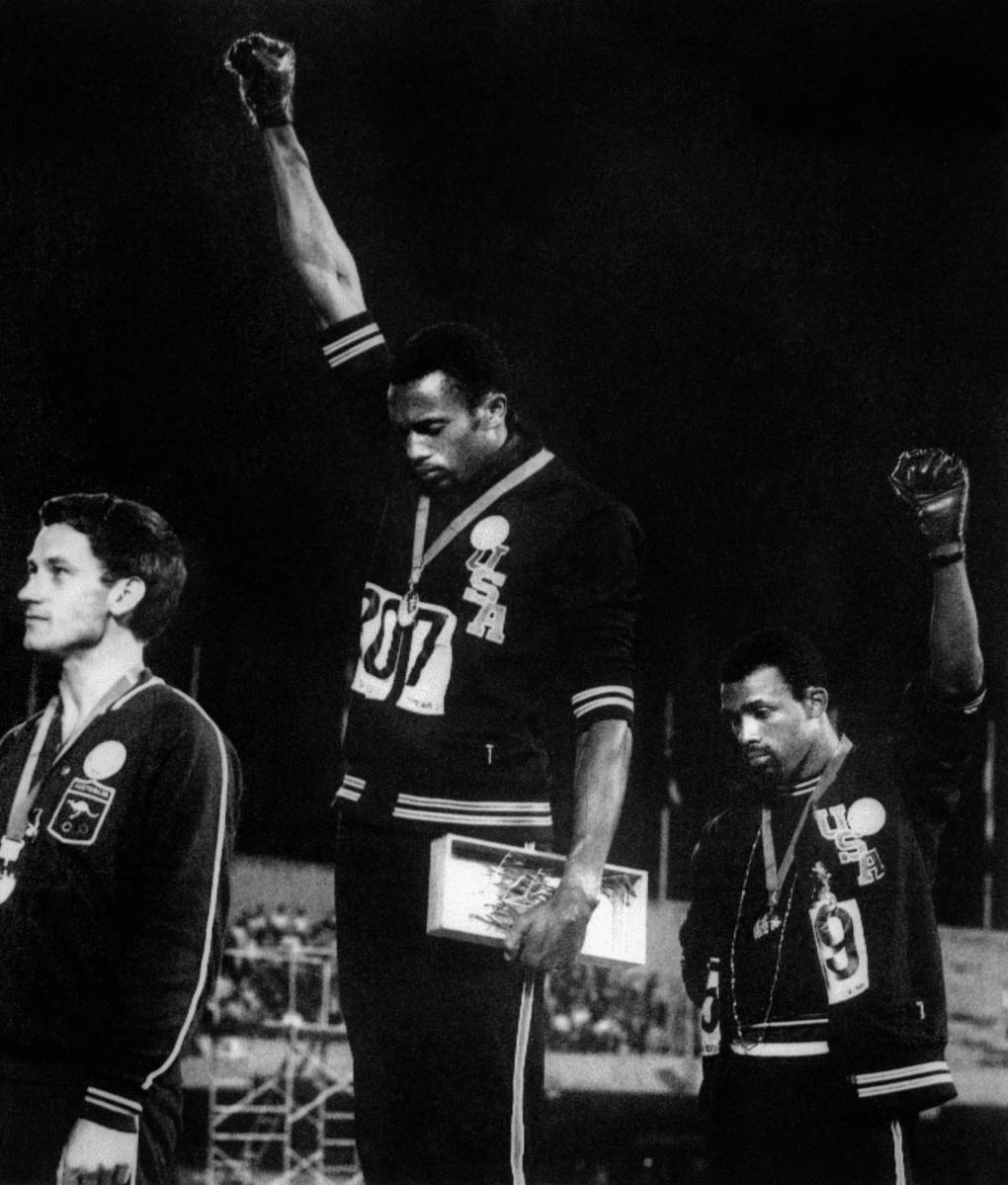
"caption": "San Jose State University sprinter Tommie Smith, center, and John Carlos, right, raised their gloved fists on the awards podium at the 1968 Olympic Games in Mexico as a protest against racial oppression in America. Peter Norman of Australia, left, who took silver, wore an Olympic Project for Human Rights pin in solidarity.",
"description": "San Jose State University sprinter Tommie Smith, center, and John Carlos, right, raised their gloved fists on the awards podium at the 1968 Olympic Games in Mexico as a protest against racial oppression in America. Peter Norman of Australia, left, who took silver, wore an Olympic Project for Human Rights pin in solidarity.",
"title": "RS20496_GettyImages-527631592-qut",
"credit": "AFP/Getty Images",
"status": "inherit",
"isLoading": false,
"fetchFailed": false
},
"news_11698850": {
"type": "attachments",
"id": "news_11698850",
"meta": {
"index": "attachments_1716263798",
"site": "news",
"id": "11698850",
"found": true
},
"parent": 11698847,
"imgSizes": {
"small": {
"file": "https://ww2.kqed.org/app/uploads/sites/10/2018/10/Image-from-iOS-20-520x390.jpg",
"width": 520,
"mimeType": "image/jpeg",
"height": 390
},
"twentyfourteen-full-width": {
"file": "https://ww2.kqed.org/app/uploads/sites/10/2018/10/Image-from-iOS-20-1038x576.jpg",
"width": 1038,
"mimeType": "image/jpeg",
"height": 576
},
"thumbnail": {
"file": "https://ww2.kqed.org/app/uploads/sites/10/2018/10/Image-from-iOS-20-160x120.jpg",
"width": 160,
"mimeType": "image/jpeg",
"height": 120
},
"fd-sm": {
"file": "https://ww2.kqed.org/app/uploads/sites/10/2018/10/Image-from-iOS-20-960x720.jpg",
"width": 960,
"mimeType": "image/jpeg",
"height": 720
},
"post-thumbnail": {
"file": "https://ww2.kqed.org/app/uploads/sites/10/2018/10/Image-from-iOS-20-672x372.jpg",
"width": 672,
"mimeType": "image/jpeg",
"height": 372
},
"xsmall": {
"file": "https://ww2.kqed.org/app/uploads/sites/10/2018/10/Image-from-iOS-20-375x281.jpg",
"width": 375,
"mimeType": "image/jpeg",
"height": 281
},
"kqedFullSize": {
"file": "https://ww2.kqed.org/app/uploads/sites/10/2018/10/Image-from-iOS-20-e1539544724354.jpg",
"width": 1920,
"height": 1440
},
"large": {
"file": "https://ww2.kqed.org/app/uploads/sites/10/2018/10/Image-from-iOS-20-1020x765.jpg",
"width": 1020,
"mimeType": "image/jpeg",
"height": 765
},
"xlarge": {
"file": "https://ww2.kqed.org/app/uploads/sites/10/2018/10/Image-from-iOS-20-1180x885.jpg",
"width": 1180,
"mimeType": "image/jpeg",
"height": 885
},
"complete_open_graph": {
"file": "https://ww2.kqed.org/app/uploads/sites/10/2018/10/Image-from-iOS-20-1200x900.jpg",
"width": 1200,
"mimeType": "image/jpeg",
"height": 900
},
"guest-author-50": {
"file": "https://ww2.kqed.org/app/uploads/sites/10/2018/10/Image-from-iOS-20-50x50.jpg",
"width": 50,
"mimeType": "image/jpeg",
"height": 50
},
"guest-author-96": {
"file": "https://ww2.kqed.org/app/uploads/sites/10/2018/10/Image-from-iOS-20-96x96.jpg",
"width": 96,
"mimeType": "image/jpeg",
"height": 96
},
"medium": {
"file": "https://ww2.kqed.org/app/uploads/sites/10/2018/10/Image-from-iOS-20-800x600.jpg",
"width": 800,
"mimeType": "image/jpeg",
"height": 600
},
"guest-author-64": {
"file": "https://ww2.kqed.org/app/uploads/sites/10/2018/10/Image-from-iOS-20-64x64.jpg",
"width": 64,
"mimeType": "image/jpeg",
"height": 64
},
"guest-author-32": {
"file": "https://ww2.kqed.org/app/uploads/sites/10/2018/10/Image-from-iOS-20-32x32.jpg",
"width": 32,
"mimeType": "image/jpeg",
"height": 32
},
"fd-lrg": {
"file": "https://ww2.kqed.org/app/uploads/sites/10/2018/10/Image-from-iOS-20-1920x1440.jpg",
"width": 1920,
"mimeType": "image/jpeg",
"height": 1440
},
"fd-med": {
"file": "https://ww2.kqed.org/app/uploads/sites/10/2018/10/Image-from-iOS-20-1180x885.jpg",
"width": 1180,
"mimeType": "image/jpeg",
"height": 885
},
"full-width": {
"file": "https://ww2.kqed.org/app/uploads/sites/10/2018/10/Image-from-iOS-20-1920x1440.jpg",
"width": 1920,
"mimeType": "image/jpeg",
"height": 1440
},
"detail": {
"file": "https://ww2.kqed.org/app/uploads/sites/10/2018/10/Image-from-iOS-20-150x150.jpg",
"width": 150,
"mimeType": "image/jpeg",
"height": 150
},
"guest-author-128": {
"file": "https://ww2.kqed.org/app/uploads/sites/10/2018/10/Image-from-iOS-20-128x128.jpg",
"width": 128,
"mimeType": "image/jpeg",
"height": 128
},
"xxsmall": {
"file": "https://ww2.kqed.org/app/uploads/sites/10/2018/10/Image-from-iOS-20-240x180.jpg",
"width": 240,
"mimeType": "image/jpeg",
"height": 180
}
},
"publishDate": 1539544693,
"modified": 1539713402,
"caption": "Several murals were vandalized with \"Make America Great Again\" imagery.",
"description": null,
"title": "Image from iOS (20)",
"credit": "Tiffany Camhi/KQED",
"status": "inherit",
"isLoading": false,
"fetchFailed": false
},
"news_11698725": {
"type": "attachments",
"id": "news_11698725",
"meta": {
"index": "attachments_1716263798",
"site": "news",
"id": "11698725",
"found": true
},
"parent": 11698712,
"imgSizes": {
"small": {
"file": "https://ww2.kqed.org/app/uploads/sites/10/2018/10/IMG_6730-520x347.jpg",
"width": 520,
"mimeType": "image/jpeg",
"height": 347
},
"twentyfourteen-full-width": {
"file": "https://ww2.kqed.org/app/uploads/sites/10/2018/10/IMG_6730-1038x576.jpg",
"width": 1038,
"mimeType": "image/jpeg",
"height": 576
},
"thumbnail": {
"file": "https://ww2.kqed.org/app/uploads/sites/10/2018/10/IMG_6730-160x107.jpg",
"width": 160,
"mimeType": "image/jpeg",
"height": 107
},
"fd-sm": {
"file": "https://ww2.kqed.org/app/uploads/sites/10/2018/10/IMG_6730-960x640.jpg",
"width": 960,
"mimeType": "image/jpeg",
"height": 640
},
"post-thumbnail": {
"file": "https://ww2.kqed.org/app/uploads/sites/10/2018/10/IMG_6730-672x372.jpg",
"width": 672,
"mimeType": "image/jpeg",
"height": 372
},
"xsmall": {
"file": "https://ww2.kqed.org/app/uploads/sites/10/2018/10/IMG_6730-375x250.jpg",
"width": 375,
"mimeType": "image/jpeg",
"height": 250
},
"kqedFullSize": {
"file": "https://ww2.kqed.org/app/uploads/sites/10/2018/10/IMG_6730-e1539477183733.jpg",
"width": 1920,
"height": 1280
},
"large": {
"file": "https://ww2.kqed.org/app/uploads/sites/10/2018/10/IMG_6730-1020x680.jpg",
"width": 1020,
"mimeType": "image/jpeg",
"height": 680
},
"xlarge": {
"file": "https://ww2.kqed.org/app/uploads/sites/10/2018/10/IMG_6730-1180x787.jpg",
"width": 1180,
"mimeType": "image/jpeg",
"height": 787
},
"complete_open_graph": {
"file": "https://ww2.kqed.org/app/uploads/sites/10/2018/10/IMG_6730-1200x800.jpg",
"width": 1200,
"mimeType": "image/jpeg",
"height": 800
},
"guest-author-50": {
"file": "https://ww2.kqed.org/app/uploads/sites/10/2018/10/IMG_6730-50x50.jpg",
"width": 50,
"mimeType": "image/jpeg",
"height": 50
},
"guest-author-96": {
"file": "https://ww2.kqed.org/app/uploads/sites/10/2018/10/IMG_6730-96x96.jpg",
"width": 96,
"mimeType": "image/jpeg",
"height": 96
},
"medium": {
"file": "https://ww2.kqed.org/app/uploads/sites/10/2018/10/IMG_6730-800x533.jpg",
"width": 800,
"mimeType": "image/jpeg",
"height": 533
},
"guest-author-64": {
"file": "https://ww2.kqed.org/app/uploads/sites/10/2018/10/IMG_6730-64x64.jpg",
"width": 64,
"mimeType": "image/jpeg",
"height": 64
},
"guest-author-32": {
"file": "https://ww2.kqed.org/app/uploads/sites/10/2018/10/IMG_6730-32x32.jpg",
"width": 32,
"mimeType": "image/jpeg",
"height": 32
},
"fd-lrg": {
"file": "https://ww2.kqed.org/app/uploads/sites/10/2018/10/IMG_6730-1920x1280.jpg",
"width": 1920,
"mimeType": "image/jpeg",
"height": 1280
},
"fd-med": {
"file": "https://ww2.kqed.org/app/uploads/sites/10/2018/10/IMG_6730-1180x787.jpg",
"width": 1180,
"mimeType": "image/jpeg",
"height": 787
},
"full-width": {
"file": "https://ww2.kqed.org/app/uploads/sites/10/2018/10/IMG_6730-1920x1280.jpg",
"width": 1920,
"mimeType": "image/jpeg",
"height": 1280
},
"detail": {
"file": "https://ww2.kqed.org/app/uploads/sites/10/2018/10/IMG_6730-150x150.jpg",
"width": 150,
"mimeType": "image/jpeg",
"height": 150
},
"guest-author-128": {
"file": "https://ww2.kqed.org/app/uploads/sites/10/2018/10/IMG_6730-128x128.jpg",
"width": 128,
"mimeType": "image/jpeg",
"height": 128
},
"xxsmall": {
"file": "https://ww2.kqed.org/app/uploads/sites/10/2018/10/IMG_6730-240x160.jpg",
"width": 240,
"mimeType": "image/jpeg",
"height": 160
}
},
"publishDate": 1539450845,
"modified": 1539477418,
"caption": "Cafe Ohlone co-owner Louis Trevino waits on a long line of eager diners at a preview tasting at the new Berkeley cafe.",
"description": "Cafe Ohlone co-owner Louis Trevino waits on a long line of eager diners at a preview tasting at the new Berkeley cafe.",
"title": "IMG_6730",
"credit": "Sara Hossaini/KQED",
"status": "inherit",
"isLoading": false,
"fetchFailed": false
},
"news_11698754": {
"type": "attachments",
"id": "news_11698754",
"meta": {
"index": "attachments_1716263798",
"site": "news",
"id": "11698754",
"found": true
},
"parent": 11698134,
"imgSizes": {
"small": {
"file": "https://ww2.kqed.org/app/uploads/sites/10/2018/10/RS27223_GettyImages-859436442-qut-520x347.jpg",
"width": 520,
"mimeType": "image/jpeg",
"height": 347
},
"twentyfourteen-full-width": {
"file": "https://ww2.kqed.org/app/uploads/sites/10/2018/10/RS27223_GettyImages-859436442-qut-1038x576.jpg",
"width": 1038,
"mimeType": "image/jpeg",
"height": 576
},
"thumbnail": {
"file": "https://ww2.kqed.org/app/uploads/sites/10/2018/10/RS27223_GettyImages-859436442-qut-160x107.jpg",
"width": 160,
"mimeType": "image/jpeg",
"height": 107
},
"fd-sm": {
"file": "https://ww2.kqed.org/app/uploads/sites/10/2018/10/RS27223_GettyImages-859436442-qut-960x640.jpg",
"width": 960,
"mimeType": "image/jpeg",
"height": 640
},
"post-thumbnail": {
"file": "https://ww2.kqed.org/app/uploads/sites/10/2018/10/RS27223_GettyImages-859436442-qut-672x372.jpg",
"width": 672,
"mimeType": "image/jpeg",
"height": 372
},
"xsmall": {
"file": "https://ww2.kqed.org/app/uploads/sites/10/2018/10/RS27223_GettyImages-859436442-qut-375x250.jpg",
"width": 375,
"mimeType": "image/jpeg",
"height": 250
},
"kqedFullSize": {
"file": "https://ww2.kqed.org/app/uploads/sites/10/2018/10/RS27223_GettyImages-859436442-qut.jpg",
"width": 1920,
"height": 1280
},
"large": {
"file": "https://ww2.kqed.org/app/uploads/sites/10/2018/10/RS27223_GettyImages-859436442-qut-1020x680.jpg",
"width": 1020,
"mimeType": "image/jpeg",
"height": 680
},
"xlarge": {
"file": "https://ww2.kqed.org/app/uploads/sites/10/2018/10/RS27223_GettyImages-859436442-qut-1180x787.jpg",
"width": 1180,
"mimeType": "image/jpeg",
"height": 787
},
"complete_open_graph": {
"file": "https://ww2.kqed.org/app/uploads/sites/10/2018/10/RS27223_GettyImages-859436442-qut-1200x800.jpg",
"width": 1200,
"mimeType": "image/jpeg",
"height": 800
},
"guest-author-50": {
"file": "https://ww2.kqed.org/app/uploads/sites/10/2018/10/RS27223_GettyImages-859436442-qut-50x50.jpg",
"width": 50,
"mimeType": "image/jpeg",
"height": 50
},
"guest-author-96": {
"file": "https://ww2.kqed.org/app/uploads/sites/10/2018/10/RS27223_GettyImages-859436442-qut-96x96.jpg",
"width": 96,
"mimeType": "image/jpeg",
"height": 96
},
"medium": {
"file": "https://ww2.kqed.org/app/uploads/sites/10/2018/10/RS27223_GettyImages-859436442-qut-800x533.jpg",
"width": 800,
"mimeType": "image/jpeg",
"height": 533
},
"guest-author-64": {
"file": "https://ww2.kqed.org/app/uploads/sites/10/2018/10/RS27223_GettyImages-859436442-qut-64x64.jpg",
"width": 64,
"mimeType": "image/jpeg",
"height": 64
},
"guest-author-32": {
"file": "https://ww2.kqed.org/app/uploads/sites/10/2018/10/RS27223_GettyImages-859436442-qut-32x32.jpg",
"width": 32,
"mimeType": "image/jpeg",
"height": 32
},
"fd-lrg": {
"file": "https://ww2.kqed.org/app/uploads/sites/10/2018/10/RS27223_GettyImages-859436442-qut-1920x1280.jpg",
"width": 1920,
"mimeType": "image/jpeg",
"height": 1280
},
"fd-med": {
"file": "https://ww2.kqed.org/app/uploads/sites/10/2018/10/RS27223_GettyImages-859436442-qut-1180x787.jpg",
"width": 1180,
"mimeType": "image/jpeg",
"height": 787
},
"full-width": {
"file": "https://ww2.kqed.org/app/uploads/sites/10/2018/10/RS27223_GettyImages-859436442-qut-1920x1280.jpg",
"width": 1920,
"mimeType": "image/jpeg",
"height": 1280
},
"detail": {
"file": "https://ww2.kqed.org/app/uploads/sites/10/2018/10/RS27223_GettyImages-859436442-qut-150x150.jpg",
"width": 150,
"mimeType": "image/jpeg",
"height": 150
},
"guest-author-128": {
"file": "https://ww2.kqed.org/app/uploads/sites/10/2018/10/RS27223_GettyImages-859436442-qut-128x128.jpg",
"width": 128,
"mimeType": "image/jpeg",
"height": 128
},
"xxsmall": {
"file": "https://ww2.kqed.org/app/uploads/sites/10/2018/10/RS27223_GettyImages-859436442-qut-240x160.jpg",
"width": 240,
"mimeType": "image/jpeg",
"height": 160
}
},
"publishDate": 1539462890,
"modified": 1539462977,
"caption": "A resident rushes to save his home as an out of control wildfire moves through the area on October 9, 2017 in Glen Ellen, California.",
"description": "A resident rushes to save his home as an out of control wildfire moves through the area on October 9, 2017 in Glen Ellen, California.",
"title": "Multiple Wildfires Destroy Homes, Threaten California Wine Country",
"credit": "Justin Sullivan/Getty Images",
"status": "inherit",
"isLoading": false,
"fetchFailed": false
},
"news_11697983": {
"type": "attachments",
"id": "news_11697983",
"meta": {
"index": "attachments_1716263798",
"site": "news",
"id": "11697983",
"found": true
},
"parent": 11697929,
"imgSizes": {
"small": {
"file": "https://ww2.kqed.org/app/uploads/sites/10/2018/10/Charity-Angel-Dawson-Desi-Oakley-and-Lenne-Klingaman-in-the-National-Tour-of-WAITRESS-Credit-Joan-Marcus-0769r-e1539205292658-520x293.jpg",
"width": 520,
"mimeType": "image/jpeg",
"height": 293
},
"twentyfourteen-full-width": {
"file": "https://ww2.kqed.org/app/uploads/sites/10/2018/10/Charity-Angel-Dawson-Desi-Oakley-and-Lenne-Klingaman-in-the-National-Tour-of-WAITRESS-Credit-Joan-Marcus-0769r-e1539205292658-1038x576.jpg",
"width": 1038,
"mimeType": "image/jpeg",
"height": 576
},
"thumbnail": {
"file": "https://ww2.kqed.org/app/uploads/sites/10/2018/10/Charity-Angel-Dawson-Desi-Oakley-and-Lenne-Klingaman-in-the-National-Tour-of-WAITRESS-Credit-Joan-Marcus-0769r-e1539205292658-160x90.jpg",
"width": 160,
"mimeType": "image/jpeg",
"height": 90
},
"fd-sm": {
"file": "https://ww2.kqed.org/app/uploads/sites/10/2018/10/Charity-Angel-Dawson-Desi-Oakley-and-Lenne-Klingaman-in-the-National-Tour-of-WAITRESS-Credit-Joan-Marcus-0769r-e1539205292658-960x540.jpg",
"width": 960,
"mimeType": "image/jpeg",
"height": 540
},
"post-thumbnail": {
"file": "https://ww2.kqed.org/app/uploads/sites/10/2018/10/Charity-Angel-Dawson-Desi-Oakley-and-Lenne-Klingaman-in-the-National-Tour-of-WAITRESS-Credit-Joan-Marcus-0769r-e1539205292658-672x372.jpg",
"width": 672,
"mimeType": "image/jpeg",
"height": 372
},
"xsmall": {
"file": "https://ww2.kqed.org/app/uploads/sites/10/2018/10/Charity-Angel-Dawson-Desi-Oakley-and-Lenne-Klingaman-in-the-National-Tour-of-WAITRESS-Credit-Joan-Marcus-0769r-e1539205292658-375x211.jpg",
"width": 375,
"mimeType": "image/jpeg",
"height": 211
},
"kqedFullSize": {
"file": "https://ww2.kqed.org/app/uploads/sites/10/2018/10/Charity-Angel-Dawson-Desi-Oakley-and-Lenne-Klingaman-in-the-National-Tour-of-WAITRESS-Credit-Joan-Marcus-0769r-e1539300870237.jpg",
"width": 1920,
"height": 1081
},
"large": {
"file": "https://ww2.kqed.org/app/uploads/sites/10/2018/10/Charity-Angel-Dawson-Desi-Oakley-and-Lenne-Klingaman-in-the-National-Tour-of-WAITRESS-Credit-Joan-Marcus-0769r-e1539205292658-1020x574.jpg",
"width": 1020,
"mimeType": "image/jpeg",
"height": 574
},
"xlarge": {
"file": "https://ww2.kqed.org/app/uploads/sites/10/2018/10/Charity-Angel-Dawson-Desi-Oakley-and-Lenne-Klingaman-in-the-National-Tour-of-WAITRESS-Credit-Joan-Marcus-0769r-e1539205292658-1180x664.jpg",
"width": 1180,
"mimeType": "image/jpeg",
"height": 664
},
"complete_open_graph": {
"file": "https://ww2.kqed.org/app/uploads/sites/10/2018/10/Charity-Angel-Dawson-Desi-Oakley-and-Lenne-Klingaman-in-the-National-Tour-of-WAITRESS-Credit-Joan-Marcus-0769r-e1539205292658-1200x676.jpg",
"width": 1200,
"mimeType": "image/jpeg",
"height": 676
},
"guest-author-50": {
"file": "https://ww2.kqed.org/app/uploads/sites/10/2018/10/Charity-Angel-Dawson-Desi-Oakley-and-Lenne-Klingaman-in-the-National-Tour-of-WAITRESS-Credit-Joan-Marcus-0769r-e1539205292658-50x50.jpg",
"width": 50,
"mimeType": "image/jpeg",
"height": 50
},
"guest-author-96": {
"file": "https://ww2.kqed.org/app/uploads/sites/10/2018/10/Charity-Angel-Dawson-Desi-Oakley-and-Lenne-Klingaman-in-the-National-Tour-of-WAITRESS-Credit-Joan-Marcus-0769r-e1539205292658-96x96.jpg",
"width": 96,
"mimeType": "image/jpeg",
"height": 96
},
"medium": {
"file": "https://ww2.kqed.org/app/uploads/sites/10/2018/10/Charity-Angel-Dawson-Desi-Oakley-and-Lenne-Klingaman-in-the-National-Tour-of-WAITRESS-Credit-Joan-Marcus-0769r-e1539205292658-800x450.jpg",
"width": 800,
"mimeType": "image/jpeg",
"height": 450
},
"guest-author-64": {
"file": "https://ww2.kqed.org/app/uploads/sites/10/2018/10/Charity-Angel-Dawson-Desi-Oakley-and-Lenne-Klingaman-in-the-National-Tour-of-WAITRESS-Credit-Joan-Marcus-0769r-e1539205292658-64x64.jpg",
"width": 64,
"mimeType": "image/jpeg",
"height": 64
},
"guest-author-32": {
"file": "https://ww2.kqed.org/app/uploads/sites/10/2018/10/Charity-Angel-Dawson-Desi-Oakley-and-Lenne-Klingaman-in-the-National-Tour-of-WAITRESS-Credit-Joan-Marcus-0769r-e1539205292658-32x32.jpg",
"width": 32,
"mimeType": "image/jpeg",
"height": 32
},
"fd-lrg": {
"file": "https://ww2.kqed.org/app/uploads/sites/10/2018/10/Charity-Angel-Dawson-Desi-Oakley-and-Lenne-Klingaman-in-the-National-Tour-of-WAITRESS-Credit-Joan-Marcus-0769r-e1539205292658-1920x1081.jpg",
"width": 1920,
"mimeType": "image/jpeg",
"height": 1081
},
"fd-med": {
"file": "https://ww2.kqed.org/app/uploads/sites/10/2018/10/Charity-Angel-Dawson-Desi-Oakley-and-Lenne-Klingaman-in-the-National-Tour-of-WAITRESS-Credit-Joan-Marcus-0769r-e1539205292658-1180x664.jpg",
"width": 1180,
"mimeType": "image/jpeg",
"height": 664
},
"full-width": {
"file": "https://ww2.kqed.org/app/uploads/sites/10/2018/10/Charity-Angel-Dawson-Desi-Oakley-and-Lenne-Klingaman-in-the-National-Tour-of-WAITRESS-Credit-Joan-Marcus-0769r-e1539205292658-1920x1081.jpg",
"width": 1920,
"mimeType": "image/jpeg",
"height": 1081
},
"detail": {
"file": "https://ww2.kqed.org/app/uploads/sites/10/2018/10/Charity-Angel-Dawson-Desi-Oakley-and-Lenne-Klingaman-in-the-National-Tour-of-WAITRESS-Credit-Joan-Marcus-0769r-e1539205292658-150x150.jpg",
"width": 150,
"mimeType": "image/jpeg",
"height": 150
},
"guest-author-128": {
"file": "https://ww2.kqed.org/app/uploads/sites/10/2018/10/Charity-Angel-Dawson-Desi-Oakley-and-Lenne-Klingaman-in-the-National-Tour-of-WAITRESS-Credit-Joan-Marcus-0769r-e1539205292658-128x128.jpg",
"width": 128,
"mimeType": "image/jpeg",
"height": 128
},
"xxsmall": {
"file": "https://ww2.kqed.org/app/uploads/sites/10/2018/10/Charity-Angel-Dawson-Desi-Oakley-and-Lenne-Klingaman-in-the-National-Tour-of-WAITRESS-Credit-Joan-Marcus-0769r-e1539205292658-240x135.jpg",
"width": 240,
"mimeType": "image/jpeg",
"height": 135
}
},
"publishDate": 1539205172,
"modified": 1539205260,
"caption": "A scene from \"Waitress the Musical\" featuring Charity Angel Dawson, Desi Oakley and Lenne Klingaman.",
"description": "A scene from \"Waitress the Musical\" featuring Charity Angel Dawson, Desi Oakley and Lenne Klingaman.",
"title": "\"Waitress the Musical\"",
"credit": "Joan Marcus",
"status": "inherit",
"isLoading": false,
"fetchFailed": false
},
"news_11697307": {
"type": "attachments",
"id": "news_11697307",
"meta": {
"index": "attachments_1716263798",
"site": "news",
"id": "11697307",
"found": true
},
"parent": 11697245,
"imgSizes": {
"small": {
"file": "https://ww2.kqed.org/app/uploads/sites/10/2018/10/RS27543_GettyImages-861028680-qut-520x347.jpg",
"width": 520,
"mimeType": "image/jpeg",
"height": 347
},
"twentyfourteen-full-width": {
"file": "https://ww2.kqed.org/app/uploads/sites/10/2018/10/RS27543_GettyImages-861028680-qut-1038x576.jpg",
"width": 1038,
"mimeType": "image/jpeg",
"height": 576
},
"thumbnail": {
"file": "https://ww2.kqed.org/app/uploads/sites/10/2018/10/RS27543_GettyImages-861028680-qut-160x107.jpg",
"width": 160,
"mimeType": "image/jpeg",
"height": 107
},
"fd-sm": {
"file": "https://ww2.kqed.org/app/uploads/sites/10/2018/10/RS27543_GettyImages-861028680-qut-960x640.jpg",
"width": 960,
"mimeType": "image/jpeg",
"height": 640
},
"post-thumbnail": {
"file": "https://ww2.kqed.org/app/uploads/sites/10/2018/10/RS27543_GettyImages-861028680-qut-672x372.jpg",
"width": 672,
"mimeType": "image/jpeg",
"height": 372
},
"xsmall": {
"file": "https://ww2.kqed.org/app/uploads/sites/10/2018/10/RS27543_GettyImages-861028680-qut-375x250.jpg",
"width": 375,
"mimeType": "image/jpeg",
"height": 250
},
"kqedFullSize": {
"file": "https://ww2.kqed.org/app/uploads/sites/10/2018/10/RS27543_GettyImages-861028680-qut.jpg",
"width": 1920,
"height": 1280
},
"large": {
"file": "https://ww2.kqed.org/app/uploads/sites/10/2018/10/RS27543_GettyImages-861028680-qut-1020x680.jpg",
"width": 1020,
"mimeType": "image/jpeg",
"height": 680
},
"xlarge": {
"file": "https://ww2.kqed.org/app/uploads/sites/10/2018/10/RS27543_GettyImages-861028680-qut-1180x787.jpg",
"width": 1180,
"mimeType": "image/jpeg",
"height": 787
},
"complete_open_graph": {
"file": "https://ww2.kqed.org/app/uploads/sites/10/2018/10/RS27543_GettyImages-861028680-qut-1200x800.jpg",
"width": 1200,
"mimeType": "image/jpeg",
"height": 800
},
"guest-author-50": {
"file": "https://ww2.kqed.org/app/uploads/sites/10/2018/10/RS27543_GettyImages-861028680-qut-50x50.jpg",
"width": 50,
"mimeType": "image/jpeg",
"height": 50
},
"guest-author-96": {
"file": "https://ww2.kqed.org/app/uploads/sites/10/2018/10/RS27543_GettyImages-861028680-qut-96x96.jpg",
"width": 96,
"mimeType": "image/jpeg",
"height": 96
},
"medium": {
"file": "https://ww2.kqed.org/app/uploads/sites/10/2018/10/RS27543_GettyImages-861028680-qut-800x533.jpg",
"width": 800,
"mimeType": "image/jpeg",
"height": 533
},
"guest-author-64": {
"file": "https://ww2.kqed.org/app/uploads/sites/10/2018/10/RS27543_GettyImages-861028680-qut-64x64.jpg",
"width": 64,
"mimeType": "image/jpeg",
"height": 64
},
"guest-author-32": {
"file": "https://ww2.kqed.org/app/uploads/sites/10/2018/10/RS27543_GettyImages-861028680-qut-32x32.jpg",
"width": 32,
"mimeType": "image/jpeg",
"height": 32
},
"fd-lrg": {
"file": "https://ww2.kqed.org/app/uploads/sites/10/2018/10/RS27543_GettyImages-861028680-qut-1920x1280.jpg",
"width": 1920,
"mimeType": "image/jpeg",
"height": 1280
},
"fd-med": {
"file": "https://ww2.kqed.org/app/uploads/sites/10/2018/10/RS27543_GettyImages-861028680-qut-1180x787.jpg",
"width": 1180,
"mimeType": "image/jpeg",
"height": 787
},
"full-width": {
"file": "https://ww2.kqed.org/app/uploads/sites/10/2018/10/RS27543_GettyImages-861028680-qut-1920x1280.jpg",
"width": 1920,
"mimeType": "image/jpeg",
"height": 1280
},
"detail": {
"file": "https://ww2.kqed.org/app/uploads/sites/10/2018/10/RS27543_GettyImages-861028680-qut-150x150.jpg",
"width": 150,
"mimeType": "image/jpeg",
"height": 150
},
"guest-author-128": {
"file": "https://ww2.kqed.org/app/uploads/sites/10/2018/10/RS27543_GettyImages-861028680-qut-128x128.jpg",
"width": 128,
"mimeType": "image/jpeg",
"height": 128
},
"xxsmall": {
"file": "https://ww2.kqed.org/app/uploads/sites/10/2018/10/RS27543_GettyImages-861028680-qut-240x160.jpg",
"width": 240,
"mimeType": "image/jpeg",
"height": 160
}
},
"publishDate": 1538960261,
"modified": 1539033431,
"caption": "A sign that was posted outside Cline Cellars on Oct. 13, 2017 in Sonoma. Oct. 8, 2018 marks one year since the North Bay fires broke out. ",
"description": "A sign that was posted outside Cline Cellars on Oct. 13, 2017 in Sonoma. Oct. 8, 2018 marks one year since the North Bay fires broke out. ",
"title": "Multiple Wildfires Destroy Homes, Threaten California Wine Country",
"credit": "Justin Sullivan/Getty Images",
"status": "inherit",
"isLoading": false,
"fetchFailed": false
},
"news_11697269": {
"type": "attachments",
"id": "news_11697269",
"meta": {
"index": "attachments_1716263798",
"site": "news",
"id": "11697269",
"found": true
},
"parent": 11697268,
"imgSizes": {
"small": {
"file": "https://ww2.kqed.org/app/uploads/sites/10/2018/10/alicew_slide-f2d9f779381a0d809eb97486e085c879413cd7ae-1-520x346.jpg",
"width": 520,
"mimeType": "image/jpeg",
"height": 346
},
"twentyfourteen-full-width": {
"file": "https://ww2.kqed.org/app/uploads/sites/10/2018/10/alicew_slide-f2d9f779381a0d809eb97486e085c879413cd7ae-1-1038x576.jpg",
"width": 1038,
"mimeType": "image/jpeg",
"height": 576
},
"thumbnail": {
"file": "https://ww2.kqed.org/app/uploads/sites/10/2018/10/alicew_slide-f2d9f779381a0d809eb97486e085c879413cd7ae-1-160x107.jpg",
"width": 160,
"mimeType": "image/jpeg",
"height": 107
},
"fd-sm": {
"file": "https://ww2.kqed.org/app/uploads/sites/10/2018/10/alicew_slide-f2d9f779381a0d809eb97486e085c879413cd7ae-1-960x640.jpg",
"width": 960,
"mimeType": "image/jpeg",
"height": 640
},
"post-thumbnail": {
"file": "https://ww2.kqed.org/app/uploads/sites/10/2018/10/alicew_slide-f2d9f779381a0d809eb97486e085c879413cd7ae-1-672x372.jpg",
"width": 672,
"mimeType": "image/jpeg",
"height": 372
},
"xsmall": {
"file": "https://ww2.kqed.org/app/uploads/sites/10/2018/10/alicew_slide-f2d9f779381a0d809eb97486e085c879413cd7ae-1-375x250.jpg",
"width": 375,
"mimeType": "image/jpeg",
"height": 250
},
"kqedFullSize": {
"file": "https://ww2.kqed.org/app/uploads/sites/10/2018/10/alicew_slide-f2d9f779381a0d809eb97486e085c879413cd7ae-1-e1538947010970.jpg",
"width": 1920,
"height": 1279
},
"large": {
"file": "https://ww2.kqed.org/app/uploads/sites/10/2018/10/alicew_slide-f2d9f779381a0d809eb97486e085c879413cd7ae-1-1020x680.jpg",
"width": 1020,
"mimeType": "image/jpeg",
"height": 680
},
"xlarge": {
"file": "https://ww2.kqed.org/app/uploads/sites/10/2018/10/alicew_slide-f2d9f779381a0d809eb97486e085c879413cd7ae-1-1180x786.jpg",
"width": 1180,
"mimeType": "image/jpeg",
"height": 786
},
"complete_open_graph": {
"file": "https://ww2.kqed.org/app/uploads/sites/10/2018/10/alicew_slide-f2d9f779381a0d809eb97486e085c879413cd7ae-1-1200x800.jpg",
"width": 1200,
"mimeType": "image/jpeg",
"height": 800
},
"guest-author-50": {
"file": "https://ww2.kqed.org/app/uploads/sites/10/2018/10/alicew_slide-f2d9f779381a0d809eb97486e085c879413cd7ae-1-50x50.jpg",
"width": 50,
"mimeType": "image/jpeg",
"height": 50
},
"guest-author-96": {
"file": "https://ww2.kqed.org/app/uploads/sites/10/2018/10/alicew_slide-f2d9f779381a0d809eb97486e085c879413cd7ae-1-96x96.jpg",
"width": 96,
"mimeType": "image/jpeg",
"height": 96
},
"medium": {
"file": "https://ww2.kqed.org/app/uploads/sites/10/2018/10/alicew_slide-f2d9f779381a0d809eb97486e085c879413cd7ae-1-800x533.jpg",
"width": 800,
"mimeType": "image/jpeg",
"height": 533
},
"guest-author-64": {
"file": "https://ww2.kqed.org/app/uploads/sites/10/2018/10/alicew_slide-f2d9f779381a0d809eb97486e085c879413cd7ae-1-64x64.jpg",
"width": 64,
"mimeType": "image/jpeg",
"height": 64
},
"guest-author-32": {
"file": "https://ww2.kqed.org/app/uploads/sites/10/2018/10/alicew_slide-f2d9f779381a0d809eb97486e085c879413cd7ae-1-32x32.jpg",
"width": 32,
"mimeType": "image/jpeg",
"height": 32
},
"fd-lrg": {
"file": "https://ww2.kqed.org/app/uploads/sites/10/2018/10/alicew_slide-f2d9f779381a0d809eb97486e085c879413cd7ae-1-1920x1279.jpg",
"width": 1920,
"mimeType": "image/jpeg",
"height": 1279
},
"fd-med": {
"file": "https://ww2.kqed.org/app/uploads/sites/10/2018/10/alicew_slide-f2d9f779381a0d809eb97486e085c879413cd7ae-1-1180x786.jpg",
"width": 1180,
"mimeType": "image/jpeg",
"height": 786
},
"full-width": {
"file": "https://ww2.kqed.org/app/uploads/sites/10/2018/10/alicew_slide-f2d9f779381a0d809eb97486e085c879413cd7ae-1-1920x1279.jpg",
"width": 1920,
"mimeType": "image/jpeg",
"height": 1279
},
"detail": {
"file": "https://ww2.kqed.org/app/uploads/sites/10/2018/10/alicew_slide-f2d9f779381a0d809eb97486e085c879413cd7ae-1-150x150.jpg",
"width": 150,
"mimeType": "image/jpeg",
"height": 150
},
"guest-author-128": {
"file": "https://ww2.kqed.org/app/uploads/sites/10/2018/10/alicew_slide-f2d9f779381a0d809eb97486e085c879413cd7ae-1-128x128.jpg",
"width": 128,
"mimeType": "image/jpeg",
"height": 128
},
"xxsmall": {
"file": "https://ww2.kqed.org/app/uploads/sites/10/2018/10/alicew_slide-f2d9f779381a0d809eb97486e085c879413cd7ae-1-240x160.jpg",
"width": 240,
"mimeType": "image/jpeg",
"height": 160
}
},
"publishDate": 1538946886,
"modified": 1538946999,
"caption": "Author Alice Walker, pictured onstage of the 2015 Broadway revival of 'The Color Purple' musical, has released a new collection of poetry called 'Taking the Arrow Out of the Heart.'",
"description": "Author Alice Walker, pictured onstage of the 2015 Broadway revival of 'The Color Purple' musical, has released a new collection of poetry called 'Taking the Arrow Out of the Heart.'",
"title": "Author Alice Walker, pictured onstage of the 2015 Broadway revival of The Color Purple musical, has released a new collection of poetry called Taking the Arrow Out of the Heart.",
"credit": "Mark Sagliocco/Getty Images",
"status": "inherit",
"isLoading": false,
"fetchFailed": false
},
"news_11697182": {
"type": "attachments",
"id": "news_11697182",
"meta": {
"index": "attachments_1716263798",
"site": "news",
"id": "11697182",
"found": true
},
"parent": 11697179,
"imgSizes": {
"small": {
"file": "https://ww2.kqed.org/app/uploads/sites/10/2018/10/RS33045_10032018_AW_Miko_07-qut-520x347.jpg",
"width": 520,
"mimeType": "image/jpeg",
"height": 347
},
"twentyfourteen-full-width": {
"file": "https://ww2.kqed.org/app/uploads/sites/10/2018/10/RS33045_10032018_AW_Miko_07-qut-1038x576.jpg",
"width": 1038,
"mimeType": "image/jpeg",
"height": 576
},
"thumbnail": {
"file": "https://ww2.kqed.org/app/uploads/sites/10/2018/10/RS33045_10032018_AW_Miko_07-qut-160x107.jpg",
"width": 160,
"mimeType": "image/jpeg",
"height": 107
},
"fd-sm": {
"file": "https://ww2.kqed.org/app/uploads/sites/10/2018/10/RS33045_10032018_AW_Miko_07-qut-960x640.jpg",
"width": 960,
"mimeType": "image/jpeg",
"height": 640
},
"post-thumbnail": {
"file": "https://ww2.kqed.org/app/uploads/sites/10/2018/10/RS33045_10032018_AW_Miko_07-qut-672x372.jpg",
"width": 672,
"mimeType": "image/jpeg",
"height": 372
},
"xsmall": {
"file": "https://ww2.kqed.org/app/uploads/sites/10/2018/10/RS33045_10032018_AW_Miko_07-qut-375x250.jpg",
"width": 375,
"mimeType": "image/jpeg",
"height": 250
},
"kqedFullSize": {
"file": "https://ww2.kqed.org/app/uploads/sites/10/2018/10/RS33045_10032018_AW_Miko_07-qut.jpg",
"width": 1920,
"height": 1280
},
"large": {
"file": "https://ww2.kqed.org/app/uploads/sites/10/2018/10/RS33045_10032018_AW_Miko_07-qut-1020x680.jpg",
"width": 1020,
"mimeType": "image/jpeg",
"height": 680
},
"xlarge": {
"file": "https://ww2.kqed.org/app/uploads/sites/10/2018/10/RS33045_10032018_AW_Miko_07-qut-1180x787.jpg",
"width": 1180,
"mimeType": "image/jpeg",
"height": 787
},
"complete_open_graph": {
"file": "https://ww2.kqed.org/app/uploads/sites/10/2018/10/RS33045_10032018_AW_Miko_07-qut-1200x800.jpg",
"width": 1200,
"mimeType": "image/jpeg",
"height": 800
},
"guest-author-50": {
"file": "https://ww2.kqed.org/app/uploads/sites/10/2018/10/RS33045_10032018_AW_Miko_07-qut-50x50.jpg",
"width": 50,
"mimeType": "image/jpeg",
"height": 50
},
"guest-author-96": {
"file": "https://ww2.kqed.org/app/uploads/sites/10/2018/10/RS33045_10032018_AW_Miko_07-qut-96x96.jpg",
"width": 96,
"mimeType": "image/jpeg",
"height": 96
},
"medium": {
"file": "https://ww2.kqed.org/app/uploads/sites/10/2018/10/RS33045_10032018_AW_Miko_07-qut-800x533.jpg",
"width": 800,
"mimeType": "image/jpeg",
"height": 533
},
"guest-author-64": {
"file": "https://ww2.kqed.org/app/uploads/sites/10/2018/10/RS33045_10032018_AW_Miko_07-qut-64x64.jpg",
"width": 64,
"mimeType": "image/jpeg",
"height": 64
},
"guest-author-32": {
"file": "https://ww2.kqed.org/app/uploads/sites/10/2018/10/RS33045_10032018_AW_Miko_07-qut-32x32.jpg",
"width": 32,
"mimeType": "image/jpeg",
"height": 32
},
"fd-lrg": {
"file": "https://ww2.kqed.org/app/uploads/sites/10/2018/10/RS33045_10032018_AW_Miko_07-qut-1920x1280.jpg",
"width": 1920,
"mimeType": "image/jpeg",
"height": 1280
},
"fd-med": {
"file": "https://ww2.kqed.org/app/uploads/sites/10/2018/10/RS33045_10032018_AW_Miko_07-qut-1180x787.jpg",
"width": 1180,
"mimeType": "image/jpeg",
"height": 787
},
"full-width": {
"file": "https://ww2.kqed.org/app/uploads/sites/10/2018/10/RS33045_10032018_AW_Miko_07-qut-1920x1280.jpg",
"width": 1920,
"mimeType": "image/jpeg",
"height": 1280
},
"detail": {
"file": "https://ww2.kqed.org/app/uploads/sites/10/2018/10/RS33045_10032018_AW_Miko_07-qut-150x150.jpg",
"width": 150,
"mimeType": "image/jpeg",
"height": 150
},
"guest-author-128": {
"file": "https://ww2.kqed.org/app/uploads/sites/10/2018/10/RS33045_10032018_AW_Miko_07-qut-128x128.jpg",
"width": 128,
"mimeType": "image/jpeg",
"height": 128
},
"xxsmall": {
"file": "https://ww2.kqed.org/app/uploads/sites/10/2018/10/RS33045_10032018_AW_Miko_07-qut-240x160.jpg",
"width": 240,
"mimeType": "image/jpeg",
"height": 160
}
},
"publishDate": 1538878703,
"modified": 1538878755,
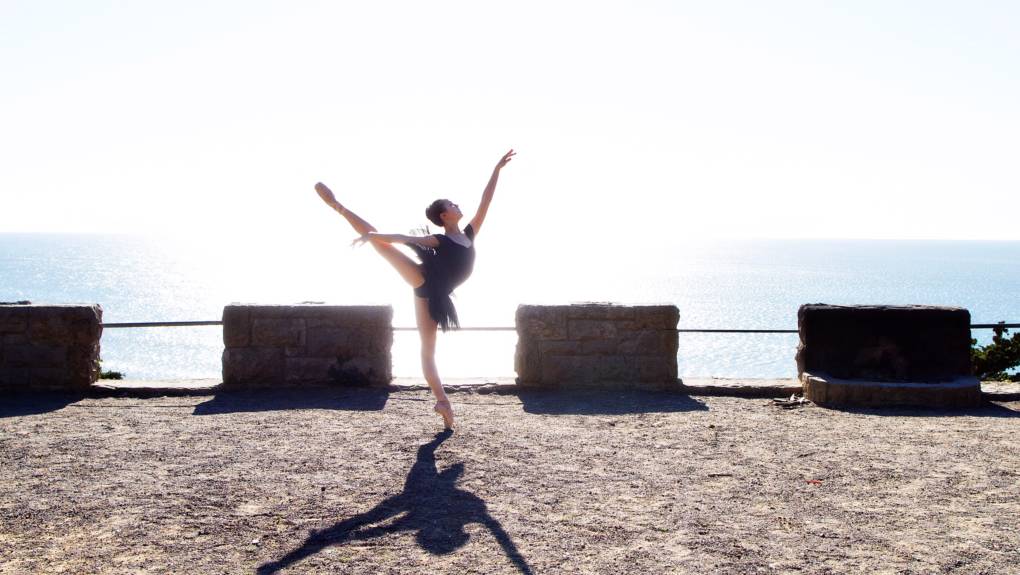
"caption": "At age 18, California ballerina Miko Fogarty landed her dream job with a top company in the United Kingdom. A year later, she walked away from the ballet world.",
"description": "At age 18, California ballerina Miko Fogarty landed her dream job with a top company in the United Kingdom. A year later, she walked away from the ballet world.",
"title": "RS33045_10032018_AW_Miko_07-qut",
"credit": "Anne Wernikoff/KQED",
"status": "inherit",
"isLoading": false,
"fetchFailed": false
},
"news_11696617": {
"type": "attachments",
"id": "news_11696617",
"meta": {
"index": "attachments_1716263798",
"site": "news",
"id": "11696617",
"found": true
},
"parent": 11696615,
"imgSizes": {
"small": {
"file": "https://ww2.kqed.org/app/uploads/sites/10/2018/10/Miko-Fogarty-by-Oliver-Endahl-@balletzaida-e1538685676254-520x293.jpg",
"width": 520,
"mimeType": "image/jpeg",
"height": 293
},
"twentyfourteen-full-width": {
"file": "https://ww2.kqed.org/app/uploads/sites/10/2018/10/Miko-Fogarty-by-Oliver-Endahl-@balletzaida-e1538685676254-1038x576.jpg",
"width": 1038,
"mimeType": "image/jpeg",
"height": 576
},
"thumbnail": {
"file": "https://ww2.kqed.org/app/uploads/sites/10/2018/10/Miko-Fogarty-by-Oliver-Endahl-@balletzaida-e1538685676254-160x90.jpg",
"width": 160,
"mimeType": "image/jpeg",
"height": 90
},
"fd-sm": {
"file": "https://ww2.kqed.org/app/uploads/sites/10/2018/10/Miko-Fogarty-by-Oliver-Endahl-@balletzaida-e1538685676254-960x541.jpg",
"width": 960,
"mimeType": "image/jpeg",
"height": 541
},
"post-thumbnail": {
"file": "https://ww2.kqed.org/app/uploads/sites/10/2018/10/Miko-Fogarty-by-Oliver-Endahl-@balletzaida-e1538685676254-672x372.jpg",
"width": 672,
"mimeType": "image/jpeg",
"height": 372
},
"xsmall": {
"file": "https://ww2.kqed.org/app/uploads/sites/10/2018/10/Miko-Fogarty-by-Oliver-Endahl-@balletzaida-e1538685676254-375x211.jpg",
"width": 375,
"mimeType": "image/jpeg",
"height": 211
},
"kqedFullSize": {
"file": "https://ww2.kqed.org/app/uploads/sites/10/2018/10/Miko-Fogarty-by-Oliver-Endahl-@balletzaida-e1538694652441.jpg",
"width": 1920,
"height": 1082
},
"large": {
"file": "https://ww2.kqed.org/app/uploads/sites/10/2018/10/Miko-Fogarty-by-Oliver-Endahl-@balletzaida-e1538685676254-1020x575.jpg",
"width": 1020,
"mimeType": "image/jpeg",
"height": 575
},
"xlarge": {
"file": "https://ww2.kqed.org/app/uploads/sites/10/2018/10/Miko-Fogarty-by-Oliver-Endahl-@balletzaida-e1538685676254-1180x665.jpg",
"width": 1180,
"mimeType": "image/jpeg",
"height": 665
},
"complete_open_graph": {
"file": "https://ww2.kqed.org/app/uploads/sites/10/2018/10/Miko-Fogarty-by-Oliver-Endahl-@balletzaida-e1538685676254-1200x676.jpg",
"width": 1200,
"mimeType": "image/jpeg",
"height": 676
},
"guest-author-50": {
"file": "https://ww2.kqed.org/app/uploads/sites/10/2018/10/Miko-Fogarty-by-Oliver-Endahl-@balletzaida-e1538685676254-50x50.jpg",
"width": 50,
"mimeType": "image/jpeg",
"height": 50
},
"guest-author-96": {
"file": "https://ww2.kqed.org/app/uploads/sites/10/2018/10/Miko-Fogarty-by-Oliver-Endahl-@balletzaida-e1538685676254-96x96.jpg",
"width": 96,
"mimeType": "image/jpeg",
"height": 96
},
"medium": {
"file": "https://ww2.kqed.org/app/uploads/sites/10/2018/10/Miko-Fogarty-by-Oliver-Endahl-@balletzaida-e1538685676254-800x451.jpg",
"width": 800,
"mimeType": "image/jpeg",
"height": 451
},
"guest-author-64": {
"file": "https://ww2.kqed.org/app/uploads/sites/10/2018/10/Miko-Fogarty-by-Oliver-Endahl-@balletzaida-e1538685676254-64x64.jpg",
"width": 64,
"mimeType": "image/jpeg",
"height": 64
},
"guest-author-32": {
"file": "https://ww2.kqed.org/app/uploads/sites/10/2018/10/Miko-Fogarty-by-Oliver-Endahl-@balletzaida-e1538685676254-32x32.jpg",
"width": 32,
"mimeType": "image/jpeg",
"height": 32
},
"fd-lrg": {
"file": "https://ww2.kqed.org/app/uploads/sites/10/2018/10/Miko-Fogarty-by-Oliver-Endahl-@balletzaida-e1538685676254-1920x1082.jpg",
"width": 1920,
"mimeType": "image/jpeg",
"height": 1082
},
"fd-med": {
"file": "https://ww2.kqed.org/app/uploads/sites/10/2018/10/Miko-Fogarty-by-Oliver-Endahl-@balletzaida-e1538685676254-1180x665.jpg",
"width": 1180,
"mimeType": "image/jpeg",
"height": 665
},
"full-width": {
"file": "https://ww2.kqed.org/app/uploads/sites/10/2018/10/Miko-Fogarty-by-Oliver-Endahl-@balletzaida-e1538685676254-1920x1082.jpg",
"width": 1920,
"mimeType": "image/jpeg",
"height": 1082
},
"detail": {
"file": "https://ww2.kqed.org/app/uploads/sites/10/2018/10/Miko-Fogarty-by-Oliver-Endahl-@balletzaida-e1538685676254-150x150.jpg",
"width": 150,
"mimeType": "image/jpeg",
"height": 150
},
"guest-author-128": {
"file": "https://ww2.kqed.org/app/uploads/sites/10/2018/10/Miko-Fogarty-by-Oliver-Endahl-@balletzaida-e1538685676254-128x128.jpg",
"width": 128,
"mimeType": "image/jpeg",
"height": 128
},
"xxsmall": {
"file": "https://ww2.kqed.org/app/uploads/sites/10/2018/10/Miko-Fogarty-by-Oliver-Endahl-@balletzaida-e1538685676254-240x135.jpg",
"width": 240,
"mimeType": "image/jpeg",
"height": 135
}
},
"publishDate": 1538685440,
"modified": 1538694663,
"caption": "California ballerina Miko Fogarty, a star of the award-winning \"First Position\" dance documentary, performs an arabesque. ",
"description": "California ballerina Miko Fogarty, a star of the award-winning \"First Position\" ballet documentary, performs an arabesque. ",
"title": "Miko Fogarty - by Oliver Endahl @balletzaida",
"credit": "Courtesy Oliver Endahl",
"status": "inherit",
"isLoading": false,
"fetchFailed": false
},
"news_11696857": {
"type": "attachments",
"id": "news_11696857",
"meta": {
"index": "attachments_1716263798",
"site": "news",
"id": "11696857",
"found": true
},
"parent": 11696833,
"imgSizes": {
"small": {
"file": "https://ww2.kqed.org/app/uploads/sites/10/2018/10/fleetflying_080518_final-520x324.jpg",
"width": 520,
"mimeType": "image/jpeg",
"height": 324
},
"twentyfourteen-full-width": {
"file": "https://ww2.kqed.org/app/uploads/sites/10/2018/10/fleetflying_080518_final-1038x576.jpg",
"width": 1038,
"mimeType": "image/jpeg",
"height": 576
},
"thumbnail": {
"file": "https://ww2.kqed.org/app/uploads/sites/10/2018/10/fleetflying_080518_final-160x100.jpg",
"width": 160,
"mimeType": "image/jpeg",
"height": 100
},
"fd-sm": {
"file": "https://ww2.kqed.org/app/uploads/sites/10/2018/10/fleetflying_080518_final-960x599.jpg",
"width": 960,
"mimeType": "image/jpeg",
"height": 599
},
"post-thumbnail": {
"file": "https://ww2.kqed.org/app/uploads/sites/10/2018/10/fleetflying_080518_final-672x372.jpg",
"width": 672,
"mimeType": "image/jpeg",
"height": 372
},
"xsmall": {
"file": "https://ww2.kqed.org/app/uploads/sites/10/2018/10/fleetflying_080518_final-375x234.jpg",
"width": 375,
"mimeType": "image/jpeg",
"height": 234
},
"kqedFullSize": {
"file": "https://ww2.kqed.org/app/uploads/sites/10/2018/10/fleetflying_080518_final.jpg",
"width": 1920,
"height": 1197
},
"large": {
"file": "https://ww2.kqed.org/app/uploads/sites/10/2018/10/fleetflying_080518_final-1020x636.jpg",
"width": 1020,
"mimeType": "image/jpeg",
"height": 636
},
"xlarge": {
"file": "https://ww2.kqed.org/app/uploads/sites/10/2018/10/fleetflying_080518_final-1180x736.jpg",
"width": 1180,
"mimeType": "image/jpeg",
"height": 736
},
"complete_open_graph": {
"file": "https://ww2.kqed.org/app/uploads/sites/10/2018/10/fleetflying_080518_final-1200x748.jpg",
"width": 1200,
"mimeType": "image/jpeg",
"height": 748
},
"guest-author-50": {
"file": "https://ww2.kqed.org/app/uploads/sites/10/2018/10/fleetflying_080518_final-50x50.jpg",
"width": 50,
"mimeType": "image/jpeg",
"height": 50
},
"guest-author-96": {
"file": "https://ww2.kqed.org/app/uploads/sites/10/2018/10/fleetflying_080518_final-96x96.jpg",
"width": 96,
"mimeType": "image/jpeg",
"height": 96
},
"medium": {
"file": "https://ww2.kqed.org/app/uploads/sites/10/2018/10/fleetflying_080518_final-800x499.jpg",
"width": 800,
"mimeType": "image/jpeg",
"height": 499
},
"guest-author-64": {
"file": "https://ww2.kqed.org/app/uploads/sites/10/2018/10/fleetflying_080518_final-64x64.jpg",
"width": 64,
"mimeType": "image/jpeg",
"height": 64
},
"guest-author-32": {
"file": "https://ww2.kqed.org/app/uploads/sites/10/2018/10/fleetflying_080518_final-32x32.jpg",
"width": 32,
"mimeType": "image/jpeg",
"height": 32
},
"fd-lrg": {
"file": "https://ww2.kqed.org/app/uploads/sites/10/2018/10/fleetflying_080518_final-1920x1197.jpg",
"width": 1920,
"mimeType": "image/jpeg",
"height": 1197
},
"fd-med": {
"file": "https://ww2.kqed.org/app/uploads/sites/10/2018/10/fleetflying_080518_final-1180x736.jpg",
"width": 1180,
"mimeType": "image/jpeg",
"height": 736
},
"full-width": {
"file": "https://ww2.kqed.org/app/uploads/sites/10/2018/10/fleetflying_080518_final-1920x1197.jpg",
"width": 1920,
"mimeType": "image/jpeg",
"height": 1197
},
"detail": {
"file": "https://ww2.kqed.org/app/uploads/sites/10/2018/10/fleetflying_080518_final-150x150.jpg",
"width": 150,
"mimeType": "image/jpeg",
"height": 150
},
"guest-author-128": {
"file": "https://ww2.kqed.org/app/uploads/sites/10/2018/10/fleetflying_080518_final-128x128.jpg",
"width": 128,
"mimeType": "image/jpeg",
"height": 128
},
"xxsmall": {
"file": "https://ww2.kqed.org/app/uploads/sites/10/2018/10/fleetflying_080518_final-240x150.jpg",
"width": 240,
"mimeType": "image/jpeg",
"height": 150
}
},
"publishDate": 1538769994,
"modified": 1538770011,
"caption": null,
"description": null,
"title": "fleetflying_080518_final",
"credit": null,
"status": "inherit",
"isLoading": false,
"fetchFailed": false
},
"news_11696518": {
"type": "attachments",
"id": "news_11696518",
"meta": {
"index": "attachments_1716263798",
"site": "news",
"id": "11696518",
"found": true
},
"parent": 11696492,
"imgSizes": {
"small": {
"file": "https://ww2.kqed.org/app/uploads/sites/10/2018/10/ComfortWomenStatueMain-520x347.jpg",
"width": 520,
"mimeType": "image/jpeg",
"height": 347
},
"twentyfourteen-full-width": {
"file": "https://ww2.kqed.org/app/uploads/sites/10/2018/10/ComfortWomenStatueMain-1038x576.jpg",
"width": 1038,
"mimeType": "image/jpeg",
"height": 576
},
"thumbnail": {
"file": "https://ww2.kqed.org/app/uploads/sites/10/2018/10/ComfortWomenStatueMain-160x107.jpg",
"width": 160,
"mimeType": "image/jpeg",
"height": 107
},
"fd-sm": {
"file": "https://ww2.kqed.org/app/uploads/sites/10/2018/10/ComfortWomenStatueMain-960x640.jpg",
"width": 960,
"mimeType": "image/jpeg",
"height": 640
},
"post-thumbnail": {
"file": "https://ww2.kqed.org/app/uploads/sites/10/2018/10/ComfortWomenStatueMain-672x372.jpg",
"width": 672,
"mimeType": "image/jpeg",
"height": 372
},
"xsmall": {
"file": "https://ww2.kqed.org/app/uploads/sites/10/2018/10/ComfortWomenStatueMain-375x250.jpg",
"width": 375,
"mimeType": "image/jpeg",
"height": 250
},
"kqedFullSize": {
"file": "https://ww2.kqed.org/app/uploads/sites/10/2018/10/ComfortWomenStatueMain.jpg",
"width": 1920,
"height": 1280
},
"large": {
"file": "https://ww2.kqed.org/app/uploads/sites/10/2018/10/ComfortWomenStatueMain-1020x680.jpg",
"width": 1020,
"mimeType": "image/jpeg",
"height": 680
},
"xlarge": {
"file": "https://ww2.kqed.org/app/uploads/sites/10/2018/10/ComfortWomenStatueMain-1180x787.jpg",
"width": 1180,
"mimeType": "image/jpeg",
"height": 787
},
"complete_open_graph": {
"file": "https://ww2.kqed.org/app/uploads/sites/10/2018/10/ComfortWomenStatueMain-1200x800.jpg",
"width": 1200,
"mimeType": "image/jpeg",
"height": 800
},
"guest-author-50": {
"file": "https://ww2.kqed.org/app/uploads/sites/10/2018/10/ComfortWomenStatueMain-50x50.jpg",
"width": 50,
"mimeType": "image/jpeg",
"height": 50
},
"guest-author-96": {
"file": "https://ww2.kqed.org/app/uploads/sites/10/2018/10/ComfortWomenStatueMain-96x96.jpg",
"width": 96,
"mimeType": "image/jpeg",
"height": 96
},
"medium": {
"file": "https://ww2.kqed.org/app/uploads/sites/10/2018/10/ComfortWomenStatueMain-800x533.jpg",
"width": 800,
"mimeType": "image/jpeg",
"height": 533
},
"guest-author-64": {
"file": "https://ww2.kqed.org/app/uploads/sites/10/2018/10/ComfortWomenStatueMain-64x64.jpg",
"width": 64,
"mimeType": "image/jpeg",
"height": 64
},
"guest-author-32": {
"file": "https://ww2.kqed.org/app/uploads/sites/10/2018/10/ComfortWomenStatueMain-32x32.jpg",
"width": 32,
"mimeType": "image/jpeg",
"height": 32
},
"fd-lrg": {
"file": "https://ww2.kqed.org/app/uploads/sites/10/2018/10/ComfortWomenStatueMain-1920x1280.jpg",
"width": 1920,
"mimeType": "image/jpeg",
"height": 1280
},
"fd-med": {
"file": "https://ww2.kqed.org/app/uploads/sites/10/2018/10/ComfortWomenStatueMain-1180x787.jpg",
"width": 1180,
"mimeType": "image/jpeg",
"height": 787
},
"full-width": {
"file": "https://ww2.kqed.org/app/uploads/sites/10/2018/10/ComfortWomenStatueMain-1920x1280.jpg",
"width": 1920,
"mimeType": "image/jpeg",
"height": 1280
},
"detail": {
"file": "https://ww2.kqed.org/app/uploads/sites/10/2018/10/ComfortWomenStatueMain-150x150.jpg",
"width": 150,
"mimeType": "image/jpeg",
"height": 150
},
"guest-author-128": {
"file": "https://ww2.kqed.org/app/uploads/sites/10/2018/10/ComfortWomenStatueMain-128x128.jpg",
"width": 128,
"mimeType": "image/jpeg",
"height": 128
},
"xxsmall": {
"file": "https://ww2.kqed.org/app/uploads/sites/10/2018/10/ComfortWomenStatueMain-240x160.jpg",
"width": 240,
"mimeType": "image/jpeg",
"height": 160
}
},
"publishDate": 1538614525,
"modified": 1538614895,
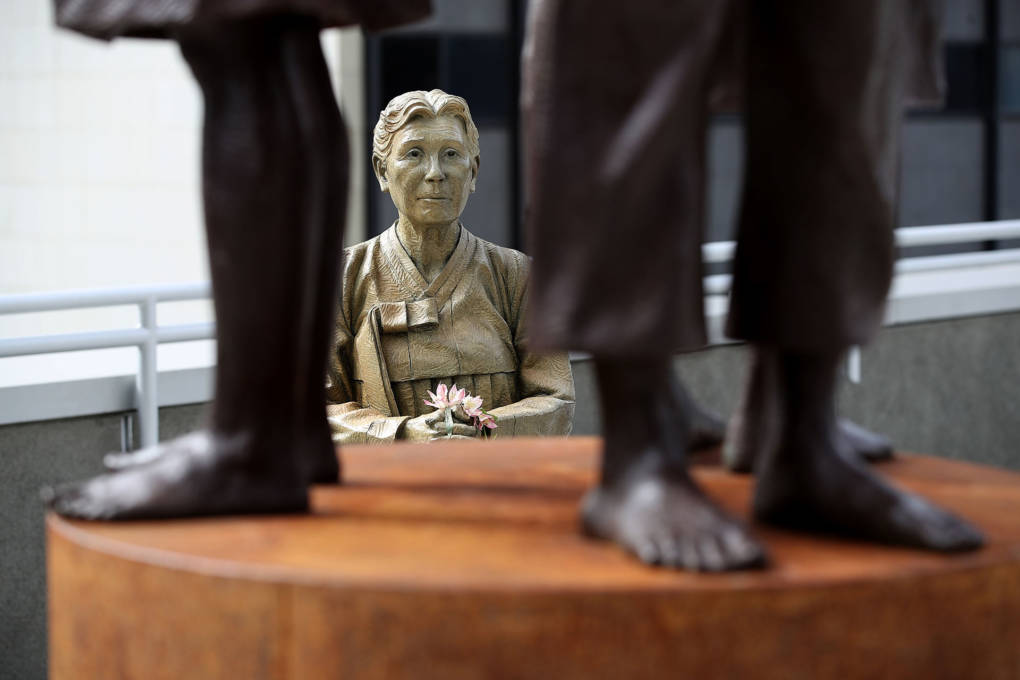
"caption": "The 'Column of Strength' statue in San Francisco's Chinatown memorializes the hundreds of thousands of so-called comfort women who were sex-trafficked by the Japanese Imperial Army during World War II.",
"description": "The 'Column of Strength' statue in San Francisco's Chinatown memorializes the hundreds of thousands of so-called comfort women who were sex-trafficked by the Japanese Imperial Army during World War II.",
"title": "ComfortWomenStatueMain",
"credit": "Justin Sullivan/Getty Images",
"status": "inherit",
"isLoading": false,
"fetchFailed": false
},
"news_11696158": {
"type": "attachments",
"id": "news_11696158",
"meta": {
"index": "attachments_1716263798",
"site": "news",
"id": "11696158",
"found": true
},
"parent": 11695689,
"imgSizes": {
"small": {
"file": "https://ww2.kqed.org/app/uploads/sites/10/2018/10/GiambiTaggedOut-520x405.jpg",
"width": 520,
"mimeType": "image/jpeg",
"height": 405
},
"twentyfourteen-full-width": {
"file": "https://ww2.kqed.org/app/uploads/sites/10/2018/10/GiambiTaggedOut-1038x576.jpg",
"width": 1038,
"mimeType": "image/jpeg",
"height": 576
},
"thumbnail": {
"file": "https://ww2.kqed.org/app/uploads/sites/10/2018/10/GiambiTaggedOut-160x125.jpg",
"width": 160,
"mimeType": "image/jpeg",
"height": 125
},
"fd-sm": {
"file": "https://ww2.kqed.org/app/uploads/sites/10/2018/10/GiambiTaggedOut-960x748.jpg",
"width": 960,
"mimeType": "image/jpeg",
"height": 748
},
"post-thumbnail": {
"file": "https://ww2.kqed.org/app/uploads/sites/10/2018/10/GiambiTaggedOut-672x372.jpg",
"width": 672,
"mimeType": "image/jpeg",
"height": 372
},
"xsmall": {
"file": "https://ww2.kqed.org/app/uploads/sites/10/2018/10/GiambiTaggedOut-375x292.jpg",
"width": 375,
"mimeType": "image/jpeg",
"height": 292
},
"kqedFullSize": {
"file": "https://ww2.kqed.org/app/uploads/sites/10/2018/10/GiambiTaggedOut.jpg",
"width": 1920,
"height": 1495
},
"large": {
"file": "https://ww2.kqed.org/app/uploads/sites/10/2018/10/GiambiTaggedOut-1020x794.jpg",
"width": 1020,
"mimeType": "image/jpeg",
"height": 794
},
"xlarge": {
"file": "https://ww2.kqed.org/app/uploads/sites/10/2018/10/GiambiTaggedOut-1180x919.jpg",
"width": 1180,
"mimeType": "image/jpeg",
"height": 919
},
"complete_open_graph": {
"file": "https://ww2.kqed.org/app/uploads/sites/10/2018/10/GiambiTaggedOut-1200x934.jpg",
"width": 1200,
"mimeType": "image/jpeg",
"height": 934
},
"guest-author-50": {
"file": "https://ww2.kqed.org/app/uploads/sites/10/2018/10/GiambiTaggedOut-50x50.jpg",
"width": 50,
"mimeType": "image/jpeg",
"height": 50
},
"guest-author-96": {
"file": "https://ww2.kqed.org/app/uploads/sites/10/2018/10/GiambiTaggedOut-96x96.jpg",
"width": 96,
"mimeType": "image/jpeg",
"height": 96
},
"medium": {
"file": "https://ww2.kqed.org/app/uploads/sites/10/2018/10/GiambiTaggedOut-800x623.jpg",
"width": 800,
"mimeType": "image/jpeg",
"height": 623
},
"guest-author-64": {
"file": "https://ww2.kqed.org/app/uploads/sites/10/2018/10/GiambiTaggedOut-64x64.jpg",
"width": 64,
"mimeType": "image/jpeg",
"height": 64
},
"guest-author-32": {
"file": "https://ww2.kqed.org/app/uploads/sites/10/2018/10/GiambiTaggedOut-32x32.jpg",
"width": 32,
"mimeType": "image/jpeg",
"height": 32
},
"fd-lrg": {
"file": "https://ww2.kqed.org/app/uploads/sites/10/2018/10/GiambiTaggedOut-1920x1495.jpg",
"width": 1920,
"mimeType": "image/jpeg",
"height": 1495
},
"fd-med": {
"file": "https://ww2.kqed.org/app/uploads/sites/10/2018/10/GiambiTaggedOut-1180x919.jpg",
"width": 1180,
"mimeType": "image/jpeg",
"height": 919
},
"full-width": {
"file": "https://ww2.kqed.org/app/uploads/sites/10/2018/10/GiambiTaggedOut-1920x1495.jpg",
"width": 1920,
"mimeType": "image/jpeg",
"height": 1495
},
"detail": {
"file": "https://ww2.kqed.org/app/uploads/sites/10/2018/10/GiambiTaggedOut-150x150.jpg",
"width": 150,
"mimeType": "image/jpeg",
"height": 150
},
"guest-author-128": {
"file": "https://ww2.kqed.org/app/uploads/sites/10/2018/10/GiambiTaggedOut-128x128.jpg",
"width": 128,
"mimeType": "image/jpeg",
"height": 128
},
"xxsmall": {
"file": "https://ww2.kqed.org/app/uploads/sites/10/2018/10/GiambiTaggedOut-240x187.jpg",
"width": 240,
"mimeType": "image/jpeg",
"height": 187
}
},
"publishDate": 1538519229,
"modified": 1538527130,
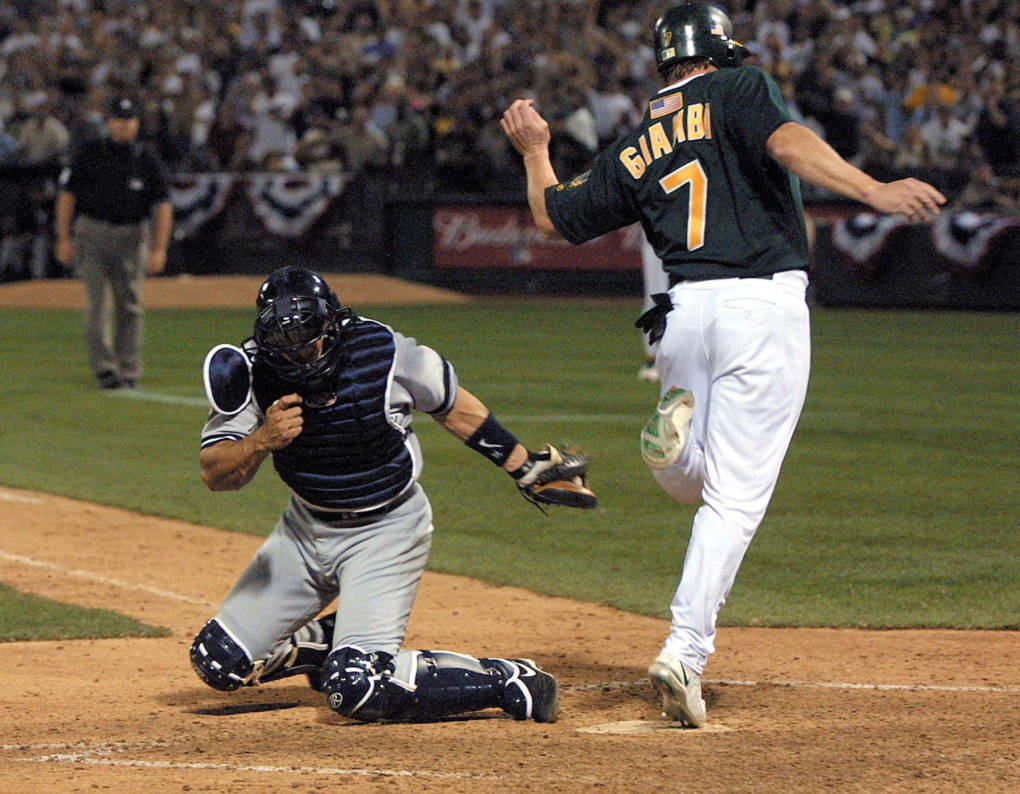
"caption": "In 2001, the Oakland A’s felt the sting of ‘Yankee mystique’ — a phenomenon long-suffering Mets fans know all too well — when Derek Jeter made his iconic 'flip' play during Game 3 of the 2001 ALDS, resulting in the Oakland A's Jeremy Giambi being tagged out at the plate.",
"description": "In 2001, the Oakland A’s felt the sting of ‘Yankee mystique’ — a phenomenon long-suffering Mets fans know all too well — when Derek Jeter made his iconic 'flip' play during game 3 of the 2001 ALDS, resulting in the Oakland A's Jeremy Giambi being tagged out at the plate.",
"title": "GiambiTaggedOut",
"credit": "JOHN G. MABANGLO/AFP/Getty Images",
"status": "inherit",
"isLoading": false,
"fetchFailed": false
}
},
"audioPlayerReducer": {
"postId": "stream_live",
"isPaused": true,
"isPlaying": false,
"pfsActive": false,
"pledgeModalIsOpen": true,
"playerDrawerIsOpen": false,
"liveAudioPlayStartedAt": 0,
"liveAudioPlayContext": ""
},
"authorsReducer": {
"byline_news_11697268": {
"type": "authors",
"id": "byline_news_11697268",
"meta": {
"override": true
},
"slug": "byline_news_11697268",
"name": "\u003cstrong>\u003ca href=\"https://www.npr.org/people/3874941/scott-simon\">Scott Simon\u003c/a>\u003c/br>\u003ca href=\"https://www.npr.org\">NPR\u003c/a>\u003c/strong>",
"isLoading": false
},
"jbrooks": {
"type": "authors",
"id": "80",
"meta": {
"index": "authors_1716337520",
"id": "80",
"found": true
},
"name": "Jon Brooks",
"firstName": "Jon",
"lastName": "Brooks",
"slug": "jbrooks",
"email": "jbrooks@kqed.org",
"display_author_email": true,
"staff_mastheads": [
"science"
],
"title": "Digital Editor",
"bio": "Jon Brooks is a former Digital Editor for KQED Science. He is the former editor of KQED’s daily news blog, News Fix. In 2014, he won a California Journalism Award for his coverage of ride services like Uber and Lyft and the taxi industry. A veteran blogger, he previously worked for Yahoo! in various news writing and editing roles. Jon is also a playwright whose work has been produced in San Francisco, New York, Italy, and around the U.S. He has written about film for his own blog and studied film at Boston University.",
"avatar": "https://secure.gravatar.com/avatar/98887f7ed1c876ed414d4c915e969584?s=600&d=blank&r=g",
"twitter": "jbrooksfoy",
"facebook": null,
"instagram": null,
"linkedin": null,
"sites": [
{
"site": "arts",
"roles": [
"Contributor",
"editor"
]
},
{
"site": "news",
"roles": [
"author"
]
},
{
"site": "futureofyou",
"roles": [
"administrator"
]
},
{
"site": "mindshift",
"roles": [
"editor"
]
},
{
"site": "stateofhealth",
"roles": [
"editor"
]
},
{
"site": "science",
"roles": [
"administrator"
]
},
{
"site": "quest",
"roles": [
"editor"
]
}
],
"headData": {
"title": "Jon Brooks | KQED",
"description": "Digital Editor",
"ogImgSrc": "https://secure.gravatar.com/avatar/98887f7ed1c876ed414d4c915e969584?s=600&d=blank&r=g",
"twImgSrc": "https://secure.gravatar.com/avatar/98887f7ed1c876ed414d4c915e969584?s=600&d=blank&r=g"
},
"isLoading": false,
"link": "/author/jbrooks"
},
"rachael-myrow": {
"type": "authors",
"id": "251",
"meta": {
"index": "authors_1716337520",
"id": "251",
"found": true
},
"name": "Rachael Myrow",
"firstName": "Rachael",
"lastName": "Myrow",
"slug": "rachael-myrow",
"email": "rmyrow@kqed.org",
"display_author_email": true,
"staff_mastheads": [
"news"
],
"title": "Senior Editor of KQED's Silicon Valley News Desk",
"bio": "• I write and edit stories about how Silicon Valley power and policies shape everyday life in California. I’m also passionate about making Bay Area history and culture more accessible to a broad public. • I’ve been a journalist for most of my life, starting in high school with The Franklin Press in Los Angeles, where I grew up. While earning my first degree in English at UC Berkeley, I got my start in public radio at KALX-FM. After completing a second degree in journalism at Cal, I landed my first professional job at Marketplace, then moved on to KPCC (now LAist), and then KQED, where I hosted The California Report for more than seven years. • My reporting has appeared on NPR, The World, WBUR’s \u003ci>Here & Now\u003c/i>, and the BBC. I also guest host for KQED’s \u003ci>Forum\u003c/i>, as well as the Commonwealth Club in San Francisco. • I speak periodically on media, democracy and technology issues, and do voiceover work for documentaries and educational video projects. • Outside of the studio, you'll find me hiking Bay Area trails and whipping up Insta-ready meals in my kitchen. • I do not accept gifts, money, or favors from anyone connected to my reporting, I don't pay people for information, and I do not support or donate to political causes. • I strive to treat the people I report on with fairness, honesty, and respect. I also recognize there are often multiple sides to a story and work to verify information through multiple sources and documentation. If I get something wrong, I correct it.",
"avatar": "https://secure.gravatar.com/avatar/3ed8a3c5f26025e4a805ba634cda8cd764906b97438a6d9ce216b044e340da4e?s=600&d=blank&r=g",
"twitter": "rachaelmyrow",
"bluesky": null,
"facebook": null,
"instagram": null,
"linkedin": "https://www.linkedin.com/in/rachaelmyrow/",
"sites": [
{
"site": "arts",
"roles": [
"administrator"
]
},
{
"site": "news",
"roles": [
"edit_others_posts",
"editor"
]
},
{
"site": "futureofyou",
"roles": [
"editor"
]
},
{
"site": "bayareabites",
"roles": [
"editor"
]
},
{
"site": "stateofhealth",
"roles": [
"editor"
]
},
{
"site": "science",
"roles": [
"editor"
]
},
{
"site": "food",
"roles": [
"editor"
]
},
{
"site": "forum",
"roles": [
"editor"
]
},
{
"site": "liveblog",
"roles": [
"author"
]
}
],
"headData": {
"title": "Rachael Myrow | KQED",
"description": "Senior Editor of KQED's Silicon Valley News Desk",
"ogImgSrc": "https://secure.gravatar.com/avatar/3ed8a3c5f26025e4a805ba634cda8cd764906b97438a6d9ce216b044e340da4e?s=600&d=blank&r=g",
"twImgSrc": "https://secure.gravatar.com/avatar/3ed8a3c5f26025e4a805ba634cda8cd764906b97438a6d9ce216b044e340da4e?s=600&d=blank&r=g"
},
"isLoading": false,
"link": "/author/rachael-myrow"
},
"shossaini": {
"type": "authors",
"id": "3214",
"meta": {
"index": "authors_1716337520",
"id": "3214",
"found": true
},
"name": "Sara Hossaini",
"firstName": "Sara",
"lastName": "Hossaini",
"slug": "shossaini",
"email": "shossaini@kqed.org",
"display_author_email": true,
"staff_mastheads": [
"news"
],
"title": "KQED Reporter",
"bio": "Sara Hossaini came to general assignment reporting at KQED in 2013 after two winters reporting at Wyoming Public Radio. She holds a bachelor's degree in broadcast journalism from the University of Nebraska-Lincoln. Her radio romance began after a bitter breakup with documentary film (Ok, maybe it's still complicated). Her first simultaneous jobs in San Francisco were as Associate Producer on a PBS film series through the Center for Asian American Media and as a butler. She likes to trot, plot and make things with her hands.",
"avatar": "https://secure.gravatar.com/avatar/060e9f56b9554e17942e89f413242774?s=600&d=blank&r=g",
"twitter": "mshossaini",
"facebook": null,
"instagram": null,
"linkedin": null,
"sites": [
{
"site": "news",
"roles": [
"author"
]
},
{
"site": "stateofhealth",
"roles": [
"author"
]
}
],
"headData": {
"title": "Sara Hossaini | KQED",
"description": "KQED Reporter",
"ogImgSrc": "https://secure.gravatar.com/avatar/060e9f56b9554e17942e89f413242774?s=600&d=blank&r=g",
"twImgSrc": "https://secure.gravatar.com/avatar/060e9f56b9554e17942e89f413242774?s=600&d=blank&r=g"
},
"isLoading": false,
"link": "/author/shossaini"
},
"markfiore": {
"type": "authors",
"id": "3236",
"meta": {
"index": "authors_1716337520",
"id": "3236",
"found": true
},
"name": "Mark Fiore",
"firstName": "Mark",
"lastName": "Fiore",
"slug": "markfiore",
"email": "mark@markfiore.com",
"display_author_email": false,
"staff_mastheads": [
"news"
],
"title": "KQED News Cartoonist",
"bio": "\u003ca href=\"http://www.MarkFiore.com\">MarkFiore.com\u003c/a> | \u003ca href=\"https://twitter.com/markfiore\">Follow on Twitter\u003c/a> | \u003ca href=\"https://www.facebook.com/pages/Mark-Fiore-Animated-Political-Cartoons/94451707396?ref=bookmarks\">Facebook\u003c/a> | \u003ca href=\"mailto:mark@markfiore.com\">email\u003c/a>\r\n\r\nPulitzer Prize-winner, Mark Fiore, who the Wall Street Journal has called “the undisputed guru of the form,” creates animated political cartoons in San Francisco, where his work has been featured regularly on the San Francisco Chronicle’s web site, SFGate.com. His work has appeared on Newsweek.com, Slate.com, CBSNews.com, MotherJones.com, DailyKos.com and NPR’s web site. Fiore’s political animation has appeared on CNN, Frontline, Bill Moyers Journal, Salon.com and cable and broadcast outlets across the globe.\r\n\r\nBeginning his professional life by drawing traditional political cartoons for newspapers, Fiore’s work appeared in publications ranging from the Washington Post to the Los Angeles Times. In the late 1990s, he began to experiment with animating political cartoons and, after a short stint at the San Jose Mercury News as their staff cartoonist, Fiore devoted all his energies to animation.\r\nGrowing up in California, Fiore also spent a good portion of his life in the backwoods of Idaho. It was this combination that shaped him politically. Mark majored in political science at Colorado College, where, in a perfect send-off for a cartoonist, he received his diploma in 1991 as commencement speaker Dick Cheney smiled approvingly.\r\nMark Fiore was awarded the Pulitzer Prize for political cartooning in 2010, a Robert F. Kennedy Journalism Award in 2004 and has twice received an Online Journalism Award for commentary from the Online News Association (2002, 2008). Fiore has received two awards for his work in new media from the National Cartoonists Society (2001, 2002), and in 2006 received The James Madison Freedom of Information Award from The Society of Professional Journalists.",
"avatar": "https://secure.gravatar.com/avatar/fc4e2a612b15b67bad0c6f0e1db4ca9b?s=600&d=blank&r=g",
"twitter": "MarkFiore",
"facebook": null,
"instagram": "https://www.instagram.com/markfiore/?hl=en",
"linkedin": null,
"sites": [
{
"site": "arts",
"roles": [
"contributor"
]
},
{
"site": "news",
"roles": [
"editor"
]
},
{
"site": "futureofyou",
"roles": [
"editor"
]
},
{
"site": "science",
"roles": [
"editor"
]
}
],
"headData": {
"title": "Mark Fiore | KQED",
"description": "KQED News Cartoonist",
"ogImgSrc": "https://secure.gravatar.com/avatar/fc4e2a612b15b67bad0c6f0e1db4ca9b?s=600&d=blank&r=g",
"twImgSrc": "https://secure.gravatar.com/avatar/fc4e2a612b15b67bad0c6f0e1db4ca9b?s=600&d=blank&r=g"
},
"isLoading": false,
"link": "/author/markfiore"
},
"tcamhi": {
"type": "authors",
"id": "3251",
"meta": {
"index": "authors_1716337520",
"id": "3251",
"found": true
},
"name": "Tiffany Camhi",
"firstName": "Tiffany",
"lastName": "Camhi",
"slug": "tcamhi",
"email": "tiffanycamhi@gmail.com",
"display_author_email": false,
"staff_mastheads": [],
"title": "KQED Contributor",
"bio": null,
"avatar": "https://secure.gravatar.com/avatar/f8204ce351139205d3b3dc1581016a5e30d7d8b38cb2c139348c151ec14b792e?s=600&d=blank&r=g",
"twitter": null,
"bluesky": null,
"facebook": null,
"instagram": null,
"linkedin": null,
"sites": [
{
"site": "arts",
"roles": [
"subscriber"
]
},
{
"site": "news",
"roles": [
"subscriber"
]
}
],
"headData": {
"title": "Tiffany Camhi | KQED",
"description": "KQED Contributor",
"ogImgSrc": "https://secure.gravatar.com/avatar/f8204ce351139205d3b3dc1581016a5e30d7d8b38cb2c139348c151ec14b792e?s=600&d=blank&r=g",
"twImgSrc": "https://secure.gravatar.com/avatar/f8204ce351139205d3b3dc1581016a5e30d7d8b38cb2c139348c151ec14b792e?s=600&d=blank&r=g"
},
"isLoading": false,
"link": "/author/tcamhi"
},
"cveltman": {
"type": "authors",
"id": "8608",
"meta": {
"index": "authors_1716337520",
"id": "8608",
"found": true
},
"name": "Chloe Veltman",
"firstName": "Chloe",
"lastName": "Veltman",
"slug": "cveltman",
"email": "cveltman@kqed.org",
"display_author_email": true,
"staff_mastheads": [],
"title": "Arts and Culture Reporter",
"bio": "Chloe Veltman is a former arts and culture reporter for KQED. Prior to joining the organization, she launched and led the arts bureau at Colorado Public Radio, served as the Bay Area's culture columnist for the New York Times, and was the founder, host and executive producer of VoiceBox, a national award-winning weekly podcast/radio show and live events series all about the human voice. Chloe is the recipient of numerous prizes, grants and fellowships including a Webby Award for her work on interactive storytelling, both the John S Knight Journalism Fellowship and Humanities Center Fellowship at Stanford University, the Sundance Arts Writing Fellowship and a Library of Congress Research Fellowship. She is the author of the book \"On Acting\" and has appeared as a guest lecturer at Yale University and the San Francisco Conservatory of Music among other institutions. She holds a BA in english literature from King's College, Cambridge, and a Masters in Dramaturgy from the Central School of Speech and Drama/Harvard Institute for Advanced Theater Training.\r\n\u003ca href=\"https://www.chloeveltman.com\">www.chloeveltman.com\u003c/a>",
"avatar": "https://secure.gravatar.com/avatar/55403394b00a1ddab683952c2eb2cf85?s=600&d=blank&r=g",
"twitter": "chloeveltman",
"facebook": null,
"instagram": null,
"linkedin": null,
"sites": [
{
"site": "arts",
"roles": []
},
{
"site": "news",
"roles": [
"author"
]
},
{
"site": "pop",
"roles": [
"editor"
]
},
{
"site": "science",
"roles": []
}
],
"headData": {
"title": "Chloe Veltman | KQED",
"description": "Arts and Culture Reporter",
"ogImgSrc": "https://secure.gravatar.com/avatar/55403394b00a1ddab683952c2eb2cf85?s=600&d=blank&r=g",
"twImgSrc": "https://secure.gravatar.com/avatar/55403394b00a1ddab683952c2eb2cf85?s=600&d=blank&r=g"
},
"isLoading": false,
"link": "/author/cveltman"
},
"jeremysiegel": {
"type": "authors",
"id": "11258",
"meta": {
"index": "authors_1716337520",
"id": "11258",
"found": true
},
"name": "Jeremy Siegel",
"firstName": "Jeremy",
"lastName": "Siegel",
"slug": "jeremysiegel",
"email": "jsiegel@kqed.org",
"display_author_email": false,
"staff_mastheads": [],
"title": "KQED Contributor",
"bio": "Jeremy Siegel is is the weekend afternoon news anchor for KQED. His reporting can be heard on KQED News, Morning Edition, All Things Considered and The California Report. Jeremy's coverage of the Camp Fire in Butte County won the 2019 Society of Professional Journalists, Northern California Chapter, Excellence in Journalism Award for Breaking News. Jeremy grew up in Cincinnati, Ohio, and graduated from UC Berkeley.",
"avatar": "https://secure.gravatar.com/avatar/3921a64ceb9ed5d0ba47d9ae9782f1ab?s=600&d=blank&r=g",
"twitter": "jersiegel",
"facebook": null,
"instagram": null,
"linkedin": null,
"sites": [
{
"site": "arts",
"roles": []
},
{
"site": "news",
"roles": [
"subscriber"
]
},
{
"site": "science",
"roles": []
}
],
"headData": {
"title": "Jeremy Siegel | KQED",
"description": "KQED Contributor",
"ogImgSrc": "https://secure.gravatar.com/avatar/3921a64ceb9ed5d0ba47d9ae9782f1ab?s=600&d=blank&r=g",
"twImgSrc": "https://secure.gravatar.com/avatar/3921a64ceb9ed5d0ba47d9ae9782f1ab?s=600&d=blank&r=g"
},
"isLoading": false,
"link": "/author/jeremysiegel"
},
"rlevi": {
"type": "authors",
"id": "11260",
"meta": {
"index": "authors_1716337520",
"id": "11260",
"found": true
},
"name": "Ryan Levi",
"firstName": "Ryan",
"lastName": "Levi",
"slug": "rlevi",
"email": "rlevi@KQED.org",
"display_author_email": false,
"staff_mastheads": [],
"title": "KQED Contributor",
"bio": "Ryan Levi was a reporter and podcast producer at KQED News from 2016-2019. He worked on \u003ca href=\"https://www.kqed.org/news/series/baycurious\">Bay Curious\u003c/a>, \u003ca href=\"https://www.kqed.org/news/tag/the-bay/\">The Bay, \u003c/a>and \u003ca href=\"https://podcasts.apple.com/us/podcast/the-california-report-magazine/id1314750545\">The California Report Magazine\u003c/a>, as well as hosting and producing the weekly \u003ca href=\"https://www.kqed.org/news/program/qedup/\">Q'ed Up podcast. \u003c/a>He also helped inaugurate KQED's weekend news coverage in 2017 as one of two original digital producers. Ryan holds degrees in multimedia journalism and Spanish from the University of Missouri.",
"avatar": "https://secure.gravatar.com/avatar/4cb2ddd028ac8807d1adf09609c5555d?s=600&d=blank&r=g",
"twitter": "ryan_levi",
"facebook": null,
"instagram": null,
"linkedin": null,
"sites": [
{
"site": "arts",
"roles": [
"editor"
]
},
{
"site": "news",
"roles": [
"subscriber"
]
},
{
"site": "stateofhealth",
"roles": [
"editor"
]
},
{
"site": "science",
"roles": [
"editor"
]
},
{
"site": "forum",
"roles": [
"administrator"
]
},
{
"site": "perspectives",
"roles": [
"administrator"
]
}
],
"headData": {
"title": "Ryan Levi | KQED",
"description": "KQED Contributor",
"ogImgSrc": "https://secure.gravatar.com/avatar/4cb2ddd028ac8807d1adf09609c5555d?s=600&d=blank&r=g",
"twImgSrc": "https://secure.gravatar.com/avatar/4cb2ddd028ac8807d1adf09609c5555d?s=600&d=blank&r=g"
},
"isLoading": false,
"link": "/author/rlevi"
},
"bhernandez": {
"type": "authors",
"id": "11359",
"meta": {
"index": "authors_1716337520",
"id": "11359",
"found": true
},
"name": "Bianca Hernandez",
"firstName": "Bianca",
"lastName": "Hernandez",
"slug": "bhernandez",
"email": "bhernandez@kqed.org",
"display_author_email": false,
"staff_mastheads": [],
"title": "KQED Contributor",
"bio": "Bianca Hernandez is a former Interactive Producer for KQED. She has produced at KGPE, KSEE24 and Sierra Magazine. In 2011 she received an undergraduate degree in Journalism and Anthropology from CSU, Chico . She earned a Master's from the University of Southern California in 2013, where she completed a documentary on teenage farmworkers. She is an avid Jane Austen fan and takes lightsaber combat class for fun.",
"avatar": "https://secure.gravatar.com/avatar/75b3424851e2f9fa131f2cb6a051aeac?s=600&d=blank&r=g",
"twitter": "bookhoarding",
"facebook": null,
"instagram": null,
"linkedin": null,
"sites": [
{
"site": "arts",
"roles": []
},
{
"site": "news",
"roles": []
},
{
"site": "science",
"roles": []
},
{
"site": "forum",
"roles": []
}
],
"headData": {
"title": "Bianca Hernandez | KQED",
"description": "KQED Contributor",
"ogImgSrc": "https://secure.gravatar.com/avatar/75b3424851e2f9fa131f2cb6a051aeac?s=600&d=blank&r=g",
"twImgSrc": "https://secure.gravatar.com/avatar/75b3424851e2f9fa131f2cb6a051aeac?s=600&d=blank&r=g"
},
"isLoading": false,
"link": "/author/bhernandez"
},
"akusmer": {
"type": "authors",
"id": "11361",
"meta": {
"index": "authors_1716337520",
"id": "11361",
"found": true
},
"name": "Anna Kusmer",
"firstName": "Anna",
"lastName": "Kusmer",
"slug": "akusmer",
"email": "akusmer@kqed.org",
"display_author_email": false,
"staff_mastheads": [],
"title": "News Intern",
"bio": "Anna Kusmer was a 2018 KQED News intern. She has worked as an ecologist and a hamburger flipper. She is also a freelance writer with stories appearing in NPR and PBS.",
"avatar": "https://secure.gravatar.com/avatar/307ee2fc39d2a9dffeaad0482e616c80?s=600&d=blank&r=g",
"twitter": "askusmer",
"facebook": null,
"instagram": null,
"linkedin": null,
"sites": [
{
"site": "news",
"roles": [
"subscriber"
]
},
{
"site": "futureofyou",
"roles": [
"editor"
]
},
{
"site": "science",
"roles": []
}
],
"headData": {
"title": "Anna Kusmer | KQED",
"description": "News Intern",
"ogImgSrc": "https://secure.gravatar.com/avatar/307ee2fc39d2a9dffeaad0482e616c80?s=600&d=blank&r=g",
"twImgSrc": "https://secure.gravatar.com/avatar/307ee2fc39d2a9dffeaad0482e616c80?s=600&d=blank&r=g"
},
"isLoading": false,
"link": "/author/akusmer"
}
},
"pagesReducer": {
"news_category_arts-and-culture": {
"type": "terms",
"id": "news_223",
"meta": {
"index": "terms_1716263798",
"site": "news",
"id": "223",
"score": 11.241959
},
"featImg": null,
"name": "Arts and Culture",
"description": null,
"taxonomy": "category",
"headData": {
"twImgId": null,
"twTitle": null,
"ogTitle": null,
"ogImgId": null,
"twDescription": null,
"description": null,
"title": "Arts and Culture Archives | KQED News",
"ogDescription": null
},
"ttid": 231,
"slug": "arts-and-culture",
"isLoading": false,
"title": "Arts and Culture",
"pageMeta": {
"site": "news",
"WpPageTemplate": "page-topic-editorial",
"currentPage": 69
},
"blocks": [
{
"blockName": "kqed/post-list",
"attrs": {
"layout": "cardArticle2",
"query": "posts/news?category=arts-and-culture",
"seeMore": false,
"paginated": true,
"page": 69
}
},
{
"blockName": "kqed/ad"
}
]
}
},
"pfsSessionReducer": {},
"postsReducer": {
"stream_live": {
"type": "live",
"id": "stream_live",
"audioUrl": "https://streams.kqed.org/kqedradio",
"title": "Live Stream",
"excerpt": "Live Stream information currently unavailable.",
"link": "/radio",
"featImg": "",
"label": {
"name": "KQED Live",
"link": "/"
}
},
"stream_kqedNewscast": {
"type": "posts",
"id": "stream_kqedNewscast",
"audioUrl": "https://www.kqed.org/.stream/anon/radio/RDnews/newscast.mp3?_=1",
"title": "KQED Newscast",
"featImg": "",
"label": {
"name": "88.5 FM",
"link": "/"
}
},
"news_11699649": {
"type": "posts",
"id": "news_11699649",
"meta": {
"index": "posts_1716263798",
"site": "news",
"id": "11699649",
"score": null,
"sort": [
1539889577000
]
},
"guestAuthors": [],
"slug": "50-years-on-the-olympic-power-salute-of-1968-gets-its-due-respect",
"title": "50 Years On, the Olympic Power Salute of 1968 Gets Its Due Respect",
"publishDate": 1539889577,
"format": "audio",
"headTitle": "50 Years On, the Olympic Power Salute of 1968 Gets Its Due Respect | KQED",
"labelTerm": {
"term": 33523,
"site": "news"
},
"content": "\u003cp>Before anyone took a knee on a football field, two athletes from San Jose State University (SJSU) raised their fists in the air. It was 50 years ago this week.\u003c/p>\n\u003cp>It’s one of the most iconic images in sports history: Tommie Smith and John Carlos, two African-American track and field medal winners from SJSU, standing shoeless on an awards platform in Mexico City with their heads bowed and their fists in the air.\u003c/p>\n\u003cp>This week, San Jose State University celebrated the major anniversary of that moment with a \u003ca href=\"https://www.sjsuwordstoaction.com/50th-anniversary-of-the-defining-moment-in-sports-social-activism-the-voices-of-1968-head-to-san-jose-state-university-for-historic-town-hall/\" target=\"_blank\" rel=\"noopener\">town hall\u003c/a> that drew a large, enthusiastic crowd of students and a few people old enough to remember the original moment.\u003c/p>\n\u003cfigure id=\"attachment_11699652\" class=\"wp-caption aligncenter\" style=\"max-width: 800px\">\u003cimg loading=\"lazy\" decoding=\"async\" class=\"size-medium wp-image-11699652\" src=\"https://ww2.kqed.org/news/wp-content/uploads/sites/10/2018/10/EPE0062-800x533.jpg\" alt=\"Tommie Smith at his alma mater, San Jose State University on October 17, 2018.\" width=\"800\" height=\"533\" srcset=\"https://cdn.kqed.org/wp-content/uploads/sites/10/2018/10/EPE0062-800x533.jpg 800w, https://cdn.kqed.org/wp-content/uploads/sites/10/2018/10/EPE0062-160x107.jpg 160w, https://cdn.kqed.org/wp-content/uploads/sites/10/2018/10/EPE0062-1020x680.jpg 1020w, https://cdn.kqed.org/wp-content/uploads/sites/10/2018/10/EPE0062-1200x800.jpg 1200w, https://cdn.kqed.org/wp-content/uploads/sites/10/2018/10/EPE0062-1180x787.jpg 1180w, https://cdn.kqed.org/wp-content/uploads/sites/10/2018/10/EPE0062-960x640.jpg 960w, https://cdn.kqed.org/wp-content/uploads/sites/10/2018/10/EPE0062-240x160.jpg 240w, https://cdn.kqed.org/wp-content/uploads/sites/10/2018/10/EPE0062-375x250.jpg 375w, https://cdn.kqed.org/wp-content/uploads/sites/10/2018/10/EPE0062-520x347.jpg 520w, https://cdn.kqed.org/wp-content/uploads/sites/10/2018/10/EPE0062.jpg 1800w\" sizes=\"(max-width: 800px) 100vw, 800px\">\u003cfigcaption class=\"wp-caption-text\">Tommie Smith at his alma mater, San Jose State University on October 17, 2018. \u003ccite>(Photo: Courtesy of Josie Lepe/San Jose State University )\u003c/cite>\u003c/figcaption>\u003c/figure>\n\u003cp>His hair now grey, 74-year-old Smith has no regrets. “Find something to be responsible for. Get up in the morning, look in the mirror, and say to yourself, you have a responsibility. Then you’ve got to answer that. What is it?”\u003c/p>\n\u003cp>As a young university student, Smith was thinking along these lines before he qualified for the 1968 Olympics in Mexico City. In 1967, as the Mexico City Olympics approached, another athlete and activist on campus by the name of \u003ca href=\"https://www.sjsuwordstoaction.com/category/dr-harry-edwards/\" target=\"_blank\" rel=\"noopener\">Harry Edwards\u003c/a> formed the Olympic Project for Human Rights.\u003c/p>\n\u003cp>[ad fullwidth]\u003c/p>\n\u003cp>The group called for an athlete boycott of the games, to highlight the inequities African-American athletes faced. They wanted more black coaches. They wanted Olympic officials to restore Muhammad Ali’s heavyweight title, to disinvite South Africa and Rhodesia (now Zimbabwe) from the Olympics, and to remove Avery Brundage, the controversial International Olympic Committee president, from power.\u003c/p>\n\u003cp>The boycott failed to gain traction, but in the political moment of 1968, after two major assassinations, rolling riots and protests throughout the country, Smith and Carlos were not alone in feeling the charged political atmosphere back home demanded some kind of response, some action to capitalize on the platform they would enjoy with the world’s attention on them for the games.\u003c/p>\n\u003cp>A number of athletes wore black items of clothing during the Olympics as silent, subtle protests, but Smith and Carlos had something bigger in mind. After they won the gold and bronze, respectively, for their performances in the 200-meter dash, they walked up to receive their medals wearing black scarves to symbolize lynching, as well as black socks with no shoes to symbolize poverty. As the crowd cheered, they each raised a gloved fist to the sky.\u003c/p>\n\u003cp>\u003cem>Watch the men’s 200-meter race at the 1968 Mexico City Games, and the awards ceremony that follows. The relevant action begins at 29:45.\u003c/em>\u003c/p>\n\u003cp>[youtube https://www.youtube.com/watch?v=pVsQYRZgb10]\u003c/p>\n\u003cp>The response was immediate and vitriolic. The International Olympic Committee called the protest of black suffering in America “outrageous,” and sent the two men\u003ca href=\"https://diva.sfsu.edu/collections/sfbatv/bundles/206374\" target=\"_blank\" rel=\"noopener\"> back to San Jose\u003c/a> the next day. Smith and Carlos received death threats, and the FBI monitored them with the label “rabble rousers.”\u003c/p>\n\u003cp>“The action … was an insult to the Mexican hosts and a disgrace to the United States,” Avery Brundage, the International Olympic Committee president, wrote in a letter months later.\u003c/p>\n\u003cp>The superstars from “Speed City,” as San Jose State was called at the time, were banned from international track and field competitions. In 1968, Tommie Smith was one of the fastest men on the planet. He set 13 world records, including the one on Oct. 16, 1968.\u003c/p>\n\u003cp>[youtube https://www.youtube.com/watch?v=yV4zvaxeI94]\u003c/p>\n\u003cp>Over the years, attitudes towards what the men did began to change. In 1984, Smith and Carlos became emissaries for the Summer Olympics in Los Angeles. They were inducted into the U.S. Track and Field Hall of Fame. And in 2005, the Associated Students of San Jose State University unveiled, in the heart of the campus, a 23-foot-tall sculpture of the two athletes.\u003c/p>\n\u003cp>Carlos told the gathering, “W\u003cb>\u003c/b>e had to do something that would be prestigious, respectable, pungent, shocking. We didn’t give the finger. We didn’t wrap the flag around our head or tie it up like a diaper. We didn’t stand there with disrespect. We stood there to say, ‘Hey man, I’m America. I’m your son and I’m wounded. I’m not wounded for me, because I’m one of your heroes. I’m in the Olympics. But I’m wounded for the race.’ […] That’s why we went to Mexico City.”\u003c/p>\n\u003cfigure id=\"attachment_11699653\" class=\"wp-caption aligncenter\" style=\"max-width: 800px\">\u003cimg loading=\"lazy\" decoding=\"async\" class=\"size-medium wp-image-11699653\" src=\"https://ww2.kqed.org/news/wp-content/uploads/sites/10/2018/10/RS33278_TommieCarlos_Sculpture_EPE0461-qut-800x533.jpg\" alt=\"John Carlos and Tommie Smith stand in front of the statue memorializing their iconic Olympic moment on the San Jose State University campus.\" width=\"800\" height=\"533\" srcset=\"https://cdn.kqed.org/wp-content/uploads/sites/10/2018/10/RS33278_TommieCarlos_Sculpture_EPE0461-qut-800x533.jpg 800w, https://cdn.kqed.org/wp-content/uploads/sites/10/2018/10/RS33278_TommieCarlos_Sculpture_EPE0461-qut-160x107.jpg 160w, https://cdn.kqed.org/wp-content/uploads/sites/10/2018/10/RS33278_TommieCarlos_Sculpture_EPE0461-qut-1020x680.jpg 1020w, https://cdn.kqed.org/wp-content/uploads/sites/10/2018/10/RS33278_TommieCarlos_Sculpture_EPE0461-qut-1200x800.jpg 1200w, https://cdn.kqed.org/wp-content/uploads/sites/10/2018/10/RS33278_TommieCarlos_Sculpture_EPE0461-qut.jpg 1920w, https://cdn.kqed.org/wp-content/uploads/sites/10/2018/10/RS33278_TommieCarlos_Sculpture_EPE0461-qut-1180x787.jpg 1180w, https://cdn.kqed.org/wp-content/uploads/sites/10/2018/10/RS33278_TommieCarlos_Sculpture_EPE0461-qut-960x640.jpg 960w, https://cdn.kqed.org/wp-content/uploads/sites/10/2018/10/RS33278_TommieCarlos_Sculpture_EPE0461-qut-240x160.jpg 240w, https://cdn.kqed.org/wp-content/uploads/sites/10/2018/10/RS33278_TommieCarlos_Sculpture_EPE0461-qut-375x250.jpg 375w, https://cdn.kqed.org/wp-content/uploads/sites/10/2018/10/RS33278_TommieCarlos_Sculpture_EPE0461-qut-520x347.jpg 520w\" sizes=\"(max-width: 800px) 100vw, 800px\">\u003cfigcaption class=\"wp-caption-text\">John Carlos and Tommie Smith stand in front of the statue memorializing their iconic Olympic moment on the San Jose State University campus. \u003ccite>(Photo: Courtesy of Josie Lepe/San Jose State University )\u003c/cite>\u003c/figcaption>\u003c/figure>\n\u003cp>He added, “I didn’t choose to be the guy in Mexico City. God chose me to be there. But God left it up to us as to how we were going to respond when we got there. ”\u003c/p>\n\u003cp>Also in attendance that day: Australian Olympian Peter Norman, the white, silver medal winner who stood with Smith and Carlos in sympathy back in 1968.\u003c/p>\n\u003cp>Just a year before he died in 2006, Norman had this to say. “Two men made a statement that reverberated around the world. It was like a pebble into the middle of a small pond. The reverberations of the ripple are still rippling. It’s a very big pond. It’s the entire world.”\u003c/p>\n\u003cfigure id=\"attachment_11699655\" class=\"wp-caption aligncenter\" style=\"max-width: 800px\">\u003cimg loading=\"lazy\" decoding=\"async\" class=\"size-medium wp-image-11699655\" src=\"https://ww2.kqed.org/news/wp-content/uploads/sites/10/2018/10/EPE0033-800x533.jpg\" alt=\"Dr. Harry Edwards, now Professor Emeritus at UC Berkeley, addresses a celebration at San Jose State University.\" width=\"800\" height=\"533\" srcset=\"https://cdn.kqed.org/wp-content/uploads/sites/10/2018/10/EPE0033-800x533.jpg 800w, https://cdn.kqed.org/wp-content/uploads/sites/10/2018/10/EPE0033-160x107.jpg 160w, https://cdn.kqed.org/wp-content/uploads/sites/10/2018/10/EPE0033-1020x680.jpg 1020w, https://cdn.kqed.org/wp-content/uploads/sites/10/2018/10/EPE0033-1200x800.jpg 1200w, https://cdn.kqed.org/wp-content/uploads/sites/10/2018/10/EPE0033-1180x787.jpg 1180w, https://cdn.kqed.org/wp-content/uploads/sites/10/2018/10/EPE0033-960x640.jpg 960w, https://cdn.kqed.org/wp-content/uploads/sites/10/2018/10/EPE0033-240x160.jpg 240w, https://cdn.kqed.org/wp-content/uploads/sites/10/2018/10/EPE0033-375x250.jpg 375w, https://cdn.kqed.org/wp-content/uploads/sites/10/2018/10/EPE0033-520x347.jpg 520w, https://cdn.kqed.org/wp-content/uploads/sites/10/2018/10/EPE0033.jpg 1738w\" sizes=\"(max-width: 800px) 100vw, 800px\">\u003cfigcaption class=\"wp-caption-text\">Dr. Harry Edwards, now Professor Emeritus at UC Berkeley, addresses a celebration at San Jose State University. \u003ccite>(Photo: Courtesy of Josie Lepe/San Jose State University )\u003c/cite>\u003c/figcaption>\u003c/figure>\n\u003cp>Edwards calls what happened in Mexico City part of the third wave of athletic political activism. The first wave, he explains, includes people like Jack Johnson and Joe Lewis who established the fact of black athletic talent.\u003c/p>\n\u003cp>The second wave includes people like Jackie Robinson and Bill Willis who struggled to establish access to the fields of play, to end segregation of professional sports after World War II.\u003c/p>\n\u003cp>The third wave includes Muhammed Ali, as well as Smith and Carlos.\u003cbr>\n[ad floatright]\u003cbr>\n“Dignity and respect. Not only did they want to be on the field and on the courts, in the boxing ring. They wanted to be respected as human beings outside of the arena. That’s why it was the Olympic project for human rights, not the Olympic project for civil rights,” Edwards says.\u003c/p>\n\u003cp>\u003ca href=\"https://www.kqed.org/news/tag/colin-kaepernick\" target=\"_blank\" rel=\"noopener\">Colin Kaepernick\u003c/a>, the quarterback who lost his NFL position after kneeling during the national anthem to protest racial and social injustice? Edwards says Kaepernick is part of the fourth wave, which he sees as play for power. “Today, we’re in a position where we can exercise power. Here’s what we want to talk about.”\u003c/p>\n\u003cp>Edwards sees a fifth wave coming: women claiming more of a leadership role in professional sports.\u003c/p>\n\u003cp>“We’re not going anywhere where women don’t lead,” he says.\u003c/p>\n\u003cdiv style=\"width:100%\">\n\u003c!-- iframe plugin v.4.3 wordpress.org/plugins/iframe/ -->\u003cbr>\n\u003ciframe loading=\"lazy\" src=\"https://uploads.knightlab.com/storymapjs/52f6ac29a40773d4b276d006a9cc5ce8/politics-at-the-olympics/index.html\" width=\"100%\" height=\"800\" frameborder=\"0\" scrolling=\"yes\" class=\"iframe-class\">\u003c/iframe>\n\u003c/div>\n\n",
"blocks": [],
"excerpt": "On the 50th anniversary of the 1968 Mexico City Olympics, San Jose State University celebrates the athletes who spoke out against racism.",
"status": "publish",
"parent": 0,
"modified": 1721153222,
"stats": {
"hasAudio": false,
"hasVideo": true,
"hasChartOrMap": true,
"iframeSrcs": [
"https://uploads.knightlab.com/storymapjs/52f6ac29a40773d4b276d006a9cc5ce8/politics-at-the-olympics/index.html"
],
"hasGoogleForm": false,
"hasGallery": false,
"hasHearkenModule": false,
"hasPolis": false,
"paragraphCount": 26,
"wordCount": 1201
},
"headData": {
"title": "50 Years On, the Olympic Power Salute of 1968 Gets Its Due Respect | KQED",
"description": "On the 50th anniversary of the 1968 Mexico City Olympics, San Jose State University celebrates the athletes who spoke out against racism.",
"ogTitle": "",
"ogDescription": "",
"ogImgId": "",
"twTitle": "",
"twDescription": "",
"twImgId": "",
"schema": {
"@context": "https://schema.org",
"@type": "NewsArticle",
"headline": "50 Years On, the Olympic Power Salute of 1968 Gets Its Due Respect",
"datePublished": "2018-10-18T12:06:17-07:00",
"dateModified": "2024-07-16T11:07:02-07:00",
"image": "https://cdn.kqed.org/wp-content/uploads/2020/02/KQED-OG-Image@1x.png",
"isAccessibleForFree": "True",
"publisher": {
"@type": "NewsMediaOrganization",
"@id": "https://www.kqed.org/#organization",
"name": "KQED",
"logo": "https://cdn.kqed.org/wp-content/uploads/2020/02/KQED-OG-Image@1x.png",
"url": "https://www.kqed.org",
"sameAs": [
"https://www.facebook.com/KQED",
"https://twitter.com/KQED",
"https://www.instagram.com/kqed/",
"https://www.tiktok.com/@kqedofficial",
"https://www.linkedin.com/company/kqed",
"https://www.youtube.com/channel/UCeC0IOo7i1P_61zVUWbJ4nw"
]
}
}
},
"audioUrl": "https://www.kqed.org/.stream/anon/radio/RDnews/2018/10/Myrow1968Olympics.mp3",
"sticky": false,
"audioTrackLength": 243,
"path": "/news/11699649/50-years-on-the-olympic-power-salute-of-1968-gets-its-due-respect",
"parsedContent": [
{
"type": "contentString",
"content": "\u003cdiv class=\"post-body\">\u003cp>\u003cp>Before anyone took a knee on a football field, two athletes from San Jose State University (SJSU) raised their fists in the air. It was 50 years ago this week.\u003c/p>\n\u003cp>It’s one of the most iconic images in sports history: Tommie Smith and John Carlos, two African-American track and field medal winners from SJSU, standing shoeless on an awards platform in Mexico City with their heads bowed and their fists in the air.\u003c/p>\n\u003cp>This week, San Jose State University celebrated the major anniversary of that moment with a \u003ca href=\"https://www.sjsuwordstoaction.com/50th-anniversary-of-the-defining-moment-in-sports-social-activism-the-voices-of-1968-head-to-san-jose-state-university-for-historic-town-hall/\" target=\"_blank\" rel=\"noopener\">town hall\u003c/a> that drew a large, enthusiastic crowd of students and a few people old enough to remember the original moment.\u003c/p>\n\u003cfigure id=\"attachment_11699652\" class=\"wp-caption aligncenter\" style=\"max-width: 800px\">\u003cimg loading=\"lazy\" decoding=\"async\" class=\"size-medium wp-image-11699652\" src=\"https://ww2.kqed.org/news/wp-content/uploads/sites/10/2018/10/EPE0062-800x533.jpg\" alt=\"Tommie Smith at his alma mater, San Jose State University on October 17, 2018.\" width=\"800\" height=\"533\" srcset=\"https://cdn.kqed.org/wp-content/uploads/sites/10/2018/10/EPE0062-800x533.jpg 800w, https://cdn.kqed.org/wp-content/uploads/sites/10/2018/10/EPE0062-160x107.jpg 160w, https://cdn.kqed.org/wp-content/uploads/sites/10/2018/10/EPE0062-1020x680.jpg 1020w, https://cdn.kqed.org/wp-content/uploads/sites/10/2018/10/EPE0062-1200x800.jpg 1200w, https://cdn.kqed.org/wp-content/uploads/sites/10/2018/10/EPE0062-1180x787.jpg 1180w, https://cdn.kqed.org/wp-content/uploads/sites/10/2018/10/EPE0062-960x640.jpg 960w, https://cdn.kqed.org/wp-content/uploads/sites/10/2018/10/EPE0062-240x160.jpg 240w, https://cdn.kqed.org/wp-content/uploads/sites/10/2018/10/EPE0062-375x250.jpg 375w, https://cdn.kqed.org/wp-content/uploads/sites/10/2018/10/EPE0062-520x347.jpg 520w, https://cdn.kqed.org/wp-content/uploads/sites/10/2018/10/EPE0062.jpg 1800w\" sizes=\"(max-width: 800px) 100vw, 800px\">\u003cfigcaption class=\"wp-caption-text\">Tommie Smith at his alma mater, San Jose State University on October 17, 2018. \u003ccite>(Photo: Courtesy of Josie Lepe/San Jose State University )\u003c/cite>\u003c/figcaption>\u003c/figure>\n\u003cp>His hair now grey, 74-year-old Smith has no regrets. “Find something to be responsible for. Get up in the morning, look in the mirror, and say to yourself, you have a responsibility. Then you’ve got to answer that. What is it?”\u003c/p>\n\u003cp>As a young university student, Smith was thinking along these lines before he qualified for the 1968 Olympics in Mexico City. In 1967, as the Mexico City Olympics approached, another athlete and activist on campus by the name of \u003ca href=\"https://www.sjsuwordstoaction.com/category/dr-harry-edwards/\" target=\"_blank\" rel=\"noopener\">Harry Edwards\u003c/a> formed the Olympic Project for Human Rights.\u003c/p>\n\u003cp>\u003c/p>\u003c/div>",
"attributes": {
"named": {},
"numeric": []
}
},
{
"type": "component",
"content": "",
"name": "ad",
"attributes": {
"named": {
"label": "fullwidth"
},
"numeric": [
"fullwidth"
]
}
},
{
"type": "contentString",
"content": "\u003cdiv class=\"post-body\">\u003cp>\u003c/p>\n\u003cp>The group called for an athlete boycott of the games, to highlight the inequities African-American athletes faced. They wanted more black coaches. They wanted Olympic officials to restore Muhammad Ali’s heavyweight title, to disinvite South Africa and Rhodesia (now Zimbabwe) from the Olympics, and to remove Avery Brundage, the controversial International Olympic Committee president, from power.\u003c/p>\n\u003cp>The boycott failed to gain traction, but in the political moment of 1968, after two major assassinations, rolling riots and protests throughout the country, Smith and Carlos were not alone in feeling the charged political atmosphere back home demanded some kind of response, some action to capitalize on the platform they would enjoy with the world’s attention on them for the games.\u003c/p>\n\u003cp>A number of athletes wore black items of clothing during the Olympics as silent, subtle protests, but Smith and Carlos had something bigger in mind. After they won the gold and bronze, respectively, for their performances in the 200-meter dash, they walked up to receive their medals wearing black scarves to symbolize lynching, as well as black socks with no shoes to symbolize poverty. As the crowd cheered, they each raised a gloved fist to the sky.\u003c/p>\n\u003cp>\u003cem>Watch the men’s 200-meter race at the 1968 Mexico City Games, and the awards ceremony that follows. The relevant action begins at 29:45.\u003c/em>\u003c/p>\n\u003cp>\u003c/p>\u003cp>\u003cspan class='utils-parseShortcode-shortcodes-__youtubeShortcode__embedYoutube'>\n \u003cspan class='utils-parseShortcode-shortcodes-__youtubeShortcode__embedYoutubeInside'>\n \u003ciframe\n loading='lazy'\n class='utils-parseShortcode-shortcodes-__youtubeShortcode__youtubePlayer'\n type='text/html'\n src='//www.youtube.com/embed/pVsQYRZgb10'\n title='//www.youtube.com/embed/pVsQYRZgb10'\n allowfullscreen='true'\n style='border:0;'>\u003c/iframe>\n \u003c/span>\n \u003c/span>\u003c/p>\u003cp>\u003c/p>\n\u003cp>The response was immediate and vitriolic. The International Olympic Committee called the protest of black suffering in America “outrageous,” and sent the two men\u003ca href=\"https://diva.sfsu.edu/collections/sfbatv/bundles/206374\" target=\"_blank\" rel=\"noopener\"> back to San Jose\u003c/a> the next day. Smith and Carlos received death threats, and the FBI monitored them with the label “rabble rousers.”\u003c/p>\n\u003cp>“The action … was an insult to the Mexican hosts and a disgrace to the United States,” Avery Brundage, the International Olympic Committee president, wrote in a letter months later.\u003c/p>\n\u003cp>The superstars from “Speed City,” as San Jose State was called at the time, were banned from international track and field competitions. In 1968, Tommie Smith was one of the fastest men on the planet. He set 13 world records, including the one on Oct. 16, 1968.\u003c/p>\n\u003cp>\u003c/p>\u003cp>\u003cspan class='utils-parseShortcode-shortcodes-__youtubeShortcode__embedYoutube'>\n \u003cspan class='utils-parseShortcode-shortcodes-__youtubeShortcode__embedYoutubeInside'>\n \u003ciframe\n loading='lazy'\n class='utils-parseShortcode-shortcodes-__youtubeShortcode__youtubePlayer'\n type='text/html'\n src='//www.youtube.com/embed/yV4zvaxeI94'\n title='//www.youtube.com/embed/yV4zvaxeI94'\n allowfullscreen='true'\n style='border:0;'>\u003c/iframe>\n \u003c/span>\n \u003c/span>\u003c/p>\u003cp>\u003c/p>\n\u003cp>Over the years, attitudes towards what the men did began to change. In 1984, Smith and Carlos became emissaries for the Summer Olympics in Los Angeles. They were inducted into the U.S. Track and Field Hall of Fame. And in 2005, the Associated Students of San Jose State University unveiled, in the heart of the campus, a 23-foot-tall sculpture of the two athletes.\u003c/p>\n\u003cp>Carlos told the gathering, “W\u003cb>\u003c/b>e had to do something that would be prestigious, respectable, pungent, shocking. We didn’t give the finger. We didn’t wrap the flag around our head or tie it up like a diaper. We didn’t stand there with disrespect. We stood there to say, ‘Hey man, I’m America. I’m your son and I’m wounded. I’m not wounded for me, because I’m one of your heroes. I’m in the Olympics. But I’m wounded for the race.’ […] That’s why we went to Mexico City.”\u003c/p>\n\u003cfigure id=\"attachment_11699653\" class=\"wp-caption aligncenter\" style=\"max-width: 800px\">\u003cimg loading=\"lazy\" decoding=\"async\" class=\"size-medium wp-image-11699653\" src=\"https://ww2.kqed.org/news/wp-content/uploads/sites/10/2018/10/RS33278_TommieCarlos_Sculpture_EPE0461-qut-800x533.jpg\" alt=\"John Carlos and Tommie Smith stand in front of the statue memorializing their iconic Olympic moment on the San Jose State University campus.\" width=\"800\" height=\"533\" srcset=\"https://cdn.kqed.org/wp-content/uploads/sites/10/2018/10/RS33278_TommieCarlos_Sculpture_EPE0461-qut-800x533.jpg 800w, https://cdn.kqed.org/wp-content/uploads/sites/10/2018/10/RS33278_TommieCarlos_Sculpture_EPE0461-qut-160x107.jpg 160w, https://cdn.kqed.org/wp-content/uploads/sites/10/2018/10/RS33278_TommieCarlos_Sculpture_EPE0461-qut-1020x680.jpg 1020w, https://cdn.kqed.org/wp-content/uploads/sites/10/2018/10/RS33278_TommieCarlos_Sculpture_EPE0461-qut-1200x800.jpg 1200w, https://cdn.kqed.org/wp-content/uploads/sites/10/2018/10/RS33278_TommieCarlos_Sculpture_EPE0461-qut.jpg 1920w, https://cdn.kqed.org/wp-content/uploads/sites/10/2018/10/RS33278_TommieCarlos_Sculpture_EPE0461-qut-1180x787.jpg 1180w, https://cdn.kqed.org/wp-content/uploads/sites/10/2018/10/RS33278_TommieCarlos_Sculpture_EPE0461-qut-960x640.jpg 960w, https://cdn.kqed.org/wp-content/uploads/sites/10/2018/10/RS33278_TommieCarlos_Sculpture_EPE0461-qut-240x160.jpg 240w, https://cdn.kqed.org/wp-content/uploads/sites/10/2018/10/RS33278_TommieCarlos_Sculpture_EPE0461-qut-375x250.jpg 375w, https://cdn.kqed.org/wp-content/uploads/sites/10/2018/10/RS33278_TommieCarlos_Sculpture_EPE0461-qut-520x347.jpg 520w\" sizes=\"(max-width: 800px) 100vw, 800px\">\u003cfigcaption class=\"wp-caption-text\">John Carlos and Tommie Smith stand in front of the statue memorializing their iconic Olympic moment on the San Jose State University campus. \u003ccite>(Photo: Courtesy of Josie Lepe/San Jose State University )\u003c/cite>\u003c/figcaption>\u003c/figure>\n\u003cp>He added, “I didn’t choose to be the guy in Mexico City. God chose me to be there. But God left it up to us as to how we were going to respond when we got there. ”\u003c/p>\n\u003cp>Also in attendance that day: Australian Olympian Peter Norman, the white, silver medal winner who stood with Smith and Carlos in sympathy back in 1968.\u003c/p>\n\u003cp>Just a year before he died in 2006, Norman had this to say. “Two men made a statement that reverberated around the world. It was like a pebble into the middle of a small pond. The reverberations of the ripple are still rippling. It’s a very big pond. It’s the entire world.”\u003c/p>\n\u003cfigure id=\"attachment_11699655\" class=\"wp-caption aligncenter\" style=\"max-width: 800px\">\u003cimg loading=\"lazy\" decoding=\"async\" class=\"size-medium wp-image-11699655\" src=\"https://ww2.kqed.org/news/wp-content/uploads/sites/10/2018/10/EPE0033-800x533.jpg\" alt=\"Dr. Harry Edwards, now Professor Emeritus at UC Berkeley, addresses a celebration at San Jose State University.\" width=\"800\" height=\"533\" srcset=\"https://cdn.kqed.org/wp-content/uploads/sites/10/2018/10/EPE0033-800x533.jpg 800w, https://cdn.kqed.org/wp-content/uploads/sites/10/2018/10/EPE0033-160x107.jpg 160w, https://cdn.kqed.org/wp-content/uploads/sites/10/2018/10/EPE0033-1020x680.jpg 1020w, https://cdn.kqed.org/wp-content/uploads/sites/10/2018/10/EPE0033-1200x800.jpg 1200w, https://cdn.kqed.org/wp-content/uploads/sites/10/2018/10/EPE0033-1180x787.jpg 1180w, https://cdn.kqed.org/wp-content/uploads/sites/10/2018/10/EPE0033-960x640.jpg 960w, https://cdn.kqed.org/wp-content/uploads/sites/10/2018/10/EPE0033-240x160.jpg 240w, https://cdn.kqed.org/wp-content/uploads/sites/10/2018/10/EPE0033-375x250.jpg 375w, https://cdn.kqed.org/wp-content/uploads/sites/10/2018/10/EPE0033-520x347.jpg 520w, https://cdn.kqed.org/wp-content/uploads/sites/10/2018/10/EPE0033.jpg 1738w\" sizes=\"(max-width: 800px) 100vw, 800px\">\u003cfigcaption class=\"wp-caption-text\">Dr. Harry Edwards, now Professor Emeritus at UC Berkeley, addresses a celebration at San Jose State University. \u003ccite>(Photo: Courtesy of Josie Lepe/San Jose State University )\u003c/cite>\u003c/figcaption>\u003c/figure>\n\u003cp>Edwards calls what happened in Mexico City part of the third wave of athletic political activism. The first wave, he explains, includes people like Jack Johnson and Joe Lewis who established the fact of black athletic talent.\u003c/p>\n\u003cp>The second wave includes people like Jackie Robinson and Bill Willis who struggled to establish access to the fields of play, to end segregation of professional sports after World War II.\u003c/p>\n\u003cp>The third wave includes Muhammed Ali, as well as Smith and Carlos.\u003cbr>\n\u003c/p>\u003c/div>",
"attributes": {
"named": {},
"numeric": []
}
},
{
"type": "component",
"content": "",
"name": "ad",
"attributes": {
"named": {
"label": "floatright"
},
"numeric": [
"floatright"
]
}
},
{
"type": "contentString",
"content": "\u003cdiv class=\"post-body\">\u003cp>\u003cbr>\n“Dignity and respect. Not only did they want to be on the field and on the courts, in the boxing ring. They wanted to be respected as human beings outside of the arena. That’s why it was the Olympic project for human rights, not the Olympic project for civil rights,” Edwards says.\u003c/p>\n\u003cp>\u003ca href=\"https://www.kqed.org/news/tag/colin-kaepernick\" target=\"_blank\" rel=\"noopener\">Colin Kaepernick\u003c/a>, the quarterback who lost his NFL position after kneeling during the national anthem to protest racial and social injustice? Edwards says Kaepernick is part of the fourth wave, which he sees as play for power. “Today, we’re in a position where we can exercise power. Here’s what we want to talk about.”\u003c/p>\n\u003cp>Edwards sees a fifth wave coming: women claiming more of a leadership role in professional sports.\u003c/p>\n\u003cp>“We’re not going anywhere where women don’t lead,” he says.\u003c/p>\n\u003cdiv style=\"width:100%\">\n\u003c!-- iframe plugin v.4.3 wordpress.org/plugins/iframe/ -->\u003cbr>\n\u003ciframe loading=\"lazy\" src=\"https://uploads.knightlab.com/storymapjs/52f6ac29a40773d4b276d006a9cc5ce8/politics-at-the-olympics/index.html\" width=\"100%\" height=\"800\" frameborder=\"0\" scrolling=\"yes\" class=\"iframe-class\">\u003c/iframe>\n\u003c/div>\n\n\u003c/div>\u003c/p>",
"attributes": {
"named": {},
"numeric": []
}
}
],
"link": "/news/11699649/50-years-on-the-olympic-power-salute-of-1968-gets-its-due-respect",
"authors": [
"251"
],
"programs": [
"news_72",
"news_33523"
],
"series": [
"news_17986"
],
"categories": [
"news_223",
"news_6188",
"news_8",
"news_33520",
"news_10"
],
"tags": [
"news_24374",
"news_3715",
"news_2808",
"news_2011",
"news_5711",
"news_23395"
],
"featImg": "news_11699651",
"label": "news_33523"
},
"news_11698847": {
"type": "posts",
"id": "news_11698847",
"meta": {
"index": "posts_1716263798",
"site": "news",
"id": "11698847",
"score": null,
"sort": [
1539550009000
]
},
"parent": 0,
"labelTerm": {
"site": "news",
"term": 72
},
"blocks": [],
"publishDate": 1539550009,
"format": "image",
"disqusTitle": "Restoration Underway After Murals Defaced in Mission's Clarion Alley",
"title": "Restoration Underway After Murals Defaced in Mission's Clarion Alley",
"headTitle": "The California Report | KQED News",
"content": "\u003cp>Several murals in the iconic Clarion Alley in San Francisco's Mission district were vandalized over the past few weeks. The Clarion Alley Mural Project (CAMP) \u003ca href=\"https://www.facebook.com/ClarionAlleyMuralProject.org/posts/10155477226071572?__tn__=-R\" rel=\"noopener\" target=\"_blank\">posted about the vandalism\u003c/a> on its Facebook page Sunday morning.\u003c/p>\n\u003cp>\u003c!-- iframe plugin v.4.3 wordpress.org/plugins/iframe/ -->\u003cbr>\n\u003ciframe src=\"https://www.facebook.com/plugins/post.php?href=https%3A%2F%2Fwww.facebook.com%2FClarionAlleyMuralProject.org%2Fposts%2F10155477226071572&width=500\" width=\"500\" height=\"713\" style=\"border:none;overflow:hidden\" scrolling=\"no\" frameborder=\"0\" allowtransparency=\"true\" allow=\"encrypted-media\" class=\"iframe-class\">\u003c/iframe>\u003c/p>\n\u003cp>According to Megan Wilson, CAMP's board president and co-director, two of the incidents targeted murals supporting the Palestinian cause, while the most recent vandalism, which Wilson said occurred in the last 48 hours, featured \"Make America Great Again\" imagery. Overall, Wilson said, about 10 of the 100 or so murals currently in the alley were defaced. \u003c/p>\n\u003cp>\"It feels like a hate crime,\" said Wilson, who was out repairing her own vandalized mural Sunday. She said she had already planned to be in the alley to attend the dedication of three murals made in support of Palestinian that was scheduled for later in the day, which she believed may have motivated the most recent acts of vandalism.\u003c/p>\n\u003cp>The mural project is the work of a collective of artists that has produced more than 700 usually social justice-themed murals in the Mission district alley between 17th and 18th and Mission and Valencia streets since 1992. \u003c/p>\n\u003cfigure id=\"attachment_11698857\" class=\"wp-caption aligncenter\" style=\"max-width: 800px\">\u003cimg src=\"https://ww2.kqed.org/news/wp-content/uploads/sites/10/2018/10/Image-from-iOS-24-800x600.jpg\" alt=\"\" width=\"800\" height=\"600\" class=\"size-medium wp-image-11698857\">\u003cfigcaption class=\"wp-caption-text\">Megan Wilson, the co-director of the Clarion Alley Mural Project, estimated that 10 percent of the murals were defaced in this most recent incident. \u003ccite>(Tiffany Camhi/KQED)\u003c/cite>\u003c/figcaption>\u003c/figure>\n\u003cp>Wilson said vandalism in the alley isn't common but that the murals have occasionally been defaced over the project's 26-year history. She said anytime it happens, members of the CAMP community show up to support the project and begin the repair process. \u003c/p>\n\u003cp>[ad fullwidth]\u003c/p>\n\u003cp>By late Sunday morning, some of the murals that had been defaced over the last 48 hours had already been repainted, with more artists coming by to work on repairs later in the day. \u003c/p>\n\u003cfigure id=\"attachment_11698858\" class=\"wp-caption aligncenter\" style=\"max-width: 800px\">\u003cimg src=\"https://ww2.kqed.org/news/wp-content/uploads/sites/10/2018/10/Image-from-iOS-25-800x600.jpg\" alt=\"\" width=\"800\" height=\"600\" class=\"size-medium wp-image-11698858\" srcset=\"https://ww2.kqed.org/app/uploads/sites/10/2018/10/Image-from-iOS-25-800x600.jpg 800w, https://ww2.kqed.org/app/uploads/sites/10/2018/10/Image-from-iOS-25-160x120.jpg 160w, https://ww2.kqed.org/app/uploads/sites/10/2018/10/Image-from-iOS-25-1020x765.jpg 1020w, https://ww2.kqed.org/app/uploads/sites/10/2018/10/Image-from-iOS-25-1200x900.jpg 1200w, https://ww2.kqed.org/app/uploads/sites/10/2018/10/Image-from-iOS-25-1920x1440.jpg 1920w, https://ww2.kqed.org/app/uploads/sites/10/2018/10/Image-from-iOS-25-1180x885.jpg 1180w, https://ww2.kqed.org/app/uploads/sites/10/2018/10/Image-from-iOS-25-960x720.jpg 960w, https://ww2.kqed.org/app/uploads/sites/10/2018/10/Image-from-iOS-25-240x180.jpg 240w, https://ww2.kqed.org/app/uploads/sites/10/2018/10/Image-from-iOS-25-375x281.jpg 375w, https://ww2.kqed.org/app/uploads/sites/10/2018/10/Image-from-iOS-25-520x390.jpg 520w\" sizes=\"(max-width: 800px) 100vw, 800px\">\u003cfigcaption class=\"wp-caption-text\">Some pieces were already repaired by artists. In the original post by Clarion Alley Mural Project, this mural could be seen with multiple \"Make America Great Again\" hats painted on the figures. \u003ccite>(Tiffany Camhi/KQED)\u003c/cite>\u003c/figcaption>\u003c/figure>\n\u003cp>Wilson said she spent two hours Sunday morning just responding to emails offering support and donations. \u003c/p>\n\u003cp>\"CAMP has an amazing supportive community that really loves us,\" Wilson said. \"It's really amazing to have that.\" \u003c/p>\n\u003cfigure id=\"attachment_11698855\" class=\"wp-caption aligncenter\" style=\"max-width: 800px\">\u003cimg src=\"https://ww2.kqed.org/news/wp-content/uploads/sites/10/2018/10/Image-from-iOS-23-1020x765.jpg\" alt=\"\" width=\"640\" height=\"480\" class=\"size-large wp-image-11698855\" srcset=\"https://ww2.kqed.org/app/uploads/sites/10/2018/10/Image-from-iOS-23-1020x765.jpg 1020w, https://ww2.kqed.org/app/uploads/sites/10/2018/10/Image-from-iOS-23-160x120.jpg 160w, https://ww2.kqed.org/app/uploads/sites/10/2018/10/Image-from-iOS-23-800x600.jpg 800w, https://ww2.kqed.org/app/uploads/sites/10/2018/10/Image-from-iOS-23-1200x900.jpg 1200w, https://ww2.kqed.org/app/uploads/sites/10/2018/10/Image-from-iOS-23-1920x1440.jpg 1920w, https://ww2.kqed.org/app/uploads/sites/10/2018/10/Image-from-iOS-23-1180x885.jpg 1180w, https://ww2.kqed.org/app/uploads/sites/10/2018/10/Image-from-iOS-23-960x720.jpg 960w, https://ww2.kqed.org/app/uploads/sites/10/2018/10/Image-from-iOS-23-240x180.jpg 240w, https://ww2.kqed.org/app/uploads/sites/10/2018/10/Image-from-iOS-23-375x281.jpg 375w, https://ww2.kqed.org/app/uploads/sites/10/2018/10/Image-from-iOS-23-520x390.jpg 520w\" sizes=\"(max-width: 640px) 100vw, 640px\">\u003cfigcaption class=\"wp-caption-text\">Over the last 48 hours some of the murals in Clarion Alley were painted over with the \"Make America Great Again\" slogan. \u003ccite>(Tiffany Camhi/KQED)\u003c/cite>\u003c/figcaption>\u003c/figure>\n\u003cfigure id=\"attachment_11698913\" class=\"wp-caption aligncenter\" style=\"max-width: 800px\">\u003cimg src=\"https://ww2.kqed.org/news/wp-content/uploads/sites/10/2018/10/IMG_6871-800x533.jpg\" alt=\"\" width=\"800\" height=\"533\" class=\"size-medium wp-image-11698913\">\u003cfigcaption class=\"wp-caption-text\">Kenshin Shemaya helps restore a friend's mural after vandals painted \"Make America Great Again\" over a figure.\u003c/figcaption>\u003c/figure>\n\u003cp>Artist Kenshin Shemaya came Sunday to restore a friend's mural after vandals painted Make America Great Again over a figure. Later, he says he'd tackle repairing his own mural.\u003c/p>\n\u003cp>\"The vandalism is a constant, but normally it's just teenage kids coming through with 40 ounces and markers, but this was obviously a premeditated attack,\" Shemaya said.\u003c/p>\n\u003cp>Shemaya said the vandals came prepared with several colors to destroy artists' work.\u003c/p>\n\u003cp>\u003c/p>\n\u003cp>\"Rather than going and painting their own mural, expressing their own opinions, they chose to come out and shit on somebody else's,\" Shemaya said.\u003c/p>\n\u003cfigure id=\"attachment_11698859\" class=\"wp-caption aligncenter\" style=\"max-width: 800px\">\u003cimg src=\"https://ww2.kqed.org/news/wp-content/uploads/sites/10/2018/10/Image-from-iOS-26-800x600.jpg\" alt=\"\" width=\"800\" height=\"600\" class=\"size-medium wp-image-11698859\" srcset=\"https://ww2.kqed.org/app/uploads/sites/10/2018/10/Image-from-iOS-26-800x600.jpg 800w, https://ww2.kqed.org/app/uploads/sites/10/2018/10/Image-from-iOS-26-160x120.jpg 160w, https://ww2.kqed.org/app/uploads/sites/10/2018/10/Image-from-iOS-26-1020x765.jpg 1020w, https://ww2.kqed.org/app/uploads/sites/10/2018/10/Image-from-iOS-26-1200x900.jpg 1200w, https://ww2.kqed.org/app/uploads/sites/10/2018/10/Image-from-iOS-26-1920x1440.jpg 1920w, https://ww2.kqed.org/app/uploads/sites/10/2018/10/Image-from-iOS-26-1180x885.jpg 1180w, https://ww2.kqed.org/app/uploads/sites/10/2018/10/Image-from-iOS-26-960x720.jpg 960w, https://ww2.kqed.org/app/uploads/sites/10/2018/10/Image-from-iOS-26-240x180.jpg 240w, https://ww2.kqed.org/app/uploads/sites/10/2018/10/Image-from-iOS-26-375x281.jpg 375w, https://ww2.kqed.org/app/uploads/sites/10/2018/10/Image-from-iOS-26-520x390.jpg 520w\" sizes=\"(max-width: 800px) 100vw, 800px\">\u003cfigcaption class=\"wp-caption-text\">This mural by Mothers Fight Back had \"Kavanaugh justice for all!\" painted beside the mural's text. The mural \"Justice for Sahleem Tindle\" is a memorial for Sahleem who was killed in West Oakland by a BART officer Jan. 3, 2018. \u003ccite>(Tiffany Camhi/KQED)\u003c/cite>\u003c/figcaption>\u003c/figure>\n\n",
"disqusIdentifier": "11698847 https://ww2.kqed.org/news/?p=11698847",
"disqusUrl": "https://ww2.kqed.org/news/2018/10/14/restoration-underway-after-murals-defaced-in-missions-clarion-alley/",
"stats": {
"hasVideo": false,
"hasChartOrMap": false,
"hasAudio": false,
"hasPolis": false,
"wordCount": 555,
"hasGoogleForm": false,
"hasGallery": false,
"hasHearkenModule": false,
"iframeSrcs": [],
"paragraphCount": 15
},
"modified": 1539713406,
"excerpt": "The most recent vandalism, which occurred in the last 48 hours, featured \"Make America Great Again\" imagery.",
"headData": {
"twImgId": "",
"twTitle": "",
"ogTitle": "",
"ogImgId": "",
"twDescription": "",
"description": "The most recent vandalism, which occurred in the last 48 hours, featured "Make America Great Again" imagery.",
"title": "Restoration Underway After Murals Defaced in Mission's Clarion Alley | KQED",
"ogDescription": "",
"schema": {
"@context": "https://schema.org",
"@type": "NewsArticle",
"headline": "Restoration Underway After Murals Defaced in Mission's Clarion Alley",
"datePublished": "2018-10-14T13:46:49-07:00",
"dateModified": "2018-10-16T11:10:06-07:00",
"image": "https://cdn.kqed.org/wp-content/uploads/2020/02/KQED-OG-Image@1x.png",
"isAccessibleForFree": "True",
"publisher": {
"@type": "NewsMediaOrganization",
"@id": "https://www.kqed.org/#organization",
"name": "KQED",
"logo": "https://cdn.kqed.org/wp-content/uploads/2020/02/KQED-OG-Image@1x.png",
"url": "https://www.kqed.org",
"sameAs": [
"https://www.facebook.com/KQED",
"https://twitter.com/KQED",
"https://www.instagram.com/kqed/",
"https://www.tiktok.com/@kqedofficial",
"https://www.linkedin.com/company/kqed",
"https://www.youtube.com/channel/UCeC0IOo7i1P_61zVUWbJ4nw"
]
}
}
},
"guestAuthors": [],
"slug": "restoration-underway-after-murals-defaced-in-missions-clarion-alley",
"status": "publish",
"path": "/news/11698847/restoration-underway-after-murals-defaced-in-missions-clarion-alley",
"audioTrackLength": null,
"parsedContent": [
{
"type": "contentString",
"content": "\u003cdiv class=\"post-body\">\u003cp>\u003cp>Several murals in the iconic Clarion Alley in San Francisco's Mission district were vandalized over the past few weeks. The Clarion Alley Mural Project (CAMP) \u003ca href=\"https://www.facebook.com/ClarionAlleyMuralProject.org/posts/10155477226071572?__tn__=-R\" rel=\"noopener\" target=\"_blank\">posted about the vandalism\u003c/a> on its Facebook page Sunday morning.\u003c/p>\n\u003cp>\u003c!-- iframe plugin v.4.3 wordpress.org/plugins/iframe/ -->\u003cbr>\n\u003ciframe src=\"https://www.facebook.com/plugins/post.php?href=https%3A%2F%2Fwww.facebook.com%2FClarionAlleyMuralProject.org%2Fposts%2F10155477226071572&width=500\" width=\"500\" height=\"713\" style=\"border:none;overflow:hidden\" scrolling=\"no\" frameborder=\"0\" allowtransparency=\"true\" allow=\"encrypted-media\" class=\"iframe-class\">\u003c/iframe>\u003c/p>\n\u003cp>According to Megan Wilson, CAMP's board president and co-director, two of the incidents targeted murals supporting the Palestinian cause, while the most recent vandalism, which Wilson said occurred in the last 48 hours, featured \"Make America Great Again\" imagery. Overall, Wilson said, about 10 of the 100 or so murals currently in the alley were defaced. \u003c/p>\n\u003cp>\"It feels like a hate crime,\" said Wilson, who was out repairing her own vandalized mural Sunday. She said she had already planned to be in the alley to attend the dedication of three murals made in support of Palestinian that was scheduled for later in the day, which she believed may have motivated the most recent acts of vandalism.\u003c/p>\n\u003cp>The mural project is the work of a collective of artists that has produced more than 700 usually social justice-themed murals in the Mission district alley between 17th and 18th and Mission and Valencia streets since 1992. \u003c/p>\n\u003cfigure id=\"attachment_11698857\" class=\"wp-caption aligncenter\" style=\"max-width: 800px\">\u003cimg src=\"https://ww2.kqed.org/news/wp-content/uploads/sites/10/2018/10/Image-from-iOS-24-800x600.jpg\" alt=\"\" width=\"800\" height=\"600\" class=\"size-medium wp-image-11698857\">\u003cfigcaption class=\"wp-caption-text\">Megan Wilson, the co-director of the Clarion Alley Mural Project, estimated that 10 percent of the murals were defaced in this most recent incident. \u003ccite>(Tiffany Camhi/KQED)\u003c/cite>\u003c/figcaption>\u003c/figure>\n\u003cp>Wilson said vandalism in the alley isn't common but that the murals have occasionally been defaced over the project's 26-year history. She said anytime it happens, members of the CAMP community show up to support the project and begin the repair process. \u003c/p>\n\u003cp>\u003c/p>\u003c/div>",
"attributes": {
"named": {},
"numeric": []
}
},
{
"type": "component",
"content": "",
"name": "ad",
"attributes": {
"named": {
"label": "fullwidth"
},
"numeric": [
"fullwidth"
]
}
},
{
"type": "contentString",
"content": "\u003cdiv class=\"post-body\">\u003cp>\u003c/p>\n\u003cp>By late Sunday morning, some of the murals that had been defaced over the last 48 hours had already been repainted, with more artists coming by to work on repairs later in the day. \u003c/p>\n\u003cfigure id=\"attachment_11698858\" class=\"wp-caption aligncenter\" style=\"max-width: 800px\">\u003cimg src=\"https://ww2.kqed.org/news/wp-content/uploads/sites/10/2018/10/Image-from-iOS-25-800x600.jpg\" alt=\"\" width=\"800\" height=\"600\" class=\"size-medium wp-image-11698858\" srcset=\"https://ww2.kqed.org/app/uploads/sites/10/2018/10/Image-from-iOS-25-800x600.jpg 800w, https://ww2.kqed.org/app/uploads/sites/10/2018/10/Image-from-iOS-25-160x120.jpg 160w, https://ww2.kqed.org/app/uploads/sites/10/2018/10/Image-from-iOS-25-1020x765.jpg 1020w, https://ww2.kqed.org/app/uploads/sites/10/2018/10/Image-from-iOS-25-1200x900.jpg 1200w, https://ww2.kqed.org/app/uploads/sites/10/2018/10/Image-from-iOS-25-1920x1440.jpg 1920w, https://ww2.kqed.org/app/uploads/sites/10/2018/10/Image-from-iOS-25-1180x885.jpg 1180w, https://ww2.kqed.org/app/uploads/sites/10/2018/10/Image-from-iOS-25-960x720.jpg 960w, https://ww2.kqed.org/app/uploads/sites/10/2018/10/Image-from-iOS-25-240x180.jpg 240w, https://ww2.kqed.org/app/uploads/sites/10/2018/10/Image-from-iOS-25-375x281.jpg 375w, https://ww2.kqed.org/app/uploads/sites/10/2018/10/Image-from-iOS-25-520x390.jpg 520w\" sizes=\"(max-width: 800px) 100vw, 800px\">\u003cfigcaption class=\"wp-caption-text\">Some pieces were already repaired by artists. In the original post by Clarion Alley Mural Project, this mural could be seen with multiple \"Make America Great Again\" hats painted on the figures. \u003ccite>(Tiffany Camhi/KQED)\u003c/cite>\u003c/figcaption>\u003c/figure>\n\u003cp>Wilson said she spent two hours Sunday morning just responding to emails offering support and donations. \u003c/p>\n\u003cp>\"CAMP has an amazing supportive community that really loves us,\" Wilson said. \"It's really amazing to have that.\" \u003c/p>\n\u003cfigure id=\"attachment_11698855\" class=\"wp-caption aligncenter\" style=\"max-width: 800px\">\u003cimg src=\"https://ww2.kqed.org/news/wp-content/uploads/sites/10/2018/10/Image-from-iOS-23-1020x765.jpg\" alt=\"\" width=\"640\" height=\"480\" class=\"size-large wp-image-11698855\" srcset=\"https://ww2.kqed.org/app/uploads/sites/10/2018/10/Image-from-iOS-23-1020x765.jpg 1020w, https://ww2.kqed.org/app/uploads/sites/10/2018/10/Image-from-iOS-23-160x120.jpg 160w, https://ww2.kqed.org/app/uploads/sites/10/2018/10/Image-from-iOS-23-800x600.jpg 800w, https://ww2.kqed.org/app/uploads/sites/10/2018/10/Image-from-iOS-23-1200x900.jpg 1200w, https://ww2.kqed.org/app/uploads/sites/10/2018/10/Image-from-iOS-23-1920x1440.jpg 1920w, https://ww2.kqed.org/app/uploads/sites/10/2018/10/Image-from-iOS-23-1180x885.jpg 1180w, https://ww2.kqed.org/app/uploads/sites/10/2018/10/Image-from-iOS-23-960x720.jpg 960w, https://ww2.kqed.org/app/uploads/sites/10/2018/10/Image-from-iOS-23-240x180.jpg 240w, https://ww2.kqed.org/app/uploads/sites/10/2018/10/Image-from-iOS-23-375x281.jpg 375w, https://ww2.kqed.org/app/uploads/sites/10/2018/10/Image-from-iOS-23-520x390.jpg 520w\" sizes=\"(max-width: 640px) 100vw, 640px\">\u003cfigcaption class=\"wp-caption-text\">Over the last 48 hours some of the murals in Clarion Alley were painted over with the \"Make America Great Again\" slogan. \u003ccite>(Tiffany Camhi/KQED)\u003c/cite>\u003c/figcaption>\u003c/figure>\n\u003cfigure id=\"attachment_11698913\" class=\"wp-caption aligncenter\" style=\"max-width: 800px\">\u003cimg src=\"https://ww2.kqed.org/news/wp-content/uploads/sites/10/2018/10/IMG_6871-800x533.jpg\" alt=\"\" width=\"800\" height=\"533\" class=\"size-medium wp-image-11698913\">\u003cfigcaption class=\"wp-caption-text\">Kenshin Shemaya helps restore a friend's mural after vandals painted \"Make America Great Again\" over a figure.\u003c/figcaption>\u003c/figure>\n\u003cp>Artist Kenshin Shemaya came Sunday to restore a friend's mural after vandals painted Make America Great Again over a figure. Later, he says he'd tackle repairing his own mural.\u003c/p>\n\u003cp>\"The vandalism is a constant, but normally it's just teenage kids coming through with 40 ounces and markers, but this was obviously a premeditated attack,\" Shemaya said.\u003c/p>\n\u003cp>Shemaya said the vandals came prepared with several colors to destroy artists' work.\u003c/p>\n\u003cp>\u003c/p>\n\u003cp>\"Rather than going and painting their own mural, expressing their own opinions, they chose to come out and shit on somebody else's,\" Shemaya said.\u003c/p>\n\u003cfigure id=\"attachment_11698859\" class=\"wp-caption aligncenter\" style=\"max-width: 800px\">\u003cimg src=\"https://ww2.kqed.org/news/wp-content/uploads/sites/10/2018/10/Image-from-iOS-26-800x600.jpg\" alt=\"\" width=\"800\" height=\"600\" class=\"size-medium wp-image-11698859\" srcset=\"https://ww2.kqed.org/app/uploads/sites/10/2018/10/Image-from-iOS-26-800x600.jpg 800w, https://ww2.kqed.org/app/uploads/sites/10/2018/10/Image-from-iOS-26-160x120.jpg 160w, https://ww2.kqed.org/app/uploads/sites/10/2018/10/Image-from-iOS-26-1020x765.jpg 1020w, https://ww2.kqed.org/app/uploads/sites/10/2018/10/Image-from-iOS-26-1200x900.jpg 1200w, https://ww2.kqed.org/app/uploads/sites/10/2018/10/Image-from-iOS-26-1920x1440.jpg 1920w, https://ww2.kqed.org/app/uploads/sites/10/2018/10/Image-from-iOS-26-1180x885.jpg 1180w, https://ww2.kqed.org/app/uploads/sites/10/2018/10/Image-from-iOS-26-960x720.jpg 960w, https://ww2.kqed.org/app/uploads/sites/10/2018/10/Image-from-iOS-26-240x180.jpg 240w, https://ww2.kqed.org/app/uploads/sites/10/2018/10/Image-from-iOS-26-375x281.jpg 375w, https://ww2.kqed.org/app/uploads/sites/10/2018/10/Image-from-iOS-26-520x390.jpg 520w\" sizes=\"(max-width: 800px) 100vw, 800px\">\u003cfigcaption class=\"wp-caption-text\">This mural by Mothers Fight Back had \"Kavanaugh justice for all!\" painted beside the mural's text. The mural \"Justice for Sahleem Tindle\" is a memorial for Sahleem who was killed in West Oakland by a BART officer Jan. 3, 2018. \u003ccite>(Tiffany Camhi/KQED)\u003c/cite>\u003c/figcaption>\u003c/figure>\n\n\u003c/div>\u003c/p>",
"attributes": {
"named": {},
"numeric": []
}
}
],
"link": "/news/11698847/restoration-underway-after-murals-defaced-in-missions-clarion-alley",
"authors": [
"11359",
"3251",
"3214"
],
"programs": [
"news_72"
],
"categories": [
"news_223",
"news_8"
],
"tags": [
"news_19542"
],
"featImg": "news_11698850",
"label": "news_72"
},
"news_11698712": {
"type": "posts",
"id": "news_11698712",
"meta": {
"index": "posts_1716263798",
"site": "news",
"id": "11698712",
"score": null,
"sort": [
1539500507000
]
},
"parent": 0,
"labelTerm": {
"site": "news"
},
"blocks": [],
"publishDate": 1539500507,
"format": "image",
"disqusTitle": "Cafe Ohlone Brings Native Food to Berkeley",
"title": "Cafe Ohlone Brings Native Food to Berkeley",
"headTitle": "KQED News",
"content": "\u003cp>The Bay Area is renowned for its food, both global and local. But when it comes to the first foods of this place, not so much. Until now.\u003c/p>\n\u003cp>\u003ca href=\"https://www.makamham.com/cafeohlone/\" target=\"_blank\" rel=\"noopener\">Cafe Ohlone\u003c/a>, a new cafe featuring native Ohlone cuisine, has been hosting preview tastings inside University Press Books near the UC Berkeley campus, as it moves toward \u003ca href=\"https://twitter.com/makamham/status/1049773973775380480\" target=\"_blank\" rel=\"noopener\">regular hours and a grand opening\u003c/a> later this fall.\u003c/p>\n\u003cfigure id=\"attachment_11698716\" class=\"wp-caption aligncenter\" style=\"max-width: 800px\">\u003cimg class=\"wp-image-11698716 size-medium\" src=\"https://ww2.kqed.org/news/wp-content/uploads/sites/10/2018/10/IMG_6719-800x533.jpg\" alt=\"Staff of Cafe Ohlone cart venison with elderberry sauce up to diners on the upper deck.\" width=\"800\" height=\"533\" srcset=\"https://ww2.kqed.org/app/uploads/sites/10/2018/10/IMG_6719-800x533.jpg 800w, https://ww2.kqed.org/app/uploads/sites/10/2018/10/IMG_6719-160x107.jpg 160w, https://ww2.kqed.org/app/uploads/sites/10/2018/10/IMG_6719-1020x680.jpg 1020w, https://ww2.kqed.org/app/uploads/sites/10/2018/10/IMG_6719-1200x800.jpg 1200w, https://ww2.kqed.org/app/uploads/sites/10/2018/10/IMG_6719-1920x1280.jpg 1920w, https://ww2.kqed.org/app/uploads/sites/10/2018/10/IMG_6719-1180x787.jpg 1180w, https://ww2.kqed.org/app/uploads/sites/10/2018/10/IMG_6719-960x640.jpg 960w, https://ww2.kqed.org/app/uploads/sites/10/2018/10/IMG_6719-240x160.jpg 240w, https://ww2.kqed.org/app/uploads/sites/10/2018/10/IMG_6719-375x250.jpg 375w, https://ww2.kqed.org/app/uploads/sites/10/2018/10/IMG_6719-520x347.jpg 520w\" sizes=\"(max-width: 800px) 100vw, 800px\">\u003cfigcaption class=\"wp-caption-text\">Staff of Cafe Ohlone cart venison with elderberry sauce up to diners on the upper deck. \u003ccite>(Sara Hossaini/KQED)\u003c/cite>\u003c/figcaption>\u003c/figure>\n\u003cp>At a recent tasting, Vincent Medina and partner Louis Trevino served up Ohlone dishes including acorn bisque, elderberry sorrel salad and soft-boiled quail eggs with bayshore salt.\u003c/p>\n\u003cp>Standing in line for seconds, tribal member Johnny Dominguez called the place and the food an \"honor\" to behold.\u003c/p>\n\u003cp>\"I just had smoked venison, and that was really good,\" Dominguez said with a smile.\u003c/p>\n\u003cfigure id=\"attachment_11698718\" class=\"wp-caption alignright\" style=\"max-width: 800px\">\u003cimg class=\"wp-image-11698718 size-medium\" src=\"https://ww2.kqed.org/news/wp-content/uploads/sites/10/2018/10/IMG_6721-e1539478100462-800x1273.jpg\" alt=\"Andrea Wieland of San Francisco says she was excited to try Ohlone food all week, and she was not disappointed. She says the visit gave her the opportunity to meet members of the Ohlone community for the first time.\" width=\"800\" height=\"1273\" srcset=\"https://ww2.kqed.org/app/uploads/sites/10/2018/10/IMG_6721-e1539478100462-800x1273.jpg 800w, https://ww2.kqed.org/app/uploads/sites/10/2018/10/IMG_6721-e1539478100462-160x255.jpg 160w, https://ww2.kqed.org/app/uploads/sites/10/2018/10/IMG_6721-e1539478100462-1020x1623.jpg 1020w, https://ww2.kqed.org/app/uploads/sites/10/2018/10/IMG_6721-e1539478100462-754x1200.jpg 754w, https://ww2.kqed.org/app/uploads/sites/10/2018/10/IMG_6721-e1539478100462-1920x3056.jpg 1920w, https://ww2.kqed.org/app/uploads/sites/10/2018/10/IMG_6721-e1539478100462-1180x1878.jpg 1180w, https://ww2.kqed.org/app/uploads/sites/10/2018/10/IMG_6721-e1539478100462-960x1528.jpg 960w, https://ww2.kqed.org/app/uploads/sites/10/2018/10/IMG_6721-e1539478100462-240x382.jpg 240w, https://ww2.kqed.org/app/uploads/sites/10/2018/10/IMG_6721-e1539478100462-375x597.jpg 375w, https://ww2.kqed.org/app/uploads/sites/10/2018/10/IMG_6721-e1539478100462-520x828.jpg 520w\" sizes=\"(max-width: 800px) 100vw, 800px\">\u003cfigcaption class=\"wp-caption-text\">Andrea Wieland of San Francisco says she was excited to try Ohlone food all week, and she was not disappointed. She says the visit gave her the opportunity to meet members of the Ohlone community for the first time. \u003ccite>(Sara Hossaini/KQED)\u003c/cite>\u003c/figcaption>\u003c/figure>\n\u003cp>Andrea Wieland of San Francisco said she'd been excited to taste the food for an entire week prior, and she wasn't disappointed.\u003c/p>\n\u003cp>\"I think there's a lot of indigenous cultures throughout the country that are a little bit better represented [than the Ohlone], but you could live in the Bay Area your entire life, and it wouldn't really register ever that there's a whole indigenous cultural group because we never hear about them,\" said Wieland, who said she'd never met an Ohlone person before visiting the cafe.\u003c/p>\n\u003cp>Alex Waite says she's excited about the establishment, which she says gives her another way for her to connect with her Native American heritage after being adopted away from the reservation where she was born.\u003c/p>\n\u003cp>\"My body feels really good eating it, you know?\" Waite said.\u003c/p>\n\u003cp>Cafe co-owner Vincent Medina says the food is as indigenous to this region as it is invisible to many.\u003c/p>\n\u003cfigure id=\"attachment_11698715\" class=\"wp-caption aligncenter\" style=\"max-width: 800px\">\u003cimg class=\"wp-image-11698715 size-medium\" src=\"https://ww2.kqed.org/news/wp-content/uploads/sites/10/2018/10/IMG_6716-800x533.jpg\" alt=\"Alex Waite (R) finishes up her native tea with a friend. She says eating at Cafe Ohlone is another way for her to connect with her Native American heritage after being adopted away from the reservation where she was born.\" width=\"800\" height=\"533\" srcset=\"https://ww2.kqed.org/app/uploads/sites/10/2018/10/IMG_6716-800x533.jpg 800w, https://ww2.kqed.org/app/uploads/sites/10/2018/10/IMG_6716-160x107.jpg 160w, https://ww2.kqed.org/app/uploads/sites/10/2018/10/IMG_6716-1020x680.jpg 1020w, https://ww2.kqed.org/app/uploads/sites/10/2018/10/IMG_6716-1200x800.jpg 1200w, https://ww2.kqed.org/app/uploads/sites/10/2018/10/IMG_6716-1920x1280.jpg 1920w, https://ww2.kqed.org/app/uploads/sites/10/2018/10/IMG_6716-1180x787.jpg 1180w, https://ww2.kqed.org/app/uploads/sites/10/2018/10/IMG_6716-960x640.jpg 960w, https://ww2.kqed.org/app/uploads/sites/10/2018/10/IMG_6716-240x160.jpg 240w, https://ww2.kqed.org/app/uploads/sites/10/2018/10/IMG_6716-375x250.jpg 375w, https://ww2.kqed.org/app/uploads/sites/10/2018/10/IMG_6716-520x347.jpg 520w\" sizes=\"(max-width: 800px) 100vw, 800px\">\u003cfigcaption class=\"wp-caption-text\">Alex Waite (R) finishes up her native tea with a friend. She says eating at Cafe Ohlone is another way for her to connect with her Native American heritage after being adopted away from the reservation where she was born. \u003ccite>(Sara Hossaini/KQED)\u003c/cite>\u003c/figcaption>\u003c/figure>\n\u003cp>\"It can be isolating when you're Ohlone, when you know you're from a place but you don't really see any reminders of your existence anywhere,' Medina said. \"And then to top it off, a big chunk of the population thinks you're extinct.\"\u003c/p>\n\u003cp>Medina is from one of East Bay's oldest families, and he spent nearly a decade studying audio and written records of the last fluent speakers of the Chochenyo language.\u003c/p>\n\u003cp>\"One of the things I think about a lot is how sad it must have been in those times in our history when those traditional foods weren't available to our people,\" he said. \"Not because they didn't care about it, but because of the violence that existed.\"\u003c/p>\n\u003cfigure id=\"attachment_11698720\" class=\"wp-caption aligncenter\" style=\"max-width: 800px\">\u003cimg class=\"wp-image-11698720 size-medium\" src=\"https://ww2.kqed.org/news/wp-content/uploads/sites/10/2018/10/IMG_6725-800x533.jpg\" alt=\"Vincent Medina (R) shares venison with tribal members. 'This is your place,' Medina tells them.\" width=\"800\" height=\"533\" srcset=\"https://ww2.kqed.org/app/uploads/sites/10/2018/10/IMG_6725-800x533.jpg 800w, https://ww2.kqed.org/app/uploads/sites/10/2018/10/IMG_6725-160x107.jpg 160w, https://ww2.kqed.org/app/uploads/sites/10/2018/10/IMG_6725-1020x680.jpg 1020w, https://ww2.kqed.org/app/uploads/sites/10/2018/10/IMG_6725-1200x800.jpg 1200w, https://ww2.kqed.org/app/uploads/sites/10/2018/10/IMG_6725-1920x1280.jpg 1920w, https://ww2.kqed.org/app/uploads/sites/10/2018/10/IMG_6725-1180x787.jpg 1180w, https://ww2.kqed.org/app/uploads/sites/10/2018/10/IMG_6725-960x640.jpg 960w, https://ww2.kqed.org/app/uploads/sites/10/2018/10/IMG_6725-240x160.jpg 240w, https://ww2.kqed.org/app/uploads/sites/10/2018/10/IMG_6725-375x250.jpg 375w, https://ww2.kqed.org/app/uploads/sites/10/2018/10/IMG_6725-520x347.jpg 520w\" sizes=\"(max-width: 800px) 100vw, 800px\">\u003cfigcaption class=\"wp-caption-text\">Vincent Medina (R) shares venison with tribal members. 'This is your place,' Medina tells them. \u003ccite>(Sara Hossaini/KQED)\u003c/cite>\u003c/figcaption>\u003c/figure>\n\u003cp>Medina says Cafe Ohlone is following in the footsteps of those elders who worked hard to preserve their traditions against the odds.\u003c/p>\n\u003cp>\"We're just trying to make it easier for the next generation,\" he said.\u003c/p>\n\u003cp>The cafe plans to update its \u003ca href=\"https://twitter.com/makamham\">Twitter feed\u003c/a> with its progress and schedule as it moves toward an official grand opening.\u003c/p>\n\u003cp>[ad fullwidth]\u003c/p>\n\u003cp>\u003c/p>\n",
"disqusIdentifier": "11698712 https://ww2.kqed.org/news/?p=11698712",
"disqusUrl": "https://ww2.kqed.org/news/2018/10/14/cafe-ohlone-brings-native-food-to-berkeley/",
"stats": {
"hasVideo": false,
"hasChartOrMap": false,
"hasAudio": false,
"hasPolis": false,
"wordCount": 592,
"hasGoogleForm": false,
"hasGallery": false,
"hasHearkenModule": false,
"iframeSrcs": [],
"paragraphCount": 18
},
"modified": 1539544241,
"excerpt": "Cafe Ohlone, a new cafe featuring native Ohlone cuisine, has been hosting preview tastings in Berkeley as it moves toward regular hours and a grand opening later this fall.",
"headData": {
"twImgId": "",
"twTitle": "",
"ogTitle": "",
"ogImgId": "",
"twDescription": "",
"description": "Cafe Ohlone, a new cafe featuring native Ohlone cuisine, has been hosting preview tastings in Berkeley as it moves toward regular hours and a grand opening later this fall.",
"title": "Cafe Ohlone Brings Native Food to Berkeley | KQED",
"ogDescription": "",
"schema": {
"@context": "https://schema.org",
"@type": "NewsArticle",
"headline": "Cafe Ohlone Brings Native Food to Berkeley",
"datePublished": "2018-10-14T00:01:47-07:00",
"dateModified": "2018-10-14T12:10:41-07:00",
"image": "https://cdn.kqed.org/wp-content/uploads/2020/02/KQED-OG-Image@1x.png",
"isAccessibleForFree": "True",
"publisher": {
"@type": "NewsMediaOrganization",
"@id": "https://www.kqed.org/#organization",
"name": "KQED",
"logo": "https://cdn.kqed.org/wp-content/uploads/2020/02/KQED-OG-Image@1x.png",
"url": "https://www.kqed.org",
"sameAs": [
"https://www.facebook.com/KQED",
"https://twitter.com/KQED",
"https://www.instagram.com/kqed/",
"https://www.tiktok.com/@kqedofficial",
"https://www.linkedin.com/company/kqed",
"https://www.youtube.com/channel/UCeC0IOo7i1P_61zVUWbJ4nw"
]
}
}
},
"guestAuthors": [],
"slug": "cafe-ohlone-brings-native-food-to-berkeley",
"status": "publish",
"audioUrl": "https://www.kqed.org/.stream/anon/radio/RDnews/2018/10/HossainiOhlone.mp3",
"audioTrackLength": 115,
"path": "/news/11698712/cafe-ohlone-brings-native-food-to-berkeley",
"parsedContent": [
{
"type": "contentString",
"content": "\u003cdiv class=\"post-body\">\u003cp>\u003cp>The Bay Area is renowned for its food, both global and local. But when it comes to the first foods of this place, not so much. Until now.\u003c/p>\n\u003cp>\u003ca href=\"https://www.makamham.com/cafeohlone/\" target=\"_blank\" rel=\"noopener\">Cafe Ohlone\u003c/a>, a new cafe featuring native Ohlone cuisine, has been hosting preview tastings inside University Press Books near the UC Berkeley campus, as it moves toward \u003ca href=\"https://twitter.com/makamham/status/1049773973775380480\" target=\"_blank\" rel=\"noopener\">regular hours and a grand opening\u003c/a> later this fall.\u003c/p>\n\u003cfigure id=\"attachment_11698716\" class=\"wp-caption aligncenter\" style=\"max-width: 800px\">\u003cimg class=\"wp-image-11698716 size-medium\" src=\"https://ww2.kqed.org/news/wp-content/uploads/sites/10/2018/10/IMG_6719-800x533.jpg\" alt=\"Staff of Cafe Ohlone cart venison with elderberry sauce up to diners on the upper deck.\" width=\"800\" height=\"533\" srcset=\"https://ww2.kqed.org/app/uploads/sites/10/2018/10/IMG_6719-800x533.jpg 800w, https://ww2.kqed.org/app/uploads/sites/10/2018/10/IMG_6719-160x107.jpg 160w, https://ww2.kqed.org/app/uploads/sites/10/2018/10/IMG_6719-1020x680.jpg 1020w, https://ww2.kqed.org/app/uploads/sites/10/2018/10/IMG_6719-1200x800.jpg 1200w, https://ww2.kqed.org/app/uploads/sites/10/2018/10/IMG_6719-1920x1280.jpg 1920w, https://ww2.kqed.org/app/uploads/sites/10/2018/10/IMG_6719-1180x787.jpg 1180w, https://ww2.kqed.org/app/uploads/sites/10/2018/10/IMG_6719-960x640.jpg 960w, https://ww2.kqed.org/app/uploads/sites/10/2018/10/IMG_6719-240x160.jpg 240w, https://ww2.kqed.org/app/uploads/sites/10/2018/10/IMG_6719-375x250.jpg 375w, https://ww2.kqed.org/app/uploads/sites/10/2018/10/IMG_6719-520x347.jpg 520w\" sizes=\"(max-width: 800px) 100vw, 800px\">\u003cfigcaption class=\"wp-caption-text\">Staff of Cafe Ohlone cart venison with elderberry sauce up to diners on the upper deck. \u003ccite>(Sara Hossaini/KQED)\u003c/cite>\u003c/figcaption>\u003c/figure>\n\u003cp>At a recent tasting, Vincent Medina and partner Louis Trevino served up Ohlone dishes including acorn bisque, elderberry sorrel salad and soft-boiled quail eggs with bayshore salt.\u003c/p>\n\u003cp>Standing in line for seconds, tribal member Johnny Dominguez called the place and the food an \"honor\" to behold.\u003c/p>\n\u003cp>\"I just had smoked venison, and that was really good,\" Dominguez said with a smile.\u003c/p>\n\u003cfigure id=\"attachment_11698718\" class=\"wp-caption alignright\" style=\"max-width: 800px\">\u003cimg class=\"wp-image-11698718 size-medium\" src=\"https://ww2.kqed.org/news/wp-content/uploads/sites/10/2018/10/IMG_6721-e1539478100462-800x1273.jpg\" alt=\"Andrea Wieland of San Francisco says she was excited to try Ohlone food all week, and she was not disappointed. She says the visit gave her the opportunity to meet members of the Ohlone community for the first time.\" width=\"800\" height=\"1273\" srcset=\"https://ww2.kqed.org/app/uploads/sites/10/2018/10/IMG_6721-e1539478100462-800x1273.jpg 800w, https://ww2.kqed.org/app/uploads/sites/10/2018/10/IMG_6721-e1539478100462-160x255.jpg 160w, https://ww2.kqed.org/app/uploads/sites/10/2018/10/IMG_6721-e1539478100462-1020x1623.jpg 1020w, https://ww2.kqed.org/app/uploads/sites/10/2018/10/IMG_6721-e1539478100462-754x1200.jpg 754w, https://ww2.kqed.org/app/uploads/sites/10/2018/10/IMG_6721-e1539478100462-1920x3056.jpg 1920w, https://ww2.kqed.org/app/uploads/sites/10/2018/10/IMG_6721-e1539478100462-1180x1878.jpg 1180w, https://ww2.kqed.org/app/uploads/sites/10/2018/10/IMG_6721-e1539478100462-960x1528.jpg 960w, https://ww2.kqed.org/app/uploads/sites/10/2018/10/IMG_6721-e1539478100462-240x382.jpg 240w, https://ww2.kqed.org/app/uploads/sites/10/2018/10/IMG_6721-e1539478100462-375x597.jpg 375w, https://ww2.kqed.org/app/uploads/sites/10/2018/10/IMG_6721-e1539478100462-520x828.jpg 520w\" sizes=\"(max-width: 800px) 100vw, 800px\">\u003cfigcaption class=\"wp-caption-text\">Andrea Wieland of San Francisco says she was excited to try Ohlone food all week, and she was not disappointed. She says the visit gave her the opportunity to meet members of the Ohlone community for the first time. \u003ccite>(Sara Hossaini/KQED)\u003c/cite>\u003c/figcaption>\u003c/figure>\n\u003cp>Andrea Wieland of San Francisco said she'd been excited to taste the food for an entire week prior, and she wasn't disappointed.\u003c/p>\n\u003cp>\"I think there's a lot of indigenous cultures throughout the country that are a little bit better represented [than the Ohlone], but you could live in the Bay Area your entire life, and it wouldn't really register ever that there's a whole indigenous cultural group because we never hear about them,\" said Wieland, who said she'd never met an Ohlone person before visiting the cafe.\u003c/p>\n\u003cp>Alex Waite says she's excited about the establishment, which she says gives her another way for her to connect with her Native American heritage after being adopted away from the reservation where she was born.\u003c/p>\n\u003cp>\"My body feels really good eating it, you know?\" Waite said.\u003c/p>\n\u003cp>Cafe co-owner Vincent Medina says the food is as indigenous to this region as it is invisible to many.\u003c/p>\n\u003cfigure id=\"attachment_11698715\" class=\"wp-caption aligncenter\" style=\"max-width: 800px\">\u003cimg class=\"wp-image-11698715 size-medium\" src=\"https://ww2.kqed.org/news/wp-content/uploads/sites/10/2018/10/IMG_6716-800x533.jpg\" alt=\"Alex Waite (R) finishes up her native tea with a friend. She says eating at Cafe Ohlone is another way for her to connect with her Native American heritage after being adopted away from the reservation where she was born.\" width=\"800\" height=\"533\" srcset=\"https://ww2.kqed.org/app/uploads/sites/10/2018/10/IMG_6716-800x533.jpg 800w, https://ww2.kqed.org/app/uploads/sites/10/2018/10/IMG_6716-160x107.jpg 160w, https://ww2.kqed.org/app/uploads/sites/10/2018/10/IMG_6716-1020x680.jpg 1020w, https://ww2.kqed.org/app/uploads/sites/10/2018/10/IMG_6716-1200x800.jpg 1200w, https://ww2.kqed.org/app/uploads/sites/10/2018/10/IMG_6716-1920x1280.jpg 1920w, https://ww2.kqed.org/app/uploads/sites/10/2018/10/IMG_6716-1180x787.jpg 1180w, https://ww2.kqed.org/app/uploads/sites/10/2018/10/IMG_6716-960x640.jpg 960w, https://ww2.kqed.org/app/uploads/sites/10/2018/10/IMG_6716-240x160.jpg 240w, https://ww2.kqed.org/app/uploads/sites/10/2018/10/IMG_6716-375x250.jpg 375w, https://ww2.kqed.org/app/uploads/sites/10/2018/10/IMG_6716-520x347.jpg 520w\" sizes=\"(max-width: 800px) 100vw, 800px\">\u003cfigcaption class=\"wp-caption-text\">Alex Waite (R) finishes up her native tea with a friend. She says eating at Cafe Ohlone is another way for her to connect with her Native American heritage after being adopted away from the reservation where she was born. \u003ccite>(Sara Hossaini/KQED)\u003c/cite>\u003c/figcaption>\u003c/figure>\n\u003cp>\"It can be isolating when you're Ohlone, when you know you're from a place but you don't really see any reminders of your existence anywhere,' Medina said. \"And then to top it off, a big chunk of the population thinks you're extinct.\"\u003c/p>\n\u003cp>Medina is from one of East Bay's oldest families, and he spent nearly a decade studying audio and written records of the last fluent speakers of the Chochenyo language.\u003c/p>\n\u003cp>\"One of the things I think about a lot is how sad it must have been in those times in our history when those traditional foods weren't available to our people,\" he said. \"Not because they didn't care about it, but because of the violence that existed.\"\u003c/p>\n\u003cfigure id=\"attachment_11698720\" class=\"wp-caption aligncenter\" style=\"max-width: 800px\">\u003cimg class=\"wp-image-11698720 size-medium\" src=\"https://ww2.kqed.org/news/wp-content/uploads/sites/10/2018/10/IMG_6725-800x533.jpg\" alt=\"Vincent Medina (R) shares venison with tribal members. 'This is your place,' Medina tells them.\" width=\"800\" height=\"533\" srcset=\"https://ww2.kqed.org/app/uploads/sites/10/2018/10/IMG_6725-800x533.jpg 800w, https://ww2.kqed.org/app/uploads/sites/10/2018/10/IMG_6725-160x107.jpg 160w, https://ww2.kqed.org/app/uploads/sites/10/2018/10/IMG_6725-1020x680.jpg 1020w, https://ww2.kqed.org/app/uploads/sites/10/2018/10/IMG_6725-1200x800.jpg 1200w, https://ww2.kqed.org/app/uploads/sites/10/2018/10/IMG_6725-1920x1280.jpg 1920w, https://ww2.kqed.org/app/uploads/sites/10/2018/10/IMG_6725-1180x787.jpg 1180w, https://ww2.kqed.org/app/uploads/sites/10/2018/10/IMG_6725-960x640.jpg 960w, https://ww2.kqed.org/app/uploads/sites/10/2018/10/IMG_6725-240x160.jpg 240w, https://ww2.kqed.org/app/uploads/sites/10/2018/10/IMG_6725-375x250.jpg 375w, https://ww2.kqed.org/app/uploads/sites/10/2018/10/IMG_6725-520x347.jpg 520w\" sizes=\"(max-width: 800px) 100vw, 800px\">\u003cfigcaption class=\"wp-caption-text\">Vincent Medina (R) shares venison with tribal members. 'This is your place,' Medina tells them. \u003ccite>(Sara Hossaini/KQED)\u003c/cite>\u003c/figcaption>\u003c/figure>\n\u003cp>Medina says Cafe Ohlone is following in the footsteps of those elders who worked hard to preserve their traditions against the odds.\u003c/p>\n\u003cp>\"We're just trying to make it easier for the next generation,\" he said.\u003c/p>\n\u003cp>The cafe plans to update its \u003ca href=\"https://twitter.com/makamham\">Twitter feed\u003c/a> with its progress and schedule as it moves toward an official grand opening.\u003c/p>\n\u003cp>\u003c/p>\u003c/div>",
"attributes": {
"named": {},
"numeric": []
}
},
{
"type": "component",
"content": "",
"name": "ad",
"attributes": {
"named": {
"label": "fullwidth"
},
"numeric": [
"fullwidth"
]
}
},
{
"type": "contentString",
"content": "\u003cdiv class=\"post-body\">\u003cp>\u003c/p>\n\u003cp>\u003c/p>\n\u003c/div>\u003c/p>",
"attributes": {
"named": {},
"numeric": []
}
}
],
"link": "/news/11698712/cafe-ohlone-brings-native-food-to-berkeley",
"authors": [
"3214"
],
"categories": [
"news_223",
"news_24114",
"news_8"
],
"tags": [
"news_19542",
"news_1262",
"news_21733"
],
"featImg": "news_11698725",
"label": "news"
},
"news_11698134": {
"type": "posts",
"id": "news_11698134",
"meta": {
"index": "posts_1716263798",
"site": "news",
"id": "11698134",
"score": null,
"sort": [
1539472949000
]
},
"guestAuthors": [],
"slug": "it-never-stopped-coming-photojournalist-reflects-on-the-north-bay-fires-one-year-later",
"title": "'It Never Stopped Coming': Photojournalist Reflects on the North Bay Fires One Year Later",
"publishDate": 1539472949,
"format": "image",
"headTitle": "‘It Never Stopped Coming’: Photojournalist Reflects on the North Bay Fires One Year Later | KQED",
"labelTerm": {
"term": 72,
"site": "news"
},
"content": "\u003cp>\u003cem>Whether it was the photo of the man jumping off his home or the sign reading “The love in the air is thicker than the smoke,” many images from the North Bay Fires have stuck with people even one year later.\u003c/em>\u003c/p>\n\u003cp>\u003cem>Getty Images photojournalist \u003ca href=\"https://twitter.com/sullyfoto\" target=\"_blank\" rel=\"noopener\">Justin Sullivan\u003c/a> covered the fires last year and took some of the most memorable images of the event. A year later, he went back and photographed the same locations to see how they had changed over the course of a year.\u003c/em>\u003c/p>\n\u003cp>\u003cem>KQED talked to Sullivan about what it was like to cover the devastating fires, how fires have changed since he started covering them and what it’s been like covering ones so close to home. You can hear the interview by clicking the play button above, or you can read a transcript below, which has been lightly edited for clarity.\u003c/em>\u003c/p>\n\u003cp>\u003cstrong>Going back to those first days covering the fires in the North Bay, are there any impressions or feelings that have stuck with you over the year?\u003c/strong>\u003c/p>\n\u003cp>I think that the overall scale of the fire was the thing that stuck with me the most. I’ve been covering fires for nearly 20 years, and the fact that a fire grew that fast and devastated a community that wasn’t in the middle of a forest or in the middle of a field of dry brush or typical places where you do see destruction from a fire. The Coffey Park community, in specific, that lost the most homes wasn’t anywhere near that stuff. The weather and the winds just pushed it right into that area, and I’m sure those people never expected that. It never stopped coming. That’s the crazy thing about how these fires are continuing to grow bigger and bigger each day.\u003c/p>\n\u003cfigure id=\"attachment_11698756\" class=\"wp-caption aligncenter\" style=\"max-width: 800px\">\u003cimg loading=\"lazy\" decoding=\"async\" class=\"wp-image-11698756 size-medium\" src=\"https://ww2.kqed.org/news/wp-content/uploads/sites/10/2018/10/RS33162_GettyImages-1047758214-qut-800x1063.jpg\" alt=\"(Top image) Smoke can be seen rising from the Hilton Sonoma Wine Country on October 9, 2017 in Santa Rosa. (Bottom image) The Hilton sign remains at the site of the Hilton Sonoma Wine Country that was destroyed by the Tubbs Fire one year earlier on October 8, 2018 in Santa Rosa.\" width=\"800\" height=\"1063\" srcset=\"https://cdn.kqed.org/wp-content/uploads/sites/10/2018/10/RS33162_GettyImages-1047758214-qut-800x1063.jpg 800w, https://cdn.kqed.org/wp-content/uploads/sites/10/2018/10/RS33162_GettyImages-1047758214-qut-160x213.jpg 160w, https://cdn.kqed.org/wp-content/uploads/sites/10/2018/10/RS33162_GettyImages-1047758214-qut-1020x1355.jpg 1020w, https://cdn.kqed.org/wp-content/uploads/sites/10/2018/10/RS33162_GettyImages-1047758214-qut-904x1200.jpg 904w, https://cdn.kqed.org/wp-content/uploads/sites/10/2018/10/RS33162_GettyImages-1047758214-qut.jpg 1920w, https://cdn.kqed.org/wp-content/uploads/sites/10/2018/10/RS33162_GettyImages-1047758214-qut-1180x1567.jpg 1180w, https://cdn.kqed.org/wp-content/uploads/sites/10/2018/10/RS33162_GettyImages-1047758214-qut-960x1275.jpg 960w, https://cdn.kqed.org/wp-content/uploads/sites/10/2018/10/RS33162_GettyImages-1047758214-qut-240x319.jpg 240w, https://cdn.kqed.org/wp-content/uploads/sites/10/2018/10/RS33162_GettyImages-1047758214-qut-375x498.jpg 375w, https://cdn.kqed.org/wp-content/uploads/sites/10/2018/10/RS33162_GettyImages-1047758214-qut-520x691.jpg 520w\" sizes=\"(max-width: 800px) 100vw, 800px\">\u003cfigcaption class=\"wp-caption-text\">(Top image) Smoke can be seen rising from the Hilton Sonoma Wine Country on October 9, 2017 in Santa Rosa. (Bottom image) The Hilton sign remains at the site of the Hilton Sonoma Wine Country that was destroyed by the Tubbs Fire one year earlier on October 8, 2018 in Santa Rosa. (bottom image) The Hilton sign remains at the site of the Hilton Sonoma Wine Country that was destroyed by the Tubbs Fire one year earlier on October 8, 2018 in Santa Rosa, California. \u003ccite>(Justin Sullivan/Getty Images)\u003c/cite>\u003c/figcaption>\u003c/figure>\n\u003cp>[ad fullwidth]\u003c/p>\n\u003cp>\u003cstrong>In your photos last year, you captured a lot. You captured the destruction—I remember images of the Hilton Hotel in Santa Rosa being in flames, totally destroyed. Also images of people consoling each other, images of firefighters. I’m wondering if there are any particular photos that you remember capturing that have stuck with you since last year.\u003c/strong>\u003c/p>\n\u003cp>There was one. I met a guy named Mike. This was near Glen Ellen, and he lived in a small little house that was, it was kind this little cul-de-sac, and it wasn’t like a traditional street, and it was just like this little development that had maybe three or four houses on it. Three other houses around it had been burned down, and he was trying to save his little house—running around, the fence was on fire. He’s trying to do all he can to keep it away from his house. And at one point he climbed up on top of the roof so he could just sort of get an overview and to see what he was dealing with. And there’s a picture I took of him jumping off the roof back down on the ground as he was like frantically, you know, trying to rush around and extinguish all the flames that were encroaching on his little house. I think at the end of the day, he managed to save his house, and it was the only one that was saved in the area. The immediate area around his house, everything else burned down.\u003c/p>\n\u003cfigure id=\"attachment_11698754\" class=\"wp-caption aligncenter\" style=\"max-width: 800px\">\u003cimg loading=\"lazy\" decoding=\"async\" class=\"wp-image-11698754 size-medium\" src=\"https://ww2.kqed.org/news/wp-content/uploads/sites/10/2018/10/RS27223_GettyImages-859436442-qut-800x533.jpg\" alt=\"A resident rushes to save his home as an out of control wildfire moves through the area on October 9, 2017 in Glen Ellen, California.\" width=\"800\" height=\"533\" srcset=\"https://cdn.kqed.org/wp-content/uploads/sites/10/2018/10/RS27223_GettyImages-859436442-qut-800x533.jpg 800w, https://cdn.kqed.org/wp-content/uploads/sites/10/2018/10/RS27223_GettyImages-859436442-qut-160x107.jpg 160w, https://cdn.kqed.org/wp-content/uploads/sites/10/2018/10/RS27223_GettyImages-859436442-qut-1020x680.jpg 1020w, https://cdn.kqed.org/wp-content/uploads/sites/10/2018/10/RS27223_GettyImages-859436442-qut-1200x800.jpg 1200w, https://cdn.kqed.org/wp-content/uploads/sites/10/2018/10/RS27223_GettyImages-859436442-qut.jpg 1920w, https://cdn.kqed.org/wp-content/uploads/sites/10/2018/10/RS27223_GettyImages-859436442-qut-1180x787.jpg 1180w, https://cdn.kqed.org/wp-content/uploads/sites/10/2018/10/RS27223_GettyImages-859436442-qut-960x640.jpg 960w, https://cdn.kqed.org/wp-content/uploads/sites/10/2018/10/RS27223_GettyImages-859436442-qut-240x160.jpg 240w, https://cdn.kqed.org/wp-content/uploads/sites/10/2018/10/RS27223_GettyImages-859436442-qut-375x250.jpg 375w, https://cdn.kqed.org/wp-content/uploads/sites/10/2018/10/RS27223_GettyImages-859436442-qut-520x347.jpg 520w\" sizes=\"(max-width: 800px) 100vw, 800px\">\u003cfigcaption class=\"wp-caption-text\">A resident rushes to save his home as an out of control wildfire moves through the area on October 9, 2017 in Glen Ellen, California. \u003ccite>(Justin Sullivan/Getty Images)\u003c/cite>\u003c/figcaption>\u003c/figure>\n\u003cp>\u003cstrong>Have you kept in touch with him in any way? Or do you keep in touch with any of the people that you photographed last year? Are there people or personalities who you met who have stuck with you or who you’ve continued to photograph and speak with?\u003c/strong>\u003c/p>\n\u003cp>I spoke with him for probably a month or so after the fire, and then we lost touch. There was another guy that reached out to me because he saw a picture that I had taken of his house while it was on fire. He had just moved into the house probably six months prior, or maybe a year prior, and we ended up meeting. I gave him some photos of his house. At first when I got that email from him, I thought, “He’s going to be upset that I took a picture of his home on fire.” But at the end of the day, I think he was just more interested in saying, “Look this is what happened, and I’d like to have something that shows, you know, where I once lived.”\u003c/p>\n\u003cfigure id=\"attachment_11698773\" class=\"wp-caption aligncenter\" style=\"max-width: 800px\">\u003cimg loading=\"lazy\" decoding=\"async\" class=\"wp-image-11698773 size-medium\" src=\"https://ww2.kqed.org/news/wp-content/uploads/sites/10/2018/10/RS33164_GettyImages-1047758260-qut-800x1071.jpg\" alt=\"(Top image) Burned out cars sit next to a building on fire in a fire ravaged neighborhood on October 9, 2017 in Santa Rosa. (Bottom image) A light pole stands in a parking lot of a store that was destroyed by the Tubbs Fire one year earlier on October 8, 2018 in Santa Rosa.\" width=\"800\" height=\"1071\" srcset=\"https://cdn.kqed.org/wp-content/uploads/sites/10/2018/10/RS33164_GettyImages-1047758260-qut-800x1071.jpg 800w, https://cdn.kqed.org/wp-content/uploads/sites/10/2018/10/RS33164_GettyImages-1047758260-qut-160x214.jpg 160w, https://cdn.kqed.org/wp-content/uploads/sites/10/2018/10/RS33164_GettyImages-1047758260-qut-1020x1366.jpg 1020w, https://cdn.kqed.org/wp-content/uploads/sites/10/2018/10/RS33164_GettyImages-1047758260-qut-896x1200.jpg 896w, https://cdn.kqed.org/wp-content/uploads/sites/10/2018/10/RS33164_GettyImages-1047758260-qut.jpg 1920w, https://cdn.kqed.org/wp-content/uploads/sites/10/2018/10/RS33164_GettyImages-1047758260-qut-1180x1580.jpg 1180w, https://cdn.kqed.org/wp-content/uploads/sites/10/2018/10/RS33164_GettyImages-1047758260-qut-960x1286.jpg 960w, https://cdn.kqed.org/wp-content/uploads/sites/10/2018/10/RS33164_GettyImages-1047758260-qut-240x321.jpg 240w, https://cdn.kqed.org/wp-content/uploads/sites/10/2018/10/RS33164_GettyImages-1047758260-qut-375x502.jpg 375w, https://cdn.kqed.org/wp-content/uploads/sites/10/2018/10/RS33164_GettyImages-1047758260-qut-520x696.jpg 520w\" sizes=\"(max-width: 800px) 100vw, 800px\">\u003cfigcaption class=\"wp-caption-text\">(Top image) Burned out cars sit next to a building on fire in a fire ravaged neighborhood on October 9, 2017 in Santa Rosa. (Bottom image) A light pole stands in a parking lot of a store that was destroyed by the Tubbs Fire one year earlier on October 8, 2018 in Santa Rosa. \u003ccite>(Justin Sullivan/Getty Images)\u003c/cite>\u003c/figcaption>\u003c/figure>\n\u003cp>\u003cstrong>Is there any difficulty in deciding what to photograph during such a tragic event?\u003c/strong>\u003c/p>\n\u003cp>I think in the case of that particular fire—or fires, because there are three or four that were going on at the same time—is the amount of stimulus that was happening. I mean, there were things happening everywhere. There were moments with people. There were moments not with people— and landscapes of whole ridges on fire. I honestly started my day, the day that the fires started, in Napa County, and then I slowly started to move toward Sonoma. I didn’t even get to Santa Rosa until probably the afternoon. I didn’t even know about the Coffey Park neighborhood until maybe two days later when I went over in a helicopter, and that was the first time I had seen that widespread devastation and was completely blown away. There was just so much going on. I think on that very first day, I drove from Marin County, where I live, to Sonoma, all the way up to Calistoga, down in Napa, all the way to Santa Rosa and back. And it was just—the area was so huge that there was just so much to see and do.\u003c/p>\n\u003cfigure id=\"attachment_11698774\" class=\"wp-caption aligncenter\" style=\"max-width: 800px\">\u003cimg loading=\"lazy\" decoding=\"async\" class=\"size-medium wp-image-11698774\" src=\"https://ww2.kqed.org/news/wp-content/uploads/sites/10/2018/10/RS33160_GettyImages-1047758152-qut-800x1078.jpg\" alt=\"(Top image) Firefighters spray water on fire damaged mobile home at the Journey's End Mobile Home Park on October 9, 2017 in Santa Rosa. (Bottom image) A burned mobile home stands at the Journey's End Mobile Home Park that was destroyed by the Tubbs Fire one year earlier on October 8, 2018.\" width=\"800\" height=\"1078\" srcset=\"https://cdn.kqed.org/wp-content/uploads/sites/10/2018/10/RS33160_GettyImages-1047758152-qut-800x1078.jpg 800w, https://cdn.kqed.org/wp-content/uploads/sites/10/2018/10/RS33160_GettyImages-1047758152-qut-160x216.jpg 160w, https://cdn.kqed.org/wp-content/uploads/sites/10/2018/10/RS33160_GettyImages-1047758152-qut-1020x1375.jpg 1020w, https://cdn.kqed.org/wp-content/uploads/sites/10/2018/10/RS33160_GettyImages-1047758152-qut-890x1200.jpg 890w, https://cdn.kqed.org/wp-content/uploads/sites/10/2018/10/RS33160_GettyImages-1047758152-qut.jpg 1920w, https://cdn.kqed.org/wp-content/uploads/sites/10/2018/10/RS33160_GettyImages-1047758152-qut-1180x1591.jpg 1180w, https://cdn.kqed.org/wp-content/uploads/sites/10/2018/10/RS33160_GettyImages-1047758152-qut-960x1294.jpg 960w, https://cdn.kqed.org/wp-content/uploads/sites/10/2018/10/RS33160_GettyImages-1047758152-qut-240x324.jpg 240w, https://cdn.kqed.org/wp-content/uploads/sites/10/2018/10/RS33160_GettyImages-1047758152-qut-375x505.jpg 375w, https://cdn.kqed.org/wp-content/uploads/sites/10/2018/10/RS33160_GettyImages-1047758152-qut-520x701.jpg 520w\" sizes=\"(max-width: 800px) 100vw, 800px\">\u003cfigcaption class=\"wp-caption-text\">(Top image) Firefighters spray water on fire damaged mobile home at the Journey’s End Mobile Home Park on October 9, 2017 in Santa Rosa. (Bottom image) A burned mobile home stands at the Journey’s End Mobile Home Park that was destroyed by the Tubbs Fire one year earlier on October 8, 2018. \u003ccite>(Justin Sullivan/Getty Images)\u003c/cite>\u003c/figcaption>\u003c/figure>\n\u003cp>\u003cstrong>Living in Marin County, being so close to where this tragedy struck—did that make it different from the other events you’ve covered? Did this feel different at all because this massive destruction was so close to where you live? \u003c/strong>\u003c/p>\n\u003cp>It did in many ways. For the start, I woke up in the middle of the night, and my girlfriend woke me up and said, “Hey, I think there’s a fire in our building.” And sure enough, I woke up and it smelled like smoke. I looked outside, and there was smoke everywhere. And this was probably maybe two or three hours after the fire started—that’s how strong the winds were blowing. It just blew. Marin County was just socked in with smoke. And then, in the days to come after the fact, I got more phone calls and emails from people that I know in the area saying, “Hey, can you go take a look and see my cousin’s house and my brother’s house, or my house? We can’t get in. If you’re in that area, can you take a look?” And I’ve never really had that on fires. A lot of the fires I cover are in remote areas or in Southern California, and I don’t necessarily know many people in the area in Southern California or rural California. So it kind of hit home that people, you know, identified with me being there and just wanted peace of mind to know, “Hey, is my property OK, or is my brother’s property OK?” And I ended up going and looking at maybe six or seven people’s homes that I’ve known for many years just to make sure it was still there.\u003c/p>\n\u003cfigure id=\"attachment_11698758\" class=\"wp-caption aligncenter\" style=\"max-width: 800px\">\u003cimg loading=\"lazy\" decoding=\"async\" class=\"wp-image-11698758 size-medium\" src=\"https://ww2.kqed.org/news/wp-content/uploads/sites/10/2018/10/RS33157_GettyImages-1047746632-qut-800x1078.jpg\" alt=\"In this composite image a comparison has been made between the days of the 2017 Tubbs Fire and what those areas look like on the one year anniversary of California's most destructive wildfire complex. (top image) A view of homes in the Coffey Park neighborhood that were destroyed by the Tubbs Fire on October 23, 2017 in Santa Rosa. (bottom image) A newly constructed home stands on the site that was destroyed by the Tubbs Fire one year earlier on October 8, 2018 in Santa Rosa.\" width=\"800\" height=\"1078\" srcset=\"https://cdn.kqed.org/wp-content/uploads/sites/10/2018/10/RS33157_GettyImages-1047746632-qut-800x1078.jpg 800w, https://cdn.kqed.org/wp-content/uploads/sites/10/2018/10/RS33157_GettyImages-1047746632-qut-160x216.jpg 160w, https://cdn.kqed.org/wp-content/uploads/sites/10/2018/10/RS33157_GettyImages-1047746632-qut-1020x1374.jpg 1020w, https://cdn.kqed.org/wp-content/uploads/sites/10/2018/10/RS33157_GettyImages-1047746632-qut-891x1200.jpg 891w, https://cdn.kqed.org/wp-content/uploads/sites/10/2018/10/RS33157_GettyImages-1047746632-qut.jpg 1920w, https://cdn.kqed.org/wp-content/uploads/sites/10/2018/10/RS33157_GettyImages-1047746632-qut-1180x1589.jpg 1180w, https://cdn.kqed.org/wp-content/uploads/sites/10/2018/10/RS33157_GettyImages-1047746632-qut-960x1293.jpg 960w, https://cdn.kqed.org/wp-content/uploads/sites/10/2018/10/RS33157_GettyImages-1047746632-qut-240x323.jpg 240w, https://cdn.kqed.org/wp-content/uploads/sites/10/2018/10/RS33157_GettyImages-1047746632-qut-375x505.jpg 375w, https://cdn.kqed.org/wp-content/uploads/sites/10/2018/10/RS33157_GettyImages-1047746632-qut-520x700.jpg 520w\" sizes=\"(max-width: 800px) 100vw, 800px\">\u003cfigcaption class=\"wp-caption-text\">In this composite image a comparison has been made between the days of the 2017 Tubbs Fire and what those areas look like on the one year anniversary of California’s most destructive wildfire complex. (top image) A view of homes in the Coffey Park neighborhood that were destroyed by the Tubbs Fire on October 23, 2017 in Santa Rosa. (bottom image) A newly constructed home stands on the site that was destroyed by the Tubbs Fire one year earlier on October 8, 2018 in Santa Rosa. \u003ccite>(Justin Sullivan/Getty Images)\u003c/cite>\u003c/figcaption>\u003c/figure>\n\u003cp>\u003cstrong>Seeing some of your photographs a year later of new construction in these burns zones, it’s pretty striking to see new homes in areas surrounded by destruction from the fires. I’m wondering, what are your thoughts, one year later, on how the community is rebuilding, from the perspective of an observer, somebody who’s capturing images of it?\u003c/strong>\u003c/p>\n\u003cp>Well, I was sort of struck by that as well because I’ve never gone back to an area that I photographed in a fire because typically areas don’t have such a wide area that burned down. That Coffey Park area in particular, where literally hundreds of homes were just gone. To go back and see, you know, a fraction of them popping up, but there’s still a lot that’s not being built. There are “for sale” signs on some of the pieces of land. There’s just pieces of land that are just empty. You know, they’ve taken everything out, they’ve cleared all the toxic debris out, and it’s just an empty lot now. But there are some neighborhoods that I went to that there were probably maybe 50 or 60 homes in there, and now there are only two that have come back. It’s a slow progression, and hopefully it does come back to the vibrant community that once was. But I think at this point, it has a long way to go.\u003c/p>\n\u003cfigure id=\"attachment_11698759\" class=\"wp-caption aligncenter\" style=\"max-width: 800px\">\u003cimg loading=\"lazy\" decoding=\"async\" class=\"wp-image-11698759 size-medium\" src=\"https://ww2.kqed.org/news/wp-content/uploads/sites/10/2018/10/RS27543_GettyImages-861028680-qut-1-800x533.jpg\" alt=\"A sign is posted outside Cline Cellars on October 13, 2017 in Sonoma.\" width=\"800\" height=\"533\" srcset=\"https://cdn.kqed.org/wp-content/uploads/sites/10/2018/10/RS27543_GettyImages-861028680-qut-1-800x533.jpg 800w, https://cdn.kqed.org/wp-content/uploads/sites/10/2018/10/RS27543_GettyImages-861028680-qut-1-160x107.jpg 160w, https://cdn.kqed.org/wp-content/uploads/sites/10/2018/10/RS27543_GettyImages-861028680-qut-1-1020x680.jpg 1020w, https://cdn.kqed.org/wp-content/uploads/sites/10/2018/10/RS27543_GettyImages-861028680-qut-1-1200x800.jpg 1200w, https://cdn.kqed.org/wp-content/uploads/sites/10/2018/10/RS27543_GettyImages-861028680-qut-1.jpg 1920w, https://cdn.kqed.org/wp-content/uploads/sites/10/2018/10/RS27543_GettyImages-861028680-qut-1-1180x787.jpg 1180w, https://cdn.kqed.org/wp-content/uploads/sites/10/2018/10/RS27543_GettyImages-861028680-qut-1-960x640.jpg 960w, https://cdn.kqed.org/wp-content/uploads/sites/10/2018/10/RS27543_GettyImages-861028680-qut-1-240x160.jpg 240w, https://cdn.kqed.org/wp-content/uploads/sites/10/2018/10/RS27543_GettyImages-861028680-qut-1-375x250.jpg 375w, https://cdn.kqed.org/wp-content/uploads/sites/10/2018/10/RS27543_GettyImages-861028680-qut-1-520x347.jpg 520w\" sizes=\"(max-width: 800px) 100vw, 800px\">\u003cfigcaption class=\"wp-caption-text\">A sign is posted outside Cline Cellars on October 13, 2017 in Sonoma. \u003ccite>(Justin Sullivan/Getty Images)\u003c/cite>\u003c/figcaption>\u003c/figure>\n\u003cp>\u003cstrong>There’s one image that we’ve published here at KQED, and I’ve seen in a number of other publications of a sign that some residents of the North Bay had made that said, “The love in the air is thicker than the smoke.” I’m wondering if you remember when you first saw that sign and how the motto it’s sort of become for the Sonoma and Napa areas, whether it rung true to you and whether you’ve thought about it at all over the past year.\u003c/strong>\u003c/p>\n\u003cp>It definitely rung true at the moment. I remember seeing it maybe like on the third day, driving back up to Napa just to continue the fire coverage, and passing by in the morning and completely doing a U-turn, just going back, because I think it spoke for that region. And you did see people, and you still to this day see people, coming out for each other regardless of who you are, what you do, what color you are. The community really came together. Almost immediately, you could see it, and I thought that was a perfect motto for the situation at hand there.\u003c/p>\n\u003cfigure id=\"attachment_11698775\" class=\"wp-caption aligncenter\" style=\"max-width: 800px\">\u003cimg loading=\"lazy\" decoding=\"async\" class=\"size-medium wp-image-11698775\" src=\"https://ww2.kqed.org/news/wp-content/uploads/sites/10/2018/10/RS33159_GettyImages-1047746746-qut-800x1060.jpg\" alt=\"(Top image) Smoke billows from a neighborhood that was destroyed by a fast moving wildfire on October 9, 2017 in Santa Rosa. (Bottom image) A newly constructed home stands in a neighborhood that was destroyed by the Tubbs Fire one year earlier on October 8, 2018.\" width=\"800\" height=\"1060\" srcset=\"https://cdn.kqed.org/wp-content/uploads/sites/10/2018/10/RS33159_GettyImages-1047746746-qut-800x1060.jpg 800w, https://cdn.kqed.org/wp-content/uploads/sites/10/2018/10/RS33159_GettyImages-1047746746-qut-160x212.jpg 160w, https://cdn.kqed.org/wp-content/uploads/sites/10/2018/10/RS33159_GettyImages-1047746746-qut-1020x1352.jpg 1020w, https://cdn.kqed.org/wp-content/uploads/sites/10/2018/10/RS33159_GettyImages-1047746746-qut-905x1200.jpg 905w, https://cdn.kqed.org/wp-content/uploads/sites/10/2018/10/RS33159_GettyImages-1047746746-qut.jpg 1920w, https://cdn.kqed.org/wp-content/uploads/sites/10/2018/10/RS33159_GettyImages-1047746746-qut-1180x1564.jpg 1180w, https://cdn.kqed.org/wp-content/uploads/sites/10/2018/10/RS33159_GettyImages-1047746746-qut-960x1273.jpg 960w, https://cdn.kqed.org/wp-content/uploads/sites/10/2018/10/RS33159_GettyImages-1047746746-qut-240x318.jpg 240w, https://cdn.kqed.org/wp-content/uploads/sites/10/2018/10/RS33159_GettyImages-1047746746-qut-375x497.jpg 375w, https://cdn.kqed.org/wp-content/uploads/sites/10/2018/10/RS33159_GettyImages-1047746746-qut-520x689.jpg 520w\" sizes=\"(max-width: 800px) 100vw, 800px\">\u003cfigcaption class=\"wp-caption-text\">(Top image) Smoke billows from a neighborhood that was destroyed by a fast moving wildfire on October 9, 2017 in Santa Rosa. (Bottom image) A newly constructed home stands in a neighborhood that was destroyed by the Tubbs Fire one year earlier on October 8, 2018. \u003ccite>(Justin Sullivan/Getty Images)\u003c/cite>\u003c/figcaption>\u003c/figure>\n\u003cp>\u003cstrong>You mentioned that you’ve been covering fires for a long time, and one thing that keeps coming up here in California is that there is no more fire season and that now we’re seeing fire years. And it’s taking a toll on people who are constantly exposed to fires, people who are losing their homes. Is it taking a toll on you at all, as somebody who is going out to these fire zones and photographing?\u003c/strong>\u003c/p>\n\u003cp>Yes. It’s an exhausting task to go to cover these fires. A lot of the times, like I said before, they’re in areas that are rural. You know, it will take you hours to get there. Once you’re there, there are no resources available anymore. You’re kind of self-sufficient for as long as you’re up there sometimes. You’ll cover one of these fires between three and seven days, and you’ve been sleeping in your car, or you do camping when it’s available, and it’s exhausting. The size of these fires has grown tenfold in the past ten years. I mean, they grow so fast now. I was talking to a friend recently about fires that we covered 10 years ago and how we thought at the time, “Wow! That was a huge fire. It was 35,000 acres!” Now, 35,000 acres happens in a matter of hours. And then they explode into these 400,000, 500,000 acre fires. I don’t know that I ever thought I would see that. And it’s exhausting that in months like December, where you don’t expect this thing to happen here, you’re out there still covering fires.\u003c/p>\n\u003cp>[ad floatright]\u003c/p>\n",
"blocks": [],
"excerpt": "Getty Images photojournalist Justin Sullivan talks about what it was like to cover the devastating North Bay Fires, how fires have changed since he started covering them and what it's been like covering ones so close to home.",
"status": "publish",
"parent": 0,
"modified": 1722634443,
"stats": {
"hasAudio": false,
"hasVideo": false,
"hasChartOrMap": false,
"iframeSrcs": [],
"hasGoogleForm": false,
"hasGallery": false,
"hasHearkenModule": false,
"hasPolis": false,
"paragraphCount": 21,
"wordCount": 2463
},
"headData": {
"title": "'It Never Stopped Coming': Photojournalist Reflects on the North Bay Fires One Year Later | KQED",
"description": "Getty Images photojournalist Justin Sullivan talks about what it was like to cover the devastating North Bay Fires, how fires have changed since he started covering them and what it's been like covering ones so close to home.",
"ogTitle": "",
"ogDescription": "",
"ogImgId": "",
"twTitle": "",
"twDescription": "",
"twImgId": "",
"schema": {
"@context": "https://schema.org",
"@type": "NewsArticle",
"headline": "'It Never Stopped Coming': Photojournalist Reflects on the North Bay Fires One Year Later",
"datePublished": "2018-10-13T16:22:29-07:00",
"dateModified": "2024-08-02T14:34:03-07:00",
"image": "https://cdn.kqed.org/wp-content/uploads/2020/02/KQED-OG-Image@1x.png",
"isAccessibleForFree": "True",
"publisher": {
"@type": "NewsMediaOrganization",
"@id": "https://www.kqed.org/#organization",
"name": "KQED",
"logo": "https://cdn.kqed.org/wp-content/uploads/2020/02/KQED-OG-Image@1x.png",
"url": "https://www.kqed.org",
"sameAs": [
"https://www.facebook.com/KQED",
"https://twitter.com/KQED",
"https://www.instagram.com/kqed/",
"https://www.tiktok.com/@kqedofficial",
"https://www.linkedin.com/company/kqed",
"https://www.youtube.com/channel/UCeC0IOo7i1P_61zVUWbJ4nw"
]
}
}
},
"sticky": false,
"audioTrackLength": 660,
"path": "/news/11698134/it-never-stopped-coming-photojournalist-reflects-on-the-north-bay-fires-one-year-later",
"audioUrl": "https://www.kqed.org/.stream/anon/radio/RDnews/2018/10/JustinSullivanforWeb.mp3",
"audioDuration": 667000,
"parsedContent": [
{
"type": "contentString",
"content": "\u003cdiv class=\"post-body\">\u003cp>\u003cp>\u003cem>Whether it was the photo of the man jumping off his home or the sign reading “The love in the air is thicker than the smoke,” many images from the North Bay Fires have stuck with people even one year later.\u003c/em>\u003c/p>\n\u003cp>\u003cem>Getty Images photojournalist \u003ca href=\"https://twitter.com/sullyfoto\" target=\"_blank\" rel=\"noopener\">Justin Sullivan\u003c/a> covered the fires last year and took some of the most memorable images of the event. A year later, he went back and photographed the same locations to see how they had changed over the course of a year.\u003c/em>\u003c/p>\n\u003cp>\u003cem>KQED talked to Sullivan about what it was like to cover the devastating fires, how fires have changed since he started covering them and what it’s been like covering ones so close to home. You can hear the interview by clicking the play button above, or you can read a transcript below, which has been lightly edited for clarity.\u003c/em>\u003c/p>\n\u003cp>\u003cstrong>Going back to those first days covering the fires in the North Bay, are there any impressions or feelings that have stuck with you over the year?\u003c/strong>\u003c/p>\n\u003cp>I think that the overall scale of the fire was the thing that stuck with me the most. I’ve been covering fires for nearly 20 years, and the fact that a fire grew that fast and devastated a community that wasn’t in the middle of a forest or in the middle of a field of dry brush or typical places where you do see destruction from a fire. The Coffey Park community, in specific, that lost the most homes wasn’t anywhere near that stuff. The weather and the winds just pushed it right into that area, and I’m sure those people never expected that. It never stopped coming. That’s the crazy thing about how these fires are continuing to grow bigger and bigger each day.\u003c/p>\n\u003cfigure id=\"attachment_11698756\" class=\"wp-caption aligncenter\" style=\"max-width: 800px\">\u003cimg loading=\"lazy\" decoding=\"async\" class=\"wp-image-11698756 size-medium\" src=\"https://ww2.kqed.org/news/wp-content/uploads/sites/10/2018/10/RS33162_GettyImages-1047758214-qut-800x1063.jpg\" alt=\"(Top image) Smoke can be seen rising from the Hilton Sonoma Wine Country on October 9, 2017 in Santa Rosa. (Bottom image) The Hilton sign remains at the site of the Hilton Sonoma Wine Country that was destroyed by the Tubbs Fire one year earlier on October 8, 2018 in Santa Rosa.\" width=\"800\" height=\"1063\" srcset=\"https://cdn.kqed.org/wp-content/uploads/sites/10/2018/10/RS33162_GettyImages-1047758214-qut-800x1063.jpg 800w, https://cdn.kqed.org/wp-content/uploads/sites/10/2018/10/RS33162_GettyImages-1047758214-qut-160x213.jpg 160w, https://cdn.kqed.org/wp-content/uploads/sites/10/2018/10/RS33162_GettyImages-1047758214-qut-1020x1355.jpg 1020w, https://cdn.kqed.org/wp-content/uploads/sites/10/2018/10/RS33162_GettyImages-1047758214-qut-904x1200.jpg 904w, https://cdn.kqed.org/wp-content/uploads/sites/10/2018/10/RS33162_GettyImages-1047758214-qut.jpg 1920w, https://cdn.kqed.org/wp-content/uploads/sites/10/2018/10/RS33162_GettyImages-1047758214-qut-1180x1567.jpg 1180w, https://cdn.kqed.org/wp-content/uploads/sites/10/2018/10/RS33162_GettyImages-1047758214-qut-960x1275.jpg 960w, https://cdn.kqed.org/wp-content/uploads/sites/10/2018/10/RS33162_GettyImages-1047758214-qut-240x319.jpg 240w, https://cdn.kqed.org/wp-content/uploads/sites/10/2018/10/RS33162_GettyImages-1047758214-qut-375x498.jpg 375w, https://cdn.kqed.org/wp-content/uploads/sites/10/2018/10/RS33162_GettyImages-1047758214-qut-520x691.jpg 520w\" sizes=\"(max-width: 800px) 100vw, 800px\">\u003cfigcaption class=\"wp-caption-text\">(Top image) Smoke can be seen rising from the Hilton Sonoma Wine Country on October 9, 2017 in Santa Rosa. (Bottom image) The Hilton sign remains at the site of the Hilton Sonoma Wine Country that was destroyed by the Tubbs Fire one year earlier on October 8, 2018 in Santa Rosa. (bottom image) The Hilton sign remains at the site of the Hilton Sonoma Wine Country that was destroyed by the Tubbs Fire one year earlier on October 8, 2018 in Santa Rosa, California. \u003ccite>(Justin Sullivan/Getty Images)\u003c/cite>\u003c/figcaption>\u003c/figure>\n\u003cp>\u003c/p>\u003c/div>",
"attributes": {
"named": {},
"numeric": []
}
},
{
"type": "component",
"content": "",
"name": "ad",
"attributes": {
"named": {
"label": "fullwidth"
},
"numeric": [
"fullwidth"
]
}
},
{
"type": "contentString",
"content": "\u003cdiv class=\"post-body\">\u003cp>\u003c/p>\n\u003cp>\u003cstrong>In your photos last year, you captured a lot. You captured the destruction—I remember images of the Hilton Hotel in Santa Rosa being in flames, totally destroyed. Also images of people consoling each other, images of firefighters. I’m wondering if there are any particular photos that you remember capturing that have stuck with you since last year.\u003c/strong>\u003c/p>\n\u003cp>There was one. I met a guy named Mike. This was near Glen Ellen, and he lived in a small little house that was, it was kind this little cul-de-sac, and it wasn’t like a traditional street, and it was just like this little development that had maybe three or four houses on it. Three other houses around it had been burned down, and he was trying to save his little house—running around, the fence was on fire. He’s trying to do all he can to keep it away from his house. And at one point he climbed up on top of the roof so he could just sort of get an overview and to see what he was dealing with. And there’s a picture I took of him jumping off the roof back down on the ground as he was like frantically, you know, trying to rush around and extinguish all the flames that were encroaching on his little house. I think at the end of the day, he managed to save his house, and it was the only one that was saved in the area. The immediate area around his house, everything else burned down.\u003c/p>\n\u003cfigure id=\"attachment_11698754\" class=\"wp-caption aligncenter\" style=\"max-width: 800px\">\u003cimg loading=\"lazy\" decoding=\"async\" class=\"wp-image-11698754 size-medium\" src=\"https://ww2.kqed.org/news/wp-content/uploads/sites/10/2018/10/RS27223_GettyImages-859436442-qut-800x533.jpg\" alt=\"A resident rushes to save his home as an out of control wildfire moves through the area on October 9, 2017 in Glen Ellen, California.\" width=\"800\" height=\"533\" srcset=\"https://cdn.kqed.org/wp-content/uploads/sites/10/2018/10/RS27223_GettyImages-859436442-qut-800x533.jpg 800w, https://cdn.kqed.org/wp-content/uploads/sites/10/2018/10/RS27223_GettyImages-859436442-qut-160x107.jpg 160w, https://cdn.kqed.org/wp-content/uploads/sites/10/2018/10/RS27223_GettyImages-859436442-qut-1020x680.jpg 1020w, https://cdn.kqed.org/wp-content/uploads/sites/10/2018/10/RS27223_GettyImages-859436442-qut-1200x800.jpg 1200w, https://cdn.kqed.org/wp-content/uploads/sites/10/2018/10/RS27223_GettyImages-859436442-qut.jpg 1920w, https://cdn.kqed.org/wp-content/uploads/sites/10/2018/10/RS27223_GettyImages-859436442-qut-1180x787.jpg 1180w, https://cdn.kqed.org/wp-content/uploads/sites/10/2018/10/RS27223_GettyImages-859436442-qut-960x640.jpg 960w, https://cdn.kqed.org/wp-content/uploads/sites/10/2018/10/RS27223_GettyImages-859436442-qut-240x160.jpg 240w, https://cdn.kqed.org/wp-content/uploads/sites/10/2018/10/RS27223_GettyImages-859436442-qut-375x250.jpg 375w, https://cdn.kqed.org/wp-content/uploads/sites/10/2018/10/RS27223_GettyImages-859436442-qut-520x347.jpg 520w\" sizes=\"(max-width: 800px) 100vw, 800px\">\u003cfigcaption class=\"wp-caption-text\">A resident rushes to save his home as an out of control wildfire moves through the area on October 9, 2017 in Glen Ellen, California. \u003ccite>(Justin Sullivan/Getty Images)\u003c/cite>\u003c/figcaption>\u003c/figure>\n\u003cp>\u003cstrong>Have you kept in touch with him in any way? Or do you keep in touch with any of the people that you photographed last year? Are there people or personalities who you met who have stuck with you or who you’ve continued to photograph and speak with?\u003c/strong>\u003c/p>\n\u003cp>I spoke with him for probably a month or so after the fire, and then we lost touch. There was another guy that reached out to me because he saw a picture that I had taken of his house while it was on fire. He had just moved into the house probably six months prior, or maybe a year prior, and we ended up meeting. I gave him some photos of his house. At first when I got that email from him, I thought, “He’s going to be upset that I took a picture of his home on fire.” But at the end of the day, I think he was just more interested in saying, “Look this is what happened, and I’d like to have something that shows, you know, where I once lived.”\u003c/p>\n\u003cfigure id=\"attachment_11698773\" class=\"wp-caption aligncenter\" style=\"max-width: 800px\">\u003cimg loading=\"lazy\" decoding=\"async\" class=\"wp-image-11698773 size-medium\" src=\"https://ww2.kqed.org/news/wp-content/uploads/sites/10/2018/10/RS33164_GettyImages-1047758260-qut-800x1071.jpg\" alt=\"(Top image) Burned out cars sit next to a building on fire in a fire ravaged neighborhood on October 9, 2017 in Santa Rosa. (Bottom image) A light pole stands in a parking lot of a store that was destroyed by the Tubbs Fire one year earlier on October 8, 2018 in Santa Rosa.\" width=\"800\" height=\"1071\" srcset=\"https://cdn.kqed.org/wp-content/uploads/sites/10/2018/10/RS33164_GettyImages-1047758260-qut-800x1071.jpg 800w, https://cdn.kqed.org/wp-content/uploads/sites/10/2018/10/RS33164_GettyImages-1047758260-qut-160x214.jpg 160w, https://cdn.kqed.org/wp-content/uploads/sites/10/2018/10/RS33164_GettyImages-1047758260-qut-1020x1366.jpg 1020w, https://cdn.kqed.org/wp-content/uploads/sites/10/2018/10/RS33164_GettyImages-1047758260-qut-896x1200.jpg 896w, https://cdn.kqed.org/wp-content/uploads/sites/10/2018/10/RS33164_GettyImages-1047758260-qut.jpg 1920w, https://cdn.kqed.org/wp-content/uploads/sites/10/2018/10/RS33164_GettyImages-1047758260-qut-1180x1580.jpg 1180w, https://cdn.kqed.org/wp-content/uploads/sites/10/2018/10/RS33164_GettyImages-1047758260-qut-960x1286.jpg 960w, https://cdn.kqed.org/wp-content/uploads/sites/10/2018/10/RS33164_GettyImages-1047758260-qut-240x321.jpg 240w, https://cdn.kqed.org/wp-content/uploads/sites/10/2018/10/RS33164_GettyImages-1047758260-qut-375x502.jpg 375w, https://cdn.kqed.org/wp-content/uploads/sites/10/2018/10/RS33164_GettyImages-1047758260-qut-520x696.jpg 520w\" sizes=\"(max-width: 800px) 100vw, 800px\">\u003cfigcaption class=\"wp-caption-text\">(Top image) Burned out cars sit next to a building on fire in a fire ravaged neighborhood on October 9, 2017 in Santa Rosa. (Bottom image) A light pole stands in a parking lot of a store that was destroyed by the Tubbs Fire one year earlier on October 8, 2018 in Santa Rosa. \u003ccite>(Justin Sullivan/Getty Images)\u003c/cite>\u003c/figcaption>\u003c/figure>\n\u003cp>\u003cstrong>Is there any difficulty in deciding what to photograph during such a tragic event?\u003c/strong>\u003c/p>\n\u003cp>I think in the case of that particular fire—or fires, because there are three or four that were going on at the same time—is the amount of stimulus that was happening. I mean, there were things happening everywhere. There were moments with people. There were moments not with people— and landscapes of whole ridges on fire. I honestly started my day, the day that the fires started, in Napa County, and then I slowly started to move toward Sonoma. I didn’t even get to Santa Rosa until probably the afternoon. I didn’t even know about the Coffey Park neighborhood until maybe two days later when I went over in a helicopter, and that was the first time I had seen that widespread devastation and was completely blown away. There was just so much going on. I think on that very first day, I drove from Marin County, where I live, to Sonoma, all the way up to Calistoga, down in Napa, all the way to Santa Rosa and back. And it was just—the area was so huge that there was just so much to see and do.\u003c/p>\n\u003cfigure id=\"attachment_11698774\" class=\"wp-caption aligncenter\" style=\"max-width: 800px\">\u003cimg loading=\"lazy\" decoding=\"async\" class=\"size-medium wp-image-11698774\" src=\"https://ww2.kqed.org/news/wp-content/uploads/sites/10/2018/10/RS33160_GettyImages-1047758152-qut-800x1078.jpg\" alt=\"(Top image) Firefighters spray water on fire damaged mobile home at the Journey's End Mobile Home Park on October 9, 2017 in Santa Rosa. (Bottom image) A burned mobile home stands at the Journey's End Mobile Home Park that was destroyed by the Tubbs Fire one year earlier on October 8, 2018.\" width=\"800\" height=\"1078\" srcset=\"https://cdn.kqed.org/wp-content/uploads/sites/10/2018/10/RS33160_GettyImages-1047758152-qut-800x1078.jpg 800w, https://cdn.kqed.org/wp-content/uploads/sites/10/2018/10/RS33160_GettyImages-1047758152-qut-160x216.jpg 160w, https://cdn.kqed.org/wp-content/uploads/sites/10/2018/10/RS33160_GettyImages-1047758152-qut-1020x1375.jpg 1020w, https://cdn.kqed.org/wp-content/uploads/sites/10/2018/10/RS33160_GettyImages-1047758152-qut-890x1200.jpg 890w, https://cdn.kqed.org/wp-content/uploads/sites/10/2018/10/RS33160_GettyImages-1047758152-qut.jpg 1920w, https://cdn.kqed.org/wp-content/uploads/sites/10/2018/10/RS33160_GettyImages-1047758152-qut-1180x1591.jpg 1180w, https://cdn.kqed.org/wp-content/uploads/sites/10/2018/10/RS33160_GettyImages-1047758152-qut-960x1294.jpg 960w, https://cdn.kqed.org/wp-content/uploads/sites/10/2018/10/RS33160_GettyImages-1047758152-qut-240x324.jpg 240w, https://cdn.kqed.org/wp-content/uploads/sites/10/2018/10/RS33160_GettyImages-1047758152-qut-375x505.jpg 375w, https://cdn.kqed.org/wp-content/uploads/sites/10/2018/10/RS33160_GettyImages-1047758152-qut-520x701.jpg 520w\" sizes=\"(max-width: 800px) 100vw, 800px\">\u003cfigcaption class=\"wp-caption-text\">(Top image) Firefighters spray water on fire damaged mobile home at the Journey’s End Mobile Home Park on October 9, 2017 in Santa Rosa. (Bottom image) A burned mobile home stands at the Journey’s End Mobile Home Park that was destroyed by the Tubbs Fire one year earlier on October 8, 2018. \u003ccite>(Justin Sullivan/Getty Images)\u003c/cite>\u003c/figcaption>\u003c/figure>\n\u003cp>\u003cstrong>Living in Marin County, being so close to where this tragedy struck—did that make it different from the other events you’ve covered? Did this feel different at all because this massive destruction was so close to where you live? \u003c/strong>\u003c/p>\n\u003cp>It did in many ways. For the start, I woke up in the middle of the night, and my girlfriend woke me up and said, “Hey, I think there’s a fire in our building.” And sure enough, I woke up and it smelled like smoke. I looked outside, and there was smoke everywhere. And this was probably maybe two or three hours after the fire started—that’s how strong the winds were blowing. It just blew. Marin County was just socked in with smoke. And then, in the days to come after the fact, I got more phone calls and emails from people that I know in the area saying, “Hey, can you go take a look and see my cousin’s house and my brother’s house, or my house? We can’t get in. If you’re in that area, can you take a look?” And I’ve never really had that on fires. A lot of the fires I cover are in remote areas or in Southern California, and I don’t necessarily know many people in the area in Southern California or rural California. So it kind of hit home that people, you know, identified with me being there and just wanted peace of mind to know, “Hey, is my property OK, or is my brother’s property OK?” And I ended up going and looking at maybe six or seven people’s homes that I’ve known for many years just to make sure it was still there.\u003c/p>\n\u003cfigure id=\"attachment_11698758\" class=\"wp-caption aligncenter\" style=\"max-width: 800px\">\u003cimg loading=\"lazy\" decoding=\"async\" class=\"wp-image-11698758 size-medium\" src=\"https://ww2.kqed.org/news/wp-content/uploads/sites/10/2018/10/RS33157_GettyImages-1047746632-qut-800x1078.jpg\" alt=\"In this composite image a comparison has been made between the days of the 2017 Tubbs Fire and what those areas look like on the one year anniversary of California's most destructive wildfire complex. (top image) A view of homes in the Coffey Park neighborhood that were destroyed by the Tubbs Fire on October 23, 2017 in Santa Rosa. (bottom image) A newly constructed home stands on the site that was destroyed by the Tubbs Fire one year earlier on October 8, 2018 in Santa Rosa.\" width=\"800\" height=\"1078\" srcset=\"https://cdn.kqed.org/wp-content/uploads/sites/10/2018/10/RS33157_GettyImages-1047746632-qut-800x1078.jpg 800w, https://cdn.kqed.org/wp-content/uploads/sites/10/2018/10/RS33157_GettyImages-1047746632-qut-160x216.jpg 160w, https://cdn.kqed.org/wp-content/uploads/sites/10/2018/10/RS33157_GettyImages-1047746632-qut-1020x1374.jpg 1020w, https://cdn.kqed.org/wp-content/uploads/sites/10/2018/10/RS33157_GettyImages-1047746632-qut-891x1200.jpg 891w, https://cdn.kqed.org/wp-content/uploads/sites/10/2018/10/RS33157_GettyImages-1047746632-qut.jpg 1920w, https://cdn.kqed.org/wp-content/uploads/sites/10/2018/10/RS33157_GettyImages-1047746632-qut-1180x1589.jpg 1180w, https://cdn.kqed.org/wp-content/uploads/sites/10/2018/10/RS33157_GettyImages-1047746632-qut-960x1293.jpg 960w, https://cdn.kqed.org/wp-content/uploads/sites/10/2018/10/RS33157_GettyImages-1047746632-qut-240x323.jpg 240w, https://cdn.kqed.org/wp-content/uploads/sites/10/2018/10/RS33157_GettyImages-1047746632-qut-375x505.jpg 375w, https://cdn.kqed.org/wp-content/uploads/sites/10/2018/10/RS33157_GettyImages-1047746632-qut-520x700.jpg 520w\" sizes=\"(max-width: 800px) 100vw, 800px\">\u003cfigcaption class=\"wp-caption-text\">In this composite image a comparison has been made between the days of the 2017 Tubbs Fire and what those areas look like on the one year anniversary of California’s most destructive wildfire complex. (top image) A view of homes in the Coffey Park neighborhood that were destroyed by the Tubbs Fire on October 23, 2017 in Santa Rosa. (bottom image) A newly constructed home stands on the site that was destroyed by the Tubbs Fire one year earlier on October 8, 2018 in Santa Rosa. \u003ccite>(Justin Sullivan/Getty Images)\u003c/cite>\u003c/figcaption>\u003c/figure>\n\u003cp>\u003cstrong>Seeing some of your photographs a year later of new construction in these burns zones, it’s pretty striking to see new homes in areas surrounded by destruction from the fires. I’m wondering, what are your thoughts, one year later, on how the community is rebuilding, from the perspective of an observer, somebody who’s capturing images of it?\u003c/strong>\u003c/p>\n\u003cp>Well, I was sort of struck by that as well because I’ve never gone back to an area that I photographed in a fire because typically areas don’t have such a wide area that burned down. That Coffey Park area in particular, where literally hundreds of homes were just gone. To go back and see, you know, a fraction of them popping up, but there’s still a lot that’s not being built. There are “for sale” signs on some of the pieces of land. There’s just pieces of land that are just empty. You know, they’ve taken everything out, they’ve cleared all the toxic debris out, and it’s just an empty lot now. But there are some neighborhoods that I went to that there were probably maybe 50 or 60 homes in there, and now there are only two that have come back. It’s a slow progression, and hopefully it does come back to the vibrant community that once was. But I think at this point, it has a long way to go.\u003c/p>\n\u003cfigure id=\"attachment_11698759\" class=\"wp-caption aligncenter\" style=\"max-width: 800px\">\u003cimg loading=\"lazy\" decoding=\"async\" class=\"wp-image-11698759 size-medium\" src=\"https://ww2.kqed.org/news/wp-content/uploads/sites/10/2018/10/RS27543_GettyImages-861028680-qut-1-800x533.jpg\" alt=\"A sign is posted outside Cline Cellars on October 13, 2017 in Sonoma.\" width=\"800\" height=\"533\" srcset=\"https://cdn.kqed.org/wp-content/uploads/sites/10/2018/10/RS27543_GettyImages-861028680-qut-1-800x533.jpg 800w, https://cdn.kqed.org/wp-content/uploads/sites/10/2018/10/RS27543_GettyImages-861028680-qut-1-160x107.jpg 160w, https://cdn.kqed.org/wp-content/uploads/sites/10/2018/10/RS27543_GettyImages-861028680-qut-1-1020x680.jpg 1020w, https://cdn.kqed.org/wp-content/uploads/sites/10/2018/10/RS27543_GettyImages-861028680-qut-1-1200x800.jpg 1200w, https://cdn.kqed.org/wp-content/uploads/sites/10/2018/10/RS27543_GettyImages-861028680-qut-1.jpg 1920w, https://cdn.kqed.org/wp-content/uploads/sites/10/2018/10/RS27543_GettyImages-861028680-qut-1-1180x787.jpg 1180w, https://cdn.kqed.org/wp-content/uploads/sites/10/2018/10/RS27543_GettyImages-861028680-qut-1-960x640.jpg 960w, https://cdn.kqed.org/wp-content/uploads/sites/10/2018/10/RS27543_GettyImages-861028680-qut-1-240x160.jpg 240w, https://cdn.kqed.org/wp-content/uploads/sites/10/2018/10/RS27543_GettyImages-861028680-qut-1-375x250.jpg 375w, https://cdn.kqed.org/wp-content/uploads/sites/10/2018/10/RS27543_GettyImages-861028680-qut-1-520x347.jpg 520w\" sizes=\"(max-width: 800px) 100vw, 800px\">\u003cfigcaption class=\"wp-caption-text\">A sign is posted outside Cline Cellars on October 13, 2017 in Sonoma. \u003ccite>(Justin Sullivan/Getty Images)\u003c/cite>\u003c/figcaption>\u003c/figure>\n\u003cp>\u003cstrong>There’s one image that we’ve published here at KQED, and I’ve seen in a number of other publications of a sign that some residents of the North Bay had made that said, “The love in the air is thicker than the smoke.” I’m wondering if you remember when you first saw that sign and how the motto it’s sort of become for the Sonoma and Napa areas, whether it rung true to you and whether you’ve thought about it at all over the past year.\u003c/strong>\u003c/p>\n\u003cp>It definitely rung true at the moment. I remember seeing it maybe like on the third day, driving back up to Napa just to continue the fire coverage, and passing by in the morning and completely doing a U-turn, just going back, because I think it spoke for that region. And you did see people, and you still to this day see people, coming out for each other regardless of who you are, what you do, what color you are. The community really came together. Almost immediately, you could see it, and I thought that was a perfect motto for the situation at hand there.\u003c/p>\n\u003cfigure id=\"attachment_11698775\" class=\"wp-caption aligncenter\" style=\"max-width: 800px\">\u003cimg loading=\"lazy\" decoding=\"async\" class=\"size-medium wp-image-11698775\" src=\"https://ww2.kqed.org/news/wp-content/uploads/sites/10/2018/10/RS33159_GettyImages-1047746746-qut-800x1060.jpg\" alt=\"(Top image) Smoke billows from a neighborhood that was destroyed by a fast moving wildfire on October 9, 2017 in Santa Rosa. (Bottom image) A newly constructed home stands in a neighborhood that was destroyed by the Tubbs Fire one year earlier on October 8, 2018.\" width=\"800\" height=\"1060\" srcset=\"https://cdn.kqed.org/wp-content/uploads/sites/10/2018/10/RS33159_GettyImages-1047746746-qut-800x1060.jpg 800w, https://cdn.kqed.org/wp-content/uploads/sites/10/2018/10/RS33159_GettyImages-1047746746-qut-160x212.jpg 160w, https://cdn.kqed.org/wp-content/uploads/sites/10/2018/10/RS33159_GettyImages-1047746746-qut-1020x1352.jpg 1020w, https://cdn.kqed.org/wp-content/uploads/sites/10/2018/10/RS33159_GettyImages-1047746746-qut-905x1200.jpg 905w, https://cdn.kqed.org/wp-content/uploads/sites/10/2018/10/RS33159_GettyImages-1047746746-qut.jpg 1920w, https://cdn.kqed.org/wp-content/uploads/sites/10/2018/10/RS33159_GettyImages-1047746746-qut-1180x1564.jpg 1180w, https://cdn.kqed.org/wp-content/uploads/sites/10/2018/10/RS33159_GettyImages-1047746746-qut-960x1273.jpg 960w, https://cdn.kqed.org/wp-content/uploads/sites/10/2018/10/RS33159_GettyImages-1047746746-qut-240x318.jpg 240w, https://cdn.kqed.org/wp-content/uploads/sites/10/2018/10/RS33159_GettyImages-1047746746-qut-375x497.jpg 375w, https://cdn.kqed.org/wp-content/uploads/sites/10/2018/10/RS33159_GettyImages-1047746746-qut-520x689.jpg 520w\" sizes=\"(max-width: 800px) 100vw, 800px\">\u003cfigcaption class=\"wp-caption-text\">(Top image) Smoke billows from a neighborhood that was destroyed by a fast moving wildfire on October 9, 2017 in Santa Rosa. (Bottom image) A newly constructed home stands in a neighborhood that was destroyed by the Tubbs Fire one year earlier on October 8, 2018. \u003ccite>(Justin Sullivan/Getty Images)\u003c/cite>\u003c/figcaption>\u003c/figure>\n\u003cp>\u003cstrong>You mentioned that you’ve been covering fires for a long time, and one thing that keeps coming up here in California is that there is no more fire season and that now we’re seeing fire years. And it’s taking a toll on people who are constantly exposed to fires, people who are losing their homes. Is it taking a toll on you at all, as somebody who is going out to these fire zones and photographing?\u003c/strong>\u003c/p>\n\u003cp>Yes. It’s an exhausting task to go to cover these fires. A lot of the times, like I said before, they’re in areas that are rural. You know, it will take you hours to get there. Once you’re there, there are no resources available anymore. You’re kind of self-sufficient for as long as you’re up there sometimes. You’ll cover one of these fires between three and seven days, and you’ve been sleeping in your car, or you do camping when it’s available, and it’s exhausting. The size of these fires has grown tenfold in the past ten years. I mean, they grow so fast now. I was talking to a friend recently about fires that we covered 10 years ago and how we thought at the time, “Wow! That was a huge fire. It was 35,000 acres!” Now, 35,000 acres happens in a matter of hours. And then they explode into these 400,000, 500,000 acre fires. I don’t know that I ever thought I would see that. And it’s exhausting that in months like December, where you don’t expect this thing to happen here, you’re out there still covering fires.\u003c/p>\n\u003cp>\u003c/p>\u003c/div>",
"attributes": {
"named": {},
"numeric": []
}
},
{
"type": "component",
"content": "",
"name": "ad",
"attributes": {
"named": {
"label": "floatright"
},
"numeric": [
"floatright"
]
}
},
{
"type": "contentString",
"content": "\u003cdiv class=\"post-body\">\u003cp>\u003c/p>\n\u003c/div>\u003c/p>",
"attributes": {
"named": {},
"numeric": []
}
}
],
"link": "/news/11698134/it-never-stopped-coming-photojournalist-reflects-on-the-north-bay-fires-one-year-later",
"authors": [
"11258"
],
"programs": [
"news_72"
],
"categories": [
"news_223",
"news_8",
"news_356"
],
"tags": [
"news_19542",
"news_474",
"news_21760",
"news_4463"
],
"featImg": "news_11698754",
"label": "news_72"
},
"news_11697929": {
"type": "posts",
"id": "news_11697929",
"meta": {
"index": "posts_1716263798",
"site": "news",
"id": "11697929",
"score": null,
"sort": [
1539373117000
]
},
"guestAuthors": [],
"slug": "norcals-sara-bareilles-serves-up-waitress-darkness-mess-and-all",
"title": "NorCal's Sara Bareilles Serves Up 'Waitress' — Darkness, 'Mess' and All",
"publishDate": 1539373117,
"format": "audio",
"headTitle": "NorCal’s Sara Bareilles Serves Up ‘Waitress’ — Darkness, ‘Mess’ and All | KQED",
"labelTerm": {
"site": "news"
},
"content": "\u003cp>Most people know Sara Bareilles as the singer-songwriter force behind pop hits like “Love Song” and “Brave.”\u003c/p>\n\u003cp>But the Northern California native has been getting a lot of attention lately for her work in musicals — notably “\u003ca href=\"https://www.shnsf.com/Online/default.asp?BOparam::WScontent::loadArticle::permalink=waitress-musical&BOparam::WScontent::loadArticle::context_id=\" target=\"_blank\" rel=\"noopener\">Waitress\u003c/a>.”\u003c/p>\n\u003cp>The Tony and Grammy Award-nominated composer’s Broadway musical is based on the 2007 film of the same title. It’s about an unhappily married pregnant woman, Jenna Hunterson, who dreams of opening her own pie shop.\u003c/p>\n\u003cp>https://www.youtube.com/watch?v=JZccnrYn8dA\u003c/p>\n\u003cp>KQED’s Chloe Veltman sat down with Bareilles at San Francisco’s Golden Gate Theatre to talk about the show.\u003c/p>\n\u003cp>“Waitress” opens there Oct. 16 as part of a national tour.\u003c/p>\n\u003cp>Listen to an edited version of their conversation by clicking the play button above. And read on for a few additional highlights:\u003c/p>\n\u003cp>\u003cstrong>What draws you to musical theater?\u003c/strong>\u003c/p>\n\u003cp>I have always been very drawn to the storytelling of musical theater. I loved the character study of it. Just diving into the depths of the character and their inner thoughts and feelings.\u003c/p>\n\u003cfigure id=\"attachment_11697989\" class=\"wp-caption aligncenter\" style=\"max-width: 800px\">\u003cimg loading=\"lazy\" decoding=\"async\" class=\"size-medium wp-image-11697989\" src=\"https://ww2.kqed.org/news/wp-content/uploads/sites/10/2018/10/sarah-bareilles-800x533.jpg\" alt='Sara Bareilles at the piano during an event for \"Waitress\" presenter SHN.' width=\"800\" height=\"533\" srcset=\"https://cdn.kqed.org/wp-content/uploads/sites/10/2018/10/sarah-bareilles-800x533.jpg 800w, https://cdn.kqed.org/wp-content/uploads/sites/10/2018/10/sarah-bareilles-160x107.jpg 160w, https://cdn.kqed.org/wp-content/uploads/sites/10/2018/10/sarah-bareilles-1020x680.jpg 1020w, https://cdn.kqed.org/wp-content/uploads/sites/10/2018/10/sarah-bareilles-1200x800.jpg 1200w, https://cdn.kqed.org/wp-content/uploads/sites/10/2018/10/sarah-bareilles-1920x1280.jpg 1920w, https://cdn.kqed.org/wp-content/uploads/sites/10/2018/10/sarah-bareilles-1180x787.jpg 1180w, https://cdn.kqed.org/wp-content/uploads/sites/10/2018/10/sarah-bareilles-960x640.jpg 960w, https://cdn.kqed.org/wp-content/uploads/sites/10/2018/10/sarah-bareilles-240x160.jpg 240w, https://cdn.kqed.org/wp-content/uploads/sites/10/2018/10/sarah-bareilles-375x250.jpg 375w, https://cdn.kqed.org/wp-content/uploads/sites/10/2018/10/sarah-bareilles-520x347.jpg 520w\" sizes=\"(max-width: 800px) 100vw, 800px\">\u003cfigcaption class=\"wp-caption-text\">Sara Bareilles at the piano during an event for “Waitress” presenter SHN. \u003ccite>(Courtesy SHN)\u003c/cite>\u003c/figcaption>\u003c/figure>\n\u003cp>\u003cstrong>What was it about the 2007 movie “Waitress” that inspired you to join the musical’s creative team as a composer and lyricist?\u003c/strong>\u003c/p>\n\u003cp>Adrienne Shelly, who is the writer/director of that film, created such a little gem. It’s funny. It’s quirky. It’s dark. The subject matter is uncomfortable at times, and somehow she still created this really quite musical world. The characters are all really eccentric. I felt like they were also human, because they weren’t perfect. And so I liked the idea of getting to dive into their psychology, and try to tease that out a little bit with songs.\u003c/p>\n\u003cp>\u003cstrong>The movie is set in a small town in the Deep South, as is the musical. How much did your own upbringing in Eureka inform your work on the musical?\u003c/strong>\u003c/p>\n\u003cp>I can relate to the idea of coming from a community — the good and the bad of that. The people who really want the best for you, and also the people who think they know what’s best for you, when they don’t. So I sort of understand that it’s delicate, the dance that you do when you’re trying to sort of find yourself in a small town. Luckily Jenna, our lead character, she has an incredible community, wonderful friends and some new strangers that come through town that cause all sorts of mayhem.\u003c/p>\n\u003cfigure id=\"attachment_11697990\" class=\"wp-caption aligncenter\" style=\"max-width: 600px\">\u003cimg loading=\"lazy\" decoding=\"async\" class=\"size-full wp-image-11697990\" src=\"https://ww2.kqed.org/news/wp-content/uploads/sites/10/2018/10/600x330_WAITRESSrevised.jpg\" alt='\"Waitress\" flier.' width=\"600\" height=\"330\" srcset=\"https://cdn.kqed.org/wp-content/uploads/sites/10/2018/10/600x330_WAITRESSrevised.jpg 600w, https://cdn.kqed.org/wp-content/uploads/sites/10/2018/10/600x330_WAITRESSrevised-160x88.jpg 160w, https://cdn.kqed.org/wp-content/uploads/sites/10/2018/10/600x330_WAITRESSrevised-240x132.jpg 240w, https://cdn.kqed.org/wp-content/uploads/sites/10/2018/10/600x330_WAITRESSrevised-375x206.jpg 375w, https://cdn.kqed.org/wp-content/uploads/sites/10/2018/10/600x330_WAITRESSrevised-520x286.jpg 520w\" sizes=\"(max-width: 600px) 100vw, 600px\">\u003cfigcaption class=\"wp-caption-text\">“Waitress” flier. \u003ccite>(Courtesy SHN)\u003c/cite>\u003c/figcaption>\u003c/figure>\n\u003cp>\u003cstrong>You have a bunch of brilliant comic songs in the musical, like the number about pregnancy, “Club Knocked Up.” But below the levity of these songs, like this one, is some really dark stuff. Why is it important that the musical walks the line between humor and heaviness?\u003c/strong>\u003c/p>\n\u003cp>I think that’s, for me, what it means to be alive. It’s the darkness and light, you know, the yin and yang. We don’t have all one thing or the other. And I think that’s one of the things that actually allows people to process dark matter, is if they’re given a little bit of buoyancy, you know, along the way.\u003c/p>\n\u003cp>\u003cstrong>I’ve read that you identify closely with the main character, Jenna.\u003c/strong>\u003c/p>\n\u003cp>I just fell head over heels in love with this woman. I love that she’s so imperfect. You know she didn’t want the child, and she’s in a messed-up marriage, and that she doesn’t have it all figured out. I really loved that we were given a chance to get to know a heroine who’s not — no offense to Wonder Woman — but, like, who’s not Wonder Woman. Who just lives amongst the rest of us a little bit more.\u003c/p>\n\u003cp>\u003cstrong>But how does that relate to your life and your sense of identification with her?\u003c/strong>\u003c/p>\n\u003cp>Oh, because I’m a total mess most of the time. That’s really what it comes down to.\u003c/p>\n\u003cfigure id=\"attachment_11697995\" class=\"wp-caption alignright\" style=\"max-width: 800px\">\u003cimg loading=\"lazy\" decoding=\"async\" class=\"size-medium wp-image-11697995\" src=\"https://ww2.kqed.org/news/wp-content/uploads/sites/10/2018/10/Desi-Oakley-and-Larry-Marshall-in-the-National-Tour-of-WAITRESS-Credit-Joan-Marcus-0595r-800x1200.jpg\" alt='A scene from \"Waitress\" featuring Desi Oakley as Jenna and Larry Marshall as Old Joe.' width=\"800\" height=\"1200\" srcset=\"https://cdn.kqed.org/wp-content/uploads/sites/10/2018/10/Desi-Oakley-and-Larry-Marshall-in-the-National-Tour-of-WAITRESS-Credit-Joan-Marcus-0595r-800x1200.jpg 800w, https://cdn.kqed.org/wp-content/uploads/sites/10/2018/10/Desi-Oakley-and-Larry-Marshall-in-the-National-Tour-of-WAITRESS-Credit-Joan-Marcus-0595r-160x240.jpg 160w, https://cdn.kqed.org/wp-content/uploads/sites/10/2018/10/Desi-Oakley-and-Larry-Marshall-in-the-National-Tour-of-WAITRESS-Credit-Joan-Marcus-0595r-1020x1530.jpg 1020w, https://cdn.kqed.org/wp-content/uploads/sites/10/2018/10/Desi-Oakley-and-Larry-Marshall-in-the-National-Tour-of-WAITRESS-Credit-Joan-Marcus-0595r-1920x2880.jpg 1920w, https://cdn.kqed.org/wp-content/uploads/sites/10/2018/10/Desi-Oakley-and-Larry-Marshall-in-the-National-Tour-of-WAITRESS-Credit-Joan-Marcus-0595r-1180x1770.jpg 1180w, https://cdn.kqed.org/wp-content/uploads/sites/10/2018/10/Desi-Oakley-and-Larry-Marshall-in-the-National-Tour-of-WAITRESS-Credit-Joan-Marcus-0595r-960x1440.jpg 960w, https://cdn.kqed.org/wp-content/uploads/sites/10/2018/10/Desi-Oakley-and-Larry-Marshall-in-the-National-Tour-of-WAITRESS-Credit-Joan-Marcus-0595r-240x360.jpg 240w, https://cdn.kqed.org/wp-content/uploads/sites/10/2018/10/Desi-Oakley-and-Larry-Marshall-in-the-National-Tour-of-WAITRESS-Credit-Joan-Marcus-0595r-375x563.jpg 375w, https://cdn.kqed.org/wp-content/uploads/sites/10/2018/10/Desi-Oakley-and-Larry-Marshall-in-the-National-Tour-of-WAITRESS-Credit-Joan-Marcus-0595r-520x780.jpg 520w\" sizes=\"(max-width: 800px) 100vw, 800px\">\u003cfigcaption class=\"wp-caption-text\">A scene from “Waitress” featuring Desi Oakley as Jenna and Larry Marshall as Old Joe. \u003ccite>(Joan Marcus)\u003c/cite>\u003c/figcaption>\u003c/figure>\n\u003cp>\u003cstrong>In some ways, “Waitress” sends this strong feminist message. Jenna takes control of her career and her love life. But to what degree do you think the musical’s storyline ends up reinforcing traditional gender stereotypes? After all, the kindness of one wealthy male character, Old Joe, plays a big role in helping Jenna overcome some of her challenges.\u003c/strong>\u003c/p>\n\u003cp>We’ve talked about making him “Old Josephine.” You know, I don’t think there’s anything that’s off the table in terms of re-imagining how these sort of patriarchal “stereotypes” run through. But I also think there are good men out there as well. And I don’t think you need to jettison the male point of view to tell feminist stories.\u003c/p>\n\u003cp>\u003cem>Sara Bareilles’ Broadway musical “Waitress” plays on tour at San Francisco’s Golden Gate Theater Oct. 16 – Nov. 11, 2018. You can find out more about the show \u003ca href=\"https://www.shnsf.com/Online/default.asp?BOparam::WScontent::loadArticle::permalink=waitress-musical&BOparam::WScontent::loadArticle::context_id=\" target=\"_blank\" rel=\"noopener\">here\u003c/a>.\u003c/em>\u003cbr>\n[ad fullwidth]\u003c/p>\n\u003cp>\u003c/p>\n",
"blocks": [],
"excerpt": "The famed singer-songwriter shares thoughts about her life and her Broadway musical opening on tour in San Francisco this month. ",
"status": "publish",
"parent": 0,
"modified": 1721109700,
"stats": {
"hasAudio": false,
"hasVideo": true,
"hasChartOrMap": false,
"iframeSrcs": [],
"hasGoogleForm": false,
"hasGallery": false,
"hasHearkenModule": false,
"hasPolis": false,
"paragraphCount": 22,
"wordCount": 910
},
"headData": {
"title": "NorCal's Sara Bareilles Serves Up 'Waitress' — Darkness, 'Mess' and All | KQED",
"description": "The famed singer-songwriter shares thoughts about her life and her Broadway musical opening on tour in San Francisco this month. ",
"ogTitle": "",
"ogDescription": "",
"ogImgId": "",
"twTitle": "",
"twDescription": "",
"twImgId": "",
"schema": {
"@context": "https://schema.org",
"@type": "NewsArticle",
"headline": "NorCal's Sara Bareilles Serves Up 'Waitress' — Darkness, 'Mess' and All",
"datePublished": "2018-10-12T12:38:37-07:00",
"dateModified": "2024-07-15T23:01:40-07:00",
"image": "https://cdn.kqed.org/wp-content/uploads/2020/02/KQED-OG-Image@1x.png",
"isAccessibleForFree": "True",
"publisher": {
"@type": "NewsMediaOrganization",
"@id": "https://www.kqed.org/#organization",
"name": "KQED",
"logo": "https://cdn.kqed.org/wp-content/uploads/2020/02/KQED-OG-Image@1x.png",
"url": "https://www.kqed.org",
"sameAs": [
"https://www.facebook.com/KQED",
"https://twitter.com/KQED",
"https://www.instagram.com/kqed/",
"https://www.tiktok.com/@kqedofficial",
"https://www.linkedin.com/company/kqed",
"https://www.youtube.com/channel/UCeC0IOo7i1P_61zVUWbJ4nw"
]
}
}
},
"audioUrl": "https://www.kqed.org/.stream/anon/radio/RDnews/2018/10/VeltmanWaitress.mp3",
"sticky": false,
"audioTrackLength": 239,
"path": "/news/11697929/norcals-sara-bareilles-serves-up-waitress-darkness-mess-and-all",
"audioDuration": 246000,
"parsedContent": [
{
"type": "contentString",
"content": "\u003cdiv class=\"post-body\">\u003cp>\u003cp>Most people know Sara Bareilles as the singer-songwriter force behind pop hits like “Love Song” and “Brave.”\u003c/p>\n\u003cp>But the Northern California native has been getting a lot of attention lately for her work in musicals — notably “\u003ca href=\"https://www.shnsf.com/Online/default.asp?BOparam::WScontent::loadArticle::permalink=waitress-musical&BOparam::WScontent::loadArticle::context_id=\" target=\"_blank\" rel=\"noopener\">Waitress\u003c/a>.”\u003c/p>\n\u003cp>The Tony and Grammy Award-nominated composer’s Broadway musical is based on the 2007 film of the same title. It’s about an unhappily married pregnant woman, Jenna Hunterson, who dreams of opening her own pie shop.\u003c/p>\u003c/p>\u003cp>\u003cspan class='utils-parseShortcode-shortcodes-__youtubeShortcode__embedYoutube'>\n \u003cspan class='utils-parseShortcode-shortcodes-__youtubeShortcode__embedYoutubeInside'>\n \u003ciframe\n loading='lazy'\n class='utils-parseShortcode-shortcodes-__youtubeShortcode__youtubePlayer'\n type='text/html'\n src='//www.youtube.com/embed/JZccnrYn8dA'\n title='//www.youtube.com/embed/JZccnrYn8dA'\n allowfullscreen='true'\n style='border:0;'>\u003c/iframe>\n \u003c/span>\n \u003c/span>\u003c/p>\u003cp>\u003cp>KQED’s Chloe Veltman sat down with Bareilles at San Francisco’s Golden Gate Theatre to talk about the show.\u003c/p>\n\u003cp>“Waitress” opens there Oct. 16 as part of a national tour.\u003c/p>\n\u003cp>Listen to an edited version of their conversation by clicking the play button above. And read on for a few additional highlights:\u003c/p>\n\u003cp>\u003cstrong>What draws you to musical theater?\u003c/strong>\u003c/p>\n\u003cp>I have always been very drawn to the storytelling of musical theater. I loved the character study of it. Just diving into the depths of the character and their inner thoughts and feelings.\u003c/p>\n\u003cfigure id=\"attachment_11697989\" class=\"wp-caption aligncenter\" style=\"max-width: 800px\">\u003cimg loading=\"lazy\" decoding=\"async\" class=\"size-medium wp-image-11697989\" src=\"https://ww2.kqed.org/news/wp-content/uploads/sites/10/2018/10/sarah-bareilles-800x533.jpg\" alt='Sara Bareilles at the piano during an event for \"Waitress\" presenter SHN.' width=\"800\" height=\"533\" srcset=\"https://cdn.kqed.org/wp-content/uploads/sites/10/2018/10/sarah-bareilles-800x533.jpg 800w, https://cdn.kqed.org/wp-content/uploads/sites/10/2018/10/sarah-bareilles-160x107.jpg 160w, https://cdn.kqed.org/wp-content/uploads/sites/10/2018/10/sarah-bareilles-1020x680.jpg 1020w, https://cdn.kqed.org/wp-content/uploads/sites/10/2018/10/sarah-bareilles-1200x800.jpg 1200w, https://cdn.kqed.org/wp-content/uploads/sites/10/2018/10/sarah-bareilles-1920x1280.jpg 1920w, https://cdn.kqed.org/wp-content/uploads/sites/10/2018/10/sarah-bareilles-1180x787.jpg 1180w, https://cdn.kqed.org/wp-content/uploads/sites/10/2018/10/sarah-bareilles-960x640.jpg 960w, https://cdn.kqed.org/wp-content/uploads/sites/10/2018/10/sarah-bareilles-240x160.jpg 240w, https://cdn.kqed.org/wp-content/uploads/sites/10/2018/10/sarah-bareilles-375x250.jpg 375w, https://cdn.kqed.org/wp-content/uploads/sites/10/2018/10/sarah-bareilles-520x347.jpg 520w\" sizes=\"(max-width: 800px) 100vw, 800px\">\u003cfigcaption class=\"wp-caption-text\">Sara Bareilles at the piano during an event for “Waitress” presenter SHN. \u003ccite>(Courtesy SHN)\u003c/cite>\u003c/figcaption>\u003c/figure>\n\u003cp>\u003cstrong>What was it about the 2007 movie “Waitress” that inspired you to join the musical’s creative team as a composer and lyricist?\u003c/strong>\u003c/p>\n\u003cp>Adrienne Shelly, who is the writer/director of that film, created such a little gem. It’s funny. It’s quirky. It’s dark. The subject matter is uncomfortable at times, and somehow she still created this really quite musical world. The characters are all really eccentric. I felt like they were also human, because they weren’t perfect. And so I liked the idea of getting to dive into their psychology, and try to tease that out a little bit with songs.\u003c/p>\n\u003cp>\u003cstrong>The movie is set in a small town in the Deep South, as is the musical. How much did your own upbringing in Eureka inform your work on the musical?\u003c/strong>\u003c/p>\n\u003cp>I can relate to the idea of coming from a community — the good and the bad of that. The people who really want the best for you, and also the people who think they know what’s best for you, when they don’t. So I sort of understand that it’s delicate, the dance that you do when you’re trying to sort of find yourself in a small town. Luckily Jenna, our lead character, she has an incredible community, wonderful friends and some new strangers that come through town that cause all sorts of mayhem.\u003c/p>\n\u003cfigure id=\"attachment_11697990\" class=\"wp-caption aligncenter\" style=\"max-width: 600px\">\u003cimg loading=\"lazy\" decoding=\"async\" class=\"size-full wp-image-11697990\" src=\"https://ww2.kqed.org/news/wp-content/uploads/sites/10/2018/10/600x330_WAITRESSrevised.jpg\" alt='\"Waitress\" flier.' width=\"600\" height=\"330\" srcset=\"https://cdn.kqed.org/wp-content/uploads/sites/10/2018/10/600x330_WAITRESSrevised.jpg 600w, https://cdn.kqed.org/wp-content/uploads/sites/10/2018/10/600x330_WAITRESSrevised-160x88.jpg 160w, https://cdn.kqed.org/wp-content/uploads/sites/10/2018/10/600x330_WAITRESSrevised-240x132.jpg 240w, https://cdn.kqed.org/wp-content/uploads/sites/10/2018/10/600x330_WAITRESSrevised-375x206.jpg 375w, https://cdn.kqed.org/wp-content/uploads/sites/10/2018/10/600x330_WAITRESSrevised-520x286.jpg 520w\" sizes=\"(max-width: 600px) 100vw, 600px\">\u003cfigcaption class=\"wp-caption-text\">“Waitress” flier. \u003ccite>(Courtesy SHN)\u003c/cite>\u003c/figcaption>\u003c/figure>\n\u003cp>\u003cstrong>You have a bunch of brilliant comic songs in the musical, like the number about pregnancy, “Club Knocked Up.” But below the levity of these songs, like this one, is some really dark stuff. Why is it important that the musical walks the line between humor and heaviness?\u003c/strong>\u003c/p>\n\u003cp>I think that’s, for me, what it means to be alive. It’s the darkness and light, you know, the yin and yang. We don’t have all one thing or the other. And I think that’s one of the things that actually allows people to process dark matter, is if they’re given a little bit of buoyancy, you know, along the way.\u003c/p>\n\u003cp>\u003cstrong>I’ve read that you identify closely with the main character, Jenna.\u003c/strong>\u003c/p>\n\u003cp>I just fell head over heels in love with this woman. I love that she’s so imperfect. You know she didn’t want the child, and she’s in a messed-up marriage, and that she doesn’t have it all figured out. I really loved that we were given a chance to get to know a heroine who’s not — no offense to Wonder Woman — but, like, who’s not Wonder Woman. Who just lives amongst the rest of us a little bit more.\u003c/p>\n\u003cp>\u003cstrong>But how does that relate to your life and your sense of identification with her?\u003c/strong>\u003c/p>\n\u003cp>Oh, because I’m a total mess most of the time. That’s really what it comes down to.\u003c/p>\n\u003cfigure id=\"attachment_11697995\" class=\"wp-caption alignright\" style=\"max-width: 800px\">\u003cimg loading=\"lazy\" decoding=\"async\" class=\"size-medium wp-image-11697995\" src=\"https://ww2.kqed.org/news/wp-content/uploads/sites/10/2018/10/Desi-Oakley-and-Larry-Marshall-in-the-National-Tour-of-WAITRESS-Credit-Joan-Marcus-0595r-800x1200.jpg\" alt='A scene from \"Waitress\" featuring Desi Oakley as Jenna and Larry Marshall as Old Joe.' width=\"800\" height=\"1200\" srcset=\"https://cdn.kqed.org/wp-content/uploads/sites/10/2018/10/Desi-Oakley-and-Larry-Marshall-in-the-National-Tour-of-WAITRESS-Credit-Joan-Marcus-0595r-800x1200.jpg 800w, https://cdn.kqed.org/wp-content/uploads/sites/10/2018/10/Desi-Oakley-and-Larry-Marshall-in-the-National-Tour-of-WAITRESS-Credit-Joan-Marcus-0595r-160x240.jpg 160w, https://cdn.kqed.org/wp-content/uploads/sites/10/2018/10/Desi-Oakley-and-Larry-Marshall-in-the-National-Tour-of-WAITRESS-Credit-Joan-Marcus-0595r-1020x1530.jpg 1020w, https://cdn.kqed.org/wp-content/uploads/sites/10/2018/10/Desi-Oakley-and-Larry-Marshall-in-the-National-Tour-of-WAITRESS-Credit-Joan-Marcus-0595r-1920x2880.jpg 1920w, https://cdn.kqed.org/wp-content/uploads/sites/10/2018/10/Desi-Oakley-and-Larry-Marshall-in-the-National-Tour-of-WAITRESS-Credit-Joan-Marcus-0595r-1180x1770.jpg 1180w, https://cdn.kqed.org/wp-content/uploads/sites/10/2018/10/Desi-Oakley-and-Larry-Marshall-in-the-National-Tour-of-WAITRESS-Credit-Joan-Marcus-0595r-960x1440.jpg 960w, https://cdn.kqed.org/wp-content/uploads/sites/10/2018/10/Desi-Oakley-and-Larry-Marshall-in-the-National-Tour-of-WAITRESS-Credit-Joan-Marcus-0595r-240x360.jpg 240w, https://cdn.kqed.org/wp-content/uploads/sites/10/2018/10/Desi-Oakley-and-Larry-Marshall-in-the-National-Tour-of-WAITRESS-Credit-Joan-Marcus-0595r-375x563.jpg 375w, https://cdn.kqed.org/wp-content/uploads/sites/10/2018/10/Desi-Oakley-and-Larry-Marshall-in-the-National-Tour-of-WAITRESS-Credit-Joan-Marcus-0595r-520x780.jpg 520w\" sizes=\"(max-width: 800px) 100vw, 800px\">\u003cfigcaption class=\"wp-caption-text\">A scene from “Waitress” featuring Desi Oakley as Jenna and Larry Marshall as Old Joe. \u003ccite>(Joan Marcus)\u003c/cite>\u003c/figcaption>\u003c/figure>\n\u003cp>\u003cstrong>In some ways, “Waitress” sends this strong feminist message. Jenna takes control of her career and her love life. But to what degree do you think the musical’s storyline ends up reinforcing traditional gender stereotypes? After all, the kindness of one wealthy male character, Old Joe, plays a big role in helping Jenna overcome some of her challenges.\u003c/strong>\u003c/p>\n\u003cp>We’ve talked about making him “Old Josephine.” You know, I don’t think there’s anything that’s off the table in terms of re-imagining how these sort of patriarchal “stereotypes” run through. But I also think there are good men out there as well. And I don’t think you need to jettison the male point of view to tell feminist stories.\u003c/p>\n\u003cp>\u003cem>Sara Bareilles’ Broadway musical “Waitress” plays on tour at San Francisco’s Golden Gate Theater Oct. 16 – Nov. 11, 2018. You can find out more about the show \u003ca href=\"https://www.shnsf.com/Online/default.asp?BOparam::WScontent::loadArticle::permalink=waitress-musical&BOparam::WScontent::loadArticle::context_id=\" target=\"_blank\" rel=\"noopener\">here\u003c/a>.\u003c/em>\u003cbr>\n\u003c/p>\u003c/div>",
"attributes": {
"named": {},
"numeric": []
}
},
{
"type": "component",
"content": "",
"name": "ad",
"attributes": {
"named": {
"label": "fullwidth"
},
"numeric": [
"fullwidth"
]
}
},
{
"type": "contentString",
"content": "\u003cdiv class=\"post-body\">\u003cp>\u003c/p>\n\u003cp>\u003c/p>\n\u003c/div>\u003c/p>",
"attributes": {
"named": {},
"numeric": []
}
}
],
"link": "/news/11697929/norcals-sara-bareilles-serves-up-waitress-darkness-mess-and-all",
"authors": [
"8608"
],
"categories": [
"news_223",
"news_8"
],
"tags": [
"news_19133",
"news_4731"
],
"featImg": "news_11697983",
"label": "news"
},
"news_11697245": {
"type": "posts",
"id": "news_11697245",
"meta": {
"index": "posts_1716263798",
"site": "news",
"id": "11697245",
"score": null,
"sort": [
1538983803000
]
},
"guestAuthors": [],
"slug": "santa-rosa-symphony-performs-wildfire-inspired-piece-on-one-year-anniversary-of-fires",
"title": "Santa Rosa Symphony Performs Wildfire-Inspired Piece on One Year Anniversary of Fires",
"publishDate": 1538983803,
"format": "audio",
"headTitle": "Santa Rosa Symphony Performs Wildfire-Inspired Piece on One Year Anniversary of Fires | KQED",
"labelTerm": {
"term": 72,
"site": "news"
},
"content": "\u003cp>If you were in the North Bay exactly one year ago, you probably remember the wind. Powerful gusts of nearly 80 miles per hour helped fuel some of the deadliest and most destructive fires in state history as they burned at a rate of more than a football field every minute.\u003c/p>\n\u003cp>For composer \u003ca href=\"https://www.pauldooley.net/\" target=\"_blank\" rel=\"noopener\">Paul Dooley \u003c/a>that was the starting point for “Sonoma Strong,” an original composition commissioned by the Santa Rosa Symphony. The symphony debuted the work at a free concert this summer and has decided to \u003ca href=\"https://www.sonomacounty.com/sonoma-events/santa-rosa-symphony-passion-and-power-1\" target=\"_blank\" rel=\"noopener\">perform it again\u003c/a> for its season opener on Oct. 6, 7 and 8.\u003c/p>\n\u003cp>“I wanted to capture some of the wind and some of the energy from that night [on Oct. 8 last year],” said Dooley, a Santa Rosa native who teaches at the University of Michigan.\u003c/p>\n\u003cp>To do that he used something you won’t typically find in a symphony: massive musical tubes called whirlies. You swing them around over your head and they make a soft whistling sound.\u003c/p>\n\u003cp>“The swirling of the whirlies sort of looks a little bit like a siren — it can kind of evoke that feeling,” he said. “But it’s also a very beautiful sound, so I figured it might be an elegant way to capture some of the energy from that night.”\u003c/p>\n\u003cp>[ad fullwidth]\u003c/p>\n\u003cp>The whirlies are set to multiple trumpet solos. After a while, the strings come in and the piece begins to build.\u003c/p>\n\u003cp>“And that transforms into a sort of ominous climax, marking the halfway point of the piece,” Dooley said.\u003c/p>\n\u003cp>That climax evokes the devastation of the October fires, which destroyed thousands of homes and killed 44 people — devastation that was certainly felt by the Santa Rosa Symphony. According to Santa Rosa Symphony President and CEO Alan Silow, 22 families closely connected to the symphony lost their homes in the fires, including members of the board, musicians and staff. A number of the organizations’ major donors and subscribers also lost their homes.\u003c/p>\n\u003cp>The symphony had to cancel and postpone concerts and call off their annual donation campaign, as many of the symphony’s staff were forced to evacuate from their homes.\u003c/p>\n\u003cp>“We still paid our staff for the time they had to miss, we still paid our musicians for the concerts we had to cancel, because we thought that was the right thing to do,” Silow said. “But obviously that also impacted us, fiscally speaking, as well.”\u003c/p>\n\u003cp>But now, Silow said, they’re beginning to move toward recovery.\u003c/p>\n\u003cp>“I don’t know if I would say it’s triumph, but we’re definitely in recovery,” he said. “And I think whenever tragedies hit like that, the silver lining is it brings out the best of people. It has definitely brought out the best of people in Sonoma County.”\u003c/p>\n\u003cp>That’s a sentiment that Dooley worked to capture in “Sonoma Strong.” After the piece’s ominous climax, there’s a marked change in tone.\u003c/p>\n\u003cp>New instruments enter. The key changes.\u003c/p>\n\u003cp>“The piece transitions to what I would call the rebirth,” he said. “And it’s the first entrance of the woodwinds: the flutes, the oboes, the clarinets and the bassoons.”\u003c/p>\n\u003cp>During the “rebirth” portion, Dooley builds off of the themes he established at the beginning of the piece but with new instruments and a different tone, giving it a “more heroic and celebratory fashion and feel,” according to Dooley.\u003c/p>\n\u003cp>That heroism and celebration — the feeling of triumph that comes along with rebuilding — is what Dooley hopes sticks with the audience.\u003c/p>\n\u003cp>“I’m hoping that through the transformation of the piece, people are somewhat reminded of what happened last year, but are given a new outlook. Or the piece helps them transform their view of the horror of [the wildfires] into something positive and something that can bring the community together, as the construction and rebuilding continues,” he said.\u003c/p>\n\u003cp>\u003c/p>\n\u003cp>\u003cem>The Santa Rosa Symphony will perform “Sonoma Strong” on Monday, Oct. 8 at 6:30 pm at the Green Music Center at Sonoma State University.\u003c/em>\u003c/p>\n\n",
"blocks": [],
"excerpt": "Composer and Santa Rosa-native Paul Dooley said he 'wanted to capture some of the wind and some of the energy' from the night the deadly Northern California wildfires broke out.",
"status": "publish",
"parent": 0,
"modified": 1722634500,
"stats": {
"hasAudio": false,
"hasVideo": false,
"hasChartOrMap": false,
"iframeSrcs": [],
"hasGoogleForm": false,
"hasGallery": false,
"hasHearkenModule": false,
"hasPolis": false,
"paragraphCount": 21,
"wordCount": 720
},
"headData": {
"title": "Santa Rosa Symphony Performs Wildfire-Inspired Piece on One Year Anniversary of Fires | KQED",
"description": "Composer and Santa Rosa-native Paul Dooley said he 'wanted to capture some of the wind and some of the energy' from the night the deadly Northern California wildfires broke out.",
"ogTitle": "",
"ogDescription": "",
"ogImgId": "",
"twTitle": "",
"twDescription": "",
"twImgId": "",
"schema": {
"@context": "https://schema.org",
"@type": "NewsArticle",
"headline": "Santa Rosa Symphony Performs Wildfire-Inspired Piece on One Year Anniversary of Fires",
"datePublished": "2018-10-08T00:30:03-07:00",
"dateModified": "2024-08-02T14:35:00-07:00",
"image": "https://cdn.kqed.org/wp-content/uploads/2020/02/KQED-OG-Image@1x.png",
"isAccessibleForFree": "True",
"publisher": {
"@type": "NewsMediaOrganization",
"@id": "https://www.kqed.org/#organization",
"name": "KQED",
"logo": "https://cdn.kqed.org/wp-content/uploads/2020/02/KQED-OG-Image@1x.png",
"url": "https://www.kqed.org",
"sameAs": [
"https://www.facebook.com/KQED",
"https://twitter.com/KQED",
"https://www.instagram.com/kqed/",
"https://www.tiktok.com/@kqedofficial",
"https://www.linkedin.com/company/kqed",
"https://www.youtube.com/channel/UCeC0IOo7i1P_61zVUWbJ4nw"
]
}
}
},
"audioUrl": "https://www.kqed.org/.stream/anon/radio/RDnews/2018/10/SiegelSonomaStrong.mp3",
"sticky": false,
"path": "/news/11697245/santa-rosa-symphony-performs-wildfire-inspired-piece-on-one-year-anniversary-of-fires",
"audioTrackLength": null,
"parsedContent": [
{
"type": "contentString",
"content": "\u003cdiv class=\"post-body\">\u003cp>\u003cp>If you were in the North Bay exactly one year ago, you probably remember the wind. Powerful gusts of nearly 80 miles per hour helped fuel some of the deadliest and most destructive fires in state history as they burned at a rate of more than a football field every minute.\u003c/p>\n\u003cp>For composer \u003ca href=\"https://www.pauldooley.net/\" target=\"_blank\" rel=\"noopener\">Paul Dooley \u003c/a>that was the starting point for “Sonoma Strong,” an original composition commissioned by the Santa Rosa Symphony. The symphony debuted the work at a free concert this summer and has decided to \u003ca href=\"https://www.sonomacounty.com/sonoma-events/santa-rosa-symphony-passion-and-power-1\" target=\"_blank\" rel=\"noopener\">perform it again\u003c/a> for its season opener on Oct. 6, 7 and 8.\u003c/p>\n\u003cp>“I wanted to capture some of the wind and some of the energy from that night [on Oct. 8 last year],” said Dooley, a Santa Rosa native who teaches at the University of Michigan.\u003c/p>\n\u003cp>To do that he used something you won’t typically find in a symphony: massive musical tubes called whirlies. You swing them around over your head and they make a soft whistling sound.\u003c/p>\n\u003cp>“The swirling of the whirlies sort of looks a little bit like a siren — it can kind of evoke that feeling,” he said. “But it’s also a very beautiful sound, so I figured it might be an elegant way to capture some of the energy from that night.”\u003c/p>\n\u003cp>\u003c/p>\u003c/div>",
"attributes": {
"named": {},
"numeric": []
}
},
{
"type": "component",
"content": "",
"name": "ad",
"attributes": {
"named": {
"label": "fullwidth"
},
"numeric": [
"fullwidth"
]
}
},
{
"type": "contentString",
"content": "\u003cdiv class=\"post-body\">\u003cp>\u003c/p>\n\u003cp>The whirlies are set to multiple trumpet solos. After a while, the strings come in and the piece begins to build.\u003c/p>\n\u003cp>“And that transforms into a sort of ominous climax, marking the halfway point of the piece,” Dooley said.\u003c/p>\n\u003cp>That climax evokes the devastation of the October fires, which destroyed thousands of homes and killed 44 people — devastation that was certainly felt by the Santa Rosa Symphony. According to Santa Rosa Symphony President and CEO Alan Silow, 22 families closely connected to the symphony lost their homes in the fires, including members of the board, musicians and staff. A number of the organizations’ major donors and subscribers also lost their homes.\u003c/p>\n\u003cp>The symphony had to cancel and postpone concerts and call off their annual donation campaign, as many of the symphony’s staff were forced to evacuate from their homes.\u003c/p>\n\u003cp>“We still paid our staff for the time they had to miss, we still paid our musicians for the concerts we had to cancel, because we thought that was the right thing to do,” Silow said. “But obviously that also impacted us, fiscally speaking, as well.”\u003c/p>\n\u003cp>But now, Silow said, they’re beginning to move toward recovery.\u003c/p>\n\u003cp>“I don’t know if I would say it’s triumph, but we’re definitely in recovery,” he said. “And I think whenever tragedies hit like that, the silver lining is it brings out the best of people. It has definitely brought out the best of people in Sonoma County.”\u003c/p>\n\u003cp>That’s a sentiment that Dooley worked to capture in “Sonoma Strong.” After the piece’s ominous climax, there’s a marked change in tone.\u003c/p>\n\u003cp>New instruments enter. The key changes.\u003c/p>\n\u003cp>“The piece transitions to what I would call the rebirth,” he said. “And it’s the first entrance of the woodwinds: the flutes, the oboes, the clarinets and the bassoons.”\u003c/p>\n\u003cp>During the “rebirth” portion, Dooley builds off of the themes he established at the beginning of the piece but with new instruments and a different tone, giving it a “more heroic and celebratory fashion and feel,” according to Dooley.\u003c/p>\n\u003cp>That heroism and celebration — the feeling of triumph that comes along with rebuilding — is what Dooley hopes sticks with the audience.\u003c/p>\n\u003cp>“I’m hoping that through the transformation of the piece, people are somewhat reminded of what happened last year, but are given a new outlook. Or the piece helps them transform their view of the horror of [the wildfires] into something positive and something that can bring the community together, as the construction and rebuilding continues,” he said.\u003c/p>\n\u003cp>\u003c/p>\n\u003cp>\u003cem>The Santa Rosa Symphony will perform “Sonoma Strong” on Monday, Oct. 8 at 6:30 pm at the Green Music Center at Sonoma State University.\u003c/em>\u003c/p>\n\n\u003c/div>\u003c/p>",
"attributes": {
"named": {},
"numeric": []
}
}
],
"link": "/news/11697245/santa-rosa-symphony-performs-wildfire-inspired-piece-on-one-year-anniversary-of-fires",
"authors": [
"11258"
],
"programs": [
"news_72"
],
"categories": [
"news_223",
"news_8"
],
"tags": [
"news_474",
"news_4981",
"news_4463"
],
"featImg": "news_11697307",
"label": "news_72"
},
"news_11697268": {
"type": "posts",
"id": "news_11697268",
"meta": {
"index": "posts_1716263798",
"site": "news",
"id": "11697268",
"score": null,
"sort": [
1538953204000
]
},
"parent": 0,
"labelTerm": {},
"blocks": [],
"publishDate": 1538953204,
"format": "standard",
"disqusTitle": "Alice Walker Is for Oakland, Human Imperfection and the Children",
"title": "Alice Walker Is for Oakland, Human Imperfection and the Children",
"headTitle": "KQED News",
"content": "\u003cp>Alice Walker has a new collection of poems about issues of the world, and those in her own backyard. \u003c/p>\n\u003cp>The Pulitzer Prize and National Book Award-winning author of the \"The Color Purple,\" \"The Temple of my Familiar\" and many other beloved works has now issued \"Taking the Arrow Out of the Heart.\" The book gathers 69 of her poems in both English and Spanish, the latter courtesy of translator Manuel García Verdecia.\u003c/p>\n\u003cp>She spoke to NPR about her adopted homes, the root of her poetry and human imperfection.\u003c/p>\n\u003cp>\"I just think it's great for us to acknowledge that people are not finished,\" Walker says. \"We're not finished!\"\u003c/p>\n\u003chr>\n\u003ch2>Interview Highlights\u003c/h2>\n\u003cp>\u003cstrong>On the first line of \"Loving Oakland\"\u003c/strong>\u003c/p>\n\u003cblockquote>\n\u003cp>If gentrifiers do not despoil it\u003cbr>which means getting rid of poor\u003cbr>and black and people of color\u003cbr>people\u003cbr>Oakland can be what it has been\u003cbr>for a long time: an urban Paradise.\u003c/p>\n\u003c/blockquote>\n\u003cp>\u003cstrong>Walker: \u003c/strong>In fact, it's happening as we speak. So many huge buildings, apartment buildings, forcing the people out. There are a lot of broken-hearted souls in Oakland who've lived there all their lives. I just moved there myself a couple of years ago, but I've known people who've lived there for a long time. \u003c/p>\n\u003cp>[ad fullwidth]\u003c/p>\n\u003cp>\u003cstrong>Simon: \u003c/strong>Do you wonder what the poem will sound like, say, five years from now?\u003c/p>\n\u003cp>\u003cstrong>Walker: \u003c/strong>No. I don't. I don't even know I'll be here five years from now. I mean, what I'm trying to express is just my absolute delight in finding a place — I'm such a country person. I mean, I actually really live on a farm. But you know, Oakland has a soul as a city. It has a real spirit, and when you lose it, it's major. It's a big deal. \u003c/p>\n\u003cp>\u003cstrong>On having every poem translated into Spanish\u003c/strong>\u003c/p>\n\u003cp>I live part of the year in Mexico. I've been living there like that for almost 30 years, I think — yeah, since the late '70s. You know, I'm busy writing in English, so it's been real hard to get my Spanish up to speed. And I sometimes am frustrated because I can't really explain to my friends what it is that I do. I just want to be closer to them, and I don't want to always be the one who is, you know — I have something to share but I can't share it, because I can't really speak the language.\u003c/p>\n\u003cp>\u003cstrong>On the inspiration for her poetry\u003c/strong>\u003c/p>\n\u003cp>Feeling, depth of feeling, absolute piercing of the heart — and the wanting to touch someone and someones with a reality that something is necessary to be done, to be looked at, to be understood, to be loved, to be cared about. And especially in this book, I'm thinking more about children, and this world where they must ... it's hard to even think about how most of the children on the planet are dealing with what is happening. I mean, it gives me nightmares. So I'm really writing out of that feeling of wanting people to be very aware of what we are inflicting on each other, and especially on the children.\u003c/p>\n\u003cp>\u003cstrong>On the poem \"Necks of Clay\" and listening to \"imperfect humans\"\u003c/strong>\u003c/p>\n\u003cblockquote>\n\u003cp>Someone said to me:\u003cbr>Oh, stop that! He has feet\u003cbr>of clay.\u003cbr>This person's clay\u003cbr>went to the neck.\u003cbr>Can we listen to imperfect\u003cbr>humans?\u003cbr>I've always preferred them\u003cbr>myself.\u003cbr>Does this make us mad?\u003cbr>Can we hear our own\u003cbr>small voices\u003cbr>muffled by\u003cbr>the mud\u003cbr>of being:\u003cbr>pleading\u003cbr>for release?\u003c/p>\n\u003c/blockquote>\n\u003cp>\u003cstrong>Walker: \u003c/strong>I can. That's the only kind there is! I mean, really. And I think accepting that is taking us a long way forward. OK, you're not perfect, and I'm not either, and you're really not perfect. But what are you trying to tell me? And then maybe we can go somewhere.\u003c/p>\n\u003cp>\u003cstrong>Simon: \u003c/strong>I love it when you say \"I've always preferred them / myself.\"\u003c/p>\n\u003cp>\u003cstrong>Walker: \u003c/strong>I do! I do, I do, I tell you, it's just so — it's so human, to be imperfect.\u003c/p>\n\u003cp>\u003cem>Sophia Alvarez Boyd and Viet Le produced and edited this interview for broadcast. Patrick Jarenwattananon adapted it for the Web.\u003c/em>\u003c/p>\n\u003cp>\u003c/p>\n\u003cp>Copyright 2018 NPR. To see more, visit http://www.npr.org/.\u003c/p>\n\n",
"disqusIdentifier": "11697268 https://ww2.kqed.org/news/?p=11697268",
"disqusUrl": "https://ww2.kqed.org/news/2018/10/07/alice-walker-is-for-oakland-human-imperfection-and-the-children/",
"stats": {
"hasVideo": false,
"hasChartOrMap": false,
"hasAudio": false,
"hasPolis": false,
"wordCount": 719,
"hasGoogleForm": false,
"hasGallery": false,
"hasHearkenModule": false,
"iframeSrcs": [],
"paragraphCount": 22
},
"modified": 1538947298,
"excerpt": "The author of 'The Color Purple' has released a new book of poems. Written in English and translated into Spanish, it's called 'Taking the Arrow Out of the Heart.'",
"headData": {
"twImgId": "",
"twTitle": "",
"ogTitle": "",
"ogImgId": "",
"twDescription": "",
"description": "The author of 'The Color Purple' has released a new book of poems. Written in English and translated into Spanish, it's called 'Taking the Arrow Out of the Heart.'",
"title": "Alice Walker Is for Oakland, Human Imperfection and the Children | KQED",
"ogDescription": "",
"schema": {
"@context": "https://schema.org",
"@type": "NewsArticle",
"headline": "Alice Walker Is for Oakland, Human Imperfection and the Children",
"datePublished": "2018-10-07T16:00:04-07:00",
"dateModified": "2018-10-07T14:21:38-07:00",
"image": "https://cdn.kqed.org/wp-content/uploads/2020/02/KQED-OG-Image@1x.png",
"isAccessibleForFree": "True",
"publisher": {
"@type": "NewsMediaOrganization",
"@id": "https://www.kqed.org/#organization",
"name": "KQED",
"logo": "https://cdn.kqed.org/wp-content/uploads/2020/02/KQED-OG-Image@1x.png",
"url": "https://www.kqed.org",
"sameAs": [
"https://www.facebook.com/KQED",
"https://twitter.com/KQED",
"https://www.instagram.com/kqed/",
"https://www.tiktok.com/@kqedofficial",
"https://www.linkedin.com/company/kqed",
"https://www.youtube.com/channel/UCeC0IOo7i1P_61zVUWbJ4nw"
]
}
}
},
"guestAuthors": [],
"slug": "alice-walker-is-for-oakland-human-imperfection-and-the-children",
"status": "publish",
"nprApiLink": "http://api.npr.org/query?id=654843717&apiKey=MDAxOTAwOTE4MDEyMTkxMDAzNjczZDljZA004",
"nprStoryDate": "Sat, 06 Oct 2018 07:57:46 -0400",
"nprLastModifiedDate": "Sat, 06 Oct 2018 07:57:46 -0400",
"nprHtmlLink": "https://www.npr.org/2018/10/06/654843717/alice-walker-is-for-oakland-human-imperfection-and-the-children?ft=nprml&f=654843717",
"nprAudio": "https://ondemand.npr.org/anon.npr-mp3/npr/wesat/2018/10/20181006_wesat_alice_walker_is_for_oakland_human_imperfection_and_the_children.mp3?orgId=1&topicId=1033&d=299&p=7&story=654843717&ft=nprml&f=654843717",
"nprImageAgency": "Getty Images",
"source": "NPR",
"nprAudioM3u": "http://api.npr.org/m3u/1655121425-590d17.m3u?orgId=1&topicId=1033&d=299&p=7&story=654843717&ft=nprml&f=654843717",
"nprStoryId": "654843717",
"sourceUrl": "https://www.npr.org",
"nprByline": "\u003cstrong>\u003ca href=\"https://www.npr.org/people/3874941/scott-simon\">Scott Simon\u003c/a>\u003c/br>\u003ca href=\"https://www.npr.org\">NPR\u003c/a>\u003c/strong>",
"nprImageCredit": "Mark Sagliocco",
"nprRetrievedStory": "1",
"nprPubDate": "Sat, 06 Oct 2018 10:50:00 -0400",
"path": "/news/11697268/alice-walker-is-for-oakland-human-imperfection-and-the-children",
"audioUrl": "https://ondemand.npr.org/anon.npr-mp3/npr/wesat/2018/10/20181006_wesat_alice_walker_is_for_oakland_human_imperfection_and_the_children.mp3?orgId=1&topicId=1033&d=299&p=7&story=654843717&ft=nprml&f=654843717",
"audioTrackLength": null,
"parsedContent": [
{
"type": "contentString",
"content": "\u003cdiv class=\"post-body\">\u003cp>\u003cp>Alice Walker has a new collection of poems about issues of the world, and those in her own backyard. \u003c/p>\n\u003cp>The Pulitzer Prize and National Book Award-winning author of the \"The Color Purple,\" \"The Temple of my Familiar\" and many other beloved works has now issued \"Taking the Arrow Out of the Heart.\" The book gathers 69 of her poems in both English and Spanish, the latter courtesy of translator Manuel García Verdecia.\u003c/p>\n\u003cp>She spoke to NPR about her adopted homes, the root of her poetry and human imperfection.\u003c/p>\n\u003cp>\"I just think it's great for us to acknowledge that people are not finished,\" Walker says. \"We're not finished!\"\u003c/p>\n\u003chr>\n\u003ch2>Interview Highlights\u003c/h2>\n\u003cp>\u003cstrong>On the first line of \"Loving Oakland\"\u003c/strong>\u003c/p>\n\u003cblockquote>\n\u003cp>If gentrifiers do not despoil it\u003cbr>which means getting rid of poor\u003cbr>and black and people of color\u003cbr>people\u003cbr>Oakland can be what it has been\u003cbr>for a long time: an urban Paradise.\u003c/p>\n\u003c/blockquote>\n\u003cp>\u003cstrong>Walker: \u003c/strong>In fact, it's happening as we speak. So many huge buildings, apartment buildings, forcing the people out. There are a lot of broken-hearted souls in Oakland who've lived there all their lives. I just moved there myself a couple of years ago, but I've known people who've lived there for a long time. \u003c/p>\n\u003cp>\u003c/p>\u003c/div>",
"attributes": {
"named": {},
"numeric": []
}
},
{
"type": "component",
"content": "",
"name": "ad",
"attributes": {
"named": {
"label": "fullwidth"
},
"numeric": [
"fullwidth"
]
}
},
{
"type": "contentString",
"content": "\u003cdiv class=\"post-body\">\u003cp>\u003c/p>\n\u003cp>\u003cstrong>Simon: \u003c/strong>Do you wonder what the poem will sound like, say, five years from now?\u003c/p>\n\u003cp>\u003cstrong>Walker: \u003c/strong>No. I don't. I don't even know I'll be here five years from now. I mean, what I'm trying to express is just my absolute delight in finding a place — I'm such a country person. I mean, I actually really live on a farm. But you know, Oakland has a soul as a city. It has a real spirit, and when you lose it, it's major. It's a big deal. \u003c/p>\n\u003cp>\u003cstrong>On having every poem translated into Spanish\u003c/strong>\u003c/p>\n\u003cp>I live part of the year in Mexico. I've been living there like that for almost 30 years, I think — yeah, since the late '70s. You know, I'm busy writing in English, so it's been real hard to get my Spanish up to speed. And I sometimes am frustrated because I can't really explain to my friends what it is that I do. I just want to be closer to them, and I don't want to always be the one who is, you know — I have something to share but I can't share it, because I can't really speak the language.\u003c/p>\n\u003cp>\u003cstrong>On the inspiration for her poetry\u003c/strong>\u003c/p>\n\u003cp>Feeling, depth of feeling, absolute piercing of the heart — and the wanting to touch someone and someones with a reality that something is necessary to be done, to be looked at, to be understood, to be loved, to be cared about. And especially in this book, I'm thinking more about children, and this world where they must ... it's hard to even think about how most of the children on the planet are dealing with what is happening. I mean, it gives me nightmares. So I'm really writing out of that feeling of wanting people to be very aware of what we are inflicting on each other, and especially on the children.\u003c/p>\n\u003cp>\u003cstrong>On the poem \"Necks of Clay\" and listening to \"imperfect humans\"\u003c/strong>\u003c/p>\n\u003cblockquote>\n\u003cp>Someone said to me:\u003cbr>Oh, stop that! He has feet\u003cbr>of clay.\u003cbr>This person's clay\u003cbr>went to the neck.\u003cbr>Can we listen to imperfect\u003cbr>humans?\u003cbr>I've always preferred them\u003cbr>myself.\u003cbr>Does this make us mad?\u003cbr>Can we hear our own\u003cbr>small voices\u003cbr>muffled by\u003cbr>the mud\u003cbr>of being:\u003cbr>pleading\u003cbr>for release?\u003c/p>\n\u003c/blockquote>\n\u003cp>\u003cstrong>Walker: \u003c/strong>I can. That's the only kind there is! I mean, really. And I think accepting that is taking us a long way forward. OK, you're not perfect, and I'm not either, and you're really not perfect. But what are you trying to tell me? And then maybe we can go somewhere.\u003c/p>\n\u003cp>\u003cstrong>Simon: \u003c/strong>I love it when you say \"I've always preferred them / myself.\"\u003c/p>\n\u003cp>\u003cstrong>Walker: \u003c/strong>I do! I do, I do, I tell you, it's just so — it's so human, to be imperfect.\u003c/p>\n\u003cp>\u003cem>Sophia Alvarez Boyd and Viet Le produced and edited this interview for broadcast. Patrick Jarenwattananon adapted it for the Web.\u003c/em>\u003c/p>\n\u003cp>\u003c/p>\n\u003cp>Copyright 2018 NPR. To see more, visit http://www.npr.org/.\u003c/p>\n\n\u003c/div>\u003c/p>",
"attributes": {
"named": {},
"numeric": []
}
}
],
"link": "/news/11697268/alice-walker-is-for-oakland-human-imperfection-and-the-children",
"authors": [
"byline_news_11697268"
],
"categories": [
"news_223",
"news_8"
],
"tags": [
"news_18880",
"news_18",
"news_1222"
],
"featImg": "news_11697269",
"label": "source_news_11697268"
},
"news_11697179": {
"type": "posts",
"id": "news_11697179",
"meta": {
"index": "posts_1716263798",
"site": "news",
"id": "11697179",
"score": null,
"sort": [
1538906409000
]
},
"parent": 0,
"labelTerm": {},
"blocks": [],
"publishDate": 1538906409,
"format": "audio",
"disqusTitle": "Ballet Star Miko Fogarty Moves from the Stage to the Science Lab",
"title": "Ballet Star Miko Fogarty Moves from the Stage to the Science Lab",
"headTitle": "The California Report | KQED News",
"content": "\u003cp>Miko Fogarty was a rising star in the ballet world. At 18, she left Northern California for the United Kingdom, where she'd landed her dream job with the Birmingham Royal Ballet. By that point, she had earned a massive social media following and won top honors at important international competitions.\u003c/p>\n\u003cp>But within just one year, Miko left the company and no longer appeared on stage. How did she become a star so quickly, and why did she walk away?\u003c/p>\n\u003cp>To hear Miko's whole story, listen to the \u003ca href=\"https://www.kqed.org/news/11696615/ballet-star-moves-past-pain-for-a-new-stage-science\" rel=\"noopener\" target=\"_blank\">30-minute audio documentary\u003c/a> KQED reporter Chloe Veltman produced for \"The California Report Magazine.\"\u003c/p>\n\u003cp>[ad fullwidth]\u003c/p>\u003cp>\u003c/p>\n",
"disqusIdentifier": "11697179 https://ww2.kqed.org/news/?p=11697179",
"disqusUrl": "https://ww2.kqed.org/news/2018/10/07/ballet-star-miko-fogarty-moves-from-the-stage-to-the-science-lab/",
"stats": {
"hasVideo": false,
"hasChartOrMap": false,
"hasAudio": false,
"hasPolis": false,
"wordCount": 105,
"hasGoogleForm": false,
"hasGallery": false,
"hasHearkenModule": false,
"iframeSrcs": [],
"paragraphCount": 5
},
"modified": 1539480867,
"excerpt": "At 18, California ballerina Miko Fogarty landed her dream job with a top company in the United Kingdom. A year later, she walked away from the ballet world.",
"headData": {
"twImgId": "",
"twTitle": "",
"ogTitle": "",
"ogImgId": "",
"twDescription": "",
"description": "At 18, California ballerina Miko Fogarty landed her dream job with a top company in the United Kingdom. A year later, she walked away from the ballet world.",
"title": "Ballet Star Miko Fogarty Moves from the Stage to the Science Lab | KQED",
"ogDescription": "",
"schema": {
"@context": "https://schema.org",
"@type": "NewsArticle",
"headline": "Ballet Star Miko Fogarty Moves from the Stage to the Science Lab",
"datePublished": "2018-10-07T03:00:09-07:00",
"dateModified": "2018-10-13T18:34:27-07:00",
"image": "https://cdn.kqed.org/wp-content/uploads/2020/02/KQED-OG-Image@1x.png",
"isAccessibleForFree": "True",
"publisher": {
"@type": "NewsMediaOrganization",
"@id": "https://www.kqed.org/#organization",
"name": "KQED",
"logo": "https://cdn.kqed.org/wp-content/uploads/2020/02/KQED-OG-Image@1x.png",
"url": "https://www.kqed.org",
"sameAs": [
"https://www.facebook.com/KQED",
"https://twitter.com/KQED",
"https://www.instagram.com/kqed/",
"https://www.tiktok.com/@kqedofficial",
"https://www.linkedin.com/company/kqed",
"https://www.youtube.com/channel/UCeC0IOo7i1P_61zVUWbJ4nw"
]
}
}
},
"guestAuthors": [],
"slug": "ballet-star-miko-fogarty-moves-from-the-stage-to-the-science-lab",
"status": "publish",
"sourceUrl": "https://www.kqed.org/news/program/qedup/",
"audioUrl": "https://www.kqed.org/.stream/anon/radio/qed-up/2018/10/QEDUP181007FINAL.mp3",
"audioTrackLength": 706,
"source": "Q'ed Up",
"path": "/news/11697179/ballet-star-miko-fogarty-moves-from-the-stage-to-the-science-lab",
"audioDuration": 693000,
"parsedContent": [
{
"type": "contentString",
"content": "\u003cdiv class=\"post-body\">\u003cp>\u003cp>Miko Fogarty was a rising star in the ballet world. At 18, she left Northern California for the United Kingdom, where she'd landed her dream job with the Birmingham Royal Ballet. By that point, she had earned a massive social media following and won top honors at important international competitions.\u003c/p>\n\u003cp>But within just one year, Miko left the company and no longer appeared on stage. How did she become a star so quickly, and why did she walk away?\u003c/p>\n\u003cp>To hear Miko's whole story, listen to the \u003ca href=\"https://www.kqed.org/news/11696615/ballet-star-moves-past-pain-for-a-new-stage-science\" rel=\"noopener\" target=\"_blank\">30-minute audio documentary\u003c/a> KQED reporter Chloe Veltman produced for \"The California Report Magazine.\"\u003c/p>\n\u003cp>\u003c/p>\u003c/div>",
"attributes": {
"named": {},
"numeric": []
}
},
{
"type": "component",
"content": "",
"name": "ad",
"attributes": {
"named": {
"label": "fullwidth"
},
"numeric": [
"fullwidth"
]
}
},
{
"type": "contentString",
"content": "\u003cdiv class=\"post-body\">\u003cp>\u003c/p>\u003cp>\u003c/p>\n\u003c/div>\u003c/p>",
"attributes": {
"named": {},
"numeric": []
}
}
],
"link": "/news/11697179/ballet-star-miko-fogarty-moves-from-the-stage-to-the-science-lab",
"authors": [
"11260"
],
"programs": [
"news_20407",
"news_72"
],
"categories": [
"news_223",
"news_8"
],
"tags": [
"news_20564"
],
"featImg": "news_11697182",
"label": "source_news_11697179"
},
"news_11696615": {
"type": "posts",
"id": "news_11696615",
"meta": {
"index": "posts_1716263798",
"site": "news",
"id": "11696615",
"score": null,
"sort": [
1538782577000
]
},
"guestAuthors": [],
"slug": "ballet-star-moves-past-pain-for-a-new-stage-science",
"title": "Ballet Star Moves Past Pain for a New Stage: Science",
"publishDate": 1538782577,
"format": "image",
"headTitle": "Ballet Star Moves Past Pain for a New Stage: Science | KQED",
"labelTerm": {
"term": 72,
"site": "news"
},
"content": "\u003cp>\u003cem>Listen to the full, 30-minute audio documentary by clicking the play button above, or by \u003ca href=\"http://itunes.apple.com/us/podcast/the-california-report-magazine/id1314750545?mt=2\" rel=\"noopener\" target=\"_blank\">subscribing to The California Report Magazine podcast\u003c/a>\u003c/em>.\u003c/p>\n\u003cp>During her teenage years, Miko Fogarty was a rising star in the ballet world — a slender rod of lightning in a tutu and a bun.\u003c/p>\n\u003cp>KQED profiled Miko in 2015, right before the young dancer, then 18, was leaving Northern California for the U.K., where she’d landed her dream job with the \u003ca href=\"https://www.brb.org.uk/\" target=\"_blank\" rel=\"noopener\">Birmingham Royal Ballet\u003c/a>.\u003c/p>\n\u003cp>https://www.youtube.com/watch?v=qdSSzJl-PUM\u003c/p>\n\u003cp>The dancer had by that point earned a massive social media following, thanks to her starring role in the award-winning, 2012 ballet documentary “\u003ca href=\"https://www.imdb.com/title/tt2008513/\" target=\"_blank\" rel=\"noopener\">First Position\u003c/a>.” And she’d won top honors at important international competitions.\u003c/p>\n\u003cp>She was headed for greatness.\u003c/p>\n\u003cp>https://www.youtube.com/watch?v=SmiBXdBNIXE\u003c/p>\n\u003cp>But within just one year of joining the Birmingham Royal Ballet, Miko left the company and no longer appeared on stage.\u003c/p>\n\u003cp>This summer, KQED found Miko, now 21, in an unexpected place: working part-time as a cancer research assistant at UCSF’s Mission Bay Campus.\u003c/p>\n\u003cp>This fall, Miko enrolled in UC Berkeley. She’s majoring in biology and plans to become a doctor.\u003c/p>\n\u003cp>Miko still coaches dance privately in the Bay Area on occasional weekends. But she’s otherwise said goodbye to ballet.\u003c/p>\n\u003cfigure id=\"attachment_11696704\" class=\"wp-caption aligncenter\" style=\"max-width: 800px\">\u003cimg loading=\"lazy\" decoding=\"async\" class=\"size-medium wp-image-11696704\" src=\"https://ww2.kqed.org/news/wp-content/uploads/sites/10/2018/10/IMG-0785-800x600.jpg\" alt=\"Miko Fogarty working in a cancer research lab at the University of California San Francisco.\" width=\"800\" height=\"600\" srcset=\"https://cdn.kqed.org/wp-content/uploads/sites/10/2018/10/IMG-0785-800x600.jpg 800w, https://cdn.kqed.org/wp-content/uploads/sites/10/2018/10/IMG-0785-160x120.jpg 160w, https://cdn.kqed.org/wp-content/uploads/sites/10/2018/10/IMG-0785-1020x765.jpg 1020w, https://cdn.kqed.org/wp-content/uploads/sites/10/2018/10/IMG-0785-1200x900.jpg 1200w, https://cdn.kqed.org/wp-content/uploads/sites/10/2018/10/IMG-0785-1920x1440.jpg 1920w, https://cdn.kqed.org/wp-content/uploads/sites/10/2018/10/IMG-0785-1180x885.jpg 1180w, https://cdn.kqed.org/wp-content/uploads/sites/10/2018/10/IMG-0785-960x720.jpg 960w, https://cdn.kqed.org/wp-content/uploads/sites/10/2018/10/IMG-0785-240x180.jpg 240w, https://cdn.kqed.org/wp-content/uploads/sites/10/2018/10/IMG-0785-375x281.jpg 375w, https://cdn.kqed.org/wp-content/uploads/sites/10/2018/10/IMG-0785-520x390.jpg 520w\" sizes=\"(max-width: 800px) 100vw, 800px\">\u003cfigcaption class=\"wp-caption-text\">Miko Fogarty working in a cancer research lab at the University of California San Francisco. \u003ccite>(Chloe Veltman/KQED)\u003c/cite>\u003c/figcaption>\u003c/figure>\n\u003cp>“I’m really happy and really content with how everything is going so far,” she said in one of the many interviews she gave KQED over the past few months. “I feel like I’ve found my true calling in the academic world and in science.”\u003c/p>\n\u003cp>It’s been two years since Miko quit performing. Yet she’s been hesitant to open up to her many fans on social media about the change.\u003c/p>\n\u003cp>Gradually, over the summer, she started to share her thoughts about what it’s been like to pursue a passion with single-minded persistence, and then to drop it and change direction completely.\u003c/p>\n\u003cp>“I was always kind of waiting for the moment where I got off stage, or it was after the performance,” Miko said. “I couldn’t wait for that moment after.”\u003c/p>\n\u003cfigure id=\"attachment_11696622\" class=\"wp-caption aligncenter\" style=\"max-width: 800px\">\u003cimg loading=\"lazy\" decoding=\"async\" class=\"size-medium wp-image-11696622\" src=\"https://ww2.kqed.org/news/wp-content/uploads/sites/10/2018/10/10032018_AW_Miko_07-800x533.jpg\" alt=\"Miko Fogarty. October 3, 2018.\" width=\"800\" height=\"533\" srcset=\"https://cdn.kqed.org/wp-content/uploads/sites/10/2018/10/10032018_AW_Miko_07-800x533.jpg 800w, https://cdn.kqed.org/wp-content/uploads/sites/10/2018/10/10032018_AW_Miko_07-160x107.jpg 160w, https://cdn.kqed.org/wp-content/uploads/sites/10/2018/10/10032018_AW_Miko_07-1020x680.jpg 1020w, https://cdn.kqed.org/wp-content/uploads/sites/10/2018/10/10032018_AW_Miko_07-1200x800.jpg 1200w, https://cdn.kqed.org/wp-content/uploads/sites/10/2018/10/10032018_AW_Miko_07-1920x1280.jpg 1920w, https://cdn.kqed.org/wp-content/uploads/sites/10/2018/10/10032018_AW_Miko_07-1180x787.jpg 1180w, https://cdn.kqed.org/wp-content/uploads/sites/10/2018/10/10032018_AW_Miko_07-960x640.jpg 960w, https://cdn.kqed.org/wp-content/uploads/sites/10/2018/10/10032018_AW_Miko_07-240x160.jpg 240w, https://cdn.kqed.org/wp-content/uploads/sites/10/2018/10/10032018_AW_Miko_07-375x250.jpg 375w, https://cdn.kqed.org/wp-content/uploads/sites/10/2018/10/10032018_AW_Miko_07-520x347.jpg 520w\" sizes=\"(max-width: 800px) 100vw, 800px\">\u003cfigcaption class=\"wp-caption-text\">Miko Fogarty. October 3, 2018. \u003ccite>(Anne Wernikoff/KQED)\u003c/cite>\u003c/figcaption>\u003c/figure>\n\u003cp>The reasons for Miko’s huge life change are complex and various. \u003c/p>\n\u003cp>Body image issues, depression, self-destructive behaviors and the culture of pain and suppression entrenched in the ballet world are all part of Miko’s narrative.\u003c/p>\n\u003cp>And then there’s the story of what happened one day in 2011 with one of her former coaches — a man by the name of Viktor Kabaniaev. Miko studied with him for five years from the age of 10 to 15. He was a widely respected dance teacher with a reputation for launching careers.\u003c/p>\n\u003cp>Kabaniaev has been in jail in Contra Costa County since January, after a former student — not Miko — accused him of repeatedly raping and molesting her. The former student told authorities the dance coach first attacked her when she was 12. He was denied bail. And the police put the word out asking for other victims to step forward.\u003c/p>\n\u003cp>On Friday, a judge \u003ca href=\"https://www.kqed.org/news/11696873/rape-case-against-revered-bay-area-dance-coach-moves-forward\" rel=\"noopener\" target=\"_blank\">ruled there is sufficient evidence for Kabaniaev to face trial\u003c/a>.\u003c/p>\n\u003cp>When Miko heard the news about her former coach, she said she was shocked but not surprised. She said he assaulted her when she was 13. \u003c/p>\n\u003cfigure id=\"attachment_11696706\" class=\"wp-caption aligncenter\" style=\"max-width: 800px\">\u003cimg loading=\"lazy\" decoding=\"async\" class=\"size-medium wp-image-11696706\" src=\"https://ww2.kqed.org/news/wp-content/uploads/sites/10/2018/10/Screen-Shot-2018-10-03-at-18.36.35-e1538703351264-800x450.png\" alt='Viktor Kabaniaev in a still from the 2012 dance documentary \"First Position.\"' width=\"800\" height=\"450\" srcset=\"https://cdn.kqed.org/wp-content/uploads/sites/10/2018/10/Screen-Shot-2018-10-03-at-18.36.35-e1538703351264-800x450.png 800w, https://cdn.kqed.org/wp-content/uploads/sites/10/2018/10/Screen-Shot-2018-10-03-at-18.36.35-e1538703351264-160x90.png 160w, https://cdn.kqed.org/wp-content/uploads/sites/10/2018/10/Screen-Shot-2018-10-03-at-18.36.35-e1538703351264-1020x573.png 1020w, https://cdn.kqed.org/wp-content/uploads/sites/10/2018/10/Screen-Shot-2018-10-03-at-18.36.35-e1538703351264-1200x674.png 1200w, https://cdn.kqed.org/wp-content/uploads/sites/10/2018/10/Screen-Shot-2018-10-03-at-18.36.35-e1538703351264-1180x663.png 1180w, https://cdn.kqed.org/wp-content/uploads/sites/10/2018/10/Screen-Shot-2018-10-03-at-18.36.35-e1538703351264-960x539.png 960w, https://cdn.kqed.org/wp-content/uploads/sites/10/2018/10/Screen-Shot-2018-10-03-at-18.36.35-e1538703351264-240x135.png 240w, https://cdn.kqed.org/wp-content/uploads/sites/10/2018/10/Screen-Shot-2018-10-03-at-18.36.35-e1538703351264-375x211.png 375w, https://cdn.kqed.org/wp-content/uploads/sites/10/2018/10/Screen-Shot-2018-10-03-at-18.36.35-e1538703351264-520x292.png 520w, https://cdn.kqed.org/wp-content/uploads/sites/10/2018/10/Screen-Shot-2018-10-03-at-18.36.35-e1538703351264.png 1906w\" sizes=\"(max-width: 800px) 100vw, 800px\">\u003cfigcaption class=\"wp-caption-text\">Viktor Kabaniaev in a still from the 2012 dance documentary “First Position.” \u003ccite>(Courtesy Bess Kargman)\u003c/cite>\u003c/figcaption>\u003c/figure>\n\u003cp>It was an isolated incident at his apartment south of San Francisco involving unwanted advances and sexually explicit touching. Miko suppressed the memory for years. It only resurfaced when the headlines about Kabaniaev’s arrest came out. \u003c/p>\n\u003cp>Miko said it had nothing to do with her decision to quit ballet.\u003c/p>\n\u003cp>But the resurfacing of the memory after all this time caused her to share her story with police. She said she did it because she wanted to add strength and credibility to the other victim’s charges against her former coach.\u003c/p>\n\u003cp>“If it’s just one person that reports something about someone, it’s hard for people to believe,” Miko said.\u003c/p>\n\u003cfigure id=\"attachment_11696644\" class=\"wp-caption aligncenter\" style=\"max-width: 4875px\">\u003cimg loading=\"lazy\" decoding=\"async\" class=\"size-full wp-image-11696644\" src=\"https://ww2.kqed.org/news/wp-content/uploads/sites/10/2018/10/10032018_AW_Miko_09.jpg\" alt=\"Miko Fogarty. October 3, 2018.\" width=\"4875\" height=\"3172\" srcset=\"https://cdn.kqed.org/wp-content/uploads/sites/10/2018/10/10032018_AW_Miko_09.jpg 4875w, https://cdn.kqed.org/wp-content/uploads/sites/10/2018/10/10032018_AW_Miko_09-160x104.jpg 160w, https://cdn.kqed.org/wp-content/uploads/sites/10/2018/10/10032018_AW_Miko_09-800x521.jpg 800w, https://cdn.kqed.org/wp-content/uploads/sites/10/2018/10/10032018_AW_Miko_09-1020x664.jpg 1020w, https://cdn.kqed.org/wp-content/uploads/sites/10/2018/10/10032018_AW_Miko_09-1200x781.jpg 1200w, https://cdn.kqed.org/wp-content/uploads/sites/10/2018/10/10032018_AW_Miko_09-1920x1249.jpg 1920w, https://cdn.kqed.org/wp-content/uploads/sites/10/2018/10/10032018_AW_Miko_09-1180x768.jpg 1180w, https://cdn.kqed.org/wp-content/uploads/sites/10/2018/10/10032018_AW_Miko_09-960x625.jpg 960w, https://cdn.kqed.org/wp-content/uploads/sites/10/2018/10/10032018_AW_Miko_09-240x156.jpg 240w, https://cdn.kqed.org/wp-content/uploads/sites/10/2018/10/10032018_AW_Miko_09-375x244.jpg 375w, https://cdn.kqed.org/wp-content/uploads/sites/10/2018/10/10032018_AW_Miko_09-520x338.jpg 520w\" sizes=\"(max-width: 4875px) 100vw, 4875px\">\u003cfigcaption class=\"wp-caption-text\">Miko Fogarty. October 3, 2018. \u003ccite>(Anne Wernikoff/KQED)\u003c/cite>\u003c/figcaption>\u003c/figure>\n\u003cp>The ballet world has long been long rife with abuses of power.\u003c/p>\n\u003cp>With the \u003ca href=\"https://www.nycballet.com/\">New York City Ballet\u003c/a> announcing this week \u003ca href=\"https://www.nytimes.com/2018/10/03/arts/dance/new-york-city-ballet-metoo.html\">the implementation of corporate culture-style safeguards\u003c/a> in the wake of multiple sexual misconduct scandals, Miko Fogarty’s story touches on the many nuances and complexities of the #MeToo movement.\u003c/p>\n\u003cp>\u003cem>Listen to the full, 30-minute audio documentary by clicking the play button above, or by \u003ca href=\"http://itunes.apple.com/us/podcast/the-california-report-magazine/id1314750545?mt=2\" rel=\"noopener\" target=\"_blank\">subscribing to The California Report Magazine podcast\u003c/a>\u003c/em>.\u003c/p>\n\u003cp>[ad fullwidth]\u003c/p>\n\u003cp>\u003c/p>\n",
"blocks": [],
"excerpt": "Miko Fogarty left her dream dance job with a top company after just one year. Two years later, she’s on her way to becoming a doctor - and overcoming alleged sexual abuse at the hands of her former coach.",
"status": "publish",
"parent": 0,
"modified": 1721118327,
"stats": {
"hasAudio": false,
"hasVideo": true,
"hasChartOrMap": false,
"iframeSrcs": [],
"hasGoogleForm": false,
"hasGallery": false,
"hasHearkenModule": false,
"hasPolis": false,
"paragraphCount": 28,
"wordCount": 822
},
"headData": {
"title": "Ballet Star Moves Past Pain for a New Stage: Science | KQED",
"description": "Miko Fogarty left her dream dance job with a top company after just one year. Two years later, she’s on her way to becoming a doctor - and overcoming alleged sexual abuse at the hands of her former coach.",
"ogTitle": "",
"ogDescription": "",
"ogImgId": "",
"twTitle": "",
"twDescription": "",
"twImgId": "",
"schema": {
"@context": "https://schema.org",
"@type": "NewsArticle",
"headline": "Ballet Star Moves Past Pain for a New Stage: Science",
"datePublished": "2018-10-05T16:36:17-07:00",
"dateModified": "2024-07-16T01:25:27-07:00",
"image": "https://cdn.kqed.org/wp-content/uploads/2020/02/KQED-OG-Image@1x.png",
"isAccessibleForFree": "True",
"publisher": {
"@type": "NewsMediaOrganization",
"@id": "https://www.kqed.org/#organization",
"name": "KQED",
"logo": "https://cdn.kqed.org/wp-content/uploads/2020/02/KQED-OG-Image@1x.png",
"url": "https://www.kqed.org",
"sameAs": [
"https://www.facebook.com/KQED",
"https://twitter.com/KQED",
"https://www.instagram.com/kqed/",
"https://www.tiktok.com/@kqedofficial",
"https://www.linkedin.com/company/kqed",
"https://www.youtube.com/channel/UCeC0IOo7i1P_61zVUWbJ4nw"
]
}
}
},
"audioUrl": "https://www.kqed.org/.stream/anon/radio/tcrmag/2018/10/TCRMAG20181005.mp3",
"sticky": false,
"audioTrackLength": 1715,
"path": "/news/11696615/ballet-star-moves-past-pain-for-a-new-stage-science",
"parsedContent": [
{
"type": "contentString",
"content": "\u003cdiv class=\"post-body\">\u003cp>\u003cp>\u003cem>Listen to the full, 30-minute audio documentary by clicking the play button above, or by \u003ca href=\"http://itunes.apple.com/us/podcast/the-california-report-magazine/id1314750545?mt=2\" rel=\"noopener\" target=\"_blank\">subscribing to The California Report Magazine podcast\u003c/a>\u003c/em>.\u003c/p>\n\u003cp>During her teenage years, Miko Fogarty was a rising star in the ballet world — a slender rod of lightning in a tutu and a bun.\u003c/p>\n\u003cp>KQED profiled Miko in 2015, right before the young dancer, then 18, was leaving Northern California for the U.K., where she’d landed her dream job with the \u003ca href=\"https://www.brb.org.uk/\" target=\"_blank\" rel=\"noopener\">Birmingham Royal Ballet\u003c/a>.\u003c/p>\u003c/p>\u003cp>\u003cspan class='utils-parseShortcode-shortcodes-__youtubeShortcode__embedYoutube'>\n \u003cspan class='utils-parseShortcode-shortcodes-__youtubeShortcode__embedYoutubeInside'>\n \u003ciframe\n loading='lazy'\n class='utils-parseShortcode-shortcodes-__youtubeShortcode__youtubePlayer'\n type='text/html'\n src='//www.youtube.com/embed/qdSSzJl-PUM'\n title='//www.youtube.com/embed/qdSSzJl-PUM'\n allowfullscreen='true'\n style='border:0;'>\u003c/iframe>\n \u003c/span>\n \u003c/span>\u003c/p>\u003cp>\u003cp>The dancer had by that point earned a massive social media following, thanks to her starring role in the award-winning, 2012 ballet documentary “\u003ca href=\"https://www.imdb.com/title/tt2008513/\" target=\"_blank\" rel=\"noopener\">First Position\u003c/a>.” And she’d won top honors at important international competitions.\u003c/p>\n\u003cp>She was headed for greatness.\u003c/p>\u003c/p>\u003cp>\u003cspan class='utils-parseShortcode-shortcodes-__youtubeShortcode__embedYoutube'>\n \u003cspan class='utils-parseShortcode-shortcodes-__youtubeShortcode__embedYoutubeInside'>\n \u003ciframe\n loading='lazy'\n class='utils-parseShortcode-shortcodes-__youtubeShortcode__youtubePlayer'\n type='text/html'\n src='//www.youtube.com/embed/SmiBXdBNIXE'\n title='//www.youtube.com/embed/SmiBXdBNIXE'\n allowfullscreen='true'\n style='border:0;'>\u003c/iframe>\n \u003c/span>\n \u003c/span>\u003c/p>\u003cp>\u003cp>But within just one year of joining the Birmingham Royal Ballet, Miko left the company and no longer appeared on stage.\u003c/p>\n\u003cp>This summer, KQED found Miko, now 21, in an unexpected place: working part-time as a cancer research assistant at UCSF’s Mission Bay Campus.\u003c/p>\n\u003cp>This fall, Miko enrolled in UC Berkeley. She’s majoring in biology and plans to become a doctor.\u003c/p>\n\u003cp>Miko still coaches dance privately in the Bay Area on occasional weekends. But she’s otherwise said goodbye to ballet.\u003c/p>\n\u003cfigure id=\"attachment_11696704\" class=\"wp-caption aligncenter\" style=\"max-width: 800px\">\u003cimg loading=\"lazy\" decoding=\"async\" class=\"size-medium wp-image-11696704\" src=\"https://ww2.kqed.org/news/wp-content/uploads/sites/10/2018/10/IMG-0785-800x600.jpg\" alt=\"Miko Fogarty working in a cancer research lab at the University of California San Francisco.\" width=\"800\" height=\"600\" srcset=\"https://cdn.kqed.org/wp-content/uploads/sites/10/2018/10/IMG-0785-800x600.jpg 800w, https://cdn.kqed.org/wp-content/uploads/sites/10/2018/10/IMG-0785-160x120.jpg 160w, https://cdn.kqed.org/wp-content/uploads/sites/10/2018/10/IMG-0785-1020x765.jpg 1020w, https://cdn.kqed.org/wp-content/uploads/sites/10/2018/10/IMG-0785-1200x900.jpg 1200w, https://cdn.kqed.org/wp-content/uploads/sites/10/2018/10/IMG-0785-1920x1440.jpg 1920w, https://cdn.kqed.org/wp-content/uploads/sites/10/2018/10/IMG-0785-1180x885.jpg 1180w, https://cdn.kqed.org/wp-content/uploads/sites/10/2018/10/IMG-0785-960x720.jpg 960w, https://cdn.kqed.org/wp-content/uploads/sites/10/2018/10/IMG-0785-240x180.jpg 240w, https://cdn.kqed.org/wp-content/uploads/sites/10/2018/10/IMG-0785-375x281.jpg 375w, https://cdn.kqed.org/wp-content/uploads/sites/10/2018/10/IMG-0785-520x390.jpg 520w\" sizes=\"(max-width: 800px) 100vw, 800px\">\u003cfigcaption class=\"wp-caption-text\">Miko Fogarty working in a cancer research lab at the University of California San Francisco. \u003ccite>(Chloe Veltman/KQED)\u003c/cite>\u003c/figcaption>\u003c/figure>\n\u003cp>“I’m really happy and really content with how everything is going so far,” she said in one of the many interviews she gave KQED over the past few months. “I feel like I’ve found my true calling in the academic world and in science.”\u003c/p>\n\u003cp>It’s been two years since Miko quit performing. Yet she’s been hesitant to open up to her many fans on social media about the change.\u003c/p>\n\u003cp>Gradually, over the summer, she started to share her thoughts about what it’s been like to pursue a passion with single-minded persistence, and then to drop it and change direction completely.\u003c/p>\n\u003cp>“I was always kind of waiting for the moment where I got off stage, or it was after the performance,” Miko said. “I couldn’t wait for that moment after.”\u003c/p>\n\u003cfigure id=\"attachment_11696622\" class=\"wp-caption aligncenter\" style=\"max-width: 800px\">\u003cimg loading=\"lazy\" decoding=\"async\" class=\"size-medium wp-image-11696622\" src=\"https://ww2.kqed.org/news/wp-content/uploads/sites/10/2018/10/10032018_AW_Miko_07-800x533.jpg\" alt=\"Miko Fogarty. October 3, 2018.\" width=\"800\" height=\"533\" srcset=\"https://cdn.kqed.org/wp-content/uploads/sites/10/2018/10/10032018_AW_Miko_07-800x533.jpg 800w, https://cdn.kqed.org/wp-content/uploads/sites/10/2018/10/10032018_AW_Miko_07-160x107.jpg 160w, https://cdn.kqed.org/wp-content/uploads/sites/10/2018/10/10032018_AW_Miko_07-1020x680.jpg 1020w, https://cdn.kqed.org/wp-content/uploads/sites/10/2018/10/10032018_AW_Miko_07-1200x800.jpg 1200w, https://cdn.kqed.org/wp-content/uploads/sites/10/2018/10/10032018_AW_Miko_07-1920x1280.jpg 1920w, https://cdn.kqed.org/wp-content/uploads/sites/10/2018/10/10032018_AW_Miko_07-1180x787.jpg 1180w, https://cdn.kqed.org/wp-content/uploads/sites/10/2018/10/10032018_AW_Miko_07-960x640.jpg 960w, https://cdn.kqed.org/wp-content/uploads/sites/10/2018/10/10032018_AW_Miko_07-240x160.jpg 240w, https://cdn.kqed.org/wp-content/uploads/sites/10/2018/10/10032018_AW_Miko_07-375x250.jpg 375w, https://cdn.kqed.org/wp-content/uploads/sites/10/2018/10/10032018_AW_Miko_07-520x347.jpg 520w\" sizes=\"(max-width: 800px) 100vw, 800px\">\u003cfigcaption class=\"wp-caption-text\">Miko Fogarty. October 3, 2018. \u003ccite>(Anne Wernikoff/KQED)\u003c/cite>\u003c/figcaption>\u003c/figure>\n\u003cp>The reasons for Miko’s huge life change are complex and various. \u003c/p>\n\u003cp>Body image issues, depression, self-destructive behaviors and the culture of pain and suppression entrenched in the ballet world are all part of Miko’s narrative.\u003c/p>\n\u003cp>And then there’s the story of what happened one day in 2011 with one of her former coaches — a man by the name of Viktor Kabaniaev. Miko studied with him for five years from the age of 10 to 15. He was a widely respected dance teacher with a reputation for launching careers.\u003c/p>\n\u003cp>Kabaniaev has been in jail in Contra Costa County since January, after a former student — not Miko — accused him of repeatedly raping and molesting her. The former student told authorities the dance coach first attacked her when she was 12. He was denied bail. And the police put the word out asking for other victims to step forward.\u003c/p>\n\u003cp>On Friday, a judge \u003ca href=\"https://www.kqed.org/news/11696873/rape-case-against-revered-bay-area-dance-coach-moves-forward\" rel=\"noopener\" target=\"_blank\">ruled there is sufficient evidence for Kabaniaev to face trial\u003c/a>.\u003c/p>\n\u003cp>When Miko heard the news about her former coach, she said she was shocked but not surprised. She said he assaulted her when she was 13. \u003c/p>\n\u003cfigure id=\"attachment_11696706\" class=\"wp-caption aligncenter\" style=\"max-width: 800px\">\u003cimg loading=\"lazy\" decoding=\"async\" class=\"size-medium wp-image-11696706\" src=\"https://ww2.kqed.org/news/wp-content/uploads/sites/10/2018/10/Screen-Shot-2018-10-03-at-18.36.35-e1538703351264-800x450.png\" alt='Viktor Kabaniaev in a still from the 2012 dance documentary \"First Position.\"' width=\"800\" height=\"450\" srcset=\"https://cdn.kqed.org/wp-content/uploads/sites/10/2018/10/Screen-Shot-2018-10-03-at-18.36.35-e1538703351264-800x450.png 800w, https://cdn.kqed.org/wp-content/uploads/sites/10/2018/10/Screen-Shot-2018-10-03-at-18.36.35-e1538703351264-160x90.png 160w, https://cdn.kqed.org/wp-content/uploads/sites/10/2018/10/Screen-Shot-2018-10-03-at-18.36.35-e1538703351264-1020x573.png 1020w, https://cdn.kqed.org/wp-content/uploads/sites/10/2018/10/Screen-Shot-2018-10-03-at-18.36.35-e1538703351264-1200x674.png 1200w, https://cdn.kqed.org/wp-content/uploads/sites/10/2018/10/Screen-Shot-2018-10-03-at-18.36.35-e1538703351264-1180x663.png 1180w, https://cdn.kqed.org/wp-content/uploads/sites/10/2018/10/Screen-Shot-2018-10-03-at-18.36.35-e1538703351264-960x539.png 960w, https://cdn.kqed.org/wp-content/uploads/sites/10/2018/10/Screen-Shot-2018-10-03-at-18.36.35-e1538703351264-240x135.png 240w, https://cdn.kqed.org/wp-content/uploads/sites/10/2018/10/Screen-Shot-2018-10-03-at-18.36.35-e1538703351264-375x211.png 375w, https://cdn.kqed.org/wp-content/uploads/sites/10/2018/10/Screen-Shot-2018-10-03-at-18.36.35-e1538703351264-520x292.png 520w, https://cdn.kqed.org/wp-content/uploads/sites/10/2018/10/Screen-Shot-2018-10-03-at-18.36.35-e1538703351264.png 1906w\" sizes=\"(max-width: 800px) 100vw, 800px\">\u003cfigcaption class=\"wp-caption-text\">Viktor Kabaniaev in a still from the 2012 dance documentary “First Position.” \u003ccite>(Courtesy Bess Kargman)\u003c/cite>\u003c/figcaption>\u003c/figure>\n\u003cp>It was an isolated incident at his apartment south of San Francisco involving unwanted advances and sexually explicit touching. Miko suppressed the memory for years. It only resurfaced when the headlines about Kabaniaev’s arrest came out. \u003c/p>\n\u003cp>Miko said it had nothing to do with her decision to quit ballet.\u003c/p>\n\u003cp>But the resurfacing of the memory after all this time caused her to share her story with police. She said she did it because she wanted to add strength and credibility to the other victim’s charges against her former coach.\u003c/p>\n\u003cp>“If it’s just one person that reports something about someone, it’s hard for people to believe,” Miko said.\u003c/p>\n\u003cfigure id=\"attachment_11696644\" class=\"wp-caption aligncenter\" style=\"max-width: 4875px\">\u003cimg loading=\"lazy\" decoding=\"async\" class=\"size-full wp-image-11696644\" src=\"https://ww2.kqed.org/news/wp-content/uploads/sites/10/2018/10/10032018_AW_Miko_09.jpg\" alt=\"Miko Fogarty. October 3, 2018.\" width=\"4875\" height=\"3172\" srcset=\"https://cdn.kqed.org/wp-content/uploads/sites/10/2018/10/10032018_AW_Miko_09.jpg 4875w, https://cdn.kqed.org/wp-content/uploads/sites/10/2018/10/10032018_AW_Miko_09-160x104.jpg 160w, https://cdn.kqed.org/wp-content/uploads/sites/10/2018/10/10032018_AW_Miko_09-800x521.jpg 800w, https://cdn.kqed.org/wp-content/uploads/sites/10/2018/10/10032018_AW_Miko_09-1020x664.jpg 1020w, https://cdn.kqed.org/wp-content/uploads/sites/10/2018/10/10032018_AW_Miko_09-1200x781.jpg 1200w, https://cdn.kqed.org/wp-content/uploads/sites/10/2018/10/10032018_AW_Miko_09-1920x1249.jpg 1920w, https://cdn.kqed.org/wp-content/uploads/sites/10/2018/10/10032018_AW_Miko_09-1180x768.jpg 1180w, https://cdn.kqed.org/wp-content/uploads/sites/10/2018/10/10032018_AW_Miko_09-960x625.jpg 960w, https://cdn.kqed.org/wp-content/uploads/sites/10/2018/10/10032018_AW_Miko_09-240x156.jpg 240w, https://cdn.kqed.org/wp-content/uploads/sites/10/2018/10/10032018_AW_Miko_09-375x244.jpg 375w, https://cdn.kqed.org/wp-content/uploads/sites/10/2018/10/10032018_AW_Miko_09-520x338.jpg 520w\" sizes=\"(max-width: 4875px) 100vw, 4875px\">\u003cfigcaption class=\"wp-caption-text\">Miko Fogarty. October 3, 2018. \u003ccite>(Anne Wernikoff/KQED)\u003c/cite>\u003c/figcaption>\u003c/figure>\n\u003cp>The ballet world has long been long rife with abuses of power.\u003c/p>\n\u003cp>With the \u003ca href=\"https://www.nycballet.com/\">New York City Ballet\u003c/a> announcing this week \u003ca href=\"https://www.nytimes.com/2018/10/03/arts/dance/new-york-city-ballet-metoo.html\">the implementation of corporate culture-style safeguards\u003c/a> in the wake of multiple sexual misconduct scandals, Miko Fogarty’s story touches on the many nuances and complexities of the #MeToo movement.\u003c/p>\n\u003cp>\u003cem>Listen to the full, 30-minute audio documentary by clicking the play button above, or by \u003ca href=\"http://itunes.apple.com/us/podcast/the-california-report-magazine/id1314750545?mt=2\" rel=\"noopener\" target=\"_blank\">subscribing to The California Report Magazine podcast\u003c/a>\u003c/em>.\u003c/p>\n\u003cp>\u003c/p>\u003c/div>",
"attributes": {
"named": {},
"numeric": []
}
},
{
"type": "component",
"content": "",
"name": "ad",
"attributes": {
"named": {
"label": "fullwidth"
},
"numeric": [
"fullwidth"
]
}
},
{
"type": "contentString",
"content": "\u003cdiv class=\"post-body\">\u003cp>\u003c/p>\n\u003cp>\u003c/p>\n\u003c/div>\u003c/p>",
"attributes": {
"named": {},
"numeric": []
}
}
],
"link": "/news/11696615/ballet-star-moves-past-pain-for-a-new-stage-science",
"authors": [
"8608"
],
"programs": [
"news_72"
],
"categories": [
"news_223",
"news_6188",
"news_8"
],
"tags": [
"news_19133",
"news_21804",
"news_2700",
"news_1527",
"news_17041"
],
"featImg": "news_11696617",
"label": "news_72"
},
"news_11696833": {
"type": "posts",
"id": "news_11696833",
"meta": {
"index": "posts_1716263798",
"site": "news",
"id": "11696833",
"score": null,
"sort": [
1538776410000
]
},
"parent": 0,
"labelTerm": {
"site": "news",
"term": 18515
},
"blocks": [],
"publishDate": 1538776410,
"format": "standard",
"disqusTitle": "Birds Overhead Again",
"title": "Birds Overhead Again",
"headTitle": "Mark Fiore: Drawn to the Bay | KQED News",
"content": "\u003cp>Love it or hate it, it's Fleet Week in San Francisco again. \u003ca href=\"http://bit.ly/fiorefleetflying\" target=\"_blank\" rel=\"noopener\">Find out what you can see (or avoid) here\u003c/a>.\u003c/p>\n\u003cp>The main action will be along the north side of San Francisco, from Crissy Field to the Bay Bridge.\u003c/p>\n\u003cp>If you want to avoid the Fleet Week crowds, you can find an entirely different crowd in Golden Gate Park at \u003ca href=\"http://www.hardlystrictlybluegrass.com/2018/\" target=\"_blank\" rel=\"noopener\">Hardly Strictly Bluegrass\u003c/a>.\u003c/p>\n\u003cp>As the cartoon below shows, I'm a little torn.\u003c/p>\n\u003cp>\u003cimg class=\"alignnone size-medium wp-image-11696861\" src=\"https://ww2.kqed.org/news/wp-content/uploads/sites/10/2018/10/fleetweek_100915_final-800x800.png\" alt=\"Fleet Week by Mark Fiore\" width=\"800\" height=\"800\" srcset=\"https://ww2.kqed.org/app/uploads/sites/10/2018/10/fleetweek_100915_final-800x800.png 800w, https://ww2.kqed.org/app/uploads/sites/10/2018/10/fleetweek_100915_final-160x160.png 160w, https://ww2.kqed.org/app/uploads/sites/10/2018/10/fleetweek_100915_final-1020x1020.png 1020w, https://ww2.kqed.org/app/uploads/sites/10/2018/10/fleetweek_100915_final-1200x1200.png 1200w, https://ww2.kqed.org/app/uploads/sites/10/2018/10/fleetweek_100915_final-1920x1920.png 1920w, https://ww2.kqed.org/app/uploads/sites/10/2018/10/fleetweek_100915_final-1180x1180.png 1180w, https://ww2.kqed.org/app/uploads/sites/10/2018/10/fleetweek_100915_final-960x960.png 960w, https://ww2.kqed.org/app/uploads/sites/10/2018/10/fleetweek_100915_final-240x240.png 240w, https://ww2.kqed.org/app/uploads/sites/10/2018/10/fleetweek_100915_final-375x375.png 375w, https://ww2.kqed.org/app/uploads/sites/10/2018/10/fleetweek_100915_final-520x520.png 520w, https://ww2.kqed.org/app/uploads/sites/10/2018/10/fleetweek_100915_final-32x32.png 32w, https://ww2.kqed.org/app/uploads/sites/10/2018/10/fleetweek_100915_final-50x50.png 50w, https://ww2.kqed.org/app/uploads/sites/10/2018/10/fleetweek_100915_final-64x64.png 64w, https://ww2.kqed.org/app/uploads/sites/10/2018/10/fleetweek_100915_final-96x96.png 96w, https://ww2.kqed.org/app/uploads/sites/10/2018/10/fleetweek_100915_final-128x128.png 128w, https://ww2.kqed.org/app/uploads/sites/10/2018/10/fleetweek_100915_final-150x150.png 150w\" sizes=\"(max-width: 800px) 100vw, 800px\">\u003c/p>\n\u003cp>[ad fullwidth]\u003c/p>\u003cp>\u003c/p>\n",
"disqusIdentifier": "11696833 https://ww2.kqed.org/news/?p=11696833",
"disqusUrl": "https://ww2.kqed.org/news/2018/10/05/birds-overhead-again/",
"stats": {
"hasVideo": false,
"hasChartOrMap": false,
"hasAudio": false,
"hasPolis": false,
"wordCount": 77,
"hasGoogleForm": false,
"hasGallery": false,
"hasHearkenModule": false,
"iframeSrcs": [],
"paragraphCount": 7
},
"modified": 1538776410,
"excerpt": "Love it or hate it, it's Fleet Week in San Francisco again. Find out what you can see (or avoid) here.",
"headData": {
"twImgId": "",
"twTitle": "",
"ogTitle": "",
"ogImgId": "",
"twDescription": "",
"description": "Love it or hate it, it's Fleet Week in San Francisco again. Find out what you can see (or avoid) here.",
"title": "Birds Overhead Again | KQED",
"ogDescription": "",
"schema": {
"@context": "https://schema.org",
"@type": "NewsArticle",
"headline": "Birds Overhead Again",
"datePublished": "2018-10-05T14:53:30-07:00",
"dateModified": "2018-10-05T14:53:30-07:00",
"image": "https://cdn.kqed.org/wp-content/uploads/2020/02/KQED-OG-Image@1x.png",
"isAccessibleForFree": "True",
"publisher": {
"@type": "NewsMediaOrganization",
"@id": "https://www.kqed.org/#organization",
"name": "KQED",
"logo": "https://cdn.kqed.org/wp-content/uploads/2020/02/KQED-OG-Image@1x.png",
"url": "https://www.kqed.org",
"sameAs": [
"https://www.facebook.com/KQED",
"https://twitter.com/KQED",
"https://www.instagram.com/kqed/",
"https://www.tiktok.com/@kqedofficial",
"https://www.linkedin.com/company/kqed",
"https://www.youtube.com/channel/UCeC0IOo7i1P_61zVUWbJ4nw"
]
}
}
},
"guestAuthors": [],
"slug": "birds-overhead-again",
"status": "publish",
"path": "/news/11696833/birds-overhead-again",
"audioTrackLength": null,
"parsedContent": [
{
"type": "contentString",
"content": "\u003cdiv class=\"post-body\">\u003cp>\u003cp>Love it or hate it, it's Fleet Week in San Francisco again. \u003ca href=\"http://bit.ly/fiorefleetflying\" target=\"_blank\" rel=\"noopener\">Find out what you can see (or avoid) here\u003c/a>.\u003c/p>\n\u003cp>The main action will be along the north side of San Francisco, from Crissy Field to the Bay Bridge.\u003c/p>\n\u003cp>If you want to avoid the Fleet Week crowds, you can find an entirely different crowd in Golden Gate Park at \u003ca href=\"http://www.hardlystrictlybluegrass.com/2018/\" target=\"_blank\" rel=\"noopener\">Hardly Strictly Bluegrass\u003c/a>.\u003c/p>\n\u003cp>As the cartoon below shows, I'm a little torn.\u003c/p>\n\u003cp>\u003cimg class=\"alignnone size-medium wp-image-11696861\" src=\"https://ww2.kqed.org/news/wp-content/uploads/sites/10/2018/10/fleetweek_100915_final-800x800.png\" alt=\"Fleet Week by Mark Fiore\" width=\"800\" height=\"800\" srcset=\"https://ww2.kqed.org/app/uploads/sites/10/2018/10/fleetweek_100915_final-800x800.png 800w, https://ww2.kqed.org/app/uploads/sites/10/2018/10/fleetweek_100915_final-160x160.png 160w, https://ww2.kqed.org/app/uploads/sites/10/2018/10/fleetweek_100915_final-1020x1020.png 1020w, https://ww2.kqed.org/app/uploads/sites/10/2018/10/fleetweek_100915_final-1200x1200.png 1200w, https://ww2.kqed.org/app/uploads/sites/10/2018/10/fleetweek_100915_final-1920x1920.png 1920w, https://ww2.kqed.org/app/uploads/sites/10/2018/10/fleetweek_100915_final-1180x1180.png 1180w, https://ww2.kqed.org/app/uploads/sites/10/2018/10/fleetweek_100915_final-960x960.png 960w, https://ww2.kqed.org/app/uploads/sites/10/2018/10/fleetweek_100915_final-240x240.png 240w, https://ww2.kqed.org/app/uploads/sites/10/2018/10/fleetweek_100915_final-375x375.png 375w, https://ww2.kqed.org/app/uploads/sites/10/2018/10/fleetweek_100915_final-520x520.png 520w, https://ww2.kqed.org/app/uploads/sites/10/2018/10/fleetweek_100915_final-32x32.png 32w, https://ww2.kqed.org/app/uploads/sites/10/2018/10/fleetweek_100915_final-50x50.png 50w, https://ww2.kqed.org/app/uploads/sites/10/2018/10/fleetweek_100915_final-64x64.png 64w, https://ww2.kqed.org/app/uploads/sites/10/2018/10/fleetweek_100915_final-96x96.png 96w, https://ww2.kqed.org/app/uploads/sites/10/2018/10/fleetweek_100915_final-128x128.png 128w, https://ww2.kqed.org/app/uploads/sites/10/2018/10/fleetweek_100915_final-150x150.png 150w\" sizes=\"(max-width: 800px) 100vw, 800px\">\u003c/p>\n\u003cp>\u003c/p>\u003c/div>",
"attributes": {
"named": {},
"numeric": []
}
},
{
"type": "component",
"content": "",
"name": "ad",
"attributes": {
"named": {
"label": "fullwidth"
},
"numeric": [
"fullwidth"
]
}
},
{
"type": "contentString",
"content": "\u003cdiv class=\"post-body\">\u003cp>\u003c/p>\u003cp>\u003c/p>\n\u003c/div>\u003c/p>",
"attributes": {
"named": {},
"numeric": []
}
}
],
"link": "/news/11696833/birds-overhead-again",
"authors": [
"3236"
],
"series": [
"news_18515"
],
"categories": [
"news_223",
"news_8",
"news_248"
],
"tags": [
"news_3281",
"news_3278",
"news_2553",
"news_20949",
"news_80",
"news_21417"
],
"featImg": "news_11696857",
"label": "news_18515"
},
"news_11696492": {
"type": "posts",
"id": "news_11696492",
"meta": {
"index": "posts_1716263798",
"site": "news",
"id": "11696492",
"score": null,
"sort": [
1538616793000
]
},
"guestAuthors": [],
"slug": "osaka-mayor-severs-sister-city-ties-with-san-francisco-over-comfort-women-memorial",
"title": "Osaka Mayor Severs Sister-City Ties With San Francisco Over 'Comfort Women' Memorial",
"publishDate": 1538616793,
"format": "image",
"headTitle": "Osaka Mayor Severs Sister-City Ties With San Francisco Over ‘Comfort Women’ Memorial | KQED",
"labelTerm": {
"term": 72,
"site": "news"
},
"content": "\u003cp>The Japanese city of Osaka is ending its sister-city relationship of 61 years with San Francisco to protest a memorial to “comfort women.”\u003c/p>\n\u003cp>The memorial, called “Column of Strength,” is located in St. Mary’s Square in San Francisco’s Chinatown. Three young girls stand on a pedestal in a circle, holding hands. Their expressions are steadfast. An older woman looks on from the side.\u003c/p>\n\u003cp>The girls in the memorial, which was \u003ca href=\"https://www.kqed.org/arts/13809651/comfort-women-statue-strains-60-year-san-francisco-osaka-alliance\">unveiled just over a year ago,\u003c/a> represent the hundreds of thousands of women and girls from 13 countries who were sex-trafficked by the Japanese Imperial Army during World War II, many of them Korean and Chinese.\u003c/p>\n\u003cp>When the memorial was erected in 2017, Osaka Mayor Hirofumi Yoshimura said the statue was “Japan bashing.” On Tuesday, he sent a 10-page letter to Mayor London Breed withdrawing from the sister-city partnership.\u003c/p>\n\u003cp>“Why is the mayor of Osaka so afraid of this memorial?” asked Lillian Sing, co-chair of \u003ca href=\"https://remembercomfortwomen.org/\">the Comfort Women Justice Coalition\u003c/a> at a press conference on Wednesday.\u003c/p>\n\u003cp>“He’s afraid of truth. Instead of facing history and recognizing what this memorial stands for, he’s like a coward escaping from reality.”\u003c/p>\n\u003cfigure id=\"attachment_11696516\" class=\"wp-caption aligncenter\" style=\"max-width: 800px\">\u003cimg loading=\"lazy\" decoding=\"async\" class=\"wp-image-11696516 size-medium\" src=\"https://ww2.kqed.org/news/wp-content/uploads/sites/10/2018/10/SingAndTang-800x538.jpg\" alt=\"Retired judges Julie Tang (L) and Lillian Sing (R), co-charis of the Comfort Women Justice Coalition, speak during a news conference next to the 'Column of Strength' statue on Oct. 3, 2018.\" width=\"800\" height=\"538\" srcset=\"https://cdn.kqed.org/wp-content/uploads/sites/10/2018/10/SingAndTang-800x538.jpg 800w, https://cdn.kqed.org/wp-content/uploads/sites/10/2018/10/SingAndTang-160x108.jpg 160w, https://cdn.kqed.org/wp-content/uploads/sites/10/2018/10/SingAndTang-1020x686.jpg 1020w, https://cdn.kqed.org/wp-content/uploads/sites/10/2018/10/SingAndTang-1200x808.jpg 1200w, https://cdn.kqed.org/wp-content/uploads/sites/10/2018/10/SingAndTang.jpg 1920w, https://cdn.kqed.org/wp-content/uploads/sites/10/2018/10/SingAndTang-1180x794.jpg 1180w, https://cdn.kqed.org/wp-content/uploads/sites/10/2018/10/SingAndTang-960x646.jpg 960w, https://cdn.kqed.org/wp-content/uploads/sites/10/2018/10/SingAndTang-240x162.jpg 240w, https://cdn.kqed.org/wp-content/uploads/sites/10/2018/10/SingAndTang-375x252.jpg 375w, https://cdn.kqed.org/wp-content/uploads/sites/10/2018/10/SingAndTang-520x350.jpg 520w\" sizes=\"(max-width: 800px) 100vw, 800px\">\u003cfigcaption class=\"wp-caption-text\">Retired judges Julie Tang (L) and Lillian Sing (R), co-chairs of the Comfort Women Justice Coalition, speak during a news conference next to the ‘Column of Strength’ statue on Oct. 3, 2018. \u003ccite>(Justin Sullivan/Getty Images)\u003c/cite>\u003c/figcaption>\u003c/figure>\n\u003cp>Sing, who is Chinese-American, is a former judge who has dedicated her retirement to educating the public about comfort women. She says Yoshimura’s letter is a blessing in disguise because it sheds light on how important it is to tell this disturbing piece of Japanese history.\u003c/p>\n\u003cp>“Osaka’s mayor has helped us by bringing this [story] to an international level,” she said. “I hope this starts a conversation on what the comfort women history is all about, and why Japan needs to apologize.”\u003c/p>\n\u003cp>The majority of comfort women were forced into sexual slavery for Japanese soldiers at government-run “comfort stations.” Some were recruited by false advertisements for work as maids, factory workers and nurses. They were held as prostitutes and subjected to horrific conditions.\u003c/p>\n\u003cfigure id=\"attachment_11696535\" class=\"wp-caption aligncenter\" style=\"max-width: 800px\">\u003cimg loading=\"lazy\" decoding=\"async\" class=\"size-medium wp-image-11696535\" src=\"https://ww2.kqed.org/news/wp-content/uploads/sites/10/2018/10/StatueHands-800x571.jpg\" alt=\"Efforts to educate the public about the sexual enslavement of comfort women are particularly resonant in the #MeToo era.\" width=\"800\" height=\"571\" srcset=\"https://cdn.kqed.org/wp-content/uploads/sites/10/2018/10/StatueHands-800x571.jpg 800w, https://cdn.kqed.org/wp-content/uploads/sites/10/2018/10/StatueHands-160x114.jpg 160w, https://cdn.kqed.org/wp-content/uploads/sites/10/2018/10/StatueHands-1020x728.jpg 1020w, https://cdn.kqed.org/wp-content/uploads/sites/10/2018/10/StatueHands-1200x856.jpg 1200w, https://cdn.kqed.org/wp-content/uploads/sites/10/2018/10/StatueHands.jpg 1920w, https://cdn.kqed.org/wp-content/uploads/sites/10/2018/10/StatueHands-1180x842.jpg 1180w, https://cdn.kqed.org/wp-content/uploads/sites/10/2018/10/StatueHands-960x685.jpg 960w, https://cdn.kqed.org/wp-content/uploads/sites/10/2018/10/StatueHands-240x171.jpg 240w, https://cdn.kqed.org/wp-content/uploads/sites/10/2018/10/StatueHands-375x268.jpg 375w, https://cdn.kqed.org/wp-content/uploads/sites/10/2018/10/StatueHands-520x371.jpg 520w\" sizes=\"(max-width: 800px) 100vw, 800px\">\u003cfigcaption class=\"wp-caption-text\">Efforts to educate the public about the sexual enslavement of comfort women are particularly resonant in the #MeToo era. \u003ccite>(Anna Kusmer/KQED)\u003c/cite>\u003c/figcaption>\u003c/figure>\n\u003cp>In 2013, Osaka’s former mayor, Toru Hashimoto, \u003ca href=\"https://blogs.wsj.com/japanrealtime/2013/05/14/osaka-mayor-stirs-anger-by-calling-comfort-women-necessary-evil/\">sparked international outrage\u003c/a> when he said comfort women were part of a “necessary system to maintain military discipline.”\u003c/p>\n\u003cp>After his statements, the San Francisco Board of Supervisors adopted a \u003ca href=\"https://www.nichibei.org/2013/06/s-f-board-of-supervisors-condemns-hashimotos-remarks-about-wwii-brothels/\">resolution\u003c/a> condemning Hashimoto.\u003c/p>\n\u003cp>“Unfortunately, Yoshimura has followed in the footsteps of his predecessor,” said Julie Tang, the other co-chair of the Comfort Women Justice Coalition.\u003c/p>\n\u003cp>Tang said their coalition contains diverse Americans of Asian descent, including Korean, Chinese and Filipino — as well as many Japanese-Americans who want the Japanese government to admit its wrongdoing and history of colonial aggression.\u003c/p>\n\u003cfigure id=\"attachment_11696529\" class=\"wp-caption alignright\" style=\"max-width: 800px\">\u003cimg loading=\"lazy\" decoding=\"async\" class=\"size-medium wp-image-11696529\" src=\"https://ww2.kqed.org/news/wp-content/uploads/sites/10/2018/10/OlderWomanStatue-800x1040.jpg\" alt=\"The older woman facing the three younger girls in the memorial is an homage to Kim Hak-sun, the first woman to speak out about her experiences as a sexual slave for the Japanese Army.\" width=\"800\" height=\"1040\" srcset=\"https://cdn.kqed.org/wp-content/uploads/sites/10/2018/10/OlderWomanStatue-800x1040.jpg 800w, https://cdn.kqed.org/wp-content/uploads/sites/10/2018/10/OlderWomanStatue-160x208.jpg 160w, https://cdn.kqed.org/wp-content/uploads/sites/10/2018/10/OlderWomanStatue-1020x1325.jpg 1020w, https://cdn.kqed.org/wp-content/uploads/sites/10/2018/10/OlderWomanStatue-923x1200.jpg 923w, https://cdn.kqed.org/wp-content/uploads/sites/10/2018/10/OlderWomanStatue.jpg 1920w, https://cdn.kqed.org/wp-content/uploads/sites/10/2018/10/OlderWomanStatue-1180x1533.jpg 1180w, https://cdn.kqed.org/wp-content/uploads/sites/10/2018/10/OlderWomanStatue-960x1248.jpg 960w, https://cdn.kqed.org/wp-content/uploads/sites/10/2018/10/OlderWomanStatue-240x312.jpg 240w, https://cdn.kqed.org/wp-content/uploads/sites/10/2018/10/OlderWomanStatue-375x487.jpg 375w, https://cdn.kqed.org/wp-content/uploads/sites/10/2018/10/OlderWomanStatue-520x676.jpg 520w\" sizes=\"(max-width: 800px) 100vw, 800px\">\u003cfigcaption class=\"wp-caption-text\">The older woman facing the three younger girls in the memorial is an homage to Kim Hak-sun, the first woman to speak out about her experiences as a sexual slave for the Japanese Army. \u003ccite>(Anna Kusmer/KQED)\u003c/cite>\u003c/figcaption>\u003c/figure>\n\u003cp>The Japanese government’s apparent lack of remorse for the treatment of comfort women draws attention to the many ways in which powerful institutions respond to allegations of sexual violence — an issue that has taken American culture by storm in the #MeToo era.\u003c/p>\n\u003cp>The old woman looking up at the three younger girls in the Chinatown memorial represents \u003ca href=\"https://www.newyorker.com/culture/culture-desk/an-important-statue-for-comfort-women-in-san-francisco\">Kim Hak-sun\u003c/a>, a Korean woman who was the first to publicly speak out in 1991 about what happened to her while she was held captive as a sexual slave by the Imperial Japanese Army.\u003c/p>\n\u003cp>“Her testimony and the testimony of hundreds of comfort women actually changed history,” said Judith Mirkinson, president of the Comfort Women Justice Coalition.\u003c/p>\n\u003cp>“That’s what’s happening today, too. Sexual violence, sexual harassment and rape doesn’t go away. It lives forever. And that’s why there has to be justice.”\u003c/p>\n\u003cp>[ad fullwidth]\u003c/p>\n\u003cp>\u003c/p>\n",
"blocks": [],
"excerpt": "The statue in Chinatown commemorates the hundreds of thousands of women and girls who were sex-trafficked by the Japanese Army during World War II.",
"status": "publish",
"parent": 0,
"modified": 1721106270,
"stats": {
"hasAudio": false,
"hasVideo": false,
"hasChartOrMap": false,
"iframeSrcs": [],
"hasGoogleForm": false,
"hasGallery": false,
"hasHearkenModule": false,
"hasPolis": false,
"paragraphCount": 19,
"wordCount": 708
},
"headData": {
"title": "Osaka Mayor Severs Sister-City Ties With San Francisco Over 'Comfort Women' Memorial | KQED",
"description": "The statue in Chinatown commemorates the hundreds of thousands of women and girls who were sex-trafficked by the Japanese Army during World War II.",
"ogTitle": "",
"ogDescription": "",
"ogImgId": "",
"twTitle": "",
"twDescription": "",
"twImgId": "",
"schema": {
"@context": "https://schema.org",
"@type": "NewsArticle",
"headline": "Osaka Mayor Severs Sister-City Ties With San Francisco Over 'Comfort Women' Memorial",
"datePublished": "2018-10-03T18:33:13-07:00",
"dateModified": "2024-07-15T22:04:30-07:00",
"image": "https://cdn.kqed.org/wp-content/uploads/2020/02/KQED-OG-Image@1x.png",
"isAccessibleForFree": "True",
"publisher": {
"@type": "NewsMediaOrganization",
"@id": "https://www.kqed.org/#organization",
"name": "KQED",
"logo": "https://cdn.kqed.org/wp-content/uploads/2020/02/KQED-OG-Image@1x.png",
"url": "https://www.kqed.org",
"sameAs": [
"https://www.facebook.com/KQED",
"https://twitter.com/KQED",
"https://www.instagram.com/kqed/",
"https://www.tiktok.com/@kqedofficial",
"https://www.linkedin.com/company/kqed",
"https://www.youtube.com/channel/UCeC0IOo7i1P_61zVUWbJ4nw"
]
}
}
},
"audioUrl": "https://www.kqed.org/.stream/anon/radio/RDnews/2018/10/KusmerOsakaSFFolo.mp3",
"sticky": false,
"audioTrackLength": 73,
"path": "/news/11696492/osaka-mayor-severs-sister-city-ties-with-san-francisco-over-comfort-women-memorial",
"audioDuration": 80000,
"parsedContent": [
{
"type": "contentString",
"content": "\u003cdiv class=\"post-body\">\u003cp>\u003cp>The Japanese city of Osaka is ending its sister-city relationship of 61 years with San Francisco to protest a memorial to “comfort women.”\u003c/p>\n\u003cp>The memorial, called “Column of Strength,” is located in St. Mary’s Square in San Francisco’s Chinatown. Three young girls stand on a pedestal in a circle, holding hands. Their expressions are steadfast. An older woman looks on from the side.\u003c/p>\n\u003cp>The girls in the memorial, which was \u003ca href=\"https://www.kqed.org/arts/13809651/comfort-women-statue-strains-60-year-san-francisco-osaka-alliance\">unveiled just over a year ago,\u003c/a> represent the hundreds of thousands of women and girls from 13 countries who were sex-trafficked by the Japanese Imperial Army during World War II, many of them Korean and Chinese.\u003c/p>\n\u003cp>When the memorial was erected in 2017, Osaka Mayor Hirofumi Yoshimura said the statue was “Japan bashing.” On Tuesday, he sent a 10-page letter to Mayor London Breed withdrawing from the sister-city partnership.\u003c/p>\n\u003cp>“Why is the mayor of Osaka so afraid of this memorial?” asked Lillian Sing, co-chair of \u003ca href=\"https://remembercomfortwomen.org/\">the Comfort Women Justice Coalition\u003c/a> at a press conference on Wednesday.\u003c/p>\n\u003cp>“He’s afraid of truth. Instead of facing history and recognizing what this memorial stands for, he’s like a coward escaping from reality.”\u003c/p>\n\u003cfigure id=\"attachment_11696516\" class=\"wp-caption aligncenter\" style=\"max-width: 800px\">\u003cimg loading=\"lazy\" decoding=\"async\" class=\"wp-image-11696516 size-medium\" src=\"https://ww2.kqed.org/news/wp-content/uploads/sites/10/2018/10/SingAndTang-800x538.jpg\" alt=\"Retired judges Julie Tang (L) and Lillian Sing (R), co-charis of the Comfort Women Justice Coalition, speak during a news conference next to the 'Column of Strength' statue on Oct. 3, 2018.\" width=\"800\" height=\"538\" srcset=\"https://cdn.kqed.org/wp-content/uploads/sites/10/2018/10/SingAndTang-800x538.jpg 800w, https://cdn.kqed.org/wp-content/uploads/sites/10/2018/10/SingAndTang-160x108.jpg 160w, https://cdn.kqed.org/wp-content/uploads/sites/10/2018/10/SingAndTang-1020x686.jpg 1020w, https://cdn.kqed.org/wp-content/uploads/sites/10/2018/10/SingAndTang-1200x808.jpg 1200w, https://cdn.kqed.org/wp-content/uploads/sites/10/2018/10/SingAndTang.jpg 1920w, https://cdn.kqed.org/wp-content/uploads/sites/10/2018/10/SingAndTang-1180x794.jpg 1180w, https://cdn.kqed.org/wp-content/uploads/sites/10/2018/10/SingAndTang-960x646.jpg 960w, https://cdn.kqed.org/wp-content/uploads/sites/10/2018/10/SingAndTang-240x162.jpg 240w, https://cdn.kqed.org/wp-content/uploads/sites/10/2018/10/SingAndTang-375x252.jpg 375w, https://cdn.kqed.org/wp-content/uploads/sites/10/2018/10/SingAndTang-520x350.jpg 520w\" sizes=\"(max-width: 800px) 100vw, 800px\">\u003cfigcaption class=\"wp-caption-text\">Retired judges Julie Tang (L) and Lillian Sing (R), co-chairs of the Comfort Women Justice Coalition, speak during a news conference next to the ‘Column of Strength’ statue on Oct. 3, 2018. \u003ccite>(Justin Sullivan/Getty Images)\u003c/cite>\u003c/figcaption>\u003c/figure>\n\u003cp>Sing, who is Chinese-American, is a former judge who has dedicated her retirement to educating the public about comfort women. She says Yoshimura’s letter is a blessing in disguise because it sheds light on how important it is to tell this disturbing piece of Japanese history.\u003c/p>\n\u003cp>“Osaka’s mayor has helped us by bringing this [story] to an international level,” she said. “I hope this starts a conversation on what the comfort women history is all about, and why Japan needs to apologize.”\u003c/p>\n\u003cp>The majority of comfort women were forced into sexual slavery for Japanese soldiers at government-run “comfort stations.” Some were recruited by false advertisements for work as maids, factory workers and nurses. They were held as prostitutes and subjected to horrific conditions.\u003c/p>\n\u003cfigure id=\"attachment_11696535\" class=\"wp-caption aligncenter\" style=\"max-width: 800px\">\u003cimg loading=\"lazy\" decoding=\"async\" class=\"size-medium wp-image-11696535\" src=\"https://ww2.kqed.org/news/wp-content/uploads/sites/10/2018/10/StatueHands-800x571.jpg\" alt=\"Efforts to educate the public about the sexual enslavement of comfort women are particularly resonant in the #MeToo era.\" width=\"800\" height=\"571\" srcset=\"https://cdn.kqed.org/wp-content/uploads/sites/10/2018/10/StatueHands-800x571.jpg 800w, https://cdn.kqed.org/wp-content/uploads/sites/10/2018/10/StatueHands-160x114.jpg 160w, https://cdn.kqed.org/wp-content/uploads/sites/10/2018/10/StatueHands-1020x728.jpg 1020w, https://cdn.kqed.org/wp-content/uploads/sites/10/2018/10/StatueHands-1200x856.jpg 1200w, https://cdn.kqed.org/wp-content/uploads/sites/10/2018/10/StatueHands.jpg 1920w, https://cdn.kqed.org/wp-content/uploads/sites/10/2018/10/StatueHands-1180x842.jpg 1180w, https://cdn.kqed.org/wp-content/uploads/sites/10/2018/10/StatueHands-960x685.jpg 960w, https://cdn.kqed.org/wp-content/uploads/sites/10/2018/10/StatueHands-240x171.jpg 240w, https://cdn.kqed.org/wp-content/uploads/sites/10/2018/10/StatueHands-375x268.jpg 375w, https://cdn.kqed.org/wp-content/uploads/sites/10/2018/10/StatueHands-520x371.jpg 520w\" sizes=\"(max-width: 800px) 100vw, 800px\">\u003cfigcaption class=\"wp-caption-text\">Efforts to educate the public about the sexual enslavement of comfort women are particularly resonant in the #MeToo era. \u003ccite>(Anna Kusmer/KQED)\u003c/cite>\u003c/figcaption>\u003c/figure>\n\u003cp>In 2013, Osaka’s former mayor, Toru Hashimoto, \u003ca href=\"https://blogs.wsj.com/japanrealtime/2013/05/14/osaka-mayor-stirs-anger-by-calling-comfort-women-necessary-evil/\">sparked international outrage\u003c/a> when he said comfort women were part of a “necessary system to maintain military discipline.”\u003c/p>\n\u003cp>After his statements, the San Francisco Board of Supervisors adopted a \u003ca href=\"https://www.nichibei.org/2013/06/s-f-board-of-supervisors-condemns-hashimotos-remarks-about-wwii-brothels/\">resolution\u003c/a> condemning Hashimoto.\u003c/p>\n\u003cp>“Unfortunately, Yoshimura has followed in the footsteps of his predecessor,” said Julie Tang, the other co-chair of the Comfort Women Justice Coalition.\u003c/p>\n\u003cp>Tang said their coalition contains diverse Americans of Asian descent, including Korean, Chinese and Filipino — as well as many Japanese-Americans who want the Japanese government to admit its wrongdoing and history of colonial aggression.\u003c/p>\n\u003cfigure id=\"attachment_11696529\" class=\"wp-caption alignright\" style=\"max-width: 800px\">\u003cimg loading=\"lazy\" decoding=\"async\" class=\"size-medium wp-image-11696529\" src=\"https://ww2.kqed.org/news/wp-content/uploads/sites/10/2018/10/OlderWomanStatue-800x1040.jpg\" alt=\"The older woman facing the three younger girls in the memorial is an homage to Kim Hak-sun, the first woman to speak out about her experiences as a sexual slave for the Japanese Army.\" width=\"800\" height=\"1040\" srcset=\"https://cdn.kqed.org/wp-content/uploads/sites/10/2018/10/OlderWomanStatue-800x1040.jpg 800w, https://cdn.kqed.org/wp-content/uploads/sites/10/2018/10/OlderWomanStatue-160x208.jpg 160w, https://cdn.kqed.org/wp-content/uploads/sites/10/2018/10/OlderWomanStatue-1020x1325.jpg 1020w, https://cdn.kqed.org/wp-content/uploads/sites/10/2018/10/OlderWomanStatue-923x1200.jpg 923w, https://cdn.kqed.org/wp-content/uploads/sites/10/2018/10/OlderWomanStatue.jpg 1920w, https://cdn.kqed.org/wp-content/uploads/sites/10/2018/10/OlderWomanStatue-1180x1533.jpg 1180w, https://cdn.kqed.org/wp-content/uploads/sites/10/2018/10/OlderWomanStatue-960x1248.jpg 960w, https://cdn.kqed.org/wp-content/uploads/sites/10/2018/10/OlderWomanStatue-240x312.jpg 240w, https://cdn.kqed.org/wp-content/uploads/sites/10/2018/10/OlderWomanStatue-375x487.jpg 375w, https://cdn.kqed.org/wp-content/uploads/sites/10/2018/10/OlderWomanStatue-520x676.jpg 520w\" sizes=\"(max-width: 800px) 100vw, 800px\">\u003cfigcaption class=\"wp-caption-text\">The older woman facing the three younger girls in the memorial is an homage to Kim Hak-sun, the first woman to speak out about her experiences as a sexual slave for the Japanese Army. \u003ccite>(Anna Kusmer/KQED)\u003c/cite>\u003c/figcaption>\u003c/figure>\n\u003cp>The Japanese government’s apparent lack of remorse for the treatment of comfort women draws attention to the many ways in which powerful institutions respond to allegations of sexual violence — an issue that has taken American culture by storm in the #MeToo era.\u003c/p>\n\u003cp>The old woman looking up at the three younger girls in the Chinatown memorial represents \u003ca href=\"https://www.newyorker.com/culture/culture-desk/an-important-statue-for-comfort-women-in-san-francisco\">Kim Hak-sun\u003c/a>, a Korean woman who was the first to publicly speak out in 1991 about what happened to her while she was held captive as a sexual slave by the Imperial Japanese Army.\u003c/p>\n\u003cp>“Her testimony and the testimony of hundreds of comfort women actually changed history,” said Judith Mirkinson, president of the Comfort Women Justice Coalition.\u003c/p>\n\u003cp>“That’s what’s happening today, too. Sexual violence, sexual harassment and rape doesn’t go away. It lives forever. And that’s why there has to be justice.”\u003c/p>\n\u003cp>\u003c/p>\u003c/div>",
"attributes": {
"named": {},
"numeric": []
}
},
{
"type": "component",
"content": "",
"name": "ad",
"attributes": {
"named": {
"label": "fullwidth"
},
"numeric": [
"fullwidth"
]
}
},
{
"type": "contentString",
"content": "\u003cdiv class=\"post-body\">\u003cp>\u003c/p>\n\u003cp>\u003c/p>\n\u003c/div>\u003c/p>",
"attributes": {
"named": {},
"numeric": []
}
}
],
"link": "/news/11696492/osaka-mayor-severs-sister-city-ties-with-san-francisco-over-comfort-women-memorial",
"authors": [
"11361"
],
"programs": [
"news_72"
],
"categories": [
"news_223",
"news_8"
],
"tags": [
"news_17725",
"news_19542",
"news_1011",
"news_21804",
"news_38",
"news_2700",
"news_2833"
],
"featImg": "news_11696518",
"label": "news_72"
},
"news_11695689": {
"type": "posts",
"id": "news_11695689",
"meta": {
"index": "posts_1716263798",
"site": "news",
"id": "11695689",
"score": null,
"sort": [
1538523010000
]
},
"guestAuthors": [],
"slug": "i-want-to-stop-hating-the-yankees-but-i-just-cant",
"title": "I Want to Stop Hating the Yankees ... But I Just Can't",
"publishDate": 1538523010,
"format": "standard",
"headTitle": "I Want to Stop Hating the Yankees … But I Just Can’t | KQED",
"labelTerm": {
"term": 72,
"site": "news"
},
"content": "\u003cp>[dropcap]W[/dropcap]hen the Oakland A’s take the field against the New York Yankees on Wednesday, no one will be rooting harder for the boys in green and gold than I. No super-fan with child named after Billy Beane; no old-timer with a Rickey Henderson rookie card displayed over the mantel.\u003c/p>\n\u003cp>Hey, am I an A’s fan, or am I an A’s fan?\u003c/p>\n\u003cp>No, I am not an A’s fan.\u003c/p>\n\u003cp>Then why am I going to be living and dying with every pitch Wednesday?\u003c/p>\n\u003cp>Lemme tell ya a story …\u003c/p>\n\u003chr>\n\u003cp>New York City.\u003c/p>\n\u003cp>October.\u003c/p>\n\u003cp>October, \u003ci>2001\u003c/i>.\u003c/p>\n\u003cp>Couldn’t have been more than 20 people on the flight over from San Francisco, and despite the poor turnout, you’ve never seen so many \u003cem>weather eyes\u003c/em> cast up and down the aisle. My parents live in downtown Manhattan, just a medium walk away from the \u003cem>thing\u003c/em> itself. Invisible plumes of \u003cem>whatever\u003c/em> — you try not to think about it — snake their way through city streets, waft along the avenues, keep you company on cab rides. Inevitably, they find their way to your nostrils, and you get a nice big whiff of hell.\u003c/p>\n\u003cp>Each time I wade out into that acrid soup, I look up and south. You know, maybe catch a glimpse of some smoking ruins or something. But there \u003cem>aren’t\u003c/em> any smoking ruins, because somebody has Photoshopped the skyline.\u003c/p>\n\u003cp>So the city got its two front teeth knocked out, and a lot of people are dead. My dad says we gotta visit my grandfather, up on 86th and First. So we cab it, along with my uncle. Don’t mention \u003cem>what happened\u003c/em>, my dad says. Sure, I think. I mean, the old man, what is he, 91, 92? Lived through two world wars, the Great Depression, and the genuine possibility of nuclear annihilation. Enough already, yes?\u003c/p>\n\u003caside class=\"pullquote alignright\">My family, of course, hates the Yankees. Not just hates. \u003cstrong>Hates, despises, loathes.\u003c/strong>\u003c/aside>\n\u003cp>How I’m gonna get through this visit, I don’t know. But thank god for baseball.\u003c/p>\n\u003cp>In matters of war and peace, there’s not much intergenerational accord in our clan. But at least we agree on one thing. This here’s a \u003cem>National League\u003c/em> family. That unbroken line of devotion, from my grandfather’s New York Giants to his sons’ Giants \u003cem>and\u003c/em> Dodgers (\u003ca href=\"https://www.youtube.com/watch?v=3T0drh8i4Tw\" target=\"_blank\" rel=\"noopener\">1951\u003c/a> was brutal according to family lore) to the entire family’s last, best hope in the form of the New York Mets (please, don’t get me started).\u003c/p>\n\u003cp>This legacy, passed down from father to son, then repeat, has always provided the nearest thing to a bond among the remaining living branches on our family tree.\u003c/p>\n\u003cp>And soon, we will have the World Series. This year, in 2001, the Senior Circuit will offer up the Arizona Diamondbacks as annual sacrifice to that hungry behemoth of the opposing league.\u003c/p>\n\u003cp>My family, of course, hates the Yankees. Not just hates. \u003cem>Hates, despises, loathes\u003c/em>.\u003c/p>\n\u003cp>Why? As a kid, I once put the question to my father, who looked at me like I’d asked why we don’t have candy for breakfast. Pressed, he finally spit out, with maximum venom: “They never gave anyone else a chance to win!”\u003c/p>\n\u003cfigure id=\"attachment_11696083\" class=\"wp-caption aligncenter\" style=\"max-width: 800px\">\u003cimg loading=\"lazy\" decoding=\"async\" class=\"size-medium wp-image-11696083\" src=\"https://ww2.kqed.org/news/wp-content/uploads/sites/10/2018/10/AsVAntiYanksCaps-800x587.jpg\" alt=\"An Oakland A's cap sits next to a Yankee Hater's cap (yes, they exist) on the author's kitchen table.\" width=\"800\" height=\"587\" srcset=\"https://cdn.kqed.org/wp-content/uploads/sites/10/2018/10/AsVAntiYanksCaps-800x587.jpg 800w, https://cdn.kqed.org/wp-content/uploads/sites/10/2018/10/AsVAntiYanksCaps-160x117.jpg 160w, https://cdn.kqed.org/wp-content/uploads/sites/10/2018/10/AsVAntiYanksCaps-1020x749.jpg 1020w, https://cdn.kqed.org/wp-content/uploads/sites/10/2018/10/AsVAntiYanksCaps-1200x881.jpg 1200w, https://cdn.kqed.org/wp-content/uploads/sites/10/2018/10/AsVAntiYanksCaps.jpg 1920w, https://cdn.kqed.org/wp-content/uploads/sites/10/2018/10/AsVAntiYanksCaps-1180x866.jpg 1180w, https://cdn.kqed.org/wp-content/uploads/sites/10/2018/10/AsVAntiYanksCaps-960x705.jpg 960w, https://cdn.kqed.org/wp-content/uploads/sites/10/2018/10/AsVAntiYanksCaps-240x176.jpg 240w, https://cdn.kqed.org/wp-content/uploads/sites/10/2018/10/AsVAntiYanksCaps-375x275.jpg 375w, https://cdn.kqed.org/wp-content/uploads/sites/10/2018/10/AsVAntiYanksCaps-520x382.jpg 520w\" sizes=\"(max-width: 800px) 100vw, 800px\">\u003cfigcaption class=\"wp-caption-text\">An Oakland A’s cap sits next to a Yankee Hater’s cap (yes, they exist) on the author’s kitchen table. \u003ccite>(Jon Brooks/KQED)\u003c/cite>\u003c/figcaption>\u003c/figure>\n\u003cp>Even as a child, this struck me as hypocritical, considering the zero-sum attitude my dad applied to all other areas in life. But the Yankees’ renaissance during my 1970s childhood only seemed to prove him correct.\u003c/p>\n\u003cp>Back then, Yankee owner George Steinbrenner was stockpiling superstars, while my Mets felt it fiscally prudent to divest themselves of anyone who might help them, you know, \u003cem>win\u003c/em>. Because my 12-year-old’s interpretation of how the world worked included loserdom by association with your favorite team, my resentment of the Yankees grew. (One of my least cherished memories is attending as a fifth columnist the 1976 Yankees-Royals playoff game at which Chris Chambliss hit a \u003ca href=\"https://www.youtube.com/watch?v=AS6HGwoRrkY\" target=\"_blank\" rel=\"noopener\">walk-off home run\u003c/a> to send New York to the World Series. While my 55,000 ecstatic city brethren whooped it up, I sat stonefaced, dissociating among the handslaps and hugs.)\u003c/p>\n\u003cp>And now — this is 2001 — we were in the midst of another Yankee run. The team had won three straight championships, the last over the Mets. The fear among the greater community of Yankee haters was that this juggernaut would never \u003cem>lose\u003c/em> again. Not only did they have the best team, the best manager and the most money, they also had, so it is said, something called “\u003ca href=\"https://www.google.com/search?q=%22yankee+mystique\" target=\"_blank\" rel=\"noopener\">Yankee mystique\u003c/a>.”\u003c/p>\n\u003cp>What that is, I can’t quite articulate, but with all due respect to rationality, it must be feared. Why? Because 27 World Series wins say so.\u003c/p>\n\u003cp>Sometimes, like an avenging angel, Yankee mystique swoops down upon opposing players (\u003ca href=\"https://www.nytimes.com/2005/07/15/sports/baseball/mickey-owen-dies-at-89-allowed-fateful-passed-ball.html\" target=\"_blank\" rel=\"noopener\">Mickey Owen\u003c/a>, \u003ca href=\"https://www.youtube.com/watch?v=w-35ghwAw90&ab_channel=MLB\" target=\"_blank\" rel=\"noopener\">Pedro Martinez\u003c/a>) and sometimes, as Guardian of the Realm, it bestows swift shots of grace upon the Yankees themselves.\u003c/p>\n\u003cp>That fall, A’s fans saw the phenomenon firsthand in the avatar of \u003ca href=\"https://www.youtube.com/watch?v=ApoJk9X7Vto&ab_channel=MLB\" target=\"_blank\" rel=\"noopener\">Derek Jeter\u003c/a>:\u003c/p>\n\u003cp>https://www.youtube.com/watch?v=ApoJk9X7Vto&ab_channel=MLB\u003c/p>\n\u003cp>For me, Yankee mystique manifests as a creeping foreboding, that no matter what the situation on the scoreboard or the standings, the Yankees will eventually humiliate whoever’s in their way — and their little fans, too.\u003c/p>\n\u003cp>Should their power lie dormant an inning, a season, a decade, those in the know understand, their power can be contained but never destroyed.\u003c/p>\n\u003cp>That terrible October, 17 years ago, my grandfather had lived through the entirety of the Yankees’ 80-year hegemony. He knew the scope of the problem as well as anyone, and I wanted to hear him voice it.\u003c/p>\n\u003cp>“The World Series is coming up, ” I say to him. “Diamondbacks-Yankees …”\u003c/p>\n\u003cp>He hasn’t uttered 10 words all visit — he is not going to live much longer, and in fact, this is the last time I will see him.\u003c/p>\n\u003cp>He nods.\u003c/p>\n\u003cp>“I’m rooting for the Yankees,” he says.\u003c/p>\n\u003cp>I blink. My uncle gasps. My father, head hater of us all, wrinkles his face as if trying to screw it off.\u003c/p>\n\u003cp>“The New York team,” my grandfather calmly explains. “I’m rooting for the New York team…”\u003c/p>\n\u003cp>And \u003cem>that’s\u003c/em> when it hit me.\u003c/p>\n\u003cp>Sept. 11.\u003c/p>\n\u003cp>It changed \u003cem>everything\u003c/em>.\u003c/p>\n\u003cp>My grandfather’s confession had scandalized his offspring. After the visit, on the elevator down, my uncle puts it into perspective in the most tasteless way possible:\u003c/p>\n\u003cp>“I wouldn’t root for the Yankees if they were playing the Berlin Nazis.”\u003c/p>\n\u003cp>So there you have it. Hey, listen, I’m not glowing with pride here. The Yankees lost that World Series, and, as always, I rooted against them — hard. Even in that time of great crisis, with my disfigured, traumatized hometown in dire need of a victory, I could not rise above my own petty feud with the team.\u003c/p>\n\u003cp>Here in 2018, I understand my grandfather had it right. I mean, this sort of unrestrained \u003ci>tribalism\u003c/i> — haven’t we used it, perhaps, as trial run for the more consequential divisions in our current politics?\u003c/p>\n\u003cp>But maybe you have to be as old as my grandfather to finally understand that. Or maybe the Greatest Generation couldn’t help but do what times demand. Or maybe he was just a better man than I.\u003c/p>\n\u003cp>Because basically, I remain an unreconstructed Yankee hater. Call it habit, call it stubbornness. Though it’s no way to live, I continue to view any Yankee resurgence like a harbinger of the coming collapse of Western civilization, even while \u003cem>genuine\u003c/em> harbingers render the notion ridiculous.\u003c/p>\n\u003cp>So what can I do, but lean into it? While it’s been nine years since the team has prevailed, one must stay vigilant, mustn’t one? While this year’s mighty Red Sox have made a perfectly terrific Yankee season look like second prize in a beauty contest, the Yankees have closed out the season by taking 3 of 4 from their archrivals.\u003c/p>\n\u003cp>Once again, I feel that the barbarians are at the gate, and the enemy of my enemy is my friend.\u003c/p>\n\u003cp>I want to stop hating the Yankees, but I just can’t.\u003c/p>\n\u003cp>C’mon, A’s! We need to nip this thing in the bud.\u003c/p>\n\u003cp>[ad fullwidth]\u003c/p>\n\u003cp>[ad floatright]\u003c/p>\n",
"blocks": [],
"excerpt": "When the Oakland A’s take the field against the New York Yankees on Wednesday, no one will be rooting harder for the boys in green and gold than this anti-Yankees fan.",
"status": "publish",
"parent": 0,
"modified": 1727383483,
"stats": {
"hasAudio": false,
"hasVideo": true,
"hasChartOrMap": false,
"iframeSrcs": [],
"hasGoogleForm": false,
"hasGallery": false,
"hasHearkenModule": false,
"hasPolis": false,
"paragraphCount": 47,
"wordCount": 1469
},
"headData": {
"title": "I Want to Stop Hating the Yankees ... But I Just Can't | KQED",
"description": "When the Oakland A’s take the field against the New York Yankees on Wednesday, no one will be rooting harder for the boys in green and gold than this anti-Yankees fan.",
"ogTitle": "",
"ogDescription": "",
"ogImgId": "",
"twTitle": "",
"twDescription": "",
"twImgId": "",
"schema": {
"@context": "https://schema.org",
"@type": "NewsArticle",
"headline": "I Want to Stop Hating the Yankees ... But I Just Can't",
"datePublished": "2018-10-02T16:30:10-07:00",
"dateModified": "2024-09-26T13:44:43-07:00",
"image": "https://cdn.kqed.org/wp-content/uploads/2020/02/KQED-OG-Image@1x.png",
"isAccessibleForFree": "True",
"publisher": {
"@type": "NewsMediaOrganization",
"@id": "https://www.kqed.org/#organization",
"name": "KQED",
"logo": "https://cdn.kqed.org/wp-content/uploads/2020/02/KQED-OG-Image@1x.png",
"url": "https://www.kqed.org",
"sameAs": [
"https://www.facebook.com/KQED",
"https://twitter.com/KQED",
"https://www.instagram.com/kqed/",
"https://www.tiktok.com/@kqedofficial",
"https://www.linkedin.com/company/kqed",
"https://www.youtube.com/channel/UCeC0IOo7i1P_61zVUWbJ4nw"
]
}
}
},
"sticky": false,
"path": "/news/11695689/i-want-to-stop-hating-the-yankees-but-i-just-cant",
"audioTrackLength": null,
"parsedContent": [
{
"type": "contentString",
"content": "\u003cdiv class=\"post-body\">\u003cp>\u003cp>\u003c/p>\u003cp>\u003cspan class=\"utils-parseShortcode-shortcodes-__dropcapShortcode__dropcap\">W\u003c/span>\u003c/p>\u003cp>hen the Oakland A’s take the field against the New York Yankees on Wednesday, no one will be rooting harder for the boys in green and gold than I. No super-fan with child named after Billy Beane; no old-timer with a Rickey Henderson rookie card displayed over the mantel.\u003c/p>\n\u003cp>Hey, am I an A’s fan, or am I an A’s fan?\u003c/p>\n\u003cp>No, I am not an A’s fan.\u003c/p>\n\u003cp>Then why am I going to be living and dying with every pitch Wednesday?\u003c/p>\n\u003cp>Lemme tell ya a story …\u003c/p>\n\u003chr>\n\u003cp>New York City.\u003c/p>\n\u003cp>October.\u003c/p>\n\u003cp>October, \u003ci>2001\u003c/i>.\u003c/p>\n\u003cp>Couldn’t have been more than 20 people on the flight over from San Francisco, and despite the poor turnout, you’ve never seen so many \u003cem>weather eyes\u003c/em> cast up and down the aisle. My parents live in downtown Manhattan, just a medium walk away from the \u003cem>thing\u003c/em> itself. Invisible plumes of \u003cem>whatever\u003c/em> — you try not to think about it — snake their way through city streets, waft along the avenues, keep you company on cab rides. Inevitably, they find their way to your nostrils, and you get a nice big whiff of hell.\u003c/p>\n\u003cp>Each time I wade out into that acrid soup, I look up and south. You know, maybe catch a glimpse of some smoking ruins or something. But there \u003cem>aren’t\u003c/em> any smoking ruins, because somebody has Photoshopped the skyline.\u003c/p>\n\u003cp>So the city got its two front teeth knocked out, and a lot of people are dead. My dad says we gotta visit my grandfather, up on 86th and First. So we cab it, along with my uncle. Don’t mention \u003cem>what happened\u003c/em>, my dad says. Sure, I think. I mean, the old man, what is he, 91, 92? Lived through two world wars, the Great Depression, and the genuine possibility of nuclear annihilation. Enough already, yes?\u003c/p>\n\u003caside class=\"pullquote alignright\">My family, of course, hates the Yankees. Not just hates. \u003cstrong>Hates, despises, loathes.\u003c/strong>\u003c/aside>\n\u003cp>How I’m gonna get through this visit, I don’t know. But thank god for baseball.\u003c/p>\n\u003cp>In matters of war and peace, there’s not much intergenerational accord in our clan. But at least we agree on one thing. This here’s a \u003cem>National League\u003c/em> family. That unbroken line of devotion, from my grandfather’s New York Giants to his sons’ Giants \u003cem>and\u003c/em> Dodgers (\u003ca href=\"https://www.youtube.com/watch?v=3T0drh8i4Tw\" target=\"_blank\" rel=\"noopener\">1951\u003c/a> was brutal according to family lore) to the entire family’s last, best hope in the form of the New York Mets (please, don’t get me started).\u003c/p>\n\u003cp>This legacy, passed down from father to son, then repeat, has always provided the nearest thing to a bond among the remaining living branches on our family tree.\u003c/p>\n\u003cp>And soon, we will have the World Series. This year, in 2001, the Senior Circuit will offer up the Arizona Diamondbacks as annual sacrifice to that hungry behemoth of the opposing league.\u003c/p>\n\u003cp>My family, of course, hates the Yankees. Not just hates. \u003cem>Hates, despises, loathes\u003c/em>.\u003c/p>\n\u003cp>Why? As a kid, I once put the question to my father, who looked at me like I’d asked why we don’t have candy for breakfast. Pressed, he finally spit out, with maximum venom: “They never gave anyone else a chance to win!”\u003c/p>\n\u003cfigure id=\"attachment_11696083\" class=\"wp-caption aligncenter\" style=\"max-width: 800px\">\u003cimg loading=\"lazy\" decoding=\"async\" class=\"size-medium wp-image-11696083\" src=\"https://ww2.kqed.org/news/wp-content/uploads/sites/10/2018/10/AsVAntiYanksCaps-800x587.jpg\" alt=\"An Oakland A's cap sits next to a Yankee Hater's cap (yes, they exist) on the author's kitchen table.\" width=\"800\" height=\"587\" srcset=\"https://cdn.kqed.org/wp-content/uploads/sites/10/2018/10/AsVAntiYanksCaps-800x587.jpg 800w, https://cdn.kqed.org/wp-content/uploads/sites/10/2018/10/AsVAntiYanksCaps-160x117.jpg 160w, https://cdn.kqed.org/wp-content/uploads/sites/10/2018/10/AsVAntiYanksCaps-1020x749.jpg 1020w, https://cdn.kqed.org/wp-content/uploads/sites/10/2018/10/AsVAntiYanksCaps-1200x881.jpg 1200w, https://cdn.kqed.org/wp-content/uploads/sites/10/2018/10/AsVAntiYanksCaps.jpg 1920w, https://cdn.kqed.org/wp-content/uploads/sites/10/2018/10/AsVAntiYanksCaps-1180x866.jpg 1180w, https://cdn.kqed.org/wp-content/uploads/sites/10/2018/10/AsVAntiYanksCaps-960x705.jpg 960w, https://cdn.kqed.org/wp-content/uploads/sites/10/2018/10/AsVAntiYanksCaps-240x176.jpg 240w, https://cdn.kqed.org/wp-content/uploads/sites/10/2018/10/AsVAntiYanksCaps-375x275.jpg 375w, https://cdn.kqed.org/wp-content/uploads/sites/10/2018/10/AsVAntiYanksCaps-520x382.jpg 520w\" sizes=\"(max-width: 800px) 100vw, 800px\">\u003cfigcaption class=\"wp-caption-text\">An Oakland A’s cap sits next to a Yankee Hater’s cap (yes, they exist) on the author’s kitchen table. \u003ccite>(Jon Brooks/KQED)\u003c/cite>\u003c/figcaption>\u003c/figure>\n\u003cp>Even as a child, this struck me as hypocritical, considering the zero-sum attitude my dad applied to all other areas in life. But the Yankees’ renaissance during my 1970s childhood only seemed to prove him correct.\u003c/p>\n\u003cp>Back then, Yankee owner George Steinbrenner was stockpiling superstars, while my Mets felt it fiscally prudent to divest themselves of anyone who might help them, you know, \u003cem>win\u003c/em>. Because my 12-year-old’s interpretation of how the world worked included loserdom by association with your favorite team, my resentment of the Yankees grew. (One of my least cherished memories is attending as a fifth columnist the 1976 Yankees-Royals playoff game at which Chris Chambliss hit a \u003ca href=\"https://www.youtube.com/watch?v=AS6HGwoRrkY\" target=\"_blank\" rel=\"noopener\">walk-off home run\u003c/a> to send New York to the World Series. While my 55,000 ecstatic city brethren whooped it up, I sat stonefaced, dissociating among the handslaps and hugs.)\u003c/p>\n\u003cp>And now — this is 2001 — we were in the midst of another Yankee run. The team had won three straight championships, the last over the Mets. The fear among the greater community of Yankee haters was that this juggernaut would never \u003cem>lose\u003c/em> again. Not only did they have the best team, the best manager and the most money, they also had, so it is said, something called “\u003ca href=\"https://www.google.com/search?q=%22yankee+mystique\" target=\"_blank\" rel=\"noopener\">Yankee mystique\u003c/a>.”\u003c/p>\n\u003cp>What that is, I can’t quite articulate, but with all due respect to rationality, it must be feared. Why? Because 27 World Series wins say so.\u003c/p>\n\u003cp>Sometimes, like an avenging angel, Yankee mystique swoops down upon opposing players (\u003ca href=\"https://www.nytimes.com/2005/07/15/sports/baseball/mickey-owen-dies-at-89-allowed-fateful-passed-ball.html\" target=\"_blank\" rel=\"noopener\">Mickey Owen\u003c/a>, \u003ca href=\"https://www.youtube.com/watch?v=w-35ghwAw90&ab_channel=MLB\" target=\"_blank\" rel=\"noopener\">Pedro Martinez\u003c/a>) and sometimes, as Guardian of the Realm, it bestows swift shots of grace upon the Yankees themselves.\u003c/p>\n\u003cp>That fall, A’s fans saw the phenomenon firsthand in the avatar of \u003ca href=\"https://www.youtube.com/watch?v=ApoJk9X7Vto&ab_channel=MLB\" target=\"_blank\" rel=\"noopener\">Derek Jeter\u003c/a>:\u003c/p>\u003c/p>\u003cp>\u003cspan class='utils-parseShortcode-shortcodes-__youtubeShortcode__embedYoutube'>\n \u003cspan class='utils-parseShortcode-shortcodes-__youtubeShortcode__embedYoutubeInside'>\n \u003ciframe\n loading='lazy'\n class='utils-parseShortcode-shortcodes-__youtubeShortcode__youtubePlayer'\n type='text/html'\n src='//www.youtube.com/embed/ApoJk9X7Vto'\n title='//www.youtube.com/embed/ApoJk9X7Vto'\n allowfullscreen='true'\n style='border:0;'>\u003c/iframe>\n \u003c/span>\n \u003c/span>\u003c/p>\u003cp>\u003cp>For me, Yankee mystique manifests as a creeping foreboding, that no matter what the situation on the scoreboard or the standings, the Yankees will eventually humiliate whoever’s in their way — and their little fans, too.\u003c/p>\n\u003cp>Should their power lie dormant an inning, a season, a decade, those in the know understand, their power can be contained but never destroyed.\u003c/p>\n\u003cp>That terrible October, 17 years ago, my grandfather had lived through the entirety of the Yankees’ 80-year hegemony. He knew the scope of the problem as well as anyone, and I wanted to hear him voice it.\u003c/p>\n\u003cp>“The World Series is coming up, ” I say to him. “Diamondbacks-Yankees …”\u003c/p>\n\u003cp>He hasn’t uttered 10 words all visit — he is not going to live much longer, and in fact, this is the last time I will see him.\u003c/p>\n\u003cp>He nods.\u003c/p>\n\u003cp>“I’m rooting for the Yankees,” he says.\u003c/p>\n\u003cp>I blink. My uncle gasps. My father, head hater of us all, wrinkles his face as if trying to screw it off.\u003c/p>\n\u003cp>“The New York team,” my grandfather calmly explains. “I’m rooting for the New York team…”\u003c/p>\n\u003cp>And \u003cem>that’s\u003c/em> when it hit me.\u003c/p>\n\u003cp>Sept. 11.\u003c/p>\n\u003cp>It changed \u003cem>everything\u003c/em>.\u003c/p>\n\u003cp>My grandfather’s confession had scandalized his offspring. After the visit, on the elevator down, my uncle puts it into perspective in the most tasteless way possible:\u003c/p>\n\u003cp>“I wouldn’t root for the Yankees if they were playing the Berlin Nazis.”\u003c/p>\n\u003cp>So there you have it. Hey, listen, I’m not glowing with pride here. The Yankees lost that World Series, and, as always, I rooted against them — hard. Even in that time of great crisis, with my disfigured, traumatized hometown in dire need of a victory, I could not rise above my own petty feud with the team.\u003c/p>\n\u003cp>Here in 2018, I understand my grandfather had it right. I mean, this sort of unrestrained \u003ci>tribalism\u003c/i> — haven’t we used it, perhaps, as trial run for the more consequential divisions in our current politics?\u003c/p>\n\u003cp>But maybe you have to be as old as my grandfather to finally understand that. Or maybe the Greatest Generation couldn’t help but do what times demand. Or maybe he was just a better man than I.\u003c/p>\n\u003cp>Because basically, I remain an unreconstructed Yankee hater. Call it habit, call it stubbornness. Though it’s no way to live, I continue to view any Yankee resurgence like a harbinger of the coming collapse of Western civilization, even while \u003cem>genuine\u003c/em> harbingers render the notion ridiculous.\u003c/p>\n\u003cp>So what can I do, but lean into it? While it’s been nine years since the team has prevailed, one must stay vigilant, mustn’t one? While this year’s mighty Red Sox have made a perfectly terrific Yankee season look like second prize in a beauty contest, the Yankees have closed out the season by taking 3 of 4 from their archrivals.\u003c/p>\n\u003cp>Once again, I feel that the barbarians are at the gate, and the enemy of my enemy is my friend.\u003c/p>\n\u003cp>I want to stop hating the Yankees, but I just can’t.\u003c/p>\n\u003cp>C’mon, A’s! We need to nip this thing in the bud.\u003c/p>\n\u003cp>\u003c/p>\u003c/div>",
"attributes": {
"named": {},
"numeric": []
}
},
{
"type": "component",
"content": "",
"name": "ad",
"attributes": {
"named": {
"label": "fullwidth"
},
"numeric": [
"fullwidth"
]
}
},
{
"type": "contentString",
"content": "\u003cdiv class=\"post-body\">\u003cp>\u003c/p>\n\u003cp>\u003c/p>\u003c/div>",
"attributes": {
"named": {},
"numeric": []
}
},
{
"type": "component",
"content": "",
"name": "ad",
"attributes": {
"named": {
"label": "floatright"
},
"numeric": [
"floatright"
]
}
},
{
"type": "contentString",
"content": "\u003cdiv class=\"post-body\">\u003cp>\u003c/p>\n\u003c/div>\u003c/p>",
"attributes": {
"named": {},
"numeric": []
}
}
],
"link": "/news/11695689/i-want-to-stop-hating-the-yankees-but-i-just-cant",
"authors": [
"80"
],
"programs": [
"news_72"
],
"categories": [
"news_223",
"news_8",
"news_33520",
"news_10"
],
"tags": [
"news_18203",
"news_161"
],
"featImg": "news_11696158",
"label": "news_72"
}
},
"podcastsReducer": {
"isFetching": false,
"fetchFailed": false,
"hasFetched": false,
"podcasts": {}
},
"radioProgramsReducer": {
"isFetching": false,
"fetchFailed": false,
"hasFetched": false,
"radioPrograms": {}
},
"radioSearchSegmentsReducer": {},
"programsReducer": {
"all-things-considered": {
"id": "all-things-considered",
"title": "All Things Considered",
"info": "Every weekday, \u003cem>All Things Considered\u003c/em> hosts Robert Siegel, Audie Cornish, Ari Shapiro, and Kelly McEvers present the program's trademark mix of news, interviews, commentaries, reviews, and offbeat features. Michel Martin hosts on the weekends.",
"airtime": "MON-FRI 1pm-2pm, 4:30pm-6:30pm\u003cbr />SAT-SUN 5pm-6pm",
"imageSrc": "https://cdn.kqed.org/wp-content/uploads/2024/04/All-Things-Considered-Podcast-Tile-360x360-1.jpg",
"officialWebsiteLink": "https://www.npr.org/programs/all-things-considered/",
"meta": {
"site": "news",
"source": "npr"
},
"link": "/radio/program/all-things-considered"
},
"american-suburb-podcast": {
"id": "american-suburb-podcast",
"title": "American Suburb: The Podcast",
"tagline": "The flip side of gentrification, told through one town",
"info": "Gentrification is changing cities across America, forcing people from neighborhoods they have long called home. Call them the displaced. Now those priced out of the Bay Area are looking for a better life in an unlikely place. American Suburb follows this migration to one California town along the Delta, 45 miles from San Francisco. But is this once sleepy suburb ready for them?",
"imageSrc": "https://cdn.kqed.org/wp-content/uploads/2024/04/American-Suburb-Podcast-Tile-703x703-1.jpg",
"officialWebsiteLink": "/news/series/american-suburb-podcast",
"meta": {
"site": "news",
"source": "kqed",
"order": 19
},
"link": "/news/series/american-suburb-podcast/",
"subscribe": {
"npr": "https://rpb3r.app.goo.gl/RBrW",
"apple": "https://itunes.apple.com/WebObjects/MZStore.woa/wa/viewPodcast?mt=2&id=1287748328",
"tuneIn": "https://tunein.com/radio/American-Suburb-p1086805/",
"rss": "https://ww2.kqed.org/news/series/american-suburb-podcast/feed/podcast",
"google": "https://podcasts.google.com/feed/aHR0cHM6Ly9mZWVkcy5tZWdhcGhvbmUuZm0vS1FJTkMzMDExODgxNjA5"
}
},
"baycurious": {
"id": "baycurious",
"title": "Bay Curious",
"tagline": "Exploring the Bay Area, one question at a time",
"info": "KQED’s new podcast, Bay Curious, gets to the bottom of the mysteries — both profound and peculiar — that give the Bay Area its unique identity. And we’ll do it with your help! You ask the questions. You decide what Bay Curious investigates. And you join us on the journey to find the answers.",
"imageSrc": "https://cdn.kqed.org/wp-content/uploads/2024/04/Bay-Curious-Podcast-Tile-703x703-1.jpg",
"imageAlt": "KQED Bay Curious",
"officialWebsiteLink": "/news/series/baycurious",
"meta": {
"site": "news",
"source": "kqed",
"order": 3
},
"link": "/podcasts/baycurious",
"subscribe": {
"apple": "https://podcasts.apple.com/us/podcast/bay-curious/id1172473406",
"npr": "https://www.npr.org/podcasts/500557090/bay-curious",
"rss": "https://ww2.kqed.org/news/category/bay-curious-podcast/feed/podcast",
"amazon": "https://music.amazon.com/podcasts/9a90d476-aa04-455d-9a4c-0871ed6216d4/bay-curious",
"stitcher": "https://www.stitcher.com/podcast/kqed/bay-curious",
"spotify": "https://open.spotify.com/show/6O76IdmhixfijmhTZLIJ8k"
}
},
"bbc-world-service": {
"id": "bbc-world-service",
"title": "BBC World Service",
"info": "The day's top stories from BBC News compiled twice daily in the week, once at weekends.",
"airtime": "MON-FRI 9pm-10pm, TUE-FRI 1am-2am",
"imageSrc": "https://cdn.kqed.org/wp-content/uploads/2024/04/BBC-World-Service-Podcast-Tile-360x360-1.jpg",
"officialWebsiteLink": "https://www.bbc.co.uk/sounds/play/live:bbc_world_service",
"meta": {
"site": "news",
"source": "BBC World Service"
},
"link": "/radio/program/bbc-world-service",
"subscribe": {
"apple": "https://itunes.apple.com/us/podcast/global-news-podcast/id135067274?mt=2",
"tuneIn": "https://tunein.com/radio/BBC-World-Service-p455581/",
"rss": "https://podcasts.files.bbci.co.uk/p02nq0gn.rss"
}
},
"californiareport": {
"id": "californiareport",
"title": "The California Report",
"tagline": "California, day by day",
"info": "KQED’s statewide radio news program providing daily coverage of issues, trends and public policy decisions.",
"imageSrc": "https://cdn.kqed.org/wp-content/uploads/2024/04/The-California-Report-Podcast-Tile-703x703-1.jpg",
"imageAlt": "KQED The California Report",
"officialWebsiteLink": "/californiareport",
"meta": {
"site": "news",
"source": "kqed",
"order": 8
},
"link": "/californiareport",
"subscribe": {
"apple": "https://podcasts.apple.com/us/podcast/kqeds-the-california-report/id79681292",
"amazon": "https://music.amazon.com/podcasts/26099305-72af-4542-9dde-ac1807fe36d5/kqed-s-the-california-report",
"npr": "https://www.npr.org/podcasts/432285393/the-california-report",
"stitcher": "https://www.stitcher.com/podcast/kqedfm-kqeds-the-california-report-podcast-8838",
"rss": "https://ww2.kqed.org/news/tag/tcram/feed/podcast"
}
},
"californiareportmagazine": {
"id": "californiareportmagazine",
"title": "The California Report Magazine",
"tagline": "Your state, your stories",
"info": "Every week, The California Report Magazine takes you on a road trip for the ears: to visit the places and meet the people who make California unique. The in-depth storytelling podcast from the California Report.",
"airtime": "FRI 4:30pm-5pm, 6:30pm-7pm, 11pm-11:30pm",
"imageSrc": "https://cdn.kqed.org/wp-content/uploads/2024/04/The-California-Report-Magazine-Podcast-Tile-703x703-1.jpg",
"imageAlt": "KQED The California Report Magazine",
"officialWebsiteLink": "/californiareportmagazine",
"meta": {
"site": "news",
"source": "kqed",
"order": 10
},
"link": "/californiareportmagazine",
"subscribe": {
"apple": "https://podcasts.apple.com/us/podcast/the-california-report-magazine/id1314750545",
"google": "https://podcasts.google.com/feed/aHR0cHM6Ly9mZWVkcy5tZWdhcGhvbmUuZm0vS1FJTkM3NjkwNjk1OTAz",
"npr": "https://www.npr.org/podcasts/564733126/the-california-report-magazine",
"stitcher": "https://www.stitcher.com/podcast/kqed/the-california-report-magazine",
"rss": "https://ww2.kqed.org/news/tag/tcrmag/feed/podcast"
}
},
"city-arts": {
"id": "city-arts",
"title": "City Arts & Lectures",
"info": "A one-hour radio program to hear celebrated writers, artists and thinkers address contemporary ideas and values, often discussing the creative process. Please note: tapes or transcripts are not available",
"imageSrc": "https://ww2.kqed.org/radio/wp-content/uploads/sites/50/2018/05/cityartsandlecture-300x300.jpg",
"officialWebsiteLink": "https://www.cityarts.net/",
"airtime": "SUN 1pm-2pm, TUE 10pm, WED 1am",
"meta": {
"site": "news",
"source": "City Arts & Lectures"
},
"link": "https://www.cityarts.net",
"subscribe": {
"tuneIn": "https://tunein.com/radio/City-Arts-and-Lectures-p692/",
"rss": "https://www.cityarts.net/feed/"
}
},
"closealltabs": {
"id": "closealltabs",
"title": "Close All Tabs",
"tagline": "Your irreverent guide to the trends redefining our world",
"info": "Close All Tabs breaks down how digital culture shapes our world through thoughtful insights and irreverent humor.",
"imageSrc": "https://cdn.kqed.org/wp-content/uploads/2025/02/CAT_2_Tile-scaled.jpg",
"imageAlt": "KQED Close All Tabs",
"officialWebsiteLink": "/podcasts/closealltabs",
"meta": {
"site": "news",
"source": "kqed",
"order": 1
},
"link": "/podcasts/closealltabs",
"subscribe": {
"apple": "https://podcasts.apple.com/us/podcast/close-all-tabs/id214663465",
"rss": "https://feeds.megaphone.fm/KQINC6993880386",
"amazon": "https://music.amazon.com/podcasts/92d9d4ac-67a3-4eed-b10a-fb45d45b1ef2/close-all-tabs",
"spotify": "https://open.spotify.com/show/6LAJFHnGK1pYXYzv6SIol6?si=deb0cae19813417c"
}
},
"code-switch-life-kit": {
"id": "code-switch-life-kit",
"title": "Code Switch / Life Kit",
"info": "\u003cem>Code Switch\u003c/em>, which listeners will hear in the first part of the hour, has fearless and much-needed conversations about race. Hosted by journalists of color, the show tackles the subject of race head-on, exploring how it impacts every part of society — from politics and pop culture to history, sports and more.\u003cbr />\u003cbr />\u003cem>Life Kit\u003c/em>, which will be in the second part of the hour, guides you through spaces and feelings no one prepares you for — from finances to mental health, from workplace microaggressions to imposter syndrome, from relationships to parenting. The show features experts with real world experience and shares their knowledge. Because everyone needs a little help being human.\u003cbr />\u003cbr />\u003ca href=\"https://www.npr.org/podcasts/510312/codeswitch\">\u003cem>Code Switch\u003c/em> offical site and podcast\u003c/a>\u003cbr />\u003ca href=\"https://www.npr.org/lifekit\">\u003cem>Life Kit\u003c/em> offical site and podcast\u003c/a>\u003cbr />",
"airtime": "SUN 9pm-10pm",
"imageSrc": "https://cdn.kqed.org/wp-content/uploads/2024/04/Code-Switch-Life-Kit-Podcast-Tile-360x360-1.jpg",
"meta": {
"site": "radio",
"source": "npr"
},
"link": "/radio/program/code-switch-life-kit",
"subscribe": {
"apple": "https://podcasts.apple.com/podcast/1112190608?mt=2&at=11l79Y&ct=nprdirectory",
"google": "https://podcasts.google.com/feed/aHR0cHM6Ly93d3cubnByLm9yZy9yc3MvcG9kY2FzdC5waHA_aWQ9NTEwMzEy",
"spotify": "https://open.spotify.com/show/3bExJ9JQpkwNhoHvaIIuyV",
"rss": "https://feeds.npr.org/510312/podcast.xml"
}
},
"commonwealth-club": {
"id": "commonwealth-club",
"title": "Commonwealth Club of California Podcast",
"info": "The Commonwealth Club of California is the nation's oldest and largest public affairs forum. As a non-partisan forum, The Club brings to the public airwaves diverse viewpoints on important topics. The Club's weekly radio broadcast - the oldest in the U.S., dating back to 1924 - is carried across the nation on public radio stations and is now podcasting. Our website archive features audio of our recent programs, as well as selected speeches from our long and distinguished history. This podcast feed is usually updated twice a week and is always un-edited.",
"airtime": "THU 10pm, FRI 1am",
"imageSrc": "https://cdn.kqed.org/wp-content/uploads/2024/04/Commonwealth-Club-Podcast-Tile-360x360-1.jpg",
"officialWebsiteLink": "https://www.commonwealthclub.org/podcasts",
"meta": {
"site": "news",
"source": "Commonwealth Club of California"
},
"link": "/radio/program/commonwealth-club",
"subscribe": {
"apple": "https://itunes.apple.com/us/podcast/commonwealth-club-of-california-podcast/id976334034?mt=2",
"google": "https://podcasts.google.com/feed/aHR0cDovL3d3dy5jb21tb253ZWFsdGhjbHViLm9yZy9hdWRpby9wb2RjYXN0L3dlZWtseS54bWw",
"tuneIn": "https://tunein.com/radio/Commonwealth-Club-of-California-p1060/"
}
},
"forum": {
"id": "forum",
"title": "Forum",
"tagline": "The conversation starts here",
"info": "KQED’s live call-in program discussing local, state, national and international issues, as well as in-depth interviews.",
"airtime": "MON-FRI 9am-11am, 10pm-11pm",
"imageSrc": "https://cdn.kqed.org/wp-content/uploads/2024/04/Forum-Podcast-Tile-703x703-1.jpg",
"imageAlt": "KQED Forum with Mina Kim and Alexis Madrigal",
"officialWebsiteLink": "/forum",
"meta": {
"site": "news",
"source": "kqed",
"order": 9
},
"link": "/forum",
"subscribe": {
"apple": "https://podcasts.apple.com/us/podcast/kqeds-forum/id73329719",
"google": "https://podcasts.google.com/feed/aHR0cHM6Ly9mZWVkcy5tZWdhcGhvbmUuZm0vS1FJTkM5NTU3MzgxNjMz",
"npr": "https://www.npr.org/podcasts/432307980/forum",
"stitcher": "https://www.stitcher.com/podcast/kqedfm-kqeds-forum-podcast",
"rss": "https://feeds.megaphone.fm/KQINC9557381633"
}
},
"freakonomics-radio": {
"id": "freakonomics-radio",
"title": "Freakonomics Radio",
"info": "Freakonomics Radio is a one-hour award-winning podcast and public-radio project hosted by Stephen Dubner, with co-author Steve Levitt as a regular guest. It is produced in partnership with WNYC.",
"imageSrc": "https://ww2.kqed.org/news/wp-content/uploads/sites/10/2018/05/freakonomicsRadio.png",
"officialWebsiteLink": "http://freakonomics.com/",
"airtime": "SUN 1am-2am, SAT 3pm-4pm",
"meta": {
"site": "radio",
"source": "WNYC"
},
"link": "/radio/program/freakonomics-radio",
"subscribe": {
"npr": "https://rpb3r.app.goo.gl/4s8b",
"apple": "https://itunes.apple.com/us/podcast/freakonomics-radio/id354668519",
"tuneIn": "https://tunein.com/podcasts/WNYC-Podcasts/Freakonomics-Radio-p272293/",
"rss": "https://feeds.feedburner.com/freakonomicsradio"
}
},
"fresh-air": {
"id": "fresh-air",
"title": "Fresh Air",
"info": "Hosted by Terry Gross, \u003cem>Fresh Air from WHYY\u003c/em> is the Peabody Award-winning weekday magazine of contemporary arts and issues. One of public radio's most popular programs, Fresh Air features intimate conversations with today's biggest luminaries.",
"airtime": "MON-FRI 7pm-8pm",
"imageSrc": "https://cdn.kqed.org/wp-content/uploads/2024/04/Fresh-Air-Podcast-Tile-360x360-1.jpg",
"officialWebsiteLink": "https://www.npr.org/programs/fresh-air/",
"meta": {
"site": "radio",
"source": "npr"
},
"link": "/radio/program/fresh-air",
"subscribe": {
"npr": "https://rpb3r.app.goo.gl/4s8b",
"apple": "https://itunes.apple.com/WebObjects/MZStore.woa/wa/viewPodcast?s=143441&mt=2&id=214089682&at=11l79Y&ct=nprdirectory",
"tuneIn": "https://tunein.com/radio/Fresh-Air-p17/",
"rss": "https://feeds.npr.org/381444908/podcast.xml"
}
},
"here-and-now": {
"id": "here-and-now",
"title": "Here & Now",
"info": "A live production of NPR and WBUR Boston, in collaboration with stations across the country, Here & Now reflects the fluid world of news as it's happening in the middle of the day, with timely, in-depth news, interviews and conversation. Hosted by Robin Young, Jeremy Hobson and Tonya Mosley.",
"airtime": "MON-THU 11am-12pm",
"imageSrc": "https://cdn.kqed.org/wp-content/uploads/2024/04/Here-And-Now-Podcast-Tile-360x360-1.jpg",
"officialWebsiteLink": "http://www.wbur.org/hereandnow",
"meta": {
"site": "news",
"source": "npr"
},
"link": "/radio/program/here-and-now",
"subsdcribe": {
"apple": "https://itunes.apple.com/WebObjects/MZStore.woa/wa/viewPodcast?mt=2&id=426698661",
"tuneIn": "https://tunein.com/radio/Here--Now-p211/",
"rss": "https://feeds.npr.org/510051/podcast.xml"
}
},
"hidden-brain": {
"id": "hidden-brain",
"title": "Hidden Brain",
"info": "Shankar Vedantam uses science and storytelling to reveal the unconscious patterns that drive human behavior, shape our choices and direct our relationships.",
"imageSrc": "https://ww2.kqed.org/radio/wp-content/uploads/sites/50/2018/05/hiddenbrain.jpg",
"officialWebsiteLink": "https://www.npr.org/series/423302056/hidden-brain",
"airtime": "SUN 7pm-8pm",
"meta": {
"site": "news",
"source": "NPR"
},
"link": "/radio/program/hidden-brain",
"subscribe": {
"apple": "https://itunes.apple.com/us/podcast/hidden-brain/id1028908750?mt=2",
"tuneIn": "https://tunein.com/podcasts/Science-Podcasts/Hidden-Brain-p787503/",
"rss": "https://feeds.npr.org/510308/podcast.xml"
}
},
"how-i-built-this": {
"id": "how-i-built-this",
"title": "How I Built This with Guy Raz",
"info": "Guy Raz dives into the stories behind some of the world's best known companies. How I Built This weaves a narrative journey about innovators, entrepreneurs and idealists—and the movements they built.",
"imageSrc": "https://ww2.kqed.org/news/wp-content/uploads/sites/10/2018/05/howIBuiltThis.png",
"officialWebsiteLink": "https://www.npr.org/podcasts/510313/how-i-built-this",
"airtime": "SUN 7:30pm-8pm",
"meta": {
"site": "news",
"source": "npr"
},
"link": "/radio/program/how-i-built-this",
"subscribe": {
"npr": "https://rpb3r.app.goo.gl/3zxy",
"apple": "https://itunes.apple.com/us/podcast/how-i-built-this-with-guy-raz/id1150510297?mt=2",
"tuneIn": "https://tunein.com/podcasts/Arts--Culture-Podcasts/How-I-Built-This-p910896/",
"rss": "https://feeds.npr.org/510313/podcast.xml"
}
},
"hyphenacion": {
"id": "hyphenacion",
"title": "Hyphenación",
"tagline": "Where conversation and cultura meet",
"info": "What kind of no sabo word is Hyphenación? For us, it’s about living within a hyphenation. Like being a third-gen Mexican-American from the Texas border now living that Bay Area Chicano life. Like Xorje! Each week we bring together a couple of hyphenated Latinos to talk all about personal life choices: family, careers, relationships, belonging … everything is on the table. ",
"imageSrc": "https://cdn.kqed.org/wp-content/uploads/2025/03/Hyphenacion_FinalAssets_PodcastTile.png",
"imageAlt": "KQED Hyphenación",
"officialWebsiteLink": "/podcasts/hyphenacion",
"meta": {
"site": "news",
"source": "kqed",
"order": 15
},
"link": "/podcasts/hyphenacion",
"subscribe": {
"apple": "https://podcasts.apple.com/us/podcast/hyphenaci%C3%B3n/id1191591838",
"spotify": "https://open.spotify.com/show/2p3Fifq96nw9BPcmFdIq0o?si=39209f7b25774f38",
"youtube": "https://www.youtube.com/c/kqedarts",
"amazon": "https://music.amazon.com/podcasts/6c3dd23c-93fb-4aab-97ba-1725fa6315f1/hyphenaci%C3%B3n",
"rss": "https://feeds.megaphone.fm/KQINC2275451163"
}
},
"jerrybrown": {
"id": "jerrybrown",
"title": "The Political Mind of Jerry Brown",
"tagline": "Lessons from a lifetime in politics",
"info": "The Political Mind of Jerry Brown brings listeners the wisdom of the former Governor, Mayor, and presidential candidate. Scott Shafer interviewed Brown for more than 40 hours, covering the former governor's life and half-century in the political game – and Brown has some lessons he'd like to share. ",
"imageSrc": "https://cdn.kqed.org/wp-content/uploads/2024/04/The-Political-Mind-of-Jerry-Brown-Podcast-Tile-703x703-1.jpg",
"imageAlt": "KQED The Political Mind of Jerry Brown",
"officialWebsiteLink": "/podcasts/jerrybrown",
"meta": {
"site": "news",
"source": "kqed",
"order": 18
},
"link": "/podcasts/jerrybrown",
"subscribe": {
"npr": "https://www.npr.org/podcasts/790253322/the-political-mind-of-jerry-brown",
"apple": "https://itunes.apple.com/us/podcast/id1492194549",
"rss": "https://ww2.kqed.org/news/series/jerrybrown/feed/podcast/",
"tuneIn": "http://tun.in/pjGcK",
"stitcher": "https://www.stitcher.com/podcast/kqed/the-political-mind-of-jerry-brown",
"spotify": "https://open.spotify.com/show/54C1dmuyFyKMFttY6X2j6r?si=K8SgRCoISNK6ZbjpXrX5-w",
"amazon": "https://music.amazon.com/podcasts/44420f75-3b0e-4301-ab3b-16da6b09e543/the-political-mind-of-jerry-brown"
}
},
"latino-usa": {
"id": "latino-usa",
"title": "Latino USA",
"airtime": "MON 1am-2am, SUN 6pm-7pm",
"info": "Latino USA, the radio journal of news and culture, is the only national, English-language radio program produced from a Latino perspective.",
"imageSrc": "https://ww2.kqed.org/radio/wp-content/uploads/sites/50/2018/04/latinoUsa.jpg",
"officialWebsiteLink": "http://latinousa.org/",
"meta": {
"site": "news",
"source": "npr"
},
"link": "/radio/program/latino-usa",
"subscribe": {
"npr": "https://rpb3r.app.goo.gl/xtTd",
"apple": "https://itunes.apple.com/WebObjects/MZStore.woa/wa/viewPodcast?s=143441&mt=2&id=79681317&at=11l79Y&ct=nprdirectory",
"tuneIn": "https://tunein.com/radio/Latino-USA-p621/",
"rss": "https://feeds.npr.org/510016/podcast.xml"
}
},
"marketplace": {
"id": "marketplace",
"title": "Marketplace",
"info": "Our flagship program, helmed by Kai Ryssdal, examines what the day in money delivered, through stories, conversations, newsworthy numbers and more. Updated Monday through Friday at about 3:30 p.m. PT.",
"airtime": "MON-FRI 4pm-4:30pm, MON-WED 6:30pm-7pm",
"imageSrc": "https://cdn.kqed.org/wp-content/uploads/2024/04/Marketplace-Podcast-Tile-360x360-1.jpg",
"officialWebsiteLink": "https://www.marketplace.org/",
"meta": {
"site": "news",
"source": "American Public Media"
},
"link": "/radio/program/marketplace",
"subscribe": {
"apple": "https://itunes.apple.com/WebObjects/MZStore.woa/wa/viewPodcast?s=143441&mt=2&id=201853034&at=11l79Y&ct=nprdirectory",
"tuneIn": "https://tunein.com/radio/APM-Marketplace-p88/",
"rss": "https://feeds.publicradio.org/public_feeds/marketplace-pm/rss/rss"
}
},
"masters-of-scale": {
"id": "masters-of-scale",
"title": "Masters of Scale",
"info": "Masters of Scale is an original podcast in which LinkedIn co-founder and Greylock Partner Reid Hoffman sets out to describe and prove theories that explain how great entrepreneurs take their companies from zero to a gazillion in ingenious fashion.",
"airtime": "Every other Wednesday June 12 through October 16 at 8pm (repeats Thursdays at 2am)",
"imageSrc": "https://cdn.kqed.org/wp-content/uploads/2024/04/Masters-of-Scale-Podcast-Tile-360x360-1.jpg",
"officialWebsiteLink": "https://mastersofscale.com/",
"meta": {
"site": "radio",
"source": "WaitWhat"
},
"link": "/radio/program/masters-of-scale",
"subscribe": {
"apple": "http://mastersofscale.app.link/",
"rss": "https://rss.art19.com/masters-of-scale"
}
},
"mindshift": {
"id": "mindshift",
"title": "MindShift",
"tagline": "A podcast about the future of learning and how we raise our kids",
"info": "The MindShift podcast explores the innovations in education that are shaping how kids learn. Hosts Ki Sung and Katrina Schwartz introduce listeners to educators, researchers, parents and students who are developing effective ways to improve how kids learn. We cover topics like how fed-up administrators are developing surprising tactics to deal with classroom disruptions; how listening to podcasts are helping kids develop reading skills; the consequences of overparenting; and why interdisciplinary learning can engage students on all ends of the traditional achievement spectrum. This podcast is part of the MindShift education site, a division of KQED News. KQED is an NPR/PBS member station based in San Francisco. You can also visit the MindShift website for episodes and supplemental blog posts or tweet us \u003ca href=\"https://twitter.com/MindShiftKQED\">@MindShiftKQED\u003c/a> or visit us at \u003ca href=\"/mindshift\">MindShift.KQED.org\u003c/a>",
"imageSrc": "https://cdn.kqed.org/wp-content/uploads/2024/04/Mindshift-Podcast-Tile-703x703-1.jpg",
"imageAlt": "KQED MindShift: How We Will Learn",
"officialWebsiteLink": "/mindshift/",
"meta": {
"site": "news",
"source": "kqed",
"order": 12
},
"link": "/podcasts/mindshift",
"subscribe": {
"apple": "https://podcasts.apple.com/us/podcast/mindshift-podcast/id1078765985",
"google": "https://podcasts.google.com/feed/aHR0cHM6Ly9mZWVkcy5tZWdhcGhvbmUuZm0vS1FJTkM1NzY0NjAwNDI5",
"npr": "https://www.npr.org/podcasts/464615685/mind-shift-podcast",
"stitcher": "https://www.stitcher.com/podcast/kqed/stories-teachers-share",
"spotify": "https://open.spotify.com/show/0MxSpNYZKNprFLCl7eEtyx"
}
},
"morning-edition": {
"id": "morning-edition",
"title": "Morning Edition",
"info": "\u003cem>Morning Edition\u003c/em> takes listeners around the country and the world with multi-faceted stories and commentaries every weekday. Hosts Steve Inskeep, David Greene and Rachel Martin bring you the latest breaking news and features to prepare you for the day.",
"airtime": "MON-FRI 3am-9am",
"imageSrc": "https://cdn.kqed.org/wp-content/uploads/2024/04/Morning-Edition-Podcast-Tile-360x360-1.jpg",
"officialWebsiteLink": "https://www.npr.org/programs/morning-edition/",
"meta": {
"site": "news",
"source": "npr"
},
"link": "/radio/program/morning-edition"
},
"onourwatch": {
"id": "onourwatch",
"title": "On Our Watch",
"tagline": "Deeply-reported investigative journalism",
"info": "For decades, the process for how police police themselves has been inconsistent – if not opaque. In some states, like California, these proceedings were completely hidden. After a new police transparency law unsealed scores of internal affairs files, our reporters set out to examine these cases and the shadow world of police discipline. On Our Watch brings listeners into the rooms where officers are questioned and witnesses are interrogated to find out who this system is really protecting. Is it the officers, or the public they've sworn to serve?",
"imageSrc": "https://cdn.kqed.org/wp-content/uploads/2024/04/On-Our-Watch-Podcast-Tile-703x703-1.jpg",
"imageAlt": "On Our Watch from NPR and KQED",
"officialWebsiteLink": "/podcasts/onourwatch",
"meta": {
"site": "news",
"source": "kqed",
"order": 11
},
"link": "/podcasts/onourwatch",
"subscribe": {
"apple": "https://podcasts.apple.com/podcast/id1567098962",
"google": "https://podcasts.google.com/feed/aHR0cHM6Ly9mZWVkcy5ucHIub3JnLzUxMDM2MC9wb2RjYXN0LnhtbD9zYz1nb29nbGVwb2RjYXN0cw",
"npr": "https://rpb3r.app.goo.gl/onourwatch",
"spotify": "https://open.spotify.com/show/0OLWoyizopu6tY1XiuX70x",
"tuneIn": "https://tunein.com/radio/On-Our-Watch-p1436229/",
"stitcher": "https://www.stitcher.com/show/on-our-watch",
"rss": "https://feeds.npr.org/510360/podcast.xml"
}
},
"on-the-media": {
"id": "on-the-media",
"title": "On The Media",
"info": "Our weekly podcast explores how the media 'sausage' is made, casts an incisive eye on fluctuations in the marketplace of ideas, and examines threats to the freedom of information and expression in America and abroad. For one hour a week, the show tries to lift the veil from the process of \"making media,\" especially news media, because it's through that lens that we see the world and the world sees us",
"airtime": "SUN 2pm-3pm, MON 12am-1am",
"imageSrc": "https://ww2.kqed.org/radio/wp-content/uploads/sites/50/2018/04/onTheMedia.png",
"officialWebsiteLink": "https://www.wnycstudios.org/shows/otm",
"meta": {
"site": "news",
"source": "wnyc"
},
"link": "/radio/program/on-the-media",
"subscribe": {
"apple": "https://itunes.apple.com/us/podcast/on-the-media/id73330715?mt=2",
"tuneIn": "https://tunein.com/radio/On-the-Media-p69/",
"rss": "http://feeds.wnyc.org/onthemedia"
}
},
"pbs-newshour": {
"id": "pbs-newshour",
"title": "PBS NewsHour",
"info": "Analysis, background reports and updates from the PBS NewsHour putting today's news in context.",
"airtime": "MON-FRI 3pm-4pm",
"imageSrc": "https://cdn.kqed.org/wp-content/uploads/2024/04/PBS-News-Hour-Podcast-Tile-360x360-1.jpg",
"officialWebsiteLink": "https://www.pbs.org/newshour/",
"meta": {
"site": "news",
"source": "pbs"
},
"link": "/radio/program/pbs-newshour",
"subscribe": {
"apple": "https://itunes.apple.com/us/podcast/pbs-newshour-full-show/id394432287?mt=2",
"tuneIn": "https://tunein.com/radio/PBS-NewsHour---Full-Show-p425698/",
"rss": "https://www.pbs.org/newshour/feeds/rss/podcasts/show"
}
},
"perspectives": {
"id": "perspectives",
"title": "Perspectives",
"tagline": "KQED's series of daily listener commentaries since 1991",
"info": "KQED's series of daily listener commentaries since 1991.",
"imageSrc": "https://cdn.kqed.org/wp-content/uploads/2025/01/Perspectives_Tile_Final.jpg",
"imageAlt": "KQED Perspectives",
"officialWebsiteLink": "/perspectives/",
"meta": {
"site": "radio",
"source": "kqed",
"order": 14
},
"link": "/perspectives",
"subscribe": {
"apple": "https://podcasts.apple.com/us/podcast/id73801135",
"npr": "https://www.npr.org/podcasts/432309616/perspectives",
"rss": "https://ww2.kqed.org/perspectives/category/perspectives/feed/",
"google": "https://podcasts.google.com/feed/aHR0cHM6Ly93dzIua3FlZC5vcmcvcGVyc3BlY3RpdmVzL2NhdGVnb3J5L3BlcnNwZWN0aXZlcy9mZWVkLw"
}
},
"planet-money": {
"id": "planet-money",
"title": "Planet Money",
"info": "The economy explained. Imagine you could call up a friend and say, Meet me at the bar and tell me what's going on with the economy. Now imagine that's actually a fun evening.",
"airtime": "SUN 3pm-4pm",
"imageSrc": "https://ww2.kqed.org/radio/wp-content/uploads/sites/50/2018/04/planetmoney.jpg",
"officialWebsiteLink": "https://www.npr.org/sections/money/",
"meta": {
"site": "news",
"source": "npr"
},
"link": "/radio/program/planet-money",
"subscribe": {
"npr": "https://rpb3r.app.goo.gl/M4f5",
"apple": "https://itunes.apple.com/us/podcast/planet-money/id290783428?mt=2",
"tuneIn": "https://tunein.com/podcasts/Business--Economics-Podcasts/Planet-Money-p164680/",
"rss": "https://feeds.npr.org/510289/podcast.xml"
}
},
"politicalbreakdown": {
"id": "politicalbreakdown",
"title": "Political Breakdown",
"tagline": "Politics from a personal perspective",
"info": "Political Breakdown is a new series that explores the political intersection of California and the nation. Each week hosts Scott Shafer and Marisa Lagos are joined with a new special guest to unpack politics -- with personality — and offer an insider’s glimpse at how politics happens.",
"airtime": "THU 6:30pm-7pm",
"imageSrc": "https://cdn.kqed.org/wp-content/uploads/2024/04/Political-Breakdown-2024-Podcast-Tile-703x703-1.jpg",
"imageAlt": "KQED Political Breakdown",
"officialWebsiteLink": "/podcasts/politicalbreakdown",
"meta": {
"site": "radio",
"source": "kqed",
"order": 5
},
"link": "/podcasts/politicalbreakdown",
"subscribe": {
"apple": "https://podcasts.apple.com/us/podcast/political-breakdown/id1327641087",
"amazon": "https://music.amazon.com/podcasts/e0c2d153-ad36-4c8d-901d-f1da6a724824/political-breakdown",
"npr": "https://www.npr.org/podcasts/572155894/political-breakdown",
"stitcher": "https://www.stitcher.com/podcast/kqed/political-breakdown",
"spotify": "https://open.spotify.com/show/07RVyIjIdk2WDuVehvBMoN",
"rss": "https://ww2.kqed.org/news/tag/political-breakdown/feed/podcast"
}
},
"possible": {
"id": "possible",
"title": "Possible",
"info": "Possible is hosted by entrepreneur Reid Hoffman and writer Aria Finger. Together in Possible, Hoffman and Finger lead enlightening discussions about building a brighter collective future. The show features interviews with visionary guests like Trevor Noah, Sam Altman and Janette Sadik-Khan. Possible paints an optimistic portrait of the world we can create through science, policy, business, art and our shared humanity. It asks: What if everything goes right for once? How can we get there? Each episode also includes a short fiction story generated by advanced AI GPT-4, serving as a thought-provoking springboard to speculate how humanity could leverage technology for good.",
"airtime": "SUN 2pm",
"imageSrc": "https://cdn.kqed.org/wp-content/uploads/2024/04/Possible-Podcast-Tile-360x360-1.jpg",
"officialWebsiteLink": "https://www.possible.fm/",
"meta": {
"site": "news",
"source": "Possible"
},
"link": "/radio/program/possible",
"subscribe": {
"apple": "https://podcasts.apple.com/us/podcast/possible/id1677184070",
"spotify": "https://open.spotify.com/show/730YpdUSNlMyPQwNnyjp4k"
}
},
"pri-the-world": {
"id": "pri-the-world",
"title": "PRI's The World: Latest Edition",
"info": "Each weekday, host Marco Werman and his team of producers bring you the world's most interesting stories in an hour of radio that reminds us just how small our planet really is.",
"airtime": "MON-FRI 2pm-3pm",
"imageSrc": "https://cdn.kqed.org/wp-content/uploads/2024/04/The-World-Podcast-Tile-360x360-1.jpg",
"officialWebsiteLink": "https://www.pri.org/programs/the-world",
"meta": {
"site": "news",
"source": "PRI"
},
"link": "/radio/program/pri-the-world",
"subscribe": {
"apple": "https://itunes.apple.com/us/podcast/pris-the-world-latest-edition/id278196007?mt=2",
"tuneIn": "https://tunein.com/podcasts/News--Politics-Podcasts/PRIs-The-World-p24/",
"rss": "http://feeds.feedburner.com/pri/theworld"
}
},
"radiolab": {
"id": "radiolab",
"title": "Radiolab",
"info": "A two-time Peabody Award-winner, Radiolab is an investigation told through sounds and stories, and centered around one big idea. In the Radiolab world, information sounds like music and science and culture collide. Hosted by Jad Abumrad and Robert Krulwich, the show is designed for listeners who demand skepticism, but appreciate wonder. WNYC Studios is the producer of other leading podcasts including Freakonomics Radio, Death, Sex & Money, On the Media and many more.",
"airtime": "SUN 12am-1am, SAT 2pm-3pm",
"imageSrc": "https://ww2.kqed.org/radio/wp-content/uploads/sites/50/2018/04/radiolab1400.png",
"officialWebsiteLink": "https://www.wnycstudios.org/shows/radiolab/",
"meta": {
"site": "science",
"source": "WNYC"
},
"link": "/radio/program/radiolab",
"subscribe": {
"apple": "https://itunes.apple.com/us/podcast/radiolab/id152249110?mt=2",
"tuneIn": "https://tunein.com/radio/RadioLab-p68032/",
"rss": "https://feeds.wnyc.org/radiolab"
}
},
"reveal": {
"id": "reveal",
"title": "Reveal",
"info": "Created by The Center for Investigative Reporting and PRX, Reveal is public radios first one-hour weekly radio show and podcast dedicated to investigative reporting. Credible, fact based and without a partisan agenda, Reveal combines the power and artistry of driveway moment storytelling with data-rich reporting on critically important issues. The result is stories that inform and inspire, arming our listeners with information to right injustices, hold the powerful accountable and improve lives.Reveal is hosted by Al Letson and showcases the award-winning work of CIR and newsrooms large and small across the nation. In a radio and podcast market crowded with choices, Reveal focuses on important and often surprising stories that illuminate the world for our listeners.",
"airtime": "SAT 4pm-5pm",
"imageSrc": "https://ww2.kqed.org/radio/wp-content/uploads/sites/50/2018/04/reveal300px.png",
"officialWebsiteLink": "https://www.revealnews.org/episodes/",
"meta": {
"site": "news",
"source": "npr"
},
"link": "/radio/program/reveal",
"subscribe": {
"apple": "https://itunes.apple.com/us/podcast/reveal/id886009669",
"tuneIn": "https://tunein.com/radio/Reveal-p679597/",
"rss": "http://feeds.revealradio.org/revealpodcast"
}
},
"rightnowish": {
"id": "rightnowish",
"title": "Rightnowish",
"tagline": "Art is where you find it",
"info": "Rightnowish digs into life in the Bay Area right now… ish. Journalist Pendarvis Harshaw takes us to galleries painted on the sides of liquor stores in West Oakland. We'll dance in warehouses in the Bayview, make smoothies with kids in South Berkeley, and listen to classical music in a 1984 Cutlass Supreme in Richmond. Every week, Pen talks to movers and shakers about how the Bay Area shapes what they create, and how they shape the place we call home.",
"imageSrc": "https://cdn.kqed.org/wp-content/uploads/2024/04/Rightnowish-Podcast-Tile-500x500-1.jpg",
"imageAlt": "KQED Rightnowish with Pendarvis Harshaw",
"officialWebsiteLink": "/podcasts/rightnowish",
"meta": {
"site": "arts",
"source": "kqed",
"order": 16
},
"link": "/podcasts/rightnowish",
"subscribe": {
"npr": "https://www.npr.org/podcasts/721590300/rightnowish",
"rss": "https://ww2.kqed.org/arts/programs/rightnowish/feed/podcast",
"apple": "https://podcasts.apple.com/us/podcast/rightnowish/id1482187648",
"stitcher": "https://www.stitcher.com/podcast/kqed/rightnowish",
"google": "https://podcasts.google.com/feed/aHR0cHM6Ly9mZWVkcy5tZWdhcGhvbmUuZm0vS1FJTkMxMjU5MTY3NDc4",
"spotify": "https://open.spotify.com/show/7kEJuafTzTVan7B78ttz1I"
}
},
"science-friday": {
"id": "science-friday",
"title": "Science Friday",
"info": "Science Friday is a weekly science talk show, broadcast live over public radio stations nationwide. Each week, the show focuses on science topics that are in the news and tries to bring an educated, balanced discussion to bear on the scientific issues at hand. Panels of expert guests join host Ira Flatow, a veteran science journalist, to discuss science and to take questions from listeners during the call-in portion of the program.",
"airtime": "FRI 11am-1pm",
"imageSrc": "https://cdn.kqed.org/wp-content/uploads/2024/04/Science-Friday-Podcast-Tile-360x360-1.jpg",
"officialWebsiteLink": "https://www.wnycstudios.org/shows/science-friday",
"meta": {
"site": "news",
"source": "npr"
},
"link": "/radio/program/science-friday",
"subscribe": {
"apple": "https://itunes.apple.com/WebObjects/MZStore.woa/wa/viewPodcast?s=143441&mt=2&id=73329284&at=11l79Y&ct=nprdirectory",
"tuneIn": "https://tunein.com/radio/Science-Friday-p394/",
"rss": "http://feeds.wnyc.org/science-friday"
}
},
"snap-judgment": {
"id": "snap-judgment",
"title": "Snap Judgment",
"tagline": "Real stories with killer beats",
"info": "The Snap Judgment radio show and podcast mixes real stories with killer beats to produce cinematic, dramatic radio. Snap's musical brand of storytelling dares listeners to see the world through the eyes of another. This is storytelling... with a BEAT!! Snap first aired on public radio stations nationwide in July 2010. Today, Snap Judgment airs on over 450 public radio stations and is brought to the airwaves by KQED & PRX.",
"airtime": "SAT 1pm-2pm, 9pm-10pm",
"imageSrc": "https://cdn.kqed.org/wp-content/uploads/2024/05/Snap-Judgment-Podcast-Tile-703x703-1.jpg",
"imageAlt": "KQED Snap Judgment",
"officialWebsiteLink": "https://snapjudgment.org",
"meta": {
"site": "arts",
"source": "kqed",
"order": 4
},
"link": "https://snapjudgment.org",
"subscribe": {
"apple": "https://podcasts.apple.com/us/podcast/snap-judgment/id283657561",
"npr": "https://www.npr.org/podcasts/449018144/snap-judgment",
"stitcher": "https://www.pandora.com/podcast/snap-judgment/PC:241?source=stitcher-sunset",
"spotify": "https://open.spotify.com/show/3Cct7ZWmxHNAtLgBTqjC5v",
"rss": "https://snap.feed.snapjudgment.org/"
}
},
"soldout": {
"id": "soldout",
"title": "SOLD OUT: Rethinking Housing in America",
"tagline": "A new future for housing",
"info": "Sold Out: Rethinking Housing in America",
"imageSrc": "https://cdn.kqed.org/wp-content/uploads/2024/04/Sold-Out-Podcast-Tile-703x703-1.jpg",
"imageAlt": "KQED Sold Out: Rethinking Housing in America",
"officialWebsiteLink": "/podcasts/soldout",
"meta": {
"site": "news",
"source": "kqed",
"order": 13
},
"link": "/podcasts/soldout",
"subscribe": {
"npr": "https://www.npr.org/podcasts/911586047/s-o-l-d-o-u-t-a-new-future-for-housing",
"apple": "https://podcasts.apple.com/us/podcast/introducing-sold-out-rethinking-housing-in-america/id1531354937",
"rss": "https://feeds.megaphone.fm/soldout",
"spotify": "https://open.spotify.com/show/38dTBSk2ISFoPiyYNoKn1X",
"stitcher": "https://www.stitcher.com/podcast/kqed/sold-out-rethinking-housing-in-america",
"tunein": "https://tunein.com/radio/SOLD-OUT-Rethinking-Housing-in-America-p1365871/"
}
},
"spooked": {
"id": "spooked",
"title": "Spooked",
"tagline": "True-life supernatural stories",
"info": "",
"imageSrc": "https://cdn.kqed.org/wp-content/uploads/2024/10/Spooked-Podcast-Tile-703x703-1.jpg",
"imageAlt": "KQED Spooked",
"officialWebsiteLink": "https://spookedpodcast.org/",
"meta": {
"site": "news",
"source": "kqed",
"order": 7
},
"link": "https://spookedpodcast.org/",
"subscribe": {
"apple": "https://podcasts.apple.com/us/podcast/spooked/id1279361017",
"npr": "https://www.npr.org/podcasts/549547848/snap-judgment-presents-spooked",
"spotify": "https://open.spotify.com/show/76571Rfl3m7PLJQZKQIGCT",
"rss": "https://feeds.simplecast.com/TBotaapn"
}
},
"tech-nation": {
"id": "tech-nation",
"title": "Tech Nation Radio Podcast",
"info": "Tech Nation is a weekly public radio program, hosted by Dr. Moira Gunn. Founded in 1993, it has grown from a simple interview show to a multi-faceted production, featuring conversations with noted technology and science leaders, and a weekly science and technology-related commentary.",
"airtime": "FRI 10pm",
"imageSrc": "https://cdn.kqed.org/wp-content/uploads/2024/04/Tech-Nation-Radio-Podcast-Tile-360x360-1.jpg",
"officialWebsiteLink": "http://technation.podomatic.com/",
"meta": {
"site": "science",
"source": "Tech Nation Media"
},
"link": "/radio/program/tech-nation",
"subscribe": {
"rss": "https://technation.podomatic.com/rss2.xml"
}
},
"ted-radio-hour": {
"id": "ted-radio-hour",
"title": "TED Radio Hour",
"info": "The TED Radio Hour is a journey through fascinating ideas, astonishing inventions, fresh approaches to old problems, and new ways to think and create.",
"airtime": "SUN 3pm-4pm, SAT 10pm-11pm",
"imageSrc": "https://ww2.kqed.org/radio/wp-content/uploads/sites/50/2018/04/tedRadioHour.jpg",
"officialWebsiteLink": "https://www.npr.org/programs/ted-radio-hour/?showDate=2018-06-22",
"meta": {
"site": "news",
"source": "npr"
},
"link": "/radio/program/ted-radio-hour",
"subscribe": {
"npr": "https://rpb3r.app.goo.gl/8vsS",
"apple": "https://itunes.apple.com/WebObjects/MZStore.woa/wa/viewPodcast?s=143441&mt=2&id=523121474&at=11l79Y&ct=nprdirectory",
"tuneIn": "https://tunein.com/radio/TED-Radio-Hour-p418021/",
"rss": "https://feeds.npr.org/510298/podcast.xml"
}
},
"thebay": {
"id": "thebay",
"title": "The Bay",
"tagline": "Local news to keep you rooted",
"info": "Host Devin Katayama walks you through the biggest story of the day with reporters and newsmakers.",
"imageSrc": "https://cdn.kqed.org/wp-content/uploads/2024/04/The-Bay-Podcast-Tile-703x703-1.jpg",
"imageAlt": "KQED The Bay",
"officialWebsiteLink": "/podcasts/thebay",
"meta": {
"site": "radio",
"source": "kqed",
"order": 2
},
"link": "/podcasts/thebay",
"subscribe": {
"apple": "https://podcasts.apple.com/us/podcast/the-bay/id1350043452",
"amazon": "https://music.amazon.com/podcasts/d800ea4c-7a2c-42f2-b861-edaf78a5db0b/the-bay",
"npr": "https://www.npr.org/podcasts/586725995/the-bay",
"stitcher": "https://www.stitcher.com/podcast/kqed/the-bay",
"spotify": "https://open.spotify.com/show/4BIKBKIujizLHlIlBNaAqQ",
"rss": "https://feeds.megaphone.fm/KQINC8259786327"
}
},
"thelatest": {
"id": "thelatest",
"title": "The Latest",
"tagline": "Trusted local news in real time",
"info": "",
"imageSrc": "https://cdn.kqed.org/wp-content/uploads/2025/05/The-Latest-2025-Podcast-Tile-703x703-1.jpg",
"imageAlt": "KQED The Latest",
"officialWebsiteLink": "/thelatest",
"meta": {
"site": "news",
"source": "kqed",
"order": 6
},
"link": "/thelatest",
"subscribe": {
"apple": "https://podcasts.apple.com/us/podcast/the-latest-from-kqed/id1197721799",
"npr": "https://www.npr.org/podcasts/1257949365/the-latest-from-k-q-e-d",
"spotify": "https://open.spotify.com/show/5KIIXMgM9GTi5AepwOYvIZ?si=bd3053fec7244dba",
"rss": "https://feeds.megaphone.fm/KQINC9137121918"
}
},
"theleap": {
"id": "theleap",
"title": "The Leap",
"tagline": "What if you closed your eyes, and jumped?",
"info": "Stories about people making dramatic, risky changes, told by award-winning public radio reporter Judy Campbell.",
"imageSrc": "https://cdn.kqed.org/wp-content/uploads/2024/04/The-Leap-Podcast-Tile-703x703-1.jpg",
"imageAlt": "KQED The Leap",
"officialWebsiteLink": "/podcasts/theleap",
"meta": {
"site": "news",
"source": "kqed",
"order": 17
},
"link": "/podcasts/theleap",
"subscribe": {
"apple": "https://podcasts.apple.com/us/podcast/the-leap/id1046668171",
"npr": "https://www.npr.org/podcasts/447248267/the-leap",
"stitcher": "https://www.stitcher.com/podcast/kqed/the-leap",
"spotify": "https://open.spotify.com/show/3sSlVHHzU0ytLwuGs1SD1U",
"rss": "https://ww2.kqed.org/news/programs/the-leap/feed/podcast"
}
},
"the-moth-radio-hour": {
"id": "the-moth-radio-hour",
"title": "The Moth Radio Hour",
"info": "Since its launch in 1997, The Moth has presented thousands of true stories, told live and without notes, to standing-room-only crowds worldwide. Moth storytellers stand alone, under a spotlight, with only a microphone and a roomful of strangers. The storyteller and the audience embark on a high-wire act of shared experience which is both terrifying and exhilarating. Since 2008, The Moth podcast has featured many of our favorite stories told live on Moth stages around the country. For information on all of our programs and live events, visit themoth.org.",
"airtime": "SAT 8pm-9pm and SUN 11am-12pm",
"imageSrc": "https://ww2.kqed.org/radio/wp-content/uploads/sites/50/2018/04/theMoth.jpg",
"officialWebsiteLink": "https://themoth.org/",
"meta": {
"site": "arts",
"source": "prx"
},
"link": "/radio/program/the-moth-radio-hour",
"subscribe": {
"apple": "https://itunes.apple.com/us/podcast/the-moth-podcast/id275699983?mt=2",
"tuneIn": "https://tunein.com/radio/The-Moth-p273888/",
"rss": "http://feeds.themoth.org/themothpodcast"
}
},
"the-new-yorker-radio-hour": {
"id": "the-new-yorker-radio-hour",
"title": "The New Yorker Radio Hour",
"info": "The New Yorker Radio Hour is a weekly program presented by the magazine's editor, David Remnick, and produced by WNYC Studios and The New Yorker. Each episode features a diverse mix of interviews, profiles, storytelling, and an occasional burst of humor inspired by the magazine, and shaped by its writers, artists, and editors. This isn't a radio version of a magazine, but something all its own, reflecting the rich possibilities of audio storytelling and conversation. Theme music for the show was composed and performed by Merrill Garbus of tUnE-YArDs.",
"airtime": "SAT 10am-11am",
"imageSrc": "https://cdn.kqed.org/wp-content/uploads/2024/04/The-New-Yorker-Podcast-Tile-360x360-1.jpg",
"officialWebsiteLink": "https://www.wnycstudios.org/shows/tnyradiohour",
"meta": {
"site": "arts",
"source": "WNYC"
},
"link": "/radio/program/the-new-yorker-radio-hour",
"subscribe": {
"apple": "https://itunes.apple.com/us/podcast/id1050430296",
"tuneIn": "https://tunein.com/podcasts/WNYC-Podcasts/New-Yorker-Radio-Hour-p803804/",
"rss": "https://feeds.feedburner.com/newyorkerradiohour"
}
},
"the-sam-sanders-show": {
"id": "the-sam-sanders-show",
"title": "The Sam Sanders Show",
"info": "One of public radio's most dynamic voices, Sam Sanders helped launch The NPR Politics Podcast and hosted NPR's hit show It's Been A Minute. Now, the award-winning host returns with something brand new, The Sam Sanders Show. Every week, Sam Sanders and friends dig into the culture that shapes our lives: what's driving the biggest trends, how artists really think, and even the memes you can't stop scrolling past. Sam is beloved for his way of unpacking the world and bringing you up close to fresh currents and engaging conversations. The Sam Sanders Show is smart, funny and always a good time.",
"airtime": "FRI 12-1pm AND SAT 11am-12pm",
"imageSrc": "https://cdn.kqed.org/wp-content/uploads/2025/11/The-Sam-Sanders-Show-Podcast-Tile-400x400-1.jpg",
"officialWebsiteLink": "https://www.kcrw.com/shows/the-sam-sanders-show/latest",
"meta": {
"site": "arts",
"source": "KCRW"
},
"link": "https://www.kcrw.com/shows/the-sam-sanders-show/latest",
"subscribe": {
"rss": "https://feed.cdnstream1.com/zjb/feed/download/ac/28/59/ac28594c-e1d0-4231-8728-61865cdc80e8.xml"
}
},
"the-splendid-table": {
"id": "the-splendid-table",
"title": "The Splendid Table",
"info": "\u003cem>The Splendid Table\u003c/em> hosts our nation's conversations about cooking, sustainability and food culture.",
"imageSrc": "https://cdn.kqed.org/wp-content/uploads/2024/04/The-Splendid-Table-Podcast-Tile-360x360-1.jpg",
"officialWebsiteLink": "https://www.splendidtable.org/",
"airtime": "SUN 10-11 pm",
"meta": {
"site": "radio",
"source": "npr"
},
"link": "/radio/program/the-splendid-table"
},
"this-american-life": {
"id": "this-american-life",
"title": "This American Life",
"info": "This American Life is a weekly public radio show, heard by 2.2 million people on more than 500 stations. Another 2.5 million people download the weekly podcast. It is hosted by Ira Glass, produced in collaboration with Chicago Public Media, delivered to stations by PRX The Public Radio Exchange, and has won all of the major broadcasting awards.",
"airtime": "SAT 12pm-1pm, 7pm-8pm",
"imageSrc": "https://ww2.kqed.org/radio/wp-content/uploads/sites/50/2018/04/thisAmericanLife.png",
"officialWebsiteLink": "https://www.thisamericanlife.org/",
"meta": {
"site": "news",
"source": "wbez"
},
"link": "/radio/program/this-american-life",
"subscribe": {
"apple": "https://itunes.apple.com/WebObjects/MZStore.woa/wa/viewPodcast?s=143441&mt=2&id=201671138&at=11l79Y&ct=nprdirectory",
"rss": "https://www.thisamericanlife.org/podcast/rss.xml"
}
},
"tinydeskradio": {
"id": "tinydeskradio",
"title": "Tiny Desk Radio",
"info": "We're bringing the best of Tiny Desk to the airwaves, only on public radio.",
"airtime": "SUN 8pm and SAT 9pm",
"imageSrc": "https://cdn.kqed.org/wp-content/uploads/2025/04/300x300-For-Member-Station-Logo-Tiny-Desk-Radio-@2x.png",
"officialWebsiteLink": "https://www.npr.org/series/g-s1-52030/tiny-desk-radio",
"meta": {
"site": "news",
"source": "npr"
},
"link": "/radio/program/tinydeskradio",
"subscribe": {
"rss": "https://feeds.npr.org/g-s1-52030/rss.xml"
}
},
"wait-wait-dont-tell-me": {
"id": "wait-wait-dont-tell-me",
"title": "Wait Wait... Don't Tell Me!",
"info": "Peter Sagal and Bill Kurtis host the weekly NPR News quiz show alongside some of the best and brightest news and entertainment personalities.",
"airtime": "SUN 10am-11am, SAT 11am-12pm, SAT 6pm-7pm",
"imageSrc": "https://cdn.kqed.org/wp-content/uploads/2024/04/Wait-Wait-Podcast-Tile-300x300-1.jpg",
"officialWebsiteLink": "https://www.npr.org/programs/wait-wait-dont-tell-me/",
"meta": {
"site": "news",
"source": "npr"
},
"link": "/radio/program/wait-wait-dont-tell-me",
"subscribe": {
"npr": "https://rpb3r.app.goo.gl/Xogv",
"apple": "https://itunes.apple.com/WebObjects/MZStore.woa/wa/viewPodcast?s=143441&mt=2&id=121493804&at=11l79Y&ct=nprdirectory",
"tuneIn": "https://tunein.com/radio/Wait-Wait-Dont-Tell-Me-p46/",
"rss": "https://feeds.npr.org/344098539/podcast.xml"
}
},
"weekend-edition-saturday": {
"id": "weekend-edition-saturday",
"title": "Weekend Edition Saturday",
"info": "Weekend Edition Saturday wraps up the week's news and offers a mix of analysis and features on a wide range of topics, including arts, sports, entertainment, and human interest stories. The two-hour program is hosted by NPR's Peabody Award-winning Scott Simon.",
"airtime": "SAT 5am-10am",
"imageSrc": "https://cdn.kqed.org/wp-content/uploads/2024/04/Weekend-Edition-Podcast-Tile-360x360-1.jpg",
"officialWebsiteLink": "https://www.npr.org/programs/weekend-edition-saturday/",
"meta": {
"site": "news",
"source": "npr"
},
"link": "/radio/program/weekend-edition-saturday"
},
"weekend-edition-sunday": {
"id": "weekend-edition-sunday",
"title": "Weekend Edition Sunday",
"info": "Weekend Edition Sunday features interviews with newsmakers, artists, scientists, politicians, musicians, writers, theologians and historians. The program has covered news events from Nelson Mandela's 1990 release from a South African prison to the capture of Saddam Hussein.",
"airtime": "SUN 5am-10am",
"imageSrc": "https://cdn.kqed.org/wp-content/uploads/2024/04/Weekend-Edition-Podcast-Tile-360x360-1.jpg",
"officialWebsiteLink": "https://www.npr.org/programs/weekend-edition-sunday/",
"meta": {
"site": "news",
"source": "npr"
},
"link": "/radio/program/weekend-edition-sunday"
}
},
"racesReducer": {},
"racesGenElectionReducer": {},
"racesGenElection2026Reducer": {},
"radioSchedulesReducer": {},
"listsReducer": {
"posts/news?category=arts-and-culture": {
"isFetching": false,
"latestQuery": {
"from": 816,
"size": 12
},
"vitalsOnly": false,
"totalRequested": 12,
"isLoading": false,
"isLoadingMore": true,
"total": {
"value": 2196,
"relation": "eq"
},
"items": [
"news_11699649",
"news_11698847",
"news_11698712",
"news_11698134",
"news_11697929",
"news_11697245",
"news_11697268",
"news_11697179",
"news_11696615",
"news_11696833",
"news_11696492",
"news_11695689"
],
"complete": true
}
},
"recallGuideReducer": {
"intros": {},
"policy": {},
"candidates": {}
},
"savedArticleReducer": {
"articles": [],
"status": {}
},
"newslettersReducer": {
"isFetching": false,
"fetchFailed": false,
"hasFetched": false,
"newsletters": {},
"isSubscribing": false,
"isUnsubscribing": false,
"subscribedNewsletters": {}
},
"termsReducer": {
"about": {
"name": "About",
"type": "terms",
"id": "about",
"slug": "about",
"link": "/about",
"taxonomy": "site"
},
"arts": {
"name": "Arts & Culture",
"grouping": [
"arts",
"pop",
"trulyca"
],
"description": "KQED Arts provides daily in-depth coverage of the Bay Area's music, art, film, performing arts, literature and arts news, as well as cultural commentary and criticism.",
"type": "terms",
"id": "arts",
"slug": "arts",
"link": "/arts",
"taxonomy": "site"
},
"artschool": {
"name": "Art School",
"parent": "arts",
"type": "terms",
"id": "artschool",
"slug": "artschool",
"link": "/artschool",
"taxonomy": "site"
},
"bayareabites": {
"name": "KQED food",
"grouping": [
"food",
"bayareabites",
"checkplease"
],
"parent": "food",
"type": "terms",
"id": "bayareabites",
"slug": "bayareabites",
"link": "/food",
"taxonomy": "site"
},
"bayareahiphop": {
"name": "Bay Area Hiphop",
"type": "terms",
"id": "bayareahiphop",
"slug": "bayareahiphop",
"link": "/bayareahiphop",
"taxonomy": "site"
},
"campaign21": {
"name": "Campaign 21",
"type": "terms",
"id": "campaign21",
"slug": "campaign21",
"link": "/campaign21",
"taxonomy": "site"
},
"careers": {
"name": "Careers",
"type": "terms",
"id": "careers",
"slug": "careers",
"link": "/careers",
"taxonomy": "site"
},
"checkplease": {
"name": "KQED food",
"grouping": [
"food",
"bayareabites",
"checkplease"
],
"parent": "food",
"type": "terms",
"id": "checkplease",
"slug": "checkplease",
"link": "/food",
"taxonomy": "site"
},
"education": {
"name": "Education",
"grouping": [
"education"
],
"type": "terms",
"id": "education",
"slug": "education",
"link": "/education",
"taxonomy": "site"
},
"elections": {
"name": "Elections",
"type": "terms",
"id": "elections",
"slug": "elections",
"link": "/elections",
"taxonomy": "site"
},
"events": {
"name": "Events",
"type": "terms",
"id": "events",
"slug": "events",
"link": "/events",
"taxonomy": "site"
},
"event": {
"name": "Event",
"alias": "events",
"type": "terms",
"id": "event",
"slug": "event",
"link": "/event",
"taxonomy": "site"
},
"filmschoolshorts": {
"name": "Film School Shorts",
"type": "terms",
"id": "filmschoolshorts",
"slug": "filmschoolshorts",
"link": "/filmschoolshorts",
"taxonomy": "site"
},
"food": {
"name": "KQED food",
"grouping": [
"food",
"bayareabites",
"checkplease"
],
"type": "terms",
"id": "food",
"slug": "food",
"link": "/food",
"taxonomy": "site"
},
"forum": {
"name": "Forum",
"relatedContentQuery": "posts/forum?",
"parent": "news",
"type": "terms",
"id": "forum",
"slug": "forum",
"link": "/forum",
"taxonomy": "site"
},
"futureofyou": {
"name": "Future of You",
"grouping": [
"science",
"futureofyou"
],
"parent": "science",
"type": "terms",
"id": "futureofyou",
"slug": "futureofyou",
"link": "/futureofyou",
"taxonomy": "site"
},
"jpepinheart": {
"name": "KQED food",
"relatedContentQuery": "posts/food,bayareabites,checkplease",
"parent": "food",
"type": "terms",
"id": "jpepinheart",
"slug": "jpepinheart",
"link": "/food",
"taxonomy": "site"
},
"liveblog": {
"name": "Live Blog",
"type": "terms",
"id": "liveblog",
"slug": "liveblog",
"link": "/liveblog",
"taxonomy": "site"
},
"livetv": {
"name": "Live TV",
"parent": "tv",
"type": "terms",
"id": "livetv",
"slug": "livetv",
"link": "/livetv",
"taxonomy": "site"
},
"lowdown": {
"name": "The Lowdown",
"relatedContentQuery": "posts/lowdown?",
"parent": "news",
"type": "terms",
"id": "lowdown",
"slug": "lowdown",
"link": "/lowdown",
"taxonomy": "site"
},
"mindshift": {
"name": "Mindshift",
"parent": "news",
"description": "MindShift explores the future of education by highlighting the innovative – and sometimes counterintuitive – ways educators and parents are helping all children succeed.",
"type": "terms",
"id": "mindshift",
"slug": "mindshift",
"link": "/mindshift",
"taxonomy": "site"
},
"news": {
"name": "News",
"grouping": [
"news",
"forum"
],
"type": "terms",
"id": "news",
"slug": "news",
"link": "/news",
"taxonomy": "site"
},
"newsletters": {
"name": "newsletters",
"type": "terms",
"id": "newsletters",
"slug": "newsletters",
"link": "/newsletters",
"taxonomy": "site"
},
"perspectives": {
"name": "Perspectives",
"parent": "radio",
"type": "terms",
"id": "perspectives",
"slug": "perspectives",
"link": "/perspectives",
"taxonomy": "site"
},
"podcasts": {
"name": "Podcasts",
"type": "terms",
"id": "podcasts",
"slug": "podcasts",
"link": "/podcasts",
"taxonomy": "site"
},
"pop": {
"name": "Pop",
"parent": "arts",
"type": "terms",
"id": "pop",
"slug": "pop",
"link": "/pop",
"taxonomy": "site"
},
"pressroom": {
"name": "Pressroom",
"type": "terms",
"id": "pressroom",
"slug": "pressroom",
"link": "/pressroom",
"taxonomy": "site"
},
"quest": {
"name": "Quest",
"parent": "science",
"type": "terms",
"id": "quest",
"slug": "quest",
"link": "/quest",
"taxonomy": "site"
},
"radio": {
"name": "Radio",
"grouping": [
"forum",
"perspectives"
],
"description": "Listen to KQED Public Radio – home of Forum and The California Report – on 88.5 FM in San Francisco, 89.3 FM in Sacramento, 88.3 FM in Santa Rosa and 88.1 FM in Martinez.",
"type": "terms",
"id": "radio",
"slug": "radio",
"link": "/radio",
"taxonomy": "site"
},
"root": {
"name": "KQED",
"image": "https://ww2.kqed.org/app/uploads/2020/02/KQED-OG-Image@1x.png",
"imageWidth": 1200,
"imageHeight": 630,
"headData": {
"title": "KQED | News, Radio, Podcasts, TV | Public Media for Northern California",
"description": "KQED provides public radio, television, and independent reporting on issues that matter to the Bay Area. We’re the NPR and PBS member station for Northern California."
},
"type": "terms",
"id": "root",
"slug": "root",
"link": "/root",
"taxonomy": "site"
},
"science": {
"name": "Science",
"grouping": [
"science",
"futureofyou"
],
"description": "KQED Science brings you award-winning science and environment coverage from the Bay Area and beyond.",
"type": "terms",
"id": "science",
"slug": "science",
"link": "/science",
"taxonomy": "site"
},
"stateofhealth": {
"name": "State of Health",
"parent": "science",
"type": "terms",
"id": "stateofhealth",
"slug": "stateofhealth",
"link": "/stateofhealth",
"taxonomy": "site"
},
"support": {
"name": "Support",
"type": "terms",
"id": "support",
"slug": "support",
"link": "/support",
"taxonomy": "site"
},
"thedolist": {
"name": "The Do List",
"parent": "arts",
"type": "terms",
"id": "thedolist",
"slug": "thedolist",
"link": "/thedolist",
"taxonomy": "site"
},
"trulyca": {
"name": "Truly CA",
"grouping": [
"arts",
"pop",
"trulyca"
],
"parent": "arts",
"type": "terms",
"id": "trulyca",
"slug": "trulyca",
"link": "/trulyca",
"taxonomy": "site"
},
"tv": {
"name": "TV",
"type": "terms",
"id": "tv",
"slug": "tv",
"link": "/tv",
"taxonomy": "site"
},
"voterguide": {
"name": "Voter Guide",
"parent": "elections",
"alias": "elections",
"type": "terms",
"id": "voterguide",
"slug": "voterguide",
"link": "/voterguide",
"taxonomy": "site"
},
"guiaelectoral": {
"name": "Guia Electoral",
"parent": "elections",
"alias": "elections",
"type": "terms",
"id": "guiaelectoral",
"slug": "guiaelectoral",
"link": "/guiaelectoral",
"taxonomy": "site"
},
"news_category_arts-and-culture": {
"isLoading": true
},
"news_223": {
"type": "terms",
"id": "news_223",
"meta": {
"index": "terms_1716263798",
"site": "news",
"id": "223",
"found": true
},
"relationships": {},
"featImg": null,
"name": "Arts and Culture",
"description": null,
"taxonomy": "category",
"headData": {
"twImgId": null,
"twTitle": null,
"ogTitle": null,
"ogImgId": null,
"twDescription": null,
"description": null,
"title": "Arts and Culture Archives | KQED News",
"ogDescription": null
},
"ttid": 231,
"slug": "arts-and-culture",
"isLoading": false,
"link": "/news/category/arts-and-culture"
},
"source_news_11697268": {
"type": "terms",
"id": "source_news_11697268",
"meta": {
"override": true
},
"name": "NPR",
"link": "https://www.npr.org",
"isLoading": false
},
"source_news_11697179": {
"type": "terms",
"id": "source_news_11697179",
"meta": {
"override": true
},
"name": "Q'ed Up",
"link": "https://www.kqed.org/news/program/qedup/",
"isLoading": false
},
"news_72": {
"type": "terms",
"id": "news_72",
"meta": {
"index": "terms_1716263798",
"site": "news",
"id": "72",
"found": true
},
"relationships": {},
"featImg": "https://ww2.kqed.org/app/uploads/sites/10/2014/10/TCR-2-Logo-Web-Banners-03.png",
"name": "The California Report",
"description": null,
"taxonomy": "program",
"headData": {
"twImgId": null,
"twTitle": null,
"ogTitle": null,
"ogImgId": null,
"twDescription": null,
"description": null,
"title": "The California Report Archives | KQED News",
"ogDescription": null
},
"ttid": 6969,
"slug": "the-california-report",
"isLoading": false,
"link": "/news/program/the-california-report"
},
"news_33523": {
"type": "terms",
"id": "news_33523",
"meta": {
"index": "terms_1716263798",
"site": "news",
"id": "33523",
"found": true
},
"relationships": {},
"featImg": null,
"name": "Bay Curious",
"description": null,
"taxonomy": "program",
"headData": {
"twImgId": null,
"twTitle": null,
"ogTitle": null,
"ogImgId": null,
"twDescription": null,
"description": null,
"title": "Bay Curious Archives | KQED News",
"ogDescription": null
},
"ttid": 33540,
"slug": "bay-curious",
"isLoading": false,
"link": "/news/program/bay-curious"
},
"news_17986": {
"type": "terms",
"id": "news_17986",
"meta": {
"index": "terms_1716263798",
"site": "news",
"id": "17986",
"found": true
},
"relationships": {},
"featImg": "https://ww2.kqed.org/app/uploads/sites/10/2016/11/BayCuriousLogoFinal01-e1493662037229.png",
"name": "Bay Curious",
"description": "\u003ch2>A podcast exploring the Bay Area one question at a time\u003c/h2>\r\n\r\n\u003caside>\r\n\u003cdiv style=\"width: 100%; padding-right: 20px;\">\r\n\r\nKQED’s \u003cstrong>Bay Curious\u003c/strong> gets to the bottom of the mysteries — both profound and peculiar — that give the Bay Area its unique identity. And we’ll do it with your help! You ask the questions. You decide what Bay Curious investigates. And you join us on the journey to find the answers.\r\n\u003cbr />\r\n\u003cspan class=\"alignleft\">\u003ca href=\"https://itunes.apple.com/us/podcast/id1172473406\">\u003cimg width=\"75px\" src=\"https://ww2.kqed.org/news/wp-content/uploads/sites/10/2016/11/DownloadOniTunes_100x100.png\">\u003c/a> \u003ca href=\"https://goo.gl/app/playmusic?ibi=com.google.PlayMusic&isi=691797987&ius=googleplaymusic&link=https://play.google.com/music/m/Ipi2mc5aqfen4nr2daayiziiyuy?t%3DBay_Curious\">\u003cimg width=\"75px\" src=\"https://ww2.kqed.org/news/wp-content/uploads/sites/10/2016/11/Google_Play_100x100.png\">\u003c/a>\u003c/span>\u003c/div>\r\n\u003c/aside> \r\n\u003ch2>What's your question?\u003c/h2>\r\n\u003cdiv id=\"huxq6\" class=\"curiosity-module\" data-pym-src=\"//modules.wearehearken.com/kqed/curiosity_modules/133\">\u003c/div>\r\n\u003cscript src=\"//assets.wearehearken.com/production/thirdparty/p.m.js\">\u003c/script>\r\n\u003ch2>Bay Curious monthly newsletter\u003c/h2>\r\nWe're launching it soon! \u003ca href=\"https://docs.google.com/forms/d/e/1FAIpQLSdEtzbyNbSQkRHCCAkKhoGiAl3Bd0zWxhk0ZseJ1KH_o_ZDjQ/viewform\" target=\"_blank\">Sign up\u003c/a> so you don't miss it when it drops.\r\n",
"taxonomy": "series",
"headData": {
"twImgId": null,
"twTitle": null,
"ogTitle": null,
"ogImgId": null,
"twDescription": null,
"description": "A podcast exploring the Bay Area one question at a time KQED’s Bay Curious gets to the bottom of the mysteries — both profound and peculiar — that give the Bay Area its unique identity. And we’ll do it with your help! You ask the questions. You decide what Bay Curious investigates. And you join us on the journey to find the answers. What's your question? Bay Curious monthly newsletter We're launching it soon! Sign up so you don't miss it when it drops.",
"title": "Bay Curious Archives | KQED News",
"ogDescription": null
},
"ttid": 18020,
"slug": "baycurious",
"isLoading": false,
"link": "/news/series/baycurious"
},
"news_6188": {
"type": "terms",
"id": "news_6188",
"meta": {
"index": "terms_1716263798",
"site": "news",
"id": "6188",
"found": true
},
"relationships": {},
"featImg": null,
"name": "Law and Justice",
"description": null,
"taxonomy": "category",
"headData": {
"twImgId": null,
"twTitle": null,
"ogTitle": null,
"ogImgId": null,
"twDescription": null,
"description": null,
"title": "Law and Justice Archives | KQED News",
"ogDescription": null
},
"ttid": 6212,
"slug": "law-and-justice",
"isLoading": false,
"link": "/news/category/law-and-justice"
},
"news_8": {
"type": "terms",
"id": "news_8",
"meta": {
"index": "terms_1716263798",
"site": "news",
"id": "8",
"found": true
},
"relationships": {},
"featImg": null,
"name": "News",
"description": null,
"taxonomy": "category",
"headData": {
"twImgId": null,
"twTitle": null,
"ogTitle": null,
"ogImgId": null,
"twDescription": null,
"description": null,
"title": "News Archives | KQED News",
"ogDescription": null
},
"ttid": 8,
"slug": "news",
"isLoading": false,
"link": "/news/category/news"
},
"news_33520": {
"type": "terms",
"id": "news_33520",
"meta": {
"index": "terms_1716263798",
"site": "news",
"id": "33520",
"found": true
},
"relationships": {},
"featImg": null,
"name": "Podcast",
"description": null,
"taxonomy": "category",
"headData": {
"twImgId": null,
"twTitle": null,
"ogTitle": null,
"ogImgId": null,
"twDescription": null,
"description": null,
"title": "Podcast Archives | KQED News",
"ogDescription": null
},
"ttid": 33537,
"slug": "podcast",
"isLoading": false,
"link": "/news/category/podcast"
},
"news_10": {
"type": "terms",
"id": "news_10",
"meta": {
"index": "terms_1716263798",
"site": "news",
"id": "10",
"found": true
},
"relationships": {},
"featImg": null,
"name": "Sports",
"description": null,
"taxonomy": "category",
"headData": {
"twImgId": null,
"twTitle": null,
"ogTitle": null,
"ogImgId": null,
"twDescription": null,
"description": null,
"title": "Sports Archives | KQED News",
"ogDescription": null
},
"ttid": 10,
"slug": "sports",
"isLoading": false,
"link": "/news/category/sports"
},
"news_24374": {
"type": "terms",
"id": "news_24374",
"meta": {
"index": "terms_1716263798",
"site": "news",
"id": "24374",
"found": true
},
"relationships": {},
"featImg": null,
"name": "Bay Curious featured",
"description": null,
"taxonomy": "tag",
"headData": {
"twImgId": null,
"twTitle": null,
"ogTitle": null,
"ogImgId": null,
"twDescription": null,
"description": null,
"title": "Bay Curious featured Archives | KQED News",
"ogDescription": null
},
"ttid": 24391,
"slug": "bay-curious-featured",
"isLoading": false,
"link": "/news/tag/bay-curious-featured"
},
"news_3715": {
"type": "terms",
"id": "news_3715",
"meta": {
"index": "terms_1716263798",
"site": "news",
"id": "3715",
"found": true
},
"relationships": {},
"featImg": null,
"name": "Colin Kaepernick",
"description": null,
"taxonomy": "tag",
"headData": {
"twImgId": null,
"twTitle": null,
"ogTitle": null,
"ogImgId": null,
"twDescription": null,
"description": null,
"title": "Colin Kaepernick Archives | KQED News",
"ogDescription": null
},
"ttid": 3733,
"slug": "colin-kaepernick",
"isLoading": false,
"link": "/news/tag/colin-kaepernick"
},
"news_2808": {
"type": "terms",
"id": "news_2808",
"meta": {
"index": "terms_1716263798",
"site": "news",
"id": "2808",
"found": true
},
"relationships": {},
"featImg": null,
"name": "Olympics",
"description": null,
"taxonomy": "tag",
"headData": {
"twImgId": null,
"twTitle": null,
"ogTitle": null,
"ogImgId": null,
"twDescription": null,
"description": null,
"title": "Olympics Archives | KQED News",
"ogDescription": null
},
"ttid": 2826,
"slug": "olympics",
"isLoading": false,
"link": "/news/tag/olympics"
},
"news_2011": {
"type": "terms",
"id": "news_2011",
"meta": {
"index": "terms_1716263798",
"site": "news",
"id": "2011",
"found": true
},
"relationships": {},
"featImg": null,
"name": "Rachael Myrow",
"description": null,
"taxonomy": "tag",
"headData": {
"twImgId": null,
"twTitle": null,
"ogTitle": null,
"ogImgId": null,
"twDescription": null,
"description": null,
"title": "Rachael Myrow Archives | KQED News",
"ogDescription": null
},
"ttid": 2026,
"slug": "rachael-myrow-2",
"isLoading": false,
"link": "/news/tag/rachael-myrow-2"
},
"news_5711": {
"type": "terms",
"id": "news_5711",
"meta": {
"index": "terms_1716263798",
"site": "news",
"id": "5711",
"found": true
},
"relationships": {},
"featImg": null,
"name": "San Jose State University",
"description": null,
"taxonomy": "tag",
"headData": {
"twImgId": null,
"twTitle": null,
"ogTitle": null,
"ogImgId": null,
"twDescription": null,
"description": null,
"title": "San Jose State University Archives | KQED News",
"ogDescription": null
},
"ttid": 5735,
"slug": "san-jose-state-university",
"isLoading": false,
"link": "/news/tag/san-jose-state-university"
},
"news_23395": {
"type": "terms",
"id": "news_23395",
"meta": {
"index": "terms_1716263798",
"site": "news",
"id": "23395",
"found": true
},
"relationships": {},
"featImg": null,
"name": "SVfeature",
"description": null,
"taxonomy": "tag",
"headData": {
"twImgId": null,
"twTitle": null,
"ogTitle": null,
"ogImgId": null,
"twDescription": null,
"description": null,
"title": "SVfeature Archives | KQED News",
"ogDescription": null
},
"ttid": 23412,
"slug": "svfeature",
"isLoading": false,
"link": "/news/tag/svfeature"
},
"news_19542": {
"type": "terms",
"id": "news_19542",
"meta": {
"index": "terms_1716263798",
"site": "news",
"id": "19542",
"found": true
},
"relationships": {},
"featImg": null,
"name": "featured",
"description": null,
"taxonomy": "tag",
"headData": {
"twImgId": null,
"twTitle": null,
"ogTitle": null,
"ogImgId": null,
"twDescription": null,
"description": null,
"title": "featured Archives | KQED News",
"ogDescription": null
},
"ttid": 19559,
"slug": "featured",
"isLoading": false,
"link": "/news/tag/featured"
},
"news_24114": {
"type": "terms",
"id": "news_24114",
"meta": {
"index": "terms_1716263798",
"site": "news",
"id": "24114",
"found": true
},
"relationships": {},
"featImg": null,
"name": "Food",
"description": null,
"taxonomy": "category",
"headData": {
"twImgId": null,
"twTitle": null,
"ogTitle": null,
"ogImgId": null,
"twDescription": null,
"description": null,
"title": "Food Archives | KQED News",
"ogDescription": null
},
"ttid": 24131,
"slug": "food",
"isLoading": false,
"link": "/news/category/food"
},
"news_1262": {
"type": "terms",
"id": "news_1262",
"meta": {
"index": "terms_1716263798",
"site": "news",
"id": "1262",
"found": true
},
"relationships": {},
"featImg": null,
"name": "native americans",
"description": null,
"taxonomy": "tag",
"headData": {
"twImgId": null,
"twTitle": null,
"ogTitle": null,
"ogImgId": null,
"twDescription": null,
"description": null,
"title": "native americans Archives | KQED News",
"ogDescription": null
},
"ttid": 1274,
"slug": "native-americans",
"isLoading": false,
"link": "/news/tag/native-americans"
},
"news_21733": {
"type": "terms",
"id": "news_21733",
"meta": {
"index": "terms_1716263798",
"site": "news",
"id": "21733",
"found": true
},
"relationships": {},
"featImg": null,
"name": "Ohlone",
"description": null,
"taxonomy": "tag",
"headData": {
"twImgId": null,
"twTitle": null,
"ogTitle": null,
"ogImgId": null,
"twDescription": null,
"description": null,
"title": "Ohlone Archives | KQED News",
"ogDescription": null
},
"ttid": 21750,
"slug": "ohlone",
"isLoading": false,
"link": "/news/tag/ohlone"
},
"news_356": {
"type": "terms",
"id": "news_356",
"meta": {
"index": "terms_1716263798",
"site": "news",
"id": "356",
"found": true
},
"relationships": {},
"featImg": null,
"name": "Science",
"description": null,
"taxonomy": "category",
"headData": {
"twImgId": null,
"twTitle": null,
"ogTitle": null,
"ogImgId": null,
"twDescription": null,
"description": null,
"title": "Science Archives | KQED News",
"ogDescription": null
},
"ttid": 364,
"slug": "science",
"isLoading": false,
"link": "/news/category/science"
},
"news_474": {
"type": "terms",
"id": "news_474",
"meta": {
"index": "terms_1716263798",
"site": "news",
"id": "474",
"found": true
},
"relationships": {},
"featImg": null,
"name": "Santa Rosa",
"description": null,
"taxonomy": "tag",
"headData": {
"twImgId": null,
"twTitle": null,
"ogTitle": null,
"ogImgId": null,
"twDescription": null,
"description": null,
"title": "Santa Rosa Archives | KQED News",
"ogDescription": null
},
"ttid": 483,
"slug": "santa-rosa",
"isLoading": false,
"link": "/news/tag/santa-rosa"
},
"news_21760": {
"type": "terms",
"id": "news_21760",
"meta": {
"index": "terms_1716263798",
"site": "news",
"id": "21760",
"found": true
},
"relationships": {},
"featImg": null,
"name": "Tubbs Fire",
"description": null,
"taxonomy": "tag",
"headData": {
"twImgId": null,
"twTitle": null,
"ogTitle": null,
"ogImgId": null,
"twDescription": null,
"description": null,
"title": "Tubbs Fire Archives | KQED News",
"ogDescription": null
},
"ttid": 21777,
"slug": "tubbs-fire",
"isLoading": false,
"link": "/news/tag/tubbs-fire"
},
"news_4463": {
"type": "terms",
"id": "news_4463",
"meta": {
"index": "terms_1716263798",
"site": "news",
"id": "4463",
"found": true
},
"relationships": {},
"featImg": null,
"name": "wildfires",
"description": null,
"taxonomy": "tag",
"headData": {
"twImgId": null,
"twTitle": null,
"ogTitle": null,
"ogImgId": null,
"twDescription": null,
"description": null,
"title": "wildfires Archives | KQED News",
"ogDescription": null
},
"ttid": 4482,
"slug": "wildfires",
"isLoading": false,
"link": "/news/tag/wildfires"
},
"news_19133": {
"type": "terms",
"id": "news_19133",
"meta": {
"index": "terms_1716263798",
"site": "news",
"id": "19133",
"found": true
},
"relationships": {},
"featImg": null,
"name": "Arts",
"description": null,
"taxonomy": "tag",
"headData": {
"twImgId": null,
"twTitle": null,
"ogTitle": null,
"ogImgId": null,
"twDescription": null,
"description": null,
"title": "Arts Archives | KQED News",
"ogDescription": null
},
"ttid": 19150,
"slug": "arts",
"isLoading": false,
"link": "/news/tag/arts"
},
"news_4731": {
"type": "terms",
"id": "news_4731",
"meta": {
"index": "terms_1716263798",
"site": "news",
"id": "4731",
"found": true
},
"relationships": {},
"featImg": null,
"name": "Theater",
"description": null,
"taxonomy": "tag",
"headData": {
"twImgId": null,
"twTitle": null,
"ogTitle": null,
"ogImgId": null,
"twDescription": null,
"description": null,
"title": "Theater Archives | KQED News",
"ogDescription": null
},
"ttid": 4750,
"slug": "theater",
"isLoading": false,
"link": "/news/tag/theater"
},
"news_4981": {
"type": "terms",
"id": "news_4981",
"meta": {
"index": "terms_1716263798",
"site": "news",
"id": "4981",
"found": true
},
"relationships": {},
"featImg": null,
"name": "Sonoma County",
"description": null,
"taxonomy": "tag",
"headData": {
"twImgId": null,
"twTitle": null,
"ogTitle": null,
"ogImgId": null,
"twDescription": null,
"description": null,
"title": "Sonoma County Archives | KQED News",
"ogDescription": null
},
"ttid": 5000,
"slug": "sonoma-county",
"isLoading": false,
"link": "/news/tag/sonoma-county"
},
"news_18880": {
"type": "terms",
"id": "news_18880",
"meta": {
"index": "terms_1716263798",
"site": "news",
"id": "18880",
"found": true
},
"relationships": {},
"featImg": null,
"name": "books",
"description": null,
"taxonomy": "tag",
"headData": {
"twImgId": null,
"twTitle": null,
"ogTitle": null,
"ogImgId": null,
"twDescription": null,
"description": null,
"title": "books Archives | KQED News",
"ogDescription": null
},
"ttid": 18897,
"slug": "books",
"isLoading": false,
"link": "/news/tag/books"
},
"news_1222": {
"type": "terms",
"id": "news_1222",
"meta": {
"index": "terms_1716263798",
"site": "news",
"id": "1222",
"found": true
},
"relationships": {},
"featImg": null,
"name": "poetry",
"description": null,
"taxonomy": "tag",
"headData": {
"twImgId": null,
"twTitle": null,
"ogTitle": null,
"ogImgId": null,
"twDescription": null,
"description": null,
"title": "poetry Archives | KQED News",
"ogDescription": null
},
"ttid": 1234,
"slug": "poetry",
"isLoading": false,
"link": "/news/tag/poetry"
},
"news_20407": {
"type": "terms",
"id": "news_20407",
"meta": {
"index": "terms_1716263798",
"site": "news",
"id": "20407",
"found": true
},
"relationships": {},
"featImg": "https://ww2.kqed.org/app/uploads/sites/10/2017/01/QedUp_HorizontalEdit_014.png",
"name": "Q'ed Up",
"description": "\u003caside>\r\n\u003cdiv style=\"width: 100%;padding-right: 20px\">\r\n\r\nQ’ed Up is a weekly podcast that delivers the best local news stories from KQED News directly to your ears. There’s a lot of news happening, and it can be easy to tune out or miss what’s going on outside of Washington D.C. Make sure you don’t miss the voices and stories that are important to your community by listening to Q’ed Up every week.\r\n\r\n\u003cspan class=\"alignleft\">\u003ca href=\"https://itunes.apple.com/us/podcast/id1197721799\">\u003cimg src=\"https://ww2.kqed.org/news/wp-content/uploads/sites/10/2016/11/DownloadOniTunes_100x100.png\" width=\"75px\" />\u003c/a> \u003ca href=\"https://play.google.com/music/m/Izrkn6uu75zcpstnzechu2pnqzu?t=Qed_Up\">\u003cimg src=\"https://ww2.kqed.org/news/wp-content/uploads/sites/10/2016/11/Google_Play_100x100.png\" width=\"75px\" />\u003c/a>\u003c/span>\r\n\r\n\u003c/div>\r\n\u003c/aside>",
"taxonomy": "program",
"headData": {
"twImgId": null,
"twTitle": null,
"ogTitle": null,
"ogImgId": null,
"twDescription": null,
"description": "Q'ed Up is a weekly podcast that delivers a comprehensive look at the week's local news and provides insights to break down what's happening in your community.",
"title": "Q'ed Up - Bay Area's Most Important Issues | KQED",
"ogDescription": null
},
"ttid": 20424,
"slug": "qedup",
"isLoading": false,
"link": "/news/program/qedup"
},
"news_20564": {
"type": "terms",
"id": "news_20564",
"meta": {
"index": "terms_1716263798",
"site": "news",
"id": "20564",
"found": true
},
"relationships": {},
"featImg": null,
"name": "Q'ed Up",
"description": null,
"taxonomy": "tag",
"headData": {
"twImgId": null,
"twTitle": null,
"ogTitle": null,
"ogImgId": null,
"twDescription": null,
"description": null,
"title": "Q'ed Up Archives | KQED News",
"ogDescription": null
},
"ttid": 20581,
"slug": "qed-up",
"isLoading": false,
"link": "/news/tag/qed-up"
},
"news_21804": {
"type": "terms",
"id": "news_21804",
"meta": {
"index": "terms_1716263798",
"site": "news",
"id": "21804",
"found": true
},
"relationships": {},
"featImg": null,
"name": "MeToo",
"description": null,
"taxonomy": "tag",
"headData": {
"twImgId": null,
"twTitle": null,
"ogTitle": null,
"ogImgId": null,
"twDescription": null,
"description": null,
"title": "MeToo Archives | KQED News",
"ogDescription": null
},
"ttid": 21821,
"slug": "metoo",
"isLoading": false,
"link": "/news/tag/metoo"
},
"news_2700": {
"type": "terms",
"id": "news_2700",
"meta": {
"index": "terms_1716263798",
"site": "news",
"id": "2700",
"found": true
},
"relationships": {},
"featImg": null,
"name": "sexual abuse",
"description": null,
"taxonomy": "tag",
"headData": {
"twImgId": null,
"twTitle": null,
"ogTitle": null,
"ogImgId": null,
"twDescription": null,
"description": null,
"title": "sexual abuse Archives | KQED News",
"ogDescription": null
},
"ttid": 2718,
"slug": "sexual-abuse",
"isLoading": false,
"link": "/news/tag/sexual-abuse"
},
"news_1527": {
"type": "terms",
"id": "news_1527",
"meta": {
"index": "terms_1716263798",
"site": "news",
"id": "1527",
"found": true
},
"relationships": {},
"featImg": null,
"name": "sexual assault",
"description": null,
"taxonomy": "tag",
"headData": {
"twImgId": null,
"twTitle": null,
"ogTitle": null,
"ogImgId": null,
"twDescription": null,
"description": null,
"title": "sexual assault Archives | KQED News",
"ogDescription": null
},
"ttid": 1539,
"slug": "sexual-assault",
"isLoading": false,
"link": "/news/tag/sexual-assault"
},
"news_17041": {
"type": "terms",
"id": "news_17041",
"meta": {
"index": "terms_1716263798",
"site": "news",
"id": "17041",
"found": true
},
"relationships": {},
"featImg": null,
"name": "the-california-report-featured",
"description": null,
"taxonomy": "tag",
"headData": {
"twImgId": null,
"twTitle": null,
"ogTitle": null,
"ogImgId": null,
"twDescription": null,
"description": null,
"title": "the-california-report-featured Archives | KQED News",
"ogDescription": null
},
"ttid": 17067,
"slug": "the-california-report-featured",
"isLoading": false,
"link": "/news/tag/the-california-report-featured"
},
"news_18515": {
"type": "terms",
"id": "news_18515",
"meta": {
"index": "terms_1716263798",
"site": "news",
"id": "18515",
"found": true
},
"relationships": {},
"featImg": "https://ww2.kqed.org/app/uploads/sites/10/2015/09/DrawnBayHeader.jpg",
"name": "Mark Fiore: Drawn to the Bay",
"description": "\"Mark Fiore: Drawn to the Bay\" is a look at the Bay Area through the eyes of a longtime local cartoonist. Sometimes current, sometimes quirky, always interesting and engaging, you can find Drawn to the Bay here and on KQED’s Facebook, Twitter and Instagram feeds Monday through Friday. Mark Fiore is a Pulitzer Prize-winning political animator and cartoonist who hatched in California before the Intertubes were even invented.\r\n",
"taxonomy": "series",
"headData": {
"twImgId": null,
"twTitle": null,
"ogTitle": null,
"ogImgId": null,
"twDescription": null,
"description": "\"Mark Fiore: Drawn to the Bay\" is a look at the Bay Area through the eyes of a longtime local cartoonist. Sometimes current, sometimes quirky, always interesting and engaging, you can find Drawn to the Bay here and on KQED’s Facebook, Twitter and Instagram feeds Monday through Friday. Mark Fiore is a Pulitzer Prize-winning political animator and cartoonist who hatched in California before the Intertubes were even invented.",
"title": "Mark Fiore: Drawn to the Bay Archives | KQED News",
"ogDescription": null
},
"ttid": 18549,
"slug": "mark-fiore-drawn-to-the-bay",
"isLoading": false,
"link": "/news/series/mark-fiore-drawn-to-the-bay"
},
"news_248": {
"type": "terms",
"id": "news_248",
"meta": {
"index": "terms_1716263798",
"site": "news",
"id": "248",
"found": true
},
"relationships": {},
"featImg": null,
"name": "Technology",
"description": null,
"taxonomy": "category",
"headData": {
"twImgId": null,
"twTitle": null,
"ogTitle": null,
"ogImgId": null,
"twDescription": null,
"description": null,
"title": "Technology Archives | KQED News",
"ogDescription": null
},
"ttid": 256,
"slug": "technology",
"isLoading": false,
"link": "/news/category/technology"
},
"news_3281": {
"type": "terms",
"id": "news_3281",
"meta": {
"index": "terms_1716263798",
"site": "news",
"id": "3281",
"found": true
},
"relationships": {},
"name": "Blue Angels",
"slug": "blue-angels",
"taxonomy": "tag",
"description": null,
"featImg": null,
"headData": {
"title": "Blue Angels | KQED News",
"description": null,
"ogTitle": null,
"ogDescription": null,
"ogImgId": null,
"twTitle": null,
"twDescription": null,
"twImgId": null,
"metaRobotsNoIndex": "noindex"
},
"ttid": 3299,
"isLoading": false,
"link": "/news/tag/blue-angels"
},
"news_3278": {
"type": "terms",
"id": "news_3278",
"meta": {
"index": "terms_1716263798",
"site": "news",
"id": "3278",
"found": true
},
"relationships": {},
"featImg": null,
"name": "Fleet Week",
"description": null,
"taxonomy": "tag",
"headData": {
"twImgId": null,
"twTitle": null,
"ogTitle": null,
"ogImgId": null,
"twDescription": null,
"description": null,
"title": "Fleet Week Archives | KQED News",
"ogDescription": null
},
"ttid": 3296,
"slug": "fleet-week",
"isLoading": false,
"link": "/news/tag/fleet-week"
},
"news_2553": {
"type": "terms",
"id": "news_2553",
"meta": {
"index": "terms_1716263798",
"site": "news",
"id": "2553",
"found": true
},
"relationships": {},
"featImg": null,
"name": "Hardly Strictly Bluegrass",
"description": null,
"taxonomy": "tag",
"headData": {
"twImgId": null,
"twTitle": null,
"ogTitle": null,
"ogImgId": null,
"twDescription": null,
"description": null,
"title": "Hardly Strictly Bluegrass Archives | KQED News",
"ogDescription": null
},
"ttid": 2568,
"slug": "hardly-strictly-bluegrass",
"isLoading": false,
"link": "/news/tag/hardly-strictly-bluegrass"
},
"news_20949": {
"type": "terms",
"id": "news_20949",
"meta": {
"index": "terms_1716263798",
"site": "news",
"id": "20949",
"found": true
},
"relationships": {},
"featImg": null,
"name": "mark-fiore-drawn-to-the-bay-featured",
"description": null,
"taxonomy": "tag",
"headData": {
"twImgId": null,
"twTitle": null,
"ogTitle": null,
"ogImgId": null,
"twDescription": null,
"description": null,
"title": "mark-fiore-drawn-to-the-bay-featured Archives | KQED News",
"ogDescription": null
},
"ttid": 20966,
"slug": "mark-fiore-drawn-to-the-bay-featured",
"isLoading": false,
"link": "/news/tag/mark-fiore-drawn-to-the-bay-featured"
},
"news_80": {
"type": "terms",
"id": "news_80",
"meta": {
"index": "terms_1716263798",
"site": "news",
"id": "80",
"found": true
},
"relationships": {},
"featImg": null,
"name": "Military",
"description": null,
"taxonomy": "tag",
"headData": {
"twImgId": null,
"twTitle": null,
"ogTitle": null,
"ogImgId": null,
"twDescription": null,
"description": null,
"title": "Military Archives | KQED News",
"ogDescription": null
},
"ttid": 81,
"slug": "military",
"isLoading": false,
"link": "/news/tag/military"
},
"news_21417": {
"type": "terms",
"id": "news_21417",
"meta": {
"index": "terms_1716263798",
"site": "news",
"id": "21417",
"found": true
},
"relationships": {},
"featImg": null,
"name": "U.S. Military",
"description": null,
"taxonomy": "tag",
"headData": {
"twImgId": null,
"twTitle": null,
"ogTitle": null,
"ogImgId": null,
"twDescription": null,
"description": null,
"title": "U.S. Military Archives | KQED News",
"ogDescription": null
},
"ttid": 21434,
"slug": "u-s-military",
"isLoading": false,
"link": "/news/tag/u-s-military"
},
"news_17725": {
"type": "terms",
"id": "news_17725",
"meta": {
"index": "terms_1716263798",
"site": "news",
"id": "17725",
"found": true
},
"relationships": {},
"featImg": null,
"name": "criminal justice",
"description": null,
"taxonomy": "tag",
"headData": {
"twImgId": null,
"twTitle": null,
"ogTitle": null,
"ogImgId": null,
"twDescription": null,
"description": null,
"title": "criminal justice Archives | KQED News",
"ogDescription": null
},
"ttid": 17759,
"slug": "criminal-justice",
"isLoading": false,
"link": "/news/tag/criminal-justice"
},
"news_1011": {
"type": "terms",
"id": "news_1011",
"meta": {
"index": "terms_1716263798",
"site": "news",
"id": "1011",
"found": true
},
"relationships": {},
"featImg": null,
"name": "japan",
"description": null,
"taxonomy": "tag",
"headData": {
"twImgId": null,
"twTitle": null,
"ogTitle": null,
"ogImgId": null,
"twDescription": null,
"description": null,
"title": "japan Archives | KQED News",
"ogDescription": null
},
"ttid": 1021,
"slug": "japan",
"isLoading": false,
"link": "/news/tag/japan"
},
"news_38": {
"type": "terms",
"id": "news_38",
"meta": {
"index": "terms_1716263798",
"site": "news",
"id": "38",
"found": true
},
"relationships": {},
"featImg": null,
"name": "San Francisco",
"description": null,
"taxonomy": "tag",
"headData": {
"twImgId": null,
"twTitle": null,
"ogTitle": null,
"ogImgId": null,
"twDescription": null,
"description": null,
"title": "San Francisco Archives | KQED News",
"ogDescription": null
},
"ttid": 58,
"slug": "san-francisco",
"isLoading": false,
"link": "/news/tag/san-francisco"
},
"news_2833": {
"type": "terms",
"id": "news_2833",
"meta": {
"index": "terms_1716263798",
"site": "news",
"id": "2833",
"found": true
},
"relationships": {},
"featImg": null,
"name": "women",
"description": null,
"taxonomy": "tag",
"headData": {
"twImgId": null,
"twTitle": null,
"ogTitle": null,
"ogImgId": null,
"twDescription": null,
"description": null,
"title": "women Archives | KQED News",
"ogDescription": null
},
"ttid": 2851,
"slug": "women",
"isLoading": false,
"link": "/news/tag/women"
},
"news_18203": {
"type": "terms",
"id": "news_18203",
"meta": {
"index": "terms_1716263798",
"site": "news",
"id": "18203",
"found": true
},
"relationships": {},
"featImg": null,
"name": "baseball",
"description": null,
"taxonomy": "tag",
"headData": {
"twImgId": null,
"twTitle": null,
"ogTitle": null,
"ogImgId": null,
"twDescription": null,
"description": null,
"title": "baseball Archives | KQED News",
"ogDescription": null
},
"ttid": 18237,
"slug": "baseball",
"isLoading": false,
"link": "/news/tag/baseball"
},
"news_161": {
"type": "terms",
"id": "news_161",
"meta": {
"index": "terms_1716263798",
"site": "news",
"id": "161",
"found": true
},
"relationships": {},
"name": "Oakland As",
"slug": "oakland-as",
"taxonomy": "tag",
"description": null,
"featImg": null,
"headData": {
"title": "Oakland As | KQED News",
"description": null,
"ogTitle": null,
"ogDescription": null,
"ogImgId": null,
"twTitle": null,
"twDescription": null,
"twImgId": null
},
"ttid": 168,
"isLoading": false,
"link": "/news/tag/oakland-as"
}
},
"userPermissionsReducer": {
"wpLoggedIn": false
},
"eventsReducer": {},
"fssReducer": {},
"tvDailyScheduleReducer": {},
"tvWeeklyScheduleReducer": {},
"tvPrimetimeScheduleReducer": {},
"tvMonthlyScheduleReducer": {},
"userAccountReducer": {
"user": {
"email": null,
"emailStatus": "EMAIL_UNVALIDATED",
"loggedStatus": "LOGGED_OUT",
"loggingChecked": false,
"articles": [],
"firstName": null,
"lastName": null,
"phoneNumber": null,
"fetchingMembership": false,
"membershipError": false,
"memberships": [
{
"id": null,
"startDate": null,
"firstName": null,
"lastName": null,
"familyNumber": null,
"memberNumber": null,
"memberSince": null,
"expirationDate": null,
"pfsEligible": false,
"isSustaining": false,
"membershipLevel": "Prospect",
"membershipStatus": "Non Member",
"lastGiftDate": null,
"renewalDate": null,
"lastDonationAmount": null
}
]
},
"authModal": {
"isOpen": false,
"view": "LANDING_VIEW"
},
"error": null
},
"youthMediaReducer": {},
"checkPleaseReducer": {
"filterData": {
"region": {
"key": "Restaurant Region",
"filters": [
"Any Region"
]
},
"cuisine": {
"key": "Restaurant Cuisine",
"filters": [
"Any Cuisine"
]
}
},
"restaurantDataById": {},
"restaurantIdsSorted": [],
"error": null
},
"userAgentReducer": {
"userAgent": "Mozilla/5.0 AppleWebKit/537.36 (KHTML, like Gecko; compatible; ClaudeBot/1.0; +claudebot@anthropic.com)",
"isBot": true
},
"requestOutcomesReducer": {
"notFound": []
}
}