window.__IS_SSR__=true
window.__INITIAL_STATE__={
"attachmentsReducer": {
"audio_0": {
"type": "attachments",
"id": "audio_0",
"imgSizes": {
"kqedFullSize": {
"file": "https://ww2.kqed.org/news/wp-content/themes/KQED-unified/img/audio_bgs/background0.jpg"
}
}
},
"audio_1": {
"type": "attachments",
"id": "audio_1",
"imgSizes": {
"kqedFullSize": {
"file": "https://ww2.kqed.org/news/wp-content/themes/KQED-unified/img/audio_bgs/background1.jpg"
}
}
},
"audio_2": {
"type": "attachments",
"id": "audio_2",
"imgSizes": {
"kqedFullSize": {
"file": "https://ww2.kqed.org/news/wp-content/themes/KQED-unified/img/audio_bgs/background2.jpg"
}
}
},
"audio_3": {
"type": "attachments",
"id": "audio_3",
"imgSizes": {
"kqedFullSize": {
"file": "https://ww2.kqed.org/news/wp-content/themes/KQED-unified/img/audio_bgs/background3.jpg"
}
}
},
"audio_4": {
"type": "attachments",
"id": "audio_4",
"imgSizes": {
"kqedFullSize": {
"file": "https://ww2.kqed.org/news/wp-content/themes/KQED-unified/img/audio_bgs/background4.jpg"
}
}
},
"placeholder": {
"type": "attachments",
"id": "placeholder",
"imgSizes": {
"thumbnail": {
"file": "https://cdn.kqed.org/wp-content/uploads/2024/12/KQED-Default-Image-816638274-2000x1333-1-160x107.jpg",
"width": 160,
"height": 107,
"mimeType": "image/jpeg"
},
"medium": {
"file": "https://cdn.kqed.org/wp-content/uploads/2024/12/KQED-Default-Image-816638274-2000x1333-1-800x533.jpg",
"width": 800,
"height": 533,
"mimeType": "image/jpeg"
},
"medium_large": {
"file": "https://cdn.kqed.org/wp-content/uploads/2024/12/KQED-Default-Image-816638274-2000x1333-1-768x512.jpg",
"width": 768,
"height": 512,
"mimeType": "image/jpeg"
},
"large": {
"file": "https://cdn.kqed.org/wp-content/uploads/2024/12/KQED-Default-Image-816638274-2000x1333-1-1020x680.jpg",
"width": 1020,
"height": 680,
"mimeType": "image/jpeg"
},
"1536x1536": {
"file": "https://cdn.kqed.org/wp-content/uploads/2024/12/KQED-Default-Image-816638274-2000x1333-1-1536x1024.jpg",
"width": 1536,
"height": 1024,
"mimeType": "image/jpeg"
},
"fd-lrg": {
"file": "https://cdn.kqed.org/wp-content/uploads/2024/12/KQED-Default-Image-816638274-2000x1333-1-1536x1024.jpg",
"width": 1536,
"height": 1024,
"mimeType": "image/jpeg"
},
"fd-med": {
"file": "https://cdn.kqed.org/wp-content/uploads/2024/12/KQED-Default-Image-816638274-2000x1333-1-1020x680.jpg",
"width": 1020,
"height": 680,
"mimeType": "image/jpeg"
},
"fd-sm": {
"file": "https://cdn.kqed.org/wp-content/uploads/2024/12/KQED-Default-Image-816638274-2000x1333-1-800x533.jpg",
"width": 800,
"height": 533,
"mimeType": "image/jpeg"
},
"post-thumbnail": {
"file": "https://cdn.kqed.org/wp-content/uploads/2024/12/KQED-Default-Image-816638274-2000x1333-1-672x372.jpg",
"width": 672,
"height": 372,
"mimeType": "image/jpeg"
},
"twentyfourteen-full-width": {
"file": "https://cdn.kqed.org/wp-content/uploads/2024/12/KQED-Default-Image-816638274-2000x1333-1-1038x576.jpg",
"width": 1038,
"height": 576,
"mimeType": "image/jpeg"
},
"xxsmall": {
"file": "https://cdn.kqed.org/wp-content/uploads/2024/12/KQED-Default-Image-816638274-2000x1333-1-160x107.jpg",
"width": 160,
"height": 107,
"mimeType": "image/jpeg"
},
"xsmall": {
"file": "https://cdn.kqed.org/wp-content/uploads/2024/12/KQED-Default-Image-816638274-2000x1333-1-672x372.jpg",
"width": 672,
"height": 372,
"mimeType": "image/jpeg"
},
"small": {
"file": "https://cdn.kqed.org/wp-content/uploads/2024/12/KQED-Default-Image-816638274-2000x1333-1-672x372.jpg",
"width": 672,
"height": 372,
"mimeType": "image/jpeg"
},
"xlarge": {
"file": "https://cdn.kqed.org/wp-content/uploads/2024/12/KQED-Default-Image-816638274-2000x1333-1-1020x680.jpg",
"width": 1020,
"height": 680,
"mimeType": "image/jpeg"
},
"full-width": {
"file": "https://cdn.kqed.org/wp-content/uploads/2024/12/KQED-Default-Image-816638274-2000x1333-1-1920x1280.jpg",
"width": 1920,
"height": 1280,
"mimeType": "image/jpeg"
},
"guest-author-32": {
"file": "https://cdn.kqed.org/wp-content/uploads/2025/01/KQED-Default-Image-816638274-1333x1333-1-160x160.jpg",
"width": 32,
"height": 32,
"mimeType": "image/jpeg"
},
"guest-author-50": {
"file": "https://cdn.kqed.org/wp-content/uploads/2025/01/KQED-Default-Image-816638274-1333x1333-1-160x160.jpg",
"width": 50,
"height": 50,
"mimeType": "image/jpeg"
},
"guest-author-64": {
"file": "https://cdn.kqed.org/wp-content/uploads/2025/01/KQED-Default-Image-816638274-1333x1333-1-160x160.jpg",
"width": 64,
"height": 64,
"mimeType": "image/jpeg"
},
"guest-author-96": {
"file": "https://cdn.kqed.org/wp-content/uploads/2025/01/KQED-Default-Image-816638274-1333x1333-1-160x160.jpg",
"width": 96,
"height": 96,
"mimeType": "image/jpeg"
},
"guest-author-128": {
"file": "https://cdn.kqed.org/wp-content/uploads/2025/01/KQED-Default-Image-816638274-1333x1333-1-160x160.jpg",
"width": 128,
"height": 128,
"mimeType": "image/jpeg"
},
"detail": {
"file": "https://cdn.kqed.org/wp-content/uploads/2025/01/KQED-Default-Image-816638274-1333x1333-1-160x160.jpg",
"width": 160,
"height": 160,
"mimeType": "image/jpeg"
},
"kqedFullSize": {
"file": "https://cdn.kqed.org/wp-content/uploads/2024/12/KQED-Default-Image-816638274-2000x1333-1.jpg",
"width": 2000,
"height": 1333
}
}
},
"news_11723100": {
"type": "attachments",
"id": "news_11723100",
"meta": {
"index": "attachments_1716263798",
"site": "news",
"id": "11723100",
"found": true
},
"parent": 11723093,
"imgSizes": {
"twentyfourteen-full-width": {
"file": "https://ww2.kqed.org/app/uploads/sites/10/2019/02/GettyImages-838053350-1038x576.jpg",
"width": 1038,
"mimeType": "image/jpeg",
"height": 576
},
"thumbnail": {
"file": "https://ww2.kqed.org/app/uploads/sites/10/2019/02/GettyImages-838053350-160x107.jpg",
"width": 160,
"mimeType": "image/jpeg",
"height": 107
},
"post-thumbnail": {
"file": "https://ww2.kqed.org/app/uploads/sites/10/2019/02/GettyImages-838053350-672x372.jpg",
"width": 672,
"mimeType": "image/jpeg",
"height": 372
},
"kqedFullSize": {
"file": "https://ww2.kqed.org/app/uploads/sites/10/2019/02/GettyImages-838053350-e1549229643385.jpg",
"width": 1920,
"height": 1280
},
"large": {
"file": "https://ww2.kqed.org/app/uploads/sites/10/2019/02/GettyImages-838053350-1020x680.jpg",
"width": 1020,
"mimeType": "image/jpeg",
"height": 680
},
"complete_open_graph": {
"file": "https://ww2.kqed.org/app/uploads/sites/10/2019/02/GettyImages-838053350-1200x800.jpg",
"width": 1200,
"mimeType": "image/jpeg",
"height": 800
},
"guest-author-50": {
"file": "https://ww2.kqed.org/app/uploads/sites/10/2019/02/GettyImages-838053350-50x50.jpg",
"width": 50,
"mimeType": "image/jpeg",
"height": 50
},
"guest-author-96": {
"file": "https://ww2.kqed.org/app/uploads/sites/10/2019/02/GettyImages-838053350-96x96.jpg",
"width": 96,
"mimeType": "image/jpeg",
"height": 96
},
"medium": {
"file": "https://ww2.kqed.org/app/uploads/sites/10/2019/02/GettyImages-838053350-800x533.jpg",
"width": 800,
"mimeType": "image/jpeg",
"height": 533
},
"guest-author-64": {
"file": "https://ww2.kqed.org/app/uploads/sites/10/2019/02/GettyImages-838053350-64x64.jpg",
"width": 64,
"mimeType": "image/jpeg",
"height": 64
},
"guest-author-32": {
"file": "https://ww2.kqed.org/app/uploads/sites/10/2019/02/GettyImages-838053350-32x32.jpg",
"width": 32,
"mimeType": "image/jpeg",
"height": 32
},
"full-width": {
"file": "https://ww2.kqed.org/app/uploads/sites/10/2019/02/GettyImages-838053350-1920x1280.jpg",
"width": 1920,
"mimeType": "image/jpeg",
"height": 1280
},
"detail": {
"file": "https://ww2.kqed.org/app/uploads/sites/10/2019/02/GettyImages-838053350-150x150.jpg",
"width": 150,
"mimeType": "image/jpeg",
"height": 150
},
"guest-author-128": {
"file": "https://ww2.kqed.org/app/uploads/sites/10/2019/02/GettyImages-838053350-128x128.jpg",
"width": 128,
"mimeType": "image/jpeg",
"height": 128
}
},
"publishDate": 1549229625,
"modified": 1549229661,
"caption": "Activists rally in support of NFL quarterback Colin Kaepernick outside the offices of the National Football League on Park Avenue, August 23, 2017 in New York City. ",
"description": "Activists rally in support of NFL quarterback Colin Kaepernick outside the offices of the National Football League on Park Avenue, August 23, 2017 in New York City. ",
"title": "Rally In Support Of NFL Quarterback Colin Kaepernick Outside The League's HQ In New York",
"credit": "Drew Angerer/Getty Images",
"status": "inherit",
"isLoading": false,
"fetchFailed": false
},
"news_11723017": {
"type": "attachments",
"id": "news_11723017",
"meta": {
"index": "attachments_1716263798",
"site": "news",
"id": "11723017",
"found": true
},
"parent": 11722966,
"imgSizes": {
"twentyfourteen-full-width": {
"file": "https://ww2.kqed.org/app/uploads/sites/10/2019/02/RS35099_IMG_0298-qut-1038x576.jpg",
"width": 1038,
"mimeType": "image/jpeg",
"height": 576
},
"thumbnail": {
"file": "https://ww2.kqed.org/app/uploads/sites/10/2019/02/RS35099_IMG_0298-qut-160x107.jpg",
"width": 160,
"mimeType": "image/jpeg",
"height": 107
},
"post-thumbnail": {
"file": "https://ww2.kqed.org/app/uploads/sites/10/2019/02/RS35099_IMG_0298-qut-672x372.jpg",
"width": 672,
"mimeType": "image/jpeg",
"height": 372
},
"kqedFullSize": {
"file": "https://ww2.kqed.org/app/uploads/sites/10/2019/02/RS35099_IMG_0298-qut.jpg",
"width": 1920,
"height": 1280
},
"large": {
"file": "https://ww2.kqed.org/app/uploads/sites/10/2019/02/RS35099_IMG_0298-qut-1020x680.jpg",
"width": 1020,
"mimeType": "image/jpeg",
"height": 680
},
"complete_open_graph": {
"file": "https://ww2.kqed.org/app/uploads/sites/10/2019/02/RS35099_IMG_0298-qut-1200x800.jpg",
"width": 1200,
"mimeType": "image/jpeg",
"height": 800
},
"guest-author-50": {
"file": "https://ww2.kqed.org/app/uploads/sites/10/2019/02/RS35099_IMG_0298-qut-50x50.jpg",
"width": 50,
"mimeType": "image/jpeg",
"height": 50
},
"guest-author-96": {
"file": "https://ww2.kqed.org/app/uploads/sites/10/2019/02/RS35099_IMG_0298-qut-96x96.jpg",
"width": 96,
"mimeType": "image/jpeg",
"height": 96
},
"medium": {
"file": "https://ww2.kqed.org/app/uploads/sites/10/2019/02/RS35099_IMG_0298-qut-800x533.jpg",
"width": 800,
"mimeType": "image/jpeg",
"height": 533
},
"guest-author-64": {
"file": "https://ww2.kqed.org/app/uploads/sites/10/2019/02/RS35099_IMG_0298-qut-64x64.jpg",
"width": 64,
"mimeType": "image/jpeg",
"height": 64
},
"guest-author-32": {
"file": "https://ww2.kqed.org/app/uploads/sites/10/2019/02/RS35099_IMG_0298-qut-32x32.jpg",
"width": 32,
"mimeType": "image/jpeg",
"height": 32
},
"full-width": {
"file": "https://ww2.kqed.org/app/uploads/sites/10/2019/02/RS35099_IMG_0298-qut-1920x1280.jpg",
"width": 1920,
"mimeType": "image/jpeg",
"height": 1280
},
"detail": {
"file": "https://ww2.kqed.org/app/uploads/sites/10/2019/02/RS35099_IMG_0298-qut-150x150.jpg",
"width": 150,
"mimeType": "image/jpeg",
"height": 150
},
"guest-author-128": {
"file": "https://ww2.kqed.org/app/uploads/sites/10/2019/02/RS35099_IMG_0298-qut-128x128.jpg",
"width": 128,
"mimeType": "image/jpeg",
"height": 128
}
},
"publishDate": 1549152002,
"modified": 1549152062,
"caption": "2019 is the Year of the Pig, which signifies prosperity and wealth. ",
"description": "2019 is the Year of the Pig, which signifies prosperity and wealth. ",
"title": "RS35099_IMG_0298-qut",
"credit": "Michelle Wiley/KQED",
"status": "inherit",
"isLoading": false,
"fetchFailed": false
},
"news_11722815": {
"type": "attachments",
"id": "news_11722815",
"meta": {
"index": "attachments_1716263798",
"site": "news",
"id": "11722815",
"found": true
},
"parent": 11722743,
"imgSizes": {
"twentyfourteen-full-width": {
"file": "https://ww2.kqed.org/app/uploads/sites/10/2019/02/NR615_MARQUEE--1038x576.jpg",
"width": 1038,
"mimeType": "image/jpeg",
"height": 576
},
"thumbnail": {
"file": "https://ww2.kqed.org/app/uploads/sites/10/2019/02/NR615_MARQUEE--160x90.jpg",
"width": 160,
"mimeType": "image/jpeg",
"height": 90
},
"post-thumbnail": {
"file": "https://ww2.kqed.org/app/uploads/sites/10/2019/02/NR615_MARQUEE--672x372.jpg",
"width": 672,
"mimeType": "image/jpeg",
"height": 372
},
"kqedFullSize": {
"file": "https://ww2.kqed.org/app/uploads/sites/10/2019/02/NR615_MARQUEE-.jpg",
"width": 1280,
"height": 720
},
"large": {
"file": "https://ww2.kqed.org/app/uploads/sites/10/2019/02/NR615_MARQUEE--1020x574.jpg",
"width": 1020,
"mimeType": "image/jpeg",
"height": 574
},
"complete_open_graph": {
"file": "https://ww2.kqed.org/app/uploads/sites/10/2019/02/NR615_MARQUEE--1200x675.jpg",
"width": 1200,
"mimeType": "image/jpeg",
"height": 675
},
"guest-author-50": {
"file": "https://ww2.kqed.org/app/uploads/sites/10/2019/02/NR615_MARQUEE--50x50.jpg",
"width": 50,
"mimeType": "image/jpeg",
"height": 50
},
"guest-author-96": {
"file": "https://ww2.kqed.org/app/uploads/sites/10/2019/02/NR615_MARQUEE--96x96.jpg",
"width": 96,
"mimeType": "image/jpeg",
"height": 96
},
"medium": {
"file": "https://ww2.kqed.org/app/uploads/sites/10/2019/02/NR615_MARQUEE--800x450.jpg",
"width": 800,
"mimeType": "image/jpeg",
"height": 450
},
"guest-author-64": {
"file": "https://ww2.kqed.org/app/uploads/sites/10/2019/02/NR615_MARQUEE--64x64.jpg",
"width": 64,
"mimeType": "image/jpeg",
"height": 64
},
"guest-author-32": {
"file": "https://ww2.kqed.org/app/uploads/sites/10/2019/02/NR615_MARQUEE--32x32.jpg",
"width": 32,
"mimeType": "image/jpeg",
"height": 32
},
"detail": {
"file": "https://ww2.kqed.org/app/uploads/sites/10/2019/02/NR615_MARQUEE--150x150.jpg",
"width": 150,
"mimeType": "image/jpeg",
"height": 150
},
"guest-author-128": {
"file": "https://ww2.kqed.org/app/uploads/sites/10/2019/02/NR615_MARQUEE--128x128.jpg",
"width": 128,
"mimeType": "image/jpeg",
"height": 128
}
},
"publishDate": 1549064262,
"modified": 1549064262,
"caption": null,
"description": null,
"title": "NR615_MARQUEE",
"credit": null,
"status": "inherit",
"isLoading": false,
"fetchFailed": false
},
"news_11720629": {
"type": "attachments",
"id": "news_11720629",
"meta": {
"index": "attachments_1716263798",
"site": "news",
"id": "11720629",
"found": true
},
"parent": 11720617,
"imgSizes": {
"twentyfourteen-full-width": {
"file": "https://ww2.kqed.org/app/uploads/sites/10/2019/01/RS34810_DSC_1228-qut-1038x576.jpg",
"width": 1038,
"mimeType": "image/jpeg",
"height": 576
},
"thumbnail": {
"file": "https://ww2.kqed.org/app/uploads/sites/10/2019/01/RS34810_DSC_1228-qut-160x107.jpg",
"width": 160,
"mimeType": "image/jpeg",
"height": 107
},
"post-thumbnail": {
"file": "https://ww2.kqed.org/app/uploads/sites/10/2019/01/RS34810_DSC_1228-qut-672x372.jpg",
"width": 672,
"mimeType": "image/jpeg",
"height": 372
},
"kqedFullSize": {
"file": "https://ww2.kqed.org/app/uploads/sites/10/2019/01/RS34810_DSC_1228-qut.jpg",
"width": 1920,
"height": 1280
},
"large": {
"file": "https://ww2.kqed.org/app/uploads/sites/10/2019/01/RS34810_DSC_1228-qut-1020x680.jpg",
"width": 1020,
"mimeType": "image/jpeg",
"height": 680
},
"complete_open_graph": {
"file": "https://ww2.kqed.org/app/uploads/sites/10/2019/01/RS34810_DSC_1228-qut-1200x800.jpg",
"width": 1200,
"mimeType": "image/jpeg",
"height": 800
},
"guest-author-50": {
"file": "https://ww2.kqed.org/app/uploads/sites/10/2019/01/RS34810_DSC_1228-qut-50x50.jpg",
"width": 50,
"mimeType": "image/jpeg",
"height": 50
},
"guest-author-96": {
"file": "https://ww2.kqed.org/app/uploads/sites/10/2019/01/RS34810_DSC_1228-qut-96x96.jpg",
"width": 96,
"mimeType": "image/jpeg",
"height": 96
},
"medium": {
"file": "https://ww2.kqed.org/app/uploads/sites/10/2019/01/RS34810_DSC_1228-qut-800x533.jpg",
"width": 800,
"mimeType": "image/jpeg",
"height": 533
},
"guest-author-64": {
"file": "https://ww2.kqed.org/app/uploads/sites/10/2019/01/RS34810_DSC_1228-qut-64x64.jpg",
"width": 64,
"mimeType": "image/jpeg",
"height": 64
},
"guest-author-32": {
"file": "https://ww2.kqed.org/app/uploads/sites/10/2019/01/RS34810_DSC_1228-qut-32x32.jpg",
"width": 32,
"mimeType": "image/jpeg",
"height": 32
},
"full-width": {
"file": "https://ww2.kqed.org/app/uploads/sites/10/2019/01/RS34810_DSC_1228-qut-1920x1280.jpg",
"width": 1920,
"mimeType": "image/jpeg",
"height": 1280
},
"detail": {
"file": "https://ww2.kqed.org/app/uploads/sites/10/2019/01/RS34810_DSC_1228-qut-150x150.jpg",
"width": 150,
"mimeType": "image/jpeg",
"height": 150
},
"guest-author-128": {
"file": "https://ww2.kqed.org/app/uploads/sites/10/2019/01/RS34810_DSC_1228-qut-128x128.jpg",
"width": 128,
"mimeType": "image/jpeg",
"height": 128
}
},
"publishDate": 1548307176,
"modified": 1548460576,
"caption": "A Pisco Punch made at San Francisco's Comstock Saloon",
"description": "A Pisco Punch made at San Francisco's Comstock Saloon",
"title": "RS34810_DSC_1228-qut",
"credit": "Carly Severn/KQED",
"status": "inherit",
"isLoading": false,
"fetchFailed": false
},
"news_11719772": {
"type": "attachments",
"id": "news_11719772",
"meta": {
"index": "attachments_1716263798",
"site": "news",
"id": "11719772",
"found": true
},
"parent": 11719763,
"imgSizes": {
"twentyfourteen-full-width": {
"file": "https://ww2.kqed.org/app/uploads/sites/10/2019/01/f14196d7-img_20190120_113057-997x576.jpg",
"width": 997,
"mimeType": "image/jpeg",
"height": 576
},
"thumbnail": {
"file": "https://ww2.kqed.org/app/uploads/sites/10/2019/01/f14196d7-img_20190120_113057-160x136.jpg",
"width": 160,
"mimeType": "image/jpeg",
"height": 136
},
"post-thumbnail": {
"file": "https://ww2.kqed.org/app/uploads/sites/10/2019/01/f14196d7-img_20190120_113057-672x372.jpg",
"width": 672,
"mimeType": "image/jpeg",
"height": 372
},
"kqedFullSize": {
"file": "https://ww2.kqed.org/app/uploads/sites/10/2019/01/f14196d7-img_20190120_113057.jpg",
"width": 997,
"height": 850
},
"guest-author-50": {
"file": "https://ww2.kqed.org/app/uploads/sites/10/2019/01/f14196d7-img_20190120_113057-50x50.jpg",
"width": 50,
"mimeType": "image/jpeg",
"height": 50
},
"guest-author-96": {
"file": "https://ww2.kqed.org/app/uploads/sites/10/2019/01/f14196d7-img_20190120_113057-96x96.jpg",
"width": 96,
"mimeType": "image/jpeg",
"height": 96
},
"medium": {
"file": "https://ww2.kqed.org/app/uploads/sites/10/2019/01/f14196d7-img_20190120_113057-800x682.jpg",
"width": 800,
"mimeType": "image/jpeg",
"height": 682
},
"guest-author-64": {
"file": "https://ww2.kqed.org/app/uploads/sites/10/2019/01/f14196d7-img_20190120_113057-64x64.jpg",
"width": 64,
"mimeType": "image/jpeg",
"height": 64
},
"detail": {
"file": "https://ww2.kqed.org/app/uploads/sites/10/2019/01/f14196d7-img_20190120_113057-150x150.jpg",
"width": 150,
"mimeType": "image/jpeg",
"height": 150
},
"guest-author-32": {
"file": "https://ww2.kqed.org/app/uploads/sites/10/2019/01/f14196d7-img_20190120_113057-32x32.jpg",
"width": 32,
"mimeType": "image/jpeg",
"height": 32
},
"guest-author-128": {
"file": "https://ww2.kqed.org/app/uploads/sites/10/2019/01/f14196d7-img_20190120_113057-128x128.jpg",
"width": 128,
"mimeType": "image/jpeg",
"height": 128
}
},
"publishDate": 1548032256,
"modified": 1548035347,
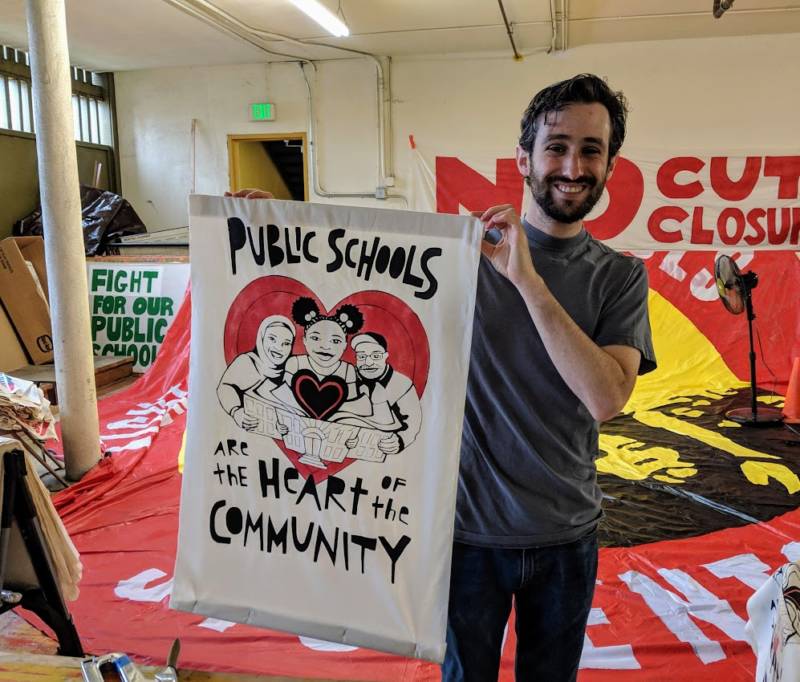
"caption": "Jeremy Wolff teaches fifth grade at Sequoia Elementary. He holds up a banner with artwork created by Oakland artist Micah Bazant.",
"description": "Jeremy Wolff teaches fifth grade at Sequoia Elementary. He holds up a banner with artwork created by Oakland artist Micah Bazant.",
"title": "IMG_20190120_113057",
"credit": "Muna Danish/KQED",
"status": "inherit",
"isLoading": false,
"fetchFailed": false
},
"news_11665927": {
"type": "attachments",
"id": "news_11665927",
"meta": {
"index": "attachments_1716263798",
"site": "news",
"id": "11665927",
"found": true
},
"parent": 11665886,
"imgSizes": {
"small": {
"file": "https://ww2.kqed.org/app/uploads/sites/10/2018/05/RS30435_fat4-qut-e1525459138314-520x405.jpg",
"width": 520,
"mimeType": "image/jpeg",
"height": 405
},
"twentyfourteen-full-width": {
"file": "https://ww2.kqed.org/app/uploads/sites/10/2018/05/RS30435_fat4-qut-e1525459138314-1038x576.jpg",
"width": 1038,
"mimeType": "image/jpeg",
"height": 576
},
"thumbnail": {
"file": "https://ww2.kqed.org/app/uploads/sites/10/2018/05/RS30435_fat4-qut-e1525459138314-160x125.jpg",
"width": 160,
"mimeType": "image/jpeg",
"height": 125
},
"fd-sm": {
"file": "https://ww2.kqed.org/app/uploads/sites/10/2018/05/RS30435_fat4-qut-e1525459138314-960x748.jpg",
"width": 960,
"mimeType": "image/jpeg",
"height": 748
},
"post-thumbnail": {
"file": "https://ww2.kqed.org/app/uploads/sites/10/2018/05/RS30435_fat4-qut-e1525459138314-672x372.jpg",
"width": 672,
"mimeType": "image/jpeg",
"height": 372
},
"xsmall": {
"file": "https://ww2.kqed.org/app/uploads/sites/10/2018/05/RS30435_fat4-qut-e1525459138314-375x292.jpg",
"width": 375,
"mimeType": "image/jpeg",
"height": 292
},
"kqedFullSize": {
"file": "https://ww2.kqed.org/app/uploads/sites/10/2018/05/RS30435_fat4-qut-e1525459138314.jpg",
"width": 1875,
"height": 1461
},
"large": {
"file": "https://ww2.kqed.org/app/uploads/sites/10/2018/05/RS30435_fat4-qut-e1525459138314-1020x795.jpg",
"width": 1020,
"mimeType": "image/jpeg",
"height": 795
},
"xlarge": {
"file": "https://ww2.kqed.org/app/uploads/sites/10/2018/05/RS30435_fat4-qut-e1525459138314-1180x919.jpg",
"width": 1180,
"mimeType": "image/jpeg",
"height": 919
},
"complete_open_graph": {
"file": "https://ww2.kqed.org/app/uploads/sites/10/2018/05/RS30435_fat4-qut-e1525459138314-1200x935.jpg",
"width": 1200,
"mimeType": "image/jpeg",
"height": 935
},
"guest-author-50": {
"file": "https://ww2.kqed.org/app/uploads/sites/10/2018/05/RS30435_fat4-qut-e1525459138314-50x50.jpg",
"width": 50,
"mimeType": "image/jpeg",
"height": 50
},
"guest-author-96": {
"file": "https://ww2.kqed.org/app/uploads/sites/10/2018/05/RS30435_fat4-qut-e1525459138314-96x96.jpg",
"width": 96,
"mimeType": "image/jpeg",
"height": 96
},
"medium": {
"file": "https://ww2.kqed.org/app/uploads/sites/10/2018/05/RS30435_fat4-qut-e1525459138314-800x623.jpg",
"width": 800,
"mimeType": "image/jpeg",
"height": 623
},
"guest-author-64": {
"file": "https://ww2.kqed.org/app/uploads/sites/10/2018/05/RS30435_fat4-qut-e1525459138314-64x64.jpg",
"width": 64,
"mimeType": "image/jpeg",
"height": 64
},
"guest-author-32": {
"file": "https://ww2.kqed.org/app/uploads/sites/10/2018/05/RS30435_fat4-qut-e1525459138314-32x32.jpg",
"width": 32,
"mimeType": "image/jpeg",
"height": 32
},
"fd-lrg": {
"file": "https://ww2.kqed.org/app/uploads/sites/10/2018/05/RS30435_fat4-qut-1920x2810.jpg",
"width": 1920,
"mimeType": "image/jpeg",
"height": 2810
},
"fd-med": {
"file": "https://ww2.kqed.org/app/uploads/sites/10/2018/05/RS30435_fat4-qut-e1525459138314-1180x919.jpg",
"width": 1180,
"mimeType": "image/jpeg",
"height": 919
},
"full-width": {
"file": "https://ww2.kqed.org/app/uploads/sites/10/2018/05/RS30435_fat4-qut-1920x2810.jpg",
"width": 1920,
"mimeType": "image/jpeg",
"height": 2810
},
"detail": {
"file": "https://ww2.kqed.org/app/uploads/sites/10/2018/05/RS30435_fat4-qut-e1525459138314-150x150.jpg",
"width": 150,
"mimeType": "image/jpeg",
"height": 150
},
"guest-author-128": {
"file": "https://ww2.kqed.org/app/uploads/sites/10/2018/05/RS30435_fat4-qut-e1525459138314-128x128.jpg",
"width": 128,
"mimeType": "image/jpeg",
"height": 128
},
"xxsmall": {
"file": "https://ww2.kqed.org/app/uploads/sites/10/2018/05/RS30435_fat4-qut-e1525459138314-240x187.jpg",
"width": 240,
"mimeType": "image/jpeg",
"height": 187
}
},
"publishDate": 1525276157,
"modified": 1525460578,
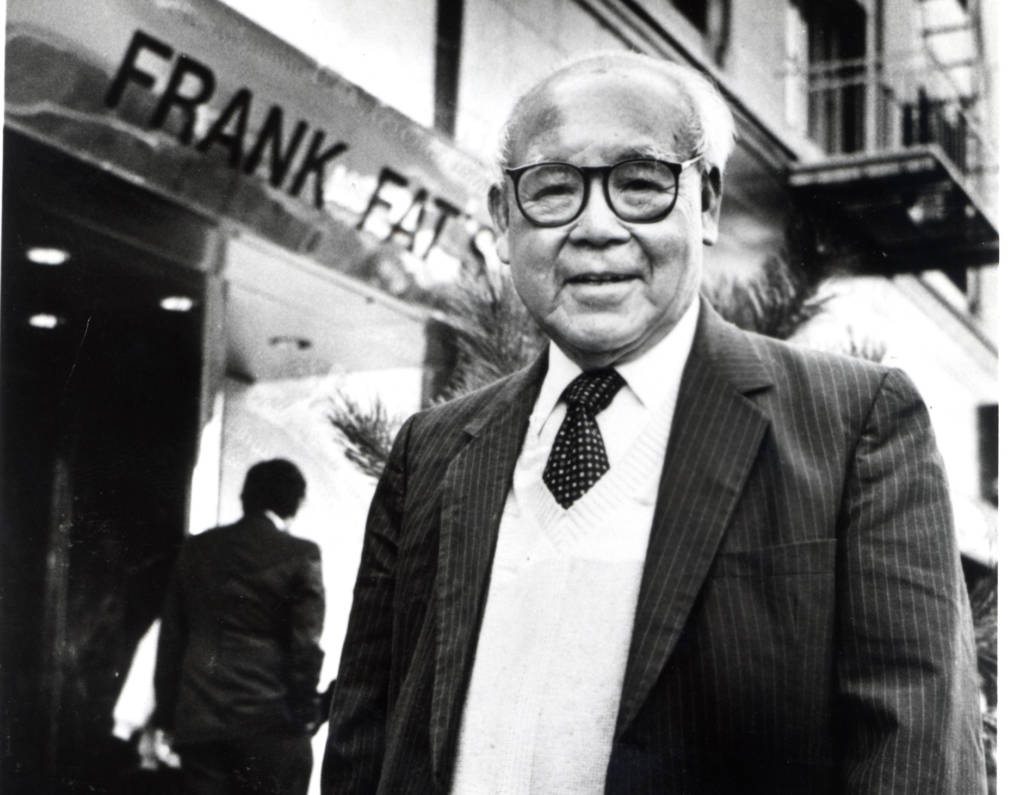
"caption": "Frank Fat in front of his namesake restaurant, which turns 80 next year. Fat died in 1997, but his family has carried on his legacy.",
"description": "Frank Fat in front of his namesake restaurant, which turns 80 next year. Fat died in 1997, but his family has carried on his legacy.",
"title": "RS30435_fat4-qut",
"credit": "Courtesy of the Fat Family Restaurant Group",
"status": "inherit",
"isLoading": false,
"fetchFailed": false
},
"news_11718356": {
"type": "attachments",
"id": "news_11718356",
"meta": {
"index": "attachments_1716263798",
"site": "news",
"id": "11718356",
"found": true
},
"parent": 11718354,
"imgSizes": {
"twentyfourteen-full-width": {
"file": "https://ww2.kqed.org/app/uploads/sites/10/2019/01/photo-by-jody-shapiro-1038x576.jpg",
"width": 1038,
"mimeType": "image/jpeg",
"height": 576
},
"thumbnail": {
"file": "https://ww2.kqed.org/app/uploads/sites/10/2019/01/photo-by-jody-shapiro-160x107.jpg",
"width": 160,
"mimeType": "image/jpeg",
"height": 107
},
"post-thumbnail": {
"file": "https://ww2.kqed.org/app/uploads/sites/10/2019/01/photo-by-jody-shapiro-672x372.jpg",
"width": 672,
"mimeType": "image/jpeg",
"height": 372
},
"kqedFullSize": {
"file": "https://ww2.kqed.org/app/uploads/sites/10/2019/01/photo-by-jody-shapiro.jpg",
"width": 5616,
"height": 3744
},
"large": {
"file": "https://ww2.kqed.org/app/uploads/sites/10/2019/01/photo-by-jody-shapiro-1020x680.jpg",
"width": 1020,
"mimeType": "image/jpeg",
"height": 680
},
"complete_open_graph": {
"file": "https://ww2.kqed.org/app/uploads/sites/10/2019/01/photo-by-jody-shapiro-1200x800.jpg",
"width": 1200,
"mimeType": "image/jpeg",
"height": 800
},
"guest-author-50": {
"file": "https://ww2.kqed.org/app/uploads/sites/10/2019/01/photo-by-jody-shapiro-50x50.jpg",
"width": 50,
"mimeType": "image/jpeg",
"height": 50
},
"guest-author-96": {
"file": "https://ww2.kqed.org/app/uploads/sites/10/2019/01/photo-by-jody-shapiro-96x96.jpg",
"width": 96,
"mimeType": "image/jpeg",
"height": 96
},
"medium": {
"file": "https://ww2.kqed.org/app/uploads/sites/10/2019/01/photo-by-jody-shapiro-800x533.jpg",
"width": 800,
"mimeType": "image/jpeg",
"height": 533
},
"guest-author-64": {
"file": "https://ww2.kqed.org/app/uploads/sites/10/2019/01/photo-by-jody-shapiro-64x64.jpg",
"width": 64,
"mimeType": "image/jpeg",
"height": 64
},
"guest-author-32": {
"file": "https://ww2.kqed.org/app/uploads/sites/10/2019/01/photo-by-jody-shapiro-32x32.jpg",
"width": 32,
"mimeType": "image/jpeg",
"height": 32
},
"full-width": {
"file": "https://ww2.kqed.org/app/uploads/sites/10/2019/01/photo-by-jody-shapiro-1920x1280.jpg",
"width": 1920,
"mimeType": "image/jpeg",
"height": 1280
},
"detail": {
"file": "https://ww2.kqed.org/app/uploads/sites/10/2019/01/photo-by-jody-shapiro-150x150.jpg",
"width": 150,
"mimeType": "image/jpeg",
"height": 150
},
"guest-author-128": {
"file": "https://ww2.kqed.org/app/uploads/sites/10/2019/01/photo-by-jody-shapiro-128x128.jpg",
"width": 128,
"mimeType": "image/jpeg",
"height": 128
}
},
"publishDate": 1547586947,
"modified": 1547840585,
"caption": "Isabella Rossellini, her dog Pan and an actor in a wolf costume. Rossellini's theatrical production, 'Link Link Circus' is touring the west coast in January 2019.",
"description": "Isabella Rossellini, her dog Pan and an actor in a bear costume. Rossellini's theatrical production, 'Link Link Circus' is touring the west coast in January 2019.",
"title": "photo by jody shapiro",
"credit": "Jody Shapiro",
"status": "inherit",
"isLoading": false,
"fetchFailed": false
},
"news_11719130": {
"type": "attachments",
"id": "news_11719130",
"meta": {
"index": "attachments_1716263798",
"site": "news",
"id": "11719130",
"found": true
},
"parent": 11719019,
"imgSizes": {
"thumbnail": {
"file": "https://ww2.kqed.org/app/uploads/sites/10/2019/01/6CCGypsyAwards_COVER-160x90.jpg",
"width": 160,
"mimeType": "image/jpeg",
"height": 90
},
"post-thumbnail": {
"file": "https://ww2.kqed.org/app/uploads/sites/10/2019/01/6CCGypsyAwards_COVER-672x372.jpg",
"width": 672,
"mimeType": "image/jpeg",
"height": 372
},
"kqedFullSize": {
"file": "https://ww2.kqed.org/app/uploads/sites/10/2019/01/6CCGypsyAwards_COVER.jpg",
"width": 703,
"height": 395
},
"guest-author-50": {
"file": "https://ww2.kqed.org/app/uploads/sites/10/2019/01/6CCGypsyAwards_COVER-50x50.jpg",
"width": 50,
"mimeType": "image/jpeg",
"height": 50
},
"guest-author-96": {
"file": "https://ww2.kqed.org/app/uploads/sites/10/2019/01/6CCGypsyAwards_COVER-96x96.jpg",
"width": 96,
"mimeType": "image/jpeg",
"height": 96
},
"guest-author-64": {
"file": "https://ww2.kqed.org/app/uploads/sites/10/2019/01/6CCGypsyAwards_COVER-64x64.jpg",
"width": 64,
"mimeType": "image/jpeg",
"height": 64
},
"detail": {
"file": "https://ww2.kqed.org/app/uploads/sites/10/2019/01/6CCGypsyAwards_COVER-150x150.jpg",
"width": 150,
"mimeType": "image/jpeg",
"height": 150
},
"guest-author-32": {
"file": "https://ww2.kqed.org/app/uploads/sites/10/2019/01/6CCGypsyAwards_COVER-32x32.jpg",
"width": 32,
"mimeType": "image/jpeg",
"height": 32
},
"guest-author-128": {
"file": "https://ww2.kqed.org/app/uploads/sites/10/2019/01/6CCGypsyAwards_COVER-128x128.jpg",
"width": 128,
"mimeType": "image/jpeg",
"height": 128
}
},
"publishDate": 1547774513,
"modified": 1547774545,
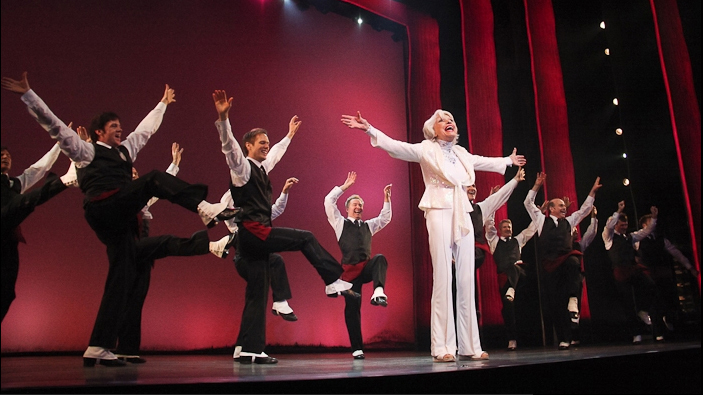
"caption": "Carol Channing on stage at the New Amsterdam Theatre for the Gypsy Awards.",
"description": "Carol Channing on stage at the New Amsterdam Theatre for the Gypsy Awards.",
"title": "6CCGypsyAwards_COVER",
"credit": "Courtesy of the Carol Channing Archives",
"status": "inherit",
"isLoading": false,
"fetchFailed": false
},
"news_11718968": {
"type": "attachments",
"id": "news_11718968",
"meta": {
"index": "attachments_1716263798",
"site": "news",
"id": "11718968",
"found": true
},
"parent": 11718956,
"imgSizes": {
"twentyfourteen-full-width": {
"file": "https://ww2.kqed.org/app/uploads/sites/10/2019/01/SFGMC-BUILDING-1038x576.jpg",
"width": 1038,
"mimeType": "image/jpeg",
"height": 576
},
"thumbnail": {
"file": "https://ww2.kqed.org/app/uploads/sites/10/2019/01/SFGMC-BUILDING-160x107.jpg",
"width": 160,
"mimeType": "image/jpeg",
"height": 107
},
"post-thumbnail": {
"file": "https://ww2.kqed.org/app/uploads/sites/10/2019/01/SFGMC-BUILDING-672x372.jpg",
"width": 672,
"mimeType": "image/jpeg",
"height": 372
},
"kqedFullSize": {
"file": "https://ww2.kqed.org/app/uploads/sites/10/2019/01/SFGMC-BUILDING.jpg",
"width": 5760,
"height": 3840
},
"large": {
"file": "https://ww2.kqed.org/app/uploads/sites/10/2019/01/SFGMC-BUILDING-1020x680.jpg",
"width": 1020,
"mimeType": "image/jpeg",
"height": 680
},
"complete_open_graph": {
"file": "https://ww2.kqed.org/app/uploads/sites/10/2019/01/SFGMC-BUILDING-1200x800.jpg",
"width": 1200,
"mimeType": "image/jpeg",
"height": 800
},
"guest-author-50": {
"file": "https://ww2.kqed.org/app/uploads/sites/10/2019/01/SFGMC-BUILDING-50x50.jpg",
"width": 50,
"mimeType": "image/jpeg",
"height": 50
},
"guest-author-96": {
"file": "https://ww2.kqed.org/app/uploads/sites/10/2019/01/SFGMC-BUILDING-96x96.jpg",
"width": 96,
"mimeType": "image/jpeg",
"height": 96
},
"medium": {
"file": "https://ww2.kqed.org/app/uploads/sites/10/2019/01/SFGMC-BUILDING-800x533.jpg",
"width": 800,
"mimeType": "image/jpeg",
"height": 533
},
"guest-author-64": {
"file": "https://ww2.kqed.org/app/uploads/sites/10/2019/01/SFGMC-BUILDING-64x64.jpg",
"width": 64,
"mimeType": "image/jpeg",
"height": 64
},
"guest-author-32": {
"file": "https://ww2.kqed.org/app/uploads/sites/10/2019/01/SFGMC-BUILDING-32x32.jpg",
"width": 32,
"mimeType": "image/jpeg",
"height": 32
},
"full-width": {
"file": "https://ww2.kqed.org/app/uploads/sites/10/2019/01/SFGMC-BUILDING-1920x1280.jpg",
"width": 1920,
"mimeType": "image/jpeg",
"height": 1280
},
"detail": {
"file": "https://ww2.kqed.org/app/uploads/sites/10/2019/01/SFGMC-BUILDING-150x150.jpg",
"width": 150,
"mimeType": "image/jpeg",
"height": 150
},
"guest-author-128": {
"file": "https://ww2.kqed.org/app/uploads/sites/10/2019/01/SFGMC-BUILDING-128x128.jpg",
"width": 128,
"mimeType": "image/jpeg",
"height": 128
}
},
"publishDate": 1547756486,
"modified": 1547775183,
"caption": "The home of the new National LGBTQ Center for the Arts at 170 Valencia St. in San Francisco.",
"description": "The home of the new National LGBTQ Center for the Arts at 170 Valencia Street in San Francisco.",
"title": "SFGMC BUILDING",
"credit": "Jeff Zaruba",
"status": "inherit",
"isLoading": false,
"fetchFailed": false
},
"news_11717676": {
"type": "attachments",
"id": "news_11717676",
"meta": {
"index": "attachments_1716263798",
"site": "news",
"id": "11717676",
"found": true
},
"parent": 11717648,
"imgSizes": {
"twentyfourteen-full-width": {
"file": "https://ww2.kqed.org/app/uploads/sites/10/2019/01/honey-mahogany-e1547414696964-1038x576.jpg",
"width": 1038,
"mimeType": "image/jpeg",
"height": 576
},
"thumbnail": {
"file": "https://ww2.kqed.org/app/uploads/sites/10/2019/01/honey-mahogany-e1547414696964-160x120.jpg",
"width": 160,
"mimeType": "image/jpeg",
"height": 120
},
"post-thumbnail": {
"file": "https://ww2.kqed.org/app/uploads/sites/10/2019/01/honey-mahogany-e1547414696964-672x372.jpg",
"width": 672,
"mimeType": "image/jpeg",
"height": 372
},
"kqedFullSize": {
"file": "https://ww2.kqed.org/app/uploads/sites/10/2019/01/honey-mahogany-e1547414696964.jpg",
"width": 1920,
"height": 1440
},
"large": {
"file": "https://ww2.kqed.org/app/uploads/sites/10/2019/01/honey-mahogany-e1547414696964-1020x765.jpg",
"width": 1020,
"mimeType": "image/jpeg",
"height": 765
},
"complete_open_graph": {
"file": "https://ww2.kqed.org/app/uploads/sites/10/2019/01/honey-mahogany-e1547414696964-1200x900.jpg",
"width": 1200,
"mimeType": "image/jpeg",
"height": 900
},
"guest-author-50": {
"file": "https://ww2.kqed.org/app/uploads/sites/10/2019/01/honey-mahogany-e1547414696964-50x50.jpg",
"width": 50,
"mimeType": "image/jpeg",
"height": 50
},
"guest-author-96": {
"file": "https://ww2.kqed.org/app/uploads/sites/10/2019/01/honey-mahogany-e1547414696964-96x96.jpg",
"width": 96,
"mimeType": "image/jpeg",
"height": 96
},
"medium": {
"file": "https://ww2.kqed.org/app/uploads/sites/10/2019/01/honey-mahogany-e1547414696964-800x600.jpg",
"width": 800,
"mimeType": "image/jpeg",
"height": 600
},
"guest-author-64": {
"file": "https://ww2.kqed.org/app/uploads/sites/10/2019/01/honey-mahogany-e1547414696964-64x64.jpg",
"width": 64,
"mimeType": "image/jpeg",
"height": 64
},
"guest-author-32": {
"file": "https://ww2.kqed.org/app/uploads/sites/10/2019/01/honey-mahogany-e1547414696964-32x32.jpg",
"width": 32,
"mimeType": "image/jpeg",
"height": 32
},
"full-width": {
"file": "https://ww2.kqed.org/app/uploads/sites/10/2019/01/honey-mahogany-e1547414696964-1920x1440.jpg",
"width": 1920,
"mimeType": "image/jpeg",
"height": 1440
},
"detail": {
"file": "https://ww2.kqed.org/app/uploads/sites/10/2019/01/honey-mahogany-e1547414696964-150x150.jpg",
"width": 150,
"mimeType": "image/jpeg",
"height": 150
},
"guest-author-128": {
"file": "https://ww2.kqed.org/app/uploads/sites/10/2019/01/honey-mahogany-e1547414696964-128x128.jpg",
"width": 128,
"mimeType": "image/jpeg",
"height": 128
}
},
"publishDate": 1547237497,
"modified": 1547237725,
"caption": "Drag artist and political activist Honey Mahogany helped to found the Compton's Transgender Cultural District.",
"description": "Drag artist and political activist Honey Mahogany helped to found the Compton's Transgender Cultural District.",
"title": "honey mahogany",
"credit": "Chloe Veltman/KQED",
"status": "inherit",
"isLoading": false,
"fetchFailed": false
},
"news_11717794": {
"type": "attachments",
"id": "news_11717794",
"meta": {
"index": "attachments_1716263798",
"site": "news",
"id": "11717794",
"found": true
},
"parent": 11717791,
"imgSizes": {
"twentyfourteen-full-width": {
"file": "https://ww2.kqed.org/app/uploads/sites/10/2019/01/NR612_MARQUEE-2-1038x576.jpg",
"width": 1038,
"mimeType": "image/jpeg",
"height": 576
},
"thumbnail": {
"file": "https://ww2.kqed.org/app/uploads/sites/10/2019/01/NR612_MARQUEE-2-160x90.jpg",
"width": 160,
"mimeType": "image/jpeg",
"height": 90
},
"post-thumbnail": {
"file": "https://ww2.kqed.org/app/uploads/sites/10/2019/01/NR612_MARQUEE-2-672x372.jpg",
"width": 672,
"mimeType": "image/jpeg",
"height": 372
},
"kqedFullSize": {
"file": "https://ww2.kqed.org/app/uploads/sites/10/2019/01/NR612_MARQUEE-2.jpg",
"width": 1280,
"height": 720
},
"large": {
"file": "https://ww2.kqed.org/app/uploads/sites/10/2019/01/NR612_MARQUEE-2-1020x574.jpg",
"width": 1020,
"mimeType": "image/jpeg",
"height": 574
},
"complete_open_graph": {
"file": "https://ww2.kqed.org/app/uploads/sites/10/2019/01/NR612_MARQUEE-2-1200x675.jpg",
"width": 1200,
"mimeType": "image/jpeg",
"height": 675
},
"guest-author-50": {
"file": "https://ww2.kqed.org/app/uploads/sites/10/2019/01/NR612_MARQUEE-2-50x50.jpg",
"width": 50,
"mimeType": "image/jpeg",
"height": 50
},
"guest-author-96": {
"file": "https://ww2.kqed.org/app/uploads/sites/10/2019/01/NR612_MARQUEE-2-96x96.jpg",
"width": 96,
"mimeType": "image/jpeg",
"height": 96
},
"medium": {
"file": "https://ww2.kqed.org/app/uploads/sites/10/2019/01/NR612_MARQUEE-2-800x450.jpg",
"width": 800,
"mimeType": "image/jpeg",
"height": 450
},
"guest-author-64": {
"file": "https://ww2.kqed.org/app/uploads/sites/10/2019/01/NR612_MARQUEE-2-64x64.jpg",
"width": 64,
"mimeType": "image/jpeg",
"height": 64
},
"guest-author-32": {
"file": "https://ww2.kqed.org/app/uploads/sites/10/2019/01/NR612_MARQUEE-2-32x32.jpg",
"width": 32,
"mimeType": "image/jpeg",
"height": 32
},
"detail": {
"file": "https://ww2.kqed.org/app/uploads/sites/10/2019/01/NR612_MARQUEE-2-150x150.jpg",
"width": 150,
"mimeType": "image/jpeg",
"height": 150
},
"guest-author-128": {
"file": "https://ww2.kqed.org/app/uploads/sites/10/2019/01/NR612_MARQUEE-2-128x128.jpg",
"width": 128,
"mimeType": "image/jpeg",
"height": 128
}
},
"publishDate": 1547252650,
"modified": 1547252650,
"caption": null,
"description": null,
"title": "NR612_MARQUEE 2",
"credit": null,
"status": "inherit",
"isLoading": false,
"fetchFailed": false
}
},
"audioPlayerReducer": {
"postId": "stream_live",
"isPaused": true,
"isPlaying": false,
"pfsActive": false,
"pledgeModalIsOpen": true,
"playerDrawerIsOpen": false,
"liveAudioPlayStartedAt": 0,
"liveAudioPlayContext": ""
},
"authorsReducer": {
"kqed": {
"type": "authors",
"id": "236",
"meta": {
"index": "authors_1716337520",
"id": "236",
"found": true
},
"name": "KQED News Staff",
"firstName": "KQED News Staff",
"lastName": null,
"slug": "kqed",
"email": "faq@kqed.org",
"display_author_email": false,
"staff_mastheads": [],
"title": null,
"bio": null,
"avatar": "https://secure.gravatar.com/avatar/ef0e801a68c4c54afa9180db14084167?s=600&d=blank&r=g",
"twitter": null,
"facebook": null,
"instagram": null,
"linkedin": null,
"sites": [
{
"site": "arts",
"roles": [
"contributor"
]
},
{
"site": "news",
"roles": [
"editor"
]
},
{
"site": "futureofyou",
"roles": [
"author"
]
}
],
"headData": {
"title": "KQED News Staff | KQED",
"description": null,
"ogImgSrc": "https://secure.gravatar.com/avatar/ef0e801a68c4c54afa9180db14084167?s=600&d=blank&r=g",
"twImgSrc": "https://secure.gravatar.com/avatar/ef0e801a68c4c54afa9180db14084167?s=600&d=blank&r=g"
},
"isLoading": false,
"link": "/author/kqed"
},
"carlysevern": {
"type": "authors",
"id": "3243",
"meta": {
"index": "authors_1716337520",
"id": "3243",
"found": true
},
"name": "Carly Severn",
"firstName": "Carly",
"lastName": "Severn",
"slug": "carlysevern",
"email": "csevern@kqed.org",
"display_author_email": false,
"staff_mastheads": [
"news"
],
"title": "Senior Editor, Audience News ",
"bio": "Carly is KQED's Senior Editor of Audience News on the Digital News team, and has reported for the California Report Magazine, Bay Curious and KQED Arts. She's formerly the host of \u003ca href=\"http://ww2.kqed.org/pop/category/the-cooler/\" rel=\"noopener noreferrer\">The Cooler\u003c/a> podcast.",
"avatar": "https://secure.gravatar.com/avatar/54037bf5c128fe678f0ef26cec97a93f2e7f220a22d7285703328f12c42c1b1d?s=600&d=blank&r=g",
"twitter": "teacupinthebay",
"bluesky": null,
"facebook": null,
"instagram": null,
"linkedin": null,
"sites": [
{
"site": "",
"roles": [
"editor"
]
},
{
"site": "arts",
"roles": [
"editor"
]
},
{
"site": "news",
"roles": [
"administrator"
]
},
{
"site": "pop",
"roles": [
"editor"
]
},
{
"site": "futureofyou",
"roles": [
"editor"
]
},
{
"site": "about",
"roles": [
"administrator"
]
},
{
"site": "mindshift",
"roles": [
"editor"
]
},
{
"site": "bayareabites",
"roles": [
"editor"
]
},
{
"site": "stateofhealth",
"roles": [
"editor"
]
},
{
"site": "science",
"roles": [
"editor"
]
},
{
"site": "food",
"roles": [
"contributor"
]
},
{
"site": "forum",
"roles": [
"editor"
]
},
{
"site": "perspectives",
"roles": [
"administrator"
]
},
{
"site": "liveblog",
"roles": [
"editor"
]
}
],
"headData": {
"title": "Carly Severn | KQED",
"description": "Senior Editor, Audience News ",
"ogImgSrc": "https://secure.gravatar.com/avatar/54037bf5c128fe678f0ef26cec97a93f2e7f220a22d7285703328f12c42c1b1d?s=600&d=blank&r=g",
"twImgSrc": "https://secure.gravatar.com/avatar/54037bf5c128fe678f0ef26cec97a93f2e7f220a22d7285703328f12c42c1b1d?s=600&d=blank&r=g"
},
"isLoading": false,
"link": "/author/carlysevern"
},
"cveltman": {
"type": "authors",
"id": "8608",
"meta": {
"index": "authors_1716337520",
"id": "8608",
"found": true
},
"name": "Chloe Veltman",
"firstName": "Chloe",
"lastName": "Veltman",
"slug": "cveltman",
"email": "cveltman@kqed.org",
"display_author_email": true,
"staff_mastheads": [],
"title": "Arts and Culture Reporter",
"bio": "Chloe Veltman is a former arts and culture reporter for KQED. Prior to joining the organization, she launched and led the arts bureau at Colorado Public Radio, served as the Bay Area's culture columnist for the New York Times, and was the founder, host and executive producer of VoiceBox, a national award-winning weekly podcast/radio show and live events series all about the human voice. Chloe is the recipient of numerous prizes, grants and fellowships including a Webby Award for her work on interactive storytelling, both the John S Knight Journalism Fellowship and Humanities Center Fellowship at Stanford University, the Sundance Arts Writing Fellowship and a Library of Congress Research Fellowship. She is the author of the book \"On Acting\" and has appeared as a guest lecturer at Yale University and the San Francisco Conservatory of Music among other institutions. She holds a BA in english literature from King's College, Cambridge, and a Masters in Dramaturgy from the Central School of Speech and Drama/Harvard Institute for Advanced Theater Training.\r\n\u003ca href=\"https://www.chloeveltman.com\">www.chloeveltman.com\u003c/a>",
"avatar": "https://secure.gravatar.com/avatar/55403394b00a1ddab683952c2eb2cf85?s=600&d=blank&r=g",
"twitter": "chloeveltman",
"facebook": null,
"instagram": null,
"linkedin": null,
"sites": [
{
"site": "arts",
"roles": []
},
{
"site": "news",
"roles": [
"author"
]
},
{
"site": "pop",
"roles": [
"editor"
]
},
{
"site": "science",
"roles": []
}
],
"headData": {
"title": "Chloe Veltman | KQED",
"description": "Arts and Culture Reporter",
"ogImgSrc": "https://secure.gravatar.com/avatar/55403394b00a1ddab683952c2eb2cf85?s=600&d=blank&r=g",
"twImgSrc": "https://secure.gravatar.com/avatar/55403394b00a1ddab683952c2eb2cf85?s=600&d=blank&r=g"
},
"isLoading": false,
"link": "/author/cveltman"
},
"rlevi": {
"type": "authors",
"id": "11260",
"meta": {
"index": "authors_1716337520",
"id": "11260",
"found": true
},
"name": "Ryan Levi",
"firstName": "Ryan",
"lastName": "Levi",
"slug": "rlevi",
"email": "rlevi@KQED.org",
"display_author_email": false,
"staff_mastheads": [],
"title": "KQED Contributor",
"bio": "Ryan Levi was a reporter and podcast producer at KQED News from 2016-2019. He worked on \u003ca href=\"https://www.kqed.org/news/series/baycurious\">Bay Curious\u003c/a>, \u003ca href=\"https://www.kqed.org/news/tag/the-bay/\">The Bay, \u003c/a>and \u003ca href=\"https://podcasts.apple.com/us/podcast/the-california-report-magazine/id1314750545\">The California Report Magazine\u003c/a>, as well as hosting and producing the weekly \u003ca href=\"https://www.kqed.org/news/program/qedup/\">Q'ed Up podcast. \u003c/a>He also helped inaugurate KQED's weekend news coverage in 2017 as one of two original digital producers. Ryan holds degrees in multimedia journalism and Spanish from the University of Missouri.",
"avatar": "https://secure.gravatar.com/avatar/4cb2ddd028ac8807d1adf09609c5555d?s=600&d=blank&r=g",
"twitter": "ryan_levi",
"facebook": null,
"instagram": null,
"linkedin": null,
"sites": [
{
"site": "arts",
"roles": [
"editor"
]
},
{
"site": "news",
"roles": [
"subscriber"
]
},
{
"site": "stateofhealth",
"roles": [
"editor"
]
},
{
"site": "science",
"roles": [
"editor"
]
},
{
"site": "forum",
"roles": [
"administrator"
]
},
{
"site": "perspectives",
"roles": [
"administrator"
]
}
],
"headData": {
"title": "Ryan Levi | KQED",
"description": "KQED Contributor",
"ogImgSrc": "https://secure.gravatar.com/avatar/4cb2ddd028ac8807d1adf09609c5555d?s=600&d=blank&r=g",
"twImgSrc": "https://secure.gravatar.com/avatar/4cb2ddd028ac8807d1adf09609c5555d?s=600&d=blank&r=g"
},
"isLoading": false,
"link": "/author/rlevi"
},
"btaylor": {
"type": "authors",
"id": "11365",
"meta": {
"index": "authors_1716337520",
"id": "11365",
"found": true
},
"name": "Bianca Taylor",
"firstName": "Bianca",
"lastName": "Taylor",
"slug": "btaylor",
"email": "btaylor@KQED.org",
"display_author_email": false,
"staff_mastheads": [
"news"
],
"title": "Host and Producer ",
"bio": "Bianca Taylor is a news producer and host of KQED's The Latest podcast.\r\n\r\nHer work with KQED has been honored by the Society of Professional Journalists NorCal, the Webby's, the Regional Murrow Awards, and ONA. She has also worked with NPR, the BBC World Service, and the Washington Post Creative Group.\r\n\r\nBianca is represented by SAG-AFTRA.",
"avatar": "https://secure.gravatar.com/avatar/6b9d3f6552dd10470c5d1c2e58cfe717?s=600&d=blank&r=g",
"twitter": "SoundsLkeBianca",
"facebook": null,
"instagram": null,
"linkedin": null,
"sites": [
{
"site": "arts",
"roles": [
"editor"
]
},
{
"site": "news",
"roles": [
"edit_others_posts",
"editor"
]
},
{
"site": "pop",
"roles": [
"editor"
]
},
{
"site": "bayareabites",
"roles": [
"author"
]
},
{
"site": "science",
"roles": [
"editor"
]
},
{
"site": "forum",
"roles": [
"editor"
]
},
{
"site": "radio",
"roles": [
"editor"
]
},
{
"site": "podcasts",
"roles": [
"editor"
]
}
],
"headData": {
"title": "Bianca Taylor | KQED",
"description": "Host and Producer ",
"ogImgSrc": "https://secure.gravatar.com/avatar/6b9d3f6552dd10470c5d1c2e58cfe717?s=600&d=blank&r=g",
"twImgSrc": "https://secure.gravatar.com/avatar/6b9d3f6552dd10470c5d1c2e58cfe717?s=600&d=blank&r=g"
},
"isLoading": false,
"link": "/author/btaylor"
},
"mdanish": {
"type": "authors",
"id": "11504",
"meta": {
"index": "authors_1716337520",
"id": "11504",
"found": true
},
"name": "Muna Danish",
"firstName": "Muna",
"lastName": "Danish",
"slug": "mdanish",
"email": "mdanish@KQED.org",
"display_author_email": false,
"staff_mastheads": [],
"title": null,
"bio": null,
"avatar": "https://secure.gravatar.com/avatar/0f9eb78572eb14a36d9324eae714d52e?s=600&d=blank&r=g",
"twitter": null,
"facebook": null,
"instagram": null,
"linkedin": null,
"sites": [
{
"site": "news",
"roles": [
"author"
]
}
],
"headData": {
"title": "Muna Danish | KQED",
"description": null,
"ogImgSrc": "https://secure.gravatar.com/avatar/0f9eb78572eb14a36d9324eae714d52e?s=600&d=blank&r=g",
"twImgSrc": "https://secure.gravatar.com/avatar/0f9eb78572eb14a36d9324eae714d52e?s=600&d=blank&r=g"
},
"isLoading": false,
"link": "/author/mdanish"
},
"mwiley": {
"type": "authors",
"id": "11526",
"meta": {
"index": "authors_1716337520",
"id": "11526",
"found": true
},
"name": "Michelle Wiley",
"firstName": "Michelle",
"lastName": "Wiley",
"slug": "mwiley",
"email": "mwiley@KQED.org",
"display_author_email": true,
"staff_mastheads": [],
"title": null,
"bio": "Michelle Wiley was the senior editor of weekends.",
"avatar": "https://secure.gravatar.com/avatar/3b897d82a09e8587e8e73fa69fbcc635?s=600&d=blank&r=g",
"twitter": "michelleewiley",
"facebook": null,
"instagram": null,
"linkedin": null,
"sites": [
{
"site": "",
"roles": [
"editor"
]
},
{
"site": "arts",
"roles": [
"editor"
]
},
{
"site": "news",
"roles": [
"subscriber"
]
},
{
"site": "lowdown",
"roles": [
"editor"
]
},
{
"site": "science",
"roles": [
"editor"
]
},
{
"site": "podcasts",
"roles": [
"editor"
]
}
],
"headData": {
"title": "Michelle Wiley | KQED",
"description": null,
"ogImgSrc": "https://secure.gravatar.com/avatar/3b897d82a09e8587e8e73fa69fbcc635?s=600&d=blank&r=g",
"twImgSrc": "https://secure.gravatar.com/avatar/3b897d82a09e8587e8e73fa69fbcc635?s=600&d=blank&r=g"
},
"isLoading": false,
"link": "/author/mwiley"
}
},
"pagesReducer": {
"news_category_arts-and-culture": {
"type": "terms",
"id": "news_223",
"meta": {
"index": "terms_1716263798",
"site": "news",
"id": "223",
"score": 11.242002
},
"featImg": null,
"name": "Arts and Culture",
"description": null,
"taxonomy": "category",
"headData": {
"twImgId": null,
"twTitle": null,
"ogTitle": null,
"ogImgId": null,
"twDescription": null,
"description": null,
"title": "Arts and Culture Archives | KQED News",
"ogDescription": null
},
"ttid": 231,
"slug": "arts-and-culture",
"isLoading": false,
"title": "Arts and Culture",
"pageMeta": {
"site": "news",
"WpPageTemplate": "page-topic-editorial",
"currentPage": 65
},
"blocks": [
{
"blockName": "kqed/post-list",
"attrs": {
"layout": "cardArticle2",
"query": "posts/news?category=arts-and-culture",
"seeMore": false,
"paginated": true,
"page": 65
}
},
{
"blockName": "kqed/ad"
}
]
}
},
"pfsSessionReducer": {},
"postsReducer": {
"stream_live": {
"type": "live",
"id": "stream_live",
"audioUrl": "https://streams.kqed.org/kqedradio",
"title": "Live Stream",
"excerpt": "Live Stream information currently unavailable.",
"link": "/radio",
"featImg": "",
"label": {
"name": "KQED Live",
"link": "/"
}
},
"stream_kqedNewscast": {
"type": "posts",
"id": "stream_kqedNewscast",
"audioUrl": "https://www.kqed.org/.stream/anon/radio/RDnews/newscast.mp3?_=1",
"title": "KQED Newscast",
"featImg": "",
"label": {
"name": "88.5 FM",
"link": "/"
}
},
"news_11723093": {
"type": "posts",
"id": "news_11723093",
"meta": {
"index": "posts_1716263798",
"site": "news",
"id": "11723093",
"score": null,
"sort": [
1549231212000
]
},
"parent": 0,
"labelTerm": {
"site": "news"
},
"blocks": [],
"publishDate": 1549231212,
"format": "standard",
"disqusTitle": "#ImWithKap: Celebrities Lead Super Bowl Boycott in Support of Colin Kaepernick",
"title": "#ImWithKap: Celebrities Lead Super Bowl Boycott in Support of Colin Kaepernick",
"headTitle": "KQED News",
"content": "\u003cp>Super Bowl LIII features two former Northern California quarterbacks in Jared Goff and Tom Brady, but it's another former Bay Area signal caller who has inspired some to boycott the NFL championship: Colin Kaepernick.\u003c/p>\n\u003cp>\"I will not be a spectator, viewer or supporter of the #SuperBowl today in protest of the @NFL’s racist treatment of @Kaepernick7 and its ongoing disregard for the health + well-being of all its players,\" \u003ca href=\"https://twitter.com/ava/status/1092093707212312577\" rel=\"noopener\" target=\"_blank\">tweeted\u003c/a> filmmaker Ava DuVernay on Sunday morning. \"To watch the game is to compromise my beliefs. It’s not worth it. #ImWithKap.\"\u003c/p>\n\u003cp>https://twitter.com/ava/status/1092093707212312577\u003c/p>\n\u003cp>Kaepernick was with the 49ers in 2016 when he initially sat during the national anthem during preseason games, before switching to taking a knee, which he continued to do throughout the season. \u003c/p>\n\u003cp>His protest inspired others across the NFL and other U.S. professional sports to also protest during the national anthem, and it drew both support and ire from fans and commentators. One of the biggest critics of the protests has been \u003ca href=\"https://www.kqed.org/forum/2010101861737/president-trump-picks-fight-with-warriors-and-nfl\" rel=\"noopener\" target=\"_blank\">President Trump\u003c/a>, who said in August 2017 that the NFL \u003ca href=\"https://www.nbcsports.com/boston/new-england-patriots/trump-says-nfl-should-fire-players-who-kneel-during-anthem\" rel=\"noopener\" target=\"_blank\">should fire players\u003c/a> who didn't stand for the anthem.\u003c/p>\n\u003cp>[ad fullwidth]\u003c/p>\n\u003cp>Other celebrities on Twitter followed DuVernay's lead and began posting using the hashtag #ImWithKap, including the musician Common, who tweeted a picture of activist Angela Davis wearing a jersey with Kaepernick's number seven and #ImWithKap.\u003c/p>\n\u003cp>https://twitter.com/common/status/1091862002652262400\u003c/p>\n\u003cp>Actor Nick Cannon used the hashtag and encouraged his followers to donate to Kaepernick's Know Your Rights Camp for youth.\u003c/p>\n\u003cp>https://twitter.com/NickCannon/status/1092103045205250048\u003c/p>\n\u003cp>The hashtag quickly spread across Twitter as users shared their intentions to not watch the Super Bowl.\u003c/p>\n\u003cp>https://twitter.com/realAliTweets/status/1092169427158687744\u003c/p>\n\u003cp>https://twitter.com/jeffHeirofares/status/1092169278004969472\u003c/p>\n\u003cp>https://twitter.com/nielynums/status/1092164799260065792\u003c/p>\n\u003cp>https://twitter.com/ArtAndResponse/status/1092127428477157377\u003c/p>\n\u003cp>https://twitter.com/JonManuel/status/1092112615239610368\u003c/p>\n\u003cp>\"I am not going to stand up to show pride in a flag for a country that oppresses black people and people of color,\" explained Kaepernick in \u003ca href=\"http://www.nfl.com/news/story/0ap3000000691077/article/colin-kaepernick-explains-why-he-sat-during-national-anthem\" rel=\"noopener\" target=\"_blank\">August 2016\u003c/a>. \"To me, this is bigger than football and it would be selfish on my part to look the other way. There are bodies in the street and people getting paid leave and getting away with murder.\"\u003c/p>\n\u003cp>\u003c/p>\n\u003cp>Kaepernick has not played in the NFL since he became a free agent following 2016, leading some to argue that NFL teams are \u003ca href=\"https://www.kqed.org/news/11610947/he-took-a-knee-on-the-field-in-protest-and-he-still-has-no-team\" rel=\"noopener\" target=\"_blank\">intentionally not signing him\u003c/a> as retaliation for his protest. In 2017, Kapernick filed an official grievance, \u003ca href=\"https://www.kqed.org/news/11689689/nfl-arbitrator-moves-colin-kaepernicks-collusion-grievance-to-formal-hearing\" rel=\"noopener\" target=\"_blank\">accusing the NFL of collusion\u003c/a>.\u003c/p>\n\n",
"disqusIdentifier": "11723093 https://ww2.kqed.org/news/?p=11723093",
"disqusUrl": "https://ww2.kqed.org/news/2019/02/03/imwithkap-celebrities-lead-super-bowl-boycott-in-support-of-colin-kaepernick/",
"stats": {
"hasVideo": false,
"hasChartOrMap": false,
"hasAudio": false,
"hasPolis": false,
"wordCount": 422,
"hasGoogleForm": false,
"hasGallery": false,
"hasHearkenModule": false,
"iframeSrcs": [],
"paragraphCount": 11
},
"modified": 1549294142,
"excerpt": "Kaepernick has not played in the NFL since he became a free agent following the 2016 season when he refused to stand for the national anthem to protest mistreatment of people of color.",
"headData": {
"twImgId": "",
"twTitle": "",
"ogTitle": "",
"ogImgId": "",
"twDescription": "",
"description": "Kaepernick has not played in the NFL since he became a free agent following the 2016 season when he refused to stand for the national anthem to protest mistreatment of people of color.",
"title": "#ImWithKap: Celebrities Lead Super Bowl Boycott in Support of Colin Kaepernick | KQED",
"ogDescription": "",
"schema": {
"@context": "https://schema.org",
"@type": "NewsArticle",
"headline": "#ImWithKap: Celebrities Lead Super Bowl Boycott in Support of Colin Kaepernick",
"datePublished": "2019-02-03T14:00:12-08:00",
"dateModified": "2019-02-04T07:29:02-08:00",
"image": "https://cdn.kqed.org/wp-content/uploads/2020/02/KQED-OG-Image@1x.png",
"isAccessibleForFree": "True",
"publisher": {
"@type": "NewsMediaOrganization",
"@id": "https://www.kqed.org/#organization",
"name": "KQED",
"logo": "https://cdn.kqed.org/wp-content/uploads/2020/02/KQED-OG-Image@1x.png",
"url": "https://www.kqed.org",
"sameAs": [
"https://www.facebook.com/KQED",
"https://twitter.com/KQED",
"https://www.instagram.com/kqed/",
"https://www.tiktok.com/@kqedofficial",
"https://www.linkedin.com/company/kqed",
"https://www.youtube.com/channel/UCeC0IOo7i1P_61zVUWbJ4nw"
]
}
}
},
"guestAuthors": [],
"slug": "imwithkap-celebrities-lead-super-bowl-boycott-in-support-of-colin-kaepernick",
"status": "publish",
"path": "/news/11723093/imwithkap-celebrities-lead-super-bowl-boycott-in-support-of-colin-kaepernick",
"audioTrackLength": null,
"parsedContent": [
{
"type": "contentString",
"content": "\u003cdiv class=\"post-body\">\u003cp>\u003cp>Super Bowl LIII features two former Northern California quarterbacks in Jared Goff and Tom Brady, but it's another former Bay Area signal caller who has inspired some to boycott the NFL championship: Colin Kaepernick.\u003c/p>\n\u003cp>\"I will not be a spectator, viewer or supporter of the #SuperBowl today in protest of the @NFL’s racist treatment of @Kaepernick7 and its ongoing disregard for the health + well-being of all its players,\" \u003ca href=\"https://twitter.com/ava/status/1092093707212312577\" rel=\"noopener\" target=\"_blank\">tweeted\u003c/a> filmmaker Ava DuVernay on Sunday morning. \"To watch the game is to compromise my beliefs. It’s not worth it. #ImWithKap.\"\u003c/p>\u003c/p>\u003c/div>",
"attributes": {
"named": {},
"numeric": []
}
},
{
"type": "component",
"content": "",
"name": "singleTwitterStatus",
"attributes": {
"named": {
"id": "1092093707212312577"
},
"numeric": []
}
},
{
"type": "contentString",
"content": "\u003cdiv class=\"post-body\">\u003cp>\n\u003cp>Kaepernick was with the 49ers in 2016 when he initially sat during the national anthem during preseason games, before switching to taking a knee, which he continued to do throughout the season. \u003c/p>\n\u003cp>His protest inspired others across the NFL and other U.S. professional sports to also protest during the national anthem, and it drew both support and ire from fans and commentators. One of the biggest critics of the protests has been \u003ca href=\"https://www.kqed.org/forum/2010101861737/president-trump-picks-fight-with-warriors-and-nfl\" rel=\"noopener\" target=\"_blank\">President Trump\u003c/a>, who said in August 2017 that the NFL \u003ca href=\"https://www.nbcsports.com/boston/new-england-patriots/trump-says-nfl-should-fire-players-who-kneel-during-anthem\" rel=\"noopener\" target=\"_blank\">should fire players\u003c/a> who didn't stand for the anthem.\u003c/p>\n\u003cp>\u003c/p>\u003c/div>",
"attributes": {
"named": {},
"numeric": []
}
},
{
"type": "component",
"content": "",
"name": "ad",
"attributes": {
"named": {
"label": "fullwidth"
},
"numeric": [
"fullwidth"
]
}
},
{
"type": "contentString",
"content": "\u003cdiv class=\"post-body\">\u003cp>\u003c/p>\n\u003cp>Other celebrities on Twitter followed DuVernay's lead and began posting using the hashtag #ImWithKap, including the musician Common, who tweeted a picture of activist Angela Davis wearing a jersey with Kaepernick's number seven and #ImWithKap.\u003c/p>\u003c/p>\u003c/div>",
"attributes": {
"named": {},
"numeric": []
}
},
{
"type": "component",
"content": "",
"name": "singleTwitterStatus",
"attributes": {
"named": {
"id": "1091862002652262400"
},
"numeric": []
}
},
{
"type": "contentString",
"content": "\u003cdiv class=\"post-body\">\u003cp>\n\u003cp>Actor Nick Cannon used the hashtag and encouraged his followers to donate to Kaepernick's Know Your Rights Camp for youth.\u003c/p>\u003c/p>\u003c/div>",
"attributes": {
"named": {},
"numeric": []
}
},
{
"type": "component",
"content": "",
"name": "singleTwitterStatus",
"attributes": {
"named": {
"id": "1092103045205250048"
},
"numeric": []
}
},
{
"type": "contentString",
"content": "\u003cdiv class=\"post-body\">\u003cp>\n\u003cp>The hashtag quickly spread across Twitter as users shared their intentions to not watch the Super Bowl.\u003c/p>\u003c/p>\u003c/div>",
"attributes": {
"named": {},
"numeric": []
}
},
{
"type": "component",
"content": "",
"name": "singleTwitterStatus",
"attributes": {
"named": {
"id": "1092169427158687744"
},
"numeric": []
}
},
{
"type": "contentString",
"content": "\u003cdiv class=\"post-body\">\u003cp>\u003c/p>\u003c/div>",
"attributes": {
"named": {},
"numeric": []
}
},
{
"type": "component",
"content": "",
"name": "singleTwitterStatus",
"attributes": {
"named": {
"id": "1092169278004969472"
},
"numeric": []
}
},
{
"type": "contentString",
"content": "\u003cdiv class=\"post-body\">\u003cp>\u003c/p>\u003c/div>",
"attributes": {
"named": {},
"numeric": []
}
},
{
"type": "component",
"content": "",
"name": "singleTwitterStatus",
"attributes": {
"named": {
"id": "1092164799260065792"
},
"numeric": []
}
},
{
"type": "contentString",
"content": "\u003cdiv class=\"post-body\">\u003cp>\u003c/p>\u003c/div>",
"attributes": {
"named": {},
"numeric": []
}
},
{
"type": "component",
"content": "",
"name": "singleTwitterStatus",
"attributes": {
"named": {
"id": "1092127428477157377"
},
"numeric": []
}
},
{
"type": "contentString",
"content": "\u003cdiv class=\"post-body\">\u003cp>\u003c/p>\u003c/div>",
"attributes": {
"named": {},
"numeric": []
}
},
{
"type": "component",
"content": "",
"name": "singleTwitterStatus",
"attributes": {
"named": {
"id": "1092112615239610368"
},
"numeric": []
}
},
{
"type": "contentString",
"content": "\u003cdiv class=\"post-body\">\u003cp>\n\u003cp>\"I am not going to stand up to show pride in a flag for a country that oppresses black people and people of color,\" explained Kaepernick in \u003ca href=\"http://www.nfl.com/news/story/0ap3000000691077/article/colin-kaepernick-explains-why-he-sat-during-national-anthem\" rel=\"noopener\" target=\"_blank\">August 2016\u003c/a>. \"To me, this is bigger than football and it would be selfish on my part to look the other way. There are bodies in the street and people getting paid leave and getting away with murder.\"\u003c/p>\n\u003cp>\u003c/p>\n\u003cp>Kaepernick has not played in the NFL since he became a free agent following 2016, leading some to argue that NFL teams are \u003ca href=\"https://www.kqed.org/news/11610947/he-took-a-knee-on-the-field-in-protest-and-he-still-has-no-team\" rel=\"noopener\" target=\"_blank\">intentionally not signing him\u003c/a> as retaliation for his protest. In 2017, Kapernick filed an official grievance, \u003ca href=\"https://www.kqed.org/news/11689689/nfl-arbitrator-moves-colin-kaepernicks-collusion-grievance-to-formal-hearing\" rel=\"noopener\" target=\"_blank\">accusing the NFL of collusion\u003c/a>.\u003c/p>\n\n\u003c/div>\u003c/p>",
"attributes": {
"named": {},
"numeric": []
}
}
],
"link": "/news/11723093/imwithkap-celebrities-lead-super-bowl-boycott-in-support-of-colin-kaepernick",
"authors": [
"11260"
],
"categories": [
"news_223",
"news_8",
"news_10"
],
"tags": [
"news_3715",
"news_19542",
"news_499",
"news_1100",
"news_783"
],
"featImg": "news_11723100",
"label": "news"
},
"news_11722966": {
"type": "posts",
"id": "news_11722966",
"meta": {
"index": "posts_1716263798",
"site": "news",
"id": "11722966",
"score": null,
"sort": [
1549157272000
]
},
"parent": 0,
"labelTerm": {
"site": "news"
},
"blocks": [],
"publishDate": 1549157272,
"format": "image",
"disqusTitle": "PHOTOS: San Francisco Kicks Off Lunar New Year Ahead of the Year of the Pig",
"title": "PHOTOS: San Francisco Kicks Off Lunar New Year Ahead of the Year of the Pig",
"headTitle": "KQED News",
"content": "\u003cp>It's safe to say pigs get a pretty bad rap in Western culture, but followers of the Chinese zodiac are looking ahead to a lucky and prosperous 2019 in the Year of the Pig.\u003c/p>\n\u003cp>\"There's a lot of misconceptions that the pig is not smart,\" said Harlan Wong, director of the San Francisco Chinese Chamber of Commerce. \"But actually, it's the other way around. The pig is known to be a very smart animal. And this year, the pig is going to bring a lot of happiness and prosperity to Chinatown and the world.\"\u003c/p>\n\u003cp>Wong was joined by Mayor London Breed, state Sen. Scott Wiener, Board of Supervisors President Norman Yee at a ribbon-cutting ceremony to kick off Lunar New Year on Saturday in San Francisco's Chinatown. The event included a procession that wound through part of the annual Chinese New Year Flower Market Fair, dance performances and musical acts.\u003c/p>\n\u003cp>Lunar New Year technically begins on Feb. 5, and celebratory events will be taking place all month long throughout the Bay Area. Scroll past the photos for a list of some of the bigger events being held this month.\u003c/p>\n\u003cfigure id=\"attachment_11723021\" class=\"wp-caption aligncenter\" style=\"max-width: 800px\">\u003cimg class=\"wp-image-11723021 size-medium\" src=\"https://ww2.kqed.org/news/wp-content/uploads/sites/10/2019/02/RS35093_IMG_0309-qut-800x533.jpg\" alt=\"This weekend is the annual Flower Market Fair. The market gives people a chance to buy flowers, fruit and more to decorate their homes ahead of Lunar New Year.\" width=\"800\" height=\"533\" srcset=\"https://ww2.kqed.org/app/uploads/sites/10/2019/02/RS35093_IMG_0309-qut-800x533.jpg 800w, https://ww2.kqed.org/app/uploads/sites/10/2019/02/RS35093_IMG_0309-qut-160x107.jpg 160w, https://ww2.kqed.org/app/uploads/sites/10/2019/02/RS35093_IMG_0309-qut-1020x680.jpg 1020w, https://ww2.kqed.org/app/uploads/sites/10/2019/02/RS35093_IMG_0309-qut-1200x800.jpg 1200w, https://ww2.kqed.org/app/uploads/sites/10/2019/02/RS35093_IMG_0309-qut.jpg 1920w\" sizes=\"(max-width: 800px) 100vw, 800px\">\u003cfigcaption class=\"wp-caption-text\">This weekend is the annual Flower Market Fair. The market gives people a chance to buy flowers, fruit and more to decorate their homes ahead of Lunar New Year. \u003ccite>(Michelle Wiley/KQED)\u003c/cite>\u003c/figcaption>\u003c/figure>\n\u003cfigure id=\"attachment_11723035\" class=\"wp-caption aligncenter\" style=\"max-width: 800px\">\u003cimg class=\"size-medium wp-image-11723035\" src=\"https://ww2.kqed.org/news/wp-content/uploads/sites/10/2019/02/RS35105_IMG_0276-qut-800x533.jpg\" alt=\"Performers prepare to take part in the procession during the Lunar New Year kickoff event in San Francisco's Chinatown.\" width=\"800\" height=\"533\" srcset=\"https://ww2.kqed.org/app/uploads/sites/10/2019/02/RS35105_IMG_0276-qut-800x533.jpg 800w, https://ww2.kqed.org/app/uploads/sites/10/2019/02/RS35105_IMG_0276-qut-160x107.jpg 160w, https://ww2.kqed.org/app/uploads/sites/10/2019/02/RS35105_IMG_0276-qut-1020x680.jpg 1020w, https://ww2.kqed.org/app/uploads/sites/10/2019/02/RS35105_IMG_0276-qut-1200x800.jpg 1200w, https://ww2.kqed.org/app/uploads/sites/10/2019/02/RS35105_IMG_0276-qut.jpg 1920w\" sizes=\"(max-width: 800px) 100vw, 800px\">\u003cfigcaption class=\"wp-caption-text\">Performers prepare to take part in the procession during the Lunar New Year kickoff event in San Francisco's Chinatown. \u003ccite>(Michelle Wiley/KQED)\u003c/cite>\u003c/figcaption>\u003c/figure>\n\u003cfigure id=\"attachment_11723019\" class=\"wp-caption aligncenter\" style=\"max-width: 800px\">\u003cimg class=\"wp-image-11723019 size-medium\" src=\"https://ww2.kqed.org/news/wp-content/uploads/sites/10/2019/02/RS35104_IMG_0277-qut-800x533.jpg\" alt=\"Performers get in position for their march down California Street in San Francisco's Chinatown.\" width=\"800\" height=\"533\" srcset=\"https://ww2.kqed.org/app/uploads/sites/10/2019/02/RS35104_IMG_0277-qut-800x533.jpg 800w, https://ww2.kqed.org/app/uploads/sites/10/2019/02/RS35104_IMG_0277-qut-160x107.jpg 160w, https://ww2.kqed.org/app/uploads/sites/10/2019/02/RS35104_IMG_0277-qut-1020x680.jpg 1020w, https://ww2.kqed.org/app/uploads/sites/10/2019/02/RS35104_IMG_0277-qut-1200x800.jpg 1200w, https://ww2.kqed.org/app/uploads/sites/10/2019/02/RS35104_IMG_0277-qut.jpg 1920w\" sizes=\"(max-width: 800px) 100vw, 800px\">\u003cfigcaption class=\"wp-caption-text\">Performers get in position for their march down California Street in San Francisco's Chinatown. \u003ccite>(Michelle Wiley/KQED)\u003c/cite>\u003c/figcaption>\u003c/figure>\n\u003cfigure id=\"attachment_11723020\" class=\"wp-caption aligncenter\" style=\"max-width: 800px\">\u003cimg class=\"wp-image-11723020 size-medium\" src=\"https://ww2.kqed.org/news/wp-content/uploads/sites/10/2019/02/RS35103_IMG_0283-qut-800x533.jpg\" alt=\"This year's ribbon-cutting ceremony was led by San Francisco Mayor London Breed and state Sen. Scott Weiner.\" width=\"800\" height=\"533\" srcset=\"https://ww2.kqed.org/app/uploads/sites/10/2019/02/RS35103_IMG_0283-qut-800x533.jpg 800w, https://ww2.kqed.org/app/uploads/sites/10/2019/02/RS35103_IMG_0283-qut-160x107.jpg 160w, https://ww2.kqed.org/app/uploads/sites/10/2019/02/RS35103_IMG_0283-qut-1020x680.jpg 1020w, https://ww2.kqed.org/app/uploads/sites/10/2019/02/RS35103_IMG_0283-qut-1200x800.jpg 1200w, https://ww2.kqed.org/app/uploads/sites/10/2019/02/RS35103_IMG_0283-qut.jpg 1920w\" sizes=\"(max-width: 800px) 100vw, 800px\">\u003cfigcaption class=\"wp-caption-text\">This year's ribbon-cutting ceremony was led by San Francisco Mayor London Breed and state Sen. Scott Weiner. \u003ccite>(Michelle Wiley/KQED)\u003c/cite>\u003c/figcaption>\u003c/figure>\n\u003cfigure id=\"attachment_11723034\" class=\"wp-caption aligncenter\" style=\"max-width: 800px\">\u003cimg class=\"wp-image-11723034 size-medium\" src=\"https://ww2.kqed.org/news/wp-content/uploads/sites/10/2019/02/RS35096_IMG_0313-qut-1-800x533.jpg\" alt=\"Flowers and plants symbolize growth, and they are used to decorate homes for the new year.\" width=\"800\" height=\"533\" srcset=\"https://ww2.kqed.org/app/uploads/sites/10/2019/02/RS35096_IMG_0313-qut-1-800x533.jpg 800w, https://ww2.kqed.org/app/uploads/sites/10/2019/02/RS35096_IMG_0313-qut-1-160x107.jpg 160w, https://ww2.kqed.org/app/uploads/sites/10/2019/02/RS35096_IMG_0313-qut-1-1020x680.jpg 1020w, https://ww2.kqed.org/app/uploads/sites/10/2019/02/RS35096_IMG_0313-qut-1-1200x800.jpg 1200w, https://ww2.kqed.org/app/uploads/sites/10/2019/02/RS35096_IMG_0313-qut-1.jpg 1920w\" sizes=\"(max-width: 800px) 100vw, 800px\">\u003cfigcaption class=\"wp-caption-text\">Flowers and plants symbolize growth, and they are used to decorate homes for the new year. \u003ccite>(Michelle Wiley/KQED)\u003c/cite>\u003c/figcaption>\u003c/figure>\n\u003cfigure id=\"attachment_11723023\" class=\"wp-caption aligncenter\" style=\"max-width: 800px\">\u003cimg class=\"wp-image-11723023 size-medium\" src=\"https://ww2.kqed.org/news/wp-content/uploads/sites/10/2019/02/RS35094_IMG_0310-qut-800x533.jpg\" alt=\"This weekend's event kicks off a month of New Year festivities, including a parade and the coronation of Miss Chinatown USA 2019.\" width=\"800\" height=\"533\" srcset=\"https://ww2.kqed.org/app/uploads/sites/10/2019/02/RS35094_IMG_0310-qut-800x533.jpg 800w, https://ww2.kqed.org/app/uploads/sites/10/2019/02/RS35094_IMG_0310-qut-160x107.jpg 160w, https://ww2.kqed.org/app/uploads/sites/10/2019/02/RS35094_IMG_0310-qut-1020x680.jpg 1020w, https://ww2.kqed.org/app/uploads/sites/10/2019/02/RS35094_IMG_0310-qut-1200x800.jpg 1200w, https://ww2.kqed.org/app/uploads/sites/10/2019/02/RS35094_IMG_0310-qut.jpg 1920w\" sizes=\"(max-width: 800px) 100vw, 800px\">\u003cfigcaption class=\"wp-caption-text\">This weekend's event kicks off a month of New Year festivities, including a parade and the coronation of Miss Chinatown USA 2019. \u003ccite>(Michelle Wiley/KQED)\u003c/cite>\u003c/figcaption>\u003c/figure>\n\u003ch3>How to Celebrate Lunar New Year in the Bay Area\u003c/h3>\n\u003cp>San Francisco's Chinese New Year Festival and Parade \u003ca href=\"https://chineseparade.com/\" target=\"_blank\" rel=\"noopener\">bills itself\u003c/a> as the \"largest celebration of Asian culture outside of Asia.\" It includes events throughout February:\u003c/p>\n\u003cul>\n\u003cli>\u003ca href=\"https://chineseparade.com/flower-market-fair/\" target=\"_blank\" rel=\"noopener\">Chinese New Year Flower Market Fair\u003c/a>: A chance to purchase flowers to decorate your home ahead of the Lunar New Year; \u003cem>Saturday, Feb. 2, 10 a.m.–8 p.m. and Sunday, Feb. 3, 9 a.m.–6 p.m.\u003c/em>\u003c/li>\n\u003cli>\u003ca href=\"https://chineseparade.com/basketball-jamboree/\" target=\"_blank\" rel=\"noopener\">Basketball Jamboree\u003c/a>: A youth basketball tournament started 25 years ago by a retired San Francisco middle school principal; \u003cem>Saturday, Feb. 9\u003c/em>\u003c/li>\n\u003cli>\u003ca href=\"https://chineseparade.com/choy-sun-doe/\" target=\"_blank\" rel=\"noopener\">Choy Sun Doe\u003c/a>: Choy Sun or Caishen is the Chinese god of wealth. At this event, 100 Choy Suns will pass out thousands of red envelopes known as \"lai sees\" to children. All of the envelopes will include a gold chocolate coin, and some will include money or gift certificates; \u003cem>Saturday, Feb. 24, 10 a.m.-4 p.m.\u003c/em>\u003c/li>\n\u003cli>\u003ca href=\"https://chineseparade.com/pageant/\" target=\"_blank\" rel=\"noopener\">Miss Chinatown USA Pageant\u003c/a>: The annual competition features entrants from across the United States; \u003cem>Saturday, Feb. 16, 7:30 p.m.\u003c/em>\u003c/li>\n\u003cli>\u003ca href=\"https://chineseparade.com/community-fair/\" target=\"_blank\" rel=\"noopener\">Chinese New Year Community Street Fair\u003c/a>: A street fair featuring more than 100 booths and performances; \u003cem>Saturday, Feb. 23, 10 a.m.–4 p.m. and Sunday, Feb. 24, 10 a.m.–4 p.m.\u003c/em>\u003c/li>\n\u003cli>\u003ca href=\"https://chineseparade.com/faq/\" target=\"_blank\" rel=\"noopener\">Chinese New Year Parade\u003c/a>: The annual televised parade dates back to the 1860s; \u003cem>Saturday, Feb. 23, 5:15 p.m.\u003c/em>\u003c/li>\n\u003c/ul>\n\u003cp>Bay Area Bites has \u003ca href=\"https://www.kqed.org/bayareabites/132188/guide-local-lunar-new-year-treats-yes-its-the-year-of-the-pig\" target=\"_blank\" rel=\"noopener\">a handy guide\u003c/a> for Bay Area restaurant and pop-up events serving up special menus for the Lunar New Year.\u003c/p>\n\u003cp>[ad fullwidth]\u003c/p>\n\u003cp>\u003c/p>\n\u003cp>Beyond San Francisco, there are other Lunar New Year events happening in the Bay Area. The \u003ca href=\"http://museumca.org/2019/18th-annual-lunar-new-year-celebration-and-other-asian-traditions-year-pig\" rel=\"noopener\" target=\"_blank\">18th Annual Lunar New Year Celebration\u003c/a> will be held from 12 p.m. - 4:30 p.m., February at Oakland Museum of California. The \u003ca href=\"https://www.facebook.com/events/2327557967467662/\" target=\"_blank\" rel=\"noopener\">Oakland Lunar New Year Celebration\u003c/a> will be held from 11 a.m. to 3 p.m. on Feb. 10 at the Oakland Asian Cultural Center. The \u003ca href=\"https://www.facebook.com/events/259068311464506/\" target=\"_blank\" rel=\"noopener\">San Jose Lunar New Year-Tet Festival\u003c/a> is a three-day event taking place at the Eastridge Mall starting Friday, Feb. 8.\u003c/p>\n\n",
"disqusIdentifier": "11722966 https://ww2.kqed.org/news/?p=11722966",
"disqusUrl": "https://ww2.kqed.org/news/2019/02/02/photos-san-francisco-kicks-off-lunar-new-year-ahead-of-the-year-of-the-pig/",
"stats": {
"hasVideo": false,
"hasChartOrMap": false,
"hasAudio": false,
"hasPolis": false,
"wordCount": 684,
"hasGoogleForm": false,
"hasGallery": false,
"hasHearkenModule": false,
"iframeSrcs": [],
"paragraphCount": 9
},
"modified": 1549334456,
"excerpt": "The Lunar New Year is on Feb. 5, but festivities will be going on all month across the Bay Area.",
"headData": {
"twImgId": "",
"twTitle": "",
"ogTitle": "",
"ogImgId": "",
"twDescription": "",
"description": "The Lunar New Year is on Feb. 5, but festivities will be going on all month across the Bay Area.",
"title": "PHOTOS: San Francisco Kicks Off Lunar New Year Ahead of the Year of the Pig | KQED",
"ogDescription": "",
"schema": {
"@context": "https://schema.org",
"@type": "NewsArticle",
"headline": "PHOTOS: San Francisco Kicks Off Lunar New Year Ahead of the Year of the Pig",
"datePublished": "2019-02-02T17:27:52-08:00",
"dateModified": "2019-02-04T18:40:56-08:00",
"image": "https://cdn.kqed.org/wp-content/uploads/2020/02/KQED-OG-Image@1x.png",
"isAccessibleForFree": "True",
"publisher": {
"@type": "NewsMediaOrganization",
"@id": "https://www.kqed.org/#organization",
"name": "KQED",
"logo": "https://cdn.kqed.org/wp-content/uploads/2020/02/KQED-OG-Image@1x.png",
"url": "https://www.kqed.org",
"sameAs": [
"https://www.facebook.com/KQED",
"https://twitter.com/KQED",
"https://www.instagram.com/kqed/",
"https://www.tiktok.com/@kqedofficial",
"https://www.linkedin.com/company/kqed",
"https://www.youtube.com/channel/UCeC0IOo7i1P_61zVUWbJ4nw"
]
}
}
},
"guestAuthors": [],
"slug": "photos-san-francisco-kicks-off-lunar-new-year-ahead-of-the-year-of-the-pig",
"status": "publish",
"path": "/news/11722966/photos-san-francisco-kicks-off-lunar-new-year-ahead-of-the-year-of-the-pig",
"audioTrackLength": null,
"parsedContent": [
{
"type": "contentString",
"content": "\u003cdiv class=\"post-body\">\u003cp>\u003cp>It's safe to say pigs get a pretty bad rap in Western culture, but followers of the Chinese zodiac are looking ahead to a lucky and prosperous 2019 in the Year of the Pig.\u003c/p>\n\u003cp>\"There's a lot of misconceptions that the pig is not smart,\" said Harlan Wong, director of the San Francisco Chinese Chamber of Commerce. \"But actually, it's the other way around. The pig is known to be a very smart animal. And this year, the pig is going to bring a lot of happiness and prosperity to Chinatown and the world.\"\u003c/p>\n\u003cp>Wong was joined by Mayor London Breed, state Sen. Scott Wiener, Board of Supervisors President Norman Yee at a ribbon-cutting ceremony to kick off Lunar New Year on Saturday in San Francisco's Chinatown. The event included a procession that wound through part of the annual Chinese New Year Flower Market Fair, dance performances and musical acts.\u003c/p>\n\u003cp>Lunar New Year technically begins on Feb. 5, and celebratory events will be taking place all month long throughout the Bay Area. Scroll past the photos for a list of some of the bigger events being held this month.\u003c/p>\n\u003cfigure id=\"attachment_11723021\" class=\"wp-caption aligncenter\" style=\"max-width: 800px\">\u003cimg class=\"wp-image-11723021 size-medium\" src=\"https://ww2.kqed.org/news/wp-content/uploads/sites/10/2019/02/RS35093_IMG_0309-qut-800x533.jpg\" alt=\"This weekend is the annual Flower Market Fair. The market gives people a chance to buy flowers, fruit and more to decorate their homes ahead of Lunar New Year.\" width=\"800\" height=\"533\" srcset=\"https://ww2.kqed.org/app/uploads/sites/10/2019/02/RS35093_IMG_0309-qut-800x533.jpg 800w, https://ww2.kqed.org/app/uploads/sites/10/2019/02/RS35093_IMG_0309-qut-160x107.jpg 160w, https://ww2.kqed.org/app/uploads/sites/10/2019/02/RS35093_IMG_0309-qut-1020x680.jpg 1020w, https://ww2.kqed.org/app/uploads/sites/10/2019/02/RS35093_IMG_0309-qut-1200x800.jpg 1200w, https://ww2.kqed.org/app/uploads/sites/10/2019/02/RS35093_IMG_0309-qut.jpg 1920w\" sizes=\"(max-width: 800px) 100vw, 800px\">\u003cfigcaption class=\"wp-caption-text\">This weekend is the annual Flower Market Fair. The market gives people a chance to buy flowers, fruit and more to decorate their homes ahead of Lunar New Year. \u003ccite>(Michelle Wiley/KQED)\u003c/cite>\u003c/figcaption>\u003c/figure>\n\u003cfigure id=\"attachment_11723035\" class=\"wp-caption aligncenter\" style=\"max-width: 800px\">\u003cimg class=\"size-medium wp-image-11723035\" src=\"https://ww2.kqed.org/news/wp-content/uploads/sites/10/2019/02/RS35105_IMG_0276-qut-800x533.jpg\" alt=\"Performers prepare to take part in the procession during the Lunar New Year kickoff event in San Francisco's Chinatown.\" width=\"800\" height=\"533\" srcset=\"https://ww2.kqed.org/app/uploads/sites/10/2019/02/RS35105_IMG_0276-qut-800x533.jpg 800w, https://ww2.kqed.org/app/uploads/sites/10/2019/02/RS35105_IMG_0276-qut-160x107.jpg 160w, https://ww2.kqed.org/app/uploads/sites/10/2019/02/RS35105_IMG_0276-qut-1020x680.jpg 1020w, https://ww2.kqed.org/app/uploads/sites/10/2019/02/RS35105_IMG_0276-qut-1200x800.jpg 1200w, https://ww2.kqed.org/app/uploads/sites/10/2019/02/RS35105_IMG_0276-qut.jpg 1920w\" sizes=\"(max-width: 800px) 100vw, 800px\">\u003cfigcaption class=\"wp-caption-text\">Performers prepare to take part in the procession during the Lunar New Year kickoff event in San Francisco's Chinatown. \u003ccite>(Michelle Wiley/KQED)\u003c/cite>\u003c/figcaption>\u003c/figure>\n\u003cfigure id=\"attachment_11723019\" class=\"wp-caption aligncenter\" style=\"max-width: 800px\">\u003cimg class=\"wp-image-11723019 size-medium\" src=\"https://ww2.kqed.org/news/wp-content/uploads/sites/10/2019/02/RS35104_IMG_0277-qut-800x533.jpg\" alt=\"Performers get in position for their march down California Street in San Francisco's Chinatown.\" width=\"800\" height=\"533\" srcset=\"https://ww2.kqed.org/app/uploads/sites/10/2019/02/RS35104_IMG_0277-qut-800x533.jpg 800w, https://ww2.kqed.org/app/uploads/sites/10/2019/02/RS35104_IMG_0277-qut-160x107.jpg 160w, https://ww2.kqed.org/app/uploads/sites/10/2019/02/RS35104_IMG_0277-qut-1020x680.jpg 1020w, https://ww2.kqed.org/app/uploads/sites/10/2019/02/RS35104_IMG_0277-qut-1200x800.jpg 1200w, https://ww2.kqed.org/app/uploads/sites/10/2019/02/RS35104_IMG_0277-qut.jpg 1920w\" sizes=\"(max-width: 800px) 100vw, 800px\">\u003cfigcaption class=\"wp-caption-text\">Performers get in position for their march down California Street in San Francisco's Chinatown. \u003ccite>(Michelle Wiley/KQED)\u003c/cite>\u003c/figcaption>\u003c/figure>\n\u003cfigure id=\"attachment_11723020\" class=\"wp-caption aligncenter\" style=\"max-width: 800px\">\u003cimg class=\"wp-image-11723020 size-medium\" src=\"https://ww2.kqed.org/news/wp-content/uploads/sites/10/2019/02/RS35103_IMG_0283-qut-800x533.jpg\" alt=\"This year's ribbon-cutting ceremony was led by San Francisco Mayor London Breed and state Sen. Scott Weiner.\" width=\"800\" height=\"533\" srcset=\"https://ww2.kqed.org/app/uploads/sites/10/2019/02/RS35103_IMG_0283-qut-800x533.jpg 800w, https://ww2.kqed.org/app/uploads/sites/10/2019/02/RS35103_IMG_0283-qut-160x107.jpg 160w, https://ww2.kqed.org/app/uploads/sites/10/2019/02/RS35103_IMG_0283-qut-1020x680.jpg 1020w, https://ww2.kqed.org/app/uploads/sites/10/2019/02/RS35103_IMG_0283-qut-1200x800.jpg 1200w, https://ww2.kqed.org/app/uploads/sites/10/2019/02/RS35103_IMG_0283-qut.jpg 1920w\" sizes=\"(max-width: 800px) 100vw, 800px\">\u003cfigcaption class=\"wp-caption-text\">This year's ribbon-cutting ceremony was led by San Francisco Mayor London Breed and state Sen. Scott Weiner. \u003ccite>(Michelle Wiley/KQED)\u003c/cite>\u003c/figcaption>\u003c/figure>\n\u003cfigure id=\"attachment_11723034\" class=\"wp-caption aligncenter\" style=\"max-width: 800px\">\u003cimg class=\"wp-image-11723034 size-medium\" src=\"https://ww2.kqed.org/news/wp-content/uploads/sites/10/2019/02/RS35096_IMG_0313-qut-1-800x533.jpg\" alt=\"Flowers and plants symbolize growth, and they are used to decorate homes for the new year.\" width=\"800\" height=\"533\" srcset=\"https://ww2.kqed.org/app/uploads/sites/10/2019/02/RS35096_IMG_0313-qut-1-800x533.jpg 800w, https://ww2.kqed.org/app/uploads/sites/10/2019/02/RS35096_IMG_0313-qut-1-160x107.jpg 160w, https://ww2.kqed.org/app/uploads/sites/10/2019/02/RS35096_IMG_0313-qut-1-1020x680.jpg 1020w, https://ww2.kqed.org/app/uploads/sites/10/2019/02/RS35096_IMG_0313-qut-1-1200x800.jpg 1200w, https://ww2.kqed.org/app/uploads/sites/10/2019/02/RS35096_IMG_0313-qut-1.jpg 1920w\" sizes=\"(max-width: 800px) 100vw, 800px\">\u003cfigcaption class=\"wp-caption-text\">Flowers and plants symbolize growth, and they are used to decorate homes for the new year. \u003ccite>(Michelle Wiley/KQED)\u003c/cite>\u003c/figcaption>\u003c/figure>\n\u003cfigure id=\"attachment_11723023\" class=\"wp-caption aligncenter\" style=\"max-width: 800px\">\u003cimg class=\"wp-image-11723023 size-medium\" src=\"https://ww2.kqed.org/news/wp-content/uploads/sites/10/2019/02/RS35094_IMG_0310-qut-800x533.jpg\" alt=\"This weekend's event kicks off a month of New Year festivities, including a parade and the coronation of Miss Chinatown USA 2019.\" width=\"800\" height=\"533\" srcset=\"https://ww2.kqed.org/app/uploads/sites/10/2019/02/RS35094_IMG_0310-qut-800x533.jpg 800w, https://ww2.kqed.org/app/uploads/sites/10/2019/02/RS35094_IMG_0310-qut-160x107.jpg 160w, https://ww2.kqed.org/app/uploads/sites/10/2019/02/RS35094_IMG_0310-qut-1020x680.jpg 1020w, https://ww2.kqed.org/app/uploads/sites/10/2019/02/RS35094_IMG_0310-qut-1200x800.jpg 1200w, https://ww2.kqed.org/app/uploads/sites/10/2019/02/RS35094_IMG_0310-qut.jpg 1920w\" sizes=\"(max-width: 800px) 100vw, 800px\">\u003cfigcaption class=\"wp-caption-text\">This weekend's event kicks off a month of New Year festivities, including a parade and the coronation of Miss Chinatown USA 2019. \u003ccite>(Michelle Wiley/KQED)\u003c/cite>\u003c/figcaption>\u003c/figure>\n\u003ch3>How to Celebrate Lunar New Year in the Bay Area\u003c/h3>\n\u003cp>San Francisco's Chinese New Year Festival and Parade \u003ca href=\"https://chineseparade.com/\" target=\"_blank\" rel=\"noopener\">bills itself\u003c/a> as the \"largest celebration of Asian culture outside of Asia.\" It includes events throughout February:\u003c/p>\n\u003cul>\n\u003cli>\u003ca href=\"https://chineseparade.com/flower-market-fair/\" target=\"_blank\" rel=\"noopener\">Chinese New Year Flower Market Fair\u003c/a>: A chance to purchase flowers to decorate your home ahead of the Lunar New Year; \u003cem>Saturday, Feb. 2, 10 a.m.–8 p.m. and Sunday, Feb. 3, 9 a.m.–6 p.m.\u003c/em>\u003c/li>\n\u003cli>\u003ca href=\"https://chineseparade.com/basketball-jamboree/\" target=\"_blank\" rel=\"noopener\">Basketball Jamboree\u003c/a>: A youth basketball tournament started 25 years ago by a retired San Francisco middle school principal; \u003cem>Saturday, Feb. 9\u003c/em>\u003c/li>\n\u003cli>\u003ca href=\"https://chineseparade.com/choy-sun-doe/\" target=\"_blank\" rel=\"noopener\">Choy Sun Doe\u003c/a>: Choy Sun or Caishen is the Chinese god of wealth. At this event, 100 Choy Suns will pass out thousands of red envelopes known as \"lai sees\" to children. All of the envelopes will include a gold chocolate coin, and some will include money or gift certificates; \u003cem>Saturday, Feb. 24, 10 a.m.-4 p.m.\u003c/em>\u003c/li>\n\u003cli>\u003ca href=\"https://chineseparade.com/pageant/\" target=\"_blank\" rel=\"noopener\">Miss Chinatown USA Pageant\u003c/a>: The annual competition features entrants from across the United States; \u003cem>Saturday, Feb. 16, 7:30 p.m.\u003c/em>\u003c/li>\n\u003cli>\u003ca href=\"https://chineseparade.com/community-fair/\" target=\"_blank\" rel=\"noopener\">Chinese New Year Community Street Fair\u003c/a>: A street fair featuring more than 100 booths and performances; \u003cem>Saturday, Feb. 23, 10 a.m.–4 p.m. and Sunday, Feb. 24, 10 a.m.–4 p.m.\u003c/em>\u003c/li>\n\u003cli>\u003ca href=\"https://chineseparade.com/faq/\" target=\"_blank\" rel=\"noopener\">Chinese New Year Parade\u003c/a>: The annual televised parade dates back to the 1860s; \u003cem>Saturday, Feb. 23, 5:15 p.m.\u003c/em>\u003c/li>\n\u003c/ul>\n\u003cp>Bay Area Bites has \u003ca href=\"https://www.kqed.org/bayareabites/132188/guide-local-lunar-new-year-treats-yes-its-the-year-of-the-pig\" target=\"_blank\" rel=\"noopener\">a handy guide\u003c/a> for Bay Area restaurant and pop-up events serving up special menus for the Lunar New Year.\u003c/p>\n\u003cp>\u003c/p>\u003c/div>",
"attributes": {
"named": {},
"numeric": []
}
},
{
"type": "component",
"content": "",
"name": "ad",
"attributes": {
"named": {
"label": "fullwidth"
},
"numeric": [
"fullwidth"
]
}
},
{
"type": "contentString",
"content": "\u003cdiv class=\"post-body\">\u003cp>\u003c/p>\n\u003cp>\u003c/p>\n\u003cp>Beyond San Francisco, there are other Lunar New Year events happening in the Bay Area. The \u003ca href=\"http://museumca.org/2019/18th-annual-lunar-new-year-celebration-and-other-asian-traditions-year-pig\" rel=\"noopener\" target=\"_blank\">18th Annual Lunar New Year Celebration\u003c/a> will be held from 12 p.m. - 4:30 p.m., February at Oakland Museum of California. The \u003ca href=\"https://www.facebook.com/events/2327557967467662/\" target=\"_blank\" rel=\"noopener\">Oakland Lunar New Year Celebration\u003c/a> will be held from 11 a.m. to 3 p.m. on Feb. 10 at the Oakland Asian Cultural Center. The \u003ca href=\"https://www.facebook.com/events/259068311464506/\" target=\"_blank\" rel=\"noopener\">San Jose Lunar New Year-Tet Festival\u003c/a> is a three-day event taking place at the Eastridge Mall starting Friday, Feb. 8.\u003c/p>\n\n\u003c/div>\u003c/p>",
"attributes": {
"named": {},
"numeric": []
}
}
],
"link": "/news/11722966/photos-san-francisco-kicks-off-lunar-new-year-ahead-of-the-year-of-the-pig",
"authors": [
"11526"
],
"categories": [
"news_223",
"news_8"
],
"tags": [
"news_2293",
"news_24932"
],
"featImg": "news_11723017",
"label": "news"
},
"news_11722743": {
"type": "posts",
"id": "news_11722743",
"meta": {
"index": "posts_1716263798",
"site": "news",
"id": "11722743",
"score": null,
"sort": [
1549071762000
]
},
"guestAuthors": [],
"slug": "pge-bankruptcy-reel-hollywood-love-for-oakland-california-and-congress",
"title": "PG&E Bankruptcy, Reel Hollywood Love for Oakland, California and Congress",
"publishDate": 1549071762,
"format": "video",
"headTitle": "PG&E Bankruptcy, Reel Hollywood Love for Oakland, California and Congress | KQED",
"labelTerm": {
"term": 7052,
"site": "news"
},
"content": "\u003cp>\u003cb>PG&E Bankruptcy\u003cbr>\n\u003c/b>\u003cspan style=\"font-weight: 400\">On Tuesday, PG&E filed for Chapter 11 bankruptcy protection, claiming it faces tens of billions of dollars in potential liability costs for deadly and destructive wildfires in 2017 and 2018. The utility giant said the bankruptcy filing — the second in less than 20 years — would not disrupt services to its nearly 16 million customers in Northern and Central California. The move has angered wildfire victims whose lawsuits against PG&E will be consolidated and their payouts decided by the bankruptcy judge overseeing the company’s financial restructuring. State lawmakers are now seeking ways to have more control over what happens next. \u003c/span>\u003c/p>\n\u003cp>\u003cb>Guests:\u003c/b>\u003c/p>\n\u003cul>\n\u003cli style=\"font-weight: 400\">\u003cspan style=\"font-weight: 400\">Marisa Lagos, KQED Politics and Government reporter\u003c/span>\u003c/li>\n\u003cli style=\"font-weight: 400\">\u003cspan style=\"font-weight: 400\">California state Sen. Jerry Hill (D-San Mateo) \u003c/span>\u003c/li>\n\u003cli style=\"font-weight: 400\">\u003cspan style=\"font-weight: 400\">Mark Toney, The Utility Reform Network executive director\u003c/span>\u003c/li>\n\u003c/ul>\n\u003cp>\u003cb>California and Congress\u003cbr>\n\u003c/b>\u003cspan style=\"font-weight: 400\">On Tuesday, President Trump will deliver the State of the Union address on Capitol Hill. Seated behind him will be House Majority Leader Nancy Pelosi, who united House Democrats in denying the president billions in funds to build a border wall in exchange for ending the 35-day government shutdown. Pelosi has also been appointing Bay Area and California lawmakers in recent weeks to key assignments on committees dealing with homeland security and government oversight. Back in California, a legal fight is brewing between the state and the city of Huntington Beach, as state officials pursue a new strategy to address the housing crisis. \u003c/span>\u003c/p>\n\u003cp>\u003cb>Guests:\u003c/b>\u003c/p>\n\u003cul>\n\u003cli style=\"font-weight: 400\">\u003cspan style=\"font-weight: 400\">Scott Shafer, KQED Senior Editor of California Politics and Government\u003c/span>\u003c/li>\n\u003cli style=\"font-weight: 400\">\u003cspan style=\"font-weight: 400\">Lanhee Chen, Hoover Institution fellow\u003c/span>\u003c/li>\n\u003c/ul>\n\u003cp>\u003cspan style=\"font-weight: 400\">\u003cbr>\n\u003c/span>\u003cb>Reel Hollywood Love for Oakland\u003cbr>\n\u003c/b>\u003cspan style=\"font-weight: 400\">Three movies released last year with ties to Oakland have won praise from audiences and critics alike. Oakland native Ryan Coogler directed “Black Panther,” which has grossed more than $1 billion worldwide and is now up for a Best Picture Oscar. “Blindspotting” explores the intersection of class and race as its protagonist navigates the criminal justice system while witnessing police brutality. “Sorry to Bother You,” a satire chronicling the struggles of a black telemarketer in Oakland, is the directorial debut of hip-hop musician and rapper Boots Riley. \u003c/span>\u003c/p>\n\u003cp>[ad fullwidth]\u003c/p>\n\u003cp>\u003c/p>\n\u003cp>\u003cb>Guest: \u003c/b>\u003c/p>\n\u003cul>\n\u003cli style=\"font-weight: 400\">\u003cspan style=\"font-weight: 400\">Carvell Wallace,New York Times Magazine contributing writer and Slate columnist\u003c/span>\u003c/li>\n\u003c/ul>\n\n",
"blocks": [],
"excerpt": "Three movies released last year with ties to Oakland have won praise from audiences and critics alike.",
"status": "publish",
"parent": 0,
"modified": 1721154433,
"stats": {
"hasAudio": false,
"hasVideo": false,
"hasChartOrMap": false,
"iframeSrcs": [],
"hasGoogleForm": false,
"hasGallery": false,
"hasHearkenModule": false,
"hasPolis": false,
"paragraphCount": 8,
"wordCount": 371
},
"headData": {
"title": "PG&E Bankruptcy, Reel Hollywood Love for Oakland, California and Congress | KQED",
"description": "Three movies released last year with ties to Oakland have won praise from audiences and critics alike.",
"ogTitle": "",
"ogDescription": "",
"ogImgId": "",
"twTitle": "",
"twDescription": "",
"twImgId": "",
"schema": {
"@context": "https://schema.org",
"@type": "NewsArticle",
"headline": "PG&E Bankruptcy, Reel Hollywood Love for Oakland, California and Congress",
"datePublished": "2019-02-01T17:42:42-08:00",
"dateModified": "2024-07-16T11:27:13-07:00",
"image": "https://cdn.kqed.org/wp-content/uploads/2020/02/KQED-OG-Image@1x.png",
"isAccessibleForFree": "True",
"publisher": {
"@type": "NewsMediaOrganization",
"@id": "https://www.kqed.org/#organization",
"name": "KQED",
"logo": "https://cdn.kqed.org/wp-content/uploads/2020/02/KQED-OG-Image@1x.png",
"url": "https://www.kqed.org",
"sameAs": [
"https://www.facebook.com/KQED",
"https://twitter.com/KQED",
"https://www.instagram.com/kqed/",
"https://www.tiktok.com/@kqedofficial",
"https://www.linkedin.com/company/kqed",
"https://www.youtube.com/channel/UCeC0IOo7i1P_61zVUWbJ4nw"
]
}
}
},
"videoEmbed": "https://youtu.be/XHJCtW_4prI",
"sticky": false,
"path": "/news/11722743/pge-bankruptcy-reel-hollywood-love-for-oakland-california-and-congress",
"audioTrackLength": null,
"parsedContent": [
{
"type": "contentString",
"content": "\u003cdiv class=\"post-body\">\u003cp>\u003cp>\u003cb>PG&E Bankruptcy\u003cbr>\n\u003c/b>\u003cspan style=\"font-weight: 400\">On Tuesday, PG&E filed for Chapter 11 bankruptcy protection, claiming it faces tens of billions of dollars in potential liability costs for deadly and destructive wildfires in 2017 and 2018. The utility giant said the bankruptcy filing — the second in less than 20 years — would not disrupt services to its nearly 16 million customers in Northern and Central California. The move has angered wildfire victims whose lawsuits against PG&E will be consolidated and their payouts decided by the bankruptcy judge overseeing the company’s financial restructuring. State lawmakers are now seeking ways to have more control over what happens next. \u003c/span>\u003c/p>\n\u003cp>\u003cb>Guests:\u003c/b>\u003c/p>\n\u003cul>\n\u003cli style=\"font-weight: 400\">\u003cspan style=\"font-weight: 400\">Marisa Lagos, KQED Politics and Government reporter\u003c/span>\u003c/li>\n\u003cli style=\"font-weight: 400\">\u003cspan style=\"font-weight: 400\">California state Sen. Jerry Hill (D-San Mateo) \u003c/span>\u003c/li>\n\u003cli style=\"font-weight: 400\">\u003cspan style=\"font-weight: 400\">Mark Toney, The Utility Reform Network executive director\u003c/span>\u003c/li>\n\u003c/ul>\n\u003cp>\u003cb>California and Congress\u003cbr>\n\u003c/b>\u003cspan style=\"font-weight: 400\">On Tuesday, President Trump will deliver the State of the Union address on Capitol Hill. Seated behind him will be House Majority Leader Nancy Pelosi, who united House Democrats in denying the president billions in funds to build a border wall in exchange for ending the 35-day government shutdown. Pelosi has also been appointing Bay Area and California lawmakers in recent weeks to key assignments on committees dealing with homeland security and government oversight. Back in California, a legal fight is brewing between the state and the city of Huntington Beach, as state officials pursue a new strategy to address the housing crisis. \u003c/span>\u003c/p>\n\u003cp>\u003cb>Guests:\u003c/b>\u003c/p>\n\u003cul>\n\u003cli style=\"font-weight: 400\">\u003cspan style=\"font-weight: 400\">Scott Shafer, KQED Senior Editor of California Politics and Government\u003c/span>\u003c/li>\n\u003cli style=\"font-weight: 400\">\u003cspan style=\"font-weight: 400\">Lanhee Chen, Hoover Institution fellow\u003c/span>\u003c/li>\n\u003c/ul>\n\u003cp>\u003cspan style=\"font-weight: 400\">\u003cbr>\n\u003c/span>\u003cb>Reel Hollywood Love for Oakland\u003cbr>\n\u003c/b>\u003cspan style=\"font-weight: 400\">Three movies released last year with ties to Oakland have won praise from audiences and critics alike. Oakland native Ryan Coogler directed “Black Panther,” which has grossed more than $1 billion worldwide and is now up for a Best Picture Oscar. “Blindspotting” explores the intersection of class and race as its protagonist navigates the criminal justice system while witnessing police brutality. “Sorry to Bother You,” a satire chronicling the struggles of a black telemarketer in Oakland, is the directorial debut of hip-hop musician and rapper Boots Riley. \u003c/span>\u003c/p>\n\u003cp>\u003c/p>\u003c/div>",
"attributes": {
"named": {},
"numeric": []
}
},
{
"type": "component",
"content": "",
"name": "ad",
"attributes": {
"named": {
"label": "fullwidth"
},
"numeric": [
"fullwidth"
]
}
},
{
"type": "contentString",
"content": "\u003cdiv class=\"post-body\">\u003cp>\u003c/p>\n\u003cp>\u003c/p>\n\u003cp>\u003cb>Guest: \u003c/b>\u003c/p>\n\u003cul>\n\u003cli style=\"font-weight: 400\">\u003cspan style=\"font-weight: 400\">Carvell Wallace,New York Times Magazine contributing writer and Slate columnist\u003c/span>\u003c/li>\n\u003c/ul>\n\n\u003c/div>\u003c/p>",
"attributes": {
"named": {},
"numeric": []
}
}
],
"link": "/news/11722743/pge-bankruptcy-reel-hollywood-love-for-oakland-california-and-congress",
"authors": [
"236"
],
"programs": [
"news_7052"
],
"categories": [
"news_223",
"news_1758",
"news_19906",
"news_6266",
"news_1169",
"news_6188",
"news_8",
"news_13"
],
"tags": [
"news_19133",
"news_22185",
"news_22591",
"news_20149",
"news_20013",
"news_16",
"news_24221",
"news_20297",
"news_19177",
"news_21899",
"news_20562",
"news_177",
"news_2336",
"news_24802",
"news_163",
"news_20378"
],
"featImg": "news_11722815",
"label": "news_7052"
},
"news_11721411": {
"type": "posts",
"id": "news_11721411",
"meta": {
"index": "posts_1716263798",
"site": "news",
"id": "11721411",
"score": null,
"sort": [
1548586839000
]
},
"parent": 0,
"labelTerm": {},
"blocks": [],
"publishDate": 1548586839,
"format": "audio",
"disqusTitle": "A Toast to Ghosts and a Good Glass of Wine",
"title": "A Toast to Ghosts and a Good Glass of Wine",
"headTitle": "Q’ed Up | KQED News",
"content": "\u003cp>Sometimes the best way to get to know an artist is to explore the places that inspire them. For local theater artist Lisa Marie Rollins, one of those places is Brown Downtown in Napa, the tasting room for Brown Estate Winery. Listen in on her conversation with the winery's co-owner Coral Brown. It's their first conversation, but it doesn’t take them long to connect on a deep level.\u003c/p>\n\u003cp>Learn more about Lisa Marie Rollins in her \u003ca href=\"https://www.kqed.org/arts/13839060/bay-brilliant-lisa-marie-rollins\" rel=\"noopener\" target=\"_blank\">Bay Brilliant profile\u003c/a> from KQED Arts.\u003c/p>\n\u003cp>\u003cem>Q'ed Up is hosted and produced by Ryan Levi. This episode was edited by Queena Kim. Follow Ryan on Twitter at @ryan_levi. Send us a note at qedup@kqed.org. Find more Q'ed Up at kqed.org/qedup.\u003c/em>\u003c/p>\n\u003cp>[ad fullwidth]\u003c/p>\u003cp>\u003c/p>\n",
"disqusIdentifier": "11721411 https://ww2.kqed.org/news/?p=11721411",
"disqusUrl": "https://ww2.kqed.org/news/2019/01/27/a-toast-to-ghosts-and-a-good-glass-of-wine/",
"stats": {
"hasVideo": false,
"hasChartOrMap": false,
"hasAudio": false,
"hasPolis": false,
"wordCount": 129,
"hasGoogleForm": false,
"hasGallery": false,
"hasHearkenModule": false,
"iframeSrcs": [],
"paragraphCount": 5
},
"modified": 1548558739,
"excerpt": "What's better then a good glass of wine and connecting with a new friend?",
"headData": {
"twImgId": "",
"twTitle": "",
"ogTitle": "",
"ogImgId": "",
"twDescription": "",
"description": "What's better then a good glass of wine and connecting with a new friend?",
"title": "A Toast to Ghosts and a Good Glass of Wine | KQED",
"ogDescription": "",
"schema": {
"@context": "https://schema.org",
"@type": "NewsArticle",
"headline": "A Toast to Ghosts and a Good Glass of Wine",
"datePublished": "2019-01-27T03:00:39-08:00",
"dateModified": "2019-01-26T19:12:19-08:00",
"image": "https://cdn.kqed.org/wp-content/uploads/2020/02/KQED-OG-Image@1x.png",
"isAccessibleForFree": "True",
"publisher": {
"@type": "NewsMediaOrganization",
"@id": "https://www.kqed.org/#organization",
"name": "KQED",
"logo": "https://cdn.kqed.org/wp-content/uploads/2020/02/KQED-OG-Image@1x.png",
"url": "https://www.kqed.org",
"sameAs": [
"https://www.facebook.com/KQED",
"https://twitter.com/KQED",
"https://www.instagram.com/kqed/",
"https://www.tiktok.com/@kqedofficial",
"https://www.linkedin.com/company/kqed",
"https://www.youtube.com/channel/UCeC0IOo7i1P_61zVUWbJ4nw"
]
}
}
},
"guestAuthors": [],
"slug": "a-toast-to-ghosts-and-a-good-glass-of-wine",
"status": "publish",
"sourceUrl": "https://www.kqed.org/news/program/qedup/",
"audioUrl": "https://www.kqed.org/.stream/anon/radio/qed-up/2019/01/QEDUP190127FINAL.mp3",
"audioTrackLength": 343,
"source": "Q'ed Up",
"path": "/news/11721411/a-toast-to-ghosts-and-a-good-glass-of-wine",
"audioDuration": 350000,
"parsedContent": [
{
"type": "contentString",
"content": "\u003cdiv class=\"post-body\">\u003cp>\u003cp>Sometimes the best way to get to know an artist is to explore the places that inspire them. For local theater artist Lisa Marie Rollins, one of those places is Brown Downtown in Napa, the tasting room for Brown Estate Winery. Listen in on her conversation with the winery's co-owner Coral Brown. It's their first conversation, but it doesn’t take them long to connect on a deep level.\u003c/p>\n\u003cp>Learn more about Lisa Marie Rollins in her \u003ca href=\"https://www.kqed.org/arts/13839060/bay-brilliant-lisa-marie-rollins\" rel=\"noopener\" target=\"_blank\">Bay Brilliant profile\u003c/a> from KQED Arts.\u003c/p>\n\u003cp>\u003cem>Q'ed Up is hosted and produced by Ryan Levi. This episode was edited by Queena Kim. Follow Ryan on Twitter at @ryan_levi. Send us a note at qedup@kqed.org. Find more Q'ed Up at kqed.org/qedup.\u003c/em>\u003c/p>\n\u003cp>\u003c/p>\u003c/div>",
"attributes": {
"named": {},
"numeric": []
}
},
{
"type": "component",
"content": "",
"name": "ad",
"attributes": {
"named": {
"label": "fullwidth"
},
"numeric": [
"fullwidth"
]
}
},
{
"type": "contentString",
"content": "\u003cdiv class=\"post-body\">\u003cp>\u003c/p>\u003cp>\u003c/p>\n\u003c/div>\u003c/p>",
"attributes": {
"named": {},
"numeric": []
}
}
],
"link": "/news/11721411/a-toast-to-ghosts-and-a-good-glass-of-wine",
"authors": [
"11260"
],
"programs": [
"news_20407"
],
"categories": [
"news_223",
"news_24114",
"news_8"
],
"tags": [
"news_20564"
],
"label": "source_news_11721411"
},
"news_11720617": {
"type": "posts",
"id": "news_11720617",
"meta": {
"index": "posts_1716263798",
"site": "news",
"id": "11720617",
"score": null,
"sort": [
1548464596000
]
},
"parent": 0,
"labelTerm": {},
"blocks": [],
"publishDate": 1548464596,
"format": "image",
"title": "Pisco Punch: The Pricey San Francisco Cocktail That Was a Gold Rush Knockout",
"headTitle": "Pisco Punch: The Pricey San Francisco Cocktail That Was a Gold Rush Knockout | KQED",
"content": "\u003cp>\u003cem>\u003ca href=\"http://itunes.apple.com/us/podcast/the-california-report-magazine/id1314750545?mt=2\" target=\"_blank\" rel=\"noopener\">Listen to this and more in-depth storytelling by subscribing to The California Report Magazine podcast.\u003c/a> Find the full Golden State Plate series \u003ca href=\"https://www.kqed.org/news/series/golden-state-plate/\" target=\"_blank\" rel=\"noopener\">here\u003c/a>.\u003c/em>\u003c/p>\n\u003cp>[dropcap]I[/dropcap]f you’re a cocktail drinker, you’ve no doubt tasted a few Pisco Sours in your time. It’s that pale, frothy drink made with pisco — a highly potent Peruvian brandy. The Pisco Sour was invented in Peru, with the first printed recipe appearing in the 1940s. But many, many years before that, 19th century San Francisco was gripped by a craze for another pisco concoction. They called it the “Pisco Punch” — and by all accounts, this singular beverage should have come with a health warning.\u003c/p>\n\u003ch3>Era of Excess\u003c/h3>\n\u003cp>You won’t \u003cem>see\u003c/em> Pisco Punches on many menus in 2019. Only a handful of places in San Francisco — like North Beach’s \u003ca href=\"https://comstocksaloon.com/\" target=\"_blank\" rel=\"noopener\">Comstock Saloon\u003c/a> — serve these gold-colored, citrusy concoctions anymore.\u003c/p>\n\u003cfigure id=\"attachment_11720631\" class=\"wp-caption alignnone\" style=\"max-width: 1920px\">\u003cimg loading=\"lazy\" decoding=\"async\" class=\"size-full wp-image-11720631\" src=\"https://ww2.kqed.org/news/wp-content/uploads/sites/10/2019/01/RS34806_DSC_1217-qut.jpg\" alt=\"\" width=\"1920\" height=\"1280\" srcset=\"https://cdn.kqed.org/wp-content/uploads/sites/10/2019/01/RS34806_DSC_1217-qut.jpg 1920w, https://cdn.kqed.org/wp-content/uploads/sites/10/2019/01/RS34806_DSC_1217-qut-160x107.jpg 160w, https://cdn.kqed.org/wp-content/uploads/sites/10/2019/01/RS34806_DSC_1217-qut-800x533.jpg 800w, https://cdn.kqed.org/wp-content/uploads/sites/10/2019/01/RS34806_DSC_1217-qut-1020x680.jpg 1020w, https://cdn.kqed.org/wp-content/uploads/sites/10/2019/01/RS34806_DSC_1217-qut-1200x800.jpg 1200w\" sizes=\"(max-width: 1920px) 100vw, 1920px\">\u003cfigcaption class=\"wp-caption-text\">Bar manager Anthony Cozeck prepares a Pisco Punch at San Francisco’s Comstock Saloon. \u003ccite>(Carly Severn / KQED)\u003c/cite>\u003c/figcaption>\u003c/figure>\n\u003cp>Yet in the late 1800s, Pisco Punch wasn’t \u003cem>just\u003c/em> a drink. Ordering a glass was a status symbol — and it said everything about the newfound wealth and ambition of Gold Rush San Francisco.\u003c/p>\n\u003cp>Prospectors streamed into the city with money to burn and tastes to be satisfied. In prodigiously prosperous early San Francisco, those buyers found a mixology culture that wouldn’t be out of place today, says cocktail historian Duggan McDonnell.\u003c/p>\n\u003cp>[ad fullwidth]\u003c/p>\n\u003cp>“It was a port city, and it had access to so many amazing, wonderful ingredients,” McDonnell points out. “And when you have wealth, what do you spend it on, but amazing things to put on your body and in your mouth?”\u003c/p>\n\u003cfigure id=\"attachment_11720626\" class=\"wp-caption alignnone\" style=\"max-width: 1920px\">\u003cimg loading=\"lazy\" decoding=\"async\" class=\"size-full wp-image-11720626\" src=\"https://ww2.kqed.org/news/wp-content/uploads/sites/10/2019/01/RS34798_DSC_1171-qut.jpg\" alt=\"\" width=\"1920\" height=\"1280\" srcset=\"https://cdn.kqed.org/wp-content/uploads/sites/10/2019/01/RS34798_DSC_1171-qut.jpg 1920w, https://cdn.kqed.org/wp-content/uploads/sites/10/2019/01/RS34798_DSC_1171-qut-160x107.jpg 160w, https://cdn.kqed.org/wp-content/uploads/sites/10/2019/01/RS34798_DSC_1171-qut-800x533.jpg 800w, https://cdn.kqed.org/wp-content/uploads/sites/10/2019/01/RS34798_DSC_1171-qut-1020x680.jpg 1020w, https://cdn.kqed.org/wp-content/uploads/sites/10/2019/01/RS34798_DSC_1171-qut-1200x800.jpg 1200w\" sizes=\"(max-width: 1920px) 100vw, 1920px\">\u003cfigcaption class=\"wp-caption-text\">San Francisco cocktail historian Duggan McDonnell \u003ccite>(Carly Severn/KQED)\u003c/cite>\u003c/figcaption>\u003c/figure>\n\u003cp>Every scene needs its headquarters, and in 1880s San Francisco, that place was a bar called the Bank Exchange and Billiard Saloon — just steps from where the Comstock Saloon does business today. Here, on the site where the Transamerica Pyramid now stretches into the San Francisco sky, the Pisco Punch was born.\u003c/p>\n\u003cp>The Bank Exchange may have been a saloon — but with its marble bar and ornate chandeliers, it was no dive. “It opened up in 1853 frankly as a testament to the West — that the West was going to make it,” says McDonnell.\u003c/p>\n\u003cfigure id=\"attachment_11720625\" class=\"wp-caption alignnone\" style=\"max-width: 800px\">\u003cimg loading=\"lazy\" decoding=\"async\" class=\"size-full wp-image-11720625\" src=\"https://ww2.kqed.org/news/wp-content/uploads/sites/10/2019/01/800px-G._R._Fardon_British_-_Montgomery_Block_Montgomery_Street_-_Google_Art_Project.jpg\" alt=\"\" width=\"800\" height=\"600\" srcset=\"https://cdn.kqed.org/wp-content/uploads/sites/10/2019/01/800px-G._R._Fardon_British_-_Montgomery_Block_Montgomery_Street_-_Google_Art_Project.jpg 800w, https://cdn.kqed.org/wp-content/uploads/sites/10/2019/01/800px-G._R._Fardon_British_-_Montgomery_Block_Montgomery_Street_-_Google_Art_Project-160x120.jpg 160w\" sizes=\"(max-width: 800px) 100vw, 800px\">\u003cfigcaption class=\"wp-caption-text\">The Montgomery Block building that housed the Bank Exchange and Billiard Saloon, photographed in 1856 by G. R. Fardon (1807-1886) \u003ccite>(Wikimedia Commons)\u003c/cite>\u003c/figcaption>\u003c/figure>\n\u003cp>The huge building that housed the Bank Exchange was called the Montgomery Block — \u003ca href=\"https://sf.curbed.com/2017/1/3/14156812/transamerica-pyramid-montgomery-block-sf-artists\">a sprawling hub of movers and shakers\u003c/a>. Artists and writers, including Jack London and Ambrose Bierce, lived and worked above the saloon. Even Mark Twain was a regular, and was said to have drunk Pisco Punches there with the local man who inspired the character of Tom Sawyer.\u003c/p>\n\u003cp>Behind that marble bar was the Bank’s very own celebrity bartender: a Scotsman named Duncan Nichol (also spelled elsewhere as “Nicol.”) He was the tastemaker serving Pisco Punch to San Francisco’s well-to-do — for an eye-watering price. In today’s money, estimates McDonnell, a single order of Pisco Punch would set you back a cool $25.\u003c/p>\n\u003cfigure id=\"attachment_11721024\" class=\"wp-caption alignnone\" style=\"max-width: 637px\">\u003cimg loading=\"lazy\" decoding=\"async\" class=\"size-full wp-image-11721024\" src=\"https://ww2.kqed.org/news/wp-content/uploads/sites/10/2019/01/AAB-1782.jpg\" alt=\"\" width=\"637\" height=\"400\" srcset=\"https://cdn.kqed.org/wp-content/uploads/sites/10/2019/01/AAB-1782.jpg 637w, https://cdn.kqed.org/wp-content/uploads/sites/10/2019/01/AAB-1782-160x100.jpg 160w\" sizes=\"(max-width: 637px) 100vw, 637px\">\u003cfigcaption class=\"wp-caption-text\">Duncan Nichol (on the left) inside the Bank Exchange \u003ccite>(San Francisco History Center, SF Public Library)\u003c/cite>\u003c/figcaption>\u003c/figure>\n\u003cp>Today, CEOs battle over technology patents. In 1887, Duncan Nichol’s big triumph — the move that secured his fame, and his legacy — was acquiring the intellectual property rights to the Bank’s Pisco Punch recipe when he bought the bar, promoting himself from bartender to owner. This drink was simply \u003cem>that\u003c/em> big of a deal in San Francisco.\u003c/p>\n\u003cp>If you’re wondering what on earth could be so special about a single cocktail, take a look at what was actually in it.\u003c/p>\n\u003ch3>Anatomy of an ‘It’ Drink\u003c/h3>\n\u003cp>There was, of course, the pisco itself. Pisco is a distilled, fermented grape juice from Peru with extreme potency. So potent, says Peru-born \u003ca href=\"https://www.piscotrail.com/\">pisco expert Nico Vera\u003c/a>, that “one bottle of pisco is the equivalent of about 10 bottles of wine.”\u003c/p>\n\u003cfigure id=\"attachment_11720630\" class=\"wp-caption alignnone\" style=\"max-width: 1920px\">\u003cimg loading=\"lazy\" decoding=\"async\" class=\"size-full wp-image-11720630\" src=\"https://ww2.kqed.org/news/wp-content/uploads/sites/10/2019/01/RS34807_DSC_1219-qut.jpg\" alt=\"\" width=\"1920\" height=\"1280\" srcset=\"https://cdn.kqed.org/wp-content/uploads/sites/10/2019/01/RS34807_DSC_1219-qut.jpg 1920w, https://cdn.kqed.org/wp-content/uploads/sites/10/2019/01/RS34807_DSC_1219-qut-160x107.jpg 160w, https://cdn.kqed.org/wp-content/uploads/sites/10/2019/01/RS34807_DSC_1219-qut-800x533.jpg 800w, https://cdn.kqed.org/wp-content/uploads/sites/10/2019/01/RS34807_DSC_1219-qut-1020x680.jpg 1020w, https://cdn.kqed.org/wp-content/uploads/sites/10/2019/01/RS34807_DSC_1219-qut-1200x800.jpg 1200w\" sizes=\"(max-width: 1920px) 100vw, 1920px\">\u003cfigcaption class=\"wp-caption-text\">A Pisco Punch is strained into its antique glass at San Francisco’s Comstock Saloon. \u003ccite>(Carly Severn / KQED)\u003c/cite>\u003c/figcaption>\u003c/figure>\n\u003cp>Pisco was born, says Vera, when Peruvian vintners working with the grapes brought over by the Spanish 400 years earlier found their wine banned by the King of Spain — for competing a little too much with their European equivalents. Peru’s winemakers, he says, “had to embrace distillation as an alternative.”\u003c/p>\n\u003cp>Peruvian traders had long been bringing pisco up to the San Francisco Bay (then part of Mexico). With the discovery of gold in this region, more and more Peruvians made the journey to leverage their expertise in mining, and brought even more of their national brandy with them.\u003c/p>\n\u003cfigure id=\"attachment_11720633\" class=\"wp-caption alignnone\" style=\"max-width: 1920px\">\u003cimg loading=\"lazy\" decoding=\"async\" class=\"size-full wp-image-11720633\" src=\"https://ww2.kqed.org/news/wp-content/uploads/sites/10/2019/01/RS34812_DSC_1239-qut.jpg\" alt=\"\" width=\"1920\" height=\"1280\" srcset=\"https://cdn.kqed.org/wp-content/uploads/sites/10/2019/01/RS34812_DSC_1239-qut.jpg 1920w, https://cdn.kqed.org/wp-content/uploads/sites/10/2019/01/RS34812_DSC_1239-qut-160x107.jpg 160w, https://cdn.kqed.org/wp-content/uploads/sites/10/2019/01/RS34812_DSC_1239-qut-800x533.jpg 800w, https://cdn.kqed.org/wp-content/uploads/sites/10/2019/01/RS34812_DSC_1239-qut-1020x680.jpg 1020w, https://cdn.kqed.org/wp-content/uploads/sites/10/2019/01/RS34812_DSC_1239-qut-1200x800.jpg 1200w\" sizes=\"(max-width: 1920px) 100vw, 1920px\">\u003cfigcaption class=\"wp-caption-text\">Looking out toward the former site of the Bank Exchange and Billard Saloon — now where the Transamerica Pyramid stands — from San Francisco’s Comstock Saloon. \u003ccite>(Carly Severn / KQED)\u003c/cite>\u003c/figcaption>\u003c/figure>\n\u003cp>Once San Francisco got a taste for pisco, the city was wild for it, says Vera, comparing the vogue for pisco to the gin craze that swept 18th century London. “It’s 38 to 48 percent alcohol by volume, and is very clean when it is single distillation and nothing gets added. So in theory, you don’t get a hangover,” he says.\u003c/p>\n\u003cp>Or as historian McDonnell puts it, “That kind of pisco is more concentrated than anything else on this planet. I mean, it gets into your \u003cem>bones\u003c/em>.”\u003c/p>\n\u003cp>Another key ingredient? Pineapple. These fruits arrived into San Francisco on many of the same ships that brought the pisco, becoming another luxury item for a luxury-obsessed town.\u003c/p>\n\u003cfigure id=\"attachment_11720635\" class=\"wp-caption alignnone\" style=\"max-width: 1920px\">\u003cimg loading=\"lazy\" decoding=\"async\" class=\"size-full wp-image-11720635\" src=\"https://ww2.kqed.org/news/wp-content/uploads/sites/10/2019/01/RS34811_DSC_1236-qut.jpg\" alt=\"\" width=\"1920\" height=\"1280\" srcset=\"https://cdn.kqed.org/wp-content/uploads/sites/10/2019/01/RS34811_DSC_1236-qut.jpg 1920w, https://cdn.kqed.org/wp-content/uploads/sites/10/2019/01/RS34811_DSC_1236-qut-160x107.jpg 160w, https://cdn.kqed.org/wp-content/uploads/sites/10/2019/01/RS34811_DSC_1236-qut-800x533.jpg 800w, https://cdn.kqed.org/wp-content/uploads/sites/10/2019/01/RS34811_DSC_1236-qut-1020x680.jpg 1020w, https://cdn.kqed.org/wp-content/uploads/sites/10/2019/01/RS34811_DSC_1236-qut-1200x800.jpg 1200w\" sizes=\"(max-width: 1920px) 100vw, 1920px\">\u003cfigcaption class=\"wp-caption-text\">Bar manager Anthony Cozeck speaks to customers at San Francisco’s Comstock Saloon.\u003c/figcaption>\u003c/figure>\n\u003cp>As McDonnell puts it knowingly: “Only in the richest city in the world would you then take that sweet magical fruit and put it in a cocktail, for God’s sake.” He also says that San Francisco store owners would take whole pineapples straight from the docks and place them in their windows — the tradition that turned the pineapple into “the international symbol of hospitality and luxury.”\u003c/p>\n\u003ch3>The Mixologist’s Mystery\u003c/h3>\n\u003cp>Along with some lime and syrup, the Bank’s Pisco Punch also boasted a mystery ingredient that Duncan Nichol would never divulge. Along with the pisco, this secret made the cocktail so mythically strong that the Saloon apparently only allowed two per customer.\u003c/p>\n\u003cp>“No man but one knows what is in it,” wrote author \u003ca href=\"https://en.wikipedia.org/wiki/Rudyard_Kipling\">Rudyard Kipling\u003c/a> in \u003ca href=\"http://www.gutenberg.org/ebooks/32977\">“From Sea to Sea: Letters of Travel”\u003c/a> — just one of Pisco Punch’s literary fans. “I have a theory it is compounded of the shavings of cherubs’ wings, the glory of a tropical dawn, the red clouds of sunset, and fragments of lost epics by dead masters.”\u003c/p>\n\u003cfigure id=\"attachment_11720638\" class=\"wp-caption alignnone\" style=\"max-width: 1920px\">\u003cimg loading=\"lazy\" decoding=\"async\" class=\"size-full wp-image-11720638\" src=\"https://ww2.kqed.org/news/wp-content/uploads/sites/10/2019/01/RS34808_DSC_1223-qut.jpg\" alt=\"\" width=\"1920\" height=\"1280\" srcset=\"https://cdn.kqed.org/wp-content/uploads/sites/10/2019/01/RS34808_DSC_1223-qut.jpg 1920w, https://cdn.kqed.org/wp-content/uploads/sites/10/2019/01/RS34808_DSC_1223-qut-160x107.jpg 160w, https://cdn.kqed.org/wp-content/uploads/sites/10/2019/01/RS34808_DSC_1223-qut-800x533.jpg 800w, https://cdn.kqed.org/wp-content/uploads/sites/10/2019/01/RS34808_DSC_1223-qut-1020x680.jpg 1020w, https://cdn.kqed.org/wp-content/uploads/sites/10/2019/01/RS34808_DSC_1223-qut-1200x800.jpg 1200w\" sizes=\"(max-width: 1920px) 100vw, 1920px\">\u003cfigcaption class=\"wp-caption-text\">A lemon twist is added to a Pisco Punch at the Comstock Saloon. \u003ccite>(Carly Severn / KQED)\u003c/cite>\u003c/figcaption>\u003c/figure>\n\u003cp>Another (anonymous) contemporary wrote, with a shot more brevity, that “it makes a gnat fight an elephant.”\u003c/p>\n\u003cp>That mystery ingredient itself, says Duggan McDonnell, might explain why writers were so effusive in their love for it. That special something, he believes, might have been \u003ca href=\"https://en.wikipedia.org/wiki/Vin_Mariani\">Vin Marani\u003c/a>: a fortified wine from Bordeaux. The principal ingredient in that, until it got banned, was coca leaves from Peru. In essence: cocaine.\u003c/p>\n\u003cp>In “19th century California, specifically San Francisco writing,” says McDonnell, “you look at Twain and Kipling and all these guys and there’s a lot… of \u003cem>energy\u003c/em> in their prose? A lot of \u003cem>hyperbole,\u003c/em> shall we say? So I’m not surprised that these guys had a few Pisco Punches with their coca leaves in them.”\u003c/p>\n\u003ch3>One Era Ends, Another Begins\u003c/h3>\n\u003cp>But as with all crazes, things come to an end. In the case of Pisco Punch, that end was Prohibition, with the \u003ca href=\"https://en.wikipedia.org/wiki/Prohibition_in_the_United_States\">passing of the Volstead Act in 1919. \u003c/a>\u003c/p>\n\u003cp>Like so many bar owners, Duncan Nichol was forced to closed his Bank Exchange Saloon — and not long after, he took his mystery Pisco Punch recipe to the grave.\u003c/p>\n\u003cfigure id=\"attachment_11721040\" class=\"wp-caption alignnone\" style=\"max-width: 613px\">\u003cimg loading=\"lazy\" decoding=\"async\" class=\"size-full wp-image-11721040\" src=\"https://ww2.kqed.org/news/wp-content/uploads/sites/10/2019/01/CHS-screenshot.png\" alt=\"\" width=\"613\" height=\"934\" srcset=\"https://cdn.kqed.org/wp-content/uploads/sites/10/2019/01/CHS-screenshot.png 613w, https://cdn.kqed.org/wp-content/uploads/sites/10/2019/01/CHS-screenshot-160x244.png 160w\" sizes=\"(max-width: 613px) 100vw, 613px\">\u003cfigcaption class=\"wp-caption-text\">The 1973 California Historical Society Quarterly (Vol. 52) that revealed the Pisco Punch recipe allegedly used by Duncan Nichol himself. \u003ccite>(California Historical Society)\u003c/cite>\u003c/figcaption>\u003c/figure>\n\u003cp>San Francisco’s hottest cocktail became a forgotten legend until decades later, when in 1973 a version of the Bank’s original recipe was \u003ca href=\"https://www.jstor.org/stable/25157448?seq=1#page_scan_tab_contents\">unearthed by the California Historical Society and published\u003c/a>. Places like the Comstock Saloon began bringing it back — with a spot of guesswork around that secret ingredient.\u003c/p>\n\u003cp>Here, just down the street from where the Bank once stood, the Comstock is still serving up several Pisco Punches a night. Yet like Duncan Nichol over a century ago, they still can’t resist a little mystery.\u003c/p>\n\u003cfigure id=\"attachment_11720628\" class=\"wp-caption alignnone\" style=\"max-width: 1920px\">\u003cimg loading=\"lazy\" decoding=\"async\" class=\"size-full wp-image-11720628\" src=\"https://ww2.kqed.org/news/wp-content/uploads/sites/10/2019/01/RS34803_DSC_1209-qut.jpg\" alt=\"\" width=\"1920\" height=\"1280\" srcset=\"https://cdn.kqed.org/wp-content/uploads/sites/10/2019/01/RS34803_DSC_1209-qut.jpg 1920w, https://cdn.kqed.org/wp-content/uploads/sites/10/2019/01/RS34803_DSC_1209-qut-160x107.jpg 160w, https://cdn.kqed.org/wp-content/uploads/sites/10/2019/01/RS34803_DSC_1209-qut-800x533.jpg 800w, https://cdn.kqed.org/wp-content/uploads/sites/10/2019/01/RS34803_DSC_1209-qut-1020x680.jpg 1020w, https://cdn.kqed.org/wp-content/uploads/sites/10/2019/01/RS34803_DSC_1209-qut-1200x800.jpg 1200w\" sizes=\"(max-width: 1920px) 100vw, 1920px\">\u003cfigcaption class=\"wp-caption-text\">Anthony Cozeck holds the Comstock Saloon’s secret Pisco Punch ingredient. \u003ccite>(Carly Severn / KQED)\u003c/cite>\u003c/figcaption>\u003c/figure>\n\u003cp>Shaking up his Pisco Punch, Comstock bartender Anthony Cozeck says their version also features a “a secret proprietary ingredient” — that they keep in a bottle labeled “Nichol.” “You can tell me which you think it is,” Cozeck says. “But I won’t tell you if you got it right.”\u003c/p>\n\u003cp>[ad floatright]\u003c/p>\n\u003cp>If you hear a challenge here, you’re right. Just … go easy.\u003c/p>\n\n",
"stats": {
"hasVideo": false,
"hasChartOrMap": false,
"hasAudio": false,
"hasPolis": false,
"wordCount": 1616,
"hasGoogleForm": false,
"hasGallery": false,
"hasHearkenModule": false,
"iframeSrcs": [],
"paragraphCount": 32
},
"modified": 1711754064,
"excerpt": "This mysterious (and super-strong) cocktail cost $25 — and drove 19th century San Francisco wild. Why?",
"headData": {
"twImgId": "",
"twTitle": "",
"ogTitle": "",
"ogImgId": "",
"twDescription": "",
"description": "This mysterious (and super-strong) cocktail cost $25 — and drove 19th century San Francisco wild. Why?",
"title": "Pisco Punch: The Pricey San Francisco Cocktail That Was a Gold Rush Knockout | KQED",
"ogDescription": "",
"schema": {
"@context": "https://schema.org",
"@type": "NewsArticle",
"headline": "Pisco Punch: The Pricey San Francisco Cocktail That Was a Gold Rush Knockout",
"datePublished": "2019-01-25T17:03:16-08:00",
"dateModified": "2024-03-29T16:14:24-07:00",
"image": "https://cdn.kqed.org/wp-content/uploads/2020/02/KQED-OG-Image@1x.png",
"isAccessibleForFree": "True",
"publisher": {
"@type": "NewsMediaOrganization",
"@id": "https://www.kqed.org/#organization",
"name": "KQED",
"logo": "https://cdn.kqed.org/wp-content/uploads/2020/02/KQED-OG-Image@1x.png",
"url": "https://www.kqed.org",
"sameAs": [
"https://www.facebook.com/KQED",
"https://twitter.com/KQED",
"https://www.instagram.com/kqed/",
"https://www.tiktok.com/@kqedofficial",
"https://www.linkedin.com/company/kqed",
"https://www.youtube.com/channel/UCeC0IOo7i1P_61zVUWbJ4nw"
]
}
}
},
"guestAuthors": [],
"slug": "pisco-punch-the-pricey-san-francisco-cocktail-that-was-a-gold-rush-knock-out",
"status": "publish",
"sourceUrl": "https://www.kqed.org/food",
"templateType": "standard",
"audioUrl": "https://www.kqed.org/.stream/anon/radio/tcrmag/2019/01/SevernPisco.mp3",
"excludeFromSiteSearch": "Include",
"featuredImageType": "standard",
"sticky": false,
"audioTrackLength": 469,
"source": "Food",
"articleAge": "0",
"path": "/news/11720617/pisco-punch-the-pricey-san-francisco-cocktail-that-was-a-gold-rush-knock-out",
"audioDuration": 481000,
"parsedContent": [
{
"type": "contentString",
"content": "\u003cdiv class=\"post-body\">\u003cp>\u003cp>\u003cem>\u003ca href=\"http://itunes.apple.com/us/podcast/the-california-report-magazine/id1314750545?mt=2\" target=\"_blank\" rel=\"noopener\">Listen to this and more in-depth storytelling by subscribing to The California Report Magazine podcast.\u003c/a> Find the full Golden State Plate series \u003ca href=\"https://www.kqed.org/news/series/golden-state-plate/\" target=\"_blank\" rel=\"noopener\">here\u003c/a>.\u003c/em>\u003c/p>\n\u003cp>\u003c/p>\u003cp>\u003cspan class=\"utils-parseShortcode-shortcodes-__dropcapShortcode__dropcap\">I\u003c/span>\u003c/p>\u003cp>f you’re a cocktail drinker, you’ve no doubt tasted a few Pisco Sours in your time. It’s that pale, frothy drink made with pisco — a highly potent Peruvian brandy. The Pisco Sour was invented in Peru, with the first printed recipe appearing in the 1940s. But many, many years before that, 19th century San Francisco was gripped by a craze for another pisco concoction. They called it the “Pisco Punch” — and by all accounts, this singular beverage should have come with a health warning.\u003c/p>\n\u003ch3>Era of Excess\u003c/h3>\n\u003cp>You won’t \u003cem>see\u003c/em> Pisco Punches on many menus in 2019. Only a handful of places in San Francisco — like North Beach’s \u003ca href=\"https://comstocksaloon.com/\" target=\"_blank\" rel=\"noopener\">Comstock Saloon\u003c/a> — serve these gold-colored, citrusy concoctions anymore.\u003c/p>\n\u003cfigure id=\"attachment_11720631\" class=\"wp-caption alignnone\" style=\"max-width: 1920px\">\u003cimg loading=\"lazy\" decoding=\"async\" class=\"size-full wp-image-11720631\" src=\"https://ww2.kqed.org/news/wp-content/uploads/sites/10/2019/01/RS34806_DSC_1217-qut.jpg\" alt=\"\" width=\"1920\" height=\"1280\" srcset=\"https://cdn.kqed.org/wp-content/uploads/sites/10/2019/01/RS34806_DSC_1217-qut.jpg 1920w, https://cdn.kqed.org/wp-content/uploads/sites/10/2019/01/RS34806_DSC_1217-qut-160x107.jpg 160w, https://cdn.kqed.org/wp-content/uploads/sites/10/2019/01/RS34806_DSC_1217-qut-800x533.jpg 800w, https://cdn.kqed.org/wp-content/uploads/sites/10/2019/01/RS34806_DSC_1217-qut-1020x680.jpg 1020w, https://cdn.kqed.org/wp-content/uploads/sites/10/2019/01/RS34806_DSC_1217-qut-1200x800.jpg 1200w\" sizes=\"(max-width: 1920px) 100vw, 1920px\">\u003cfigcaption class=\"wp-caption-text\">Bar manager Anthony Cozeck prepares a Pisco Punch at San Francisco’s Comstock Saloon. \u003ccite>(Carly Severn / KQED)\u003c/cite>\u003c/figcaption>\u003c/figure>\n\u003cp>Yet in the late 1800s, Pisco Punch wasn’t \u003cem>just\u003c/em> a drink. Ordering a glass was a status symbol — and it said everything about the newfound wealth and ambition of Gold Rush San Francisco.\u003c/p>\n\u003cp>Prospectors streamed into the city with money to burn and tastes to be satisfied. In prodigiously prosperous early San Francisco, those buyers found a mixology culture that wouldn’t be out of place today, says cocktail historian Duggan McDonnell.\u003c/p>\n\u003cp>\u003c/p>\u003c/div>",
"attributes": {
"named": {},
"numeric": []
}
},
{
"type": "component",
"content": "",
"name": "ad",
"attributes": {
"named": {
"label": "fullwidth"
},
"numeric": [
"fullwidth"
]
}
},
{
"type": "contentString",
"content": "\u003cdiv class=\"post-body\">\u003cp>\u003c/p>\n\u003cp>“It was a port city, and it had access to so many amazing, wonderful ingredients,” McDonnell points out. “And when you have wealth, what do you spend it on, but amazing things to put on your body and in your mouth?”\u003c/p>\n\u003cfigure id=\"attachment_11720626\" class=\"wp-caption alignnone\" style=\"max-width: 1920px\">\u003cimg loading=\"lazy\" decoding=\"async\" class=\"size-full wp-image-11720626\" src=\"https://ww2.kqed.org/news/wp-content/uploads/sites/10/2019/01/RS34798_DSC_1171-qut.jpg\" alt=\"\" width=\"1920\" height=\"1280\" srcset=\"https://cdn.kqed.org/wp-content/uploads/sites/10/2019/01/RS34798_DSC_1171-qut.jpg 1920w, https://cdn.kqed.org/wp-content/uploads/sites/10/2019/01/RS34798_DSC_1171-qut-160x107.jpg 160w, https://cdn.kqed.org/wp-content/uploads/sites/10/2019/01/RS34798_DSC_1171-qut-800x533.jpg 800w, https://cdn.kqed.org/wp-content/uploads/sites/10/2019/01/RS34798_DSC_1171-qut-1020x680.jpg 1020w, https://cdn.kqed.org/wp-content/uploads/sites/10/2019/01/RS34798_DSC_1171-qut-1200x800.jpg 1200w\" sizes=\"(max-width: 1920px) 100vw, 1920px\">\u003cfigcaption class=\"wp-caption-text\">San Francisco cocktail historian Duggan McDonnell \u003ccite>(Carly Severn/KQED)\u003c/cite>\u003c/figcaption>\u003c/figure>\n\u003cp>Every scene needs its headquarters, and in 1880s San Francisco, that place was a bar called the Bank Exchange and Billiard Saloon — just steps from where the Comstock Saloon does business today. Here, on the site where the Transamerica Pyramid now stretches into the San Francisco sky, the Pisco Punch was born.\u003c/p>\n\u003cp>The Bank Exchange may have been a saloon — but with its marble bar and ornate chandeliers, it was no dive. “It opened up in 1853 frankly as a testament to the West — that the West was going to make it,” says McDonnell.\u003c/p>\n\u003cfigure id=\"attachment_11720625\" class=\"wp-caption alignnone\" style=\"max-width: 800px\">\u003cimg loading=\"lazy\" decoding=\"async\" class=\"size-full wp-image-11720625\" src=\"https://ww2.kqed.org/news/wp-content/uploads/sites/10/2019/01/800px-G._R._Fardon_British_-_Montgomery_Block_Montgomery_Street_-_Google_Art_Project.jpg\" alt=\"\" width=\"800\" height=\"600\" srcset=\"https://cdn.kqed.org/wp-content/uploads/sites/10/2019/01/800px-G._R._Fardon_British_-_Montgomery_Block_Montgomery_Street_-_Google_Art_Project.jpg 800w, https://cdn.kqed.org/wp-content/uploads/sites/10/2019/01/800px-G._R._Fardon_British_-_Montgomery_Block_Montgomery_Street_-_Google_Art_Project-160x120.jpg 160w\" sizes=\"(max-width: 800px) 100vw, 800px\">\u003cfigcaption class=\"wp-caption-text\">The Montgomery Block building that housed the Bank Exchange and Billiard Saloon, photographed in 1856 by G. R. Fardon (1807-1886) \u003ccite>(Wikimedia Commons)\u003c/cite>\u003c/figcaption>\u003c/figure>\n\u003cp>The huge building that housed the Bank Exchange was called the Montgomery Block — \u003ca href=\"https://sf.curbed.com/2017/1/3/14156812/transamerica-pyramid-montgomery-block-sf-artists\">a sprawling hub of movers and shakers\u003c/a>. Artists and writers, including Jack London and Ambrose Bierce, lived and worked above the saloon. Even Mark Twain was a regular, and was said to have drunk Pisco Punches there with the local man who inspired the character of Tom Sawyer.\u003c/p>\n\u003cp>Behind that marble bar was the Bank’s very own celebrity bartender: a Scotsman named Duncan Nichol (also spelled elsewhere as “Nicol.”) He was the tastemaker serving Pisco Punch to San Francisco’s well-to-do — for an eye-watering price. In today’s money, estimates McDonnell, a single order of Pisco Punch would set you back a cool $25.\u003c/p>\n\u003cfigure id=\"attachment_11721024\" class=\"wp-caption alignnone\" style=\"max-width: 637px\">\u003cimg loading=\"lazy\" decoding=\"async\" class=\"size-full wp-image-11721024\" src=\"https://ww2.kqed.org/news/wp-content/uploads/sites/10/2019/01/AAB-1782.jpg\" alt=\"\" width=\"637\" height=\"400\" srcset=\"https://cdn.kqed.org/wp-content/uploads/sites/10/2019/01/AAB-1782.jpg 637w, https://cdn.kqed.org/wp-content/uploads/sites/10/2019/01/AAB-1782-160x100.jpg 160w\" sizes=\"(max-width: 637px) 100vw, 637px\">\u003cfigcaption class=\"wp-caption-text\">Duncan Nichol (on the left) inside the Bank Exchange \u003ccite>(San Francisco History Center, SF Public Library)\u003c/cite>\u003c/figcaption>\u003c/figure>\n\u003cp>Today, CEOs battle over technology patents. In 1887, Duncan Nichol’s big triumph — the move that secured his fame, and his legacy — was acquiring the intellectual property rights to the Bank’s Pisco Punch recipe when he bought the bar, promoting himself from bartender to owner. This drink was simply \u003cem>that\u003c/em> big of a deal in San Francisco.\u003c/p>\n\u003cp>If you’re wondering what on earth could be so special about a single cocktail, take a look at what was actually in it.\u003c/p>\n\u003ch3>Anatomy of an ‘It’ Drink\u003c/h3>\n\u003cp>There was, of course, the pisco itself. Pisco is a distilled, fermented grape juice from Peru with extreme potency. So potent, says Peru-born \u003ca href=\"https://www.piscotrail.com/\">pisco expert Nico Vera\u003c/a>, that “one bottle of pisco is the equivalent of about 10 bottles of wine.”\u003c/p>\n\u003cfigure id=\"attachment_11720630\" class=\"wp-caption alignnone\" style=\"max-width: 1920px\">\u003cimg loading=\"lazy\" decoding=\"async\" class=\"size-full wp-image-11720630\" src=\"https://ww2.kqed.org/news/wp-content/uploads/sites/10/2019/01/RS34807_DSC_1219-qut.jpg\" alt=\"\" width=\"1920\" height=\"1280\" srcset=\"https://cdn.kqed.org/wp-content/uploads/sites/10/2019/01/RS34807_DSC_1219-qut.jpg 1920w, https://cdn.kqed.org/wp-content/uploads/sites/10/2019/01/RS34807_DSC_1219-qut-160x107.jpg 160w, https://cdn.kqed.org/wp-content/uploads/sites/10/2019/01/RS34807_DSC_1219-qut-800x533.jpg 800w, https://cdn.kqed.org/wp-content/uploads/sites/10/2019/01/RS34807_DSC_1219-qut-1020x680.jpg 1020w, https://cdn.kqed.org/wp-content/uploads/sites/10/2019/01/RS34807_DSC_1219-qut-1200x800.jpg 1200w\" sizes=\"(max-width: 1920px) 100vw, 1920px\">\u003cfigcaption class=\"wp-caption-text\">A Pisco Punch is strained into its antique glass at San Francisco’s Comstock Saloon. \u003ccite>(Carly Severn / KQED)\u003c/cite>\u003c/figcaption>\u003c/figure>\n\u003cp>Pisco was born, says Vera, when Peruvian vintners working with the grapes brought over by the Spanish 400 years earlier found their wine banned by the King of Spain — for competing a little too much with their European equivalents. Peru’s winemakers, he says, “had to embrace distillation as an alternative.”\u003c/p>\n\u003cp>Peruvian traders had long been bringing pisco up to the San Francisco Bay (then part of Mexico). With the discovery of gold in this region, more and more Peruvians made the journey to leverage their expertise in mining, and brought even more of their national brandy with them.\u003c/p>\n\u003cfigure id=\"attachment_11720633\" class=\"wp-caption alignnone\" style=\"max-width: 1920px\">\u003cimg loading=\"lazy\" decoding=\"async\" class=\"size-full wp-image-11720633\" src=\"https://ww2.kqed.org/news/wp-content/uploads/sites/10/2019/01/RS34812_DSC_1239-qut.jpg\" alt=\"\" width=\"1920\" height=\"1280\" srcset=\"https://cdn.kqed.org/wp-content/uploads/sites/10/2019/01/RS34812_DSC_1239-qut.jpg 1920w, https://cdn.kqed.org/wp-content/uploads/sites/10/2019/01/RS34812_DSC_1239-qut-160x107.jpg 160w, https://cdn.kqed.org/wp-content/uploads/sites/10/2019/01/RS34812_DSC_1239-qut-800x533.jpg 800w, https://cdn.kqed.org/wp-content/uploads/sites/10/2019/01/RS34812_DSC_1239-qut-1020x680.jpg 1020w, https://cdn.kqed.org/wp-content/uploads/sites/10/2019/01/RS34812_DSC_1239-qut-1200x800.jpg 1200w\" sizes=\"(max-width: 1920px) 100vw, 1920px\">\u003cfigcaption class=\"wp-caption-text\">Looking out toward the former site of the Bank Exchange and Billard Saloon — now where the Transamerica Pyramid stands — from San Francisco’s Comstock Saloon. \u003ccite>(Carly Severn / KQED)\u003c/cite>\u003c/figcaption>\u003c/figure>\n\u003cp>Once San Francisco got a taste for pisco, the city was wild for it, says Vera, comparing the vogue for pisco to the gin craze that swept 18th century London. “It’s 38 to 48 percent alcohol by volume, and is very clean when it is single distillation and nothing gets added. So in theory, you don’t get a hangover,” he says.\u003c/p>\n\u003cp>Or as historian McDonnell puts it, “That kind of pisco is more concentrated than anything else on this planet. I mean, it gets into your \u003cem>bones\u003c/em>.”\u003c/p>\n\u003cp>Another key ingredient? Pineapple. These fruits arrived into San Francisco on many of the same ships that brought the pisco, becoming another luxury item for a luxury-obsessed town.\u003c/p>\n\u003cfigure id=\"attachment_11720635\" class=\"wp-caption alignnone\" style=\"max-width: 1920px\">\u003cimg loading=\"lazy\" decoding=\"async\" class=\"size-full wp-image-11720635\" src=\"https://ww2.kqed.org/news/wp-content/uploads/sites/10/2019/01/RS34811_DSC_1236-qut.jpg\" alt=\"\" width=\"1920\" height=\"1280\" srcset=\"https://cdn.kqed.org/wp-content/uploads/sites/10/2019/01/RS34811_DSC_1236-qut.jpg 1920w, https://cdn.kqed.org/wp-content/uploads/sites/10/2019/01/RS34811_DSC_1236-qut-160x107.jpg 160w, https://cdn.kqed.org/wp-content/uploads/sites/10/2019/01/RS34811_DSC_1236-qut-800x533.jpg 800w, https://cdn.kqed.org/wp-content/uploads/sites/10/2019/01/RS34811_DSC_1236-qut-1020x680.jpg 1020w, https://cdn.kqed.org/wp-content/uploads/sites/10/2019/01/RS34811_DSC_1236-qut-1200x800.jpg 1200w\" sizes=\"(max-width: 1920px) 100vw, 1920px\">\u003cfigcaption class=\"wp-caption-text\">Bar manager Anthony Cozeck speaks to customers at San Francisco’s Comstock Saloon.\u003c/figcaption>\u003c/figure>\n\u003cp>As McDonnell puts it knowingly: “Only in the richest city in the world would you then take that sweet magical fruit and put it in a cocktail, for God’s sake.” He also says that San Francisco store owners would take whole pineapples straight from the docks and place them in their windows — the tradition that turned the pineapple into “the international symbol of hospitality and luxury.”\u003c/p>\n\u003ch3>The Mixologist’s Mystery\u003c/h3>\n\u003cp>Along with some lime and syrup, the Bank’s Pisco Punch also boasted a mystery ingredient that Duncan Nichol would never divulge. Along with the pisco, this secret made the cocktail so mythically strong that the Saloon apparently only allowed two per customer.\u003c/p>\n\u003cp>“No man but one knows what is in it,” wrote author \u003ca href=\"https://en.wikipedia.org/wiki/Rudyard_Kipling\">Rudyard Kipling\u003c/a> in \u003ca href=\"http://www.gutenberg.org/ebooks/32977\">“From Sea to Sea: Letters of Travel”\u003c/a> — just one of Pisco Punch’s literary fans. “I have a theory it is compounded of the shavings of cherubs’ wings, the glory of a tropical dawn, the red clouds of sunset, and fragments of lost epics by dead masters.”\u003c/p>\n\u003cfigure id=\"attachment_11720638\" class=\"wp-caption alignnone\" style=\"max-width: 1920px\">\u003cimg loading=\"lazy\" decoding=\"async\" class=\"size-full wp-image-11720638\" src=\"https://ww2.kqed.org/news/wp-content/uploads/sites/10/2019/01/RS34808_DSC_1223-qut.jpg\" alt=\"\" width=\"1920\" height=\"1280\" srcset=\"https://cdn.kqed.org/wp-content/uploads/sites/10/2019/01/RS34808_DSC_1223-qut.jpg 1920w, https://cdn.kqed.org/wp-content/uploads/sites/10/2019/01/RS34808_DSC_1223-qut-160x107.jpg 160w, https://cdn.kqed.org/wp-content/uploads/sites/10/2019/01/RS34808_DSC_1223-qut-800x533.jpg 800w, https://cdn.kqed.org/wp-content/uploads/sites/10/2019/01/RS34808_DSC_1223-qut-1020x680.jpg 1020w, https://cdn.kqed.org/wp-content/uploads/sites/10/2019/01/RS34808_DSC_1223-qut-1200x800.jpg 1200w\" sizes=\"(max-width: 1920px) 100vw, 1920px\">\u003cfigcaption class=\"wp-caption-text\">A lemon twist is added to a Pisco Punch at the Comstock Saloon. \u003ccite>(Carly Severn / KQED)\u003c/cite>\u003c/figcaption>\u003c/figure>\n\u003cp>Another (anonymous) contemporary wrote, with a shot more brevity, that “it makes a gnat fight an elephant.”\u003c/p>\n\u003cp>That mystery ingredient itself, says Duggan McDonnell, might explain why writers were so effusive in their love for it. That special something, he believes, might have been \u003ca href=\"https://en.wikipedia.org/wiki/Vin_Mariani\">Vin Marani\u003c/a>: a fortified wine from Bordeaux. The principal ingredient in that, until it got banned, was coca leaves from Peru. In essence: cocaine.\u003c/p>\n\u003cp>In “19th century California, specifically San Francisco writing,” says McDonnell, “you look at Twain and Kipling and all these guys and there’s a lot… of \u003cem>energy\u003c/em> in their prose? A lot of \u003cem>hyperbole,\u003c/em> shall we say? So I’m not surprised that these guys had a few Pisco Punches with their coca leaves in them.”\u003c/p>\n\u003ch3>One Era Ends, Another Begins\u003c/h3>\n\u003cp>But as with all crazes, things come to an end. In the case of Pisco Punch, that end was Prohibition, with the \u003ca href=\"https://en.wikipedia.org/wiki/Prohibition_in_the_United_States\">passing of the Volstead Act in 1919. \u003c/a>\u003c/p>\n\u003cp>Like so many bar owners, Duncan Nichol was forced to closed his Bank Exchange Saloon — and not long after, he took his mystery Pisco Punch recipe to the grave.\u003c/p>\n\u003cfigure id=\"attachment_11721040\" class=\"wp-caption alignnone\" style=\"max-width: 613px\">\u003cimg loading=\"lazy\" decoding=\"async\" class=\"size-full wp-image-11721040\" src=\"https://ww2.kqed.org/news/wp-content/uploads/sites/10/2019/01/CHS-screenshot.png\" alt=\"\" width=\"613\" height=\"934\" srcset=\"https://cdn.kqed.org/wp-content/uploads/sites/10/2019/01/CHS-screenshot.png 613w, https://cdn.kqed.org/wp-content/uploads/sites/10/2019/01/CHS-screenshot-160x244.png 160w\" sizes=\"(max-width: 613px) 100vw, 613px\">\u003cfigcaption class=\"wp-caption-text\">The 1973 California Historical Society Quarterly (Vol. 52) that revealed the Pisco Punch recipe allegedly used by Duncan Nichol himself. \u003ccite>(California Historical Society)\u003c/cite>\u003c/figcaption>\u003c/figure>\n\u003cp>San Francisco’s hottest cocktail became a forgotten legend until decades later, when in 1973 a version of the Bank’s original recipe was \u003ca href=\"https://www.jstor.org/stable/25157448?seq=1#page_scan_tab_contents\">unearthed by the California Historical Society and published\u003c/a>. Places like the Comstock Saloon began bringing it back — with a spot of guesswork around that secret ingredient.\u003c/p>\n\u003cp>Here, just down the street from where the Bank once stood, the Comstock is still serving up several Pisco Punches a night. Yet like Duncan Nichol over a century ago, they still can’t resist a little mystery.\u003c/p>\n\u003cfigure id=\"attachment_11720628\" class=\"wp-caption alignnone\" style=\"max-width: 1920px\">\u003cimg loading=\"lazy\" decoding=\"async\" class=\"size-full wp-image-11720628\" src=\"https://ww2.kqed.org/news/wp-content/uploads/sites/10/2019/01/RS34803_DSC_1209-qut.jpg\" alt=\"\" width=\"1920\" height=\"1280\" srcset=\"https://cdn.kqed.org/wp-content/uploads/sites/10/2019/01/RS34803_DSC_1209-qut.jpg 1920w, https://cdn.kqed.org/wp-content/uploads/sites/10/2019/01/RS34803_DSC_1209-qut-160x107.jpg 160w, https://cdn.kqed.org/wp-content/uploads/sites/10/2019/01/RS34803_DSC_1209-qut-800x533.jpg 800w, https://cdn.kqed.org/wp-content/uploads/sites/10/2019/01/RS34803_DSC_1209-qut-1020x680.jpg 1020w, https://cdn.kqed.org/wp-content/uploads/sites/10/2019/01/RS34803_DSC_1209-qut-1200x800.jpg 1200w\" sizes=\"(max-width: 1920px) 100vw, 1920px\">\u003cfigcaption class=\"wp-caption-text\">Anthony Cozeck holds the Comstock Saloon’s secret Pisco Punch ingredient. \u003ccite>(Carly Severn / KQED)\u003c/cite>\u003c/figcaption>\u003c/figure>\n\u003cp>Shaking up his Pisco Punch, Comstock bartender Anthony Cozeck says their version also features a “a secret proprietary ingredient” — that they keep in a bottle labeled “Nichol.” “You can tell me which you think it is,” Cozeck says. “But I won’t tell you if you got it right.”\u003c/p>\n\u003cp>\u003c/p>\u003c/div>",
"attributes": {
"named": {},
"numeric": []
}
},
{
"type": "component",
"content": "",
"name": "ad",
"attributes": {
"named": {
"label": "floatright"
},
"numeric": [
"floatright"
]
}
},
{
"type": "contentString",
"content": "\u003cdiv class=\"post-body\">\u003cp>\u003c/p>\n\u003cp>If you hear a challenge here, you’re right. Just … go easy.\u003c/p>\n\n\u003c/div>\u003c/p>",
"attributes": {
"named": {},
"numeric": []
}
}
],
"link": "/news/11720617/pisco-punch-the-pricey-san-francisco-cocktail-that-was-a-gold-rush-knock-out",
"authors": [
"3243"
],
"programs": [
"news_72"
],
"series": [
"news_24115"
],
"categories": [
"news_223",
"news_24114",
"news_8"
],
"tags": [
"news_20397",
"news_18607",
"news_24116",
"news_38",
"news_17041"
],
"featImg": "news_11720629",
"label": "source_news_11720617"
},
"news_11719763": {
"type": "posts",
"id": "news_11719763",
"meta": {
"index": "posts_1716263798",
"site": "news",
"id": "11719763",
"score": null,
"sort": [
1548036935000
]
},
"parent": 0,
"labelTerm": {
"site": "news",
"term": 72
},
"blocks": [],
"publishDate": 1548036935,
"format": "audio",
"disqusTitle": "PHOTOS: Oakland Teachers Paint, Prepare to Vote on Strike",
"title": "PHOTOS: Oakland Teachers Paint, Prepare to Vote on Strike",
"headTitle": "The California Report | KQED News",
"content": "\u003cp>\u003cem>Updated Jan. 21, 4:09 p.m.\u003c/em>\u003c/p>\n\u003cp>Oakland teachers will vote at the end of the month on whether they want to go on strike as they remain locked in contract negotiations with the Oakland Unified School District.\u003c/p>\n\u003cp>\"A democratic strike vote by paper ballot at school sites in the Oakland Unified School District will send a message that Oakland educators are serious about ending the teacher retention crisis,\" said Keith Brown, president of the Oakland Educators Association, who officially called for the strike vote on Sunday.\u003c/p>\n\u003cp>The union is calling for a 12 percent raise over three years, while OUSD is offering five percent. The vote — which could give union leaders the power to call a strike — will start on Jan. 29 and last four days.\u003c/p>\n\u003caside class=\"alignright\">\n\u003ch3>\u003ca href=\"https://www.kqed.org/news/11719149/oakland-teachers-rally-hold-one-day-sickout-over-stalled-contract-negotiations\" target=\"_blank\" rel=\"noopener\">Oakland Teachers Rally, Hold One-Day Sickout Over Stalled Contract Talks\u003c/a>\u003c/h3>\n\u003cfigure>\u003ca href=\"https://www.kqed.org/news/11719149/oakland-teachers-rally-hold-one-day-sickout-over-stalled-contract-negotiations\">\u003cimg src=\"https://storage.googleapis.com/stateless-ww2-kqed-org/2019/01/cce77892-20190118-18-800x533.jpg\" alt=\"\">\u003c/a>\u003c/figure>\n\u003c/aside>\n\u003cp>The announcement came at an \"art build\" event at the union's offices in Oakland. Educators, parents and students came together over three days to make banners in preparation for a strike. The signs were designed by local artists including Favianna Rodriguez and Micah Bazant, as well as artists from Art Build Workers, an artist collective based in Milwaukee, Wisconsin.\u003c/p>\n\u003cp>[ad fullwidth]\u003c/p>\n\u003cp>Oakland High School teacher Lara Trale said she's still hopeful for a resolution.\u003c/p>\n\u003cp>\"We would love to avoid a strike, but for that to happen the district needs to really work with its teachers instead of against them,\" she said.\u003c/p>\n\u003cp>Oakland teachers and their supporters are building on a larger movement that includes teachers currently striking in Los Angeles and, before that, in red states like West Virginia and Kentucky.\u003c/p>\n\u003cp>In a statement, OUSD Superintendent Kyla Johnson-Trammel said the district is working to avoid a disruption for students and hopes to reach a settlement soon.\u003c/p>\n\u003cp>John Sasaki, a spokesman for OUSD, said the district is asking the teachers back to the table to make a new offer.\u003c/p>\n\u003cp>\"Well the last thing we want to see is a strike and so we understand that the teachers want more, we want to give them more,\" he said. \"We know that educators need to be paid more in this country and in the state and certainly in Oakland, so we are working to do that.\"\u003c/p>\n\u003cfigure id=\"attachment_11719770\" class=\"wp-caption aligncenter\" style=\"max-width: 800px\">\u003cimg class=\"wp-image-11719770 size-medium\" src=\"https://ww2.kqed.org/news/wp-content/uploads/sites/10/2019/01/34c73b07-img_20190120_111756-800x600.jpg\" alt=\"Quinn Ranahan is a math teacher at Roots International Academy. The school is one of 24 public schools that the district announced it may shut down. 'There is no good plan for where our kids will go,' says Ranahan.\" width=\"800\" height=\"600\" srcset=\"https://ww2.kqed.org/app/uploads/sites/10/2019/01/34c73b07-img_20190120_111756-800x600.jpg 800w, https://ww2.kqed.org/app/uploads/sites/10/2019/01/34c73b07-img_20190120_111756-160x120.jpg 160w, https://ww2.kqed.org/app/uploads/sites/10/2019/01/34c73b07-img_20190120_111756-1020x765.jpg 1020w, https://ww2.kqed.org/app/uploads/sites/10/2019/01/34c73b07-img_20190120_111756.jpg 1091w\" sizes=\"(max-width: 800px) 100vw, 800px\">\u003cfigcaption class=\"wp-caption-text\">Quinn Ranahan is a math teacher at Roots International Academy. The school is one of 24 public schools that the district announced it may shut down. 'There is no good plan for where our kids will go,' says Ranahan. \u003ccite>(Muna Danish/KQED)\u003c/cite>\u003c/figcaption>\u003c/figure>\n\u003cfigure id=\"attachment_11719771\" class=\"wp-caption aligncenter\" style=\"max-width: 638px\">\u003cimg class=\"wp-image-11719771 size-full\" src=\"https://ww2.kqed.org/news/wp-content/uploads/sites/10/2019/01/e393d033-img_20190120_112547.jpg\" alt=\"Julie Searle teaches middle school in Berkeley and joined the 'art build' in solidarity with the Oakland teachers. 'It's uplifting and builds solidarity when we make things together,' Searle said.\" width=\"638\" height=\"850\" srcset=\"https://ww2.kqed.org/app/uploads/sites/10/2019/01/e393d033-img_20190120_112547.jpg 638w, https://ww2.kqed.org/app/uploads/sites/10/2019/01/e393d033-img_20190120_112547-160x213.jpg 160w\" sizes=\"(max-width: 638px) 100vw, 638px\">\u003cfigcaption class=\"wp-caption-text\">Julie Searle teaches middle school in Berkeley and joined the 'art build' in solidarity with the Oakland teachers. 'It's uplifting and builds solidarity when we make things together,' Searle said. \u003ccite>(Muna Danish/KQED)\u003c/cite>\u003c/figcaption>\u003c/figure>\n\u003cfigure id=\"attachment_11719773\" class=\"wp-caption aligncenter\" style=\"max-width: 800px\">\u003cimg class=\"wp-image-11719773 size-medium\" src=\"https://ww2.kqed.org/news/wp-content/uploads/sites/10/2019/01/2f56ffd0-img_20190120_113840-800x600.jpg\" alt=\"Lara Trale, a teacher at Oakland High School, paints a sign with her daughter Io Trale, who is in the fourth grade. \" width=\"800\" height=\"600\" srcset=\"https://ww2.kqed.org/app/uploads/sites/10/2019/01/2f56ffd0-img_20190120_113840-800x600.jpg 800w, https://ww2.kqed.org/app/uploads/sites/10/2019/01/2f56ffd0-img_20190120_113840-160x120.jpg 160w, https://ww2.kqed.org/app/uploads/sites/10/2019/01/2f56ffd0-img_20190120_113840-1020x765.jpg 1020w, https://ww2.kqed.org/app/uploads/sites/10/2019/01/2f56ffd0-img_20190120_113840.jpg 1134w\" sizes=\"(max-width: 800px) 100vw, 800px\">\u003cfigcaption class=\"wp-caption-text\">Lara Trale, a teacher at Oakland High School, paints a sign with her daughter Io Trale, who is in the fourth grade. \u003ccite>(Muna Danish/KQED)\u003c/cite>\u003c/figcaption>\u003c/figure>\n\u003cfigure id=\"attachment_11719774\" class=\"wp-caption aligncenter\" style=\"max-width: 800px\">\u003cimg class=\"wp-image-11719774 size-medium\" src=\"https://ww2.kqed.org/news/wp-content/uploads/sites/10/2019/01/e78defd9-img_20190120_115027-800x600.jpg\" alt=\"The artwork for the posters was created by local Bay Area artists as well as the collective Art Build Workers from Milwaukee, Wisconsin.\" width=\"800\" height=\"600\" srcset=\"https://ww2.kqed.org/app/uploads/sites/10/2019/01/e78defd9-img_20190120_115027-800x600.jpg 800w, https://ww2.kqed.org/app/uploads/sites/10/2019/01/e78defd9-img_20190120_115027-160x120.jpg 160w, https://ww2.kqed.org/app/uploads/sites/10/2019/01/e78defd9-img_20190120_115027-1020x765.jpg 1020w, https://ww2.kqed.org/app/uploads/sites/10/2019/01/e78defd9-img_20190120_115027.jpg 1134w\" sizes=\"(max-width: 800px) 100vw, 800px\">\u003cfigcaption class=\"wp-caption-text\">The artwork for the posters was created by local Bay Area artists as well as the collective Art Build Workers from Milwaukee, Wisconsin. \u003ccite>(Muna Danish/KQED)\u003c/cite>\u003c/figcaption>\u003c/figure>\n\u003cfigure id=\"attachment_11719776\" class=\"wp-caption aligncenter\" style=\"max-width: 800px\">\u003cimg class=\"size-medium wp-image-11719776\" src=\"https://ww2.kqed.org/news/wp-content/uploads/sites/10/2019/01/07b4273f-img_20190120_122812-800x600.jpg\" alt=\"This was the third day of the Art Build, which brought together educators, parents and students to create protest art. \" width=\"800\" height=\"600\" srcset=\"https://ww2.kqed.org/app/uploads/sites/10/2019/01/07b4273f-img_20190120_122812-800x600.jpg 800w, https://ww2.kqed.org/app/uploads/sites/10/2019/01/07b4273f-img_20190120_122812-160x120.jpg 160w, https://ww2.kqed.org/app/uploads/sites/10/2019/01/07b4273f-img_20190120_122812-1020x765.jpg 1020w, https://ww2.kqed.org/app/uploads/sites/10/2019/01/07b4273f-img_20190120_122812.jpg 1134w\" sizes=\"(max-width: 800px) 100vw, 800px\">\u003cfigcaption class=\"wp-caption-text\">This was the third day of the Art Build, which brought together educators, parents and students to create protest art. \u003ccite>(Muna Danish / KQED)\u003c/cite>\u003c/figcaption>\u003c/figure>\n\u003cfigure id=\"attachment_11719777\" class=\"wp-caption aligncenter\" style=\"max-width: 800px\">\u003cimg class=\"wp-image-11719777 size-medium\" src=\"https://ww2.kqed.org/news/wp-content/uploads/sites/10/2019/01/6dede646-img_20190120_123136-800x600.jpg\" alt=\"'Coming and making art feels like a beautiful thing to do. It's about what we're for, not just what we're against,' says Johanna Langill, a math teacher at Oakland Tech.\" width=\"800\" height=\"600\" srcset=\"https://ww2.kqed.org/app/uploads/sites/10/2019/01/6dede646-img_20190120_123136-800x600.jpg 800w, https://ww2.kqed.org/app/uploads/sites/10/2019/01/6dede646-img_20190120_123136-160x120.jpg 160w, https://ww2.kqed.org/app/uploads/sites/10/2019/01/6dede646-img_20190120_123136-1020x765.jpg 1020w, https://ww2.kqed.org/app/uploads/sites/10/2019/01/6dede646-img_20190120_123136.jpg 1134w\" sizes=\"(max-width: 800px) 100vw, 800px\">\u003cfigcaption class=\"wp-caption-text\">'Coming and making art feels like a beautiful thing to do. It's about what we're for, not just what we're against,' says Johanna Langill, a math teacher at Oakland Tech. \u003ccite>(Muna Danish/KQED)\u003c/cite>\u003c/figcaption>\u003c/figure>\n\u003cfigure id=\"attachment_11719778\" class=\"wp-caption aligncenter\" style=\"max-width: 800px\">\u003cimg class=\"wp-image-11719778 size-medium\" src=\"https://ww2.kqed.org/news/wp-content/uploads/sites/10/2019/01/ba45fa5b-img_20190120_123246-800x600.jpg\" alt=\"People help paint a parachute that says 'education justice now.' The image is inspired by artwork from Black Panther graphic artist Emory Douglas.\" width=\"800\" height=\"600\" srcset=\"https://ww2.kqed.org/app/uploads/sites/10/2019/01/ba45fa5b-img_20190120_123246-800x600.jpg 800w, https://ww2.kqed.org/app/uploads/sites/10/2019/01/ba45fa5b-img_20190120_123246-160x120.jpg 160w, https://ww2.kqed.org/app/uploads/sites/10/2019/01/ba45fa5b-img_20190120_123246-1020x765.jpg 1020w, https://ww2.kqed.org/app/uploads/sites/10/2019/01/ba45fa5b-img_20190120_123246.jpg 1134w\" sizes=\"(max-width: 800px) 100vw, 800px\">\u003cfigcaption class=\"wp-caption-text\">People help paint a parachute that says 'education justice now.' The image is inspired by artwork from Black Panther graphic artist Emory Douglas. \u003ccite>(Muna Danish/KQED)\u003c/cite>\u003c/figcaption>\u003c/figure>\n\u003cfigure id=\"attachment_11719780\" class=\"wp-caption aligncenter\" style=\"max-width: 800px\">\u003cimg class=\"wp-image-11719780 size-medium\" src=\"https://ww2.kqed.org/news/wp-content/uploads/sites/10/2019/01/c178373b-img_20190120_123454-800x600.jpg\" alt=\"'We're making work next to each other, forging friendships and having fun together, and that's part of the power of art build,' says Kim Cosier of Art Build Workers, an artist collective from Milwaukee, Wisconsin.\" width=\"800\" height=\"600\" srcset=\"https://ww2.kqed.org/app/uploads/sites/10/2019/01/c178373b-img_20190120_123454-800x600.jpg 800w, https://ww2.kqed.org/app/uploads/sites/10/2019/01/c178373b-img_20190120_123454-160x120.jpg 160w, https://ww2.kqed.org/app/uploads/sites/10/2019/01/c178373b-img_20190120_123454-1020x765.jpg 1020w, https://ww2.kqed.org/app/uploads/sites/10/2019/01/c178373b-img_20190120_123454.jpg 1134w\" sizes=\"(max-width: 800px) 100vw, 800px\">\u003cfigcaption class=\"wp-caption-text\">'We're making work next to each other, forging friendships and having fun together, and that's part of the power of art build,' says Kim Cosier of Art Build Workers, an artist collective from Milwaukee, Wisconsin. \u003ccite>(Muna Danish/KQED)\u003c/cite>\u003c/figcaption>\u003c/figure>\n\u003cfigure id=\"attachment_11719781\" class=\"wp-caption aligncenter\" style=\"max-width: 638px\">\u003cimg class=\"wp-image-11719781 size-full\" src=\"https://ww2.kqed.org/news/wp-content/uploads/sites/10/2019/01/4939b0b3-img_20190120_123921.jpg\" alt=\"Coyo Tena, 11, is a student at Sequoia Elementary. He's helping paint a parachute with other students.\" width=\"638\" height=\"850\" srcset=\"https://ww2.kqed.org/app/uploads/sites/10/2019/01/4939b0b3-img_20190120_123921.jpg 638w, https://ww2.kqed.org/app/uploads/sites/10/2019/01/4939b0b3-img_20190120_123921-160x213.jpg 160w\" sizes=\"(max-width: 638px) 100vw, 638px\">\u003cfigcaption class=\"wp-caption-text\">Coyo Tena, 11, is a student at Sequoia Elementary. He's helping paint a parachute with other students. \u003ccite>(Muna Danish/KQED)\u003c/cite>\u003c/figcaption>\u003c/figure>\n\u003cfigure id=\"attachment_11719782\" class=\"wp-caption aligncenter\" style=\"max-width: 800px\">\u003cimg class=\"wp-image-11719782 size-medium\" src=\"https://ww2.kqed.org/news/wp-content/uploads/sites/10/2019/01/37b1722a-img_20190120_125610-800x600.jpg\" alt=\"(L-R) Claudio Martinez and Kim Cosier are both artists involved with the collective Art Build Workers in Milwaukee, Wisconsin. They came to Oakland to support the 'art build' event.\" width=\"800\" height=\"600\" srcset=\"https://ww2.kqed.org/app/uploads/sites/10/2019/01/37b1722a-img_20190120_125610-800x600.jpg 800w, https://ww2.kqed.org/app/uploads/sites/10/2019/01/37b1722a-img_20190120_125610-160x120.jpg 160w, https://ww2.kqed.org/app/uploads/sites/10/2019/01/37b1722a-img_20190120_125610-1020x765.jpg 1020w, https://ww2.kqed.org/app/uploads/sites/10/2019/01/37b1722a-img_20190120_125610.jpg 1134w\" sizes=\"(max-width: 800px) 100vw, 800px\">\u003cfigcaption class=\"wp-caption-text\">(L-R) Claudio Martinez and Kim Cosier are both artists involved with the collective Art Build Workers in Milwaukee, Wisconsin. They came to Oakland to support the 'art build' event. \u003ccite>(Muna Danish/KQED)\u003c/cite>\u003c/figcaption>\u003c/figure>\n\u003cfigure id=\"attachment_11719784\" class=\"wp-caption aligncenter\" style=\"max-width: 800px\">\u003cimg class=\"wp-image-11719784 size-medium\" src=\"https://ww2.kqed.org/news/wp-content/uploads/sites/10/2019/01/dfd8b544-img_20190120_130827-800x600.jpg\" alt=\"Cecilia Titizano (center) paints a sign with her husband and sixth grade daughter. 'It's inspiring. I think it's a community effort. Teachers are part of our community. They are not alone. We are here with them, and we will support them when they strike,' Titizano says.\" width=\"800\" height=\"600\" srcset=\"https://ww2.kqed.org/app/uploads/sites/10/2019/01/dfd8b544-img_20190120_130827-800x600.jpg 800w, https://ww2.kqed.org/app/uploads/sites/10/2019/01/dfd8b544-img_20190120_130827-160x120.jpg 160w, https://ww2.kqed.org/app/uploads/sites/10/2019/01/dfd8b544-img_20190120_130827-1020x765.jpg 1020w, https://ww2.kqed.org/app/uploads/sites/10/2019/01/dfd8b544-img_20190120_130827.jpg 1134w\" sizes=\"(max-width: 800px) 100vw, 800px\">\u003cfigcaption class=\"wp-caption-text\">Cecilia Titizano (right) paints a sign with her husband and sixth grade daughter. 'It's inspiring. I think it's a community effort. Teachers are part of our community. They are not alone. We are here with them, and we will support them when they strike,' Titizano says. \u003ccite>(Muna Danish/KQED)\u003c/cite>\u003c/figcaption>\u003c/figure>\n\u003cp>\u003c/p>\n\u003cp>\u003cem>Peter Jon Shuler contributed to this report.\u003c/em>\u003c/p>\n\n",
"disqusIdentifier": "11719763 https://ww2.kqed.org/news/?p=11719763",
"disqusUrl": "https://ww2.kqed.org/news/2019/01/20/photos-oakland-teachers-paint-prepare-to-vote-on-strike/",
"stats": {
"hasVideo": false,
"hasChartOrMap": false,
"hasAudio": false,
"hasPolis": false,
"wordCount": 742,
"hasGoogleForm": false,
"hasGallery": false,
"hasHearkenModule": false,
"iframeSrcs": [],
"paragraphCount": 14
},
"modified": 1549914884,
"excerpt": "Oakland teachers will vote at the end of the month on whether they want to go on strike.",
"headData": {
"twImgId": "",
"twTitle": "",
"ogTitle": "",
"ogImgId": "",
"twDescription": "",
"description": "Oakland teachers will vote at the end of the month on whether they want to go on strike.",
"title": "PHOTOS: Oakland Teachers Paint, Prepare to Vote on Strike | KQED",
"ogDescription": "",
"schema": {
"@context": "https://schema.org",
"@type": "NewsArticle",
"headline": "PHOTOS: Oakland Teachers Paint, Prepare to Vote on Strike",
"datePublished": "2019-01-20T18:15:35-08:00",
"dateModified": "2019-02-11T11:54:44-08:00",
"image": "https://cdn.kqed.org/wp-content/uploads/2020/02/KQED-OG-Image@1x.png",
"isAccessibleForFree": "True",
"publisher": {
"@type": "NewsMediaOrganization",
"@id": "https://www.kqed.org/#organization",
"name": "KQED",
"logo": "https://cdn.kqed.org/wp-content/uploads/2020/02/KQED-OG-Image@1x.png",
"url": "https://www.kqed.org",
"sameAs": [
"https://www.facebook.com/KQED",
"https://twitter.com/KQED",
"https://www.instagram.com/kqed/",
"https://www.tiktok.com/@kqedofficial",
"https://www.linkedin.com/company/kqed",
"https://www.youtube.com/channel/UCeC0IOo7i1P_61zVUWbJ4nw"
]
}
}
},
"guestAuthors": [],
"slug": "photos-oakland-teachers-paint-prepare-to-vote-on-strike",
"status": "publish",
"audioUrl": "https://www.kqed.org/.stream/anon/radio/RDnews/2019/01/DanishOUSDStrikeTalk.mp3",
"audioTrackLength": 107,
"path": "/news/11719763/photos-oakland-teachers-paint-prepare-to-vote-on-strike",
"parsedContent": [
{
"type": "contentString",
"content": "\u003cdiv class=\"post-body\">\u003cp>\u003cp>\u003cem>Updated Jan. 21, 4:09 p.m.\u003c/em>\u003c/p>\n\u003cp>Oakland teachers will vote at the end of the month on whether they want to go on strike as they remain locked in contract negotiations with the Oakland Unified School District.\u003c/p>\n\u003cp>\"A democratic strike vote by paper ballot at school sites in the Oakland Unified School District will send a message that Oakland educators are serious about ending the teacher retention crisis,\" said Keith Brown, president of the Oakland Educators Association, who officially called for the strike vote on Sunday.\u003c/p>\n\u003cp>The union is calling for a 12 percent raise over three years, while OUSD is offering five percent. The vote — which could give union leaders the power to call a strike — will start on Jan. 29 and last four days.\u003c/p>\n\u003caside class=\"alignright\">\n\u003ch3>\u003ca href=\"https://www.kqed.org/news/11719149/oakland-teachers-rally-hold-one-day-sickout-over-stalled-contract-negotiations\" target=\"_blank\" rel=\"noopener\">Oakland Teachers Rally, Hold One-Day Sickout Over Stalled Contract Talks\u003c/a>\u003c/h3>\n\u003cfigure>\u003ca href=\"https://www.kqed.org/news/11719149/oakland-teachers-rally-hold-one-day-sickout-over-stalled-contract-negotiations\">\u003cimg src=\"https://storage.googleapis.com/stateless-ww2-kqed-org/2019/01/cce77892-20190118-18-800x533.jpg\" alt=\"\">\u003c/a>\u003c/figure>\n\u003c/aside>\n\u003cp>The announcement came at an \"art build\" event at the union's offices in Oakland. Educators, parents and students came together over three days to make banners in preparation for a strike. The signs were designed by local artists including Favianna Rodriguez and Micah Bazant, as well as artists from Art Build Workers, an artist collective based in Milwaukee, Wisconsin.\u003c/p>\n\u003cp>\u003c/p>\u003c/div>",
"attributes": {
"named": {},
"numeric": []
}
},
{
"type": "component",
"content": "",
"name": "ad",
"attributes": {
"named": {
"label": "fullwidth"
},
"numeric": [
"fullwidth"
]
}
},
{
"type": "contentString",
"content": "\u003cdiv class=\"post-body\">\u003cp>\u003c/p>\n\u003cp>Oakland High School teacher Lara Trale said she's still hopeful for a resolution.\u003c/p>\n\u003cp>\"We would love to avoid a strike, but for that to happen the district needs to really work with its teachers instead of against them,\" she said.\u003c/p>\n\u003cp>Oakland teachers and their supporters are building on a larger movement that includes teachers currently striking in Los Angeles and, before that, in red states like West Virginia and Kentucky.\u003c/p>\n\u003cp>In a statement, OUSD Superintendent Kyla Johnson-Trammel said the district is working to avoid a disruption for students and hopes to reach a settlement soon.\u003c/p>\n\u003cp>John Sasaki, a spokesman for OUSD, said the district is asking the teachers back to the table to make a new offer.\u003c/p>\n\u003cp>\"Well the last thing we want to see is a strike and so we understand that the teachers want more, we want to give them more,\" he said. \"We know that educators need to be paid more in this country and in the state and certainly in Oakland, so we are working to do that.\"\u003c/p>\n\u003cfigure id=\"attachment_11719770\" class=\"wp-caption aligncenter\" style=\"max-width: 800px\">\u003cimg class=\"wp-image-11719770 size-medium\" src=\"https://ww2.kqed.org/news/wp-content/uploads/sites/10/2019/01/34c73b07-img_20190120_111756-800x600.jpg\" alt=\"Quinn Ranahan is a math teacher at Roots International Academy. The school is one of 24 public schools that the district announced it may shut down. 'There is no good plan for where our kids will go,' says Ranahan.\" width=\"800\" height=\"600\" srcset=\"https://ww2.kqed.org/app/uploads/sites/10/2019/01/34c73b07-img_20190120_111756-800x600.jpg 800w, https://ww2.kqed.org/app/uploads/sites/10/2019/01/34c73b07-img_20190120_111756-160x120.jpg 160w, https://ww2.kqed.org/app/uploads/sites/10/2019/01/34c73b07-img_20190120_111756-1020x765.jpg 1020w, https://ww2.kqed.org/app/uploads/sites/10/2019/01/34c73b07-img_20190120_111756.jpg 1091w\" sizes=\"(max-width: 800px) 100vw, 800px\">\u003cfigcaption class=\"wp-caption-text\">Quinn Ranahan is a math teacher at Roots International Academy. The school is one of 24 public schools that the district announced it may shut down. 'There is no good plan for where our kids will go,' says Ranahan. \u003ccite>(Muna Danish/KQED)\u003c/cite>\u003c/figcaption>\u003c/figure>\n\u003cfigure id=\"attachment_11719771\" class=\"wp-caption aligncenter\" style=\"max-width: 638px\">\u003cimg class=\"wp-image-11719771 size-full\" src=\"https://ww2.kqed.org/news/wp-content/uploads/sites/10/2019/01/e393d033-img_20190120_112547.jpg\" alt=\"Julie Searle teaches middle school in Berkeley and joined the 'art build' in solidarity with the Oakland teachers. 'It's uplifting and builds solidarity when we make things together,' Searle said.\" width=\"638\" height=\"850\" srcset=\"https://ww2.kqed.org/app/uploads/sites/10/2019/01/e393d033-img_20190120_112547.jpg 638w, https://ww2.kqed.org/app/uploads/sites/10/2019/01/e393d033-img_20190120_112547-160x213.jpg 160w\" sizes=\"(max-width: 638px) 100vw, 638px\">\u003cfigcaption class=\"wp-caption-text\">Julie Searle teaches middle school in Berkeley and joined the 'art build' in solidarity with the Oakland teachers. 'It's uplifting and builds solidarity when we make things together,' Searle said. \u003ccite>(Muna Danish/KQED)\u003c/cite>\u003c/figcaption>\u003c/figure>\n\u003cfigure id=\"attachment_11719773\" class=\"wp-caption aligncenter\" style=\"max-width: 800px\">\u003cimg class=\"wp-image-11719773 size-medium\" src=\"https://ww2.kqed.org/news/wp-content/uploads/sites/10/2019/01/2f56ffd0-img_20190120_113840-800x600.jpg\" alt=\"Lara Trale, a teacher at Oakland High School, paints a sign with her daughter Io Trale, who is in the fourth grade. \" width=\"800\" height=\"600\" srcset=\"https://ww2.kqed.org/app/uploads/sites/10/2019/01/2f56ffd0-img_20190120_113840-800x600.jpg 800w, https://ww2.kqed.org/app/uploads/sites/10/2019/01/2f56ffd0-img_20190120_113840-160x120.jpg 160w, https://ww2.kqed.org/app/uploads/sites/10/2019/01/2f56ffd0-img_20190120_113840-1020x765.jpg 1020w, https://ww2.kqed.org/app/uploads/sites/10/2019/01/2f56ffd0-img_20190120_113840.jpg 1134w\" sizes=\"(max-width: 800px) 100vw, 800px\">\u003cfigcaption class=\"wp-caption-text\">Lara Trale, a teacher at Oakland High School, paints a sign with her daughter Io Trale, who is in the fourth grade. \u003ccite>(Muna Danish/KQED)\u003c/cite>\u003c/figcaption>\u003c/figure>\n\u003cfigure id=\"attachment_11719774\" class=\"wp-caption aligncenter\" style=\"max-width: 800px\">\u003cimg class=\"wp-image-11719774 size-medium\" src=\"https://ww2.kqed.org/news/wp-content/uploads/sites/10/2019/01/e78defd9-img_20190120_115027-800x600.jpg\" alt=\"The artwork for the posters was created by local Bay Area artists as well as the collective Art Build Workers from Milwaukee, Wisconsin.\" width=\"800\" height=\"600\" srcset=\"https://ww2.kqed.org/app/uploads/sites/10/2019/01/e78defd9-img_20190120_115027-800x600.jpg 800w, https://ww2.kqed.org/app/uploads/sites/10/2019/01/e78defd9-img_20190120_115027-160x120.jpg 160w, https://ww2.kqed.org/app/uploads/sites/10/2019/01/e78defd9-img_20190120_115027-1020x765.jpg 1020w, https://ww2.kqed.org/app/uploads/sites/10/2019/01/e78defd9-img_20190120_115027.jpg 1134w\" sizes=\"(max-width: 800px) 100vw, 800px\">\u003cfigcaption class=\"wp-caption-text\">The artwork for the posters was created by local Bay Area artists as well as the collective Art Build Workers from Milwaukee, Wisconsin. \u003ccite>(Muna Danish/KQED)\u003c/cite>\u003c/figcaption>\u003c/figure>\n\u003cfigure id=\"attachment_11719776\" class=\"wp-caption aligncenter\" style=\"max-width: 800px\">\u003cimg class=\"size-medium wp-image-11719776\" src=\"https://ww2.kqed.org/news/wp-content/uploads/sites/10/2019/01/07b4273f-img_20190120_122812-800x600.jpg\" alt=\"This was the third day of the Art Build, which brought together educators, parents and students to create protest art. \" width=\"800\" height=\"600\" srcset=\"https://ww2.kqed.org/app/uploads/sites/10/2019/01/07b4273f-img_20190120_122812-800x600.jpg 800w, https://ww2.kqed.org/app/uploads/sites/10/2019/01/07b4273f-img_20190120_122812-160x120.jpg 160w, https://ww2.kqed.org/app/uploads/sites/10/2019/01/07b4273f-img_20190120_122812-1020x765.jpg 1020w, https://ww2.kqed.org/app/uploads/sites/10/2019/01/07b4273f-img_20190120_122812.jpg 1134w\" sizes=\"(max-width: 800px) 100vw, 800px\">\u003cfigcaption class=\"wp-caption-text\">This was the third day of the Art Build, which brought together educators, parents and students to create protest art. \u003ccite>(Muna Danish / KQED)\u003c/cite>\u003c/figcaption>\u003c/figure>\n\u003cfigure id=\"attachment_11719777\" class=\"wp-caption aligncenter\" style=\"max-width: 800px\">\u003cimg class=\"wp-image-11719777 size-medium\" src=\"https://ww2.kqed.org/news/wp-content/uploads/sites/10/2019/01/6dede646-img_20190120_123136-800x600.jpg\" alt=\"'Coming and making art feels like a beautiful thing to do. It's about what we're for, not just what we're against,' says Johanna Langill, a math teacher at Oakland Tech.\" width=\"800\" height=\"600\" srcset=\"https://ww2.kqed.org/app/uploads/sites/10/2019/01/6dede646-img_20190120_123136-800x600.jpg 800w, https://ww2.kqed.org/app/uploads/sites/10/2019/01/6dede646-img_20190120_123136-160x120.jpg 160w, https://ww2.kqed.org/app/uploads/sites/10/2019/01/6dede646-img_20190120_123136-1020x765.jpg 1020w, https://ww2.kqed.org/app/uploads/sites/10/2019/01/6dede646-img_20190120_123136.jpg 1134w\" sizes=\"(max-width: 800px) 100vw, 800px\">\u003cfigcaption class=\"wp-caption-text\">'Coming and making art feels like a beautiful thing to do. It's about what we're for, not just what we're against,' says Johanna Langill, a math teacher at Oakland Tech. \u003ccite>(Muna Danish/KQED)\u003c/cite>\u003c/figcaption>\u003c/figure>\n\u003cfigure id=\"attachment_11719778\" class=\"wp-caption aligncenter\" style=\"max-width: 800px\">\u003cimg class=\"wp-image-11719778 size-medium\" src=\"https://ww2.kqed.org/news/wp-content/uploads/sites/10/2019/01/ba45fa5b-img_20190120_123246-800x600.jpg\" alt=\"People help paint a parachute that says 'education justice now.' The image is inspired by artwork from Black Panther graphic artist Emory Douglas.\" width=\"800\" height=\"600\" srcset=\"https://ww2.kqed.org/app/uploads/sites/10/2019/01/ba45fa5b-img_20190120_123246-800x600.jpg 800w, https://ww2.kqed.org/app/uploads/sites/10/2019/01/ba45fa5b-img_20190120_123246-160x120.jpg 160w, https://ww2.kqed.org/app/uploads/sites/10/2019/01/ba45fa5b-img_20190120_123246-1020x765.jpg 1020w, https://ww2.kqed.org/app/uploads/sites/10/2019/01/ba45fa5b-img_20190120_123246.jpg 1134w\" sizes=\"(max-width: 800px) 100vw, 800px\">\u003cfigcaption class=\"wp-caption-text\">People help paint a parachute that says 'education justice now.' The image is inspired by artwork from Black Panther graphic artist Emory Douglas. \u003ccite>(Muna Danish/KQED)\u003c/cite>\u003c/figcaption>\u003c/figure>\n\u003cfigure id=\"attachment_11719780\" class=\"wp-caption aligncenter\" style=\"max-width: 800px\">\u003cimg class=\"wp-image-11719780 size-medium\" src=\"https://ww2.kqed.org/news/wp-content/uploads/sites/10/2019/01/c178373b-img_20190120_123454-800x600.jpg\" alt=\"'We're making work next to each other, forging friendships and having fun together, and that's part of the power of art build,' says Kim Cosier of Art Build Workers, an artist collective from Milwaukee, Wisconsin.\" width=\"800\" height=\"600\" srcset=\"https://ww2.kqed.org/app/uploads/sites/10/2019/01/c178373b-img_20190120_123454-800x600.jpg 800w, https://ww2.kqed.org/app/uploads/sites/10/2019/01/c178373b-img_20190120_123454-160x120.jpg 160w, https://ww2.kqed.org/app/uploads/sites/10/2019/01/c178373b-img_20190120_123454-1020x765.jpg 1020w, https://ww2.kqed.org/app/uploads/sites/10/2019/01/c178373b-img_20190120_123454.jpg 1134w\" sizes=\"(max-width: 800px) 100vw, 800px\">\u003cfigcaption class=\"wp-caption-text\">'We're making work next to each other, forging friendships and having fun together, and that's part of the power of art build,' says Kim Cosier of Art Build Workers, an artist collective from Milwaukee, Wisconsin. \u003ccite>(Muna Danish/KQED)\u003c/cite>\u003c/figcaption>\u003c/figure>\n\u003cfigure id=\"attachment_11719781\" class=\"wp-caption aligncenter\" style=\"max-width: 638px\">\u003cimg class=\"wp-image-11719781 size-full\" src=\"https://ww2.kqed.org/news/wp-content/uploads/sites/10/2019/01/4939b0b3-img_20190120_123921.jpg\" alt=\"Coyo Tena, 11, is a student at Sequoia Elementary. He's helping paint a parachute with other students.\" width=\"638\" height=\"850\" srcset=\"https://ww2.kqed.org/app/uploads/sites/10/2019/01/4939b0b3-img_20190120_123921.jpg 638w, https://ww2.kqed.org/app/uploads/sites/10/2019/01/4939b0b3-img_20190120_123921-160x213.jpg 160w\" sizes=\"(max-width: 638px) 100vw, 638px\">\u003cfigcaption class=\"wp-caption-text\">Coyo Tena, 11, is a student at Sequoia Elementary. He's helping paint a parachute with other students. \u003ccite>(Muna Danish/KQED)\u003c/cite>\u003c/figcaption>\u003c/figure>\n\u003cfigure id=\"attachment_11719782\" class=\"wp-caption aligncenter\" style=\"max-width: 800px\">\u003cimg class=\"wp-image-11719782 size-medium\" src=\"https://ww2.kqed.org/news/wp-content/uploads/sites/10/2019/01/37b1722a-img_20190120_125610-800x600.jpg\" alt=\"(L-R) Claudio Martinez and Kim Cosier are both artists involved with the collective Art Build Workers in Milwaukee, Wisconsin. They came to Oakland to support the 'art build' event.\" width=\"800\" height=\"600\" srcset=\"https://ww2.kqed.org/app/uploads/sites/10/2019/01/37b1722a-img_20190120_125610-800x600.jpg 800w, https://ww2.kqed.org/app/uploads/sites/10/2019/01/37b1722a-img_20190120_125610-160x120.jpg 160w, https://ww2.kqed.org/app/uploads/sites/10/2019/01/37b1722a-img_20190120_125610-1020x765.jpg 1020w, https://ww2.kqed.org/app/uploads/sites/10/2019/01/37b1722a-img_20190120_125610.jpg 1134w\" sizes=\"(max-width: 800px) 100vw, 800px\">\u003cfigcaption class=\"wp-caption-text\">(L-R) Claudio Martinez and Kim Cosier are both artists involved with the collective Art Build Workers in Milwaukee, Wisconsin. They came to Oakland to support the 'art build' event. \u003ccite>(Muna Danish/KQED)\u003c/cite>\u003c/figcaption>\u003c/figure>\n\u003cfigure id=\"attachment_11719784\" class=\"wp-caption aligncenter\" style=\"max-width: 800px\">\u003cimg class=\"wp-image-11719784 size-medium\" src=\"https://ww2.kqed.org/news/wp-content/uploads/sites/10/2019/01/dfd8b544-img_20190120_130827-800x600.jpg\" alt=\"Cecilia Titizano (center) paints a sign with her husband and sixth grade daughter. 'It's inspiring. I think it's a community effort. Teachers are part of our community. They are not alone. We are here with them, and we will support them when they strike,' Titizano says.\" width=\"800\" height=\"600\" srcset=\"https://ww2.kqed.org/app/uploads/sites/10/2019/01/dfd8b544-img_20190120_130827-800x600.jpg 800w, https://ww2.kqed.org/app/uploads/sites/10/2019/01/dfd8b544-img_20190120_130827-160x120.jpg 160w, https://ww2.kqed.org/app/uploads/sites/10/2019/01/dfd8b544-img_20190120_130827-1020x765.jpg 1020w, https://ww2.kqed.org/app/uploads/sites/10/2019/01/dfd8b544-img_20190120_130827.jpg 1134w\" sizes=\"(max-width: 800px) 100vw, 800px\">\u003cfigcaption class=\"wp-caption-text\">Cecilia Titizano (right) paints a sign with her husband and sixth grade daughter. 'It's inspiring. I think it's a community effort. Teachers are part of our community. They are not alone. We are here with them, and we will support them when they strike,' Titizano says. \u003ccite>(Muna Danish/KQED)\u003c/cite>\u003c/figcaption>\u003c/figure>\n\u003cp>\u003c/p>\n\u003cp>\u003cem>Peter Jon Shuler contributed to this report.\u003c/em>\u003c/p>\n\n\u003c/div>\u003c/p>",
"attributes": {
"named": {},
"numeric": []
}
}
],
"link": "/news/11719763/photos-oakland-teachers-paint-prepare-to-vote-on-strike",
"authors": [
"11504"
],
"programs": [
"news_72"
],
"categories": [
"news_223",
"news_18540",
"news_8"
],
"tags": [
"news_3202",
"news_24851",
"news_1826",
"news_3366",
"news_24880",
"news_24949"
],
"featImg": "news_11719772",
"label": "news_72"
},
"news_11665886": {
"type": "posts",
"id": "news_11665886",
"meta": {
"index": "posts_1716263798",
"site": "news",
"id": "11665886",
"score": null,
"sort": [
1547861148000
]
},
"guestAuthors": [],
"slug": "award-winning-frank-fats-restaurant-serves-up-potstickers-pie-and-political-history",
"title": "Award-Winning Frank Fat's Restaurant Serves Up Pot Stickers, Pie and Political History",
"publishDate": 1547861148,
"format": "audio",
"headTitle": "Award-Winning Frank Fat’s Restaurant Serves Up Pot Stickers, Pie and Political History | KQED",
"labelTerm": {
"term": 72,
"site": "news"
},
"content": "\u003cp>\u003cem>Originally published on May 4, 2018.\u003c/em>\u003c/p>\n\u003cp>When you walk into the kitchen of \u003ca href=\"https://frankfats.com/\" target=\"_blank\" rel=\"noopener\">Frank Fat’s\u003c/a> restaurant in Sacramento, the first thing you see (and smell… and hear…) are huge woks sizzling with fragrant oils and noodles.\u003c/p>\n\u003cp>Cooks are chopping fresh vegetables and blocks of white tofu into cubes. And around the corner, banana cream pies are being carefully topped with whipped cream.\u003c/p>\n\u003cfigure id=\"attachment_11665928\" class=\"wp-caption alignnone\" style=\"max-width: 800px\">\u003cimg loading=\"lazy\" decoding=\"async\" class=\"wp-image-11665928 size-medium\" src=\"https://ww2.kqed.org/news/wp-content/uploads/sites/10/2018/05/RS30647_IMG_3022-qut-800x600.jpg\" alt=\"\" width=\"800\" height=\"600\" srcset=\"https://cdn.kqed.org/wp-content/uploads/sites/10/2018/05/RS30647_IMG_3022-qut-800x600.jpg 800w, https://cdn.kqed.org/wp-content/uploads/sites/10/2018/05/RS30647_IMG_3022-qut-160x120.jpg 160w, https://cdn.kqed.org/wp-content/uploads/sites/10/2018/05/RS30647_IMG_3022-qut-1020x765.jpg 1020w, https://cdn.kqed.org/wp-content/uploads/sites/10/2018/05/RS30647_IMG_3022-qut-1200x900.jpg 1200w, https://cdn.kqed.org/wp-content/uploads/sites/10/2018/05/RS30647_IMG_3022-qut.jpg 1920w, https://cdn.kqed.org/wp-content/uploads/sites/10/2018/05/RS30647_IMG_3022-qut-1180x885.jpg 1180w, https://cdn.kqed.org/wp-content/uploads/sites/10/2018/05/RS30647_IMG_3022-qut-960x720.jpg 960w, https://cdn.kqed.org/wp-content/uploads/sites/10/2018/05/RS30647_IMG_3022-qut-240x180.jpg 240w, https://cdn.kqed.org/wp-content/uploads/sites/10/2018/05/RS30647_IMG_3022-qut-375x281.jpg 375w, https://cdn.kqed.org/wp-content/uploads/sites/10/2018/05/RS30647_IMG_3022-qut-520x390.jpg 520w\" sizes=\"(max-width: 800px) 100vw, 800px\">\u003cfigcaption class=\"wp-caption-text\">Cooks cover the pies with homemade whipped cream. Banana cream pie is one of the restaurant’s specialties. \u003ccite>(Bianca Taylor/KQED)\u003c/cite>\u003c/figcaption>\u003c/figure>\n\u003cp>That’s right, banana cream pies. Not a typical Chinese dessert.\u003c/p>\n\u003cp>But Frank Fat was not a typical guy.\u003c/p>\n\u003cp>[ad fullwidth]\u003c/p>\n\u003cp>Frank’s son, Jerry Fat, says his father wasn’t a chef per se, but that “it was his personality that brought him into the business.”\u003c/p>\n\u003cfigure id=\"attachment_11665929\" class=\"wp-caption alignright\" style=\"max-width: 640px\">\u003cimg loading=\"lazy\" decoding=\"async\" class=\"size-large wp-image-11665929\" src=\"https://ww2.kqed.org/news/wp-content/uploads/sites/10/2018/05/RS30436_Franks806BW-qut-e1525459935925-1020x1339.jpg\" alt=\"\" width=\"640\" height=\"840\" srcset=\"https://cdn.kqed.org/wp-content/uploads/sites/10/2018/05/RS30436_Franks806BW-qut-e1525459935925-1020x1339.jpg 1020w, https://cdn.kqed.org/wp-content/uploads/sites/10/2018/05/RS30436_Franks806BW-qut-e1525459935925-160x210.jpg 160w, https://cdn.kqed.org/wp-content/uploads/sites/10/2018/05/RS30436_Franks806BW-qut-e1525459935925-800x1050.jpg 800w, https://cdn.kqed.org/wp-content/uploads/sites/10/2018/05/RS30436_Franks806BW-qut-e1525459935925-914x1200.jpg 914w, https://cdn.kqed.org/wp-content/uploads/sites/10/2018/05/RS30436_Franks806BW-qut-e1525459935925-1180x1549.jpg 1180w, https://cdn.kqed.org/wp-content/uploads/sites/10/2018/05/RS30436_Franks806BW-qut-e1525459935925-960x1260.jpg 960w, https://cdn.kqed.org/wp-content/uploads/sites/10/2018/05/RS30436_Franks806BW-qut-e1525459935925-240x315.jpg 240w, https://cdn.kqed.org/wp-content/uploads/sites/10/2018/05/RS30436_Franks806BW-qut-e1525459935925-375x492.jpg 375w, https://cdn.kqed.org/wp-content/uploads/sites/10/2018/05/RS30436_Franks806BW-qut-e1525459935925-520x683.jpg 520w, https://cdn.kqed.org/wp-content/uploads/sites/10/2018/05/RS30436_Franks806BW-qut-e1525459935925.jpg 1484w\" sizes=\"(max-width: 640px) 100vw, 640px\">\u003cfigcaption class=\"wp-caption-text\">Frank Fat founded his namesake restaurant in 1939. \u003ccite>(Courtesy of the Fat Family Restaurant Group)\u003c/cite>\u003c/figcaption>\u003c/figure>\n\u003cp>Jerry Fat is the CEO of what is now the Fat Family Restaurant franchise. I met him in the dining room of the original Frank Fat’s in downtown Sacramento — one block away from the state capitol building.\u003c/p>\n\u003cp>The long narrow space is lit with red lanterns, and Chinese tapestries and art decorate the walls. If these walls could talk, they would tell you a lot about California political history.\u003c/p>\n\u003cfigure id=\"attachment_11665930\" class=\"wp-caption alignleft\" style=\"max-width: 640px\">\u003cimg loading=\"lazy\" decoding=\"async\" class=\"size-large wp-image-11665930\" src=\"https://ww2.kqed.org/news/wp-content/uploads/sites/10/2018/05/RS30655_alt_712-e1525460049142-1020x1339.jpg\" alt=\"\" width=\"640\" height=\"840\" srcset=\"https://cdn.kqed.org/wp-content/uploads/sites/10/2018/05/RS30655_alt_712-e1525460049142-1020x1339.jpg 1020w, https://cdn.kqed.org/wp-content/uploads/sites/10/2018/05/RS30655_alt_712-e1525460049142-160x210.jpg 160w, https://cdn.kqed.org/wp-content/uploads/sites/10/2018/05/RS30655_alt_712-e1525460049142-800x1050.jpg 800w, https://cdn.kqed.org/wp-content/uploads/sites/10/2018/05/RS30655_alt_712-e1525460049142-914x1200.jpg 914w, https://cdn.kqed.org/wp-content/uploads/sites/10/2018/05/RS30655_alt_712-e1525460049142-1180x1549.jpg 1180w, https://cdn.kqed.org/wp-content/uploads/sites/10/2018/05/RS30655_alt_712-e1525460049142-960x1260.jpg 960w, https://cdn.kqed.org/wp-content/uploads/sites/10/2018/05/RS30655_alt_712-e1525460049142-240x315.jpg 240w, https://cdn.kqed.org/wp-content/uploads/sites/10/2018/05/RS30655_alt_712-e1525460049142-375x492.jpg 375w, https://cdn.kqed.org/wp-content/uploads/sites/10/2018/05/RS30655_alt_712-e1525460049142-520x683.jpg 520w, https://cdn.kqed.org/wp-content/uploads/sites/10/2018/05/RS30655_alt_712-e1525460049142.jpg 1516w\" sizes=\"(max-width: 640px) 100vw, 640px\">\u003cfigcaption class=\"wp-caption-text\">Jerry Fat is Frank’s son, and CEO of the Fat Family Restaurant Group. \u003ccite>(Bianca Taylor/KQED)\u003c/cite>\u003c/figcaption>\u003c/figure>\n\u003cp>“We became known as the ‘Third House of the Capitol,” he tells me. “We’ve had some famous deals that have been made here in the booths on the back of cocktail napkins.”\u003c/p>\n\u003cp>That includes a \u003ca href=\"http://capitolweekly.net/frank-fats-an-iconic-eatery-celebrates-its-70th-birthday/\" target=\"_blank\" rel=\"noopener\">famous deal\u003c/a> brokered in 1987 by then-Assembly Speaker Willie Brown that changed the state’s civil liability laws.\u003c/p>\n\u003cp>And more than 30 years before that, then-California Gov. Earl Warren was a regular at the restaurant.\u003c/p>\n\u003cfigure id=\"attachment_11665932\" class=\"wp-caption alignright\" style=\"max-width: 640px\">\u003cimg loading=\"lazy\" decoding=\"async\" class=\"size-large wp-image-11665932\" src=\"https://ww2.kqed.org/news/wp-content/uploads/sites/10/2018/05/RS30650_alt_713-1020x1360.jpg\" alt=\"\" width=\"640\" height=\"853\">\u003cfigcaption class=\"wp-caption-text\">The infamous “napkin deal” napkin is framed on the wall of Frank Fat’s. \u003ccite>(Bianca Taylor/KQED)\u003c/cite>\u003c/figcaption>\u003c/figure>\n\u003cp>Warren’s appointment as Chief Justice of the U.S. Supreme Court was big news. When Frank Fat was in Washington, D.C., he paid his friend a visit.\u003c/p>\n\u003cp>Jerry Fat smiles when he recalls the event, which he says was one of his dad’s favorite memories: “He invited my dad into his chambers. And he said the chief justice opened the drawer, had a shot of whiskey and they had a drink in his chambers.”\u003c/p>\n\u003cp>For a Chinese immigrant to be toasted by a chief justice in the 1950s seems … incredible. And it is. But Frank Fat’s whole incredible story doesn’t begin there.\u003c/p>\n\u003cp>Fat immigrated to the United States from Canton, China in 1919. He was 16 years old. He came here not just for a better life, but to search for his father.\u003c/p>\n\u003cp>When Fat finally tracked his father down in Ohio, Jerry says the meeting was short and terse. “It was like he gave my father some money and said go make a life,” Jerry Fat recalls. “And that was it.”\u003c/p>\n\u003cp>So Frank took the money and went to Sacramento, where his uncle lived. In 1939, he had saved up enough to buy an old Italian restaurant downtown.\u003c/p>\n\u003cp>This was the beginning of Frank Fat’s. The restaurant quickly became a fixture for state workers, drawn in by Frank’s warm outgoing personality.\u003c/p>\n\u003cfigure id=\"attachment_11665934\" class=\"wp-caption alignleft\" style=\"max-width: 800px\">\u003cimg loading=\"lazy\" decoding=\"async\" class=\"size-medium wp-image-11665934\" src=\"https://ww2.kqed.org/news/wp-content/uploads/sites/10/2018/05/RS30431_Earl-Warren-and-Frank-Fat-at-Frank-Fat27s-qut-800x1053.jpg\" alt=\"\" width=\"800\" height=\"1053\" srcset=\"https://cdn.kqed.org/wp-content/uploads/sites/10/2018/05/RS30431_Earl-Warren-and-Frank-Fat-at-Frank-Fat27s-qut-800x1053.jpg 800w, https://cdn.kqed.org/wp-content/uploads/sites/10/2018/05/RS30431_Earl-Warren-and-Frank-Fat-at-Frank-Fat27s-qut-160x211.jpg 160w, https://cdn.kqed.org/wp-content/uploads/sites/10/2018/05/RS30431_Earl-Warren-and-Frank-Fat-at-Frank-Fat27s-qut-1020x1342.jpg 1020w, https://cdn.kqed.org/wp-content/uploads/sites/10/2018/05/RS30431_Earl-Warren-and-Frank-Fat-at-Frank-Fat27s-qut-912x1200.jpg 912w, https://cdn.kqed.org/wp-content/uploads/sites/10/2018/05/RS30431_Earl-Warren-and-Frank-Fat-at-Frank-Fat27s-qut-1180x1553.jpg 1180w, https://cdn.kqed.org/wp-content/uploads/sites/10/2018/05/RS30431_Earl-Warren-and-Frank-Fat-at-Frank-Fat27s-qut-960x1263.jpg 960w, https://cdn.kqed.org/wp-content/uploads/sites/10/2018/05/RS30431_Earl-Warren-and-Frank-Fat-at-Frank-Fat27s-qut-240x316.jpg 240w, https://cdn.kqed.org/wp-content/uploads/sites/10/2018/05/RS30431_Earl-Warren-and-Frank-Fat-at-Frank-Fat27s-qut-375x494.jpg 375w, https://cdn.kqed.org/wp-content/uploads/sites/10/2018/05/RS30431_Earl-Warren-and-Frank-Fat-at-Frank-Fat27s-qut-520x684.jpg 520w, https://cdn.kqed.org/wp-content/uploads/sites/10/2018/05/RS30431_Earl-Warren-and-Frank-Fat-at-Frank-Fat27s-qut.jpg 1231w\" sizes=\"(max-width: 800px) 100vw, 800px\">\u003cfigcaption class=\"wp-caption-text\">Supreme Court Chief Justice Earl Warren shakes hands with Frank Fat. When Warren was governor of California, he was a regular at Frank Fat’s. \u003ccite>(Courtesy of the Fat Family Restaurant Group.)\u003c/cite>\u003c/figcaption>\u003c/figure>\n\u003cp>But even when people flocked to the restaurant to eat his Chinese food, Frank faced discrimination for being Chinese.\u003c/p>\n\u003cp>His son Jerry says when they were kids, neighbors organized to prevent them from buying a house downtown. So they had to move way out into the suburbs. But that didn’t stop Fat.\u003c/p>\n\u003cp>“He was an activist in a subtle way,” says Jerry. “He said he wanted to bring Chinese culture to the people of Sacramento.”\u003c/p>\n\u003cp>Fat founded the Pacific Rim Street Fest, which features Chinese food, dance and music. It’s still one of Sacramento’s longest running street festivals.\u003c/p>\n\u003cp>Aside from a few remodels, not much has changed at Frank Fat’s in 80 years. They’re still serving up heaping plates of their classics: honey walnut prawns, steak in oyster sauce and Peking duck.\u003c/p>\n\u003cfigure id=\"attachment_11665937\" class=\"wp-caption alignright\" style=\"max-width: 800px\">\u003cimg loading=\"lazy\" decoding=\"async\" class=\"size-medium wp-image-11665937\" src=\"https://ww2.kqed.org/news/wp-content/uploads/sites/10/2018/05/RS30433_fat1-qut-1-800x1002.jpg\" alt=\"\" width=\"800\" height=\"1002\" srcset=\"https://cdn.kqed.org/wp-content/uploads/sites/10/2018/05/RS30433_fat1-qut-1-800x1002.jpg 800w, https://cdn.kqed.org/wp-content/uploads/sites/10/2018/05/RS30433_fat1-qut-1-160x200.jpg 160w, https://cdn.kqed.org/wp-content/uploads/sites/10/2018/05/RS30433_fat1-qut-1-1020x1278.jpg 1020w, https://cdn.kqed.org/wp-content/uploads/sites/10/2018/05/RS30433_fat1-qut-1-958x1200.jpg 958w, https://cdn.kqed.org/wp-content/uploads/sites/10/2018/05/RS30433_fat1-qut-1.jpg 1920w, https://cdn.kqed.org/wp-content/uploads/sites/10/2018/05/RS30433_fat1-qut-1-1180x1478.jpg 1180w, https://cdn.kqed.org/wp-content/uploads/sites/10/2018/05/RS30433_fat1-qut-1-960x1203.jpg 960w, https://cdn.kqed.org/wp-content/uploads/sites/10/2018/05/RS30433_fat1-qut-1-240x301.jpg 240w, https://cdn.kqed.org/wp-content/uploads/sites/10/2018/05/RS30433_fat1-qut-1-375x470.jpg 375w, https://cdn.kqed.org/wp-content/uploads/sites/10/2018/05/RS30433_fat1-qut-1-520x651.jpg 520w\" sizes=\"(max-width: 800px) 100vw, 800px\">\u003cfigcaption class=\"wp-caption-text\">Frank Fat immigrated from Canton, China in 1919. \u003ccite>(Courtesy of the Fat Family Restaurant Group)\u003c/cite>\u003c/figcaption>\u003c/figure>\n\u003cp>Well, actually, there are a few more plaques on the wall…\u003c/p>\n\u003cp>In 2013, Frank Fat’s won the \u003ca href=\"https://www.jamesbeard.org/blog/americas-classic-frank-fats\" target=\"_blank\" rel=\"noopener\">James Beard America’s Classics Award\u003c/a>. It’s an award that honors a restaurant for having timeless appeal and quality food that reflects the character of its community.\u003c/p>\n\u003cp>This award really gets at the heart of what makes Frank Fat’s such a beloved institution: the Fat family. Jerry Fat has five siblings who were all involved in the family business at one time or another.\u003c/p>\n\u003cp>And even though Frank Fat died in 1997, today there are nephews, aunts and even in-laws working in everything from recipe development to restaurant operations.\u003c/p>\n\u003cfigure id=\"attachment_11665938\" class=\"wp-caption alignnone\" style=\"max-width: 800px\">\u003cimg loading=\"lazy\" decoding=\"async\" class=\"size-medium wp-image-11665938\" src=\"https://ww2.kqed.org/news/wp-content/uploads/sites/10/2018/05/RS30432_familybw-qut-800x580.jpg\" alt=\"\" width=\"800\" height=\"580\" srcset=\"https://cdn.kqed.org/wp-content/uploads/sites/10/2018/05/RS30432_familybw-qut-800x580.jpg 800w, https://cdn.kqed.org/wp-content/uploads/sites/10/2018/05/RS30432_familybw-qut-160x116.jpg 160w, https://cdn.kqed.org/wp-content/uploads/sites/10/2018/05/RS30432_familybw-qut-1020x740.jpg 1020w, https://cdn.kqed.org/wp-content/uploads/sites/10/2018/05/RS30432_familybw-qut-1200x870.jpg 1200w, https://cdn.kqed.org/wp-content/uploads/sites/10/2018/05/RS30432_familybw-qut.jpg 1920w, https://cdn.kqed.org/wp-content/uploads/sites/10/2018/05/RS30432_familybw-qut-1180x856.jpg 1180w, https://cdn.kqed.org/wp-content/uploads/sites/10/2018/05/RS30432_familybw-qut-960x696.jpg 960w, https://cdn.kqed.org/wp-content/uploads/sites/10/2018/05/RS30432_familybw-qut-240x174.jpg 240w, https://cdn.kqed.org/wp-content/uploads/sites/10/2018/05/RS30432_familybw-qut-375x272.jpg 375w, https://cdn.kqed.org/wp-content/uploads/sites/10/2018/05/RS30432_familybw-qut-520x377.jpg 520w\" sizes=\"(max-width: 800px) 100vw, 800px\">\u003cfigcaption class=\"wp-caption-text\">The whole Fat family worked in the family restaurant. \u003ccite>(Courtesy of the Fat Family Restaurant Group)\u003c/cite>\u003c/figcaption>\u003c/figure>\n\u003cp>Jerry says this experience is pretty normal for immigrant families. “You’re just expected to help out in the business,” he says.\u003c/p>\n\u003cfigure id=\"attachment_11665942\" class=\"wp-caption alignright\" style=\"max-width: 640px\">\u003cimg loading=\"lazy\" decoding=\"async\" class=\"size-large wp-image-11665942\" src=\"https://ww2.kqed.org/news/wp-content/uploads/sites/10/2018/05/RS30649_alt_715-e1525460694452-1020x845.jpg\" alt=\"\" width=\"640\" height=\"530\" srcset=\"https://cdn.kqed.org/wp-content/uploads/sites/10/2018/05/RS30649_alt_715-e1525460694452-1020x845.jpg 1020w, https://cdn.kqed.org/wp-content/uploads/sites/10/2018/05/RS30649_alt_715-e1525460694452-160x133.jpg 160w, https://cdn.kqed.org/wp-content/uploads/sites/10/2018/05/RS30649_alt_715-e1525460694452-800x663.jpg 800w, https://cdn.kqed.org/wp-content/uploads/sites/10/2018/05/RS30649_alt_715-e1525460694452-1200x994.jpg 1200w, https://cdn.kqed.org/wp-content/uploads/sites/10/2018/05/RS30649_alt_715-e1525460694452.jpg 1920w, https://cdn.kqed.org/wp-content/uploads/sites/10/2018/05/RS30649_alt_715-e1525460694452-1180x978.jpg 1180w, https://cdn.kqed.org/wp-content/uploads/sites/10/2018/05/RS30649_alt_715-e1525460694452-960x796.jpg 960w, https://cdn.kqed.org/wp-content/uploads/sites/10/2018/05/RS30649_alt_715-e1525460694452-240x199.jpg 240w, https://cdn.kqed.org/wp-content/uploads/sites/10/2018/05/RS30649_alt_715-e1525460694452-375x311.jpg 375w, https://cdn.kqed.org/wp-content/uploads/sites/10/2018/05/RS30649_alt_715-e1525460694452-520x431.jpg 520w\" sizes=\"(max-width: 640px) 100vw, 640px\">\u003cfigcaption class=\"wp-caption-text\">Frank Fat’s won the James Beard America’s Classics Award in 2013. \u003ccite>(Bianca Taylor/KQED)\u003c/cite>\u003c/figcaption>\u003c/figure>\n\u003cp>When it comes to the next generation of Fats taking over, Jerry says that it’s up to them. He knows running a restaurant is hard work, especially when your name is literally attached to the business.\u003c/p>\n\u003cp>\u003c/p>\n\u003cp>“Restaurant is so personal,” he says. “It’s not like running a factory where you could just turn on the machines and have somebody watch it.”\u003cbr>\nWhether or not the fourth generation picks up the baton, Jerry Fat is happy to keep his father’s legacy alive, one pot sticker — and banana cream pie — at a time.\u003c/p>\n\u003cfigure id=\"attachment_11665943\" class=\"wp-caption alignnone\" style=\"max-width: 800px\">\u003cimg loading=\"lazy\" decoding=\"async\" class=\"size-medium wp-image-11665943\" src=\"https://ww2.kqed.org/news/wp-content/uploads/sites/10/2018/05/RS30437_FrankwithCateringTruckedit-qut-800x450.jpg\" alt=\"\" width=\"800\" height=\"450\" srcset=\"https://cdn.kqed.org/wp-content/uploads/sites/10/2018/05/RS30437_FrankwithCateringTruckedit-qut-800x450.jpg 800w, https://cdn.kqed.org/wp-content/uploads/sites/10/2018/05/RS30437_FrankwithCateringTruckedit-qut-160x90.jpg 160w, https://cdn.kqed.org/wp-content/uploads/sites/10/2018/05/RS30437_FrankwithCateringTruckedit-qut-1020x574.jpg 1020w, https://cdn.kqed.org/wp-content/uploads/sites/10/2018/05/RS30437_FrankwithCateringTruckedit-qut-1200x675.jpg 1200w, https://cdn.kqed.org/wp-content/uploads/sites/10/2018/05/RS30437_FrankwithCateringTruckedit-qut.jpg 1920w, https://cdn.kqed.org/wp-content/uploads/sites/10/2018/05/RS30437_FrankwithCateringTruckedit-qut-1180x664.jpg 1180w, https://cdn.kqed.org/wp-content/uploads/sites/10/2018/05/RS30437_FrankwithCateringTruckedit-qut-960x540.jpg 960w, https://cdn.kqed.org/wp-content/uploads/sites/10/2018/05/RS30437_FrankwithCateringTruckedit-qut-240x135.jpg 240w, https://cdn.kqed.org/wp-content/uploads/sites/10/2018/05/RS30437_FrankwithCateringTruckedit-qut-375x211.jpg 375w, https://cdn.kqed.org/wp-content/uploads/sites/10/2018/05/RS30437_FrankwithCateringTruckedit-qut-520x293.jpg 520w\" sizes=\"(max-width: 800px) 100vw, 800px\">\u003cfigcaption class=\"wp-caption-text\">Frank Fat with the restaurant’s catering truck. \u003ccite>(Courtesy of the Fat Family Restaurant Group)\u003c/cite>\u003c/figcaption>\u003c/figure>\n\n",
"blocks": [],
"excerpt": "Famous deals were inked on the backs of cocktail napkins at this 'third house' of the state legislature.",
"status": "publish",
"parent": 0,
"modified": 1721113222,
"stats": {
"hasAudio": false,
"hasVideo": false,
"hasChartOrMap": false,
"iframeSrcs": [],
"hasGoogleForm": false,
"hasGallery": false,
"hasHearkenModule": false,
"hasPolis": false,
"paragraphCount": 32,
"wordCount": 1075
},
"headData": {
"title": "Award-Winning Frank Fat's Restaurant Serves Up Pot Stickers, Pie and Political History | KQED",
"description": "Famous deals were inked on the backs of cocktail napkins at this 'third house' of the state legislature.",
"ogTitle": "",
"ogDescription": "",
"ogImgId": "",
"twTitle": "",
"twDescription": "",
"twImgId": "",
"schema": {
"@context": "https://schema.org",
"@type": "NewsArticle",
"headline": "Award-Winning Frank Fat's Restaurant Serves Up Pot Stickers, Pie and Political History",
"datePublished": "2019-01-18T17:25:48-08:00",
"dateModified": "2024-07-16T00:00:22-07:00",
"image": "https://cdn.kqed.org/wp-content/uploads/2020/02/KQED-OG-Image@1x.png",
"isAccessibleForFree": "True",
"publisher": {
"@type": "NewsMediaOrganization",
"@id": "https://www.kqed.org/#organization",
"name": "KQED",
"logo": "https://cdn.kqed.org/wp-content/uploads/2020/02/KQED-OG-Image@1x.png",
"url": "https://www.kqed.org",
"sameAs": [
"https://www.facebook.com/KQED",
"https://twitter.com/KQED",
"https://www.instagram.com/kqed/",
"https://www.tiktok.com/@kqedofficial",
"https://www.linkedin.com/company/kqed",
"https://www.youtube.com/channel/UCeC0IOo7i1P_61zVUWbJ4nw"
]
}
}
},
"audioUrl": "https://www.kqed.org/.stream/anon/radio/tcrmag/2018/05/TCRPM20180504c.mp3",
"sticky": false,
"audioTrackLength": 356,
"path": "/news/11665886/award-winning-frank-fats-restaurant-serves-up-potstickers-pie-and-political-history",
"parsedContent": [
{
"type": "contentString",
"content": "\u003cdiv class=\"post-body\">\u003cp>\u003cp>\u003cem>Originally published on May 4, 2018.\u003c/em>\u003c/p>\n\u003cp>When you walk into the kitchen of \u003ca href=\"https://frankfats.com/\" target=\"_blank\" rel=\"noopener\">Frank Fat’s\u003c/a> restaurant in Sacramento, the first thing you see (and smell… and hear…) are huge woks sizzling with fragrant oils and noodles.\u003c/p>\n\u003cp>Cooks are chopping fresh vegetables and blocks of white tofu into cubes. And around the corner, banana cream pies are being carefully topped with whipped cream.\u003c/p>\n\u003cfigure id=\"attachment_11665928\" class=\"wp-caption alignnone\" style=\"max-width: 800px\">\u003cimg loading=\"lazy\" decoding=\"async\" class=\"wp-image-11665928 size-medium\" src=\"https://ww2.kqed.org/news/wp-content/uploads/sites/10/2018/05/RS30647_IMG_3022-qut-800x600.jpg\" alt=\"\" width=\"800\" height=\"600\" srcset=\"https://cdn.kqed.org/wp-content/uploads/sites/10/2018/05/RS30647_IMG_3022-qut-800x600.jpg 800w, https://cdn.kqed.org/wp-content/uploads/sites/10/2018/05/RS30647_IMG_3022-qut-160x120.jpg 160w, https://cdn.kqed.org/wp-content/uploads/sites/10/2018/05/RS30647_IMG_3022-qut-1020x765.jpg 1020w, https://cdn.kqed.org/wp-content/uploads/sites/10/2018/05/RS30647_IMG_3022-qut-1200x900.jpg 1200w, https://cdn.kqed.org/wp-content/uploads/sites/10/2018/05/RS30647_IMG_3022-qut.jpg 1920w, https://cdn.kqed.org/wp-content/uploads/sites/10/2018/05/RS30647_IMG_3022-qut-1180x885.jpg 1180w, https://cdn.kqed.org/wp-content/uploads/sites/10/2018/05/RS30647_IMG_3022-qut-960x720.jpg 960w, https://cdn.kqed.org/wp-content/uploads/sites/10/2018/05/RS30647_IMG_3022-qut-240x180.jpg 240w, https://cdn.kqed.org/wp-content/uploads/sites/10/2018/05/RS30647_IMG_3022-qut-375x281.jpg 375w, https://cdn.kqed.org/wp-content/uploads/sites/10/2018/05/RS30647_IMG_3022-qut-520x390.jpg 520w\" sizes=\"(max-width: 800px) 100vw, 800px\">\u003cfigcaption class=\"wp-caption-text\">Cooks cover the pies with homemade whipped cream. Banana cream pie is one of the restaurant’s specialties. \u003ccite>(Bianca Taylor/KQED)\u003c/cite>\u003c/figcaption>\u003c/figure>\n\u003cp>That’s right, banana cream pies. Not a typical Chinese dessert.\u003c/p>\n\u003cp>But Frank Fat was not a typical guy.\u003c/p>\n\u003cp>\u003c/p>\u003c/div>",
"attributes": {
"named": {},
"numeric": []
}
},
{
"type": "component",
"content": "",
"name": "ad",
"attributes": {
"named": {
"label": "fullwidth"
},
"numeric": [
"fullwidth"
]
}
},
{
"type": "contentString",
"content": "\u003cdiv class=\"post-body\">\u003cp>\u003c/p>\n\u003cp>Frank’s son, Jerry Fat, says his father wasn’t a chef per se, but that “it was his personality that brought him into the business.”\u003c/p>\n\u003cfigure id=\"attachment_11665929\" class=\"wp-caption alignright\" style=\"max-width: 640px\">\u003cimg loading=\"lazy\" decoding=\"async\" class=\"size-large wp-image-11665929\" src=\"https://ww2.kqed.org/news/wp-content/uploads/sites/10/2018/05/RS30436_Franks806BW-qut-e1525459935925-1020x1339.jpg\" alt=\"\" width=\"640\" height=\"840\" srcset=\"https://cdn.kqed.org/wp-content/uploads/sites/10/2018/05/RS30436_Franks806BW-qut-e1525459935925-1020x1339.jpg 1020w, https://cdn.kqed.org/wp-content/uploads/sites/10/2018/05/RS30436_Franks806BW-qut-e1525459935925-160x210.jpg 160w, https://cdn.kqed.org/wp-content/uploads/sites/10/2018/05/RS30436_Franks806BW-qut-e1525459935925-800x1050.jpg 800w, https://cdn.kqed.org/wp-content/uploads/sites/10/2018/05/RS30436_Franks806BW-qut-e1525459935925-914x1200.jpg 914w, https://cdn.kqed.org/wp-content/uploads/sites/10/2018/05/RS30436_Franks806BW-qut-e1525459935925-1180x1549.jpg 1180w, https://cdn.kqed.org/wp-content/uploads/sites/10/2018/05/RS30436_Franks806BW-qut-e1525459935925-960x1260.jpg 960w, https://cdn.kqed.org/wp-content/uploads/sites/10/2018/05/RS30436_Franks806BW-qut-e1525459935925-240x315.jpg 240w, https://cdn.kqed.org/wp-content/uploads/sites/10/2018/05/RS30436_Franks806BW-qut-e1525459935925-375x492.jpg 375w, https://cdn.kqed.org/wp-content/uploads/sites/10/2018/05/RS30436_Franks806BW-qut-e1525459935925-520x683.jpg 520w, https://cdn.kqed.org/wp-content/uploads/sites/10/2018/05/RS30436_Franks806BW-qut-e1525459935925.jpg 1484w\" sizes=\"(max-width: 640px) 100vw, 640px\">\u003cfigcaption class=\"wp-caption-text\">Frank Fat founded his namesake restaurant in 1939. \u003ccite>(Courtesy of the Fat Family Restaurant Group)\u003c/cite>\u003c/figcaption>\u003c/figure>\n\u003cp>Jerry Fat is the CEO of what is now the Fat Family Restaurant franchise. I met him in the dining room of the original Frank Fat’s in downtown Sacramento — one block away from the state capitol building.\u003c/p>\n\u003cp>The long narrow space is lit with red lanterns, and Chinese tapestries and art decorate the walls. If these walls could talk, they would tell you a lot about California political history.\u003c/p>\n\u003cfigure id=\"attachment_11665930\" class=\"wp-caption alignleft\" style=\"max-width: 640px\">\u003cimg loading=\"lazy\" decoding=\"async\" class=\"size-large wp-image-11665930\" src=\"https://ww2.kqed.org/news/wp-content/uploads/sites/10/2018/05/RS30655_alt_712-e1525460049142-1020x1339.jpg\" alt=\"\" width=\"640\" height=\"840\" srcset=\"https://cdn.kqed.org/wp-content/uploads/sites/10/2018/05/RS30655_alt_712-e1525460049142-1020x1339.jpg 1020w, https://cdn.kqed.org/wp-content/uploads/sites/10/2018/05/RS30655_alt_712-e1525460049142-160x210.jpg 160w, https://cdn.kqed.org/wp-content/uploads/sites/10/2018/05/RS30655_alt_712-e1525460049142-800x1050.jpg 800w, https://cdn.kqed.org/wp-content/uploads/sites/10/2018/05/RS30655_alt_712-e1525460049142-914x1200.jpg 914w, https://cdn.kqed.org/wp-content/uploads/sites/10/2018/05/RS30655_alt_712-e1525460049142-1180x1549.jpg 1180w, https://cdn.kqed.org/wp-content/uploads/sites/10/2018/05/RS30655_alt_712-e1525460049142-960x1260.jpg 960w, https://cdn.kqed.org/wp-content/uploads/sites/10/2018/05/RS30655_alt_712-e1525460049142-240x315.jpg 240w, https://cdn.kqed.org/wp-content/uploads/sites/10/2018/05/RS30655_alt_712-e1525460049142-375x492.jpg 375w, https://cdn.kqed.org/wp-content/uploads/sites/10/2018/05/RS30655_alt_712-e1525460049142-520x683.jpg 520w, https://cdn.kqed.org/wp-content/uploads/sites/10/2018/05/RS30655_alt_712-e1525460049142.jpg 1516w\" sizes=\"(max-width: 640px) 100vw, 640px\">\u003cfigcaption class=\"wp-caption-text\">Jerry Fat is Frank’s son, and CEO of the Fat Family Restaurant Group. \u003ccite>(Bianca Taylor/KQED)\u003c/cite>\u003c/figcaption>\u003c/figure>\n\u003cp>“We became known as the ‘Third House of the Capitol,” he tells me. “We’ve had some famous deals that have been made here in the booths on the back of cocktail napkins.”\u003c/p>\n\u003cp>That includes a \u003ca href=\"http://capitolweekly.net/frank-fats-an-iconic-eatery-celebrates-its-70th-birthday/\" target=\"_blank\" rel=\"noopener\">famous deal\u003c/a> brokered in 1987 by then-Assembly Speaker Willie Brown that changed the state’s civil liability laws.\u003c/p>\n\u003cp>And more than 30 years before that, then-California Gov. Earl Warren was a regular at the restaurant.\u003c/p>\n\u003cfigure id=\"attachment_11665932\" class=\"wp-caption alignright\" style=\"max-width: 640px\">\u003cimg loading=\"lazy\" decoding=\"async\" class=\"size-large wp-image-11665932\" src=\"https://ww2.kqed.org/news/wp-content/uploads/sites/10/2018/05/RS30650_alt_713-1020x1360.jpg\" alt=\"\" width=\"640\" height=\"853\">\u003cfigcaption class=\"wp-caption-text\">The infamous “napkin deal” napkin is framed on the wall of Frank Fat’s. \u003ccite>(Bianca Taylor/KQED)\u003c/cite>\u003c/figcaption>\u003c/figure>\n\u003cp>Warren’s appointment as Chief Justice of the U.S. Supreme Court was big news. When Frank Fat was in Washington, D.C., he paid his friend a visit.\u003c/p>\n\u003cp>Jerry Fat smiles when he recalls the event, which he says was one of his dad’s favorite memories: “He invited my dad into his chambers. And he said the chief justice opened the drawer, had a shot of whiskey and they had a drink in his chambers.”\u003c/p>\n\u003cp>For a Chinese immigrant to be toasted by a chief justice in the 1950s seems … incredible. And it is. But Frank Fat’s whole incredible story doesn’t begin there.\u003c/p>\n\u003cp>Fat immigrated to the United States from Canton, China in 1919. He was 16 years old. He came here not just for a better life, but to search for his father.\u003c/p>\n\u003cp>When Fat finally tracked his father down in Ohio, Jerry says the meeting was short and terse. “It was like he gave my father some money and said go make a life,” Jerry Fat recalls. “And that was it.”\u003c/p>\n\u003cp>So Frank took the money and went to Sacramento, where his uncle lived. In 1939, he had saved up enough to buy an old Italian restaurant downtown.\u003c/p>\n\u003cp>This was the beginning of Frank Fat’s. The restaurant quickly became a fixture for state workers, drawn in by Frank’s warm outgoing personality.\u003c/p>\n\u003cfigure id=\"attachment_11665934\" class=\"wp-caption alignleft\" style=\"max-width: 800px\">\u003cimg loading=\"lazy\" decoding=\"async\" class=\"size-medium wp-image-11665934\" src=\"https://ww2.kqed.org/news/wp-content/uploads/sites/10/2018/05/RS30431_Earl-Warren-and-Frank-Fat-at-Frank-Fat27s-qut-800x1053.jpg\" alt=\"\" width=\"800\" height=\"1053\" srcset=\"https://cdn.kqed.org/wp-content/uploads/sites/10/2018/05/RS30431_Earl-Warren-and-Frank-Fat-at-Frank-Fat27s-qut-800x1053.jpg 800w, https://cdn.kqed.org/wp-content/uploads/sites/10/2018/05/RS30431_Earl-Warren-and-Frank-Fat-at-Frank-Fat27s-qut-160x211.jpg 160w, https://cdn.kqed.org/wp-content/uploads/sites/10/2018/05/RS30431_Earl-Warren-and-Frank-Fat-at-Frank-Fat27s-qut-1020x1342.jpg 1020w, https://cdn.kqed.org/wp-content/uploads/sites/10/2018/05/RS30431_Earl-Warren-and-Frank-Fat-at-Frank-Fat27s-qut-912x1200.jpg 912w, https://cdn.kqed.org/wp-content/uploads/sites/10/2018/05/RS30431_Earl-Warren-and-Frank-Fat-at-Frank-Fat27s-qut-1180x1553.jpg 1180w, https://cdn.kqed.org/wp-content/uploads/sites/10/2018/05/RS30431_Earl-Warren-and-Frank-Fat-at-Frank-Fat27s-qut-960x1263.jpg 960w, https://cdn.kqed.org/wp-content/uploads/sites/10/2018/05/RS30431_Earl-Warren-and-Frank-Fat-at-Frank-Fat27s-qut-240x316.jpg 240w, https://cdn.kqed.org/wp-content/uploads/sites/10/2018/05/RS30431_Earl-Warren-and-Frank-Fat-at-Frank-Fat27s-qut-375x494.jpg 375w, https://cdn.kqed.org/wp-content/uploads/sites/10/2018/05/RS30431_Earl-Warren-and-Frank-Fat-at-Frank-Fat27s-qut-520x684.jpg 520w, https://cdn.kqed.org/wp-content/uploads/sites/10/2018/05/RS30431_Earl-Warren-and-Frank-Fat-at-Frank-Fat27s-qut.jpg 1231w\" sizes=\"(max-width: 800px) 100vw, 800px\">\u003cfigcaption class=\"wp-caption-text\">Supreme Court Chief Justice Earl Warren shakes hands with Frank Fat. When Warren was governor of California, he was a regular at Frank Fat’s. \u003ccite>(Courtesy of the Fat Family Restaurant Group.)\u003c/cite>\u003c/figcaption>\u003c/figure>\n\u003cp>But even when people flocked to the restaurant to eat his Chinese food, Frank faced discrimination for being Chinese.\u003c/p>\n\u003cp>His son Jerry says when they were kids, neighbors organized to prevent them from buying a house downtown. So they had to move way out into the suburbs. But that didn’t stop Fat.\u003c/p>\n\u003cp>“He was an activist in a subtle way,” says Jerry. “He said he wanted to bring Chinese culture to the people of Sacramento.”\u003c/p>\n\u003cp>Fat founded the Pacific Rim Street Fest, which features Chinese food, dance and music. It’s still one of Sacramento’s longest running street festivals.\u003c/p>\n\u003cp>Aside from a few remodels, not much has changed at Frank Fat’s in 80 years. They’re still serving up heaping plates of their classics: honey walnut prawns, steak in oyster sauce and Peking duck.\u003c/p>\n\u003cfigure id=\"attachment_11665937\" class=\"wp-caption alignright\" style=\"max-width: 800px\">\u003cimg loading=\"lazy\" decoding=\"async\" class=\"size-medium wp-image-11665937\" src=\"https://ww2.kqed.org/news/wp-content/uploads/sites/10/2018/05/RS30433_fat1-qut-1-800x1002.jpg\" alt=\"\" width=\"800\" height=\"1002\" srcset=\"https://cdn.kqed.org/wp-content/uploads/sites/10/2018/05/RS30433_fat1-qut-1-800x1002.jpg 800w, https://cdn.kqed.org/wp-content/uploads/sites/10/2018/05/RS30433_fat1-qut-1-160x200.jpg 160w, https://cdn.kqed.org/wp-content/uploads/sites/10/2018/05/RS30433_fat1-qut-1-1020x1278.jpg 1020w, https://cdn.kqed.org/wp-content/uploads/sites/10/2018/05/RS30433_fat1-qut-1-958x1200.jpg 958w, https://cdn.kqed.org/wp-content/uploads/sites/10/2018/05/RS30433_fat1-qut-1.jpg 1920w, https://cdn.kqed.org/wp-content/uploads/sites/10/2018/05/RS30433_fat1-qut-1-1180x1478.jpg 1180w, https://cdn.kqed.org/wp-content/uploads/sites/10/2018/05/RS30433_fat1-qut-1-960x1203.jpg 960w, https://cdn.kqed.org/wp-content/uploads/sites/10/2018/05/RS30433_fat1-qut-1-240x301.jpg 240w, https://cdn.kqed.org/wp-content/uploads/sites/10/2018/05/RS30433_fat1-qut-1-375x470.jpg 375w, https://cdn.kqed.org/wp-content/uploads/sites/10/2018/05/RS30433_fat1-qut-1-520x651.jpg 520w\" sizes=\"(max-width: 800px) 100vw, 800px\">\u003cfigcaption class=\"wp-caption-text\">Frank Fat immigrated from Canton, China in 1919. \u003ccite>(Courtesy of the Fat Family Restaurant Group)\u003c/cite>\u003c/figcaption>\u003c/figure>\n\u003cp>Well, actually, there are a few more plaques on the wall…\u003c/p>\n\u003cp>In 2013, Frank Fat’s won the \u003ca href=\"https://www.jamesbeard.org/blog/americas-classic-frank-fats\" target=\"_blank\" rel=\"noopener\">James Beard America’s Classics Award\u003c/a>. It’s an award that honors a restaurant for having timeless appeal and quality food that reflects the character of its community.\u003c/p>\n\u003cp>This award really gets at the heart of what makes Frank Fat’s such a beloved institution: the Fat family. Jerry Fat has five siblings who were all involved in the family business at one time or another.\u003c/p>\n\u003cp>And even though Frank Fat died in 1997, today there are nephews, aunts and even in-laws working in everything from recipe development to restaurant operations.\u003c/p>\n\u003cfigure id=\"attachment_11665938\" class=\"wp-caption alignnone\" style=\"max-width: 800px\">\u003cimg loading=\"lazy\" decoding=\"async\" class=\"size-medium wp-image-11665938\" src=\"https://ww2.kqed.org/news/wp-content/uploads/sites/10/2018/05/RS30432_familybw-qut-800x580.jpg\" alt=\"\" width=\"800\" height=\"580\" srcset=\"https://cdn.kqed.org/wp-content/uploads/sites/10/2018/05/RS30432_familybw-qut-800x580.jpg 800w, https://cdn.kqed.org/wp-content/uploads/sites/10/2018/05/RS30432_familybw-qut-160x116.jpg 160w, https://cdn.kqed.org/wp-content/uploads/sites/10/2018/05/RS30432_familybw-qut-1020x740.jpg 1020w, https://cdn.kqed.org/wp-content/uploads/sites/10/2018/05/RS30432_familybw-qut-1200x870.jpg 1200w, https://cdn.kqed.org/wp-content/uploads/sites/10/2018/05/RS30432_familybw-qut.jpg 1920w, https://cdn.kqed.org/wp-content/uploads/sites/10/2018/05/RS30432_familybw-qut-1180x856.jpg 1180w, https://cdn.kqed.org/wp-content/uploads/sites/10/2018/05/RS30432_familybw-qut-960x696.jpg 960w, https://cdn.kqed.org/wp-content/uploads/sites/10/2018/05/RS30432_familybw-qut-240x174.jpg 240w, https://cdn.kqed.org/wp-content/uploads/sites/10/2018/05/RS30432_familybw-qut-375x272.jpg 375w, https://cdn.kqed.org/wp-content/uploads/sites/10/2018/05/RS30432_familybw-qut-520x377.jpg 520w\" sizes=\"(max-width: 800px) 100vw, 800px\">\u003cfigcaption class=\"wp-caption-text\">The whole Fat family worked in the family restaurant. \u003ccite>(Courtesy of the Fat Family Restaurant Group)\u003c/cite>\u003c/figcaption>\u003c/figure>\n\u003cp>Jerry says this experience is pretty normal for immigrant families. “You’re just expected to help out in the business,” he says.\u003c/p>\n\u003cfigure id=\"attachment_11665942\" class=\"wp-caption alignright\" style=\"max-width: 640px\">\u003cimg loading=\"lazy\" decoding=\"async\" class=\"size-large wp-image-11665942\" src=\"https://ww2.kqed.org/news/wp-content/uploads/sites/10/2018/05/RS30649_alt_715-e1525460694452-1020x845.jpg\" alt=\"\" width=\"640\" height=\"530\" srcset=\"https://cdn.kqed.org/wp-content/uploads/sites/10/2018/05/RS30649_alt_715-e1525460694452-1020x845.jpg 1020w, https://cdn.kqed.org/wp-content/uploads/sites/10/2018/05/RS30649_alt_715-e1525460694452-160x133.jpg 160w, https://cdn.kqed.org/wp-content/uploads/sites/10/2018/05/RS30649_alt_715-e1525460694452-800x663.jpg 800w, https://cdn.kqed.org/wp-content/uploads/sites/10/2018/05/RS30649_alt_715-e1525460694452-1200x994.jpg 1200w, https://cdn.kqed.org/wp-content/uploads/sites/10/2018/05/RS30649_alt_715-e1525460694452.jpg 1920w, https://cdn.kqed.org/wp-content/uploads/sites/10/2018/05/RS30649_alt_715-e1525460694452-1180x978.jpg 1180w, https://cdn.kqed.org/wp-content/uploads/sites/10/2018/05/RS30649_alt_715-e1525460694452-960x796.jpg 960w, https://cdn.kqed.org/wp-content/uploads/sites/10/2018/05/RS30649_alt_715-e1525460694452-240x199.jpg 240w, https://cdn.kqed.org/wp-content/uploads/sites/10/2018/05/RS30649_alt_715-e1525460694452-375x311.jpg 375w, https://cdn.kqed.org/wp-content/uploads/sites/10/2018/05/RS30649_alt_715-e1525460694452-520x431.jpg 520w\" sizes=\"(max-width: 640px) 100vw, 640px\">\u003cfigcaption class=\"wp-caption-text\">Frank Fat’s won the James Beard America’s Classics Award in 2013. \u003ccite>(Bianca Taylor/KQED)\u003c/cite>\u003c/figcaption>\u003c/figure>\n\u003cp>When it comes to the next generation of Fats taking over, Jerry says that it’s up to them. He knows running a restaurant is hard work, especially when your name is literally attached to the business.\u003c/p>\n\u003cp>\u003c/p>\n\u003cp>“Restaurant is so personal,” he says. “It’s not like running a factory where you could just turn on the machines and have somebody watch it.”\u003cbr>\nWhether or not the fourth generation picks up the baton, Jerry Fat is happy to keep his father’s legacy alive, one pot sticker — and banana cream pie — at a time.\u003c/p>\n\u003cfigure id=\"attachment_11665943\" class=\"wp-caption alignnone\" style=\"max-width: 800px\">\u003cimg loading=\"lazy\" decoding=\"async\" class=\"size-medium wp-image-11665943\" src=\"https://ww2.kqed.org/news/wp-content/uploads/sites/10/2018/05/RS30437_FrankwithCateringTruckedit-qut-800x450.jpg\" alt=\"\" width=\"800\" height=\"450\" srcset=\"https://cdn.kqed.org/wp-content/uploads/sites/10/2018/05/RS30437_FrankwithCateringTruckedit-qut-800x450.jpg 800w, https://cdn.kqed.org/wp-content/uploads/sites/10/2018/05/RS30437_FrankwithCateringTruckedit-qut-160x90.jpg 160w, https://cdn.kqed.org/wp-content/uploads/sites/10/2018/05/RS30437_FrankwithCateringTruckedit-qut-1020x574.jpg 1020w, https://cdn.kqed.org/wp-content/uploads/sites/10/2018/05/RS30437_FrankwithCateringTruckedit-qut-1200x675.jpg 1200w, https://cdn.kqed.org/wp-content/uploads/sites/10/2018/05/RS30437_FrankwithCateringTruckedit-qut.jpg 1920w, https://cdn.kqed.org/wp-content/uploads/sites/10/2018/05/RS30437_FrankwithCateringTruckedit-qut-1180x664.jpg 1180w, https://cdn.kqed.org/wp-content/uploads/sites/10/2018/05/RS30437_FrankwithCateringTruckedit-qut-960x540.jpg 960w, https://cdn.kqed.org/wp-content/uploads/sites/10/2018/05/RS30437_FrankwithCateringTruckedit-qut-240x135.jpg 240w, https://cdn.kqed.org/wp-content/uploads/sites/10/2018/05/RS30437_FrankwithCateringTruckedit-qut-375x211.jpg 375w, https://cdn.kqed.org/wp-content/uploads/sites/10/2018/05/RS30437_FrankwithCateringTruckedit-qut-520x293.jpg 520w\" sizes=\"(max-width: 800px) 100vw, 800px\">\u003cfigcaption class=\"wp-caption-text\">Frank Fat with the restaurant’s catering truck. \u003ccite>(Courtesy of the Fat Family Restaurant Group)\u003c/cite>\u003c/figcaption>\u003c/figure>\n\n\u003c/div>\u003c/p>",
"attributes": {
"named": {},
"numeric": []
}
}
],
"link": "/news/11665886/award-winning-frank-fats-restaurant-serves-up-potstickers-pie-and-political-history",
"authors": [
"11365"
],
"programs": [
"news_72"
],
"categories": [
"news_223",
"news_1169"
],
"tags": [
"news_23152",
"news_18143",
"news_333",
"news_95",
"news_125"
],
"featImg": "news_11665927",
"label": "news_72"
},
"news_11718354": {
"type": "posts",
"id": "news_11718354",
"meta": {
"index": "posts_1716263798",
"site": "news",
"id": "11718354",
"score": null,
"sort": [
1547840534000
]
},
"parent": 0,
"labelTerm": {
"site": "news"
},
"blocks": [],
"publishDate": 1547840534,
"format": "audio",
"disqusTitle": "Isabella Rossellini Consorts with Wildlife at the Cal Academy of Sciences",
"title": "Isabella Rossellini Consorts with Wildlife at the Cal Academy of Sciences",
"headTitle": "KQED News",
"content": "\u003cp>\u003ca href=\"https://en.wikipedia.org/wiki/Isabella_Rossellini#Film\" target=\"_blank\" rel=\"noopener\">Isabella Rossellini\u003c/a> recently published a book about \u003ca href=\"https://www.abramsbooks.com/product/my-chickens-and-i_9781419729911/\" target=\"_blank\" rel=\"noopener\">chicken farming\u003c/a>—not a thing that most people would necessarily expect of Hollywood Royalty.\u003c/p>\n\u003cp>The daughter of Oscar-winning actor Ingrid Bergman, Rossellini starred in movies like \"Big Night\" and \"Blue Velvet,\" was the longtime face of luxury perfume and cosmetics house Lancôme, and served as a muse to filmmakers David Lynch and Martin Scorsese.\u003c/p>\n\u003cp>\u003ciframe width=\"640\" height=\"360\" src=\"https://www.youtube.com/embed/QP-X1eZLEtQ?start=45&feature=oembed\" frameborder=\"0\" allow=\"accelerometer; autoplay; encrypted-media; gyroscope; picture-in-picture\" allowfullscreen>\u003c/iframe>\u003c/p>\n\u003cp>But Rossellini's interest in the animal kingdom has become as prominent a feature of her career in recent years as her longstanding work in film and fashion.\u003c/p>\n\u003cp>In addition to raising chickens on her farm in Long Island and supporting various wildlife-related causes, Rossellini is studying for a master's degree in animal behavior at Hunter College in New York, and has created a series of \u003ca href=\"https://www.sundancetv.com/shows/green-porno\" target=\"_blank\" rel=\"noopener\">short experimental films\u003c/a> and live performances about\u003cspan style=\"font-weight: 400\"> the mating and parenting habits of various animals like spiders, hamsters and bees.\u003c/span>\u003c/p>\n\u003cp>[ad fullwidth]\u003c/p>\n\u003cp>\u003ciframe width=\"640\" height=\"360\" src=\"https://www.youtube.com/embed/X4tsEnGLKE4?start=2&feature=oembed\" frameborder=\"0\" allow=\"accelerometer; autoplay; encrypted-media; gyroscope; picture-in-picture\" allowfullscreen>\u003c/iframe>\u003c/p>\n\u003cp>Her latest theatrical production, \"\u003ca href=\"https://www.thechapelsf.com/event/1753794-link-link-circus-by-isabella-san-francisco/\" target=\"_blank\" rel=\"noopener\">Link Link Circus\u003c/a>,\" is about animal intelligence and the links connecting members of the animal kingdom, including ourselves.\u003c/p>\n\u003cp>The idea was initially popularized by the British naturalist Charles Darwin. \"\u003cspan style=\"font-weight: 400\">The difference in mind between man and the higher animals, great as it is, certainly is one of degree and not of kind,\" Darwin famously wrote of evolutionary theory as it relates to human development in his 1871 book, \u003cem>The Descent of Man.\u003c/em>\u003c/span>\u003c/p>\n\u003cp>\u003ciframe width=\"640\" height=\"360\" src=\"https://www.youtube.com/embed/o14I9GPVZAs?feature=oembed\" frameborder=\"0\" allow=\"accelerometer; autoplay; encrypted-media; gyroscope; picture-in-picture\" allowfullscreen>\u003c/iframe>\u003c/p>\n\u003cp>KQED's Chloe Veltman recently caught up with Rossellini at the \u003ca href=\"https://www.calacademy.org\" target=\"_blank\" rel=\"noopener\">California Academy of Sciences\u003c/a> in San Francisco, where they hung out with the wildlife, and chatted about human evolution, chicken farming, and performing on stage with a dog.\u003c/p>\n\u003cp>Listen to an edited version of their conversation by clicking the play button at the top of this page.\u003c/p>\n\u003cfigure id=\"attachment_11718412\" class=\"wp-caption alignright\" style=\"max-width: 800px\">\u003cimg class=\"size-medium wp-image-11718412\" src=\"https://ww2.kqed.org/news/wp-content/uploads/sites/10/2019/01/photo-by-jody-shapiro1-800x533.jpg\" alt=\"Isabella Rossellini's dog Pan in a bee costume.\" width=\"800\" height=\"533\" srcset=\"https://ww2.kqed.org/app/uploads/sites/10/2019/01/photo-by-jody-shapiro1-800x533.jpg 800w, https://ww2.kqed.org/app/uploads/sites/10/2019/01/photo-by-jody-shapiro1-160x107.jpg 160w, https://ww2.kqed.org/app/uploads/sites/10/2019/01/photo-by-jody-shapiro1-1020x680.jpg 1020w, https://ww2.kqed.org/app/uploads/sites/10/2019/01/photo-by-jody-shapiro1-1200x800.jpg 1200w, https://ww2.kqed.org/app/uploads/sites/10/2019/01/photo-by-jody-shapiro1-1920x1280.jpg 1920w\" sizes=\"(max-width: 800px) 100vw, 800px\">\u003cfigcaption class=\"wp-caption-text\">Isabella Rossellini's dog Pan in a bee costume. \u003ccite>(Jody Shapiro)\u003c/cite>\u003c/figcaption>\u003c/figure>\n\u003cp>\u003cem>\"Link Link Circus\" plays Thursday, Jan. 17 through Monday, Jan. 21 at The Chapel in San Francisco. The production then transfers to \u003cspan style=\"font-weight: 400\">Santa Monica (Jan. 25-27) and \u003c/span>\u003cspan style=\"font-weight: 400\">San Diego (Jan. 29). Find out more \u003ca href=\"https://www.thechapelsf.com/event/1753794-link-link-circus-by-isabella-san-francisco/\" target=\"_blank\" rel=\"noopener\">here\u003c/a>. \u003c/span>\u003c/em>\u003c/p>\n\u003cp>\u003c/p>\n\u003cp>\u003cem>Thanks to Kelly Mendez and Bart Shepherd of the California Academy of Sciences for their assistance on this story. \u003c/em>\u003c/p>\n\n",
"disqusIdentifier": "11718354 https://ww2.kqed.org/news/?p=11718354",
"disqusUrl": "https://ww2.kqed.org/news/2019/01/18/isabella-rossellini-consorts-with-wildlife-at-the-cal-academy-of-sciences/",
"stats": {
"hasVideo": true,
"hasChartOrMap": false,
"hasAudio": false,
"hasPolis": false,
"wordCount": 365,
"hasGoogleForm": false,
"hasGallery": false,
"hasHearkenModule": false,
"iframeSrcs": [],
"paragraphCount": 15
},
"modified": 1547840776,
"excerpt": "The Hollywood icon’s latest theatrical production, \"Link Link Circus\" explores the links between members of the animal kingdom, including ourselves.",
"headData": {
"twImgId": "",
"twTitle": "",
"ogTitle": "",
"ogImgId": "",
"twDescription": "",
"description": "The Hollywood icon’s latest theatrical production, "Link Link Circus" explores the links between members of the animal kingdom, including ourselves.",
"title": "Isabella Rossellini Consorts with Wildlife at the Cal Academy of Sciences | KQED",
"ogDescription": "",
"schema": {
"@context": "https://schema.org",
"@type": "NewsArticle",
"headline": "Isabella Rossellini Consorts with Wildlife at the Cal Academy of Sciences",
"datePublished": "2019-01-18T11:42:14-08:00",
"dateModified": "2019-01-18T11:46:16-08:00",
"image": "https://cdn.kqed.org/wp-content/uploads/2020/02/KQED-OG-Image@1x.png",
"isAccessibleForFree": "True",
"publisher": {
"@type": "NewsMediaOrganization",
"@id": "https://www.kqed.org/#organization",
"name": "KQED",
"logo": "https://cdn.kqed.org/wp-content/uploads/2020/02/KQED-OG-Image@1x.png",
"url": "https://www.kqed.org",
"sameAs": [
"https://www.facebook.com/KQED",
"https://twitter.com/KQED",
"https://www.instagram.com/kqed/",
"https://www.tiktok.com/@kqedofficial",
"https://www.linkedin.com/company/kqed",
"https://www.youtube.com/channel/UCeC0IOo7i1P_61zVUWbJ4nw"
]
}
}
},
"guestAuthors": [],
"slug": "isabella-rossellini-consorts-with-wildlife-at-the-cal-academy-of-sciences",
"status": "publish",
"audioUrl": "https://www.kqed.org/.stream/anon/radio/RDnews/2019/01/VeltmanIsabellaRossellini.mp3",
"audioTrackLength": 193,
"path": "/news/11718354/isabella-rossellini-consorts-with-wildlife-at-the-cal-academy-of-sciences",
"audioDuration": 200000,
"parsedContent": [
{
"type": "contentString",
"content": "\u003cdiv class=\"post-body\">\u003cp>\u003cp>\u003ca href=\"https://en.wikipedia.org/wiki/Isabella_Rossellini#Film\" target=\"_blank\" rel=\"noopener\">Isabella Rossellini\u003c/a> recently published a book about \u003ca href=\"https://www.abramsbooks.com/product/my-chickens-and-i_9781419729911/\" target=\"_blank\" rel=\"noopener\">chicken farming\u003c/a>—not a thing that most people would necessarily expect of Hollywood Royalty.\u003c/p>\n\u003cp>The daughter of Oscar-winning actor Ingrid Bergman, Rossellini starred in movies like \"Big Night\" and \"Blue Velvet,\" was the longtime face of luxury perfume and cosmetics house Lancôme, and served as a muse to filmmakers David Lynch and Martin Scorsese.\u003c/p>\n\u003cp>\u003ciframe width=\"640\" height=\"360\" src=\"https://www.youtube.com/embed/QP-X1eZLEtQ?start=45&feature=oembed\" frameborder=\"0\" allow=\"accelerometer; autoplay; encrypted-media; gyroscope; picture-in-picture\" allowfullscreen>\u003c/iframe>\u003c/p>\n\u003cp>But Rossellini's interest in the animal kingdom has become as prominent a feature of her career in recent years as her longstanding work in film and fashion.\u003c/p>\n\u003cp>In addition to raising chickens on her farm in Long Island and supporting various wildlife-related causes, Rossellini is studying for a master's degree in animal behavior at Hunter College in New York, and has created a series of \u003ca href=\"https://www.sundancetv.com/shows/green-porno\" target=\"_blank\" rel=\"noopener\">short experimental films\u003c/a> and live performances about\u003cspan style=\"font-weight: 400\"> the mating and parenting habits of various animals like spiders, hamsters and bees.\u003c/span>\u003c/p>\n\u003cp>\u003c/p>\u003c/div>",
"attributes": {
"named": {},
"numeric": []
}
},
{
"type": "component",
"content": "",
"name": "ad",
"attributes": {
"named": {
"label": "fullwidth"
},
"numeric": [
"fullwidth"
]
}
},
{
"type": "contentString",
"content": "\u003cdiv class=\"post-body\">\u003cp>\u003c/p>\n\u003cp>\u003ciframe width=\"640\" height=\"360\" src=\"https://www.youtube.com/embed/X4tsEnGLKE4?start=2&feature=oembed\" frameborder=\"0\" allow=\"accelerometer; autoplay; encrypted-media; gyroscope; picture-in-picture\" allowfullscreen>\u003c/iframe>\u003c/p>\n\u003cp>Her latest theatrical production, \"\u003ca href=\"https://www.thechapelsf.com/event/1753794-link-link-circus-by-isabella-san-francisco/\" target=\"_blank\" rel=\"noopener\">Link Link Circus\u003c/a>,\" is about animal intelligence and the links connecting members of the animal kingdom, including ourselves.\u003c/p>\n\u003cp>The idea was initially popularized by the British naturalist Charles Darwin. \"\u003cspan style=\"font-weight: 400\">The difference in mind between man and the higher animals, great as it is, certainly is one of degree and not of kind,\" Darwin famously wrote of evolutionary theory as it relates to human development in his 1871 book, \u003cem>The Descent of Man.\u003c/em>\u003c/span>\u003c/p>\n\u003cp>\u003ciframe width=\"640\" height=\"360\" src=\"https://www.youtube.com/embed/o14I9GPVZAs?feature=oembed\" frameborder=\"0\" allow=\"accelerometer; autoplay; encrypted-media; gyroscope; picture-in-picture\" allowfullscreen>\u003c/iframe>\u003c/p>\n\u003cp>KQED's Chloe Veltman recently caught up with Rossellini at the \u003ca href=\"https://www.calacademy.org\" target=\"_blank\" rel=\"noopener\">California Academy of Sciences\u003c/a> in San Francisco, where they hung out with the wildlife, and chatted about human evolution, chicken farming, and performing on stage with a dog.\u003c/p>\n\u003cp>Listen to an edited version of their conversation by clicking the play button at the top of this page.\u003c/p>\n\u003cfigure id=\"attachment_11718412\" class=\"wp-caption alignright\" style=\"max-width: 800px\">\u003cimg class=\"size-medium wp-image-11718412\" src=\"https://ww2.kqed.org/news/wp-content/uploads/sites/10/2019/01/photo-by-jody-shapiro1-800x533.jpg\" alt=\"Isabella Rossellini's dog Pan in a bee costume.\" width=\"800\" height=\"533\" srcset=\"https://ww2.kqed.org/app/uploads/sites/10/2019/01/photo-by-jody-shapiro1-800x533.jpg 800w, https://ww2.kqed.org/app/uploads/sites/10/2019/01/photo-by-jody-shapiro1-160x107.jpg 160w, https://ww2.kqed.org/app/uploads/sites/10/2019/01/photo-by-jody-shapiro1-1020x680.jpg 1020w, https://ww2.kqed.org/app/uploads/sites/10/2019/01/photo-by-jody-shapiro1-1200x800.jpg 1200w, https://ww2.kqed.org/app/uploads/sites/10/2019/01/photo-by-jody-shapiro1-1920x1280.jpg 1920w\" sizes=\"(max-width: 800px) 100vw, 800px\">\u003cfigcaption class=\"wp-caption-text\">Isabella Rossellini's dog Pan in a bee costume. \u003ccite>(Jody Shapiro)\u003c/cite>\u003c/figcaption>\u003c/figure>\n\u003cp>\u003cem>\"Link Link Circus\" plays Thursday, Jan. 17 through Monday, Jan. 21 at The Chapel in San Francisco. The production then transfers to \u003cspan style=\"font-weight: 400\">Santa Monica (Jan. 25-27) and \u003c/span>\u003cspan style=\"font-weight: 400\">San Diego (Jan. 29). Find out more \u003ca href=\"https://www.thechapelsf.com/event/1753794-link-link-circus-by-isabella-san-francisco/\" target=\"_blank\" rel=\"noopener\">here\u003c/a>. \u003c/span>\u003c/em>\u003c/p>\n\u003cp>\u003c/p>\n\u003cp>\u003cem>Thanks to Kelly Mendez and Bart Shepherd of the California Academy of Sciences for their assistance on this story. \u003c/em>\u003c/p>\n\n\u003c/div>\u003c/p>",
"attributes": {
"named": {},
"numeric": []
}
}
],
"link": "/news/11718354/isabella-rossellini-consorts-with-wildlife-at-the-cal-academy-of-sciences",
"authors": [
"8608"
],
"categories": [
"news_223",
"news_356"
],
"featImg": "news_11718356",
"label": "news"
},
"news_11719019": {
"type": "posts",
"id": "news_11719019",
"meta": {
"index": "posts_1716263798",
"site": "news",
"id": "11719019",
"score": null,
"sort": [
1547820044000
]
},
"parent": 0,
"labelTerm": {
"site": "news"
},
"blocks": [],
"publishDate": 1547820044,
"format": "audio",
"disqusTitle": "Bay Area Theaters Plan to Dim their Lights in Honor of Carol Channing",
"title": "Bay Area Theaters Plan to Dim their Lights in Honor of Carol Channing",
"headTitle": "KQED News",
"content": "\u003cp>Bay Area theaters are planning to dim their lights for one minute at 7:45pm Friday in honor of the late Broadway legend \u003ca href=\"https://en.wikipedia.org/wiki/Carol_Channing\" target=\"_blank\" rel=\"noopener\">Carol Channing\u003c/a>.\u003c/p>\n\u003cp>The \u003ca href=\"https://sfcurran.com/\" target=\"_blank\" rel=\"noopener\">Curran Theater\u003c/a> and \u003ca href=\"http://act-sf.org\" target=\"_blank\" rel=\"noopener\">American Conservatory Theater\u003c/a> in San Francisco, and Berkeley's \u003ca href=\"https://shotgunplayers.org\" target=\"_blank\" rel=\"noopener\">Shotgun Players\u003c/a> are among those involved in the tribute to Channing, who died Tuesday at the age of 97 in Rancho Mirage, California.\u003c/p>\n\u003cp>Brad Erickson, executive director of the performing arts service organization \u003ca href=\"https://www.theatrebayarea.org/\" target=\"_blank\" rel=\"noopener\">Theatre Bay Area\u003c/a>, said Bay Area theaters will also be participating in a concurrent social media campaign, sending out a shared message expressing their esteem for Channing.\u003c/p>\n\u003cfigure id=\"attachment_11719046\" class=\"wp-caption alignright\" style=\"max-width: 320px\">\u003cimg class=\"size-full wp-image-11719046\" src=\"https://ww2.kqed.org/news/wp-content/uploads/sites/10/2019/01/4ChanningFeisteins.jpg\" alt=\"Carol Channing on stage at Feinsteins in New York.\" width=\"320\" height=\"192\" srcset=\"https://ww2.kqed.org/app/uploads/sites/10/2019/01/4ChanningFeisteins.jpg 320w, https://ww2.kqed.org/app/uploads/sites/10/2019/01/4ChanningFeisteins-160x96.jpg 160w\" sizes=\"(max-width: 320px) 100vw, 320px\">\u003cfigcaption class=\"wp-caption-text\">Carol Channing on stage at Feinsteins in New York. \u003ccite>(Harlan Boll/Courtesy of the Carol Channning Archives)\u003c/cite>\u003c/figcaption>\u003c/figure>\n\u003cp>Erickson said Channing had close ties to the local theater scene. She cut her teeth on stage while a student at \u003ca href=\"http://www.sfusd.edu/en/schools/school-information/lowell.html\" target=\"_blank\" rel=\"noopener\">Lowell High School\u003c/a>, went on to play professional roles on San Francisco stages, like \u003ci>Hello Dolly!\u003c/i> at the Curran in 1978, and provided arts scholarships to students.\u003c/p>\n\u003cp>\"She fell in love with the theater here in San Francisco,\" Erickson said. \"She’s one of us and we want to honor that memory.\"\u003c/p>\n\u003cp>[ad fullwidth]\u003c/p>\n\u003cp>Channing's passing has ushered an outpouring of memories and emotions from around the Bay Area arts community.\u003c/p>\n\u003cp>\"A light as bright as Carol Channing’s does not go out,\" said Anne Marie Ullman, a drama teacher at Lowell High School, where there's a theater named after Channing. \"Her talent, generosity, advocacy and passion for arts education will continue serve as a beacon for Lowell students.\"\u003c/p>\n\u003cp>\u003ciframe width=\"640\" height=\"360\" src=\"https://www.youtube.com/embed/0qWyWmG7aII?feature=oembed\" frameborder=\"0\" allow=\"accelerometer; autoplay; encrypted-media; gyroscope; picture-in-picture\" allowfullscreen>\u003c/iframe>\u003c/p>\n\u003cp>\"She absolutely lived for the theater,\" said Carole Shoreinstein Hays, Broadway producer and owner of the Curran. \"Her talents as a performer have been well documented, but what is less known is that she was as consummate a pro as they come—off-stage as well. She would go into the box office to find out how the business was, and if there were seats left to sell, she’d go out and do more publicity!\"\u003c/p>\n\u003cp>In a 2014 interview, Channing said she hoped San Francisco would be her final resting place.\u003c/p>\n\u003cp>\"I want to be be buried between the Curran Theater and the Geary Theater,\" she told interviewer Ken Kleiber of the YouTube channel \u003ca href=\"https://twitter.com/Kentertainment\" target=\"_blank\" rel=\"noopener\">That's Kentertainment\u003c/a>.\u003c/p>\n\u003cp>\u003c/p>\n\u003cp>A spokesperson for the Curran said it's not yet clear whether Channing's wish will be fulfilled.\u003c/p>\n\n",
"disqusIdentifier": "11719019 https://ww2.kqed.org/news/?p=11719019",
"disqusUrl": "https://ww2.kqed.org/news/2019/01/18/bay-area-theaters-plan-to-dim-their-lights-in-honor-of-carol-channing/",
"stats": {
"hasVideo": true,
"hasChartOrMap": false,
"hasAudio": false,
"hasPolis": false,
"wordCount": 401,
"hasGoogleForm": false,
"hasGallery": false,
"hasHearkenModule": false,
"iframeSrcs": [],
"paragraphCount": 14
},
"modified": 1547841394,
"excerpt": "Theaters are planning to dim their lights for one minute at 7:45pm on Friday in honor of the late Broadway legend.",
"headData": {
"twImgId": "",
"twTitle": "",
"ogTitle": "",
"ogImgId": "",
"twDescription": "",
"description": "Theaters are planning to dim their lights for one minute at 7:45pm on Friday in honor of the late Broadway legend.",
"title": "Bay Area Theaters Plan to Dim their Lights in Honor of Carol Channing | KQED",
"ogDescription": "",
"schema": {
"@context": "https://schema.org",
"@type": "NewsArticle",
"headline": "Bay Area Theaters Plan to Dim their Lights in Honor of Carol Channing",
"datePublished": "2019-01-18T06:00:44-08:00",
"dateModified": "2019-01-18T11:56:34-08:00",
"image": "https://cdn.kqed.org/wp-content/uploads/2020/02/KQED-OG-Image@1x.png",
"isAccessibleForFree": "True",
"publisher": {
"@type": "NewsMediaOrganization",
"@id": "https://www.kqed.org/#organization",
"name": "KQED",
"logo": "https://cdn.kqed.org/wp-content/uploads/2020/02/KQED-OG-Image@1x.png",
"url": "https://www.kqed.org",
"sameAs": [
"https://www.facebook.com/KQED",
"https://twitter.com/KQED",
"https://www.instagram.com/kqed/",
"https://www.tiktok.com/@kqedofficial",
"https://www.linkedin.com/company/kqed",
"https://www.youtube.com/channel/UCeC0IOo7i1P_61zVUWbJ4nw"
]
}
}
},
"guestAuthors": [],
"slug": "bay-area-theaters-plan-to-dim-their-lights-in-honor-of-carol-channing",
"status": "publish",
"audioUrl": "https://www.kqed.org/.stream/anon/radio/RDnews/2019/01/VeltmanCarolChanning.mp3",
"audioTrackLength": 67,
"path": "/news/11719019/bay-area-theaters-plan-to-dim-their-lights-in-honor-of-carol-channing",
"audioDuration": 74000,
"parsedContent": [
{
"type": "contentString",
"content": "\u003cdiv class=\"post-body\">\u003cp>\u003cp>Bay Area theaters are planning to dim their lights for one minute at 7:45pm Friday in honor of the late Broadway legend \u003ca href=\"https://en.wikipedia.org/wiki/Carol_Channing\" target=\"_blank\" rel=\"noopener\">Carol Channing\u003c/a>.\u003c/p>\n\u003cp>The \u003ca href=\"https://sfcurran.com/\" target=\"_blank\" rel=\"noopener\">Curran Theater\u003c/a> and \u003ca href=\"http://act-sf.org\" target=\"_blank\" rel=\"noopener\">American Conservatory Theater\u003c/a> in San Francisco, and Berkeley's \u003ca href=\"https://shotgunplayers.org\" target=\"_blank\" rel=\"noopener\">Shotgun Players\u003c/a> are among those involved in the tribute to Channing, who died Tuesday at the age of 97 in Rancho Mirage, California.\u003c/p>\n\u003cp>Brad Erickson, executive director of the performing arts service organization \u003ca href=\"https://www.theatrebayarea.org/\" target=\"_blank\" rel=\"noopener\">Theatre Bay Area\u003c/a>, said Bay Area theaters will also be participating in a concurrent social media campaign, sending out a shared message expressing their esteem for Channing.\u003c/p>\n\u003cfigure id=\"attachment_11719046\" class=\"wp-caption alignright\" style=\"max-width: 320px\">\u003cimg class=\"size-full wp-image-11719046\" src=\"https://ww2.kqed.org/news/wp-content/uploads/sites/10/2019/01/4ChanningFeisteins.jpg\" alt=\"Carol Channing on stage at Feinsteins in New York.\" width=\"320\" height=\"192\" srcset=\"https://ww2.kqed.org/app/uploads/sites/10/2019/01/4ChanningFeisteins.jpg 320w, https://ww2.kqed.org/app/uploads/sites/10/2019/01/4ChanningFeisteins-160x96.jpg 160w\" sizes=\"(max-width: 320px) 100vw, 320px\">\u003cfigcaption class=\"wp-caption-text\">Carol Channing on stage at Feinsteins in New York. \u003ccite>(Harlan Boll/Courtesy of the Carol Channning Archives)\u003c/cite>\u003c/figcaption>\u003c/figure>\n\u003cp>Erickson said Channing had close ties to the local theater scene. She cut her teeth on stage while a student at \u003ca href=\"http://www.sfusd.edu/en/schools/school-information/lowell.html\" target=\"_blank\" rel=\"noopener\">Lowell High School\u003c/a>, went on to play professional roles on San Francisco stages, like \u003ci>Hello Dolly!\u003c/i> at the Curran in 1978, and provided arts scholarships to students.\u003c/p>\n\u003cp>\"She fell in love with the theater here in San Francisco,\" Erickson said. \"She’s one of us and we want to honor that memory.\"\u003c/p>\n\u003cp>\u003c/p>\u003c/div>",
"attributes": {
"named": {},
"numeric": []
}
},
{
"type": "component",
"content": "",
"name": "ad",
"attributes": {
"named": {
"label": "fullwidth"
},
"numeric": [
"fullwidth"
]
}
},
{
"type": "contentString",
"content": "\u003cdiv class=\"post-body\">\u003cp>\u003c/p>\n\u003cp>Channing's passing has ushered an outpouring of memories and emotions from around the Bay Area arts community.\u003c/p>\n\u003cp>\"A light as bright as Carol Channing’s does not go out,\" said Anne Marie Ullman, a drama teacher at Lowell High School, where there's a theater named after Channing. \"Her talent, generosity, advocacy and passion for arts education will continue serve as a beacon for Lowell students.\"\u003c/p>\n\u003cp>\u003ciframe width=\"640\" height=\"360\" src=\"https://www.youtube.com/embed/0qWyWmG7aII?feature=oembed\" frameborder=\"0\" allow=\"accelerometer; autoplay; encrypted-media; gyroscope; picture-in-picture\" allowfullscreen>\u003c/iframe>\u003c/p>\n\u003cp>\"She absolutely lived for the theater,\" said Carole Shoreinstein Hays, Broadway producer and owner of the Curran. \"Her talents as a performer have been well documented, but what is less known is that she was as consummate a pro as they come—off-stage as well. She would go into the box office to find out how the business was, and if there were seats left to sell, she’d go out and do more publicity!\"\u003c/p>\n\u003cp>In a 2014 interview, Channing said she hoped San Francisco would be her final resting place.\u003c/p>\n\u003cp>\"I want to be be buried between the Curran Theater and the Geary Theater,\" she told interviewer Ken Kleiber of the YouTube channel \u003ca href=\"https://twitter.com/Kentertainment\" target=\"_blank\" rel=\"noopener\">That's Kentertainment\u003c/a>.\u003c/p>\n\u003cp>\u003c/p>\n\u003cp>A spokesperson for the Curran said it's not yet clear whether Channing's wish will be fulfilled.\u003c/p>\n\n\u003c/div>\u003c/p>",
"attributes": {
"named": {},
"numeric": []
}
}
],
"link": "/news/11719019/bay-area-theaters-plan-to-dim-their-lights-in-honor-of-carol-channing",
"authors": [
"8608"
],
"categories": [
"news_223",
"news_8"
],
"featImg": "news_11719130",
"label": "news"
},
"news_11718956": {
"type": "posts",
"id": "news_11718956",
"meta": {
"index": "posts_1716263798",
"site": "news",
"id": "11718956",
"score": null,
"sort": [
1547760700000
]
},
"parent": 0,
"labelTerm": {
"site": "news"
},
"blocks": [],
"publishDate": 1547760700,
"format": "audio",
"disqusTitle": "S.F. Gay Men's Chorus to Open National LGBTQ Arts Center on Valencia Street",
"title": "S.F. Gay Men's Chorus to Open National LGBTQ Arts Center on Valencia Street",
"headTitle": "KQED News",
"content": "\u003cp>The \u003ca href=\"https://www.sfgmc.org/\" target=\"_blank\" rel=\"noopener\">San Francisco Gay Men’s Chorus\u003c/a> announced plans on Thursday to open a national center devoted to LGBTQ arts and culture.\u003c/p>\n\u003cp>The 42-year-old nonprofit, one of the country's biggest and oldest gay choirs, purchased the $9.6 million, four-story building at 170 Valencia St. from the \u003ca href=\"https://www.sfbahai.org/\" target=\"_blank\" rel=\"noopener\">Baha'i Faith\u003c/a> with the help of a $5 million donation from one of its own members, Terrence Chan.\u003c/p>\n\u003cp>Plans for the new 23,000-square-foot hub include recording, rehearsal, performance, meeting and other facilities for local, regional and national LGBTQ groups.\u003c/p>\n\u003cp>\"Those of us who live in San Francisco are keenly aware of the lack of usable rehearsal space and convening spaces in the city. And when you do find space, rates are usually astronomical, especially for small LGBTQ arts organizations,\" said San Francisco Gay Men's Chorus executive director Chris Verdugo. \"Our intention is to provide affordable space for these community organizations to rehearse, to collaborate, and to incubate new works.\"\u003c/p>\n\u003cp>The chorus is billing the new center as the \"first-ever national LGBTQ center for the arts.\" It joins several other LGBTQ-focused spaces in San Francisco, like the \u003ca href=\"http://www.sfcenter.org/the-center/press-news\" target=\"_blank\" rel=\"noopener\">SFLGBT Center\u003c/a> in the Castro and the \u003ca href=\"http://www.queerculturalcenter.org\" target=\"_blank\" rel=\"noopener\">Queer Cultural Center\u003c/a> (producer of the \u003ca href=\"https://qcc2.org/nqaf2018/\" target=\"_blank\" rel=\"noopener\">National Queer Arts Festival\u003c/a>) in the Western Addition.\u003c/p>\n\u003cp>[ad fullwidth]\u003c/p>\n\u003cp>\"We did some research in the larger cities. There are other LGBTQ arts centers,\" Verdugo said. \"But there is no one single place that will offer everything that we plan to offer.\"\u003c/p>\n\u003cp>Members of the Bay Area cultural community are reacting positively to the news.\u003c/p>\n\u003cp>\"We have such a need for performing arts spaces in San Francisco and the Bay Area as a whole,\" said Brad Erickson, executive director of \u003ca href=\"https://www.theatrebayarea.org/\" target=\"_blank\" rel=\"noopener\">Theatre Bay Area\u003c/a>, a regional performing arts service organization. \"Kudos to them for being able to get the funds necessary to open up that space, not only for themselves but also for others in the community.\"\u003c/p>\n\u003cp>\"The launch of the National LGBTQ Center for the Arts in San Francisco is wonderful news,\" said Roberto Ordeñana, deputy executive director of the San Francisco LGBT Center and president of the San Francisco Arts Commission. \"It is vital to increase permanent spaces for arts and culture, as many LGBTQ artists and arts nonprofits are being forced to leave San Francisco due to the affordability challenges facing major cities like ours. The San Francisco Gay Men's Chorus has a long history of helping our community heal in times of crisis, and helps us envision a brighter future. It deserves a permanent home.\"\u003c/p>\n\u003cp>\u003c/p>\n\u003cp>Verdugo said the San Francisco Gay Men's Chorus took possession of the building in December. The organization is launching a capital campaign to renovate the space and hopes to open its doors officially in the fall.\u003c/p>\n\n",
"disqusIdentifier": "11718956 https://ww2.kqed.org/news/?p=11718956",
"disqusUrl": "https://ww2.kqed.org/news/2019/01/17/sf-gay-mens-chorus-opens-national-lgbtq-arts-center-on-valencia/",
"stats": {
"hasVideo": false,
"hasChartOrMap": false,
"hasAudio": false,
"hasPolis": false,
"wordCount": 470,
"hasGoogleForm": false,
"hasGallery": false,
"hasHearkenModule": false,
"iframeSrcs": [],
"paragraphCount": 12
},
"modified": 1547841063,
"excerpt": "The 42-year-old nonprofit, one of the country's biggest and oldest gay choirs, purchased the $9.6 million, four-story building with the help of a $5 million donation from a choir member.",
"headData": {
"twImgId": "",
"twTitle": "",
"ogTitle": "",
"ogImgId": "",
"twDescription": "",
"description": "The 42-year-old nonprofit, one of the country's biggest and oldest gay choirs, purchased the $9.6 million, four-story building with the help of a $5 million donation from a choir member.",
"title": "S.F. Gay Men's Chorus to Open National LGBTQ Arts Center on Valencia Street | KQED",
"ogDescription": "",
"schema": {
"@context": "https://schema.org",
"@type": "NewsArticle",
"headline": "S.F. Gay Men's Chorus to Open National LGBTQ Arts Center on Valencia Street",
"datePublished": "2019-01-17T13:31:40-08:00",
"dateModified": "2019-01-18T11:51:03-08:00",
"image": "https://cdn.kqed.org/wp-content/uploads/2020/02/KQED-OG-Image@1x.png",
"isAccessibleForFree": "True",
"publisher": {
"@type": "NewsMediaOrganization",
"@id": "https://www.kqed.org/#organization",
"name": "KQED",
"logo": "https://cdn.kqed.org/wp-content/uploads/2020/02/KQED-OG-Image@1x.png",
"url": "https://www.kqed.org",
"sameAs": [
"https://www.facebook.com/KQED",
"https://twitter.com/KQED",
"https://www.instagram.com/kqed/",
"https://www.tiktok.com/@kqedofficial",
"https://www.linkedin.com/company/kqed",
"https://www.youtube.com/channel/UCeC0IOo7i1P_61zVUWbJ4nw"
]
}
}
},
"guestAuthors": [],
"slug": "sf-gay-mens-chorus-opens-national-lgbtq-arts-center-on-valencia",
"status": "publish",
"audioUrl": "https://www.kqed.org/.stream/anon/radio/RDnews/2019/01/VeltmancsSFGayMensChorus.mp3",
"audioTrackLength": 49,
"path": "/news/11718956/sf-gay-mens-chorus-opens-national-lgbtq-arts-center-on-valencia",
"audioDuration": 56000,
"parsedContent": [
{
"type": "contentString",
"content": "\u003cdiv class=\"post-body\">\u003cp>\u003cp>The \u003ca href=\"https://www.sfgmc.org/\" target=\"_blank\" rel=\"noopener\">San Francisco Gay Men’s Chorus\u003c/a> announced plans on Thursday to open a national center devoted to LGBTQ arts and culture.\u003c/p>\n\u003cp>The 42-year-old nonprofit, one of the country's biggest and oldest gay choirs, purchased the $9.6 million, four-story building at 170 Valencia St. from the \u003ca href=\"https://www.sfbahai.org/\" target=\"_blank\" rel=\"noopener\">Baha'i Faith\u003c/a> with the help of a $5 million donation from one of its own members, Terrence Chan.\u003c/p>\n\u003cp>Plans for the new 23,000-square-foot hub include recording, rehearsal, performance, meeting and other facilities for local, regional and national LGBTQ groups.\u003c/p>\n\u003cp>\"Those of us who live in San Francisco are keenly aware of the lack of usable rehearsal space and convening spaces in the city. And when you do find space, rates are usually astronomical, especially for small LGBTQ arts organizations,\" said San Francisco Gay Men's Chorus executive director Chris Verdugo. \"Our intention is to provide affordable space for these community organizations to rehearse, to collaborate, and to incubate new works.\"\u003c/p>\n\u003cp>The chorus is billing the new center as the \"first-ever national LGBTQ center for the arts.\" It joins several other LGBTQ-focused spaces in San Francisco, like the \u003ca href=\"http://www.sfcenter.org/the-center/press-news\" target=\"_blank\" rel=\"noopener\">SFLGBT Center\u003c/a> in the Castro and the \u003ca href=\"http://www.queerculturalcenter.org\" target=\"_blank\" rel=\"noopener\">Queer Cultural Center\u003c/a> (producer of the \u003ca href=\"https://qcc2.org/nqaf2018/\" target=\"_blank\" rel=\"noopener\">National Queer Arts Festival\u003c/a>) in the Western Addition.\u003c/p>\n\u003cp>\u003c/p>\u003c/div>",
"attributes": {
"named": {},
"numeric": []
}
},
{
"type": "component",
"content": "",
"name": "ad",
"attributes": {
"named": {
"label": "fullwidth"
},
"numeric": [
"fullwidth"
]
}
},
{
"type": "contentString",
"content": "\u003cdiv class=\"post-body\">\u003cp>\u003c/p>\n\u003cp>\"We did some research in the larger cities. There are other LGBTQ arts centers,\" Verdugo said. \"But there is no one single place that will offer everything that we plan to offer.\"\u003c/p>\n\u003cp>Members of the Bay Area cultural community are reacting positively to the news.\u003c/p>\n\u003cp>\"We have such a need for performing arts spaces in San Francisco and the Bay Area as a whole,\" said Brad Erickson, executive director of \u003ca href=\"https://www.theatrebayarea.org/\" target=\"_blank\" rel=\"noopener\">Theatre Bay Area\u003c/a>, a regional performing arts service organization. \"Kudos to them for being able to get the funds necessary to open up that space, not only for themselves but also for others in the community.\"\u003c/p>\n\u003cp>\"The launch of the National LGBTQ Center for the Arts in San Francisco is wonderful news,\" said Roberto Ordeñana, deputy executive director of the San Francisco LGBT Center and president of the San Francisco Arts Commission. \"It is vital to increase permanent spaces for arts and culture, as many LGBTQ artists and arts nonprofits are being forced to leave San Francisco due to the affordability challenges facing major cities like ours. The San Francisco Gay Men's Chorus has a long history of helping our community heal in times of crisis, and helps us envision a brighter future. It deserves a permanent home.\"\u003c/p>\n\u003cp>\u003c/p>\n\u003cp>Verdugo said the San Francisco Gay Men's Chorus took possession of the building in December. The organization is launching a capital campaign to renovate the space and hopes to open its doors officially in the fall.\u003c/p>\n\n\u003c/div>\u003c/p>",
"attributes": {
"named": {},
"numeric": []
}
}
],
"link": "/news/11718956/sf-gay-mens-chorus-opens-national-lgbtq-arts-center-on-valencia",
"authors": [
"8608"
],
"categories": [
"news_223",
"news_8"
],
"featImg": "news_11718968",
"label": "news"
},
"news_11717648": {
"type": "posts",
"id": "news_11717648",
"meta": {
"index": "posts_1716263798",
"site": "news",
"id": "11717648",
"score": null,
"sort": [
1547431242000
]
},
"guestAuthors": [],
"slug": "worlds-first-transgender-culture-district-looks-to-the-past-and-the-future",
"title": "World's First Transgender Cultural District Looks to the Past - and the Future",
"publishDate": 1547431242,
"format": "audio",
"headTitle": "World’s First Transgender Cultural District Looks to the Past – and the Future | KQED",
"labelTerm": {
"term": 72,
"site": "news"
},
"content": "\u003cp>San Francisco has long led the way on gay rights. Among other things, it granted same-sex marriage licenses ahead of other U.S. cities in 2004, and, in 1982, hosted the inaugural gay games. In one of its more recent LGBTQ coups, the city is now distinguishing itself as the home of the country’s first official transgender cultural district.\u003c/p>\n\u003cp>\u003ca href=\"https://www.facebook.com/pg/Comptons-Transgender-Cultural-District-1601956093204763/about/?ref=page_internal\">The Compton’s Transgender Cultural District\u003c/a> covers around four square blocks of San Francisco’s Tenderloin neighborhood, which has\u003cspan style=\"font-weight: 400\"> one of the densest populations of transgender people in the country. It’s\u003c/span> one of six designated cultural districts in San Francisco, like the Japantown Cultural Heritage District and the Bayview African American Arts and Cultural District.\u003c/p>\n\u003cp>The city recently pledged several million dollars in annual funding to spur economic and cultural development in these districts, with the aim of keeping residents and small businesses from being priced out.\u003c/p>\n\u003cfigure id=\"attachment_11717680\" class=\"wp-caption alignnone\" style=\"max-width: 1920px\">\u003cimg loading=\"lazy\" decoding=\"async\" class=\"size-full wp-image-11717680\" src=\"https://ww2.kqed.org/news/wp-content/uploads/sites/10/2019/01/future-site-of-transgender-cultural-center-e1547414631108.jpg\" alt=\"Site of the future Compton's Transgender District Cultural Center on Ellis Street in San Francisco's Tenderloin neighborhood. The building used to house a gay, Turkish bathhouse.\" width=\"1920\" height=\"1440\" srcset=\"https://cdn.kqed.org/wp-content/uploads/sites/10/2019/01/future-site-of-transgender-cultural-center-e1547414631108.jpg 1920w, https://cdn.kqed.org/wp-content/uploads/sites/10/2019/01/future-site-of-transgender-cultural-center-e1547414631108-160x120.jpg 160w, https://cdn.kqed.org/wp-content/uploads/sites/10/2019/01/future-site-of-transgender-cultural-center-e1547414631108-800x600.jpg 800w, https://cdn.kqed.org/wp-content/uploads/sites/10/2019/01/future-site-of-transgender-cultural-center-e1547414631108-1020x765.jpg 1020w, https://cdn.kqed.org/wp-content/uploads/sites/10/2019/01/future-site-of-transgender-cultural-center-e1547414631108-1200x900.jpg 1200w\" sizes=\"(max-width: 1920px) 100vw, 1920px\">\u003cfigcaption class=\"wp-caption-text\">Site of the future Compton’s Transgender District Cultural Center on Ellis Street in San Francisco’s Tenderloin neighborhood. The building used to house a gay, Turkish bathhouse. \u003ccite>(Chloe Veltman/KQED)\u003c/cite>\u003c/figcaption>\u003c/figure>\n\u003cp>“With gentrification, we’re seeing the continued destruction of a lot of the old buildings,” said drag artist and Compton’s Transgender Cultural District co-founder, Honey Mahogany, as we chatted at Aunt Charlie’s, one of the few remaining gay drinking spots in a neighborhood once replete with gay bathhouses and bars. “And with the destruction of these buildings, we’re also losing the stories that go along with them.”\u003c/p>\n\u003cfigure id=\"attachment_11717677\" class=\"wp-caption alignright\" style=\"max-width: 800px\">\u003ca href=\"https://ww2.kqed.org/news/wp-content/uploads/sites/10/2019/01/former-comtons-cafe-site.jpg\">\u003cimg loading=\"lazy\" decoding=\"async\" class=\"wp-image-11717677 size-medium\" src=\"https://ww2.kqed.org/news/wp-content/uploads/sites/10/2019/01/former-comtons-cafe-site-800x600.jpg\" alt=\"Site of the former Compton's Cafeteria at the corner of Turk and Taylor Streets in the heart of the new Compton's Transgender Cultural District.\" width=\"800\" height=\"600\">\u003c/a>\u003cfigcaption class=\"wp-caption-text\">Site of the former Compton’s Cafeteria at the corner of Turk and Taylor Streets in the heart of the new Compton’s Transgender Cultural District. \u003ccite>(Chloe Veltman/KQED)\u003c/cite>\u003c/figcaption>\u003c/figure>\n\u003cp>Stories like the one about how the Compton’s Transgender Cultural District got its name — from the trailblazing riots that took place at \u003ca href=\"https://www.kqed.org/arts/11838357/in-66-on-one-hot-august-night-trans-women-fought-for-their-rights\">Compton’s Cafeteria\u003c/a>, a popular transgender meeting place at the intersection of Turk and Taylor streets, in August 1966.\u003c/p>\n\u003cp>“There were these really strict public decency laws that effectively prevented people from cross-dressing, so if you were perceived as being a cross-dresser or wearing clothing that was incongruous with your perceived gender, you could be arrested,” Mahogany said. “Police would come into Compton’s and sometimes harass the patrons there. One day, a policeman came in and started harassing some of the women. They had had enough and decided to throw their coffee in the policeman’s face.”\u003c/p>\n\u003cp>The reaction started a riot that lasted several days, preceding the more well-known Stonewall Riots in New York City by three years.\u003c/p>\n\u003cp>https://www.youtube.com/watch?v=G-WASW9dRBU\u003c/p>\n\u003cp>“As far as we know, the Compton’s Cafeteria riot was one of the first recorded LGBTQ uprisings,” Mahogany said.\u003c/p>\n\u003cp>Today, the building serves as a halfway house for the formerly incarcerated.\u003c/p>\n\u003cp>Honoring the past is an important aspect of the district’s work. But Mahogany is also focused on the future.\u003c/p>\n\u003cp>The district’s most immediate plans include hosting community meetings to figure out how to allocate the new funding coming from the city’s hotel tax this year. Mahogany said the money will likely go to covering operational costs, such as the salaries of an executive director and development manager to run, and find further funding for, the district.\u003c/p>\n\u003cfigure id=\"attachment_11717675\" class=\"wp-caption aligncenter\" style=\"max-width: 800px\">\u003cimg loading=\"lazy\" decoding=\"async\" class=\"wp-image-11717675 size-medium\" src=\"https://ww2.kqed.org/news/wp-content/uploads/sites/10/2019/01/IMG-1939-800x600.jpg\" alt=\"Outside the future site of the Compton's Transgender Cultural Center on Ellis Street\" width=\"800\" height=\"600\">\u003cfigcaption class=\"wp-caption-text\">Outside the future site of the Compton’s Transgender Cultural Center on Ellis Street. \u003ccite>(Chloe Veltman/KQED)\u003c/cite>\u003c/figcaption>\u003c/figure>\n\u003cp>[ad fullwidth]\u003cbr>\nMahogany said the district also plans to open a cultural center with a small business incubator. She said the groundbreaking on the project, located on Ellis Street in what was once a Turkish-style bathhouse, is likely to take place in the coming months.\u003c/p>\n\u003cfigure id=\"attachment_11717678\" class=\"wp-caption alignright\" style=\"max-width: 800px\">\u003ca href=\"https://ww2.kqed.org/news/wp-content/uploads/sites/10/2019/01/aunt-charlies-lounge.jpg\">\u003cimg loading=\"lazy\" decoding=\"async\" class=\"wp-image-11717678 size-medium\" src=\"https://ww2.kqed.org/news/wp-content/uploads/sites/10/2019/01/aunt-charlies-lounge-800x600.jpg\" alt=\"Aunt Charlie’s, one of the few remaining LGBTQ drinking spots in the Tenderloin.\" width=\"800\" height=\"600\">\u003c/a>\u003cfigcaption class=\"wp-caption-text\">Aunt Charlie’s, one of the few remaining LGBTQ drinking spots in the Tenderloin. \u003ccite>(Chloe Veltman/KQED)\u003c/cite>\u003c/figcaption>\u003c/figure>\n\u003cp>Further down the line, Mahogany said the district plans to acquire real estate to help keep the neighborhood affordable for its many low-income transgender residents.\u003c/p>\n\u003cp>“If we’re not fighting to provide economic opportunities for our community,” Mahogany said, “I’m not sure what we’re fighting for.”\u003c/p>\n\u003cp>\u003c/p>\n",
"blocks": [],
"excerpt": "The Compton's Transgender Cultural District covers around four square blocks of San Francisco's Tenderloin neighborhood, which has one of the densest populations of transgender people in the country. ",
"status": "publish",
"parent": 0,
"modified": 1721116960,
"stats": {
"hasAudio": false,
"hasVideo": true,
"hasChartOrMap": false,
"iframeSrcs": [],
"hasGoogleForm": false,
"hasGallery": false,
"hasHearkenModule": false,
"hasPolis": false,
"paragraphCount": 15,
"wordCount": 721
},
"headData": {
"title": "World's First Transgender Cultural District Looks to the Past - and the Future | KQED",
"description": "The Compton's Transgender Cultural District covers around four square blocks of San Francisco's Tenderloin neighborhood, which has one of the densest populations of transgender people in the country. ",
"ogTitle": "",
"ogDescription": "",
"ogImgId": "",
"twTitle": "",
"twDescription": "",
"twImgId": "",
"schema": {
"@context": "https://schema.org",
"@type": "NewsArticle",
"headline": "World's First Transgender Cultural District Looks to the Past - and the Future",
"datePublished": "2019-01-13T18:00:42-08:00",
"dateModified": "2024-07-16T01:02:40-07:00",
"image": "https://cdn.kqed.org/wp-content/uploads/2020/02/KQED-OG-Image@1x.png",
"isAccessibleForFree": "True",
"publisher": {
"@type": "NewsMediaOrganization",
"@id": "https://www.kqed.org/#organization",
"name": "KQED",
"logo": "https://cdn.kqed.org/wp-content/uploads/2020/02/KQED-OG-Image@1x.png",
"url": "https://www.kqed.org",
"sameAs": [
"https://www.facebook.com/KQED",
"https://twitter.com/KQED",
"https://www.instagram.com/kqed/",
"https://www.tiktok.com/@kqedofficial",
"https://www.linkedin.com/company/kqed",
"https://www.youtube.com/channel/UCeC0IOo7i1P_61zVUWbJ4nw"
]
}
}
},
"audioUrl": "https://www.kqed.org/.stream/anon/radio/RDnews/2019/01/VeltmanTransCulturalDist.mp3",
"sticky": false,
"audioTrackLength": 189,
"path": "/news/11717648/worlds-first-transgender-culture-district-looks-to-the-past-and-the-future",
"audioDuration": 196000,
"parsedContent": [
{
"type": "contentString",
"content": "\u003cdiv class=\"post-body\">\u003cp>\u003cp>San Francisco has long led the way on gay rights. Among other things, it granted same-sex marriage licenses ahead of other U.S. cities in 2004, and, in 1982, hosted the inaugural gay games. In one of its more recent LGBTQ coups, the city is now distinguishing itself as the home of the country’s first official transgender cultural district.\u003c/p>\n\u003cp>\u003ca href=\"https://www.facebook.com/pg/Comptons-Transgender-Cultural-District-1601956093204763/about/?ref=page_internal\">The Compton’s Transgender Cultural District\u003c/a> covers around four square blocks of San Francisco’s Tenderloin neighborhood, which has\u003cspan style=\"font-weight: 400\"> one of the densest populations of transgender people in the country. It’s\u003c/span> one of six designated cultural districts in San Francisco, like the Japantown Cultural Heritage District and the Bayview African American Arts and Cultural District.\u003c/p>\n\u003cp>The city recently pledged several million dollars in annual funding to spur economic and cultural development in these districts, with the aim of keeping residents and small businesses from being priced out.\u003c/p>\n\u003cfigure id=\"attachment_11717680\" class=\"wp-caption alignnone\" style=\"max-width: 1920px\">\u003cimg loading=\"lazy\" decoding=\"async\" class=\"size-full wp-image-11717680\" src=\"https://ww2.kqed.org/news/wp-content/uploads/sites/10/2019/01/future-site-of-transgender-cultural-center-e1547414631108.jpg\" alt=\"Site of the future Compton's Transgender District Cultural Center on Ellis Street in San Francisco's Tenderloin neighborhood. The building used to house a gay, Turkish bathhouse.\" width=\"1920\" height=\"1440\" srcset=\"https://cdn.kqed.org/wp-content/uploads/sites/10/2019/01/future-site-of-transgender-cultural-center-e1547414631108.jpg 1920w, https://cdn.kqed.org/wp-content/uploads/sites/10/2019/01/future-site-of-transgender-cultural-center-e1547414631108-160x120.jpg 160w, https://cdn.kqed.org/wp-content/uploads/sites/10/2019/01/future-site-of-transgender-cultural-center-e1547414631108-800x600.jpg 800w, https://cdn.kqed.org/wp-content/uploads/sites/10/2019/01/future-site-of-transgender-cultural-center-e1547414631108-1020x765.jpg 1020w, https://cdn.kqed.org/wp-content/uploads/sites/10/2019/01/future-site-of-transgender-cultural-center-e1547414631108-1200x900.jpg 1200w\" sizes=\"(max-width: 1920px) 100vw, 1920px\">\u003cfigcaption class=\"wp-caption-text\">Site of the future Compton’s Transgender District Cultural Center on Ellis Street in San Francisco’s Tenderloin neighborhood. The building used to house a gay, Turkish bathhouse. \u003ccite>(Chloe Veltman/KQED)\u003c/cite>\u003c/figcaption>\u003c/figure>\n\u003cp>“With gentrification, we’re seeing the continued destruction of a lot of the old buildings,” said drag artist and Compton’s Transgender Cultural District co-founder, Honey Mahogany, as we chatted at Aunt Charlie’s, one of the few remaining gay drinking spots in a neighborhood once replete with gay bathhouses and bars. “And with the destruction of these buildings, we’re also losing the stories that go along with them.”\u003c/p>\n\u003cfigure id=\"attachment_11717677\" class=\"wp-caption alignright\" style=\"max-width: 800px\">\u003ca href=\"https://ww2.kqed.org/news/wp-content/uploads/sites/10/2019/01/former-comtons-cafe-site.jpg\">\u003cimg loading=\"lazy\" decoding=\"async\" class=\"wp-image-11717677 size-medium\" src=\"https://ww2.kqed.org/news/wp-content/uploads/sites/10/2019/01/former-comtons-cafe-site-800x600.jpg\" alt=\"Site of the former Compton's Cafeteria at the corner of Turk and Taylor Streets in the heart of the new Compton's Transgender Cultural District.\" width=\"800\" height=\"600\">\u003c/a>\u003cfigcaption class=\"wp-caption-text\">Site of the former Compton’s Cafeteria at the corner of Turk and Taylor Streets in the heart of the new Compton’s Transgender Cultural District. \u003ccite>(Chloe Veltman/KQED)\u003c/cite>\u003c/figcaption>\u003c/figure>\n\u003cp>Stories like the one about how the Compton’s Transgender Cultural District got its name — from the trailblazing riots that took place at \u003ca href=\"https://www.kqed.org/arts/11838357/in-66-on-one-hot-august-night-trans-women-fought-for-their-rights\">Compton’s Cafeteria\u003c/a>, a popular transgender meeting place at the intersection of Turk and Taylor streets, in August 1966.\u003c/p>\n\u003cp>“There were these really strict public decency laws that effectively prevented people from cross-dressing, so if you were perceived as being a cross-dresser or wearing clothing that was incongruous with your perceived gender, you could be arrested,” Mahogany said. “Police would come into Compton’s and sometimes harass the patrons there. One day, a policeman came in and started harassing some of the women. They had had enough and decided to throw their coffee in the policeman’s face.”\u003c/p>\n\u003cp>The reaction started a riot that lasted several days, preceding the more well-known Stonewall Riots in New York City by three years.\u003c/p>\u003c/p>\u003cp>\u003cspan class='utils-parseShortcode-shortcodes-__youtubeShortcode__embedYoutube'>\n \u003cspan class='utils-parseShortcode-shortcodes-__youtubeShortcode__embedYoutubeInside'>\n \u003ciframe\n loading='lazy'\n class='utils-parseShortcode-shortcodes-__youtubeShortcode__youtubePlayer'\n type='text/html'\n src='//www.youtube.com/embed/G-WASW9dRBU'\n title='//www.youtube.com/embed/G-WASW9dRBU'\n allowfullscreen='true'\n style='border:0;'>\u003c/iframe>\n \u003c/span>\n \u003c/span>\u003c/p>\u003cp>\u003cp>“As far as we know, the Compton’s Cafeteria riot was one of the first recorded LGBTQ uprisings,” Mahogany said.\u003c/p>\n\u003cp>Today, the building serves as a halfway house for the formerly incarcerated.\u003c/p>\n\u003cp>Honoring the past is an important aspect of the district’s work. But Mahogany is also focused on the future.\u003c/p>\n\u003cp>The district’s most immediate plans include hosting community meetings to figure out how to allocate the new funding coming from the city’s hotel tax this year. Mahogany said the money will likely go to covering operational costs, such as the salaries of an executive director and development manager to run, and find further funding for, the district.\u003c/p>\n\u003cfigure id=\"attachment_11717675\" class=\"wp-caption aligncenter\" style=\"max-width: 800px\">\u003cimg loading=\"lazy\" decoding=\"async\" class=\"wp-image-11717675 size-medium\" src=\"https://ww2.kqed.org/news/wp-content/uploads/sites/10/2019/01/IMG-1939-800x600.jpg\" alt=\"Outside the future site of the Compton's Transgender Cultural Center on Ellis Street\" width=\"800\" height=\"600\">\u003cfigcaption class=\"wp-caption-text\">Outside the future site of the Compton’s Transgender Cultural Center on Ellis Street. \u003ccite>(Chloe Veltman/KQED)\u003c/cite>\u003c/figcaption>\u003c/figure>\n\u003cp>\u003c/p>\u003c/div>",
"attributes": {
"named": {},
"numeric": []
}
},
{
"type": "component",
"content": "",
"name": "ad",
"attributes": {
"named": {
"label": "fullwidth"
},
"numeric": [
"fullwidth"
]
}
},
{
"type": "contentString",
"content": "\u003cdiv class=\"post-body\">\u003cp>\u003cbr>\nMahogany said the district also plans to open a cultural center with a small business incubator. She said the groundbreaking on the project, located on Ellis Street in what was once a Turkish-style bathhouse, is likely to take place in the coming months.\u003c/p>\n\u003cfigure id=\"attachment_11717678\" class=\"wp-caption alignright\" style=\"max-width: 800px\">\u003ca href=\"https://ww2.kqed.org/news/wp-content/uploads/sites/10/2019/01/aunt-charlies-lounge.jpg\">\u003cimg loading=\"lazy\" decoding=\"async\" class=\"wp-image-11717678 size-medium\" src=\"https://ww2.kqed.org/news/wp-content/uploads/sites/10/2019/01/aunt-charlies-lounge-800x600.jpg\" alt=\"Aunt Charlie’s, one of the few remaining LGBTQ drinking spots in the Tenderloin.\" width=\"800\" height=\"600\">\u003c/a>\u003cfigcaption class=\"wp-caption-text\">Aunt Charlie’s, one of the few remaining LGBTQ drinking spots in the Tenderloin. \u003ccite>(Chloe Veltman/KQED)\u003c/cite>\u003c/figcaption>\u003c/figure>\n\u003cp>Further down the line, Mahogany said the district plans to acquire real estate to help keep the neighborhood affordable for its many low-income transgender residents.\u003c/p>\n\u003cp>“If we’re not fighting to provide economic opportunities for our community,” Mahogany said, “I’m not sure what we’re fighting for.”\u003c/p>\n\u003cp>\u003c/p>\n\u003c/div>\u003c/p>",
"attributes": {
"named": {},
"numeric": []
}
}
],
"link": "/news/11717648/worlds-first-transgender-culture-district-looks-to-the-past-and-the-future",
"authors": [
"8608"
],
"programs": [
"news_72"
],
"categories": [
"news_223",
"news_8"
],
"tags": [
"news_23544",
"news_19542",
"news_20004",
"news_3181"
],
"featImg": "news_11717676",
"label": "news_72"
},
"news_11717791": {
"type": "posts",
"id": "news_11717791",
"meta": {
"index": "posts_1716263798",
"site": "news",
"id": "11717791",
"score": null,
"sort": [
1547258115000
]
},
"guestAuthors": [],
"slug": "shutdown-showdown-californias-record-budget-shanghai-exodus",
"title": "Shutdown Showdown, California’s Record Budget, Shanghai Exodus",
"publishDate": 1547258115,
"format": "video",
"headTitle": "Shutdown Showdown, California’s Record Budget, Shanghai Exodus | KQED",
"labelTerm": {
"term": 7052,
"site": "news"
},
"content": "\u003cp>\u003cstrong>Shutdown Showdown\u003cbr>\n\u003c/strong>As the partial federal government shutdown drags on, President Trump addressed the nation this week and visited McAllen, Texas, to make his case for a wall along the U.S.-Mexico border. Both sides remain firmly apart, with congressional Democrats led by House Speaker Nancy Pelosi and Senate Minority Leader Chuck Schumer refusing to authorize funds for a wall in exchange for reopening the government. The president is now considering declaring a national emergency to bypass Congress and get the barrier built.\u003c/p>\n\u003cp>Also this week, newly sworn-in California Gov. Gavin Newsom released a record budget totaling $209 billion. Some of the funds would be spent to double the size of the earned income tax credit for working families and expand health care coverage to young undocumented adults.\u003c/p>\n\u003cp>\u003cstrong>Guests:\u003c/strong>\u003c/p>\n\u003cul>\n\u003cli>Joe Garofoli, San Francisco Chronicle Senior Political Writer\u003c/li>\n\u003cli>Scott Shafer, KQED Senior Editor of Politics and Government\u003c/li>\n\u003cli>Sean Walsh, Wilson Walsh Consulting\u003c/li>\n\u003c/ul>\n\u003cp>\u003cstrong>California’s Record Budget\u003cbr>\n\u003c/strong>While Gov. Newsom inherits a surplus of more than $21 billion, he still needs the approval of the state Legislature to fund costly proposals such as expanding early childhood education. We get reaction to the governor’s budget wish list from Assemblyman Phil Ting (D-SF), who chairs the budget committee in the state Assembly.\u003c/p>\n\u003cp>\u003cstrong>“Last Boat Out of Shanghai”\u003cbr>\n\u003c/strong>In 1949, Mao Zedong’s Red Army marched into Shanghai, China’s largest and most cosmopolitan city at the time, sparking a mass exodus of refugees fleeing Communist rule. Bay Area journalist, author and LGBTQ activist Helen Zia shares with us the tale of this remarkable diaspora in her new book, “Last Boat Out of Shanghai.”\u003c/p>\n\u003cp>[ad fullwidth]\u003c/p>\u003cp>\u003c/p>\n",
"blocks": [],
"excerpt": "Newly sworn-in California Governor Gavin Newsom released a record budget totaling $209 billion. Some of the funds would be spent to double the size of the earned income tax credit for working families and expand health care coverage to young undocumented adults. ",
"status": "publish",
"parent": 0,
"modified": 1727475814,
"stats": {
"hasAudio": false,
"hasVideo": false,
"hasChartOrMap": false,
"iframeSrcs": [],
"hasGoogleForm": false,
"hasGallery": false,
"hasHearkenModule": false,
"hasPolis": false,
"paragraphCount": 7,
"wordCount": 283
},
"headData": {
"title": "Shutdown Showdown, California’s Record Budget, Shanghai Exodus | KQED",
"description": "Newly sworn-in California Governor Gavin Newsom released a record budget totaling $209 billion. Some of the funds would be spent to double the size of the earned income tax credit for working families and expand health care coverage to young undocumented adults. ",
"ogTitle": "",
"ogDescription": "",
"ogImgId": "",
"twTitle": "",
"twDescription": "",
"twImgId": "",
"schema": {
"@context": "https://schema.org",
"@type": "NewsArticle",
"headline": "Shutdown Showdown, California’s Record Budget, Shanghai Exodus",
"datePublished": "2019-01-11T17:55:15-08:00",
"dateModified": "2024-09-27T15:23:34-07:00",
"image": "https://cdn.kqed.org/wp-content/uploads/2020/02/KQED-OG-Image@1x.png",
"isAccessibleForFree": "True",
"publisher": {
"@type": "NewsMediaOrganization",
"@id": "https://www.kqed.org/#organization",
"name": "KQED",
"logo": "https://cdn.kqed.org/wp-content/uploads/2020/02/KQED-OG-Image@1x.png",
"url": "https://www.kqed.org",
"sameAs": [
"https://www.facebook.com/KQED",
"https://twitter.com/KQED",
"https://www.instagram.com/kqed/",
"https://www.tiktok.com/@kqedofficial",
"https://www.linkedin.com/company/kqed",
"https://www.youtube.com/channel/UCeC0IOo7i1P_61zVUWbJ4nw"
]
}
}
},
"videoEmbed": "https://youtu.be/I6qNW_ZThH8",
"sticky": false,
"path": "/news/11717791/shutdown-showdown-californias-record-budget-shanghai-exodus",
"audioTrackLength": null,
"parsedContent": [
{
"type": "contentString",
"content": "\u003cdiv class=\"post-body\">\u003cp>\u003cp>\u003cstrong>Shutdown Showdown\u003cbr>\n\u003c/strong>As the partial federal government shutdown drags on, President Trump addressed the nation this week and visited McAllen, Texas, to make his case for a wall along the U.S.-Mexico border. Both sides remain firmly apart, with congressional Democrats led by House Speaker Nancy Pelosi and Senate Minority Leader Chuck Schumer refusing to authorize funds for a wall in exchange for reopening the government. The president is now considering declaring a national emergency to bypass Congress and get the barrier built.\u003c/p>\n\u003cp>Also this week, newly sworn-in California Gov. Gavin Newsom released a record budget totaling $209 billion. Some of the funds would be spent to double the size of the earned income tax credit for working families and expand health care coverage to young undocumented adults.\u003c/p>\n\u003cp>\u003cstrong>Guests:\u003c/strong>\u003c/p>\n\u003cul>\n\u003cli>Joe Garofoli, San Francisco Chronicle Senior Political Writer\u003c/li>\n\u003cli>Scott Shafer, KQED Senior Editor of Politics and Government\u003c/li>\n\u003cli>Sean Walsh, Wilson Walsh Consulting\u003c/li>\n\u003c/ul>\n\u003cp>\u003cstrong>California’s Record Budget\u003cbr>\n\u003c/strong>While Gov. Newsom inherits a surplus of more than $21 billion, he still needs the approval of the state Legislature to fund costly proposals such as expanding early childhood education. We get reaction to the governor’s budget wish list from Assemblyman Phil Ting (D-SF), who chairs the budget committee in the state Assembly.\u003c/p>\n\u003cp>\u003cstrong>“Last Boat Out of Shanghai”\u003cbr>\n\u003c/strong>In 1949, Mao Zedong’s Red Army marched into Shanghai, China’s largest and most cosmopolitan city at the time, sparking a mass exodus of refugees fleeing Communist rule. Bay Area journalist, author and LGBTQ activist Helen Zia shares with us the tale of this remarkable diaspora in her new book, “Last Boat Out of Shanghai.”\u003c/p>\n\u003cp>\u003c/p>\u003c/div>",
"attributes": {
"named": {},
"numeric": []
}
},
{
"type": "component",
"content": "",
"name": "ad",
"attributes": {
"named": {
"label": "fullwidth"
},
"numeric": [
"fullwidth"
]
}
},
{
"type": "contentString",
"content": "\u003cdiv class=\"post-body\">\u003cp>\u003c/p>\u003cp>\u003c/p>\n\u003c/div>\u003c/p>",
"attributes": {
"named": {},
"numeric": []
}
}
],
"link": "/news/11717791/shutdown-showdown-californias-record-budget-shanghai-exodus",
"authors": [
"236"
],
"programs": [
"news_7052"
],
"categories": [
"news_223",
"news_1169",
"news_6188",
"news_8",
"news_13"
],
"tags": [
"news_20446",
"news_402",
"news_1323",
"news_24796",
"news_16",
"news_1204",
"news_3682",
"news_20297",
"news_19177",
"news_177",
"news_20720",
"news_17968",
"news_163",
"news_20871"
],
"featImg": "news_11717794",
"label": "news_7052"
}
},
"podcastsReducer": {
"isFetching": false,
"fetchFailed": false,
"hasFetched": false,
"podcasts": {}
},
"radioProgramsReducer": {
"isFetching": false,
"fetchFailed": false,
"hasFetched": false,
"radioPrograms": {}
},
"radioSearchSegmentsReducer": {},
"programsReducer": {
"all-things-considered": {
"id": "all-things-considered",
"title": "All Things Considered",
"info": "Every weekday, \u003cem>All Things Considered\u003c/em> hosts Robert Siegel, Audie Cornish, Ari Shapiro, and Kelly McEvers present the program's trademark mix of news, interviews, commentaries, reviews, and offbeat features. Michel Martin hosts on the weekends.",
"airtime": "MON-FRI 1pm-2pm, 4:30pm-6:30pm\u003cbr />SAT-SUN 5pm-6pm",
"imageSrc": "https://cdn.kqed.org/wp-content/uploads/2024/04/All-Things-Considered-Podcast-Tile-360x360-1.jpg",
"officialWebsiteLink": "https://www.npr.org/programs/all-things-considered/",
"meta": {
"site": "news",
"source": "npr"
},
"link": "/radio/program/all-things-considered"
},
"american-suburb-podcast": {
"id": "american-suburb-podcast",
"title": "American Suburb: The Podcast",
"tagline": "The flip side of gentrification, told through one town",
"info": "Gentrification is changing cities across America, forcing people from neighborhoods they have long called home. Call them the displaced. Now those priced out of the Bay Area are looking for a better life in an unlikely place. American Suburb follows this migration to one California town along the Delta, 45 miles from San Francisco. But is this once sleepy suburb ready for them?",
"imageSrc": "https://cdn.kqed.org/wp-content/uploads/2024/04/American-Suburb-Podcast-Tile-703x703-1.jpg",
"officialWebsiteLink": "/news/series/american-suburb-podcast",
"meta": {
"site": "news",
"source": "kqed",
"order": 19
},
"link": "/news/series/american-suburb-podcast/",
"subscribe": {
"npr": "https://rpb3r.app.goo.gl/RBrW",
"apple": "https://itunes.apple.com/WebObjects/MZStore.woa/wa/viewPodcast?mt=2&id=1287748328",
"tuneIn": "https://tunein.com/radio/American-Suburb-p1086805/",
"rss": "https://ww2.kqed.org/news/series/american-suburb-podcast/feed/podcast",
"google": "https://podcasts.google.com/feed/aHR0cHM6Ly9mZWVkcy5tZWdhcGhvbmUuZm0vS1FJTkMzMDExODgxNjA5"
}
},
"baycurious": {
"id": "baycurious",
"title": "Bay Curious",
"tagline": "Exploring the Bay Area, one question at a time",
"info": "KQED’s new podcast, Bay Curious, gets to the bottom of the mysteries — both profound and peculiar — that give the Bay Area its unique identity. And we’ll do it with your help! You ask the questions. You decide what Bay Curious investigates. And you join us on the journey to find the answers.",
"imageSrc": "https://cdn.kqed.org/wp-content/uploads/2024/04/Bay-Curious-Podcast-Tile-703x703-1.jpg",
"imageAlt": "KQED Bay Curious",
"officialWebsiteLink": "/news/series/baycurious",
"meta": {
"site": "news",
"source": "kqed",
"order": 3
},
"link": "/podcasts/baycurious",
"subscribe": {
"apple": "https://podcasts.apple.com/us/podcast/bay-curious/id1172473406",
"npr": "https://www.npr.org/podcasts/500557090/bay-curious",
"rss": "https://ww2.kqed.org/news/category/bay-curious-podcast/feed/podcast",
"amazon": "https://music.amazon.com/podcasts/9a90d476-aa04-455d-9a4c-0871ed6216d4/bay-curious",
"stitcher": "https://www.stitcher.com/podcast/kqed/bay-curious",
"spotify": "https://open.spotify.com/show/6O76IdmhixfijmhTZLIJ8k"
}
},
"bbc-world-service": {
"id": "bbc-world-service",
"title": "BBC World Service",
"info": "The day's top stories from BBC News compiled twice daily in the week, once at weekends.",
"airtime": "MON-FRI 9pm-10pm, TUE-FRI 1am-2am",
"imageSrc": "https://cdn.kqed.org/wp-content/uploads/2024/04/BBC-World-Service-Podcast-Tile-360x360-1.jpg",
"officialWebsiteLink": "https://www.bbc.co.uk/sounds/play/live:bbc_world_service",
"meta": {
"site": "news",
"source": "BBC World Service"
},
"link": "/radio/program/bbc-world-service",
"subscribe": {
"apple": "https://itunes.apple.com/us/podcast/global-news-podcast/id135067274?mt=2",
"tuneIn": "https://tunein.com/radio/BBC-World-Service-p455581/",
"rss": "https://podcasts.files.bbci.co.uk/p02nq0gn.rss"
}
},
"californiareport": {
"id": "californiareport",
"title": "The California Report",
"tagline": "California, day by day",
"info": "KQED’s statewide radio news program providing daily coverage of issues, trends and public policy decisions.",
"imageSrc": "https://cdn.kqed.org/wp-content/uploads/2024/04/The-California-Report-Podcast-Tile-703x703-1.jpg",
"imageAlt": "KQED The California Report",
"officialWebsiteLink": "/californiareport",
"meta": {
"site": "news",
"source": "kqed",
"order": 8
},
"link": "/californiareport",
"subscribe": {
"apple": "https://podcasts.apple.com/us/podcast/kqeds-the-california-report/id79681292",
"amazon": "https://music.amazon.com/podcasts/26099305-72af-4542-9dde-ac1807fe36d5/kqed-s-the-california-report",
"npr": "https://www.npr.org/podcasts/432285393/the-california-report",
"stitcher": "https://www.stitcher.com/podcast/kqedfm-kqeds-the-california-report-podcast-8838",
"rss": "https://ww2.kqed.org/news/tag/tcram/feed/podcast"
}
},
"californiareportmagazine": {
"id": "californiareportmagazine",
"title": "The California Report Magazine",
"tagline": "Your state, your stories",
"info": "Every week, The California Report Magazine takes you on a road trip for the ears: to visit the places and meet the people who make California unique. The in-depth storytelling podcast from the California Report.",
"airtime": "FRI 4:30pm-5pm, 6:30pm-7pm, 11pm-11:30pm",
"imageSrc": "https://cdn.kqed.org/wp-content/uploads/2024/04/The-California-Report-Magazine-Podcast-Tile-703x703-1.jpg",
"imageAlt": "KQED The California Report Magazine",
"officialWebsiteLink": "/californiareportmagazine",
"meta": {
"site": "news",
"source": "kqed",
"order": 10
},
"link": "/californiareportmagazine",
"subscribe": {
"apple": "https://podcasts.apple.com/us/podcast/the-california-report-magazine/id1314750545",
"google": "https://podcasts.google.com/feed/aHR0cHM6Ly9mZWVkcy5tZWdhcGhvbmUuZm0vS1FJTkM3NjkwNjk1OTAz",
"npr": "https://www.npr.org/podcasts/564733126/the-california-report-magazine",
"stitcher": "https://www.stitcher.com/podcast/kqed/the-california-report-magazine",
"rss": "https://ww2.kqed.org/news/tag/tcrmag/feed/podcast"
}
},
"city-arts": {
"id": "city-arts",
"title": "City Arts & Lectures",
"info": "A one-hour radio program to hear celebrated writers, artists and thinkers address contemporary ideas and values, often discussing the creative process. Please note: tapes or transcripts are not available",
"imageSrc": "https://ww2.kqed.org/radio/wp-content/uploads/sites/50/2018/05/cityartsandlecture-300x300.jpg",
"officialWebsiteLink": "https://www.cityarts.net/",
"airtime": "SUN 1pm-2pm, TUE 10pm, WED 1am",
"meta": {
"site": "news",
"source": "City Arts & Lectures"
},
"link": "https://www.cityarts.net",
"subscribe": {
"tuneIn": "https://tunein.com/radio/City-Arts-and-Lectures-p692/",
"rss": "https://www.cityarts.net/feed/"
}
},
"closealltabs": {
"id": "closealltabs",
"title": "Close All Tabs",
"tagline": "Your irreverent guide to the trends redefining our world",
"info": "Close All Tabs breaks down how digital culture shapes our world through thoughtful insights and irreverent humor.",
"imageSrc": "https://cdn.kqed.org/wp-content/uploads/2025/02/CAT_2_Tile-scaled.jpg",
"imageAlt": "KQED Close All Tabs",
"officialWebsiteLink": "/podcasts/closealltabs",
"meta": {
"site": "news",
"source": "kqed",
"order": 1
},
"link": "/podcasts/closealltabs",
"subscribe": {
"apple": "https://podcasts.apple.com/us/podcast/close-all-tabs/id214663465",
"rss": "https://feeds.megaphone.fm/KQINC6993880386",
"amazon": "https://music.amazon.com/podcasts/92d9d4ac-67a3-4eed-b10a-fb45d45b1ef2/close-all-tabs",
"spotify": "https://open.spotify.com/show/6LAJFHnGK1pYXYzv6SIol6?si=deb0cae19813417c"
}
},
"code-switch-life-kit": {
"id": "code-switch-life-kit",
"title": "Code Switch / Life Kit",
"info": "\u003cem>Code Switch\u003c/em>, which listeners will hear in the first part of the hour, has fearless and much-needed conversations about race. Hosted by journalists of color, the show tackles the subject of race head-on, exploring how it impacts every part of society — from politics and pop culture to history, sports and more.\u003cbr />\u003cbr />\u003cem>Life Kit\u003c/em>, which will be in the second part of the hour, guides you through spaces and feelings no one prepares you for — from finances to mental health, from workplace microaggressions to imposter syndrome, from relationships to parenting. The show features experts with real world experience and shares their knowledge. Because everyone needs a little help being human.\u003cbr />\u003cbr />\u003ca href=\"https://www.npr.org/podcasts/510312/codeswitch\">\u003cem>Code Switch\u003c/em> offical site and podcast\u003c/a>\u003cbr />\u003ca href=\"https://www.npr.org/lifekit\">\u003cem>Life Kit\u003c/em> offical site and podcast\u003c/a>\u003cbr />",
"airtime": "SUN 9pm-10pm",
"imageSrc": "https://cdn.kqed.org/wp-content/uploads/2024/04/Code-Switch-Life-Kit-Podcast-Tile-360x360-1.jpg",
"meta": {
"site": "radio",
"source": "npr"
},
"link": "/radio/program/code-switch-life-kit",
"subscribe": {
"apple": "https://podcasts.apple.com/podcast/1112190608?mt=2&at=11l79Y&ct=nprdirectory",
"google": "https://podcasts.google.com/feed/aHR0cHM6Ly93d3cubnByLm9yZy9yc3MvcG9kY2FzdC5waHA_aWQ9NTEwMzEy",
"spotify": "https://open.spotify.com/show/3bExJ9JQpkwNhoHvaIIuyV",
"rss": "https://feeds.npr.org/510312/podcast.xml"
}
},
"commonwealth-club": {
"id": "commonwealth-club",
"title": "Commonwealth Club of California Podcast",
"info": "The Commonwealth Club of California is the nation's oldest and largest public affairs forum. As a non-partisan forum, The Club brings to the public airwaves diverse viewpoints on important topics. The Club's weekly radio broadcast - the oldest in the U.S., dating back to 1924 - is carried across the nation on public radio stations and is now podcasting. Our website archive features audio of our recent programs, as well as selected speeches from our long and distinguished history. This podcast feed is usually updated twice a week and is always un-edited.",
"airtime": "THU 10pm, FRI 1am",
"imageSrc": "https://cdn.kqed.org/wp-content/uploads/2024/04/Commonwealth-Club-Podcast-Tile-360x360-1.jpg",
"officialWebsiteLink": "https://www.commonwealthclub.org/podcasts",
"meta": {
"site": "news",
"source": "Commonwealth Club of California"
},
"link": "/radio/program/commonwealth-club",
"subscribe": {
"apple": "https://itunes.apple.com/us/podcast/commonwealth-club-of-california-podcast/id976334034?mt=2",
"google": "https://podcasts.google.com/feed/aHR0cDovL3d3dy5jb21tb253ZWFsdGhjbHViLm9yZy9hdWRpby9wb2RjYXN0L3dlZWtseS54bWw",
"tuneIn": "https://tunein.com/radio/Commonwealth-Club-of-California-p1060/"
}
},
"forum": {
"id": "forum",
"title": "Forum",
"tagline": "The conversation starts here",
"info": "KQED’s live call-in program discussing local, state, national and international issues, as well as in-depth interviews.",
"airtime": "MON-FRI 9am-11am, 10pm-11pm",
"imageSrc": "https://cdn.kqed.org/wp-content/uploads/2024/04/Forum-Podcast-Tile-703x703-1.jpg",
"imageAlt": "KQED Forum with Mina Kim and Alexis Madrigal",
"officialWebsiteLink": "/forum",
"meta": {
"site": "news",
"source": "kqed",
"order": 9
},
"link": "/forum",
"subscribe": {
"apple": "https://podcasts.apple.com/us/podcast/kqeds-forum/id73329719",
"google": "https://podcasts.google.com/feed/aHR0cHM6Ly9mZWVkcy5tZWdhcGhvbmUuZm0vS1FJTkM5NTU3MzgxNjMz",
"npr": "https://www.npr.org/podcasts/432307980/forum",
"stitcher": "https://www.stitcher.com/podcast/kqedfm-kqeds-forum-podcast",
"rss": "https://feeds.megaphone.fm/KQINC9557381633"
}
},
"freakonomics-radio": {
"id": "freakonomics-radio",
"title": "Freakonomics Radio",
"info": "Freakonomics Radio is a one-hour award-winning podcast and public-radio project hosted by Stephen Dubner, with co-author Steve Levitt as a regular guest. It is produced in partnership with WNYC.",
"imageSrc": "https://ww2.kqed.org/news/wp-content/uploads/sites/10/2018/05/freakonomicsRadio.png",
"officialWebsiteLink": "http://freakonomics.com/",
"airtime": "SUN 1am-2am, SAT 3pm-4pm",
"meta": {
"site": "radio",
"source": "WNYC"
},
"link": "/radio/program/freakonomics-radio",
"subscribe": {
"npr": "https://rpb3r.app.goo.gl/4s8b",
"apple": "https://itunes.apple.com/us/podcast/freakonomics-radio/id354668519",
"tuneIn": "https://tunein.com/podcasts/WNYC-Podcasts/Freakonomics-Radio-p272293/",
"rss": "https://feeds.feedburner.com/freakonomicsradio"
}
},
"fresh-air": {
"id": "fresh-air",
"title": "Fresh Air",
"info": "Hosted by Terry Gross, \u003cem>Fresh Air from WHYY\u003c/em> is the Peabody Award-winning weekday magazine of contemporary arts and issues. One of public radio's most popular programs, Fresh Air features intimate conversations with today's biggest luminaries.",
"airtime": "MON-FRI 7pm-8pm",
"imageSrc": "https://cdn.kqed.org/wp-content/uploads/2024/04/Fresh-Air-Podcast-Tile-360x360-1.jpg",
"officialWebsiteLink": "https://www.npr.org/programs/fresh-air/",
"meta": {
"site": "radio",
"source": "npr"
},
"link": "/radio/program/fresh-air",
"subscribe": {
"npr": "https://rpb3r.app.goo.gl/4s8b",
"apple": "https://itunes.apple.com/WebObjects/MZStore.woa/wa/viewPodcast?s=143441&mt=2&id=214089682&at=11l79Y&ct=nprdirectory",
"tuneIn": "https://tunein.com/radio/Fresh-Air-p17/",
"rss": "https://feeds.npr.org/381444908/podcast.xml"
}
},
"here-and-now": {
"id": "here-and-now",
"title": "Here & Now",
"info": "A live production of NPR and WBUR Boston, in collaboration with stations across the country, Here & Now reflects the fluid world of news as it's happening in the middle of the day, with timely, in-depth news, interviews and conversation. Hosted by Robin Young, Jeremy Hobson and Tonya Mosley.",
"airtime": "MON-THU 11am-12pm",
"imageSrc": "https://cdn.kqed.org/wp-content/uploads/2024/04/Here-And-Now-Podcast-Tile-360x360-1.jpg",
"officialWebsiteLink": "http://www.wbur.org/hereandnow",
"meta": {
"site": "news",
"source": "npr"
},
"link": "/radio/program/here-and-now",
"subsdcribe": {
"apple": "https://itunes.apple.com/WebObjects/MZStore.woa/wa/viewPodcast?mt=2&id=426698661",
"tuneIn": "https://tunein.com/radio/Here--Now-p211/",
"rss": "https://feeds.npr.org/510051/podcast.xml"
}
},
"hidden-brain": {
"id": "hidden-brain",
"title": "Hidden Brain",
"info": "Shankar Vedantam uses science and storytelling to reveal the unconscious patterns that drive human behavior, shape our choices and direct our relationships.",
"imageSrc": "https://ww2.kqed.org/radio/wp-content/uploads/sites/50/2018/05/hiddenbrain.jpg",
"officialWebsiteLink": "https://www.npr.org/series/423302056/hidden-brain",
"airtime": "SUN 7pm-8pm",
"meta": {
"site": "news",
"source": "NPR"
},
"link": "/radio/program/hidden-brain",
"subscribe": {
"apple": "https://itunes.apple.com/us/podcast/hidden-brain/id1028908750?mt=2",
"tuneIn": "https://tunein.com/podcasts/Science-Podcasts/Hidden-Brain-p787503/",
"rss": "https://feeds.npr.org/510308/podcast.xml"
}
},
"how-i-built-this": {
"id": "how-i-built-this",
"title": "How I Built This with Guy Raz",
"info": "Guy Raz dives into the stories behind some of the world's best known companies. How I Built This weaves a narrative journey about innovators, entrepreneurs and idealists—and the movements they built.",
"imageSrc": "https://ww2.kqed.org/news/wp-content/uploads/sites/10/2018/05/howIBuiltThis.png",
"officialWebsiteLink": "https://www.npr.org/podcasts/510313/how-i-built-this",
"airtime": "SUN 7:30pm-8pm",
"meta": {
"site": "news",
"source": "npr"
},
"link": "/radio/program/how-i-built-this",
"subscribe": {
"npr": "https://rpb3r.app.goo.gl/3zxy",
"apple": "https://itunes.apple.com/us/podcast/how-i-built-this-with-guy-raz/id1150510297?mt=2",
"tuneIn": "https://tunein.com/podcasts/Arts--Culture-Podcasts/How-I-Built-This-p910896/",
"rss": "https://feeds.npr.org/510313/podcast.xml"
}
},
"hyphenacion": {
"id": "hyphenacion",
"title": "Hyphenación",
"tagline": "Where conversation and cultura meet",
"info": "What kind of no sabo word is Hyphenación? For us, it’s about living within a hyphenation. Like being a third-gen Mexican-American from the Texas border now living that Bay Area Chicano life. Like Xorje! Each week we bring together a couple of hyphenated Latinos to talk all about personal life choices: family, careers, relationships, belonging … everything is on the table. ",
"imageSrc": "https://cdn.kqed.org/wp-content/uploads/2025/03/Hyphenacion_FinalAssets_PodcastTile.png",
"imageAlt": "KQED Hyphenación",
"officialWebsiteLink": "/podcasts/hyphenacion",
"meta": {
"site": "news",
"source": "kqed",
"order": 15
},
"link": "/podcasts/hyphenacion",
"subscribe": {
"apple": "https://podcasts.apple.com/us/podcast/hyphenaci%C3%B3n/id1191591838",
"spotify": "https://open.spotify.com/show/2p3Fifq96nw9BPcmFdIq0o?si=39209f7b25774f38",
"youtube": "https://www.youtube.com/c/kqedarts",
"amazon": "https://music.amazon.com/podcasts/6c3dd23c-93fb-4aab-97ba-1725fa6315f1/hyphenaci%C3%B3n",
"rss": "https://feeds.megaphone.fm/KQINC2275451163"
}
},
"jerrybrown": {
"id": "jerrybrown",
"title": "The Political Mind of Jerry Brown",
"tagline": "Lessons from a lifetime in politics",
"info": "The Political Mind of Jerry Brown brings listeners the wisdom of the former Governor, Mayor, and presidential candidate. Scott Shafer interviewed Brown for more than 40 hours, covering the former governor's life and half-century in the political game – and Brown has some lessons he'd like to share. ",
"imageSrc": "https://cdn.kqed.org/wp-content/uploads/2024/04/The-Political-Mind-of-Jerry-Brown-Podcast-Tile-703x703-1.jpg",
"imageAlt": "KQED The Political Mind of Jerry Brown",
"officialWebsiteLink": "/podcasts/jerrybrown",
"meta": {
"site": "news",
"source": "kqed",
"order": 18
},
"link": "/podcasts/jerrybrown",
"subscribe": {
"npr": "https://www.npr.org/podcasts/790253322/the-political-mind-of-jerry-brown",
"apple": "https://itunes.apple.com/us/podcast/id1492194549",
"rss": "https://ww2.kqed.org/news/series/jerrybrown/feed/podcast/",
"tuneIn": "http://tun.in/pjGcK",
"stitcher": "https://www.stitcher.com/podcast/kqed/the-political-mind-of-jerry-brown",
"spotify": "https://open.spotify.com/show/54C1dmuyFyKMFttY6X2j6r?si=K8SgRCoISNK6ZbjpXrX5-w",
"amazon": "https://music.amazon.com/podcasts/44420f75-3b0e-4301-ab3b-16da6b09e543/the-political-mind-of-jerry-brown"
}
},
"latino-usa": {
"id": "latino-usa",
"title": "Latino USA",
"airtime": "MON 1am-2am, SUN 6pm-7pm",
"info": "Latino USA, the radio journal of news and culture, is the only national, English-language radio program produced from a Latino perspective.",
"imageSrc": "https://ww2.kqed.org/radio/wp-content/uploads/sites/50/2018/04/latinoUsa.jpg",
"officialWebsiteLink": "http://latinousa.org/",
"meta": {
"site": "news",
"source": "npr"
},
"link": "/radio/program/latino-usa",
"subscribe": {
"npr": "https://rpb3r.app.goo.gl/xtTd",
"apple": "https://itunes.apple.com/WebObjects/MZStore.woa/wa/viewPodcast?s=143441&mt=2&id=79681317&at=11l79Y&ct=nprdirectory",
"tuneIn": "https://tunein.com/radio/Latino-USA-p621/",
"rss": "https://feeds.npr.org/510016/podcast.xml"
}
},
"marketplace": {
"id": "marketplace",
"title": "Marketplace",
"info": "Our flagship program, helmed by Kai Ryssdal, examines what the day in money delivered, through stories, conversations, newsworthy numbers and more. Updated Monday through Friday at about 3:30 p.m. PT.",
"airtime": "MON-FRI 4pm-4:30pm, MON-WED 6:30pm-7pm",
"imageSrc": "https://cdn.kqed.org/wp-content/uploads/2024/04/Marketplace-Podcast-Tile-360x360-1.jpg",
"officialWebsiteLink": "https://www.marketplace.org/",
"meta": {
"site": "news",
"source": "American Public Media"
},
"link": "/radio/program/marketplace",
"subscribe": {
"apple": "https://itunes.apple.com/WebObjects/MZStore.woa/wa/viewPodcast?s=143441&mt=2&id=201853034&at=11l79Y&ct=nprdirectory",
"tuneIn": "https://tunein.com/radio/APM-Marketplace-p88/",
"rss": "https://feeds.publicradio.org/public_feeds/marketplace-pm/rss/rss"
}
},
"masters-of-scale": {
"id": "masters-of-scale",
"title": "Masters of Scale",
"info": "Masters of Scale is an original podcast in which LinkedIn co-founder and Greylock Partner Reid Hoffman sets out to describe and prove theories that explain how great entrepreneurs take their companies from zero to a gazillion in ingenious fashion.",
"airtime": "Every other Wednesday June 12 through October 16 at 8pm (repeats Thursdays at 2am)",
"imageSrc": "https://cdn.kqed.org/wp-content/uploads/2024/04/Masters-of-Scale-Podcast-Tile-360x360-1.jpg",
"officialWebsiteLink": "https://mastersofscale.com/",
"meta": {
"site": "radio",
"source": "WaitWhat"
},
"link": "/radio/program/masters-of-scale",
"subscribe": {
"apple": "http://mastersofscale.app.link/",
"rss": "https://rss.art19.com/masters-of-scale"
}
},
"mindshift": {
"id": "mindshift",
"title": "MindShift",
"tagline": "A podcast about the future of learning and how we raise our kids",
"info": "The MindShift podcast explores the innovations in education that are shaping how kids learn. Hosts Ki Sung and Katrina Schwartz introduce listeners to educators, researchers, parents and students who are developing effective ways to improve how kids learn. We cover topics like how fed-up administrators are developing surprising tactics to deal with classroom disruptions; how listening to podcasts are helping kids develop reading skills; the consequences of overparenting; and why interdisciplinary learning can engage students on all ends of the traditional achievement spectrum. This podcast is part of the MindShift education site, a division of KQED News. KQED is an NPR/PBS member station based in San Francisco. You can also visit the MindShift website for episodes and supplemental blog posts or tweet us \u003ca href=\"https://twitter.com/MindShiftKQED\">@MindShiftKQED\u003c/a> or visit us at \u003ca href=\"/mindshift\">MindShift.KQED.org\u003c/a>",
"imageSrc": "https://cdn.kqed.org/wp-content/uploads/2024/04/Mindshift-Podcast-Tile-703x703-1.jpg",
"imageAlt": "KQED MindShift: How We Will Learn",
"officialWebsiteLink": "/mindshift/",
"meta": {
"site": "news",
"source": "kqed",
"order": 12
},
"link": "/podcasts/mindshift",
"subscribe": {
"apple": "https://podcasts.apple.com/us/podcast/mindshift-podcast/id1078765985",
"google": "https://podcasts.google.com/feed/aHR0cHM6Ly9mZWVkcy5tZWdhcGhvbmUuZm0vS1FJTkM1NzY0NjAwNDI5",
"npr": "https://www.npr.org/podcasts/464615685/mind-shift-podcast",
"stitcher": "https://www.stitcher.com/podcast/kqed/stories-teachers-share",
"spotify": "https://open.spotify.com/show/0MxSpNYZKNprFLCl7eEtyx"
}
},
"morning-edition": {
"id": "morning-edition",
"title": "Morning Edition",
"info": "\u003cem>Morning Edition\u003c/em> takes listeners around the country and the world with multi-faceted stories and commentaries every weekday. Hosts Steve Inskeep, David Greene and Rachel Martin bring you the latest breaking news and features to prepare you for the day.",
"airtime": "MON-FRI 3am-9am",
"imageSrc": "https://cdn.kqed.org/wp-content/uploads/2024/04/Morning-Edition-Podcast-Tile-360x360-1.jpg",
"officialWebsiteLink": "https://www.npr.org/programs/morning-edition/",
"meta": {
"site": "news",
"source": "npr"
},
"link": "/radio/program/morning-edition"
},
"onourwatch": {
"id": "onourwatch",
"title": "On Our Watch",
"tagline": "Deeply-reported investigative journalism",
"info": "For decades, the process for how police police themselves has been inconsistent – if not opaque. In some states, like California, these proceedings were completely hidden. After a new police transparency law unsealed scores of internal affairs files, our reporters set out to examine these cases and the shadow world of police discipline. On Our Watch brings listeners into the rooms where officers are questioned and witnesses are interrogated to find out who this system is really protecting. Is it the officers, or the public they've sworn to serve?",
"imageSrc": "https://cdn.kqed.org/wp-content/uploads/2024/04/On-Our-Watch-Podcast-Tile-703x703-1.jpg",
"imageAlt": "On Our Watch from NPR and KQED",
"officialWebsiteLink": "/podcasts/onourwatch",
"meta": {
"site": "news",
"source": "kqed",
"order": 11
},
"link": "/podcasts/onourwatch",
"subscribe": {
"apple": "https://podcasts.apple.com/podcast/id1567098962",
"google": "https://podcasts.google.com/feed/aHR0cHM6Ly9mZWVkcy5ucHIub3JnLzUxMDM2MC9wb2RjYXN0LnhtbD9zYz1nb29nbGVwb2RjYXN0cw",
"npr": "https://rpb3r.app.goo.gl/onourwatch",
"spotify": "https://open.spotify.com/show/0OLWoyizopu6tY1XiuX70x",
"tuneIn": "https://tunein.com/radio/On-Our-Watch-p1436229/",
"stitcher": "https://www.stitcher.com/show/on-our-watch",
"rss": "https://feeds.npr.org/510360/podcast.xml"
}
},
"on-the-media": {
"id": "on-the-media",
"title": "On The Media",
"info": "Our weekly podcast explores how the media 'sausage' is made, casts an incisive eye on fluctuations in the marketplace of ideas, and examines threats to the freedom of information and expression in America and abroad. For one hour a week, the show tries to lift the veil from the process of \"making media,\" especially news media, because it's through that lens that we see the world and the world sees us",
"airtime": "SUN 2pm-3pm, MON 12am-1am",
"imageSrc": "https://ww2.kqed.org/radio/wp-content/uploads/sites/50/2018/04/onTheMedia.png",
"officialWebsiteLink": "https://www.wnycstudios.org/shows/otm",
"meta": {
"site": "news",
"source": "wnyc"
},
"link": "/radio/program/on-the-media",
"subscribe": {
"apple": "https://itunes.apple.com/us/podcast/on-the-media/id73330715?mt=2",
"tuneIn": "https://tunein.com/radio/On-the-Media-p69/",
"rss": "http://feeds.wnyc.org/onthemedia"
}
},
"pbs-newshour": {
"id": "pbs-newshour",
"title": "PBS NewsHour",
"info": "Analysis, background reports and updates from the PBS NewsHour putting today's news in context.",
"airtime": "MON-FRI 3pm-4pm",
"imageSrc": "https://cdn.kqed.org/wp-content/uploads/2024/04/PBS-News-Hour-Podcast-Tile-360x360-1.jpg",
"officialWebsiteLink": "https://www.pbs.org/newshour/",
"meta": {
"site": "news",
"source": "pbs"
},
"link": "/radio/program/pbs-newshour",
"subscribe": {
"apple": "https://itunes.apple.com/us/podcast/pbs-newshour-full-show/id394432287?mt=2",
"tuneIn": "https://tunein.com/radio/PBS-NewsHour---Full-Show-p425698/",
"rss": "https://www.pbs.org/newshour/feeds/rss/podcasts/show"
}
},
"perspectives": {
"id": "perspectives",
"title": "Perspectives",
"tagline": "KQED's series of daily listener commentaries since 1991",
"info": "KQED's series of daily listener commentaries since 1991.",
"imageSrc": "https://cdn.kqed.org/wp-content/uploads/2025/01/Perspectives_Tile_Final.jpg",
"imageAlt": "KQED Perspectives",
"officialWebsiteLink": "/perspectives/",
"meta": {
"site": "radio",
"source": "kqed",
"order": 14
},
"link": "/perspectives",
"subscribe": {
"apple": "https://podcasts.apple.com/us/podcast/id73801135",
"npr": "https://www.npr.org/podcasts/432309616/perspectives",
"rss": "https://ww2.kqed.org/perspectives/category/perspectives/feed/",
"google": "https://podcasts.google.com/feed/aHR0cHM6Ly93dzIua3FlZC5vcmcvcGVyc3BlY3RpdmVzL2NhdGVnb3J5L3BlcnNwZWN0aXZlcy9mZWVkLw"
}
},
"planet-money": {
"id": "planet-money",
"title": "Planet Money",
"info": "The economy explained. Imagine you could call up a friend and say, Meet me at the bar and tell me what's going on with the economy. Now imagine that's actually a fun evening.",
"airtime": "SUN 3pm-4pm",
"imageSrc": "https://ww2.kqed.org/radio/wp-content/uploads/sites/50/2018/04/planetmoney.jpg",
"officialWebsiteLink": "https://www.npr.org/sections/money/",
"meta": {
"site": "news",
"source": "npr"
},
"link": "/radio/program/planet-money",
"subscribe": {
"npr": "https://rpb3r.app.goo.gl/M4f5",
"apple": "https://itunes.apple.com/us/podcast/planet-money/id290783428?mt=2",
"tuneIn": "https://tunein.com/podcasts/Business--Economics-Podcasts/Planet-Money-p164680/",
"rss": "https://feeds.npr.org/510289/podcast.xml"
}
},
"politicalbreakdown": {
"id": "politicalbreakdown",
"title": "Political Breakdown",
"tagline": "Politics from a personal perspective",
"info": "Political Breakdown is a new series that explores the political intersection of California and the nation. Each week hosts Scott Shafer and Marisa Lagos are joined with a new special guest to unpack politics -- with personality — and offer an insider’s glimpse at how politics happens.",
"airtime": "THU 6:30pm-7pm",
"imageSrc": "https://cdn.kqed.org/wp-content/uploads/2024/04/Political-Breakdown-2024-Podcast-Tile-703x703-1.jpg",
"imageAlt": "KQED Political Breakdown",
"officialWebsiteLink": "/podcasts/politicalbreakdown",
"meta": {
"site": "radio",
"source": "kqed",
"order": 5
},
"link": "/podcasts/politicalbreakdown",
"subscribe": {
"apple": "https://podcasts.apple.com/us/podcast/political-breakdown/id1327641087",
"amazon": "https://music.amazon.com/podcasts/e0c2d153-ad36-4c8d-901d-f1da6a724824/political-breakdown",
"npr": "https://www.npr.org/podcasts/572155894/political-breakdown",
"stitcher": "https://www.stitcher.com/podcast/kqed/political-breakdown",
"spotify": "https://open.spotify.com/show/07RVyIjIdk2WDuVehvBMoN",
"rss": "https://ww2.kqed.org/news/tag/political-breakdown/feed/podcast"
}
},
"possible": {
"id": "possible",
"title": "Possible",
"info": "Possible is hosted by entrepreneur Reid Hoffman and writer Aria Finger. Together in Possible, Hoffman and Finger lead enlightening discussions about building a brighter collective future. The show features interviews with visionary guests like Trevor Noah, Sam Altman and Janette Sadik-Khan. Possible paints an optimistic portrait of the world we can create through science, policy, business, art and our shared humanity. It asks: What if everything goes right for once? How can we get there? Each episode also includes a short fiction story generated by advanced AI GPT-4, serving as a thought-provoking springboard to speculate how humanity could leverage technology for good.",
"airtime": "SUN 2pm",
"imageSrc": "https://cdn.kqed.org/wp-content/uploads/2024/04/Possible-Podcast-Tile-360x360-1.jpg",
"officialWebsiteLink": "https://www.possible.fm/",
"meta": {
"site": "news",
"source": "Possible"
},
"link": "/radio/program/possible",
"subscribe": {
"apple": "https://podcasts.apple.com/us/podcast/possible/id1677184070",
"spotify": "https://open.spotify.com/show/730YpdUSNlMyPQwNnyjp4k"
}
},
"pri-the-world": {
"id": "pri-the-world",
"title": "PRI's The World: Latest Edition",
"info": "Each weekday, host Marco Werman and his team of producers bring you the world's most interesting stories in an hour of radio that reminds us just how small our planet really is.",
"airtime": "MON-FRI 2pm-3pm",
"imageSrc": "https://cdn.kqed.org/wp-content/uploads/2024/04/The-World-Podcast-Tile-360x360-1.jpg",
"officialWebsiteLink": "https://www.pri.org/programs/the-world",
"meta": {
"site": "news",
"source": "PRI"
},
"link": "/radio/program/pri-the-world",
"subscribe": {
"apple": "https://itunes.apple.com/us/podcast/pris-the-world-latest-edition/id278196007?mt=2",
"tuneIn": "https://tunein.com/podcasts/News--Politics-Podcasts/PRIs-The-World-p24/",
"rss": "http://feeds.feedburner.com/pri/theworld"
}
},
"radiolab": {
"id": "radiolab",
"title": "Radiolab",
"info": "A two-time Peabody Award-winner, Radiolab is an investigation told through sounds and stories, and centered around one big idea. In the Radiolab world, information sounds like music and science and culture collide. Hosted by Jad Abumrad and Robert Krulwich, the show is designed for listeners who demand skepticism, but appreciate wonder. WNYC Studios is the producer of other leading podcasts including Freakonomics Radio, Death, Sex & Money, On the Media and many more.",
"airtime": "SUN 12am-1am, SAT 2pm-3pm",
"imageSrc": "https://ww2.kqed.org/radio/wp-content/uploads/sites/50/2018/04/radiolab1400.png",
"officialWebsiteLink": "https://www.wnycstudios.org/shows/radiolab/",
"meta": {
"site": "science",
"source": "WNYC"
},
"link": "/radio/program/radiolab",
"subscribe": {
"apple": "https://itunes.apple.com/us/podcast/radiolab/id152249110?mt=2",
"tuneIn": "https://tunein.com/radio/RadioLab-p68032/",
"rss": "https://feeds.wnyc.org/radiolab"
}
},
"reveal": {
"id": "reveal",
"title": "Reveal",
"info": "Created by The Center for Investigative Reporting and PRX, Reveal is public radios first one-hour weekly radio show and podcast dedicated to investigative reporting. Credible, fact based and without a partisan agenda, Reveal combines the power and artistry of driveway moment storytelling with data-rich reporting on critically important issues. The result is stories that inform and inspire, arming our listeners with information to right injustices, hold the powerful accountable and improve lives.Reveal is hosted by Al Letson and showcases the award-winning work of CIR and newsrooms large and small across the nation. In a radio and podcast market crowded with choices, Reveal focuses on important and often surprising stories that illuminate the world for our listeners.",
"airtime": "SAT 4pm-5pm",
"imageSrc": "https://ww2.kqed.org/radio/wp-content/uploads/sites/50/2018/04/reveal300px.png",
"officialWebsiteLink": "https://www.revealnews.org/episodes/",
"meta": {
"site": "news",
"source": "npr"
},
"link": "/radio/program/reveal",
"subscribe": {
"apple": "https://itunes.apple.com/us/podcast/reveal/id886009669",
"tuneIn": "https://tunein.com/radio/Reveal-p679597/",
"rss": "http://feeds.revealradio.org/revealpodcast"
}
},
"rightnowish": {
"id": "rightnowish",
"title": "Rightnowish",
"tagline": "Art is where you find it",
"info": "Rightnowish digs into life in the Bay Area right now… ish. Journalist Pendarvis Harshaw takes us to galleries painted on the sides of liquor stores in West Oakland. We'll dance in warehouses in the Bayview, make smoothies with kids in South Berkeley, and listen to classical music in a 1984 Cutlass Supreme in Richmond. Every week, Pen talks to movers and shakers about how the Bay Area shapes what they create, and how they shape the place we call home.",
"imageSrc": "https://cdn.kqed.org/wp-content/uploads/2024/04/Rightnowish-Podcast-Tile-500x500-1.jpg",
"imageAlt": "KQED Rightnowish with Pendarvis Harshaw",
"officialWebsiteLink": "/podcasts/rightnowish",
"meta": {
"site": "arts",
"source": "kqed",
"order": 16
},
"link": "/podcasts/rightnowish",
"subscribe": {
"npr": "https://www.npr.org/podcasts/721590300/rightnowish",
"rss": "https://ww2.kqed.org/arts/programs/rightnowish/feed/podcast",
"apple": "https://podcasts.apple.com/us/podcast/rightnowish/id1482187648",
"stitcher": "https://www.stitcher.com/podcast/kqed/rightnowish",
"google": "https://podcasts.google.com/feed/aHR0cHM6Ly9mZWVkcy5tZWdhcGhvbmUuZm0vS1FJTkMxMjU5MTY3NDc4",
"spotify": "https://open.spotify.com/show/7kEJuafTzTVan7B78ttz1I"
}
},
"science-friday": {
"id": "science-friday",
"title": "Science Friday",
"info": "Science Friday is a weekly science talk show, broadcast live over public radio stations nationwide. Each week, the show focuses on science topics that are in the news and tries to bring an educated, balanced discussion to bear on the scientific issues at hand. Panels of expert guests join host Ira Flatow, a veteran science journalist, to discuss science and to take questions from listeners during the call-in portion of the program.",
"airtime": "FRI 11am-1pm",
"imageSrc": "https://cdn.kqed.org/wp-content/uploads/2024/04/Science-Friday-Podcast-Tile-360x360-1.jpg",
"officialWebsiteLink": "https://www.wnycstudios.org/shows/science-friday",
"meta": {
"site": "news",
"source": "npr"
},
"link": "/radio/program/science-friday",
"subscribe": {
"apple": "https://itunes.apple.com/WebObjects/MZStore.woa/wa/viewPodcast?s=143441&mt=2&id=73329284&at=11l79Y&ct=nprdirectory",
"tuneIn": "https://tunein.com/radio/Science-Friday-p394/",
"rss": "http://feeds.wnyc.org/science-friday"
}
},
"snap-judgment": {
"id": "snap-judgment",
"title": "Snap Judgment",
"tagline": "Real stories with killer beats",
"info": "The Snap Judgment radio show and podcast mixes real stories with killer beats to produce cinematic, dramatic radio. Snap's musical brand of storytelling dares listeners to see the world through the eyes of another. This is storytelling... with a BEAT!! Snap first aired on public radio stations nationwide in July 2010. Today, Snap Judgment airs on over 450 public radio stations and is brought to the airwaves by KQED & PRX.",
"airtime": "SAT 1pm-2pm, 9pm-10pm",
"imageSrc": "https://cdn.kqed.org/wp-content/uploads/2024/05/Snap-Judgment-Podcast-Tile-703x703-1.jpg",
"imageAlt": "KQED Snap Judgment",
"officialWebsiteLink": "https://snapjudgment.org",
"meta": {
"site": "arts",
"source": "kqed",
"order": 4
},
"link": "https://snapjudgment.org",
"subscribe": {
"apple": "https://podcasts.apple.com/us/podcast/snap-judgment/id283657561",
"npr": "https://www.npr.org/podcasts/449018144/snap-judgment",
"stitcher": "https://www.pandora.com/podcast/snap-judgment/PC:241?source=stitcher-sunset",
"spotify": "https://open.spotify.com/show/3Cct7ZWmxHNAtLgBTqjC5v",
"rss": "https://snap.feed.snapjudgment.org/"
}
},
"soldout": {
"id": "soldout",
"title": "SOLD OUT: Rethinking Housing in America",
"tagline": "A new future for housing",
"info": "Sold Out: Rethinking Housing in America",
"imageSrc": "https://cdn.kqed.org/wp-content/uploads/2024/04/Sold-Out-Podcast-Tile-703x703-1.jpg",
"imageAlt": "KQED Sold Out: Rethinking Housing in America",
"officialWebsiteLink": "/podcasts/soldout",
"meta": {
"site": "news",
"source": "kqed",
"order": 13
},
"link": "/podcasts/soldout",
"subscribe": {
"npr": "https://www.npr.org/podcasts/911586047/s-o-l-d-o-u-t-a-new-future-for-housing",
"apple": "https://podcasts.apple.com/us/podcast/introducing-sold-out-rethinking-housing-in-america/id1531354937",
"rss": "https://feeds.megaphone.fm/soldout",
"spotify": "https://open.spotify.com/show/38dTBSk2ISFoPiyYNoKn1X",
"stitcher": "https://www.stitcher.com/podcast/kqed/sold-out-rethinking-housing-in-america",
"tunein": "https://tunein.com/radio/SOLD-OUT-Rethinking-Housing-in-America-p1365871/"
}
},
"spooked": {
"id": "spooked",
"title": "Spooked",
"tagline": "True-life supernatural stories",
"info": "",
"imageSrc": "https://cdn.kqed.org/wp-content/uploads/2024/10/Spooked-Podcast-Tile-703x703-1.jpg",
"imageAlt": "KQED Spooked",
"officialWebsiteLink": "https://spookedpodcast.org/",
"meta": {
"site": "news",
"source": "kqed",
"order": 7
},
"link": "https://spookedpodcast.org/",
"subscribe": {
"apple": "https://podcasts.apple.com/us/podcast/spooked/id1279361017",
"npr": "https://www.npr.org/podcasts/549547848/snap-judgment-presents-spooked",
"spotify": "https://open.spotify.com/show/76571Rfl3m7PLJQZKQIGCT",
"rss": "https://feeds.simplecast.com/TBotaapn"
}
},
"tech-nation": {
"id": "tech-nation",
"title": "Tech Nation Radio Podcast",
"info": "Tech Nation is a weekly public radio program, hosted by Dr. Moira Gunn. Founded in 1993, it has grown from a simple interview show to a multi-faceted production, featuring conversations with noted technology and science leaders, and a weekly science and technology-related commentary.",
"airtime": "FRI 10pm",
"imageSrc": "https://cdn.kqed.org/wp-content/uploads/2024/04/Tech-Nation-Radio-Podcast-Tile-360x360-1.jpg",
"officialWebsiteLink": "http://technation.podomatic.com/",
"meta": {
"site": "science",
"source": "Tech Nation Media"
},
"link": "/radio/program/tech-nation",
"subscribe": {
"rss": "https://technation.podomatic.com/rss2.xml"
}
},
"ted-radio-hour": {
"id": "ted-radio-hour",
"title": "TED Radio Hour",
"info": "The TED Radio Hour is a journey through fascinating ideas, astonishing inventions, fresh approaches to old problems, and new ways to think and create.",
"airtime": "SUN 3pm-4pm, SAT 10pm-11pm",
"imageSrc": "https://ww2.kqed.org/radio/wp-content/uploads/sites/50/2018/04/tedRadioHour.jpg",
"officialWebsiteLink": "https://www.npr.org/programs/ted-radio-hour/?showDate=2018-06-22",
"meta": {
"site": "news",
"source": "npr"
},
"link": "/radio/program/ted-radio-hour",
"subscribe": {
"npr": "https://rpb3r.app.goo.gl/8vsS",
"apple": "https://itunes.apple.com/WebObjects/MZStore.woa/wa/viewPodcast?s=143441&mt=2&id=523121474&at=11l79Y&ct=nprdirectory",
"tuneIn": "https://tunein.com/radio/TED-Radio-Hour-p418021/",
"rss": "https://feeds.npr.org/510298/podcast.xml"
}
},
"thebay": {
"id": "thebay",
"title": "The Bay",
"tagline": "Local news to keep you rooted",
"info": "Host Devin Katayama walks you through the biggest story of the day with reporters and newsmakers.",
"imageSrc": "https://cdn.kqed.org/wp-content/uploads/2024/04/The-Bay-Podcast-Tile-703x703-1.jpg",
"imageAlt": "KQED The Bay",
"officialWebsiteLink": "/podcasts/thebay",
"meta": {
"site": "radio",
"source": "kqed",
"order": 2
},
"link": "/podcasts/thebay",
"subscribe": {
"apple": "https://podcasts.apple.com/us/podcast/the-bay/id1350043452",
"amazon": "https://music.amazon.com/podcasts/d800ea4c-7a2c-42f2-b861-edaf78a5db0b/the-bay",
"npr": "https://www.npr.org/podcasts/586725995/the-bay",
"stitcher": "https://www.stitcher.com/podcast/kqed/the-bay",
"spotify": "https://open.spotify.com/show/4BIKBKIujizLHlIlBNaAqQ",
"rss": "https://feeds.megaphone.fm/KQINC8259786327"
}
},
"thelatest": {
"id": "thelatest",
"title": "The Latest",
"tagline": "Trusted local news in real time",
"info": "",
"imageSrc": "https://cdn.kqed.org/wp-content/uploads/2025/05/The-Latest-2025-Podcast-Tile-703x703-1.jpg",
"imageAlt": "KQED The Latest",
"officialWebsiteLink": "/thelatest",
"meta": {
"site": "news",
"source": "kqed",
"order": 6
},
"link": "/thelatest",
"subscribe": {
"apple": "https://podcasts.apple.com/us/podcast/the-latest-from-kqed/id1197721799",
"npr": "https://www.npr.org/podcasts/1257949365/the-latest-from-k-q-e-d",
"spotify": "https://open.spotify.com/show/5KIIXMgM9GTi5AepwOYvIZ?si=bd3053fec7244dba",
"rss": "https://feeds.megaphone.fm/KQINC9137121918"
}
},
"theleap": {
"id": "theleap",
"title": "The Leap",
"tagline": "What if you closed your eyes, and jumped?",
"info": "Stories about people making dramatic, risky changes, told by award-winning public radio reporter Judy Campbell.",
"imageSrc": "https://cdn.kqed.org/wp-content/uploads/2024/04/The-Leap-Podcast-Tile-703x703-1.jpg",
"imageAlt": "KQED The Leap",
"officialWebsiteLink": "/podcasts/theleap",
"meta": {
"site": "news",
"source": "kqed",
"order": 17
},
"link": "/podcasts/theleap",
"subscribe": {
"apple": "https://podcasts.apple.com/us/podcast/the-leap/id1046668171",
"npr": "https://www.npr.org/podcasts/447248267/the-leap",
"stitcher": "https://www.stitcher.com/podcast/kqed/the-leap",
"spotify": "https://open.spotify.com/show/3sSlVHHzU0ytLwuGs1SD1U",
"rss": "https://ww2.kqed.org/news/programs/the-leap/feed/podcast"
}
},
"the-moth-radio-hour": {
"id": "the-moth-radio-hour",
"title": "The Moth Radio Hour",
"info": "Since its launch in 1997, The Moth has presented thousands of true stories, told live and without notes, to standing-room-only crowds worldwide. Moth storytellers stand alone, under a spotlight, with only a microphone and a roomful of strangers. The storyteller and the audience embark on a high-wire act of shared experience which is both terrifying and exhilarating. Since 2008, The Moth podcast has featured many of our favorite stories told live on Moth stages around the country. For information on all of our programs and live events, visit themoth.org.",
"airtime": "SAT 8pm-9pm and SUN 11am-12pm",
"imageSrc": "https://ww2.kqed.org/radio/wp-content/uploads/sites/50/2018/04/theMoth.jpg",
"officialWebsiteLink": "https://themoth.org/",
"meta": {
"site": "arts",
"source": "prx"
},
"link": "/radio/program/the-moth-radio-hour",
"subscribe": {
"apple": "https://itunes.apple.com/us/podcast/the-moth-podcast/id275699983?mt=2",
"tuneIn": "https://tunein.com/radio/The-Moth-p273888/",
"rss": "http://feeds.themoth.org/themothpodcast"
}
},
"the-new-yorker-radio-hour": {
"id": "the-new-yorker-radio-hour",
"title": "The New Yorker Radio Hour",
"info": "The New Yorker Radio Hour is a weekly program presented by the magazine's editor, David Remnick, and produced by WNYC Studios and The New Yorker. Each episode features a diverse mix of interviews, profiles, storytelling, and an occasional burst of humor inspired by the magazine, and shaped by its writers, artists, and editors. This isn't a radio version of a magazine, but something all its own, reflecting the rich possibilities of audio storytelling and conversation. Theme music for the show was composed and performed by Merrill Garbus of tUnE-YArDs.",
"airtime": "SAT 10am-11am",
"imageSrc": "https://cdn.kqed.org/wp-content/uploads/2024/04/The-New-Yorker-Podcast-Tile-360x360-1.jpg",
"officialWebsiteLink": "https://www.wnycstudios.org/shows/tnyradiohour",
"meta": {
"site": "arts",
"source": "WNYC"
},
"link": "/radio/program/the-new-yorker-radio-hour",
"subscribe": {
"apple": "https://itunes.apple.com/us/podcast/id1050430296",
"tuneIn": "https://tunein.com/podcasts/WNYC-Podcasts/New-Yorker-Radio-Hour-p803804/",
"rss": "https://feeds.feedburner.com/newyorkerradiohour"
}
},
"the-sam-sanders-show": {
"id": "the-sam-sanders-show",
"title": "The Sam Sanders Show",
"info": "One of public radio's most dynamic voices, Sam Sanders helped launch The NPR Politics Podcast and hosted NPR's hit show It's Been A Minute. Now, the award-winning host returns with something brand new, The Sam Sanders Show. Every week, Sam Sanders and friends dig into the culture that shapes our lives: what's driving the biggest trends, how artists really think, and even the memes you can't stop scrolling past. Sam is beloved for his way of unpacking the world and bringing you up close to fresh currents and engaging conversations. The Sam Sanders Show is smart, funny and always a good time.",
"airtime": "FRI 12-1pm AND SAT 11am-12pm",
"imageSrc": "https://cdn.kqed.org/wp-content/uploads/2025/11/The-Sam-Sanders-Show-Podcast-Tile-400x400-1.jpg",
"officialWebsiteLink": "https://www.kcrw.com/shows/the-sam-sanders-show/latest",
"meta": {
"site": "arts",
"source": "KCRW"
},
"link": "https://www.kcrw.com/shows/the-sam-sanders-show/latest",
"subscribe": {
"rss": "https://feed.cdnstream1.com/zjb/feed/download/ac/28/59/ac28594c-e1d0-4231-8728-61865cdc80e8.xml"
}
},
"the-splendid-table": {
"id": "the-splendid-table",
"title": "The Splendid Table",
"info": "\u003cem>The Splendid Table\u003c/em> hosts our nation's conversations about cooking, sustainability and food culture.",
"imageSrc": "https://cdn.kqed.org/wp-content/uploads/2024/04/The-Splendid-Table-Podcast-Tile-360x360-1.jpg",
"officialWebsiteLink": "https://www.splendidtable.org/",
"airtime": "SUN 10-11 pm",
"meta": {
"site": "radio",
"source": "npr"
},
"link": "/radio/program/the-splendid-table"
},
"this-american-life": {
"id": "this-american-life",
"title": "This American Life",
"info": "This American Life is a weekly public radio show, heard by 2.2 million people on more than 500 stations. Another 2.5 million people download the weekly podcast. It is hosted by Ira Glass, produced in collaboration with Chicago Public Media, delivered to stations by PRX The Public Radio Exchange, and has won all of the major broadcasting awards.",
"airtime": "SAT 12pm-1pm, 7pm-8pm",
"imageSrc": "https://ww2.kqed.org/radio/wp-content/uploads/sites/50/2018/04/thisAmericanLife.png",
"officialWebsiteLink": "https://www.thisamericanlife.org/",
"meta": {
"site": "news",
"source": "wbez"
},
"link": "/radio/program/this-american-life",
"subscribe": {
"apple": "https://itunes.apple.com/WebObjects/MZStore.woa/wa/viewPodcast?s=143441&mt=2&id=201671138&at=11l79Y&ct=nprdirectory",
"rss": "https://www.thisamericanlife.org/podcast/rss.xml"
}
},
"tinydeskradio": {
"id": "tinydeskradio",
"title": "Tiny Desk Radio",
"info": "We're bringing the best of Tiny Desk to the airwaves, only on public radio.",
"airtime": "SUN 8pm and SAT 9pm",
"imageSrc": "https://cdn.kqed.org/wp-content/uploads/2025/04/300x300-For-Member-Station-Logo-Tiny-Desk-Radio-@2x.png",
"officialWebsiteLink": "https://www.npr.org/series/g-s1-52030/tiny-desk-radio",
"meta": {
"site": "news",
"source": "npr"
},
"link": "/radio/program/tinydeskradio",
"subscribe": {
"rss": "https://feeds.npr.org/g-s1-52030/rss.xml"
}
},
"wait-wait-dont-tell-me": {
"id": "wait-wait-dont-tell-me",
"title": "Wait Wait... Don't Tell Me!",
"info": "Peter Sagal and Bill Kurtis host the weekly NPR News quiz show alongside some of the best and brightest news and entertainment personalities.",
"airtime": "SUN 10am-11am, SAT 11am-12pm, SAT 6pm-7pm",
"imageSrc": "https://cdn.kqed.org/wp-content/uploads/2024/04/Wait-Wait-Podcast-Tile-300x300-1.jpg",
"officialWebsiteLink": "https://www.npr.org/programs/wait-wait-dont-tell-me/",
"meta": {
"site": "news",
"source": "npr"
},
"link": "/radio/program/wait-wait-dont-tell-me",
"subscribe": {
"npr": "https://rpb3r.app.goo.gl/Xogv",
"apple": "https://itunes.apple.com/WebObjects/MZStore.woa/wa/viewPodcast?s=143441&mt=2&id=121493804&at=11l79Y&ct=nprdirectory",
"tuneIn": "https://tunein.com/radio/Wait-Wait-Dont-Tell-Me-p46/",
"rss": "https://feeds.npr.org/344098539/podcast.xml"
}
},
"weekend-edition-saturday": {
"id": "weekend-edition-saturday",
"title": "Weekend Edition Saturday",
"info": "Weekend Edition Saturday wraps up the week's news and offers a mix of analysis and features on a wide range of topics, including arts, sports, entertainment, and human interest stories. The two-hour program is hosted by NPR's Peabody Award-winning Scott Simon.",
"airtime": "SAT 5am-10am",
"imageSrc": "https://cdn.kqed.org/wp-content/uploads/2024/04/Weekend-Edition-Podcast-Tile-360x360-1.jpg",
"officialWebsiteLink": "https://www.npr.org/programs/weekend-edition-saturday/",
"meta": {
"site": "news",
"source": "npr"
},
"link": "/radio/program/weekend-edition-saturday"
},
"weekend-edition-sunday": {
"id": "weekend-edition-sunday",
"title": "Weekend Edition Sunday",
"info": "Weekend Edition Sunday features interviews with newsmakers, artists, scientists, politicians, musicians, writers, theologians and historians. The program has covered news events from Nelson Mandela's 1990 release from a South African prison to the capture of Saddam Hussein.",
"airtime": "SUN 5am-10am",
"imageSrc": "https://cdn.kqed.org/wp-content/uploads/2024/04/Weekend-Edition-Podcast-Tile-360x360-1.jpg",
"officialWebsiteLink": "https://www.npr.org/programs/weekend-edition-sunday/",
"meta": {
"site": "news",
"source": "npr"
},
"link": "/radio/program/weekend-edition-sunday"
}
},
"racesReducer": {},
"racesGenElectionReducer": {},
"racesGenElection2026Reducer": {},
"radioSchedulesReducer": {},
"listsReducer": {
"posts/news?category=arts-and-culture": {
"isFetching": false,
"latestQuery": {
"from": 768,
"size": 12
},
"vitalsOnly": false,
"totalRequested": 12,
"isLoading": false,
"isLoadingMore": true,
"total": {
"value": 2196,
"relation": "eq"
},
"items": [
"news_11723093",
"news_11722966",
"news_11722743",
"news_11721411",
"news_11720617",
"news_11719763",
"news_11665886",
"news_11718354",
"news_11719019",
"news_11718956",
"news_11717648",
"news_11717791"
],
"complete": true
}
},
"recallGuideReducer": {
"intros": {},
"policy": {},
"candidates": {}
},
"savedArticleReducer": {
"articles": [],
"status": {}
},
"newslettersReducer": {
"isFetching": false,
"fetchFailed": false,
"hasFetched": false,
"newsletters": {},
"isSubscribing": false,
"isUnsubscribing": false,
"subscribedNewsletters": {}
},
"termsReducer": {
"about": {
"name": "About",
"type": "terms",
"id": "about",
"slug": "about",
"link": "/about",
"taxonomy": "site"
},
"arts": {
"name": "Arts & Culture",
"grouping": [
"arts",
"pop",
"trulyca"
],
"description": "KQED Arts provides daily in-depth coverage of the Bay Area's music, art, film, performing arts, literature and arts news, as well as cultural commentary and criticism.",
"type": "terms",
"id": "arts",
"slug": "arts",
"link": "/arts",
"taxonomy": "site"
},
"artschool": {
"name": "Art School",
"parent": "arts",
"type": "terms",
"id": "artschool",
"slug": "artschool",
"link": "/artschool",
"taxonomy": "site"
},
"bayareabites": {
"name": "KQED food",
"grouping": [
"food",
"bayareabites",
"checkplease"
],
"parent": "food",
"type": "terms",
"id": "bayareabites",
"slug": "bayareabites",
"link": "/food",
"taxonomy": "site"
},
"bayareahiphop": {
"name": "Bay Area Hiphop",
"type": "terms",
"id": "bayareahiphop",
"slug": "bayareahiphop",
"link": "/bayareahiphop",
"taxonomy": "site"
},
"campaign21": {
"name": "Campaign 21",
"type": "terms",
"id": "campaign21",
"slug": "campaign21",
"link": "/campaign21",
"taxonomy": "site"
},
"careers": {
"name": "Careers",
"type": "terms",
"id": "careers",
"slug": "careers",
"link": "/careers",
"taxonomy": "site"
},
"checkplease": {
"name": "KQED food",
"grouping": [
"food",
"bayareabites",
"checkplease"
],
"parent": "food",
"type": "terms",
"id": "checkplease",
"slug": "checkplease",
"link": "/food",
"taxonomy": "site"
},
"education": {
"name": "Education",
"grouping": [
"education"
],
"type": "terms",
"id": "education",
"slug": "education",
"link": "/education",
"taxonomy": "site"
},
"elections": {
"name": "Elections",
"type": "terms",
"id": "elections",
"slug": "elections",
"link": "/elections",
"taxonomy": "site"
},
"events": {
"name": "Events",
"type": "terms",
"id": "events",
"slug": "events",
"link": "/events",
"taxonomy": "site"
},
"event": {
"name": "Event",
"alias": "events",
"type": "terms",
"id": "event",
"slug": "event",
"link": "/event",
"taxonomy": "site"
},
"filmschoolshorts": {
"name": "Film School Shorts",
"type": "terms",
"id": "filmschoolshorts",
"slug": "filmschoolshorts",
"link": "/filmschoolshorts",
"taxonomy": "site"
},
"food": {
"name": "KQED food",
"grouping": [
"food",
"bayareabites",
"checkplease"
],
"type": "terms",
"id": "food",
"slug": "food",
"link": "/food",
"taxonomy": "site"
},
"forum": {
"name": "Forum",
"relatedContentQuery": "posts/forum?",
"parent": "news",
"type": "terms",
"id": "forum",
"slug": "forum",
"link": "/forum",
"taxonomy": "site"
},
"futureofyou": {
"name": "Future of You",
"grouping": [
"science",
"futureofyou"
],
"parent": "science",
"type": "terms",
"id": "futureofyou",
"slug": "futureofyou",
"link": "/futureofyou",
"taxonomy": "site"
},
"jpepinheart": {
"name": "KQED food",
"relatedContentQuery": "posts/food,bayareabites,checkplease",
"parent": "food",
"type": "terms",
"id": "jpepinheart",
"slug": "jpepinheart",
"link": "/food",
"taxonomy": "site"
},
"liveblog": {
"name": "Live Blog",
"type": "terms",
"id": "liveblog",
"slug": "liveblog",
"link": "/liveblog",
"taxonomy": "site"
},
"livetv": {
"name": "Live TV",
"parent": "tv",
"type": "terms",
"id": "livetv",
"slug": "livetv",
"link": "/livetv",
"taxonomy": "site"
},
"lowdown": {
"name": "The Lowdown",
"relatedContentQuery": "posts/lowdown?",
"parent": "news",
"type": "terms",
"id": "lowdown",
"slug": "lowdown",
"link": "/lowdown",
"taxonomy": "site"
},
"mindshift": {
"name": "Mindshift",
"parent": "news",
"description": "MindShift explores the future of education by highlighting the innovative – and sometimes counterintuitive – ways educators and parents are helping all children succeed.",
"type": "terms",
"id": "mindshift",
"slug": "mindshift",
"link": "/mindshift",
"taxonomy": "site"
},
"news": {
"name": "News",
"grouping": [
"news",
"forum"
],
"type": "terms",
"id": "news",
"slug": "news",
"link": "/news",
"taxonomy": "site"
},
"newsletters": {
"name": "newsletters",
"type": "terms",
"id": "newsletters",
"slug": "newsletters",
"link": "/newsletters",
"taxonomy": "site"
},
"perspectives": {
"name": "Perspectives",
"parent": "radio",
"type": "terms",
"id": "perspectives",
"slug": "perspectives",
"link": "/perspectives",
"taxonomy": "site"
},
"podcasts": {
"name": "Podcasts",
"type": "terms",
"id": "podcasts",
"slug": "podcasts",
"link": "/podcasts",
"taxonomy": "site"
},
"pop": {
"name": "Pop",
"parent": "arts",
"type": "terms",
"id": "pop",
"slug": "pop",
"link": "/pop",
"taxonomy": "site"
},
"pressroom": {
"name": "Pressroom",
"type": "terms",
"id": "pressroom",
"slug": "pressroom",
"link": "/pressroom",
"taxonomy": "site"
},
"quest": {
"name": "Quest",
"parent": "science",
"type": "terms",
"id": "quest",
"slug": "quest",
"link": "/quest",
"taxonomy": "site"
},
"radio": {
"name": "Radio",
"grouping": [
"forum",
"perspectives"
],
"description": "Listen to KQED Public Radio – home of Forum and The California Report – on 88.5 FM in San Francisco, 89.3 FM in Sacramento, 88.3 FM in Santa Rosa and 88.1 FM in Martinez.",
"type": "terms",
"id": "radio",
"slug": "radio",
"link": "/radio",
"taxonomy": "site"
},
"root": {
"name": "KQED",
"image": "https://ww2.kqed.org/app/uploads/2020/02/KQED-OG-Image@1x.png",
"imageWidth": 1200,
"imageHeight": 630,
"headData": {
"title": "KQED | News, Radio, Podcasts, TV | Public Media for Northern California",
"description": "KQED provides public radio, television, and independent reporting on issues that matter to the Bay Area. We’re the NPR and PBS member station for Northern California."
},
"type": "terms",
"id": "root",
"slug": "root",
"link": "/root",
"taxonomy": "site"
},
"science": {
"name": "Science",
"grouping": [
"science",
"futureofyou"
],
"description": "KQED Science brings you award-winning science and environment coverage from the Bay Area and beyond.",
"type": "terms",
"id": "science",
"slug": "science",
"link": "/science",
"taxonomy": "site"
},
"stateofhealth": {
"name": "State of Health",
"parent": "science",
"type": "terms",
"id": "stateofhealth",
"slug": "stateofhealth",
"link": "/stateofhealth",
"taxonomy": "site"
},
"support": {
"name": "Support",
"type": "terms",
"id": "support",
"slug": "support",
"link": "/support",
"taxonomy": "site"
},
"thedolist": {
"name": "The Do List",
"parent": "arts",
"type": "terms",
"id": "thedolist",
"slug": "thedolist",
"link": "/thedolist",
"taxonomy": "site"
},
"trulyca": {
"name": "Truly CA",
"grouping": [
"arts",
"pop",
"trulyca"
],
"parent": "arts",
"type": "terms",
"id": "trulyca",
"slug": "trulyca",
"link": "/trulyca",
"taxonomy": "site"
},
"tv": {
"name": "TV",
"type": "terms",
"id": "tv",
"slug": "tv",
"link": "/tv",
"taxonomy": "site"
},
"voterguide": {
"name": "Voter Guide",
"parent": "elections",
"alias": "elections",
"type": "terms",
"id": "voterguide",
"slug": "voterguide",
"link": "/voterguide",
"taxonomy": "site"
},
"guiaelectoral": {
"name": "Guia Electoral",
"parent": "elections",
"alias": "elections",
"type": "terms",
"id": "guiaelectoral",
"slug": "guiaelectoral",
"link": "/guiaelectoral",
"taxonomy": "site"
},
"news_category_arts-and-culture": {
"isLoading": true
},
"news_223": {
"type": "terms",
"id": "news_223",
"meta": {
"index": "terms_1716263798",
"site": "news",
"id": "223",
"found": true
},
"relationships": {},
"featImg": null,
"name": "Arts and Culture",
"description": null,
"taxonomy": "category",
"headData": {
"twImgId": null,
"twTitle": null,
"ogTitle": null,
"ogImgId": null,
"twDescription": null,
"description": null,
"title": "Arts and Culture Archives | KQED News",
"ogDescription": null
},
"ttid": 231,
"slug": "arts-and-culture",
"isLoading": false,
"link": "/news/category/arts-and-culture"
},
"source_news_11721411": {
"type": "terms",
"id": "source_news_11721411",
"meta": {
"override": true
},
"name": "Q'ed Up",
"link": "https://www.kqed.org/news/program/qedup/",
"isLoading": false
},
"source_news_11720617": {
"type": "terms",
"id": "source_news_11720617",
"meta": {
"override": true
},
"name": "Food",
"link": "https://www.kqed.org/food",
"isLoading": false
},
"news_8": {
"type": "terms",
"id": "news_8",
"meta": {
"index": "terms_1716263798",
"site": "news",
"id": "8",
"found": true
},
"relationships": {},
"featImg": null,
"name": "News",
"description": null,
"taxonomy": "category",
"headData": {
"twImgId": null,
"twTitle": null,
"ogTitle": null,
"ogImgId": null,
"twDescription": null,
"description": null,
"title": "News Archives | KQED News",
"ogDescription": null
},
"ttid": 8,
"slug": "news",
"isLoading": false,
"link": "/news/category/news"
},
"news_10": {
"type": "terms",
"id": "news_10",
"meta": {
"index": "terms_1716263798",
"site": "news",
"id": "10",
"found": true
},
"relationships": {},
"featImg": null,
"name": "Sports",
"description": null,
"taxonomy": "category",
"headData": {
"twImgId": null,
"twTitle": null,
"ogTitle": null,
"ogImgId": null,
"twDescription": null,
"description": null,
"title": "Sports Archives | KQED News",
"ogDescription": null
},
"ttid": 10,
"slug": "sports",
"isLoading": false,
"link": "/news/category/sports"
},
"news_3715": {
"type": "terms",
"id": "news_3715",
"meta": {
"index": "terms_1716263798",
"site": "news",
"id": "3715",
"found": true
},
"relationships": {},
"featImg": null,
"name": "Colin Kaepernick",
"description": null,
"taxonomy": "tag",
"headData": {
"twImgId": null,
"twTitle": null,
"ogTitle": null,
"ogImgId": null,
"twDescription": null,
"description": null,
"title": "Colin Kaepernick Archives | KQED News",
"ogDescription": null
},
"ttid": 3733,
"slug": "colin-kaepernick",
"isLoading": false,
"link": "/news/tag/colin-kaepernick"
},
"news_19542": {
"type": "terms",
"id": "news_19542",
"meta": {
"index": "terms_1716263798",
"site": "news",
"id": "19542",
"found": true
},
"relationships": {},
"featImg": null,
"name": "featured",
"description": null,
"taxonomy": "tag",
"headData": {
"twImgId": null,
"twTitle": null,
"ogTitle": null,
"ogImgId": null,
"twDescription": null,
"description": null,
"title": "featured Archives | KQED News",
"ogDescription": null
},
"ttid": 19559,
"slug": "featured",
"isLoading": false,
"link": "/news/tag/featured"
},
"news_499": {
"type": "terms",
"id": "news_499",
"meta": {
"index": "terms_1716263798",
"site": "news",
"id": "499",
"found": true
},
"relationships": {},
"featImg": null,
"name": "NFL",
"description": null,
"taxonomy": "tag",
"headData": {
"twImgId": null,
"twTitle": null,
"ogTitle": null,
"ogImgId": null,
"twDescription": null,
"description": null,
"title": "NFL Archives | KQED News",
"ogDescription": null
},
"ttid": 508,
"slug": "nfl",
"isLoading": false,
"link": "/news/tag/nfl"
},
"news_1100": {
"type": "terms",
"id": "news_1100",
"meta": {
"index": "terms_1716263798",
"site": "news",
"id": "1100",
"found": true
},
"relationships": {},
"featImg": null,
"name": "protest",
"description": null,
"taxonomy": "tag",
"headData": {
"twImgId": null,
"twTitle": null,
"ogTitle": null,
"ogImgId": null,
"twDescription": null,
"description": null,
"title": "protest Archives | KQED News",
"ogDescription": null
},
"ttid": 1111,
"slug": "protest",
"isLoading": false,
"link": "/news/tag/protest"
},
"news_783": {
"type": "terms",
"id": "news_783",
"meta": {
"index": "terms_1716263798",
"site": "news",
"id": "783",
"found": true
},
"relationships": {},
"featImg": null,
"name": "Super Bowl",
"description": null,
"taxonomy": "tag",
"headData": {
"twImgId": null,
"twTitle": null,
"ogTitle": null,
"ogImgId": null,
"twDescription": null,
"description": null,
"title": "Super Bowl Archives | KQED News",
"ogDescription": null
},
"ttid": 792,
"slug": "super-bowl",
"isLoading": false,
"link": "/news/tag/super-bowl"
},
"news_2293": {
"type": "terms",
"id": "news_2293",
"meta": {
"index": "terms_1716263798",
"site": "news",
"id": "2293",
"found": true
},
"relationships": {},
"featImg": null,
"name": "Chinese New Year",
"description": null,
"taxonomy": "tag",
"headData": {
"twImgId": null,
"twTitle": null,
"ogTitle": null,
"ogImgId": null,
"twDescription": null,
"description": null,
"title": "Chinese New Year Archives | KQED News",
"ogDescription": null
},
"ttid": 2308,
"slug": "chinese-new-year",
"isLoading": false,
"link": "/news/tag/chinese-new-year"
},
"news_24932": {
"type": "terms",
"id": "news_24932",
"meta": {
"index": "terms_1716263798",
"site": "news",
"id": "24932",
"found": true
},
"relationships": {},
"featImg": null,
"name": "Lunar new year",
"description": null,
"taxonomy": "tag",
"headData": {
"twImgId": null,
"twTitle": null,
"ogTitle": null,
"ogImgId": null,
"twDescription": null,
"description": null,
"title": "Lunar new year Archives | KQED News",
"ogDescription": null
},
"ttid": 24949,
"slug": "lunar-new-year",
"isLoading": false,
"link": "/news/tag/lunar-new-year"
},
"news_7052": {
"type": "terms",
"id": "news_7052",
"meta": {
"index": "terms_1716263798",
"site": "news",
"id": "7052",
"found": true
},
"relationships": {
"ogImgId": {
"data": {
"type": "attachments",
"id": "news_117396"
}
}
},
"featImg": "https://ww2.kqed.org/app/uploads/sites/10/2014/10/KQED-Newsroom-Logo-Web-Banners-051.png",
"name": "KQED Newsroom",
"description": null,
"taxonomy": "program",
"headData": {
"twImgId": null,
"twTitle": null,
"ogTitle": "KQED Newsroom",
"ogImgId": "news_117396",
"twDescription": null,
"description": "KQED Newsroom airs every Friday on KQED-9",
"title": "KQED Newsroom | KQED Arts",
"ogDescription": "KQED Newsroom is our weekly show highlighting the issues that matter most to the people of Northern California."
},
"ttid": 7078,
"slug": "kqed-newsroom",
"isLoading": false,
"link": "/news/program/kqed-newsroom"
},
"news_1758": {
"type": "terms",
"id": "news_1758",
"meta": {
"index": "terms_1716263798",
"site": "news",
"id": "1758",
"found": true
},
"relationships": {},
"featImg": null,
"name": "Economy",
"description": null,
"taxonomy": "category",
"headData": {
"twImgId": null,
"twTitle": null,
"ogTitle": null,
"ogImgId": null,
"twDescription": null,
"description": "Full coverage of the economy",
"title": "Economy Archives | KQED News",
"ogDescription": null
},
"ttid": 2648,
"slug": "economy",
"isLoading": false,
"link": "/news/category/economy"
},
"news_19906": {
"type": "terms",
"id": "news_19906",
"meta": {
"index": "terms_1716263798",
"site": "news",
"id": "19906",
"found": true
},
"relationships": {},
"featImg": null,
"name": "Environment",
"description": null,
"taxonomy": "category",
"headData": {
"twImgId": null,
"twTitle": null,
"ogTitle": null,
"ogImgId": null,
"twDescription": null,
"description": null,
"title": "Environment Archives | KQED News",
"ogDescription": null
},
"ttid": 19923,
"slug": "environment",
"isLoading": false,
"link": "/news/category/environment"
},
"news_6266": {
"type": "terms",
"id": "news_6266",
"meta": {
"index": "terms_1716263798",
"site": "news",
"id": "6266",
"found": true
},
"relationships": {},
"featImg": null,
"name": "Housing",
"description": null,
"taxonomy": "category",
"headData": {
"twImgId": null,
"twTitle": null,
"ogTitle": null,
"ogImgId": null,
"twDescription": null,
"description": null,
"title": "Housing Archives | KQED News",
"ogDescription": null
},
"ttid": 6290,
"slug": "housing",
"isLoading": false,
"link": "/news/category/housing"
},
"news_1169": {
"type": "terms",
"id": "news_1169",
"meta": {
"index": "terms_1716263798",
"site": "news",
"id": "1169",
"found": true
},
"relationships": {},
"featImg": null,
"name": "Immigration",
"description": null,
"taxonomy": "category",
"headData": {
"twImgId": null,
"twTitle": null,
"ogTitle": null,
"ogImgId": null,
"twDescription": null,
"description": null,
"title": "Immigration Archives | KQED News",
"ogDescription": null
},
"ttid": 1180,
"slug": "immigration",
"isLoading": false,
"link": "/news/category/immigration"
},
"news_6188": {
"type": "terms",
"id": "news_6188",
"meta": {
"index": "terms_1716263798",
"site": "news",
"id": "6188",
"found": true
},
"relationships": {},
"featImg": null,
"name": "Law and Justice",
"description": null,
"taxonomy": "category",
"headData": {
"twImgId": null,
"twTitle": null,
"ogTitle": null,
"ogImgId": null,
"twDescription": null,
"description": null,
"title": "Law and Justice Archives | KQED News",
"ogDescription": null
},
"ttid": 6212,
"slug": "law-and-justice",
"isLoading": false,
"link": "/news/category/law-and-justice"
},
"news_13": {
"type": "terms",
"id": "news_13",
"meta": {
"index": "terms_1716263798",
"site": "news",
"id": "13",
"found": true
},
"relationships": {},
"name": "Politics",
"slug": "politics",
"taxonomy": "category",
"description": null,
"featImg": null,
"headData": {
"title": "Politics | KQED News",
"description": null,
"ogTitle": null,
"ogDescription": null,
"ogImgId": null,
"twTitle": null,
"twDescription": null,
"twImgId": null
},
"ttid": 13,
"isLoading": false,
"link": "/news/category/politics"
},
"news_19133": {
"type": "terms",
"id": "news_19133",
"meta": {
"index": "terms_1716263798",
"site": "news",
"id": "19133",
"found": true
},
"relationships": {},
"featImg": null,
"name": "Arts",
"description": null,
"taxonomy": "tag",
"headData": {
"twImgId": null,
"twTitle": null,
"ogTitle": null,
"ogImgId": null,
"twDescription": null,
"description": null,
"title": "Arts Archives | KQED News",
"ogDescription": null
},
"ttid": 19150,
"slug": "arts",
"isLoading": false,
"link": "/news/tag/arts"
},
"news_22185": {
"type": "terms",
"id": "news_22185",
"meta": {
"index": "terms_1716263798",
"site": "news",
"id": "22185",
"found": true
},
"relationships": {},
"featImg": null,
"name": "Barbara Lee",
"description": null,
"taxonomy": "tag",
"headData": {
"twImgId": null,
"twTitle": null,
"ogTitle": null,
"ogImgId": null,
"twDescription": null,
"description": null,
"title": "Barbara Lee Archives | KQED News",
"ogDescription": null
},
"ttid": 22202,
"slug": "barbara-lee",
"isLoading": false,
"link": "/news/tag/barbara-lee"
},
"news_22591": {
"type": "terms",
"id": "news_22591",
"meta": {
"index": "terms_1716263798",
"site": "news",
"id": "22591",
"found": true
},
"relationships": {},
"featImg": null,
"name": "Black Panther",
"description": null,
"taxonomy": "tag",
"headData": {
"twImgId": null,
"twTitle": null,
"ogTitle": null,
"ogImgId": null,
"twDescription": null,
"description": null,
"title": "Black Panther Archives | KQED News",
"ogDescription": null
},
"ttid": 22608,
"slug": "black-panther",
"isLoading": false,
"link": "/news/tag/black-panther"
},
"news_20149": {
"type": "terms",
"id": "news_20149",
"meta": {
"index": "terms_1716263798",
"site": "news",
"id": "20149",
"found": true
},
"relationships": {},
"featImg": null,
"name": "Congress",
"description": null,
"taxonomy": "tag",
"headData": {
"twImgId": null,
"twTitle": null,
"ogTitle": null,
"ogImgId": null,
"twDescription": null,
"description": null,
"title": "Congress Archives | KQED News",
"ogDescription": null
},
"ttid": 20166,
"slug": "congress",
"isLoading": false,
"link": "/news/tag/congress"
},
"news_20013": {
"type": "terms",
"id": "news_20013",
"meta": {
"index": "terms_1716263798",
"site": "news",
"id": "20013",
"found": true
},
"relationships": {},
"featImg": null,
"name": "education",
"description": null,
"taxonomy": "tag",
"headData": {
"twImgId": null,
"twTitle": null,
"ogTitle": null,
"ogImgId": null,
"twDescription": null,
"description": null,
"title": "education Archives | KQED News",
"ogDescription": null
},
"ttid": 20030,
"slug": "education",
"isLoading": false,
"link": "/news/tag/education"
},
"news_16": {
"type": "terms",
"id": "news_16",
"meta": {
"index": "terms_1716263798",
"site": "news",
"id": "16",
"found": true
},
"relationships": {},
"featImg": null,
"name": "Gavin Newsom",
"description": null,
"taxonomy": "tag",
"headData": {
"twImgId": null,
"twTitle": null,
"ogTitle": null,
"ogImgId": null,
"twDescription": null,
"description": null,
"title": "Gavin Newsom Archives | KQED News",
"ogDescription": null
},
"ttid": 16,
"slug": "gavin-newsom",
"isLoading": false,
"link": "/news/tag/gavin-newsom"
},
"news_24221": {
"type": "terms",
"id": "news_24221",
"meta": {
"index": "terms_1716263798",
"site": "news",
"id": "24221",
"found": true
},
"relationships": {},
"featImg": null,
"name": "huntington beach",
"description": null,
"taxonomy": "tag",
"headData": {
"twImgId": null,
"twTitle": null,
"ogTitle": null,
"ogImgId": null,
"twDescription": null,
"description": null,
"title": "huntington beach Archives | KQED News",
"ogDescription": null
},
"ttid": 24238,
"slug": "huntington-beach",
"isLoading": false,
"link": "/news/tag/huntington-beach"
},
"news_20297": {
"type": "terms",
"id": "news_20297",
"meta": {
"index": "terms_1716263798",
"site": "news",
"id": "20297",
"found": true
},
"relationships": {},
"featImg": "https://ww2.kqed.org/app/uploads/sites/10/2014/10/KQED-Newsroom-Logo-Web-Banners-051.png",
"name": "KQED Newsroom Full Episodes",
"description": null,
"taxonomy": "tag",
"headData": {
"twImgId": null,
"twTitle": null,
"ogTitle": null,
"ogImgId": null,
"twDescription": null,
"description": null,
"title": "KQED Newsroom Full Episodes Archives | KQED News",
"ogDescription": null
},
"ttid": 20314,
"slug": "kqed-newsroom-episode",
"isLoading": false,
"link": "/news/tag/kqed-newsroom-episode"
},
"news_19177": {
"type": "terms",
"id": "news_19177",
"meta": {
"index": "terms_1716263798",
"site": "news",
"id": "19177",
"found": true
},
"relationships": {},
"featImg": null,
"name": "kqed-newsroom-featured",
"description": null,
"taxonomy": "tag",
"headData": {
"twImgId": null,
"twTitle": null,
"ogTitle": null,
"ogImgId": null,
"twDescription": null,
"description": null,
"title": "kqed-newsroom-featured Archives | KQED News",
"ogDescription": null
},
"ttid": 19194,
"slug": "kqed-newsroom-featured",
"isLoading": false,
"link": "/news/tag/kqed-newsroom-featured"
},
"news_21899": {
"type": "terms",
"id": "news_21899",
"meta": {
"index": "terms_1716263798",
"site": "news",
"id": "21899",
"found": true
},
"relationships": {},
"featImg": null,
"name": "Lanhee Chen",
"description": null,
"taxonomy": "tag",
"headData": {
"twImgId": null,
"twTitle": null,
"ogTitle": null,
"ogImgId": null,
"twDescription": null,
"description": null,
"title": "Lanhee Chen Archives | KQED News",
"ogDescription": null
},
"ttid": 21916,
"slug": "lanhee-chen",
"isLoading": false,
"link": "/news/tag/lanhee-chen"
},
"news_20562": {
"type": "terms",
"id": "news_20562",
"meta": {
"index": "terms_1716263798",
"site": "news",
"id": "20562",
"found": true
},
"relationships": {},
"featImg": null,
"name": "Marisa Lagos",
"description": null,
"taxonomy": "tag",
"headData": {
"twImgId": null,
"twTitle": null,
"ogTitle": null,
"ogImgId": null,
"twDescription": null,
"description": null,
"title": "Marisa Lagos Archives | KQED News",
"ogDescription": null
},
"ttid": 20579,
"slug": "marisa-lagos",
"isLoading": false,
"link": "/news/tag/marisa-lagos"
},
"news_177": {
"type": "terms",
"id": "news_177",
"meta": {
"index": "terms_1716263798",
"site": "news",
"id": "177",
"found": true
},
"relationships": {},
"featImg": null,
"name": "Nancy Pelosi",
"description": null,
"taxonomy": "tag",
"headData": {
"twImgId": null,
"twTitle": null,
"ogTitle": null,
"ogImgId": null,
"twDescription": null,
"description": null,
"title": "Nancy Pelosi Archives | KQED News",
"ogDescription": null
},
"ttid": 184,
"slug": "nancy-pelosi",
"isLoading": false,
"link": "/news/tag/nancy-pelosi"
},
"news_2336": {
"type": "terms",
"id": "news_2336",
"meta": {
"index": "terms_1716263798",
"site": "news",
"id": "2336",
"found": true
},
"relationships": {},
"featImg": null,
"name": "Oscars",
"description": null,
"taxonomy": "tag",
"headData": {
"twImgId": null,
"twTitle": null,
"ogTitle": null,
"ogImgId": null,
"twDescription": null,
"description": null,
"title": "Oscars Archives | KQED News",
"ogDescription": null
},
"ttid": 2351,
"slug": "oscars",
"isLoading": false,
"link": "/news/tag/oscars"
},
"news_24802": {
"type": "terms",
"id": "news_24802",
"meta": {
"index": "terms_1716263798",
"site": "news",
"id": "24802",
"found": true
},
"relationships": {},
"featImg": null,
"name": "PG&E bankruptcy",
"description": null,
"taxonomy": "tag",
"headData": {
"twImgId": null,
"twTitle": null,
"ogTitle": null,
"ogImgId": null,
"twDescription": null,
"description": null,
"title": "PG&E bankruptcy Archives | KQED News",
"ogDescription": null
},
"ttid": 24819,
"slug": "pge-bankruptcy",
"isLoading": false,
"link": "/news/tag/pge-bankruptcy"
},
"news_163": {
"type": "terms",
"id": "news_163",
"meta": {
"index": "terms_1716263798",
"site": "news",
"id": "163",
"found": true
},
"relationships": {},
"featImg": null,
"name": "Scott Shafer",
"description": null,
"taxonomy": "tag",
"headData": {
"twImgId": null,
"twTitle": null,
"ogTitle": null,
"ogImgId": null,
"twDescription": null,
"description": null,
"title": "Scott Shafer Archives | KQED News",
"ogDescription": null
},
"ttid": 170,
"slug": "scott-shafer",
"isLoading": false,
"link": "/news/tag/scott-shafer"
},
"news_20378": {
"type": "terms",
"id": "news_20378",
"meta": {
"index": "terms_1716263798",
"site": "news",
"id": "20378",
"found": true
},
"relationships": {},
"featImg": null,
"name": "Xavier Becerra",
"description": null,
"taxonomy": "tag",
"headData": {
"twImgId": null,
"twTitle": null,
"ogTitle": null,
"ogImgId": null,
"twDescription": null,
"description": null,
"title": "Xavier Becerra Archives | KQED News",
"ogDescription": null
},
"ttid": 20395,
"slug": "xavier-becerra",
"isLoading": false,
"link": "/news/tag/xavier-becerra"
},
"news_20407": {
"type": "terms",
"id": "news_20407",
"meta": {
"index": "terms_1716263798",
"site": "news",
"id": "20407",
"found": true
},
"relationships": {},
"featImg": "https://ww2.kqed.org/app/uploads/sites/10/2017/01/QedUp_HorizontalEdit_014.png",
"name": "Q'ed Up",
"description": "\u003caside>\r\n\u003cdiv style=\"width: 100%;padding-right: 20px\">\r\n\r\nQ’ed Up is a weekly podcast that delivers the best local news stories from KQED News directly to your ears. There’s a lot of news happening, and it can be easy to tune out or miss what’s going on outside of Washington D.C. Make sure you don’t miss the voices and stories that are important to your community by listening to Q’ed Up every week.\r\n\r\n\u003cspan class=\"alignleft\">\u003ca href=\"https://itunes.apple.com/us/podcast/id1197721799\">\u003cimg src=\"https://ww2.kqed.org/news/wp-content/uploads/sites/10/2016/11/DownloadOniTunes_100x100.png\" width=\"75px\" />\u003c/a> \u003ca href=\"https://play.google.com/music/m/Izrkn6uu75zcpstnzechu2pnqzu?t=Qed_Up\">\u003cimg src=\"https://ww2.kqed.org/news/wp-content/uploads/sites/10/2016/11/Google_Play_100x100.png\" width=\"75px\" />\u003c/a>\u003c/span>\r\n\r\n\u003c/div>\r\n\u003c/aside>",
"taxonomy": "program",
"headData": {
"twImgId": null,
"twTitle": null,
"ogTitle": null,
"ogImgId": null,
"twDescription": null,
"description": "Q'ed Up is a weekly podcast that delivers a comprehensive look at the week's local news and provides insights to break down what's happening in your community.",
"title": "Q'ed Up - Bay Area's Most Important Issues | KQED",
"ogDescription": null
},
"ttid": 20424,
"slug": "qedup",
"isLoading": false,
"link": "/news/program/qedup"
},
"news_24114": {
"type": "terms",
"id": "news_24114",
"meta": {
"index": "terms_1716263798",
"site": "news",
"id": "24114",
"found": true
},
"relationships": {},
"featImg": null,
"name": "Food",
"description": null,
"taxonomy": "category",
"headData": {
"twImgId": null,
"twTitle": null,
"ogTitle": null,
"ogImgId": null,
"twDescription": null,
"description": null,
"title": "Food Archives | KQED News",
"ogDescription": null
},
"ttid": 24131,
"slug": "food",
"isLoading": false,
"link": "/news/category/food"
},
"news_20564": {
"type": "terms",
"id": "news_20564",
"meta": {
"index": "terms_1716263798",
"site": "news",
"id": "20564",
"found": true
},
"relationships": {},
"featImg": null,
"name": "Q'ed Up",
"description": null,
"taxonomy": "tag",
"headData": {
"twImgId": null,
"twTitle": null,
"ogTitle": null,
"ogImgId": null,
"twDescription": null,
"description": null,
"title": "Q'ed Up Archives | KQED News",
"ogDescription": null
},
"ttid": 20581,
"slug": "qed-up",
"isLoading": false,
"link": "/news/tag/qed-up"
},
"news_72": {
"type": "terms",
"id": "news_72",
"meta": {
"index": "terms_1716263798",
"site": "news",
"id": "72",
"found": true
},
"relationships": {},
"featImg": "https://ww2.kqed.org/app/uploads/sites/10/2014/10/TCR-2-Logo-Web-Banners-03.png",
"name": "The California Report",
"description": null,
"taxonomy": "program",
"headData": {
"twImgId": null,
"twTitle": null,
"ogTitle": null,
"ogImgId": null,
"twDescription": null,
"description": null,
"title": "The California Report Archives | KQED News",
"ogDescription": null
},
"ttid": 6969,
"slug": "the-california-report",
"isLoading": false,
"link": "/news/program/the-california-report"
},
"news_24115": {
"type": "terms",
"id": "news_24115",
"meta": {
"index": "terms_1716263798",
"site": "news",
"id": "24115",
"found": true
},
"relationships": {},
"featImg": null,
"name": "Golden State Plate",
"description": null,
"taxonomy": "series",
"headData": {
"twImgId": null,
"twTitle": null,
"ogTitle": null,
"ogImgId": null,
"twDescription": null,
"description": null,
"title": "Golden State Plate Archives | KQED News",
"ogDescription": null
},
"ttid": 24132,
"slug": "golden-state-plate",
"isLoading": false,
"link": "/news/series/golden-state-plate"
},
"news_20397": {
"type": "terms",
"id": "news_20397",
"meta": {
"index": "terms_1716263798",
"site": "news",
"id": "20397",
"found": true
},
"relationships": {},
"featImg": null,
"name": "California history",
"description": null,
"taxonomy": "tag",
"headData": {
"twImgId": null,
"twTitle": null,
"ogTitle": null,
"ogImgId": null,
"twDescription": null,
"description": null,
"title": "California history Archives | KQED News",
"ogDescription": null
},
"ttid": 20414,
"slug": "california-history",
"isLoading": false,
"link": "/news/tag/california-history"
},
"news_18607": {
"type": "terms",
"id": "news_18607",
"meta": {
"index": "terms_1716263798",
"site": "news",
"id": "18607",
"found": true
},
"relationships": {},
"featImg": null,
"name": "Gold rush",
"description": null,
"taxonomy": "tag",
"headData": {
"twImgId": null,
"twTitle": null,
"ogTitle": null,
"ogImgId": null,
"twDescription": null,
"description": null,
"title": "Gold rush Archives | KQED News",
"ogDescription": null
},
"ttid": 18624,
"slug": "gold-rush",
"isLoading": false,
"link": "/news/tag/gold-rush"
},
"news_24116": {
"type": "terms",
"id": "news_24116",
"meta": {
"index": "terms_1716263798",
"site": "news",
"id": "24116",
"found": true
},
"relationships": {},
"featImg": null,
"name": "Golden State Plate",
"description": null,
"taxonomy": "tag",
"headData": {
"twImgId": null,
"twTitle": null,
"ogTitle": null,
"ogImgId": null,
"twDescription": null,
"description": null,
"title": "Golden State Plate Archives | KQED News",
"ogDescription": null
},
"ttid": 24133,
"slug": "golden-state-plate",
"isLoading": false,
"link": "/news/tag/golden-state-plate"
},
"news_38": {
"type": "terms",
"id": "news_38",
"meta": {
"index": "terms_1716263798",
"site": "news",
"id": "38",
"found": true
},
"relationships": {},
"featImg": null,
"name": "San Francisco",
"description": null,
"taxonomy": "tag",
"headData": {
"twImgId": null,
"twTitle": null,
"ogTitle": null,
"ogImgId": null,
"twDescription": null,
"description": null,
"title": "San Francisco Archives | KQED News",
"ogDescription": null
},
"ttid": 58,
"slug": "san-francisco",
"isLoading": false,
"link": "/news/tag/san-francisco"
},
"news_17041": {
"type": "terms",
"id": "news_17041",
"meta": {
"index": "terms_1716263798",
"site": "news",
"id": "17041",
"found": true
},
"relationships": {},
"featImg": null,
"name": "the-california-report-featured",
"description": null,
"taxonomy": "tag",
"headData": {
"twImgId": null,
"twTitle": null,
"ogTitle": null,
"ogImgId": null,
"twDescription": null,
"description": null,
"title": "the-california-report-featured Archives | KQED News",
"ogDescription": null
},
"ttid": 17067,
"slug": "the-california-report-featured",
"isLoading": false,
"link": "/news/tag/the-california-report-featured"
},
"news_18540": {
"type": "terms",
"id": "news_18540",
"meta": {
"index": "terms_1716263798",
"site": "news",
"id": "18540",
"found": true
},
"relationships": {},
"featImg": null,
"name": "Education",
"description": null,
"taxonomy": "category",
"headData": {
"twImgId": null,
"twTitle": null,
"ogTitle": null,
"ogImgId": null,
"twDescription": null,
"description": null,
"title": "Education Archives | KQED News",
"ogDescription": null
},
"ttid": 2595,
"slug": "education",
"isLoading": false,
"link": "/news/category/education"
},
"news_3202": {
"type": "terms",
"id": "news_3202",
"meta": {
"index": "terms_1716263798",
"site": "news",
"id": "3202",
"found": true
},
"relationships": {},
"featImg": null,
"name": "Oakland schools",
"description": null,
"taxonomy": "tag",
"headData": {
"twImgId": null,
"twTitle": null,
"ogTitle": null,
"ogImgId": null,
"twDescription": null,
"description": null,
"title": "Oakland schools Archives | KQED News",
"ogDescription": null
},
"ttid": 3220,
"slug": "oakland-schools",
"isLoading": false,
"link": "/news/tag/oakland-schools"
},
"news_24851": {
"type": "terms",
"id": "news_24851",
"meta": {
"index": "terms_1716263798",
"site": "news",
"id": "24851",
"found": true
},
"relationships": {},
"featImg": null,
"name": "Oakland teachers",
"description": null,
"taxonomy": "tag",
"headData": {
"twImgId": null,
"twTitle": null,
"ogTitle": null,
"ogImgId": null,
"twDescription": null,
"description": null,
"title": "Oakland teachers Archives | KQED News",
"ogDescription": null
},
"ttid": 24868,
"slug": "oakland-teachers",
"isLoading": false,
"link": "/news/tag/oakland-teachers"
},
"news_1826": {
"type": "terms",
"id": "news_1826",
"meta": {
"index": "terms_1716263798",
"site": "news",
"id": "1826",
"found": true
},
"relationships": {},
"featImg": null,
"name": "Oakland Unified School District",
"description": null,
"taxonomy": "tag",
"headData": {
"twImgId": null,
"twTitle": null,
"ogTitle": null,
"ogImgId": null,
"twDescription": null,
"description": null,
"title": "Oakland Unified School District Archives | KQED News",
"ogDescription": null
},
"ttid": 1841,
"slug": "oakland-unified-school-district",
"isLoading": false,
"link": "/news/tag/oakland-unified-school-district"
},
"news_3366": {
"type": "terms",
"id": "news_3366",
"meta": {
"index": "terms_1716263798",
"site": "news",
"id": "3366",
"found": true
},
"relationships": {},
"featImg": null,
"name": "OUSD",
"description": null,
"taxonomy": "tag",
"headData": {
"twImgId": null,
"twTitle": null,
"ogTitle": null,
"ogImgId": null,
"twDescription": null,
"description": null,
"title": "OUSD Archives | KQED News",
"ogDescription": null
},
"ttid": 3384,
"slug": "ousd",
"isLoading": false,
"link": "/news/tag/ousd"
},
"news_24880": {
"type": "terms",
"id": "news_24880",
"meta": {
"index": "terms_1716263798",
"site": "news",
"id": "24880",
"found": true
},
"relationships": {},
"featImg": null,
"name": "ousd-news",
"description": null,
"taxonomy": "tag",
"headData": {
"twImgId": null,
"twTitle": null,
"ogTitle": null,
"ogImgId": null,
"twDescription": null,
"description": null,
"title": "ousd-news Archives | KQED News",
"ogDescription": null
},
"ttid": 24897,
"slug": "ousd-news",
"isLoading": false,
"link": "/news/tag/ousd-news"
},
"news_24949": {
"type": "terms",
"id": "news_24949",
"meta": {
"index": "terms_1716263798",
"site": "news",
"id": "24949",
"found": true
},
"relationships": {},
"featImg": null,
"name": "teacher strike",
"description": null,
"taxonomy": "tag",
"headData": {
"twImgId": null,
"twTitle": null,
"ogTitle": null,
"ogImgId": null,
"twDescription": null,
"description": null,
"title": "teacher strike Archives | KQED News",
"ogDescription": null
},
"ttid": 24966,
"slug": "teacher-strike",
"isLoading": false,
"link": "/news/tag/teacher-strike"
},
"news_23152": {
"type": "terms",
"id": "news_23152",
"meta": {
"index": "terms_1716263798",
"site": "news",
"id": "23152",
"found": true
},
"relationships": {},
"featImg": null,
"name": "Chinese immigrants",
"description": null,
"taxonomy": "tag",
"headData": {
"twImgId": null,
"twTitle": null,
"ogTitle": null,
"ogImgId": null,
"twDescription": null,
"description": null,
"title": "Chinese immigrants Archives | KQED News",
"ogDescription": null
},
"ttid": 23169,
"slug": "chinese-immigrants",
"isLoading": false,
"link": "/news/tag/chinese-immigrants"
},
"news_18143": {
"type": "terms",
"id": "news_18143",
"meta": {
"index": "terms_1716263798",
"site": "news",
"id": "18143",
"found": true
},
"relationships": {},
"featImg": null,
"name": "family",
"description": null,
"taxonomy": "tag",
"headData": {
"twImgId": null,
"twTitle": null,
"ogTitle": null,
"ogImgId": null,
"twDescription": null,
"description": null,
"title": "family Archives | KQED News",
"ogDescription": null
},
"ttid": 18177,
"slug": "family",
"isLoading": false,
"link": "/news/tag/family"
},
"news_333": {
"type": "terms",
"id": "news_333",
"meta": {
"index": "terms_1716263798",
"site": "news",
"id": "333",
"found": true
},
"relationships": {},
"featImg": null,
"name": "Food",
"description": null,
"taxonomy": "tag",
"headData": {
"twImgId": null,
"twTitle": null,
"ogTitle": null,
"ogImgId": null,
"twDescription": null,
"description": null,
"title": "Food Archives | KQED News",
"ogDescription": null
},
"ttid": 341,
"slug": "food",
"isLoading": false,
"link": "/news/tag/food"
},
"news_95": {
"type": "terms",
"id": "news_95",
"meta": {
"index": "terms_1716263798",
"site": "news",
"id": "95",
"found": true
},
"relationships": {},
"featImg": null,
"name": "Sacramento",
"description": null,
"taxonomy": "tag",
"headData": {
"twImgId": null,
"twTitle": null,
"ogTitle": null,
"ogImgId": null,
"twDescription": null,
"description": null,
"title": "Sacramento Archives | KQED News",
"ogDescription": null
},
"ttid": 411,
"slug": "sacramento",
"isLoading": false,
"link": "/news/tag/sacramento"
},
"news_125": {
"type": "terms",
"id": "news_125",
"meta": {
"index": "terms_1716263798",
"site": "news",
"id": "125",
"found": true
},
"relationships": {},
"featImg": null,
"name": "Willie Brown",
"description": null,
"taxonomy": "tag",
"headData": {
"twImgId": null,
"twTitle": null,
"ogTitle": null,
"ogImgId": null,
"twDescription": null,
"description": null,
"title": "Willie Brown Archives | KQED News",
"ogDescription": null
},
"ttid": 129,
"slug": "willie-brown",
"isLoading": false,
"link": "/news/tag/willie-brown"
},
"news_356": {
"type": "terms",
"id": "news_356",
"meta": {
"index": "terms_1716263798",
"site": "news",
"id": "356",
"found": true
},
"relationships": {},
"featImg": null,
"name": "Science",
"description": null,
"taxonomy": "category",
"headData": {
"twImgId": null,
"twTitle": null,
"ogTitle": null,
"ogImgId": null,
"twDescription": null,
"description": null,
"title": "Science Archives | KQED News",
"ogDescription": null
},
"ttid": 364,
"slug": "science",
"isLoading": false,
"link": "/news/category/science"
},
"news_23544": {
"type": "terms",
"id": "news_23544",
"meta": {
"index": "terms_1716263798",
"site": "news",
"id": "23544",
"found": true
},
"relationships": {},
"featImg": null,
"name": "Compton's Cafeteria Riot",
"description": null,
"taxonomy": "tag",
"headData": {
"twImgId": null,
"twTitle": null,
"ogTitle": null,
"ogImgId": null,
"twDescription": null,
"description": null,
"title": "Compton's Cafeteria Riot Archives | KQED News",
"ogDescription": null
},
"ttid": 23561,
"slug": "comptons-cafeteria-riot",
"isLoading": false,
"link": "/news/tag/comptons-cafeteria-riot"
},
"news_20004": {
"type": "terms",
"id": "news_20004",
"meta": {
"index": "terms_1716263798",
"site": "news",
"id": "20004",
"found": true
},
"relationships": {},
"featImg": null,
"name": "LGBTQ",
"description": null,
"taxonomy": "tag",
"headData": {
"twImgId": null,
"twTitle": null,
"ogTitle": null,
"ogImgId": null,
"twDescription": null,
"description": null,
"title": "LGBTQ Archives | KQED News",
"ogDescription": null
},
"ttid": 20021,
"slug": "lgbtq",
"isLoading": false,
"link": "/news/tag/lgbtq"
},
"news_3181": {
"type": "terms",
"id": "news_3181",
"meta": {
"index": "terms_1716263798",
"site": "news",
"id": "3181",
"found": true
},
"relationships": {},
"featImg": null,
"name": "Tenderloin",
"description": null,
"taxonomy": "tag",
"headData": {
"twImgId": null,
"twTitle": null,
"ogTitle": null,
"ogImgId": null,
"twDescription": null,
"description": null,
"title": "Tenderloin Archives | KQED News",
"ogDescription": null
},
"ttid": 3199,
"slug": "tenderloin",
"isLoading": false,
"link": "/news/tag/tenderloin"
},
"news_20446": {
"type": "terms",
"id": "news_20446",
"meta": {
"index": "terms_1716263798",
"site": "news",
"id": "20446",
"found": true
},
"relationships": {},
"featImg": null,
"name": "Border Wall",
"description": null,
"taxonomy": "tag",
"headData": {
"twImgId": null,
"twTitle": null,
"ogTitle": null,
"ogImgId": null,
"twDescription": null,
"description": null,
"title": "Border Wall Archives | KQED News",
"ogDescription": null
},
"ttid": 20463,
"slug": "border-wall",
"isLoading": false,
"link": "/news/tag/border-wall"
},
"news_402": {
"type": "terms",
"id": "news_402",
"meta": {
"index": "terms_1716263798",
"site": "news",
"id": "402",
"found": true
},
"relationships": {},
"featImg": null,
"name": "California budget",
"description": null,
"taxonomy": "tag",
"headData": {
"twImgId": null,
"twTitle": null,
"ogTitle": null,
"ogImgId": null,
"twDescription": null,
"description": null,
"title": "California budget Archives | KQED News",
"ogDescription": null
},
"ttid": 410,
"slug": "california-budget",
"isLoading": false,
"link": "/news/tag/california-budget"
},
"news_1323": {
"type": "terms",
"id": "news_1323",
"meta": {
"index": "terms_1716263798",
"site": "news",
"id": "1323",
"found": true
},
"relationships": {},
"featImg": null,
"name": "Donald Trump",
"description": null,
"taxonomy": "tag",
"headData": {
"twImgId": null,
"twTitle": null,
"ogTitle": null,
"ogImgId": null,
"twDescription": null,
"description": null,
"title": "Donald Trump Archives | KQED News",
"ogDescription": null
},
"ttid": 1335,
"slug": "donald-trump",
"isLoading": false,
"link": "/news/tag/donald-trump"
},
"news_24796": {
"type": "terms",
"id": "news_24796",
"meta": {
"index": "terms_1716263798",
"site": "news",
"id": "24796",
"found": true
},
"relationships": {},
"featImg": null,
"name": "Federal government shutdown",
"description": null,
"taxonomy": "tag",
"headData": {
"twImgId": null,
"twTitle": null,
"ogTitle": null,
"ogImgId": null,
"twDescription": null,
"description": null,
"title": "Federal government shutdown Archives | KQED News",
"ogDescription": null
},
"ttid": 24813,
"slug": "federal-government-shutdown",
"isLoading": false,
"link": "/news/tag/federal-government-shutdown"
},
"news_1204": {
"type": "terms",
"id": "news_1204",
"meta": {
"index": "terms_1716263798",
"site": "news",
"id": "1204",
"found": true
},
"relationships": {},
"featImg": null,
"name": "government shutdown",
"description": null,
"taxonomy": "tag",
"headData": {
"twImgId": null,
"twTitle": null,
"ogTitle": null,
"ogImgId": null,
"twDescription": null,
"description": null,
"title": "government shutdown Archives | KQED News",
"ogDescription": null
},
"ttid": 1216,
"slug": "government-shutdown",
"isLoading": false,
"link": "/news/tag/government-shutdown"
},
"news_3682": {
"type": "terms",
"id": "news_3682",
"meta": {
"index": "terms_1716263798",
"site": "news",
"id": "3682",
"found": true
},
"relationships": {},
"featImg": null,
"name": "Joe Garofoli",
"description": null,
"taxonomy": "tag",
"headData": {
"twImgId": null,
"twTitle": null,
"ogTitle": null,
"ogImgId": null,
"twDescription": null,
"description": null,
"title": "Joe Garofoli Archives | KQED News",
"ogDescription": null
},
"ttid": 3700,
"slug": "joe-garofoli",
"isLoading": false,
"link": "/news/tag/joe-garofoli"
},
"news_20720": {
"type": "terms",
"id": "news_20720",
"meta": {
"index": "terms_1716263798",
"site": "news",
"id": "20720",
"found": true
},
"relationships": {},
"featImg": null,
"name": "Phil Ting",
"description": null,
"taxonomy": "tag",
"headData": {
"twImgId": null,
"twTitle": null,
"ogTitle": null,
"ogImgId": null,
"twDescription": null,
"description": null,
"title": "Phil Ting Archives | KQED News",
"ogDescription": null
},
"ttid": 20737,
"slug": "phil-ting",
"isLoading": false,
"link": "/news/tag/phil-ting"
},
"news_17968": {
"type": "terms",
"id": "news_17968",
"meta": {
"index": "terms_1716263798",
"site": "news",
"id": "17968",
"found": true
},
"relationships": {},
"name": "Politics",
"slug": "politics",
"taxonomy": "tag",
"description": null,
"featImg": null,
"headData": {
"title": "Politics | KQED News",
"description": null,
"ogTitle": null,
"ogDescription": null,
"ogImgId": null,
"twTitle": null,
"twDescription": null,
"twImgId": null
},
"ttid": 18002,
"isLoading": false,
"link": "/news/tag/politics"
},
"news_20871": {
"type": "terms",
"id": "news_20871",
"meta": {
"index": "terms_1716263798",
"site": "news",
"id": "20871",
"found": true
},
"relationships": {},
"featImg": null,
"name": "sean walsh",
"description": null,
"taxonomy": "tag",
"headData": {
"twImgId": null,
"twTitle": null,
"ogTitle": null,
"ogImgId": null,
"twDescription": null,
"description": null,
"title": "sean walsh Archives | KQED News",
"ogDescription": null
},
"ttid": 20888,
"slug": "sean-walsh",
"isLoading": false,
"link": "/news/tag/sean-walsh"
}
},
"userPermissionsReducer": {
"wpLoggedIn": false
},
"eventsReducer": {},
"fssReducer": {},
"tvDailyScheduleReducer": {},
"tvWeeklyScheduleReducer": {},
"tvPrimetimeScheduleReducer": {},
"tvMonthlyScheduleReducer": {},
"userAccountReducer": {
"user": {
"email": null,
"emailStatus": "EMAIL_UNVALIDATED",
"loggedStatus": "LOGGED_OUT",
"loggingChecked": false,
"articles": [],
"firstName": null,
"lastName": null,
"phoneNumber": null,
"fetchingMembership": false,
"membershipError": false,
"memberships": [
{
"id": null,
"startDate": null,
"firstName": null,
"lastName": null,
"familyNumber": null,
"memberNumber": null,
"memberSince": null,
"expirationDate": null,
"pfsEligible": false,
"isSustaining": false,
"membershipLevel": "Prospect",
"membershipStatus": "Non Member",
"lastGiftDate": null,
"renewalDate": null,
"lastDonationAmount": null
}
]
},
"authModal": {
"isOpen": false,
"view": "LANDING_VIEW"
},
"error": null
},
"youthMediaReducer": {},
"checkPleaseReducer": {
"filterData": {
"region": {
"key": "Restaurant Region",
"filters": [
"Any Region"
]
},
"cuisine": {
"key": "Restaurant Cuisine",
"filters": [
"Any Cuisine"
]
}
},
"restaurantDataById": {},
"restaurantIdsSorted": [],
"error": null
},
"userAgentReducer": {
"userAgent": "Mozilla/5.0 AppleWebKit/537.36 (KHTML, like Gecko; compatible; ClaudeBot/1.0; +claudebot@anthropic.com)",
"isBot": true
},
"requestOutcomesReducer": {
"notFound": []
}
}