window.__IS_SSR__=true
window.__INITIAL_STATE__={
"attachmentsReducer": {
"audio_0": {
"type": "attachments",
"id": "audio_0",
"imgSizes": {
"kqedFullSize": {
"file": "https://ww2.kqed.org/news/wp-content/themes/KQED-unified/img/audio_bgs/background0.jpg"
}
}
},
"audio_1": {
"type": "attachments",
"id": "audio_1",
"imgSizes": {
"kqedFullSize": {
"file": "https://ww2.kqed.org/news/wp-content/themes/KQED-unified/img/audio_bgs/background1.jpg"
}
}
},
"audio_2": {
"type": "attachments",
"id": "audio_2",
"imgSizes": {
"kqedFullSize": {
"file": "https://ww2.kqed.org/news/wp-content/themes/KQED-unified/img/audio_bgs/background2.jpg"
}
}
},
"audio_3": {
"type": "attachments",
"id": "audio_3",
"imgSizes": {
"kqedFullSize": {
"file": "https://ww2.kqed.org/news/wp-content/themes/KQED-unified/img/audio_bgs/background3.jpg"
}
}
},
"audio_4": {
"type": "attachments",
"id": "audio_4",
"imgSizes": {
"kqedFullSize": {
"file": "https://ww2.kqed.org/news/wp-content/themes/KQED-unified/img/audio_bgs/background4.jpg"
}
}
},
"placeholder": {
"type": "attachments",
"id": "placeholder",
"imgSizes": {
"thumbnail": {
"file": "https://cdn.kqed.org/wp-content/uploads/2024/12/KQED-Default-Image-816638274-2000x1333-1-160x107.jpg",
"width": 160,
"height": 107,
"mimeType": "image/jpeg"
},
"medium": {
"file": "https://cdn.kqed.org/wp-content/uploads/2024/12/KQED-Default-Image-816638274-2000x1333-1-800x533.jpg",
"width": 800,
"height": 533,
"mimeType": "image/jpeg"
},
"medium_large": {
"file": "https://cdn.kqed.org/wp-content/uploads/2024/12/KQED-Default-Image-816638274-2000x1333-1-768x512.jpg",
"width": 768,
"height": 512,
"mimeType": "image/jpeg"
},
"large": {
"file": "https://cdn.kqed.org/wp-content/uploads/2024/12/KQED-Default-Image-816638274-2000x1333-1-1020x680.jpg",
"width": 1020,
"height": 680,
"mimeType": "image/jpeg"
},
"1536x1536": {
"file": "https://cdn.kqed.org/wp-content/uploads/2024/12/KQED-Default-Image-816638274-2000x1333-1-1536x1024.jpg",
"width": 1536,
"height": 1024,
"mimeType": "image/jpeg"
},
"fd-lrg": {
"file": "https://cdn.kqed.org/wp-content/uploads/2024/12/KQED-Default-Image-816638274-2000x1333-1-1536x1024.jpg",
"width": 1536,
"height": 1024,
"mimeType": "image/jpeg"
},
"fd-med": {
"file": "https://cdn.kqed.org/wp-content/uploads/2024/12/KQED-Default-Image-816638274-2000x1333-1-1020x680.jpg",
"width": 1020,
"height": 680,
"mimeType": "image/jpeg"
},
"fd-sm": {
"file": "https://cdn.kqed.org/wp-content/uploads/2024/12/KQED-Default-Image-816638274-2000x1333-1-800x533.jpg",
"width": 800,
"height": 533,
"mimeType": "image/jpeg"
},
"post-thumbnail": {
"file": "https://cdn.kqed.org/wp-content/uploads/2024/12/KQED-Default-Image-816638274-2000x1333-1-672x372.jpg",
"width": 672,
"height": 372,
"mimeType": "image/jpeg"
},
"twentyfourteen-full-width": {
"file": "https://cdn.kqed.org/wp-content/uploads/2024/12/KQED-Default-Image-816638274-2000x1333-1-1038x576.jpg",
"width": 1038,
"height": 576,
"mimeType": "image/jpeg"
},
"xxsmall": {
"file": "https://cdn.kqed.org/wp-content/uploads/2024/12/KQED-Default-Image-816638274-2000x1333-1-160x107.jpg",
"width": 160,
"height": 107,
"mimeType": "image/jpeg"
},
"xsmall": {
"file": "https://cdn.kqed.org/wp-content/uploads/2024/12/KQED-Default-Image-816638274-2000x1333-1-672x372.jpg",
"width": 672,
"height": 372,
"mimeType": "image/jpeg"
},
"small": {
"file": "https://cdn.kqed.org/wp-content/uploads/2024/12/KQED-Default-Image-816638274-2000x1333-1-672x372.jpg",
"width": 672,
"height": 372,
"mimeType": "image/jpeg"
},
"xlarge": {
"file": "https://cdn.kqed.org/wp-content/uploads/2024/12/KQED-Default-Image-816638274-2000x1333-1-1020x680.jpg",
"width": 1020,
"height": 680,
"mimeType": "image/jpeg"
},
"full-width": {
"file": "https://cdn.kqed.org/wp-content/uploads/2024/12/KQED-Default-Image-816638274-2000x1333-1-1920x1280.jpg",
"width": 1920,
"height": 1280,
"mimeType": "image/jpeg"
},
"guest-author-32": {
"file": "https://cdn.kqed.org/wp-content/uploads/2025/01/KQED-Default-Image-816638274-1333x1333-1-160x160.jpg",
"width": 32,
"height": 32,
"mimeType": "image/jpeg"
},
"guest-author-50": {
"file": "https://cdn.kqed.org/wp-content/uploads/2025/01/KQED-Default-Image-816638274-1333x1333-1-160x160.jpg",
"width": 50,
"height": 50,
"mimeType": "image/jpeg"
},
"guest-author-64": {
"file": "https://cdn.kqed.org/wp-content/uploads/2025/01/KQED-Default-Image-816638274-1333x1333-1-160x160.jpg",
"width": 64,
"height": 64,
"mimeType": "image/jpeg"
},
"guest-author-96": {
"file": "https://cdn.kqed.org/wp-content/uploads/2025/01/KQED-Default-Image-816638274-1333x1333-1-160x160.jpg",
"width": 96,
"height": 96,
"mimeType": "image/jpeg"
},
"guest-author-128": {
"file": "https://cdn.kqed.org/wp-content/uploads/2025/01/KQED-Default-Image-816638274-1333x1333-1-160x160.jpg",
"width": 128,
"height": 128,
"mimeType": "image/jpeg"
},
"detail": {
"file": "https://cdn.kqed.org/wp-content/uploads/2025/01/KQED-Default-Image-816638274-1333x1333-1-160x160.jpg",
"width": 160,
"height": 160,
"mimeType": "image/jpeg"
},
"kqedFullSize": {
"file": "https://cdn.kqed.org/wp-content/uploads/2024/12/KQED-Default-Image-816638274-2000x1333-1.jpg",
"width": 2000,
"height": 1333
}
}
},
"news_11717753": {
"type": "attachments",
"id": "news_11717753",
"meta": {
"index": "attachments_1716263798",
"site": "news",
"id": "11717753",
"found": true
},
"parent": 11717416,
"imgSizes": {
"twentyfourteen-full-width": {
"file": "https://ww2.kqed.org/app/uploads/sites/10/2019/01/JusticeforOscarGrant-1038x576.jpg",
"width": 1038,
"mimeType": "image/jpeg",
"height": 576
},
"thumbnail": {
"file": "https://ww2.kqed.org/app/uploads/sites/10/2019/01/JusticeforOscarGrant-160x114.jpg",
"width": 160,
"mimeType": "image/jpeg",
"height": 114
},
"post-thumbnail": {
"file": "https://ww2.kqed.org/app/uploads/sites/10/2019/01/JusticeforOscarGrant-672x372.jpg",
"width": 672,
"mimeType": "image/jpeg",
"height": 372
},
"kqedFullSize": {
"file": "https://ww2.kqed.org/app/uploads/sites/10/2019/01/JusticeforOscarGrant.jpg",
"width": 1920,
"height": 1367
},
"large": {
"file": "https://ww2.kqed.org/app/uploads/sites/10/2019/01/JusticeforOscarGrant-1020x726.jpg",
"width": 1020,
"mimeType": "image/jpeg",
"height": 726
},
"complete_open_graph": {
"file": "https://ww2.kqed.org/app/uploads/sites/10/2019/01/JusticeforOscarGrant-1200x854.jpg",
"width": 1200,
"mimeType": "image/jpeg",
"height": 854
},
"guest-author-50": {
"file": "https://ww2.kqed.org/app/uploads/sites/10/2019/01/JusticeforOscarGrant-50x50.jpg",
"width": 50,
"mimeType": "image/jpeg",
"height": 50
},
"guest-author-96": {
"file": "https://ww2.kqed.org/app/uploads/sites/10/2019/01/JusticeforOscarGrant-96x96.jpg",
"width": 96,
"mimeType": "image/jpeg",
"height": 96
},
"medium": {
"file": "https://ww2.kqed.org/app/uploads/sites/10/2019/01/JusticeforOscarGrant-800x570.jpg",
"width": 800,
"mimeType": "image/jpeg",
"height": 570
},
"guest-author-64": {
"file": "https://ww2.kqed.org/app/uploads/sites/10/2019/01/JusticeforOscarGrant-64x64.jpg",
"width": 64,
"mimeType": "image/jpeg",
"height": 64
},
"guest-author-32": {
"file": "https://ww2.kqed.org/app/uploads/sites/10/2019/01/JusticeforOscarGrant-32x32.jpg",
"width": 32,
"mimeType": "image/jpeg",
"height": 32
},
"full-width": {
"file": "https://ww2.kqed.org/app/uploads/sites/10/2019/01/JusticeforOscarGrant-1920x1367.jpg",
"width": 1920,
"mimeType": "image/jpeg",
"height": 1367
},
"detail": {
"file": "https://ww2.kqed.org/app/uploads/sites/10/2019/01/JusticeforOscarGrant-150x150.jpg",
"width": 150,
"mimeType": "image/jpeg",
"height": 150
},
"guest-author-128": {
"file": "https://ww2.kqed.org/app/uploads/sites/10/2019/01/JusticeforOscarGrant-128x128.jpg",
"width": 128,
"mimeType": "image/jpeg",
"height": 128
}
},
"publishDate": 1547249787,
"modified": 1547249830,
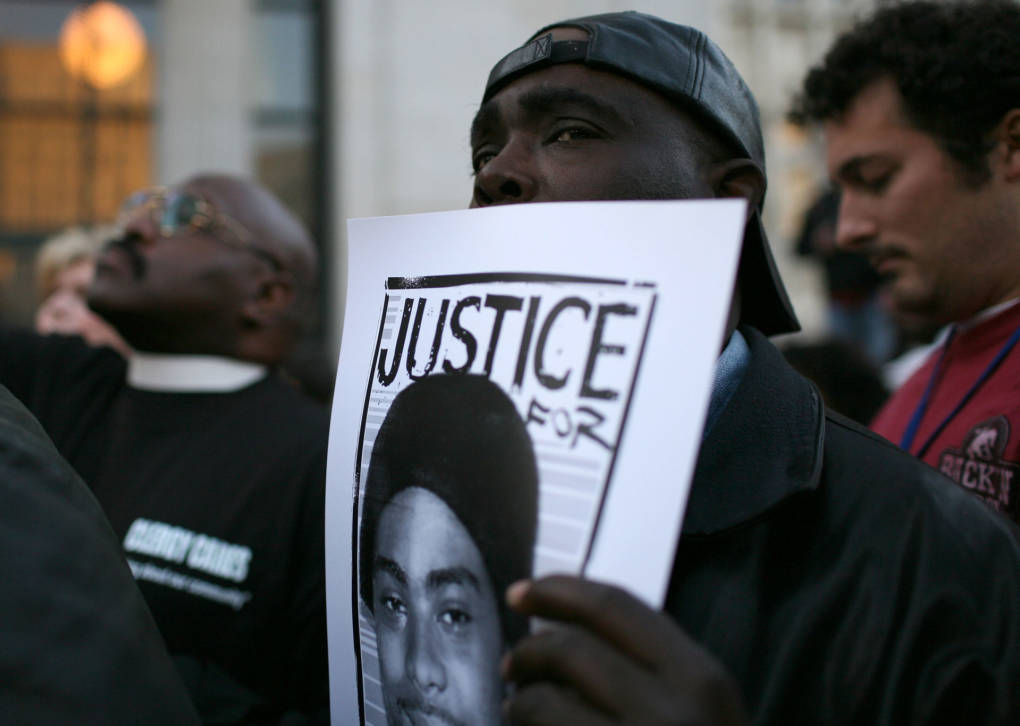
"caption": "A protester carries a sign with a picture of slain 22-year-old Oscar Grant during a demonstration at Oakland City Hall on Jan. 14, 2009 in Oakland.",
"description": "A protester carries a sign with a picture of slain 22-year-old Oscar Grant during a demonstration at Oakland City Hall on Jan. 14, 2009 in Oakland.",
"title": "JusticeforOscarGrant",
"credit": "Justin Sullivan/Getty Images",
"status": "inherit",
"isLoading": false,
"fetchFailed": false
},
"news_11716126": {
"type": "attachments",
"id": "news_11716126",
"meta": {
"index": "attachments_1716263798",
"site": "news",
"id": "11716126",
"found": true
},
"parent": 11716125,
"imgSizes": {
"twentyfourteen-full-width": {
"file": "https://ww2.kqed.org/app/uploads/sites/10/2019/01/gettyimages-916325080_wide-8100a622794fa2fd2f5793003003b4408150bd5a-e1546721526736-1038x576.jpg",
"width": 1038,
"mimeType": "image/jpeg",
"height": 576
},
"thumbnail": {
"file": "https://ww2.kqed.org/app/uploads/sites/10/2019/01/gettyimages-916325080_wide-8100a622794fa2fd2f5793003003b4408150bd5a-e1546721526736-160x90.jpg",
"width": 160,
"mimeType": "image/jpeg",
"height": 90
},
"post-thumbnail": {
"file": "https://ww2.kqed.org/app/uploads/sites/10/2019/01/gettyimages-916325080_wide-8100a622794fa2fd2f5793003003b4408150bd5a-e1546721526736-672x372.jpg",
"width": 672,
"mimeType": "image/jpeg",
"height": 372
},
"kqedFullSize": {
"file": "https://ww2.kqed.org/app/uploads/sites/10/2019/01/gettyimages-916325080_wide-8100a622794fa2fd2f5793003003b4408150bd5a-e1546721526736.jpg",
"width": 1920,
"height": 1082
},
"large": {
"file": "https://ww2.kqed.org/app/uploads/sites/10/2019/01/gettyimages-916325080_wide-8100a622794fa2fd2f5793003003b4408150bd5a-e1546721526736-1020x575.jpg",
"width": 1020,
"mimeType": "image/jpeg",
"height": 575
},
"complete_open_graph": {
"file": "https://ww2.kqed.org/app/uploads/sites/10/2019/01/gettyimages-916325080_wide-8100a622794fa2fd2f5793003003b4408150bd5a-e1546721526736-1200x676.jpg",
"width": 1200,
"mimeType": "image/jpeg",
"height": 676
},
"guest-author-50": {
"file": "https://ww2.kqed.org/app/uploads/sites/10/2019/01/gettyimages-916325080_wide-8100a622794fa2fd2f5793003003b4408150bd5a-e1546721526736-50x50.jpg",
"width": 50,
"mimeType": "image/jpeg",
"height": 50
},
"guest-author-96": {
"file": "https://ww2.kqed.org/app/uploads/sites/10/2019/01/gettyimages-916325080_wide-8100a622794fa2fd2f5793003003b4408150bd5a-e1546721526736-96x96.jpg",
"width": 96,
"mimeType": "image/jpeg",
"height": 96
},
"medium": {
"file": "https://ww2.kqed.org/app/uploads/sites/10/2019/01/gettyimages-916325080_wide-8100a622794fa2fd2f5793003003b4408150bd5a-e1546721526736-800x451.jpg",
"width": 800,
"mimeType": "image/jpeg",
"height": 451
},
"guest-author-64": {
"file": "https://ww2.kqed.org/app/uploads/sites/10/2019/01/gettyimages-916325080_wide-8100a622794fa2fd2f5793003003b4408150bd5a-e1546721526736-64x64.jpg",
"width": 64,
"mimeType": "image/jpeg",
"height": 64
},
"guest-author-32": {
"file": "https://ww2.kqed.org/app/uploads/sites/10/2019/01/gettyimages-916325080_wide-8100a622794fa2fd2f5793003003b4408150bd5a-e1546721526736-32x32.jpg",
"width": 32,
"mimeType": "image/jpeg",
"height": 32
},
"full-width": {
"file": "https://ww2.kqed.org/app/uploads/sites/10/2019/01/gettyimages-916325080_wide-8100a622794fa2fd2f5793003003b4408150bd5a-e1546721526736-1920x1082.jpg",
"width": 1920,
"mimeType": "image/jpeg",
"height": 1082
},
"detail": {
"file": "https://ww2.kqed.org/app/uploads/sites/10/2019/01/gettyimages-916325080_wide-8100a622794fa2fd2f5793003003b4408150bd5a-e1546721526736-150x150.jpg",
"width": 150,
"mimeType": "image/jpeg",
"height": 150
},
"guest-author-128": {
"file": "https://ww2.kqed.org/app/uploads/sites/10/2019/01/gettyimages-916325080_wide-8100a622794fa2fd2f5793003003b4408150bd5a-e1546721526736-128x128.jpg",
"width": 128,
"mimeType": "image/jpeg",
"height": 128
}
},
"publishDate": 1546721012,
"modified": 1546721518,
"caption": "Director Ryan Coogler attends a London screening of his film \u003cem>Black Panther\u003c/em>, the highest-grossing movie of 2018.",
"description": "Director Ryan Coogler attends a London screening of his film \u003cem>Black Panther\u003c/em>, the highest-grossing movie of 2018.",
"title": "Director Ryan Coogler attends a London screening of his film Black Panther, the highest-grossing movie of 2018.",
"credit": "Jeff Spicer/Getty Images",
"status": "inherit",
"isLoading": false,
"fetchFailed": false
},
"news_11716021": {
"type": "attachments",
"id": "news_11716021",
"meta": {
"index": "attachments_1716263798",
"site": "news",
"id": "11716021",
"found": true
},
"parent": 11715901,
"imgSizes": {
"twentyfourteen-full-width": {
"file": "https://ww2.kqed.org/app/uploads/sites/10/2019/01/Screen-Shot-2019-01-04-at-2.40.03-PM-e1546641761594-1038x576.png",
"width": 1038,
"mimeType": "image/png",
"height": 576
},
"thumbnail": {
"file": "https://ww2.kqed.org/app/uploads/sites/10/2019/01/Screen-Shot-2019-01-04-at-2.40.03-PM-e1546641761594-160x110.png",
"width": 160,
"mimeType": "image/png",
"height": 110
},
"post-thumbnail": {
"file": "https://ww2.kqed.org/app/uploads/sites/10/2019/01/Screen-Shot-2019-01-04-at-2.40.03-PM-e1546641761594-672x372.png",
"width": 672,
"mimeType": "image/png",
"height": 372
},
"kqedFullSize": {
"file": "https://ww2.kqed.org/app/uploads/sites/10/2019/01/Screen-Shot-2019-01-04-at-2.40.03-PM-e1546641761594.png",
"width": 1920,
"height": 1321
},
"large": {
"file": "https://ww2.kqed.org/app/uploads/sites/10/2019/01/Screen-Shot-2019-01-04-at-2.40.03-PM-e1546641761594-1020x702.png",
"width": 1020,
"mimeType": "image/png",
"height": 702
},
"complete_open_graph": {
"file": "https://ww2.kqed.org/app/uploads/sites/10/2019/01/Screen-Shot-2019-01-04-at-2.40.03-PM-e1546641761594-1200x826.png",
"width": 1200,
"mimeType": "image/png",
"height": 826
},
"guest-author-50": {
"file": "https://ww2.kqed.org/app/uploads/sites/10/2019/01/Screen-Shot-2019-01-04-at-2.40.03-PM-e1546641761594-50x50.png",
"width": 50,
"mimeType": "image/png",
"height": 50
},
"guest-author-96": {
"file": "https://ww2.kqed.org/app/uploads/sites/10/2019/01/Screen-Shot-2019-01-04-at-2.40.03-PM-e1546641761594-96x96.png",
"width": 96,
"mimeType": "image/png",
"height": 96
},
"medium": {
"file": "https://ww2.kqed.org/app/uploads/sites/10/2019/01/Screen-Shot-2019-01-04-at-2.40.03-PM-e1546641761594-800x550.png",
"width": 800,
"mimeType": "image/png",
"height": 550
},
"guest-author-64": {
"file": "https://ww2.kqed.org/app/uploads/sites/10/2019/01/Screen-Shot-2019-01-04-at-2.40.03-PM-e1546641761594-64x64.png",
"width": 64,
"mimeType": "image/png",
"height": 64
},
"guest-author-32": {
"file": "https://ww2.kqed.org/app/uploads/sites/10/2019/01/Screen-Shot-2019-01-04-at-2.40.03-PM-e1546641761594-32x32.png",
"width": 32,
"mimeType": "image/png",
"height": 32
},
"full-width": {
"file": "https://ww2.kqed.org/app/uploads/sites/10/2019/01/Screen-Shot-2019-01-04-at-2.40.03-PM-e1546641761594-1920x1321.png",
"width": 1920,
"mimeType": "image/png",
"height": 1321
},
"detail": {
"file": "https://ww2.kqed.org/app/uploads/sites/10/2019/01/Screen-Shot-2019-01-04-at-2.40.03-PM-e1546641761594-150x150.png",
"width": 150,
"mimeType": "image/png",
"height": 150
},
"guest-author-128": {
"file": "https://ww2.kqed.org/app/uploads/sites/10/2019/01/Screen-Shot-2019-01-04-at-2.40.03-PM-e1546641761594-128x128.png",
"width": 128,
"mimeType": "image/png",
"height": 128
}
},
"publishDate": 1546641636,
"modified": 1546641746,
"caption": "Screenshot from Cecil B. DeMille's \"The Ten Commandments.\"",
"description": null,
"title": "Screen Shot 2019-01-04 at 2.40.03 PM",
"credit": "YouTube",
"status": "inherit",
"isLoading": false,
"fetchFailed": false
},
"news_11663133": {
"type": "attachments",
"id": "news_11663133",
"meta": {
"index": "attachments_1716263798",
"site": "news",
"id": "11663133",
"found": true
},
"parent": 11663097,
"imgSizes": {
"small": {
"file": "https://ww2.kqed.org/app/uploads/sites/10/2018/04/RS30368_IMG_3007-qut-520x390.jpg",
"width": 520,
"mimeType": "image/jpeg",
"height": 390
},
"twentyfourteen-full-width": {
"file": "https://ww2.kqed.org/app/uploads/sites/10/2018/04/RS30368_IMG_3007-qut-1038x576.jpg",
"width": 1038,
"mimeType": "image/jpeg",
"height": 576
},
"thumbnail": {
"file": "https://ww2.kqed.org/app/uploads/sites/10/2018/04/RS30368_IMG_3007-qut-160x120.jpg",
"width": 160,
"mimeType": "image/jpeg",
"height": 120
},
"fd-sm": {
"file": "https://ww2.kqed.org/app/uploads/sites/10/2018/04/RS30368_IMG_3007-qut-960x720.jpg",
"width": 960,
"mimeType": "image/jpeg",
"height": 720
},
"post-thumbnail": {
"file": "https://ww2.kqed.org/app/uploads/sites/10/2018/04/RS30368_IMG_3007-qut-672x372.jpg",
"width": 672,
"mimeType": "image/jpeg",
"height": 372
},
"xsmall": {
"file": "https://ww2.kqed.org/app/uploads/sites/10/2018/04/RS30368_IMG_3007-qut-375x281.jpg",
"width": 375,
"mimeType": "image/jpeg",
"height": 281
},
"kqedFullSize": {
"file": "https://ww2.kqed.org/app/uploads/sites/10/2018/04/RS30368_IMG_3007-qut.jpg",
"width": 1920,
"height": 1440
},
"large": {
"file": "https://ww2.kqed.org/app/uploads/sites/10/2018/04/RS30368_IMG_3007-qut-1020x765.jpg",
"width": 1020,
"mimeType": "image/jpeg",
"height": 765
},
"xlarge": {
"file": "https://ww2.kqed.org/app/uploads/sites/10/2018/04/RS30368_IMG_3007-qut-1180x885.jpg",
"width": 1180,
"mimeType": "image/jpeg",
"height": 885
},
"complete_open_graph": {
"file": "https://ww2.kqed.org/app/uploads/sites/10/2018/04/RS30368_IMG_3007-qut-1200x900.jpg",
"width": 1200,
"mimeType": "image/jpeg",
"height": 900
},
"guest-author-50": {
"file": "https://ww2.kqed.org/app/uploads/sites/10/2018/04/RS30368_IMG_3007-qut-50x50.jpg",
"width": 50,
"mimeType": "image/jpeg",
"height": 50
},
"guest-author-96": {
"file": "https://ww2.kqed.org/app/uploads/sites/10/2018/04/RS30368_IMG_3007-qut-96x96.jpg",
"width": 96,
"mimeType": "image/jpeg",
"height": 96
},
"medium": {
"file": "https://ww2.kqed.org/app/uploads/sites/10/2018/04/RS30368_IMG_3007-qut-800x600.jpg",
"width": 800,
"mimeType": "image/jpeg",
"height": 600
},
"guest-author-64": {
"file": "https://ww2.kqed.org/app/uploads/sites/10/2018/04/RS30368_IMG_3007-qut-64x64.jpg",
"width": 64,
"mimeType": "image/jpeg",
"height": 64
},
"guest-author-32": {
"file": "https://ww2.kqed.org/app/uploads/sites/10/2018/04/RS30368_IMG_3007-qut-32x32.jpg",
"width": 32,
"mimeType": "image/jpeg",
"height": 32
},
"fd-lrg": {
"file": "https://ww2.kqed.org/app/uploads/sites/10/2018/04/RS30368_IMG_3007-qut-1920x1440.jpg",
"width": 1920,
"mimeType": "image/jpeg",
"height": 1440
},
"fd-med": {
"file": "https://ww2.kqed.org/app/uploads/sites/10/2018/04/RS30368_IMG_3007-qut-1180x885.jpg",
"width": 1180,
"mimeType": "image/jpeg",
"height": 885
},
"full-width": {
"file": "https://ww2.kqed.org/app/uploads/sites/10/2018/04/RS30368_IMG_3007-qut-1920x1440.jpg",
"width": 1920,
"mimeType": "image/jpeg",
"height": 1440
},
"detail": {
"file": "https://ww2.kqed.org/app/uploads/sites/10/2018/04/RS30368_IMG_3007-qut-150x150.jpg",
"width": 150,
"mimeType": "image/jpeg",
"height": 150
},
"guest-author-128": {
"file": "https://ww2.kqed.org/app/uploads/sites/10/2018/04/RS30368_IMG_3007-qut-128x128.jpg",
"width": 128,
"mimeType": "image/jpeg",
"height": 128
},
"xxsmall": {
"file": "https://ww2.kqed.org/app/uploads/sites/10/2018/04/RS30368_IMG_3007-qut-240x180.jpg",
"width": 240,
"mimeType": "image/jpeg",
"height": 180
}
},
"publishDate": 1524083171,
"modified": 1524871525,
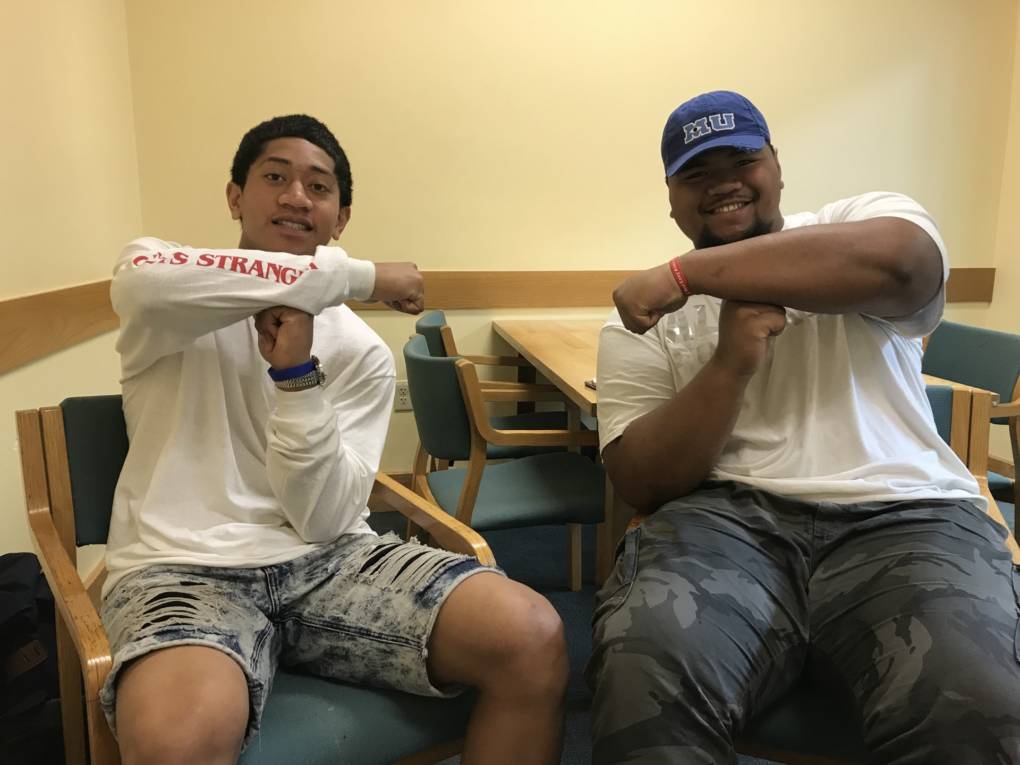
"caption": "Joe Fifita (L) and Moala Tautuaa are cousins who grew up singing in Tonga. They now live in East Palo Alto and are seniors at Menlo-Atherton High School.",
"description": "Joe Fifita (L) and Moala Tautuaa are cousins who grew up singing in Tonga. They now live in East Palo Alto and are seniors at Menlo-Atherton High School.",
"title": "RS30368_IMG_3007-qut",
"credit": "Bianca Taylor/KQED",
"status": "inherit",
"isLoading": false,
"fetchFailed": false
},
"news_11701433": {
"type": "attachments",
"id": "news_11701433",
"meta": {
"index": "attachments_1716263798",
"site": "news",
"id": "11701433",
"found": true
},
"parent": 11701126,
"imgSizes": {
"small": {
"file": "https://ww2.kqed.org/app/uploads/sites/10/2018/10/Chron-3-bigger-520x281.png",
"width": 520,
"mimeType": "image/png",
"height": 281
},
"twentyfourteen-full-width": {
"file": "https://ww2.kqed.org/app/uploads/sites/10/2018/10/Chron-3-bigger-1038x576.png",
"width": 1038,
"mimeType": "image/png",
"height": 576
},
"thumbnail": {
"file": "https://ww2.kqed.org/app/uploads/sites/10/2018/10/Chron-3-bigger-160x86.png",
"width": 160,
"mimeType": "image/png",
"height": 86
},
"fd-sm": {
"file": "https://ww2.kqed.org/app/uploads/sites/10/2018/10/Chron-3-bigger-960x519.png",
"width": 960,
"mimeType": "image/png",
"height": 519
},
"post-thumbnail": {
"file": "https://ww2.kqed.org/app/uploads/sites/10/2018/10/Chron-3-bigger-672x372.png",
"width": 672,
"mimeType": "image/png",
"height": 372
},
"xsmall": {
"file": "https://ww2.kqed.org/app/uploads/sites/10/2018/10/Chron-3-bigger-375x203.png",
"width": 375,
"mimeType": "image/png",
"height": 203
},
"kqedFullSize": {
"file": "https://ww2.kqed.org/app/uploads/sites/10/2018/10/Chron-3-bigger.png",
"width": 1083,
"height": 585
},
"large": {
"file": "https://ww2.kqed.org/app/uploads/sites/10/2018/10/Chron-3-bigger-1020x551.png",
"width": 1020,
"mimeType": "image/png",
"height": 551
},
"guest-author-50": {
"file": "https://ww2.kqed.org/app/uploads/sites/10/2018/10/Chron-3-bigger-50x50.png",
"width": 50,
"mimeType": "image/png",
"height": 50
},
"guest-author-96": {
"file": "https://ww2.kqed.org/app/uploads/sites/10/2018/10/Chron-3-bigger-96x96.png",
"width": 96,
"mimeType": "image/png",
"height": 96
},
"medium": {
"file": "https://ww2.kqed.org/app/uploads/sites/10/2018/10/Chron-3-bigger-800x432.png",
"width": 800,
"mimeType": "image/png",
"height": 432
},
"guest-author-64": {
"file": "https://ww2.kqed.org/app/uploads/sites/10/2018/10/Chron-3-bigger-64x64.png",
"width": 64,
"mimeType": "image/png",
"height": 64
},
"guest-author-32": {
"file": "https://ww2.kqed.org/app/uploads/sites/10/2018/10/Chron-3-bigger-32x32.png",
"width": 32,
"mimeType": "image/png",
"height": 32
},
"detail": {
"file": "https://ww2.kqed.org/app/uploads/sites/10/2018/10/Chron-3-bigger-150x150.png",
"width": 150,
"mimeType": "image/png",
"height": 150
},
"guest-author-128": {
"file": "https://ww2.kqed.org/app/uploads/sites/10/2018/10/Chron-3-bigger-128x128.png",
"width": 128,
"mimeType": "image/png",
"height": 128
},
"xxsmall": {
"file": "https://ww2.kqed.org/app/uploads/sites/10/2018/10/Chron-3-bigger-240x130.png",
"width": 240,
"mimeType": "image/png",
"height": 130
}
},
"publishDate": 1540572060,
"modified": 1540582696,
"caption": "Mary Ellen Pleasant pictured in the San Francisco Chronicle in 1899.",
"description": "Mary Ellen Pleasant pictured in the San Francisco Chronicle, 1899",
"title": "Chron 3-bigger",
"credit": "Courtesy of the San Francisco Chronicle",
"status": "inherit",
"isLoading": false,
"fetchFailed": false
},
"news_11643060": {
"type": "attachments",
"id": "news_11643060",
"meta": {
"index": "attachments_1716263798",
"site": "news",
"id": "11643060",
"found": true
},
"parent": 11642653,
"imgSizes": {
"small": {
"file": "https://ww2.kqed.org/app/uploads/sites/10/2018/01/RS28918_Glen.live-qut-520x369.jpg",
"width": 520,
"mimeType": "image/jpeg",
"height": 369
},
"twentyfourteen-full-width": {
"file": "https://ww2.kqed.org/app/uploads/sites/10/2018/01/RS28918_Glen.live-qut-818x576.jpg",
"width": 818,
"mimeType": "image/jpeg",
"height": 576
},
"thumbnail": {
"file": "https://ww2.kqed.org/app/uploads/sites/10/2018/01/RS28918_Glen.live-qut-160x113.jpg",
"width": 160,
"mimeType": "image/jpeg",
"height": 113
},
"post-thumbnail": {
"file": "https://ww2.kqed.org/app/uploads/sites/10/2018/01/RS28918_Glen.live-qut-672x372.jpg",
"width": 672,
"mimeType": "image/jpeg",
"height": 372
},
"xsmall": {
"file": "https://ww2.kqed.org/app/uploads/sites/10/2018/01/RS28918_Glen.live-qut-375x266.jpg",
"width": 375,
"mimeType": "image/jpeg",
"height": 266
},
"kqedFullSize": {
"file": "https://ww2.kqed.org/app/uploads/sites/10/2018/01/RS28918_Glen.live-qut.jpg",
"width": 818,
"height": 580
},
"guest-author-50": {
"file": "https://ww2.kqed.org/app/uploads/sites/10/2018/01/RS28918_Glen.live-qut-50x50.jpg",
"width": 50,
"mimeType": "image/jpeg",
"height": 50
},
"guest-author-96": {
"file": "https://ww2.kqed.org/app/uploads/sites/10/2018/01/RS28918_Glen.live-qut-96x96.jpg",
"width": 96,
"mimeType": "image/jpeg",
"height": 96
},
"medium": {
"file": "https://ww2.kqed.org/app/uploads/sites/10/2018/01/RS28918_Glen.live-qut-800x567.jpg",
"width": 800,
"mimeType": "image/jpeg",
"height": 567
},
"guest-author-64": {
"file": "https://ww2.kqed.org/app/uploads/sites/10/2018/01/RS28918_Glen.live-qut-64x64.jpg",
"width": 64,
"mimeType": "image/jpeg",
"height": 64
},
"guest-author-32": {
"file": "https://ww2.kqed.org/app/uploads/sites/10/2018/01/RS28918_Glen.live-qut-32x32.jpg",
"width": 32,
"mimeType": "image/jpeg",
"height": 32
},
"detail": {
"file": "https://ww2.kqed.org/app/uploads/sites/10/2018/01/RS28918_Glen.live-qut-150x150.jpg",
"width": 150,
"mimeType": "image/jpeg",
"height": 150
},
"guest-author-128": {
"file": "https://ww2.kqed.org/app/uploads/sites/10/2018/01/RS28918_Glen.live-qut-128x128.jpg",
"width": 128,
"mimeType": "image/jpeg",
"height": 128
},
"xxsmall": {
"file": "https://ww2.kqed.org/app/uploads/sites/10/2018/01/RS28918_Glen.live-qut-240x170.jpg",
"width": 240,
"mimeType": "image/jpeg",
"height": 170
}
},
"publishDate": 1516390412,
"modified": 1546041803,
"caption": "Glen Sherley onstage at a prison in Vacaville, where he recorded a live album while incarcerated.",
"description": "Glen Sherley onstage at Vacaville prison, where he recorded a live album while incarcerated.",
"title": "RS28918_Glen.live-qut",
"credit": "Courtesy of Ronda Sherley",
"status": "inherit",
"isLoading": false,
"fetchFailed": false
},
"news_11714550": {
"type": "attachments",
"id": "news_11714550",
"meta": {
"index": "attachments_1716263798",
"site": "news",
"id": "11714550",
"found": true
},
"parent": 11714548,
"imgSizes": {
"twentyfourteen-full-width": {
"file": "https://ww2.kqed.org/app/uploads/sites/10/2018/12/NR611_MARQUEE-1038x576.jpg",
"width": 1038,
"mimeType": "image/jpeg",
"height": 576
},
"thumbnail": {
"file": "https://ww2.kqed.org/app/uploads/sites/10/2018/12/NR611_MARQUEE-160x90.jpg",
"width": 160,
"mimeType": "image/jpeg",
"height": 90
},
"post-thumbnail": {
"file": "https://ww2.kqed.org/app/uploads/sites/10/2018/12/NR611_MARQUEE-672x372.jpg",
"width": 672,
"mimeType": "image/jpeg",
"height": 372
},
"kqedFullSize": {
"file": "https://ww2.kqed.org/app/uploads/sites/10/2018/12/NR611_MARQUEE.jpg",
"width": 1280,
"height": 720
},
"large": {
"file": "https://ww2.kqed.org/app/uploads/sites/10/2018/12/NR611_MARQUEE-1020x574.jpg",
"width": 1020,
"mimeType": "image/jpeg",
"height": 574
},
"complete_open_graph": {
"file": "https://ww2.kqed.org/app/uploads/sites/10/2018/12/NR611_MARQUEE-1200x675.jpg",
"width": 1200,
"mimeType": "image/jpeg",
"height": 675
},
"guest-author-50": {
"file": "https://ww2.kqed.org/app/uploads/sites/10/2018/12/NR611_MARQUEE-50x50.jpg",
"width": 50,
"mimeType": "image/jpeg",
"height": 50
},
"guest-author-96": {
"file": "https://ww2.kqed.org/app/uploads/sites/10/2018/12/NR611_MARQUEE-96x96.jpg",
"width": 96,
"mimeType": "image/jpeg",
"height": 96
},
"medium": {
"file": "https://ww2.kqed.org/app/uploads/sites/10/2018/12/NR611_MARQUEE-800x450.jpg",
"width": 800,
"mimeType": "image/jpeg",
"height": 450
},
"guest-author-64": {
"file": "https://ww2.kqed.org/app/uploads/sites/10/2018/12/NR611_MARQUEE-64x64.jpg",
"width": 64,
"mimeType": "image/jpeg",
"height": 64
},
"guest-author-32": {
"file": "https://ww2.kqed.org/app/uploads/sites/10/2018/12/NR611_MARQUEE-32x32.jpg",
"width": 32,
"mimeType": "image/jpeg",
"height": 32
},
"detail": {
"file": "https://ww2.kqed.org/app/uploads/sites/10/2018/12/NR611_MARQUEE-150x150.jpg",
"width": 150,
"mimeType": "image/jpeg",
"height": 150
},
"guest-author-128": {
"file": "https://ww2.kqed.org/app/uploads/sites/10/2018/12/NR611_MARQUEE-128x128.jpg",
"width": 128,
"mimeType": "image/jpeg",
"height": 128
}
},
"publishDate": 1545442627,
"modified": 1545442939,
"caption": "Outgoing Governor Jerry Brown sits for a TV interview with KQED television at the governor's mansion in Sacramento. (Tuesday, December 18, 2018)",
"description": null,
"title": "GovJerryBrown-ExitInterview",
"credit": null,
"status": "inherit",
"isLoading": false,
"fetchFailed": false
},
"news_11713216": {
"type": "attachments",
"id": "news_11713216",
"meta": {
"index": "attachments_1716263798",
"site": "news",
"id": "11713216",
"found": true
},
"parent": 11713213,
"imgSizes": {
"twentyfourteen-full-width": {
"file": "https://ww2.kqed.org/app/uploads/sites/10/2018/12/SouL-cHANCE-pic2-1038x576.jpg",
"width": 1038,
"mimeType": "image/jpeg",
"height": 576
},
"thumbnail": {
"file": "https://ww2.kqed.org/app/uploads/sites/10/2018/12/SouL-cHANCE-pic2-160x123.jpg",
"width": 160,
"mimeType": "image/jpeg",
"height": 123
},
"post-thumbnail": {
"file": "https://ww2.kqed.org/app/uploads/sites/10/2018/12/SouL-cHANCE-pic2-672x372.jpg",
"width": 672,
"mimeType": "image/jpeg",
"height": 372
},
"kqedFullSize": {
"file": "https://ww2.kqed.org/app/uploads/sites/10/2018/12/SouL-cHANCE-pic2.jpg",
"width": 1080,
"height": 829
},
"large": {
"file": "https://ww2.kqed.org/app/uploads/sites/10/2018/12/SouL-cHANCE-pic2-1020x783.jpg",
"width": 1020,
"mimeType": "image/jpeg",
"height": 783
},
"guest-author-50": {
"file": "https://ww2.kqed.org/app/uploads/sites/10/2018/12/SouL-cHANCE-pic2-50x50.jpg",
"width": 50,
"mimeType": "image/jpeg",
"height": 50
},
"guest-author-96": {
"file": "https://ww2.kqed.org/app/uploads/sites/10/2018/12/SouL-cHANCE-pic2-96x96.jpg",
"width": 96,
"mimeType": "image/jpeg",
"height": 96
},
"medium": {
"file": "https://ww2.kqed.org/app/uploads/sites/10/2018/12/SouL-cHANCE-pic2-800x614.jpg",
"width": 800,
"mimeType": "image/jpeg",
"height": 614
},
"guest-author-64": {
"file": "https://ww2.kqed.org/app/uploads/sites/10/2018/12/SouL-cHANCE-pic2-64x64.jpg",
"width": 64,
"mimeType": "image/jpeg",
"height": 64
},
"detail": {
"file": "https://ww2.kqed.org/app/uploads/sites/10/2018/12/SouL-cHANCE-pic2-150x150.jpg",
"width": 150,
"mimeType": "image/jpeg",
"height": 150
},
"guest-author-32": {
"file": "https://ww2.kqed.org/app/uploads/sites/10/2018/12/SouL-cHANCE-pic2-32x32.jpg",
"width": 32,
"mimeType": "image/jpeg",
"height": 32
},
"guest-author-128": {
"file": "https://ww2.kqed.org/app/uploads/sites/10/2018/12/SouL-cHANCE-pic2-128x128.jpg",
"width": 128,
"mimeType": "image/jpeg",
"height": 128
}
},
"publishDate": 1545096389,
"modified": 1545437896,
"caption": "Left to right: Nico Collins, Brenndan Biddhu Morlan, Omar Murillo and A.J. Brewer of The Soul Chance.",
"description": null,
"title": "SouL cHANCE pic2",
"credit": "Courtesy of The Soul Chance",
"status": "inherit",
"isLoading": false,
"fetchFailed": false
},
"news_11713885": {
"type": "attachments",
"id": "news_11713885",
"meta": {
"index": "attachments_1716263798",
"site": "news",
"id": "11713885",
"found": true
},
"parent": 11713869,
"imgSizes": {
"thumbnail": {
"file": "https://ww2.kqed.org/app/uploads/sites/10/2018/12/RS34510_collage_2_cvc-qut-160x113.jpg",
"width": 160,
"mimeType": "image/jpeg",
"height": 113
},
"post-thumbnail": {
"file": "https://ww2.kqed.org/app/uploads/sites/10/2018/12/RS34510_collage_2_cvc-qut-672x372.jpg",
"width": 672,
"mimeType": "image/jpeg",
"height": 372
},
"kqedFullSize": {
"file": "https://ww2.kqed.org/app/uploads/sites/10/2018/12/RS34510_collage_2_cvc-qut.jpg",
"width": 800,
"height": 565
},
"guest-author-50": {
"file": "https://ww2.kqed.org/app/uploads/sites/10/2018/12/RS34510_collage_2_cvc-qut-50x50.jpg",
"width": 50,
"mimeType": "image/jpeg",
"height": 50
},
"guest-author-96": {
"file": "https://ww2.kqed.org/app/uploads/sites/10/2018/12/RS34510_collage_2_cvc-qut-96x96.jpg",
"width": 96,
"mimeType": "image/jpeg",
"height": 96
},
"medium": {
"file": "https://ww2.kqed.org/app/uploads/sites/10/2018/12/RS34510_collage_2_cvc-qut-800x565.jpg",
"width": 800,
"mimeType": "image/jpeg",
"height": 565
},
"guest-author-64": {
"file": "https://ww2.kqed.org/app/uploads/sites/10/2018/12/RS34510_collage_2_cvc-qut-64x64.jpg",
"width": 64,
"mimeType": "image/jpeg",
"height": 64
},
"detail": {
"file": "https://ww2.kqed.org/app/uploads/sites/10/2018/12/RS34510_collage_2_cvc-qut-150x150.jpg",
"width": 150,
"mimeType": "image/jpeg",
"height": 150
},
"guest-author-32": {
"file": "https://ww2.kqed.org/app/uploads/sites/10/2018/12/RS34510_collage_2_cvc-qut-32x32.jpg",
"width": 32,
"mimeType": "image/jpeg",
"height": 32
},
"guest-author-128": {
"file": "https://ww2.kqed.org/app/uploads/sites/10/2018/12/RS34510_collage_2_cvc-qut-128x128.jpg",
"width": 128,
"mimeType": "image/jpeg",
"height": 128
}
},
"publishDate": 1545271188,
"modified": 1545271448,
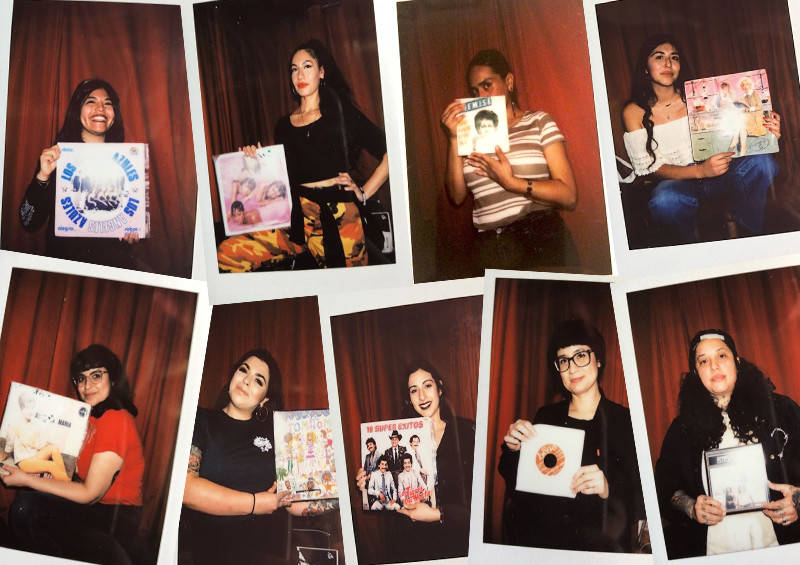
"caption": "Inside Oakland's Legionnaire Saloon, the dance floor is packed with crews of vinyl-loving women wearing their flyest kicks and threads. ",
"description": null,
"title": "RS34510_collage_2_cvc-qut",
"credit": "Courtesy of Mar Velez ",
"status": "inherit",
"isLoading": false,
"fetchFailed": false
},
"news_11684502": {
"type": "attachments",
"id": "news_11684502",
"meta": {
"index": "attachments_1716263798",
"site": "news",
"id": "11684502",
"found": true
},
"parent": 11684469,
"imgSizes": {
"small": {
"file": "https://ww2.kqed.org/app/uploads/sites/10/2018/08/RS32183__images_uploads_gallery_jdg-qut-520x347.jpg",
"width": 520,
"mimeType": "image/jpeg",
"height": 347
},
"twentyfourteen-full-width": {
"file": "https://ww2.kqed.org/app/uploads/sites/10/2018/08/RS32183__images_uploads_gallery_jdg-qut-1038x576.jpg",
"width": 1038,
"mimeType": "image/jpeg",
"height": 576
},
"thumbnail": {
"file": "https://ww2.kqed.org/app/uploads/sites/10/2018/08/RS32183__images_uploads_gallery_jdg-qut-160x107.jpg",
"width": 160,
"mimeType": "image/jpeg",
"height": 107
},
"fd-sm": {
"file": "https://ww2.kqed.org/app/uploads/sites/10/2018/08/RS32183__images_uploads_gallery_jdg-qut-960x640.jpg",
"width": 960,
"mimeType": "image/jpeg",
"height": 640
},
"post-thumbnail": {
"file": "https://ww2.kqed.org/app/uploads/sites/10/2018/08/RS32183__images_uploads_gallery_jdg-qut-672x372.jpg",
"width": 672,
"mimeType": "image/jpeg",
"height": 372
},
"xsmall": {
"file": "https://ww2.kqed.org/app/uploads/sites/10/2018/08/RS32183__images_uploads_gallery_jdg-qut-375x250.jpg",
"width": 375,
"mimeType": "image/jpeg",
"height": 250
},
"kqedFullSize": {
"file": "https://ww2.kqed.org/app/uploads/sites/10/2018/08/RS32183__images_uploads_gallery_jdg-qut.jpg",
"width": 1920,
"height": 1280
},
"large": {
"file": "https://ww2.kqed.org/app/uploads/sites/10/2018/08/RS32183__images_uploads_gallery_jdg-qut-1020x680.jpg",
"width": 1020,
"mimeType": "image/jpeg",
"height": 680
},
"xlarge": {
"file": "https://ww2.kqed.org/app/uploads/sites/10/2018/08/RS32183__images_uploads_gallery_jdg-qut-1180x787.jpg",
"width": 1180,
"mimeType": "image/jpeg",
"height": 787
},
"complete_open_graph": {
"file": "https://ww2.kqed.org/app/uploads/sites/10/2018/08/RS32183__images_uploads_gallery_jdg-qut-1200x800.jpg",
"width": 1200,
"mimeType": "image/jpeg",
"height": 800
},
"guest-author-50": {
"file": "https://ww2.kqed.org/app/uploads/sites/10/2018/08/RS32183__images_uploads_gallery_jdg-qut-50x50.jpg",
"width": 50,
"mimeType": "image/jpeg",
"height": 50
},
"guest-author-96": {
"file": "https://ww2.kqed.org/app/uploads/sites/10/2018/08/RS32183__images_uploads_gallery_jdg-qut-96x96.jpg",
"width": 96,
"mimeType": "image/jpeg",
"height": 96
},
"medium": {
"file": "https://ww2.kqed.org/app/uploads/sites/10/2018/08/RS32183__images_uploads_gallery_jdg-qut-800x533.jpg",
"width": 800,
"mimeType": "image/jpeg",
"height": 533
},
"guest-author-64": {
"file": "https://ww2.kqed.org/app/uploads/sites/10/2018/08/RS32183__images_uploads_gallery_jdg-qut-64x64.jpg",
"width": 64,
"mimeType": "image/jpeg",
"height": 64
},
"guest-author-32": {
"file": "https://ww2.kqed.org/app/uploads/sites/10/2018/08/RS32183__images_uploads_gallery_jdg-qut-32x32.jpg",
"width": 32,
"mimeType": "image/jpeg",
"height": 32
},
"fd-lrg": {
"file": "https://ww2.kqed.org/app/uploads/sites/10/2018/08/RS32183__images_uploads_gallery_jdg-qut-1920x1280.jpg",
"width": 1920,
"mimeType": "image/jpeg",
"height": 1280
},
"fd-med": {
"file": "https://ww2.kqed.org/app/uploads/sites/10/2018/08/RS32183__images_uploads_gallery_jdg-qut-1180x787.jpg",
"width": 1180,
"mimeType": "image/jpeg",
"height": 787
},
"full-width": {
"file": "https://ww2.kqed.org/app/uploads/sites/10/2018/08/RS32183__images_uploads_gallery_jdg-qut-1920x1280.jpg",
"width": 1920,
"mimeType": "image/jpeg",
"height": 1280
},
"detail": {
"file": "https://ww2.kqed.org/app/uploads/sites/10/2018/08/RS32183__images_uploads_gallery_jdg-qut-150x150.jpg",
"width": 150,
"mimeType": "image/jpeg",
"height": 150
},
"guest-author-128": {
"file": "https://ww2.kqed.org/app/uploads/sites/10/2018/08/RS32183__images_uploads_gallery_jdg-qut-128x128.jpg",
"width": 128,
"mimeType": "image/jpeg",
"height": 128
},
"xxsmall": {
"file": "https://ww2.kqed.org/app/uploads/sites/10/2018/08/RS32183__images_uploads_gallery_jdg-qut-240x160.jpg",
"width": 240,
"mimeType": "image/jpeg",
"height": 160
}
},
"publishDate": 1533250673,
"modified": 1533333292,
"caption": "Dave Alvin and Jimmie Dale Gilmore.",
"description": "Dave Alvin and Jimmie Dale Gilmore.",
"title": "RS32183__images_uploads_gallery_jdg-qut",
"credit": "Daniel Jackson",
"status": "inherit",
"isLoading": false,
"fetchFailed": false
}
},
"audioPlayerReducer": {
"postId": "stream_live",
"isPaused": true,
"isPlaying": false,
"pfsActive": false,
"pledgeModalIsOpen": true,
"playerDrawerIsOpen": false,
"liveAudioPlayStartedAt": 0,
"liveAudioPlayContext": ""
},
"authorsReducer": {
"byline_news_11716125": {
"type": "authors",
"id": "byline_news_11716125",
"meta": {
"override": true
},
"slug": "byline_news_11716125",
"name": "\u003ca href=\"https://www.npr.org/people/432862355/colin-dwyer\">Colin Dwyer\u003c/a>\u003c/br>\u003ca href=\"https://www.npr.org/\">NPR\u003c/a>",
"isLoading": false
},
"byline_news_11663097": {
"type": "authors",
"id": "byline_news_11663097",
"meta": {
"override": true
},
"slug": "byline_news_11663097",
"name": "Joe Fifita and Moala Tautuaa",
"isLoading": false
},
"sracho": {
"type": "authors",
"id": "107",
"meta": {
"index": "authors_1716337520",
"id": "107",
"found": true
},
"name": "Suzie Racho",
"firstName": "Suzie",
"lastName": "Racho",
"slug": "sracho",
"email": "SRacho@KQED.org",
"display_author_email": false,
"staff_mastheads": [
"news"
],
"title": "KQED Contributor",
"bio": "Suzie Racho is a correspondent-producer with \u003cem>The California Report Magazine\u003c/em>\u003cem>. S\u003c/em>he has also worked with several other KQED productions, including Bay Curious, Truth Be Told, The Do List and KQED News.\r\n\r\nSuzie came to KQED in 1996 after receiving a BA in journalism from San Francisco State University and spending several years working in the music industry. As part of \u003cem>The California Report\u003c/em> team, her work has been recognized by the Society for Professional Journalists, National Federation of Community Broadcasters and Public Radio News Directors Incorporated, among others. She was recognized with a national Gracie Award in 2019. She spends her free time baking, listening to K-pop and rooting for the Giants and Valkyries.",
"avatar": "https://secure.gravatar.com/avatar/842e457a9830b0f3c1ce3ab70ed3518d616d1e25e315c6292eab8cd611d98601?s=600&d=blank&r=g",
"twitter": null,
"bluesky": null,
"facebook": null,
"instagram": null,
"linkedin": null,
"sites": [
{
"site": "arts",
"roles": [
"editor"
]
},
{
"site": "news",
"roles": [
"editor"
]
}
],
"headData": {
"title": "Suzie Racho | KQED",
"description": "KQED Contributor",
"ogImgSrc": "https://secure.gravatar.com/avatar/842e457a9830b0f3c1ce3ab70ed3518d616d1e25e315c6292eab8cd611d98601?s=600&d=blank&r=g",
"twImgSrc": "https://secure.gravatar.com/avatar/842e457a9830b0f3c1ce3ab70ed3518d616d1e25e315c6292eab8cd611d98601?s=600&d=blank&r=g"
},
"isLoading": false,
"link": "/author/sracho"
},
"kqed": {
"type": "authors",
"id": "236",
"meta": {
"index": "authors_1716337520",
"id": "236",
"found": true
},
"name": "KQED News Staff",
"firstName": "KQED News Staff",
"lastName": null,
"slug": "kqed",
"email": "faq@kqed.org",
"display_author_email": false,
"staff_mastheads": [],
"title": null,
"bio": null,
"avatar": "https://secure.gravatar.com/avatar/ef0e801a68c4c54afa9180db14084167?s=600&d=blank&r=g",
"twitter": null,
"facebook": null,
"instagram": null,
"linkedin": null,
"sites": [
{
"site": "arts",
"roles": [
"contributor"
]
},
{
"site": "news",
"roles": [
"editor"
]
},
{
"site": "futureofyou",
"roles": [
"author"
]
}
],
"headData": {
"title": "KQED News Staff | KQED",
"description": null,
"ogImgSrc": "https://secure.gravatar.com/avatar/ef0e801a68c4c54afa9180db14084167?s=600&d=blank&r=g",
"twImgSrc": "https://secure.gravatar.com/avatar/ef0e801a68c4c54afa9180db14084167?s=600&d=blank&r=g"
},
"isLoading": false,
"link": "/author/kqed"
},
"sasha-khokha": {
"type": "authors",
"id": "254",
"meta": {
"index": "authors_1716337520",
"id": "254",
"found": true
},
"name": "Sasha Khokha",
"firstName": "Sasha",
"lastName": "Khokha",
"slug": "sasha-khokha",
"email": "skhokha@kqed.org",
"display_author_email": true,
"staff_mastheads": [
"news"
],
"title": "Host, The California Report Magazine",
"bio": "Sasha Khokha is the host of \u003cem>The California Report's \u003c/em> weekly magazine program, which takes listeners on sound-rich excursions to meet the people that make the Golden State unique -- through audio documentaries and long-form stories. As \u003cem>The California Report's\u003c/em> Central Valley Bureau Chief based in Fresno for nearly a dozen years, Sasha brought the lives and concerns of rural Californians to listeners around the state. Her reporting helped expose the hidden price immigrant women janitors and farmworkers may pay to keep their jobs: sexual assault at work. It inspired two new California laws to protect them from sexual harassment. She was a key member of the reporting team for the Frontline film \u003cem>Rape on the Night Shift, \u003c/em>which was nominated for two national Emmys. Sasha has also won a national Edward R. Murrow and a national PRNDI award for investigative reporting, as well as multiple prizes from the Society for Professional Journalists. Sasha is a proud alum of the UC Berkeley Graduate School of Journalism and Brown University and a member of the South Asian Journalists Association.",
"avatar": "https://secure.gravatar.com/avatar/e4b5e1541aaeea2aa356aa1fb2a68950?s=600&d=blank&r=g",
"twitter": "KQEDSashaKhokha",
"facebook": null,
"instagram": null,
"linkedin": null,
"sites": [
{
"site": "news",
"roles": [
"editor"
]
},
{
"site": "stateofhealth",
"roles": [
"author"
]
},
{
"site": "science",
"roles": [
"author"
]
},
{
"site": "quest",
"roles": [
"subscriber"
]
}
],
"headData": {
"title": "Sasha Khokha | KQED",
"description": "Host, The California Report Magazine",
"ogImgSrc": "https://secure.gravatar.com/avatar/e4b5e1541aaeea2aa356aa1fb2a68950?s=600&d=blank&r=g",
"twImgSrc": "https://secure.gravatar.com/avatar/e4b5e1541aaeea2aa356aa1fb2a68950?s=600&d=blank&r=g"
},
"isLoading": false,
"link": "/author/sasha-khokha"
},
"carlysevern": {
"type": "authors",
"id": "3243",
"meta": {
"index": "authors_1716337520",
"id": "3243",
"found": true
},
"name": "Carly Severn",
"firstName": "Carly",
"lastName": "Severn",
"slug": "carlysevern",
"email": "csevern@kqed.org",
"display_author_email": false,
"staff_mastheads": [
"news"
],
"title": "Senior Editor, Audience News ",
"bio": "Carly is KQED's Senior Editor of Audience News on the Digital News team, and has reported for the California Report Magazine, Bay Curious and KQED Arts. She's formerly the host of \u003ca href=\"http://ww2.kqed.org/pop/category/the-cooler/\" rel=\"noopener noreferrer\">The Cooler\u003c/a> podcast.",
"avatar": "https://secure.gravatar.com/avatar/54037bf5c128fe678f0ef26cec97a93f2e7f220a22d7285703328f12c42c1b1d?s=600&d=blank&r=g",
"twitter": "teacupinthebay",
"bluesky": null,
"facebook": null,
"instagram": null,
"linkedin": null,
"sites": [
{
"site": "",
"roles": [
"editor"
]
},
{
"site": "arts",
"roles": [
"editor"
]
},
{
"site": "news",
"roles": [
"administrator"
]
},
{
"site": "pop",
"roles": [
"editor"
]
},
{
"site": "futureofyou",
"roles": [
"editor"
]
},
{
"site": "about",
"roles": [
"administrator"
]
},
{
"site": "mindshift",
"roles": [
"editor"
]
},
{
"site": "bayareabites",
"roles": [
"editor"
]
},
{
"site": "stateofhealth",
"roles": [
"editor"
]
},
{
"site": "science",
"roles": [
"editor"
]
},
{
"site": "food",
"roles": [
"contributor"
]
},
{
"site": "forum",
"roles": [
"editor"
]
},
{
"site": "perspectives",
"roles": [
"administrator"
]
},
{
"site": "liveblog",
"roles": [
"editor"
]
}
],
"headData": {
"title": "Carly Severn | KQED",
"description": "Senior Editor, Audience News ",
"ogImgSrc": "https://secure.gravatar.com/avatar/54037bf5c128fe678f0ef26cec97a93f2e7f220a22d7285703328f12c42c1b1d?s=600&d=blank&r=g",
"twImgSrc": "https://secure.gravatar.com/avatar/54037bf5c128fe678f0ef26cec97a93f2e7f220a22d7285703328f12c42c1b1d?s=600&d=blank&r=g"
},
"isLoading": false,
"link": "/author/carlysevern"
},
"sdirks": {
"type": "authors",
"id": "7239",
"meta": {
"index": "authors_1716337520",
"id": "7239",
"found": true
},
"name": "Sandhya Dirks",
"firstName": "Sandhya",
"lastName": "Dirks",
"slug": "sdirks",
"email": "sdirks@kqed.org",
"display_author_email": true,
"staff_mastheads": [],
"title": null,
"bio": "Sandhya Dirks was the race and equity reporter at KQED. She approaches race and equity not as a beat, but as a fundamental lens for all investigative and explanatory reporting.\r\n\r\nSandhya covered policing, housing, social justice movements, and the shifting demographics of cities and suburbs.\r\n\r\nShe was the creator and co-host of the podcast American Suburb, about the transformation of suburbia into the most diverse space in American life. She was the editor for Truth Be Told, an advice show for and by people of color. \r\n\r\nHer stories about race, space, and belonging were part of KQED's So Well Spoken project, which won RNDTA's Kaleidoscope award, honoring outstanding achievements in the coverage of diversity.\r\n\r\nPrior to joining KQED in 2015, Sandhya covered the 2012 presidential election from the swing state of Iowa for Iowa Public Radio. At KPBS in San Diego, she broke the story of a sexual harassment scandal that led to the mayor's resignation.\r\n\r\nShe got her start in radio working on documentaries about Oakland that investigated the high drop-out rate in public schools and mistrust between the police and the community.\r\n\r\nSandhya lives in Oakland and believes all stories are stories about power.",
"avatar": "https://secure.gravatar.com/avatar/c0247cb15929cd4c197672fd73d45300?s=600&d=blank&r=g",
"twitter": "audiosand",
"facebook": null,
"instagram": null,
"linkedin": null,
"sites": [
{
"site": "news",
"roles": [
"subscriber"
]
},
{
"site": "stateofhealth",
"roles": [
"author"
]
}
],
"headData": {
"title": "Sandhya Dirks | KQED",
"description": null,
"ogImgSrc": "https://secure.gravatar.com/avatar/c0247cb15929cd4c197672fd73d45300?s=600&d=blank&r=g",
"twImgSrc": "https://secure.gravatar.com/avatar/c0247cb15929cd4c197672fd73d45300?s=600&d=blank&r=g"
},
"isLoading": false,
"link": "/author/sdirks"
},
"cveltman": {
"type": "authors",
"id": "8608",
"meta": {
"index": "authors_1716337520",
"id": "8608",
"found": true
},
"name": "Chloe Veltman",
"firstName": "Chloe",
"lastName": "Veltman",
"slug": "cveltman",
"email": "cveltman@kqed.org",
"display_author_email": true,
"staff_mastheads": [],
"title": "Arts and Culture Reporter",
"bio": "Chloe Veltman is a former arts and culture reporter for KQED. Prior to joining the organization, she launched and led the arts bureau at Colorado Public Radio, served as the Bay Area's culture columnist for the New York Times, and was the founder, host and executive producer of VoiceBox, a national award-winning weekly podcast/radio show and live events series all about the human voice. Chloe is the recipient of numerous prizes, grants and fellowships including a Webby Award for her work on interactive storytelling, both the John S Knight Journalism Fellowship and Humanities Center Fellowship at Stanford University, the Sundance Arts Writing Fellowship and a Library of Congress Research Fellowship. She is the author of the book \"On Acting\" and has appeared as a guest lecturer at Yale University and the San Francisco Conservatory of Music among other institutions. She holds a BA in english literature from King's College, Cambridge, and a Masters in Dramaturgy from the Central School of Speech and Drama/Harvard Institute for Advanced Theater Training.\r\n\u003ca href=\"https://www.chloeveltman.com\">www.chloeveltman.com\u003c/a>",
"avatar": "https://secure.gravatar.com/avatar/55403394b00a1ddab683952c2eb2cf85?s=600&d=blank&r=g",
"twitter": "chloeveltman",
"facebook": null,
"instagram": null,
"linkedin": null,
"sites": [
{
"site": "arts",
"roles": []
},
{
"site": "news",
"roles": [
"author"
]
},
{
"site": "pop",
"roles": [
"editor"
]
},
{
"site": "science",
"roles": []
}
],
"headData": {
"title": "Chloe Veltman | KQED",
"description": "Arts and Culture Reporter",
"ogImgSrc": "https://secure.gravatar.com/avatar/55403394b00a1ddab683952c2eb2cf85?s=600&d=blank&r=g",
"twImgSrc": "https://secure.gravatar.com/avatar/55403394b00a1ddab683952c2eb2cf85?s=600&d=blank&r=g"
},
"isLoading": false,
"link": "/author/cveltman"
},
"pgilstrap": {
"type": "authors",
"id": "11275",
"meta": {
"index": "authors_1716337520",
"id": "11275",
"found": true
},
"name": "Peter Gilstrap",
"firstName": "Peter",
"lastName": "Gilstrap",
"slug": "pgilstrap",
"email": "pgilstrap@sbcglobal.net",
"display_author_email": false,
"staff_mastheads": [],
"title": null,
"bio": null,
"avatar": "https://secure.gravatar.com/avatar/2bf93e4a8c1e35493845045175273916?s=600&d=blank&r=g",
"twitter": null,
"facebook": null,
"instagram": null,
"linkedin": null,
"sites": [
{
"site": "news",
"roles": [
"author"
]
}
],
"headData": {
"title": "Peter Gilstrap | KQED",
"description": null,
"ogImgSrc": "https://secure.gravatar.com/avatar/2bf93e4a8c1e35493845045175273916?s=600&d=blank&r=g",
"twImgSrc": "https://secure.gravatar.com/avatar/2bf93e4a8c1e35493845045175273916?s=600&d=blank&r=g"
},
"isLoading": false,
"link": "/author/pgilstrap"
},
"mmedina": {
"type": "authors",
"id": "11528",
"meta": {
"index": "authors_1716337520",
"id": "11528",
"found": true
},
"name": "Marisol Medina-Cadena",
"firstName": "Marisol",
"lastName": "Medina-Cadena",
"slug": "mmedina",
"email": "mmedina@KQED.org",
"display_author_email": true,
"staff_mastheads": [],
"title": "Producer, Rightnowish Podcast",
"bio": "Marisol Medina-Cadena is a radio reporter and podcast producer. Before working at KQED, she produced for PBS member station, KCET, in Los Angeles. In 2017, Marisol won an Emmy Award for her work on the televised documentary, \u003cem>City Rising\u003c/em>, examining California's affordable housing crisis and the historical roots of gentrification.",
"avatar": "https://secure.gravatar.com/avatar/6c3db46a1cabb5e1fe9a365b5f4e681e?s=600&d=blank&r=g",
"twitter": "marisolreports",
"facebook": null,
"instagram": null,
"linkedin": null,
"sites": [
{
"site": "arts",
"roles": []
},
{
"site": "news",
"roles": [
"edit_others_posts"
]
}
],
"headData": {
"title": "Marisol Medina-Cadena | KQED",
"description": "Producer, Rightnowish Podcast",
"ogImgSrc": "https://secure.gravatar.com/avatar/6c3db46a1cabb5e1fe9a365b5f4e681e?s=600&d=blank&r=g",
"twImgSrc": "https://secure.gravatar.com/avatar/6c3db46a1cabb5e1fe9a365b5f4e681e?s=600&d=blank&r=g"
},
"isLoading": false,
"link": "/author/mmedina"
}
},
"pagesReducer": {
"news_category_arts-and-culture": {
"type": "terms",
"id": "news_223",
"meta": {
"index": "terms_1716263798",
"site": "news",
"id": "223",
"score": 11.241959
},
"featImg": null,
"name": "Arts and Culture",
"description": null,
"taxonomy": "category",
"headData": {
"twImgId": null,
"twTitle": null,
"ogTitle": null,
"ogImgId": null,
"twDescription": null,
"description": null,
"title": "Arts and Culture Archives | KQED News",
"ogDescription": null
},
"ttid": 231,
"slug": "arts-and-culture",
"isLoading": false,
"title": "Arts and Culture",
"pageMeta": {
"site": "news",
"WpPageTemplate": "page-topic-editorial",
"currentPage": 66
},
"blocks": [
{
"blockName": "kqed/post-list",
"attrs": {
"layout": "cardArticle2",
"query": "posts/news?category=arts-and-culture",
"seeMore": false,
"paginated": true,
"page": 66
}
},
{
"blockName": "kqed/ad"
}
]
}
},
"pfsSessionReducer": {},
"postsReducer": {
"stream_live": {
"type": "live",
"id": "stream_live",
"audioUrl": "https://streams.kqed.org/kqedradio",
"title": "Live Stream",
"excerpt": "Live Stream information currently unavailable.",
"link": "/radio",
"featImg": "",
"label": {
"name": "KQED Live",
"link": "/"
}
},
"stream_kqedNewscast": {
"type": "posts",
"id": "stream_kqedNewscast",
"audioUrl": "https://www.kqed.org/.stream/anon/radio/RDnews/newscast.mp3?_=1",
"title": "KQED Newscast",
"featImg": "",
"label": {
"name": "88.5 FM",
"link": "/"
}
},
"news_11717416": {
"type": "posts",
"id": "news_11717416",
"meta": {
"index": "posts_1716263798",
"site": "news",
"id": "11717416",
"score": null,
"sort": [
1547253738000
]
},
"guestAuthors": [],
"slug": "it-started-with-oscar-grant-a-police-shooting-in-oakland-and-the-making-of-a-movement",
"title": "It Started With Oscar Grant: A Police Shooting in Oakland, and the Making of a Movement",
"publishDate": 1547253738,
"format": "audio",
"headTitle": "It Started With Oscar Grant: A Police Shooting in Oakland, and the Making of a Movement | KQED",
"labelTerm": {},
"content": "\u003cp>A decade ago, a 22-year-old black man was shot and killed by a white transit police officer at the Fruitvale BART station in Oakland. Oscar Grant was unarmed, lying face down on the platform when he was shot.\u003c/p>\n\u003cp>He wasn’t the first unarmed black man to be shot and killed by law enforcement, and he wouldn’t be the last. But it was potentially the first officer-involved shooting to be captured on video by bystanders’ cell phones, a technology that has come to change so many things, including the movement for civil rights. \u003c/p>\n\u003cp>Grant’s killing, just a couple of weeks before the inauguration of the nation’s first black president, would begin a decade that shone new light on police violence. \u003c/p>\n\u003caside class=\"alignright\">\n\u003ch3>\u003ca href=\"https://www.kqed.org/arts/13847899/dear-oscar-grant-artists-activists-and-family-reflect\">Dear Oscar Grant: Artists, Activists and Family Reflect\u003c/a>\u003c/h3>\n\u003cfigure>\u003ca href=\"https://www.kqed.org/arts/13847899/dear-oscar-grant-artists-activists-and-family-reflect\">\u003cimg decoding=\"async\" src=\"https://ww2.kqed.org/arts/wp-content/uploads/sites/2/2019/01/Jan1_Sandhya_COVER-1038x576.jpg\" alt=\"\">\u003c/a>\u003c/figure>\n\u003c/aside>\n\u003cp>Even though we may not associate the name Oscar Grant with the movement for black lives, his killing helped inform the activism and build the networks that would bring about a new era in the fight for racial justice. \u003c/p>\n\u003cp>“When people tell the story of Black Lives Matter, they either start it in 2014 with Mike Brown, or they start it in 2013 with Trayvon Martin,” said Black Lives Matter co-founder Alicia Garza.\u003c/p>\n\u003cp>“But for us, right, for those of us who created Black Lives Matter, it really does kind of start with Oscar Grant.”\u003c/p>\n\u003cp>Ten years after Oscar Grant’s death, KQED’s Sandhya Dirks explores how Grant’s death galvanized a new generation of activists, and helped spark a sustained call for change.\u003c/p>\n\u003cp>It’s a story about two Oscar Grants. The one who died in the early hours of New Years day 2009, and the symbolic Oscar, born out of that tragedy, who would become a face of a movement.\u003c/p>\n\u003cp>[ad fullwidth]\u003c/p>\n\u003cp>\u003c/p>\n",
"blocks": [],
"excerpt": "Ten years after an unarmed black man was shot and killed by a white police officer as he lay face-down on a train platform, we explore how Oscar Grant’s death galvanized a new generation of activists, and helped spark a sustained call for change.",
"status": "publish",
"parent": 0,
"modified": 1721119199,
"stats": {
"hasAudio": false,
"hasVideo": false,
"hasChartOrMap": false,
"iframeSrcs": [],
"hasGoogleForm": false,
"hasGallery": false,
"hasHearkenModule": false,
"hasPolis": false,
"paragraphCount": 10,
"wordCount": 313
},
"headData": {
"title": "It Started With Oscar Grant: A Police Shooting in Oakland, and the Making of a Movement | KQED",
"description": "Ten years after an unarmed black man was shot and killed by a white police officer as he lay face-down on a train platform, we explore how Oscar Grant’s death galvanized a new generation of activists, and helped spark a sustained call for change.",
"ogTitle": "",
"ogDescription": "",
"ogImgId": "",
"twTitle": "",
"twDescription": "",
"twImgId": "",
"schema": {
"@context": "https://schema.org",
"@type": "NewsArticle",
"headline": "It Started With Oscar Grant: A Police Shooting in Oakland, and the Making of a Movement",
"datePublished": "2019-01-11T16:42:18-08:00",
"dateModified": "2024-07-16T01:39:59-07:00",
"image": "https://cdn.kqed.org/wp-content/uploads/2020/02/KQED-OG-Image@1x.png",
"isAccessibleForFree": "True",
"publisher": {
"@type": "NewsMediaOrganization",
"@id": "https://www.kqed.org/#organization",
"name": "KQED",
"logo": "https://cdn.kqed.org/wp-content/uploads/2020/02/KQED-OG-Image@1x.png",
"url": "https://www.kqed.org",
"sameAs": [
"https://www.facebook.com/KQED",
"https://twitter.com/KQED",
"https://www.instagram.com/kqed/",
"https://www.tiktok.com/@kqedofficial",
"https://www.linkedin.com/company/kqed",
"https://www.youtube.com/channel/UCeC0IOo7i1P_61zVUWbJ4nw"
]
}
}
},
"source": "The California Report Magazine",
"sourceUrl": "https://www.kqed.org/news/tag/tcrarchive/",
"audioUrl": "https://www.kqed.org/.stream/anon/radio/tcrmag/2019/01/TCRMAG20190111.mp3",
"sticky": false,
"audioTrackLength": 1731,
"path": "/news/11717416/it-started-with-oscar-grant-a-police-shooting-in-oakland-and-the-making-of-a-movement",
"audioDuration": 1743000,
"parsedContent": [
{
"type": "contentString",
"content": "\u003cdiv class=\"post-body\">\u003cp>\u003cp>A decade ago, a 22-year-old black man was shot and killed by a white transit police officer at the Fruitvale BART station in Oakland. Oscar Grant was unarmed, lying face down on the platform when he was shot.\u003c/p>\n\u003cp>He wasn’t the first unarmed black man to be shot and killed by law enforcement, and he wouldn’t be the last. But it was potentially the first officer-involved shooting to be captured on video by bystanders’ cell phones, a technology that has come to change so many things, including the movement for civil rights. \u003c/p>\n\u003cp>Grant’s killing, just a couple of weeks before the inauguration of the nation’s first black president, would begin a decade that shone new light on police violence. \u003c/p>\n\u003caside class=\"alignright\">\n\u003ch3>\u003ca href=\"https://www.kqed.org/arts/13847899/dear-oscar-grant-artists-activists-and-family-reflect\">Dear Oscar Grant: Artists, Activists and Family Reflect\u003c/a>\u003c/h3>\n\u003cfigure>\u003ca href=\"https://www.kqed.org/arts/13847899/dear-oscar-grant-artists-activists-and-family-reflect\">\u003cimg decoding=\"async\" src=\"https://ww2.kqed.org/arts/wp-content/uploads/sites/2/2019/01/Jan1_Sandhya_COVER-1038x576.jpg\" alt=\"\">\u003c/a>\u003c/figure>\n\u003c/aside>\n\u003cp>Even though we may not associate the name Oscar Grant with the movement for black lives, his killing helped inform the activism and build the networks that would bring about a new era in the fight for racial justice. \u003c/p>\n\u003cp>“When people tell the story of Black Lives Matter, they either start it in 2014 with Mike Brown, or they start it in 2013 with Trayvon Martin,” said Black Lives Matter co-founder Alicia Garza.\u003c/p>\n\u003cp>“But for us, right, for those of us who created Black Lives Matter, it really does kind of start with Oscar Grant.”\u003c/p>\n\u003cp>Ten years after Oscar Grant’s death, KQED’s Sandhya Dirks explores how Grant’s death galvanized a new generation of activists, and helped spark a sustained call for change.\u003c/p>\n\u003cp>It’s a story about two Oscar Grants. The one who died in the early hours of New Years day 2009, and the symbolic Oscar, born out of that tragedy, who would become a face of a movement.\u003c/p>\n\u003cp>\u003c/p>\u003c/div>",
"attributes": {
"named": {},
"numeric": []
}
},
{
"type": "component",
"content": "",
"name": "ad",
"attributes": {
"named": {
"label": "fullwidth"
},
"numeric": [
"fullwidth"
]
}
},
{
"type": "contentString",
"content": "\u003cdiv class=\"post-body\">\u003cp>\u003c/p>\n\u003cp>\u003c/p>\n\u003c/div>\u003c/p>",
"attributes": {
"named": {},
"numeric": []
}
}
],
"link": "/news/11717416/it-started-with-oscar-grant-a-police-shooting-in-oakland-and-the-making-of-a-movement",
"authors": [
"7239"
],
"categories": [
"news_223",
"news_6188",
"news_8"
],
"tags": [
"news_147",
"news_21268",
"news_22018",
"news_28234"
],
"featImg": "news_11717753",
"label": "source_news_11717416"
},
"news_11716125": {
"type": "posts",
"id": "news_11716125",
"meta": {
"index": "posts_1716263798",
"site": "news",
"id": "11716125",
"score": null,
"sort": [
1546722175000
]
},
"guestAuthors": [],
"slug": "black-directors-had-a-big-year-in-2018-but-other-inclusion-numbers-stagnated",
"title": "Black Directors Had a Big Year in 2018, But Other Inclusion Numbers Stagnated",
"publishDate": 1546722175,
"format": "standard",
"headTitle": "Black Directors Had a Big Year in 2018, But Other Inclusion Numbers Stagnated | KQED",
"labelTerm": {},
"content": "\u003cp>Black directors had a “banner year” in 2018, according to the \u003ca href=\"https://annenberg.usc.edu/research/aii\" rel=\"noopener\" target=\"_blank\">USC Annenberg Inclusion Initiative\u003c/a>. The organization, which tracks diversity in Hollywood, says there were 16 black directors with films among last year’s 100 top-grossing scripted movies — a big leap from 2017, when there were only six.\u003c/p>\n\u003cp>The tally in 2018 is by far the most the Annenberg Inclusion Initiative has recorded in a single year, and it doubles the number found in 2007, the group’s first year of data.\u003c/p>\n\u003cp>“Now that studios have proven that they can hire Black directors in proportion to the population,” the study’s authors said in \u003ca href=\"http://assets.uscannenberg.org/docs/inclusion-in-the-directors-chair-2019.pdf\" rel=\"noopener\" target=\"_blank\">the report released Friday\u003c/a>, “it becomes critical that they \u003cem>continue\u003c/em> to do so.”\u003c/p>\n\u003cp>That said, the report did not offer much else for inclusion advocates to cheer. The director’s chair and producers’ offices remain overwhelmingly occupied by white men — and the group offered some stark numbers to illustrate how.\u003c/p>\n\u003cp>Just one of those 16 black directors — \u003ca href=\"https://www.npr.org/sections/codeswitch/2016/09/04/492295111/ava-duvernay-and-queen-sugar-celebrating-diversity-inclusivity-in-tv\" rel=\"noopener\" target=\"_blank\">Ava DuVernay\u003c/a> — is a woman. And if one includes directors of all races, the number of women that helmed top-grossing films rises to just four. \u003c/p>\n\u003cp>[ad fullwidth]\u003c/p>\n\u003cp>That accords with another study, also \u003ca href=\"https://womenintvfilm.sdsu.edu/wp-content/uploads/2019/01/2018_Celluloid_Ceiling_Report.pdf\" rel=\"noopener\" target=\"_blank\">released this week\u003c/a> by San Diego State University’s \u003ca href=\"https://womenintvfilm.sdsu.edu/about-us/\" rel=\"noopener\" target=\"_blank\">Center for the Study of Women in Television and Film\u003c/a>. The SDSU report, in expanding the scope of its survey, found that women also represented just 8 percent of the directors of the top 250 top-grossing films.\u003c/p>\n\u003cp>And last year’s low numbers are no aberration.\u003c/p>\n\u003cp>“They’ve been stagnant for over a decade, so these results are no surprise,” \u003ca href=\"https://womenandhollywood.com/\" rel=\"noopener\" target=\"_blank\">Melissa Silverstein\u003c/a>, founder of Women and Hollywood, \u003ca href=\"https://www.npr.org/2019/01/03/682021541/study-shows-women-remain-underrepresented-in-the-directors-chair\" rel=\"noopener\" target=\"_blank\">tells NPR\u003c/a>.\u003c/p>\n\u003cp>Silverstein is not affiliated with either of the two surveys released this week, but as the publisher of her own website devoted to the issue, she says she has fought for more than a decade to see greater representation of women and people of color in Hollywood.\u003c/p>\n\u003cp>“Really, what this is is about access to opportunities and access to capital,” she says. “Women have to be able to operate at the highest levels of the business, and that has been an area that has been very cut off for women and also people of color.”\u003c/p>\n\u003caside class=\"alignright\">\n\u003ch3>\u003ca href=\"https://www.kqed.org/news/11650235/oaklands-two-black-panthers-the-movie-and-the-movement\">Oakland’s Two Black Panthers: The Movie and the Movement\u003c/a>\u003c/h3>\n\u003cfigure>\u003ca href=\"https://www.kqed.org/news/11650235/oaklands-two-black-panthers-the-movie-and-the-movement\">\u003cimg decoding=\"async\" src=\"https://ww2.kqed.org/news/wp-content/uploads/sites/10/2018/02/black1.jpeg\" alt=\"\">\u003c/a>\u003c/figure>\n\u003c/aside>\n\u003cp>The USC Annenberg Inclusion Initiative report also makes this point about the industry’s highest levels, finding that white men make up more than 72 percent of the producers on the top 300 films of the past three years. And Silverstein says that proportion has a tendency to trickle down to all the positions on set.\u003c/p>\n\u003cp>“The producers are the people who are the driving force of the film. They do the hiring,” she says. “So if you have a female producer who’s pushing these movies along — and they could be pushing multiple movies along at the same time — then you are going to see a different kind of hiring that goes on.”\u003c/p>\n\u003cp>Still, there are some signs that Hollywood may be lurching toward more inclusive hiring. Beyond the leap in the number of black directors — including Ryan Coogler, director of 2018’s \u003ca href=\"https://www.boxofficemojo.com/yearly/chart/?p=.htm&yr=2018\" rel=\"noopener\" target=\"_blank\">highest-grossing film\u003c/a>, \u003cem>Black Panther\u003c/em> — a study \u003ca href=\"https://shift7.com/media-research\" rel=\"noopener\" target=\"_blank\">released just last month\u003c/a> showed that when a woman stars in a film, it does better at the box office worldwide.\u003c/p>\n\u003cp>And advocates say the same financial success can be repeated — if only women and people of color get the chance, not only in front of the camera but behind it as well.\u003c/p>\n\u003cp>“While many of the numbers are bleak, transformation can occur rapidly by setting target inclusion goals, adopting transparency in hiring practices, and calling for broader industry change,” say the authors of Friday’s study.\u003c/p>\n\u003cp>“As diverse storytellers flock from film to steaming platforms to tell their stories, the words of James Baldwin are a gentle reminder to movie executives: ‘Those who say it can’t be done are usually interrupted by others doing it.’ ”\u003c/p>\n\u003cp>\u003c/p>\n\u003cp>Copyright 2019 NPR. To see more, visit https://www.npr.org.\u003c/p>\n\n",
"blocks": [],
"excerpt": "Oakland native Ryan Coogler was one of 16 lack directors with films among last year's 100 top-grossing scripted movies — a big leap from 2017, when there were only six, according to a new study.",
"status": "publish",
"parent": 0,
"modified": 1721152779,
"stats": {
"hasAudio": false,
"hasVideo": false,
"hasChartOrMap": false,
"iframeSrcs": [],
"hasGoogleForm": false,
"hasGallery": false,
"hasHearkenModule": false,
"hasPolis": false,
"paragraphCount": 19,
"wordCount": 714
},
"headData": {
"title": "Black Directors Had a Big Year in 2018, But Other Inclusion Numbers Stagnated | KQED",
"description": "Oakland native Ryan Coogler was one of 16 lack directors with films among last year's 100 top-grossing scripted movies — a big leap from 2017, when there were only six, according to a new study.",
"ogTitle": "",
"ogDescription": "",
"ogImgId": "",
"twTitle": "",
"twDescription": "",
"twImgId": "",
"schema": {
"@context": "https://schema.org",
"@type": "NewsArticle",
"headline": "Black Directors Had a Big Year in 2018, But Other Inclusion Numbers Stagnated",
"datePublished": "2019-01-05T13:02:55-08:00",
"dateModified": "2024-07-16T10:59:39-07:00",
"image": "https://cdn.kqed.org/wp-content/uploads/2020/02/KQED-OG-Image@1x.png",
"isAccessibleForFree": "True",
"publisher": {
"@type": "NewsMediaOrganization",
"@id": "https://www.kqed.org/#organization",
"name": "KQED",
"logo": "https://cdn.kqed.org/wp-content/uploads/2020/02/KQED-OG-Image@1x.png",
"url": "https://www.kqed.org",
"sameAs": [
"https://www.facebook.com/KQED",
"https://twitter.com/KQED",
"https://www.instagram.com/kqed/",
"https://www.tiktok.com/@kqedofficial",
"https://www.linkedin.com/company/kqed",
"https://www.youtube.com/channel/UCeC0IOo7i1P_61zVUWbJ4nw"
]
}
}
},
"source": "NPR",
"sourceUrl": "https://www.npr.org/",
"sticky": false,
"nprImageCredit": "Jeff Spicer",
"nprByline": "\u003ca href=\"https://www.npr.org/people/432862355/colin-dwyer\">Colin Dwyer\u003c/a>\u003c/br>\u003ca href=\"https://www.npr.org/\">NPR\u003c/a>",
"nprImageAgency": "Getty Images",
"nprStoryId": "682260376",
"nprApiLink": "http://api.npr.org/query?id=682260376&apiKey=MDAxOTAwOTE4MDEyMTkxMDAzNjczZDljZA004",
"nprHtmlLink": "https://www.npr.org/2019/01/04/682260376/black-directors-had-a-big-year-in-2018-but-other-inclusion-numbers-stagnated?ft=nprml&f=682260376",
"nprRetrievedStory": "1",
"nprPubDate": "Fri, 04 Jan 2019 17:15:00 -0500",
"nprStoryDate": "Fri, 04 Jan 2019 17:15:20 -0500",
"nprLastModifiedDate": "Fri, 04 Jan 2019 17:15:34 -0500",
"path": "/news/11716125/black-directors-had-a-big-year-in-2018-but-other-inclusion-numbers-stagnated",
"audioTrackLength": null,
"parsedContent": [
{
"type": "contentString",
"content": "\u003cdiv class=\"post-body\">\u003cp>\u003cp>Black directors had a “banner year” in 2018, according to the \u003ca href=\"https://annenberg.usc.edu/research/aii\" rel=\"noopener\" target=\"_blank\">USC Annenberg Inclusion Initiative\u003c/a>. The organization, which tracks diversity in Hollywood, says there were 16 black directors with films among last year’s 100 top-grossing scripted movies — a big leap from 2017, when there were only six.\u003c/p>\n\u003cp>The tally in 2018 is by far the most the Annenberg Inclusion Initiative has recorded in a single year, and it doubles the number found in 2007, the group’s first year of data.\u003c/p>\n\u003cp>“Now that studios have proven that they can hire Black directors in proportion to the population,” the study’s authors said in \u003ca href=\"http://assets.uscannenberg.org/docs/inclusion-in-the-directors-chair-2019.pdf\" rel=\"noopener\" target=\"_blank\">the report released Friday\u003c/a>, “it becomes critical that they \u003cem>continue\u003c/em> to do so.”\u003c/p>\n\u003cp>That said, the report did not offer much else for inclusion advocates to cheer. The director’s chair and producers’ offices remain overwhelmingly occupied by white men — and the group offered some stark numbers to illustrate how.\u003c/p>\n\u003cp>Just one of those 16 black directors — \u003ca href=\"https://www.npr.org/sections/codeswitch/2016/09/04/492295111/ava-duvernay-and-queen-sugar-celebrating-diversity-inclusivity-in-tv\" rel=\"noopener\" target=\"_blank\">Ava DuVernay\u003c/a> — is a woman. And if one includes directors of all races, the number of women that helmed top-grossing films rises to just four. \u003c/p>\n\u003cp>\u003c/p>\u003c/div>",
"attributes": {
"named": {},
"numeric": []
}
},
{
"type": "component",
"content": "",
"name": "ad",
"attributes": {
"named": {
"label": "fullwidth"
},
"numeric": [
"fullwidth"
]
}
},
{
"type": "contentString",
"content": "\u003cdiv class=\"post-body\">\u003cp>\u003c/p>\n\u003cp>That accords with another study, also \u003ca href=\"https://womenintvfilm.sdsu.edu/wp-content/uploads/2019/01/2018_Celluloid_Ceiling_Report.pdf\" rel=\"noopener\" target=\"_blank\">released this week\u003c/a> by San Diego State University’s \u003ca href=\"https://womenintvfilm.sdsu.edu/about-us/\" rel=\"noopener\" target=\"_blank\">Center for the Study of Women in Television and Film\u003c/a>. The SDSU report, in expanding the scope of its survey, found that women also represented just 8 percent of the directors of the top 250 top-grossing films.\u003c/p>\n\u003cp>And last year’s low numbers are no aberration.\u003c/p>\n\u003cp>“They’ve been stagnant for over a decade, so these results are no surprise,” \u003ca href=\"https://womenandhollywood.com/\" rel=\"noopener\" target=\"_blank\">Melissa Silverstein\u003c/a>, founder of Women and Hollywood, \u003ca href=\"https://www.npr.org/2019/01/03/682021541/study-shows-women-remain-underrepresented-in-the-directors-chair\" rel=\"noopener\" target=\"_blank\">tells NPR\u003c/a>.\u003c/p>\n\u003cp>Silverstein is not affiliated with either of the two surveys released this week, but as the publisher of her own website devoted to the issue, she says she has fought for more than a decade to see greater representation of women and people of color in Hollywood.\u003c/p>\n\u003cp>“Really, what this is is about access to opportunities and access to capital,” she says. “Women have to be able to operate at the highest levels of the business, and that has been an area that has been very cut off for women and also people of color.”\u003c/p>\n\u003caside class=\"alignright\">\n\u003ch3>\u003ca href=\"https://www.kqed.org/news/11650235/oaklands-two-black-panthers-the-movie-and-the-movement\">Oakland’s Two Black Panthers: The Movie and the Movement\u003c/a>\u003c/h3>\n\u003cfigure>\u003ca href=\"https://www.kqed.org/news/11650235/oaklands-two-black-panthers-the-movie-and-the-movement\">\u003cimg decoding=\"async\" src=\"https://ww2.kqed.org/news/wp-content/uploads/sites/10/2018/02/black1.jpeg\" alt=\"\">\u003c/a>\u003c/figure>\n\u003c/aside>\n\u003cp>The USC Annenberg Inclusion Initiative report also makes this point about the industry’s highest levels, finding that white men make up more than 72 percent of the producers on the top 300 films of the past three years. And Silverstein says that proportion has a tendency to trickle down to all the positions on set.\u003c/p>\n\u003cp>“The producers are the people who are the driving force of the film. They do the hiring,” she says. “So if you have a female producer who’s pushing these movies along — and they could be pushing multiple movies along at the same time — then you are going to see a different kind of hiring that goes on.”\u003c/p>\n\u003cp>Still, there are some signs that Hollywood may be lurching toward more inclusive hiring. Beyond the leap in the number of black directors — including Ryan Coogler, director of 2018’s \u003ca href=\"https://www.boxofficemojo.com/yearly/chart/?p=.htm&yr=2018\" rel=\"noopener\" target=\"_blank\">highest-grossing film\u003c/a>, \u003cem>Black Panther\u003c/em> — a study \u003ca href=\"https://shift7.com/media-research\" rel=\"noopener\" target=\"_blank\">released just last month\u003c/a> showed that when a woman stars in a film, it does better at the box office worldwide.\u003c/p>\n\u003cp>And advocates say the same financial success can be repeated — if only women and people of color get the chance, not only in front of the camera but behind it as well.\u003c/p>\n\u003cp>“While many of the numbers are bleak, transformation can occur rapidly by setting target inclusion goals, adopting transparency in hiring practices, and calling for broader industry change,” say the authors of Friday’s study.\u003c/p>\n\u003cp>“As diverse storytellers flock from film to steaming platforms to tell their stories, the words of James Baldwin are a gentle reminder to movie executives: ‘Those who say it can’t be done are usually interrupted by others doing it.’ ”\u003c/p>\n\u003cp>\u003c/p>\n\u003cp>Copyright 2019 NPR. To see more, visit https://www.npr.org.\u003c/p>\n\n\u003c/div>\u003c/p>",
"attributes": {
"named": {},
"numeric": []
}
}
],
"link": "/news/11716125/black-directors-had-a-big-year-in-2018-but-other-inclusion-numbers-stagnated",
"authors": [
"byline_news_11716125"
],
"categories": [
"news_223",
"news_8"
],
"tags": [
"news_22591",
"news_701",
"news_3762"
],
"featImg": "news_11716126",
"label": "source_news_11716125"
},
"news_11715901": {
"type": "posts",
"id": "news_11715901",
"meta": {
"index": "posts_1716263798",
"site": "news",
"id": "11715901",
"score": null,
"sort": [
1546646997000
]
},
"parent": 0,
"labelTerm": {
"site": "news",
"term": 72
},
"blocks": [],
"publishDate": 1546646997,
"format": "audio",
"disqusTitle": "Deluge of California Artworks Enter Public Domain for First Time in 20 Years",
"title": "Deluge of California Artworks Enter Public Domain for First Time in 20 Years",
"headTitle": "The California Report | KQED News",
"content": "\u003cp>This week marks the first time in more than two decades that thousands of artistic works released in 1923 — like \"Stopping by Woods on a Snowy Evening\" by San Francisco-born poet Robert Frost — are entering the public domain.\u003c/p>\n\u003cp>Frost’s famous poem isn’t the only artwork with a California connection to now be freely available for anyone to use.\u003c/p>\n\u003cp>Among the many offerings are Cecil B. DeMille’s silent movie, “The Ten Commandments,\" (which was shot in various locations around the state, including Seal Beach and San Francisco), and the novel \"Antic Hay\" by Aldous Huxley, who lived in Los Angeles and elsewhere in Southern California in the latter part of his life. Other works include several songs by San Francisco resident Al Jolson, like \"\u003ca href=\"https://www.youtube.com/watch?v=ec8XuSHne3k\" target=\"_blank\" rel=\"noopener\">Dirty Hands, Dirty Face\u003c/a>.\"\u003c/p>\n\u003cp>https://www.youtube.com/watch?v=hfOxdZfo0gs\u003c/p>\n\u003cp>These works, and others by such luminaries as Noël Coward, P.G. Wodehouse, Louis Armstrong and Edith Wharton, as well as lesser-known artists, would have entered into the public domain more than two decades ago — if it weren’t for the \u003ca href=\"https://en.wikipedia.org/wiki/Copyright_Term_Extension_Act\">1998 Copyright Term Extension Act\u003c/a>.\u003c/p>\n\u003cp>[ad fullwidth]\u003c/p>\n\u003cp>Sometimes nicknamed the \"Mickey Mouse Protection Act\" (after the cartoon mouse with famously fractious copyright history) or \"Sonny Bono Act\" (in honor of the songwriter-turned-congressman who pushed for it), the act lengthened the term of copyright on artworks from 75 to 95 years.\u003c/p>\n\u003cp>So, while works that came out in 1922 entered the public domain decades ago under the old laws, it's taken 21 years for works created the following year to become available.\u003c/p>\n\u003cp>\"The legislation in 1998 was a disaster for the public interest, locking up culture for 20 years,\" said Daniel Nazer, an attorney with the \u003ca href=\"https://www.eff.org/\" target=\"_blank\" rel=\"noopener\">Electronic Frontier Foundation\u003c/a>, the San Francisco-based digital rights nonprofit. \"The fact that things are now available to the public means they're easier to preserve, distribute and produce derivative works.\"\u003c/p>\n\u003cp>Not everyone is happy that the two-decade copyright freeze is coming to an end.\u003c/p>\n\u003cp>\"There is definitely a feeling among some authors of, 'It's mine, and I should have the right to give it to my children, grandchildren and great-grandchildren,' \" said Mary Rasenberger, executive director of the \u003ca href=\"https://www.authorsguild.org/\" target=\"_blank\" rel=\"noopener\">Authors Guild\u003c/a>, a national support organization for writers. \"'Why are my creative works treated any differently than some finance person's money, that they're allowed to put in trust and descend down generations until it runs out?'\"\u003c/p>\n\u003cp>https://www.youtube.com/watch?v=ec8XuSHne3k\u003c/p>\n\u003cp>Rasenberger said some Authors Guild writers have taken to online forums to complain about the copyright expiration. Yet, she added, the guild actually supports U.S. copyright laws.\u003c/p>\n\u003cp>\"And the reason for that is that American culture exists only because of the creative works of writers and other creators,\" Rasenberger said. \"So that culture, while it emanates from the author, also becomes part of our culture. And there does come a time when those creative works belong to the public as much as they do to the authors' heirs.\"\u003c/p>\n\u003cp>\u003ca href=\"https://scholarship.law.duke.edu/cgi/viewcontent.cgi?referer=&httpsredir=1&article=1244&context=dltr\" target=\"_blank\" rel=\"noopener\">Research\u003c/a> has shown that the vast majority of artworks produced more than 50 years ago make very little money.\u003c/p>\n\u003cp>\"Maybe only 1 or 2 percent of works are even commercially valuable,\" said Jennifer Jenkins, director of the \u003ca href=\"https://law.duke.edu/cspd/\" target=\"_blank\" rel=\"noopener\">Center for the Study of the Public Domain at the Duke University School of the Law\u003c/a>. Her department has documented thousands of the newly available works from 1923.\u003c/p>\n\u003cp>\"Clearly that means that for the other 98 or 99 percent of works, no one was benefiting from the term extension.\"\u003c/p>\n\u003cp>Jenkins said entry into the public domain will likely be of greater benefit to the previous copyright holders — usually corporations or heirs — than holding on to those rights.\u003c/p>\n\u003cp>\u003c/p>\n\u003cp>\"Much of the work has been out of print and out of circulation. In many cases, we can only identify or find the copyright owners once the works go into the public domain,\" Jenkins said. \"People will now be allowed to rediscover them and rescue them from obscurity.\"\u003c/p>\n\n",
"disqusIdentifier": "11715901 https://ww2.kqed.org/news/?p=11715901",
"disqusUrl": "https://ww2.kqed.org/news/2019/01/04/deluge-of-california-artworks-enter-public-domain-for-first-time-in-20-years/",
"stats": {
"hasVideo": true,
"hasChartOrMap": false,
"hasAudio": false,
"hasPolis": false,
"wordCount": 680,
"hasGoogleForm": false,
"hasGallery": false,
"hasHearkenModule": false,
"iframeSrcs": [],
"paragraphCount": 18
},
"modified": 1546646997,
"excerpt": "This week marks the first time in more than two decades that thousands of artistic works created in 1923 are freely available for anyone to use.",
"headData": {
"twImgId": "",
"twTitle": "",
"ogTitle": "",
"ogImgId": "",
"twDescription": "",
"description": "This week marks the first time in more than two decades that thousands of artistic works created in 1923 are freely available for anyone to use.",
"title": "Deluge of California Artworks Enter Public Domain for First Time in 20 Years | KQED",
"ogDescription": "",
"schema": {
"@context": "https://schema.org",
"@type": "NewsArticle",
"headline": "Deluge of California Artworks Enter Public Domain for First Time in 20 Years",
"datePublished": "2019-01-04T16:09:57-08:00",
"dateModified": "2019-01-04T16:09:57-08:00",
"image": "https://cdn.kqed.org/wp-content/uploads/2020/02/KQED-OG-Image@1x.png",
"isAccessibleForFree": "True",
"publisher": {
"@type": "NewsMediaOrganization",
"@id": "https://www.kqed.org/#organization",
"name": "KQED",
"logo": "https://cdn.kqed.org/wp-content/uploads/2020/02/KQED-OG-Image@1x.png",
"url": "https://www.kqed.org",
"sameAs": [
"https://www.facebook.com/KQED",
"https://twitter.com/KQED",
"https://www.instagram.com/kqed/",
"https://www.tiktok.com/@kqedofficial",
"https://www.linkedin.com/company/kqed",
"https://www.youtube.com/channel/UCeC0IOo7i1P_61zVUWbJ4nw"
]
}
}
},
"guestAuthors": [],
"slug": "deluge-of-california-artworks-enter-public-domain-for-first-time-in-20-years",
"status": "publish",
"audioUrl": "https://www.kqed.org/.stream/anon/radio/RDnews/2019/01/VeltmanFrostCopyright.mp3",
"audioTrackLength": 122,
"path": "/news/11715901/deluge-of-california-artworks-enter-public-domain-for-first-time-in-20-years",
"audioDuration": 129000,
"parsedContent": [
{
"type": "contentString",
"content": "\u003cdiv class=\"post-body\">\u003cp>\u003cp>This week marks the first time in more than two decades that thousands of artistic works released in 1923 — like \"Stopping by Woods on a Snowy Evening\" by San Francisco-born poet Robert Frost — are entering the public domain.\u003c/p>\n\u003cp>Frost’s famous poem isn’t the only artwork with a California connection to now be freely available for anyone to use.\u003c/p>\n\u003cp>Among the many offerings are Cecil B. DeMille’s silent movie, “The Ten Commandments,\" (which was shot in various locations around the state, including Seal Beach and San Francisco), and the novel \"Antic Hay\" by Aldous Huxley, who lived in Los Angeles and elsewhere in Southern California in the latter part of his life. Other works include several songs by San Francisco resident Al Jolson, like \"\u003ca href=\"https://www.youtube.com/watch?v=ec8XuSHne3k\" target=\"_blank\" rel=\"noopener\">Dirty Hands, Dirty Face\u003c/a>.\"\u003c/p>\u003c/p>\u003cp>\u003cspan class='utils-parseShortcode-shortcodes-__youtubeShortcode__embedYoutube'>\n \u003cspan class='utils-parseShortcode-shortcodes-__youtubeShortcode__embedYoutubeInside'>\n \u003ciframe\n loading='lazy'\n class='utils-parseShortcode-shortcodes-__youtubeShortcode__youtubePlayer'\n type='text/html'\n src='//www.youtube.com/embed/hfOxdZfo0gs'\n title='//www.youtube.com/embed/hfOxdZfo0gs'\n allowfullscreen='true'\n style='border:0;'>\u003c/iframe>\n \u003c/span>\n \u003c/span>\u003c/p>\u003cp>\u003cp>These works, and others by such luminaries as Noël Coward, P.G. Wodehouse, Louis Armstrong and Edith Wharton, as well as lesser-known artists, would have entered into the public domain more than two decades ago — if it weren’t for the \u003ca href=\"https://en.wikipedia.org/wiki/Copyright_Term_Extension_Act\">1998 Copyright Term Extension Act\u003c/a>.\u003c/p>\n\u003cp>\u003c/p>\u003c/div>",
"attributes": {
"named": {},
"numeric": []
}
},
{
"type": "component",
"content": "",
"name": "ad",
"attributes": {
"named": {
"label": "fullwidth"
},
"numeric": [
"fullwidth"
]
}
},
{
"type": "contentString",
"content": "\u003cdiv class=\"post-body\">\u003cp>\u003c/p>\n\u003cp>Sometimes nicknamed the \"Mickey Mouse Protection Act\" (after the cartoon mouse with famously fractious copyright history) or \"Sonny Bono Act\" (in honor of the songwriter-turned-congressman who pushed for it), the act lengthened the term of copyright on artworks from 75 to 95 years.\u003c/p>\n\u003cp>So, while works that came out in 1922 entered the public domain decades ago under the old laws, it's taken 21 years for works created the following year to become available.\u003c/p>\n\u003cp>\"The legislation in 1998 was a disaster for the public interest, locking up culture for 20 years,\" said Daniel Nazer, an attorney with the \u003ca href=\"https://www.eff.org/\" target=\"_blank\" rel=\"noopener\">Electronic Frontier Foundation\u003c/a>, the San Francisco-based digital rights nonprofit. \"The fact that things are now available to the public means they're easier to preserve, distribute and produce derivative works.\"\u003c/p>\n\u003cp>Not everyone is happy that the two-decade copyright freeze is coming to an end.\u003c/p>\n\u003cp>\"There is definitely a feeling among some authors of, 'It's mine, and I should have the right to give it to my children, grandchildren and great-grandchildren,' \" said Mary Rasenberger, executive director of the \u003ca href=\"https://www.authorsguild.org/\" target=\"_blank\" rel=\"noopener\">Authors Guild\u003c/a>, a national support organization for writers. \"'Why are my creative works treated any differently than some finance person's money, that they're allowed to put in trust and descend down generations until it runs out?'\"\u003c/p>\u003c/p>\u003cp>\u003cspan class='utils-parseShortcode-shortcodes-__youtubeShortcode__embedYoutube'>\n \u003cspan class='utils-parseShortcode-shortcodes-__youtubeShortcode__embedYoutubeInside'>\n \u003ciframe\n loading='lazy'\n class='utils-parseShortcode-shortcodes-__youtubeShortcode__youtubePlayer'\n type='text/html'\n src='//www.youtube.com/embed/ec8XuSHne3k'\n title='//www.youtube.com/embed/ec8XuSHne3k'\n allowfullscreen='true'\n style='border:0;'>\u003c/iframe>\n \u003c/span>\n \u003c/span>\u003c/p>\u003cp>\u003cp>Rasenberger said some Authors Guild writers have taken to online forums to complain about the copyright expiration. Yet, she added, the guild actually supports U.S. copyright laws.\u003c/p>\n\u003cp>\"And the reason for that is that American culture exists only because of the creative works of writers and other creators,\" Rasenberger said. \"So that culture, while it emanates from the author, also becomes part of our culture. And there does come a time when those creative works belong to the public as much as they do to the authors' heirs.\"\u003c/p>\n\u003cp>\u003ca href=\"https://scholarship.law.duke.edu/cgi/viewcontent.cgi?referer=&httpsredir=1&article=1244&context=dltr\" target=\"_blank\" rel=\"noopener\">Research\u003c/a> has shown that the vast majority of artworks produced more than 50 years ago make very little money.\u003c/p>\n\u003cp>\"Maybe only 1 or 2 percent of works are even commercially valuable,\" said Jennifer Jenkins, director of the \u003ca href=\"https://law.duke.edu/cspd/\" target=\"_blank\" rel=\"noopener\">Center for the Study of the Public Domain at the Duke University School of the Law\u003c/a>. Her department has documented thousands of the newly available works from 1923.\u003c/p>\n\u003cp>\"Clearly that means that for the other 98 or 99 percent of works, no one was benefiting from the term extension.\"\u003c/p>\n\u003cp>Jenkins said entry into the public domain will likely be of greater benefit to the previous copyright holders — usually corporations or heirs — than holding on to those rights.\u003c/p>\n\u003cp>\u003c/p>\n\u003cp>\"Much of the work has been out of print and out of circulation. In many cases, we can only identify or find the copyright owners once the works go into the public domain,\" Jenkins said. \"People will now be allowed to rediscover them and rescue them from obscurity.\"\u003c/p>\n\n\u003c/div>\u003c/p>",
"attributes": {
"named": {},
"numeric": []
}
}
],
"link": "/news/11715901/deluge-of-california-artworks-enter-public-domain-for-first-time-in-20-years",
"authors": [
"8608"
],
"programs": [
"news_72"
],
"categories": [
"news_223",
"news_8"
],
"tags": [
"news_17879"
],
"featImg": "news_11716021",
"label": "news_72"
},
"news_11663097": {
"type": "posts",
"id": "news_11663097",
"meta": {
"index": "posts_1716263798",
"site": "news",
"id": "11663097",
"score": null,
"sort": [
1546044341000
]
},
"guestAuthors": [],
"slug": "music-is-the-spirit-that-moves-these-teens-from-tonga",
"title": "Music Is the Spirit That Moves These Teens From Tonga",
"publishDate": 1546044341,
"format": "audio",
"headTitle": "Music Is the Spirit That Moves These Teens From Tonga | KQED",
"labelTerm": {
"term": 72,
"site": "news"
},
"content": "\u003cp>\u003cem>\u003cstrong>This was originally published April 27, 2018.\u003c/strong>\u003c/em>\u003c/p>\n\u003cp>High school is full of distractions: homework, college applications, dating, friends.\u003c/p>\n\u003cp>But for Joe Fifita and his cousin, Moala Tautuaa, both 18, there’s only music — and it’s been this way ever since they were little, growing up next door to each other in Tonga.\u003c/p>\n\u003cp>They talked to us as part of \u003ca href=\"https://ww2.kqed.org/education/2018/04/18/youth-takeover-of-kqed-news-starts-april-23/\" target=\"_blank\" rel=\"noopener\">KQED’s Youth Takeover week\u003c/a>.\u003c/p>\n\u003cfigure id=\"attachment_11664103\" class=\"wp-caption aligncenter\" style=\"max-width: 800px\">\u003cimg loading=\"lazy\" decoding=\"async\" class=\"size-medium wp-image-11664103\" src=\"https://ww2.kqed.org/news/wp-content/uploads/sites/10/2018/04/RS30463_IMG_3072-qut-800x600.jpg\" alt=\"\" width=\"800\" height=\"600\" srcset=\"https://cdn.kqed.org/wp-content/uploads/sites/10/2018/04/RS30463_IMG_3072-qut-800x600.jpg 800w, https://cdn.kqed.org/wp-content/uploads/sites/10/2018/04/RS30463_IMG_3072-qut-160x120.jpg 160w, https://cdn.kqed.org/wp-content/uploads/sites/10/2018/04/RS30463_IMG_3072-qut-1020x765.jpg 1020w, https://cdn.kqed.org/wp-content/uploads/sites/10/2018/04/RS30463_IMG_3072-qut-1200x900.jpg 1200w, https://cdn.kqed.org/wp-content/uploads/sites/10/2018/04/RS30463_IMG_3072-qut-1180x885.jpg 1180w, https://cdn.kqed.org/wp-content/uploads/sites/10/2018/04/RS30463_IMG_3072-qut-960x720.jpg 960w, https://cdn.kqed.org/wp-content/uploads/sites/10/2018/04/RS30463_IMG_3072-qut-240x180.jpg 240w, https://cdn.kqed.org/wp-content/uploads/sites/10/2018/04/RS30463_IMG_3072-qut-375x281.jpg 375w, https://cdn.kqed.org/wp-content/uploads/sites/10/2018/04/RS30463_IMG_3072-qut-520x390.jpg 520w, https://cdn.kqed.org/wp-content/uploads/sites/10/2018/04/RS30463_IMG_3072-qut.jpg 1280w\" sizes=\"(max-width: 800px) 100vw, 800px\">\u003cfigcaption class=\"wp-caption-text\">Moala Tautuaa and Joe Fifita (first and second from left) were born in the United States, but grew up in Tonga. \u003ccite>(Courtesy of Moala Tautuaa)\u003c/cite>\u003c/figcaption>\u003c/figure>\n\u003cp>The cousins are seniors at Menlo-Atherton High School, near Palo Alto. Tautuaa looks like the kind of guy who would bury you in a bear hug; he plays football and has a big smile. Fifita is shorter and speaks softly, except when egged on by his cousin.\u003c/p>\n\u003cp>[ad fullwidth]\u003c/p>\n\u003cp>The cousins consider themselves more like brothers.\u003c/p>\n\u003cp>They were both born in the United States, but they grew up in Tonga. Tautuaa talks about how Fifita helped him acclimate to the island when he first moved there, and how when Fifita can’t think of the right word in English, Tautuaa often translates for him.\u003c/p>\n\u003cp>“No matter if there’s trouble, he always steps up for me,” Fifita says proudly. “And I always step up for him.”\u003c/p>\n\u003cfigure id=\"attachment_11664105\" class=\"wp-caption alignleft\" style=\"max-width: 800px\">\u003cimg loading=\"lazy\" decoding=\"async\" class=\"size-medium wp-image-11664105\" src=\"https://ww2.kqed.org/news/wp-content/uploads/sites/10/2018/04/RS30460_IMG_3069-qut-800x800.jpg\" alt=\"\" width=\"800\" height=\"800\" srcset=\"https://cdn.kqed.org/wp-content/uploads/sites/10/2018/04/RS30460_IMG_3069-qut-800x800.jpg 800w, https://cdn.kqed.org/wp-content/uploads/sites/10/2018/04/RS30460_IMG_3069-qut-160x160.jpg 160w, https://cdn.kqed.org/wp-content/uploads/sites/10/2018/04/RS30460_IMG_3069-qut-1020x1020.jpg 1020w, https://cdn.kqed.org/wp-content/uploads/sites/10/2018/04/RS30460_IMG_3069-qut-1200x1200.jpg 1200w, https://cdn.kqed.org/wp-content/uploads/sites/10/2018/04/RS30460_IMG_3069-qut.jpg 1920w, https://cdn.kqed.org/wp-content/uploads/sites/10/2018/04/RS30460_IMG_3069-qut-1180x1180.jpg 1180w, https://cdn.kqed.org/wp-content/uploads/sites/10/2018/04/RS30460_IMG_3069-qut-960x960.jpg 960w, https://cdn.kqed.org/wp-content/uploads/sites/10/2018/04/RS30460_IMG_3069-qut-240x240.jpg 240w, https://cdn.kqed.org/wp-content/uploads/sites/10/2018/04/RS30460_IMG_3069-qut-375x375.jpg 375w, https://cdn.kqed.org/wp-content/uploads/sites/10/2018/04/RS30460_IMG_3069-qut-520x520.jpg 520w, https://cdn.kqed.org/wp-content/uploads/sites/10/2018/04/RS30460_IMG_3069-qut-32x32.jpg 32w, https://cdn.kqed.org/wp-content/uploads/sites/10/2018/04/RS30460_IMG_3069-qut-50x50.jpg 50w, https://cdn.kqed.org/wp-content/uploads/sites/10/2018/04/RS30460_IMG_3069-qut-64x64.jpg 64w, https://cdn.kqed.org/wp-content/uploads/sites/10/2018/04/RS30460_IMG_3069-qut-96x96.jpg 96w, https://cdn.kqed.org/wp-content/uploads/sites/10/2018/04/RS30460_IMG_3069-qut-128x128.jpg 128w, https://cdn.kqed.org/wp-content/uploads/sites/10/2018/04/RS30460_IMG_3069-qut-150x150.jpg 150w\" sizes=\"(max-width: 800px) 100vw, 800px\">\u003cfigcaption class=\"wp-caption-text\">After high school, Joe Fifita wants to join the Marines. Moala Tautuaa (front) has hopes of playing college football. \u003ccite>(Courtesy of Moala Tautuaa)\u003c/cite>\u003c/figcaption>\u003c/figure>\n\u003cp>And they’ve been singing and playing music for as long as they can remember.\u003c/p>\n\u003cp>In Tonga, they attended Tupou College in Toloa and joined the choir in the Free Wesleyan Church of Tonga.\u003c/p>\n\u003cp>Tautuaa says singing in the church choir taught them everything they know about melodies and harmonies.\u003c/p>\n\u003cp>“The kids, we sit in the front and then on the row next to us are all the men. And when we listen to them harmonize … it clicks,” he explains.\u003c/p>\n\u003cp>“And listening to them is like a dictionary for us. It’s like we define every single note when we’re young, and just build on it as we get older.”\u003c/p>\n\u003cp>In addition to singing hymns at church, the two spend a lot of time making beats and writing their own songs.\u003c/p>\n\u003cp>“We mostly talk about, you know, life … just like reading a story,” Fifita says of their original songs, which are usually him rapping over Tautuaa beat-boxing.\u003c/p>\n\u003caside class=\"alignright\">\n\u003ch3>\u003ca href=\"https://ww2.kqed.org/education/2018/04/18/youth-takeover-of-kqed-news-starts-april-23/\" target=\"_blank\" rel=\"noopener\">Youth Takeover of KQED News\u003c/a>\u003c/h3>\n\u003cfigure>\u003ca href=\"https://ww2.kqed.org/education/2018/04/18/youth-takeover-of-kqed-news-starts-april-23/\" target=\"_blank\" rel=\"noopener\">\u003cimg decoding=\"async\" src=\"https://ww2.kqed.org/education/wp-content/uploads/sites/38/2018/04/Youth-Takeover-image-2.png\">\u003c/a>\u003c/figure>\n\u003cp>Youth are taking over KQED! From April 23 – 27, KQED programs will feature stories pitched, produced and reported by youth from Bay Area high schools. Participating programs include \u003ca href=\"https://www.kqed.org/news/program/the-california-report\" target=\"_blank\" rel=\"noopener\">The California Report\u003c/a>, \u003ca href=\"https://www.youtube.com/channel/UC4K10PNjqgGLKA3lo5V8KdQ\" target=\"_blank\" rel=\"noopener\">Above the Noise\u003c/a>, \u003ca href=\"https://www.kqed.org/perspectives\" target=\"_blank\" rel=\"noopener\">Perspectives\u003c/a> and \u003ca href=\"https://www.kqed.org/news/program/kqed-newsroom/\" target=\"_blank\" rel=\"noopener\">KQED Newsroom\u003c/a>.\u003c/p>\n\u003c/aside>\n\u003cp>“Talking about growing up in a poor family and stuff like that, and how we got here in America, life and education.”\u003c/p>\n\u003cp>It’s clear that to them music isn’t just an extracurricular activity. They say it makes them better people, better athletes, better students, better friends. And it also keeps them safe.\u003c/p>\n\u003cp>“I think music definitely helps us not do the bad stuff … it keeps us off the streets,” Tautuaa reflects. “It separates us from all the other, you know, drugs, shootings, massive chaos … it just humbles us.”\u003c/p>\n\u003cp>Fifita agrees: “Music is like a spirit that comes through my mind, and it gives me good ideas. It helps me a lot.”\u003c/p>\n\u003cp>So where do they see themselves in five years?\u003c/p>\n\u003cp>They toss around some ideas: setting up their own music studio, playing college football for Tautuaa, joining the Marines for Fifita.\u003c/p>\n\u003cp>But one thing is certain: Wherever they are, they’ll be singing.\u003c/p>\n\u003cp>\u003c/p>\n\u003cp>\u003cem>\u003ca href=\"http://itunes.apple.com/us/podcast/the-california-report-magazine/id1314750545?mt=2\" target=\"_blank\" rel=\"noopener\">Listen to this and more in-depth storytelling by subscribing to The California Report Magazine podcast.\u003c/a>\u003c/em>\u003c/p>\n\n",
"blocks": [],
"excerpt": "For cousins Moala Tautuaa and Joe Fifita, music motivates them and connects them to their Tongan roots.",
"status": "publish",
"parent": 0,
"modified": 1721115770,
"stats": {
"hasAudio": false,
"hasVideo": false,
"hasChartOrMap": false,
"iframeSrcs": [],
"hasGoogleForm": false,
"hasGallery": false,
"hasHearkenModule": false,
"hasPolis": false,
"paragraphCount": 26,
"wordCount": 654
},
"headData": {
"title": "Music Is the Spirit That Moves These Teens From Tonga | KQED",
"description": "For cousins Moala Tautuaa and Joe Fifita, music motivates them and connects them to their Tongan roots.",
"ogTitle": "",
"ogDescription": "",
"ogImgId": "",
"twTitle": "",
"twDescription": "",
"twImgId": "",
"schema": {
"@context": "https://schema.org",
"@type": "NewsArticle",
"headline": "Music Is the Spirit That Moves These Teens From Tonga",
"datePublished": "2018-12-28T16:45:41-08:00",
"dateModified": "2024-07-16T00:42:50-07:00",
"image": "https://cdn.kqed.org/wp-content/uploads/2020/02/KQED-OG-Image@1x.png",
"isAccessibleForFree": "True",
"publisher": {
"@type": "NewsMediaOrganization",
"@id": "https://www.kqed.org/#organization",
"name": "KQED",
"logo": "https://cdn.kqed.org/wp-content/uploads/2020/02/KQED-OG-Image@1x.png",
"url": "https://www.kqed.org",
"sameAs": [
"https://www.facebook.com/KQED",
"https://twitter.com/KQED",
"https://www.instagram.com/kqed/",
"https://www.tiktok.com/@kqedofficial",
"https://www.linkedin.com/company/kqed",
"https://www.youtube.com/channel/UCeC0IOo7i1P_61zVUWbJ4nw"
]
}
}
},
"audioUrl": "https://www.kqed.org/.stream/anon/radio/tcrmag/2018/04/TonganCousins.mp3",
"sticky": false,
"nprByline": "Joe Fifita and Moala Tautuaa",
"audioTrackLength": 229,
"path": "/news/11663097/music-is-the-spirit-that-moves-these-teens-from-tonga",
"audioDuration": 244000,
"parsedContent": [
{
"type": "contentString",
"content": "\u003cdiv class=\"post-body\">\u003cp>\u003cp>\u003cem>\u003cstrong>This was originally published April 27, 2018.\u003c/strong>\u003c/em>\u003c/p>\n\u003cp>High school is full of distractions: homework, college applications, dating, friends.\u003c/p>\n\u003cp>But for Joe Fifita and his cousin, Moala Tautuaa, both 18, there’s only music — and it’s been this way ever since they were little, growing up next door to each other in Tonga.\u003c/p>\n\u003cp>They talked to us as part of \u003ca href=\"https://ww2.kqed.org/education/2018/04/18/youth-takeover-of-kqed-news-starts-april-23/\" target=\"_blank\" rel=\"noopener\">KQED’s Youth Takeover week\u003c/a>.\u003c/p>\n\u003cfigure id=\"attachment_11664103\" class=\"wp-caption aligncenter\" style=\"max-width: 800px\">\u003cimg loading=\"lazy\" decoding=\"async\" class=\"size-medium wp-image-11664103\" src=\"https://ww2.kqed.org/news/wp-content/uploads/sites/10/2018/04/RS30463_IMG_3072-qut-800x600.jpg\" alt=\"\" width=\"800\" height=\"600\" srcset=\"https://cdn.kqed.org/wp-content/uploads/sites/10/2018/04/RS30463_IMG_3072-qut-800x600.jpg 800w, https://cdn.kqed.org/wp-content/uploads/sites/10/2018/04/RS30463_IMG_3072-qut-160x120.jpg 160w, https://cdn.kqed.org/wp-content/uploads/sites/10/2018/04/RS30463_IMG_3072-qut-1020x765.jpg 1020w, https://cdn.kqed.org/wp-content/uploads/sites/10/2018/04/RS30463_IMG_3072-qut-1200x900.jpg 1200w, https://cdn.kqed.org/wp-content/uploads/sites/10/2018/04/RS30463_IMG_3072-qut-1180x885.jpg 1180w, https://cdn.kqed.org/wp-content/uploads/sites/10/2018/04/RS30463_IMG_3072-qut-960x720.jpg 960w, https://cdn.kqed.org/wp-content/uploads/sites/10/2018/04/RS30463_IMG_3072-qut-240x180.jpg 240w, https://cdn.kqed.org/wp-content/uploads/sites/10/2018/04/RS30463_IMG_3072-qut-375x281.jpg 375w, https://cdn.kqed.org/wp-content/uploads/sites/10/2018/04/RS30463_IMG_3072-qut-520x390.jpg 520w, https://cdn.kqed.org/wp-content/uploads/sites/10/2018/04/RS30463_IMG_3072-qut.jpg 1280w\" sizes=\"(max-width: 800px) 100vw, 800px\">\u003cfigcaption class=\"wp-caption-text\">Moala Tautuaa and Joe Fifita (first and second from left) were born in the United States, but grew up in Tonga. \u003ccite>(Courtesy of Moala Tautuaa)\u003c/cite>\u003c/figcaption>\u003c/figure>\n\u003cp>The cousins are seniors at Menlo-Atherton High School, near Palo Alto. Tautuaa looks like the kind of guy who would bury you in a bear hug; he plays football and has a big smile. Fifita is shorter and speaks softly, except when egged on by his cousin.\u003c/p>\n\u003cp>\u003c/p>\u003c/div>",
"attributes": {
"named": {},
"numeric": []
}
},
{
"type": "component",
"content": "",
"name": "ad",
"attributes": {
"named": {
"label": "fullwidth"
},
"numeric": [
"fullwidth"
]
}
},
{
"type": "contentString",
"content": "\u003cdiv class=\"post-body\">\u003cp>\u003c/p>\n\u003cp>The cousins consider themselves more like brothers.\u003c/p>\n\u003cp>They were both born in the United States, but they grew up in Tonga. Tautuaa talks about how Fifita helped him acclimate to the island when he first moved there, and how when Fifita can’t think of the right word in English, Tautuaa often translates for him.\u003c/p>\n\u003cp>“No matter if there’s trouble, he always steps up for me,” Fifita says proudly. “And I always step up for him.”\u003c/p>\n\u003cfigure id=\"attachment_11664105\" class=\"wp-caption alignleft\" style=\"max-width: 800px\">\u003cimg loading=\"lazy\" decoding=\"async\" class=\"size-medium wp-image-11664105\" src=\"https://ww2.kqed.org/news/wp-content/uploads/sites/10/2018/04/RS30460_IMG_3069-qut-800x800.jpg\" alt=\"\" width=\"800\" height=\"800\" srcset=\"https://cdn.kqed.org/wp-content/uploads/sites/10/2018/04/RS30460_IMG_3069-qut-800x800.jpg 800w, https://cdn.kqed.org/wp-content/uploads/sites/10/2018/04/RS30460_IMG_3069-qut-160x160.jpg 160w, https://cdn.kqed.org/wp-content/uploads/sites/10/2018/04/RS30460_IMG_3069-qut-1020x1020.jpg 1020w, https://cdn.kqed.org/wp-content/uploads/sites/10/2018/04/RS30460_IMG_3069-qut-1200x1200.jpg 1200w, https://cdn.kqed.org/wp-content/uploads/sites/10/2018/04/RS30460_IMG_3069-qut.jpg 1920w, https://cdn.kqed.org/wp-content/uploads/sites/10/2018/04/RS30460_IMG_3069-qut-1180x1180.jpg 1180w, https://cdn.kqed.org/wp-content/uploads/sites/10/2018/04/RS30460_IMG_3069-qut-960x960.jpg 960w, https://cdn.kqed.org/wp-content/uploads/sites/10/2018/04/RS30460_IMG_3069-qut-240x240.jpg 240w, https://cdn.kqed.org/wp-content/uploads/sites/10/2018/04/RS30460_IMG_3069-qut-375x375.jpg 375w, https://cdn.kqed.org/wp-content/uploads/sites/10/2018/04/RS30460_IMG_3069-qut-520x520.jpg 520w, https://cdn.kqed.org/wp-content/uploads/sites/10/2018/04/RS30460_IMG_3069-qut-32x32.jpg 32w, https://cdn.kqed.org/wp-content/uploads/sites/10/2018/04/RS30460_IMG_3069-qut-50x50.jpg 50w, https://cdn.kqed.org/wp-content/uploads/sites/10/2018/04/RS30460_IMG_3069-qut-64x64.jpg 64w, https://cdn.kqed.org/wp-content/uploads/sites/10/2018/04/RS30460_IMG_3069-qut-96x96.jpg 96w, https://cdn.kqed.org/wp-content/uploads/sites/10/2018/04/RS30460_IMG_3069-qut-128x128.jpg 128w, https://cdn.kqed.org/wp-content/uploads/sites/10/2018/04/RS30460_IMG_3069-qut-150x150.jpg 150w\" sizes=\"(max-width: 800px) 100vw, 800px\">\u003cfigcaption class=\"wp-caption-text\">After high school, Joe Fifita wants to join the Marines. Moala Tautuaa (front) has hopes of playing college football. \u003ccite>(Courtesy of Moala Tautuaa)\u003c/cite>\u003c/figcaption>\u003c/figure>\n\u003cp>And they’ve been singing and playing music for as long as they can remember.\u003c/p>\n\u003cp>In Tonga, they attended Tupou College in Toloa and joined the choir in the Free Wesleyan Church of Tonga.\u003c/p>\n\u003cp>Tautuaa says singing in the church choir taught them everything they know about melodies and harmonies.\u003c/p>\n\u003cp>“The kids, we sit in the front and then on the row next to us are all the men. And when we listen to them harmonize … it clicks,” he explains.\u003c/p>\n\u003cp>“And listening to them is like a dictionary for us. It’s like we define every single note when we’re young, and just build on it as we get older.”\u003c/p>\n\u003cp>In addition to singing hymns at church, the two spend a lot of time making beats and writing their own songs.\u003c/p>\n\u003cp>“We mostly talk about, you know, life … just like reading a story,” Fifita says of their original songs, which are usually him rapping over Tautuaa beat-boxing.\u003c/p>\n\u003caside class=\"alignright\">\n\u003ch3>\u003ca href=\"https://ww2.kqed.org/education/2018/04/18/youth-takeover-of-kqed-news-starts-april-23/\" target=\"_blank\" rel=\"noopener\">Youth Takeover of KQED News\u003c/a>\u003c/h3>\n\u003cfigure>\u003ca href=\"https://ww2.kqed.org/education/2018/04/18/youth-takeover-of-kqed-news-starts-april-23/\" target=\"_blank\" rel=\"noopener\">\u003cimg decoding=\"async\" src=\"https://ww2.kqed.org/education/wp-content/uploads/sites/38/2018/04/Youth-Takeover-image-2.png\">\u003c/a>\u003c/figure>\n\u003cp>Youth are taking over KQED! From April 23 – 27, KQED programs will feature stories pitched, produced and reported by youth from Bay Area high schools. Participating programs include \u003ca href=\"https://www.kqed.org/news/program/the-california-report\" target=\"_blank\" rel=\"noopener\">The California Report\u003c/a>, \u003ca href=\"https://www.youtube.com/channel/UC4K10PNjqgGLKA3lo5V8KdQ\" target=\"_blank\" rel=\"noopener\">Above the Noise\u003c/a>, \u003ca href=\"https://www.kqed.org/perspectives\" target=\"_blank\" rel=\"noopener\">Perspectives\u003c/a> and \u003ca href=\"https://www.kqed.org/news/program/kqed-newsroom/\" target=\"_blank\" rel=\"noopener\">KQED Newsroom\u003c/a>.\u003c/p>\n\u003c/aside>\n\u003cp>“Talking about growing up in a poor family and stuff like that, and how we got here in America, life and education.”\u003c/p>\n\u003cp>It’s clear that to them music isn’t just an extracurricular activity. They say it makes them better people, better athletes, better students, better friends. And it also keeps them safe.\u003c/p>\n\u003cp>“I think music definitely helps us not do the bad stuff … it keeps us off the streets,” Tautuaa reflects. “It separates us from all the other, you know, drugs, shootings, massive chaos … it just humbles us.”\u003c/p>\n\u003cp>Fifita agrees: “Music is like a spirit that comes through my mind, and it gives me good ideas. It helps me a lot.”\u003c/p>\n\u003cp>So where do they see themselves in five years?\u003c/p>\n\u003cp>They toss around some ideas: setting up their own music studio, playing college football for Tautuaa, joining the Marines for Fifita.\u003c/p>\n\u003cp>But one thing is certain: Wherever they are, they’ll be singing.\u003c/p>\n\u003cp>\u003c/p>\n\u003cp>\u003cem>\u003ca href=\"http://itunes.apple.com/us/podcast/the-california-report-magazine/id1314750545?mt=2\" target=\"_blank\" rel=\"noopener\">Listen to this and more in-depth storytelling by subscribing to The California Report Magazine podcast.\u003c/a>\u003c/em>\u003c/p>\n\n\u003c/div>\u003c/p>",
"attributes": {
"named": {},
"numeric": []
}
}
],
"link": "/news/11663097/music-is-the-spirit-that-moves-these-teens-from-tonga",
"authors": [
"byline_news_11663097"
],
"programs": [
"news_72"
],
"categories": [
"news_223",
"news_8"
],
"tags": [
"news_19133",
"news_4612",
"news_1425",
"news_23013"
],
"featImg": "news_11663133",
"label": "news_72"
},
"news_11701126": {
"type": "posts",
"id": "news_11701126",
"meta": {
"index": "posts_1716263798",
"site": "news",
"id": "11701126",
"score": null,
"sort": [
1546043730000
]
},
"guestAuthors": [],
"slug": "how-a-heroine-became-a-demon-in-victorian-san-francisco",
"title": "How a Heroine Became a ‘Demon’ in Victorian San Francisco",
"publishDate": 1546043730,
"format": "audio",
"headTitle": "How a Heroine Became a ‘Demon’ in Victorian San Francisco | KQED",
"labelTerm": {
"term": 72,
"site": "news"
},
"content": "\u003cp>\u003cem>\u003cstrong>This was originally published Oct. 26, 2018.\u003c/strong>\u003c/em>\u003c/p>\n\u003cp>\u003cem>\u003ca href=\"http://itunes.apple.com/us/podcast/the-california-report-magazine/id1314750545?mt=2\" target=\"_blank\" rel=\"noopener\">Listen to this and more in-depth storytelling by subscribing to The California Report Magazine podcast.\u003c/a>\u003c/em>\u003c/p>\n\u003cp>The corner of Bush and Octavia streets in San Francisco’s Pacific Heights neighborhood is poorly lit — made darker still by the canopy of eucalyptus trees overhead. This is where the \u003ca href=\"https://www.sfghosthunt.com/\">San Francisco Ghost Hunt\u003c/a> begins.\u003c/p>\n\u003cp>This tour is led most nights by performer Christian Cagigal, who leads his flock through these steep streets in full 19th century dress, top hat and clacking cane. From tales of ghostly apparitions to aristocrats meeting grisly ends, every corner brings another ghoulish story from San Francisco history.\u003c/p>\n\u003cfigure id=\"attachment_11700255\" class=\"wp-caption alignnone\" style=\"max-width: 1920px\">\u003cimg loading=\"lazy\" decoding=\"async\" class=\"size-full wp-image-11700255\" src=\"https://ww2.kqed.org/news/wp-content/uploads/sites/10/2018/10/10062018_AW_GhostStory_102-e1540151451936.jpg\" alt=\"\" width=\"1920\" height=\"1280\">\u003cfigcaption class=\"wp-caption-text\">The crowd listens to Christian Cagigal telling the story of Mary Ellen Pleasant on the San Francisco Ghost Hunt tour \u003ccite>(Anne Wernikoff / KQED)\u003c/cite>\u003c/figcaption>\u003c/figure>\n\u003cp>The first stop on the tour, at Bush and Octavia, holds a real-life story stranger than any Halloween legend. This unlit corner is said to be haunted by the ghost of Mary Ellen Pleasant, a 19th century entrepreneur who once lived in a now-vanished mansion nearby, and who actually planted these eucalyptus trees. Her spirit, Cagigal tells the assembled ghost hunters, is said to summon chills, frighten dogs and even throw nuts from the nearby eucalyptus trees at passers-by.\u003c/p>\n\u003cp>[ad fullwidth]\u003c/p>\n\u003cp>The story Cagigal tells our group under those trees is instantly captivating: how Pleasant, a black woman, came to San Francisco in the mid-1800s and defied white society’s constraints and prejudices to not only amass great wealth, but to also use her power to immeasurably advance the cause of civil rights in the city.\u003c/p>\n\u003cp>Yet, he says, she was also described as a witch, a “voodoo queen” and even a murderer. So who was the \u003ci>real\u003c/i> Mary Ellen Pleasant?\u003c/p>\n\u003ch3>“Rather be a Corpse than a Coward”\u003c/h3>\n\u003cp>“Her life is so enshrouded in mystery because she was her own spin doctor,” says Sacramento writer and performer Susheel Bibbs, who has studied Pleasant’s story for decades.\u003c/p>\n\u003cfigure id=\"attachment_11700604\" class=\"wp-caption alignnone\" style=\"max-width: 1007px\">\u003cimg loading=\"lazy\" decoding=\"async\" class=\"size-full wp-image-11700604\" src=\"https://ww2.kqed.org/news/wp-content/uploads/sites/10/2018/10/Chron-3.png\" alt=\"\" width=\"1007\" height=\"565\" srcset=\"https://cdn.kqed.org/wp-content/uploads/sites/10/2018/10/Chron-3.png 1007w, https://cdn.kqed.org/wp-content/uploads/sites/10/2018/10/Chron-3-160x90.png 160w, https://cdn.kqed.org/wp-content/uploads/sites/10/2018/10/Chron-3-800x449.png 800w, https://cdn.kqed.org/wp-content/uploads/sites/10/2018/10/Chron-3-960x539.png 960w, https://cdn.kqed.org/wp-content/uploads/sites/10/2018/10/Chron-3-240x135.png 240w, https://cdn.kqed.org/wp-content/uploads/sites/10/2018/10/Chron-3-375x210.png 375w, https://cdn.kqed.org/wp-content/uploads/sites/10/2018/10/Chron-3-520x292.png 520w\" sizes=\"(max-width: 1007px) 100vw, 1007px\">\u003cfigcaption class=\"wp-caption-text\">Mary Ellen Pleasant pictured in the San Francisco Chronicle in the 1890s \u003ccite>(Courtesy San Francisco Chronicle)\u003c/cite>\u003c/figcaption>\u003c/figure>\n\u003cp>Pleasant wrote three autobiographies — but each one contradicts the other on basic facts, such as the year of her birth. We do know that she was born into slavery in Georgia, and was raised in Nantucket, Massachusetts, “in indenture,” says Bibbs.\u003c/p>\n\u003cp>There on the East Coast, the young Pleasant became a crucial figure in the civil rights fight, secretly teaming up with abolitionists and rescuing escaped slaves on the Underground Railroad. In this world, nothing could ever be as it seemed — and concealment, disguise and duality were weapons in Pleasant’s armory from the start.\u003c/p>\n\u003cp>That double life included presenting as a white woman when she could. “She was very used to being covert,” says Bibbs. “She often said that words were made to conceal feelings — and that she was good at it.”\u003c/p>\n\u003cfigure id=\"attachment_11700259\" class=\"wp-caption alignnone\" style=\"max-width: 1920px\">\u003cimg loading=\"lazy\" decoding=\"async\" class=\"size-full wp-image-11700259\" src=\"https://ww2.kqed.org/news/wp-content/uploads/sites/10/2018/10/RS33344_DSC_1169-qut.jpg\" alt=\"\" width=\"1920\" height=\"1280\" srcset=\"https://cdn.kqed.org/wp-content/uploads/sites/10/2018/10/RS33344_DSC_1169-qut.jpg 1920w, https://cdn.kqed.org/wp-content/uploads/sites/10/2018/10/RS33344_DSC_1169-qut-160x107.jpg 160w, https://cdn.kqed.org/wp-content/uploads/sites/10/2018/10/RS33344_DSC_1169-qut-800x533.jpg 800w, https://cdn.kqed.org/wp-content/uploads/sites/10/2018/10/RS33344_DSC_1169-qut-1020x680.jpg 1020w, https://cdn.kqed.org/wp-content/uploads/sites/10/2018/10/RS33344_DSC_1169-qut-1200x800.jpg 1200w, https://cdn.kqed.org/wp-content/uploads/sites/10/2018/10/RS33344_DSC_1169-qut-1180x787.jpg 1180w, https://cdn.kqed.org/wp-content/uploads/sites/10/2018/10/RS33344_DSC_1169-qut-960x640.jpg 960w, https://cdn.kqed.org/wp-content/uploads/sites/10/2018/10/RS33344_DSC_1169-qut-240x160.jpg 240w, https://cdn.kqed.org/wp-content/uploads/sites/10/2018/10/RS33344_DSC_1169-qut-375x250.jpg 375w, https://cdn.kqed.org/wp-content/uploads/sites/10/2018/10/RS33344_DSC_1169-qut-520x347.jpg 520w\" sizes=\"(max-width: 1920px) 100vw, 1920px\">\u003cfigcaption class=\"wp-caption-text\">Sacramento writer and performer Susheel Bibbs. \u003ccite>(Carly Severn / KQED)\u003c/cite>\u003c/figcaption>\u003c/figure>\n\u003cp>After her first husband died, Pleasant took the $45,000 in gold she now had from his estate and arrived by steamer in San Francisco in 1852 — still passing as white. She found a town filled with men come to make their Gold Rush fortunes, far from home and in need of lodging, food and domestic services.\u003c/p>\n\u003cp>So Pleasant invested her sizable wealth in property, establishing boardinghouses and laundries — anything and everything she correctly thought would “be a niche in San Francisco to make \u003ci>more\u003c/i> money,” says Bibbs.\u003c/p>\n\u003cp>Pleasant deliberately stayed close to the action in the boardinghouses she ran and later owned, learning a \u003cem>lot\u003c/em> of private things about the influential men who stayed there. She used them as another kind of currency, not just to rise in society but to further her \u003ci>real\u003c/i> cause: bringing the Underground Railroad out West.\u003c/p>\n\u003cfigure id=\"attachment_11701133\" class=\"wp-caption alignnone\" style=\"max-width: 1920px\">\u003cimg loading=\"lazy\" decoding=\"async\" class=\"wp-image-11701133 size-full\" src=\"https://ww2.kqed.org/news/wp-content/uploads/sites/10/2018/10/RS33247_10062018_AW_GhostStory_80-qut-1.jpg\" alt=\"\" width=\"1920\" height=\"1277\" srcset=\"https://cdn.kqed.org/wp-content/uploads/sites/10/2018/10/RS33247_10062018_AW_GhostStory_80-qut-1.jpg 1920w, https://cdn.kqed.org/wp-content/uploads/sites/10/2018/10/RS33247_10062018_AW_GhostStory_80-qut-1-160x106.jpg 160w, https://cdn.kqed.org/wp-content/uploads/sites/10/2018/10/RS33247_10062018_AW_GhostStory_80-qut-1-800x532.jpg 800w, https://cdn.kqed.org/wp-content/uploads/sites/10/2018/10/RS33247_10062018_AW_GhostStory_80-qut-1-1020x678.jpg 1020w, https://cdn.kqed.org/wp-content/uploads/sites/10/2018/10/RS33247_10062018_AW_GhostStory_80-qut-1-1200x798.jpg 1200w, https://cdn.kqed.org/wp-content/uploads/sites/10/2018/10/RS33247_10062018_AW_GhostStory_80-qut-1-1180x785.jpg 1180w, https://cdn.kqed.org/wp-content/uploads/sites/10/2018/10/RS33247_10062018_AW_GhostStory_80-qut-1-960x639.jpg 960w, https://cdn.kqed.org/wp-content/uploads/sites/10/2018/10/RS33247_10062018_AW_GhostStory_80-qut-1-240x160.jpg 240w, https://cdn.kqed.org/wp-content/uploads/sites/10/2018/10/RS33247_10062018_AW_GhostStory_80-qut-1-375x249.jpg 375w, https://cdn.kqed.org/wp-content/uploads/sites/10/2018/10/RS33247_10062018_AW_GhostStory_80-qut-1-520x346.jpg 520w\" sizes=\"(max-width: 1920px) 100vw, 1920px\">\u003cfigcaption class=\"wp-caption-text\">A plaque commemorates Mary Ellen Pleasant’s civil rights achievements in Pacific Heights, placed by the San Francisco African American Historical & Cultural Society. \u003ccite>(Anne Wernikoff / KQED)\u003c/cite>\u003c/figcaption>\u003c/figure>\n\u003cp>While the wealthy white people of San Francisco society knew her as the white boardinghouse proprietress, San Francisco’s growing black community knew her real identity. She was known as “The Black City Hall” — the place you go to get what you need — who helped black people get jobs on steamers, in white homes and in her own businesses.\u003c/p>\n\u003cp>Almost a century before Rosa Parks, she challenged San Francisco’s segregated transit system in court, winning the right for black people to ride the streetcars without being thrown off.\u003c/p>\n\u003cp>“My cause,” Pleasant wrote in one of her memoirs, “was the cause of freedom and equality for myself and for my people. And I’d rather be a corpse than a coward.”\u003c/p>\n\u003cp>After the Civil War — over a decade after she arrived in the city — Pleasant finally checked the box that said “Black” on the census of 1865. While this undoubtedly caused a stir among the wealthy white people who’d thought her one of their own, Pleasant continued to move in their circles. The tide, however, was about to turn — and a heroine became a villain.\u003c/p>\n\u003ch3>\u003cstrong>“Queen of the Voodoos”\u003c/strong>\u003c/h3>\n\u003cp>By the 1880s, the wild, mud-caked San Francisco that Mary Ellen Pleasant, the capitalist, had carved her way into had itself transformed into a “very much more overtly racist” city, says Bibbs.\u003c/p>\n\u003cfigure id=\"attachment_11700602\" class=\"wp-caption alignright\" style=\"max-width: 291px\">\u003cimg loading=\"lazy\" decoding=\"async\" class=\"size-full wp-image-11700602\" src=\"https://ww2.kqed.org/news/wp-content/uploads/sites/10/2018/10/AAD-2997.jpg\" alt=\"\" width=\"291\" height=\"400\" srcset=\"https://cdn.kqed.org/wp-content/uploads/sites/10/2018/10/AAD-2997.jpg 291w, https://cdn.kqed.org/wp-content/uploads/sites/10/2018/10/AAD-2997-160x220.jpg 160w, https://cdn.kqed.org/wp-content/uploads/sites/10/2018/10/AAD-2997-240x330.jpg 240w\" sizes=\"(max-width: 291px) 100vw, 291px\">\u003cfigcaption class=\"wp-caption-text\">Photograph of Mary Ellen Pleasant aged 87. \u003ccite>(Courtesy San Francisco Public Library History Center)\u003c/cite>\u003c/figcaption>\u003c/figure>\n\u003cp>Across the nation, emancipated slaves became convenient scapegoats for the economy’s woes — and as a wealthy older black woman, Pleasant now inspired suspicion, even fear.\u003c/p>\n\u003cp>The press coined a nickname intended to diminish her power with the racist image it conjured: “Mammy Pleasant.” Unsurprisingly, she loathed it. “It gives me the suspirations,” she wrote.\u003c/p>\n\u003cp>She’d always been a figure of fascination in San Francisco, but now whispers grew that she had some otherworldly hold over the wealthy white people she was close to. People like Thomas Bell, her white business partner and friend with whom she shared her vast mansion — along with the wife she’d found for him, Teresa. One headline in the San Francisco Call asked: “Mammy Pleasant: Angel or Arch Fiend in the House of Mystery?”\u003c/p>\n\u003cfigure id=\"attachment_11701128\" class=\"wp-caption aligncenter\" style=\"max-width: 1920px\">\u003cimg loading=\"lazy\" decoding=\"async\" class=\"size-full wp-image-11701128\" src=\"https://ww2.kqed.org/news/wp-content/uploads/sites/10/2018/10/AAC-5932.jpg\" alt=\"\" width=\"1920\" height=\"1343\">\u003cfigcaption class=\"wp-caption-text\">The mansion Mary Ellen Pleasant shared with Thomas and Teresa Bell — the house in which he’d later be found dead. The writing on the back of this photograph in the San Francisco Public Library’s collection reads: “Torn down in 1927. Ghost of Mammy Pleasant.” \u003ccite>(Courtesy San Francisco History Center, SF Public Library)\u003c/cite>\u003c/figcaption>\u003c/figure>\n\u003cp>Then in 1883, Pleasant became entangled in the scandalous trial of Nevada Sen. William Sharon, who was accused of seducing and then abandoning, a young woman, Sarah Althea Hill.\u003c/p>\n\u003cp>Bibbs describes it as the O.J. Simpson trial of its day in how this case obsessed the press and public alike — “reported everywhere, every day” across the nation, says Bibbs.\u003c/p>\n\u003cp>Pleasant wasn’t on trial herself, but she was the young Hill’s friend — and lawyers for Sharon painted Pleasant as a sinister crone. They claimed she’d used dark forces to manipulate her friend into entrapping a senator.\u003c/p>\n\u003cp>Yet rather than rejecting the rumors, she defied them — encouraged them, even, during the senator’s trial. She carried a voodoo doll in court, claiming she would use it to bring about his death — and die he did, before the trial ended.\u003c/p>\n\u003cfigure id=\"attachment_11700253\" class=\"wp-caption alignnone\" style=\"max-width: 1920px\">\u003cimg loading=\"lazy\" decoding=\"async\" class=\"size-full wp-image-11700253\" src=\"https://ww2.kqed.org/news/wp-content/uploads/sites/10/2018/10/10062018_AW_GhostStory_100-e1540151423725.jpg\" alt=\"\" width=\"1920\" height=\"1343\">\u003cfigcaption class=\"wp-caption-text\">Christian Cagigal holds up a photograph of 19th century San Francisco on his Ghost Hunt tour, at Mary Ellen Memorial Park \u003ccite>(Anne Wernikoff)\u003c/cite>\u003c/figcaption>\u003c/figure>\n\u003cp>While her behavior might strike us now as self-defeating, Pleasant had always employed misdirection to confound expectations and control her narrative. Pleasant’s status as a “voodoo queen” grew, cementing her reputation as a quasi-mystical figure in San Francisco. To the public, voodoo meant blood magic and malevolent intent.\u003c/p>\n\u003cp>To Mary Ellen Pleasant, however, the \u003ci>real\u003c/i> voodoo — vodoun or vodun — was actually her religion from her ancestral homeland.\u003c/p>\n\u003cp>“She was born the daughter of a voodoo priestess and the granddaughter of a voodoo priestess from Haiti,” explains Bibbs. She believes there’s strong evidence to suggest that Pleasant had studied in New Orleans with legendary vodoun practitioner Marie Laveau (also spelled elsewhere as Laveaux or LaVeaux) before coming to San Francisco — and learned particularly from Laveau’s emphasis on using one’s power to serve the community.\u003c/p>\n\u003cp>Scandal followed scandal. When her business partner, Thomas Bell, was found dead in her mansion, his widow, Teresa, collaborated on a full-page smear piece in the San Francisco Chronicle with the headline “The Queen of the Voodoos.”\u003c/p>\n\u003cfigure id=\"attachment_11700490\" class=\"wp-caption alignnone\" style=\"max-width: 1359px\">\u003cimg loading=\"lazy\" decoding=\"async\" class=\"size-full wp-image-11700490\" src=\"https://ww2.kqed.org/news/wp-content/uploads/sites/10/2018/10/Chron-2.png\" alt=\"\" width=\"1359\" height=\"867\" srcset=\"https://cdn.kqed.org/wp-content/uploads/sites/10/2018/10/Chron-2.png 1359w, https://cdn.kqed.org/wp-content/uploads/sites/10/2018/10/Chron-2-160x102.png 160w, https://cdn.kqed.org/wp-content/uploads/sites/10/2018/10/Chron-2-800x510.png 800w, https://cdn.kqed.org/wp-content/uploads/sites/10/2018/10/Chron-2-1020x651.png 1020w, https://cdn.kqed.org/wp-content/uploads/sites/10/2018/10/Chron-2-1200x766.png 1200w, https://cdn.kqed.org/wp-content/uploads/sites/10/2018/10/Chron-2-1180x753.png 1180w, https://cdn.kqed.org/wp-content/uploads/sites/10/2018/10/Chron-2-960x612.png 960w, https://cdn.kqed.org/wp-content/uploads/sites/10/2018/10/Chron-2-240x153.png 240w, https://cdn.kqed.org/wp-content/uploads/sites/10/2018/10/Chron-2-375x239.png 375w, https://cdn.kqed.org/wp-content/uploads/sites/10/2018/10/Chron-2-520x332.png 520w\" sizes=\"(max-width: 1359px) 100vw, 1359px\">\u003cfigcaption class=\"wp-caption-text\">The “Queen of the Voodoos” article about Mary Ellen Pleasant in the San Francisco Chronicle. \u003ccite>(Courtesy San Francisco Chronicle )\u003c/cite>\u003c/figcaption>\u003c/figure>\n\u003cp>The press had used the language of the supernatural to describe her for years — but now, they made her into a flat-out monster, accusing her of witchcraft and implying she murdered Bell. This article ignited a public wave against Mary Ellen Pleasant from the powers-that-be, for whom she’d become too powerful, too loud, almost diabolical — fueled by “hate, revenge and racism,” says Bibbs.\u003c/p>\n\u003ch3>\u003cstrong>“We Forget Your Story”\u003c/strong>\u003c/h3>\n\u003cp>It’s telling who gets a legend — and who gets a ghost story. Mary Ellen Pleasant was demonized in her own lifetime, yet in a system so loaded against a black woman in the public eye, playing with rumor like she did was perhaps the only way to play the game, even if it was ultimately her undoing.\u003c/p>\n\u003cp>Mary Ellen Pleasant died in 1904 in her 90s, with her fortunes greatly diminished by scandal. Her obituary in the San Francisco Examiner was titled: “Mammy Pleasant Will Work Weird Spells No More.” In her own writings, Teresa Bell defined Pleasant as “a demon from first to last.”\u003c/p>\n\u003cp>Learning the details of her extraordinary life, it’s hard to imagine how Mary Ellen Pleasant isn’t a towering figure in San Francisco’s history. Yet how we’re remembered depends on who’s telling your story. From those newspapers to her early biographers, Pleasant’s life has been so mangled. As Bibbs says: “One could not tell \u003ci>who\u003c/i> she was.” Was she the […] mother of civil rights, or was she a murderess?”\u003c/p>\n\u003cfigure id=\"attachment_11700254\" class=\"wp-caption alignnone\" style=\"max-width: 1920px\">\u003cimg loading=\"lazy\" decoding=\"async\" class=\"size-full wp-image-11700254\" src=\"https://ww2.kqed.org/news/wp-content/uploads/sites/10/2018/10/10062018_AW_GhostStory_103-e1540151366310.jpg\" alt=\"\" width=\"1920\" height=\"1280\">\u003cfigcaption class=\"wp-caption-text\">A lantern illuminates the sidewalk plaque dedicated to Mary Ellen Pleasant on the San Francisco Ghost Hunt tour \u003ccite>(Anne Wernikoff / KQED)\u003c/cite>\u003c/figcaption>\u003c/figure>\n\u003cp>Or as Christian Cagigal puts it during the San Francisco Ghost Hunt, under those eucalyptus trees Pleasant is said to haunt: “When there’s three versions of your life story, we don’t know what to \u003cem>do\u003c/em> with your life story… and we forget your story.”\u003c/p>\n\u003cp>[ad floatright]\u003c/p>\n\u003cp>He keeps Mary Ellen Pleasant on his ghost hunt, he says, “so we might start to remember.”\u003c/p>\n\n",
"blocks": [],
"excerpt": "We take a San Francisco Ghost Hunt tour, and learn about the life of Mary Ellen Pleasant, an African-American woman and 19th century entrepreneur who lived in a now-vanished mansion in the Pacific Heights neighborhood.",
"status": "publish",
"parent": 0,
"modified": 1721118719,
"stats": {
"hasAudio": false,
"hasVideo": false,
"hasChartOrMap": false,
"iframeSrcs": [],
"hasGoogleForm": false,
"hasGallery": false,
"hasHearkenModule": false,
"hasPolis": false,
"paragraphCount": 38,
"wordCount": 1897
},
"headData": {
"title": "How a Heroine Became a ‘Demon’ in Victorian San Francisco | KQED",
"description": "We take a San Francisco Ghost Hunt tour, and learn about the life of Mary Ellen Pleasant, an African-American woman and 19th century entrepreneur who lived in a now-vanished mansion in the Pacific Heights neighborhood.",
"ogTitle": "",
"ogDescription": "",
"ogImgId": "",
"twTitle": "",
"twDescription": "",
"twImgId": "",
"schema": {
"@context": "https://schema.org",
"@type": "NewsArticle",
"headline": "How a Heroine Became a ‘Demon’ in Victorian San Francisco",
"datePublished": "2018-12-28T16:35:30-08:00",
"dateModified": "2024-07-16T01:31:59-07:00",
"image": "https://cdn.kqed.org/wp-content/uploads/2020/02/KQED-OG-Image@1x.png",
"isAccessibleForFree": "True",
"publisher": {
"@type": "NewsMediaOrganization",
"@id": "https://www.kqed.org/#organization",
"name": "KQED",
"logo": "https://cdn.kqed.org/wp-content/uploads/2020/02/KQED-OG-Image@1x.png",
"url": "https://www.kqed.org",
"sameAs": [
"https://www.facebook.com/KQED",
"https://twitter.com/KQED",
"https://www.instagram.com/kqed/",
"https://www.tiktok.com/@kqedofficial",
"https://www.linkedin.com/company/kqed",
"https://www.youtube.com/channel/UCeC0IOo7i1P_61zVUWbJ4nw"
]
}
}
},
"audioUrl": "https://www.kqed.org/.stream/anon/radio/tcrmag/2018/10/SevernHeroineGhost.mp3",
"sticky": false,
"audioTrackLength": 485,
"path": "/news/11701126/how-a-heroine-became-a-demon-in-victorian-san-francisco",
"audioDuration": 501000,
"parsedContent": [
{
"type": "contentString",
"content": "\u003cdiv class=\"post-body\">\u003cp>\u003cp>\u003cem>\u003cstrong>This was originally published Oct. 26, 2018.\u003c/strong>\u003c/em>\u003c/p>\n\u003cp>\u003cem>\u003ca href=\"http://itunes.apple.com/us/podcast/the-california-report-magazine/id1314750545?mt=2\" target=\"_blank\" rel=\"noopener\">Listen to this and more in-depth storytelling by subscribing to The California Report Magazine podcast.\u003c/a>\u003c/em>\u003c/p>\n\u003cp>The corner of Bush and Octavia streets in San Francisco’s Pacific Heights neighborhood is poorly lit — made darker still by the canopy of eucalyptus trees overhead. This is where the \u003ca href=\"https://www.sfghosthunt.com/\">San Francisco Ghost Hunt\u003c/a> begins.\u003c/p>\n\u003cp>This tour is led most nights by performer Christian Cagigal, who leads his flock through these steep streets in full 19th century dress, top hat and clacking cane. From tales of ghostly apparitions to aristocrats meeting grisly ends, every corner brings another ghoulish story from San Francisco history.\u003c/p>\n\u003cfigure id=\"attachment_11700255\" class=\"wp-caption alignnone\" style=\"max-width: 1920px\">\u003cimg loading=\"lazy\" decoding=\"async\" class=\"size-full wp-image-11700255\" src=\"https://ww2.kqed.org/news/wp-content/uploads/sites/10/2018/10/10062018_AW_GhostStory_102-e1540151451936.jpg\" alt=\"\" width=\"1920\" height=\"1280\">\u003cfigcaption class=\"wp-caption-text\">The crowd listens to Christian Cagigal telling the story of Mary Ellen Pleasant on the San Francisco Ghost Hunt tour \u003ccite>(Anne Wernikoff / KQED)\u003c/cite>\u003c/figcaption>\u003c/figure>\n\u003cp>The first stop on the tour, at Bush and Octavia, holds a real-life story stranger than any Halloween legend. This unlit corner is said to be haunted by the ghost of Mary Ellen Pleasant, a 19th century entrepreneur who once lived in a now-vanished mansion nearby, and who actually planted these eucalyptus trees. Her spirit, Cagigal tells the assembled ghost hunters, is said to summon chills, frighten dogs and even throw nuts from the nearby eucalyptus trees at passers-by.\u003c/p>\n\u003cp>\u003c/p>\u003c/div>",
"attributes": {
"named": {},
"numeric": []
}
},
{
"type": "component",
"content": "",
"name": "ad",
"attributes": {
"named": {
"label": "fullwidth"
},
"numeric": [
"fullwidth"
]
}
},
{
"type": "contentString",
"content": "\u003cdiv class=\"post-body\">\u003cp>\u003c/p>\n\u003cp>The story Cagigal tells our group under those trees is instantly captivating: how Pleasant, a black woman, came to San Francisco in the mid-1800s and defied white society’s constraints and prejudices to not only amass great wealth, but to also use her power to immeasurably advance the cause of civil rights in the city.\u003c/p>\n\u003cp>Yet, he says, she was also described as a witch, a “voodoo queen” and even a murderer. So who was the \u003ci>real\u003c/i> Mary Ellen Pleasant?\u003c/p>\n\u003ch3>“Rather be a Corpse than a Coward”\u003c/h3>\n\u003cp>“Her life is so enshrouded in mystery because she was her own spin doctor,” says Sacramento writer and performer Susheel Bibbs, who has studied Pleasant’s story for decades.\u003c/p>\n\u003cfigure id=\"attachment_11700604\" class=\"wp-caption alignnone\" style=\"max-width: 1007px\">\u003cimg loading=\"lazy\" decoding=\"async\" class=\"size-full wp-image-11700604\" src=\"https://ww2.kqed.org/news/wp-content/uploads/sites/10/2018/10/Chron-3.png\" alt=\"\" width=\"1007\" height=\"565\" srcset=\"https://cdn.kqed.org/wp-content/uploads/sites/10/2018/10/Chron-3.png 1007w, https://cdn.kqed.org/wp-content/uploads/sites/10/2018/10/Chron-3-160x90.png 160w, https://cdn.kqed.org/wp-content/uploads/sites/10/2018/10/Chron-3-800x449.png 800w, https://cdn.kqed.org/wp-content/uploads/sites/10/2018/10/Chron-3-960x539.png 960w, https://cdn.kqed.org/wp-content/uploads/sites/10/2018/10/Chron-3-240x135.png 240w, https://cdn.kqed.org/wp-content/uploads/sites/10/2018/10/Chron-3-375x210.png 375w, https://cdn.kqed.org/wp-content/uploads/sites/10/2018/10/Chron-3-520x292.png 520w\" sizes=\"(max-width: 1007px) 100vw, 1007px\">\u003cfigcaption class=\"wp-caption-text\">Mary Ellen Pleasant pictured in the San Francisco Chronicle in the 1890s \u003ccite>(Courtesy San Francisco Chronicle)\u003c/cite>\u003c/figcaption>\u003c/figure>\n\u003cp>Pleasant wrote three autobiographies — but each one contradicts the other on basic facts, such as the year of her birth. We do know that she was born into slavery in Georgia, and was raised in Nantucket, Massachusetts, “in indenture,” says Bibbs.\u003c/p>\n\u003cp>There on the East Coast, the young Pleasant became a crucial figure in the civil rights fight, secretly teaming up with abolitionists and rescuing escaped slaves on the Underground Railroad. In this world, nothing could ever be as it seemed — and concealment, disguise and duality were weapons in Pleasant’s armory from the start.\u003c/p>\n\u003cp>That double life included presenting as a white woman when she could. “She was very used to being covert,” says Bibbs. “She often said that words were made to conceal feelings — and that she was good at it.”\u003c/p>\n\u003cfigure id=\"attachment_11700259\" class=\"wp-caption alignnone\" style=\"max-width: 1920px\">\u003cimg loading=\"lazy\" decoding=\"async\" class=\"size-full wp-image-11700259\" src=\"https://ww2.kqed.org/news/wp-content/uploads/sites/10/2018/10/RS33344_DSC_1169-qut.jpg\" alt=\"\" width=\"1920\" height=\"1280\" srcset=\"https://cdn.kqed.org/wp-content/uploads/sites/10/2018/10/RS33344_DSC_1169-qut.jpg 1920w, https://cdn.kqed.org/wp-content/uploads/sites/10/2018/10/RS33344_DSC_1169-qut-160x107.jpg 160w, https://cdn.kqed.org/wp-content/uploads/sites/10/2018/10/RS33344_DSC_1169-qut-800x533.jpg 800w, https://cdn.kqed.org/wp-content/uploads/sites/10/2018/10/RS33344_DSC_1169-qut-1020x680.jpg 1020w, https://cdn.kqed.org/wp-content/uploads/sites/10/2018/10/RS33344_DSC_1169-qut-1200x800.jpg 1200w, https://cdn.kqed.org/wp-content/uploads/sites/10/2018/10/RS33344_DSC_1169-qut-1180x787.jpg 1180w, https://cdn.kqed.org/wp-content/uploads/sites/10/2018/10/RS33344_DSC_1169-qut-960x640.jpg 960w, https://cdn.kqed.org/wp-content/uploads/sites/10/2018/10/RS33344_DSC_1169-qut-240x160.jpg 240w, https://cdn.kqed.org/wp-content/uploads/sites/10/2018/10/RS33344_DSC_1169-qut-375x250.jpg 375w, https://cdn.kqed.org/wp-content/uploads/sites/10/2018/10/RS33344_DSC_1169-qut-520x347.jpg 520w\" sizes=\"(max-width: 1920px) 100vw, 1920px\">\u003cfigcaption class=\"wp-caption-text\">Sacramento writer and performer Susheel Bibbs. \u003ccite>(Carly Severn / KQED)\u003c/cite>\u003c/figcaption>\u003c/figure>\n\u003cp>After her first husband died, Pleasant took the $45,000 in gold she now had from his estate and arrived by steamer in San Francisco in 1852 — still passing as white. She found a town filled with men come to make their Gold Rush fortunes, far from home and in need of lodging, food and domestic services.\u003c/p>\n\u003cp>So Pleasant invested her sizable wealth in property, establishing boardinghouses and laundries — anything and everything she correctly thought would “be a niche in San Francisco to make \u003ci>more\u003c/i> money,” says Bibbs.\u003c/p>\n\u003cp>Pleasant deliberately stayed close to the action in the boardinghouses she ran and later owned, learning a \u003cem>lot\u003c/em> of private things about the influential men who stayed there. She used them as another kind of currency, not just to rise in society but to further her \u003ci>real\u003c/i> cause: bringing the Underground Railroad out West.\u003c/p>\n\u003cfigure id=\"attachment_11701133\" class=\"wp-caption alignnone\" style=\"max-width: 1920px\">\u003cimg loading=\"lazy\" decoding=\"async\" class=\"wp-image-11701133 size-full\" src=\"https://ww2.kqed.org/news/wp-content/uploads/sites/10/2018/10/RS33247_10062018_AW_GhostStory_80-qut-1.jpg\" alt=\"\" width=\"1920\" height=\"1277\" srcset=\"https://cdn.kqed.org/wp-content/uploads/sites/10/2018/10/RS33247_10062018_AW_GhostStory_80-qut-1.jpg 1920w, https://cdn.kqed.org/wp-content/uploads/sites/10/2018/10/RS33247_10062018_AW_GhostStory_80-qut-1-160x106.jpg 160w, https://cdn.kqed.org/wp-content/uploads/sites/10/2018/10/RS33247_10062018_AW_GhostStory_80-qut-1-800x532.jpg 800w, https://cdn.kqed.org/wp-content/uploads/sites/10/2018/10/RS33247_10062018_AW_GhostStory_80-qut-1-1020x678.jpg 1020w, https://cdn.kqed.org/wp-content/uploads/sites/10/2018/10/RS33247_10062018_AW_GhostStory_80-qut-1-1200x798.jpg 1200w, https://cdn.kqed.org/wp-content/uploads/sites/10/2018/10/RS33247_10062018_AW_GhostStory_80-qut-1-1180x785.jpg 1180w, https://cdn.kqed.org/wp-content/uploads/sites/10/2018/10/RS33247_10062018_AW_GhostStory_80-qut-1-960x639.jpg 960w, https://cdn.kqed.org/wp-content/uploads/sites/10/2018/10/RS33247_10062018_AW_GhostStory_80-qut-1-240x160.jpg 240w, https://cdn.kqed.org/wp-content/uploads/sites/10/2018/10/RS33247_10062018_AW_GhostStory_80-qut-1-375x249.jpg 375w, https://cdn.kqed.org/wp-content/uploads/sites/10/2018/10/RS33247_10062018_AW_GhostStory_80-qut-1-520x346.jpg 520w\" sizes=\"(max-width: 1920px) 100vw, 1920px\">\u003cfigcaption class=\"wp-caption-text\">A plaque commemorates Mary Ellen Pleasant’s civil rights achievements in Pacific Heights, placed by the San Francisco African American Historical & Cultural Society. \u003ccite>(Anne Wernikoff / KQED)\u003c/cite>\u003c/figcaption>\u003c/figure>\n\u003cp>While the wealthy white people of San Francisco society knew her as the white boardinghouse proprietress, San Francisco’s growing black community knew her real identity. She was known as “The Black City Hall” — the place you go to get what you need — who helped black people get jobs on steamers, in white homes and in her own businesses.\u003c/p>\n\u003cp>Almost a century before Rosa Parks, she challenged San Francisco’s segregated transit system in court, winning the right for black people to ride the streetcars without being thrown off.\u003c/p>\n\u003cp>“My cause,” Pleasant wrote in one of her memoirs, “was the cause of freedom and equality for myself and for my people. And I’d rather be a corpse than a coward.”\u003c/p>\n\u003cp>After the Civil War — over a decade after she arrived in the city — Pleasant finally checked the box that said “Black” on the census of 1865. While this undoubtedly caused a stir among the wealthy white people who’d thought her one of their own, Pleasant continued to move in their circles. The tide, however, was about to turn — and a heroine became a villain.\u003c/p>\n\u003ch3>\u003cstrong>“Queen of the Voodoos”\u003c/strong>\u003c/h3>\n\u003cp>By the 1880s, the wild, mud-caked San Francisco that Mary Ellen Pleasant, the capitalist, had carved her way into had itself transformed into a “very much more overtly racist” city, says Bibbs.\u003c/p>\n\u003cfigure id=\"attachment_11700602\" class=\"wp-caption alignright\" style=\"max-width: 291px\">\u003cimg loading=\"lazy\" decoding=\"async\" class=\"size-full wp-image-11700602\" src=\"https://ww2.kqed.org/news/wp-content/uploads/sites/10/2018/10/AAD-2997.jpg\" alt=\"\" width=\"291\" height=\"400\" srcset=\"https://cdn.kqed.org/wp-content/uploads/sites/10/2018/10/AAD-2997.jpg 291w, https://cdn.kqed.org/wp-content/uploads/sites/10/2018/10/AAD-2997-160x220.jpg 160w, https://cdn.kqed.org/wp-content/uploads/sites/10/2018/10/AAD-2997-240x330.jpg 240w\" sizes=\"(max-width: 291px) 100vw, 291px\">\u003cfigcaption class=\"wp-caption-text\">Photograph of Mary Ellen Pleasant aged 87. \u003ccite>(Courtesy San Francisco Public Library History Center)\u003c/cite>\u003c/figcaption>\u003c/figure>\n\u003cp>Across the nation, emancipated slaves became convenient scapegoats for the economy’s woes — and as a wealthy older black woman, Pleasant now inspired suspicion, even fear.\u003c/p>\n\u003cp>The press coined a nickname intended to diminish her power with the racist image it conjured: “Mammy Pleasant.” Unsurprisingly, she loathed it. “It gives me the suspirations,” she wrote.\u003c/p>\n\u003cp>She’d always been a figure of fascination in San Francisco, but now whispers grew that she had some otherworldly hold over the wealthy white people she was close to. People like Thomas Bell, her white business partner and friend with whom she shared her vast mansion — along with the wife she’d found for him, Teresa. One headline in the San Francisco Call asked: “Mammy Pleasant: Angel or Arch Fiend in the House of Mystery?”\u003c/p>\n\u003cfigure id=\"attachment_11701128\" class=\"wp-caption aligncenter\" style=\"max-width: 1920px\">\u003cimg loading=\"lazy\" decoding=\"async\" class=\"size-full wp-image-11701128\" src=\"https://ww2.kqed.org/news/wp-content/uploads/sites/10/2018/10/AAC-5932.jpg\" alt=\"\" width=\"1920\" height=\"1343\">\u003cfigcaption class=\"wp-caption-text\">The mansion Mary Ellen Pleasant shared with Thomas and Teresa Bell — the house in which he’d later be found dead. The writing on the back of this photograph in the San Francisco Public Library’s collection reads: “Torn down in 1927. Ghost of Mammy Pleasant.” \u003ccite>(Courtesy San Francisco History Center, SF Public Library)\u003c/cite>\u003c/figcaption>\u003c/figure>\n\u003cp>Then in 1883, Pleasant became entangled in the scandalous trial of Nevada Sen. William Sharon, who was accused of seducing and then abandoning, a young woman, Sarah Althea Hill.\u003c/p>\n\u003cp>Bibbs describes it as the O.J. Simpson trial of its day in how this case obsessed the press and public alike — “reported everywhere, every day” across the nation, says Bibbs.\u003c/p>\n\u003cp>Pleasant wasn’t on trial herself, but she was the young Hill’s friend — and lawyers for Sharon painted Pleasant as a sinister crone. They claimed she’d used dark forces to manipulate her friend into entrapping a senator.\u003c/p>\n\u003cp>Yet rather than rejecting the rumors, she defied them — encouraged them, even, during the senator’s trial. She carried a voodoo doll in court, claiming she would use it to bring about his death — and die he did, before the trial ended.\u003c/p>\n\u003cfigure id=\"attachment_11700253\" class=\"wp-caption alignnone\" style=\"max-width: 1920px\">\u003cimg loading=\"lazy\" decoding=\"async\" class=\"size-full wp-image-11700253\" src=\"https://ww2.kqed.org/news/wp-content/uploads/sites/10/2018/10/10062018_AW_GhostStory_100-e1540151423725.jpg\" alt=\"\" width=\"1920\" height=\"1343\">\u003cfigcaption class=\"wp-caption-text\">Christian Cagigal holds up a photograph of 19th century San Francisco on his Ghost Hunt tour, at Mary Ellen Memorial Park \u003ccite>(Anne Wernikoff)\u003c/cite>\u003c/figcaption>\u003c/figure>\n\u003cp>While her behavior might strike us now as self-defeating, Pleasant had always employed misdirection to confound expectations and control her narrative. Pleasant’s status as a “voodoo queen” grew, cementing her reputation as a quasi-mystical figure in San Francisco. To the public, voodoo meant blood magic and malevolent intent.\u003c/p>\n\u003cp>To Mary Ellen Pleasant, however, the \u003ci>real\u003c/i> voodoo — vodoun or vodun — was actually her religion from her ancestral homeland.\u003c/p>\n\u003cp>“She was born the daughter of a voodoo priestess and the granddaughter of a voodoo priestess from Haiti,” explains Bibbs. She believes there’s strong evidence to suggest that Pleasant had studied in New Orleans with legendary vodoun practitioner Marie Laveau (also spelled elsewhere as Laveaux or LaVeaux) before coming to San Francisco — and learned particularly from Laveau’s emphasis on using one’s power to serve the community.\u003c/p>\n\u003cp>Scandal followed scandal. When her business partner, Thomas Bell, was found dead in her mansion, his widow, Teresa, collaborated on a full-page smear piece in the San Francisco Chronicle with the headline “The Queen of the Voodoos.”\u003c/p>\n\u003cfigure id=\"attachment_11700490\" class=\"wp-caption alignnone\" style=\"max-width: 1359px\">\u003cimg loading=\"lazy\" decoding=\"async\" class=\"size-full wp-image-11700490\" src=\"https://ww2.kqed.org/news/wp-content/uploads/sites/10/2018/10/Chron-2.png\" alt=\"\" width=\"1359\" height=\"867\" srcset=\"https://cdn.kqed.org/wp-content/uploads/sites/10/2018/10/Chron-2.png 1359w, https://cdn.kqed.org/wp-content/uploads/sites/10/2018/10/Chron-2-160x102.png 160w, https://cdn.kqed.org/wp-content/uploads/sites/10/2018/10/Chron-2-800x510.png 800w, https://cdn.kqed.org/wp-content/uploads/sites/10/2018/10/Chron-2-1020x651.png 1020w, https://cdn.kqed.org/wp-content/uploads/sites/10/2018/10/Chron-2-1200x766.png 1200w, https://cdn.kqed.org/wp-content/uploads/sites/10/2018/10/Chron-2-1180x753.png 1180w, https://cdn.kqed.org/wp-content/uploads/sites/10/2018/10/Chron-2-960x612.png 960w, https://cdn.kqed.org/wp-content/uploads/sites/10/2018/10/Chron-2-240x153.png 240w, https://cdn.kqed.org/wp-content/uploads/sites/10/2018/10/Chron-2-375x239.png 375w, https://cdn.kqed.org/wp-content/uploads/sites/10/2018/10/Chron-2-520x332.png 520w\" sizes=\"(max-width: 1359px) 100vw, 1359px\">\u003cfigcaption class=\"wp-caption-text\">The “Queen of the Voodoos” article about Mary Ellen Pleasant in the San Francisco Chronicle. \u003ccite>(Courtesy San Francisco Chronicle )\u003c/cite>\u003c/figcaption>\u003c/figure>\n\u003cp>The press had used the language of the supernatural to describe her for years — but now, they made her into a flat-out monster, accusing her of witchcraft and implying she murdered Bell. This article ignited a public wave against Mary Ellen Pleasant from the powers-that-be, for whom she’d become too powerful, too loud, almost diabolical — fueled by “hate, revenge and racism,” says Bibbs.\u003c/p>\n\u003ch3>\u003cstrong>“We Forget Your Story”\u003c/strong>\u003c/h3>\n\u003cp>It’s telling who gets a legend — and who gets a ghost story. Mary Ellen Pleasant was demonized in her own lifetime, yet in a system so loaded against a black woman in the public eye, playing with rumor like she did was perhaps the only way to play the game, even if it was ultimately her undoing.\u003c/p>\n\u003cp>Mary Ellen Pleasant died in 1904 in her 90s, with her fortunes greatly diminished by scandal. Her obituary in the San Francisco Examiner was titled: “Mammy Pleasant Will Work Weird Spells No More.” In her own writings, Teresa Bell defined Pleasant as “a demon from first to last.”\u003c/p>\n\u003cp>Learning the details of her extraordinary life, it’s hard to imagine how Mary Ellen Pleasant isn’t a towering figure in San Francisco’s history. Yet how we’re remembered depends on who’s telling your story. From those newspapers to her early biographers, Pleasant’s life has been so mangled. As Bibbs says: “One could not tell \u003ci>who\u003c/i> she was.” Was she the […] mother of civil rights, or was she a murderess?”\u003c/p>\n\u003cfigure id=\"attachment_11700254\" class=\"wp-caption alignnone\" style=\"max-width: 1920px\">\u003cimg loading=\"lazy\" decoding=\"async\" class=\"size-full wp-image-11700254\" src=\"https://ww2.kqed.org/news/wp-content/uploads/sites/10/2018/10/10062018_AW_GhostStory_103-e1540151366310.jpg\" alt=\"\" width=\"1920\" height=\"1280\">\u003cfigcaption class=\"wp-caption-text\">A lantern illuminates the sidewalk plaque dedicated to Mary Ellen Pleasant on the San Francisco Ghost Hunt tour \u003ccite>(Anne Wernikoff / KQED)\u003c/cite>\u003c/figcaption>\u003c/figure>\n\u003cp>Or as Christian Cagigal puts it during the San Francisco Ghost Hunt, under those eucalyptus trees Pleasant is said to haunt: “When there’s three versions of your life story, we don’t know what to \u003cem>do\u003c/em> with your life story… and we forget your story.”\u003c/p>\n\u003cp>\u003c/p>\u003c/div>",
"attributes": {
"named": {},
"numeric": []
}
},
{
"type": "component",
"content": "",
"name": "ad",
"attributes": {
"named": {
"label": "floatright"
},
"numeric": [
"floatright"
]
}
},
{
"type": "contentString",
"content": "\u003cdiv class=\"post-body\">\u003cp>\u003c/p>\n\u003cp>He keeps Mary Ellen Pleasant on his ghost hunt, he says, “so we might start to remember.”\u003c/p>\n\n\u003c/div>\u003c/p>",
"attributes": {
"named": {},
"numeric": []
}
}
],
"link": "/news/11701126/how-a-heroine-became-a-demon-in-victorian-san-francisco",
"authors": [
"3243"
],
"programs": [
"news_72"
],
"categories": [
"news_223",
"news_8"
],
"tags": [
"news_4750",
"news_18816",
"news_160",
"news_38"
],
"featImg": "news_11701433",
"label": "news_72"
},
"news_11715096": {
"type": "posts",
"id": "news_11715096",
"meta": {
"index": "posts_1716263798",
"site": "news",
"id": "11715096",
"score": null,
"sort": [
1546043447000
]
},
"parent": 0,
"labelTerm": {},
"blocks": [],
"publishDate": 1546043447,
"format": "audio",
"disqusTitle": "A Ghost, a Songwriter, a Student and a Teacher: Voices of California",
"title": "A Ghost, a Songwriter, a Student and a Teacher: Voices of California",
"headTitle": "The California Report | KQED News",
"content": "\u003cp>This week, we’re revisiting the stories of some of our favorite people (ghostly and living) we’ve profiled this year:\u003c/p>\n\u003ch2>\u003ca href=\"https://www.kqed.org/news/11642653/songwriter-in-a-cage-meet-glen-sherley-johnny-cashs-friend-in-folsom\" target=\"_blank\" rel=\"noopener noreferrer\">Songwriter in a Cage: Meet Glen Sherley, Johnny Cash’s Friend in Folsom\u003c/a>\u003c/h2>\n\u003cp>Fifty years ago, Johnny Cash gave a historic performance at a prison in Folsom. But his connection with Folsom went far beyond a triple-platinum release. At the prison, he began a deep friendship with Glen Sherley, a jailhouse songwriter. This is Peter Gilstrap’s story about Sherley.\u003c/p>\n\u003ch2>\u003ca href=\"https://www.kqed.org/news/11701126/how-a-heroine-became-a-demon-in-victorian-san-francisco\" target=\"_blank\" rel=\"noopener noreferrer\">How a Heroine Became a ‘Demon’ in Victorian San Francisco\u003c/a>\u003c/h2>\n\u003cp>Take a ghost tour in San Francisco, and you’ll learn about someone you’ve probably never heard of: Mary Ellen Pleasant. KQED’s Carly Severn went on this tour, and brings us the tale of this crusading heroine who somehow became a demon in her own lifetime.\u003c/p>\n\u003ch2>\u003ca href=\"https://www.kqed.org/news/11687364/in-west-oakland-school-that-keeps-losing-teachers-shes-stayed-almost-five-decades\" target=\"_blank\" rel=\"noopener noreferrer\">In West Oakland School That Keeps Losing Teachers, She's Stayed Almost Five Decades\u003c/a>\u003c/h2>\n\u003cp>When Oakland students went back to school this year, they were heading back to a district that was still short some 30 teachers. That’s why the story of LuPaulette Taylor at McClymonds High School caught the attention of The California Report’s education reporter, Vanessa Rancaño.\u003c/p>\n\u003ch2>\u003ca href=\"https://www.kqed.org/news/11663097/music-is-the-spirit-that-moves-these-teens-from-tonga\" target=\"_blank\" rel=\"noopener noreferrer\">Music Is the Spirit That Moves These Teens From Tonga\u003c/a>\u003c/h2>\n\u003cp>This spring, high school students took over our airwaves for a week. We especially loved this story, from two cousins, then seniors at Menlo-Atherton High. KQED’s Bianca Taylor interviewed them about their childhood growing up next door to each other in Tonga, and how music has shaped their lives.\u003c/p>\n\u003cp>[ad fullwidth]\u003c/p>\u003cp>\u003c/p>\n",
"disqusIdentifier": "11715096 https://ww2.kqed.org/news/?p=11715096",
"disqusUrl": "https://ww2.kqed.org/news/2018/12/28/a-ghost-a-songwriter-a-student-and-a-teacher-voices-of-california/",
"stats": {
"hasVideo": false,
"hasChartOrMap": false,
"hasAudio": false,
"hasPolis": false,
"wordCount": 279,
"hasGoogleForm": false,
"hasGallery": false,
"hasHearkenModule": false,
"iframeSrcs": [],
"paragraphCount": 7
},
"modified": 1594422051,
"excerpt": "A jailhouse songwriter's deep friendship with Johnny Cash. How a crusading heroine became a demon in Victorian San Francisco. LuPaulette Taylor on her nearly five-decade career at a West Oakland school. Two teens from Menlo-Atherton High on their childhood.",
"headData": {
"twImgId": "",
"twTitle": "",
"ogTitle": "",
"ogImgId": "",
"twDescription": "",
"description": "A jailhouse songwriter's deep friendship with Johnny Cash. How a crusading heroine became a demon in Victorian San Francisco. LuPaulette Taylor on her nearly five-decade career at a West Oakland school. Two teens from Menlo-Atherton High on their childhood.",
"title": "A Ghost, a Songwriter, a Student and a Teacher: Voices of California | KQED",
"ogDescription": "",
"schema": {
"@context": "https://schema.org",
"@type": "NewsArticle",
"headline": "A Ghost, a Songwriter, a Student and a Teacher: Voices of California",
"datePublished": "2018-12-28T16:30:47-08:00",
"dateModified": "2020-07-10T16:00:51-07:00",
"image": "https://cdn.kqed.org/wp-content/uploads/2020/02/KQED-OG-Image@1x.png",
"isAccessibleForFree": "True",
"publisher": {
"@type": "NewsMediaOrganization",
"@id": "https://www.kqed.org/#organization",
"name": "KQED",
"logo": "https://cdn.kqed.org/wp-content/uploads/2020/02/KQED-OG-Image@1x.png",
"url": "https://www.kqed.org",
"sameAs": [
"https://www.facebook.com/KQED",
"https://twitter.com/KQED",
"https://www.instagram.com/kqed/",
"https://www.tiktok.com/@kqedofficial",
"https://www.linkedin.com/company/kqed",
"https://www.youtube.com/channel/UCeC0IOo7i1P_61zVUWbJ4nw"
]
}
}
},
"guestAuthors": [],
"slug": "a-ghost-a-songwriter-a-student-and-a-teacher-voices-of-california",
"status": "publish",
"sourceUrl": "https://www.kqed.org/news/tag/tcrarchive/",
"audioUrl": "https://www.kqed.org/.stream/anon/radio/tcrmag/2018/12/MAG1228V2.mp3",
"audioTrackLength": 1753,
"source": "The California Report Magazine",
"path": "/news/11715096/a-ghost-a-songwriter-a-student-and-a-teacher-voices-of-california",
"audioDuration": 1755000,
"parsedContent": [
{
"type": "contentString",
"content": "\u003cdiv class=\"post-body\">\u003cp>\u003cp>This week, we’re revisiting the stories of some of our favorite people (ghostly and living) we’ve profiled this year:\u003c/p>\n\u003ch2>\u003ca href=\"https://www.kqed.org/news/11642653/songwriter-in-a-cage-meet-glen-sherley-johnny-cashs-friend-in-folsom\" target=\"_blank\" rel=\"noopener noreferrer\">Songwriter in a Cage: Meet Glen Sherley, Johnny Cash’s Friend in Folsom\u003c/a>\u003c/h2>\n\u003cp>Fifty years ago, Johnny Cash gave a historic performance at a prison in Folsom. But his connection with Folsom went far beyond a triple-platinum release. At the prison, he began a deep friendship with Glen Sherley, a jailhouse songwriter. This is Peter Gilstrap’s story about Sherley.\u003c/p>\n\u003ch2>\u003ca href=\"https://www.kqed.org/news/11701126/how-a-heroine-became-a-demon-in-victorian-san-francisco\" target=\"_blank\" rel=\"noopener noreferrer\">How a Heroine Became a ‘Demon’ in Victorian San Francisco\u003c/a>\u003c/h2>\n\u003cp>Take a ghost tour in San Francisco, and you’ll learn about someone you’ve probably never heard of: Mary Ellen Pleasant. KQED’s Carly Severn went on this tour, and brings us the tale of this crusading heroine who somehow became a demon in her own lifetime.\u003c/p>\n\u003ch2>\u003ca href=\"https://www.kqed.org/news/11687364/in-west-oakland-school-that-keeps-losing-teachers-shes-stayed-almost-five-decades\" target=\"_blank\" rel=\"noopener noreferrer\">In West Oakland School That Keeps Losing Teachers, She's Stayed Almost Five Decades\u003c/a>\u003c/h2>\n\u003cp>When Oakland students went back to school this year, they were heading back to a district that was still short some 30 teachers. That’s why the story of LuPaulette Taylor at McClymonds High School caught the attention of The California Report’s education reporter, Vanessa Rancaño.\u003c/p>\n\u003ch2>\u003ca href=\"https://www.kqed.org/news/11663097/music-is-the-spirit-that-moves-these-teens-from-tonga\" target=\"_blank\" rel=\"noopener noreferrer\">Music Is the Spirit That Moves These Teens From Tonga\u003c/a>\u003c/h2>\n\u003cp>This spring, high school students took over our airwaves for a week. We especially loved this story, from two cousins, then seniors at Menlo-Atherton High. KQED’s Bianca Taylor interviewed them about their childhood growing up next door to each other in Tonga, and how music has shaped their lives.\u003c/p>\n\u003cp>\u003c/p>\u003c/div>",
"attributes": {
"named": {},
"numeric": []
}
},
{
"type": "component",
"content": "",
"name": "ad",
"attributes": {
"named": {
"label": "fullwidth"
},
"numeric": [
"fullwidth"
]
}
},
{
"type": "contentString",
"content": "\u003cdiv class=\"post-body\">\u003cp>\u003c/p>\u003cp>\u003c/p>\n\u003c/div>\u003c/p>",
"attributes": {
"named": {},
"numeric": []
}
}
],
"link": "/news/11715096/a-ghost-a-songwriter-a-student-and-a-teacher-voices-of-california",
"authors": [
"236"
],
"programs": [
"news_72"
],
"categories": [
"news_223",
"news_18540"
],
"tags": [
"news_21268",
"news_22018",
"news_28234"
],
"featImg": "news_11643060",
"label": "source_news_11715096"
},
"news_11642653": {
"type": "posts",
"id": "news_11642653",
"meta": {
"index": "posts_1716263798",
"site": "news",
"id": "11642653",
"score": null,
"sort": [
1546043412000
]
},
"guestAuthors": [],
"slug": "songwriter-in-a-cage-meet-glen-sherley-johnny-cashs-friend-in-folsom",
"title": "Songwriter in a Cage: Meet Glen Sherley, Johnny Cash’s Friend in Folsom",
"publishDate": 1546043412,
"format": "audio",
"headTitle": "Songwriter in a Cage: Meet Glen Sherley, Johnny Cash’s Friend in Folsom | KQED",
"labelTerm": {
"term": 72,
"site": "news"
},
"content": "\u003cp>\u003cem>\u003cstrong>This was originally published Jan. 23, 2018.\u003c/strong>\u003c/em>\u003c/p>\n\u003cp>Fifty years ago this month, Johnny Cash performed at Folsom Prison to an audience of 1,000 convicts. The recording of the show, \u003ca href=\"https://www.rollingstone.com/music/lists/50-greatest-live-albums-of-all-time-20150429/johnny-cash-at-folsom-prison-1968-20150427\" target=\"_blank\" rel=\"noopener\">“Live at Folsom Prison,”\u003c/a> went on to become a landmark album.\u003c/p>\n\u003cp>It solidified Cash’s image as a champion of the downtrodden, revitalized his career and forever linked him with those behind bars.\u003c/p>\n\u003cp>But the singer’s connection with Folsom went far beyond a triple platinum release. It was there that he met a jailhouse songwriter and career criminal named \u003ca href=\"https://en.wikipedia.org/wiki/Glen_Sherley\" target=\"_blank\" rel=\"noopener\">Glen Sherley\u003c/a>. Their friendship would have a profound effect on both men.\u003c/p>\n\u003cp>It all begins on the morning of Jan. 18, 1968. Johnny Cash is onstage under the raw fluorescent lights in mess hall #2 at Folsom Prison. Cash is giving the convicts what they want, running through numbers like “Folsom Prison Blues”, “Dark As a Dungeon,” “I Still Miss Someone,” “Send a Picture of Mother.”\u003c/p>\n\u003cfigure id=\"attachment_11643192\" class=\"wp-caption alignnone\" style=\"max-width: 800px\">\u003cimg loading=\"lazy\" decoding=\"async\" class=\"size-full wp-image-11643192\" src=\"https://ww2.kqed.org/news/wp-content/uploads/sites/10/2018/01/greystone-chapel.jpg\" alt=\"Greystone Chapel at Folsom Prison. The granite building was the inspiration for Glen Sherley’s song of the same title.\" width=\"800\" height=\"450\" srcset=\"https://cdn.kqed.org/wp-content/uploads/sites/10/2018/01/greystone-chapel.jpg 800w, https://cdn.kqed.org/wp-content/uploads/sites/10/2018/01/greystone-chapel-160x90.jpg 160w, https://cdn.kqed.org/wp-content/uploads/sites/10/2018/01/greystone-chapel-240x135.jpg 240w, https://cdn.kqed.org/wp-content/uploads/sites/10/2018/01/greystone-chapel-375x211.jpg 375w, https://cdn.kqed.org/wp-content/uploads/sites/10/2018/01/greystone-chapel-520x293.jpg 520w\" sizes=\"auto, (max-width: 800px) 100vw, 800px\">\u003cfigcaption class=\"wp-caption-text\">Greystone Chapel at Folsom Prison. The granite building was the inspiration for Glen Sherley’s song of the same title. \u003ccite>(Kristina Khokhobashvili/California Department of Corrections)\u003c/cite>\u003c/figcaption>\u003c/figure>\n\u003cp>Standing tall up there, dressed in black, sweat rolling down his cheek, Cash squints through the choking haze of cigarette smoke at a prisoner in the front row with a chiseled face, a high pompadour, and a Pall Mall dangling from his mouth.\u003c/p>\n\u003cp>[ad fullwidth]\u003c/p>\n\u003cp>This is Glen Sherley, California state convict A-59795C, a repeat offender doing a life sentence for armed robbery. He has no idea what’s about to happen, no idea his life is about to change forever.\u003c/p>\n\u003cp>From the stage, Cash pauses to introduce the next and final song.\u003c/p>\n\u003cp>“This next song was written by a man right here in Folsom Prison, and last night was the first time I’ve ever sung this song. Anyway, this song was written by our friend Glen Sherley.”\u003c/p>\n\u003cp>The room erupts, Sherley’s inmate brothers clapping, whistling and hooting for their man as he beams in shock and wonder. Cash kicks the band into “Greystone Chapel.”\u003c/p>\n\u003cp>\u003cem> Inside the walls of prison, my body may be\u003c/em>\u003cbr>\n\u003cem> But my Lord has set my heart free\u003c/em>\u003cbr>\n\u003cem> There’s a grey stone chapel here at Folsom\u003c/em>\u003cbr>\n\u003cem> A house of worship in this den of sin\u003c/em>\u003cbr>\n\u003cem> You wouldn’t think that God had a place here at Folsom\u003c/em>\u003cbr>\n\u003cem> But He’s saved the soul of many lost men\u003c/em>\u003c/p>\n\u003cp>Cash played two sets at Folsom that day and closed both with Sherley’s raw anthem to the small, sacred building.\u003c/p>\n\u003cp>“If you took the Glen Sherley component out of that record there would be a big hole,” says country musician Marty Stuart. He played with Cash in the ‘80s, and Johnny introduced him to Sherley many years ago. “To me that was kind of the heart of that record. That was a great gesture, but it was also a great song and a deserving song.”\u003c/p>\n\u003cp>So how did this guy who’d spent most of his adult life buried in the toughest prisons California had to offer — Chino, Soledad, San Quentin and Folsom — write a song that ended up on one of the most revered and powerful albums ever?\u003c/p>\n\u003cp>It all began with a behind-bars demo.\u003c/p>\n\u003cp>Sherley was friendly with the prison DJ, convicted killer Earl Green. Green loved Johnny Cash, and convinced Glen to write something in Cash’s style. Thus was born “Greystone Chapel.” Green recorded Sherley’s song, and — by all accounts without his knowledge — gave the tape to the Rev. Floyd Gressett, a traveling chaplain who brought the Good Word to the incarcerated. He also had a church in Ventura where Cash, who lived in nearby Casitas Springs, was known to darken the door on Sunday mornings.\u003c/p>\n\u003cp>The evening before the Folsom show, Cash was rehearsing in a Sacramento hotel when the Rev. Floyd dropped by with that tape straight from the big house. Cash loved what he heard, and performed the song the next morning onstage at the prison.\u003c/p>\n\u003cp>Sherley’s song was a crowd pleaser. It put the spotlight on a humble prisoner, and would be a savvy promo for the release.\u003c/p>\n\u003cp>Most artists would have left it at that and moved on.\u003c/p>\n\u003cp>But Johnny Cash was not most artists.\u003c/p>\n\u003cp>By 1968, he was getting a handle on his years of drug and alcohol abuse, resurrecting his career, and renewing his deep faith in the Lord. When he met Glen Sherley, Cash was meeting a kindred spirit, a darker version of himself, had he made slightly different life choices.\u003c/p>\n\u003cp>“Oh, I think it was just a country boy thing, just a Southern boy thing,” says Marty Stuart. “You see a buddy down in the ditch, you stick out your hand. They helped each other, I think they shored each other up. I think it was the best of intentions.”\u003c/p>\n\u003cp>Nashville pedal steel master Lloyd Green, who recorded with both Sherley and Cash, has a slightly different take on the relationship.\u003c/p>\n\u003cp>“It was that messianic complex thing kicking into high gear,” he says. “’I’m going to save this guy, and in the process save myself.’ [Cash] looked at it like, I’ve been redeemed because I was special. He really felt he was a special man. And he said it, you know, more than once. He might have been.”\u003c/p>\n\u003cp>Cash was finding salvation. Now, with the help of God and Nashville, he was going to save Glen Sherley, too.\u003c/p>\n\u003cp>But what brought Sherley to this point?\u003c/p>\n\u003cp>“I was born in state of Oklahoma in ’36. I think it was the latter part of ’38 when the whole family moved to California,” he said in a 1971 interview with CBS News. “If you read Steinbeck’s book the ‘Grapes of Wrath’ it kind of fits that, you know? Mattresses on the car, buckets on the side, stopping getting water. Got to California, I started school.”\u003c/p>\n\u003cp>School didn’t go so well. In his teens, Sherley started getting in trouble with the law. Over the years, he developed lifelong drug and alcohol addictions. Despite having a dedicated wife and two young children, by 1960 he would be in and out of prison for most of the next decade. So, what went wrong?\u003c/p>\n\u003cfigure id=\"attachment_11643066\" class=\"wp-caption alignnone\" style=\"max-width: 800px\">\u003cimg loading=\"lazy\" decoding=\"async\" class=\"size-medium wp-image-11643066\" src=\"https://ww2.kqed.org/news/wp-content/uploads/sites/10/2018/01/RS28919_Ronda.Tank-qut-800x600.jpg\" alt=\"\" width=\"800\" height=\"600\" srcset=\"https://cdn.kqed.org/wp-content/uploads/sites/10/2018/01/RS28919_Ronda.Tank-qut-800x600.jpg 800w, https://cdn.kqed.org/wp-content/uploads/sites/10/2018/01/RS28919_Ronda.Tank-qut-160x120.jpg 160w, https://cdn.kqed.org/wp-content/uploads/sites/10/2018/01/RS28919_Ronda.Tank-qut-1020x765.jpg 1020w, https://cdn.kqed.org/wp-content/uploads/sites/10/2018/01/RS28919_Ronda.Tank-qut.jpg 1920w, https://cdn.kqed.org/wp-content/uploads/sites/10/2018/01/RS28919_Ronda.Tank-qut-1180x885.jpg 1180w, https://cdn.kqed.org/wp-content/uploads/sites/10/2018/01/RS28919_Ronda.Tank-qut-960x720.jpg 960w, https://cdn.kqed.org/wp-content/uploads/sites/10/2018/01/RS28919_Ronda.Tank-qut-240x180.jpg 240w, https://cdn.kqed.org/wp-content/uploads/sites/10/2018/01/RS28919_Ronda.Tank-qut-375x281.jpg 375w, https://cdn.kqed.org/wp-content/uploads/sites/10/2018/01/RS28919_Ronda.Tank-qut-520x390.jpg 520w\" sizes=\"auto, (max-width: 800px) 100vw, 800px\">\u003cfigcaption class=\"wp-caption-text\">Retired Tennessee State Trooper Ronda Sherley, daughter of Glen Sherley, at home in Nashville with her dog, Tank. \u003ccite>(Peter Gilstrap/KQED)\u003c/cite>\u003c/figcaption>\u003c/figure>\n\u003cp>“I’ve asked myself that a lot of times,” says his daughter, Ronda Sherley, a retired Tennessee state trooper living in Nashville. “Because if you knew my grandmother and his brothers and sisters, they were all hardworking people, they were all very responsible, very honest people. But I guess that’s something you don’t really figure out. That was just something in him.”\u003c/p>\n\u003cp>In that 1971 interview, Sherley shed some light on his criminal motivation.\u003c/p>\n\u003cp>“What turned me to committing robberies, I think, well, the hardest thing for me to admit about five years ago to myself was the fact that I was in prison because I wanted to be in prison. …You’re fed and you’re housed and you’re clothed and you don’t have to worry about where your next meal is coming from. There’s no responsibility there.”\u003c/p>\n\u003cp>Sherley was not a criminal mastermind. He’d get loaded and impulsive, and once robbed a Burbank ice cream company of $28 using a toy gun.\u003c/p>\n\u003cp>In his brief moments of civilian life, he’d listen to the radio — George Jones was a favorite — and strum a few chords on a beat-up six string.\u003c/p>\n\u003cp>“I can remember him playing guitar and singing in the living room when we were going to bed,” says Ronda. “But he would be in and out, in and out [of prison] so I don’t have a whole lot of memories as a child of him being there.”\u003c/p>\n\u003cp>“You got to do something in prison or go insane,” said Glen in ‘71. “You can do it gambling, you can do it hustling, you can do it shooting narcotics or taking pills, but you’ve got to have something going to let you face that next day.”\u003c/p>\n\u003cfigure id=\"attachment_11643187\" class=\"wp-caption alignnone\" style=\"max-width: 800px\">\u003cimg loading=\"lazy\" decoding=\"async\" class=\"size-full wp-image-11643187\" src=\"https://ww2.kqed.org/news/wp-content/uploads/sites/10/2018/01/cash3.jpg\" alt=\"Folsom Prison’s imposing gatehouse. \" width=\"800\" height=\"533\" srcset=\"https://cdn.kqed.org/wp-content/uploads/sites/10/2018/01/cash3.jpg 800w, https://cdn.kqed.org/wp-content/uploads/sites/10/2018/01/cash3-160x107.jpg 160w, https://cdn.kqed.org/wp-content/uploads/sites/10/2018/01/cash3-240x160.jpg 240w, https://cdn.kqed.org/wp-content/uploads/sites/10/2018/01/cash3-375x250.jpg 375w, https://cdn.kqed.org/wp-content/uploads/sites/10/2018/01/cash3-520x346.jpg 520w\" sizes=\"auto, (max-width: 800px) 100vw, 800px\">\u003cfigcaption class=\"wp-caption-text\">Folsom Prison’s imposing gatehouse. \u003ccite>(Kristina Khokhobashvili/California Department of Corrections)\u003c/cite>\u003c/figcaption>\u003c/figure>\n\u003cp>What Sherley did was write songs.\u003c/p>\n\u003cp>After the Folsom performance, the “\u003ca href=\"https://en.wikipedia.org/wiki/Man_in_Black_(song)\" target=\"_blank\" rel=\"noopener\">Man In Black\u003c/a>” was on a mission to set Sherley free. He stepped in with connections that included Gov. Ronald Reagan and the Rev. Billy Graham, and got Sherley transferred to the minimum-security prison at Vacaville. Cash also landed him a record deal.\u003c/p>\n\u003cp>Lloyd Green was one of the session players imported from Tennessee to back up Sherley on his self-named album, recorded live in Vacaville while he was still doing time.\u003c/p>\n\u003cp>“Glen was the most humble, nicest guy in the world,” recalls Green. “He was just so grateful, you know? It was a major day, as it turned out, it was a major event in his life.\u003c/p>\n\u003cp>“Glen was treated as the hero by his friends in prison and it was a wonderful thing to see,” Green continues. “It was a very emotional thing for me because I just I got caught up in it, too. and I thought, ‘Wow, this is terrible this man spent a large portion of his adult life in prison.’ ”\u003c/p>\n\u003cp>In March 1971 Glen Sherley was paroled. His record was released a few weeks later and climbed up the Billboard country charts to #63 — not a hit, but nothing to be ashamed of. Cash moved him to Nashville, gave him a spot on his road show and signed him to a publishing deal.\u003c/p>\n\u003cfigure id=\"attachment_11643065\" class=\"wp-caption alignnone\" style=\"max-width: 800px\">\u003cimg loading=\"lazy\" decoding=\"async\" class=\"size-medium wp-image-11643065\" src=\"https://ww2.kqed.org/news/wp-content/uploads/sites/10/2018/01/RS28921_Glen.kids-qut-800x600.jpg\" alt=\"\" width=\"800\" height=\"600\" srcset=\"https://cdn.kqed.org/wp-content/uploads/sites/10/2018/01/RS28921_Glen.kids-qut-800x600.jpg 800w, https://cdn.kqed.org/wp-content/uploads/sites/10/2018/01/RS28921_Glen.kids-qut-160x120.jpg 160w, https://cdn.kqed.org/wp-content/uploads/sites/10/2018/01/RS28921_Glen.kids-qut-1020x765.jpg 1020w, https://cdn.kqed.org/wp-content/uploads/sites/10/2018/01/RS28921_Glen.kids-qut.jpg 1920w, https://cdn.kqed.org/wp-content/uploads/sites/10/2018/01/RS28921_Glen.kids-qut-1180x885.jpg 1180w, https://cdn.kqed.org/wp-content/uploads/sites/10/2018/01/RS28921_Glen.kids-qut-960x720.jpg 960w, https://cdn.kqed.org/wp-content/uploads/sites/10/2018/01/RS28921_Glen.kids-qut-240x180.jpg 240w, https://cdn.kqed.org/wp-content/uploads/sites/10/2018/01/RS28921_Glen.kids-qut-375x281.jpg 375w, https://cdn.kqed.org/wp-content/uploads/sites/10/2018/01/RS28921_Glen.kids-qut-520x390.jpg 520w\" sizes=\"auto, (max-width: 800px) 100vw, 800px\">\u003cfigcaption class=\"wp-caption-text\">Former inmate and songwriter Glen Sherley after being released from prison in 1971 with his children Ronda and Bruce in Nashville. \u003ccite>(Courtesy Ronda Sherley)\u003c/cite>\u003c/figcaption>\u003c/figure>\n\u003cp>But after about a year and a half of traveling and performing with Cash, including a gig at the Los Angeles Forum in front of a crowd of 17,000 people, things started going south for Sherley.\u003c/p>\n\u003cp>“This is a big statement, but to get turned out of the California penal system and to be put into the world of hillbilly show business, good ol’ boy show business, there ain’t a hell of a lot of difference in a lot of ways,” says Marty Stuart. “You just swapping jailhouses.”\u003c/p>\n\u003cp>“He knew how to be in prison,” Ronda says. “He knew how to be someone in prison. He didn’t know how to be Glen Sherley out here.”\u003c/p>\n\u003cp>Ultimately, he couldn’t play the Nashville game, couldn’t adjust to life beyond a cell. Sherley’s addictions kicked in, his behavior became unpredictable and dangerous, and when he threatened a band member, that was the last straw.\u003c/p>\n\u003cp>Though it crushed him, Cash finally had to cut his friend loose.\u003c/p>\n\u003cp>For the next several years, Sherley drifted and drugged. His only goal was to stay out of prison. By 1978 — just six years after his album was released — he was living in the cab of a truck on a cattle farm near Salinas. In May of that year, he took his own life at the age of 42.\u003c/p>\n\u003cp>“I’ve heard a lot of people say, ‘Well, do you think John [Cash] should have taken more responsibility?’ ” says Ronda Sherley. “He did his job. He gave him a job, he gave him a home. He was his friend. He gave him advice, but Dad was a grown man and chose to take it or not. So it was never John’s job to guide my father through life.”\u003c/p>\n\u003cp>She still listens to her father’s music, a long gone voice that continues to speak to her.\u003c/p>\n\u003cp>“The words, the way he writes … you think of somebody who’s in prison, you think, oh he’s a bad person,” says Ronda. “But somebody who’s a bad person couldn’t put those words together. They couldn’t feel what it takes to put those words together.”\u003c/p>\n\u003cp>In the last five decades, the Johnny Cash “Live at Folsom Prison” album has sold more than 3 million copies, and Johnny Cash is still probably the most recognized name in country music.\u003c/p>\n\u003cp>And Glen Sherley? Now you know who he is, too.\u003c/p>\n\u003cp>[ad floatright]\u003c/p>\n\u003cp>\u003cem>More of Peter Gilstrap’s reporting on Glen Sherley will be featured as part of a music documentary series, presented by \u003ca href=\"https://www.kcrw.com/\" target=\"_blank\" rel=\"noopener\">KCRW\u003c/a>, this spring.\u003c/em>\u003c/p>\n\n",
"blocks": [],
"excerpt": "Johnny Cash's visit to Folsom Prison is most known for his iconic performance, but his meeting with a prisoner had a lasting effect. ",
"status": "publish",
"parent": 0,
"modified": 1738778367,
"stats": {
"hasAudio": false,
"hasVideo": false,
"hasChartOrMap": false,
"iframeSrcs": [],
"hasGoogleForm": false,
"hasGallery": false,
"hasHearkenModule": false,
"hasPolis": false,
"paragraphCount": 55,
"wordCount": 2196
},
"headData": {
"title": "Songwriter in a Cage: Meet Glen Sherley, Johnny Cash’s Friend in Folsom | KQED",
"description": "Johnny Cash's visit to Folsom Prison is most known for his iconic performance, but his meeting with a prisoner had a lasting effect. ",
"ogTitle": "",
"ogDescription": "",
"ogImgId": "",
"twTitle": "",
"twDescription": "",
"twImgId": "",
"schema": {
"@context": "https://schema.org",
"@type": "NewsArticle",
"headline": "Songwriter in a Cage: Meet Glen Sherley, Johnny Cash’s Friend in Folsom",
"datePublished": "2018-12-28T16:30:12-08:00",
"dateModified": "2025-02-05T09:59:27-08:00",
"image": "https://cdn.kqed.org/wp-content/uploads/2020/02/KQED-OG-Image@1x.png",
"isAccessibleForFree": "True",
"publisher": {
"@type": "NewsMediaOrganization",
"@id": "https://www.kqed.org/#organization",
"name": "KQED",
"logo": "https://cdn.kqed.org/wp-content/uploads/2020/02/KQED-OG-Image@1x.png",
"url": "https://www.kqed.org",
"sameAs": [
"https://www.facebook.com/KQED",
"https://twitter.com/KQED",
"https://www.instagram.com/kqed/",
"https://www.tiktok.com/@kqedofficial",
"https://www.linkedin.com/company/kqed",
"https://www.youtube.com/channel/UCeC0IOo7i1P_61zVUWbJ4nw"
]
}
}
},
"audioUrl": "https://ww2.kqed.org/news/wp-content/uploads/sites/10/2018/01/TCR-Cash-Sherley.mp3",
"sticky": false,
"audioTrackLength": 546,
"templateType": "standard",
"featuredImageType": "standard",
"path": "/news/11642653/songwriter-in-a-cage-meet-glen-sherley-johnny-cashs-friend-in-folsom",
"parsedContent": [
{
"type": "contentString",
"content": "\u003cdiv class=\"post-body\">\u003cp>\u003cp>\u003cem>\u003cstrong>This was originally published Jan. 23, 2018.\u003c/strong>\u003c/em>\u003c/p>\n\u003cp>Fifty years ago this month, Johnny Cash performed at Folsom Prison to an audience of 1,000 convicts. The recording of the show, \u003ca href=\"https://www.rollingstone.com/music/lists/50-greatest-live-albums-of-all-time-20150429/johnny-cash-at-folsom-prison-1968-20150427\" target=\"_blank\" rel=\"noopener\">“Live at Folsom Prison,”\u003c/a> went on to become a landmark album.\u003c/p>\n\u003cp>It solidified Cash’s image as a champion of the downtrodden, revitalized his career and forever linked him with those behind bars.\u003c/p>\n\u003cp>But the singer’s connection with Folsom went far beyond a triple platinum release. It was there that he met a jailhouse songwriter and career criminal named \u003ca href=\"https://en.wikipedia.org/wiki/Glen_Sherley\" target=\"_blank\" rel=\"noopener\">Glen Sherley\u003c/a>. Their friendship would have a profound effect on both men.\u003c/p>\n\u003cp>It all begins on the morning of Jan. 18, 1968. Johnny Cash is onstage under the raw fluorescent lights in mess hall #2 at Folsom Prison. Cash is giving the convicts what they want, running through numbers like “Folsom Prison Blues”, “Dark As a Dungeon,” “I Still Miss Someone,” “Send a Picture of Mother.”\u003c/p>\n\u003cfigure id=\"attachment_11643192\" class=\"wp-caption alignnone\" style=\"max-width: 800px\">\u003cimg loading=\"lazy\" decoding=\"async\" class=\"size-full wp-image-11643192\" src=\"https://ww2.kqed.org/news/wp-content/uploads/sites/10/2018/01/greystone-chapel.jpg\" alt=\"Greystone Chapel at Folsom Prison. The granite building was the inspiration for Glen Sherley’s song of the same title.\" width=\"800\" height=\"450\" srcset=\"https://cdn.kqed.org/wp-content/uploads/sites/10/2018/01/greystone-chapel.jpg 800w, https://cdn.kqed.org/wp-content/uploads/sites/10/2018/01/greystone-chapel-160x90.jpg 160w, https://cdn.kqed.org/wp-content/uploads/sites/10/2018/01/greystone-chapel-240x135.jpg 240w, https://cdn.kqed.org/wp-content/uploads/sites/10/2018/01/greystone-chapel-375x211.jpg 375w, https://cdn.kqed.org/wp-content/uploads/sites/10/2018/01/greystone-chapel-520x293.jpg 520w\" sizes=\"auto, (max-width: 800px) 100vw, 800px\">\u003cfigcaption class=\"wp-caption-text\">Greystone Chapel at Folsom Prison. The granite building was the inspiration for Glen Sherley’s song of the same title. \u003ccite>(Kristina Khokhobashvili/California Department of Corrections)\u003c/cite>\u003c/figcaption>\u003c/figure>\n\u003cp>Standing tall up there, dressed in black, sweat rolling down his cheek, Cash squints through the choking haze of cigarette smoke at a prisoner in the front row with a chiseled face, a high pompadour, and a Pall Mall dangling from his mouth.\u003c/p>\n\u003cp>\u003c/p>\u003c/div>",
"attributes": {
"named": {},
"numeric": []
}
},
{
"type": "component",
"content": "",
"name": "ad",
"attributes": {
"named": {
"label": "fullwidth"
},
"numeric": [
"fullwidth"
]
}
},
{
"type": "contentString",
"content": "\u003cdiv class=\"post-body\">\u003cp>\u003c/p>\n\u003cp>This is Glen Sherley, California state convict A-59795C, a repeat offender doing a life sentence for armed robbery. He has no idea what’s about to happen, no idea his life is about to change forever.\u003c/p>\n\u003cp>From the stage, Cash pauses to introduce the next and final song.\u003c/p>\n\u003cp>“This next song was written by a man right here in Folsom Prison, and last night was the first time I’ve ever sung this song. Anyway, this song was written by our friend Glen Sherley.”\u003c/p>\n\u003cp>The room erupts, Sherley’s inmate brothers clapping, whistling and hooting for their man as he beams in shock and wonder. Cash kicks the band into “Greystone Chapel.”\u003c/p>\n\u003cp>\u003cem> Inside the walls of prison, my body may be\u003c/em>\u003cbr>\n\u003cem> But my Lord has set my heart free\u003c/em>\u003cbr>\n\u003cem> There’s a grey stone chapel here at Folsom\u003c/em>\u003cbr>\n\u003cem> A house of worship in this den of sin\u003c/em>\u003cbr>\n\u003cem> You wouldn’t think that God had a place here at Folsom\u003c/em>\u003cbr>\n\u003cem> But He’s saved the soul of many lost men\u003c/em>\u003c/p>\n\u003cp>Cash played two sets at Folsom that day and closed both with Sherley’s raw anthem to the small, sacred building.\u003c/p>\n\u003cp>“If you took the Glen Sherley component out of that record there would be a big hole,” says country musician Marty Stuart. He played with Cash in the ‘80s, and Johnny introduced him to Sherley many years ago. “To me that was kind of the heart of that record. That was a great gesture, but it was also a great song and a deserving song.”\u003c/p>\n\u003cp>So how did this guy who’d spent most of his adult life buried in the toughest prisons California had to offer — Chino, Soledad, San Quentin and Folsom — write a song that ended up on one of the most revered and powerful albums ever?\u003c/p>\n\u003cp>It all began with a behind-bars demo.\u003c/p>\n\u003cp>Sherley was friendly with the prison DJ, convicted killer Earl Green. Green loved Johnny Cash, and convinced Glen to write something in Cash’s style. Thus was born “Greystone Chapel.” Green recorded Sherley’s song, and — by all accounts without his knowledge — gave the tape to the Rev. Floyd Gressett, a traveling chaplain who brought the Good Word to the incarcerated. He also had a church in Ventura where Cash, who lived in nearby Casitas Springs, was known to darken the door on Sunday mornings.\u003c/p>\n\u003cp>The evening before the Folsom show, Cash was rehearsing in a Sacramento hotel when the Rev. Floyd dropped by with that tape straight from the big house. Cash loved what he heard, and performed the song the next morning onstage at the prison.\u003c/p>\n\u003cp>Sherley’s song was a crowd pleaser. It put the spotlight on a humble prisoner, and would be a savvy promo for the release.\u003c/p>\n\u003cp>Most artists would have left it at that and moved on.\u003c/p>\n\u003cp>But Johnny Cash was not most artists.\u003c/p>\n\u003cp>By 1968, he was getting a handle on his years of drug and alcohol abuse, resurrecting his career, and renewing his deep faith in the Lord. When he met Glen Sherley, Cash was meeting a kindred spirit, a darker version of himself, had he made slightly different life choices.\u003c/p>\n\u003cp>“Oh, I think it was just a country boy thing, just a Southern boy thing,” says Marty Stuart. “You see a buddy down in the ditch, you stick out your hand. They helped each other, I think they shored each other up. I think it was the best of intentions.”\u003c/p>\n\u003cp>Nashville pedal steel master Lloyd Green, who recorded with both Sherley and Cash, has a slightly different take on the relationship.\u003c/p>\n\u003cp>“It was that messianic complex thing kicking into high gear,” he says. “’I’m going to save this guy, and in the process save myself.’ [Cash] looked at it like, I’ve been redeemed because I was special. He really felt he was a special man. And he said it, you know, more than once. He might have been.”\u003c/p>\n\u003cp>Cash was finding salvation. Now, with the help of God and Nashville, he was going to save Glen Sherley, too.\u003c/p>\n\u003cp>But what brought Sherley to this point?\u003c/p>\n\u003cp>“I was born in state of Oklahoma in ’36. I think it was the latter part of ’38 when the whole family moved to California,” he said in a 1971 interview with CBS News. “If you read Steinbeck’s book the ‘Grapes of Wrath’ it kind of fits that, you know? Mattresses on the car, buckets on the side, stopping getting water. Got to California, I started school.”\u003c/p>\n\u003cp>School didn’t go so well. In his teens, Sherley started getting in trouble with the law. Over the years, he developed lifelong drug and alcohol addictions. Despite having a dedicated wife and two young children, by 1960 he would be in and out of prison for most of the next decade. So, what went wrong?\u003c/p>\n\u003cfigure id=\"attachment_11643066\" class=\"wp-caption alignnone\" style=\"max-width: 800px\">\u003cimg loading=\"lazy\" decoding=\"async\" class=\"size-medium wp-image-11643066\" src=\"https://ww2.kqed.org/news/wp-content/uploads/sites/10/2018/01/RS28919_Ronda.Tank-qut-800x600.jpg\" alt=\"\" width=\"800\" height=\"600\" srcset=\"https://cdn.kqed.org/wp-content/uploads/sites/10/2018/01/RS28919_Ronda.Tank-qut-800x600.jpg 800w, https://cdn.kqed.org/wp-content/uploads/sites/10/2018/01/RS28919_Ronda.Tank-qut-160x120.jpg 160w, https://cdn.kqed.org/wp-content/uploads/sites/10/2018/01/RS28919_Ronda.Tank-qut-1020x765.jpg 1020w, https://cdn.kqed.org/wp-content/uploads/sites/10/2018/01/RS28919_Ronda.Tank-qut.jpg 1920w, https://cdn.kqed.org/wp-content/uploads/sites/10/2018/01/RS28919_Ronda.Tank-qut-1180x885.jpg 1180w, https://cdn.kqed.org/wp-content/uploads/sites/10/2018/01/RS28919_Ronda.Tank-qut-960x720.jpg 960w, https://cdn.kqed.org/wp-content/uploads/sites/10/2018/01/RS28919_Ronda.Tank-qut-240x180.jpg 240w, https://cdn.kqed.org/wp-content/uploads/sites/10/2018/01/RS28919_Ronda.Tank-qut-375x281.jpg 375w, https://cdn.kqed.org/wp-content/uploads/sites/10/2018/01/RS28919_Ronda.Tank-qut-520x390.jpg 520w\" sizes=\"auto, (max-width: 800px) 100vw, 800px\">\u003cfigcaption class=\"wp-caption-text\">Retired Tennessee State Trooper Ronda Sherley, daughter of Glen Sherley, at home in Nashville with her dog, Tank. \u003ccite>(Peter Gilstrap/KQED)\u003c/cite>\u003c/figcaption>\u003c/figure>\n\u003cp>“I’ve asked myself that a lot of times,” says his daughter, Ronda Sherley, a retired Tennessee state trooper living in Nashville. “Because if you knew my grandmother and his brothers and sisters, they were all hardworking people, they were all very responsible, very honest people. But I guess that’s something you don’t really figure out. That was just something in him.”\u003c/p>\n\u003cp>In that 1971 interview, Sherley shed some light on his criminal motivation.\u003c/p>\n\u003cp>“What turned me to committing robberies, I think, well, the hardest thing for me to admit about five years ago to myself was the fact that I was in prison because I wanted to be in prison. …You’re fed and you’re housed and you’re clothed and you don’t have to worry about where your next meal is coming from. There’s no responsibility there.”\u003c/p>\n\u003cp>Sherley was not a criminal mastermind. He’d get loaded and impulsive, and once robbed a Burbank ice cream company of $28 using a toy gun.\u003c/p>\n\u003cp>In his brief moments of civilian life, he’d listen to the radio — George Jones was a favorite — and strum a few chords on a beat-up six string.\u003c/p>\n\u003cp>“I can remember him playing guitar and singing in the living room when we were going to bed,” says Ronda. “But he would be in and out, in and out [of prison] so I don’t have a whole lot of memories as a child of him being there.”\u003c/p>\n\u003cp>“You got to do something in prison or go insane,” said Glen in ‘71. “You can do it gambling, you can do it hustling, you can do it shooting narcotics or taking pills, but you’ve got to have something going to let you face that next day.”\u003c/p>\n\u003cfigure id=\"attachment_11643187\" class=\"wp-caption alignnone\" style=\"max-width: 800px\">\u003cimg loading=\"lazy\" decoding=\"async\" class=\"size-full wp-image-11643187\" src=\"https://ww2.kqed.org/news/wp-content/uploads/sites/10/2018/01/cash3.jpg\" alt=\"Folsom Prison’s imposing gatehouse. \" width=\"800\" height=\"533\" srcset=\"https://cdn.kqed.org/wp-content/uploads/sites/10/2018/01/cash3.jpg 800w, https://cdn.kqed.org/wp-content/uploads/sites/10/2018/01/cash3-160x107.jpg 160w, https://cdn.kqed.org/wp-content/uploads/sites/10/2018/01/cash3-240x160.jpg 240w, https://cdn.kqed.org/wp-content/uploads/sites/10/2018/01/cash3-375x250.jpg 375w, https://cdn.kqed.org/wp-content/uploads/sites/10/2018/01/cash3-520x346.jpg 520w\" sizes=\"auto, (max-width: 800px) 100vw, 800px\">\u003cfigcaption class=\"wp-caption-text\">Folsom Prison’s imposing gatehouse. \u003ccite>(Kristina Khokhobashvili/California Department of Corrections)\u003c/cite>\u003c/figcaption>\u003c/figure>\n\u003cp>What Sherley did was write songs.\u003c/p>\n\u003cp>After the Folsom performance, the “\u003ca href=\"https://en.wikipedia.org/wiki/Man_in_Black_(song)\" target=\"_blank\" rel=\"noopener\">Man In Black\u003c/a>” was on a mission to set Sherley free. He stepped in with connections that included Gov. Ronald Reagan and the Rev. Billy Graham, and got Sherley transferred to the minimum-security prison at Vacaville. Cash also landed him a record deal.\u003c/p>\n\u003cp>Lloyd Green was one of the session players imported from Tennessee to back up Sherley on his self-named album, recorded live in Vacaville while he was still doing time.\u003c/p>\n\u003cp>“Glen was the most humble, nicest guy in the world,” recalls Green. “He was just so grateful, you know? It was a major day, as it turned out, it was a major event in his life.\u003c/p>\n\u003cp>“Glen was treated as the hero by his friends in prison and it was a wonderful thing to see,” Green continues. “It was a very emotional thing for me because I just I got caught up in it, too. and I thought, ‘Wow, this is terrible this man spent a large portion of his adult life in prison.’ ”\u003c/p>\n\u003cp>In March 1971 Glen Sherley was paroled. His record was released a few weeks later and climbed up the Billboard country charts to #63 — not a hit, but nothing to be ashamed of. Cash moved him to Nashville, gave him a spot on his road show and signed him to a publishing deal.\u003c/p>\n\u003cfigure id=\"attachment_11643065\" class=\"wp-caption alignnone\" style=\"max-width: 800px\">\u003cimg loading=\"lazy\" decoding=\"async\" class=\"size-medium wp-image-11643065\" src=\"https://ww2.kqed.org/news/wp-content/uploads/sites/10/2018/01/RS28921_Glen.kids-qut-800x600.jpg\" alt=\"\" width=\"800\" height=\"600\" srcset=\"https://cdn.kqed.org/wp-content/uploads/sites/10/2018/01/RS28921_Glen.kids-qut-800x600.jpg 800w, https://cdn.kqed.org/wp-content/uploads/sites/10/2018/01/RS28921_Glen.kids-qut-160x120.jpg 160w, https://cdn.kqed.org/wp-content/uploads/sites/10/2018/01/RS28921_Glen.kids-qut-1020x765.jpg 1020w, https://cdn.kqed.org/wp-content/uploads/sites/10/2018/01/RS28921_Glen.kids-qut.jpg 1920w, https://cdn.kqed.org/wp-content/uploads/sites/10/2018/01/RS28921_Glen.kids-qut-1180x885.jpg 1180w, https://cdn.kqed.org/wp-content/uploads/sites/10/2018/01/RS28921_Glen.kids-qut-960x720.jpg 960w, https://cdn.kqed.org/wp-content/uploads/sites/10/2018/01/RS28921_Glen.kids-qut-240x180.jpg 240w, https://cdn.kqed.org/wp-content/uploads/sites/10/2018/01/RS28921_Glen.kids-qut-375x281.jpg 375w, https://cdn.kqed.org/wp-content/uploads/sites/10/2018/01/RS28921_Glen.kids-qut-520x390.jpg 520w\" sizes=\"auto, (max-width: 800px) 100vw, 800px\">\u003cfigcaption class=\"wp-caption-text\">Former inmate and songwriter Glen Sherley after being released from prison in 1971 with his children Ronda and Bruce in Nashville. \u003ccite>(Courtesy Ronda Sherley)\u003c/cite>\u003c/figcaption>\u003c/figure>\n\u003cp>But after about a year and a half of traveling and performing with Cash, including a gig at the Los Angeles Forum in front of a crowd of 17,000 people, things started going south for Sherley.\u003c/p>\n\u003cp>“This is a big statement, but to get turned out of the California penal system and to be put into the world of hillbilly show business, good ol’ boy show business, there ain’t a hell of a lot of difference in a lot of ways,” says Marty Stuart. “You just swapping jailhouses.”\u003c/p>\n\u003cp>“He knew how to be in prison,” Ronda says. “He knew how to be someone in prison. He didn’t know how to be Glen Sherley out here.”\u003c/p>\n\u003cp>Ultimately, he couldn’t play the Nashville game, couldn’t adjust to life beyond a cell. Sherley’s addictions kicked in, his behavior became unpredictable and dangerous, and when he threatened a band member, that was the last straw.\u003c/p>\n\u003cp>Though it crushed him, Cash finally had to cut his friend loose.\u003c/p>\n\u003cp>For the next several years, Sherley drifted and drugged. His only goal was to stay out of prison. By 1978 — just six years after his album was released — he was living in the cab of a truck on a cattle farm near Salinas. In May of that year, he took his own life at the age of 42.\u003c/p>\n\u003cp>“I’ve heard a lot of people say, ‘Well, do you think John [Cash] should have taken more responsibility?’ ” says Ronda Sherley. “He did his job. He gave him a job, he gave him a home. He was his friend. He gave him advice, but Dad was a grown man and chose to take it or not. So it was never John’s job to guide my father through life.”\u003c/p>\n\u003cp>She still listens to her father’s music, a long gone voice that continues to speak to her.\u003c/p>\n\u003cp>“The words, the way he writes … you think of somebody who’s in prison, you think, oh he’s a bad person,” says Ronda. “But somebody who’s a bad person couldn’t put those words together. They couldn’t feel what it takes to put those words together.”\u003c/p>\n\u003cp>In the last five decades, the Johnny Cash “Live at Folsom Prison” album has sold more than 3 million copies, and Johnny Cash is still probably the most recognized name in country music.\u003c/p>\n\u003cp>And Glen Sherley? Now you know who he is, too.\u003c/p>\n\u003cp>\u003c/p>\u003c/div>",
"attributes": {
"named": {},
"numeric": []
}
},
{
"type": "component",
"content": "",
"name": "ad",
"attributes": {
"named": {
"label": "floatright"
},
"numeric": [
"floatright"
]
}
},
{
"type": "contentString",
"content": "\u003cdiv class=\"post-body\">\u003cp>\u003c/p>\n\u003cp>\u003cem>More of Peter Gilstrap’s reporting on Glen Sherley will be featured as part of a music documentary series, presented by \u003ca href=\"https://www.kcrw.com/\" target=\"_blank\" rel=\"noopener\">KCRW\u003c/a>, this spring.\u003c/em>\u003c/p>\n\n\u003c/div>\u003c/p>",
"attributes": {
"named": {},
"numeric": []
}
}
],
"link": "/news/11642653/songwriter-in-a-cage-meet-glen-sherley-johnny-cashs-friend-in-folsom",
"authors": [
"11275"
],
"programs": [
"news_72"
],
"categories": [
"news_223",
"news_8",
"news_33520"
],
"tags": [
"news_1425",
"news_1471",
"news_17286"
],
"featImg": "news_11643060",
"label": "news_72"
},
"news_11714548": {
"type": "posts",
"id": "news_11714548",
"meta": {
"index": "posts_1716263798",
"site": "news",
"id": "11714548",
"score": null,
"sort": [
1545444774000
]
},
"guestAuthors": [],
"slug": "watch-gov-jerry-brown-paula-poundstone-year-in-review",
"title": "WATCH: Gov. Jerry Brown, Paula Poundstone, Year in Review",
"publishDate": 1545444774,
"format": "video",
"headTitle": "WATCH: Gov. Jerry Brown, Paula Poundstone, Year in Review | KQED",
"labelTerm": {
"term": 7052,
"site": "news"
},
"content": "\u003cp>\u003ca href=\"https://www.kqed.org/news/program/kqed-newsroom/\">\u003cspan style=\"font-weight: 400\">KQED Newsroom\u003c/span>\u003c/a>\u003c/p>\n\u003cp>\u003cspan style=\"font-weight: 400\">Friday, Dec. 21, 2018\u003c/span>\u003c/p>\n\u003cp>\u003cspan style=\"font-weight: 400\">7 p.m. on Channel 9\u003c/span>\u003c/p>\n\u003cp> \u003c/p>\n\u003cp>\u003cb>Gov. Jerry Brown\u003c/b>\u003c/p>\n\u003cp>[ad fullwidth]\u003c/p>\n\u003cp>\u003cspan style=\"font-weight: 400\">Jerry Brown is wrapping up his third and final term as governor of California. He successfully reversed the state’s fiscal woes and leaves office with a projected budget surplus of $30 billion in state coffers. Brown oversaw a broad overhaul of the state’s criminal justice system and fought for policies to combat climate change while facing challenges from the Trump administration. KQED California Politics and Government Senior Editor Scott Shafer sits down with the outgoing governor to reflect on his legacy.\u003c/span>\u003c/p>\n\u003cp>\u003cspan style=\"font-weight: 400\">\u003cbr>\n\u003c/span>\u003cb>2018 in Review\u003c/b>\u003c/p>\n\u003cp>\u003cspan style=\"font-weight: 400\">We look back at some of the top stories of 2018. In politics, California played a key role in the midterm election’s “blue wave,” where Democrats won congressional seats long held by Republicans in the Central Valley and Southern California. Meanwhile, refugees became the focus of a bitter political debate as the Trump administration separated families at the border and civil rights advocates went to court. We also reflect on the tragic Butte County Camp Fire as displaced residents decide whether to rebuild or move on. And in the tech industry, it’s been a year filled with troubling revelations about how companies like Facebook, Google and Twitter handle user data.\u003c/span>\u003c/p>\n\u003cp> \u003c/p>\n\u003cp>\u003cspan style=\"font-weight: 400\">Guests: \u003c/span>\u003c/p>\n\u003cul>\n\u003cli style=\"font-weight: 400\">\u003cb>Lily Jamali,\u003c/b>\u003cspan style=\"font-weight: 400\"> KQED The California Report co-host\u003c/span>\u003c/li>\n\u003cli style=\"font-weight: 400\">\u003cb>Marisa Lagos, \u003c/b>\u003cspan style=\"font-weight: 400\">KQED California Politics and Government reporter\u003c/span>\u003c/li>\n\u003cli style=\"font-weight: 400\">\u003cb>Tonya Mosley\u003c/b>\u003cspan style=\"font-weight: 400\">, KQED Silicon Valley bureau chief\u003c/span>\u003c/li>\n\u003c/ul>\n\u003cp> \u003c/p>\n\u003cp>\u003cb>Comedian Paula Poundstone\u003c/b>\u003c/p>\n\u003cp>\u003c/p>\n\u003cp>\u003cspan style=\"font-weight: 400\">Comedian Paula Poundstone is a star panelist on the NPR quiz show, “Wait Wait, Don’t Tell Me!”, where she’s known for her off-the-cuff humor. She has had an HBO special and her own variety show, and is on her second podcast, called “Nobody Listens to Paula Poundstone.” She’s also the author of two books, including “The Totally Unscientific Study of the Search for Human Happiness.” Poundstone started her career and refined her stand-up act at tiny clubs and open mic nights in San Francisco in the 1980s. She returns to the Bay Area to talk with us ahead of her New Year’s Eve show at the Nourse Theater, now renamed the Sydney Goldstein Theater.\u003c/span>\u003c/p>\n\n",
"blocks": [],
"excerpt": null,
"status": "publish",
"parent": 0,
"modified": 1738179030,
"stats": {
"hasAudio": false,
"hasVideo": false,
"hasChartOrMap": false,
"iframeSrcs": [],
"hasGoogleForm": false,
"hasGallery": false,
"hasHearkenModule": false,
"hasPolis": false,
"paragraphCount": 12,
"wordCount": 382
},
"headData": {
"title": "WATCH: Gov. Jerry Brown, Paula Poundstone, Year in Review | KQED",
"description": "KQED Newsroom Friday, Dec. 21, 2018 7 p.m. on Channel 9 Gov. Jerry Brown Jerry Brown is wrapping up his third and final term as governor of California. He successfully reversed the state’s fiscal woes and leaves office with a projected budget surplus of $30 billion in state coffers. Brown oversaw a broad overhaul of the state’s criminal justice system and fought for policies to combat climate change while facing challenges from the Trump administration. KQED California Politics and Government Senior Editor Scott Shafer sits down with the outgoing governor to reflect on his legacy. 2018 in Review We",
"ogTitle": "",
"ogDescription": "",
"ogImgId": "",
"twTitle": "",
"twDescription": "",
"twImgId": "",
"schema": {
"@context": "https://schema.org",
"@type": "NewsArticle",
"headline": "WATCH: Gov. Jerry Brown, Paula Poundstone, Year in Review",
"datePublished": "2018-12-21T18:12:54-08:00",
"dateModified": "2025-01-29T11:30:30-08:00",
"image": "https://cdn.kqed.org/wp-content/uploads/2020/02/KQED-OG-Image@1x.png",
"isAccessibleForFree": "True",
"publisher": {
"@type": "NewsMediaOrganization",
"@id": "https://www.kqed.org/#organization",
"name": "KQED",
"logo": "https://cdn.kqed.org/wp-content/uploads/2020/02/KQED-OG-Image@1x.png",
"url": "https://www.kqed.org",
"sameAs": [
"https://www.facebook.com/KQED",
"https://twitter.com/KQED",
"https://www.instagram.com/kqed/",
"https://www.tiktok.com/@kqedofficial",
"https://www.linkedin.com/company/kqed",
"https://www.youtube.com/channel/UCeC0IOo7i1P_61zVUWbJ4nw"
]
}
}
},
"videoEmbed": "https://youtu.be/yW9pmO6FD-I",
"sticky": false,
"path": "/news/11714548/watch-gov-jerry-brown-paula-poundstone-year-in-review",
"audioTrackLength": null,
"parsedContent": [
{
"type": "contentString",
"content": "\u003cdiv class=\"post-body\">\u003cp>\u003cp>\u003ca href=\"https://www.kqed.org/news/program/kqed-newsroom/\">\u003cspan style=\"font-weight: 400\">KQED Newsroom\u003c/span>\u003c/a>\u003c/p>\n\u003cp>\u003cspan style=\"font-weight: 400\">Friday, Dec. 21, 2018\u003c/span>\u003c/p>\n\u003cp>\u003cspan style=\"font-weight: 400\">7 p.m. on Channel 9\u003c/span>\u003c/p>\n\u003cp> \u003c/p>\n\u003cp>\u003cb>Gov. Jerry Brown\u003c/b>\u003c/p>\n\u003cp>\u003c/p>\u003c/div>",
"attributes": {
"named": {},
"numeric": []
}
},
{
"type": "component",
"content": "",
"name": "ad",
"attributes": {
"named": {
"label": "fullwidth"
},
"numeric": [
"fullwidth"
]
}
},
{
"type": "contentString",
"content": "\u003cdiv class=\"post-body\">\u003cp>\u003c/p>\n\u003cp>\u003cspan style=\"font-weight: 400\">Jerry Brown is wrapping up his third and final term as governor of California. He successfully reversed the state’s fiscal woes and leaves office with a projected budget surplus of $30 billion in state coffers. Brown oversaw a broad overhaul of the state’s criminal justice system and fought for policies to combat climate change while facing challenges from the Trump administration. KQED California Politics and Government Senior Editor Scott Shafer sits down with the outgoing governor to reflect on his legacy.\u003c/span>\u003c/p>\n\u003cp>\u003cspan style=\"font-weight: 400\">\u003cbr>\n\u003c/span>\u003cb>2018 in Review\u003c/b>\u003c/p>\n\u003cp>\u003cspan style=\"font-weight: 400\">We look back at some of the top stories of 2018. In politics, California played a key role in the midterm election’s “blue wave,” where Democrats won congressional seats long held by Republicans in the Central Valley and Southern California. Meanwhile, refugees became the focus of a bitter political debate as the Trump administration separated families at the border and civil rights advocates went to court. We also reflect on the tragic Butte County Camp Fire as displaced residents decide whether to rebuild or move on. And in the tech industry, it’s been a year filled with troubling revelations about how companies like Facebook, Google and Twitter handle user data.\u003c/span>\u003c/p>\n\u003cp> \u003c/p>\n\u003cp>\u003cspan style=\"font-weight: 400\">Guests: \u003c/span>\u003c/p>\n\u003cul>\n\u003cli style=\"font-weight: 400\">\u003cb>Lily Jamali,\u003c/b>\u003cspan style=\"font-weight: 400\"> KQED The California Report co-host\u003c/span>\u003c/li>\n\u003cli style=\"font-weight: 400\">\u003cb>Marisa Lagos, \u003c/b>\u003cspan style=\"font-weight: 400\">KQED California Politics and Government reporter\u003c/span>\u003c/li>\n\u003cli style=\"font-weight: 400\">\u003cb>Tonya Mosley\u003c/b>\u003cspan style=\"font-weight: 400\">, KQED Silicon Valley bureau chief\u003c/span>\u003c/li>\n\u003c/ul>\n\u003cp> \u003c/p>\n\u003cp>\u003cb>Comedian Paula Poundstone\u003c/b>\u003c/p>\n\u003cp>\u003c/p>\n\u003cp>\u003cspan style=\"font-weight: 400\">Comedian Paula Poundstone is a star panelist on the NPR quiz show, “Wait Wait, Don’t Tell Me!”, where she’s known for her off-the-cuff humor. She has had an HBO special and her own variety show, and is on her second podcast, called “Nobody Listens to Paula Poundstone.” She’s also the author of two books, including “The Totally Unscientific Study of the Search for Human Happiness.” Poundstone started her career and refined her stand-up act at tiny clubs and open mic nights in San Francisco in the 1980s. She returns to the Bay Area to talk with us ahead of her New Year’s Eve show at the Nourse Theater, now renamed the Sydney Goldstein Theater.\u003c/span>\u003c/p>\n\n\u003c/div>\u003c/p>",
"attributes": {
"named": {},
"numeric": []
}
}
],
"link": "/news/11714548/watch-gov-jerry-brown-paula-poundstone-year-in-review",
"authors": [
"236"
],
"programs": [
"news_7052"
],
"categories": [
"news_223",
"news_1758",
"news_1169",
"news_13",
"news_248"
],
"tags": [
"news_1323",
"news_249",
"news_16",
"news_23033",
"news_20202",
"news_20297",
"news_19177",
"news_140",
"news_17968",
"news_1631",
"news_4463"
],
"featImg": "news_11714550",
"label": "news_7052"
},
"news_11714505": {
"type": "posts",
"id": "news_11714505",
"meta": {
"index": "posts_1716263798",
"site": "news",
"id": "11714505",
"score": null,
"sort": [
1545439389000
]
},
"parent": 0,
"labelTerm": {},
"blocks": [],
"publishDate": 1545439389,
"format": "audio",
"disqusTitle": "A Musical Journey with California-Grown Artists Forging Their Own Sounds",
"title": "A Musical Journey with California-Grown Artists Forging Their Own Sounds",
"headTitle": "KQED News",
"content": "\u003cp>This week, we’re giving your ears a break from holiday tunes and taking you on another kind of musical journey—with California-grown musicians and artists forging their own sounds.\u003c/p>\n\u003ch2>\u003ca href=\"https://www.kqed.org/news/11713869/spinning-norteno-and-hip-hop-fighting-gender-and-cultural-barriers-with-vinyl\" target=\"_blank\" rel=\"noopener noreferrer\">Female DJs Find Empowerment Behind the Turntables in Oakland\u003c/a>\u003c/h2>\n\u003cp>On a dance floor in downtown Oakland, a group of women move from norteño to hip-hop to soul. There’s no dress code, no cover, no lines and zero-tolerance for harassment. The California Report’s Marisol Medina-Cadena takes us to meet an all women of color DJ crew that plays strictly vinyl—and is creating an empowering dance space, one record at time.\u003c/p>\n\u003ch2>\u003ca href=\"https://www.kqed.org/news/11684469/dave-alvin-and-jimmie-dale-gilmore-intertwine-their-musical-roots-on-downey-to-lubbock\" target=\"_blank\" rel=\"noopener noreferrer\">Dave Alvin and Jimmie Dale Gilmore Intertwine Their Musical Roots on 'Downey to Lubbock'\u003c/a>\u003c/h2>\n\u003cp>Dave Alvin has written many odes to California in his long career playing punk, folk and rock-and-roll. Now in his 60s, he's teaming up with 73-year-old Jimmie Dale Gilmore from Lubbock, Texas. Their album, \"Downey to Lubbock,\" celebrates both of their roots: California and Texas. This summer, we invited them into the California Report's studio. The interview originally aired in August, but it was one of our favorite music stories from 2018, so we wanted to bring it to you again.\u003c/p>\n\u003ch2>New Book Celebrates the Work of Los Lobos’ Songsmith Louie Perez\u003c/h2>\n\u003cp>The band Los Lobos has been around for more than 40 years. Back when they were just starting out, they were nicknamed “Just Another Band from East L.A.” By the mid 1980s, though, they’d shared stages with everyone from X to the Grateful Dead. Yet, east L.A. was never far away. That’s largely thanks to band co-founder and chief lyricist Louie Perez. His songs are romantic, bittersweet and hard-charging. They’re more like short stories. As The California Report's Steven Cuevas tells us, Perez’s lyrics and artwork have now been collected in a new book.\u003c/p>\n\u003ch2>\u003ca href=\"https://www.kqed.org/news/11713213/bakersfields-the-soul-chance-goes-analog-to-capture-retro-reggae-sound\" target=\"_blank\" rel=\"noopener noreferrer\">Bakersfield’s ‘The Soul Chance’ Goes Analog to Capture Retro Reggae Sound\u003c/a>\u003c/h2>\n\u003cp>Meet some musicians from Bakersfield—a place known for some of California's best country and honky-tonk music. But this band definitely does not play country. They’re called The Soul Chance and the play early reggae soul. When listeners first hear their singles on vinyl, some have a hard time believing they’re from this decade. How do they get that retro sound? They record with good old-fashioned reel-to-reel tape.\u003c/p>\n\u003cp>[ad fullwidth]\u003c/p>\u003cp>\u003c/p>\n",
"disqusIdentifier": "11714505 https://ww2.kqed.org/news/?p=11714505",
"disqusUrl": "https://ww2.kqed.org/news/2018/12/21/a-musical-journey-with-california-grown-artists-forging-their-own-sounds/",
"stats": {
"hasVideo": false,
"hasChartOrMap": false,
"hasAudio": false,
"hasPolis": false,
"wordCount": 430,
"hasGoogleForm": false,
"hasGallery": false,
"hasHearkenModule": false,
"iframeSrcs": [],
"paragraphCount": 7
},
"modified": 1594422068,
"excerpt": "Female DJs Find Empowerment in Oakland, Dave Alvin and Jimmie Dale Gilmore Intertwine Their Musical Roots, New Book Celebrates the Work of Los Lobos, ‘The Soul Chance’ Goes Analog to Capture Retro Reggae Sound.",
"headData": {
"twImgId": "",
"twTitle": "",
"ogTitle": "",
"ogImgId": "",
"twDescription": "",
"description": "Female DJs Find Empowerment in Oakland, Dave Alvin and Jimmie Dale Gilmore Intertwine Their Musical Roots, New Book Celebrates the Work of Los Lobos, ‘The Soul Chance’ Goes Analog to Capture Retro Reggae Sound.",
"title": "A Musical Journey with California-Grown Artists Forging Their Own Sounds | KQED",
"ogDescription": "",
"schema": {
"@context": "https://schema.org",
"@type": "NewsArticle",
"headline": "A Musical Journey with California-Grown Artists Forging Their Own Sounds",
"datePublished": "2018-12-21T16:43:09-08:00",
"dateModified": "2020-07-10T16:01:08-07:00",
"image": "https://cdn.kqed.org/wp-content/uploads/2020/02/KQED-OG-Image@1x.png",
"isAccessibleForFree": "True",
"publisher": {
"@type": "NewsMediaOrganization",
"@id": "https://www.kqed.org/#organization",
"name": "KQED",
"logo": "https://cdn.kqed.org/wp-content/uploads/2020/02/KQED-OG-Image@1x.png",
"url": "https://www.kqed.org",
"sameAs": [
"https://www.facebook.com/KQED",
"https://twitter.com/KQED",
"https://www.instagram.com/kqed/",
"https://www.tiktok.com/@kqedofficial",
"https://www.linkedin.com/company/kqed",
"https://www.youtube.com/channel/UCeC0IOo7i1P_61zVUWbJ4nw"
]
}
}
},
"guestAuthors": [],
"slug": "a-musical-journey-with-california-grown-artists-forging-their-own-sounds",
"status": "publish",
"sourceUrl": "https://www.kqed.org/news/tag/tcrarchive/",
"audioUrl": "https://www.kqed.org/.stream/anon/radio/tcrmag/2018/12/TCRPMFullShow20181221.mp3",
"audioTrackLength": 1694,
"source": "The California Report Magazine",
"path": "/news/11714505/a-musical-journey-with-california-grown-artists-forging-their-own-sounds",
"audioDuration": 1695000,
"parsedContent": [
{
"type": "contentString",
"content": "\u003cdiv class=\"post-body\">\u003cp>\u003cp>This week, we’re giving your ears a break from holiday tunes and taking you on another kind of musical journey—with California-grown musicians and artists forging their own sounds.\u003c/p>\n\u003ch2>\u003ca href=\"https://www.kqed.org/news/11713869/spinning-norteno-and-hip-hop-fighting-gender-and-cultural-barriers-with-vinyl\" target=\"_blank\" rel=\"noopener noreferrer\">Female DJs Find Empowerment Behind the Turntables in Oakland\u003c/a>\u003c/h2>\n\u003cp>On a dance floor in downtown Oakland, a group of women move from norteño to hip-hop to soul. There’s no dress code, no cover, no lines and zero-tolerance for harassment. The California Report’s Marisol Medina-Cadena takes us to meet an all women of color DJ crew that plays strictly vinyl—and is creating an empowering dance space, one record at time.\u003c/p>\n\u003ch2>\u003ca href=\"https://www.kqed.org/news/11684469/dave-alvin-and-jimmie-dale-gilmore-intertwine-their-musical-roots-on-downey-to-lubbock\" target=\"_blank\" rel=\"noopener noreferrer\">Dave Alvin and Jimmie Dale Gilmore Intertwine Their Musical Roots on 'Downey to Lubbock'\u003c/a>\u003c/h2>\n\u003cp>Dave Alvin has written many odes to California in his long career playing punk, folk and rock-and-roll. Now in his 60s, he's teaming up with 73-year-old Jimmie Dale Gilmore from Lubbock, Texas. Their album, \"Downey to Lubbock,\" celebrates both of their roots: California and Texas. This summer, we invited them into the California Report's studio. The interview originally aired in August, but it was one of our favorite music stories from 2018, so we wanted to bring it to you again.\u003c/p>\n\u003ch2>New Book Celebrates the Work of Los Lobos’ Songsmith Louie Perez\u003c/h2>\n\u003cp>The band Los Lobos has been around for more than 40 years. Back when they were just starting out, they were nicknamed “Just Another Band from East L.A.” By the mid 1980s, though, they’d shared stages with everyone from X to the Grateful Dead. Yet, east L.A. was never far away. That’s largely thanks to band co-founder and chief lyricist Louie Perez. His songs are romantic, bittersweet and hard-charging. They’re more like short stories. As The California Report's Steven Cuevas tells us, Perez’s lyrics and artwork have now been collected in a new book.\u003c/p>\n\u003ch2>\u003ca href=\"https://www.kqed.org/news/11713213/bakersfields-the-soul-chance-goes-analog-to-capture-retro-reggae-sound\" target=\"_blank\" rel=\"noopener noreferrer\">Bakersfield’s ‘The Soul Chance’ Goes Analog to Capture Retro Reggae Sound\u003c/a>\u003c/h2>\n\u003cp>Meet some musicians from Bakersfield—a place known for some of California's best country and honky-tonk music. But this band definitely does not play country. They’re called The Soul Chance and the play early reggae soul. When listeners first hear their singles on vinyl, some have a hard time believing they’re from this decade. How do they get that retro sound? They record with good old-fashioned reel-to-reel tape.\u003c/p>\n\u003cp>\u003c/p>\u003c/div>",
"attributes": {
"named": {},
"numeric": []
}
},
{
"type": "component",
"content": "",
"name": "ad",
"attributes": {
"named": {
"label": "fullwidth"
},
"numeric": [
"fullwidth"
]
}
},
{
"type": "contentString",
"content": "\u003cdiv class=\"post-body\">\u003cp>\u003c/p>\u003cp>\u003c/p>\n\u003c/div>\u003c/p>",
"attributes": {
"named": {},
"numeric": []
}
}
],
"link": "/news/11714505/a-musical-journey-with-california-grown-artists-forging-their-own-sounds",
"authors": [
"236"
],
"categories": [
"news_223"
],
"tags": [
"news_21268",
"news_22018",
"news_28234"
],
"label": "source_news_11714505"
},
"news_11713213": {
"type": "posts",
"id": "news_11713213",
"meta": {
"index": "posts_1716263798",
"site": "news",
"id": "11713213",
"score": null,
"sort": [
1545436818000
]
},
"parent": 0,
"labelTerm": {
"site": "news",
"term": 72
},
"blocks": [],
"publishDate": 1545436818,
"format": "audio",
"disqusTitle": "Bakersfield's 'The Soul Chance' Goes Analog to Capture Retro Reggae Sound",
"title": "Bakersfield's 'The Soul Chance' Goes Analog to Capture Retro Reggae Sound",
"headTitle": "The California Report | KQED News",
"content": "\u003cp>Bakersfield is a legendary country and honky-tonk music spot, and the birthplace of the \"Bakersfield sound,\" defined by artists like Merle Haggard and Buck Owens. But the Central Valley city is also home to a reggae soul band called \u003ca href=\"http://smarturl.it/clmn160\" target=\"_blank\" rel=\"noopener\">The Soul Chance\u003c/a>. When record collectors first hear their music on vinyl, some assume the band is straight out of the 1960s, but The Soul Chance was formed in 2017. They capture that retro sound by recording with old-fashioned reel-to-reel tape.\u003c/p>\n\u003cp>The following is an excerpt from an interview with band members A.J. Brewer and Nico Collins. They talk about replicating early reggae and working as a couple.\u003c/p>\n\u003cfigure id=\"attachment_11713224\" class=\"wp-caption alignnone\" style=\"max-width: 800px\">\u003cimg class=\"wp-image-11713224 size-medium\" src=\"https://ww2.kqed.org/news/wp-content/uploads/sites/10/2018/12/RS34489_soul-chance-pic3-qut-800x1000.jpg\" alt=\"\" width=\"800\" height=\"1000\" srcset=\"https://ww2.kqed.org/app/uploads/sites/10/2018/12/RS34489_soul-chance-pic3-qut-800x1000.jpg 800w, https://ww2.kqed.org/app/uploads/sites/10/2018/12/RS34489_soul-chance-pic3-qut-160x200.jpg 160w, https://ww2.kqed.org/app/uploads/sites/10/2018/12/RS34489_soul-chance-pic3-qut-1020x1275.jpg 1020w, https://ww2.kqed.org/app/uploads/sites/10/2018/12/RS34489_soul-chance-pic3-qut-960x1200.jpg 960w, https://ww2.kqed.org/app/uploads/sites/10/2018/12/RS34489_soul-chance-pic3-qut.jpg 1080w\" sizes=\"(max-width: 800px) 100vw, 800px\">\u003cfigcaption class=\"wp-caption-text\">Nico Collins and A.J. Brewer of the Bakersfield group \"The Soul Chance\" recently released their latest 45 on Colemine Records. \u003ccite>(Courtesy of The Soul Chance)\u003c/cite>\u003c/figcaption>\u003c/figure>\n\u003cp>\u003cstrong>On being from Bakersfield:\u003c/strong>\u003c/p>\n\u003cp>A.J. Brewer: Where the I-5 is it's all fields and agriculture, so people are like, ‘Oh, that must be a little farm town.’ Bakersfield is not a small town. Nobody's walking around with a straw hat and a piece of straw hanging out of their mouth.\u003c/p>\n\u003cp>\u003cstrong>On what makes them different from mainstream reggae groups:\u003c/strong>\u003c/p>\n\u003cp>[ad fullwidth]\u003c/p>\n\u003cp>Nico Collins: When [a lot of people] think of reggae music, Bob Marley comes to mind. But a lot of people don't know that Bob Marley did ska. So the genre of music that we do is something that Bob Marley did himself and it’s the style of early reggae.\u003c/p>\n\u003cp>\u003cstrong>On capturing the sound of early reggae:\u003c/strong>\u003c/p>\n\u003cp>A.J. Brewer: The Soul Chance basically mimics the old sounds by recording on analog equipment such as reel-to-reel tape. The singing has a lot to do with capturing the styles of the older artists.\u003c/p>\n\u003cp>https://www.instagram.com/p/Bqp1I--gwN6/?utm_source=ig_web_copy_link\u003c/p>\n\u003cp>Nico Collins: There's something to be said about stepping back and just actually holding a note out without having to do all these runs. Each member of The Soul Chance has a different strength that we bring to the table, to pay respect to the traditional reggae style.\u003c/p>\n\u003cp>\u003cstrong>On rewriting Billy Stewart’s classic “Sitting in the Park”: \u003c/strong>\u003c/p>\n\u003cp>Nico Collins: In Billy Stewart's version, he's waiting on his love. In our version, the woman sees him sitting in the park and doesn't appreciate that he's trying to paint the picture that he's the victim. He is messing around and she knows it. So she left him waiting in the park.\u003c/p>\n\u003cfigure id=\"attachment_11713231\" class=\"wp-caption alignnone\" style=\"max-width: 800px\">\u003cimg class=\"size-medium wp-image-11713231\" src=\"https://ww2.kqed.org/news/wp-content/uploads/sites/10/2018/12/RS34490_Soul-Chance_Pic-qut-800x800.jpg\" alt=\"\" width=\"800\" height=\"800\" srcset=\"https://ww2.kqed.org/app/uploads/sites/10/2018/12/RS34490_Soul-Chance_Pic-qut-800x800.jpg 800w, https://ww2.kqed.org/app/uploads/sites/10/2018/12/RS34490_Soul-Chance_Pic-qut-160x160.jpg 160w, https://ww2.kqed.org/app/uploads/sites/10/2018/12/RS34490_Soul-Chance_Pic-qut-240x240.jpg 240w, https://ww2.kqed.org/app/uploads/sites/10/2018/12/RS34490_Soul-Chance_Pic-qut-375x375.jpg 375w, https://ww2.kqed.org/app/uploads/sites/10/2018/12/RS34490_Soul-Chance_Pic-qut-520x520.jpg 520w, https://ww2.kqed.org/app/uploads/sites/10/2018/12/RS34490_Soul-Chance_Pic-qut-32x32.jpg 32w, https://ww2.kqed.org/app/uploads/sites/10/2018/12/RS34490_Soul-Chance_Pic-qut-50x50.jpg 50w, https://ww2.kqed.org/app/uploads/sites/10/2018/12/RS34490_Soul-Chance_Pic-qut-64x64.jpg 64w, https://ww2.kqed.org/app/uploads/sites/10/2018/12/RS34490_Soul-Chance_Pic-qut-96x96.jpg 96w, https://ww2.kqed.org/app/uploads/sites/10/2018/12/RS34490_Soul-Chance_Pic-qut-128x128.jpg 128w, https://ww2.kqed.org/app/uploads/sites/10/2018/12/RS34490_Soul-Chance_Pic-qut-150x150.jpg 150w, https://ww2.kqed.org/app/uploads/sites/10/2018/12/RS34490_Soul-Chance_Pic-qut.jpg 862w\" sizes=\"(max-width: 800px) 100vw, 800px\">\u003cfigcaption class=\"wp-caption-text\">Bakersfield natives A.J. Brewer (left) and Nico Collins (right) produce soul and reggae music in their hometown known for country music. \u003ccite>(Courtesy of The Soul Chance)\u003c/cite>\u003c/figcaption>\u003c/figure>\n\u003cp>\u003cstrong>On making music as a couple:\u003c/strong>\u003c/p>\n\u003cp>\u003c/p>\n\u003cp>Nico Collins: It's just another perk to our awesome relationship and it's great to be able to do things that you enjoy with someone that you love.\u003c/p>\n\n",
"disqusIdentifier": "11713213 https://ww2.kqed.org/news/?p=11713213",
"disqusUrl": "https://ww2.kqed.org/news/2018/12/21/bakersfields-the-soul-chance-goes-analog-to-capture-retro-reggae-sound/",
"stats": {
"hasVideo": false,
"hasChartOrMap": false,
"hasAudio": false,
"hasPolis": false,
"wordCount": 495,
"hasGoogleForm": false,
"hasGallery": false,
"hasHearkenModule": false,
"iframeSrcs": [],
"paragraphCount": 15
},
"modified": 1546040692,
"excerpt": "The band produces soul and early reggae in a town known mostly for country music.",
"headData": {
"twImgId": "",
"twTitle": "",
"ogTitle": "",
"ogImgId": "",
"twDescription": "",
"description": "The band produces soul and early reggae in a town known mostly for country music.",
"title": "Bakersfield's 'The Soul Chance' Goes Analog to Capture Retro Reggae Sound | KQED",
"ogDescription": "",
"schema": {
"@context": "https://schema.org",
"@type": "NewsArticle",
"headline": "Bakersfield's 'The Soul Chance' Goes Analog to Capture Retro Reggae Sound",
"datePublished": "2018-12-21T16:00:18-08:00",
"dateModified": "2018-12-28T15:44:52-08:00",
"image": "https://cdn.kqed.org/wp-content/uploads/2020/02/KQED-OG-Image@1x.png",
"isAccessibleForFree": "True",
"publisher": {
"@type": "NewsMediaOrganization",
"@id": "https://www.kqed.org/#organization",
"name": "KQED",
"logo": "https://cdn.kqed.org/wp-content/uploads/2020/02/KQED-OG-Image@1x.png",
"url": "https://www.kqed.org",
"sameAs": [
"https://www.facebook.com/KQED",
"https://twitter.com/KQED",
"https://www.instagram.com/kqed/",
"https://www.tiktok.com/@kqedofficial",
"https://www.linkedin.com/company/kqed",
"https://www.youtube.com/channel/UCeC0IOo7i1P_61zVUWbJ4nw"
]
}
}
},
"guestAuthors": [],
"slug": "bakersfields-the-soul-chance-goes-analog-to-capture-retro-reggae-sound",
"status": "publish",
"audioTrackLength": 305,
"path": "/news/11713213/bakersfields-the-soul-chance-goes-analog-to-capture-retro-reggae-sound",
"audioUrl": "https://www.kqed.org/.stream/anon/radio/tcrmag/2018/12/SoulChance.mp3",
"audioDuration": 306000,
"parsedContent": [
{
"type": "contentString",
"content": "\u003cdiv class=\"post-body\">\u003cp>\u003cp>Bakersfield is a legendary country and honky-tonk music spot, and the birthplace of the \"Bakersfield sound,\" defined by artists like Merle Haggard and Buck Owens. But the Central Valley city is also home to a reggae soul band called \u003ca href=\"http://smarturl.it/clmn160\" target=\"_blank\" rel=\"noopener\">The Soul Chance\u003c/a>. When record collectors first hear their music on vinyl, some assume the band is straight out of the 1960s, but The Soul Chance was formed in 2017. They capture that retro sound by recording with old-fashioned reel-to-reel tape.\u003c/p>\n\u003cp>The following is an excerpt from an interview with band members A.J. Brewer and Nico Collins. They talk about replicating early reggae and working as a couple.\u003c/p>\n\u003cfigure id=\"attachment_11713224\" class=\"wp-caption alignnone\" style=\"max-width: 800px\">\u003cimg class=\"wp-image-11713224 size-medium\" src=\"https://ww2.kqed.org/news/wp-content/uploads/sites/10/2018/12/RS34489_soul-chance-pic3-qut-800x1000.jpg\" alt=\"\" width=\"800\" height=\"1000\" srcset=\"https://ww2.kqed.org/app/uploads/sites/10/2018/12/RS34489_soul-chance-pic3-qut-800x1000.jpg 800w, https://ww2.kqed.org/app/uploads/sites/10/2018/12/RS34489_soul-chance-pic3-qut-160x200.jpg 160w, https://ww2.kqed.org/app/uploads/sites/10/2018/12/RS34489_soul-chance-pic3-qut-1020x1275.jpg 1020w, https://ww2.kqed.org/app/uploads/sites/10/2018/12/RS34489_soul-chance-pic3-qut-960x1200.jpg 960w, https://ww2.kqed.org/app/uploads/sites/10/2018/12/RS34489_soul-chance-pic3-qut.jpg 1080w\" sizes=\"(max-width: 800px) 100vw, 800px\">\u003cfigcaption class=\"wp-caption-text\">Nico Collins and A.J. Brewer of the Bakersfield group \"The Soul Chance\" recently released their latest 45 on Colemine Records. \u003ccite>(Courtesy of The Soul Chance)\u003c/cite>\u003c/figcaption>\u003c/figure>\n\u003cp>\u003cstrong>On being from Bakersfield:\u003c/strong>\u003c/p>\n\u003cp>A.J. Brewer: Where the I-5 is it's all fields and agriculture, so people are like, ‘Oh, that must be a little farm town.’ Bakersfield is not a small town. Nobody's walking around with a straw hat and a piece of straw hanging out of their mouth.\u003c/p>\n\u003cp>\u003cstrong>On what makes them different from mainstream reggae groups:\u003c/strong>\u003c/p>\n\u003cp>\u003c/p>\u003c/div>",
"attributes": {
"named": {},
"numeric": []
}
},
{
"type": "component",
"content": "",
"name": "ad",
"attributes": {
"named": {
"label": "fullwidth"
},
"numeric": [
"fullwidth"
]
}
},
{
"type": "contentString",
"content": "\u003cdiv class=\"post-body\">\u003cp>\u003c/p>\n\u003cp>Nico Collins: When [a lot of people] think of reggae music, Bob Marley comes to mind. But a lot of people don't know that Bob Marley did ska. So the genre of music that we do is something that Bob Marley did himself and it’s the style of early reggae.\u003c/p>\n\u003cp>\u003cstrong>On capturing the sound of early reggae:\u003c/strong>\u003c/p>\n\u003cp>A.J. Brewer: The Soul Chance basically mimics the old sounds by recording on analog equipment such as reel-to-reel tape. The singing has a lot to do with capturing the styles of the older artists.\u003c/p>\u003c/p>\u003c/div>",
"attributes": {
"named": {},
"numeric": []
}
},
{
"type": "component",
"content": "",
"name": "instagramLink",
"attributes": {
"named": {
"instagramUrl": "https://www.instagram.com/p/Bqp1I--gwN6/?utm_source=ig_web_copy_link"
},
"numeric": []
}
},
{
"type": "contentString",
"content": "\u003cdiv class=\"post-body\">\u003cp>\u003cp>Nico Collins: There's something to be said about stepping back and just actually holding a note out without having to do all these runs. Each member of The Soul Chance has a different strength that we bring to the table, to pay respect to the traditional reggae style.\u003c/p>\n\u003cp>\u003cstrong>On rewriting Billy Stewart’s classic “Sitting in the Park”: \u003c/strong>\u003c/p>\n\u003cp>Nico Collins: In Billy Stewart's version, he's waiting on his love. In our version, the woman sees him sitting in the park and doesn't appreciate that he's trying to paint the picture that he's the victim. He is messing around and she knows it. So she left him waiting in the park.\u003c/p>\n\u003cfigure id=\"attachment_11713231\" class=\"wp-caption alignnone\" style=\"max-width: 800px\">\u003cimg class=\"size-medium wp-image-11713231\" src=\"https://ww2.kqed.org/news/wp-content/uploads/sites/10/2018/12/RS34490_Soul-Chance_Pic-qut-800x800.jpg\" alt=\"\" width=\"800\" height=\"800\" srcset=\"https://ww2.kqed.org/app/uploads/sites/10/2018/12/RS34490_Soul-Chance_Pic-qut-800x800.jpg 800w, https://ww2.kqed.org/app/uploads/sites/10/2018/12/RS34490_Soul-Chance_Pic-qut-160x160.jpg 160w, https://ww2.kqed.org/app/uploads/sites/10/2018/12/RS34490_Soul-Chance_Pic-qut-240x240.jpg 240w, https://ww2.kqed.org/app/uploads/sites/10/2018/12/RS34490_Soul-Chance_Pic-qut-375x375.jpg 375w, https://ww2.kqed.org/app/uploads/sites/10/2018/12/RS34490_Soul-Chance_Pic-qut-520x520.jpg 520w, https://ww2.kqed.org/app/uploads/sites/10/2018/12/RS34490_Soul-Chance_Pic-qut-32x32.jpg 32w, https://ww2.kqed.org/app/uploads/sites/10/2018/12/RS34490_Soul-Chance_Pic-qut-50x50.jpg 50w, https://ww2.kqed.org/app/uploads/sites/10/2018/12/RS34490_Soul-Chance_Pic-qut-64x64.jpg 64w, https://ww2.kqed.org/app/uploads/sites/10/2018/12/RS34490_Soul-Chance_Pic-qut-96x96.jpg 96w, https://ww2.kqed.org/app/uploads/sites/10/2018/12/RS34490_Soul-Chance_Pic-qut-128x128.jpg 128w, https://ww2.kqed.org/app/uploads/sites/10/2018/12/RS34490_Soul-Chance_Pic-qut-150x150.jpg 150w, https://ww2.kqed.org/app/uploads/sites/10/2018/12/RS34490_Soul-Chance_Pic-qut.jpg 862w\" sizes=\"(max-width: 800px) 100vw, 800px\">\u003cfigcaption class=\"wp-caption-text\">Bakersfield natives A.J. Brewer (left) and Nico Collins (right) produce soul and reggae music in their hometown known for country music. \u003ccite>(Courtesy of The Soul Chance)\u003c/cite>\u003c/figcaption>\u003c/figure>\n\u003cp>\u003cstrong>On making music as a couple:\u003c/strong>\u003c/p>\n\u003cp>\u003c/p>\n\u003cp>Nico Collins: It's just another perk to our awesome relationship and it's great to be able to do things that you enjoy with someone that you love.\u003c/p>\n\n\u003c/div>\u003c/p>",
"attributes": {
"named": {},
"numeric": []
}
}
],
"link": "/news/11713213/bakersfields-the-soul-chance-goes-analog-to-capture-retro-reggae-sound",
"authors": [
"11528"
],
"programs": [
"news_72"
],
"categories": [
"news_223",
"news_8"
],
"tags": [
"news_5563",
"news_311",
"news_20851"
],
"featImg": "news_11713216",
"label": "news_72"
},
"news_11713869": {
"type": "posts",
"id": "news_11713869",
"meta": {
"index": "posts_1716263798",
"site": "news",
"id": "11713869",
"score": null,
"sort": [
1545434566000
]
},
"guestAuthors": [],
"slug": "spinning-norteno-and-hip-hop-fighting-gender-and-cultural-barriers-with-vinyl",
"title": "Spinning Norteño and Hip-Hop: Fighting Gender and Cultural Barriers with Vinyl",
"publishDate": 1545434566,
"format": "audio",
"headTitle": "Spinning Norteño and Hip-Hop: Fighting Gender and Cultural Barriers with Vinyl | KQED",
"labelTerm": {
"term": 72,
"site": "news"
},
"content": "\u003cp>As the needle drops on an LP by Los Tigres del Norte, a group of female DJs in Oakland let out their \u003cem>gritos\u003c/em> on the dance floor. It’s their rallying cry, telling the crowd these women are here to combat gender and cultural barriers — one record at a time.\u003c/p>\n\u003cp>“I come from, like, a Mexican household where I was not allowed to go out,” says Mar Velez, who goes by the name DJ Marvelouz. Compared to her brothers, she says, she felt really restricted growing up.\u003c/p>\n\u003cp>Now, DJ Marvelouz is center stage with her arms in the air, hyping up the crowd with Kendrick Lamar’s “Loyalty.”\u003c/p>\n\u003cp>This switch from norteño to hip-hop fazes no one. Everyone continues with their best two-step. Then things start to get real sweaty. “\u003ca href=\"https://www.youtube.com/watch?v=HTXWlrkLI6g\">Quiero Bailar,\u003c/a>” by the diva of reggaeton, Ivy Queen, booms from the speakers, while the disco ball reflects off the gold hoop earrings worn by many in the crowd.\u003c/p>\n\u003cp>For people of color who feel excluded from Oakland’s changing culture, this night on the dance floor at downtown’s \u003ca href=\"https://legionnairesaloon.com/\">Legionnaire Saloon \u003c/a>gives them a space to be unapologetically themselves.\u003c/p>\n\u003cp>[ad fullwidth]\u003c/p>\n\u003cp>“Big shoutout to all the black and brown bodies in this building! Celebrate yourself, celebrate your worth!” shouts one DJ through the speakers.\u003c/p>\n\u003cp>There’s no dress code, no cover, no lines and zero tolerance for harassment as this collective of vinyl-loving women spins their jams: new wave, cumbia, house, soul.\u003c/p>\n\u003cp>It’s a dance party set to a bilingual soundtrack that reminds me of my childhood: chores on Saturday mornings, cruising to oldies, and dancing at quinceañera parties. As a teenager, I was embarrassed that my family only listened to funk, oldies and music in Spanish. But on tonight’s dance floor, I feel seen among other Latinx millennials who grew up like me.\u003c/p>\n\u003cp>\u003c/p>\n\u003cp>\u003cem>A version of this story originally aired on \u003ca href=\"https://www.kalw.org/post/crushing-gender-and-cultural-barriers-chulita-vinyl-club#stream/0\">KALW\u003c/a>\u003c/em>.\u003c/p>\n\n",
"blocks": [],
"excerpt": "One record at a time, female DJs are creating a safe and empowering dance floor for people of color who feel excluded from Oakland's changing scene. \r\n",
"status": "publish",
"parent": 0,
"modified": 1721154336,
"stats": {
"hasAudio": false,
"hasVideo": false,
"hasChartOrMap": false,
"iframeSrcs": [],
"hasGoogleForm": false,
"hasGallery": false,
"hasHearkenModule": false,
"hasPolis": false,
"paragraphCount": 11,
"wordCount": 345
},
"headData": {
"title": "Spinning Norteño and Hip-Hop: Fighting Gender and Cultural Barriers with Vinyl | KQED",
"description": "One record at a time, female DJs are creating a safe and empowering dance floor for people of color who feel excluded from Oakland's changing scene. \r\n",
"ogTitle": "",
"ogDescription": "",
"ogImgId": "",
"twTitle": "",
"twDescription": "",
"twImgId": "",
"schema": {
"@context": "https://schema.org",
"@type": "NewsArticle",
"headline": "Spinning Norteño and Hip-Hop: Fighting Gender and Cultural Barriers with Vinyl",
"datePublished": "2018-12-21T15:22:46-08:00",
"dateModified": "2024-07-16T11:25:36-07:00",
"image": "https://cdn.kqed.org/wp-content/uploads/2020/02/KQED-OG-Image@1x.png",
"isAccessibleForFree": "True",
"publisher": {
"@type": "NewsMediaOrganization",
"@id": "https://www.kqed.org/#organization",
"name": "KQED",
"logo": "https://cdn.kqed.org/wp-content/uploads/2020/02/KQED-OG-Image@1x.png",
"url": "https://www.kqed.org",
"sameAs": [
"https://www.facebook.com/KQED",
"https://twitter.com/KQED",
"https://www.instagram.com/kqed/",
"https://www.tiktok.com/@kqedofficial",
"https://www.linkedin.com/company/kqed",
"https://www.youtube.com/channel/UCeC0IOo7i1P_61zVUWbJ4nw"
]
}
}
},
"sticky": false,
"audioTrackLength": 380,
"path": "/news/11713869/spinning-norteno-and-hip-hop-fighting-gender-and-cultural-barriers-with-vinyl",
"audioUrl": "https://www.kqed.org/.stream/anon/radio/tcrmag/2018/12/CadenaOakDJCrew.mp3",
"audioDuration": 382000,
"parsedContent": [
{
"type": "contentString",
"content": "\u003cdiv class=\"post-body\">\u003cp>\u003cp>As the needle drops on an LP by Los Tigres del Norte, a group of female DJs in Oakland let out their \u003cem>gritos\u003c/em> on the dance floor. It’s their rallying cry, telling the crowd these women are here to combat gender and cultural barriers — one record at a time.\u003c/p>\n\u003cp>“I come from, like, a Mexican household where I was not allowed to go out,” says Mar Velez, who goes by the name DJ Marvelouz. Compared to her brothers, she says, she felt really restricted growing up.\u003c/p>\n\u003cp>Now, DJ Marvelouz is center stage with her arms in the air, hyping up the crowd with Kendrick Lamar’s “Loyalty.”\u003c/p>\n\u003cp>This switch from norteño to hip-hop fazes no one. Everyone continues with their best two-step. Then things start to get real sweaty. “\u003ca href=\"https://www.youtube.com/watch?v=HTXWlrkLI6g\">Quiero Bailar,\u003c/a>” by the diva of reggaeton, Ivy Queen, booms from the speakers, while the disco ball reflects off the gold hoop earrings worn by many in the crowd.\u003c/p>\n\u003cp>For people of color who feel excluded from Oakland’s changing culture, this night on the dance floor at downtown’s \u003ca href=\"https://legionnairesaloon.com/\">Legionnaire Saloon \u003c/a>gives them a space to be unapologetically themselves.\u003c/p>\n\u003cp>\u003c/p>\u003c/div>",
"attributes": {
"named": {},
"numeric": []
}
},
{
"type": "component",
"content": "",
"name": "ad",
"attributes": {
"named": {
"label": "fullwidth"
},
"numeric": [
"fullwidth"
]
}
},
{
"type": "contentString",
"content": "\u003cdiv class=\"post-body\">\u003cp>\u003c/p>\n\u003cp>“Big shoutout to all the black and brown bodies in this building! Celebrate yourself, celebrate your worth!” shouts one DJ through the speakers.\u003c/p>\n\u003cp>There’s no dress code, no cover, no lines and zero tolerance for harassment as this collective of vinyl-loving women spins their jams: new wave, cumbia, house, soul.\u003c/p>\n\u003cp>It’s a dance party set to a bilingual soundtrack that reminds me of my childhood: chores on Saturday mornings, cruising to oldies, and dancing at quinceañera parties. As a teenager, I was embarrassed that my family only listened to funk, oldies and music in Spanish. But on tonight’s dance floor, I feel seen among other Latinx millennials who grew up like me.\u003c/p>\n\u003cp>\u003c/p>\n\u003cp>\u003cem>A version of this story originally aired on \u003ca href=\"https://www.kalw.org/post/crushing-gender-and-cultural-barriers-chulita-vinyl-club#stream/0\">KALW\u003c/a>\u003c/em>.\u003c/p>\n\n\u003c/div>\u003c/p>",
"attributes": {
"named": {},
"numeric": []
}
}
],
"link": "/news/11713869/spinning-norteno-and-hip-hop-fighting-gender-and-cultural-barriers-with-vinyl",
"authors": [
"11528"
],
"programs": [
"news_72"
],
"categories": [
"news_223",
"news_8"
],
"tags": [
"news_20013",
"news_1425",
"news_20851"
],
"featImg": "news_11713885",
"label": "news_72"
},
"news_11684469": {
"type": "posts",
"id": "news_11684469",
"meta": {
"index": "posts_1716263798",
"site": "news",
"id": "11684469",
"score": null,
"sort": [
1545429740000
]
},
"parent": 0,
"labelTerm": {
"site": "news",
"term": 72
},
"blocks": [],
"publishDate": 1545429740,
"format": "audio",
"disqusTitle": "Dave Alvin and Jimmie Dale Gilmore Intertwine Their Musical Roots on 'Downey to Lubbock'",
"title": "Dave Alvin and Jimmie Dale Gilmore Intertwine Their Musical Roots on 'Downey to Lubbock'",
"headTitle": "The California Report | KQED News",
"content": "\u003cp>\u003cem>This story originally ran on Aug. 3, 2018. We are re-airing it as one of our favorite music stories of the year.\u003c/em>\u003c/p>\n\u003cp>More than 1,100 miles separate Downey, California and Lubbock, Texas. But for songwriters Dave Alvin and Jimmie Dale Gilmore, their hometowns have a lot in common -- culturally and geographically.\u003c/p>\n\u003cp>“They’re both flat,” Alvin says. “With big sky,” adds Gilmore.\u003c/p>\n\u003cp>\u003cimg class=\"alignleft wp-image-11684511\" src=\"https://ww2.kqed.org/news/wp-content/uploads/sites/10/2018/08/RS32184__images_uploads_album_DaveAlvinAndJimmieDaleGilmore_DowneyToLubbock_COVER-qut-800x800.jpg\" alt=\"\" width=\"304\" height=\"304\" srcset=\"https://ww2.kqed.org/app/uploads/sites/10/2018/08/RS32184__images_uploads_album_DaveAlvinAndJimmieDaleGilmore_DowneyToLubbock_COVER-qut-800x800.jpg 800w, https://ww2.kqed.org/app/uploads/sites/10/2018/08/RS32184__images_uploads_album_DaveAlvinAndJimmieDaleGilmore_DowneyToLubbock_COVER-qut-160x160.jpg 160w, https://ww2.kqed.org/app/uploads/sites/10/2018/08/RS32184__images_uploads_album_DaveAlvinAndJimmieDaleGilmore_DowneyToLubbock_COVER-qut-1020x1020.jpg 1020w, https://ww2.kqed.org/app/uploads/sites/10/2018/08/RS32184__images_uploads_album_DaveAlvinAndJimmieDaleGilmore_DowneyToLubbock_COVER-qut-1200x1200.jpg 1200w, https://ww2.kqed.org/app/uploads/sites/10/2018/08/RS32184__images_uploads_album_DaveAlvinAndJimmieDaleGilmore_DowneyToLubbock_COVER-qut-1180x1180.jpg 1180w, https://ww2.kqed.org/app/uploads/sites/10/2018/08/RS32184__images_uploads_album_DaveAlvinAndJimmieDaleGilmore_DowneyToLubbock_COVER-qut-960x960.jpg 960w, https://ww2.kqed.org/app/uploads/sites/10/2018/08/RS32184__images_uploads_album_DaveAlvinAndJimmieDaleGilmore_DowneyToLubbock_COVER-qut-240x240.jpg 240w, https://ww2.kqed.org/app/uploads/sites/10/2018/08/RS32184__images_uploads_album_DaveAlvinAndJimmieDaleGilmore_DowneyToLubbock_COVER-qut-375x375.jpg 375w, https://ww2.kqed.org/app/uploads/sites/10/2018/08/RS32184__images_uploads_album_DaveAlvinAndJimmieDaleGilmore_DowneyToLubbock_COVER-qut-520x520.jpg 520w, https://ww2.kqed.org/app/uploads/sites/10/2018/08/RS32184__images_uploads_album_DaveAlvinAndJimmieDaleGilmore_DowneyToLubbock_COVER-qut-32x32.jpg 32w, https://ww2.kqed.org/app/uploads/sites/10/2018/08/RS32184__images_uploads_album_DaveAlvinAndJimmieDaleGilmore_DowneyToLubbock_COVER-qut-50x50.jpg 50w, https://ww2.kqed.org/app/uploads/sites/10/2018/08/RS32184__images_uploads_album_DaveAlvinAndJimmieDaleGilmore_DowneyToLubbock_COVER-qut-64x64.jpg 64w, https://ww2.kqed.org/app/uploads/sites/10/2018/08/RS32184__images_uploads_album_DaveAlvinAndJimmieDaleGilmore_DowneyToLubbock_COVER-qut-96x96.jpg 96w, https://ww2.kqed.org/app/uploads/sites/10/2018/08/RS32184__images_uploads_album_DaveAlvinAndJimmieDaleGilmore_DowneyToLubbock_COVER-qut-128x128.jpg 128w, https://ww2.kqed.org/app/uploads/sites/10/2018/08/RS32184__images_uploads_album_DaveAlvinAndJimmieDaleGilmore_DowneyToLubbock_COVER-qut-150x150.jpg 150w, https://ww2.kqed.org/app/uploads/sites/10/2018/08/RS32184__images_uploads_album_DaveAlvinAndJimmieDaleGilmore_DowneyToLubbock_COVER-qut.jpg 1500w\" sizes=\"(max-width: 304px) 100vw, 304px\">Alvin, the baritone-voiced guitar slinger, was part of the early L.A. punk scene with \u003ca href=\"http://www.theblasters.com/\" target=\"_blank\" rel=\"noopener\">the Blasters\u003c/a>, the band he formed with his older brother Phil. He's got more than a dozen albums of his own. Gilmore has garnered three Grammy nominations in folk categories, and is a founder of country pioneers \u003ca href=\"http://www.theflatlanders.com/\" target=\"_blank\" rel=\"noopener\">The Flatlanders\u003c/a> (with Joe Ely and Butch Hancock). The longtime friends have teamed up on \"Downey to Lubbock,\" a collaborative album featuring a mix of original songs and covers.\u003c/p>\n\u003cp>The California Report Magazine's host Sasha Khokha talked to Alvin and Gilmore about their new record, working together and growing up around the legendary Southern California club, the Ash Grove.\u003c/p>\n\u003cp>[ad fullwidth]\u003c/p>\n\u003cp>\u003cstrong>\u003cem>This conversation has been edited for clarity and length.\u003c/em>\u003c/strong>\u003c/p>\n\u003cp>\u003cstrong>SASHA KHOKHA: You guys aren't the most obvious pairing. We’ve got California meets Texas, two musicians from two different generations and different musical traditions.\u003c/strong>\u003c/p>\n\u003cp>\u003cstrong>JIMMIE DALE GILMORE:\u003c/strong> We’ve been very good friends for a very, very long time, but we never played music together until last year. So looking back, it’s kind of odd to me that we never thought of it before.\u003c/p>\n\u003cp>\u003cstrong>DAVE ALVIN:\u003c/strong> People say, “What an odd pairing!” Not to us, it’s completely natural. I mean an odd pairing would have been maybe me, Jimmie Dale and Bjork. Even that could have worked!\u003c/p>\n\u003cp>\u003cstrong>KHOKHA: So you guys have been touring this summer with your new album \"Downey To Lubbock.\" How did the idea of doing an album together happen?\u003c/strong>\u003c/p>\n\u003cp>\u003cstrong>ALVIN:\u003c/strong>We did a series of acoustic shows and it was really the first night, when we did the Youngbloods’ song “\u003ca href=\"https://youtu.be/7xGxQXmu7Os\">Get Together\u003c/a>.” Jimmie didn't tell me what song it was, he just said, “It's in G.” And I was like, “Okay, what are we playing? Here we go.” And he sang the first line and I was like “Well, we've got to make a record of this.”\u003c/p>\n\u003cp>https://youtu.be/TDPth7-Mz8g\u003c/p>\n\u003cp>\u003cstrong>GILMORE:\u003c/strong> And during these gigs, just right away we discovered we had a whole trove of shared musical background -- stuff that we both loved when we were young and learning how to play. Because we were playing acoustic, it brought up the old folk singer and folk blues side of what I had done early on that I hadn't really touched in a really long time.\u003c/p>\n\u003cp>\u003cstrong>KHOKHA: Tell me about the title song, \"Downey To Lubbock.\" It's basically your origin stories: Blues blaster meets old flatlander.\u003c/strong>\u003c/p>\n\u003cp>\u003cstrong>ALVIN:\u003c/strong> It's semi-autobiographical and metaphorical and you can dance to it. I had the idea that we should have a defining song for the record.\u003c/p>\n\u003cp>https://youtu.be/n9N3IbU4Dq4\u003c/p>\n\u003cp>\u003cstrong>KHOKHA: It’s like the story of your two road trips through life converging on one highway\u003c/strong>.\u003c/p>\n\u003cp>\u003cstrong>ALVIN:\u003c/strong> Downey, California and Lubbock, Texas are not that different in some ways. I remember the first time I was ever in Lubbock was around 1982, and just being struck by how similar they looked to each other and culturally, there are a lot of similarities. My hometown was in the southeast corner of Los Angeles County, which was the land of the diasporas. You had people from Texas and Louisiana, African-American and white and Hispanic. And so for me it was really easy when I was a kid to find the music that interested me because everybody that came to California brought their music with them, whether it was blues or country or whatever. So those areas were always sort of mythical promised lands to me.\u003c/p>\n\u003cp>\u003cstrong>GILMORE:\u003c/strong> Neither one of us had realized that I had been in California when I was probably 19 or 20 and I spent some time in L.A. I used to go to the Ash Grove. It turned out that Dave and [his brother] Phil were hanging out there at the same time. They were quite a bit younger than me but we were listening to the very same music and we had that in common to draw on.\u003c/p>\n\u003cp>\u003cstrong>ALVIN:\u003c/strong> I was 10 years younger and I came up to Jimmie’s hip. Who knew that we crossed paths at the Ash Grove and then 40 years later we'd make an album together?\u003c/p>\n\u003cp>\u003cstrong>KHOKHA: How did you guys decide what songs you wanted to cover?\u003c/strong>\u003c/p>\n\u003cp>\u003cstrong>ALVIN:\u003c/strong> We would start each show with a song that the audience knew and we'd end the show on a song that the audience knew. But in between were just flights of fancy. And so our shows would cover everything from Lightnin’ Hopkins to Merle Haggard to Sam Cooke. And so each night was different. And so it’s sort of culled from that touring experience but it's also songs that struck some kind of emotional chord with us.\u003c/p>\n\u003cp>\u003cstrong>KHOKHA: You do the \u003ca href=\"https://www.kqed.org/news/11512311/immortalized-by-woody-guthrie-deportees-who-died-in-plane-crash-are-nameless-no-longer\">Woody Guthrie song \"Deportee\"\u003c/a> about that plane wreck in Los Gatos Canyon near Fresno [that killed 28 Mexican workers in the process of being deported]. It's like a piece of history that so many Californians have forgotten. What inspired you to revive it now\u003c/strong>?\u003c/p>\n\u003cp>\u003cstrong>GILMORE:\u003c/strong> \"Deportee\" is a beautiful piece of work. It’s so poignant and so well done. Dave has been saying that it's one of these songs that is unfortunately, both timeless and timely.\u003c/p>\n\u003cp>\u003cstrong>ALVIN:\u003c/strong> I'm really proud of that one the way it came out. The night before we recorded I stayed up late listening to about 125 versions of \"Deportee\" because I was like, “OK we have to make it different from all of these.” And then once Jimmie Dale started singing it, I was like, “Wow, I didn't need to stay up all night listening to eight million versions of 'Deportee.'” Jimmie's got the kind of voice that says, “Here here's a new song,” even if it's 60 years old.\u003c/p>\n\u003cp>\u003cstrong>KHOKHA: You guys are both solo artists. What was the most surprising thing about working and collaborating with each other? Was there anything unexpected?\u003c/strong>\u003c/p>\n\u003cp>\u003cstrong>GILMORE:\u003c/strong> All of it, in a way, for me. We were fans of each other, but we hadn't actually played together, so discovering how much we had in common in our backgrounds was a giant surprise to me. I've been sort of typecast in one world as a country folk-y. I don't know what the word is.\u003c/p>\n\u003cp>\u003cstrong> ALVIN:\u003c/strong> Don't say Americana.\u003c/p>\n\u003cp>\u003cstrong>GILMORE:\u003c/strong> And Dave is so associated with punk with the Blasters and both of us have a lot more wide-ranging taste than people would expect of us.\u003c/p>\n\u003cp>\u003cstrong>ALVIN:\u003c/strong> It's just been an absolute joy. There are no problems, there are no issues and we tend to see everything the same which makes life easy.\u003c/p>\n\u003cp>\u003cstrong>GILMORE: \u003c/strong>Dave is not only a very great guitarist and singer although he denies it; he's a very good singer. But he's also strangely enough, a very good organizer and he’s a good boss.\u003c/p>\n\u003cp>[ad floatright]\u003c/p>\n\u003cp>\u003cstrong>ALVIN:\u003c/strong> When I was in the Blasters, we all grew up together. We liked to fight, that was our deal. And then one day I got sick of it and decided I'm going to work with people who I don't fight with. So that's my organizing principle.\u003c/p>\n\n",
"disqusIdentifier": "11684469 https://ww2.kqed.org/news/?p=11684469",
"disqusUrl": "https://ww2.kqed.org/news/2018/12/21/dave-alvin-and-jimmie-dale-gilmore-intertwine-their-musical-roots-on-downey-to-lubbock/",
"stats": {
"hasVideo": false,
"hasChartOrMap": false,
"hasAudio": false,
"hasPolis": false,
"wordCount": 1310,
"hasGoogleForm": false,
"hasGallery": false,
"hasHearkenModule": false,
"iframeSrcs": [],
"paragraphCount": 32
},
"modified": 1545431356,
"excerpt": "Solo artists turned collaborators, Dave Alvin and Jimmie Dale Gilmore, talk about their new album.",
"headData": {
"twImgId": "",
"twTitle": "",
"ogTitle": "",
"ogImgId": "",
"twDescription": "",
"description": "Solo artists turned collaborators, Dave Alvin and Jimmie Dale Gilmore, talk about their new album.",
"title": "Dave Alvin and Jimmie Dale Gilmore Intertwine Their Musical Roots on 'Downey to Lubbock' | KQED",
"ogDescription": "",
"schema": {
"@context": "https://schema.org",
"@type": "NewsArticle",
"headline": "Dave Alvin and Jimmie Dale Gilmore Intertwine Their Musical Roots on 'Downey to Lubbock'",
"datePublished": "2018-12-21T14:02:20-08:00",
"dateModified": "2018-12-21T14:29:16-08:00",
"image": "https://cdn.kqed.org/wp-content/uploads/2020/02/KQED-OG-Image@1x.png",
"isAccessibleForFree": "True",
"publisher": {
"@type": "NewsMediaOrganization",
"@id": "https://www.kqed.org/#organization",
"name": "KQED",
"logo": "https://cdn.kqed.org/wp-content/uploads/2020/02/KQED-OG-Image@1x.png",
"url": "https://www.kqed.org",
"sameAs": [
"https://www.facebook.com/KQED",
"https://twitter.com/KQED",
"https://www.instagram.com/kqed/",
"https://www.tiktok.com/@kqedofficial",
"https://www.linkedin.com/company/kqed",
"https://www.youtube.com/channel/UCeC0IOo7i1P_61zVUWbJ4nw"
]
}
}
},
"guestAuthors": [],
"slug": "dave-alvin-and-jimmie-dale-gilmore-intertwine-their-musical-roots-on-downey-to-lubbock",
"status": "publish",
"audioUrl": "https://www.kqed.org/.stream/anon/radio/tcrmag/2018/08/DaveAlvinJimmieGilmore.mp3",
"audioTrackLength": 707,
"path": "/news/11684469/dave-alvin-and-jimmie-dale-gilmore-intertwine-their-musical-roots-on-downey-to-lubbock",
"audioDuration": 724000,
"parsedContent": [
{
"type": "contentString",
"content": "\u003cdiv class=\"post-body\">\u003cp>\u003cp>\u003cem>This story originally ran on Aug. 3, 2018. We are re-airing it as one of our favorite music stories of the year.\u003c/em>\u003c/p>\n\u003cp>More than 1,100 miles separate Downey, California and Lubbock, Texas. But for songwriters Dave Alvin and Jimmie Dale Gilmore, their hometowns have a lot in common -- culturally and geographically.\u003c/p>\n\u003cp>“They’re both flat,” Alvin says. “With big sky,” adds Gilmore.\u003c/p>\n\u003cp>\u003cimg class=\"alignleft wp-image-11684511\" src=\"https://ww2.kqed.org/news/wp-content/uploads/sites/10/2018/08/RS32184__images_uploads_album_DaveAlvinAndJimmieDaleGilmore_DowneyToLubbock_COVER-qut-800x800.jpg\" alt=\"\" width=\"304\" height=\"304\" srcset=\"https://ww2.kqed.org/app/uploads/sites/10/2018/08/RS32184__images_uploads_album_DaveAlvinAndJimmieDaleGilmore_DowneyToLubbock_COVER-qut-800x800.jpg 800w, https://ww2.kqed.org/app/uploads/sites/10/2018/08/RS32184__images_uploads_album_DaveAlvinAndJimmieDaleGilmore_DowneyToLubbock_COVER-qut-160x160.jpg 160w, https://ww2.kqed.org/app/uploads/sites/10/2018/08/RS32184__images_uploads_album_DaveAlvinAndJimmieDaleGilmore_DowneyToLubbock_COVER-qut-1020x1020.jpg 1020w, https://ww2.kqed.org/app/uploads/sites/10/2018/08/RS32184__images_uploads_album_DaveAlvinAndJimmieDaleGilmore_DowneyToLubbock_COVER-qut-1200x1200.jpg 1200w, https://ww2.kqed.org/app/uploads/sites/10/2018/08/RS32184__images_uploads_album_DaveAlvinAndJimmieDaleGilmore_DowneyToLubbock_COVER-qut-1180x1180.jpg 1180w, https://ww2.kqed.org/app/uploads/sites/10/2018/08/RS32184__images_uploads_album_DaveAlvinAndJimmieDaleGilmore_DowneyToLubbock_COVER-qut-960x960.jpg 960w, https://ww2.kqed.org/app/uploads/sites/10/2018/08/RS32184__images_uploads_album_DaveAlvinAndJimmieDaleGilmore_DowneyToLubbock_COVER-qut-240x240.jpg 240w, https://ww2.kqed.org/app/uploads/sites/10/2018/08/RS32184__images_uploads_album_DaveAlvinAndJimmieDaleGilmore_DowneyToLubbock_COVER-qut-375x375.jpg 375w, https://ww2.kqed.org/app/uploads/sites/10/2018/08/RS32184__images_uploads_album_DaveAlvinAndJimmieDaleGilmore_DowneyToLubbock_COVER-qut-520x520.jpg 520w, https://ww2.kqed.org/app/uploads/sites/10/2018/08/RS32184__images_uploads_album_DaveAlvinAndJimmieDaleGilmore_DowneyToLubbock_COVER-qut-32x32.jpg 32w, https://ww2.kqed.org/app/uploads/sites/10/2018/08/RS32184__images_uploads_album_DaveAlvinAndJimmieDaleGilmore_DowneyToLubbock_COVER-qut-50x50.jpg 50w, https://ww2.kqed.org/app/uploads/sites/10/2018/08/RS32184__images_uploads_album_DaveAlvinAndJimmieDaleGilmore_DowneyToLubbock_COVER-qut-64x64.jpg 64w, https://ww2.kqed.org/app/uploads/sites/10/2018/08/RS32184__images_uploads_album_DaveAlvinAndJimmieDaleGilmore_DowneyToLubbock_COVER-qut-96x96.jpg 96w, https://ww2.kqed.org/app/uploads/sites/10/2018/08/RS32184__images_uploads_album_DaveAlvinAndJimmieDaleGilmore_DowneyToLubbock_COVER-qut-128x128.jpg 128w, https://ww2.kqed.org/app/uploads/sites/10/2018/08/RS32184__images_uploads_album_DaveAlvinAndJimmieDaleGilmore_DowneyToLubbock_COVER-qut-150x150.jpg 150w, https://ww2.kqed.org/app/uploads/sites/10/2018/08/RS32184__images_uploads_album_DaveAlvinAndJimmieDaleGilmore_DowneyToLubbock_COVER-qut.jpg 1500w\" sizes=\"(max-width: 304px) 100vw, 304px\">Alvin, the baritone-voiced guitar slinger, was part of the early L.A. punk scene with \u003ca href=\"http://www.theblasters.com/\" target=\"_blank\" rel=\"noopener\">the Blasters\u003c/a>, the band he formed with his older brother Phil. He's got more than a dozen albums of his own. Gilmore has garnered three Grammy nominations in folk categories, and is a founder of country pioneers \u003ca href=\"http://www.theflatlanders.com/\" target=\"_blank\" rel=\"noopener\">The Flatlanders\u003c/a> (with Joe Ely and Butch Hancock). The longtime friends have teamed up on \"Downey to Lubbock,\" a collaborative album featuring a mix of original songs and covers.\u003c/p>\n\u003cp>The California Report Magazine's host Sasha Khokha talked to Alvin and Gilmore about their new record, working together and growing up around the legendary Southern California club, the Ash Grove.\u003c/p>\n\u003cp>\u003c/p>\u003c/div>",
"attributes": {
"named": {},
"numeric": []
}
},
{
"type": "component",
"content": "",
"name": "ad",
"attributes": {
"named": {
"label": "fullwidth"
},
"numeric": [
"fullwidth"
]
}
},
{
"type": "contentString",
"content": "\u003cdiv class=\"post-body\">\u003cp>\u003c/p>\n\u003cp>\u003cstrong>\u003cem>This conversation has been edited for clarity and length.\u003c/em>\u003c/strong>\u003c/p>\n\u003cp>\u003cstrong>SASHA KHOKHA: You guys aren't the most obvious pairing. We’ve got California meets Texas, two musicians from two different generations and different musical traditions.\u003c/strong>\u003c/p>\n\u003cp>\u003cstrong>JIMMIE DALE GILMORE:\u003c/strong> We’ve been very good friends for a very, very long time, but we never played music together until last year. So looking back, it’s kind of odd to me that we never thought of it before.\u003c/p>\n\u003cp>\u003cstrong>DAVE ALVIN:\u003c/strong> People say, “What an odd pairing!” Not to us, it’s completely natural. I mean an odd pairing would have been maybe me, Jimmie Dale and Bjork. Even that could have worked!\u003c/p>\n\u003cp>\u003cstrong>KHOKHA: So you guys have been touring this summer with your new album \"Downey To Lubbock.\" How did the idea of doing an album together happen?\u003c/strong>\u003c/p>\n\u003cp>\u003cstrong>ALVIN:\u003c/strong>We did a series of acoustic shows and it was really the first night, when we did the Youngbloods’ song “\u003ca href=\"https://youtu.be/7xGxQXmu7Os\">Get Together\u003c/a>.” Jimmie didn't tell me what song it was, he just said, “It's in G.” And I was like, “Okay, what are we playing? Here we go.” And he sang the first line and I was like “Well, we've got to make a record of this.”\u003c/p>\u003c/p>\u003cp>\u003cspan class='utils-parseShortcode-shortcodes-__youtubeShortcode__embedYoutube'>\n \u003cspan class='utils-parseShortcode-shortcodes-__youtubeShortcode__embedYoutubeInside'>\n \u003ciframe\n loading='lazy'\n class='utils-parseShortcode-shortcodes-__youtubeShortcode__youtubePlayer'\n type='text/html'\n src='//www.youtube.com/embed/TDPth7-Mz8g'\n title='//www.youtube.com/embed/TDPth7-Mz8g'\n allowfullscreen='true'\n style='border:0;'>\u003c/iframe>\n \u003c/span>\n \u003c/span>\u003c/p>\u003cp>\u003cp>\u003cstrong>GILMORE:\u003c/strong> And during these gigs, just right away we discovered we had a whole trove of shared musical background -- stuff that we both loved when we were young and learning how to play. Because we were playing acoustic, it brought up the old folk singer and folk blues side of what I had done early on that I hadn't really touched in a really long time.\u003c/p>\n\u003cp>\u003cstrong>KHOKHA: Tell me about the title song, \"Downey To Lubbock.\" It's basically your origin stories: Blues blaster meets old flatlander.\u003c/strong>\u003c/p>\n\u003cp>\u003cstrong>ALVIN:\u003c/strong> It's semi-autobiographical and metaphorical and you can dance to it. I had the idea that we should have a defining song for the record.\u003c/p>\u003c/p>\u003cp>\u003cspan class='utils-parseShortcode-shortcodes-__youtubeShortcode__embedYoutube'>\n \u003cspan class='utils-parseShortcode-shortcodes-__youtubeShortcode__embedYoutubeInside'>\n \u003ciframe\n loading='lazy'\n class='utils-parseShortcode-shortcodes-__youtubeShortcode__youtubePlayer'\n type='text/html'\n src='//www.youtube.com/embed/n9N3IbU4Dq4'\n title='//www.youtube.com/embed/n9N3IbU4Dq4'\n allowfullscreen='true'\n style='border:0;'>\u003c/iframe>\n \u003c/span>\n \u003c/span>\u003c/p>\u003cp>\u003cp>\u003cstrong>KHOKHA: It’s like the story of your two road trips through life converging on one highway\u003c/strong>.\u003c/p>\n\u003cp>\u003cstrong>ALVIN:\u003c/strong> Downey, California and Lubbock, Texas are not that different in some ways. I remember the first time I was ever in Lubbock was around 1982, and just being struck by how similar they looked to each other and culturally, there are a lot of similarities. My hometown was in the southeast corner of Los Angeles County, which was the land of the diasporas. You had people from Texas and Louisiana, African-American and white and Hispanic. And so for me it was really easy when I was a kid to find the music that interested me because everybody that came to California brought their music with them, whether it was blues or country or whatever. So those areas were always sort of mythical promised lands to me.\u003c/p>\n\u003cp>\u003cstrong>GILMORE:\u003c/strong> Neither one of us had realized that I had been in California when I was probably 19 or 20 and I spent some time in L.A. I used to go to the Ash Grove. It turned out that Dave and [his brother] Phil were hanging out there at the same time. They were quite a bit younger than me but we were listening to the very same music and we had that in common to draw on.\u003c/p>\n\u003cp>\u003cstrong>ALVIN:\u003c/strong> I was 10 years younger and I came up to Jimmie’s hip. Who knew that we crossed paths at the Ash Grove and then 40 years later we'd make an album together?\u003c/p>\n\u003cp>\u003cstrong>KHOKHA: How did you guys decide what songs you wanted to cover?\u003c/strong>\u003c/p>\n\u003cp>\u003cstrong>ALVIN:\u003c/strong> We would start each show with a song that the audience knew and we'd end the show on a song that the audience knew. But in between were just flights of fancy. And so our shows would cover everything from Lightnin’ Hopkins to Merle Haggard to Sam Cooke. And so each night was different. And so it’s sort of culled from that touring experience but it's also songs that struck some kind of emotional chord with us.\u003c/p>\n\u003cp>\u003cstrong>KHOKHA: You do the \u003ca href=\"https://www.kqed.org/news/11512311/immortalized-by-woody-guthrie-deportees-who-died-in-plane-crash-are-nameless-no-longer\">Woody Guthrie song \"Deportee\"\u003c/a> about that plane wreck in Los Gatos Canyon near Fresno [that killed 28 Mexican workers in the process of being deported]. It's like a piece of history that so many Californians have forgotten. What inspired you to revive it now\u003c/strong>?\u003c/p>\n\u003cp>\u003cstrong>GILMORE:\u003c/strong> \"Deportee\" is a beautiful piece of work. It’s so poignant and so well done. Dave has been saying that it's one of these songs that is unfortunately, both timeless and timely.\u003c/p>\n\u003cp>\u003cstrong>ALVIN:\u003c/strong> I'm really proud of that one the way it came out. The night before we recorded I stayed up late listening to about 125 versions of \"Deportee\" because I was like, “OK we have to make it different from all of these.” And then once Jimmie Dale started singing it, I was like, “Wow, I didn't need to stay up all night listening to eight million versions of 'Deportee.'” Jimmie's got the kind of voice that says, “Here here's a new song,” even if it's 60 years old.\u003c/p>\n\u003cp>\u003cstrong>KHOKHA: You guys are both solo artists. What was the most surprising thing about working and collaborating with each other? Was there anything unexpected?\u003c/strong>\u003c/p>\n\u003cp>\u003cstrong>GILMORE:\u003c/strong> All of it, in a way, for me. We were fans of each other, but we hadn't actually played together, so discovering how much we had in common in our backgrounds was a giant surprise to me. I've been sort of typecast in one world as a country folk-y. I don't know what the word is.\u003c/p>\n\u003cp>\u003cstrong> ALVIN:\u003c/strong> Don't say Americana.\u003c/p>\n\u003cp>\u003cstrong>GILMORE:\u003c/strong> And Dave is so associated with punk with the Blasters and both of us have a lot more wide-ranging taste than people would expect of us.\u003c/p>\n\u003cp>\u003cstrong>ALVIN:\u003c/strong> It's just been an absolute joy. There are no problems, there are no issues and we tend to see everything the same which makes life easy.\u003c/p>\n\u003cp>\u003cstrong>GILMORE: \u003c/strong>Dave is not only a very great guitarist and singer although he denies it; he's a very good singer. But he's also strangely enough, a very good organizer and he’s a good boss.\u003c/p>\n\u003cp>\u003c/p>\u003c/div>",
"attributes": {
"named": {},
"numeric": []
}
},
{
"type": "component",
"content": "",
"name": "ad",
"attributes": {
"named": {
"label": "floatright"
},
"numeric": [
"floatright"
]
}
},
{
"type": "contentString",
"content": "\u003cdiv class=\"post-body\">\u003cp>\u003c/p>\n\u003cp>\u003cstrong>ALVIN:\u003c/strong> When I was in the Blasters, we all grew up together. We liked to fight, that was our deal. And then one day I got sick of it and decided I'm going to work with people who I don't fight with. So that's my organizing principle.\u003c/p>\n\n\u003c/div>\u003c/p>",
"attributes": {
"named": {},
"numeric": []
}
}
],
"link": "/news/11684469/dave-alvin-and-jimmie-dale-gilmore-intertwine-their-musical-roots-on-downey-to-lubbock",
"authors": [
"254",
"107"
],
"programs": [
"news_72"
],
"categories": [
"news_223",
"news_8"
],
"tags": [
"news_1425"
],
"featImg": "news_11684502",
"label": "news_72"
}
},
"podcastsReducer": {
"isFetching": false,
"fetchFailed": false,
"hasFetched": false,
"podcasts": {}
},
"radioProgramsReducer": {
"isFetching": false,
"fetchFailed": false,
"hasFetched": false,
"radioPrograms": {}
},
"radioSearchSegmentsReducer": {},
"programsReducer": {
"all-things-considered": {
"id": "all-things-considered",
"title": "All Things Considered",
"info": "Every weekday, \u003cem>All Things Considered\u003c/em> hosts Robert Siegel, Audie Cornish, Ari Shapiro, and Kelly McEvers present the program's trademark mix of news, interviews, commentaries, reviews, and offbeat features. Michel Martin hosts on the weekends.",
"airtime": "MON-FRI 1pm-2pm, 4:30pm-6:30pm\u003cbr />SAT-SUN 5pm-6pm",
"imageSrc": "https://cdn.kqed.org/wp-content/uploads/2024/04/All-Things-Considered-Podcast-Tile-360x360-1.jpg",
"officialWebsiteLink": "https://www.npr.org/programs/all-things-considered/",
"meta": {
"site": "news",
"source": "npr"
},
"link": "/radio/program/all-things-considered"
},
"american-suburb-podcast": {
"id": "american-suburb-podcast",
"title": "American Suburb: The Podcast",
"tagline": "The flip side of gentrification, told through one town",
"info": "Gentrification is changing cities across America, forcing people from neighborhoods they have long called home. Call them the displaced. Now those priced out of the Bay Area are looking for a better life in an unlikely place. American Suburb follows this migration to one California town along the Delta, 45 miles from San Francisco. But is this once sleepy suburb ready for them?",
"imageSrc": "https://cdn.kqed.org/wp-content/uploads/2024/04/American-Suburb-Podcast-Tile-703x703-1.jpg",
"officialWebsiteLink": "/news/series/american-suburb-podcast",
"meta": {
"site": "news",
"source": "kqed",
"order": 19
},
"link": "/news/series/american-suburb-podcast/",
"subscribe": {
"npr": "https://rpb3r.app.goo.gl/RBrW",
"apple": "https://itunes.apple.com/WebObjects/MZStore.woa/wa/viewPodcast?mt=2&id=1287748328",
"tuneIn": "https://tunein.com/radio/American-Suburb-p1086805/",
"rss": "https://ww2.kqed.org/news/series/american-suburb-podcast/feed/podcast",
"google": "https://podcasts.google.com/feed/aHR0cHM6Ly9mZWVkcy5tZWdhcGhvbmUuZm0vS1FJTkMzMDExODgxNjA5"
}
},
"baycurious": {
"id": "baycurious",
"title": "Bay Curious",
"tagline": "Exploring the Bay Area, one question at a time",
"info": "KQED’s new podcast, Bay Curious, gets to the bottom of the mysteries — both profound and peculiar — that give the Bay Area its unique identity. And we’ll do it with your help! You ask the questions. You decide what Bay Curious investigates. And you join us on the journey to find the answers.",
"imageSrc": "https://cdn.kqed.org/wp-content/uploads/2024/04/Bay-Curious-Podcast-Tile-703x703-1.jpg",
"imageAlt": "KQED Bay Curious",
"officialWebsiteLink": "/news/series/baycurious",
"meta": {
"site": "news",
"source": "kqed",
"order": 3
},
"link": "/podcasts/baycurious",
"subscribe": {
"apple": "https://podcasts.apple.com/us/podcast/bay-curious/id1172473406",
"npr": "https://www.npr.org/podcasts/500557090/bay-curious",
"rss": "https://ww2.kqed.org/news/category/bay-curious-podcast/feed/podcast",
"amazon": "https://music.amazon.com/podcasts/9a90d476-aa04-455d-9a4c-0871ed6216d4/bay-curious",
"stitcher": "https://www.stitcher.com/podcast/kqed/bay-curious",
"spotify": "https://open.spotify.com/show/6O76IdmhixfijmhTZLIJ8k"
}
},
"bbc-world-service": {
"id": "bbc-world-service",
"title": "BBC World Service",
"info": "The day's top stories from BBC News compiled twice daily in the week, once at weekends.",
"airtime": "MON-FRI 9pm-10pm, TUE-FRI 1am-2am",
"imageSrc": "https://cdn.kqed.org/wp-content/uploads/2024/04/BBC-World-Service-Podcast-Tile-360x360-1.jpg",
"officialWebsiteLink": "https://www.bbc.co.uk/sounds/play/live:bbc_world_service",
"meta": {
"site": "news",
"source": "BBC World Service"
},
"link": "/radio/program/bbc-world-service",
"subscribe": {
"apple": "https://itunes.apple.com/us/podcast/global-news-podcast/id135067274?mt=2",
"tuneIn": "https://tunein.com/radio/BBC-World-Service-p455581/",
"rss": "https://podcasts.files.bbci.co.uk/p02nq0gn.rss"
}
},
"californiareport": {
"id": "californiareport",
"title": "The California Report",
"tagline": "California, day by day",
"info": "KQED’s statewide radio news program providing daily coverage of issues, trends and public policy decisions.",
"imageSrc": "https://cdn.kqed.org/wp-content/uploads/2024/04/The-California-Report-Podcast-Tile-703x703-1.jpg",
"imageAlt": "KQED The California Report",
"officialWebsiteLink": "/californiareport",
"meta": {
"site": "news",
"source": "kqed",
"order": 8
},
"link": "/californiareport",
"subscribe": {
"apple": "https://podcasts.apple.com/us/podcast/kqeds-the-california-report/id79681292",
"amazon": "https://music.amazon.com/podcasts/26099305-72af-4542-9dde-ac1807fe36d5/kqed-s-the-california-report",
"npr": "https://www.npr.org/podcasts/432285393/the-california-report",
"stitcher": "https://www.stitcher.com/podcast/kqedfm-kqeds-the-california-report-podcast-8838",
"rss": "https://ww2.kqed.org/news/tag/tcram/feed/podcast"
}
},
"californiareportmagazine": {
"id": "californiareportmagazine",
"title": "The California Report Magazine",
"tagline": "Your state, your stories",
"info": "Every week, The California Report Magazine takes you on a road trip for the ears: to visit the places and meet the people who make California unique. The in-depth storytelling podcast from the California Report.",
"airtime": "FRI 4:30pm-5pm, 6:30pm-7pm, 11pm-11:30pm",
"imageSrc": "https://cdn.kqed.org/wp-content/uploads/2024/04/The-California-Report-Magazine-Podcast-Tile-703x703-1.jpg",
"imageAlt": "KQED The California Report Magazine",
"officialWebsiteLink": "/californiareportmagazine",
"meta": {
"site": "news",
"source": "kqed",
"order": 10
},
"link": "/californiareportmagazine",
"subscribe": {
"apple": "https://podcasts.apple.com/us/podcast/the-california-report-magazine/id1314750545",
"google": "https://podcasts.google.com/feed/aHR0cHM6Ly9mZWVkcy5tZWdhcGhvbmUuZm0vS1FJTkM3NjkwNjk1OTAz",
"npr": "https://www.npr.org/podcasts/564733126/the-california-report-magazine",
"stitcher": "https://www.stitcher.com/podcast/kqed/the-california-report-magazine",
"rss": "https://ww2.kqed.org/news/tag/tcrmag/feed/podcast"
}
},
"city-arts": {
"id": "city-arts",
"title": "City Arts & Lectures",
"info": "A one-hour radio program to hear celebrated writers, artists and thinkers address contemporary ideas and values, often discussing the creative process. Please note: tapes or transcripts are not available",
"imageSrc": "https://ww2.kqed.org/radio/wp-content/uploads/sites/50/2018/05/cityartsandlecture-300x300.jpg",
"officialWebsiteLink": "https://www.cityarts.net/",
"airtime": "SUN 1pm-2pm, TUE 10pm, WED 1am",
"meta": {
"site": "news",
"source": "City Arts & Lectures"
},
"link": "https://www.cityarts.net",
"subscribe": {
"tuneIn": "https://tunein.com/radio/City-Arts-and-Lectures-p692/",
"rss": "https://www.cityarts.net/feed/"
}
},
"closealltabs": {
"id": "closealltabs",
"title": "Close All Tabs",
"tagline": "Your irreverent guide to the trends redefining our world",
"info": "Close All Tabs breaks down how digital culture shapes our world through thoughtful insights and irreverent humor.",
"imageSrc": "https://cdn.kqed.org/wp-content/uploads/2025/02/CAT_2_Tile-scaled.jpg",
"imageAlt": "KQED Close All Tabs",
"officialWebsiteLink": "/podcasts/closealltabs",
"meta": {
"site": "news",
"source": "kqed",
"order": 1
},
"link": "/podcasts/closealltabs",
"subscribe": {
"apple": "https://podcasts.apple.com/us/podcast/close-all-tabs/id214663465",
"rss": "https://feeds.megaphone.fm/KQINC6993880386",
"amazon": "https://music.amazon.com/podcasts/92d9d4ac-67a3-4eed-b10a-fb45d45b1ef2/close-all-tabs",
"spotify": "https://open.spotify.com/show/6LAJFHnGK1pYXYzv6SIol6?si=deb0cae19813417c"
}
},
"code-switch-life-kit": {
"id": "code-switch-life-kit",
"title": "Code Switch / Life Kit",
"info": "\u003cem>Code Switch\u003c/em>, which listeners will hear in the first part of the hour, has fearless and much-needed conversations about race. Hosted by journalists of color, the show tackles the subject of race head-on, exploring how it impacts every part of society — from politics and pop culture to history, sports and more.\u003cbr />\u003cbr />\u003cem>Life Kit\u003c/em>, which will be in the second part of the hour, guides you through spaces and feelings no one prepares you for — from finances to mental health, from workplace microaggressions to imposter syndrome, from relationships to parenting. The show features experts with real world experience and shares their knowledge. Because everyone needs a little help being human.\u003cbr />\u003cbr />\u003ca href=\"https://www.npr.org/podcasts/510312/codeswitch\">\u003cem>Code Switch\u003c/em> offical site and podcast\u003c/a>\u003cbr />\u003ca href=\"https://www.npr.org/lifekit\">\u003cem>Life Kit\u003c/em> offical site and podcast\u003c/a>\u003cbr />",
"airtime": "SUN 9pm-10pm",
"imageSrc": "https://cdn.kqed.org/wp-content/uploads/2024/04/Code-Switch-Life-Kit-Podcast-Tile-360x360-1.jpg",
"meta": {
"site": "radio",
"source": "npr"
},
"link": "/radio/program/code-switch-life-kit",
"subscribe": {
"apple": "https://podcasts.apple.com/podcast/1112190608?mt=2&at=11l79Y&ct=nprdirectory",
"google": "https://podcasts.google.com/feed/aHR0cHM6Ly93d3cubnByLm9yZy9yc3MvcG9kY2FzdC5waHA_aWQ9NTEwMzEy",
"spotify": "https://open.spotify.com/show/3bExJ9JQpkwNhoHvaIIuyV",
"rss": "https://feeds.npr.org/510312/podcast.xml"
}
},
"commonwealth-club": {
"id": "commonwealth-club",
"title": "Commonwealth Club of California Podcast",
"info": "The Commonwealth Club of California is the nation's oldest and largest public affairs forum. As a non-partisan forum, The Club brings to the public airwaves diverse viewpoints on important topics. The Club's weekly radio broadcast - the oldest in the U.S., dating back to 1924 - is carried across the nation on public radio stations and is now podcasting. Our website archive features audio of our recent programs, as well as selected speeches from our long and distinguished history. This podcast feed is usually updated twice a week and is always un-edited.",
"airtime": "THU 10pm, FRI 1am",
"imageSrc": "https://cdn.kqed.org/wp-content/uploads/2024/04/Commonwealth-Club-Podcast-Tile-360x360-1.jpg",
"officialWebsiteLink": "https://www.commonwealthclub.org/podcasts",
"meta": {
"site": "news",
"source": "Commonwealth Club of California"
},
"link": "/radio/program/commonwealth-club",
"subscribe": {
"apple": "https://itunes.apple.com/us/podcast/commonwealth-club-of-california-podcast/id976334034?mt=2",
"google": "https://podcasts.google.com/feed/aHR0cDovL3d3dy5jb21tb253ZWFsdGhjbHViLm9yZy9hdWRpby9wb2RjYXN0L3dlZWtseS54bWw",
"tuneIn": "https://tunein.com/radio/Commonwealth-Club-of-California-p1060/"
}
},
"forum": {
"id": "forum",
"title": "Forum",
"tagline": "The conversation starts here",
"info": "KQED’s live call-in program discussing local, state, national and international issues, as well as in-depth interviews.",
"airtime": "MON-FRI 9am-11am, 10pm-11pm",
"imageSrc": "https://cdn.kqed.org/wp-content/uploads/2024/04/Forum-Podcast-Tile-703x703-1.jpg",
"imageAlt": "KQED Forum with Mina Kim and Alexis Madrigal",
"officialWebsiteLink": "/forum",
"meta": {
"site": "news",
"source": "kqed",
"order": 9
},
"link": "/forum",
"subscribe": {
"apple": "https://podcasts.apple.com/us/podcast/kqeds-forum/id73329719",
"google": "https://podcasts.google.com/feed/aHR0cHM6Ly9mZWVkcy5tZWdhcGhvbmUuZm0vS1FJTkM5NTU3MzgxNjMz",
"npr": "https://www.npr.org/podcasts/432307980/forum",
"stitcher": "https://www.stitcher.com/podcast/kqedfm-kqeds-forum-podcast",
"rss": "https://feeds.megaphone.fm/KQINC9557381633"
}
},
"freakonomics-radio": {
"id": "freakonomics-radio",
"title": "Freakonomics Radio",
"info": "Freakonomics Radio is a one-hour award-winning podcast and public-radio project hosted by Stephen Dubner, with co-author Steve Levitt as a regular guest. It is produced in partnership with WNYC.",
"imageSrc": "https://ww2.kqed.org/news/wp-content/uploads/sites/10/2018/05/freakonomicsRadio.png",
"officialWebsiteLink": "http://freakonomics.com/",
"airtime": "SUN 1am-2am, SAT 3pm-4pm",
"meta": {
"site": "radio",
"source": "WNYC"
},
"link": "/radio/program/freakonomics-radio",
"subscribe": {
"npr": "https://rpb3r.app.goo.gl/4s8b",
"apple": "https://itunes.apple.com/us/podcast/freakonomics-radio/id354668519",
"tuneIn": "https://tunein.com/podcasts/WNYC-Podcasts/Freakonomics-Radio-p272293/",
"rss": "https://feeds.feedburner.com/freakonomicsradio"
}
},
"fresh-air": {
"id": "fresh-air",
"title": "Fresh Air",
"info": "Hosted by Terry Gross, \u003cem>Fresh Air from WHYY\u003c/em> is the Peabody Award-winning weekday magazine of contemporary arts and issues. One of public radio's most popular programs, Fresh Air features intimate conversations with today's biggest luminaries.",
"airtime": "MON-FRI 7pm-8pm",
"imageSrc": "https://cdn.kqed.org/wp-content/uploads/2024/04/Fresh-Air-Podcast-Tile-360x360-1.jpg",
"officialWebsiteLink": "https://www.npr.org/programs/fresh-air/",
"meta": {
"site": "radio",
"source": "npr"
},
"link": "/radio/program/fresh-air",
"subscribe": {
"npr": "https://rpb3r.app.goo.gl/4s8b",
"apple": "https://itunes.apple.com/WebObjects/MZStore.woa/wa/viewPodcast?s=143441&mt=2&id=214089682&at=11l79Y&ct=nprdirectory",
"tuneIn": "https://tunein.com/radio/Fresh-Air-p17/",
"rss": "https://feeds.npr.org/381444908/podcast.xml"
}
},
"here-and-now": {
"id": "here-and-now",
"title": "Here & Now",
"info": "A live production of NPR and WBUR Boston, in collaboration with stations across the country, Here & Now reflects the fluid world of news as it's happening in the middle of the day, with timely, in-depth news, interviews and conversation. Hosted by Robin Young, Jeremy Hobson and Tonya Mosley.",
"airtime": "MON-THU 11am-12pm",
"imageSrc": "https://cdn.kqed.org/wp-content/uploads/2024/04/Here-And-Now-Podcast-Tile-360x360-1.jpg",
"officialWebsiteLink": "http://www.wbur.org/hereandnow",
"meta": {
"site": "news",
"source": "npr"
},
"link": "/radio/program/here-and-now",
"subsdcribe": {
"apple": "https://itunes.apple.com/WebObjects/MZStore.woa/wa/viewPodcast?mt=2&id=426698661",
"tuneIn": "https://tunein.com/radio/Here--Now-p211/",
"rss": "https://feeds.npr.org/510051/podcast.xml"
}
},
"hidden-brain": {
"id": "hidden-brain",
"title": "Hidden Brain",
"info": "Shankar Vedantam uses science and storytelling to reveal the unconscious patterns that drive human behavior, shape our choices and direct our relationships.",
"imageSrc": "https://ww2.kqed.org/radio/wp-content/uploads/sites/50/2018/05/hiddenbrain.jpg",
"officialWebsiteLink": "https://www.npr.org/series/423302056/hidden-brain",
"airtime": "SUN 7pm-8pm",
"meta": {
"site": "news",
"source": "NPR"
},
"link": "/radio/program/hidden-brain",
"subscribe": {
"apple": "https://itunes.apple.com/us/podcast/hidden-brain/id1028908750?mt=2",
"tuneIn": "https://tunein.com/podcasts/Science-Podcasts/Hidden-Brain-p787503/",
"rss": "https://feeds.npr.org/510308/podcast.xml"
}
},
"how-i-built-this": {
"id": "how-i-built-this",
"title": "How I Built This with Guy Raz",
"info": "Guy Raz dives into the stories behind some of the world's best known companies. How I Built This weaves a narrative journey about innovators, entrepreneurs and idealists—and the movements they built.",
"imageSrc": "https://ww2.kqed.org/news/wp-content/uploads/sites/10/2018/05/howIBuiltThis.png",
"officialWebsiteLink": "https://www.npr.org/podcasts/510313/how-i-built-this",
"airtime": "SUN 7:30pm-8pm",
"meta": {
"site": "news",
"source": "npr"
},
"link": "/radio/program/how-i-built-this",
"subscribe": {
"npr": "https://rpb3r.app.goo.gl/3zxy",
"apple": "https://itunes.apple.com/us/podcast/how-i-built-this-with-guy-raz/id1150510297?mt=2",
"tuneIn": "https://tunein.com/podcasts/Arts--Culture-Podcasts/How-I-Built-This-p910896/",
"rss": "https://feeds.npr.org/510313/podcast.xml"
}
},
"hyphenacion": {
"id": "hyphenacion",
"title": "Hyphenación",
"tagline": "Where conversation and cultura meet",
"info": "What kind of no sabo word is Hyphenación? For us, it’s about living within a hyphenation. Like being a third-gen Mexican-American from the Texas border now living that Bay Area Chicano life. Like Xorje! Each week we bring together a couple of hyphenated Latinos to talk all about personal life choices: family, careers, relationships, belonging … everything is on the table. ",
"imageSrc": "https://cdn.kqed.org/wp-content/uploads/2025/03/Hyphenacion_FinalAssets_PodcastTile.png",
"imageAlt": "KQED Hyphenación",
"officialWebsiteLink": "/podcasts/hyphenacion",
"meta": {
"site": "news",
"source": "kqed",
"order": 15
},
"link": "/podcasts/hyphenacion",
"subscribe": {
"apple": "https://podcasts.apple.com/us/podcast/hyphenaci%C3%B3n/id1191591838",
"spotify": "https://open.spotify.com/show/2p3Fifq96nw9BPcmFdIq0o?si=39209f7b25774f38",
"youtube": "https://www.youtube.com/c/kqedarts",
"amazon": "https://music.amazon.com/podcasts/6c3dd23c-93fb-4aab-97ba-1725fa6315f1/hyphenaci%C3%B3n",
"rss": "https://feeds.megaphone.fm/KQINC2275451163"
}
},
"jerrybrown": {
"id": "jerrybrown",
"title": "The Political Mind of Jerry Brown",
"tagline": "Lessons from a lifetime in politics",
"info": "The Political Mind of Jerry Brown brings listeners the wisdom of the former Governor, Mayor, and presidential candidate. Scott Shafer interviewed Brown for more than 40 hours, covering the former governor's life and half-century in the political game – and Brown has some lessons he'd like to share. ",
"imageSrc": "https://cdn.kqed.org/wp-content/uploads/2024/04/The-Political-Mind-of-Jerry-Brown-Podcast-Tile-703x703-1.jpg",
"imageAlt": "KQED The Political Mind of Jerry Brown",
"officialWebsiteLink": "/podcasts/jerrybrown",
"meta": {
"site": "news",
"source": "kqed",
"order": 18
},
"link": "/podcasts/jerrybrown",
"subscribe": {
"npr": "https://www.npr.org/podcasts/790253322/the-political-mind-of-jerry-brown",
"apple": "https://itunes.apple.com/us/podcast/id1492194549",
"rss": "https://ww2.kqed.org/news/series/jerrybrown/feed/podcast/",
"tuneIn": "http://tun.in/pjGcK",
"stitcher": "https://www.stitcher.com/podcast/kqed/the-political-mind-of-jerry-brown",
"spotify": "https://open.spotify.com/show/54C1dmuyFyKMFttY6X2j6r?si=K8SgRCoISNK6ZbjpXrX5-w",
"amazon": "https://music.amazon.com/podcasts/44420f75-3b0e-4301-ab3b-16da6b09e543/the-political-mind-of-jerry-brown"
}
},
"latino-usa": {
"id": "latino-usa",
"title": "Latino USA",
"airtime": "MON 1am-2am, SUN 6pm-7pm",
"info": "Latino USA, the radio journal of news and culture, is the only national, English-language radio program produced from a Latino perspective.",
"imageSrc": "https://ww2.kqed.org/radio/wp-content/uploads/sites/50/2018/04/latinoUsa.jpg",
"officialWebsiteLink": "http://latinousa.org/",
"meta": {
"site": "news",
"source": "npr"
},
"link": "/radio/program/latino-usa",
"subscribe": {
"npr": "https://rpb3r.app.goo.gl/xtTd",
"apple": "https://itunes.apple.com/WebObjects/MZStore.woa/wa/viewPodcast?s=143441&mt=2&id=79681317&at=11l79Y&ct=nprdirectory",
"tuneIn": "https://tunein.com/radio/Latino-USA-p621/",
"rss": "https://feeds.npr.org/510016/podcast.xml"
}
},
"marketplace": {
"id": "marketplace",
"title": "Marketplace",
"info": "Our flagship program, helmed by Kai Ryssdal, examines what the day in money delivered, through stories, conversations, newsworthy numbers and more. Updated Monday through Friday at about 3:30 p.m. PT.",
"airtime": "MON-FRI 4pm-4:30pm, MON-WED 6:30pm-7pm",
"imageSrc": "https://cdn.kqed.org/wp-content/uploads/2024/04/Marketplace-Podcast-Tile-360x360-1.jpg",
"officialWebsiteLink": "https://www.marketplace.org/",
"meta": {
"site": "news",
"source": "American Public Media"
},
"link": "/radio/program/marketplace",
"subscribe": {
"apple": "https://itunes.apple.com/WebObjects/MZStore.woa/wa/viewPodcast?s=143441&mt=2&id=201853034&at=11l79Y&ct=nprdirectory",
"tuneIn": "https://tunein.com/radio/APM-Marketplace-p88/",
"rss": "https://feeds.publicradio.org/public_feeds/marketplace-pm/rss/rss"
}
},
"masters-of-scale": {
"id": "masters-of-scale",
"title": "Masters of Scale",
"info": "Masters of Scale is an original podcast in which LinkedIn co-founder and Greylock Partner Reid Hoffman sets out to describe and prove theories that explain how great entrepreneurs take their companies from zero to a gazillion in ingenious fashion.",
"airtime": "Every other Wednesday June 12 through October 16 at 8pm (repeats Thursdays at 2am)",
"imageSrc": "https://cdn.kqed.org/wp-content/uploads/2024/04/Masters-of-Scale-Podcast-Tile-360x360-1.jpg",
"officialWebsiteLink": "https://mastersofscale.com/",
"meta": {
"site": "radio",
"source": "WaitWhat"
},
"link": "/radio/program/masters-of-scale",
"subscribe": {
"apple": "http://mastersofscale.app.link/",
"rss": "https://rss.art19.com/masters-of-scale"
}
},
"mindshift": {
"id": "mindshift",
"title": "MindShift",
"tagline": "A podcast about the future of learning and how we raise our kids",
"info": "The MindShift podcast explores the innovations in education that are shaping how kids learn. Hosts Ki Sung and Katrina Schwartz introduce listeners to educators, researchers, parents and students who are developing effective ways to improve how kids learn. We cover topics like how fed-up administrators are developing surprising tactics to deal with classroom disruptions; how listening to podcasts are helping kids develop reading skills; the consequences of overparenting; and why interdisciplinary learning can engage students on all ends of the traditional achievement spectrum. This podcast is part of the MindShift education site, a division of KQED News. KQED is an NPR/PBS member station based in San Francisco. You can also visit the MindShift website for episodes and supplemental blog posts or tweet us \u003ca href=\"https://twitter.com/MindShiftKQED\">@MindShiftKQED\u003c/a> or visit us at \u003ca href=\"/mindshift\">MindShift.KQED.org\u003c/a>",
"imageSrc": "https://cdn.kqed.org/wp-content/uploads/2024/04/Mindshift-Podcast-Tile-703x703-1.jpg",
"imageAlt": "KQED MindShift: How We Will Learn",
"officialWebsiteLink": "/mindshift/",
"meta": {
"site": "news",
"source": "kqed",
"order": 12
},
"link": "/podcasts/mindshift",
"subscribe": {
"apple": "https://podcasts.apple.com/us/podcast/mindshift-podcast/id1078765985",
"google": "https://podcasts.google.com/feed/aHR0cHM6Ly9mZWVkcy5tZWdhcGhvbmUuZm0vS1FJTkM1NzY0NjAwNDI5",
"npr": "https://www.npr.org/podcasts/464615685/mind-shift-podcast",
"stitcher": "https://www.stitcher.com/podcast/kqed/stories-teachers-share",
"spotify": "https://open.spotify.com/show/0MxSpNYZKNprFLCl7eEtyx"
}
},
"morning-edition": {
"id": "morning-edition",
"title": "Morning Edition",
"info": "\u003cem>Morning Edition\u003c/em> takes listeners around the country and the world with multi-faceted stories and commentaries every weekday. Hosts Steve Inskeep, David Greene and Rachel Martin bring you the latest breaking news and features to prepare you for the day.",
"airtime": "MON-FRI 3am-9am",
"imageSrc": "https://cdn.kqed.org/wp-content/uploads/2024/04/Morning-Edition-Podcast-Tile-360x360-1.jpg",
"officialWebsiteLink": "https://www.npr.org/programs/morning-edition/",
"meta": {
"site": "news",
"source": "npr"
},
"link": "/radio/program/morning-edition"
},
"onourwatch": {
"id": "onourwatch",
"title": "On Our Watch",
"tagline": "Deeply-reported investigative journalism",
"info": "For decades, the process for how police police themselves has been inconsistent – if not opaque. In some states, like California, these proceedings were completely hidden. After a new police transparency law unsealed scores of internal affairs files, our reporters set out to examine these cases and the shadow world of police discipline. On Our Watch brings listeners into the rooms where officers are questioned and witnesses are interrogated to find out who this system is really protecting. Is it the officers, or the public they've sworn to serve?",
"imageSrc": "https://cdn.kqed.org/wp-content/uploads/2024/04/On-Our-Watch-Podcast-Tile-703x703-1.jpg",
"imageAlt": "On Our Watch from NPR and KQED",
"officialWebsiteLink": "/podcasts/onourwatch",
"meta": {
"site": "news",
"source": "kqed",
"order": 11
},
"link": "/podcasts/onourwatch",
"subscribe": {
"apple": "https://podcasts.apple.com/podcast/id1567098962",
"google": "https://podcasts.google.com/feed/aHR0cHM6Ly9mZWVkcy5ucHIub3JnLzUxMDM2MC9wb2RjYXN0LnhtbD9zYz1nb29nbGVwb2RjYXN0cw",
"npr": "https://rpb3r.app.goo.gl/onourwatch",
"spotify": "https://open.spotify.com/show/0OLWoyizopu6tY1XiuX70x",
"tuneIn": "https://tunein.com/radio/On-Our-Watch-p1436229/",
"stitcher": "https://www.stitcher.com/show/on-our-watch",
"rss": "https://feeds.npr.org/510360/podcast.xml"
}
},
"on-the-media": {
"id": "on-the-media",
"title": "On The Media",
"info": "Our weekly podcast explores how the media 'sausage' is made, casts an incisive eye on fluctuations in the marketplace of ideas, and examines threats to the freedom of information and expression in America and abroad. For one hour a week, the show tries to lift the veil from the process of \"making media,\" especially news media, because it's through that lens that we see the world and the world sees us",
"airtime": "SUN 2pm-3pm, MON 12am-1am",
"imageSrc": "https://ww2.kqed.org/radio/wp-content/uploads/sites/50/2018/04/onTheMedia.png",
"officialWebsiteLink": "https://www.wnycstudios.org/shows/otm",
"meta": {
"site": "news",
"source": "wnyc"
},
"link": "/radio/program/on-the-media",
"subscribe": {
"apple": "https://itunes.apple.com/us/podcast/on-the-media/id73330715?mt=2",
"tuneIn": "https://tunein.com/radio/On-the-Media-p69/",
"rss": "http://feeds.wnyc.org/onthemedia"
}
},
"pbs-newshour": {
"id": "pbs-newshour",
"title": "PBS NewsHour",
"info": "Analysis, background reports and updates from the PBS NewsHour putting today's news in context.",
"airtime": "MON-FRI 3pm-4pm",
"imageSrc": "https://cdn.kqed.org/wp-content/uploads/2024/04/PBS-News-Hour-Podcast-Tile-360x360-1.jpg",
"officialWebsiteLink": "https://www.pbs.org/newshour/",
"meta": {
"site": "news",
"source": "pbs"
},
"link": "/radio/program/pbs-newshour",
"subscribe": {
"apple": "https://itunes.apple.com/us/podcast/pbs-newshour-full-show/id394432287?mt=2",
"tuneIn": "https://tunein.com/radio/PBS-NewsHour---Full-Show-p425698/",
"rss": "https://www.pbs.org/newshour/feeds/rss/podcasts/show"
}
},
"perspectives": {
"id": "perspectives",
"title": "Perspectives",
"tagline": "KQED's series of daily listener commentaries since 1991",
"info": "KQED's series of daily listener commentaries since 1991.",
"imageSrc": "https://cdn.kqed.org/wp-content/uploads/2025/01/Perspectives_Tile_Final.jpg",
"imageAlt": "KQED Perspectives",
"officialWebsiteLink": "/perspectives/",
"meta": {
"site": "radio",
"source": "kqed",
"order": 14
},
"link": "/perspectives",
"subscribe": {
"apple": "https://podcasts.apple.com/us/podcast/id73801135",
"npr": "https://www.npr.org/podcasts/432309616/perspectives",
"rss": "https://ww2.kqed.org/perspectives/category/perspectives/feed/",
"google": "https://podcasts.google.com/feed/aHR0cHM6Ly93dzIua3FlZC5vcmcvcGVyc3BlY3RpdmVzL2NhdGVnb3J5L3BlcnNwZWN0aXZlcy9mZWVkLw"
}
},
"planet-money": {
"id": "planet-money",
"title": "Planet Money",
"info": "The economy explained. Imagine you could call up a friend and say, Meet me at the bar and tell me what's going on with the economy. Now imagine that's actually a fun evening.",
"airtime": "SUN 3pm-4pm",
"imageSrc": "https://ww2.kqed.org/radio/wp-content/uploads/sites/50/2018/04/planetmoney.jpg",
"officialWebsiteLink": "https://www.npr.org/sections/money/",
"meta": {
"site": "news",
"source": "npr"
},
"link": "/radio/program/planet-money",
"subscribe": {
"npr": "https://rpb3r.app.goo.gl/M4f5",
"apple": "https://itunes.apple.com/us/podcast/planet-money/id290783428?mt=2",
"tuneIn": "https://tunein.com/podcasts/Business--Economics-Podcasts/Planet-Money-p164680/",
"rss": "https://feeds.npr.org/510289/podcast.xml"
}
},
"politicalbreakdown": {
"id": "politicalbreakdown",
"title": "Political Breakdown",
"tagline": "Politics from a personal perspective",
"info": "Political Breakdown is a new series that explores the political intersection of California and the nation. Each week hosts Scott Shafer and Marisa Lagos are joined with a new special guest to unpack politics -- with personality — and offer an insider’s glimpse at how politics happens.",
"airtime": "THU 6:30pm-7pm",
"imageSrc": "https://cdn.kqed.org/wp-content/uploads/2024/04/Political-Breakdown-2024-Podcast-Tile-703x703-1.jpg",
"imageAlt": "KQED Political Breakdown",
"officialWebsiteLink": "/podcasts/politicalbreakdown",
"meta": {
"site": "radio",
"source": "kqed",
"order": 5
},
"link": "/podcasts/politicalbreakdown",
"subscribe": {
"apple": "https://podcasts.apple.com/us/podcast/political-breakdown/id1327641087",
"amazon": "https://music.amazon.com/podcasts/e0c2d153-ad36-4c8d-901d-f1da6a724824/political-breakdown",
"npr": "https://www.npr.org/podcasts/572155894/political-breakdown",
"stitcher": "https://www.stitcher.com/podcast/kqed/political-breakdown",
"spotify": "https://open.spotify.com/show/07RVyIjIdk2WDuVehvBMoN",
"rss": "https://ww2.kqed.org/news/tag/political-breakdown/feed/podcast"
}
},
"possible": {
"id": "possible",
"title": "Possible",
"info": "Possible is hosted by entrepreneur Reid Hoffman and writer Aria Finger. Together in Possible, Hoffman and Finger lead enlightening discussions about building a brighter collective future. The show features interviews with visionary guests like Trevor Noah, Sam Altman and Janette Sadik-Khan. Possible paints an optimistic portrait of the world we can create through science, policy, business, art and our shared humanity. It asks: What if everything goes right for once? How can we get there? Each episode also includes a short fiction story generated by advanced AI GPT-4, serving as a thought-provoking springboard to speculate how humanity could leverage technology for good.",
"airtime": "SUN 2pm",
"imageSrc": "https://cdn.kqed.org/wp-content/uploads/2024/04/Possible-Podcast-Tile-360x360-1.jpg",
"officialWebsiteLink": "https://www.possible.fm/",
"meta": {
"site": "news",
"source": "Possible"
},
"link": "/radio/program/possible",
"subscribe": {
"apple": "https://podcasts.apple.com/us/podcast/possible/id1677184070",
"spotify": "https://open.spotify.com/show/730YpdUSNlMyPQwNnyjp4k"
}
},
"pri-the-world": {
"id": "pri-the-world",
"title": "PRI's The World: Latest Edition",
"info": "Each weekday, host Marco Werman and his team of producers bring you the world's most interesting stories in an hour of radio that reminds us just how small our planet really is.",
"airtime": "MON-FRI 2pm-3pm",
"imageSrc": "https://cdn.kqed.org/wp-content/uploads/2024/04/The-World-Podcast-Tile-360x360-1.jpg",
"officialWebsiteLink": "https://www.pri.org/programs/the-world",
"meta": {
"site": "news",
"source": "PRI"
},
"link": "/radio/program/pri-the-world",
"subscribe": {
"apple": "https://itunes.apple.com/us/podcast/pris-the-world-latest-edition/id278196007?mt=2",
"tuneIn": "https://tunein.com/podcasts/News--Politics-Podcasts/PRIs-The-World-p24/",
"rss": "http://feeds.feedburner.com/pri/theworld"
}
},
"radiolab": {
"id": "radiolab",
"title": "Radiolab",
"info": "A two-time Peabody Award-winner, Radiolab is an investigation told through sounds and stories, and centered around one big idea. In the Radiolab world, information sounds like music and science and culture collide. Hosted by Jad Abumrad and Robert Krulwich, the show is designed for listeners who demand skepticism, but appreciate wonder. WNYC Studios is the producer of other leading podcasts including Freakonomics Radio, Death, Sex & Money, On the Media and many more.",
"airtime": "SUN 12am-1am, SAT 2pm-3pm",
"imageSrc": "https://ww2.kqed.org/radio/wp-content/uploads/sites/50/2018/04/radiolab1400.png",
"officialWebsiteLink": "https://www.wnycstudios.org/shows/radiolab/",
"meta": {
"site": "science",
"source": "WNYC"
},
"link": "/radio/program/radiolab",
"subscribe": {
"apple": "https://itunes.apple.com/us/podcast/radiolab/id152249110?mt=2",
"tuneIn": "https://tunein.com/radio/RadioLab-p68032/",
"rss": "https://feeds.wnyc.org/radiolab"
}
},
"reveal": {
"id": "reveal",
"title": "Reveal",
"info": "Created by The Center for Investigative Reporting and PRX, Reveal is public radios first one-hour weekly radio show and podcast dedicated to investigative reporting. Credible, fact based and without a partisan agenda, Reveal combines the power and artistry of driveway moment storytelling with data-rich reporting on critically important issues. The result is stories that inform and inspire, arming our listeners with information to right injustices, hold the powerful accountable and improve lives.Reveal is hosted by Al Letson and showcases the award-winning work of CIR and newsrooms large and small across the nation. In a radio and podcast market crowded with choices, Reveal focuses on important and often surprising stories that illuminate the world for our listeners.",
"airtime": "SAT 4pm-5pm",
"imageSrc": "https://ww2.kqed.org/radio/wp-content/uploads/sites/50/2018/04/reveal300px.png",
"officialWebsiteLink": "https://www.revealnews.org/episodes/",
"meta": {
"site": "news",
"source": "npr"
},
"link": "/radio/program/reveal",
"subscribe": {
"apple": "https://itunes.apple.com/us/podcast/reveal/id886009669",
"tuneIn": "https://tunein.com/radio/Reveal-p679597/",
"rss": "http://feeds.revealradio.org/revealpodcast"
}
},
"rightnowish": {
"id": "rightnowish",
"title": "Rightnowish",
"tagline": "Art is where you find it",
"info": "Rightnowish digs into life in the Bay Area right now… ish. Journalist Pendarvis Harshaw takes us to galleries painted on the sides of liquor stores in West Oakland. We'll dance in warehouses in the Bayview, make smoothies with kids in South Berkeley, and listen to classical music in a 1984 Cutlass Supreme in Richmond. Every week, Pen talks to movers and shakers about how the Bay Area shapes what they create, and how they shape the place we call home.",
"imageSrc": "https://cdn.kqed.org/wp-content/uploads/2024/04/Rightnowish-Podcast-Tile-500x500-1.jpg",
"imageAlt": "KQED Rightnowish with Pendarvis Harshaw",
"officialWebsiteLink": "/podcasts/rightnowish",
"meta": {
"site": "arts",
"source": "kqed",
"order": 16
},
"link": "/podcasts/rightnowish",
"subscribe": {
"npr": "https://www.npr.org/podcasts/721590300/rightnowish",
"rss": "https://ww2.kqed.org/arts/programs/rightnowish/feed/podcast",
"apple": "https://podcasts.apple.com/us/podcast/rightnowish/id1482187648",
"stitcher": "https://www.stitcher.com/podcast/kqed/rightnowish",
"google": "https://podcasts.google.com/feed/aHR0cHM6Ly9mZWVkcy5tZWdhcGhvbmUuZm0vS1FJTkMxMjU5MTY3NDc4",
"spotify": "https://open.spotify.com/show/7kEJuafTzTVan7B78ttz1I"
}
},
"science-friday": {
"id": "science-friday",
"title": "Science Friday",
"info": "Science Friday is a weekly science talk show, broadcast live over public radio stations nationwide. Each week, the show focuses on science topics that are in the news and tries to bring an educated, balanced discussion to bear on the scientific issues at hand. Panels of expert guests join host Ira Flatow, a veteran science journalist, to discuss science and to take questions from listeners during the call-in portion of the program.",
"airtime": "FRI 11am-1pm",
"imageSrc": "https://cdn.kqed.org/wp-content/uploads/2024/04/Science-Friday-Podcast-Tile-360x360-1.jpg",
"officialWebsiteLink": "https://www.wnycstudios.org/shows/science-friday",
"meta": {
"site": "news",
"source": "npr"
},
"link": "/radio/program/science-friday",
"subscribe": {
"apple": "https://itunes.apple.com/WebObjects/MZStore.woa/wa/viewPodcast?s=143441&mt=2&id=73329284&at=11l79Y&ct=nprdirectory",
"tuneIn": "https://tunein.com/radio/Science-Friday-p394/",
"rss": "http://feeds.wnyc.org/science-friday"
}
},
"snap-judgment": {
"id": "snap-judgment",
"title": "Snap Judgment",
"tagline": "Real stories with killer beats",
"info": "The Snap Judgment radio show and podcast mixes real stories with killer beats to produce cinematic, dramatic radio. Snap's musical brand of storytelling dares listeners to see the world through the eyes of another. This is storytelling... with a BEAT!! Snap first aired on public radio stations nationwide in July 2010. Today, Snap Judgment airs on over 450 public radio stations and is brought to the airwaves by KQED & PRX.",
"airtime": "SAT 1pm-2pm, 9pm-10pm",
"imageSrc": "https://cdn.kqed.org/wp-content/uploads/2024/05/Snap-Judgment-Podcast-Tile-703x703-1.jpg",
"imageAlt": "KQED Snap Judgment",
"officialWebsiteLink": "https://snapjudgment.org",
"meta": {
"site": "arts",
"source": "kqed",
"order": 4
},
"link": "https://snapjudgment.org",
"subscribe": {
"apple": "https://podcasts.apple.com/us/podcast/snap-judgment/id283657561",
"npr": "https://www.npr.org/podcasts/449018144/snap-judgment",
"stitcher": "https://www.pandora.com/podcast/snap-judgment/PC:241?source=stitcher-sunset",
"spotify": "https://open.spotify.com/show/3Cct7ZWmxHNAtLgBTqjC5v",
"rss": "https://snap.feed.snapjudgment.org/"
}
},
"soldout": {
"id": "soldout",
"title": "SOLD OUT: Rethinking Housing in America",
"tagline": "A new future for housing",
"info": "Sold Out: Rethinking Housing in America",
"imageSrc": "https://cdn.kqed.org/wp-content/uploads/2024/04/Sold-Out-Podcast-Tile-703x703-1.jpg",
"imageAlt": "KQED Sold Out: Rethinking Housing in America",
"officialWebsiteLink": "/podcasts/soldout",
"meta": {
"site": "news",
"source": "kqed",
"order": 13
},
"link": "/podcasts/soldout",
"subscribe": {
"npr": "https://www.npr.org/podcasts/911586047/s-o-l-d-o-u-t-a-new-future-for-housing",
"apple": "https://podcasts.apple.com/us/podcast/introducing-sold-out-rethinking-housing-in-america/id1531354937",
"rss": "https://feeds.megaphone.fm/soldout",
"spotify": "https://open.spotify.com/show/38dTBSk2ISFoPiyYNoKn1X",
"stitcher": "https://www.stitcher.com/podcast/kqed/sold-out-rethinking-housing-in-america",
"tunein": "https://tunein.com/radio/SOLD-OUT-Rethinking-Housing-in-America-p1365871/"
}
},
"spooked": {
"id": "spooked",
"title": "Spooked",
"tagline": "True-life supernatural stories",
"info": "",
"imageSrc": "https://cdn.kqed.org/wp-content/uploads/2024/10/Spooked-Podcast-Tile-703x703-1.jpg",
"imageAlt": "KQED Spooked",
"officialWebsiteLink": "https://spookedpodcast.org/",
"meta": {
"site": "news",
"source": "kqed",
"order": 7
},
"link": "https://spookedpodcast.org/",
"subscribe": {
"apple": "https://podcasts.apple.com/us/podcast/spooked/id1279361017",
"npr": "https://www.npr.org/podcasts/549547848/snap-judgment-presents-spooked",
"spotify": "https://open.spotify.com/show/76571Rfl3m7PLJQZKQIGCT",
"rss": "https://feeds.simplecast.com/TBotaapn"
}
},
"tech-nation": {
"id": "tech-nation",
"title": "Tech Nation Radio Podcast",
"info": "Tech Nation is a weekly public radio program, hosted by Dr. Moira Gunn. Founded in 1993, it has grown from a simple interview show to a multi-faceted production, featuring conversations with noted technology and science leaders, and a weekly science and technology-related commentary.",
"airtime": "FRI 10pm",
"imageSrc": "https://cdn.kqed.org/wp-content/uploads/2024/04/Tech-Nation-Radio-Podcast-Tile-360x360-1.jpg",
"officialWebsiteLink": "http://technation.podomatic.com/",
"meta": {
"site": "science",
"source": "Tech Nation Media"
},
"link": "/radio/program/tech-nation",
"subscribe": {
"rss": "https://technation.podomatic.com/rss2.xml"
}
},
"ted-radio-hour": {
"id": "ted-radio-hour",
"title": "TED Radio Hour",
"info": "The TED Radio Hour is a journey through fascinating ideas, astonishing inventions, fresh approaches to old problems, and new ways to think and create.",
"airtime": "SUN 3pm-4pm, SAT 10pm-11pm",
"imageSrc": "https://ww2.kqed.org/radio/wp-content/uploads/sites/50/2018/04/tedRadioHour.jpg",
"officialWebsiteLink": "https://www.npr.org/programs/ted-radio-hour/?showDate=2018-06-22",
"meta": {
"site": "news",
"source": "npr"
},
"link": "/radio/program/ted-radio-hour",
"subscribe": {
"npr": "https://rpb3r.app.goo.gl/8vsS",
"apple": "https://itunes.apple.com/WebObjects/MZStore.woa/wa/viewPodcast?s=143441&mt=2&id=523121474&at=11l79Y&ct=nprdirectory",
"tuneIn": "https://tunein.com/radio/TED-Radio-Hour-p418021/",
"rss": "https://feeds.npr.org/510298/podcast.xml"
}
},
"thebay": {
"id": "thebay",
"title": "The Bay",
"tagline": "Local news to keep you rooted",
"info": "Host Devin Katayama walks you through the biggest story of the day with reporters and newsmakers.",
"imageSrc": "https://cdn.kqed.org/wp-content/uploads/2024/04/The-Bay-Podcast-Tile-703x703-1.jpg",
"imageAlt": "KQED The Bay",
"officialWebsiteLink": "/podcasts/thebay",
"meta": {
"site": "radio",
"source": "kqed",
"order": 2
},
"link": "/podcasts/thebay",
"subscribe": {
"apple": "https://podcasts.apple.com/us/podcast/the-bay/id1350043452",
"amazon": "https://music.amazon.com/podcasts/d800ea4c-7a2c-42f2-b861-edaf78a5db0b/the-bay",
"npr": "https://www.npr.org/podcasts/586725995/the-bay",
"stitcher": "https://www.stitcher.com/podcast/kqed/the-bay",
"spotify": "https://open.spotify.com/show/4BIKBKIujizLHlIlBNaAqQ",
"rss": "https://feeds.megaphone.fm/KQINC8259786327"
}
},
"thelatest": {
"id": "thelatest",
"title": "The Latest",
"tagline": "Trusted local news in real time",
"info": "",
"imageSrc": "https://cdn.kqed.org/wp-content/uploads/2025/05/The-Latest-2025-Podcast-Tile-703x703-1.jpg",
"imageAlt": "KQED The Latest",
"officialWebsiteLink": "/thelatest",
"meta": {
"site": "news",
"source": "kqed",
"order": 6
},
"link": "/thelatest",
"subscribe": {
"apple": "https://podcasts.apple.com/us/podcast/the-latest-from-kqed/id1197721799",
"npr": "https://www.npr.org/podcasts/1257949365/the-latest-from-k-q-e-d",
"spotify": "https://open.spotify.com/show/5KIIXMgM9GTi5AepwOYvIZ?si=bd3053fec7244dba",
"rss": "https://feeds.megaphone.fm/KQINC9137121918"
}
},
"theleap": {
"id": "theleap",
"title": "The Leap",
"tagline": "What if you closed your eyes, and jumped?",
"info": "Stories about people making dramatic, risky changes, told by award-winning public radio reporter Judy Campbell.",
"imageSrc": "https://cdn.kqed.org/wp-content/uploads/2024/04/The-Leap-Podcast-Tile-703x703-1.jpg",
"imageAlt": "KQED The Leap",
"officialWebsiteLink": "/podcasts/theleap",
"meta": {
"site": "news",
"source": "kqed",
"order": 17
},
"link": "/podcasts/theleap",
"subscribe": {
"apple": "https://podcasts.apple.com/us/podcast/the-leap/id1046668171",
"npr": "https://www.npr.org/podcasts/447248267/the-leap",
"stitcher": "https://www.stitcher.com/podcast/kqed/the-leap",
"spotify": "https://open.spotify.com/show/3sSlVHHzU0ytLwuGs1SD1U",
"rss": "https://ww2.kqed.org/news/programs/the-leap/feed/podcast"
}
},
"the-moth-radio-hour": {
"id": "the-moth-radio-hour",
"title": "The Moth Radio Hour",
"info": "Since its launch in 1997, The Moth has presented thousands of true stories, told live and without notes, to standing-room-only crowds worldwide. Moth storytellers stand alone, under a spotlight, with only a microphone and a roomful of strangers. The storyteller and the audience embark on a high-wire act of shared experience which is both terrifying and exhilarating. Since 2008, The Moth podcast has featured many of our favorite stories told live on Moth stages around the country. For information on all of our programs and live events, visit themoth.org.",
"airtime": "SAT 8pm-9pm and SUN 11am-12pm",
"imageSrc": "https://ww2.kqed.org/radio/wp-content/uploads/sites/50/2018/04/theMoth.jpg",
"officialWebsiteLink": "https://themoth.org/",
"meta": {
"site": "arts",
"source": "prx"
},
"link": "/radio/program/the-moth-radio-hour",
"subscribe": {
"apple": "https://itunes.apple.com/us/podcast/the-moth-podcast/id275699983?mt=2",
"tuneIn": "https://tunein.com/radio/The-Moth-p273888/",
"rss": "http://feeds.themoth.org/themothpodcast"
}
},
"the-new-yorker-radio-hour": {
"id": "the-new-yorker-radio-hour",
"title": "The New Yorker Radio Hour",
"info": "The New Yorker Radio Hour is a weekly program presented by the magazine's editor, David Remnick, and produced by WNYC Studios and The New Yorker. Each episode features a diverse mix of interviews, profiles, storytelling, and an occasional burst of humor inspired by the magazine, and shaped by its writers, artists, and editors. This isn't a radio version of a magazine, but something all its own, reflecting the rich possibilities of audio storytelling and conversation. Theme music for the show was composed and performed by Merrill Garbus of tUnE-YArDs.",
"airtime": "SAT 10am-11am",
"imageSrc": "https://cdn.kqed.org/wp-content/uploads/2024/04/The-New-Yorker-Podcast-Tile-360x360-1.jpg",
"officialWebsiteLink": "https://www.wnycstudios.org/shows/tnyradiohour",
"meta": {
"site": "arts",
"source": "WNYC"
},
"link": "/radio/program/the-new-yorker-radio-hour",
"subscribe": {
"apple": "https://itunes.apple.com/us/podcast/id1050430296",
"tuneIn": "https://tunein.com/podcasts/WNYC-Podcasts/New-Yorker-Radio-Hour-p803804/",
"rss": "https://feeds.feedburner.com/newyorkerradiohour"
}
},
"the-sam-sanders-show": {
"id": "the-sam-sanders-show",
"title": "The Sam Sanders Show",
"info": "One of public radio's most dynamic voices, Sam Sanders helped launch The NPR Politics Podcast and hosted NPR's hit show It's Been A Minute. Now, the award-winning host returns with something brand new, The Sam Sanders Show. Every week, Sam Sanders and friends dig into the culture that shapes our lives: what's driving the biggest trends, how artists really think, and even the memes you can't stop scrolling past. Sam is beloved for his way of unpacking the world and bringing you up close to fresh currents and engaging conversations. The Sam Sanders Show is smart, funny and always a good time.",
"airtime": "FRI 12-1pm AND SAT 11am-12pm",
"imageSrc": "https://cdn.kqed.org/wp-content/uploads/2025/11/The-Sam-Sanders-Show-Podcast-Tile-400x400-1.jpg",
"officialWebsiteLink": "https://www.kcrw.com/shows/the-sam-sanders-show/latest",
"meta": {
"site": "arts",
"source": "KCRW"
},
"link": "https://www.kcrw.com/shows/the-sam-sanders-show/latest",
"subscribe": {
"rss": "https://feed.cdnstream1.com/zjb/feed/download/ac/28/59/ac28594c-e1d0-4231-8728-61865cdc80e8.xml"
}
},
"the-splendid-table": {
"id": "the-splendid-table",
"title": "The Splendid Table",
"info": "\u003cem>The Splendid Table\u003c/em> hosts our nation's conversations about cooking, sustainability and food culture.",
"imageSrc": "https://cdn.kqed.org/wp-content/uploads/2024/04/The-Splendid-Table-Podcast-Tile-360x360-1.jpg",
"officialWebsiteLink": "https://www.splendidtable.org/",
"airtime": "SUN 10-11 pm",
"meta": {
"site": "radio",
"source": "npr"
},
"link": "/radio/program/the-splendid-table"
},
"this-american-life": {
"id": "this-american-life",
"title": "This American Life",
"info": "This American Life is a weekly public radio show, heard by 2.2 million people on more than 500 stations. Another 2.5 million people download the weekly podcast. It is hosted by Ira Glass, produced in collaboration with Chicago Public Media, delivered to stations by PRX The Public Radio Exchange, and has won all of the major broadcasting awards.",
"airtime": "SAT 12pm-1pm, 7pm-8pm",
"imageSrc": "https://ww2.kqed.org/radio/wp-content/uploads/sites/50/2018/04/thisAmericanLife.png",
"officialWebsiteLink": "https://www.thisamericanlife.org/",
"meta": {
"site": "news",
"source": "wbez"
},
"link": "/radio/program/this-american-life",
"subscribe": {
"apple": "https://itunes.apple.com/WebObjects/MZStore.woa/wa/viewPodcast?s=143441&mt=2&id=201671138&at=11l79Y&ct=nprdirectory",
"rss": "https://www.thisamericanlife.org/podcast/rss.xml"
}
},
"tinydeskradio": {
"id": "tinydeskradio",
"title": "Tiny Desk Radio",
"info": "We're bringing the best of Tiny Desk to the airwaves, only on public radio.",
"airtime": "SUN 8pm and SAT 9pm",
"imageSrc": "https://cdn.kqed.org/wp-content/uploads/2025/04/300x300-For-Member-Station-Logo-Tiny-Desk-Radio-@2x.png",
"officialWebsiteLink": "https://www.npr.org/series/g-s1-52030/tiny-desk-radio",
"meta": {
"site": "news",
"source": "npr"
},
"link": "/radio/program/tinydeskradio",
"subscribe": {
"rss": "https://feeds.npr.org/g-s1-52030/rss.xml"
}
},
"wait-wait-dont-tell-me": {
"id": "wait-wait-dont-tell-me",
"title": "Wait Wait... Don't Tell Me!",
"info": "Peter Sagal and Bill Kurtis host the weekly NPR News quiz show alongside some of the best and brightest news and entertainment personalities.",
"airtime": "SUN 10am-11am, SAT 11am-12pm, SAT 6pm-7pm",
"imageSrc": "https://cdn.kqed.org/wp-content/uploads/2024/04/Wait-Wait-Podcast-Tile-300x300-1.jpg",
"officialWebsiteLink": "https://www.npr.org/programs/wait-wait-dont-tell-me/",
"meta": {
"site": "news",
"source": "npr"
},
"link": "/radio/program/wait-wait-dont-tell-me",
"subscribe": {
"npr": "https://rpb3r.app.goo.gl/Xogv",
"apple": "https://itunes.apple.com/WebObjects/MZStore.woa/wa/viewPodcast?s=143441&mt=2&id=121493804&at=11l79Y&ct=nprdirectory",
"tuneIn": "https://tunein.com/radio/Wait-Wait-Dont-Tell-Me-p46/",
"rss": "https://feeds.npr.org/344098539/podcast.xml"
}
},
"weekend-edition-saturday": {
"id": "weekend-edition-saturday",
"title": "Weekend Edition Saturday",
"info": "Weekend Edition Saturday wraps up the week's news and offers a mix of analysis and features on a wide range of topics, including arts, sports, entertainment, and human interest stories. The two-hour program is hosted by NPR's Peabody Award-winning Scott Simon.",
"airtime": "SAT 5am-10am",
"imageSrc": "https://cdn.kqed.org/wp-content/uploads/2024/04/Weekend-Edition-Podcast-Tile-360x360-1.jpg",
"officialWebsiteLink": "https://www.npr.org/programs/weekend-edition-saturday/",
"meta": {
"site": "news",
"source": "npr"
},
"link": "/radio/program/weekend-edition-saturday"
},
"weekend-edition-sunday": {
"id": "weekend-edition-sunday",
"title": "Weekend Edition Sunday",
"info": "Weekend Edition Sunday features interviews with newsmakers, artists, scientists, politicians, musicians, writers, theologians and historians. The program has covered news events from Nelson Mandela's 1990 release from a South African prison to the capture of Saddam Hussein.",
"airtime": "SUN 5am-10am",
"imageSrc": "https://cdn.kqed.org/wp-content/uploads/2024/04/Weekend-Edition-Podcast-Tile-360x360-1.jpg",
"officialWebsiteLink": "https://www.npr.org/programs/weekend-edition-sunday/",
"meta": {
"site": "news",
"source": "npr"
},
"link": "/radio/program/weekend-edition-sunday"
}
},
"racesReducer": {},
"racesGenElectionReducer": {},
"racesGenElection2026Reducer": {},
"radioSchedulesReducer": {},
"listsReducer": {
"posts/news?category=arts-and-culture": {
"isFetching": false,
"latestQuery": {
"from": 780,
"size": 12
},
"vitalsOnly": false,
"totalRequested": 12,
"isLoading": false,
"isLoadingMore": true,
"total": {
"value": 2196,
"relation": "eq"
},
"items": [
"news_11717416",
"news_11716125",
"news_11715901",
"news_11663097",
"news_11701126",
"news_11715096",
"news_11642653",
"news_11714548",
"news_11714505",
"news_11713213",
"news_11713869",
"news_11684469"
],
"complete": true
}
},
"recallGuideReducer": {
"intros": {},
"policy": {},
"candidates": {}
},
"savedArticleReducer": {
"articles": [],
"status": {}
},
"newslettersReducer": {
"isFetching": false,
"fetchFailed": false,
"hasFetched": false,
"newsletters": {},
"isSubscribing": false,
"isUnsubscribing": false,
"subscribedNewsletters": {}
},
"termsReducer": {
"about": {
"name": "About",
"type": "terms",
"id": "about",
"slug": "about",
"link": "/about",
"taxonomy": "site"
},
"arts": {
"name": "Arts & Culture",
"grouping": [
"arts",
"pop",
"trulyca"
],
"description": "KQED Arts provides daily in-depth coverage of the Bay Area's music, art, film, performing arts, literature and arts news, as well as cultural commentary and criticism.",
"type": "terms",
"id": "arts",
"slug": "arts",
"link": "/arts",
"taxonomy": "site"
},
"artschool": {
"name": "Art School",
"parent": "arts",
"type": "terms",
"id": "artschool",
"slug": "artschool",
"link": "/artschool",
"taxonomy": "site"
},
"bayareabites": {
"name": "KQED food",
"grouping": [
"food",
"bayareabites",
"checkplease"
],
"parent": "food",
"type": "terms",
"id": "bayareabites",
"slug": "bayareabites",
"link": "/food",
"taxonomy": "site"
},
"bayareahiphop": {
"name": "Bay Area Hiphop",
"type": "terms",
"id": "bayareahiphop",
"slug": "bayareahiphop",
"link": "/bayareahiphop",
"taxonomy": "site"
},
"campaign21": {
"name": "Campaign 21",
"type": "terms",
"id": "campaign21",
"slug": "campaign21",
"link": "/campaign21",
"taxonomy": "site"
},
"careers": {
"name": "Careers",
"type": "terms",
"id": "careers",
"slug": "careers",
"link": "/careers",
"taxonomy": "site"
},
"checkplease": {
"name": "KQED food",
"grouping": [
"food",
"bayareabites",
"checkplease"
],
"parent": "food",
"type": "terms",
"id": "checkplease",
"slug": "checkplease",
"link": "/food",
"taxonomy": "site"
},
"education": {
"name": "Education",
"grouping": [
"education"
],
"type": "terms",
"id": "education",
"slug": "education",
"link": "/education",
"taxonomy": "site"
},
"elections": {
"name": "Elections",
"type": "terms",
"id": "elections",
"slug": "elections",
"link": "/elections",
"taxonomy": "site"
},
"events": {
"name": "Events",
"type": "terms",
"id": "events",
"slug": "events",
"link": "/events",
"taxonomy": "site"
},
"event": {
"name": "Event",
"alias": "events",
"type": "terms",
"id": "event",
"slug": "event",
"link": "/event",
"taxonomy": "site"
},
"filmschoolshorts": {
"name": "Film School Shorts",
"type": "terms",
"id": "filmschoolshorts",
"slug": "filmschoolshorts",
"link": "/filmschoolshorts",
"taxonomy": "site"
},
"food": {
"name": "KQED food",
"grouping": [
"food",
"bayareabites",
"checkplease"
],
"type": "terms",
"id": "food",
"slug": "food",
"link": "/food",
"taxonomy": "site"
},
"forum": {
"name": "Forum",
"relatedContentQuery": "posts/forum?",
"parent": "news",
"type": "terms",
"id": "forum",
"slug": "forum",
"link": "/forum",
"taxonomy": "site"
},
"futureofyou": {
"name": "Future of You",
"grouping": [
"science",
"futureofyou"
],
"parent": "science",
"type": "terms",
"id": "futureofyou",
"slug": "futureofyou",
"link": "/futureofyou",
"taxonomy": "site"
},
"jpepinheart": {
"name": "KQED food",
"relatedContentQuery": "posts/food,bayareabites,checkplease",
"parent": "food",
"type": "terms",
"id": "jpepinheart",
"slug": "jpepinheart",
"link": "/food",
"taxonomy": "site"
},
"liveblog": {
"name": "Live Blog",
"type": "terms",
"id": "liveblog",
"slug": "liveblog",
"link": "/liveblog",
"taxonomy": "site"
},
"livetv": {
"name": "Live TV",
"parent": "tv",
"type": "terms",
"id": "livetv",
"slug": "livetv",
"link": "/livetv",
"taxonomy": "site"
},
"lowdown": {
"name": "The Lowdown",
"relatedContentQuery": "posts/lowdown?",
"parent": "news",
"type": "terms",
"id": "lowdown",
"slug": "lowdown",
"link": "/lowdown",
"taxonomy": "site"
},
"mindshift": {
"name": "Mindshift",
"parent": "news",
"description": "MindShift explores the future of education by highlighting the innovative – and sometimes counterintuitive – ways educators and parents are helping all children succeed.",
"type": "terms",
"id": "mindshift",
"slug": "mindshift",
"link": "/mindshift",
"taxonomy": "site"
},
"news": {
"name": "News",
"grouping": [
"news",
"forum"
],
"type": "terms",
"id": "news",
"slug": "news",
"link": "/news",
"taxonomy": "site"
},
"newsletters": {
"name": "newsletters",
"type": "terms",
"id": "newsletters",
"slug": "newsletters",
"link": "/newsletters",
"taxonomy": "site"
},
"perspectives": {
"name": "Perspectives",
"parent": "radio",
"type": "terms",
"id": "perspectives",
"slug": "perspectives",
"link": "/perspectives",
"taxonomy": "site"
},
"podcasts": {
"name": "Podcasts",
"type": "terms",
"id": "podcasts",
"slug": "podcasts",
"link": "/podcasts",
"taxonomy": "site"
},
"pop": {
"name": "Pop",
"parent": "arts",
"type": "terms",
"id": "pop",
"slug": "pop",
"link": "/pop",
"taxonomy": "site"
},
"pressroom": {
"name": "Pressroom",
"type": "terms",
"id": "pressroom",
"slug": "pressroom",
"link": "/pressroom",
"taxonomy": "site"
},
"quest": {
"name": "Quest",
"parent": "science",
"type": "terms",
"id": "quest",
"slug": "quest",
"link": "/quest",
"taxonomy": "site"
},
"radio": {
"name": "Radio",
"grouping": [
"forum",
"perspectives"
],
"description": "Listen to KQED Public Radio – home of Forum and The California Report – on 88.5 FM in San Francisco, 89.3 FM in Sacramento, 88.3 FM in Santa Rosa and 88.1 FM in Martinez.",
"type": "terms",
"id": "radio",
"slug": "radio",
"link": "/radio",
"taxonomy": "site"
},
"root": {
"name": "KQED",
"image": "https://ww2.kqed.org/app/uploads/2020/02/KQED-OG-Image@1x.png",
"imageWidth": 1200,
"imageHeight": 630,
"headData": {
"title": "KQED | News, Radio, Podcasts, TV | Public Media for Northern California",
"description": "KQED provides public radio, television, and independent reporting on issues that matter to the Bay Area. We’re the NPR and PBS member station for Northern California."
},
"type": "terms",
"id": "root",
"slug": "root",
"link": "/root",
"taxonomy": "site"
},
"science": {
"name": "Science",
"grouping": [
"science",
"futureofyou"
],
"description": "KQED Science brings you award-winning science and environment coverage from the Bay Area and beyond.",
"type": "terms",
"id": "science",
"slug": "science",
"link": "/science",
"taxonomy": "site"
},
"stateofhealth": {
"name": "State of Health",
"parent": "science",
"type": "terms",
"id": "stateofhealth",
"slug": "stateofhealth",
"link": "/stateofhealth",
"taxonomy": "site"
},
"support": {
"name": "Support",
"type": "terms",
"id": "support",
"slug": "support",
"link": "/support",
"taxonomy": "site"
},
"thedolist": {
"name": "The Do List",
"parent": "arts",
"type": "terms",
"id": "thedolist",
"slug": "thedolist",
"link": "/thedolist",
"taxonomy": "site"
},
"trulyca": {
"name": "Truly CA",
"grouping": [
"arts",
"pop",
"trulyca"
],
"parent": "arts",
"type": "terms",
"id": "trulyca",
"slug": "trulyca",
"link": "/trulyca",
"taxonomy": "site"
},
"tv": {
"name": "TV",
"type": "terms",
"id": "tv",
"slug": "tv",
"link": "/tv",
"taxonomy": "site"
},
"voterguide": {
"name": "Voter Guide",
"parent": "elections",
"alias": "elections",
"type": "terms",
"id": "voterguide",
"slug": "voterguide",
"link": "/voterguide",
"taxonomy": "site"
},
"guiaelectoral": {
"name": "Guia Electoral",
"parent": "elections",
"alias": "elections",
"type": "terms",
"id": "guiaelectoral",
"slug": "guiaelectoral",
"link": "/guiaelectoral",
"taxonomy": "site"
},
"news_category_arts-and-culture": {
"isLoading": true
},
"news_223": {
"type": "terms",
"id": "news_223",
"meta": {
"index": "terms_1716263798",
"site": "news",
"id": "223",
"found": true
},
"relationships": {},
"featImg": null,
"name": "Arts and Culture",
"description": null,
"taxonomy": "category",
"headData": {
"twImgId": null,
"twTitle": null,
"ogTitle": null,
"ogImgId": null,
"twDescription": null,
"description": null,
"title": "Arts and Culture Archives | KQED News",
"ogDescription": null
},
"ttid": 231,
"slug": "arts-and-culture",
"isLoading": false,
"link": "/news/category/arts-and-culture"
},
"source_news_11717416": {
"type": "terms",
"id": "source_news_11717416",
"meta": {
"override": true
},
"name": "The California Report Magazine",
"link": "https://www.kqed.org/news/tag/tcrarchive/",
"isLoading": false
},
"source_news_11716125": {
"type": "terms",
"id": "source_news_11716125",
"meta": {
"override": true
},
"name": "NPR",
"link": "https://www.npr.org/",
"isLoading": false
},
"source_news_11715096": {
"type": "terms",
"id": "source_news_11715096",
"meta": {
"override": true
},
"name": "The California Report Magazine",
"link": "https://www.kqed.org/news/tag/tcrarchive/",
"isLoading": false
},
"source_news_11714505": {
"type": "terms",
"id": "source_news_11714505",
"meta": {
"override": true
},
"name": "The California Report Magazine",
"link": "https://www.kqed.org/news/tag/tcrarchive/",
"isLoading": false
},
"news_6188": {
"type": "terms",
"id": "news_6188",
"meta": {
"index": "terms_1716263798",
"site": "news",
"id": "6188",
"found": true
},
"relationships": {},
"featImg": null,
"name": "Law and Justice",
"description": null,
"taxonomy": "category",
"headData": {
"twImgId": null,
"twTitle": null,
"ogTitle": null,
"ogImgId": null,
"twDescription": null,
"description": null,
"title": "Law and Justice Archives | KQED News",
"ogDescription": null
},
"ttid": 6212,
"slug": "law-and-justice",
"isLoading": false,
"link": "/news/category/law-and-justice"
},
"news_8": {
"type": "terms",
"id": "news_8",
"meta": {
"index": "terms_1716263798",
"site": "news",
"id": "8",
"found": true
},
"relationships": {},
"featImg": null,
"name": "News",
"description": null,
"taxonomy": "category",
"headData": {
"twImgId": null,
"twTitle": null,
"ogTitle": null,
"ogImgId": null,
"twDescription": null,
"description": null,
"title": "News Archives | KQED News",
"ogDescription": null
},
"ttid": 8,
"slug": "news",
"isLoading": false,
"link": "/news/category/news"
},
"news_147": {
"type": "terms",
"id": "news_147",
"meta": {
"index": "terms_1716263798",
"site": "news",
"id": "147",
"found": true
},
"relationships": {},
"featImg": null,
"name": "Oscar Grant",
"description": null,
"taxonomy": "tag",
"headData": {
"twImgId": null,
"twTitle": null,
"ogTitle": null,
"ogImgId": null,
"twDescription": null,
"description": null,
"title": "Oscar Grant Archives | KQED News",
"ogDescription": null
},
"ttid": 153,
"slug": "oscar-grant",
"isLoading": false,
"link": "/news/tag/oscar-grant"
},
"news_21268": {
"type": "terms",
"id": "news_21268",
"meta": {
"index": "terms_1716263798",
"site": "news",
"id": "21268",
"found": true
},
"relationships": {},
"featImg": null,
"name": "tcrarchive",
"description": null,
"taxonomy": "tag",
"headData": {
"twImgId": null,
"twTitle": null,
"ogTitle": null,
"ogImgId": null,
"twDescription": null,
"description": null,
"title": "tcrarchive Archives | KQED News",
"ogDescription": null
},
"ttid": 21285,
"slug": "tcrarchive",
"isLoading": false,
"link": "/news/tag/tcrarchive"
},
"news_22018": {
"type": "terms",
"id": "news_22018",
"meta": {
"index": "terms_1716263798",
"site": "news",
"id": "22018",
"found": true
},
"relationships": {},
"featImg": null,
"name": "TCRMag",
"description": null,
"taxonomy": "tag",
"headData": {
"twImgId": null,
"twTitle": null,
"ogTitle": null,
"ogImgId": null,
"twDescription": null,
"description": null,
"title": "TCRMag Archives | KQED News",
"ogDescription": null
},
"ttid": 22035,
"slug": "tcrmag",
"isLoading": false,
"link": "/news/tag/tcrmag"
},
"news_28234": {
"type": "terms",
"id": "news_28234",
"meta": {
"index": "terms_1716263798",
"site": "news",
"id": "28234",
"found": true
},
"relationships": {},
"featImg": null,
"name": "tcrmag3",
"description": null,
"taxonomy": "tag",
"headData": {
"twImgId": null,
"twTitle": null,
"ogTitle": null,
"ogImgId": null,
"twDescription": null,
"description": null,
"title": "tcrmag3 Archives | KQED News",
"ogDescription": null
},
"ttid": 28251,
"slug": "tcrmag3",
"isLoading": false,
"link": "/news/tag/tcrmag3"
},
"news_22591": {
"type": "terms",
"id": "news_22591",
"meta": {
"index": "terms_1716263798",
"site": "news",
"id": "22591",
"found": true
},
"relationships": {},
"featImg": null,
"name": "Black Panther",
"description": null,
"taxonomy": "tag",
"headData": {
"twImgId": null,
"twTitle": null,
"ogTitle": null,
"ogImgId": null,
"twDescription": null,
"description": null,
"title": "Black Panther Archives | KQED News",
"ogDescription": null
},
"ttid": 22608,
"slug": "black-panther",
"isLoading": false,
"link": "/news/tag/black-panther"
},
"news_701": {
"type": "terms",
"id": "news_701",
"meta": {
"index": "terms_1716263798",
"site": "news",
"id": "701",
"found": true
},
"relationships": {},
"featImg": null,
"name": "movies",
"description": null,
"taxonomy": "tag",
"headData": {
"twImgId": null,
"twTitle": null,
"ogTitle": null,
"ogImgId": null,
"twDescription": null,
"description": null,
"title": "movies Archives | KQED News",
"ogDescription": null
},
"ttid": 710,
"slug": "movies",
"isLoading": false,
"link": "/news/tag/movies"
},
"news_3762": {
"type": "terms",
"id": "news_3762",
"meta": {
"index": "terms_1716263798",
"site": "news",
"id": "3762",
"found": true
},
"relationships": {},
"name": "Ryan Coogler",
"slug": "ryan-coogler",
"taxonomy": "tag",
"description": null,
"featImg": null,
"headData": {
"title": "Ryan Coogler | KQED News",
"description": null,
"ogTitle": null,
"ogDescription": null,
"ogImgId": null,
"twTitle": null,
"twDescription": null,
"twImgId": null,
"metaRobotsNoIndex": "noindex"
},
"ttid": 3780,
"isLoading": false,
"link": "/news/tag/ryan-coogler"
},
"news_72": {
"type": "terms",
"id": "news_72",
"meta": {
"index": "terms_1716263798",
"site": "news",
"id": "72",
"found": true
},
"relationships": {},
"featImg": "https://ww2.kqed.org/app/uploads/sites/10/2014/10/TCR-2-Logo-Web-Banners-03.png",
"name": "The California Report",
"description": null,
"taxonomy": "program",
"headData": {
"twImgId": null,
"twTitle": null,
"ogTitle": null,
"ogImgId": null,
"twDescription": null,
"description": null,
"title": "The California Report Archives | KQED News",
"ogDescription": null
},
"ttid": 6969,
"slug": "the-california-report",
"isLoading": false,
"link": "/news/program/the-california-report"
},
"news_17879": {
"type": "terms",
"id": "news_17879",
"meta": {
"index": "terms_1716263798",
"site": "news",
"id": "17879",
"found": true
},
"relationships": {},
"featImg": null,
"name": "copyright",
"description": null,
"taxonomy": "tag",
"headData": {
"twImgId": null,
"twTitle": null,
"ogTitle": null,
"ogImgId": null,
"twDescription": null,
"description": null,
"title": "copyright Archives | KQED News",
"ogDescription": null
},
"ttid": 17913,
"slug": "copyright",
"isLoading": false,
"link": "/news/tag/copyright"
},
"news_19133": {
"type": "terms",
"id": "news_19133",
"meta": {
"index": "terms_1716263798",
"site": "news",
"id": "19133",
"found": true
},
"relationships": {},
"featImg": null,
"name": "Arts",
"description": null,
"taxonomy": "tag",
"headData": {
"twImgId": null,
"twTitle": null,
"ogTitle": null,
"ogImgId": null,
"twDescription": null,
"description": null,
"title": "Arts Archives | KQED News",
"ogDescription": null
},
"ttid": 19150,
"slug": "arts",
"isLoading": false,
"link": "/news/tag/arts"
},
"news_4612": {
"type": "terms",
"id": "news_4612",
"meta": {
"index": "terms_1716263798",
"site": "news",
"id": "4612",
"found": true
},
"relationships": {},
"featImg": null,
"name": "East Palo Alto",
"description": null,
"taxonomy": "tag",
"headData": {
"twImgId": null,
"twTitle": null,
"ogTitle": null,
"ogImgId": null,
"twDescription": null,
"description": null,
"title": "East Palo Alto Archives | KQED News",
"ogDescription": null
},
"ttid": 4631,
"slug": "east-palo-alto",
"isLoading": false,
"link": "/news/tag/east-palo-alto"
},
"news_1425": {
"type": "terms",
"id": "news_1425",
"meta": {
"index": "terms_1716263798",
"site": "news",
"id": "1425",
"found": true
},
"relationships": {},
"featImg": null,
"name": "music",
"description": null,
"taxonomy": "tag",
"headData": {
"twImgId": null,
"twTitle": null,
"ogTitle": null,
"ogImgId": null,
"twDescription": null,
"description": null,
"title": "music Archives | KQED News",
"ogDescription": null
},
"ttid": 1437,
"slug": "music",
"isLoading": false,
"link": "/news/tag/music"
},
"news_23013": {
"type": "terms",
"id": "news_23013",
"meta": {
"index": "terms_1716263798",
"site": "news",
"id": "23013",
"found": true
},
"relationships": {},
"featImg": null,
"name": "Youth Takeover",
"description": null,
"taxonomy": "tag",
"headData": {
"twImgId": null,
"twTitle": null,
"ogTitle": null,
"ogImgId": null,
"twDescription": null,
"description": null,
"title": "Youth Takeover Archives | KQED News",
"ogDescription": null
},
"ttid": 23030,
"slug": "youth-takeover",
"isLoading": false,
"link": "/news/tag/youth-takeover"
},
"news_4750": {
"type": "terms",
"id": "news_4750",
"meta": {
"index": "terms_1716263798",
"site": "news",
"id": "4750",
"found": true
},
"relationships": {},
"featImg": null,
"name": "civil rights",
"description": null,
"taxonomy": "tag",
"headData": {
"twImgId": null,
"twTitle": null,
"ogTitle": null,
"ogImgId": null,
"twDescription": null,
"description": null,
"title": "civil rights Archives | KQED News",
"ogDescription": null
},
"ttid": 4769,
"slug": "civil-rights",
"isLoading": false,
"link": "/news/tag/civil-rights"
},
"news_18816": {
"type": "terms",
"id": "news_18816",
"meta": {
"index": "terms_1716263798",
"site": "news",
"id": "18816",
"found": true
},
"relationships": {},
"featImg": null,
"name": "Halloween",
"description": null,
"taxonomy": "tag",
"headData": {
"twImgId": null,
"twTitle": null,
"ogTitle": null,
"ogImgId": null,
"twDescription": null,
"description": null,
"title": "Halloween Archives | KQED News",
"ogDescription": null
},
"ttid": 18833,
"slug": "halloween",
"isLoading": false,
"link": "/news/tag/halloween"
},
"news_160": {
"type": "terms",
"id": "news_160",
"meta": {
"index": "terms_1716263798",
"site": "news",
"id": "160",
"found": true
},
"relationships": {},
"featImg": null,
"name": "history",
"description": null,
"taxonomy": "tag",
"headData": {
"twImgId": null,
"twTitle": null,
"ogTitle": null,
"ogImgId": null,
"twDescription": null,
"description": null,
"title": "history Archives | KQED News",
"ogDescription": null
},
"ttid": 167,
"slug": "history",
"isLoading": false,
"link": "/news/tag/history"
},
"news_38": {
"type": "terms",
"id": "news_38",
"meta": {
"index": "terms_1716263798",
"site": "news",
"id": "38",
"found": true
},
"relationships": {},
"featImg": null,
"name": "San Francisco",
"description": null,
"taxonomy": "tag",
"headData": {
"twImgId": null,
"twTitle": null,
"ogTitle": null,
"ogImgId": null,
"twDescription": null,
"description": null,
"title": "San Francisco Archives | KQED News",
"ogDescription": null
},
"ttid": 58,
"slug": "san-francisco",
"isLoading": false,
"link": "/news/tag/san-francisco"
},
"news_18540": {
"type": "terms",
"id": "news_18540",
"meta": {
"index": "terms_1716263798",
"site": "news",
"id": "18540",
"found": true
},
"relationships": {},
"featImg": null,
"name": "Education",
"description": null,
"taxonomy": "category",
"headData": {
"twImgId": null,
"twTitle": null,
"ogTitle": null,
"ogImgId": null,
"twDescription": null,
"description": null,
"title": "Education Archives | KQED News",
"ogDescription": null
},
"ttid": 2595,
"slug": "education",
"isLoading": false,
"link": "/news/category/education"
},
"news_33520": {
"type": "terms",
"id": "news_33520",
"meta": {
"index": "terms_1716263798",
"site": "news",
"id": "33520",
"found": true
},
"relationships": {},
"featImg": null,
"name": "Podcast",
"description": null,
"taxonomy": "category",
"headData": {
"twImgId": null,
"twTitle": null,
"ogTitle": null,
"ogImgId": null,
"twDescription": null,
"description": null,
"title": "Podcast Archives | KQED News",
"ogDescription": null
},
"ttid": 33537,
"slug": "podcast",
"isLoading": false,
"link": "/news/category/podcast"
},
"news_1471": {
"type": "terms",
"id": "news_1471",
"meta": {
"index": "terms_1716263798",
"site": "news",
"id": "1471",
"found": true
},
"relationships": {},
"featImg": null,
"name": "prisons",
"description": null,
"taxonomy": "tag",
"headData": {
"twImgId": null,
"twTitle": null,
"ogTitle": null,
"ogImgId": null,
"twDescription": null,
"description": null,
"title": "prisons Archives | KQED News",
"ogDescription": null
},
"ttid": 1483,
"slug": "prisons",
"isLoading": false,
"link": "/news/tag/prisons"
},
"news_17286": {
"type": "terms",
"id": "news_17286",
"meta": {
"index": "terms_1716263798",
"site": "news",
"id": "17286",
"found": true
},
"relationships": {},
"featImg": null,
"name": "tcr",
"description": null,
"taxonomy": "tag",
"headData": {
"twImgId": null,
"twTitle": null,
"ogTitle": null,
"ogImgId": null,
"twDescription": null,
"description": null,
"title": "tcr Archives | KQED News",
"ogDescription": null
},
"ttid": 17318,
"slug": "tcr",
"isLoading": false,
"link": "/news/tag/tcr"
},
"news_7052": {
"type": "terms",
"id": "news_7052",
"meta": {
"index": "terms_1716263798",
"site": "news",
"id": "7052",
"found": true
},
"relationships": {
"ogImgId": {
"data": {
"type": "attachments",
"id": "news_117396"
}
}
},
"featImg": "https://ww2.kqed.org/app/uploads/sites/10/2014/10/KQED-Newsroom-Logo-Web-Banners-051.png",
"name": "KQED Newsroom",
"description": null,
"taxonomy": "program",
"headData": {
"twImgId": null,
"twTitle": null,
"ogTitle": "KQED Newsroom",
"ogImgId": "news_117396",
"twDescription": null,
"description": "KQED Newsroom airs every Friday on KQED-9",
"title": "KQED Newsroom | KQED Arts",
"ogDescription": "KQED Newsroom is our weekly show highlighting the issues that matter most to the people of Northern California."
},
"ttid": 7078,
"slug": "kqed-newsroom",
"isLoading": false,
"link": "/news/program/kqed-newsroom"
},
"news_1758": {
"type": "terms",
"id": "news_1758",
"meta": {
"index": "terms_1716263798",
"site": "news",
"id": "1758",
"found": true
},
"relationships": {},
"featImg": null,
"name": "Economy",
"description": null,
"taxonomy": "category",
"headData": {
"twImgId": null,
"twTitle": null,
"ogTitle": null,
"ogImgId": null,
"twDescription": null,
"description": "Full coverage of the economy",
"title": "Economy Archives | KQED News",
"ogDescription": null
},
"ttid": 2648,
"slug": "economy",
"isLoading": false,
"link": "/news/category/economy"
},
"news_1169": {
"type": "terms",
"id": "news_1169",
"meta": {
"index": "terms_1716263798",
"site": "news",
"id": "1169",
"found": true
},
"relationships": {},
"featImg": null,
"name": "Immigration",
"description": null,
"taxonomy": "category",
"headData": {
"twImgId": null,
"twTitle": null,
"ogTitle": null,
"ogImgId": null,
"twDescription": null,
"description": null,
"title": "Immigration Archives | KQED News",
"ogDescription": null
},
"ttid": 1180,
"slug": "immigration",
"isLoading": false,
"link": "/news/category/immigration"
},
"news_13": {
"type": "terms",
"id": "news_13",
"meta": {
"index": "terms_1716263798",
"site": "news",
"id": "13",
"found": true
},
"relationships": {},
"name": "Politics",
"slug": "politics",
"taxonomy": "category",
"description": null,
"featImg": null,
"headData": {
"title": "Politics | KQED News",
"description": null,
"ogTitle": null,
"ogDescription": null,
"ogImgId": null,
"twTitle": null,
"twDescription": null,
"twImgId": null
},
"ttid": 13,
"isLoading": false,
"link": "/news/category/politics"
},
"news_248": {
"type": "terms",
"id": "news_248",
"meta": {
"index": "terms_1716263798",
"site": "news",
"id": "248",
"found": true
},
"relationships": {},
"featImg": null,
"name": "Technology",
"description": null,
"taxonomy": "category",
"headData": {
"twImgId": null,
"twTitle": null,
"ogTitle": null,
"ogImgId": null,
"twDescription": null,
"description": null,
"title": "Technology Archives | KQED News",
"ogDescription": null
},
"ttid": 256,
"slug": "technology",
"isLoading": false,
"link": "/news/category/technology"
},
"news_1323": {
"type": "terms",
"id": "news_1323",
"meta": {
"index": "terms_1716263798",
"site": "news",
"id": "1323",
"found": true
},
"relationships": {},
"featImg": null,
"name": "Donald Trump",
"description": null,
"taxonomy": "tag",
"headData": {
"twImgId": null,
"twTitle": null,
"ogTitle": null,
"ogImgId": null,
"twDescription": null,
"description": null,
"title": "Donald Trump Archives | KQED News",
"ogDescription": null
},
"ttid": 1335,
"slug": "donald-trump",
"isLoading": false,
"link": "/news/tag/donald-trump"
},
"news_249": {
"type": "terms",
"id": "news_249",
"meta": {
"index": "terms_1716263798",
"site": "news",
"id": "249",
"found": true
},
"relationships": {},
"featImg": null,
"name": "Facebook",
"description": null,
"taxonomy": "tag",
"headData": {
"twImgId": null,
"twTitle": null,
"ogTitle": null,
"ogImgId": null,
"twDescription": null,
"description": null,
"title": "Facebook Archives | KQED News",
"ogDescription": null
},
"ttid": 257,
"slug": "facebook",
"isLoading": false,
"link": "/news/tag/facebook"
},
"news_16": {
"type": "terms",
"id": "news_16",
"meta": {
"index": "terms_1716263798",
"site": "news",
"id": "16",
"found": true
},
"relationships": {},
"featImg": null,
"name": "Gavin Newsom",
"description": null,
"taxonomy": "tag",
"headData": {
"twImgId": null,
"twTitle": null,
"ogTitle": null,
"ogImgId": null,
"twDescription": null,
"description": null,
"title": "Gavin Newsom Archives | KQED News",
"ogDescription": null
},
"ttid": 16,
"slug": "gavin-newsom",
"isLoading": false,
"link": "/news/tag/gavin-newsom"
},
"news_23033": {
"type": "terms",
"id": "news_23033",
"meta": {
"index": "terms_1716263798",
"site": "news",
"id": "23033",
"found": true
},
"relationships": {},
"featImg": null,
"name": "Gov. Jerry Brown",
"description": null,
"taxonomy": "tag",
"headData": {
"twImgId": null,
"twTitle": null,
"ogTitle": null,
"ogImgId": null,
"twDescription": null,
"description": null,
"title": "Gov. Jerry Brown Archives | KQED News",
"ogDescription": null
},
"ttid": 23050,
"slug": "gov-jerry-brown",
"isLoading": false,
"link": "/news/tag/gov-jerry-brown"
},
"news_20202": {
"type": "terms",
"id": "news_20202",
"meta": {
"index": "terms_1716263798",
"site": "news",
"id": "20202",
"found": true
},
"relationships": {},
"featImg": null,
"name": "immigration",
"description": null,
"taxonomy": "tag",
"headData": {
"twImgId": null,
"twTitle": null,
"ogTitle": null,
"ogImgId": null,
"twDescription": null,
"description": null,
"title": "immigration Archives | KQED News",
"ogDescription": null
},
"ttid": 20219,
"slug": "immigration",
"isLoading": false,
"link": "/news/tag/immigration"
},
"news_20297": {
"type": "terms",
"id": "news_20297",
"meta": {
"index": "terms_1716263798",
"site": "news",
"id": "20297",
"found": true
},
"relationships": {},
"featImg": "https://ww2.kqed.org/app/uploads/sites/10/2014/10/KQED-Newsroom-Logo-Web-Banners-051.png",
"name": "KQED Newsroom Full Episodes",
"description": null,
"taxonomy": "tag",
"headData": {
"twImgId": null,
"twTitle": null,
"ogTitle": null,
"ogImgId": null,
"twDescription": null,
"description": null,
"title": "KQED Newsroom Full Episodes Archives | KQED News",
"ogDescription": null
},
"ttid": 20314,
"slug": "kqed-newsroom-episode",
"isLoading": false,
"link": "/news/tag/kqed-newsroom-episode"
},
"news_19177": {
"type": "terms",
"id": "news_19177",
"meta": {
"index": "terms_1716263798",
"site": "news",
"id": "19177",
"found": true
},
"relationships": {},
"featImg": null,
"name": "kqed-newsroom-featured",
"description": null,
"taxonomy": "tag",
"headData": {
"twImgId": null,
"twTitle": null,
"ogTitle": null,
"ogImgId": null,
"twDescription": null,
"description": null,
"title": "kqed-newsroom-featured Archives | KQED News",
"ogDescription": null
},
"ttid": 19194,
"slug": "kqed-newsroom-featured",
"isLoading": false,
"link": "/news/tag/kqed-newsroom-featured"
},
"news_140": {
"type": "terms",
"id": "news_140",
"meta": {
"index": "terms_1716263798",
"site": "news",
"id": "140",
"found": true
},
"relationships": {},
"featImg": null,
"name": "PG&E",
"description": null,
"taxonomy": "tag",
"headData": {
"twImgId": null,
"twTitle": null,
"ogTitle": null,
"ogImgId": null,
"twDescription": null,
"description": null,
"title": "PG&E Archives | KQED News",
"ogDescription": null
},
"ttid": 144,
"slug": "pge",
"isLoading": false,
"link": "/news/tag/pge"
},
"news_17968": {
"type": "terms",
"id": "news_17968",
"meta": {
"index": "terms_1716263798",
"site": "news",
"id": "17968",
"found": true
},
"relationships": {},
"name": "Politics",
"slug": "politics",
"taxonomy": "tag",
"description": null,
"featImg": null,
"headData": {
"title": "Politics | KQED News",
"description": null,
"ogTitle": null,
"ogDescription": null,
"ogImgId": null,
"twTitle": null,
"twDescription": null,
"twImgId": null
},
"ttid": 18002,
"isLoading": false,
"link": "/news/tag/politics"
},
"news_1631": {
"type": "terms",
"id": "news_1631",
"meta": {
"index": "terms_1716263798",
"site": "news",
"id": "1631",
"found": true
},
"relationships": {},
"name": "Technology",
"slug": "technology",
"taxonomy": "tag",
"description": null,
"featImg": null,
"headData": {
"title": "Technology | KQED News",
"description": null,
"ogTitle": null,
"ogDescription": null,
"ogImgId": null,
"twTitle": null,
"twDescription": null,
"twImgId": null
},
"ttid": 1643,
"isLoading": false,
"link": "/news/tag/technology"
},
"news_4463": {
"type": "terms",
"id": "news_4463",
"meta": {
"index": "terms_1716263798",
"site": "news",
"id": "4463",
"found": true
},
"relationships": {},
"featImg": null,
"name": "wildfires",
"description": null,
"taxonomy": "tag",
"headData": {
"twImgId": null,
"twTitle": null,
"ogTitle": null,
"ogImgId": null,
"twDescription": null,
"description": null,
"title": "wildfires Archives | KQED News",
"ogDescription": null
},
"ttid": 4482,
"slug": "wildfires",
"isLoading": false,
"link": "/news/tag/wildfires"
},
"news_5563": {
"type": "terms",
"id": "news_5563",
"meta": {
"index": "terms_1716263798",
"site": "news",
"id": "5563",
"found": true
},
"relationships": {},
"featImg": null,
"name": "Bakersfield",
"description": null,
"taxonomy": "tag",
"headData": {
"twImgId": null,
"twTitle": null,
"ogTitle": null,
"ogImgId": null,
"twDescription": null,
"description": null,
"title": "Bakersfield Archives | KQED News",
"ogDescription": null
},
"ttid": 5587,
"slug": "bakersfield",
"isLoading": false,
"link": "/news/tag/bakersfield"
},
"news_311": {
"type": "terms",
"id": "news_311",
"meta": {
"index": "terms_1716263798",
"site": "news",
"id": "311",
"found": true
},
"relationships": {},
"featImg": null,
"name": "Central Valley",
"description": null,
"taxonomy": "tag",
"headData": {
"twImgId": null,
"twTitle": null,
"ogTitle": null,
"ogImgId": null,
"twDescription": null,
"description": null,
"title": "Central Valley Archives | KQED News",
"ogDescription": null
},
"ttid": 319,
"slug": "central-valley",
"isLoading": false,
"link": "/news/tag/central-valley"
},
"news_20851": {
"type": "terms",
"id": "news_20851",
"meta": {
"index": "terms_1716263798",
"site": "news",
"id": "20851",
"found": true
},
"relationships": {},
"featImg": null,
"name": "The California Report",
"description": null,
"taxonomy": "tag",
"headData": {
"twImgId": null,
"twTitle": null,
"ogTitle": null,
"ogImgId": null,
"twDescription": null,
"description": null,
"title": "The California Report Archives | KQED News",
"ogDescription": null
},
"ttid": 20868,
"slug": "the-california-report",
"isLoading": false,
"link": "/news/tag/the-california-report"
},
"news_20013": {
"type": "terms",
"id": "news_20013",
"meta": {
"index": "terms_1716263798",
"site": "news",
"id": "20013",
"found": true
},
"relationships": {},
"featImg": null,
"name": "education",
"description": null,
"taxonomy": "tag",
"headData": {
"twImgId": null,
"twTitle": null,
"ogTitle": null,
"ogImgId": null,
"twDescription": null,
"description": null,
"title": "education Archives | KQED News",
"ogDescription": null
},
"ttid": 20030,
"slug": "education",
"isLoading": false,
"link": "/news/tag/education"
}
},
"userPermissionsReducer": {
"wpLoggedIn": false
},
"eventsReducer": {},
"fssReducer": {},
"tvDailyScheduleReducer": {},
"tvWeeklyScheduleReducer": {},
"tvPrimetimeScheduleReducer": {},
"tvMonthlyScheduleReducer": {},
"userAccountReducer": {
"user": {
"email": null,
"emailStatus": "EMAIL_UNVALIDATED",
"loggedStatus": "LOGGED_OUT",
"loggingChecked": false,
"articles": [],
"firstName": null,
"lastName": null,
"phoneNumber": null,
"fetchingMembership": false,
"membershipError": false,
"memberships": [
{
"id": null,
"startDate": null,
"firstName": null,
"lastName": null,
"familyNumber": null,
"memberNumber": null,
"memberSince": null,
"expirationDate": null,
"pfsEligible": false,
"isSustaining": false,
"membershipLevel": "Prospect",
"membershipStatus": "Non Member",
"lastGiftDate": null,
"renewalDate": null,
"lastDonationAmount": null
}
]
},
"authModal": {
"isOpen": false,
"view": "LANDING_VIEW"
},
"error": null
},
"youthMediaReducer": {},
"checkPleaseReducer": {
"filterData": {
"region": {
"key": "Restaurant Region",
"filters": [
"Any Region"
]
},
"cuisine": {
"key": "Restaurant Cuisine",
"filters": [
"Any Cuisine"
]
}
},
"restaurantDataById": {},
"restaurantIdsSorted": [],
"error": null
},
"userAgentReducer": {
"userAgent": "Mozilla/5.0 AppleWebKit/537.36 (KHTML, like Gecko; compatible; ClaudeBot/1.0; +claudebot@anthropic.com)",
"isBot": true
},
"requestOutcomesReducer": {
"notFound": []
}
}