window.__IS_SSR__=true
window.__INITIAL_STATE__={
"attachmentsReducer": {
"audio_0": {
"type": "attachments",
"id": "audio_0",
"imgSizes": {
"kqedFullSize": {
"file": "https://ww2.kqed.org/news/wp-content/themes/KQED-unified/img/audio_bgs/background0.jpg"
}
}
},
"audio_1": {
"type": "attachments",
"id": "audio_1",
"imgSizes": {
"kqedFullSize": {
"file": "https://ww2.kqed.org/news/wp-content/themes/KQED-unified/img/audio_bgs/background1.jpg"
}
}
},
"audio_2": {
"type": "attachments",
"id": "audio_2",
"imgSizes": {
"kqedFullSize": {
"file": "https://ww2.kqed.org/news/wp-content/themes/KQED-unified/img/audio_bgs/background2.jpg"
}
}
},
"audio_3": {
"type": "attachments",
"id": "audio_3",
"imgSizes": {
"kqedFullSize": {
"file": "https://ww2.kqed.org/news/wp-content/themes/KQED-unified/img/audio_bgs/background3.jpg"
}
}
},
"audio_4": {
"type": "attachments",
"id": "audio_4",
"imgSizes": {
"kqedFullSize": {
"file": "https://ww2.kqed.org/news/wp-content/themes/KQED-unified/img/audio_bgs/background4.jpg"
}
}
},
"placeholder": {
"type": "attachments",
"id": "placeholder",
"imgSizes": {
"thumbnail": {
"file": "https://cdn.kqed.org/wp-content/uploads/2024/12/KQED-Default-Image-816638274-2000x1333-1-160x107.jpg",
"width": 160,
"height": 107,
"mimeType": "image/jpeg"
},
"medium": {
"file": "https://cdn.kqed.org/wp-content/uploads/2024/12/KQED-Default-Image-816638274-2000x1333-1-800x533.jpg",
"width": 800,
"height": 533,
"mimeType": "image/jpeg"
},
"medium_large": {
"file": "https://cdn.kqed.org/wp-content/uploads/2024/12/KQED-Default-Image-816638274-2000x1333-1-768x512.jpg",
"width": 768,
"height": 512,
"mimeType": "image/jpeg"
},
"large": {
"file": "https://cdn.kqed.org/wp-content/uploads/2024/12/KQED-Default-Image-816638274-2000x1333-1-1020x680.jpg",
"width": 1020,
"height": 680,
"mimeType": "image/jpeg"
},
"1536x1536": {
"file": "https://cdn.kqed.org/wp-content/uploads/2024/12/KQED-Default-Image-816638274-2000x1333-1-1536x1024.jpg",
"width": 1536,
"height": 1024,
"mimeType": "image/jpeg"
},
"fd-lrg": {
"file": "https://cdn.kqed.org/wp-content/uploads/2024/12/KQED-Default-Image-816638274-2000x1333-1-1536x1024.jpg",
"width": 1536,
"height": 1024,
"mimeType": "image/jpeg"
},
"fd-med": {
"file": "https://cdn.kqed.org/wp-content/uploads/2024/12/KQED-Default-Image-816638274-2000x1333-1-1020x680.jpg",
"width": 1020,
"height": 680,
"mimeType": "image/jpeg"
},
"fd-sm": {
"file": "https://cdn.kqed.org/wp-content/uploads/2024/12/KQED-Default-Image-816638274-2000x1333-1-800x533.jpg",
"width": 800,
"height": 533,
"mimeType": "image/jpeg"
},
"post-thumbnail": {
"file": "https://cdn.kqed.org/wp-content/uploads/2024/12/KQED-Default-Image-816638274-2000x1333-1-672x372.jpg",
"width": 672,
"height": 372,
"mimeType": "image/jpeg"
},
"twentyfourteen-full-width": {
"file": "https://cdn.kqed.org/wp-content/uploads/2024/12/KQED-Default-Image-816638274-2000x1333-1-1038x576.jpg",
"width": 1038,
"height": 576,
"mimeType": "image/jpeg"
},
"xxsmall": {
"file": "https://cdn.kqed.org/wp-content/uploads/2024/12/KQED-Default-Image-816638274-2000x1333-1-160x107.jpg",
"width": 160,
"height": 107,
"mimeType": "image/jpeg"
},
"xsmall": {
"file": "https://cdn.kqed.org/wp-content/uploads/2024/12/KQED-Default-Image-816638274-2000x1333-1-672x372.jpg",
"width": 672,
"height": 372,
"mimeType": "image/jpeg"
},
"small": {
"file": "https://cdn.kqed.org/wp-content/uploads/2024/12/KQED-Default-Image-816638274-2000x1333-1-672x372.jpg",
"width": 672,
"height": 372,
"mimeType": "image/jpeg"
},
"xlarge": {
"file": "https://cdn.kqed.org/wp-content/uploads/2024/12/KQED-Default-Image-816638274-2000x1333-1-1020x680.jpg",
"width": 1020,
"height": 680,
"mimeType": "image/jpeg"
},
"full-width": {
"file": "https://cdn.kqed.org/wp-content/uploads/2024/12/KQED-Default-Image-816638274-2000x1333-1-1920x1280.jpg",
"width": 1920,
"height": 1280,
"mimeType": "image/jpeg"
},
"guest-author-32": {
"file": "https://cdn.kqed.org/wp-content/uploads/2025/01/KQED-Default-Image-816638274-1333x1333-1-160x160.jpg",
"width": 32,
"height": 32,
"mimeType": "image/jpeg"
},
"guest-author-50": {
"file": "https://cdn.kqed.org/wp-content/uploads/2025/01/KQED-Default-Image-816638274-1333x1333-1-160x160.jpg",
"width": 50,
"height": 50,
"mimeType": "image/jpeg"
},
"guest-author-64": {
"file": "https://cdn.kqed.org/wp-content/uploads/2025/01/KQED-Default-Image-816638274-1333x1333-1-160x160.jpg",
"width": 64,
"height": 64,
"mimeType": "image/jpeg"
},
"guest-author-96": {
"file": "https://cdn.kqed.org/wp-content/uploads/2025/01/KQED-Default-Image-816638274-1333x1333-1-160x160.jpg",
"width": 96,
"height": 96,
"mimeType": "image/jpeg"
},
"guest-author-128": {
"file": "https://cdn.kqed.org/wp-content/uploads/2025/01/KQED-Default-Image-816638274-1333x1333-1-160x160.jpg",
"width": 128,
"height": 128,
"mimeType": "image/jpeg"
},
"detail": {
"file": "https://cdn.kqed.org/wp-content/uploads/2025/01/KQED-Default-Image-816638274-1333x1333-1-160x160.jpg",
"width": 160,
"height": 160,
"mimeType": "image/jpeg"
},
"kqedFullSize": {
"file": "https://cdn.kqed.org/wp-content/uploads/2024/12/KQED-Default-Image-816638274-2000x1333-1.jpg",
"width": 2000,
"height": 1333
}
}
},
"news_11572756": {
"type": "attachments",
"id": "news_11572756",
"meta": {
"index": "attachments_1716263798",
"site": "news",
"id": "11572756",
"found": true
},
"parent": 0,
"imgSizes": {
"small": {
"file": "https://ww2.kqed.org/app/uploads/sites/10/2017/07/tcr_archive_background-520x195.jpg",
"width": 520,
"mimeType": "image/jpeg",
"height": 195
},
"twentyfourteen-full-width": {
"file": "https://ww2.kqed.org/app/uploads/sites/10/2017/07/tcr_archive_background-1038x450.jpg",
"width": 1038,
"mimeType": "image/jpeg",
"height": 450
},
"thumbnail": {
"file": "https://ww2.kqed.org/app/uploads/sites/10/2017/07/tcr_archive_background-160x60.jpg",
"width": 160,
"mimeType": "image/jpeg",
"height": 60
},
"fd-sm": {
"file": "https://ww2.kqed.org/app/uploads/sites/10/2017/07/tcr_archive_background-960x360.jpg",
"width": 960,
"mimeType": "image/jpeg",
"height": 360
},
"post-thumbnail": {
"file": "https://ww2.kqed.org/app/uploads/sites/10/2017/07/tcr_archive_background-672x372.jpg",
"width": 672,
"mimeType": "image/jpeg",
"height": 372
},
"xsmall": {
"file": "https://ww2.kqed.org/app/uploads/sites/10/2017/07/tcr_archive_background-375x141.jpg",
"width": 375,
"mimeType": "image/jpeg",
"height": 141
},
"kqedFullSize": {
"file": "https://ww2.kqed.org/app/uploads/sites/10/2017/07/tcr_archive_background.jpg",
"width": 1200,
"height": 450
},
"large": {
"file": "https://ww2.kqed.org/app/uploads/sites/10/2017/07/tcr_archive_background-1020x383.jpg",
"width": 1020,
"mimeType": "image/jpeg",
"height": 383
},
"xlarge": {
"file": "https://ww2.kqed.org/app/uploads/sites/10/2017/07/tcr_archive_background-1180x443.jpg",
"width": 1180,
"mimeType": "image/jpeg",
"height": 443
},
"guest-author-50": {
"file": "https://ww2.kqed.org/app/uploads/sites/10/2017/07/tcr_archive_background-50x50.jpg",
"width": 50,
"mimeType": "image/jpeg",
"height": 50
},
"guest-author-96": {
"file": "https://ww2.kqed.org/app/uploads/sites/10/2017/07/tcr_archive_background-96x96.jpg",
"width": 96,
"mimeType": "image/jpeg",
"height": 96
},
"medium": {
"file": "https://ww2.kqed.org/app/uploads/sites/10/2017/07/tcr_archive_background-800x300.jpg",
"width": 800,
"mimeType": "image/jpeg",
"height": 300
},
"guest-author-64": {
"file": "https://ww2.kqed.org/app/uploads/sites/10/2017/07/tcr_archive_background-64x64.jpg",
"width": 64,
"mimeType": "image/jpeg",
"height": 64
},
"guest-author-32": {
"file": "https://ww2.kqed.org/app/uploads/sites/10/2017/07/tcr_archive_background-32x32.jpg",
"width": 32,
"mimeType": "image/jpeg",
"height": 32
},
"fd-med": {
"file": "https://ww2.kqed.org/app/uploads/sites/10/2017/07/tcr_archive_background-1180x443.jpg",
"width": 1180,
"mimeType": "image/jpeg",
"height": 443
},
"detail": {
"file": "https://ww2.kqed.org/app/uploads/sites/10/2017/07/tcr_archive_background-150x150.jpg",
"width": 150,
"mimeType": "image/jpeg",
"height": 150
},
"guest-author-128": {
"file": "https://ww2.kqed.org/app/uploads/sites/10/2017/07/tcr_archive_background-128x128.jpg",
"width": 128,
"mimeType": "image/jpeg",
"height": 128
},
"xxsmall": {
"file": "https://ww2.kqed.org/app/uploads/sites/10/2017/07/tcr_archive_background-240x90.jpg",
"width": 240,
"mimeType": "image/jpeg",
"height": 90
}
},
"publishDate": 1500316142,
"modified": 1500316142,
"caption": null,
"description": null,
"title": "tcr_archive_background",
"credit": null,
"status": "inherit",
"isLoading": false,
"fetchFailed": false
},
"news_11744747": {
"type": "attachments",
"id": "news_11744747",
"meta": {
"index": "attachments_1716263798",
"site": "news",
"id": "11744747",
"found": true
},
"parent": 11744686,
"imgSizes": {
"twentyfourteen-full-width": {
"file": "https://ww2.kqed.org/app/uploads/sites/10/2019/05/yb2-1038x576.jpg",
"width": 1038,
"mimeType": "image/jpeg",
"height": 576
},
"thumbnail": {
"file": "https://ww2.kqed.org/app/uploads/sites/10/2019/05/yb2-160x106.jpg",
"width": 160,
"mimeType": "image/jpeg",
"height": 106
},
"post-thumbnail": {
"file": "https://ww2.kqed.org/app/uploads/sites/10/2019/05/yb2-672x372.jpg",
"width": 672,
"mimeType": "image/jpeg",
"height": 372
},
"kqedFullSize": {
"file": "https://ww2.kqed.org/app/uploads/sites/10/2019/05/yb2.jpg",
"width": 1600,
"height": 1064
},
"large": {
"file": "https://ww2.kqed.org/app/uploads/sites/10/2019/05/yb2-1020x678.jpg",
"width": 1020,
"mimeType": "image/jpeg",
"height": 678
},
"complete_open_graph": {
"file": "https://ww2.kqed.org/app/uploads/sites/10/2019/05/yb2-1200x798.jpg",
"width": 1200,
"mimeType": "image/jpeg",
"height": 798
},
"medium": {
"file": "https://ww2.kqed.org/app/uploads/sites/10/2019/05/yb2-800x532.jpg",
"width": 800,
"mimeType": "image/jpeg",
"height": 532
}
},
"publishDate": 1556841239,
"modified": 1556841267,
"caption": "Crowds at the Yerba Buena Gardens Festival",
"description": null,
"title": "yb2",
"credit": "YBGF",
"status": "inherit",
"isLoading": false,
"fetchFailed": false
},
"news_11744140": {
"type": "attachments",
"id": "news_11744140",
"meta": {
"index": "attachments_1716263798",
"site": "news",
"id": "11744140",
"found": true
},
"parent": 11744136,
"imgSizes": {
"twentyfourteen-full-width": {
"file": "https://ww2.kqed.org/app/uploads/sites/10/2019/05/serra-almena-1920-1038x576.jpg",
"width": 1038,
"mimeType": "image/jpeg",
"height": 576
},
"thumbnail": {
"file": "https://ww2.kqed.org/app/uploads/sites/10/2019/05/serra-almena-1920-160x120.jpg",
"width": 160,
"mimeType": "image/jpeg",
"height": 120
},
"post-thumbnail": {
"file": "https://ww2.kqed.org/app/uploads/sites/10/2019/05/serra-almena-1920-672x372.jpg",
"width": 672,
"mimeType": "image/jpeg",
"height": 372
},
"kqedFullSize": {
"file": "https://ww2.kqed.org/app/uploads/sites/10/2019/05/serra-almena-1920.jpg",
"width": 1920,
"height": 1440
},
"large": {
"file": "https://ww2.kqed.org/app/uploads/sites/10/2019/05/serra-almena-1920-1020x765.jpg",
"width": 1020,
"mimeType": "image/jpeg",
"height": 765
},
"complete_open_graph": {
"file": "https://ww2.kqed.org/app/uploads/sites/10/2019/05/serra-almena-1920-1200x900.jpg",
"width": 1200,
"mimeType": "image/jpeg",
"height": 900
},
"full-width": {
"file": "https://ww2.kqed.org/app/uploads/sites/10/2019/05/serra-almena-1920-1920x1440.jpg",
"width": 1920,
"mimeType": "image/jpeg",
"height": 1440
},
"medium": {
"file": "https://ww2.kqed.org/app/uploads/sites/10/2019/05/serra-almena-1920-800x600.jpg",
"width": 800,
"mimeType": "image/jpeg",
"height": 600
}
},
"publishDate": 1556727615,
"modified": 1556753794,
"caption": "A courtroom sketch depicts defense attorney Tony Serra (far right) seated next to defendant Derick Almena on April 30, 2019.",
"description": "A court room sketch depicts defense attorney Tony Serra (left) seated next to defendant Derick Almena on April 30, 2019.",
"title": "serra-almena-1920",
"credit": "Court illustration by Vicki Behringer",
"status": "inherit",
"isLoading": false,
"fetchFailed": false
},
"news_11737489": {
"type": "attachments",
"id": "news_11737489",
"meta": {
"index": "attachments_1716263798",
"site": "news",
"id": "11737489",
"found": true
},
"title": "ghost-ship-trial-2",
"publishDate": 1554258114,
"status": "inherit",
"parent": 11737333,
"modified": 1740008073,
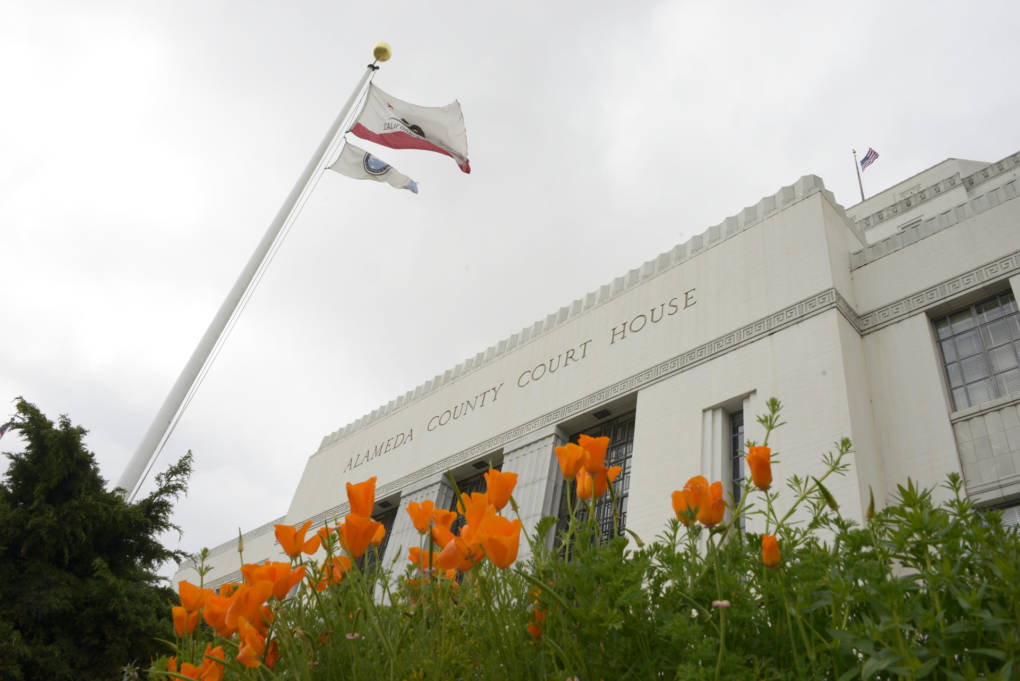
"caption": "The Alameda County Superior Courthouse in Oakland, seen on April 2, 2019.",
"credit": "Stephanie Lister/KQED",
"altTag": "The Alameda County Superior Courthouse, pictured on April 2, 2019.",
"description": "The Alameda County Superior Courthouse, pictured on April 2, 2019.",
"imgSizes": {
"thumbnail": {
"file": "https://cdn.kqed.org/wp-content/uploads/sites/10/2019/04/ghost-ship-trial-2-160x107.jpg",
"width": 160,
"height": 107,
"mimeType": "image/jpeg"
},
"medium": {
"file": "https://cdn.kqed.org/wp-content/uploads/sites/10/2019/04/ghost-ship-trial-2-800x534.jpg",
"width": 800,
"height": 534,
"mimeType": "image/jpeg"
},
"large": {
"file": "https://cdn.kqed.org/wp-content/uploads/sites/10/2019/04/ghost-ship-trial-2-1020x681.jpg",
"width": 1020,
"height": 681,
"mimeType": "image/jpeg"
},
"complete_open_graph": {
"file": "https://cdn.kqed.org/wp-content/uploads/sites/10/2019/04/ghost-ship-trial-2-1200x801.jpg",
"width": 1200,
"height": 801,
"mimeType": "image/jpeg"
},
"post-thumbnail": {
"file": "https://cdn.kqed.org/wp-content/uploads/sites/10/2019/04/ghost-ship-trial-2-672x372.jpg",
"width": 672,
"height": 372,
"mimeType": "image/jpeg"
},
"twentyfourteen-full-width": {
"file": "https://cdn.kqed.org/wp-content/uploads/sites/10/2019/04/ghost-ship-trial-2-1038x576.jpg",
"width": 1038,
"height": 576,
"mimeType": "image/jpeg"
},
"full-width": {
"file": "https://cdn.kqed.org/wp-content/uploads/sites/10/2019/04/ghost-ship-trial-2-1920x1281.jpg",
"width": 1920,
"height": 1281,
"mimeType": "image/jpeg"
},
"guest-author-32": {
"file": "https://cdn.kqed.org/wp-content/uploads/sites/10/2019/04/ghost-ship-trial-2-32x32.jpg",
"width": 32,
"height": 32,
"mimeType": "image/jpeg"
},
"guest-author-50": {
"file": "https://cdn.kqed.org/wp-content/uploads/sites/10/2019/04/ghost-ship-trial-2-50x50.jpg",
"width": 50,
"height": 50,
"mimeType": "image/jpeg"
},
"guest-author-64": {
"file": "https://cdn.kqed.org/wp-content/uploads/sites/10/2019/04/ghost-ship-trial-2-64x64.jpg",
"width": 64,
"height": 64,
"mimeType": "image/jpeg"
},
"guest-author-96": {
"file": "https://cdn.kqed.org/wp-content/uploads/sites/10/2019/04/ghost-ship-trial-2-96x96.jpg",
"width": 96,
"height": 96,
"mimeType": "image/jpeg"
},
"guest-author-128": {
"file": "https://cdn.kqed.org/wp-content/uploads/sites/10/2019/04/ghost-ship-trial-2-128x128.jpg",
"width": 128,
"height": 128,
"mimeType": "image/jpeg"
},
"apple_news_ca_landscape_12_9": {
"file": "https://cdn.kqed.org/wp-content/uploads/sites/10/2019/04/ghost-ship-trial-2-1832x1281.jpg",
"width": 1832,
"height": 1281,
"mimeType": "image/jpeg"
},
"apple_news_ca_landscape_9_7": {
"file": "https://cdn.kqed.org/wp-content/uploads/sites/10/2019/04/ghost-ship-trial-2-1376x1032.jpg",
"width": 1376,
"height": 1032,
"mimeType": "image/jpeg"
},
"apple_news_ca_landscape_5_5": {
"file": "https://cdn.kqed.org/wp-content/uploads/sites/10/2019/04/ghost-ship-trial-2-1044x783.jpg",
"width": 1044,
"height": 783,
"mimeType": "image/jpeg"
},
"apple_news_ca_landscape_4_7": {
"file": "https://cdn.kqed.org/wp-content/uploads/sites/10/2019/04/ghost-ship-trial-2-632x474.jpg",
"width": 632,
"height": 474,
"mimeType": "image/jpeg"
},
"apple_news_ca_landscape_4_0": {
"file": "https://cdn.kqed.org/wp-content/uploads/sites/10/2019/04/ghost-ship-trial-2-536x402.jpg",
"width": 536,
"height": 402,
"mimeType": "image/jpeg"
},
"apple_news_ca_portrait_12_9": {
"file": "https://cdn.kqed.org/wp-content/uploads/sites/10/2019/04/ghost-ship-trial-2-1122x1281.jpg",
"width": 1122,
"height": 1281,
"mimeType": "image/jpeg"
},
"apple_news_ca_portrait_9_7": {
"file": "https://cdn.kqed.org/wp-content/uploads/sites/10/2019/04/ghost-ship-trial-2-840x1120.jpg",
"width": 840,
"height": 1120,
"mimeType": "image/jpeg"
},
"apple_news_ca_portrait_5_5": {
"file": "https://cdn.kqed.org/wp-content/uploads/sites/10/2019/04/ghost-ship-trial-2-687x916.jpg",
"width": 687,
"height": 916,
"mimeType": "image/jpeg"
},
"apple_news_ca_portrait_4_7": {
"file": "https://cdn.kqed.org/wp-content/uploads/sites/10/2019/04/ghost-ship-trial-2-414x552.jpg",
"width": 414,
"height": 552,
"mimeType": "image/jpeg"
},
"apple_news_ca_portrait_4_0": {
"file": "https://cdn.kqed.org/wp-content/uploads/sites/10/2019/04/ghost-ship-trial-2-354x472.jpg",
"width": 354,
"height": 472,
"mimeType": "image/jpeg"
},
"apple_news_ca_square_12_9": {
"file": "https://cdn.kqed.org/wp-content/uploads/sites/10/2019/04/ghost-ship-trial-2-1472x1281.jpg",
"width": 1472,
"height": 1281,
"mimeType": "image/jpeg"
},
"apple_news_ca_square_9_7": {
"file": "https://cdn.kqed.org/wp-content/uploads/sites/10/2019/04/ghost-ship-trial-2-1104x1104.jpg",
"width": 1104,
"height": 1104,
"mimeType": "image/jpeg"
},
"apple_news_ca_square_5_5": {
"file": "https://cdn.kqed.org/wp-content/uploads/sites/10/2019/04/ghost-ship-trial-2-912x912.jpg",
"width": 912,
"height": 912,
"mimeType": "image/jpeg"
},
"apple_news_ca_square_4_7": {
"file": "https://cdn.kqed.org/wp-content/uploads/sites/10/2019/04/ghost-ship-trial-2-550x550.jpg",
"width": 550,
"height": 550,
"mimeType": "image/jpeg"
},
"apple_news_ca_square_4_0": {
"file": "https://cdn.kqed.org/wp-content/uploads/sites/10/2019/04/ghost-ship-trial-2-470x470.jpg",
"width": 470,
"height": 470,
"mimeType": "image/jpeg"
},
"kqedFullSize": {
"file": "https://cdn.kqed.org/wp-content/uploads/sites/10/2019/04/ghost-ship-trial-2.jpg",
"width": 1920,
"height": 1281
}
},
"isLoading": false,
"fetchFailed": false
},
"news_11743649": {
"type": "attachments",
"id": "news_11743649",
"meta": {
"index": "attachments_1716263798",
"site": "news",
"id": "11743649",
"found": true
},
"parent": 11742887,
"imgSizes": {
"twentyfourteen-full-width": {
"file": "https://ww2.kqed.org/app/uploads/sites/10/2019/04/04262019_tech-detox-1038x576.jpg",
"width": 1038,
"mimeType": "image/jpeg",
"height": 576
},
"thumbnail": {
"file": "https://ww2.kqed.org/app/uploads/sites/10/2019/04/04262019_tech-detox-160x107.jpg",
"width": 160,
"mimeType": "image/jpeg",
"height": 107
},
"post-thumbnail": {
"file": "https://ww2.kqed.org/app/uploads/sites/10/2019/04/04262019_tech-detox-672x372.jpg",
"width": 672,
"mimeType": "image/jpeg",
"height": 372
},
"kqedFullSize": {
"file": "https://ww2.kqed.org/app/uploads/sites/10/2019/04/04262019_tech-detox.jpg",
"width": 2048,
"height": 1366
},
"large": {
"file": "https://ww2.kqed.org/app/uploads/sites/10/2019/04/04262019_tech-detox-1020x680.jpg",
"width": 1020,
"mimeType": "image/jpeg",
"height": 680
},
"complete_open_graph": {
"file": "https://ww2.kqed.org/app/uploads/sites/10/2019/04/04262019_tech-detox-1200x800.jpg",
"width": 1200,
"mimeType": "image/jpeg",
"height": 800
},
"full-width": {
"file": "https://ww2.kqed.org/app/uploads/sites/10/2019/04/04262019_tech-detox-1920x1280.jpg",
"width": 1920,
"mimeType": "image/jpeg",
"height": 1280
},
"medium": {
"file": "https://ww2.kqed.org/app/uploads/sites/10/2019/04/04262019_tech-detox-800x533.jpg",
"width": 800,
"mimeType": "image/jpeg",
"height": 533
}
},
"publishDate": 1556566100,
"modified": 1556576918,
"caption": "A boy makes faces while testing out the Animoji feature on an iPhone X at the Apple Store in San Francisco's Union Square on Nov. 3, 2017, in San Francisco.",
"description": "A boy makes faces while testing out the Animoji feature on an iPhone X at the Apple Store Union Square on Nov. 3, 2017, in San Francisco.",
"title": "US-LIFESTYLE-APPLE-iPhone-Tech-detox",
"credit": "ELIJAH NOUVELAGE/AFP/Getty Images)",
"status": "inherit",
"isLoading": false,
"fetchFailed": false
},
"news_11743213": {
"type": "attachments",
"id": "news_11743213",
"meta": {
"index": "attachments_1716263798",
"site": "news",
"id": "11743213",
"found": true
},
"parent": 11743102,
"imgSizes": {
"twentyfourteen-full-width": {
"file": "https://ww2.kqed.org/app/uploads/sites/10/2019/04/NR626_MARQUEE-1-1038x576.jpg",
"width": 1038,
"mimeType": "image/jpeg",
"height": 576
},
"thumbnail": {
"file": "https://ww2.kqed.org/app/uploads/sites/10/2019/04/NR626_MARQUEE-1-160x90.jpg",
"width": 160,
"mimeType": "image/jpeg",
"height": 90
},
"post-thumbnail": {
"file": "https://ww2.kqed.org/app/uploads/sites/10/2019/04/NR626_MARQUEE-1-672x372.jpg",
"width": 672,
"mimeType": "image/jpeg",
"height": 372
},
"kqedFullSize": {
"file": "https://ww2.kqed.org/app/uploads/sites/10/2019/04/NR626_MARQUEE-1.jpg",
"width": 1280,
"height": 720
},
"large": {
"file": "https://ww2.kqed.org/app/uploads/sites/10/2019/04/NR626_MARQUEE-1-1020x574.jpg",
"width": 1020,
"mimeType": "image/jpeg",
"height": 574
},
"complete_open_graph": {
"file": "https://ww2.kqed.org/app/uploads/sites/10/2019/04/NR626_MARQUEE-1-1200x675.jpg",
"width": 1200,
"mimeType": "image/jpeg",
"height": 675
},
"medium": {
"file": "https://ww2.kqed.org/app/uploads/sites/10/2019/04/NR626_MARQUEE-1-800x450.jpg",
"width": 800,
"mimeType": "image/jpeg",
"height": 450
}
},
"publishDate": 1556319072,
"modified": 1556319072,
"caption": null,
"description": null,
"title": "NR626_MARQUEE 1",
"credit": null,
"status": "inherit",
"isLoading": false,
"fetchFailed": false
},
"news_11743018": {
"type": "attachments",
"id": "news_11743018",
"meta": {
"index": "attachments_1716263798",
"site": "news",
"id": "11743018",
"found": true
},
"parent": 11742748,
"imgSizes": {
"twentyfourteen-full-width": {
"file": "https://ww2.kqed.org/app/uploads/sites/10/2019/04/RS36761_AAA-7879_600dpiJPG-qut-1038x576.jpg",
"width": 1038,
"mimeType": "image/jpeg",
"height": 576
},
"thumbnail": {
"file": "https://ww2.kqed.org/app/uploads/sites/10/2019/04/RS36761_AAA-7879_600dpiJPG-qut-160x129.jpg",
"width": 160,
"mimeType": "image/jpeg",
"height": 129
},
"post-thumbnail": {
"file": "https://ww2.kqed.org/app/uploads/sites/10/2019/04/RS36761_AAA-7879_600dpiJPG-qut-672x372.jpg",
"width": 672,
"mimeType": "image/jpeg",
"height": 372
},
"kqedFullSize": {
"file": "https://ww2.kqed.org/app/uploads/sites/10/2019/04/RS36761_AAA-7879_600dpiJPG-qut.jpg",
"width": 1920,
"height": 1546
},
"large": {
"file": "https://ww2.kqed.org/app/uploads/sites/10/2019/04/RS36761_AAA-7879_600dpiJPG-qut-1020x821.jpg",
"width": 1020,
"mimeType": "image/jpeg",
"height": 821
},
"complete_open_graph": {
"file": "https://ww2.kqed.org/app/uploads/sites/10/2019/04/RS36761_AAA-7879_600dpiJPG-qut-1200x966.jpg",
"width": 1200,
"mimeType": "image/jpeg",
"height": 966
},
"full-width": {
"file": "https://ww2.kqed.org/app/uploads/sites/10/2019/04/RS36761_AAA-7879_600dpiJPG-qut-1920x1546.jpg",
"width": 1920,
"mimeType": "image/jpeg",
"height": 1546
},
"medium": {
"file": "https://ww2.kqed.org/app/uploads/sites/10/2019/04/RS36761_AAA-7879_600dpiJPG-qut-800x644.jpg",
"width": 800,
"mimeType": "image/jpeg",
"height": 644
}
},
"publishDate": 1556238903,
"modified": 1556317015,
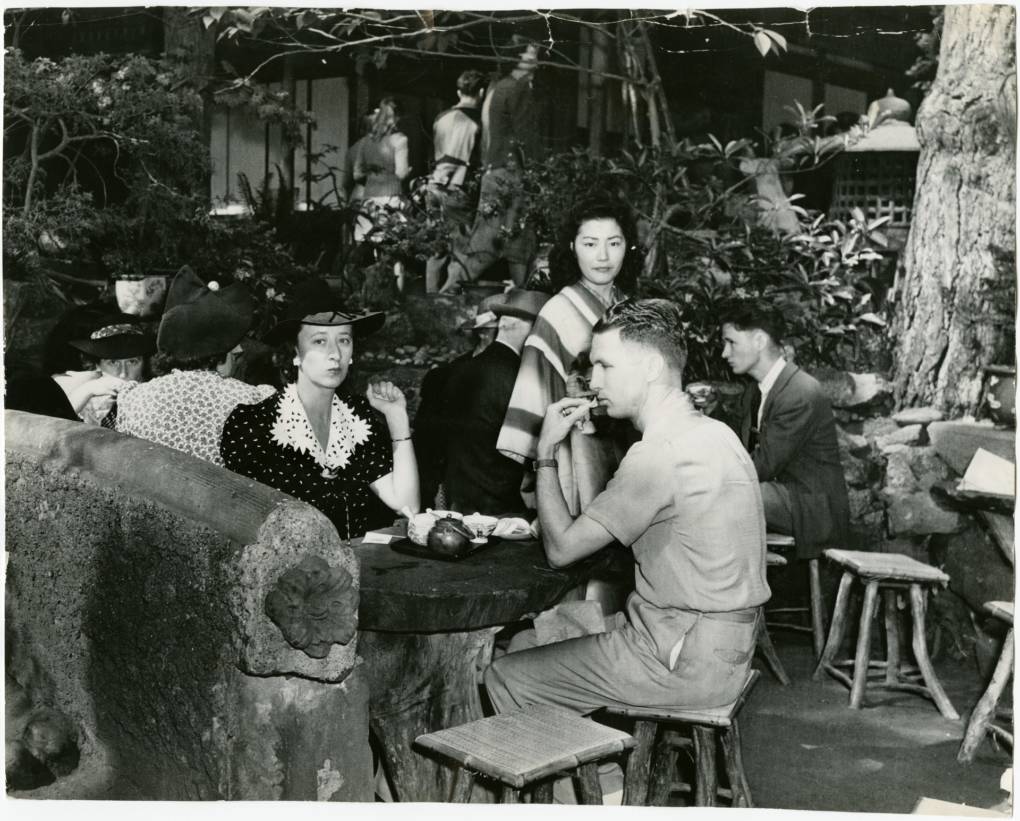
"caption": "A couple enjoying fortune cookies and tea at the Japanese Tea Garden in 1941, just one year before the internment of citizens of Japanese descent in the United States.",
"description": "A couple enjoying fortune cookies and tea at the Japanese Tea Garden in 1941, just one year before the internment of citizens of Japanese descent in the United States.",
"title": "RS36761_AAA-7879_600dpiJPG-qut",
"credit": "San Francisco History Center, San Francisco Public Library",
"status": "inherit",
"isLoading": false,
"fetchFailed": false
},
"news_11742935": {
"type": "attachments",
"id": "news_11742935",
"meta": {
"index": "attachments_1716263798",
"site": "news",
"id": "11742935",
"found": true
},
"parent": 11742784,
"imgSizes": {
"twentyfourteen-full-width": {
"file": "https://ww2.kqed.org/app/uploads/sites/10/2019/04/RS36759_dog5-1038x576.jpg",
"width": 1038,
"mimeType": "image/jpeg",
"height": 576
},
"thumbnail": {
"file": "https://ww2.kqed.org/app/uploads/sites/10/2019/04/RS36759_dog5-160x120.jpg",
"width": 160,
"mimeType": "image/jpeg",
"height": 120
},
"post-thumbnail": {
"file": "https://ww2.kqed.org/app/uploads/sites/10/2019/04/RS36759_dog5-672x372.jpg",
"width": 672,
"mimeType": "image/jpeg",
"height": 372
},
"kqedFullSize": {
"file": "https://ww2.kqed.org/app/uploads/sites/10/2019/04/RS36759_dog5.jpg",
"width": 1500,
"height": 1125
},
"large": {
"file": "https://ww2.kqed.org/app/uploads/sites/10/2019/04/RS36759_dog5-1020x765.jpg",
"width": 1020,
"mimeType": "image/jpeg",
"height": 765
},
"complete_open_graph": {
"file": "https://ww2.kqed.org/app/uploads/sites/10/2019/04/RS36759_dog5-1200x900.jpg",
"width": 1200,
"mimeType": "image/jpeg",
"height": 900
},
"medium": {
"file": "https://ww2.kqed.org/app/uploads/sites/10/2019/04/RS36759_dog5-800x600.jpg",
"width": 800,
"mimeType": "image/jpeg",
"height": 600
}
},
"publishDate": 1556230112,
"modified": 1556230135,
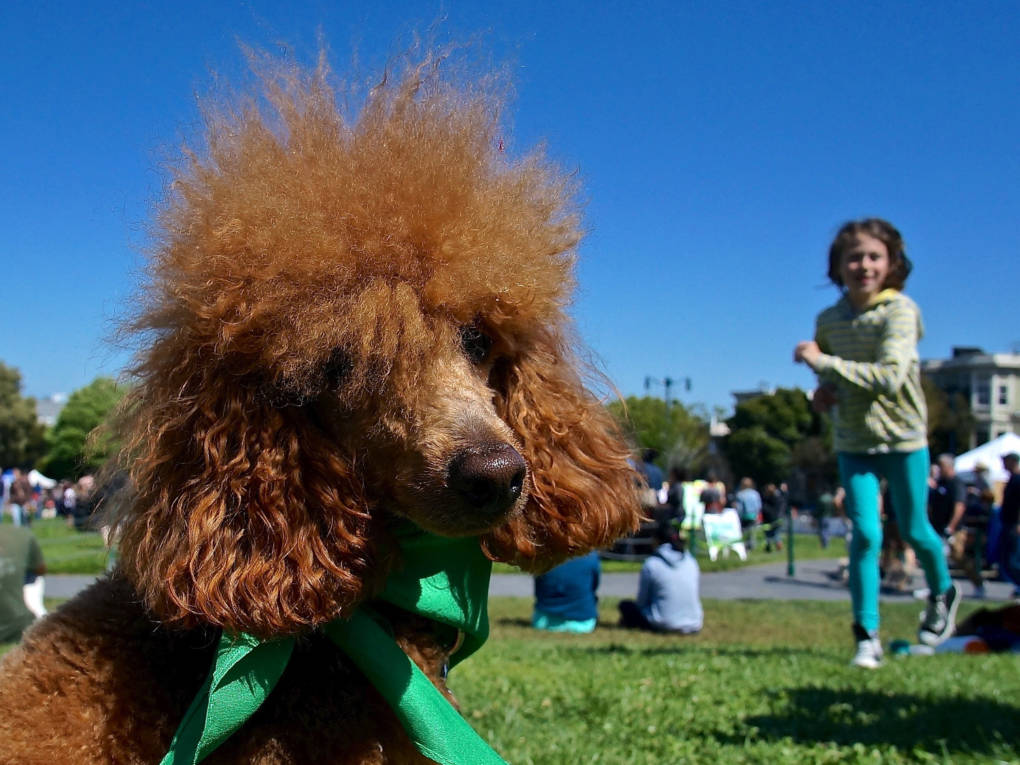
"caption": "DogFest takes place in SF's Duboce Park",
"description": null,
"title": "RS36759_dog5",
"credit": "DogFest",
"status": "inherit",
"isLoading": false,
"fetchFailed": false
},
"news_11742469": {
"type": "attachments",
"id": "news_11742469",
"meta": {
"index": "attachments_1716263798",
"site": "news",
"id": "11742469",
"found": true
},
"parent": 11742467,
"imgSizes": {
"twentyfourteen-full-width": {
"file": "https://ww2.kqed.org/app/uploads/sites/10/2019/04/stagecoachsketch_05-1-1038x576.jpg",
"width": 1038,
"mimeType": "image/jpeg",
"height": 576
},
"thumbnail": {
"file": "https://ww2.kqed.org/app/uploads/sites/10/2019/04/stagecoachsketch_05-1-160x128.jpg",
"width": 160,
"mimeType": "image/jpeg",
"height": 128
},
"post-thumbnail": {
"file": "https://ww2.kqed.org/app/uploads/sites/10/2019/04/stagecoachsketch_05-1-672x372.jpg",
"width": 672,
"mimeType": "image/jpeg",
"height": 372
},
"kqedFullSize": {
"file": "https://ww2.kqed.org/app/uploads/sites/10/2019/04/stagecoachsketch_05-1.jpg",
"width": 2048,
"height": 1638
},
"large": {
"file": "https://ww2.kqed.org/app/uploads/sites/10/2019/04/stagecoachsketch_05-1-1020x816.jpg",
"width": 1020,
"mimeType": "image/jpeg",
"height": 816
},
"complete_open_graph": {
"file": "https://ww2.kqed.org/app/uploads/sites/10/2019/04/stagecoachsketch_05-1-1200x960.jpg",
"width": 1200,
"mimeType": "image/jpeg",
"height": 960
},
"full-width": {
"file": "https://ww2.kqed.org/app/uploads/sites/10/2019/04/stagecoachsketch_05-1-1920x1535.jpg",
"width": 1920,
"mimeType": "image/jpeg",
"height": 1535
},
"medium": {
"file": "https://ww2.kqed.org/app/uploads/sites/10/2019/04/stagecoachsketch_05-1-800x640.jpg",
"width": 800,
"mimeType": "image/jpeg",
"height": 640
}
},
"publishDate": 1556133585,
"modified": 1556210935,
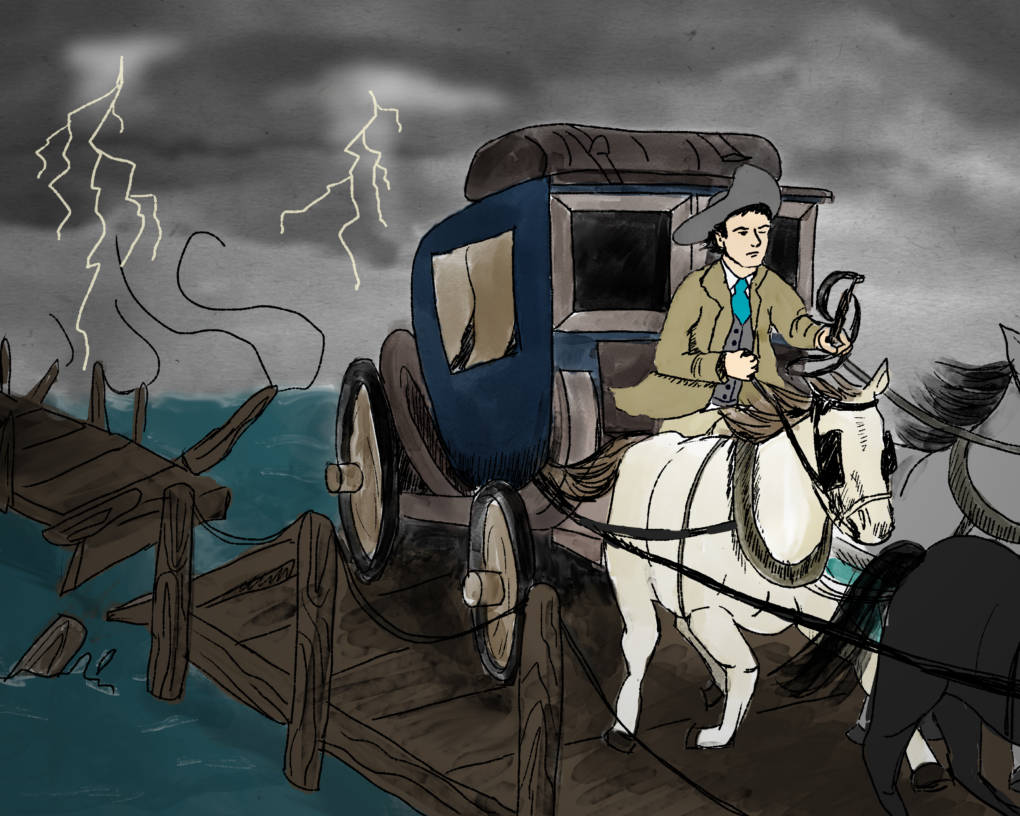
"caption": "Charley Parkhurst crossing a crumbling bridge during a storm.",
"description": "Charley Parkhurst crossing a crumbling bridge during a storm.",
"title": "Charley Parkhurst crossing a crumbling bridge during a storm.",
"credit": "Kelly Heigert/KQED",
"status": "inherit",
"isLoading": false,
"fetchFailed": false
},
"news_11741058": {
"type": "attachments",
"id": "news_11741058",
"meta": {
"index": "attachments_1716263798",
"site": "news",
"id": "11741058",
"found": true
},
"title": "Sequoias And Coastal Redwoods Appear To Flourish Despite Climate Change",
"publishDate": 1555546142,
"status": "inherit",
"parent": 11741024,
"modified": 1754327297,
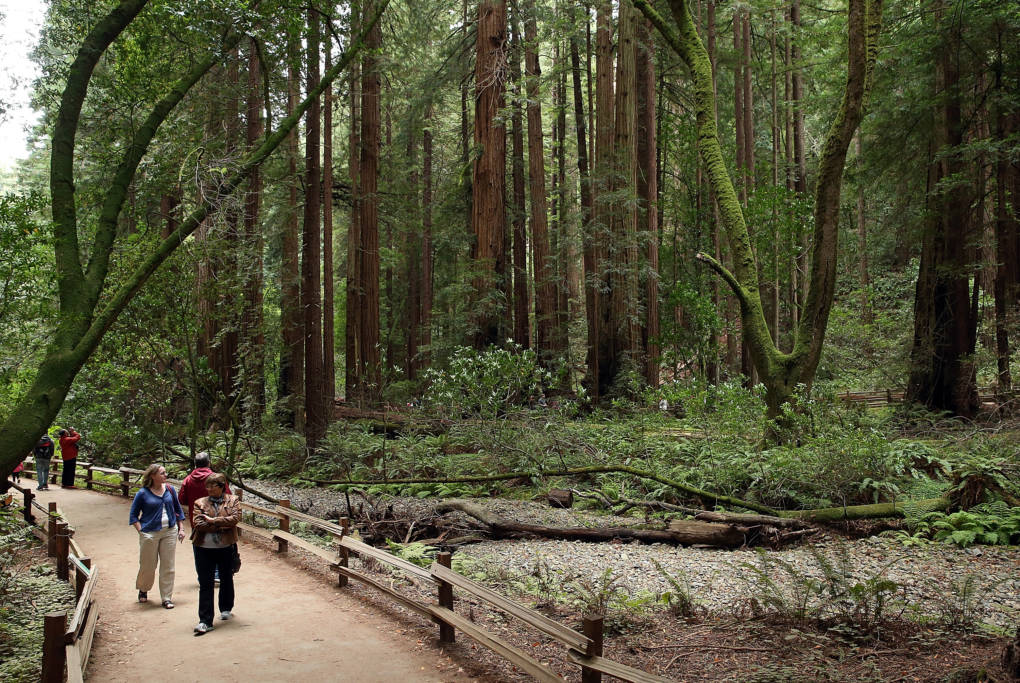
"caption": "Majestic coastal redwoods in Muir Woods National Monument.",
"credit": "Justin Sullivan/Getty Images",
"altTag": null,
"description": null,
"imgSizes": {
"thumbnail": {
"file": "https://cdn.kqed.org/wp-content/uploads/sites/10/2019/04/RS36596_GettyImages-177068764-160x107.jpg",
"width": 160,
"height": 107,
"mimeType": "image/jpeg"
},
"medium": {
"file": "https://cdn.kqed.org/wp-content/uploads/sites/10/2019/04/RS36596_GettyImages-177068764-800x536.jpg",
"width": 800,
"height": 536,
"mimeType": "image/jpeg"
},
"large": {
"file": "https://cdn.kqed.org/wp-content/uploads/sites/10/2019/04/RS36596_GettyImages-177068764-1020x683.jpg",
"width": 1020,
"height": 683,
"mimeType": "image/jpeg"
},
"complete_open_graph": {
"file": "https://cdn.kqed.org/wp-content/uploads/sites/10/2019/04/RS36596_GettyImages-177068764-1200x804.jpg",
"width": 1200,
"height": 804,
"mimeType": "image/jpeg"
},
"post-thumbnail": {
"file": "https://cdn.kqed.org/wp-content/uploads/sites/10/2019/04/RS36596_GettyImages-177068764-672x372.jpg",
"width": 672,
"height": 372,
"mimeType": "image/jpeg"
},
"twentyfourteen-full-width": {
"file": "https://cdn.kqed.org/wp-content/uploads/sites/10/2019/04/RS36596_GettyImages-177068764-1038x576.jpg",
"width": 1038,
"height": 576,
"mimeType": "image/jpeg"
},
"full-width": {
"file": "https://cdn.kqed.org/wp-content/uploads/sites/10/2019/04/RS36596_GettyImages-177068764-1920x1286.jpg",
"width": 1920,
"height": 1286,
"mimeType": "image/jpeg"
},
"kqedFullSize": {
"file": "https://cdn.kqed.org/wp-content/uploads/sites/10/2019/04/RS36596_GettyImages-177068764.jpg",
"width": 2048,
"height": 1372
}
},
"isLoading": false,
"fetchFailed": false
},
"news_11741269": {
"type": "attachments",
"id": "news_11741269",
"meta": {
"index": "attachments_1716263798",
"site": "news",
"id": "11741269",
"found": true
},
"parent": 11741243,
"imgSizes": {
"twentyfourteen-full-width": {
"file": "https://ww2.kqed.org/app/uploads/sites/10/2019/04/Coachella-Trash-Pickup-Farmworkers-1038x576.jpg",
"width": 1038,
"mimeType": "image/jpeg",
"height": 576
},
"thumbnail": {
"file": "https://ww2.kqed.org/app/uploads/sites/10/2019/04/Coachella-Trash-Pickup-Farmworkers-160x107.jpg",
"width": 160,
"mimeType": "image/jpeg",
"height": 107
},
"post-thumbnail": {
"file": "https://ww2.kqed.org/app/uploads/sites/10/2019/04/Coachella-Trash-Pickup-Farmworkers-672x372.jpg",
"width": 672,
"mimeType": "image/jpeg",
"height": 372
},
"kqedFullSize": {
"file": "https://ww2.kqed.org/app/uploads/sites/10/2019/04/Coachella-Trash-Pickup-Farmworkers.jpg",
"width": 1920,
"height": 1280
},
"large": {
"file": "https://ww2.kqed.org/app/uploads/sites/10/2019/04/Coachella-Trash-Pickup-Farmworkers-1020x680.jpg",
"width": 1020,
"mimeType": "image/jpeg",
"height": 680
},
"complete_open_graph": {
"file": "https://ww2.kqed.org/app/uploads/sites/10/2019/04/Coachella-Trash-Pickup-Farmworkers-1200x800.jpg",
"width": 1200,
"mimeType": "image/jpeg",
"height": 800
},
"full-width": {
"file": "https://ww2.kqed.org/app/uploads/sites/10/2019/04/Coachella-Trash-Pickup-Farmworkers-1920x1280.jpg",
"width": 1920,
"mimeType": "image/jpeg",
"height": 1280
},
"medium": {
"file": "https://ww2.kqed.org/app/uploads/sites/10/2019/04/Coachella-Trash-Pickup-Farmworkers-800x533.jpg",
"width": 800,
"mimeType": "image/jpeg",
"height": 533
}
},
"publishDate": 1555617687,
"modified": 1555618014,
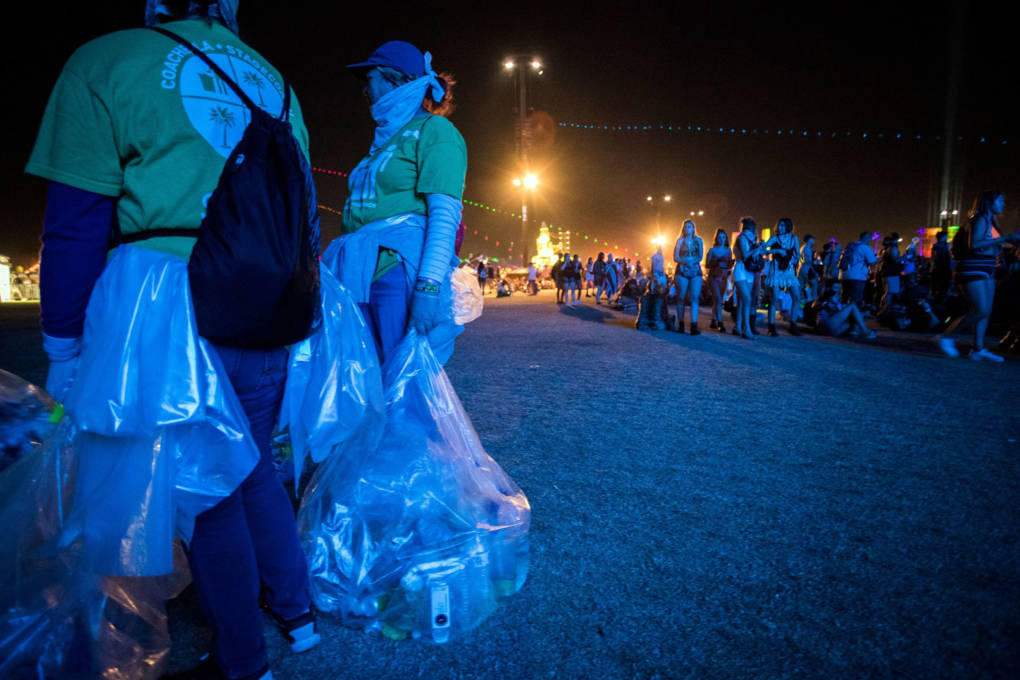
"caption": "Working behind the scenes of the Coachella music festival are Coachella Valley residents who, according to field supervisor Enriqueta Magaña, earn minimum wage to make sure the grounds are pristine for each day's festivities.",
"description": "Working behind the scenes of the Coachella music festival are Coachella Valley residents who, according to field supervisor Enriqueta Magaña, earn minimum wage to make sure the grounds are pristine for each day's festivities.",
"title": "Coachella-Trash-Pickup-Farmworkers",
"credit": "Omar Ornelas/The Desert Sun",
"status": "inherit",
"isLoading": false,
"fetchFailed": false
},
"news_11739992": {
"type": "attachments",
"id": "news_11739992",
"meta": {
"index": "attachments_1716263798",
"site": "news",
"id": "11739992",
"found": true
},
"parent": 11739421,
"imgSizes": {
"apple_news_ca_landscape_5_5": {
"file": "https://ww2.kqed.org/app/uploads/sites/10/2019/04/RS36515_DSC_2298-qut-1044x783.jpg",
"width": 1044,
"mimeType": "image/jpeg",
"height": 783
},
"apple_news_ca_square_4_0": {
"file": "https://ww2.kqed.org/app/uploads/sites/10/2019/04/RS36515_DSC_2298-qut-470x470.jpg",
"width": 470,
"mimeType": "image/jpeg",
"height": 470
},
"twentyfourteen-full-width": {
"file": "https://ww2.kqed.org/app/uploads/sites/10/2019/04/RS36515_DSC_2298-qut-1038x576.jpg",
"width": 1038,
"mimeType": "image/jpeg",
"height": 576
},
"thumbnail": {
"file": "https://ww2.kqed.org/app/uploads/sites/10/2019/04/RS36515_DSC_2298-qut-160x106.jpg",
"width": 160,
"mimeType": "image/jpeg",
"height": 106
},
"post-thumbnail": {
"file": "https://ww2.kqed.org/app/uploads/sites/10/2019/04/RS36515_DSC_2298-qut-672x372.jpg",
"width": 672,
"mimeType": "image/jpeg",
"height": 372
},
"kqedFullSize": {
"file": "https://ww2.kqed.org/app/uploads/sites/10/2019/04/RS36515_DSC_2298-qut.jpg",
"width": 1920,
"height": 1272
},
"apple_news_ca_landscape_4_7": {
"file": "https://ww2.kqed.org/app/uploads/sites/10/2019/04/RS36515_DSC_2298-qut-632x474.jpg",
"width": 632,
"mimeType": "image/jpeg",
"height": 474
},
"large": {
"file": "https://ww2.kqed.org/app/uploads/sites/10/2019/04/RS36515_DSC_2298-qut-1020x676.jpg",
"width": 1020,
"mimeType": "image/jpeg",
"height": 676
},
"complete_open_graph": {
"file": "https://ww2.kqed.org/app/uploads/sites/10/2019/04/RS36515_DSC_2298-qut-1200x795.jpg",
"width": 1200,
"mimeType": "image/jpeg",
"height": 795
},
"apple_news_ca_landscape_4_0": {
"file": "https://ww2.kqed.org/app/uploads/sites/10/2019/04/RS36515_DSC_2298-qut-536x402.jpg",
"width": 536,
"mimeType": "image/jpeg",
"height": 402
},
"apple_news_ca_portrait_12_9": {
"file": "https://ww2.kqed.org/app/uploads/sites/10/2019/04/RS36515_DSC_2298-qut-1122x1272.jpg",
"width": 1122,
"mimeType": "image/jpeg",
"height": 1272
},
"medium": {
"file": "https://ww2.kqed.org/app/uploads/sites/10/2019/04/RS36515_DSC_2298-qut-800x530.jpg",
"width": 800,
"mimeType": "image/jpeg",
"height": 530
},
"apple_news_ca_portrait_4_0": {
"file": "https://ww2.kqed.org/app/uploads/sites/10/2019/04/RS36515_DSC_2298-qut-354x472.jpg",
"width": 354,
"mimeType": "image/jpeg",
"height": 472
},
"apple_news_ca_portrait_9_7": {
"file": "https://ww2.kqed.org/app/uploads/sites/10/2019/04/RS36515_DSC_2298-qut-840x1120.jpg",
"width": 840,
"mimeType": "image/jpeg",
"height": 1120
},
"apple_news_ca_landscape_12_9": {
"file": "https://ww2.kqed.org/app/uploads/sites/10/2019/04/RS36515_DSC_2298-qut-1832x1272.jpg",
"width": 1832,
"mimeType": "image/jpeg",
"height": 1272
},
"apple_news_ca_square_9_7": {
"file": "https://ww2.kqed.org/app/uploads/sites/10/2019/04/RS36515_DSC_2298-qut-1104x1104.jpg",
"width": 1104,
"mimeType": "image/jpeg",
"height": 1104
},
"apple_news_ca_portrait_4_7": {
"file": "https://ww2.kqed.org/app/uploads/sites/10/2019/04/RS36515_DSC_2298-qut-414x552.jpg",
"width": 414,
"mimeType": "image/jpeg",
"height": 552
},
"apple_news_ca_square_12_9": {
"file": "https://ww2.kqed.org/app/uploads/sites/10/2019/04/RS36515_DSC_2298-qut-1472x1272.jpg",
"width": 1472,
"mimeType": "image/jpeg",
"height": 1272
},
"apple_news_ca_portrait_5_5": {
"file": "https://ww2.kqed.org/app/uploads/sites/10/2019/04/RS36515_DSC_2298-qut-687x916.jpg",
"width": 687,
"mimeType": "image/jpeg",
"height": 916
},
"full-width": {
"file": "https://ww2.kqed.org/app/uploads/sites/10/2019/04/RS36515_DSC_2298-qut-1920x1272.jpg",
"width": 1920,
"mimeType": "image/jpeg",
"height": 1272
},
"apple_news_ca_square_4_7": {
"file": "https://ww2.kqed.org/app/uploads/sites/10/2019/04/RS36515_DSC_2298-qut-550x550.jpg",
"width": 550,
"mimeType": "image/jpeg",
"height": 550
},
"apple_news_ca_landscape_9_7": {
"file": "https://ww2.kqed.org/app/uploads/sites/10/2019/04/RS36515_DSC_2298-qut-1376x1032.jpg",
"width": 1376,
"mimeType": "image/jpeg",
"height": 1032
},
"apple_news_ca_square_5_5": {
"file": "https://ww2.kqed.org/app/uploads/sites/10/2019/04/RS36515_DSC_2298-qut-912x912.jpg",
"width": 912,
"mimeType": "image/jpeg",
"height": 912
}
},
"publishDate": 1555110266,
"modified": 1555110412,
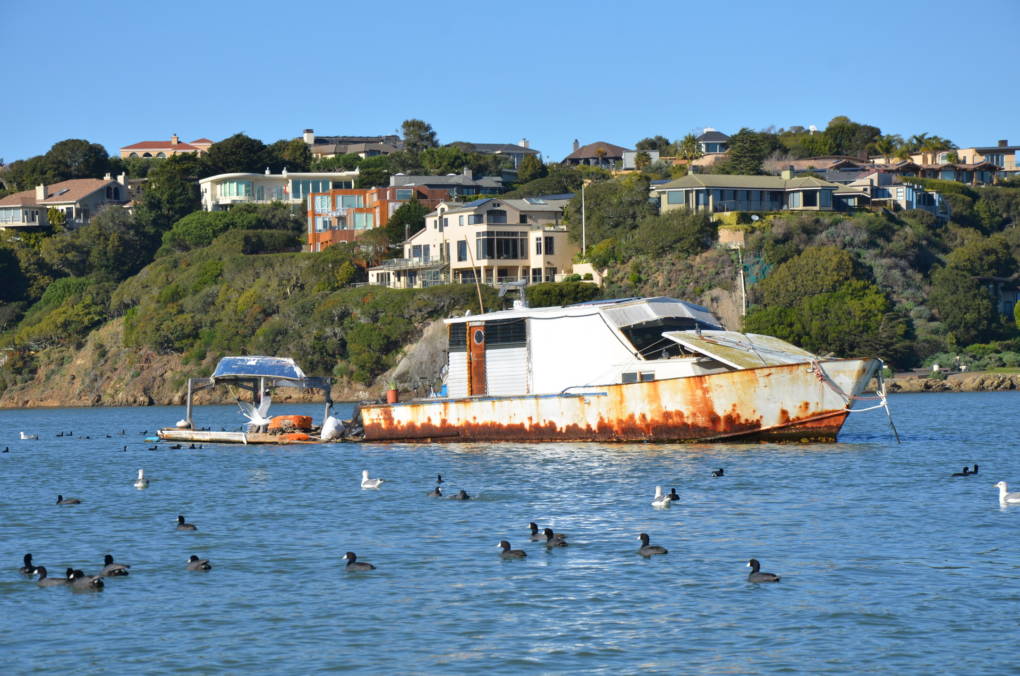
"caption": "An anchor-out sits in Richardson Bay in Marin County. At last count, there were 235 boats anchored in the bay.",
"description": "An anchor-out sits in Richardson Bay in Marin County. At last count, there were 235 boats anchored in the bay.",
"title": "RS36515_DSC_2298-qut",
"credit": "Ryan Levi/KQED",
"status": "inherit",
"isLoading": false,
"fetchFailed": false
}
},
"audioPlayerReducer": {
"postId": "stream_live",
"isPaused": true,
"isPlaying": false,
"pfsActive": false,
"pledgeModalIsOpen": true,
"playerDrawerIsOpen": false,
"liveAudioPlayStartedAt": 0,
"liveAudioPlayContext": ""
},
"authorsReducer": {
"byline_news_11741243": {
"type": "authors",
"id": "byline_news_11741243",
"meta": {
"override": true
},
"slug": "byline_news_11741243",
"name": "\u003cstrong>\u003ca href=\"https://www.desertsun.com/staff/10060714/rebecca-plevin/\">Rebecca Plevin\u003c/a>\u003c/strong>\u003cbr>The Desert Sun",
"isLoading": false
},
"dclyde": {
"type": "authors",
"id": "104",
"meta": {
"index": "authors_1716337520",
"id": "104",
"found": true
},
"name": "Don Clyde",
"firstName": "Don",
"lastName": "Clyde",
"slug": "dclyde",
"email": "dclyde@kqed.org",
"display_author_email": false,
"staff_mastheads": [],
"title": "KQED Contributor",
"bio": "Don Clyde is an online producer, reporter and copy editor for KQED News. Before venturing into journalism, he worked as a medical device engineer and scientist for nearly a decade after earning a degree in physics from UC Berkeley. He loves travel, reading, living in Oakland, and most importantly, a good walk. Email him at dclyde@kqed.org or follow him @clydedon.",
"avatar": "https://secure.gravatar.com/avatar/decd3e640c3eedbd0a574275aebb2d19?s=600&d=blank&r=g",
"twitter": "clydedon",
"facebook": null,
"instagram": null,
"linkedin": null,
"sites": [
{
"site": "artschool",
"roles": [
"editor"
]
},
{
"site": "news",
"roles": [
"administrator"
]
},
{
"site": "futureofyou",
"roles": [
"editor"
]
},
{
"site": "about",
"roles": [
"editor"
]
},
{
"site": "mindshift",
"roles": [
"contributor"
]
},
{
"site": "bayareabites",
"roles": [
"contributor"
]
},
{
"site": "lowdown",
"roles": [
"editor"
]
},
{
"site": "stateofhealth",
"roles": [
"administrator"
]
},
{
"site": "spark",
"roles": [
"administrator"
]
},
{
"site": "trulyca",
"roles": [
"administrator"
]
},
{
"site": "imagemakers",
"roles": [
"administrator"
]
},
{
"site": "science",
"roles": []
},
{
"site": "education",
"roles": [
"editor"
]
},
{
"site": "quest",
"roles": [
"subscriber"
]
},
{
"site": "checkplease",
"roles": [
"subscriber"
]
},
{
"site": "forum",
"roles": [
"editor"
]
},
{
"site": "perspectives",
"roles": [
"editor"
]
}
],
"headData": {
"title": "Don Clyde | KQED",
"description": "KQED Contributor",
"ogImgSrc": "https://secure.gravatar.com/avatar/decd3e640c3eedbd0a574275aebb2d19?s=600&d=blank&r=g",
"twImgSrc": "https://secure.gravatar.com/avatar/decd3e640c3eedbd0a574275aebb2d19?s=600&d=blank&r=g"
},
"isLoading": false,
"link": "/author/dclyde"
},
"sracho": {
"type": "authors",
"id": "107",
"meta": {
"index": "authors_1716337520",
"id": "107",
"found": true
},
"name": "Suzie Racho",
"firstName": "Suzie",
"lastName": "Racho",
"slug": "sracho",
"email": "SRacho@KQED.org",
"display_author_email": false,
"staff_mastheads": [
"news"
],
"title": "KQED Contributor",
"bio": "Suzie Racho is a correspondent-producer with \u003cem>The California Report Magazine\u003c/em>\u003cem>. S\u003c/em>he has also worked with several other KQED productions, including Bay Curious, Truth Be Told, The Do List and KQED News.\r\n\r\nSuzie came to KQED in 1996 after receiving a BA in journalism from San Francisco State University and spending several years working in the music industry. As part of \u003cem>The California Report\u003c/em> team, her work has been recognized by the Society for Professional Journalists, National Federation of Community Broadcasters and Public Radio News Directors Incorporated, among others. She was recognized with a national Gracie Award in 2019. She spends her free time baking, listening to K-pop and rooting for the Giants and Valkyries.",
"avatar": "https://secure.gravatar.com/avatar/842e457a9830b0f3c1ce3ab70ed3518d616d1e25e315c6292eab8cd611d98601?s=600&d=blank&r=g",
"twitter": null,
"bluesky": null,
"facebook": null,
"instagram": null,
"linkedin": null,
"sites": [
{
"site": "arts",
"roles": [
"editor"
]
},
{
"site": "news",
"roles": [
"editor"
]
}
],
"headData": {
"title": "Suzie Racho | KQED",
"description": "KQED Contributor",
"ogImgSrc": "https://secure.gravatar.com/avatar/842e457a9830b0f3c1ce3ab70ed3518d616d1e25e315c6292eab8cd611d98601?s=600&d=blank&r=g",
"twImgSrc": "https://secure.gravatar.com/avatar/842e457a9830b0f3c1ce3ab70ed3518d616d1e25e315c6292eab8cd611d98601?s=600&d=blank&r=g"
},
"isLoading": false,
"link": "/author/sracho"
},
"kqed": {
"type": "authors",
"id": "236",
"meta": {
"index": "authors_1716337520",
"id": "236",
"found": true
},
"name": "KQED News Staff",
"firstName": "KQED News Staff",
"lastName": null,
"slug": "kqed",
"email": "faq@kqed.org",
"display_author_email": false,
"staff_mastheads": [],
"title": null,
"bio": null,
"avatar": "https://secure.gravatar.com/avatar/ef0e801a68c4c54afa9180db14084167?s=600&d=blank&r=g",
"twitter": null,
"facebook": null,
"instagram": null,
"linkedin": null,
"sites": [
{
"site": "arts",
"roles": [
"contributor"
]
},
{
"site": "news",
"roles": [
"editor"
]
},
{
"site": "futureofyou",
"roles": [
"author"
]
}
],
"headData": {
"title": "KQED News Staff | KQED",
"description": null,
"ogImgSrc": "https://secure.gravatar.com/avatar/ef0e801a68c4c54afa9180db14084167?s=600&d=blank&r=g",
"twImgSrc": "https://secure.gravatar.com/avatar/ef0e801a68c4c54afa9180db14084167?s=600&d=blank&r=g"
},
"isLoading": false,
"link": "/author/kqed"
},
"carlysevern": {
"type": "authors",
"id": "3243",
"meta": {
"index": "authors_1716337520",
"id": "3243",
"found": true
},
"name": "Carly Severn",
"firstName": "Carly",
"lastName": "Severn",
"slug": "carlysevern",
"email": "csevern@kqed.org",
"display_author_email": false,
"staff_mastheads": [
"news"
],
"title": "Senior Editor, Audience News ",
"bio": "Carly is KQED's Senior Editor of Audience News on the Digital News team, and has reported for the California Report Magazine, Bay Curious and KQED Arts. She's formerly the host of \u003ca href=\"http://ww2.kqed.org/pop/category/the-cooler/\" rel=\"noopener noreferrer\">The Cooler\u003c/a> podcast.",
"avatar": "https://secure.gravatar.com/avatar/54037bf5c128fe678f0ef26cec97a93f2e7f220a22d7285703328f12c42c1b1d?s=600&d=blank&r=g",
"twitter": "teacupinthebay",
"bluesky": null,
"facebook": null,
"instagram": null,
"linkedin": null,
"sites": [
{
"site": "",
"roles": [
"editor"
]
},
{
"site": "arts",
"roles": [
"editor"
]
},
{
"site": "news",
"roles": [
"administrator"
]
},
{
"site": "pop",
"roles": [
"editor"
]
},
{
"site": "futureofyou",
"roles": [
"editor"
]
},
{
"site": "about",
"roles": [
"administrator"
]
},
{
"site": "mindshift",
"roles": [
"editor"
]
},
{
"site": "bayareabites",
"roles": [
"editor"
]
},
{
"site": "stateofhealth",
"roles": [
"editor"
]
},
{
"site": "science",
"roles": [
"editor"
]
},
{
"site": "food",
"roles": [
"contributor"
]
},
{
"site": "forum",
"roles": [
"editor"
]
},
{
"site": "perspectives",
"roles": [
"administrator"
]
},
{
"site": "liveblog",
"roles": [
"editor"
]
}
],
"headData": {
"title": "Carly Severn | KQED",
"description": "Senior Editor, Audience News ",
"ogImgSrc": "https://secure.gravatar.com/avatar/54037bf5c128fe678f0ef26cec97a93f2e7f220a22d7285703328f12c42c1b1d?s=600&d=blank&r=g",
"twImgSrc": "https://secure.gravatar.com/avatar/54037bf5c128fe678f0ef26cec97a93f2e7f220a22d7285703328f12c42c1b1d?s=600&d=blank&r=g"
},
"isLoading": false,
"link": "/author/carlysevern"
},
"jplaczek": {
"type": "authors",
"id": "8606",
"meta": {
"index": "authors_1716337520",
"id": "8606",
"found": true
},
"name": "Jessica Placzek",
"firstName": "Jessica",
"lastName": "Placzek",
"slug": "jplaczek",
"email": "jessicalplaczek@gmail.com",
"display_author_email": false,
"staff_mastheads": [
"news"
],
"title": "KQED Contributor",
"bio": "Jessica Placzek is a former senior editor of podcasts at KQED where she served as the editorial lead of the podcast department. She worked with shows like MindShift, Rightnowish, Consider This, SOLD OUT, Bay Curious and The Bay. She’s also been a reporter and audio producer at KQED, KPFA, and KALW. She taught audio production to men incarcerated at California State Prison Solano and edited pieces they produced for the Uncuffed podcast through KALW. In 2018 she co-hosted and produced the third season of Raw Material for SFMOMA. In New Orleans she wrote for the Nola Defender. Her work has also appeared on Marketplace, All Things Considered, The California Report, and Vice. You can find more at jessicaplaczek.com",
"avatar": "https://secure.gravatar.com/avatar/5ead103b5880f672eceb84ce75eecd1b4b6f74a47edc457684a73ad5b8b158e9?s=600&d=blank&r=g",
"twitter": null,
"bluesky": null,
"facebook": null,
"instagram": null,
"linkedin": null,
"sites": [
{
"site": "arts",
"roles": [
"subscriber"
]
},
{
"site": "news",
"roles": [
"subscriber"
]
},
{
"site": "stateofhealth",
"roles": [
"editor"
]
},
{
"site": "forum",
"roles": [
"editor"
]
}
],
"headData": {
"title": "Jessica Placzek | KQED",
"description": "KQED Contributor",
"ogImgSrc": "https://secure.gravatar.com/avatar/5ead103b5880f672eceb84ce75eecd1b4b6f74a47edc457684a73ad5b8b158e9?s=600&d=blank&r=g",
"twImgSrc": "https://secure.gravatar.com/avatar/5ead103b5880f672eceb84ce75eecd1b4b6f74a47edc457684a73ad5b8b158e9?s=600&d=blank&r=g"
},
"isLoading": false,
"link": "/author/jplaczek"
},
"rlevi": {
"type": "authors",
"id": "11260",
"meta": {
"index": "authors_1716337520",
"id": "11260",
"found": true
},
"name": "Ryan Levi",
"firstName": "Ryan",
"lastName": "Levi",
"slug": "rlevi",
"email": "rlevi@KQED.org",
"display_author_email": false,
"staff_mastheads": [],
"title": "KQED Contributor",
"bio": "Ryan Levi was a reporter and podcast producer at KQED News from 2016-2019. He worked on \u003ca href=\"https://www.kqed.org/news/series/baycurious\">Bay Curious\u003c/a>, \u003ca href=\"https://www.kqed.org/news/tag/the-bay/\">The Bay, \u003c/a>and \u003ca href=\"https://podcasts.apple.com/us/podcast/the-california-report-magazine/id1314750545\">The California Report Magazine\u003c/a>, as well as hosting and producing the weekly \u003ca href=\"https://www.kqed.org/news/program/qedup/\">Q'ed Up podcast. \u003c/a>He also helped inaugurate KQED's weekend news coverage in 2017 as one of two original digital producers. Ryan holds degrees in multimedia journalism and Spanish from the University of Missouri.",
"avatar": "https://secure.gravatar.com/avatar/4cb2ddd028ac8807d1adf09609c5555d?s=600&d=blank&r=g",
"twitter": "ryan_levi",
"facebook": null,
"instagram": null,
"linkedin": null,
"sites": [
{
"site": "arts",
"roles": [
"editor"
]
},
{
"site": "news",
"roles": [
"subscriber"
]
},
{
"site": "stateofhealth",
"roles": [
"editor"
]
},
{
"site": "science",
"roles": [
"editor"
]
},
{
"site": "forum",
"roles": [
"administrator"
]
},
{
"site": "perspectives",
"roles": [
"administrator"
]
}
],
"headData": {
"title": "Ryan Levi | KQED",
"description": "KQED Contributor",
"ogImgSrc": "https://secure.gravatar.com/avatar/4cb2ddd028ac8807d1adf09609c5555d?s=600&d=blank&r=g",
"twImgSrc": "https://secure.gravatar.com/avatar/4cb2ddd028ac8807d1adf09609c5555d?s=600&d=blank&r=g"
},
"isLoading": false,
"link": "/author/rlevi"
},
"zschiffer": {
"type": "authors",
"id": "11588",
"meta": {
"index": "authors_1716337520",
"id": "11588",
"found": true
},
"name": "Zoe Schiffer",
"firstName": "Zoe",
"lastName": "Schiffer",
"slug": "zschiffer",
"email": "zschiffer@KQED.org",
"display_author_email": false,
"staff_mastheads": [],
"title": null,
"bio": "Zoe Schiffer works at KQED's Silicon Valley Bureau, reporting on tech and culture. Previously, she freelanced for Vox's Racked, The Bold Italic, SF Gate, and SF Evergreen. She holds a B.A. in Political Science from UC Berkeley, and is working on a graduate degree in Journalism from Stanford. Outside of work you can find her reading, writing poetry, and running around Lake Merritt. Twitter: @ZoeSchiffer",
"avatar": "https://secure.gravatar.com/avatar/bbb1270a17cf7dbab05a089151407d8f?s=600&d=blank&r=g",
"twitter": "@ZoeSchiffer",
"facebook": null,
"instagram": null,
"linkedin": null,
"sites": [
{
"site": "news",
"roles": [
"author"
]
}
],
"headData": {
"title": "Zoe Schiffer | KQED",
"description": null,
"ogImgSrc": "https://secure.gravatar.com/avatar/bbb1270a17cf7dbab05a089151407d8f?s=600&d=blank&r=g",
"twImgSrc": "https://secure.gravatar.com/avatar/bbb1270a17cf7dbab05a089151407d8f?s=600&d=blank&r=g"
},
"isLoading": false,
"link": "/author/zschiffer"
}
},
"pagesReducer": {
"news_category_arts-and-culture": {
"type": "terms",
"id": "news_223",
"meta": {
"index": "terms_1716263798",
"site": "news",
"id": "223",
"score": 11.242002
},
"featImg": null,
"name": "Arts and Culture",
"description": null,
"taxonomy": "category",
"headData": {
"twImgId": null,
"twTitle": null,
"ogTitle": null,
"ogImgId": null,
"twDescription": null,
"description": null,
"title": "Arts and Culture Archives | KQED News",
"ogDescription": null
},
"ttid": 231,
"slug": "arts-and-culture",
"isLoading": false,
"title": "Arts and Culture",
"pageMeta": {
"site": "news",
"WpPageTemplate": "page-topic-editorial",
"currentPage": 61
},
"blocks": [
{
"blockName": "kqed/post-list",
"attrs": {
"layout": "cardArticle2",
"query": "posts/news?category=arts-and-culture",
"seeMore": false,
"paginated": true,
"page": 61
}
},
{
"blockName": "kqed/ad"
}
]
}
},
"pfsSessionReducer": {},
"postsReducer": {
"stream_live": {
"type": "live",
"id": "stream_live",
"audioUrl": "https://streams.kqed.org/kqedradio",
"title": "Live Stream",
"excerpt": "Live Stream information currently unavailable.",
"link": "/radio",
"featImg": "",
"label": {
"name": "KQED Live",
"link": "/"
}
},
"stream_kqedNewscast": {
"type": "posts",
"id": "stream_kqedNewscast",
"audioUrl": "https://www.kqed.org/.stream/anon/radio/RDnews/newscast.mp3?_=1",
"title": "KQED Newscast",
"featImg": "",
"label": {
"name": "88.5 FM",
"link": "/"
}
},
"news_11744853": {
"type": "posts",
"id": "news_11744853",
"meta": {
"index": "posts_1716263798",
"site": "news",
"id": "11744853",
"score": null,
"sort": [
1556901922000
]
},
"parent": 0,
"labelTerm": {
"site": "news"
},
"blocks": [],
"publishDate": 1556901922,
"format": "audio",
"disqusTitle": "Chewbacca Actor Peter Mayhew Dies",
"title": "Chewbacca Actor Peter Mayhew Dies",
"headTitle": "KQED News",
"content": "\u003cp>The actor who originally played Chewbacca, Peter Mayhew, died yesterday. He was 74. No cause of death was given, but his family said in a statement that Mayhew \"put his heart and soul\" into the role.\u003c/p>\n\u003cp>[ad fullwidth]\u003c/p>\u003cp>\u003c/p>\n",
"disqusIdentifier": "11744853 https://ww2.kqed.org/news/?p=11744853",
"disqusUrl": "https://ww2.kqed.org/news/2019/05/03/chewbacca-actor-peter-mayhew-dies/",
"stats": {
"hasVideo": false,
"hasChartOrMap": false,
"hasAudio": false,
"hasPolis": false,
"wordCount": 38,
"hasGoogleForm": false,
"hasGallery": false,
"hasHearkenModule": false,
"iframeSrcs": [],
"paragraphCount": 3
},
"modified": 1556901922,
"excerpt": null,
"headData": {
"twImgId": "",
"twTitle": "",
"ogTitle": "",
"ogImgId": "",
"twDescription": "",
"description": "The actor who originally played Chewbacca, Peter Mayhew, died yesterday. He was 74. No cause of death was given, but his family said in a statement that Mayhew "put his heart and soul" into the role.",
"title": "Chewbacca Actor Peter Mayhew Dies | KQED",
"ogDescription": "",
"schema": {
"@context": "https://schema.org",
"@type": "NewsArticle",
"headline": "Chewbacca Actor Peter Mayhew Dies",
"datePublished": "2019-05-03T09:45:22-07:00",
"dateModified": "2019-05-03T09:45:22-07:00",
"image": "https://cdn.kqed.org/wp-content/uploads/2020/02/KQED-OG-Image@1x.png",
"isAccessibleForFree": "True",
"publisher": {
"@type": "NewsMediaOrganization",
"@id": "https://www.kqed.org/#organization",
"name": "KQED",
"logo": "https://cdn.kqed.org/wp-content/uploads/2020/02/KQED-OG-Image@1x.png",
"url": "https://www.kqed.org",
"sameAs": [
"https://www.facebook.com/KQED",
"https://twitter.com/KQED",
"https://www.instagram.com/kqed/",
"https://www.tiktok.com/@kqedofficial",
"https://www.linkedin.com/company/kqed",
"https://www.youtube.com/channel/UCeC0IOo7i1P_61zVUWbJ4nw"
]
}
}
},
"guestAuthors": [],
"slug": "chewbacca-actor-peter-mayhew-dies",
"status": "publish",
"audioUrl": "https://www.kqed.org/.stream/anon/radio/tcr/2019/05/ChewbaccaKicker.mp3",
"audioTrackLength": 46,
"path": "/news/11744853/chewbacca-actor-peter-mayhew-dies",
"audioDuration": 45000,
"parsedContent": [
{
"type": "contentString",
"content": "\u003cdiv class=\"post-body\">\u003cp>\u003cp>The actor who originally played Chewbacca, Peter Mayhew, died yesterday. He was 74. No cause of death was given, but his family said in a statement that Mayhew \"put his heart and soul\" into the role.\u003c/p>\n\u003cp>\u003c/p>\u003c/div>",
"attributes": {
"named": {},
"numeric": []
}
},
{
"type": "component",
"content": "",
"name": "ad",
"attributes": {
"named": {
"label": "fullwidth"
},
"numeric": [
"fullwidth"
]
}
},
{
"type": "contentString",
"content": "\u003cdiv class=\"post-body\">\u003cp>\u003c/p>\u003cp>\u003c/p>\n\u003c/div>\u003c/p>",
"attributes": {
"named": {},
"numeric": []
}
}
],
"link": "/news/11744853/chewbacca-actor-peter-mayhew-dies",
"authors": [
"236"
],
"categories": [
"news_223"
],
"featImg": "news_11572756",
"label": "news"
},
"news_11744686": {
"type": "posts",
"id": "news_11744686",
"meta": {
"index": "posts_1716263798",
"site": "news",
"id": "11744686",
"score": null,
"sort": [
1556845518000
]
},
"parent": 0,
"labelTerm": {
"site": "news"
},
"blocks": [],
"publishDate": 1556845518,
"format": "image",
"title": "3 Free Things to Do Outdoors This Weekend in the Bay Area",
"headTitle": "3 Free Things to Do Outdoors This Weekend in the Bay Area | KQED",
"content": "\u003cp>Looking for free things to do in the Bay Area this weekend? Want to get outdoors? Feel free to borrow our ideas:\u003c/p>\n\u003ch3>Cinco de Mayo in San Francisco — or Oakland\u003c/h3>\n\u003cfigure id=\"attachment_11744742\" class=\"wp-caption alignnone\" style=\"max-width: 1920px\">\u003cimg loading=\"lazy\" decoding=\"async\" class=\"size-full wp-image-11744742\" src=\"https://ww2.kqed.org/news/wp-content/uploads/sites/10/2019/05/RS36929_DSC_8731-qut.jpg\" alt=\"\" width=\"1920\" height=\"1277\" srcset=\"https://cdn.kqed.org/wp-content/uploads/sites/10/2019/05/RS36929_DSC_8731-qut.jpg 1920w, https://cdn.kqed.org/wp-content/uploads/sites/10/2019/05/RS36929_DSC_8731-qut-160x106.jpg 160w, https://cdn.kqed.org/wp-content/uploads/sites/10/2019/05/RS36929_DSC_8731-qut-800x532.jpg 800w, https://cdn.kqed.org/wp-content/uploads/sites/10/2019/05/RS36929_DSC_8731-qut-1020x678.jpg 1020w, https://cdn.kqed.org/wp-content/uploads/sites/10/2019/05/RS36929_DSC_8731-qut-1200x798.jpg 1200w\" sizes=\"(max-width: 1920px) 100vw, 1920px\">\u003cfigcaption class=\"wp-caption-text\">Performers at SF’s 2017 Cinco de Mayo Festival \u003ccite>(Katia Fuentes)\u003c/cite>\u003c/figcaption>\u003c/figure>\n\u003cp>There’s no shortage of Cinco de Mayo events around the Bay this weekend, including the Mission District’s\u003ca href=\"https://www.facebook.com/San-Francisco-Cinco-de-Mayo-Festival-272816169453168/\"> long-standing festival in San Francisco\u003c/a> on Saturday, attended by 6,000 each year.\u003c/p>\n\u003cp>For East Bay folks, Oakland is hosting its \u003ca href=\"https://www.facebook.com/events/1317129708412191/\">second-ever Cinco de Mayo party in Jack London Square\u003c/a>, which boasts lowrider cars, wrestling, traditional Aztec performance and dancing horses. You can also check out Mercado Latinx, showcasing Latinx vendors offering locally-made food, art and design.\u003c/p>\n\u003cp>\u003cem>Saturday, May 4 (10.00 a.m. — 6 p.m in San Francisco, 12.00 p.m. — 7 p.m in Oakland)\u003cbr>\n\u003ca href=\"http://mncsf.org/sfcincodemayo/\">San Francisco details\u003c/a>\u003cbr>\n\u003ca href=\"https://jacklondonsquare.com/event/Cinco-de-Mayo/2145523752/\">Oakland details\u003c/a>\u003c/em>\u003c/p>\n\u003ch3>Yerba Buena Gardens Festival in Downtown San Francisco\u003c/h3>\n\u003cfigure id=\"attachment_11744737\" class=\"wp-caption aligncenter\" style=\"max-width: 1920px\">\u003cimg loading=\"lazy\" decoding=\"async\" class=\"size-full wp-image-11744737\" src=\"https://ww2.kqed.org/news/wp-content/uploads/sites/10/2019/05/RS36928_yb-qut.jpg\" alt=\"\" width=\"1920\" height=\"1080\" srcset=\"https://cdn.kqed.org/wp-content/uploads/sites/10/2019/05/RS36928_yb-qut.jpg 1920w, https://cdn.kqed.org/wp-content/uploads/sites/10/2019/05/RS36928_yb-qut-160x90.jpg 160w, https://cdn.kqed.org/wp-content/uploads/sites/10/2019/05/RS36928_yb-qut-800x450.jpg 800w, https://cdn.kqed.org/wp-content/uploads/sites/10/2019/05/RS36928_yb-qut-1020x574.jpg 1020w, https://cdn.kqed.org/wp-content/uploads/sites/10/2019/05/RS36928_yb-qut-1200x675.jpg 1200w\" sizes=\"(max-width: 1920px) 100vw, 1920px\">\u003cfigcaption class=\"wp-caption-text\">The Yerba Buena Gardens Festival \u003ccite>(Yerba Buena Gardens Festival)\u003c/cite>\u003c/figcaption>\u003c/figure>\n\u003cp>Saturday is the opening day of this months-long festival, with regular live performances in the downtown oasis of Yerba Buena Gardens. This weekend’s kickoff is a \u003ca href=\"https://ybgfestival.org/event/charlie-palmieri-tribute/\">tribute to Charlie Palmieri\u003c/a>, the bandleader who was an integral force on the New York Latin music scene from the 1940s onward – performed by a combination of NYC and Bay Area musicians. (Don’t be too gloomy if you miss Saturday’s festivities – \u003ca href=\"https://ybgfestival.org/\">the festival runs through October\u003c/a>.)\u003c/p>\n\u003cp>\u003cem>Saturday, May 4 (1.00 p.m. — 2:30 p.m.)\u003c/em>\u003cbr>\n\u003ca href=\"https://ybgfestival.org/event/charlie-palmieri-tribute/\">\u003cem>Details\u003c/em>\u003c/a>\u003c/p>\n\u003cp>[ad fullwidth]\u003c/p>\n\u003ch3>A La Carte & Art Festival in the South Bay\u003c/h3>\n\u003cfigure id=\"attachment_11744744\" class=\"wp-caption alignnone\" style=\"max-width: 1800px\">\u003cimg loading=\"lazy\" decoding=\"async\" class=\"size-full wp-image-11744744\" src=\"https://ww2.kqed.org/news/wp-content/uploads/sites/10/2019/05/RS36930_festival-crowd-2018-300dpi-qut.jpg\" alt=\"\" width=\"1800\" height=\"1200\" srcset=\"https://cdn.kqed.org/wp-content/uploads/sites/10/2019/05/RS36930_festival-crowd-2018-300dpi-qut.jpg 1800w, https://cdn.kqed.org/wp-content/uploads/sites/10/2019/05/RS36930_festival-crowd-2018-300dpi-qut-160x107.jpg 160w, https://cdn.kqed.org/wp-content/uploads/sites/10/2019/05/RS36930_festival-crowd-2018-300dpi-qut-800x533.jpg 800w, https://cdn.kqed.org/wp-content/uploads/sites/10/2019/05/RS36930_festival-crowd-2018-300dpi-qut-1020x680.jpg 1020w, https://cdn.kqed.org/wp-content/uploads/sites/10/2019/05/RS36930_festival-crowd-2018-300dpi-qut-1200x800.jpg 1200w\" sizes=\"(max-width: 1800px) 100vw, 1800px\">\u003cfigcaption class=\"wp-caption-text\">The A la Carte and Art Festival in Mountain View \u003ccite>(Bradley Wittke)\u003c/cite>\u003c/figcaption>\u003c/figure>\n\u003cp>At least Mountain View’s weather is meant to break into the 70s this weekend. If you’re looking for warmth, this strollable festival of performances, food and exhibits along downtown’s Castro Street might be up your alley. Organizers are promising \u003ca href=\"http://alacarte.miramarevents.com/experience/entertainment.html\">live music\u003c/a>, a \u003ca href=\"http://alacarte.miramarevents.com/featured-exhibits/classic-car-show.html\">classic car show\u003c/a>, a juried \u003ca href=\"http://alacarte.miramarevents.com/featured-exhibits/arts-and-crafts.html\">arts and crafts display\u003c/a> featuring 200 West Coast artists, a \u003ca href=\"http://alacarte.miramarevents.com/experience/kids-fun-zone.html\">kids’ activity zone\u003c/a> and, apparently, the chance to have your picture taken with the \u003ca href=\"http://alacarte.miramarevents.com/featured-exhibits/us-open-trophy-tour.html\">U.S. Open Trophy\u003c/a>.\u003c/p>\n\u003cp>\u003cem>Saturday May 4 and Sunday May 5 (10 a.m. — 6 p.m.)\u003c/em>\u003cbr>\n\u003cem>\u003ca href=\"http://alacarte.miramarevents.com/\">Details \u003c/a>\u003c/em>\u003c/p>\n\u003cp>\u003c/p>\n",
"stats": {
"hasVideo": false,
"hasChartOrMap": false,
"hasAudio": false,
"hasPolis": false,
"wordCount": 389,
"hasGoogleForm": false,
"hasGallery": false,
"hasHearkenModule": false,
"iframeSrcs": [],
"paragraphCount": 10
},
"modified": 1701972334,
"excerpt": "Looking for free things to do outdoors in the Bay Area this weekend? Try these.",
"headData": {
"twImgId": "",
"twTitle": "",
"ogTitle": "",
"ogImgId": "",
"twDescription": "",
"description": "Looking for free things to do outdoors in the Bay Area this weekend? Try these.",
"title": "3 Free Things to Do Outdoors This Weekend in the Bay Area | KQED",
"ogDescription": "",
"schema": {
"@context": "https://schema.org",
"@type": "NewsArticle",
"headline": "3 Free Things to Do Outdoors This Weekend in the Bay Area",
"datePublished": "2019-05-02T18:05:18-07:00",
"dateModified": "2023-12-07T10:05:34-08:00",
"image": "https://cdn.kqed.org/wp-content/uploads/2020/02/KQED-OG-Image@1x.png",
"isAccessibleForFree": "True",
"publisher": {
"@type": "NewsMediaOrganization",
"@id": "https://www.kqed.org/#organization",
"name": "KQED",
"logo": "https://cdn.kqed.org/wp-content/uploads/2020/02/KQED-OG-Image@1x.png",
"url": "https://www.kqed.org",
"sameAs": [
"https://www.facebook.com/KQED",
"https://twitter.com/KQED",
"https://www.instagram.com/kqed/",
"https://www.tiktok.com/@kqedofficial",
"https://www.linkedin.com/company/kqed",
"https://www.youtube.com/channel/UCeC0IOo7i1P_61zVUWbJ4nw"
]
}
}
},
"guestAuthors": [],
"slug": "3-free-things-to-do-outdoors-this-weekend-in-the-bay-area",
"status": "publish",
"sticky": false,
"path": "/news/11744686/3-free-things-to-do-outdoors-this-weekend-in-the-bay-area",
"audioTrackLength": null,
"parsedContent": [
{
"type": "contentString",
"content": "\u003cdiv class=\"post-body\">\u003cp>\u003cp>Looking for free things to do in the Bay Area this weekend? Want to get outdoors? Feel free to borrow our ideas:\u003c/p>\n\u003ch3>Cinco de Mayo in San Francisco — or Oakland\u003c/h3>\n\u003cfigure id=\"attachment_11744742\" class=\"wp-caption alignnone\" style=\"max-width: 1920px\">\u003cimg loading=\"lazy\" decoding=\"async\" class=\"size-full wp-image-11744742\" src=\"https://ww2.kqed.org/news/wp-content/uploads/sites/10/2019/05/RS36929_DSC_8731-qut.jpg\" alt=\"\" width=\"1920\" height=\"1277\" srcset=\"https://cdn.kqed.org/wp-content/uploads/sites/10/2019/05/RS36929_DSC_8731-qut.jpg 1920w, https://cdn.kqed.org/wp-content/uploads/sites/10/2019/05/RS36929_DSC_8731-qut-160x106.jpg 160w, https://cdn.kqed.org/wp-content/uploads/sites/10/2019/05/RS36929_DSC_8731-qut-800x532.jpg 800w, https://cdn.kqed.org/wp-content/uploads/sites/10/2019/05/RS36929_DSC_8731-qut-1020x678.jpg 1020w, https://cdn.kqed.org/wp-content/uploads/sites/10/2019/05/RS36929_DSC_8731-qut-1200x798.jpg 1200w\" sizes=\"(max-width: 1920px) 100vw, 1920px\">\u003cfigcaption class=\"wp-caption-text\">Performers at SF’s 2017 Cinco de Mayo Festival \u003ccite>(Katia Fuentes)\u003c/cite>\u003c/figcaption>\u003c/figure>\n\u003cp>There’s no shortage of Cinco de Mayo events around the Bay this weekend, including the Mission District’s\u003ca href=\"https://www.facebook.com/San-Francisco-Cinco-de-Mayo-Festival-272816169453168/\"> long-standing festival in San Francisco\u003c/a> on Saturday, attended by 6,000 each year.\u003c/p>\n\u003cp>For East Bay folks, Oakland is hosting its \u003ca href=\"https://www.facebook.com/events/1317129708412191/\">second-ever Cinco de Mayo party in Jack London Square\u003c/a>, which boasts lowrider cars, wrestling, traditional Aztec performance and dancing horses. You can also check out Mercado Latinx, showcasing Latinx vendors offering locally-made food, art and design.\u003c/p>\n\u003cp>\u003cem>Saturday, May 4 (10.00 a.m. — 6 p.m in San Francisco, 12.00 p.m. — 7 p.m in Oakland)\u003cbr>\n\u003ca href=\"http://mncsf.org/sfcincodemayo/\">San Francisco details\u003c/a>\u003cbr>\n\u003ca href=\"https://jacklondonsquare.com/event/Cinco-de-Mayo/2145523752/\">Oakland details\u003c/a>\u003c/em>\u003c/p>\n\u003ch3>Yerba Buena Gardens Festival in Downtown San Francisco\u003c/h3>\n\u003cfigure id=\"attachment_11744737\" class=\"wp-caption aligncenter\" style=\"max-width: 1920px\">\u003cimg loading=\"lazy\" decoding=\"async\" class=\"size-full wp-image-11744737\" src=\"https://ww2.kqed.org/news/wp-content/uploads/sites/10/2019/05/RS36928_yb-qut.jpg\" alt=\"\" width=\"1920\" height=\"1080\" srcset=\"https://cdn.kqed.org/wp-content/uploads/sites/10/2019/05/RS36928_yb-qut.jpg 1920w, https://cdn.kqed.org/wp-content/uploads/sites/10/2019/05/RS36928_yb-qut-160x90.jpg 160w, https://cdn.kqed.org/wp-content/uploads/sites/10/2019/05/RS36928_yb-qut-800x450.jpg 800w, https://cdn.kqed.org/wp-content/uploads/sites/10/2019/05/RS36928_yb-qut-1020x574.jpg 1020w, https://cdn.kqed.org/wp-content/uploads/sites/10/2019/05/RS36928_yb-qut-1200x675.jpg 1200w\" sizes=\"(max-width: 1920px) 100vw, 1920px\">\u003cfigcaption class=\"wp-caption-text\">The Yerba Buena Gardens Festival \u003ccite>(Yerba Buena Gardens Festival)\u003c/cite>\u003c/figcaption>\u003c/figure>\n\u003cp>Saturday is the opening day of this months-long festival, with regular live performances in the downtown oasis of Yerba Buena Gardens. This weekend’s kickoff is a \u003ca href=\"https://ybgfestival.org/event/charlie-palmieri-tribute/\">tribute to Charlie Palmieri\u003c/a>, the bandleader who was an integral force on the New York Latin music scene from the 1940s onward – performed by a combination of NYC and Bay Area musicians. (Don’t be too gloomy if you miss Saturday’s festivities – \u003ca href=\"https://ybgfestival.org/\">the festival runs through October\u003c/a>.)\u003c/p>\n\u003cp>\u003cem>Saturday, May 4 (1.00 p.m. — 2:30 p.m.)\u003c/em>\u003cbr>\n\u003ca href=\"https://ybgfestival.org/event/charlie-palmieri-tribute/\">\u003cem>Details\u003c/em>\u003c/a>\u003c/p>\n\u003cp>\u003c/p>\u003c/div>",
"attributes": {
"named": {},
"numeric": []
}
},
{
"type": "component",
"content": "",
"name": "ad",
"attributes": {
"named": {
"label": "fullwidth"
},
"numeric": [
"fullwidth"
]
}
},
{
"type": "contentString",
"content": "\u003cdiv class=\"post-body\">\u003cp>\u003c/p>\n\u003ch3>A La Carte & Art Festival in the South Bay\u003c/h3>\n\u003cfigure id=\"attachment_11744744\" class=\"wp-caption alignnone\" style=\"max-width: 1800px\">\u003cimg loading=\"lazy\" decoding=\"async\" class=\"size-full wp-image-11744744\" src=\"https://ww2.kqed.org/news/wp-content/uploads/sites/10/2019/05/RS36930_festival-crowd-2018-300dpi-qut.jpg\" alt=\"\" width=\"1800\" height=\"1200\" srcset=\"https://cdn.kqed.org/wp-content/uploads/sites/10/2019/05/RS36930_festival-crowd-2018-300dpi-qut.jpg 1800w, https://cdn.kqed.org/wp-content/uploads/sites/10/2019/05/RS36930_festival-crowd-2018-300dpi-qut-160x107.jpg 160w, https://cdn.kqed.org/wp-content/uploads/sites/10/2019/05/RS36930_festival-crowd-2018-300dpi-qut-800x533.jpg 800w, https://cdn.kqed.org/wp-content/uploads/sites/10/2019/05/RS36930_festival-crowd-2018-300dpi-qut-1020x680.jpg 1020w, https://cdn.kqed.org/wp-content/uploads/sites/10/2019/05/RS36930_festival-crowd-2018-300dpi-qut-1200x800.jpg 1200w\" sizes=\"(max-width: 1800px) 100vw, 1800px\">\u003cfigcaption class=\"wp-caption-text\">The A la Carte and Art Festival in Mountain View \u003ccite>(Bradley Wittke)\u003c/cite>\u003c/figcaption>\u003c/figure>\n\u003cp>At least Mountain View’s weather is meant to break into the 70s this weekend. If you’re looking for warmth, this strollable festival of performances, food and exhibits along downtown’s Castro Street might be up your alley. Organizers are promising \u003ca href=\"http://alacarte.miramarevents.com/experience/entertainment.html\">live music\u003c/a>, a \u003ca href=\"http://alacarte.miramarevents.com/featured-exhibits/classic-car-show.html\">classic car show\u003c/a>, a juried \u003ca href=\"http://alacarte.miramarevents.com/featured-exhibits/arts-and-crafts.html\">arts and crafts display\u003c/a> featuring 200 West Coast artists, a \u003ca href=\"http://alacarte.miramarevents.com/experience/kids-fun-zone.html\">kids’ activity zone\u003c/a> and, apparently, the chance to have your picture taken with the \u003ca href=\"http://alacarte.miramarevents.com/featured-exhibits/us-open-trophy-tour.html\">U.S. Open Trophy\u003c/a>.\u003c/p>\n\u003cp>\u003cem>Saturday May 4 and Sunday May 5 (10 a.m. — 6 p.m.)\u003c/em>\u003cbr>\n\u003cem>\u003ca href=\"http://alacarte.miramarevents.com/\">Details \u003c/a>\u003c/em>\u003c/p>\n\u003cp>\u003c/p>\n\u003c/div>\u003c/p>",
"attributes": {
"named": {},
"numeric": []
}
}
],
"link": "/news/11744686/3-free-things-to-do-outdoors-this-weekend-in-the-bay-area",
"authors": [
"3243"
],
"categories": [
"news_223",
"news_8"
],
"featImg": "news_11744747",
"label": "news"
},
"news_11744136": {
"type": "posts",
"id": "news_11744136",
"meta": {
"index": "posts_1716263798",
"site": "news",
"id": "11744136",
"score": null,
"sort": [
1556756739000
]
},
"parent": 0,
"labelTerm": {
"site": "news"
},
"blocks": [],
"publishDate": 1556756739,
"format": "standard",
"disqusTitle": "Defense in Ghost Ship Trial Asserts Evidence Will Show Arson as Cause of Deadly Fire",
"title": "Defense in Ghost Ship Trial Asserts Evidence Will Show Arson as Cause of Deadly Fire",
"headTitle": "KQED News",
"content": "\u003cp>The defense in the trial of two men charged with 36 counts each of involuntary manslaughter in the deadly December 2016 Ghost Ship fire wrapped up opening statements Wednesday, reasserting that evidence will show arson was the cause of the blaze.\u003c/p>\n\u003cp>The East Oakland warehouse, nicknamed \"Ghost Ship,\" caught fire on the Friday evening of Dec 2, 2016, during an electronic music party, killing 35 concertgoers and one resident.\u003c/p>\n\u003cp>[aside tag='ghost-ship-trial' label='More Coverage of the Ghost Ship Trial']\u003c/p>\n\u003cp>Defense attorney Tony Serra, who represents master tenant Derick Almena, said witnesses will testify that people were seen fleeing from the building through a side entrance just before the fire started. The statements echoed those made Tuesday by defense attorney Curtis Briggs, who represents the other defendant, Max Harris.\u003c/p>\n\u003cp>Serra said witnesses reported hearing \"popping,\" or breaking glass, in the area where the fire began in the rear of the warehouse on the first floor. Serra said evidence that will be presented is circumstantial, but that the popping could have been Molotov cocktails or bottles filled with gasoline.\u003c/p>\n\u003cp>\"There's no way my client could have predicted that,\" Serra said. \"There's nothing he could do to prevent that.\"\u003c/p>\n\u003cp>Investigators never determined the cause of the fire.\u003c/p>\n\u003cp>Serra also said Almena had made a number of improvements to the site, putting money made right back into the premises to make the building safe and secure. He said Almena installed a rear door in the warehouse, ran 100-foot garden hoses along both sides of the building in case of a fire, made an exit sign, required fire extinguishers and implemented a policy of \"no smoking, no candles and no incense.\"\u003c/p>\n\u003cp>Alameda County prosecutor Casey Bates said Tuesday during opening statements that Almena and Harris, who is often referred to as second in command or creative director, had converted the commercial warehouse into a residential and performance space stuffed from floor to ceiling with flammable materials. Bates showed images of living spaces with walls made out of pianos or old doors and windows.\u003c/p>\n\u003cp>Bates said the Ghost Ship wasn't outfitted with the types of safety precautions required in such a converted warehouse, including sprinkler systems, fire alarms and well-lit, easily identifiable exits.\u003c/p>\n\u003cp>[ad fullwidth]\u003c/p>\n\u003cp>Bates said that as an arts space, people brought in wooden materials, solvents, paints, power tools and other equipment, making walls made out of non-traditional materials to create residential spaces. No sheetrock was used, which could have slowed a fire.\u003c/p>\n\u003cp>Serra also said Wednesday a number of agencies in the years leading up to the fire had passed through the building, including the Oakland Fire Department, Oakland Police Department, Alameda County Sheriff's Office and Child Protective Services. He said they had never found safety issues in the warehouse.\u003c/p>\n\u003cp>\"And they never told him that it was a fire hazard,\" Serra said outside court. \"They never red-tagged him. They never gave him an eviction notice. They didn’t give him any kind of notice that said ... if you don’t fix this up, get out.\"\u003c/p>\n\u003cp>During his opening statement, Serra said that CPS had been in the building at least six times before the fire, and while they weren't experts in fire prevention, he said they were trained in areas of safety and security and hadn't mentioned any hazards.\u003c/p>\n\u003cp>Serra also presented Almena as an individual not seeking profit, power or prestige at the Ghost Ship. He described Almena as \"100% artist\" and that the building was \"his vision, something beautiful. It was something that was awesome.\"\u003c/p>\n\u003cp>He said Almena had procured the building in order to display his art collection, acquired during his travels with his wife around the world. Serra called the Ghost Ship a museum full of religious art.\u003c/p>\n\u003cp>\"You could be looking at photos of the Louvre itself,\" Serra said as he presented two photos of the interior of the warehouse from some time before the fire.\u003c/p>\n\u003cp>Serra closed his statement by placing a blown-up photo of Almena, his wife and three kids on an easel before the jury.\u003c/p>\n\u003cp>\"Art and family were paramount,\" Serra said.\u003c/p>\n\u003cp>Outside court, following opening statements, Serra said: \"I wanted to show my client in his best light. I wanted to show that he is a skilled, consummate artist, and that he created Ghost Ship as an outreach forum to the community.\"\u003c/p>\n\u003cp>Testimony in the trial is expected to begin Monday, May 6, in Alameda County Superior Court in Oakland.\u003c/p>\n\u003cp>\u003c/p>\n",
"disqusIdentifier": "11744136 https://ww2.kqed.org/news/?p=11744136",
"disqusUrl": "https://ww2.kqed.org/news/2019/05/01/defense-in-ghost-ship-trial-asserts-evidence-will-show-arson-as-cause-of-deadly-fire/",
"stats": {
"hasVideo": false,
"hasChartOrMap": false,
"hasAudio": false,
"hasPolis": false,
"wordCount": 753,
"hasGoogleForm": false,
"hasGallery": false,
"hasHearkenModule": false,
"iframeSrcs": [],
"paragraphCount": 23
},
"modified": 1556819756,
"excerpt": "Defense attorney Tony Serra portrayed his client, master tenant Derick Almena, as \"100% artist,\" who wasn't seeking profit, power or prestige. ",
"headData": {
"twImgId": "",
"twTitle": "",
"ogTitle": "",
"ogImgId": "",
"twDescription": "",
"description": "Defense attorney Tony Serra portrayed his client, master tenant Derick Almena, as "100% artist," who wasn't seeking profit, power or prestige. ",
"title": "Defense in Ghost Ship Trial Asserts Evidence Will Show Arson as Cause of Deadly Fire | KQED",
"ogDescription": "",
"schema": {
"@context": "https://schema.org",
"@type": "NewsArticle",
"headline": "Defense in Ghost Ship Trial Asserts Evidence Will Show Arson as Cause of Deadly Fire",
"datePublished": "2019-05-01T17:25:39-07:00",
"dateModified": "2019-05-02T10:55:56-07:00",
"image": "https://cdn.kqed.org/wp-content/uploads/2020/02/KQED-OG-Image@1x.png",
"isAccessibleForFree": "True",
"publisher": {
"@type": "NewsMediaOrganization",
"@id": "https://www.kqed.org/#organization",
"name": "KQED",
"logo": "https://cdn.kqed.org/wp-content/uploads/2020/02/KQED-OG-Image@1x.png",
"url": "https://www.kqed.org",
"sameAs": [
"https://www.facebook.com/KQED",
"https://twitter.com/KQED",
"https://www.instagram.com/kqed/",
"https://www.tiktok.com/@kqedofficial",
"https://www.linkedin.com/company/kqed",
"https://www.youtube.com/channel/UCeC0IOo7i1P_61zVUWbJ4nw"
]
}
}
},
"guestAuthors": [],
"slug": "defense-in-ghost-ship-trial-asserts-evidence-will-show-arson-as-cause-of-deadly-fire",
"status": "publish",
"audioUrl": "https://www.kqed.org/.stream/anon/radio/tcr/2019/05/ClydeghostshipTCRAM190502.mp3",
"audioTrackLength": 104,
"path": "/news/11744136/defense-in-ghost-ship-trial-asserts-evidence-will-show-arson-as-cause-of-deadly-fire",
"audioDuration": 104000,
"parsedContent": [
{
"type": "contentString",
"content": "\u003cdiv class=\"post-body\">\u003cp>\u003cp>The defense in the trial of two men charged with 36 counts each of involuntary manslaughter in the deadly December 2016 Ghost Ship fire wrapped up opening statements Wednesday, reasserting that evidence will show arson was the cause of the blaze.\u003c/p>\n\u003cp>The East Oakland warehouse, nicknamed \"Ghost Ship,\" caught fire on the Friday evening of Dec 2, 2016, during an electronic music party, killing 35 concertgoers and one resident.\u003c/p>\n\u003cp>\u003c/p>\u003c/div>",
"attributes": {
"named": {},
"numeric": []
}
},
{
"type": "component",
"content": "",
"name": "aside",
"attributes": {
"named": {
"tag": "ghost-ship-trial",
"label": "More Coverage of the Ghost Ship Trial "
},
"numeric": []
}
},
{
"type": "contentString",
"content": "\u003cdiv class=\"post-body\">\u003cp>\u003c/p>\n\u003cp>Defense attorney Tony Serra, who represents master tenant Derick Almena, said witnesses will testify that people were seen fleeing from the building through a side entrance just before the fire started. The statements echoed those made Tuesday by defense attorney Curtis Briggs, who represents the other defendant, Max Harris.\u003c/p>\n\u003cp>Serra said witnesses reported hearing \"popping,\" or breaking glass, in the area where the fire began in the rear of the warehouse on the first floor. Serra said evidence that will be presented is circumstantial, but that the popping could have been Molotov cocktails or bottles filled with gasoline.\u003c/p>\n\u003cp>\"There's no way my client could have predicted that,\" Serra said. \"There's nothing he could do to prevent that.\"\u003c/p>\n\u003cp>Investigators never determined the cause of the fire.\u003c/p>\n\u003cp>Serra also said Almena had made a number of improvements to the site, putting money made right back into the premises to make the building safe and secure. He said Almena installed a rear door in the warehouse, ran 100-foot garden hoses along both sides of the building in case of a fire, made an exit sign, required fire extinguishers and implemented a policy of \"no smoking, no candles and no incense.\"\u003c/p>\n\u003cp>Alameda County prosecutor Casey Bates said Tuesday during opening statements that Almena and Harris, who is often referred to as second in command or creative director, had converted the commercial warehouse into a residential and performance space stuffed from floor to ceiling with flammable materials. Bates showed images of living spaces with walls made out of pianos or old doors and windows.\u003c/p>\n\u003cp>Bates said the Ghost Ship wasn't outfitted with the types of safety precautions required in such a converted warehouse, including sprinkler systems, fire alarms and well-lit, easily identifiable exits.\u003c/p>\n\u003cp>\u003c/p>\u003c/div>",
"attributes": {
"named": {},
"numeric": []
}
},
{
"type": "component",
"content": "",
"name": "ad",
"attributes": {
"named": {
"label": "fullwidth"
},
"numeric": [
"fullwidth"
]
}
},
{
"type": "contentString",
"content": "\u003cdiv class=\"post-body\">\u003cp>\u003c/p>\n\u003cp>Bates said that as an arts space, people brought in wooden materials, solvents, paints, power tools and other equipment, making walls made out of non-traditional materials to create residential spaces. No sheetrock was used, which could have slowed a fire.\u003c/p>\n\u003cp>Serra also said Wednesday a number of agencies in the years leading up to the fire had passed through the building, including the Oakland Fire Department, Oakland Police Department, Alameda County Sheriff's Office and Child Protective Services. He said they had never found safety issues in the warehouse.\u003c/p>\n\u003cp>\"And they never told him that it was a fire hazard,\" Serra said outside court. \"They never red-tagged him. They never gave him an eviction notice. They didn’t give him any kind of notice that said ... if you don’t fix this up, get out.\"\u003c/p>\n\u003cp>During his opening statement, Serra said that CPS had been in the building at least six times before the fire, and while they weren't experts in fire prevention, he said they were trained in areas of safety and security and hadn't mentioned any hazards.\u003c/p>\n\u003cp>Serra also presented Almena as an individual not seeking profit, power or prestige at the Ghost Ship. He described Almena as \"100% artist\" and that the building was \"his vision, something beautiful. It was something that was awesome.\"\u003c/p>\n\u003cp>He said Almena had procured the building in order to display his art collection, acquired during his travels with his wife around the world. Serra called the Ghost Ship a museum full of religious art.\u003c/p>\n\u003cp>\"You could be looking at photos of the Louvre itself,\" Serra said as he presented two photos of the interior of the warehouse from some time before the fire.\u003c/p>\n\u003cp>Serra closed his statement by placing a blown-up photo of Almena, his wife and three kids on an easel before the jury.\u003c/p>\n\u003cp>\"Art and family were paramount,\" Serra said.\u003c/p>\n\u003cp>Outside court, following opening statements, Serra said: \"I wanted to show my client in his best light. I wanted to show that he is a skilled, consummate artist, and that he created Ghost Ship as an outreach forum to the community.\"\u003c/p>\n\u003cp>Testimony in the trial is expected to begin Monday, May 6, in Alameda County Superior Court in Oakland.\u003c/p>\n\u003cp>\u003c/p>\n\u003c/div>\u003c/p>",
"attributes": {
"named": {},
"numeric": []
}
}
],
"link": "/news/11744136/defense-in-ghost-ship-trial-asserts-evidence-will-show-arson-as-cause-of-deadly-fire",
"authors": [
"104"
],
"categories": [
"news_223",
"news_6188",
"news_8"
],
"tags": [
"news_21915",
"news_20259",
"news_25388",
"news_21354"
],
"featImg": "news_11744140",
"label": "news"
},
"news_11743472": {
"type": "posts",
"id": "news_11743472",
"meta": {
"index": "posts_1716263798",
"site": "news",
"id": "11743472",
"score": null,
"sort": [
1556573987000
]
},
"parent": 0,
"labelTerm": {
"site": "news",
"term": 72
},
"blocks": [],
"publishDate": 1556573987,
"format": "audio",
"disqusTitle": "Ghost Ship Trial: 29 Months After Deadly Fire, Opening Statements Set to Begin",
"title": "Ghost Ship Trial: 29 Months After Deadly Fire, Opening Statements Set to Begin",
"headTitle": "The California Report | KQED News",
"content": "\u003cp>The long-awaited opening statements in the trial of two men facing dozens of counts of involuntary manslaughter in the December 2016 Ghost Ship warehouse fire are expected to be held on Tuesday and Wednesday.\u003c/p>\n\u003cp>The warehouse, illegally converted into a living and event space, caught fire on Dec. 2, 2016, during an electronic music party, killing 35 concertgoers and one resident.\u003c/p>\n\u003cp>The two defendants, Derick Almena and Max Harris, each face 36 counts of involuntary manslaughter. If convicted, they could be sentenced to decades in prison.\u003c/p>\n\u003cp>Let’s take a look at the trial so far, and some of the key events that led up to it.\u003c/p>\n\u003ch2>The Prosecution, Defense and Criminal Trial\u003c/h2>\n\u003cp>The preliminary rounds of the criminal trial began April 2, and started with defense and prosecution arguments over what language may be used in the trial.\u003c/p>\n\u003cp>[aside tag='ghost-ship-trial' label='More Coverage of the Ghost Ship Trial']\u003c/p>\n\u003cp>Alameda County prosecutors argued that the defense should be \u003ca href=\"https://www.kqed.org/news/11737333/ghost-ship-trial-begins-opening-statements-expected-at-end-of-month\" target=\"_blank\" rel=\"noopener\">barred from using such terms\u003c/a> as “cover-up” and “scapegoat.” Prosecutors allege that Almena, the Ghost Ship's master tenant, and Harris, often described as his \"second in command,\" had created a fire trap in the building, filling it with recreational vehicles, pianos and other items, blocking exits and failing to take adequate safety precautions before allowing people in.\u003c/p>\n\u003cp>The defense, however, has argued that Almena and Harris are taking the rap for those who should be held responsible, including property owner Chor Ng and her son and daughter, Kai and Eva Ng. Defense attorneys also point to a series of apparent failures by Oakland fire, police and building inspectors, among other government officials, who could have intervened to shut down the Ghost Ship or to force the owners to bring it up to code.\u003c/p>\n\u003cp>The defense also argued that prosecutors should be \u003ca href=\"https://www.kqed.org/news/11737648/ghost-ship-trial-arguments-over-metaphors-anti-semitic-jokes-jury-site-visit\" target=\"_blank\" rel=\"noopener\">barred from using terms\u003c/a> such as “fire trap,” “tinderbox” and “death trap” to describe the state of the Ghost Ship before it caught fire. Defense attorney Tony Serra, who represents Almena, called the terms argumentative and could unfairly sway a jury against his client. Curtis Briggs, who represents Harris, argued that such terms would never be used by experts.\u003c/p>\n\u003cp>Prosecutors called the terms necessary to describe the state of the warehouse before the blaze.\u003c/p>\n\u003cp>Alameda County Superior Court Judge Trina Thompson ruled that the terms mentioned — cover-up, scapegoat, fire box and death trap, along with similar metaphors — would be restricted during opening statements, but allowed during testimony subject to objections.\u003c/p>\n\u003cp>[ad fullwidth]\u003c/p>\n\u003cp>Kai and Eva Ng appeared in court on April 4 to attend a hearing to determine whether certain evidence would be admissible regarding the warehouse. Both Ngs \u003ca href=\"https://www.kqed.org/news/11737853/son-daughter-of-ghost-ship-owner-refuse-to-answer-questions-in-court\" target=\"_blank\" rel=\"noopener\">refused to answer questions\u003c/a> from the prosecution or defense, invoking their Fifth Amendment right against self-incrimination.\u003c/p>\n\u003cp>On April 11, Judge Thompson quashed a defense subpoena for Oakland Mayor Libby Schaaf to testify, finding attorneys had failed to show she had personal knowledge of conditions in the warehouse prior to the fire.\u003c/p>\n\u003cp>The remainder of the month was largely taken up with jury selection, during which \u003ca href=\"https://www.sfgate.com/news/bayarea/article/320-Potential-Jurors-In-Ghost-Ship-Trial-Have-13757005.php\" target=\"_blank\" rel=\"noopener\">about 480 potential jurors filled out questionnaires\u003c/a>.\u003c/p>\n\u003cp>If the trial remains on schedule, testimony would begin next week. The trial could last for months.\u003c/p>\n\u003ch2>A Plea Deal Rejected\u003c/h2>\n\u003cp>Last Aug. 10, Alameda County Superior Court Judge James Cramer \u003ca href=\"https://www.kqed.org/news/11686316/judge-rejects-plea-deals-in-deadly-oakland-warehouse-fire\" target=\"_blank\" rel=\"noopener\">rejected a plea agreement\u003c/a> that called for Almena to be sentenced to nine years in prison and Harris to six years.\u003c/p>\n\u003cp>Cramer said he was declining to approve the agreement, which had been negotiated under the supervision of another judge, because he felt Almena had not acknowledged his responsibility or shown remorse for the fatal blaze. He pointed to a 30-page letter Almena had submitted to probation officers prior to sentencing in which Cramer said Almena cast himself as a \"victim and a witness.\"\u003c/p>\n\u003cp>In rejecting the deal — a decision that led to the case going to trial — Cramer cautioned victims' families that they may not get the answers they're seeking.\u003c/p>\n\u003cp>\"Each of you is suffering immeasurably. A trial won't solve that,\" he said. \"Those of you who want a trial to prove that the city or the Fire Department or the landlord is just as guilty as these two men are, you're not going to get that trial.\"\u003c/p>\n\u003cp>Victims' families have alleged in lawsuits that several Oakland city agencies failed in their duty to inspect the warehouse building or follow up on complaints about the premises. The lawsuits also claim PG&E failed to properly monitor, inspect and repair electrical equipment that provided power to the building. Warehouse owner Chor Ng is also a defendant in the civil cases.\u003c/p>\n\u003cp>\u003cem>This story includes reporting from The Associated Press.\u003c/em>\u003c/p>\n\u003cp>\u003c/p>\n",
"disqusIdentifier": "11743472 https://ww2.kqed.org/news/?p=11743472",
"disqusUrl": "https://ww2.kqed.org/news/2019/04/29/ghost-ship-trial-29-months-after-deadly-fire-opening-statements-set-to-begin/",
"stats": {
"hasVideo": false,
"hasChartOrMap": false,
"hasAudio": false,
"hasPolis": false,
"wordCount": 797,
"hasGoogleForm": false,
"hasGallery": false,
"hasHearkenModule": false,
"iframeSrcs": [],
"paragraphCount": 23
},
"modified": 1556681031,
"excerpt": "Opening statements from the prosecution and defense are slated to begin on Tuesday and Wednesday. Testimony could start on May 6.",
"headData": {
"twImgId": "",
"twTitle": "",
"ogTitle": "",
"ogImgId": "",
"twDescription": "",
"description": "Opening statements from the prosecution and defense are slated to begin on Tuesday and Wednesday. Testimony could start on May 6.",
"title": "Ghost Ship Trial: 29 Months After Deadly Fire, Opening Statements Set to Begin | KQED",
"ogDescription": "",
"schema": {
"@context": "https://schema.org",
"@type": "NewsArticle",
"headline": "Ghost Ship Trial: 29 Months After Deadly Fire, Opening Statements Set to Begin",
"datePublished": "2019-04-29T14:39:47-07:00",
"dateModified": "2019-04-30T20:23:51-07:00",
"image": "https://cdn.kqed.org/wp-content/uploads/2020/02/KQED-OG-Image@1x.png",
"isAccessibleForFree": "True",
"publisher": {
"@type": "NewsMediaOrganization",
"@id": "https://www.kqed.org/#organization",
"name": "KQED",
"logo": "https://cdn.kqed.org/wp-content/uploads/2020/02/KQED-OG-Image@1x.png",
"url": "https://www.kqed.org",
"sameAs": [
"https://www.facebook.com/KQED",
"https://twitter.com/KQED",
"https://www.instagram.com/kqed/",
"https://www.tiktok.com/@kqedofficial",
"https://www.linkedin.com/company/kqed",
"https://www.youtube.com/channel/UCeC0IOo7i1P_61zVUWbJ4nw"
]
}
}
},
"guestAuthors": [],
"slug": "ghost-ship-trial-29-months-after-deadly-fire-opening-statements-set-to-begin",
"status": "publish",
"audioUrl": "https://www.kqed.org/.stream/anon/radio/RDnews/2019/04/VeltmanGhostShipPreview.mp3",
"path": "/news/11743472/ghost-ship-trial-29-months-after-deadly-fire-opening-statements-set-to-begin",
"audioTrackLength": null,
"parsedContent": [
{
"type": "contentString",
"content": "\u003cdiv class=\"post-body\">\u003cp>\u003cp>The long-awaited opening statements in the trial of two men facing dozens of counts of involuntary manslaughter in the December 2016 Ghost Ship warehouse fire are expected to be held on Tuesday and Wednesday.\u003c/p>\n\u003cp>The warehouse, illegally converted into a living and event space, caught fire on Dec. 2, 2016, during an electronic music party, killing 35 concertgoers and one resident.\u003c/p>\n\u003cp>The two defendants, Derick Almena and Max Harris, each face 36 counts of involuntary manslaughter. If convicted, they could be sentenced to decades in prison.\u003c/p>\n\u003cp>Let’s take a look at the trial so far, and some of the key events that led up to it.\u003c/p>\n\u003ch2>The Prosecution, Defense and Criminal Trial\u003c/h2>\n\u003cp>The preliminary rounds of the criminal trial began April 2, and started with defense and prosecution arguments over what language may be used in the trial.\u003c/p>\n\u003cp>\u003c/p>\u003c/div>",
"attributes": {
"named": {},
"numeric": []
}
},
{
"type": "component",
"content": "",
"name": "aside",
"attributes": {
"named": {
"tag": "ghost-ship-trial",
"label": "More Coverage of the Ghost Ship Trial "
},
"numeric": []
}
},
{
"type": "contentString",
"content": "\u003cdiv class=\"post-body\">\u003cp>\u003c/p>\n\u003cp>Alameda County prosecutors argued that the defense should be \u003ca href=\"https://www.kqed.org/news/11737333/ghost-ship-trial-begins-opening-statements-expected-at-end-of-month\" target=\"_blank\" rel=\"noopener\">barred from using such terms\u003c/a> as “cover-up” and “scapegoat.” Prosecutors allege that Almena, the Ghost Ship's master tenant, and Harris, often described as his \"second in command,\" had created a fire trap in the building, filling it with recreational vehicles, pianos and other items, blocking exits and failing to take adequate safety precautions before allowing people in.\u003c/p>\n\u003cp>The defense, however, has argued that Almena and Harris are taking the rap for those who should be held responsible, including property owner Chor Ng and her son and daughter, Kai and Eva Ng. Defense attorneys also point to a series of apparent failures by Oakland fire, police and building inspectors, among other government officials, who could have intervened to shut down the Ghost Ship or to force the owners to bring it up to code.\u003c/p>\n\u003cp>The defense also argued that prosecutors should be \u003ca href=\"https://www.kqed.org/news/11737648/ghost-ship-trial-arguments-over-metaphors-anti-semitic-jokes-jury-site-visit\" target=\"_blank\" rel=\"noopener\">barred from using terms\u003c/a> such as “fire trap,” “tinderbox” and “death trap” to describe the state of the Ghost Ship before it caught fire. Defense attorney Tony Serra, who represents Almena, called the terms argumentative and could unfairly sway a jury against his client. Curtis Briggs, who represents Harris, argued that such terms would never be used by experts.\u003c/p>\n\u003cp>Prosecutors called the terms necessary to describe the state of the warehouse before the blaze.\u003c/p>\n\u003cp>Alameda County Superior Court Judge Trina Thompson ruled that the terms mentioned — cover-up, scapegoat, fire box and death trap, along with similar metaphors — would be restricted during opening statements, but allowed during testimony subject to objections.\u003c/p>\n\u003cp>\u003c/p>\u003c/div>",
"attributes": {
"named": {},
"numeric": []
}
},
{
"type": "component",
"content": "",
"name": "ad",
"attributes": {
"named": {
"label": "fullwidth"
},
"numeric": [
"fullwidth"
]
}
},
{
"type": "contentString",
"content": "\u003cdiv class=\"post-body\">\u003cp>\u003c/p>\n\u003cp>Kai and Eva Ng appeared in court on April 4 to attend a hearing to determine whether certain evidence would be admissible regarding the warehouse. Both Ngs \u003ca href=\"https://www.kqed.org/news/11737853/son-daughter-of-ghost-ship-owner-refuse-to-answer-questions-in-court\" target=\"_blank\" rel=\"noopener\">refused to answer questions\u003c/a> from the prosecution or defense, invoking their Fifth Amendment right against self-incrimination.\u003c/p>\n\u003cp>On April 11, Judge Thompson quashed a defense subpoena for Oakland Mayor Libby Schaaf to testify, finding attorneys had failed to show she had personal knowledge of conditions in the warehouse prior to the fire.\u003c/p>\n\u003cp>The remainder of the month was largely taken up with jury selection, during which \u003ca href=\"https://www.sfgate.com/news/bayarea/article/320-Potential-Jurors-In-Ghost-Ship-Trial-Have-13757005.php\" target=\"_blank\" rel=\"noopener\">about 480 potential jurors filled out questionnaires\u003c/a>.\u003c/p>\n\u003cp>If the trial remains on schedule, testimony would begin next week. The trial could last for months.\u003c/p>\n\u003ch2>A Plea Deal Rejected\u003c/h2>\n\u003cp>Last Aug. 10, Alameda County Superior Court Judge James Cramer \u003ca href=\"https://www.kqed.org/news/11686316/judge-rejects-plea-deals-in-deadly-oakland-warehouse-fire\" target=\"_blank\" rel=\"noopener\">rejected a plea agreement\u003c/a> that called for Almena to be sentenced to nine years in prison and Harris to six years.\u003c/p>\n\u003cp>Cramer said he was declining to approve the agreement, which had been negotiated under the supervision of another judge, because he felt Almena had not acknowledged his responsibility or shown remorse for the fatal blaze. He pointed to a 30-page letter Almena had submitted to probation officers prior to sentencing in which Cramer said Almena cast himself as a \"victim and a witness.\"\u003c/p>\n\u003cp>In rejecting the deal — a decision that led to the case going to trial — Cramer cautioned victims' families that they may not get the answers they're seeking.\u003c/p>\n\u003cp>\"Each of you is suffering immeasurably. A trial won't solve that,\" he said. \"Those of you who want a trial to prove that the city or the Fire Department or the landlord is just as guilty as these two men are, you're not going to get that trial.\"\u003c/p>\n\u003cp>Victims' families have alleged in lawsuits that several Oakland city agencies failed in their duty to inspect the warehouse building or follow up on complaints about the premises. The lawsuits also claim PG&E failed to properly monitor, inspect and repair electrical equipment that provided power to the building. Warehouse owner Chor Ng is also a defendant in the civil cases.\u003c/p>\n\u003cp>\u003cem>This story includes reporting from The Associated Press.\u003c/em>\u003c/p>\n\u003cp>\u003c/p>\n\u003c/div>\u003c/p>",
"attributes": {
"named": {},
"numeric": []
}
}
],
"link": "/news/11743472/ghost-ship-trial-29-months-after-deadly-fire-opening-statements-set-to-begin",
"authors": [
"104"
],
"programs": [
"news_72"
],
"categories": [
"news_223",
"news_6266",
"news_6188",
"news_8"
],
"tags": [
"news_21915",
"news_19542",
"news_20259",
"news_25388",
"news_21354",
"news_18"
],
"featImg": "news_11737489",
"label": "news_72"
},
"news_11742887": {
"type": "posts",
"id": "news_11742887",
"meta": {
"index": "posts_1716263798",
"site": "news",
"id": "11742887",
"score": null,
"sort": [
1556571531000
]
},
"guestAuthors": [],
"slug": "former-techies-find-new-work-as-technology-detox-activists",
"title": "Former Techies Find New Work as Technology Detox Activists",
"publishDate": 1556571531,
"format": "standard",
"headTitle": "Former Techies Find New Work as Technology Detox Activists | KQED",
"labelTerm": {
"term": 72,
"site": "news"
},
"content": "\u003cp>Phone addiction has become a full-on crisis, with \u003ca href=\"http://digitaldetox.org/retreats/\" target=\"_blank\" rel=\"noopener\">detox camps\u003c/a> and \u003ca href=\"https://www.cbc.ca/doczone/m_features/data-detox-apps\" target=\"_blank\" rel=\"noopener\">phone apps\u003c/a> designed to disconnect us from around-the-clock technology. Former techies are jumping into the mix, too, crafting encore careers as technology activists urging Silicon Valley companies to make their products less addictive.\u003c/p>\n\u003cp>Among the growing list of “thought leaders” is the nonprofit \u003ca href=\"https://humanetech.com\" target=\"_blank\" rel=\"noopener\">Center for Humane Technology\u003c/a>. On Tuesday, co-founder and director Tristan Harris shared his new agenda with journalists and supporters.\u003c/p>\n\u003cp>[pullquote size='small' align='right' citation='Tristan Harris of the Center for Humane Technology']‘We’re getting free social isolation, free downgrading of attention spans … free is the most expensive business model we’ve ever created.’[/pullquote]\u003c/p>\n\u003cp>“Instead of saying, let’s just compete for attention, let’s change the currency,” the ex-Googler said. “Let’s make the currency something closer to Time Well Spent.”\u003c/p>\n\u003cp>The \u003ca href=\"https://en.wikipedia.org/wiki/Time_Well_Spent\" target=\"_blank\" rel=\"noopener\">Time Well Spent\u003c/a> movement is one Harris helped to lead. It urged tech companies to consider how addictive technologies might impact people’s day-to-day lives.\u003c/p>\n\u003cp>[ad fullwidth]\u003c/p>\n\u003cp>While Harris was vague about how he plans to move from thought to action in this latest endeavor, the Center for Humane Technology did release a new design kit to help tech companies better understand how a user’s emotional state — and ability to pay attention — might be impacted by new products.\u003c/p>\n\u003cp>In an interview, Harris said consumers need to rethink the current “free” business model of the tech industry.\u003c/p>\n\u003cp>“We’re getting free social isolation, free downgrading of attention spans … free is the most expensive business model we’ve ever created,” he said. He suggested that if users were willing to pay for social media subscriptions, companies might be encouraged to compete for something other than their attention.\u003c/p>\n\u003cp>In Mendocino, a different type of tech activism is underway at a digital detox facility called \u003ca href=\"https://campgrounded.org/\">Camp Grounded\u003c/a>. There, tech refugees trade in their cellphones and computers in exchange for activities like archery, crochet, and, “laughter yoga.”\u003c/p>\n\u003cp>Awaiting them when they return are a whole host of new self-control products and features meant to limit screen time. \u003ca href=\"https://chrome.google.com/webstore/detail/stayfocusd/laankejkbhbdhmipfmgcngdelahlfoji?hl=en\">StayFocusd\u003c/a> and \u003ca href=\"https://freedom.to/?utm_source=zapier.com&utm_medium=referral&utm_campaign=zapier\">Freedom\u003c/a> stop people from accessing “time-wasting websites” after a specified amount of daily use, while \u003ca href=\"https://www.mindfulbrowsing.org/?utm_source=zapier.com&utm_medium=referral&utm_campaign=zapier\">Mindful Browsing\u003c/a> gently urges people to do something more productive if they try to open, say, a social media app.\u003c/p>\n\u003cp>But is this tech detox helping?\u003c/p>\n\u003cp>In a \u003ca href=\"https://www.pewinternet.org/2018/08/22/how-teens-and-parents-navigate-screen-time-and-device-distractions/\">Pew Research Center survey last year\u003c/a>, 54% of teenagers in the U.S. said they spend too much time in front of screens, but researchers noted that didn’t mean they tried to limit their time on them: “There is little association between teens’ views of how much time they spend on various screens and whether or not they have tried to limit their time on those devices.”\u003c/p>\n\u003cp>Despite the allure of digital detox, it’s unclear whether giving up one’s phone for a weekend or checking how much time is spent online affects our use of technology moving forward.\u003c/p>\n\u003cp>Outside the tech industry, skeptical voices have emerged.\u003c/p>\n\u003cp>[aside tag='silicon-valley' label='More coverage of the Silicon Valley']\u003c/p>\n\u003cp>In an \u003ca href=\"https://lareviewofbooks.org/article/digital-detox-big-techs-phony-crisis-of-conscience/#!\">article in the Los Angeles Review of Books\u003c/a>, writer Grafton Tanner voiced doubt that the answer to tech addiction could be found from within the tech industry itself.\u003c/p>\n\u003cp>“Their solutions — designing ethical technologies and creating labor unions for the digital age — completely ignore the fact that technology has never succeeded in achieving utopia and probably never will,” he wrote.\u003c/p>\n\u003cp>Stanford University lecturer \u003ca href=\"http://www.jennyodell.com\" target=\"_blank\" rel=\"noopener\">Jenny Odell\u003c/a>, author of the new book “How to Do Nothing,” said she thinks the Center for Humane Technology is still trapped in the mindset that human lives are like products — ones that can be optimized.\u003c/p>\n\u003cp>“I feel like things like Time Well Spent — while they very well may free up time for someone and that probably would be helpful for them — doesn’t touch assumptions like time is money, and doesn’t touch the idea that a life can be optimized,” Odell said.\u003c/p>\n\u003cp>Odell urges people to be more present to the world around them as a replacement for the allure of their screens.\u003c/p>\n\u003cp>\u003c/p>\n\u003cp>“It’s no longer about putting the phone down,” she said. “I’m just more interested in something else that happens to be right in front of me. There’s so much detail in physical reality — there’s just so much to look at.”\u003c/p>\n\n",
"blocks": [],
"excerpt": "'We’re getting free social isolation, free downgrading of attention spans … free is the most expensive business model we’ve ever created,' said Tristan Harris of the Center for Humane Technology.",
"status": "publish",
"parent": 0,
"modified": 1729028879,
"stats": {
"hasAudio": false,
"hasVideo": false,
"hasChartOrMap": false,
"iframeSrcs": [],
"hasGoogleForm": false,
"hasGallery": false,
"hasHearkenModule": false,
"hasPolis": false,
"paragraphCount": 23,
"wordCount": 792
},
"headData": {
"title": "Former Techies Find New Work as Technology Detox Activists | KQED",
"description": "'We’re getting free social isolation, free downgrading of attention spans … free is the most expensive business model we’ve ever created,' said Tristan Harris of the Center for Humane Technology.",
"ogTitle": "",
"ogDescription": "",
"ogImgId": "",
"twTitle": "",
"twDescription": "",
"twImgId": "",
"schema": {
"@context": "https://schema.org",
"@type": "NewsArticle",
"headline": "Former Techies Find New Work as Technology Detox Activists",
"datePublished": "2019-04-29T13:58:51-07:00",
"dateModified": "2024-10-15T14:47:59-07:00",
"image": "https://cdn.kqed.org/wp-content/uploads/2020/02/KQED-OG-Image@1x.png",
"isAccessibleForFree": "True",
"publisher": {
"@type": "NewsMediaOrganization",
"@id": "https://www.kqed.org/#organization",
"name": "KQED",
"logo": "https://cdn.kqed.org/wp-content/uploads/2020/02/KQED-OG-Image@1x.png",
"url": "https://www.kqed.org",
"sameAs": [
"https://www.facebook.com/KQED",
"https://twitter.com/KQED",
"https://www.instagram.com/kqed/",
"https://www.tiktok.com/@kqedofficial",
"https://www.linkedin.com/company/kqed",
"https://www.youtube.com/channel/UCeC0IOo7i1P_61zVUWbJ4nw"
]
}
}
},
"audioUrl": "https://www.kqed.org/.stream/anon/radio/tcr/2019/05/SchifferTechDetox.mp3",
"sticky": false,
"audioTrackLength": 146,
"path": "/news/11742887/former-techies-find-new-work-as-technology-detox-activists",
"parsedContent": [
{
"type": "contentString",
"content": "\u003cdiv class=\"post-body\">\u003cp>\u003cp>Phone addiction has become a full-on crisis, with \u003ca href=\"http://digitaldetox.org/retreats/\" target=\"_blank\" rel=\"noopener\">detox camps\u003c/a> and \u003ca href=\"https://www.cbc.ca/doczone/m_features/data-detox-apps\" target=\"_blank\" rel=\"noopener\">phone apps\u003c/a> designed to disconnect us from around-the-clock technology. Former techies are jumping into the mix, too, crafting encore careers as technology activists urging Silicon Valley companies to make their products less addictive.\u003c/p>\n\u003cp>Among the growing list of “thought leaders” is the nonprofit \u003ca href=\"https://humanetech.com\" target=\"_blank\" rel=\"noopener\">Center for Humane Technology\u003c/a>. On Tuesday, co-founder and director Tristan Harris shared his new agenda with journalists and supporters.\u003c/p>\n\u003cp>\u003c/p>\u003c/div>",
"attributes": {
"named": {},
"numeric": []
}
},
{
"type": "component",
"content": "‘We’re getting free social isolation, free downgrading of attention spans … free is the most expensive business model we’ve ever created.’",
"name": "pullquote",
"attributes": {
"named": {
"size": "small",
"align": "right",
"citation": "Tristan Harris of the Center for Humane Technology",
"label": ""
},
"numeric": []
}
},
{
"type": "contentString",
"content": "\u003cdiv class=\"post-body\">\u003cp>\u003c/p>\n\u003cp>“Instead of saying, let’s just compete for attention, let’s change the currency,” the ex-Googler said. “Let’s make the currency something closer to Time Well Spent.”\u003c/p>\n\u003cp>The \u003ca href=\"https://en.wikipedia.org/wiki/Time_Well_Spent\" target=\"_blank\" rel=\"noopener\">Time Well Spent\u003c/a> movement is one Harris helped to lead. It urged tech companies to consider how addictive technologies might impact people’s day-to-day lives.\u003c/p>\n\u003cp>\u003c/p>\u003c/div>",
"attributes": {
"named": {},
"numeric": []
}
},
{
"type": "component",
"content": "",
"name": "ad",
"attributes": {
"named": {
"label": "fullwidth"
},
"numeric": [
"fullwidth"
]
}
},
{
"type": "contentString",
"content": "\u003cdiv class=\"post-body\">\u003cp>\u003c/p>\n\u003cp>While Harris was vague about how he plans to move from thought to action in this latest endeavor, the Center for Humane Technology did release a new design kit to help tech companies better understand how a user’s emotional state — and ability to pay attention — might be impacted by new products.\u003c/p>\n\u003cp>In an interview, Harris said consumers need to rethink the current “free” business model of the tech industry.\u003c/p>\n\u003cp>“We’re getting free social isolation, free downgrading of attention spans … free is the most expensive business model we’ve ever created,” he said. He suggested that if users were willing to pay for social media subscriptions, companies might be encouraged to compete for something other than their attention.\u003c/p>\n\u003cp>In Mendocino, a different type of tech activism is underway at a digital detox facility called \u003ca href=\"https://campgrounded.org/\">Camp Grounded\u003c/a>. There, tech refugees trade in their cellphones and computers in exchange for activities like archery, crochet, and, “laughter yoga.”\u003c/p>\n\u003cp>Awaiting them when they return are a whole host of new self-control products and features meant to limit screen time. \u003ca href=\"https://chrome.google.com/webstore/detail/stayfocusd/laankejkbhbdhmipfmgcngdelahlfoji?hl=en\">StayFocusd\u003c/a> and \u003ca href=\"https://freedom.to/?utm_source=zapier.com&utm_medium=referral&utm_campaign=zapier\">Freedom\u003c/a> stop people from accessing “time-wasting websites” after a specified amount of daily use, while \u003ca href=\"https://www.mindfulbrowsing.org/?utm_source=zapier.com&utm_medium=referral&utm_campaign=zapier\">Mindful Browsing\u003c/a> gently urges people to do something more productive if they try to open, say, a social media app.\u003c/p>\n\u003cp>But is this tech detox helping?\u003c/p>\n\u003cp>In a \u003ca href=\"https://www.pewinternet.org/2018/08/22/how-teens-and-parents-navigate-screen-time-and-device-distractions/\">Pew Research Center survey last year\u003c/a>, 54% of teenagers in the U.S. said they spend too much time in front of screens, but researchers noted that didn’t mean they tried to limit their time on them: “There is little association between teens’ views of how much time they spend on various screens and whether or not they have tried to limit their time on those devices.”\u003c/p>\n\u003cp>Despite the allure of digital detox, it’s unclear whether giving up one’s phone for a weekend or checking how much time is spent online affects our use of technology moving forward.\u003c/p>\n\u003cp>Outside the tech industry, skeptical voices have emerged.\u003c/p>\n\u003cp>\u003c/p>\u003c/div>",
"attributes": {
"named": {},
"numeric": []
}
},
{
"type": "component",
"content": "",
"name": "aside",
"attributes": {
"named": {
"tag": "silicon-valley",
"label": "More coverage of the Silicon Valley "
},
"numeric": []
}
},
{
"type": "contentString",
"content": "\u003cdiv class=\"post-body\">\u003cp>\u003c/p>\n\u003cp>In an \u003ca href=\"https://lareviewofbooks.org/article/digital-detox-big-techs-phony-crisis-of-conscience/#!\">article in the Los Angeles Review of Books\u003c/a>, writer Grafton Tanner voiced doubt that the answer to tech addiction could be found from within the tech industry itself.\u003c/p>\n\u003cp>“Their solutions — designing ethical technologies and creating labor unions for the digital age — completely ignore the fact that technology has never succeeded in achieving utopia and probably never will,” he wrote.\u003c/p>\n\u003cp>Stanford University lecturer \u003ca href=\"http://www.jennyodell.com\" target=\"_blank\" rel=\"noopener\">Jenny Odell\u003c/a>, author of the new book “How to Do Nothing,” said she thinks the Center for Humane Technology is still trapped in the mindset that human lives are like products — ones that can be optimized.\u003c/p>\n\u003cp>“I feel like things like Time Well Spent — while they very well may free up time for someone and that probably would be helpful for them — doesn’t touch assumptions like time is money, and doesn’t touch the idea that a life can be optimized,” Odell said.\u003c/p>\n\u003cp>Odell urges people to be more present to the world around them as a replacement for the allure of their screens.\u003c/p>\n\u003cp>\u003c/p>\n\u003cp>“It’s no longer about putting the phone down,” she said. “I’m just more interested in something else that happens to be right in front of me. There’s so much detail in physical reality — there’s just so much to look at.”\u003c/p>\n\n\u003c/div>\u003c/p>",
"attributes": {
"named": {},
"numeric": []
}
}
],
"link": "/news/11742887/former-techies-find-new-work-as-technology-detox-activists",
"authors": [
"11588"
],
"programs": [
"news_72"
],
"categories": [
"news_223",
"news_457",
"news_8",
"news_33520",
"news_248"
],
"tags": [
"news_249",
"news_93",
"news_1631"
],
"featImg": "news_11743649",
"label": "news_72"
},
"news_11743102": {
"type": "posts",
"id": "news_11743102",
"meta": {
"index": "posts_1716263798",
"site": "news",
"id": "11743102",
"score": null,
"sort": [
1556327047000
]
},
"guestAuthors": [],
"slug": "congressman-ro-khanna-housing-bills-and-pushbacks-beach-blanket-babylon",
"title": "Congressman Ro Khanna, Housing Bills and Pushbacks, Beach Blanket Babylon",
"publishDate": 1556327047,
"format": "video",
"headTitle": "Congressman Ro Khanna, Housing Bills and Pushbacks, Beach Blanket Babylon | KQED",
"labelTerm": {
"term": 7052,
"site": "news"
},
"content": "\u003cp>\u003cb>Silicon Valley Congressman Ro Khanna\u003cbr>\n\u003c/b>\u003cspan style=\"font-weight: 400\">This week, White House lawyers signaled they plan to tell former officials, including Don McGahn, who was once White House counsel, to not comply with subpoenas for their testimony as Democrats expand their investigations of President Trump and his finances. On Tuesday, Treasury Secretary Steve Mnuchin once again missed a deadline to turn over the president’s tax returns while awaiting guidance from the Justice Department. Meanwhile, House Speaker Nancy Pelosi has rejected calls from members of her caucus to open impeachment proceedings against Trump after the redacted version of the Mueller report, which was released last week, described possible instances of obstruction of justice. \u003c/span>\u003c/p>\n\u003cp>\u003cb>Guest:\u003c/b>\u003cspan style=\"font-weight: 400\"> U.S. Rep. Ro Khanna, D-Santa Clara\u003c/span>\u003c/p>\n\u003cp>\u003cb>Bills and Pushbacks to Fixing Housing Crisis\u003cbr>\n\u003c/b>\u003cspan style=\"font-weight: 400\">On Wednesday, a controversial bill that requires some cities and counties to build more housing near transit centers cleared a key committee in the state Legislature, albeit with a compromise for smaller counties. But SB 50 is just one of dozens of bills that are being considered to fix a statewide housing crisis. California Assemblywoman Buffy Wicks, D-Oakland, has introduced several housing measures, including one that would require landlords to annually report evictions and rent hikes at the properties they own. Many of these new bills face strong opposition from local officials, including some mayors and city supervisors worried about gentrification and the loss of local control over zoning decisions.\u003c/span>\u003c/p>\n\u003cp>\u003cb>Guests:\u003c/b>\u003c/p>\n\u003cul>\n\u003cli style=\"font-weight: 400\">\u003cspan style=\"font-weight: 400\">Assemblywoman Buffy Wicks, D-Oakland\u003c/span>\u003c/li>\n\u003cli style=\"font-weight: 400\">\u003cspan style=\"font-weight: 400\">Eric Filseth, Palo Alto mayor\u003c/span>\u003c/li>\n\u003c/ul>\n\u003cp>\u003cb>“Beach Blanket Babylon”\u003cbr>\n\u003c/b>\u003cspan style=\"font-weight: 400\">Hailed as the world’s longest-running musical revue, “Beach Blanket Babylon” has been delighting audiences for decades. The show follows Snow White as she sings, dances and encounters a zany cast of characters in a quest to find her Prince Charming. From its home in North Beach, the show has won legions of fans, including Queen Elizabeth, who caught a performance in 1983. But now, after 45 years, “Beach Blanket Babylon” will wear its final giant hat when it plays its last shows at the end of the year. \u003c/span>\u003c/p>\n\u003cp>[ad fullwidth]\u003c/p>\n\u003cp>\u003c/p>\n\u003cp>\u003cb>Guests:\u003c/b>\u003c/p>\n\u003cul>\n\u003cli style=\"font-weight: 400\">\u003cspan style=\"font-weight: 400\">Jo Schuman Silver, producer\u003c/span>\u003c/li>\n\u003cli style=\"font-weight: 400\">\u003cspan style=\"font-weight: 400\">Shawna Ferris McNulty, cast member\u003c/span>\u003c/li>\n\u003c/ul>\n\n",
"blocks": [],
"excerpt": "A Bay Area icon says goodbye: After 45 years, Beach Blanket Babylon will wear its final giant hat when it plays its last shows at the end of the year. ",
"status": "publish",
"parent": 0,
"modified": 1727475744,
"stats": {
"hasAudio": false,
"hasVideo": false,
"hasChartOrMap": false,
"iframeSrcs": [],
"hasGoogleForm": false,
"hasGallery": false,
"hasHearkenModule": false,
"hasPolis": false,
"paragraphCount": 8,
"wordCount": 363
},
"headData": {
"title": "Congressman Ro Khanna, Housing Bills and Pushbacks, Beach Blanket Babylon | KQED",
"description": "A Bay Area icon says goodbye: After 45 years, Beach Blanket Babylon will wear its final giant hat when it plays its last shows at the end of the year. ",
"ogTitle": "",
"ogDescription": "",
"ogImgId": "",
"twTitle": "",
"twDescription": "",
"twImgId": "",
"schema": {
"@context": "https://schema.org",
"@type": "NewsArticle",
"headline": "Congressman Ro Khanna, Housing Bills and Pushbacks, Beach Blanket Babylon",
"datePublished": "2019-04-26T18:04:07-07:00",
"dateModified": "2024-09-27T15:22:24-07:00",
"image": "https://cdn.kqed.org/wp-content/uploads/2020/02/KQED-OG-Image@1x.png",
"isAccessibleForFree": "True",
"publisher": {
"@type": "NewsMediaOrganization",
"@id": "https://www.kqed.org/#organization",
"name": "KQED",
"logo": "https://cdn.kqed.org/wp-content/uploads/2020/02/KQED-OG-Image@1x.png",
"url": "https://www.kqed.org",
"sameAs": [
"https://www.facebook.com/KQED",
"https://twitter.com/KQED",
"https://www.instagram.com/kqed/",
"https://www.tiktok.com/@kqedofficial",
"https://www.linkedin.com/company/kqed",
"https://www.youtube.com/channel/UCeC0IOo7i1P_61zVUWbJ4nw"
]
}
}
},
"videoEmbed": "https://youtu.be/cZhk0-D15dU",
"sticky": false,
"path": "/news/11743102/congressman-ro-khanna-housing-bills-and-pushbacks-beach-blanket-babylon",
"audioTrackLength": null,
"parsedContent": [
{
"type": "contentString",
"content": "\u003cdiv class=\"post-body\">\u003cp>\u003cp>\u003cb>Silicon Valley Congressman Ro Khanna\u003cbr>\n\u003c/b>\u003cspan style=\"font-weight: 400\">This week, White House lawyers signaled they plan to tell former officials, including Don McGahn, who was once White House counsel, to not comply with subpoenas for their testimony as Democrats expand their investigations of President Trump and his finances. On Tuesday, Treasury Secretary Steve Mnuchin once again missed a deadline to turn over the president’s tax returns while awaiting guidance from the Justice Department. Meanwhile, House Speaker Nancy Pelosi has rejected calls from members of her caucus to open impeachment proceedings against Trump after the redacted version of the Mueller report, which was released last week, described possible instances of obstruction of justice. \u003c/span>\u003c/p>\n\u003cp>\u003cb>Guest:\u003c/b>\u003cspan style=\"font-weight: 400\"> U.S. Rep. Ro Khanna, D-Santa Clara\u003c/span>\u003c/p>\n\u003cp>\u003cb>Bills and Pushbacks to Fixing Housing Crisis\u003cbr>\n\u003c/b>\u003cspan style=\"font-weight: 400\">On Wednesday, a controversial bill that requires some cities and counties to build more housing near transit centers cleared a key committee in the state Legislature, albeit with a compromise for smaller counties. But SB 50 is just one of dozens of bills that are being considered to fix a statewide housing crisis. California Assemblywoman Buffy Wicks, D-Oakland, has introduced several housing measures, including one that would require landlords to annually report evictions and rent hikes at the properties they own. Many of these new bills face strong opposition from local officials, including some mayors and city supervisors worried about gentrification and the loss of local control over zoning decisions.\u003c/span>\u003c/p>\n\u003cp>\u003cb>Guests:\u003c/b>\u003c/p>\n\u003cul>\n\u003cli style=\"font-weight: 400\">\u003cspan style=\"font-weight: 400\">Assemblywoman Buffy Wicks, D-Oakland\u003c/span>\u003c/li>\n\u003cli style=\"font-weight: 400\">\u003cspan style=\"font-weight: 400\">Eric Filseth, Palo Alto mayor\u003c/span>\u003c/li>\n\u003c/ul>\n\u003cp>\u003cb>“Beach Blanket Babylon”\u003cbr>\n\u003c/b>\u003cspan style=\"font-weight: 400\">Hailed as the world’s longest-running musical revue, “Beach Blanket Babylon” has been delighting audiences for decades. The show follows Snow White as she sings, dances and encounters a zany cast of characters in a quest to find her Prince Charming. From its home in North Beach, the show has won legions of fans, including Queen Elizabeth, who caught a performance in 1983. But now, after 45 years, “Beach Blanket Babylon” will wear its final giant hat when it plays its last shows at the end of the year. \u003c/span>\u003c/p>\n\u003cp>\u003c/p>\u003c/div>",
"attributes": {
"named": {},
"numeric": []
}
},
{
"type": "component",
"content": "",
"name": "ad",
"attributes": {
"named": {
"label": "fullwidth"
},
"numeric": [
"fullwidth"
]
}
},
{
"type": "contentString",
"content": "\u003cdiv class=\"post-body\">\u003cp>\u003c/p>\n\u003cp>\u003c/p>\n\u003cp>\u003cb>Guests:\u003c/b>\u003c/p>\n\u003cul>\n\u003cli style=\"font-weight: 400\">\u003cspan style=\"font-weight: 400\">Jo Schuman Silver, producer\u003c/span>\u003c/li>\n\u003cli style=\"font-weight: 400\">\u003cspan style=\"font-weight: 400\">Shawna Ferris McNulty, cast member\u003c/span>\u003c/li>\n\u003c/ul>\n\n\u003c/div>\u003c/p>",
"attributes": {
"named": {},
"numeric": []
}
}
],
"link": "/news/11743102/congressman-ro-khanna-housing-bills-and-pushbacks-beach-blanket-babylon",
"authors": [
"236"
],
"programs": [
"news_7052"
],
"categories": [
"news_223",
"news_6266",
"news_6188",
"news_8",
"news_13"
],
"tags": [
"news_20179",
"news_1323",
"news_20297",
"news_19177",
"news_6238",
"news_1217"
],
"featImg": "news_11743213",
"label": "news_7052"
},
"news_11742748": {
"type": "posts",
"id": "news_11742748",
"meta": {
"index": "posts_1716263798",
"site": "news",
"id": "11742748",
"score": null,
"sort": [
1556320465000
]
},
"guestAuthors": [],
"slug": "unwrapping-the-california-origins-of-the-fortune-cookie",
"title": "Unwrapping the California Origins of the Fortune Cookie",
"publishDate": 1556320465,
"format": "audio",
"headTitle": "Unwrapping the California Origins of the Fortune Cookie | KQED",
"labelTerm": {},
"content": "\u003cp>What comes with the check at almost every Chinese restaurant? Fortune cookies. Like orange slices after a blood draw or \u003ca href=\"https://www.kqed.org/news/11731290/how-bill-grahams-nazi-escape-might-explain-his-fillmore-apples\">apples at San Francisco’s Fillmore\u003c/a>, they’re a given. But how did they come to be? Are they really Chinese? And if so, why do they serve them at the \u003ca href=\"https://www.japaneseteagardensf.com/\">Japanese Tea Garden\u003c/a> in San Francisco’s Golden Gate Park?\u003c/p>\n\u003cfigure id=\"attachment_11742906\" class=\"wp-caption aligncenter\" style=\"max-width: 800px\">\u003cimg loading=\"lazy\" decoding=\"async\" class=\"size-medium wp-image-11742906\" src=\"https://ww2.kqed.org/news/wp-content/uploads/sites/10/2019/04/RS36697_IMG_0183-qut-1-800x600.jpg\" alt=\"\" width=\"800\" height=\"600\" srcset=\"https://cdn.kqed.org/wp-content/uploads/sites/10/2019/04/RS36697_IMG_0183-qut-1-800x600.jpg 800w, https://cdn.kqed.org/wp-content/uploads/sites/10/2019/04/RS36697_IMG_0183-qut-1-160x120.jpg 160w, https://cdn.kqed.org/wp-content/uploads/sites/10/2019/04/RS36697_IMG_0183-qut-1-1020x765.jpg 1020w, https://cdn.kqed.org/wp-content/uploads/sites/10/2019/04/RS36697_IMG_0183-qut-1-1200x900.jpg 1200w, https://cdn.kqed.org/wp-content/uploads/sites/10/2019/04/RS36697_IMG_0183-qut-1.jpg 1920w\" sizes=\"(max-width: 800px) 100vw, 800px\">\u003cfigcaption class=\"wp-caption-text\">Tea cookies and green tea served at the Japanese Tea Garden in Golden Gate Park. \u003ccite>(Suzie Racho/KQED)\u003c/cite>\u003c/figcaption>\u003c/figure>\n\u003cp>On a chilly morning, I meet Steven Pitsenbarger at the front gate of the Tea Garden. He’s a gardener here and a bit of a historian.\u003c/p>\n\u003cp>“I think a lot of people put the Japanese Tea Garden in the same box as Alcatraz or Fisherman’s Wharf,” Pitsenbarger says. “But we are really a gem that’s for San Francisco — just as much as it’s for the tourists.”\u003cbr>\n[baycuriousbug]\u003cbr>\nHe tells me the garden was originally an exhibit in the\u003ca href=\"http://www.outsidelands.org/1894_midwinter_fair.php\"> California Midwinter International Exposition of 1894, \u003c/a>then tended by a landscape architect named Makoto Hagiwara.\u003c/p>\n\u003cp>“He was an early immigrant from Japan,” says Pitsenbarger. “He came a decade before most Japanese immigrants came. A lot of folks came in the late 1880s and 1890s. But he came in 1878.”\u003c/p>\n\u003cp>Hagiwara started serving visitors fortune cookies along with green tea in the garden’s tea house.\u003c/p>\n\u003cfigure id=\"attachment_11743019\" class=\"wp-caption aligncenter\" style=\"max-width: 324px\">\u003cimg loading=\"lazy\" decoding=\"async\" class=\" wp-image-11743019\" src=\"https://ww2.kqed.org/news/wp-content/uploads/sites/10/2019/04/RS36763_aad-2922JPG-qut-800x1049.jpg\" alt=\"Makoto Hagiwara and his daughter in 1924.\" width=\"324\" height=\"425\" srcset=\"https://cdn.kqed.org/wp-content/uploads/sites/10/2019/04/RS36763_aad-2922JPG-qut-800x1049.jpg 800w, https://cdn.kqed.org/wp-content/uploads/sites/10/2019/04/RS36763_aad-2922JPG-qut-160x210.jpg 160w, https://cdn.kqed.org/wp-content/uploads/sites/10/2019/04/RS36763_aad-2922JPG-qut-1020x1337.jpg 1020w, https://cdn.kqed.org/wp-content/uploads/sites/10/2019/04/RS36763_aad-2922JPG-qut-915x1200.jpg 915w, https://cdn.kqed.org/wp-content/uploads/sites/10/2019/04/RS36763_aad-2922JPG-qut-1920x2517.jpg 1920w, https://cdn.kqed.org/wp-content/uploads/sites/10/2019/04/RS36763_aad-2922JPG-qut.jpg 1562w\" sizes=\"(max-width: 324px) 100vw, 324px\">\u003cfigcaption class=\"wp-caption-text\">Makoto Hagiwara and his daughter in 1924. \u003ccite>(San Francisco History Center, San Francisco Public Library)\u003c/cite>\u003c/figcaption>\u003c/figure>\n\u003cp>“The story that I understand is he took a Japanese cookie, senbei, and he got the idea to put a little note in it, and originally started making the cookies by hand here with just a little flat press,” says Pitsenbarger. “They would fold the cookies while they were still fresh.”\u003c/p>\n\u003cp>[ad fullwidth]\u003c/p>\n\u003cp>Wow. So this could be the birthplace of the fortune cookie?\u003c/p>\n\u003cp>[pullquote size='medium' align='right' citation='Author Jennifer 8. Lee says of the fortune cookie']‘I like to say that the Japanese invented them, the Chinese popularized them, but the Americans ultimately consume them.’[/pullquote]\u003c/p>\n\u003cp>I didn’t see anything that marked this historical culinary invention until we went to the gift shop. Mounted to the top of a display case are two small black iron presses with long, thin handles.\u003c/p>\n\u003cp>They’re called kata, and are used to make senbei or Japanese crackers. Inside they’re engraved with an H and an M — inverted they would appear on the cookies as MH for \u003ca href=\"https://hanascape.com/japanese-tea-garden\">Makoto Hagiwara.\u003c/a>\u003c/p>\n\u003cp>“If you came to the garden while he was managing it, everything had his name on it. Napkins would say M. Hagiwara. There would be pots in the garden with M. Hagiwara … tea pots, tea cups. His name was everywhere, and the fortune cookie is one of those things that helped to spread his popularity,” Pitsenbarger says.\u003c/p>\n\u003cp>And make the cookies popular, too. But since each fortune cookie was being made by hand, demand became too much for the Hagiwara family. Makoto asked a local confectionary shop, Benkyodo, to take over making the cookies.\u003c/p>\n\u003cfigure id=\"attachment_11742883\" class=\"wp-caption alignnone\" style=\"max-width: 352px\">\u003cimg loading=\"lazy\" decoding=\"async\" class=\" wp-image-11742883\" src=\"https://ww2.kqed.org/news/wp-content/uploads/sites/10/2019/04/RS36751_Benkyodo-outsiide-retouch-300-copy-qut-1-800x1115.jpg\" alt=\"\" width=\"352\" height=\"491\" srcset=\"https://cdn.kqed.org/wp-content/uploads/sites/10/2019/04/RS36751_Benkyodo-outsiide-retouch-300-copy-qut-1-800x1115.jpg 800w, https://cdn.kqed.org/wp-content/uploads/sites/10/2019/04/RS36751_Benkyodo-outsiide-retouch-300-copy-qut-1-160x223.jpg 160w, https://cdn.kqed.org/wp-content/uploads/sites/10/2019/04/RS36751_Benkyodo-outsiide-retouch-300-copy-qut-1-1020x1421.jpg 1020w, https://cdn.kqed.org/wp-content/uploads/sites/10/2019/04/RS36751_Benkyodo-outsiide-retouch-300-copy-qut-1-861x1200.jpg 861w, https://cdn.kqed.org/wp-content/uploads/sites/10/2019/04/RS36751_Benkyodo-outsiide-retouch-300-copy-qut-1.jpg 1470w\" sizes=\"(max-width: 352px) 100vw, 352px\">\u003cfigcaption class=\"wp-caption-text\">Benkyodo on San Francisco’s Geary Boulevard in 1906. \u003ccite>(Photo Courtesy: Gary T. Ono)\u003c/cite>\u003c/figcaption>\u003c/figure>\n\u003cp>Suyeichi Okamura opened \u003ca href=\"http://www.benkyodocompany.com/\">Benkyodo\u003c/a> in 1906 and after a few moves, it’s located today at Sutter and Buchanan in San Francisco’s Japantown. His grandson, Gary T. Ono, is the family’s historian and has \u003ca href=\"http://www.discovernikkei.org/en/journal/2007/10/31/fortune-cookie/\">written articles\u003c/a> about his family’s connection to the fortune cookie.\u003c/p>\n\u003cfigure id=\"attachment_11742884\" class=\"wp-caption aligncenter\" style=\"max-width: 210px\">\u003cimg loading=\"lazy\" decoding=\"async\" class=\" wp-image-11742884\" src=\"https://ww2.kqed.org/news/wp-content/uploads/sites/10/2019/04/RS36752_Suyeichi-Portrait-qut-1-800x1227.jpg\" alt=\"\" width=\"210\" height=\"323\" srcset=\"https://cdn.kqed.org/wp-content/uploads/sites/10/2019/04/RS36752_Suyeichi-Portrait-qut-1-800x1227.jpg 800w, https://cdn.kqed.org/wp-content/uploads/sites/10/2019/04/RS36752_Suyeichi-Portrait-qut-1-160x245.jpg 160w, https://cdn.kqed.org/wp-content/uploads/sites/10/2019/04/RS36752_Suyeichi-Portrait-qut-1-1020x1564.jpg 1020w, https://cdn.kqed.org/wp-content/uploads/sites/10/2019/04/RS36752_Suyeichi-Portrait-qut-1-783x1200.jpg 783w, https://cdn.kqed.org/wp-content/uploads/sites/10/2019/04/RS36752_Suyeichi-Portrait-qut-1-1920x2944.jpg 1920w, https://cdn.kqed.org/wp-content/uploads/sites/10/2019/04/RS36752_Suyeichi-Portrait-qut-1.jpg 1336w\" sizes=\"(max-width: 210px) 100vw, 210px\">\u003cfigcaption class=\"wp-caption-text\">Gary T. Ono’s grandfather, Suyeichi Okamura, opened Benkyodo in 1906. \u003ccite>(Photo Courtesy: Gary T. Ono)\u003c/cite>\u003c/figcaption>\u003c/figure>\n\u003cp>I went to visit Ono in Los Angeles, in his apartment in Little Tokyo. A giant foam fortune cookie hangs in the living room, and the fortune poking out of it reads: “Made In Japan.”\u003c/p>\n\u003cp>Ono drags out a heavy suitcase from a closet and pulls out several kata wrapped in newspaper. They sport the familiar initials: MH.\u003c/p>\n\u003cp>“My grandfather was a service person to Makoto Hagiwara,” Ono says. “And advised Hagiwara in converting the taste (of the fortune cookie) to something more palatable to American tastes. So they came up with a vanilla extract flavor that we know today.”\u003c/p>\n\u003cfigure id=\"attachment_11742908\" class=\"wp-caption aligncenter\" style=\"max-width: 203px\">\u003cimg loading=\"lazy\" decoding=\"async\" class=\" wp-image-11742908\" src=\"https://ww2.kqed.org/news/wp-content/uploads/sites/10/2019/04/RS36718_IMG_0808-qut-1-800x1067.jpg\" alt=\"\" width=\"203\" height=\"271\" srcset=\"https://cdn.kqed.org/wp-content/uploads/sites/10/2019/04/RS36718_IMG_0808-qut-1-800x1067.jpg 800w, https://cdn.kqed.org/wp-content/uploads/sites/10/2019/04/RS36718_IMG_0808-qut-1-160x213.jpg 160w, https://cdn.kqed.org/wp-content/uploads/sites/10/2019/04/RS36718_IMG_0808-qut-1-1020x1360.jpg 1020w, https://cdn.kqed.org/wp-content/uploads/sites/10/2019/04/RS36718_IMG_0808-qut-1-900x1200.jpg 900w, https://cdn.kqed.org/wp-content/uploads/sites/10/2019/04/RS36718_IMG_0808-qut-1-1920x2560.jpg 1920w, https://cdn.kqed.org/wp-content/uploads/sites/10/2019/04/RS36718_IMG_0808-qut-1.jpg 1536w\" sizes=\"(max-width: 203px) 100vw, 203px\">\u003cfigcaption class=\"wp-caption-text\">This flat-iron press, called a kata, was originally used to make fortune cookies for the Japanese Tea Garden in Golden Gate Park. The initials MH stand for creator Makoto Hagiwara. \u003ccite>(Suzie Racho/KQED)\u003c/cite>\u003c/figcaption>\u003c/figure>\n\u003cp>He says Benkyodo helped develop a machine to mass produce the cookies for the garden, sometime around 1911.\u003c/p>\n\u003cfigure id=\"attachment_11742881\" class=\"wp-caption aligncenter\" style=\"max-width: 305px\">\u003cimg loading=\"lazy\" decoding=\"async\" class=\" wp-image-11742881\" src=\"https://ww2.kqed.org/news/wp-content/uploads/sites/10/2019/04/RS36723_IMG_0813-qut-1-800x1067.jpg\" alt=\"\" width=\"305\" height=\"407\" srcset=\"https://cdn.kqed.org/wp-content/uploads/sites/10/2019/04/RS36723_IMG_0813-qut-1-800x1067.jpg 800w, https://cdn.kqed.org/wp-content/uploads/sites/10/2019/04/RS36723_IMG_0813-qut-1-160x213.jpg 160w, https://cdn.kqed.org/wp-content/uploads/sites/10/2019/04/RS36723_IMG_0813-qut-1-1020x1360.jpg 1020w, https://cdn.kqed.org/wp-content/uploads/sites/10/2019/04/RS36723_IMG_0813-qut-1-900x1200.jpg 900w, https://cdn.kqed.org/wp-content/uploads/sites/10/2019/04/RS36723_IMG_0813-qut-1-1920x2560.jpg 1920w, https://cdn.kqed.org/wp-content/uploads/sites/10/2019/04/RS36723_IMG_0813-qut-1.jpg 1536w\" sizes=\"(max-width: 305px) 100vw, 305px\">\u003cfigcaption class=\"wp-caption-text\">Gary T. Ono holds two kata from his grandfather’s bakery, Benkyodo. \u003ccite>(Suzie Racho/KQED)\u003c/cite>\u003c/figcaption>\u003c/figure>\n\u003cp>But Ono isn’t the only one to make family claims to the origins of the fortune cookie: A few Chinese companies have also claimed the invention, as has another Japanese sweet-maker in Los Angeles called \u003ca href=\"http://www.fugetsu-do.com/history.htm\">Fugetsu-Do\u003c/a>.\u003c/p>\n\u003cp>Brian Kito owns Fugetsu-Do, just down the street from Gary Ono in Los Angeles. Brian’s grandfather opened Fugetsu-Do in 1903, three years before Benkyodo opened in San Francisco. And Gary says Brian heard similar stories about his grandfather creating the fortune cookie.\u003c/p>\n\u003cp>“We were never confrontational about it or argumentative. We didn’t know precisely that our grandparents did this or did that,” Ono says. “[Brian] even said, ‘Well, if it wasn’t my grandfather, I hope it’s your grandfather.'”\u003c/p>\n\u003cp>https://youtu.be/Jhmz2Al_pjA\u003c/p>\n\u003cp>Author Jennifer 8. Lee says you can probably trace the history of fortune cookies in America back to L.A. and San Francisco. But as a concept, they go back to Japan.\u003c/p>\n\u003cp>“And in Japan they’re called tsujiura senbei or bell crackers,” says Lee, who traced the history of the American fortune cookie in her book, “The Fortune Cookie Chronicles: Adventures In the World of Chinese Food.”\u003c/p>\n\u003cp>Lee writes about Yasuko Nakamachi, a Japanese researcher whom she met through Gary Ono. Nakamachi was investigating the connection between the fortune cookies she saw in New York with a cracker made in Kyoto. She unearthed a copy of a woodblock print from 1878 of a Japanese man grilling fortune cookies.\u003c/p>\n\u003cfigure id=\"attachment_11743033\" class=\"wp-caption aligncenter\" style=\"max-width: 515px\">\u003cimg loading=\"lazy\" decoding=\"async\" class=\"size-full wp-image-11743033\" src=\"https://ww2.kqed.org/news/wp-content/uploads/sites/10/2019/04/RS36753_woodblock-senbei-cooking-copy_jpg_515x515_detail_q85-qut.jpg\" alt=\"\" width=\"515\" height=\"377\" srcset=\"https://cdn.kqed.org/wp-content/uploads/sites/10/2019/04/RS36753_woodblock-senbei-cooking-copy_jpg_515x515_detail_q85-qut.jpg 515w, https://cdn.kqed.org/wp-content/uploads/sites/10/2019/04/RS36753_woodblock-senbei-cooking-copy_jpg_515x515_detail_q85-qut-160x117.jpg 160w\" sizes=\"(max-width: 515px) 100vw, 515px\">\u003cfigcaption class=\"wp-caption-text\">This Japanese woodblock print showing fortune cookies being grilled dates back to 1878. \u003ccite>(Photo Courtesy; Gary Ono)\u003c/cite>\u003c/figcaption>\u003c/figure>\n\u003cp>“Around the shrine in downtown Kyoto, there are actually a bunch of families that still make ‘fortune cookies’ in the Japanese tradition,” says Lee.\u003c/p>\n\u003cp>“But they’re actually bigger and browner. They’re made with miso paste and sesame, so much nuttier than the American versions, which tend to be yellow and buttery, reflecting the American palate,” she adds.\u003c/p>\n\u003cp>Those cookies also have fortunes, but not inside. Instead they’re pinched in the fold. They look almost exactly the same.\u003c/p>\n\u003cp>But how did this American adaptation of a Japanese cracker become so associated with Chinese restaurants?\u003c/p>\n\u003cp>“When the Japanese first came to the U.S., a lot of them actually ran Chinese restaurants, because back in the 1910s and 1920s Americans were not eating sushi,” says Lee. “You had Japanese opening Chinese restaurants because that was familiar, with chop suey and chow mein and egg fu yung.”\u003c/p>\n\u003cp>[aside tag='golden-state-plate' label='More stories from the Golden State Plate series']\u003c/p>\n\u003cp>In this mix of Japanese families opening Chinese restaurants, they began serving fortune cookies as a form of dessert.\u003c/p>\n\u003cp>“Back then, they were not called fortune cookies, they were called fortune tea cakes, which is actually a better reflection of their name in Japanese,” she says.\u003c/p>\n\u003cp>Bakeries like Benkyodo and Fugetso-Do manufactured fortune cookies for decades until 1942, when President Franklin D. Roosevelt signed Executive Order 9066, ordering people of Japanese descent into internment camps.\u003c/p>\n\u003cp>Fortune cookie makers were among those interned. During World War II, Chinese restaurants surged in popularity and began manufacturing cookies “en masse,” Lee says.\u003c/p>\n\u003cp>“I like to say that the Japanese invented them, the Chinese popularized them, but the Americans ultimately consume them,” she says.\u003c/p>\n\u003cp>Gary Ono’s family was lucky. After being released from the camps, they resumed their business in San Francisco and reclaimed their property. But others weren’t: Many Japanese confectionaries stopped making the cookies after the war.\u003c/p>\n\u003cp>Gary Ono’s family connection to the fortune cookie lives on at the \u003ca href=\"https://americanhistory.si.edu/blog/2010/07/origins-of-a-fortune-cookie.html\">Smithsonian\u003c/a>‘s National Museum of American History, where three of Benkyodo’s katas now reside.\u003cimg loading=\"lazy\" decoding=\"async\" class=\"wp-image-11742907 aligncenter\" src=\"https://ww2.kqed.org/news/wp-content/uploads/sites/10/2019/04/RS36705_IMG_0191-qut-800x800.jpg\" alt=\"\" width=\"285\" height=\"285\" srcset=\"https://cdn.kqed.org/wp-content/uploads/sites/10/2019/04/RS36705_IMG_0191-qut-800x800.jpg 800w, https://cdn.kqed.org/wp-content/uploads/sites/10/2019/04/RS36705_IMG_0191-qut-160x160.jpg 160w, https://cdn.kqed.org/wp-content/uploads/sites/10/2019/04/RS36705_IMG_0191-qut-1020x1020.jpg 1020w, https://cdn.kqed.org/wp-content/uploads/sites/10/2019/04/RS36705_IMG_0191-qut-1200x1200.jpg 1200w, https://cdn.kqed.org/wp-content/uploads/sites/10/2019/04/RS36705_IMG_0191-qut.jpg 1920w\" sizes=\"(max-width: 285px) 100vw, 285px\">\u003c/p>\n\u003cp>[ad floatright]\u003c/p>\n\u003cp>As for the fortune cookies served at the Japanese Tea Garden? They now come from \u003ca href=\"http://www.meemeebakery.com/\">Mee Mee Bakery\u003c/a> in San Francisco’s Chinatown.\u003c/p>\n\n",
"blocks": [],
"excerpt": "There are California and Japanese connections to the fortune cookie, going back more than a century. ",
"status": "publish",
"parent": 0,
"modified": 1721114295,
"stats": {
"hasAudio": false,
"hasVideo": false,
"hasChartOrMap": false,
"iframeSrcs": [],
"hasGoogleForm": false,
"hasGallery": false,
"hasHearkenModule": false,
"hasPolis": false,
"paragraphCount": 39,
"wordCount": 1486
},
"headData": {
"title": "Unwrapping the California Origins of the Fortune Cookie | KQED",
"description": "There are California and Japanese connections to the fortune cookie, going back more than a century. ",
"ogTitle": "",
"ogDescription": "",
"ogImgId": "",
"twTitle": "",
"twDescription": "",
"twImgId": "",
"schema": {
"@context": "https://schema.org",
"@type": "NewsArticle",
"headline": "Unwrapping the California Origins of the Fortune Cookie",
"datePublished": "2019-04-26T16:14:25-07:00",
"dateModified": "2024-07-16T00:18:15-07:00",
"image": "https://cdn.kqed.org/wp-content/uploads/2020/02/KQED-OG-Image@1x.png",
"isAccessibleForFree": "True",
"publisher": {
"@type": "NewsMediaOrganization",
"@id": "https://www.kqed.org/#organization",
"name": "KQED",
"logo": "https://cdn.kqed.org/wp-content/uploads/2020/02/KQED-OG-Image@1x.png",
"url": "https://www.kqed.org",
"sameAs": [
"https://www.facebook.com/KQED",
"https://twitter.com/KQED",
"https://www.instagram.com/kqed/",
"https://www.tiktok.com/@kqedofficial",
"https://www.linkedin.com/company/kqed",
"https://www.youtube.com/channel/UCeC0IOo7i1P_61zVUWbJ4nw"
]
}
}
},
"source": "Food",
"sourceUrl": "https://www.kqed.org/food",
"audioUrl": "https://www.kqed.org/.stream/anon/radio/tcrmag/2019/04/FortuneCookiesRacho.mp3",
"sticky": false,
"audioTrackLength": 392,
"templateType": "standard",
"featuredImageType": "standard",
"excludeFromSiteSearch": "Include",
"articleAge": "0",
"path": "/news/11742748/unwrapping-the-california-origins-of-the-fortune-cookie",
"parsedContent": [
{
"type": "contentString",
"content": "\u003cdiv class=\"post-body\">\u003cp>\u003cp>What comes with the check at almost every Chinese restaurant? Fortune cookies. Like orange slices after a blood draw or \u003ca href=\"https://www.kqed.org/news/11731290/how-bill-grahams-nazi-escape-might-explain-his-fillmore-apples\">apples at San Francisco’s Fillmore\u003c/a>, they’re a given. But how did they come to be? Are they really Chinese? And if so, why do they serve them at the \u003ca href=\"https://www.japaneseteagardensf.com/\">Japanese Tea Garden\u003c/a> in San Francisco’s Golden Gate Park?\u003c/p>\n\u003cfigure id=\"attachment_11742906\" class=\"wp-caption aligncenter\" style=\"max-width: 800px\">\u003cimg loading=\"lazy\" decoding=\"async\" class=\"size-medium wp-image-11742906\" src=\"https://ww2.kqed.org/news/wp-content/uploads/sites/10/2019/04/RS36697_IMG_0183-qut-1-800x600.jpg\" alt=\"\" width=\"800\" height=\"600\" srcset=\"https://cdn.kqed.org/wp-content/uploads/sites/10/2019/04/RS36697_IMG_0183-qut-1-800x600.jpg 800w, https://cdn.kqed.org/wp-content/uploads/sites/10/2019/04/RS36697_IMG_0183-qut-1-160x120.jpg 160w, https://cdn.kqed.org/wp-content/uploads/sites/10/2019/04/RS36697_IMG_0183-qut-1-1020x765.jpg 1020w, https://cdn.kqed.org/wp-content/uploads/sites/10/2019/04/RS36697_IMG_0183-qut-1-1200x900.jpg 1200w, https://cdn.kqed.org/wp-content/uploads/sites/10/2019/04/RS36697_IMG_0183-qut-1.jpg 1920w\" sizes=\"(max-width: 800px) 100vw, 800px\">\u003cfigcaption class=\"wp-caption-text\">Tea cookies and green tea served at the Japanese Tea Garden in Golden Gate Park. \u003ccite>(Suzie Racho/KQED)\u003c/cite>\u003c/figcaption>\u003c/figure>\n\u003cp>On a chilly morning, I meet Steven Pitsenbarger at the front gate of the Tea Garden. He’s a gardener here and a bit of a historian.\u003c/p>\n\u003cp>“I think a lot of people put the Japanese Tea Garden in the same box as Alcatraz or Fisherman’s Wharf,” Pitsenbarger says. “But we are really a gem that’s for San Francisco — just as much as it’s for the tourists.”\u003cbr>\n\u003c/p>\u003cp>\u003caside class=\"alignleft utils-parseShortcode-shortcodes-__bayCuriousPodcastShortcode__bayCurious\">\u003cimg src=https://cdn.kqed.org/wp-content/uploads/2023/02/bayCuriousLogo.png alt=\"Bay Curious Podcast\" loading=\"lazy\" />\n What do you wonder about the Bay Area, its culture or people that you want KQED to investigate?\n \u003ca href=\"/news/series/baycurious\">Ask Bay Curious.\u003c/a>\u003c/aside>\u003c/p>\u003cp>\u003cbr>\nHe tells me the garden was originally an exhibit in the\u003ca href=\"http://www.outsidelands.org/1894_midwinter_fair.php\"> California Midwinter International Exposition of 1894, \u003c/a>then tended by a landscape architect named Makoto Hagiwara.\u003c/p>\n\u003cp>“He was an early immigrant from Japan,” says Pitsenbarger. “He came a decade before most Japanese immigrants came. A lot of folks came in the late 1880s and 1890s. But he came in 1878.”\u003c/p>\n\u003cp>Hagiwara started serving visitors fortune cookies along with green tea in the garden’s tea house.\u003c/p>\n\u003cfigure id=\"attachment_11743019\" class=\"wp-caption aligncenter\" style=\"max-width: 324px\">\u003cimg loading=\"lazy\" decoding=\"async\" class=\" wp-image-11743019\" src=\"https://ww2.kqed.org/news/wp-content/uploads/sites/10/2019/04/RS36763_aad-2922JPG-qut-800x1049.jpg\" alt=\"Makoto Hagiwara and his daughter in 1924.\" width=\"324\" height=\"425\" srcset=\"https://cdn.kqed.org/wp-content/uploads/sites/10/2019/04/RS36763_aad-2922JPG-qut-800x1049.jpg 800w, https://cdn.kqed.org/wp-content/uploads/sites/10/2019/04/RS36763_aad-2922JPG-qut-160x210.jpg 160w, https://cdn.kqed.org/wp-content/uploads/sites/10/2019/04/RS36763_aad-2922JPG-qut-1020x1337.jpg 1020w, https://cdn.kqed.org/wp-content/uploads/sites/10/2019/04/RS36763_aad-2922JPG-qut-915x1200.jpg 915w, https://cdn.kqed.org/wp-content/uploads/sites/10/2019/04/RS36763_aad-2922JPG-qut-1920x2517.jpg 1920w, https://cdn.kqed.org/wp-content/uploads/sites/10/2019/04/RS36763_aad-2922JPG-qut.jpg 1562w\" sizes=\"(max-width: 324px) 100vw, 324px\">\u003cfigcaption class=\"wp-caption-text\">Makoto Hagiwara and his daughter in 1924. \u003ccite>(San Francisco History Center, San Francisco Public Library)\u003c/cite>\u003c/figcaption>\u003c/figure>\n\u003cp>“The story that I understand is he took a Japanese cookie, senbei, and he got the idea to put a little note in it, and originally started making the cookies by hand here with just a little flat press,” says Pitsenbarger. “They would fold the cookies while they were still fresh.”\u003c/p>\n\u003cp>\u003c/p>\u003c/div>",
"attributes": {
"named": {},
"numeric": []
}
},
{
"type": "component",
"content": "",
"name": "ad",
"attributes": {
"named": {
"label": "fullwidth"
},
"numeric": [
"fullwidth"
]
}
},
{
"type": "contentString",
"content": "\u003cdiv class=\"post-body\">\u003cp>\u003c/p>\n\u003cp>Wow. So this could be the birthplace of the fortune cookie?\u003c/p>\n\u003cp>\u003c/p>\u003c/div>",
"attributes": {
"named": {},
"numeric": []
}
},
{
"type": "component",
"content": "‘I like to say that the Japanese invented them, the Chinese popularized them, but the Americans ultimately consume them.’",
"name": "pullquote",
"attributes": {
"named": {
"size": "medium",
"align": "right",
"citation": "Author Jennifer 8. Lee says of the fortune cookie",
"label": ""
},
"numeric": []
}
},
{
"type": "contentString",
"content": "\u003cdiv class=\"post-body\">\u003cp>\u003c/p>\n\u003cp>I didn’t see anything that marked this historical culinary invention until we went to the gift shop. Mounted to the top of a display case are two small black iron presses with long, thin handles.\u003c/p>\n\u003cp>They’re called kata, and are used to make senbei or Japanese crackers. Inside they’re engraved with an H and an M — inverted they would appear on the cookies as MH for \u003ca href=\"https://hanascape.com/japanese-tea-garden\">Makoto Hagiwara.\u003c/a>\u003c/p>\n\u003cp>“If you came to the garden while he was managing it, everything had his name on it. Napkins would say M. Hagiwara. There would be pots in the garden with M. Hagiwara … tea pots, tea cups. His name was everywhere, and the fortune cookie is one of those things that helped to spread his popularity,” Pitsenbarger says.\u003c/p>\n\u003cp>And make the cookies popular, too. But since each fortune cookie was being made by hand, demand became too much for the Hagiwara family. Makoto asked a local confectionary shop, Benkyodo, to take over making the cookies.\u003c/p>\n\u003cfigure id=\"attachment_11742883\" class=\"wp-caption alignnone\" style=\"max-width: 352px\">\u003cimg loading=\"lazy\" decoding=\"async\" class=\" wp-image-11742883\" src=\"https://ww2.kqed.org/news/wp-content/uploads/sites/10/2019/04/RS36751_Benkyodo-outsiide-retouch-300-copy-qut-1-800x1115.jpg\" alt=\"\" width=\"352\" height=\"491\" srcset=\"https://cdn.kqed.org/wp-content/uploads/sites/10/2019/04/RS36751_Benkyodo-outsiide-retouch-300-copy-qut-1-800x1115.jpg 800w, https://cdn.kqed.org/wp-content/uploads/sites/10/2019/04/RS36751_Benkyodo-outsiide-retouch-300-copy-qut-1-160x223.jpg 160w, https://cdn.kqed.org/wp-content/uploads/sites/10/2019/04/RS36751_Benkyodo-outsiide-retouch-300-copy-qut-1-1020x1421.jpg 1020w, https://cdn.kqed.org/wp-content/uploads/sites/10/2019/04/RS36751_Benkyodo-outsiide-retouch-300-copy-qut-1-861x1200.jpg 861w, https://cdn.kqed.org/wp-content/uploads/sites/10/2019/04/RS36751_Benkyodo-outsiide-retouch-300-copy-qut-1.jpg 1470w\" sizes=\"(max-width: 352px) 100vw, 352px\">\u003cfigcaption class=\"wp-caption-text\">Benkyodo on San Francisco’s Geary Boulevard in 1906. \u003ccite>(Photo Courtesy: Gary T. Ono)\u003c/cite>\u003c/figcaption>\u003c/figure>\n\u003cp>Suyeichi Okamura opened \u003ca href=\"http://www.benkyodocompany.com/\">Benkyodo\u003c/a> in 1906 and after a few moves, it’s located today at Sutter and Buchanan in San Francisco’s Japantown. His grandson, Gary T. Ono, is the family’s historian and has \u003ca href=\"http://www.discovernikkei.org/en/journal/2007/10/31/fortune-cookie/\">written articles\u003c/a> about his family’s connection to the fortune cookie.\u003c/p>\n\u003cfigure id=\"attachment_11742884\" class=\"wp-caption aligncenter\" style=\"max-width: 210px\">\u003cimg loading=\"lazy\" decoding=\"async\" class=\" wp-image-11742884\" src=\"https://ww2.kqed.org/news/wp-content/uploads/sites/10/2019/04/RS36752_Suyeichi-Portrait-qut-1-800x1227.jpg\" alt=\"\" width=\"210\" height=\"323\" srcset=\"https://cdn.kqed.org/wp-content/uploads/sites/10/2019/04/RS36752_Suyeichi-Portrait-qut-1-800x1227.jpg 800w, https://cdn.kqed.org/wp-content/uploads/sites/10/2019/04/RS36752_Suyeichi-Portrait-qut-1-160x245.jpg 160w, https://cdn.kqed.org/wp-content/uploads/sites/10/2019/04/RS36752_Suyeichi-Portrait-qut-1-1020x1564.jpg 1020w, https://cdn.kqed.org/wp-content/uploads/sites/10/2019/04/RS36752_Suyeichi-Portrait-qut-1-783x1200.jpg 783w, https://cdn.kqed.org/wp-content/uploads/sites/10/2019/04/RS36752_Suyeichi-Portrait-qut-1-1920x2944.jpg 1920w, https://cdn.kqed.org/wp-content/uploads/sites/10/2019/04/RS36752_Suyeichi-Portrait-qut-1.jpg 1336w\" sizes=\"(max-width: 210px) 100vw, 210px\">\u003cfigcaption class=\"wp-caption-text\">Gary T. Ono’s grandfather, Suyeichi Okamura, opened Benkyodo in 1906. \u003ccite>(Photo Courtesy: Gary T. Ono)\u003c/cite>\u003c/figcaption>\u003c/figure>\n\u003cp>I went to visit Ono in Los Angeles, in his apartment in Little Tokyo. A giant foam fortune cookie hangs in the living room, and the fortune poking out of it reads: “Made In Japan.”\u003c/p>\n\u003cp>Ono drags out a heavy suitcase from a closet and pulls out several kata wrapped in newspaper. They sport the familiar initials: MH.\u003c/p>\n\u003cp>“My grandfather was a service person to Makoto Hagiwara,” Ono says. “And advised Hagiwara in converting the taste (of the fortune cookie) to something more palatable to American tastes. So they came up with a vanilla extract flavor that we know today.”\u003c/p>\n\u003cfigure id=\"attachment_11742908\" class=\"wp-caption aligncenter\" style=\"max-width: 203px\">\u003cimg loading=\"lazy\" decoding=\"async\" class=\" wp-image-11742908\" src=\"https://ww2.kqed.org/news/wp-content/uploads/sites/10/2019/04/RS36718_IMG_0808-qut-1-800x1067.jpg\" alt=\"\" width=\"203\" height=\"271\" srcset=\"https://cdn.kqed.org/wp-content/uploads/sites/10/2019/04/RS36718_IMG_0808-qut-1-800x1067.jpg 800w, https://cdn.kqed.org/wp-content/uploads/sites/10/2019/04/RS36718_IMG_0808-qut-1-160x213.jpg 160w, https://cdn.kqed.org/wp-content/uploads/sites/10/2019/04/RS36718_IMG_0808-qut-1-1020x1360.jpg 1020w, https://cdn.kqed.org/wp-content/uploads/sites/10/2019/04/RS36718_IMG_0808-qut-1-900x1200.jpg 900w, https://cdn.kqed.org/wp-content/uploads/sites/10/2019/04/RS36718_IMG_0808-qut-1-1920x2560.jpg 1920w, https://cdn.kqed.org/wp-content/uploads/sites/10/2019/04/RS36718_IMG_0808-qut-1.jpg 1536w\" sizes=\"(max-width: 203px) 100vw, 203px\">\u003cfigcaption class=\"wp-caption-text\">This flat-iron press, called a kata, was originally used to make fortune cookies for the Japanese Tea Garden in Golden Gate Park. The initials MH stand for creator Makoto Hagiwara. \u003ccite>(Suzie Racho/KQED)\u003c/cite>\u003c/figcaption>\u003c/figure>\n\u003cp>He says Benkyodo helped develop a machine to mass produce the cookies for the garden, sometime around 1911.\u003c/p>\n\u003cfigure id=\"attachment_11742881\" class=\"wp-caption aligncenter\" style=\"max-width: 305px\">\u003cimg loading=\"lazy\" decoding=\"async\" class=\" wp-image-11742881\" src=\"https://ww2.kqed.org/news/wp-content/uploads/sites/10/2019/04/RS36723_IMG_0813-qut-1-800x1067.jpg\" alt=\"\" width=\"305\" height=\"407\" srcset=\"https://cdn.kqed.org/wp-content/uploads/sites/10/2019/04/RS36723_IMG_0813-qut-1-800x1067.jpg 800w, https://cdn.kqed.org/wp-content/uploads/sites/10/2019/04/RS36723_IMG_0813-qut-1-160x213.jpg 160w, https://cdn.kqed.org/wp-content/uploads/sites/10/2019/04/RS36723_IMG_0813-qut-1-1020x1360.jpg 1020w, https://cdn.kqed.org/wp-content/uploads/sites/10/2019/04/RS36723_IMG_0813-qut-1-900x1200.jpg 900w, https://cdn.kqed.org/wp-content/uploads/sites/10/2019/04/RS36723_IMG_0813-qut-1-1920x2560.jpg 1920w, https://cdn.kqed.org/wp-content/uploads/sites/10/2019/04/RS36723_IMG_0813-qut-1.jpg 1536w\" sizes=\"(max-width: 305px) 100vw, 305px\">\u003cfigcaption class=\"wp-caption-text\">Gary T. Ono holds two kata from his grandfather’s bakery, Benkyodo. \u003ccite>(Suzie Racho/KQED)\u003c/cite>\u003c/figcaption>\u003c/figure>\n\u003cp>But Ono isn’t the only one to make family claims to the origins of the fortune cookie: A few Chinese companies have also claimed the invention, as has another Japanese sweet-maker in Los Angeles called \u003ca href=\"http://www.fugetsu-do.com/history.htm\">Fugetsu-Do\u003c/a>.\u003c/p>\n\u003cp>Brian Kito owns Fugetsu-Do, just down the street from Gary Ono in Los Angeles. Brian’s grandfather opened Fugetsu-Do in 1903, three years before Benkyodo opened in San Francisco. And Gary says Brian heard similar stories about his grandfather creating the fortune cookie.\u003c/p>\n\u003cp>“We were never confrontational about it or argumentative. We didn’t know precisely that our grandparents did this or did that,” Ono says. “[Brian] even said, ‘Well, if it wasn’t my grandfather, I hope it’s your grandfather.'”\u003c/p>\u003c/p>\u003cp>\u003cspan class='utils-parseShortcode-shortcodes-__youtubeShortcode__embedYoutube'>\n \u003cspan class='utils-parseShortcode-shortcodes-__youtubeShortcode__embedYoutubeInside'>\n \u003ciframe\n loading='lazy'\n class='utils-parseShortcode-shortcodes-__youtubeShortcode__youtubePlayer'\n type='text/html'\n src='//www.youtube.com/embed/Jhmz2Al_pjA'\n title='//www.youtube.com/embed/Jhmz2Al_pjA'\n allowfullscreen='true'\n style='border:0;'>\u003c/iframe>\n \u003c/span>\n \u003c/span>\u003c/p>\u003cp>\u003cp>Author Jennifer 8. Lee says you can probably trace the history of fortune cookies in America back to L.A. and San Francisco. But as a concept, they go back to Japan.\u003c/p>\n\u003cp>“And in Japan they’re called tsujiura senbei or bell crackers,” says Lee, who traced the history of the American fortune cookie in her book, “The Fortune Cookie Chronicles: Adventures In the World of Chinese Food.”\u003c/p>\n\u003cp>Lee writes about Yasuko Nakamachi, a Japanese researcher whom she met through Gary Ono. Nakamachi was investigating the connection between the fortune cookies she saw in New York with a cracker made in Kyoto. She unearthed a copy of a woodblock print from 1878 of a Japanese man grilling fortune cookies.\u003c/p>\n\u003cfigure id=\"attachment_11743033\" class=\"wp-caption aligncenter\" style=\"max-width: 515px\">\u003cimg loading=\"lazy\" decoding=\"async\" class=\"size-full wp-image-11743033\" src=\"https://ww2.kqed.org/news/wp-content/uploads/sites/10/2019/04/RS36753_woodblock-senbei-cooking-copy_jpg_515x515_detail_q85-qut.jpg\" alt=\"\" width=\"515\" height=\"377\" srcset=\"https://cdn.kqed.org/wp-content/uploads/sites/10/2019/04/RS36753_woodblock-senbei-cooking-copy_jpg_515x515_detail_q85-qut.jpg 515w, https://cdn.kqed.org/wp-content/uploads/sites/10/2019/04/RS36753_woodblock-senbei-cooking-copy_jpg_515x515_detail_q85-qut-160x117.jpg 160w\" sizes=\"(max-width: 515px) 100vw, 515px\">\u003cfigcaption class=\"wp-caption-text\">This Japanese woodblock print showing fortune cookies being grilled dates back to 1878. \u003ccite>(Photo Courtesy; Gary Ono)\u003c/cite>\u003c/figcaption>\u003c/figure>\n\u003cp>“Around the shrine in downtown Kyoto, there are actually a bunch of families that still make ‘fortune cookies’ in the Japanese tradition,” says Lee.\u003c/p>\n\u003cp>“But they’re actually bigger and browner. They’re made with miso paste and sesame, so much nuttier than the American versions, which tend to be yellow and buttery, reflecting the American palate,” she adds.\u003c/p>\n\u003cp>Those cookies also have fortunes, but not inside. Instead they’re pinched in the fold. They look almost exactly the same.\u003c/p>\n\u003cp>But how did this American adaptation of a Japanese cracker become so associated with Chinese restaurants?\u003c/p>\n\u003cp>“When the Japanese first came to the U.S., a lot of them actually ran Chinese restaurants, because back in the 1910s and 1920s Americans were not eating sushi,” says Lee. “You had Japanese opening Chinese restaurants because that was familiar, with chop suey and chow mein and egg fu yung.”\u003c/p>\n\u003cp>\u003c/p>\u003c/div>",
"attributes": {
"named": {},
"numeric": []
}
},
{
"type": "component",
"content": "",
"name": "aside",
"attributes": {
"named": {
"tag": "golden-state-plate",
"label": "More stories from the Golden State Plate series "
},
"numeric": []
}
},
{
"type": "contentString",
"content": "\u003cdiv class=\"post-body\">\u003cp>\u003c/p>\n\u003cp>In this mix of Japanese families opening Chinese restaurants, they began serving fortune cookies as a form of dessert.\u003c/p>\n\u003cp>“Back then, they were not called fortune cookies, they were called fortune tea cakes, which is actually a better reflection of their name in Japanese,” she says.\u003c/p>\n\u003cp>Bakeries like Benkyodo and Fugetso-Do manufactured fortune cookies for decades until 1942, when President Franklin D. Roosevelt signed Executive Order 9066, ordering people of Japanese descent into internment camps.\u003c/p>\n\u003cp>Fortune cookie makers were among those interned. During World War II, Chinese restaurants surged in popularity and began manufacturing cookies “en masse,” Lee says.\u003c/p>\n\u003cp>“I like to say that the Japanese invented them, the Chinese popularized them, but the Americans ultimately consume them,” she says.\u003c/p>\n\u003cp>Gary Ono’s family was lucky. After being released from the camps, they resumed their business in San Francisco and reclaimed their property. But others weren’t: Many Japanese confectionaries stopped making the cookies after the war.\u003c/p>\n\u003cp>Gary Ono’s family connection to the fortune cookie lives on at the \u003ca href=\"https://americanhistory.si.edu/blog/2010/07/origins-of-a-fortune-cookie.html\">Smithsonian\u003c/a>‘s National Museum of American History, where three of Benkyodo’s katas now reside.\u003cimg loading=\"lazy\" decoding=\"async\" class=\"wp-image-11742907 aligncenter\" src=\"https://ww2.kqed.org/news/wp-content/uploads/sites/10/2019/04/RS36705_IMG_0191-qut-800x800.jpg\" alt=\"\" width=\"285\" height=\"285\" srcset=\"https://cdn.kqed.org/wp-content/uploads/sites/10/2019/04/RS36705_IMG_0191-qut-800x800.jpg 800w, https://cdn.kqed.org/wp-content/uploads/sites/10/2019/04/RS36705_IMG_0191-qut-160x160.jpg 160w, https://cdn.kqed.org/wp-content/uploads/sites/10/2019/04/RS36705_IMG_0191-qut-1020x1020.jpg 1020w, https://cdn.kqed.org/wp-content/uploads/sites/10/2019/04/RS36705_IMG_0191-qut-1200x1200.jpg 1200w, https://cdn.kqed.org/wp-content/uploads/sites/10/2019/04/RS36705_IMG_0191-qut.jpg 1920w\" sizes=\"(max-width: 285px) 100vw, 285px\">\u003c/p>\n\u003cp>\u003c/p>\u003c/div>",
"attributes": {
"named": {},
"numeric": []
}
},
{
"type": "component",
"content": "",
"name": "ad",
"attributes": {
"named": {
"label": "floatright"
},
"numeric": [
"floatright"
]
}
},
{
"type": "contentString",
"content": "\u003cdiv class=\"post-body\">\u003cp>\u003c/p>\n\u003cp>As for the fortune cookies served at the Japanese Tea Garden? They now come from \u003ca href=\"http://www.meemeebakery.com/\">Mee Mee Bakery\u003c/a> in San Francisco’s Chinatown.\u003c/p>\n\n\u003c/div>\u003c/p>",
"attributes": {
"named": {},
"numeric": []
}
}
],
"link": "/news/11742748/unwrapping-the-california-origins-of-the-fortune-cookie",
"authors": [
"107"
],
"programs": [
"news_72"
],
"series": [
"news_24115"
],
"categories": [
"news_223",
"news_24114",
"news_8"
],
"tags": [
"news_20397",
"news_393",
"news_823",
"news_24116",
"news_23056",
"news_38",
"news_150"
],
"featImg": "news_11743018",
"label": "source_news_11742748"
},
"news_11742784": {
"type": "posts",
"id": "news_11742784",
"meta": {
"index": "posts_1716263798",
"site": "news",
"id": "11742784",
"score": null,
"sort": [
1556232595000
]
},
"parent": 0,
"labelTerm": {
"site": "news"
},
"blocks": [],
"publishDate": 1556232595,
"format": "image",
"title": "3 Free Things to Do This Weekend in the Bay Area",
"headTitle": "3 Free Things to Do This Weekend in the Bay Area | KQED",
"content": "\u003cp>Looking for free things to do in the Bay Area this weekend? How about these three ideas:\u003c/p>\n\u003ch3>Watch a Boat Parade in the Bay\u003c/h3>\n\u003cfigure id=\"attachment_11742924\" class=\"wp-caption aligncenter\" style=\"max-width: 1920px\">\u003cimg loading=\"lazy\" decoding=\"async\" class=\"size-full wp-image-11742924\" src=\"https://ww2.kqed.org/news/wp-content/uploads/sites/10/2019/04/RS36754_Boat-qut.jpg\" alt=\"\" width=\"1920\" height=\"1280\" srcset=\"https://cdn.kqed.org/wp-content/uploads/sites/10/2019/04/RS36754_Boat-qut.jpg 1920w, https://cdn.kqed.org/wp-content/uploads/sites/10/2019/04/RS36754_Boat-qut-160x107.jpg 160w, https://cdn.kqed.org/wp-content/uploads/sites/10/2019/04/RS36754_Boat-qut-800x533.jpg 800w, https://cdn.kqed.org/wp-content/uploads/sites/10/2019/04/RS36754_Boat-qut-1020x680.jpg 1020w, https://cdn.kqed.org/wp-content/uploads/sites/10/2019/04/RS36754_Boat-qut-1200x800.jpg 1200w\" sizes=\"(max-width: 1920px) 100vw, 1920px\">\u003cfigcaption class=\"wp-caption-text\">The Pacific Inter-Club Yacht Association’s Opening Day on the Bay, 2017 \u003ccite>(The Pacific Inter-Club Yacht Association, via Facebook)\u003c/cite>\u003c/figcaption>\u003c/figure>\n\u003cp>Grab a comfy \u003ca href=\"http://picya.org/wp-content/uploads/2019/03/Parade-Route-Generic.jpg.pdf\">spot on San Francisco’s northern shoreline\u003c/a> (or if you’ve got sharp eyesight, on the Golden Gate Bridge) to see the century-old Opening Day on the Bay boat parade, to mark the official start of the San Francisco boating season. This year’s parade theme is “Holidays on the Bay”, with participating boats — large to small, historic to contemporary — decorated to depict various holiday celebrations. (And if you want to watch boats congregate earlier with your morning coffee, the event kicks off with a “Blessing of the Fleet” event at 10:30 a.m. in Raccoon Strait, between Tiburon and Angel Island.)\u003c/p>\n\u003cp>\u003cem>Sunday, April 28 (starts at noon)\u003cbr>\n\u003ca href=\"https://sf.funcheap.com/opening-day-bay-boat-parade-marina/\">Details\u003c/a>\u003c/em>\u003c/p>\n\u003ch3>Surround Yourself With Dogs\u003c/h3>\n\u003cfigure id=\"attachment_11742937\" class=\"wp-caption alignnone\" style=\"max-width: 1377px\">\u003cimg loading=\"lazy\" decoding=\"async\" class=\"size-full wp-image-11742937\" src=\"https://ww2.kqed.org/news/wp-content/uploads/sites/10/2019/04/RS36755_dogg-3-qut.jpg\" alt=\"\" width=\"1377\" height=\"918\" srcset=\"https://cdn.kqed.org/wp-content/uploads/sites/10/2019/04/RS36755_dogg-3-qut.jpg 1377w, https://cdn.kqed.org/wp-content/uploads/sites/10/2019/04/RS36755_dogg-3-qut-160x107.jpg 160w, https://cdn.kqed.org/wp-content/uploads/sites/10/2019/04/RS36755_dogg-3-qut-800x533.jpg 800w, https://cdn.kqed.org/wp-content/uploads/sites/10/2019/04/RS36755_dogg-3-qut-1020x680.jpg 1020w, https://cdn.kqed.org/wp-content/uploads/sites/10/2019/04/RS36755_dogg-3-qut-1200x800.jpg 1200w\" sizes=\"(max-width: 1377px) 100vw, 1377px\">\u003cfigcaption class=\"wp-caption-text\">San Francisco’s DogFest returns to Duboce Park this year \u003ccite>(DogFest)\u003c/cite>\u003c/figcaption>\u003c/figure>\n\u003cp>The 12th annual \u003ca href=\"http://mckinleyschool.org/dogfest/\">DogFest\u003c/a> returns to San Francisco’s Duboce Park on Saturday, offering the opportunity to watch dogs of all breeds participate in \u003ca href=\"http://mckinleyschool.org/dogfest/dog-show/\">costume contests, trick displays, a “Best Tail” competition\u003c/a> and general canine merriment. There’s also an inflatable obstacle course and face painting for actual human children. Events are all free to watch, with food/games available for purchase — and if you want to enter your pup in the contests, there’s a \u003ca href=\"http://mckinleyschool.org/dogfest/dog-show/#reg19\">registration fee\u003c/a>.\u003c/p>\n\u003cp>\u003cem>Saturday, April 27 (11 a.m.—4 p.m)\u003cbr>\n\u003ca href=\"http://mckinleyschool.org/dogfest/schedule-of-events/\">Details\u003c/a>\u003c/em>\u003c/p>\n\u003ch3>Support Your Local Independent Bookstore\u003c/h3>\n\u003cfigure id=\"attachment_11742941\" class=\"wp-caption aligncenter\" style=\"max-width: 768px\">\u003cimg loading=\"lazy\" decoding=\"async\" class=\"size-full wp-image-11742941\" src=\"https://ww2.kqed.org/news/wp-content/uploads/sites/10/2019/04/copperfields.jpg\" alt=\"\" width=\"768\" height=\"512\" srcset=\"https://cdn.kqed.org/wp-content/uploads/sites/10/2019/04/copperfields.jpg 768w, https://cdn.kqed.org/wp-content/uploads/sites/10/2019/04/copperfields-160x107.jpg 160w\" sizes=\"(max-width: 768px) 100vw, 768px\">\u003cfigcaption class=\"wp-caption-text\">Copperfield’s Books in Healdsburg, which is taking part in Independent Bookstore Day \u003ccite>(Ashley Urdang/KQED)\u003c/cite>\u003c/figcaption>\u003c/figure>\n\u003cp>Every year, \u003ca href=\"https://www.indiebookstoreday.com/\">Independent Bookstore Day\u003c/a> aims to tempt book lovers away from Amazon and into the arms of their local indie bookseller. A large number of bookstores around the Bay Area will be joining in, so check the \u003ca href=\"https://indiemap.bookweb.org/\" target=\"_blank\" rel=\"noopener\">list of participating stores\u003c/a>. As a taste, \u003ca href=\"https://www.greenapplebooks.com/event/9th-ave-independent-bookstore-day\">Green Apple’s Ninth Avenue location in S.F.\u003c/a> will be offering Drag Queen Storytime, tarot and snacks, while \u003ca href=\"https://www.pegasusbookstore.com/IBD2019\">Pegasus Books\u003c/a> in downtown Berkeley will have special signed editions and a limited-run record of poetry by Charles Bukowski.\u003c/p>\n\u003cp>\u003cem>Saturday, April 27 (check stores for opening hours)\u003cbr>\n\u003ca href=\"https://www.indiebookstoreday.com/\">Details\u003c/a>\u003c/em>\u003c/p>\n\u003cp>[ad fullwidth]\u003c/p>\n\u003cp>\u003c/p>\n",
"stats": {
"hasVideo": false,
"hasChartOrMap": false,
"hasAudio": false,
"hasPolis": false,
"wordCount": 400,
"hasGoogleForm": false,
"hasGallery": false,
"hasHearkenModule": false,
"iframeSrcs": [],
"paragraphCount": 9
},
"modified": 1701972341,
"excerpt": "Looking for free things to do in the Bay Area this weekend? From dogs to boats to books, we have you covered.",
"headData": {
"twImgId": "",
"twTitle": "",
"ogTitle": "",
"ogImgId": "",
"twDescription": "",
"description": "Looking for free things to do in the Bay Area this weekend? From dogs to boats to books, we have you covered.",
"title": "3 Free Things to Do This Weekend in the Bay Area | KQED",
"ogDescription": "",
"schema": {
"@context": "https://schema.org",
"@type": "NewsArticle",
"headline": "3 Free Things to Do This Weekend in the Bay Area",
"datePublished": "2019-04-25T15:49:55-07:00",
"dateModified": "2023-12-07T10:05:41-08:00",
"image": "https://cdn.kqed.org/wp-content/uploads/2020/02/KQED-OG-Image@1x.png",
"isAccessibleForFree": "True",
"publisher": {
"@type": "NewsMediaOrganization",
"@id": "https://www.kqed.org/#organization",
"name": "KQED",
"logo": "https://cdn.kqed.org/wp-content/uploads/2020/02/KQED-OG-Image@1x.png",
"url": "https://www.kqed.org",
"sameAs": [
"https://www.facebook.com/KQED",
"https://twitter.com/KQED",
"https://www.instagram.com/kqed/",
"https://www.tiktok.com/@kqedofficial",
"https://www.linkedin.com/company/kqed",
"https://www.youtube.com/channel/UCeC0IOo7i1P_61zVUWbJ4nw"
]
}
}
},
"guestAuthors": [],
"slug": "3-free-things-to-do-this-weekend-in-the-bay-area",
"status": "publish",
"sticky": false,
"path": "/news/11742784/3-free-things-to-do-this-weekend-in-the-bay-area",
"audioTrackLength": null,
"parsedContent": [
{
"type": "contentString",
"content": "\u003cdiv class=\"post-body\">\u003cp>\u003cp>Looking for free things to do in the Bay Area this weekend? How about these three ideas:\u003c/p>\n\u003ch3>Watch a Boat Parade in the Bay\u003c/h3>\n\u003cfigure id=\"attachment_11742924\" class=\"wp-caption aligncenter\" style=\"max-width: 1920px\">\u003cimg loading=\"lazy\" decoding=\"async\" class=\"size-full wp-image-11742924\" src=\"https://ww2.kqed.org/news/wp-content/uploads/sites/10/2019/04/RS36754_Boat-qut.jpg\" alt=\"\" width=\"1920\" height=\"1280\" srcset=\"https://cdn.kqed.org/wp-content/uploads/sites/10/2019/04/RS36754_Boat-qut.jpg 1920w, https://cdn.kqed.org/wp-content/uploads/sites/10/2019/04/RS36754_Boat-qut-160x107.jpg 160w, https://cdn.kqed.org/wp-content/uploads/sites/10/2019/04/RS36754_Boat-qut-800x533.jpg 800w, https://cdn.kqed.org/wp-content/uploads/sites/10/2019/04/RS36754_Boat-qut-1020x680.jpg 1020w, https://cdn.kqed.org/wp-content/uploads/sites/10/2019/04/RS36754_Boat-qut-1200x800.jpg 1200w\" sizes=\"(max-width: 1920px) 100vw, 1920px\">\u003cfigcaption class=\"wp-caption-text\">The Pacific Inter-Club Yacht Association’s Opening Day on the Bay, 2017 \u003ccite>(The Pacific Inter-Club Yacht Association, via Facebook)\u003c/cite>\u003c/figcaption>\u003c/figure>\n\u003cp>Grab a comfy \u003ca href=\"http://picya.org/wp-content/uploads/2019/03/Parade-Route-Generic.jpg.pdf\">spot on San Francisco’s northern shoreline\u003c/a> (or if you’ve got sharp eyesight, on the Golden Gate Bridge) to see the century-old Opening Day on the Bay boat parade, to mark the official start of the San Francisco boating season. This year’s parade theme is “Holidays on the Bay”, with participating boats — large to small, historic to contemporary — decorated to depict various holiday celebrations. (And if you want to watch boats congregate earlier with your morning coffee, the event kicks off with a “Blessing of the Fleet” event at 10:30 a.m. in Raccoon Strait, between Tiburon and Angel Island.)\u003c/p>\n\u003cp>\u003cem>Sunday, April 28 (starts at noon)\u003cbr>\n\u003ca href=\"https://sf.funcheap.com/opening-day-bay-boat-parade-marina/\">Details\u003c/a>\u003c/em>\u003c/p>\n\u003ch3>Surround Yourself With Dogs\u003c/h3>\n\u003cfigure id=\"attachment_11742937\" class=\"wp-caption alignnone\" style=\"max-width: 1377px\">\u003cimg loading=\"lazy\" decoding=\"async\" class=\"size-full wp-image-11742937\" src=\"https://ww2.kqed.org/news/wp-content/uploads/sites/10/2019/04/RS36755_dogg-3-qut.jpg\" alt=\"\" width=\"1377\" height=\"918\" srcset=\"https://cdn.kqed.org/wp-content/uploads/sites/10/2019/04/RS36755_dogg-3-qut.jpg 1377w, https://cdn.kqed.org/wp-content/uploads/sites/10/2019/04/RS36755_dogg-3-qut-160x107.jpg 160w, https://cdn.kqed.org/wp-content/uploads/sites/10/2019/04/RS36755_dogg-3-qut-800x533.jpg 800w, https://cdn.kqed.org/wp-content/uploads/sites/10/2019/04/RS36755_dogg-3-qut-1020x680.jpg 1020w, https://cdn.kqed.org/wp-content/uploads/sites/10/2019/04/RS36755_dogg-3-qut-1200x800.jpg 1200w\" sizes=\"(max-width: 1377px) 100vw, 1377px\">\u003cfigcaption class=\"wp-caption-text\">San Francisco’s DogFest returns to Duboce Park this year \u003ccite>(DogFest)\u003c/cite>\u003c/figcaption>\u003c/figure>\n\u003cp>The 12th annual \u003ca href=\"http://mckinleyschool.org/dogfest/\">DogFest\u003c/a> returns to San Francisco’s Duboce Park on Saturday, offering the opportunity to watch dogs of all breeds participate in \u003ca href=\"http://mckinleyschool.org/dogfest/dog-show/\">costume contests, trick displays, a “Best Tail” competition\u003c/a> and general canine merriment. There’s also an inflatable obstacle course and face painting for actual human children. Events are all free to watch, with food/games available for purchase — and if you want to enter your pup in the contests, there’s a \u003ca href=\"http://mckinleyschool.org/dogfest/dog-show/#reg19\">registration fee\u003c/a>.\u003c/p>\n\u003cp>\u003cem>Saturday, April 27 (11 a.m.—4 p.m)\u003cbr>\n\u003ca href=\"http://mckinleyschool.org/dogfest/schedule-of-events/\">Details\u003c/a>\u003c/em>\u003c/p>\n\u003ch3>Support Your Local Independent Bookstore\u003c/h3>\n\u003cfigure id=\"attachment_11742941\" class=\"wp-caption aligncenter\" style=\"max-width: 768px\">\u003cimg loading=\"lazy\" decoding=\"async\" class=\"size-full wp-image-11742941\" src=\"https://ww2.kqed.org/news/wp-content/uploads/sites/10/2019/04/copperfields.jpg\" alt=\"\" width=\"768\" height=\"512\" srcset=\"https://cdn.kqed.org/wp-content/uploads/sites/10/2019/04/copperfields.jpg 768w, https://cdn.kqed.org/wp-content/uploads/sites/10/2019/04/copperfields-160x107.jpg 160w\" sizes=\"(max-width: 768px) 100vw, 768px\">\u003cfigcaption class=\"wp-caption-text\">Copperfield’s Books in Healdsburg, which is taking part in Independent Bookstore Day \u003ccite>(Ashley Urdang/KQED)\u003c/cite>\u003c/figcaption>\u003c/figure>\n\u003cp>Every year, \u003ca href=\"https://www.indiebookstoreday.com/\">Independent Bookstore Day\u003c/a> aims to tempt book lovers away from Amazon and into the arms of their local indie bookseller. A large number of bookstores around the Bay Area will be joining in, so check the \u003ca href=\"https://indiemap.bookweb.org/\" target=\"_blank\" rel=\"noopener\">list of participating stores\u003c/a>. As a taste, \u003ca href=\"https://www.greenapplebooks.com/event/9th-ave-independent-bookstore-day\">Green Apple’s Ninth Avenue location in S.F.\u003c/a> will be offering Drag Queen Storytime, tarot and snacks, while \u003ca href=\"https://www.pegasusbookstore.com/IBD2019\">Pegasus Books\u003c/a> in downtown Berkeley will have special signed editions and a limited-run record of poetry by Charles Bukowski.\u003c/p>\n\u003cp>\u003cem>Saturday, April 27 (check stores for opening hours)\u003cbr>\n\u003ca href=\"https://www.indiebookstoreday.com/\">Details\u003c/a>\u003c/em>\u003c/p>\n\u003cp>\u003c/p>\u003c/div>",
"attributes": {
"named": {},
"numeric": []
}
},
{
"type": "component",
"content": "",
"name": "ad",
"attributes": {
"named": {
"label": "fullwidth"
},
"numeric": [
"fullwidth"
]
}
},
{
"type": "contentString",
"content": "\u003cdiv class=\"post-body\">\u003cp>\u003c/p>\n\u003cp>\u003c/p>\n\u003c/div>\u003c/p>",
"attributes": {
"named": {},
"numeric": []
}
}
],
"link": "/news/11742784/3-free-things-to-do-this-weekend-in-the-bay-area",
"authors": [
"3243"
],
"categories": [
"news_223",
"news_8"
],
"tags": [
"news_18132",
"news_18880",
"news_19201"
],
"featImg": "news_11742935",
"label": "news"
},
"news_11742467": {
"type": "posts",
"id": "news_11742467",
"meta": {
"index": "posts_1716263798",
"site": "news",
"id": "11742467",
"score": null,
"sort": [
1556186456000
]
},
"guestAuthors": [],
"slug": "meet-charley-parkhurst-the-gold-rushs-fearless-gender-nonconforming-stagecoach-driver",
"title": "Meet Charley Parkhurst: the Gold Rush's Fearless, Gender Nonconforming Stagecoach Driver",
"publishDate": 1556186456,
"format": "standard",
"headTitle": "Meet Charley Parkhurst: the Gold Rush’s Fearless, Gender Nonconforming Stagecoach Driver | KQED",
"labelTerm": {},
"content": "\u003cp>During the Gold Rush, there were few in the West as notorious and formidable as the stagecoach driver.\u003c/p>\n\u003cp>[baycuriouspodcastinfo]\u003c/p>\n\u003cp>These men would drive gold and other valuables from the far-flung mining outposts in the Sierra to the big-city banks of San Francisco. It was a treacherous journey that required expert navigation across rough terrain — but the biggest challenge became thieves. They lay in wait, eager to rob drivers and passengers of their valuable cargo.\u003c/p>\n\u003cp>Stage drivers had to be good with a gun to keep their cargo safe and their passengers alive. For their skill and fearlessness, stage drivers were paid very well, and the best ones were known by name across California.\u003c/p>\n\u003cp>Among the best drivers in the entire state was Charley Parkhurst. In a profession where hypermasculinity was rewarded, Parkhurst stands out, because he was gender nonconforming.\u003c/p>\n\u003cp>[ad fullwidth]\u003c/p>\n\u003ch3>Charley Parkhurst: The Famous California Driver\u003c/h3>\n\u003cp>Parkhurst was described as a man of slight build, who chewed tobacco, drank whiskey and swore often. He wore beaded riding gloves and used a whip on his horses — and to stay out of brawls.\u003c/p>\n\u003cp>He was tough, and he looked even tougher after he was half-blinded when a horse kicked him in the face (it was probably scared by a snake), which earned him the nickname “One-Eyed Charley.”\u003c/p>\n\u003cp>Some knew the story of his crossing a crumbling bridge during a storm. Others cared only about his ability to keep the bandits away from their goods. None of his peers knew that Charley was \u003ca href=\"https://www.glaad.org/reference/covering-trans-community\">assigned female at birth\u003c/a>.\u003c/p>\n\u003ch3>Early Years\u003c/h3>\n\u003cp>The accounts of Parkhurst’s early years sometimes contradict one another. As far as we know, Parkhurst was born around 1812 in \u003ca href=\"https://www.newspapers.com/image/50297431/?terms=Charley%2BParkhurst\">New Hampshire\u003c/a>.\u003c/p>\n\u003cp>Some say Parkhurst spent his early years in an orphanage, then ran away to find work in stables. Others say Parkhurst worked on an \u003ca href=\"https://www.newspapers.com/image/35077156/\">uncle’s farm\u003c/a> until they had a falling out, after which Parkhurst ran away to Rhode Island. Either way, around this time, young Parkhurst started wearing boys clothes, living as a male and learning how to ride horses.\u003c/p>\n\u003cfigure id=\"attachment_11742538\" class=\"wp-caption alignright\" style=\"max-width: 640px\">\u003cimg loading=\"lazy\" decoding=\"async\" class=\"size-full wp-image-11742538\" src=\"https://ww2.kqed.org/news/wp-content/uploads/sites/10/2019/04/Tallyho-Coaching-Sioux-City-party-Coaching-at-the-Great-Hot-Springs-of-Dakota.jpg\" alt=\"Tallyho Coaching, Sioux City party Coaching at the Great Hot Springs of Dakota\" width=\"640\" height=\"531\" srcset=\"https://cdn.kqed.org/wp-content/uploads/sites/10/2019/04/Tallyho-Coaching-Sioux-City-party-Coaching-at-the-Great-Hot-Springs-of-Dakota.jpg 640w, https://cdn.kqed.org/wp-content/uploads/sites/10/2019/04/Tallyho-Coaching-Sioux-City-party-Coaching-at-the-Great-Hot-Springs-of-Dakota-160x133.jpg 160w\" sizes=\"(max-width: 640px) 100vw, 640px\">\u003cfigcaption class=\"wp-caption-text\">A stagecoach back in the 1800s. \u003ccite>(Library of Congress)\u003c/cite>\u003c/figcaption>\u003c/figure>\n\u003cp>Eventually, Parkhurst started working as a stage driver on the East Coast, until the Gold Rush brought him out West around 1850.\u003c/p>\n\u003ch3>Gender Terms in History\u003c/h3>\n\u003cp>One could use him or they as a pronoun for Parkhurst.\u003c/p>\n\u003cp>“Because ‘they’ is a wonderful nonbinary pronoun that can be used today to mark people who are sort of refusing or renouncing the gender binary,” says Don Romesburg, a historian and chair of women’s and gender studies at Sonoma State University. “But I think they can also be used for people in the past as a kind of marker of undecidability. I think that if you’re going to pick one wrong gender pronoun for Charley, it would be she. Because for as much of Charley’s life that Charley was an active agent in asserting a gendered self … he was he.”\u003c/p>\n\u003cp>It’s hard to say if Parkhurst was trans because we don’t know why Parkhurst decided to live as a man. There could have been many motivations.\u003c/p>\n\u003cp>“Women were given very few economic opportunities in the mid-19th century California. They could be seamstresses or laundresses or teachers or sex workers essentially,” says Romesburg.\u003c/p>\n\u003cp>Plus, people who had romantic ties to someone of the same sex would have been marginalized at the time.\u003c/p>\n\u003cp>“There’s all sorts of reasons beyond perhaps a true expression of one’s gendered self that someone like Parkhurst might choose to live as a man for many years.”\u003c/p>\n\u003cp>Still, Romesburg says, Parkhurst’s life is clearly part of trans history.\u003c/p>\n\u003ch3>The Gold Rush\u003c/h3>\n\u003cp>Parkhurst ran stretches of road all around California — between Mariposa and Stockton, Oakland and San Jose, and San Juan and Santa Cruz. Parkhurst was highly sought after, working for many wealthy families, and even drove a large cargo of gold for Wells Fargo.\u003c/p>\n\u003cfigure id=\"attachment_11742554\" class=\"wp-caption aligncenter\" style=\"max-width: 640px\">\u003cimg loading=\"lazy\" decoding=\"async\" class=\"size-large wp-image-11742554\" src=\"https://ww2.kqed.org/news/wp-content/uploads/sites/10/2019/04/el-dorado-04487v-1020x638.jpg\" alt=\"Gold miners, El Dorado, California. Photo, between circa 1848 and 1853.\" width=\"640\" height=\"400\" srcset=\"https://cdn.kqed.org/wp-content/uploads/sites/10/2019/04/el-dorado-04487v-1020x638.jpg 1020w, https://cdn.kqed.org/wp-content/uploads/sites/10/2019/04/el-dorado-04487v-160x100.jpg 160w, https://cdn.kqed.org/wp-content/uploads/sites/10/2019/04/el-dorado-04487v-800x500.jpg 800w, https://cdn.kqed.org/wp-content/uploads/sites/10/2019/04/el-dorado-04487v.jpg 1024w\" sizes=\"(max-width: 640px) 100vw, 640px\">\u003cfigcaption class=\"wp-caption-text\">Gold miners, El Dorado, California. Photo, between 1848 and 1853. \u003ccite>(Library of Congress)\u003c/cite>\u003c/figcaption>\u003c/figure>\n\u003cp>With a money box full of gold and a coach full of passengers, Parkhurst would drive six horses across rough terrain where bandits lay in wait.\u003c/p>\n\u003cp>Once Parkhurst was stopped by a gang of highway robbers whose faces were disguised with masks made out of long underwear. They brought a gun to Parkhurst’s head and threatened the passengers. Parkhurst’s gun was out of reach, and he was forced to give the bandits the money box. However Parkhurst defiantly told the bandits that if it happened again, it would be unpleasant.\u003c/p>\n\u003cp>After that, Parkhurst was always prepared. The next time he was stopped by a famous desperado called “Sugarfoot,” Parkhurst shot him dead.\u003c/p>\n\u003cp>It wasn’t long before Parkhurst developed a reputation as one of the safest California “whips,” and became known as “\u003ca href=\"https://www.newspapers.com/image/283388836/?terms=Charley%2BParkhurst\">the ‘boss’ driver of the road.”\u003c/a>\u003c/p>\n\u003cfigure id=\"attachment_11742544\" class=\"wp-caption aligncenter\" style=\"max-width: 640px\">\u003cimg loading=\"lazy\" decoding=\"async\" class=\"size-large wp-image-11742544\" src=\"https://ww2.kqed.org/news/wp-content/uploads/sites/10/2019/04/Wells-Fargo-Co.s-Express-Office-1020x911.jpg\" alt=\"Wells, Fargo & Co.'s Express Office\" width=\"640\" height=\"572\" srcset=\"https://cdn.kqed.org/wp-content/uploads/sites/10/2019/04/Wells-Fargo-Co.s-Express-Office-1020x911.jpg 1020w, https://cdn.kqed.org/wp-content/uploads/sites/10/2019/04/Wells-Fargo-Co.s-Express-Office-160x143.jpg 160w, https://cdn.kqed.org/wp-content/uploads/sites/10/2019/04/Wells-Fargo-Co.s-Express-Office-800x715.jpg 800w, https://cdn.kqed.org/wp-content/uploads/sites/10/2019/04/Wells-Fargo-Co.s-Express-Office.jpg 1024w\" sizes=\"(max-width: 640px) 100vw, 640px\">\u003cfigcaption class=\"wp-caption-text\">Wells, Fargo & Co.’s Express Office \u003ccite>(Library of Congress/Lawrence & Houseworth)\u003c/cite>\u003c/figcaption>\u003c/figure>\n\u003cp>But was living out on the road lonely?\u003c/p>\n\u003cp>While there were passengers floating in and out of Parkhurst’s life, it was said he often worked alone, serving as both driver and lookout.\u003c/p>\n\u003cp>As for love, it’s hard to say. There is a story about a poor widow who was about to lose her house. Parkhurst bought the house to give back to her. Some speculated Parkhurst did it for the widow’s daughter, who was pretty, but Parkhurst left that town soon after.\u003c/p>\n\u003cp>Parkhurst retired from stagecoach driving after trains started crisscrossing the Golden State. He worked as a farmer and lumberman, where he “\u003ca href=\"https://www.newspapers.com/image/20424854/?terms=Charley%2BParkhurst\">always commanded the highest wages\u003c/a>” and had saved “\u003ca href=\"https://www.newspapers.com/image/20424854/?terms=Charley%2BParkhurst\">several thousands of dollars\u003c/a>” by that point. Parkhurst was also considered generous and social.\u003c/p>\n\u003cp>Parkhurst was also registered to vote in 1867, about 50 years before women got suffrage. Some say Parkhurst could have been the first person assigned female at birth to cast a ballot in California for a presidential election.\u003c/p>\n\u003cp>Charley continued to work until he developed severe rheumatism in his 60s, which eventually shriveled his limbs. Then in 1879, Parkhurst developed cancer of the tongue and died at the age of 67 near Watsonville, California.\u003c/p>\n\u003cp>That was when the public found out that Parkhurst was assigned female at birth.\u003c/p>\n\u003cp>What followed was a national sensation.\u003c/p>\n\u003caside class=\"alignleft\">Often when talking about trans people, publications disclose birth names, usually with the implication that it is the person’s “real name.” \u003ca href=\"https://www.glaad.org/reference/covering-trans-community\">Guidelines for covering the trans community\u003c/a> instruct media outlets to treat chosen names as real names.\u003c/aside>\n\u003cp>Across the country, papers printed stories that might be seen as insensitive today. A number of headlines erase Parkhurst’s experience living as a man: \u003ca href=\"https://www.newspapers.com/image/20424854/?terms=Charley%2BParkhurst\">Thirty Years in Disguise\u003c/a>, \u003ca href=\"https://www.newspapers.com/image/457374668/?terms=charley%2Bparkhurst\">The Female Stage Driver\u003c/a>, \u003ca href=\"https://www.newspapers.com/image/194684511/?terms=charley%2Bparkhurst\">A Queer Woman\u003c/a>.\u003c/p>\n\u003cp>Most national coverage of Parkhurst still conveyed a sense of awe in everything he accomplished. In Emily Skidmore’s book, \u003ca href=\"https://www.amazon.com/True-Sex-Lives-Twentieth-Century-ebook/dp/B0757458G3\">“True Sex: the Lives of Trans Men at the Turn of the Century,”\u003c/a> she found that when gender histories of trans men are revealed, local communities tend to be quite sympathetic to that person. When national newspapers picked those stories up, the narratives shift to degeneracy, masquerading, fooling, disguising and pathology.\u003c/p>\n\u003ch3>Parkhurst Today\u003c/h3>\n\u003cp>Since his death, Charley’s story has been told in more obscure historical texts, but now it seems Charley will take a more permanent place in California history books.\u003c/p>\n\u003cp>The FAIR Education Act passed in 2011 ensures the roles and contributions of LGBT Americans and people with disabilities be included in K–12 history education.\u003c/p>\n\u003cp>Romesburg fought to include Charley in lesson plans and says, “It’s important that we see LGBT lives in the past so that we understand that queerness and transness is not something that simply appears after Stonewall, for example. But it’s something that’s been around in some form everywhere for always.”\u003c/p>\n\u003ch3>Great Stories From Trans History\u003c/h3>\n\u003cp>Charley highlights just one of many trans stories. To learn a little more, we’ve compiled a list of a few people in trans history to read about: \u003ca href=\"https://www.atlasobscura.com/articles/the-incredible-chevalier-deon-who-left-france-as-a-male-spy-and-returned-as-a-christian-woman\">Chevalier D’Eon\u003c/a>, \u003ca href=\"https://www.nytimes.com/interactive/2018/obituaries/overlooked-marsha-p-johnson.html\">Marsha P. Johnson\u003c/a>, \u003ca href=\"https://www.masstpc.org/wewha/\">We’wha\u003c/a>, \u003ca href=\"https://www.theguardian.com/us-news/2017/aug/22/donald-trump-transgender-military-ban-albert-cashier\">Albert D. J. Cashier\u003c/a>, \u003ca href=\"https://www.youtube.com/watch?v=HObtUIElQZY\">Sir Lady Java\u003c/a>, \u003ca href=\"https://www.independent.co.uk/news/people/profiles/its-easier-to-change-a-body-than-to-change-a-mind-the-extraordinary-life-and-lonely-death-of-roberta-8899823.html\">Roberta Cowell\u003c/a>,\u003ca href=\"http://outhistory.org/exhibits/show/tgi-bios/alan-l-hart\"> Dr. Alan L. Hart\u003c/a>, \u003ca href=\"https://www.theguardian.com/film/2005/aug/19/2\">Nong Toom\u003c/a>, \u003ca href=\"https://srlp.org/about/who-was-sylvia-rivera/\">Sylvia Rivera\u003c/a>, \u003ca href=\"https://www.historyisgaypodcast.com/notes/2019/1/20/episode-21-the-real-housewife-of-rome\">Emperor Elagabalus\u003c/a>, \u003ca href=\"https://www.queerportraits.com/bio/anderson\">Lucy Hicks Anderson,\u003c/a> \u003ca href=\"https://www.nytimes.com/1993/04/18/style/paris-has-burned.html\">Angie Xtravaganza\u003c/a> and \u003ca href=\"https://www.telegraph.co.uk/tennis/2018/03/30/tennissrenee-richards-first-transgender-woman-play-professional/\">Renee Richards\u003c/a>.\u003c/p>\n\u003cp>[baycuriousquestion]\u003c/p>\n\u003cp>[ad floatright]\u003c/p>\n",
"blocks": [],
"excerpt": "Stagecoach drivers were seen as the masculine ideal in the Old West. It was a profession demanding lots of skill, physicality, endurance and courage. Charley Parkhurst was one of the best, and unbeknown to his peers, he was assigned female at birth.",
"status": "publish",
"parent": 0,
"modified": 1718052296,
"stats": {
"hasAudio": false,
"hasVideo": false,
"hasChartOrMap": false,
"iframeSrcs": [],
"hasGoogleForm": false,
"hasGallery": false,
"hasHearkenModule": true,
"hasPolis": false,
"paragraphCount": 40,
"wordCount": 1438
},
"headData": {
"title": "Meet Charley Parkhurst: the Gold Rush's Fearless, Gender Nonconforming Stagecoach Driver | KQED",
"description": "Stagecoach drivers were seen as the masculine ideal in the Old West. It was a profession demanding lots of skill, physicality, endurance and courage. Charley Parkhurst was one of the best, and unbeknown to his peers, he was assigned female at birth.",
"ogTitle": "",
"ogDescription": "",
"ogImgId": "",
"twTitle": "",
"twDescription": "",
"twImgId": "",
"schema": {
"@context": "https://schema.org",
"@type": "NewsArticle",
"headline": "Meet Charley Parkhurst: the Gold Rush's Fearless, Gender Nonconforming Stagecoach Driver",
"datePublished": "2019-04-25T03:00:56-07:00",
"dateModified": "2024-06-10T13:44:56-07:00",
"image": "https://cdn.kqed.org/wp-content/uploads/2020/02/KQED-OG-Image@1x.png",
"isAccessibleForFree": "True",
"publisher": {
"@type": "NewsMediaOrganization",
"@id": "https://www.kqed.org/#organization",
"name": "KQED",
"logo": "https://cdn.kqed.org/wp-content/uploads/2020/02/KQED-OG-Image@1x.png",
"url": "https://www.kqed.org",
"sameAs": [
"https://www.facebook.com/KQED",
"https://twitter.com/KQED",
"https://www.instagram.com/kqed/",
"https://www.tiktok.com/@kqedofficial",
"https://www.linkedin.com/company/kqed",
"https://www.youtube.com/channel/UCeC0IOo7i1P_61zVUWbJ4nw"
]
}
}
},
"source": "Bay Curious",
"sourceUrl": "https://www.kqed.org/news/series/baycurious",
"audioUrl": "https://www.kqed.org/.stream/anon/radio/new-bay-curious/2019/04/CharleyParkhurst.mp3",
"sticky": false,
"audioTrackLength": 639,
"excludeFromSiteSearch": "Include",
"articleAge": "0",
"path": "/news/11742467/meet-charley-parkhurst-the-gold-rushs-fearless-gender-nonconforming-stagecoach-driver",
"audioDuration": 639000,
"parsedContent": [
{
"type": "contentString",
"content": "\u003cdiv class=\"post-body\">\u003cp>\u003cp>During the Gold Rush, there were few in the West as notorious and formidable as the stagecoach driver.\u003c/p>\n\u003cp>\u003c/p>\u003cp>\u003caside class=\"alignleft utils-parseShortcode-shortcodes-__bayCuriousPodcastShortcode__bayCurious\">\u003cimg src=https://cdn.kqed.org/wp-content/uploads/2023/02/bayCuriousLogo.png alt=\"Bay Curious Podcast\" loading=\"lazy\" />\n \u003ca href=\"/news/series/baycurious\">Bay Curious\u003c/a> is a podcast that answers your questions about the Bay Area.\n Subscribe on \u003ca href=\"https://itunes.apple.com/us/podcast/bay-curious/id1172473406\" target=\"_blank\" rel=\"noopener noreferrer\">Apple Podcasts\u003c/a>,\n \u003ca href=\"http://www.npr.org/podcasts/500557090/bay-curious\" target=\"_blank\" rel=\"noopener noreferrer\">NPR One\u003c/a> or your favorite podcast platform.\u003c/aside>\u003c/p>\u003cp>\u003c/p>\n\u003cp>These men would drive gold and other valuables from the far-flung mining outposts in the Sierra to the big-city banks of San Francisco. It was a treacherous journey that required expert navigation across rough terrain — but the biggest challenge became thieves. They lay in wait, eager to rob drivers and passengers of their valuable cargo.\u003c/p>\n\u003cp>Stage drivers had to be good with a gun to keep their cargo safe and their passengers alive. For their skill and fearlessness, stage drivers were paid very well, and the best ones were known by name across California.\u003c/p>\n\u003cp>Among the best drivers in the entire state was Charley Parkhurst. In a profession where hypermasculinity was rewarded, Parkhurst stands out, because he was gender nonconforming.\u003c/p>\n\u003cp>\u003c/p>\u003c/div>",
"attributes": {
"named": {},
"numeric": []
}
},
{
"type": "component",
"content": "",
"name": "ad",
"attributes": {
"named": {
"label": "fullwidth"
},
"numeric": [
"fullwidth"
]
}
},
{
"type": "contentString",
"content": "\u003cdiv class=\"post-body\">\u003cp>\u003c/p>\n\u003ch3>Charley Parkhurst: The Famous California Driver\u003c/h3>\n\u003cp>Parkhurst was described as a man of slight build, who chewed tobacco, drank whiskey and swore often. He wore beaded riding gloves and used a whip on his horses — and to stay out of brawls.\u003c/p>\n\u003cp>He was tough, and he looked even tougher after he was half-blinded when a horse kicked him in the face (it was probably scared by a snake), which earned him the nickname “One-Eyed Charley.”\u003c/p>\n\u003cp>Some knew the story of his crossing a crumbling bridge during a storm. Others cared only about his ability to keep the bandits away from their goods. None of his peers knew that Charley was \u003ca href=\"https://www.glaad.org/reference/covering-trans-community\">assigned female at birth\u003c/a>.\u003c/p>\n\u003ch3>Early Years\u003c/h3>\n\u003cp>The accounts of Parkhurst’s early years sometimes contradict one another. As far as we know, Parkhurst was born around 1812 in \u003ca href=\"https://www.newspapers.com/image/50297431/?terms=Charley%2BParkhurst\">New Hampshire\u003c/a>.\u003c/p>\n\u003cp>Some say Parkhurst spent his early years in an orphanage, then ran away to find work in stables. Others say Parkhurst worked on an \u003ca href=\"https://www.newspapers.com/image/35077156/\">uncle’s farm\u003c/a> until they had a falling out, after which Parkhurst ran away to Rhode Island. Either way, around this time, young Parkhurst started wearing boys clothes, living as a male and learning how to ride horses.\u003c/p>\n\u003cfigure id=\"attachment_11742538\" class=\"wp-caption alignright\" style=\"max-width: 640px\">\u003cimg loading=\"lazy\" decoding=\"async\" class=\"size-full wp-image-11742538\" src=\"https://ww2.kqed.org/news/wp-content/uploads/sites/10/2019/04/Tallyho-Coaching-Sioux-City-party-Coaching-at-the-Great-Hot-Springs-of-Dakota.jpg\" alt=\"Tallyho Coaching, Sioux City party Coaching at the Great Hot Springs of Dakota\" width=\"640\" height=\"531\" srcset=\"https://cdn.kqed.org/wp-content/uploads/sites/10/2019/04/Tallyho-Coaching-Sioux-City-party-Coaching-at-the-Great-Hot-Springs-of-Dakota.jpg 640w, https://cdn.kqed.org/wp-content/uploads/sites/10/2019/04/Tallyho-Coaching-Sioux-City-party-Coaching-at-the-Great-Hot-Springs-of-Dakota-160x133.jpg 160w\" sizes=\"(max-width: 640px) 100vw, 640px\">\u003cfigcaption class=\"wp-caption-text\">A stagecoach back in the 1800s. \u003ccite>(Library of Congress)\u003c/cite>\u003c/figcaption>\u003c/figure>\n\u003cp>Eventually, Parkhurst started working as a stage driver on the East Coast, until the Gold Rush brought him out West around 1850.\u003c/p>\n\u003ch3>Gender Terms in History\u003c/h3>\n\u003cp>One could use him or they as a pronoun for Parkhurst.\u003c/p>\n\u003cp>“Because ‘they’ is a wonderful nonbinary pronoun that can be used today to mark people who are sort of refusing or renouncing the gender binary,” says Don Romesburg, a historian and chair of women’s and gender studies at Sonoma State University. “But I think they can also be used for people in the past as a kind of marker of undecidability. I think that if you’re going to pick one wrong gender pronoun for Charley, it would be she. Because for as much of Charley’s life that Charley was an active agent in asserting a gendered self … he was he.”\u003c/p>\n\u003cp>It’s hard to say if Parkhurst was trans because we don’t know why Parkhurst decided to live as a man. There could have been many motivations.\u003c/p>\n\u003cp>“Women were given very few economic opportunities in the mid-19th century California. They could be seamstresses or laundresses or teachers or sex workers essentially,” says Romesburg.\u003c/p>\n\u003cp>Plus, people who had romantic ties to someone of the same sex would have been marginalized at the time.\u003c/p>\n\u003cp>“There’s all sorts of reasons beyond perhaps a true expression of one’s gendered self that someone like Parkhurst might choose to live as a man for many years.”\u003c/p>\n\u003cp>Still, Romesburg says, Parkhurst’s life is clearly part of trans history.\u003c/p>\n\u003ch3>The Gold Rush\u003c/h3>\n\u003cp>Parkhurst ran stretches of road all around California — between Mariposa and Stockton, Oakland and San Jose, and San Juan and Santa Cruz. Parkhurst was highly sought after, working for many wealthy families, and even drove a large cargo of gold for Wells Fargo.\u003c/p>\n\u003cfigure id=\"attachment_11742554\" class=\"wp-caption aligncenter\" style=\"max-width: 640px\">\u003cimg loading=\"lazy\" decoding=\"async\" class=\"size-large wp-image-11742554\" src=\"https://ww2.kqed.org/news/wp-content/uploads/sites/10/2019/04/el-dorado-04487v-1020x638.jpg\" alt=\"Gold miners, El Dorado, California. Photo, between circa 1848 and 1853.\" width=\"640\" height=\"400\" srcset=\"https://cdn.kqed.org/wp-content/uploads/sites/10/2019/04/el-dorado-04487v-1020x638.jpg 1020w, https://cdn.kqed.org/wp-content/uploads/sites/10/2019/04/el-dorado-04487v-160x100.jpg 160w, https://cdn.kqed.org/wp-content/uploads/sites/10/2019/04/el-dorado-04487v-800x500.jpg 800w, https://cdn.kqed.org/wp-content/uploads/sites/10/2019/04/el-dorado-04487v.jpg 1024w\" sizes=\"(max-width: 640px) 100vw, 640px\">\u003cfigcaption class=\"wp-caption-text\">Gold miners, El Dorado, California. Photo, between 1848 and 1853. \u003ccite>(Library of Congress)\u003c/cite>\u003c/figcaption>\u003c/figure>\n\u003cp>With a money box full of gold and a coach full of passengers, Parkhurst would drive six horses across rough terrain where bandits lay in wait.\u003c/p>\n\u003cp>Once Parkhurst was stopped by a gang of highway robbers whose faces were disguised with masks made out of long underwear. They brought a gun to Parkhurst’s head and threatened the passengers. Parkhurst’s gun was out of reach, and he was forced to give the bandits the money box. However Parkhurst defiantly told the bandits that if it happened again, it would be unpleasant.\u003c/p>\n\u003cp>After that, Parkhurst was always prepared. The next time he was stopped by a famous desperado called “Sugarfoot,” Parkhurst shot him dead.\u003c/p>\n\u003cp>It wasn’t long before Parkhurst developed a reputation as one of the safest California “whips,” and became known as “\u003ca href=\"https://www.newspapers.com/image/283388836/?terms=Charley%2BParkhurst\">the ‘boss’ driver of the road.”\u003c/a>\u003c/p>\n\u003cfigure id=\"attachment_11742544\" class=\"wp-caption aligncenter\" style=\"max-width: 640px\">\u003cimg loading=\"lazy\" decoding=\"async\" class=\"size-large wp-image-11742544\" src=\"https://ww2.kqed.org/news/wp-content/uploads/sites/10/2019/04/Wells-Fargo-Co.s-Express-Office-1020x911.jpg\" alt=\"Wells, Fargo & Co.'s Express Office\" width=\"640\" height=\"572\" srcset=\"https://cdn.kqed.org/wp-content/uploads/sites/10/2019/04/Wells-Fargo-Co.s-Express-Office-1020x911.jpg 1020w, https://cdn.kqed.org/wp-content/uploads/sites/10/2019/04/Wells-Fargo-Co.s-Express-Office-160x143.jpg 160w, https://cdn.kqed.org/wp-content/uploads/sites/10/2019/04/Wells-Fargo-Co.s-Express-Office-800x715.jpg 800w, https://cdn.kqed.org/wp-content/uploads/sites/10/2019/04/Wells-Fargo-Co.s-Express-Office.jpg 1024w\" sizes=\"(max-width: 640px) 100vw, 640px\">\u003cfigcaption class=\"wp-caption-text\">Wells, Fargo & Co.’s Express Office \u003ccite>(Library of Congress/Lawrence & Houseworth)\u003c/cite>\u003c/figcaption>\u003c/figure>\n\u003cp>But was living out on the road lonely?\u003c/p>\n\u003cp>While there were passengers floating in and out of Parkhurst’s life, it was said he often worked alone, serving as both driver and lookout.\u003c/p>\n\u003cp>As for love, it’s hard to say. There is a story about a poor widow who was about to lose her house. Parkhurst bought the house to give back to her. Some speculated Parkhurst did it for the widow’s daughter, who was pretty, but Parkhurst left that town soon after.\u003c/p>\n\u003cp>Parkhurst retired from stagecoach driving after trains started crisscrossing the Golden State. He worked as a farmer and lumberman, where he “\u003ca href=\"https://www.newspapers.com/image/20424854/?terms=Charley%2BParkhurst\">always commanded the highest wages\u003c/a>” and had saved “\u003ca href=\"https://www.newspapers.com/image/20424854/?terms=Charley%2BParkhurst\">several thousands of dollars\u003c/a>” by that point. Parkhurst was also considered generous and social.\u003c/p>\n\u003cp>Parkhurst was also registered to vote in 1867, about 50 years before women got suffrage. Some say Parkhurst could have been the first person assigned female at birth to cast a ballot in California for a presidential election.\u003c/p>\n\u003cp>Charley continued to work until he developed severe rheumatism in his 60s, which eventually shriveled his limbs. Then in 1879, Parkhurst developed cancer of the tongue and died at the age of 67 near Watsonville, California.\u003c/p>\n\u003cp>That was when the public found out that Parkhurst was assigned female at birth.\u003c/p>\n\u003cp>What followed was a national sensation.\u003c/p>\n\u003caside class=\"alignleft\">Often when talking about trans people, publications disclose birth names, usually with the implication that it is the person’s “real name.” \u003ca href=\"https://www.glaad.org/reference/covering-trans-community\">Guidelines for covering the trans community\u003c/a> instruct media outlets to treat chosen names as real names.\u003c/aside>\n\u003cp>Across the country, papers printed stories that might be seen as insensitive today. A number of headlines erase Parkhurst’s experience living as a man: \u003ca href=\"https://www.newspapers.com/image/20424854/?terms=Charley%2BParkhurst\">Thirty Years in Disguise\u003c/a>, \u003ca href=\"https://www.newspapers.com/image/457374668/?terms=charley%2Bparkhurst\">The Female Stage Driver\u003c/a>, \u003ca href=\"https://www.newspapers.com/image/194684511/?terms=charley%2Bparkhurst\">A Queer Woman\u003c/a>.\u003c/p>\n\u003cp>Most national coverage of Parkhurst still conveyed a sense of awe in everything he accomplished. In Emily Skidmore’s book, \u003ca href=\"https://www.amazon.com/True-Sex-Lives-Twentieth-Century-ebook/dp/B0757458G3\">“True Sex: the Lives of Trans Men at the Turn of the Century,”\u003c/a> she found that when gender histories of trans men are revealed, local communities tend to be quite sympathetic to that person. When national newspapers picked those stories up, the narratives shift to degeneracy, masquerading, fooling, disguising and pathology.\u003c/p>\n\u003ch3>Parkhurst Today\u003c/h3>\n\u003cp>Since his death, Charley’s story has been told in more obscure historical texts, but now it seems Charley will take a more permanent place in California history books.\u003c/p>\n\u003cp>The FAIR Education Act passed in 2011 ensures the roles and contributions of LGBT Americans and people with disabilities be included in K–12 history education.\u003c/p>\n\u003cp>Romesburg fought to include Charley in lesson plans and says, “It’s important that we see LGBT lives in the past so that we understand that queerness and transness is not something that simply appears after Stonewall, for example. But it’s something that’s been around in some form everywhere for always.”\u003c/p>\n\u003ch3>Great Stories From Trans History\u003c/h3>\n\u003cp>Charley highlights just one of many trans stories. To learn a little more, we’ve compiled a list of a few people in trans history to read about: \u003ca href=\"https://www.atlasobscura.com/articles/the-incredible-chevalier-deon-who-left-france-as-a-male-spy-and-returned-as-a-christian-woman\">Chevalier D’Eon\u003c/a>, \u003ca href=\"https://www.nytimes.com/interactive/2018/obituaries/overlooked-marsha-p-johnson.html\">Marsha P. Johnson\u003c/a>, \u003ca href=\"https://www.masstpc.org/wewha/\">We’wha\u003c/a>, \u003ca href=\"https://www.theguardian.com/us-news/2017/aug/22/donald-trump-transgender-military-ban-albert-cashier\">Albert D. J. Cashier\u003c/a>, \u003ca href=\"https://www.youtube.com/watch?v=HObtUIElQZY\">Sir Lady Java\u003c/a>, \u003ca href=\"https://www.independent.co.uk/news/people/profiles/its-easier-to-change-a-body-than-to-change-a-mind-the-extraordinary-life-and-lonely-death-of-roberta-8899823.html\">Roberta Cowell\u003c/a>,\u003ca href=\"http://outhistory.org/exhibits/show/tgi-bios/alan-l-hart\"> Dr. Alan L. Hart\u003c/a>, \u003ca href=\"https://www.theguardian.com/film/2005/aug/19/2\">Nong Toom\u003c/a>, \u003ca href=\"https://srlp.org/about/who-was-sylvia-rivera/\">Sylvia Rivera\u003c/a>, \u003ca href=\"https://www.historyisgaypodcast.com/notes/2019/1/20/episode-21-the-real-housewife-of-rome\">Emperor Elagabalus\u003c/a>, \u003ca href=\"https://www.queerportraits.com/bio/anderson\">Lucy Hicks Anderson,\u003c/a> \u003ca href=\"https://www.nytimes.com/1993/04/18/style/paris-has-burned.html\">Angie Xtravaganza\u003c/a> and \u003ca href=\"https://www.telegraph.co.uk/tennis/2018/03/30/tennissrenee-richards-first-transgender-woman-play-professional/\">Renee Richards\u003c/a>.\u003c/p>\n\u003cp>\u003c/p>\u003c/div>",
"attributes": {
"named": {},
"numeric": []
}
},
{
"type": "component",
"content": "",
"name": "baycuriousquestion",
"attributes": {
"named": {
"label": ""
},
"numeric": []
}
},
{
"type": "contentString",
"content": "\u003cdiv class=\"post-body\">\u003cp>\u003c/p>\n\u003cp>\u003c/p>\u003c/div>",
"attributes": {
"named": {},
"numeric": []
}
},
{
"type": "component",
"content": "",
"name": "ad",
"attributes": {
"named": {
"label": "floatright"
},
"numeric": [
"floatright"
]
}
},
{
"type": "contentString",
"content": "\u003cdiv class=\"post-body\">\u003cp>\u003c/p>\n\u003c/div>\u003c/p>",
"attributes": {
"named": {},
"numeric": []
}
}
],
"link": "/news/11742467/meet-charley-parkhurst-the-gold-rushs-fearless-gender-nonconforming-stagecoach-driver",
"authors": [
"8606"
],
"programs": [
"news_33523"
],
"series": [
"news_17986"
],
"categories": [
"news_223",
"news_33520"
],
"tags": [
"news_18426",
"news_24374",
"news_18607",
"news_34161",
"news_2486"
],
"featImg": "news_11742469",
"label": "source_news_11742467"
},
"news_11741024": {
"type": "posts",
"id": "news_11741024",
"meta": {
"index": "posts_1716263798",
"site": "news",
"id": "11741024",
"score": null,
"sort": [
1555625798000
]
},
"parent": 0,
"labelTerm": {
"site": "news"
},
"blocks": [],
"publishDate": 1555625798,
"format": "image",
"title": "5 Free Things to Do This Weekend in the Bay Area",
"headTitle": "5 Free Things to Do This Weekend in the Bay Area | KQED",
"content": "\u003cp>Looking for things to do this weekend in the Bay Area? Look no further. Here are five (free!) ideas for the Easter weekend:\u003c/p>\n\u003ch3>Visit Muir Woods for Free\u003c/h3>\n\u003cfigure id=\"attachment_11741035\" class=\"wp-caption alignnone\" style=\"max-width: 1920px\">\u003cimg loading=\"lazy\" decoding=\"async\" class=\"size-full wp-image-11741035\" src=\"https://ww2.kqed.org/news/wp-content/uploads/sites/10/2019/04/RS29832_Redwoods_009-qut-1.jpg\" alt=\"\" width=\"1920\" height=\"1282\" srcset=\"https://cdn.kqed.org/wp-content/uploads/sites/10/2019/04/RS29832_Redwoods_009-qut-1.jpg 1920w, https://cdn.kqed.org/wp-content/uploads/sites/10/2019/04/RS29832_Redwoods_009-qut-1-160x107.jpg 160w, https://cdn.kqed.org/wp-content/uploads/sites/10/2019/04/RS29832_Redwoods_009-qut-1-800x534.jpg 800w, https://cdn.kqed.org/wp-content/uploads/sites/10/2019/04/RS29832_Redwoods_009-qut-1-1020x681.jpg 1020w, https://cdn.kqed.org/wp-content/uploads/sites/10/2019/04/RS29832_Redwoods_009-qut-1-1200x801.jpg 1200w\" sizes=\"(max-width: 1920px) 100vw, 1920px\">\u003cfigcaption class=\"wp-caption-text\">Redwood trees in Muir Woods\u003c/figcaption>\u003c/figure>\n\u003cp>\u003ca href=\"https://www.kqed.org/news/11740746/all-national-parks-are-free-this-saturday?utm_source=instagram&utm_medium=socialmedia&utm_campaign=instalinks\">All national parks will be free to enter\u003c/a> on Saturday, April 20, to celebrate the start of National Park Week 2019. So what further excuse do you need to check out the towering ancient redwoods at \u003ca href=\"https://www.kqed.org/news/11740746/all-national-parks-are-free-this-saturday?utm_source=instagram&utm_medium=socialmedia&utm_campaign=instalinks\">Muir Woods\u003c/a>, just north of the Golden Gate Bridge?\u003c/p>\n\u003cp>One caveat: While Muir Woods’s usual $15 entrance fee is waived on Saturday, you’ll still have to pay for your (now mandatory) \u003ca href=\"https://gomuirwoods.com/\">parking reservation or shuttle reservation\u003c/a>. These spots fill up fast, but it looks like there’s still availability for Saturday.\u003c/p>\n\u003cp>\u003cem>Saturday, April 20 (8 a.m.—7 p.m.)\u003c/em>\u003cbr>\n\u003ca href=\"https://www.kqed.org/news/11740746/all-national-parks-are-free-this-saturday\">\u003cem>\u003cstrong>Details\u003c/strong>\u003c/em>\u003c/a>\u003c/p>\n\u003ch3>Free Days for S.F. Residents at the de Young Museum and Legion of Honor\u003c/h3>\n\u003cfigure id=\"attachment_11741039\" class=\"wp-caption aligncenter\" style=\"max-width: 1920px\">\u003cimg loading=\"lazy\" decoding=\"async\" class=\"size-full wp-image-11741039\" src=\"https://ww2.kqed.org/news/wp-content/uploads/sites/10/2019/04/RS36591_GettyImages-72896027-qut.jpg\" alt=\"\" width=\"1920\" height=\"1288\" srcset=\"https://cdn.kqed.org/wp-content/uploads/sites/10/2019/04/RS36591_GettyImages-72896027-qut.jpg 1920w, https://cdn.kqed.org/wp-content/uploads/sites/10/2019/04/RS36591_GettyImages-72896027-qut-160x107.jpg 160w, https://cdn.kqed.org/wp-content/uploads/sites/10/2019/04/RS36591_GettyImages-72896027-qut-800x537.jpg 800w, https://cdn.kqed.org/wp-content/uploads/sites/10/2019/04/RS36591_GettyImages-72896027-qut-1020x684.jpg 1020w, https://cdn.kqed.org/wp-content/uploads/sites/10/2019/04/RS36591_GettyImages-72896027-qut-1200x805.jpg 1200w\" sizes=\"(max-width: 1920px) 100vw, 1920px\">\u003cfigcaption class=\"wp-caption-text\">Visitors looking at “The Three Shades” by French sculptor Auguste Rodin at the Legion of Honor Museum in San Francisco. \u003ccite>(GABRIEL BOUYS/AFP/Getty Images)\u003c/cite>\u003c/figcaption>\u003c/figure>\n\u003cp>If you’re a San Francisco resident — and can prove it with a driver’s license or a postmarked envelope — \u003ca href=\"https://deyoung.famsf.org/free-reduced-admission\">every Saturday now offers you free admission\u003c/a> to the permanent collections of the \u003ca href=\"https://deyoung.famsf.org/\">de Young Museum\u003c/a> and the \u003ca href=\"https://legionofhonor.famsf.org/\">Legion of Honor\u003c/a>. You can now also \u003ca href=\"https://legionofhonor.famsf.org/free-reduced-admission\">reserve your tickets online\u003c/a>.\u003c/p>\n\u003cp>[ad fullwidth]\u003c/p>\n\u003cp>FYI, art lovers: general admission to these two museums is also \u003ca href=\"https://deyoung.famsf.org/free-reduced-admission\">free on the first Tuesday\u003c/a> of every month. And going up the de Young’s Hamon Observation Tower, with its amazing views over Golden Gate Park, is \u003cem>always\u003c/em> free during opening hours.\u003c/p>\n\u003cp>\u003cem>Saturday, April 20 (9:30 a.m.—5:15 p.m. at both museums)\u003c/em>\u003cbr>\n\u003ca href=\"https://deyoung.famsf.org/free-reduced-admission\">\u003cem>\u003cstrong>Details\u003c/strong>\u003c/em>\u003c/a>\u003c/p>\n\u003ch3>Easter in the Park\u003c/h3>\n\u003cfigure id=\"attachment_11741046\" class=\"wp-caption aligncenter\" style=\"max-width: 1920px\">\u003cimg loading=\"lazy\" decoding=\"async\" class=\"size-full wp-image-11741046\" src=\"https://ww2.kqed.org/news/wp-content/uploads/sites/10/2019/04/RS36592_SistersPerpetualIndulgenceHunkyJesusCompetition-qut.jpg\" alt=\"\" width=\"1920\" height=\"1440\" srcset=\"https://cdn.kqed.org/wp-content/uploads/sites/10/2019/04/RS36592_SistersPerpetualIndulgenceHunkyJesusCompetition-qut.jpg 1920w, https://cdn.kqed.org/wp-content/uploads/sites/10/2019/04/RS36592_SistersPerpetualIndulgenceHunkyJesusCompetition-qut-160x120.jpg 160w, https://cdn.kqed.org/wp-content/uploads/sites/10/2019/04/RS36592_SistersPerpetualIndulgenceHunkyJesusCompetition-qut-800x600.jpg 800w, https://cdn.kqed.org/wp-content/uploads/sites/10/2019/04/RS36592_SistersPerpetualIndulgenceHunkyJesusCompetition-qut-1020x765.jpg 1020w, https://cdn.kqed.org/wp-content/uploads/sites/10/2019/04/RS36592_SistersPerpetualIndulgenceHunkyJesusCompetition-qut-1200x900.jpg 1200w\" sizes=\"(max-width: 1920px) 100vw, 1920px\">\u003cfigcaption class=\"wp-caption-text\">The Sisters of Perpetual Indulgence’s \u003ca href=\"https://commons.wikimedia.org/wiki/File:SistersPerpetualIndulgenceHunkyJesusCompetition.jpg\">Hunky Jesus Competition\u003c/a> in Dolores Park, San Francisco \u003ccite>(Jere via Wikipedia Commons )\u003c/cite>\u003c/figcaption>\u003c/figure>\n\u003cp>It wouldn’t be Easter in San Francisco without the Sisters of Perpetual Indulgence’s \u003ca href=\"https://www.facebook.com/events/mission-dolores-park/easter-in-the-park-the-sisters-40th-anniversary/2318106911758735/\">annual festivities in Dolores Park\u003c/a>, now back for their 40th year.\u003c/p>\n\u003cp>The day kicks off early with a family-friendly egg hunt, games, Story Time and free kids’ dental screening exams, before segueing into live performances, an Easter Bonnet Contest and, of course, the legendary Hunky Jesus and Foxy Mary costume contest.\u003c/p>\n\u003cp>\u003cem>Sunday, April 21 (kids’ events 10:30 a.m.—noon, adult events noon—4 p.m.)\u003c/em>\u003cbr>\n\u003ca href=\"https://www.facebook.com/events/mission-dolores-park/easter-in-the-park-the-sisters-40th-anniversary/2318106911758735/\">\u003cem>\u003cstrong>Details\u003c/strong>\u003c/em>\u003c/a>\u003c/p>\n\u003ch3>‘The Hoppening’ Easter Egg Hunt at the Winchester Mystery House\u003c/h3>\n\u003cfigure id=\"attachment_11741052\" class=\"wp-caption aligncenter\" style=\"max-width: 910px\">\u003cimg loading=\"lazy\" decoding=\"async\" class=\"size-full wp-image-11741052\" src=\"https://ww2.kqed.org/news/wp-content/uploads/sites/10/2019/04/RS36595_Winchester_House_910px-qut.jpg\" alt=\"\" width=\"910\" height=\"722\" srcset=\"https://cdn.kqed.org/wp-content/uploads/sites/10/2019/04/RS36595_Winchester_House_910px-qut.jpg 910w, https://cdn.kqed.org/wp-content/uploads/sites/10/2019/04/RS36595_Winchester_House_910px-qut-160x127.jpg 160w, https://cdn.kqed.org/wp-content/uploads/sites/10/2019/04/RS36595_Winchester_House_910px-qut-800x635.jpg 800w\" sizes=\"(max-width: 910px) 100vw, 910px\">\u003cfigcaption class=\"wp-caption-text\">The exterior of San Jose’s Winchester Mystery House \u003ccite>(Gentgeen via Wikimedia Commons)\u003c/cite>\u003c/figcaption>\u003c/figure>\n\u003cp>Of all the egg hunt events around the Bay Area this weekend, this might be the most unusual: A \u003ca href=\"https://winchestermysteryhouse.com/annual_events/\">5,000-egg trawl around the Victorian Garden of the notorious Winchester Mystery House\u003c/a> in San Jose.\u003c/p>\n\u003cp>Billing itself as “the world’s most bizarre Easter egg hunt”, families can race to discover the 13 “golden surprise eggs” that lie in wait — or maybe just hit the bounce house.\u003c/p>\n\u003cp>Saturday, April 20th (10:00 a.m. – 2:00 p.m.)\u003cbr>\n\u003ca href=\"https://winchestermysteryhouse.com/annual_events/\">\u003cstrong>\u003cem>Details\u003c/em>\u003c/strong>\u003c/a>\u003c/p>\n\u003ch3>Oakland Earth Day Volunteer Day\u003c/h3>\n\u003cfigure id=\"attachment_11741050\" class=\"wp-caption aligncenter\" style=\"max-width: 1920px\">\u003cimg loading=\"lazy\" decoding=\"async\" class=\"size-full wp-image-11741050\" src=\"https://ww2.kqed.org/news/wp-content/uploads/sites/10/2019/04/RS36594_active-cleaning-daylight-1201588-qut.jpg\" alt=\"\" width=\"1920\" height=\"1440\" srcset=\"https://cdn.kqed.org/wp-content/uploads/sites/10/2019/04/RS36594_active-cleaning-daylight-1201588-qut.jpg 1920w, https://cdn.kqed.org/wp-content/uploads/sites/10/2019/04/RS36594_active-cleaning-daylight-1201588-qut-160x120.jpg 160w, https://cdn.kqed.org/wp-content/uploads/sites/10/2019/04/RS36594_active-cleaning-daylight-1201588-qut-800x600.jpg 800w, https://cdn.kqed.org/wp-content/uploads/sites/10/2019/04/RS36594_active-cleaning-daylight-1201588-qut-1020x765.jpg 1020w, https://cdn.kqed.org/wp-content/uploads/sites/10/2019/04/RS36594_active-cleaning-daylight-1201588-qut-1200x900.jpg 1200w\" sizes=\"(max-width: 1920px) 100vw, 1920px\">\u003cfigcaption class=\"wp-caption-text\">Get ready to collect some trash for Earth Day \u003ccite>(Pexels)\u003c/cite>\u003c/figcaption>\u003c/figure>\n\u003cp>In anticipation of Earth Day on Monday, April 22, there are many associated volunteer cleanups and celebrations going on around the Bay Area this weekend. On Saturday, April 20, East Bay residents can volunteer at 100 or so sites around Oakland, including Lake Merritt.\u003c/p>\n\u003cp>Take a look to find an Oakland \u003ca href=\"http://www2.oaklandnet.com/Government/o/PWA/o/FE/s/ID/OAK026214\">cleanup opportunity near you on the map\u003c/a>, and dress appropriately to remove some trash.\u003c/p>\n\u003cp>\u003c/p>\n\u003cp>Saturday, April 20 (cleanup times vary)\u003cbr>\n\u003cem>\u003cstrong>\u003ca href=\"http://www2.oaklandnet.com/Government/o/PWA/o/FE/s/ID/OAK026214\">Details \u003c/a>\u003c/strong>\u003c/em>\u003c/p>\n\n",
"stats": {
"hasVideo": false,
"hasChartOrMap": false,
"hasAudio": false,
"hasPolis": false,
"wordCount": 612,
"hasGoogleForm": false,
"hasGallery": false,
"hasHearkenModule": false,
"iframeSrcs": [],
"paragraphCount": 18
},
"modified": 1701972349,
"excerpt": "Looking for free things to do this weekend in the Bay Area? Look no further!",
"headData": {
"twImgId": "",
"twTitle": "",
"ogTitle": "",
"ogImgId": "",
"twDescription": "",
"description": "Looking for free things to do this weekend in the Bay Area? Look no further!",
"title": "5 Free Things to Do This Weekend in the Bay Area | KQED",
"ogDescription": "",
"schema": {
"@context": "https://schema.org",
"@type": "NewsArticle",
"headline": "5 Free Things to Do This Weekend in the Bay Area",
"datePublished": "2019-04-18T15:16:38-07:00",
"dateModified": "2023-12-07T10:05:49-08:00",
"image": "https://cdn.kqed.org/wp-content/uploads/2020/02/KQED-OG-Image@1x.png",
"isAccessibleForFree": "True",
"publisher": {
"@type": "NewsMediaOrganization",
"@id": "https://www.kqed.org/#organization",
"name": "KQED",
"logo": "https://cdn.kqed.org/wp-content/uploads/2020/02/KQED-OG-Image@1x.png",
"url": "https://www.kqed.org",
"sameAs": [
"https://www.facebook.com/KQED",
"https://twitter.com/KQED",
"https://www.instagram.com/kqed/",
"https://www.tiktok.com/@kqedofficial",
"https://www.linkedin.com/company/kqed",
"https://www.youtube.com/channel/UCeC0IOo7i1P_61zVUWbJ4nw"
]
}
}
},
"guestAuthors": [],
"slug": "5-free-things-to-do-this-weekend-in-the-bay-area",
"status": "publish",
"sticky": false,
"path": "/news/11741024/5-free-things-to-do-this-weekend-in-the-bay-area",
"audioTrackLength": null,
"parsedContent": [
{
"type": "contentString",
"content": "\u003cdiv class=\"post-body\">\u003cp>\u003cp>Looking for things to do this weekend in the Bay Area? Look no further. Here are five (free!) ideas for the Easter weekend:\u003c/p>\n\u003ch3>Visit Muir Woods for Free\u003c/h3>\n\u003cfigure id=\"attachment_11741035\" class=\"wp-caption alignnone\" style=\"max-width: 1920px\">\u003cimg loading=\"lazy\" decoding=\"async\" class=\"size-full wp-image-11741035\" src=\"https://ww2.kqed.org/news/wp-content/uploads/sites/10/2019/04/RS29832_Redwoods_009-qut-1.jpg\" alt=\"\" width=\"1920\" height=\"1282\" srcset=\"https://cdn.kqed.org/wp-content/uploads/sites/10/2019/04/RS29832_Redwoods_009-qut-1.jpg 1920w, https://cdn.kqed.org/wp-content/uploads/sites/10/2019/04/RS29832_Redwoods_009-qut-1-160x107.jpg 160w, https://cdn.kqed.org/wp-content/uploads/sites/10/2019/04/RS29832_Redwoods_009-qut-1-800x534.jpg 800w, https://cdn.kqed.org/wp-content/uploads/sites/10/2019/04/RS29832_Redwoods_009-qut-1-1020x681.jpg 1020w, https://cdn.kqed.org/wp-content/uploads/sites/10/2019/04/RS29832_Redwoods_009-qut-1-1200x801.jpg 1200w\" sizes=\"(max-width: 1920px) 100vw, 1920px\">\u003cfigcaption class=\"wp-caption-text\">Redwood trees in Muir Woods\u003c/figcaption>\u003c/figure>\n\u003cp>\u003ca href=\"https://www.kqed.org/news/11740746/all-national-parks-are-free-this-saturday?utm_source=instagram&utm_medium=socialmedia&utm_campaign=instalinks\">All national parks will be free to enter\u003c/a> on Saturday, April 20, to celebrate the start of National Park Week 2019. So what further excuse do you need to check out the towering ancient redwoods at \u003ca href=\"https://www.kqed.org/news/11740746/all-national-parks-are-free-this-saturday?utm_source=instagram&utm_medium=socialmedia&utm_campaign=instalinks\">Muir Woods\u003c/a>, just north of the Golden Gate Bridge?\u003c/p>\n\u003cp>One caveat: While Muir Woods’s usual $15 entrance fee is waived on Saturday, you’ll still have to pay for your (now mandatory) \u003ca href=\"https://gomuirwoods.com/\">parking reservation or shuttle reservation\u003c/a>. These spots fill up fast, but it looks like there’s still availability for Saturday.\u003c/p>\n\u003cp>\u003cem>Saturday, April 20 (8 a.m.—7 p.m.)\u003c/em>\u003cbr>\n\u003ca href=\"https://www.kqed.org/news/11740746/all-national-parks-are-free-this-saturday\">\u003cem>\u003cstrong>Details\u003c/strong>\u003c/em>\u003c/a>\u003c/p>\n\u003ch3>Free Days for S.F. Residents at the de Young Museum and Legion of Honor\u003c/h3>\n\u003cfigure id=\"attachment_11741039\" class=\"wp-caption aligncenter\" style=\"max-width: 1920px\">\u003cimg loading=\"lazy\" decoding=\"async\" class=\"size-full wp-image-11741039\" src=\"https://ww2.kqed.org/news/wp-content/uploads/sites/10/2019/04/RS36591_GettyImages-72896027-qut.jpg\" alt=\"\" width=\"1920\" height=\"1288\" srcset=\"https://cdn.kqed.org/wp-content/uploads/sites/10/2019/04/RS36591_GettyImages-72896027-qut.jpg 1920w, https://cdn.kqed.org/wp-content/uploads/sites/10/2019/04/RS36591_GettyImages-72896027-qut-160x107.jpg 160w, https://cdn.kqed.org/wp-content/uploads/sites/10/2019/04/RS36591_GettyImages-72896027-qut-800x537.jpg 800w, https://cdn.kqed.org/wp-content/uploads/sites/10/2019/04/RS36591_GettyImages-72896027-qut-1020x684.jpg 1020w, https://cdn.kqed.org/wp-content/uploads/sites/10/2019/04/RS36591_GettyImages-72896027-qut-1200x805.jpg 1200w\" sizes=\"(max-width: 1920px) 100vw, 1920px\">\u003cfigcaption class=\"wp-caption-text\">Visitors looking at “The Three Shades” by French sculptor Auguste Rodin at the Legion of Honor Museum in San Francisco. \u003ccite>(GABRIEL BOUYS/AFP/Getty Images)\u003c/cite>\u003c/figcaption>\u003c/figure>\n\u003cp>If you’re a San Francisco resident — and can prove it with a driver’s license or a postmarked envelope — \u003ca href=\"https://deyoung.famsf.org/free-reduced-admission\">every Saturday now offers you free admission\u003c/a> to the permanent collections of the \u003ca href=\"https://deyoung.famsf.org/\">de Young Museum\u003c/a> and the \u003ca href=\"https://legionofhonor.famsf.org/\">Legion of Honor\u003c/a>. You can now also \u003ca href=\"https://legionofhonor.famsf.org/free-reduced-admission\">reserve your tickets online\u003c/a>.\u003c/p>\n\u003cp>\u003c/p>\u003c/div>",
"attributes": {
"named": {},
"numeric": []
}
},
{
"type": "component",
"content": "",
"name": "ad",
"attributes": {
"named": {
"label": "fullwidth"
},
"numeric": [
"fullwidth"
]
}
},
{
"type": "contentString",
"content": "\u003cdiv class=\"post-body\">\u003cp>\u003c/p>\n\u003cp>FYI, art lovers: general admission to these two museums is also \u003ca href=\"https://deyoung.famsf.org/free-reduced-admission\">free on the first Tuesday\u003c/a> of every month. And going up the de Young’s Hamon Observation Tower, with its amazing views over Golden Gate Park, is \u003cem>always\u003c/em> free during opening hours.\u003c/p>\n\u003cp>\u003cem>Saturday, April 20 (9:30 a.m.—5:15 p.m. at both museums)\u003c/em>\u003cbr>\n\u003ca href=\"https://deyoung.famsf.org/free-reduced-admission\">\u003cem>\u003cstrong>Details\u003c/strong>\u003c/em>\u003c/a>\u003c/p>\n\u003ch3>Easter in the Park\u003c/h3>\n\u003cfigure id=\"attachment_11741046\" class=\"wp-caption aligncenter\" style=\"max-width: 1920px\">\u003cimg loading=\"lazy\" decoding=\"async\" class=\"size-full wp-image-11741046\" src=\"https://ww2.kqed.org/news/wp-content/uploads/sites/10/2019/04/RS36592_SistersPerpetualIndulgenceHunkyJesusCompetition-qut.jpg\" alt=\"\" width=\"1920\" height=\"1440\" srcset=\"https://cdn.kqed.org/wp-content/uploads/sites/10/2019/04/RS36592_SistersPerpetualIndulgenceHunkyJesusCompetition-qut.jpg 1920w, https://cdn.kqed.org/wp-content/uploads/sites/10/2019/04/RS36592_SistersPerpetualIndulgenceHunkyJesusCompetition-qut-160x120.jpg 160w, https://cdn.kqed.org/wp-content/uploads/sites/10/2019/04/RS36592_SistersPerpetualIndulgenceHunkyJesusCompetition-qut-800x600.jpg 800w, https://cdn.kqed.org/wp-content/uploads/sites/10/2019/04/RS36592_SistersPerpetualIndulgenceHunkyJesusCompetition-qut-1020x765.jpg 1020w, https://cdn.kqed.org/wp-content/uploads/sites/10/2019/04/RS36592_SistersPerpetualIndulgenceHunkyJesusCompetition-qut-1200x900.jpg 1200w\" sizes=\"(max-width: 1920px) 100vw, 1920px\">\u003cfigcaption class=\"wp-caption-text\">The Sisters of Perpetual Indulgence’s \u003ca href=\"https://commons.wikimedia.org/wiki/File:SistersPerpetualIndulgenceHunkyJesusCompetition.jpg\">Hunky Jesus Competition\u003c/a> in Dolores Park, San Francisco \u003ccite>(Jere via Wikipedia Commons )\u003c/cite>\u003c/figcaption>\u003c/figure>\n\u003cp>It wouldn’t be Easter in San Francisco without the Sisters of Perpetual Indulgence’s \u003ca href=\"https://www.facebook.com/events/mission-dolores-park/easter-in-the-park-the-sisters-40th-anniversary/2318106911758735/\">annual festivities in Dolores Park\u003c/a>, now back for their 40th year.\u003c/p>\n\u003cp>The day kicks off early with a family-friendly egg hunt, games, Story Time and free kids’ dental screening exams, before segueing into live performances, an Easter Bonnet Contest and, of course, the legendary Hunky Jesus and Foxy Mary costume contest.\u003c/p>\n\u003cp>\u003cem>Sunday, April 21 (kids’ events 10:30 a.m.—noon, adult events noon—4 p.m.)\u003c/em>\u003cbr>\n\u003ca href=\"https://www.facebook.com/events/mission-dolores-park/easter-in-the-park-the-sisters-40th-anniversary/2318106911758735/\">\u003cem>\u003cstrong>Details\u003c/strong>\u003c/em>\u003c/a>\u003c/p>\n\u003ch3>‘The Hoppening’ Easter Egg Hunt at the Winchester Mystery House\u003c/h3>\n\u003cfigure id=\"attachment_11741052\" class=\"wp-caption aligncenter\" style=\"max-width: 910px\">\u003cimg loading=\"lazy\" decoding=\"async\" class=\"size-full wp-image-11741052\" src=\"https://ww2.kqed.org/news/wp-content/uploads/sites/10/2019/04/RS36595_Winchester_House_910px-qut.jpg\" alt=\"\" width=\"910\" height=\"722\" srcset=\"https://cdn.kqed.org/wp-content/uploads/sites/10/2019/04/RS36595_Winchester_House_910px-qut.jpg 910w, https://cdn.kqed.org/wp-content/uploads/sites/10/2019/04/RS36595_Winchester_House_910px-qut-160x127.jpg 160w, https://cdn.kqed.org/wp-content/uploads/sites/10/2019/04/RS36595_Winchester_House_910px-qut-800x635.jpg 800w\" sizes=\"(max-width: 910px) 100vw, 910px\">\u003cfigcaption class=\"wp-caption-text\">The exterior of San Jose’s Winchester Mystery House \u003ccite>(Gentgeen via Wikimedia Commons)\u003c/cite>\u003c/figcaption>\u003c/figure>\n\u003cp>Of all the egg hunt events around the Bay Area this weekend, this might be the most unusual: A \u003ca href=\"https://winchestermysteryhouse.com/annual_events/\">5,000-egg trawl around the Victorian Garden of the notorious Winchester Mystery House\u003c/a> in San Jose.\u003c/p>\n\u003cp>Billing itself as “the world’s most bizarre Easter egg hunt”, families can race to discover the 13 “golden surprise eggs” that lie in wait — or maybe just hit the bounce house.\u003c/p>\n\u003cp>Saturday, April 20th (10:00 a.m. – 2:00 p.m.)\u003cbr>\n\u003ca href=\"https://winchestermysteryhouse.com/annual_events/\">\u003cstrong>\u003cem>Details\u003c/em>\u003c/strong>\u003c/a>\u003c/p>\n\u003ch3>Oakland Earth Day Volunteer Day\u003c/h3>\n\u003cfigure id=\"attachment_11741050\" class=\"wp-caption aligncenter\" style=\"max-width: 1920px\">\u003cimg loading=\"lazy\" decoding=\"async\" class=\"size-full wp-image-11741050\" src=\"https://ww2.kqed.org/news/wp-content/uploads/sites/10/2019/04/RS36594_active-cleaning-daylight-1201588-qut.jpg\" alt=\"\" width=\"1920\" height=\"1440\" srcset=\"https://cdn.kqed.org/wp-content/uploads/sites/10/2019/04/RS36594_active-cleaning-daylight-1201588-qut.jpg 1920w, https://cdn.kqed.org/wp-content/uploads/sites/10/2019/04/RS36594_active-cleaning-daylight-1201588-qut-160x120.jpg 160w, https://cdn.kqed.org/wp-content/uploads/sites/10/2019/04/RS36594_active-cleaning-daylight-1201588-qut-800x600.jpg 800w, https://cdn.kqed.org/wp-content/uploads/sites/10/2019/04/RS36594_active-cleaning-daylight-1201588-qut-1020x765.jpg 1020w, https://cdn.kqed.org/wp-content/uploads/sites/10/2019/04/RS36594_active-cleaning-daylight-1201588-qut-1200x900.jpg 1200w\" sizes=\"(max-width: 1920px) 100vw, 1920px\">\u003cfigcaption class=\"wp-caption-text\">Get ready to collect some trash for Earth Day \u003ccite>(Pexels)\u003c/cite>\u003c/figcaption>\u003c/figure>\n\u003cp>In anticipation of Earth Day on Monday, April 22, there are many associated volunteer cleanups and celebrations going on around the Bay Area this weekend. On Saturday, April 20, East Bay residents can volunteer at 100 or so sites around Oakland, including Lake Merritt.\u003c/p>\n\u003cp>Take a look to find an Oakland \u003ca href=\"http://www2.oaklandnet.com/Government/o/PWA/o/FE/s/ID/OAK026214\">cleanup opportunity near you on the map\u003c/a>, and dress appropriately to remove some trash.\u003c/p>\n\u003cp>\u003c/p>\n\u003cp>Saturday, April 20 (cleanup times vary)\u003cbr>\n\u003cem>\u003cstrong>\u003ca href=\"http://www2.oaklandnet.com/Government/o/PWA/o/FE/s/ID/OAK026214\">Details \u003c/a>\u003c/strong>\u003c/em>\u003c/p>\n\n\u003c/div>\u003c/p>",
"attributes": {
"named": {},
"numeric": []
}
}
],
"link": "/news/11741024/5-free-things-to-do-this-weekend-in-the-bay-area",
"authors": [
"3243"
],
"categories": [
"news_223",
"news_8"
],
"featImg": "news_11741058",
"label": "news"
},
"news_11741243": {
"type": "posts",
"id": "news_11741243",
"meta": {
"index": "posts_1716263798",
"site": "news",
"id": "11741243",
"score": null,
"sort": [
1555619885000
]
},
"guestAuthors": [],
"slug": "as-grape-industry-changes-farmworkers-pick-up-extra-shifts-collecting-trash-at-coachella-festival",
"title": "As Grape Industry Changes, Farmworkers Pick Up Extra Shifts Collecting Trash at Coachella Festival",
"publishDate": 1555619885,
"format": "audio",
"headTitle": "As Grape Industry Changes, Farmworkers Pick Up Extra Shifts Collecting Trash at Coachella Festival | KQED",
"labelTerm": {},
"content": "\u003cp>It was still dark in the eastern Coachella Valley when Enriqueta Magaña assembled her crew of about a dozen workers along a row of grapevines and demonstrated the work they’d be doing that day. She used both hands to snap small branches off the vines.\u003c/p>\n\u003cp>[aside postID='news_11737874,news_11737834,news_11737988' label='The Coachella You Might Not Have Heard About']\u003c/p>\n\u003cp>“We’re going to work hard,” Magaña, a field forewoman, told her crew that morning in early April. They all wore an unofficial uniform — pants, long-sleeved shirts, brimmed hats and bandannas — to protect their skin from the sun, which would soon bake the California desert. “It’s for the good of all of us.”\u003c/p>\n\u003cp>For three weekends this month, Magaña is giving similar advice to a crew cleaning up trash after the Coachella and Stagecoach music festivals.\u003c/p>\n\u003cp>Following eight-hour days in the fields, Magaña and many of her farmworkers change into another uniform — latex gloves and colored T-shirts — and head to the Empire Polo Club in Indio.\u003c/p>\n\u003cp>When the last concertgoers stumble out of the festival after midnight, the grounds look like “a garbage dump,” Magaña said.\u003c/p>\n\u003cp>She and her crew work overnight, filling trash bags with soggy plastic cups, grease-stained plates and other objects left behind by attendees. By the time they finish their shift at 3:30 a.m., the grounds are spotless again.\u003c/p>\n\u003cp>Coachella 2017 was the highest-grossing festival in the world, according to the most recent statistics available from Pollstar, a publication focused on the concert industry. Working behind the scenes are area residents who, according to Magaña, earn minimum wage to make sure the grounds are pristine for each day’s festivities.\u003c/p>\n\u003cfigure id=\"attachment_11741277\" class=\"wp-caption aligncenter\" style=\"max-width: 800px\">\u003cimg loading=\"lazy\" decoding=\"async\" class=\"size-medium wp-image-11741277\" src=\"https://ww2.kqed.org/news/wp-content/uploads/sites/10/2019/04/Field-Supervisor-Enriqueta-Magana-800x533.jpg\" alt=\"Field supervisor Enriqueta Magaña has worked in the Coachella Valley's grape vineyards for two decades and at the Coachella festival for 10 years.\" width=\"800\" height=\"533\" srcset=\"https://cdn.kqed.org/wp-content/uploads/sites/10/2019/04/Field-Supervisor-Enriqueta-Magana-800x533.jpg 800w, https://cdn.kqed.org/wp-content/uploads/sites/10/2019/04/Field-Supervisor-Enriqueta-Magana-160x107.jpg 160w, https://cdn.kqed.org/wp-content/uploads/sites/10/2019/04/Field-Supervisor-Enriqueta-Magana-1020x680.jpg 1020w, https://cdn.kqed.org/wp-content/uploads/sites/10/2019/04/Field-Supervisor-Enriqueta-Magana-1200x800.jpg 1200w, https://cdn.kqed.org/wp-content/uploads/sites/10/2019/04/Field-Supervisor-Enriqueta-Magana.jpg 1920w\" sizes=\"(max-width: 800px) 100vw, 800px\">\u003cfigcaption class=\"wp-caption-text\">Field supervisor Enriqueta Magaña has worked in the Coachella Valley’s grape vineyards for two decades and at the Coachella festival for 10 years. \u003ccite>(Omar Ornelas/The Desert Sun)\u003c/cite>\u003c/figcaption>\u003c/figure>\n\u003cp>The festivals coincide with the grape-growing season, so Magaña and her team typically labor all day in the fields, often amid sweltering temperatures, and then all night at the festivals, catching an hour or two of sleep and a cup of coffee in between shifts.\u003c/p>\n\u003cp>But in the Coachella Valley, grape growers planted about 1,000 fewer acres in 2017 than they had in 2013, according to the Riverside County Agricultural Commissioner’s Office.\u003c/p>\n\u003cp>The reduction in grapevines, Magaña said, has resulted in fewer hours of low-wage work in the fields. So residents continue picking up extra shifts at the festival, laboring in the shadows of an event that has made their hometown a household name.\u003c/p>\n\u003ch3>\u003ca href=\"https://www.desertsun.com/story/life/entertainment/music/coachella/2019/04/18/coachella-festival-farmworkers-pick-up-extra-shifts-collecting-trash/3474941002/\" target=\"_blank\" rel=\"noopener\">Read the full story via The Desert Sun\u003c/a>\u003c/h3>\n\u003cp>[ad fullwidth]\u003c/p>\n\u003cp>\u003c/p>\n",
"blocks": [],
"excerpt": "They're laboring in the shadows of an event that has made their town a household name, working in sweltering heat in the fields all day and getting just an hour or two of sleep before picking up garbage all night.",
"status": "publish",
"parent": 0,
"modified": 1721154587,
"stats": {
"hasAudio": false,
"hasVideo": false,
"hasChartOrMap": false,
"iframeSrcs": [],
"hasGoogleForm": false,
"hasGallery": false,
"hasHearkenModule": false,
"hasPolis": false,
"paragraphCount": 13,
"wordCount": 473
},
"headData": {
"title": "As Grape Industry Changes, Farmworkers Pick Up Extra Shifts Collecting Trash at Coachella Festival | KQED",
"description": "They're laboring in the shadows of an event that has made their town a household name, working in sweltering heat in the fields all day and getting just an hour or two of sleep before picking up garbage all night.",
"ogTitle": "",
"ogDescription": "",
"ogImgId": "",
"twTitle": "",
"twDescription": "",
"twImgId": "",
"schema": {
"@context": "https://schema.org",
"@type": "NewsArticle",
"headline": "As Grape Industry Changes, Farmworkers Pick Up Extra Shifts Collecting Trash at Coachella Festival",
"datePublished": "2019-04-18T13:38:05-07:00",
"dateModified": "2024-07-16T11:29:47-07:00",
"image": "https://cdn.kqed.org/wp-content/uploads/2020/02/KQED-OG-Image@1x.png",
"isAccessibleForFree": "True",
"publisher": {
"@type": "NewsMediaOrganization",
"@id": "https://www.kqed.org/#organization",
"name": "KQED",
"logo": "https://cdn.kqed.org/wp-content/uploads/2020/02/KQED-OG-Image@1x.png",
"url": "https://www.kqed.org",
"sameAs": [
"https://www.facebook.com/KQED",
"https://twitter.com/KQED",
"https://www.instagram.com/kqed/",
"https://www.tiktok.com/@kqedofficial",
"https://www.linkedin.com/company/kqed",
"https://www.youtube.com/channel/UCeC0IOo7i1P_61zVUWbJ4nw"
]
}
}
},
"source": "The Desert Sun",
"sourceUrl": "https://www.desertsun.com/story/life/entertainment/music/coachella/2019/04/18/coachella-festival-farmworkers-pick-up-extra-shifts-collecting-trash/3474941002/",
"audioUrl": "https://www.kqed.org/.stream/anon/radio/tcrmag/2019/04/PlevinCoachellaLitter.mp3",
"sticky": false,
"nprByline": "\u003cstrong>\u003ca href=\"https://www.desertsun.com/staff/10060714/rebecca-plevin/\">Rebecca Plevin\u003c/a>\u003c/strong>\u003cbr>The Desert Sun",
"audioTrackLength": 309,
"path": "/news/11741243/as-grape-industry-changes-farmworkers-pick-up-extra-shifts-collecting-trash-at-coachella-festival",
"parsedContent": [
{
"type": "contentString",
"content": "\u003cdiv class=\"post-body\">\u003cp>\u003cp>It was still dark in the eastern Coachella Valley when Enriqueta Magaña assembled her crew of about a dozen workers along a row of grapevines and demonstrated the work they’d be doing that day. She used both hands to snap small branches off the vines.\u003c/p>\n\u003cp>\u003c/p>\u003c/div>",
"attributes": {
"named": {},
"numeric": []
}
},
{
"type": "component",
"content": "",
"name": "aside",
"attributes": {
"named": {
"postid": "news_11737874,news_11737834,news_11737988",
"label": "The Coachella You Might Not Have Heard About "
},
"numeric": []
}
},
{
"type": "contentString",
"content": "\u003cdiv class=\"post-body\">\u003cp>\u003c/p>\n\u003cp>“We’re going to work hard,” Magaña, a field forewoman, told her crew that morning in early April. They all wore an unofficial uniform — pants, long-sleeved shirts, brimmed hats and bandannas — to protect their skin from the sun, which would soon bake the California desert. “It’s for the good of all of us.”\u003c/p>\n\u003cp>For three weekends this month, Magaña is giving similar advice to a crew cleaning up trash after the Coachella and Stagecoach music festivals.\u003c/p>\n\u003cp>Following eight-hour days in the fields, Magaña and many of her farmworkers change into another uniform — latex gloves and colored T-shirts — and head to the Empire Polo Club in Indio.\u003c/p>\n\u003cp>When the last concertgoers stumble out of the festival after midnight, the grounds look like “a garbage dump,” Magaña said.\u003c/p>\n\u003cp>She and her crew work overnight, filling trash bags with soggy plastic cups, grease-stained plates and other objects left behind by attendees. By the time they finish their shift at 3:30 a.m., the grounds are spotless again.\u003c/p>\n\u003cp>Coachella 2017 was the highest-grossing festival in the world, according to the most recent statistics available from Pollstar, a publication focused on the concert industry. Working behind the scenes are area residents who, according to Magaña, earn minimum wage to make sure the grounds are pristine for each day’s festivities.\u003c/p>\n\u003cfigure id=\"attachment_11741277\" class=\"wp-caption aligncenter\" style=\"max-width: 800px\">\u003cimg loading=\"lazy\" decoding=\"async\" class=\"size-medium wp-image-11741277\" src=\"https://ww2.kqed.org/news/wp-content/uploads/sites/10/2019/04/Field-Supervisor-Enriqueta-Magana-800x533.jpg\" alt=\"Field supervisor Enriqueta Magaña has worked in the Coachella Valley's grape vineyards for two decades and at the Coachella festival for 10 years.\" width=\"800\" height=\"533\" srcset=\"https://cdn.kqed.org/wp-content/uploads/sites/10/2019/04/Field-Supervisor-Enriqueta-Magana-800x533.jpg 800w, https://cdn.kqed.org/wp-content/uploads/sites/10/2019/04/Field-Supervisor-Enriqueta-Magana-160x107.jpg 160w, https://cdn.kqed.org/wp-content/uploads/sites/10/2019/04/Field-Supervisor-Enriqueta-Magana-1020x680.jpg 1020w, https://cdn.kqed.org/wp-content/uploads/sites/10/2019/04/Field-Supervisor-Enriqueta-Magana-1200x800.jpg 1200w, https://cdn.kqed.org/wp-content/uploads/sites/10/2019/04/Field-Supervisor-Enriqueta-Magana.jpg 1920w\" sizes=\"(max-width: 800px) 100vw, 800px\">\u003cfigcaption class=\"wp-caption-text\">Field supervisor Enriqueta Magaña has worked in the Coachella Valley’s grape vineyards for two decades and at the Coachella festival for 10 years. \u003ccite>(Omar Ornelas/The Desert Sun)\u003c/cite>\u003c/figcaption>\u003c/figure>\n\u003cp>The festivals coincide with the grape-growing season, so Magaña and her team typically labor all day in the fields, often amid sweltering temperatures, and then all night at the festivals, catching an hour or two of sleep and a cup of coffee in between shifts.\u003c/p>\n\u003cp>But in the Coachella Valley, grape growers planted about 1,000 fewer acres in 2017 than they had in 2013, according to the Riverside County Agricultural Commissioner’s Office.\u003c/p>\n\u003cp>The reduction in grapevines, Magaña said, has resulted in fewer hours of low-wage work in the fields. So residents continue picking up extra shifts at the festival, laboring in the shadows of an event that has made their hometown a household name.\u003c/p>\n\u003ch3>\u003ca href=\"https://www.desertsun.com/story/life/entertainment/music/coachella/2019/04/18/coachella-festival-farmworkers-pick-up-extra-shifts-collecting-trash/3474941002/\" target=\"_blank\" rel=\"noopener\">Read the full story via The Desert Sun\u003c/a>\u003c/h3>\n\u003cp>\u003c/p>\u003c/div>",
"attributes": {
"named": {},
"numeric": []
}
},
{
"type": "component",
"content": "",
"name": "ad",
"attributes": {
"named": {
"label": "fullwidth"
},
"numeric": [
"fullwidth"
]
}
},
{
"type": "contentString",
"content": "\u003cdiv class=\"post-body\">\u003cp>\u003c/p>\n\u003cp>\u003c/p>\n\u003c/div>\u003c/p>",
"attributes": {
"named": {},
"numeric": []
}
}
],
"link": "/news/11741243/as-grape-industry-changes-farmworkers-pick-up-extra-shifts-collecting-trash-at-coachella-festival",
"authors": [
"byline_news_11741243"
],
"programs": [
"news_72"
],
"categories": [
"news_223",
"news_1758",
"news_457",
"news_1169",
"news_8"
],
"tags": [
"news_23000",
"news_20000",
"news_18269",
"news_19904",
"news_1425"
],
"featImg": "news_11741269",
"label": "source_news_11741243"
},
"news_11739421": {
"type": "posts",
"id": "news_11739421",
"meta": {
"index": "posts_1716263798",
"site": "news",
"id": "11739421",
"score": null,
"sort": [
1555581651000
]
},
"guestAuthors": [],
"slug": "from-arks-to-anchor-outs-the-history-of-waterfront-living-on-richardson-bay",
"title": "From Arks to Anchor-Outs: The History of Waterfront Living on Richardson Bay",
"publishDate": 1555581651,
"format": "standard",
"headTitle": "From Arks to Anchor-Outs: The History of Waterfront Living on Richardson Bay | KQED",
"labelTerm": {},
"content": "\u003cp>In a region dealing with an immense housing crisis, it’s not surprising that some people have turned to the water to find an affordable place to live.\u003c/p>\n\u003cp>“Anchor-outs,” people who live mostly rent-free on boats anchored offshore, can be found in several parts of San Francisco Bay. The most well-known are in Richardson Bay, a shallow estuary that borders the Marin County towns of Sausalito, Tiburon, Mill Valley and Belvedere.\u003c/p>\n\u003cp>[baycuriouspodcastinfo]\u003c/p>\n\u003cp>“It’s a hot topic,” said Polly Chandler, who can see the boats from her home in Tiburon.\u003c/p>\n\u003cp>The anchor-outs have been a point of tension for decades. Dropping anchor and living on a boat in the bay is technically against state law, but enforcement — which is left to local governments and agencies — has always been spotty.\u003c/p>\n\u003cp>Chandler asked \u003ca href=\"https://www.kqed.org/news/series/baycurious\" target=\"_blank\" rel=\"noopener\">Bay Curious\u003c/a>, “How did we end up with so many boats getting anchored out there?”\u003cbr>\n[ad fullwidth]\u003c/p>\n\u003ch2>All Aboard the Arks\u003c/h2>\n\u003cfigure id=\"attachment_11740018\" class=\"wp-caption alignright\" style=\"max-width: 800px\">\u003cimg loading=\"lazy\" decoding=\"async\" class=\"size-medium wp-image-11740018\" src=\"https://ww2.kqed.org/news/wp-content/uploads/sites/10/2019/04/The_San_Francisco_Call_Sun__Sep_17__1899_-2-1-800x1084.jpg\" alt=\"A full-page spread in the Sept. 17, 1899, edition of the San Francisco Call highlights a celebration on the waters of Belvedere, one of the homes of the late-19th century ark scene.\" width=\"800\" height=\"1084\" srcset=\"https://cdn.kqed.org/wp-content/uploads/sites/10/2019/04/The_San_Francisco_Call_Sun__Sep_17__1899_-2-1-800x1084.jpg 800w, https://cdn.kqed.org/wp-content/uploads/sites/10/2019/04/The_San_Francisco_Call_Sun__Sep_17__1899_-2-1-160x217.jpg 160w, https://cdn.kqed.org/wp-content/uploads/sites/10/2019/04/The_San_Francisco_Call_Sun__Sep_17__1899_-2-1-1020x1382.jpg 1020w, https://cdn.kqed.org/wp-content/uploads/sites/10/2019/04/The_San_Francisco_Call_Sun__Sep_17__1899_-2-1-885x1200.jpg 885w, https://cdn.kqed.org/wp-content/uploads/sites/10/2019/04/The_San_Francisco_Call_Sun__Sep_17__1899_-2-1-1920x2602.jpg 1920w, https://cdn.kqed.org/wp-content/uploads/sites/10/2019/04/The_San_Francisco_Call_Sun__Sep_17__1899_-2-1.jpg 1511w\" sizes=\"(max-width: 800px) 100vw, 800px\">\u003cfigcaption class=\"wp-caption-text\">A full-page spread in the Sept. 17, 1899, edition of the San Francisco Call highlights a celebration on the waters of Belvedere, one of the homes of the late-19th century ark scene. \u003ccite>(Newspapers.com)\u003c/cite>\u003c/figcaption>\u003c/figure>\n\u003cp>Starting in the 1880s, rich San Franciscans built houseboats on the waters around Belvedere and Tiburon to use as weekend retreats and summer homes. They referred to their boats as “arks,” which featured arched roofs, decks at either end and French doors at the bow.\u003c/p>\n\u003cp>A thriving social scene grew up around these Victorian arks. There was swimming, boating and parties — and boardwalks were built to connect the boats to land.\u003c/p>\n\u003cp>The earthquake and fires of 1906 turned some of these pleasure arks into full-time homes after their owners’ homes in San Francisco were destroyed. Over the next 30 years, most of the arks moved in from the open waters. They were either moored to shore or transported onto land to become traditional homes.\u003c/p>\n\u003ch2>World War II Sparks a New Era of Waterfront Living\u003c/h2>\n\u003cp>During World War II, the Sausalito waterfront was transformed into a shipyard known as Marinship. At its peak, Marinship employed 20,000 workers pumping out vessels for the war effort.\u003c/p>\n\u003cp>“And when the war was over, the Bechtel Corporation, which had been running the shipyard, just abandoned it,” said Larry Clinton, former president of the Sausalito Historical Society.\u003c/p>\n\u003cp>A former shipyard worker, Don Arques, acquired much of the land and excess Marinship materials, and began offering them to returning soldiers and free-spirited artists who were looking for cheap housing.\u003c/p>\n\u003cfigure id=\"attachment_11740575\" class=\"wp-caption alignright\" style=\"max-width: 628px\">\u003cimg loading=\"lazy\" decoding=\"async\" class=\"size-full wp-image-11740575\" src=\"https://ww2.kqed.org/news/wp-content/uploads/sites/10/2019/04/1976.268.Marinship.jpg\" alt=\"The Marinship shipyard along the Sausalito waterfront in 1943. After the war, a local shipyard worker acquired much of the land and excess materials and gave them to returning soldiers and free spirits to live on.\" width=\"628\" height=\"480\" srcset=\"https://cdn.kqed.org/wp-content/uploads/sites/10/2019/04/1976.268.Marinship.jpg 628w, https://cdn.kqed.org/wp-content/uploads/sites/10/2019/04/1976.268.Marinship-160x122.jpg 160w\" sizes=\"(max-width: 628px) 100vw, 628px\">\u003cfigcaption class=\"wp-caption-text\">The Marinship shipyard along the Sausalito waterfront in 1943. After the war, a local shipyard worker acquired much of the land and excess materials, and gave them to returning soldiers and free spirits to live on. \u003ccite>(Sausalito Historical Society)\u003c/cite>\u003c/figcaption>\u003c/figure>\n\u003cp>“(Arques) allowed them to grab a leftover lifeboat, build a little superstructure on it, pull it onshore and live aboard it for free,” Clinton said. “So that became the genesis of this community.”\u003c/p>\n\u003cp>Over the next several decades, the community would flourish, growing into an anarchistic and passionate collective that helped shape Sausalito’s image as an artist’s paradise. Beatniks and bohemians like Allen Ginsberg and Shel Silverstein found refuge on the water, which was filled with eclectic vessels ranging from the barely buoyant to floating works of art.\u003c/p>\n\u003cp>“There were many, many very weird boats, sloppy homemade things, piles of junk,” said Jeff Costello, who moved to the water from the East Coast as a musician in the 1970s. “There was a little thing called the Donald Duck boat, which was a 22-foot metal lifeboat with a cabin on it and two front windows, and made to look like Donald Duck.”\u003c/p>\n\u003cp>Most of the boats at this time were tied up along shore — and like Haight-Ashbury across the bridge in San Francisco, drugs, sex and rock ‘n’ roll fueled a raucous party scene on the water. But also like the hippies in the Haight, the party wasn’t allowed to go on uninterrupted.\u003c/p>\n\u003cfigure id=\"attachment_11739994\" class=\"wp-caption aligncenter\" style=\"max-width: 800px\">\u003cimg loading=\"lazy\" decoding=\"async\" class=\"wp-image-11739994 size-medium\" src=\"https://ww2.kqed.org/news/wp-content/uploads/sites/10/2019/04/RS36522_DSC_2290-qut-800x530.jpg\" alt=\"Many of the houseboats in Sausalito in the 1960s and 1970s were works of art, like this one, known as 'The Owl,' that is still docked there. Others were barely buoyant scrap heaps. \" width=\"800\" height=\"530\" srcset=\"https://cdn.kqed.org/wp-content/uploads/sites/10/2019/04/RS36522_DSC_2290-qut-800x530.jpg 800w, https://cdn.kqed.org/wp-content/uploads/sites/10/2019/04/RS36522_DSC_2290-qut-160x106.jpg 160w, https://cdn.kqed.org/wp-content/uploads/sites/10/2019/04/RS36522_DSC_2290-qut-1020x676.jpg 1020w, https://cdn.kqed.org/wp-content/uploads/sites/10/2019/04/RS36522_DSC_2290-qut-1200x795.jpg 1200w, https://cdn.kqed.org/wp-content/uploads/sites/10/2019/04/RS36522_DSC_2290-qut.jpg 1920w\" sizes=\"(max-width: 800px) 100vw, 800px\">\u003cfigcaption class=\"wp-caption-text\">Many of the houseboats in Sausalito in the 1960s and 1970s were works of art, like this one, known as ‘The Owl,’ which is still docked there. Others were barely buoyant scrap heaps. \u003ccite>(Ryan Levi/KQED)\u003c/cite>\u003c/figcaption>\u003c/figure>\n\u003ch2>The Houseboat Wars\u003c/h2>\n\u003cp>As early as the 1950s, officials tried to curtail and clean up the water dwellers, focusing on the houseboats’ lack of sewage hookups and an old Sausalito plan to build a canal system to try and get rid of the boats.\u003c/p>\n\u003cp>Decades of legal battles, heated committee hearings and physical skirmishes between police and boaters followed.\u003c/p>\n\u003cp>Things got really serious on June 7, 1971, when Marin County sheriff’s deputies pulled their guns on one resident who refused to give up his boat, which they had a court order to remove. For the next decade, officials and boat owners continued to spar in what has come to be known as the \u003ca href=\"https://www.theava.com/archives/23500\" target=\"_blank\" rel=\"noopener\">Houseboat Wars\u003c/a>.\u003c/p>\n\u003cp>In the late ’70s, a detente of sorts was reached, after the building of five permanent marinas where “floating homes” could permanently dock and get linked to utilities and sewage. Yet some saw this as gentrification of the waterfront, and some of the boats made the move to open water to become anchor-outs.\u003c/p>\n\u003ch2>Anchor-Outs\u003c/h2>\n\u003cp>https://www.youtube.com/watch?v=DBlUnKzdEME\u003c/p>\n\u003cp>While the Houseboat Wars raged along shore, Greg Baker and the other early anchor-outs mostly avoided the drama.\u003c/p>\n\u003cp>“The government didn’t know we existed,” he said. “Nobody had the slightest idea we were living on our boats out here.”\u003c/p>\n\u003cp>When Baker first dropped anchor in Richardson Bay in 1963, he said there were around 20 boats anchored out. “I think I lived on an old metal lifeboat with a canvas over it,” he said.\u003c/p>\n\u003cp>Even after the building of the marinas in the late ’70s, which drove more people out to the open waters, Baker said there were still fewer than 100 anchor-outs. That changed about a decade ago, when numbers started to grow.\u003c/p>\n\u003cp>Around this time, other anchorages in the Bay Area closed or clamped down on live-aboards, leaving Richardson Bay as one of the few places where people could live freely on the water. It was also the height of the Great Recession — as it became harder to afford a place to live in the Bay Area, a rent-free life on the water became an even more attractive option.[aside postID='news_11535091' label='A Cartoonists Look at Life as an Anchor-Out']\u003c/p>\n\u003cp>By 2016, there were 235 anchor-outs in Richardson Bay, according to the Richardson’s Bay Regional Agency (RBRA), a cooperative agency serving Belvedere, Tiburon, Mill Valley, Marin County and, until 2017, Sausalito.\u003c/p>\n\u003cp>Baker said many of the newcomers didn’t come with a lot of marine knowledge, leading to more calls to police about domestic violence, drug use and drownings. There were also environmental concerns about the boats’ impact on the bay’s \u003ca href=\"http://ca.audubon.org/news/tangled-web-issues-complicates-effort-protect-richardson-bays-eelgrass\" target=\"_blank\" rel=\"noopener\">eelgrass population\u003c/a>.\u003c/p>\n\u003cp>In 2017, Sausalito passed a law saying the city could impound any vessel left in its waters for more than 72 hours. But city leaders say the top priority of the new law is getting rid of the many boats anchored \u003cem>without\u003c/em> anyone living on them, boats that are either abandoned or being used as storage.\u003c/p>\n\u003cp>“It’s not our intention to ever force folks who are living on their boats to leave our waters,” said Sausalito City Councilwoman Joan Cox. “But as people do leave, we intend not to have them replaced by other people.”\u003c/p>\n\u003ch2>The Future of Anchor-Outs\u003c/h2>\n\u003cfigure id=\"attachment_11739993\" class=\"wp-caption aligncenter\" style=\"max-width: 800px\">\u003cimg loading=\"lazy\" decoding=\"async\" class=\"size-medium wp-image-11739993\" src=\"https://ww2.kqed.org/news/wp-content/uploads/sites/10/2019/04/RS36504_DSC_2381-qut-800x530.jpg\" alt=\"Greg Baker has had several boats since he first became an anchor-out on Richardson Bay in 1963. His current boat is anchored behind him.\" width=\"800\" height=\"530\" srcset=\"https://cdn.kqed.org/wp-content/uploads/sites/10/2019/04/RS36504_DSC_2381-qut-800x530.jpg 800w, https://cdn.kqed.org/wp-content/uploads/sites/10/2019/04/RS36504_DSC_2381-qut-160x106.jpg 160w, https://cdn.kqed.org/wp-content/uploads/sites/10/2019/04/RS36504_DSC_2381-qut-1020x676.jpg 1020w, https://cdn.kqed.org/wp-content/uploads/sites/10/2019/04/RS36504_DSC_2381-qut-1200x795.jpg 1200w, https://cdn.kqed.org/wp-content/uploads/sites/10/2019/04/RS36504_DSC_2381-qut.jpg 1920w\" sizes=\"(max-width: 800px) 100vw, 800px\">\u003cfigcaption class=\"wp-caption-text\">Greg Baker has had several boats since he first became an anchor-out on Richardson Bay in 1963. His current boat is anchored behind him. \u003ccite>(Ryan Levi/KQED)\u003c/cite>\u003c/figcaption>\u003c/figure>\n\u003cp>Cox says Sausalito has reduced the number of boats in its waters from more than 70 a few years ago to just 27 at last count. Earlier this week, the City Council agreed to move forward with a pilot program that would pay for eight anchor-outs to dock at one of the city’s marinas for six months and get connected to social services.\u003c/p>\n\u003cp>“There are anchor-outs who, if simply given the opportunity to bring their boat from the water to a slip, will not have to spend all of their time surviving on the water,” Cox said. “They’ll be able to go out and seek job opportunities, get on their feet again and move their lives forward.”\u003c/p>\n\u003cp>The RBRA is looking at the feasibility of setting up a permanent mooring field that would allow permitted anchor-outs to stay in the bay while being as ecologically friendly as possible.\u003c/p>\n\u003cp>Baker said he understands why some people are upset about the current state of the anchor-outs. He’s part of a \u003ca href=\"http://anchoredout.org/AnchoredOut/RBSAA.html\" target=\"_blank\" rel=\"noopener\">group of live-aboards\u003c/a> who have committed to having their anchors inspected to make sure the boats don’t get blown away, registering their boats with the U.S. Coast Guard, having a reliable way to dispose of sewage and keeping their decks clear.\u003c/p>\n\u003cp>“We are trying to keep people safe,” he said.\u003c/p>\n\u003cp>But he also makes it clear that he doesn’t plan on leaving the water anytime soon.\u003c/p>\n\u003cp>“It’s home, and I wouldn’t want to live anywhere else,” he said. “They’ll have to take me away in handcuffs.”\u003c/p>\n\u003cp>[baycuriousquestion]\u003c/p>\n\u003cp>[ad floatright]\u003c/p>\n",
"blocks": [],
"excerpt": "Anchor-outs have made headlines in recent years, but people have been living on the water in Marin County since the state's early days.",
"status": "publish",
"parent": 0,
"modified": 1721110687,
"stats": {
"hasAudio": false,
"hasVideo": true,
"hasChartOrMap": false,
"iframeSrcs": [],
"hasGoogleForm": false,
"hasGallery": false,
"hasHearkenModule": true,
"hasPolis": false,
"paragraphCount": 38,
"wordCount": 1626
},
"headData": {
"title": "From Arks to Anchor-Outs: The History of Waterfront Living on Richardson Bay | KQED",
"description": "Anchor-outs have made headlines in recent years, but people have been living on the water in Marin County since the state's early days.",
"ogTitle": "",
"ogDescription": "",
"ogImgId": "",
"twTitle": "",
"twDescription": "",
"twImgId": "",
"schema": {
"@context": "https://schema.org",
"@type": "NewsArticle",
"headline": "From Arks to Anchor-Outs: The History of Waterfront Living on Richardson Bay",
"datePublished": "2019-04-18T03:00:51-07:00",
"dateModified": "2024-07-15T23:18:07-07:00",
"image": "https://cdn.kqed.org/wp-content/uploads/2020/02/KQED-OG-Image@1x.png",
"isAccessibleForFree": "True",
"publisher": {
"@type": "NewsMediaOrganization",
"@id": "https://www.kqed.org/#organization",
"name": "KQED",
"logo": "https://cdn.kqed.org/wp-content/uploads/2020/02/KQED-OG-Image@1x.png",
"url": "https://www.kqed.org",
"sameAs": [
"https://www.facebook.com/KQED",
"https://twitter.com/KQED",
"https://www.instagram.com/kqed/",
"https://www.tiktok.com/@kqedofficial",
"https://www.linkedin.com/company/kqed",
"https://www.youtube.com/channel/UCeC0IOo7i1P_61zVUWbJ4nw"
]
}
}
},
"source": "Bay Curious",
"sourceUrl": "https://www.kqed.org/news/series/baycurious",
"audioUrl": "https://www.kqed.org/.stream/anon/radio/new-bay-curious/2019/04/AnchorOuts.mp3",
"sticky": false,
"audioTrackLength": 651,
"path": "/news/11739421/from-arks-to-anchor-outs-the-history-of-waterfront-living-on-richardson-bay",
"parsedContent": [
{
"type": "contentString",
"content": "\u003cdiv class=\"post-body\">\u003cp>\u003cp>In a region dealing with an immense housing crisis, it’s not surprising that some people have turned to the water to find an affordable place to live.\u003c/p>\n\u003cp>“Anchor-outs,” people who live mostly rent-free on boats anchored offshore, can be found in several parts of San Francisco Bay. The most well-known are in Richardson Bay, a shallow estuary that borders the Marin County towns of Sausalito, Tiburon, Mill Valley and Belvedere.\u003c/p>\n\u003cp>\u003c/p>\u003cp>\u003caside class=\"alignleft utils-parseShortcode-shortcodes-__bayCuriousPodcastShortcode__bayCurious\">\u003cimg src=https://cdn.kqed.org/wp-content/uploads/2023/02/bayCuriousLogo.png alt=\"Bay Curious Podcast\" loading=\"lazy\" />\n \u003ca href=\"/news/series/baycurious\">Bay Curious\u003c/a> is a podcast that answers your questions about the Bay Area.\n Subscribe on \u003ca href=\"https://itunes.apple.com/us/podcast/bay-curious/id1172473406\" target=\"_blank\" rel=\"noopener noreferrer\">Apple Podcasts\u003c/a>,\n \u003ca href=\"http://www.npr.org/podcasts/500557090/bay-curious\" target=\"_blank\" rel=\"noopener noreferrer\">NPR One\u003c/a> or your favorite podcast platform.\u003c/aside>\u003c/p>\u003cp>\u003c/p>\n\u003cp>“It’s a hot topic,” said Polly Chandler, who can see the boats from her home in Tiburon.\u003c/p>\n\u003cp>The anchor-outs have been a point of tension for decades. Dropping anchor and living on a boat in the bay is technically against state law, but enforcement — which is left to local governments and agencies — has always been spotty.\u003c/p>\n\u003cp>Chandler asked \u003ca href=\"https://www.kqed.org/news/series/baycurious\" target=\"_blank\" rel=\"noopener\">Bay Curious\u003c/a>, “How did we end up with so many boats getting anchored out there?”\u003cbr>\n\u003c/p>\u003c/div>",
"attributes": {
"named": {},
"numeric": []
}
},
{
"type": "component",
"content": "",
"name": "ad",
"attributes": {
"named": {
"label": "fullwidth"
},
"numeric": [
"fullwidth"
]
}
},
{
"type": "contentString",
"content": "\u003cdiv class=\"post-body\">\u003cp>\u003c/p>\n\u003ch2>All Aboard the Arks\u003c/h2>\n\u003cfigure id=\"attachment_11740018\" class=\"wp-caption alignright\" style=\"max-width: 800px\">\u003cimg loading=\"lazy\" decoding=\"async\" class=\"size-medium wp-image-11740018\" src=\"https://ww2.kqed.org/news/wp-content/uploads/sites/10/2019/04/The_San_Francisco_Call_Sun__Sep_17__1899_-2-1-800x1084.jpg\" alt=\"A full-page spread in the Sept. 17, 1899, edition of the San Francisco Call highlights a celebration on the waters of Belvedere, one of the homes of the late-19th century ark scene.\" width=\"800\" height=\"1084\" srcset=\"https://cdn.kqed.org/wp-content/uploads/sites/10/2019/04/The_San_Francisco_Call_Sun__Sep_17__1899_-2-1-800x1084.jpg 800w, https://cdn.kqed.org/wp-content/uploads/sites/10/2019/04/The_San_Francisco_Call_Sun__Sep_17__1899_-2-1-160x217.jpg 160w, https://cdn.kqed.org/wp-content/uploads/sites/10/2019/04/The_San_Francisco_Call_Sun__Sep_17__1899_-2-1-1020x1382.jpg 1020w, https://cdn.kqed.org/wp-content/uploads/sites/10/2019/04/The_San_Francisco_Call_Sun__Sep_17__1899_-2-1-885x1200.jpg 885w, https://cdn.kqed.org/wp-content/uploads/sites/10/2019/04/The_San_Francisco_Call_Sun__Sep_17__1899_-2-1-1920x2602.jpg 1920w, https://cdn.kqed.org/wp-content/uploads/sites/10/2019/04/The_San_Francisco_Call_Sun__Sep_17__1899_-2-1.jpg 1511w\" sizes=\"(max-width: 800px) 100vw, 800px\">\u003cfigcaption class=\"wp-caption-text\">A full-page spread in the Sept. 17, 1899, edition of the San Francisco Call highlights a celebration on the waters of Belvedere, one of the homes of the late-19th century ark scene. \u003ccite>(Newspapers.com)\u003c/cite>\u003c/figcaption>\u003c/figure>\n\u003cp>Starting in the 1880s, rich San Franciscans built houseboats on the waters around Belvedere and Tiburon to use as weekend retreats and summer homes. They referred to their boats as “arks,” which featured arched roofs, decks at either end and French doors at the bow.\u003c/p>\n\u003cp>A thriving social scene grew up around these Victorian arks. There was swimming, boating and parties — and boardwalks were built to connect the boats to land.\u003c/p>\n\u003cp>The earthquake and fires of 1906 turned some of these pleasure arks into full-time homes after their owners’ homes in San Francisco were destroyed. Over the next 30 years, most of the arks moved in from the open waters. They were either moored to shore or transported onto land to become traditional homes.\u003c/p>\n\u003ch2>World War II Sparks a New Era of Waterfront Living\u003c/h2>\n\u003cp>During World War II, the Sausalito waterfront was transformed into a shipyard known as Marinship. At its peak, Marinship employed 20,000 workers pumping out vessels for the war effort.\u003c/p>\n\u003cp>“And when the war was over, the Bechtel Corporation, which had been running the shipyard, just abandoned it,” said Larry Clinton, former president of the Sausalito Historical Society.\u003c/p>\n\u003cp>A former shipyard worker, Don Arques, acquired much of the land and excess Marinship materials, and began offering them to returning soldiers and free-spirited artists who were looking for cheap housing.\u003c/p>\n\u003cfigure id=\"attachment_11740575\" class=\"wp-caption alignright\" style=\"max-width: 628px\">\u003cimg loading=\"lazy\" decoding=\"async\" class=\"size-full wp-image-11740575\" src=\"https://ww2.kqed.org/news/wp-content/uploads/sites/10/2019/04/1976.268.Marinship.jpg\" alt=\"The Marinship shipyard along the Sausalito waterfront in 1943. After the war, a local shipyard worker acquired much of the land and excess materials and gave them to returning soldiers and free spirits to live on.\" width=\"628\" height=\"480\" srcset=\"https://cdn.kqed.org/wp-content/uploads/sites/10/2019/04/1976.268.Marinship.jpg 628w, https://cdn.kqed.org/wp-content/uploads/sites/10/2019/04/1976.268.Marinship-160x122.jpg 160w\" sizes=\"(max-width: 628px) 100vw, 628px\">\u003cfigcaption class=\"wp-caption-text\">The Marinship shipyard along the Sausalito waterfront in 1943. After the war, a local shipyard worker acquired much of the land and excess materials, and gave them to returning soldiers and free spirits to live on. \u003ccite>(Sausalito Historical Society)\u003c/cite>\u003c/figcaption>\u003c/figure>\n\u003cp>“(Arques) allowed them to grab a leftover lifeboat, build a little superstructure on it, pull it onshore and live aboard it for free,” Clinton said. “So that became the genesis of this community.”\u003c/p>\n\u003cp>Over the next several decades, the community would flourish, growing into an anarchistic and passionate collective that helped shape Sausalito’s image as an artist’s paradise. Beatniks and bohemians like Allen Ginsberg and Shel Silverstein found refuge on the water, which was filled with eclectic vessels ranging from the barely buoyant to floating works of art.\u003c/p>\n\u003cp>“There were many, many very weird boats, sloppy homemade things, piles of junk,” said Jeff Costello, who moved to the water from the East Coast as a musician in the 1970s. “There was a little thing called the Donald Duck boat, which was a 22-foot metal lifeboat with a cabin on it and two front windows, and made to look like Donald Duck.”\u003c/p>\n\u003cp>Most of the boats at this time were tied up along shore — and like Haight-Ashbury across the bridge in San Francisco, drugs, sex and rock ‘n’ roll fueled a raucous party scene on the water. But also like the hippies in the Haight, the party wasn’t allowed to go on uninterrupted.\u003c/p>\n\u003cfigure id=\"attachment_11739994\" class=\"wp-caption aligncenter\" style=\"max-width: 800px\">\u003cimg loading=\"lazy\" decoding=\"async\" class=\"wp-image-11739994 size-medium\" src=\"https://ww2.kqed.org/news/wp-content/uploads/sites/10/2019/04/RS36522_DSC_2290-qut-800x530.jpg\" alt=\"Many of the houseboats in Sausalito in the 1960s and 1970s were works of art, like this one, known as 'The Owl,' that is still docked there. Others were barely buoyant scrap heaps. \" width=\"800\" height=\"530\" srcset=\"https://cdn.kqed.org/wp-content/uploads/sites/10/2019/04/RS36522_DSC_2290-qut-800x530.jpg 800w, https://cdn.kqed.org/wp-content/uploads/sites/10/2019/04/RS36522_DSC_2290-qut-160x106.jpg 160w, https://cdn.kqed.org/wp-content/uploads/sites/10/2019/04/RS36522_DSC_2290-qut-1020x676.jpg 1020w, https://cdn.kqed.org/wp-content/uploads/sites/10/2019/04/RS36522_DSC_2290-qut-1200x795.jpg 1200w, https://cdn.kqed.org/wp-content/uploads/sites/10/2019/04/RS36522_DSC_2290-qut.jpg 1920w\" sizes=\"(max-width: 800px) 100vw, 800px\">\u003cfigcaption class=\"wp-caption-text\">Many of the houseboats in Sausalito in the 1960s and 1970s were works of art, like this one, known as ‘The Owl,’ which is still docked there. Others were barely buoyant scrap heaps. \u003ccite>(Ryan Levi/KQED)\u003c/cite>\u003c/figcaption>\u003c/figure>\n\u003ch2>The Houseboat Wars\u003c/h2>\n\u003cp>As early as the 1950s, officials tried to curtail and clean up the water dwellers, focusing on the houseboats’ lack of sewage hookups and an old Sausalito plan to build a canal system to try and get rid of the boats.\u003c/p>\n\u003cp>Decades of legal battles, heated committee hearings and physical skirmishes between police and boaters followed.\u003c/p>\n\u003cp>Things got really serious on June 7, 1971, when Marin County sheriff’s deputies pulled their guns on one resident who refused to give up his boat, which they had a court order to remove. For the next decade, officials and boat owners continued to spar in what has come to be known as the \u003ca href=\"https://www.theava.com/archives/23500\" target=\"_blank\" rel=\"noopener\">Houseboat Wars\u003c/a>.\u003c/p>\n\u003cp>In the late ’70s, a detente of sorts was reached, after the building of five permanent marinas where “floating homes” could permanently dock and get linked to utilities and sewage. Yet some saw this as gentrification of the waterfront, and some of the boats made the move to open water to become anchor-outs.\u003c/p>\n\u003ch2>Anchor-Outs\u003c/h2>\u003c/p>\u003cp>\u003cspan class='utils-parseShortcode-shortcodes-__youtubeShortcode__embedYoutube'>\n \u003cspan class='utils-parseShortcode-shortcodes-__youtubeShortcode__embedYoutubeInside'>\n \u003ciframe\n loading='lazy'\n class='utils-parseShortcode-shortcodes-__youtubeShortcode__youtubePlayer'\n type='text/html'\n src='//www.youtube.com/embed/DBlUnKzdEME'\n title='//www.youtube.com/embed/DBlUnKzdEME'\n allowfullscreen='true'\n style='border:0;'>\u003c/iframe>\n \u003c/span>\n \u003c/span>\u003c/p>\u003cp>\u003cp>While the Houseboat Wars raged along shore, Greg Baker and the other early anchor-outs mostly avoided the drama.\u003c/p>\n\u003cp>“The government didn’t know we existed,” he said. “Nobody had the slightest idea we were living on our boats out here.”\u003c/p>\n\u003cp>When Baker first dropped anchor in Richardson Bay in 1963, he said there were around 20 boats anchored out. “I think I lived on an old metal lifeboat with a canvas over it,” he said.\u003c/p>\n\u003cp>Even after the building of the marinas in the late ’70s, which drove more people out to the open waters, Baker said there were still fewer than 100 anchor-outs. That changed about a decade ago, when numbers started to grow.\u003c/p>\n\u003cp>Around this time, other anchorages in the Bay Area closed or clamped down on live-aboards, leaving Richardson Bay as one of the few places where people could live freely on the water. It was also the height of the Great Recession — as it became harder to afford a place to live in the Bay Area, a rent-free life on the water became an even more attractive option.\u003c/p>\u003c/div>",
"attributes": {
"named": {},
"numeric": []
}
},
{
"type": "component",
"content": "",
"name": "aside",
"attributes": {
"named": {
"postid": "news_11535091",
"label": "A Cartoonists Look at Life as an Anchor-Out "
},
"numeric": []
}
},
{
"type": "contentString",
"content": "\u003cdiv class=\"post-body\">\u003cp>\u003c/p>\n\u003cp>By 2016, there were 235 anchor-outs in Richardson Bay, according to the Richardson’s Bay Regional Agency (RBRA), a cooperative agency serving Belvedere, Tiburon, Mill Valley, Marin County and, until 2017, Sausalito.\u003c/p>\n\u003cp>Baker said many of the newcomers didn’t come with a lot of marine knowledge, leading to more calls to police about domestic violence, drug use and drownings. There were also environmental concerns about the boats’ impact on the bay’s \u003ca href=\"http://ca.audubon.org/news/tangled-web-issues-complicates-effort-protect-richardson-bays-eelgrass\" target=\"_blank\" rel=\"noopener\">eelgrass population\u003c/a>.\u003c/p>\n\u003cp>In 2017, Sausalito passed a law saying the city could impound any vessel left in its waters for more than 72 hours. But city leaders say the top priority of the new law is getting rid of the many boats anchored \u003cem>without\u003c/em> anyone living on them, boats that are either abandoned or being used as storage.\u003c/p>\n\u003cp>“It’s not our intention to ever force folks who are living on their boats to leave our waters,” said Sausalito City Councilwoman Joan Cox. “But as people do leave, we intend not to have them replaced by other people.”\u003c/p>\n\u003ch2>The Future of Anchor-Outs\u003c/h2>\n\u003cfigure id=\"attachment_11739993\" class=\"wp-caption aligncenter\" style=\"max-width: 800px\">\u003cimg loading=\"lazy\" decoding=\"async\" class=\"size-medium wp-image-11739993\" src=\"https://ww2.kqed.org/news/wp-content/uploads/sites/10/2019/04/RS36504_DSC_2381-qut-800x530.jpg\" alt=\"Greg Baker has had several boats since he first became an anchor-out on Richardson Bay in 1963. His current boat is anchored behind him.\" width=\"800\" height=\"530\" srcset=\"https://cdn.kqed.org/wp-content/uploads/sites/10/2019/04/RS36504_DSC_2381-qut-800x530.jpg 800w, https://cdn.kqed.org/wp-content/uploads/sites/10/2019/04/RS36504_DSC_2381-qut-160x106.jpg 160w, https://cdn.kqed.org/wp-content/uploads/sites/10/2019/04/RS36504_DSC_2381-qut-1020x676.jpg 1020w, https://cdn.kqed.org/wp-content/uploads/sites/10/2019/04/RS36504_DSC_2381-qut-1200x795.jpg 1200w, https://cdn.kqed.org/wp-content/uploads/sites/10/2019/04/RS36504_DSC_2381-qut.jpg 1920w\" sizes=\"(max-width: 800px) 100vw, 800px\">\u003cfigcaption class=\"wp-caption-text\">Greg Baker has had several boats since he first became an anchor-out on Richardson Bay in 1963. His current boat is anchored behind him. \u003ccite>(Ryan Levi/KQED)\u003c/cite>\u003c/figcaption>\u003c/figure>\n\u003cp>Cox says Sausalito has reduced the number of boats in its waters from more than 70 a few years ago to just 27 at last count. Earlier this week, the City Council agreed to move forward with a pilot program that would pay for eight anchor-outs to dock at one of the city’s marinas for six months and get connected to social services.\u003c/p>\n\u003cp>“There are anchor-outs who, if simply given the opportunity to bring their boat from the water to a slip, will not have to spend all of their time surviving on the water,” Cox said. “They’ll be able to go out and seek job opportunities, get on their feet again and move their lives forward.”\u003c/p>\n\u003cp>The RBRA is looking at the feasibility of setting up a permanent mooring field that would allow permitted anchor-outs to stay in the bay while being as ecologically friendly as possible.\u003c/p>\n\u003cp>Baker said he understands why some people are upset about the current state of the anchor-outs. He’s part of a \u003ca href=\"http://anchoredout.org/AnchoredOut/RBSAA.html\" target=\"_blank\" rel=\"noopener\">group of live-aboards\u003c/a> who have committed to having their anchors inspected to make sure the boats don’t get blown away, registering their boats with the U.S. Coast Guard, having a reliable way to dispose of sewage and keeping their decks clear.\u003c/p>\n\u003cp>“We are trying to keep people safe,” he said.\u003c/p>\n\u003cp>But he also makes it clear that he doesn’t plan on leaving the water anytime soon.\u003c/p>\n\u003cp>“It’s home, and I wouldn’t want to live anywhere else,” he said. “They’ll have to take me away in handcuffs.”\u003c/p>\n\u003cp>\u003c/p>\u003c/div>",
"attributes": {
"named": {},
"numeric": []
}
},
{
"type": "component",
"content": "",
"name": "baycuriousquestion",
"attributes": {
"named": {
"label": ""
},
"numeric": []
}
},
{
"type": "contentString",
"content": "\u003cdiv class=\"post-body\">\u003cp>\u003c/p>\n\u003cp>\u003c/p>\u003c/div>",
"attributes": {
"named": {},
"numeric": []
}
},
{
"type": "component",
"content": "",
"name": "ad",
"attributes": {
"named": {
"label": "floatright"
},
"numeric": [
"floatright"
]
}
},
{
"type": "contentString",
"content": "\u003cdiv class=\"post-body\">\u003cp>\u003c/p>\n\u003c/div>\u003c/p>",
"attributes": {
"named": {},
"numeric": []
}
}
],
"link": "/news/11739421/from-arks-to-anchor-outs-the-history-of-waterfront-living-on-richardson-bay",
"authors": [
"11260"
],
"programs": [
"news_72",
"news_33523"
],
"series": [
"news_17986"
],
"categories": [
"news_223",
"news_6266",
"news_8",
"news_33520",
"news_13"
],
"tags": [
"news_18426",
"news_24374",
"news_655"
],
"featImg": "news_11739992",
"label": "source_news_11739421"
}
},
"podcastsReducer": {
"isFetching": false,
"fetchFailed": false,
"hasFetched": false,
"podcasts": {}
},
"radioProgramsReducer": {
"isFetching": false,
"fetchFailed": false,
"hasFetched": false,
"radioPrograms": {}
},
"radioSearchSegmentsReducer": {},
"programsReducer": {
"all-things-considered": {
"id": "all-things-considered",
"title": "All Things Considered",
"info": "Every weekday, \u003cem>All Things Considered\u003c/em> hosts Robert Siegel, Audie Cornish, Ari Shapiro, and Kelly McEvers present the program's trademark mix of news, interviews, commentaries, reviews, and offbeat features. Michel Martin hosts on the weekends.",
"airtime": "MON-FRI 1pm-2pm, 4:30pm-6:30pm\u003cbr />SAT-SUN 5pm-6pm",
"imageSrc": "https://cdn.kqed.org/wp-content/uploads/2024/04/All-Things-Considered-Podcast-Tile-360x360-1.jpg",
"officialWebsiteLink": "https://www.npr.org/programs/all-things-considered/",
"meta": {
"site": "news",
"source": "npr"
},
"link": "/radio/program/all-things-considered"
},
"american-suburb-podcast": {
"id": "american-suburb-podcast",
"title": "American Suburb: The Podcast",
"tagline": "The flip side of gentrification, told through one town",
"info": "Gentrification is changing cities across America, forcing people from neighborhoods they have long called home. Call them the displaced. Now those priced out of the Bay Area are looking for a better life in an unlikely place. American Suburb follows this migration to one California town along the Delta, 45 miles from San Francisco. But is this once sleepy suburb ready for them?",
"imageSrc": "https://cdn.kqed.org/wp-content/uploads/2024/04/American-Suburb-Podcast-Tile-703x703-1.jpg",
"officialWebsiteLink": "/news/series/american-suburb-podcast",
"meta": {
"site": "news",
"source": "kqed",
"order": 19
},
"link": "/news/series/american-suburb-podcast/",
"subscribe": {
"npr": "https://rpb3r.app.goo.gl/RBrW",
"apple": "https://itunes.apple.com/WebObjects/MZStore.woa/wa/viewPodcast?mt=2&id=1287748328",
"tuneIn": "https://tunein.com/radio/American-Suburb-p1086805/",
"rss": "https://ww2.kqed.org/news/series/american-suburb-podcast/feed/podcast",
"google": "https://podcasts.google.com/feed/aHR0cHM6Ly9mZWVkcy5tZWdhcGhvbmUuZm0vS1FJTkMzMDExODgxNjA5"
}
},
"baycurious": {
"id": "baycurious",
"title": "Bay Curious",
"tagline": "Exploring the Bay Area, one question at a time",
"info": "KQED’s new podcast, Bay Curious, gets to the bottom of the mysteries — both profound and peculiar — that give the Bay Area its unique identity. And we’ll do it with your help! You ask the questions. You decide what Bay Curious investigates. And you join us on the journey to find the answers.",
"imageSrc": "https://cdn.kqed.org/wp-content/uploads/2024/04/Bay-Curious-Podcast-Tile-703x703-1.jpg",
"imageAlt": "KQED Bay Curious",
"officialWebsiteLink": "/news/series/baycurious",
"meta": {
"site": "news",
"source": "kqed",
"order": 3
},
"link": "/podcasts/baycurious",
"subscribe": {
"apple": "https://podcasts.apple.com/us/podcast/bay-curious/id1172473406",
"npr": "https://www.npr.org/podcasts/500557090/bay-curious",
"rss": "https://ww2.kqed.org/news/category/bay-curious-podcast/feed/podcast",
"amazon": "https://music.amazon.com/podcasts/9a90d476-aa04-455d-9a4c-0871ed6216d4/bay-curious",
"stitcher": "https://www.stitcher.com/podcast/kqed/bay-curious",
"spotify": "https://open.spotify.com/show/6O76IdmhixfijmhTZLIJ8k"
}
},
"bbc-world-service": {
"id": "bbc-world-service",
"title": "BBC World Service",
"info": "The day's top stories from BBC News compiled twice daily in the week, once at weekends.",
"airtime": "MON-FRI 9pm-10pm, TUE-FRI 1am-2am",
"imageSrc": "https://cdn.kqed.org/wp-content/uploads/2024/04/BBC-World-Service-Podcast-Tile-360x360-1.jpg",
"officialWebsiteLink": "https://www.bbc.co.uk/sounds/play/live:bbc_world_service",
"meta": {
"site": "news",
"source": "BBC World Service"
},
"link": "/radio/program/bbc-world-service",
"subscribe": {
"apple": "https://itunes.apple.com/us/podcast/global-news-podcast/id135067274?mt=2",
"tuneIn": "https://tunein.com/radio/BBC-World-Service-p455581/",
"rss": "https://podcasts.files.bbci.co.uk/p02nq0gn.rss"
}
},
"californiareport": {
"id": "californiareport",
"title": "The California Report",
"tagline": "California, day by day",
"info": "KQED’s statewide radio news program providing daily coverage of issues, trends and public policy decisions.",
"imageSrc": "https://cdn.kqed.org/wp-content/uploads/2024/04/The-California-Report-Podcast-Tile-703x703-1.jpg",
"imageAlt": "KQED The California Report",
"officialWebsiteLink": "/californiareport",
"meta": {
"site": "news",
"source": "kqed",
"order": 8
},
"link": "/californiareport",
"subscribe": {
"apple": "https://podcasts.apple.com/us/podcast/kqeds-the-california-report/id79681292",
"amazon": "https://music.amazon.com/podcasts/26099305-72af-4542-9dde-ac1807fe36d5/kqed-s-the-california-report",
"npr": "https://www.npr.org/podcasts/432285393/the-california-report",
"stitcher": "https://www.stitcher.com/podcast/kqedfm-kqeds-the-california-report-podcast-8838",
"rss": "https://ww2.kqed.org/news/tag/tcram/feed/podcast"
}
},
"californiareportmagazine": {
"id": "californiareportmagazine",
"title": "The California Report Magazine",
"tagline": "Your state, your stories",
"info": "Every week, The California Report Magazine takes you on a road trip for the ears: to visit the places and meet the people who make California unique. The in-depth storytelling podcast from the California Report.",
"airtime": "FRI 4:30pm-5pm, 6:30pm-7pm, 11pm-11:30pm",
"imageSrc": "https://cdn.kqed.org/wp-content/uploads/2024/04/The-California-Report-Magazine-Podcast-Tile-703x703-1.jpg",
"imageAlt": "KQED The California Report Magazine",
"officialWebsiteLink": "/californiareportmagazine",
"meta": {
"site": "news",
"source": "kqed",
"order": 10
},
"link": "/californiareportmagazine",
"subscribe": {
"apple": "https://podcasts.apple.com/us/podcast/the-california-report-magazine/id1314750545",
"google": "https://podcasts.google.com/feed/aHR0cHM6Ly9mZWVkcy5tZWdhcGhvbmUuZm0vS1FJTkM3NjkwNjk1OTAz",
"npr": "https://www.npr.org/podcasts/564733126/the-california-report-magazine",
"stitcher": "https://www.stitcher.com/podcast/kqed/the-california-report-magazine",
"rss": "https://ww2.kqed.org/news/tag/tcrmag/feed/podcast"
}
},
"city-arts": {
"id": "city-arts",
"title": "City Arts & Lectures",
"info": "A one-hour radio program to hear celebrated writers, artists and thinkers address contemporary ideas and values, often discussing the creative process. Please note: tapes or transcripts are not available",
"imageSrc": "https://ww2.kqed.org/radio/wp-content/uploads/sites/50/2018/05/cityartsandlecture-300x300.jpg",
"officialWebsiteLink": "https://www.cityarts.net/",
"airtime": "SUN 1pm-2pm, TUE 10pm, WED 1am",
"meta": {
"site": "news",
"source": "City Arts & Lectures"
},
"link": "https://www.cityarts.net",
"subscribe": {
"tuneIn": "https://tunein.com/radio/City-Arts-and-Lectures-p692/",
"rss": "https://www.cityarts.net/feed/"
}
},
"closealltabs": {
"id": "closealltabs",
"title": "Close All Tabs",
"tagline": "Your irreverent guide to the trends redefining our world",
"info": "Close All Tabs breaks down how digital culture shapes our world through thoughtful insights and irreverent humor.",
"imageSrc": "https://cdn.kqed.org/wp-content/uploads/2025/02/CAT_2_Tile-scaled.jpg",
"imageAlt": "KQED Close All Tabs",
"officialWebsiteLink": "/podcasts/closealltabs",
"meta": {
"site": "news",
"source": "kqed",
"order": 1
},
"link": "/podcasts/closealltabs",
"subscribe": {
"apple": "https://podcasts.apple.com/us/podcast/close-all-tabs/id214663465",
"rss": "https://feeds.megaphone.fm/KQINC6993880386",
"amazon": "https://music.amazon.com/podcasts/92d9d4ac-67a3-4eed-b10a-fb45d45b1ef2/close-all-tabs",
"spotify": "https://open.spotify.com/show/6LAJFHnGK1pYXYzv6SIol6?si=deb0cae19813417c"
}
},
"code-switch-life-kit": {
"id": "code-switch-life-kit",
"title": "Code Switch / Life Kit",
"info": "\u003cem>Code Switch\u003c/em>, which listeners will hear in the first part of the hour, has fearless and much-needed conversations about race. Hosted by journalists of color, the show tackles the subject of race head-on, exploring how it impacts every part of society — from politics and pop culture to history, sports and more.\u003cbr />\u003cbr />\u003cem>Life Kit\u003c/em>, which will be in the second part of the hour, guides you through spaces and feelings no one prepares you for — from finances to mental health, from workplace microaggressions to imposter syndrome, from relationships to parenting. The show features experts with real world experience and shares their knowledge. Because everyone needs a little help being human.\u003cbr />\u003cbr />\u003ca href=\"https://www.npr.org/podcasts/510312/codeswitch\">\u003cem>Code Switch\u003c/em> offical site and podcast\u003c/a>\u003cbr />\u003ca href=\"https://www.npr.org/lifekit\">\u003cem>Life Kit\u003c/em> offical site and podcast\u003c/a>\u003cbr />",
"airtime": "SUN 9pm-10pm",
"imageSrc": "https://cdn.kqed.org/wp-content/uploads/2024/04/Code-Switch-Life-Kit-Podcast-Tile-360x360-1.jpg",
"meta": {
"site": "radio",
"source": "npr"
},
"link": "/radio/program/code-switch-life-kit",
"subscribe": {
"apple": "https://podcasts.apple.com/podcast/1112190608?mt=2&at=11l79Y&ct=nprdirectory",
"google": "https://podcasts.google.com/feed/aHR0cHM6Ly93d3cubnByLm9yZy9yc3MvcG9kY2FzdC5waHA_aWQ9NTEwMzEy",
"spotify": "https://open.spotify.com/show/3bExJ9JQpkwNhoHvaIIuyV",
"rss": "https://feeds.npr.org/510312/podcast.xml"
}
},
"commonwealth-club": {
"id": "commonwealth-club",
"title": "Commonwealth Club of California Podcast",
"info": "The Commonwealth Club of California is the nation's oldest and largest public affairs forum. As a non-partisan forum, The Club brings to the public airwaves diverse viewpoints on important topics. The Club's weekly radio broadcast - the oldest in the U.S., dating back to 1924 - is carried across the nation on public radio stations and is now podcasting. Our website archive features audio of our recent programs, as well as selected speeches from our long and distinguished history. This podcast feed is usually updated twice a week and is always un-edited.",
"airtime": "THU 10pm, FRI 1am",
"imageSrc": "https://cdn.kqed.org/wp-content/uploads/2024/04/Commonwealth-Club-Podcast-Tile-360x360-1.jpg",
"officialWebsiteLink": "https://www.commonwealthclub.org/podcasts",
"meta": {
"site": "news",
"source": "Commonwealth Club of California"
},
"link": "/radio/program/commonwealth-club",
"subscribe": {
"apple": "https://itunes.apple.com/us/podcast/commonwealth-club-of-california-podcast/id976334034?mt=2",
"google": "https://podcasts.google.com/feed/aHR0cDovL3d3dy5jb21tb253ZWFsdGhjbHViLm9yZy9hdWRpby9wb2RjYXN0L3dlZWtseS54bWw",
"tuneIn": "https://tunein.com/radio/Commonwealth-Club-of-California-p1060/"
}
},
"forum": {
"id": "forum",
"title": "Forum",
"tagline": "The conversation starts here",
"info": "KQED’s live call-in program discussing local, state, national and international issues, as well as in-depth interviews.",
"airtime": "MON-FRI 9am-11am, 10pm-11pm",
"imageSrc": "https://cdn.kqed.org/wp-content/uploads/2024/04/Forum-Podcast-Tile-703x703-1.jpg",
"imageAlt": "KQED Forum with Mina Kim and Alexis Madrigal",
"officialWebsiteLink": "/forum",
"meta": {
"site": "news",
"source": "kqed",
"order": 9
},
"link": "/forum",
"subscribe": {
"apple": "https://podcasts.apple.com/us/podcast/kqeds-forum/id73329719",
"google": "https://podcasts.google.com/feed/aHR0cHM6Ly9mZWVkcy5tZWdhcGhvbmUuZm0vS1FJTkM5NTU3MzgxNjMz",
"npr": "https://www.npr.org/podcasts/432307980/forum",
"stitcher": "https://www.stitcher.com/podcast/kqedfm-kqeds-forum-podcast",
"rss": "https://feeds.megaphone.fm/KQINC9557381633"
}
},
"freakonomics-radio": {
"id": "freakonomics-radio",
"title": "Freakonomics Radio",
"info": "Freakonomics Radio is a one-hour award-winning podcast and public-radio project hosted by Stephen Dubner, with co-author Steve Levitt as a regular guest. It is produced in partnership with WNYC.",
"imageSrc": "https://ww2.kqed.org/news/wp-content/uploads/sites/10/2018/05/freakonomicsRadio.png",
"officialWebsiteLink": "http://freakonomics.com/",
"airtime": "SUN 1am-2am, SAT 3pm-4pm",
"meta": {
"site": "radio",
"source": "WNYC"
},
"link": "/radio/program/freakonomics-radio",
"subscribe": {
"npr": "https://rpb3r.app.goo.gl/4s8b",
"apple": "https://itunes.apple.com/us/podcast/freakonomics-radio/id354668519",
"tuneIn": "https://tunein.com/podcasts/WNYC-Podcasts/Freakonomics-Radio-p272293/",
"rss": "https://feeds.feedburner.com/freakonomicsradio"
}
},
"fresh-air": {
"id": "fresh-air",
"title": "Fresh Air",
"info": "Hosted by Terry Gross, \u003cem>Fresh Air from WHYY\u003c/em> is the Peabody Award-winning weekday magazine of contemporary arts and issues. One of public radio's most popular programs, Fresh Air features intimate conversations with today's biggest luminaries.",
"airtime": "MON-FRI 7pm-8pm",
"imageSrc": "https://cdn.kqed.org/wp-content/uploads/2024/04/Fresh-Air-Podcast-Tile-360x360-1.jpg",
"officialWebsiteLink": "https://www.npr.org/programs/fresh-air/",
"meta": {
"site": "radio",
"source": "npr"
},
"link": "/radio/program/fresh-air",
"subscribe": {
"npr": "https://rpb3r.app.goo.gl/4s8b",
"apple": "https://itunes.apple.com/WebObjects/MZStore.woa/wa/viewPodcast?s=143441&mt=2&id=214089682&at=11l79Y&ct=nprdirectory",
"tuneIn": "https://tunein.com/radio/Fresh-Air-p17/",
"rss": "https://feeds.npr.org/381444908/podcast.xml"
}
},
"here-and-now": {
"id": "here-and-now",
"title": "Here & Now",
"info": "A live production of NPR and WBUR Boston, in collaboration with stations across the country, Here & Now reflects the fluid world of news as it's happening in the middle of the day, with timely, in-depth news, interviews and conversation. Hosted by Robin Young, Jeremy Hobson and Tonya Mosley.",
"airtime": "MON-THU 11am-12pm",
"imageSrc": "https://cdn.kqed.org/wp-content/uploads/2024/04/Here-And-Now-Podcast-Tile-360x360-1.jpg",
"officialWebsiteLink": "http://www.wbur.org/hereandnow",
"meta": {
"site": "news",
"source": "npr"
},
"link": "/radio/program/here-and-now",
"subsdcribe": {
"apple": "https://itunes.apple.com/WebObjects/MZStore.woa/wa/viewPodcast?mt=2&id=426698661",
"tuneIn": "https://tunein.com/radio/Here--Now-p211/",
"rss": "https://feeds.npr.org/510051/podcast.xml"
}
},
"hidden-brain": {
"id": "hidden-brain",
"title": "Hidden Brain",
"info": "Shankar Vedantam uses science and storytelling to reveal the unconscious patterns that drive human behavior, shape our choices and direct our relationships.",
"imageSrc": "https://ww2.kqed.org/radio/wp-content/uploads/sites/50/2018/05/hiddenbrain.jpg",
"officialWebsiteLink": "https://www.npr.org/series/423302056/hidden-brain",
"airtime": "SUN 7pm-8pm",
"meta": {
"site": "news",
"source": "NPR"
},
"link": "/radio/program/hidden-brain",
"subscribe": {
"apple": "https://itunes.apple.com/us/podcast/hidden-brain/id1028908750?mt=2",
"tuneIn": "https://tunein.com/podcasts/Science-Podcasts/Hidden-Brain-p787503/",
"rss": "https://feeds.npr.org/510308/podcast.xml"
}
},
"how-i-built-this": {
"id": "how-i-built-this",
"title": "How I Built This with Guy Raz",
"info": "Guy Raz dives into the stories behind some of the world's best known companies. How I Built This weaves a narrative journey about innovators, entrepreneurs and idealists—and the movements they built.",
"imageSrc": "https://ww2.kqed.org/news/wp-content/uploads/sites/10/2018/05/howIBuiltThis.png",
"officialWebsiteLink": "https://www.npr.org/podcasts/510313/how-i-built-this",
"airtime": "SUN 7:30pm-8pm",
"meta": {
"site": "news",
"source": "npr"
},
"link": "/radio/program/how-i-built-this",
"subscribe": {
"npr": "https://rpb3r.app.goo.gl/3zxy",
"apple": "https://itunes.apple.com/us/podcast/how-i-built-this-with-guy-raz/id1150510297?mt=2",
"tuneIn": "https://tunein.com/podcasts/Arts--Culture-Podcasts/How-I-Built-This-p910896/",
"rss": "https://feeds.npr.org/510313/podcast.xml"
}
},
"hyphenacion": {
"id": "hyphenacion",
"title": "Hyphenación",
"tagline": "Where conversation and cultura meet",
"info": "What kind of no sabo word is Hyphenación? For us, it’s about living within a hyphenation. Like being a third-gen Mexican-American from the Texas border now living that Bay Area Chicano life. Like Xorje! Each week we bring together a couple of hyphenated Latinos to talk all about personal life choices: family, careers, relationships, belonging … everything is on the table. ",
"imageSrc": "https://cdn.kqed.org/wp-content/uploads/2025/03/Hyphenacion_FinalAssets_PodcastTile.png",
"imageAlt": "KQED Hyphenación",
"officialWebsiteLink": "/podcasts/hyphenacion",
"meta": {
"site": "news",
"source": "kqed",
"order": 15
},
"link": "/podcasts/hyphenacion",
"subscribe": {
"apple": "https://podcasts.apple.com/us/podcast/hyphenaci%C3%B3n/id1191591838",
"spotify": "https://open.spotify.com/show/2p3Fifq96nw9BPcmFdIq0o?si=39209f7b25774f38",
"youtube": "https://www.youtube.com/c/kqedarts",
"amazon": "https://music.amazon.com/podcasts/6c3dd23c-93fb-4aab-97ba-1725fa6315f1/hyphenaci%C3%B3n",
"rss": "https://feeds.megaphone.fm/KQINC2275451163"
}
},
"jerrybrown": {
"id": "jerrybrown",
"title": "The Political Mind of Jerry Brown",
"tagline": "Lessons from a lifetime in politics",
"info": "The Political Mind of Jerry Brown brings listeners the wisdom of the former Governor, Mayor, and presidential candidate. Scott Shafer interviewed Brown for more than 40 hours, covering the former governor's life and half-century in the political game – and Brown has some lessons he'd like to share. ",
"imageSrc": "https://cdn.kqed.org/wp-content/uploads/2024/04/The-Political-Mind-of-Jerry-Brown-Podcast-Tile-703x703-1.jpg",
"imageAlt": "KQED The Political Mind of Jerry Brown",
"officialWebsiteLink": "/podcasts/jerrybrown",
"meta": {
"site": "news",
"source": "kqed",
"order": 18
},
"link": "/podcasts/jerrybrown",
"subscribe": {
"npr": "https://www.npr.org/podcasts/790253322/the-political-mind-of-jerry-brown",
"apple": "https://itunes.apple.com/us/podcast/id1492194549",
"rss": "https://ww2.kqed.org/news/series/jerrybrown/feed/podcast/",
"tuneIn": "http://tun.in/pjGcK",
"stitcher": "https://www.stitcher.com/podcast/kqed/the-political-mind-of-jerry-brown",
"spotify": "https://open.spotify.com/show/54C1dmuyFyKMFttY6X2j6r?si=K8SgRCoISNK6ZbjpXrX5-w",
"amazon": "https://music.amazon.com/podcasts/44420f75-3b0e-4301-ab3b-16da6b09e543/the-political-mind-of-jerry-brown"
}
},
"latino-usa": {
"id": "latino-usa",
"title": "Latino USA",
"airtime": "MON 1am-2am, SUN 6pm-7pm",
"info": "Latino USA, the radio journal of news and culture, is the only national, English-language radio program produced from a Latino perspective.",
"imageSrc": "https://ww2.kqed.org/radio/wp-content/uploads/sites/50/2018/04/latinoUsa.jpg",
"officialWebsiteLink": "http://latinousa.org/",
"meta": {
"site": "news",
"source": "npr"
},
"link": "/radio/program/latino-usa",
"subscribe": {
"npr": "https://rpb3r.app.goo.gl/xtTd",
"apple": "https://itunes.apple.com/WebObjects/MZStore.woa/wa/viewPodcast?s=143441&mt=2&id=79681317&at=11l79Y&ct=nprdirectory",
"tuneIn": "https://tunein.com/radio/Latino-USA-p621/",
"rss": "https://feeds.npr.org/510016/podcast.xml"
}
},
"marketplace": {
"id": "marketplace",
"title": "Marketplace",
"info": "Our flagship program, helmed by Kai Ryssdal, examines what the day in money delivered, through stories, conversations, newsworthy numbers and more. Updated Monday through Friday at about 3:30 p.m. PT.",
"airtime": "MON-FRI 4pm-4:30pm, MON-WED 6:30pm-7pm",
"imageSrc": "https://cdn.kqed.org/wp-content/uploads/2024/04/Marketplace-Podcast-Tile-360x360-1.jpg",
"officialWebsiteLink": "https://www.marketplace.org/",
"meta": {
"site": "news",
"source": "American Public Media"
},
"link": "/radio/program/marketplace",
"subscribe": {
"apple": "https://itunes.apple.com/WebObjects/MZStore.woa/wa/viewPodcast?s=143441&mt=2&id=201853034&at=11l79Y&ct=nprdirectory",
"tuneIn": "https://tunein.com/radio/APM-Marketplace-p88/",
"rss": "https://feeds.publicradio.org/public_feeds/marketplace-pm/rss/rss"
}
},
"masters-of-scale": {
"id": "masters-of-scale",
"title": "Masters of Scale",
"info": "Masters of Scale is an original podcast in which LinkedIn co-founder and Greylock Partner Reid Hoffman sets out to describe and prove theories that explain how great entrepreneurs take their companies from zero to a gazillion in ingenious fashion.",
"airtime": "Every other Wednesday June 12 through October 16 at 8pm (repeats Thursdays at 2am)",
"imageSrc": "https://cdn.kqed.org/wp-content/uploads/2024/04/Masters-of-Scale-Podcast-Tile-360x360-1.jpg",
"officialWebsiteLink": "https://mastersofscale.com/",
"meta": {
"site": "radio",
"source": "WaitWhat"
},
"link": "/radio/program/masters-of-scale",
"subscribe": {
"apple": "http://mastersofscale.app.link/",
"rss": "https://rss.art19.com/masters-of-scale"
}
},
"mindshift": {
"id": "mindshift",
"title": "MindShift",
"tagline": "A podcast about the future of learning and how we raise our kids",
"info": "The MindShift podcast explores the innovations in education that are shaping how kids learn. Hosts Ki Sung and Katrina Schwartz introduce listeners to educators, researchers, parents and students who are developing effective ways to improve how kids learn. We cover topics like how fed-up administrators are developing surprising tactics to deal with classroom disruptions; how listening to podcasts are helping kids develop reading skills; the consequences of overparenting; and why interdisciplinary learning can engage students on all ends of the traditional achievement spectrum. This podcast is part of the MindShift education site, a division of KQED News. KQED is an NPR/PBS member station based in San Francisco. You can also visit the MindShift website for episodes and supplemental blog posts or tweet us \u003ca href=\"https://twitter.com/MindShiftKQED\">@MindShiftKQED\u003c/a> or visit us at \u003ca href=\"/mindshift\">MindShift.KQED.org\u003c/a>",
"imageSrc": "https://cdn.kqed.org/wp-content/uploads/2024/04/Mindshift-Podcast-Tile-703x703-1.jpg",
"imageAlt": "KQED MindShift: How We Will Learn",
"officialWebsiteLink": "/mindshift/",
"meta": {
"site": "news",
"source": "kqed",
"order": 12
},
"link": "/podcasts/mindshift",
"subscribe": {
"apple": "https://podcasts.apple.com/us/podcast/mindshift-podcast/id1078765985",
"google": "https://podcasts.google.com/feed/aHR0cHM6Ly9mZWVkcy5tZWdhcGhvbmUuZm0vS1FJTkM1NzY0NjAwNDI5",
"npr": "https://www.npr.org/podcasts/464615685/mind-shift-podcast",
"stitcher": "https://www.stitcher.com/podcast/kqed/stories-teachers-share",
"spotify": "https://open.spotify.com/show/0MxSpNYZKNprFLCl7eEtyx"
}
},
"morning-edition": {
"id": "morning-edition",
"title": "Morning Edition",
"info": "\u003cem>Morning Edition\u003c/em> takes listeners around the country and the world with multi-faceted stories and commentaries every weekday. Hosts Steve Inskeep, David Greene and Rachel Martin bring you the latest breaking news and features to prepare you for the day.",
"airtime": "MON-FRI 3am-9am",
"imageSrc": "https://cdn.kqed.org/wp-content/uploads/2024/04/Morning-Edition-Podcast-Tile-360x360-1.jpg",
"officialWebsiteLink": "https://www.npr.org/programs/morning-edition/",
"meta": {
"site": "news",
"source": "npr"
},
"link": "/radio/program/morning-edition"
},
"onourwatch": {
"id": "onourwatch",
"title": "On Our Watch",
"tagline": "Deeply-reported investigative journalism",
"info": "For decades, the process for how police police themselves has been inconsistent – if not opaque. In some states, like California, these proceedings were completely hidden. After a new police transparency law unsealed scores of internal affairs files, our reporters set out to examine these cases and the shadow world of police discipline. On Our Watch brings listeners into the rooms where officers are questioned and witnesses are interrogated to find out who this system is really protecting. Is it the officers, or the public they've sworn to serve?",
"imageSrc": "https://cdn.kqed.org/wp-content/uploads/2024/04/On-Our-Watch-Podcast-Tile-703x703-1.jpg",
"imageAlt": "On Our Watch from NPR and KQED",
"officialWebsiteLink": "/podcasts/onourwatch",
"meta": {
"site": "news",
"source": "kqed",
"order": 11
},
"link": "/podcasts/onourwatch",
"subscribe": {
"apple": "https://podcasts.apple.com/podcast/id1567098962",
"google": "https://podcasts.google.com/feed/aHR0cHM6Ly9mZWVkcy5ucHIub3JnLzUxMDM2MC9wb2RjYXN0LnhtbD9zYz1nb29nbGVwb2RjYXN0cw",
"npr": "https://rpb3r.app.goo.gl/onourwatch",
"spotify": "https://open.spotify.com/show/0OLWoyizopu6tY1XiuX70x",
"tuneIn": "https://tunein.com/radio/On-Our-Watch-p1436229/",
"stitcher": "https://www.stitcher.com/show/on-our-watch",
"rss": "https://feeds.npr.org/510360/podcast.xml"
}
},
"on-the-media": {
"id": "on-the-media",
"title": "On The Media",
"info": "Our weekly podcast explores how the media 'sausage' is made, casts an incisive eye on fluctuations in the marketplace of ideas, and examines threats to the freedom of information and expression in America and abroad. For one hour a week, the show tries to lift the veil from the process of \"making media,\" especially news media, because it's through that lens that we see the world and the world sees us",
"airtime": "SUN 2pm-3pm, MON 12am-1am",
"imageSrc": "https://ww2.kqed.org/radio/wp-content/uploads/sites/50/2018/04/onTheMedia.png",
"officialWebsiteLink": "https://www.wnycstudios.org/shows/otm",
"meta": {
"site": "news",
"source": "wnyc"
},
"link": "/radio/program/on-the-media",
"subscribe": {
"apple": "https://itunes.apple.com/us/podcast/on-the-media/id73330715?mt=2",
"tuneIn": "https://tunein.com/radio/On-the-Media-p69/",
"rss": "http://feeds.wnyc.org/onthemedia"
}
},
"pbs-newshour": {
"id": "pbs-newshour",
"title": "PBS NewsHour",
"info": "Analysis, background reports and updates from the PBS NewsHour putting today's news in context.",
"airtime": "MON-FRI 3pm-4pm",
"imageSrc": "https://cdn.kqed.org/wp-content/uploads/2024/04/PBS-News-Hour-Podcast-Tile-360x360-1.jpg",
"officialWebsiteLink": "https://www.pbs.org/newshour/",
"meta": {
"site": "news",
"source": "pbs"
},
"link": "/radio/program/pbs-newshour",
"subscribe": {
"apple": "https://itunes.apple.com/us/podcast/pbs-newshour-full-show/id394432287?mt=2",
"tuneIn": "https://tunein.com/radio/PBS-NewsHour---Full-Show-p425698/",
"rss": "https://www.pbs.org/newshour/feeds/rss/podcasts/show"
}
},
"perspectives": {
"id": "perspectives",
"title": "Perspectives",
"tagline": "KQED's series of daily listener commentaries since 1991",
"info": "KQED's series of daily listener commentaries since 1991.",
"imageSrc": "https://cdn.kqed.org/wp-content/uploads/2025/01/Perspectives_Tile_Final.jpg",
"imageAlt": "KQED Perspectives",
"officialWebsiteLink": "/perspectives/",
"meta": {
"site": "radio",
"source": "kqed",
"order": 14
},
"link": "/perspectives",
"subscribe": {
"apple": "https://podcasts.apple.com/us/podcast/id73801135",
"npr": "https://www.npr.org/podcasts/432309616/perspectives",
"rss": "https://ww2.kqed.org/perspectives/category/perspectives/feed/",
"google": "https://podcasts.google.com/feed/aHR0cHM6Ly93dzIua3FlZC5vcmcvcGVyc3BlY3RpdmVzL2NhdGVnb3J5L3BlcnNwZWN0aXZlcy9mZWVkLw"
}
},
"planet-money": {
"id": "planet-money",
"title": "Planet Money",
"info": "The economy explained. Imagine you could call up a friend and say, Meet me at the bar and tell me what's going on with the economy. Now imagine that's actually a fun evening.",
"airtime": "SUN 3pm-4pm",
"imageSrc": "https://ww2.kqed.org/radio/wp-content/uploads/sites/50/2018/04/planetmoney.jpg",
"officialWebsiteLink": "https://www.npr.org/sections/money/",
"meta": {
"site": "news",
"source": "npr"
},
"link": "/radio/program/planet-money",
"subscribe": {
"npr": "https://rpb3r.app.goo.gl/M4f5",
"apple": "https://itunes.apple.com/us/podcast/planet-money/id290783428?mt=2",
"tuneIn": "https://tunein.com/podcasts/Business--Economics-Podcasts/Planet-Money-p164680/",
"rss": "https://feeds.npr.org/510289/podcast.xml"
}
},
"politicalbreakdown": {
"id": "politicalbreakdown",
"title": "Political Breakdown",
"tagline": "Politics from a personal perspective",
"info": "Political Breakdown is a new series that explores the political intersection of California and the nation. Each week hosts Scott Shafer and Marisa Lagos are joined with a new special guest to unpack politics -- with personality — and offer an insider’s glimpse at how politics happens.",
"airtime": "THU 6:30pm-7pm",
"imageSrc": "https://cdn.kqed.org/wp-content/uploads/2024/04/Political-Breakdown-2024-Podcast-Tile-703x703-1.jpg",
"imageAlt": "KQED Political Breakdown",
"officialWebsiteLink": "/podcasts/politicalbreakdown",
"meta": {
"site": "radio",
"source": "kqed",
"order": 5
},
"link": "/podcasts/politicalbreakdown",
"subscribe": {
"apple": "https://podcasts.apple.com/us/podcast/political-breakdown/id1327641087",
"amazon": "https://music.amazon.com/podcasts/e0c2d153-ad36-4c8d-901d-f1da6a724824/political-breakdown",
"npr": "https://www.npr.org/podcasts/572155894/political-breakdown",
"stitcher": "https://www.stitcher.com/podcast/kqed/political-breakdown",
"spotify": "https://open.spotify.com/show/07RVyIjIdk2WDuVehvBMoN",
"rss": "https://ww2.kqed.org/news/tag/political-breakdown/feed/podcast"
}
},
"possible": {
"id": "possible",
"title": "Possible",
"info": "Possible is hosted by entrepreneur Reid Hoffman and writer Aria Finger. Together in Possible, Hoffman and Finger lead enlightening discussions about building a brighter collective future. The show features interviews with visionary guests like Trevor Noah, Sam Altman and Janette Sadik-Khan. Possible paints an optimistic portrait of the world we can create through science, policy, business, art and our shared humanity. It asks: What if everything goes right for once? How can we get there? Each episode also includes a short fiction story generated by advanced AI GPT-4, serving as a thought-provoking springboard to speculate how humanity could leverage technology for good.",
"airtime": "SUN 2pm",
"imageSrc": "https://cdn.kqed.org/wp-content/uploads/2024/04/Possible-Podcast-Tile-360x360-1.jpg",
"officialWebsiteLink": "https://www.possible.fm/",
"meta": {
"site": "news",
"source": "Possible"
},
"link": "/radio/program/possible",
"subscribe": {
"apple": "https://podcasts.apple.com/us/podcast/possible/id1677184070",
"spotify": "https://open.spotify.com/show/730YpdUSNlMyPQwNnyjp4k"
}
},
"pri-the-world": {
"id": "pri-the-world",
"title": "PRI's The World: Latest Edition",
"info": "Each weekday, host Marco Werman and his team of producers bring you the world's most interesting stories in an hour of radio that reminds us just how small our planet really is.",
"airtime": "MON-FRI 2pm-3pm",
"imageSrc": "https://cdn.kqed.org/wp-content/uploads/2024/04/The-World-Podcast-Tile-360x360-1.jpg",
"officialWebsiteLink": "https://www.pri.org/programs/the-world",
"meta": {
"site": "news",
"source": "PRI"
},
"link": "/radio/program/pri-the-world",
"subscribe": {
"apple": "https://itunes.apple.com/us/podcast/pris-the-world-latest-edition/id278196007?mt=2",
"tuneIn": "https://tunein.com/podcasts/News--Politics-Podcasts/PRIs-The-World-p24/",
"rss": "http://feeds.feedburner.com/pri/theworld"
}
},
"radiolab": {
"id": "radiolab",
"title": "Radiolab",
"info": "A two-time Peabody Award-winner, Radiolab is an investigation told through sounds and stories, and centered around one big idea. In the Radiolab world, information sounds like music and science and culture collide. Hosted by Jad Abumrad and Robert Krulwich, the show is designed for listeners who demand skepticism, but appreciate wonder. WNYC Studios is the producer of other leading podcasts including Freakonomics Radio, Death, Sex & Money, On the Media and many more.",
"airtime": "SUN 12am-1am, SAT 2pm-3pm",
"imageSrc": "https://ww2.kqed.org/radio/wp-content/uploads/sites/50/2018/04/radiolab1400.png",
"officialWebsiteLink": "https://www.wnycstudios.org/shows/radiolab/",
"meta": {
"site": "science",
"source": "WNYC"
},
"link": "/radio/program/radiolab",
"subscribe": {
"apple": "https://itunes.apple.com/us/podcast/radiolab/id152249110?mt=2",
"tuneIn": "https://tunein.com/radio/RadioLab-p68032/",
"rss": "https://feeds.wnyc.org/radiolab"
}
},
"reveal": {
"id": "reveal",
"title": "Reveal",
"info": "Created by The Center for Investigative Reporting and PRX, Reveal is public radios first one-hour weekly radio show and podcast dedicated to investigative reporting. Credible, fact based and without a partisan agenda, Reveal combines the power and artistry of driveway moment storytelling with data-rich reporting on critically important issues. The result is stories that inform and inspire, arming our listeners with information to right injustices, hold the powerful accountable and improve lives.Reveal is hosted by Al Letson and showcases the award-winning work of CIR and newsrooms large and small across the nation. In a radio and podcast market crowded with choices, Reveal focuses on important and often surprising stories that illuminate the world for our listeners.",
"airtime": "SAT 4pm-5pm",
"imageSrc": "https://ww2.kqed.org/radio/wp-content/uploads/sites/50/2018/04/reveal300px.png",
"officialWebsiteLink": "https://www.revealnews.org/episodes/",
"meta": {
"site": "news",
"source": "npr"
},
"link": "/radio/program/reveal",
"subscribe": {
"apple": "https://itunes.apple.com/us/podcast/reveal/id886009669",
"tuneIn": "https://tunein.com/radio/Reveal-p679597/",
"rss": "http://feeds.revealradio.org/revealpodcast"
}
},
"rightnowish": {
"id": "rightnowish",
"title": "Rightnowish",
"tagline": "Art is where you find it",
"info": "Rightnowish digs into life in the Bay Area right now… ish. Journalist Pendarvis Harshaw takes us to galleries painted on the sides of liquor stores in West Oakland. We'll dance in warehouses in the Bayview, make smoothies with kids in South Berkeley, and listen to classical music in a 1984 Cutlass Supreme in Richmond. Every week, Pen talks to movers and shakers about how the Bay Area shapes what they create, and how they shape the place we call home.",
"imageSrc": "https://cdn.kqed.org/wp-content/uploads/2024/04/Rightnowish-Podcast-Tile-500x500-1.jpg",
"imageAlt": "KQED Rightnowish with Pendarvis Harshaw",
"officialWebsiteLink": "/podcasts/rightnowish",
"meta": {
"site": "arts",
"source": "kqed",
"order": 16
},
"link": "/podcasts/rightnowish",
"subscribe": {
"npr": "https://www.npr.org/podcasts/721590300/rightnowish",
"rss": "https://ww2.kqed.org/arts/programs/rightnowish/feed/podcast",
"apple": "https://podcasts.apple.com/us/podcast/rightnowish/id1482187648",
"stitcher": "https://www.stitcher.com/podcast/kqed/rightnowish",
"google": "https://podcasts.google.com/feed/aHR0cHM6Ly9mZWVkcy5tZWdhcGhvbmUuZm0vS1FJTkMxMjU5MTY3NDc4",
"spotify": "https://open.spotify.com/show/7kEJuafTzTVan7B78ttz1I"
}
},
"science-friday": {
"id": "science-friday",
"title": "Science Friday",
"info": "Science Friday is a weekly science talk show, broadcast live over public radio stations nationwide. Each week, the show focuses on science topics that are in the news and tries to bring an educated, balanced discussion to bear on the scientific issues at hand. Panels of expert guests join host Ira Flatow, a veteran science journalist, to discuss science and to take questions from listeners during the call-in portion of the program.",
"airtime": "FRI 11am-1pm",
"imageSrc": "https://cdn.kqed.org/wp-content/uploads/2024/04/Science-Friday-Podcast-Tile-360x360-1.jpg",
"officialWebsiteLink": "https://www.wnycstudios.org/shows/science-friday",
"meta": {
"site": "news",
"source": "npr"
},
"link": "/radio/program/science-friday",
"subscribe": {
"apple": "https://itunes.apple.com/WebObjects/MZStore.woa/wa/viewPodcast?s=143441&mt=2&id=73329284&at=11l79Y&ct=nprdirectory",
"tuneIn": "https://tunein.com/radio/Science-Friday-p394/",
"rss": "http://feeds.wnyc.org/science-friday"
}
},
"snap-judgment": {
"id": "snap-judgment",
"title": "Snap Judgment",
"tagline": "Real stories with killer beats",
"info": "The Snap Judgment radio show and podcast mixes real stories with killer beats to produce cinematic, dramatic radio. Snap's musical brand of storytelling dares listeners to see the world through the eyes of another. This is storytelling... with a BEAT!! Snap first aired on public radio stations nationwide in July 2010. Today, Snap Judgment airs on over 450 public radio stations and is brought to the airwaves by KQED & PRX.",
"airtime": "SAT 1pm-2pm, 9pm-10pm",
"imageSrc": "https://cdn.kqed.org/wp-content/uploads/2024/05/Snap-Judgment-Podcast-Tile-703x703-1.jpg",
"imageAlt": "KQED Snap Judgment",
"officialWebsiteLink": "https://snapjudgment.org",
"meta": {
"site": "arts",
"source": "kqed",
"order": 4
},
"link": "https://snapjudgment.org",
"subscribe": {
"apple": "https://podcasts.apple.com/us/podcast/snap-judgment/id283657561",
"npr": "https://www.npr.org/podcasts/449018144/snap-judgment",
"stitcher": "https://www.pandora.com/podcast/snap-judgment/PC:241?source=stitcher-sunset",
"spotify": "https://open.spotify.com/show/3Cct7ZWmxHNAtLgBTqjC5v",
"rss": "https://snap.feed.snapjudgment.org/"
}
},
"soldout": {
"id": "soldout",
"title": "SOLD OUT: Rethinking Housing in America",
"tagline": "A new future for housing",
"info": "Sold Out: Rethinking Housing in America",
"imageSrc": "https://cdn.kqed.org/wp-content/uploads/2024/04/Sold-Out-Podcast-Tile-703x703-1.jpg",
"imageAlt": "KQED Sold Out: Rethinking Housing in America",
"officialWebsiteLink": "/podcasts/soldout",
"meta": {
"site": "news",
"source": "kqed",
"order": 13
},
"link": "/podcasts/soldout",
"subscribe": {
"npr": "https://www.npr.org/podcasts/911586047/s-o-l-d-o-u-t-a-new-future-for-housing",
"apple": "https://podcasts.apple.com/us/podcast/introducing-sold-out-rethinking-housing-in-america/id1531354937",
"rss": "https://feeds.megaphone.fm/soldout",
"spotify": "https://open.spotify.com/show/38dTBSk2ISFoPiyYNoKn1X",
"stitcher": "https://www.stitcher.com/podcast/kqed/sold-out-rethinking-housing-in-america",
"tunein": "https://tunein.com/radio/SOLD-OUT-Rethinking-Housing-in-America-p1365871/"
}
},
"spooked": {
"id": "spooked",
"title": "Spooked",
"tagline": "True-life supernatural stories",
"info": "",
"imageSrc": "https://cdn.kqed.org/wp-content/uploads/2024/10/Spooked-Podcast-Tile-703x703-1.jpg",
"imageAlt": "KQED Spooked",
"officialWebsiteLink": "https://spookedpodcast.org/",
"meta": {
"site": "news",
"source": "kqed",
"order": 7
},
"link": "https://spookedpodcast.org/",
"subscribe": {
"apple": "https://podcasts.apple.com/us/podcast/spooked/id1279361017",
"npr": "https://www.npr.org/podcasts/549547848/snap-judgment-presents-spooked",
"spotify": "https://open.spotify.com/show/76571Rfl3m7PLJQZKQIGCT",
"rss": "https://feeds.simplecast.com/TBotaapn"
}
},
"tech-nation": {
"id": "tech-nation",
"title": "Tech Nation Radio Podcast",
"info": "Tech Nation is a weekly public radio program, hosted by Dr. Moira Gunn. Founded in 1993, it has grown from a simple interview show to a multi-faceted production, featuring conversations with noted technology and science leaders, and a weekly science and technology-related commentary.",
"airtime": "FRI 10pm",
"imageSrc": "https://cdn.kqed.org/wp-content/uploads/2024/04/Tech-Nation-Radio-Podcast-Tile-360x360-1.jpg",
"officialWebsiteLink": "http://technation.podomatic.com/",
"meta": {
"site": "science",
"source": "Tech Nation Media"
},
"link": "/radio/program/tech-nation",
"subscribe": {
"rss": "https://technation.podomatic.com/rss2.xml"
}
},
"ted-radio-hour": {
"id": "ted-radio-hour",
"title": "TED Radio Hour",
"info": "The TED Radio Hour is a journey through fascinating ideas, astonishing inventions, fresh approaches to old problems, and new ways to think and create.",
"airtime": "SUN 3pm-4pm, SAT 10pm-11pm",
"imageSrc": "https://ww2.kqed.org/radio/wp-content/uploads/sites/50/2018/04/tedRadioHour.jpg",
"officialWebsiteLink": "https://www.npr.org/programs/ted-radio-hour/?showDate=2018-06-22",
"meta": {
"site": "news",
"source": "npr"
},
"link": "/radio/program/ted-radio-hour",
"subscribe": {
"npr": "https://rpb3r.app.goo.gl/8vsS",
"apple": "https://itunes.apple.com/WebObjects/MZStore.woa/wa/viewPodcast?s=143441&mt=2&id=523121474&at=11l79Y&ct=nprdirectory",
"tuneIn": "https://tunein.com/radio/TED-Radio-Hour-p418021/",
"rss": "https://feeds.npr.org/510298/podcast.xml"
}
},
"thebay": {
"id": "thebay",
"title": "The Bay",
"tagline": "Local news to keep you rooted",
"info": "Host Devin Katayama walks you through the biggest story of the day with reporters and newsmakers.",
"imageSrc": "https://cdn.kqed.org/wp-content/uploads/2024/04/The-Bay-Podcast-Tile-703x703-1.jpg",
"imageAlt": "KQED The Bay",
"officialWebsiteLink": "/podcasts/thebay",
"meta": {
"site": "radio",
"source": "kqed",
"order": 2
},
"link": "/podcasts/thebay",
"subscribe": {
"apple": "https://podcasts.apple.com/us/podcast/the-bay/id1350043452",
"amazon": "https://music.amazon.com/podcasts/d800ea4c-7a2c-42f2-b861-edaf78a5db0b/the-bay",
"npr": "https://www.npr.org/podcasts/586725995/the-bay",
"stitcher": "https://www.stitcher.com/podcast/kqed/the-bay",
"spotify": "https://open.spotify.com/show/4BIKBKIujizLHlIlBNaAqQ",
"rss": "https://feeds.megaphone.fm/KQINC8259786327"
}
},
"thelatest": {
"id": "thelatest",
"title": "The Latest",
"tagline": "Trusted local news in real time",
"info": "",
"imageSrc": "https://cdn.kqed.org/wp-content/uploads/2025/05/The-Latest-2025-Podcast-Tile-703x703-1.jpg",
"imageAlt": "KQED The Latest",
"officialWebsiteLink": "/thelatest",
"meta": {
"site": "news",
"source": "kqed",
"order": 6
},
"link": "/thelatest",
"subscribe": {
"apple": "https://podcasts.apple.com/us/podcast/the-latest-from-kqed/id1197721799",
"npr": "https://www.npr.org/podcasts/1257949365/the-latest-from-k-q-e-d",
"spotify": "https://open.spotify.com/show/5KIIXMgM9GTi5AepwOYvIZ?si=bd3053fec7244dba",
"rss": "https://feeds.megaphone.fm/KQINC9137121918"
}
},
"theleap": {
"id": "theleap",
"title": "The Leap",
"tagline": "What if you closed your eyes, and jumped?",
"info": "Stories about people making dramatic, risky changes, told by award-winning public radio reporter Judy Campbell.",
"imageSrc": "https://cdn.kqed.org/wp-content/uploads/2024/04/The-Leap-Podcast-Tile-703x703-1.jpg",
"imageAlt": "KQED The Leap",
"officialWebsiteLink": "/podcasts/theleap",
"meta": {
"site": "news",
"source": "kqed",
"order": 17
},
"link": "/podcasts/theleap",
"subscribe": {
"apple": "https://podcasts.apple.com/us/podcast/the-leap/id1046668171",
"npr": "https://www.npr.org/podcasts/447248267/the-leap",
"stitcher": "https://www.stitcher.com/podcast/kqed/the-leap",
"spotify": "https://open.spotify.com/show/3sSlVHHzU0ytLwuGs1SD1U",
"rss": "https://ww2.kqed.org/news/programs/the-leap/feed/podcast"
}
},
"the-moth-radio-hour": {
"id": "the-moth-radio-hour",
"title": "The Moth Radio Hour",
"info": "Since its launch in 1997, The Moth has presented thousands of true stories, told live and without notes, to standing-room-only crowds worldwide. Moth storytellers stand alone, under a spotlight, with only a microphone and a roomful of strangers. The storyteller and the audience embark on a high-wire act of shared experience which is both terrifying and exhilarating. Since 2008, The Moth podcast has featured many of our favorite stories told live on Moth stages around the country. For information on all of our programs and live events, visit themoth.org.",
"airtime": "SAT 8pm-9pm and SUN 11am-12pm",
"imageSrc": "https://ww2.kqed.org/radio/wp-content/uploads/sites/50/2018/04/theMoth.jpg",
"officialWebsiteLink": "https://themoth.org/",
"meta": {
"site": "arts",
"source": "prx"
},
"link": "/radio/program/the-moth-radio-hour",
"subscribe": {
"apple": "https://itunes.apple.com/us/podcast/the-moth-podcast/id275699983?mt=2",
"tuneIn": "https://tunein.com/radio/The-Moth-p273888/",
"rss": "http://feeds.themoth.org/themothpodcast"
}
},
"the-new-yorker-radio-hour": {
"id": "the-new-yorker-radio-hour",
"title": "The New Yorker Radio Hour",
"info": "The New Yorker Radio Hour is a weekly program presented by the magazine's editor, David Remnick, and produced by WNYC Studios and The New Yorker. Each episode features a diverse mix of interviews, profiles, storytelling, and an occasional burst of humor inspired by the magazine, and shaped by its writers, artists, and editors. This isn't a radio version of a magazine, but something all its own, reflecting the rich possibilities of audio storytelling and conversation. Theme music for the show was composed and performed by Merrill Garbus of tUnE-YArDs.",
"airtime": "SAT 10am-11am",
"imageSrc": "https://cdn.kqed.org/wp-content/uploads/2024/04/The-New-Yorker-Podcast-Tile-360x360-1.jpg",
"officialWebsiteLink": "https://www.wnycstudios.org/shows/tnyradiohour",
"meta": {
"site": "arts",
"source": "WNYC"
},
"link": "/radio/program/the-new-yorker-radio-hour",
"subscribe": {
"apple": "https://itunes.apple.com/us/podcast/id1050430296",
"tuneIn": "https://tunein.com/podcasts/WNYC-Podcasts/New-Yorker-Radio-Hour-p803804/",
"rss": "https://feeds.feedburner.com/newyorkerradiohour"
}
},
"the-sam-sanders-show": {
"id": "the-sam-sanders-show",
"title": "The Sam Sanders Show",
"info": "One of public radio's most dynamic voices, Sam Sanders helped launch The NPR Politics Podcast and hosted NPR's hit show It's Been A Minute. Now, the award-winning host returns with something brand new, The Sam Sanders Show. Every week, Sam Sanders and friends dig into the culture that shapes our lives: what's driving the biggest trends, how artists really think, and even the memes you can't stop scrolling past. Sam is beloved for his way of unpacking the world and bringing you up close to fresh currents and engaging conversations. The Sam Sanders Show is smart, funny and always a good time.",
"airtime": "FRI 12-1pm AND SAT 11am-12pm",
"imageSrc": "https://cdn.kqed.org/wp-content/uploads/2025/11/The-Sam-Sanders-Show-Podcast-Tile-400x400-1.jpg",
"officialWebsiteLink": "https://www.kcrw.com/shows/the-sam-sanders-show/latest",
"meta": {
"site": "arts",
"source": "KCRW"
},
"link": "https://www.kcrw.com/shows/the-sam-sanders-show/latest",
"subscribe": {
"rss": "https://feed.cdnstream1.com/zjb/feed/download/ac/28/59/ac28594c-e1d0-4231-8728-61865cdc80e8.xml"
}
},
"the-splendid-table": {
"id": "the-splendid-table",
"title": "The Splendid Table",
"info": "\u003cem>The Splendid Table\u003c/em> hosts our nation's conversations about cooking, sustainability and food culture.",
"imageSrc": "https://cdn.kqed.org/wp-content/uploads/2024/04/The-Splendid-Table-Podcast-Tile-360x360-1.jpg",
"officialWebsiteLink": "https://www.splendidtable.org/",
"airtime": "SUN 10-11 pm",
"meta": {
"site": "radio",
"source": "npr"
},
"link": "/radio/program/the-splendid-table"
},
"this-american-life": {
"id": "this-american-life",
"title": "This American Life",
"info": "This American Life is a weekly public radio show, heard by 2.2 million people on more than 500 stations. Another 2.5 million people download the weekly podcast. It is hosted by Ira Glass, produced in collaboration with Chicago Public Media, delivered to stations by PRX The Public Radio Exchange, and has won all of the major broadcasting awards.",
"airtime": "SAT 12pm-1pm, 7pm-8pm",
"imageSrc": "https://ww2.kqed.org/radio/wp-content/uploads/sites/50/2018/04/thisAmericanLife.png",
"officialWebsiteLink": "https://www.thisamericanlife.org/",
"meta": {
"site": "news",
"source": "wbez"
},
"link": "/radio/program/this-american-life",
"subscribe": {
"apple": "https://itunes.apple.com/WebObjects/MZStore.woa/wa/viewPodcast?s=143441&mt=2&id=201671138&at=11l79Y&ct=nprdirectory",
"rss": "https://www.thisamericanlife.org/podcast/rss.xml"
}
},
"tinydeskradio": {
"id": "tinydeskradio",
"title": "Tiny Desk Radio",
"info": "We're bringing the best of Tiny Desk to the airwaves, only on public radio.",
"airtime": "SUN 8pm and SAT 9pm",
"imageSrc": "https://cdn.kqed.org/wp-content/uploads/2025/04/300x300-For-Member-Station-Logo-Tiny-Desk-Radio-@2x.png",
"officialWebsiteLink": "https://www.npr.org/series/g-s1-52030/tiny-desk-radio",
"meta": {
"site": "news",
"source": "npr"
},
"link": "/radio/program/tinydeskradio",
"subscribe": {
"rss": "https://feeds.npr.org/g-s1-52030/rss.xml"
}
},
"wait-wait-dont-tell-me": {
"id": "wait-wait-dont-tell-me",
"title": "Wait Wait... Don't Tell Me!",
"info": "Peter Sagal and Bill Kurtis host the weekly NPR News quiz show alongside some of the best and brightest news and entertainment personalities.",
"airtime": "SUN 10am-11am, SAT 11am-12pm, SAT 6pm-7pm",
"imageSrc": "https://cdn.kqed.org/wp-content/uploads/2024/04/Wait-Wait-Podcast-Tile-300x300-1.jpg",
"officialWebsiteLink": "https://www.npr.org/programs/wait-wait-dont-tell-me/",
"meta": {
"site": "news",
"source": "npr"
},
"link": "/radio/program/wait-wait-dont-tell-me",
"subscribe": {
"npr": "https://rpb3r.app.goo.gl/Xogv",
"apple": "https://itunes.apple.com/WebObjects/MZStore.woa/wa/viewPodcast?s=143441&mt=2&id=121493804&at=11l79Y&ct=nprdirectory",
"tuneIn": "https://tunein.com/radio/Wait-Wait-Dont-Tell-Me-p46/",
"rss": "https://feeds.npr.org/344098539/podcast.xml"
}
},
"weekend-edition-saturday": {
"id": "weekend-edition-saturday",
"title": "Weekend Edition Saturday",
"info": "Weekend Edition Saturday wraps up the week's news and offers a mix of analysis and features on a wide range of topics, including arts, sports, entertainment, and human interest stories. The two-hour program is hosted by NPR's Peabody Award-winning Scott Simon.",
"airtime": "SAT 5am-10am",
"imageSrc": "https://cdn.kqed.org/wp-content/uploads/2024/04/Weekend-Edition-Podcast-Tile-360x360-1.jpg",
"officialWebsiteLink": "https://www.npr.org/programs/weekend-edition-saturday/",
"meta": {
"site": "news",
"source": "npr"
},
"link": "/radio/program/weekend-edition-saturday"
},
"weekend-edition-sunday": {
"id": "weekend-edition-sunday",
"title": "Weekend Edition Sunday",
"info": "Weekend Edition Sunday features interviews with newsmakers, artists, scientists, politicians, musicians, writers, theologians and historians. The program has covered news events from Nelson Mandela's 1990 release from a South African prison to the capture of Saddam Hussein.",
"airtime": "SUN 5am-10am",
"imageSrc": "https://cdn.kqed.org/wp-content/uploads/2024/04/Weekend-Edition-Podcast-Tile-360x360-1.jpg",
"officialWebsiteLink": "https://www.npr.org/programs/weekend-edition-sunday/",
"meta": {
"site": "news",
"source": "npr"
},
"link": "/radio/program/weekend-edition-sunday"
}
},
"racesReducer": {},
"racesGenElectionReducer": {},
"racesGenElection2026Reducer": {},
"radioSchedulesReducer": {},
"listsReducer": {
"posts/news?category=arts-and-culture": {
"isFetching": false,
"latestQuery": {
"from": 720,
"size": 12
},
"vitalsOnly": false,
"totalRequested": 12,
"isLoading": false,
"isLoadingMore": true,
"total": {
"value": 2196,
"relation": "eq"
},
"items": [
"news_11744853",
"news_11744686",
"news_11744136",
"news_11743472",
"news_11742887",
"news_11743102",
"news_11742748",
"news_11742784",
"news_11742467",
"news_11741024",
"news_11741243",
"news_11739421"
],
"complete": true
}
},
"recallGuideReducer": {
"intros": {},
"policy": {},
"candidates": {}
},
"savedArticleReducer": {
"articles": [],
"status": {}
},
"newslettersReducer": {
"isFetching": false,
"fetchFailed": false,
"hasFetched": false,
"newsletters": {},
"isSubscribing": false,
"isUnsubscribing": false,
"subscribedNewsletters": {}
},
"termsReducer": {
"about": {
"name": "About",
"type": "terms",
"id": "about",
"slug": "about",
"link": "/about",
"taxonomy": "site"
},
"arts": {
"name": "Arts & Culture",
"grouping": [
"arts",
"pop",
"trulyca"
],
"description": "KQED Arts provides daily in-depth coverage of the Bay Area's music, art, film, performing arts, literature and arts news, as well as cultural commentary and criticism.",
"type": "terms",
"id": "arts",
"slug": "arts",
"link": "/arts",
"taxonomy": "site"
},
"artschool": {
"name": "Art School",
"parent": "arts",
"type": "terms",
"id": "artschool",
"slug": "artschool",
"link": "/artschool",
"taxonomy": "site"
},
"bayareabites": {
"name": "KQED food",
"grouping": [
"food",
"bayareabites",
"checkplease"
],
"parent": "food",
"type": "terms",
"id": "bayareabites",
"slug": "bayareabites",
"link": "/food",
"taxonomy": "site"
},
"bayareahiphop": {
"name": "Bay Area Hiphop",
"type": "terms",
"id": "bayareahiphop",
"slug": "bayareahiphop",
"link": "/bayareahiphop",
"taxonomy": "site"
},
"campaign21": {
"name": "Campaign 21",
"type": "terms",
"id": "campaign21",
"slug": "campaign21",
"link": "/campaign21",
"taxonomy": "site"
},
"careers": {
"name": "Careers",
"type": "terms",
"id": "careers",
"slug": "careers",
"link": "/careers",
"taxonomy": "site"
},
"checkplease": {
"name": "KQED food",
"grouping": [
"food",
"bayareabites",
"checkplease"
],
"parent": "food",
"type": "terms",
"id": "checkplease",
"slug": "checkplease",
"link": "/food",
"taxonomy": "site"
},
"education": {
"name": "Education",
"grouping": [
"education"
],
"type": "terms",
"id": "education",
"slug": "education",
"link": "/education",
"taxonomy": "site"
},
"elections": {
"name": "Elections",
"type": "terms",
"id": "elections",
"slug": "elections",
"link": "/elections",
"taxonomy": "site"
},
"events": {
"name": "Events",
"type": "terms",
"id": "events",
"slug": "events",
"link": "/events",
"taxonomy": "site"
},
"event": {
"name": "Event",
"alias": "events",
"type": "terms",
"id": "event",
"slug": "event",
"link": "/event",
"taxonomy": "site"
},
"filmschoolshorts": {
"name": "Film School Shorts",
"type": "terms",
"id": "filmschoolshorts",
"slug": "filmschoolshorts",
"link": "/filmschoolshorts",
"taxonomy": "site"
},
"food": {
"name": "KQED food",
"grouping": [
"food",
"bayareabites",
"checkplease"
],
"type": "terms",
"id": "food",
"slug": "food",
"link": "/food",
"taxonomy": "site"
},
"forum": {
"name": "Forum",
"relatedContentQuery": "posts/forum?",
"parent": "news",
"type": "terms",
"id": "forum",
"slug": "forum",
"link": "/forum",
"taxonomy": "site"
},
"futureofyou": {
"name": "Future of You",
"grouping": [
"science",
"futureofyou"
],
"parent": "science",
"type": "terms",
"id": "futureofyou",
"slug": "futureofyou",
"link": "/futureofyou",
"taxonomy": "site"
},
"jpepinheart": {
"name": "KQED food",
"relatedContentQuery": "posts/food,bayareabites,checkplease",
"parent": "food",
"type": "terms",
"id": "jpepinheart",
"slug": "jpepinheart",
"link": "/food",
"taxonomy": "site"
},
"liveblog": {
"name": "Live Blog",
"type": "terms",
"id": "liveblog",
"slug": "liveblog",
"link": "/liveblog",
"taxonomy": "site"
},
"livetv": {
"name": "Live TV",
"parent": "tv",
"type": "terms",
"id": "livetv",
"slug": "livetv",
"link": "/livetv",
"taxonomy": "site"
},
"lowdown": {
"name": "The Lowdown",
"relatedContentQuery": "posts/lowdown?",
"parent": "news",
"type": "terms",
"id": "lowdown",
"slug": "lowdown",
"link": "/lowdown",
"taxonomy": "site"
},
"mindshift": {
"name": "Mindshift",
"parent": "news",
"description": "MindShift explores the future of education by highlighting the innovative – and sometimes counterintuitive – ways educators and parents are helping all children succeed.",
"type": "terms",
"id": "mindshift",
"slug": "mindshift",
"link": "/mindshift",
"taxonomy": "site"
},
"news": {
"name": "News",
"grouping": [
"news",
"forum"
],
"type": "terms",
"id": "news",
"slug": "news",
"link": "/news",
"taxonomy": "site"
},
"newsletters": {
"name": "newsletters",
"type": "terms",
"id": "newsletters",
"slug": "newsletters",
"link": "/newsletters",
"taxonomy": "site"
},
"perspectives": {
"name": "Perspectives",
"parent": "radio",
"type": "terms",
"id": "perspectives",
"slug": "perspectives",
"link": "/perspectives",
"taxonomy": "site"
},
"podcasts": {
"name": "Podcasts",
"type": "terms",
"id": "podcasts",
"slug": "podcasts",
"link": "/podcasts",
"taxonomy": "site"
},
"pop": {
"name": "Pop",
"parent": "arts",
"type": "terms",
"id": "pop",
"slug": "pop",
"link": "/pop",
"taxonomy": "site"
},
"pressroom": {
"name": "Pressroom",
"type": "terms",
"id": "pressroom",
"slug": "pressroom",
"link": "/pressroom",
"taxonomy": "site"
},
"quest": {
"name": "Quest",
"parent": "science",
"type": "terms",
"id": "quest",
"slug": "quest",
"link": "/quest",
"taxonomy": "site"
},
"radio": {
"name": "Radio",
"grouping": [
"forum",
"perspectives"
],
"description": "Listen to KQED Public Radio – home of Forum and The California Report – on 88.5 FM in San Francisco, 89.3 FM in Sacramento, 88.3 FM in Santa Rosa and 88.1 FM in Martinez.",
"type": "terms",
"id": "radio",
"slug": "radio",
"link": "/radio",
"taxonomy": "site"
},
"root": {
"name": "KQED",
"image": "https://ww2.kqed.org/app/uploads/2020/02/KQED-OG-Image@1x.png",
"imageWidth": 1200,
"imageHeight": 630,
"headData": {
"title": "KQED | News, Radio, Podcasts, TV | Public Media for Northern California",
"description": "KQED provides public radio, television, and independent reporting on issues that matter to the Bay Area. We’re the NPR and PBS member station for Northern California."
},
"type": "terms",
"id": "root",
"slug": "root",
"link": "/root",
"taxonomy": "site"
},
"science": {
"name": "Science",
"grouping": [
"science",
"futureofyou"
],
"description": "KQED Science brings you award-winning science and environment coverage from the Bay Area and beyond.",
"type": "terms",
"id": "science",
"slug": "science",
"link": "/science",
"taxonomy": "site"
},
"stateofhealth": {
"name": "State of Health",
"parent": "science",
"type": "terms",
"id": "stateofhealth",
"slug": "stateofhealth",
"link": "/stateofhealth",
"taxonomy": "site"
},
"support": {
"name": "Support",
"type": "terms",
"id": "support",
"slug": "support",
"link": "/support",
"taxonomy": "site"
},
"thedolist": {
"name": "The Do List",
"parent": "arts",
"type": "terms",
"id": "thedolist",
"slug": "thedolist",
"link": "/thedolist",
"taxonomy": "site"
},
"trulyca": {
"name": "Truly CA",
"grouping": [
"arts",
"pop",
"trulyca"
],
"parent": "arts",
"type": "terms",
"id": "trulyca",
"slug": "trulyca",
"link": "/trulyca",
"taxonomy": "site"
},
"tv": {
"name": "TV",
"type": "terms",
"id": "tv",
"slug": "tv",
"link": "/tv",
"taxonomy": "site"
},
"voterguide": {
"name": "Voter Guide",
"parent": "elections",
"alias": "elections",
"type": "terms",
"id": "voterguide",
"slug": "voterguide",
"link": "/voterguide",
"taxonomy": "site"
},
"guiaelectoral": {
"name": "Guia Electoral",
"parent": "elections",
"alias": "elections",
"type": "terms",
"id": "guiaelectoral",
"slug": "guiaelectoral",
"link": "/guiaelectoral",
"taxonomy": "site"
},
"news_category_arts-and-culture": {
"isLoading": true
},
"news_223": {
"type": "terms",
"id": "news_223",
"meta": {
"index": "terms_1716263798",
"site": "news",
"id": "223",
"found": true
},
"relationships": {},
"featImg": null,
"name": "Arts and Culture",
"description": null,
"taxonomy": "category",
"headData": {
"twImgId": null,
"twTitle": null,
"ogTitle": null,
"ogImgId": null,
"twDescription": null,
"description": null,
"title": "Arts and Culture Archives | KQED News",
"ogDescription": null
},
"ttid": 231,
"slug": "arts-and-culture",
"isLoading": false,
"link": "/news/category/arts-and-culture"
},
"source_news_11742748": {
"type": "terms",
"id": "source_news_11742748",
"meta": {
"override": true
},
"name": "Food",
"link": "https://www.kqed.org/food",
"isLoading": false
},
"source_news_11742467": {
"type": "terms",
"id": "source_news_11742467",
"meta": {
"override": true
},
"name": "Bay Curious",
"link": "https://www.kqed.org/news/series/baycurious",
"isLoading": false
},
"source_news_11741243": {
"type": "terms",
"id": "source_news_11741243",
"meta": {
"override": true
},
"name": "The Desert Sun",
"link": "https://www.desertsun.com/story/life/entertainment/music/coachella/2019/04/18/coachella-festival-farmworkers-pick-up-extra-shifts-collecting-trash/3474941002/",
"isLoading": false
},
"source_news_11739421": {
"type": "terms",
"id": "source_news_11739421",
"meta": {
"override": true
},
"name": "Bay Curious",
"link": "https://www.kqed.org/news/series/baycurious",
"isLoading": false
},
"news_8": {
"type": "terms",
"id": "news_8",
"meta": {
"index": "terms_1716263798",
"site": "news",
"id": "8",
"found": true
},
"relationships": {},
"featImg": null,
"name": "News",
"description": null,
"taxonomy": "category",
"headData": {
"twImgId": null,
"twTitle": null,
"ogTitle": null,
"ogImgId": null,
"twDescription": null,
"description": null,
"title": "News Archives | KQED News",
"ogDescription": null
},
"ttid": 8,
"slug": "news",
"isLoading": false,
"link": "/news/category/news"
},
"news_6188": {
"type": "terms",
"id": "news_6188",
"meta": {
"index": "terms_1716263798",
"site": "news",
"id": "6188",
"found": true
},
"relationships": {},
"featImg": null,
"name": "Law and Justice",
"description": null,
"taxonomy": "category",
"headData": {
"twImgId": null,
"twTitle": null,
"ogTitle": null,
"ogImgId": null,
"twDescription": null,
"description": null,
"title": "Law and Justice Archives | KQED News",
"ogDescription": null
},
"ttid": 6212,
"slug": "law-and-justice",
"isLoading": false,
"link": "/news/category/law-and-justice"
},
"news_21915": {
"type": "terms",
"id": "news_21915",
"meta": {
"index": "terms_1716263798",
"site": "news",
"id": "21915",
"found": true
},
"relationships": {},
"featImg": null,
"name": "Derick Almena",
"description": null,
"taxonomy": "tag",
"headData": {
"twImgId": null,
"twTitle": null,
"ogTitle": null,
"ogImgId": null,
"twDescription": null,
"description": null,
"title": "Derick Almena Archives | KQED News",
"ogDescription": null
},
"ttid": 21932,
"slug": "derick-almena",
"isLoading": false,
"link": "/news/tag/derick-almena"
},
"news_20259": {
"type": "terms",
"id": "news_20259",
"meta": {
"index": "terms_1716263798",
"site": "news",
"id": "20259",
"found": true
},
"relationships": {},
"featImg": null,
"name": "Ghost Ship",
"description": null,
"taxonomy": "tag",
"headData": {
"twImgId": null,
"twTitle": null,
"ogTitle": null,
"ogImgId": null,
"twDescription": null,
"description": null,
"title": "Ghost Ship Archives | KQED News",
"ogDescription": null
},
"ttid": 20276,
"slug": "ghost-ship",
"isLoading": false,
"link": "/news/tag/ghost-ship"
},
"news_25388": {
"type": "terms",
"id": "news_25388",
"meta": {
"index": "terms_1716263798",
"site": "news",
"id": "25388",
"found": true
},
"relationships": {},
"featImg": null,
"name": "Ghost Ship Trial",
"description": null,
"taxonomy": "tag",
"headData": {
"twImgId": null,
"twTitle": null,
"ogTitle": null,
"ogImgId": null,
"twDescription": null,
"description": null,
"title": "Ghost Ship Trial Archives | KQED News",
"ogDescription": null
},
"ttid": 25405,
"slug": "ghost-ship-trial",
"isLoading": false,
"link": "/news/tag/ghost-ship-trial"
},
"news_21354": {
"type": "terms",
"id": "news_21354",
"meta": {
"index": "terms_1716263798",
"site": "news",
"id": "21354",
"found": true
},
"relationships": {},
"featImg": null,
"name": "Max Harris",
"description": null,
"taxonomy": "tag",
"headData": {
"twImgId": null,
"twTitle": null,
"ogTitle": null,
"ogImgId": null,
"twDescription": null,
"description": null,
"title": "Max Harris Archives | KQED News",
"ogDescription": null
},
"ttid": 21371,
"slug": "max-harris",
"isLoading": false,
"link": "/news/tag/max-harris"
},
"news_72": {
"type": "terms",
"id": "news_72",
"meta": {
"index": "terms_1716263798",
"site": "news",
"id": "72",
"found": true
},
"relationships": {},
"featImg": "https://ww2.kqed.org/app/uploads/sites/10/2014/10/TCR-2-Logo-Web-Banners-03.png",
"name": "The California Report",
"description": null,
"taxonomy": "program",
"headData": {
"twImgId": null,
"twTitle": null,
"ogTitle": null,
"ogImgId": null,
"twDescription": null,
"description": null,
"title": "The California Report Archives | KQED News",
"ogDescription": null
},
"ttid": 6969,
"slug": "the-california-report",
"isLoading": false,
"link": "/news/program/the-california-report"
},
"news_6266": {
"type": "terms",
"id": "news_6266",
"meta": {
"index": "terms_1716263798",
"site": "news",
"id": "6266",
"found": true
},
"relationships": {},
"featImg": null,
"name": "Housing",
"description": null,
"taxonomy": "category",
"headData": {
"twImgId": null,
"twTitle": null,
"ogTitle": null,
"ogImgId": null,
"twDescription": null,
"description": null,
"title": "Housing Archives | KQED News",
"ogDescription": null
},
"ttid": 6290,
"slug": "housing",
"isLoading": false,
"link": "/news/category/housing"
},
"news_19542": {
"type": "terms",
"id": "news_19542",
"meta": {
"index": "terms_1716263798",
"site": "news",
"id": "19542",
"found": true
},
"relationships": {},
"featImg": null,
"name": "featured",
"description": null,
"taxonomy": "tag",
"headData": {
"twImgId": null,
"twTitle": null,
"ogTitle": null,
"ogImgId": null,
"twDescription": null,
"description": null,
"title": "featured Archives | KQED News",
"ogDescription": null
},
"ttid": 19559,
"slug": "featured",
"isLoading": false,
"link": "/news/tag/featured"
},
"news_457": {
"type": "terms",
"id": "news_457",
"meta": {
"index": "terms_1716263798",
"site": "news",
"id": "457",
"found": true
},
"relationships": {},
"featImg": null,
"name": "Health",
"description": null,
"taxonomy": "category",
"headData": {
"twImgId": null,
"twTitle": null,
"ogTitle": null,
"ogImgId": null,
"twDescription": null,
"description": null,
"title": "Health Archives | KQED News",
"ogDescription": null
},
"ttid": 16998,
"slug": "health",
"isLoading": false,
"link": "/news/category/health"
},
"news_33520": {
"type": "terms",
"id": "news_33520",
"meta": {
"index": "terms_1716263798",
"site": "news",
"id": "33520",
"found": true
},
"relationships": {},
"featImg": null,
"name": "Podcast",
"description": null,
"taxonomy": "category",
"headData": {
"twImgId": null,
"twTitle": null,
"ogTitle": null,
"ogImgId": null,
"twDescription": null,
"description": null,
"title": "Podcast Archives | KQED News",
"ogDescription": null
},
"ttid": 33537,
"slug": "podcast",
"isLoading": false,
"link": "/news/category/podcast"
},
"news_248": {
"type": "terms",
"id": "news_248",
"meta": {
"index": "terms_1716263798",
"site": "news",
"id": "248",
"found": true
},
"relationships": {},
"featImg": null,
"name": "Technology",
"description": null,
"taxonomy": "category",
"headData": {
"twImgId": null,
"twTitle": null,
"ogTitle": null,
"ogImgId": null,
"twDescription": null,
"description": null,
"title": "Technology Archives | KQED News",
"ogDescription": null
},
"ttid": 256,
"slug": "technology",
"isLoading": false,
"link": "/news/category/technology"
},
"news_249": {
"type": "terms",
"id": "news_249",
"meta": {
"index": "terms_1716263798",
"site": "news",
"id": "249",
"found": true
},
"relationships": {},
"featImg": null,
"name": "Facebook",
"description": null,
"taxonomy": "tag",
"headData": {
"twImgId": null,
"twTitle": null,
"ogTitle": null,
"ogImgId": null,
"twDescription": null,
"description": null,
"title": "Facebook Archives | KQED News",
"ogDescription": null
},
"ttid": 257,
"slug": "facebook",
"isLoading": false,
"link": "/news/tag/facebook"
},
"news_93": {
"type": "terms",
"id": "news_93",
"meta": {
"index": "terms_1716263798",
"site": "news",
"id": "93",
"found": true
},
"relationships": {},
"featImg": null,
"name": "Google",
"description": null,
"taxonomy": "tag",
"headData": {
"twImgId": null,
"twTitle": null,
"ogTitle": null,
"ogImgId": null,
"twDescription": null,
"description": null,
"title": "Google Archives | KQED News",
"ogDescription": null
},
"ttid": 96,
"slug": "google",
"isLoading": false,
"link": "/news/tag/google"
},
"news_1631": {
"type": "terms",
"id": "news_1631",
"meta": {
"index": "terms_1716263798",
"site": "news",
"id": "1631",
"found": true
},
"relationships": {},
"name": "Technology",
"slug": "technology",
"taxonomy": "tag",
"description": null,
"featImg": null,
"headData": {
"title": "Technology | KQED News",
"description": null,
"ogTitle": null,
"ogDescription": null,
"ogImgId": null,
"twTitle": null,
"twDescription": null,
"twImgId": null
},
"ttid": 1643,
"isLoading": false,
"link": "/news/tag/technology"
},
"news_7052": {
"type": "terms",
"id": "news_7052",
"meta": {
"index": "terms_1716263798",
"site": "news",
"id": "7052",
"found": true
},
"relationships": {
"ogImgId": {
"data": {
"type": "attachments",
"id": "news_117396"
}
}
},
"featImg": "https://ww2.kqed.org/app/uploads/sites/10/2014/10/KQED-Newsroom-Logo-Web-Banners-051.png",
"name": "KQED Newsroom",
"description": null,
"taxonomy": "program",
"headData": {
"twImgId": null,
"twTitle": null,
"ogTitle": "KQED Newsroom",
"ogImgId": "news_117396",
"twDescription": null,
"description": "KQED Newsroom airs every Friday on KQED-9",
"title": "KQED Newsroom | KQED Arts",
"ogDescription": "KQED Newsroom is our weekly show highlighting the issues that matter most to the people of Northern California."
},
"ttid": 7078,
"slug": "kqed-newsroom",
"isLoading": false,
"link": "/news/program/kqed-newsroom"
},
"news_13": {
"type": "terms",
"id": "news_13",
"meta": {
"index": "terms_1716263798",
"site": "news",
"id": "13",
"found": true
},
"relationships": {},
"name": "Politics",
"slug": "politics",
"taxonomy": "category",
"description": null,
"featImg": null,
"headData": {
"title": "Politics | KQED News",
"description": null,
"ogTitle": null,
"ogDescription": null,
"ogImgId": null,
"twTitle": null,
"twDescription": null,
"twImgId": null
},
"ttid": 13,
"isLoading": false,
"link": "/news/category/politics"
},
"news_20179": {
"type": "terms",
"id": "news_20179",
"meta": {
"index": "terms_1716263798",
"site": "news",
"id": "20179",
"found": true
},
"relationships": {},
"featImg": null,
"name": "Buffy Wicks",
"description": null,
"taxonomy": "tag",
"headData": {
"twImgId": null,
"twTitle": null,
"ogTitle": null,
"ogImgId": null,
"twDescription": null,
"description": null,
"title": "Buffy Wicks Archives | KQED News",
"ogDescription": null
},
"ttid": 20196,
"slug": "buffy-wicks",
"isLoading": false,
"link": "/news/tag/buffy-wicks"
},
"news_1323": {
"type": "terms",
"id": "news_1323",
"meta": {
"index": "terms_1716263798",
"site": "news",
"id": "1323",
"found": true
},
"relationships": {},
"featImg": null,
"name": "Donald Trump",
"description": null,
"taxonomy": "tag",
"headData": {
"twImgId": null,
"twTitle": null,
"ogTitle": null,
"ogImgId": null,
"twDescription": null,
"description": null,
"title": "Donald Trump Archives | KQED News",
"ogDescription": null
},
"ttid": 1335,
"slug": "donald-trump",
"isLoading": false,
"link": "/news/tag/donald-trump"
},
"news_20297": {
"type": "terms",
"id": "news_20297",
"meta": {
"index": "terms_1716263798",
"site": "news",
"id": "20297",
"found": true
},
"relationships": {},
"featImg": "https://ww2.kqed.org/app/uploads/sites/10/2014/10/KQED-Newsroom-Logo-Web-Banners-051.png",
"name": "KQED Newsroom Full Episodes",
"description": null,
"taxonomy": "tag",
"headData": {
"twImgId": null,
"twTitle": null,
"ogTitle": null,
"ogImgId": null,
"twDescription": null,
"description": null,
"title": "KQED Newsroom Full Episodes Archives | KQED News",
"ogDescription": null
},
"ttid": 20314,
"slug": "kqed-newsroom-episode",
"isLoading": false,
"link": "/news/tag/kqed-newsroom-episode"
},
"news_19177": {
"type": "terms",
"id": "news_19177",
"meta": {
"index": "terms_1716263798",
"site": "news",
"id": "19177",
"found": true
},
"relationships": {},
"featImg": null,
"name": "kqed-newsroom-featured",
"description": null,
"taxonomy": "tag",
"headData": {
"twImgId": null,
"twTitle": null,
"ogTitle": null,
"ogImgId": null,
"twDescription": null,
"description": null,
"title": "kqed-newsroom-featured Archives | KQED News",
"ogDescription": null
},
"ttid": 19194,
"slug": "kqed-newsroom-featured",
"isLoading": false,
"link": "/news/tag/kqed-newsroom-featured"
},
"news_6238": {
"type": "terms",
"id": "news_6238",
"meta": {
"index": "terms_1716263798",
"site": "news",
"id": "6238",
"found": true
},
"relationships": {},
"featImg": null,
"name": "Ro Khanna",
"description": null,
"taxonomy": "tag",
"headData": {
"twImgId": null,
"twTitle": null,
"ogTitle": null,
"ogImgId": null,
"twDescription": null,
"description": null,
"title": "Ro Khanna Archives | KQED News",
"ogDescription": null
},
"ttid": 6262,
"slug": "ro-khanna",
"isLoading": false,
"link": "/news/tag/ro-khanna"
},
"news_1217": {
"type": "terms",
"id": "news_1217",
"meta": {
"index": "terms_1716263798",
"site": "news",
"id": "1217",
"found": true
},
"relationships": {},
"featImg": null,
"name": "Scott Wiener",
"description": null,
"taxonomy": "tag",
"headData": {
"twImgId": null,
"twTitle": null,
"ogTitle": null,
"ogImgId": null,
"twDescription": null,
"description": null,
"title": "Scott Wiener Archives | KQED News",
"ogDescription": null
},
"ttid": 1229,
"slug": "scott-wiener",
"isLoading": false,
"link": "/news/tag/scott-wiener"
},
"news_24115": {
"type": "terms",
"id": "news_24115",
"meta": {
"index": "terms_1716263798",
"site": "news",
"id": "24115",
"found": true
},
"relationships": {},
"featImg": null,
"name": "Golden State Plate",
"description": null,
"taxonomy": "series",
"headData": {
"twImgId": null,
"twTitle": null,
"ogTitle": null,
"ogImgId": null,
"twDescription": null,
"description": null,
"title": "Golden State Plate Archives | KQED News",
"ogDescription": null
},
"ttid": 24132,
"slug": "golden-state-plate",
"isLoading": false,
"link": "/news/series/golden-state-plate"
},
"news_24114": {
"type": "terms",
"id": "news_24114",
"meta": {
"index": "terms_1716263798",
"site": "news",
"id": "24114",
"found": true
},
"relationships": {},
"featImg": null,
"name": "Food",
"description": null,
"taxonomy": "category",
"headData": {
"twImgId": null,
"twTitle": null,
"ogTitle": null,
"ogImgId": null,
"twDescription": null,
"description": null,
"title": "Food Archives | KQED News",
"ogDescription": null
},
"ttid": 24131,
"slug": "food",
"isLoading": false,
"link": "/news/category/food"
},
"news_20397": {
"type": "terms",
"id": "news_20397",
"meta": {
"index": "terms_1716263798",
"site": "news",
"id": "20397",
"found": true
},
"relationships": {},
"featImg": null,
"name": "California history",
"description": null,
"taxonomy": "tag",
"headData": {
"twImgId": null,
"twTitle": null,
"ogTitle": null,
"ogImgId": null,
"twDescription": null,
"description": null,
"title": "California history Archives | KQED News",
"ogDescription": null
},
"ttid": 20414,
"slug": "california-history",
"isLoading": false,
"link": "/news/tag/california-history"
},
"news_393": {
"type": "terms",
"id": "news_393",
"meta": {
"index": "terms_1716263798",
"site": "news",
"id": "393",
"found": true
},
"relationships": {},
"featImg": null,
"name": "Chinatown",
"description": null,
"taxonomy": "tag",
"headData": {
"twImgId": null,
"twTitle": null,
"ogTitle": null,
"ogImgId": null,
"twDescription": null,
"description": null,
"title": "Chinatown Archives | KQED News",
"ogDescription": null
},
"ttid": 401,
"slug": "chinatown",
"isLoading": false,
"link": "/news/tag/chinatown"
},
"news_823": {
"type": "terms",
"id": "news_823",
"meta": {
"index": "terms_1716263798",
"site": "news",
"id": "823",
"found": true
},
"relationships": {},
"featImg": null,
"name": "Golden Gate Park",
"description": null,
"taxonomy": "tag",
"headData": {
"twImgId": null,
"twTitle": null,
"ogTitle": null,
"ogImgId": null,
"twDescription": null,
"description": null,
"title": "Golden Gate Park Archives | KQED News",
"ogDescription": null
},
"ttid": 833,
"slug": "golden-gate-park",
"isLoading": false,
"link": "/news/tag/golden-gate-park"
},
"news_24116": {
"type": "terms",
"id": "news_24116",
"meta": {
"index": "terms_1716263798",
"site": "news",
"id": "24116",
"found": true
},
"relationships": {},
"featImg": null,
"name": "Golden State Plate",
"description": null,
"taxonomy": "tag",
"headData": {
"twImgId": null,
"twTitle": null,
"ogTitle": null,
"ogImgId": null,
"twDescription": null,
"description": null,
"title": "Golden State Plate Archives | KQED News",
"ogDescription": null
},
"ttid": 24133,
"slug": "golden-state-plate",
"isLoading": false,
"link": "/news/tag/golden-state-plate"
},
"news_23056": {
"type": "terms",
"id": "news_23056",
"meta": {
"index": "terms_1716263798",
"site": "news",
"id": "23056",
"found": true
},
"relationships": {},
"featImg": null,
"name": "japantown",
"description": null,
"taxonomy": "tag",
"headData": {
"twImgId": null,
"twTitle": null,
"ogTitle": null,
"ogImgId": null,
"twDescription": null,
"description": null,
"title": "japantown Archives | KQED News",
"ogDescription": null
},
"ttid": 23073,
"slug": "japantown",
"isLoading": false,
"link": "/news/tag/japantown"
},
"news_38": {
"type": "terms",
"id": "news_38",
"meta": {
"index": "terms_1716263798",
"site": "news",
"id": "38",
"found": true
},
"relationships": {},
"featImg": null,
"name": "San Francisco",
"description": null,
"taxonomy": "tag",
"headData": {
"twImgId": null,
"twTitle": null,
"ogTitle": null,
"ogImgId": null,
"twDescription": null,
"description": null,
"title": "San Francisco Archives | KQED News",
"ogDescription": null
},
"ttid": 58,
"slug": "san-francisco",
"isLoading": false,
"link": "/news/tag/san-francisco"
},
"news_150": {
"type": "terms",
"id": "news_150",
"meta": {
"index": "terms_1716263798",
"site": "news",
"id": "150",
"found": true
},
"relationships": {},
"featImg": null,
"name": "video",
"description": null,
"taxonomy": "tag",
"headData": {
"twImgId": null,
"twTitle": null,
"ogTitle": null,
"ogImgId": null,
"twDescription": null,
"description": null,
"title": "video Archives | KQED News",
"ogDescription": null
},
"ttid": 157,
"slug": "video",
"isLoading": false,
"link": "/news/tag/video"
},
"news_18132": {
"type": "terms",
"id": "news_18132",
"meta": {
"index": "terms_1716263798",
"site": "news",
"id": "18132",
"found": true
},
"relationships": {},
"featImg": null,
"name": "animals",
"description": null,
"taxonomy": "tag",
"headData": {
"twImgId": null,
"twTitle": null,
"ogTitle": null,
"ogImgId": null,
"twDescription": null,
"description": null,
"title": "animals Archives | KQED News",
"ogDescription": null
},
"ttid": 18166,
"slug": "animals",
"isLoading": false,
"link": "/news/tag/animals"
},
"news_18880": {
"type": "terms",
"id": "news_18880",
"meta": {
"index": "terms_1716263798",
"site": "news",
"id": "18880",
"found": true
},
"relationships": {},
"featImg": null,
"name": "books",
"description": null,
"taxonomy": "tag",
"headData": {
"twImgId": null,
"twTitle": null,
"ogTitle": null,
"ogImgId": null,
"twDescription": null,
"description": null,
"title": "books Archives | KQED News",
"ogDescription": null
},
"ttid": 18897,
"slug": "books",
"isLoading": false,
"link": "/news/tag/books"
},
"news_19201": {
"type": "terms",
"id": "news_19201",
"meta": {
"index": "terms_1716263798",
"site": "news",
"id": "19201",
"found": true
},
"relationships": {},
"featImg": null,
"name": "Dogs",
"description": null,
"taxonomy": "tag",
"headData": {
"twImgId": null,
"twTitle": null,
"ogTitle": null,
"ogImgId": null,
"twDescription": null,
"description": null,
"title": "Dogs Archives | KQED News",
"ogDescription": null
},
"ttid": 19218,
"slug": "dogs",
"isLoading": false,
"link": "/news/tag/dogs"
},
"news_33523": {
"type": "terms",
"id": "news_33523",
"meta": {
"index": "terms_1716263798",
"site": "news",
"id": "33523",
"found": true
},
"relationships": {},
"featImg": null,
"name": "Bay Curious",
"description": null,
"taxonomy": "program",
"headData": {
"twImgId": null,
"twTitle": null,
"ogTitle": null,
"ogImgId": null,
"twDescription": null,
"description": null,
"title": "Bay Curious Archives | KQED News",
"ogDescription": null
},
"ttid": 33540,
"slug": "bay-curious",
"isLoading": false,
"link": "/news/program/bay-curious"
},
"news_17986": {
"type": "terms",
"id": "news_17986",
"meta": {
"index": "terms_1716263798",
"site": "news",
"id": "17986",
"found": true
},
"relationships": {},
"featImg": "https://ww2.kqed.org/app/uploads/sites/10/2016/11/BayCuriousLogoFinal01-e1493662037229.png",
"name": "Bay Curious",
"description": "\u003ch2>A podcast exploring the Bay Area one question at a time\u003c/h2>\r\n\r\n\u003caside>\r\n\u003cdiv style=\"width: 100%; padding-right: 20px;\">\r\n\r\nKQED’s \u003cstrong>Bay Curious\u003c/strong> gets to the bottom of the mysteries — both profound and peculiar — that give the Bay Area its unique identity. And we’ll do it with your help! You ask the questions. You decide what Bay Curious investigates. And you join us on the journey to find the answers.\r\n\u003cbr />\r\n\u003cspan class=\"alignleft\">\u003ca href=\"https://itunes.apple.com/us/podcast/id1172473406\">\u003cimg width=\"75px\" src=\"https://ww2.kqed.org/news/wp-content/uploads/sites/10/2016/11/DownloadOniTunes_100x100.png\">\u003c/a> \u003ca href=\"https://goo.gl/app/playmusic?ibi=com.google.PlayMusic&isi=691797987&ius=googleplaymusic&link=https://play.google.com/music/m/Ipi2mc5aqfen4nr2daayiziiyuy?t%3DBay_Curious\">\u003cimg width=\"75px\" src=\"https://ww2.kqed.org/news/wp-content/uploads/sites/10/2016/11/Google_Play_100x100.png\">\u003c/a>\u003c/span>\u003c/div>\r\n\u003c/aside> \r\n\u003ch2>What's your question?\u003c/h2>\r\n\u003cdiv id=\"huxq6\" class=\"curiosity-module\" data-pym-src=\"//modules.wearehearken.com/kqed/curiosity_modules/133\">\u003c/div>\r\n\u003cscript src=\"//assets.wearehearken.com/production/thirdparty/p.m.js\">\u003c/script>\r\n\u003ch2>Bay Curious monthly newsletter\u003c/h2>\r\nWe're launching it soon! \u003ca href=\"https://docs.google.com/forms/d/e/1FAIpQLSdEtzbyNbSQkRHCCAkKhoGiAl3Bd0zWxhk0ZseJ1KH_o_ZDjQ/viewform\" target=\"_blank\">Sign up\u003c/a> so you don't miss it when it drops.\r\n",
"taxonomy": "series",
"headData": {
"twImgId": null,
"twTitle": null,
"ogTitle": null,
"ogImgId": null,
"twDescription": null,
"description": "A podcast exploring the Bay Area one question at a time KQED’s Bay Curious gets to the bottom of the mysteries — both profound and peculiar — that give the Bay Area its unique identity. And we’ll do it with your help! You ask the questions. You decide what Bay Curious investigates. And you join us on the journey to find the answers. What's your question? Bay Curious monthly newsletter We're launching it soon! Sign up so you don't miss it when it drops.",
"title": "Bay Curious Archives | KQED News",
"ogDescription": null
},
"ttid": 18020,
"slug": "baycurious",
"isLoading": false,
"link": "/news/series/baycurious"
},
"news_18426": {
"type": "terms",
"id": "news_18426",
"meta": {
"index": "terms_1716263798",
"site": "news",
"id": "18426",
"found": true
},
"relationships": {},
"featImg": null,
"name": "Bay Curious",
"description": null,
"taxonomy": "tag",
"headData": {
"twImgId": null,
"twTitle": null,
"ogTitle": null,
"ogImgId": null,
"twDescription": null,
"description": null,
"title": "Bay Curious Archives | KQED News",
"ogDescription": null
},
"ttid": 18460,
"slug": "bay-curious",
"isLoading": false,
"link": "/news/tag/bay-curious"
},
"news_24374": {
"type": "terms",
"id": "news_24374",
"meta": {
"index": "terms_1716263798",
"site": "news",
"id": "24374",
"found": true
},
"relationships": {},
"featImg": null,
"name": "Bay Curious featured",
"description": null,
"taxonomy": "tag",
"headData": {
"twImgId": null,
"twTitle": null,
"ogTitle": null,
"ogImgId": null,
"twDescription": null,
"description": null,
"title": "Bay Curious featured Archives | KQED News",
"ogDescription": null
},
"ttid": 24391,
"slug": "bay-curious-featured",
"isLoading": false,
"link": "/news/tag/bay-curious-featured"
},
"news_18607": {
"type": "terms",
"id": "news_18607",
"meta": {
"index": "terms_1716263798",
"site": "news",
"id": "18607",
"found": true
},
"relationships": {},
"featImg": null,
"name": "Gold rush",
"description": null,
"taxonomy": "tag",
"headData": {
"twImgId": null,
"twTitle": null,
"ogTitle": null,
"ogImgId": null,
"twDescription": null,
"description": null,
"title": "Gold rush Archives | KQED News",
"ogDescription": null
},
"ttid": 18624,
"slug": "gold-rush",
"isLoading": false,
"link": "/news/tag/gold-rush"
},
"news_34161": {
"type": "terms",
"id": "news_34161",
"meta": {
"index": "terms_1716263798",
"site": "news",
"id": "34161",
"found": true
},
"relationships": {},
"name": "pride resources",
"slug": "pride-resources",
"taxonomy": "tag",
"description": null,
"featImg": null,
"headData": {
"title": "pride resources | KQED News",
"description": null,
"ogTitle": null,
"ogDescription": null,
"ogImgId": null,
"twTitle": null,
"twDescription": null,
"twImgId": null,
"metaRobotsNoIndex": "noindex"
},
"ttid": 34178,
"isLoading": false,
"link": "/news/tag/pride-resources"
},
"news_2486": {
"type": "terms",
"id": "news_2486",
"meta": {
"index": "terms_1716263798",
"site": "news",
"id": "2486",
"found": true
},
"relationships": {},
"featImg": null,
"name": "transgender",
"description": null,
"taxonomy": "tag",
"headData": {
"twImgId": null,
"twTitle": null,
"ogTitle": null,
"ogImgId": null,
"twDescription": null,
"description": null,
"title": "transgender Archives | KQED News",
"ogDescription": null
},
"ttid": 2501,
"slug": "transgender",
"isLoading": false,
"link": "/news/tag/transgender"
},
"news_1758": {
"type": "terms",
"id": "news_1758",
"meta": {
"index": "terms_1716263798",
"site": "news",
"id": "1758",
"found": true
},
"relationships": {},
"featImg": null,
"name": "Economy",
"description": null,
"taxonomy": "category",
"headData": {
"twImgId": null,
"twTitle": null,
"ogTitle": null,
"ogImgId": null,
"twDescription": null,
"description": "Full coverage of the economy",
"title": "Economy Archives | KQED News",
"ogDescription": null
},
"ttid": 2648,
"slug": "economy",
"isLoading": false,
"link": "/news/category/economy"
},
"news_1169": {
"type": "terms",
"id": "news_1169",
"meta": {
"index": "terms_1716263798",
"site": "news",
"id": "1169",
"found": true
},
"relationships": {},
"featImg": null,
"name": "Immigration",
"description": null,
"taxonomy": "category",
"headData": {
"twImgId": null,
"twTitle": null,
"ogTitle": null,
"ogImgId": null,
"twDescription": null,
"description": null,
"title": "Immigration Archives | KQED News",
"ogDescription": null
},
"ttid": 1180,
"slug": "immigration",
"isLoading": false,
"link": "/news/category/immigration"
},
"news_23000": {
"type": "terms",
"id": "news_23000",
"meta": {
"index": "terms_1716263798",
"site": "news",
"id": "23000",
"found": true
},
"relationships": {},
"featImg": null,
"name": "Coachella",
"description": null,
"taxonomy": "tag",
"headData": {
"twImgId": null,
"twTitle": null,
"ogTitle": null,
"ogImgId": null,
"twDescription": null,
"description": null,
"title": "Coachella Archives | KQED News",
"ogDescription": null
},
"ttid": 23017,
"slug": "coachella",
"isLoading": false,
"link": "/news/tag/coachella"
},
"news_20000": {
"type": "terms",
"id": "news_20000",
"meta": {
"index": "terms_1716263798",
"site": "news",
"id": "20000",
"found": true
},
"relationships": {},
"featImg": null,
"name": "coachella valley",
"description": null,
"taxonomy": "tag",
"headData": {
"twImgId": null,
"twTitle": null,
"ogTitle": null,
"ogImgId": null,
"twDescription": null,
"description": null,
"title": "coachella valley Archives | KQED News",
"ogDescription": null
},
"ttid": 20017,
"slug": "coachella-valley",
"isLoading": false,
"link": "/news/tag/coachella-valley"
},
"news_18269": {
"type": "terms",
"id": "news_18269",
"meta": {
"index": "terms_1716263798",
"site": "news",
"id": "18269",
"found": true
},
"relationships": {},
"featImg": null,
"name": "farmworkers",
"description": null,
"taxonomy": "tag",
"headData": {
"twImgId": null,
"twTitle": null,
"ogTitle": null,
"ogImgId": null,
"twDescription": null,
"description": null,
"title": "farmworkers Archives | KQED News",
"ogDescription": null
},
"ttid": 18303,
"slug": "farmworkers",
"isLoading": false,
"link": "/news/tag/farmworkers"
},
"news_19904": {
"type": "terms",
"id": "news_19904",
"meta": {
"index": "terms_1716263798",
"site": "news",
"id": "19904",
"found": true
},
"relationships": {},
"name": "Labor",
"slug": "labor",
"taxonomy": "tag",
"description": null,
"featImg": null,
"headData": {
"title": "Labor | KQED News",
"description": null,
"ogTitle": null,
"ogDescription": null,
"ogImgId": null,
"twTitle": null,
"twDescription": null,
"twImgId": null
},
"ttid": 19921,
"isLoading": false,
"link": "/news/tag/labor"
},
"news_1425": {
"type": "terms",
"id": "news_1425",
"meta": {
"index": "terms_1716263798",
"site": "news",
"id": "1425",
"found": true
},
"relationships": {},
"featImg": null,
"name": "music",
"description": null,
"taxonomy": "tag",
"headData": {
"twImgId": null,
"twTitle": null,
"ogTitle": null,
"ogImgId": null,
"twDescription": null,
"description": null,
"title": "music Archives | KQED News",
"ogDescription": null
},
"ttid": 1437,
"slug": "music",
"isLoading": false,
"link": "/news/tag/music"
},
"news_655": {
"type": "terms",
"id": "news_655",
"meta": {
"index": "terms_1716263798",
"site": "news",
"id": "655",
"found": true
},
"relationships": {},
"featImg": null,
"name": "Sausalito",
"description": null,
"taxonomy": "tag",
"headData": {
"twImgId": null,
"twTitle": null,
"ogTitle": null,
"ogImgId": null,
"twDescription": null,
"description": null,
"title": "Sausalito Archives | KQED News",
"ogDescription": null
},
"ttid": 664,
"slug": "sausalito",
"isLoading": false,
"link": "/news/tag/sausalito"
}
},
"userPermissionsReducer": {
"wpLoggedIn": false
},
"eventsReducer": {},
"fssReducer": {},
"tvDailyScheduleReducer": {},
"tvWeeklyScheduleReducer": {},
"tvPrimetimeScheduleReducer": {},
"tvMonthlyScheduleReducer": {},
"userAccountReducer": {
"user": {
"email": null,
"emailStatus": "EMAIL_UNVALIDATED",
"loggedStatus": "LOGGED_OUT",
"loggingChecked": false,
"articles": [],
"firstName": null,
"lastName": null,
"phoneNumber": null,
"fetchingMembership": false,
"membershipError": false,
"memberships": [
{
"id": null,
"startDate": null,
"firstName": null,
"lastName": null,
"familyNumber": null,
"memberNumber": null,
"memberSince": null,
"expirationDate": null,
"pfsEligible": false,
"isSustaining": false,
"membershipLevel": "Prospect",
"membershipStatus": "Non Member",
"lastGiftDate": null,
"renewalDate": null,
"lastDonationAmount": null
}
]
},
"authModal": {
"isOpen": false,
"view": "LANDING_VIEW"
},
"error": null
},
"youthMediaReducer": {},
"checkPleaseReducer": {
"filterData": {
"region": {
"key": "Restaurant Region",
"filters": [
"Any Region"
]
},
"cuisine": {
"key": "Restaurant Cuisine",
"filters": [
"Any Cuisine"
]
}
},
"restaurantDataById": {},
"restaurantIdsSorted": [],
"error": null
},
"userAgentReducer": {
"userAgent": "Mozilla/5.0 AppleWebKit/537.36 (KHTML, like Gecko; compatible; ClaudeBot/1.0; +claudebot@anthropic.com)",
"isBot": true
},
"requestOutcomesReducer": {
"notFound": []
}
}