window.__IS_SSR__=true
window.__INITIAL_STATE__={
"attachmentsReducer": {
"audio_0": {
"type": "attachments",
"id": "audio_0",
"imgSizes": {
"kqedFullSize": {
"file": "https://ww2.kqed.org/news/wp-content/themes/KQED-unified/img/audio_bgs/background0.jpg"
}
}
},
"audio_1": {
"type": "attachments",
"id": "audio_1",
"imgSizes": {
"kqedFullSize": {
"file": "https://ww2.kqed.org/news/wp-content/themes/KQED-unified/img/audio_bgs/background1.jpg"
}
}
},
"audio_2": {
"type": "attachments",
"id": "audio_2",
"imgSizes": {
"kqedFullSize": {
"file": "https://ww2.kqed.org/news/wp-content/themes/KQED-unified/img/audio_bgs/background2.jpg"
}
}
},
"audio_3": {
"type": "attachments",
"id": "audio_3",
"imgSizes": {
"kqedFullSize": {
"file": "https://ww2.kqed.org/news/wp-content/themes/KQED-unified/img/audio_bgs/background3.jpg"
}
}
},
"audio_4": {
"type": "attachments",
"id": "audio_4",
"imgSizes": {
"kqedFullSize": {
"file": "https://ww2.kqed.org/news/wp-content/themes/KQED-unified/img/audio_bgs/background4.jpg"
}
}
},
"placeholder": {
"type": "attachments",
"id": "placeholder",
"imgSizes": {
"thumbnail": {
"file": "https://cdn.kqed.org/wp-content/uploads/2024/12/KQED-Default-Image-816638274-2000x1333-1-160x107.jpg",
"width": 160,
"height": 107,
"mimeType": "image/jpeg"
},
"medium": {
"file": "https://cdn.kqed.org/wp-content/uploads/2024/12/KQED-Default-Image-816638274-2000x1333-1-800x533.jpg",
"width": 800,
"height": 533,
"mimeType": "image/jpeg"
},
"medium_large": {
"file": "https://cdn.kqed.org/wp-content/uploads/2024/12/KQED-Default-Image-816638274-2000x1333-1-768x512.jpg",
"width": 768,
"height": 512,
"mimeType": "image/jpeg"
},
"large": {
"file": "https://cdn.kqed.org/wp-content/uploads/2024/12/KQED-Default-Image-816638274-2000x1333-1-1020x680.jpg",
"width": 1020,
"height": 680,
"mimeType": "image/jpeg"
},
"1536x1536": {
"file": "https://cdn.kqed.org/wp-content/uploads/2024/12/KQED-Default-Image-816638274-2000x1333-1-1536x1024.jpg",
"width": 1536,
"height": 1024,
"mimeType": "image/jpeg"
},
"fd-lrg": {
"file": "https://cdn.kqed.org/wp-content/uploads/2024/12/KQED-Default-Image-816638274-2000x1333-1-1536x1024.jpg",
"width": 1536,
"height": 1024,
"mimeType": "image/jpeg"
},
"fd-med": {
"file": "https://cdn.kqed.org/wp-content/uploads/2024/12/KQED-Default-Image-816638274-2000x1333-1-1020x680.jpg",
"width": 1020,
"height": 680,
"mimeType": "image/jpeg"
},
"fd-sm": {
"file": "https://cdn.kqed.org/wp-content/uploads/2024/12/KQED-Default-Image-816638274-2000x1333-1-800x533.jpg",
"width": 800,
"height": 533,
"mimeType": "image/jpeg"
},
"post-thumbnail": {
"file": "https://cdn.kqed.org/wp-content/uploads/2024/12/KQED-Default-Image-816638274-2000x1333-1-672x372.jpg",
"width": 672,
"height": 372,
"mimeType": "image/jpeg"
},
"twentyfourteen-full-width": {
"file": "https://cdn.kqed.org/wp-content/uploads/2024/12/KQED-Default-Image-816638274-2000x1333-1-1038x576.jpg",
"width": 1038,
"height": 576,
"mimeType": "image/jpeg"
},
"xxsmall": {
"file": "https://cdn.kqed.org/wp-content/uploads/2024/12/KQED-Default-Image-816638274-2000x1333-1-160x107.jpg",
"width": 160,
"height": 107,
"mimeType": "image/jpeg"
},
"xsmall": {
"file": "https://cdn.kqed.org/wp-content/uploads/2024/12/KQED-Default-Image-816638274-2000x1333-1-672x372.jpg",
"width": 672,
"height": 372,
"mimeType": "image/jpeg"
},
"small": {
"file": "https://cdn.kqed.org/wp-content/uploads/2024/12/KQED-Default-Image-816638274-2000x1333-1-672x372.jpg",
"width": 672,
"height": 372,
"mimeType": "image/jpeg"
},
"xlarge": {
"file": "https://cdn.kqed.org/wp-content/uploads/2024/12/KQED-Default-Image-816638274-2000x1333-1-1020x680.jpg",
"width": 1020,
"height": 680,
"mimeType": "image/jpeg"
},
"full-width": {
"file": "https://cdn.kqed.org/wp-content/uploads/2024/12/KQED-Default-Image-816638274-2000x1333-1-1920x1280.jpg",
"width": 1920,
"height": 1280,
"mimeType": "image/jpeg"
},
"guest-author-32": {
"file": "https://cdn.kqed.org/wp-content/uploads/2025/01/KQED-Default-Image-816638274-1333x1333-1-160x160.jpg",
"width": 32,
"height": 32,
"mimeType": "image/jpeg"
},
"guest-author-50": {
"file": "https://cdn.kqed.org/wp-content/uploads/2025/01/KQED-Default-Image-816638274-1333x1333-1-160x160.jpg",
"width": 50,
"height": 50,
"mimeType": "image/jpeg"
},
"guest-author-64": {
"file": "https://cdn.kqed.org/wp-content/uploads/2025/01/KQED-Default-Image-816638274-1333x1333-1-160x160.jpg",
"width": 64,
"height": 64,
"mimeType": "image/jpeg"
},
"guest-author-96": {
"file": "https://cdn.kqed.org/wp-content/uploads/2025/01/KQED-Default-Image-816638274-1333x1333-1-160x160.jpg",
"width": 96,
"height": 96,
"mimeType": "image/jpeg"
},
"guest-author-128": {
"file": "https://cdn.kqed.org/wp-content/uploads/2025/01/KQED-Default-Image-816638274-1333x1333-1-160x160.jpg",
"width": 128,
"height": 128,
"mimeType": "image/jpeg"
},
"detail": {
"file": "https://cdn.kqed.org/wp-content/uploads/2025/01/KQED-Default-Image-816638274-1333x1333-1-160x160.jpg",
"width": 160,
"height": 160,
"mimeType": "image/jpeg"
},
"kqedFullSize": {
"file": "https://cdn.kqed.org/wp-content/uploads/2024/12/KQED-Default-Image-816638274-2000x1333-1.jpg",
"width": 2000,
"height": 1333
}
}
},
"news_11766496": {
"type": "attachments",
"id": "news_11766496",
"meta": {
"index": "attachments_1716263798",
"site": "news",
"id": "11766496",
"found": true
},
"parent": 11765982,
"imgSizes": {
"apple_news_ca_landscape_5_5": {
"file": "https://ww2.kqed.org/app/uploads/sites/10/2019/08/IMG_2485-1044x783.jpg",
"width": 1044,
"mimeType": "image/jpeg",
"height": 783
},
"apple_news_ca_square_4_0": {
"file": "https://ww2.kqed.org/app/uploads/sites/10/2019/08/IMG_2485-470x470.jpg",
"width": 470,
"mimeType": "image/jpeg",
"height": 470
},
"twentyfourteen-full-width": {
"file": "https://ww2.kqed.org/app/uploads/sites/10/2019/08/IMG_2485-1038x576.jpg",
"width": 1038,
"mimeType": "image/jpeg",
"height": 576
},
"thumbnail": {
"file": "https://ww2.kqed.org/app/uploads/sites/10/2019/08/IMG_2485-160x90.jpg",
"width": 160,
"mimeType": "image/jpeg",
"height": 90
},
"post-thumbnail": {
"file": "https://ww2.kqed.org/app/uploads/sites/10/2019/08/IMG_2485-672x372.jpg",
"width": 672,
"mimeType": "image/jpeg",
"height": 372
},
"kqedFullSize": {
"file": "https://ww2.kqed.org/app/uploads/sites/10/2019/08/IMG_2485.jpg",
"width": 1920,
"height": 1080
},
"apple_news_ca_landscape_4_7": {
"file": "https://ww2.kqed.org/app/uploads/sites/10/2019/08/IMG_2485-632x474.jpg",
"width": 632,
"mimeType": "image/jpeg",
"height": 474
},
"large": {
"file": "https://ww2.kqed.org/app/uploads/sites/10/2019/08/IMG_2485-1020x574.jpg",
"width": 1020,
"mimeType": "image/jpeg",
"height": 574
},
"complete_open_graph": {
"file": "https://ww2.kqed.org/app/uploads/sites/10/2019/08/IMG_2485-1200x675.jpg",
"width": 1200,
"mimeType": "image/jpeg",
"height": 675
},
"apple_news_ca_landscape_4_0": {
"file": "https://ww2.kqed.org/app/uploads/sites/10/2019/08/IMG_2485-536x402.jpg",
"width": 536,
"mimeType": "image/jpeg",
"height": 402
},
"apple_news_ca_portrait_12_9": {
"file": "https://ww2.kqed.org/app/uploads/sites/10/2019/08/IMG_2485-1122x1080.jpg",
"width": 1122,
"mimeType": "image/jpeg",
"height": 1080
},
"medium": {
"file": "https://ww2.kqed.org/app/uploads/sites/10/2019/08/IMG_2485-800x450.jpg",
"width": 800,
"mimeType": "image/jpeg",
"height": 450
},
"apple_news_ca_portrait_4_0": {
"file": "https://ww2.kqed.org/app/uploads/sites/10/2019/08/IMG_2485-354x472.jpg",
"width": 354,
"mimeType": "image/jpeg",
"height": 472
},
"apple_news_ca_portrait_9_7": {
"file": "https://ww2.kqed.org/app/uploads/sites/10/2019/08/IMG_2485-840x1080.jpg",
"width": 840,
"mimeType": "image/jpeg",
"height": 1080
},
"apple_news_ca_landscape_12_9": {
"file": "https://ww2.kqed.org/app/uploads/sites/10/2019/08/IMG_2485-1832x1080.jpg",
"width": 1832,
"mimeType": "image/jpeg",
"height": 1080
},
"apple_news_ca_square_9_7": {
"file": "https://ww2.kqed.org/app/uploads/sites/10/2019/08/IMG_2485-1104x1080.jpg",
"width": 1104,
"mimeType": "image/jpeg",
"height": 1080
},
"apple_news_ca_portrait_4_7": {
"file": "https://ww2.kqed.org/app/uploads/sites/10/2019/08/IMG_2485-414x552.jpg",
"width": 414,
"mimeType": "image/jpeg",
"height": 552
},
"apple_news_ca_square_12_9": {
"file": "https://ww2.kqed.org/app/uploads/sites/10/2019/08/IMG_2485-1472x1080.jpg",
"width": 1472,
"mimeType": "image/jpeg",
"height": 1080
},
"apple_news_ca_portrait_5_5": {
"file": "https://ww2.kqed.org/app/uploads/sites/10/2019/08/IMG_2485-687x916.jpg",
"width": 687,
"mimeType": "image/jpeg",
"height": 916
},
"full-width": {
"file": "https://ww2.kqed.org/app/uploads/sites/10/2019/08/IMG_2485-1920x1080.jpg",
"width": 1920,
"mimeType": "image/jpeg",
"height": 1080
},
"apple_news_ca_square_4_7": {
"file": "https://ww2.kqed.org/app/uploads/sites/10/2019/08/IMG_2485-550x550.jpg",
"width": 550,
"mimeType": "image/jpeg",
"height": 550
},
"apple_news_ca_landscape_9_7": {
"file": "https://ww2.kqed.org/app/uploads/sites/10/2019/08/IMG_2485-1376x1032.jpg",
"width": 1376,
"mimeType": "image/jpeg",
"height": 1032
},
"apple_news_ca_square_5_5": {
"file": "https://ww2.kqed.org/app/uploads/sites/10/2019/08/IMG_2485-912x912.jpg",
"width": 912,
"mimeType": "image/jpeg",
"height": 912
}
},
"publishDate": 1565302901,
"modified": 1565302981,
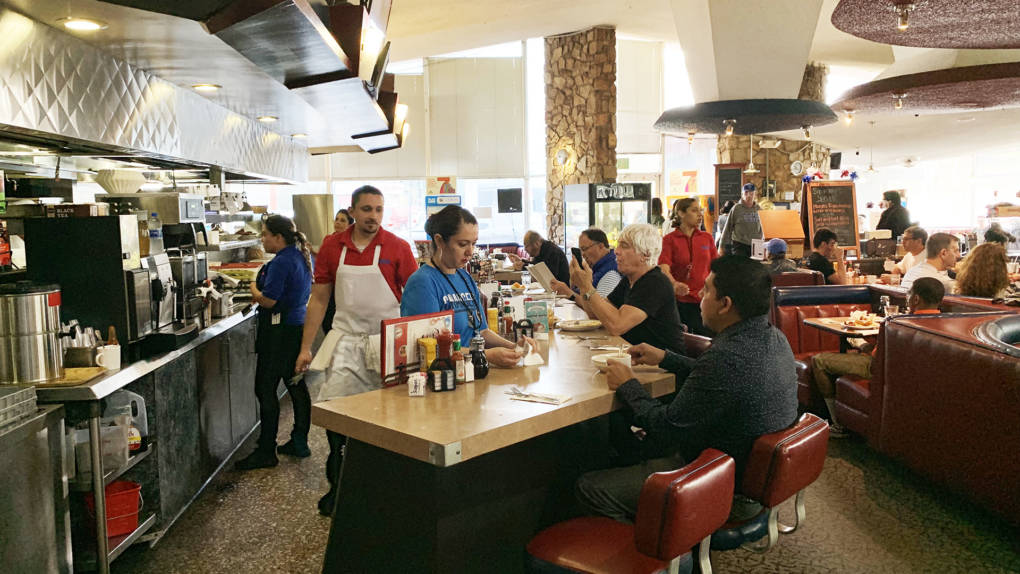
"caption": "The Googie-style architecture at Dinah's is a draw for customers wanting a blast-from-the-past atmosphere and a delicious meal. ",
"description": "The Googie-style architecture at Dinah's is a draw for customers wanting a blast-from-the-past atmosphere and a delicious meal. ",
"title": "IMG_2485",
"credit": "Sasha Khokha/KQED",
"status": "inherit",
"isLoading": false,
"fetchFailed": false
},
"news_11985361": {
"type": "attachments",
"id": "news_11985361",
"meta": {
"index": "attachments_1716263798",
"site": "news",
"id": "11985361",
"found": true
},
"parent": 11985359,
"imgSizes": {
"twentyfourteen-full-width": {
"file": "https://cdn.kqed.org/wp-content/uploads/sites/10/2024/05/Baths-1_qut-1038x576.jpg",
"width": 1038,
"mimeType": "image/jpeg",
"height": 576
},
"thumbnail": {
"file": "https://cdn.kqed.org/wp-content/uploads/sites/10/2024/05/Baths-1_qut-160x107.jpg",
"width": 160,
"mimeType": "image/jpeg",
"height": 107
},
"post-thumbnail": {
"file": "https://cdn.kqed.org/wp-content/uploads/sites/10/2024/05/Baths-1_qut-672x372.jpg",
"width": 672,
"mimeType": "image/jpeg",
"height": 372
},
"kqedFullSize": {
"file": "https://cdn.kqed.org/wp-content/uploads/sites/10/2024/05/Baths-1_qut.jpg",
"width": 1920,
"height": 1280
},
"large": {
"file": "https://cdn.kqed.org/wp-content/uploads/sites/10/2024/05/Baths-1_qut-1020x680.jpg",
"width": 1020,
"mimeType": "image/jpeg",
"height": 680
},
"1536x1536": {
"file": "https://cdn.kqed.org/wp-content/uploads/sites/10/2024/05/Baths-1_qut-1536x1024.jpg",
"width": 1536,
"mimeType": "image/jpeg",
"height": 1024
},
"medium": {
"file": "https://cdn.kqed.org/wp-content/uploads/sites/10/2024/05/Baths-1_qut-800x533.jpg",
"width": 800,
"mimeType": "image/jpeg",
"height": 533
}
},
"publishDate": 1715194985,
"modified": 1715204998,
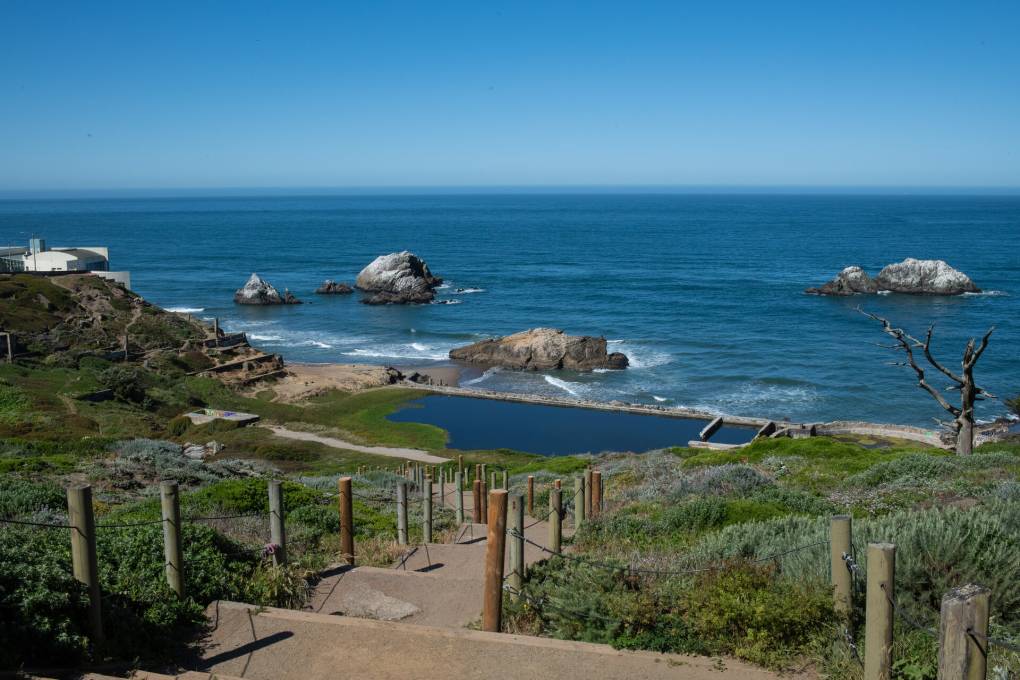
"caption": "Nature is reclaiming the ruins of the once grand Sutro Baths, although the site is still a popular tourist attraction and hiking spot.",
"description": null,
"title": "Baths-1_qut",
"credit": "Tamuna Chkareuli/KQED",
"status": "inherit",
"altTag": "Looking out to the ocean, a set of stairs descend the cliff leading to a wide rectangular pool at the bottom, next to the ocean.",
"isLoading": false,
"fetchFailed": false
},
"news_11985045": {
"type": "attachments",
"id": "news_11985045",
"meta": {
"index": "attachments_1716263798",
"site": "news",
"id": "11985045",
"found": true
},
"parent": 11985041,
"imgSizes": {
"twentyfourteen-full-width": {
"file": "https://cdn.kqed.org/wp-content/uploads/sites/10/2024/05/Sunday-Music-Drop-Photo-Collages-33-1038x576.png",
"width": 1038,
"mimeType": "image/png",
"height": 576
},
"thumbnail": {
"file": "https://cdn.kqed.org/wp-content/uploads/sites/10/2024/05/Sunday-Music-Drop-Photo-Collages-33-160x128.png",
"width": 160,
"mimeType": "image/png",
"height": 128
},
"post-thumbnail": {
"file": "https://cdn.kqed.org/wp-content/uploads/sites/10/2024/05/Sunday-Music-Drop-Photo-Collages-33-672x372.png",
"width": 672,
"mimeType": "image/png",
"height": 372
},
"kqedFullSize": {
"file": "https://cdn.kqed.org/wp-content/uploads/sites/10/2024/05/Sunday-Music-Drop-Photo-Collages-33.png",
"width": 1500,
"height": 1200
},
"large": {
"file": "https://cdn.kqed.org/wp-content/uploads/sites/10/2024/05/Sunday-Music-Drop-Photo-Collages-33-1020x816.png",
"width": 1020,
"mimeType": "image/png",
"height": 816
},
"medium": {
"file": "https://cdn.kqed.org/wp-content/uploads/sites/10/2024/05/Sunday-Music-Drop-Photo-Collages-33-800x640.png",
"width": 800,
"mimeType": "image/png",
"height": 640
}
},
"publishDate": 1714954122,
"modified": 1715015003,
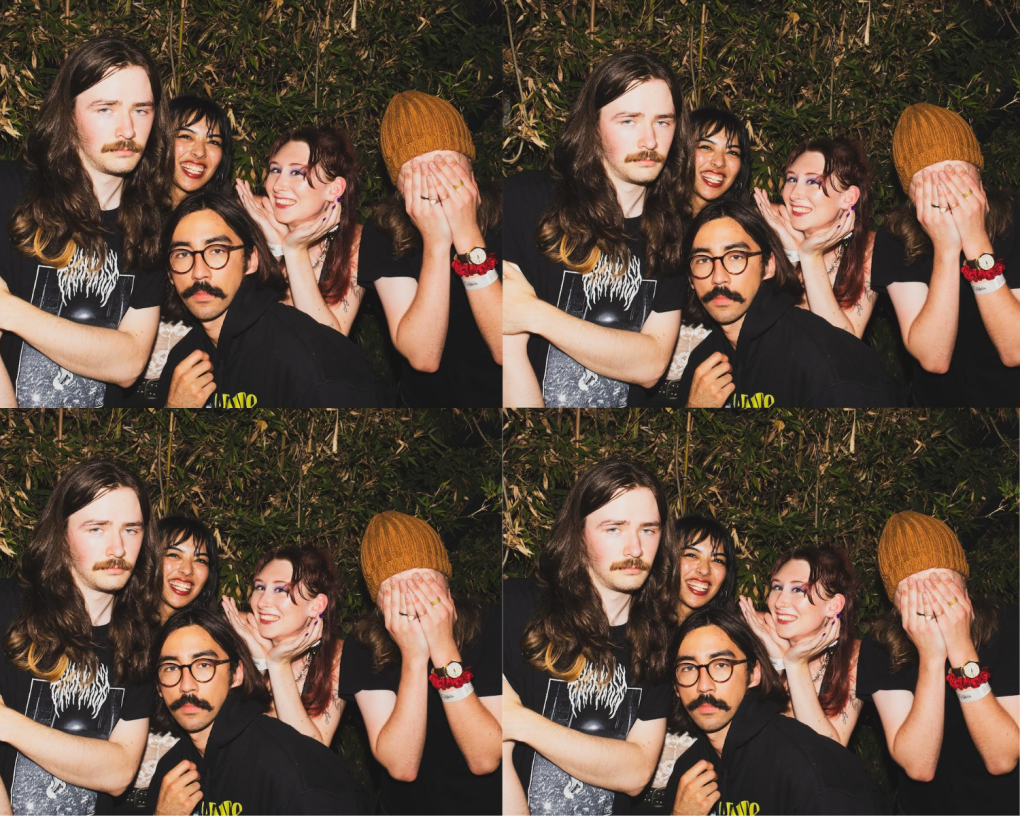
"caption": "From left to right: Sean Aaron, Eva Gogas, Alejandro Lara-Agraz, Ellie Stokes and Spencer Lay.",
"description": null,
"title": "Sunday Music Drop Photo Collages-33",
"credit": "Courtesy of Bel Luevano/Collage by Spencer Whitney of KQED",
"status": "inherit",
"altTag": "A collage of four images of five people posing outdoors.",
"isLoading": false,
"fetchFailed": false
},
"news_11984316": {
"type": "attachments",
"id": "news_11984316",
"meta": {
"index": "attachments_1716263798",
"site": "news",
"id": "11984316",
"found": true
},
"parent": 11984311,
"imgSizes": {
"twentyfourteen-full-width": {
"file": "https://cdn.kqed.org/wp-content/uploads/sites/10/2024/04/Sunday-Music-Drop-Photo-Collages-32-1038x576.png",
"width": 1038,
"mimeType": "image/png",
"height": 576
},
"thumbnail": {
"file": "https://cdn.kqed.org/wp-content/uploads/sites/10/2024/04/Sunday-Music-Drop-Photo-Collages-32-160x128.png",
"width": 160,
"mimeType": "image/png",
"height": 128
},
"post-thumbnail": {
"file": "https://cdn.kqed.org/wp-content/uploads/sites/10/2024/04/Sunday-Music-Drop-Photo-Collages-32-672x372.png",
"width": 672,
"mimeType": "image/png",
"height": 372
},
"kqedFullSize": {
"file": "https://cdn.kqed.org/wp-content/uploads/sites/10/2024/04/Sunday-Music-Drop-Photo-Collages-32.png",
"width": 1500,
"height": 1200
},
"large": {
"file": "https://cdn.kqed.org/wp-content/uploads/sites/10/2024/04/Sunday-Music-Drop-Photo-Collages-32-1020x816.png",
"width": 1020,
"mimeType": "image/png",
"height": 816
},
"medium": {
"file": "https://cdn.kqed.org/wp-content/uploads/sites/10/2024/04/Sunday-Music-Drop-Photo-Collages-32-800x640.png",
"width": 800,
"mimeType": "image/png",
"height": 640
}
},
"publishDate": 1714334362,
"modified": 1714415242,
"caption": "From left to right: Christina Busler, JB Lenar, Alec Moore and Christina Miyagi.",
"description": null,
"title": "Sunday Music Drop Photo Collages-32",
"credit": null,
"status": "inherit",
"altTag": "A collage of four images of a band performing on stage.",
"isLoading": false,
"fetchFailed": false
},
"news_11983640": {
"type": "attachments",
"id": "news_11983640",
"meta": {
"index": "attachments_1716263798",
"site": "news",
"id": "11983640",
"found": true
},
"parent": 11983637,
"imgSizes": {
"twentyfourteen-full-width": {
"file": "https://cdn.kqed.org/wp-content/uploads/sites/10/2024/04/Sunday-Music-Drop-Photo-Collages-30-1038x576.png",
"width": 1038,
"mimeType": "image/png",
"height": 576
},
"thumbnail": {
"file": "https://cdn.kqed.org/wp-content/uploads/sites/10/2024/04/Sunday-Music-Drop-Photo-Collages-30-160x128.png",
"width": 160,
"mimeType": "image/png",
"height": 128
},
"post-thumbnail": {
"file": "https://cdn.kqed.org/wp-content/uploads/sites/10/2024/04/Sunday-Music-Drop-Photo-Collages-30-672x372.png",
"width": 672,
"mimeType": "image/png",
"height": 372
},
"kqedFullSize": {
"file": "https://cdn.kqed.org/wp-content/uploads/sites/10/2024/04/Sunday-Music-Drop-Photo-Collages-30.png",
"width": 1500,
"height": 1200
},
"large": {
"file": "https://cdn.kqed.org/wp-content/uploads/sites/10/2024/04/Sunday-Music-Drop-Photo-Collages-30-1020x816.png",
"width": 1020,
"mimeType": "image/png",
"height": 816
},
"medium": {
"file": "https://cdn.kqed.org/wp-content/uploads/sites/10/2024/04/Sunday-Music-Drop-Photo-Collages-30-800x640.png",
"width": 800,
"mimeType": "image/png",
"height": 640
}
},
"publishDate": 1713738508,
"modified": 1713808253,
"caption": "Ryan Parks (center) and (top and bottom) Raj Ojha.",
"description": null,
"title": "Sunday Music Drop Photo Collages-30",
"credit": "Photo Courtesy of Ginger Fierstein/Collage by Spencer Whitney of KQED",
"status": "inherit",
"altTag": "A black-and-white collage of two images. One is a close-up of a man next to a microphone. The other is a man with a beard seated in a studio with a drum symbol in the foreground.",
"isLoading": false,
"fetchFailed": false
},
"news_11983582": {
"type": "attachments",
"id": "news_11983582",
"meta": {
"index": "attachments_1716263798",
"site": "news",
"id": "11983582",
"found": true
},
"parent": 0,
"imgSizes": {
"twentyfourteen-full-width": {
"file": "https://cdn.kqed.org/wp-content/uploads/sites/10/2024/04/240419-AngelaDavisAlamedaHS-11-BL-1038x576.jpg",
"width": 1038,
"mimeType": "image/jpeg",
"height": 576
},
"thumbnail": {
"file": "https://cdn.kqed.org/wp-content/uploads/sites/10/2024/04/240419-AngelaDavisAlamedaHS-11-BL-160x107.jpg",
"width": 160,
"mimeType": "image/jpeg",
"height": 107
},
"post-thumbnail": {
"file": "https://cdn.kqed.org/wp-content/uploads/sites/10/2024/04/240419-AngelaDavisAlamedaHS-11-BL-672x372.jpg",
"width": 672,
"mimeType": "image/jpeg",
"height": 372
},
"kqedFullSize": {
"file": "https://cdn.kqed.org/wp-content/uploads/sites/10/2024/04/240419-AngelaDavisAlamedaHS-11-BL-scaled.jpg",
"width": 2560,
"height": 1707
},
"2048x2048": {
"file": "https://cdn.kqed.org/wp-content/uploads/sites/10/2024/04/240419-AngelaDavisAlamedaHS-11-BL-2048x1366.jpg",
"width": 2048,
"mimeType": "image/jpeg",
"height": 1366
},
"large": {
"file": "https://cdn.kqed.org/wp-content/uploads/sites/10/2024/04/240419-AngelaDavisAlamedaHS-11-BL-1020x680.jpg",
"width": 1020,
"mimeType": "image/jpeg",
"height": 680
},
"1536x1536": {
"file": "https://cdn.kqed.org/wp-content/uploads/sites/10/2024/04/240419-AngelaDavisAlamedaHS-11-BL-1536x1024.jpg",
"width": 1536,
"mimeType": "image/jpeg",
"height": 1024
},
"full-width": {
"file": "https://cdn.kqed.org/wp-content/uploads/sites/10/2024/04/240419-AngelaDavisAlamedaHS-11-BL-1920x1280.jpg",
"width": 1920,
"mimeType": "image/jpeg",
"height": 1280
},
"medium": {
"file": "https://cdn.kqed.org/wp-content/uploads/sites/10/2024/04/240419-AngelaDavisAlamedaHS-11-BL-800x533.jpg",
"width": 800,
"mimeType": "image/jpeg",
"height": 533
}
},
"publishDate": 1713638410,
"modified": 1713644411,
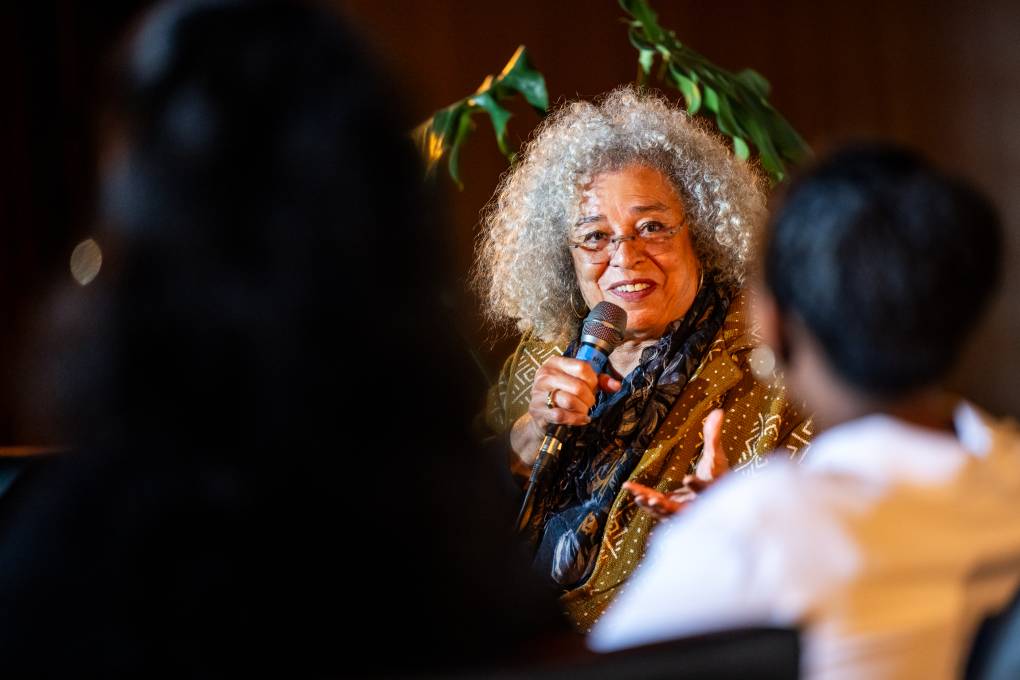
"caption": "Political activist Angela Davis speaks at Alameda High School on April 19, 2024, during an event organized by students from Alameda High School and Castro Valley High School.",
"description": null,
"title": "240419-AngelaDavisAlamedaHS-11-BL",
"credit": "Beth LaBerge/KQED",
"status": "inherit",
"altTag": null,
"isLoading": false,
"fetchFailed": false
},
"news_11983008": {
"type": "attachments",
"id": "news_11983008",
"meta": {
"index": "attachments_1716263798",
"site": "news",
"id": "11983008",
"found": true
},
"parent": 0,
"imgSizes": {
"twentyfourteen-full-width": {
"file": "https://cdn.kqed.org/wp-content/uploads/sites/10/2024/04/240413-POKEMON-LIBRARY-AC-05-KQED-1038x576.jpg",
"width": 1038,
"mimeType": "image/jpeg",
"height": 576
},
"thumbnail": {
"file": "https://cdn.kqed.org/wp-content/uploads/sites/10/2024/04/240413-POKEMON-LIBRARY-AC-05-KQED-160x107.jpg",
"width": 160,
"mimeType": "image/jpeg",
"height": 107
},
"post-thumbnail": {
"file": "https://cdn.kqed.org/wp-content/uploads/sites/10/2024/04/240413-POKEMON-LIBRARY-AC-05-KQED-672x372.jpg",
"width": 672,
"mimeType": "image/jpeg",
"height": 372
},
"kqedFullSize": {
"file": "https://cdn.kqed.org/wp-content/uploads/sites/10/2024/04/240413-POKEMON-LIBRARY-AC-05-KQED.jpg",
"width": 2000,
"height": 1333
},
"large": {
"file": "https://cdn.kqed.org/wp-content/uploads/sites/10/2024/04/240413-POKEMON-LIBRARY-AC-05-KQED-1020x680.jpg",
"width": 1020,
"mimeType": "image/jpeg",
"height": 680
},
"1536x1536": {
"file": "https://cdn.kqed.org/wp-content/uploads/sites/10/2024/04/240413-POKEMON-LIBRARY-AC-05-KQED-1536x1024.jpg",
"width": 1536,
"mimeType": "image/jpeg",
"height": 1024
},
"full-width": {
"file": "https://cdn.kqed.org/wp-content/uploads/sites/10/2024/04/240413-POKEMON-LIBRARY-AC-05-KQED-1920x1280.jpg",
"width": 1920,
"mimeType": "image/jpeg",
"height": 1280
},
"medium": {
"file": "https://cdn.kqed.org/wp-content/uploads/sites/10/2024/04/240413-POKEMON-LIBRARY-AC-05-KQED-800x533.jpg",
"width": 800,
"mimeType": "image/jpeg",
"height": 533
}
},
"publishDate": 1713208242,
"modified": 1713466425,
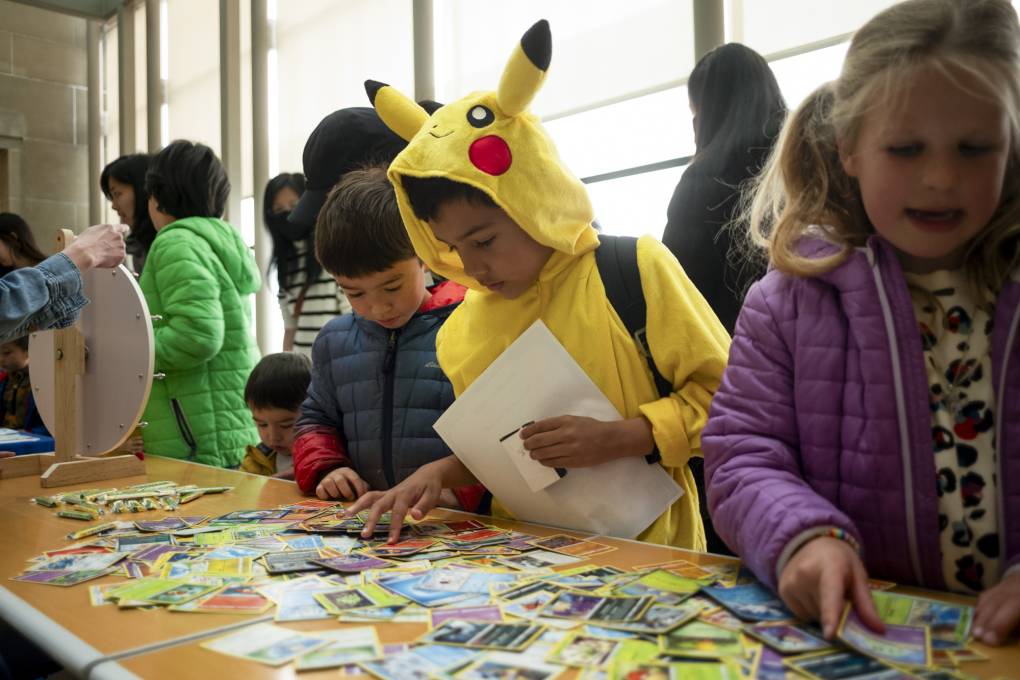
"caption": "Ethan, 7, (right) looks through a pile of free cards Richmond Library workers set out for Pokémon fans in San Francisco on April 13, 2024.",
"description": null,
"title": "240413-POKEMON LIBRARY-AC-05-KQED",
"credit": "Aryk Copley/KQED",
"status": "inherit",
"altTag": null,
"isLoading": false,
"fetchFailed": false
},
"news_11982926": {
"type": "attachments",
"id": "news_11982926",
"meta": {
"index": "attachments_1716263798",
"site": "news",
"id": "11982926",
"found": true
},
"parent": 11982909,
"imgSizes": {
"twentyfourteen-full-width": {
"file": "https://cdn.kqed.org/wp-content/uploads/sites/10/2024/04/Sunday-Music-Drop-Photo-Collages-28-1038x576.png",
"width": 1038,
"mimeType": "image/png",
"height": 576
},
"thumbnail": {
"file": "https://cdn.kqed.org/wp-content/uploads/sites/10/2024/04/Sunday-Music-Drop-Photo-Collages-28-160x128.png",
"width": 160,
"mimeType": "image/png",
"height": 128
},
"post-thumbnail": {
"file": "https://cdn.kqed.org/wp-content/uploads/sites/10/2024/04/Sunday-Music-Drop-Photo-Collages-28-672x372.png",
"width": 672,
"mimeType": "image/png",
"height": 372
},
"kqedFullSize": {
"file": "https://cdn.kqed.org/wp-content/uploads/sites/10/2024/04/Sunday-Music-Drop-Photo-Collages-28.png",
"width": 1500,
"height": 1200
},
"large": {
"file": "https://cdn.kqed.org/wp-content/uploads/sites/10/2024/04/Sunday-Music-Drop-Photo-Collages-28-1020x816.png",
"width": 1020,
"mimeType": "image/png",
"height": 816
},
"medium": {
"file": "https://cdn.kqed.org/wp-content/uploads/sites/10/2024/04/Sunday-Music-Drop-Photo-Collages-28-800x640.png",
"width": 800,
"mimeType": "image/png",
"height": 640
}
},
"publishDate": 1713126949,
"modified": 1713127577,
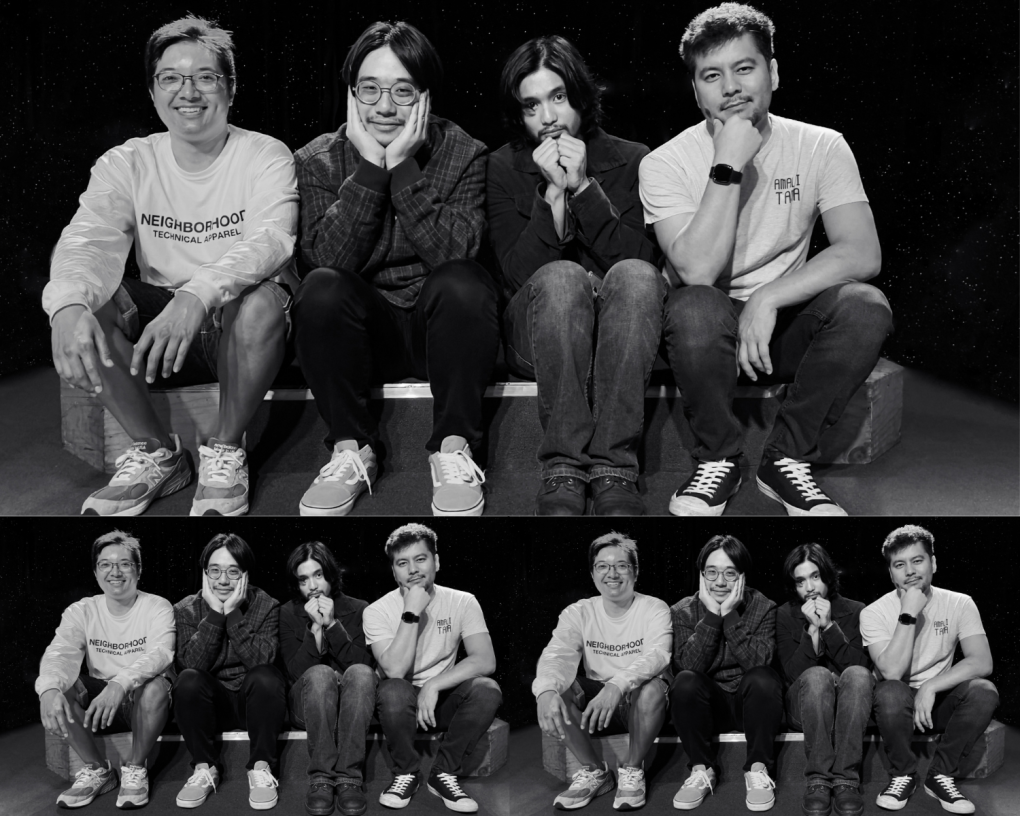
"caption": "From Left to Right: Jordan Torio, Ryan Foo, Jason Marrero, Hansel Von Muller",
"description": null,
"title": "Sunday Music Drop Photo Collages-28",
"credit": "Courtesy of Kaeryn Yodong/Collage by Spencer Whitney of KQED",
"status": "inherit",
"altTag": "A collage of black and white images of four men seated next to each other.",
"isLoading": false,
"fetchFailed": false
},
"news_11981750": {
"type": "attachments",
"id": "news_11981750",
"meta": {
"index": "attachments_1716263798",
"site": "news",
"id": "11981750",
"found": true
},
"parent": 0,
"imgSizes": {
"twentyfourteen-full-width": {
"file": "https://cdn.kqed.org/wp-content/uploads/sites/10/2024/04/240401-PERUANA-SPACES-KSM-2-KQED-1038x576.jpg",
"width": 1038,
"mimeType": "image/jpeg",
"height": 576
},
"thumbnail": {
"file": "https://cdn.kqed.org/wp-content/uploads/sites/10/2024/04/240401-PERUANA-SPACES-KSM-2-KQED-160x107.jpg",
"width": 160,
"mimeType": "image/jpeg",
"height": 107
},
"post-thumbnail": {
"file": "https://cdn.kqed.org/wp-content/uploads/sites/10/2024/04/240401-PERUANA-SPACES-KSM-2-KQED-672x372.jpg",
"width": 672,
"mimeType": "image/jpeg",
"height": 372
},
"kqedFullSize": {
"file": "https://cdn.kqed.org/wp-content/uploads/sites/10/2024/04/240401-PERUANA-SPACES-KSM-2-KQED.jpg",
"width": 2000,
"height": 1333
},
"large": {
"file": "https://cdn.kqed.org/wp-content/uploads/sites/10/2024/04/240401-PERUANA-SPACES-KSM-2-KQED-1020x680.jpg",
"width": 1020,
"mimeType": "image/jpeg",
"height": 680
},
"1536x1536": {
"file": "https://cdn.kqed.org/wp-content/uploads/sites/10/2024/04/240401-PERUANA-SPACES-KSM-2-KQED-1536x1024.jpg",
"width": 1536,
"mimeType": "image/jpeg",
"height": 1024
},
"full-width": {
"file": "https://cdn.kqed.org/wp-content/uploads/sites/10/2024/04/240401-PERUANA-SPACES-KSM-2-KQED-1920x1280.jpg",
"width": 1920,
"mimeType": "image/jpeg",
"height": 1280
},
"medium": {
"file": "https://cdn.kqed.org/wp-content/uploads/sites/10/2024/04/240401-PERUANA-SPACES-KSM-2-KQED-800x533.jpg",
"width": 800,
"mimeType": "image/jpeg",
"height": 533
}
},
"publishDate": 1712166081,
"modified": 1712787142,
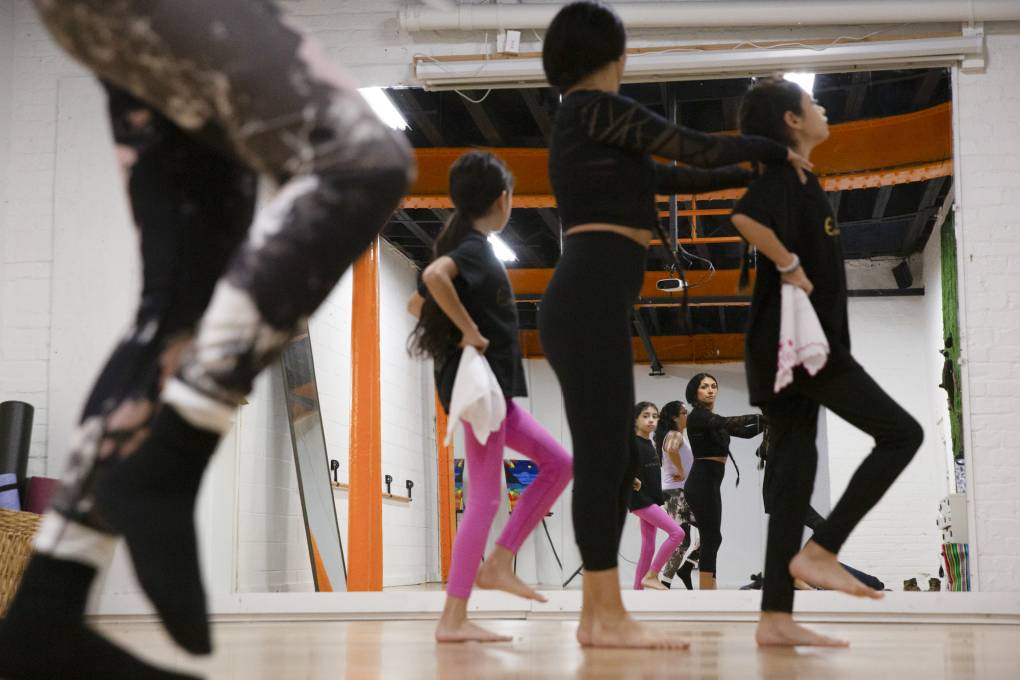
"caption": "Monica Mendoza (center) leads a marinera dance class in San Francisco on April 1, 2024.",
"description": null,
"title": "240401-PERUANA-SPACES-KSM-2-KQED",
"credit": "Kathryn Styer Martínez/KQED",
"status": "inherit",
"altTag": "Several women of all ages practice dance moves in a mirror at a dance studio.",
"isLoading": false,
"fetchFailed": false
},
"news_11982187": {
"type": "attachments",
"id": "news_11982187",
"meta": {
"index": "attachments_1716263798",
"site": "news",
"id": "11982187",
"found": true
},
"parent": 11982185,
"imgSizes": {
"twentyfourteen-full-width": {
"file": "https://cdn.kqed.org/wp-content/uploads/sites/10/2024/04/Sunday-Music-Drop-Photo-Collages-27-1038x576.png",
"width": 1038,
"mimeType": "image/png",
"height": 576
},
"thumbnail": {
"file": "https://cdn.kqed.org/wp-content/uploads/sites/10/2024/04/Sunday-Music-Drop-Photo-Collages-27-160x128.png",
"width": 160,
"mimeType": "image/png",
"height": 128
},
"post-thumbnail": {
"file": "https://cdn.kqed.org/wp-content/uploads/sites/10/2024/04/Sunday-Music-Drop-Photo-Collages-27-672x372.png",
"width": 672,
"mimeType": "image/png",
"height": 372
},
"kqedFullSize": {
"file": "https://cdn.kqed.org/wp-content/uploads/sites/10/2024/04/Sunday-Music-Drop-Photo-Collages-27.png",
"width": 1500,
"height": 1200
},
"large": {
"file": "https://cdn.kqed.org/wp-content/uploads/sites/10/2024/04/Sunday-Music-Drop-Photo-Collages-27-1020x816.png",
"width": 1020,
"mimeType": "image/png",
"height": 816
},
"medium": {
"file": "https://cdn.kqed.org/wp-content/uploads/sites/10/2024/04/Sunday-Music-Drop-Photo-Collages-27-800x640.png",
"width": 800,
"mimeType": "image/png",
"height": 640
}
},
"publishDate": 1712520809,
"modified": 1712520890,
"caption": null,
"description": null,
"title": "Sunday Music Drop Photo Collages-27",
"credit": "Photo Courtesy of Vicken Donikian/Collage by Spencer Whitney of KQED",
"status": "inherit",
"altTag": "A black and white collage of five images of a man holding a saxophone.",
"isLoading": false,
"fetchFailed": false
},
"news_11980163": {
"type": "attachments",
"id": "news_11980163",
"meta": {
"index": "attachments_1716263798",
"site": "news",
"id": "11980163",
"found": true
},
"parent": 11980160,
"imgSizes": {
"twentyfourteen-full-width": {
"file": "https://cdn.kqed.org/wp-content/uploads/sites/10/2024/03/GettyImages-1298814065-1038x576.jpg",
"width": 1038,
"mimeType": "image/jpeg",
"height": 576
},
"thumbnail": {
"file": "https://cdn.kqed.org/wp-content/uploads/sites/10/2024/03/GettyImages-1298814065-160x107.jpg",
"width": 160,
"mimeType": "image/jpeg",
"height": 107
},
"post-thumbnail": {
"file": "https://cdn.kqed.org/wp-content/uploads/sites/10/2024/03/GettyImages-1298814065-672x372.jpg",
"width": 672,
"mimeType": "image/jpeg",
"height": 372
},
"kqedFullSize": {
"file": "https://cdn.kqed.org/wp-content/uploads/sites/10/2024/03/GettyImages-1298814065.jpg",
"width": 1920,
"height": 1280
},
"large": {
"file": "https://cdn.kqed.org/wp-content/uploads/sites/10/2024/03/GettyImages-1298814065-1020x680.jpg",
"width": 1020,
"mimeType": "image/jpeg",
"height": 680
},
"1536x1536": {
"file": "https://cdn.kqed.org/wp-content/uploads/sites/10/2024/03/GettyImages-1298814065-1536x1024.jpg",
"width": 1536,
"mimeType": "image/jpeg",
"height": 1024
},
"medium": {
"file": "https://cdn.kqed.org/wp-content/uploads/sites/10/2024/03/GettyImages-1298814065-800x533.jpg",
"width": 800,
"mimeType": "image/jpeg",
"height": 533
}
},
"publishDate": 1710973488,
"modified": 1711133085,
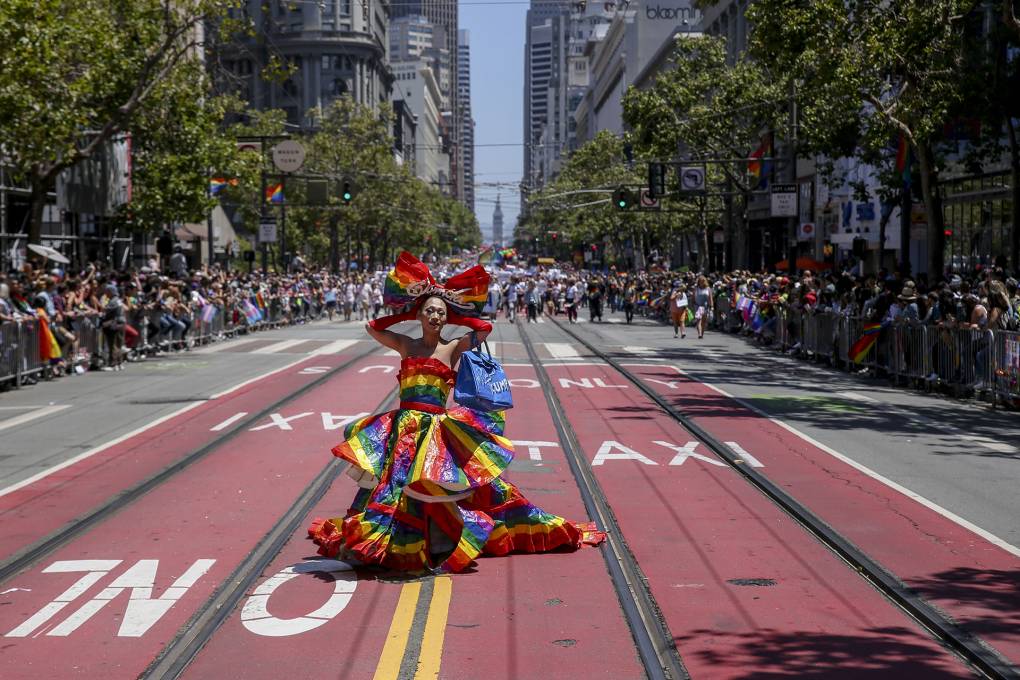
"caption": "Khuong Lam, performing as Glamda the Fabulous, walks down San Francisco's Market Street in the 2019 San Francisco Pride parade. ",
"description": null,
"title": "Khuong Lam, dressed as drag persona Glamda the Fabulous walks in the 2019 San Francisco Pride parade Sunday, June 30, 2019, in San Francisco, Calif.",
"credit": "Josie Norris/San Francisco Chronicle via Getty Images",
"status": "inherit",
"altTag": "A drag queen stands in the middle of Market Street in San Francisco wearing a flamboyant gown with vibrant rainbow colors.",
"isLoading": false,
"fetchFailed": false
},
"news_11978823": {
"type": "attachments",
"id": "news_11978823",
"meta": {
"index": "attachments_1716263798",
"site": "news",
"id": "11978823",
"found": true
},
"parent": 0,
"imgSizes": {
"twentyfourteen-full-width": {
"file": "https://cdn.kqed.org/wp-content/uploads/sites/10/2024/03/240308-MISS-UNIVERSE-MD-01-KQED-1038x576.jpg",
"width": 1038,
"mimeType": "image/jpeg",
"height": 576
},
"thumbnail": {
"file": "https://cdn.kqed.org/wp-content/uploads/sites/10/2024/03/240308-MISS-UNIVERSE-MD-01-KQED-160x107.jpg",
"width": 160,
"mimeType": "image/jpeg",
"height": 107
},
"post-thumbnail": {
"file": "https://cdn.kqed.org/wp-content/uploads/sites/10/2024/03/240308-MISS-UNIVERSE-MD-01-KQED-672x372.jpg",
"width": 672,
"mimeType": "image/jpeg",
"height": 372
},
"kqedFullSize": {
"file": "https://cdn.kqed.org/wp-content/uploads/sites/10/2024/03/240308-MISS-UNIVERSE-MD-01-KQED.jpg",
"width": 2000,
"height": 1333
},
"large": {
"file": "https://cdn.kqed.org/wp-content/uploads/sites/10/2024/03/240308-MISS-UNIVERSE-MD-01-KQED-1020x680.jpg",
"width": 1020,
"mimeType": "image/jpeg",
"height": 680
},
"1536x1536": {
"file": "https://cdn.kqed.org/wp-content/uploads/sites/10/2024/03/240308-MISS-UNIVERSE-MD-01-KQED-1536x1024.jpg",
"width": 1536,
"mimeType": "image/jpeg",
"height": 1024
},
"full-width": {
"file": "https://cdn.kqed.org/wp-content/uploads/sites/10/2024/03/240308-MISS-UNIVERSE-MD-01-KQED-1920x1280.jpg",
"width": 1920,
"mimeType": "image/jpeg",
"height": 1280
},
"medium": {
"file": "https://cdn.kqed.org/wp-content/uploads/sites/10/2024/03/240308-MISS-UNIVERSE-MD-01-KQED-800x533.jpg",
"width": 800,
"mimeType": "image/jpeg",
"height": 533
}
},
"publishDate": 1710027722,
"modified": 1710895158,
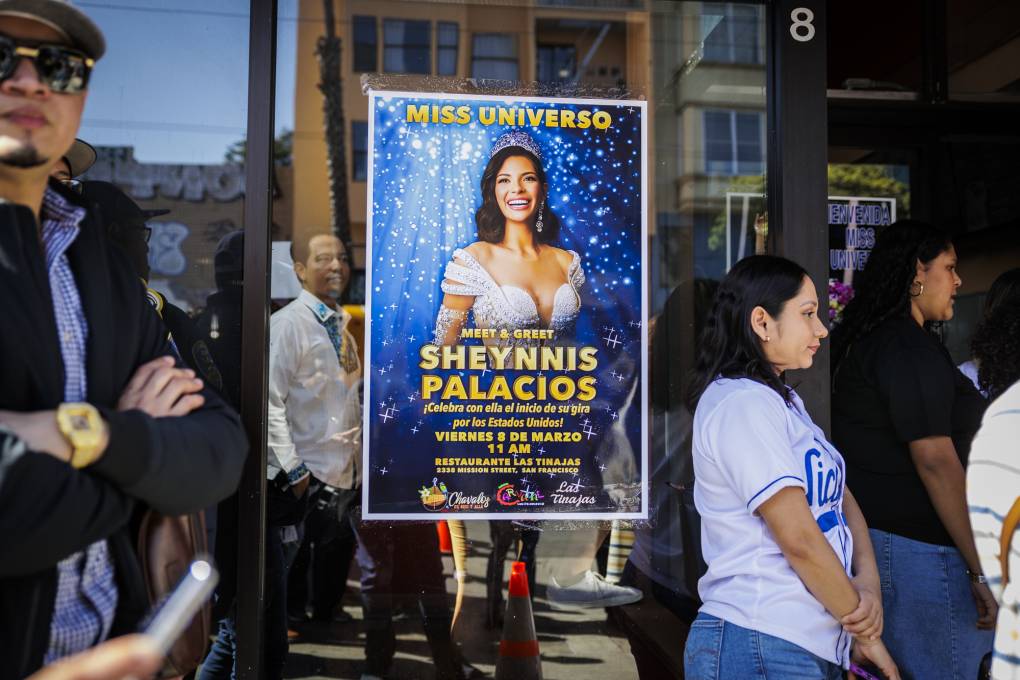
"caption": "Fans wait outside Las Tinajas restaurant in San Francisco on March 8, 2024, hoping to meet and have their photo taken with Miss Universe Sheynnis Palacios.",
"description": null,
"title": "240308-MISS UNIVERSE-MD-01-KQED",
"credit": "Martin do Nascimento/KQED",
"status": "inherit",
"altTag": "People stand around a poster depicting a Miss Universe winner, Sheynnis Palacios.",
"isLoading": false,
"fetchFailed": false
}
},
"audioPlayerReducer": {
"postId": "stream_live",
"isPaused": true,
"isPlaying": false,
"pfsActive": false,
"pledgeModalIsOpen": true,
"playerDrawerIsOpen": false,
"liveAudioPlayStartedAt": 0,
"liveAudioPlayContext": ""
},
"authorsReducer": {
"katrinaschwartz": {
"type": "authors",
"id": "234",
"meta": {
"index": "authors_1716337520",
"id": "234",
"found": true
},
"name": "Katrina Schwartz",
"firstName": "Katrina",
"lastName": "Schwartz",
"slug": "katrinaschwartz",
"email": "kschwartz@kqed.org",
"display_author_email": false,
"staff_mastheads": [
"news"
],
"title": "Producer",
"bio": "Katrina Schwartz is a journalist based in San Francisco. She's worked at KPCC public radio in LA and has reported on air and online for KQED since 2010. She covered how teaching and learning is changing for MindShift between 2012 and 2020. She is the co-host of the MindShift podcast and now produces KQED's Bay Curious podcast.",
"avatar": "https://secure.gravatar.com/avatar/edb4ee79070447a018538c9aae6eeecf28786515b8a0c30e43b6b7dce5aa44c8?s=600&d=blank&r=g",
"twitter": "kschwart",
"bluesky": null,
"facebook": null,
"instagram": null,
"linkedin": null,
"sites": [
{
"site": "",
"roles": [
"editor"
]
},
{
"site": "news",
"roles": [
"editor"
]
},
{
"site": "mindshift",
"roles": [
"administrator"
]
},
{
"site": "stateofhealth",
"roles": [
"author"
]
},
{
"site": "science",
"roles": [
"editor"
]
}
],
"headData": {
"title": "Katrina Schwartz | KQED",
"description": "Producer",
"ogImgSrc": "https://secure.gravatar.com/avatar/edb4ee79070447a018538c9aae6eeecf28786515b8a0c30e43b6b7dce5aa44c8?s=600&d=blank&r=g",
"twImgSrc": "https://secure.gravatar.com/avatar/edb4ee79070447a018538c9aae6eeecf28786515b8a0c30e43b6b7dce5aa44c8?s=600&d=blank&r=g"
},
"isLoading": false,
"link": "/author/katrinaschwartz"
},
"sasha-khokha": {
"type": "authors",
"id": "254",
"meta": {
"index": "authors_1716337520",
"id": "254",
"found": true
},
"name": "Sasha Khokha",
"firstName": "Sasha",
"lastName": "Khokha",
"slug": "sasha-khokha",
"email": "skhokha@kqed.org",
"display_author_email": true,
"staff_mastheads": [
"news"
],
"title": "Host, The California Report Magazine",
"bio": "Sasha Khokha is the host of \u003cem>The California Report's \u003c/em> weekly magazine program, which takes listeners on sound-rich excursions to meet the people that make the Golden State unique -- through audio documentaries and long-form stories. As \u003cem>The California Report's\u003c/em> Central Valley Bureau Chief based in Fresno for nearly a dozen years, Sasha brought the lives and concerns of rural Californians to listeners around the state. Her reporting helped expose the hidden price immigrant women janitors and farmworkers may pay to keep their jobs: sexual assault at work. It inspired two new California laws to protect them from sexual harassment. She was a key member of the reporting team for the Frontline film \u003cem>Rape on the Night Shift, \u003c/em>which was nominated for two national Emmys. Sasha has also won a national Edward R. Murrow and a national PRNDI award for investigative reporting, as well as multiple prizes from the Society for Professional Journalists. Sasha is a proud alum of the UC Berkeley Graduate School of Journalism and Brown University and a member of the South Asian Journalists Association.",
"avatar": "https://secure.gravatar.com/avatar/e4b5e1541aaeea2aa356aa1fb2a68950?s=600&d=blank&r=g",
"twitter": "KQEDSashaKhokha",
"facebook": null,
"instagram": null,
"linkedin": null,
"sites": [
{
"site": "news",
"roles": [
"editor"
]
},
{
"site": "stateofhealth",
"roles": [
"author"
]
},
{
"site": "science",
"roles": [
"author"
]
},
{
"site": "quest",
"roles": [
"subscriber"
]
}
],
"headData": {
"title": "Sasha Khokha | KQED",
"description": "Host, The California Report Magazine",
"ogImgSrc": "https://secure.gravatar.com/avatar/e4b5e1541aaeea2aa356aa1fb2a68950?s=600&d=blank&r=g",
"twImgSrc": "https://secure.gravatar.com/avatar/e4b5e1541aaeea2aa356aa1fb2a68950?s=600&d=blank&r=g"
},
"isLoading": false,
"link": "/author/sasha-khokha"
},
"aproehl": {
"type": "authors",
"id": "11296",
"meta": {
"index": "authors_1716337520",
"id": "11296",
"found": true
},
"name": "Ariana Proehl",
"firstName": "Ariana",
"lastName": "Proehl",
"slug": "aproehl",
"email": "aproehl@KQED.org",
"display_author_email": true,
"staff_mastheads": [
"news"
],
"title": "Culture Reporter, KQED",
"bio": "Ariana Proehl is a Culture Reporter and Host.",
"avatar": "https://secure.gravatar.com/avatar/c96b24567eb5bb3a4f8bb295ed53e232?s=600&d=blank&r=g",
"twitter": "ArianaProehl",
"facebook": null,
"instagram": null,
"linkedin": null,
"sites": [
{
"site": "arts",
"roles": []
},
{
"site": "news",
"roles": []
},
{
"site": "education",
"roles": []
},
{
"site": "forum",
"roles": []
}
],
"headData": {
"title": "Ariana Proehl | KQED",
"description": "Culture Reporter, KQED",
"ogImgSrc": "https://secure.gravatar.com/avatar/c96b24567eb5bb3a4f8bb295ed53e232?s=600&d=blank&r=g",
"twImgSrc": "https://secure.gravatar.com/avatar/c96b24567eb5bb3a4f8bb295ed53e232?s=600&d=blank&r=g"
},
"isLoading": false,
"link": "/author/aproehl"
},
"cmorizono": {
"type": "authors",
"id": "11503",
"meta": {
"index": "authors_1716337520",
"id": "11503",
"found": true
},
"name": "Chloe Morizono",
"firstName": "Chloe",
"lastName": "Morizono",
"slug": "cmorizono",
"email": "cmorizono@kqed.org",
"display_author_email": false,
"staff_mastheads": [],
"title": "KQED Contributor",
"bio": null,
"avatar": "https://secure.gravatar.com/avatar/589de970d4696c868de7f4dc180e0289?s=600&d=blank&r=g",
"twitter": null,
"facebook": null,
"instagram": null,
"linkedin": null,
"sites": [
{
"site": "news",
"roles": []
},
{
"site": "perspectives",
"roles": [
"editor"
]
}
],
"headData": {
"title": "Chloe Morizono | KQED",
"description": "KQED Contributor",
"ogImgSrc": "https://secure.gravatar.com/avatar/589de970d4696c868de7f4dc180e0289?s=600&d=blank&r=g",
"twImgSrc": "https://secure.gravatar.com/avatar/589de970d4696c868de7f4dc180e0289?s=600&d=blank&r=g"
},
"isLoading": false,
"link": "/author/cmorizono"
},
"ccabreralomeli": {
"type": "authors",
"id": "11708",
"meta": {
"index": "authors_1716337520",
"id": "11708",
"found": true
},
"name": "Carlos Cabrera-Lomelí",
"firstName": "Carlos",
"lastName": "Cabrera-Lomelí",
"slug": "ccabreralomeli",
"email": "ccabreralomeli@KQED.org",
"display_author_email": true,
"staff_mastheads": [
"news"
],
"title": "Community Reporter",
"bio": "Carlos Cabrera-Lomelí is a community reporter with KQED's digital engagement team. He also reports and co-produces for KQED's bilingual news hub KQED en Español. He grew up in San Francisco's Mission District and has previously worked with Univision, 48 Hills and REFORMA in Mexico City.",
"avatar": "https://secure.gravatar.com/avatar/c309be9665e484f887b818c89e273ecc673004f426f36b24d00a4d813a2e0518?s=600&d=blank&r=g",
"twitter": "@LomeliCabrera",
"bluesky": null,
"facebook": null,
"instagram": null,
"linkedin": null,
"sites": [
{
"site": "arts",
"roles": [
"editor"
]
},
{
"site": "news",
"roles": [
"editor"
]
},
{
"site": "about",
"roles": [
"editor"
]
},
{
"site": "science",
"roles": [
"editor"
]
},
{
"site": "perspectives",
"roles": [
"editor"
]
},
{
"site": "elections",
"roles": [
"editor"
]
},
{
"site": "liveblog",
"roles": [
"contributor"
]
}
],
"headData": {
"title": "Carlos Cabrera-Lomelí | KQED",
"description": "Community Reporter",
"ogImgSrc": "https://secure.gravatar.com/avatar/c309be9665e484f887b818c89e273ecc673004f426f36b24d00a4d813a2e0518?s=600&d=blank&r=g",
"twImgSrc": "https://secure.gravatar.com/avatar/c309be9665e484f887b818c89e273ecc673004f426f36b24d00a4d813a2e0518?s=600&d=blank&r=g"
},
"isLoading": false,
"link": "/author/ccabreralomeli"
},
"cbeale": {
"type": "authors",
"id": "11749",
"meta": {
"index": "authors_1716337520",
"id": "11749",
"found": true
},
"name": "Christopher Beale",
"firstName": "Christopher",
"lastName": "Beale",
"slug": "cbeale",
"email": "cbeale@kqed.org",
"display_author_email": true,
"staff_mastheads": [
"news"
],
"title": "Engineer/Producer/Reporter",
"bio": "\u003ca href=\"https://linktr.ee/realchrisjbeale\" rel=\"noopener noreferrer\">Christopher J. Beale\u003c/a> is an award winning journalist, audio engineer, and media host living in San Francisco. \r\n\r\nChristopher works primarily as an audio engineer at KQED and serves as the sound designer for both the Bay Curious and Rightnowish podcasts. He is the host and producer of the LGBTQIA podcast and radio segment \u003ca href=\"https://stereotypespodcast.org\">Stereotypes\u003c/a>.",
"avatar": "https://secure.gravatar.com/avatar/dc485bf84788eb7e7414eb638e72407e?s=600&d=blank&r=g",
"twitter": "realchrisjbeale",
"facebook": null,
"instagram": "http://instagram.com/realchrisjbeale",
"linkedin": null,
"sites": [
{
"site": "arts",
"roles": [
"contributor"
]
},
{
"site": "news",
"roles": [
"editor"
]
},
{
"site": "forum",
"roles": [
"editor"
]
}
],
"headData": {
"title": "Christopher Beale | KQED",
"description": "Engineer/Producer/Reporter",
"ogImgSrc": "https://secure.gravatar.com/avatar/dc485bf84788eb7e7414eb638e72407e?s=600&d=blank&r=g",
"twImgSrc": "https://secure.gravatar.com/avatar/dc485bf84788eb7e7414eb638e72407e?s=600&d=blank&r=g"
},
"isLoading": false,
"link": "/author/cbeale"
},
"afinney": {
"type": "authors",
"id": "11772",
"meta": {
"index": "authors_1716337520",
"id": "11772",
"found": true
},
"name": "Annelise Finney",
"firstName": "Annelise",
"lastName": "Finney",
"slug": "afinney",
"email": "afinney@kqed.org",
"display_author_email": true,
"staff_mastheads": [
"news"
],
"title": "Reporter",
"bio": "Annelise reports on reparations in California and East Bay politics. She co-produced the Sunday Music Drop, a limited-term radio series featuring Bay Area musicians that aired between Sept 2022 and Oct 2024. She joined KQED in 2021 as a general assignment reporter and is an alumna of KALW's Audio Academy. She was born and raised in the East Bay. She is currently away from KQED completing a year-long reporting project in Berlin, Germany as a Alexander Von Humboldt German Chancellor Fellow.",
"avatar": "https://secure.gravatar.com/avatar/5fded66cae47704cdfc5021cde0f3aa4?s=600&d=blank&r=g",
"twitter": null,
"facebook": null,
"instagram": null,
"linkedin": null,
"sites": [
{
"site": "news",
"roles": [
"editor"
]
},
{
"site": "liveblog",
"roles": [
"author"
]
}
],
"headData": {
"title": "Annelise Finney | KQED",
"description": "Reporter",
"ogImgSrc": "https://secure.gravatar.com/avatar/5fded66cae47704cdfc5021cde0f3aa4?s=600&d=blank&r=g",
"twImgSrc": "https://secure.gravatar.com/avatar/5fded66cae47704cdfc5021cde0f3aa4?s=600&d=blank&r=g"
},
"isLoading": false,
"link": "/author/afinney"
},
"swhitney": {
"type": "authors",
"id": "11784",
"meta": {
"index": "authors_1716337520",
"id": "11784",
"found": true
},
"name": "Spencer Whitney",
"firstName": "Spencer",
"lastName": "Whitney",
"slug": "swhitney",
"email": "swhitney@kqed.org",
"display_author_email": false,
"staff_mastheads": [],
"title": "KQED Digital Editor",
"bio": "Spencer Whitney is currently a Digital Editor for KQED News. Prior to joining KQED News, Spencer worked as the Multimedia Editor at the Oakland Post and an Assistant Editor in the Editorial department at the San Francisco Chronicle. He attended Howard University as an undergraduate and interned with SiriusXM. He also attended UC Berkeley's Graduate School of Journalism and had the opportunity to write for the hyperlocal news sites Richmond Confidential and Oakland North.",
"avatar": "https://secure.gravatar.com/avatar/e33ff4fd8b8f0d2796f36472fb32607ca8fc46ef5e537dcfdbdee688d8ea5b80?s=600&d=mm&r=g",
"twitter": null,
"bluesky": null,
"facebook": null,
"instagram": null,
"linkedin": null,
"sites": [
{
"site": "arts",
"roles": [
"editor"
]
},
{
"site": "news",
"roles": [
"editor"
]
},
{
"site": "science",
"roles": [
"editor"
]
},
{
"site": "perspectives",
"roles": [
"editor"
]
}
],
"headData": {
"title": "Spencer Whitney | KQED",
"description": "KQED Digital Editor",
"ogImgSrc": "https://secure.gravatar.com/avatar/e33ff4fd8b8f0d2796f36472fb32607ca8fc46ef5e537dcfdbdee688d8ea5b80?s=600&d=mm&r=g",
"twImgSrc": "https://secure.gravatar.com/avatar/e33ff4fd8b8f0d2796f36472fb32607ca8fc46ef5e537dcfdbdee688d8ea5b80?s=600&d=mm&r=g"
},
"isLoading": false,
"link": "/author/swhitney"
},
"sjohnson": {
"type": "authors",
"id": "11840",
"meta": {
"index": "authors_1716337520",
"id": "11840",
"found": true
},
"name": "Sydney Johnson",
"firstName": "Sydney",
"lastName": "Johnson",
"slug": "sjohnson",
"email": "sjohnson@kqed.org",
"display_author_email": false,
"staff_mastheads": [
"news"
],
"title": "KQED Reporter",
"bio": "Sydney Johnson is a general assignment reporter at KQED. She previously reported on public health and city government at the San Francisco Examiner, and before that, she covered statewide education policy for EdSource. Her reporting has won multiple local, state and national awards. Sydney is a graduate of the University of California, Berkeley and lives in San Francisco.",
"avatar": "https://secure.gravatar.com/avatar/97855f2719b72ad6190b7c535fe642c8?s=600&d=blank&r=g",
"twitter": "sydneyfjohnson",
"facebook": null,
"instagram": null,
"linkedin": null,
"sites": [
{
"site": "news",
"roles": [
"editor"
]
}
],
"headData": {
"title": "Sydney Johnson | KQED",
"description": "KQED Reporter",
"ogImgSrc": "https://secure.gravatar.com/avatar/97855f2719b72ad6190b7c535fe642c8?s=600&d=blank&r=g",
"twImgSrc": "https://secure.gravatar.com/avatar/97855f2719b72ad6190b7c535fe642c8?s=600&d=blank&r=g"
},
"isLoading": false,
"link": "/author/sjohnson"
}
},
"pagesReducer": {
"news_category_arts-and-culture": {
"type": "terms",
"id": "news_223",
"meta": {
"index": "terms_1716263798",
"site": "news",
"id": "223",
"score": 11.242002
},
"featImg": null,
"name": "Arts and Culture",
"description": null,
"taxonomy": "category",
"headData": {
"twImgId": null,
"twTitle": null,
"ogTitle": null,
"ogImgId": null,
"twDescription": null,
"description": null,
"title": "Arts and Culture Archives | KQED News",
"ogDescription": null
},
"ttid": 231,
"slug": "arts-and-culture",
"isLoading": false,
"title": "Arts and Culture",
"pageMeta": {
"site": "news",
"WpPageTemplate": "page-topic-editorial",
"currentPage": 20
},
"blocks": [
{
"blockName": "kqed/post-list",
"attrs": {
"layout": "cardArticle2",
"query": "posts/news?category=arts-and-culture",
"seeMore": false,
"paginated": true,
"page": 20
}
},
{
"blockName": "kqed/ad"
}
]
}
},
"pfsSessionReducer": {},
"postsReducer": {
"stream_live": {
"type": "live",
"id": "stream_live",
"audioUrl": "https://streams.kqed.org/kqedradio",
"title": "Live Stream",
"excerpt": "Live Stream information currently unavailable.",
"link": "/radio",
"featImg": "",
"label": {
"name": "KQED Live",
"link": "/"
}
},
"stream_kqedNewscast": {
"type": "posts",
"id": "stream_kqedNewscast",
"audioUrl": "https://www.kqed.org/.stream/anon/radio/RDnews/newscast.mp3?_=1",
"title": "KQED Newscast",
"featImg": "",
"label": {
"name": "88.5 FM",
"link": "/"
}
},
"news_11765982": {
"type": "posts",
"id": "news_11765982",
"meta": {
"index": "posts_1716263798",
"site": "news",
"id": "11765982",
"score": null,
"sort": [
1715360415000
]
},
"guestAuthors": [],
"slug": "an-apple-pancake-as-big-as-a-pie-at-this-50s-l-a-diner-its-true",
"title": "An Apple Pancake as Big as a Pie? At This '50s L.A. Diner, It's True",
"publishDate": 1715360415,
"format": "audio",
"headTitle": "An Apple Pancake as Big as a Pie? At This ’50s L.A. Diner, It’s True | KQED",
"labelTerm": {},
"content": "\u003cp>\u003cem>Editor’s Note: Classic Los Angeles diner Dinah’s closed its doors at its original location on April 30, following news that a developer with ambitious plans for new construction bought the site near the LA airport that the restaurant had rented for nearly 65 years.\u003c/em>\u003c/p>\n\u003cp>\u003cem>This week, Dinah’s reopened as “Dinah’s Kitchen” in Culver City, without the original \u003ca href=\"https://www.smithsonianmag.com/history/googie-architecture-of-the-space-age-122837470/\">Googie architecture\u003c/a> and some of the 1950s menu classics. The owners are revamping the dinner menu to focus on fresh, locally sourced produce. But they’ll still serve up their famous apple pancake for breakfast.\u003c/em>\u003c/p>\n\u003cp>\u003cem>This story originally ran in August 2019 as part of The California Report Magazine’s Hidden Gems series. We’re re-airing it this week to mark the end of Dinah’s long tenure in its original location, which served as a backdrop for a number of films and TV shows.\u003c/em>\u003c/p>\n\u003cp>\u003cb>Original story, Aug. 10, 2019:\u003c/b>\u003c/p>\n\u003cp>[dropcap]I[/dropcap] grew up just a mile from Los Angeles International Airport, and for 40 years, my family has been guarding a neighborhood secret.\u003c/p>\n\u003cp>One that involves a giant scoop of butter melting across a crispy, cinnamon-sugar crust.\u003c/p>\n\u003cp>I’m talking about the apple pancake at \u003ca href=\"http://www.dinahsrestaurant.com/\" target=\"_blank\" rel=\"noopener\">Dinah’s\u003c/a>, a family diner right under the LAX flight path, just off Sepulveda Boulevard.\u003c/p>\n\u003cp>It opened in 1959, with Googie-style architecture. Think “The Jetsons” — big stucco orbs jutting from the ceiling, fake rock walls and vinyl booths.\u003c/p>\n\u003cp>My little brother, Akash, and I have been fighting over what to order here for decades. The breakfast menu is endless: chicken and waffles, chocolate waffles, even a bacon-and-cheese waffle. But in the end, I win out, insisting that we order our family staple: the apple pancake that’s more like eating a giant apple pie for breakfast.\u003c/p>\n\u003cfigure id=\"attachment_11766323\" class=\"wp-caption alignnone\" style=\"max-width: 800px\">\u003cimg loading=\"lazy\" decoding=\"async\" class=\"size-medium wp-image-11766323\" src=\"https://ww2.kqed.org/news/wp-content/uploads/sites/10/2019/08/family-pic-800x600.jpg\" alt=\"\" width=\"800\" height=\"600\" srcset=\"https://cdn.kqed.org/wp-content/uploads/sites/10/2019/08/family-pic-800x600.jpg 800w, https://cdn.kqed.org/wp-content/uploads/sites/10/2019/08/family-pic-160x120.jpg 160w, https://cdn.kqed.org/wp-content/uploads/sites/10/2019/08/family-pic-1020x765.jpg 1020w, https://cdn.kqed.org/wp-content/uploads/sites/10/2019/08/family-pic-1200x900.jpg 1200w, https://cdn.kqed.org/wp-content/uploads/sites/10/2019/08/family-pic-1920x1439.jpg 1920w, https://cdn.kqed.org/wp-content/uploads/sites/10/2019/08/family-pic-1832x1374.jpg 1832w, https://cdn.kqed.org/wp-content/uploads/sites/10/2019/08/family-pic-1376x1032.jpg 1376w, https://cdn.kqed.org/wp-content/uploads/sites/10/2019/08/family-pic-1044x783.jpg 1044w, https://cdn.kqed.org/wp-content/uploads/sites/10/2019/08/family-pic-632x474.jpg 632w, https://cdn.kqed.org/wp-content/uploads/sites/10/2019/08/family-pic-536x402.jpg 536w, https://cdn.kqed.org/wp-content/uploads/sites/10/2019/08/family-pic.jpg 2048w\" sizes=\"(max-width: 800px) 100vw, 800px\">\u003cfigcaption class=\"wp-caption-text\">Sasha Khokha and her family at Dinah’s, with longtime server Carla Maraveles and “Uncle Salome” the apple pancake chef, standing behind their booth. \u003ccite>(Sasha Khokha/KQED)\u003c/cite>\u003c/figcaption>\u003c/figure>\n\u003cp>“It takes 20 minutes, but it’s worth it,” warns our server. “You can’t find it anywhere else, and it makes your day better!”\u003c/p>\n\u003cp>Twenty minutes is a long time to wait at a diner where everything else arrives in minutes: eggs, toast and even decent coffee.\u003c/p>\n\u003cp>While we’re waiting, I chat with owner Teri Ernst. She started here as a waitress in 1972, wearing a white dress with a red apron, and a “funny little hat.”\u003c/p>\n\u003cp>“I had never worked at a place that was so busy. On Mondays, we had all-you-can-eat chicken, and there would be a line out the door,” Ernst says.\u003c/p>\n\u003cfigure id=\"attachment_11766502\" class=\"wp-caption alignleft\" style=\"max-width: 250px\">\u003cimg loading=\"lazy\" decoding=\"async\" class=\"wp-image-11766502\" src=\"https://ww2.kqed.org/news/wp-content/uploads/sites/10/2019/08/Dinahsmenu-160x248.jpg\" alt=\"\" width=\"250\" height=\"388\" srcset=\"https://cdn.kqed.org/wp-content/uploads/sites/10/2019/08/Dinahsmenu-160x248.jpg 160w, https://cdn.kqed.org/wp-content/uploads/sites/10/2019/08/Dinahsmenu-800x1242.jpg 800w, https://cdn.kqed.org/wp-content/uploads/sites/10/2019/08/Dinahsmenu-773x1200.jpg 773w, https://cdn.kqed.org/wp-content/uploads/sites/10/2019/08/Dinahsmenu.jpg 1000w\" sizes=\"(max-width: 250px) 100vw, 250px\">\u003cfigcaption class=\"wp-caption-text\">The apple pancake is the star of Sasha Khokha’s heart, but many come here for another beloved dish, the fried chicken. \u003ccite>(Courtesy of Dinah's)\u003c/cite>\u003c/figcaption>\u003c/figure>\n\u003cp>After that came the ’70s polyester bell bottom pantsuits. But the all-you-can eat chicken special continues to this day.\u003c/p>\n\u003cp>Eventually Ernst married the son of the owner, and she’s been managing the place since 1989. I ask her where Dinah’s got its name. She says her in-laws were looking for something that sounded Southern, and got the idea from the song “Someone’s in the Kitchen with Dinah.”\u003c/p>\n\u003cp>“This is definitely a place where time has stood still,” Carla Maraveles says. Like many of the staff here, she’s worked at Dinah’s for decades. “I mean we have food here, lots of the traditional plates that nobody makes anymore. Meatloaf. Imagine that! Who makes liver and onions nowadays? Fried chicken gizzards?”\u003c/p>\n\u003cp>Maraveles says everything here is made from scratch, from the Southern-style gravy and mashed potatoes to the biscuits. She knows all the regulars, and where to seat them in their favorite booths.\u003c/p>\n\u003cp>[ad fullwidth]\u003c/p>\n\u003cp>People like Ellis Smith, who eats here three or four times a week.\u003c/p>\n\u003cp>“My wife and I usually come to breakfast, and my uncle and I, we come to breakfast, and dinner every Thursday evening,” Ellis says.\u003c/p>\n\u003cp>Thursday is chicken night. The fried chicken is what draws many regulars to Dinah’s. It’s breaded the day before, and \u003cem>broasted\u003c/em> in a special machine that seals in the flavor, called a Henny Penny.\u003c/p>\n\u003cp>Dinah’s has a big chicken bucket up on a pole outside its takeout department. Ernst says the guy who pioneered the design went on to take the idea to Kentucky Fried Chicken.\u003c/p>\n\u003cp>Their ’50s decor has been used as a Hollywood backdrop in shows like “Modern Family” and “Malcolm in the Middle.” Its signature red-and-white chicken bucket was also featured in the film “Little Miss Sunshine.”\u003c/p>\n\u003cp>https://www.youtube.com/watch?v=tZ561uh3tSA\u003c/p>\n\u003cp>Hollywood has helped draw in a new generation of customers looking for a hip, classic diner. People like Pete Giovine, who drives here many mornings from West Hollywood.\u003c/p>\n\u003cp>“I’m from New Jersey originally,” he tells me. “If there’s one thing we take seriously, it’s diners. This building was almost like a siren, calling to me. It reminds me of all these old-school diners back in Jersey.”\u003c/p>\n\u003cp>Pete’s nursing a cup of coffee and a Denver omelet at the counter, writing in a notebook. He’s a comedian working on his routine. He says he gets way better material here than sitting at a Starbucks.\u003c/p>\n\u003cfigure id=\"attachment_11766319\" class=\"wp-caption aligncenter\" style=\"max-width: 800px\">\u003cimg loading=\"lazy\" decoding=\"async\" class=\"wp-image-11766319 size-medium\" src=\"https://ww2.kqed.org/news/wp-content/uploads/sites/10/2019/08/RS38429_comedian-qut-800x600.jpg\" alt=\"\" width=\"800\" height=\"600\" srcset=\"https://cdn.kqed.org/wp-content/uploads/sites/10/2019/08/RS38429_comedian-qut-800x600.jpg 800w, https://cdn.kqed.org/wp-content/uploads/sites/10/2019/08/RS38429_comedian-qut-160x120.jpg 160w, https://cdn.kqed.org/wp-content/uploads/sites/10/2019/08/RS38429_comedian-qut-1020x765.jpg 1020w, https://cdn.kqed.org/wp-content/uploads/sites/10/2019/08/RS38429_comedian-qut-1200x900.jpg 1200w, https://cdn.kqed.org/wp-content/uploads/sites/10/2019/08/RS38429_comedian-qut.jpg 1920w, https://cdn.kqed.org/wp-content/uploads/sites/10/2019/08/RS38429_comedian-qut-1832x1374.jpg 1832w, https://cdn.kqed.org/wp-content/uploads/sites/10/2019/08/RS38429_comedian-qut-1376x1032.jpg 1376w, https://cdn.kqed.org/wp-content/uploads/sites/10/2019/08/RS38429_comedian-qut-1044x783.jpg 1044w, https://cdn.kqed.org/wp-content/uploads/sites/10/2019/08/RS38429_comedian-qut-632x474.jpg 632w, https://cdn.kqed.org/wp-content/uploads/sites/10/2019/08/RS38429_comedian-qut-536x402.jpg 536w\" sizes=\"(max-width: 800px) 100vw, 800px\">\u003cfigcaption class=\"wp-caption-text\">Comedian Pete Giovine comes to Dinah’s to write. He says he gets better material here than at a Starbucks. \u003ccite>(Sasha Khokha/KQED)\u003c/cite>\u003c/figcaption>\u003c/figure>\n\u003cp>“You actually get to the realest people,” he says. It makes him think of when presidential candidates tour Iowa during the state’s caucuses. “They always go to these small-town diners and you get that feeling of like, ‘Oh, this is where the community gathers.’ Dinah’s actually is that. It just happens to be in the center of a major city.”\u003c/p>\n\u003cp>Back at my table, my brother Akash is telling my 8-year old about eating at Dinah’s when he was the same age.\u003c/p>\n\u003cp>“I used to have tee ball practice down at the park. I hated sports and I hated practice,” Akash grins. “But your grandmother would bribe me with a fried chicken box if I finished practice. It was my favorite thing — this delicious-smelling red-and-white box. Like opening a Christmas present. Fried chicken with a biscuit and a side. I’d start digging into the box before we even got home.”\u003c/p>\n\u003cp>After hearing stories like this, we are ravenous. And after the 20-minute wait, the apple pancake is finally here.\u003c/p>\n\u003cfigure id=\"attachment_11766327\" class=\"wp-caption alignnone\" style=\"max-width: 800px\">\u003cimg loading=\"lazy\" decoding=\"async\" class=\"size-medium wp-image-11766327\" src=\"https://ww2.kqed.org/news/wp-content/uploads/sites/10/2019/08/apple-pancake-800x600.jpg\" alt=\"\" width=\"800\" height=\"600\" srcset=\"https://cdn.kqed.org/wp-content/uploads/sites/10/2019/08/apple-pancake-800x600.jpg 800w, https://cdn.kqed.org/wp-content/uploads/sites/10/2019/08/apple-pancake-160x120.jpg 160w, https://cdn.kqed.org/wp-content/uploads/sites/10/2019/08/apple-pancake-1020x765.jpg 1020w, https://cdn.kqed.org/wp-content/uploads/sites/10/2019/08/apple-pancake-1200x900.jpg 1200w, https://cdn.kqed.org/wp-content/uploads/sites/10/2019/08/apple-pancake-1920x1440.jpg 1920w, https://cdn.kqed.org/wp-content/uploads/sites/10/2019/08/apple-pancake-1832x1374.jpg 1832w, https://cdn.kqed.org/wp-content/uploads/sites/10/2019/08/apple-pancake-1376x1032.jpg 1376w, https://cdn.kqed.org/wp-content/uploads/sites/10/2019/08/apple-pancake-1044x783.jpg 1044w, https://cdn.kqed.org/wp-content/uploads/sites/10/2019/08/apple-pancake-632x474.jpg 632w, https://cdn.kqed.org/wp-content/uploads/sites/10/2019/08/apple-pancake-536x402.jpg 536w, https://cdn.kqed.org/wp-content/uploads/sites/10/2019/08/apple-pancake.jpg 2048w\" sizes=\"(max-width: 800px) 100vw, 800px\">\u003cfigcaption class=\"wp-caption-text\">Each Dinah’s apple pancake is made from scratch, in a cast iron skillet. \u003ccite>(Akash Khokha/KQED)\u003c/cite>\u003c/figcaption>\u003c/figure>\n\u003cp>Just as I’m biting into the hot layers of apple and cinnamon, Maraveles invites me into the kitchen to see how they are made.\u003c/p>\n\u003cp>“You get to meet Tio [Uncle] Salome,” she gushes. “He’s amazing. He’s been here 47 years. Everybody loves him, everybody calls him uncle. We just adore the dude.”\u003c/p>\n\u003cp>I head to the kitchen to see a tall man in a tall chef’s hat pouring pounds of peeled and sliced apples into a skillet of sizzling butter.\u003c/p>\n\u003cfigure id=\"attachment_11766330\" class=\"wp-caption aligncenter\" style=\"max-width: 800px\">\u003cimg loading=\"lazy\" decoding=\"async\" class=\"wp-image-11766330 size-medium\" src=\"https://ww2.kqed.org/news/wp-content/uploads/sites/10/2019/08/apples-1-800x600.jpg\" alt=\"\" width=\"800\" height=\"600\" srcset=\"https://cdn.kqed.org/wp-content/uploads/sites/10/2019/08/apples-1-800x600.jpg 800w, https://cdn.kqed.org/wp-content/uploads/sites/10/2019/08/apples-1-160x120.jpg 160w, https://cdn.kqed.org/wp-content/uploads/sites/10/2019/08/apples-1-1020x765.jpg 1020w, https://cdn.kqed.org/wp-content/uploads/sites/10/2019/08/apples-1-1200x900.jpg 1200w, https://cdn.kqed.org/wp-content/uploads/sites/10/2019/08/apples-1-1920x1440.jpg 1920w, https://cdn.kqed.org/wp-content/uploads/sites/10/2019/08/apples-1-1832x1374.jpg 1832w, https://cdn.kqed.org/wp-content/uploads/sites/10/2019/08/apples-1-1376x1032.jpg 1376w, https://cdn.kqed.org/wp-content/uploads/sites/10/2019/08/apples-1-1044x783.jpg 1044w, https://cdn.kqed.org/wp-content/uploads/sites/10/2019/08/apples-1-632x474.jpg 632w, https://cdn.kqed.org/wp-content/uploads/sites/10/2019/08/apples-1-536x402.jpg 536w, https://cdn.kqed.org/wp-content/uploads/sites/10/2019/08/apples-1.jpg 2048w\" sizes=\"(max-width: 800px) 100vw, 800px\">\u003cfigcaption class=\"wp-caption-text\">Each apple pancake involves pounds of peeled and cored apples, sizzled in butter. \u003ccite>(Akash Khokha/KQED)\u003c/cite>\u003c/figcaption>\u003c/figure>\n\u003cp>Salome Jimenez is 73 years old. He’s from Jalisco, Mexico, and he comes out of retirement on the weekends to whip up the apple pancakes for the crowd. He’s faster than anybody else.\u003c/p>\n\u003cp>In Spanish, he tells me that this is the only place in California that makes these pancakes individually — each the size of a pie, baked in a cast iron skillet. Dinah’s makes 4,500 each month. I watch as Jimenez pours a flour and egg mixture over the apples, then sprinkles huge scoops of cinnamon and sugar over the top.\u003c/p>\n\u003cp>He slides it in the oven for 10–15 minutes. When it comes out, he flips the pancake so the apples sit on top of the cinnamon sugar dough.\u003c/p>\n\u003cp>I am ecstatic. I am watching the apple pancake master reveal the secrets of my childhood comfort food.\u003c/p>\n\u003cp>In line to pay our bill, I’m practically gloating to all the other customers about my behind-the-scenes tour.\u003c/p>\n\u003cp>“Wow! I would have loved that!” Gail Galanter says. She’s at Dinah’s to celebrate her wedding anniversary with her husband, Dennis, over a chile relleno and an apple pancake.\u003c/p>\n\u003cp>“Are you going to be able to make those delicious pancakes now that you’ve seen how it’s done?” Gail asks.\u003c/p>\n\u003cp>“Oh no,” I tell her. “It’s more complicated than I ever imagined. The chef makes each one of those apple pancakes by hand.”\u003c/p>\n\u003cp>“A national treasure!” she exclaims.\u003c/p>\n\u003cp>This summer, Dinah’s marked its 60th anniversary with a blast-from- the-past event where they lowered all their prices to match the menu from 1959. No apple pancakes, but you could get a breakfast special — bacon or sausage, eggs and two regular pancakes for $1.25.\u003c/p>\n\u003cp>[ad floatright]\u003c/p>\n",
"blocks": [],
"excerpt": "An unassuming diner near LAX has been serving up a one-of-a-kind pancake since 1959.",
"status": "publish",
"parent": 0,
"modified": 1721116841,
"stats": {
"hasAudio": false,
"hasVideo": true,
"hasChartOrMap": false,
"iframeSrcs": [],
"hasGoogleForm": false,
"hasGallery": false,
"hasHearkenModule": false,
"hasPolis": false,
"paragraphCount": 44,
"wordCount": 1612
},
"headData": {
"title": "An Apple Pancake as Big as a Pie? At This '50s L.A. Diner, It's True | KQED",
"description": "An unassuming diner near LAX has been serving up a one-of-a-kind pancake since 1959.",
"ogTitle": "",
"ogDescription": "",
"ogImgId": "",
"twTitle": "",
"twDescription": "",
"twImgId": "",
"schema": {
"@context": "https://schema.org",
"@type": "NewsArticle",
"headline": "An Apple Pancake as Big as a Pie? At This '50s L.A. Diner, It's True",
"datePublished": "2024-05-10T10:00:15-07:00",
"dateModified": "2024-07-16T01:00:41-07:00",
"image": "https://cdn.kqed.org/wp-content/uploads/2020/02/KQED-OG-Image@1x.png",
"isAccessibleForFree": "True",
"publisher": {
"@type": "NewsMediaOrganization",
"@id": "https://www.kqed.org/#organization",
"name": "KQED",
"logo": "https://cdn.kqed.org/wp-content/uploads/2020/02/KQED-OG-Image@1x.png",
"url": "https://www.kqed.org",
"sameAs": [
"https://www.facebook.com/KQED",
"https://twitter.com/KQED",
"https://www.instagram.com/kqed/",
"https://www.tiktok.com/@kqedofficial",
"https://www.linkedin.com/company/kqed",
"https://www.youtube.com/channel/UCeC0IOo7i1P_61zVUWbJ4nw"
]
}
}
},
"source": "Hidden Gems",
"sourceUrl": "https://www.kqed.org/news/tag/hidden-gems",
"audioUrl": "https://traffic.omny.fm/d/clips/0af137ef-751e-4b19-a055-aaef00d2d578/ffca7e9f-6831-41c5-bcaf-aaef00f5a073/0a47eec6-f50e-49f9-a499-b16b01187ec3/audio.mp3",
"sticky": false,
"nprStoryId": "kqed-11765982",
"audioTrackLength": 372,
"excludeFromSiteSearch": "Include",
"articleAge": "0",
"path": "/news/11765982/an-apple-pancake-as-big-as-a-pie-at-this-50s-l-a-diner-its-true",
"parsedContent": [
{
"type": "contentString",
"content": "\u003cdiv class=\"post-body\">\u003cp>\u003cp>\u003cem>Editor’s Note: Classic Los Angeles diner Dinah’s closed its doors at its original location on April 30, following news that a developer with ambitious plans for new construction bought the site near the LA airport that the restaurant had rented for nearly 65 years.\u003c/em>\u003c/p>\n\u003cp>\u003cem>This week, Dinah’s reopened as “Dinah’s Kitchen” in Culver City, without the original \u003ca href=\"https://www.smithsonianmag.com/history/googie-architecture-of-the-space-age-122837470/\">Googie architecture\u003c/a> and some of the 1950s menu classics. The owners are revamping the dinner menu to focus on fresh, locally sourced produce. But they’ll still serve up their famous apple pancake for breakfast.\u003c/em>\u003c/p>\n\u003cp>\u003cem>This story originally ran in August 2019 as part of The California Report Magazine’s Hidden Gems series. We’re re-airing it this week to mark the end of Dinah’s long tenure in its original location, which served as a backdrop for a number of films and TV shows.\u003c/em>\u003c/p>\n\u003cp>\u003cb>Original story, Aug. 10, 2019:\u003c/b>\u003c/p>\n\u003cp>\u003c/p>\u003cp>\u003cspan class=\"utils-parseShortcode-shortcodes-__dropcapShortcode__dropcap\">I\u003c/span>\u003c/p>\u003cp> grew up just a mile from Los Angeles International Airport, and for 40 years, my family has been guarding a neighborhood secret.\u003c/p>\n\u003cp>One that involves a giant scoop of butter melting across a crispy, cinnamon-sugar crust.\u003c/p>\n\u003cp>I’m talking about the apple pancake at \u003ca href=\"http://www.dinahsrestaurant.com/\" target=\"_blank\" rel=\"noopener\">Dinah’s\u003c/a>, a family diner right under the LAX flight path, just off Sepulveda Boulevard.\u003c/p>\n\u003cp>It opened in 1959, with Googie-style architecture. Think “The Jetsons” — big stucco orbs jutting from the ceiling, fake rock walls and vinyl booths.\u003c/p>\n\u003cp>My little brother, Akash, and I have been fighting over what to order here for decades. The breakfast menu is endless: chicken and waffles, chocolate waffles, even a bacon-and-cheese waffle. But in the end, I win out, insisting that we order our family staple: the apple pancake that’s more like eating a giant apple pie for breakfast.\u003c/p>\n\u003cfigure id=\"attachment_11766323\" class=\"wp-caption alignnone\" style=\"max-width: 800px\">\u003cimg loading=\"lazy\" decoding=\"async\" class=\"size-medium wp-image-11766323\" src=\"https://ww2.kqed.org/news/wp-content/uploads/sites/10/2019/08/family-pic-800x600.jpg\" alt=\"\" width=\"800\" height=\"600\" srcset=\"https://cdn.kqed.org/wp-content/uploads/sites/10/2019/08/family-pic-800x600.jpg 800w, https://cdn.kqed.org/wp-content/uploads/sites/10/2019/08/family-pic-160x120.jpg 160w, https://cdn.kqed.org/wp-content/uploads/sites/10/2019/08/family-pic-1020x765.jpg 1020w, https://cdn.kqed.org/wp-content/uploads/sites/10/2019/08/family-pic-1200x900.jpg 1200w, https://cdn.kqed.org/wp-content/uploads/sites/10/2019/08/family-pic-1920x1439.jpg 1920w, https://cdn.kqed.org/wp-content/uploads/sites/10/2019/08/family-pic-1832x1374.jpg 1832w, https://cdn.kqed.org/wp-content/uploads/sites/10/2019/08/family-pic-1376x1032.jpg 1376w, https://cdn.kqed.org/wp-content/uploads/sites/10/2019/08/family-pic-1044x783.jpg 1044w, https://cdn.kqed.org/wp-content/uploads/sites/10/2019/08/family-pic-632x474.jpg 632w, https://cdn.kqed.org/wp-content/uploads/sites/10/2019/08/family-pic-536x402.jpg 536w, https://cdn.kqed.org/wp-content/uploads/sites/10/2019/08/family-pic.jpg 2048w\" sizes=\"(max-width: 800px) 100vw, 800px\">\u003cfigcaption class=\"wp-caption-text\">Sasha Khokha and her family at Dinah’s, with longtime server Carla Maraveles and “Uncle Salome” the apple pancake chef, standing behind their booth. \u003ccite>(Sasha Khokha/KQED)\u003c/cite>\u003c/figcaption>\u003c/figure>\n\u003cp>“It takes 20 minutes, but it’s worth it,” warns our server. “You can’t find it anywhere else, and it makes your day better!”\u003c/p>\n\u003cp>Twenty minutes is a long time to wait at a diner where everything else arrives in minutes: eggs, toast and even decent coffee.\u003c/p>\n\u003cp>While we’re waiting, I chat with owner Teri Ernst. She started here as a waitress in 1972, wearing a white dress with a red apron, and a “funny little hat.”\u003c/p>\n\u003cp>“I had never worked at a place that was so busy. On Mondays, we had all-you-can-eat chicken, and there would be a line out the door,” Ernst says.\u003c/p>\n\u003cfigure id=\"attachment_11766502\" class=\"wp-caption alignleft\" style=\"max-width: 250px\">\u003cimg loading=\"lazy\" decoding=\"async\" class=\"wp-image-11766502\" src=\"https://ww2.kqed.org/news/wp-content/uploads/sites/10/2019/08/Dinahsmenu-160x248.jpg\" alt=\"\" width=\"250\" height=\"388\" srcset=\"https://cdn.kqed.org/wp-content/uploads/sites/10/2019/08/Dinahsmenu-160x248.jpg 160w, https://cdn.kqed.org/wp-content/uploads/sites/10/2019/08/Dinahsmenu-800x1242.jpg 800w, https://cdn.kqed.org/wp-content/uploads/sites/10/2019/08/Dinahsmenu-773x1200.jpg 773w, https://cdn.kqed.org/wp-content/uploads/sites/10/2019/08/Dinahsmenu.jpg 1000w\" sizes=\"(max-width: 250px) 100vw, 250px\">\u003cfigcaption class=\"wp-caption-text\">The apple pancake is the star of Sasha Khokha’s heart, but many come here for another beloved dish, the fried chicken. \u003ccite>(Courtesy of Dinah's)\u003c/cite>\u003c/figcaption>\u003c/figure>\n\u003cp>After that came the ’70s polyester bell bottom pantsuits. But the all-you-can eat chicken special continues to this day.\u003c/p>\n\u003cp>Eventually Ernst married the son of the owner, and she’s been managing the place since 1989. I ask her where Dinah’s got its name. She says her in-laws were looking for something that sounded Southern, and got the idea from the song “Someone’s in the Kitchen with Dinah.”\u003c/p>\n\u003cp>“This is definitely a place where time has stood still,” Carla Maraveles says. Like many of the staff here, she’s worked at Dinah’s for decades. “I mean we have food here, lots of the traditional plates that nobody makes anymore. Meatloaf. Imagine that! Who makes liver and onions nowadays? Fried chicken gizzards?”\u003c/p>\n\u003cp>Maraveles says everything here is made from scratch, from the Southern-style gravy and mashed potatoes to the biscuits. She knows all the regulars, and where to seat them in their favorite booths.\u003c/p>\n\u003cp>\u003c/p>\u003c/div>",
"attributes": {
"named": {},
"numeric": []
}
},
{
"type": "component",
"content": "",
"name": "ad",
"attributes": {
"named": {
"label": "fullwidth"
},
"numeric": [
"fullwidth"
]
}
},
{
"type": "contentString",
"content": "\u003cdiv class=\"post-body\">\u003cp>\u003c/p>\n\u003cp>People like Ellis Smith, who eats here three or four times a week.\u003c/p>\n\u003cp>“My wife and I usually come to breakfast, and my uncle and I, we come to breakfast, and dinner every Thursday evening,” Ellis says.\u003c/p>\n\u003cp>Thursday is chicken night. The fried chicken is what draws many regulars to Dinah’s. It’s breaded the day before, and \u003cem>broasted\u003c/em> in a special machine that seals in the flavor, called a Henny Penny.\u003c/p>\n\u003cp>Dinah’s has a big chicken bucket up on a pole outside its takeout department. Ernst says the guy who pioneered the design went on to take the idea to Kentucky Fried Chicken.\u003c/p>\n\u003cp>Their ’50s decor has been used as a Hollywood backdrop in shows like “Modern Family” and “Malcolm in the Middle.” Its signature red-and-white chicken bucket was also featured in the film “Little Miss Sunshine.”\u003c/p>\u003c/p>\u003cp>\u003cspan class='utils-parseShortcode-shortcodes-__youtubeShortcode__embedYoutube'>\n \u003cspan class='utils-parseShortcode-shortcodes-__youtubeShortcode__embedYoutubeInside'>\n \u003ciframe\n loading='lazy'\n class='utils-parseShortcode-shortcodes-__youtubeShortcode__youtubePlayer'\n type='text/html'\n src='//www.youtube.com/embed/tZ561uh3tSA'\n title='//www.youtube.com/embed/tZ561uh3tSA'\n allowfullscreen='true'\n style='border:0;'>\u003c/iframe>\n \u003c/span>\n \u003c/span>\u003c/p>\u003cp>\u003cp>Hollywood has helped draw in a new generation of customers looking for a hip, classic diner. People like Pete Giovine, who drives here many mornings from West Hollywood.\u003c/p>\n\u003cp>“I’m from New Jersey originally,” he tells me. “If there’s one thing we take seriously, it’s diners. This building was almost like a siren, calling to me. It reminds me of all these old-school diners back in Jersey.”\u003c/p>\n\u003cp>Pete’s nursing a cup of coffee and a Denver omelet at the counter, writing in a notebook. He’s a comedian working on his routine. He says he gets way better material here than sitting at a Starbucks.\u003c/p>\n\u003cfigure id=\"attachment_11766319\" class=\"wp-caption aligncenter\" style=\"max-width: 800px\">\u003cimg loading=\"lazy\" decoding=\"async\" class=\"wp-image-11766319 size-medium\" src=\"https://ww2.kqed.org/news/wp-content/uploads/sites/10/2019/08/RS38429_comedian-qut-800x600.jpg\" alt=\"\" width=\"800\" height=\"600\" srcset=\"https://cdn.kqed.org/wp-content/uploads/sites/10/2019/08/RS38429_comedian-qut-800x600.jpg 800w, https://cdn.kqed.org/wp-content/uploads/sites/10/2019/08/RS38429_comedian-qut-160x120.jpg 160w, https://cdn.kqed.org/wp-content/uploads/sites/10/2019/08/RS38429_comedian-qut-1020x765.jpg 1020w, https://cdn.kqed.org/wp-content/uploads/sites/10/2019/08/RS38429_comedian-qut-1200x900.jpg 1200w, https://cdn.kqed.org/wp-content/uploads/sites/10/2019/08/RS38429_comedian-qut.jpg 1920w, https://cdn.kqed.org/wp-content/uploads/sites/10/2019/08/RS38429_comedian-qut-1832x1374.jpg 1832w, https://cdn.kqed.org/wp-content/uploads/sites/10/2019/08/RS38429_comedian-qut-1376x1032.jpg 1376w, https://cdn.kqed.org/wp-content/uploads/sites/10/2019/08/RS38429_comedian-qut-1044x783.jpg 1044w, https://cdn.kqed.org/wp-content/uploads/sites/10/2019/08/RS38429_comedian-qut-632x474.jpg 632w, https://cdn.kqed.org/wp-content/uploads/sites/10/2019/08/RS38429_comedian-qut-536x402.jpg 536w\" sizes=\"(max-width: 800px) 100vw, 800px\">\u003cfigcaption class=\"wp-caption-text\">Comedian Pete Giovine comes to Dinah’s to write. He says he gets better material here than at a Starbucks. \u003ccite>(Sasha Khokha/KQED)\u003c/cite>\u003c/figcaption>\u003c/figure>\n\u003cp>“You actually get to the realest people,” he says. It makes him think of when presidential candidates tour Iowa during the state’s caucuses. “They always go to these small-town diners and you get that feeling of like, ‘Oh, this is where the community gathers.’ Dinah’s actually is that. It just happens to be in the center of a major city.”\u003c/p>\n\u003cp>Back at my table, my brother Akash is telling my 8-year old about eating at Dinah’s when he was the same age.\u003c/p>\n\u003cp>“I used to have tee ball practice down at the park. I hated sports and I hated practice,” Akash grins. “But your grandmother would bribe me with a fried chicken box if I finished practice. It was my favorite thing — this delicious-smelling red-and-white box. Like opening a Christmas present. Fried chicken with a biscuit and a side. I’d start digging into the box before we even got home.”\u003c/p>\n\u003cp>After hearing stories like this, we are ravenous. And after the 20-minute wait, the apple pancake is finally here.\u003c/p>\n\u003cfigure id=\"attachment_11766327\" class=\"wp-caption alignnone\" style=\"max-width: 800px\">\u003cimg loading=\"lazy\" decoding=\"async\" class=\"size-medium wp-image-11766327\" src=\"https://ww2.kqed.org/news/wp-content/uploads/sites/10/2019/08/apple-pancake-800x600.jpg\" alt=\"\" width=\"800\" height=\"600\" srcset=\"https://cdn.kqed.org/wp-content/uploads/sites/10/2019/08/apple-pancake-800x600.jpg 800w, https://cdn.kqed.org/wp-content/uploads/sites/10/2019/08/apple-pancake-160x120.jpg 160w, https://cdn.kqed.org/wp-content/uploads/sites/10/2019/08/apple-pancake-1020x765.jpg 1020w, https://cdn.kqed.org/wp-content/uploads/sites/10/2019/08/apple-pancake-1200x900.jpg 1200w, https://cdn.kqed.org/wp-content/uploads/sites/10/2019/08/apple-pancake-1920x1440.jpg 1920w, https://cdn.kqed.org/wp-content/uploads/sites/10/2019/08/apple-pancake-1832x1374.jpg 1832w, https://cdn.kqed.org/wp-content/uploads/sites/10/2019/08/apple-pancake-1376x1032.jpg 1376w, https://cdn.kqed.org/wp-content/uploads/sites/10/2019/08/apple-pancake-1044x783.jpg 1044w, https://cdn.kqed.org/wp-content/uploads/sites/10/2019/08/apple-pancake-632x474.jpg 632w, https://cdn.kqed.org/wp-content/uploads/sites/10/2019/08/apple-pancake-536x402.jpg 536w, https://cdn.kqed.org/wp-content/uploads/sites/10/2019/08/apple-pancake.jpg 2048w\" sizes=\"(max-width: 800px) 100vw, 800px\">\u003cfigcaption class=\"wp-caption-text\">Each Dinah’s apple pancake is made from scratch, in a cast iron skillet. \u003ccite>(Akash Khokha/KQED)\u003c/cite>\u003c/figcaption>\u003c/figure>\n\u003cp>Just as I’m biting into the hot layers of apple and cinnamon, Maraveles invites me into the kitchen to see how they are made.\u003c/p>\n\u003cp>“You get to meet Tio [Uncle] Salome,” she gushes. “He’s amazing. He’s been here 47 years. Everybody loves him, everybody calls him uncle. We just adore the dude.”\u003c/p>\n\u003cp>I head to the kitchen to see a tall man in a tall chef’s hat pouring pounds of peeled and sliced apples into a skillet of sizzling butter.\u003c/p>\n\u003cfigure id=\"attachment_11766330\" class=\"wp-caption aligncenter\" style=\"max-width: 800px\">\u003cimg loading=\"lazy\" decoding=\"async\" class=\"wp-image-11766330 size-medium\" src=\"https://ww2.kqed.org/news/wp-content/uploads/sites/10/2019/08/apples-1-800x600.jpg\" alt=\"\" width=\"800\" height=\"600\" srcset=\"https://cdn.kqed.org/wp-content/uploads/sites/10/2019/08/apples-1-800x600.jpg 800w, https://cdn.kqed.org/wp-content/uploads/sites/10/2019/08/apples-1-160x120.jpg 160w, https://cdn.kqed.org/wp-content/uploads/sites/10/2019/08/apples-1-1020x765.jpg 1020w, https://cdn.kqed.org/wp-content/uploads/sites/10/2019/08/apples-1-1200x900.jpg 1200w, https://cdn.kqed.org/wp-content/uploads/sites/10/2019/08/apples-1-1920x1440.jpg 1920w, https://cdn.kqed.org/wp-content/uploads/sites/10/2019/08/apples-1-1832x1374.jpg 1832w, https://cdn.kqed.org/wp-content/uploads/sites/10/2019/08/apples-1-1376x1032.jpg 1376w, https://cdn.kqed.org/wp-content/uploads/sites/10/2019/08/apples-1-1044x783.jpg 1044w, https://cdn.kqed.org/wp-content/uploads/sites/10/2019/08/apples-1-632x474.jpg 632w, https://cdn.kqed.org/wp-content/uploads/sites/10/2019/08/apples-1-536x402.jpg 536w, https://cdn.kqed.org/wp-content/uploads/sites/10/2019/08/apples-1.jpg 2048w\" sizes=\"(max-width: 800px) 100vw, 800px\">\u003cfigcaption class=\"wp-caption-text\">Each apple pancake involves pounds of peeled and cored apples, sizzled in butter. \u003ccite>(Akash Khokha/KQED)\u003c/cite>\u003c/figcaption>\u003c/figure>\n\u003cp>Salome Jimenez is 73 years old. He’s from Jalisco, Mexico, and he comes out of retirement on the weekends to whip up the apple pancakes for the crowd. He’s faster than anybody else.\u003c/p>\n\u003cp>In Spanish, he tells me that this is the only place in California that makes these pancakes individually — each the size of a pie, baked in a cast iron skillet. Dinah’s makes 4,500 each month. I watch as Jimenez pours a flour and egg mixture over the apples, then sprinkles huge scoops of cinnamon and sugar over the top.\u003c/p>\n\u003cp>He slides it in the oven for 10–15 minutes. When it comes out, he flips the pancake so the apples sit on top of the cinnamon sugar dough.\u003c/p>\n\u003cp>I am ecstatic. I am watching the apple pancake master reveal the secrets of my childhood comfort food.\u003c/p>\n\u003cp>In line to pay our bill, I’m practically gloating to all the other customers about my behind-the-scenes tour.\u003c/p>\n\u003cp>“Wow! I would have loved that!” Gail Galanter says. She’s at Dinah’s to celebrate her wedding anniversary with her husband, Dennis, over a chile relleno and an apple pancake.\u003c/p>\n\u003cp>“Are you going to be able to make those delicious pancakes now that you’ve seen how it’s done?” Gail asks.\u003c/p>\n\u003cp>“Oh no,” I tell her. “It’s more complicated than I ever imagined. The chef makes each one of those apple pancakes by hand.”\u003c/p>\n\u003cp>“A national treasure!” she exclaims.\u003c/p>\n\u003cp>This summer, Dinah’s marked its 60th anniversary with a blast-from- the-past event where they lowered all their prices to match the menu from 1959. No apple pancakes, but you could get a breakfast special — bacon or sausage, eggs and two regular pancakes for $1.25.\u003c/p>\n\u003cp>\u003c/p>\u003c/div>",
"attributes": {
"named": {},
"numeric": []
}
},
{
"type": "component",
"content": "",
"name": "ad",
"attributes": {
"named": {
"label": "floatright"
},
"numeric": [
"floatright"
]
}
},
{
"type": "contentString",
"content": "\u003cdiv class=\"post-body\">\u003cp>\u003c/p>\n\u003c/div>\u003c/p>",
"attributes": {
"named": {},
"numeric": []
}
}
],
"link": "/news/11765982/an-apple-pancake-as-big-as-a-pie-at-this-50s-l-a-diner-its-true",
"authors": [
"254"
],
"programs": [
"news_72"
],
"categories": [
"news_223",
"news_24114",
"news_8"
],
"tags": [
"news_333",
"news_19623"
],
"featImg": "news_11766496",
"label": "source_news_11765982"
},
"news_11985359": {
"type": "posts",
"id": "news_11985359",
"meta": {
"index": "posts_1716263798",
"site": "news",
"id": "11985359",
"score": null,
"sort": [
1715248822000
]
},
"parent": 0,
"labelTerm": {},
"blocks": [],
"publishDate": 1715248822,
"format": "standard",
"title": "Inside Sutro Baths, San Francisco's Once Grand Bathing Palace",
"headTitle": "Inside Sutro Baths, San Francisco’s Once Grand Bathing Palace | KQED",
"content": "\u003cp>\u003ca href=\"#episode-transcript\">View the full episode transcript.\u003c/a>\u003c/p>\n\u003cp>Standing at the Lands’ End parking lot, overlooking the ruins of Sutro Baths, it feels like the edge of the world. To the left, Point Lobos Road winds down towards the straight stretch of Ocean Beach, past the Cliff House restaurant perched atop an overlook. And out in front is the wild Pacific Ocean, crashing against a man-made seawall stretching across the bottom of the cove. A faint outline of square pools can still be seen, but it looks more like a playland for the ducks and cormorants than a place humans would want to swim.\u003c/p>\n\u003cp>[baycuriouspodcastinfo]\u003c/p>\n\u003cp>It’s hard to tell now, but Sutro Baths was \u003ci>the place to be\u003c/i> at the turn of the 19th century. Seven massive baths were built into the cove, each filled with seawater and heated to different temperatures. A beautiful glass pavilion covered the pools to shield swimmers from the wind and fog. So, what happened to the grand establishment? How did it go from a glittering bathing palace to wild ruins?\u003c/p>\n\u003cp>To understand the history of Sutro Baths, we first need to learn about the man for whom they are named — Adolph Sutro.\u003c/p>\n\u003cfigure id=\"attachment_11985364\" class=\"wp-caption aligncenter\" style=\"max-width: 1920px\">\u003cimg loading=\"lazy\" decoding=\"async\" class=\"size-full wp-image-11985364\" src=\"https://cdn.kqed.org/wp-content/uploads/sites/10/2024/05/Baths-6_qut.jpg\" alt=\"A black cormorant spreads its wings on the remnants of a wall. The ocean crashes in the distance.\" width=\"1920\" height=\"1280\" srcset=\"https://cdn.kqed.org/wp-content/uploads/sites/10/2024/05/Baths-6_qut.jpg 1920w, https://cdn.kqed.org/wp-content/uploads/sites/10/2024/05/Baths-6_qut-800x533.jpg 800w, https://cdn.kqed.org/wp-content/uploads/sites/10/2024/05/Baths-6_qut-1020x680.jpg 1020w, https://cdn.kqed.org/wp-content/uploads/sites/10/2024/05/Baths-6_qut-160x107.jpg 160w, https://cdn.kqed.org/wp-content/uploads/sites/10/2024/05/Baths-6_qut-1536x1024.jpg 1536w\" sizes=\"(max-width: 1920px) 100vw, 1920px\">\u003cfigcaption class=\"wp-caption-text\">Seagulls, cormorants and ducks have made the remnants of the Sutro Baths their home now. The ruins are a beautiful place to explore and imagine what once stood here. \u003ccite>(Tamuna Chkareuli/KQED)\u003c/cite>\u003c/figcaption>\u003c/figure>\n\u003ch2>\u003cb>A self-made man\u003c/b>\u003c/h2>\n\u003cp>Born in 1830, Adolph Sutro was a German Jewish immigrant to San Francisco. He arrived in 1850, at the height of the Gold Rush, and set up a shop selling dry goods — mostly tobacco. When news of a silver deposit in Nevada hit the newspapers, he dropped everything and headed out to work on the Comstock Lode. First, he ran a refining mill but kept thinking about one of mining’s biggest problems — surface water. It would seep down from above, sometimes drowning miners deep below the earth’s surface.\u003c/p>\n\u003cfigure id=\"attachment_11985371\" class=\"wp-caption aligncenter\" style=\"max-width: 394px\">\u003cimg loading=\"lazy\" decoding=\"async\" class=\"size-full wp-image-11985371\" src=\"https://cdn.kqed.org/wp-content/uploads/sites/10/2024/05/adolph-sutro-cropped.jpg\" alt=\"Black and white portrait of a white man with white hair and mutton chops whiskers.\" width=\"394\" height=\"444\" srcset=\"https://cdn.kqed.org/wp-content/uploads/sites/10/2024/05/adolph-sutro-cropped.jpg 394w, https://cdn.kqed.org/wp-content/uploads/sites/10/2024/05/adolph-sutro-cropped-160x180.jpg 160w\" sizes=\"(max-width: 394px) 100vw, 394px\">\u003cfigcaption class=\"wp-caption-text\">Adolph Sutro, 1830–98. He served as mayor of San Francisco from 1895–97. \u003ccite>(\u003ca href=\"https://digitalsf.org/islandora/object/islandora%3A143030?solr_nav%5Bid%5D=50b41f01b154203e6a0f&solr_nav%5Bpage%5D=0&solr_nav%5Boffset%5D=0\">San Francisco History Center/San Francisco Public Library\u003c/a>)\u003c/cite>\u003c/figcaption>\u003c/figure>\n\u003cp>Sutro’s solution was to build a big tunnel that would carry water away from workers, making the conditions much safer. He opened his Sutro Tunnel in 1878 to much acclaim. Not only did it make mining safer, but it also offered an easier way to extract the silver ore and offered another escape route for miners in an emergency.\u003c/p>\n\u003cp>[ad fullwidth]\u003c/p>\n\u003cp>“He was able to eventually patent this and became kind of a mythical figure among the silver miners in that part of Nevada,” said Hector Falero, a former education manager for the Golden Gate National Recreation Area, \u003ca href=\"https://www.nps.gov/goga/learn/historyculture/upload/sutro_history.pdf\">the National Park that manages the Sutro Baths site now\u003c/a>.\u003c/p>\n\u003cp>Sutro returned to San Francisco a rich man and began investing in real estate. He loved the “Outside Lands” at the far western edge of the city, \u003ca href=\"https://www.foundsf.org/index.php?title=How_Many_Cliff_Houses%3F\">near the Cliff House\u003c/a>, and bought close to 22 acres of oceanfront property overlooking a nearby cove. He built his mansion there at Sutro Heights and began planning for a grand attraction in the cove itself. Just a few years later, he also bought the Cliff House and started planning to redesign it.\u003c/p>\n\u003cfigure id=\"attachment_11985365\" class=\"wp-caption aligncenter\" style=\"max-width: 1423px\">\u003cimg loading=\"lazy\" decoding=\"async\" class=\"size-full wp-image-11985365\" src=\"https://cdn.kqed.org/wp-content/uploads/sites/10/2024/05/Sutros-cliff-house.png\" alt=\"Black and white photo of a massive Victorian-era structure perched on a cliff overlooking the ocean.\" width=\"1423\" height=\"557\" srcset=\"https://cdn.kqed.org/wp-content/uploads/sites/10/2024/05/Sutros-cliff-house.png 1423w, https://cdn.kqed.org/wp-content/uploads/sites/10/2024/05/Sutros-cliff-house-800x313.png 800w, https://cdn.kqed.org/wp-content/uploads/sites/10/2024/05/Sutros-cliff-house-1020x399.png 1020w, https://cdn.kqed.org/wp-content/uploads/sites/10/2024/05/Sutros-cliff-house-160x63.png 160w\" sizes=\"(max-width: 1423px) 100vw, 1423px\">\u003cfigcaption class=\"wp-caption-text\">After purchasing the Cliff House, Sutro rebuilt it in grand style. Soon after it opened, a fire destroyed it. \u003ccite>(\u003ca href=\"https://digitalsf.org/islandora/object/islandora%3A129779?solr_nav%5Bid%5D=6afb3a4aaad152445a8c&solr_nav%5Bpage%5D=0&solr_nav%5Boffset%5D=5\">San Francisco History Center/San Francisco Public Library\u003c/a>)\u003c/cite>\u003c/figcaption>\u003c/figure>\n\u003ch2>\u003cb>Building Sutro Baths\u003c/b>\u003c/h2>\n\u003cp>Before Sutro got hold of it, the cove below the Cliff House was a quiet little beach surrounded by steep cliffs. Sutro was fascinated by marine life and loved watching sea lions play on the rocks. Legend has it, that’s what gave him the idea of creating an aquarium in the cove. He first built a circular pool on the northwest end that would be filled by seawater rushing in from a large tunnel he bore through the rock. He planned to fill the aquarium pool with ocean water and sea creatures — like a man-made tidepool — and then, as the water gradually seeped through a drainage canal he built, the sea creatures would be left behind and easy to view.\u003c/p>\n\u003cp>The tunnel and pool worked so well that Sutro kept building. He refocused his efforts on building an attraction for saltwater swimming, which was booming in popularity. The round aquarium pool became a settling tank, a place for any sediment from the ocean water to separate out. He added a seawall to protect the cove from the waves and built a massive swimming pool across the entire cove. It was subdivided into seven pools, each holding water of a different temperature. Cold seawater would rush through the tunnel, past a boiler house where it would mix with very hot water, and then stream down through the various pools, getting cooler as it went. The largest pool was the coldest — the temperature of the sea.\u003c/p>\n\u003cfigure id=\"attachment_11985373\" class=\"wp-caption aligncenter\" style=\"max-width: 700px\">\u003cimg loading=\"lazy\" decoding=\"async\" class=\"size-full wp-image-11985373\" src=\"https://cdn.kqed.org/wp-content/uploads/sites/10/2024/05/Sutro-interior-baths-OpenSF.jpg\" alt=\"Huge glass and steel structure covers a bathing facility with seven pools.\" width=\"700\" height=\"549\" srcset=\"https://cdn.kqed.org/wp-content/uploads/sites/10/2024/05/Sutro-interior-baths-OpenSF.jpg 700w, https://cdn.kqed.org/wp-content/uploads/sites/10/2024/05/Sutro-interior-baths-OpenSF-160x125.jpg 160w\" sizes=\"(max-width: 700px) 100vw, 700px\">\u003cfigcaption class=\"wp-caption-text\">Inside Sutro Baths circa 1910 looking north towards the promenade. \u003ccite>(\u003ca href=\"https://opensfhistory.org/Display/wnp4/wnp4.0211.jpg\">OpenSFHistory / wnp4/wnp4.0211\u003c/a>)\u003c/cite>\u003c/figcaption>\u003c/figure>\n\u003cp>A prospectus from the San Francisco-based Floating Sea-Bath Company touted the positive effects of seawater bathing:\u003c/p>\n\u003cblockquote>\u003cp>\u003ci>Pleasure is an essential item of the real bath, and among the most active of its beneficial forces. There can be no doubt that a great number of our citizens would seek to enjoy the tonic effects of sea bathing, but for the low temperatures of the water.\u003c/i>\u003c/p>\u003c/blockquote>\n\u003cp>Sutro solved that problem. And he didn’t stop there. He built a massive pavilion over the baths to protect swimmers from cold sea air and fog. Made of iron girders, wood and glass, it was a giant white building with a 3-acre footprint. Visitors entered from above, off Point Lobos Avenue, and descended a grand stairway to the baths below.\u003c/p>\n\u003cp>Sutro Baths wasn’t just a swimming facility — it was a place to be seen. There were several levels to stop and promenade, restaurants, bars, and a museum of curios Sutro had collected while traveling all over the world, including some rare mummies. For 25 cents, visitors could enter the baths, rent a bathing suit and towel, use the changing rooms and swim all day.\u003c/p>\n\u003cp>https://www.youtube.com/watch?v=8o4JS0d_qyY\u003c/p>\n\u003cp>Sutro knew getting people out to his new attraction would be challenging since the neighborhoods near Golden Gate Park were not built up yet, and most people lived much further east. So, he waged war with the railroad companies to keep the streetcar fares low, enabling the average working person to afford a visit to the baths. This egalitarian fight won him a lot of goodwill with San Franciscans, who eventually elected him mayor in 1895. For a while, there was even a train that went along the cliff at Lands’ End, offering spectacular views of the Bay.\u003c/p>\n\u003cp>https://www.youtube.com/watch?v=9qgapRWmiUY\u003c/p>\n\u003ch3>\u003cb>Sutro Baths officially open in 1896\u003c/b>\u003c/h3>\n\u003cp>After more than a decade of construction, the baths officially opened in 1896. They were an immediate hit. The space was big enough for an orchestra to play, and Sutro regularly hosted large events at the baths. There were competitions, concerts and diving displays.\u003c/p>\n\u003cfigure id=\"attachment_11985382\" class=\"wp-caption aligncenter\" style=\"max-width: 1423px\">\u003cimg loading=\"lazy\" decoding=\"async\" class=\"size-full wp-image-11985382\" src=\"https://cdn.kqed.org/wp-content/uploads/sites/10/2024/05/aerial-view-sutros-history-center.png\" alt=\"Black and white aerial view of the massive Sutro Baths pavilion.\" width=\"1423\" height=\"557\" srcset=\"https://cdn.kqed.org/wp-content/uploads/sites/10/2024/05/aerial-view-sutros-history-center.png 1423w, https://cdn.kqed.org/wp-content/uploads/sites/10/2024/05/aerial-view-sutros-history-center-800x313.png 800w, https://cdn.kqed.org/wp-content/uploads/sites/10/2024/05/aerial-view-sutros-history-center-1020x399.png 1020w, https://cdn.kqed.org/wp-content/uploads/sites/10/2024/05/aerial-view-sutros-history-center-160x63.png 160w\" sizes=\"(max-width: 1423px) 100vw, 1423px\">\u003cfigcaption class=\"wp-caption-text\">An aerial view shows just how massive the baths and pavilion were when finished. \u003ccite>(\u003ca href=\"https://digitalsf.org/islandora/object/islandora%3A130128?solr_nav%5Bid%5D=950123d10c91ec349686&solr_nav%5Bpage%5D=2&solr_nav%5Boffset%5D=8\">San Francisco History Center/San Francisco Public Library\u003c/a>)\u003c/cite>\u003c/figcaption>\u003c/figure>\n\u003ch2>\u003cb>Site of an early civil rights lawsuit\u003c/b>\u003c/h2>\n\u003cp>Sutro Baths advertised itself as a place for \u003ci>all San Franciscans\u003c/i> to enjoy the salubrious effects of sea bathing, but that wasn’t actually true.\u003c/p>\n\u003cp>On July 4, 1897, just a few months after the baths officially opened, John Harris, an African American waiter, paid to enter the baths with a group of his white friends. He was told he was not allowed to swim because of the color of his skin. A week later, he tried again and was once again rebuffed. So, he sued the Sutro family.\u003c/p>\n\u003cp>“To challenge the former mayor of San Francisco really took a lot of chutzpah, bravado,” said historian and writer Elaine Elinson. \u003ca href=\"https://www.nps.gov/goga/learn/historyculture/john-harris-civil-rights.htm\">She researched John Harris’ story for the National Park Service. \u003c/a>\u003c/p>\n\u003cp>Just a year before, \u003ca href=\"https://www.nps.gov/goga/learn/historyculture/john-harris-civil-rights.htm\">California passed the Dibble Civil Rights Act, the first of its kind in the state\u003c/a>, which made it illegal to discriminate in public places based on race. Harris used the new law to challenge his treatment at Sutro Baths.\u003c/p>\n\u003cfigure id=\"attachment_11985391\" class=\"wp-caption aligncenter\" style=\"max-width: 750px\">\u003cimg loading=\"lazy\" decoding=\"async\" class=\"size-full wp-image-11985391\" src=\"https://cdn.kqed.org/wp-content/uploads/sites/10/2024/05/opensfhistory_wnp4_wnp4.0298.jpg\" alt=\"Large group of white swimmers in old fashioned swim suits.\" width=\"750\" height=\"601\" srcset=\"https://cdn.kqed.org/wp-content/uploads/sites/10/2024/05/opensfhistory_wnp4_wnp4.0298.jpg 750w, https://cdn.kqed.org/wp-content/uploads/sites/10/2024/05/opensfhistory_wnp4_wnp4.0298-160x128.jpg 160w\" sizes=\"(max-width: 750px) 100vw, 750px\">\u003cfigcaption class=\"wp-caption-text\">A crowd of all-white swimmers at Sutro Baths, circa 1910. \u003ccite>(\u003ca href=\"https://opensfhistory.org/Display/wnp4/wnp4.0298.jpg\">OpenSFHistory / wnp4/wnp4.0298\u003c/a>)\u003c/cite>\u003c/figcaption>\u003c/figure>\n\u003cp>A group of Black activists, known as the African American Assembly, supported Harris’ suit by paying his legal fees. They hoped this early test of the new civil rights law would give it teeth.\u003c/p>\n\u003ch2>\u003cb>A deeper history of Black activism in California\u003c/b>\u003c/h2>\n\u003cp>The Dibble Civil Rights Act was the result of many years of organizing by California’s Black residents.\u003c/p>\n\u003cp>“A lot of the people who ended up as civic leaders or church leaders were already highly experienced and skilled in the abolitionist movement,” said Susan Anderson, the history curator at the \u003ca href=\"https://caamuseum.org/\">African American Museum in Los Angeles\u003c/a>. She’s writing a book about how Black Californians have influenced civic culture and institutions going back to before statehood.\u003c/p>\n\u003cp>“It was significant to Black people to have their rights enshrined,” Anderson said. “They worked together to influence Assembly Member [Henry Clay] Dibble to sponsor the Dibble Act, California’s first civil rights act, in 1896.”\u003c/p>\n\u003cp>It’s likely Black activists wrote the law, Anderson said and lobbied other legislators to pass it. At a time when racist attitudes and policies limited Black Californians to only the most menial jobs — porters, waiters, clerks — this was a tremendous feat. Black people used the connections they made through these serving jobs to push the causes important to them, Anderson said.\u003c/p>\n\u003cp id=\"embed-code\" class=\"inconsolata\">\n\u003c!-- iframe plugin v.4.3 wordpress.org/plugins/iframe/ -->\u003cbr>\n\u003ciframe loading=\"lazy\" frameborder=\"0\" height=\"200\" scrolling=\"no\" src=\"https://playlist.megaphone.fm/?e=KQINC8581019303&light=true\" width=\"100%\" class=\"iframe-class\">\u003c/iframe>\n\u003c/p>\n\u003cp>“So if you’re a porter or clerk in a court, and you’re an activist, you find comrades and allies and people you can network with who are powerful for your cause,” Anderson said.\u003c/p>\n\u003cp>She points out that the African American organizations of the time were very organized. Members across California met once a year to set their agenda, and then local chapters worked to implement them. Before California even became a state, they worked on issues like the right to vote, the right to testify in court, equal access to education and, of course, anti-discrimination laws.\u003c/p>\n\u003cp>After the Dibble Civil Rights Law passed in 1896, local groups, like the African American Assembly Club in San Francisco, started testing the law. That’s what John Harris did at Sutro Baths.\u003c/p>\n\u003cp>“John Harris won his case, but he only earned $100 for the two times he was refused entrance to the baths,” said Elaine Elinson. “So it wasn’t a monetary victory, but it was a very, very important civil rights victory.”\u003c/p>\n\u003cp>Despite this historic victory, very little changed at Sutro Baths. \u003ca href=\"http://www.outsidelands.org/sutro-baths-segregation.php\">It remained segregated in practice, if not by law\u003c/a>, until the Civil Rights era of the 1950s and ‘60s. There are cases of other non-white San Franciscans being denied entry, too, including members of the city’s large Chinese American community.\u003c/p>\n\u003cp>“It is interesting to see that these cases [were] challenged and won, but often did not change public attitudes or public policy,” Elinson said.\u003c/p>\n\u003ch2>\u003cb>Sutro Baths’ slow decline\u003c/b>\u003c/h2>\n\u003cfigure id=\"attachment_11985394\" class=\"wp-caption aligncenter\" style=\"max-width: 1423px\">\u003cimg loading=\"lazy\" decoding=\"async\" class=\"size-full wp-image-11985394\" src=\"https://cdn.kqed.org/wp-content/uploads/sites/10/2024/05/inside-sutros-tropical-history-center.png\" alt=\"Black and white photo of cabanas with straw roofs inside a large glass pavilion.\" width=\"1423\" height=\"557\" srcset=\"https://cdn.kqed.org/wp-content/uploads/sites/10/2024/05/inside-sutros-tropical-history-center.png 1423w, https://cdn.kqed.org/wp-content/uploads/sites/10/2024/05/inside-sutros-tropical-history-center-800x313.png 800w, https://cdn.kqed.org/wp-content/uploads/sites/10/2024/05/inside-sutros-tropical-history-center-1020x399.png 1020w, https://cdn.kqed.org/wp-content/uploads/sites/10/2024/05/inside-sutros-tropical-history-center-160x63.png 160w\" sizes=\"(max-width: 1423px) 100vw, 1423px\">\u003cfigcaption class=\"wp-caption-text\">The Sutro family revamped the interior of the baths several times, including this tropical version circa 1935. \u003ccite>(\u003ca href=\"https://digitalsf.org/islandora/object/islandora%3A130193?solr_nav%5Bid%5D=5c559fc2d23fe6107f55&solr_nav%5Bpage%5D=0&solr_nav%5Boffset%5D=5\">San Francisco History Center/San Francisco Public Library\u003c/a>)\u003c/cite>\u003c/figcaption>\u003c/figure>\n\u003cp>Adolph Sutro died just a few years after the baths officially opened in 1898. He was 68 years old and left Sutro Baths to his children. They continued to operate the site, even though it didn’t make much money. Sutro had sunk a lot of cash into constructing the grand facility, costing a fortune to run.\u003c/p>\n\u003cp>In the 1930s, when the Great Depression hit, many San Franciscans didn’t have the money for a leisure day out, and the baths began to fall into disrepair. Adolph Sutro’s grandson tried revamping the business in 1936 by covering some of the pools and building an ice skating rink. That was a popular move but it didn’t do enough to save the business. Eventually, in 1952, the Sutros announced they would close the facility. That’s when one of their competitors — George Whitney — swooped in and bought it for a bargain.\u003c/p>\n\u003cp>https://www.youtube.com/watch?v=JklqpaDdYX0\u003c/p>\n\u003cp> \u003c/p>\n\u003cp>Whitney owned \u003ca href=\"https://www.kqed.org/news/11925112/idora-park-and-playland-at-the-beach-bay-area-amusement-parks-of-a-bygone-era\">Playland-at-the-Beach, a popular amusement park on Ocean Beach\u003c/a>. He thought he could squeeze a little more money out of Sutros and use the space to house his collection of mechanical oddities. But his family couldn’t make a go of it either and ended up selling the property to a developer who planned to build condominiums on the site.\u003c/p>\n\u003cp>Sutros finally closed for good in 1966. Just a few months later, a fire burned the grand structure to the ground. People from the neighborhood came out and watched the iconic building burn. The police suspected arson but could never prove it.\u003c/p>\n\u003cp> \u003c/p>\n\u003cfigure id=\"attachment_11985395\" class=\"wp-caption aligncenter\" style=\"max-width: 1423px\">\u003cimg loading=\"lazy\" decoding=\"async\" class=\"size-full wp-image-11985395\" src=\"https://cdn.kqed.org/wp-content/uploads/sites/10/2024/05/Sutro-fire-history-center.png\" alt=\"Smoke billows from the skeleton of a building built on a cliff overlooking the ocean.\" width=\"1423\" height=\"557\" srcset=\"https://cdn.kqed.org/wp-content/uploads/sites/10/2024/05/Sutro-fire-history-center.png 1423w, https://cdn.kqed.org/wp-content/uploads/sites/10/2024/05/Sutro-fire-history-center-800x313.png 800w, https://cdn.kqed.org/wp-content/uploads/sites/10/2024/05/Sutro-fire-history-center-1020x399.png 1020w, https://cdn.kqed.org/wp-content/uploads/sites/10/2024/05/Sutro-fire-history-center-160x63.png 160w\" sizes=\"(max-width: 1423px) 100vw, 1423px\">\u003cfigcaption class=\"wp-caption-text\">The Sutro Baths pavilion burned to the ground in 1966. Neighbors came out to watch the iconic building burn. \u003ccite>(\u003ca href=\"https://digitalsf.org/islandora/object/islandora%3A130156?solr_nav%5Bid%5D=2fad4a0f6ccdbd8148f8&solr_nav%5Bpage%5D=6&solr_nav%5Boffset%5D=14\">San Francisco History Center/San Francisco Public Library\u003c/a>)\u003c/cite>\u003c/figcaption>\u003c/figure>\n\u003cp>About a decade later, the National Park Service bought the property for open space. The community didn’t want the park to build interpretive services at the site of the old baths, instead preferring its current state — a set of ruins that hearken back to a grand past but that are free and open for all to explore.\u003c/p>\n\u003cp>[baycuriousquestion]\u003c/p>\n\u003ch2 id=\"episode-transcript\">Episode Transcript\u003c/h2>\n\u003cp>\u003ci>Sounds of birds, distant waves crashing, people talking, wind\u003c/i>\u003c/p>\n\u003cp>\u003cb>Olivia Allen-Price (in scene):\u003c/b> Wow. Okay, so I’ve been to this place a few times, but never on a day quite like today. It is a stunner out here.\u003c/p>\n\u003cp>\u003cb>Katrina Schwartz (in scene):\u003c/b> Beautiful weather, perfect May day.\u003c/p>\n\u003cp>\u003cb>Olivia Allen-Price (in scene): \u003c/b>Hey, everyone. Olivia Allen-Price here with Katrina Schwartz, producer extraordinaire of Bay Curious.\u003c/p>\n\u003cp>\u003cb>Katrina Schwartz (in scene): \u003c/b>Hello.\u003c/p>\n\u003cp>\u003cb>Olivia Allen-Price (in scene): \u003c/b>And we are at Sutro Baths. So right at the entrance of Land’s End, the hiking trail, if you’ve done that. We’re looking at the Cliff House to our left, a long-time-running restaurant, currently not running, but hopefully will come back again soon. But down in this cove is really why we are here. There is something pretty interesting down there.\u003c/p>\n\u003cp>\u003cb>Katrina Schwartz (in scene): \u003c/b>It looks like a massive pool, except the edges of it are more like a pond with moss growing and ducks and seagulls. People are walking out on that retaining wall, but it has this air of mystery because you can tell something was once here, but now nature is reclaiming it.\u003c/p>\n\u003cp>\u003cb>Olivia Allen-Price:\u003c/b> Today on Bay Curious, we’re going on a field trip to a spot many of you have been requesting over the years! We’ll learn why and how Sutro Baths were built, what visiting would have felt like back in the day, and while researching this story, we stumbled upon a lesser known piece of civil rights history — so we’ll be sharing that. This story first appeared in the Bay Curious book — available now wherever books are sold. We’re diving in — literally — just ahead on Bay Curious.\u003c/p>\n\u003cp>\u003cb>Olivia Allen-Price:\u003c/b> San Francisco has a lot of historic places, many of which have been rebuilt or repurposed in modern ways. But the ruins of Sutro Baths remain wild and untouched. Bay Curious editor and producer Katrina Schwartz brings us the story of the rise and fall of this iconic bathing palace.\u003c/p>\n\u003cp>\u003cb>Katrina Schwartz:\u003c/b> To understand why these somewhat sparse ruins have captivated the imaginations of locals and visitors alike, we need to learn a bit more about the man behind them. Adolph Sutro.\u003c/p>\n\u003cp>\u003cb>Hector Falero: \u003c/b>He was born in Germany in 1830 to a Jewish family.\u003c/p>\n\u003cp>\u003cb>Katrina Schwartz: \u003c/b>Hector Falero is a former education manager for the Golden Gate Recreation Area — the National Park that manages the Sutro Baths site now. He says Sutro arrived in San Francisco as a young man in 1850, right as the Gold Rush was kicking off.\u003c/p>\n\u003cp>\u003cb>Hector Falero: \u003c/b>He’s living in San Francisco and mostly selling tobacco.\u003c/p>\n\u003cp>\u003cb>Katrina Schwartz: \u003c/b>Many of his customers were miners, and he learned as much as he could about the business. When news of a massive silver discovery in Nevada hit the papers, he decided to join the fray and try to make his fortune on the Comstock Lode. He first opened a refining mill, but he’d long been thinking about one of mining’s biggest problems — surface water. It would seep down, sometimes drowning miners. Adolph Sutro’s solution was to build a huge tunnel deep in the mine that ran downhill and carried water away from the workmen. The Sutro Tunnel.\u003c/p>\n\u003cp>\u003cb>Hector Falero: \u003c/b>He was able to eventually patent this and became kind of like a mythical figure among the silver miners in that part of Nevada.\u003c/p>\n\u003cp>\u003cb>Katrina Schwartz: \u003c/b>Sutro made millions on his invention. He returned to San Francisco a rich man and began investing in real estate. He especially liked the wind-swept “Outside Lands” near the Pacific Ocean. Not many people lived out there yet, but Sutro wanted to change that. In 1881, he bought 22 acres of oceanfront property overlooking the Cliff House, which was already operating as an inn and restaurant. Sutro would buy the Cliff House just a few years later and incorporate it into his grand vision for the area.\u003c/p>\n\u003cp>\u003cb>Hector Falero: \u003c/b>Where he saw a gap was in bathing or swimming.\u003cb> \u003c/b>\u003c/p>\n\u003cp>\u003cb>Katrina Schwartz: \u003c/b>In the late 1800s, most people lived crowded into boarding houses and rented rooms in downtown San Francisco. Saltwater swimming was all the rage, a welcome respite from these cramped interiors.\u003c/p>\n\u003cp>\u003cb>Hector Falero: \u003c/b>There was some sort of like concept of health associated with Pacific waters. But it’s very cold. And so the need that Adolfo Sutro saw was, hey, I would love to create some baths and I would love to create them to be sort of temperature controlled.\u003c/p>\n\u003cp>\u003cb>Katrina Schwartz: \u003c/b>Sutro put his engineering brain to work designing a series of pools and tunnels that would harness the tides to create a swimming facility.\u003c/p>\n\u003cp>The first problem to solve was how to bring seawater into a protected pool away from crashing ocean waves. So, Sutro did what he did best. He built a massive tunnel.\u003c/p>\n\u003cp>\u003cb>Hector Falero: \u003c/b>The water would rush in at high tide and be able to fill the pools almost instantly. This was one of the technological aspects that was incredible.\u003c/p>\n\u003cp>\u003cb>Katrina Schwartz: \u003c/b>He demonstrated the system to reporters nearly a decade \u003ci>before\u003c/i> the baths would officially open. An article in the \u003cem>San Francisco Chronicle\u003c/em> reads:\u003c/p>\n\u003cp>\u003cb>Voice-over reads newspaper clipping: \u003c/b>At great expense, a tunnel was excavated, 8 feet high and 15 feet long, through the solid rock. It is through this tunnel that the water comes at extreme high tide and for about two hours before and after.\u003c/p>\n\u003cp>\u003cb>Katrina Schwartz: \u003c/b>Over the next many years, Sutro transformed this quiet cove into a massive engineering project. He built a seawall across the entire span to keep the waves out.\u003c/p>\n\u003cp>\u003cb>John Martini: \u003c/b>He lined most of the cove with concrete.\u003c/p>\n\u003cp>\u003cb>Katrina Schwartz: \u003c/b>John Martini is the author of \u003ci>Sutro’s Glass Palace: The Story of Sutro Baths.\u003c/i> He presented his research to the San Francisco Historical Society.\u003c/p>\n\u003cp>\u003cb>John Martini: \u003c/b>So he literally subdivided the cove into what he called swimming tanks. We’d call ‘em pools.\u003c/p>\n\u003cp>\u003cb>Katrina Schwartz: \u003c/b>There were seven pools in all. Seawater would rush in through the tunnel and mix with extremely hot water coming out of a boiler house. Then, the rush of water would flow into the pools, each a different temperature.\u003c/p>\n\u003cp>\u003cb>John Martini: \u003c/b>The warmest pool was about 85, 86 degrees, maybe up to 90. And then they were sequentially cooler until the biggest pool that was ocean temperature. They didn’t bother to heat it.\u003c/p>\n\u003cp>\u003cb>Katrina Schwartz: \u003c/b>But that’s not all. Anyone who’s been out to Lands End knows how cold and windy it can be, so Sutro decided to build a huge glass pavilion to cover the pools.\u003c/p>\n\u003cp>\u003cb>John Martini: \u003c/b>So, instead of an open-air swimming establishment, you ended up with the world’s largest indoor swimming complex.\u003c/p>\n\u003cp>\u003cb>Katrina Schwartz: \u003c/b>When it was finished, the baths had a footprint of 3 acres, about the same size as the ferry building — 10,000 people could pack inside.\u003c/p>\n\u003cp>\u003cb>John Martini: \u003c/b>People entered, and they descended a flight of stairs. The first level that you hit is called a promenade level, and the promenade level is where a lot of the museum displays were. You walked under a giant vestibule and then down a grand staircase that led you all the way down to the water on either side.\u003c/p>\n\u003cp>\u003cb>Katrina Schwartz: \u003c/b>After more than a decade of construction, the baths formally opened in 1896. The \u003cem>San Francisco Examiner\u003c/em> described the event.\u003c/p>\n\u003cp>\u003cb>Voice over reading newspaper excerpt: \u003c/b>Nearly 7,000 people gathered at the immense pavilion yesterday to witness the dedication of the magnificent structure, which Adolph Sutro has built on his land near the ocean.\u003c/p>\n\u003cp>\u003cb>Katrina Schwartz: \u003c/b>There were restaurants and bars, curiosities from around the world — like mummies and a stuffed polar — space for a large band to play, an amphitheater and lots of areas to promenade. It was a place to be seen.\u003c/p>\n\u003cp>\u003cb>John Martini: \u003c/b>Those were colored panes of glass in the domes overhead so that sunlight gave multicolored, rippling effects on the water, especially when thousands and thousands of people at a time, making waves in the water, kids screams, music playing. It was an overwhelming sensation.\u003c/p>\n\u003cp>\u003cb>Katrina Schwartz: \u003c/b>Sutro wanted the working classes to be able to enjoy a day at his leisure palace. … and to spend their money there. … so he pushed the railroads to keep the streetcar fares to Outside Lands low.\u003c/p>\n\u003cp>\u003cb>Hector Falero: He had this sort of egalitarian slant.\u003c/b>\u003c/p>\n\u003cp>\u003cb>Katrina Schwartz: \u003c/b>Hector Falero says his populist streak made him popular with the people. They even elected him mayor!\u003c/p>\n\u003cp>\u003cb>Hector Falero:\u003c/b> He wanted people Of various class backgrounds to be able to access the place equitably.\u003c/p>\n\u003cp>\u003cb>Katrina Schwartz: \u003c/b>For 25 cents, visitors could rent a bathing suit, use the lockers, visit the attractions, swim and stay all day. Advertising campaigns at the time said Sutro Baths welcomed ALL San Franciscans.\u003c/p>\n\u003cp>But that wasn’t actually true.\u003c/p>\n\u003cp>\u003ci>Somber music starts\u003c/i>\u003c/p>\n\u003cp>\u003cb>Katrina Schwartz: \u003c/b>One day, a group of friends took the streetcar from downtown out to enjoy a day at the new attraction. It was the fourth of July 1897, just a few months after the baths officially opened.\u003c/p>\n\u003cp>\u003cb>Elaine Ellnson: \u003c/b>John Harris, who is an African American man, went with his several white friends to the baths.\u003c/p>\n\u003cp>\u003cb>Katrina Schwartz: \u003c/b>Writer and historian Elaine Elinson researched this history for the National Park Service.\u003c/p>\n\u003cp>\u003cb>Elaine Elinson: \u003c/b>He was a waiter in San Francisco, and he paid his $0.25. And his white friends got their bathing suits and went in the pools. And he was told he could not go into the pools. Only his white friends could go into the pools.\u003c/p>\n\u003cp>\u003cb>Katrina Schwartz:\u003c/b> John Harris tried to enter the baths again a week later. Again, he was not allowed to swim because of the color of his skin. So, he sued the Sutro family.\u003c/p>\n\u003cp>\u003cb>Elaine Elinson: \u003c/b>To challenge the former mayor of San Francisco really took a lot of chutzpah, bravado.\u003c/p>\n\u003cp>\u003cb>Katrina Schwartz: \u003c/b>John Harris used a new California law called The Dibble Civil Rights Act to challenge his treatment at the baths. The law prohibited discrimination in public places based on race.\u003c/p>\n\u003cp>\u003cb>Susan Anderson: \u003c/b>That all came out of black California.\u003c/p>\n\u003cp>Susan Anderson is the history curator for the California African American Museum.\u003c/p>\n\u003cp>\u003cb>Susan Anderson: \u003c/b>It was significant to black people to have their rights enshrined. They worked together to influence Assembly Member Dibble to sponsor the Dibble Act, California’s first civil rights act, in 1896.\u003c/p>\n\u003cp>\u003cb>Katrina Schwartz: \u003c/b>Many Black migrants to California were already skilled leaders in the abolitionist movement. Racist policies and attitudes limited them to low-paying jobs — hotel waiters, railroad porters, clerks — but through their work, they got to know powerful men like Dibble.\u003c/p>\n\u003cp>\u003cb>Susan Anderson: \u003c/b>Enterprising people make the most of it. So, if you’re a porter or clerk in a court. And you’re an activist; you find comrades and allies and people you can network with people who are powerful for your cause.\u003c/p>\n\u003cp>\u003cb>Katrina Schwartz: \u003c/b>Black activists likely \u003ci>wrote\u003c/i> the Dibble Civil Rights Act and lobbied other legislators to pass it. Then, local groups like the African American Assembly in San Francisco tested the law, trying to give it teeth. That’s what John Harris did at Sutro Baths.\u003c/p>\n\u003cp>\u003cb>Elaine Elinson: \u003c/b>We don’t have any exact testimony from John Harris himself.\u003c/p>\n\u003cp>\u003cb>Katrina Schwartz: \u003c/b>Historian Elaine Elinson again. She says the court records burned in the 1906 fire. And mainstream newspapers of the day didn’t bother interviewing the central figure in the case, John Harris himself.\u003c/p>\n\u003cp>\u003cb>Elaine Ellinson: \u003c/b>I have to say that the mainstream press was really vitriolic against John Harris and the judge.\u003c/p>\n\u003cp>\u003cb>Katrina Schwartz: \u003c/b>Elaine pieced together her account from lawyers’ notes, newspaper articles and personal letters. She says the African American Assembly paid Harris’ legal fees.\u003c/p>\n\u003cp>\u003cb>Elaine Elinson: \u003c/b>John Harris won his case, but, you know, he only earned $100 for the two times he was refused entrance to the baths. So it wasn’t a monetary victory, but it was a very, very important civil rights victory.\u003c/p>\n\u003cp>\u003cb>Katrina Schwartz: \u003c/b>The Sutro family and Bath managers were unrepentant. They continued to make racist remarks that the mainstream newspapers published.\u003c/p>\n\u003cp>\u003cb>Elaine Elinson: \u003c/b>It is interesting to see that these cases challenged and won but often did not change public attitudes or public policy.\u003c/p>\n\u003cp>\u003cb>Katrina Schwartz: \u003c/b>Two years after Sutro Baths opened, Adolph Sutro died. He was 68. He left his estate and properties to his children, who continued to run the baths. And the attraction remained incredibly popular, but the Sutro family was ready to unload the property.\u003c/p>\n\u003cp>\u003cb>John Martini: \u003c/b>They kept trying to sell it. No one wanted to buy it.\u003c/p>\n\u003cp>\u003cb>Katrina Schwartz: \u003c/b>John Martini says Sutro sunk a lot of cash into constructing the baths, and they cost a fortune to run. His children wanted to recoup that investment.\u003c/p>\n\u003cp>\u003cb>John Martini: \u003c/b>In 1913, the family tried to get the city to buy it. No dice. The city turned it down.\u003c/p>\n\u003cp>\u003cb>Katrina Schwartz: \u003c/b>Then, in the ’30s, the Great Depression hit. Many San Franciscans didn’t have money for a leisure day at the baths, and slowly, the facilities began to fall into disrepair. Adolph Sutro’s grandson was in charge at the time.\u003c/p>\n\u003cp>\u003cb>John Martini: \u003c/b>He decided to rebuild part of the baths and turn it into an indoor ice skating rink, and it opened in 1936 and it was immensely popular. Immediately popular.\u003c/p>\n\u003cp>\u003cb>Katrina Schwartz: \u003c/b>John Martini remembers going there as a kid in the 1950s.\u003c/p>\n\u003cp>\u003cb>John Martini: \u003c/b>The ice rink was actually quite dark inside. It turned out that all that great glass. It tended to melt the ice. So, they intentionally blanked out the glass roof over the ice skating rink.\u003c/p>\n\u003cp>\u003cb>Katrina Schwartz: \u003c/b>In 1952, the Sutro family announced they were closing the facility. It just cost too much to run. That’s when one of their competitors, George Whitney, swooped in and bought it for a bargain. Whitney owned Playland-at-the-Beach, the popular amusement park on Ocean Beach.\u003c/p>\n\u003cp>\u003cb>John Martini: \u003c/b>George Whitney revamped the baths one more time. He recognized that there was still a few nickels to be made out of the old place, and that he would be the perfect place for him to display all of his personal collections.\u003c/p>\n\u003cp>\u003cb>Katrina Schwartz: \u003c/b>Antique carriages, historic photographs, pinball machines and other novelties that can now be found in the Musee Mecanique started out at Sutros.\u003c/p>\n\u003cp>\u003cb>John Martini: \u003c/b>Much of what was in Sutro still exists. It’s just moved all over the world now.\u003c/p>\n\u003cp>\u003cb>Katrina Schwartz: \u003c/b>Sutros finally closed for good in the 1960s. A \u003cem>San Francisco Examiner\u003c/em> article marks the occasion:\u003c/p>\n\u003cp>\u003cb>Voice over reading newspaper excerpt: \u003c/b>The second half of the 20th century at last caught up with an old San Francisco legend. Sutro Baths, created 70 years ago, closed forever.\u003c/p>\n\u003cp>\u003cb>Katrina Schwartz: \u003c/b>The Whitney family sold the Sutro Bath property to a developer who planned to build condominiums on the site.\u003c/p>\n\u003cp>\u003cb>John Martini: \u003c/b>Demolition began in early June of 1966. And on June 26, 1966, a very convenient fire broke out that, in one long afternoon, destroyed the building.\u003c/p>\n\u003cp>\u003cb>Katrina Schwartz: \u003c/b>Police suspected arson but could never prove it. In any case, the fire destroyed the building much faster than work crews ever could. People from the neighborhood came out to watch as the iconic white pavilion burned to the ground. Sutros creation up in smoke.\u003c/p>\n\u003cp>\u003ci>Sounds of waves, birds singing, the crunching of footsteps\u003c/i>\u003c/p>\n\u003cp>\u003cb>Katrina Schwartz (in scene): \u003c/b>Honestly, I can almost imagine what it looked like to Sutro when he came here.\u003c/p>\n\u003cp>\u003cb>Olivia Allen-Price (in scene):\u003c/b> Yeah?\u003c/p>\n\u003cp>\u003cb>Katrina Schwartz (in scene): \u003c/b>Yeah, like, with the beach out past the retaining wall and the big rock out there, you can almost imagine him, like, walking on the beach. More than 100 years ago.\u003c/p>\n\u003cp>\u003cb>Olivia Allen-Price (in scene):\u003c/b> I mean, I can definitely understand how somebody would see this. And if you had the money to buy it, think this must be mine! Once you kind of get down closer to the baths, as you look up, you can really get a sense of where the rest of the building used to be. If you look up at the hillside that’s kind of underneath the Cliff house, there’s a number of just like slabs of concrete that probably indicate different levels of what was once here.\u003c/p>\n\u003cp>\u003cb>Katrina Schwartz (in scene): \u003c/b>Clearly man-made.\u003c/p>\n\u003cp>\u003cb>Olivia Allen-Price (in scene): \u003c/b>Yeah. All right. So we’ve made it down to the ruins, and we’re standing on the retaining wall. That really is a wall between two worlds. On one side, we have the wild Pacific battering the coastline. And on the other side of the wall, the world that Sutro built, which these days looks more like a home for the birds.\u003c/p>\n\u003cp>\u003cb>Katrina Schwartz (in scene): \u003c/b>Yeah, this may be a swimming hole for the birds now, but standing here on the wall, you could almost imagine diving in, back in the 1920s, in your really heavy bathing suit, with a slide.\u003c/p>\n\u003cp>\u003cb>Olivia Allen-Price (in scene): \u003c/b>And how majestic it would have been to be able to swim and also look at the ocean at the same time. But it was a complicated story. This wasn’t an amazing space for everyone.\u003c/p>\n\u003cp>\u003cb>Katrina Schwartz (in scene): \u003c/b>Right. It’s got a nostalgic element to it for some people, a lot of happy memories. But for other people, this place is a symbol of pain and rejection.\u003c/p>\n\u003cp>\u003cb>Olivia Allen-Price (in scene): \u003c/b>Now I can’t help but notice. But there are not condominiums here, as was once the plan. What happened with that?\u003c/p>\n\u003cp>\u003cb>Katrina Schwartz (in scene): \u003c/b>Well, so after the fire, the property kind of just languished for about a decade. Then, the National Park Service bought it, and they turned it into open space. And they asked San Franciscans what they wanted done with the new park. And people basically said they wanted to leave it as it was — ruins. Something that they could explore on their own terms, not interpreted with any park signs or pathways or anything like that. Just a place you could explore, which is what we’re doing right now.\u003c/p>\n\u003cp>\u003cb>Olivia Allen-Price (in scene): \u003c/b>In a way, that’s really the most perfect ending for this story, because it’s still an attraction people come to for its beauty, for the experience of being here. But now it’s a truly public space that’s free and open for everyone.\u003c/p>\n\u003cp>\u003ci>Music starts\u003c/i>\u003c/p>\n\u003cp>This episode of Bay Curious was made by…\u003c/p>\n\u003cp>\u003cb>Katrina Schwartz (in scene): \u003c/b>Katrina Schwartz\u003c/p>\n\u003cp>\u003cb>Olivia Allen-Price (in scene): \u003c/b>Our engineer, Christopher Beale, and me, Olivia Ellen Price. Extra special thanks to our field recording team this week…\u003c/p>\n\u003cp>\u003cb>Tamuna Chkareuli (in scene):\u003c/b> Tamuna Chkareuli\u003c/p>\n\u003cp>\u003cb>Lusen Mendel (in scene):\u003c/b> Lusen Mendel\u003c/p>\n\u003cp>\u003cb>Katrina Schwartz (in scene):\u003c/b> Katrina Schwartz\u003c/p>\n\u003cp>\u003cb>Olivia Allen-Price (in scene):\u003c/b> And me, Olivia Allen-Price. We had a blast at Sutro Baths. If you haven’t been, go check it out.\u003c/p>\n\u003cp>Bay Curious is made in San Francisco at member-supported KQED. Lots of folks to thank this week, including the San Francisco Historical Society, for letting us use John Martini’s presentation. The people behind this podcast include:\u003c/p>\n\u003cp>\u003cb>Jen Chien:\u003c/b> Jen Chien\u003c/p>\n\u003cp>\u003cb>Cesar Saldaña:\u003c/b> Cesar Saldaña\u003c/p>\n\u003cp>\u003cb>Katie Sprenger:\u003c/b> Katie Sprenger\u003c/p>\n\u003cp>\u003cb>Maha Sanad:\u003c/b> Maha Sanad\u003c/p>\n\u003cp>\u003cb>Holly Kernan:\u003c/b> Holly Kernan\u003c/p>\n\u003cp>\u003cb>Crowd:\u003c/b> And the whole KQED family.\u003c/p>\n\u003cp>[ad floatright]\u003c/p>\n\u003cp>\u003cb>Olivia Allen-Price:\u003c/b> This story first appeared in the Bay Curious Book, which has just celebrated its one-year birthday of being out in the world. To celebrate, we’ve got a sweet deal for listeners of this podcast for the month of May. You can buy the e-book for $1.99. I mean, that’s almost free, right? We’ll pop some links in our show notes on how you can get that deal, or you can always drop by your local bookstore and pick up the beautiful, colorful paperback copy. Whichever you choose, we love you for it. Thanks. Have a great week!\u003c/p>\n\n",
"stats": {
"hasVideo": true,
"hasChartOrMap": false,
"hasAudio": true,
"hasPolis": false,
"wordCount": 5728,
"hasGoogleForm": false,
"hasGallery": false,
"hasHearkenModule": true,
"iframeSrcs": [],
"paragraphCount": 151
},
"modified": 1715216064,
"excerpt": "On San Francisco’s far western edge, Sutro Baths was once one of the city’s hottest destinations. But it was also the site of a little-known civil rights battle.",
"headData": {
"twImgId": "",
"twTitle": "",
"ogTitle": "",
"ogImgId": "",
"twDescription": "",
"description": "On San Francisco’s far western edge, Sutro Baths was once one of the city’s hottest destinations. But it was also the site of a little-known civil rights battle.",
"title": "Inside Sutro Baths, San Francisco's Once Grand Bathing Palace | KQED",
"ogDescription": "",
"schema": {
"@context": "https://schema.org",
"@type": "NewsArticle",
"headline": "Inside Sutro Baths, San Francisco's Once Grand Bathing Palace",
"datePublished": "2024-05-09T03:00:22-07:00",
"dateModified": "2024-05-08T17:54:24-07:00",
"image": "https://cdn.kqed.org/wp-content/uploads/2020/02/KQED-OG-Image@1x.png",
"isAccessibleForFree": "True",
"publisher": {
"@type": "NewsMediaOrganization",
"@id": "https://www.kqed.org/#organization",
"name": "KQED",
"logo": "https://cdn.kqed.org/wp-content/uploads/2020/02/KQED-OG-Image@1x.png",
"url": "https://www.kqed.org",
"sameAs": [
"https://www.facebook.com/KQED",
"https://twitter.com/KQED",
"https://www.instagram.com/kqed/",
"https://www.tiktok.com/@kqedofficial",
"https://www.linkedin.com/company/kqed",
"https://www.youtube.com/channel/UCeC0IOo7i1P_61zVUWbJ4nw"
]
}
}
},
"guestAuthors": [],
"slug": "inside-sutro-baths-san-franciscos-once-grand-bathing-palace",
"status": "publish",
"sourceUrl": "https://www.kqed.org/podcasts/baycurious/",
"audioUrl": "https://dcs.megaphone.fm/KQINC8581019303.mp3?key=f12ca2f75249075693b11715f06ec214&request_event_id=2d9cffbf-ea54-48dd-b978-96f947e20b25",
"excludeFromSiteSearch": "Include",
"sticky": false,
"source": "Bay Curious",
"articleAge": "0",
"path": "/news/11985359/inside-sutro-baths-san-franciscos-once-grand-bathing-palace",
"audioTrackLength": null,
"parsedContent": [
{
"type": "contentString",
"content": "\u003cdiv class=\"post-body\">\u003cp>\u003cp>\u003ca href=\"#episode-transcript\">View the full episode transcript.\u003c/a>\u003c/p>\n\u003cp>Standing at the Lands’ End parking lot, overlooking the ruins of Sutro Baths, it feels like the edge of the world. To the left, Point Lobos Road winds down towards the straight stretch of Ocean Beach, past the Cliff House restaurant perched atop an overlook. And out in front is the wild Pacific Ocean, crashing against a man-made seawall stretching across the bottom of the cove. A faint outline of square pools can still be seen, but it looks more like a playland for the ducks and cormorants than a place humans would want to swim.\u003c/p>\n\u003cp>\u003c/p>\u003cp>\u003caside class=\"alignleft utils-parseShortcode-shortcodes-__bayCuriousPodcastShortcode__bayCurious\">\u003cimg src=https://cdn.kqed.org/wp-content/uploads/2023/02/bayCuriousLogo.png alt=\"Bay Curious Podcast\" loading=\"lazy\" />\n \u003ca href=\"/news/series/baycurious\">Bay Curious\u003c/a> is a podcast that answers your questions about the Bay Area.\n Subscribe on \u003ca href=\"https://itunes.apple.com/us/podcast/bay-curious/id1172473406\" target=\"_blank\" rel=\"noopener noreferrer\">Apple Podcasts\u003c/a>,\n \u003ca href=\"http://www.npr.org/podcasts/500557090/bay-curious\" target=\"_blank\" rel=\"noopener noreferrer\">NPR One\u003c/a> or your favorite podcast platform.\u003c/aside>\u003c/p>\u003cp>\u003c/p>\n\u003cp>It’s hard to tell now, but Sutro Baths was \u003ci>the place to be\u003c/i> at the turn of the 19th century. Seven massive baths were built into the cove, each filled with seawater and heated to different temperatures. A beautiful glass pavilion covered the pools to shield swimmers from the wind and fog. So, what happened to the grand establishment? How did it go from a glittering bathing palace to wild ruins?\u003c/p>\n\u003cp>To understand the history of Sutro Baths, we first need to learn about the man for whom they are named — Adolph Sutro.\u003c/p>\n\u003cfigure id=\"attachment_11985364\" class=\"wp-caption aligncenter\" style=\"max-width: 1920px\">\u003cimg loading=\"lazy\" decoding=\"async\" class=\"size-full wp-image-11985364\" src=\"https://cdn.kqed.org/wp-content/uploads/sites/10/2024/05/Baths-6_qut.jpg\" alt=\"A black cormorant spreads its wings on the remnants of a wall. The ocean crashes in the distance.\" width=\"1920\" height=\"1280\" srcset=\"https://cdn.kqed.org/wp-content/uploads/sites/10/2024/05/Baths-6_qut.jpg 1920w, https://cdn.kqed.org/wp-content/uploads/sites/10/2024/05/Baths-6_qut-800x533.jpg 800w, https://cdn.kqed.org/wp-content/uploads/sites/10/2024/05/Baths-6_qut-1020x680.jpg 1020w, https://cdn.kqed.org/wp-content/uploads/sites/10/2024/05/Baths-6_qut-160x107.jpg 160w, https://cdn.kqed.org/wp-content/uploads/sites/10/2024/05/Baths-6_qut-1536x1024.jpg 1536w\" sizes=\"(max-width: 1920px) 100vw, 1920px\">\u003cfigcaption class=\"wp-caption-text\">Seagulls, cormorants and ducks have made the remnants of the Sutro Baths their home now. The ruins are a beautiful place to explore and imagine what once stood here. \u003ccite>(Tamuna Chkareuli/KQED)\u003c/cite>\u003c/figcaption>\u003c/figure>\n\u003ch2>\u003cb>A self-made man\u003c/b>\u003c/h2>\n\u003cp>Born in 1830, Adolph Sutro was a German Jewish immigrant to San Francisco. He arrived in 1850, at the height of the Gold Rush, and set up a shop selling dry goods — mostly tobacco. When news of a silver deposit in Nevada hit the newspapers, he dropped everything and headed out to work on the Comstock Lode. First, he ran a refining mill but kept thinking about one of mining’s biggest problems — surface water. It would seep down from above, sometimes drowning miners deep below the earth’s surface.\u003c/p>\n\u003cfigure id=\"attachment_11985371\" class=\"wp-caption aligncenter\" style=\"max-width: 394px\">\u003cimg loading=\"lazy\" decoding=\"async\" class=\"size-full wp-image-11985371\" src=\"https://cdn.kqed.org/wp-content/uploads/sites/10/2024/05/adolph-sutro-cropped.jpg\" alt=\"Black and white portrait of a white man with white hair and mutton chops whiskers.\" width=\"394\" height=\"444\" srcset=\"https://cdn.kqed.org/wp-content/uploads/sites/10/2024/05/adolph-sutro-cropped.jpg 394w, https://cdn.kqed.org/wp-content/uploads/sites/10/2024/05/adolph-sutro-cropped-160x180.jpg 160w\" sizes=\"(max-width: 394px) 100vw, 394px\">\u003cfigcaption class=\"wp-caption-text\">Adolph Sutro, 1830–98. He served as mayor of San Francisco from 1895–97. \u003ccite>(\u003ca href=\"https://digitalsf.org/islandora/object/islandora%3A143030?solr_nav%5Bid%5D=50b41f01b154203e6a0f&solr_nav%5Bpage%5D=0&solr_nav%5Boffset%5D=0\">San Francisco History Center/San Francisco Public Library\u003c/a>)\u003c/cite>\u003c/figcaption>\u003c/figure>\n\u003cp>Sutro’s solution was to build a big tunnel that would carry water away from workers, making the conditions much safer. He opened his Sutro Tunnel in 1878 to much acclaim. Not only did it make mining safer, but it also offered an easier way to extract the silver ore and offered another escape route for miners in an emergency.\u003c/p>\n\u003cp>\u003c/p>\u003c/div>",
"attributes": {
"named": {},
"numeric": []
}
},
{
"type": "component",
"content": "",
"name": "ad",
"attributes": {
"named": {
"label": "fullwidth"
},
"numeric": [
"fullwidth"
]
}
},
{
"type": "contentString",
"content": "\u003cdiv class=\"post-body\">\u003cp>\u003c/p>\n\u003cp>“He was able to eventually patent this and became kind of a mythical figure among the silver miners in that part of Nevada,” said Hector Falero, a former education manager for the Golden Gate National Recreation Area, \u003ca href=\"https://www.nps.gov/goga/learn/historyculture/upload/sutro_history.pdf\">the National Park that manages the Sutro Baths site now\u003c/a>.\u003c/p>\n\u003cp>Sutro returned to San Francisco a rich man and began investing in real estate. He loved the “Outside Lands” at the far western edge of the city, \u003ca href=\"https://www.foundsf.org/index.php?title=How_Many_Cliff_Houses%3F\">near the Cliff House\u003c/a>, and bought close to 22 acres of oceanfront property overlooking a nearby cove. He built his mansion there at Sutro Heights and began planning for a grand attraction in the cove itself. Just a few years later, he also bought the Cliff House and started planning to redesign it.\u003c/p>\n\u003cfigure id=\"attachment_11985365\" class=\"wp-caption aligncenter\" style=\"max-width: 1423px\">\u003cimg loading=\"lazy\" decoding=\"async\" class=\"size-full wp-image-11985365\" src=\"https://cdn.kqed.org/wp-content/uploads/sites/10/2024/05/Sutros-cliff-house.png\" alt=\"Black and white photo of a massive Victorian-era structure perched on a cliff overlooking the ocean.\" width=\"1423\" height=\"557\" srcset=\"https://cdn.kqed.org/wp-content/uploads/sites/10/2024/05/Sutros-cliff-house.png 1423w, https://cdn.kqed.org/wp-content/uploads/sites/10/2024/05/Sutros-cliff-house-800x313.png 800w, https://cdn.kqed.org/wp-content/uploads/sites/10/2024/05/Sutros-cliff-house-1020x399.png 1020w, https://cdn.kqed.org/wp-content/uploads/sites/10/2024/05/Sutros-cliff-house-160x63.png 160w\" sizes=\"(max-width: 1423px) 100vw, 1423px\">\u003cfigcaption class=\"wp-caption-text\">After purchasing the Cliff House, Sutro rebuilt it in grand style. Soon after it opened, a fire destroyed it. \u003ccite>(\u003ca href=\"https://digitalsf.org/islandora/object/islandora%3A129779?solr_nav%5Bid%5D=6afb3a4aaad152445a8c&solr_nav%5Bpage%5D=0&solr_nav%5Boffset%5D=5\">San Francisco History Center/San Francisco Public Library\u003c/a>)\u003c/cite>\u003c/figcaption>\u003c/figure>\n\u003ch2>\u003cb>Building Sutro Baths\u003c/b>\u003c/h2>\n\u003cp>Before Sutro got hold of it, the cove below the Cliff House was a quiet little beach surrounded by steep cliffs. Sutro was fascinated by marine life and loved watching sea lions play on the rocks. Legend has it, that’s what gave him the idea of creating an aquarium in the cove. He first built a circular pool on the northwest end that would be filled by seawater rushing in from a large tunnel he bore through the rock. He planned to fill the aquarium pool with ocean water and sea creatures — like a man-made tidepool — and then, as the water gradually seeped through a drainage canal he built, the sea creatures would be left behind and easy to view.\u003c/p>\n\u003cp>The tunnel and pool worked so well that Sutro kept building. He refocused his efforts on building an attraction for saltwater swimming, which was booming in popularity. The round aquarium pool became a settling tank, a place for any sediment from the ocean water to separate out. He added a seawall to protect the cove from the waves and built a massive swimming pool across the entire cove. It was subdivided into seven pools, each holding water of a different temperature. Cold seawater would rush through the tunnel, past a boiler house where it would mix with very hot water, and then stream down through the various pools, getting cooler as it went. The largest pool was the coldest — the temperature of the sea.\u003c/p>\n\u003cfigure id=\"attachment_11985373\" class=\"wp-caption aligncenter\" style=\"max-width: 700px\">\u003cimg loading=\"lazy\" decoding=\"async\" class=\"size-full wp-image-11985373\" src=\"https://cdn.kqed.org/wp-content/uploads/sites/10/2024/05/Sutro-interior-baths-OpenSF.jpg\" alt=\"Huge glass and steel structure covers a bathing facility with seven pools.\" width=\"700\" height=\"549\" srcset=\"https://cdn.kqed.org/wp-content/uploads/sites/10/2024/05/Sutro-interior-baths-OpenSF.jpg 700w, https://cdn.kqed.org/wp-content/uploads/sites/10/2024/05/Sutro-interior-baths-OpenSF-160x125.jpg 160w\" sizes=\"(max-width: 700px) 100vw, 700px\">\u003cfigcaption class=\"wp-caption-text\">Inside Sutro Baths circa 1910 looking north towards the promenade. \u003ccite>(\u003ca href=\"https://opensfhistory.org/Display/wnp4/wnp4.0211.jpg\">OpenSFHistory / wnp4/wnp4.0211\u003c/a>)\u003c/cite>\u003c/figcaption>\u003c/figure>\n\u003cp>A prospectus from the San Francisco-based Floating Sea-Bath Company touted the positive effects of seawater bathing:\u003c/p>\n\u003cblockquote>\u003cp>\u003ci>Pleasure is an essential item of the real bath, and among the most active of its beneficial forces. There can be no doubt that a great number of our citizens would seek to enjoy the tonic effects of sea bathing, but for the low temperatures of the water.\u003c/i>\u003c/p>\u003c/blockquote>\n\u003cp>Sutro solved that problem. And he didn’t stop there. He built a massive pavilion over the baths to protect swimmers from cold sea air and fog. Made of iron girders, wood and glass, it was a giant white building with a 3-acre footprint. Visitors entered from above, off Point Lobos Avenue, and descended a grand stairway to the baths below.\u003c/p>\n\u003cp>Sutro Baths wasn’t just a swimming facility — it was a place to be seen. There were several levels to stop and promenade, restaurants, bars, and a museum of curios Sutro had collected while traveling all over the world, including some rare mummies. For 25 cents, visitors could enter the baths, rent a bathing suit and towel, use the changing rooms and swim all day.\u003c/p>\u003c/p>\u003cp>\u003cspan class='utils-parseShortcode-shortcodes-__youtubeShortcode__embedYoutube'>\n \u003cspan class='utils-parseShortcode-shortcodes-__youtubeShortcode__embedYoutubeInside'>\n \u003ciframe\n loading='lazy'\n class='utils-parseShortcode-shortcodes-__youtubeShortcode__youtubePlayer'\n type='text/html'\n src='//www.youtube.com/embed/8o4JS0d_qyY'\n title='//www.youtube.com/embed/8o4JS0d_qyY'\n allowfullscreen='true'\n style='border:0;'>\u003c/iframe>\n \u003c/span>\n \u003c/span>\u003c/p>\u003cp>\u003cp>Sutro knew getting people out to his new attraction would be challenging since the neighborhoods near Golden Gate Park were not built up yet, and most people lived much further east. So, he waged war with the railroad companies to keep the streetcar fares low, enabling the average working person to afford a visit to the baths. This egalitarian fight won him a lot of goodwill with San Franciscans, who eventually elected him mayor in 1895. For a while, there was even a train that went along the cliff at Lands’ End, offering spectacular views of the Bay.\u003c/p>\u003c/p>\u003cp>\u003cspan class='utils-parseShortcode-shortcodes-__youtubeShortcode__embedYoutube'>\n \u003cspan class='utils-parseShortcode-shortcodes-__youtubeShortcode__embedYoutubeInside'>\n \u003ciframe\n loading='lazy'\n class='utils-parseShortcode-shortcodes-__youtubeShortcode__youtubePlayer'\n type='text/html'\n src='//www.youtube.com/embed/9qgapRWmiUY'\n title='//www.youtube.com/embed/9qgapRWmiUY'\n allowfullscreen='true'\n style='border:0;'>\u003c/iframe>\n \u003c/span>\n \u003c/span>\u003c/p>\u003cp>\u003ch3>\u003cb>Sutro Baths officially open in 1896\u003c/b>\u003c/h3>\n\u003cp>After more than a decade of construction, the baths officially opened in 1896. They were an immediate hit. The space was big enough for an orchestra to play, and Sutro regularly hosted large events at the baths. There were competitions, concerts and diving displays.\u003c/p>\n\u003cfigure id=\"attachment_11985382\" class=\"wp-caption aligncenter\" style=\"max-width: 1423px\">\u003cimg loading=\"lazy\" decoding=\"async\" class=\"size-full wp-image-11985382\" src=\"https://cdn.kqed.org/wp-content/uploads/sites/10/2024/05/aerial-view-sutros-history-center.png\" alt=\"Black and white aerial view of the massive Sutro Baths pavilion.\" width=\"1423\" height=\"557\" srcset=\"https://cdn.kqed.org/wp-content/uploads/sites/10/2024/05/aerial-view-sutros-history-center.png 1423w, https://cdn.kqed.org/wp-content/uploads/sites/10/2024/05/aerial-view-sutros-history-center-800x313.png 800w, https://cdn.kqed.org/wp-content/uploads/sites/10/2024/05/aerial-view-sutros-history-center-1020x399.png 1020w, https://cdn.kqed.org/wp-content/uploads/sites/10/2024/05/aerial-view-sutros-history-center-160x63.png 160w\" sizes=\"(max-width: 1423px) 100vw, 1423px\">\u003cfigcaption class=\"wp-caption-text\">An aerial view shows just how massive the baths and pavilion were when finished. \u003ccite>(\u003ca href=\"https://digitalsf.org/islandora/object/islandora%3A130128?solr_nav%5Bid%5D=950123d10c91ec349686&solr_nav%5Bpage%5D=2&solr_nav%5Boffset%5D=8\">San Francisco History Center/San Francisco Public Library\u003c/a>)\u003c/cite>\u003c/figcaption>\u003c/figure>\n\u003ch2>\u003cb>Site of an early civil rights lawsuit\u003c/b>\u003c/h2>\n\u003cp>Sutro Baths advertised itself as a place for \u003ci>all San Franciscans\u003c/i> to enjoy the salubrious effects of sea bathing, but that wasn’t actually true.\u003c/p>\n\u003cp>On July 4, 1897, just a few months after the baths officially opened, John Harris, an African American waiter, paid to enter the baths with a group of his white friends. He was told he was not allowed to swim because of the color of his skin. A week later, he tried again and was once again rebuffed. So, he sued the Sutro family.\u003c/p>\n\u003cp>“To challenge the former mayor of San Francisco really took a lot of chutzpah, bravado,” said historian and writer Elaine Elinson. \u003ca href=\"https://www.nps.gov/goga/learn/historyculture/john-harris-civil-rights.htm\">She researched John Harris’ story for the National Park Service. \u003c/a>\u003c/p>\n\u003cp>Just a year before, \u003ca href=\"https://www.nps.gov/goga/learn/historyculture/john-harris-civil-rights.htm\">California passed the Dibble Civil Rights Act, the first of its kind in the state\u003c/a>, which made it illegal to discriminate in public places based on race. Harris used the new law to challenge his treatment at Sutro Baths.\u003c/p>\n\u003cfigure id=\"attachment_11985391\" class=\"wp-caption aligncenter\" style=\"max-width: 750px\">\u003cimg loading=\"lazy\" decoding=\"async\" class=\"size-full wp-image-11985391\" src=\"https://cdn.kqed.org/wp-content/uploads/sites/10/2024/05/opensfhistory_wnp4_wnp4.0298.jpg\" alt=\"Large group of white swimmers in old fashioned swim suits.\" width=\"750\" height=\"601\" srcset=\"https://cdn.kqed.org/wp-content/uploads/sites/10/2024/05/opensfhistory_wnp4_wnp4.0298.jpg 750w, https://cdn.kqed.org/wp-content/uploads/sites/10/2024/05/opensfhistory_wnp4_wnp4.0298-160x128.jpg 160w\" sizes=\"(max-width: 750px) 100vw, 750px\">\u003cfigcaption class=\"wp-caption-text\">A crowd of all-white swimmers at Sutro Baths, circa 1910. \u003ccite>(\u003ca href=\"https://opensfhistory.org/Display/wnp4/wnp4.0298.jpg\">OpenSFHistory / wnp4/wnp4.0298\u003c/a>)\u003c/cite>\u003c/figcaption>\u003c/figure>\n\u003cp>A group of Black activists, known as the African American Assembly, supported Harris’ suit by paying his legal fees. They hoped this early test of the new civil rights law would give it teeth.\u003c/p>\n\u003ch2>\u003cb>A deeper history of Black activism in California\u003c/b>\u003c/h2>\n\u003cp>The Dibble Civil Rights Act was the result of many years of organizing by California’s Black residents.\u003c/p>\n\u003cp>“A lot of the people who ended up as civic leaders or church leaders were already highly experienced and skilled in the abolitionist movement,” said Susan Anderson, the history curator at the \u003ca href=\"https://caamuseum.org/\">African American Museum in Los Angeles\u003c/a>. She’s writing a book about how Black Californians have influenced civic culture and institutions going back to before statehood.\u003c/p>\n\u003cp>“It was significant to Black people to have their rights enshrined,” Anderson said. “They worked together to influence Assembly Member [Henry Clay] Dibble to sponsor the Dibble Act, California’s first civil rights act, in 1896.”\u003c/p>\n\u003cp>It’s likely Black activists wrote the law, Anderson said and lobbied other legislators to pass it. At a time when racist attitudes and policies limited Black Californians to only the most menial jobs — porters, waiters, clerks — this was a tremendous feat. Black people used the connections they made through these serving jobs to push the causes important to them, Anderson said.\u003c/p>\n\u003cp id=\"embed-code\" class=\"inconsolata\">\n\u003c!-- iframe plugin v.4.3 wordpress.org/plugins/iframe/ -->\u003cbr>\n\u003ciframe loading=\"lazy\" frameborder=\"0\" height=\"200\" scrolling=\"no\" src=\"https://playlist.megaphone.fm/?e=KQINC8581019303&light=true\" width=\"100%\" class=\"iframe-class\">\u003c/iframe>\n\u003c/p>\n\u003cp>“So if you’re a porter or clerk in a court, and you’re an activist, you find comrades and allies and people you can network with who are powerful for your cause,” Anderson said.\u003c/p>\n\u003cp>She points out that the African American organizations of the time were very organized. Members across California met once a year to set their agenda, and then local chapters worked to implement them. Before California even became a state, they worked on issues like the right to vote, the right to testify in court, equal access to education and, of course, anti-discrimination laws.\u003c/p>\n\u003cp>After the Dibble Civil Rights Law passed in 1896, local groups, like the African American Assembly Club in San Francisco, started testing the law. That’s what John Harris did at Sutro Baths.\u003c/p>\n\u003cp>“John Harris won his case, but he only earned $100 for the two times he was refused entrance to the baths,” said Elaine Elinson. “So it wasn’t a monetary victory, but it was a very, very important civil rights victory.”\u003c/p>\n\u003cp>Despite this historic victory, very little changed at Sutro Baths. \u003ca href=\"http://www.outsidelands.org/sutro-baths-segregation.php\">It remained segregated in practice, if not by law\u003c/a>, until the Civil Rights era of the 1950s and ‘60s. There are cases of other non-white San Franciscans being denied entry, too, including members of the city’s large Chinese American community.\u003c/p>\n\u003cp>“It is interesting to see that these cases [were] challenged and won, but often did not change public attitudes or public policy,” Elinson said.\u003c/p>\n\u003ch2>\u003cb>Sutro Baths’ slow decline\u003c/b>\u003c/h2>\n\u003cfigure id=\"attachment_11985394\" class=\"wp-caption aligncenter\" style=\"max-width: 1423px\">\u003cimg loading=\"lazy\" decoding=\"async\" class=\"size-full wp-image-11985394\" src=\"https://cdn.kqed.org/wp-content/uploads/sites/10/2024/05/inside-sutros-tropical-history-center.png\" alt=\"Black and white photo of cabanas with straw roofs inside a large glass pavilion.\" width=\"1423\" height=\"557\" srcset=\"https://cdn.kqed.org/wp-content/uploads/sites/10/2024/05/inside-sutros-tropical-history-center.png 1423w, https://cdn.kqed.org/wp-content/uploads/sites/10/2024/05/inside-sutros-tropical-history-center-800x313.png 800w, https://cdn.kqed.org/wp-content/uploads/sites/10/2024/05/inside-sutros-tropical-history-center-1020x399.png 1020w, https://cdn.kqed.org/wp-content/uploads/sites/10/2024/05/inside-sutros-tropical-history-center-160x63.png 160w\" sizes=\"(max-width: 1423px) 100vw, 1423px\">\u003cfigcaption class=\"wp-caption-text\">The Sutro family revamped the interior of the baths several times, including this tropical version circa 1935. \u003ccite>(\u003ca href=\"https://digitalsf.org/islandora/object/islandora%3A130193?solr_nav%5Bid%5D=5c559fc2d23fe6107f55&solr_nav%5Bpage%5D=0&solr_nav%5Boffset%5D=5\">San Francisco History Center/San Francisco Public Library\u003c/a>)\u003c/cite>\u003c/figcaption>\u003c/figure>\n\u003cp>Adolph Sutro died just a few years after the baths officially opened in 1898. He was 68 years old and left Sutro Baths to his children. They continued to operate the site, even though it didn’t make much money. Sutro had sunk a lot of cash into constructing the grand facility, costing a fortune to run.\u003c/p>\n\u003cp>In the 1930s, when the Great Depression hit, many San Franciscans didn’t have the money for a leisure day out, and the baths began to fall into disrepair. Adolph Sutro’s grandson tried revamping the business in 1936 by covering some of the pools and building an ice skating rink. That was a popular move but it didn’t do enough to save the business. Eventually, in 1952, the Sutros announced they would close the facility. That’s when one of their competitors — George Whitney — swooped in and bought it for a bargain.\u003c/p>\u003c/p>\u003cp>\u003cspan class='utils-parseShortcode-shortcodes-__youtubeShortcode__embedYoutube'>\n \u003cspan class='utils-parseShortcode-shortcodes-__youtubeShortcode__embedYoutubeInside'>\n \u003ciframe\n loading='lazy'\n class='utils-parseShortcode-shortcodes-__youtubeShortcode__youtubePlayer'\n type='text/html'\n src='//www.youtube.com/embed/JklqpaDdYX0'\n title='//www.youtube.com/embed/JklqpaDdYX0'\n allowfullscreen='true'\n style='border:0;'>\u003c/iframe>\n \u003c/span>\n \u003c/span>\u003c/p>\u003cp>\u003cp> \u003c/p>\n\u003cp>Whitney owned \u003ca href=\"https://www.kqed.org/news/11925112/idora-park-and-playland-at-the-beach-bay-area-amusement-parks-of-a-bygone-era\">Playland-at-the-Beach, a popular amusement park on Ocean Beach\u003c/a>. He thought he could squeeze a little more money out of Sutros and use the space to house his collection of mechanical oddities. But his family couldn’t make a go of it either and ended up selling the property to a developer who planned to build condominiums on the site.\u003c/p>\n\u003cp>Sutros finally closed for good in 1966. Just a few months later, a fire burned the grand structure to the ground. People from the neighborhood came out and watched the iconic building burn. The police suspected arson but could never prove it.\u003c/p>\n\u003cp> \u003c/p>\n\u003cfigure id=\"attachment_11985395\" class=\"wp-caption aligncenter\" style=\"max-width: 1423px\">\u003cimg loading=\"lazy\" decoding=\"async\" class=\"size-full wp-image-11985395\" src=\"https://cdn.kqed.org/wp-content/uploads/sites/10/2024/05/Sutro-fire-history-center.png\" alt=\"Smoke billows from the skeleton of a building built on a cliff overlooking the ocean.\" width=\"1423\" height=\"557\" srcset=\"https://cdn.kqed.org/wp-content/uploads/sites/10/2024/05/Sutro-fire-history-center.png 1423w, https://cdn.kqed.org/wp-content/uploads/sites/10/2024/05/Sutro-fire-history-center-800x313.png 800w, https://cdn.kqed.org/wp-content/uploads/sites/10/2024/05/Sutro-fire-history-center-1020x399.png 1020w, https://cdn.kqed.org/wp-content/uploads/sites/10/2024/05/Sutro-fire-history-center-160x63.png 160w\" sizes=\"(max-width: 1423px) 100vw, 1423px\">\u003cfigcaption class=\"wp-caption-text\">The Sutro Baths pavilion burned to the ground in 1966. Neighbors came out to watch the iconic building burn. \u003ccite>(\u003ca href=\"https://digitalsf.org/islandora/object/islandora%3A130156?solr_nav%5Bid%5D=2fad4a0f6ccdbd8148f8&solr_nav%5Bpage%5D=6&solr_nav%5Boffset%5D=14\">San Francisco History Center/San Francisco Public Library\u003c/a>)\u003c/cite>\u003c/figcaption>\u003c/figure>\n\u003cp>About a decade later, the National Park Service bought the property for open space. The community didn’t want the park to build interpretive services at the site of the old baths, instead preferring its current state — a set of ruins that hearken back to a grand past but that are free and open for all to explore.\u003c/p>\n\u003cp>\u003c/p>\u003c/div>",
"attributes": {
"named": {},
"numeric": []
}
},
{
"type": "component",
"content": "",
"name": "baycuriousquestion",
"attributes": {
"named": {
"label": ""
},
"numeric": []
}
},
{
"type": "contentString",
"content": "\u003cdiv class=\"post-body\">\u003c/div>",
"attributes": {
"named": {},
"numeric": []
}
},
{
"type": "contentString",
"content": "\u003cdiv class=\"post-content post-body\">\u003ch2 id=\"episode-transcript\">Episode Transcript\u003c/h2>\n\u003cp>\u003ci>Sounds of birds, distant waves crashing, people talking, wind\u003c/i>\u003c/p>\n\u003cp>\u003cb>Olivia Allen-Price (in scene):\u003c/b> Wow. Okay, so I’ve been to this place a few times, but never on a day quite like today. It is a stunner out here.\u003c/p>\n\u003cp>\u003cb>Katrina Schwartz (in scene):\u003c/b> Beautiful weather, perfect May day.\u003c/p>\n\u003cp>\u003cb>Olivia Allen-Price (in scene): \u003c/b>Hey, everyone. Olivia Allen-Price here with Katrina Schwartz, producer extraordinaire of Bay Curious.\u003c/p>\n\u003cp>\u003cb>Katrina Schwartz (in scene): \u003c/b>Hello.\u003c/p>\n\u003cp>\u003cb>Olivia Allen-Price (in scene): \u003c/b>And we are at Sutro Baths. So right at the entrance of Land’s End, the hiking trail, if you’ve done that. We’re looking at the Cliff House to our left, a long-time-running restaurant, currently not running, but hopefully will come back again soon. But down in this cove is really why we are here. There is something pretty interesting down there.\u003c/p>\n\u003cp>\u003cb>Katrina Schwartz (in scene): \u003c/b>It looks like a massive pool, except the edges of it are more like a pond with moss growing and ducks and seagulls. People are walking out on that retaining wall, but it has this air of mystery because you can tell something was once here, but now nature is reclaiming it.\u003c/p>\n\u003cp>\u003cb>Olivia Allen-Price:\u003c/b> Today on Bay Curious, we’re going on a field trip to a spot many of you have been requesting over the years! We’ll learn why and how Sutro Baths were built, what visiting would have felt like back in the day, and while researching this story, we stumbled upon a lesser known piece of civil rights history — so we’ll be sharing that. This story first appeared in the Bay Curious book — available now wherever books are sold. We’re diving in — literally — just ahead on Bay Curious.\u003c/p>\n\u003cp>\u003cb>Olivia Allen-Price:\u003c/b> San Francisco has a lot of historic places, many of which have been rebuilt or repurposed in modern ways. But the ruins of Sutro Baths remain wild and untouched. Bay Curious editor and producer Katrina Schwartz brings us the story of the rise and fall of this iconic bathing palace.\u003c/p>\n\u003cp>\u003cb>Katrina Schwartz:\u003c/b> To understand why these somewhat sparse ruins have captivated the imaginations of locals and visitors alike, we need to learn a bit more about the man behind them. Adolph Sutro.\u003c/p>\n\u003cp>\u003cb>Hector Falero: \u003c/b>He was born in Germany in 1830 to a Jewish family.\u003c/p>\n\u003cp>\u003cb>Katrina Schwartz: \u003c/b>Hector Falero is a former education manager for the Golden Gate Recreation Area — the National Park that manages the Sutro Baths site now. He says Sutro arrived in San Francisco as a young man in 1850, right as the Gold Rush was kicking off.\u003c/p>\n\u003cp>\u003cb>Hector Falero: \u003c/b>He’s living in San Francisco and mostly selling tobacco.\u003c/p>\n\u003cp>\u003cb>Katrina Schwartz: \u003c/b>Many of his customers were miners, and he learned as much as he could about the business. When news of a massive silver discovery in Nevada hit the papers, he decided to join the fray and try to make his fortune on the Comstock Lode. He first opened a refining mill, but he’d long been thinking about one of mining’s biggest problems — surface water. It would seep down, sometimes drowning miners. Adolph Sutro’s solution was to build a huge tunnel deep in the mine that ran downhill and carried water away from the workmen. The Sutro Tunnel.\u003c/p>\n\u003cp>\u003cb>Hector Falero: \u003c/b>He was able to eventually patent this and became kind of like a mythical figure among the silver miners in that part of Nevada.\u003c/p>\n\u003cp>\u003cb>Katrina Schwartz: \u003c/b>Sutro made millions on his invention. He returned to San Francisco a rich man and began investing in real estate. He especially liked the wind-swept “Outside Lands” near the Pacific Ocean. Not many people lived out there yet, but Sutro wanted to change that. In 1881, he bought 22 acres of oceanfront property overlooking the Cliff House, which was already operating as an inn and restaurant. Sutro would buy the Cliff House just a few years later and incorporate it into his grand vision for the area.\u003c/p>\n\u003cp>\u003cb>Hector Falero: \u003c/b>Where he saw a gap was in bathing or swimming.\u003cb> \u003c/b>\u003c/p>\n\u003cp>\u003cb>Katrina Schwartz: \u003c/b>In the late 1800s, most people lived crowded into boarding houses and rented rooms in downtown San Francisco. Saltwater swimming was all the rage, a welcome respite from these cramped interiors.\u003c/p>\n\u003cp>\u003cb>Hector Falero: \u003c/b>There was some sort of like concept of health associated with Pacific waters. But it’s very cold. And so the need that Adolfo Sutro saw was, hey, I would love to create some baths and I would love to create them to be sort of temperature controlled.\u003c/p>\n\u003cp>\u003cb>Katrina Schwartz: \u003c/b>Sutro put his engineering brain to work designing a series of pools and tunnels that would harness the tides to create a swimming facility.\u003c/p>\n\u003cp>The first problem to solve was how to bring seawater into a protected pool away from crashing ocean waves. So, Sutro did what he did best. He built a massive tunnel.\u003c/p>\n\u003cp>\u003cb>Hector Falero: \u003c/b>The water would rush in at high tide and be able to fill the pools almost instantly. This was one of the technological aspects that was incredible.\u003c/p>\n\u003cp>\u003cb>Katrina Schwartz: \u003c/b>He demonstrated the system to reporters nearly a decade \u003ci>before\u003c/i> the baths would officially open. An article in the \u003cem>San Francisco Chronicle\u003c/em> reads:\u003c/p>\n\u003cp>\u003cb>Voice-over reads newspaper clipping: \u003c/b>At great expense, a tunnel was excavated, 8 feet high and 15 feet long, through the solid rock. It is through this tunnel that the water comes at extreme high tide and for about two hours before and after.\u003c/p>\n\u003cp>\u003cb>Katrina Schwartz: \u003c/b>Over the next many years, Sutro transformed this quiet cove into a massive engineering project. He built a seawall across the entire span to keep the waves out.\u003c/p>\n\u003cp>\u003cb>John Martini: \u003c/b>He lined most of the cove with concrete.\u003c/p>\n\u003cp>\u003cb>Katrina Schwartz: \u003c/b>John Martini is the author of \u003ci>Sutro’s Glass Palace: The Story of Sutro Baths.\u003c/i> He presented his research to the San Francisco Historical Society.\u003c/p>\n\u003cp>\u003cb>John Martini: \u003c/b>So he literally subdivided the cove into what he called swimming tanks. We’d call ‘em pools.\u003c/p>\n\u003cp>\u003cb>Katrina Schwartz: \u003c/b>There were seven pools in all. Seawater would rush in through the tunnel and mix with extremely hot water coming out of a boiler house. Then, the rush of water would flow into the pools, each a different temperature.\u003c/p>\n\u003cp>\u003cb>John Martini: \u003c/b>The warmest pool was about 85, 86 degrees, maybe up to 90. And then they were sequentially cooler until the biggest pool that was ocean temperature. They didn’t bother to heat it.\u003c/p>\n\u003cp>\u003cb>Katrina Schwartz: \u003c/b>But that’s not all. Anyone who’s been out to Lands End knows how cold and windy it can be, so Sutro decided to build a huge glass pavilion to cover the pools.\u003c/p>\n\u003cp>\u003cb>John Martini: \u003c/b>So, instead of an open-air swimming establishment, you ended up with the world’s largest indoor swimming complex.\u003c/p>\n\u003cp>\u003cb>Katrina Schwartz: \u003c/b>When it was finished, the baths had a footprint of 3 acres, about the same size as the ferry building — 10,000 people could pack inside.\u003c/p>\n\u003cp>\u003cb>John Martini: \u003c/b>People entered, and they descended a flight of stairs. The first level that you hit is called a promenade level, and the promenade level is where a lot of the museum displays were. You walked under a giant vestibule and then down a grand staircase that led you all the way down to the water on either side.\u003c/p>\n\u003cp>\u003cb>Katrina Schwartz: \u003c/b>After more than a decade of construction, the baths formally opened in 1896. The \u003cem>San Francisco Examiner\u003c/em> described the event.\u003c/p>\n\u003cp>\u003cb>Voice over reading newspaper excerpt: \u003c/b>Nearly 7,000 people gathered at the immense pavilion yesterday to witness the dedication of the magnificent structure, which Adolph Sutro has built on his land near the ocean.\u003c/p>\n\u003cp>\u003cb>Katrina Schwartz: \u003c/b>There were restaurants and bars, curiosities from around the world — like mummies and a stuffed polar — space for a large band to play, an amphitheater and lots of areas to promenade. It was a place to be seen.\u003c/p>\n\u003cp>\u003cb>John Martini: \u003c/b>Those were colored panes of glass in the domes overhead so that sunlight gave multicolored, rippling effects on the water, especially when thousands and thousands of people at a time, making waves in the water, kids screams, music playing. It was an overwhelming sensation.\u003c/p>\n\u003cp>\u003cb>Katrina Schwartz: \u003c/b>Sutro wanted the working classes to be able to enjoy a day at his leisure palace. … and to spend their money there. … so he pushed the railroads to keep the streetcar fares to Outside Lands low.\u003c/p>\n\u003cp>\u003cb>Hector Falero: He had this sort of egalitarian slant.\u003c/b>\u003c/p>\n\u003cp>\u003cb>Katrina Schwartz: \u003c/b>Hector Falero says his populist streak made him popular with the people. They even elected him mayor!\u003c/p>\n\u003cp>\u003cb>Hector Falero:\u003c/b> He wanted people Of various class backgrounds to be able to access the place equitably.\u003c/p>\n\u003cp>\u003cb>Katrina Schwartz: \u003c/b>For 25 cents, visitors could rent a bathing suit, use the lockers, visit the attractions, swim and stay all day. Advertising campaigns at the time said Sutro Baths welcomed ALL San Franciscans.\u003c/p>\n\u003cp>But that wasn’t actually true.\u003c/p>\n\u003cp>\u003ci>Somber music starts\u003c/i>\u003c/p>\n\u003cp>\u003cb>Katrina Schwartz: \u003c/b>One day, a group of friends took the streetcar from downtown out to enjoy a day at the new attraction. It was the fourth of July 1897, just a few months after the baths officially opened.\u003c/p>\n\u003cp>\u003cb>Elaine Ellnson: \u003c/b>John Harris, who is an African American man, went with his several white friends to the baths.\u003c/p>\n\u003cp>\u003cb>Katrina Schwartz: \u003c/b>Writer and historian Elaine Elinson researched this history for the National Park Service.\u003c/p>\n\u003cp>\u003cb>Elaine Elinson: \u003c/b>He was a waiter in San Francisco, and he paid his $0.25. And his white friends got their bathing suits and went in the pools. And he was told he could not go into the pools. Only his white friends could go into the pools.\u003c/p>\n\u003cp>\u003cb>Katrina Schwartz:\u003c/b> John Harris tried to enter the baths again a week later. Again, he was not allowed to swim because of the color of his skin. So, he sued the Sutro family.\u003c/p>\n\u003cp>\u003cb>Elaine Elinson: \u003c/b>To challenge the former mayor of San Francisco really took a lot of chutzpah, bravado.\u003c/p>\n\u003cp>\u003cb>Katrina Schwartz: \u003c/b>John Harris used a new California law called The Dibble Civil Rights Act to challenge his treatment at the baths. The law prohibited discrimination in public places based on race.\u003c/p>\n\u003cp>\u003cb>Susan Anderson: \u003c/b>That all came out of black California.\u003c/p>\n\u003cp>Susan Anderson is the history curator for the California African American Museum.\u003c/p>\n\u003cp>\u003cb>Susan Anderson: \u003c/b>It was significant to black people to have their rights enshrined. They worked together to influence Assembly Member Dibble to sponsor the Dibble Act, California’s first civil rights act, in 1896.\u003c/p>\n\u003cp>\u003cb>Katrina Schwartz: \u003c/b>Many Black migrants to California were already skilled leaders in the abolitionist movement. Racist policies and attitudes limited them to low-paying jobs — hotel waiters, railroad porters, clerks — but through their work, they got to know powerful men like Dibble.\u003c/p>\n\u003cp>\u003cb>Susan Anderson: \u003c/b>Enterprising people make the most of it. So, if you’re a porter or clerk in a court. And you’re an activist; you find comrades and allies and people you can network with people who are powerful for your cause.\u003c/p>\n\u003cp>\u003cb>Katrina Schwartz: \u003c/b>Black activists likely \u003ci>wrote\u003c/i> the Dibble Civil Rights Act and lobbied other legislators to pass it. Then, local groups like the African American Assembly in San Francisco tested the law, trying to give it teeth. That’s what John Harris did at Sutro Baths.\u003c/p>\n\u003cp>\u003cb>Elaine Elinson: \u003c/b>We don’t have any exact testimony from John Harris himself.\u003c/p>\n\u003cp>\u003cb>Katrina Schwartz: \u003c/b>Historian Elaine Elinson again. She says the court records burned in the 1906 fire. And mainstream newspapers of the day didn’t bother interviewing the central figure in the case, John Harris himself.\u003c/p>\n\u003cp>\u003cb>Elaine Ellinson: \u003c/b>I have to say that the mainstream press was really vitriolic against John Harris and the judge.\u003c/p>\n\u003cp>\u003cb>Katrina Schwartz: \u003c/b>Elaine pieced together her account from lawyers’ notes, newspaper articles and personal letters. She says the African American Assembly paid Harris’ legal fees.\u003c/p>\n\u003cp>\u003cb>Elaine Elinson: \u003c/b>John Harris won his case, but, you know, he only earned $100 for the two times he was refused entrance to the baths. So it wasn’t a monetary victory, but it was a very, very important civil rights victory.\u003c/p>\n\u003cp>\u003cb>Katrina Schwartz: \u003c/b>The Sutro family and Bath managers were unrepentant. They continued to make racist remarks that the mainstream newspapers published.\u003c/p>\n\u003cp>\u003cb>Elaine Elinson: \u003c/b>It is interesting to see that these cases challenged and won but often did not change public attitudes or public policy.\u003c/p>\n\u003cp>\u003cb>Katrina Schwartz: \u003c/b>Two years after Sutro Baths opened, Adolph Sutro died. He was 68. He left his estate and properties to his children, who continued to run the baths. And the attraction remained incredibly popular, but the Sutro family was ready to unload the property.\u003c/p>\n\u003cp>\u003cb>John Martini: \u003c/b>They kept trying to sell it. No one wanted to buy it.\u003c/p>\n\u003cp>\u003cb>Katrina Schwartz: \u003c/b>John Martini says Sutro sunk a lot of cash into constructing the baths, and they cost a fortune to run. His children wanted to recoup that investment.\u003c/p>\n\u003cp>\u003cb>John Martini: \u003c/b>In 1913, the family tried to get the city to buy it. No dice. The city turned it down.\u003c/p>\n\u003cp>\u003cb>Katrina Schwartz: \u003c/b>Then, in the ’30s, the Great Depression hit. Many San Franciscans didn’t have money for a leisure day at the baths, and slowly, the facilities began to fall into disrepair. Adolph Sutro’s grandson was in charge at the time.\u003c/p>\n\u003cp>\u003cb>John Martini: \u003c/b>He decided to rebuild part of the baths and turn it into an indoor ice skating rink, and it opened in 1936 and it was immensely popular. Immediately popular.\u003c/p>\n\u003cp>\u003cb>Katrina Schwartz: \u003c/b>John Martini remembers going there as a kid in the 1950s.\u003c/p>\n\u003cp>\u003cb>John Martini: \u003c/b>The ice rink was actually quite dark inside. It turned out that all that great glass. It tended to melt the ice. So, they intentionally blanked out the glass roof over the ice skating rink.\u003c/p>\n\u003cp>\u003cb>Katrina Schwartz: \u003c/b>In 1952, the Sutro family announced they were closing the facility. It just cost too much to run. That’s when one of their competitors, George Whitney, swooped in and bought it for a bargain. Whitney owned Playland-at-the-Beach, the popular amusement park on Ocean Beach.\u003c/p>\n\u003cp>\u003cb>John Martini: \u003c/b>George Whitney revamped the baths one more time. He recognized that there was still a few nickels to be made out of the old place, and that he would be the perfect place for him to display all of his personal collections.\u003c/p>\n\u003cp>\u003cb>Katrina Schwartz: \u003c/b>Antique carriages, historic photographs, pinball machines and other novelties that can now be found in the Musee Mecanique started out at Sutros.\u003c/p>\n\u003cp>\u003cb>John Martini: \u003c/b>Much of what was in Sutro still exists. It’s just moved all over the world now.\u003c/p>\n\u003cp>\u003cb>Katrina Schwartz: \u003c/b>Sutros finally closed for good in the 1960s. A \u003cem>San Francisco Examiner\u003c/em> article marks the occasion:\u003c/p>\n\u003cp>\u003cb>Voice over reading newspaper excerpt: \u003c/b>The second half of the 20th century at last caught up with an old San Francisco legend. Sutro Baths, created 70 years ago, closed forever.\u003c/p>\n\u003cp>\u003cb>Katrina Schwartz: \u003c/b>The Whitney family sold the Sutro Bath property to a developer who planned to build condominiums on the site.\u003c/p>\n\u003cp>\u003cb>John Martini: \u003c/b>Demolition began in early June of 1966. And on June 26, 1966, a very convenient fire broke out that, in one long afternoon, destroyed the building.\u003c/p>\n\u003cp>\u003cb>Katrina Schwartz: \u003c/b>Police suspected arson but could never prove it. In any case, the fire destroyed the building much faster than work crews ever could. People from the neighborhood came out to watch as the iconic white pavilion burned to the ground. Sutros creation up in smoke.\u003c/p>\n\u003cp>\u003ci>Sounds of waves, birds singing, the crunching of footsteps\u003c/i>\u003c/p>\n\u003cp>\u003cb>Katrina Schwartz (in scene): \u003c/b>Honestly, I can almost imagine what it looked like to Sutro when he came here.\u003c/p>\n\u003cp>\u003cb>Olivia Allen-Price (in scene):\u003c/b> Yeah?\u003c/p>\n\u003cp>\u003cb>Katrina Schwartz (in scene): \u003c/b>Yeah, like, with the beach out past the retaining wall and the big rock out there, you can almost imagine him, like, walking on the beach. More than 100 years ago.\u003c/p>\n\u003cp>\u003cb>Olivia Allen-Price (in scene):\u003c/b> I mean, I can definitely understand how somebody would see this. And if you had the money to buy it, think this must be mine! Once you kind of get down closer to the baths, as you look up, you can really get a sense of where the rest of the building used to be. If you look up at the hillside that’s kind of underneath the Cliff house, there’s a number of just like slabs of concrete that probably indicate different levels of what was once here.\u003c/p>\n\u003cp>\u003cb>Katrina Schwartz (in scene): \u003c/b>Clearly man-made.\u003c/p>\n\u003cp>\u003cb>Olivia Allen-Price (in scene): \u003c/b>Yeah. All right. So we’ve made it down to the ruins, and we’re standing on the retaining wall. That really is a wall between two worlds. On one side, we have the wild Pacific battering the coastline. And on the other side of the wall, the world that Sutro built, which these days looks more like a home for the birds.\u003c/p>\n\u003cp>\u003cb>Katrina Schwartz (in scene): \u003c/b>Yeah, this may be a swimming hole for the birds now, but standing here on the wall, you could almost imagine diving in, back in the 1920s, in your really heavy bathing suit, with a slide.\u003c/p>\n\u003cp>\u003cb>Olivia Allen-Price (in scene): \u003c/b>And how majestic it would have been to be able to swim and also look at the ocean at the same time. But it was a complicated story. This wasn’t an amazing space for everyone.\u003c/p>\n\u003cp>\u003cb>Katrina Schwartz (in scene): \u003c/b>Right. It’s got a nostalgic element to it for some people, a lot of happy memories. But for other people, this place is a symbol of pain and rejection.\u003c/p>\n\u003cp>\u003cb>Olivia Allen-Price (in scene): \u003c/b>Now I can’t help but notice. But there are not condominiums here, as was once the plan. What happened with that?\u003c/p>\n\u003cp>\u003cb>Katrina Schwartz (in scene): \u003c/b>Well, so after the fire, the property kind of just languished for about a decade. Then, the National Park Service bought it, and they turned it into open space. And they asked San Franciscans what they wanted done with the new park. And people basically said they wanted to leave it as it was — ruins. Something that they could explore on their own terms, not interpreted with any park signs or pathways or anything like that. Just a place you could explore, which is what we’re doing right now.\u003c/p>\n\u003cp>\u003cb>Olivia Allen-Price (in scene): \u003c/b>In a way, that’s really the most perfect ending for this story, because it’s still an attraction people come to for its beauty, for the experience of being here. But now it’s a truly public space that’s free and open for everyone.\u003c/p>\n\u003cp>\u003ci>Music starts\u003c/i>\u003c/p>\n\u003cp>This episode of Bay Curious was made by…\u003c/p>\n\u003cp>\u003cb>Katrina Schwartz (in scene): \u003c/b>Katrina Schwartz\u003c/p>\n\u003cp>\u003cb>Olivia Allen-Price (in scene): \u003c/b>Our engineer, Christopher Beale, and me, Olivia Ellen Price. Extra special thanks to our field recording team this week…\u003c/p>\n\u003cp>\u003cb>Tamuna Chkareuli (in scene):\u003c/b> Tamuna Chkareuli\u003c/p>\n\u003cp>\u003cb>Lusen Mendel (in scene):\u003c/b> Lusen Mendel\u003c/p>\n\u003cp>\u003cb>Katrina Schwartz (in scene):\u003c/b> Katrina Schwartz\u003c/p>\n\u003cp>\u003cb>Olivia Allen-Price (in scene):\u003c/b> And me, Olivia Allen-Price. We had a blast at Sutro Baths. If you haven’t been, go check it out.\u003c/p>\n\u003cp>Bay Curious is made in San Francisco at member-supported KQED. Lots of folks to thank this week, including the San Francisco Historical Society, for letting us use John Martini’s presentation. The people behind this podcast include:\u003c/p>\n\u003cp>\u003cb>Jen Chien:\u003c/b> Jen Chien\u003c/p>\n\u003cp>\u003cb>Cesar Saldaña:\u003c/b> Cesar Saldaña\u003c/p>\n\u003cp>\u003cb>Katie Sprenger:\u003c/b> Katie Sprenger\u003c/p>\n\u003cp>\u003cb>Maha Sanad:\u003c/b> Maha Sanad\u003c/p>\n\u003cp>\u003cb>Holly Kernan:\u003c/b> Holly Kernan\u003c/p>\n\u003cp>\u003cb>Crowd:\u003c/b> And the whole KQED family.\u003c/p>\n\u003cp>\u003c/p>\n\u003cp>\u003cb>Olivia Allen-Price:\u003c/b> This story first appeared in the Bay Curious Book, which has just celebrated its one-year birthday of being out in the world. To celebrate, we’ve got a sweet deal for listeners of this podcast for the month of May. You can buy the e-book for $1.99. I mean, that’s almost free, right? We’ll pop some links in our show notes on how you can get that deal, or you can always drop by your local bookstore and pick up the beautiful, colorful paperback copy. Whichever you choose, we love you for it. Thanks. Have a great week!\u003c/p>\n\n\u003c/div>"
}
],
"link": "/news/11985359/inside-sutro-baths-san-franciscos-once-grand-bathing-palace",
"authors": [
"234"
],
"programs": [
"news_33523"
],
"series": [
"news_17986"
],
"categories": [
"news_223",
"news_28250",
"news_8"
],
"tags": [
"news_4750",
"news_34029",
"news_6627",
"news_34028",
"news_22761"
],
"featImg": "news_11985361",
"label": "source_news_11985359"
},
"news_11985041": {
"type": "posts",
"id": "news_11985041",
"meta": {
"index": "posts_1716263798",
"site": "news",
"id": "11985041",
"score": null,
"sort": [
1714955442000
]
},
"guestAuthors": [],
"slug": "grooblen-egg-freeze",
"title": "Grooblen: 'Egg Freeze'",
"publishDate": 1714955442,
"format": "standard",
"headTitle": "Grooblen: ‘Egg Freeze’ | KQED",
"labelTerm": {},
"content": "\u003cp>\u003cem>\u003ca href=\"https://www.kqed.org/sundaymusicdrop\">The Sunday Music Drop is a weekly radio series hosted by the KQED weekend news team.\u003c/a> In each segment, we feature a song from a local musician or band with an upcoming show and hear about what inspires their music.\u003c/em>\u003c/p>\n\u003cp>Vocalist and guitarist Ellie Stokes of the San Francisco-based “cabaret dream psych band” Grooblen found her true love for rock when she was able to participate in the SF Rock Project, a nonprofit music school for youth.\u003c/p>\n\u003cp>“I was introduced to so many people in the music community — just intergenerationally — from a very young age because we played a lot of, like, street festivals, like Sunday streets, we played a lot of community events,” Stokes said.\u003c/p>\n\u003cp>Stokes formed the band initially with her brother and a family friend, who played songs she had written over the years. Eventually, they went to college and Stokes began volunteering at a community radio station during the pandemic. She met her friend and drummer Sean Aaron there, and the two began performing as a duo. The other band members would later join through connections at the radio station and other friends.\u003c/p>\n\u003cp>Stokes also runs a small nonprofit organization called Big Leap Collective that throws accessible community concerts within the Bay Area and beyond. There’s also an educational program for people to learn skills in production management and more.\u003c/p>\n\u003cp>[ad fullwidth]\u003c/p>\n\u003cp>“We feature a lot of like independent local artists and touring bands as well that don’t really have as much of a financial backing,” she said.\u003c/p>\n\u003cp>The song “Egg Freeze” was written after Stokes experienced chronic pain and consulted with her gynecologist.\u003c/p>\n\u003cp>“She was like, ‘Well, the only real way to basically stop the suffering is to get a hysterectomy.’ And I was like, that certainly can’t be true,” Stokes said. “That was the launch pad, and this was kind of written, like, what if that was the only option? If I wanted to have this option in the future, if I wanted to have children, I’d have to get my eggs frozen.”\u003c/p>\n\u003cp>She was able to have a different procedure done instead that helped her manage her pain.\u003c/p>\n\u003cp>“I know they’re just, there’s so many people out there who don’t have that access, and it just feels like they aren’t getting listened to,” she said. “Everyone deserves a chance to be able to feel good in their body.”\u003c/p>\n\u003cp>\u003c/p>\n\u003cp>The band’s members include Sean Aaron, Alejandro Lara-Agraz, Spencer Lay, Eva Gogas and Jack Lillian. If you’d like to hear them live, Grooblen will be performing at \u003ca href=\"https://www.neckofthewoodssf.com/tm-event/swiss-grooblen-loolowningentoyko-aaron-space-and-his-terrestrial-underlings/\">Neck of the Woods\u003c/a> in San Francisco on May 22.\u003c/p>\n\n",
"blocks": [],
"excerpt": "In this episode of the Sunday Music Drop, the San Francisco-based 'cabaret dream psych band' Grooblen shares their song 'Egg Freeze' about being on guard for uncertainties in life.",
"status": "publish",
"parent": 0,
"modified": 1727136996,
"stats": {
"hasAudio": false,
"hasVideo": false,
"hasChartOrMap": false,
"iframeSrcs": [],
"hasGoogleForm": false,
"hasGallery": false,
"hasHearkenModule": false,
"hasPolis": false,
"paragraphCount": 13,
"wordCount": 474
},
"headData": {
"title": "Grooblen: 'Egg Freeze' | KQED",
"description": "In this episode of the Sunday Music Drop, the San Francisco-based 'cabaret dream psych band' Grooblen shares their song 'Egg Freeze' about being on guard for uncertainties in life.",
"ogTitle": "",
"ogDescription": "",
"ogImgId": "",
"twTitle": "",
"twDescription": "",
"twImgId": "",
"schema": {
"@context": "https://schema.org",
"@type": "NewsArticle",
"headline": "Grooblen: 'Egg Freeze'",
"datePublished": "2024-05-05T17:30:42-07:00",
"dateModified": "2024-09-23T17:16:36-07:00",
"image": "https://cdn.kqed.org/wp-content/uploads/2020/02/KQED-OG-Image@1x.png",
"isAccessibleForFree": "True",
"publisher": {
"@type": "NewsMediaOrganization",
"@id": "https://www.kqed.org/#organization",
"name": "KQED",
"logo": "https://cdn.kqed.org/wp-content/uploads/2020/02/KQED-OG-Image@1x.png",
"url": "https://www.kqed.org",
"sameAs": [
"https://www.facebook.com/KQED",
"https://twitter.com/KQED",
"https://www.instagram.com/kqed/",
"https://www.tiktok.com/@kqedofficial",
"https://www.linkedin.com/company/kqed",
"https://www.youtube.com/channel/UCeC0IOo7i1P_61zVUWbJ4nw"
]
}
}
},
"source": "Sunday Music Drop",
"sourceUrl": "https://www.kqed.org/sundaymusicdrop",
"audioUrl": "https://cdn.kqed.org/wp-content/uploads/sites/10/2024/05/SMD_GROOBLEN_240505-1.mp3",
"sticky": false,
"nprStoryId": "kqed-11985041",
"excludeFromSiteSearch": "Include",
"articleAge": "0",
"path": "/news/11985041/grooblen-egg-freeze",
"audioTrackLength": null,
"parsedContent": [
{
"type": "contentString",
"content": "\u003cdiv class=\"post-body\">\u003cp>\u003cp>\u003cem>\u003ca href=\"https://www.kqed.org/sundaymusicdrop\">The Sunday Music Drop is a weekly radio series hosted by the KQED weekend news team.\u003c/a> In each segment, we feature a song from a local musician or band with an upcoming show and hear about what inspires their music.\u003c/em>\u003c/p>\n\u003cp>Vocalist and guitarist Ellie Stokes of the San Francisco-based “cabaret dream psych band” Grooblen found her true love for rock when she was able to participate in the SF Rock Project, a nonprofit music school for youth.\u003c/p>\n\u003cp>“I was introduced to so many people in the music community — just intergenerationally — from a very young age because we played a lot of, like, street festivals, like Sunday streets, we played a lot of community events,” Stokes said.\u003c/p>\n\u003cp>Stokes formed the band initially with her brother and a family friend, who played songs she had written over the years. Eventually, they went to college and Stokes began volunteering at a community radio station during the pandemic. She met her friend and drummer Sean Aaron there, and the two began performing as a duo. The other band members would later join through connections at the radio station and other friends.\u003c/p>\n\u003cp>Stokes also runs a small nonprofit organization called Big Leap Collective that throws accessible community concerts within the Bay Area and beyond. There’s also an educational program for people to learn skills in production management and more.\u003c/p>\n\u003cp>\u003c/p>\u003c/div>",
"attributes": {
"named": {},
"numeric": []
}
},
{
"type": "component",
"content": "",
"name": "ad",
"attributes": {
"named": {
"label": "fullwidth"
},
"numeric": [
"fullwidth"
]
}
},
{
"type": "contentString",
"content": "\u003cdiv class=\"post-body\">\u003cp>\u003c/p>\n\u003cp>“We feature a lot of like independent local artists and touring bands as well that don’t really have as much of a financial backing,” she said.\u003c/p>\n\u003cp>The song “Egg Freeze” was written after Stokes experienced chronic pain and consulted with her gynecologist.\u003c/p>\n\u003cp>“She was like, ‘Well, the only real way to basically stop the suffering is to get a hysterectomy.’ And I was like, that certainly can’t be true,” Stokes said. “That was the launch pad, and this was kind of written, like, what if that was the only option? If I wanted to have this option in the future, if I wanted to have children, I’d have to get my eggs frozen.”\u003c/p>\n\u003cp>She was able to have a different procedure done instead that helped her manage her pain.\u003c/p>\n\u003cp>“I know they’re just, there’s so many people out there who don’t have that access, and it just feels like they aren’t getting listened to,” she said. “Everyone deserves a chance to be able to feel good in their body.”\u003c/p>\n\u003cp>\u003c/p>\n\u003cp>The band’s members include Sean Aaron, Alejandro Lara-Agraz, Spencer Lay, Eva Gogas and Jack Lillian. If you’d like to hear them live, Grooblen will be performing at \u003ca href=\"https://www.neckofthewoodssf.com/tm-event/swiss-grooblen-loolowningentoyko-aaron-space-and-his-terrestrial-underlings/\">Neck of the Woods\u003c/a> in San Francisco on May 22.\u003c/p>\n\n\u003c/div>\u003c/p>",
"attributes": {
"named": {},
"numeric": []
}
}
],
"link": "/news/11985041/grooblen-egg-freeze",
"authors": [
"11772",
"11784"
],
"programs": [
"news_34370"
],
"categories": [
"news_29992",
"news_223",
"news_8",
"news_33520"
],
"tags": [
"news_31662",
"news_31663"
],
"featImg": "news_11985045",
"label": "source_news_11985041"
},
"news_11984311": {
"type": "posts",
"id": "news_11984311",
"meta": {
"index": "posts_1716263798",
"site": "news",
"id": "11984311",
"score": null,
"sort": [
1714347006000
]
},
"guestAuthors": [],
"slug": "christinas-trip-ill-take-it",
"title": "Christina’s Trip: 'I'll Take It'",
"publishDate": 1714347006,
"format": "standard",
"headTitle": "Christina’s Trip: ‘I’ll Take It’ | KQED",
"labelTerm": {},
"content": "\u003cp>\u003cem>\u003ca href=\"https://www.kqed.org/sundaymusicdrop\">The Sunday Music Drop is a weekly radio series hosted by the KQED weekend news team.\u003c/a> In each segment, we feature a song from a local musician or band with an upcoming show and hear about what inspires their music.\u003c/em>\u003c/p>\n\u003cp>Songwriter and guitarist Christina Busler of the Oakland-based band Christina’s Trip describes their music as alternative 90s rock-inspired with elements of distortion pop.\u003c/p>\n\u003cp>“We try to be like a little bit edgy but and have that distortion, but I definitely write like very poppy melodies and lyrics and stuff, and I kind of like to weave it all together,” Busler says. “If I were to define it, [distortion pop] comes from that kind of sound of dissonance and fuzz. So distortion is when it comes to like the sound quality of everything. So pairing that with pop and pop chord progressions and pop sounds.”\u003c/p>\n\u003cp>Regarding the origins of the band, Busler says the name comes from two references in indie rock: the band Sonic Youth and their song “Eric’s Trip.”\u003c/p>\n\u003cp>“I’m obsessed with both Sonic Youth and ‘Eric’s Trip,'” she says. “And so I decided Christina’s Trip. My name’s Christina. I decided that would be the band name.”\u003c/p>\n\u003cp>[ad fullwidth]\u003c/p>\n\u003cp>“I’ll Take It” will be featured on the band’s upcoming album \u003cem>Forever After\u003c/em> and released on Cherub Dream Records. Busler says it’s a love song about “when you like someone, and you might not get a lot of time with them, but you’re saying, ‘I’ll take what I can get.'”\u003c/p>\n\u003cp>Hailing from Moraga, Busler met drummer Alec Moore (from Lafayette) in high school. The two became friends after they graduated and started playing together around 2020 before deciding to add more members to the band. Busler says that whenever she is unsure about whether people will like the lyrics she’s written, she brings the song to the band for reassurance and to decide if it’s worth playing in front of an audience.\u003c/p>\n\u003cp>“I hope that the audience, if they were listening to the lyrics, kind of feel their heart like swelling a little bit, like, thinking of someone that they feel the same way about that,” Busler says. “Like, ‘I’ll take what I can get, whatever you give me, I love you.’ Like that kind of feeling, I guess.\u003c/p>\n\u003cp>\u003c/p>\n\u003cp>The band members also include JB Lenar, Christina Miyagi and Alec Moore. Christina’s Trip will be performing at Little Hill Lounge in El Cerrito on May 4, so you can go hear them live.\u003c/p>\n\n",
"blocks": [],
"excerpt": "In this episode of the Sunday Music Drop, the Oakland-based “distortion pop” band Christina's Trip shares their love song \"I'll Take It,\" about liking someone and having a limited amount of time with them.",
"status": "publish",
"parent": 0,
"modified": 1727137001,
"stats": {
"hasAudio": false,
"hasVideo": false,
"hasChartOrMap": false,
"iframeSrcs": [],
"hasGoogleForm": false,
"hasGallery": false,
"hasHearkenModule": false,
"hasPolis": false,
"paragraphCount": 11,
"wordCount": 467
},
"headData": {
"title": "Christina’s Trip: 'I'll Take It' | KQED",
"description": "In this episode of the Sunday Music Drop, the Oakland-based “distortion pop” band Christina's Trip shares their love song "I'll Take It," about liking someone and having a limited amount of time with them.",
"ogTitle": "",
"ogDescription": "",
"ogImgId": "",
"twTitle": "",
"twDescription": "",
"twImgId": "",
"schema": {
"@context": "https://schema.org",
"@type": "NewsArticle",
"headline": "Christina’s Trip: 'I'll Take It'",
"datePublished": "2024-04-28T16:30:06-07:00",
"dateModified": "2024-09-23T17:16:41-07:00",
"image": "https://cdn.kqed.org/wp-content/uploads/2020/02/KQED-OG-Image@1x.png",
"isAccessibleForFree": "True",
"publisher": {
"@type": "NewsMediaOrganization",
"@id": "https://www.kqed.org/#organization",
"name": "KQED",
"logo": "https://cdn.kqed.org/wp-content/uploads/2020/02/KQED-OG-Image@1x.png",
"url": "https://www.kqed.org",
"sameAs": [
"https://www.facebook.com/KQED",
"https://twitter.com/KQED",
"https://www.instagram.com/kqed/",
"https://www.tiktok.com/@kqedofficial",
"https://www.linkedin.com/company/kqed",
"https://www.youtube.com/channel/UCeC0IOo7i1P_61zVUWbJ4nw"
]
}
}
},
"source": "Sunday Music Drop",
"sourceUrl": "https://www.kqed.org/sundaymusicdrop",
"audioUrl": "https://cdn.kqed.org/wp-content/uploads/sites/10/2024/04/SMD-Christinas-TripCM_mixdown.mp3",
"sticky": false,
"excludeFromSiteSearch": "Include",
"articleAge": "0",
"path": "/news/11984311/christinas-trip-ill-take-it",
"audioTrackLength": null,
"parsedContent": [
{
"type": "contentString",
"content": "\u003cdiv class=\"post-body\">\u003cp>\u003cp>\u003cem>\u003ca href=\"https://www.kqed.org/sundaymusicdrop\">The Sunday Music Drop is a weekly radio series hosted by the KQED weekend news team.\u003c/a> In each segment, we feature a song from a local musician or band with an upcoming show and hear about what inspires their music.\u003c/em>\u003c/p>\n\u003cp>Songwriter and guitarist Christina Busler of the Oakland-based band Christina’s Trip describes their music as alternative 90s rock-inspired with elements of distortion pop.\u003c/p>\n\u003cp>“We try to be like a little bit edgy but and have that distortion, but I definitely write like very poppy melodies and lyrics and stuff, and I kind of like to weave it all together,” Busler says. “If I were to define it, [distortion pop] comes from that kind of sound of dissonance and fuzz. So distortion is when it comes to like the sound quality of everything. So pairing that with pop and pop chord progressions and pop sounds.”\u003c/p>\n\u003cp>Regarding the origins of the band, Busler says the name comes from two references in indie rock: the band Sonic Youth and their song “Eric’s Trip.”\u003c/p>\n\u003cp>“I’m obsessed with both Sonic Youth and ‘Eric’s Trip,'” she says. “And so I decided Christina’s Trip. My name’s Christina. I decided that would be the band name.”\u003c/p>\n\u003cp>\u003c/p>\u003c/div>",
"attributes": {
"named": {},
"numeric": []
}
},
{
"type": "component",
"content": "",
"name": "ad",
"attributes": {
"named": {
"label": "fullwidth"
},
"numeric": [
"fullwidth"
]
}
},
{
"type": "contentString",
"content": "\u003cdiv class=\"post-body\">\u003cp>\u003c/p>\n\u003cp>“I’ll Take It” will be featured on the band’s upcoming album \u003cem>Forever After\u003c/em> and released on Cherub Dream Records. Busler says it’s a love song about “when you like someone, and you might not get a lot of time with them, but you’re saying, ‘I’ll take what I can get.'”\u003c/p>\n\u003cp>Hailing from Moraga, Busler met drummer Alec Moore (from Lafayette) in high school. The two became friends after they graduated and started playing together around 2020 before deciding to add more members to the band. Busler says that whenever she is unsure about whether people will like the lyrics she’s written, she brings the song to the band for reassurance and to decide if it’s worth playing in front of an audience.\u003c/p>\n\u003cp>“I hope that the audience, if they were listening to the lyrics, kind of feel their heart like swelling a little bit, like, thinking of someone that they feel the same way about that,” Busler says. “Like, ‘I’ll take what I can get, whatever you give me, I love you.’ Like that kind of feeling, I guess.\u003c/p>\n\u003cp>\u003c/p>\n\u003cp>The band members also include JB Lenar, Christina Miyagi and Alec Moore. Christina’s Trip will be performing at Little Hill Lounge in El Cerrito on May 4, so you can go hear them live.\u003c/p>\n\n\u003c/div>\u003c/p>",
"attributes": {
"named": {},
"numeric": []
}
}
],
"link": "/news/11984311/christinas-trip-ill-take-it",
"authors": [
"11503",
"11784"
],
"programs": [
"news_34370"
],
"categories": [
"news_29992",
"news_223",
"news_8",
"news_33520"
],
"tags": [
"news_31662",
"news_31663"
],
"featImg": "news_11984316",
"label": "source_news_11984311"
},
"news_11983637": {
"type": "posts",
"id": "news_11983637",
"meta": {
"index": "posts_1716263798",
"site": "news",
"id": "11983637",
"score": null,
"sort": [
1713745604000
]
},
"guestAuthors": [],
"slug": "b-hamilton-hey-sunshine",
"title": "B. Hamilton: 'Hey Sunshine'",
"publishDate": 1713745604,
"format": "standard",
"headTitle": "B. Hamilton: ‘Hey Sunshine’ | KQED",
"labelTerm": {},
"content": "\u003cp>\u003cem>\u003ca href=\"https://www.kqed.org/sundaymusicdrop\">The Sunday Music Drop is a weekly radio series hosted by the KQED weekend news team.\u003c/a> In each segment, we feature a song from a local musician or band with an upcoming show and hear about what inspires their music.\u003c/em>\u003c/p>\n\u003cp>The Oakland-based rock and roll band B. Hamilton makes humorous music about different subjects. Their song “Hey Sunshine” from the EP \u003cem>\u003ca href=\"https://bhamilton.bandcamp.com/album/the-freest-speech-ever-attempted-without-disintegrating-2024\">The Freest Speech Ever Attempted Without Disintegrating,\u003c/a>\u003c/em> released on March 24, is a character study on Elon Musk, Tesla CEO and owner of X, formerly known as Twitter.\u003c/p>\n\u003cp>“Elon Musk is just this character in the [Bay Area]; he seems so close, and yet he’s so far,” said Ryan Parks, B. Hamilton’s songwriter, vocalist, and guitarist. “It’s just a lot of moving parts…and it just seemed like he was unraveling or something. The song ‘Hey Sunshine’ is kind of that cocksure, manic kind of state he can get into.”\u003c/p>\n\u003cp>“He is not a very savory character, so being able to find the humanity in him is important to me as a writer because we’re all human,” said Parks. “And I think he’s probably very smart, but that can be isolating.”\u003c/p>\n\u003cp>He says he grew tired of writing sad and depressing songs, which weren’t as much of a challenge to him as writing humor. Parks is from Orange County and moved to the Bay Area for school. His father was a machinist with several musical instruments who allowed him to play at night in large warehouses.\u003c/p>\n\u003cp>[ad fullwidth]\u003c/p>\n\u003cp>The origins of the band’s name comes from Tom Hamilton, the landlord of his father’s machine shop. “Then I just slapped ‘banana’ on the front of it,” said Parks. “So [laughs] it’s horrible. And each year it gets worse. … it’s this thing that just kind of exists from my twenties.”\u003c/p>\n\u003cp>\u003c/p>\n\u003cp>The band’s members also include Raj Kumar Ojha and Ian Miller. If you’d like to hear B. Hamilton live, the band will be performing at \u003ca href=\"https://littlehillelcerrito.com/event/easy-ride-4/\">Little Hill Lounge\u003c/a> in El Cerrito on Tuesday, April 23, at 7:30 p.m.\u003c/p>\n\n",
"blocks": [],
"excerpt": "In this episode of the Sunday Music Drop, the Oakland-based rock band B. Hamilton shares their song \"Hey Sunshine,\" a humorous character study on Elon Musk.",
"status": "publish",
"parent": 0,
"modified": 1727137004,
"stats": {
"hasAudio": false,
"hasVideo": false,
"hasChartOrMap": false,
"iframeSrcs": [],
"hasGoogleForm": false,
"hasGallery": false,
"hasHearkenModule": false,
"hasPolis": false,
"paragraphCount": 9,
"wordCount": 384
},
"headData": {
"title": "B. Hamilton: 'Hey Sunshine' | KQED",
"description": "In this episode of the Sunday Music Drop, the Oakland-based rock band B. Hamilton shares their song "Hey Sunshine," a humorous character study on Elon Musk.",
"ogTitle": "",
"ogDescription": "",
"ogImgId": "",
"twTitle": "",
"twDescription": "",
"twImgId": "",
"schema": {
"@context": "https://schema.org",
"@type": "NewsArticle",
"headline": "B. Hamilton: 'Hey Sunshine'",
"datePublished": "2024-04-21T17:26:44-07:00",
"dateModified": "2024-09-23T17:16:44-07:00",
"image": "https://cdn.kqed.org/wp-content/uploads/2020/02/KQED-OG-Image@1x.png",
"isAccessibleForFree": "True",
"publisher": {
"@type": "NewsMediaOrganization",
"@id": "https://www.kqed.org/#organization",
"name": "KQED",
"logo": "https://cdn.kqed.org/wp-content/uploads/2020/02/KQED-OG-Image@1x.png",
"url": "https://www.kqed.org",
"sameAs": [
"https://www.facebook.com/KQED",
"https://twitter.com/KQED",
"https://www.instagram.com/kqed/",
"https://www.tiktok.com/@kqedofficial",
"https://www.linkedin.com/company/kqed",
"https://www.youtube.com/channel/UCeC0IOo7i1P_61zVUWbJ4nw"
]
}
}
},
"source": "Sunday Music Drop",
"sourceUrl": "https://www.kqed.org/sundaymusicdrop",
"audioUrl": "https://cdn.kqed.org/wp-content/uploads/sites/10/2024/04/4.21-SMD-B.-Hamilton.mp3",
"sticky": false,
"excludeFromSiteSearch": "Include",
"articleAge": "0",
"path": "/news/11983637/b-hamilton-hey-sunshine",
"audioTrackLength": null,
"parsedContent": [
{
"type": "contentString",
"content": "\u003cdiv class=\"post-body\">\u003cp>\u003cp>\u003cem>\u003ca href=\"https://www.kqed.org/sundaymusicdrop\">The Sunday Music Drop is a weekly radio series hosted by the KQED weekend news team.\u003c/a> In each segment, we feature a song from a local musician or band with an upcoming show and hear about what inspires their music.\u003c/em>\u003c/p>\n\u003cp>The Oakland-based rock and roll band B. Hamilton makes humorous music about different subjects. Their song “Hey Sunshine” from the EP \u003cem>\u003ca href=\"https://bhamilton.bandcamp.com/album/the-freest-speech-ever-attempted-without-disintegrating-2024\">The Freest Speech Ever Attempted Without Disintegrating,\u003c/a>\u003c/em> released on March 24, is a character study on Elon Musk, Tesla CEO and owner of X, formerly known as Twitter.\u003c/p>\n\u003cp>“Elon Musk is just this character in the [Bay Area]; he seems so close, and yet he’s so far,” said Ryan Parks, B. Hamilton’s songwriter, vocalist, and guitarist. “It’s just a lot of moving parts…and it just seemed like he was unraveling or something. The song ‘Hey Sunshine’ is kind of that cocksure, manic kind of state he can get into.”\u003c/p>\n\u003cp>“He is not a very savory character, so being able to find the humanity in him is important to me as a writer because we’re all human,” said Parks. “And I think he’s probably very smart, but that can be isolating.”\u003c/p>\n\u003cp>He says he grew tired of writing sad and depressing songs, which weren’t as much of a challenge to him as writing humor. Parks is from Orange County and moved to the Bay Area for school. His father was a machinist with several musical instruments who allowed him to play at night in large warehouses.\u003c/p>\n\u003cp>\u003c/p>\u003c/div>",
"attributes": {
"named": {},
"numeric": []
}
},
{
"type": "component",
"content": "",
"name": "ad",
"attributes": {
"named": {
"label": "fullwidth"
},
"numeric": [
"fullwidth"
]
}
},
{
"type": "contentString",
"content": "\u003cdiv class=\"post-body\">\u003cp>\u003c/p>\n\u003cp>The origins of the band’s name comes from Tom Hamilton, the landlord of his father’s machine shop. “Then I just slapped ‘banana’ on the front of it,” said Parks. “So [laughs] it’s horrible. And each year it gets worse. … it’s this thing that just kind of exists from my twenties.”\u003c/p>\n\u003cp>\u003c/p>\n\u003cp>The band’s members also include Raj Kumar Ojha and Ian Miller. If you’d like to hear B. Hamilton live, the band will be performing at \u003ca href=\"https://littlehillelcerrito.com/event/easy-ride-4/\">Little Hill Lounge\u003c/a> in El Cerrito on Tuesday, April 23, at 7:30 p.m.\u003c/p>\n\n\u003c/div>\u003c/p>",
"attributes": {
"named": {},
"numeric": []
}
}
],
"link": "/news/11983637/b-hamilton-hey-sunshine",
"authors": [
"11772",
"11784"
],
"programs": [
"news_34370"
],
"categories": [
"news_29992",
"news_223",
"news_8",
"news_33520"
],
"tags": [
"news_31662",
"news_31663"
],
"featImg": "news_11983640",
"label": "source_news_11983637"
},
"news_11983572": {
"type": "posts",
"id": "news_11983572",
"meta": {
"index": "posts_1716263798",
"site": "news",
"id": "11983572",
"score": null,
"sort": [
1713642698000
]
},
"guestAuthors": [],
"slug": "angela-davis-and-black-student-leaders-talk-social-justice-at-alameda-high-school-event",
"title": "Angela Davis and Black Student Leaders Talk Social Justice at Alameda High School Event",
"publishDate": 1713642698,
"format": "standard",
"headTitle": "Angela Davis and Black Student Leaders Talk Social Justice at Alameda High School Event | KQED",
"labelTerm": {
"site": "news"
},
"content": "\u003cp>Black student leaders and social justice icon Angela Y. Davis took the stage of a mostly full 1,800-seat auditorium at Alameda High School Friday night for a conversation on everything from joy in social movements and hair to reparations and racism. The Black Student Unions at Alameda High School and Castro Valley High School hosted the author and former UC Santa Cruz professor for a free, two-hour event.\u003c/p>\n\u003cp>“I’m so happy to be here,” Davis told the multigenerational crowd. Davis recalled how she used to ride past Alameda High School often when she was part of the \u003ca href=\"https://oaklandyellowjackets.wildapricot.org/\">Oakland Yellow Jackets Bicycle Club\u003c/a>, but it was her first time being inside the building. “Thank you so much for inviting me,” she added.\u003c/p>\n\u003cfigure id=\"attachment_11983593\" class=\"wp-caption aligncenter\" style=\"max-width: 800px\">\u003cimg loading=\"lazy\" decoding=\"async\" class=\"size-medium wp-image-11983593\" src=\"https://cdn.kqed.org/wp-content/uploads/sites/10/2024/04/240419-AngelaDavisAlamedaHS-09-BL-800x533.jpg\" alt=\"\" width=\"800\" height=\"533\" srcset=\"https://cdn.kqed.org/wp-content/uploads/sites/10/2024/04/240419-AngelaDavisAlamedaHS-09-BL-800x533.jpg 800w, https://cdn.kqed.org/wp-content/uploads/sites/10/2024/04/240419-AngelaDavisAlamedaHS-09-BL-1020x680.jpg 1020w, https://cdn.kqed.org/wp-content/uploads/sites/10/2024/04/240419-AngelaDavisAlamedaHS-09-BL-160x107.jpg 160w, https://cdn.kqed.org/wp-content/uploads/sites/10/2024/04/240419-AngelaDavisAlamedaHS-09-BL-1536x1024.jpg 1536w, https://cdn.kqed.org/wp-content/uploads/sites/10/2024/04/240419-AngelaDavisAlamedaHS-09-BL-2048x1366.jpg 2048w, https://cdn.kqed.org/wp-content/uploads/sites/10/2024/04/240419-AngelaDavisAlamedaHS-09-BL-1920x1280.jpg 1920w\" sizes=\"(max-width: 800px) 100vw, 800px\">\u003cfigcaption class=\"wp-caption-text\">A packed theater listens to Angela Davis speak at Alameda High School on April 19, 2024, during an event organized by students from Alameda High School and Castro Valley High School. \u003ccite>(Beth LaBerge/KQED)\u003c/cite>\u003c/figcaption>\u003c/figure>\n\u003cp>Davis was invited to speak after Naomi Melak, a junior at Castro Valley High School and vice president of the school’s BSU, was inspired by seeing Davis’ appearance in the documentary \u003ca href=\"https://www.youtube.com/watch?v=tfCupHW8W44\">\u003cem>13th\u003c/em>\u003c/a>. She thought: “What if the BSU could put on an event with Davis?” Encouraged by her English teacher to pursue the idea seriously, Melak and her classmate, Diego De La Rosa Laday, president of the BSU, started a GoFundMe in November to raise $10,000 for Davis’ speaking fee through an agency.\u003c/p>\n\u003cp>They sent it around to other East Bay high school BSUs, and students at Alameda High School’s BSU joined the effort to organize an event. The fundraising effort moved slowly, though. When the request eventually made its way to Davis in January, her scheduler relayed that she would do the event for free, and they could invest any funds they’d raised so far back into their BSUs.\u003c/p>\n\u003cfigure id=\"attachment_11983579\" class=\"wp-caption alignnone\" style=\"max-width: 800px\">\u003cimg loading=\"lazy\" decoding=\"async\" class=\"size-medium wp-image-11983579\" src=\"https://cdn.kqed.org/wp-content/uploads/sites/10/2024/04/240419-AngelaDavisAlamedaHS-13-BL-800x533.jpg\" alt=\"\" width=\"800\" height=\"533\" srcset=\"https://cdn.kqed.org/wp-content/uploads/sites/10/2024/04/240419-AngelaDavisAlamedaHS-13-BL-800x533.jpg 800w, https://cdn.kqed.org/wp-content/uploads/sites/10/2024/04/240419-AngelaDavisAlamedaHS-13-BL-1020x680.jpg 1020w, https://cdn.kqed.org/wp-content/uploads/sites/10/2024/04/240419-AngelaDavisAlamedaHS-13-BL-160x107.jpg 160w, https://cdn.kqed.org/wp-content/uploads/sites/10/2024/04/240419-AngelaDavisAlamedaHS-13-BL-1536x1024.jpg 1536w, https://cdn.kqed.org/wp-content/uploads/sites/10/2024/04/240419-AngelaDavisAlamedaHS-13-BL-2048x1366.jpg 2048w, https://cdn.kqed.org/wp-content/uploads/sites/10/2024/04/240419-AngelaDavisAlamedaHS-13-BL-1920x1280.jpg 1920w\" sizes=\"(max-width: 800px) 100vw, 800px\">\u003cfigcaption class=\"wp-caption-text\">Naomi Melak (left) and Diego De La Rosa Laday, both students at Castro Valley High School, ask a question to Angela Davis. \u003ccite>(Beth LaBerge/KQED)\u003c/cite>\u003c/figcaption>\u003c/figure>\n\u003cp>Speaking to KQED prior to the event, student organizers said that they wanted to host Davis to help inspire change in their school communities, where hate speech and racist microaggressions towards Black students are an ongoing issue.\u003c/p>\n\u003cp>“It affects people mentally. It’s a continuous problem and a lack of response from teachers, as well,” said De La Rosa Laday. “We want someone [like Davis] who can inspire the community and who people can look up to, to build that courage to overcome these challenges and make change.”\u003c/p>\n\u003cp>For Naomi Abraham, a senior at Alameda High School and co-president of the BSU there, the event was a way to say that Black students on campus have a voice despite \u003ca href=\"https://www.ktvu.com/news/whites-only-and-blacks-only-tagged-in-alameda-high-restroom-principal-reacts\">the racist incidents they’ve faced\u003c/a>. “I want to leave a legacy at our school and show that it’s a place where Black students are just as much a part of the community as any other student,” Abraham said.\u003c/p>\n\u003cp>When the event got underway, Davis was introduced by Abraham and Melak. The two-part program with intermission saw a panel of four students, including Melak and De La Rosa Laday, take turns asking Davis questions on a range of topics.\u003c/p>\n\u003cfigure id=\"attachment_11983581\" class=\"wp-caption aligncenter\" style=\"max-width: 800px\">\u003cimg loading=\"lazy\" decoding=\"async\" class=\"size-medium wp-image-11983581\" src=\"https://cdn.kqed.org/wp-content/uploads/sites/10/2024/04/240419-AngelaDavisAlamedaHS-10-BL-800x533.jpg\" alt=\"\" width=\"800\" height=\"533\" srcset=\"https://cdn.kqed.org/wp-content/uploads/sites/10/2024/04/240419-AngelaDavisAlamedaHS-10-BL-800x533.jpg 800w, https://cdn.kqed.org/wp-content/uploads/sites/10/2024/04/240419-AngelaDavisAlamedaHS-10-BL-1020x680.jpg 1020w, https://cdn.kqed.org/wp-content/uploads/sites/10/2024/04/240419-AngelaDavisAlamedaHS-10-BL-160x107.jpg 160w, https://cdn.kqed.org/wp-content/uploads/sites/10/2024/04/240419-AngelaDavisAlamedaHS-10-BL-1536x1024.jpg 1536w, https://cdn.kqed.org/wp-content/uploads/sites/10/2024/04/240419-AngelaDavisAlamedaHS-10-BL-2048x1366.jpg 2048w, https://cdn.kqed.org/wp-content/uploads/sites/10/2024/04/240419-AngelaDavisAlamedaHS-10-BL-1920x1280.jpg 1920w\" sizes=\"(max-width: 800px) 100vw, 800px\">\u003cfigcaption class=\"wp-caption-text\">Political activist Angela Davis speaks at Alameda High School. \u003ccite>(Beth LaBerge/KQED)\u003c/cite>\u003c/figcaption>\u003c/figure>\n\u003cp>Among the topics were Davis’ thoughts on her prison abolition activism, reparations, “I can’t think about reparations for Black people without thinking about reparations for Indigenous people” and reparations “should involve the transformation of the entire society”; the relationship between racism and capitalism; and education, “there is no liberation without education.”\u003c/p>\n\u003cp>Students also asked a pre-submitted audience question inquiring about her thoughts on the war in Gaza. “Don’t let anyone tell you that to be for the freedom of people in Palestine is equivalent to anti-Semitism. It is not,” Davis said.\u003c/p>\n\u003cp>The students mixed in some lighter points of conversation, as well — like when Alameda High School senior Heran Girma, who has curly hair, asked about Davis’ hair care routine. After an answer lasting a few minutes (that focused mainly on discussing the social mission behind her product of choice), Davis said, “This is the longest hair conversation I’ve had in public,” to laughter from the crowd.\u003c/p>\n\u003cfigure id=\"attachment_11983583\" class=\"wp-caption aligncenter\" style=\"max-width: 800px\">\u003cimg loading=\"lazy\" decoding=\"async\" class=\"size-medium wp-image-11983583\" src=\"https://cdn.kqed.org/wp-content/uploads/sites/10/2024/04/240419-AngelaDavisAlamedaHS-18-BL-800x533.jpg\" alt=\"\" width=\"800\" height=\"533\" srcset=\"https://cdn.kqed.org/wp-content/uploads/sites/10/2024/04/240419-AngelaDavisAlamedaHS-18-BL-800x533.jpg 800w, https://cdn.kqed.org/wp-content/uploads/sites/10/2024/04/240419-AngelaDavisAlamedaHS-18-BL-1020x680.jpg 1020w, https://cdn.kqed.org/wp-content/uploads/sites/10/2024/04/240419-AngelaDavisAlamedaHS-18-BL-160x107.jpg 160w, https://cdn.kqed.org/wp-content/uploads/sites/10/2024/04/240419-AngelaDavisAlamedaHS-18-BL-1536x1024.jpg 1536w, https://cdn.kqed.org/wp-content/uploads/sites/10/2024/04/240419-AngelaDavisAlamedaHS-18-BL-2048x1366.jpg 2048w, https://cdn.kqed.org/wp-content/uploads/sites/10/2024/04/240419-AngelaDavisAlamedaHS-18-BL-1920x1280.jpg 1920w\" sizes=\"(max-width: 800px) 100vw, 800px\">\u003cfigcaption class=\"wp-caption-text\">Jeannette Brantley (center) listens to her granddaughter Bronwyn Brantley ask a question to Angela Davis. \u003ccite>(Beth LaBerge/KQED)\u003c/cite>\u003c/figcaption>\u003c/figure>\n\u003cp>One of the most rousing and poignant parts of the evening came when Alameda High School sophomore Bronwyn Brantley asked Davis about a pivotal moment in her early life that influenced her commitment to fighting for equality. Davis told the story of growing up in Birmingham, Alabama, living on the street that divided the Black neighborhood from the white neighborhood, which Black people were not allowed to cross unless they were going to work.\u003c/p>\n\u003cp>Davis recounted how she and other kids developed a game daring each other to run across the street and sometimes even ringing the doorbell of the house of a Ku Klux Klan leader who lived on the block and running away.\u003c/p>\n\u003cp>[aside tag=\"education\" label=\"More Education Stories\"]“Now our parents did not know we were doing this,” Davis emphasized. “But that was so much fun. That was our favorite game. And it taught me something that I’ve carried with me all of these years: that resistance and engaging in struggle can be fun.” She added that it’s because she finds joy in the struggle — through art and music and play — that she’s still so involved at 80 years old.\u003c/p>\n\u003cfigure id=\"attachment_11983608\" class=\"wp-caption alignnone\" style=\"max-width: 1920px\">\u003cimg loading=\"lazy\" decoding=\"async\" class=\"size-full wp-image-11983608\" src=\"https://cdn.kqed.org/wp-content/uploads/sites/10/2024/04/240419-AngelaDavisAlamedaHS-19-BL_qut.jpg\" alt=\"\" width=\"1920\" height=\"1280\" srcset=\"https://cdn.kqed.org/wp-content/uploads/sites/10/2024/04/240419-AngelaDavisAlamedaHS-19-BL_qut.jpg 1920w, https://cdn.kqed.org/wp-content/uploads/sites/10/2024/04/240419-AngelaDavisAlamedaHS-19-BL_qut-800x533.jpg 800w, https://cdn.kqed.org/wp-content/uploads/sites/10/2024/04/240419-AngelaDavisAlamedaHS-19-BL_qut-1020x680.jpg 1020w, https://cdn.kqed.org/wp-content/uploads/sites/10/2024/04/240419-AngelaDavisAlamedaHS-19-BL_qut-160x107.jpg 160w, https://cdn.kqed.org/wp-content/uploads/sites/10/2024/04/240419-AngelaDavisAlamedaHS-19-BL_qut-1536x1024.jpg 1536w\" sizes=\"(max-width: 1920px) 100vw, 1920px\">\u003cfigcaption class=\"wp-caption-text\">Angela Davis speaks with high school students after the event. \u003ccite>(Beth LaBerge/KQED)\u003c/cite>\u003c/figcaption>\u003c/figure>\n\u003cp>At intermission, attendee Sheila SatheWarner, who brought her two sons to the event, commented that she was proud of the BSU students. “It’s super well-run, it’s super-organized, and there’s a lot of folks out here,” she said. SatheWarner is the principal of Lincoln Middle School in Alameda and says they also have a lot of Black students who are organizing. “I’m happy for our future kids coming up from Lincoln. To know they’re coming into this BSU with these leaders is really exciting.”\u003c/p>\n\u003cp>During the second half of the program, the panel sought Davis’ advice for themselves and other young activists who hope to make a difference in society. Davis advised them to focus on building community. “Remember that we accomplish nothing alone,” Davis said.\u003c/p>\n\u003cfigure id=\"attachment_11983600\" class=\"wp-caption aligncenter\" style=\"max-width: 800px\">\u003cimg loading=\"lazy\" decoding=\"async\" class=\"size-medium wp-image-11983600\" src=\"https://cdn.kqed.org/wp-content/uploads/sites/10/2024/04/240419-AngelaDavisAlamedaHS-03-BL_qut-800x533.jpg\" alt=\"\" width=\"800\" height=\"533\" srcset=\"https://cdn.kqed.org/wp-content/uploads/sites/10/2024/04/240419-AngelaDavisAlamedaHS-03-BL_qut-800x533.jpg 800w, https://cdn.kqed.org/wp-content/uploads/sites/10/2024/04/240419-AngelaDavisAlamedaHS-03-BL_qut-1020x680.jpg 1020w, https://cdn.kqed.org/wp-content/uploads/sites/10/2024/04/240419-AngelaDavisAlamedaHS-03-BL_qut-160x107.jpg 160w, https://cdn.kqed.org/wp-content/uploads/sites/10/2024/04/240419-AngelaDavisAlamedaHS-03-BL_qut-1536x1024.jpg 1536w, https://cdn.kqed.org/wp-content/uploads/sites/10/2024/04/240419-AngelaDavisAlamedaHS-03-BL_qut.jpg 1920w\" sizes=\"(max-width: 800px) 100vw, 800px\">\u003cfigcaption class=\"wp-caption-text\">A t-shirt is for sale at a speaking event with Angela Davis at Alameda High School. \u003ccite>(Beth LaBerge/KQED)\u003c/cite>\u003c/figcaption>\u003c/figure>\n\u003cp>To close, Melak gave a speech about Davis’ impact on her and her fellow students. “Her words have not only resonated deeply but have also sparked a flame within each of us, igniting a passion for change and a commitment to justice,” Melak said.\u003c/p>\n\u003cp>She also acknowledged what the two BSUs achieved with the event. “To think that a group of high schoolers can plan, organize and execute an event this big shows you that virtually anything is possible as long as you stay dedicated,” Melak said to roaring applause — and a big smile from Davis.\u003c/p>\n\u003cfigure id=\"attachment_11983584\" class=\"wp-caption alignnone\" style=\"max-width: 800px\">\u003cimg loading=\"lazy\" decoding=\"async\" class=\"size-medium wp-image-11983584\" src=\"https://cdn.kqed.org/wp-content/uploads/sites/10/2024/04/240419-AngelaDavisAlamedaHS-17-BL-800x533.jpg\" alt=\"\" width=\"800\" height=\"533\" srcset=\"https://cdn.kqed.org/wp-content/uploads/sites/10/2024/04/240419-AngelaDavisAlamedaHS-17-BL-800x533.jpg 800w, https://cdn.kqed.org/wp-content/uploads/sites/10/2024/04/240419-AngelaDavisAlamedaHS-17-BL-1020x680.jpg 1020w, https://cdn.kqed.org/wp-content/uploads/sites/10/2024/04/240419-AngelaDavisAlamedaHS-17-BL-160x107.jpg 160w, https://cdn.kqed.org/wp-content/uploads/sites/10/2024/04/240419-AngelaDavisAlamedaHS-17-BL-1536x1024.jpg 1536w, https://cdn.kqed.org/wp-content/uploads/sites/10/2024/04/240419-AngelaDavisAlamedaHS-17-BL-2048x1366.jpg 2048w, https://cdn.kqed.org/wp-content/uploads/sites/10/2024/04/240419-AngelaDavisAlamedaHS-17-BL-1920x1280.jpg 1920w\" sizes=\"(max-width: 800px) 100vw, 800px\">\u003cfigcaption class=\"wp-caption-text\">BJ Victor puts his arm around his son Jaiden, 5 while listening to Angela Davis speak. \u003ccite>(Beth LaBerge/KQED)\u003c/cite>\u003c/figcaption>\u003c/figure>\n\u003cp>[ad fullwidth]\u003c/p>\n\u003cp>[ad floatright]\u003c/p>\n",
"blocks": [],
"excerpt": "Black student leaders from Castro Valley and Alameda high schools hosted the local activist and icon to learn from her legacy as they seek to combat hate speech on their campuses.",
"status": "publish",
"parent": 0,
"modified": 1721145766,
"stats": {
"hasAudio": false,
"hasVideo": false,
"hasChartOrMap": false,
"iframeSrcs": [],
"hasGoogleForm": false,
"hasGallery": false,
"hasHearkenModule": false,
"hasPolis": false,
"paragraphCount": 20,
"wordCount": 1276
},
"headData": {
"title": "Angela Davis and Black Student Leaders Talk Social Justice at Alameda High School Event | KQED",
"description": "Black student leaders from Castro Valley and Alameda high schools hosted the local activist and icon to learn from her legacy as they seek to combat hate speech on their campuses.",
"ogTitle": "",
"ogDescription": "",
"ogImgId": "",
"twTitle": "",
"twDescription": "",
"twImgId": "",
"schema": {
"@context": "https://schema.org",
"@type": "NewsArticle",
"headline": "Angela Davis and Black Student Leaders Talk Social Justice at Alameda High School Event",
"datePublished": "2024-04-20T12:51:38-07:00",
"dateModified": "2024-07-16T09:02:46-07:00",
"image": "https://cdn.kqed.org/wp-content/uploads/2020/02/KQED-OG-Image@1x.png",
"isAccessibleForFree": "True",
"publisher": {
"@type": "NewsMediaOrganization",
"@id": "https://www.kqed.org/#organization",
"name": "KQED",
"logo": "https://cdn.kqed.org/wp-content/uploads/2020/02/KQED-OG-Image@1x.png",
"url": "https://www.kqed.org",
"sameAs": [
"https://www.facebook.com/KQED",
"https://twitter.com/KQED",
"https://www.instagram.com/kqed/",
"https://www.tiktok.com/@kqedofficial",
"https://www.linkedin.com/company/kqed",
"https://www.youtube.com/channel/UCeC0IOo7i1P_61zVUWbJ4nw"
]
}
}
},
"sticky": false,
"excludeFromSiteSearch": "Include",
"articleAge": "0",
"path": "/news/11983572/angela-davis-and-black-student-leaders-talk-social-justice-at-alameda-high-school-event",
"audioTrackLength": null,
"parsedContent": [
{
"type": "contentString",
"content": "\u003cdiv class=\"post-body\">\u003cp>\u003cp>Black student leaders and social justice icon Angela Y. Davis took the stage of a mostly full 1,800-seat auditorium at Alameda High School Friday night for a conversation on everything from joy in social movements and hair to reparations and racism. The Black Student Unions at Alameda High School and Castro Valley High School hosted the author and former UC Santa Cruz professor for a free, two-hour event.\u003c/p>\n\u003cp>“I’m so happy to be here,” Davis told the multigenerational crowd. Davis recalled how she used to ride past Alameda High School often when she was part of the \u003ca href=\"https://oaklandyellowjackets.wildapricot.org/\">Oakland Yellow Jackets Bicycle Club\u003c/a>, but it was her first time being inside the building. “Thank you so much for inviting me,” she added.\u003c/p>\n\u003cfigure id=\"attachment_11983593\" class=\"wp-caption aligncenter\" style=\"max-width: 800px\">\u003cimg loading=\"lazy\" decoding=\"async\" class=\"size-medium wp-image-11983593\" src=\"https://cdn.kqed.org/wp-content/uploads/sites/10/2024/04/240419-AngelaDavisAlamedaHS-09-BL-800x533.jpg\" alt=\"\" width=\"800\" height=\"533\" srcset=\"https://cdn.kqed.org/wp-content/uploads/sites/10/2024/04/240419-AngelaDavisAlamedaHS-09-BL-800x533.jpg 800w, https://cdn.kqed.org/wp-content/uploads/sites/10/2024/04/240419-AngelaDavisAlamedaHS-09-BL-1020x680.jpg 1020w, https://cdn.kqed.org/wp-content/uploads/sites/10/2024/04/240419-AngelaDavisAlamedaHS-09-BL-160x107.jpg 160w, https://cdn.kqed.org/wp-content/uploads/sites/10/2024/04/240419-AngelaDavisAlamedaHS-09-BL-1536x1024.jpg 1536w, https://cdn.kqed.org/wp-content/uploads/sites/10/2024/04/240419-AngelaDavisAlamedaHS-09-BL-2048x1366.jpg 2048w, https://cdn.kqed.org/wp-content/uploads/sites/10/2024/04/240419-AngelaDavisAlamedaHS-09-BL-1920x1280.jpg 1920w\" sizes=\"(max-width: 800px) 100vw, 800px\">\u003cfigcaption class=\"wp-caption-text\">A packed theater listens to Angela Davis speak at Alameda High School on April 19, 2024, during an event organized by students from Alameda High School and Castro Valley High School. \u003ccite>(Beth LaBerge/KQED)\u003c/cite>\u003c/figcaption>\u003c/figure>\n\u003cp>Davis was invited to speak after Naomi Melak, a junior at Castro Valley High School and vice president of the school’s BSU, was inspired by seeing Davis’ appearance in the documentary \u003ca href=\"https://www.youtube.com/watch?v=tfCupHW8W44\">\u003cem>13th\u003c/em>\u003c/a>. She thought: “What if the BSU could put on an event with Davis?” Encouraged by her English teacher to pursue the idea seriously, Melak and her classmate, Diego De La Rosa Laday, president of the BSU, started a GoFundMe in November to raise $10,000 for Davis’ speaking fee through an agency.\u003c/p>\n\u003cp>They sent it around to other East Bay high school BSUs, and students at Alameda High School’s BSU joined the effort to organize an event. The fundraising effort moved slowly, though. When the request eventually made its way to Davis in January, her scheduler relayed that she would do the event for free, and they could invest any funds they’d raised so far back into their BSUs.\u003c/p>\n\u003cfigure id=\"attachment_11983579\" class=\"wp-caption alignnone\" style=\"max-width: 800px\">\u003cimg loading=\"lazy\" decoding=\"async\" class=\"size-medium wp-image-11983579\" src=\"https://cdn.kqed.org/wp-content/uploads/sites/10/2024/04/240419-AngelaDavisAlamedaHS-13-BL-800x533.jpg\" alt=\"\" width=\"800\" height=\"533\" srcset=\"https://cdn.kqed.org/wp-content/uploads/sites/10/2024/04/240419-AngelaDavisAlamedaHS-13-BL-800x533.jpg 800w, https://cdn.kqed.org/wp-content/uploads/sites/10/2024/04/240419-AngelaDavisAlamedaHS-13-BL-1020x680.jpg 1020w, https://cdn.kqed.org/wp-content/uploads/sites/10/2024/04/240419-AngelaDavisAlamedaHS-13-BL-160x107.jpg 160w, https://cdn.kqed.org/wp-content/uploads/sites/10/2024/04/240419-AngelaDavisAlamedaHS-13-BL-1536x1024.jpg 1536w, https://cdn.kqed.org/wp-content/uploads/sites/10/2024/04/240419-AngelaDavisAlamedaHS-13-BL-2048x1366.jpg 2048w, https://cdn.kqed.org/wp-content/uploads/sites/10/2024/04/240419-AngelaDavisAlamedaHS-13-BL-1920x1280.jpg 1920w\" sizes=\"(max-width: 800px) 100vw, 800px\">\u003cfigcaption class=\"wp-caption-text\">Naomi Melak (left) and Diego De La Rosa Laday, both students at Castro Valley High School, ask a question to Angela Davis. \u003ccite>(Beth LaBerge/KQED)\u003c/cite>\u003c/figcaption>\u003c/figure>\n\u003cp>Speaking to KQED prior to the event, student organizers said that they wanted to host Davis to help inspire change in their school communities, where hate speech and racist microaggressions towards Black students are an ongoing issue.\u003c/p>\n\u003cp>“It affects people mentally. It’s a continuous problem and a lack of response from teachers, as well,” said De La Rosa Laday. “We want someone [like Davis] who can inspire the community and who people can look up to, to build that courage to overcome these challenges and make change.”\u003c/p>\n\u003cp>For Naomi Abraham, a senior at Alameda High School and co-president of the BSU there, the event was a way to say that Black students on campus have a voice despite \u003ca href=\"https://www.ktvu.com/news/whites-only-and-blacks-only-tagged-in-alameda-high-restroom-principal-reacts\">the racist incidents they’ve faced\u003c/a>. “I want to leave a legacy at our school and show that it’s a place where Black students are just as much a part of the community as any other student,” Abraham said.\u003c/p>\n\u003cp>When the event got underway, Davis was introduced by Abraham and Melak. The two-part program with intermission saw a panel of four students, including Melak and De La Rosa Laday, take turns asking Davis questions on a range of topics.\u003c/p>\n\u003cfigure id=\"attachment_11983581\" class=\"wp-caption aligncenter\" style=\"max-width: 800px\">\u003cimg loading=\"lazy\" decoding=\"async\" class=\"size-medium wp-image-11983581\" src=\"https://cdn.kqed.org/wp-content/uploads/sites/10/2024/04/240419-AngelaDavisAlamedaHS-10-BL-800x533.jpg\" alt=\"\" width=\"800\" height=\"533\" srcset=\"https://cdn.kqed.org/wp-content/uploads/sites/10/2024/04/240419-AngelaDavisAlamedaHS-10-BL-800x533.jpg 800w, https://cdn.kqed.org/wp-content/uploads/sites/10/2024/04/240419-AngelaDavisAlamedaHS-10-BL-1020x680.jpg 1020w, https://cdn.kqed.org/wp-content/uploads/sites/10/2024/04/240419-AngelaDavisAlamedaHS-10-BL-160x107.jpg 160w, https://cdn.kqed.org/wp-content/uploads/sites/10/2024/04/240419-AngelaDavisAlamedaHS-10-BL-1536x1024.jpg 1536w, https://cdn.kqed.org/wp-content/uploads/sites/10/2024/04/240419-AngelaDavisAlamedaHS-10-BL-2048x1366.jpg 2048w, https://cdn.kqed.org/wp-content/uploads/sites/10/2024/04/240419-AngelaDavisAlamedaHS-10-BL-1920x1280.jpg 1920w\" sizes=\"(max-width: 800px) 100vw, 800px\">\u003cfigcaption class=\"wp-caption-text\">Political activist Angela Davis speaks at Alameda High School. \u003ccite>(Beth LaBerge/KQED)\u003c/cite>\u003c/figcaption>\u003c/figure>\n\u003cp>Among the topics were Davis’ thoughts on her prison abolition activism, reparations, “I can’t think about reparations for Black people without thinking about reparations for Indigenous people” and reparations “should involve the transformation of the entire society”; the relationship between racism and capitalism; and education, “there is no liberation without education.”\u003c/p>\n\u003cp>Students also asked a pre-submitted audience question inquiring about her thoughts on the war in Gaza. “Don’t let anyone tell you that to be for the freedom of people in Palestine is equivalent to anti-Semitism. It is not,” Davis said.\u003c/p>\n\u003cp>The students mixed in some lighter points of conversation, as well — like when Alameda High School senior Heran Girma, who has curly hair, asked about Davis’ hair care routine. After an answer lasting a few minutes (that focused mainly on discussing the social mission behind her product of choice), Davis said, “This is the longest hair conversation I’ve had in public,” to laughter from the crowd.\u003c/p>\n\u003cfigure id=\"attachment_11983583\" class=\"wp-caption aligncenter\" style=\"max-width: 800px\">\u003cimg loading=\"lazy\" decoding=\"async\" class=\"size-medium wp-image-11983583\" src=\"https://cdn.kqed.org/wp-content/uploads/sites/10/2024/04/240419-AngelaDavisAlamedaHS-18-BL-800x533.jpg\" alt=\"\" width=\"800\" height=\"533\" srcset=\"https://cdn.kqed.org/wp-content/uploads/sites/10/2024/04/240419-AngelaDavisAlamedaHS-18-BL-800x533.jpg 800w, https://cdn.kqed.org/wp-content/uploads/sites/10/2024/04/240419-AngelaDavisAlamedaHS-18-BL-1020x680.jpg 1020w, https://cdn.kqed.org/wp-content/uploads/sites/10/2024/04/240419-AngelaDavisAlamedaHS-18-BL-160x107.jpg 160w, https://cdn.kqed.org/wp-content/uploads/sites/10/2024/04/240419-AngelaDavisAlamedaHS-18-BL-1536x1024.jpg 1536w, https://cdn.kqed.org/wp-content/uploads/sites/10/2024/04/240419-AngelaDavisAlamedaHS-18-BL-2048x1366.jpg 2048w, https://cdn.kqed.org/wp-content/uploads/sites/10/2024/04/240419-AngelaDavisAlamedaHS-18-BL-1920x1280.jpg 1920w\" sizes=\"(max-width: 800px) 100vw, 800px\">\u003cfigcaption class=\"wp-caption-text\">Jeannette Brantley (center) listens to her granddaughter Bronwyn Brantley ask a question to Angela Davis. \u003ccite>(Beth LaBerge/KQED)\u003c/cite>\u003c/figcaption>\u003c/figure>\n\u003cp>One of the most rousing and poignant parts of the evening came when Alameda High School sophomore Bronwyn Brantley asked Davis about a pivotal moment in her early life that influenced her commitment to fighting for equality. Davis told the story of growing up in Birmingham, Alabama, living on the street that divided the Black neighborhood from the white neighborhood, which Black people were not allowed to cross unless they were going to work.\u003c/p>\n\u003cp>Davis recounted how she and other kids developed a game daring each other to run across the street and sometimes even ringing the doorbell of the house of a Ku Klux Klan leader who lived on the block and running away.\u003c/p>\n\u003cp>\u003c/p>\u003c/div>",
"attributes": {
"named": {},
"numeric": []
}
},
{
"type": "component",
"content": "",
"name": "aside",
"attributes": {
"named": {
"tag": "education",
"label": "More Education Stories "
},
"numeric": []
}
},
{
"type": "contentString",
"content": "\u003cdiv class=\"post-body\">\u003cp>“Now our parents did not know we were doing this,” Davis emphasized. “But that was so much fun. That was our favorite game. And it taught me something that I’ve carried with me all of these years: that resistance and engaging in struggle can be fun.” She added that it’s because she finds joy in the struggle — through art and music and play — that she’s still so involved at 80 years old.\u003c/p>\n\u003cfigure id=\"attachment_11983608\" class=\"wp-caption alignnone\" style=\"max-width: 1920px\">\u003cimg loading=\"lazy\" decoding=\"async\" class=\"size-full wp-image-11983608\" src=\"https://cdn.kqed.org/wp-content/uploads/sites/10/2024/04/240419-AngelaDavisAlamedaHS-19-BL_qut.jpg\" alt=\"\" width=\"1920\" height=\"1280\" srcset=\"https://cdn.kqed.org/wp-content/uploads/sites/10/2024/04/240419-AngelaDavisAlamedaHS-19-BL_qut.jpg 1920w, https://cdn.kqed.org/wp-content/uploads/sites/10/2024/04/240419-AngelaDavisAlamedaHS-19-BL_qut-800x533.jpg 800w, https://cdn.kqed.org/wp-content/uploads/sites/10/2024/04/240419-AngelaDavisAlamedaHS-19-BL_qut-1020x680.jpg 1020w, https://cdn.kqed.org/wp-content/uploads/sites/10/2024/04/240419-AngelaDavisAlamedaHS-19-BL_qut-160x107.jpg 160w, https://cdn.kqed.org/wp-content/uploads/sites/10/2024/04/240419-AngelaDavisAlamedaHS-19-BL_qut-1536x1024.jpg 1536w\" sizes=\"(max-width: 1920px) 100vw, 1920px\">\u003cfigcaption class=\"wp-caption-text\">Angela Davis speaks with high school students after the event. \u003ccite>(Beth LaBerge/KQED)\u003c/cite>\u003c/figcaption>\u003c/figure>\n\u003cp>At intermission, attendee Sheila SatheWarner, who brought her two sons to the event, commented that she was proud of the BSU students. “It’s super well-run, it’s super-organized, and there’s a lot of folks out here,” she said. SatheWarner is the principal of Lincoln Middle School in Alameda and says they also have a lot of Black students who are organizing. “I’m happy for our future kids coming up from Lincoln. To know they’re coming into this BSU with these leaders is really exciting.”\u003c/p>\n\u003cp>During the second half of the program, the panel sought Davis’ advice for themselves and other young activists who hope to make a difference in society. Davis advised them to focus on building community. “Remember that we accomplish nothing alone,” Davis said.\u003c/p>\n\u003cfigure id=\"attachment_11983600\" class=\"wp-caption aligncenter\" style=\"max-width: 800px\">\u003cimg loading=\"lazy\" decoding=\"async\" class=\"size-medium wp-image-11983600\" src=\"https://cdn.kqed.org/wp-content/uploads/sites/10/2024/04/240419-AngelaDavisAlamedaHS-03-BL_qut-800x533.jpg\" alt=\"\" width=\"800\" height=\"533\" srcset=\"https://cdn.kqed.org/wp-content/uploads/sites/10/2024/04/240419-AngelaDavisAlamedaHS-03-BL_qut-800x533.jpg 800w, https://cdn.kqed.org/wp-content/uploads/sites/10/2024/04/240419-AngelaDavisAlamedaHS-03-BL_qut-1020x680.jpg 1020w, https://cdn.kqed.org/wp-content/uploads/sites/10/2024/04/240419-AngelaDavisAlamedaHS-03-BL_qut-160x107.jpg 160w, https://cdn.kqed.org/wp-content/uploads/sites/10/2024/04/240419-AngelaDavisAlamedaHS-03-BL_qut-1536x1024.jpg 1536w, https://cdn.kqed.org/wp-content/uploads/sites/10/2024/04/240419-AngelaDavisAlamedaHS-03-BL_qut.jpg 1920w\" sizes=\"(max-width: 800px) 100vw, 800px\">\u003cfigcaption class=\"wp-caption-text\">A t-shirt is for sale at a speaking event with Angela Davis at Alameda High School. \u003ccite>(Beth LaBerge/KQED)\u003c/cite>\u003c/figcaption>\u003c/figure>\n\u003cp>To close, Melak gave a speech about Davis’ impact on her and her fellow students. “Her words have not only resonated deeply but have also sparked a flame within each of us, igniting a passion for change and a commitment to justice,” Melak said.\u003c/p>\n\u003cp>She also acknowledged what the two BSUs achieved with the event. “To think that a group of high schoolers can plan, organize and execute an event this big shows you that virtually anything is possible as long as you stay dedicated,” Melak said to roaring applause — and a big smile from Davis.\u003c/p>\n\u003cfigure id=\"attachment_11983584\" class=\"wp-caption alignnone\" style=\"max-width: 800px\">\u003cimg loading=\"lazy\" decoding=\"async\" class=\"size-medium wp-image-11983584\" src=\"https://cdn.kqed.org/wp-content/uploads/sites/10/2024/04/240419-AngelaDavisAlamedaHS-17-BL-800x533.jpg\" alt=\"\" width=\"800\" height=\"533\" srcset=\"https://cdn.kqed.org/wp-content/uploads/sites/10/2024/04/240419-AngelaDavisAlamedaHS-17-BL-800x533.jpg 800w, https://cdn.kqed.org/wp-content/uploads/sites/10/2024/04/240419-AngelaDavisAlamedaHS-17-BL-1020x680.jpg 1020w, https://cdn.kqed.org/wp-content/uploads/sites/10/2024/04/240419-AngelaDavisAlamedaHS-17-BL-160x107.jpg 160w, https://cdn.kqed.org/wp-content/uploads/sites/10/2024/04/240419-AngelaDavisAlamedaHS-17-BL-1536x1024.jpg 1536w, https://cdn.kqed.org/wp-content/uploads/sites/10/2024/04/240419-AngelaDavisAlamedaHS-17-BL-2048x1366.jpg 2048w, https://cdn.kqed.org/wp-content/uploads/sites/10/2024/04/240419-AngelaDavisAlamedaHS-17-BL-1920x1280.jpg 1920w\" sizes=\"(max-width: 800px) 100vw, 800px\">\u003cfigcaption class=\"wp-caption-text\">BJ Victor puts his arm around his son Jaiden, 5 while listening to Angela Davis speak. \u003ccite>(Beth LaBerge/KQED)\u003c/cite>\u003c/figcaption>\u003c/figure>\n\u003cp>\u003c/p>\u003c/div>",
"attributes": {
"named": {},
"numeric": []
}
},
{
"type": "component",
"content": "",
"name": "ad",
"attributes": {
"named": {
"label": "fullwidth"
},
"numeric": [
"fullwidth"
]
}
},
{
"type": "contentString",
"content": "\u003cdiv class=\"post-body\">\u003cp>\u003c/p>\n\u003cp>\u003c/p>\u003c/div>",
"attributes": {
"named": {},
"numeric": []
}
},
{
"type": "component",
"content": "",
"name": "ad",
"attributes": {
"named": {
"label": "floatright"
},
"numeric": [
"floatright"
]
}
},
{
"type": "contentString",
"content": "\u003cdiv class=\"post-body\">\u003cp>\u003c/p>\n\u003c/div>\u003c/p>",
"attributes": {
"named": {},
"numeric": []
}
}
],
"link": "/news/11983572/angela-davis-and-black-student-leaders-talk-social-justice-at-alameda-high-school-event",
"authors": [
"11296"
],
"categories": [
"news_223",
"news_31795",
"news_18540",
"news_28250",
"news_8"
],
"tags": [
"news_20013",
"news_27626",
"news_21319",
"news_160",
"news_2997"
],
"featImg": "news_11983582",
"label": "news"
},
"news_11983330": {
"type": "posts",
"id": "news_11983330",
"meta": {
"index": "posts_1716263798",
"site": "news",
"id": "11983330",
"score": null,
"sort": [
1713474010000
]
},
"guestAuthors": [],
"slug": "remember-pokemon-go-these-bay-area-fans-never-quit",
"title": "Remember Pokémon Go? These Bay Area Fans Never Quit",
"publishDate": 1713474010,
"format": "standard",
"headTitle": "Remember Pokémon Go? These Bay Area Fans Never Quit | KQED",
"labelTerm": {
"site": "news"
},
"content": "\u003cp>The summer of 2016 might feel like a lifetime away — notably hallmarked by a polarizing election year. But that was also when \u003ca href=\"https://www.kqed.org/pop/29621/why-everyone-you-know-is-suddenly-obsessed-with-pokemon-go\">Pokémon Go\u003c/a> was first released in the United States, instantly \u003ca href=\"https://www.kqed.org/pop/29621/why-everyone-you-know-is-suddenly-obsessed-with-pokemon-go\">taking over our phones and sidewalks\u003c/a> as players ventured out into the real world to compete and catch virtual “pocket monsters.”\u003c/p>\n\u003cp>Like most viral crazes, stories of the augmented reality game’s rapid mainstream fandom — and \u003ca href=\"https://www.kqed.org/futureofyou/207392/the-number-of-accident-reports-related-to-pokemon-go-is-getting-scary\">their mishaps while playing\u003c/a> — \u003ca href=\"https://www.kqed.org/pop/89816/a-year-later-pokemon-go-has-leveled-out-and-left-fans-wanting-more\">fizzled out\u003c/a>.\u003c/p>\n\u003cp>However, a good amount of love for the iconic Japanese franchise has lived on in the Bay Area. Many local fans, like Ashley Tan never quit playing since the game was released — even though she was just around 9 years old at the time.\u003c/p>\n\u003cfigure id=\"attachment_11983005\" class=\"wp-caption aligncenter\" style=\"max-width: 800px\">\u003cimg loading=\"lazy\" decoding=\"async\" class=\"size-medium wp-image-11983005\" src=\"https://cdn.kqed.org/wp-content/uploads/sites/10/2024/04/240413-POKEMON-LIBRARY-AC-02-KQED-800x533.jpg\" alt=\"\" width=\"800\" height=\"533\" srcset=\"https://cdn.kqed.org/wp-content/uploads/sites/10/2024/04/240413-POKEMON-LIBRARY-AC-02-KQED-800x533.jpg 800w, https://cdn.kqed.org/wp-content/uploads/sites/10/2024/04/240413-POKEMON-LIBRARY-AC-02-KQED-1020x680.jpg 1020w, https://cdn.kqed.org/wp-content/uploads/sites/10/2024/04/240413-POKEMON-LIBRARY-AC-02-KQED-160x107.jpg 160w, https://cdn.kqed.org/wp-content/uploads/sites/10/2024/04/240413-POKEMON-LIBRARY-AC-02-KQED-1536x1024.jpg 1536w, https://cdn.kqed.org/wp-content/uploads/sites/10/2024/04/240413-POKEMON-LIBRARY-AC-02-KQED-1920x1280.jpg 1920w, https://cdn.kqed.org/wp-content/uploads/sites/10/2024/04/240413-POKEMON-LIBRARY-AC-02-KQED.jpg 2000w\" sizes=\"(max-width: 800px) 100vw, 800px\">\u003cfigcaption class=\"wp-caption-text\">Children participating in Pokémon Celebration Day at the Richmond Library pick out stickers in San Francisco on April 13, 2024. \u003ccite>(Aryk Copley/KQED)\u003c/cite>\u003c/figcaption>\u003c/figure>\n\u003cp>“I continue playing now because of the community I’ve made around it,” says Tan, 17, who lives in Dublin. “We catch Pokémon, we do raids, and there are community days where people come out and catch Pokémons.” (Raids are opportunities in the game for players to work together to battle a boss Pokémon, and players that succeed in a raid can win special items and catch unique Pokémon.)\u003c/p>\n\u003cp>“You’ll see a lot of people still playing this,” Tan says — an observation that was borne out last weekend as Tan joined hundreds of Bay Area Pokémon fans who ventured out to San Francisco’s public libraries to celebrate the city’s first official \u003ca href=\"https://www.kqed.org/news/11981532/san-franciscos-pokemon-spring-celebration-day-is-in-the-works\">Pokémon Celebration Day\u003c/a>.\u003c/p>\n\u003cp>[ad fullwidth]\u003c/p>\n\u003ch2>A world of Pokémon\u003c/h2>\n\u003cp>Created by Satoshi Tajiri in 1996 as a game for the Nintendo Game Boy, Pokémon quickly became a global phenomenon spanning video games, animated movies and television shows, trading cards, books and mobile games.\u003c/p>\n\u003cp>Across these platforms, the aim of the game remains the same: Players or “trainers” search to catch all 1,025 pocket monsters or Pokémon, such as popular characters like Pikachu — a yellow creature known for harnessing electricity — or Squirtle, a turtle-like water creature.\u003c/p>\n\u003cfigure id=\"attachment_11983011\" class=\"wp-caption aligncenter\" style=\"max-width: 800px\">\u003cimg loading=\"lazy\" decoding=\"async\" class=\"wp-image-11983011 size-medium\" src=\"https://cdn.kqed.org/wp-content/uploads/sites/10/2024/04/240413-POKEMON-LIBRARY-AC-08-KQED-800x533.jpg\" alt=\"\" width=\"800\" height=\"533\" srcset=\"https://cdn.kqed.org/wp-content/uploads/sites/10/2024/04/240413-POKEMON-LIBRARY-AC-08-KQED-800x533.jpg 800w, https://cdn.kqed.org/wp-content/uploads/sites/10/2024/04/240413-POKEMON-LIBRARY-AC-08-KQED-1020x680.jpg 1020w, https://cdn.kqed.org/wp-content/uploads/sites/10/2024/04/240413-POKEMON-LIBRARY-AC-08-KQED-160x107.jpg 160w, https://cdn.kqed.org/wp-content/uploads/sites/10/2024/04/240413-POKEMON-LIBRARY-AC-08-KQED-1536x1024.jpg 1536w, https://cdn.kqed.org/wp-content/uploads/sites/10/2024/04/240413-POKEMON-LIBRARY-AC-08-KQED-1920x1280.jpg 1920w, https://cdn.kqed.org/wp-content/uploads/sites/10/2024/04/240413-POKEMON-LIBRARY-AC-08-KQED.jpg 2000w\" sizes=\"(max-width: 800px) 100vw, 800px\">\u003cfigcaption class=\"wp-caption-text\">Pokémon fans show off their new cards outside the Richmond Library during a Pokémon Celebration Day event in San Francisco on April 13, 2024. \u003ccite>(Aryk Copley/KQED)\u003c/cite>\u003c/figcaption>\u003c/figure>\n\u003cp>In 2016, the franchise expanded further with the launch of the mobile-based Pokémon Go in July. Launching four months before the November election of President Donald Trump, the game has become a symbol of a different time for some.\u003c/p>\n\u003cp>Receiving \u003ca href=\"https://www.usatoday.com/story/tech/gaming/2016/07/13/report-pokemon-go-downloads-top-15-million/87022202/\">a reported 15 million downloads in the U.S.\u003c/a> in its first week alone, Pokémon Go created headlines around the sheer numbers of people who went outside to play it — and some of the \u003ca href=\"https://www.kqed.org/stateofhealth/237828/distracted-drivers-playing-pokemon-go-create-new-public-safety-threat-california-researchers-say\">dangerous situations that inattentive players contributed to\u003c/a>. The game went so viral that politicians and 2016 presidential candidates Donald Trump and Hillary Clinton tried to use \u003ca href=\"https://time.com/4407067/donald-trump-hillary-clinton-pokemon-go/\">Pokémon Go\u003c/a> as a vehicle to reach voters.\u003c/p>\n\u003cp>But the number\u003ca href=\"https://www.kqed.org/pop/89816/a-year-later-pokemon-go-has-leveled-out-and-left-fans-wanting-more\"> of active Pokémon Go users sharply dropped\u003c/a> in the following years. \u003ca href=\"https://arstechnica.com/gaming/2020/07/how-covid-19-transformed-pokemon-go-into-pokemon-stay-at-home/\">The COVID-19 pandemic also placed logistical constraints \u003c/a>on players’ ability to play the game outside their homes — however, some players told KQED that Pokémon Go helped them socialize and get outdoors during school closures and other shelter-in-place measures.\u003c/p>\n\u003cp>In the intervening years, the game has developed new visuals and maps to keep fans playing. And play they do.\u003c/p>\n\u003cfigure id=\"attachment_11983010\" class=\"wp-caption aligncenter\" style=\"max-width: 800px\">\u003cimg loading=\"lazy\" decoding=\"async\" class=\"size-medium wp-image-11983010\" src=\"https://cdn.kqed.org/wp-content/uploads/sites/10/2024/04/240413-POKEMON-LIBRARY-AC-07-KQED-800x533.jpg\" alt=\"\" width=\"800\" height=\"533\" srcset=\"https://cdn.kqed.org/wp-content/uploads/sites/10/2024/04/240413-POKEMON-LIBRARY-AC-07-KQED-800x533.jpg 800w, https://cdn.kqed.org/wp-content/uploads/sites/10/2024/04/240413-POKEMON-LIBRARY-AC-07-KQED-1020x680.jpg 1020w, https://cdn.kqed.org/wp-content/uploads/sites/10/2024/04/240413-POKEMON-LIBRARY-AC-07-KQED-160x107.jpg 160w, https://cdn.kqed.org/wp-content/uploads/sites/10/2024/04/240413-POKEMON-LIBRARY-AC-07-KQED-1536x1024.jpg 1536w, https://cdn.kqed.org/wp-content/uploads/sites/10/2024/04/240413-POKEMON-LIBRARY-AC-07-KQED-1920x1280.jpg 1920w, https://cdn.kqed.org/wp-content/uploads/sites/10/2024/04/240413-POKEMON-LIBRARY-AC-07-KQED.jpg 2000w\" sizes=\"(max-width: 800px) 100vw, 800px\">\u003cfigcaption class=\"wp-caption-text\">Mitchel Ng (right) plays the mobile game, Pokémon Go, with other children at the Richmond Library during their Pokémon Celebration Day event in San Francisco on April 13, 2024. \u003ccite>(Aryk Copley/KQED)\u003c/cite>\u003c/figcaption>\u003c/figure>\n\u003cp>At a handful of San Francisco Public Library branch locations that day, fans marking \u003ca href=\"https://www.kqed.org/news/11981532/san-franciscos-pokemon-spring-celebration-day-is-in-the-works\">Pokémon Celebration Day\u003c/a> could come together to trade cards, pick up free Pokémon books and stickers — and make personalized buttons of their favorite characters.\u003c/p>\n\u003cp>The event started back in 2022, but this year was the first time city leaders recognized it through a resolution marking the day of celebration.[aside label='Related Coverage' tag='libraries']For children’s librarian Andrew Ho, who helped organize the library event on Saturday, Pokémon Go continues to be a source of joy and nostalgia over the decades — and even a healthy dose of escapism.\u003c/p>\n\u003cp>“I was a child when the very first Pokémon came out,” Ho says. “I was playing, collecting cards, doing all that, and it was perfect nostalgia for Sunday morning cartoons. Then it just kinda stuck.”\u003c/p>\n\u003cp>As for Pokémon Go, Ho has been playing the mobile game since it was released and says he’s never stopped in the eight years since.\u003c/p>\n\u003cp>“It might be a problem,” Ho says. “Every generation has its own different experience with Pokémon. I think that’s why this game is so popular: You can play it with your kids or your grandkids.”\u003c/p>\n\u003ch2>‘It’s just fun!’\u003c/h2>\n\u003cp>Organizers of the library event — including city Supervisor Connie Chan and Natalie Gee, the chief of staff for Supervisor Shamann Walton — also worked with the game’s creators to set up a special “PokéStop” at the Richmond Library, where players can refuel on game items like eggs and Poké Balls, which are used to catch Pokémon creatures in the game.\u003c/p>\n\u003cp>Michelle Mai was there with her two young boys, who were stocking up on their favorite items and making friends at the library along the way.\u003c/p>\n\u003cfigure id=\"attachment_11983009\" class=\"wp-caption aligncenter\" style=\"max-width: 800px\">\u003cimg loading=\"lazy\" decoding=\"async\" class=\"wp-image-11983009 size-medium\" src=\"https://cdn.kqed.org/wp-content/uploads/sites/10/2024/04/240413-POKEMON-LIBRARY-AC-06-KQED-800x533.jpg\" alt=\"\" width=\"800\" height=\"533\" srcset=\"https://cdn.kqed.org/wp-content/uploads/sites/10/2024/04/240413-POKEMON-LIBRARY-AC-06-KQED-800x533.jpg 800w, https://cdn.kqed.org/wp-content/uploads/sites/10/2024/04/240413-POKEMON-LIBRARY-AC-06-KQED-1020x680.jpg 1020w, https://cdn.kqed.org/wp-content/uploads/sites/10/2024/04/240413-POKEMON-LIBRARY-AC-06-KQED-160x107.jpg 160w, https://cdn.kqed.org/wp-content/uploads/sites/10/2024/04/240413-POKEMON-LIBRARY-AC-06-KQED-1536x1024.jpg 1536w, https://cdn.kqed.org/wp-content/uploads/sites/10/2024/04/240413-POKEMON-LIBRARY-AC-06-KQED-1920x1280.jpg 1920w, https://cdn.kqed.org/wp-content/uploads/sites/10/2024/04/240413-POKEMON-LIBRARY-AC-06-KQED.jpg 2000w\" sizes=\"(max-width: 800px) 100vw, 800px\">\u003cfigcaption class=\"wp-caption-text\">Michalis Ng (left), Michelle Mai (center) and Mitchel Ng gather at the Richmond Library for a Pokémon Celebration Day event in San Francisco on April 13, 2024. \u003ccite>(Aryk Copley/KQED)\u003c/cite>\u003c/figcaption>\u003c/figure>\n\u003cp>Pokémon Go, Mai says, is “very international — so you can take it with you to different places and stations to catch different types of Pokémon. They really like going to the beach and catching a water-type Pokémon, or we go first, and they can catch a grass-type,” she says of her children’s engagement with the game as a family activity. “We talk a lot about it, and it is always a happy conversation.”\u003c/p>\n\u003cp>Mai’s son, Mitchel Ng, nodded in agreement while playing the game next to her. Like many in attendance on Pokémon Celebration Day, Pokémon has played a role in a good portion of his life so far.\u003c/p>\n\u003cp>“I’ve been playing this for over two years,” says the 8-year-old, pointing to his favorite character, Mewtwo. “It’s just fun!”\u003c/p>\n\u003cp>[ad floatright]\u003c/p>\n",
"blocks": [],
"excerpt": "Fans of the mobile game that went viral back in 2016 say it keeps them moving, social and connected to their favorite characters. ",
"status": "publish",
"parent": 0,
"modified": 1721102178,
"stats": {
"hasAudio": false,
"hasVideo": false,
"hasChartOrMap": false,
"iframeSrcs": [],
"hasGoogleForm": false,
"hasGallery": false,
"hasHearkenModule": false,
"hasPolis": false,
"paragraphCount": 23,
"wordCount": 1173
},
"headData": {
"title": "Remember Pokémon Go? These Bay Area Fans Never Quit | KQED",
"description": "Fans of the mobile game that went viral back in 2016 say it keeps them moving, social and connected to their favorite characters. ",
"ogTitle": "",
"ogDescription": "",
"ogImgId": "",
"twTitle": "",
"twDescription": "",
"twImgId": "",
"schema": {
"@context": "https://schema.org",
"@type": "NewsArticle",
"headline": "Remember Pokémon Go? These Bay Area Fans Never Quit",
"datePublished": "2024-04-18T14:00:10-07:00",
"dateModified": "2024-07-15T20:56:18-07:00",
"image": "https://cdn.kqed.org/wp-content/uploads/2020/02/KQED-OG-Image@1x.png",
"isAccessibleForFree": "True",
"publisher": {
"@type": "NewsMediaOrganization",
"@id": "https://www.kqed.org/#organization",
"name": "KQED",
"logo": "https://cdn.kqed.org/wp-content/uploads/2020/02/KQED-OG-Image@1x.png",
"url": "https://www.kqed.org",
"sameAs": [
"https://www.facebook.com/KQED",
"https://twitter.com/KQED",
"https://www.instagram.com/kqed/",
"https://www.tiktok.com/@kqedofficial",
"https://www.linkedin.com/company/kqed",
"https://www.youtube.com/channel/UCeC0IOo7i1P_61zVUWbJ4nw"
]
}
}
},
"sticky": false,
"excludeFromSiteSearch": "Include",
"articleAge": "0",
"path": "/news/11983330/remember-pokemon-go-these-bay-area-fans-never-quit",
"audioTrackLength": null,
"parsedContent": [
{
"type": "contentString",
"content": "\u003cdiv class=\"post-body\">\u003cp>\u003cp>The summer of 2016 might feel like a lifetime away — notably hallmarked by a polarizing election year. But that was also when \u003ca href=\"https://www.kqed.org/pop/29621/why-everyone-you-know-is-suddenly-obsessed-with-pokemon-go\">Pokémon Go\u003c/a> was first released in the United States, instantly \u003ca href=\"https://www.kqed.org/pop/29621/why-everyone-you-know-is-suddenly-obsessed-with-pokemon-go\">taking over our phones and sidewalks\u003c/a> as players ventured out into the real world to compete and catch virtual “pocket monsters.”\u003c/p>\n\u003cp>Like most viral crazes, stories of the augmented reality game’s rapid mainstream fandom — and \u003ca href=\"https://www.kqed.org/futureofyou/207392/the-number-of-accident-reports-related-to-pokemon-go-is-getting-scary\">their mishaps while playing\u003c/a> — \u003ca href=\"https://www.kqed.org/pop/89816/a-year-later-pokemon-go-has-leveled-out-and-left-fans-wanting-more\">fizzled out\u003c/a>.\u003c/p>\n\u003cp>However, a good amount of love for the iconic Japanese franchise has lived on in the Bay Area. Many local fans, like Ashley Tan never quit playing since the game was released — even though she was just around 9 years old at the time.\u003c/p>\n\u003cfigure id=\"attachment_11983005\" class=\"wp-caption aligncenter\" style=\"max-width: 800px\">\u003cimg loading=\"lazy\" decoding=\"async\" class=\"size-medium wp-image-11983005\" src=\"https://cdn.kqed.org/wp-content/uploads/sites/10/2024/04/240413-POKEMON-LIBRARY-AC-02-KQED-800x533.jpg\" alt=\"\" width=\"800\" height=\"533\" srcset=\"https://cdn.kqed.org/wp-content/uploads/sites/10/2024/04/240413-POKEMON-LIBRARY-AC-02-KQED-800x533.jpg 800w, https://cdn.kqed.org/wp-content/uploads/sites/10/2024/04/240413-POKEMON-LIBRARY-AC-02-KQED-1020x680.jpg 1020w, https://cdn.kqed.org/wp-content/uploads/sites/10/2024/04/240413-POKEMON-LIBRARY-AC-02-KQED-160x107.jpg 160w, https://cdn.kqed.org/wp-content/uploads/sites/10/2024/04/240413-POKEMON-LIBRARY-AC-02-KQED-1536x1024.jpg 1536w, https://cdn.kqed.org/wp-content/uploads/sites/10/2024/04/240413-POKEMON-LIBRARY-AC-02-KQED-1920x1280.jpg 1920w, https://cdn.kqed.org/wp-content/uploads/sites/10/2024/04/240413-POKEMON-LIBRARY-AC-02-KQED.jpg 2000w\" sizes=\"(max-width: 800px) 100vw, 800px\">\u003cfigcaption class=\"wp-caption-text\">Children participating in Pokémon Celebration Day at the Richmond Library pick out stickers in San Francisco on April 13, 2024. \u003ccite>(Aryk Copley/KQED)\u003c/cite>\u003c/figcaption>\u003c/figure>\n\u003cp>“I continue playing now because of the community I’ve made around it,” says Tan, 17, who lives in Dublin. “We catch Pokémon, we do raids, and there are community days where people come out and catch Pokémons.” (Raids are opportunities in the game for players to work together to battle a boss Pokémon, and players that succeed in a raid can win special items and catch unique Pokémon.)\u003c/p>\n\u003cp>“You’ll see a lot of people still playing this,” Tan says — an observation that was borne out last weekend as Tan joined hundreds of Bay Area Pokémon fans who ventured out to San Francisco’s public libraries to celebrate the city’s first official \u003ca href=\"https://www.kqed.org/news/11981532/san-franciscos-pokemon-spring-celebration-day-is-in-the-works\">Pokémon Celebration Day\u003c/a>.\u003c/p>\n\u003cp>\u003c/p>\u003c/div>",
"attributes": {
"named": {},
"numeric": []
}
},
{
"type": "component",
"content": "",
"name": "ad",
"attributes": {
"named": {
"label": "fullwidth"
},
"numeric": [
"fullwidth"
]
}
},
{
"type": "contentString",
"content": "\u003cdiv class=\"post-body\">\u003cp>\u003c/p>\n\u003ch2>A world of Pokémon\u003c/h2>\n\u003cp>Created by Satoshi Tajiri in 1996 as a game for the Nintendo Game Boy, Pokémon quickly became a global phenomenon spanning video games, animated movies and television shows, trading cards, books and mobile games.\u003c/p>\n\u003cp>Across these platforms, the aim of the game remains the same: Players or “trainers” search to catch all 1,025 pocket monsters or Pokémon, such as popular characters like Pikachu — a yellow creature known for harnessing electricity — or Squirtle, a turtle-like water creature.\u003c/p>\n\u003cfigure id=\"attachment_11983011\" class=\"wp-caption aligncenter\" style=\"max-width: 800px\">\u003cimg loading=\"lazy\" decoding=\"async\" class=\"wp-image-11983011 size-medium\" src=\"https://cdn.kqed.org/wp-content/uploads/sites/10/2024/04/240413-POKEMON-LIBRARY-AC-08-KQED-800x533.jpg\" alt=\"\" width=\"800\" height=\"533\" srcset=\"https://cdn.kqed.org/wp-content/uploads/sites/10/2024/04/240413-POKEMON-LIBRARY-AC-08-KQED-800x533.jpg 800w, https://cdn.kqed.org/wp-content/uploads/sites/10/2024/04/240413-POKEMON-LIBRARY-AC-08-KQED-1020x680.jpg 1020w, https://cdn.kqed.org/wp-content/uploads/sites/10/2024/04/240413-POKEMON-LIBRARY-AC-08-KQED-160x107.jpg 160w, https://cdn.kqed.org/wp-content/uploads/sites/10/2024/04/240413-POKEMON-LIBRARY-AC-08-KQED-1536x1024.jpg 1536w, https://cdn.kqed.org/wp-content/uploads/sites/10/2024/04/240413-POKEMON-LIBRARY-AC-08-KQED-1920x1280.jpg 1920w, https://cdn.kqed.org/wp-content/uploads/sites/10/2024/04/240413-POKEMON-LIBRARY-AC-08-KQED.jpg 2000w\" sizes=\"(max-width: 800px) 100vw, 800px\">\u003cfigcaption class=\"wp-caption-text\">Pokémon fans show off their new cards outside the Richmond Library during a Pokémon Celebration Day event in San Francisco on April 13, 2024. \u003ccite>(Aryk Copley/KQED)\u003c/cite>\u003c/figcaption>\u003c/figure>\n\u003cp>In 2016, the franchise expanded further with the launch of the mobile-based Pokémon Go in July. Launching four months before the November election of President Donald Trump, the game has become a symbol of a different time for some.\u003c/p>\n\u003cp>Receiving \u003ca href=\"https://www.usatoday.com/story/tech/gaming/2016/07/13/report-pokemon-go-downloads-top-15-million/87022202/\">a reported 15 million downloads in the U.S.\u003c/a> in its first week alone, Pokémon Go created headlines around the sheer numbers of people who went outside to play it — and some of the \u003ca href=\"https://www.kqed.org/stateofhealth/237828/distracted-drivers-playing-pokemon-go-create-new-public-safety-threat-california-researchers-say\">dangerous situations that inattentive players contributed to\u003c/a>. The game went so viral that politicians and 2016 presidential candidates Donald Trump and Hillary Clinton tried to use \u003ca href=\"https://time.com/4407067/donald-trump-hillary-clinton-pokemon-go/\">Pokémon Go\u003c/a> as a vehicle to reach voters.\u003c/p>\n\u003cp>But the number\u003ca href=\"https://www.kqed.org/pop/89816/a-year-later-pokemon-go-has-leveled-out-and-left-fans-wanting-more\"> of active Pokémon Go users sharply dropped\u003c/a> in the following years. \u003ca href=\"https://arstechnica.com/gaming/2020/07/how-covid-19-transformed-pokemon-go-into-pokemon-stay-at-home/\">The COVID-19 pandemic also placed logistical constraints \u003c/a>on players’ ability to play the game outside their homes — however, some players told KQED that Pokémon Go helped them socialize and get outdoors during school closures and other shelter-in-place measures.\u003c/p>\n\u003cp>In the intervening years, the game has developed new visuals and maps to keep fans playing. And play they do.\u003c/p>\n\u003cfigure id=\"attachment_11983010\" class=\"wp-caption aligncenter\" style=\"max-width: 800px\">\u003cimg loading=\"lazy\" decoding=\"async\" class=\"size-medium wp-image-11983010\" src=\"https://cdn.kqed.org/wp-content/uploads/sites/10/2024/04/240413-POKEMON-LIBRARY-AC-07-KQED-800x533.jpg\" alt=\"\" width=\"800\" height=\"533\" srcset=\"https://cdn.kqed.org/wp-content/uploads/sites/10/2024/04/240413-POKEMON-LIBRARY-AC-07-KQED-800x533.jpg 800w, https://cdn.kqed.org/wp-content/uploads/sites/10/2024/04/240413-POKEMON-LIBRARY-AC-07-KQED-1020x680.jpg 1020w, https://cdn.kqed.org/wp-content/uploads/sites/10/2024/04/240413-POKEMON-LIBRARY-AC-07-KQED-160x107.jpg 160w, https://cdn.kqed.org/wp-content/uploads/sites/10/2024/04/240413-POKEMON-LIBRARY-AC-07-KQED-1536x1024.jpg 1536w, https://cdn.kqed.org/wp-content/uploads/sites/10/2024/04/240413-POKEMON-LIBRARY-AC-07-KQED-1920x1280.jpg 1920w, https://cdn.kqed.org/wp-content/uploads/sites/10/2024/04/240413-POKEMON-LIBRARY-AC-07-KQED.jpg 2000w\" sizes=\"(max-width: 800px) 100vw, 800px\">\u003cfigcaption class=\"wp-caption-text\">Mitchel Ng (right) plays the mobile game, Pokémon Go, with other children at the Richmond Library during their Pokémon Celebration Day event in San Francisco on April 13, 2024. \u003ccite>(Aryk Copley/KQED)\u003c/cite>\u003c/figcaption>\u003c/figure>\n\u003cp>At a handful of San Francisco Public Library branch locations that day, fans marking \u003ca href=\"https://www.kqed.org/news/11981532/san-franciscos-pokemon-spring-celebration-day-is-in-the-works\">Pokémon Celebration Day\u003c/a> could come together to trade cards, pick up free Pokémon books and stickers — and make personalized buttons of their favorite characters.\u003c/p>\n\u003cp>The event started back in 2022, but this year was the first time city leaders recognized it through a resolution marking the day of celebration.\u003c/p>\u003c/div>",
"attributes": {
"named": {},
"numeric": []
}
},
{
"type": "component",
"content": "",
"name": "aside",
"attributes": {
"named": {
"label": "Related Coverage ",
"tag": "libraries"
},
"numeric": []
}
},
{
"type": "contentString",
"content": "\u003cdiv class=\"post-body\">\u003cp>For children’s librarian Andrew Ho, who helped organize the library event on Saturday, Pokémon Go continues to be a source of joy and nostalgia over the decades — and even a healthy dose of escapism.\u003c/p>\n\u003cp>“I was a child when the very first Pokémon came out,” Ho says. “I was playing, collecting cards, doing all that, and it was perfect nostalgia for Sunday morning cartoons. Then it just kinda stuck.”\u003c/p>\n\u003cp>As for Pokémon Go, Ho has been playing the mobile game since it was released and says he’s never stopped in the eight years since.\u003c/p>\n\u003cp>“It might be a problem,” Ho says. “Every generation has its own different experience with Pokémon. I think that’s why this game is so popular: You can play it with your kids or your grandkids.”\u003c/p>\n\u003ch2>‘It’s just fun!’\u003c/h2>\n\u003cp>Organizers of the library event — including city Supervisor Connie Chan and Natalie Gee, the chief of staff for Supervisor Shamann Walton — also worked with the game’s creators to set up a special “PokéStop” at the Richmond Library, where players can refuel on game items like eggs and Poké Balls, which are used to catch Pokémon creatures in the game.\u003c/p>\n\u003cp>Michelle Mai was there with her two young boys, who were stocking up on their favorite items and making friends at the library along the way.\u003c/p>\n\u003cfigure id=\"attachment_11983009\" class=\"wp-caption aligncenter\" style=\"max-width: 800px\">\u003cimg loading=\"lazy\" decoding=\"async\" class=\"wp-image-11983009 size-medium\" src=\"https://cdn.kqed.org/wp-content/uploads/sites/10/2024/04/240413-POKEMON-LIBRARY-AC-06-KQED-800x533.jpg\" alt=\"\" width=\"800\" height=\"533\" srcset=\"https://cdn.kqed.org/wp-content/uploads/sites/10/2024/04/240413-POKEMON-LIBRARY-AC-06-KQED-800x533.jpg 800w, https://cdn.kqed.org/wp-content/uploads/sites/10/2024/04/240413-POKEMON-LIBRARY-AC-06-KQED-1020x680.jpg 1020w, https://cdn.kqed.org/wp-content/uploads/sites/10/2024/04/240413-POKEMON-LIBRARY-AC-06-KQED-160x107.jpg 160w, https://cdn.kqed.org/wp-content/uploads/sites/10/2024/04/240413-POKEMON-LIBRARY-AC-06-KQED-1536x1024.jpg 1536w, https://cdn.kqed.org/wp-content/uploads/sites/10/2024/04/240413-POKEMON-LIBRARY-AC-06-KQED-1920x1280.jpg 1920w, https://cdn.kqed.org/wp-content/uploads/sites/10/2024/04/240413-POKEMON-LIBRARY-AC-06-KQED.jpg 2000w\" sizes=\"(max-width: 800px) 100vw, 800px\">\u003cfigcaption class=\"wp-caption-text\">Michalis Ng (left), Michelle Mai (center) and Mitchel Ng gather at the Richmond Library for a Pokémon Celebration Day event in San Francisco on April 13, 2024. \u003ccite>(Aryk Copley/KQED)\u003c/cite>\u003c/figcaption>\u003c/figure>\n\u003cp>Pokémon Go, Mai says, is “very international — so you can take it with you to different places and stations to catch different types of Pokémon. They really like going to the beach and catching a water-type Pokémon, or we go first, and they can catch a grass-type,” she says of her children’s engagement with the game as a family activity. “We talk a lot about it, and it is always a happy conversation.”\u003c/p>\n\u003cp>Mai’s son, Mitchel Ng, nodded in agreement while playing the game next to her. Like many in attendance on Pokémon Celebration Day, Pokémon has played a role in a good portion of his life so far.\u003c/p>\n\u003cp>“I’ve been playing this for over two years,” says the 8-year-old, pointing to his favorite character, Mewtwo. “It’s just fun!”\u003c/p>\n\u003cp>\u003c/p>\u003c/div>",
"attributes": {
"named": {},
"numeric": []
}
},
{
"type": "component",
"content": "",
"name": "ad",
"attributes": {
"named": {
"label": "floatright"
},
"numeric": [
"floatright"
]
}
},
{
"type": "contentString",
"content": "\u003cdiv class=\"post-body\">\u003cp>\u003c/p>\n\u003c/div>\u003c/p>",
"attributes": {
"named": {},
"numeric": []
}
}
],
"link": "/news/11983330/remember-pokemon-go-these-bay-area-fans-never-quit",
"authors": [
"11840"
],
"categories": [
"news_223",
"news_8"
],
"tags": [
"news_19133",
"news_32707",
"news_1620",
"news_22960",
"news_27626",
"news_18179",
"news_38",
"news_23243"
],
"featImg": "news_11983008",
"label": "news"
},
"news_11982909": {
"type": "posts",
"id": "news_11982909",
"meta": {
"index": "posts_1716263798",
"site": "news",
"id": "11982909",
"score": null,
"sort": [
1713137439000
]
},
"guestAuthors": [],
"slug": "mayari-after-the-rain",
"title": "Mayari: 'After the Rain'",
"publishDate": 1713137439,
"format": "standard",
"headTitle": "Mayari: ‘After the Rain’ | KQED",
"labelTerm": {},
"content": "\u003cp>\u003cem>\u003ca href=\"https://www.kqed.org/sundaymusicdrop\">The Sunday Music Drop is a weekly radio series hosted by the KQED weekend news team.\u003c/a> In each segment, we feature a song from a local musician or band with an upcoming show and hear about what inspires their music.\u003c/em>\u003c/p>\n\u003cp>Mayari is an East Bay-based “avant-garde post-rock band” that incorporates esoteric sounds and different song structures into its music.\u003c/p>\n\u003cp>“In some of our songs, we add like a bunch of synthesizers or field sounds — and field sounds are basically things you capture on some recording device in nature or public — and then we incorporate those into the songs kind of as like an avant-garde, or \u003ci>musique concrète \u003c/i>passage,” says Ryan Foo, vocalist, guitarist and producer for Mayari. “And so, a lot of the earlier songs we did, we have these long sections of experimental-like noises, where it’s just that, or we’ve released tracks where it’s just noise and drums on it.”\u003c/p>\n\u003cp>The band started near the end of 2017 when Foo and Jordan Torio (guitarist and vocalist) met through Craigslist, and they wanted just to play music. Originally, they had no intention of forming a band, but the two got along so well that they decided to go for it. They decided early on to have a collaborative process for songwriting and practice together to work through ideas. The group has several musical influences, ranging from pop punk and old hardcore to The Beatles and lo-fi rock.\u003c/p>\n\u003cp>The band’s name came from Torio looking through words in the Filipino dictionary and found the word mayari meant moon priestess.\u003c/p>\n\u003cp>[ad fullwidth]\u003c/p>\n\u003cp>“[Torio] really liked that, and I think I was just out of ideas at the time, so I said yes,” Foo says. “And we’ve also heard from other Filipino people that Mayari means master of sound or to create. So it’s kind of an interesting, like, we are the masters of what we create. So it kind of fits; it’s a double meaning, I guess. Masters of creation and moon priestess.”\u003c/p>\n\u003cp>Regarding “After the Rain,” Foo says that Torio wrote the song based on his experience at a time when everything felt kind of monotonous.\u003c/p>\n\u003cp>“This one’s our most recent song that we’ve pretty much put out, and I’d say it’s a very accurate representation of who the band is right now,” Foo says. “‘After the Rain’ is really just us trying to push ourselves into a new territory that we’re not totally familiar with, but you know, we take it as a positive challenge.”\u003c/p>\n\u003cp>\u003c/p>\n\u003cp>Jason Marrero and Hansel Von Muller are also members of the band. Mayari will perform at the \u003ca href=\"https://berkeleyarthouse.wordpress.com\">Art House Gallery & Cultural Center\u003c/a> in Berkeley on May 18, so you can go hear them live.\u003c/p>\n\n",
"blocks": [],
"excerpt": "In this episode of the Sunday Music Drop, Mayari shares their song 'After the Rain.' Vocalist and guitarist Ryan Foo says the song is about a band member who felt like his life was monotonous.",
"status": "publish",
"parent": 0,
"modified": 1727137009,
"stats": {
"hasAudio": false,
"hasVideo": false,
"hasChartOrMap": false,
"iframeSrcs": [],
"hasGoogleForm": false,
"hasGallery": false,
"hasHearkenModule": false,
"hasPolis": false,
"paragraphCount": 11,
"wordCount": 503
},
"headData": {
"title": "Mayari: 'After the Rain' | KQED",
"description": "In this episode of the Sunday Music Drop, Mayari shares their song 'After the Rain.' Vocalist and guitarist Ryan Foo says the song is about a band member who felt like his life was monotonous.",
"ogTitle": "",
"ogDescription": "",
"ogImgId": "",
"twTitle": "",
"twDescription": "",
"twImgId": "",
"schema": {
"@context": "https://schema.org",
"@type": "NewsArticle",
"headline": "Mayari: 'After the Rain'",
"datePublished": "2024-04-14T16:30:39-07:00",
"dateModified": "2024-09-23T17:16:49-07:00",
"image": "https://cdn.kqed.org/wp-content/uploads/2020/02/KQED-OG-Image@1x.png",
"isAccessibleForFree": "True",
"publisher": {
"@type": "NewsMediaOrganization",
"@id": "https://www.kqed.org/#organization",
"name": "KQED",
"logo": "https://cdn.kqed.org/wp-content/uploads/2020/02/KQED-OG-Image@1x.png",
"url": "https://www.kqed.org",
"sameAs": [
"https://www.facebook.com/KQED",
"https://twitter.com/KQED",
"https://www.instagram.com/kqed/",
"https://www.tiktok.com/@kqedofficial",
"https://www.linkedin.com/company/kqed",
"https://www.youtube.com/channel/UCeC0IOo7i1P_61zVUWbJ4nw"
]
}
}
},
"source": "Sunday Music Drop",
"sourceUrl": "https://www.kqed.org/sundaymusicdrop",
"audioUrl": "https://cdn.kqed.org/wp-content/uploads/sites/10/2024/04/SMD-Mayari_240414V2.mp3",
"sticky": false,
"excludeFromSiteSearch": "Include",
"articleAge": "0",
"path": "/news/11982909/mayari-after-the-rain",
"audioTrackLength": null,
"parsedContent": [
{
"type": "contentString",
"content": "\u003cdiv class=\"post-body\">\u003cp>\u003cp>\u003cem>\u003ca href=\"https://www.kqed.org/sundaymusicdrop\">The Sunday Music Drop is a weekly radio series hosted by the KQED weekend news team.\u003c/a> In each segment, we feature a song from a local musician or band with an upcoming show and hear about what inspires their music.\u003c/em>\u003c/p>\n\u003cp>Mayari is an East Bay-based “avant-garde post-rock band” that incorporates esoteric sounds and different song structures into its music.\u003c/p>\n\u003cp>“In some of our songs, we add like a bunch of synthesizers or field sounds — and field sounds are basically things you capture on some recording device in nature or public — and then we incorporate those into the songs kind of as like an avant-garde, or \u003ci>musique concrète \u003c/i>passage,” says Ryan Foo, vocalist, guitarist and producer for Mayari. “And so, a lot of the earlier songs we did, we have these long sections of experimental-like noises, where it’s just that, or we’ve released tracks where it’s just noise and drums on it.”\u003c/p>\n\u003cp>The band started near the end of 2017 when Foo and Jordan Torio (guitarist and vocalist) met through Craigslist, and they wanted just to play music. Originally, they had no intention of forming a band, but the two got along so well that they decided to go for it. They decided early on to have a collaborative process for songwriting and practice together to work through ideas. The group has several musical influences, ranging from pop punk and old hardcore to The Beatles and lo-fi rock.\u003c/p>\n\u003cp>The band’s name came from Torio looking through words in the Filipino dictionary and found the word mayari meant moon priestess.\u003c/p>\n\u003cp>\u003c/p>\u003c/div>",
"attributes": {
"named": {},
"numeric": []
}
},
{
"type": "component",
"content": "",
"name": "ad",
"attributes": {
"named": {
"label": "fullwidth"
},
"numeric": [
"fullwidth"
]
}
},
{
"type": "contentString",
"content": "\u003cdiv class=\"post-body\">\u003cp>\u003c/p>\n\u003cp>“[Torio] really liked that, and I think I was just out of ideas at the time, so I said yes,” Foo says. “And we’ve also heard from other Filipino people that Mayari means master of sound or to create. So it’s kind of an interesting, like, we are the masters of what we create. So it kind of fits; it’s a double meaning, I guess. Masters of creation and moon priestess.”\u003c/p>\n\u003cp>Regarding “After the Rain,” Foo says that Torio wrote the song based on his experience at a time when everything felt kind of monotonous.\u003c/p>\n\u003cp>“This one’s our most recent song that we’ve pretty much put out, and I’d say it’s a very accurate representation of who the band is right now,” Foo says. “‘After the Rain’ is really just us trying to push ourselves into a new territory that we’re not totally familiar with, but you know, we take it as a positive challenge.”\u003c/p>\n\u003cp>\u003c/p>\n\u003cp>Jason Marrero and Hansel Von Muller are also members of the band. Mayari will perform at the \u003ca href=\"https://berkeleyarthouse.wordpress.com\">Art House Gallery & Cultural Center\u003c/a> in Berkeley on May 18, so you can go hear them live.\u003c/p>\n\n\u003c/div>\u003c/p>",
"attributes": {
"named": {},
"numeric": []
}
}
],
"link": "/news/11982909/mayari-after-the-rain",
"authors": [
"11503",
"11784"
],
"programs": [
"news_34370"
],
"categories": [
"news_29992",
"news_223",
"news_8",
"news_33520"
],
"tags": [
"news_31662",
"news_31663"
],
"featImg": "news_11982926",
"label": "source_news_11982909"
},
"news_11982591": {
"type": "posts",
"id": "news_11982591",
"meta": {
"index": "posts_1716263798",
"site": "news",
"id": "11982591",
"score": null,
"sort": [
1712833232000
]
},
"guestAuthors": [],
"slug": "to-speak-of-peru-is-to-speak-of-latin-america-meet-the-dance-and-music-teachers-bringing-peruvian-culture-to-the-bay",
"title": "Meet the Dance and Music Teachers Bringing Peruvian Culture to the Bay",
"publishDate": 1712833232,
"format": "standard",
"headTitle": "Meet the Dance and Music Teachers Bringing Peruvian Culture to the Bay | KQED",
"labelTerm": {
"site": "news"
},
"content": "\u003cp>When Juan de Dios Soto first arrived in California in 1990, he dreamed of a place where he could share the dance and sounds of his beloved birth country: Peru.\u003c/p>\n\u003cp>Soto settled in San Francisco, where he saw how different Latin American cultures coexisted in the city’s Mission District. He saw Honduran Garifuna \u003ca href=\"https://www.honduras.com/aprende/cultura/etnias/la-punta-danza-garifuna-de-honduras/\">punta\u003c/a> performed alongside Mexican \u003ca href=\"https://www.npr.org/2011/10/29/141723031/a-musical-style-that-unites-mexican-americans\">son jarocho\u003c/a> in the city’s annual Carnaval celebration. He heard salsa, banda and samba all regularly played on the same block.\u003c/p>\n\u003cp>[pullquote size=\"medium\" align=\"right\" citation=\" Diana Angulo, dance instructor\"]‘We want to represent the incredible diversity of Peru through what we teach and show the music of the jungle, the coast and the Sierra.’[/pullquote]He and his sister Lydia — a teacher of Afro-Peruvian dance — quickly got involved in festivals and community celebrations with the hope of growing the presence of Peruvian music and dance in the Bay. And both of them knew that, eventually, they wanted to bring about a permanent home for Peruvian culture here in San Francisco.\u003c/p>\n\u003cp>“To speak of Peru is to speak of Latin America,” Soto said. “There are so many cultures in one place: There is such a strong Indigenous culture. There is such a strong African culture— and a strong Asian culture, as well.”\u003c/p>\n\u003cp>[aside postID=\"news_11729926\" label=\"Related Stories\"]As a city, San Francisco has \u003ca href=\"https://www.inei.gob.pe/media/MenuRecursivo/publicaciones_digitales/Est/Lib1549/libro.pdf\">one of the biggest Peruvian diasporas in the world, and \u003c/a>there are many more Peruvian communities throughout the rest of the Bay Area, including in cities like San Jose and Redwood City. More and more Peruvians are migrating to California cities, \u003ca href=\"https://www.gob.pe/institucion/inei/informes-publicaciones/3315838-peru-estadisticas-de-la-emigracion-internacional-de-peruanos-e-inmigracion-de-extranjeros-1990-2021\">according to official data from the Peruvian government\u003c/a> – and as more folks settle down, many are also seeking opportunities to teach (and learn) traditions and arts from all across Peru.\u003c/p>\n\u003cp>[ad fullwidth]\u003c/p>\n\u003cp>After more than three decades since arriving in San Francisco, the Soto siblings opened \u003ca href=\"https://www.facebook.com/perutpcc\">Tradición Peruana Cultural Center\u003c/a>, located in the Mission District. “The Peruvian community in the Bay Area has grown a lot in the past ten years, which makes having this place even more important,” he said. “But this place is open to all, both to Peruvians and non-Peruvians alike.”\u003c/p>\n\u003cfigure id=\"attachment_11981754\" class=\"wp-caption aligncenter\" style=\"max-width: 2000px\">\u003ca href=\"https://cdn.kqed.org/wp-content/uploads/sites/10/2024/04/240401-PERUANA-SPACES-KSM-18-KQED.jpg\">\u003cimg loading=\"lazy\" decoding=\"async\" class=\"size-full wp-image-11981754\" src=\"https://cdn.kqed.org/wp-content/uploads/sites/10/2024/04/240401-PERUANA-SPACES-KSM-18-KQED.jpg\" alt=\"A woman on the left, and two men sit on blocks in an art studio and clap their hands.\" width=\"2000\" height=\"1333\" srcset=\"https://cdn.kqed.org/wp-content/uploads/sites/10/2024/04/240401-PERUANA-SPACES-KSM-18-KQED.jpg 2000w, https://cdn.kqed.org/wp-content/uploads/sites/10/2024/04/240401-PERUANA-SPACES-KSM-18-KQED-800x533.jpg 800w, https://cdn.kqed.org/wp-content/uploads/sites/10/2024/04/240401-PERUANA-SPACES-KSM-18-KQED-1020x680.jpg 1020w, https://cdn.kqed.org/wp-content/uploads/sites/10/2024/04/240401-PERUANA-SPACES-KSM-18-KQED-160x107.jpg 160w, https://cdn.kqed.org/wp-content/uploads/sites/10/2024/04/240401-PERUANA-SPACES-KSM-18-KQED-1536x1024.jpg 1536w, https://cdn.kqed.org/wp-content/uploads/sites/10/2024/04/240401-PERUANA-SPACES-KSM-18-KQED-1920x1280.jpg 1920w\" sizes=\"(max-width: 2000px) 100vw, 2000px\">\u003c/a>\u003cfigcaption class=\"wp-caption-text\">Juan de Dios Soto (center) leads Lucy Babayan (left) and Hopeton Hess (right) in a cajon class at the Tradición Peruana Cultural Center in San Francisco on April 1, 2024. \u003ccite>(Kathryn Styer Martínez/KQED)\u003c/cite>\u003c/figcaption>\u003c/figure>\n\u003cp>The center, which has several exhibition spaces, a dance studio and a computer lab, also serves as a practice space for Tradición Peruana’s contingent in \u003ca href=\"https://www.sf.gov/carnaval-san-francisco\">this year’s Carnaval parade\u003c/a> — a true symbol of the Peruvian community’s role in \u003ca href=\"https://www.youtube.com/watch?v=Hg6yS0iMHWk\">the Bay Area’s biggest Latino cultural celebration\u003c/a>.\u003c/p>\n\u003cp>And right now, there are more classes and workshops on Peruvian dance and music offered in the Bay Area than ever before. We’ve brought together the voices of those working to expand the reach of Peruvian music and dance throughout the Bay Area, along with just some of the ways to learn yourself through classes and workshops.\u003c/p>\n\u003ch2>In San Francisco, following the beats of the cajón\u003c/h2>\n\u003cp>“The cajón is the flagship instrument within the Afro-Peruvian musical tradition,” Soto said, holding up a simple wooden box the size of a microwave with a hole on the side. When he sits on it and begins to play a rhythm that quickly grows in complexity, the sound of the cajón carries throughout the multiple rooms of Tradición Peruana. When he deftly switches up the beat, it’s difficult not to want to dance along.\u003c/p>\n\u003cp>“The cajón may be simple, but it’s a very versatile instrument,” said Soto, who’s been playing it almost his whole life. “For us, to play the cajón is a lifestyle — a philosophy.”\u003c/p>\n\u003cp>The history of the cajón \u003ca href=\"https://peru.info/en-us/talent/news/6/25/peruvian-cajon--the-history-and-importance-of-one-of-the-most-surprising-instruments-in-the-world\">also reflects the larger history of the African diaspora in Peru\u003c/a>. During the colonial era, the Spanish brought tens of thousands of enslaved Africans to Peru by force. In Lima, leather-bound drums were banned as part of a larger effort to repress African culture and traditions. In the 16th century, folks resisted these prohibitions by looking for alternatives and started using empty wooden boxes — of which there were plenty in the busy ports surrounding Lima — as percussion instruments. Over the following centuries, what that wooden box evolved into is now an indispensable part of several musical traditions of Peru, like the marinera, tondero and festejo.\u003c/p>\n\u003cfigure id=\"attachment_11981756\" class=\"wp-caption aligncenter\" style=\"max-width: 2000px\">\u003ca href=\"https://cdn.kqed.org/wp-content/uploads/sites/10/2024/04/240401-PERUANA-SPACES-KSM-25-KQED.jpg\">\u003cimg loading=\"lazy\" decoding=\"async\" class=\"size-full wp-image-11981756\" src=\"https://cdn.kqed.org/wp-content/uploads/sites/10/2024/04/240401-PERUANA-SPACES-KSM-25-KQED.jpg\" alt=\"A man wearing glasses and a white t-shirt stands outside.\" width=\"2000\" height=\"1333\" srcset=\"https://cdn.kqed.org/wp-content/uploads/sites/10/2024/04/240401-PERUANA-SPACES-KSM-25-KQED.jpg 2000w, https://cdn.kqed.org/wp-content/uploads/sites/10/2024/04/240401-PERUANA-SPACES-KSM-25-KQED-800x533.jpg 800w, https://cdn.kqed.org/wp-content/uploads/sites/10/2024/04/240401-PERUANA-SPACES-KSM-25-KQED-1020x680.jpg 1020w, https://cdn.kqed.org/wp-content/uploads/sites/10/2024/04/240401-PERUANA-SPACES-KSM-25-KQED-160x107.jpg 160w, https://cdn.kqed.org/wp-content/uploads/sites/10/2024/04/240401-PERUANA-SPACES-KSM-25-KQED-1536x1024.jpg 1536w, https://cdn.kqed.org/wp-content/uploads/sites/10/2024/04/240401-PERUANA-SPACES-KSM-25-KQED-1920x1280.jpg 1920w\" sizes=\"(max-width: 2000px) 100vw, 2000px\">\u003c/a>\u003cfigcaption class=\"wp-caption-text\">Juan de Dios Soto teaches the cajon class at the Tradición Peruana Cultural Center in San Francisco on April 1, 2024. \u003ccite>(Kathryn Styer Martínez/KQED)\u003c/cite>\u003c/figcaption>\u003c/figure>\n\u003cp>Soto teaches cajón at both Tradición Peruana and the nearby Mission Cultural Center for Latino Arts. On a Monday afternoon at Tradición Peruana, he joins his students in a circle, each of them with their own cajón — and as they practice in the main exhibition space of the center, which opens up to 22nd Street, the warm afternoon light streams into the center and the rhythm of the cajón flows into the street.\u003c/p>\n\u003ch2>Cajón classes with Juan de Dios Soto:\u003c/h2>\n\u003cul>\n\u003cli style=\"font-weight: 400\">Mondays and Tuesdays from 6 p.m. to 7 p.m. at Tradición Peruana Cultural Center, 2815 23rd St., San Francisco. The center does have cajones available for students to use.\u003c/li>\n\u003cli style=\"font-weight: 400\">Wednesdays from 6 p.m. to 7 p.m. at Mission Cultural Center for Latino Arts, 2868 Mission St., San Francisco.\u003c/li>\n\u003c/ul>\n\u003ch2>In SF and San Mateo, ‘a dance of love’\u003c/h2>\n\u003cp>In the dance studio across the hall from Tradición Peruana’s cajón lesson, Mónica Mendoza prepares to lead a class of her own. In her hands, she carries several white handkerchiefs — essential for marinera norteña, one of the national dances of Peru.\u003c/p>\n\u003cp>Mendoza has taught marinera — a dance she first saw as a little girl in the northern coastal town of Chimbote — for years. A storied marinera dancer in her own right, she’s participated in multiple international competitions and recently became the Queen of this year’s Carnaval San Francisco — \u003ca href=\"https://www.kqed.org/event/3963/\">a historic competition recently held at KQED’s headquarters\u003c/a>.\u003c/p>\n\u003cfigure id=\"attachment_11981753\" class=\"wp-caption aligncenter\" style=\"max-width: 2000px\">\u003ca href=\"https://cdn.kqed.org/wp-content/uploads/sites/10/2024/04/240401-PERUANA-SPACES-KSM-12-KQED.jpg\">\u003cimg loading=\"lazy\" decoding=\"async\" class=\"size-full wp-image-11981753\" src=\"https://cdn.kqed.org/wp-content/uploads/sites/10/2024/04/240401-PERUANA-SPACES-KSM-12-KQED.jpg\" alt=\"A woman wearing all black clothing adjusts a white skirt of a young girl in a dance studio. \" width=\"2000\" height=\"1333\" srcset=\"https://cdn.kqed.org/wp-content/uploads/sites/10/2024/04/240401-PERUANA-SPACES-KSM-12-KQED.jpg 2000w, https://cdn.kqed.org/wp-content/uploads/sites/10/2024/04/240401-PERUANA-SPACES-KSM-12-KQED-800x533.jpg 800w, https://cdn.kqed.org/wp-content/uploads/sites/10/2024/04/240401-PERUANA-SPACES-KSM-12-KQED-1020x680.jpg 1020w, https://cdn.kqed.org/wp-content/uploads/sites/10/2024/04/240401-PERUANA-SPACES-KSM-12-KQED-160x107.jpg 160w, https://cdn.kqed.org/wp-content/uploads/sites/10/2024/04/240401-PERUANA-SPACES-KSM-12-KQED-1536x1024.jpg 1536w, https://cdn.kqed.org/wp-content/uploads/sites/10/2024/04/240401-PERUANA-SPACES-KSM-12-KQED-1920x1280.jpg 1920w\" sizes=\"(max-width: 2000px) 100vw, 2000px\">\u003c/a>\u003cfigcaption class=\"wp-caption-text\">Monica Mendoza (left) secures a falda on her daughter, Gabrielle Poth (right), during marinera class in San Francisco on April 1, 2024. \u003ccite>(Kathryn Styer Martínez/KQED)\u003c/cite>\u003c/figcaption>\u003c/figure>\n\u003cp>“The marinera is a dance of love. It could be a love between a couple, or two friends or kids,” Mendoza said. “The idea is to show that on the dance floor, to express that message.”\u003c/p>\n\u003cp>Like the cajón, the marinera has been shaped by Peru’s African diaspora. But the dance also has very strong Indigenous and European influence. And in a reflection of the immense racial and cultural diversity of the country, each region of Peru has its own variation: marinera limeña, arequipeña, andina and norteña, which is what Mendoza teaches. “Each person can also add their own individual style to show where they come from, which region they represent,” she said. “And here in the United States, we’re adding our own twists.”\u003c/p>\n\u003cfigure id=\"attachment_11981752\" class=\"wp-caption aligncenter\" style=\"max-width: 2000px\">\u003ca href=\"https://cdn.kqed.org/wp-content/uploads/sites/10/2024/04/240401-PERUANA-SPACES-KSM-9-KQED.jpg\">\u003cimg loading=\"lazy\" decoding=\"async\" class=\"size-full wp-image-11981752\" src=\"https://cdn.kqed.org/wp-content/uploads/sites/10/2024/04/240401-PERUANA-SPACES-KSM-9-KQED.jpg\" alt=\"A woman wearing a red polka dot skirt and purple top practices in a dance studio with a young girl in the background.\" width=\"2000\" height=\"1333\" srcset=\"https://cdn.kqed.org/wp-content/uploads/sites/10/2024/04/240401-PERUANA-SPACES-KSM-9-KQED.jpg 2000w, https://cdn.kqed.org/wp-content/uploads/sites/10/2024/04/240401-PERUANA-SPACES-KSM-9-KQED-800x533.jpg 800w, https://cdn.kqed.org/wp-content/uploads/sites/10/2024/04/240401-PERUANA-SPACES-KSM-9-KQED-1020x680.jpg 1020w, https://cdn.kqed.org/wp-content/uploads/sites/10/2024/04/240401-PERUANA-SPACES-KSM-9-KQED-160x107.jpg 160w, https://cdn.kqed.org/wp-content/uploads/sites/10/2024/04/240401-PERUANA-SPACES-KSM-9-KQED-1536x1024.jpg 1536w, https://cdn.kqed.org/wp-content/uploads/sites/10/2024/04/240401-PERUANA-SPACES-KSM-9-KQED-1920x1280.jpg 1920w\" sizes=\"(max-width: 2000px) 100vw, 2000px\">\u003c/a>\u003cfigcaption class=\"wp-caption-text\">Solange Bonilla, 48, attends marinera dance class in San Francisco on April 1, 2024. Bonilla learned marinera when she was growing up in northern Peru. She said dancing now keeps her connected to her culture. \u003ccite>(Kathryn Styer Martínez/KQED)\u003c/cite>\u003c/figcaption>\u003c/figure>\n\u003cp>“I’m in love with this dance,” said Mendoza, who makes a round trip from San José every time she teaches at Tradición Peruana. And when she’s not there, she’s teaching at her own dance academy in San Mateo: \u003ca href=\"https://www.facebook.com/PeruExpressionss/\">Peru Expressions\u003c/a>.\u003c/p>\n\u003cp>“I want people — both Peruvians and non-Peruvians — to learn about what this dance represents and the joy it brings,” she said.\u003c/p>\n\u003ch2>Marinera norteña classes with Monica Mendoza:\u003c/h2>\n\u003cul>\n\u003cli style=\"font-weight: 400\">Mondays from 7 p.m. to 8 p.m. at Tradición Peruana Cultural Center, 2815 23rd St., San Francisco\u003c/li>\n\u003cli style=\"font-weight: 400\">Multiple weekly classes at Peru Expressions, 1880 S. Grant St., San Mateo. Contact Mendoza \u003ca href=\"https://www.facebook.com/PeruExpressionss/\">via Facebook to register for a class\u003c/a>.\u003c/li>\n\u003c/ul>\n\u003ch2>In the East Bay, ‘the music of the jungle, the coast and the Sierra’\u003c/h2>\n\u003cp>Across the Bay in El Cerrito, there’s yet another effort to make Peruvian culture more accessible. For the past few years, dance teacher Diana Angulo has been bringing dancers and musicians to this small city in Contra Costa County to offer workshops to the community — out of her home.\u003cbr>\n“There’s not many Peruvians over here,” Angulo said — “but what we offer is very valuable to those who \u003ci>are \u003c/i>here.”\u003c/p>\n\u003cp>What began as informal meet-ups among friends and neighbors has evolved into the dance school Con Fuerza Perú Academia de Danzas, which offers lessons on marinera norteña and marinera limeña, along with \u003ca href=\"https://www.peru.travel/en/masperu/get-to-know-the-most-traditional-and-colorful-dances-of-peru\">tondero\u003c/a> and \u003ca href=\"https://peru.info/en-us/talent/news/6/24/a-rhythm-with-a-lot-of-history-and-pride--festejo--how-did-this-peruvian-dance-originate-\">festejo\u003c/a> dances.\u003c/p>\n\u003cp>“We want to represent the incredible diversity of Peru through what we teach,” she said, “and show the music of the jungle, the coast and the Sierra.”\u003c/p>\n\u003cfigure id=\"attachment_11981751\" class=\"wp-caption aligncenter\" style=\"max-width: 2000px\">\u003ca href=\"https://cdn.kqed.org/wp-content/uploads/sites/10/2024/04/240401-PERUANA-SPACES-KSM-7-KQED.jpg\">\u003cimg loading=\"lazy\" decoding=\"async\" class=\"size-full wp-image-11981751\" src=\"https://cdn.kqed.org/wp-content/uploads/sites/10/2024/04/240401-PERUANA-SPACES-KSM-7-KQED.jpg\" alt=\"Two young women wearing flowing skirts dance in front of two other women in a dance studio.\" width=\"2000\" height=\"1333\" srcset=\"https://cdn.kqed.org/wp-content/uploads/sites/10/2024/04/240401-PERUANA-SPACES-KSM-7-KQED.jpg 2000w, https://cdn.kqed.org/wp-content/uploads/sites/10/2024/04/240401-PERUANA-SPACES-KSM-7-KQED-800x533.jpg 800w, https://cdn.kqed.org/wp-content/uploads/sites/10/2024/04/240401-PERUANA-SPACES-KSM-7-KQED-1020x680.jpg 1020w, https://cdn.kqed.org/wp-content/uploads/sites/10/2024/04/240401-PERUANA-SPACES-KSM-7-KQED-160x107.jpg 160w, https://cdn.kqed.org/wp-content/uploads/sites/10/2024/04/240401-PERUANA-SPACES-KSM-7-KQED-1536x1024.jpg 1536w, https://cdn.kqed.org/wp-content/uploads/sites/10/2024/04/240401-PERUANA-SPACES-KSM-7-KQED-1920x1280.jpg 1920w\" sizes=\"(max-width: 2000px) 100vw, 2000px\">\u003c/a>\u003cfigcaption class=\"wp-caption-text\">Gabrielle Poth (center) and Susana Mejia (right) practice in their faldas at Monica Mendoza’s (left) marinera dance class in San Francisco on April 1, 2024. \u003ccite>(Kathryn Styer Martínez/KQED)\u003c/cite>\u003c/figcaption>\u003c/figure>\n\u003cp>Raised by a musical family in Lima, Angulo migrated to the United States in the 1990s. When she dances marinera norteña, she said it brings so many memories of Peru — but it also gives her an opportunity to claim her new home, the Bay Area. She’s represented San Francisco in multiple international dance competitions and is currently one of two queens for the San Francisco chapter of Club Libertad, which is a marinera norteña club with affiliates all over the world.\u003c/p>\n\u003cp>When she isn’t dancing competitively — or working her separate full-time job — Angulo dedicates whatever is left of her free time to growing the academy. Accessing this kind of cultural knowledge through dance, she said, should be open to students from all backgrounds — not just Peruvian families.\u003c/p>\n\u003cp>“No matter if they come from El Salvador, Mexico or Colombia, the idea is to deepen the ties of our community,” she said. “We want to continue growing that seed of affection, respect and pride for our cultures.”\u003c/p>\n\u003cp>\u003cb>\u003ci>Class schedules and offerings for Con Fuerza Perú vary by week. You can contact \u003ca href=\"https://www.facebook.com/profile.php?id=100063657831891&mibextid=LQQJ4d\">Angulo\u003c/a> through the Con Fuerza Perú website.\u003c/i>\u003c/b>\u003c/p>\n\u003ch2>Other lessons and opportunities\u003c/h2>\n\u003cp>At Tradición Peruana, Lydia Soto teaches Afro-Peruvian dance on Tuesdays from 6:30 p.m. to 7:30 p.m. The center also offers percussion, guitar, boxing, capoeira and yoga classes. \u003ca href=\"https://www.facebook.com/perutpcc\">You can find the complete listing here.\u003c/a>\u003c/p>\n\u003cp>[ad floatright]\u003c/p>\n\u003cp>In Berkeley, La Peña Cultural Center offers lessons for several traditional Peruvian dances, including, Marinera Limeña, Festejo Peruano, along with several workshops on Afro-Peruvian Percussion & Dance Ensemble. The schedule varies each week.\u003ca href=\"https://lapena.org/events/category/class-workshop/\"> Find the complete listing here\u003c/a>.\u003c/p>\n\n",
"blocks": [],
"excerpt": "Around the Bay Area, Peruvian dancers and musicians offer Peru’s diaspora a chance to connect with the country’s artistry.",
"status": "publish",
"parent": 0,
"modified": 1721154734,
"stats": {
"hasAudio": false,
"hasVideo": false,
"hasChartOrMap": false,
"iframeSrcs": [],
"hasGoogleForm": false,
"hasGallery": false,
"hasHearkenModule": false,
"hasPolis": false,
"paragraphCount": 29,
"wordCount": 1927
},
"headData": {
"title": "Meet the Dance and Music Teachers Bringing Peruvian Culture to the Bay | KQED",
"description": "Around the Bay Area, Peruvian dancers and musicians offer Peru’s diaspora a chance to connect with the country’s artistry.",
"ogTitle": "",
"ogDescription": "",
"ogImgId": "",
"twTitle": "",
"twDescription": "",
"twImgId": "",
"schema": {
"@context": "https://schema.org",
"@type": "NewsArticle",
"headline": "Meet the Dance and Music Teachers Bringing Peruvian Culture to the Bay",
"datePublished": "2024-04-11T04:00:32-07:00",
"dateModified": "2024-07-16T11:32:14-07:00",
"image": "https://cdn.kqed.org/wp-content/uploads/2020/02/KQED-OG-Image@1x.png",
"isAccessibleForFree": "True",
"publisher": {
"@type": "NewsMediaOrganization",
"@id": "https://www.kqed.org/#organization",
"name": "KQED",
"logo": "https://cdn.kqed.org/wp-content/uploads/2020/02/KQED-OG-Image@1x.png",
"url": "https://www.kqed.org",
"sameAs": [
"https://www.facebook.com/KQED",
"https://twitter.com/KQED",
"https://www.instagram.com/kqed/",
"https://www.tiktok.com/@kqedofficial",
"https://www.linkedin.com/company/kqed",
"https://www.youtube.com/channel/UCeC0IOo7i1P_61zVUWbJ4nw"
]
}
}
},
"sticky": false,
"excludeFromSiteSearch": "Include",
"articleAge": "0",
"path": "/news/11982591/to-speak-of-peru-is-to-speak-of-latin-america-meet-the-dance-and-music-teachers-bringing-peruvian-culture-to-the-bay",
"audioTrackLength": null,
"parsedContent": [
{
"type": "contentString",
"content": "\u003cdiv class=\"post-body\">\u003cp>\u003cp>When Juan de Dios Soto first arrived in California in 1990, he dreamed of a place where he could share the dance and sounds of his beloved birth country: Peru.\u003c/p>\n\u003cp>Soto settled in San Francisco, where he saw how different Latin American cultures coexisted in the city’s Mission District. He saw Honduran Garifuna \u003ca href=\"https://www.honduras.com/aprende/cultura/etnias/la-punta-danza-garifuna-de-honduras/\">punta\u003c/a> performed alongside Mexican \u003ca href=\"https://www.npr.org/2011/10/29/141723031/a-musical-style-that-unites-mexican-americans\">son jarocho\u003c/a> in the city’s annual Carnaval celebration. He heard salsa, banda and samba all regularly played on the same block.\u003c/p>\n\u003cp>\u003c/p>\u003c/div>",
"attributes": {
"named": {},
"numeric": []
}
},
{
"type": "component",
"content": "‘We want to represent the incredible diversity of Peru through what we teach and show the music of the jungle, the coast and the Sierra.’",
"name": "pullquote",
"attributes": {
"named": {
"size": "medium",
"align": "right",
"citation": " Diana Angulo, dance instructor",
"label": ""
},
"numeric": []
}
},
{
"type": "contentString",
"content": "\u003cdiv class=\"post-body\">\u003cp>He and his sister Lydia — a teacher of Afro-Peruvian dance — quickly got involved in festivals and community celebrations with the hope of growing the presence of Peruvian music and dance in the Bay. And both of them knew that, eventually, they wanted to bring about a permanent home for Peruvian culture here in San Francisco.\u003c/p>\n\u003cp>“To speak of Peru is to speak of Latin America,” Soto said. “There are so many cultures in one place: There is such a strong Indigenous culture. There is such a strong African culture— and a strong Asian culture, as well.”\u003c/p>\n\u003cp>\u003c/p>\u003c/div>",
"attributes": {
"named": {},
"numeric": []
}
},
{
"type": "component",
"content": "",
"name": "aside",
"attributes": {
"named": {
"postid": "news_11729926",
"label": "Related Stories "
},
"numeric": []
}
},
{
"type": "contentString",
"content": "\u003cdiv class=\"post-body\">\u003cp>As a city, San Francisco has \u003ca href=\"https://www.inei.gob.pe/media/MenuRecursivo/publicaciones_digitales/Est/Lib1549/libro.pdf\">one of the biggest Peruvian diasporas in the world, and \u003c/a>there are many more Peruvian communities throughout the rest of the Bay Area, including in cities like San Jose and Redwood City. More and more Peruvians are migrating to California cities, \u003ca href=\"https://www.gob.pe/institucion/inei/informes-publicaciones/3315838-peru-estadisticas-de-la-emigracion-internacional-de-peruanos-e-inmigracion-de-extranjeros-1990-2021\">according to official data from the Peruvian government\u003c/a> – and as more folks settle down, many are also seeking opportunities to teach (and learn) traditions and arts from all across Peru.\u003c/p>\n\u003cp>\u003c/p>\u003c/div>",
"attributes": {
"named": {},
"numeric": []
}
},
{
"type": "component",
"content": "",
"name": "ad",
"attributes": {
"named": {
"label": "fullwidth"
},
"numeric": [
"fullwidth"
]
}
},
{
"type": "contentString",
"content": "\u003cdiv class=\"post-body\">\u003cp>\u003c/p>\n\u003cp>After more than three decades since arriving in San Francisco, the Soto siblings opened \u003ca href=\"https://www.facebook.com/perutpcc\">Tradición Peruana Cultural Center\u003c/a>, located in the Mission District. “The Peruvian community in the Bay Area has grown a lot in the past ten years, which makes having this place even more important,” he said. “But this place is open to all, both to Peruvians and non-Peruvians alike.”\u003c/p>\n\u003cfigure id=\"attachment_11981754\" class=\"wp-caption aligncenter\" style=\"max-width: 2000px\">\u003ca href=\"https://cdn.kqed.org/wp-content/uploads/sites/10/2024/04/240401-PERUANA-SPACES-KSM-18-KQED.jpg\">\u003cimg loading=\"lazy\" decoding=\"async\" class=\"size-full wp-image-11981754\" src=\"https://cdn.kqed.org/wp-content/uploads/sites/10/2024/04/240401-PERUANA-SPACES-KSM-18-KQED.jpg\" alt=\"A woman on the left, and two men sit on blocks in an art studio and clap their hands.\" width=\"2000\" height=\"1333\" srcset=\"https://cdn.kqed.org/wp-content/uploads/sites/10/2024/04/240401-PERUANA-SPACES-KSM-18-KQED.jpg 2000w, https://cdn.kqed.org/wp-content/uploads/sites/10/2024/04/240401-PERUANA-SPACES-KSM-18-KQED-800x533.jpg 800w, https://cdn.kqed.org/wp-content/uploads/sites/10/2024/04/240401-PERUANA-SPACES-KSM-18-KQED-1020x680.jpg 1020w, https://cdn.kqed.org/wp-content/uploads/sites/10/2024/04/240401-PERUANA-SPACES-KSM-18-KQED-160x107.jpg 160w, https://cdn.kqed.org/wp-content/uploads/sites/10/2024/04/240401-PERUANA-SPACES-KSM-18-KQED-1536x1024.jpg 1536w, https://cdn.kqed.org/wp-content/uploads/sites/10/2024/04/240401-PERUANA-SPACES-KSM-18-KQED-1920x1280.jpg 1920w\" sizes=\"(max-width: 2000px) 100vw, 2000px\">\u003c/a>\u003cfigcaption class=\"wp-caption-text\">Juan de Dios Soto (center) leads Lucy Babayan (left) and Hopeton Hess (right) in a cajon class at the Tradición Peruana Cultural Center in San Francisco on April 1, 2024. \u003ccite>(Kathryn Styer Martínez/KQED)\u003c/cite>\u003c/figcaption>\u003c/figure>\n\u003cp>The center, which has several exhibition spaces, a dance studio and a computer lab, also serves as a practice space for Tradición Peruana’s contingent in \u003ca href=\"https://www.sf.gov/carnaval-san-francisco\">this year’s Carnaval parade\u003c/a> — a true symbol of the Peruvian community’s role in \u003ca href=\"https://www.youtube.com/watch?v=Hg6yS0iMHWk\">the Bay Area’s biggest Latino cultural celebration\u003c/a>.\u003c/p>\n\u003cp>And right now, there are more classes and workshops on Peruvian dance and music offered in the Bay Area than ever before. We’ve brought together the voices of those working to expand the reach of Peruvian music and dance throughout the Bay Area, along with just some of the ways to learn yourself through classes and workshops.\u003c/p>\n\u003ch2>In San Francisco, following the beats of the cajón\u003c/h2>\n\u003cp>“The cajón is the flagship instrument within the Afro-Peruvian musical tradition,” Soto said, holding up a simple wooden box the size of a microwave with a hole on the side. When he sits on it and begins to play a rhythm that quickly grows in complexity, the sound of the cajón carries throughout the multiple rooms of Tradición Peruana. When he deftly switches up the beat, it’s difficult not to want to dance along.\u003c/p>\n\u003cp>“The cajón may be simple, but it’s a very versatile instrument,” said Soto, who’s been playing it almost his whole life. “For us, to play the cajón is a lifestyle — a philosophy.”\u003c/p>\n\u003cp>The history of the cajón \u003ca href=\"https://peru.info/en-us/talent/news/6/25/peruvian-cajon--the-history-and-importance-of-one-of-the-most-surprising-instruments-in-the-world\">also reflects the larger history of the African diaspora in Peru\u003c/a>. During the colonial era, the Spanish brought tens of thousands of enslaved Africans to Peru by force. In Lima, leather-bound drums were banned as part of a larger effort to repress African culture and traditions. In the 16th century, folks resisted these prohibitions by looking for alternatives and started using empty wooden boxes — of which there were plenty in the busy ports surrounding Lima — as percussion instruments. Over the following centuries, what that wooden box evolved into is now an indispensable part of several musical traditions of Peru, like the marinera, tondero and festejo.\u003c/p>\n\u003cfigure id=\"attachment_11981756\" class=\"wp-caption aligncenter\" style=\"max-width: 2000px\">\u003ca href=\"https://cdn.kqed.org/wp-content/uploads/sites/10/2024/04/240401-PERUANA-SPACES-KSM-25-KQED.jpg\">\u003cimg loading=\"lazy\" decoding=\"async\" class=\"size-full wp-image-11981756\" src=\"https://cdn.kqed.org/wp-content/uploads/sites/10/2024/04/240401-PERUANA-SPACES-KSM-25-KQED.jpg\" alt=\"A man wearing glasses and a white t-shirt stands outside.\" width=\"2000\" height=\"1333\" srcset=\"https://cdn.kqed.org/wp-content/uploads/sites/10/2024/04/240401-PERUANA-SPACES-KSM-25-KQED.jpg 2000w, https://cdn.kqed.org/wp-content/uploads/sites/10/2024/04/240401-PERUANA-SPACES-KSM-25-KQED-800x533.jpg 800w, https://cdn.kqed.org/wp-content/uploads/sites/10/2024/04/240401-PERUANA-SPACES-KSM-25-KQED-1020x680.jpg 1020w, https://cdn.kqed.org/wp-content/uploads/sites/10/2024/04/240401-PERUANA-SPACES-KSM-25-KQED-160x107.jpg 160w, https://cdn.kqed.org/wp-content/uploads/sites/10/2024/04/240401-PERUANA-SPACES-KSM-25-KQED-1536x1024.jpg 1536w, https://cdn.kqed.org/wp-content/uploads/sites/10/2024/04/240401-PERUANA-SPACES-KSM-25-KQED-1920x1280.jpg 1920w\" sizes=\"(max-width: 2000px) 100vw, 2000px\">\u003c/a>\u003cfigcaption class=\"wp-caption-text\">Juan de Dios Soto teaches the cajon class at the Tradición Peruana Cultural Center in San Francisco on April 1, 2024. \u003ccite>(Kathryn Styer Martínez/KQED)\u003c/cite>\u003c/figcaption>\u003c/figure>\n\u003cp>Soto teaches cajón at both Tradición Peruana and the nearby Mission Cultural Center for Latino Arts. On a Monday afternoon at Tradición Peruana, he joins his students in a circle, each of them with their own cajón — and as they practice in the main exhibition space of the center, which opens up to 22nd Street, the warm afternoon light streams into the center and the rhythm of the cajón flows into the street.\u003c/p>\n\u003ch2>Cajón classes with Juan de Dios Soto:\u003c/h2>\n\u003cul>\n\u003cli style=\"font-weight: 400\">Mondays and Tuesdays from 6 p.m. to 7 p.m. at Tradición Peruana Cultural Center, 2815 23rd St., San Francisco. The center does have cajones available for students to use.\u003c/li>\n\u003cli style=\"font-weight: 400\">Wednesdays from 6 p.m. to 7 p.m. at Mission Cultural Center for Latino Arts, 2868 Mission St., San Francisco.\u003c/li>\n\u003c/ul>\n\u003ch2>In SF and San Mateo, ‘a dance of love’\u003c/h2>\n\u003cp>In the dance studio across the hall from Tradición Peruana’s cajón lesson, Mónica Mendoza prepares to lead a class of her own. In her hands, she carries several white handkerchiefs — essential for marinera norteña, one of the national dances of Peru.\u003c/p>\n\u003cp>Mendoza has taught marinera — a dance she first saw as a little girl in the northern coastal town of Chimbote — for years. A storied marinera dancer in her own right, she’s participated in multiple international competitions and recently became the Queen of this year’s Carnaval San Francisco — \u003ca href=\"https://www.kqed.org/event/3963/\">a historic competition recently held at KQED’s headquarters\u003c/a>.\u003c/p>\n\u003cfigure id=\"attachment_11981753\" class=\"wp-caption aligncenter\" style=\"max-width: 2000px\">\u003ca href=\"https://cdn.kqed.org/wp-content/uploads/sites/10/2024/04/240401-PERUANA-SPACES-KSM-12-KQED.jpg\">\u003cimg loading=\"lazy\" decoding=\"async\" class=\"size-full wp-image-11981753\" src=\"https://cdn.kqed.org/wp-content/uploads/sites/10/2024/04/240401-PERUANA-SPACES-KSM-12-KQED.jpg\" alt=\"A woman wearing all black clothing adjusts a white skirt of a young girl in a dance studio. \" width=\"2000\" height=\"1333\" srcset=\"https://cdn.kqed.org/wp-content/uploads/sites/10/2024/04/240401-PERUANA-SPACES-KSM-12-KQED.jpg 2000w, https://cdn.kqed.org/wp-content/uploads/sites/10/2024/04/240401-PERUANA-SPACES-KSM-12-KQED-800x533.jpg 800w, https://cdn.kqed.org/wp-content/uploads/sites/10/2024/04/240401-PERUANA-SPACES-KSM-12-KQED-1020x680.jpg 1020w, https://cdn.kqed.org/wp-content/uploads/sites/10/2024/04/240401-PERUANA-SPACES-KSM-12-KQED-160x107.jpg 160w, https://cdn.kqed.org/wp-content/uploads/sites/10/2024/04/240401-PERUANA-SPACES-KSM-12-KQED-1536x1024.jpg 1536w, https://cdn.kqed.org/wp-content/uploads/sites/10/2024/04/240401-PERUANA-SPACES-KSM-12-KQED-1920x1280.jpg 1920w\" sizes=\"(max-width: 2000px) 100vw, 2000px\">\u003c/a>\u003cfigcaption class=\"wp-caption-text\">Monica Mendoza (left) secures a falda on her daughter, Gabrielle Poth (right), during marinera class in San Francisco on April 1, 2024. \u003ccite>(Kathryn Styer Martínez/KQED)\u003c/cite>\u003c/figcaption>\u003c/figure>\n\u003cp>“The marinera is a dance of love. It could be a love between a couple, or two friends or kids,” Mendoza said. “The idea is to show that on the dance floor, to express that message.”\u003c/p>\n\u003cp>Like the cajón, the marinera has been shaped by Peru’s African diaspora. But the dance also has very strong Indigenous and European influence. And in a reflection of the immense racial and cultural diversity of the country, each region of Peru has its own variation: marinera limeña, arequipeña, andina and norteña, which is what Mendoza teaches. “Each person can also add their own individual style to show where they come from, which region they represent,” she said. “And here in the United States, we’re adding our own twists.”\u003c/p>\n\u003cfigure id=\"attachment_11981752\" class=\"wp-caption aligncenter\" style=\"max-width: 2000px\">\u003ca href=\"https://cdn.kqed.org/wp-content/uploads/sites/10/2024/04/240401-PERUANA-SPACES-KSM-9-KQED.jpg\">\u003cimg loading=\"lazy\" decoding=\"async\" class=\"size-full wp-image-11981752\" src=\"https://cdn.kqed.org/wp-content/uploads/sites/10/2024/04/240401-PERUANA-SPACES-KSM-9-KQED.jpg\" alt=\"A woman wearing a red polka dot skirt and purple top practices in a dance studio with a young girl in the background.\" width=\"2000\" height=\"1333\" srcset=\"https://cdn.kqed.org/wp-content/uploads/sites/10/2024/04/240401-PERUANA-SPACES-KSM-9-KQED.jpg 2000w, https://cdn.kqed.org/wp-content/uploads/sites/10/2024/04/240401-PERUANA-SPACES-KSM-9-KQED-800x533.jpg 800w, https://cdn.kqed.org/wp-content/uploads/sites/10/2024/04/240401-PERUANA-SPACES-KSM-9-KQED-1020x680.jpg 1020w, https://cdn.kqed.org/wp-content/uploads/sites/10/2024/04/240401-PERUANA-SPACES-KSM-9-KQED-160x107.jpg 160w, https://cdn.kqed.org/wp-content/uploads/sites/10/2024/04/240401-PERUANA-SPACES-KSM-9-KQED-1536x1024.jpg 1536w, https://cdn.kqed.org/wp-content/uploads/sites/10/2024/04/240401-PERUANA-SPACES-KSM-9-KQED-1920x1280.jpg 1920w\" sizes=\"(max-width: 2000px) 100vw, 2000px\">\u003c/a>\u003cfigcaption class=\"wp-caption-text\">Solange Bonilla, 48, attends marinera dance class in San Francisco on April 1, 2024. Bonilla learned marinera when she was growing up in northern Peru. She said dancing now keeps her connected to her culture. \u003ccite>(Kathryn Styer Martínez/KQED)\u003c/cite>\u003c/figcaption>\u003c/figure>\n\u003cp>“I’m in love with this dance,” said Mendoza, who makes a round trip from San José every time she teaches at Tradición Peruana. And when she’s not there, she’s teaching at her own dance academy in San Mateo: \u003ca href=\"https://www.facebook.com/PeruExpressionss/\">Peru Expressions\u003c/a>.\u003c/p>\n\u003cp>“I want people — both Peruvians and non-Peruvians — to learn about what this dance represents and the joy it brings,” she said.\u003c/p>\n\u003ch2>Marinera norteña classes with Monica Mendoza:\u003c/h2>\n\u003cul>\n\u003cli style=\"font-weight: 400\">Mondays from 7 p.m. to 8 p.m. at Tradición Peruana Cultural Center, 2815 23rd St., San Francisco\u003c/li>\n\u003cli style=\"font-weight: 400\">Multiple weekly classes at Peru Expressions, 1880 S. Grant St., San Mateo. Contact Mendoza \u003ca href=\"https://www.facebook.com/PeruExpressionss/\">via Facebook to register for a class\u003c/a>.\u003c/li>\n\u003c/ul>\n\u003ch2>In the East Bay, ‘the music of the jungle, the coast and the Sierra’\u003c/h2>\n\u003cp>Across the Bay in El Cerrito, there’s yet another effort to make Peruvian culture more accessible. For the past few years, dance teacher Diana Angulo has been bringing dancers and musicians to this small city in Contra Costa County to offer workshops to the community — out of her home.\u003cbr>\n“There’s not many Peruvians over here,” Angulo said — “but what we offer is very valuable to those who \u003ci>are \u003c/i>here.”\u003c/p>\n\u003cp>What began as informal meet-ups among friends and neighbors has evolved into the dance school Con Fuerza Perú Academia de Danzas, which offers lessons on marinera norteña and marinera limeña, along with \u003ca href=\"https://www.peru.travel/en/masperu/get-to-know-the-most-traditional-and-colorful-dances-of-peru\">tondero\u003c/a> and \u003ca href=\"https://peru.info/en-us/talent/news/6/24/a-rhythm-with-a-lot-of-history-and-pride--festejo--how-did-this-peruvian-dance-originate-\">festejo\u003c/a> dances.\u003c/p>\n\u003cp>“We want to represent the incredible diversity of Peru through what we teach,” she said, “and show the music of the jungle, the coast and the Sierra.”\u003c/p>\n\u003cfigure id=\"attachment_11981751\" class=\"wp-caption aligncenter\" style=\"max-width: 2000px\">\u003ca href=\"https://cdn.kqed.org/wp-content/uploads/sites/10/2024/04/240401-PERUANA-SPACES-KSM-7-KQED.jpg\">\u003cimg loading=\"lazy\" decoding=\"async\" class=\"size-full wp-image-11981751\" src=\"https://cdn.kqed.org/wp-content/uploads/sites/10/2024/04/240401-PERUANA-SPACES-KSM-7-KQED.jpg\" alt=\"Two young women wearing flowing skirts dance in front of two other women in a dance studio.\" width=\"2000\" height=\"1333\" srcset=\"https://cdn.kqed.org/wp-content/uploads/sites/10/2024/04/240401-PERUANA-SPACES-KSM-7-KQED.jpg 2000w, https://cdn.kqed.org/wp-content/uploads/sites/10/2024/04/240401-PERUANA-SPACES-KSM-7-KQED-800x533.jpg 800w, https://cdn.kqed.org/wp-content/uploads/sites/10/2024/04/240401-PERUANA-SPACES-KSM-7-KQED-1020x680.jpg 1020w, https://cdn.kqed.org/wp-content/uploads/sites/10/2024/04/240401-PERUANA-SPACES-KSM-7-KQED-160x107.jpg 160w, https://cdn.kqed.org/wp-content/uploads/sites/10/2024/04/240401-PERUANA-SPACES-KSM-7-KQED-1536x1024.jpg 1536w, https://cdn.kqed.org/wp-content/uploads/sites/10/2024/04/240401-PERUANA-SPACES-KSM-7-KQED-1920x1280.jpg 1920w\" sizes=\"(max-width: 2000px) 100vw, 2000px\">\u003c/a>\u003cfigcaption class=\"wp-caption-text\">Gabrielle Poth (center) and Susana Mejia (right) practice in their faldas at Monica Mendoza’s (left) marinera dance class in San Francisco on April 1, 2024. \u003ccite>(Kathryn Styer Martínez/KQED)\u003c/cite>\u003c/figcaption>\u003c/figure>\n\u003cp>Raised by a musical family in Lima, Angulo migrated to the United States in the 1990s. When she dances marinera norteña, she said it brings so many memories of Peru — but it also gives her an opportunity to claim her new home, the Bay Area. She’s represented San Francisco in multiple international dance competitions and is currently one of two queens for the San Francisco chapter of Club Libertad, which is a marinera norteña club with affiliates all over the world.\u003c/p>\n\u003cp>When she isn’t dancing competitively — or working her separate full-time job — Angulo dedicates whatever is left of her free time to growing the academy. Accessing this kind of cultural knowledge through dance, she said, should be open to students from all backgrounds — not just Peruvian families.\u003c/p>\n\u003cp>“No matter if they come from El Salvador, Mexico or Colombia, the idea is to deepen the ties of our community,” she said. “We want to continue growing that seed of affection, respect and pride for our cultures.”\u003c/p>\n\u003cp>\u003cb>\u003ci>Class schedules and offerings for Con Fuerza Perú vary by week. You can contact \u003ca href=\"https://www.facebook.com/profile.php?id=100063657831891&mibextid=LQQJ4d\">Angulo\u003c/a> through the Con Fuerza Perú website.\u003c/i>\u003c/b>\u003c/p>\n\u003ch2>Other lessons and opportunities\u003c/h2>\n\u003cp>At Tradición Peruana, Lydia Soto teaches Afro-Peruvian dance on Tuesdays from 6:30 p.m. to 7:30 p.m. The center also offers percussion, guitar, boxing, capoeira and yoga classes. \u003ca href=\"https://www.facebook.com/perutpcc\">You can find the complete listing here.\u003c/a>\u003c/p>\n\u003cp>\u003c/p>\u003c/div>",
"attributes": {
"named": {},
"numeric": []
}
},
{
"type": "component",
"content": "",
"name": "ad",
"attributes": {
"named": {
"label": "floatright"
},
"numeric": [
"floatright"
]
}
},
{
"type": "contentString",
"content": "\u003cdiv class=\"post-body\">\u003cp>\u003c/p>\n\u003cp>In Berkeley, La Peña Cultural Center offers lessons for several traditional Peruvian dances, including, Marinera Limeña, Festejo Peruano, along with several workshops on Afro-Peruvian Percussion & Dance Ensemble. The schedule varies each week.\u003ca href=\"https://lapena.org/events/category/class-workshop/\"> Find the complete listing here\u003c/a>.\u003c/p>\n\n\u003c/div>\u003c/p>",
"attributes": {
"named": {},
"numeric": []
}
}
],
"link": "/news/11982591/to-speak-of-peru-is-to-speak-of-latin-america-meet-the-dance-and-music-teachers-bringing-peruvian-culture-to-the-bay",
"authors": [
"11708"
],
"categories": [
"news_223",
"news_8"
],
"tags": [
"news_32707",
"news_22973",
"news_33972",
"news_27626",
"news_38"
],
"featImg": "news_11981750",
"label": "news"
},
"news_11982185": {
"type": "posts",
"id": "news_11982185",
"meta": {
"index": "posts_1716263798",
"site": "news",
"id": "11982185",
"score": null,
"sort": [
1712532646000
]
},
"guestAuthors": [],
"slug": "raffi-garabedian-first-trip-to-fresno",
"title": "Raffi Garabedian: 'First Trip to Fresno'",
"publishDate": 1712532646,
"format": "standard",
"headTitle": "Raffi Garabedian: ‘First Trip to Fresno’ | KQED",
"labelTerm": {},
"content": "\u003cp>\u003cem>\u003ca href=\"https://www.kqed.org/sundaymusicdrop\">The Sunday Music Drop is a weekly radio series hosted by the KQED weekend news team.\u003c/a> In each segment, we feature a song from a local musician or band with an upcoming show and hear about what inspires their music.\u003c/em>\u003c/p>\n\u003cp>When tenor saxophonist and composer Raffi Garabedian creates music, he enjoys improvising and communicating through his instrument. Garabedian is a second generation Armenian American who was born and raised in Berkeley and now lives in Oakland. He gigs regularly in jazz bands around the Bay Area and his brother is a local bass player.\u003c/p>\n\u003cp>“I think our life or society has very little room for the unknown and for the abstract and for exploration,” said Garabedian. “And so art functions as an outlet for people, either for the listener or the performer.”\u003c/p>\n\u003cp>His song “First Trip to Fresno,” is from his latest record, \u003cem>\u003ca href=\"https://raffigarabedian.bandcamp.com/album/the-crazy-dog-2\">The Crazy Dog\u003c/a>\u003c/em>. The album is about him sharing his late father’s writings and work that hasn’t been published. His father was a professor who taught criminology and sociology at San Francisco State University. He passed away on March 18, 2020.\u003c/p>\n\u003cp>“There’s just like, piles and pages and documents of all sorts of writing, creative writing, poetry, family history, and so for me, this is a way I can kind of share that,” he said. “The lyrics from the song are taken from a story that my father would always tell us, and he wrote it in his memoir.”\u003c/p>\n\u003cp>[ad fullwidth]\u003c/p>\n\u003cp>The story is about his father’s family driving across the country and seeing how vast the United States is for the first time from a young boy’s eyes, and arriving to the West Coast where some of his extended family lived.\u003c/p>\n\u003cp>“His writing, I think, was just his voice, just like the saxophone is my voice,” he said.\u003c/p>\n\u003cp>\u003c/p>\n\u003cp>The band includes Danielle Wertz, Jonathan Beshay, Ben Goldberg, Danny Lubin-Laden, Dierk Peters, Rashaan Carter and Sean Mullins. If you’d like to hear Raffi Garabedian live, he’ll be performing at the \u003ca href=\"http://sfsound.org/series/#2024.4.14\">Desher Ensemble Studio\u003c/a> as part of the West Oakland Sound Series on April 14 at 7 p.m.\u003c/p>\n\n",
"blocks": [],
"excerpt": "In this episode of the Sunday Music Drop, tenor saxophonist and composer Raffi Garabedian shares his song 'First Trip to Fresno,' about his father's family driving across the country to the West Coast.",
"status": "publish",
"parent": 0,
"modified": 1727137013,
"stats": {
"hasAudio": false,
"hasVideo": false,
"hasChartOrMap": false,
"iframeSrcs": [],
"hasGoogleForm": false,
"hasGallery": false,
"hasHearkenModule": false,
"hasPolis": false,
"paragraphCount": 10,
"wordCount": 378
},
"headData": {
"title": "Raffi Garabedian: 'First Trip to Fresno' | KQED",
"description": "In this episode of the Sunday Music Drop, tenor saxophonist and composer Raffi Garabedian shares his song 'First Trip to Fresno,' about his father's family driving across the country to the West Coast.",
"ogTitle": "",
"ogDescription": "",
"ogImgId": "",
"twTitle": "",
"twDescription": "",
"twImgId": "",
"schema": {
"@context": "https://schema.org",
"@type": "NewsArticle",
"headline": "Raffi Garabedian: 'First Trip to Fresno'",
"datePublished": "2024-04-07T16:30:46-07:00",
"dateModified": "2024-09-23T17:16:53-07:00",
"image": "https://cdn.kqed.org/wp-content/uploads/2020/02/KQED-OG-Image@1x.png",
"isAccessibleForFree": "True",
"publisher": {
"@type": "NewsMediaOrganization",
"@id": "https://www.kqed.org/#organization",
"name": "KQED",
"logo": "https://cdn.kqed.org/wp-content/uploads/2020/02/KQED-OG-Image@1x.png",
"url": "https://www.kqed.org",
"sameAs": [
"https://www.facebook.com/KQED",
"https://twitter.com/KQED",
"https://www.instagram.com/kqed/",
"https://www.tiktok.com/@kqedofficial",
"https://www.linkedin.com/company/kqed",
"https://www.youtube.com/channel/UCeC0IOo7i1P_61zVUWbJ4nw"
]
}
}
},
"source": "Sunday Music Drop",
"sourceUrl": "https://www.kqed.org/sundaymusicdrop",
"audioUrl": "https://cdn.kqed.org/wp-content/uploads/sites/10/2024/04/Raffi-Garabedian-SELECTSCM_mixdownwebwav.mp3",
"sticky": false,
"excludeFromSiteSearch": "Include",
"articleAge": "0",
"path": "/news/11982185/raffi-garabedian-first-trip-to-fresno",
"audioTrackLength": null,
"parsedContent": [
{
"type": "contentString",
"content": "\u003cdiv class=\"post-body\">\u003cp>\u003cp>\u003cem>\u003ca href=\"https://www.kqed.org/sundaymusicdrop\">The Sunday Music Drop is a weekly radio series hosted by the KQED weekend news team.\u003c/a> In each segment, we feature a song from a local musician or band with an upcoming show and hear about what inspires their music.\u003c/em>\u003c/p>\n\u003cp>When tenor saxophonist and composer Raffi Garabedian creates music, he enjoys improvising and communicating through his instrument. Garabedian is a second generation Armenian American who was born and raised in Berkeley and now lives in Oakland. He gigs regularly in jazz bands around the Bay Area and his brother is a local bass player.\u003c/p>\n\u003cp>“I think our life or society has very little room for the unknown and for the abstract and for exploration,” said Garabedian. “And so art functions as an outlet for people, either for the listener or the performer.”\u003c/p>\n\u003cp>His song “First Trip to Fresno,” is from his latest record, \u003cem>\u003ca href=\"https://raffigarabedian.bandcamp.com/album/the-crazy-dog-2\">The Crazy Dog\u003c/a>\u003c/em>. The album is about him sharing his late father’s writings and work that hasn’t been published. His father was a professor who taught criminology and sociology at San Francisco State University. He passed away on March 18, 2020.\u003c/p>\n\u003cp>“There’s just like, piles and pages and documents of all sorts of writing, creative writing, poetry, family history, and so for me, this is a way I can kind of share that,” he said. “The lyrics from the song are taken from a story that my father would always tell us, and he wrote it in his memoir.”\u003c/p>\n\u003cp>\u003c/p>\u003c/div>",
"attributes": {
"named": {},
"numeric": []
}
},
{
"type": "component",
"content": "",
"name": "ad",
"attributes": {
"named": {
"label": "fullwidth"
},
"numeric": [
"fullwidth"
]
}
},
{
"type": "contentString",
"content": "\u003cdiv class=\"post-body\">\u003cp>\u003c/p>\n\u003cp>The story is about his father’s family driving across the country and seeing how vast the United States is for the first time from a young boy’s eyes, and arriving to the West Coast where some of his extended family lived.\u003c/p>\n\u003cp>“His writing, I think, was just his voice, just like the saxophone is my voice,” he said.\u003c/p>\n\u003cp>\u003c/p>\n\u003cp>The band includes Danielle Wertz, Jonathan Beshay, Ben Goldberg, Danny Lubin-Laden, Dierk Peters, Rashaan Carter and Sean Mullins. If you’d like to hear Raffi Garabedian live, he’ll be performing at the \u003ca href=\"http://sfsound.org/series/#2024.4.14\">Desher Ensemble Studio\u003c/a> as part of the West Oakland Sound Series on April 14 at 7 p.m.\u003c/p>\n\n\u003c/div>\u003c/p>",
"attributes": {
"named": {},
"numeric": []
}
}
],
"link": "/news/11982185/raffi-garabedian-first-trip-to-fresno",
"authors": [
"11772",
"11784"
],
"programs": [
"news_34370"
],
"categories": [
"news_29992",
"news_223",
"news_8",
"news_33520"
],
"tags": [
"news_31662",
"news_31663"
],
"featImg": "news_11982187",
"label": "source_news_11982185"
},
"news_11980160": {
"type": "posts",
"id": "news_11980160",
"meta": {
"index": "posts_1716263798",
"site": "news",
"id": "11980160",
"score": null,
"sort": [
1711015213000
]
},
"guestAuthors": [],
"slug": "how-sfs-drag-queens-shaped-the-city-and-the-world",
"title": "How SF's Drag Queens Shaped the City (and the World)",
"publishDate": 1711015213,
"format": "standard",
"headTitle": "How SF’s Drag Queens Shaped the City (and the World) | KQED",
"labelTerm": {
"term": 33523,
"site": "news"
},
"content": "\u003cp>\u003ca href=\"#episode-transcript\">\u003ci>View the full episode transcript.\u003c/i>\u003c/a>\u003c/p>\n\u003cp>\u003cspan style=\"font-weight: 400\">Drag as an art form dates back centuries, but as shows like MTV’s RuPaul’s Drag Race have grown a worldwide following, drag has become more visible than ever. \u003c/span>\u003c/p>\n\u003cp>[baycuriouspodcastinfo]\u003c/p>\n\u003cp>\u003cspan style=\"font-weight: 400\">The show’s namesake and host, RuPaul, arguably the most famous drag queen in the world, is now the most decorated television host in Emmy history. Not Johnny Carson, not Barbara Walters … RuPaul.\u003c/span>\u003c/p>\n\u003cp>\u003cspan style=\"font-weight: 400\">But there is also a heated debate coursing through statehouses and on some media programs about whether or not drag queens are appropriate entertainment for adults and children alike. Florida, Montana, Tennessee and Texas all have laws that, though unenforceable due to a federal court order, would ban drag performances.\u003c/span>\u003c/p>\n\u003cp>[ad fullwidth]\u003c/p>\n\u003cp>\u003cspan style=\"font-weight: 400\">In San Francisco, this debate over drag is long settled.\u003c/span>\u003c/p>\n\u003cp>\u003cspan style=\"font-weight: 400\">“Drag is as crucial to the identity of this city as the cable car,” said Peaches Christ, a San Francisco drag performer, director and provocateur for the last three decades. “Straight people have wigs in this town!” \u003c/span>\u003c/p>\n\u003cp>\u003cspan style=\"font-weight: 400\">Drag has been breaking ground and creating a community for San Franciscans for almost a century.\u003c/span>\u003c/p>\n\u003ch2>\u003cb>But how did it get that way?\u003c/b>\u003c/h2>\n\u003cp>\u003cspan style=\"font-weight: 400\">Drag has been an active part of the entertainment scene in San Francisco since the 1930s.\u003cbr>\n\u003c/span>\u003c/p>\n\u003cp>\u003cspan style=\"font-weight: 400\">“Early drag in San Francisco was presented in a way that was safe for straight audiences,” Christ said. “It traditionally has meant a cis man who dons women’s clothes, for entertainment purposes, usually pretty fabulous and flamboyant.”\u003c/span>\u003c/p>\n\u003cp>\u003cspan style=\"font-weight: 400\">Finocchio’s Club was an institution for 60 years in the North Beach neighborhood and featured “female illusion.” This was light-hearted fun. None of the heavy stuff and definitely no politics. But that was about to shift.\u003c/span>\u003c/p>\n\u003cfigure id=\"attachment_11980250\" class=\"wp-caption aligncenter\" style=\"max-width: 600px\">\u003cimg loading=\"lazy\" decoding=\"async\" class=\"size-full wp-image-11980250\" src=\"https://cdn.kqed.org/wp-content/uploads/sites/10/2024/03/Medium-sized-JPEG.jpg\" alt=\"A black and white photo featuring eight drag queens posing on a multi-tiered stage, wearing gowns.\" width=\"600\" height=\"489\" srcset=\"https://cdn.kqed.org/wp-content/uploads/sites/10/2024/03/Medium-sized-JPEG.jpg 600w, https://cdn.kqed.org/wp-content/uploads/sites/10/2024/03/Medium-sized-JPEG-160x130.jpg 160w\" sizes=\"(max-width: 600px) 100vw, 600px\">\u003cfigcaption class=\"wp-caption-text\">Finocchio’s nightclub was known for its “female impersonators” who entertained patrons nightly. This 1958 photo shows the cast of the floor show. \u003ccite>(San Francisco History Center, San Francisco Public Library)\u003c/cite>\u003c/figcaption>\u003c/figure>\n\u003ch2>\u003cb>Her Royal Majesty, Empress of San Francisco, José I, The Widow Norton\u003c/b>\u003c/h2>\n\u003cp>\u003cspan style=\"font-weight: 400\">At The Black Cat Club, another North Beach hot spot, Jose Sarria was a cocktail waiter turned drag queen who sang operatic arias. During Sarria’s performances, she started to encourage patrons to stop living double lives and to come out of the closet. \u003c/span>\u003c/p>\n\u003cp>\u003cspan style=\"font-weight: 400\">In 1961, Sarria ran for a San Francisco Board of Supervisors seat. He lost, but his campaign was an early demonstration of the power of the gay voting bloc that would eventually elect Harvey Milk.\u003c/span>\u003c/p>\n\u003cfigure id=\"attachment_11980181\" class=\"wp-caption aligncenter\" style=\"max-width: 1493px\">\u003cimg loading=\"lazy\" decoding=\"async\" class=\"size-full wp-image-11980181\" src=\"https://cdn.kqed.org/wp-content/uploads/sites/10/2024/03/GettyImages-1322409068.jpg\" alt=\"A person wearing a white full body leotard and a pink tutu and white angel wings and a crown. They are gesturing toward the camera, as if to take flight.\" width=\"1493\" height=\"991\" srcset=\"https://cdn.kqed.org/wp-content/uploads/sites/10/2024/03/GettyImages-1322409068.jpg 1493w, https://cdn.kqed.org/wp-content/uploads/sites/10/2024/03/GettyImages-1322409068-800x531.jpg 800w, https://cdn.kqed.org/wp-content/uploads/sites/10/2024/03/GettyImages-1322409068-1020x677.jpg 1020w, https://cdn.kqed.org/wp-content/uploads/sites/10/2024/03/GettyImages-1322409068-160x106.jpg 160w\" sizes=\"(max-width: 1493px) 100vw, 1493px\">\u003cfigcaption class=\"wp-caption-text\">Jose Sarria, a.k.a. The Widow Norton, dances as the Sugar Plum Fairy during the Dance-Along Nutcracker in 2006. \u003ccite>(LEA SUZUKI/The San Francisco Chronicle via Getty Images)\u003c/cite>\u003c/figcaption>\u003c/figure>\n\u003cp>\u003cspan style=\"font-weight: 400\">After the political defeat, Sarria would proclaim himself “Her Royal Majesty, Empress of San Francisco, José I, The Widow Norton,” and create the Imperial Court. That network of LGBTQ charities is still in operation today and holds a visible presence in San Francisco.\u003c/span>\u003c/p>\n\u003ch2>\u003cb>Compton’s Cafeteria Riot\u003c/b>\u003c/h2>\n\u003cp>\u003cspan style=\"font-weight: 400\">In the Tenderloin, at Taylor and Turk Streets, a 24-hour diner called Compton’s Cafeteria was a generally safe spot for the neighborhood’s queer, gender non-conforming, drag, trans and sex-worker population.\u003c/span>\u003c/p>\n\u003cp>\u003cspan style=\"font-weight: 400\">“Female impersonation” was illegal in the sixties, and police regularly harassed people who appeared to be in violation.\u003c/span>\u003c/p>\n\u003cp>\u003cspan style=\"font-weight: 400\">In August 1966, diner staff called the police one night and reported that the patrons had become rowdy. Though police records from the time no longer exist, an officer reportedly grabbed a trans woman to arrest her and she responded by throwing a cup of coffee in his face.\u003c/span>\u003c/p>\n\u003cp>\u003cspan style=\"font-weight: 400\">“It broke out into a rebellion that took to the streets,” Christ said, “and it’s worth noting that these trailblazers existed. They were trans women and drag performers who were fighting police on the streets of the Tenderloin.” \u003c/span>\u003c/p>\n\u003cp>\u003cspan style=\"font-weight: 400\">The Compton’s Cafeteria Riot didn’t result in the widespread change that Stonewall would a few years later but it is the first known act of widespread resistance to police harassment in U.S. history.\u003c/span>\u003c/p>\n\u003ch2>\u003cb>The Cockettes\u003c/b>\u003c/h2>\n\u003cp>\u003cspan style=\"font-weight: 400\">In the sixties a counter-culture drag troupe called the Cockettes was breaking down walls in drag expression.\u003c/span>\u003c/p>\n\u003cp>\u003cspan style=\"font-weight: 400\">“They were hippies. They would put glitter in their beards, and they lived together like a commune,” Christ said. “They were an inclusive drag troupe that included straight people, cis women, men, trans women.” \u003c/span>\u003c/p>\n\u003cfigure id=\"attachment_11980176\" class=\"wp-caption aligncenter\" style=\"max-width: 1920px\">\u003cimg loading=\"lazy\" decoding=\"async\" class=\"size-full wp-image-11980176\" src=\"https://cdn.kqed.org/wp-content/uploads/sites/10/2024/03/GettyImages-603956872.jpg\" alt=\"Four performers in exaggereateid costumes on stage.\" width=\"1920\" height=\"1324\" srcset=\"https://cdn.kqed.org/wp-content/uploads/sites/10/2024/03/GettyImages-603956872.jpg 1920w, https://cdn.kqed.org/wp-content/uploads/sites/10/2024/03/GettyImages-603956872-800x552.jpg 800w, https://cdn.kqed.org/wp-content/uploads/sites/10/2024/03/GettyImages-603956872-1020x703.jpg 1020w, https://cdn.kqed.org/wp-content/uploads/sites/10/2024/03/GettyImages-603956872-160x110.jpg 160w, https://cdn.kqed.org/wp-content/uploads/sites/10/2024/03/GettyImages-603956872-1536x1059.jpg 1536w\" sizes=\"(max-width: 1920px) 100vw, 1920px\">\u003cfigcaption class=\"wp-caption-text\">The Cockettes perform Tinsel Tarts in a Hot Coma in New York in July 1971. \u003ccite>(Jack Mitchell/Getty Images)\u003c/cite>\u003c/figcaption>\u003c/figure>\n\u003cp>\u003cspan style=\"font-weight: 400\">The Cockettes are remembered for their outlandish parties at the Palace Theatre in North Beach and for their gender-bending expression of drag that pushed the boundaries beyond the usual ‘cis man in a dress’ drag formula.\u003c/span>\u003c/p>\n\u003cp>\u003cspan style=\"font-weight: 400\">“The Cockettes were fueled by glitter and drugs and lots and lots of talent,” added Christ. \u003c/span>\u003c/p>\n\u003cp>\u003cspan style=\"font-weight: 400\">It’s worth noting that LGBTQ recording artist and San Francisco disco legend Sylvester, best known for the song \u003c/span>\u003ca href=\"https://www.youtube.com/watch?v=c3vtOEiO6TY\">\u003cspan style=\"font-weight: 400\">You Make Me Feel (Mighty Real)\u003c/span>\u003c/a>\u003cspan style=\"font-weight: 400\">, was once a Cockette. The larger group would fizzle out almost as quickly as they began, but some members still perform today.\u003c/span>\u003c/p>\n\u003ch2>\u003cb>The Ministry of the Sisters\u003c/b>\u003c/h2>\n\u003cp>\u003cspan style=\"font-weight: 400\">During the 80s and early 90s, AIDS wreaked havoc on the city’s gay population. A ragtag group of charitable drag queen nuns sprang into action to try to save lives and became de facto spiritual leaders in the wake of the loss, fear and uncertainty.\u003c/span>\u003c/p>\n\u003cp>\u003cspan style=\"font-weight: 400\">“It was scary. Nobody knew what it was. All people knew was that gay men were getting sick and dying,” Sister Roma said. She joined the Sisters in 1987 in the midst of what she called AIDS hysteria. “I remember checking my tongue for white spots and feeling my lymph nodes.” \u003c/span>\u003c/p>\n\u003cp>\u003cspan style=\"font-weight: 400\">Roma and the Sisters created and distributed a safer-sex pamphlet, Play Fair!, believed to be the first to use sex-positive language and humor, to the LGBTQ community, along with boatloads of condoms.\u003c/span>\u003c/p>\n\u003cp>\u003cspan style=\"font-weight: 400\">“We went out almost every night, through all the bars, getting condoms into hands, getting condoms into people’s minds,” Roma said, “Because we wanted to protect people and to save lives.”\u003c/span>\u003c/p>\n\u003cp>When they weren’t educating the community, the Sisters fought for the visibility of the AIDS crisis at a time when the federal government wouldn’t acknowledge the problem.\u003c/p>\n\u003cp>\u003cspan style=\"font-weight: 400\">“There was a real consensus among some people that HIV/AIDS wasn’t an issue because it was killing all the right people,” Roma said. “It was intravenous drug users, prostitutes and faggots. Who cares, right?”\u003c/span>\u003c/p>\n\u003cp>\u003cspan style=\"font-weight: 400\">As medications began to move HIV from a death sentence to a manageable disease, the Sisters’ ranks continued to swell with community activists and philanthropists simply delighted to play with their gender expression in interesting ways.\u003c/span>\u003c/p>\n\u003cfigure id=\"attachment_11980178\" class=\"wp-caption aligncenter\" style=\"max-width: 1920px\">\u003cimg loading=\"lazy\" decoding=\"async\" class=\"size-full wp-image-11980178\" src=\"https://cdn.kqed.org/wp-content/uploads/sites/10/2024/03/118798286_3373916526051177_8781469385850932712_n.jpg\" alt='Seven \"sisters\" in their drag nun attire stand in front of Dolores Park in San Francisco. Near them is a sign that says \"wear a mask.\" They are all wearing masks as well.' width=\"1920\" height=\"1281\" srcset=\"https://cdn.kqed.org/wp-content/uploads/sites/10/2024/03/118798286_3373916526051177_8781469385850932712_n.jpg 1920w, https://cdn.kqed.org/wp-content/uploads/sites/10/2024/03/118798286_3373916526051177_8781469385850932712_n-800x534.jpg 800w, https://cdn.kqed.org/wp-content/uploads/sites/10/2024/03/118798286_3373916526051177_8781469385850932712_n-1020x681.jpg 1020w, https://cdn.kqed.org/wp-content/uploads/sites/10/2024/03/118798286_3373916526051177_8781469385850932712_n-160x107.jpg 160w, https://cdn.kqed.org/wp-content/uploads/sites/10/2024/03/118798286_3373916526051177_8781469385850932712_n-1536x1025.jpg 1536w\" sizes=\"(max-width: 1920px) 100vw, 1920px\">\u003cfigcaption class=\"wp-caption-text\">The Sisters of Perpetual Indulgence showed up to spread best practices during the COVID-19 pandemic, just as they did at the start of the AIDS crisis. \u003ccite>(Courtesy of Sister Roma)\u003c/cite>\u003c/figcaption>\u003c/figure>\n\u003cp>\u003cspan style=\"font-weight: 400\">The Sisters are now a worldwide organization but are just as active in San Francisco as ever. You can find the Sisters at community events, pride festivals, marches and they host the massive Easter in the Park featuring the Hunky Jesus and Foxy Mary contests. That event attracts tens of thousands of all ages and orientations to Dolores Park each Easter and has for 45 years.\u003c/span>\u003c/p>\n\u003ch2>\u003cb>The Early Aughts\u003c/b>\u003c/h2>\n\u003cp>\u003cspan style=\"font-weight: 400\">In the late nineties and early 2000s, the drag scene in San Francisco was getting edgier. A gritty show called “Trannyshack” was packing The Stud, a tiny bar in SoMa, on Tuesday nights for a wild party that completely broke the rules of drag.\u003c/span>\u003c/p>\n\u003cp>“Trannyshack was wild,” said Christ, who got her start in San Francisco drag at Trannyshack, “it was artistic, it was crazy, it was outrageous, it was drug and alcohol-fueled, and it was pure.”\u003c/p>\n\u003cp>\u003cspan style=\"font-weight: 400\">“[The word ‘tranny’ was] an irreverent and endearing way to refer to people who fell outside of the gender norm. It referred to drag queens, trans people, transvestites, cross-dressers, and it referred to every little nuance in between,” Christ said. “Trannyshack, a place where all these people could go and be accepted and party and to have fun.”\u003c/span>\u003c/p>\n\u003cp>\u003cspan style=\"font-weight: 400\">Over the next two decades the host of Trannyshack, drag queen Heklina, became a beloved figure in San Francisco’s LGBTQ community despite her abrasive on-stage persona.\u003c/span>\u003c/p>\n\u003cfigure id=\"attachment_11980189\" class=\"wp-caption aligncenter\" style=\"max-width: 1920px\">\u003cimg loading=\"lazy\" decoding=\"async\" class=\"size-full wp-image-11980189\" src=\"https://cdn.kqed.org/wp-content/uploads/sites/10/2024/03/GettyImages-1157521655.jpg\" alt=\"A drag queen wears a orange-peach sequined gown. They are standing in front of a red curtain, speaking into a microphone. They have a big blonde wig, and lots of jewelry. \" width=\"1920\" height=\"1278\" srcset=\"https://cdn.kqed.org/wp-content/uploads/sites/10/2024/03/GettyImages-1157521655.jpg 1920w, https://cdn.kqed.org/wp-content/uploads/sites/10/2024/03/GettyImages-1157521655-800x533.jpg 800w, https://cdn.kqed.org/wp-content/uploads/sites/10/2024/03/GettyImages-1157521655-1020x679.jpg 1020w, https://cdn.kqed.org/wp-content/uploads/sites/10/2024/03/GettyImages-1157521655-160x107.jpg 160w, https://cdn.kqed.org/wp-content/uploads/sites/10/2024/03/GettyImages-1157521655-1536x1022.jpg 1536w\" sizes=\"(max-width: 1920px) 100vw, 1920px\">\u003cfigcaption class=\"wp-caption-text\">Heklina performs onstage at the Roast Battle at the 2019 Clusterfest. Her on-stage persona had edge, but behind the scenes, Heklina was a kind person interested in charitable work. \u003ccite>(Jeff Kravitz/FilmMagic for Clusterfest)\u003c/cite>\u003c/figcaption>\u003c/figure>\n\u003cp>\u003cspan style=\"font-weight: 400\">“Heklina presented herself in many ways as an unapologetically greedy bitch,” joked Christ, adding that though Heklina was always helping the community behind the scenes, “she was uncomfortable getting the credit for it. She was a secret nice person.”\u003c/span>\u003c/p>\n\u003cp>\u003cspan style=\"font-weight: 400\">When Heklina passed away suddenly in April of 2023 the San Francisco LGBTQ community organized a large memorial service that shut down the Castro for hours. The community came out by the thousands to mourn.\u003c/span>\u003c/p>\n\u003cp>\u003cspan style=\"font-weight: 400\">“The reason thousands of people showed up for her memorial wasn’t just because she was a funny entertainer,” Christ said, though she acknowledged that Heklina was hilarious, “People showed up in San Francisco because she had created community for them.”\u003c/span>\u003c/p>\n\u003ch2>\u003cb>Drag Story Hour\u003c/b>\u003c/h2>\n\u003cp>\u003cspan style=\"font-weight: 400\">In 2015, the first drag performer for Drag Story Hour was Per Sia, who said she was leading a double life.\u003c/span>\u003c/p>\n\u003cp>\u003cspan style=\"font-weight: 400\">“I was working at a children’s afterschool arts program during the day and performing in drag at night,” she said. When she was contacted to host the first Drag Story Hour, she said yes but had reservations. ” Up until that point, I kept everything separate.”\u003c/span>\u003c/p>\n\u003cp>\u003cspan style=\"font-weight: 400\">The idea behind Drag Story Hour is a representation for children to have glamorous, positive and queer role models and to feel free to play with their own gender expression. \u003c/span>\u003c/p>\n\u003cp>\u003cspan style=\"font-weight: 400\">After the first Drag Story Hour, Per Sia knew she’d done the right thing.\u003c/span>\u003c/p>\n\u003cp>\u003cspan style=\"font-weight: 400\">“There was this feeling of calmness,” she said, “all of my identities were in one place.”\u003c/span>\u003c/p>\n\u003cfigure id=\"attachment_11980192\" class=\"wp-caption aligncenter\" style=\"max-width: 960px\">\u003cimg loading=\"lazy\" decoding=\"async\" class=\"size-full wp-image-11980192\" src=\"https://cdn.kqed.org/wp-content/uploads/sites/10/2024/03/image2.jpeg\" alt=\"A drag queen stands, gesturing dramatically while reading from a book. A handful of children sit by her feet.\" width=\"960\" height=\"720\" srcset=\"https://cdn.kqed.org/wp-content/uploads/sites/10/2024/03/image2.jpeg 960w, https://cdn.kqed.org/wp-content/uploads/sites/10/2024/03/image2-800x600.jpeg 800w, https://cdn.kqed.org/wp-content/uploads/sites/10/2024/03/image2-160x120.jpeg 160w\" sizes=\"(max-width: 960px) 100vw, 960px\">\u003cfigcaption class=\"wp-caption-text\">Per Sia began reading to children at the first ever Drag Queen Story Hour in San Francisco. \u003ccite>(Courtesy of Per Sia)\u003c/cite>\u003c/figcaption>\u003c/figure>\n\u003cp>\u003cspan style=\"font-weight: 400\">Some conservative groups have criticized Drag Story Hour, but that doesn’t slow the organization or Per Sia down.\u003c/span>\u003c/p>\n\u003cp>\u003cspan style=\"font-weight: 400\">“I still push forward because I love what I do,” Per Sia said, admitting that the threats from conservative groups have been scary. But she said it’s all worth it because she is setting an example for the children.\u003c/span>\u003c/p>\n\u003cp>\u003cspan style=\"font-weight: 400\">“Little kids have the vocabulary to really identify what’s really going on inside, and that is so special to me,” Per Sia said with pride, “and it’s like, ‘I did that!’”\u003c/span>\u003c/p>\n\u003cp>\u003cspan style=\"font-weight: 400\">“There are now 20-something chapters of Drag Story Hour around the world,” Per Sia said, beaming, “I’m just over the moon to think that I am a part of that history.\u003c/span>\u003c/p>\n\u003ch2>\u003cb>Defending Drag\u003c/b>\u003c/h2>\n\u003cp>\u003cspan style=\"font-weight: 400\">As drag becomes more visible and harder to ignore, mainstream society is beginning to wrestle with the issue. By contrast, the San Francisco we know has been forged by drag.\u003c/span>\u003c/p>\n\u003cp>\u003cspan style=\"font-weight: 400\">“We have a transgender cultural district, a leather cultural district, the Castro cultural district. We have a drag laureate, ” proclaimed Sister Roma, “San Francisco does remain the beacon of hope to our queer community worldwide.”\u003c/span>\u003c/p>\n\u003cp>\u003cspan style=\"font-weight: 400\">“To remove drag would be like taking the city and turning it black and white,” Peaches Christ said. “San Francisco is full of color and fabulousness and by removing drag from it and all of its variations, I think you’d really mute what makes it special. This city is run by drag.”\u003c/span>\u003c/p>\n\u003cp>\u003cspan style=\"font-weight: 400\">From North Beach to the Tenderloin, the Castro to SoMa, San Francisco history and drag \u003c/span>\u003ci>\u003cspan style=\"font-weight: 400\">herstory\u003c/span>\u003c/i>\u003cspan style=\"font-weight: 400\"> follow the same path, and often it’s those high-heeled footprints in the lead.\u003c/span>\u003c/p>\n\u003cp>[baycuriousquestion]\u003c/p>\n\u003ch2 id=\"episode-transcript\">Episode Transcript\u003c/h2>\n\u003cp>\u003cb>Olivia Allen-Price:\u003c/b>\u003cspan style=\"font-weight: 400\"> In the past decade, drag has become a centerpiece of American pop culture.\u003c/span>\u003c/p>\n\u003cp>\u003ci>\u003cspan style=\"font-weight: 400\">[Start Ru Paul’s Drag Race theme music]\u003c/span>\u003c/i>\u003c/p>\n\u003cp>\u003cb>Olivia Allen-Price:\u003c/b>\u003cspan style=\"font-weight: 400\"> Maybe you’ve seen RuPaul’s Drag Race on MTV. The show and its host have won armfuls of Emmy awards. And RuPaul is widely regarded as the most famous drag queen in the world. \u003c/span>\u003c/p>\n\u003cp>\u003cb>RuPaul’s Drag Race clip: \u003c/b>\u003cspan style=\"font-weight: 400\">The time has come for you to lip sync for your LIFE!\u003c/span>\u003c/p>\n\u003cp>\u003cb>Olivia Allen-Price:\u003c/b>\u003cspan style=\"font-weight: 400\"> Then there’s the drag brunches, drag bingo — and more recently, the Drag Story Hour — that have become ubiquitous in many cities.\u003c/span>\u003c/p>\n\u003cp>\u003cspan style=\"font-weight: 400\">But growing attention has also led to growing disdain.\u003c/span>\u003c/p>\n\u003cp>\u003cb>News clip: \u003c/b>\u003cspan style=\"font-weight: 400\">It has everything to do with this being inappropriate.\u003c/span>\u003c/p>\n\u003cp>\u003cb>Olivia Allen-Price:\u003c/b>\u003cspan style=\"font-weight: 400\"> Whether it’s love or hate on the national stage, drag is a hot topic of conversation. And you really can’t understand how we got to this point nationally without heading to San Francisco.\u003c/span>\u003c/p>\n\u003cp>\u003cb>Peaches Christ:\u003c/b>\u003cspan style=\"font-weight: 400\"> Drag in San Francisco is as crucial to the identity of this city as the cable car. \u003c/span>\u003c/p>\n\u003cp>\u003cb>Olivia Allen-Price:\u003c/b>\u003cspan style=\"font-weight: 400\"> We thought it was high-heel time to take a closer look at drag culture in San Francisco. Today, we’re taking a crash course through decades of Drag Herstory to better understand its larger impact on San Francisco and the country.\u003c/span>\u003c/p>\n\u003cp>\u003cb>Peaches Christ:\u003c/b>\u003cspan style=\"font-weight: 400\"> Straight people have wigs in this town.\u003c/span>\u003c/p>\n\u003cp>\u003cb>Olivia-Allen Price: \u003c/b>\u003cspan style=\"font-weight: 400\">A note: There is some potentially offensive language in this episode.\u003c/span>\u003c/p>\n\u003cp>\u003cspan style=\"font-weight: 400\">I’m Olivia Allen-Price. Stick around for Bay Curious.\u003c/span>\u003c/p>\n\u003cp>\u003ci>\u003cspan style=\"font-weight: 400\">[Sponsor Message]\u003c/span>\u003c/i>\u003c/p>\n\u003cp>\u003cb>Olivia Allen-Price:\u003c/b>\u003cspan style=\"font-weight: 400\"> On any given night in San Francisco you can step into any number of bars in the city and find a drag queen at the center of the action. Like Betty Fresas at Midnight Sun on Thursday nights. She cracks jokes, lip-syncs, celebrates birthdays with shots … and light humiliation. It’s a blast! \u003c/span>\u003c/p>\n\u003cp>\u003cspan style=\"font-weight: 400\">But in San Francisco, our queens do so much more than entertaining bar patrons. They serve their communities through fundraising, political activism and even by holding public office.\u003c/span>\u003c/p>\n\u003cp>\u003cspan style=\"font-weight: 400\">KQED’s Christopher Beale spoke with three of San Francisco’s drag icons, starting with Peaches Christ.\u003c/span>\u003c/p>\n\u003cp>\u003cb>Christopher Beale:\u003c/b>\u003cspan style=\"font-weight: 400\"> What is a drag queen? \u003c/span>\u003c/p>\n\u003cp>\u003cb>Peaches Christ:\u003c/b>\u003cspan style=\"font-weight: 400\"> A drag queen is someone who likes to use fabulous costumes and exaggerated performance to entertain people. And a drag queen, traditionally, has meant a cis man who dons women’s clothes for entertainment purposes, usually pretty fabulous and flamboyant. \u003c/span>\u003c/p>\n\u003cp>\u003cb>Christopher Beale:\u003c/b>\u003cspan style=\"font-weight: 400\"> There are examples of what we might call drag today dating back centuries. The first time it was actually \u003c/span>\u003ci>\u003cspan style=\"font-weight: 400\">called, that\u003c/span>\u003c/i>\u003cspan style=\"font-weight: 400\"> is believed to have happened around 1870. In the time since drag queens have evolved from underground entertainment to queer community leaders to international megastars. \u003c/span>\u003c/p>\n\u003cp>\u003cb>Peaches Christ:\u003c/b>\u003cspan style=\"font-weight: 400\"> We’re kind of queer preachers in a way. We create fellowship, we create community, we make people laugh, we make people feel good about themselves, and when the shit hits the fan and stuff needs to be done, you often see it’s drag queens who are community organizers and the ones mobilizing to take care of a need. \u003c/span>\u003c/p>\n\u003cp>\u003cb>Christopher Beale:\u003c/b>\u003cspan style=\"font-weight: 400\"> In San Francisco, drag dates back to at least the 1930s, but this \u003c/span>\u003ci>\u003cspan style=\"font-weight: 400\">isn’t\u003c/span>\u003c/i>\u003cspan style=\"font-weight: 400\"> a comprehensive history. The scene is too vibrant, and it could take hours — and many, many costume changes — so what I want to do is hit on a few key moments when drag culture left big impacts on San Francisco.\u003c/span>\u003c/p>\n\u003cp>\u003cb>Peaches Christ:\u003c/b>\u003cspan style=\"font-weight: 400\"> Early drag in San Francisco, it was an art form that actually wasn’t seen as that queer because they sort of presented it in a way that was safe for straight audiences. \u003c/span>\u003c/p>\n\u003cp>\u003cb>Christopher Beale:\u003c/b>\u003cspan style=\"font-weight: 400\"> Remember the opening scene of the Robin Williams movie \u003c/span>\u003ci>\u003cspan style=\"font-weight: 400\">The Birdcage\u003c/span>\u003c/i>\u003cspan style=\"font-weight: 400\">? Think of a straight nightclub featuring female illusion.\u003c/span>\u003c/p>\n\u003cp>\u003cspan style=\"font-weight: 400\">\u003cb>Peaches Christ: \u003c/b>In San Francisco, the longest-running nightclub that featured drag was called Finocchio’s over in North Beach.\u003c/span>\u003cspan style=\"font-weight: 400\"> And it was around for decades \u003c/span>\u003c/p>\n\u003cp>\u003cb>Christopher Beale:\u003c/b>\u003cspan style=\"font-weight: 400\"> From the mid-30s to the late 90s, these clubs in North Beach would feature drag queens lip-syncing pop songs and making jokes for largely straight audiences. This was light-hearted fun. None of the heavy stuff, and definitely no politics. But that was about to shift.\u003c/span>\u003c/p>\n\u003cp>\u003cb>Peaches Christ:\u003c/b>\u003cspan style=\"font-weight: 400\"> And when that shift happened is when San Francisco really became different, and sort of special and unlike other drag communities. \u003c/span>\u003c/p>\n\u003cp>\u003cb>Christopher Beale:\u003c/b>\u003cspan style=\"font-weight: 400\"> This drag queen named Jose Sarria started making noise about gay rights from the stage at another North Beach hotspot called, The Black Cat Club, encouraging people to stop living double lives.\u003c/span>\u003c/p>\n\u003cp>\u003cspan style=\"font-weight: 400\">Sarria would grow his influence and go on to become the first openly gay candidate for public office in the United States in 1961, when he ran for a board of supervisor’s seat. He didn’t win, but he did reveal the power of the gay voting bloc in San Francisco and helped forge a path for Harvey Milk to be elected almost 20 years later. \u003c/span>\u003c/p>\n\u003cp>\u003cspan style=\"font-weight: 400\">Jose Sarria didn’t take the electoral loss lying down, he continued his community work in drag and went on to inspire the creation of the Imperial Court system, an international network of charities still in operation today.\u003c/span>\u003c/p>\n\u003cp>\u003cb>Christopher Beale:\u003c/b>\u003cspan style=\"font-weight: 400\"> A few years later, in 1966, drag performers were part of a pivotal moment in San Francisco and LGBTQ history. The night the Tenderloin became a tinder box of activity.\u003c/span>\u003c/p>\n\u003cp>\u003cb>Peaches Christ:\u003c/b>\u003cspan style=\"font-weight: 400\"> Compton’s Cafeteria was a late-night dining spot. \u003c/span>\u003c/p>\n\u003cp>\u003cb>Christopher Beale:\u003c/b>\u003cspan style=\"font-weight: 400\"> A clean, safe, well-lit 24-hour diner in the Tenderloin. \u003c/span>\u003c/p>\n\u003cp>\u003cb>Peaches Christ:\u003c/b>\u003cspan style=\"font-weight: 400\"> Trans folks, drag performers, sex workers, the community could go there, this was a known place for people to gather.\u003c/span>\u003c/p>\n\u003cp>\u003cb>Christopher Beale:\u003c/b>\u003cspan style=\"font-weight: 400\"> “Female impersonation” was still a crime in the 60s and the police regularly harassed people outside the gender binary. Even in the relative safety of the Tenderloin, which was then seen as a gay neighborhood, queer people were never truly safe. And on one hot August night, workers at the cafeteria called the police to deal with what they deemed rambunctious diners. Police records from the time don’t exist anymore, but a police officer is said to have grabbed a trans woman to arrest her.\u003c/span>\u003c/p>\n\u003cp>\u003cb>Peaches Christ:\u003c/b>\u003cspan style=\"font-weight: 400\"> And the community fought back. \u003c/span>\u003c/p>\n\u003cp>\u003cb>Christopher Beale:\u003c/b>\u003cspan style=\"font-weight: 400\"> She responded by throwing a cup of coffee in his face. \u003c/span>\u003c/p>\n\u003cp>\u003cb>Peaches Christ:\u003c/b>\u003cspan style=\"font-weight: 400\"> It broke out into a rebellion that took to the streets. \u003c/span>\u003c/p>\n\u003cp>\u003cb>Christopher Beale:\u003c/b>\u003cspan style=\"font-weight: 400\"> Sugar shakers were thrown through the restaurant windows and drag queens were seen beating police with heavy purses. A newsstand on the corner was set on fire.\u003c/span>\u003c/p>\n\u003cp>\u003cb>Christopher Beale:\u003c/b>\u003cspan style=\"font-weight: 400\"> The Compton’s Cafeteria riot didn’t lead to the changes that Stonewall would a few years later, but it stands as the first known example of collective militant queer resistance to police harassment in U.S. history. \u003c/span>\u003c/p>\n\u003cp>\u003cb>Peaches Christ:\u003c/b>\u003cspan style=\"font-weight: 400\"> It is worth noting that these trailblazers existed and that they were real heroes and really brave and they were trans women and drag performers who were fighting police on the streets of the Tenderloin.\u003c/span>\u003c/p>\n\u003cp>\u003ci>\u003cspan style=\"font-weight: 400\">[Start 1960s era music]\u003c/span>\u003c/i>\u003c/p>\n\u003cp>\u003cb>Christopher Beale:\u003c/b>\u003cspan style=\"font-weight: 400\"> Drag expression was undergoing a huge change during this era as well. In the late 1960s, The Cockettes burst onto the scene. They were as counter-culture as you could get and were some of the first to break the traditional “cis man dressed as a woman” mold for drag.\u003c/span>\u003c/p>\n\u003cp>\u003cspan style=\"font-weight: 400\">\u003cb>Peaches Christ: \u003c/b>I guess you could say they were hippies; they would put glitter in their beards, and they lived together like a commune.\u003c/span>\u003cspan style=\"font-weight: 400\"> They were an inclusive drag troupe that included straight people, cis women, men, trans women… \u003c/span>\u003c/p>\n\u003cp>\u003cb>Christopher Beale:\u003c/b>\u003cspan style=\"font-weight: 400\"> The Cockettes became notorious for these wild midnight movies at the Palace Theater in North Beach, where drag performers would sing and dance in the aisles during films from greats like John Waters.\u003c/span>\u003c/p>\n\u003cp>\u003cb>Peaches Christ:\u003c/b>\u003cspan style=\"font-weight: 400\"> They were fueled by glitter and drugs and lots and lots of talent.\u003c/span>\u003c/p>\n\u003cp>\u003ci>\u003cspan style=\"font-weight: 400\">[start “Mighty Real” by Sylvester]\u003c/span>\u003c/i>\u003c/p>\n\u003cp>\u003cb>Christopher Beale: Divine — the controversial and influential drag queen from some of those John Waters movies — has performed with the Cockettes, and at one point, San Francisco recording artist and LGBTQ pioneer Sylvester was a Cockette.\u003c/b>\u003c/p>\n\u003cp>\u003ci>\u003cspan style=\"font-weight: 400\">[End music]\u003c/span>\u003c/i>\u003c/p>\n\u003cp>\u003cb>Christopher Beale:\u003c/b>\u003cspan style=\"font-weight: 400\"> The Cockettes became so popular, so fast, that the group began to splinter into cliques and eventually fell apart, though some members still perform today. \u003c/span>\u003c/p>\n\u003cp>\u003cspan style=\"font-weight: 400\">The Cockettes over the top, irreverent, no-holds-barred style of drag would help inspire generations of queens to push the envelope.\u003c/span>\u003c/p>\n\u003cp>\u003ci>\u003cspan style=\"font-weight: 400\">[Somber music starts]\u003c/span>\u003c/i>\u003cb>\u003cbr>\n\u003c/b>\u003c/p>\n\u003cp>\u003cb>Sister Roma:\u003c/b>\u003cspan style=\"font-weight: 400\"> Around 1982, HIV AIDS started to ravage the community. \u003c/span>\u003c/p>\n\u003cp>\u003cb>Christopher Beale:\u003c/b>\u003cspan style=\"font-weight: 400\"> That is philanthropist, drag queen and member of the Sisters of Perpetual Indulgence, Sister Roma.\u003c/span>\u003c/p>\n\u003cp>\u003cb>Sister Roma:\u003c/b>\u003cspan style=\"font-weight: 400\"> It was scary. Nobody knew what it was. All people knew is that gay men, mostly, were getting sick and dying. I remember checking my tongue for white spots and feeling my lymph nodes. It was like AIDS hysteria. \u003c/span>\u003c/p>\n\u003cp>\u003cb>Christopher Beale: \u003c/b>\u003cspan style=\"font-weight: 400\">Americans began seeing TV reports like this one demonizing the LGBTQ community.\u003c/span>\u003c/p>\n\u003cp>\u003cb>Archival Tape: …\u003c/b>\u003cspan style=\"font-weight: 400\">The lifestyle of some male homosexuals has triggered an epidemic and a rare form of cancer. \u003c/span>\u003c/p>\n\u003cp>\u003cspan style=\"font-weight: 400\">\u003cb>Christopher Beale: \u003c/b>In 1987, Roma was looking for a way to help when she discovered and quickly joined this fairly new ragtag order of drag queen nuns called the Sisters of Perpetual Indulgence.\u003c/span>\u003cspan style=\"font-weight: 400\"> \u003c/span>\u003c/p>\n\u003cp>\u003cspan style=\"font-weight: 400\">They’d been founded on Easter Sunday in 1979. \u003c/span>\u003c/p>\n\u003cp>\u003cspan style=\"font-weight: 400\">Two of those early sisters were medical professionals, and as soon as HIV and AIDS was discovered to be sexually transmitted, the Sisters sprang into action. \u003c/span>\u003c/p>\n\u003cp>\u003cb>Sister Roma:\u003c/b>\u003cspan style=\"font-weight: 400\"> We went out almost every night, went through all the bars, getting condoms into hands, getting condoms into people’s minds, into their forefront. Because we wanted to protect people and to save lives.\u003c/span>\u003c/p>\n\u003cp>\u003cb>Christopher Beale:\u003c/b>\u003cspan style=\"font-weight: 400\"> They created the first safer sex pamphlet known to feature sex-positive language, practical advice, and most importantly, humor. When they weren’t doing safer sex outreach in the clubs, the Sisters were…if you’ll pardon the pun…raising hell in the streets.\u003c/span>\u003c/p>\n\u003cp>\u003cb>Sister Roma:\u003c/b>\u003cspan style=\"font-weight: 400\"> Raising picket signs and bullhorns just to get people to even acknowledge that we were dying, that we needed help. Because there was a real consensus among some people that HIV AIDS wasn’t an issue because it was killing all the right people. It was intravenous drug users, prostitutes, and faggots. Who cares, right? \u003c/span>\u003c/p>\n\u003cp>\u003cb>Christopher Beale:\u003c/b>\u003cspan style=\"font-weight: 400\"> There was a time when about a third of San Francisco’s 60,000+ gay men were dying of AIDS, and the Sisters became beacons of hope for the community.\u003c/span>\u003c/p>\n\u003cp>\u003cspan style=\"font-weight: 400\">As AIDS became less prevalent, the Sisters ranks continued to fill with people who wanted to give back, and the Sisters have continued to grow in influence and visibility.\u003c/span>\u003c/p>\n\u003cp>\u003cb>Sister Roma:\u003c/b>\u003cspan style=\"font-weight: 400\"> Today we’re talking about a worldwide organization with probably a thousand members.\u003c/span>\u003c/p>\n\u003cp>\u003cb>Christopher Beale:\u003c/b>\u003cspan style=\"font-weight: 400\"> Easter in the Park with the Sisters of Perpetual Indulgence is an annual tradition that attracts thousands from all over to Dolores Park. It’s a big, boisterous celebration that’s become quintessentially San Franciscan.\u003c/span>\u003c/p>\n\u003cp>\u003ci>\u003cspan style=\"font-weight: 400\">[Music transition]\u003c/span>\u003c/i>\u003c/p>\n\u003cp>\u003cb>Christopher Beale:\u003c/b>\u003cspan style=\"font-weight: 400\"> In the mid-90s, after the horror of AIDS began to wane, the LGBTQ+ community in San Francisco galvanized and began to go out like never before. Bars, clubs, and parties were packed as the community collectively blew off steam. In 1996, a drag queen named Heklina started a legendary SoMa party that put the spotlight on San Francisco’s unique blend of drag.\u003c/span>\u003c/p>\n\u003cp>\u003cb>Heklina performance clip: \u003c/b>\u003cspan style=\"font-weight: 400\">Many stars have been born on this stage. This very very special stage. I would kiss this stage right now if it wasn’t covered with blood and shit.\u003c/span>\u003c/p>\n\u003cp>\u003cb>Peaches Christ:\u003c/b>\u003cspan style=\"font-weight: 400\"> Heklina in many ways was the truest embodiment of Punk rock to drag, \u003c/span>\u003c/p>\n\u003cp>\u003cb>Christopher Beale:\u003c/b>\u003cspan style=\"font-weight: 400\"> Heklina’s show was called Tranny Shack.\u003c/span>\u003c/p>\n\u003cp>\u003cb>Peaches Christ:\u003c/b>\u003cspan style=\"font-weight: 400\"> She created it. And proceeded to produce a different show every week at midnight, on a Tuesday, with packed houses for 13 years.\u003c/span>\u003c/p>\n\u003cp>\u003cb>Heklina performance clip: \u003c/b>\u003cspan style=\"font-weight: 400\">I have wigs older than you are.\u003c/span>\u003c/p>\n\u003cp>\u003cb>Christopher Beale:\u003c/b>\u003cspan style=\"font-weight: 400\"> Back when the show was launched, Heklina chose the word “tranny” with an eye toward inclusivity. It was a slur, yes, but like a lot of slurs, it came to be reclaimed/adopted by the group it aimed to harm.\u003c/span>\u003c/p>\n\u003cp>\u003cb>Peaches Christ:\u003c/b>\u003cspan style=\"font-weight: 400\"> An irreverent and endearing way to refer to people who fell outside of the gender norm. Tranny back then referred to drag queens. Trans people. Transvestites, cross-dressers. And it referred to every little nuance in between because between all those things, there’s a lot of gray area, and between those things, there’s overlap. \u003c/span>\u003c/p>\n\u003cp>\u003cb>Peaches Christ:\u003c/b>\u003cspan style=\"font-weight: 400\"> And what Tranny Shack was, was a place where all these people could go, and did go, and be accepted and party and to have fun and it was wild. It was artistic. It was crazy. It was outrageous. It was drug and alcohol-fueled, and it was pure.\u003c/span>\u003c/p>\n\u003cp>\u003cb>Christopher Beale:\u003c/b>\u003cspan style=\"font-weight: 400\"> Over the next two decades, Peaches saw Heklina become a community leader, always helping to raise money for causes big and small, which was sort of the opposite of her on-stage persona.\u003c/span>\u003c/p>\n\u003cp>\u003cb>Peaches Christ:\u003c/b>\u003cspan style=\"font-weight: 400\"> She presented herself in many ways as an unapologetically greedy bitch. \u003c/span>\u003c/p>\n\u003cp>\u003cb>Christopher Beale:\u003c/b>\u003cspan style=\"font-weight: 400\"> But that was just a persona, Heklina loved to help people.\u003c/span>\u003c/p>\n\u003cp>\u003cb>Peaches Christ:\u003c/b>\u003cspan style=\"font-weight: 400\"> She was uncomfortable getting the credit for it.\u003c/span>\u003c/p>\n\u003cp>\u003cb>Christopher Beale:\u003c/b>\u003cspan style=\"font-weight: 400\"> When Heklina suddenly passed away in 2023, the city’s queer community came out by the thousands as if to honor a fallen hero.\u003c/span>\u003c/p>\n\u003cp>\u003cb>Clip from Heklina’s funeral: \u003c/b>\u003cspan style=\"font-weight: 400\">So the event is simply, Heklina a memories.\u003c/span> \u003cspan style=\"font-weight: 400\">She would have hated this. Yes, yes, she would.\u003c/span>\u003c/p>\n\u003cp>\u003cb>Peaches Christ:\u003c/b>\u003cspan style=\"font-weight: 400\"> The reason thousands of people showed up for her memorial… it wasn’t just because she was a funny entertainer. Yes, that’s true. But people showed up in San Francisco because she had created community for them. She was a secret nice person.\u003c/span>\u003c/p>\n\u003cp>\u003ci>\u003cspan style=\"font-weight: 400\">[Music starts]\u003c/span>\u003c/i>\u003c/p>\n\u003cp>\u003cb>Per Sia:\u003c/b>\u003cspan style=\"font-weight: 400\"> Drag is not just about entertainment. Drag is also community work.\u003c/span>\u003c/p>\n\u003cp>\u003cb>Christopher Beale:\u003c/b>\u003cspan style=\"font-weight: 400\"> Next, I want to introduce you to a not-so-secret nice person. \u003c/span>\u003c/p>\n\u003cp>\u003cb>Per Sia:\u003c/b>\u003cspan style=\"font-weight: 400\"> Persia or Persia. Either one works. Trust me. I’ve been called way worse.\u003c/span>\u003c/p>\n\u003cp>\u003cb>Christopher Beale:\u003c/b>\u003cspan style=\"font-weight: 400\"> A few years back Persia was performing in drag at night, but during the day…\u003c/span>\u003c/p>\n\u003cp>\u003cb>Per Sia:\u003c/b>\u003cspan style=\"font-weight: 400\"> I was working at a children’s afterschool arts program here in San Francisco, so I was leading a double life. \u003c/span>\u003c/p>\n\u003cp>\u003cb>Christopher Beale:\u003c/b>\u003cspan style=\"font-weight: 400\"> She was approached by a group planning to organize Drag Story Hour…where a drag queen reads a book to kids. The idea is representation, for children to have glamorous, positive, and queer role models and to feel free to play with their own gender expression. This was a new concept, but it hit Per Sia in the heartstrings. So, in December 2015… \u003c/span>\u003c/p>\n\u003cp>\u003cb>Per Sia:\u003c/b>\u003cspan style=\"font-weight: 400\"> Drag Story Hour started here in San Francisco. And I was the first performer to be part of that. \u003c/span>\u003c/p>\n\u003cp>\u003cb>Christopher Beale:\u003c/b>\u003cspan style=\"font-weight: 400\"> This was sort of a meeting of two worlds for Persia.\u003c/span>\u003c/p>\n\u003cp>\u003cb>Per Sia:\u003c/b>\u003cspan style=\"font-weight: 400\"> I was really nervous because up until that point, I kept everything separate.\u003c/span>\u003c/p>\n\u003cp>\u003cb>Christopher Beale:\u003c/b>\u003cspan style=\"font-weight: 400\"> But she got up in front of a room of kids, and she read to them.\u003c/span>\u003c/p>\n\u003cp>\u003cb>Per Sia reading to kids: \u003c/b>\u003cspan style=\"font-weight: 400\">Again, my name is Per Sia. And I’m a drag queen. Welcome to Drag Story Hour.\u003c/span>\u003c/p>\n\u003cp>\u003cb>Per Sia:\u003c/b>\u003cspan style=\"font-weight: 400\"> I just remember just being so, so nervous. I had students of mine with their families come in. And at that moment, everything really hit. I was merging my lives together, \u003c/span>\u003c/p>\n\u003cp>\u003cb>Christopher Beale in scene:\u003c/b>\u003cspan style=\"font-weight: 400\"> Do you remember what book you read? \u003c/span>\u003c/p>\n\u003cp>\u003cb>Per Sia:\u003c/b>\u003cspan style=\"font-weight: 400\"> I read something unicorn. And then. A bear book. I don’t know. \u003c/span>\u003c/p>\n\u003cp>\u003cb>Christopher Beale in scene:\u003c/b>\u003cspan style=\"font-weight: 400\"> Unicorns and bears. That’s the takeaway. \u003c/span>\u003c/p>\n\u003cp>\u003cb>Per Sia:\u003c/b>\u003cspan style=\"font-weight: 400\"> Ha ha ha. Gay. \u003c/span>\u003c/p>\n\u003cp>\u003cb>Per Sia:\u003c/b>\u003cspan style=\"font-weight: 400\"> Afterwards, there was this feeling of calmness. And I had never experienced so much joy. And I’m not going to cry, but it was feeling like all my identities are in one place. And that’s how it felt when I left. And I was just like, oh, like. It’s like, damn I did that. \u003c/span>\u003c/p>\n\u003cp>\u003cspan style=\"font-weight: 400\">Little kids have the vocabulary to really identify what’s really going on inside, and that is so special to me.\u003c/span>\u003c/p>\n\u003cp>\u003cspan style=\"font-weight: 400\">And to know that now there’s 20-something chapters around the world, and that I was the first one, and that it started here in San Francisco. I’m just over the moon to just think that I am part of that history. \u003c/span>\u003c/p>\n\u003cp>\u003cb>Christopher Beale:\u003c/b>\u003cspan style=\"font-weight: 400\"> Drag Story Hour has received quite a bit of press attention, and conservative groups have targeted them, even showing up at places where queens are reading to children.\u003c/span>\u003c/p>\n\u003cp>\u003cb>Christopher Beale in scene:\u003c/b>\u003cspan style=\"font-weight: 400\"> Does that make you afraid when you go to these libraries or schools? \u003c/span>\u003c/p>\n\u003cp>\u003cb>Per Sia:\u003c/b>\u003cspan style=\"font-weight: 400\"> Yes. But I still push forward. Because I love what I do and if I don’t do that, then what am I going to do? I am already depressed, and anxiety is off the roof. Like, and if I don’t do what I like, then. I’m just going to go back in that hole, you know.\u003c/span>\u003c/p>\n\u003cp>\u003ci>\u003cspan style=\"font-weight: 400\">[Music starts]\u003c/span>\u003c/i>\u003c/p>\n\u003cp>\u003cb>Christopher Beale:\u003c/b>\u003cspan style=\"font-weight: 400\"> Peaches Christ says the hate drag performers have received is simply a response to progress.\u003c/span>\u003c/p>\n\u003cp>\u003cb>Peaches Christ:\u003c/b>\u003cspan style=\"font-weight: 400\"> We as a community, have existed for many years behind closed doors, performing at night in nightclubs for queer people. We’ve progressed to the point where these families and these people that are so fear-based don’t like seeing us on their televisions. They don’t like seeing us on their kids’ computers or on their social media. They don’t want us in their libraries. They don’t want us in their schools. They don’t want us at their symphony halls. They don’t want us at their baseball stadiums.\u003c/span>\u003c/p>\n\u003cp>\u003cb>Sister Roma:\u003c/b>\u003cspan style=\"font-weight: 400\"> It’s important to realize that this is just the tip of the iceberg. \u003c/span>\u003c/p>\n\u003cp>\u003cb>Christopher Beale:\u003c/b>\u003cspan style=\"font-weight: 400\"> Sister Roma again.\u003c/span>\u003c/p>\n\u003cp>\u003cb>Sister Roma:\u003c/b>\u003cspan style=\"font-weight: 400\"> You can’t take away pride flags and you can’t say don’t say gay. Like we have always been here. Trans people, queer people have always, always been here. And we will always. Always be here. They don’t know who they’re picking a fight with. We have overcome much bigger battles we fought a plague. We showed the world how to, who react with compassion in the face of pandemic that was killing our community, we rose up and showed the world how to respond. We got this.\u003c/span>\u003c/p>\n\u003cp>\u003cb>Christopher Beale:\u003c/b>\u003cspan style=\"font-weight: 400\"> To people like Per Sia, Sister Roma, and Peaches Christ, San Francisco history and drag HERstory are inseparably intertwined. It’s hard to imagine The City without drag queens.\u003c/span>\u003c/p>\n\u003cp>\u003cb>Peaches Christ:\u003c/b>\u003cspan style=\"font-weight: 400\"> It’d be like taking the city and turning it black and white. San Francisco is full of color and fabulousness and by removing drag from it and all of its variations, I think you’d really mute what makes it special. This city is run by drag. It’s a drag oasis.\u003c/span>\u003c/p>\n\u003cp>\u003cspan style=\"font-weight: 400\">Almost 100 years have gone by since those first queens graced the stage in San Francisco. The city – and the world! – have been shaped by those that came after.\u003c/span>\u003c/p>\n\u003cp>\u003cb>Sister Roma:\u003c/b>\u003cspan style=\"font-weight: 400\"> We have a transgender cultural district, a leather cultural district, the Castro cultural district. We have a drag laureate, Darcy Drollinger. So many great queer trans drag leaders and so much to be proud of here in San Francisco. And this does remain a beacon of hope to our queer community worldwide.\u003c/span>\u003c/p>\n\u003cp>\u003cspan style=\"font-weight: 400\">That was Bay Curious reporter and sound engineer Christopher Beale. \u003c/span>\u003c/p>\n\u003cp>\u003cb>Per Sia:\u003c/b>\u003cspan style=\"font-weight: 400\"> GAY! \u003c/span>\u003cb>*laugh & fade*\u003c/b>\u003c/p>\n\u003cp>\u003cb>Olivia Allen-Price:\u003c/b>\u003cspan style=\"font-weight: 400\"> At the end of every Bay Curious episode, you may have noticed we always say …\u003c/span>\u003c/p>\n\u003cp>\u003cb>Voice over:\u003c/b>\u003cspan style=\"font-weight: 400\"> Bay Curious is made in San Francisco at member-supported KQED.\u003c/span>\u003cspan style=\"font-weight: 400\">\u003cbr>\n\u003c/span>\u003cspan style=\"font-weight: 400\">\u003cbr>\n\u003c/span>\u003cb>Olivia Allen-Price: \u003c/b>\u003cspan style=\"font-weight: 400\">To us, \u003c/span>\u003ci>\u003cspan style=\"font-weight: 400\">member-supported\u003c/span>\u003c/i>\u003cspan style=\"font-weight: 400\"> is the operative phrase there. We are so proud that Bay Curious is available for free to everyone, but it does cost money to make.\u003c/span>\u003c/p>\n\u003cp>\u003cspan style=\"font-weight: 400\">Sixty percent of our budget comes from listeners. Many give $5, $10, $20 a month … and it adds up! If you’ve thought in the past, “Oh gosh, I really should donate” but haven’t gotten around to it (I’ve been there). This is your sign to make good on those thoughts. Don’t delay. Grab your phone and navigate to \u003c/span>\u003ca href=\"http://donate.kqed.org/podcasts\">\u003cspan style=\"font-weight: 400\">donate.kqed.org/podcasts\u003c/span>\u003c/a>\u003cspan style=\"font-weight: 400\"> … within minutes you’ll be done and feeling good about supporting shows like Bay Curious. Thanks!\u003c/span>\u003c/p>\n\u003cp>\u003cspan style=\"font-weight: 400\">Bay Curious is made in San Francisco at member-supported KQED. Our show is produced by Katrina Schwartz, Christopher Beale, and me, Olivia-Allen Price. Additional support from Jen Chien, Katie Sprenger, Cesar Saldana, Maha Sanad, Holly Kernan and the whole KQED Family.\u003c/span>\u003c/p>\n\u003cp>[ad floatright]\u003c/p>\n\u003cp>\u003cspan style=\"font-weight: 400\">I’m Olivia Allen-Price. Have a fabulous week!\u003c/span>\u003c/p>\n\n",
"blocks": [],
"excerpt": "Drag queens have profoundly shaped San Francisco — from politics to music to how the city responds to a public health crisis.",
"status": "publish",
"parent": 0,
"modified": 1718052265,
"stats": {
"hasAudio": false,
"hasVideo": false,
"hasChartOrMap": false,
"iframeSrcs": [],
"hasGoogleForm": false,
"hasGallery": false,
"hasHearkenModule": true,
"hasPolis": false,
"paragraphCount": 179,
"wordCount": 5705
},
"headData": {
"title": "How SF's Drag Queens Shaped the City (and the World) | KQED",
"description": "Drag queens have profoundly shaped San Francisco — from politics to music to how the city responds to a public health crisis.",
"ogTitle": "",
"ogDescription": "",
"ogImgId": "",
"twTitle": "",
"twDescription": "",
"twImgId": "",
"schema": {
"@context": "https://schema.org",
"@type": "NewsArticle",
"headline": "How SF's Drag Queens Shaped the City (and the World)",
"datePublished": "2024-03-21T03:00:13-07:00",
"dateModified": "2024-06-10T13:44:25-07:00",
"image": "https://cdn.kqed.org/wp-content/uploads/2020/02/KQED-OG-Image@1x.png",
"isAccessibleForFree": "True",
"publisher": {
"@type": "NewsMediaOrganization",
"@id": "https://www.kqed.org/#organization",
"name": "KQED",
"logo": "https://cdn.kqed.org/wp-content/uploads/2020/02/KQED-OG-Image@1x.png",
"url": "https://www.kqed.org",
"sameAs": [
"https://www.facebook.com/KQED",
"https://twitter.com/KQED",
"https://www.instagram.com/kqed/",
"https://www.tiktok.com/@kqedofficial",
"https://www.linkedin.com/company/kqed",
"https://www.youtube.com/channel/UCeC0IOo7i1P_61zVUWbJ4nw"
]
}
}
},
"audioUrl": "https://dcs.megaphone.fm/KQINC5075538871.mp3?key=fa3e4d481d15f94c9ecad78c45b623fd&request_event_id=30762f95-85bc-41c4-9089-d8e0fc878ca8",
"sticky": false,
"excludeFromSiteSearch": "Include",
"articleAge": "0",
"path": "/news/11980160/how-sfs-drag-queens-shaped-the-city-and-the-world",
"audioTrackLength": null,
"parsedContent": [
{
"type": "contentString",
"content": "\u003cdiv class=\"post-body\">\u003cp>\u003cp>\u003ca href=\"#episode-transcript\">\u003ci>View the full episode transcript.\u003c/i>\u003c/a>\u003c/p>\n\u003cp>\u003cspan style=\"font-weight: 400\">Drag as an art form dates back centuries, but as shows like MTV’s RuPaul’s Drag Race have grown a worldwide following, drag has become more visible than ever. \u003c/span>\u003c/p>\n\u003cp>\u003c/p>\u003cp>\u003caside class=\"alignleft utils-parseShortcode-shortcodes-__bayCuriousPodcastShortcode__bayCurious\">\u003cimg src=https://cdn.kqed.org/wp-content/uploads/2023/02/bayCuriousLogo.png alt=\"Bay Curious Podcast\" loading=\"lazy\" />\n \u003ca href=\"/news/series/baycurious\">Bay Curious\u003c/a> is a podcast that answers your questions about the Bay Area.\n Subscribe on \u003ca href=\"https://itunes.apple.com/us/podcast/bay-curious/id1172473406\" target=\"_blank\" rel=\"noopener noreferrer\">Apple Podcasts\u003c/a>,\n \u003ca href=\"http://www.npr.org/podcasts/500557090/bay-curious\" target=\"_blank\" rel=\"noopener noreferrer\">NPR One\u003c/a> or your favorite podcast platform.\u003c/aside>\u003c/p>\u003cp>\u003c/p>\n\u003cp>\u003cspan style=\"font-weight: 400\">The show’s namesake and host, RuPaul, arguably the most famous drag queen in the world, is now the most decorated television host in Emmy history. Not Johnny Carson, not Barbara Walters … RuPaul.\u003c/span>\u003c/p>\n\u003cp>\u003cspan style=\"font-weight: 400\">But there is also a heated debate coursing through statehouses and on some media programs about whether or not drag queens are appropriate entertainment for adults and children alike. Florida, Montana, Tennessee and Texas all have laws that, though unenforceable due to a federal court order, would ban drag performances.\u003c/span>\u003c/p>\n\u003cp>\u003c/p>\u003c/div>",
"attributes": {
"named": {},
"numeric": []
}
},
{
"type": "component",
"content": "",
"name": "ad",
"attributes": {
"named": {
"label": "fullwidth"
},
"numeric": [
"fullwidth"
]
}
},
{
"type": "contentString",
"content": "\u003cdiv class=\"post-body\">\u003cp>\u003c/p>\n\u003cp>\u003cspan style=\"font-weight: 400\">In San Francisco, this debate over drag is long settled.\u003c/span>\u003c/p>\n\u003cp>\u003cspan style=\"font-weight: 400\">“Drag is as crucial to the identity of this city as the cable car,” said Peaches Christ, a San Francisco drag performer, director and provocateur for the last three decades. “Straight people have wigs in this town!” \u003c/span>\u003c/p>\n\u003cp>\u003cspan style=\"font-weight: 400\">Drag has been breaking ground and creating a community for San Franciscans for almost a century.\u003c/span>\u003c/p>\n\u003ch2>\u003cb>But how did it get that way?\u003c/b>\u003c/h2>\n\u003cp>\u003cspan style=\"font-weight: 400\">Drag has been an active part of the entertainment scene in San Francisco since the 1930s.\u003cbr>\n\u003c/span>\u003c/p>\n\u003cp>\u003cspan style=\"font-weight: 400\">“Early drag in San Francisco was presented in a way that was safe for straight audiences,” Christ said. “It traditionally has meant a cis man who dons women’s clothes, for entertainment purposes, usually pretty fabulous and flamboyant.”\u003c/span>\u003c/p>\n\u003cp>\u003cspan style=\"font-weight: 400\">Finocchio’s Club was an institution for 60 years in the North Beach neighborhood and featured “female illusion.” This was light-hearted fun. None of the heavy stuff and definitely no politics. But that was about to shift.\u003c/span>\u003c/p>\n\u003cfigure id=\"attachment_11980250\" class=\"wp-caption aligncenter\" style=\"max-width: 600px\">\u003cimg loading=\"lazy\" decoding=\"async\" class=\"size-full wp-image-11980250\" src=\"https://cdn.kqed.org/wp-content/uploads/sites/10/2024/03/Medium-sized-JPEG.jpg\" alt=\"A black and white photo featuring eight drag queens posing on a multi-tiered stage, wearing gowns.\" width=\"600\" height=\"489\" srcset=\"https://cdn.kqed.org/wp-content/uploads/sites/10/2024/03/Medium-sized-JPEG.jpg 600w, https://cdn.kqed.org/wp-content/uploads/sites/10/2024/03/Medium-sized-JPEG-160x130.jpg 160w\" sizes=\"(max-width: 600px) 100vw, 600px\">\u003cfigcaption class=\"wp-caption-text\">Finocchio’s nightclub was known for its “female impersonators” who entertained patrons nightly. This 1958 photo shows the cast of the floor show. \u003ccite>(San Francisco History Center, San Francisco Public Library)\u003c/cite>\u003c/figcaption>\u003c/figure>\n\u003ch2>\u003cb>Her Royal Majesty, Empress of San Francisco, José I, The Widow Norton\u003c/b>\u003c/h2>\n\u003cp>\u003cspan style=\"font-weight: 400\">At The Black Cat Club, another North Beach hot spot, Jose Sarria was a cocktail waiter turned drag queen who sang operatic arias. During Sarria’s performances, she started to encourage patrons to stop living double lives and to come out of the closet. \u003c/span>\u003c/p>\n\u003cp>\u003cspan style=\"font-weight: 400\">In 1961, Sarria ran for a San Francisco Board of Supervisors seat. He lost, but his campaign was an early demonstration of the power of the gay voting bloc that would eventually elect Harvey Milk.\u003c/span>\u003c/p>\n\u003cfigure id=\"attachment_11980181\" class=\"wp-caption aligncenter\" style=\"max-width: 1493px\">\u003cimg loading=\"lazy\" decoding=\"async\" class=\"size-full wp-image-11980181\" src=\"https://cdn.kqed.org/wp-content/uploads/sites/10/2024/03/GettyImages-1322409068.jpg\" alt=\"A person wearing a white full body leotard and a pink tutu and white angel wings and a crown. They are gesturing toward the camera, as if to take flight.\" width=\"1493\" height=\"991\" srcset=\"https://cdn.kqed.org/wp-content/uploads/sites/10/2024/03/GettyImages-1322409068.jpg 1493w, https://cdn.kqed.org/wp-content/uploads/sites/10/2024/03/GettyImages-1322409068-800x531.jpg 800w, https://cdn.kqed.org/wp-content/uploads/sites/10/2024/03/GettyImages-1322409068-1020x677.jpg 1020w, https://cdn.kqed.org/wp-content/uploads/sites/10/2024/03/GettyImages-1322409068-160x106.jpg 160w\" sizes=\"(max-width: 1493px) 100vw, 1493px\">\u003cfigcaption class=\"wp-caption-text\">Jose Sarria, a.k.a. The Widow Norton, dances as the Sugar Plum Fairy during the Dance-Along Nutcracker in 2006. \u003ccite>(LEA SUZUKI/The San Francisco Chronicle via Getty Images)\u003c/cite>\u003c/figcaption>\u003c/figure>\n\u003cp>\u003cspan style=\"font-weight: 400\">After the political defeat, Sarria would proclaim himself “Her Royal Majesty, Empress of San Francisco, José I, The Widow Norton,” and create the Imperial Court. That network of LGBTQ charities is still in operation today and holds a visible presence in San Francisco.\u003c/span>\u003c/p>\n\u003ch2>\u003cb>Compton’s Cafeteria Riot\u003c/b>\u003c/h2>\n\u003cp>\u003cspan style=\"font-weight: 400\">In the Tenderloin, at Taylor and Turk Streets, a 24-hour diner called Compton’s Cafeteria was a generally safe spot for the neighborhood’s queer, gender non-conforming, drag, trans and sex-worker population.\u003c/span>\u003c/p>\n\u003cp>\u003cspan style=\"font-weight: 400\">“Female impersonation” was illegal in the sixties, and police regularly harassed people who appeared to be in violation.\u003c/span>\u003c/p>\n\u003cp>\u003cspan style=\"font-weight: 400\">In August 1966, diner staff called the police one night and reported that the patrons had become rowdy. Though police records from the time no longer exist, an officer reportedly grabbed a trans woman to arrest her and she responded by throwing a cup of coffee in his face.\u003c/span>\u003c/p>\n\u003cp>\u003cspan style=\"font-weight: 400\">“It broke out into a rebellion that took to the streets,” Christ said, “and it’s worth noting that these trailblazers existed. They were trans women and drag performers who were fighting police on the streets of the Tenderloin.” \u003c/span>\u003c/p>\n\u003cp>\u003cspan style=\"font-weight: 400\">The Compton’s Cafeteria Riot didn’t result in the widespread change that Stonewall would a few years later but it is the first known act of widespread resistance to police harassment in U.S. history.\u003c/span>\u003c/p>\n\u003ch2>\u003cb>The Cockettes\u003c/b>\u003c/h2>\n\u003cp>\u003cspan style=\"font-weight: 400\">In the sixties a counter-culture drag troupe called the Cockettes was breaking down walls in drag expression.\u003c/span>\u003c/p>\n\u003cp>\u003cspan style=\"font-weight: 400\">“They were hippies. They would put glitter in their beards, and they lived together like a commune,” Christ said. “They were an inclusive drag troupe that included straight people, cis women, men, trans women.” \u003c/span>\u003c/p>\n\u003cfigure id=\"attachment_11980176\" class=\"wp-caption aligncenter\" style=\"max-width: 1920px\">\u003cimg loading=\"lazy\" decoding=\"async\" class=\"size-full wp-image-11980176\" src=\"https://cdn.kqed.org/wp-content/uploads/sites/10/2024/03/GettyImages-603956872.jpg\" alt=\"Four performers in exaggereateid costumes on stage.\" width=\"1920\" height=\"1324\" srcset=\"https://cdn.kqed.org/wp-content/uploads/sites/10/2024/03/GettyImages-603956872.jpg 1920w, https://cdn.kqed.org/wp-content/uploads/sites/10/2024/03/GettyImages-603956872-800x552.jpg 800w, https://cdn.kqed.org/wp-content/uploads/sites/10/2024/03/GettyImages-603956872-1020x703.jpg 1020w, https://cdn.kqed.org/wp-content/uploads/sites/10/2024/03/GettyImages-603956872-160x110.jpg 160w, https://cdn.kqed.org/wp-content/uploads/sites/10/2024/03/GettyImages-603956872-1536x1059.jpg 1536w\" sizes=\"(max-width: 1920px) 100vw, 1920px\">\u003cfigcaption class=\"wp-caption-text\">The Cockettes perform Tinsel Tarts in a Hot Coma in New York in July 1971. \u003ccite>(Jack Mitchell/Getty Images)\u003c/cite>\u003c/figcaption>\u003c/figure>\n\u003cp>\u003cspan style=\"font-weight: 400\">The Cockettes are remembered for their outlandish parties at the Palace Theatre in North Beach and for their gender-bending expression of drag that pushed the boundaries beyond the usual ‘cis man in a dress’ drag formula.\u003c/span>\u003c/p>\n\u003cp>\u003cspan style=\"font-weight: 400\">“The Cockettes were fueled by glitter and drugs and lots and lots of talent,” added Christ. \u003c/span>\u003c/p>\n\u003cp>\u003cspan style=\"font-weight: 400\">It’s worth noting that LGBTQ recording artist and San Francisco disco legend Sylvester, best known for the song \u003c/span>\u003ca href=\"https://www.youtube.com/watch?v=c3vtOEiO6TY\">\u003cspan style=\"font-weight: 400\">You Make Me Feel (Mighty Real)\u003c/span>\u003c/a>\u003cspan style=\"font-weight: 400\">, was once a Cockette. The larger group would fizzle out almost as quickly as they began, but some members still perform today.\u003c/span>\u003c/p>\n\u003ch2>\u003cb>The Ministry of the Sisters\u003c/b>\u003c/h2>\n\u003cp>\u003cspan style=\"font-weight: 400\">During the 80s and early 90s, AIDS wreaked havoc on the city’s gay population. A ragtag group of charitable drag queen nuns sprang into action to try to save lives and became de facto spiritual leaders in the wake of the loss, fear and uncertainty.\u003c/span>\u003c/p>\n\u003cp>\u003cspan style=\"font-weight: 400\">“It was scary. Nobody knew what it was. All people knew was that gay men were getting sick and dying,” Sister Roma said. She joined the Sisters in 1987 in the midst of what she called AIDS hysteria. “I remember checking my tongue for white spots and feeling my lymph nodes.” \u003c/span>\u003c/p>\n\u003cp>\u003cspan style=\"font-weight: 400\">Roma and the Sisters created and distributed a safer-sex pamphlet, Play Fair!, believed to be the first to use sex-positive language and humor, to the LGBTQ community, along with boatloads of condoms.\u003c/span>\u003c/p>\n\u003cp>\u003cspan style=\"font-weight: 400\">“We went out almost every night, through all the bars, getting condoms into hands, getting condoms into people’s minds,” Roma said, “Because we wanted to protect people and to save lives.”\u003c/span>\u003c/p>\n\u003cp>When they weren’t educating the community, the Sisters fought for the visibility of the AIDS crisis at a time when the federal government wouldn’t acknowledge the problem.\u003c/p>\n\u003cp>\u003cspan style=\"font-weight: 400\">“There was a real consensus among some people that HIV/AIDS wasn’t an issue because it was killing all the right people,” Roma said. “It was intravenous drug users, prostitutes and faggots. Who cares, right?”\u003c/span>\u003c/p>\n\u003cp>\u003cspan style=\"font-weight: 400\">As medications began to move HIV from a death sentence to a manageable disease, the Sisters’ ranks continued to swell with community activists and philanthropists simply delighted to play with their gender expression in interesting ways.\u003c/span>\u003c/p>\n\u003cfigure id=\"attachment_11980178\" class=\"wp-caption aligncenter\" style=\"max-width: 1920px\">\u003cimg loading=\"lazy\" decoding=\"async\" class=\"size-full wp-image-11980178\" src=\"https://cdn.kqed.org/wp-content/uploads/sites/10/2024/03/118798286_3373916526051177_8781469385850932712_n.jpg\" alt='Seven \"sisters\" in their drag nun attire stand in front of Dolores Park in San Francisco. Near them is a sign that says \"wear a mask.\" They are all wearing masks as well.' width=\"1920\" height=\"1281\" srcset=\"https://cdn.kqed.org/wp-content/uploads/sites/10/2024/03/118798286_3373916526051177_8781469385850932712_n.jpg 1920w, https://cdn.kqed.org/wp-content/uploads/sites/10/2024/03/118798286_3373916526051177_8781469385850932712_n-800x534.jpg 800w, https://cdn.kqed.org/wp-content/uploads/sites/10/2024/03/118798286_3373916526051177_8781469385850932712_n-1020x681.jpg 1020w, https://cdn.kqed.org/wp-content/uploads/sites/10/2024/03/118798286_3373916526051177_8781469385850932712_n-160x107.jpg 160w, https://cdn.kqed.org/wp-content/uploads/sites/10/2024/03/118798286_3373916526051177_8781469385850932712_n-1536x1025.jpg 1536w\" sizes=\"(max-width: 1920px) 100vw, 1920px\">\u003cfigcaption class=\"wp-caption-text\">The Sisters of Perpetual Indulgence showed up to spread best practices during the COVID-19 pandemic, just as they did at the start of the AIDS crisis. \u003ccite>(Courtesy of Sister Roma)\u003c/cite>\u003c/figcaption>\u003c/figure>\n\u003cp>\u003cspan style=\"font-weight: 400\">The Sisters are now a worldwide organization but are just as active in San Francisco as ever. You can find the Sisters at community events, pride festivals, marches and they host the massive Easter in the Park featuring the Hunky Jesus and Foxy Mary contests. That event attracts tens of thousands of all ages and orientations to Dolores Park each Easter and has for 45 years.\u003c/span>\u003c/p>\n\u003ch2>\u003cb>The Early Aughts\u003c/b>\u003c/h2>\n\u003cp>\u003cspan style=\"font-weight: 400\">In the late nineties and early 2000s, the drag scene in San Francisco was getting edgier. A gritty show called “Trannyshack” was packing The Stud, a tiny bar in SoMa, on Tuesday nights for a wild party that completely broke the rules of drag.\u003c/span>\u003c/p>\n\u003cp>“Trannyshack was wild,” said Christ, who got her start in San Francisco drag at Trannyshack, “it was artistic, it was crazy, it was outrageous, it was drug and alcohol-fueled, and it was pure.”\u003c/p>\n\u003cp>\u003cspan style=\"font-weight: 400\">“[The word ‘tranny’ was] an irreverent and endearing way to refer to people who fell outside of the gender norm. It referred to drag queens, trans people, transvestites, cross-dressers, and it referred to every little nuance in between,” Christ said. “Trannyshack, a place where all these people could go and be accepted and party and to have fun.”\u003c/span>\u003c/p>\n\u003cp>\u003cspan style=\"font-weight: 400\">Over the next two decades the host of Trannyshack, drag queen Heklina, became a beloved figure in San Francisco’s LGBTQ community despite her abrasive on-stage persona.\u003c/span>\u003c/p>\n\u003cfigure id=\"attachment_11980189\" class=\"wp-caption aligncenter\" style=\"max-width: 1920px\">\u003cimg loading=\"lazy\" decoding=\"async\" class=\"size-full wp-image-11980189\" src=\"https://cdn.kqed.org/wp-content/uploads/sites/10/2024/03/GettyImages-1157521655.jpg\" alt=\"A drag queen wears a orange-peach sequined gown. They are standing in front of a red curtain, speaking into a microphone. They have a big blonde wig, and lots of jewelry. \" width=\"1920\" height=\"1278\" srcset=\"https://cdn.kqed.org/wp-content/uploads/sites/10/2024/03/GettyImages-1157521655.jpg 1920w, https://cdn.kqed.org/wp-content/uploads/sites/10/2024/03/GettyImages-1157521655-800x533.jpg 800w, https://cdn.kqed.org/wp-content/uploads/sites/10/2024/03/GettyImages-1157521655-1020x679.jpg 1020w, https://cdn.kqed.org/wp-content/uploads/sites/10/2024/03/GettyImages-1157521655-160x107.jpg 160w, https://cdn.kqed.org/wp-content/uploads/sites/10/2024/03/GettyImages-1157521655-1536x1022.jpg 1536w\" sizes=\"(max-width: 1920px) 100vw, 1920px\">\u003cfigcaption class=\"wp-caption-text\">Heklina performs onstage at the Roast Battle at the 2019 Clusterfest. Her on-stage persona had edge, but behind the scenes, Heklina was a kind person interested in charitable work. \u003ccite>(Jeff Kravitz/FilmMagic for Clusterfest)\u003c/cite>\u003c/figcaption>\u003c/figure>\n\u003cp>\u003cspan style=\"font-weight: 400\">“Heklina presented herself in many ways as an unapologetically greedy bitch,” joked Christ, adding that though Heklina was always helping the community behind the scenes, “she was uncomfortable getting the credit for it. She was a secret nice person.”\u003c/span>\u003c/p>\n\u003cp>\u003cspan style=\"font-weight: 400\">When Heklina passed away suddenly in April of 2023 the San Francisco LGBTQ community organized a large memorial service that shut down the Castro for hours. The community came out by the thousands to mourn.\u003c/span>\u003c/p>\n\u003cp>\u003cspan style=\"font-weight: 400\">“The reason thousands of people showed up for her memorial wasn’t just because she was a funny entertainer,” Christ said, though she acknowledged that Heklina was hilarious, “People showed up in San Francisco because she had created community for them.”\u003c/span>\u003c/p>\n\u003ch2>\u003cb>Drag Story Hour\u003c/b>\u003c/h2>\n\u003cp>\u003cspan style=\"font-weight: 400\">In 2015, the first drag performer for Drag Story Hour was Per Sia, who said she was leading a double life.\u003c/span>\u003c/p>\n\u003cp>\u003cspan style=\"font-weight: 400\">“I was working at a children’s afterschool arts program during the day and performing in drag at night,” she said. When she was contacted to host the first Drag Story Hour, she said yes but had reservations. ” Up until that point, I kept everything separate.”\u003c/span>\u003c/p>\n\u003cp>\u003cspan style=\"font-weight: 400\">The idea behind Drag Story Hour is a representation for children to have glamorous, positive and queer role models and to feel free to play with their own gender expression. \u003c/span>\u003c/p>\n\u003cp>\u003cspan style=\"font-weight: 400\">After the first Drag Story Hour, Per Sia knew she’d done the right thing.\u003c/span>\u003c/p>\n\u003cp>\u003cspan style=\"font-weight: 400\">“There was this feeling of calmness,” she said, “all of my identities were in one place.”\u003c/span>\u003c/p>\n\u003cfigure id=\"attachment_11980192\" class=\"wp-caption aligncenter\" style=\"max-width: 960px\">\u003cimg loading=\"lazy\" decoding=\"async\" class=\"size-full wp-image-11980192\" src=\"https://cdn.kqed.org/wp-content/uploads/sites/10/2024/03/image2.jpeg\" alt=\"A drag queen stands, gesturing dramatically while reading from a book. A handful of children sit by her feet.\" width=\"960\" height=\"720\" srcset=\"https://cdn.kqed.org/wp-content/uploads/sites/10/2024/03/image2.jpeg 960w, https://cdn.kqed.org/wp-content/uploads/sites/10/2024/03/image2-800x600.jpeg 800w, https://cdn.kqed.org/wp-content/uploads/sites/10/2024/03/image2-160x120.jpeg 160w\" sizes=\"(max-width: 960px) 100vw, 960px\">\u003cfigcaption class=\"wp-caption-text\">Per Sia began reading to children at the first ever Drag Queen Story Hour in San Francisco. \u003ccite>(Courtesy of Per Sia)\u003c/cite>\u003c/figcaption>\u003c/figure>\n\u003cp>\u003cspan style=\"font-weight: 400\">Some conservative groups have criticized Drag Story Hour, but that doesn’t slow the organization or Per Sia down.\u003c/span>\u003c/p>\n\u003cp>\u003cspan style=\"font-weight: 400\">“I still push forward because I love what I do,” Per Sia said, admitting that the threats from conservative groups have been scary. But she said it’s all worth it because she is setting an example for the children.\u003c/span>\u003c/p>\n\u003cp>\u003cspan style=\"font-weight: 400\">“Little kids have the vocabulary to really identify what’s really going on inside, and that is so special to me,” Per Sia said with pride, “and it’s like, ‘I did that!’”\u003c/span>\u003c/p>\n\u003cp>\u003cspan style=\"font-weight: 400\">“There are now 20-something chapters of Drag Story Hour around the world,” Per Sia said, beaming, “I’m just over the moon to think that I am a part of that history.\u003c/span>\u003c/p>\n\u003ch2>\u003cb>Defending Drag\u003c/b>\u003c/h2>\n\u003cp>\u003cspan style=\"font-weight: 400\">As drag becomes more visible and harder to ignore, mainstream society is beginning to wrestle with the issue. By contrast, the San Francisco we know has been forged by drag.\u003c/span>\u003c/p>\n\u003cp>\u003cspan style=\"font-weight: 400\">“We have a transgender cultural district, a leather cultural district, the Castro cultural district. We have a drag laureate, ” proclaimed Sister Roma, “San Francisco does remain the beacon of hope to our queer community worldwide.”\u003c/span>\u003c/p>\n\u003cp>\u003cspan style=\"font-weight: 400\">“To remove drag would be like taking the city and turning it black and white,” Peaches Christ said. “San Francisco is full of color and fabulousness and by removing drag from it and all of its variations, I think you’d really mute what makes it special. This city is run by drag.”\u003c/span>\u003c/p>\n\u003cp>\u003cspan style=\"font-weight: 400\">From North Beach to the Tenderloin, the Castro to SoMa, San Francisco history and drag \u003c/span>\u003ci>\u003cspan style=\"font-weight: 400\">herstory\u003c/span>\u003c/i>\u003cspan style=\"font-weight: 400\"> follow the same path, and often it’s those high-heeled footprints in the lead.\u003c/span>\u003c/p>\n\u003cp>\u003c/p>\u003c/div>",
"attributes": {
"named": {},
"numeric": []
}
},
{
"type": "component",
"content": "",
"name": "baycuriousquestion",
"attributes": {
"named": {
"label": ""
},
"numeric": []
}
},
{
"type": "contentString",
"content": "\u003cdiv class=\"post-body\">\u003c/div>",
"attributes": {
"named": {},
"numeric": []
}
},
{
"type": "contentString",
"content": "\u003cdiv class=\"post-content post-body\">\u003ch2 id=\"episode-transcript\">Episode Transcript\u003c/h2>\n\u003cp>\u003cb>Olivia Allen-Price:\u003c/b>\u003cspan style=\"font-weight: 400\"> In the past decade, drag has become a centerpiece of American pop culture.\u003c/span>\u003c/p>\n\u003cp>\u003ci>\u003cspan style=\"font-weight: 400\">[Start Ru Paul’s Drag Race theme music]\u003c/span>\u003c/i>\u003c/p>\n\u003cp>\u003cb>Olivia Allen-Price:\u003c/b>\u003cspan style=\"font-weight: 400\"> Maybe you’ve seen RuPaul’s Drag Race on MTV. The show and its host have won armfuls of Emmy awards. And RuPaul is widely regarded as the most famous drag queen in the world. \u003c/span>\u003c/p>\n\u003cp>\u003cb>RuPaul’s Drag Race clip: \u003c/b>\u003cspan style=\"font-weight: 400\">The time has come for you to lip sync for your LIFE!\u003c/span>\u003c/p>\n\u003cp>\u003cb>Olivia Allen-Price:\u003c/b>\u003cspan style=\"font-weight: 400\"> Then there’s the drag brunches, drag bingo — and more recently, the Drag Story Hour — that have become ubiquitous in many cities.\u003c/span>\u003c/p>\n\u003cp>\u003cspan style=\"font-weight: 400\">But growing attention has also led to growing disdain.\u003c/span>\u003c/p>\n\u003cp>\u003cb>News clip: \u003c/b>\u003cspan style=\"font-weight: 400\">It has everything to do with this being inappropriate.\u003c/span>\u003c/p>\n\u003cp>\u003cb>Olivia Allen-Price:\u003c/b>\u003cspan style=\"font-weight: 400\"> Whether it’s love or hate on the national stage, drag is a hot topic of conversation. And you really can’t understand how we got to this point nationally without heading to San Francisco.\u003c/span>\u003c/p>\n\u003cp>\u003cb>Peaches Christ:\u003c/b>\u003cspan style=\"font-weight: 400\"> Drag in San Francisco is as crucial to the identity of this city as the cable car. \u003c/span>\u003c/p>\n\u003cp>\u003cb>Olivia Allen-Price:\u003c/b>\u003cspan style=\"font-weight: 400\"> We thought it was high-heel time to take a closer look at drag culture in San Francisco. Today, we’re taking a crash course through decades of Drag Herstory to better understand its larger impact on San Francisco and the country.\u003c/span>\u003c/p>\n\u003cp>\u003cb>Peaches Christ:\u003c/b>\u003cspan style=\"font-weight: 400\"> Straight people have wigs in this town.\u003c/span>\u003c/p>\n\u003cp>\u003cb>Olivia-Allen Price: \u003c/b>\u003cspan style=\"font-weight: 400\">A note: There is some potentially offensive language in this episode.\u003c/span>\u003c/p>\n\u003cp>\u003cspan style=\"font-weight: 400\">I’m Olivia Allen-Price. Stick around for Bay Curious.\u003c/span>\u003c/p>\n\u003cp>\u003ci>\u003cspan style=\"font-weight: 400\">[Sponsor Message]\u003c/span>\u003c/i>\u003c/p>\n\u003cp>\u003cb>Olivia Allen-Price:\u003c/b>\u003cspan style=\"font-weight: 400\"> On any given night in San Francisco you can step into any number of bars in the city and find a drag queen at the center of the action. Like Betty Fresas at Midnight Sun on Thursday nights. She cracks jokes, lip-syncs, celebrates birthdays with shots … and light humiliation. It’s a blast! \u003c/span>\u003c/p>\n\u003cp>\u003cspan style=\"font-weight: 400\">But in San Francisco, our queens do so much more than entertaining bar patrons. They serve their communities through fundraising, political activism and even by holding public office.\u003c/span>\u003c/p>\n\u003cp>\u003cspan style=\"font-weight: 400\">KQED’s Christopher Beale spoke with three of San Francisco’s drag icons, starting with Peaches Christ.\u003c/span>\u003c/p>\n\u003cp>\u003cb>Christopher Beale:\u003c/b>\u003cspan style=\"font-weight: 400\"> What is a drag queen? \u003c/span>\u003c/p>\n\u003cp>\u003cb>Peaches Christ:\u003c/b>\u003cspan style=\"font-weight: 400\"> A drag queen is someone who likes to use fabulous costumes and exaggerated performance to entertain people. And a drag queen, traditionally, has meant a cis man who dons women’s clothes for entertainment purposes, usually pretty fabulous and flamboyant. \u003c/span>\u003c/p>\n\u003cp>\u003cb>Christopher Beale:\u003c/b>\u003cspan style=\"font-weight: 400\"> There are examples of what we might call drag today dating back centuries. The first time it was actually \u003c/span>\u003ci>\u003cspan style=\"font-weight: 400\">called, that\u003c/span>\u003c/i>\u003cspan style=\"font-weight: 400\"> is believed to have happened around 1870. In the time since drag queens have evolved from underground entertainment to queer community leaders to international megastars. \u003c/span>\u003c/p>\n\u003cp>\u003cb>Peaches Christ:\u003c/b>\u003cspan style=\"font-weight: 400\"> We’re kind of queer preachers in a way. We create fellowship, we create community, we make people laugh, we make people feel good about themselves, and when the shit hits the fan and stuff needs to be done, you often see it’s drag queens who are community organizers and the ones mobilizing to take care of a need. \u003c/span>\u003c/p>\n\u003cp>\u003cb>Christopher Beale:\u003c/b>\u003cspan style=\"font-weight: 400\"> In San Francisco, drag dates back to at least the 1930s, but this \u003c/span>\u003ci>\u003cspan style=\"font-weight: 400\">isn’t\u003c/span>\u003c/i>\u003cspan style=\"font-weight: 400\"> a comprehensive history. The scene is too vibrant, and it could take hours — and many, many costume changes — so what I want to do is hit on a few key moments when drag culture left big impacts on San Francisco.\u003c/span>\u003c/p>\n\u003cp>\u003cb>Peaches Christ:\u003c/b>\u003cspan style=\"font-weight: 400\"> Early drag in San Francisco, it was an art form that actually wasn’t seen as that queer because they sort of presented it in a way that was safe for straight audiences. \u003c/span>\u003c/p>\n\u003cp>\u003cb>Christopher Beale:\u003c/b>\u003cspan style=\"font-weight: 400\"> Remember the opening scene of the Robin Williams movie \u003c/span>\u003ci>\u003cspan style=\"font-weight: 400\">The Birdcage\u003c/span>\u003c/i>\u003cspan style=\"font-weight: 400\">? Think of a straight nightclub featuring female illusion.\u003c/span>\u003c/p>\n\u003cp>\u003cspan style=\"font-weight: 400\">\u003cb>Peaches Christ: \u003c/b>In San Francisco, the longest-running nightclub that featured drag was called Finocchio’s over in North Beach.\u003c/span>\u003cspan style=\"font-weight: 400\"> And it was around for decades \u003c/span>\u003c/p>\n\u003cp>\u003cb>Christopher Beale:\u003c/b>\u003cspan style=\"font-weight: 400\"> From the mid-30s to the late 90s, these clubs in North Beach would feature drag queens lip-syncing pop songs and making jokes for largely straight audiences. This was light-hearted fun. None of the heavy stuff, and definitely no politics. But that was about to shift.\u003c/span>\u003c/p>\n\u003cp>\u003cb>Peaches Christ:\u003c/b>\u003cspan style=\"font-weight: 400\"> And when that shift happened is when San Francisco really became different, and sort of special and unlike other drag communities. \u003c/span>\u003c/p>\n\u003cp>\u003cb>Christopher Beale:\u003c/b>\u003cspan style=\"font-weight: 400\"> This drag queen named Jose Sarria started making noise about gay rights from the stage at another North Beach hotspot called, The Black Cat Club, encouraging people to stop living double lives.\u003c/span>\u003c/p>\n\u003cp>\u003cspan style=\"font-weight: 400\">Sarria would grow his influence and go on to become the first openly gay candidate for public office in the United States in 1961, when he ran for a board of supervisor’s seat. He didn’t win, but he did reveal the power of the gay voting bloc in San Francisco and helped forge a path for Harvey Milk to be elected almost 20 years later. \u003c/span>\u003c/p>\n\u003cp>\u003cspan style=\"font-weight: 400\">Jose Sarria didn’t take the electoral loss lying down, he continued his community work in drag and went on to inspire the creation of the Imperial Court system, an international network of charities still in operation today.\u003c/span>\u003c/p>\n\u003cp>\u003cb>Christopher Beale:\u003c/b>\u003cspan style=\"font-weight: 400\"> A few years later, in 1966, drag performers were part of a pivotal moment in San Francisco and LGBTQ history. The night the Tenderloin became a tinder box of activity.\u003c/span>\u003c/p>\n\u003cp>\u003cb>Peaches Christ:\u003c/b>\u003cspan style=\"font-weight: 400\"> Compton’s Cafeteria was a late-night dining spot. \u003c/span>\u003c/p>\n\u003cp>\u003cb>Christopher Beale:\u003c/b>\u003cspan style=\"font-weight: 400\"> A clean, safe, well-lit 24-hour diner in the Tenderloin. \u003c/span>\u003c/p>\n\u003cp>\u003cb>Peaches Christ:\u003c/b>\u003cspan style=\"font-weight: 400\"> Trans folks, drag performers, sex workers, the community could go there, this was a known place for people to gather.\u003c/span>\u003c/p>\n\u003cp>\u003cb>Christopher Beale:\u003c/b>\u003cspan style=\"font-weight: 400\"> “Female impersonation” was still a crime in the 60s and the police regularly harassed people outside the gender binary. Even in the relative safety of the Tenderloin, which was then seen as a gay neighborhood, queer people were never truly safe. And on one hot August night, workers at the cafeteria called the police to deal with what they deemed rambunctious diners. Police records from the time don’t exist anymore, but a police officer is said to have grabbed a trans woman to arrest her.\u003c/span>\u003c/p>\n\u003cp>\u003cb>Peaches Christ:\u003c/b>\u003cspan style=\"font-weight: 400\"> And the community fought back. \u003c/span>\u003c/p>\n\u003cp>\u003cb>Christopher Beale:\u003c/b>\u003cspan style=\"font-weight: 400\"> She responded by throwing a cup of coffee in his face. \u003c/span>\u003c/p>\n\u003cp>\u003cb>Peaches Christ:\u003c/b>\u003cspan style=\"font-weight: 400\"> It broke out into a rebellion that took to the streets. \u003c/span>\u003c/p>\n\u003cp>\u003cb>Christopher Beale:\u003c/b>\u003cspan style=\"font-weight: 400\"> Sugar shakers were thrown through the restaurant windows and drag queens were seen beating police with heavy purses. A newsstand on the corner was set on fire.\u003c/span>\u003c/p>\n\u003cp>\u003cb>Christopher Beale:\u003c/b>\u003cspan style=\"font-weight: 400\"> The Compton’s Cafeteria riot didn’t lead to the changes that Stonewall would a few years later, but it stands as the first known example of collective militant queer resistance to police harassment in U.S. history. \u003c/span>\u003c/p>\n\u003cp>\u003cb>Peaches Christ:\u003c/b>\u003cspan style=\"font-weight: 400\"> It is worth noting that these trailblazers existed and that they were real heroes and really brave and they were trans women and drag performers who were fighting police on the streets of the Tenderloin.\u003c/span>\u003c/p>\n\u003cp>\u003ci>\u003cspan style=\"font-weight: 400\">[Start 1960s era music]\u003c/span>\u003c/i>\u003c/p>\n\u003cp>\u003cb>Christopher Beale:\u003c/b>\u003cspan style=\"font-weight: 400\"> Drag expression was undergoing a huge change during this era as well. In the late 1960s, The Cockettes burst onto the scene. They were as counter-culture as you could get and were some of the first to break the traditional “cis man dressed as a woman” mold for drag.\u003c/span>\u003c/p>\n\u003cp>\u003cspan style=\"font-weight: 400\">\u003cb>Peaches Christ: \u003c/b>I guess you could say they were hippies; they would put glitter in their beards, and they lived together like a commune.\u003c/span>\u003cspan style=\"font-weight: 400\"> They were an inclusive drag troupe that included straight people, cis women, men, trans women… \u003c/span>\u003c/p>\n\u003cp>\u003cb>Christopher Beale:\u003c/b>\u003cspan style=\"font-weight: 400\"> The Cockettes became notorious for these wild midnight movies at the Palace Theater in North Beach, where drag performers would sing and dance in the aisles during films from greats like John Waters.\u003c/span>\u003c/p>\n\u003cp>\u003cb>Peaches Christ:\u003c/b>\u003cspan style=\"font-weight: 400\"> They were fueled by glitter and drugs and lots and lots of talent.\u003c/span>\u003c/p>\n\u003cp>\u003ci>\u003cspan style=\"font-weight: 400\">[start “Mighty Real” by Sylvester]\u003c/span>\u003c/i>\u003c/p>\n\u003cp>\u003cb>Christopher Beale: Divine — the controversial and influential drag queen from some of those John Waters movies — has performed with the Cockettes, and at one point, San Francisco recording artist and LGBTQ pioneer Sylvester was a Cockette.\u003c/b>\u003c/p>\n\u003cp>\u003ci>\u003cspan style=\"font-weight: 400\">[End music]\u003c/span>\u003c/i>\u003c/p>\n\u003cp>\u003cb>Christopher Beale:\u003c/b>\u003cspan style=\"font-weight: 400\"> The Cockettes became so popular, so fast, that the group began to splinter into cliques and eventually fell apart, though some members still perform today. \u003c/span>\u003c/p>\n\u003cp>\u003cspan style=\"font-weight: 400\">The Cockettes over the top, irreverent, no-holds-barred style of drag would help inspire generations of queens to push the envelope.\u003c/span>\u003c/p>\n\u003cp>\u003ci>\u003cspan style=\"font-weight: 400\">[Somber music starts]\u003c/span>\u003c/i>\u003cb>\u003cbr>\n\u003c/b>\u003c/p>\n\u003cp>\u003cb>Sister Roma:\u003c/b>\u003cspan style=\"font-weight: 400\"> Around 1982, HIV AIDS started to ravage the community. \u003c/span>\u003c/p>\n\u003cp>\u003cb>Christopher Beale:\u003c/b>\u003cspan style=\"font-weight: 400\"> That is philanthropist, drag queen and member of the Sisters of Perpetual Indulgence, Sister Roma.\u003c/span>\u003c/p>\n\u003cp>\u003cb>Sister Roma:\u003c/b>\u003cspan style=\"font-weight: 400\"> It was scary. Nobody knew what it was. All people knew is that gay men, mostly, were getting sick and dying. I remember checking my tongue for white spots and feeling my lymph nodes. It was like AIDS hysteria. \u003c/span>\u003c/p>\n\u003cp>\u003cb>Christopher Beale: \u003c/b>\u003cspan style=\"font-weight: 400\">Americans began seeing TV reports like this one demonizing the LGBTQ community.\u003c/span>\u003c/p>\n\u003cp>\u003cb>Archival Tape: …\u003c/b>\u003cspan style=\"font-weight: 400\">The lifestyle of some male homosexuals has triggered an epidemic and a rare form of cancer. \u003c/span>\u003c/p>\n\u003cp>\u003cspan style=\"font-weight: 400\">\u003cb>Christopher Beale: \u003c/b>In 1987, Roma was looking for a way to help when she discovered and quickly joined this fairly new ragtag order of drag queen nuns called the Sisters of Perpetual Indulgence.\u003c/span>\u003cspan style=\"font-weight: 400\"> \u003c/span>\u003c/p>\n\u003cp>\u003cspan style=\"font-weight: 400\">They’d been founded on Easter Sunday in 1979. \u003c/span>\u003c/p>\n\u003cp>\u003cspan style=\"font-weight: 400\">Two of those early sisters were medical professionals, and as soon as HIV and AIDS was discovered to be sexually transmitted, the Sisters sprang into action. \u003c/span>\u003c/p>\n\u003cp>\u003cb>Sister Roma:\u003c/b>\u003cspan style=\"font-weight: 400\"> We went out almost every night, went through all the bars, getting condoms into hands, getting condoms into people’s minds, into their forefront. Because we wanted to protect people and to save lives.\u003c/span>\u003c/p>\n\u003cp>\u003cb>Christopher Beale:\u003c/b>\u003cspan style=\"font-weight: 400\"> They created the first safer sex pamphlet known to feature sex-positive language, practical advice, and most importantly, humor. When they weren’t doing safer sex outreach in the clubs, the Sisters were…if you’ll pardon the pun…raising hell in the streets.\u003c/span>\u003c/p>\n\u003cp>\u003cb>Sister Roma:\u003c/b>\u003cspan style=\"font-weight: 400\"> Raising picket signs and bullhorns just to get people to even acknowledge that we were dying, that we needed help. Because there was a real consensus among some people that HIV AIDS wasn’t an issue because it was killing all the right people. It was intravenous drug users, prostitutes, and faggots. Who cares, right? \u003c/span>\u003c/p>\n\u003cp>\u003cb>Christopher Beale:\u003c/b>\u003cspan style=\"font-weight: 400\"> There was a time when about a third of San Francisco’s 60,000+ gay men were dying of AIDS, and the Sisters became beacons of hope for the community.\u003c/span>\u003c/p>\n\u003cp>\u003cspan style=\"font-weight: 400\">As AIDS became less prevalent, the Sisters ranks continued to fill with people who wanted to give back, and the Sisters have continued to grow in influence and visibility.\u003c/span>\u003c/p>\n\u003cp>\u003cb>Sister Roma:\u003c/b>\u003cspan style=\"font-weight: 400\"> Today we’re talking about a worldwide organization with probably a thousand members.\u003c/span>\u003c/p>\n\u003cp>\u003cb>Christopher Beale:\u003c/b>\u003cspan style=\"font-weight: 400\"> Easter in the Park with the Sisters of Perpetual Indulgence is an annual tradition that attracts thousands from all over to Dolores Park. It’s a big, boisterous celebration that’s become quintessentially San Franciscan.\u003c/span>\u003c/p>\n\u003cp>\u003ci>\u003cspan style=\"font-weight: 400\">[Music transition]\u003c/span>\u003c/i>\u003c/p>\n\u003cp>\u003cb>Christopher Beale:\u003c/b>\u003cspan style=\"font-weight: 400\"> In the mid-90s, after the horror of AIDS began to wane, the LGBTQ+ community in San Francisco galvanized and began to go out like never before. Bars, clubs, and parties were packed as the community collectively blew off steam. In 1996, a drag queen named Heklina started a legendary SoMa party that put the spotlight on San Francisco’s unique blend of drag.\u003c/span>\u003c/p>\n\u003cp>\u003cb>Heklina performance clip: \u003c/b>\u003cspan style=\"font-weight: 400\">Many stars have been born on this stage. This very very special stage. I would kiss this stage right now if it wasn’t covered with blood and shit.\u003c/span>\u003c/p>\n\u003cp>\u003cb>Peaches Christ:\u003c/b>\u003cspan style=\"font-weight: 400\"> Heklina in many ways was the truest embodiment of Punk rock to drag, \u003c/span>\u003c/p>\n\u003cp>\u003cb>Christopher Beale:\u003c/b>\u003cspan style=\"font-weight: 400\"> Heklina’s show was called Tranny Shack.\u003c/span>\u003c/p>\n\u003cp>\u003cb>Peaches Christ:\u003c/b>\u003cspan style=\"font-weight: 400\"> She created it. And proceeded to produce a different show every week at midnight, on a Tuesday, with packed houses for 13 years.\u003c/span>\u003c/p>\n\u003cp>\u003cb>Heklina performance clip: \u003c/b>\u003cspan style=\"font-weight: 400\">I have wigs older than you are.\u003c/span>\u003c/p>\n\u003cp>\u003cb>Christopher Beale:\u003c/b>\u003cspan style=\"font-weight: 400\"> Back when the show was launched, Heklina chose the word “tranny” with an eye toward inclusivity. It was a slur, yes, but like a lot of slurs, it came to be reclaimed/adopted by the group it aimed to harm.\u003c/span>\u003c/p>\n\u003cp>\u003cb>Peaches Christ:\u003c/b>\u003cspan style=\"font-weight: 400\"> An irreverent and endearing way to refer to people who fell outside of the gender norm. Tranny back then referred to drag queens. Trans people. Transvestites, cross-dressers. And it referred to every little nuance in between because between all those things, there’s a lot of gray area, and between those things, there’s overlap. \u003c/span>\u003c/p>\n\u003cp>\u003cb>Peaches Christ:\u003c/b>\u003cspan style=\"font-weight: 400\"> And what Tranny Shack was, was a place where all these people could go, and did go, and be accepted and party and to have fun and it was wild. It was artistic. It was crazy. It was outrageous. It was drug and alcohol-fueled, and it was pure.\u003c/span>\u003c/p>\n\u003cp>\u003cb>Christopher Beale:\u003c/b>\u003cspan style=\"font-weight: 400\"> Over the next two decades, Peaches saw Heklina become a community leader, always helping to raise money for causes big and small, which was sort of the opposite of her on-stage persona.\u003c/span>\u003c/p>\n\u003cp>\u003cb>Peaches Christ:\u003c/b>\u003cspan style=\"font-weight: 400\"> She presented herself in many ways as an unapologetically greedy bitch. \u003c/span>\u003c/p>\n\u003cp>\u003cb>Christopher Beale:\u003c/b>\u003cspan style=\"font-weight: 400\"> But that was just a persona, Heklina loved to help people.\u003c/span>\u003c/p>\n\u003cp>\u003cb>Peaches Christ:\u003c/b>\u003cspan style=\"font-weight: 400\"> She was uncomfortable getting the credit for it.\u003c/span>\u003c/p>\n\u003cp>\u003cb>Christopher Beale:\u003c/b>\u003cspan style=\"font-weight: 400\"> When Heklina suddenly passed away in 2023, the city’s queer community came out by the thousands as if to honor a fallen hero.\u003c/span>\u003c/p>\n\u003cp>\u003cb>Clip from Heklina’s funeral: \u003c/b>\u003cspan style=\"font-weight: 400\">So the event is simply, Heklina a memories.\u003c/span> \u003cspan style=\"font-weight: 400\">She would have hated this. Yes, yes, she would.\u003c/span>\u003c/p>\n\u003cp>\u003cb>Peaches Christ:\u003c/b>\u003cspan style=\"font-weight: 400\"> The reason thousands of people showed up for her memorial… it wasn’t just because she was a funny entertainer. Yes, that’s true. But people showed up in San Francisco because she had created community for them. She was a secret nice person.\u003c/span>\u003c/p>\n\u003cp>\u003ci>\u003cspan style=\"font-weight: 400\">[Music starts]\u003c/span>\u003c/i>\u003c/p>\n\u003cp>\u003cb>Per Sia:\u003c/b>\u003cspan style=\"font-weight: 400\"> Drag is not just about entertainment. Drag is also community work.\u003c/span>\u003c/p>\n\u003cp>\u003cb>Christopher Beale:\u003c/b>\u003cspan style=\"font-weight: 400\"> Next, I want to introduce you to a not-so-secret nice person. \u003c/span>\u003c/p>\n\u003cp>\u003cb>Per Sia:\u003c/b>\u003cspan style=\"font-weight: 400\"> Persia or Persia. Either one works. Trust me. I’ve been called way worse.\u003c/span>\u003c/p>\n\u003cp>\u003cb>Christopher Beale:\u003c/b>\u003cspan style=\"font-weight: 400\"> A few years back Persia was performing in drag at night, but during the day…\u003c/span>\u003c/p>\n\u003cp>\u003cb>Per Sia:\u003c/b>\u003cspan style=\"font-weight: 400\"> I was working at a children’s afterschool arts program here in San Francisco, so I was leading a double life. \u003c/span>\u003c/p>\n\u003cp>\u003cb>Christopher Beale:\u003c/b>\u003cspan style=\"font-weight: 400\"> She was approached by a group planning to organize Drag Story Hour…where a drag queen reads a book to kids. The idea is representation, for children to have glamorous, positive, and queer role models and to feel free to play with their own gender expression. This was a new concept, but it hit Per Sia in the heartstrings. So, in December 2015… \u003c/span>\u003c/p>\n\u003cp>\u003cb>Per Sia:\u003c/b>\u003cspan style=\"font-weight: 400\"> Drag Story Hour started here in San Francisco. And I was the first performer to be part of that. \u003c/span>\u003c/p>\n\u003cp>\u003cb>Christopher Beale:\u003c/b>\u003cspan style=\"font-weight: 400\"> This was sort of a meeting of two worlds for Persia.\u003c/span>\u003c/p>\n\u003cp>\u003cb>Per Sia:\u003c/b>\u003cspan style=\"font-weight: 400\"> I was really nervous because up until that point, I kept everything separate.\u003c/span>\u003c/p>\n\u003cp>\u003cb>Christopher Beale:\u003c/b>\u003cspan style=\"font-weight: 400\"> But she got up in front of a room of kids, and she read to them.\u003c/span>\u003c/p>\n\u003cp>\u003cb>Per Sia reading to kids: \u003c/b>\u003cspan style=\"font-weight: 400\">Again, my name is Per Sia. And I’m a drag queen. Welcome to Drag Story Hour.\u003c/span>\u003c/p>\n\u003cp>\u003cb>Per Sia:\u003c/b>\u003cspan style=\"font-weight: 400\"> I just remember just being so, so nervous. I had students of mine with their families come in. And at that moment, everything really hit. I was merging my lives together, \u003c/span>\u003c/p>\n\u003cp>\u003cb>Christopher Beale in scene:\u003c/b>\u003cspan style=\"font-weight: 400\"> Do you remember what book you read? \u003c/span>\u003c/p>\n\u003cp>\u003cb>Per Sia:\u003c/b>\u003cspan style=\"font-weight: 400\"> I read something unicorn. And then. A bear book. I don’t know. \u003c/span>\u003c/p>\n\u003cp>\u003cb>Christopher Beale in scene:\u003c/b>\u003cspan style=\"font-weight: 400\"> Unicorns and bears. That’s the takeaway. \u003c/span>\u003c/p>\n\u003cp>\u003cb>Per Sia:\u003c/b>\u003cspan style=\"font-weight: 400\"> Ha ha ha. Gay. \u003c/span>\u003c/p>\n\u003cp>\u003cb>Per Sia:\u003c/b>\u003cspan style=\"font-weight: 400\"> Afterwards, there was this feeling of calmness. And I had never experienced so much joy. And I’m not going to cry, but it was feeling like all my identities are in one place. And that’s how it felt when I left. And I was just like, oh, like. It’s like, damn I did that. \u003c/span>\u003c/p>\n\u003cp>\u003cspan style=\"font-weight: 400\">Little kids have the vocabulary to really identify what’s really going on inside, and that is so special to me.\u003c/span>\u003c/p>\n\u003cp>\u003cspan style=\"font-weight: 400\">And to know that now there’s 20-something chapters around the world, and that I was the first one, and that it started here in San Francisco. I’m just over the moon to just think that I am part of that history. \u003c/span>\u003c/p>\n\u003cp>\u003cb>Christopher Beale:\u003c/b>\u003cspan style=\"font-weight: 400\"> Drag Story Hour has received quite a bit of press attention, and conservative groups have targeted them, even showing up at places where queens are reading to children.\u003c/span>\u003c/p>\n\u003cp>\u003cb>Christopher Beale in scene:\u003c/b>\u003cspan style=\"font-weight: 400\"> Does that make you afraid when you go to these libraries or schools? \u003c/span>\u003c/p>\n\u003cp>\u003cb>Per Sia:\u003c/b>\u003cspan style=\"font-weight: 400\"> Yes. But I still push forward. Because I love what I do and if I don’t do that, then what am I going to do? I am already depressed, and anxiety is off the roof. Like, and if I don’t do what I like, then. I’m just going to go back in that hole, you know.\u003c/span>\u003c/p>\n\u003cp>\u003ci>\u003cspan style=\"font-weight: 400\">[Music starts]\u003c/span>\u003c/i>\u003c/p>\n\u003cp>\u003cb>Christopher Beale:\u003c/b>\u003cspan style=\"font-weight: 400\"> Peaches Christ says the hate drag performers have received is simply a response to progress.\u003c/span>\u003c/p>\n\u003cp>\u003cb>Peaches Christ:\u003c/b>\u003cspan style=\"font-weight: 400\"> We as a community, have existed for many years behind closed doors, performing at night in nightclubs for queer people. We’ve progressed to the point where these families and these people that are so fear-based don’t like seeing us on their televisions. They don’t like seeing us on their kids’ computers or on their social media. They don’t want us in their libraries. They don’t want us in their schools. They don’t want us at their symphony halls. They don’t want us at their baseball stadiums.\u003c/span>\u003c/p>\n\u003cp>\u003cb>Sister Roma:\u003c/b>\u003cspan style=\"font-weight: 400\"> It’s important to realize that this is just the tip of the iceberg. \u003c/span>\u003c/p>\n\u003cp>\u003cb>Christopher Beale:\u003c/b>\u003cspan style=\"font-weight: 400\"> Sister Roma again.\u003c/span>\u003c/p>\n\u003cp>\u003cb>Sister Roma:\u003c/b>\u003cspan style=\"font-weight: 400\"> You can’t take away pride flags and you can’t say don’t say gay. Like we have always been here. Trans people, queer people have always, always been here. And we will always. Always be here. They don’t know who they’re picking a fight with. We have overcome much bigger battles we fought a plague. We showed the world how to, who react with compassion in the face of pandemic that was killing our community, we rose up and showed the world how to respond. We got this.\u003c/span>\u003c/p>\n\u003cp>\u003cb>Christopher Beale:\u003c/b>\u003cspan style=\"font-weight: 400\"> To people like Per Sia, Sister Roma, and Peaches Christ, San Francisco history and drag HERstory are inseparably intertwined. It’s hard to imagine The City without drag queens.\u003c/span>\u003c/p>\n\u003cp>\u003cb>Peaches Christ:\u003c/b>\u003cspan style=\"font-weight: 400\"> It’d be like taking the city and turning it black and white. San Francisco is full of color and fabulousness and by removing drag from it and all of its variations, I think you’d really mute what makes it special. This city is run by drag. It’s a drag oasis.\u003c/span>\u003c/p>\n\u003cp>\u003cspan style=\"font-weight: 400\">Almost 100 years have gone by since those first queens graced the stage in San Francisco. The city – and the world! – have been shaped by those that came after.\u003c/span>\u003c/p>\n\u003cp>\u003cb>Sister Roma:\u003c/b>\u003cspan style=\"font-weight: 400\"> We have a transgender cultural district, a leather cultural district, the Castro cultural district. We have a drag laureate, Darcy Drollinger. So many great queer trans drag leaders and so much to be proud of here in San Francisco. And this does remain a beacon of hope to our queer community worldwide.\u003c/span>\u003c/p>\n\u003cp>\u003cspan style=\"font-weight: 400\">That was Bay Curious reporter and sound engineer Christopher Beale. \u003c/span>\u003c/p>\n\u003cp>\u003cb>Per Sia:\u003c/b>\u003cspan style=\"font-weight: 400\"> GAY! \u003c/span>\u003cb>*laugh & fade*\u003c/b>\u003c/p>\n\u003cp>\u003cb>Olivia Allen-Price:\u003c/b>\u003cspan style=\"font-weight: 400\"> At the end of every Bay Curious episode, you may have noticed we always say …\u003c/span>\u003c/p>\n\u003cp>\u003cb>Voice over:\u003c/b>\u003cspan style=\"font-weight: 400\"> Bay Curious is made in San Francisco at member-supported KQED.\u003c/span>\u003cspan style=\"font-weight: 400\">\u003cbr>\n\u003c/span>\u003cspan style=\"font-weight: 400\">\u003cbr>\n\u003c/span>\u003cb>Olivia Allen-Price: \u003c/b>\u003cspan style=\"font-weight: 400\">To us, \u003c/span>\u003ci>\u003cspan style=\"font-weight: 400\">member-supported\u003c/span>\u003c/i>\u003cspan style=\"font-weight: 400\"> is the operative phrase there. We are so proud that Bay Curious is available for free to everyone, but it does cost money to make.\u003c/span>\u003c/p>\n\u003cp>\u003cspan style=\"font-weight: 400\">Sixty percent of our budget comes from listeners. Many give $5, $10, $20 a month … and it adds up! If you’ve thought in the past, “Oh gosh, I really should donate” but haven’t gotten around to it (I’ve been there). This is your sign to make good on those thoughts. Don’t delay. Grab your phone and navigate to \u003c/span>\u003ca href=\"http://donate.kqed.org/podcasts\">\u003cspan style=\"font-weight: 400\">donate.kqed.org/podcasts\u003c/span>\u003c/a>\u003cspan style=\"font-weight: 400\"> … within minutes you’ll be done and feeling good about supporting shows like Bay Curious. Thanks!\u003c/span>\u003c/p>\n\u003cp>\u003cspan style=\"font-weight: 400\">Bay Curious is made in San Francisco at member-supported KQED. Our show is produced by Katrina Schwartz, Christopher Beale, and me, Olivia-Allen Price. Additional support from Jen Chien, Katie Sprenger, Cesar Saldana, Maha Sanad, Holly Kernan and the whole KQED Family.\u003c/span>\u003c/p>\n\u003cp>\u003c/p>\n\u003cp>\u003cspan style=\"font-weight: 400\">I’m Olivia Allen-Price. Have a fabulous week!\u003c/span>\u003c/p>\n\n\u003c/div>"
}
],
"link": "/news/11980160/how-sfs-drag-queens-shaped-the-city-and-the-world",
"authors": [
"11749"
],
"programs": [
"news_33523"
],
"series": [
"news_17986"
],
"categories": [
"news_29992",
"news_223",
"news_33520"
],
"tags": [
"news_29582",
"news_31222",
"news_34161"
],
"featImg": "news_11980163",
"label": "news_33523"
},
"news_11979976": {
"type": "posts",
"id": "news_11979976",
"meta": {
"index": "posts_1716263798",
"site": "news",
"id": "11979976",
"score": null,
"sort": [
1710885610000
]
},
"guestAuthors": [],
"slug": "miss-universes-visit-fires-up-bay-area-nicaraguan-pride",
"title": "‘It Wasn’t Just a Beauty Pageant’: Why Miss Universe's Visit Electrified Bay Area Nicaraguans",
"publishDate": 1710885610,
"format": "standard",
"headTitle": "‘It Wasn’t Just a Beauty Pageant’: Why Miss Universe’s Visit Electrified Bay Area Nicaraguans | KQED",
"labelTerm": {
"site": "news"
},
"content": "\u003cp>For a few hours on a sunny March morning, one corner of San Francisco’s Mission District seemingly transformed into a place thousands of miles away — Nicaragua.\u003c/p>\n\u003cp>Hundreds of people formed a line outside Nicaraguan restaurant Las Tinajas, many waving national flags. Men were dressed in their finest blue and white Nicaraguan baseball jerseys, and little girls wore flowers in their hair and carefully embroidered dresses with blue and white ruffles.\u003c/p>\n\u003cfigure id=\"attachment_11979930\" class=\"wp-caption alignnone\" style=\"max-width: 2500px\">\u003cimg loading=\"lazy\" decoding=\"async\" class=\"size-full wp-image-11979930\" src=\"https://cdn.kqed.org/wp-content/uploads/sites/10/2024/03/240308-MISS-UNIVERSE-MD-DIPTYCH-01-1.jpg\" alt=\"\" width=\"2500\" height=\"828\" srcset=\"https://cdn.kqed.org/wp-content/uploads/sites/10/2024/03/240308-MISS-UNIVERSE-MD-DIPTYCH-01-1.jpg 2500w, https://cdn.kqed.org/wp-content/uploads/sites/10/2024/03/240308-MISS-UNIVERSE-MD-DIPTYCH-01-1-800x265.jpg 800w, https://cdn.kqed.org/wp-content/uploads/sites/10/2024/03/240308-MISS-UNIVERSE-MD-DIPTYCH-01-1-1020x338.jpg 1020w, https://cdn.kqed.org/wp-content/uploads/sites/10/2024/03/240308-MISS-UNIVERSE-MD-DIPTYCH-01-1-160x53.jpg 160w, https://cdn.kqed.org/wp-content/uploads/sites/10/2024/03/240308-MISS-UNIVERSE-MD-DIPTYCH-01-1-1536x509.jpg 1536w, https://cdn.kqed.org/wp-content/uploads/sites/10/2024/03/240308-MISS-UNIVERSE-MD-DIPTYCH-01-1-2048x678.jpg 2048w, https://cdn.kqed.org/wp-content/uploads/sites/10/2024/03/240308-MISS-UNIVERSE-MD-DIPTYCH-01-1-1920x636.jpg 1920w\" sizes=\"(max-width: 2500px) 100vw, 2500px\">\u003cfigcaption class=\"wp-caption-text\">Left: Gerardo Rivas is one of the first people waiting outside Las Tinajas restaurant in San Francisco, hoping to meet and have his photo taken with Miss Universe Sheynnis Palacios on March 8, 2024. Right: Eliana Felipe (center) wears a traditional Nicaraguan dress while waiting to meet Sheynnis Palacios. \u003ccite>(Martin do Nascimento/KQED)\u003c/cite>\u003c/figcaption>\u003c/figure>\n\u003cfigure id=\"attachment_11978825\" class=\"wp-caption alignnone\" style=\"max-width: 2000px\">\u003cimg loading=\"lazy\" decoding=\"async\" class=\"size-full wp-image-11978825\" src=\"https://cdn.kqed.org/wp-content/uploads/sites/10/2024/03/240308-MISS-UNIVERSE-MD-03-KQED.jpg\" alt=\"\" width=\"2000\" height=\"1333\" srcset=\"https://cdn.kqed.org/wp-content/uploads/sites/10/2024/03/240308-MISS-UNIVERSE-MD-03-KQED.jpg 2000w, https://cdn.kqed.org/wp-content/uploads/sites/10/2024/03/240308-MISS-UNIVERSE-MD-03-KQED-800x533.jpg 800w, https://cdn.kqed.org/wp-content/uploads/sites/10/2024/03/240308-MISS-UNIVERSE-MD-03-KQED-1020x680.jpg 1020w, https://cdn.kqed.org/wp-content/uploads/sites/10/2024/03/240308-MISS-UNIVERSE-MD-03-KQED-160x107.jpg 160w, https://cdn.kqed.org/wp-content/uploads/sites/10/2024/03/240308-MISS-UNIVERSE-MD-03-KQED-1536x1024.jpg 1536w, https://cdn.kqed.org/wp-content/uploads/sites/10/2024/03/240308-MISS-UNIVERSE-MD-03-KQED-1920x1280.jpg 1920w\" sizes=\"(max-width: 2000px) 100vw, 2000px\">\u003cfigcaption class=\"wp-caption-text\">Eliana Felipe (center) wears a traditional Nicaraguan dress while waiting to meet Miss Universe Sheynnis Palacios, the first-ever Nicaraguan to win the pageant. \u003ccite>(Martin do Nascimento/KQED)\u003c/cite>\u003c/figcaption>\u003c/figure>\n\u003cp>All were there to catch a glimpse of one person, someone who could easily claim the title of the most famous Nicaraguan in the world: 23-year-old Miss Universe Sheynnis Palacios.\u003c/p>\n\u003cp>Palacios, who in November became the first Nicaraguan to win the international beauty pageant in its 72-year history, kicked off her official tour of the United States at Las Tinajas. Wearing her Miss Universe sash, Palacios arrived to the sound of cheers so loud they drowned out the music that usually fills this stretch of Mission Street.\u003c/p>\n\u003cfigure id=\"attachment_11978834\" class=\"wp-caption alignnone\" style=\"max-width: 2000px\">\u003cimg loading=\"lazy\" decoding=\"async\" class=\"size-full wp-image-11978834\" src=\"https://cdn.kqed.org/wp-content/uploads/sites/10/2024/03/240308-MISS-UNIVERSE-MD-13-KQED.jpg\" alt=\"\" width=\"2000\" height=\"1333\" srcset=\"https://cdn.kqed.org/wp-content/uploads/sites/10/2024/03/240308-MISS-UNIVERSE-MD-13-KQED.jpg 2000w, https://cdn.kqed.org/wp-content/uploads/sites/10/2024/03/240308-MISS-UNIVERSE-MD-13-KQED-800x533.jpg 800w, https://cdn.kqed.org/wp-content/uploads/sites/10/2024/03/240308-MISS-UNIVERSE-MD-13-KQED-1020x680.jpg 1020w, https://cdn.kqed.org/wp-content/uploads/sites/10/2024/03/240308-MISS-UNIVERSE-MD-13-KQED-160x107.jpg 160w, https://cdn.kqed.org/wp-content/uploads/sites/10/2024/03/240308-MISS-UNIVERSE-MD-13-KQED-1536x1024.jpg 1536w, https://cdn.kqed.org/wp-content/uploads/sites/10/2024/03/240308-MISS-UNIVERSE-MD-13-KQED-1920x1280.jpg 1920w\" sizes=\"(max-width: 2000px) 100vw, 2000px\">\u003cfigcaption class=\"wp-caption-text\">Sheynnis Palacios greets fans upon her arrival at Las Tinajas restaurant. \u003ccite>(Martin do Nascimento/KQED)\u003c/cite>\u003c/figcaption>\u003c/figure>\n\u003cfigure id=\"attachment_11978833\" class=\"wp-caption alignnone\" style=\"max-width: 2000px\">\u003cimg loading=\"lazy\" decoding=\"async\" class=\"size-full wp-image-11978833\" src=\"https://cdn.kqed.org/wp-content/uploads/sites/10/2024/03/240308-MISS-UNIVERSE-MD-12-KQED.jpg\" alt=\"\" width=\"2000\" height=\"1333\" srcset=\"https://cdn.kqed.org/wp-content/uploads/sites/10/2024/03/240308-MISS-UNIVERSE-MD-12-KQED.jpg 2000w, https://cdn.kqed.org/wp-content/uploads/sites/10/2024/03/240308-MISS-UNIVERSE-MD-12-KQED-800x533.jpg 800w, https://cdn.kqed.org/wp-content/uploads/sites/10/2024/03/240308-MISS-UNIVERSE-MD-12-KQED-1020x680.jpg 1020w, https://cdn.kqed.org/wp-content/uploads/sites/10/2024/03/240308-MISS-UNIVERSE-MD-12-KQED-160x107.jpg 160w, https://cdn.kqed.org/wp-content/uploads/sites/10/2024/03/240308-MISS-UNIVERSE-MD-12-KQED-1536x1024.jpg 1536w, https://cdn.kqed.org/wp-content/uploads/sites/10/2024/03/240308-MISS-UNIVERSE-MD-12-KQED-1920x1280.jpg 1920w\" sizes=\"(max-width: 2000px) 100vw, 2000px\">\u003cfigcaption class=\"wp-caption-text\">From behind the service counter, Yesss Vega Cardenas (center) and other Las Tinajas staff members celebrate and film Sheynnis Palacios’s arrival at the restaurant in San Francisco. \u003ccite>(Martin do Nascimento/KQED)\u003c/cite>\u003c/figcaption>\u003c/figure>\n\u003cp>Palacios did not give any remarks and instead greeted her assembled fans, who entered the restaurant one by one to snatch a few moments — and a photo — with the beaming queen. Among them was Henrry Castro of South San Francisco, who shook with excitement as he waited his turn, holding a poster-sized photo of Palacios he’d had printed that morning. Though he only spoke to her for a brief moment, the experience affirmed his expectations.\u003c/p>\n\u003cp>“She’s an entrepreneurial woman with a humble heart, beautiful both inside and out,” he said in Spanish. “Everything that a Nicaraguan woman represents for us.”\u003c/p>\n\u003cp>Palacios rose to fame as a beauty queen. But for her fans who gathered in San Francisco, she represents much more than the Miss Universe crown she wears — a reputation fueled not just by her life story but also her stance towards \u003ca href=\"https://apnews.com/article/nicaragua-united-nations-daniel-ortega-human-rights-822da5ffbb588dfe1deb3aceb9b45ff0\">the regime of Nicaragua’s President Daniel Ortega\u003c/a>.\u003c/p>\n\u003cfigure id=\"attachment_11978829\" class=\"wp-caption alignnone\" style=\"max-width: 2000px\">\u003cimg loading=\"lazy\" decoding=\"async\" class=\"size-full wp-image-11978829\" src=\"https://cdn.kqed.org/wp-content/uploads/sites/10/2024/03/240308-MISS-UNIVERSE-MD-08-KQED.jpg\" alt=\"\" width=\"2000\" height=\"1333\" srcset=\"https://cdn.kqed.org/wp-content/uploads/sites/10/2024/03/240308-MISS-UNIVERSE-MD-08-KQED.jpg 2000w, https://cdn.kqed.org/wp-content/uploads/sites/10/2024/03/240308-MISS-UNIVERSE-MD-08-KQED-800x533.jpg 800w, https://cdn.kqed.org/wp-content/uploads/sites/10/2024/03/240308-MISS-UNIVERSE-MD-08-KQED-1020x680.jpg 1020w, https://cdn.kqed.org/wp-content/uploads/sites/10/2024/03/240308-MISS-UNIVERSE-MD-08-KQED-160x107.jpg 160w, https://cdn.kqed.org/wp-content/uploads/sites/10/2024/03/240308-MISS-UNIVERSE-MD-08-KQED-1536x1024.jpg 1536w, https://cdn.kqed.org/wp-content/uploads/sites/10/2024/03/240308-MISS-UNIVERSE-MD-08-KQED-1920x1280.jpg 1920w\" sizes=\"(max-width: 2000px) 100vw, 2000px\">\u003cfigcaption class=\"wp-caption-text\">Henrry Castro holds a large framed photo of Sheynnis Palacios, the winner of Miss Universe 2023, at the event with Palacios at Las Tinajas. \u003ccite>(Martin do Nascimento/KQED)\u003c/cite>\u003c/figcaption>\u003c/figure>\n\u003ch2>\u003cstrong>From Managua to the Bay\u003c/strong>\u003c/h2>\n\u003cp>Next to Miami, the Bay Area has \u003ca href=\"https://www.foundsf.org/index.php?title=Managua_North:_San_Francisco%27s_Solidarity_Movement\">one of the oldest and most established Nicaraguan communities in the country\u003c/a>. The \u003ca href=\"https://www.ncbi.nlm.nih.gov/pmc/articles/PMC2939747/\">armed conflicts of the ’70s and ’80s\u003c/a>, which saw significant U.S. involvement, brought thousands of Nicaraguans to San Francisco, where families quickly formed networks \u003ca href=\"https://eltecolote.org/content/en/nicoyas-in-bay-area-strategize-how-best-to-aid-nicaragua-through-political-crisis/\">to financially support each other and deliver clothing and food to folks still in Nicaragua\u003c/a>.\u003c/p>\n\u003cp>Over decades, these communities have grown very close-knit, forming groups like Chavalos De Aquí y Allá, which, along with Carnaval San Francisco, helped organize the Miss Universe visit. And Palacios’ own mother, Raquel Cornejo, has lived in San Francisco for years.\u003c/p>\n\u003cfigure id=\"attachment_11978835\" class=\"wp-caption alignnone\" style=\"max-width: 2000px\">\u003cimg loading=\"lazy\" decoding=\"async\" class=\"size-full wp-image-11978835\" src=\"https://cdn.kqed.org/wp-content/uploads/sites/10/2024/03/240308-MISS-UNIVERSE-MD-14-KQED.jpg\" alt=\"\" width=\"2000\" height=\"1333\" srcset=\"https://cdn.kqed.org/wp-content/uploads/sites/10/2024/03/240308-MISS-UNIVERSE-MD-14-KQED.jpg 2000w, https://cdn.kqed.org/wp-content/uploads/sites/10/2024/03/240308-MISS-UNIVERSE-MD-14-KQED-800x533.jpg 800w, https://cdn.kqed.org/wp-content/uploads/sites/10/2024/03/240308-MISS-UNIVERSE-MD-14-KQED-1020x680.jpg 1020w, https://cdn.kqed.org/wp-content/uploads/sites/10/2024/03/240308-MISS-UNIVERSE-MD-14-KQED-160x107.jpg 160w, https://cdn.kqed.org/wp-content/uploads/sites/10/2024/03/240308-MISS-UNIVERSE-MD-14-KQED-1536x1024.jpg 1536w, https://cdn.kqed.org/wp-content/uploads/sites/10/2024/03/240308-MISS-UNIVERSE-MD-14-KQED-1920x1280.jpg 1920w\" sizes=\"(max-width: 2000px) 100vw, 2000px\">\u003cfigcaption class=\"wp-caption-text\">San Francisco Assessor-Recorder Joaquín Torres presents Sheynnis Palacios with a Certificate of Honor signed by Mayor London Breed at Las Tinajas restaurant in San Francisco on March 8, 2024. \u003ccite>(Martin do Nascimento/KQED)\u003c/cite>\u003c/figcaption>\u003c/figure>\n\u003cp>In April 2018, \u003ca href=\"https://www.aljazeera.com/news/2018/7/17/nicaragua-unrest-what-you-should-know\">a series of protests erupted in Nicaragua against President Ortega\u003c/a>, a\u003ca href=\"https://www.aljazeera.com/news/2018/7/17/nicaragua-unrest-what-you-should-know\"> former Sandinista rebel fighter who had served three consecutive terms \u003c/a>since 2007. Tens of thousands of Nicaraguans took to the streets in favor of democratic reforms but were met with brutal — and deadly — repression from the government. In February of this year, during his fourth term, a panel from the international Human Rights Council accused the Ortega regime of \u003ca href=\"https://apnews.com/article/nicaragua-united-nations-daniel-ortega-human-rights-822da5ffbb588dfe1deb3aceb9b45ff0\">human rights abuses “tantamount to crimes against humanity.”\u003c/a>\u003c/p>\n\u003cp>When Palacios won the Miss Universe contest in 2023, \u003ca href=\"https://apnews.com/article/nicaragua-miss-universe-pageant-director-arrested-ortega-8d9691c3717b67ffd0f6041592f4fe49\">the Nicaraguan government initially celebrated her victory\u003c/a> as a point of national pride — until it emerged that Palacios had posted photos of herself participating in the 2018 protests to a now-deleted Facebook account.\u003ca href=\"https://apnews.com/article/nicaragua-miss-universe-pageant-director-arrested-ortega-8d9691c3717b67ffd0f6041592f4fe49\"> Nicaraguan police then accused the director of the Miss Nicaragua pageant\u003c/a> of a conspiracy to favor anti-government contestants and arrested her family.\u003c/p>\n\u003cp>Aside from that Facebook posting, \u003ca href=\"https://www.washingtonpost.com/world/2023/12/03/nicaragua-miss-universe-daniel-ortega-sheynnis-palacios/\">Palacios has not made any public statements about Ortega\u003c/a>. But she swiftly became a symbol of resistance not just to people in Nicaragua but to the Bay Area diaspora, who in 2018 \u003ca href=\"https://eltecolote.org/content/en/nicoyas-in-bay-area-strategize-how-best-to-aid-nicaragua-through-political-crisis/\">organized several rallies and communal efforts\u003c/a> in solidarity with protesters in Nicaragua.\u003c/p>\n\u003ch2>‘We’ve never seen this before’\u003c/h2>\n\u003cp>“I love that she stood up for herself and what she believes is right,” said Susana Sanchez-Young, an East Bay graphic designer who came to Palacios’ appearance in San Francisco.\u003c/p>\n\u003cfigure id=\"attachment_11979923\" class=\"wp-caption alignnone\" style=\"max-width: 2000px\">\u003cimg loading=\"lazy\" decoding=\"async\" class=\"size-full wp-image-11979923\" src=\"https://cdn.kqed.org/wp-content/uploads/sites/10/2024/03/240308-MISS-UNIVERSE-MD-17-KQED.jpg\" alt=\"\" width=\"2000\" height=\"1333\" srcset=\"https://cdn.kqed.org/wp-content/uploads/sites/10/2024/03/240308-MISS-UNIVERSE-MD-17-KQED.jpg 2000w, https://cdn.kqed.org/wp-content/uploads/sites/10/2024/03/240308-MISS-UNIVERSE-MD-17-KQED-800x533.jpg 800w, https://cdn.kqed.org/wp-content/uploads/sites/10/2024/03/240308-MISS-UNIVERSE-MD-17-KQED-1020x680.jpg 1020w, https://cdn.kqed.org/wp-content/uploads/sites/10/2024/03/240308-MISS-UNIVERSE-MD-17-KQED-160x107.jpg 160w, https://cdn.kqed.org/wp-content/uploads/sites/10/2024/03/240308-MISS-UNIVERSE-MD-17-KQED-1536x1024.jpg 1536w, https://cdn.kqed.org/wp-content/uploads/sites/10/2024/03/240308-MISS-UNIVERSE-MD-17-KQED-1920x1280.jpg 1920w\" sizes=\"(max-width: 2000px) 100vw, 2000px\">\u003cfigcaption class=\"wp-caption-text\">Susana Sanchez-Young has her photo taken with Sheynnis Palacios at Las Tinajas. \u003ccite>(Martin do Nascimento/KQED)\u003c/cite>\u003c/figcaption>\u003c/figure>\n\u003cp>After Palacios won the Miss Nicaragua title last summer, more details of her life story emerged. Born in the country’s capital, Managua, and raised by her mother and grandmother on a limited income, Palacios started her own small business when she was in high school: selling buñuelos — sweet balls of fried dough — to pay her school fees and help support her family.\u003c/p>\n\u003cp>While some commentators in Nicaragua \u003ca href=\"https://observador.cr/miss-bunuelos-el-calificativo-que-le-dio-una-presentadora-de-nicaragua-a-la-nueva-miss-universo/\">have used this to ridicule Palacios\u003c/a>, for Sanchez-Young, it is only one more reason to root for Miss Universe. “The day that she won, I was so inspired,” Sanchez-Young said. “She’s nicaragüense, my culture. We’ve never seen this before.”\u003c/p>\n\u003cfigure id=\"attachment_11978843\" class=\"wp-caption alignnone\" style=\"max-width: 2000px\">\u003cimg loading=\"lazy\" decoding=\"async\" class=\"size-full wp-image-11978843\" src=\"https://cdn.kqed.org/wp-content/uploads/sites/10/2024/03/240308-MISS-UNIVERSE-MD-16-KQED-1.jpg\" alt=\"\" width=\"2000\" height=\"1333\" srcset=\"https://cdn.kqed.org/wp-content/uploads/sites/10/2024/03/240308-MISS-UNIVERSE-MD-16-KQED-1.jpg 2000w, https://cdn.kqed.org/wp-content/uploads/sites/10/2024/03/240308-MISS-UNIVERSE-MD-16-KQED-1-800x533.jpg 800w, https://cdn.kqed.org/wp-content/uploads/sites/10/2024/03/240308-MISS-UNIVERSE-MD-16-KQED-1-1020x680.jpg 1020w, https://cdn.kqed.org/wp-content/uploads/sites/10/2024/03/240308-MISS-UNIVERSE-MD-16-KQED-1-160x107.jpg 160w, https://cdn.kqed.org/wp-content/uploads/sites/10/2024/03/240308-MISS-UNIVERSE-MD-16-KQED-1-1536x1024.jpg 1536w, https://cdn.kqed.org/wp-content/uploads/sites/10/2024/03/240308-MISS-UNIVERSE-MD-16-KQED-1-1920x1280.jpg 1920w\" sizes=\"(max-width: 2000px) 100vw, 2000px\">\u003cfigcaption class=\"wp-caption-text\">Fans peer through the window of Las Tinajas restaurant to catch a glimpse of Miss Universe Sheynnis Palacios. \u003ccite>(Martin do Nascimento/KQED)\u003c/cite>\u003c/figcaption>\u003c/figure>\n\u003cp>For Sanchez-Young, Palacios’ cultural status is such that she wants to see the new Miss Universe honored by another pop culture icon: Barbie.\u003c/p>\n\u003cp>For the past few months, Sanchez-Young has collected signatures urging toy manufacturer Mattel to create a Miss Universe Barbie representing Palacios. \u003ca href=\"https://www.change.org/p/create-a-miss-universe-barbie-representing-miss-nicaragua\">Her petition has amassed over 6,000 signatures\u003c/a> and counting.\u003c/p>\n\u003cp>As she heard Palacios’s acceptance speech on television, Sanchez-Young said, she began drawing the newly crowned queen, guided by the vision of the first Nicaraguan Barbie.\u003c/p>\n\u003cfigure id=\"attachment_11978842\" class=\"wp-caption alignnone\" style=\"max-width: 2000px\">\u003cimg loading=\"lazy\" decoding=\"async\" class=\"size-full wp-image-11978842\" src=\"https://cdn.kqed.org/wp-content/uploads/sites/10/2024/03/240308-MISS-UNIVERSE-MD-15-KQED-1.jpg\" alt=\"\" width=\"2000\" height=\"1333\" srcset=\"https://cdn.kqed.org/wp-content/uploads/sites/10/2024/03/240308-MISS-UNIVERSE-MD-15-KQED-1.jpg 2000w, https://cdn.kqed.org/wp-content/uploads/sites/10/2024/03/240308-MISS-UNIVERSE-MD-15-KQED-1-800x533.jpg 800w, https://cdn.kqed.org/wp-content/uploads/sites/10/2024/03/240308-MISS-UNIVERSE-MD-15-KQED-1-1020x680.jpg 1020w, https://cdn.kqed.org/wp-content/uploads/sites/10/2024/03/240308-MISS-UNIVERSE-MD-15-KQED-1-160x107.jpg 160w, https://cdn.kqed.org/wp-content/uploads/sites/10/2024/03/240308-MISS-UNIVERSE-MD-15-KQED-1-1536x1024.jpg 1536w, https://cdn.kqed.org/wp-content/uploads/sites/10/2024/03/240308-MISS-UNIVERSE-MD-15-KQED-1-1920x1280.jpg 1920w\" sizes=\"(max-width: 2000px) 100vw, 2000px\">\u003cfigcaption class=\"wp-caption-text\">Eliana Felipe, 6, has her photo taken with Sheynnis Palacios at Las Tinajas. \u003ccite>(Martin do Nascimento/KQED)\u003c/cite>\u003c/figcaption>\u003c/figure>\n\u003cp>“We deserve Nicaraguan and Central American representation in the Barbie world — and they should start with her because she lit a fire under people,” Sanchez-Young said. “She lit up hearts all over Nicaragua, all over Central America, all over the world.”\u003c/p>\n\u003ch2>\u003cstrong>‘The strength of a volcano’\u003c/strong>\u003c/h2>\n\u003cp>News outlets across Central America\u003ca href=\"https://www.elsalvador.com/entretenimiento/espectaculos/sheynnis-palacios-miss-universo-2023-podria-correr-peligro-nicaragua-dictadura-ortega-destierro/1105083/2023/\"> report that the Ortega regime has now blocked Palacios from returning to Nicaragua\u003c/a>. Despite that pressure, she has not walked back from her involvement in the 2018 protests — one of the reasons Palacios has become a role model for Michelle Fonseca of San Francisco.\u003c/p>\n\u003cp>“Ortega is oppressing the people, but the fact that she won, it wasn’t just a beauty pageant,” Fonseca said outside Las Tinajas. “She represented a symbol of freedom for nicaragüenses. She brought joy because the people of Nicaragua are crying for freedom.”\u003c/p>\n\u003cp>[ad fullwidth]\u003c/p>\n\u003cp>Fonseca recently completed a master’s degree in social work, and her next goal is to get a job in the field, with a focus on mental health in Latino communities. This objective gained new meaning for her when she saw how Palacios has also used her platform to openly talk about her own mental health struggles.\u003c/p>\n\u003cp>Fonseca doesn’t want Palacios to stop speaking about issues close to her. “I’m rooting for her. I want her to continue to do what feels right in her mind and in her heart, and that’s exactly what she’s doing,” she said, adding, “La mujer nicaragüense is the strength of the volcano. That’s what we’re known for.”\u003c/p>\n\u003cfigure id=\"attachment_11978828\" class=\"wp-caption alignnone\" style=\"max-width: 2000px\">\u003cimg loading=\"lazy\" decoding=\"async\" class=\"size-full wp-image-11978828\" src=\"https://cdn.kqed.org/wp-content/uploads/sites/10/2024/03/240308-MISS-UNIVERSE-MD-07-KQED.jpg\" alt=\"\" width=\"2000\" height=\"1333\" srcset=\"https://cdn.kqed.org/wp-content/uploads/sites/10/2024/03/240308-MISS-UNIVERSE-MD-07-KQED.jpg 2000w, https://cdn.kqed.org/wp-content/uploads/sites/10/2024/03/240308-MISS-UNIVERSE-MD-07-KQED-800x533.jpg 800w, https://cdn.kqed.org/wp-content/uploads/sites/10/2024/03/240308-MISS-UNIVERSE-MD-07-KQED-1020x680.jpg 1020w, https://cdn.kqed.org/wp-content/uploads/sites/10/2024/03/240308-MISS-UNIVERSE-MD-07-KQED-160x107.jpg 160w, https://cdn.kqed.org/wp-content/uploads/sites/10/2024/03/240308-MISS-UNIVERSE-MD-07-KQED-1536x1024.jpg 1536w, https://cdn.kqed.org/wp-content/uploads/sites/10/2024/03/240308-MISS-UNIVERSE-MD-07-KQED-1920x1280.jpg 1920w\" sizes=\"(max-width: 2000px) 100vw, 2000px\">\u003cfigcaption class=\"wp-caption-text\">Michelle Fonseca wears a necklace resembling the Nicaraguan flag while waiting in line to meet Miss Universe Sheynnis Palacios in San Francisco. \u003ccite>(Martin do Nascimento/KQED)\u003c/cite>\u003c/figcaption>\u003c/figure>\n\u003cfigure id=\"attachment_11979928\" class=\"wp-caption alignnone\" style=\"max-width: 2500px\">\u003cimg loading=\"lazy\" decoding=\"async\" class=\"size-full wp-image-11979928\" src=\"https://cdn.kqed.org/wp-content/uploads/sites/10/2024/03/240308-MISS-UNIVERSE-MD-DIPTYCH-02.jpg\" alt=\"\" width=\"2500\" height=\"828\" srcset=\"https://cdn.kqed.org/wp-content/uploads/sites/10/2024/03/240308-MISS-UNIVERSE-MD-DIPTYCH-02.jpg 2500w, https://cdn.kqed.org/wp-content/uploads/sites/10/2024/03/240308-MISS-UNIVERSE-MD-DIPTYCH-02-800x265.jpg 800w, https://cdn.kqed.org/wp-content/uploads/sites/10/2024/03/240308-MISS-UNIVERSE-MD-DIPTYCH-02-1020x338.jpg 1020w, https://cdn.kqed.org/wp-content/uploads/sites/10/2024/03/240308-MISS-UNIVERSE-MD-DIPTYCH-02-160x53.jpg 160w, https://cdn.kqed.org/wp-content/uploads/sites/10/2024/03/240308-MISS-UNIVERSE-MD-DIPTYCH-02-1536x509.jpg 1536w, https://cdn.kqed.org/wp-content/uploads/sites/10/2024/03/240308-MISS-UNIVERSE-MD-DIPTYCH-02-2048x678.jpg 2048w, https://cdn.kqed.org/wp-content/uploads/sites/10/2024/03/240308-MISS-UNIVERSE-MD-DIPTYCH-02-1920x636.jpg 1920w\" sizes=\"(max-width: 2500px) 100vw, 2500px\">\u003cfigcaption class=\"wp-caption-text\">Left: Michelle Fonseca waits in line to meet Sheynnis Palacios. Right: Michelle Fonseca speaks with Sheynnis Palacios at Las Tinajas. \u003ccite>(Martin do Nascimento/KQED)\u003c/cite>\u003c/figcaption>\u003c/figure>\n\u003cp>But not all of Palacios’s admirers believe that it’s a smart move for the beauty queen to be politically vocal. “I think she should stay out of politics, at least for this year, because she’s representing everyone,” said Javier Solórzano, who has lived in San Francisco for 45 years since emigrating from Nicaragua.\u003c/p>\n\u003cp>Despite being far from Nicaragua, Solórzano has followed the actions of the Ortega government and is worried about what the regime could do. “I think for her own good and the sake of the [Miss Universe] organization, it’s best for her to stay out of politics,” he added. “But this is part of her. If she feels that way, that she needs to do that as a nicaragüense, she should.”\u003c/p>\n\u003cfigure id=\"attachment_11978830\" class=\"wp-caption alignnone\" style=\"max-width: 2000px\">\u003cimg loading=\"lazy\" decoding=\"async\" class=\"size-full wp-image-11978830\" src=\"https://cdn.kqed.org/wp-content/uploads/sites/10/2024/03/240308-MISS-UNIVERSE-MD-09-KQED.jpg\" alt=\"\" width=\"2000\" height=\"1333\" srcset=\"https://cdn.kqed.org/wp-content/uploads/sites/10/2024/03/240308-MISS-UNIVERSE-MD-09-KQED.jpg 2000w, https://cdn.kqed.org/wp-content/uploads/sites/10/2024/03/240308-MISS-UNIVERSE-MD-09-KQED-800x533.jpg 800w, https://cdn.kqed.org/wp-content/uploads/sites/10/2024/03/240308-MISS-UNIVERSE-MD-09-KQED-1020x680.jpg 1020w, https://cdn.kqed.org/wp-content/uploads/sites/10/2024/03/240308-MISS-UNIVERSE-MD-09-KQED-160x107.jpg 160w, https://cdn.kqed.org/wp-content/uploads/sites/10/2024/03/240308-MISS-UNIVERSE-MD-09-KQED-1536x1024.jpg 1536w, https://cdn.kqed.org/wp-content/uploads/sites/10/2024/03/240308-MISS-UNIVERSE-MD-09-KQED-1920x1280.jpg 1920w\" sizes=\"(max-width: 2000px) 100vw, 2000px\">\u003cfigcaption class=\"wp-caption-text\">Rosargentina Herrera (left) and Lilian Berríos brought presents for Sheynnis Palacios to the event at Las Tinajas. \u003ccite>(Martin do Nascimento/KQED)\u003c/cite>\u003c/figcaption>\u003c/figure>\n\u003cp>Lilliam Berríos left Nicaragua for San Francisco in 1967. In that time, she has seen both places go through radical transformations.\u003c/p>\n\u003cp>Berríos said she has felt deep disappointment and heartbreak watching events in Nicaragua under Ortega. But, she said, she felt something different that morning outside of Las Tinajas: optimism.\u003c/p>\n\u003cp>“I hope that one day Nicaragua changes,” Berríos said in Spanish. For her, hundreds of Nicaraguans gathering in one place to celebrate one of their own shows her everything that younger generations are capable of despite the repression of the Ortega regime.\u003c/p>\n\u003cp>Palacios’ crown is “the best thing that could have happened to Nicaragua,” Berríos said. “Because not only does it ennoble our country, it shows young people that anything is still possible, with effort, humility and hope.”\u003c/p>\n\u003cp>[ad floatright]\u003c/p>\n",
"blocks": [],
"excerpt": "For many in the Nicaraguan diaspora, Sheynnis Palacios – who won the Miss Universe crown in November – has become a symbol of resistance against the country's government.",
"status": "publish",
"parent": 0,
"modified": 1721153341,
"stats": {
"hasAudio": false,
"hasVideo": false,
"hasChartOrMap": false,
"iframeSrcs": [],
"hasGoogleForm": false,
"hasGallery": false,
"hasHearkenModule": false,
"hasPolis": false,
"paragraphCount": 31,
"wordCount": 1790
},
"headData": {
"title": "‘It Wasn’t Just a Beauty Pageant’: Why Miss Universe's Visit Electrified Bay Area Nicaraguans | KQED",
"description": "For many in the Nicaraguan diaspora, Sheynnis Palacios – who won the Miss Universe crown in November – has become a symbol of resistance against the country's government.",
"ogTitle": "",
"ogDescription": "",
"ogImgId": "",
"twTitle": "",
"twDescription": "",
"twImgId": "",
"schema": {
"@context": "https://schema.org",
"@type": "NewsArticle",
"headline": "‘It Wasn’t Just a Beauty Pageant’: Why Miss Universe's Visit Electrified Bay Area Nicaraguans",
"datePublished": "2024-03-19T15:00:10-07:00",
"dateModified": "2024-07-16T11:09:01-07:00",
"image": "https://cdn.kqed.org/wp-content/uploads/2020/02/KQED-OG-Image@1x.png",
"isAccessibleForFree": "True",
"publisher": {
"@type": "NewsMediaOrganization",
"@id": "https://www.kqed.org/#organization",
"name": "KQED",
"logo": "https://cdn.kqed.org/wp-content/uploads/2020/02/KQED-OG-Image@1x.png",
"url": "https://www.kqed.org",
"sameAs": [
"https://www.facebook.com/KQED",
"https://twitter.com/KQED",
"https://www.instagram.com/kqed/",
"https://www.tiktok.com/@kqedofficial",
"https://www.linkedin.com/company/kqed",
"https://www.youtube.com/channel/UCeC0IOo7i1P_61zVUWbJ4nw"
]
}
}
},
"sticky": false,
"nprStoryId": "kqed-11979976",
"excludeFromSiteSearch": "Include",
"articleAge": "0",
"path": "/news/11979976/miss-universes-visit-fires-up-bay-area-nicaraguan-pride",
"audioTrackLength": null,
"parsedContent": [
{
"type": "contentString",
"content": "\u003cdiv class=\"post-body\">\u003cp>\u003cp>For a few hours on a sunny March morning, one corner of San Francisco’s Mission District seemingly transformed into a place thousands of miles away — Nicaragua.\u003c/p>\n\u003cp>Hundreds of people formed a line outside Nicaraguan restaurant Las Tinajas, many waving national flags. Men were dressed in their finest blue and white Nicaraguan baseball jerseys, and little girls wore flowers in their hair and carefully embroidered dresses with blue and white ruffles.\u003c/p>\n\u003cfigure id=\"attachment_11979930\" class=\"wp-caption alignnone\" style=\"max-width: 2500px\">\u003cimg loading=\"lazy\" decoding=\"async\" class=\"size-full wp-image-11979930\" src=\"https://cdn.kqed.org/wp-content/uploads/sites/10/2024/03/240308-MISS-UNIVERSE-MD-DIPTYCH-01-1.jpg\" alt=\"\" width=\"2500\" height=\"828\" srcset=\"https://cdn.kqed.org/wp-content/uploads/sites/10/2024/03/240308-MISS-UNIVERSE-MD-DIPTYCH-01-1.jpg 2500w, https://cdn.kqed.org/wp-content/uploads/sites/10/2024/03/240308-MISS-UNIVERSE-MD-DIPTYCH-01-1-800x265.jpg 800w, https://cdn.kqed.org/wp-content/uploads/sites/10/2024/03/240308-MISS-UNIVERSE-MD-DIPTYCH-01-1-1020x338.jpg 1020w, https://cdn.kqed.org/wp-content/uploads/sites/10/2024/03/240308-MISS-UNIVERSE-MD-DIPTYCH-01-1-160x53.jpg 160w, https://cdn.kqed.org/wp-content/uploads/sites/10/2024/03/240308-MISS-UNIVERSE-MD-DIPTYCH-01-1-1536x509.jpg 1536w, https://cdn.kqed.org/wp-content/uploads/sites/10/2024/03/240308-MISS-UNIVERSE-MD-DIPTYCH-01-1-2048x678.jpg 2048w, https://cdn.kqed.org/wp-content/uploads/sites/10/2024/03/240308-MISS-UNIVERSE-MD-DIPTYCH-01-1-1920x636.jpg 1920w\" sizes=\"(max-width: 2500px) 100vw, 2500px\">\u003cfigcaption class=\"wp-caption-text\">Left: Gerardo Rivas is one of the first people waiting outside Las Tinajas restaurant in San Francisco, hoping to meet and have his photo taken with Miss Universe Sheynnis Palacios on March 8, 2024. Right: Eliana Felipe (center) wears a traditional Nicaraguan dress while waiting to meet Sheynnis Palacios. \u003ccite>(Martin do Nascimento/KQED)\u003c/cite>\u003c/figcaption>\u003c/figure>\n\u003cfigure id=\"attachment_11978825\" class=\"wp-caption alignnone\" style=\"max-width: 2000px\">\u003cimg loading=\"lazy\" decoding=\"async\" class=\"size-full wp-image-11978825\" src=\"https://cdn.kqed.org/wp-content/uploads/sites/10/2024/03/240308-MISS-UNIVERSE-MD-03-KQED.jpg\" alt=\"\" width=\"2000\" height=\"1333\" srcset=\"https://cdn.kqed.org/wp-content/uploads/sites/10/2024/03/240308-MISS-UNIVERSE-MD-03-KQED.jpg 2000w, https://cdn.kqed.org/wp-content/uploads/sites/10/2024/03/240308-MISS-UNIVERSE-MD-03-KQED-800x533.jpg 800w, https://cdn.kqed.org/wp-content/uploads/sites/10/2024/03/240308-MISS-UNIVERSE-MD-03-KQED-1020x680.jpg 1020w, https://cdn.kqed.org/wp-content/uploads/sites/10/2024/03/240308-MISS-UNIVERSE-MD-03-KQED-160x107.jpg 160w, https://cdn.kqed.org/wp-content/uploads/sites/10/2024/03/240308-MISS-UNIVERSE-MD-03-KQED-1536x1024.jpg 1536w, https://cdn.kqed.org/wp-content/uploads/sites/10/2024/03/240308-MISS-UNIVERSE-MD-03-KQED-1920x1280.jpg 1920w\" sizes=\"(max-width: 2000px) 100vw, 2000px\">\u003cfigcaption class=\"wp-caption-text\">Eliana Felipe (center) wears a traditional Nicaraguan dress while waiting to meet Miss Universe Sheynnis Palacios, the first-ever Nicaraguan to win the pageant. \u003ccite>(Martin do Nascimento/KQED)\u003c/cite>\u003c/figcaption>\u003c/figure>\n\u003cp>All were there to catch a glimpse of one person, someone who could easily claim the title of the most famous Nicaraguan in the world: 23-year-old Miss Universe Sheynnis Palacios.\u003c/p>\n\u003cp>Palacios, who in November became the first Nicaraguan to win the international beauty pageant in its 72-year history, kicked off her official tour of the United States at Las Tinajas. Wearing her Miss Universe sash, Palacios arrived to the sound of cheers so loud they drowned out the music that usually fills this stretch of Mission Street.\u003c/p>\n\u003cfigure id=\"attachment_11978834\" class=\"wp-caption alignnone\" style=\"max-width: 2000px\">\u003cimg loading=\"lazy\" decoding=\"async\" class=\"size-full wp-image-11978834\" src=\"https://cdn.kqed.org/wp-content/uploads/sites/10/2024/03/240308-MISS-UNIVERSE-MD-13-KQED.jpg\" alt=\"\" width=\"2000\" height=\"1333\" srcset=\"https://cdn.kqed.org/wp-content/uploads/sites/10/2024/03/240308-MISS-UNIVERSE-MD-13-KQED.jpg 2000w, https://cdn.kqed.org/wp-content/uploads/sites/10/2024/03/240308-MISS-UNIVERSE-MD-13-KQED-800x533.jpg 800w, https://cdn.kqed.org/wp-content/uploads/sites/10/2024/03/240308-MISS-UNIVERSE-MD-13-KQED-1020x680.jpg 1020w, https://cdn.kqed.org/wp-content/uploads/sites/10/2024/03/240308-MISS-UNIVERSE-MD-13-KQED-160x107.jpg 160w, https://cdn.kqed.org/wp-content/uploads/sites/10/2024/03/240308-MISS-UNIVERSE-MD-13-KQED-1536x1024.jpg 1536w, https://cdn.kqed.org/wp-content/uploads/sites/10/2024/03/240308-MISS-UNIVERSE-MD-13-KQED-1920x1280.jpg 1920w\" sizes=\"(max-width: 2000px) 100vw, 2000px\">\u003cfigcaption class=\"wp-caption-text\">Sheynnis Palacios greets fans upon her arrival at Las Tinajas restaurant. \u003ccite>(Martin do Nascimento/KQED)\u003c/cite>\u003c/figcaption>\u003c/figure>\n\u003cfigure id=\"attachment_11978833\" class=\"wp-caption alignnone\" style=\"max-width: 2000px\">\u003cimg loading=\"lazy\" decoding=\"async\" class=\"size-full wp-image-11978833\" src=\"https://cdn.kqed.org/wp-content/uploads/sites/10/2024/03/240308-MISS-UNIVERSE-MD-12-KQED.jpg\" alt=\"\" width=\"2000\" height=\"1333\" srcset=\"https://cdn.kqed.org/wp-content/uploads/sites/10/2024/03/240308-MISS-UNIVERSE-MD-12-KQED.jpg 2000w, https://cdn.kqed.org/wp-content/uploads/sites/10/2024/03/240308-MISS-UNIVERSE-MD-12-KQED-800x533.jpg 800w, https://cdn.kqed.org/wp-content/uploads/sites/10/2024/03/240308-MISS-UNIVERSE-MD-12-KQED-1020x680.jpg 1020w, https://cdn.kqed.org/wp-content/uploads/sites/10/2024/03/240308-MISS-UNIVERSE-MD-12-KQED-160x107.jpg 160w, https://cdn.kqed.org/wp-content/uploads/sites/10/2024/03/240308-MISS-UNIVERSE-MD-12-KQED-1536x1024.jpg 1536w, https://cdn.kqed.org/wp-content/uploads/sites/10/2024/03/240308-MISS-UNIVERSE-MD-12-KQED-1920x1280.jpg 1920w\" sizes=\"(max-width: 2000px) 100vw, 2000px\">\u003cfigcaption class=\"wp-caption-text\">From behind the service counter, Yesss Vega Cardenas (center) and other Las Tinajas staff members celebrate and film Sheynnis Palacios’s arrival at the restaurant in San Francisco. \u003ccite>(Martin do Nascimento/KQED)\u003c/cite>\u003c/figcaption>\u003c/figure>\n\u003cp>Palacios did not give any remarks and instead greeted her assembled fans, who entered the restaurant one by one to snatch a few moments — and a photo — with the beaming queen. Among them was Henrry Castro of South San Francisco, who shook with excitement as he waited his turn, holding a poster-sized photo of Palacios he’d had printed that morning. Though he only spoke to her for a brief moment, the experience affirmed his expectations.\u003c/p>\n\u003cp>“She’s an entrepreneurial woman with a humble heart, beautiful both inside and out,” he said in Spanish. “Everything that a Nicaraguan woman represents for us.”\u003c/p>\n\u003cp>Palacios rose to fame as a beauty queen. But for her fans who gathered in San Francisco, she represents much more than the Miss Universe crown she wears — a reputation fueled not just by her life story but also her stance towards \u003ca href=\"https://apnews.com/article/nicaragua-united-nations-daniel-ortega-human-rights-822da5ffbb588dfe1deb3aceb9b45ff0\">the regime of Nicaragua’s President Daniel Ortega\u003c/a>.\u003c/p>\n\u003cfigure id=\"attachment_11978829\" class=\"wp-caption alignnone\" style=\"max-width: 2000px\">\u003cimg loading=\"lazy\" decoding=\"async\" class=\"size-full wp-image-11978829\" src=\"https://cdn.kqed.org/wp-content/uploads/sites/10/2024/03/240308-MISS-UNIVERSE-MD-08-KQED.jpg\" alt=\"\" width=\"2000\" height=\"1333\" srcset=\"https://cdn.kqed.org/wp-content/uploads/sites/10/2024/03/240308-MISS-UNIVERSE-MD-08-KQED.jpg 2000w, https://cdn.kqed.org/wp-content/uploads/sites/10/2024/03/240308-MISS-UNIVERSE-MD-08-KQED-800x533.jpg 800w, https://cdn.kqed.org/wp-content/uploads/sites/10/2024/03/240308-MISS-UNIVERSE-MD-08-KQED-1020x680.jpg 1020w, https://cdn.kqed.org/wp-content/uploads/sites/10/2024/03/240308-MISS-UNIVERSE-MD-08-KQED-160x107.jpg 160w, https://cdn.kqed.org/wp-content/uploads/sites/10/2024/03/240308-MISS-UNIVERSE-MD-08-KQED-1536x1024.jpg 1536w, https://cdn.kqed.org/wp-content/uploads/sites/10/2024/03/240308-MISS-UNIVERSE-MD-08-KQED-1920x1280.jpg 1920w\" sizes=\"(max-width: 2000px) 100vw, 2000px\">\u003cfigcaption class=\"wp-caption-text\">Henrry Castro holds a large framed photo of Sheynnis Palacios, the winner of Miss Universe 2023, at the event with Palacios at Las Tinajas. \u003ccite>(Martin do Nascimento/KQED)\u003c/cite>\u003c/figcaption>\u003c/figure>\n\u003ch2>\u003cstrong>From Managua to the Bay\u003c/strong>\u003c/h2>\n\u003cp>Next to Miami, the Bay Area has \u003ca href=\"https://www.foundsf.org/index.php?title=Managua_North:_San_Francisco%27s_Solidarity_Movement\">one of the oldest and most established Nicaraguan communities in the country\u003c/a>. The \u003ca href=\"https://www.ncbi.nlm.nih.gov/pmc/articles/PMC2939747/\">armed conflicts of the ’70s and ’80s\u003c/a>, which saw significant U.S. involvement, brought thousands of Nicaraguans to San Francisco, where families quickly formed networks \u003ca href=\"https://eltecolote.org/content/en/nicoyas-in-bay-area-strategize-how-best-to-aid-nicaragua-through-political-crisis/\">to financially support each other and deliver clothing and food to folks still in Nicaragua\u003c/a>.\u003c/p>\n\u003cp>Over decades, these communities have grown very close-knit, forming groups like Chavalos De Aquí y Allá, which, along with Carnaval San Francisco, helped organize the Miss Universe visit. And Palacios’ own mother, Raquel Cornejo, has lived in San Francisco for years.\u003c/p>\n\u003cfigure id=\"attachment_11978835\" class=\"wp-caption alignnone\" style=\"max-width: 2000px\">\u003cimg loading=\"lazy\" decoding=\"async\" class=\"size-full wp-image-11978835\" src=\"https://cdn.kqed.org/wp-content/uploads/sites/10/2024/03/240308-MISS-UNIVERSE-MD-14-KQED.jpg\" alt=\"\" width=\"2000\" height=\"1333\" srcset=\"https://cdn.kqed.org/wp-content/uploads/sites/10/2024/03/240308-MISS-UNIVERSE-MD-14-KQED.jpg 2000w, https://cdn.kqed.org/wp-content/uploads/sites/10/2024/03/240308-MISS-UNIVERSE-MD-14-KQED-800x533.jpg 800w, https://cdn.kqed.org/wp-content/uploads/sites/10/2024/03/240308-MISS-UNIVERSE-MD-14-KQED-1020x680.jpg 1020w, https://cdn.kqed.org/wp-content/uploads/sites/10/2024/03/240308-MISS-UNIVERSE-MD-14-KQED-160x107.jpg 160w, https://cdn.kqed.org/wp-content/uploads/sites/10/2024/03/240308-MISS-UNIVERSE-MD-14-KQED-1536x1024.jpg 1536w, https://cdn.kqed.org/wp-content/uploads/sites/10/2024/03/240308-MISS-UNIVERSE-MD-14-KQED-1920x1280.jpg 1920w\" sizes=\"(max-width: 2000px) 100vw, 2000px\">\u003cfigcaption class=\"wp-caption-text\">San Francisco Assessor-Recorder Joaquín Torres presents Sheynnis Palacios with a Certificate of Honor signed by Mayor London Breed at Las Tinajas restaurant in San Francisco on March 8, 2024. \u003ccite>(Martin do Nascimento/KQED)\u003c/cite>\u003c/figcaption>\u003c/figure>\n\u003cp>In April 2018, \u003ca href=\"https://www.aljazeera.com/news/2018/7/17/nicaragua-unrest-what-you-should-know\">a series of protests erupted in Nicaragua against President Ortega\u003c/a>, a\u003ca href=\"https://www.aljazeera.com/news/2018/7/17/nicaragua-unrest-what-you-should-know\"> former Sandinista rebel fighter who had served three consecutive terms \u003c/a>since 2007. Tens of thousands of Nicaraguans took to the streets in favor of democratic reforms but were met with brutal — and deadly — repression from the government. In February of this year, during his fourth term, a panel from the international Human Rights Council accused the Ortega regime of \u003ca href=\"https://apnews.com/article/nicaragua-united-nations-daniel-ortega-human-rights-822da5ffbb588dfe1deb3aceb9b45ff0\">human rights abuses “tantamount to crimes against humanity.”\u003c/a>\u003c/p>\n\u003cp>When Palacios won the Miss Universe contest in 2023, \u003ca href=\"https://apnews.com/article/nicaragua-miss-universe-pageant-director-arrested-ortega-8d9691c3717b67ffd0f6041592f4fe49\">the Nicaraguan government initially celebrated her victory\u003c/a> as a point of national pride — until it emerged that Palacios had posted photos of herself participating in the 2018 protests to a now-deleted Facebook account.\u003ca href=\"https://apnews.com/article/nicaragua-miss-universe-pageant-director-arrested-ortega-8d9691c3717b67ffd0f6041592f4fe49\"> Nicaraguan police then accused the director of the Miss Nicaragua pageant\u003c/a> of a conspiracy to favor anti-government contestants and arrested her family.\u003c/p>\n\u003cp>Aside from that Facebook posting, \u003ca href=\"https://www.washingtonpost.com/world/2023/12/03/nicaragua-miss-universe-daniel-ortega-sheynnis-palacios/\">Palacios has not made any public statements about Ortega\u003c/a>. But she swiftly became a symbol of resistance not just to people in Nicaragua but to the Bay Area diaspora, who in 2018 \u003ca href=\"https://eltecolote.org/content/en/nicoyas-in-bay-area-strategize-how-best-to-aid-nicaragua-through-political-crisis/\">organized several rallies and communal efforts\u003c/a> in solidarity with protesters in Nicaragua.\u003c/p>\n\u003ch2>‘We’ve never seen this before’\u003c/h2>\n\u003cp>“I love that she stood up for herself and what she believes is right,” said Susana Sanchez-Young, an East Bay graphic designer who came to Palacios’ appearance in San Francisco.\u003c/p>\n\u003cfigure id=\"attachment_11979923\" class=\"wp-caption alignnone\" style=\"max-width: 2000px\">\u003cimg loading=\"lazy\" decoding=\"async\" class=\"size-full wp-image-11979923\" src=\"https://cdn.kqed.org/wp-content/uploads/sites/10/2024/03/240308-MISS-UNIVERSE-MD-17-KQED.jpg\" alt=\"\" width=\"2000\" height=\"1333\" srcset=\"https://cdn.kqed.org/wp-content/uploads/sites/10/2024/03/240308-MISS-UNIVERSE-MD-17-KQED.jpg 2000w, https://cdn.kqed.org/wp-content/uploads/sites/10/2024/03/240308-MISS-UNIVERSE-MD-17-KQED-800x533.jpg 800w, https://cdn.kqed.org/wp-content/uploads/sites/10/2024/03/240308-MISS-UNIVERSE-MD-17-KQED-1020x680.jpg 1020w, https://cdn.kqed.org/wp-content/uploads/sites/10/2024/03/240308-MISS-UNIVERSE-MD-17-KQED-160x107.jpg 160w, https://cdn.kqed.org/wp-content/uploads/sites/10/2024/03/240308-MISS-UNIVERSE-MD-17-KQED-1536x1024.jpg 1536w, https://cdn.kqed.org/wp-content/uploads/sites/10/2024/03/240308-MISS-UNIVERSE-MD-17-KQED-1920x1280.jpg 1920w\" sizes=\"(max-width: 2000px) 100vw, 2000px\">\u003cfigcaption class=\"wp-caption-text\">Susana Sanchez-Young has her photo taken with Sheynnis Palacios at Las Tinajas. \u003ccite>(Martin do Nascimento/KQED)\u003c/cite>\u003c/figcaption>\u003c/figure>\n\u003cp>After Palacios won the Miss Nicaragua title last summer, more details of her life story emerged. Born in the country’s capital, Managua, and raised by her mother and grandmother on a limited income, Palacios started her own small business when she was in high school: selling buñuelos — sweet balls of fried dough — to pay her school fees and help support her family.\u003c/p>\n\u003cp>While some commentators in Nicaragua \u003ca href=\"https://observador.cr/miss-bunuelos-el-calificativo-que-le-dio-una-presentadora-de-nicaragua-a-la-nueva-miss-universo/\">have used this to ridicule Palacios\u003c/a>, for Sanchez-Young, it is only one more reason to root for Miss Universe. “The day that she won, I was so inspired,” Sanchez-Young said. “She’s nicaragüense, my culture. We’ve never seen this before.”\u003c/p>\n\u003cfigure id=\"attachment_11978843\" class=\"wp-caption alignnone\" style=\"max-width: 2000px\">\u003cimg loading=\"lazy\" decoding=\"async\" class=\"size-full wp-image-11978843\" src=\"https://cdn.kqed.org/wp-content/uploads/sites/10/2024/03/240308-MISS-UNIVERSE-MD-16-KQED-1.jpg\" alt=\"\" width=\"2000\" height=\"1333\" srcset=\"https://cdn.kqed.org/wp-content/uploads/sites/10/2024/03/240308-MISS-UNIVERSE-MD-16-KQED-1.jpg 2000w, https://cdn.kqed.org/wp-content/uploads/sites/10/2024/03/240308-MISS-UNIVERSE-MD-16-KQED-1-800x533.jpg 800w, https://cdn.kqed.org/wp-content/uploads/sites/10/2024/03/240308-MISS-UNIVERSE-MD-16-KQED-1-1020x680.jpg 1020w, https://cdn.kqed.org/wp-content/uploads/sites/10/2024/03/240308-MISS-UNIVERSE-MD-16-KQED-1-160x107.jpg 160w, https://cdn.kqed.org/wp-content/uploads/sites/10/2024/03/240308-MISS-UNIVERSE-MD-16-KQED-1-1536x1024.jpg 1536w, https://cdn.kqed.org/wp-content/uploads/sites/10/2024/03/240308-MISS-UNIVERSE-MD-16-KQED-1-1920x1280.jpg 1920w\" sizes=\"(max-width: 2000px) 100vw, 2000px\">\u003cfigcaption class=\"wp-caption-text\">Fans peer through the window of Las Tinajas restaurant to catch a glimpse of Miss Universe Sheynnis Palacios. \u003ccite>(Martin do Nascimento/KQED)\u003c/cite>\u003c/figcaption>\u003c/figure>\n\u003cp>For Sanchez-Young, Palacios’ cultural status is such that she wants to see the new Miss Universe honored by another pop culture icon: Barbie.\u003c/p>\n\u003cp>For the past few months, Sanchez-Young has collected signatures urging toy manufacturer Mattel to create a Miss Universe Barbie representing Palacios. \u003ca href=\"https://www.change.org/p/create-a-miss-universe-barbie-representing-miss-nicaragua\">Her petition has amassed over 6,000 signatures\u003c/a> and counting.\u003c/p>\n\u003cp>As she heard Palacios’s acceptance speech on television, Sanchez-Young said, she began drawing the newly crowned queen, guided by the vision of the first Nicaraguan Barbie.\u003c/p>\n\u003cfigure id=\"attachment_11978842\" class=\"wp-caption alignnone\" style=\"max-width: 2000px\">\u003cimg loading=\"lazy\" decoding=\"async\" class=\"size-full wp-image-11978842\" src=\"https://cdn.kqed.org/wp-content/uploads/sites/10/2024/03/240308-MISS-UNIVERSE-MD-15-KQED-1.jpg\" alt=\"\" width=\"2000\" height=\"1333\" srcset=\"https://cdn.kqed.org/wp-content/uploads/sites/10/2024/03/240308-MISS-UNIVERSE-MD-15-KQED-1.jpg 2000w, https://cdn.kqed.org/wp-content/uploads/sites/10/2024/03/240308-MISS-UNIVERSE-MD-15-KQED-1-800x533.jpg 800w, https://cdn.kqed.org/wp-content/uploads/sites/10/2024/03/240308-MISS-UNIVERSE-MD-15-KQED-1-1020x680.jpg 1020w, https://cdn.kqed.org/wp-content/uploads/sites/10/2024/03/240308-MISS-UNIVERSE-MD-15-KQED-1-160x107.jpg 160w, https://cdn.kqed.org/wp-content/uploads/sites/10/2024/03/240308-MISS-UNIVERSE-MD-15-KQED-1-1536x1024.jpg 1536w, https://cdn.kqed.org/wp-content/uploads/sites/10/2024/03/240308-MISS-UNIVERSE-MD-15-KQED-1-1920x1280.jpg 1920w\" sizes=\"(max-width: 2000px) 100vw, 2000px\">\u003cfigcaption class=\"wp-caption-text\">Eliana Felipe, 6, has her photo taken with Sheynnis Palacios at Las Tinajas. \u003ccite>(Martin do Nascimento/KQED)\u003c/cite>\u003c/figcaption>\u003c/figure>\n\u003cp>“We deserve Nicaraguan and Central American representation in the Barbie world — and they should start with her because she lit a fire under people,” Sanchez-Young said. “She lit up hearts all over Nicaragua, all over Central America, all over the world.”\u003c/p>\n\u003ch2>\u003cstrong>‘The strength of a volcano’\u003c/strong>\u003c/h2>\n\u003cp>News outlets across Central America\u003ca href=\"https://www.elsalvador.com/entretenimiento/espectaculos/sheynnis-palacios-miss-universo-2023-podria-correr-peligro-nicaragua-dictadura-ortega-destierro/1105083/2023/\"> report that the Ortega regime has now blocked Palacios from returning to Nicaragua\u003c/a>. Despite that pressure, she has not walked back from her involvement in the 2018 protests — one of the reasons Palacios has become a role model for Michelle Fonseca of San Francisco.\u003c/p>\n\u003cp>“Ortega is oppressing the people, but the fact that she won, it wasn’t just a beauty pageant,” Fonseca said outside Las Tinajas. “She represented a symbol of freedom for nicaragüenses. She brought joy because the people of Nicaragua are crying for freedom.”\u003c/p>\n\u003cp>\u003c/p>\u003c/div>",
"attributes": {
"named": {},
"numeric": []
}
},
{
"type": "component",
"content": "",
"name": "ad",
"attributes": {
"named": {
"label": "fullwidth"
},
"numeric": [
"fullwidth"
]
}
},
{
"type": "contentString",
"content": "\u003cdiv class=\"post-body\">\u003cp>\u003c/p>\n\u003cp>Fonseca recently completed a master’s degree in social work, and her next goal is to get a job in the field, with a focus on mental health in Latino communities. This objective gained new meaning for her when she saw how Palacios has also used her platform to openly talk about her own mental health struggles.\u003c/p>\n\u003cp>Fonseca doesn’t want Palacios to stop speaking about issues close to her. “I’m rooting for her. I want her to continue to do what feels right in her mind and in her heart, and that’s exactly what she’s doing,” she said, adding, “La mujer nicaragüense is the strength of the volcano. That’s what we’re known for.”\u003c/p>\n\u003cfigure id=\"attachment_11978828\" class=\"wp-caption alignnone\" style=\"max-width: 2000px\">\u003cimg loading=\"lazy\" decoding=\"async\" class=\"size-full wp-image-11978828\" src=\"https://cdn.kqed.org/wp-content/uploads/sites/10/2024/03/240308-MISS-UNIVERSE-MD-07-KQED.jpg\" alt=\"\" width=\"2000\" height=\"1333\" srcset=\"https://cdn.kqed.org/wp-content/uploads/sites/10/2024/03/240308-MISS-UNIVERSE-MD-07-KQED.jpg 2000w, https://cdn.kqed.org/wp-content/uploads/sites/10/2024/03/240308-MISS-UNIVERSE-MD-07-KQED-800x533.jpg 800w, https://cdn.kqed.org/wp-content/uploads/sites/10/2024/03/240308-MISS-UNIVERSE-MD-07-KQED-1020x680.jpg 1020w, https://cdn.kqed.org/wp-content/uploads/sites/10/2024/03/240308-MISS-UNIVERSE-MD-07-KQED-160x107.jpg 160w, https://cdn.kqed.org/wp-content/uploads/sites/10/2024/03/240308-MISS-UNIVERSE-MD-07-KQED-1536x1024.jpg 1536w, https://cdn.kqed.org/wp-content/uploads/sites/10/2024/03/240308-MISS-UNIVERSE-MD-07-KQED-1920x1280.jpg 1920w\" sizes=\"(max-width: 2000px) 100vw, 2000px\">\u003cfigcaption class=\"wp-caption-text\">Michelle Fonseca wears a necklace resembling the Nicaraguan flag while waiting in line to meet Miss Universe Sheynnis Palacios in San Francisco. \u003ccite>(Martin do Nascimento/KQED)\u003c/cite>\u003c/figcaption>\u003c/figure>\n\u003cfigure id=\"attachment_11979928\" class=\"wp-caption alignnone\" style=\"max-width: 2500px\">\u003cimg loading=\"lazy\" decoding=\"async\" class=\"size-full wp-image-11979928\" src=\"https://cdn.kqed.org/wp-content/uploads/sites/10/2024/03/240308-MISS-UNIVERSE-MD-DIPTYCH-02.jpg\" alt=\"\" width=\"2500\" height=\"828\" srcset=\"https://cdn.kqed.org/wp-content/uploads/sites/10/2024/03/240308-MISS-UNIVERSE-MD-DIPTYCH-02.jpg 2500w, https://cdn.kqed.org/wp-content/uploads/sites/10/2024/03/240308-MISS-UNIVERSE-MD-DIPTYCH-02-800x265.jpg 800w, https://cdn.kqed.org/wp-content/uploads/sites/10/2024/03/240308-MISS-UNIVERSE-MD-DIPTYCH-02-1020x338.jpg 1020w, https://cdn.kqed.org/wp-content/uploads/sites/10/2024/03/240308-MISS-UNIVERSE-MD-DIPTYCH-02-160x53.jpg 160w, https://cdn.kqed.org/wp-content/uploads/sites/10/2024/03/240308-MISS-UNIVERSE-MD-DIPTYCH-02-1536x509.jpg 1536w, https://cdn.kqed.org/wp-content/uploads/sites/10/2024/03/240308-MISS-UNIVERSE-MD-DIPTYCH-02-2048x678.jpg 2048w, https://cdn.kqed.org/wp-content/uploads/sites/10/2024/03/240308-MISS-UNIVERSE-MD-DIPTYCH-02-1920x636.jpg 1920w\" sizes=\"(max-width: 2500px) 100vw, 2500px\">\u003cfigcaption class=\"wp-caption-text\">Left: Michelle Fonseca waits in line to meet Sheynnis Palacios. Right: Michelle Fonseca speaks with Sheynnis Palacios at Las Tinajas. \u003ccite>(Martin do Nascimento/KQED)\u003c/cite>\u003c/figcaption>\u003c/figure>\n\u003cp>But not all of Palacios’s admirers believe that it’s a smart move for the beauty queen to be politically vocal. “I think she should stay out of politics, at least for this year, because she’s representing everyone,” said Javier Solórzano, who has lived in San Francisco for 45 years since emigrating from Nicaragua.\u003c/p>\n\u003cp>Despite being far from Nicaragua, Solórzano has followed the actions of the Ortega government and is worried about what the regime could do. “I think for her own good and the sake of the [Miss Universe] organization, it’s best for her to stay out of politics,” he added. “But this is part of her. If she feels that way, that she needs to do that as a nicaragüense, she should.”\u003c/p>\n\u003cfigure id=\"attachment_11978830\" class=\"wp-caption alignnone\" style=\"max-width: 2000px\">\u003cimg loading=\"lazy\" decoding=\"async\" class=\"size-full wp-image-11978830\" src=\"https://cdn.kqed.org/wp-content/uploads/sites/10/2024/03/240308-MISS-UNIVERSE-MD-09-KQED.jpg\" alt=\"\" width=\"2000\" height=\"1333\" srcset=\"https://cdn.kqed.org/wp-content/uploads/sites/10/2024/03/240308-MISS-UNIVERSE-MD-09-KQED.jpg 2000w, https://cdn.kqed.org/wp-content/uploads/sites/10/2024/03/240308-MISS-UNIVERSE-MD-09-KQED-800x533.jpg 800w, https://cdn.kqed.org/wp-content/uploads/sites/10/2024/03/240308-MISS-UNIVERSE-MD-09-KQED-1020x680.jpg 1020w, https://cdn.kqed.org/wp-content/uploads/sites/10/2024/03/240308-MISS-UNIVERSE-MD-09-KQED-160x107.jpg 160w, https://cdn.kqed.org/wp-content/uploads/sites/10/2024/03/240308-MISS-UNIVERSE-MD-09-KQED-1536x1024.jpg 1536w, https://cdn.kqed.org/wp-content/uploads/sites/10/2024/03/240308-MISS-UNIVERSE-MD-09-KQED-1920x1280.jpg 1920w\" sizes=\"(max-width: 2000px) 100vw, 2000px\">\u003cfigcaption class=\"wp-caption-text\">Rosargentina Herrera (left) and Lilian Berríos brought presents for Sheynnis Palacios to the event at Las Tinajas. \u003ccite>(Martin do Nascimento/KQED)\u003c/cite>\u003c/figcaption>\u003c/figure>\n\u003cp>Lilliam Berríos left Nicaragua for San Francisco in 1967. In that time, she has seen both places go through radical transformations.\u003c/p>\n\u003cp>Berríos said she has felt deep disappointment and heartbreak watching events in Nicaragua under Ortega. But, she said, she felt something different that morning outside of Las Tinajas: optimism.\u003c/p>\n\u003cp>“I hope that one day Nicaragua changes,” Berríos said in Spanish. For her, hundreds of Nicaraguans gathering in one place to celebrate one of their own shows her everything that younger generations are capable of despite the repression of the Ortega regime.\u003c/p>\n\u003cp>Palacios’ crown is “the best thing that could have happened to Nicaragua,” Berríos said. “Because not only does it ennoble our country, it shows young people that anything is still possible, with effort, humility and hope.”\u003c/p>\n\u003cp>\u003c/p>\u003c/div>",
"attributes": {
"named": {},
"numeric": []
}
},
{
"type": "component",
"content": "",
"name": "ad",
"attributes": {
"named": {
"label": "floatright"
},
"numeric": [
"floatright"
]
}
},
{
"type": "contentString",
"content": "\u003cdiv class=\"post-body\">\u003cp>\u003c/p>\n\u003c/div>\u003c/p>",
"attributes": {
"named": {},
"numeric": []
}
}
],
"link": "/news/11979976/miss-universes-visit-fires-up-bay-area-nicaraguan-pride",
"authors": [
"11708"
],
"categories": [
"news_29992",
"news_223",
"news_8"
],
"tags": [
"news_19133",
"news_32662",
"news_30924",
"news_27626",
"news_2672"
],
"featImg": "news_11978823",
"label": "news"
}
},
"podcastsReducer": {
"isFetching": false,
"fetchFailed": false,
"hasFetched": false,
"podcasts": {}
},
"radioProgramsReducer": {
"isFetching": false,
"fetchFailed": false,
"hasFetched": false,
"radioPrograms": {}
},
"radioSearchSegmentsReducer": {},
"programsReducer": {
"all-things-considered": {
"id": "all-things-considered",
"title": "All Things Considered",
"info": "Every weekday, \u003cem>All Things Considered\u003c/em> hosts Robert Siegel, Audie Cornish, Ari Shapiro, and Kelly McEvers present the program's trademark mix of news, interviews, commentaries, reviews, and offbeat features. Michel Martin hosts on the weekends.",
"airtime": "MON-FRI 1pm-2pm, 4:30pm-6:30pm\u003cbr />SAT-SUN 5pm-6pm",
"imageSrc": "https://cdn.kqed.org/wp-content/uploads/2024/04/All-Things-Considered-Podcast-Tile-360x360-1.jpg",
"officialWebsiteLink": "https://www.npr.org/programs/all-things-considered/",
"meta": {
"site": "news",
"source": "npr"
},
"link": "/radio/program/all-things-considered"
},
"american-suburb-podcast": {
"id": "american-suburb-podcast",
"title": "American Suburb: The Podcast",
"tagline": "The flip side of gentrification, told through one town",
"info": "Gentrification is changing cities across America, forcing people from neighborhoods they have long called home. Call them the displaced. Now those priced out of the Bay Area are looking for a better life in an unlikely place. American Suburb follows this migration to one California town along the Delta, 45 miles from San Francisco. But is this once sleepy suburb ready for them?",
"imageSrc": "https://cdn.kqed.org/wp-content/uploads/2024/04/American-Suburb-Podcast-Tile-703x703-1.jpg",
"officialWebsiteLink": "/news/series/american-suburb-podcast",
"meta": {
"site": "news",
"source": "kqed",
"order": 19
},
"link": "/news/series/american-suburb-podcast/",
"subscribe": {
"npr": "https://rpb3r.app.goo.gl/RBrW",
"apple": "https://itunes.apple.com/WebObjects/MZStore.woa/wa/viewPodcast?mt=2&id=1287748328",
"tuneIn": "https://tunein.com/radio/American-Suburb-p1086805/",
"rss": "https://ww2.kqed.org/news/series/american-suburb-podcast/feed/podcast",
"google": "https://podcasts.google.com/feed/aHR0cHM6Ly9mZWVkcy5tZWdhcGhvbmUuZm0vS1FJTkMzMDExODgxNjA5"
}
},
"baycurious": {
"id": "baycurious",
"title": "Bay Curious",
"tagline": "Exploring the Bay Area, one question at a time",
"info": "KQED’s new podcast, Bay Curious, gets to the bottom of the mysteries — both profound and peculiar — that give the Bay Area its unique identity. And we’ll do it with your help! You ask the questions. You decide what Bay Curious investigates. And you join us on the journey to find the answers.",
"imageSrc": "https://cdn.kqed.org/wp-content/uploads/2024/04/Bay-Curious-Podcast-Tile-703x703-1.jpg",
"imageAlt": "KQED Bay Curious",
"officialWebsiteLink": "/news/series/baycurious",
"meta": {
"site": "news",
"source": "kqed",
"order": 3
},
"link": "/podcasts/baycurious",
"subscribe": {
"apple": "https://podcasts.apple.com/us/podcast/bay-curious/id1172473406",
"npr": "https://www.npr.org/podcasts/500557090/bay-curious",
"rss": "https://ww2.kqed.org/news/category/bay-curious-podcast/feed/podcast",
"amazon": "https://music.amazon.com/podcasts/9a90d476-aa04-455d-9a4c-0871ed6216d4/bay-curious",
"stitcher": "https://www.stitcher.com/podcast/kqed/bay-curious",
"spotify": "https://open.spotify.com/show/6O76IdmhixfijmhTZLIJ8k"
}
},
"bbc-world-service": {
"id": "bbc-world-service",
"title": "BBC World Service",
"info": "The day's top stories from BBC News compiled twice daily in the week, once at weekends.",
"airtime": "MON-FRI 9pm-10pm, TUE-FRI 1am-2am",
"imageSrc": "https://cdn.kqed.org/wp-content/uploads/2024/04/BBC-World-Service-Podcast-Tile-360x360-1.jpg",
"officialWebsiteLink": "https://www.bbc.co.uk/sounds/play/live:bbc_world_service",
"meta": {
"site": "news",
"source": "BBC World Service"
},
"link": "/radio/program/bbc-world-service",
"subscribe": {
"apple": "https://itunes.apple.com/us/podcast/global-news-podcast/id135067274?mt=2",
"tuneIn": "https://tunein.com/radio/BBC-World-Service-p455581/",
"rss": "https://podcasts.files.bbci.co.uk/p02nq0gn.rss"
}
},
"californiareport": {
"id": "californiareport",
"title": "The California Report",
"tagline": "California, day by day",
"info": "KQED’s statewide radio news program providing daily coverage of issues, trends and public policy decisions.",
"imageSrc": "https://cdn.kqed.org/wp-content/uploads/2024/04/The-California-Report-Podcast-Tile-703x703-1.jpg",
"imageAlt": "KQED The California Report",
"officialWebsiteLink": "/californiareport",
"meta": {
"site": "news",
"source": "kqed",
"order": 8
},
"link": "/californiareport",
"subscribe": {
"apple": "https://podcasts.apple.com/us/podcast/kqeds-the-california-report/id79681292",
"amazon": "https://music.amazon.com/podcasts/26099305-72af-4542-9dde-ac1807fe36d5/kqed-s-the-california-report",
"npr": "https://www.npr.org/podcasts/432285393/the-california-report",
"stitcher": "https://www.stitcher.com/podcast/kqedfm-kqeds-the-california-report-podcast-8838",
"rss": "https://ww2.kqed.org/news/tag/tcram/feed/podcast"
}
},
"californiareportmagazine": {
"id": "californiareportmagazine",
"title": "The California Report Magazine",
"tagline": "Your state, your stories",
"info": "Every week, The California Report Magazine takes you on a road trip for the ears: to visit the places and meet the people who make California unique. The in-depth storytelling podcast from the California Report.",
"airtime": "FRI 4:30pm-5pm, 6:30pm-7pm, 11pm-11:30pm",
"imageSrc": "https://cdn.kqed.org/wp-content/uploads/2024/04/The-California-Report-Magazine-Podcast-Tile-703x703-1.jpg",
"imageAlt": "KQED The California Report Magazine",
"officialWebsiteLink": "/californiareportmagazine",
"meta": {
"site": "news",
"source": "kqed",
"order": 10
},
"link": "/californiareportmagazine",
"subscribe": {
"apple": "https://podcasts.apple.com/us/podcast/the-california-report-magazine/id1314750545",
"google": "https://podcasts.google.com/feed/aHR0cHM6Ly9mZWVkcy5tZWdhcGhvbmUuZm0vS1FJTkM3NjkwNjk1OTAz",
"npr": "https://www.npr.org/podcasts/564733126/the-california-report-magazine",
"stitcher": "https://www.stitcher.com/podcast/kqed/the-california-report-magazine",
"rss": "https://ww2.kqed.org/news/tag/tcrmag/feed/podcast"
}
},
"city-arts": {
"id": "city-arts",
"title": "City Arts & Lectures",
"info": "A one-hour radio program to hear celebrated writers, artists and thinkers address contemporary ideas and values, often discussing the creative process. Please note: tapes or transcripts are not available",
"imageSrc": "https://ww2.kqed.org/radio/wp-content/uploads/sites/50/2018/05/cityartsandlecture-300x300.jpg",
"officialWebsiteLink": "https://www.cityarts.net/",
"airtime": "SUN 1pm-2pm, TUE 10pm, WED 1am",
"meta": {
"site": "news",
"source": "City Arts & Lectures"
},
"link": "https://www.cityarts.net",
"subscribe": {
"tuneIn": "https://tunein.com/radio/City-Arts-and-Lectures-p692/",
"rss": "https://www.cityarts.net/feed/"
}
},
"closealltabs": {
"id": "closealltabs",
"title": "Close All Tabs",
"tagline": "Your irreverent guide to the trends redefining our world",
"info": "Close All Tabs breaks down how digital culture shapes our world through thoughtful insights and irreverent humor.",
"imageSrc": "https://cdn.kqed.org/wp-content/uploads/2025/02/CAT_2_Tile-scaled.jpg",
"imageAlt": "KQED Close All Tabs",
"officialWebsiteLink": "/podcasts/closealltabs",
"meta": {
"site": "news",
"source": "kqed",
"order": 1
},
"link": "/podcasts/closealltabs",
"subscribe": {
"apple": "https://podcasts.apple.com/us/podcast/close-all-tabs/id214663465",
"rss": "https://feeds.megaphone.fm/KQINC6993880386",
"amazon": "https://music.amazon.com/podcasts/92d9d4ac-67a3-4eed-b10a-fb45d45b1ef2/close-all-tabs",
"spotify": "https://open.spotify.com/show/6LAJFHnGK1pYXYzv6SIol6?si=deb0cae19813417c"
}
},
"code-switch-life-kit": {
"id": "code-switch-life-kit",
"title": "Code Switch / Life Kit",
"info": "\u003cem>Code Switch\u003c/em>, which listeners will hear in the first part of the hour, has fearless and much-needed conversations about race. Hosted by journalists of color, the show tackles the subject of race head-on, exploring how it impacts every part of society — from politics and pop culture to history, sports and more.\u003cbr />\u003cbr />\u003cem>Life Kit\u003c/em>, which will be in the second part of the hour, guides you through spaces and feelings no one prepares you for — from finances to mental health, from workplace microaggressions to imposter syndrome, from relationships to parenting. The show features experts with real world experience and shares their knowledge. Because everyone needs a little help being human.\u003cbr />\u003cbr />\u003ca href=\"https://www.npr.org/podcasts/510312/codeswitch\">\u003cem>Code Switch\u003c/em> offical site and podcast\u003c/a>\u003cbr />\u003ca href=\"https://www.npr.org/lifekit\">\u003cem>Life Kit\u003c/em> offical site and podcast\u003c/a>\u003cbr />",
"airtime": "SUN 9pm-10pm",
"imageSrc": "https://cdn.kqed.org/wp-content/uploads/2024/04/Code-Switch-Life-Kit-Podcast-Tile-360x360-1.jpg",
"meta": {
"site": "radio",
"source": "npr"
},
"link": "/radio/program/code-switch-life-kit",
"subscribe": {
"apple": "https://podcasts.apple.com/podcast/1112190608?mt=2&at=11l79Y&ct=nprdirectory",
"google": "https://podcasts.google.com/feed/aHR0cHM6Ly93d3cubnByLm9yZy9yc3MvcG9kY2FzdC5waHA_aWQ9NTEwMzEy",
"spotify": "https://open.spotify.com/show/3bExJ9JQpkwNhoHvaIIuyV",
"rss": "https://feeds.npr.org/510312/podcast.xml"
}
},
"commonwealth-club": {
"id": "commonwealth-club",
"title": "Commonwealth Club of California Podcast",
"info": "The Commonwealth Club of California is the nation's oldest and largest public affairs forum. As a non-partisan forum, The Club brings to the public airwaves diverse viewpoints on important topics. The Club's weekly radio broadcast - the oldest in the U.S., dating back to 1924 - is carried across the nation on public radio stations and is now podcasting. Our website archive features audio of our recent programs, as well as selected speeches from our long and distinguished history. This podcast feed is usually updated twice a week and is always un-edited.",
"airtime": "THU 10pm, FRI 1am",
"imageSrc": "https://cdn.kqed.org/wp-content/uploads/2024/04/Commonwealth-Club-Podcast-Tile-360x360-1.jpg",
"officialWebsiteLink": "https://www.commonwealthclub.org/podcasts",
"meta": {
"site": "news",
"source": "Commonwealth Club of California"
},
"link": "/radio/program/commonwealth-club",
"subscribe": {
"apple": "https://itunes.apple.com/us/podcast/commonwealth-club-of-california-podcast/id976334034?mt=2",
"google": "https://podcasts.google.com/feed/aHR0cDovL3d3dy5jb21tb253ZWFsdGhjbHViLm9yZy9hdWRpby9wb2RjYXN0L3dlZWtseS54bWw",
"tuneIn": "https://tunein.com/radio/Commonwealth-Club-of-California-p1060/"
}
},
"forum": {
"id": "forum",
"title": "Forum",
"tagline": "The conversation starts here",
"info": "KQED’s live call-in program discussing local, state, national and international issues, as well as in-depth interviews.",
"airtime": "MON-FRI 9am-11am, 10pm-11pm",
"imageSrc": "https://cdn.kqed.org/wp-content/uploads/2024/04/Forum-Podcast-Tile-703x703-1.jpg",
"imageAlt": "KQED Forum with Mina Kim and Alexis Madrigal",
"officialWebsiteLink": "/forum",
"meta": {
"site": "news",
"source": "kqed",
"order": 9
},
"link": "/forum",
"subscribe": {
"apple": "https://podcasts.apple.com/us/podcast/kqeds-forum/id73329719",
"google": "https://podcasts.google.com/feed/aHR0cHM6Ly9mZWVkcy5tZWdhcGhvbmUuZm0vS1FJTkM5NTU3MzgxNjMz",
"npr": "https://www.npr.org/podcasts/432307980/forum",
"stitcher": "https://www.stitcher.com/podcast/kqedfm-kqeds-forum-podcast",
"rss": "https://feeds.megaphone.fm/KQINC9557381633"
}
},
"freakonomics-radio": {
"id": "freakonomics-radio",
"title": "Freakonomics Radio",
"info": "Freakonomics Radio is a one-hour award-winning podcast and public-radio project hosted by Stephen Dubner, with co-author Steve Levitt as a regular guest. It is produced in partnership with WNYC.",
"imageSrc": "https://ww2.kqed.org/news/wp-content/uploads/sites/10/2018/05/freakonomicsRadio.png",
"officialWebsiteLink": "http://freakonomics.com/",
"airtime": "SUN 1am-2am, SAT 3pm-4pm",
"meta": {
"site": "radio",
"source": "WNYC"
},
"link": "/radio/program/freakonomics-radio",
"subscribe": {
"npr": "https://rpb3r.app.goo.gl/4s8b",
"apple": "https://itunes.apple.com/us/podcast/freakonomics-radio/id354668519",
"tuneIn": "https://tunein.com/podcasts/WNYC-Podcasts/Freakonomics-Radio-p272293/",
"rss": "https://feeds.feedburner.com/freakonomicsradio"
}
},
"fresh-air": {
"id": "fresh-air",
"title": "Fresh Air",
"info": "Hosted by Terry Gross, \u003cem>Fresh Air from WHYY\u003c/em> is the Peabody Award-winning weekday magazine of contemporary arts and issues. One of public radio's most popular programs, Fresh Air features intimate conversations with today's biggest luminaries.",
"airtime": "MON-FRI 7pm-8pm",
"imageSrc": "https://cdn.kqed.org/wp-content/uploads/2024/04/Fresh-Air-Podcast-Tile-360x360-1.jpg",
"officialWebsiteLink": "https://www.npr.org/programs/fresh-air/",
"meta": {
"site": "radio",
"source": "npr"
},
"link": "/radio/program/fresh-air",
"subscribe": {
"npr": "https://rpb3r.app.goo.gl/4s8b",
"apple": "https://itunes.apple.com/WebObjects/MZStore.woa/wa/viewPodcast?s=143441&mt=2&id=214089682&at=11l79Y&ct=nprdirectory",
"tuneIn": "https://tunein.com/radio/Fresh-Air-p17/",
"rss": "https://feeds.npr.org/381444908/podcast.xml"
}
},
"here-and-now": {
"id": "here-and-now",
"title": "Here & Now",
"info": "A live production of NPR and WBUR Boston, in collaboration with stations across the country, Here & Now reflects the fluid world of news as it's happening in the middle of the day, with timely, in-depth news, interviews and conversation. Hosted by Robin Young, Jeremy Hobson and Tonya Mosley.",
"airtime": "MON-THU 11am-12pm",
"imageSrc": "https://cdn.kqed.org/wp-content/uploads/2024/04/Here-And-Now-Podcast-Tile-360x360-1.jpg",
"officialWebsiteLink": "http://www.wbur.org/hereandnow",
"meta": {
"site": "news",
"source": "npr"
},
"link": "/radio/program/here-and-now",
"subsdcribe": {
"apple": "https://itunes.apple.com/WebObjects/MZStore.woa/wa/viewPodcast?mt=2&id=426698661",
"tuneIn": "https://tunein.com/radio/Here--Now-p211/",
"rss": "https://feeds.npr.org/510051/podcast.xml"
}
},
"hidden-brain": {
"id": "hidden-brain",
"title": "Hidden Brain",
"info": "Shankar Vedantam uses science and storytelling to reveal the unconscious patterns that drive human behavior, shape our choices and direct our relationships.",
"imageSrc": "https://ww2.kqed.org/radio/wp-content/uploads/sites/50/2018/05/hiddenbrain.jpg",
"officialWebsiteLink": "https://www.npr.org/series/423302056/hidden-brain",
"airtime": "SUN 7pm-8pm",
"meta": {
"site": "news",
"source": "NPR"
},
"link": "/radio/program/hidden-brain",
"subscribe": {
"apple": "https://itunes.apple.com/us/podcast/hidden-brain/id1028908750?mt=2",
"tuneIn": "https://tunein.com/podcasts/Science-Podcasts/Hidden-Brain-p787503/",
"rss": "https://feeds.npr.org/510308/podcast.xml"
}
},
"how-i-built-this": {
"id": "how-i-built-this",
"title": "How I Built This with Guy Raz",
"info": "Guy Raz dives into the stories behind some of the world's best known companies. How I Built This weaves a narrative journey about innovators, entrepreneurs and idealists—and the movements they built.",
"imageSrc": "https://ww2.kqed.org/news/wp-content/uploads/sites/10/2018/05/howIBuiltThis.png",
"officialWebsiteLink": "https://www.npr.org/podcasts/510313/how-i-built-this",
"airtime": "SUN 7:30pm-8pm",
"meta": {
"site": "news",
"source": "npr"
},
"link": "/radio/program/how-i-built-this",
"subscribe": {
"npr": "https://rpb3r.app.goo.gl/3zxy",
"apple": "https://itunes.apple.com/us/podcast/how-i-built-this-with-guy-raz/id1150510297?mt=2",
"tuneIn": "https://tunein.com/podcasts/Arts--Culture-Podcasts/How-I-Built-This-p910896/",
"rss": "https://feeds.npr.org/510313/podcast.xml"
}
},
"hyphenacion": {
"id": "hyphenacion",
"title": "Hyphenación",
"tagline": "Where conversation and cultura meet",
"info": "What kind of no sabo word is Hyphenación? For us, it’s about living within a hyphenation. Like being a third-gen Mexican-American from the Texas border now living that Bay Area Chicano life. Like Xorje! Each week we bring together a couple of hyphenated Latinos to talk all about personal life choices: family, careers, relationships, belonging … everything is on the table. ",
"imageSrc": "https://cdn.kqed.org/wp-content/uploads/2025/03/Hyphenacion_FinalAssets_PodcastTile.png",
"imageAlt": "KQED Hyphenación",
"officialWebsiteLink": "/podcasts/hyphenacion",
"meta": {
"site": "news",
"source": "kqed",
"order": 15
},
"link": "/podcasts/hyphenacion",
"subscribe": {
"apple": "https://podcasts.apple.com/us/podcast/hyphenaci%C3%B3n/id1191591838",
"spotify": "https://open.spotify.com/show/2p3Fifq96nw9BPcmFdIq0o?si=39209f7b25774f38",
"youtube": "https://www.youtube.com/c/kqedarts",
"amazon": "https://music.amazon.com/podcasts/6c3dd23c-93fb-4aab-97ba-1725fa6315f1/hyphenaci%C3%B3n",
"rss": "https://feeds.megaphone.fm/KQINC2275451163"
}
},
"jerrybrown": {
"id": "jerrybrown",
"title": "The Political Mind of Jerry Brown",
"tagline": "Lessons from a lifetime in politics",
"info": "The Political Mind of Jerry Brown brings listeners the wisdom of the former Governor, Mayor, and presidential candidate. Scott Shafer interviewed Brown for more than 40 hours, covering the former governor's life and half-century in the political game – and Brown has some lessons he'd like to share. ",
"imageSrc": "https://cdn.kqed.org/wp-content/uploads/2024/04/The-Political-Mind-of-Jerry-Brown-Podcast-Tile-703x703-1.jpg",
"imageAlt": "KQED The Political Mind of Jerry Brown",
"officialWebsiteLink": "/podcasts/jerrybrown",
"meta": {
"site": "news",
"source": "kqed",
"order": 18
},
"link": "/podcasts/jerrybrown",
"subscribe": {
"npr": "https://www.npr.org/podcasts/790253322/the-political-mind-of-jerry-brown",
"apple": "https://itunes.apple.com/us/podcast/id1492194549",
"rss": "https://ww2.kqed.org/news/series/jerrybrown/feed/podcast/",
"tuneIn": "http://tun.in/pjGcK",
"stitcher": "https://www.stitcher.com/podcast/kqed/the-political-mind-of-jerry-brown",
"spotify": "https://open.spotify.com/show/54C1dmuyFyKMFttY6X2j6r?si=K8SgRCoISNK6ZbjpXrX5-w",
"amazon": "https://music.amazon.com/podcasts/44420f75-3b0e-4301-ab3b-16da6b09e543/the-political-mind-of-jerry-brown"
}
},
"latino-usa": {
"id": "latino-usa",
"title": "Latino USA",
"airtime": "MON 1am-2am, SUN 6pm-7pm",
"info": "Latino USA, the radio journal of news and culture, is the only national, English-language radio program produced from a Latino perspective.",
"imageSrc": "https://ww2.kqed.org/radio/wp-content/uploads/sites/50/2018/04/latinoUsa.jpg",
"officialWebsiteLink": "http://latinousa.org/",
"meta": {
"site": "news",
"source": "npr"
},
"link": "/radio/program/latino-usa",
"subscribe": {
"npr": "https://rpb3r.app.goo.gl/xtTd",
"apple": "https://itunes.apple.com/WebObjects/MZStore.woa/wa/viewPodcast?s=143441&mt=2&id=79681317&at=11l79Y&ct=nprdirectory",
"tuneIn": "https://tunein.com/radio/Latino-USA-p621/",
"rss": "https://feeds.npr.org/510016/podcast.xml"
}
},
"marketplace": {
"id": "marketplace",
"title": "Marketplace",
"info": "Our flagship program, helmed by Kai Ryssdal, examines what the day in money delivered, through stories, conversations, newsworthy numbers and more. Updated Monday through Friday at about 3:30 p.m. PT.",
"airtime": "MON-FRI 4pm-4:30pm, MON-WED 6:30pm-7pm",
"imageSrc": "https://cdn.kqed.org/wp-content/uploads/2024/04/Marketplace-Podcast-Tile-360x360-1.jpg",
"officialWebsiteLink": "https://www.marketplace.org/",
"meta": {
"site": "news",
"source": "American Public Media"
},
"link": "/radio/program/marketplace",
"subscribe": {
"apple": "https://itunes.apple.com/WebObjects/MZStore.woa/wa/viewPodcast?s=143441&mt=2&id=201853034&at=11l79Y&ct=nprdirectory",
"tuneIn": "https://tunein.com/radio/APM-Marketplace-p88/",
"rss": "https://feeds.publicradio.org/public_feeds/marketplace-pm/rss/rss"
}
},
"masters-of-scale": {
"id": "masters-of-scale",
"title": "Masters of Scale",
"info": "Masters of Scale is an original podcast in which LinkedIn co-founder and Greylock Partner Reid Hoffman sets out to describe and prove theories that explain how great entrepreneurs take their companies from zero to a gazillion in ingenious fashion.",
"airtime": "Every other Wednesday June 12 through October 16 at 8pm (repeats Thursdays at 2am)",
"imageSrc": "https://cdn.kqed.org/wp-content/uploads/2024/04/Masters-of-Scale-Podcast-Tile-360x360-1.jpg",
"officialWebsiteLink": "https://mastersofscale.com/",
"meta": {
"site": "radio",
"source": "WaitWhat"
},
"link": "/radio/program/masters-of-scale",
"subscribe": {
"apple": "http://mastersofscale.app.link/",
"rss": "https://rss.art19.com/masters-of-scale"
}
},
"mindshift": {
"id": "mindshift",
"title": "MindShift",
"tagline": "A podcast about the future of learning and how we raise our kids",
"info": "The MindShift podcast explores the innovations in education that are shaping how kids learn. Hosts Ki Sung and Katrina Schwartz introduce listeners to educators, researchers, parents and students who are developing effective ways to improve how kids learn. We cover topics like how fed-up administrators are developing surprising tactics to deal with classroom disruptions; how listening to podcasts are helping kids develop reading skills; the consequences of overparenting; and why interdisciplinary learning can engage students on all ends of the traditional achievement spectrum. This podcast is part of the MindShift education site, a division of KQED News. KQED is an NPR/PBS member station based in San Francisco. You can also visit the MindShift website for episodes and supplemental blog posts or tweet us \u003ca href=\"https://twitter.com/MindShiftKQED\">@MindShiftKQED\u003c/a> or visit us at \u003ca href=\"/mindshift\">MindShift.KQED.org\u003c/a>",
"imageSrc": "https://cdn.kqed.org/wp-content/uploads/2024/04/Mindshift-Podcast-Tile-703x703-1.jpg",
"imageAlt": "KQED MindShift: How We Will Learn",
"officialWebsiteLink": "/mindshift/",
"meta": {
"site": "news",
"source": "kqed",
"order": 12
},
"link": "/podcasts/mindshift",
"subscribe": {
"apple": "https://podcasts.apple.com/us/podcast/mindshift-podcast/id1078765985",
"google": "https://podcasts.google.com/feed/aHR0cHM6Ly9mZWVkcy5tZWdhcGhvbmUuZm0vS1FJTkM1NzY0NjAwNDI5",
"npr": "https://www.npr.org/podcasts/464615685/mind-shift-podcast",
"stitcher": "https://www.stitcher.com/podcast/kqed/stories-teachers-share",
"spotify": "https://open.spotify.com/show/0MxSpNYZKNprFLCl7eEtyx"
}
},
"morning-edition": {
"id": "morning-edition",
"title": "Morning Edition",
"info": "\u003cem>Morning Edition\u003c/em> takes listeners around the country and the world with multi-faceted stories and commentaries every weekday. Hosts Steve Inskeep, David Greene and Rachel Martin bring you the latest breaking news and features to prepare you for the day.",
"airtime": "MON-FRI 3am-9am",
"imageSrc": "https://cdn.kqed.org/wp-content/uploads/2024/04/Morning-Edition-Podcast-Tile-360x360-1.jpg",
"officialWebsiteLink": "https://www.npr.org/programs/morning-edition/",
"meta": {
"site": "news",
"source": "npr"
},
"link": "/radio/program/morning-edition"
},
"onourwatch": {
"id": "onourwatch",
"title": "On Our Watch",
"tagline": "Deeply-reported investigative journalism",
"info": "For decades, the process for how police police themselves has been inconsistent – if not opaque. In some states, like California, these proceedings were completely hidden. After a new police transparency law unsealed scores of internal affairs files, our reporters set out to examine these cases and the shadow world of police discipline. On Our Watch brings listeners into the rooms where officers are questioned and witnesses are interrogated to find out who this system is really protecting. Is it the officers, or the public they've sworn to serve?",
"imageSrc": "https://cdn.kqed.org/wp-content/uploads/2024/04/On-Our-Watch-Podcast-Tile-703x703-1.jpg",
"imageAlt": "On Our Watch from NPR and KQED",
"officialWebsiteLink": "/podcasts/onourwatch",
"meta": {
"site": "news",
"source": "kqed",
"order": 11
},
"link": "/podcasts/onourwatch",
"subscribe": {
"apple": "https://podcasts.apple.com/podcast/id1567098962",
"google": "https://podcasts.google.com/feed/aHR0cHM6Ly9mZWVkcy5ucHIub3JnLzUxMDM2MC9wb2RjYXN0LnhtbD9zYz1nb29nbGVwb2RjYXN0cw",
"npr": "https://rpb3r.app.goo.gl/onourwatch",
"spotify": "https://open.spotify.com/show/0OLWoyizopu6tY1XiuX70x",
"tuneIn": "https://tunein.com/radio/On-Our-Watch-p1436229/",
"stitcher": "https://www.stitcher.com/show/on-our-watch",
"rss": "https://feeds.npr.org/510360/podcast.xml"
}
},
"on-the-media": {
"id": "on-the-media",
"title": "On The Media",
"info": "Our weekly podcast explores how the media 'sausage' is made, casts an incisive eye on fluctuations in the marketplace of ideas, and examines threats to the freedom of information and expression in America and abroad. For one hour a week, the show tries to lift the veil from the process of \"making media,\" especially news media, because it's through that lens that we see the world and the world sees us",
"airtime": "SUN 2pm-3pm, MON 12am-1am",
"imageSrc": "https://ww2.kqed.org/radio/wp-content/uploads/sites/50/2018/04/onTheMedia.png",
"officialWebsiteLink": "https://www.wnycstudios.org/shows/otm",
"meta": {
"site": "news",
"source": "wnyc"
},
"link": "/radio/program/on-the-media",
"subscribe": {
"apple": "https://itunes.apple.com/us/podcast/on-the-media/id73330715?mt=2",
"tuneIn": "https://tunein.com/radio/On-the-Media-p69/",
"rss": "http://feeds.wnyc.org/onthemedia"
}
},
"pbs-newshour": {
"id": "pbs-newshour",
"title": "PBS NewsHour",
"info": "Analysis, background reports and updates from the PBS NewsHour putting today's news in context.",
"airtime": "MON-FRI 3pm-4pm",
"imageSrc": "https://cdn.kqed.org/wp-content/uploads/2024/04/PBS-News-Hour-Podcast-Tile-360x360-1.jpg",
"officialWebsiteLink": "https://www.pbs.org/newshour/",
"meta": {
"site": "news",
"source": "pbs"
},
"link": "/radio/program/pbs-newshour",
"subscribe": {
"apple": "https://itunes.apple.com/us/podcast/pbs-newshour-full-show/id394432287?mt=2",
"tuneIn": "https://tunein.com/radio/PBS-NewsHour---Full-Show-p425698/",
"rss": "https://www.pbs.org/newshour/feeds/rss/podcasts/show"
}
},
"perspectives": {
"id": "perspectives",
"title": "Perspectives",
"tagline": "KQED's series of daily listener commentaries since 1991",
"info": "KQED's series of daily listener commentaries since 1991.",
"imageSrc": "https://cdn.kqed.org/wp-content/uploads/2025/01/Perspectives_Tile_Final.jpg",
"imageAlt": "KQED Perspectives",
"officialWebsiteLink": "/perspectives/",
"meta": {
"site": "radio",
"source": "kqed",
"order": 14
},
"link": "/perspectives",
"subscribe": {
"apple": "https://podcasts.apple.com/us/podcast/id73801135",
"npr": "https://www.npr.org/podcasts/432309616/perspectives",
"rss": "https://ww2.kqed.org/perspectives/category/perspectives/feed/",
"google": "https://podcasts.google.com/feed/aHR0cHM6Ly93dzIua3FlZC5vcmcvcGVyc3BlY3RpdmVzL2NhdGVnb3J5L3BlcnNwZWN0aXZlcy9mZWVkLw"
}
},
"planet-money": {
"id": "planet-money",
"title": "Planet Money",
"info": "The economy explained. Imagine you could call up a friend and say, Meet me at the bar and tell me what's going on with the economy. Now imagine that's actually a fun evening.",
"airtime": "SUN 3pm-4pm",
"imageSrc": "https://ww2.kqed.org/radio/wp-content/uploads/sites/50/2018/04/planetmoney.jpg",
"officialWebsiteLink": "https://www.npr.org/sections/money/",
"meta": {
"site": "news",
"source": "npr"
},
"link": "/radio/program/planet-money",
"subscribe": {
"npr": "https://rpb3r.app.goo.gl/M4f5",
"apple": "https://itunes.apple.com/us/podcast/planet-money/id290783428?mt=2",
"tuneIn": "https://tunein.com/podcasts/Business--Economics-Podcasts/Planet-Money-p164680/",
"rss": "https://feeds.npr.org/510289/podcast.xml"
}
},
"politicalbreakdown": {
"id": "politicalbreakdown",
"title": "Political Breakdown",
"tagline": "Politics from a personal perspective",
"info": "Political Breakdown is a new series that explores the political intersection of California and the nation. Each week hosts Scott Shafer and Marisa Lagos are joined with a new special guest to unpack politics -- with personality — and offer an insider’s glimpse at how politics happens.",
"airtime": "THU 6:30pm-7pm",
"imageSrc": "https://cdn.kqed.org/wp-content/uploads/2024/04/Political-Breakdown-2024-Podcast-Tile-703x703-1.jpg",
"imageAlt": "KQED Political Breakdown",
"officialWebsiteLink": "/podcasts/politicalbreakdown",
"meta": {
"site": "radio",
"source": "kqed",
"order": 5
},
"link": "/podcasts/politicalbreakdown",
"subscribe": {
"apple": "https://podcasts.apple.com/us/podcast/political-breakdown/id1327641087",
"amazon": "https://music.amazon.com/podcasts/e0c2d153-ad36-4c8d-901d-f1da6a724824/political-breakdown",
"npr": "https://www.npr.org/podcasts/572155894/political-breakdown",
"stitcher": "https://www.stitcher.com/podcast/kqed/political-breakdown",
"spotify": "https://open.spotify.com/show/07RVyIjIdk2WDuVehvBMoN",
"rss": "https://ww2.kqed.org/news/tag/political-breakdown/feed/podcast"
}
},
"possible": {
"id": "possible",
"title": "Possible",
"info": "Possible is hosted by entrepreneur Reid Hoffman and writer Aria Finger. Together in Possible, Hoffman and Finger lead enlightening discussions about building a brighter collective future. The show features interviews with visionary guests like Trevor Noah, Sam Altman and Janette Sadik-Khan. Possible paints an optimistic portrait of the world we can create through science, policy, business, art and our shared humanity. It asks: What if everything goes right for once? How can we get there? Each episode also includes a short fiction story generated by advanced AI GPT-4, serving as a thought-provoking springboard to speculate how humanity could leverage technology for good.",
"airtime": "SUN 2pm",
"imageSrc": "https://cdn.kqed.org/wp-content/uploads/2024/04/Possible-Podcast-Tile-360x360-1.jpg",
"officialWebsiteLink": "https://www.possible.fm/",
"meta": {
"site": "news",
"source": "Possible"
},
"link": "/radio/program/possible",
"subscribe": {
"apple": "https://podcasts.apple.com/us/podcast/possible/id1677184070",
"spotify": "https://open.spotify.com/show/730YpdUSNlMyPQwNnyjp4k"
}
},
"pri-the-world": {
"id": "pri-the-world",
"title": "PRI's The World: Latest Edition",
"info": "Each weekday, host Marco Werman and his team of producers bring you the world's most interesting stories in an hour of radio that reminds us just how small our planet really is.",
"airtime": "MON-FRI 2pm-3pm",
"imageSrc": "https://cdn.kqed.org/wp-content/uploads/2024/04/The-World-Podcast-Tile-360x360-1.jpg",
"officialWebsiteLink": "https://www.pri.org/programs/the-world",
"meta": {
"site": "news",
"source": "PRI"
},
"link": "/radio/program/pri-the-world",
"subscribe": {
"apple": "https://itunes.apple.com/us/podcast/pris-the-world-latest-edition/id278196007?mt=2",
"tuneIn": "https://tunein.com/podcasts/News--Politics-Podcasts/PRIs-The-World-p24/",
"rss": "http://feeds.feedburner.com/pri/theworld"
}
},
"radiolab": {
"id": "radiolab",
"title": "Radiolab",
"info": "A two-time Peabody Award-winner, Radiolab is an investigation told through sounds and stories, and centered around one big idea. In the Radiolab world, information sounds like music and science and culture collide. Hosted by Jad Abumrad and Robert Krulwich, the show is designed for listeners who demand skepticism, but appreciate wonder. WNYC Studios is the producer of other leading podcasts including Freakonomics Radio, Death, Sex & Money, On the Media and many more.",
"airtime": "SUN 12am-1am, SAT 2pm-3pm",
"imageSrc": "https://ww2.kqed.org/radio/wp-content/uploads/sites/50/2018/04/radiolab1400.png",
"officialWebsiteLink": "https://www.wnycstudios.org/shows/radiolab/",
"meta": {
"site": "science",
"source": "WNYC"
},
"link": "/radio/program/radiolab",
"subscribe": {
"apple": "https://itunes.apple.com/us/podcast/radiolab/id152249110?mt=2",
"tuneIn": "https://tunein.com/radio/RadioLab-p68032/",
"rss": "https://feeds.wnyc.org/radiolab"
}
},
"reveal": {
"id": "reveal",
"title": "Reveal",
"info": "Created by The Center for Investigative Reporting and PRX, Reveal is public radios first one-hour weekly radio show and podcast dedicated to investigative reporting. Credible, fact based and without a partisan agenda, Reveal combines the power and artistry of driveway moment storytelling with data-rich reporting on critically important issues. The result is stories that inform and inspire, arming our listeners with information to right injustices, hold the powerful accountable and improve lives.Reveal is hosted by Al Letson and showcases the award-winning work of CIR and newsrooms large and small across the nation. In a radio and podcast market crowded with choices, Reveal focuses on important and often surprising stories that illuminate the world for our listeners.",
"airtime": "SAT 4pm-5pm",
"imageSrc": "https://ww2.kqed.org/radio/wp-content/uploads/sites/50/2018/04/reveal300px.png",
"officialWebsiteLink": "https://www.revealnews.org/episodes/",
"meta": {
"site": "news",
"source": "npr"
},
"link": "/radio/program/reveal",
"subscribe": {
"apple": "https://itunes.apple.com/us/podcast/reveal/id886009669",
"tuneIn": "https://tunein.com/radio/Reveal-p679597/",
"rss": "http://feeds.revealradio.org/revealpodcast"
}
},
"rightnowish": {
"id": "rightnowish",
"title": "Rightnowish",
"tagline": "Art is where you find it",
"info": "Rightnowish digs into life in the Bay Area right now… ish. Journalist Pendarvis Harshaw takes us to galleries painted on the sides of liquor stores in West Oakland. We'll dance in warehouses in the Bayview, make smoothies with kids in South Berkeley, and listen to classical music in a 1984 Cutlass Supreme in Richmond. Every week, Pen talks to movers and shakers about how the Bay Area shapes what they create, and how they shape the place we call home.",
"imageSrc": "https://cdn.kqed.org/wp-content/uploads/2024/04/Rightnowish-Podcast-Tile-500x500-1.jpg",
"imageAlt": "KQED Rightnowish with Pendarvis Harshaw",
"officialWebsiteLink": "/podcasts/rightnowish",
"meta": {
"site": "arts",
"source": "kqed",
"order": 16
},
"link": "/podcasts/rightnowish",
"subscribe": {
"npr": "https://www.npr.org/podcasts/721590300/rightnowish",
"rss": "https://ww2.kqed.org/arts/programs/rightnowish/feed/podcast",
"apple": "https://podcasts.apple.com/us/podcast/rightnowish/id1482187648",
"stitcher": "https://www.stitcher.com/podcast/kqed/rightnowish",
"google": "https://podcasts.google.com/feed/aHR0cHM6Ly9mZWVkcy5tZWdhcGhvbmUuZm0vS1FJTkMxMjU5MTY3NDc4",
"spotify": "https://open.spotify.com/show/7kEJuafTzTVan7B78ttz1I"
}
},
"science-friday": {
"id": "science-friday",
"title": "Science Friday",
"info": "Science Friday is a weekly science talk show, broadcast live over public radio stations nationwide. Each week, the show focuses on science topics that are in the news and tries to bring an educated, balanced discussion to bear on the scientific issues at hand. Panels of expert guests join host Ira Flatow, a veteran science journalist, to discuss science and to take questions from listeners during the call-in portion of the program.",
"airtime": "FRI 11am-1pm",
"imageSrc": "https://cdn.kqed.org/wp-content/uploads/2024/04/Science-Friday-Podcast-Tile-360x360-1.jpg",
"officialWebsiteLink": "https://www.wnycstudios.org/shows/science-friday",
"meta": {
"site": "news",
"source": "npr"
},
"link": "/radio/program/science-friday",
"subscribe": {
"apple": "https://itunes.apple.com/WebObjects/MZStore.woa/wa/viewPodcast?s=143441&mt=2&id=73329284&at=11l79Y&ct=nprdirectory",
"tuneIn": "https://tunein.com/radio/Science-Friday-p394/",
"rss": "http://feeds.wnyc.org/science-friday"
}
},
"snap-judgment": {
"id": "snap-judgment",
"title": "Snap Judgment",
"tagline": "Real stories with killer beats",
"info": "The Snap Judgment radio show and podcast mixes real stories with killer beats to produce cinematic, dramatic radio. Snap's musical brand of storytelling dares listeners to see the world through the eyes of another. This is storytelling... with a BEAT!! Snap first aired on public radio stations nationwide in July 2010. Today, Snap Judgment airs on over 450 public radio stations and is brought to the airwaves by KQED & PRX.",
"airtime": "SAT 1pm-2pm, 9pm-10pm",
"imageSrc": "https://cdn.kqed.org/wp-content/uploads/2024/05/Snap-Judgment-Podcast-Tile-703x703-1.jpg",
"imageAlt": "KQED Snap Judgment",
"officialWebsiteLink": "https://snapjudgment.org",
"meta": {
"site": "arts",
"source": "kqed",
"order": 4
},
"link": "https://snapjudgment.org",
"subscribe": {
"apple": "https://podcasts.apple.com/us/podcast/snap-judgment/id283657561",
"npr": "https://www.npr.org/podcasts/449018144/snap-judgment",
"stitcher": "https://www.pandora.com/podcast/snap-judgment/PC:241?source=stitcher-sunset",
"spotify": "https://open.spotify.com/show/3Cct7ZWmxHNAtLgBTqjC5v",
"rss": "https://snap.feed.snapjudgment.org/"
}
},
"soldout": {
"id": "soldout",
"title": "SOLD OUT: Rethinking Housing in America",
"tagline": "A new future for housing",
"info": "Sold Out: Rethinking Housing in America",
"imageSrc": "https://cdn.kqed.org/wp-content/uploads/2024/04/Sold-Out-Podcast-Tile-703x703-1.jpg",
"imageAlt": "KQED Sold Out: Rethinking Housing in America",
"officialWebsiteLink": "/podcasts/soldout",
"meta": {
"site": "news",
"source": "kqed",
"order": 13
},
"link": "/podcasts/soldout",
"subscribe": {
"npr": "https://www.npr.org/podcasts/911586047/s-o-l-d-o-u-t-a-new-future-for-housing",
"apple": "https://podcasts.apple.com/us/podcast/introducing-sold-out-rethinking-housing-in-america/id1531354937",
"rss": "https://feeds.megaphone.fm/soldout",
"spotify": "https://open.spotify.com/show/38dTBSk2ISFoPiyYNoKn1X",
"stitcher": "https://www.stitcher.com/podcast/kqed/sold-out-rethinking-housing-in-america",
"tunein": "https://tunein.com/radio/SOLD-OUT-Rethinking-Housing-in-America-p1365871/"
}
},
"spooked": {
"id": "spooked",
"title": "Spooked",
"tagline": "True-life supernatural stories",
"info": "",
"imageSrc": "https://cdn.kqed.org/wp-content/uploads/2024/10/Spooked-Podcast-Tile-703x703-1.jpg",
"imageAlt": "KQED Spooked",
"officialWebsiteLink": "https://spookedpodcast.org/",
"meta": {
"site": "news",
"source": "kqed",
"order": 7
},
"link": "https://spookedpodcast.org/",
"subscribe": {
"apple": "https://podcasts.apple.com/us/podcast/spooked/id1279361017",
"npr": "https://www.npr.org/podcasts/549547848/snap-judgment-presents-spooked",
"spotify": "https://open.spotify.com/show/76571Rfl3m7PLJQZKQIGCT",
"rss": "https://feeds.simplecast.com/TBotaapn"
}
},
"tech-nation": {
"id": "tech-nation",
"title": "Tech Nation Radio Podcast",
"info": "Tech Nation is a weekly public radio program, hosted by Dr. Moira Gunn. Founded in 1993, it has grown from a simple interview show to a multi-faceted production, featuring conversations with noted technology and science leaders, and a weekly science and technology-related commentary.",
"airtime": "FRI 10pm",
"imageSrc": "https://cdn.kqed.org/wp-content/uploads/2024/04/Tech-Nation-Radio-Podcast-Tile-360x360-1.jpg",
"officialWebsiteLink": "http://technation.podomatic.com/",
"meta": {
"site": "science",
"source": "Tech Nation Media"
},
"link": "/radio/program/tech-nation",
"subscribe": {
"rss": "https://technation.podomatic.com/rss2.xml"
}
},
"ted-radio-hour": {
"id": "ted-radio-hour",
"title": "TED Radio Hour",
"info": "The TED Radio Hour is a journey through fascinating ideas, astonishing inventions, fresh approaches to old problems, and new ways to think and create.",
"airtime": "SUN 3pm-4pm, SAT 10pm-11pm",
"imageSrc": "https://ww2.kqed.org/radio/wp-content/uploads/sites/50/2018/04/tedRadioHour.jpg",
"officialWebsiteLink": "https://www.npr.org/programs/ted-radio-hour/?showDate=2018-06-22",
"meta": {
"site": "news",
"source": "npr"
},
"link": "/radio/program/ted-radio-hour",
"subscribe": {
"npr": "https://rpb3r.app.goo.gl/8vsS",
"apple": "https://itunes.apple.com/WebObjects/MZStore.woa/wa/viewPodcast?s=143441&mt=2&id=523121474&at=11l79Y&ct=nprdirectory",
"tuneIn": "https://tunein.com/radio/TED-Radio-Hour-p418021/",
"rss": "https://feeds.npr.org/510298/podcast.xml"
}
},
"thebay": {
"id": "thebay",
"title": "The Bay",
"tagline": "Local news to keep you rooted",
"info": "Host Devin Katayama walks you through the biggest story of the day with reporters and newsmakers.",
"imageSrc": "https://cdn.kqed.org/wp-content/uploads/2024/04/The-Bay-Podcast-Tile-703x703-1.jpg",
"imageAlt": "KQED The Bay",
"officialWebsiteLink": "/podcasts/thebay",
"meta": {
"site": "radio",
"source": "kqed",
"order": 2
},
"link": "/podcasts/thebay",
"subscribe": {
"apple": "https://podcasts.apple.com/us/podcast/the-bay/id1350043452",
"amazon": "https://music.amazon.com/podcasts/d800ea4c-7a2c-42f2-b861-edaf78a5db0b/the-bay",
"npr": "https://www.npr.org/podcasts/586725995/the-bay",
"stitcher": "https://www.stitcher.com/podcast/kqed/the-bay",
"spotify": "https://open.spotify.com/show/4BIKBKIujizLHlIlBNaAqQ",
"rss": "https://feeds.megaphone.fm/KQINC8259786327"
}
},
"thelatest": {
"id": "thelatest",
"title": "The Latest",
"tagline": "Trusted local news in real time",
"info": "",
"imageSrc": "https://cdn.kqed.org/wp-content/uploads/2025/05/The-Latest-2025-Podcast-Tile-703x703-1.jpg",
"imageAlt": "KQED The Latest",
"officialWebsiteLink": "/thelatest",
"meta": {
"site": "news",
"source": "kqed",
"order": 6
},
"link": "/thelatest",
"subscribe": {
"apple": "https://podcasts.apple.com/us/podcast/the-latest-from-kqed/id1197721799",
"npr": "https://www.npr.org/podcasts/1257949365/the-latest-from-k-q-e-d",
"spotify": "https://open.spotify.com/show/5KIIXMgM9GTi5AepwOYvIZ?si=bd3053fec7244dba",
"rss": "https://feeds.megaphone.fm/KQINC9137121918"
}
},
"theleap": {
"id": "theleap",
"title": "The Leap",
"tagline": "What if you closed your eyes, and jumped?",
"info": "Stories about people making dramatic, risky changes, told by award-winning public radio reporter Judy Campbell.",
"imageSrc": "https://cdn.kqed.org/wp-content/uploads/2024/04/The-Leap-Podcast-Tile-703x703-1.jpg",
"imageAlt": "KQED The Leap",
"officialWebsiteLink": "/podcasts/theleap",
"meta": {
"site": "news",
"source": "kqed",
"order": 17
},
"link": "/podcasts/theleap",
"subscribe": {
"apple": "https://podcasts.apple.com/us/podcast/the-leap/id1046668171",
"npr": "https://www.npr.org/podcasts/447248267/the-leap",
"stitcher": "https://www.stitcher.com/podcast/kqed/the-leap",
"spotify": "https://open.spotify.com/show/3sSlVHHzU0ytLwuGs1SD1U",
"rss": "https://ww2.kqed.org/news/programs/the-leap/feed/podcast"
}
},
"the-moth-radio-hour": {
"id": "the-moth-radio-hour",
"title": "The Moth Radio Hour",
"info": "Since its launch in 1997, The Moth has presented thousands of true stories, told live and without notes, to standing-room-only crowds worldwide. Moth storytellers stand alone, under a spotlight, with only a microphone and a roomful of strangers. The storyteller and the audience embark on a high-wire act of shared experience which is both terrifying and exhilarating. Since 2008, The Moth podcast has featured many of our favorite stories told live on Moth stages around the country. For information on all of our programs and live events, visit themoth.org.",
"airtime": "SAT 8pm-9pm and SUN 11am-12pm",
"imageSrc": "https://ww2.kqed.org/radio/wp-content/uploads/sites/50/2018/04/theMoth.jpg",
"officialWebsiteLink": "https://themoth.org/",
"meta": {
"site": "arts",
"source": "prx"
},
"link": "/radio/program/the-moth-radio-hour",
"subscribe": {
"apple": "https://itunes.apple.com/us/podcast/the-moth-podcast/id275699983?mt=2",
"tuneIn": "https://tunein.com/radio/The-Moth-p273888/",
"rss": "http://feeds.themoth.org/themothpodcast"
}
},
"the-new-yorker-radio-hour": {
"id": "the-new-yorker-radio-hour",
"title": "The New Yorker Radio Hour",
"info": "The New Yorker Radio Hour is a weekly program presented by the magazine's editor, David Remnick, and produced by WNYC Studios and The New Yorker. Each episode features a diverse mix of interviews, profiles, storytelling, and an occasional burst of humor inspired by the magazine, and shaped by its writers, artists, and editors. This isn't a radio version of a magazine, but something all its own, reflecting the rich possibilities of audio storytelling and conversation. Theme music for the show was composed and performed by Merrill Garbus of tUnE-YArDs.",
"airtime": "SAT 10am-11am",
"imageSrc": "https://cdn.kqed.org/wp-content/uploads/2024/04/The-New-Yorker-Podcast-Tile-360x360-1.jpg",
"officialWebsiteLink": "https://www.wnycstudios.org/shows/tnyradiohour",
"meta": {
"site": "arts",
"source": "WNYC"
},
"link": "/radio/program/the-new-yorker-radio-hour",
"subscribe": {
"apple": "https://itunes.apple.com/us/podcast/id1050430296",
"tuneIn": "https://tunein.com/podcasts/WNYC-Podcasts/New-Yorker-Radio-Hour-p803804/",
"rss": "https://feeds.feedburner.com/newyorkerradiohour"
}
},
"the-sam-sanders-show": {
"id": "the-sam-sanders-show",
"title": "The Sam Sanders Show",
"info": "One of public radio's most dynamic voices, Sam Sanders helped launch The NPR Politics Podcast and hosted NPR's hit show It's Been A Minute. Now, the award-winning host returns with something brand new, The Sam Sanders Show. Every week, Sam Sanders and friends dig into the culture that shapes our lives: what's driving the biggest trends, how artists really think, and even the memes you can't stop scrolling past. Sam is beloved for his way of unpacking the world and bringing you up close to fresh currents and engaging conversations. The Sam Sanders Show is smart, funny and always a good time.",
"airtime": "FRI 12-1pm AND SAT 11am-12pm",
"imageSrc": "https://cdn.kqed.org/wp-content/uploads/2025/11/The-Sam-Sanders-Show-Podcast-Tile-400x400-1.jpg",
"officialWebsiteLink": "https://www.kcrw.com/shows/the-sam-sanders-show/latest",
"meta": {
"site": "arts",
"source": "KCRW"
},
"link": "https://www.kcrw.com/shows/the-sam-sanders-show/latest",
"subscribe": {
"rss": "https://feed.cdnstream1.com/zjb/feed/download/ac/28/59/ac28594c-e1d0-4231-8728-61865cdc80e8.xml"
}
},
"the-splendid-table": {
"id": "the-splendid-table",
"title": "The Splendid Table",
"info": "\u003cem>The Splendid Table\u003c/em> hosts our nation's conversations about cooking, sustainability and food culture.",
"imageSrc": "https://cdn.kqed.org/wp-content/uploads/2024/04/The-Splendid-Table-Podcast-Tile-360x360-1.jpg",
"officialWebsiteLink": "https://www.splendidtable.org/",
"airtime": "SUN 10-11 pm",
"meta": {
"site": "radio",
"source": "npr"
},
"link": "/radio/program/the-splendid-table"
},
"this-american-life": {
"id": "this-american-life",
"title": "This American Life",
"info": "This American Life is a weekly public radio show, heard by 2.2 million people on more than 500 stations. Another 2.5 million people download the weekly podcast. It is hosted by Ira Glass, produced in collaboration with Chicago Public Media, delivered to stations by PRX The Public Radio Exchange, and has won all of the major broadcasting awards.",
"airtime": "SAT 12pm-1pm, 7pm-8pm",
"imageSrc": "https://ww2.kqed.org/radio/wp-content/uploads/sites/50/2018/04/thisAmericanLife.png",
"officialWebsiteLink": "https://www.thisamericanlife.org/",
"meta": {
"site": "news",
"source": "wbez"
},
"link": "/radio/program/this-american-life",
"subscribe": {
"apple": "https://itunes.apple.com/WebObjects/MZStore.woa/wa/viewPodcast?s=143441&mt=2&id=201671138&at=11l79Y&ct=nprdirectory",
"rss": "https://www.thisamericanlife.org/podcast/rss.xml"
}
},
"tinydeskradio": {
"id": "tinydeskradio",
"title": "Tiny Desk Radio",
"info": "We're bringing the best of Tiny Desk to the airwaves, only on public radio.",
"airtime": "SUN 8pm and SAT 9pm",
"imageSrc": "https://cdn.kqed.org/wp-content/uploads/2025/04/300x300-For-Member-Station-Logo-Tiny-Desk-Radio-@2x.png",
"officialWebsiteLink": "https://www.npr.org/series/g-s1-52030/tiny-desk-radio",
"meta": {
"site": "news",
"source": "npr"
},
"link": "/radio/program/tinydeskradio",
"subscribe": {
"rss": "https://feeds.npr.org/g-s1-52030/rss.xml"
}
},
"wait-wait-dont-tell-me": {
"id": "wait-wait-dont-tell-me",
"title": "Wait Wait... Don't Tell Me!",
"info": "Peter Sagal and Bill Kurtis host the weekly NPR News quiz show alongside some of the best and brightest news and entertainment personalities.",
"airtime": "SUN 10am-11am, SAT 11am-12pm, SAT 6pm-7pm",
"imageSrc": "https://cdn.kqed.org/wp-content/uploads/2024/04/Wait-Wait-Podcast-Tile-300x300-1.jpg",
"officialWebsiteLink": "https://www.npr.org/programs/wait-wait-dont-tell-me/",
"meta": {
"site": "news",
"source": "npr"
},
"link": "/radio/program/wait-wait-dont-tell-me",
"subscribe": {
"npr": "https://rpb3r.app.goo.gl/Xogv",
"apple": "https://itunes.apple.com/WebObjects/MZStore.woa/wa/viewPodcast?s=143441&mt=2&id=121493804&at=11l79Y&ct=nprdirectory",
"tuneIn": "https://tunein.com/radio/Wait-Wait-Dont-Tell-Me-p46/",
"rss": "https://feeds.npr.org/344098539/podcast.xml"
}
},
"weekend-edition-saturday": {
"id": "weekend-edition-saturday",
"title": "Weekend Edition Saturday",
"info": "Weekend Edition Saturday wraps up the week's news and offers a mix of analysis and features on a wide range of topics, including arts, sports, entertainment, and human interest stories. The two-hour program is hosted by NPR's Peabody Award-winning Scott Simon.",
"airtime": "SAT 5am-10am",
"imageSrc": "https://cdn.kqed.org/wp-content/uploads/2024/04/Weekend-Edition-Podcast-Tile-360x360-1.jpg",
"officialWebsiteLink": "https://www.npr.org/programs/weekend-edition-saturday/",
"meta": {
"site": "news",
"source": "npr"
},
"link": "/radio/program/weekend-edition-saturday"
},
"weekend-edition-sunday": {
"id": "weekend-edition-sunday",
"title": "Weekend Edition Sunday",
"info": "Weekend Edition Sunday features interviews with newsmakers, artists, scientists, politicians, musicians, writers, theologians and historians. The program has covered news events from Nelson Mandela's 1990 release from a South African prison to the capture of Saddam Hussein.",
"airtime": "SUN 5am-10am",
"imageSrc": "https://cdn.kqed.org/wp-content/uploads/2024/04/Weekend-Edition-Podcast-Tile-360x360-1.jpg",
"officialWebsiteLink": "https://www.npr.org/programs/weekend-edition-sunday/",
"meta": {
"site": "news",
"source": "npr"
},
"link": "/radio/program/weekend-edition-sunday"
}
},
"racesReducer": {},
"racesGenElectionReducer": {},
"racesGenElection2026Reducer": {},
"radioSchedulesReducer": {},
"listsReducer": {
"posts/news?category=arts-and-culture": {
"isFetching": false,
"latestQuery": {
"from": 228,
"size": 12
},
"vitalsOnly": false,
"totalRequested": 12,
"isLoading": false,
"isLoadingMore": true,
"total": {
"value": 2196,
"relation": "eq"
},
"items": [
"news_11765982",
"news_11985359",
"news_11985041",
"news_11984311",
"news_11983637",
"news_11983572",
"news_11983330",
"news_11982909",
"news_11982591",
"news_11982185",
"news_11980160",
"news_11979976"
],
"complete": true
}
},
"recallGuideReducer": {
"intros": {},
"policy": {},
"candidates": {}
},
"savedArticleReducer": {
"articles": [],
"status": {}
},
"newslettersReducer": {
"isFetching": false,
"fetchFailed": false,
"hasFetched": false,
"newsletters": {},
"isSubscribing": false,
"isUnsubscribing": false,
"subscribedNewsletters": {}
},
"termsReducer": {
"about": {
"name": "About",
"type": "terms",
"id": "about",
"slug": "about",
"link": "/about",
"taxonomy": "site"
},
"arts": {
"name": "Arts & Culture",
"grouping": [
"arts",
"pop",
"trulyca"
],
"description": "KQED Arts provides daily in-depth coverage of the Bay Area's music, art, film, performing arts, literature and arts news, as well as cultural commentary and criticism.",
"type": "terms",
"id": "arts",
"slug": "arts",
"link": "/arts",
"taxonomy": "site"
},
"artschool": {
"name": "Art School",
"parent": "arts",
"type": "terms",
"id": "artschool",
"slug": "artschool",
"link": "/artschool",
"taxonomy": "site"
},
"bayareabites": {
"name": "KQED food",
"grouping": [
"food",
"bayareabites",
"checkplease"
],
"parent": "food",
"type": "terms",
"id": "bayareabites",
"slug": "bayareabites",
"link": "/food",
"taxonomy": "site"
},
"bayareahiphop": {
"name": "Bay Area Hiphop",
"type": "terms",
"id": "bayareahiphop",
"slug": "bayareahiphop",
"link": "/bayareahiphop",
"taxonomy": "site"
},
"campaign21": {
"name": "Campaign 21",
"type": "terms",
"id": "campaign21",
"slug": "campaign21",
"link": "/campaign21",
"taxonomy": "site"
},
"careers": {
"name": "Careers",
"type": "terms",
"id": "careers",
"slug": "careers",
"link": "/careers",
"taxonomy": "site"
},
"checkplease": {
"name": "KQED food",
"grouping": [
"food",
"bayareabites",
"checkplease"
],
"parent": "food",
"type": "terms",
"id": "checkplease",
"slug": "checkplease",
"link": "/food",
"taxonomy": "site"
},
"education": {
"name": "Education",
"grouping": [
"education"
],
"type": "terms",
"id": "education",
"slug": "education",
"link": "/education",
"taxonomy": "site"
},
"elections": {
"name": "Elections",
"type": "terms",
"id": "elections",
"slug": "elections",
"link": "/elections",
"taxonomy": "site"
},
"events": {
"name": "Events",
"type": "terms",
"id": "events",
"slug": "events",
"link": "/events",
"taxonomy": "site"
},
"event": {
"name": "Event",
"alias": "events",
"type": "terms",
"id": "event",
"slug": "event",
"link": "/event",
"taxonomy": "site"
},
"filmschoolshorts": {
"name": "Film School Shorts",
"type": "terms",
"id": "filmschoolshorts",
"slug": "filmschoolshorts",
"link": "/filmschoolshorts",
"taxonomy": "site"
},
"food": {
"name": "KQED food",
"grouping": [
"food",
"bayareabites",
"checkplease"
],
"type": "terms",
"id": "food",
"slug": "food",
"link": "/food",
"taxonomy": "site"
},
"forum": {
"name": "Forum",
"relatedContentQuery": "posts/forum?",
"parent": "news",
"type": "terms",
"id": "forum",
"slug": "forum",
"link": "/forum",
"taxonomy": "site"
},
"futureofyou": {
"name": "Future of You",
"grouping": [
"science",
"futureofyou"
],
"parent": "science",
"type": "terms",
"id": "futureofyou",
"slug": "futureofyou",
"link": "/futureofyou",
"taxonomy": "site"
},
"jpepinheart": {
"name": "KQED food",
"relatedContentQuery": "posts/food,bayareabites,checkplease",
"parent": "food",
"type": "terms",
"id": "jpepinheart",
"slug": "jpepinheart",
"link": "/food",
"taxonomy": "site"
},
"liveblog": {
"name": "Live Blog",
"type": "terms",
"id": "liveblog",
"slug": "liveblog",
"link": "/liveblog",
"taxonomy": "site"
},
"livetv": {
"name": "Live TV",
"parent": "tv",
"type": "terms",
"id": "livetv",
"slug": "livetv",
"link": "/livetv",
"taxonomy": "site"
},
"lowdown": {
"name": "The Lowdown",
"relatedContentQuery": "posts/lowdown?",
"parent": "news",
"type": "terms",
"id": "lowdown",
"slug": "lowdown",
"link": "/lowdown",
"taxonomy": "site"
},
"mindshift": {
"name": "Mindshift",
"parent": "news",
"description": "MindShift explores the future of education by highlighting the innovative – and sometimes counterintuitive – ways educators and parents are helping all children succeed.",
"type": "terms",
"id": "mindshift",
"slug": "mindshift",
"link": "/mindshift",
"taxonomy": "site"
},
"news": {
"name": "News",
"grouping": [
"news",
"forum"
],
"type": "terms",
"id": "news",
"slug": "news",
"link": "/news",
"taxonomy": "site"
},
"newsletters": {
"name": "newsletters",
"type": "terms",
"id": "newsletters",
"slug": "newsletters",
"link": "/newsletters",
"taxonomy": "site"
},
"perspectives": {
"name": "Perspectives",
"parent": "radio",
"type": "terms",
"id": "perspectives",
"slug": "perspectives",
"link": "/perspectives",
"taxonomy": "site"
},
"podcasts": {
"name": "Podcasts",
"type": "terms",
"id": "podcasts",
"slug": "podcasts",
"link": "/podcasts",
"taxonomy": "site"
},
"pop": {
"name": "Pop",
"parent": "arts",
"type": "terms",
"id": "pop",
"slug": "pop",
"link": "/pop",
"taxonomy": "site"
},
"pressroom": {
"name": "Pressroom",
"type": "terms",
"id": "pressroom",
"slug": "pressroom",
"link": "/pressroom",
"taxonomy": "site"
},
"quest": {
"name": "Quest",
"parent": "science",
"type": "terms",
"id": "quest",
"slug": "quest",
"link": "/quest",
"taxonomy": "site"
},
"radio": {
"name": "Radio",
"grouping": [
"forum",
"perspectives"
],
"description": "Listen to KQED Public Radio – home of Forum and The California Report – on 88.5 FM in San Francisco, 89.3 FM in Sacramento, 88.3 FM in Santa Rosa and 88.1 FM in Martinez.",
"type": "terms",
"id": "radio",
"slug": "radio",
"link": "/radio",
"taxonomy": "site"
},
"root": {
"name": "KQED",
"image": "https://ww2.kqed.org/app/uploads/2020/02/KQED-OG-Image@1x.png",
"imageWidth": 1200,
"imageHeight": 630,
"headData": {
"title": "KQED | News, Radio, Podcasts, TV | Public Media for Northern California",
"description": "KQED provides public radio, television, and independent reporting on issues that matter to the Bay Area. We’re the NPR and PBS member station for Northern California."
},
"type": "terms",
"id": "root",
"slug": "root",
"link": "/root",
"taxonomy": "site"
},
"science": {
"name": "Science",
"grouping": [
"science",
"futureofyou"
],
"description": "KQED Science brings you award-winning science and environment coverage from the Bay Area and beyond.",
"type": "terms",
"id": "science",
"slug": "science",
"link": "/science",
"taxonomy": "site"
},
"stateofhealth": {
"name": "State of Health",
"parent": "science",
"type": "terms",
"id": "stateofhealth",
"slug": "stateofhealth",
"link": "/stateofhealth",
"taxonomy": "site"
},
"support": {
"name": "Support",
"type": "terms",
"id": "support",
"slug": "support",
"link": "/support",
"taxonomy": "site"
},
"thedolist": {
"name": "The Do List",
"parent": "arts",
"type": "terms",
"id": "thedolist",
"slug": "thedolist",
"link": "/thedolist",
"taxonomy": "site"
},
"trulyca": {
"name": "Truly CA",
"grouping": [
"arts",
"pop",
"trulyca"
],
"parent": "arts",
"type": "terms",
"id": "trulyca",
"slug": "trulyca",
"link": "/trulyca",
"taxonomy": "site"
},
"tv": {
"name": "TV",
"type": "terms",
"id": "tv",
"slug": "tv",
"link": "/tv",
"taxonomy": "site"
},
"voterguide": {
"name": "Voter Guide",
"parent": "elections",
"alias": "elections",
"type": "terms",
"id": "voterguide",
"slug": "voterguide",
"link": "/voterguide",
"taxonomy": "site"
},
"guiaelectoral": {
"name": "Guia Electoral",
"parent": "elections",
"alias": "elections",
"type": "terms",
"id": "guiaelectoral",
"slug": "guiaelectoral",
"link": "/guiaelectoral",
"taxonomy": "site"
},
"news_category_arts-and-culture": {
"isLoading": true
},
"news_223": {
"type": "terms",
"id": "news_223",
"meta": {
"index": "terms_1716263798",
"site": "news",
"id": "223",
"found": true
},
"relationships": {},
"featImg": null,
"name": "Arts and Culture",
"description": null,
"taxonomy": "category",
"headData": {
"twImgId": null,
"twTitle": null,
"ogTitle": null,
"ogImgId": null,
"twDescription": null,
"description": null,
"title": "Arts and Culture Archives | KQED News",
"ogDescription": null
},
"ttid": 231,
"slug": "arts-and-culture",
"isLoading": false,
"link": "/news/category/arts-and-culture"
},
"source_news_11765982": {
"type": "terms",
"id": "source_news_11765982",
"meta": {
"override": true
},
"name": "Hidden Gems",
"link": "https://www.kqed.org/news/tag/hidden-gems",
"isLoading": false
},
"source_news_11985359": {
"type": "terms",
"id": "source_news_11985359",
"meta": {
"override": true
},
"name": "Bay Curious",
"link": "https://www.kqed.org/podcasts/baycurious/",
"isLoading": false
},
"source_news_11985041": {
"type": "terms",
"id": "source_news_11985041",
"meta": {
"override": true
},
"name": "Sunday Music Drop",
"link": "https://www.kqed.org/sundaymusicdrop",
"isLoading": false
},
"source_news_11984311": {
"type": "terms",
"id": "source_news_11984311",
"meta": {
"override": true
},
"name": "Sunday Music Drop",
"link": "https://www.kqed.org/sundaymusicdrop",
"isLoading": false
},
"source_news_11983637": {
"type": "terms",
"id": "source_news_11983637",
"meta": {
"override": true
},
"name": "Sunday Music Drop",
"link": "https://www.kqed.org/sundaymusicdrop",
"isLoading": false
},
"source_news_11982909": {
"type": "terms",
"id": "source_news_11982909",
"meta": {
"override": true
},
"name": "Sunday Music Drop",
"link": "https://www.kqed.org/sundaymusicdrop",
"isLoading": false
},
"source_news_11982185": {
"type": "terms",
"id": "source_news_11982185",
"meta": {
"override": true
},
"name": "Sunday Music Drop",
"link": "https://www.kqed.org/sundaymusicdrop",
"isLoading": false
},
"news_72": {
"type": "terms",
"id": "news_72",
"meta": {
"index": "terms_1716263798",
"site": "news",
"id": "72",
"found": true
},
"relationships": {},
"featImg": "https://ww2.kqed.org/app/uploads/sites/10/2014/10/TCR-2-Logo-Web-Banners-03.png",
"name": "The California Report",
"description": null,
"taxonomy": "program",
"headData": {
"twImgId": null,
"twTitle": null,
"ogTitle": null,
"ogImgId": null,
"twDescription": null,
"description": null,
"title": "The California Report Archives | KQED News",
"ogDescription": null
},
"ttid": 6969,
"slug": "the-california-report",
"isLoading": false,
"link": "/news/program/the-california-report"
},
"news_24114": {
"type": "terms",
"id": "news_24114",
"meta": {
"index": "terms_1716263798",
"site": "news",
"id": "24114",
"found": true
},
"relationships": {},
"featImg": null,
"name": "Food",
"description": null,
"taxonomy": "category",
"headData": {
"twImgId": null,
"twTitle": null,
"ogTitle": null,
"ogImgId": null,
"twDescription": null,
"description": null,
"title": "Food Archives | KQED News",
"ogDescription": null
},
"ttid": 24131,
"slug": "food",
"isLoading": false,
"link": "/news/category/food"
},
"news_8": {
"type": "terms",
"id": "news_8",
"meta": {
"index": "terms_1716263798",
"site": "news",
"id": "8",
"found": true
},
"relationships": {},
"featImg": null,
"name": "News",
"description": null,
"taxonomy": "category",
"headData": {
"twImgId": null,
"twTitle": null,
"ogTitle": null,
"ogImgId": null,
"twDescription": null,
"description": null,
"title": "News Archives | KQED News",
"ogDescription": null
},
"ttid": 8,
"slug": "news",
"isLoading": false,
"link": "/news/category/news"
},
"news_333": {
"type": "terms",
"id": "news_333",
"meta": {
"index": "terms_1716263798",
"site": "news",
"id": "333",
"found": true
},
"relationships": {},
"featImg": null,
"name": "Food",
"description": null,
"taxonomy": "tag",
"headData": {
"twImgId": null,
"twTitle": null,
"ogTitle": null,
"ogImgId": null,
"twDescription": null,
"description": null,
"title": "Food Archives | KQED News",
"ogDescription": null
},
"ttid": 341,
"slug": "food",
"isLoading": false,
"link": "/news/tag/food"
},
"news_19623": {
"type": "terms",
"id": "news_19623",
"meta": {
"index": "terms_1716263798",
"site": "news",
"id": "19623",
"found": true
},
"relationships": {},
"featImg": "https://ww2.kqed.org/app/uploads/sites/10/2016/07/Ten-Commandments.jpg",
"name": "Hidden Gems",
"description": "A roller skating rink in a church, a Prohibition-era bowling alley, and a movie set tucked into dunes along the Central Coast. We’ve put together a list of hidden gems in California. ",
"taxonomy": "tag",
"headData": {
"twImgId": null,
"twTitle": null,
"ogTitle": null,
"ogImgId": null,
"twDescription": null,
"description": "A roller skating rink in a church, a Prohibition-era bowling alley, and a movie set tucked into dunes along the Central Coast. We’ve put together a list of hidden gems in California.",
"title": "Hidden Gems Archives | KQED News",
"ogDescription": null
},
"ttid": 19640,
"slug": "hidden-gems",
"isLoading": false,
"link": "/news/tag/hidden-gems"
},
"news_33523": {
"type": "terms",
"id": "news_33523",
"meta": {
"index": "terms_1716263798",
"site": "news",
"id": "33523",
"found": true
},
"relationships": {},
"featImg": null,
"name": "Bay Curious",
"description": null,
"taxonomy": "program",
"headData": {
"twImgId": null,
"twTitle": null,
"ogTitle": null,
"ogImgId": null,
"twDescription": null,
"description": null,
"title": "Bay Curious Archives | KQED News",
"ogDescription": null
},
"ttid": 33540,
"slug": "bay-curious",
"isLoading": false,
"link": "/news/program/bay-curious"
},
"news_17986": {
"type": "terms",
"id": "news_17986",
"meta": {
"index": "terms_1716263798",
"site": "news",
"id": "17986",
"found": true
},
"relationships": {},
"featImg": "https://ww2.kqed.org/app/uploads/sites/10/2016/11/BayCuriousLogoFinal01-e1493662037229.png",
"name": "Bay Curious",
"description": "\u003ch2>A podcast exploring the Bay Area one question at a time\u003c/h2>\r\n\r\n\u003caside>\r\n\u003cdiv style=\"width: 100%; padding-right: 20px;\">\r\n\r\nKQED’s \u003cstrong>Bay Curious\u003c/strong> gets to the bottom of the mysteries — both profound and peculiar — that give the Bay Area its unique identity. And we’ll do it with your help! You ask the questions. You decide what Bay Curious investigates. And you join us on the journey to find the answers.\r\n\u003cbr />\r\n\u003cspan class=\"alignleft\">\u003ca href=\"https://itunes.apple.com/us/podcast/id1172473406\">\u003cimg width=\"75px\" src=\"https://ww2.kqed.org/news/wp-content/uploads/sites/10/2016/11/DownloadOniTunes_100x100.png\">\u003c/a> \u003ca href=\"https://goo.gl/app/playmusic?ibi=com.google.PlayMusic&isi=691797987&ius=googleplaymusic&link=https://play.google.com/music/m/Ipi2mc5aqfen4nr2daayiziiyuy?t%3DBay_Curious\">\u003cimg width=\"75px\" src=\"https://ww2.kqed.org/news/wp-content/uploads/sites/10/2016/11/Google_Play_100x100.png\">\u003c/a>\u003c/span>\u003c/div>\r\n\u003c/aside> \r\n\u003ch2>What's your question?\u003c/h2>\r\n\u003cdiv id=\"huxq6\" class=\"curiosity-module\" data-pym-src=\"//modules.wearehearken.com/kqed/curiosity_modules/133\">\u003c/div>\r\n\u003cscript src=\"//assets.wearehearken.com/production/thirdparty/p.m.js\">\u003c/script>\r\n\u003ch2>Bay Curious monthly newsletter\u003c/h2>\r\nWe're launching it soon! \u003ca href=\"https://docs.google.com/forms/d/e/1FAIpQLSdEtzbyNbSQkRHCCAkKhoGiAl3Bd0zWxhk0ZseJ1KH_o_ZDjQ/viewform\" target=\"_blank\">Sign up\u003c/a> so you don't miss it when it drops.\r\n",
"taxonomy": "series",
"headData": {
"twImgId": null,
"twTitle": null,
"ogTitle": null,
"ogImgId": null,
"twDescription": null,
"description": "A podcast exploring the Bay Area one question at a time KQED’s Bay Curious gets to the bottom of the mysteries — both profound and peculiar — that give the Bay Area its unique identity. And we’ll do it with your help! You ask the questions. You decide what Bay Curious investigates. And you join us on the journey to find the answers. What's your question? Bay Curious monthly newsletter We're launching it soon! Sign up so you don't miss it when it drops.",
"title": "Bay Curious Archives | KQED News",
"ogDescription": null
},
"ttid": 18020,
"slug": "baycurious",
"isLoading": false,
"link": "/news/series/baycurious"
},
"news_28250": {
"type": "terms",
"id": "news_28250",
"meta": {
"index": "terms_1716263798",
"site": "news",
"id": "28250",
"found": true
},
"relationships": {},
"featImg": null,
"name": "Local",
"description": null,
"taxonomy": "category",
"headData": {
"twImgId": null,
"twTitle": null,
"ogTitle": null,
"ogImgId": null,
"twDescription": null,
"description": null,
"title": "Local Archives | KQED News",
"ogDescription": null
},
"ttid": 28267,
"slug": "local",
"isLoading": false,
"link": "/news/category/local"
},
"news_4750": {
"type": "terms",
"id": "news_4750",
"meta": {
"index": "terms_1716263798",
"site": "news",
"id": "4750",
"found": true
},
"relationships": {},
"featImg": null,
"name": "civil rights",
"description": null,
"taxonomy": "tag",
"headData": {
"twImgId": null,
"twTitle": null,
"ogTitle": null,
"ogImgId": null,
"twDescription": null,
"description": null,
"title": "civil rights Archives | KQED News",
"ogDescription": null
},
"ttid": 4769,
"slug": "civil-rights",
"isLoading": false,
"link": "/news/tag/civil-rights"
},
"news_34029": {
"type": "terms",
"id": "news_34029",
"meta": {
"index": "terms_1716263798",
"site": "news",
"id": "34029",
"found": true
},
"relationships": {},
"name": "John Harris",
"slug": "john-harris",
"taxonomy": "tag",
"description": null,
"featImg": null,
"headData": {
"title": "John Harris | KQED News",
"description": null,
"ogTitle": null,
"ogDescription": null,
"ogImgId": null,
"twTitle": null,
"twDescription": null,
"twImgId": null,
"metaRobotsNoIndex": "noindex"
},
"ttid": 34046,
"isLoading": false,
"link": "/news/tag/john-harris"
},
"news_6627": {
"type": "terms",
"id": "news_6627",
"meta": {
"index": "terms_1716263798",
"site": "news",
"id": "6627",
"found": true
},
"relationships": {},
"featImg": null,
"name": "San Francisco history",
"description": null,
"taxonomy": "tag",
"headData": {
"twImgId": null,
"twTitle": null,
"ogTitle": null,
"ogImgId": null,
"twDescription": null,
"description": null,
"title": "San Francisco history Archives | KQED News",
"ogDescription": null
},
"ttid": 6651,
"slug": "san-francisco-history",
"isLoading": false,
"link": "/news/tag/san-francisco-history"
},
"news_34028": {
"type": "terms",
"id": "news_34028",
"meta": {
"index": "terms_1716263798",
"site": "news",
"id": "34028",
"found": true
},
"relationships": {},
"name": "Sutro Baths",
"slug": "sutro-baths",
"taxonomy": "tag",
"description": null,
"featImg": null,
"headData": {
"title": "Sutro Baths | KQED News",
"description": null,
"ogTitle": null,
"ogDescription": null,
"ogImgId": null,
"twTitle": null,
"twDescription": null,
"twImgId": null,
"metaRobotsNoIndex": "noindex"
},
"ttid": 34045,
"isLoading": false,
"link": "/news/tag/sutro-baths"
},
"news_22761": {
"type": "terms",
"id": "news_22761",
"meta": {
"index": "terms_1716263798",
"site": "news",
"id": "22761",
"found": true
},
"relationships": {},
"featImg": null,
"name": "The Gold Rush",
"description": null,
"taxonomy": "tag",
"headData": {
"twImgId": null,
"twTitle": null,
"ogTitle": null,
"ogImgId": null,
"twDescription": null,
"description": null,
"title": "The Gold Rush Archives | KQED News",
"ogDescription": null
},
"ttid": 22778,
"slug": "the-gold-rush",
"isLoading": false,
"link": "/news/tag/the-gold-rush"
},
"news_33736": {
"type": "terms",
"id": "news_33736",
"meta": {
"index": "terms_1716263798",
"site": "news",
"id": "33736",
"found": true
},
"relationships": {},
"featImg": null,
"name": "Arts and Culture",
"description": null,
"taxonomy": "interest",
"headData": {
"twImgId": null,
"twTitle": null,
"ogTitle": null,
"ogImgId": null,
"twDescription": null,
"description": null,
"title": "Arts and Culture Archives | KQED News",
"ogDescription": null
},
"ttid": 33753,
"slug": "arts-and-culture",
"isLoading": false,
"link": "/news/interest/arts-and-culture"
},
"news_33738": {
"type": "terms",
"id": "news_33738",
"meta": {
"index": "terms_1716263798",
"site": "news",
"id": "33738",
"found": true
},
"relationships": {},
"featImg": null,
"name": "California",
"description": null,
"taxonomy": "interest",
"headData": {
"twImgId": null,
"twTitle": null,
"ogTitle": null,
"ogImgId": null,
"twDescription": null,
"description": null,
"title": "California Archives | KQED News",
"ogDescription": null
},
"ttid": 33755,
"slug": "california",
"isLoading": false,
"link": "/news/interest/california"
},
"news_33729": {
"type": "terms",
"id": "news_33729",
"meta": {
"index": "terms_1716263798",
"site": "news",
"id": "33729",
"found": true
},
"relationships": {},
"featImg": null,
"name": "San Francisco",
"description": null,
"taxonomy": "interest",
"headData": {
"twImgId": null,
"twTitle": null,
"ogTitle": null,
"ogImgId": null,
"twDescription": null,
"description": null,
"title": "San Francisco Archives | KQED News",
"ogDescription": null
},
"ttid": 33746,
"slug": "san-francisco",
"isLoading": false,
"link": "/news/interest/san-francisco"
},
"news_34370": {
"type": "terms",
"id": "news_34370",
"meta": {
"index": "terms_1716263798",
"site": "news",
"id": "34370",
"found": true
},
"relationships": {},
"name": "Sunday Music Drop",
"slug": "sunday-music-drop",
"taxonomy": "program",
"description": "\u003cdiv id=\"message-list_1746471329.235059\" class=\"c-virtual_list__item\" role=\"listitem\" data-qa=\"virtual-list-item\" data-item-key=\"1746471329.235059\">\r\n\u003cdiv class=\"c-message_kit__background c-message_kit__background--hovered p-message_pane_message__message c-message_kit__message\" role=\"presentation\" data-qa=\"message_container\" data-qa-unprocessed=\"false\" data-qa-placeholder=\"false\">\r\n\u003cdiv class=\"c-message_kit__hover c-message_kit__hover--hovered\" role=\"document\" data-qa-hover=\"true\">\r\n\u003cdiv class=\"c-message_kit__actions c-message_kit__actions--default\">\r\n\u003cdiv class=\"c-message_kit__gutter\">\r\n\u003cdiv class=\"c-message_kit__gutter__right\" role=\"presentation\" data-qa=\"message_content\">\r\n\u003cdiv class=\"c-message_kit__blocks c-message_kit__blocks--rich_text\">\r\n\u003cdiv class=\"c-message__message_blocks c-message__message_blocks--rich_text\" data-qa=\"message-text\">\r\n\u003cdiv class=\"p-block_kit_renderer\" data-qa=\"block-kit-renderer\">\r\n\u003cdiv class=\"p-block_kit_renderer__block_wrapper p-block_kit_renderer__block_wrapper--first\">\r\n\u003cdiv class=\"p-rich_text_block\" dir=\"auto\">\r\n\u003cdiv class=\"p-rich_text_section\">The Sunday Music Drop is a weekly radio series hosted by the KQED News team that airs on Sunday evenings. In each segment, we feature a song from a local musician with an upcoming show or new song and hear about what inspires their music. Do you or somebody you know want to be featured? Fill out \u003ca class=\"c-link\" href=\"https://docs.google.com/forms/d/e/1FAIpQLSeaF8UqQVzcPqHf1yTwFoWwdHjn59CJErrGf9KHQ_W3acjMfQ/viewform?usp=header\" target=\"_blank\" rel=\"noopener noreferrer\" data-stringify-link=\"https://docs.google.com/forms/d/e/1FAIpQLSeaF8UqQVzcPqHf1yTwFoWwdHjn59CJErrGf9KHQ_W3acjMfQ/viewform?usp=header\" data-sk=\"tooltip_parent\">this form\u003c/a> and our team will contact you if it’s a good fit!\u003c/div>\r\n\u003c/div>\r\n\u003c/div>\r\n\u003c/div>\r\n\u003c/div>\r\n\u003c/div>\r\n\u003c/div>\r\n\u003c/div>\r\n\u003c/div>\r\n\u003c/div>\r\n\u003c/div>\r\n\u003c/div>",
"featImg": null,
"headData": {
"title": "Sunday Music Drop | KQED News",
"description": "The Sunday Music Drop is a weekly radio series hosted by the KQED News team that airs on Sunday evenings. In each segment, we feature a song from a local musician with an upcoming show or new song and hear about what inspires their music. Do you or somebody you know want to be featured? Fill out this form and our team will contact you if it’s a good fit!",
"ogTitle": null,
"ogDescription": null,
"ogImgId": null,
"twTitle": null,
"twDescription": null,
"twImgId": null
},
"ttid": 34387,
"isLoading": false,
"link": "/news/program/sunday-music-drop"
},
"news_29992": {
"type": "terms",
"id": "news_29992",
"meta": {
"index": "terms_1716263798",
"site": "news",
"id": "29992",
"found": true
},
"relationships": {},
"featImg": null,
"name": "Arts",
"description": null,
"taxonomy": "category",
"headData": {
"twImgId": null,
"twTitle": null,
"ogTitle": null,
"ogImgId": null,
"twDescription": null,
"description": null,
"title": "Arts Archives | KQED News",
"ogDescription": null
},
"ttid": 30009,
"slug": "arts",
"isLoading": false,
"link": "/news/category/arts"
},
"news_33520": {
"type": "terms",
"id": "news_33520",
"meta": {
"index": "terms_1716263798",
"site": "news",
"id": "33520",
"found": true
},
"relationships": {},
"featImg": null,
"name": "Podcast",
"description": null,
"taxonomy": "category",
"headData": {
"twImgId": null,
"twTitle": null,
"ogTitle": null,
"ogImgId": null,
"twDescription": null,
"description": null,
"title": "Podcast Archives | KQED News",
"ogDescription": null
},
"ttid": 33537,
"slug": "podcast",
"isLoading": false,
"link": "/news/category/podcast"
},
"news_31662": {
"type": "terms",
"id": "news_31662",
"meta": {
"index": "terms_1716263798",
"site": "news",
"id": "31662",
"found": true
},
"relationships": {},
"featImg": null,
"name": "Sunday Music Drop",
"description": null,
"taxonomy": "tag",
"headData": {
"twImgId": null,
"twTitle": null,
"ogTitle": null,
"ogImgId": null,
"twDescription": null,
"description": null,
"title": "Sunday Music Drop Archives | KQED News",
"ogDescription": null
},
"ttid": 31679,
"slug": "sunday-music-drop",
"isLoading": false,
"link": "/news/tag/sunday-music-drop"
},
"news_31663": {
"type": "terms",
"id": "news_31663",
"meta": {
"index": "terms_1716263798",
"site": "news",
"id": "31663",
"found": true
},
"relationships": {},
"featImg": null,
"name": "sundaymusicdrop",
"description": null,
"taxonomy": "tag",
"headData": {
"twImgId": null,
"twTitle": null,
"ogTitle": null,
"ogImgId": null,
"twDescription": null,
"description": null,
"title": "sundaymusicdrop Archives | KQED News",
"ogDescription": null
},
"ttid": 31680,
"slug": "sundaymusicdrop",
"isLoading": false,
"link": "/news/tag/sundaymusicdrop"
},
"news_31795": {
"type": "terms",
"id": "news_31795",
"meta": {
"index": "terms_1716263798",
"site": "news",
"id": "31795",
"found": true
},
"relationships": {},
"featImg": null,
"name": "California",
"description": null,
"taxonomy": "category",
"headData": {
"twImgId": null,
"twTitle": null,
"ogTitle": null,
"ogImgId": null,
"twDescription": null,
"description": null,
"title": "California Archives | KQED News",
"ogDescription": null
},
"ttid": 31812,
"slug": "california",
"isLoading": false,
"link": "/news/category/california"
},
"news_18540": {
"type": "terms",
"id": "news_18540",
"meta": {
"index": "terms_1716263798",
"site": "news",
"id": "18540",
"found": true
},
"relationships": {},
"featImg": null,
"name": "Education",
"description": null,
"taxonomy": "category",
"headData": {
"twImgId": null,
"twTitle": null,
"ogTitle": null,
"ogImgId": null,
"twDescription": null,
"description": null,
"title": "Education Archives | KQED News",
"ogDescription": null
},
"ttid": 2595,
"slug": "education",
"isLoading": false,
"link": "/news/category/education"
},
"news_20013": {
"type": "terms",
"id": "news_20013",
"meta": {
"index": "terms_1716263798",
"site": "news",
"id": "20013",
"found": true
},
"relationships": {},
"featImg": null,
"name": "education",
"description": null,
"taxonomy": "tag",
"headData": {
"twImgId": null,
"twTitle": null,
"ogTitle": null,
"ogImgId": null,
"twDescription": null,
"description": null,
"title": "education Archives | KQED News",
"ogDescription": null
},
"ttid": 20030,
"slug": "education",
"isLoading": false,
"link": "/news/tag/education"
},
"news_27626": {
"type": "terms",
"id": "news_27626",
"meta": {
"index": "terms_1716263798",
"site": "news",
"id": "27626",
"found": true
},
"relationships": {},
"featImg": null,
"name": "featured-news",
"description": null,
"taxonomy": "tag",
"headData": {
"twImgId": null,
"twTitle": null,
"ogTitle": null,
"ogImgId": null,
"twDescription": null,
"description": null,
"title": "featured-news Archives | KQED News",
"ogDescription": null
},
"ttid": 27643,
"slug": "featured-news",
"isLoading": false,
"link": "/news/tag/featured-news"
},
"news_21319": {
"type": "terms",
"id": "news_21319",
"meta": {
"index": "terms_1716263798",
"site": "news",
"id": "21319",
"found": true
},
"relationships": {},
"featImg": null,
"name": "hate speech",
"description": null,
"taxonomy": "tag",
"headData": {
"twImgId": null,
"twTitle": null,
"ogTitle": null,
"ogImgId": null,
"twDescription": null,
"description": null,
"title": "hate speech Archives | KQED News",
"ogDescription": null
},
"ttid": 21336,
"slug": "hate-speech",
"isLoading": false,
"link": "/news/tag/hate-speech"
},
"news_160": {
"type": "terms",
"id": "news_160",
"meta": {
"index": "terms_1716263798",
"site": "news",
"id": "160",
"found": true
},
"relationships": {},
"featImg": null,
"name": "history",
"description": null,
"taxonomy": "tag",
"headData": {
"twImgId": null,
"twTitle": null,
"ogTitle": null,
"ogImgId": null,
"twDescription": null,
"description": null,
"title": "history Archives | KQED News",
"ogDescription": null
},
"ttid": 167,
"slug": "history",
"isLoading": false,
"link": "/news/tag/history"
},
"news_2997": {
"type": "terms",
"id": "news_2997",
"meta": {
"index": "terms_1716263798",
"site": "news",
"id": "2997",
"found": true
},
"relationships": {},
"featImg": null,
"name": "justice",
"description": null,
"taxonomy": "tag",
"headData": {
"twImgId": null,
"twTitle": null,
"ogTitle": null,
"ogImgId": null,
"twDescription": null,
"description": null,
"title": "justice Archives | KQED News",
"ogDescription": null
},
"ttid": 3015,
"slug": "justice",
"isLoading": false,
"link": "/news/tag/justice"
},
"news_33746": {
"type": "terms",
"id": "news_33746",
"meta": {
"index": "terms_1716263798",
"site": "news",
"id": "33746",
"found": true
},
"relationships": {},
"featImg": null,
"name": "Education",
"description": null,
"taxonomy": "interest",
"headData": {
"twImgId": null,
"twTitle": null,
"ogTitle": null,
"ogImgId": null,
"twDescription": null,
"description": null,
"title": "Education Archives | KQED News",
"ogDescription": null
},
"ttid": 33763,
"slug": "education",
"isLoading": false,
"link": "/news/interest/education"
},
"news_33733": {
"type": "terms",
"id": "news_33733",
"meta": {
"index": "terms_1716263798",
"site": "news",
"id": "33733",
"found": true
},
"relationships": {},
"featImg": null,
"name": "News",
"description": null,
"taxonomy": "interest",
"headData": {
"twImgId": null,
"twTitle": null,
"ogTitle": null,
"ogImgId": null,
"twDescription": null,
"description": null,
"title": "News Archives | KQED News",
"ogDescription": null
},
"ttid": 33750,
"slug": "news",
"isLoading": false,
"link": "/news/interest/news"
},
"news_19133": {
"type": "terms",
"id": "news_19133",
"meta": {
"index": "terms_1716263798",
"site": "news",
"id": "19133",
"found": true
},
"relationships": {},
"featImg": null,
"name": "Arts",
"description": null,
"taxonomy": "tag",
"headData": {
"twImgId": null,
"twTitle": null,
"ogTitle": null,
"ogImgId": null,
"twDescription": null,
"description": null,
"title": "Arts Archives | KQED News",
"ogDescription": null
},
"ttid": 19150,
"slug": "arts",
"isLoading": false,
"link": "/news/tag/arts"
},
"news_32707": {
"type": "terms",
"id": "news_32707",
"meta": {
"index": "terms_1716263798",
"site": "news",
"id": "32707",
"found": true
},
"relationships": {},
"featImg": null,
"name": "audience-news",
"description": null,
"taxonomy": "tag",
"headData": {
"twImgId": null,
"twTitle": null,
"ogTitle": null,
"ogImgId": null,
"twDescription": null,
"description": null,
"title": "audience-news Archives | KQED News",
"ogDescription": null
},
"ttid": 32724,
"slug": "audience-news",
"isLoading": false,
"link": "/news/tag/audience-news"
},
"news_1620": {
"type": "terms",
"id": "news_1620",
"meta": {
"index": "terms_1716263798",
"site": "news",
"id": "1620",
"found": true
},
"relationships": {},
"featImg": null,
"name": "celebrations",
"description": null,
"taxonomy": "tag",
"headData": {
"twImgId": null,
"twTitle": null,
"ogTitle": null,
"ogImgId": null,
"twDescription": null,
"description": null,
"title": "celebrations Archives | KQED News",
"ogDescription": null
},
"ttid": 1632,
"slug": "celebrations",
"isLoading": false,
"link": "/news/tag/celebrations"
},
"news_22960": {
"type": "terms",
"id": "news_22960",
"meta": {
"index": "terms_1716263798",
"site": "news",
"id": "22960",
"found": true
},
"relationships": {},
"featImg": null,
"name": "community",
"description": null,
"taxonomy": "tag",
"headData": {
"twImgId": null,
"twTitle": null,
"ogTitle": null,
"ogImgId": null,
"twDescription": null,
"description": null,
"title": "community Archives | KQED News",
"ogDescription": null
},
"ttid": 22977,
"slug": "community",
"isLoading": false,
"link": "/news/tag/community"
},
"news_18179": {
"type": "terms",
"id": "news_18179",
"meta": {
"index": "terms_1716263798",
"site": "news",
"id": "18179",
"found": true
},
"relationships": {},
"featImg": null,
"name": "libraries",
"description": null,
"taxonomy": "tag",
"headData": {
"twImgId": null,
"twTitle": null,
"ogTitle": null,
"ogImgId": null,
"twDescription": null,
"description": null,
"title": "libraries Archives | KQED News",
"ogDescription": null
},
"ttid": 18213,
"slug": "libraries",
"isLoading": false,
"link": "/news/tag/libraries"
},
"news_38": {
"type": "terms",
"id": "news_38",
"meta": {
"index": "terms_1716263798",
"site": "news",
"id": "38",
"found": true
},
"relationships": {},
"featImg": null,
"name": "San Francisco",
"description": null,
"taxonomy": "tag",
"headData": {
"twImgId": null,
"twTitle": null,
"ogTitle": null,
"ogImgId": null,
"twDescription": null,
"description": null,
"title": "San Francisco Archives | KQED News",
"ogDescription": null
},
"ttid": 58,
"slug": "san-francisco",
"isLoading": false,
"link": "/news/tag/san-francisco"
},
"news_23243": {
"type": "terms",
"id": "news_23243",
"meta": {
"index": "terms_1716263798",
"site": "news",
"id": "23243",
"found": true
},
"relationships": {},
"featImg": null,
"name": "San Francisco Public Library",
"description": null,
"taxonomy": "tag",
"headData": {
"twImgId": null,
"twTitle": null,
"ogTitle": null,
"ogImgId": null,
"twDescription": null,
"description": null,
"title": "San Francisco Public Library Archives | KQED News",
"ogDescription": null
},
"ttid": 23260,
"slug": "san-francisco-public-library",
"isLoading": false,
"link": "/news/tag/san-francisco-public-library"
},
"news_33749": {
"type": "terms",
"id": "news_33749",
"meta": {
"index": "terms_1716263798",
"site": "news",
"id": "33749",
"found": true
},
"relationships": {},
"featImg": null,
"name": "Entertainment",
"description": null,
"taxonomy": "interest",
"headData": {
"twImgId": null,
"twTitle": null,
"ogTitle": null,
"ogImgId": null,
"twDescription": null,
"description": null,
"title": "Entertainment Archives | KQED News",
"ogDescription": null
},
"ttid": 33766,
"slug": "entertainment",
"isLoading": false,
"link": "/news/interest/entertainment"
},
"news_22973": {
"type": "terms",
"id": "news_22973",
"meta": {
"index": "terms_1716263798",
"site": "news",
"id": "22973",
"found": true
},
"relationships": {},
"featImg": null,
"name": "culture",
"description": null,
"taxonomy": "tag",
"headData": {
"twImgId": null,
"twTitle": null,
"ogTitle": null,
"ogImgId": null,
"twDescription": null,
"description": null,
"title": "culture Archives | KQED News",
"ogDescription": null
},
"ttid": 22990,
"slug": "culture",
"isLoading": false,
"link": "/news/tag/culture"
},
"news_33972": {
"type": "terms",
"id": "news_33972",
"meta": {
"index": "terms_1716263798",
"site": "news",
"id": "33972",
"found": true
},
"relationships": {},
"name": "dancing",
"slug": "dancing",
"taxonomy": "tag",
"description": null,
"featImg": null,
"headData": {
"title": "dancing | KQED News",
"description": null,
"ogTitle": null,
"ogDescription": null,
"ogImgId": null,
"twTitle": null,
"twDescription": null,
"twImgId": null,
"metaRobotsNoIndex": "noindex"
},
"ttid": 33989,
"isLoading": false,
"link": "/news/tag/dancing"
},
"news_29582": {
"type": "terms",
"id": "news_29582",
"meta": {
"index": "terms_1716263798",
"site": "news",
"id": "29582",
"found": true
},
"relationships": {},
"featImg": null,
"name": "drag",
"description": null,
"taxonomy": "tag",
"headData": {
"twImgId": null,
"twTitle": null,
"ogTitle": null,
"ogImgId": null,
"twDescription": null,
"description": null,
"title": "drag Archives | KQED News",
"ogDescription": null
},
"ttid": 29599,
"slug": "drag",
"isLoading": false,
"link": "/news/tag/drag"
},
"news_31222": {
"type": "terms",
"id": "news_31222",
"meta": {
"index": "terms_1716263798",
"site": "news",
"id": "31222",
"found": true
},
"relationships": {},
"name": "Drag Queen Story Hour",
"slug": "drag-queen-story-hour",
"taxonomy": "tag",
"description": null,
"featImg": null,
"headData": {
"title": "Drag Queen Story Hour | KQED News",
"description": null,
"ogTitle": null,
"ogDescription": null,
"ogImgId": null,
"twTitle": null,
"twDescription": null,
"twImgId": null,
"metaRobotsNoIndex": "noindex"
},
"ttid": 31239,
"isLoading": false,
"link": "/news/tag/drag-queen-story-hour"
},
"news_34161": {
"type": "terms",
"id": "news_34161",
"meta": {
"index": "terms_1716263798",
"site": "news",
"id": "34161",
"found": true
},
"relationships": {},
"name": "pride resources",
"slug": "pride-resources",
"taxonomy": "tag",
"description": null,
"featImg": null,
"headData": {
"title": "pride resources | KQED News",
"description": null,
"ogTitle": null,
"ogDescription": null,
"ogImgId": null,
"twTitle": null,
"twDescription": null,
"twImgId": null,
"metaRobotsNoIndex": "noindex"
},
"ttid": 34178,
"isLoading": false,
"link": "/news/tag/pride-resources"
},
"news_32662": {
"type": "terms",
"id": "news_32662",
"meta": {
"index": "terms_1716263798",
"site": "news",
"id": "32662",
"found": true
},
"relationships": {},
"featImg": null,
"name": "arts and culture",
"description": null,
"taxonomy": "tag",
"headData": {
"twImgId": null,
"twTitle": null,
"ogTitle": null,
"ogImgId": null,
"twDescription": null,
"description": null,
"title": "arts and culture Archives | KQED News",
"ogDescription": null
},
"ttid": 32679,
"slug": "arts-and-culture",
"isLoading": false,
"link": "/news/tag/arts-and-culture"
},
"news_30924": {
"type": "terms",
"id": "news_30924",
"meta": {
"index": "terms_1716263798",
"site": "news",
"id": "30924",
"found": true
},
"relationships": {},
"featImg": null,
"name": "featured-arts",
"description": null,
"taxonomy": "tag",
"headData": {
"twImgId": null,
"twTitle": null,
"ogTitle": null,
"ogImgId": null,
"twDescription": null,
"description": null,
"title": "featured-arts Archives | KQED News",
"ogDescription": null
},
"ttid": 30941,
"slug": "featured-arts",
"isLoading": false,
"link": "/news/tag/featured-arts"
},
"news_2672": {
"type": "terms",
"id": "news_2672",
"meta": {
"index": "terms_1716263798",
"site": "news",
"id": "2672",
"found": true
},
"relationships": {},
"featImg": null,
"name": "Photography",
"description": "Witness the Bay Area through captivating images and compelling narratives. Explore the latest visually-driven storytelling by KQED and immerse yourself in the heart of our community.",
"taxonomy": "tag",
"headData": {
"twImgId": null,
"twTitle": null,
"ogTitle": null,
"ogImgId": null,
"twDescription": null,
"description": "Witness the Bay Area through captivating images and compelling narratives. Explore the latest visually-driven storytelling by KQED and immerse yourself in the heart of our community.",
"title": "Photography Archives | KQED News",
"ogDescription": null
},
"ttid": 2689,
"slug": "photography",
"isLoading": false,
"link": "/news/tag/photography"
}
},
"userPermissionsReducer": {
"wpLoggedIn": false
},
"eventsReducer": {},
"fssReducer": {},
"tvDailyScheduleReducer": {},
"tvWeeklyScheduleReducer": {},
"tvPrimetimeScheduleReducer": {},
"tvMonthlyScheduleReducer": {},
"userAccountReducer": {
"user": {
"email": null,
"emailStatus": "EMAIL_UNVALIDATED",
"loggedStatus": "LOGGED_OUT",
"loggingChecked": false,
"articles": [],
"firstName": null,
"lastName": null,
"phoneNumber": null,
"fetchingMembership": false,
"membershipError": false,
"memberships": [
{
"id": null,
"startDate": null,
"firstName": null,
"lastName": null,
"familyNumber": null,
"memberNumber": null,
"memberSince": null,
"expirationDate": null,
"pfsEligible": false,
"isSustaining": false,
"membershipLevel": "Prospect",
"membershipStatus": "Non Member",
"lastGiftDate": null,
"renewalDate": null,
"lastDonationAmount": null
}
]
},
"authModal": {
"isOpen": false,
"view": "LANDING_VIEW"
},
"error": null
},
"youthMediaReducer": {},
"checkPleaseReducer": {
"filterData": {
"region": {
"key": "Restaurant Region",
"filters": [
"Any Region"
]
},
"cuisine": {
"key": "Restaurant Cuisine",
"filters": [
"Any Cuisine"
]
}
},
"restaurantDataById": {},
"restaurantIdsSorted": [],
"error": null
},
"userAgentReducer": {
"userAgent": "Mozilla/5.0 AppleWebKit/537.36 (KHTML, like Gecko; compatible; ClaudeBot/1.0; +claudebot@anthropic.com)",
"isBot": true
},
"requestOutcomesReducer": {
"notFound": []
}
}