window.__IS_SSR__=true
window.__INITIAL_STATE__={
"attachmentsReducer": {
"audio_0": {
"type": "attachments",
"id": "audio_0",
"imgSizes": {
"kqedFullSize": {
"file": "https://ww2.kqed.org/news/wp-content/themes/KQED-unified/img/audio_bgs/background0.jpg"
}
}
},
"audio_1": {
"type": "attachments",
"id": "audio_1",
"imgSizes": {
"kqedFullSize": {
"file": "https://ww2.kqed.org/news/wp-content/themes/KQED-unified/img/audio_bgs/background1.jpg"
}
}
},
"audio_2": {
"type": "attachments",
"id": "audio_2",
"imgSizes": {
"kqedFullSize": {
"file": "https://ww2.kqed.org/news/wp-content/themes/KQED-unified/img/audio_bgs/background2.jpg"
}
}
},
"audio_3": {
"type": "attachments",
"id": "audio_3",
"imgSizes": {
"kqedFullSize": {
"file": "https://ww2.kqed.org/news/wp-content/themes/KQED-unified/img/audio_bgs/background3.jpg"
}
}
},
"audio_4": {
"type": "attachments",
"id": "audio_4",
"imgSizes": {
"kqedFullSize": {
"file": "https://ww2.kqed.org/news/wp-content/themes/KQED-unified/img/audio_bgs/background4.jpg"
}
}
},
"placeholder": {
"type": "attachments",
"id": "placeholder",
"imgSizes": {
"thumbnail": {
"file": "https://cdn.kqed.org/wp-content/uploads/2024/12/KQED-Default-Image-816638274-2000x1333-1-160x107.jpg",
"width": 160,
"height": 107,
"mimeType": "image/jpeg"
},
"medium": {
"file": "https://cdn.kqed.org/wp-content/uploads/2024/12/KQED-Default-Image-816638274-2000x1333-1-800x533.jpg",
"width": 800,
"height": 533,
"mimeType": "image/jpeg"
},
"medium_large": {
"file": "https://cdn.kqed.org/wp-content/uploads/2024/12/KQED-Default-Image-816638274-2000x1333-1-768x512.jpg",
"width": 768,
"height": 512,
"mimeType": "image/jpeg"
},
"large": {
"file": "https://cdn.kqed.org/wp-content/uploads/2024/12/KQED-Default-Image-816638274-2000x1333-1-1020x680.jpg",
"width": 1020,
"height": 680,
"mimeType": "image/jpeg"
},
"1536x1536": {
"file": "https://cdn.kqed.org/wp-content/uploads/2024/12/KQED-Default-Image-816638274-2000x1333-1-1536x1024.jpg",
"width": 1536,
"height": 1024,
"mimeType": "image/jpeg"
},
"fd-lrg": {
"file": "https://cdn.kqed.org/wp-content/uploads/2024/12/KQED-Default-Image-816638274-2000x1333-1-1536x1024.jpg",
"width": 1536,
"height": 1024,
"mimeType": "image/jpeg"
},
"fd-med": {
"file": "https://cdn.kqed.org/wp-content/uploads/2024/12/KQED-Default-Image-816638274-2000x1333-1-1020x680.jpg",
"width": 1020,
"height": 680,
"mimeType": "image/jpeg"
},
"fd-sm": {
"file": "https://cdn.kqed.org/wp-content/uploads/2024/12/KQED-Default-Image-816638274-2000x1333-1-800x533.jpg",
"width": 800,
"height": 533,
"mimeType": "image/jpeg"
},
"post-thumbnail": {
"file": "https://cdn.kqed.org/wp-content/uploads/2024/12/KQED-Default-Image-816638274-2000x1333-1-672x372.jpg",
"width": 672,
"height": 372,
"mimeType": "image/jpeg"
},
"twentyfourteen-full-width": {
"file": "https://cdn.kqed.org/wp-content/uploads/2024/12/KQED-Default-Image-816638274-2000x1333-1-1038x576.jpg",
"width": 1038,
"height": 576,
"mimeType": "image/jpeg"
},
"xxsmall": {
"file": "https://cdn.kqed.org/wp-content/uploads/2024/12/KQED-Default-Image-816638274-2000x1333-1-160x107.jpg",
"width": 160,
"height": 107,
"mimeType": "image/jpeg"
},
"xsmall": {
"file": "https://cdn.kqed.org/wp-content/uploads/2024/12/KQED-Default-Image-816638274-2000x1333-1-672x372.jpg",
"width": 672,
"height": 372,
"mimeType": "image/jpeg"
},
"small": {
"file": "https://cdn.kqed.org/wp-content/uploads/2024/12/KQED-Default-Image-816638274-2000x1333-1-672x372.jpg",
"width": 672,
"height": 372,
"mimeType": "image/jpeg"
},
"xlarge": {
"file": "https://cdn.kqed.org/wp-content/uploads/2024/12/KQED-Default-Image-816638274-2000x1333-1-1020x680.jpg",
"width": 1020,
"height": 680,
"mimeType": "image/jpeg"
},
"full-width": {
"file": "https://cdn.kqed.org/wp-content/uploads/2024/12/KQED-Default-Image-816638274-2000x1333-1-1920x1280.jpg",
"width": 1920,
"height": 1280,
"mimeType": "image/jpeg"
},
"guest-author-32": {
"file": "https://cdn.kqed.org/wp-content/uploads/2025/01/KQED-Default-Image-816638274-1333x1333-1-160x160.jpg",
"width": 32,
"height": 32,
"mimeType": "image/jpeg"
},
"guest-author-50": {
"file": "https://cdn.kqed.org/wp-content/uploads/2025/01/KQED-Default-Image-816638274-1333x1333-1-160x160.jpg",
"width": 50,
"height": 50,
"mimeType": "image/jpeg"
},
"guest-author-64": {
"file": "https://cdn.kqed.org/wp-content/uploads/2025/01/KQED-Default-Image-816638274-1333x1333-1-160x160.jpg",
"width": 64,
"height": 64,
"mimeType": "image/jpeg"
},
"guest-author-96": {
"file": "https://cdn.kqed.org/wp-content/uploads/2025/01/KQED-Default-Image-816638274-1333x1333-1-160x160.jpg",
"width": 96,
"height": 96,
"mimeType": "image/jpeg"
},
"guest-author-128": {
"file": "https://cdn.kqed.org/wp-content/uploads/2025/01/KQED-Default-Image-816638274-1333x1333-1-160x160.jpg",
"width": 128,
"height": 128,
"mimeType": "image/jpeg"
},
"detail": {
"file": "https://cdn.kqed.org/wp-content/uploads/2025/01/KQED-Default-Image-816638274-1333x1333-1-160x160.jpg",
"width": 160,
"height": 160,
"mimeType": "image/jpeg"
},
"kqedFullSize": {
"file": "https://cdn.kqed.org/wp-content/uploads/2024/12/KQED-Default-Image-816638274-2000x1333-1.jpg",
"width": 2000,
"height": 1333
}
}
},
"news_137540": {
"type": "attachments",
"id": "news_137540",
"meta": {
"index": "attachments_1716263798",
"site": "news",
"id": "137540",
"found": true
},
"parent": 137532,
"imgSizes": {
"kqedFullSize": {
"file": "https://ww2.kqed.org/app/uploads/sites/10/2014/05/Screenshot-2014-02-04-00.18.06-640x353.png",
"width": 640,
"height": 353
}
},
"publishDate": 1401408672,
"modified": 1401408672,
"caption": "Artist’s rendering of proposed Lucas Cultural Arts Museum in San Francisco’s Presidio. (Lucas Cultural Art Museum presentation, January 2014)",
"description": null,
"title": "Screenshot-2014-02-04-00.18.06-640x353",
"credit": null,
"status": "inherit",
"isLoading": false,
"fetchFailed": false
},
"news_137332": {
"type": "attachments",
"id": "news_137332",
"meta": {
"index": "attachments_1716263798",
"site": "news",
"id": "137332",
"found": true
},
"parent": 137321,
"imgSizes": {
"kqedFullSize": {
"file": "https://ww2.kqed.org/app/uploads/sites/10/2014/05/angelou.png",
"width": 636,
"height": 324
}
},
"publishDate": 1401293524,
"modified": 1401293524,
"caption": "Maya Angelou in her November 2012 interview with Belva Davis on \"This Week in Northern California.\"",
"description": "Maya Angelou in her November 2012 interview with Belva Davis on \"This Week in Northern California.\"",
"title": "Maya Angelous-KQED",
"credit": null,
"status": "inherit",
"isLoading": false,
"fetchFailed": false
},
"news_10340901": {
"type": "attachments",
"id": "news_10340901",
"meta": {
"index": "attachments_1716263798",
"site": "news",
"id": "10340901",
"found": true
},
"parent": 10140896,
"imgSizes": {
"thumbnail": {
"file": "https://ww2.kqed.org/app/uploads/sites/10/2014/09/SingItOut54-400x225.jpg",
"width": 400,
"mimeType": "image/jpeg",
"height": 225
},
"kqedFullSize": {
"file": "https://ww2.kqed.org/app/uploads/sites/10/2014/09/SingItOut54.jpg",
"width": 640,
"height": 360
},
"guest-author-96": {
"file": "https://ww2.kqed.org/app/uploads/sites/10/2014/09/SingItOut54-96x96.jpg",
"width": 96,
"mimeType": "image/jpeg",
"height": 96
},
"guest-author-64": {
"file": "https://ww2.kqed.org/app/uploads/sites/10/2014/09/SingItOut54-64x64.jpg",
"width": 64,
"mimeType": "image/jpeg",
"height": 64
},
"detail": {
"file": "https://ww2.kqed.org/app/uploads/sites/10/2014/09/SingItOut54-75x75.jpg",
"width": 75,
"mimeType": "image/jpeg",
"height": 75
},
"guest-author-32": {
"file": "https://ww2.kqed.org/app/uploads/sites/10/2014/09/SingItOut54-32x32.jpg",
"width": 32,
"mimeType": "image/jpeg",
"height": 32
},
"guest-author-128": {
"file": "https://ww2.kqed.org/app/uploads/sites/10/2014/09/SingItOut54-128x128.jpg",
"width": 128,
"mimeType": "image/jpeg",
"height": 128
}
},
"publishDate": 1410390560,
"modified": 1410390560,
"caption": "Samantha performs a cover of \"Somewhere Only We Know\" at AHA's annual Sing It Out concert. (Noah Dalton Schneider/KQED)",
"description": null,
"title": "SingItOut54",
"credit": null,
"status": "inherit",
"isLoading": false,
"fetchFailed": false
},
"news_10340885": {
"type": "attachments",
"id": "news_10340885",
"meta": {
"index": "attachments_1716263798",
"site": "news",
"id": "10340885",
"found": true
},
"parent": 10140884,
"imgSizes": {
"thumbnail": {
"file": "https://ww2.kqed.org/app/uploads/sites/10/2014/09/blueyonder1-400x225.jpg",
"width": 400,
"mimeType": "image/jpeg",
"height": 225
},
"kqedFullSize": {
"file": "https://ww2.kqed.org/app/uploads/sites/10/2014/09/blueyonder1.jpg",
"width": 640,
"height": 360
},
"guest-author-96": {
"file": "https://ww2.kqed.org/app/uploads/sites/10/2014/09/blueyonder1-96x96.jpg",
"width": 96,
"mimeType": "image/jpeg",
"height": 96
},
"guest-author-64": {
"file": "https://ww2.kqed.org/app/uploads/sites/10/2014/09/blueyonder1-64x64.jpg",
"width": 64,
"mimeType": "image/jpeg",
"height": 64
},
"detail": {
"file": "https://ww2.kqed.org/app/uploads/sites/10/2014/09/blueyonder1-75x75.jpg",
"width": 75,
"mimeType": "image/jpeg",
"height": 75
},
"guest-author-32": {
"file": "https://ww2.kqed.org/app/uploads/sites/10/2014/09/blueyonder1-32x32.jpg",
"width": 32,
"mimeType": "image/jpeg",
"height": 32
},
"guest-author-128": {
"file": "https://ww2.kqed.org/app/uploads/sites/10/2014/09/blueyonder1-128x128.jpg",
"width": 128,
"mimeType": "image/jpeg",
"height": 128
}
},
"publishDate": 1410388830,
"modified": 1410388830,
"caption": "Korean War veteran Bill McInroe (seated) and Pastor John Yoon at First United Methodist Church in Riverside. (Douglas McCulloh)",
"description": null,
"title": "blueyonder1",
"credit": null,
"status": "inherit",
"isLoading": false,
"fetchFailed": false
},
"news_136507": {
"type": "attachments",
"id": "news_136507",
"meta": {
"index": "attachments_1716263798",
"site": "news",
"id": "136507",
"found": true
},
"parent": 136502,
"imgSizes": {
"kqedFullSize": {
"file": "https://ww2.kqed.org/app/uploads/sites/10/2014/05/Square-roots.jpg",
"width": 3264,
"height": 2448
}
},
"publishDate": 1400531524,
"modified": 1400531524,
"caption": "Two students practice a California twirl at UC Berkeley's square dance student-ran class. (Samantha Clark/KQED)",
"description": null,
"title": "Square roots",
"credit": null,
"status": "inherit",
"isLoading": false,
"fetchFailed": false
},
"arts_10136350": {
"type": "attachments",
"id": "arts_10136350",
"meta": {
"index": "attachments_1716263798",
"site": "arts",
"id": "10136350",
"found": true
},
"parent": 10136343,
"imgSizes": {
"thumbnail": {
"file": "https://ww2.kqed.org/app/uploads/sites/2/2014/05/Gordon-Willis1-400x225.jpg",
"width": 400,
"mimeType": "image/jpeg",
"height": 225
},
"post-thumbnail": {
"file": "https://ww2.kqed.org/app/uploads/sites/2/2014/05/Gordon-Willis1-672x372.jpg",
"width": 672,
"mimeType": "image/jpeg",
"height": 372
},
"kqedFullSize": {
"file": "https://ww2.kqed.org/app/uploads/sites/2/2014/05/Gordon-Willis1.jpg",
"width": 800,
"height": 450
},
"guest-author-96": {
"file": "https://ww2.kqed.org/app/uploads/sites/2/2014/05/Gordon-Willis1-96x96.jpg",
"width": 96,
"mimeType": "image/jpeg",
"height": 96
},
"medium": {
"file": "https://ww2.kqed.org/app/uploads/sites/2/2014/05/Gordon-Willis1-300x168.jpg",
"width": 300,
"mimeType": "image/jpeg",
"height": 168
},
"guest-author-64": {
"file": "https://ww2.kqed.org/app/uploads/sites/2/2014/05/Gordon-Willis1-64x64.jpg",
"width": 64,
"mimeType": "image/jpeg",
"height": 64
},
"detail": {
"file": "https://ww2.kqed.org/app/uploads/sites/2/2014/05/Gordon-Willis1-75x75.jpg",
"width": 75,
"mimeType": "image/jpeg",
"height": 75
},
"guest-author-32": {
"file": "https://ww2.kqed.org/app/uploads/sites/2/2014/05/Gordon-Willis1-32x32.jpg",
"width": 32,
"mimeType": "image/jpeg",
"height": 32
},
"guest-author-128": {
"file": "https://ww2.kqed.org/app/uploads/sites/2/2014/05/Gordon-Willis1-128x128.jpg",
"width": 128,
"mimeType": "image/jpeg",
"height": 128
}
},
"publishDate": 1400534184,
"modified": 1400534184,
"caption": "Cinematographer Gordon Willis poses with his honorary Oscar following a 2009 ceremony in Los Angeles.",
"description": "Cinematographer Gordon Willis poses with his honorary Oscar following a 2009 ceremony in Los Angeles.",
"title": "willis",
"credit": "Chris Pizzello/AP",
"status": "inherit",
"isLoading": false,
"fetchFailed": false
},
"news_136505": {
"type": "attachments",
"id": "news_136505",
"meta": {
"index": "attachments_1716263798",
"site": "news",
"id": "136505",
"found": true
},
"parent": 136495,
"imgSizes": {
"kqedFullSize": {
"file": "https://ww2.kqed.org/app/uploads/sites/10/2014/05/IMG_4969.jpg",
"width": 800,
"height": 533
}
},
"publishDate": 1400531134,
"modified": 1400531134,
"caption": "Although police took steps to curb alcohol consumption, there was still plenty of booze to go around (Mark Andrew Boyer / KQED)",
"description": null,
"title": "Bay to Breakers",
"credit": null,
"status": "inherit",
"isLoading": false,
"fetchFailed": false
},
"news_136452": {
"type": "attachments",
"id": "news_136452",
"meta": {
"index": "attachments_1716263798",
"site": "news",
"id": "136452",
"found": true
},
"parent": 136448,
"imgSizes": {
"kqedFullSize": {
"file": "https://ww2.kqed.org/app/uploads/sites/10/2014/05/twainlaketahoe.jpg",
"width": 640,
"height": 487
}
},
"publishDate": 1400480268,
"modified": 1400480268,
"caption": "In a detail of an illustration from Mark Twain's \"Roughing It,\" Twain and a companion react to setting a wildfire at Lake Tahoe in 1861.",
"description": "In a detail of an illustration from Mark Twain's \"Roughing It,\" Twain and a companion react to setting a wildfire at Lake Tahoe in 1861.",
"title": "Mark Twain-Lake Tahoe",
"credit": null,
"status": "inherit",
"isLoading": false,
"fetchFailed": false
},
"news_136285": {
"type": "attachments",
"id": "news_136285",
"meta": {
"index": "attachments_1716263798",
"site": "news",
"id": "136285",
"found": true
},
"parent": 136281,
"imgSizes": {
"kqedFullSize": {
"file": "https://ww2.kqed.org/app/uploads/sites/10/2014/05/elmwood-prom.jpg",
"width": 1280,
"height": 900
}
},
"publishDate": 1400259456,
"modified": 1400259456,
"caption": null,
"description": null,
"title": "elmwood-prom",
"credit": null,
"status": "inherit",
"isLoading": false,
"fetchFailed": false
},
"news_10340907": {
"type": "attachments",
"id": "news_10340907",
"meta": {
"index": "attachments_1716263798",
"site": "news",
"id": "10340907",
"found": true
},
"parent": 10140904,
"imgSizes": {
"thumbnail": {
"file": "https://ww2.kqed.org/app/uploads/sites/10/2014/09/Ruins-400x225.jpg",
"width": 400,
"mimeType": "image/jpeg",
"height": 225
},
"kqedFullSize": {
"file": "https://ww2.kqed.org/app/uploads/sites/10/2014/09/Ruins.jpg",
"width": 640,
"height": 360
},
"guest-author-96": {
"file": "https://ww2.kqed.org/app/uploads/sites/10/2014/09/Ruins-96x96.jpg",
"width": 96,
"mimeType": "image/jpeg",
"height": 96
},
"guest-author-64": {
"file": "https://ww2.kqed.org/app/uploads/sites/10/2014/09/Ruins-64x64.jpg",
"width": 64,
"mimeType": "image/jpeg",
"height": 64
},
"detail": {
"file": "https://ww2.kqed.org/app/uploads/sites/10/2014/09/Ruins-75x75.jpg",
"width": 75,
"mimeType": "image/jpeg",
"height": 75
},
"guest-author-32": {
"file": "https://ww2.kqed.org/app/uploads/sites/10/2014/09/Ruins-32x32.jpg",
"width": 32,
"mimeType": "image/jpeg",
"height": 32
},
"guest-author-128": {
"file": "https://ww2.kqed.org/app/uploads/sites/10/2014/09/Ruins-128x128.jpg",
"width": 128,
"mimeType": "image/jpeg",
"height": 128
}
},
"publishDate": 1410391973,
"modified": 1410391973,
"caption": "The dance group Opera del Espacio creates a real-time, architecturally inspired movement-based performance that interacts with the ruins of Llano Del Rio. (Avishay Artsy/KQED)",
"description": null,
"title": "Ruins",
"credit": null,
"status": "inherit",
"isLoading": false,
"fetchFailed": false
},
"arts_10135890": {
"type": "attachments",
"id": "arts_10135890",
"meta": {
"index": "attachments_1716263798",
"site": "arts",
"id": "10135890",
"found": true
},
"parent": 10135881,
"imgSizes": {
"thumbnail": {
"file": "https://ww2.kqed.org/app/uploads/sites/2/2014/05/Racist-Ice-Cream-Truck-400x225.jpg",
"width": 400,
"mimeType": "image/jpeg",
"height": 225
},
"post-thumbnail": {
"file": "https://ww2.kqed.org/app/uploads/sites/2/2014/05/Racist-Ice-Cream-Truck-672x372.jpg",
"width": 672,
"mimeType": "image/jpeg",
"height": 372
},
"kqedFullSize": {
"file": "https://ww2.kqed.org/app/uploads/sites/2/2014/05/Racist-Ice-Cream-Truck.jpg",
"width": 800,
"height": 450
},
"guest-author-96": {
"file": "https://ww2.kqed.org/app/uploads/sites/2/2014/05/Racist-Ice-Cream-Truck-96x96.jpg",
"width": 96,
"mimeType": "image/jpeg",
"height": 96
},
"medium": {
"file": "https://ww2.kqed.org/app/uploads/sites/2/2014/05/Racist-Ice-Cream-Truck-300x168.jpg",
"width": 300,
"mimeType": "image/jpeg",
"height": 168
},
"guest-author-64": {
"file": "https://ww2.kqed.org/app/uploads/sites/2/2014/05/Racist-Ice-Cream-Truck-64x64.jpg",
"width": 64,
"mimeType": "image/jpeg",
"height": 64
},
"detail": {
"file": "https://ww2.kqed.org/app/uploads/sites/2/2014/05/Racist-Ice-Cream-Truck-75x75.jpg",
"width": 75,
"mimeType": "image/jpeg",
"height": 75
},
"guest-author-32": {
"file": "https://ww2.kqed.org/app/uploads/sites/2/2014/05/Racist-Ice-Cream-Truck-32x32.jpg",
"width": 32,
"mimeType": "image/jpeg",
"height": 32
},
"guest-author-128": {
"file": "https://ww2.kqed.org/app/uploads/sites/2/2014/05/Racist-Ice-Cream-Truck-128x128.jpg",
"width": 128,
"mimeType": "image/jpeg",
"height": 128
}
},
"publishDate": 1399937016,
"modified": 1399937016,
"caption": "This story may well sour any pleasant childhood memories of chasing after ice cream trucks in the summer.",
"description": null,
"title": "Racist Ice Cream Truck",
"credit": "iStockphoto.com",
"status": "inherit",
"isLoading": false,
"fetchFailed": false
}
},
"audioPlayerReducer": {
"postId": "stream_live",
"isPaused": true,
"isPlaying": false,
"pfsActive": false,
"pledgeModalIsOpen": true,
"playerDrawerIsOpen": false,
"liveAudioPlayStartedAt": 0,
"liveAudioPlayContext": ""
},
"authorsReducer": {
"byline_news_10340896": {
"type": "authors",
"id": "byline_news_10340896",
"meta": {
"override": true
},
"slug": "byline_news_10340896",
"name": "Diane Bock",
"isLoading": false
},
"byline_news_10340884": {
"type": "authors",
"id": "byline_news_10340884",
"meta": {
"override": true
},
"slug": "byline_news_10340884",
"name": "Steven Cuevas",
"isLoading": false
},
"byline_arts_10136343": {
"type": "authors",
"id": "byline_arts_10136343",
"meta": {
"override": true
},
"slug": "byline_arts_10136343",
"name": "Alan Greenblatt",
"isLoading": false
},
"byline_news_10340904": {
"type": "authors",
"id": "byline_news_10340904",
"meta": {
"override": true
},
"slug": "byline_news_10340904",
"name": "Avishay Artsy",
"isLoading": false
},
"byline_arts_10135881": {
"type": "authors",
"id": "byline_arts_10135881",
"meta": {
"override": true
},
"slug": "byline_arts_10135881",
"name": "Theodore R. Johnson, III",
"isLoading": false
},
"katrinaschwartz": {
"type": "authors",
"id": "234",
"meta": {
"index": "authors_1716337520",
"id": "234",
"found": true
},
"name": "Katrina Schwartz",
"firstName": "Katrina",
"lastName": "Schwartz",
"slug": "katrinaschwartz",
"email": "kschwartz@kqed.org",
"display_author_email": false,
"staff_mastheads": [
"news"
],
"title": "Producer",
"bio": "Katrina Schwartz is a journalist based in San Francisco. She's worked at KPCC public radio in LA and has reported on air and online for KQED since 2010. She covered how teaching and learning is changing for MindShift between 2012 and 2020. She is the co-host of the MindShift podcast and now produces KQED's Bay Curious podcast.",
"avatar": "https://secure.gravatar.com/avatar/edb4ee79070447a018538c9aae6eeecf28786515b8a0c30e43b6b7dce5aa44c8?s=600&d=blank&r=g",
"twitter": "kschwart",
"bluesky": null,
"facebook": null,
"instagram": null,
"linkedin": null,
"sites": [
{
"site": "",
"roles": [
"editor"
]
},
{
"site": "news",
"roles": [
"editor"
]
},
{
"site": "mindshift",
"roles": [
"administrator"
]
},
{
"site": "stateofhealth",
"roles": [
"author"
]
},
{
"site": "science",
"roles": [
"editor"
]
}
],
"headData": {
"title": "Katrina Schwartz | KQED",
"description": "Producer",
"ogImgSrc": "https://secure.gravatar.com/avatar/edb4ee79070447a018538c9aae6eeecf28786515b8a0c30e43b6b7dce5aa44c8?s=600&d=blank&r=g",
"twImgSrc": "https://secure.gravatar.com/avatar/edb4ee79070447a018538c9aae6eeecf28786515b8a0c30e43b6b7dce5aa44c8?s=600&d=blank&r=g"
},
"isLoading": false,
"link": "/author/katrinaschwartz"
},
"kqed": {
"type": "authors",
"id": "236",
"meta": {
"index": "authors_1716337520",
"id": "236",
"found": true
},
"name": "KQED News Staff",
"firstName": "KQED News Staff",
"lastName": null,
"slug": "kqed",
"email": "faq@kqed.org",
"display_author_email": false,
"staff_mastheads": [],
"title": null,
"bio": null,
"avatar": "https://secure.gravatar.com/avatar/ef0e801a68c4c54afa9180db14084167?s=600&d=blank&r=g",
"twitter": null,
"facebook": null,
"instagram": null,
"linkedin": null,
"sites": [
{
"site": "arts",
"roles": [
"contributor"
]
},
{
"site": "news",
"roles": [
"editor"
]
},
{
"site": "futureofyou",
"roles": [
"author"
]
}
],
"headData": {
"title": "KQED News Staff | KQED",
"description": null,
"ogImgSrc": "https://secure.gravatar.com/avatar/ef0e801a68c4c54afa9180db14084167?s=600&d=blank&r=g",
"twImgSrc": "https://secure.gravatar.com/avatar/ef0e801a68c4c54afa9180db14084167?s=600&d=blank&r=g"
},
"isLoading": false,
"link": "/author/kqed"
},
"kqednewsstaffandwires": {
"type": "authors",
"id": "237",
"meta": {
"index": "authors_1716337520",
"id": "237",
"found": true
},
"name": "KQED News Staff and Wires",
"firstName": "KQED News Staff and Wires",
"lastName": null,
"slug": "kqednewsstaffandwires",
"email": "onlinenewsstaff@kqed.org",
"display_author_email": false,
"staff_mastheads": [],
"title": null,
"bio": null,
"avatar": "https://secure.gravatar.com/avatar/72295af8ebbfbd19a4948f5271285664?s=600&d=blank&r=g",
"twitter": null,
"facebook": null,
"instagram": null,
"linkedin": null,
"sites": [
{
"site": "arts",
"roles": [
"contributor"
]
},
{
"site": "news",
"roles": [
"contributor"
]
},
{
"site": "lowdown",
"roles": [
"author"
]
},
{
"site": "stateofhealth",
"roles": [
"contributor"
]
},
{
"site": "food",
"roles": [
"author"
]
}
],
"headData": {
"title": "KQED News Staff and Wires | KQED",
"description": null,
"ogImgSrc": "https://secure.gravatar.com/avatar/72295af8ebbfbd19a4948f5271285664?s=600&d=blank&r=g",
"twImgSrc": "https://secure.gravatar.com/avatar/72295af8ebbfbd19a4948f5271285664?s=600&d=blank&r=g"
},
"isLoading": false,
"link": "/author/kqednewsstaffandwires"
},
"mboyer": {
"type": "authors",
"id": "242",
"meta": {
"index": "authors_1716337520",
"id": "242",
"found": true
},
"name": "Mark Andrew Boyer",
"firstName": "Mark Andrew",
"lastName": "Boyer",
"slug": "mboyer",
"email": "mboyer@kqed.org",
"display_author_email": false,
"staff_mastheads": [],
"title": null,
"bio": null,
"avatar": "https://secure.gravatar.com/avatar/97f25e563059e57d6a08f9c09b43851a?s=600&d=blank&r=g",
"twitter": null,
"facebook": null,
"instagram": null,
"linkedin": null,
"sites": [
{
"site": "news",
"roles": [
"contributor"
]
}
],
"headData": {
"title": "Mark Andrew Boyer | KQED",
"description": null,
"ogImgSrc": "https://secure.gravatar.com/avatar/97f25e563059e57d6a08f9c09b43851a?s=600&d=blank&r=g",
"twImgSrc": "https://secure.gravatar.com/avatar/97f25e563059e57d6a08f9c09b43851a?s=600&d=blank&r=g"
},
"isLoading": false,
"link": "/author/mboyer"
}
},
"pagesReducer": {
"news_category_arts-and-culture": {
"type": "terms",
"id": "news_223",
"meta": {
"index": "terms_1716263798",
"site": "news",
"id": "223",
"score": 11.240525
},
"featImg": null,
"name": "Arts and Culture",
"description": null,
"taxonomy": "category",
"headData": {
"twImgId": null,
"twTitle": null,
"ogTitle": null,
"ogImgId": null,
"twDescription": null,
"description": null,
"title": "Arts and Culture Archives | KQED News",
"ogDescription": null
},
"ttid": 231,
"slug": "arts-and-culture",
"isLoading": false,
"title": "Arts and Culture",
"pageMeta": {
"site": "news",
"WpPageTemplate": "page-topic-editorial",
"currentPage": 141
},
"blocks": [
{
"blockName": "kqed/post-list",
"attrs": {
"layout": "cardArticle2",
"query": "posts/news?category=arts-and-culture",
"seeMore": false,
"paginated": true,
"page": 141
}
},
{
"blockName": "kqed/ad"
}
]
}
},
"pfsSessionReducer": {},
"postsReducer": {
"stream_live": {
"type": "live",
"id": "stream_live",
"audioUrl": "https://hls.kqed.org/hls/kqed_app/playlist.m3u8",
"title": "Live Stream",
"excerpt": "Live Stream information currently unavailable.",
"link": "/radio",
"featImg": "",
"label": {
"name": "KQED Live",
"link": "/"
}
},
"stream_kqedNewscast": {
"type": "posts",
"id": "stream_kqedNewscast",
"audioUrl": "https://www.kqed.org/.stream/anon/radio/RDnews/newscast.mp3?_=1",
"title": "KQED Newscast",
"featImg": "",
"label": {
"name": "88.5 FM",
"link": "/"
}
},
"news_137532": {
"type": "posts",
"id": "news_137532",
"meta": {
"index": "posts_1716263798",
"site": "news",
"id": "137532",
"score": null,
"sort": [
1401408894000
]
},
"parent": 0,
"labelTerm": {
"site": "news",
"term": 6944
},
"blocks": [],
"publishDate": 1401408894,
"format": "aside",
"disqusTitle": "San Francisco Mayor Lee Offers George Lucas a Waterfront Museum Site",
"title": "San Francisco Mayor Lee Offers George Lucas a Waterfront Museum Site",
"headTitle": "News Fix | KQED News",
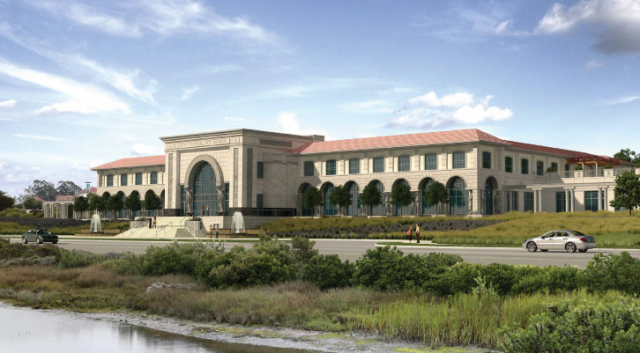
"content": "\u003cp>\u003cstrong>By The Associated Press\u003cbr>\n\u003c/strong>\u003cbr>\nSan Francisco Mayor Edwin Lee is offering George Lucas a spot on the city's scenic waterfront for the future home of the \"Star Wars\" creator's lifetime collection of art and movie memorabilia.\u003c/p>\n\u003cp>In a letter sent to Lucas on Thursday, Lee proposes building the Lucas Cultural Arts Museum on a 2.3-acre site known as Seawall Lot 330, which is owned by the Port of San Francisco and is situated along the Embarcadero, south of the Bay Bridge and north of AT&T Park. The letter was shared with the Associated Press by Lee's spokeswoman, Christine Falvey.\u003c/p>\n\u003cp>\"On behalf of the City and County of San Francisco, I write to propose an extraordinary location along our City's waterfront as the iconic new home for the Lucas Cultural Arts Museum,'' Lee wrote.\u003c/p>\n\u003cp>\"Seawall Lot 330 sits across from Piers 30-32, which, should you be interested, offers a unique opportunity to partner with the City and Port to transform crumbling piers and parking lots into complementary new waterfront educational and public open space.''\u003c/p>\n\u003cp>In a handwritten message at the bottom of the letter, Lee added: \"George, thank you for your utmost consideration. You know we enthusiastically support your project and our history!''\u003c/p>\n\u003cp>[ad fullwidth]\u003c/p>\n\u003cp>Earlier this year, the Presidio Trust rejected Lucas' proposal to build the museum at Crissy Field, on a former commissary site currently occupied by Sports Basement. However, it then offered him another location near the home of Lucasfilm's special effects, game unit and corporate offices. Lucas is considering that offer.\u003c/p>\n\u003cfigure id=\"attachment_137540\" class=\"wp-caption aligncenter\" style=\"max-width: 640px\">\u003ca href=\"http://ww2.kqed.org/news/wp-content/uploads/sites/10/2014/05/Screenshot-2014-02-04-00.18.06-640x353.png\">\u003cimg class=\"size-full wp-image-137540\" src=\"http://ww2.kqed.org/news/wp-content/uploads/sites/10/2014/05/Screenshot-2014-02-04-00.18.06-640x353.png\" alt=\"Artist’s rendering of proposed Lucas Cultural Arts Museum in San Francisco’s Presidio. (Lucas Cultural Art Museum presentation, January 2014)\" width=\"640\" height=\"353\">\u003c/a>\u003cfigcaption class=\"wp-caption-text\">Artist’s rendering of proposed Lucas Cultural Arts Museum in San Francisco’s Presidio. (Lucas Cultural Art Museum presentation, January 2014)\u003c/figcaption>\u003c/figure>\n\u003cp>Lee had given his staff until the end of May to come up with a list of possible locations for the museum because of increasing interest from other cities, particularly Chicago.\u003c/p>\n\u003cp>A task force appointed by Chicago Mayor Rahm Emanuel recommended last week that the museum be built on parking lots south of its Soldier Field football stadium.\u003c/p>\n\u003cp>Chicago is considered a front-runner in part because Lucas is married to Chicago businesswoman Mellody Hobson.\u003c/p>\n\u003cp>Lucas wants a showcase for his collection of popular art, including illustrations by Norman Rockwell, Maxfield Parrish and N.C. Wyeth, as well as works by Lucas's visual effects company, Industrial Light and Magic, and other companies.\u003c/p>\n\u003cp>The museum will also feature temporary exhibits from other collections.\u003c/p>\n\u003cp>Raised in Modesto, Lucas has said he doesn't have enough wall space at his 6,000-acre Skywalker Ranch in Marin County, and he intends to invest up to $300 million of his money, with another $400 million endowment upon his death.\u003c/p>\n\u003cp>David Perry, Lucas's spokesman, didn't immediately return messages from the AP requesting comment.\u003c/p>\n\u003cp>Read the full letter below:\u003c/p>\n\u003cp style=\"margin: 12px auto 6px auto;font-family: Helvetica,Arial,Sans-serif;font-style: normal;font-variant: normal;font-weight: normal;font-size: 14px;line-height: normal\">\u003ca style=\"text-decoration: underline\" title=\"View Mayor Lee's Letter to George Lucas on Scribd\" href=\"http://www.scribd.com/doc/227094595/Mayor-Lee-s-Letter-to-George-Lucas\">Mayor Lee's Letter to George Lucas\u003c/a>\u003c/p>\n\u003cp>\u003c/p>\n\u003cp>\u003ciframe id=\"doc_28532\" class=\"scribd_iframe_embed\" src=\"//www.scribd.com/embeds/227094595/content?start_page=1&view_mode=scroll&show_recommendations=true\" width=\"100%\" height=\"600\" frameborder=\"0\" scrolling=\"no\">\u003c/iframe>\u003c/p>\n\n",
"disqusIdentifier": "137532 http://ww2.kqed.org/news/?p=137532",
"disqusUrl": "https://ww2.kqed.org/news/2014/05/29/san-francisco-mayor-lee-offers-lucas-prime-museum-site/",
"stats": {
"hasVideo": false,
"hasChartOrMap": false,
"hasAudio": false,
"hasPolis": false,
"wordCount": 480,
"hasGoogleForm": false,
"hasGallery": false,
"hasHearkenModule": false,
"iframeSrcs": [],
"paragraphCount": 17
},
"modified": 1401411886,
"excerpt": "On the Embarcadero, the site is situated between the Bay Bridge and the Giants baseball stadium.",
"headData": {
"twImgId": "",
"twTitle": "",
"ogTitle": "",
"ogImgId": "",
"twDescription": "",
"description": "On the Embarcadero, the site is situated between the Bay Bridge and the Giants baseball stadium.",
"title": "San Francisco Mayor Lee Offers George Lucas a Waterfront Museum Site | KQED",
"ogDescription": "",
"schema": {
"@context": "https://schema.org",
"@type": "NewsArticle",
"headline": "San Francisco Mayor Lee Offers George Lucas a Waterfront Museum Site",
"datePublished": "2014-05-29T17:14:54-07:00",
"dateModified": "2014-05-29T18:04:46-07:00",
"image": "https://cdn.kqed.org/wp-content/uploads/2020/02/KQED-OG-Image@1x.png",
"isAccessibleForFree": "True",
"publisher": {
"@type": "NewsMediaOrganization",
"@id": "https://www.kqed.org/#organization",
"name": "KQED",
"logo": "https://cdn.kqed.org/wp-content/uploads/2020/02/KQED-OG-Image@1x.png",
"url": "https://www.kqed.org",
"sameAs": [
"https://www.facebook.com/KQED",
"https://twitter.com/KQED",
"https://www.instagram.com/kqed/",
"https://www.tiktok.com/@kqedofficial",
"https://www.linkedin.com/company/kqed",
"https://www.youtube.com/channel/UCeC0IOo7i1P_61zVUWbJ4nw"
]
}
}
},
"guestAuthors": [],
"slug": "san-francisco-mayor-lee-offers-lucas-prime-museum-site",
"status": "publish",
"customPermalink": "san-francisco-lucas-museum-offer/",
"path": "/news/137532/san-francisco-mayor-lee-offers-lucas-prime-museum-site",
"audioTrackLength": null,
"parsedContent": [
{
"type": "contentString",
"content": "\u003cdiv class=\"post-body\">\u003cp>\u003cp>\u003cstrong>By The Associated Press\u003cbr>\n\u003c/strong>\u003cbr>\nSan Francisco Mayor Edwin Lee is offering George Lucas a spot on the city's scenic waterfront for the future home of the \"Star Wars\" creator's lifetime collection of art and movie memorabilia.\u003c/p>\n\u003cp>In a letter sent to Lucas on Thursday, Lee proposes building the Lucas Cultural Arts Museum on a 2.3-acre site known as Seawall Lot 330, which is owned by the Port of San Francisco and is situated along the Embarcadero, south of the Bay Bridge and north of AT&T Park. The letter was shared with the Associated Press by Lee's spokeswoman, Christine Falvey.\u003c/p>\n\u003cp>\"On behalf of the City and County of San Francisco, I write to propose an extraordinary location along our City's waterfront as the iconic new home for the Lucas Cultural Arts Museum,'' Lee wrote.\u003c/p>\n\u003cp>\"Seawall Lot 330 sits across from Piers 30-32, which, should you be interested, offers a unique opportunity to partner with the City and Port to transform crumbling piers and parking lots into complementary new waterfront educational and public open space.''\u003c/p>\n\u003cp>In a handwritten message at the bottom of the letter, Lee added: \"George, thank you for your utmost consideration. You know we enthusiastically support your project and our history!''\u003c/p>\n\u003cp>\u003c/p>\u003c/div>",
"attributes": {
"named": {},
"numeric": []
}
},
{
"type": "component",
"content": "",
"name": "ad",
"attributes": {
"named": {
"label": "fullwidth"
},
"numeric": [
"fullwidth"
]
}
},
{
"type": "contentString",
"content": "\u003cdiv class=\"post-body\">\u003cp>\u003c/p>\n\u003cp>Earlier this year, the Presidio Trust rejected Lucas' proposal to build the museum at Crissy Field, on a former commissary site currently occupied by Sports Basement. However, it then offered him another location near the home of Lucasfilm's special effects, game unit and corporate offices. Lucas is considering that offer.\u003c/p>\n\u003cfigure id=\"attachment_137540\" class=\"wp-caption aligncenter\" style=\"max-width: 640px\">\u003ca href=\"http://ww2.kqed.org/news/wp-content/uploads/sites/10/2014/05/Screenshot-2014-02-04-00.18.06-640x353.png\">\u003cimg class=\"size-full wp-image-137540\" src=\"http://ww2.kqed.org/news/wp-content/uploads/sites/10/2014/05/Screenshot-2014-02-04-00.18.06-640x353.png\" alt=\"Artist’s rendering of proposed Lucas Cultural Arts Museum in San Francisco’s Presidio. (Lucas Cultural Art Museum presentation, January 2014)\" width=\"640\" height=\"353\">\u003c/a>\u003cfigcaption class=\"wp-caption-text\">Artist’s rendering of proposed Lucas Cultural Arts Museum in San Francisco’s Presidio. (Lucas Cultural Art Museum presentation, January 2014)\u003c/figcaption>\u003c/figure>\n\u003cp>Lee had given his staff until the end of May to come up with a list of possible locations for the museum because of increasing interest from other cities, particularly Chicago.\u003c/p>\n\u003cp>A task force appointed by Chicago Mayor Rahm Emanuel recommended last week that the museum be built on parking lots south of its Soldier Field football stadium.\u003c/p>\n\u003cp>Chicago is considered a front-runner in part because Lucas is married to Chicago businesswoman Mellody Hobson.\u003c/p>\n\u003cp>Lucas wants a showcase for his collection of popular art, including illustrations by Norman Rockwell, Maxfield Parrish and N.C. Wyeth, as well as works by Lucas's visual effects company, Industrial Light and Magic, and other companies.\u003c/p>\n\u003cp>The museum will also feature temporary exhibits from other collections.\u003c/p>\n\u003cp>Raised in Modesto, Lucas has said he doesn't have enough wall space at his 6,000-acre Skywalker Ranch in Marin County, and he intends to invest up to $300 million of his money, with another $400 million endowment upon his death.\u003c/p>\n\u003cp>David Perry, Lucas's spokesman, didn't immediately return messages from the AP requesting comment.\u003c/p>\n\u003cp>Read the full letter below:\u003c/p>\n\u003cp style=\"margin: 12px auto 6px auto;font-family: Helvetica,Arial,Sans-serif;font-style: normal;font-variant: normal;font-weight: normal;font-size: 14px;line-height: normal\">\u003ca style=\"text-decoration: underline\" title=\"View Mayor Lee's Letter to George Lucas on Scribd\" href=\"http://www.scribd.com/doc/227094595/Mayor-Lee-s-Letter-to-George-Lucas\">Mayor Lee's Letter to George Lucas\u003c/a>\u003c/p>\n\u003cp>\u003c/p>\n\u003cp>\u003ciframe id=\"doc_28532\" class=\"scribd_iframe_embed\" src=\"//www.scribd.com/embeds/227094595/content?start_page=1&view_mode=scroll&show_recommendations=true\" width=\"100%\" height=\"600\" frameborder=\"0\" scrolling=\"no\">\u003c/iframe>\u003c/p>\n\n\u003c/div>\u003c/p>",
"attributes": {
"named": {},
"numeric": []
}
}
],
"link": "/news/137532/san-francisco-mayor-lee-offers-lucas-prime-museum-site",
"authors": [
"237"
],
"programs": [
"news_6944"
],
"categories": [
"news_223",
"news_8"
],
"tags": [
"news_543",
"news_3407"
],
"featImg": "news_137540",
"label": "news_6944"
},
"news_137321": {
"type": "posts",
"id": "news_137321",
"meta": {
"index": "posts_1716263798",
"site": "news",
"id": "137321",
"score": null,
"sort": [
1401294147000
]
},
"parent": 0,
"labelTerm": {
"site": "news",
"term": 6944
},
"blocks": [],
"publishDate": 1401294147,
"format": "video",
"disqusTitle": "Maya Angelou: Remembering a Cultural Giant's Life in San Francisco",
"title": "Maya Angelou: Remembering a Cultural Giant's Life in San Francisco",
"headTitle": "News Fix | KQED News",
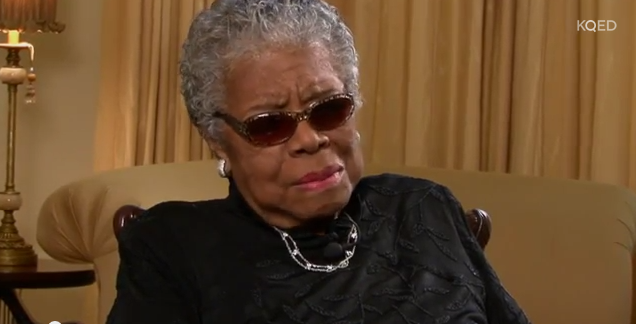
"content": "\u003cp>\u003cstrong>By Olivia Allen-Price and Dan Brekke\u003c/strong>\u003c/p>\n\u003cp>When veteran KQED journalist Belva Davis bowed out of her longtime post as host of \"This Week in Northern California\" 18 months ago, she asked her longtime friend Maya Angelou to sum up the importance of enduring relationships and friendship.\u003c/p>\n\u003cp>Davis visited Angelou, then 84, at her home in North Carolina. She talked about the literature that mattered most to her, from Shakespeare to Amiri Baraka, and recapped her career as entertainer, novelist, poet and cultural inspiration. That arc brought her at one point to KQED, where in 1968 she wrote, produced and narrated a documentary series called \"Blacks, Blues, Black!\"\u003c/p>\n\u003cp>As the Associated Press recounts, San Francisco was an important part of Angelou's early life, too:\u003c/p>\n\u003cblockquote>\u003cp>Her very name as an adult was a reinvention. Angelou was born Marguerite Johnson in St. Louis and raised in Stamps, Arkansas, and San Francisco, moving back and forth between her parents and her grandmother. She was smart and fresh to the point of danger, packed off by her family to California after sassing a white store clerk in Arkansas. Other times, she didn't speak at all: At age 7, she was raped by her mother's boyfriend and didn't talk for years. She learned by reading, and listening.\u003c/p>\n\u003cp>...At age 9, she was writing poetry. By 17, she was a single mother. In her early 20s, she danced at a strip joint, ran a brothel, was married, and then divorced. But by her mid-20s, she was performing at the Purple Onion in San Francisco, where she shared billing with another future star, Phyllis Diller. She also spent a few days with Billie Holiday, who was kind enough to sing a lullaby to Angelou's son, Guy, surly enough to heckle her off the stage and astute enough to tell her: \"You're going to be famous. But it won't be for singing.\"\u003c/p>\u003c/blockquote>\n\u003cp>WNYC (yes, a New York public media outlet beating us to the punch) relates Angelou's story of being the city's first African-American streetcar conductor:\u003c/p>\n\u003cblockquote>\u003cp>Angelou ... also has a place in civil rights transportation history: At the age of 16, she said she became San Francisco's first black streetcar conductor.\u003c/p>\n\u003cp>In an interview with Oprah Winfrey, she said \"I loved the uniforms. So I said, 'That's the job I want!' \"\u003c/p>\n\u003cp>But when she applied for the job, at first the office wouldn't give her an application. On the advice of her mother, she essentially staged a sit-in.\u003c/p>\n\u003cp>\"I sat there (at the office) for two weeks, every day. And then after two weeks, a man came out of his office and said, 'Come here.' And he asked me 'why do you want the job?' I said, 'I like the uniforms.' And I said, 'And I like people.' And so I got the job.\"\u003c/p>\u003c/blockquote>\n\u003cp>That would have been around 1944. Angela also told Winfrey that her mother kept a watchful eye on the brand-new streetcar conductor when she began her first run every morning:\u003c/p>\n\u003cblockquote>\u003cp>She would drive me out to the beach, and she would have her pistol on the seat of the car, and she would follow the streetcar all the way from the beach to the Ferry Building, right through San Francisco, and back again out to the beach, until daybreak. I mean, stayed close so that nobody got on that she didn't see. ...\u003c/p>\u003c/blockquote>\n\u003cp>Muni said last year that \"anecdotal evidence we’ve gathered over the years indicate several African-Americans found employment on the streetcars a little earlier than Dr. Angelou,\" but added that that didn't diminish the 16-year-old's accomplishment in getting the job. Here is Muni's link to Angelou's story, complete with a video of the \"Oprah\" appearance: \"\u003ca href=\"http://www.streetcar.org/blog/2013/05/maya-angelou-and-market-street-railway.html\" target=\"_blank\">Maya Angelou and the Market Street Railway\u003c/a>.\"\u003c/p>\n\u003cp>[ad fullwidth]\u003c/p>\n\u003cp>\u003c/p>\n\u003cp>In her interview with Belva Davis, Angelou declared she had a firm notion of life's cardinal virtue:\u003c/p>\n\u003cblockquote>\u003cp>I owe it to another to say what I've learned. I think each one of us lives in direct relation to the heroes and sheroes we have, always and in all ways. And you have to have enough courage to be a hero/shero. Courage is the most important of all the virtues, because without courage you can't practice any of the other virtues consistently; you can be anything erratically — kind, fair, true, generous, blah, blah, blah. But to be that thing time after time, you have to have courage.\u003c/p>\u003c/blockquote>\n\n",
"disqusIdentifier": "137321 http://ww2.kqed.org/news/?p=137321",
"disqusUrl": "https://ww2.kqed.org/news/2014/05/28/maya-angelou-remembering-a-cultural-giants-life-in-san-francisco/",
"stats": {
"hasVideo": false,
"hasChartOrMap": false,
"hasAudio": false,
"hasPolis": false,
"wordCount": 758,
"hasGoogleForm": false,
"hasGallery": false,
"hasHearkenModule": false,
"iframeSrcs": [],
"paragraphCount": 18
},
"modified": 1471544469,
"excerpt": "For the poet and novelist, courage was a cardinal virtue, a lesson learned in part during her life here.",
"headData": {
"twImgId": "",
"twTitle": "",
"ogTitle": "",
"ogImgId": "",
"twDescription": "",
"description": "For the poet and novelist, courage was a cardinal virtue, a lesson learned in part during her life here.",
"title": "Maya Angelou: Remembering a Cultural Giant's Life in San Francisco | KQED",
"ogDescription": "",
"schema": {
"@context": "https://schema.org",
"@type": "NewsArticle",
"headline": "Maya Angelou: Remembering a Cultural Giant's Life in San Francisco",
"datePublished": "2014-05-28T09:22:27-07:00",
"dateModified": "2016-08-18T11:21:09-07:00",
"image": "https://cdn.kqed.org/wp-content/uploads/2020/02/KQED-OG-Image@1x.png",
"isAccessibleForFree": "True",
"publisher": {
"@type": "NewsMediaOrganization",
"@id": "https://www.kqed.org/#organization",
"name": "KQED",
"logo": "https://cdn.kqed.org/wp-content/uploads/2020/02/KQED-OG-Image@1x.png",
"url": "https://www.kqed.org",
"sameAs": [
"https://www.facebook.com/KQED",
"https://twitter.com/KQED",
"https://www.instagram.com/kqed/",
"https://www.tiktok.com/@kqedofficial",
"https://www.linkedin.com/company/kqed",
"https://www.youtube.com/channel/UCeC0IOo7i1P_61zVUWbJ4nw"
]
}
}
},
"guestAuthors": [],
"slug": "maya-angelou-remembering-a-cultural-giants-life-in-san-francisco",
"status": "publish",
"customPermalink": "2014/05/28/maya-angelou-in-san-francisco/",
"videoEmbed": "https://www.youtube.com/watch?v=rHWuSrCU_X0",
"path": "/news/137321/maya-angelou-remembering-a-cultural-giants-life-in-san-francisco",
"audioTrackLength": null,
"parsedContent": [
{
"type": "contentString",
"content": "\u003cdiv class=\"post-body\">\u003cp>\u003cp>\u003cstrong>By Olivia Allen-Price and Dan Brekke\u003c/strong>\u003c/p>\n\u003cp>When veteran KQED journalist Belva Davis bowed out of her longtime post as host of \"This Week in Northern California\" 18 months ago, she asked her longtime friend Maya Angelou to sum up the importance of enduring relationships and friendship.\u003c/p>\n\u003cp>Davis visited Angelou, then 84, at her home in North Carolina. She talked about the literature that mattered most to her, from Shakespeare to Amiri Baraka, and recapped her career as entertainer, novelist, poet and cultural inspiration. That arc brought her at one point to KQED, where in 1968 she wrote, produced and narrated a documentary series called \"Blacks, Blues, Black!\"\u003c/p>\n\u003cp>As the Associated Press recounts, San Francisco was an important part of Angelou's early life, too:\u003c/p>\n\u003cblockquote>\u003cp>Her very name as an adult was a reinvention. Angelou was born Marguerite Johnson in St. Louis and raised in Stamps, Arkansas, and San Francisco, moving back and forth between her parents and her grandmother. She was smart and fresh to the point of danger, packed off by her family to California after sassing a white store clerk in Arkansas. Other times, she didn't speak at all: At age 7, she was raped by her mother's boyfriend and didn't talk for years. She learned by reading, and listening.\u003c/p>\n\u003cp>...At age 9, she was writing poetry. By 17, she was a single mother. In her early 20s, she danced at a strip joint, ran a brothel, was married, and then divorced. But by her mid-20s, she was performing at the Purple Onion in San Francisco, where she shared billing with another future star, Phyllis Diller. She also spent a few days with Billie Holiday, who was kind enough to sing a lullaby to Angelou's son, Guy, surly enough to heckle her off the stage and astute enough to tell her: \"You're going to be famous. But it won't be for singing.\"\u003c/p>\u003c/blockquote>\n\u003cp>WNYC (yes, a New York public media outlet beating us to the punch) relates Angelou's story of being the city's first African-American streetcar conductor:\u003c/p>\n\u003cblockquote>\u003cp>Angelou ... also has a place in civil rights transportation history: At the age of 16, she said she became San Francisco's first black streetcar conductor.\u003c/p>\n\u003cp>In an interview with Oprah Winfrey, she said \"I loved the uniforms. So I said, 'That's the job I want!' \"\u003c/p>\n\u003cp>But when she applied for the job, at first the office wouldn't give her an application. On the advice of her mother, she essentially staged a sit-in.\u003c/p>\n\u003cp>\"I sat there (at the office) for two weeks, every day. And then after two weeks, a man came out of his office and said, 'Come here.' And he asked me 'why do you want the job?' I said, 'I like the uniforms.' And I said, 'And I like people.' And so I got the job.\"\u003c/p>\u003c/blockquote>\n\u003cp>That would have been around 1944. Angela also told Winfrey that her mother kept a watchful eye on the brand-new streetcar conductor when she began her first run every morning:\u003c/p>\n\u003cblockquote>\u003cp>She would drive me out to the beach, and she would have her pistol on the seat of the car, and she would follow the streetcar all the way from the beach to the Ferry Building, right through San Francisco, and back again out to the beach, until daybreak. I mean, stayed close so that nobody got on that she didn't see. ...\u003c/p>\u003c/blockquote>\n\u003cp>Muni said last year that \"anecdotal evidence we’ve gathered over the years indicate several African-Americans found employment on the streetcars a little earlier than Dr. Angelou,\" but added that that didn't diminish the 16-year-old's accomplishment in getting the job. Here is Muni's link to Angelou's story, complete with a video of the \"Oprah\" appearance: \"\u003ca href=\"http://www.streetcar.org/blog/2013/05/maya-angelou-and-market-street-railway.html\" target=\"_blank\">Maya Angelou and the Market Street Railway\u003c/a>.\"\u003c/p>\n\u003cp>\u003c/p>\u003c/div>",
"attributes": {
"named": {},
"numeric": []
}
},
{
"type": "component",
"content": "",
"name": "ad",
"attributes": {
"named": {
"label": "fullwidth"
},
"numeric": [
"fullwidth"
]
}
},
{
"type": "contentString",
"content": "\u003cdiv class=\"post-body\">\u003cp>\u003c/p>\n\u003cp>\u003c/p>\n\u003cp>In her interview with Belva Davis, Angelou declared she had a firm notion of life's cardinal virtue:\u003c/p>\n\u003cblockquote>\u003cp>I owe it to another to say what I've learned. I think each one of us lives in direct relation to the heroes and sheroes we have, always and in all ways. And you have to have enough courage to be a hero/shero. Courage is the most important of all the virtues, because without courage you can't practice any of the other virtues consistently; you can be anything erratically — kind, fair, true, generous, blah, blah, blah. But to be that thing time after time, you have to have courage.\u003c/p>\u003c/blockquote>\n\n\u003c/div>\u003c/p>",
"attributes": {
"named": {},
"numeric": []
}
}
],
"link": "/news/137321/maya-angelou-remembering-a-cultural-giants-life-in-san-francisco",
"authors": [
"236"
],
"programs": [
"news_6944"
],
"categories": [
"news_223"
],
"tags": [
"news_1698",
"news_6384",
"news_38"
],
"featImg": "news_137332",
"label": "news_6944"
},
"news_10340896": {
"type": "posts",
"id": "news_10340896",
"meta": {
"index": "posts_1716263798",
"site": "news",
"id": "10340896",
"score": null,
"sort": [
1400832058000
]
},
"parent": 0,
"labelTerm": {
"site": "news",
"term": 72
},
"blocks": [],
"publishDate": 1400832058,
"format": "standard",
"disqusTitle": "Vulnerable Teens 'Sing It Out' in Santa Barbara",
"title": "Vulnerable Teens 'Sing It Out' in Santa Barbara",
"headTitle": "The California Report | KQED News",
"content": "\u003cp>http://www.kqed.org/.stream/anon/radio/tcrmag/2014/05/20140523ctcrmag.mp3\u003c/p>\n\u003cp>A Santa Barbara group’s unique approach to helping vulnerable teens was recently recognized as one of the top youth programs in the country. The program is called AHA! and it teaches middle and high school kids how to cope with their feelings through games, dialogue, and performance.\u003c/p>\n\u003cp>Wild cheers and applause greet 18-year-old Samantha as she strides onstage in front of a packed auditorium at AHA’s annual Sing It Out performance. AHA stands for attitude, harmony, and achievement. Most of the teen performers have never sung in public before. This show is the crowning moment of their AHA journey.\u003c/p>\n\u003cp>Before the performance, Samantha describes AHA. “It’s such a sense of community that I’ve never felt before,” she says. “They’re people that I can rely on, all of them, even the adults, which is something as a teen I think is hard to find.”\u003c/p>\n\u003cp>Samantha didn’t want to give her last name. Before finding AHA in the ninth grade, she’d been through some tough times.\u003c/p>\n\u003cp>[ad fullwidth]\u003c/p>\n\u003cp>“In sixth grade, I began self-harming.” She pauses. “There wasn’t really a concrete reason, a lot of it had to do with body image. And then I found AHA and I got better.”\u003c/p>\n\u003cp>But better only lasted for a while.\u003c/p>\n\u003cp>“I got extremely, extremely depressed,” Samantha explains. “And I had stopped going to AHA, and then one of the facilitators called me, she said ‘why don’t you come back, it’s not good for you to be isolated.’ And I came back, and it’s probably one of the best decisions so far that I’ve made, for sure.”\u003c/p>\n\u003cp>Jennifer Freed is co-executive director of AHA. She says the strong relationship between teens and their adult mentors makes the program unique.\u003c/p>\n\u003cfigure id=\"attachment_10140897\" class=\"wp-caption alignright\" style=\"max-width: 400px\">\u003ca href=\"http://ww2.kqed.org/news/wp-content/uploads/sites/10/2014/09/Singitoutcrop2.jpg\">\u003cimg src=\"http://ww2.kqed.org/news/wp-content/uploads/sites/10/2014/09/Singitoutcrop2-400x285.jpg\" alt=\"Joseph Ortiz and his AHA mentor Martin Leyva hang out backstage before the Sing It Out show. (Noah Dalton Schneider/KQED)\" width=\"400\" height=\"285\" class=\"size-thumbnail wp-image-10140897\">\u003c/a>\u003cfigcaption class=\"wp-caption-text\">Joseph Ortiz and his AHA mentor Martin Leyva hang out backstage before the Sing It Out show. (Noah Dalton Schneider/KQED)\u003c/figcaption>\u003c/figure>\n\u003cp>“The community aspect of this, we’re all in it together, and we’re better together really makes a point in terms of teen brain development and seeing a possible future for themselves,” Freed says.\u003c/p>\n\u003cp> Freed and fellow psychotherapist and educator Renny Freedman founded AHA in 1999. Motivated by the shootings at Columbine high school, they created a year-round program at a few local public schools to help teens feel connected and safe. The idea was for the students -- and adults -- to learn and grow together, and improve their social and emotional skills. Weekly group counseling sessions are a key part of the program.\u003c/p>\n\u003cp>At a rehearsal for their annual Sing It Out show, the teens and their mentors sit in a circle to share what they call “thorns and roses”-- their highs and lows of the week.\u003c/p>\n\u003cp>“My thorn is that I’m kind of behind in some English work,” one of the students says. “But my rose is that I went to the beach last night by myself, and it was just very relaxing.”\u003c/p>\n\u003cp>AHA’s methods also include games, icebreakers, and trust activities, where the teens and adults play together. And this approach is getting some attention. Earlier this month, a Chicago-based philanthropist tapped AHA to help establish a national curriculum for social and emotional learning.\u003c/p>\n\u003cp>“It’s a whole set of skills that allows somebody to become a really good relationship person which is now proven to be the skill set needed in all facets of life,” Freed explains.\u003c/p>\n\u003cp>Skills like managing moods, self-awareness, self-motivation, empathy, and compassion--skills Joseph Ortiz was lacking when he first started the program.\u003c/p>\n\u003cp>I had a bad attitude to everything,” Ortiz says. “I just had a lot of anger and no outlet, ‘cause guys are supposed to be super tough and everything and can’t talk about your emotions. I just needed somebody to talk with.”\u003c/p>\n\u003cp>Ortiz opens up about being bullied in grade school.\u003c/p>\n\u003cp>“And I guess that’s where the anger first started because I felt I was being hated on, bullied, called names for everything for no reason, and what I call six years of probably the rough times of my life,” Ortiz says. “I just wanted to stay home and cry at times.”\u003c/p>\n\u003cp>Today, he’s a happy, enthusiastic college freshman -- and he still attends AHA groups. Next year, he’ll be part of the alumni group. He says he’s never performed at any of the Sing It Out shows, but he finally worked up the courage this year.\u003c/p>\n\u003cp>“I’m a shower singer, never sang in public before, really, so this is a huge step for me.” He smiles “I’m singing Ben E. King’s ‘Stand by Me’.”\u003c/p>\n\u003cp>\u003c/p>\n\u003cp>At Sing It out, the audience claps and sings along to his performance. Ortiz exits the stage to a standing ovation.\u003c/p>\n\n",
"disqusIdentifier": "10340896 http://ww2.kqed.org/news/?p=10140896",
"disqusUrl": "https://ww2.kqed.org/news/2014/05/23/vulnerable-teens-sing-it-out-in-santa-barbara/",
"stats": {
"hasVideo": false,
"hasChartOrMap": false,
"hasAudio": true,
"hasPolis": false,
"wordCount": 876,
"hasGoogleForm": false,
"hasGallery": false,
"hasHearkenModule": false,
"iframeSrcs": [],
"paragraphCount": 23
},
"modified": 1411058410,
"excerpt": "In Santa Barbara, a celebrated youth program teaches middle and high school kids how to cope with their feelings.",
"headData": {
"twImgId": "",
"twTitle": "",
"ogTitle": "",
"ogImgId": "",
"twDescription": "",
"description": "In Santa Barbara, a celebrated youth program teaches middle and high school kids how to cope with their feelings.",
"title": "Vulnerable Teens 'Sing It Out' in Santa Barbara | KQED",
"ogDescription": "",
"schema": {
"@context": "https://schema.org",
"@type": "NewsArticle",
"headline": "Vulnerable Teens 'Sing It Out' in Santa Barbara",
"datePublished": "2014-05-23T01:00:58-07:00",
"dateModified": "2014-09-18T09:40:10-07:00",
"image": "https://cdn.kqed.org/wp-content/uploads/2020/02/KQED-OG-Image@1x.png",
"isAccessibleForFree": "True",
"publisher": {
"@type": "NewsMediaOrganization",
"@id": "https://www.kqed.org/#organization",
"name": "KQED",
"logo": "https://cdn.kqed.org/wp-content/uploads/2020/02/KQED-OG-Image@1x.png",
"url": "https://www.kqed.org",
"sameAs": [
"https://www.facebook.com/KQED",
"https://twitter.com/KQED",
"https://www.instagram.com/kqed/",
"https://www.tiktok.com/@kqedofficial",
"https://www.linkedin.com/company/kqed",
"https://www.youtube.com/channel/UCeC0IOo7i1P_61zVUWbJ4nw"
]
}
}
},
"guestAuthors": [],
"slug": "vulnerable-teens-sing-it-out-in-santa-barbara",
"status": "publish",
"nprByline": "Diane Bock",
"path": "/news/10340896/vulnerable-teens-sing-it-out-in-santa-barbara",
"audioUrl": "http://www.kqed.org/.stream/anon/radio/tcrmag/2014/05/20140523ctcrmag.mp3",
"audioDuration": null,
"audioTrackLength": null,
"parsedContent": [
{
"type": "contentString",
"content": "\u003cdiv class=\"post-body\">\u003cp>\u003c/p>\u003c/div>",
"attributes": {
"named": {},
"numeric": []
}
},
{
"type": "component",
"content": "",
"name": "audioLink",
"attributes": {
"named": {
"src": "http://www.kqed.org/.stream/anon/radio/tcrmag/2014/05/20140523ctcrmag.mp3"
},
"numeric": []
}
},
{
"type": "contentString",
"content": "\u003cdiv class=\"post-body\">\u003cp>\u003cp>A Santa Barbara group’s unique approach to helping vulnerable teens was recently recognized as one of the top youth programs in the country. The program is called AHA! and it teaches middle and high school kids how to cope with their feelings through games, dialogue, and performance.\u003c/p>\n\u003cp>Wild cheers and applause greet 18-year-old Samantha as she strides onstage in front of a packed auditorium at AHA’s annual Sing It Out performance. AHA stands for attitude, harmony, and achievement. Most of the teen performers have never sung in public before. This show is the crowning moment of their AHA journey.\u003c/p>\n\u003cp>Before the performance, Samantha describes AHA. “It’s such a sense of community that I’ve never felt before,” she says. “They’re people that I can rely on, all of them, even the adults, which is something as a teen I think is hard to find.”\u003c/p>\n\u003cp>Samantha didn’t want to give her last name. Before finding AHA in the ninth grade, she’d been through some tough times.\u003c/p>\n\u003cp>\u003c/p>\u003c/div>",
"attributes": {
"named": {},
"numeric": []
}
},
{
"type": "component",
"content": "",
"name": "ad",
"attributes": {
"named": {
"label": "fullwidth"
},
"numeric": [
"fullwidth"
]
}
},
{
"type": "contentString",
"content": "\u003cdiv class=\"post-body\">\u003cp>\u003c/p>\n\u003cp>“In sixth grade, I began self-harming.” She pauses. “There wasn’t really a concrete reason, a lot of it had to do with body image. And then I found AHA and I got better.”\u003c/p>\n\u003cp>But better only lasted for a while.\u003c/p>\n\u003cp>“I got extremely, extremely depressed,” Samantha explains. “And I had stopped going to AHA, and then one of the facilitators called me, she said ‘why don’t you come back, it’s not good for you to be isolated.’ And I came back, and it’s probably one of the best decisions so far that I’ve made, for sure.”\u003c/p>\n\u003cp>Jennifer Freed is co-executive director of AHA. She says the strong relationship between teens and their adult mentors makes the program unique.\u003c/p>\n\u003cfigure id=\"attachment_10140897\" class=\"wp-caption alignright\" style=\"max-width: 400px\">\u003ca href=\"http://ww2.kqed.org/news/wp-content/uploads/sites/10/2014/09/Singitoutcrop2.jpg\">\u003cimg src=\"http://ww2.kqed.org/news/wp-content/uploads/sites/10/2014/09/Singitoutcrop2-400x285.jpg\" alt=\"Joseph Ortiz and his AHA mentor Martin Leyva hang out backstage before the Sing It Out show. (Noah Dalton Schneider/KQED)\" width=\"400\" height=\"285\" class=\"size-thumbnail wp-image-10140897\">\u003c/a>\u003cfigcaption class=\"wp-caption-text\">Joseph Ortiz and his AHA mentor Martin Leyva hang out backstage before the Sing It Out show. (Noah Dalton Schneider/KQED)\u003c/figcaption>\u003c/figure>\n\u003cp>“The community aspect of this, we’re all in it together, and we’re better together really makes a point in terms of teen brain development and seeing a possible future for themselves,” Freed says.\u003c/p>\n\u003cp> Freed and fellow psychotherapist and educator Renny Freedman founded AHA in 1999. Motivated by the shootings at Columbine high school, they created a year-round program at a few local public schools to help teens feel connected and safe. The idea was for the students -- and adults -- to learn and grow together, and improve their social and emotional skills. Weekly group counseling sessions are a key part of the program.\u003c/p>\n\u003cp>At a rehearsal for their annual Sing It Out show, the teens and their mentors sit in a circle to share what they call “thorns and roses”-- their highs and lows of the week.\u003c/p>\n\u003cp>“My thorn is that I’m kind of behind in some English work,” one of the students says. “But my rose is that I went to the beach last night by myself, and it was just very relaxing.”\u003c/p>\n\u003cp>AHA’s methods also include games, icebreakers, and trust activities, where the teens and adults play together. And this approach is getting some attention. Earlier this month, a Chicago-based philanthropist tapped AHA to help establish a national curriculum for social and emotional learning.\u003c/p>\n\u003cp>“It’s a whole set of skills that allows somebody to become a really good relationship person which is now proven to be the skill set needed in all facets of life,” Freed explains.\u003c/p>\n\u003cp>Skills like managing moods, self-awareness, self-motivation, empathy, and compassion--skills Joseph Ortiz was lacking when he first started the program.\u003c/p>\n\u003cp>I had a bad attitude to everything,” Ortiz says. “I just had a lot of anger and no outlet, ‘cause guys are supposed to be super tough and everything and can’t talk about your emotions. I just needed somebody to talk with.”\u003c/p>\n\u003cp>Ortiz opens up about being bullied in grade school.\u003c/p>\n\u003cp>“And I guess that’s where the anger first started because I felt I was being hated on, bullied, called names for everything for no reason, and what I call six years of probably the rough times of my life,” Ortiz says. “I just wanted to stay home and cry at times.”\u003c/p>\n\u003cp>Today, he’s a happy, enthusiastic college freshman -- and he still attends AHA groups. Next year, he’ll be part of the alumni group. He says he’s never performed at any of the Sing It Out shows, but he finally worked up the courage this year.\u003c/p>\n\u003cp>“I’m a shower singer, never sang in public before, really, so this is a huge step for me.” He smiles “I’m singing Ben E. King’s ‘Stand by Me’.”\u003c/p>\n\u003cp>\u003c/p>\n\u003cp>At Sing It out, the audience claps and sings along to his performance. Ortiz exits the stage to a standing ovation.\u003c/p>\n\n\u003c/div>\u003c/p>",
"attributes": {
"named": {},
"numeric": []
}
}
],
"link": "/news/10340896/vulnerable-teens-sing-it-out-in-santa-barbara",
"authors": [
"byline_news_10340896"
],
"programs": [
"news_72"
],
"categories": [
"news_223"
],
"tags": [
"news_98"
],
"featImg": "news_10340901",
"label": "news_72"
},
"news_10340884": {
"type": "posts",
"id": "news_10340884",
"meta": {
"index": "posts_1716263798",
"site": "news",
"id": "10340884",
"score": null,
"sort": [
1400832045000
]
},
"parent": 0,
"labelTerm": {
"site": "news",
"term": 72
},
"blocks": [],
"publishDate": 1400832045,
"format": "standard",
"disqusTitle": "Remembering Riverside's Military Heritage on Memorial Day",
"title": "Remembering Riverside's Military Heritage on Memorial Day",
"headTitle": "The California Report | KQED News",
"content": "\u003cp>http://www.kqed.org/.stream/anon/radio/tcrmag/2014/05/20140523etcrmag.mp3\u003c/p>\n\u003cp>On Monday, thousands of people will visit Riverside National Cemetery to lay flowers at gravesides and honor military veterans living and dead. The cemetery is among the places depicted in \"Wild Blue Yonder,\" a photo and oral history project from Riverside novelist Susan Straight and photographer Douglas McCulloh that celebrates Inland Southern California's deep and colorful ties to the military.\u003c/p>\n\u003cp>The solemn and frequent crack of rifle fire reminds you just where you are.\u003c/p>\n\u003cp>\"That's the gun salutes,\" says \u003ca href=\"http://www.susanstraight.com/\" target=\"_blank\">Susan Straight\u003c/a>, pausing mid-sentence as another three-gun salute echoes in the distance where another body is being lowered into the earth at \u003ca href=\"http://www.cem.va.gov/cems/nchp/riverside.asp\" target=\"_blank\">Riverside National Cemetery\u003c/a>. \u003c/p>\n\u003cp>\"To me this is an amazing place,\" says Straight. \"It can be someone who is 92, or you might find somebody who was killed last week in Fallujah and that is that section over there,\" says Straight, pointing to a nearby area of the sprawling 920-acre cemetery.\u003c/p>\n\u003cp>[ad fullwidth]\u003c/p>\n\u003cp>Riverside National Cemetery sits on an axis between two major U.S. military installations; the nearby \u003ca href=\"http://www.march.afrc.af.mil/\" target=\"_blank\">March Air Reserve Base\u003c/a> and Marine Corps Base \u003ca href=\"http://www.pendleton.marines.mil/\" target=\"_blank\">Camp Pendleton\u003c/a> near San Diego.\u003c/p>\n\u003cp>Straight also places the cemetery at the heart of \"\u003ca href=\"http://www.riversideartmuseum.org/exhibits/exhibit-archive/wild-blue-yonder-douglas-mcculloh-susan-straight/\" target=\"_blank\">Wild Blue Yonder\u003c/a>,\" a visual and oral history project produced with photographer \u003ca href=\"http://www.pe.com/articles/mcculloh-688660-chance-arts.html\" target=\"_blank\">Douglas McCulloh\u003c/a>, and now on view at the Riverside Art Museum.\u003c/p>\n\u003cp>\"This was such an amazing convergence of 100 years of military history in Southern California and it's just a distinctive landscape,\" Straight says. \"Here is the cemetery, there (is) March Field and all the KC-135's and the C-17 cargo planes they run active refueling missions every day. Thousands of the Marines from Camp Pendleton who have served in Iraq and Afghanistan, they all leave from March Air Reserve Base.\"\u003c/p>\n\u003cfigure id=\"attachment_10140886\" class=\"wp-caption alignright\" style=\"max-width: 400px\">\u003ca href=\"http://ww2.kqed.org/news/wp-content/uploads/sites/10/2014/09/yonder3.jpg\">\u003cimg src=\"http://ww2.kqed.org/news/wp-content/uploads/sites/10/2014/09/yonder3-400x266.jpg\" alt=\"Roger Zay planting flags at Riverside National Cemetery a few days before Memorial Day 2013. (Douglas McCulloh)\" width=\"400\" height=\"266\" class=\"size-thumbnail wp-image-10140886\">\u003c/a>\u003cfigcaption class=\"wp-caption-text\">Roger Zay planting flags at Riverside National Cemetery a few days before Memorial Day 2013. (Douglas McCulloh)\u003c/figcaption>\u003c/figure>\n\u003cp>Straight and McColluh spent months hunting not only the cemetery, but military bases, churches and homes mining for the stories. Many begin in a family's traumatic uprooting from one military town to the next, or in the flash of a firefight. The stories and characters were all around them.\u003c/p>\n\u003cp>\"Like the day we came here to Riverside National Cemetery, the Friday before Memorial Day exactly a year ago,\" Straight says.\u003c/p>\n\u003cp>\"And here was Roger Zay planting some of his 700 flags.\"\u003c/p>\n\u003cp>Zay is a burly retired U.S. Marine and a veteran of the Vietnam War. His wife is buried at the cemetery. He used to leave graveside flags just for her. Now he plants hundreds a few days before Memorial Day.\u003c/p>\n\u003cp>\"I do all this section here and what I have left over I just keep on going,\" Zay explains, sweeping his arm across the green expanse not far from where his wife is buried.\u003c/p>\n\u003cp>\"To date I got 2,106 flags which is just a drop in the bucket because of the grave sites here. I believe there are over 25,000 gravesites and growing every day.\"\u003c/p>\n\u003cfigure id=\"attachment_10140888\" class=\"wp-caption alignleft\" style=\"max-width: 400px\">\u003ca href=\"http://ww2.kqed.org/news/wp-content/uploads/sites/10/2014/09/yonder4.jpg\">\u003cimg src=\"http://ww2.kqed.org/news/wp-content/uploads/sites/10/2014/09/yonder4-400x564.jpg\" alt=\"Grave marker realignment at Riverside National Cemetery. (Douglas McCulloh)\" width=\"400\" height=\"564\" class=\"size-thumbnail wp-image-10140888\">\u003c/a>\u003cfigcaption class=\"wp-caption-text\">Grave marker realignment at Riverside National Cemetery. (Douglas McCulloh)\u003c/figcaption>\u003c/figure>\n\u003cp>The number of graves grows by \"40 a day, every day,\" writes Susan Straight in \"Wild Blue Yonder.\"\u003c/p>\n\u003cp>\"Ordinary weekdays, cloudy Saturdays which remain unremarkable to anyone else. The busiest national cemetery in the nation, where tens of thousands of war veterans lay in above or below their wives in concrete vaults, above or below and bones separate as if in floating beds stacked in ironic opposition to twin beds aside each other, and where thousands and still counting also lay; single sad vaults of young men and women dying right now in Afghanistan and Iraq, too young to have spouses who have died, or to have had spouses at all.\"\u003c/p>\n\u003cp>Not far from Riverside National Cemetery is another kind of resting place also depicted in Wild Blue Yonder.\u003c/p>\n\u003cp>\"In our main area we have office supplies, we have glassware, lots of beautiful china, crystal,\" explains Rita Sayre one of the volunteer proprietors of an antique collective meets thrift shop called The Treasure Chest.\u003c/p>\n\u003cp>It's operated from a string of houses at \u003ca href=\"http://afvw.com/\" target=\"_blank\">Air Force Village West\u003c/a>, a neatly manicured gated community for retired military personnel and their spouses at the edge of Riverside National Cemetery.\u003c/p>\n\u003cp>Sayre, a vivacious, silver-haired Air Force widow and Village resident helped open the Treasure Chest about a year and half ago. Most of its wares are donated by the families of residents who've passed on.\u003c/p>\n\u003cp>\"Many of the children of the people who live at the village come back after a death,\" Sayre explains.\u003cbr>\n\"And they come from places other than Riverside and they have the homes here that are full of collectibles and lovely things and the family cannot take them.\"\u003c/p>\n\u003cp>So Sayre and her colleagues step in to collect what cannot be taken. All of the money earned, about $100,000 in its first 18 months of operation, goes towards the upkeep of the Village and its residents.\u003c/p>\n\u003cp>\"I have shed many a tear when I have gone into a house and have seen pictures and things on the wall that have been very meaningful. No, there is a lot of heartbreak involved but then again we have people that donate and realize the money is going to a good cause,\" says Sayre.\u003c/p>\n\u003cp>Across town at First United Methodist Church in Riverside http://fumcor.com/ Bill McInroe pores over a wall map of North and South Korea.\u003c/p>\n\u003cfigure id=\"attachment_10140891\" class=\"wp-caption alignright\" style=\"max-width: 400px\">\u003ca href=\"http://ww2.kqed.org/news/wp-content/uploads/sites/10/2014/09/yonder2.jpg\">\u003cimg src=\"http://ww2.kqed.org/news/wp-content/uploads/sites/10/2014/09/yonder2-400x237.jpg\" alt=\"The volunteer proprietors of the Treasure Chest, a thrift shop operated in a gated military retirement community in Riverside. (Douglas McCulloh)\" width=\"400\" height=\"237\" class=\"size-thumbnail wp-image-10140891\">\u003c/a>\u003cfigcaption class=\"wp-caption-text\">The volunteer proprietors of the Treasure Chest, a thrift shop operated in a gated military retirement community in Riverside. (Douglas McCulloh)\u003c/figcaption>\u003c/figure>\n\u003cp>\"We were working all through this area, this is a very important point this 38th Parallel here,\" says McInroe, pointing to the belly of the map where he saw a lot of action as a U.S. Marine tank commander.\u003c/p>\n\u003cp>McInroe fills yet another chapter of \"Wild Blue Yonder.\"\u003c/p>\n\u003cp>In January 1951, during the Korean War, McInroe was part of a battalion that provide cover for refugees flying from the north to the south. But only recently did McInroe discover that the parents of his pastor at First United, John Yoon, were part of that exodus.\u003cbr>\n\"And so we like to think that as they were retreating they somehow ran across Bill,\" says Yoon.\u003c/p>\n\u003cp>\"We might have passed each other in the night and not known it you know ya never know,\" says McInroe.\u003c/p>\n\u003cp>Pastor Yoon says the many funerals he's presided over for veterans of the Korean and 2nd World Wars are a way for him to return the grace military veterans gave his family so many years ago.\u003c/p>\n\u003cp>\"Comforting them at a time of loss and also gives me a chance to say thank you for all you've done,\" Yoon says, turning to McInroe.\u003c/p>\n\u003cp>\"I appreciate that,\" says McInroe.\u003c/p>\n\u003cp>One of the largest organized displays of appreciation in California this Memorial Day will be at Riverside National Cemetery. A day, Susan Straight writes, when not a shovel full of soil is turned.\u003c/p>\n\u003cp>\"On Memorial Day, no one is buried. Tiny plastic flags whip thousands of live people walk and salute and listen to speeches; motorcycles from West Coast Thunder roar past seven thousand strong, and concerts and color guards fill the amphitheater.\"\u003c/p>\n\u003cp>[ad floatright]\u003c/p>\n\u003cp>\"Wild Blue Yonder\" from novelist Susan Straight and photographer Douglas McCulloh is on display at the Riverside Art Museum through July. It then moves on to the museum at March Air Reserve Base.\u003c/p>\n\n",
"disqusIdentifier": "10340884 http://ww2.kqed.org/news/?p=10140884",
"disqusUrl": "https://ww2.kqed.org/news/2014/05/23/remembering-riversides-military-heritage-on-memorial-day/",
"stats": {
"hasVideo": false,
"hasChartOrMap": false,
"hasAudio": true,
"hasPolis": false,
"wordCount": 1249,
"hasGoogleForm": false,
"hasGallery": false,
"hasHearkenModule": false,
"iframeSrcs": [],
"paragraphCount": 35
},
"modified": 1411057788,
"excerpt": "\"Wild Blue Yonder\" -- a photo and oral history project celebrates the deep ties between Riverside and the U.S.",
"headData": {
"twImgId": "",
"twTitle": "",
"ogTitle": "",
"ogImgId": "",
"twDescription": "",
"description": ""Wild Blue Yonder" -- a photo and oral history project celebrates the deep ties between Riverside and the U.S.",
"title": "Remembering Riverside's Military Heritage on Memorial Day | KQED",
"ogDescription": "",
"schema": {
"@context": "https://schema.org",
"@type": "NewsArticle",
"headline": "Remembering Riverside's Military Heritage on Memorial Day",
"datePublished": "2014-05-23T01:00:45-07:00",
"dateModified": "2014-09-18T09:29:48-07:00",
"image": "https://cdn.kqed.org/wp-content/uploads/2020/02/KQED-OG-Image@1x.png",
"isAccessibleForFree": "True",
"publisher": {
"@type": "NewsMediaOrganization",
"@id": "https://www.kqed.org/#organization",
"name": "KQED",
"logo": "https://cdn.kqed.org/wp-content/uploads/2020/02/KQED-OG-Image@1x.png",
"url": "https://www.kqed.org",
"sameAs": [
"https://www.facebook.com/KQED",
"https://twitter.com/KQED",
"https://www.instagram.com/kqed/",
"https://www.tiktok.com/@kqedofficial",
"https://www.linkedin.com/company/kqed",
"https://www.youtube.com/channel/UCeC0IOo7i1P_61zVUWbJ4nw"
]
}
}
},
"guestAuthors": [],
"slug": "remembering-riversides-military-heritage-on-memorial-day",
"status": "publish",
"nprByline": "Steven Cuevas",
"path": "/news/10340884/remembering-riversides-military-heritage-on-memorial-day",
"audioUrl": "http://www.kqed.org/.stream/anon/radio/tcrmag/2014/05/20140523etcrmag.mp3",
"audioDuration": null,
"audioTrackLength": null,
"parsedContent": [
{
"type": "contentString",
"content": "\u003cdiv class=\"post-body\">\u003cp>\u003c/p>\u003c/div>",
"attributes": {
"named": {},
"numeric": []
}
},
{
"type": "component",
"content": "",
"name": "audioLink",
"attributes": {
"named": {
"src": "http://www.kqed.org/.stream/anon/radio/tcrmag/2014/05/20140523etcrmag.mp3"
},
"numeric": []
}
},
{
"type": "contentString",
"content": "\u003cdiv class=\"post-body\">\u003cp>\u003cp>On Monday, thousands of people will visit Riverside National Cemetery to lay flowers at gravesides and honor military veterans living and dead. The cemetery is among the places depicted in \"Wild Blue Yonder,\" a photo and oral history project from Riverside novelist Susan Straight and photographer Douglas McCulloh that celebrates Inland Southern California's deep and colorful ties to the military.\u003c/p>\n\u003cp>The solemn and frequent crack of rifle fire reminds you just where you are.\u003c/p>\n\u003cp>\"That's the gun salutes,\" says \u003ca href=\"http://www.susanstraight.com/\" target=\"_blank\">Susan Straight\u003c/a>, pausing mid-sentence as another three-gun salute echoes in the distance where another body is being lowered into the earth at \u003ca href=\"http://www.cem.va.gov/cems/nchp/riverside.asp\" target=\"_blank\">Riverside National Cemetery\u003c/a>. \u003c/p>\n\u003cp>\"To me this is an amazing place,\" says Straight. \"It can be someone who is 92, or you might find somebody who was killed last week in Fallujah and that is that section over there,\" says Straight, pointing to a nearby area of the sprawling 920-acre cemetery.\u003c/p>\n\u003cp>\u003c/p>\u003c/div>",
"attributes": {
"named": {},
"numeric": []
}
},
{
"type": "component",
"content": "",
"name": "ad",
"attributes": {
"named": {
"label": "fullwidth"
},
"numeric": [
"fullwidth"
]
}
},
{
"type": "contentString",
"content": "\u003cdiv class=\"post-body\">\u003cp>\u003c/p>\n\u003cp>Riverside National Cemetery sits on an axis between two major U.S. military installations; the nearby \u003ca href=\"http://www.march.afrc.af.mil/\" target=\"_blank\">March Air Reserve Base\u003c/a> and Marine Corps Base \u003ca href=\"http://www.pendleton.marines.mil/\" target=\"_blank\">Camp Pendleton\u003c/a> near San Diego.\u003c/p>\n\u003cp>Straight also places the cemetery at the heart of \"\u003ca href=\"http://www.riversideartmuseum.org/exhibits/exhibit-archive/wild-blue-yonder-douglas-mcculloh-susan-straight/\" target=\"_blank\">Wild Blue Yonder\u003c/a>,\" a visual and oral history project produced with photographer \u003ca href=\"http://www.pe.com/articles/mcculloh-688660-chance-arts.html\" target=\"_blank\">Douglas McCulloh\u003c/a>, and now on view at the Riverside Art Museum.\u003c/p>\n\u003cp>\"This was such an amazing convergence of 100 years of military history in Southern California and it's just a distinctive landscape,\" Straight says. \"Here is the cemetery, there (is) March Field and all the KC-135's and the C-17 cargo planes they run active refueling missions every day. Thousands of the Marines from Camp Pendleton who have served in Iraq and Afghanistan, they all leave from March Air Reserve Base.\"\u003c/p>\n\u003cfigure id=\"attachment_10140886\" class=\"wp-caption alignright\" style=\"max-width: 400px\">\u003ca href=\"http://ww2.kqed.org/news/wp-content/uploads/sites/10/2014/09/yonder3.jpg\">\u003cimg src=\"http://ww2.kqed.org/news/wp-content/uploads/sites/10/2014/09/yonder3-400x266.jpg\" alt=\"Roger Zay planting flags at Riverside National Cemetery a few days before Memorial Day 2013. (Douglas McCulloh)\" width=\"400\" height=\"266\" class=\"size-thumbnail wp-image-10140886\">\u003c/a>\u003cfigcaption class=\"wp-caption-text\">Roger Zay planting flags at Riverside National Cemetery a few days before Memorial Day 2013. (Douglas McCulloh)\u003c/figcaption>\u003c/figure>\n\u003cp>Straight and McColluh spent months hunting not only the cemetery, but military bases, churches and homes mining for the stories. Many begin in a family's traumatic uprooting from one military town to the next, or in the flash of a firefight. The stories and characters were all around them.\u003c/p>\n\u003cp>\"Like the day we came here to Riverside National Cemetery, the Friday before Memorial Day exactly a year ago,\" Straight says.\u003c/p>\n\u003cp>\"And here was Roger Zay planting some of his 700 flags.\"\u003c/p>\n\u003cp>Zay is a burly retired U.S. Marine and a veteran of the Vietnam War. His wife is buried at the cemetery. He used to leave graveside flags just for her. Now he plants hundreds a few days before Memorial Day.\u003c/p>\n\u003cp>\"I do all this section here and what I have left over I just keep on going,\" Zay explains, sweeping his arm across the green expanse not far from where his wife is buried.\u003c/p>\n\u003cp>\"To date I got 2,106 flags which is just a drop in the bucket because of the grave sites here. I believe there are over 25,000 gravesites and growing every day.\"\u003c/p>\n\u003cfigure id=\"attachment_10140888\" class=\"wp-caption alignleft\" style=\"max-width: 400px\">\u003ca href=\"http://ww2.kqed.org/news/wp-content/uploads/sites/10/2014/09/yonder4.jpg\">\u003cimg src=\"http://ww2.kqed.org/news/wp-content/uploads/sites/10/2014/09/yonder4-400x564.jpg\" alt=\"Grave marker realignment at Riverside National Cemetery. (Douglas McCulloh)\" width=\"400\" height=\"564\" class=\"size-thumbnail wp-image-10140888\">\u003c/a>\u003cfigcaption class=\"wp-caption-text\">Grave marker realignment at Riverside National Cemetery. (Douglas McCulloh)\u003c/figcaption>\u003c/figure>\n\u003cp>The number of graves grows by \"40 a day, every day,\" writes Susan Straight in \"Wild Blue Yonder.\"\u003c/p>\n\u003cp>\"Ordinary weekdays, cloudy Saturdays which remain unremarkable to anyone else. The busiest national cemetery in the nation, where tens of thousands of war veterans lay in above or below their wives in concrete vaults, above or below and bones separate as if in floating beds stacked in ironic opposition to twin beds aside each other, and where thousands and still counting also lay; single sad vaults of young men and women dying right now in Afghanistan and Iraq, too young to have spouses who have died, or to have had spouses at all.\"\u003c/p>\n\u003cp>Not far from Riverside National Cemetery is another kind of resting place also depicted in Wild Blue Yonder.\u003c/p>\n\u003cp>\"In our main area we have office supplies, we have glassware, lots of beautiful china, crystal,\" explains Rita Sayre one of the volunteer proprietors of an antique collective meets thrift shop called The Treasure Chest.\u003c/p>\n\u003cp>It's operated from a string of houses at \u003ca href=\"http://afvw.com/\" target=\"_blank\">Air Force Village West\u003c/a>, a neatly manicured gated community for retired military personnel and their spouses at the edge of Riverside National Cemetery.\u003c/p>\n\u003cp>Sayre, a vivacious, silver-haired Air Force widow and Village resident helped open the Treasure Chest about a year and half ago. Most of its wares are donated by the families of residents who've passed on.\u003c/p>\n\u003cp>\"Many of the children of the people who live at the village come back after a death,\" Sayre explains.\u003cbr>\n\"And they come from places other than Riverside and they have the homes here that are full of collectibles and lovely things and the family cannot take them.\"\u003c/p>\n\u003cp>So Sayre and her colleagues step in to collect what cannot be taken. All of the money earned, about $100,000 in its first 18 months of operation, goes towards the upkeep of the Village and its residents.\u003c/p>\n\u003cp>\"I have shed many a tear when I have gone into a house and have seen pictures and things on the wall that have been very meaningful. No, there is a lot of heartbreak involved but then again we have people that donate and realize the money is going to a good cause,\" says Sayre.\u003c/p>\n\u003cp>Across town at First United Methodist Church in Riverside http://fumcor.com/ Bill McInroe pores over a wall map of North and South Korea.\u003c/p>\n\u003cfigure id=\"attachment_10140891\" class=\"wp-caption alignright\" style=\"max-width: 400px\">\u003ca href=\"http://ww2.kqed.org/news/wp-content/uploads/sites/10/2014/09/yonder2.jpg\">\u003cimg src=\"http://ww2.kqed.org/news/wp-content/uploads/sites/10/2014/09/yonder2-400x237.jpg\" alt=\"The volunteer proprietors of the Treasure Chest, a thrift shop operated in a gated military retirement community in Riverside. (Douglas McCulloh)\" width=\"400\" height=\"237\" class=\"size-thumbnail wp-image-10140891\">\u003c/a>\u003cfigcaption class=\"wp-caption-text\">The volunteer proprietors of the Treasure Chest, a thrift shop operated in a gated military retirement community in Riverside. (Douglas McCulloh)\u003c/figcaption>\u003c/figure>\n\u003cp>\"We were working all through this area, this is a very important point this 38th Parallel here,\" says McInroe, pointing to the belly of the map where he saw a lot of action as a U.S. Marine tank commander.\u003c/p>\n\u003cp>McInroe fills yet another chapter of \"Wild Blue Yonder.\"\u003c/p>\n\u003cp>In January 1951, during the Korean War, McInroe was part of a battalion that provide cover for refugees flying from the north to the south. But only recently did McInroe discover that the parents of his pastor at First United, John Yoon, were part of that exodus.\u003cbr>\n\"And so we like to think that as they were retreating they somehow ran across Bill,\" says Yoon.\u003c/p>\n\u003cp>\"We might have passed each other in the night and not known it you know ya never know,\" says McInroe.\u003c/p>\n\u003cp>Pastor Yoon says the many funerals he's presided over for veterans of the Korean and 2nd World Wars are a way for him to return the grace military veterans gave his family so many years ago.\u003c/p>\n\u003cp>\"Comforting them at a time of loss and also gives me a chance to say thank you for all you've done,\" Yoon says, turning to McInroe.\u003c/p>\n\u003cp>\"I appreciate that,\" says McInroe.\u003c/p>\n\u003cp>One of the largest organized displays of appreciation in California this Memorial Day will be at Riverside National Cemetery. A day, Susan Straight writes, when not a shovel full of soil is turned.\u003c/p>\n\u003cp>\"On Memorial Day, no one is buried. Tiny plastic flags whip thousands of live people walk and salute and listen to speeches; motorcycles from West Coast Thunder roar past seven thousand strong, and concerts and color guards fill the amphitheater.\"\u003c/p>\n\u003cp>\u003c/p>\u003c/div>",
"attributes": {
"named": {},
"numeric": []
}
},
{
"type": "component",
"content": "",
"name": "ad",
"attributes": {
"named": {
"label": "floatright"
},
"numeric": [
"floatright"
]
}
},
{
"type": "contentString",
"content": "\u003cdiv class=\"post-body\">\u003cp>\u003c/p>\n\u003cp>\"Wild Blue Yonder\" from novelist Susan Straight and photographer Douglas McCulloh is on display at the Riverside Art Museum through July. It then moves on to the museum at March Air Reserve Base.\u003c/p>\n\n\u003c/div>\u003c/p>",
"attributes": {
"named": {},
"numeric": []
}
}
],
"link": "/news/10340884/remembering-riversides-military-heritage-on-memorial-day",
"authors": [
"byline_news_10340884"
],
"programs": [
"news_72"
],
"categories": [
"news_223"
],
"featImg": "news_10340885",
"label": "news_72"
},
"news_136502": {
"type": "posts",
"id": "news_136502",
"meta": {
"index": "posts_1716263798",
"site": "news",
"id": "136502",
"score": null,
"sort": [
1400540036000
]
},
"parent": 0,
"labelTerm": {
"site": "news",
"term": 6944
},
"blocks": [],
"publishDate": 1400540036,
"format": "aside",
"disqusTitle": "Abstract Math Concepts Spring to Life at UC Square Dancing Club",
"title": "Abstract Math Concepts Spring to Life at UC Square Dancing Club",
"headTitle": "News Fix | KQED News",
"content": "\u003cp> \u003c/p>\n\u003cfigure id=\"attachment_136507\" class=\"wp-caption alignnone\" style=\"max-width: 640px\">\u003ca href=\"http://ww2.kqed.org/news/uc-berkeley-square-dancing-club-abstract-math/square-roots/\" rel=\"attachment wp-att-136507\">\u003cimg class=\"wp-image-136507 size-medium\" src=\"http://ww2.kqed.org/news/wp-content/uploads/sites/10/2014/05/Square-roots-640x480.jpg\" alt=\"Two students practice a California twirl at UC Berkeley's square dancing class, run by students. (Samantha Clark/KQED)\" width=\"640\" height=\"480\">\u003c/a>\u003cfigcaption class=\"wp-caption-text\">Two students practice a California twirl at UC Berkeley's square dancing class, run by students. (Samantha Clark/KQED)\u003c/figcaption>\u003c/figure>\n\u003cp>\u003cstrong>By Samantha Clark\u003c/strong>\u003c/p>\n\u003cp>Daniel Levine and a couple of dozen fellow students are swinging through a classroom at UC Berkeley to a remixed Rihanna song. The lyrics are telling them to \"do si do\" and \"allemande left.\"\u003c/p>\n\u003cp>Finals and graduations are wrapping up this week, but this small group of students has found a way to take a break from all that stress: square dancing.\u003c/p>\n\u003cp>But no one is wearing petticoats and cowboy boots here. It’s hoodies and sandals.\u003c/p>\n\u003cp>[ad fullwidth]\u003c/p>\n\u003cp>The appeal to science students and young tech workers is that math concepts take shape in the dance patterns. Square dancing incorporates permutations, fractions and operators, to name a few.\u003c/p>\n\u003cp>Levine, 23, founded this square dance class last fall after starting his graduate work in UC Berkeley’s chemistry department. When he came here from MIT, where he learned to square dance in his senior year, he saw an opportunity.\u003c/p>\n\u003cp>“It’s like ‘Oh look! It’s that abstract algebra that I learned, but not abstract because people are dancing now,’ ” Levine said. “For me, (math is) more interesting to see. I’m just a giant nerd, and I keep trying to relate square dancing to what I do.”\u003c/p>\n\u003cp>Math and puzzle people see square dancing as similar to solving a Rubik’s Cube — challenging and calculative. Eight dancers start and end in the same position, but they don’t know how they’ll find their way home. There’s a near infinite number of ways to get there. They have a split second to recall one of hundreds of dance moves, which a caller dictates.\u003c/p>\n\u003cp>“It’s always exciting to see what new twist might get thrown your way in the process,” said Greg Ford, a computer engineer at IBM.\u003c/p>\n\u003cp>That’s what interests Levine, making cool and intricate patterns without having to actually practice a sequence of calls. He convinced his lab partner, David Litt, to join, selling him on the mathematical challenge.\u003c/p>\n\u003caside class=\"pullquote alignleft\"> Square dancing incorporates permutations, fractions and operators, to name just a few.\u003c/aside>\n\u003cp>“He said every square has inversion symmetry,” Litt said. “If you look into group theory, which we do in a lot of organic chemistry, there’s some molecules that have inversion symmetry where you invert the points and you’ll get the same shape. I thought that was pretty cool, and I always look for that when I’m dancing.”\u003c/p>\n\u003cp>Fellow MIT alumna Risha Mars helps the students get the hang of it. She is a software engineer at Twitter who’s often out on the dance floor four nights a week at different square dance clubs.\u003c/p>\n\u003cp>“Square dancing is all I do,” Mars said. “I like it because it’s like a giant math problem.”\u003c/p>\n\u003cp>She even studies the dance calls.\u003c/p>\n\u003cp>“I have little checkers to push around to test myself whether I know what the call is going to be, and sometimes I practice with my friends if it’s a call I don’t understand,” she said.\u003c/p>\n\u003cp>Mars and Levine met at MIT’s huge square dance club, Tech Squares -- only a handful of universities have clubs or classes. After they both moved to the Bay Area, they joined Stanford Quads in Palo Alto. The two are unofficial sister clubs, emphasizing technical rigor. They both focus on the definitions and concepts of the dance calls. Many of the folks in Stanford Quads are programmers, engineers and math teachers.\u003c/p>\n\u003cp>“I enjoy learning it,” said Jenna Caldwell, a Stanford University biochemistry graduate student. “It’s totally different from what I do all day, but I still get to use my brain. It’s still sort of puzzle-solving.”\u003c/p>\n\u003cp>\u003c/p>\n\u003cp>Many in the UC Berkeley group say they’re now ready to take on more challenging calls. They’ll do that this summer in the newly formed club, called the Golden Squares.\u003c/p>\n\n",
"disqusIdentifier": "136502 http://ww2.kqed.org/news/?p=136502",
"disqusUrl": "https://ww2.kqed.org/news/2014/05/19/abstract-math-concepts-spring-to-life-at-uc-square-dancing-club/",
"stats": {
"hasVideo": false,
"hasChartOrMap": false,
"hasAudio": false,
"hasPolis": false,
"wordCount": 706,
"hasGoogleForm": false,
"hasGallery": false,
"hasHearkenModule": false,
"iframeSrcs": [],
"paragraphCount": 20
},
"modified": 1400540038,
"excerpt": "Math and puzzle people see square dancing like solving a Rubik’s Cube — challenging and computational. ",
"headData": {
"twImgId": "",
"twTitle": "",
"ogTitle": "",
"ogImgId": "",
"twDescription": "",
"description": "Math and puzzle people see square dancing like solving a Rubik’s Cube — challenging and computational. ",
"title": "Abstract Math Concepts Spring to Life at UC Square Dancing Club | KQED",
"ogDescription": "",
"schema": {
"@context": "https://schema.org",
"@type": "NewsArticle",
"headline": "Abstract Math Concepts Spring to Life at UC Square Dancing Club",
"datePublished": "2014-05-19T15:53:56-07:00",
"dateModified": "2014-05-19T15:53:58-07:00",
"image": "https://cdn.kqed.org/wp-content/uploads/2020/02/KQED-OG-Image@1x.png",
"isAccessibleForFree": "True",
"publisher": {
"@type": "NewsMediaOrganization",
"@id": "https://www.kqed.org/#organization",
"name": "KQED",
"logo": "https://cdn.kqed.org/wp-content/uploads/2020/02/KQED-OG-Image@1x.png",
"url": "https://www.kqed.org",
"sameAs": [
"https://www.facebook.com/KQED",
"https://twitter.com/KQED",
"https://www.instagram.com/kqed/",
"https://www.tiktok.com/@kqedofficial",
"https://www.linkedin.com/company/kqed",
"https://www.youtube.com/channel/UCeC0IOo7i1P_61zVUWbJ4nw"
]
}
}
},
"guestAuthors": [],
"slug": "abstract-math-concepts-spring-to-life-at-uc-square-dancing-club",
"status": "publish",
"customPermalink": "uc-berkeley-square-dancing-club-abstract-math/",
"path": "/news/136502/abstract-math-concepts-spring-to-life-at-uc-square-dancing-club",
"audioTrackLength": null,
"parsedContent": [
{
"type": "contentString",
"content": "\u003cdiv class=\"post-body\">\u003cp>\u003cp> \u003c/p>\n\u003cfigure id=\"attachment_136507\" class=\"wp-caption alignnone\" style=\"max-width: 640px\">\u003ca href=\"http://ww2.kqed.org/news/uc-berkeley-square-dancing-club-abstract-math/square-roots/\" rel=\"attachment wp-att-136507\">\u003cimg class=\"wp-image-136507 size-medium\" src=\"http://ww2.kqed.org/news/wp-content/uploads/sites/10/2014/05/Square-roots-640x480.jpg\" alt=\"Two students practice a California twirl at UC Berkeley's square dancing class, run by students. (Samantha Clark/KQED)\" width=\"640\" height=\"480\">\u003c/a>\u003cfigcaption class=\"wp-caption-text\">Two students practice a California twirl at UC Berkeley's square dancing class, run by students. (Samantha Clark/KQED)\u003c/figcaption>\u003c/figure>\n\u003cp>\u003cstrong>By Samantha Clark\u003c/strong>\u003c/p>\n\u003cp>Daniel Levine and a couple of dozen fellow students are swinging through a classroom at UC Berkeley to a remixed Rihanna song. The lyrics are telling them to \"do si do\" and \"allemande left.\"\u003c/p>\n\u003cp>Finals and graduations are wrapping up this week, but this small group of students has found a way to take a break from all that stress: square dancing.\u003c/p>\n\u003cp>But no one is wearing petticoats and cowboy boots here. It’s hoodies and sandals.\u003c/p>\n\u003cp>\u003c/p>\u003c/div>",
"attributes": {
"named": {},
"numeric": []
}
},
{
"type": "component",
"content": "",
"name": "ad",
"attributes": {
"named": {
"label": "fullwidth"
},
"numeric": [
"fullwidth"
]
}
},
{
"type": "contentString",
"content": "\u003cdiv class=\"post-body\">\u003cp>\u003c/p>\n\u003cp>The appeal to science students and young tech workers is that math concepts take shape in the dance patterns. Square dancing incorporates permutations, fractions and operators, to name a few.\u003c/p>\n\u003cp>Levine, 23, founded this square dance class last fall after starting his graduate work in UC Berkeley’s chemistry department. When he came here from MIT, where he learned to square dance in his senior year, he saw an opportunity.\u003c/p>\n\u003cp>“It’s like ‘Oh look! It’s that abstract algebra that I learned, but not abstract because people are dancing now,’ ” Levine said. “For me, (math is) more interesting to see. I’m just a giant nerd, and I keep trying to relate square dancing to what I do.”\u003c/p>\n\u003cp>Math and puzzle people see square dancing as similar to solving a Rubik’s Cube — challenging and calculative. Eight dancers start and end in the same position, but they don’t know how they’ll find their way home. There’s a near infinite number of ways to get there. They have a split second to recall one of hundreds of dance moves, which a caller dictates.\u003c/p>\n\u003cp>“It’s always exciting to see what new twist might get thrown your way in the process,” said Greg Ford, a computer engineer at IBM.\u003c/p>\n\u003cp>That’s what interests Levine, making cool and intricate patterns without having to actually practice a sequence of calls. He convinced his lab partner, David Litt, to join, selling him on the mathematical challenge.\u003c/p>\n\u003caside class=\"pullquote alignleft\"> Square dancing incorporates permutations, fractions and operators, to name just a few.\u003c/aside>\n\u003cp>“He said every square has inversion symmetry,” Litt said. “If you look into group theory, which we do in a lot of organic chemistry, there’s some molecules that have inversion symmetry where you invert the points and you’ll get the same shape. I thought that was pretty cool, and I always look for that when I’m dancing.”\u003c/p>\n\u003cp>Fellow MIT alumna Risha Mars helps the students get the hang of it. She is a software engineer at Twitter who’s often out on the dance floor four nights a week at different square dance clubs.\u003c/p>\n\u003cp>“Square dancing is all I do,” Mars said. “I like it because it’s like a giant math problem.”\u003c/p>\n\u003cp>She even studies the dance calls.\u003c/p>\n\u003cp>“I have little checkers to push around to test myself whether I know what the call is going to be, and sometimes I practice with my friends if it’s a call I don’t understand,” she said.\u003c/p>\n\u003cp>Mars and Levine met at MIT’s huge square dance club, Tech Squares -- only a handful of universities have clubs or classes. After they both moved to the Bay Area, they joined Stanford Quads in Palo Alto. The two are unofficial sister clubs, emphasizing technical rigor. They both focus on the definitions and concepts of the dance calls. Many of the folks in Stanford Quads are programmers, engineers and math teachers.\u003c/p>\n\u003cp>“I enjoy learning it,” said Jenna Caldwell, a Stanford University biochemistry graduate student. “It’s totally different from what I do all day, but I still get to use my brain. It’s still sort of puzzle-solving.”\u003c/p>\n\u003cp>\u003c/p>\n\u003cp>Many in the UC Berkeley group say they’re now ready to take on more challenging calls. They’ll do that this summer in the newly formed club, called the Golden Squares.\u003c/p>\n\n\u003c/div>\u003c/p>",
"attributes": {
"named": {},
"numeric": []
}
}
],
"link": "/news/136502/abstract-math-concepts-spring-to-life-at-uc-square-dancing-club",
"authors": [
"236"
],
"programs": [
"news_6944"
],
"categories": [
"news_223",
"news_18540",
"news_8"
],
"tags": [
"news_6332",
"news_17597"
],
"featImg": "news_136507",
"label": "news_6944"
},
"arts_10136343": {
"type": "posts",
"id": "arts_10136343",
"meta": {
"index": "posts_1716263798",
"site": "arts",
"id": "10136343",
"score": null,
"sort": [
1400533057000
]
},
"guestAuthors": [],
"slug": "gordon-willis-cinematographer-who-gave-woody-allen-films-their-look-dies",
"title": "Gordon Willis, Woody Allen's Cinematographer, Dies",
"publishDate": 1400533057,
"format": "standard",
"headTitle": "Gordon Willis, Woody Allen’s Cinematographer, Dies | KQED",
"labelTerm": {
"term": 137,
"site": "arts"
},
"content": "\u003cp>Gordon Willis, the cinematographer behind such classic 1970s films as \u003cem>Annie Hall\u003c/em>, \u003cem>Klute\u003c/em>, \u003cem>All the President’s Men\u003c/em> and the \u003cem>Godfather\u003c/em> series, died on Sunday. He was 82.\u003c/p>\n\u003cp>“One cinematographer had established a kind of noir color look, rich in brown, amber and shadow, that was a vital force in the noir movies made in Hollywood in the 1970s,” film historian David Thomson wrote of Willis in his \u003cem>New Biographical Dictionary of Film\u003c/em>.\u003c/p>\n\u003cp>Willis won an honorary Academy Award in 2009, but never took home the prize for best cinematography. He was nominated twice, for \u003cem>The Godfather Part III\u003c/em> and \u003cem>Zelig\u003c/em>, but not for the earlier works that had established him as a giant among his peers.\u003c/p>\n\u003cp>“For a while, I really didn’t know what to do with that movie,” he said of the original \u003cem>Godfather\u003c/em> in a 2002 \u003ca href=\"http://www.npr.org/templates/story/story.php?storyId=120386781\" target=\"_blank\" rel=\"noopener\">interview\u003c/a> on NPR’s \u003cem>Fresh Air\u003c/em>. “I finally decided this should have this brassy, yellow look to it. Don’t ask me why. It just felt right.”\u003c/p>\n\u003cp>The New York native got his start working in makeup. He worked on documentaries for a motion picture unit as part of his Air Force service during the Korean War.\u003c/p>\n\u003cp>[ad fullwidth]\u003c/p>\n\u003cp>He shot a total of eight films for Woody Allen and was dubbed the “Prince of Darkness” by fellow cinematographer Conrad Hall for his use of shadows. (Think of the scene in Allen’s \u003cem>Manhattan\u003c/em> where he and Diane Keaton duck out of the rain into the American Museum of Natural History, or the garage scenes in \u003cem>All the President’s Men\u003c/em>.)\u003c/p>\n\u003cp>“He’s an artist,” Allen \u003ca href=\"http://www.people.com/people/archive/article/0,,20086223,00.html\" target=\"_blank\" rel=\"noopener\">told\u003c/a> \u003cem>People\u003c/em> in 1983. “He’s got a great sense of humor. He taught me a lot.”\u003c/p>\n\u003cp>Willis’ last film was \u003cem>The Devil’s Own\u003c/em> in 1997, directed by Alan J. Pakula.\u003c/p>\n\u003cp>\u003c/p>\n\u003cp>“I got tired of trying to get actors out of trailers, and standing in the rain,” Willis said. \u003c/p>\n\u003cdiv class=\"fullattribution\">Copyright 2014 NPR. To see more, visit http://www.npr.org/.\u003cimg decoding=\"async\" src=\"http://www.google-analytics.com/__utm.gif?utmac=UA-5828686-4&utmdt=Gordon+Willis%2C+Cinematographer+Who+Gave+Woody+Allen+Films+Their+Look%2C+Dies&utme=8(APIKey)9(MDAxOTAwOTE4MDEyMTkxMDAzNjczZDljZA004)\">\u003c/div>\n\n",
"blocks": [],
"excerpt": "He shot eight films with Woody Allen and was particularly known for his work on dark films of the 1970s, such as the \u003cem>Godfather\u003c/em> series. Wills was dubbed the \"Prince of Darkness\" for his use of shadows.",
"status": "publish",
"parent": 0,
"modified": 1726705678,
"stats": {
"hasAudio": false,
"hasVideo": false,
"hasChartOrMap": false,
"iframeSrcs": [],
"hasGoogleForm": false,
"hasGallery": false,
"hasHearkenModule": false,
"hasPolis": false,
"paragraphCount": 11,
"wordCount": 351
},
"headData": {
"title": "Gordon Willis, Woody Allen's Cinematographer, Dies | KQED",
"description": "He shot eight films with Woody Allen and was particularly known for his work on dark films of the 1970s, such as the Godfather series. Wills was dubbed the "Prince of Darkness" for his use of shadows.",
"ogTitle": "",
"ogDescription": "",
"ogImgId": "",
"twTitle": "",
"twDescription": "",
"twImgId": "",
"schema": {
"@context": "https://schema.org",
"@type": "Article",
"headline": "Gordon Willis, Woody Allen's Cinematographer, Dies",
"datePublished": "2014-05-19T13:57:37-07:00",
"dateModified": "2024-09-18T17:27:58-07:00",
"image": "https://cdn.kqed.org/wp-content/uploads/2020/02/KQED-OG-Image@1x.png"
}
},
"sticky": false,
"nprByline": "Alan Greenblatt",
"nprStoryId": "313934977",
"nprApiLink": "http://api.npr.org/query?id=313934977&apiKey=MDAxOTAwOTE4MDEyMTkxMDAzNjczZDljZA004",
"nprHtmlLink": "http://www.npr.org/blogs/thetwo-way/2014/05/19/313934977/gordon-willis-cinematographer-who-gave-woody-allen-films-their-look-dies?ft=3&f=313934977",
"nprRetrievedStory": "1",
"nprPubDate": "Mon, 19 May 2014 10:00:00 -0400",
"nprStoryDate": "Mon, 19 May 2014 09:53:00 -0400",
"nprLastModifiedDate": "Mon, 19 May 2014 10:00:59 -0400",
"path": "/arts/10136343/gordon-willis-cinematographer-who-gave-woody-allen-films-their-look-dies",
"audioTrackLength": null,
"parsedContent": [
{
"type": "contentString",
"content": "\u003cdiv class=\"post-body\">\u003cp>\u003cp>Gordon Willis, the cinematographer behind such classic 1970s films as \u003cem>Annie Hall\u003c/em>, \u003cem>Klute\u003c/em>, \u003cem>All the President’s Men\u003c/em> and the \u003cem>Godfather\u003c/em> series, died on Sunday. He was 82.\u003c/p>\n\u003cp>“One cinematographer had established a kind of noir color look, rich in brown, amber and shadow, that was a vital force in the noir movies made in Hollywood in the 1970s,” film historian David Thomson wrote of Willis in his \u003cem>New Biographical Dictionary of Film\u003c/em>.\u003c/p>\n\u003cp>Willis won an honorary Academy Award in 2009, but never took home the prize for best cinematography. He was nominated twice, for \u003cem>The Godfather Part III\u003c/em> and \u003cem>Zelig\u003c/em>, but not for the earlier works that had established him as a giant among his peers.\u003c/p>\n\u003cp>“For a while, I really didn’t know what to do with that movie,” he said of the original \u003cem>Godfather\u003c/em> in a 2002 \u003ca href=\"http://www.npr.org/templates/story/story.php?storyId=120386781\" target=\"_blank\" rel=\"noopener\">interview\u003c/a> on NPR’s \u003cem>Fresh Air\u003c/em>. “I finally decided this should have this brassy, yellow look to it. Don’t ask me why. It just felt right.”\u003c/p>\n\u003cp>The New York native got his start working in makeup. He worked on documentaries for a motion picture unit as part of his Air Force service during the Korean War.\u003c/p>\n\u003cp>\u003c/p>\u003c/div>",
"attributes": {
"named": {},
"numeric": []
}
},
{
"type": "component",
"content": "",
"name": "ad",
"attributes": {
"named": {
"label": "fullwidth"
},
"numeric": [
"fullwidth"
]
}
},
{
"type": "contentString",
"content": "\u003cdiv class=\"post-body\">\u003cp>\u003c/p>\n\u003cp>He shot a total of eight films for Woody Allen and was dubbed the “Prince of Darkness” by fellow cinematographer Conrad Hall for his use of shadows. (Think of the scene in Allen’s \u003cem>Manhattan\u003c/em> where he and Diane Keaton duck out of the rain into the American Museum of Natural History, or the garage scenes in \u003cem>All the President’s Men\u003c/em>.)\u003c/p>\n\u003cp>“He’s an artist,” Allen \u003ca href=\"http://www.people.com/people/archive/article/0,,20086223,00.html\" target=\"_blank\" rel=\"noopener\">told\u003c/a> \u003cem>People\u003c/em> in 1983. “He’s got a great sense of humor. He taught me a lot.”\u003c/p>\n\u003cp>Willis’ last film was \u003cem>The Devil’s Own\u003c/em> in 1997, directed by Alan J. Pakula.\u003c/p>\n\u003cp>\u003c/p>\n\u003cp>“I got tired of trying to get actors out of trailers, and standing in the rain,” Willis said. \u003c/p>\n\u003cdiv class=\"fullattribution\">Copyright 2014 NPR. To see more, visit http://www.npr.org/.\u003cimg decoding=\"async\" src=\"http://www.google-analytics.com/__utm.gif?utmac=UA-5828686-4&utmdt=Gordon+Willis%2C+Cinematographer+Who+Gave+Woody+Allen+Films+Their+Look%2C+Dies&utme=8(APIKey)9(MDAxOTAwOTE4MDEyMTkxMDAzNjczZDljZA004)\">\u003c/div>\n\n\u003c/div>\u003c/p>",
"attributes": {
"named": {},
"numeric": []
}
}
],
"link": "/arts/10136343/gordon-willis-cinematographer-who-gave-woody-allen-films-their-look-dies",
"authors": [
"byline_arts_10136343"
],
"categories": [
"arts_74",
"arts_235"
],
"affiliates": [
"arts_137"
],
"featImg": "arts_10136350",
"label": "arts_137"
},
"news_136495": {
"type": "posts",
"id": "news_136495",
"meta": {
"index": "posts_1716263798",
"site": "news",
"id": "136495",
"score": null,
"sort": [
1400534980000
]
},
"guestAuthors": [],
"slug": "thousands-turn-out-for-only-slightly-subdued-bay-to-breakers",
"title": "Video: Tens of Thousands Turn Out for Slightly Subdued Bay To Breakers",
"publishDate": 1400534980,
"format": "aside",
"headTitle": "Video: Tens of Thousands Turn Out for Slightly Subdued Bay To Breakers | KQED",
"labelTerm": {
"term": 6944,
"site": "news"
},
"content": "\u003caside class=\"aligncenter\">[vimeo 96000028 w=640 h=360]\u003c/aside>\n\u003cp>Bay To Breakers isn’t what it once was, but it’s still a good time. That was the consensus of a handful of runners and revelers interviewed along the race route Sunday morning. Floats and kegs are a thing of the past, and in an effort to make the event more family-friendly, the number of security personnel was increased by 20 percent this year, according to \u003ca href=\"http://sanfrancisco.cbslocal.com/2014/05/18/b2b-drunk-drinking-injured-marathon-san-francisco-costume-at-least-3-hurt-during-bay-to-breakers-race-officials-pleased-with-event/\" target=\"_blank\" rel=\"noopener\">CBS San Francisco\u003c/a>. Police took steps to reduce alcohol consumption, arresting two dozen people and citing several others. But San Franciscans still found a way to let it all hang out in the annual race-slash-dance party (as usual, there were still plenty of nude people).\u003c/p>\n\u003cfigure id=\"attachment_136498\" class=\"wp-caption alignnone\" style=\"max-width: 640px\">\u003ca href=\"http://ww2.kqed.org/news/wp-content/uploads/sites/10/2014/05/IMG_4705.jpg\">\u003cimg loading=\"lazy\" decoding=\"async\" class=\"size-medium wp-image-136498\" src=\"http://ww2.kqed.org/news/wp-content/uploads/sites/10/2014/05/IMG_4705-640x426.jpg\" alt=\"Bay To Breakers, San Francisco\" width=\"640\" height=\"426\">\u003c/a>\u003cfigcaption class=\"wp-caption-text\">Participants run, walk and dance up Howard Street near Yerba Buena Gardens. (Mark Andrew Boyer/KQED)\u003c/figcaption>\u003c/figure>\n\u003cp>About 40,000 people participated in the 7.46-mile race, which starts near the Embarcadero and weaves through Golden Gate Park before ending at Ocean Beach. And about 100,000 people attended the event and took part in the mobile block party, according to race organizer Wasserman Media Group.\u003c/p>\n\u003cfigure id=\"attachment_136499\" class=\"wp-caption alignnone\" style=\"max-width: 640px\">\u003ca href=\"http://ww2.kqed.org/news/wp-content/uploads/sites/10/2014/05/IMG_4614.jpg\">\u003cimg loading=\"lazy\" decoding=\"async\" class=\"size-medium wp-image-136499\" src=\"http://ww2.kqed.org/news/wp-content/uploads/sites/10/2014/05/IMG_4614-640x426.jpg\" alt=\"Bay to Breakers, San Francisco\" width=\"640\" height=\"426\">\u003c/a>\u003cfigcaption class=\"wp-caption-text\">As part of an annual tradition, racers dressed in costumes. (Mark Andrew Boyer/KQED)\u003c/figcaption>\u003c/figure>\n\u003cp>Kenyan runner Geoffrey Kenisi \u003ca href=\"http://sanfrancisco.cbslocal.com/2014/05/18/geoffrey-kenisi-diane-johnson-first-to-cross-bay-to-breakers-finish-line/\">won the race\u003c/a> with a time of 35:06. At the other end of the course, a parade of Mr. Potato Heads, Santa Clauses and Teenage Mutant Ninja Turtles jogged, walked and danced their way across the city.\u003c/p>\n\u003cfigure id=\"attachment_136501\" class=\"wp-caption alignnone\" style=\"max-width: 640px\">\u003ca href=\"http://ww2.kqed.org/news/wp-content/uploads/sites/10/2014/05/IMG_4742.jpg\">\u003cimg loading=\"lazy\" decoding=\"async\" class=\"size-medium wp-image-136501\" src=\"http://ww2.kqed.org/news/wp-content/uploads/sites/10/2014/05/IMG_4742-640x426.jpg\" alt=\"For the first year, Alamo Square -- the site of drunken revelry in years past -- was closed (Mark Andrew Boyer / KQED)\" width=\"640\" height=\"426\">\u003c/a>\u003cfigcaption class=\"wp-caption-text\">For the first year, Alamo Square — the site of drunken revelry in years past — was closed. (Mark Andrew Boyer/KQED)\u003c/figcaption>\u003c/figure>\n\u003cp>In a notable change from last year, Alamo Square Park — often the site of drunken partying — \u003ca href=\"http://blog.sfgate.com/stew/2014/05/13/part-of-alamo-square-park-to-close-for-bay-to-breakers/\">was fenced off and closed\u003c/a> to the public during Bay To Breakers. Several police officers lined up at the top of the Hayes Street hill to enforce the ban on public drinking. And in response to complaints about public urination, officials installed a long line of portable bathrooms next to the park.\u003c/p>\n\u003cfigure id=\"attachment_136503\" class=\"wp-caption alignnone\" style=\"max-width: 640px\">\u003ca href=\"http://ww2.kqed.org/news/wp-content/uploads/sites/10/2014/05/IMG_4873.jpg\">\u003cimg loading=\"lazy\" decoding=\"async\" class=\"size-medium wp-image-136503\" src=\"http://ww2.kqed.org/news/wp-content/uploads/sites/10/2014/05/IMG_4873-640x426.jpg\" alt=\"By about 11:00 a.m., the Panhandle was transformed into a dance party (Mark Andrew Boyer / KQED)\" width=\"640\" height=\"426\">\u003c/a>\u003cfigcaption class=\"wp-caption-text\">By about 11 a.m., the Panhandle was transformed into a dance party. (Mark Andrew Boyer/KQED)\u003c/figcaption>\u003c/figure>\n\u003cp>With Alamo Square Park closed, the party shifted down to the Panhandle, which became the site of a midmorning dance party. At 1 p.m., police arrested \u003ca href=\"http://sfist.com/2014/05/18/bay_to_breakers_2014_naked_man_hops.php\">a naked man who broke into the bison paddock\u003c/a> in Golden Gate Park and was challenging a buffalo. “The bison seemed unimpressed,” according to \u003ca href=\"https://twitter.com/sfpdrichmond?original_referer=http%3A%2F%2Fsfist.com%2F2014%2F05%2F18%2Fbay_to_breakers_2014_naked_man_hops.php&tw_i=468121426226991104&tw_p=tweetembed\">the SFPD Richmond Station’s Twitter account\u003c/a>.\u003c/p>\n\u003cfigure id=\"attachment_136505\" class=\"wp-caption alignnone\" style=\"max-width: 640px\">\u003ca href=\"http://ww2.kqed.org/news/wp-content/uploads/sites/10/2014/05/IMG_4969.jpg\">\u003cimg loading=\"lazy\" decoding=\"async\" class=\"size-medium wp-image-136505\" src=\"http://ww2.kqed.org/news/wp-content/uploads/sites/10/2014/05/IMG_4969-640x426.jpg\" alt=\"Although police took steps to curb alcohol consumption, there was still plenty of booze to go around (Mark Andrew Boyer / KQED)\" width=\"640\" height=\"426\">\u003c/a>\u003cfigcaption class=\"wp-caption-text\">Although police took steps to curb alcohol consumption, there was still plenty of booze to go around. (Mark Andrew Boyer/KQED)\u003c/figcaption>\u003c/figure>\n\u003cp>\u003cem>Speakers heard in the above video, in order: James Anderson, Hayley Nenadal, Brian Gillis, Jeff, Mike Brauch, Jackson Sullivan.\u003c/em>\u003c/p>\n\u003cp>[ad fullwidth]\u003c/p>\u003cp>\u003c/p>\n",
"blocks": [],
"excerpt": "The race isn't what it once was, but it's still a good time.",
"status": "publish",
"parent": 0,
"modified": 1729713131,
"stats": {
"hasAudio": false,
"hasVideo": true,
"hasChartOrMap": false,
"iframeSrcs": [],
"hasGoogleForm": false,
"hasGallery": false,
"hasHearkenModule": false,
"hasPolis": false,
"paragraphCount": 8,
"wordCount": 462
},
"headData": {
"title": "Video: Tens of Thousands Turn Out for Slightly Subdued Bay To Breakers | KQED",
"description": "The race isn't what it once was, but it's still a good time.",
"ogTitle": "",
"ogDescription": "",
"ogImgId": "",
"twTitle": "",
"twDescription": "",
"twImgId": "",
"schema": {
"@context": "https://schema.org",
"@type": "NewsArticle",
"headline": "Video: Tens of Thousands Turn Out for Slightly Subdued Bay To Breakers",
"datePublished": "2014-05-19T14:29:40-07:00",
"dateModified": "2024-10-23T12:52:11-07:00",
"image": "https://cdn.kqed.org/wp-content/uploads/2020/02/KQED-OG-Image@1x.png",
"isAccessibleForFree": "True",
"publisher": {
"@type": "NewsMediaOrganization",
"@id": "https://www.kqed.org/#organization",
"name": "KQED",
"logo": "https://cdn.kqed.org/wp-content/uploads/2020/02/KQED-OG-Image@1x.png",
"url": "https://www.kqed.org",
"sameAs": [
"https://www.facebook.com/KQED",
"https://twitter.com/KQED",
"https://www.instagram.com/kqed/",
"https://www.tiktok.com/@kqedofficial",
"https://www.linkedin.com/company/kqed",
"https://www.youtube.com/channel/UCeC0IOo7i1P_61zVUWbJ4nw"
]
}
}
},
"sticky": false,
"path": "/news/136495/thousands-turn-out-for-only-slightly-subdued-bay-to-breakers",
"audioTrackLength": null,
"parsedContent": [
{
"type": "contentString",
"content": "\u003cdiv class=\"post-body\">\u003cp>\u003caside class=\"aligncenter\">\u003c/p>\u003c/div>",
"attributes": {
"named": {},
"numeric": []
}
},
{
"type": "component",
"content": "",
"name": "vimeo",
"attributes": {
"named": {
"w": "640",
"h": "360",
"label": "96000028"
},
"numeric": [
"96000028"
]
}
},
{
"type": "contentString",
"content": "\u003cdiv class=\"post-body\">\u003cp>\u003c/aside>\n\u003cp>Bay To Breakers isn’t what it once was, but it’s still a good time. That was the consensus of a handful of runners and revelers interviewed along the race route Sunday morning. Floats and kegs are a thing of the past, and in an effort to make the event more family-friendly, the number of security personnel was increased by 20 percent this year, according to \u003ca href=\"http://sanfrancisco.cbslocal.com/2014/05/18/b2b-drunk-drinking-injured-marathon-san-francisco-costume-at-least-3-hurt-during-bay-to-breakers-race-officials-pleased-with-event/\" target=\"_blank\" rel=\"noopener\">CBS San Francisco\u003c/a>. Police took steps to reduce alcohol consumption, arresting two dozen people and citing several others. But San Franciscans still found a way to let it all hang out in the annual race-slash-dance party (as usual, there were still plenty of nude people).\u003c/p>\n\u003cfigure id=\"attachment_136498\" class=\"wp-caption alignnone\" style=\"max-width: 640px\">\u003ca href=\"http://ww2.kqed.org/news/wp-content/uploads/sites/10/2014/05/IMG_4705.jpg\">\u003cimg loading=\"lazy\" decoding=\"async\" class=\"size-medium wp-image-136498\" src=\"http://ww2.kqed.org/news/wp-content/uploads/sites/10/2014/05/IMG_4705-640x426.jpg\" alt=\"Bay To Breakers, San Francisco\" width=\"640\" height=\"426\">\u003c/a>\u003cfigcaption class=\"wp-caption-text\">Participants run, walk and dance up Howard Street near Yerba Buena Gardens. (Mark Andrew Boyer/KQED)\u003c/figcaption>\u003c/figure>\n\u003cp>About 40,000 people participated in the 7.46-mile race, which starts near the Embarcadero and weaves through Golden Gate Park before ending at Ocean Beach. And about 100,000 people attended the event and took part in the mobile block party, according to race organizer Wasserman Media Group.\u003c/p>\n\u003cfigure id=\"attachment_136499\" class=\"wp-caption alignnone\" style=\"max-width: 640px\">\u003ca href=\"http://ww2.kqed.org/news/wp-content/uploads/sites/10/2014/05/IMG_4614.jpg\">\u003cimg loading=\"lazy\" decoding=\"async\" class=\"size-medium wp-image-136499\" src=\"http://ww2.kqed.org/news/wp-content/uploads/sites/10/2014/05/IMG_4614-640x426.jpg\" alt=\"Bay to Breakers, San Francisco\" width=\"640\" height=\"426\">\u003c/a>\u003cfigcaption class=\"wp-caption-text\">As part of an annual tradition, racers dressed in costumes. (Mark Andrew Boyer/KQED)\u003c/figcaption>\u003c/figure>\n\u003cp>Kenyan runner Geoffrey Kenisi \u003ca href=\"http://sanfrancisco.cbslocal.com/2014/05/18/geoffrey-kenisi-diane-johnson-first-to-cross-bay-to-breakers-finish-line/\">won the race\u003c/a> with a time of 35:06. At the other end of the course, a parade of Mr. Potato Heads, Santa Clauses and Teenage Mutant Ninja Turtles jogged, walked and danced their way across the city.\u003c/p>\n\u003cfigure id=\"attachment_136501\" class=\"wp-caption alignnone\" style=\"max-width: 640px\">\u003ca href=\"http://ww2.kqed.org/news/wp-content/uploads/sites/10/2014/05/IMG_4742.jpg\">\u003cimg loading=\"lazy\" decoding=\"async\" class=\"size-medium wp-image-136501\" src=\"http://ww2.kqed.org/news/wp-content/uploads/sites/10/2014/05/IMG_4742-640x426.jpg\" alt=\"For the first year, Alamo Square -- the site of drunken revelry in years past -- was closed (Mark Andrew Boyer / KQED)\" width=\"640\" height=\"426\">\u003c/a>\u003cfigcaption class=\"wp-caption-text\">For the first year, Alamo Square — the site of drunken revelry in years past — was closed. (Mark Andrew Boyer/KQED)\u003c/figcaption>\u003c/figure>\n\u003cp>In a notable change from last year, Alamo Square Park — often the site of drunken partying — \u003ca href=\"http://blog.sfgate.com/stew/2014/05/13/part-of-alamo-square-park-to-close-for-bay-to-breakers/\">was fenced off and closed\u003c/a> to the public during Bay To Breakers. Several police officers lined up at the top of the Hayes Street hill to enforce the ban on public drinking. And in response to complaints about public urination, officials installed a long line of portable bathrooms next to the park.\u003c/p>\n\u003cfigure id=\"attachment_136503\" class=\"wp-caption alignnone\" style=\"max-width: 640px\">\u003ca href=\"http://ww2.kqed.org/news/wp-content/uploads/sites/10/2014/05/IMG_4873.jpg\">\u003cimg loading=\"lazy\" decoding=\"async\" class=\"size-medium wp-image-136503\" src=\"http://ww2.kqed.org/news/wp-content/uploads/sites/10/2014/05/IMG_4873-640x426.jpg\" alt=\"By about 11:00 a.m., the Panhandle was transformed into a dance party (Mark Andrew Boyer / KQED)\" width=\"640\" height=\"426\">\u003c/a>\u003cfigcaption class=\"wp-caption-text\">By about 11 a.m., the Panhandle was transformed into a dance party. (Mark Andrew Boyer/KQED)\u003c/figcaption>\u003c/figure>\n\u003cp>With Alamo Square Park closed, the party shifted down to the Panhandle, which became the site of a midmorning dance party. At 1 p.m., police arrested \u003ca href=\"http://sfist.com/2014/05/18/bay_to_breakers_2014_naked_man_hops.php\">a naked man who broke into the bison paddock\u003c/a> in Golden Gate Park and was challenging a buffalo. “The bison seemed unimpressed,” according to \u003ca href=\"https://twitter.com/sfpdrichmond?original_referer=http%3A%2F%2Fsfist.com%2F2014%2F05%2F18%2Fbay_to_breakers_2014_naked_man_hops.php&tw_i=468121426226991104&tw_p=tweetembed\">the SFPD Richmond Station’s Twitter account\u003c/a>.\u003c/p>\n\u003cfigure id=\"attachment_136505\" class=\"wp-caption alignnone\" style=\"max-width: 640px\">\u003ca href=\"http://ww2.kqed.org/news/wp-content/uploads/sites/10/2014/05/IMG_4969.jpg\">\u003cimg loading=\"lazy\" decoding=\"async\" class=\"size-medium wp-image-136505\" src=\"http://ww2.kqed.org/news/wp-content/uploads/sites/10/2014/05/IMG_4969-640x426.jpg\" alt=\"Although police took steps to curb alcohol consumption, there was still plenty of booze to go around (Mark Andrew Boyer / KQED)\" width=\"640\" height=\"426\">\u003c/a>\u003cfigcaption class=\"wp-caption-text\">Although police took steps to curb alcohol consumption, there was still plenty of booze to go around. (Mark Andrew Boyer/KQED)\u003c/figcaption>\u003c/figure>\n\u003cp>\u003cem>Speakers heard in the above video, in order: James Anderson, Hayley Nenadal, Brian Gillis, Jeff, Mike Brauch, Jackson Sullivan.\u003c/em>\u003c/p>\n\u003cp>\u003c/p>\u003c/div>",
"attributes": {
"named": {},
"numeric": []
}
},
{
"type": "component",
"content": "",
"name": "ad",
"attributes": {
"named": {
"label": "fullwidth"
},
"numeric": [
"fullwidth"
]
}
},
{
"type": "contentString",
"content": "\u003cdiv class=\"post-body\">\u003cp>\u003c/p>\u003cp>\u003c/p>\n\u003c/div>\u003c/p>",
"attributes": {
"named": {},
"numeric": []
}
}
],
"link": "/news/136495/thousands-turn-out-for-only-slightly-subdued-bay-to-breakers",
"authors": [
"242"
],
"programs": [
"news_6944"
],
"categories": [
"news_223",
"news_8"
],
"tags": [
"news_1422",
"news_20219",
"news_1426",
"news_38"
],
"featImg": "news_136505",
"label": "news_6944"
},
"news_136448": {
"type": "posts",
"id": "news_136448",
"meta": {
"index": "posts_1716263798",
"site": "news",
"id": "136448",
"score": null,
"sort": [
1400508198000
]
},
"parent": 0,
"labelTerm": {
"site": "news",
"term": 6944
},
"blocks": [],
"publishDate": 1400508198,
"format": "aside",
"disqusTitle": "Native Americans Say No to Naming Lake Tahoe Cove for Mark Twain",
"title": "Native Americans Say No to Naming Lake Tahoe Cove for Mark Twain",
"headTitle": "News Fix | KQED News",
"content": "\u003cp>\u003cstrong>By Martin Griffith\u003cbr>\nAssociated Press\u003c/strong>\u003c/p>\n\u003cfigure id=\"attachment_136452\" class=\"wp-caption aligncenter\" style=\"max-width: 640px\">\u003ca href=\"http://ww2.kqed.org/news/wp-content/uploads/sites/10/2014/05/twainlaketahoe.jpg\">\u003cimg class=\"size-full wp-image-136452\" src=\"http://ww2.kqed.org/news/wp-content/uploads/sites/10/2014/05/twainlaketahoe.jpg\" alt=\"In a detail of an illustration from Mark Twain's "Roughing It," Twain and a companion react to setting a wildfire at Lake Tahoe in 1861.\" width=\"640\" height=\"487\">\u003c/a>\u003cfigcaption class=\"wp-caption-text\">In a detail of an illustration from Mark Twain's \"Roughing It,\" Twain and a companion react to setting a wildfire at Lake Tahoe in 1861.\u003c/figcaption>\u003c/figure>\n\u003cp>RENO — A state panel has effectively killed a bid to name a Lake Tahoe cove for Mark Twain, citing opposition from a tribe that says he held racist views on Native Americans.\u003c/p>\n\u003cp>The Nevada State Board on Geographic Names last week voted to indefinitely table the request after hearing opposition from the Washoe Tribe of Nevada and California, whose ancestral homeland includes Lake Tahoe.\u003c/p>\n\u003cp>Supporters had sought to name a scenic cove on the lake's northeast shore for Samuel Clemens, Twain's real name.\u003c/p>\n\u003cp>But Darrel Cruz, head of the tribe's cultural resource department, said Twain was undeserving of the honor because of derogatory comments about the Washoe and other tribes in his writings.\u003c/p>\n\u003cp>[ad fullwidth]\u003c/p>\n\u003cp>Among other things, he cited Twain's opposition to the naming of the lake as Tahoe, which is derived from the Washoe word \"da ow\" for lake.\u003c/p>\n\u003cp>Cruz also objected to a Twain quote about Lake Tahoe: \"People say that Tahoe means 'Silver Lake' — 'Limpid Water' — 'Falling Leaf.' Bosh! It means grasshopper soup, the favorite dish of the digger tribe — and of the Pi-utes as well.\"\u003c/p>\n\u003cp>Cruz said Washoes dislike being referred to as the \"digger tribe,\" a derogatory term applied to some tribes in the West who dug roots for food. Other tribes ate grasshoppers.\u003c/p>\n\u003cp>\"Samuel Clemens had racist views on the native people of this country and has captured those views in his literature,\" Cruz wrote in a letter to the board. \"Therefore, we cannot support the notion of giving a place name in Lake Tahoe to Samuel Clemens.\"\u003c/p>\n\u003cp>But James Hulse, history professor emeritus at the University of Nevada, Reno, said it's irrelevant whether Twain's writings were insulting to Native Americans.\u003c/p>\n\u003cp>The cove should be named for Twain because he praised Tahoe's beauty while visiting the lake in 1861-1862, and he became one of America's most beloved authors after assuming his pen name as a Nevada newspaper reporter around the same time, Hulse said.\u003c/p>\n\u003cp>\"In his early days, (Twain's) ironic-comic mode was insulting to everyone, including governors, legislators, mine bosses and journalistic colleagues,\" he told the board. \"He learned and overcame his prejudices far better than most of his contemporaries and successors.\"\u003c/p>\n\u003cp>Thomas Quirk, an English professor emeritus at the University of Missouri and leading Twain scholar, said the author eventually overcame his racism against blacks. But Quirk said he has found no evidence that he significantly changed his views on American Indians.\u003c/p>\n\u003cp>Twain did not embrace the idea of idolizing what he called the \"noble red man,\" Quirk said, and poked fun at writer James Fenimore Cooper for doing so.\u003c/p>\n\u003cp>\"When it comes to African Americans, he was ahead of his time substantially,\" he said. \"When it comes to Native Americans, his record is not very good. If he were alive today, he would sing a different tune.\"\u003c/p>\n\u003cp>Board member Robert Stewart, who initiated the plan to name the cove for Clemens, said it's unlikely it would resurface.\u003c/p>\n\u003cp>He said he dropped his support of it, even though he learned about a later letter Twain wrote objecting to the treatment of tribes in Arizona and New Mexico.\u003c/p>\n\u003cp>\"I have a great deal of respect for the Washoe Tribe. And if their cultural committee is unhappy with naming the cove for Mark Twain, I'm not going to fight them,\" Stewart said. \"We need to show sensitivity to the tribe.\"\u003c/p>\n\u003cp>Stewart said he still believes the cove near Incline Village is where Twain camped and accidentally started a wildfire while preparing to cook dinner in September 1861. But David Antonucci, a civil engineer from Homewood, California, maintains Twain camped on the California side of the lake.\u003c/p>\n\u003cp>It's the second time the bid to name the cove for Twain failed. In 2011, the U.S. Board on Geographic Names rejected the request after the U.S. Forest Service said Twain's influence on the Sierra Nevada lake was minimal and other historical figures were more deserving of the honor.\u003c/p>\n\u003cp>\u003c/p>\n\u003cp>Supporters sought to honor him because there is no geographic feature in the state named for Twain, whose book \"Roughing It\" put Nevada on the map.\u003c/p>\n\n",
"disqusIdentifier": "136448 http://ww2.kqed.org/news/?p=136448",
"disqusUrl": "https://ww2.kqed.org/news/2014/05/19/mark-twain-cove-at-lake-tahoe-native-americans-say-no/",
"stats": {
"hasVideo": false,
"hasChartOrMap": false,
"hasAudio": false,
"hasPolis": false,
"wordCount": 730,
"hasGoogleForm": false,
"hasGallery": false,
"hasHearkenModule": false,
"iframeSrcs": [],
"paragraphCount": 23
},
"modified": 1400537366,
"excerpt": "Nevada agency drops idea of naming a cove for author after tribe cites racism in his writings. ",
"headData": {
"twImgId": "",
"twTitle": "",
"ogTitle": "",
"ogImgId": "",
"twDescription": "",
"description": "Nevada agency drops idea of naming a cove for author after tribe cites racism in his writings. ",
"title": "Native Americans Say No to Naming Lake Tahoe Cove for Mark Twain | KQED",
"ogDescription": "",
"schema": {
"@context": "https://schema.org",
"@type": "NewsArticle",
"headline": "Native Americans Say No to Naming Lake Tahoe Cove for Mark Twain",
"datePublished": "2014-05-19T07:03:18-07:00",
"dateModified": "2014-05-19T15:09:26-07:00",
"image": "https://cdn.kqed.org/wp-content/uploads/2020/02/KQED-OG-Image@1x.png",
"isAccessibleForFree": "True",
"publisher": {
"@type": "NewsMediaOrganization",
"@id": "https://www.kqed.org/#organization",
"name": "KQED",
"logo": "https://cdn.kqed.org/wp-content/uploads/2020/02/KQED-OG-Image@1x.png",
"url": "https://www.kqed.org",
"sameAs": [
"https://www.facebook.com/KQED",
"https://twitter.com/KQED",
"https://www.instagram.com/kqed/",
"https://www.tiktok.com/@kqedofficial",
"https://www.linkedin.com/company/kqed",
"https://www.youtube.com/channel/UCeC0IOo7i1P_61zVUWbJ4nw"
]
}
}
},
"guestAuthors": [],
"slug": "mark-twain-cove-at-lake-tahoe-native-americans-say-no",
"status": "publish",
"customPermalink": "nevada-says-no-to-mark-twain-cove/",
"path": "/news/136448/mark-twain-cove-at-lake-tahoe-native-americans-say-no",
"audioTrackLength": null,
"parsedContent": [
{
"type": "contentString",
"content": "\u003cdiv class=\"post-body\">\u003cp>\u003cp>\u003cstrong>By Martin Griffith\u003cbr>\nAssociated Press\u003c/strong>\u003c/p>\n\u003cfigure id=\"attachment_136452\" class=\"wp-caption aligncenter\" style=\"max-width: 640px\">\u003ca href=\"http://ww2.kqed.org/news/wp-content/uploads/sites/10/2014/05/twainlaketahoe.jpg\">\u003cimg class=\"size-full wp-image-136452\" src=\"http://ww2.kqed.org/news/wp-content/uploads/sites/10/2014/05/twainlaketahoe.jpg\" alt=\"In a detail of an illustration from Mark Twain's "Roughing It," Twain and a companion react to setting a wildfire at Lake Tahoe in 1861.\" width=\"640\" height=\"487\">\u003c/a>\u003cfigcaption class=\"wp-caption-text\">In a detail of an illustration from Mark Twain's \"Roughing It,\" Twain and a companion react to setting a wildfire at Lake Tahoe in 1861.\u003c/figcaption>\u003c/figure>\n\u003cp>RENO — A state panel has effectively killed a bid to name a Lake Tahoe cove for Mark Twain, citing opposition from a tribe that says he held racist views on Native Americans.\u003c/p>\n\u003cp>The Nevada State Board on Geographic Names last week voted to indefinitely table the request after hearing opposition from the Washoe Tribe of Nevada and California, whose ancestral homeland includes Lake Tahoe.\u003c/p>\n\u003cp>Supporters had sought to name a scenic cove on the lake's northeast shore for Samuel Clemens, Twain's real name.\u003c/p>\n\u003cp>But Darrel Cruz, head of the tribe's cultural resource department, said Twain was undeserving of the honor because of derogatory comments about the Washoe and other tribes in his writings.\u003c/p>\n\u003cp>\u003c/p>\u003c/div>",
"attributes": {
"named": {},
"numeric": []
}
},
{
"type": "component",
"content": "",
"name": "ad",
"attributes": {
"named": {
"label": "fullwidth"
},
"numeric": [
"fullwidth"
]
}
},
{
"type": "contentString",
"content": "\u003cdiv class=\"post-body\">\u003cp>\u003c/p>\n\u003cp>Among other things, he cited Twain's opposition to the naming of the lake as Tahoe, which is derived from the Washoe word \"da ow\" for lake.\u003c/p>\n\u003cp>Cruz also objected to a Twain quote about Lake Tahoe: \"People say that Tahoe means 'Silver Lake' — 'Limpid Water' — 'Falling Leaf.' Bosh! It means grasshopper soup, the favorite dish of the digger tribe — and of the Pi-utes as well.\"\u003c/p>\n\u003cp>Cruz said Washoes dislike being referred to as the \"digger tribe,\" a derogatory term applied to some tribes in the West who dug roots for food. Other tribes ate grasshoppers.\u003c/p>\n\u003cp>\"Samuel Clemens had racist views on the native people of this country and has captured those views in his literature,\" Cruz wrote in a letter to the board. \"Therefore, we cannot support the notion of giving a place name in Lake Tahoe to Samuel Clemens.\"\u003c/p>\n\u003cp>But James Hulse, history professor emeritus at the University of Nevada, Reno, said it's irrelevant whether Twain's writings were insulting to Native Americans.\u003c/p>\n\u003cp>The cove should be named for Twain because he praised Tahoe's beauty while visiting the lake in 1861-1862, and he became one of America's most beloved authors after assuming his pen name as a Nevada newspaper reporter around the same time, Hulse said.\u003c/p>\n\u003cp>\"In his early days, (Twain's) ironic-comic mode was insulting to everyone, including governors, legislators, mine bosses and journalistic colleagues,\" he told the board. \"He learned and overcame his prejudices far better than most of his contemporaries and successors.\"\u003c/p>\n\u003cp>Thomas Quirk, an English professor emeritus at the University of Missouri and leading Twain scholar, said the author eventually overcame his racism against blacks. But Quirk said he has found no evidence that he significantly changed his views on American Indians.\u003c/p>\n\u003cp>Twain did not embrace the idea of idolizing what he called the \"noble red man,\" Quirk said, and poked fun at writer James Fenimore Cooper for doing so.\u003c/p>\n\u003cp>\"When it comes to African Americans, he was ahead of his time substantially,\" he said. \"When it comes to Native Americans, his record is not very good. If he were alive today, he would sing a different tune.\"\u003c/p>\n\u003cp>Board member Robert Stewart, who initiated the plan to name the cove for Clemens, said it's unlikely it would resurface.\u003c/p>\n\u003cp>He said he dropped his support of it, even though he learned about a later letter Twain wrote objecting to the treatment of tribes in Arizona and New Mexico.\u003c/p>\n\u003cp>\"I have a great deal of respect for the Washoe Tribe. And if their cultural committee is unhappy with naming the cove for Mark Twain, I'm not going to fight them,\" Stewart said. \"We need to show sensitivity to the tribe.\"\u003c/p>\n\u003cp>Stewart said he still believes the cove near Incline Village is where Twain camped and accidentally started a wildfire while preparing to cook dinner in September 1861. But David Antonucci, a civil engineer from Homewood, California, maintains Twain camped on the California side of the lake.\u003c/p>\n\u003cp>It's the second time the bid to name the cove for Twain failed. In 2011, the U.S. Board on Geographic Names rejected the request after the U.S. Forest Service said Twain's influence on the Sierra Nevada lake was minimal and other historical figures were more deserving of the honor.\u003c/p>\n\u003cp>\u003c/p>\n\u003cp>Supporters sought to honor him because there is no geographic feature in the state named for Twain, whose book \"Roughing It\" put Nevada on the map.\u003c/p>\n\n\u003c/div>\u003c/p>",
"attributes": {
"named": {},
"numeric": []
}
}
],
"link": "/news/136448/mark-twain-cove-at-lake-tahoe-native-americans-say-no",
"authors": [
"237"
],
"programs": [
"news_6944"
],
"categories": [
"news_223"
],
"tags": [
"news_1430",
"news_1262",
"news_3034",
"news_6329"
],
"featImg": "news_136452",
"label": "news_6944"
},
"news_136281": {
"type": "posts",
"id": "news_136281",
"meta": {
"index": "posts_1716263798",
"site": "news",
"id": "136281",
"score": null,
"sort": [
1400266727000
]
},
"parent": 0,
"labelTerm": {
"site": "news",
"term": 6944
},
"blocks": [],
"publishDate": 1400266727,
"format": "aside",
"disqusTitle": "News Pix: Judge Visits Martins Beach, Oakland Hires Police Chief, Fires Rage",
"title": "News Pix: Judge Visits Martins Beach, Oakland Hires Police Chief, Fires Rage",
"headTitle": "News Fix | KQED News",
"content": "\u003cp>\u003ca href=\"http://ww2.kqed.org/news/wp-content/uploads/sites/10/2014/05/martins-beach.jpg\">\u003cimg class=\"aligncenter size-medium wp-image-136287\" src=\"http://ww2.kqed.org/news/wp-content/uploads/sites/10/2014/05/martins-beach-640x450.jpg\" alt=\"martins-beach\" width=\"640\" height=\"450\">\u003c/a> The courtroom battle over whether Silicon Valley billionaire Vinod Khosla can \u003ca href=\"http://ww2.kqed.org/news/vinod-khosla-says-he-cannot-recall-decision-to-close-road-to-beach\" target=\"_blank\">legally bar the public from a coastal property\u003c/a> he owns moved to the beach in question on Thursday, May 15. Superior Court Judge Barbara Mallach stands on the right while touring Martins Beach. (Peter Jon Shuler/KQED) \u003ca href=\"http://ww2.kqed.org/news/wp-content/uploads/sites/10/2014/05/whent1.jpg\">\u003cimg class=\"aligncenter size-medium wp-image-136282\" src=\"http://ww2.kqed.org/news/wp-content/uploads/sites/10/2014/05/whent1-640x450.jpg\" alt=\"whent\" width=\"640\" height=\"450\">\u003c/a> After a year as interim chief, Sean Whent has been named Oakland's police chief. Whent has spent his entire 18-year law enforcement career with the Oakland Police Department, serving for a time overseeing the Internal Affairs Division, which scored him some points with police critics but may have ruffled feathers with the rank-and-file on the force. (Alex Emslie/KQED) \u003ca href=\"http://ww2.kqed.org/news/wp-content/uploads/sites/10/2014/05/10341_transform.jpg\">\u003cimg class=\"aligncenter size-medium wp-image-136283\" src=\"http://ww2.kqed.org/news/wp-content/uploads/sites/10/2014/05/10341_transform-640x449.jpg\" alt=\"10341_transform\" width=\"640\" height=\"449\">\u003c/a> Thousands of cat lovers attended Oakland's first-ever \u003ca href=\"http://ww2.kqed.org/news/internet_cat_video_festival\" target=\"_blank\">Internet Cat Video Festival\u003c/a> on Saturday, May 10, crowding into four blocked-off streets in the Uptown area. The all-day event celebrated everything feline, with cat adoptions, cat art, a cat photo booth, aerial acrobatics and live music. Organizers said more than 6,000 people attended. (Kathryn Hunts/KQED) \u003ca href=\"http://ww2.kqed.org/news/wp-content/uploads/sites/10/2014/05/san-diego-fires.jpg\">\u003cimg class=\"aligncenter size-medium wp-image-136284\" src=\"http://ww2.kqed.org/news/wp-content/uploads/sites/10/2014/05/san-diego-fires-640x450.jpg\" alt=\"Wildfire Forces Evacuation Of Thousands In Carlsbad, California\" width=\"640\" height=\"450\">\u003c/a> One of the nine fires burning in San Diego County suddenly flared Thursday afternoon, May 15, and burned very near homes, triggering thousands of new evacuation orders. County Sheriff Bill Gore said new evacuation notices were transmitted to 12,952 phone numbers. They were in addition to more than 20,000 evacuation notices issued Wednesday. (David McNew/Getty Images) \u003ca href=\"http://ww2.kqed.org/news/wp-content/uploads/sites/10/2014/05/elmwood-prom.jpg\">\u003cimg class=\"aligncenter size-medium wp-image-136285\" src=\"http://ww2.kqed.org/news/wp-content/uploads/sites/10/2014/05/elmwood-prom-640x450.jpg\" alt=\"elmwood-prom\" width=\"640\" height=\"450\">\u003c/a> A Berkeley teenager named Zane used Elmwood Rialto Cinema’s marquee to \u003ca href=\"http://www.berkeleyside.com/2014/05/15/guy-asks-girl-to-the-prom-using-berkeley-movie-theater-marquee/\" target=\"_blank\">ask his gal to the prom\u003c/a>. Katie said yes. (Nick Kukkurovaca/\u003ca href=\"http://www.berkeleyside.com/\" target=\"_blank\">Berkeleyside\u003c/a>) \u003ca href=\"http://ww2.kqed.org/news/wp-content/uploads/sites/10/2014/05/10353_transform.jpg\">\u003cimg class=\"aligncenter size-medium wp-image-136286\" src=\"http://ww2.kqed.org/news/wp-content/uploads/sites/10/2014/05/10353_transform-640x449.jpg\" alt=\"10353_transform\" width=\"640\" height=\"449\"> Low-income residents of \u003c/a>\u003ca href=\"http://ww2.kqed.org/news/palo-alto-residents-fight-to-save-mobile-home-park\" target=\"_blank\">Palo Alto's only mobile home park\u003c/a>\u003ca href=\"http://ww2.kqed.org/news/wp-content/uploads/sites/10/2014/05/10353_transform.jpg\"> rallied on May 12 \u003c/a>with some of their better-off neighbors to keep open this rare source of affordable housing in the city. The owners of the Buena Vista Mobile Home Park want to sell the 4.5-acre parcel to developers who plan to build luxury housing. (Francesca \u003cspan style=\"color: #000000\">Segrè\u003c/span>/KQED)\u003c/p>\n\u003cp>[ad fullwidth]\u003c/p>\u003cp>\u003c/p>\n",
"disqusIdentifier": "136281 http://ww2.kqed.org/news/?p=136281",
"disqusUrl": "https://ww2.kqed.org/news/2014/05/16/news-pix-judge-visits-martins-beach-oakland-hires-police-chief-fires-rage/",
"stats": {
"hasVideo": false,
"hasChartOrMap": false,
"hasAudio": false,
"hasPolis": false,
"wordCount": 319,
"hasGoogleForm": false,
"hasGallery": false,
"hasHearkenModule": false,
"iframeSrcs": [],
"paragraphCount": 3
},
"modified": 1400275053,
"excerpt": "The news in photos from around the Bay Area.",
"headData": {
"twImgId": "",
"twTitle": "",
"ogTitle": "",
"ogImgId": "",
"twDescription": "",
"description": "The news in photos from around the Bay Area.",
"title": "News Pix: Judge Visits Martins Beach, Oakland Hires Police Chief, Fires Rage | KQED",
"ogDescription": "",
"schema": {
"@context": "https://schema.org",
"@type": "NewsArticle",
"headline": "News Pix: Judge Visits Martins Beach, Oakland Hires Police Chief, Fires Rage",
"datePublished": "2014-05-16T11:58:47-07:00",
"dateModified": "2014-05-16T14:17:33-07:00",
"image": "https://cdn.kqed.org/wp-content/uploads/2020/02/KQED-OG-Image@1x.png",
"isAccessibleForFree": "True",
"publisher": {
"@type": "NewsMediaOrganization",
"@id": "https://www.kqed.org/#organization",
"name": "KQED",
"logo": "https://cdn.kqed.org/wp-content/uploads/2020/02/KQED-OG-Image@1x.png",
"url": "https://www.kqed.org",
"sameAs": [
"https://www.facebook.com/KQED",
"https://twitter.com/KQED",
"https://www.instagram.com/kqed/",
"https://www.tiktok.com/@kqedofficial",
"https://www.linkedin.com/company/kqed",
"https://www.youtube.com/channel/UCeC0IOo7i1P_61zVUWbJ4nw"
]
}
}
},
"guestAuthors": [],
"slug": "news-pix-judge-visits-martins-beach-oakland-hires-police-chief-fires-rage",
"status": "publish",
"customPermalink": "martins-beach-oakland-police-chief-san-diego-fires/",
"path": "/news/136281/news-pix-judge-visits-martins-beach-oakland-hires-police-chief-fires-rage",
"audioTrackLength": null,
"parsedContent": [
{
"type": "contentString",
"content": "\u003cdiv class=\"post-body\">\u003cp>\u003cp>\u003ca href=\"http://ww2.kqed.org/news/wp-content/uploads/sites/10/2014/05/martins-beach.jpg\">\u003cimg class=\"aligncenter size-medium wp-image-136287\" src=\"http://ww2.kqed.org/news/wp-content/uploads/sites/10/2014/05/martins-beach-640x450.jpg\" alt=\"martins-beach\" width=\"640\" height=\"450\">\u003c/a> The courtroom battle over whether Silicon Valley billionaire Vinod Khosla can \u003ca href=\"http://ww2.kqed.org/news/vinod-khosla-says-he-cannot-recall-decision-to-close-road-to-beach\" target=\"_blank\">legally bar the public from a coastal property\u003c/a> he owns moved to the beach in question on Thursday, May 15. Superior Court Judge Barbara Mallach stands on the right while touring Martins Beach. (Peter Jon Shuler/KQED) \u003ca href=\"http://ww2.kqed.org/news/wp-content/uploads/sites/10/2014/05/whent1.jpg\">\u003cimg class=\"aligncenter size-medium wp-image-136282\" src=\"http://ww2.kqed.org/news/wp-content/uploads/sites/10/2014/05/whent1-640x450.jpg\" alt=\"whent\" width=\"640\" height=\"450\">\u003c/a> After a year as interim chief, Sean Whent has been named Oakland's police chief. Whent has spent his entire 18-year law enforcement career with the Oakland Police Department, serving for a time overseeing the Internal Affairs Division, which scored him some points with police critics but may have ruffled feathers with the rank-and-file on the force. (Alex Emslie/KQED) \u003ca href=\"http://ww2.kqed.org/news/wp-content/uploads/sites/10/2014/05/10341_transform.jpg\">\u003cimg class=\"aligncenter size-medium wp-image-136283\" src=\"http://ww2.kqed.org/news/wp-content/uploads/sites/10/2014/05/10341_transform-640x449.jpg\" alt=\"10341_transform\" width=\"640\" height=\"449\">\u003c/a> Thousands of cat lovers attended Oakland's first-ever \u003ca href=\"http://ww2.kqed.org/news/internet_cat_video_festival\" target=\"_blank\">Internet Cat Video Festival\u003c/a> on Saturday, May 10, crowding into four blocked-off streets in the Uptown area. The all-day event celebrated everything feline, with cat adoptions, cat art, a cat photo booth, aerial acrobatics and live music. Organizers said more than 6,000 people attended. (Kathryn Hunts/KQED) \u003ca href=\"http://ww2.kqed.org/news/wp-content/uploads/sites/10/2014/05/san-diego-fires.jpg\">\u003cimg class=\"aligncenter size-medium wp-image-136284\" src=\"http://ww2.kqed.org/news/wp-content/uploads/sites/10/2014/05/san-diego-fires-640x450.jpg\" alt=\"Wildfire Forces Evacuation Of Thousands In Carlsbad, California\" width=\"640\" height=\"450\">\u003c/a> One of the nine fires burning in San Diego County suddenly flared Thursday afternoon, May 15, and burned very near homes, triggering thousands of new evacuation orders. County Sheriff Bill Gore said new evacuation notices were transmitted to 12,952 phone numbers. They were in addition to more than 20,000 evacuation notices issued Wednesday. (David McNew/Getty Images) \u003ca href=\"http://ww2.kqed.org/news/wp-content/uploads/sites/10/2014/05/elmwood-prom.jpg\">\u003cimg class=\"aligncenter size-medium wp-image-136285\" src=\"http://ww2.kqed.org/news/wp-content/uploads/sites/10/2014/05/elmwood-prom-640x450.jpg\" alt=\"elmwood-prom\" width=\"640\" height=\"450\">\u003c/a> A Berkeley teenager named Zane used Elmwood Rialto Cinema’s marquee to \u003ca href=\"http://www.berkeleyside.com/2014/05/15/guy-asks-girl-to-the-prom-using-berkeley-movie-theater-marquee/\" target=\"_blank\">ask his gal to the prom\u003c/a>. Katie said yes. (Nick Kukkurovaca/\u003ca href=\"http://www.berkeleyside.com/\" target=\"_blank\">Berkeleyside\u003c/a>) \u003ca href=\"http://ww2.kqed.org/news/wp-content/uploads/sites/10/2014/05/10353_transform.jpg\">\u003cimg class=\"aligncenter size-medium wp-image-136286\" src=\"http://ww2.kqed.org/news/wp-content/uploads/sites/10/2014/05/10353_transform-640x449.jpg\" alt=\"10353_transform\" width=\"640\" height=\"449\"> Low-income residents of \u003c/a>\u003ca href=\"http://ww2.kqed.org/news/palo-alto-residents-fight-to-save-mobile-home-park\" target=\"_blank\">Palo Alto's only mobile home park\u003c/a>\u003ca href=\"http://ww2.kqed.org/news/wp-content/uploads/sites/10/2014/05/10353_transform.jpg\"> rallied on May 12 \u003c/a>with some of their better-off neighbors to keep open this rare source of affordable housing in the city. The owners of the Buena Vista Mobile Home Park want to sell the 4.5-acre parcel to developers who plan to build luxury housing. (Francesca \u003cspan style=\"color: #000000\">Segrè\u003c/span>/KQED)\u003c/p>\n\u003cp>\u003c/p>\u003c/div>",
"attributes": {
"named": {},
"numeric": []
}
},
{
"type": "component",
"content": "",
"name": "ad",
"attributes": {
"named": {
"label": "fullwidth"
},
"numeric": [
"fullwidth"
]
}
},
{
"type": "contentString",
"content": "\u003cdiv class=\"post-body\">\u003cp>\u003c/p>\u003cp>\u003c/p>\n\u003c/div>\u003c/p>",
"attributes": {
"named": {},
"numeric": []
}
}
],
"link": "/news/136281/news-pix-judge-visits-martins-beach-oakland-hires-police-chief-fires-rage",
"authors": [
"234"
],
"programs": [
"news_6944"
],
"categories": [
"news_223",
"news_6266",
"news_8"
],
"tags": [
"news_3094",
"news_18",
"news_38"
],
"featImg": "news_136285",
"label": "news_6944"
},
"news_10340904": {
"type": "posts",
"id": "news_10340904",
"meta": {
"index": "posts_1716263798",
"site": "news",
"id": "10340904",
"score": null,
"sort": [
1400227211000
]
},
"parent": 0,
"labelTerm": {
"site": "news",
"term": 72
},
"blocks": [],
"publishDate": 1400227211,
"format": "standard",
"disqusTitle": "100 Years Later, California's Lost Commune Comes Briefly Back to Life",
"title": "100 Years Later, California's Lost Commune Comes Briefly Back to Life",
"headTitle": "The California Report | KQED News",
"content": "\u003cp>http://www.kqed.org/.stream/anon/radio/tcrmag/2014/05/2014-05-16d-tcrmag.mp3\u003c/p>\n\u003cp>On May 1, 1914, the Socialist colony of Llano Del Rio was founded in the Antelope Valley, about 70 miles northeast of Los Angeles, on the southern edge of the Mojave Desert.\u003c/p>\n\u003cp>It lasted about 3½ years, and at its peak more than a thousand people lived there.\u003c/p>\n\u003cp>On a recent weekend, a couple dozen Southern California artists paid tribute to the centennial of this experiment in communal living with a project called “Squaring the Circle.” The daylong event included film screenings, performance art and music.\u003c/p>\n\u003cp>One of the artists, Christine Suarez, danced in the stone ruins of what was once a house. She slowly swayed a thin veil of white tulle around her, as her collaborator, Alexx Shilling, read from a letter written by a Llano settler.\u003c/p>\n\u003cp>[ad fullwidth]\u003c/p>\n\u003cp>“We can’t achieve the impossible. We are still under the thumb of capitalism. Our colony is a corporation,” the letter said. “But instead of using it for parasitical advantage, the benefits go to us, the workers.”\u003c/p>\n\u003cp>Suarez adapted some of the letters based on research and correspondence she discovered.\u003c/p>\n\u003cp>Artist Leora Wien reimagined a May Day ceremony by installing a maypole. Several participants grabbed colorful ribbons and danced in circles around the pole, weaving the fabric into a tight pattern.\u003c/p>\n\u003cp>“They celebrated May Day, which has become a day for workers’ rights, for advocating for things like the eight-hour workweek,” Wien said. “There is archival footage of the May Day festival with a maypole, so that was the inspiration.”\u003c/p>\n\u003cfigure id=\"attachment_10140905\" class=\"wp-caption alignright\" style=\"max-width: 400px\">\u003ca href=\"http://ww2.kqed.org/news/wp-content/uploads/sites/10/2014/09/FabricGirl.jpg\">\u003cimg src=\"http://ww2.kqed.org/news/wp-content/uploads/sites/10/2014/09/FabricGirl-400x335.jpg\" alt='Dance theater artist Christine Suarez performs \"Mother.Work\" in the stone ruins of what was once a house at Llano Del Rio. (Avishay Artsy/KQED)' width=\"400\" height=\"335\" class=\"size-thumbnail wp-image-10140905\">\u003c/a>\u003cfigcaption class=\"wp-caption-text\">Dance theater artist Christine Suarez performs \"Mother.Work\" in the stone ruins of what was once a house at Llano Del Rio. (Avishay Artsy/KQED)\u003c/figcaption>\u003c/figure>\n\u003cp>Job Harriman, a lawyer and Socialist leader, was the founder of Llano Del Rio. In 1900 he ran for vice president of the United States, along with Eugene Debs, on the Socialist Party of America ticket. He later ran for Los Angeles mayor twice, but lost because he defended the widely reviled McNamara brothers, the union activists who pleaded guilty to bombing the Los Angeles Times building in 1910, which killed 21 people.\u003c/p>\n\u003cp>After his narrow defeat, Harriman convinced members of the Young People’s Socialist League, or YPSLs, and other progressives and farmers to start a self-sufficient community in the desert.\u003c/p>\n\u003cp>At the time, the average wage for skilled labor was $2.50 a day, and workers labored 10 hours a day, six days a week. Llano Del Rio promised better wages and working conditions – $4 a day, eight hours a day, five days a week.\u003c/p>\n\u003cp>“That was kind of revolutionary,” said historian Paul Greenstein. He co-wrote “Bread & Hyacinths: The Rise and Fall of Utopian Los Angeles,” a book about Llano Del Rio. Llano settlers built a printing press, planted fruit orchards and alfalfa, and raised dairy cows, chickens and rabbits. There was even a fish hatchery. But it wasn’t all hard work.\u003c/p>\n\u003cp>“They had a mandolin orchestra. They had the best baseball team in the Antelope Valley,” Greenstein said. “They had weekly dances, which were widely attended by everybody in the area.”\u003c/p>\n\u003cfigure id=\"attachment_10140909\" class=\"wp-caption alignright\" style=\"max-width: 400px\">\u003ca href=\"http://ww2.kqed.org/news/wp-content/uploads/sites/10/2014/09/fuzzydude.jpg\">\u003cimg src=\"http://ww2.kqed.org/news/wp-content/uploads/sites/10/2014/09/fuzzydude-400x232.jpg\" alt=\"Electronic artist Stephen Fiche performs echoing ambient music, utilizing the cavernous acoustics of the grain silo at Llano Del Rio. (Avishay Artsy/KQED)\" width=\"400\" height=\"232\" class=\"size-thumbnail wp-image-10140909\">\u003c/a>\u003cfigcaption class=\"wp-caption-text\">Electronic artist Stephen Fiche performs echoing ambient music, utilizing the cavernous acoustics of the grain silo at Llano Del Rio. (Avishay Artsy/KQED)\u003c/figcaption>\u003c/figure>\n\u003cp>For the “Squaring the Circle” event, Greenstein set up a canvas tent, much like those the Llano inhabitants lived in, and displayed old photographs and copies of “The Western Comrade,” a Socialist newspaper edited by Harriman. Greenstein also brought along a wax cylinder player, a model that would have been used 100 years ago. And he brought a working 1913 Metz roadster, and offered people rides around the site.\u003c/p>\n\u003cp>Having a car would have come in handy at Llano Del Rio. The colony was spread out over several miles, with plans for further expansion. Founder Harriman tapped a radical feminist architect named Alice Constance Austin to design the city.\u003c/p>\n\u003cp>“She had this whole crazy idea about underground systems, where laundry would be put down the chute, and it would be taken away, and meals would be delivered underground,” said artist and organizer Cindy Rehm. “It’d be this way that women would be liberated from working in the kitchen.”\u003c/p>\n\u003cp>Austin’s plans were never carried out. The community rejected what it saw as concrete prisonlike buildings. Instead, people lived in tents or adobe houses, most of which were destroyed by storms, leaving only the remains of a cistern, a hotel, a dairy farm and a grain silo. That’s where electronic artist Stephen Fiche performed his concert of echoing ambient music.\u003c/p>\n\u003cp>Llano Del Rio declared bankruptcy in 1918. The commune folded for a few reasons. There was internal strife over the political structure of the colony. There was a lack of reliable water from Big Rock Creek, the stream that flowed from the San Gabriel Mountains to the colony. Also, the outbreak of World War I meant young men from the colony were drafted, and good-paying work became available in Los Angeles.\u003c/p>\n\u003cp>In 1918, some 60 families boarded a train to Louisiana and formed New Llano, which lived on for another 20 years. \u003c/p>\n\u003cp>“We’re looking at the ruins of the colony now,” said Dydia DeLyser, a professor of geography and a Llano expert. “But it represents a time of real hope, and the earnest and sincere efforts of 1,000 or maybe 1,500 people who lived here, who sought to build a bright and different future.”\u003c/p>\n\u003cp>\u003c/p>\n\u003cp>Which is a lot like Los Angeles today — a place where people still move to start over, pursue their dreams and create a bit of paradise in the desert.\u003c/p>\n\n",
"disqusIdentifier": "10340904 http://ww2.kqed.org/news/?p=10140904",
"disqusUrl": "https://ww2.kqed.org/news/2014/05/16/100-years-later-californias-lost-commune-comes-briefly-back-to-life/",
"stats": {
"hasVideo": false,
"hasChartOrMap": false,
"hasAudio": true,
"hasPolis": false,
"wordCount": 991,
"hasGoogleForm": false,
"hasGallery": false,
"hasHearkenModule": false,
"iframeSrcs": [],
"paragraphCount": 23
},
"modified": 1411058520,
"excerpt": "This month marks the 100-year anniversary of the founding of a socialist colony called Llano Del Rio.",
"headData": {
"twImgId": "",
"twTitle": "",
"ogTitle": "",
"ogImgId": "",
"twDescription": "",
"description": "This month marks the 100-year anniversary of the founding of a socialist colony called Llano Del Rio.",
"title": "100 Years Later, California's Lost Commune Comes Briefly Back to Life | KQED",
"ogDescription": "",
"schema": {
"@context": "https://schema.org",
"@type": "NewsArticle",
"headline": "100 Years Later, California's Lost Commune Comes Briefly Back to Life",
"datePublished": "2014-05-16T01:00:11-07:00",
"dateModified": "2014-09-18T09:42:00-07:00",
"image": "https://cdn.kqed.org/wp-content/uploads/2020/02/KQED-OG-Image@1x.png",
"isAccessibleForFree": "True",
"publisher": {
"@type": "NewsMediaOrganization",
"@id": "https://www.kqed.org/#organization",
"name": "KQED",
"logo": "https://cdn.kqed.org/wp-content/uploads/2020/02/KQED-OG-Image@1x.png",
"url": "https://www.kqed.org",
"sameAs": [
"https://www.facebook.com/KQED",
"https://twitter.com/KQED",
"https://www.instagram.com/kqed/",
"https://www.tiktok.com/@kqedofficial",
"https://www.linkedin.com/company/kqed",
"https://www.youtube.com/channel/UCeC0IOo7i1P_61zVUWbJ4nw"
]
}
}
},
"guestAuthors": [],
"slug": "100-years-later-californias-lost-commune-comes-briefly-back-to-life",
"status": "publish",
"nprByline": "Avishay Artsy",
"path": "/news/10340904/100-years-later-californias-lost-commune-comes-briefly-back-to-life",
"audioUrl": "http://www.kqed.org/.stream/anon/radio/tcrmag/2014/05/2014-05-16d-tcrmag.mp3",
"audioDuration": null,
"audioTrackLength": null,
"parsedContent": [
{
"type": "contentString",
"content": "\u003cdiv class=\"post-body\">\u003cp>\u003cp>http://www.kqed.org/.stream/anon/radio/tcrmag/2014/05/2014-05-16d-tcrmag.mp3\u003c/p>\n\u003cp>On May 1, 1914, the Socialist colony of Llano Del Rio was founded in the Antelope Valley, about 70 miles northeast of Los Angeles, on the southern edge of the Mojave Desert.\u003c/p>\n\u003cp>It lasted about 3½ years, and at its peak more than a thousand people lived there.\u003c/p>\n\u003cp>On a recent weekend, a couple dozen Southern California artists paid tribute to the centennial of this experiment in communal living with a project called “Squaring the Circle.” The daylong event included film screenings, performance art and music.\u003c/p>\n\u003cp>One of the artists, Christine Suarez, danced in the stone ruins of what was once a house. She slowly swayed a thin veil of white tulle around her, as her collaborator, Alexx Shilling, read from a letter written by a Llano settler.\u003c/p>\n\u003cp>\u003c/p>\u003c/div>",
"attributes": {
"named": {},
"numeric": []
}
},
{
"type": "component",
"content": "",
"name": "ad",
"attributes": {
"named": {
"label": "fullwidth"
},
"numeric": [
"fullwidth"
]
}
},
{
"type": "contentString",
"content": "\u003cdiv class=\"post-body\">\u003cp>\u003c/p>\n\u003cp>“We can’t achieve the impossible. We are still under the thumb of capitalism. Our colony is a corporation,” the letter said. “But instead of using it for parasitical advantage, the benefits go to us, the workers.”\u003c/p>\n\u003cp>Suarez adapted some of the letters based on research and correspondence she discovered.\u003c/p>\n\u003cp>Artist Leora Wien reimagined a May Day ceremony by installing a maypole. Several participants grabbed colorful ribbons and danced in circles around the pole, weaving the fabric into a tight pattern.\u003c/p>\n\u003cp>“They celebrated May Day, which has become a day for workers’ rights, for advocating for things like the eight-hour workweek,” Wien said. “There is archival footage of the May Day festival with a maypole, so that was the inspiration.”\u003c/p>\n\u003cfigure id=\"attachment_10140905\" class=\"wp-caption alignright\" style=\"max-width: 400px\">\u003ca href=\"http://ww2.kqed.org/news/wp-content/uploads/sites/10/2014/09/FabricGirl.jpg\">\u003cimg src=\"http://ww2.kqed.org/news/wp-content/uploads/sites/10/2014/09/FabricGirl-400x335.jpg\" alt='Dance theater artist Christine Suarez performs \"Mother.Work\" in the stone ruins of what was once a house at Llano Del Rio. (Avishay Artsy/KQED)' width=\"400\" height=\"335\" class=\"size-thumbnail wp-image-10140905\">\u003c/a>\u003cfigcaption class=\"wp-caption-text\">Dance theater artist Christine Suarez performs \"Mother.Work\" in the stone ruins of what was once a house at Llano Del Rio. (Avishay Artsy/KQED)\u003c/figcaption>\u003c/figure>\n\u003cp>Job Harriman, a lawyer and Socialist leader, was the founder of Llano Del Rio. In 1900 he ran for vice president of the United States, along with Eugene Debs, on the Socialist Party of America ticket. He later ran for Los Angeles mayor twice, but lost because he defended the widely reviled McNamara brothers, the union activists who pleaded guilty to bombing the Los Angeles Times building in 1910, which killed 21 people.\u003c/p>\n\u003cp>After his narrow defeat, Harriman convinced members of the Young People’s Socialist League, or YPSLs, and other progressives and farmers to start a self-sufficient community in the desert.\u003c/p>\n\u003cp>At the time, the average wage for skilled labor was $2.50 a day, and workers labored 10 hours a day, six days a week. Llano Del Rio promised better wages and working conditions – $4 a day, eight hours a day, five days a week.\u003c/p>\n\u003cp>“That was kind of revolutionary,” said historian Paul Greenstein. He co-wrote “Bread & Hyacinths: The Rise and Fall of Utopian Los Angeles,” a book about Llano Del Rio. Llano settlers built a printing press, planted fruit orchards and alfalfa, and raised dairy cows, chickens and rabbits. There was even a fish hatchery. But it wasn’t all hard work.\u003c/p>\n\u003cp>“They had a mandolin orchestra. They had the best baseball team in the Antelope Valley,” Greenstein said. “They had weekly dances, which were widely attended by everybody in the area.”\u003c/p>\n\u003cfigure id=\"attachment_10140909\" class=\"wp-caption alignright\" style=\"max-width: 400px\">\u003ca href=\"http://ww2.kqed.org/news/wp-content/uploads/sites/10/2014/09/fuzzydude.jpg\">\u003cimg src=\"http://ww2.kqed.org/news/wp-content/uploads/sites/10/2014/09/fuzzydude-400x232.jpg\" alt=\"Electronic artist Stephen Fiche performs echoing ambient music, utilizing the cavernous acoustics of the grain silo at Llano Del Rio. (Avishay Artsy/KQED)\" width=\"400\" height=\"232\" class=\"size-thumbnail wp-image-10140909\">\u003c/a>\u003cfigcaption class=\"wp-caption-text\">Electronic artist Stephen Fiche performs echoing ambient music, utilizing the cavernous acoustics of the grain silo at Llano Del Rio. (Avishay Artsy/KQED)\u003c/figcaption>\u003c/figure>\n\u003cp>For the “Squaring the Circle” event, Greenstein set up a canvas tent, much like those the Llano inhabitants lived in, and displayed old photographs and copies of “The Western Comrade,” a Socialist newspaper edited by Harriman. Greenstein also brought along a wax cylinder player, a model that would have been used 100 years ago. And he brought a working 1913 Metz roadster, and offered people rides around the site.\u003c/p>\n\u003cp>Having a car would have come in handy at Llano Del Rio. The colony was spread out over several miles, with plans for further expansion. Founder Harriman tapped a radical feminist architect named Alice Constance Austin to design the city.\u003c/p>\n\u003cp>“She had this whole crazy idea about underground systems, where laundry would be put down the chute, and it would be taken away, and meals would be delivered underground,” said artist and organizer Cindy Rehm. “It’d be this way that women would be liberated from working in the kitchen.”\u003c/p>\n\u003cp>Austin’s plans were never carried out. The community rejected what it saw as concrete prisonlike buildings. Instead, people lived in tents or adobe houses, most of which were destroyed by storms, leaving only the remains of a cistern, a hotel, a dairy farm and a grain silo. That’s where electronic artist Stephen Fiche performed his concert of echoing ambient music.\u003c/p>\n\u003cp>Llano Del Rio declared bankruptcy in 1918. The commune folded for a few reasons. There was internal strife over the political structure of the colony. There was a lack of reliable water from Big Rock Creek, the stream that flowed from the San Gabriel Mountains to the colony. Also, the outbreak of World War I meant young men from the colony were drafted, and good-paying work became available in Los Angeles.\u003c/p>\n\u003cp>In 1918, some 60 families boarded a train to Louisiana and formed New Llano, which lived on for another 20 years. \u003c/p>\n\u003cp>“We’re looking at the ruins of the colony now,” said Dydia DeLyser, a professor of geography and a Llano expert. “But it represents a time of real hope, and the earnest and sincere efforts of 1,000 or maybe 1,500 people who lived here, who sought to build a bright and different future.”\u003c/p>\n\u003cp>\u003c/p>\n\u003cp>Which is a lot like Los Angeles today — a place where people still move to start over, pursue their dreams and create a bit of paradise in the desert.\u003c/p>\n\n\u003c/div>\u003c/p>",
"attributes": {
"named": {},
"numeric": []
}
}
],
"link": "/news/10340904/100-years-later-californias-lost-commune-comes-briefly-back-to-life",
"authors": [
"byline_news_10340904"
],
"programs": [
"news_72"
],
"categories": [
"news_223"
],
"featImg": "news_10340907",
"label": "news_72"
},
"news_136049": {
"type": "posts",
"id": "news_136049",
"meta": {
"index": "posts_1716263798",
"site": "news",
"id": "136049",
"score": null,
"sort": [
1400164246000
]
},
"parent": 0,
"labelTerm": {
"site": "news",
"term": 6944
},
"blocks": [],
"publishDate": 1400164246,
"format": "aside",
"disqusTitle": "Coit Tower Reopens After Six-Month Renovation",
"title": "Coit Tower Reopens After Six-Month Renovation",
"headTitle": "News Fix | KQED News",
"content": "\u003cfigure id=\"attachment_136104\" class=\"wp-caption alignnone\" style=\"max-width: 640px\">\u003ca href=\"http://ww2.kqed.org/news/wp-content/uploads/sites/10/2014/05/IMG_43871.jpg\">\u003cimg class=\"size-medium wp-image-136104\" src=\"http://ww2.kqed.org/news/wp-content/uploads/sites/10/2014/05/IMG_43871-640x426.jpg\" alt=\"Coit Tower, San Francisco\" width=\"640\" height=\"426\">\u003c/a>\u003cfigcaption class=\"wp-caption-text\">Dozens attended a ribbon-cutting ceremony for the reopening of Coit Tower. (Mark Andrew Boyer/KQED)\u003c/figcaption>\u003c/figure>\n\u003cp>Coit Tower, the iconic monolith punctuating Telegraph Hill, reopened today after a six-month renovation. During the closure, workers restored the tower's historic murals and made structural improvements to the 81-year-old landmark. San Francisco Recreation & Parks waived the normal elevator fee ($5 for residents and $7 for out-of-towners) for the day, inviting visitors to take in the 360-degree views from the top of the tower. Several politicians, including Supervisor David Chiu and Mayor Ed Lee, were on hand for a ceremonial ribbon-cutting, which took place under the stifling midday sun. \"These are historic landmarks in the city; they mean something to generations of people, and we have the privilege of reintroducing them to kids and generations of our own,\" said Lee.\u003c/p>\n\u003cfigure id=\"attachment_136055\" class=\"wp-caption alignnone\" style=\"max-width: 640px\">\u003ca href=\"http://ww2.kqed.org/news/wp-content/uploads/sites/10/2014/05/IMG_4262.jpg\">\u003cimg class=\"size-medium wp-image-136055\" src=\"http://ww2.kqed.org/news/wp-content/uploads/sites/10/2014/05/IMG_4262-640x426.jpg\" alt=\"Michael Gorden, a docent for San Francisco City Guides, stands in front of one of Coit Tower's murals (Mark Andrew Boyer / KQED)\" width=\"640\" height=\"426\">\u003c/a>\u003cfigcaption class=\"wp-caption-text\">Michael Gorden, a docent for San Francisco City Guides, stands in front of one of Coit Tower's murals (Mark Andrew Boyer/ KQED)\u003c/figcaption>\u003c/figure>\n\u003cp>The view from the top of the tower is what draws crowds up to Telegraph Hill, but the murals covering the tower's first- and second-floor walls are also a big attraction. The first floor is open to the public, and the second floor can be viewed by private tour only. In all, 19 artists and 26 assistants produced the murals — many of which are frescos — through the New Deal's Public Works of Art Project. The influences of prominent early 20th century Mexican muralists, such as Diego Rivera, can be seen in the tower's 27 historic murals. They depict heavy industry, labor and chaotic street life of Depression-era California — a stark contrast to the quiet streets surrounding Coit Tower today. At least one mural, which contained communist symbolism, was removed before the tower opened in 1933. \"The significance of [the murals] is that they depict California industrial and agricultural life of the time,\" said volunteer docent Val Hendrickson. \"Within the murals you can see fomenting labor unrest and the effects of the Depression.\"\u003c/p>\n\u003cfigure id=\"attachment_136067\" class=\"wp-caption alignnone\" style=\"max-width: 640px\">\u003ca href=\"http://ww2.kqed.org/news/wp-content/uploads/sites/10/2014/05/IMG_4297.jpg\">\u003cimg class=\"size-medium wp-image-136067\" src=\"http://ww2.kqed.org/news/wp-content/uploads/sites/10/2014/05/IMG_4297-640x426.jpg\" alt=\"An oil painting by Otis Oldfield covers the walls in the elevator foyer (Mark Andrew Boyer / KQED)\" width=\"640\" height=\"426\">\u003c/a>\u003cfigcaption class=\"wp-caption-text\">An oil painting by Otis Oldfield covers the walls in the elevator foyer (Mark Andrew Boyer/KQED)\u003c/figcaption>\u003c/figure>\n\u003cp>The murals were in pretty good shape prior to the restoration, according to Allison Cummings from the San Francisco Arts Commission, but some of them had been scratched, and several suffered water damage. Tower renovations, which coincided with the art restoration, should prevent future water damage from occurring. During the mural restoration, all of the frescoes were cleaned, making them look much brighter. Workers also did restoration work on the ceilings and the stucco borders around the murals. The total budget for fixing up the murals was about $450,000, which enabled a team of four restorationists to work on the project for about six weeks. \"There are no scratches, there are no white areas on the murals, and it looks as it did when it was painted 80 years ago,\" said Cummings.\u003c/p>\n\u003cfigure id=\"attachment_136083\" class=\"wp-caption alignnone\" style=\"max-width: 640px\">\u003ca href=\"http://ww2.kqed.org/news/wp-content/uploads/sites/10/2014/05/IMG_4306.jpg\">\u003cimg class=\"size-medium wp-image-136083\" src=\"http://ww2.kqed.org/news/wp-content/uploads/sites/10/2014/05/IMG_4306-640x426.jpg\" alt=\"Postcards are on display in Coit Tower's new gift shop (Mark Andrew Boyer / KQED)\" width=\"640\" height=\"426\">\u003c/a>\u003cfigcaption class=\"wp-caption-text\">Postcards are on display in Coit Tower's new gift shop (Mark Andrew Boyer/KQED)\u003c/figcaption>\u003c/figure>\n\u003cp>The murals weren't the only thing to get a face-lift during the six-month renovation. A new gift shop was added; the elevator was updated; restrooms were upgraded; the roof was replaced; brass railings to protect the murals were adjusted; doors were updated; and handrails were added outside. Workers installed scaffolding around the exterior of the tower, and they used binoculars in order to identify cracks, according to Toks Ajike, a project manager for S.F. Rec & Parks. Those cracks are what enabled water to infiltrate the building over time. \"It's an old, delicate structure, and over time historic structures require a level of care,\" said Ajike.\u003c/p>\n\u003cfigure id=\"attachment_136089\" class=\"wp-caption alignnone\" style=\"max-width: 640px\">\u003ca href=\"http://ww2.kqed.org/news/wp-content/uploads/sites/10/2014/05/IMG_4370.jpg\">\u003cimg class=\"size-medium wp-image-136089\" src=\"http://ww2.kqed.org/news/wp-content/uploads/sites/10/2014/05/IMG_4370-640x426.jpg\" alt=\"Coit Tower reopened on May 14, after a six-month renovation (Mark Andrew Boyer / KQED)\" width=\"640\" height=\"426\">\u003c/a>\u003cfigcaption class=\"wp-caption-text\">Coit Tower reopened on May 14, after a six-month renovation (Mark Andrew Boyer/KQED)\u003c/figcaption>\u003c/figure>\n\u003cp>Fixing up historic structures is never quite as simple as it appears, and the renovation team ended up doing a little more work than was originally planned. The paint on the ceiling of the gallery was failing, and it contained hazardous materials, like asbestos and lead. That required workers to do some abatement before it could be replastered and repainted. Those unforeseen challenges, combined with some new features, such as dramatic new exterior lighting, caused the renovation budget to climb from $1.1 million to about $1.6 million. New colored LED lights will be programmed and ready to use within the next few weeks, said project manager Matt Jasmin.\u003c/p>\n\u003cfigure id=\"attachment_136102\" class=\"wp-caption alignnone\" style=\"max-width: 640px\">\u003ca href=\"http://ww2.kqed.org/news/wp-content/uploads/sites/10/2014/05/IMG_4332.jpg\">\u003cimg class=\"size-medium wp-image-136102\" src=\"http://ww2.kqed.org/news/wp-content/uploads/sites/10/2014/05/IMG_4332-640x426.jpg\" alt=\"Coit Tower, San Francisco\" width=\"640\" height=\"426\">\u003c/a>\u003cfigcaption class=\"wp-caption-text\">The view from near the top of Coit Tower (Mark Andrew Boyer/KQED)\u003c/figcaption>\u003c/figure>\n\u003cp>[ad fullwidth]\u003c/p>\u003cp>\u003c/p>\n",
"disqusIdentifier": "136049 http://ww2.kqed.org/news/?p=136049",
"disqusUrl": "https://ww2.kqed.org/news/2014/05/15/coit-tower-reopens-after-six-month-renovation/",
"stats": {
"hasVideo": false,
"hasChartOrMap": false,
"hasAudio": false,
"hasPolis": false,
"wordCount": 776,
"hasGoogleForm": false,
"hasGallery": false,
"hasHearkenModule": false,
"iframeSrcs": [],
"paragraphCount": 7
},
"modified": 1400111772,
"excerpt": "Workers have restored historic murals and made structural improvements to the iconic tower. ",
"headData": {
"twImgId": "",
"twTitle": "",
"ogTitle": "",
"ogImgId": "",
"twDescription": "",
"description": "Workers have restored historic murals and made structural improvements to the iconic tower. ",
"title": "Coit Tower Reopens After Six-Month Renovation | KQED",
"ogDescription": "",
"schema": {
"@context": "https://schema.org",
"@type": "NewsArticle",
"headline": "Coit Tower Reopens After Six-Month Renovation",
"datePublished": "2014-05-15T07:30:46-07:00",
"dateModified": "2014-05-14T16:56:12-07:00",
"image": "https://cdn.kqed.org/wp-content/uploads/2020/02/KQED-OG-Image@1x.png",
"isAccessibleForFree": "True",
"publisher": {
"@type": "NewsMediaOrganization",
"@id": "https://www.kqed.org/#organization",
"name": "KQED",
"logo": "https://cdn.kqed.org/wp-content/uploads/2020/02/KQED-OG-Image@1x.png",
"url": "https://www.kqed.org",
"sameAs": [
"https://www.facebook.com/KQED",
"https://twitter.com/KQED",
"https://www.instagram.com/kqed/",
"https://www.tiktok.com/@kqedofficial",
"https://www.linkedin.com/company/kqed",
"https://www.youtube.com/channel/UCeC0IOo7i1P_61zVUWbJ4nw"
]
}
}
},
"guestAuthors": [],
"slug": "coit-tower-reopens-after-six-month-renovation",
"status": "publish",
"path": "/news/136049/coit-tower-reopens-after-six-month-renovation",
"audioTrackLength": null,
"parsedContent": [
{
"type": "contentString",
"content": "\u003cdiv class=\"post-body\">\u003cp>\u003cfigure id=\"attachment_136104\" class=\"wp-caption alignnone\" style=\"max-width: 640px\">\u003ca href=\"http://ww2.kqed.org/news/wp-content/uploads/sites/10/2014/05/IMG_43871.jpg\">\u003cimg class=\"size-medium wp-image-136104\" src=\"http://ww2.kqed.org/news/wp-content/uploads/sites/10/2014/05/IMG_43871-640x426.jpg\" alt=\"Coit Tower, San Francisco\" width=\"640\" height=\"426\">\u003c/a>\u003cfigcaption class=\"wp-caption-text\">Dozens attended a ribbon-cutting ceremony for the reopening of Coit Tower. (Mark Andrew Boyer/KQED)\u003c/figcaption>\u003c/figure>\n\u003cp>Coit Tower, the iconic monolith punctuating Telegraph Hill, reopened today after a six-month renovation. During the closure, workers restored the tower's historic murals and made structural improvements to the 81-year-old landmark. San Francisco Recreation & Parks waived the normal elevator fee ($5 for residents and $7 for out-of-towners) for the day, inviting visitors to take in the 360-degree views from the top of the tower. Several politicians, including Supervisor David Chiu and Mayor Ed Lee, were on hand for a ceremonial ribbon-cutting, which took place under the stifling midday sun. \"These are historic landmarks in the city; they mean something to generations of people, and we have the privilege of reintroducing them to kids and generations of our own,\" said Lee.\u003c/p>\n\u003cfigure id=\"attachment_136055\" class=\"wp-caption alignnone\" style=\"max-width: 640px\">\u003ca href=\"http://ww2.kqed.org/news/wp-content/uploads/sites/10/2014/05/IMG_4262.jpg\">\u003cimg class=\"size-medium wp-image-136055\" src=\"http://ww2.kqed.org/news/wp-content/uploads/sites/10/2014/05/IMG_4262-640x426.jpg\" alt=\"Michael Gorden, a docent for San Francisco City Guides, stands in front of one of Coit Tower's murals (Mark Andrew Boyer / KQED)\" width=\"640\" height=\"426\">\u003c/a>\u003cfigcaption class=\"wp-caption-text\">Michael Gorden, a docent for San Francisco City Guides, stands in front of one of Coit Tower's murals (Mark Andrew Boyer/ KQED)\u003c/figcaption>\u003c/figure>\n\u003cp>The view from the top of the tower is what draws crowds up to Telegraph Hill, but the murals covering the tower's first- and second-floor walls are also a big attraction. The first floor is open to the public, and the second floor can be viewed by private tour only. In all, 19 artists and 26 assistants produced the murals — many of which are frescos — through the New Deal's Public Works of Art Project. The influences of prominent early 20th century Mexican muralists, such as Diego Rivera, can be seen in the tower's 27 historic murals. They depict heavy industry, labor and chaotic street life of Depression-era California — a stark contrast to the quiet streets surrounding Coit Tower today. At least one mural, which contained communist symbolism, was removed before the tower opened in 1933. \"The significance of [the murals] is that they depict California industrial and agricultural life of the time,\" said volunteer docent Val Hendrickson. \"Within the murals you can see fomenting labor unrest and the effects of the Depression.\"\u003c/p>\n\u003cfigure id=\"attachment_136067\" class=\"wp-caption alignnone\" style=\"max-width: 640px\">\u003ca href=\"http://ww2.kqed.org/news/wp-content/uploads/sites/10/2014/05/IMG_4297.jpg\">\u003cimg class=\"size-medium wp-image-136067\" src=\"http://ww2.kqed.org/news/wp-content/uploads/sites/10/2014/05/IMG_4297-640x426.jpg\" alt=\"An oil painting by Otis Oldfield covers the walls in the elevator foyer (Mark Andrew Boyer / KQED)\" width=\"640\" height=\"426\">\u003c/a>\u003cfigcaption class=\"wp-caption-text\">An oil painting by Otis Oldfield covers the walls in the elevator foyer (Mark Andrew Boyer/KQED)\u003c/figcaption>\u003c/figure>\n\u003cp>The murals were in pretty good shape prior to the restoration, according to Allison Cummings from the San Francisco Arts Commission, but some of them had been scratched, and several suffered water damage. Tower renovations, which coincided with the art restoration, should prevent future water damage from occurring. During the mural restoration, all of the frescoes were cleaned, making them look much brighter. Workers also did restoration work on the ceilings and the stucco borders around the murals. The total budget for fixing up the murals was about $450,000, which enabled a team of four restorationists to work on the project for about six weeks. \"There are no scratches, there are no white areas on the murals, and it looks as it did when it was painted 80 years ago,\" said Cummings.\u003c/p>\n\u003cfigure id=\"attachment_136083\" class=\"wp-caption alignnone\" style=\"max-width: 640px\">\u003ca href=\"http://ww2.kqed.org/news/wp-content/uploads/sites/10/2014/05/IMG_4306.jpg\">\u003cimg class=\"size-medium wp-image-136083\" src=\"http://ww2.kqed.org/news/wp-content/uploads/sites/10/2014/05/IMG_4306-640x426.jpg\" alt=\"Postcards are on display in Coit Tower's new gift shop (Mark Andrew Boyer / KQED)\" width=\"640\" height=\"426\">\u003c/a>\u003cfigcaption class=\"wp-caption-text\">Postcards are on display in Coit Tower's new gift shop (Mark Andrew Boyer/KQED)\u003c/figcaption>\u003c/figure>\n\u003cp>The murals weren't the only thing to get a face-lift during the six-month renovation. A new gift shop was added; the elevator was updated; restrooms were upgraded; the roof was replaced; brass railings to protect the murals were adjusted; doors were updated; and handrails were added outside. Workers installed scaffolding around the exterior of the tower, and they used binoculars in order to identify cracks, according to Toks Ajike, a project manager for S.F. Rec & Parks. Those cracks are what enabled water to infiltrate the building over time. \"It's an old, delicate structure, and over time historic structures require a level of care,\" said Ajike.\u003c/p>\n\u003cfigure id=\"attachment_136089\" class=\"wp-caption alignnone\" style=\"max-width: 640px\">\u003ca href=\"http://ww2.kqed.org/news/wp-content/uploads/sites/10/2014/05/IMG_4370.jpg\">\u003cimg class=\"size-medium wp-image-136089\" src=\"http://ww2.kqed.org/news/wp-content/uploads/sites/10/2014/05/IMG_4370-640x426.jpg\" alt=\"Coit Tower reopened on May 14, after a six-month renovation (Mark Andrew Boyer / KQED)\" width=\"640\" height=\"426\">\u003c/a>\u003cfigcaption class=\"wp-caption-text\">Coit Tower reopened on May 14, after a six-month renovation (Mark Andrew Boyer/KQED)\u003c/figcaption>\u003c/figure>\n\u003cp>Fixing up historic structures is never quite as simple as it appears, and the renovation team ended up doing a little more work than was originally planned. The paint on the ceiling of the gallery was failing, and it contained hazardous materials, like asbestos and lead. That required workers to do some abatement before it could be replastered and repainted. Those unforeseen challenges, combined with some new features, such as dramatic new exterior lighting, caused the renovation budget to climb from $1.1 million to about $1.6 million. New colored LED lights will be programmed and ready to use within the next few weeks, said project manager Matt Jasmin.\u003c/p>\n\u003cfigure id=\"attachment_136102\" class=\"wp-caption alignnone\" style=\"max-width: 640px\">\u003ca href=\"http://ww2.kqed.org/news/wp-content/uploads/sites/10/2014/05/IMG_4332.jpg\">\u003cimg class=\"size-medium wp-image-136102\" src=\"http://ww2.kqed.org/news/wp-content/uploads/sites/10/2014/05/IMG_4332-640x426.jpg\" alt=\"Coit Tower, San Francisco\" width=\"640\" height=\"426\">\u003c/a>\u003cfigcaption class=\"wp-caption-text\">The view from near the top of Coit Tower (Mark Andrew Boyer/KQED)\u003c/figcaption>\u003c/figure>\n\u003cp>\u003c/p>\u003c/div>",
"attributes": {
"named": {},
"numeric": []
}
},
{
"type": "component",
"content": "",
"name": "ad",
"attributes": {
"named": {
"label": "fullwidth"
},
"numeric": [
"fullwidth"
]
}
},
{
"type": "contentString",
"content": "\u003cdiv class=\"post-body\">\u003cp>\u003c/p>\u003cp>\u003c/p>\n\u003c/div>\u003c/p>",
"attributes": {
"named": {},
"numeric": []
}
}
],
"link": "/news/136049/coit-tower-reopens-after-six-month-renovation",
"authors": [
"242"
],
"programs": [
"news_6944"
],
"categories": [
"news_223",
"news_8"
],
"tags": [
"news_6309",
"news_38"
],
"label": "news_6944"
},
"arts_10135881": {
"type": "posts",
"id": "arts_10135881",
"meta": {
"index": "posts_1716263798",
"site": "arts",
"id": "10135881",
"score": null,
"sort": [
1399937347000
]
},
"parent": 0,
"labelTerm": {
"site": "arts",
"term": 137
},
"blocks": [],
"publishDate": 1399937347,
"format": "standard",
"title": "Recall That Ice Cream Truck Song? We Have Unpleasant News For You",
"headTitle": "Recall That Ice Cream Truck Song? We Have Unpleasant News For You | KQED",
"content": "\u003cp>\u003cem>EDITOR'S NOTE: This article is about a virulently, racist song. Read no further if you wish to avoid racist imagery and slurs.\u003c/em>\u003c/p>\n\u003cp>\"[N****] Love A Watermelon Ha! Ha! Ha!\" merits the distinction of the most racist song title in America. Released in March, 1916, by Columbia Records it was written by actor Harry C. Browne and played on the familiar depiction of black people as mindless beasts of burden greedily devouring slices of watermelon.\u003c/p>\n\u003cp>I came across this gem while researching racial stereotypes. I was a bit conflicted on whether the song warranted a listen. Admittedly though, beneath my righteous indignation, I was rather curious how century-old, overt racism sounded and slightly amused by the farcical title. When I started the song, the music that tumbled from the speakers was that of the ever-recognizable jingle of the \u003ca href=\"http://www.youtube.com/watch?v=CZB6WXDuM1g\">ice cream truck\u003c/a> (For the record, not all ice cream trucks play this same song, but a great many of them do.)\u003c/p>\n\u003cp>As quickly as it began, the music paused, and this call-and-response ensued:\u003c/p>\n\u003cblockquote>\n\u003cp>Browne: \"You n******s quit throwin' them bones and come down and get your ice cream!\"\u003c/p>\n\u003cp>Black men (incredulously): \"Ice Cream?!?\"\u003c/p>\n\u003cp>Browne: \"Yes, ice cream! Colored man's ice cream: WATERMELON!!\"\u003c/p>\n\u003cp>My mouth dropped. The music immediately resumed and so did the racism. I soon realized that the ice cream truck song was forever ruined for me, especially once the chorus began:\u003c/p>\n\u003cp>N***** love a watermelon ha ha, ha ha!\u003c/p>\n\u003cp>N***** love a watermelon ha ha, ha ha!\u003c/p>\n\u003cp>For here, they're made with a half a pound of co'l\u003c/p>\n\u003cp>There's nothing like a watermelon for a hungry coon\u003c/p>\n\u003c/blockquote>\n\u003cp>https://www.youtube.com/watch?v=Ebh6x6Bze_0\u003c/p>\n\u003cp>[ad fullwidth]\u003c/p>\n\u003cp>\u003cstrong>Origin of the song\u003c/strong>\u003c/p>\n\u003cp>I wondered how such a prejudiced song could have become the anthem of ice cream and childhood summers. I learned that though Mr. Browne was fairly creative in his lyrics, the song's premise and its melody are nearly as old as America itself. As often happens with matters of race, something that is rather \u003ca href=\"http://www.npr.org/blogs/codeswitch/2014/03/23/291525991/when-vanilla-was-brown-and-how-we-came-to-see-it-as-white\">vanilla\u003c/a> in origin is coopted and sprinkled with malice along the way.\u003c/p>\n\u003cp>For his creation, Browne simply used the well-known melody of the early nineteenth-century song \"\u003ca href=\"http://www.youtube.com/watch?v=VsnZxfkkoKQ\">Turkey in the Straw\u003c/a>,\" which dates back to the even older and traditional British song \"\u003ca href=\"http://www.youtube.com/watch?v=etQ7knwsglU\">The (Old) Rose Tree\u003c/a>.\" The tune was brought to America's colonies by Scots-Irish immigrants who settled along the Appalachian Trail and added lyrics that mirrored their new lifestyle.\u003c/p>\n\u003cp>The first and natural inclination, of course, is to assume that the ice cream truck song is simply paying homage to \"Turkey in the Straw,\" but the melody reached the nation only after it was appropriated by traveling blackface minstrel shows. There is simply no divorcing the song from the dozens of decades it was almost exclusively used for coming up with new ways to ridicule, and profit from, black people.\u003c/p>\n\u003cp>\u003cstrong>Blackface minstrels steal the show\u003c/strong>\u003c/p>\n\u003cp>In the late 1820s, the music was given new lyrics that dripped with racism and titled \"\u003ca href=\"http://www.youtube.com/watch?v=C0i9XMyTw-o\">Zip Coon\u003c/a>.\" The blackface character of the same name parodied a free black man attempting to conform to white high society by dressing in fine clothes and using big words. Fifty years later in antebellum America, the character became an archetype of the black urbanite and propelled minstrel shows to the height of their popularity. Zip Coon was the city slicker counterpart to the dimwitted, rural blackface character whose name became infamous in 20th century America — Jim Crow. These two characters would often interact on stage and were the inspiration for the hugely successful Amos 'n' Andy act decades later.\u003c/p>\n\u003cp>The lyrics of \"Zip Coon\" follow the namesake through encounters with possums, playing the banjo, and courting a woman whose skin was so black that he calls her \"ol Suky blue skin.\" A century later, it was still celebrated and inspiring America's music. The recognizable melody aside, we've all sung a variation of the lyrics. The chorus goes:\u003c/p>\n\u003cblockquote>\n\u003cp>O zip a duden duden duden zip a duden day.\u003c/p>\n\u003c/blockquote>\n\u003cp>(If this sounds similar to the Academy Award winning \"\u003ca href=\"http://www.youtube.com/watch?v=LcxYwwIL5zQ\">Zip-A-Dee-Doo-Dah\u003c/a>,\" it's because that song was derived from this chorus)\u003c/p>\n\u003cp>At the turn of the twentieth century, one of the nation's \u003ca href=\"http://www.ferris.edu/htmls/news/jimcrow/index.htm\">most popular collectibles was the coon card\u003c/a> — a postcard with racist artwork, such as bug-eyed, clown-faced blacks eating watermelon. These items were essentially the racist version of trading cards and nearly ubiquitous. Browne meshed the theme of the popular coon cards with the familiar melody and voila: \"N***** Love a Watermelon Ha! Ha! Ha!\"\u003c/p>\n\u003cp>The ice cream cross-over happened concurrently. Nineteenth-century ice cream parlors played the popular minstrel songs of the day. After World War II, the advent of the automobile and the ensuing sprawl required parlors to devise a way to take their products to the customers. The ice cream truck was the solution and a music box was installed in them as a way to announce their presence in neighborhoods. Naturally, the traditional minstrel tunes of the previous century were employed to evoke the memorable parlor experience.\u003c/p>\n\u003cp>And this is the story of why our beloved ice cream truck plays blackface minstrel music that sends kids dashing into homes in a Pavlovian frenzy searching for money to buy a popsicle.\u003c/p>\n\u003cp>\u003cstrong>Race, ice cream and America\u003c/strong>\u003c/p>\n\u003cp>Here in the nation's capital, the cherry blossoms have come and gone. This means the warm weather will soon bring out the ice cream trucks, and I'll be confronted once again by its inconvenient truth. It's not new knowledge that matters of race permeate the depths of our history and infiltrate the most innocent of experiences, even the simple pleasure of ice cream (Who can forget Eddie Murphy's famous, NSFW routine about \u003ca href=\"http://www.youtube.com/watch?v=Vg-csjbwo5s\">the poor, black experience with ice cream trucks\u003c/a>?). However, when the reach of racism robs me of fond memories from my childhood, it feels intensely personal again.\u003c/p>\n\u003cp>Whenever I hear the music now, the antique voice laughing about n******s and watermelon fills my head. I can live with this, but what's to be done on the summer day when my children's eyes light up at the far-off sound of the familiar melody, and they dash in a frenzy towards me for change? Do I empower them with the history of our country or encourage the youthful exuberance induced by the ice cream truck? Is it my responsibility to foul the sweet taste of ice cream with their first taste of racism?\u003c/p>\n\u003cp>[ad floatright]\u003c/p>\n\u003cp>The answer is intellectually complex, but parental intuition provides clarity. When teeth fall out, I blame the dollar under their pillow on the tooth fairy. When presents appear overnight under the fir tree, I say Santa Claus is the culprit. And so when a song about n******s and watermelon fills the suburban air, I will smile and hand over money from my pocket. The sight of my children enjoying a Good Humor ice cream bar will fight back the racist song that lampooned black people who happened to be in good humor. The delivery of the cold hard truth can wait until another day.\u003c/p>\n\u003cdiv class=\"fullattribution\">Copyright 2014 NPR. To see more, visit http://www.npr.org/.\u003cimg decoding=\"async\" src=\"http://www.google-analytics.com/__utm.gif?utmac=UA-5828686-4&utmdt=Recall+That+Ice+Cream+Truck+Song%3F+We+Have+Unpleasant+News+For+You&utme=8(APIKey)9(MDA1OTI3MjQ5MDEyODUwMTE2MzM1YzNmZA004)\">\u003c/div>\n\n",
"stats": {
"hasVideo": true,
"hasChartOrMap": false,
"hasAudio": false,
"hasPolis": false,
"wordCount": 1220,
"hasGoogleForm": false,
"hasGallery": false,
"hasHearkenModule": false,
"iframeSrcs": [],
"paragraphCount": 30
},
"modified": 1705048985,
"excerpt": "This is the story of why our beloved ice cream truck plays blackface minstrel music that sends kids dashing into homes in a Pavlovian frenzy searching for money to buy a Popsicle.",
"headData": {
"twImgId": "",
"twTitle": "",
"ogTitle": "",
"ogImgId": "",
"twDescription": "",
"description": "This is the story of why our beloved ice cream truck plays blackface minstrel music that sends kids dashing into homes in a Pavlovian frenzy searching for money to buy a Popsicle.",
"title": "Recall That Ice Cream Truck Song? We Have Unpleasant News For You | KQED",
"ogDescription": "",
"schema": {
"@context": "https://schema.org",
"@type": "Article",
"headline": "Recall That Ice Cream Truck Song? We Have Unpleasant News For You",
"datePublished": "2014-05-12T16:29:07-07:00",
"dateModified": "2024-01-12T00:43:05-08:00",
"image": "https://cdn.kqed.org/wp-content/uploads/2020/02/KQED-OG-Image@1x.png"
}
},
"guestAuthors": [],
"slug": "recall-that-ice-cream-truck-song-we-have-unpleasant-news-for-you",
"status": "publish",
"nprApiLink": "http://api.npr.org/query?id=310708342&apiKey=MDAxOTAwOTE4MDEyMTkxMDAzNjczZDljZA004",
"nprByline": "Theodore R. Johnson, III",
"nprStoryDate": "Sun, 11 May 2014 13:48:00 -0400",
"nprLastModifiedDate": "Mon, 12 May 2014 08:41:12 -0400",
"sticky": false,
"nprHtmlLink": "http://www.npr.org/blogs/codeswitch/2014/05/11/310708342/recall-that-ice-cream-truck-song-we-have-unpleasant-news-for-you?ft=3&f=310708342",
"nprStoryId": "310708342",
"nprRetrievedStory": "1",
"nprPubDate": "Mon, 12 May 2014 08:41:00 -0400",
"path": "/arts/10135881/recall-that-ice-cream-truck-song-we-have-unpleasant-news-for-you",
"audioTrackLength": null,
"parsedContent": [
{
"type": "contentString",
"content": "\u003cdiv class=\"post-body\">\u003cp>\u003cp>\u003cem>EDITOR'S NOTE: This article is about a virulently, racist song. Read no further if you wish to avoid racist imagery and slurs.\u003c/em>\u003c/p>\n\u003cp>\"[N****] Love A Watermelon Ha! Ha! Ha!\" merits the distinction of the most racist song title in America. Released in March, 1916, by Columbia Records it was written by actor Harry C. Browne and played on the familiar depiction of black people as mindless beasts of burden greedily devouring slices of watermelon.\u003c/p>\n\u003cp>I came across this gem while researching racial stereotypes. I was a bit conflicted on whether the song warranted a listen. Admittedly though, beneath my righteous indignation, I was rather curious how century-old, overt racism sounded and slightly amused by the farcical title. When I started the song, the music that tumbled from the speakers was that of the ever-recognizable jingle of the \u003ca href=\"http://www.youtube.com/watch?v=CZB6WXDuM1g\">ice cream truck\u003c/a> (For the record, not all ice cream trucks play this same song, but a great many of them do.)\u003c/p>\n\u003cp>As quickly as it began, the music paused, and this call-and-response ensued:\u003c/p>\n\u003cblockquote>\n\u003cp>Browne: \"You n******s quit throwin' them bones and come down and get your ice cream!\"\u003c/p>\n\u003cp>Black men (incredulously): \"Ice Cream?!?\"\u003c/p>\n\u003cp>Browne: \"Yes, ice cream! Colored man's ice cream: WATERMELON!!\"\u003c/p>\n\u003cp>My mouth dropped. The music immediately resumed and so did the racism. I soon realized that the ice cream truck song was forever ruined for me, especially once the chorus began:\u003c/p>\n\u003cp>N***** love a watermelon ha ha, ha ha!\u003c/p>\n\u003cp>N***** love a watermelon ha ha, ha ha!\u003c/p>\n\u003cp>For here, they're made with a half a pound of co'l\u003c/p>\n\u003cp>There's nothing like a watermelon for a hungry coon\u003c/p>\n\u003c/blockquote>\u003c/p>\u003cp>\u003cspan class='utils-parseShortcode-shortcodes-__youtubeShortcode__embedYoutube'>\n \u003cspan class='utils-parseShortcode-shortcodes-__youtubeShortcode__embedYoutubeInside'>\n \u003ciframe\n loading='lazy'\n class='utils-parseShortcode-shortcodes-__youtubeShortcode__youtubePlayer'\n type='text/html'\n src='//www.youtube.com/embed/Ebh6x6Bze_0'\n title='//www.youtube.com/embed/Ebh6x6Bze_0'\n allowfullscreen='true'\n style='border:0;'>\u003c/iframe>\n \u003c/span>\n \u003c/span>\u003c/p>\u003cp>\u003cp>\u003c/p>\u003c/div>",
"attributes": {
"named": {},
"numeric": []
}
},
{
"type": "component",
"content": "",
"name": "ad",
"attributes": {
"named": {
"label": "fullwidth"
},
"numeric": [
"fullwidth"
]
}
},
{
"type": "contentString",
"content": "\u003cdiv class=\"post-body\">\u003cp>\u003c/p>\n\u003cp>\u003cstrong>Origin of the song\u003c/strong>\u003c/p>\n\u003cp>I wondered how such a prejudiced song could have become the anthem of ice cream and childhood summers. I learned that though Mr. Browne was fairly creative in his lyrics, the song's premise and its melody are nearly as old as America itself. As often happens with matters of race, something that is rather \u003ca href=\"http://www.npr.org/blogs/codeswitch/2014/03/23/291525991/when-vanilla-was-brown-and-how-we-came-to-see-it-as-white\">vanilla\u003c/a> in origin is coopted and sprinkled with malice along the way.\u003c/p>\n\u003cp>For his creation, Browne simply used the well-known melody of the early nineteenth-century song \"\u003ca href=\"http://www.youtube.com/watch?v=VsnZxfkkoKQ\">Turkey in the Straw\u003c/a>,\" which dates back to the even older and traditional British song \"\u003ca href=\"http://www.youtube.com/watch?v=etQ7knwsglU\">The (Old) Rose Tree\u003c/a>.\" The tune was brought to America's colonies by Scots-Irish immigrants who settled along the Appalachian Trail and added lyrics that mirrored their new lifestyle.\u003c/p>\n\u003cp>The first and natural inclination, of course, is to assume that the ice cream truck song is simply paying homage to \"Turkey in the Straw,\" but the melody reached the nation only after it was appropriated by traveling blackface minstrel shows. There is simply no divorcing the song from the dozens of decades it was almost exclusively used for coming up with new ways to ridicule, and profit from, black people.\u003c/p>\n\u003cp>\u003cstrong>Blackface minstrels steal the show\u003c/strong>\u003c/p>\n\u003cp>In the late 1820s, the music was given new lyrics that dripped with racism and titled \"\u003ca href=\"http://www.youtube.com/watch?v=C0i9XMyTw-o\">Zip Coon\u003c/a>.\" The blackface character of the same name parodied a free black man attempting to conform to white high society by dressing in fine clothes and using big words. Fifty years later in antebellum America, the character became an archetype of the black urbanite and propelled minstrel shows to the height of their popularity. Zip Coon was the city slicker counterpart to the dimwitted, rural blackface character whose name became infamous in 20th century America — Jim Crow. These two characters would often interact on stage and were the inspiration for the hugely successful Amos 'n' Andy act decades later.\u003c/p>\n\u003cp>The lyrics of \"Zip Coon\" follow the namesake through encounters with possums, playing the banjo, and courting a woman whose skin was so black that he calls her \"ol Suky blue skin.\" A century later, it was still celebrated and inspiring America's music. The recognizable melody aside, we've all sung a variation of the lyrics. The chorus goes:\u003c/p>\n\u003cblockquote>\n\u003cp>O zip a duden duden duden zip a duden day.\u003c/p>\n\u003c/blockquote>\n\u003cp>(If this sounds similar to the Academy Award winning \"\u003ca href=\"http://www.youtube.com/watch?v=LcxYwwIL5zQ\">Zip-A-Dee-Doo-Dah\u003c/a>,\" it's because that song was derived from this chorus)\u003c/p>\n\u003cp>At the turn of the twentieth century, one of the nation's \u003ca href=\"http://www.ferris.edu/htmls/news/jimcrow/index.htm\">most popular collectibles was the coon card\u003c/a> — a postcard with racist artwork, such as bug-eyed, clown-faced blacks eating watermelon. These items were essentially the racist version of trading cards and nearly ubiquitous. Browne meshed the theme of the popular coon cards with the familiar melody and voila: \"N***** Love a Watermelon Ha! Ha! Ha!\"\u003c/p>\n\u003cp>The ice cream cross-over happened concurrently. Nineteenth-century ice cream parlors played the popular minstrel songs of the day. After World War II, the advent of the automobile and the ensuing sprawl required parlors to devise a way to take their products to the customers. The ice cream truck was the solution and a music box was installed in them as a way to announce their presence in neighborhoods. Naturally, the traditional minstrel tunes of the previous century were employed to evoke the memorable parlor experience.\u003c/p>\n\u003cp>And this is the story of why our beloved ice cream truck plays blackface minstrel music that sends kids dashing into homes in a Pavlovian frenzy searching for money to buy a popsicle.\u003c/p>\n\u003cp>\u003cstrong>Race, ice cream and America\u003c/strong>\u003c/p>\n\u003cp>Here in the nation's capital, the cherry blossoms have come and gone. This means the warm weather will soon bring out the ice cream trucks, and I'll be confronted once again by its inconvenient truth. It's not new knowledge that matters of race permeate the depths of our history and infiltrate the most innocent of experiences, even the simple pleasure of ice cream (Who can forget Eddie Murphy's famous, NSFW routine about \u003ca href=\"http://www.youtube.com/watch?v=Vg-csjbwo5s\">the poor, black experience with ice cream trucks\u003c/a>?). However, when the reach of racism robs me of fond memories from my childhood, it feels intensely personal again.\u003c/p>\n\u003cp>Whenever I hear the music now, the antique voice laughing about n******s and watermelon fills my head. I can live with this, but what's to be done on the summer day when my children's eyes light up at the far-off sound of the familiar melody, and they dash in a frenzy towards me for change? Do I empower them with the history of our country or encourage the youthful exuberance induced by the ice cream truck? Is it my responsibility to foul the sweet taste of ice cream with their first taste of racism?\u003c/p>\n\u003cp>\u003c/p>\u003c/div>",
"attributes": {
"named": {},
"numeric": []
}
},
{
"type": "component",
"content": "",
"name": "ad",
"attributes": {
"named": {
"label": "floatright"
},
"numeric": [
"floatright"
]
}
},
{
"type": "contentString",
"content": "\u003cdiv class=\"post-body\">\u003cp>\u003c/p>\n\u003cp>The answer is intellectually complex, but parental intuition provides clarity. When teeth fall out, I blame the dollar under their pillow on the tooth fairy. When presents appear overnight under the fir tree, I say Santa Claus is the culprit. And so when a song about n******s and watermelon fills the suburban air, I will smile and hand over money from my pocket. The sight of my children enjoying a Good Humor ice cream bar will fight back the racist song that lampooned black people who happened to be in good humor. The delivery of the cold hard truth can wait until another day.\u003c/p>\n\u003cdiv class=\"fullattribution\">Copyright 2014 NPR. To see more, visit http://www.npr.org/.\u003cimg decoding=\"async\" src=\"http://www.google-analytics.com/__utm.gif?utmac=UA-5828686-4&utmdt=Recall+That+Ice+Cream+Truck+Song%3F+We+Have+Unpleasant+News+For+You&utme=8(APIKey)9(MDA1OTI3MjQ5MDEyODUwMTE2MzM1YzNmZA004)\">\u003c/div>\n\n\u003c/div>\u003c/p>",
"attributes": {
"named": {},
"numeric": []
}
}
],
"link": "/arts/10135881/recall-that-ice-cream-truck-song-we-have-unpleasant-news-for-you",
"authors": [
"byline_arts_10135881"
],
"categories": [
"arts_69",
"arts_235"
],
"affiliates": [
"arts_137"
],
"featImg": "arts_10135890",
"label": "arts_137"
}
},
"podcastsReducer": {
"isFetching": false,
"fetchFailed": false,
"hasFetched": false,
"podcasts": {}
},
"radioProgramsReducer": {
"isFetching": false,
"fetchFailed": false,
"hasFetched": false,
"radioPrograms": {}
},
"radioSearchSegmentsReducer": {},
"programsReducer": {
"all-things-considered": {
"id": "all-things-considered",
"title": "All Things Considered",
"info": "Every weekday, \u003cem>All Things Considered\u003c/em> hosts Robert Siegel, Audie Cornish, Ari Shapiro, and Kelly McEvers present the program's trademark mix of news, interviews, commentaries, reviews, and offbeat features. Michel Martin hosts on the weekends.",
"airtime": "MON-FRI 1pm-2pm, 4:30pm-6:30pm\u003cbr />SAT-SUN 5pm-6pm",
"imageSrc": "https://cdn.kqed.org/wp-content/uploads/2024/04/All-Things-Considered-Podcast-Tile-360x360-1.jpg",
"officialWebsiteLink": "https://www.npr.org/programs/all-things-considered/",
"meta": {
"site": "news",
"source": "npr"
},
"link": "/radio/program/all-things-considered"
},
"american-suburb-podcast": {
"id": "american-suburb-podcast",
"title": "American Suburb: The Podcast",
"tagline": "The flip side of gentrification, told through one town",
"info": "Gentrification is changing cities across America, forcing people from neighborhoods they have long called home. Call them the displaced. Now those priced out of the Bay Area are looking for a better life in an unlikely place. American Suburb follows this migration to one California town along the Delta, 45 miles from San Francisco. But is this once sleepy suburb ready for them?",
"imageSrc": "https://cdn.kqed.org/wp-content/uploads/2024/04/American-Suburb-Podcast-Tile-703x703-1.jpg",
"officialWebsiteLink": "/news/series/american-suburb-podcast",
"meta": {
"site": "news",
"source": "kqed",
"order": 19
},
"link": "/news/series/american-suburb-podcast/",
"subscribe": {
"npr": "https://rpb3r.app.goo.gl/RBrW",
"apple": "https://itunes.apple.com/WebObjects/MZStore.woa/wa/viewPodcast?mt=2&id=1287748328",
"tuneIn": "https://tunein.com/radio/American-Suburb-p1086805/",
"rss": "https://ww2.kqed.org/news/series/american-suburb-podcast/feed/podcast",
"google": "https://podcasts.google.com/feed/aHR0cHM6Ly9mZWVkcy5tZWdhcGhvbmUuZm0vS1FJTkMzMDExODgxNjA5"
}
},
"baycurious": {
"id": "baycurious",
"title": "Bay Curious",
"tagline": "Exploring the Bay Area, one question at a time",
"info": "KQED’s new podcast, Bay Curious, gets to the bottom of the mysteries — both profound and peculiar — that give the Bay Area its unique identity. And we’ll do it with your help! You ask the questions. You decide what Bay Curious investigates. And you join us on the journey to find the answers.",
"imageSrc": "https://cdn.kqed.org/wp-content/uploads/2024/04/Bay-Curious-Podcast-Tile-703x703-1.jpg",
"imageAlt": "KQED Bay Curious",
"officialWebsiteLink": "/news/series/baycurious",
"meta": {
"site": "news",
"source": "kqed",
"order": 3
},
"link": "/podcasts/baycurious",
"subscribe": {
"apple": "https://podcasts.apple.com/us/podcast/bay-curious/id1172473406",
"npr": "https://www.npr.org/podcasts/500557090/bay-curious",
"rss": "https://ww2.kqed.org/news/category/bay-curious-podcast/feed/podcast",
"amazon": "https://music.amazon.com/podcasts/9a90d476-aa04-455d-9a4c-0871ed6216d4/bay-curious",
"stitcher": "https://www.stitcher.com/podcast/kqed/bay-curious",
"spotify": "https://open.spotify.com/show/6O76IdmhixfijmhTZLIJ8k"
}
},
"bbc-world-service": {
"id": "bbc-world-service",
"title": "BBC World Service",
"info": "The day's top stories from BBC News compiled twice daily in the week, once at weekends.",
"airtime": "MON-FRI 9pm-10pm, TUE-FRI 1am-2am",
"imageSrc": "https://cdn.kqed.org/wp-content/uploads/2024/04/BBC-World-Service-Podcast-Tile-360x360-1.jpg",
"officialWebsiteLink": "https://www.bbc.co.uk/sounds/play/live:bbc_world_service",
"meta": {
"site": "news",
"source": "BBC World Service"
},
"link": "/radio/program/bbc-world-service",
"subscribe": {
"apple": "https://itunes.apple.com/us/podcast/global-news-podcast/id135067274?mt=2",
"tuneIn": "https://tunein.com/radio/BBC-World-Service-p455581/",
"rss": "https://podcasts.files.bbci.co.uk/p02nq0gn.rss"
}
},
"californiareport": {
"id": "californiareport",
"title": "The California Report",
"tagline": "California, day by day",
"info": "KQED’s statewide radio news program providing daily coverage of issues, trends and public policy decisions.",
"imageSrc": "https://cdn.kqed.org/wp-content/uploads/2024/04/The-California-Report-Podcast-Tile-703x703-1.jpg",
"imageAlt": "KQED The California Report",
"officialWebsiteLink": "/californiareport",
"meta": {
"site": "news",
"source": "kqed",
"order": 8
},
"link": "/californiareport",
"subscribe": {
"apple": "https://podcasts.apple.com/us/podcast/kqeds-the-california-report/id79681292",
"amazon": "https://music.amazon.com/podcasts/26099305-72af-4542-9dde-ac1807fe36d5/kqed-s-the-california-report",
"npr": "https://www.npr.org/podcasts/432285393/the-california-report",
"stitcher": "https://www.stitcher.com/podcast/kqedfm-kqeds-the-california-report-podcast-8838",
"rss": "https://ww2.kqed.org/news/tag/tcram/feed/podcast"
}
},
"californiareportmagazine": {
"id": "californiareportmagazine",
"title": "The California Report Magazine",
"tagline": "Your state, your stories",
"info": "Every week, The California Report Magazine takes you on a road trip for the ears: to visit the places and meet the people who make California unique. The in-depth storytelling podcast from the California Report.",
"airtime": "FRI 4:30pm-5pm, 6:30pm-7pm, 11pm-11:30pm",
"imageSrc": "https://cdn.kqed.org/wp-content/uploads/2024/04/The-California-Report-Magazine-Podcast-Tile-703x703-1.jpg",
"imageAlt": "KQED The California Report Magazine",
"officialWebsiteLink": "/californiareportmagazine",
"meta": {
"site": "news",
"source": "kqed",
"order": 10
},
"link": "/californiareportmagazine",
"subscribe": {
"apple": "https://podcasts.apple.com/us/podcast/the-california-report-magazine/id1314750545",
"google": "https://podcasts.google.com/feed/aHR0cHM6Ly9mZWVkcy5tZWdhcGhvbmUuZm0vS1FJTkM3NjkwNjk1OTAz",
"npr": "https://www.npr.org/podcasts/564733126/the-california-report-magazine",
"stitcher": "https://www.stitcher.com/podcast/kqed/the-california-report-magazine",
"rss": "https://ww2.kqed.org/news/tag/tcrmag/feed/podcast"
}
},
"city-arts": {
"id": "city-arts",
"title": "City Arts & Lectures",
"info": "A one-hour radio program to hear celebrated writers, artists and thinkers address contemporary ideas and values, often discussing the creative process. Please note: tapes or transcripts are not available",
"imageSrc": "https://ww2.kqed.org/radio/wp-content/uploads/sites/50/2018/05/cityartsandlecture-300x300.jpg",
"officialWebsiteLink": "https://www.cityarts.net/",
"airtime": "SUN 1pm-2pm, TUE 10pm, WED 1am",
"meta": {
"site": "news",
"source": "City Arts & Lectures"
},
"link": "https://www.cityarts.net",
"subscribe": {
"tuneIn": "https://tunein.com/radio/City-Arts-and-Lectures-p692/",
"rss": "https://www.cityarts.net/feed/"
}
},
"closealltabs": {
"id": "closealltabs",
"title": "Close All Tabs",
"tagline": "Your irreverent guide to the trends redefining our world",
"info": "Close All Tabs breaks down how digital culture shapes our world through thoughtful insights and irreverent humor.",
"imageSrc": "https://cdn.kqed.org/wp-content/uploads/2025/02/CAT_2_Tile-scaled.jpg",
"imageAlt": "KQED Close All Tabs",
"officialWebsiteLink": "/podcasts/closealltabs",
"meta": {
"site": "news",
"source": "kqed",
"order": 1
},
"link": "/podcasts/closealltabs",
"subscribe": {
"apple": "https://podcasts.apple.com/us/podcast/close-all-tabs/id214663465",
"rss": "https://feeds.megaphone.fm/KQINC6993880386",
"amazon": "https://music.amazon.com/podcasts/92d9d4ac-67a3-4eed-b10a-fb45d45b1ef2/close-all-tabs",
"spotify": "https://open.spotify.com/show/6LAJFHnGK1pYXYzv6SIol6?si=deb0cae19813417c"
}
},
"code-switch-life-kit": {
"id": "code-switch-life-kit",
"title": "Code Switch / Life Kit",
"info": "\u003cem>Code Switch\u003c/em>, which listeners will hear in the first part of the hour, has fearless and much-needed conversations about race. Hosted by journalists of color, the show tackles the subject of race head-on, exploring how it impacts every part of society — from politics and pop culture to history, sports and more.\u003cbr />\u003cbr />\u003cem>Life Kit\u003c/em>, which will be in the second part of the hour, guides you through spaces and feelings no one prepares you for — from finances to mental health, from workplace microaggressions to imposter syndrome, from relationships to parenting. The show features experts with real world experience and shares their knowledge. Because everyone needs a little help being human.\u003cbr />\u003cbr />\u003ca href=\"https://www.npr.org/podcasts/510312/codeswitch\">\u003cem>Code Switch\u003c/em> offical site and podcast\u003c/a>\u003cbr />\u003ca href=\"https://www.npr.org/lifekit\">\u003cem>Life Kit\u003c/em> offical site and podcast\u003c/a>\u003cbr />",
"airtime": "SUN 9pm-10pm",
"imageSrc": "https://cdn.kqed.org/wp-content/uploads/2024/04/Code-Switch-Life-Kit-Podcast-Tile-360x360-1.jpg",
"meta": {
"site": "radio",
"source": "npr"
},
"link": "/radio/program/code-switch-life-kit",
"subscribe": {
"apple": "https://podcasts.apple.com/podcast/1112190608?mt=2&at=11l79Y&ct=nprdirectory",
"google": "https://podcasts.google.com/feed/aHR0cHM6Ly93d3cubnByLm9yZy9yc3MvcG9kY2FzdC5waHA_aWQ9NTEwMzEy",
"spotify": "https://open.spotify.com/show/3bExJ9JQpkwNhoHvaIIuyV",
"rss": "https://feeds.npr.org/510312/podcast.xml"
}
},
"commonwealth-club": {
"id": "commonwealth-club",
"title": "Commonwealth Club of California Podcast",
"info": "The Commonwealth Club of California is the nation's oldest and largest public affairs forum. As a non-partisan forum, The Club brings to the public airwaves diverse viewpoints on important topics. The Club's weekly radio broadcast - the oldest in the U.S., dating back to 1924 - is carried across the nation on public radio stations and is now podcasting. Our website archive features audio of our recent programs, as well as selected speeches from our long and distinguished history. This podcast feed is usually updated twice a week and is always un-edited.",
"airtime": "THU 10pm, FRI 1am",
"imageSrc": "https://cdn.kqed.org/wp-content/uploads/2024/04/Commonwealth-Club-Podcast-Tile-360x360-1.jpg",
"officialWebsiteLink": "https://www.commonwealthclub.org/podcasts",
"meta": {
"site": "news",
"source": "Commonwealth Club of California"
},
"link": "/radio/program/commonwealth-club",
"subscribe": {
"apple": "https://itunes.apple.com/us/podcast/commonwealth-club-of-california-podcast/id976334034?mt=2",
"google": "https://podcasts.google.com/feed/aHR0cDovL3d3dy5jb21tb253ZWFsdGhjbHViLm9yZy9hdWRpby9wb2RjYXN0L3dlZWtseS54bWw",
"tuneIn": "https://tunein.com/radio/Commonwealth-Club-of-California-p1060/"
}
},
"forum": {
"id": "forum",
"title": "Forum",
"tagline": "The conversation starts here",
"info": "KQED’s live call-in program discussing local, state, national and international issues, as well as in-depth interviews.",
"airtime": "MON-FRI 9am-11am, 10pm-11pm",
"imageSrc": "https://cdn.kqed.org/wp-content/uploads/2024/04/Forum-Podcast-Tile-703x703-1.jpg",
"imageAlt": "KQED Forum with Mina Kim and Alexis Madrigal",
"officialWebsiteLink": "/forum",
"meta": {
"site": "news",
"source": "kqed",
"order": 9
},
"link": "/forum",
"subscribe": {
"apple": "https://podcasts.apple.com/us/podcast/kqeds-forum/id73329719",
"google": "https://podcasts.google.com/feed/aHR0cHM6Ly9mZWVkcy5tZWdhcGhvbmUuZm0vS1FJTkM5NTU3MzgxNjMz",
"npr": "https://www.npr.org/podcasts/432307980/forum",
"stitcher": "https://www.stitcher.com/podcast/kqedfm-kqeds-forum-podcast",
"rss": "https://feeds.megaphone.fm/KQINC9557381633"
}
},
"freakonomics-radio": {
"id": "freakonomics-radio",
"title": "Freakonomics Radio",
"info": "Freakonomics Radio is a one-hour award-winning podcast and public-radio project hosted by Stephen Dubner, with co-author Steve Levitt as a regular guest. It is produced in partnership with WNYC.",
"imageSrc": "https://ww2.kqed.org/news/wp-content/uploads/sites/10/2018/05/freakonomicsRadio.png",
"officialWebsiteLink": "http://freakonomics.com/",
"airtime": "SUN 1am-2am, SAT 3pm-4pm",
"meta": {
"site": "radio",
"source": "WNYC"
},
"link": "/radio/program/freakonomics-radio",
"subscribe": {
"npr": "https://rpb3r.app.goo.gl/4s8b",
"apple": "https://itunes.apple.com/us/podcast/freakonomics-radio/id354668519",
"tuneIn": "https://tunein.com/podcasts/WNYC-Podcasts/Freakonomics-Radio-p272293/",
"rss": "https://feeds.feedburner.com/freakonomicsradio"
}
},
"fresh-air": {
"id": "fresh-air",
"title": "Fresh Air",
"info": "Hosted by Terry Gross, \u003cem>Fresh Air from WHYY\u003c/em> is the Peabody Award-winning weekday magazine of contemporary arts and issues. One of public radio's most popular programs, Fresh Air features intimate conversations with today's biggest luminaries.",
"airtime": "MON-FRI 7pm-8pm",
"imageSrc": "https://cdn.kqed.org/wp-content/uploads/2024/04/Fresh-Air-Podcast-Tile-360x360-1.jpg",
"officialWebsiteLink": "https://www.npr.org/programs/fresh-air/",
"meta": {
"site": "radio",
"source": "npr"
},
"link": "/radio/program/fresh-air",
"subscribe": {
"npr": "https://rpb3r.app.goo.gl/4s8b",
"apple": "https://itunes.apple.com/WebObjects/MZStore.woa/wa/viewPodcast?s=143441&mt=2&id=214089682&at=11l79Y&ct=nprdirectory",
"tuneIn": "https://tunein.com/radio/Fresh-Air-p17/",
"rss": "https://feeds.npr.org/381444908/podcast.xml"
}
},
"here-and-now": {
"id": "here-and-now",
"title": "Here & Now",
"info": "A live production of NPR and WBUR Boston, in collaboration with stations across the country, Here & Now reflects the fluid world of news as it's happening in the middle of the day, with timely, in-depth news, interviews and conversation. Hosted by Robin Young, Jeremy Hobson and Tonya Mosley.",
"airtime": "MON-THU 11am-12pm",
"imageSrc": "https://cdn.kqed.org/wp-content/uploads/2024/04/Here-And-Now-Podcast-Tile-360x360-1.jpg",
"officialWebsiteLink": "http://www.wbur.org/hereandnow",
"meta": {
"site": "news",
"source": "npr"
},
"link": "/radio/program/here-and-now",
"subsdcribe": {
"apple": "https://itunes.apple.com/WebObjects/MZStore.woa/wa/viewPodcast?mt=2&id=426698661",
"tuneIn": "https://tunein.com/radio/Here--Now-p211/",
"rss": "https://feeds.npr.org/510051/podcast.xml"
}
},
"hidden-brain": {
"id": "hidden-brain",
"title": "Hidden Brain",
"info": "Shankar Vedantam uses science and storytelling to reveal the unconscious patterns that drive human behavior, shape our choices and direct our relationships.",
"imageSrc": "https://ww2.kqed.org/radio/wp-content/uploads/sites/50/2018/05/hiddenbrain.jpg",
"officialWebsiteLink": "https://www.npr.org/series/423302056/hidden-brain",
"airtime": "SUN 7pm-8pm",
"meta": {
"site": "news",
"source": "NPR"
},
"link": "/radio/program/hidden-brain",
"subscribe": {
"apple": "https://itunes.apple.com/us/podcast/hidden-brain/id1028908750?mt=2",
"tuneIn": "https://tunein.com/podcasts/Science-Podcasts/Hidden-Brain-p787503/",
"rss": "https://feeds.npr.org/510308/podcast.xml"
}
},
"how-i-built-this": {
"id": "how-i-built-this",
"title": "How I Built This with Guy Raz",
"info": "Guy Raz dives into the stories behind some of the world's best known companies. How I Built This weaves a narrative journey about innovators, entrepreneurs and idealists—and the movements they built.",
"imageSrc": "https://ww2.kqed.org/news/wp-content/uploads/sites/10/2018/05/howIBuiltThis.png",
"officialWebsiteLink": "https://www.npr.org/podcasts/510313/how-i-built-this",
"airtime": "SUN 7:30pm-8pm",
"meta": {
"site": "news",
"source": "npr"
},
"link": "/radio/program/how-i-built-this",
"subscribe": {
"npr": "https://rpb3r.app.goo.gl/3zxy",
"apple": "https://itunes.apple.com/us/podcast/how-i-built-this-with-guy-raz/id1150510297?mt=2",
"tuneIn": "https://tunein.com/podcasts/Arts--Culture-Podcasts/How-I-Built-This-p910896/",
"rss": "https://feeds.npr.org/510313/podcast.xml"
}
},
"hyphenacion": {
"id": "hyphenacion",
"title": "Hyphenación",
"tagline": "Where conversation and cultura meet",
"info": "What kind of no sabo word is Hyphenación? For us, it’s about living within a hyphenation. Like being a third-gen Mexican-American from the Texas border now living that Bay Area Chicano life. Like Xorje! Each week we bring together a couple of hyphenated Latinos to talk all about personal life choices: family, careers, relationships, belonging … everything is on the table. ",
"imageSrc": "https://cdn.kqed.org/wp-content/uploads/2025/03/Hyphenacion_FinalAssets_PodcastTile.png",
"imageAlt": "KQED Hyphenación",
"officialWebsiteLink": "/podcasts/hyphenacion",
"meta": {
"site": "news",
"source": "kqed",
"order": 15
},
"link": "/podcasts/hyphenacion",
"subscribe": {
"apple": "https://podcasts.apple.com/us/podcast/hyphenaci%C3%B3n/id1191591838",
"spotify": "https://open.spotify.com/show/2p3Fifq96nw9BPcmFdIq0o?si=39209f7b25774f38",
"youtube": "https://www.youtube.com/c/kqedarts",
"amazon": "https://music.amazon.com/podcasts/6c3dd23c-93fb-4aab-97ba-1725fa6315f1/hyphenaci%C3%B3n",
"rss": "https://feeds.megaphone.fm/KQINC2275451163"
}
},
"jerrybrown": {
"id": "jerrybrown",
"title": "The Political Mind of Jerry Brown",
"tagline": "Lessons from a lifetime in politics",
"info": "The Political Mind of Jerry Brown brings listeners the wisdom of the former Governor, Mayor, and presidential candidate. Scott Shafer interviewed Brown for more than 40 hours, covering the former governor's life and half-century in the political game – and Brown has some lessons he'd like to share. ",
"imageSrc": "https://cdn.kqed.org/wp-content/uploads/2024/04/The-Political-Mind-of-Jerry-Brown-Podcast-Tile-703x703-1.jpg",
"imageAlt": "KQED The Political Mind of Jerry Brown",
"officialWebsiteLink": "/podcasts/jerrybrown",
"meta": {
"site": "news",
"source": "kqed",
"order": 18
},
"link": "/podcasts/jerrybrown",
"subscribe": {
"npr": "https://www.npr.org/podcasts/790253322/the-political-mind-of-jerry-brown",
"apple": "https://itunes.apple.com/us/podcast/id1492194549",
"rss": "https://ww2.kqed.org/news/series/jerrybrown/feed/podcast/",
"tuneIn": "http://tun.in/pjGcK",
"stitcher": "https://www.stitcher.com/podcast/kqed/the-political-mind-of-jerry-brown",
"spotify": "https://open.spotify.com/show/54C1dmuyFyKMFttY6X2j6r?si=K8SgRCoISNK6ZbjpXrX5-w",
"amazon": "https://music.amazon.com/podcasts/44420f75-3b0e-4301-ab3b-16da6b09e543/the-political-mind-of-jerry-brown"
}
},
"latino-usa": {
"id": "latino-usa",
"title": "Latino USA",
"airtime": "MON 1am-2am, SUN 6pm-7pm",
"info": "Latino USA, the radio journal of news and culture, is the only national, English-language radio program produced from a Latino perspective.",
"imageSrc": "https://ww2.kqed.org/radio/wp-content/uploads/sites/50/2018/04/latinoUsa.jpg",
"officialWebsiteLink": "http://latinousa.org/",
"meta": {
"site": "news",
"source": "npr"
},
"link": "/radio/program/latino-usa",
"subscribe": {
"npr": "https://rpb3r.app.goo.gl/xtTd",
"apple": "https://itunes.apple.com/WebObjects/MZStore.woa/wa/viewPodcast?s=143441&mt=2&id=79681317&at=11l79Y&ct=nprdirectory",
"tuneIn": "https://tunein.com/radio/Latino-USA-p621/",
"rss": "https://feeds.npr.org/510016/podcast.xml"
}
},
"marketplace": {
"id": "marketplace",
"title": "Marketplace",
"info": "Our flagship program, helmed by Kai Ryssdal, examines what the day in money delivered, through stories, conversations, newsworthy numbers and more. Updated Monday through Friday at about 3:30 p.m. PT.",
"airtime": "MON-FRI 4pm-4:30pm, MON-WED 6:30pm-7pm",
"imageSrc": "https://cdn.kqed.org/wp-content/uploads/2024/04/Marketplace-Podcast-Tile-360x360-1.jpg",
"officialWebsiteLink": "https://www.marketplace.org/",
"meta": {
"site": "news",
"source": "American Public Media"
},
"link": "/radio/program/marketplace",
"subscribe": {
"apple": "https://itunes.apple.com/WebObjects/MZStore.woa/wa/viewPodcast?s=143441&mt=2&id=201853034&at=11l79Y&ct=nprdirectory",
"tuneIn": "https://tunein.com/radio/APM-Marketplace-p88/",
"rss": "https://feeds.publicradio.org/public_feeds/marketplace-pm/rss/rss"
}
},
"masters-of-scale": {
"id": "masters-of-scale",
"title": "Masters of Scale",
"info": "Masters of Scale is an original podcast in which LinkedIn co-founder and Greylock Partner Reid Hoffman sets out to describe and prove theories that explain how great entrepreneurs take their companies from zero to a gazillion in ingenious fashion.",
"airtime": "Every other Wednesday June 12 through October 16 at 8pm (repeats Thursdays at 2am)",
"imageSrc": "https://cdn.kqed.org/wp-content/uploads/2024/04/Masters-of-Scale-Podcast-Tile-360x360-1.jpg",
"officialWebsiteLink": "https://mastersofscale.com/",
"meta": {
"site": "radio",
"source": "WaitWhat"
},
"link": "/radio/program/masters-of-scale",
"subscribe": {
"apple": "http://mastersofscale.app.link/",
"rss": "https://rss.art19.com/masters-of-scale"
}
},
"mindshift": {
"id": "mindshift",
"title": "MindShift",
"tagline": "A podcast about the future of learning and how we raise our kids",
"info": "The MindShift podcast explores the innovations in education that are shaping how kids learn. Hosts Ki Sung and Katrina Schwartz introduce listeners to educators, researchers, parents and students who are developing effective ways to improve how kids learn. We cover topics like how fed-up administrators are developing surprising tactics to deal with classroom disruptions; how listening to podcasts are helping kids develop reading skills; the consequences of overparenting; and why interdisciplinary learning can engage students on all ends of the traditional achievement spectrum. This podcast is part of the MindShift education site, a division of KQED News. KQED is an NPR/PBS member station based in San Francisco. You can also visit the MindShift website for episodes and supplemental blog posts or tweet us \u003ca href=\"https://twitter.com/MindShiftKQED\">@MindShiftKQED\u003c/a> or visit us at \u003ca href=\"/mindshift\">MindShift.KQED.org\u003c/a>",
"imageSrc": "https://cdn.kqed.org/wp-content/uploads/2024/04/Mindshift-Podcast-Tile-703x703-1.jpg",
"imageAlt": "KQED MindShift: How We Will Learn",
"officialWebsiteLink": "/mindshift/",
"meta": {
"site": "news",
"source": "kqed",
"order": 12
},
"link": "/podcasts/mindshift",
"subscribe": {
"apple": "https://podcasts.apple.com/us/podcast/mindshift-podcast/id1078765985",
"google": "https://podcasts.google.com/feed/aHR0cHM6Ly9mZWVkcy5tZWdhcGhvbmUuZm0vS1FJTkM1NzY0NjAwNDI5",
"npr": "https://www.npr.org/podcasts/464615685/mind-shift-podcast",
"stitcher": "https://www.stitcher.com/podcast/kqed/stories-teachers-share",
"spotify": "https://open.spotify.com/show/0MxSpNYZKNprFLCl7eEtyx"
}
},
"morning-edition": {
"id": "morning-edition",
"title": "Morning Edition",
"info": "\u003cem>Morning Edition\u003c/em> takes listeners around the country and the world with multi-faceted stories and commentaries every weekday. Hosts Steve Inskeep, David Greene and Rachel Martin bring you the latest breaking news and features to prepare you for the day.",
"airtime": "MON-FRI 3am-9am",
"imageSrc": "https://cdn.kqed.org/wp-content/uploads/2024/04/Morning-Edition-Podcast-Tile-360x360-1.jpg",
"officialWebsiteLink": "https://www.npr.org/programs/morning-edition/",
"meta": {
"site": "news",
"source": "npr"
},
"link": "/radio/program/morning-edition"
},
"onourwatch": {
"id": "onourwatch",
"title": "On Our Watch",
"tagline": "Deeply-reported investigative journalism",
"info": "For decades, the process for how police police themselves has been inconsistent – if not opaque. In some states, like California, these proceedings were completely hidden. After a new police transparency law unsealed scores of internal affairs files, our reporters set out to examine these cases and the shadow world of police discipline. On Our Watch brings listeners into the rooms where officers are questioned and witnesses are interrogated to find out who this system is really protecting. Is it the officers, or the public they've sworn to serve?",
"imageSrc": "https://cdn.kqed.org/wp-content/uploads/2024/04/On-Our-Watch-Podcast-Tile-703x703-1.jpg",
"imageAlt": "On Our Watch from NPR and KQED",
"officialWebsiteLink": "/podcasts/onourwatch",
"meta": {
"site": "news",
"source": "kqed",
"order": 11
},
"link": "/podcasts/onourwatch",
"subscribe": {
"apple": "https://podcasts.apple.com/podcast/id1567098962",
"google": "https://podcasts.google.com/feed/aHR0cHM6Ly9mZWVkcy5ucHIub3JnLzUxMDM2MC9wb2RjYXN0LnhtbD9zYz1nb29nbGVwb2RjYXN0cw",
"npr": "https://rpb3r.app.goo.gl/onourwatch",
"spotify": "https://open.spotify.com/show/0OLWoyizopu6tY1XiuX70x",
"tuneIn": "https://tunein.com/radio/On-Our-Watch-p1436229/",
"stitcher": "https://www.stitcher.com/show/on-our-watch",
"rss": "https://feeds.npr.org/510360/podcast.xml"
}
},
"on-the-media": {
"id": "on-the-media",
"title": "On The Media",
"info": "Our weekly podcast explores how the media 'sausage' is made, casts an incisive eye on fluctuations in the marketplace of ideas, and examines threats to the freedom of information and expression in America and abroad. For one hour a week, the show tries to lift the veil from the process of \"making media,\" especially news media, because it's through that lens that we see the world and the world sees us",
"airtime": "SUN 2pm-3pm, MON 12am-1am",
"imageSrc": "https://ww2.kqed.org/radio/wp-content/uploads/sites/50/2018/04/onTheMedia.png",
"officialWebsiteLink": "https://www.wnycstudios.org/shows/otm",
"meta": {
"site": "news",
"source": "wnyc"
},
"link": "/radio/program/on-the-media",
"subscribe": {
"apple": "https://itunes.apple.com/us/podcast/on-the-media/id73330715?mt=2",
"tuneIn": "https://tunein.com/radio/On-the-Media-p69/",
"rss": "http://feeds.wnyc.org/onthemedia"
}
},
"pbs-newshour": {
"id": "pbs-newshour",
"title": "PBS NewsHour",
"info": "Analysis, background reports and updates from the PBS NewsHour putting today's news in context.",
"airtime": "MON-FRI 3pm-4pm",
"imageSrc": "https://cdn.kqed.org/wp-content/uploads/2024/04/PBS-News-Hour-Podcast-Tile-360x360-1.jpg",
"officialWebsiteLink": "https://www.pbs.org/newshour/",
"meta": {
"site": "news",
"source": "pbs"
},
"link": "/radio/program/pbs-newshour",
"subscribe": {
"apple": "https://itunes.apple.com/us/podcast/pbs-newshour-full-show/id394432287?mt=2",
"tuneIn": "https://tunein.com/radio/PBS-NewsHour---Full-Show-p425698/",
"rss": "https://www.pbs.org/newshour/feeds/rss/podcasts/show"
}
},
"perspectives": {
"id": "perspectives",
"title": "Perspectives",
"tagline": "KQED's series of daily listener commentaries since 1991",
"info": "KQED's series of daily listener commentaries since 1991.",
"imageSrc": "https://cdn.kqed.org/wp-content/uploads/2025/01/Perspectives_Tile_Final.jpg",
"imageAlt": "KQED Perspectives",
"officialWebsiteLink": "/perspectives/",
"meta": {
"site": "radio",
"source": "kqed",
"order": 14
},
"link": "/perspectives",
"subscribe": {
"apple": "https://podcasts.apple.com/us/podcast/id73801135",
"npr": "https://www.npr.org/podcasts/432309616/perspectives",
"rss": "https://ww2.kqed.org/perspectives/category/perspectives/feed/",
"google": "https://podcasts.google.com/feed/aHR0cHM6Ly93dzIua3FlZC5vcmcvcGVyc3BlY3RpdmVzL2NhdGVnb3J5L3BlcnNwZWN0aXZlcy9mZWVkLw"
}
},
"planet-money": {
"id": "planet-money",
"title": "Planet Money",
"info": "The economy explained. Imagine you could call up a friend and say, Meet me at the bar and tell me what's going on with the economy. Now imagine that's actually a fun evening.",
"airtime": "SUN 3pm-4pm",
"imageSrc": "https://ww2.kqed.org/radio/wp-content/uploads/sites/50/2018/04/planetmoney.jpg",
"officialWebsiteLink": "https://www.npr.org/sections/money/",
"meta": {
"site": "news",
"source": "npr"
},
"link": "/radio/program/planet-money",
"subscribe": {
"npr": "https://rpb3r.app.goo.gl/M4f5",
"apple": "https://itunes.apple.com/us/podcast/planet-money/id290783428?mt=2",
"tuneIn": "https://tunein.com/podcasts/Business--Economics-Podcasts/Planet-Money-p164680/",
"rss": "https://feeds.npr.org/510289/podcast.xml"
}
},
"politicalbreakdown": {
"id": "politicalbreakdown",
"title": "Political Breakdown",
"tagline": "Politics from a personal perspective",
"info": "Political Breakdown is a new series that explores the political intersection of California and the nation. Each week hosts Scott Shafer and Marisa Lagos are joined with a new special guest to unpack politics -- with personality — and offer an insider’s glimpse at how politics happens.",
"airtime": "THU 6:30pm-7pm",
"imageSrc": "https://cdn.kqed.org/wp-content/uploads/2024/04/Political-Breakdown-2024-Podcast-Tile-703x703-1.jpg",
"imageAlt": "KQED Political Breakdown",
"officialWebsiteLink": "/podcasts/politicalbreakdown",
"meta": {
"site": "radio",
"source": "kqed",
"order": 5
},
"link": "/podcasts/politicalbreakdown",
"subscribe": {
"apple": "https://podcasts.apple.com/us/podcast/political-breakdown/id1327641087",
"amazon": "https://music.amazon.com/podcasts/e0c2d153-ad36-4c8d-901d-f1da6a724824/political-breakdown",
"npr": "https://www.npr.org/podcasts/572155894/political-breakdown",
"stitcher": "https://www.stitcher.com/podcast/kqed/political-breakdown",
"spotify": "https://open.spotify.com/show/07RVyIjIdk2WDuVehvBMoN",
"rss": "https://ww2.kqed.org/news/tag/political-breakdown/feed/podcast"
}
},
"possible": {
"id": "possible",
"title": "Possible",
"info": "Possible is hosted by entrepreneur Reid Hoffman and writer Aria Finger. Together in Possible, Hoffman and Finger lead enlightening discussions about building a brighter collective future. The show features interviews with visionary guests like Trevor Noah, Sam Altman and Janette Sadik-Khan. Possible paints an optimistic portrait of the world we can create through science, policy, business, art and our shared humanity. It asks: What if everything goes right for once? How can we get there? Each episode also includes a short fiction story generated by advanced AI GPT-4, serving as a thought-provoking springboard to speculate how humanity could leverage technology for good.",
"airtime": "SUN 2pm",
"imageSrc": "https://cdn.kqed.org/wp-content/uploads/2024/04/Possible-Podcast-Tile-360x360-1.jpg",
"officialWebsiteLink": "https://www.possible.fm/",
"meta": {
"site": "news",
"source": "Possible"
},
"link": "/radio/program/possible",
"subscribe": {
"apple": "https://podcasts.apple.com/us/podcast/possible/id1677184070",
"spotify": "https://open.spotify.com/show/730YpdUSNlMyPQwNnyjp4k"
}
},
"pri-the-world": {
"id": "pri-the-world",
"title": "PRI's The World: Latest Edition",
"info": "Each weekday, host Marco Werman and his team of producers bring you the world's most interesting stories in an hour of radio that reminds us just how small our planet really is.",
"airtime": "MON-FRI 2pm-3pm",
"imageSrc": "https://cdn.kqed.org/wp-content/uploads/2024/04/The-World-Podcast-Tile-360x360-1.jpg",
"officialWebsiteLink": "https://www.pri.org/programs/the-world",
"meta": {
"site": "news",
"source": "PRI"
},
"link": "/radio/program/pri-the-world",
"subscribe": {
"apple": "https://itunes.apple.com/us/podcast/pris-the-world-latest-edition/id278196007?mt=2",
"tuneIn": "https://tunein.com/podcasts/News--Politics-Podcasts/PRIs-The-World-p24/",
"rss": "http://feeds.feedburner.com/pri/theworld"
}
},
"radiolab": {
"id": "radiolab",
"title": "Radiolab",
"info": "A two-time Peabody Award-winner, Radiolab is an investigation told through sounds and stories, and centered around one big idea. In the Radiolab world, information sounds like music and science and culture collide. Hosted by Jad Abumrad and Robert Krulwich, the show is designed for listeners who demand skepticism, but appreciate wonder. WNYC Studios is the producer of other leading podcasts including Freakonomics Radio, Death, Sex & Money, On the Media and many more.",
"airtime": "SUN 12am-1am, SAT 2pm-3pm",
"imageSrc": "https://ww2.kqed.org/radio/wp-content/uploads/sites/50/2018/04/radiolab1400.png",
"officialWebsiteLink": "https://www.wnycstudios.org/shows/radiolab/",
"meta": {
"site": "science",
"source": "WNYC"
},
"link": "/radio/program/radiolab",
"subscribe": {
"apple": "https://itunes.apple.com/us/podcast/radiolab/id152249110?mt=2",
"tuneIn": "https://tunein.com/radio/RadioLab-p68032/",
"rss": "https://feeds.wnyc.org/radiolab"
}
},
"reveal": {
"id": "reveal",
"title": "Reveal",
"info": "Created by The Center for Investigative Reporting and PRX, Reveal is public radios first one-hour weekly radio show and podcast dedicated to investigative reporting. Credible, fact based and without a partisan agenda, Reveal combines the power and artistry of driveway moment storytelling with data-rich reporting on critically important issues. The result is stories that inform and inspire, arming our listeners with information to right injustices, hold the powerful accountable and improve lives.Reveal is hosted by Al Letson and showcases the award-winning work of CIR and newsrooms large and small across the nation. In a radio and podcast market crowded with choices, Reveal focuses on important and often surprising stories that illuminate the world for our listeners.",
"airtime": "SAT 4pm-5pm",
"imageSrc": "https://ww2.kqed.org/radio/wp-content/uploads/sites/50/2018/04/reveal300px.png",
"officialWebsiteLink": "https://www.revealnews.org/episodes/",
"meta": {
"site": "news",
"source": "npr"
},
"link": "/radio/program/reveal",
"subscribe": {
"apple": "https://itunes.apple.com/us/podcast/reveal/id886009669",
"tuneIn": "https://tunein.com/radio/Reveal-p679597/",
"rss": "http://feeds.revealradio.org/revealpodcast"
}
},
"rightnowish": {
"id": "rightnowish",
"title": "Rightnowish",
"tagline": "Art is where you find it",
"info": "Rightnowish digs into life in the Bay Area right now… ish. Journalist Pendarvis Harshaw takes us to galleries painted on the sides of liquor stores in West Oakland. We'll dance in warehouses in the Bayview, make smoothies with kids in South Berkeley, and listen to classical music in a 1984 Cutlass Supreme in Richmond. Every week, Pen talks to movers and shakers about how the Bay Area shapes what they create, and how they shape the place we call home.",
"imageSrc": "https://cdn.kqed.org/wp-content/uploads/2024/04/Rightnowish-Podcast-Tile-500x500-1.jpg",
"imageAlt": "KQED Rightnowish with Pendarvis Harshaw",
"officialWebsiteLink": "/podcasts/rightnowish",
"meta": {
"site": "arts",
"source": "kqed",
"order": 16
},
"link": "/podcasts/rightnowish",
"subscribe": {
"npr": "https://www.npr.org/podcasts/721590300/rightnowish",
"rss": "https://ww2.kqed.org/arts/programs/rightnowish/feed/podcast",
"apple": "https://podcasts.apple.com/us/podcast/rightnowish/id1482187648",
"stitcher": "https://www.stitcher.com/podcast/kqed/rightnowish",
"google": "https://podcasts.google.com/feed/aHR0cHM6Ly9mZWVkcy5tZWdhcGhvbmUuZm0vS1FJTkMxMjU5MTY3NDc4",
"spotify": "https://open.spotify.com/show/7kEJuafTzTVan7B78ttz1I"
}
},
"science-friday": {
"id": "science-friday",
"title": "Science Friday",
"info": "Science Friday is a weekly science talk show, broadcast live over public radio stations nationwide. Each week, the show focuses on science topics that are in the news and tries to bring an educated, balanced discussion to bear on the scientific issues at hand. Panels of expert guests join host Ira Flatow, a veteran science journalist, to discuss science and to take questions from listeners during the call-in portion of the program.",
"airtime": "FRI 11am-1pm",
"imageSrc": "https://cdn.kqed.org/wp-content/uploads/2024/04/Science-Friday-Podcast-Tile-360x360-1.jpg",
"officialWebsiteLink": "https://www.wnycstudios.org/shows/science-friday",
"meta": {
"site": "news",
"source": "npr"
},
"link": "/radio/program/science-friday",
"subscribe": {
"apple": "https://itunes.apple.com/WebObjects/MZStore.woa/wa/viewPodcast?s=143441&mt=2&id=73329284&at=11l79Y&ct=nprdirectory",
"tuneIn": "https://tunein.com/radio/Science-Friday-p394/",
"rss": "http://feeds.wnyc.org/science-friday"
}
},
"snap-judgment": {
"id": "snap-judgment",
"title": "Snap Judgment",
"tagline": "Real stories with killer beats",
"info": "The Snap Judgment radio show and podcast mixes real stories with killer beats to produce cinematic, dramatic radio. Snap's musical brand of storytelling dares listeners to see the world through the eyes of another. This is storytelling... with a BEAT!! Snap first aired on public radio stations nationwide in July 2010. Today, Snap Judgment airs on over 450 public radio stations and is brought to the airwaves by KQED & PRX.",
"airtime": "SAT 1pm-2pm, 9pm-10pm",
"imageSrc": "https://cdn.kqed.org/wp-content/uploads/2024/05/Snap-Judgment-Podcast-Tile-703x703-1.jpg",
"imageAlt": "KQED Snap Judgment",
"officialWebsiteLink": "https://snapjudgment.org",
"meta": {
"site": "arts",
"source": "kqed",
"order": 4
},
"link": "https://snapjudgment.org",
"subscribe": {
"apple": "https://podcasts.apple.com/us/podcast/snap-judgment/id283657561",
"npr": "https://www.npr.org/podcasts/449018144/snap-judgment",
"stitcher": "https://www.pandora.com/podcast/snap-judgment/PC:241?source=stitcher-sunset",
"spotify": "https://open.spotify.com/show/3Cct7ZWmxHNAtLgBTqjC5v",
"rss": "https://snap.feed.snapjudgment.org/"
}
},
"soldout": {
"id": "soldout",
"title": "SOLD OUT: Rethinking Housing in America",
"tagline": "A new future for housing",
"info": "Sold Out: Rethinking Housing in America",
"imageSrc": "https://cdn.kqed.org/wp-content/uploads/2024/04/Sold-Out-Podcast-Tile-703x703-1.jpg",
"imageAlt": "KQED Sold Out: Rethinking Housing in America",
"officialWebsiteLink": "/podcasts/soldout",
"meta": {
"site": "news",
"source": "kqed",
"order": 13
},
"link": "/podcasts/soldout",
"subscribe": {
"npr": "https://www.npr.org/podcasts/911586047/s-o-l-d-o-u-t-a-new-future-for-housing",
"apple": "https://podcasts.apple.com/us/podcast/introducing-sold-out-rethinking-housing-in-america/id1531354937",
"rss": "https://feeds.megaphone.fm/soldout",
"spotify": "https://open.spotify.com/show/38dTBSk2ISFoPiyYNoKn1X",
"stitcher": "https://www.stitcher.com/podcast/kqed/sold-out-rethinking-housing-in-america",
"tunein": "https://tunein.com/radio/SOLD-OUT-Rethinking-Housing-in-America-p1365871/"
}
},
"spooked": {
"id": "spooked",
"title": "Spooked",
"tagline": "True-life supernatural stories",
"info": "",
"imageSrc": "https://cdn.kqed.org/wp-content/uploads/2024/10/Spooked-Podcast-Tile-703x703-1.jpg",
"imageAlt": "KQED Spooked",
"officialWebsiteLink": "https://spookedpodcast.org/",
"meta": {
"site": "news",
"source": "kqed",
"order": 7
},
"link": "https://spookedpodcast.org/",
"subscribe": {
"apple": "https://podcasts.apple.com/us/podcast/spooked/id1279361017",
"npr": "https://www.npr.org/podcasts/549547848/snap-judgment-presents-spooked",
"spotify": "https://open.spotify.com/show/76571Rfl3m7PLJQZKQIGCT",
"rss": "https://feeds.simplecast.com/TBotaapn"
}
},
"tech-nation": {
"id": "tech-nation",
"title": "Tech Nation Radio Podcast",
"info": "Tech Nation is a weekly public radio program, hosted by Dr. Moira Gunn. Founded in 1993, it has grown from a simple interview show to a multi-faceted production, featuring conversations with noted technology and science leaders, and a weekly science and technology-related commentary.",
"airtime": "FRI 10pm",
"imageSrc": "https://cdn.kqed.org/wp-content/uploads/2024/04/Tech-Nation-Radio-Podcast-Tile-360x360-1.jpg",
"officialWebsiteLink": "http://technation.podomatic.com/",
"meta": {
"site": "science",
"source": "Tech Nation Media"
},
"link": "/radio/program/tech-nation",
"subscribe": {
"rss": "https://technation.podomatic.com/rss2.xml"
}
},
"ted-radio-hour": {
"id": "ted-radio-hour",
"title": "TED Radio Hour",
"info": "The TED Radio Hour is a journey through fascinating ideas, astonishing inventions, fresh approaches to old problems, and new ways to think and create.",
"airtime": "SUN 3pm-4pm, SAT 10pm-11pm",
"imageSrc": "https://ww2.kqed.org/radio/wp-content/uploads/sites/50/2018/04/tedRadioHour.jpg",
"officialWebsiteLink": "https://www.npr.org/programs/ted-radio-hour/?showDate=2018-06-22",
"meta": {
"site": "news",
"source": "npr"
},
"link": "/radio/program/ted-radio-hour",
"subscribe": {
"npr": "https://rpb3r.app.goo.gl/8vsS",
"apple": "https://itunes.apple.com/WebObjects/MZStore.woa/wa/viewPodcast?s=143441&mt=2&id=523121474&at=11l79Y&ct=nprdirectory",
"tuneIn": "https://tunein.com/radio/TED-Radio-Hour-p418021/",
"rss": "https://feeds.npr.org/510298/podcast.xml"
}
},
"thebay": {
"id": "thebay",
"title": "The Bay",
"tagline": "Local news to keep you rooted",
"info": "Host Devin Katayama walks you through the biggest story of the day with reporters and newsmakers.",
"imageSrc": "https://cdn.kqed.org/wp-content/uploads/2024/04/The-Bay-Podcast-Tile-703x703-1.jpg",
"imageAlt": "KQED The Bay",
"officialWebsiteLink": "/podcasts/thebay",
"meta": {
"site": "radio",
"source": "kqed",
"order": 2
},
"link": "/podcasts/thebay",
"subscribe": {
"apple": "https://podcasts.apple.com/us/podcast/the-bay/id1350043452",
"amazon": "https://music.amazon.com/podcasts/d800ea4c-7a2c-42f2-b861-edaf78a5db0b/the-bay",
"npr": "https://www.npr.org/podcasts/586725995/the-bay",
"stitcher": "https://www.stitcher.com/podcast/kqed/the-bay",
"spotify": "https://open.spotify.com/show/4BIKBKIujizLHlIlBNaAqQ",
"rss": "https://feeds.megaphone.fm/KQINC8259786327"
}
},
"thelatest": {
"id": "thelatest",
"title": "The Latest",
"tagline": "Trusted local news in real time",
"info": "",
"imageSrc": "https://cdn.kqed.org/wp-content/uploads/2025/05/The-Latest-2025-Podcast-Tile-703x703-1.jpg",
"imageAlt": "KQED The Latest",
"officialWebsiteLink": "/thelatest",
"meta": {
"site": "news",
"source": "kqed",
"order": 6
},
"link": "/thelatest",
"subscribe": {
"apple": "https://podcasts.apple.com/us/podcast/the-latest-from-kqed/id1197721799",
"npr": "https://www.npr.org/podcasts/1257949365/the-latest-from-k-q-e-d",
"spotify": "https://open.spotify.com/show/5KIIXMgM9GTi5AepwOYvIZ?si=bd3053fec7244dba",
"rss": "https://feeds.megaphone.fm/KQINC9137121918"
}
},
"theleap": {
"id": "theleap",
"title": "The Leap",
"tagline": "What if you closed your eyes, and jumped?",
"info": "Stories about people making dramatic, risky changes, told by award-winning public radio reporter Judy Campbell.",
"imageSrc": "https://cdn.kqed.org/wp-content/uploads/2024/04/The-Leap-Podcast-Tile-703x703-1.jpg",
"imageAlt": "KQED The Leap",
"officialWebsiteLink": "/podcasts/theleap",
"meta": {
"site": "news",
"source": "kqed",
"order": 17
},
"link": "/podcasts/theleap",
"subscribe": {
"apple": "https://podcasts.apple.com/us/podcast/the-leap/id1046668171",
"npr": "https://www.npr.org/podcasts/447248267/the-leap",
"stitcher": "https://www.stitcher.com/podcast/kqed/the-leap",
"spotify": "https://open.spotify.com/show/3sSlVHHzU0ytLwuGs1SD1U",
"rss": "https://ww2.kqed.org/news/programs/the-leap/feed/podcast"
}
},
"the-moth-radio-hour": {
"id": "the-moth-radio-hour",
"title": "The Moth Radio Hour",
"info": "Since its launch in 1997, The Moth has presented thousands of true stories, told live and without notes, to standing-room-only crowds worldwide. Moth storytellers stand alone, under a spotlight, with only a microphone and a roomful of strangers. The storyteller and the audience embark on a high-wire act of shared experience which is both terrifying and exhilarating. Since 2008, The Moth podcast has featured many of our favorite stories told live on Moth stages around the country. For information on all of our programs and live events, visit themoth.org.",
"airtime": "SAT 8pm-9pm and SUN 11am-12pm",
"imageSrc": "https://ww2.kqed.org/radio/wp-content/uploads/sites/50/2018/04/theMoth.jpg",
"officialWebsiteLink": "https://themoth.org/",
"meta": {
"site": "arts",
"source": "prx"
},
"link": "/radio/program/the-moth-radio-hour",
"subscribe": {
"apple": "https://itunes.apple.com/us/podcast/the-moth-podcast/id275699983?mt=2",
"tuneIn": "https://tunein.com/radio/The-Moth-p273888/",
"rss": "http://feeds.themoth.org/themothpodcast"
}
},
"the-new-yorker-radio-hour": {
"id": "the-new-yorker-radio-hour",
"title": "The New Yorker Radio Hour",
"info": "The New Yorker Radio Hour is a weekly program presented by the magazine's editor, David Remnick, and produced by WNYC Studios and The New Yorker. Each episode features a diverse mix of interviews, profiles, storytelling, and an occasional burst of humor inspired by the magazine, and shaped by its writers, artists, and editors. This isn't a radio version of a magazine, but something all its own, reflecting the rich possibilities of audio storytelling and conversation. Theme music for the show was composed and performed by Merrill Garbus of tUnE-YArDs.",
"airtime": "SAT 10am-11am",
"imageSrc": "https://cdn.kqed.org/wp-content/uploads/2024/04/The-New-Yorker-Podcast-Tile-360x360-1.jpg",
"officialWebsiteLink": "https://www.wnycstudios.org/shows/tnyradiohour",
"meta": {
"site": "arts",
"source": "WNYC"
},
"link": "/radio/program/the-new-yorker-radio-hour",
"subscribe": {
"apple": "https://itunes.apple.com/us/podcast/id1050430296",
"tuneIn": "https://tunein.com/podcasts/WNYC-Podcasts/New-Yorker-Radio-Hour-p803804/",
"rss": "https://feeds.feedburner.com/newyorkerradiohour"
}
},
"the-sam-sanders-show": {
"id": "the-sam-sanders-show",
"title": "The Sam Sanders Show",
"info": "One of public radio's most dynamic voices, Sam Sanders helped launch The NPR Politics Podcast and hosted NPR's hit show It's Been A Minute. Now, the award-winning host returns with something brand new, The Sam Sanders Show. Every week, Sam Sanders and friends dig into the culture that shapes our lives: what's driving the biggest trends, how artists really think, and even the memes you can't stop scrolling past. Sam is beloved for his way of unpacking the world and bringing you up close to fresh currents and engaging conversations. The Sam Sanders Show is smart, funny and always a good time.",
"airtime": "FRI 12-1pm AND SAT 11am-12pm",
"imageSrc": "https://cdn.kqed.org/wp-content/uploads/2025/11/The-Sam-Sanders-Show-Podcast-Tile-400x400-1.jpg",
"officialWebsiteLink": "https://www.kcrw.com/shows/the-sam-sanders-show/latest",
"meta": {
"site": "arts",
"source": "KCRW"
},
"link": "https://www.kcrw.com/shows/the-sam-sanders-show/latest",
"subscribe": {
"rss": "https://feed.cdnstream1.com/zjb/feed/download/ac/28/59/ac28594c-e1d0-4231-8728-61865cdc80e8.xml"
}
},
"the-splendid-table": {
"id": "the-splendid-table",
"title": "The Splendid Table",
"info": "\u003cem>The Splendid Table\u003c/em> hosts our nation's conversations about cooking, sustainability and food culture.",
"imageSrc": "https://cdn.kqed.org/wp-content/uploads/2024/04/The-Splendid-Table-Podcast-Tile-360x360-1.jpg",
"officialWebsiteLink": "https://www.splendidtable.org/",
"airtime": "SUN 10-11 pm",
"meta": {
"site": "radio",
"source": "npr"
},
"link": "/radio/program/the-splendid-table"
},
"this-american-life": {
"id": "this-american-life",
"title": "This American Life",
"info": "This American Life is a weekly public radio show, heard by 2.2 million people on more than 500 stations. Another 2.5 million people download the weekly podcast. It is hosted by Ira Glass, produced in collaboration with Chicago Public Media, delivered to stations by PRX The Public Radio Exchange, and has won all of the major broadcasting awards.",
"airtime": "SAT 12pm-1pm, 7pm-8pm",
"imageSrc": "https://ww2.kqed.org/radio/wp-content/uploads/sites/50/2018/04/thisAmericanLife.png",
"officialWebsiteLink": "https://www.thisamericanlife.org/",
"meta": {
"site": "news",
"source": "wbez"
},
"link": "/radio/program/this-american-life",
"subscribe": {
"apple": "https://itunes.apple.com/WebObjects/MZStore.woa/wa/viewPodcast?s=143441&mt=2&id=201671138&at=11l79Y&ct=nprdirectory",
"rss": "https://www.thisamericanlife.org/podcast/rss.xml"
}
},
"tinydeskradio": {
"id": "tinydeskradio",
"title": "Tiny Desk Radio",
"info": "We're bringing the best of Tiny Desk to the airwaves, only on public radio.",
"airtime": "SUN 8pm and SAT 9pm",
"imageSrc": "https://cdn.kqed.org/wp-content/uploads/2025/04/300x300-For-Member-Station-Logo-Tiny-Desk-Radio-@2x.png",
"officialWebsiteLink": "https://www.npr.org/series/g-s1-52030/tiny-desk-radio",
"meta": {
"site": "news",
"source": "npr"
},
"link": "/radio/program/tinydeskradio",
"subscribe": {
"rss": "https://feeds.npr.org/g-s1-52030/rss.xml"
}
},
"wait-wait-dont-tell-me": {
"id": "wait-wait-dont-tell-me",
"title": "Wait Wait... Don't Tell Me!",
"info": "Peter Sagal and Bill Kurtis host the weekly NPR News quiz show alongside some of the best and brightest news and entertainment personalities.",
"airtime": "SUN 10am-11am, SAT 11am-12pm, SAT 6pm-7pm",
"imageSrc": "https://cdn.kqed.org/wp-content/uploads/2024/04/Wait-Wait-Podcast-Tile-300x300-1.jpg",
"officialWebsiteLink": "https://www.npr.org/programs/wait-wait-dont-tell-me/",
"meta": {
"site": "news",
"source": "npr"
},
"link": "/radio/program/wait-wait-dont-tell-me",
"subscribe": {
"npr": "https://rpb3r.app.goo.gl/Xogv",
"apple": "https://itunes.apple.com/WebObjects/MZStore.woa/wa/viewPodcast?s=143441&mt=2&id=121493804&at=11l79Y&ct=nprdirectory",
"tuneIn": "https://tunein.com/radio/Wait-Wait-Dont-Tell-Me-p46/",
"rss": "https://feeds.npr.org/344098539/podcast.xml"
}
},
"weekend-edition-saturday": {
"id": "weekend-edition-saturday",
"title": "Weekend Edition Saturday",
"info": "Weekend Edition Saturday wraps up the week's news and offers a mix of analysis and features on a wide range of topics, including arts, sports, entertainment, and human interest stories. The two-hour program is hosted by NPR's Peabody Award-winning Scott Simon.",
"airtime": "SAT 5am-10am",
"imageSrc": "https://cdn.kqed.org/wp-content/uploads/2024/04/Weekend-Edition-Podcast-Tile-360x360-1.jpg",
"officialWebsiteLink": "https://www.npr.org/programs/weekend-edition-saturday/",
"meta": {
"site": "news",
"source": "npr"
},
"link": "/radio/program/weekend-edition-saturday"
},
"weekend-edition-sunday": {
"id": "weekend-edition-sunday",
"title": "Weekend Edition Sunday",
"info": "Weekend Edition Sunday features interviews with newsmakers, artists, scientists, politicians, musicians, writers, theologians and historians. The program has covered news events from Nelson Mandela's 1990 release from a South African prison to the capture of Saddam Hussein.",
"airtime": "SUN 5am-10am",
"imageSrc": "https://cdn.kqed.org/wp-content/uploads/2024/04/Weekend-Edition-Podcast-Tile-360x360-1.jpg",
"officialWebsiteLink": "https://www.npr.org/programs/weekend-edition-sunday/",
"meta": {
"site": "news",
"source": "npr"
},
"link": "/radio/program/weekend-edition-sunday"
}
},
"racesReducer": {},
"racesGenElectionReducer": {},
"racesGenElection2026Reducer": {},
"racesGeneralEl2026Reducer": {},
"radioSchedulesReducer": {},
"listsReducer": {
"posts/news?category=arts-and-culture": {
"isFetching": false,
"latestQuery": {
"from": 1680,
"size": 12
},
"vitalsOnly": false,
"totalRequested": 12,
"isLoading": false,
"isLoadingMore": true,
"total": {
"value": 2217,
"relation": "eq"
},
"items": [
"news_137532",
"news_137321",
"news_10340896",
"news_10340884",
"news_136502",
"arts_10136343",
"news_136495",
"news_136448",
"news_136281",
"news_10340904",
"news_136049",
"arts_10135881"
],
"complete": true
}
},
"recallGuideReducer": {
"intros": {},
"policy": {},
"candidates": {}
},
"savedArticleReducer": {
"articles": [],
"status": {}
},
"newslettersReducer": {
"isFetching": false,
"fetchFailed": false,
"hasFetched": false,
"newsletters": {},
"isSubscribing": false,
"isUnsubscribing": false,
"subscribedNewsletters": {}
},
"termsReducer": {
"about": {
"name": "About",
"type": "terms",
"id": "about",
"slug": "about",
"link": "/about",
"taxonomy": "site"
},
"arts": {
"name": "Arts & Culture",
"grouping": [
"arts",
"pop",
"trulyca"
],
"description": "KQED Arts provides daily in-depth coverage of the Bay Area's music, art, film, performing arts, literature and arts news, as well as cultural commentary and criticism.",
"type": "terms",
"id": "arts",
"slug": "arts",
"link": "/arts",
"taxonomy": "site"
},
"artschool": {
"name": "Art School",
"parent": "arts",
"type": "terms",
"id": "artschool",
"slug": "artschool",
"link": "/artschool",
"taxonomy": "site"
},
"bayareabites": {
"name": "KQED food",
"grouping": [
"food",
"bayareabites",
"checkplease"
],
"parent": "food",
"type": "terms",
"id": "bayareabites",
"slug": "bayareabites",
"link": "/food",
"taxonomy": "site"
},
"bayareahiphop": {
"name": "Bay Area Hiphop",
"type": "terms",
"id": "bayareahiphop",
"slug": "bayareahiphop",
"link": "/bayareahiphop",
"taxonomy": "site"
},
"campaign21": {
"name": "Campaign 21",
"type": "terms",
"id": "campaign21",
"slug": "campaign21",
"link": "/campaign21",
"taxonomy": "site"
},
"careers": {
"name": "Careers",
"type": "terms",
"id": "careers",
"slug": "careers",
"link": "/careers",
"taxonomy": "site"
},
"checkplease": {
"name": "KQED food",
"grouping": [
"food",
"bayareabites",
"checkplease"
],
"parent": "food",
"type": "terms",
"id": "checkplease",
"slug": "checkplease",
"link": "/food",
"taxonomy": "site"
},
"education": {
"name": "Education",
"grouping": [
"education"
],
"type": "terms",
"id": "education",
"slug": "education",
"link": "/education",
"taxonomy": "site"
},
"elections": {
"name": "Elections",
"type": "terms",
"id": "elections",
"slug": "elections",
"link": "/elections",
"taxonomy": "site"
},
"events": {
"name": "Events",
"type": "terms",
"id": "events",
"slug": "events",
"link": "/events",
"taxonomy": "site"
},
"event": {
"name": "Event",
"alias": "events",
"type": "terms",
"id": "event",
"slug": "event",
"link": "/event",
"taxonomy": "site"
},
"filmschoolshorts": {
"name": "Film School Shorts",
"type": "terms",
"id": "filmschoolshorts",
"slug": "filmschoolshorts",
"link": "/filmschoolshorts",
"taxonomy": "site"
},
"food": {
"name": "KQED food",
"grouping": [
"food",
"bayareabites",
"checkplease"
],
"type": "terms",
"id": "food",
"slug": "food",
"link": "/food",
"taxonomy": "site"
},
"forum": {
"name": "Forum",
"relatedContentQuery": "posts/forum?",
"parent": "news",
"type": "terms",
"id": "forum",
"slug": "forum",
"link": "/forum",
"taxonomy": "site"
},
"futureofyou": {
"name": "Future of You",
"grouping": [
"science",
"futureofyou"
],
"parent": "science",
"type": "terms",
"id": "futureofyou",
"slug": "futureofyou",
"link": "/futureofyou",
"taxonomy": "site"
},
"jpepinheart": {
"name": "KQED food",
"relatedContentQuery": "posts/food,bayareabites,checkplease",
"parent": "food",
"type": "terms",
"id": "jpepinheart",
"slug": "jpepinheart",
"link": "/food",
"taxonomy": "site"
},
"liveblog": {
"name": "Live Blog",
"type": "terms",
"id": "liveblog",
"slug": "liveblog",
"link": "/liveblog",
"taxonomy": "site"
},
"livetv": {
"name": "Live TV",
"parent": "tv",
"type": "terms",
"id": "livetv",
"slug": "livetv",
"link": "/livetv",
"taxonomy": "site"
},
"lowdown": {
"name": "The Lowdown",
"relatedContentQuery": "posts/lowdown?",
"parent": "news",
"type": "terms",
"id": "lowdown",
"slug": "lowdown",
"link": "/lowdown",
"taxonomy": "site"
},
"mindshift": {
"name": "Mindshift",
"parent": "news",
"description": "MindShift explores the future of education by highlighting the innovative – and sometimes counterintuitive – ways educators and parents are helping all children succeed.",
"type": "terms",
"id": "mindshift",
"slug": "mindshift",
"link": "/mindshift",
"taxonomy": "site"
},
"news": {
"name": "News",
"grouping": [
"news",
"forum"
],
"type": "terms",
"id": "news",
"slug": "news",
"link": "/news",
"taxonomy": "site"
},
"newsletters": {
"name": "newsletters",
"type": "terms",
"id": "newsletters",
"slug": "newsletters",
"link": "/newsletters",
"taxonomy": "site"
},
"perspectives": {
"name": "Perspectives",
"parent": "radio",
"type": "terms",
"id": "perspectives",
"slug": "perspectives",
"link": "/perspectives",
"taxonomy": "site"
},
"podcasts": {
"name": "Podcasts",
"type": "terms",
"id": "podcasts",
"slug": "podcasts",
"link": "/podcasts",
"taxonomy": "site"
},
"pop": {
"name": "Pop",
"parent": "arts",
"type": "terms",
"id": "pop",
"slug": "pop",
"link": "/pop",
"taxonomy": "site"
},
"pressroom": {
"name": "Pressroom",
"type": "terms",
"id": "pressroom",
"slug": "pressroom",
"link": "/pressroom",
"taxonomy": "site"
},
"quest": {
"name": "Quest",
"parent": "science",
"type": "terms",
"id": "quest",
"slug": "quest",
"link": "/quest",
"taxonomy": "site"
},
"radio": {
"name": "Radio",
"grouping": [
"forum",
"perspectives"
],
"description": "Listen to KQED Public Radio – home of Forum and The California Report – on 88.5 FM in San Francisco, 89.3 FM in Sacramento, 88.3 FM in Santa Rosa and 88.1 FM in Martinez.",
"type": "terms",
"id": "radio",
"slug": "radio",
"link": "/radio",
"taxonomy": "site"
},
"root": {
"name": "KQED",
"image": "https://ww2.kqed.org/app/uploads/2020/02/KQED-OG-Image@1x.png",
"imageWidth": 1200,
"imageHeight": 630,
"headData": {
"title": "KQED | News, Radio, Podcasts, TV | Public Media for Northern California",
"description": "KQED provides public radio, television, and independent reporting on issues that matter to the Bay Area. We’re the NPR and PBS member station for Northern California."
},
"type": "terms",
"id": "root",
"slug": "root",
"link": "/root",
"taxonomy": "site"
},
"science": {
"name": "Science",
"grouping": [
"science",
"futureofyou"
],
"description": "KQED Science brings you award-winning science and environment coverage from the Bay Area and beyond.",
"type": "terms",
"id": "science",
"slug": "science",
"link": "/science",
"taxonomy": "site"
},
"stateofhealth": {
"name": "State of Health",
"parent": "science",
"type": "terms",
"id": "stateofhealth",
"slug": "stateofhealth",
"link": "/stateofhealth",
"taxonomy": "site"
},
"support": {
"name": "Support",
"type": "terms",
"id": "support",
"slug": "support",
"link": "/support",
"taxonomy": "site"
},
"thedolist": {
"name": "The Do List",
"parent": "arts",
"type": "terms",
"id": "thedolist",
"slug": "thedolist",
"link": "/thedolist",
"taxonomy": "site"
},
"trulyca": {
"name": "Truly CA",
"grouping": [
"arts",
"pop",
"trulyca"
],
"parent": "arts",
"type": "terms",
"id": "trulyca",
"slug": "trulyca",
"link": "/trulyca",
"taxonomy": "site"
},
"tv": {
"name": "TV",
"type": "terms",
"id": "tv",
"slug": "tv",
"link": "/tv",
"taxonomy": "site"
},
"voterguide": {
"name": "Voter Guide",
"parent": "elections",
"alias": "elections",
"type": "terms",
"id": "voterguide",
"slug": "voterguide",
"link": "/voterguide",
"taxonomy": "site"
},
"guiaelectoral": {
"name": "Guia Electoral",
"parent": "elections",
"alias": "elections",
"type": "terms",
"id": "guiaelectoral",
"slug": "guiaelectoral",
"link": "/guiaelectoral",
"taxonomy": "site"
},
"news_category_arts-and-culture": {
"isLoading": true
},
"news_223": {
"type": "terms",
"id": "news_223",
"meta": {
"index": "terms_1716263798",
"site": "news",
"id": "223",
"found": true
},
"relationships": {},
"featImg": null,
"name": "Arts and Culture",
"description": null,
"taxonomy": "category",
"headData": {
"twImgId": null,
"twTitle": null,
"ogTitle": null,
"ogImgId": null,
"twDescription": null,
"description": null,
"title": "Arts and Culture Archives | KQED News",
"ogDescription": null
},
"ttid": 231,
"slug": "arts-and-culture",
"isLoading": false,
"link": "/news/category/arts-and-culture"
},
"news_6944": {
"type": "terms",
"id": "news_6944",
"meta": {
"index": "terms_1716263798",
"site": "news",
"id": "6944",
"found": true
},
"relationships": {},
"featImg": "https://ww2.kqed.org/app/uploads/sites/10/2014/10/News-Fix-Logo-Web-Banners-04.png",
"name": "News Fix",
"description": null,
"taxonomy": "program",
"headData": {
"twImgId": null,
"twTitle": null,
"ogTitle": null,
"ogImgId": null,
"twDescription": null,
"description": "The News Fix is a daily news podcast from KQED that breaks down the latest headlines and provides in-depth analysis of the stories that matter to the Bay Area.",
"title": "News Fix - Daily Dose of Bay Area News | KQED",
"ogDescription": null
},
"ttid": 6968,
"slug": "news-fix",
"isLoading": false,
"link": "/news/program/news-fix"
},
"news_8": {
"type": "terms",
"id": "news_8",
"meta": {
"index": "terms_1716263798",
"site": "news",
"id": "8",
"found": true
},
"relationships": {},
"featImg": null,
"name": "News",
"description": null,
"taxonomy": "category",
"headData": {
"twImgId": null,
"twTitle": null,
"ogTitle": null,
"ogImgId": null,
"twDescription": null,
"description": null,
"title": "News Archives | KQED News",
"ogDescription": null
},
"ttid": 8,
"slug": "news",
"isLoading": false,
"link": "/news/category/news"
},
"news_543": {
"type": "terms",
"id": "news_543",
"meta": {
"index": "terms_1716263798",
"site": "news",
"id": "543",
"found": true
},
"relationships": {},
"featImg": null,
"name": "Ed Lee",
"description": null,
"taxonomy": "tag",
"headData": {
"twImgId": null,
"twTitle": null,
"ogTitle": null,
"ogImgId": null,
"twDescription": null,
"description": null,
"title": "Ed Lee Archives | KQED News",
"ogDescription": null
},
"ttid": 552,
"slug": "ed-lee",
"isLoading": false,
"link": "/news/tag/ed-lee"
},
"news_3407": {
"type": "terms",
"id": "news_3407",
"meta": {
"index": "terms_1716263798",
"site": "news",
"id": "3407",
"found": true
},
"relationships": {},
"featImg": null,
"name": "George Lucas",
"description": null,
"taxonomy": "tag",
"headData": {
"twImgId": null,
"twTitle": null,
"ogTitle": null,
"ogImgId": null,
"twDescription": null,
"description": null,
"title": "George Lucas Archives | KQED News",
"ogDescription": null
},
"ttid": 3425,
"slug": "george-lucas",
"isLoading": false,
"link": "/news/tag/george-lucas"
},
"news_1698": {
"type": "terms",
"id": "news_1698",
"meta": {
"index": "terms_1716263798",
"site": "news",
"id": "1698",
"found": true
},
"relationships": {},
"featImg": null,
"name": "Belva Davis",
"description": null,
"taxonomy": "tag",
"headData": {
"twImgId": null,
"twTitle": null,
"ogTitle": null,
"ogImgId": null,
"twDescription": null,
"description": null,
"title": "Belva Davis Archives | KQED News",
"ogDescription": null
},
"ttid": 1710,
"slug": "belva-davis",
"isLoading": false,
"link": "/news/tag/belva-davis"
},
"news_6384": {
"type": "terms",
"id": "news_6384",
"meta": {
"index": "terms_1716263798",
"site": "news",
"id": "6384",
"found": true
},
"relationships": {},
"featImg": null,
"name": "Maya Angelou",
"description": null,
"taxonomy": "tag",
"headData": {
"twImgId": null,
"twTitle": null,
"ogTitle": null,
"ogImgId": null,
"twDescription": null,
"description": null,
"title": "Maya Angelou Archives | KQED News",
"ogDescription": null
},
"ttid": 6408,
"slug": "maya-angelou",
"isLoading": false,
"link": "/news/tag/maya-angelou"
},
"news_38": {
"type": "terms",
"id": "news_38",
"meta": {
"index": "terms_1716263798",
"site": "news",
"id": "38",
"found": true
},
"relationships": {},
"featImg": null,
"name": "San Francisco",
"description": null,
"taxonomy": "tag",
"headData": {
"twImgId": null,
"twTitle": null,
"ogTitle": null,
"ogImgId": null,
"twDescription": null,
"description": null,
"title": "San Francisco Archives | KQED News",
"ogDescription": null
},
"ttid": 58,
"slug": "san-francisco",
"isLoading": false,
"link": "/news/tag/san-francisco"
},
"news_72": {
"type": "terms",
"id": "news_72",
"meta": {
"index": "terms_1716263798",
"site": "news",
"id": "72",
"found": true
},
"relationships": {},
"featImg": "https://ww2.kqed.org/app/uploads/sites/10/2014/10/TCR-2-Logo-Web-Banners-03.png",
"name": "The California Report",
"description": null,
"taxonomy": "program",
"headData": {
"twImgId": null,
"twTitle": null,
"ogTitle": null,
"ogImgId": null,
"twDescription": null,
"description": null,
"title": "The California Report Archives | KQED News",
"ogDescription": null
},
"ttid": 6969,
"slug": "the-california-report",
"isLoading": false,
"link": "/news/program/the-california-report"
},
"news_98": {
"type": "terms",
"id": "news_98",
"meta": {
"index": "terms_1716263798",
"site": "news",
"id": "98",
"found": true
},
"relationships": {},
"featImg": null,
"name": "Youth",
"description": null,
"taxonomy": "tag",
"headData": {
"twImgId": null,
"twTitle": null,
"ogTitle": null,
"ogImgId": null,
"twDescription": null,
"description": null,
"title": "Youth Archives | KQED News",
"ogDescription": null
},
"ttid": 101,
"slug": "youth",
"isLoading": false,
"link": "/news/tag/youth"
},
"news_18540": {
"type": "terms",
"id": "news_18540",
"meta": {
"index": "terms_1716263798",
"site": "news",
"id": "18540",
"found": true
},
"relationships": {},
"featImg": null,
"name": "Education",
"description": null,
"taxonomy": "category",
"headData": {
"twImgId": null,
"twTitle": null,
"ogTitle": null,
"ogImgId": null,
"twDescription": null,
"description": null,
"title": "Education Archives | KQED News",
"ogDescription": null
},
"ttid": 2595,
"slug": "education",
"isLoading": false,
"link": "/news/category/education"
},
"news_6332": {
"type": "terms",
"id": "news_6332",
"meta": {
"index": "terms_1716263798",
"site": "news",
"id": "6332",
"found": true
},
"relationships": {},
"featImg": null,
"name": "square dancing",
"description": null,
"taxonomy": "tag",
"headData": {
"twImgId": null,
"twTitle": null,
"ogTitle": null,
"ogImgId": null,
"twDescription": null,
"description": null,
"title": "square dancing Archives | KQED News",
"ogDescription": null
},
"ttid": 6356,
"slug": "square-dancing",
"isLoading": false,
"link": "/news/tag/square-dancing"
},
"news_17597": {
"type": "terms",
"id": "news_17597",
"meta": {
"index": "terms_1716263798",
"site": "news",
"id": "17597",
"found": true
},
"relationships": {},
"featImg": null,
"name": "UC Berkeley",
"description": null,
"taxonomy": "tag",
"headData": {
"twImgId": null,
"twTitle": null,
"ogTitle": null,
"ogImgId": null,
"twDescription": null,
"description": null,
"title": "UC Berkeley Archives | KQED News",
"ogDescription": null
},
"ttid": 17631,
"slug": "uc-berkeley",
"isLoading": false,
"link": "/news/tag/uc-berkeley"
},
"arts_74": {
"type": "terms",
"id": "arts_74",
"meta": {
"index": "terms_1716263798",
"site": "arts",
"id": "74",
"found": true
},
"relationships": {},
"featImg": null,
"name": "Movies",
"description": null,
"taxonomy": "category",
"headData": {
"twImgId": null,
"twTitle": null,
"ogTitle": null,
"ogImgId": null,
"twDescription": null,
"description": null,
"title": "Movies Archives | KQED Arts",
"ogDescription": null
},
"ttid": 75,
"slug": "movies",
"isLoading": false,
"link": "/arts/category/movies"
},
"arts_235": {
"type": "terms",
"id": "arts_235",
"meta": {
"index": "terms_1716263798",
"site": "arts",
"id": "235",
"found": true
},
"relationships": {},
"featImg": null,
"name": "News",
"description": null,
"taxonomy": "category",
"headData": {
"twImgId": null,
"twTitle": null,
"ogTitle": null,
"ogImgId": null,
"twDescription": null,
"description": null,
"title": "News Archives | KQED Arts",
"ogDescription": null
},
"ttid": 236,
"slug": "news",
"isLoading": false,
"link": "/arts/category/news"
},
"arts_137": {
"type": "terms",
"id": "arts_137",
"meta": {
"index": "terms_1716263798",
"site": "arts",
"id": "137",
"found": true
},
"relationships": {},
"featImg": "https://ww2.kqed.org/app/uploads/sites/2/2014/04/logo-npr-lg1.png",
"name": "NPR",
"description": null,
"taxonomy": "affiliate",
"headData": {
"twImgId": null,
"twTitle": null,
"ogTitle": null,
"ogImgId": null,
"twDescription": null,
"description": null,
"title": "NPR Archives | KQED Arts",
"ogDescription": null
},
"ttid": 138,
"slug": "npr",
"isLoading": false,
"link": "/arts/affiliate/npr"
},
"news_1422": {
"type": "terms",
"id": "news_1422",
"meta": {
"index": "terms_1716263798",
"site": "news",
"id": "1422",
"found": true
},
"relationships": {},
"featImg": null,
"name": "Bay to Breakers",
"description": null,
"taxonomy": "tag",
"headData": {
"twImgId": null,
"twTitle": null,
"ogTitle": null,
"ogImgId": null,
"twDescription": null,
"description": null,
"title": "Bay to Breakers Archives | KQED News",
"ogDescription": null
},
"ttid": 1434,
"slug": "bay-to-breakers",
"isLoading": false,
"link": "/news/tag/bay-to-breakers"
},
"news_20219": {
"type": "terms",
"id": "news_20219",
"meta": {
"index": "terms_1716263798",
"site": "news",
"id": "20219",
"found": true
},
"relationships": {},
"featImg": null,
"name": "race",
"description": null,
"taxonomy": "tag",
"headData": {
"twImgId": null,
"twTitle": null,
"ogTitle": null,
"ogImgId": null,
"twDescription": null,
"description": null,
"title": "race Archives | KQED News",
"ogDescription": null
},
"ttid": 20236,
"slug": "race",
"isLoading": false,
"link": "/news/tag/race"
},
"news_1426": {
"type": "terms",
"id": "news_1426",
"meta": {
"index": "terms_1716263798",
"site": "news",
"id": "1426",
"found": true
},
"relationships": {},
"featImg": null,
"name": "running",
"description": null,
"taxonomy": "tag",
"headData": {
"twImgId": null,
"twTitle": null,
"ogTitle": null,
"ogImgId": null,
"twDescription": null,
"description": null,
"title": "running Archives | KQED News",
"ogDescription": null
},
"ttid": 1438,
"slug": "running",
"isLoading": false,
"link": "/news/tag/running"
},
"news_1430": {
"type": "terms",
"id": "news_1430",
"meta": {
"index": "terms_1716263798",
"site": "news",
"id": "1430",
"found": true
},
"relationships": {},
"featImg": null,
"name": "Lake Tahoe",
"description": null,
"taxonomy": "tag",
"headData": {
"twImgId": null,
"twTitle": null,
"ogTitle": null,
"ogImgId": null,
"twDescription": null,
"description": null,
"title": "Lake Tahoe Archives | KQED News",
"ogDescription": null
},
"ttid": 1442,
"slug": "lake-tahoe",
"isLoading": false,
"link": "/news/tag/lake-tahoe"
},
"news_1262": {
"type": "terms",
"id": "news_1262",
"meta": {
"index": "terms_1716263798",
"site": "news",
"id": "1262",
"found": true
},
"relationships": {},
"featImg": null,
"name": "native americans",
"description": null,
"taxonomy": "tag",
"headData": {
"twImgId": null,
"twTitle": null,
"ogTitle": null,
"ogImgId": null,
"twDescription": null,
"description": null,
"title": "native americans Archives | KQED News",
"ogDescription": null
},
"ttid": 1274,
"slug": "native-americans",
"isLoading": false,
"link": "/news/tag/native-americans"
},
"news_3034": {
"type": "terms",
"id": "news_3034",
"meta": {
"index": "terms_1716263798",
"site": "news",
"id": "3034",
"found": true
},
"relationships": {},
"featImg": null,
"name": "Nevada",
"description": null,
"taxonomy": "tag",
"headData": {
"twImgId": null,
"twTitle": null,
"ogTitle": null,
"ogImgId": null,
"twDescription": null,
"description": null,
"title": "Nevada Archives | KQED News",
"ogDescription": null
},
"ttid": 3052,
"slug": "nevada",
"isLoading": false,
"link": "/news/tag/nevada"
},
"news_6329": {
"type": "terms",
"id": "news_6329",
"meta": {
"index": "terms_1716263798",
"site": "news",
"id": "6329",
"found": true
},
"relationships": {},
"featImg": null,
"name": "Samuel Clemens",
"description": null,
"taxonomy": "tag",
"headData": {
"twImgId": null,
"twTitle": null,
"ogTitle": null,
"ogImgId": null,
"twDescription": null,
"description": null,
"title": "Samuel Clemens Archives | KQED News",
"ogDescription": null
},
"ttid": 6353,
"slug": "samuel-clemens",
"isLoading": false,
"link": "/news/tag/samuel-clemens"
},
"news_6266": {
"type": "terms",
"id": "news_6266",
"meta": {
"index": "terms_1716263798",
"site": "news",
"id": "6266",
"found": true
},
"relationships": {},
"featImg": null,
"name": "Housing",
"description": null,
"taxonomy": "category",
"headData": {
"twImgId": null,
"twTitle": null,
"ogTitle": null,
"ogImgId": null,
"twDescription": null,
"description": null,
"title": "Housing Archives | KQED News",
"ogDescription": null
},
"ttid": 6290,
"slug": "housing",
"isLoading": false,
"link": "/news/category/housing"
},
"news_3094": {
"type": "terms",
"id": "news_3094",
"meta": {
"index": "terms_1716263798",
"site": "news",
"id": "3094",
"found": true
},
"relationships": {},
"featImg": null,
"name": "News Pix",
"description": null,
"taxonomy": "tag",
"headData": {
"twImgId": null,
"twTitle": null,
"ogTitle": null,
"ogImgId": null,
"twDescription": null,
"description": null,
"title": "News Pix Archives | KQED News",
"ogDescription": null
},
"ttid": 3112,
"slug": "news-pix",
"isLoading": false,
"link": "/news/tag/news-pix"
},
"news_6309": {
"type": "terms",
"id": "news_6309",
"meta": {
"index": "terms_1716263798",
"site": "news",
"id": "6309",
"found": true
},
"relationships": {},
"name": "Coit Tower",
"slug": "coit-tower",
"taxonomy": "tag",
"description": null,
"featImg": null,
"headData": {
"title": "Coit Tower | KQED News",
"description": null,
"ogTitle": null,
"ogDescription": null,
"ogImgId": null,
"twTitle": null,
"twDescription": null,
"twImgId": null,
"metaRobotsNoIndex": "noindex"
},
"ttid": 6333,
"isLoading": false,
"link": "/news/tag/coit-tower"
},
"arts_69": {
"type": "terms",
"id": "arts_69",
"meta": {
"index": "terms_1716263798",
"site": "arts",
"id": "69",
"found": true
},
"relationships": {},
"featImg": null,
"name": "Music",
"description": null,
"taxonomy": "category",
"headData": {
"twImgId": null,
"twTitle": null,
"ogTitle": null,
"ogImgId": null,
"twDescription": null,
"description": null,
"title": "Music Archives | KQED Arts",
"ogDescription": null
},
"ttid": 70,
"slug": "music",
"isLoading": false,
"link": "/arts/category/music"
}
},
"userPermissionsReducer": {
"wpLoggedIn": false
},
"eventsReducer": {},
"fssReducer": {},
"tvDailyScheduleReducer": {},
"tvWeeklyScheduleReducer": {},
"tvPrimetimeScheduleReducer": {},
"tvMonthlyScheduleReducer": {},
"userAccountReducer": {
"user": {
"email": null,
"emailStatus": "EMAIL_UNVALIDATED",
"loggedStatus": "LOGGED_OUT",
"loggingChecked": false,
"articles": [],
"firstName": null,
"lastName": null,
"phoneNumber": null,
"fetchingMembership": false,
"membershipError": false,
"memberships": [
{
"id": null,
"startDate": null,
"firstName": null,
"lastName": null,
"familyNumber": null,
"memberNumber": null,
"memberSince": null,
"expirationDate": null,
"pfsEligible": false,
"isSustaining": false,
"membershipLevel": "Prospect",
"membershipStatus": "Non Member",
"lastGiftDate": null,
"renewalDate": null,
"lastDonationAmount": null
}
]
},
"authModal": {
"isOpen": false,
"view": "LANDING_VIEW"
},
"error": null
},
"youthMediaReducer": {},
"checkPleaseReducer": {
"filterData": {
"region": {
"key": "Restaurant Region",
"filters": [
"Any Region"
]
},
"cuisine": {
"key": "Restaurant Cuisine",
"filters": [
"Any Cuisine"
]
}
},
"restaurantDataById": {},
"restaurantIdsSorted": [],
"error": null
},
"userAgentReducer": {
"userAgent": "Mozilla/5.0 AppleWebKit/537.36 (KHTML, like Gecko; compatible; ClaudeBot/1.0; +claudebot@anthropic.com)",
"isBot": true
},
"requestOutcomesReducer": {
"notFound": []
},
"navPromosReducer": {
"isFetching": false,
"fetchFailed": false,
"hasFetched": true,
"promos": {
"news": {},
"podcasts-radio": {},
"video-tv": {},
"events": {},
"support": {
"name": "Shop exclusive Bay Area offers",
"link": "https://shop.kqed.org/",
"imageURL": "https://cdn.kqed.org/wp-content/uploads/2026/11/Nav-Support-KQED-Marketplace@2x-e29b8111.png",
"description": "100% of net proceeds go to support KQED’s mission."
}
}
}
}