window.__IS_SSR__=true
window.__INITIAL_STATE__={
"attachmentsReducer": {
"audio_0": {
"type": "attachments",
"id": "audio_0",
"imgSizes": {
"kqedFullSize": {
"file": "https://ww2.kqed.org/news/wp-content/themes/KQED-unified/img/audio_bgs/background0.jpg"
}
}
},
"audio_1": {
"type": "attachments",
"id": "audio_1",
"imgSizes": {
"kqedFullSize": {
"file": "https://ww2.kqed.org/news/wp-content/themes/KQED-unified/img/audio_bgs/background1.jpg"
}
}
},
"audio_2": {
"type": "attachments",
"id": "audio_2",
"imgSizes": {
"kqedFullSize": {
"file": "https://ww2.kqed.org/news/wp-content/themes/KQED-unified/img/audio_bgs/background2.jpg"
}
}
},
"audio_3": {
"type": "attachments",
"id": "audio_3",
"imgSizes": {
"kqedFullSize": {
"file": "https://ww2.kqed.org/news/wp-content/themes/KQED-unified/img/audio_bgs/background3.jpg"
}
}
},
"audio_4": {
"type": "attachments",
"id": "audio_4",
"imgSizes": {
"kqedFullSize": {
"file": "https://ww2.kqed.org/news/wp-content/themes/KQED-unified/img/audio_bgs/background4.jpg"
}
}
},
"placeholder": {
"type": "attachments",
"id": "placeholder",
"imgSizes": {
"thumbnail": {
"file": "https://cdn.kqed.org/wp-content/uploads/2024/12/KQED-Default-Image-816638274-2000x1333-1-160x107.jpg",
"width": 160,
"height": 107,
"mimeType": "image/jpeg"
},
"medium": {
"file": "https://cdn.kqed.org/wp-content/uploads/2024/12/KQED-Default-Image-816638274-2000x1333-1-800x533.jpg",
"width": 800,
"height": 533,
"mimeType": "image/jpeg"
},
"medium_large": {
"file": "https://cdn.kqed.org/wp-content/uploads/2024/12/KQED-Default-Image-816638274-2000x1333-1-768x512.jpg",
"width": 768,
"height": 512,
"mimeType": "image/jpeg"
},
"large": {
"file": "https://cdn.kqed.org/wp-content/uploads/2024/12/KQED-Default-Image-816638274-2000x1333-1-1020x680.jpg",
"width": 1020,
"height": 680,
"mimeType": "image/jpeg"
},
"1536x1536": {
"file": "https://cdn.kqed.org/wp-content/uploads/2024/12/KQED-Default-Image-816638274-2000x1333-1-1536x1024.jpg",
"width": 1536,
"height": 1024,
"mimeType": "image/jpeg"
},
"fd-lrg": {
"file": "https://cdn.kqed.org/wp-content/uploads/2024/12/KQED-Default-Image-816638274-2000x1333-1-1536x1024.jpg",
"width": 1536,
"height": 1024,
"mimeType": "image/jpeg"
},
"fd-med": {
"file": "https://cdn.kqed.org/wp-content/uploads/2024/12/KQED-Default-Image-816638274-2000x1333-1-1020x680.jpg",
"width": 1020,
"height": 680,
"mimeType": "image/jpeg"
},
"fd-sm": {
"file": "https://cdn.kqed.org/wp-content/uploads/2024/12/KQED-Default-Image-816638274-2000x1333-1-800x533.jpg",
"width": 800,
"height": 533,
"mimeType": "image/jpeg"
},
"post-thumbnail": {
"file": "https://cdn.kqed.org/wp-content/uploads/2024/12/KQED-Default-Image-816638274-2000x1333-1-672x372.jpg",
"width": 672,
"height": 372,
"mimeType": "image/jpeg"
},
"twentyfourteen-full-width": {
"file": "https://cdn.kqed.org/wp-content/uploads/2024/12/KQED-Default-Image-816638274-2000x1333-1-1038x576.jpg",
"width": 1038,
"height": 576,
"mimeType": "image/jpeg"
},
"xxsmall": {
"file": "https://cdn.kqed.org/wp-content/uploads/2024/12/KQED-Default-Image-816638274-2000x1333-1-160x107.jpg",
"width": 160,
"height": 107,
"mimeType": "image/jpeg"
},
"xsmall": {
"file": "https://cdn.kqed.org/wp-content/uploads/2024/12/KQED-Default-Image-816638274-2000x1333-1-672x372.jpg",
"width": 672,
"height": 372,
"mimeType": "image/jpeg"
},
"small": {
"file": "https://cdn.kqed.org/wp-content/uploads/2024/12/KQED-Default-Image-816638274-2000x1333-1-672x372.jpg",
"width": 672,
"height": 372,
"mimeType": "image/jpeg"
},
"xlarge": {
"file": "https://cdn.kqed.org/wp-content/uploads/2024/12/KQED-Default-Image-816638274-2000x1333-1-1020x680.jpg",
"width": 1020,
"height": 680,
"mimeType": "image/jpeg"
},
"full-width": {
"file": "https://cdn.kqed.org/wp-content/uploads/2024/12/KQED-Default-Image-816638274-2000x1333-1-1920x1280.jpg",
"width": 1920,
"height": 1280,
"mimeType": "image/jpeg"
},
"guest-author-32": {
"file": "https://cdn.kqed.org/wp-content/uploads/2025/01/KQED-Default-Image-816638274-1333x1333-1-160x160.jpg",
"width": 32,
"height": 32,
"mimeType": "image/jpeg"
},
"guest-author-50": {
"file": "https://cdn.kqed.org/wp-content/uploads/2025/01/KQED-Default-Image-816638274-1333x1333-1-160x160.jpg",
"width": 50,
"height": 50,
"mimeType": "image/jpeg"
},
"guest-author-64": {
"file": "https://cdn.kqed.org/wp-content/uploads/2025/01/KQED-Default-Image-816638274-1333x1333-1-160x160.jpg",
"width": 64,
"height": 64,
"mimeType": "image/jpeg"
},
"guest-author-96": {
"file": "https://cdn.kqed.org/wp-content/uploads/2025/01/KQED-Default-Image-816638274-1333x1333-1-160x160.jpg",
"width": 96,
"height": 96,
"mimeType": "image/jpeg"
},
"guest-author-128": {
"file": "https://cdn.kqed.org/wp-content/uploads/2025/01/KQED-Default-Image-816638274-1333x1333-1-160x160.jpg",
"width": 128,
"height": 128,
"mimeType": "image/jpeg"
},
"detail": {
"file": "https://cdn.kqed.org/wp-content/uploads/2025/01/KQED-Default-Image-816638274-1333x1333-1-160x160.jpg",
"width": 160,
"height": 160,
"mimeType": "image/jpeg"
},
"kqedFullSize": {
"file": "https://cdn.kqed.org/wp-content/uploads/2024/12/KQED-Default-Image-816638274-2000x1333-1.jpg",
"width": 2000,
"height": 1333
}
}
},
"news_131397": {
"type": "attachments",
"id": "news_131397",
"meta": {
"index": "attachments_1716263798",
"site": "news",
"id": "131397",
"found": true
},
"parent": 131369,
"imgSizes": {
"kqedFullSize": {
"file": "https://ww2.kqed.org/app/uploads/sites/10/2014/04/GameOn.jpg",
"width": 600,
"height": 400
}
},
"publishDate": 1396471209,
"modified": 1396471209,
"caption": " Vinnie (Marco Barricelli), Beth (Nisi Sturgis) and Alvin (Craig Marker) watch a baseball game with in \"Game On.\"",
"description": null,
"title": "GameOn",
"credit": null,
"status": "inherit",
"isLoading": false,
"fetchFailed": false
},
"news_131071": {
"type": "attachments",
"id": "news_131071",
"meta": {
"index": "attachments_1716263798",
"site": "news",
"id": "131071",
"found": true
},
"parent": 131053,
"imgSizes": {
"kqedFullSize": {
"file": "https://ww2.kqed.org/app/uploads/sites/10/2014/03/472599003.jpg",
"width": 1524,
"height": 1033
}
},
"publishDate": 1396305559,
"modified": 1396305559,
"caption": "The Bear Republic Brewery and Restaurant in Healdsburg relies on Russian River water and worried the drought could affect the taste of its beer. (Justin Sullivan/Getty Images)",
"description": null,
"title": "472599003",
"credit": null,
"status": "inherit",
"isLoading": false,
"fetchFailed": false
},
"news_130746": {
"type": "attachments",
"id": "news_130746",
"meta": {
"index": "attachments_1716263798",
"site": "news",
"id": "130746",
"found": true
},
"parent": 130742,
"imgSizes": {
"kqedFullSize": {
"file": "https://ww2.kqed.org/app/uploads/sites/10/2014/03/salmon.jpg",
"width": 1280,
"height": 900
}
},
"publishDate": 1395965894,
"modified": 1395965894,
"caption": null,
"description": null,
"title": "salmon",
"credit": null,
"status": "inherit",
"isLoading": false,
"fetchFailed": false
},
"news_10342232": {
"type": "attachments",
"id": "news_10342232",
"meta": {
"index": "attachments_1716263798",
"site": "news",
"id": "10342232",
"found": true
},
"parent": 10342226,
"imgSizes": {
"thumbnail": {
"file": "https://ww2.kqed.org/app/uploads/sites/10/2014/10/meklitcrop-400x225.jpg",
"width": 400,
"mimeType": "image/jpeg",
"height": 225
},
"kqedFullSize": {
"file": "https://ww2.kqed.org/app/uploads/sites/10/2014/10/meklitcrop.jpg",
"width": 640,
"height": 360
},
"guest-author-96": {
"file": "https://ww2.kqed.org/app/uploads/sites/10/2014/10/meklitcrop-96x96.jpg",
"width": 96,
"mimeType": "image/jpeg",
"height": 96
},
"guest-author-64": {
"file": "https://ww2.kqed.org/app/uploads/sites/10/2014/10/meklitcrop-64x64.jpg",
"width": 64,
"mimeType": "image/jpeg",
"height": 64
},
"detail": {
"file": "https://ww2.kqed.org/app/uploads/sites/10/2014/10/meklitcrop-75x75.jpg",
"width": 75,
"mimeType": "image/jpeg",
"height": 75
},
"guest-author-32": {
"file": "https://ww2.kqed.org/app/uploads/sites/10/2014/10/meklitcrop-32x32.jpg",
"width": 32,
"mimeType": "image/jpeg",
"height": 32
},
"guest-author-128": {
"file": "https://ww2.kqed.org/app/uploads/sites/10/2014/10/meklitcrop-128x128.jpg",
"width": 128,
"mimeType": "image/jpeg",
"height": 128
}
},
"publishDate": 1412364086,
"modified": 1412364086,
"caption": "Meklit (Courtesy Cody Pickens)",
"description": null,
"title": "meklitcrop",
"credit": null,
"status": "inherit",
"isLoading": false,
"fetchFailed": false
},
"news_130085": {
"type": "attachments",
"id": "news_130085",
"meta": {
"index": "attachments_1716263798",
"site": "news",
"id": "130085",
"found": true
},
"parent": 130084,
"imgSizes": {
"kqedFullSize": {
"file": "https://ww2.kqed.org/app/uploads/sites/10/2014/03/Dinosaur.jpg",
"width": 1280,
"height": 900
}
},
"publishDate": 1395430356,
"modified": 1395430356,
"caption": null,
"description": null,
"title": "Dinosaur",
"credit": null,
"status": "inherit",
"isLoading": false,
"fetchFailed": false
},
"news_10341165": {
"type": "attachments",
"id": "news_10341165",
"meta": {
"index": "attachments_1716263798",
"site": "news",
"id": "10341165",
"found": true
},
"parent": 10141163,
"imgSizes": {
"thumbnail": {
"file": "https://ww2.kqed.org/app/uploads/sites/10/2014/09/AmericanSteelArtistPlate-400x225.jpg",
"width": 400,
"mimeType": "image/jpeg",
"height": 225
},
"kqedFullSize": {
"file": "https://ww2.kqed.org/app/uploads/sites/10/2014/09/AmericanSteelArtistPlate.jpg",
"width": 640,
"height": 360
},
"guest-author-96": {
"file": "https://ww2.kqed.org/app/uploads/sites/10/2014/09/AmericanSteelArtistPlate-96x96.jpg",
"width": 96,
"mimeType": "image/jpeg",
"height": 96
},
"guest-author-64": {
"file": "https://ww2.kqed.org/app/uploads/sites/10/2014/09/AmericanSteelArtistPlate-64x64.jpg",
"width": 64,
"mimeType": "image/jpeg",
"height": 64
},
"detail": {
"file": "https://ww2.kqed.org/app/uploads/sites/10/2014/09/AmericanSteelArtistPlate-75x75.jpg",
"width": 75,
"mimeType": "image/jpeg",
"height": 75
},
"guest-author-32": {
"file": "https://ww2.kqed.org/app/uploads/sites/10/2014/09/AmericanSteelArtistPlate-32x32.jpg",
"width": 32,
"mimeType": "image/jpeg",
"height": 32
},
"guest-author-128": {
"file": "https://ww2.kqed.org/app/uploads/sites/10/2014/09/AmericanSteelArtistPlate-128x128.jpg",
"width": 128,
"mimeType": "image/jpeg",
"height": 128
}
},
"publishDate": 1410556996,
"modified": 1410556996,
"caption": "Artist Nick Dong displays a copper wall hanging he's making at American Steel. (Erik Neumann/KQED)",
"description": null,
"title": "AmericanSteelArtistPlate",
"credit": null,
"status": "inherit",
"isLoading": false,
"fetchFailed": false
},
"news_10341169": {
"type": "attachments",
"id": "news_10341169",
"meta": {
"index": "attachments_1716263798",
"site": "news",
"id": "10341169",
"found": true
},
"parent": 10141168,
"imgSizes": {
"thumbnail": {
"file": "https://ww2.kqed.org/app/uploads/sites/10/2014/09/LAHeat-400x225.jpg",
"width": 400,
"mimeType": "image/jpeg",
"height": 225
},
"kqedFullSize": {
"file": "https://ww2.kqed.org/app/uploads/sites/10/2014/09/LAHeat.jpg",
"width": 640,
"height": 360
},
"guest-author-96": {
"file": "https://ww2.kqed.org/app/uploads/sites/10/2014/09/LAHeat-96x96.jpg",
"width": 96,
"mimeType": "image/jpeg",
"height": 96
},
"guest-author-64": {
"file": "https://ww2.kqed.org/app/uploads/sites/10/2014/09/LAHeat-64x64.jpg",
"width": 64,
"mimeType": "image/jpeg",
"height": 64
},
"detail": {
"file": "https://ww2.kqed.org/app/uploads/sites/10/2014/09/LAHeat-75x75.jpg",
"width": 75,
"mimeType": "image/jpeg",
"height": 75
},
"guest-author-32": {
"file": "https://ww2.kqed.org/app/uploads/sites/10/2014/09/LAHeat-32x32.jpg",
"width": 32,
"mimeType": "image/jpeg",
"height": 32
},
"guest-author-128": {
"file": "https://ww2.kqed.org/app/uploads/sites/10/2014/09/LAHeat-128x128.jpg",
"width": 128,
"mimeType": "image/jpeg",
"height": 128
}
},
"publishDate": 1410557729,
"modified": 1410557729,
"caption": "Michael Hsuing with his Sriracha and Tapatio-inspired ink drawing \"On the Topic of How Various Sauces Can Make Pizza Better\" at the L.A. Heat exhibit. (Steven Cuevas/KQED)",
"description": null,
"title": "LAHeat",
"credit": null,
"status": "inherit",
"isLoading": false,
"fetchFailed": false
},
"news_129740": {
"type": "attachments",
"id": "news_129740",
"meta": {
"index": "attachments_1716263798",
"site": "news",
"id": "129740",
"found": true
},
"parent": 129726,
"imgSizes": {
"kqedFullSize": {
"file": "https://ww2.kqed.org/app/uploads/sites/10/2014/03/IMG_3929.jpg",
"width": 1448,
"height": 1086
}
},
"publishDate": 1395160734,
"modified": 1395160734,
"caption": "Famed Hawaii chef Alan Wong checks out some of Tadaaki Hachisu's eggs in Japan. (Photo by Dan Nakasone) ",
"description": null,
"title": "Family Ingredients",
"credit": null,
"status": "inherit",
"isLoading": false,
"fetchFailed": false
},
"news_129493": {
"type": "attachments",
"id": "news_129493",
"meta": {
"index": "attachments_1716263798",
"site": "news",
"id": "129493",
"found": true
},
"parent": 129484,
"imgSizes": {
"kqedFullSize": {
"file": "https://ww2.kqed.org/app/uploads/sites/10/2014/03/LEVIDEO2-e1394825933920.jpg",
"width": 640,
"height": 230
}
},
"publishDate": 1394825913,
"modified": 1394825913,
"caption": null,
"description": null,
"title": "LEVIDEO2",
"credit": null,
"status": "inherit",
"isLoading": false,
"fetchFailed": false
},
"news_10342246": {
"type": "attachments",
"id": "news_10342246",
"meta": {
"index": "attachments_1716263798",
"site": "news",
"id": "10342246",
"found": true
},
"parent": 10342240,
"imgSizes": {
"thumbnail": {
"file": "https://ww2.kqed.org/app/uploads/sites/10/2014/10/ambrosecrop-400x225.jpg",
"width": 400,
"mimeType": "image/jpeg",
"height": 225
},
"kqedFullSize": {
"file": "https://ww2.kqed.org/app/uploads/sites/10/2014/10/ambrosecrop.jpg",
"width": 640,
"height": 360
},
"guest-author-96": {
"file": "https://ww2.kqed.org/app/uploads/sites/10/2014/10/ambrosecrop-96x96.jpg",
"width": 96,
"mimeType": "image/jpeg",
"height": 96
},
"guest-author-64": {
"file": "https://ww2.kqed.org/app/uploads/sites/10/2014/10/ambrosecrop-64x64.jpg",
"width": 64,
"mimeType": "image/jpeg",
"height": 64
},
"detail": {
"file": "https://ww2.kqed.org/app/uploads/sites/10/2014/10/ambrosecrop-75x75.jpg",
"width": 75,
"mimeType": "image/jpeg",
"height": 75
},
"guest-author-32": {
"file": "https://ww2.kqed.org/app/uploads/sites/10/2014/10/ambrosecrop-32x32.jpg",
"width": 32,
"mimeType": "image/jpeg",
"height": 32
},
"guest-author-128": {
"file": "https://ww2.kqed.org/app/uploads/sites/10/2014/10/ambrosecrop-128x128.jpg",
"width": 128,
"mimeType": "image/jpeg",
"height": 128
}
},
"publishDate": 1412365106,
"modified": 1412365106,
"caption": "Ambrose Akinmusire (Courtesy Autumn de Wilde)",
"description": null,
"title": "ambrosecrop",
"credit": null,
"status": "inherit",
"isLoading": false,
"fetchFailed": false
},
"news_10341475": {
"type": "attachments",
"id": "news_10341475",
"meta": {
"index": "attachments_1716263798",
"site": "news",
"id": "10341475",
"found": true
},
"parent": 10141472,
"imgSizes": {
"thumbnail": {
"file": "https://ww2.kqed.org/app/uploads/sites/10/2014/09/boccecrop-400x225.jpg",
"width": 400,
"mimeType": "image/jpeg",
"height": 225
},
"kqedFullSize": {
"file": "https://ww2.kqed.org/app/uploads/sites/10/2014/09/boccecrop.jpg",
"width": 640,
"height": 360
},
"guest-author-96": {
"file": "https://ww2.kqed.org/app/uploads/sites/10/2014/09/boccecrop-96x96.jpg",
"width": 96,
"mimeType": "image/jpeg",
"height": 96
},
"guest-author-64": {
"file": "https://ww2.kqed.org/app/uploads/sites/10/2014/09/boccecrop-64x64.jpg",
"width": 64,
"mimeType": "image/jpeg",
"height": 64
},
"detail": {
"file": "https://ww2.kqed.org/app/uploads/sites/10/2014/09/boccecrop-75x75.jpg",
"width": 75,
"mimeType": "image/jpeg",
"height": 75
},
"guest-author-32": {
"file": "https://ww2.kqed.org/app/uploads/sites/10/2014/09/boccecrop-32x32.jpg",
"width": 32,
"mimeType": "image/jpeg",
"height": 32
},
"guest-author-128": {
"file": "https://ww2.kqed.org/app/uploads/sites/10/2014/09/boccecrop-128x128.jpg",
"width": 128,
"mimeType": "image/jpeg",
"height": 128
}
},
"publishDate": 1411494230,
"modified": 1411494230,
"caption": "Joseph Lencioni (right) and other members of San Mateo's Peninsula Italian American Social Club during weekly bocce league play. (Vanessa Rancaño/KQED)",
"description": null,
"title": "boccecrop",
"credit": null,
"status": "inherit",
"isLoading": false,
"fetchFailed": false
},
"news_128394": {
"type": "attachments",
"id": "news_128394",
"meta": {
"index": "attachments_1716263798",
"site": "news",
"id": "128394",
"found": true
},
"parent": 128366,
"imgSizes": {
"kqedFullSize": {
"file": "https://ww2.kqed.org/app/uploads/sites/10/2014/03/RS9092_2014-01-17-07.45.23-lpr.jpg",
"width": 1448,
"height": 1086
}
},
"publishDate": 1393981067,
"modified": 1393981067,
"caption": "A man toasts marshmallows for the crowd gathered to hear \"Eviction Ghost Stories and Other Housing Horrors.\" (Stephanie Martin/KQED)\n",
"description": null,
"title": "S.F. artists struggle",
"credit": null,
"status": "inherit",
"isLoading": false,
"fetchFailed": false
}
},
"audioPlayerReducer": {
"postId": "stream_live",
"isPaused": true,
"isPlaying": false,
"pfsActive": false,
"pledgeModalIsOpen": true,
"playerDrawerIsOpen": false,
"liveAudioPlayStartedAt": 0,
"liveAudioPlayContext": ""
},
"authorsReducer": {
"byline_news_10342226": {
"type": "authors",
"id": "byline_news_10342226",
"meta": {
"override": true
},
"slug": "byline_news_10342226",
"name": "Steve Hochman",
"isLoading": false
},
"byline_news_10341163": {
"type": "authors",
"id": "byline_news_10341163",
"meta": {
"override": true
},
"slug": "byline_news_10341163",
"name": "Erik Neumann",
"isLoading": false
},
"byline_news_10341168": {
"type": "authors",
"id": "byline_news_10341168",
"meta": {
"override": true
},
"slug": "byline_news_10341168",
"name": "Steven Cuevas",
"isLoading": false
},
"byline_news_10342240": {
"type": "authors",
"id": "byline_news_10342240",
"meta": {
"override": true
},
"slug": "byline_news_10342240",
"name": "Andrew Gilbert",
"isLoading": false
},
"byline_news_10341472": {
"type": "authors",
"id": "byline_news_10341472",
"meta": {
"override": true
},
"slug": "byline_news_10341472",
"name": "Vanessa Rancaño",
"isLoading": false
},
"cmusiker": {
"type": "authors",
"id": "32",
"meta": {
"index": "authors_1716337520",
"id": "32",
"found": true
},
"name": "Cy Musiker",
"firstName": "Cy",
"lastName": "Musiker",
"slug": "cmusiker",
"email": "cmusiker@kqed.org",
"display_author_email": false,
"staff_mastheads": [],
"title": "KQED Contributor",
"bio": "Cy Musiker is a former co-host of The Do List and a former reporter covering the arts for KQED News and The California Report. He loves live performance, especially great theater, jazz, roots music, anything by Mahler. Cy has an MJ from UC Berkeley's School of Journalism, and got his BA from Hampshire College. His work has been recognized by the Society for Professional Journalists with their Sigma Delta Chi Award for Public Service in Journalism. When he can, Cy likes to swim in Tomales Bay, run with his dog in the East Bay Hills, and hike the Sierra.",
"avatar": "https://secure.gravatar.com/avatar/05eaba5c5696ce8f062e4ea2df428a43?s=600&d=blank&r=g",
"twitter": null,
"facebook": null,
"instagram": null,
"linkedin": null,
"sites": [
{
"site": "arts",
"roles": [
"Contributor",
"subscriber"
]
},
{
"site": "news",
"roles": [
"author"
]
},
{
"site": "bayareabites",
"roles": [
"contributor"
]
}
],
"headData": {
"title": "Cy Musiker | KQED",
"description": "KQED Contributor",
"ogImgSrc": "https://secure.gravatar.com/avatar/05eaba5c5696ce8f062e4ea2df428a43?s=600&d=blank&r=g",
"twImgSrc": "https://secure.gravatar.com/avatar/05eaba5c5696ce8f062e4ea2df428a43?s=600&d=blank&r=g"
},
"isLoading": false,
"link": "/author/cmusiker"
},
"jbrooks": {
"type": "authors",
"id": "80",
"meta": {
"index": "authors_1716337520",
"id": "80",
"found": true
},
"name": "Jon Brooks",
"firstName": "Jon",
"lastName": "Brooks",
"slug": "jbrooks",
"email": "jbrooks@kqed.org",
"display_author_email": true,
"staff_mastheads": [
"science"
],
"title": "Digital Editor",
"bio": "Jon Brooks is a former Digital Editor for KQED Science. He is the former editor of KQED’s daily news blog, News Fix. In 2014, he won a California Journalism Award for his coverage of ride services like Uber and Lyft and the taxi industry. A veteran blogger, he previously worked for Yahoo! in various news writing and editing roles. Jon is also a playwright whose work has been produced in San Francisco, New York, Italy, and around the U.S. He has written about film for his own blog and studied film at Boston University.",
"avatar": "https://secure.gravatar.com/avatar/98887f7ed1c876ed414d4c915e969584?s=600&d=blank&r=g",
"twitter": "jbrooksfoy",
"facebook": null,
"instagram": null,
"linkedin": null,
"sites": [
{
"site": "arts",
"roles": [
"Contributor",
"editor"
]
},
{
"site": "news",
"roles": [
"author"
]
},
{
"site": "futureofyou",
"roles": [
"administrator"
]
},
{
"site": "mindshift",
"roles": [
"editor"
]
},
{
"site": "stateofhealth",
"roles": [
"editor"
]
},
{
"site": "science",
"roles": [
"administrator"
]
},
{
"site": "quest",
"roles": [
"editor"
]
}
],
"headData": {
"title": "Jon Brooks | KQED",
"description": "Digital Editor",
"ogImgSrc": "https://secure.gravatar.com/avatar/98887f7ed1c876ed414d4c915e969584?s=600&d=blank&r=g",
"twImgSrc": "https://secure.gravatar.com/avatar/98887f7ed1c876ed414d4c915e969584?s=600&d=blank&r=g"
},
"isLoading": false,
"link": "/author/jbrooks"
},
"smartin": {
"type": "authors",
"id": "89",
"meta": {
"index": "authors_1716337520",
"id": "89",
"found": true
},
"name": "Stephanie Martin Taylor",
"firstName": "Stephanie Martin",
"lastName": "Taylor",
"slug": "smartin",
"email": "smartin@kqed.org",
"display_author_email": false,
"staff_mastheads": [],
"title": null,
"bio": "Stephanie Martin is a radio news reporter and anchor, and an occasional host of the \u003cem>KQED Newsroom \u003c/em>television program. While she currently focuses on housing and development issues, she has also reported on topics ranging from state and local politics to religion to arts and culture.\r\n\r\nPrior to joining KQED in 2005, Stephanie was an anchor and reporter for WFDD, the NPR affiliate in Winston-Salem, NC. She also spent several years as a television anchor, reporter and producer at various stations around the country.\r\n\r\nStephanie has received numerous awards for her reporting, including two National Headliner Awards, the Religion Newswriters Association's Best Radio Reporting Award and honors from the Associated Press and the Radio and Television Digital News Association. A series she produced from Iraq in 2005 earned a Best of Radio Award from the Society of Professional Journalists.\r\n\r\nStephanie received a graduate degree in Journalism from Columbia University. As an undergraduate at Colgate University, she worked and studied in Paris and Dijon, France, and spent a summer interning in the White House Press Office.\r\n\r\nStephanie grew up in Dallas, TX, and now lives with her husband in San Francisco.",
"avatar": "https://secure.gravatar.com/avatar/9fd3f8e9af01e14afde39822c19646e0?s=600&d=blank&r=g",
"twitter": "SMartinTaylor",
"facebook": null,
"instagram": null,
"linkedin": null,
"sites": [
{
"site": "arts",
"roles": [
"Contributor",
"subscriber"
]
},
{
"site": "news",
"roles": [
"subscriber"
]
},
{
"site": "stateofhealth",
"roles": [
"subscriber"
]
}
],
"headData": {
"title": "Stephanie Martin Taylor | KQED",
"description": null,
"ogImgSrc": "https://secure.gravatar.com/avatar/9fd3f8e9af01e14afde39822c19646e0?s=600&d=blank&r=g",
"twImgSrc": "https://secure.gravatar.com/avatar/9fd3f8e9af01e14afde39822c19646e0?s=600&d=blank&r=g"
},
"isLoading": false,
"link": "/author/smartin"
},
"katrinaschwartz": {
"type": "authors",
"id": "234",
"meta": {
"index": "authors_1716337520",
"id": "234",
"found": true
},
"name": "Katrina Schwartz",
"firstName": "Katrina",
"lastName": "Schwartz",
"slug": "katrinaschwartz",
"email": "kschwartz@kqed.org",
"display_author_email": false,
"staff_mastheads": [
"news"
],
"title": "Producer",
"bio": "Katrina Schwartz is a journalist based in San Francisco. She's worked at KPCC public radio in LA and has reported on air and online for KQED since 2010. She covered how teaching and learning is changing for MindShift between 2012 and 2020. She is the co-host of the MindShift podcast and now produces KQED's Bay Curious podcast.",
"avatar": "https://secure.gravatar.com/avatar/edb4ee79070447a018538c9aae6eeecf28786515b8a0c30e43b6b7dce5aa44c8?s=600&d=blank&r=g",
"twitter": "kschwart",
"bluesky": null,
"facebook": null,
"instagram": null,
"linkedin": null,
"sites": [
{
"site": "",
"roles": [
"editor"
]
},
{
"site": "news",
"roles": [
"editor"
]
},
{
"site": "mindshift",
"roles": [
"administrator"
]
},
{
"site": "stateofhealth",
"roles": [
"author"
]
},
{
"site": "science",
"roles": [
"editor"
]
}
],
"headData": {
"title": "Katrina Schwartz | KQED",
"description": "Producer",
"ogImgSrc": "https://secure.gravatar.com/avatar/edb4ee79070447a018538c9aae6eeecf28786515b8a0c30e43b6b7dce5aa44c8?s=600&d=blank&r=g",
"twImgSrc": "https://secure.gravatar.com/avatar/edb4ee79070447a018538c9aae6eeecf28786515b8a0c30e43b6b7dce5aa44c8?s=600&d=blank&r=g"
},
"isLoading": false,
"link": "/author/katrinaschwartz"
},
"patyollin": {
"type": "authors",
"id": "247",
"meta": {
"index": "authors_1716337520",
"id": "247",
"found": true
},
"name": "Patricia Yollin",
"firstName": "Patricia",
"lastName": "Yollin",
"slug": "patyollin",
"email": "pyollin@kqed.org",
"display_author_email": false,
"staff_mastheads": [],
"title": "KQED Contributor",
"bio": "Pat Yollin has written about lots of stuff, including organ transplants, wayward penguins at the San Francisco Zoo, the comeback of the cream puff, New York on the fifth anniversary of 9/11, a Slow Food gathering in Italy, and the microcredit movement in Northern California. Among her favorite stories: an interview with George Lucas at Skywalker Ranch that broke the story about his plan to build a cultural museum, and a pirate Trader Joe's operation in Vancouver that prompted the grocery chain to sue -- and lose. She joined KQED in 2013 and was previously a reporter and editor at the San Francisco Chronicle, the Hearst-owned San Francisco Examiner and the Hayward Daily Review.",
"avatar": "https://secure.gravatar.com/avatar/0a18ac41a263665c04b25b2c7d6b817c?s=600&d=blank&r=g",
"twitter": null,
"facebook": null,
"instagram": null,
"linkedin": null,
"sites": [
{
"site": "arts",
"roles": [
"subscriber"
]
},
{
"site": "news",
"roles": [
"subscriber"
]
},
{
"site": "futureofyou",
"roles": [
"editor"
]
},
{
"site": "lowdown",
"roles": [
"editor"
]
},
{
"site": "stateofhealth",
"roles": [
"editor"
]
}
],
"headData": {
"title": "Patricia Yollin | KQED",
"description": "KQED Contributor",
"ogImgSrc": "https://secure.gravatar.com/avatar/0a18ac41a263665c04b25b2c7d6b817c?s=600&d=blank&r=g",
"twImgSrc": "https://secure.gravatar.com/avatar/0a18ac41a263665c04b25b2c7d6b817c?s=600&d=blank&r=g"
},
"isLoading": false,
"link": "/author/patyollin"
}
},
"pagesReducer": {
"news_category_arts-and-culture": {
"type": "terms",
"id": "news_223",
"meta": {
"index": "terms_1716263798",
"site": "news",
"id": "223",
"score": 11.242846
},
"featImg": null,
"name": "Arts and Culture",
"description": null,
"taxonomy": "category",
"headData": {
"twImgId": null,
"twTitle": null,
"ogTitle": null,
"ogImgId": null,
"twDescription": null,
"description": null,
"title": "Arts and Culture Archives | KQED News",
"ogDescription": null
},
"ttid": 231,
"slug": "arts-and-culture",
"isLoading": false,
"title": "Arts and Culture",
"pageMeta": {
"site": "news",
"WpPageTemplate": "page-topic-editorial",
"currentPage": 142
},
"blocks": [
{
"blockName": "kqed/post-list",
"attrs": {
"layout": "cardArticle2",
"query": "posts/news?category=arts-and-culture",
"seeMore": false,
"paginated": true,
"page": 142
}
},
{
"blockName": "kqed/ad"
}
]
}
},
"pfsSessionReducer": {},
"postsReducer": {
"stream_live": {
"type": "live",
"id": "stream_live",
"audioUrl": "https://streams.kqed.org/kqedradio",
"title": "Live Stream",
"excerpt": "Live Stream information currently unavailable.",
"link": "/radio",
"featImg": "",
"label": {
"name": "KQED Live",
"link": "/"
}
},
"stream_kqedNewscast": {
"type": "posts",
"id": "stream_kqedNewscast",
"audioUrl": "https://www.kqed.org/.stream/anon/radio/RDnews/newscast.mp3?_=1",
"title": "KQED Newscast",
"featImg": "",
"label": {
"name": "88.5 FM",
"link": "/"
}
},
"news_131369": {
"type": "posts",
"id": "news_131369",
"meta": {
"index": "posts_1716263798",
"site": "news",
"id": "131369",
"score": null,
"sort": [
1396471623000
]
},
"parent": 0,
"labelTerm": {
"site": "news",
"term": 6944
},
"blocks": [],
"publishDate": 1396471623,
"format": "aside",
"disqusTitle": "San Jose Rep Play Skewers Venture Capitalists, Male Baseball Fans (and Pablo Sandoval)",
"title": "San Jose Rep Play Skewers Venture Capitalists, Male Baseball Fans (and Pablo Sandoval)",
"headTitle": "News Fix | KQED News",
"content": "\u003cp>Just in time for the opening of baseball season, there’s a new play at the San Jose Repertory Theatre about what it means to be a fan of the game. “Game On,” opening Wednesday, April 2, also explores Silicon Valley’s startup culture at a time when the subject is sizzling-hot on television.\u003c/p>\n\u003cfigure id=\"attachment_131393\" class=\"wp-caption alignleft\" style=\"max-width: 300px\">\u003cimg class=\"size-full wp-image-131393 \" src=\"http://ww2.kqed.org/news/wp-content/uploads/sites/10/2014/04/SJR_GameOn_153_web-e1396471006763.jpg\" alt='Marco Barricelli, Cassidy Brown and Craig Marker in San Jose Rep’s world premiere of \"Game On,\" through April 19. (Photo by Kevin Berne)' width=\"300\" height=\"200\">\u003cfigcaption class=\"wp-caption-text\">Marco Barricelli, Cassidy Brown and Craig Marker in San Jose Rep’s world premiere of \"Game On,\" through April 19. (Photo by Kevin Berne)\u003c/figcaption>\u003c/figure>\n\u003cp>\"Game On\" is by Dan Hoyle, the critically acclaimed playwright and performer of three solo shows, and Tony Taccone, the artistic director at Berkeley Repertory Theatre, where Hoyle’s father -- actor and clown Geoff Hoyle -- has often worked.\u003c/p>\n\u003cp>The younger Hoyle approached Taccone about 18 months ago with the idea for a new play about something serious.\u003c/p>\n\u003cp>“Neither of us really wanted to do that,\" Hoyle said.\u003c/p>\n\u003cp>Which sounds disappointing, except Hoyle said the two “talked baseball the whole meeting. And the next morning Tony called me and asked, 'Do you want to write a play about baseball?' And I was like, ‘Yeah. Sounds great.’ \"\u003c/p>\n\u003cp>[ad fullwidth]\u003c/p>\n\u003cp>So the two began writing a play together, one that dealt not with playing the game, but with the passion that fans feel for their teams and the role baseball plays in the emotional lives of men.\u003c/p>\n\u003cp>It includes some of the nastiest and funniest lines in years about baseball in general and the failings of the San Francisco Giants in particular.\u003c/p>\n\u003cp>“The guy weighs 240 going on 300. He’s a medicine ball running on toothpicks,” says one character, describing Pablo Sandoval.\u003c/p>\n\u003cp>“We’re both guys who are attracted to sports for reasons we don’t entirely respect,” Taccone said during a conversation with the co-playwrights last week at San Jose Rep.\u003c/p>\n\u003cp>“We’re avoiding the world. There’s a way to not talk about your feelings by totally immersing yourself in sports. I can’t tell you how many times my wife has come into the room and asked, ‘What are you watching?’ And the answer is ‘I don’t care.’ ”\u003c/p>\n\u003cp>The two aren’t really grunting couch potatoes, though. Taccone was just expressing the ambivalence they felt, at first, about the other subject of their play, global warming. Hoyle recalled they wanted to deal with the issue, but it just seemed too overwhelmingly depressing to confront.\u003c/p>\n\u003cp>Their reaction: “Let’s talk about baseball some more,” Hoyle said. “And we kind of realized that that was our in, our very human reaction. 'Cause if you actually pay attention to what’s going on, it’s hard to get out of bed in the morning.”\u003c/p>\n\u003cfigure id=\"attachment_131397\" class=\"wp-caption alignright\" style=\"max-width: 360px\">\u003cimg class=\"wp-image-131397 \" src=\"http://ww2.kqed.org/news/wp-content/uploads/sites/10/2014/04/GameOn.jpg\" alt=' Vinnie (Marco Barricelli), Beth (Nisi Sturgis) and Alvin (Craig Marker) watch a baseball game with in \"Game On.\"' width=\"360\" height=\"240\">\u003cfigcaption class=\"wp-caption-text\">Vinnie (Marco Barricelli), Beth (Nisi Sturgis) and Alvin (Craig Marker) watch a baseball game with in \"Game On.\"\u003c/figcaption>\u003c/figure>\n\u003cp>So Hoyle and Taccone decided to make the play a comedy.\u003c/p>\n\u003cp>It features two men, Alvin and Vinnie, with a business plan that could save the world from global warming and make them rich, if only they can get a meeting with a venture capitalist and land the startup funding they need. They’re looking for money at a fundraiser held at a private home in the wealthy Peninsula town of Los Altos.\u003c/p>\n\u003cp>“If you were going to host a very high-end party for a foundation, that’s one of the places you’d want to do it,” said Rick Lombardo, director of the show and the producing artistic director for San Jose Rep.\u003c/p>\n\u003cp>Lombardo is directing the production, and he helped shape the play during the writing process. He said Silicon Valley audiences will see some familiar characters on stage, beset by some familiar foibles.\u003c/p>\n\u003cp>“The very interesting hypocrisy of the folks who care a great deal about the world,” Lombardo said, “and are going to give a lot of money for green startups, but who own their own private planes and they put more hydrocarbons into the atmosphere doing that than anything else they do in their lives. But they own a Tesla.”\u003c/p>\n\u003cp>The play opens at a time when the games that entrepreneurs play are a hot entertainment topic. HBO’s “Silicon Valley” debuts this Sunday, following films like “Jobs” and “The Social Network,” all set in that amorphous geographical area where venture capitalists are king.\u003c/p>\n\u003cp>\"Game On\" portrays these money men as not very nice people, so it may seem odd that playwrights Hoyle and Taccone had lots of help from a venture capitalist.\u003c/p>\n\u003cp>“Tony and Dan came to me when they were incubating the idea,\" said Roger Strauch, who speaks fluent startup. He’s chairman of The Roda Group, a venture capital firm in Berkeley.\u003c/p>\n\u003cp>He’s also a big supporter of Berkeley Rep. (The company’s main theater is named The Roda.)\u003c/p>\n\u003cp>Taccone said Strauch told the playwrights to not make the VC men too nice.\u003c/p>\n\u003cp>“Venture capitalists,” he said. “I would like to think many of us are nice people, but we have a job. Our job is to make money on our investments. If we want to be a philanthropist, that’s another thing.”\u003c/p>\n\u003cp>Still, Strauch and his partner, Dan Miller, are investing these days in startups working to slow the effects of climate change. And he gave the playwrights the idea for a key aspect of the play.\u003c/p>\n\u003cp>“I suggested that one of the consequences of global climate change is that we would need new food products.”\u003c/p>\n\u003cp>New food products, Strauch told me, such as insects. An idea that will likely make audiences squirm and laugh.\u003c/p>\n\u003cp>So, in spite of their misgivings, Hoyle and Tony Taccone have written a comedy that tackles the very serious issue of global warming.\u003c/p>\n\u003cp>“We wanted to make sure this is a play our mothers would be proud of, too.” Hoyle said, laughing.\u003c/p>\n\u003cp>\"Although,\" Taccone joked, “we can’t bring them because of the amount of swearing in the play.”\u003c/p>\n\u003cp>\u003c/p>\n\u003cp>\u003ciframe width=\"100%\" height=\"166\" scrolling=\"no\" frameborder=\"no\" src=\"https://w.soundcloud.com/player/?url=https%3A//api.soundcloud.com/tracks/142889843&color=ff5500&auto_play=false&hide_related=false&show_artwork=true\">\u003c/iframe>\u003c/p>\n\n",
"disqusIdentifier": "131369 http://ww2.kqed.org/news/?p=131369",
"disqusUrl": "https://ww2.kqed.org/news/2014/04/02/san-jose-rep-play-skewers-venture-capitalists-male-baseball-fans-and-pablo-sandoval/",
"stats": {
"hasVideo": false,
"hasChartOrMap": false,
"hasAudio": true,
"hasPolis": false,
"wordCount": 1043,
"hasGoogleForm": false,
"hasGallery": false,
"hasHearkenModule": false,
"iframeSrcs": [],
"paragraphCount": 32
},
"modified": 1414789156,
"excerpt": "Global warming, Silicon Valley and an S.F. Giant are all covered in a production opening Wednesday night. ",
"headData": {
"twImgId": "",
"twTitle": "",
"ogTitle": "",
"ogImgId": "",
"twDescription": "",
"description": "Global warming, Silicon Valley and an S.F. Giant are all covered in a production opening Wednesday night. ",
"title": "San Jose Rep Play Skewers Venture Capitalists, Male Baseball Fans (and Pablo Sandoval) | KQED",
"ogDescription": "",
"schema": {
"@context": "https://schema.org",
"@type": "NewsArticle",
"headline": "San Jose Rep Play Skewers Venture Capitalists, Male Baseball Fans (and Pablo Sandoval)",
"datePublished": "2014-04-02T13:47:03-07:00",
"dateModified": "2014-10-31T13:59:16-07:00",
"image": "https://cdn.kqed.org/wp-content/uploads/2020/02/KQED-OG-Image@1x.png",
"isAccessibleForFree": "True",
"publisher": {
"@type": "NewsMediaOrganization",
"@id": "https://www.kqed.org/#organization",
"name": "KQED",
"logo": "https://cdn.kqed.org/wp-content/uploads/2020/02/KQED-OG-Image@1x.png",
"url": "https://www.kqed.org",
"sameAs": [
"https://www.facebook.com/KQED",
"https://twitter.com/KQED",
"https://www.instagram.com/kqed/",
"https://www.tiktok.com/@kqedofficial",
"https://www.linkedin.com/company/kqed",
"https://www.youtube.com/channel/UCeC0IOo7i1P_61zVUWbJ4nw"
]
}
}
},
"guestAuthors": [],
"slug": "san-jose-rep-play-skewers-venture-capitalists-male-baseball-fans-and-pablo-sandoval",
"status": "publish",
"customPermalink": "2014/04/02/game-on-san-jose-repertory/",
"path": "/news/131369/san-jose-rep-play-skewers-venture-capitalists-male-baseball-fans-and-pablo-sandoval",
"audioTrackLength": null,
"parsedContent": [
{
"type": "contentString",
"content": "\u003cdiv class=\"post-body\">\u003cp>\u003cp>Just in time for the opening of baseball season, there’s a new play at the San Jose Repertory Theatre about what it means to be a fan of the game. “Game On,” opening Wednesday, April 2, also explores Silicon Valley’s startup culture at a time when the subject is sizzling-hot on television.\u003c/p>\n\u003cfigure id=\"attachment_131393\" class=\"wp-caption alignleft\" style=\"max-width: 300px\">\u003cimg class=\"size-full wp-image-131393 \" src=\"http://ww2.kqed.org/news/wp-content/uploads/sites/10/2014/04/SJR_GameOn_153_web-e1396471006763.jpg\" alt='Marco Barricelli, Cassidy Brown and Craig Marker in San Jose Rep’s world premiere of \"Game On,\" through April 19. (Photo by Kevin Berne)' width=\"300\" height=\"200\">\u003cfigcaption class=\"wp-caption-text\">Marco Barricelli, Cassidy Brown and Craig Marker in San Jose Rep’s world premiere of \"Game On,\" through April 19. (Photo by Kevin Berne)\u003c/figcaption>\u003c/figure>\n\u003cp>\"Game On\" is by Dan Hoyle, the critically acclaimed playwright and performer of three solo shows, and Tony Taccone, the artistic director at Berkeley Repertory Theatre, where Hoyle’s father -- actor and clown Geoff Hoyle -- has often worked.\u003c/p>\n\u003cp>The younger Hoyle approached Taccone about 18 months ago with the idea for a new play about something serious.\u003c/p>\n\u003cp>“Neither of us really wanted to do that,\" Hoyle said.\u003c/p>\n\u003cp>Which sounds disappointing, except Hoyle said the two “talked baseball the whole meeting. And the next morning Tony called me and asked, 'Do you want to write a play about baseball?' And I was like, ‘Yeah. Sounds great.’ \"\u003c/p>\n\u003cp>\u003c/p>\u003c/div>",
"attributes": {
"named": {},
"numeric": []
}
},
{
"type": "component",
"content": "",
"name": "ad",
"attributes": {
"named": {
"label": "fullwidth"
},
"numeric": [
"fullwidth"
]
}
},
{
"type": "contentString",
"content": "\u003cdiv class=\"post-body\">\u003cp>\u003c/p>\n\u003cp>So the two began writing a play together, one that dealt not with playing the game, but with the passion that fans feel for their teams and the role baseball plays in the emotional lives of men.\u003c/p>\n\u003cp>It includes some of the nastiest and funniest lines in years about baseball in general and the failings of the San Francisco Giants in particular.\u003c/p>\n\u003cp>“The guy weighs 240 going on 300. He’s a medicine ball running on toothpicks,” says one character, describing Pablo Sandoval.\u003c/p>\n\u003cp>“We’re both guys who are attracted to sports for reasons we don’t entirely respect,” Taccone said during a conversation with the co-playwrights last week at San Jose Rep.\u003c/p>\n\u003cp>“We’re avoiding the world. There’s a way to not talk about your feelings by totally immersing yourself in sports. I can’t tell you how many times my wife has come into the room and asked, ‘What are you watching?’ And the answer is ‘I don’t care.’ ”\u003c/p>\n\u003cp>The two aren’t really grunting couch potatoes, though. Taccone was just expressing the ambivalence they felt, at first, about the other subject of their play, global warming. Hoyle recalled they wanted to deal with the issue, but it just seemed too overwhelmingly depressing to confront.\u003c/p>\n\u003cp>Their reaction: “Let’s talk about baseball some more,” Hoyle said. “And we kind of realized that that was our in, our very human reaction. 'Cause if you actually pay attention to what’s going on, it’s hard to get out of bed in the morning.”\u003c/p>\n\u003cfigure id=\"attachment_131397\" class=\"wp-caption alignright\" style=\"max-width: 360px\">\u003cimg class=\"wp-image-131397 \" src=\"http://ww2.kqed.org/news/wp-content/uploads/sites/10/2014/04/GameOn.jpg\" alt=' Vinnie (Marco Barricelli), Beth (Nisi Sturgis) and Alvin (Craig Marker) watch a baseball game with in \"Game On.\"' width=\"360\" height=\"240\">\u003cfigcaption class=\"wp-caption-text\">Vinnie (Marco Barricelli), Beth (Nisi Sturgis) and Alvin (Craig Marker) watch a baseball game with in \"Game On.\"\u003c/figcaption>\u003c/figure>\n\u003cp>So Hoyle and Taccone decided to make the play a comedy.\u003c/p>\n\u003cp>It features two men, Alvin and Vinnie, with a business plan that could save the world from global warming and make them rich, if only they can get a meeting with a venture capitalist and land the startup funding they need. They’re looking for money at a fundraiser held at a private home in the wealthy Peninsula town of Los Altos.\u003c/p>\n\u003cp>“If you were going to host a very high-end party for a foundation, that’s one of the places you’d want to do it,” said Rick Lombardo, director of the show and the producing artistic director for San Jose Rep.\u003c/p>\n\u003cp>Lombardo is directing the production, and he helped shape the play during the writing process. He said Silicon Valley audiences will see some familiar characters on stage, beset by some familiar foibles.\u003c/p>\n\u003cp>“The very interesting hypocrisy of the folks who care a great deal about the world,” Lombardo said, “and are going to give a lot of money for green startups, but who own their own private planes and they put more hydrocarbons into the atmosphere doing that than anything else they do in their lives. But they own a Tesla.”\u003c/p>\n\u003cp>The play opens at a time when the games that entrepreneurs play are a hot entertainment topic. HBO’s “Silicon Valley” debuts this Sunday, following films like “Jobs” and “The Social Network,” all set in that amorphous geographical area where venture capitalists are king.\u003c/p>\n\u003cp>\"Game On\" portrays these money men as not very nice people, so it may seem odd that playwrights Hoyle and Taccone had lots of help from a venture capitalist.\u003c/p>\n\u003cp>“Tony and Dan came to me when they were incubating the idea,\" said Roger Strauch, who speaks fluent startup. He’s chairman of The Roda Group, a venture capital firm in Berkeley.\u003c/p>\n\u003cp>He’s also a big supporter of Berkeley Rep. (The company’s main theater is named The Roda.)\u003c/p>\n\u003cp>Taccone said Strauch told the playwrights to not make the VC men too nice.\u003c/p>\n\u003cp>“Venture capitalists,” he said. “I would like to think many of us are nice people, but we have a job. Our job is to make money on our investments. If we want to be a philanthropist, that’s another thing.”\u003c/p>\n\u003cp>Still, Strauch and his partner, Dan Miller, are investing these days in startups working to slow the effects of climate change. And he gave the playwrights the idea for a key aspect of the play.\u003c/p>\n\u003cp>“I suggested that one of the consequences of global climate change is that we would need new food products.”\u003c/p>\n\u003cp>New food products, Strauch told me, such as insects. An idea that will likely make audiences squirm and laugh.\u003c/p>\n\u003cp>So, in spite of their misgivings, Hoyle and Tony Taccone have written a comedy that tackles the very serious issue of global warming.\u003c/p>\n\u003cp>“We wanted to make sure this is a play our mothers would be proud of, too.” Hoyle said, laughing.\u003c/p>\n\u003cp>\"Although,\" Taccone joked, “we can’t bring them because of the amount of swearing in the play.”\u003c/p>\n\u003cp>\u003c/p>\n\u003cp>\u003ciframe width=\"100%\" height=\"166\" scrolling=\"no\" frameborder=\"no\" src=\"https://w.soundcloud.com/player/?url=https%3A//api.soundcloud.com/tracks/142889843&color=ff5500&auto_play=false&hide_related=false&show_artwork=true\">\u003c/iframe>\u003c/p>\n\n\u003c/div>\u003c/p>",
"attributes": {
"named": {},
"numeric": []
}
}
],
"link": "/news/131369/san-jose-rep-play-skewers-venture-capitalists-male-baseball-fans-and-pablo-sandoval",
"authors": [
"32"
],
"programs": [
"news_6944"
],
"categories": [
"news_223",
"news_10"
],
"tags": [
"news_27",
"news_18541"
],
"featImg": "news_131397",
"label": "news_6944"
},
"news_131053": {
"type": "posts",
"id": "news_131053",
"meta": {
"index": "posts_1716263798",
"site": "news",
"id": "131053",
"score": null,
"sort": [
1396364432000
]
},
"parent": 0,
"labelTerm": {
"site": "news",
"term": 6944
},
"blocks": [],
"publishDate": 1396364432,
"format": "aside",
"disqusTitle": "Healdsburg Is No. 2 \"Best Small Town to Visit in U.S.,\" Smithsonian Magazine Says ",
"title": "Healdsburg Is No. 2 \"Best Small Town to Visit in U.S.,\" Smithsonian Magazine Says ",
"headTitle": "News Fix | KQED News",
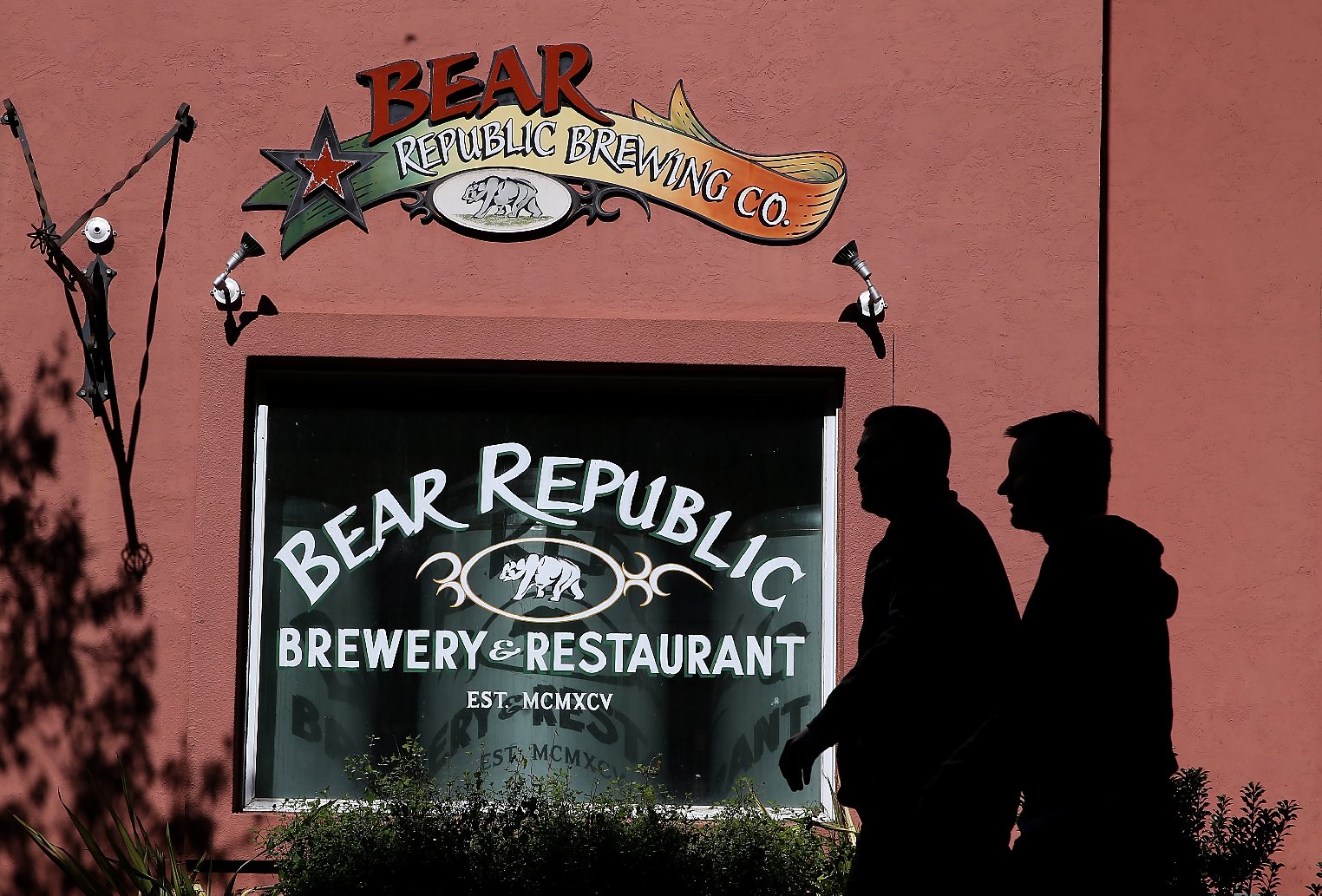
"content": "\u003cfigure id=\"attachment_131071\" class=\"wp-caption aligncenter\" style=\"max-width: 640px\">\u003ca href=\"http://ww2.kqed.org/news/wp-content/uploads/sites/10/2014/03/472599003.jpg\">\u003cimg class=\"size-medium wp-image-131071\" src=\"http://ww2.kqed.org/news/wp-content/uploads/sites/10/2014/03/472599003-640x433.jpg\" alt=\"The Bear Republic Brewery and Restaurant in Healdsburg relies on Russian River water and worried the drought could affect the taste of its beer. (Justin Sullivan/Getty Images)\" width=\"640\" height=\"433\">\u003c/a>\u003cfigcaption class=\"wp-caption-text\">The Bear Republic Brewery and Restaurant in Healdsburg relies on Russian River water and worries the drought could affect the taste of its beer. (Justin Sullivan/Getty Images)\u003c/figcaption>\u003c/figure>\n\u003cp>Smithsonian magazine has deemed Healdsburg one of the best small towns in the United States to visit. In fact, it's rated No. 2, right behind Chautauqua, N.Y., which is harder to pronounce but apparently even more charming.\u003c/p>\n\u003cp>\"Poised between Calistoga and the wild Pacific Coast, with damp morning fogs and blistering afternoon sunshine, the place is so fertile anything grows,\" Susan Spano wrote in the magazine's April issue. \"The eat-local movement inspired by Bay Area chef-restaurateur Alice Waters has fully flowered in Healdsburg.\u003c/p>\n\u003cp>\"Four celebrated Sonoma County wine regions nearby -- Alexander Valley, Russian River Valley, Dry Creek Valley and Chalk Hill -- helped drive the gastronomical renaissance,\" the story continues. \"But these days growers with small family farm biodiversity in mind are pulling up vines on prime grape-growing land worth $200,000 an acre to plant many-colored baby beets, hops, Belgian endive and Meyer lemons, and make way for sheep and free-range chickens.\u003c/p>\n\u003cp>\"Chefs from town forage at Preston Vineyards in the Dry Creek Valley for wild salad greens like stinging nettles. Area farm families are finding ways to hold on to their land by producing homemade comestibles, from sausage to vinegar, and marketing them on the Internet instead of letting food manufacturers mash their crops into jars with big-name labels.\"\u003c/p>\n\u003cp>The piece gushes over all kinds of things in Healdsburg, including Healdsburg Plaza, Fitch Mountain, a food store called Shed, wine-tasting lounges and the Healdsburg Museum.\u003c/p>\n\u003cp>[ad fullwidth]\u003c/p>\n\u003cp>In February, Healdsburg appeared on a less auspicious list -- one of 17 communities and water districts in California that could run out of water within 100 days, according to state public health officials. The previous month, Healdsburg became the first town on Sonoma County to put in place mandatory water conservation measures.\u003c/p>\n\u003cp>Other towns that landed in the top 20 include Williamsburg, Va., Marietta, Ohio, Sedona, Ariz., Columbia, Pa., and Steamboat Springs, Colo., were among the towns that landed in the top 20.\u003c/p>\n\u003cp>\u003c/p>\n\u003cp>This is the third year that the magazine has done a search like this. The story said communities have been selected for particular strengths in history, music, visual arts, learning, food, theater and science. The editors worked with Esri, a geographical information systems company, which analyzed massive amounts of data to find towns or cities of fewer than 15,000 residents with lots of cultural opportunities, on a per capita basis.\u003c/p>\n\n",
"disqusIdentifier": "131053 http://ww2.kqed.org/news/?p=131053",
"disqusUrl": "https://ww2.kqed.org/news/2014/04/01/healdsburg-is-no-2-best-small-town-to-visit-in-u-s-smithsonian-magazine-says/",
"stats": {
"hasVideo": false,
"hasChartOrMap": false,
"hasAudio": false,
"hasPolis": false,
"wordCount": 430,
"hasGoogleForm": false,
"hasGallery": false,
"hasHearkenModule": false,
"iframeSrcs": [],
"paragraphCount": 10
},
"modified": 1399490423,
"excerpt": "Sonoma County community is known for its vineyards and wine production.\r\n ",
"headData": {
"twImgId": "",
"twTitle": "",
"ogTitle": "",
"ogImgId": "",
"twDescription": "",
"description": "Sonoma County community is known for its vineyards and wine production.\r\n ",
"title": "Healdsburg Is No. 2 \"Best Small Town to Visit in U.S.,\" Smithsonian Magazine Says | KQED",
"ogDescription": "",
"schema": {
"@context": "https://schema.org",
"@type": "NewsArticle",
"headline": "Healdsburg Is No. 2 \"Best Small Town to Visit in U.S.,\" Smithsonian Magazine Says ",
"datePublished": "2014-04-01T08:00:32-07:00",
"dateModified": "2014-05-07T12:20:23-07:00",
"image": "https://cdn.kqed.org/wp-content/uploads/2020/02/KQED-OG-Image@1x.png",
"isAccessibleForFree": "True",
"publisher": {
"@type": "NewsMediaOrganization",
"@id": "https://www.kqed.org/#organization",
"name": "KQED",
"logo": "https://cdn.kqed.org/wp-content/uploads/2020/02/KQED-OG-Image@1x.png",
"url": "https://www.kqed.org",
"sameAs": [
"https://www.facebook.com/KQED",
"https://twitter.com/KQED",
"https://www.instagram.com/kqed/",
"https://www.tiktok.com/@kqedofficial",
"https://www.linkedin.com/company/kqed",
"https://www.youtube.com/channel/UCeC0IOo7i1P_61zVUWbJ4nw"
]
}
}
},
"guestAuthors": [],
"slug": "healdsburg-is-no-2-best-small-town-to-visit-in-u-s-smithsonian-magazine-says",
"status": "publish",
"customPermalink": "2014/03/31/",
"path": "/news/131053/healdsburg-is-no-2-best-small-town-to-visit-in-u-s-smithsonian-magazine-says",
"audioTrackLength": null,
"parsedContent": [
{
"type": "contentString",
"content": "\u003cdiv class=\"post-body\">\u003cp>\u003cfigure id=\"attachment_131071\" class=\"wp-caption aligncenter\" style=\"max-width: 640px\">\u003ca href=\"http://ww2.kqed.org/news/wp-content/uploads/sites/10/2014/03/472599003.jpg\">\u003cimg class=\"size-medium wp-image-131071\" src=\"http://ww2.kqed.org/news/wp-content/uploads/sites/10/2014/03/472599003-640x433.jpg\" alt=\"The Bear Republic Brewery and Restaurant in Healdsburg relies on Russian River water and worried the drought could affect the taste of its beer. (Justin Sullivan/Getty Images)\" width=\"640\" height=\"433\">\u003c/a>\u003cfigcaption class=\"wp-caption-text\">The Bear Republic Brewery and Restaurant in Healdsburg relies on Russian River water and worries the drought could affect the taste of its beer. (Justin Sullivan/Getty Images)\u003c/figcaption>\u003c/figure>\n\u003cp>Smithsonian magazine has deemed Healdsburg one of the best small towns in the United States to visit. In fact, it's rated No. 2, right behind Chautauqua, N.Y., which is harder to pronounce but apparently even more charming.\u003c/p>\n\u003cp>\"Poised between Calistoga and the wild Pacific Coast, with damp morning fogs and blistering afternoon sunshine, the place is so fertile anything grows,\" Susan Spano wrote in the magazine's April issue. \"The eat-local movement inspired by Bay Area chef-restaurateur Alice Waters has fully flowered in Healdsburg.\u003c/p>\n\u003cp>\"Four celebrated Sonoma County wine regions nearby -- Alexander Valley, Russian River Valley, Dry Creek Valley and Chalk Hill -- helped drive the gastronomical renaissance,\" the story continues. \"But these days growers with small family farm biodiversity in mind are pulling up vines on prime grape-growing land worth $200,000 an acre to plant many-colored baby beets, hops, Belgian endive and Meyer lemons, and make way for sheep and free-range chickens.\u003c/p>\n\u003cp>\"Chefs from town forage at Preston Vineyards in the Dry Creek Valley for wild salad greens like stinging nettles. Area farm families are finding ways to hold on to their land by producing homemade comestibles, from sausage to vinegar, and marketing them on the Internet instead of letting food manufacturers mash their crops into jars with big-name labels.\"\u003c/p>\n\u003cp>The piece gushes over all kinds of things in Healdsburg, including Healdsburg Plaza, Fitch Mountain, a food store called Shed, wine-tasting lounges and the Healdsburg Museum.\u003c/p>\n\u003cp>\u003c/p>\u003c/div>",
"attributes": {
"named": {},
"numeric": []
}
},
{
"type": "component",
"content": "",
"name": "ad",
"attributes": {
"named": {
"label": "fullwidth"
},
"numeric": [
"fullwidth"
]
}
},
{
"type": "contentString",
"content": "\u003cdiv class=\"post-body\">\u003cp>\u003c/p>\n\u003cp>In February, Healdsburg appeared on a less auspicious list -- one of 17 communities and water districts in California that could run out of water within 100 days, according to state public health officials. The previous month, Healdsburg became the first town on Sonoma County to put in place mandatory water conservation measures.\u003c/p>\n\u003cp>Other towns that landed in the top 20 include Williamsburg, Va., Marietta, Ohio, Sedona, Ariz., Columbia, Pa., and Steamboat Springs, Colo., were among the towns that landed in the top 20.\u003c/p>\n\u003cp>\u003c/p>\n\u003cp>This is the third year that the magazine has done a search like this. The story said communities have been selected for particular strengths in history, music, visual arts, learning, food, theater and science. The editors worked with Esri, a geographical information systems company, which analyzed massive amounts of data to find towns or cities of fewer than 15,000 residents with lots of cultural opportunities, on a per capita basis.\u003c/p>\n\n\u003c/div>\u003c/p>",
"attributes": {
"named": {},
"numeric": []
}
}
],
"link": "/news/131053/healdsburg-is-no-2-best-small-town-to-visit-in-u-s-smithsonian-magazine-says",
"authors": [
"247"
],
"programs": [
"news_6944"
],
"categories": [
"news_223"
],
"tags": [
"news_4338",
"news_4981"
],
"featImg": "news_131071",
"label": "news_6944"
},
"news_130742": {
"type": "posts",
"id": "news_130742",
"meta": {
"index": "posts_1716263798",
"site": "news",
"id": "130742",
"score": null,
"sort": [
1396024242000
]
},
"guestAuthors": [],
"slug": "news-pix-leland-yee-bioblitz-salmon-and-a-magical-misfit-marriage",
"title": "News Pix: Leland Yee, BioBlitz, Salmon and a 'Magical Misfit Marriage'",
"publishDate": 1396024242,
"format": "aside",
"headTitle": "News Pix: Leland Yee, BioBlitz, Salmon and a ‘Magical Misfit Marriage’ | KQED",
"labelTerm": {
"term": 6944,
"site": "news"
},
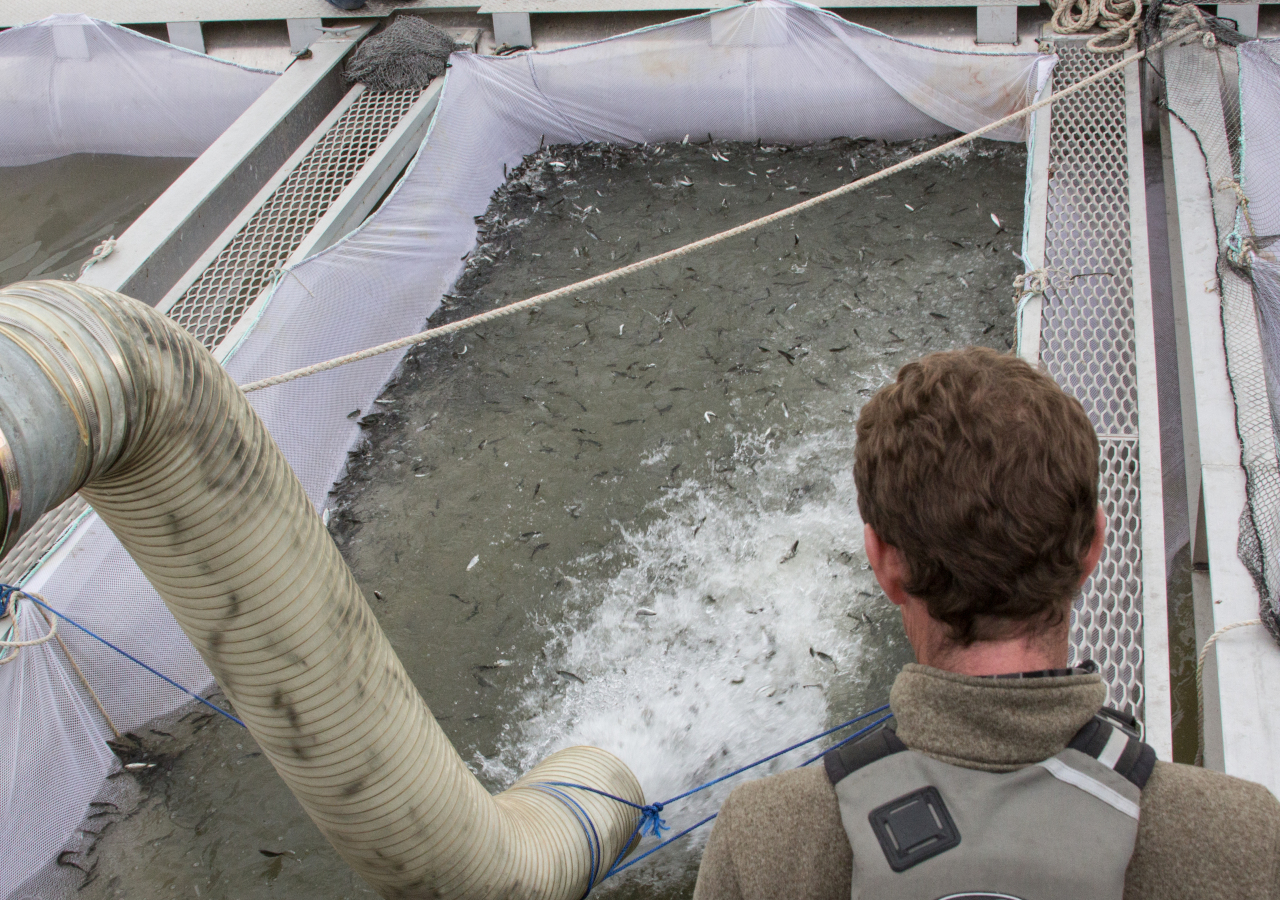
"content": "\u003cp>\u003ca href=\"http://ww2.kqed.org/news/wp-content/uploads/sites/10/2014/03/LeelandYee.jpg\">\u003cimg loading=\"lazy\" decoding=\"async\" class=\"aligncenter size-medium wp-image-130744\" src=\"http://ww2.kqed.org/news/wp-content/uploads/sites/10/2014/03/LeelandYee-640x450.jpg\" alt=\"State Senator Leland Yee. NYTCREDIT: Adithya Sambamurthy/The Bay Citizen\" width=\"640\" height=\"450\">\u003c/a>\u003cbr>\nOn Wednesday, the \u003ca href=\"http://ww2.kqed.org/news/2014/03/26/a-reporters-guide-to-affidavit-on-leland-yee/\" target=\"_blank\" rel=\"noopener\">FBI arrested San Francisco state Sen. Leland Yee\u003c/a> on charges he accepted payment for granting favors and was involved in an arms-trafficking scheme. On Thursday, Yee quit the race for secretary of state. (Adithya Sambamurthy/The Center for Investigative Reporting)\u003c/p>\n\u003cp> \u003c/p>\n\u003cp>\u003ca href=\"http://ww2.kqed.org/news/wp-content/uploads/sites/10/2014/03/9457_transform.jpg\">\u003cimg loading=\"lazy\" decoding=\"async\" class=\"aligncenter size-medium wp-image-130745\" src=\"http://ww2.kqed.org/news/wp-content/uploads/sites/10/2014/03/9457_transform-640x449.jpg\" alt=\"9457_transform\" width=\"640\" height=\"449\">\u003c/a>\u003cbr>\nScientists, students and volunteers are descending on the Golden Gate National Recreation Area on Friday and Saturday to record as many plant and animal species as possible in 24 hours. It’s part of an \u003ca href=\"http://blogs.kqed.org/science/2014/03/27/bioblitz-a-24-hour-quest-to-count-plants-and-animals-in-the-golden-gate-national-parks/\" target=\"_blank\" rel=\"noopener\">event called a BioBlitz\u003c/a>. The goal is to transform park visitors into citizen scientists, as they help document the park’s biodiversity. (Andy H./Flickr)\u003c/p>\n\u003cp> \u003c/p>\n\u003cp>\u003ca href=\"http://ww2.kqed.org/news/wp-content/uploads/sites/10/2014/03/salmon.jpg\">\u003cimg loading=\"lazy\" decoding=\"async\" class=\"aligncenter size-medium wp-image-130746\" src=\"http://ww2.kqed.org/news/wp-content/uploads/sites/10/2014/03/salmon-640x450.jpg\" alt=\"salmon\" width=\"640\" height=\"450\">\u003c/a>\u003cbr>\nThe drought has forced federal wildlife officials to truck juvenile chinook salmon from the Coleman National Fish Hatchery, near Red Bluff, to the Delta. The salmon lift began \u003ca href=\"http://ww2.kqed.org/news/2014/03/27/video-baby-salmon-trucked-to-delta\" target=\"_blank\" rel=\"noopener\">earlier this week\u003c/a>, with tankers carrying the fish down the Sacramento Valley to the Delta town of Rio Vista. Hatchery officials say they’re likely to truck all 12 million of Coleman’s fall-run chinook, and about 18 million more from state facilities, by the time the operation is over in June. (Dan Brekke/KQED)\u003c/p>\n\u003cp>[ad fullwidth]\u003c/p>\n\u003cp> \u003c/p>\n\u003cp>\u003ca href=\"http://ww2.kqed.org/news/wp-content/uploads/sites/10/2014/03/telegraphcleanup.jpg\">\u003cimg loading=\"lazy\" decoding=\"async\" class=\"aligncenter size-medium wp-image-130747\" src=\"http://ww2.kqed.org/news/wp-content/uploads/sites/10/2014/03/telegraphcleanup-640x450.jpg\" alt=\"telegraphcleanup\" width=\"640\" height=\"450\">\u003c/a>\u003cbr>\nNeon-clad “ambassadors” are working to paint over graffiti, power-wash streets and sweep sidewalks along Telegraph Avenue in the latest attempt to \u003ca href=\"http://www.berkeleyside.com/2014/03/25/telegraph-clean-up/\" target=\"_blank\" rel=\"noopener\">revitalize a business district that has seen better days\u003c/a>. Telegraph — cherished by some for its political history and quirky institutions and avoided by others for its large transient population and public drug use — has faced steep declines in sales tax revenue over the past several years. (Ted Friedman/\u003ca href=\"http://www.berkeleyside.com/\" target=\"_blank\" rel=\"noopener\">Berkeleyside\u003c/a>)\u003c/p>\n\u003cp> \u003c/p>\n\u003cp>\u003c/p>\n\u003cp>\u003ca href=\"http://ww2.kqed.org/news/wp-content/uploads/sites/10/2014/03/Ira.jpg\">\u003cimg loading=\"lazy\" decoding=\"async\" class=\"aligncenter size-medium wp-image-130748\" src=\"http://ww2.kqed.org/news/wp-content/uploads/sites/10/2014/03/Ira-640x450.jpg\" alt=\"Ira\" width=\"640\" height=\"450\">\u003c/a>\u003cbr>\nRadio meets dance at Zellerbach Hall in Berkeley on Saturday. The talky talent of Ira Glass, creator of public radio’s “This American Life,” merges with the performance of dancers Monica Bill Barnes and Anna Bass to create what Berkeleyside describes as \u003ca href=\"http://www.berkeleyside.com/2014/03/25/magical-misfit-marriage-of-ira-glass-and-dance/\" target=\"_blank\" rel=\"noopener\">a magical, misfit marriage\u003c/a>. (David Bazemore/\u003ca href=\"http://www.berkeleyside.com/\" target=\"_blank\" rel=\"noopener\">Berkeleyside\u003c/a>)\u003c/p>\n\n",
"blocks": [],
"excerpt": "The week's news in photos from around the Bay.",
"status": "publish",
"parent": 0,
"modified": 1721149944,
"stats": {
"hasAudio": false,
"hasVideo": false,
"hasChartOrMap": false,
"iframeSrcs": [],
"hasGoogleForm": false,
"hasGallery": false,
"hasHearkenModule": false,
"hasPolis": false,
"paragraphCount": 7,
"wordCount": 326
},
"headData": {
"title": "News Pix: Leland Yee, BioBlitz, Salmon and a 'Magical Misfit Marriage' | KQED",
"description": "The week's news in photos from around the Bay.",
"ogTitle": "",
"ogDescription": "",
"ogImgId": "",
"twTitle": "",
"twDescription": "",
"twImgId": "",
"schema": {
"@context": "https://schema.org",
"@type": "NewsArticle",
"headline": "News Pix: Leland Yee, BioBlitz, Salmon and a 'Magical Misfit Marriage'",
"datePublished": "2014-03-28T09:30:42-07:00",
"dateModified": "2024-07-16T10:12:24-07:00",
"image": "https://cdn.kqed.org/wp-content/uploads/2020/02/KQED-OG-Image@1x.png",
"isAccessibleForFree": "True",
"publisher": {
"@type": "NewsMediaOrganization",
"@id": "https://www.kqed.org/#organization",
"name": "KQED",
"logo": "https://cdn.kqed.org/wp-content/uploads/2020/02/KQED-OG-Image@1x.png",
"url": "https://www.kqed.org",
"sameAs": [
"https://www.facebook.com/KQED",
"https://twitter.com/KQED",
"https://www.instagram.com/kqed/",
"https://www.tiktok.com/@kqedofficial",
"https://www.linkedin.com/company/kqed",
"https://www.youtube.com/channel/UCeC0IOo7i1P_61zVUWbJ4nw"
]
}
}
},
"sticky": false,
"customPermalink": "2014/03/27/news-pix-state-senator-leland-yee-arrested-bioblitz-in-ggnra-and/",
"path": "/news/130742/news-pix-leland-yee-bioblitz-salmon-and-a-magical-misfit-marriage",
"audioTrackLength": null,
"parsedContent": [
{
"type": "contentString",
"content": "\u003cdiv class=\"post-body\">\u003cp>\u003cp>\u003ca href=\"http://ww2.kqed.org/news/wp-content/uploads/sites/10/2014/03/LeelandYee.jpg\">\u003cimg loading=\"lazy\" decoding=\"async\" class=\"aligncenter size-medium wp-image-130744\" src=\"http://ww2.kqed.org/news/wp-content/uploads/sites/10/2014/03/LeelandYee-640x450.jpg\" alt=\"State Senator Leland Yee. NYTCREDIT: Adithya Sambamurthy/The Bay Citizen\" width=\"640\" height=\"450\">\u003c/a>\u003cbr>\nOn Wednesday, the \u003ca href=\"http://ww2.kqed.org/news/2014/03/26/a-reporters-guide-to-affidavit-on-leland-yee/\" target=\"_blank\" rel=\"noopener\">FBI arrested San Francisco state Sen. Leland Yee\u003c/a> on charges he accepted payment for granting favors and was involved in an arms-trafficking scheme. On Thursday, Yee quit the race for secretary of state. (Adithya Sambamurthy/The Center for Investigative Reporting)\u003c/p>\n\u003cp> \u003c/p>\n\u003cp>\u003ca href=\"http://ww2.kqed.org/news/wp-content/uploads/sites/10/2014/03/9457_transform.jpg\">\u003cimg loading=\"lazy\" decoding=\"async\" class=\"aligncenter size-medium wp-image-130745\" src=\"http://ww2.kqed.org/news/wp-content/uploads/sites/10/2014/03/9457_transform-640x449.jpg\" alt=\"9457_transform\" width=\"640\" height=\"449\">\u003c/a>\u003cbr>\nScientists, students and volunteers are descending on the Golden Gate National Recreation Area on Friday and Saturday to record as many plant and animal species as possible in 24 hours. It’s part of an \u003ca href=\"http://blogs.kqed.org/science/2014/03/27/bioblitz-a-24-hour-quest-to-count-plants-and-animals-in-the-golden-gate-national-parks/\" target=\"_blank\" rel=\"noopener\">event called a BioBlitz\u003c/a>. The goal is to transform park visitors into citizen scientists, as they help document the park’s biodiversity. (Andy H./Flickr)\u003c/p>\n\u003cp> \u003c/p>\n\u003cp>\u003ca href=\"http://ww2.kqed.org/news/wp-content/uploads/sites/10/2014/03/salmon.jpg\">\u003cimg loading=\"lazy\" decoding=\"async\" class=\"aligncenter size-medium wp-image-130746\" src=\"http://ww2.kqed.org/news/wp-content/uploads/sites/10/2014/03/salmon-640x450.jpg\" alt=\"salmon\" width=\"640\" height=\"450\">\u003c/a>\u003cbr>\nThe drought has forced federal wildlife officials to truck juvenile chinook salmon from the Coleman National Fish Hatchery, near Red Bluff, to the Delta. The salmon lift began \u003ca href=\"http://ww2.kqed.org/news/2014/03/27/video-baby-salmon-trucked-to-delta\" target=\"_blank\" rel=\"noopener\">earlier this week\u003c/a>, with tankers carrying the fish down the Sacramento Valley to the Delta town of Rio Vista. Hatchery officials say they’re likely to truck all 12 million of Coleman’s fall-run chinook, and about 18 million more from state facilities, by the time the operation is over in June. (Dan Brekke/KQED)\u003c/p>\n\u003cp>\u003c/p>\u003c/div>",
"attributes": {
"named": {},
"numeric": []
}
},
{
"type": "component",
"content": "",
"name": "ad",
"attributes": {
"named": {
"label": "fullwidth"
},
"numeric": [
"fullwidth"
]
}
},
{
"type": "contentString",
"content": "\u003cdiv class=\"post-body\">\u003cp>\u003c/p>\n\u003cp> \u003c/p>\n\u003cp>\u003ca href=\"http://ww2.kqed.org/news/wp-content/uploads/sites/10/2014/03/telegraphcleanup.jpg\">\u003cimg loading=\"lazy\" decoding=\"async\" class=\"aligncenter size-medium wp-image-130747\" src=\"http://ww2.kqed.org/news/wp-content/uploads/sites/10/2014/03/telegraphcleanup-640x450.jpg\" alt=\"telegraphcleanup\" width=\"640\" height=\"450\">\u003c/a>\u003cbr>\nNeon-clad “ambassadors” are working to paint over graffiti, power-wash streets and sweep sidewalks along Telegraph Avenue in the latest attempt to \u003ca href=\"http://www.berkeleyside.com/2014/03/25/telegraph-clean-up/\" target=\"_blank\" rel=\"noopener\">revitalize a business district that has seen better days\u003c/a>. Telegraph — cherished by some for its political history and quirky institutions and avoided by others for its large transient population and public drug use — has faced steep declines in sales tax revenue over the past several years. (Ted Friedman/\u003ca href=\"http://www.berkeleyside.com/\" target=\"_blank\" rel=\"noopener\">Berkeleyside\u003c/a>)\u003c/p>\n\u003cp> \u003c/p>\n\u003cp>\u003c/p>\n\u003cp>\u003ca href=\"http://ww2.kqed.org/news/wp-content/uploads/sites/10/2014/03/Ira.jpg\">\u003cimg loading=\"lazy\" decoding=\"async\" class=\"aligncenter size-medium wp-image-130748\" src=\"http://ww2.kqed.org/news/wp-content/uploads/sites/10/2014/03/Ira-640x450.jpg\" alt=\"Ira\" width=\"640\" height=\"450\">\u003c/a>\u003cbr>\nRadio meets dance at Zellerbach Hall in Berkeley on Saturday. The talky talent of Ira Glass, creator of public radio’s “This American Life,” merges with the performance of dancers Monica Bill Barnes and Anna Bass to create what Berkeleyside describes as \u003ca href=\"http://www.berkeleyside.com/2014/03/25/magical-misfit-marriage-of-ira-glass-and-dance/\" target=\"_blank\" rel=\"noopener\">a magical, misfit marriage\u003c/a>. (David Bazemore/\u003ca href=\"http://www.berkeleyside.com/\" target=\"_blank\" rel=\"noopener\">Berkeleyside\u003c/a>)\u003c/p>\n\n\u003c/div>\u003c/p>",
"attributes": {
"named": {},
"numeric": []
}
}
],
"link": "/news/130742/news-pix-leland-yee-bioblitz-salmon-and-a-magical-misfit-marriage",
"authors": [
"234"
],
"programs": [
"news_6944"
],
"categories": [
"news_223",
"news_19906",
"news_13"
],
"tags": [
"news_129",
"news_17601",
"news_20013",
"news_2398",
"news_139",
"news_3531"
],
"featImg": "news_130746",
"label": "news_6944"
},
"news_10342226": {
"type": "posts",
"id": "news_10342226",
"meta": {
"index": "posts_1716263798",
"site": "news",
"id": "10342226",
"score": null,
"sort": [
1396018834000
]
},
"parent": 0,
"labelTerm": {
"site": "news",
"term": 72
},
"blocks": [],
"publishDate": 1396018834,
"format": "standard",
"disqusTitle": "Pop Music Review: Meklit's 'We Are Alive'",
"title": "Pop Music Review: Meklit's 'We Are Alive'",
"headTitle": "The California Report | KQED News",
"content": "\u003cp>http://www.kqed.org/.stream/anon/radio/tcrmag/2014/03/20140328etcrmag.mp3\u003c/p>\n\u003cp>We Californians can be a bit superstitious when it comes to our state's faults. I mean the geological ones, not the other quirky characteristics. No so much \u003ca href=\"http://www.meklitmusic.com/\" target=\"_blank\">Meklit\u003c/a>. On her new album, \"We Are Alive,\" the singer-songwriter and global activist confronts that fact of life head-on, even courts it. The set's opening song says it up front. We are, she sings, \"Waiting for Earthquakes.\"\u003c/p>\n\u003cp>Of course the song is metaphorical, about emotional temblors, not the other kind. But upheaval is a current that runs through the album, both in lyrics and music. In other hands, her folky jazz might be smooth, easygoing. And with her raw, beautiful and nimble voice, she could certainly pull that off. But she never seems content with smooth.\u003c/p>\n\u003cp>Just as you think you know what the music is, it becomes something else, even if just for an instant. A sudden dart or twist in a melody, as if a thought just popped into her head. A counter-rhythm pluck from bassist Sam Bevan. A spike of melancholic mystery from trumpeter Darren Johnston. A rumbling peal from drummer Lorca Hart. It's the sound of an artist not content to be any one thing, or even one thing at a time. The inherent restlessness is below the surface in some spots, but in others, as on \"In Sleep,\" right up top.\u003c/p>\n\u003cp>Meklit Hadero was born in Ethiopia, raised in various spots around the U.S., and has been a San Francisco presence for the past dozen years. She's already a TED senior fellow for her work with music and culture of the Nile region and its diaspora.\u003c/p>\n\u003cp>[ad fullwidth]\u003c/p>\n\u003cp>She's been compared to Joni Mitchell at her most adventurous, as well as the Talking Heads, Norah Jones and Lou Reed - though none of them, or even any combination, give an accurate impression. On her first album she was bold enough to tackle Nina Simone's signature \"Feelin' Good.\" She was one of the creators of \"Earthbound,\" billed as the \"first hop-hop space opera,\" and her all-cover-songs collaboration with soul singer Quinn DeVeaux featured material ranging from Arcade Fire to Neil Young to Stevie Wonder.\u003c/p>\n\u003cp>Producer Eli Crews - who has worked with \u003ca href=\"http://tune-yards.com/\" target=\"_blank\">TuneYards\u003c/a>, another global-minded shaker-upper - helps bring out all of Meklit's experience and perspective in these songs. It's not world music per se, but there is a world of music here, with a dimensional quality only hinted at on her 2010 debut. Even when the music is delicate, as with the toy-piano-based waltz \"Stuck on the Moon,\" there's a sturdiness to it, while the song \"Slow\" is simply, exuberantly robust.\u003c/p>\n\u003cp>She also puts her stamp on two cover songs, which in the process serve as good reference points for her own material. There's a sort of Afro-jazz version of the Police's shadowy \"Bring On the Night\" followed by a traditional Ethiopian song, \"Kemekem.\" The latter, subtitled \"I like your Afro,\" features fellow Ethiopian Samuel Yirga guesting on piano.\u003c/p>\n\u003cp>\u003c/p>\n\u003cp>Where \"Waiting for Earthquakes\" sets the tone, the title song, \"We Are Alive,\" ties it all together at the end. Now, she'd never be so trite as to say that we need earthquakes, emotional or otherwise, to make us feel alive. She's just saying: Throw away those superstitions and enjoy the shake.\u003c/p>\n\n",
"disqusIdentifier": "10342226 http://ww2.kqed.org/news/?p=10342226",
"disqusUrl": "https://ww2.kqed.org/news/2014/03/28/pop-music-review-meklits-we-are-alive/",
"stats": {
"hasVideo": false,
"hasChartOrMap": false,
"hasAudio": true,
"hasPolis": false,
"wordCount": 577,
"hasGoogleForm": false,
"hasGallery": false,
"hasHearkenModule": false,
"iframeSrcs": [],
"paragraphCount": 10
},
"modified": 1412364508,
"excerpt": "On new album, \"We Are Alive,\" singer-songwriter and global activist confronts that fact of life head-on.",
"headData": {
"twImgId": "",
"twTitle": "",
"ogTitle": "",
"ogImgId": "",
"twDescription": "",
"description": "On new album, "We Are Alive," singer-songwriter and global activist confronts that fact of life head-on.",
"title": "Pop Music Review: Meklit's 'We Are Alive' | KQED",
"ogDescription": "",
"schema": {
"@context": "https://schema.org",
"@type": "NewsArticle",
"headline": "Pop Music Review: Meklit's 'We Are Alive'",
"datePublished": "2014-03-28T08:00:34-07:00",
"dateModified": "2014-10-03T12:28:28-07:00",
"image": "https://cdn.kqed.org/wp-content/uploads/2020/02/KQED-OG-Image@1x.png",
"isAccessibleForFree": "True",
"publisher": {
"@type": "NewsMediaOrganization",
"@id": "https://www.kqed.org/#organization",
"name": "KQED",
"logo": "https://cdn.kqed.org/wp-content/uploads/2020/02/KQED-OG-Image@1x.png",
"url": "https://www.kqed.org",
"sameAs": [
"https://www.facebook.com/KQED",
"https://twitter.com/KQED",
"https://www.instagram.com/kqed/",
"https://www.tiktok.com/@kqedofficial",
"https://www.linkedin.com/company/kqed",
"https://www.youtube.com/channel/UCeC0IOo7i1P_61zVUWbJ4nw"
]
}
}
},
"guestAuthors": [],
"slug": "pop-music-review-meklits-we-are-alive",
"status": "publish",
"nprByline": "Steve Hochman",
"path": "/news/10342226/pop-music-review-meklits-we-are-alive",
"audioUrl": "http://www.kqed.org/.stream/anon/radio/tcrmag/2014/03/20140328etcrmag.mp3",
"audioDuration": null,
"audioTrackLength": null,
"parsedContent": [
{
"type": "contentString",
"content": "\u003cdiv class=\"post-body\">\u003cp>\u003c/p>\u003c/div>",
"attributes": {
"named": {},
"numeric": []
}
},
{
"type": "component",
"content": "",
"name": "audioLink",
"attributes": {
"named": {
"src": "http://www.kqed.org/.stream/anon/radio/tcrmag/2014/03/20140328etcrmag.mp3"
},
"numeric": []
}
},
{
"type": "contentString",
"content": "\u003cdiv class=\"post-body\">\u003cp>\u003cp>We Californians can be a bit superstitious when it comes to our state's faults. I mean the geological ones, not the other quirky characteristics. No so much \u003ca href=\"http://www.meklitmusic.com/\" target=\"_blank\">Meklit\u003c/a>. On her new album, \"We Are Alive,\" the singer-songwriter and global activist confronts that fact of life head-on, even courts it. The set's opening song says it up front. We are, she sings, \"Waiting for Earthquakes.\"\u003c/p>\n\u003cp>Of course the song is metaphorical, about emotional temblors, not the other kind. But upheaval is a current that runs through the album, both in lyrics and music. In other hands, her folky jazz might be smooth, easygoing. And with her raw, beautiful and nimble voice, she could certainly pull that off. But she never seems content with smooth.\u003c/p>\n\u003cp>Just as you think you know what the music is, it becomes something else, even if just for an instant. A sudden dart or twist in a melody, as if a thought just popped into her head. A counter-rhythm pluck from bassist Sam Bevan. A spike of melancholic mystery from trumpeter Darren Johnston. A rumbling peal from drummer Lorca Hart. It's the sound of an artist not content to be any one thing, or even one thing at a time. The inherent restlessness is below the surface in some spots, but in others, as on \"In Sleep,\" right up top.\u003c/p>\n\u003cp>Meklit Hadero was born in Ethiopia, raised in various spots around the U.S., and has been a San Francisco presence for the past dozen years. She's already a TED senior fellow for her work with music and culture of the Nile region and its diaspora.\u003c/p>\n\u003cp>\u003c/p>\u003c/div>",
"attributes": {
"named": {},
"numeric": []
}
},
{
"type": "component",
"content": "",
"name": "ad",
"attributes": {
"named": {
"label": "fullwidth"
},
"numeric": [
"fullwidth"
]
}
},
{
"type": "contentString",
"content": "\u003cdiv class=\"post-body\">\u003cp>\u003c/p>\n\u003cp>She's been compared to Joni Mitchell at her most adventurous, as well as the Talking Heads, Norah Jones and Lou Reed - though none of them, or even any combination, give an accurate impression. On her first album she was bold enough to tackle Nina Simone's signature \"Feelin' Good.\" She was one of the creators of \"Earthbound,\" billed as the \"first hop-hop space opera,\" and her all-cover-songs collaboration with soul singer Quinn DeVeaux featured material ranging from Arcade Fire to Neil Young to Stevie Wonder.\u003c/p>\n\u003cp>Producer Eli Crews - who has worked with \u003ca href=\"http://tune-yards.com/\" target=\"_blank\">TuneYards\u003c/a>, another global-minded shaker-upper - helps bring out all of Meklit's experience and perspective in these songs. It's not world music per se, but there is a world of music here, with a dimensional quality only hinted at on her 2010 debut. Even when the music is delicate, as with the toy-piano-based waltz \"Stuck on the Moon,\" there's a sturdiness to it, while the song \"Slow\" is simply, exuberantly robust.\u003c/p>\n\u003cp>She also puts her stamp on two cover songs, which in the process serve as good reference points for her own material. There's a sort of Afro-jazz version of the Police's shadowy \"Bring On the Night\" followed by a traditional Ethiopian song, \"Kemekem.\" The latter, subtitled \"I like your Afro,\" features fellow Ethiopian Samuel Yirga guesting on piano.\u003c/p>\n\u003cp>\u003c/p>\n\u003cp>Where \"Waiting for Earthquakes\" sets the tone, the title song, \"We Are Alive,\" ties it all together at the end. Now, she'd never be so trite as to say that we need earthquakes, emotional or otherwise, to make us feel alive. She's just saying: Throw away those superstitions and enjoy the shake.\u003c/p>\n\n\u003c/div>\u003c/p>",
"attributes": {
"named": {},
"numeric": []
}
}
],
"link": "/news/10342226/pop-music-review-meklits-we-are-alive",
"authors": [
"byline_news_10342226"
],
"programs": [
"news_72"
],
"categories": [
"news_223"
],
"tags": [
"news_1425"
],
"featImg": "news_10342232",
"label": "news_72"
},
"news_130084": {
"type": "posts",
"id": "news_130084",
"meta": {
"index": "posts_1716263798",
"site": "news",
"id": "130084",
"score": null,
"sort": [
1395433710000
]
},
"parent": 0,
"labelTerm": {
"site": "news",
"term": 6944
},
"blocks": [],
"publishDate": 1395433710,
"format": "aside",
"disqusTitle": "News Pix: Quirky Berkeley, Physics of Skateboarding and Coding in Salinas",
"title": "News Pix: Quirky Berkeley, Physics of Skateboarding and Coding in Salinas",
"headTitle": "News Fix | KQED News",
"content": "\u003cp>\u003ca href=\"http://ww2.kqed.org/news/wp-content/uploads/sites/10/2014/03/salinascoding.jpg\">\u003cimg class=\"aligncenter size-medium wp-image-130097\" src=\"http://ww2.kqed.org/news/wp-content/uploads/sites/10/2014/03/salinascoding-640x450.jpg\" alt=\"salinascoding\" width=\"640\" height=\"450\">\u003c/a>\u003cbr>\nAlonso Mendoza, 21, is one of 32 students enrolled in an \u003ca href=\"http://ww2.kqed.org/news/2014/03/20/from-fields-to-computer-science/\" target=\"_blank\">accelerated computer science degree program\u003c/a> offered through Hartnell Community College and California State University, Monterey Bay. Mendoza stands outside his home on the east side of Salinas. He hopes a computer science degree will lift himself and his family away from a life of field work. (Ana Tintocalis/KQED)\u003c/p>\n\u003cp>\u003ca href=\"http://ww2.kqed.org/news/wp-content/uploads/sites/10/2014/03/Dinosaur.jpg\">\u003cimg class=\"aligncenter size-medium wp-image-130085\" src=\"http://ww2.kqed.org/news/wp-content/uploads/sites/10/2014/03/Dinosaur-640x450.jpg\" alt=\"Dinosaur\" width=\"640\" height=\"450\">\u003c/a>\u003cbr>\nDinosaurs may be long extinct, but \u003ca href=\"http://www.berkeleyside.com/2014/03/20/how-quirky-is-berkeley-check-out-these-dinosaurs/\" target=\"_blank\">they survive in Berkeley front yards\u003c/a>, where small, medium or big, they stand as declarations of individualism in a city of individualists. (Tom Dalzell/\u003ca href=\"http://www.berkeleyside.com/\" target=\"_blank\">Berkeleyside\u003c/a>)\u003c/p>\n\u003cp>\u003ca href=\"http://ww2.kqed.org/news/wp-content/uploads/sites/10/2014/03/skateboarding-physics2.jpg\">\u003cimg class=\"aligncenter size-medium wp-image-130088\" src=\"http://ww2.kqed.org/news/wp-content/uploads/sites/10/2014/03/skateboarding-physics2-640x450.jpg\" alt=\"skateboarding-physics2\" width=\"640\" height=\"450\">\u003c/a>\u003cbr>\nMichael Totten, an 18-year-old freshman at Contra Costa College, has been skateboarding since the age of 3. The Richmond Public Library hosted an event on Thursday, March 20, to \u003ca href=\"http://richmondconfidential.org/2014/03/20/skateboarding-event-teaches-kids-about-physics-at-nicholl-park/\" target=\"_blank\">connect kids to the physics \u003c/a>of skateboarding. “Even though they don’t traditionally think of science as something that’s fun that they like to do, they’re all scientists when they skateboard,” said teen librarian and event organizer Angela Cox. A van on loan from the San Francisco Exploratorium explains concepts like center of gravity, wheel hardness and centrifugal force. (Sukey Lewis/\u003ca href=\"http://richmondconfidential.org/\" target=\"_blank\">Richmond Confidential\u003c/a>)\u003c/p>\n\u003cp>\u003ca href=\"http://ww2.kqed.org/news/wp-content/uploads/sites/10/2014/03/skateboards.jpg\">\u003cimg class=\"aligncenter size-medium wp-image-130089\" src=\"http://ww2.kqed.org/news/wp-content/uploads/sites/10/2014/03/skateboards-640x426.jpg\" alt=\"skateboards\" width=\"640\" height=\"426\">\u003c/a>\u003cbr>\n\"All these kids are really into skateboarding, but they don't know all the intricacies, the engineering and mathematics, that go along with the thing they love to do,\" the van's creator, Eric Dimond, explained to ESPN last June.\"If we bring up these concepts like durometer, or friction, or momentum, those are, like, school terms. But if we can associate those things with something that they love, they're more engaged with it.\" (Sukey Lewis/\u003ca href=\"http://richmondconfidential.org/\" target=\"_blank\">Richmond Confidential\u003c/a>)\u003c/p>\n\u003cp>\u003ca href=\"http://ww2.kqed.org/news/wp-content/uploads/sites/10/2014/03/Telegraph-food-truck.jpg\">\u003cimg class=\"aligncenter size-medium wp-image-130091\" src=\"http://ww2.kqed.org/news/wp-content/uploads/sites/10/2014/03/Telegraph-food-truck-640x450.jpg\" alt=\"Telegraph-food-truck\" width=\"640\" height=\"450\">\u003c/a>\u003cbr>\nMonday, March 17, saw the last \u003ca href=\"http://www.berkeleyside.com/2014/03/17/off-the-grid-pulls-plug-on-southside-berkeley-market/\" target=\"_blank\">Off The Grid Southside Berkeley food truck market\u003c/a>, which has been taking place once a week there since it launched in July 2012. This leaves Berkeley with just one Off The Grid market, at the North Berkeley BART station. (Nancy Rubin/\u003ca href=\"http://www.berkeleyside.com/\" target=\"_blank\">Berkeleyside\u003c/a>)\u003c/p>\n\u003cp>[ad fullwidth]\u003c/p>\n\u003cp>\u003c/p>\n\u003cp>\u003ca href=\"http://ww2.kqed.org/news/wp-content/uploads/sites/10/2014/03/Wendy.jpg\">\u003cimg class=\"aligncenter size-medium wp-image-130090\" src=\"http://ww2.kqed.org/news/wp-content/uploads/sites/10/2014/03/Wendy-640x450.jpg\" alt=\"Wendy\" width=\"640\" height=\"450\">\u003c/a>\u003cbr>\nSan Francisco illustrator Wendy MacNaughton has been sketching and observing Bay Area residents for years. Her new book, “Meanwhile in San Francisco: The City in Its Own Words,” illustrates her wanderings through the city, getting to know its residents and neighborhoods. (Photo courtesy of Mark Ellinger)\u003c/p>\n\n",
"disqusIdentifier": "130084 http://ww2.kqed.org/news/?p=130084",
"disqusUrl": "https://ww2.kqed.org/news/2014/03/21/news-pix-quirky-berkeley-physics-of-skateboarding-and-coding-for-equity/",
"stats": {
"hasVideo": false,
"hasChartOrMap": false,
"hasAudio": false,
"hasPolis": false,
"wordCount": 369,
"hasGoogleForm": false,
"hasGallery": false,
"hasHearkenModule": false,
"iframeSrcs": [],
"paragraphCount": 8
},
"modified": 1395437654,
"excerpt": "The week's news in photos from around the bay.",
"headData": {
"twImgId": "",
"twTitle": "",
"ogTitle": "",
"ogImgId": "",
"twDescription": "",
"description": "The week's news in photos from around the bay.",
"title": "News Pix: Quirky Berkeley, Physics of Skateboarding and Coding in Salinas | KQED",
"ogDescription": "",
"schema": {
"@context": "https://schema.org",
"@type": "NewsArticle",
"headline": "News Pix: Quirky Berkeley, Physics of Skateboarding and Coding in Salinas",
"datePublished": "2014-03-21T13:28:30-07:00",
"dateModified": "2014-03-21T14:34:14-07:00",
"image": "https://cdn.kqed.org/wp-content/uploads/2020/02/KQED-OG-Image@1x.png",
"isAccessibleForFree": "True",
"publisher": {
"@type": "NewsMediaOrganization",
"@id": "https://www.kqed.org/#organization",
"name": "KQED",
"logo": "https://cdn.kqed.org/wp-content/uploads/2020/02/KQED-OG-Image@1x.png",
"url": "https://www.kqed.org",
"sameAs": [
"https://www.facebook.com/KQED",
"https://twitter.com/KQED",
"https://www.instagram.com/kqed/",
"https://www.tiktok.com/@kqedofficial",
"https://www.linkedin.com/company/kqed",
"https://www.youtube.com/channel/UCeC0IOo7i1P_61zVUWbJ4nw"
]
}
}
},
"guestAuthors": [],
"slug": "news-pix-quirky-berkeley-physics-of-skateboarding-and-coding-for-equity",
"status": "publish",
"customPermalink": "2014/03/21/news-pix-quirky-berkeley-skateboarding-physics-and-san-francisco-watercolors/",
"path": "/news/130084/news-pix-quirky-berkeley-physics-of-skateboarding-and-coding-for-equity",
"audioTrackLength": null,
"parsedContent": [
{
"type": "contentString",
"content": "\u003cdiv class=\"post-body\">\u003cp>\u003cp>\u003ca href=\"http://ww2.kqed.org/news/wp-content/uploads/sites/10/2014/03/salinascoding.jpg\">\u003cimg class=\"aligncenter size-medium wp-image-130097\" src=\"http://ww2.kqed.org/news/wp-content/uploads/sites/10/2014/03/salinascoding-640x450.jpg\" alt=\"salinascoding\" width=\"640\" height=\"450\">\u003c/a>\u003cbr>\nAlonso Mendoza, 21, is one of 32 students enrolled in an \u003ca href=\"http://ww2.kqed.org/news/2014/03/20/from-fields-to-computer-science/\" target=\"_blank\">accelerated computer science degree program\u003c/a> offered through Hartnell Community College and California State University, Monterey Bay. Mendoza stands outside his home on the east side of Salinas. He hopes a computer science degree will lift himself and his family away from a life of field work. (Ana Tintocalis/KQED)\u003c/p>\n\u003cp>\u003ca href=\"http://ww2.kqed.org/news/wp-content/uploads/sites/10/2014/03/Dinosaur.jpg\">\u003cimg class=\"aligncenter size-medium wp-image-130085\" src=\"http://ww2.kqed.org/news/wp-content/uploads/sites/10/2014/03/Dinosaur-640x450.jpg\" alt=\"Dinosaur\" width=\"640\" height=\"450\">\u003c/a>\u003cbr>\nDinosaurs may be long extinct, but \u003ca href=\"http://www.berkeleyside.com/2014/03/20/how-quirky-is-berkeley-check-out-these-dinosaurs/\" target=\"_blank\">they survive in Berkeley front yards\u003c/a>, where small, medium or big, they stand as declarations of individualism in a city of individualists. (Tom Dalzell/\u003ca href=\"http://www.berkeleyside.com/\" target=\"_blank\">Berkeleyside\u003c/a>)\u003c/p>\n\u003cp>\u003ca href=\"http://ww2.kqed.org/news/wp-content/uploads/sites/10/2014/03/skateboarding-physics2.jpg\">\u003cimg class=\"aligncenter size-medium wp-image-130088\" src=\"http://ww2.kqed.org/news/wp-content/uploads/sites/10/2014/03/skateboarding-physics2-640x450.jpg\" alt=\"skateboarding-physics2\" width=\"640\" height=\"450\">\u003c/a>\u003cbr>\nMichael Totten, an 18-year-old freshman at Contra Costa College, has been skateboarding since the age of 3. The Richmond Public Library hosted an event on Thursday, March 20, to \u003ca href=\"http://richmondconfidential.org/2014/03/20/skateboarding-event-teaches-kids-about-physics-at-nicholl-park/\" target=\"_blank\">connect kids to the physics \u003c/a>of skateboarding. “Even though they don’t traditionally think of science as something that’s fun that they like to do, they’re all scientists when they skateboard,” said teen librarian and event organizer Angela Cox. A van on loan from the San Francisco Exploratorium explains concepts like center of gravity, wheel hardness and centrifugal force. (Sukey Lewis/\u003ca href=\"http://richmondconfidential.org/\" target=\"_blank\">Richmond Confidential\u003c/a>)\u003c/p>\n\u003cp>\u003ca href=\"http://ww2.kqed.org/news/wp-content/uploads/sites/10/2014/03/skateboards.jpg\">\u003cimg class=\"aligncenter size-medium wp-image-130089\" src=\"http://ww2.kqed.org/news/wp-content/uploads/sites/10/2014/03/skateboards-640x426.jpg\" alt=\"skateboards\" width=\"640\" height=\"426\">\u003c/a>\u003cbr>\n\"All these kids are really into skateboarding, but they don't know all the intricacies, the engineering and mathematics, that go along with the thing they love to do,\" the van's creator, Eric Dimond, explained to ESPN last June.\"If we bring up these concepts like durometer, or friction, or momentum, those are, like, school terms. But if we can associate those things with something that they love, they're more engaged with it.\" (Sukey Lewis/\u003ca href=\"http://richmondconfidential.org/\" target=\"_blank\">Richmond Confidential\u003c/a>)\u003c/p>\n\u003cp>\u003ca href=\"http://ww2.kqed.org/news/wp-content/uploads/sites/10/2014/03/Telegraph-food-truck.jpg\">\u003cimg class=\"aligncenter size-medium wp-image-130091\" src=\"http://ww2.kqed.org/news/wp-content/uploads/sites/10/2014/03/Telegraph-food-truck-640x450.jpg\" alt=\"Telegraph-food-truck\" width=\"640\" height=\"450\">\u003c/a>\u003cbr>\nMonday, March 17, saw the last \u003ca href=\"http://www.berkeleyside.com/2014/03/17/off-the-grid-pulls-plug-on-southside-berkeley-market/\" target=\"_blank\">Off The Grid Southside Berkeley food truck market\u003c/a>, which has been taking place once a week there since it launched in July 2012. This leaves Berkeley with just one Off The Grid market, at the North Berkeley BART station. (Nancy Rubin/\u003ca href=\"http://www.berkeleyside.com/\" target=\"_blank\">Berkeleyside\u003c/a>)\u003c/p>\n\u003cp>\u003c/p>\u003c/div>",
"attributes": {
"named": {},
"numeric": []
}
},
{
"type": "component",
"content": "",
"name": "ad",
"attributes": {
"named": {
"label": "fullwidth"
},
"numeric": [
"fullwidth"
]
}
},
{
"type": "contentString",
"content": "\u003cdiv class=\"post-body\">\u003cp>\u003c/p>\n\u003cp>\u003c/p>\n\u003cp>\u003ca href=\"http://ww2.kqed.org/news/wp-content/uploads/sites/10/2014/03/Wendy.jpg\">\u003cimg class=\"aligncenter size-medium wp-image-130090\" src=\"http://ww2.kqed.org/news/wp-content/uploads/sites/10/2014/03/Wendy-640x450.jpg\" alt=\"Wendy\" width=\"640\" height=\"450\">\u003c/a>\u003cbr>\nSan Francisco illustrator Wendy MacNaughton has been sketching and observing Bay Area residents for years. Her new book, “Meanwhile in San Francisco: The City in Its Own Words,” illustrates her wanderings through the city, getting to know its residents and neighborhoods. (Photo courtesy of Mark Ellinger)\u003c/p>\n\n\u003c/div>\u003c/p>",
"attributes": {
"named": {},
"numeric": []
}
}
],
"link": "/news/130084/news-pix-quirky-berkeley-physics-of-skateboarding-and-coding-for-equity",
"authors": [
"234"
],
"programs": [
"news_6944"
],
"categories": [
"news_223",
"news_18540",
"news_248"
],
"tags": [
"news_333",
"news_3094",
"news_579",
"news_98"
],
"featImg": "news_130085",
"label": "news_6944"
},
"news_10341163": {
"type": "posts",
"id": "news_10341163",
"meta": {
"index": "posts_1716263798",
"site": "news",
"id": "10341163",
"score": null,
"sort": [
1395388858000
]
},
"parent": 0,
"labelTerm": {
"site": "news",
"term": 72
},
"blocks": [],
"publishDate": 1395388858,
"format": "standard",
"disqusTitle": "Oakland's American Steel Studios an Industrial Haven for Artists",
"title": "Oakland's American Steel Studios an Industrial Haven for Artists",
"headTitle": "The California Report | KQED News",
"content": "\u003cp>http://www.kqed.org/.stream/anon/radio/tcrmag/2014/03/2014-03-21d-tcrmag.mp3\u003c/p>\n\u003cp>Big industrial art spaces are becoming hard to afford in the expensive Bay Area. But American Steel Studios in West Oakland has become a destination for all types of artists: sculptors, woodworkers and especially metal workers.\u003c/p>\n\u003cp>Inside the massive American Steel Studios warehouse is a large exhibit made by local artist Nick Dong. He calls it the Enlightenment Room. It’s a rectangular structure the size of a big walk-in closet. In the dark interior, tiny white tiles are barely visible, covering the walls. At one end is a single seat. When a visitor sits down, an ominous sound of chanting begins. A bright light shines down from above and the chanting gets louder and louder, until finally the viewer gets up and the installation stops. \u003c/p>\n\u003cp>“It started with a little joke,” Dong says. “My father is a really practiced Buddhist, and when we were little he always told us to meditate and envision the light coming from the gods.”\u003c/p>\n\u003cp>Then Dong had an idea.\u003c/p>\n\u003cp>[ad fullwidth]\u003c/p>\n\u003cp>“What if I can just allow that transformation to happen with a physical room?” he asks.\u003c/p>\n\u003cp>While viewers might not become fully enlightened after sitting in Dong’s Enlightenment Room, it’s definitely a unique experience. It just came back from Washington, D.C., where it was featured at the Smithsonian Institute’s Renwick Gallery. Dong is also a metal worker, and at his studio in the building he can be found heating up sheets of copper in a big kiln and hammering them into wall hangings.\u003c/p>\n\u003cfigure id=\"attachment_10141164\" class=\"wp-caption alignright\" style=\"max-width: 416px\">\u003ca href=\"http://ww2.kqed.org/news/wp-content/uploads/sites/10/2014/09/HorseCarSteel.jpg\">\u003cimg src=\"http://ww2.kqed.org/news/wp-content/uploads/sites/10/2014/09/HorseCarSteel-416x450.jpg\" alt='Artist Rebecca Anders stands next to \"the horse car,\" an art car she helped build. (Erik Neumann/KQED)' width=\"416\" height=\"450\" class=\"size-medium wp-image-10141164\">\u003c/a>\u003cfigcaption class=\"wp-caption-text\">Artist Rebecca Anders stands next to \"the horse car,\" an art car she helped build. (Erik Neumann/KQED)\u003c/figcaption>\u003c/figure>\n\u003cp>In another cavernous section of American Steel Studios, Rebecca Anders has a space near a series of massive welded sculptures. She’s been at American Steel since 2007.\u003c/p>\n\u003cp>“My training is in metal work,” Anders says. “Sometimes I work in recycled tire, or right now I’m doing some fabric work. I like to think everything’s a potential material.”\u003c/p>\n\u003cp>Anders stands next to a project she helped build called the “horse car.” It looks like a big covered wagon. Coming out the front is a surprisingly real life-size model of a horse’s head made out of tires. \u003c/p>\n\u003cp>“We built this art car for Burning Man a few years ago,” she explains. The horse’s bust on the front is made of steel tubes and it has flame effects that shoot out of the nose when it’s in action. \u003c/p>\n\u003cp>According to Anders, San Francisco isn’t really an option these days for artists like her who need industrial workspaces. This is one reason American Steel Studios founder, Karen Cusolito, created the studios in the first place. \u003c/p>\n\u003cp>“What inspired me to make this happen was the people that started showing up, needing a space like this,” says Cusolito. \u003c/p>\n\u003cp>Cusolito first rented part of the building in 2005 to build a 30-foot-tall sculpture. Over time, more and more people asked her about the space, and in 2009 she signed a lease on the whole building. Today, about 170 artists use it to produce commercial and public work that can be seen around California and beyond.\u003c/p>\n\u003cp>“These people have amazing skill sets,” Cusolito says. “They have amazing vision and creativity.”\u003c/p>\n\u003cp>\u003c/p>\n\u003cp>Cusolito says having workspaces like this is what allows the Bay Area to foster the creativity for which it’s known.\u003c/p>\n\n",
"disqusIdentifier": "10341163 http://ww2.kqed.org/news/?p=10141163",
"disqusUrl": "https://ww2.kqed.org/news/2014/03/21/oaklands-american-steel-studios-an-industrial-haven-for-artists/",
"stats": {
"hasVideo": false,
"hasChartOrMap": false,
"hasAudio": true,
"hasPolis": false,
"wordCount": 613,
"hasGoogleForm": false,
"hasGallery": false,
"hasHearkenModule": false,
"iframeSrcs": [],
"paragraphCount": 17
},
"modified": 1411061425,
"excerpt": "American Steel has become a magnet for many artists: sculptors, wood workers and especially metal workers.",
"headData": {
"twImgId": "",
"twTitle": "",
"ogTitle": "",
"ogImgId": "",
"twDescription": "",
"description": "American Steel has become a magnet for many artists: sculptors, wood workers and especially metal workers.",
"title": "Oakland's American Steel Studios an Industrial Haven for Artists | KQED",
"ogDescription": "",
"schema": {
"@context": "https://schema.org",
"@type": "NewsArticle",
"headline": "Oakland's American Steel Studios an Industrial Haven for Artists",
"datePublished": "2014-03-21T01:00:58-07:00",
"dateModified": "2014-09-18T10:30:25-07:00",
"image": "https://cdn.kqed.org/wp-content/uploads/2020/02/KQED-OG-Image@1x.png",
"isAccessibleForFree": "True",
"publisher": {
"@type": "NewsMediaOrganization",
"@id": "https://www.kqed.org/#organization",
"name": "KQED",
"logo": "https://cdn.kqed.org/wp-content/uploads/2020/02/KQED-OG-Image@1x.png",
"url": "https://www.kqed.org",
"sameAs": [
"https://www.facebook.com/KQED",
"https://twitter.com/KQED",
"https://www.instagram.com/kqed/",
"https://www.tiktok.com/@kqedofficial",
"https://www.linkedin.com/company/kqed",
"https://www.youtube.com/channel/UCeC0IOo7i1P_61zVUWbJ4nw"
]
}
}
},
"guestAuthors": [],
"slug": "oaklands-american-steel-studios-an-industrial-haven-for-artists",
"status": "publish",
"nprByline": "Erik Neumann",
"path": "/news/10341163/oaklands-american-steel-studios-an-industrial-haven-for-artists",
"audioUrl": "http://www.kqed.org/.stream/anon/radio/tcrmag/2014/03/2014-03-21d-tcrmag.mp3",
"audioDuration": null,
"audioTrackLength": null,
"parsedContent": [
{
"type": "contentString",
"content": "\u003cdiv class=\"post-body\">\u003cp>\u003cp>http://www.kqed.org/.stream/anon/radio/tcrmag/2014/03/2014-03-21d-tcrmag.mp3\u003c/p>\n\u003cp>Big industrial art spaces are becoming hard to afford in the expensive Bay Area. But American Steel Studios in West Oakland has become a destination for all types of artists: sculptors, woodworkers and especially metal workers.\u003c/p>\n\u003cp>Inside the massive American Steel Studios warehouse is a large exhibit made by local artist Nick Dong. He calls it the Enlightenment Room. It’s a rectangular structure the size of a big walk-in closet. In the dark interior, tiny white tiles are barely visible, covering the walls. At one end is a single seat. When a visitor sits down, an ominous sound of chanting begins. A bright light shines down from above and the chanting gets louder and louder, until finally the viewer gets up and the installation stops. \u003c/p>\n\u003cp>“It started with a little joke,” Dong says. “My father is a really practiced Buddhist, and when we were little he always told us to meditate and envision the light coming from the gods.”\u003c/p>\n\u003cp>Then Dong had an idea.\u003c/p>\n\u003cp>\u003c/p>\u003c/div>",
"attributes": {
"named": {},
"numeric": []
}
},
{
"type": "component",
"content": "",
"name": "ad",
"attributes": {
"named": {
"label": "fullwidth"
},
"numeric": [
"fullwidth"
]
}
},
{
"type": "contentString",
"content": "\u003cdiv class=\"post-body\">\u003cp>\u003c/p>\n\u003cp>“What if I can just allow that transformation to happen with a physical room?” he asks.\u003c/p>\n\u003cp>While viewers might not become fully enlightened after sitting in Dong’s Enlightenment Room, it’s definitely a unique experience. It just came back from Washington, D.C., where it was featured at the Smithsonian Institute’s Renwick Gallery. Dong is also a metal worker, and at his studio in the building he can be found heating up sheets of copper in a big kiln and hammering them into wall hangings.\u003c/p>\n\u003cfigure id=\"attachment_10141164\" class=\"wp-caption alignright\" style=\"max-width: 416px\">\u003ca href=\"http://ww2.kqed.org/news/wp-content/uploads/sites/10/2014/09/HorseCarSteel.jpg\">\u003cimg src=\"http://ww2.kqed.org/news/wp-content/uploads/sites/10/2014/09/HorseCarSteel-416x450.jpg\" alt='Artist Rebecca Anders stands next to \"the horse car,\" an art car she helped build. (Erik Neumann/KQED)' width=\"416\" height=\"450\" class=\"size-medium wp-image-10141164\">\u003c/a>\u003cfigcaption class=\"wp-caption-text\">Artist Rebecca Anders stands next to \"the horse car,\" an art car she helped build. (Erik Neumann/KQED)\u003c/figcaption>\u003c/figure>\n\u003cp>In another cavernous section of American Steel Studios, Rebecca Anders has a space near a series of massive welded sculptures. She’s been at American Steel since 2007.\u003c/p>\n\u003cp>“My training is in metal work,” Anders says. “Sometimes I work in recycled tire, or right now I’m doing some fabric work. I like to think everything’s a potential material.”\u003c/p>\n\u003cp>Anders stands next to a project she helped build called the “horse car.” It looks like a big covered wagon. Coming out the front is a surprisingly real life-size model of a horse’s head made out of tires. \u003c/p>\n\u003cp>“We built this art car for Burning Man a few years ago,” she explains. The horse’s bust on the front is made of steel tubes and it has flame effects that shoot out of the nose when it’s in action. \u003c/p>\n\u003cp>According to Anders, San Francisco isn’t really an option these days for artists like her who need industrial workspaces. This is one reason American Steel Studios founder, Karen Cusolito, created the studios in the first place. \u003c/p>\n\u003cp>“What inspired me to make this happen was the people that started showing up, needing a space like this,” says Cusolito. \u003c/p>\n\u003cp>Cusolito first rented part of the building in 2005 to build a 30-foot-tall sculpture. Over time, more and more people asked her about the space, and in 2009 she signed a lease on the whole building. Today, about 170 artists use it to produce commercial and public work that can be seen around California and beyond.\u003c/p>\n\u003cp>“These people have amazing skill sets,” Cusolito says. “They have amazing vision and creativity.”\u003c/p>\n\u003cp>\u003c/p>\n\u003cp>Cusolito says having workspaces like this is what allows the Bay Area to foster the creativity for which it’s known.\u003c/p>\n\n\u003c/div>\u003c/p>",
"attributes": {
"named": {},
"numeric": []
}
}
],
"link": "/news/10341163/oaklands-american-steel-studios-an-industrial-haven-for-artists",
"authors": [
"byline_news_10341163"
],
"programs": [
"news_72"
],
"categories": [
"news_223"
],
"tags": [
"news_18"
],
"featImg": "news_10341165",
"label": "news_72"
},
"news_10341168": {
"type": "posts",
"id": "news_10341168",
"meta": {
"index": "posts_1716263798",
"site": "news",
"id": "10341168",
"score": null,
"sort": [
1395388829000
]
},
"parent": 0,
"labelTerm": {
"site": "news",
"term": 72
},
"blocks": [],
"publishDate": 1395388829,
"format": "standard",
"disqusTitle": "In 'L.A. Heat' Art Exhibit, Sriracha and Tapatio Form Holy Union of Hot Sauce",
"title": "In 'L.A. Heat' Art Exhibit, Sriracha and Tapatio Form Holy Union of Hot Sauce",
"headTitle": "The California Report | KQED News",
"content": "\u003cp>http://www.kqed.org/.stream/anon/radio/tcrmag/2014/03/2014-03-21e-tcrmag.mp3\u003c/p>\n\u003cp>A pair of California-made hot sauces is the main course of a “spicy” exhibition that opened last week in Los Angeles. \"L.A. Heat\" explores the culinary and pop culture impact of Sriracha and Tapatio -- two “hot-to-handle” condiments with very different origins that somehow managed to be a unifying ingredient in LA culture and cuisine.\u003c/p>\n\u003cp>For some the appeal starts with the bottle: Tapatio and its tapered glass body, slim neck and red cap; Sriracha, its chubbier relative made of soft, squishy plastic with simple eye-catching graphics splashed across its belly.\u003c/p>\n\u003cp>“With Sriracha you have the iconic green lid and red bottle, and the Tapatio you have the Mexican cowboy on the label with blue eyes,” says Chinese American Museum interim executive director Steven Wong.\u003c/p>\n\u003cp>“It’s always fascinating and so those two iconic images, I think, were ripe for artists to explore,” he says.\u003c/p>\n\u003cp>[ad fullwidth]\u003c/p>\n\u003cp>Wong handpicked 30 artists to submit pieces for \"L.A. Heat.\" Graffiti artist-turned-designer Sket One appropriated Sriracha’s multilingual design scheme and white rooster emblem for \"Sketinguish 1-2-3,\" three fire extinguishers stripped and repainted, each one now representing a different color of the Mexican flag and festooned with Sriracha-inspired graphics. The spicy condiment metaphorically becomes the hot sauce that can put itself out.\u003c/p>\n\u003cfigure id=\"attachment_10141173\" class=\"wp-caption alignleft\" style=\"max-width: 471px\">\u003ca href=\"http://ww2.kqed.org/news/wp-content/uploads/sites/10/2014/09/SrirachaExtinguishers.jpg\">\u003cimg src=\"http://ww2.kqed.org/news/wp-content/uploads/sites/10/2014/09/SrirachaExtinguishers-471x450.jpg\" alt='The artist known as Sket One with his Sriracha-inspired \"Sketinguishers\" at the \"L.A. Heat\" exhibit in Los Angeles. (Steven Cuevas/KQED)' width=\"471\" height=\"450\" class=\"size-medium wp-image-10141173\">\u003c/a>\u003cfigcaption class=\"wp-caption-text\">The artist known as Sket One with his Sriracha-inspired \"Sketinguishers\" at the \"L.A. Heat\" exhibit in Los Angeles. (Steven Cuevas/KQED)\u003c/figcaption>\u003c/figure>\n\u003cp>“They are full, so if we had a fire right now we could put it out,” he laughs\u003c/p>\n\u003cp>“I did not put sauce inside of them. A lot of people always ask me and that’s not going to be the end result -- somebody actually picking it up and firing sauce at someone!”\u003c/p>\n\u003cp>And it's not just any hot sauce, but one created over 30 years ago in L.A.’s Chinatown by a Vietnamese immigrant, inspired by the spicy fish sauce of Southeast Asia. Sriracha would seep into Latino and American diets, just as the blue-eyed Tapatio cowboy was galloping into the cupboards of Asian-American kitchens, including Michael Hsiung’s.\u003c/p>\n\u003cp>“How taste buds and how we eat food here changes. You know, you put Tapatio on everything and you put Sriracha on everything,” says Hsiung.\u003c/p>\n\u003cp>His contribution for \"L.A. Heat\" is the exhibition’s flagship image.\u003c/p>\n\u003cp>“It’s a pen-and-ink drawing of the Tapatio main character riding on top of the Sriracha rooster, pouring out both sauces on top of a pepperoni pizza,” Hsiung explains. “It sounds very strange describing it, but for me they were working together to change the cuisine out here.”\u003c/p>\n\u003cp>Tapatio founder Jose-Luis Saavedra began selling his hot sauce door-to-door in South L.A. more than 40 years ago, eventually expanding across the U.S., Central America and parts of Europe.\u003c/p>\n\u003cp>Sriracha creator David Tran introduced his blood red jalapeño sauce in 1980 shortly after fleeing war-torn Vietnam aboard a Panamanian freighter bound for California. Curator Steven Wong says Tran’s journey inspired a small mural by Audrey Chan.\u003c/p>\n\u003cfigure id=\"attachment_10141174\" class=\"wp-caption alignright\" style=\"max-width: 306px\">\u003ca href=\"http://ww2.kqed.org/news/wp-content/uploads/sites/10/2014/09/SrirachaTears.jpg\">\u003cimg src=\"http://ww2.kqed.org/news/wp-content/uploads/sites/10/2014/09/SrirachaTears-306x225.jpg\" alt='Phung Huynh and her Sriracha-inspired painting \"LAH\" at the \"L.A. Heat\" exhibit in Los Angeles. (Steven Cuevas/KQED)' width=\"306\" height=\"225\" class=\"size-thumbnail wp-image-10141174\">\u003c/a>\u003cfigcaption class=\"wp-caption-text\">Phung Huynh and her Sriracha-inspired painting \"LAH\" at the \"L.A. Heat\" exhibit in Los Angeles. (Steven Cuevas/KQED)\u003c/figcaption>\u003c/figure>\n\u003cp>“He’s in the foreground and in the background is the Huy Fong boat he emigrated on,” says Wong. Huy Fong was also the name Tran adopted for his company, Huy Fong Foods.\u003c/p>\n\u003cp>“In the mid-ground you have these flying or bombing peppers coming down. It could be a reference to the current controversy David is facing with the city or Irwindale,” says Wong.\u003c/p>\n\u003cp>Last year the city of Irwindale sued Huy Fong Foods over complaints that fumes from its factory east of L.A. are making some nearby residents ill. The company disputes the claims and is fighting the lawsuit.\u003c/p>\n\u003cp>In video artist Yoshie Sakai’s more light-hearted confrontation, called \"Hot Side Story,\" dancers in Day-Glo Tapatio and Sriracha costumes face off against Heinz Ketchup and French’s mustard in a satirical \"West Side Story\"-like showdown.\u003c/p>\n\u003cp>“We would celebrate Chinese New Year and Cinco de Mayo and learn the traditional dances, so I feel like this show is completely aligned with my personal life,” laughs Phung Huynh, a Vietnamese-American painter who arrived in the U.S. as a toddler, around the same time as Sriracha founder David Tran. Her painting, inspired by Shanghai street poster advertisements of the 1930’s is called LAH.\u003c/p>\n\u003cfigure id=\"attachment_10141175\" class=\"wp-caption alignleft\" style=\"max-width: 233px\">\u003ca href=\"http://ww2.kqed.org/news/wp-content/uploads/sites/10/2014/09/Uprising.jpg\">\u003cimg src=\"http://ww2.kqed.org/news/wp-content/uploads/sites/10/2014/09/Uprising-233x225.jpg\" alt=\"Sandra Low's Sriracha-inspired painting "Bean Sprout Uprising: Troop 626" at the "L.A. Heat" exhibit in Los Angeles. (Steven Cuevas/KQED)\" width=\"233\" height=\"225\" class=\"size-thumbnail wp-image-10141175\">\u003c/a>\u003cfigcaption class=\"wp-caption-text\">Sandra Low's Sriracha-inspired painting \"Bean Sprout Uprising: Troop 626\" at the \"L.A. Heat\" exhibit in Los Angeles. (Steven Cuevas/KQED)\u003c/figcaption>\u003c/figure>\n\u003cp> “LAH, which also stands for Los Angeles Heat,” explains Huynh.\u003c/p>\n\u003cp>“And ‘lah’ in Chinese means hot, and so I wanted to play with the idea of the different meanings of hot: spicy, controversial, referring to the whole Sriracha production controversy in Irwindale,” says Huynh. “And also hot to describe somebody who is good-looking or sexy.”\u003c/p>\n\u003cp>The painting depicts cherubic babies riding a pair of strutting Sriracha roosters in the foreground, and a close-up of two mixed race teenage girls with eyes reddened and mascara streaked after overindulging on Sriracha.\u003c/p>\n\u003cp>“It’s something that spans cultures, and spans age groups and spans everything,” says artist Sket One of the hot sauces' appeal. He says Sriracha and Tapatio have actually become like global culinary ambassadors.\u003c/p>\n\u003cp>“It’s kind of what we hope for with world peace,” he laughs.\u003c/p>\n\u003cp>“You know, maybe Sriracha will bring world peace!”\u003c/p>\n\u003cp>\u003c/p>\n\u003cp>\u003cstrong>More:\u003c/strong> \u003ca href=\"http://camla.org/\" target=\"_blank\">About the \"L.A. Heat\" exhibit at the Chinese American Museum\u003c/a>\u003c/p>\n\n",
"disqusIdentifier": "10341168 http://ww2.kqed.org/news/?p=10141168",
"disqusUrl": "https://ww2.kqed.org/news/2014/03/21/in-l-a-heat-art-exhibit-sriracha-and-tapatio-form-holy-union-of-hot-sauce/",
"stats": {
"hasVideo": false,
"hasChartOrMap": false,
"hasAudio": true,
"hasPolis": false,
"wordCount": 995,
"hasGoogleForm": false,
"hasGallery": false,
"hasHearkenModule": false,
"iframeSrcs": [],
"paragraphCount": 27
},
"modified": 1411061555,
"excerpt": "A pair of California-made hot sauces is the main course of an exhibit that opened last week in Los Angeles.",
"headData": {
"twImgId": "",
"twTitle": "",
"ogTitle": "",
"ogImgId": "",
"twDescription": "",
"description": "A pair of California-made hot sauces is the main course of an exhibit that opened last week in Los Angeles.",
"title": "In 'L.A. Heat' Art Exhibit, Sriracha and Tapatio Form Holy Union of Hot Sauce | KQED",
"ogDescription": "",
"schema": {
"@context": "https://schema.org",
"@type": "NewsArticle",
"headline": "In 'L.A. Heat' Art Exhibit, Sriracha and Tapatio Form Holy Union of Hot Sauce",
"datePublished": "2014-03-21T01:00:29-07:00",
"dateModified": "2014-09-18T10:32:35-07:00",
"image": "https://cdn.kqed.org/wp-content/uploads/2020/02/KQED-OG-Image@1x.png",
"isAccessibleForFree": "True",
"publisher": {
"@type": "NewsMediaOrganization",
"@id": "https://www.kqed.org/#organization",
"name": "KQED",
"logo": "https://cdn.kqed.org/wp-content/uploads/2020/02/KQED-OG-Image@1x.png",
"url": "https://www.kqed.org",
"sameAs": [
"https://www.facebook.com/KQED",
"https://twitter.com/KQED",
"https://www.instagram.com/kqed/",
"https://www.tiktok.com/@kqedofficial",
"https://www.linkedin.com/company/kqed",
"https://www.youtube.com/channel/UCeC0IOo7i1P_61zVUWbJ4nw"
]
}
}
},
"guestAuthors": [],
"slug": "in-l-a-heat-art-exhibit-sriracha-and-tapatio-form-holy-union-of-hot-sauce",
"status": "publish",
"nprByline": "Steven Cuevas",
"path": "/news/10341168/in-l-a-heat-art-exhibit-sriracha-and-tapatio-form-holy-union-of-hot-sauce",
"audioUrl": "http://www.kqed.org/.stream/anon/radio/tcrmag/2014/03/2014-03-21e-tcrmag.mp3",
"audioDuration": null,
"audioTrackLength": null,
"parsedContent": [
{
"type": "contentString",
"content": "\u003cdiv class=\"post-body\">\u003cp>\u003cp>http://www.kqed.org/.stream/anon/radio/tcrmag/2014/03/2014-03-21e-tcrmag.mp3\u003c/p>\n\u003cp>A pair of California-made hot sauces is the main course of a “spicy” exhibition that opened last week in Los Angeles. \"L.A. Heat\" explores the culinary and pop culture impact of Sriracha and Tapatio -- two “hot-to-handle” condiments with very different origins that somehow managed to be a unifying ingredient in LA culture and cuisine.\u003c/p>\n\u003cp>For some the appeal starts with the bottle: Tapatio and its tapered glass body, slim neck and red cap; Sriracha, its chubbier relative made of soft, squishy plastic with simple eye-catching graphics splashed across its belly.\u003c/p>\n\u003cp>“With Sriracha you have the iconic green lid and red bottle, and the Tapatio you have the Mexican cowboy on the label with blue eyes,” says Chinese American Museum interim executive director Steven Wong.\u003c/p>\n\u003cp>“It’s always fascinating and so those two iconic images, I think, were ripe for artists to explore,” he says.\u003c/p>\n\u003cp>\u003c/p>\u003c/div>",
"attributes": {
"named": {},
"numeric": []
}
},
{
"type": "component",
"content": "",
"name": "ad",
"attributes": {
"named": {
"label": "fullwidth"
},
"numeric": [
"fullwidth"
]
}
},
{
"type": "contentString",
"content": "\u003cdiv class=\"post-body\">\u003cp>\u003c/p>\n\u003cp>Wong handpicked 30 artists to submit pieces for \"L.A. Heat.\" Graffiti artist-turned-designer Sket One appropriated Sriracha’s multilingual design scheme and white rooster emblem for \"Sketinguish 1-2-3,\" three fire extinguishers stripped and repainted, each one now representing a different color of the Mexican flag and festooned with Sriracha-inspired graphics. The spicy condiment metaphorically becomes the hot sauce that can put itself out.\u003c/p>\n\u003cfigure id=\"attachment_10141173\" class=\"wp-caption alignleft\" style=\"max-width: 471px\">\u003ca href=\"http://ww2.kqed.org/news/wp-content/uploads/sites/10/2014/09/SrirachaExtinguishers.jpg\">\u003cimg src=\"http://ww2.kqed.org/news/wp-content/uploads/sites/10/2014/09/SrirachaExtinguishers-471x450.jpg\" alt='The artist known as Sket One with his Sriracha-inspired \"Sketinguishers\" at the \"L.A. Heat\" exhibit in Los Angeles. (Steven Cuevas/KQED)' width=\"471\" height=\"450\" class=\"size-medium wp-image-10141173\">\u003c/a>\u003cfigcaption class=\"wp-caption-text\">The artist known as Sket One with his Sriracha-inspired \"Sketinguishers\" at the \"L.A. Heat\" exhibit in Los Angeles. (Steven Cuevas/KQED)\u003c/figcaption>\u003c/figure>\n\u003cp>“They are full, so if we had a fire right now we could put it out,” he laughs\u003c/p>\n\u003cp>“I did not put sauce inside of them. A lot of people always ask me and that’s not going to be the end result -- somebody actually picking it up and firing sauce at someone!”\u003c/p>\n\u003cp>And it's not just any hot sauce, but one created over 30 years ago in L.A.’s Chinatown by a Vietnamese immigrant, inspired by the spicy fish sauce of Southeast Asia. Sriracha would seep into Latino and American diets, just as the blue-eyed Tapatio cowboy was galloping into the cupboards of Asian-American kitchens, including Michael Hsiung’s.\u003c/p>\n\u003cp>“How taste buds and how we eat food here changes. You know, you put Tapatio on everything and you put Sriracha on everything,” says Hsiung.\u003c/p>\n\u003cp>His contribution for \"L.A. Heat\" is the exhibition’s flagship image.\u003c/p>\n\u003cp>“It’s a pen-and-ink drawing of the Tapatio main character riding on top of the Sriracha rooster, pouring out both sauces on top of a pepperoni pizza,” Hsiung explains. “It sounds very strange describing it, but for me they were working together to change the cuisine out here.”\u003c/p>\n\u003cp>Tapatio founder Jose-Luis Saavedra began selling his hot sauce door-to-door in South L.A. more than 40 years ago, eventually expanding across the U.S., Central America and parts of Europe.\u003c/p>\n\u003cp>Sriracha creator David Tran introduced his blood red jalapeño sauce in 1980 shortly after fleeing war-torn Vietnam aboard a Panamanian freighter bound for California. Curator Steven Wong says Tran’s journey inspired a small mural by Audrey Chan.\u003c/p>\n\u003cfigure id=\"attachment_10141174\" class=\"wp-caption alignright\" style=\"max-width: 306px\">\u003ca href=\"http://ww2.kqed.org/news/wp-content/uploads/sites/10/2014/09/SrirachaTears.jpg\">\u003cimg src=\"http://ww2.kqed.org/news/wp-content/uploads/sites/10/2014/09/SrirachaTears-306x225.jpg\" alt='Phung Huynh and her Sriracha-inspired painting \"LAH\" at the \"L.A. Heat\" exhibit in Los Angeles. (Steven Cuevas/KQED)' width=\"306\" height=\"225\" class=\"size-thumbnail wp-image-10141174\">\u003c/a>\u003cfigcaption class=\"wp-caption-text\">Phung Huynh and her Sriracha-inspired painting \"LAH\" at the \"L.A. Heat\" exhibit in Los Angeles. (Steven Cuevas/KQED)\u003c/figcaption>\u003c/figure>\n\u003cp>“He’s in the foreground and in the background is the Huy Fong boat he emigrated on,” says Wong. Huy Fong was also the name Tran adopted for his company, Huy Fong Foods.\u003c/p>\n\u003cp>“In the mid-ground you have these flying or bombing peppers coming down. It could be a reference to the current controversy David is facing with the city or Irwindale,” says Wong.\u003c/p>\n\u003cp>Last year the city of Irwindale sued Huy Fong Foods over complaints that fumes from its factory east of L.A. are making some nearby residents ill. The company disputes the claims and is fighting the lawsuit.\u003c/p>\n\u003cp>In video artist Yoshie Sakai’s more light-hearted confrontation, called \"Hot Side Story,\" dancers in Day-Glo Tapatio and Sriracha costumes face off against Heinz Ketchup and French’s mustard in a satirical \"West Side Story\"-like showdown.\u003c/p>\n\u003cp>“We would celebrate Chinese New Year and Cinco de Mayo and learn the traditional dances, so I feel like this show is completely aligned with my personal life,” laughs Phung Huynh, a Vietnamese-American painter who arrived in the U.S. as a toddler, around the same time as Sriracha founder David Tran. Her painting, inspired by Shanghai street poster advertisements of the 1930’s is called LAH.\u003c/p>\n\u003cfigure id=\"attachment_10141175\" class=\"wp-caption alignleft\" style=\"max-width: 233px\">\u003ca href=\"http://ww2.kqed.org/news/wp-content/uploads/sites/10/2014/09/Uprising.jpg\">\u003cimg src=\"http://ww2.kqed.org/news/wp-content/uploads/sites/10/2014/09/Uprising-233x225.jpg\" alt=\"Sandra Low's Sriracha-inspired painting "Bean Sprout Uprising: Troop 626" at the "L.A. Heat" exhibit in Los Angeles. (Steven Cuevas/KQED)\" width=\"233\" height=\"225\" class=\"size-thumbnail wp-image-10141175\">\u003c/a>\u003cfigcaption class=\"wp-caption-text\">Sandra Low's Sriracha-inspired painting \"Bean Sprout Uprising: Troop 626\" at the \"L.A. Heat\" exhibit in Los Angeles. (Steven Cuevas/KQED)\u003c/figcaption>\u003c/figure>\n\u003cp> “LAH, which also stands for Los Angeles Heat,” explains Huynh.\u003c/p>\n\u003cp>“And ‘lah’ in Chinese means hot, and so I wanted to play with the idea of the different meanings of hot: spicy, controversial, referring to the whole Sriracha production controversy in Irwindale,” says Huynh. “And also hot to describe somebody who is good-looking or sexy.”\u003c/p>\n\u003cp>The painting depicts cherubic babies riding a pair of strutting Sriracha roosters in the foreground, and a close-up of two mixed race teenage girls with eyes reddened and mascara streaked after overindulging on Sriracha.\u003c/p>\n\u003cp>“It’s something that spans cultures, and spans age groups and spans everything,” says artist Sket One of the hot sauces' appeal. He says Sriracha and Tapatio have actually become like global culinary ambassadors.\u003c/p>\n\u003cp>“It’s kind of what we hope for with world peace,” he laughs.\u003c/p>\n\u003cp>“You know, maybe Sriracha will bring world peace!”\u003c/p>\n\u003cp>\u003c/p>\n\u003cp>\u003cstrong>More:\u003c/strong> \u003ca href=\"http://camla.org/\" target=\"_blank\">About the \"L.A. Heat\" exhibit at the Chinese American Museum\u003c/a>\u003c/p>\n\n\u003c/div>\u003c/p>",
"attributes": {
"named": {},
"numeric": []
}
}
],
"link": "/news/10341168/in-l-a-heat-art-exhibit-sriracha-and-tapatio-form-holy-union-of-hot-sauce",
"authors": [
"byline_news_10341168"
],
"programs": [
"news_72"
],
"categories": [
"news_223"
],
"featImg": "news_10341169",
"label": "news_72"
},
"news_129726": {
"type": "posts",
"id": "news_129726",
"meta": {
"index": "posts_1716263798",
"site": "news",
"id": "129726",
"score": null,
"sort": [
1395162158000
]
},
"parent": 0,
"labelTerm": {
"site": "news",
"term": 6944
},
"blocks": [],
"publishDate": 1395162158,
"format": "aside",
"disqusTitle": "'Family Ingredients,' a TV Show, Traces Local Food Back to Distant Origins",
"title": "'Family Ingredients,' a TV Show, Traces Local Food Back to Distant Origins",
"headTitle": "News Fix | KQED News",
"content": "\u003cfigure id=\"attachment_129740\" class=\"wp-caption aligncenter\" style=\"max-width: 640px\">\u003ca href=\"http://ww2.kqed.org/news/wp-content/uploads/sites/10/2014/03/IMG_3929.jpg\">\u003cimg class=\"size-medium wp-image-129740\" src=\"http://ww2.kqed.org/news/wp-content/uploads/sites/10/2014/03/IMG_3929-640x480.jpg\" alt=\"Famed Hawaii chef Alan Wong checks out some of Tadaaki Hachisu's eggs in Japan. (Photo by Dan Nakasone) \" width=\"640\" height=\"480\">\u003c/a>\u003cfigcaption class=\"wp-caption-text\">Famed Hawaii chef Alan Wong checks out some of Tadaaki Hachisu's eggs in Japan. (Photo by Dan Nakasone)\u003c/figcaption>\u003c/figure>\n\u003cp>The idea seemed simple enough: Take a favorite family recipe, trace its origins and make a TV show about the quest. That concept brought two of Hawaii’s top chefs to Japan and the organic farm of Nancy Singleton Hachisu, who moved there from the Bay Area almost 26 years ago.\u003c/p>\n\u003cp>The result is \u003ca href=\"http://familyingredients.com\">“Family Ingredients,”\u003c/a> an hourlong production that will be shown tonight in San Francisco as part of \u003ca href=\"http://caamfest.com/2014/\">CAAMFest 2014,\u003c/a> an 11-day multimedia festival sponsored by the Center for Asian American Media.\u003c/p>\n\u003cp>Hachisu is the author of \u003ca href=\"http://www.japanesefarmfood.com\">“Japanese Farm Food,”\u003c/a> and her book tour was launched at Chez Panisse Cafe in September 2012. Dan Nakasone, who lives on Oahu and is the co-producer of “Family Ingredients,” bought the book soon after it was published. When he started work on the show, it occurred to him that Hachisu might be an ideal match for its host, Ed Kenney, and its featured chef, Alan Wong.\u003c/p>\n\u003cp>And that’s exactly what happened.\u003c/p>\n\u003cp>“They were like yin and yang -- such a good balance off of each other,” Hachisu said on Monday night from New York, on her way back to Japan. “ Interestingly enough, some people opened up to Alan, while others opened up to Ed. They were an absolutely unstoppable combination.”\u003c/p>\n\u003cp>[ad fullwidth]\u003c/p>\n\u003cp>Hachisu was born in Palo Alto in 1956, spent her childhood in Atherton, went to Stanford University and met Tadaaki Hachisu when he was a student in an ESL class she was teaching. They are farm-to-table cooks and farmers in Saitama, Japan, and their farm produces, among other things, rice and eggs – a key fact that made the simple idea for the show a much more ambitious undertaking.\u003c/p>\n\u003cp>“Alan’s father was Chinese Hawaiian and his mother was from Japan,” said Nakasone on Monday, by phone from Honolulu. \"He gave us two dishes he grew up with: tamago kake gohan, which is raw egg on rice with a dash of shoyu, and miso soup. I thought, ‘Man, how are we going to do a one-hour pilot on these ingredients?’ “\u003c/p>\n\u003cp>But then he remembered Hachisu’s cookbook. “I thought that if we could get to this farm and meet this farmer, we could close the loop. It was so compelling. I told the director, ‘We need to go to this place.’ And he said, ‘Oh, Dan. You got a plan B?’ “\u003c/p>\n\u003cfigure id=\"attachment_129738\" class=\"wp-caption aligncenter\" style=\"max-width: 640px\">\u003ca href=\"http://ww2.kqed.org/news/wp-content/uploads/sites/10/2014/03/IMG_3868.jpg\">\u003cimg class=\"size-medium wp-image-129738\" src=\"http://ww2.kqed.org/news/wp-content/uploads/sites/10/2014/03/IMG_3868-640x480.jpg\" alt=\"Hawaii chefs Ed Kenney, left, and Alan Wong visit with organic Tadaaki Hachisu in Japan. (Photo by Dan Nakasone)\" width=\"640\" height=\"480\">\u003c/a>\u003cfigcaption class=\"wp-caption-text\">Hawaii chefs Ed Kenney, left, and Alan Wong visit with organic Tadaaki Hachisu in Japan. (Photo by Dan Nakasone)\u003c/figcaption>\u003c/figure>\n\u003cp>Kenney’s \u003ca href=\"http://www.townkaimuki.com\">Town restaurant\u003c/a> and Wong’s namesake \u003ca href=\"http://www.alanwongs.com\">upscale eatery\u003c/a>, both located in Honolulu, have enjoyed enormous acclaim, and they have been relentless advocates for \u003ca href=\"http://alumni.berkeley.edu/california-magazine/winter-2011-taste/aloha-spam\">local cuisine\u003c/a> and farmers on the Hawaiian Islands. Still, they learned a lot during their nine-day visit to Japan, which included a visit to Sukiyabashi Jiro, a three-star Michelin restaurant in Tokyo where the two chefs from Hawaii ate the best sushi they’d ever tasted.\u003c/p>\n\u003cp>At the Hachisu farm, about a two-hour drive from the capital, they encountered a version of raw egg over rice that was completely unlike the familiar dish that the chefs had consumed for decades.\u003c/p>\n\u003cp>In “Family Ingredients,” Kenney and Wong watched Tadaaki Hachisu transform tamago kake gohan into something else entirely.\u003c/p>\n\u003cp>“It was so different from what we do,” said Nakasone, who lives in the Oahu town of Wahiawa and is of Okanawan ancestry. “It was creamy, like a risotto. He stirred it first in circles, then he looped it. It created a lot of air and a lot of foam.”\u003c/p>\n\u003cp>“Family Ingredients” combines food, history and travel. It aired last May on PBS Hawaii and is currently available on Hawaiian Airlines flights. Nakason said the pilot was made with the hope that it would be picked up as a series. Recently, the PBS national programming board said it wanted eight half-hour episodes.\u003c/p>\n\u003cp>“We’re the first production company from Hawaii to be offered a PBS series in prime time,” Nakasone said. “The concept is to feature all the \u003ca href=\"http://www.sfgate.com/entertainment/article/Arnold-Hiura-s-Kau-Kau-covers-Hawaiian-chow-3256961.php\">different ethnic groups\u003c/a> that you find in Hawaii – Filipino, Puerto Rican, Portuguese Chinese, Korean, all of them. The focus would be on food. That’s the bridge that would take us to the place of origin.”\u003c/p>\n\u003cp>Tonight’s 7 o’clock showing of \"Family Ingredients” at the Sundance Kabuki on Post Street will be its second in San Francisco. The first was Friday night. Afterward, Nakasone and director Ty Sanga did a question-and-answer session.\u003c/p>\n\u003cp>“At the end, a woman from India came up in tears,” Nakasone recalled. “She said it made her miss her mom and home country. It reaches people on an emotional level. That's the immigrant story.”\u003c/p>\n\u003cfigure id=\"attachment_129737\" class=\"wp-caption aligncenter\" style=\"max-width: 640px\">\u003ca href=\"http://ww2.kqed.org/news/wp-content/uploads/sites/10/2014/03/IMG_3905.jpg\">\u003cimg class=\"size-medium wp-image-129737\" src=\"http://ww2.kqed.org/news/wp-content/uploads/sites/10/2014/03/IMG_3905-640x480.jpg\" alt=\"Nancy and Tadaaki Hacihisu are organic farmers in Saitama, Japan. (Photo by Dan Nakasone)\" width=\"640\" height=\"480\">\u003c/a>\u003cfigcaption class=\"wp-caption-text\">Nancy and Tadaaki Hacihisu are organic farmers in Saitama, Japan. (Photo by Dan Nakasone)\u003c/figcaption>\u003c/figure>\n\u003cp>\u003c/p>\n\u003cp> \u003c/p>\n\u003cfigure id=\"attachment_129739\" class=\"wp-caption aligncenter\" style=\"max-width: 640px\">\u003ca href=\"http://ww2.kqed.org/news/wp-content/uploads/sites/10/2014/03/IMG_3621.jpg\">\u003cimg class=\"size-medium wp-image-129739\" src=\"http://ww2.kqed.org/news/wp-content/uploads/sites/10/2014/03/IMG_3621-640x480.jpg\" alt='The \"Family Ingredients\" crew shot in Japan during cherry blossom season. (Photo by Dan Nakasone)' width=\"640\" height=\"480\">\u003c/a>\u003cfigcaption class=\"wp-caption-text\">The \"Family Ingredients\" crew shot in Japan during cherry blossom season. (Photo by Dan Nakasone)\u003c/figcaption>\u003c/figure>\n\n",
"disqusIdentifier": "129726 http://ww2.kqed.org/news/?p=129726",
"disqusUrl": "https://ww2.kqed.org/news/2014/03/18/family-ingredients-a-tv-show-traces-local-food-back-to-distant-origins/",
"stats": {
"hasVideo": false,
"hasChartOrMap": false,
"hasAudio": false,
"hasPolis": false,
"wordCount": 882,
"hasGoogleForm": false,
"hasGallery": false,
"hasHearkenModule": false,
"iframeSrcs": [],
"paragraphCount": 18
},
"modified": 1395164204,
"excerpt": "Two top chefs in Hawaii visit Japan searching for the roots of some beloved childhood recipes.",
"headData": {
"twImgId": "",
"twTitle": "",
"ogTitle": "",
"ogImgId": "",
"twDescription": "",
"description": "Two top chefs in Hawaii visit Japan searching for the roots of some beloved childhood recipes.",
"title": "'Family Ingredients,' a TV Show, Traces Local Food Back to Distant Origins | KQED",
"ogDescription": "",
"schema": {
"@context": "https://schema.org",
"@type": "NewsArticle",
"headline": "'Family Ingredients,' a TV Show, Traces Local Food Back to Distant Origins",
"datePublished": "2014-03-18T10:02:38-07:00",
"dateModified": "2014-03-18T10:36:44-07:00",
"image": "https://cdn.kqed.org/wp-content/uploads/2020/02/KQED-OG-Image@1x.png",
"isAccessibleForFree": "True",
"publisher": {
"@type": "NewsMediaOrganization",
"@id": "https://www.kqed.org/#organization",
"name": "KQED",
"logo": "https://cdn.kqed.org/wp-content/uploads/2020/02/KQED-OG-Image@1x.png",
"url": "https://www.kqed.org",
"sameAs": [
"https://www.facebook.com/KQED",
"https://twitter.com/KQED",
"https://www.instagram.com/kqed/",
"https://www.tiktok.com/@kqedofficial",
"https://www.linkedin.com/company/kqed",
"https://www.youtube.com/channel/UCeC0IOo7i1P_61zVUWbJ4nw"
]
}
}
},
"guestAuthors": [],
"slug": "family-ingredients-a-tv-show-traces-local-food-back-to-distant-origins",
"status": "publish",
"customPermalink": "2014/03/18/Hawaii-TV-show-traces-local-food-back-to-distant-origins/",
"path": "/news/129726/family-ingredients-a-tv-show-traces-local-food-back-to-distant-origins",
"audioTrackLength": null,
"parsedContent": [
{
"type": "contentString",
"content": "\u003cdiv class=\"post-body\">\u003cp>\u003cfigure id=\"attachment_129740\" class=\"wp-caption aligncenter\" style=\"max-width: 640px\">\u003ca href=\"http://ww2.kqed.org/news/wp-content/uploads/sites/10/2014/03/IMG_3929.jpg\">\u003cimg class=\"size-medium wp-image-129740\" src=\"http://ww2.kqed.org/news/wp-content/uploads/sites/10/2014/03/IMG_3929-640x480.jpg\" alt=\"Famed Hawaii chef Alan Wong checks out some of Tadaaki Hachisu's eggs in Japan. (Photo by Dan Nakasone) \" width=\"640\" height=\"480\">\u003c/a>\u003cfigcaption class=\"wp-caption-text\">Famed Hawaii chef Alan Wong checks out some of Tadaaki Hachisu's eggs in Japan. (Photo by Dan Nakasone)\u003c/figcaption>\u003c/figure>\n\u003cp>The idea seemed simple enough: Take a favorite family recipe, trace its origins and make a TV show about the quest. That concept brought two of Hawaii’s top chefs to Japan and the organic farm of Nancy Singleton Hachisu, who moved there from the Bay Area almost 26 years ago.\u003c/p>\n\u003cp>The result is \u003ca href=\"http://familyingredients.com\">“Family Ingredients,”\u003c/a> an hourlong production that will be shown tonight in San Francisco as part of \u003ca href=\"http://caamfest.com/2014/\">CAAMFest 2014,\u003c/a> an 11-day multimedia festival sponsored by the Center for Asian American Media.\u003c/p>\n\u003cp>Hachisu is the author of \u003ca href=\"http://www.japanesefarmfood.com\">“Japanese Farm Food,”\u003c/a> and her book tour was launched at Chez Panisse Cafe in September 2012. Dan Nakasone, who lives on Oahu and is the co-producer of “Family Ingredients,” bought the book soon after it was published. When he started work on the show, it occurred to him that Hachisu might be an ideal match for its host, Ed Kenney, and its featured chef, Alan Wong.\u003c/p>\n\u003cp>And that’s exactly what happened.\u003c/p>\n\u003cp>“They were like yin and yang -- such a good balance off of each other,” Hachisu said on Monday night from New York, on her way back to Japan. “ Interestingly enough, some people opened up to Alan, while others opened up to Ed. They were an absolutely unstoppable combination.”\u003c/p>\n\u003cp>\u003c/p>\u003c/div>",
"attributes": {
"named": {},
"numeric": []
}
},
{
"type": "component",
"content": "",
"name": "ad",
"attributes": {
"named": {
"label": "fullwidth"
},
"numeric": [
"fullwidth"
]
}
},
{
"type": "contentString",
"content": "\u003cdiv class=\"post-body\">\u003cp>\u003c/p>\n\u003cp>Hachisu was born in Palo Alto in 1956, spent her childhood in Atherton, went to Stanford University and met Tadaaki Hachisu when he was a student in an ESL class she was teaching. They are farm-to-table cooks and farmers in Saitama, Japan, and their farm produces, among other things, rice and eggs – a key fact that made the simple idea for the show a much more ambitious undertaking.\u003c/p>\n\u003cp>“Alan’s father was Chinese Hawaiian and his mother was from Japan,” said Nakasone on Monday, by phone from Honolulu. \"He gave us two dishes he grew up with: tamago kake gohan, which is raw egg on rice with a dash of shoyu, and miso soup. I thought, ‘Man, how are we going to do a one-hour pilot on these ingredients?’ “\u003c/p>\n\u003cp>But then he remembered Hachisu’s cookbook. “I thought that if we could get to this farm and meet this farmer, we could close the loop. It was so compelling. I told the director, ‘We need to go to this place.’ And he said, ‘Oh, Dan. You got a plan B?’ “\u003c/p>\n\u003cfigure id=\"attachment_129738\" class=\"wp-caption aligncenter\" style=\"max-width: 640px\">\u003ca href=\"http://ww2.kqed.org/news/wp-content/uploads/sites/10/2014/03/IMG_3868.jpg\">\u003cimg class=\"size-medium wp-image-129738\" src=\"http://ww2.kqed.org/news/wp-content/uploads/sites/10/2014/03/IMG_3868-640x480.jpg\" alt=\"Hawaii chefs Ed Kenney, left, and Alan Wong visit with organic Tadaaki Hachisu in Japan. (Photo by Dan Nakasone)\" width=\"640\" height=\"480\">\u003c/a>\u003cfigcaption class=\"wp-caption-text\">Hawaii chefs Ed Kenney, left, and Alan Wong visit with organic Tadaaki Hachisu in Japan. (Photo by Dan Nakasone)\u003c/figcaption>\u003c/figure>\n\u003cp>Kenney’s \u003ca href=\"http://www.townkaimuki.com\">Town restaurant\u003c/a> and Wong’s namesake \u003ca href=\"http://www.alanwongs.com\">upscale eatery\u003c/a>, both located in Honolulu, have enjoyed enormous acclaim, and they have been relentless advocates for \u003ca href=\"http://alumni.berkeley.edu/california-magazine/winter-2011-taste/aloha-spam\">local cuisine\u003c/a> and farmers on the Hawaiian Islands. Still, they learned a lot during their nine-day visit to Japan, which included a visit to Sukiyabashi Jiro, a three-star Michelin restaurant in Tokyo where the two chefs from Hawaii ate the best sushi they’d ever tasted.\u003c/p>\n\u003cp>At the Hachisu farm, about a two-hour drive from the capital, they encountered a version of raw egg over rice that was completely unlike the familiar dish that the chefs had consumed for decades.\u003c/p>\n\u003cp>In “Family Ingredients,” Kenney and Wong watched Tadaaki Hachisu transform tamago kake gohan into something else entirely.\u003c/p>\n\u003cp>“It was so different from what we do,” said Nakasone, who lives in the Oahu town of Wahiawa and is of Okanawan ancestry. “It was creamy, like a risotto. He stirred it first in circles, then he looped it. It created a lot of air and a lot of foam.”\u003c/p>\n\u003cp>“Family Ingredients” combines food, history and travel. It aired last May on PBS Hawaii and is currently available on Hawaiian Airlines flights. Nakason said the pilot was made with the hope that it would be picked up as a series. Recently, the PBS national programming board said it wanted eight half-hour episodes.\u003c/p>\n\u003cp>“We’re the first production company from Hawaii to be offered a PBS series in prime time,” Nakasone said. “The concept is to feature all the \u003ca href=\"http://www.sfgate.com/entertainment/article/Arnold-Hiura-s-Kau-Kau-covers-Hawaiian-chow-3256961.php\">different ethnic groups\u003c/a> that you find in Hawaii – Filipino, Puerto Rican, Portuguese Chinese, Korean, all of them. The focus would be on food. That’s the bridge that would take us to the place of origin.”\u003c/p>\n\u003cp>Tonight’s 7 o’clock showing of \"Family Ingredients” at the Sundance Kabuki on Post Street will be its second in San Francisco. The first was Friday night. Afterward, Nakasone and director Ty Sanga did a question-and-answer session.\u003c/p>\n\u003cp>“At the end, a woman from India came up in tears,” Nakasone recalled. “She said it made her miss her mom and home country. It reaches people on an emotional level. That's the immigrant story.”\u003c/p>\n\u003cfigure id=\"attachment_129737\" class=\"wp-caption aligncenter\" style=\"max-width: 640px\">\u003ca href=\"http://ww2.kqed.org/news/wp-content/uploads/sites/10/2014/03/IMG_3905.jpg\">\u003cimg class=\"size-medium wp-image-129737\" src=\"http://ww2.kqed.org/news/wp-content/uploads/sites/10/2014/03/IMG_3905-640x480.jpg\" alt=\"Nancy and Tadaaki Hacihisu are organic farmers in Saitama, Japan. (Photo by Dan Nakasone)\" width=\"640\" height=\"480\">\u003c/a>\u003cfigcaption class=\"wp-caption-text\">Nancy and Tadaaki Hacihisu are organic farmers in Saitama, Japan. (Photo by Dan Nakasone)\u003c/figcaption>\u003c/figure>\n\u003cp>\u003c/p>\n\u003cp> \u003c/p>\n\u003cfigure id=\"attachment_129739\" class=\"wp-caption aligncenter\" style=\"max-width: 640px\">\u003ca href=\"http://ww2.kqed.org/news/wp-content/uploads/sites/10/2014/03/IMG_3621.jpg\">\u003cimg class=\"size-medium wp-image-129739\" src=\"http://ww2.kqed.org/news/wp-content/uploads/sites/10/2014/03/IMG_3621-640x480.jpg\" alt='The \"Family Ingredients\" crew shot in Japan during cherry blossom season. (Photo by Dan Nakasone)' width=\"640\" height=\"480\">\u003c/a>\u003cfigcaption class=\"wp-caption-text\">The \"Family Ingredients\" crew shot in Japan during cherry blossom season. (Photo by Dan Nakasone)\u003c/figcaption>\u003c/figure>\n\n\u003c/div>\u003c/p>",
"attributes": {
"named": {},
"numeric": []
}
}
],
"link": "/news/129726/family-ingredients-a-tv-show-traces-local-food-back-to-distant-origins",
"authors": [
"247"
],
"programs": [
"news_6944"
],
"categories": [
"news_223",
"news_1169"
],
"tags": [
"news_333",
"news_1019",
"news_1011"
],
"featImg": "news_129740",
"label": "news_6944"
},
"news_129484": {
"type": "posts",
"id": "news_129484",
"meta": {
"index": "posts_1716263798",
"site": "news",
"id": "129484",
"score": null,
"sort": [
1394832727000
]
},
"guestAuthors": [],
"slug": "san-franciscos-le-video-looking-for-new-model-to-survive",
"title": "San Francisco's Le Video Looking For New Model to Survive",
"publishDate": 1394832727,
"format": "aside",
"headTitle": "San Francisco’s Le Video Looking For New Model to Survive | KQED",
"labelTerm": {
"term": 6944,
"site": "news"
},
"content": "\u003cfigure id=\"attachment_129490\" class=\"wp-caption alignleft\" style=\"max-width: 193px\">\u003cimg loading=\"lazy\" decoding=\"async\" class=\"size-medium wp-image-129490\" src=\"http://ww2.kqed.org/news/wp-content/uploads/sites/10/2014/03/LEVIDEO-193x640.jpg\" alt=\"Le Video website takes aim at Netflix. \" width=\"193\" height=\"640\">\u003cfigcaption class=\"wp-caption-text\">Le Video website takes aim at Netflix.\u003c/figcaption>\u003c/figure>\n\u003cp>Earlier this week, Le Video, a favorite place to rent movies among San Francisco film lovers, said its financial circumstances had become dire, and barring a “miracle” \u003ca href=\"https://www.facebook.com/LeVideoSF/posts/10152027502870765?stream_ref=10\" target=\"_blank\" rel=\"noopener\">would close\u003c/a> at the end of April. Or, as the site \u003ca href=\"http://frenchmorning.com/le-video-veritable-tresor-culturel-francophone-se-meurt/#\" target=\"_blank\" rel=\"noopener\">French Morning put it\u003c/a>: “Le Video, véritable trésor culturel francophone, \u003ca href=\"https://www.google.com/search?q=%27se+meurt%22&ie=utf-8&oe=utf-8&aq=t&rls=org.mozilla:en-US:official&client=firefox-a&channel=sb#channel=sb&q=%27se+meurt%22+translation&rls=org.mozilla:en-US:official\" target=\"_blank\" rel=\"noopener\">se meurt\u003c/a>.”\u003c/p>\n\u003cp>Well, se meurt, maybe. Fifteen-year employee John Taylor, who works as a buyer for the store, said the outpouring of goodwill that the announcement prompted has made him a “little more hopeful” the store would survive.\u003c/p>\n\u003cp>“There’s been a ton of good response on Facebook,” he said. “People have been tweeting about it. Different people have come forward with ideas, either coming into the store or in emails.”\u003c/p>\n\u003cp>The Inner Sunset neighborhood fixture opened in 1980. Owner Catherine Tchen, who was born in Paris, told the \u003ca href=\"http://www.sunsetbeacon.com/archives/SunsetBeacon/2012editions/Nov12/levideo.html\" target=\"_blank\" rel=\"noopener\">Sunset Beacon\u003c/a> in 2012 that she launched the store because of the dearth of French and other foreign films available in San Francisco. “Tchen searched the globe to find a wide range of silent, black-and-white, experimental, independent, cult and foreign films,” the Beacon wrote.\u003c/p>\n\u003cp>“I wanted to create my own personal \u003ca href=\"http://www.cinematheque.fr/\" target=\"_blank\" rel=\"noopener\">Cinématheque\u003c/a> and to give customers their own personal Cinématheque in their backyard,” Tchen said.\u003c/p>\n\u003cp>[ad fullwidth]\u003c/p>\n\u003cp>John Taylor said the store has been losing money for years. While some \u003ca href=\"http://ww2.kqed.org/news/2013/01/23/adobe-books-an-appreciation/\" target=\"_blank\" rel=\"noopener\">other treasured cultural retail outposts\u003c/a> have come under financial pressure due to rising rents in the city, Tchen actually owns the building that her business is located in. But Taylor said she can no longer afford to keep the unprofitable business afloat instead of renting out the 3,000-square-foot ground floor that it now occupies.\u003c/p>\n\u003cp>Taylor said the store wants to implement a plan in which it would move the 80,000-90,000 titles in stock to an upstairs space. There customers would not be able to browse the films, but could peruse the titles in copious binders. Ideally, the store wants to switch to a rent-by-mail business, like Netflix. Le Video has been working on cleaning up its database and creating software for such a transition, Taylor said.\u003c/p>\n\u003cp>“My hope is that we’ll go upstairs, keep the collection alive,” he said. “We’re working on doing a Kickstarter or Indiegogo.”\u003c/p>\n\u003cp>In the meantime, the store has truncated its hours. Le Video is also asking that anyone who has prepaid for movies to use their remaining credits while they can.\u003c/p>\n\u003cp>The widespread changes in media delivery over the past few years may have some observers amazed that the store has lasted this long. As Netflix has gradually swelled into a movie rental colossus, the city’s video stores, independent and \u003ca href=\"http://www.sfgate.com/business/bottomline/article/Final-curtain-for-Blockbuster-stores-4962081.php\">chain store alike\u003c/a>, have shut down. Taylor attributes the lousy video business climate to “people’s interest in having things streaming to them and not having to leave the house to get stuff. They want instant gratification for their entertainment, and even though they have less of a choice it doesn’t matter to a lot of people.”\u003c/p>\n\u003cp>Sounds about right. Years ago, serious cinema fans automatically put Le Video on their must-visit list. The store says it has “the largest rental selection in California,” and anyone who’s snaked his or her way through the aisles, awestruck at the breadth and depth of the selection, wouldn’t doubt it. While I made that pilgrimage many times awhile back, I also stand as a good example of why even the most exceptional video stores are moribund. I used to actually schlep to Le Video on Muni for the privilege of renting an obscure Werner Herzog film or something. But when Netflix came along with its so-called \u003ca href=\"http://www.wired.com/wired/archive/12.10/tail.html\">long tail\u003c/a>, the strategy of stockpiling a vast array of niche content so that it becomes profitable in the aggregate, I more and more made the decision to have my hard-to-find movies delivered direct.\u003c/p>\n\u003cp>Netflix’s \u003ca href=\"http://blogs.reuters.com/felix-salmon/2011/07/12/did-netflix-just-kill-its-long-tail-model/\">business model has changed\u003c/a>, however. They’re very much trying to \u003ca href=\"http://www.businessweek.com/articles/2013-10-21/netflix-may-ditch-dvds-sooner-rather-than-later\">move people away from DVDs and onto streaming\u003c/a>, a service that currently has a much more limited selection of titles. Perhaps, consequently, the famous long tail has been trimmed. Strictly anecdotal, but I’ve noticed some DVDs that used to sit patiently waiting their turn in my queue have now dropped down to the “saved” section, where the time of their availability is “unknown.” Le Video’s John Taylor pointed out Netflix’s collection now omits many standard titles — like some Woody Allen movies. A quick check reveals “Bananas,” “Mighty Aphrodite,” “Everyone Says I Love You,” “Deconstructing Harry,” “Sweet and Lowdown,” “Everything You Wanted to Know About Sex *But Were Afraid to Ask” and “September” — all unavailable. Via streaming, it’s really slim Woody-pickings: Just “Manhattan” and “Play It Again Sam.” A Netflix spokeswoman emailed me that it doesn’t publicize numbers for its library. She did not respond to the question of why some DVDs previously available on Netflix are now MIA.\u003c/p>\n\u003cp>I encountered a problem stemming from this trend recently, when I needed to get hold of “Sweet Sweetback’s Baadasssss Song,” the seminal black independent film by Melvin Van Peebles, for a piece I’m writing. I had rented it through Netflix in the past, but it’s currently unavailable. I couldn’t find it for rent on Amazon or iTunes either. I would have run down to my local video store, but I don’t have a local video store. My wife eventually snared a copy at a library in Marin.\u003c/p>\n\u003cp>One moral of that story is the lengths to which I went to avoid having to head over to Le Video to get the film. But there’s another point as well: For those who want to get hold of more obscure titles, subscriptions to multiple services may now be necessary. And a one-stop movie shop like Le Video, long tail intact, may still be relevant.\u003c/p>\n\u003cp>In the meantime, ideas for keeping Le Video afloat are all over its \u003ca href=\"https://www.facebook.com/LeVideoSF\">Facebook page\u003c/a>. Said one customer: “It’s crazy, but someone find a way to contact Tarantino. He’s a well known lover of the SF movie scene and has a special place in his heart for video stores for true film fanatics like himself.”\u003c/p>\n\u003cp>[ad floatright]\u003c/p>\n\u003cp>Anyone?\u003c/p>\n\n",
"blocks": [],
"excerpt": "Le Video, a favorite place to rent movies among San Francisco film lovers, said it may soon close.",
"status": "publish",
"parent": 0,
"modified": 1721149895,
"stats": {
"hasAudio": false,
"hasVideo": false,
"hasChartOrMap": false,
"iframeSrcs": [],
"hasGoogleForm": false,
"hasGallery": false,
"hasHearkenModule": false,
"hasPolis": false,
"paragraphCount": 18,
"wordCount": 1137
},
"headData": {
"title": "San Francisco's Le Video Looking For New Model to Survive | KQED",
"description": "Le Video, a favorite place to rent movies among San Francisco film lovers, said it may soon close.",
"ogTitle": "",
"ogDescription": "",
"ogImgId": "",
"twTitle": "",
"twDescription": "",
"twImgId": "",
"schema": {
"@context": "https://schema.org",
"@type": "NewsArticle",
"headline": "San Francisco's Le Video Looking For New Model to Survive",
"datePublished": "2014-03-14T14:32:07-07:00",
"dateModified": "2024-07-16T10:11:35-07:00",
"image": "https://cdn.kqed.org/wp-content/uploads/2020/02/KQED-OG-Image@1x.png",
"isAccessibleForFree": "True",
"publisher": {
"@type": "NewsMediaOrganization",
"@id": "https://www.kqed.org/#organization",
"name": "KQED",
"logo": "https://cdn.kqed.org/wp-content/uploads/2020/02/KQED-OG-Image@1x.png",
"url": "https://www.kqed.org",
"sameAs": [
"https://www.facebook.com/KQED",
"https://twitter.com/KQED",
"https://www.instagram.com/kqed/",
"https://www.tiktok.com/@kqedofficial",
"https://www.linkedin.com/company/kqed",
"https://www.youtube.com/channel/UCeC0IOo7i1P_61zVUWbJ4nw"
]
}
}
},
"sticky": false,
"customPermalink": "2014/03/14/le-video-san-francisco/",
"path": "/news/129484/san-franciscos-le-video-looking-for-new-model-to-survive",
"audioTrackLength": null,
"parsedContent": [
{
"type": "contentString",
"content": "\u003cdiv class=\"post-body\">\u003cp>\u003cfigure id=\"attachment_129490\" class=\"wp-caption alignleft\" style=\"max-width: 193px\">\u003cimg loading=\"lazy\" decoding=\"async\" class=\"size-medium wp-image-129490\" src=\"http://ww2.kqed.org/news/wp-content/uploads/sites/10/2014/03/LEVIDEO-193x640.jpg\" alt=\"Le Video website takes aim at Netflix. \" width=\"193\" height=\"640\">\u003cfigcaption class=\"wp-caption-text\">Le Video website takes aim at Netflix.\u003c/figcaption>\u003c/figure>\n\u003cp>Earlier this week, Le Video, a favorite place to rent movies among San Francisco film lovers, said its financial circumstances had become dire, and barring a “miracle” \u003ca href=\"https://www.facebook.com/LeVideoSF/posts/10152027502870765?stream_ref=10\" target=\"_blank\" rel=\"noopener\">would close\u003c/a> at the end of April. Or, as the site \u003ca href=\"http://frenchmorning.com/le-video-veritable-tresor-culturel-francophone-se-meurt/#\" target=\"_blank\" rel=\"noopener\">French Morning put it\u003c/a>: “Le Video, véritable trésor culturel francophone, \u003ca href=\"https://www.google.com/search?q=%27se+meurt%22&ie=utf-8&oe=utf-8&aq=t&rls=org.mozilla:en-US:official&client=firefox-a&channel=sb#channel=sb&q=%27se+meurt%22+translation&rls=org.mozilla:en-US:official\" target=\"_blank\" rel=\"noopener\">se meurt\u003c/a>.”\u003c/p>\n\u003cp>Well, se meurt, maybe. Fifteen-year employee John Taylor, who works as a buyer for the store, said the outpouring of goodwill that the announcement prompted has made him a “little more hopeful” the store would survive.\u003c/p>\n\u003cp>“There’s been a ton of good response on Facebook,” he said. “People have been tweeting about it. Different people have come forward with ideas, either coming into the store or in emails.”\u003c/p>\n\u003cp>The Inner Sunset neighborhood fixture opened in 1980. Owner Catherine Tchen, who was born in Paris, told the \u003ca href=\"http://www.sunsetbeacon.com/archives/SunsetBeacon/2012editions/Nov12/levideo.html\" target=\"_blank\" rel=\"noopener\">Sunset Beacon\u003c/a> in 2012 that she launched the store because of the dearth of French and other foreign films available in San Francisco. “Tchen searched the globe to find a wide range of silent, black-and-white, experimental, independent, cult and foreign films,” the Beacon wrote.\u003c/p>\n\u003cp>“I wanted to create my own personal \u003ca href=\"http://www.cinematheque.fr/\" target=\"_blank\" rel=\"noopener\">Cinématheque\u003c/a> and to give customers their own personal Cinématheque in their backyard,” Tchen said.\u003c/p>\n\u003cp>\u003c/p>\u003c/div>",
"attributes": {
"named": {},
"numeric": []
}
},
{
"type": "component",
"content": "",
"name": "ad",
"attributes": {
"named": {
"label": "fullwidth"
},
"numeric": [
"fullwidth"
]
}
},
{
"type": "contentString",
"content": "\u003cdiv class=\"post-body\">\u003cp>\u003c/p>\n\u003cp>John Taylor said the store has been losing money for years. While some \u003ca href=\"http://ww2.kqed.org/news/2013/01/23/adobe-books-an-appreciation/\" target=\"_blank\" rel=\"noopener\">other treasured cultural retail outposts\u003c/a> have come under financial pressure due to rising rents in the city, Tchen actually owns the building that her business is located in. But Taylor said she can no longer afford to keep the unprofitable business afloat instead of renting out the 3,000-square-foot ground floor that it now occupies.\u003c/p>\n\u003cp>Taylor said the store wants to implement a plan in which it would move the 80,000-90,000 titles in stock to an upstairs space. There customers would not be able to browse the films, but could peruse the titles in copious binders. Ideally, the store wants to switch to a rent-by-mail business, like Netflix. Le Video has been working on cleaning up its database and creating software for such a transition, Taylor said.\u003c/p>\n\u003cp>“My hope is that we’ll go upstairs, keep the collection alive,” he said. “We’re working on doing a Kickstarter or Indiegogo.”\u003c/p>\n\u003cp>In the meantime, the store has truncated its hours. Le Video is also asking that anyone who has prepaid for movies to use their remaining credits while they can.\u003c/p>\n\u003cp>The widespread changes in media delivery over the past few years may have some observers amazed that the store has lasted this long. As Netflix has gradually swelled into a movie rental colossus, the city’s video stores, independent and \u003ca href=\"http://www.sfgate.com/business/bottomline/article/Final-curtain-for-Blockbuster-stores-4962081.php\">chain store alike\u003c/a>, have shut down. Taylor attributes the lousy video business climate to “people’s interest in having things streaming to them and not having to leave the house to get stuff. They want instant gratification for their entertainment, and even though they have less of a choice it doesn’t matter to a lot of people.”\u003c/p>\n\u003cp>Sounds about right. Years ago, serious cinema fans automatically put Le Video on their must-visit list. The store says it has “the largest rental selection in California,” and anyone who’s snaked his or her way through the aisles, awestruck at the breadth and depth of the selection, wouldn’t doubt it. While I made that pilgrimage many times awhile back, I also stand as a good example of why even the most exceptional video stores are moribund. I used to actually schlep to Le Video on Muni for the privilege of renting an obscure Werner Herzog film or something. But when Netflix came along with its so-called \u003ca href=\"http://www.wired.com/wired/archive/12.10/tail.html\">long tail\u003c/a>, the strategy of stockpiling a vast array of niche content so that it becomes profitable in the aggregate, I more and more made the decision to have my hard-to-find movies delivered direct.\u003c/p>\n\u003cp>Netflix’s \u003ca href=\"http://blogs.reuters.com/felix-salmon/2011/07/12/did-netflix-just-kill-its-long-tail-model/\">business model has changed\u003c/a>, however. They’re very much trying to \u003ca href=\"http://www.businessweek.com/articles/2013-10-21/netflix-may-ditch-dvds-sooner-rather-than-later\">move people away from DVDs and onto streaming\u003c/a>, a service that currently has a much more limited selection of titles. Perhaps, consequently, the famous long tail has been trimmed. Strictly anecdotal, but I’ve noticed some DVDs that used to sit patiently waiting their turn in my queue have now dropped down to the “saved” section, where the time of their availability is “unknown.” Le Video’s John Taylor pointed out Netflix’s collection now omits many standard titles — like some Woody Allen movies. A quick check reveals “Bananas,” “Mighty Aphrodite,” “Everyone Says I Love You,” “Deconstructing Harry,” “Sweet and Lowdown,” “Everything You Wanted to Know About Sex *But Were Afraid to Ask” and “September” — all unavailable. Via streaming, it’s really slim Woody-pickings: Just “Manhattan” and “Play It Again Sam.” A Netflix spokeswoman emailed me that it doesn’t publicize numbers for its library. She did not respond to the question of why some DVDs previously available on Netflix are now MIA.\u003c/p>\n\u003cp>I encountered a problem stemming from this trend recently, when I needed to get hold of “Sweet Sweetback’s Baadasssss Song,” the seminal black independent film by Melvin Van Peebles, for a piece I’m writing. I had rented it through Netflix in the past, but it’s currently unavailable. I couldn’t find it for rent on Amazon or iTunes either. I would have run down to my local video store, but I don’t have a local video store. My wife eventually snared a copy at a library in Marin.\u003c/p>\n\u003cp>One moral of that story is the lengths to which I went to avoid having to head over to Le Video to get the film. But there’s another point as well: For those who want to get hold of more obscure titles, subscriptions to multiple services may now be necessary. And a one-stop movie shop like Le Video, long tail intact, may still be relevant.\u003c/p>\n\u003cp>In the meantime, ideas for keeping Le Video afloat are all over its \u003ca href=\"https://www.facebook.com/LeVideoSF\">Facebook page\u003c/a>. Said one customer: “It’s crazy, but someone find a way to contact Tarantino. He’s a well known lover of the SF movie scene and has a special place in his heart for video stores for true film fanatics like himself.”\u003c/p>\n\u003cp>\u003c/p>\u003c/div>",
"attributes": {
"named": {},
"numeric": []
}
},
{
"type": "component",
"content": "",
"name": "ad",
"attributes": {
"named": {
"label": "floatright"
},
"numeric": [
"floatright"
]
}
},
{
"type": "contentString",
"content": "\u003cdiv class=\"post-body\">\u003cp>\u003c/p>\n\u003cp>Anyone?\u003c/p>\n\n\u003c/div>\u003c/p>",
"attributes": {
"named": {},
"numeric": []
}
}
],
"link": "/news/129484/san-franciscos-le-video-looking-for-new-model-to-survive",
"authors": [
"80"
],
"programs": [
"news_6944"
],
"categories": [
"news_223"
],
"tags": [
"news_727",
"news_38"
],
"featImg": "news_129493",
"label": "news_6944"
},
"news_10342240": {
"type": "posts",
"id": "news_10342240",
"meta": {
"index": "posts_1716263798",
"site": "news",
"id": "10342240",
"score": null,
"sort": [
1394809209000
]
},
"parent": 0,
"labelTerm": {
"site": "news",
"term": 72
},
"blocks": [],
"publishDate": 1394809209,
"format": "standard",
"disqusTitle": "Jazz Review: Ambrose Akinmusire's 'The Imagined Savior is Far Easier to Paint'",
"title": "Jazz Review: Ambrose Akinmusire's 'The Imagined Savior is Far Easier to Paint'",
"headTitle": "The California Report | KQED News",
"content": "\u003cp>http://www.kqed.org/.stream/anon/radio/tcrmag/2014/03/20140314dtcrmag.mp3\u003c/p>\n\u003cp>About 10 years ago, when trumpeter \u003ca href=\"http://www.ambroseakinmusire.com/\" target=\"_blank\">Ambrose Akinmusire\u003c/a> was getting ready to start the Thelonious Monk Institute’s prestigious master’s program, I tried to set up an interview with him to talk about some Bay Area gigs he had coming up. He politely declined, saying he felt that his music hadn’t developed enough to talk about yet.\u003c/p>\n\u003cp>Now based in Los Angeles, he’s taken much the same approach to his recording career. Rather than jumping into the studio to get his name out there, he has bided his time, waiting until he had something to say.\u003c/p>\n\u003cp>With his 2011 debut for \u003ca href=\"http://www.bluenote.com/\" target=\"_blank\">Blue Note\u003c/a>, “When The Heart Emerges Glistening,” he delivered a poised program of original material, music that bristled with commitment, intelligence and simmering emotion.\u003c/p>\n\u003cp>His enthralling new album, “the imagined savior is far easier to paint,” comes freighted with an even more evocative title, and represents a leap in creative ambition. The album features settings for string quartet, probing character studies inspired by stories of his own invention and art songs, like “Our Basement” by folk/jazz vocalist Becca Stevens, who sings on the album’s only track not written by Akinmusire.\u003c/p>\n\u003cp>[ad fullwidth]\u003c/p>\n\u003cp>The trumpeter often composes by writing a title first. Sometimes it’s a name that he supplies with a backstory, and other times it’s a poetic phrase. While he designs his music for his working quintet, Akinmusire isn’t interested in supplying the band with catchy themes or showcases for virtuosic soloing. He wants to paint pictures and tell stories, like on the surprisingly calm “Ceaseless Inexhaustible Child” featuring the craggy soul of Canadian singer/songwriter Cold Speck.\u003c/p>\n\u003cp>Akinmusire’s trumpet, warm, pliant and deeply burnished, is an expressive match for any of the vocalists. On “The Beauty of Dissolving Portraits,” featuring the OSSO String Quartet and 19-year-old Berkeley flautist Elena Pinderhughes, the pastel wash coheres rather than breaks apart.\u003c/p>\n\u003cp>In many ways, he’s a proud product of the Bay Area scene. He started immersing himself in jazz through a program at Oakland’s Alice Arts Center run by saxophonist Jessica Jones, another noted Berkeley High alum. Trumpeter Khalil Shaheed provided more information and playing opportunities at the Oaktown Jazz Workshop, and bandleaders Howard Wiley and Marcus Shelby started hiring the teenage trumpeter for gigs.\u003c/p>\n\u003cp>A full scholarship to the Manhattan School of Music put Akinmusire in the thick of the New York scene, where he thrived. After four years, another scholarship brought him back to the West Coast, where he earned a master’s at the Thelonious Monk Institute’s elite program run by trumpeter Terence Blanchard at the University of Southern California.\u003c/p>\n\u003cp>What’s most impressive about Akinmusire is that he’s dedicated to a band sound that flows from the musicians who surround him. On “the imagined savior” he is joined by pianist Sam Harris, bassist Harish Raghavan, tenor saxophonist Walter Smith III and drummer Justin Brown, a tremendously resourceful drummer who’s also a Berkeley High grad.\u003c/p>\n\u003cp>\u003c/p>\n\u003cp>For jazz fans who often despair about the music’s miniscule market share, the search is always on for a figure who will lead jazz back to the center of American culture. Though he’s sometimes been cast in the role, Akinmusire isn’t letting anyone paint him into a corner. “the imagined savior” is nothing like one might expect from jazz’s hottest young trumpeter, which is to say it’s a true reflection of Akinmusire’s expansive creative vision.\u003c/p>\n\n",
"disqusIdentifier": "10342240 http://ww2.kqed.org/news/?p=10342240",
"disqusUrl": "https://ww2.kqed.org/news/2014/03/14/jazz-review-ambrose-akinmusires-the-imagined-savior-is-far-easier-to-paint/",
"stats": {
"hasVideo": false,
"hasChartOrMap": false,
"hasAudio": true,
"hasPolis": false,
"wordCount": 632,
"hasGoogleForm": false,
"hasGallery": false,
"hasHearkenModule": false,
"iframeSrcs": [],
"paragraphCount": 12
},
"modified": 1412365260,
"excerpt": "Enthralling new album, “The Imagined Savior is Far Easier to Paint” represents a leap in creative ambition.",
"headData": {
"twImgId": "",
"twTitle": "",
"ogTitle": "",
"ogImgId": "",
"twDescription": "",
"description": "Enthralling new album, “The Imagined Savior is Far Easier to Paint” represents a leap in creative ambition.",
"title": "Jazz Review: Ambrose Akinmusire's 'The Imagined Savior is Far Easier to Paint' | KQED",
"ogDescription": "",
"schema": {
"@context": "https://schema.org",
"@type": "NewsArticle",
"headline": "Jazz Review: Ambrose Akinmusire's 'The Imagined Savior is Far Easier to Paint'",
"datePublished": "2014-03-14T08:00:09-07:00",
"dateModified": "2014-10-03T12:41:00-07:00",
"image": "https://cdn.kqed.org/wp-content/uploads/2020/02/KQED-OG-Image@1x.png",
"isAccessibleForFree": "True",
"publisher": {
"@type": "NewsMediaOrganization",
"@id": "https://www.kqed.org/#organization",
"name": "KQED",
"logo": "https://cdn.kqed.org/wp-content/uploads/2020/02/KQED-OG-Image@1x.png",
"url": "https://www.kqed.org",
"sameAs": [
"https://www.facebook.com/KQED",
"https://twitter.com/KQED",
"https://www.instagram.com/kqed/",
"https://www.tiktok.com/@kqedofficial",
"https://www.linkedin.com/company/kqed",
"https://www.youtube.com/channel/UCeC0IOo7i1P_61zVUWbJ4nw"
]
}
}
},
"guestAuthors": [],
"slug": "jazz-review-ambrose-akinmusires-the-imagined-savior-is-far-easier-to-paint",
"status": "publish",
"nprByline": "Andrew Gilbert",
"path": "/news/10342240/jazz-review-ambrose-akinmusires-the-imagined-savior-is-far-easier-to-paint",
"audioUrl": "http://www.kqed.org/.stream/anon/radio/tcrmag/2014/03/20140314dtcrmag.mp3",
"audioDuration": null,
"audioTrackLength": null,
"parsedContent": [
{
"type": "contentString",
"content": "\u003cdiv class=\"post-body\">\u003cp>\u003c/p>\u003c/div>",
"attributes": {
"named": {},
"numeric": []
}
},
{
"type": "component",
"content": "",
"name": "audioLink",
"attributes": {
"named": {
"src": "http://www.kqed.org/.stream/anon/radio/tcrmag/2014/03/20140314dtcrmag.mp3"
},
"numeric": []
}
},
{
"type": "contentString",
"content": "\u003cdiv class=\"post-body\">\u003cp>\u003cp>About 10 years ago, when trumpeter \u003ca href=\"http://www.ambroseakinmusire.com/\" target=\"_blank\">Ambrose Akinmusire\u003c/a> was getting ready to start the Thelonious Monk Institute’s prestigious master’s program, I tried to set up an interview with him to talk about some Bay Area gigs he had coming up. He politely declined, saying he felt that his music hadn’t developed enough to talk about yet.\u003c/p>\n\u003cp>Now based in Los Angeles, he’s taken much the same approach to his recording career. Rather than jumping into the studio to get his name out there, he has bided his time, waiting until he had something to say.\u003c/p>\n\u003cp>With his 2011 debut for \u003ca href=\"http://www.bluenote.com/\" target=\"_blank\">Blue Note\u003c/a>, “When The Heart Emerges Glistening,” he delivered a poised program of original material, music that bristled with commitment, intelligence and simmering emotion.\u003c/p>\n\u003cp>His enthralling new album, “the imagined savior is far easier to paint,” comes freighted with an even more evocative title, and represents a leap in creative ambition. The album features settings for string quartet, probing character studies inspired by stories of his own invention and art songs, like “Our Basement” by folk/jazz vocalist Becca Stevens, who sings on the album’s only track not written by Akinmusire.\u003c/p>\n\u003cp>\u003c/p>\u003c/div>",
"attributes": {
"named": {},
"numeric": []
}
},
{
"type": "component",
"content": "",
"name": "ad",
"attributes": {
"named": {
"label": "fullwidth"
},
"numeric": [
"fullwidth"
]
}
},
{
"type": "contentString",
"content": "\u003cdiv class=\"post-body\">\u003cp>\u003c/p>\n\u003cp>The trumpeter often composes by writing a title first. Sometimes it’s a name that he supplies with a backstory, and other times it’s a poetic phrase. While he designs his music for his working quintet, Akinmusire isn’t interested in supplying the band with catchy themes or showcases for virtuosic soloing. He wants to paint pictures and tell stories, like on the surprisingly calm “Ceaseless Inexhaustible Child” featuring the craggy soul of Canadian singer/songwriter Cold Speck.\u003c/p>\n\u003cp>Akinmusire’s trumpet, warm, pliant and deeply burnished, is an expressive match for any of the vocalists. On “The Beauty of Dissolving Portraits,” featuring the OSSO String Quartet and 19-year-old Berkeley flautist Elena Pinderhughes, the pastel wash coheres rather than breaks apart.\u003c/p>\n\u003cp>In many ways, he’s a proud product of the Bay Area scene. He started immersing himself in jazz through a program at Oakland’s Alice Arts Center run by saxophonist Jessica Jones, another noted Berkeley High alum. Trumpeter Khalil Shaheed provided more information and playing opportunities at the Oaktown Jazz Workshop, and bandleaders Howard Wiley and Marcus Shelby started hiring the teenage trumpeter for gigs.\u003c/p>\n\u003cp>A full scholarship to the Manhattan School of Music put Akinmusire in the thick of the New York scene, where he thrived. After four years, another scholarship brought him back to the West Coast, where he earned a master’s at the Thelonious Monk Institute’s elite program run by trumpeter Terence Blanchard at the University of Southern California.\u003c/p>\n\u003cp>What’s most impressive about Akinmusire is that he’s dedicated to a band sound that flows from the musicians who surround him. On “the imagined savior” he is joined by pianist Sam Harris, bassist Harish Raghavan, tenor saxophonist Walter Smith III and drummer Justin Brown, a tremendously resourceful drummer who’s also a Berkeley High grad.\u003c/p>\n\u003cp>\u003c/p>\n\u003cp>For jazz fans who often despair about the music’s miniscule market share, the search is always on for a figure who will lead jazz back to the center of American culture. Though he’s sometimes been cast in the role, Akinmusire isn’t letting anyone paint him into a corner. “the imagined savior” is nothing like one might expect from jazz’s hottest young trumpeter, which is to say it’s a true reflection of Akinmusire’s expansive creative vision.\u003c/p>\n\n\u003c/div>\u003c/p>",
"attributes": {
"named": {},
"numeric": []
}
}
],
"link": "/news/10342240/jazz-review-ambrose-akinmusires-the-imagined-savior-is-far-easier-to-paint",
"authors": [
"byline_news_10342240"
],
"programs": [
"news_72"
],
"categories": [
"news_223"
],
"tags": [
"news_17051"
],
"featImg": "news_10342246",
"label": "news_72"
},
"news_10341472": {
"type": "posts",
"id": "news_10341472",
"meta": {
"index": "posts_1716263798",
"site": "news",
"id": "10341472",
"score": null,
"sort": [
1394213192000
]
},
"parent": 0,
"labelTerm": {
"site": "news",
"term": 72
},
"blocks": [],
"publishDate": 1394213192,
"format": "standard",
"disqusTitle": "San Mateo Bocce Club Hopes to Keep Tradition Alive",
"title": "San Mateo Bocce Club Hopes to Keep Tradition Alive",
"headTitle": "The California Report | KQED News",
"content": "\u003cp>http://www.kqed.org/.stream/anon/radio/tcrmag/2014/03/20140307etcrmag.mp3\u003c/p>\n\u003cp>The sport of bocce ball is played all over the world. In Northern California, it has traditionally been an Italian game, but as the community of Italian immigrants continues to shrink, one San Mateo social club is struggling to keep the tradition alive.\u003c/p>\n\u003cp>On Wednesday nights it’s league play at the \u003ca href=\"http://www.peninsulasocialclub.org/index.php#\" target=\"_blank\">Peninsula Italian American Social Club\u003c/a>. Two dozen people fill the echo-prone hall that houses the club’s two bocce courts. One wall is painted to look like the view from a Tuscan veranda -- with stone archways and rolling hills. The other is covered with team photos dating back to the ‘70s when the bocce league first got started.\u003c/p>\n\u003cp>Tonight, Nerina DiBella’s team is winning. She stands at one end of a court made of sand and crushed oyster shells that’s a little shorter than a bowling lane. “Come on, Bruno! Come on, come on!” she shouts, bracing as her teammate takes a shot. It’s green team versus red team, and DiBella is watching Bruno try to roll his green balls closer to the pallino -- the little white ball that’s their target. “It’s a good one,” she says. “He’s going to make it. Done!”\u003c/p>\n\u003cp>Teams play year-round at the club. These aren’t pros. In fact, most of the players are in their 70s, and they don’t play for big prizes. They play for fun -- mostly. “Sometimes you play for a dollar here and you’d think their life was riding on it,” says Joseph Lencioni, aka Joe, the resident jokester. “They get down on their knees and they’re checking it and they’re like, ‘Don’t touch it’ and oh boy!”\u003c/p>\n\u003cp>[ad fullwidth]\u003c/p>\n\u003cp>Mario Conti runs the league. “Just because you’re Italian doesn’t make you a good bocce player, let me tell you,” he says, “It’s like any other game – either you have it or you don’t.” Being Italian does help get you into this social club. When it was started in the ‘30s it was called the \u003ca href=\"http://www.peninsulasocialclub.org/index.php/component/content/article?id=2\" target=\"_blank\">New Deal Italian American Federation\u003c/a>. At first they held meetings in members’ basements. Now it’s mostly a place where people socialize at dinners and cultural events.\u003c/p>\n\u003cp>Mario and his wife, Nella, were born in Italy and grew up in the Bay Area. Nella Conti remembers the South San Francisco of her childhood as a tight-knit Italian community. The city was completely Italian, she says, “It was like being in Italy almost. It was great.” Mario Conti remembers it the same way. “You go to the bank, everyone spoke Italian,” he says. “Just like now you walk downtown South San Francisco, everyone speaks Spanish.”\u003c/p>\n\u003cp>The Contis say the social club keeps them tied to their roots, to their families and to their dwindling Italian American community here.\u003c/p>\n\u003cp>For Alberto Biancalana, who’s originally from Lucca, Italy, this club is one of the best in the Bay Area. He points out that the club has more than 800 members, and it’s just one of many in the area. But they’re all in trouble if young people don’t show interest. “If the young people don’t come in, we are an endangered species,” he says. “If the young people don’t carry on with the tradition, what are you gonna do? Everything’s gonna end, see.”\u003c/p>\n\u003cp>In fact, on this night, there were no young players in sight, but Biancalana is hopeful that it will change. “I bet you my son would like to play if he ever felt like coming here to try,” he says. “Because that’s what it takes -- it takes a little bit to try and then you get hooked.”\u003c/p>\n\u003cp>Nerina DiBella watches as her teammate is inches from hitting the pallino.\u003c/p>\n\u003cp>\u003c/p>\n\u003cp>“We got 2 points now!” she says. “This is it -- it’s game! We won both games. We did it, Bruno!”\u003c/p>\n\n",
"disqusIdentifier": "10341472 http://ww2.kqed.org/news/?p=10141472",
"disqusUrl": "https://ww2.kqed.org/news/2014/03/07/san-mateo-bocce-club-hopes-to-keep-tradition-alive/",
"stats": {
"hasVideo": false,
"hasChartOrMap": false,
"hasAudio": true,
"hasPolis": false,
"wordCount": 731,
"hasGoogleForm": false,
"hasGallery": false,
"hasHearkenModule": false,
"iframeSrcs": [],
"paragraphCount": 13
},
"modified": 1412122471,
"excerpt": "Club seeks new members and wider appeal for traditionally Italian game as that population shrinks.",
"headData": {
"twImgId": "",
"twTitle": "",
"ogTitle": "",
"ogImgId": "",
"twDescription": "",
"description": "Club seeks new members and wider appeal for traditionally Italian game as that population shrinks.",
"title": "San Mateo Bocce Club Hopes to Keep Tradition Alive | KQED",
"ogDescription": "",
"schema": {
"@context": "https://schema.org",
"@type": "NewsArticle",
"headline": "San Mateo Bocce Club Hopes to Keep Tradition Alive",
"datePublished": "2014-03-07T09:26:32-08:00",
"dateModified": "2014-09-30T17:14:31-07:00",
"image": "https://cdn.kqed.org/wp-content/uploads/2020/02/KQED-OG-Image@1x.png",
"isAccessibleForFree": "True",
"publisher": {
"@type": "NewsMediaOrganization",
"@id": "https://www.kqed.org/#organization",
"name": "KQED",
"logo": "https://cdn.kqed.org/wp-content/uploads/2020/02/KQED-OG-Image@1x.png",
"url": "https://www.kqed.org",
"sameAs": [
"https://www.facebook.com/KQED",
"https://twitter.com/KQED",
"https://www.instagram.com/kqed/",
"https://www.tiktok.com/@kqedofficial",
"https://www.linkedin.com/company/kqed",
"https://www.youtube.com/channel/UCeC0IOo7i1P_61zVUWbJ4nw"
]
}
}
},
"guestAuthors": [],
"slug": "san-mateo-bocce-club-hopes-to-keep-tradition-alive",
"status": "publish",
"nprByline": "Vanessa Rancaño",
"path": "/news/10341472/san-mateo-bocce-club-hopes-to-keep-tradition-alive",
"audioUrl": "http://www.kqed.org/.stream/anon/radio/tcrmag/2014/03/20140307etcrmag.mp3",
"audioDuration": null,
"audioTrackLength": null,
"parsedContent": [
{
"type": "contentString",
"content": "\u003cdiv class=\"post-body\">\u003cp>\u003c/p>\u003c/div>",
"attributes": {
"named": {},
"numeric": []
}
},
{
"type": "component",
"content": "",
"name": "audioLink",
"attributes": {
"named": {
"src": "http://www.kqed.org/.stream/anon/radio/tcrmag/2014/03/20140307etcrmag.mp3"
},
"numeric": []
}
},
{
"type": "contentString",
"content": "\u003cdiv class=\"post-body\">\u003cp>\u003cp>The sport of bocce ball is played all over the world. In Northern California, it has traditionally been an Italian game, but as the community of Italian immigrants continues to shrink, one San Mateo social club is struggling to keep the tradition alive.\u003c/p>\n\u003cp>On Wednesday nights it’s league play at the \u003ca href=\"http://www.peninsulasocialclub.org/index.php#\" target=\"_blank\">Peninsula Italian American Social Club\u003c/a>. Two dozen people fill the echo-prone hall that houses the club’s two bocce courts. One wall is painted to look like the view from a Tuscan veranda -- with stone archways and rolling hills. The other is covered with team photos dating back to the ‘70s when the bocce league first got started.\u003c/p>\n\u003cp>Tonight, Nerina DiBella’s team is winning. She stands at one end of a court made of sand and crushed oyster shells that’s a little shorter than a bowling lane. “Come on, Bruno! Come on, come on!” she shouts, bracing as her teammate takes a shot. It’s green team versus red team, and DiBella is watching Bruno try to roll his green balls closer to the pallino -- the little white ball that’s their target. “It’s a good one,” she says. “He’s going to make it. Done!”\u003c/p>\n\u003cp>Teams play year-round at the club. These aren’t pros. In fact, most of the players are in their 70s, and they don’t play for big prizes. They play for fun -- mostly. “Sometimes you play for a dollar here and you’d think their life was riding on it,” says Joseph Lencioni, aka Joe, the resident jokester. “They get down on their knees and they’re checking it and they’re like, ‘Don’t touch it’ and oh boy!”\u003c/p>\n\u003cp>\u003c/p>\u003c/div>",
"attributes": {
"named": {},
"numeric": []
}
},
{
"type": "component",
"content": "",
"name": "ad",
"attributes": {
"named": {
"label": "fullwidth"
},
"numeric": [
"fullwidth"
]
}
},
{
"type": "contentString",
"content": "\u003cdiv class=\"post-body\">\u003cp>\u003c/p>\n\u003cp>Mario Conti runs the league. “Just because you’re Italian doesn’t make you a good bocce player, let me tell you,” he says, “It’s like any other game – either you have it or you don’t.” Being Italian does help get you into this social club. When it was started in the ‘30s it was called the \u003ca href=\"http://www.peninsulasocialclub.org/index.php/component/content/article?id=2\" target=\"_blank\">New Deal Italian American Federation\u003c/a>. At first they held meetings in members’ basements. Now it’s mostly a place where people socialize at dinners and cultural events.\u003c/p>\n\u003cp>Mario and his wife, Nella, were born in Italy and grew up in the Bay Area. Nella Conti remembers the South San Francisco of her childhood as a tight-knit Italian community. The city was completely Italian, she says, “It was like being in Italy almost. It was great.” Mario Conti remembers it the same way. “You go to the bank, everyone spoke Italian,” he says. “Just like now you walk downtown South San Francisco, everyone speaks Spanish.”\u003c/p>\n\u003cp>The Contis say the social club keeps them tied to their roots, to their families and to their dwindling Italian American community here.\u003c/p>\n\u003cp>For Alberto Biancalana, who’s originally from Lucca, Italy, this club is one of the best in the Bay Area. He points out that the club has more than 800 members, and it’s just one of many in the area. But they’re all in trouble if young people don’t show interest. “If the young people don’t come in, we are an endangered species,” he says. “If the young people don’t carry on with the tradition, what are you gonna do? Everything’s gonna end, see.”\u003c/p>\n\u003cp>In fact, on this night, there were no young players in sight, but Biancalana is hopeful that it will change. “I bet you my son would like to play if he ever felt like coming here to try,” he says. “Because that’s what it takes -- it takes a little bit to try and then you get hooked.”\u003c/p>\n\u003cp>Nerina DiBella watches as her teammate is inches from hitting the pallino.\u003c/p>\n\u003cp>\u003c/p>\n\u003cp>“We got 2 points now!” she says. “This is it -- it’s game! We won both games. We did it, Bruno!”\u003c/p>\n\n\u003c/div>\u003c/p>",
"attributes": {
"named": {},
"numeric": []
}
}
],
"link": "/news/10341472/san-mateo-bocce-club-hopes-to-keep-tradition-alive",
"authors": [
"byline_news_10341472"
],
"programs": [
"news_72"
],
"categories": [
"news_223"
],
"tags": [
"news_1259"
],
"featImg": "news_10341475",
"label": "news_72"
},
"news_128366": {
"type": "posts",
"id": "news_128366",
"meta": {
"index": "posts_1716263798",
"site": "news",
"id": "128366",
"score": null,
"sort": [
1394031648000
]
},
"guestAuthors": [],
"slug": "san-francisco-artists-struggle-to-stay-in-city-as-housing-costs-skyrocket",
"title": "San Francisco Artists Struggle to Stay in City as Housing Costs Skyrocket",
"publishDate": 1394031648,
"format": "aside",
"headTitle": "San Francisco Artists Struggle to Stay in City as Housing Costs Skyrocket | KQED",
"labelTerm": {
"term": 6944,
"site": "news"
},
"content": "\u003cfigure id=\"attachment_128394\" class=\"wp-caption aligncenter\" style=\"max-width: 640px\">\u003ca href=\"http://ww2.kqed.org/news/wp-content/uploads/sites/10/2014/03/RS9092_2014-01-17-07.45.23-lpr.jpg\">\u003cimg loading=\"lazy\" decoding=\"async\" class=\"size-medium wp-image-128394\" src=\"http://ww2.kqed.org/news/wp-content/uploads/sites/10/2014/03/RS9092_2014-01-17-07.45.23-lpr-640x480.jpg\" alt='A man toasts marshmallows for the crowd gathered to hear \"Eviction Ghost Stories and Other Housing Horrors.\" (Stephanie Martin/KQED)' width=\"640\" height=\"480\">\u003c/a>\u003cfigcaption class=\"wp-caption-text\">A man toasts marshmallows for the crowd gathered to hear “Eviction Ghost Stories and Other Housing Horrors.” (Stephanie Martin/KQED)\u003c/figcaption>\u003c/figure>\n\u003cp>For almost two decades, LisaRuth Elliott has lived a colorful, bohemian life in San Francisco — painting murals, making collages and working as a community historian.\u003c/p>\n\u003cp>She also lived in Seattle, Southern California and Europe, but she says it was San Francisco’s vibrant cultural scene that energized her life and her work.\u003c/p>\n\u003cp>Not now, though.\u003c/p>\n\u003cp>“There was a time when artists would get together and say, ‘Hey, what are you working on?’ ‘Well, I’m really inspired by Pluto!’ or, ‘I’m really inspired by this technological creation!’ Whatever that topic might be,” Elliott says. “Now, it’s, ‘Ugh, how long am I going to be able to stay in the city?’ ”\u003c/p>\n\u003cp>Housing is a major issue for artists in San Francisco. The city does well compared with others around the nation when it comes to \u003ca href=\"http://www.americansforthearts.org/\">funding artists’ work\u003c/a>. But the city’s efforts to create affordable live/work spaces for artists haven’t panned out. Many local artists are now worrying the high cost of housing will force them to leave the city and abandon their creative community.\u003c/p>\n\u003cp>[ad fullwidth]\u003c/p>\n\u003cp>Elliott is one of dozens of artists and community activists who cram into a small courtyard behind a coffee house in San Francisco’s Mission District. A campfire burns before a makeshift stage.\u003c/p>\n\u003cp>She steps up to the microphone.\u003c/p>\n\u003cp>\u003cstrong>“\u003c/strong>Floating, drifting — I have been living as a sort of ghost for the last five months,” she says. The event is called \u003ca href=\"https://www.facebook.com/events/730582570300323/?ref=22\"> “Eviction Ghost Stories and Other Housing Horrors”.\u003c/a>\u003c/p>\n\u003cp>As Elliott talks about her eviction from her home in the Haight, a man sitting next to the fire toasts marshmallows and passes out s’mores to the crowd. The event is supposed to be campy, but the storytellers strain to contain their emotions.\u003c/p>\n\u003cp>If there’s anyone who wants to prevent artists from leaving, it’s Tom DeCaigny, cultural affairs director for the \u003ca href=\"http://www.sfartscommission.org/\">San Francisco Arts Commission\u003c/a>.\u003c/p>\n\u003cp>“I’ve had a couple of artists who are personal friends in the city who have faced eviction and a couple of them have had to leave the city. And on a personal level that’s hard,” DeCaigny says.\u003c/p>\n\u003cp>It’s DeCaigny’s job to promote and preserve the city’s arts and culture industry, which pumps roughly $1.4 billion a year into the local economy. He remembers the last artist exodus, spurred by the dot-com boom of the late 1990s. He’s asking city leaders to study that era to see what worked and what went wrong.\u003c/p>\n\u003cp>“Looking back at ’99 and 2000, the city did make some financial contributions to specific shared-space initiatives,” he says.\u003c/p>\n\u003cp>Those investments gave San Francisco dancers a \u003ca href=\"http://www.odcdance.org/\">state-of-the-art performance and training complex\u003c/a> in the Mission. Independent filmmakers got a new place to screen their work at a new \u003ca href=\"http://www.ninthstreet.org/building\">facility in the mid-Market area\u003c/a>.\u003c/p>\n\u003cp>“So, we know there are solutions by which the city can make investments, and private philanthropy and the nonprofit sector, to foster new innovations in both shared nonprofit space but also developments around artists’ housing,” DeCaigny says.\u003c/p>\n\u003cfigure id=\"attachment_128400\" class=\"wp-caption alignleft\" style=\"max-width: 288px\">\u003ca href=\"http://ww2.kqed.org/news/wp-content/uploads/sites/10/2014/03/RS9090_2014-01-17-08.10.31-lpr1.jpg\">\u003cimg loading=\"lazy\" decoding=\"async\" class=\" wp-image-128400 \" src=\"http://ww2.kqed.org/news/wp-content/uploads/sites/10/2014/03/RS9090_2014-01-17-08.10.31-lpr1-480x640.jpg\" alt=\"San Francisco artist and activist LisaRuth Elliott tells her eviction horror story at an event in the Mission. (Stepha\" width=\"288\" height=\"384\">\u003c/a>\u003cfigcaption class=\"wp-caption-text\">San Francisco artist and activist LisaRuth Elliott tells her eviction horror story at an event in the Mission. (Stephanie Martin/KQED)\u003c/figcaption>\u003c/figure>\n\u003cp>But the last dot-com boom also hurt rezoning efforts designed to create affordable housing for artists. The new live-work spaces attracted an affluent crowd, and artists were priced out.\u003c/p>\n\u003cp>“Art is part of the brand for San Francisco,” says Randy Cohen, who researches and promotes sustainable arts policies at \u003ca href=\"http://www.americansforthearts.org/\">Americans for the Arts\u003c/a>, a nonprofit based in Washington, D.C.\u003c/p>\n\u003cp>“You know San Francisco has many positive attributes, but, globally, it’s thought of as a great cultural city,” he says. “If your artists are leaving town, you’re putting a key component of your brand at risk.”\u003c/p>\n\u003cp>Cohen says that while San Francisco searches for solutions to its housing crunch, less expensive cities like Seattle, Baltimore and Detroit are jumping on the opportunity to cultivate their own cultural brand, and they’re offering artists some enticing housing incentives. In Detroit, for example, homesteading is all the rage, says Cohen.\u003c/p>\n\u003cp>“You know: Live here, move here, work here for five years, and you get the deed,” he adds.\u003c/p>\n\u003cp>Of course, economic factors have long dictated where artists live and work: Artists priced out of Manhattan have moved to Brooklyn. Boston artists have moved to Rhode Island.\u003c/p>\n\u003cp>Right now, Oakland is luring artists from San Francisco and beyond, says Kelley Kahn, Oakland’s economic development director.\u003c/p>\n\u003cp>“I think there’s a sense here that you can come here and actually have a really high quality of life and, at the same time, be able to make a living in fine arts or the industrial art,” she says.\u003c/p>\n\u003cp>\u003c/p>\n\u003cp>Still, some artists hope Oakland won’t get too popular. Housing costs here are also on the rise.\u003c/p>\n\n",
"blocks": [],
"excerpt": "Less expensive cities are offering incentives so they can cultivate their own cultural brands.",
"status": "publish",
"parent": 0,
"modified": 1725923335,
"stats": {
"hasAudio": false,
"hasVideo": false,
"hasChartOrMap": false,
"iframeSrcs": [],
"hasGoogleForm": false,
"hasGallery": false,
"hasHearkenModule": false,
"hasPolis": false,
"paragraphCount": 26,
"wordCount": 895
},
"headData": {
"title": "San Francisco Artists Struggle to Stay in City as Housing Costs Skyrocket | KQED",
"description": "Less expensive cities are offering incentives so they can cultivate their own cultural brands.",
"ogTitle": "",
"ogDescription": "",
"ogImgId": "",
"twTitle": "",
"twDescription": "",
"twImgId": "",
"schema": {
"@context": "https://schema.org",
"@type": "NewsArticle",
"headline": "San Francisco Artists Struggle to Stay in City as Housing Costs Skyrocket",
"datePublished": "2014-03-05T07:00:48-08:00",
"dateModified": "2024-09-09T16:08:55-07:00",
"image": "https://cdn.kqed.org/wp-content/uploads/2020/02/KQED-OG-Image@1x.png",
"isAccessibleForFree": "True",
"publisher": {
"@type": "NewsMediaOrganization",
"@id": "https://www.kqed.org/#organization",
"name": "KQED",
"logo": "https://cdn.kqed.org/wp-content/uploads/2020/02/KQED-OG-Image@1x.png",
"url": "https://www.kqed.org",
"sameAs": [
"https://www.facebook.com/KQED",
"https://twitter.com/KQED",
"https://www.instagram.com/kqed/",
"https://www.tiktok.com/@kqedofficial",
"https://www.linkedin.com/company/kqed",
"https://www.youtube.com/channel/UCeC0IOo7i1P_61zVUWbJ4nw"
]
}
}
},
"sticky": false,
"customPermalink": "2014/03/04/san-francisco-artists-struggle-to-stay-in-city-as-housing-costs-skyrocket/",
"templateType": "standard",
"featuredImageType": "standard",
"excludeFromSiteSearch": "Include",
"articleAge": "0",
"path": "/news/128366/san-francisco-artists-struggle-to-stay-in-city-as-housing-costs-skyrocket",
"audioTrackLength": null,
"parsedContent": [
{
"type": "contentString",
"content": "\u003cdiv class=\"post-body\">\u003cp>\u003cfigure id=\"attachment_128394\" class=\"wp-caption aligncenter\" style=\"max-width: 640px\">\u003ca href=\"http://ww2.kqed.org/news/wp-content/uploads/sites/10/2014/03/RS9092_2014-01-17-07.45.23-lpr.jpg\">\u003cimg loading=\"lazy\" decoding=\"async\" class=\"size-medium wp-image-128394\" src=\"http://ww2.kqed.org/news/wp-content/uploads/sites/10/2014/03/RS9092_2014-01-17-07.45.23-lpr-640x480.jpg\" alt='A man toasts marshmallows for the crowd gathered to hear \"Eviction Ghost Stories and Other Housing Horrors.\" (Stephanie Martin/KQED)' width=\"640\" height=\"480\">\u003c/a>\u003cfigcaption class=\"wp-caption-text\">A man toasts marshmallows for the crowd gathered to hear “Eviction Ghost Stories and Other Housing Horrors.” (Stephanie Martin/KQED)\u003c/figcaption>\u003c/figure>\n\u003cp>For almost two decades, LisaRuth Elliott has lived a colorful, bohemian life in San Francisco — painting murals, making collages and working as a community historian.\u003c/p>\n\u003cp>She also lived in Seattle, Southern California and Europe, but she says it was San Francisco’s vibrant cultural scene that energized her life and her work.\u003c/p>\n\u003cp>Not now, though.\u003c/p>\n\u003cp>“There was a time when artists would get together and say, ‘Hey, what are you working on?’ ‘Well, I’m really inspired by Pluto!’ or, ‘I’m really inspired by this technological creation!’ Whatever that topic might be,” Elliott says. “Now, it’s, ‘Ugh, how long am I going to be able to stay in the city?’ ”\u003c/p>\n\u003cp>Housing is a major issue for artists in San Francisco. The city does well compared with others around the nation when it comes to \u003ca href=\"http://www.americansforthearts.org/\">funding artists’ work\u003c/a>. But the city’s efforts to create affordable live/work spaces for artists haven’t panned out. Many local artists are now worrying the high cost of housing will force them to leave the city and abandon their creative community.\u003c/p>\n\u003cp>\u003c/p>\u003c/div>",
"attributes": {
"named": {},
"numeric": []
}
},
{
"type": "component",
"content": "",
"name": "ad",
"attributes": {
"named": {
"label": "fullwidth"
},
"numeric": [
"fullwidth"
]
}
},
{
"type": "contentString",
"content": "\u003cdiv class=\"post-body\">\u003cp>\u003c/p>\n\u003cp>Elliott is one of dozens of artists and community activists who cram into a small courtyard behind a coffee house in San Francisco’s Mission District. A campfire burns before a makeshift stage.\u003c/p>\n\u003cp>She steps up to the microphone.\u003c/p>\n\u003cp>\u003cstrong>“\u003c/strong>Floating, drifting — I have been living as a sort of ghost for the last five months,” she says. The event is called \u003ca href=\"https://www.facebook.com/events/730582570300323/?ref=22\"> “Eviction Ghost Stories and Other Housing Horrors”.\u003c/a>\u003c/p>\n\u003cp>As Elliott talks about her eviction from her home in the Haight, a man sitting next to the fire toasts marshmallows and passes out s’mores to the crowd. The event is supposed to be campy, but the storytellers strain to contain their emotions.\u003c/p>\n\u003cp>If there’s anyone who wants to prevent artists from leaving, it’s Tom DeCaigny, cultural affairs director for the \u003ca href=\"http://www.sfartscommission.org/\">San Francisco Arts Commission\u003c/a>.\u003c/p>\n\u003cp>“I’ve had a couple of artists who are personal friends in the city who have faced eviction and a couple of them have had to leave the city. And on a personal level that’s hard,” DeCaigny says.\u003c/p>\n\u003cp>It’s DeCaigny’s job to promote and preserve the city’s arts and culture industry, which pumps roughly $1.4 billion a year into the local economy. He remembers the last artist exodus, spurred by the dot-com boom of the late 1990s. He’s asking city leaders to study that era to see what worked and what went wrong.\u003c/p>\n\u003cp>“Looking back at ’99 and 2000, the city did make some financial contributions to specific shared-space initiatives,” he says.\u003c/p>\n\u003cp>Those investments gave San Francisco dancers a \u003ca href=\"http://www.odcdance.org/\">state-of-the-art performance and training complex\u003c/a> in the Mission. Independent filmmakers got a new place to screen their work at a new \u003ca href=\"http://www.ninthstreet.org/building\">facility in the mid-Market area\u003c/a>.\u003c/p>\n\u003cp>“So, we know there are solutions by which the city can make investments, and private philanthropy and the nonprofit sector, to foster new innovations in both shared nonprofit space but also developments around artists’ housing,” DeCaigny says.\u003c/p>\n\u003cfigure id=\"attachment_128400\" class=\"wp-caption alignleft\" style=\"max-width: 288px\">\u003ca href=\"http://ww2.kqed.org/news/wp-content/uploads/sites/10/2014/03/RS9090_2014-01-17-08.10.31-lpr1.jpg\">\u003cimg loading=\"lazy\" decoding=\"async\" class=\" wp-image-128400 \" src=\"http://ww2.kqed.org/news/wp-content/uploads/sites/10/2014/03/RS9090_2014-01-17-08.10.31-lpr1-480x640.jpg\" alt=\"San Francisco artist and activist LisaRuth Elliott tells her eviction horror story at an event in the Mission. (Stepha\" width=\"288\" height=\"384\">\u003c/a>\u003cfigcaption class=\"wp-caption-text\">San Francisco artist and activist LisaRuth Elliott tells her eviction horror story at an event in the Mission. (Stephanie Martin/KQED)\u003c/figcaption>\u003c/figure>\n\u003cp>But the last dot-com boom also hurt rezoning efforts designed to create affordable housing for artists. The new live-work spaces attracted an affluent crowd, and artists were priced out.\u003c/p>\n\u003cp>“Art is part of the brand for San Francisco,” says Randy Cohen, who researches and promotes sustainable arts policies at \u003ca href=\"http://www.americansforthearts.org/\">Americans for the Arts\u003c/a>, a nonprofit based in Washington, D.C.\u003c/p>\n\u003cp>“You know San Francisco has many positive attributes, but, globally, it’s thought of as a great cultural city,” he says. “If your artists are leaving town, you’re putting a key component of your brand at risk.”\u003c/p>\n\u003cp>Cohen says that while San Francisco searches for solutions to its housing crunch, less expensive cities like Seattle, Baltimore and Detroit are jumping on the opportunity to cultivate their own cultural brand, and they’re offering artists some enticing housing incentives. In Detroit, for example, homesteading is all the rage, says Cohen.\u003c/p>\n\u003cp>“You know: Live here, move here, work here for five years, and you get the deed,” he adds.\u003c/p>\n\u003cp>Of course, economic factors have long dictated where artists live and work: Artists priced out of Manhattan have moved to Brooklyn. Boston artists have moved to Rhode Island.\u003c/p>\n\u003cp>Right now, Oakland is luring artists from San Francisco and beyond, says Kelley Kahn, Oakland’s economic development director.\u003c/p>\n\u003cp>“I think there’s a sense here that you can come here and actually have a really high quality of life and, at the same time, be able to make a living in fine arts or the industrial art,” she says.\u003c/p>\n\u003cp>\u003c/p>\n\u003cp>Still, some artists hope Oakland won’t get too popular. Housing costs here are also on the rise.\u003c/p>\n\n\u003c/div>\u003c/p>",
"attributes": {
"named": {},
"numeric": []
}
}
],
"link": "/news/128366/san-francisco-artists-struggle-to-stay-in-city-as-housing-costs-skyrocket",
"authors": [
"89"
],
"programs": [
"news_6944"
],
"series": [
"news_18549"
],
"categories": [
"news_223",
"news_6266"
],
"tags": [
"news_3921",
"news_20013",
"news_1775",
"news_38"
],
"featImg": "news_128394",
"label": "news_6944"
}
},
"podcastsReducer": {
"isFetching": false,
"fetchFailed": false,
"hasFetched": false,
"podcasts": {}
},
"radioProgramsReducer": {
"isFetching": false,
"fetchFailed": false,
"hasFetched": false,
"radioPrograms": {}
},
"radioSearchSegmentsReducer": {},
"programsReducer": {
"all-things-considered": {
"id": "all-things-considered",
"title": "All Things Considered",
"info": "Every weekday, \u003cem>All Things Considered\u003c/em> hosts Robert Siegel, Audie Cornish, Ari Shapiro, and Kelly McEvers present the program's trademark mix of news, interviews, commentaries, reviews, and offbeat features. Michel Martin hosts on the weekends.",
"airtime": "MON-FRI 1pm-2pm, 4:30pm-6:30pm\u003cbr />SAT-SUN 5pm-6pm",
"imageSrc": "https://cdn.kqed.org/wp-content/uploads/2024/04/All-Things-Considered-Podcast-Tile-360x360-1.jpg",
"officialWebsiteLink": "https://www.npr.org/programs/all-things-considered/",
"meta": {
"site": "news",
"source": "npr"
},
"link": "/radio/program/all-things-considered"
},
"american-suburb-podcast": {
"id": "american-suburb-podcast",
"title": "American Suburb: The Podcast",
"tagline": "The flip side of gentrification, told through one town",
"info": "Gentrification is changing cities across America, forcing people from neighborhoods they have long called home. Call them the displaced. Now those priced out of the Bay Area are looking for a better life in an unlikely place. American Suburb follows this migration to one California town along the Delta, 45 miles from San Francisco. But is this once sleepy suburb ready for them?",
"imageSrc": "https://cdn.kqed.org/wp-content/uploads/2024/04/American-Suburb-Podcast-Tile-703x703-1.jpg",
"officialWebsiteLink": "/news/series/american-suburb-podcast",
"meta": {
"site": "news",
"source": "kqed",
"order": 19
},
"link": "/news/series/american-suburb-podcast/",
"subscribe": {
"npr": "https://rpb3r.app.goo.gl/RBrW",
"apple": "https://itunes.apple.com/WebObjects/MZStore.woa/wa/viewPodcast?mt=2&id=1287748328",
"tuneIn": "https://tunein.com/radio/American-Suburb-p1086805/",
"rss": "https://ww2.kqed.org/news/series/american-suburb-podcast/feed/podcast",
"google": "https://podcasts.google.com/feed/aHR0cHM6Ly9mZWVkcy5tZWdhcGhvbmUuZm0vS1FJTkMzMDExODgxNjA5"
}
},
"baycurious": {
"id": "baycurious",
"title": "Bay Curious",
"tagline": "Exploring the Bay Area, one question at a time",
"info": "KQED’s new podcast, Bay Curious, gets to the bottom of the mysteries — both profound and peculiar — that give the Bay Area its unique identity. And we’ll do it with your help! You ask the questions. You decide what Bay Curious investigates. And you join us on the journey to find the answers.",
"imageSrc": "https://cdn.kqed.org/wp-content/uploads/2024/04/Bay-Curious-Podcast-Tile-703x703-1.jpg",
"imageAlt": "KQED Bay Curious",
"officialWebsiteLink": "/news/series/baycurious",
"meta": {
"site": "news",
"source": "kqed",
"order": 3
},
"link": "/podcasts/baycurious",
"subscribe": {
"apple": "https://podcasts.apple.com/us/podcast/bay-curious/id1172473406",
"npr": "https://www.npr.org/podcasts/500557090/bay-curious",
"rss": "https://ww2.kqed.org/news/category/bay-curious-podcast/feed/podcast",
"amazon": "https://music.amazon.com/podcasts/9a90d476-aa04-455d-9a4c-0871ed6216d4/bay-curious",
"stitcher": "https://www.stitcher.com/podcast/kqed/bay-curious",
"spotify": "https://open.spotify.com/show/6O76IdmhixfijmhTZLIJ8k"
}
},
"bbc-world-service": {
"id": "bbc-world-service",
"title": "BBC World Service",
"info": "The day's top stories from BBC News compiled twice daily in the week, once at weekends.",
"airtime": "MON-FRI 9pm-10pm, TUE-FRI 1am-2am",
"imageSrc": "https://cdn.kqed.org/wp-content/uploads/2024/04/BBC-World-Service-Podcast-Tile-360x360-1.jpg",
"officialWebsiteLink": "https://www.bbc.co.uk/sounds/play/live:bbc_world_service",
"meta": {
"site": "news",
"source": "BBC World Service"
},
"link": "/radio/program/bbc-world-service",
"subscribe": {
"apple": "https://itunes.apple.com/us/podcast/global-news-podcast/id135067274?mt=2",
"tuneIn": "https://tunein.com/radio/BBC-World-Service-p455581/",
"rss": "https://podcasts.files.bbci.co.uk/p02nq0gn.rss"
}
},
"californiareport": {
"id": "californiareport",
"title": "The California Report",
"tagline": "California, day by day",
"info": "KQED’s statewide radio news program providing daily coverage of issues, trends and public policy decisions.",
"imageSrc": "https://cdn.kqed.org/wp-content/uploads/2024/04/The-California-Report-Podcast-Tile-703x703-1.jpg",
"imageAlt": "KQED The California Report",
"officialWebsiteLink": "/californiareport",
"meta": {
"site": "news",
"source": "kqed",
"order": 8
},
"link": "/californiareport",
"subscribe": {
"apple": "https://podcasts.apple.com/us/podcast/kqeds-the-california-report/id79681292",
"amazon": "https://music.amazon.com/podcasts/26099305-72af-4542-9dde-ac1807fe36d5/kqed-s-the-california-report",
"npr": "https://www.npr.org/podcasts/432285393/the-california-report",
"stitcher": "https://www.stitcher.com/podcast/kqedfm-kqeds-the-california-report-podcast-8838",
"rss": "https://ww2.kqed.org/news/tag/tcram/feed/podcast"
}
},
"californiareportmagazine": {
"id": "californiareportmagazine",
"title": "The California Report Magazine",
"tagline": "Your state, your stories",
"info": "Every week, The California Report Magazine takes you on a road trip for the ears: to visit the places and meet the people who make California unique. The in-depth storytelling podcast from the California Report.",
"airtime": "FRI 4:30pm-5pm, 6:30pm-7pm, 11pm-11:30pm",
"imageSrc": "https://cdn.kqed.org/wp-content/uploads/2024/04/The-California-Report-Magazine-Podcast-Tile-703x703-1.jpg",
"imageAlt": "KQED The California Report Magazine",
"officialWebsiteLink": "/californiareportmagazine",
"meta": {
"site": "news",
"source": "kqed",
"order": 10
},
"link": "/californiareportmagazine",
"subscribe": {
"apple": "https://podcasts.apple.com/us/podcast/the-california-report-magazine/id1314750545",
"google": "https://podcasts.google.com/feed/aHR0cHM6Ly9mZWVkcy5tZWdhcGhvbmUuZm0vS1FJTkM3NjkwNjk1OTAz",
"npr": "https://www.npr.org/podcasts/564733126/the-california-report-magazine",
"stitcher": "https://www.stitcher.com/podcast/kqed/the-california-report-magazine",
"rss": "https://ww2.kqed.org/news/tag/tcrmag/feed/podcast"
}
},
"city-arts": {
"id": "city-arts",
"title": "City Arts & Lectures",
"info": "A one-hour radio program to hear celebrated writers, artists and thinkers address contemporary ideas and values, often discussing the creative process. Please note: tapes or transcripts are not available",
"imageSrc": "https://ww2.kqed.org/radio/wp-content/uploads/sites/50/2018/05/cityartsandlecture-300x300.jpg",
"officialWebsiteLink": "https://www.cityarts.net/",
"airtime": "SUN 1pm-2pm, TUE 10pm, WED 1am",
"meta": {
"site": "news",
"source": "City Arts & Lectures"
},
"link": "https://www.cityarts.net",
"subscribe": {
"tuneIn": "https://tunein.com/radio/City-Arts-and-Lectures-p692/",
"rss": "https://www.cityarts.net/feed/"
}
},
"closealltabs": {
"id": "closealltabs",
"title": "Close All Tabs",
"tagline": "Your irreverent guide to the trends redefining our world",
"info": "Close All Tabs breaks down how digital culture shapes our world through thoughtful insights and irreverent humor.",
"imageSrc": "https://cdn.kqed.org/wp-content/uploads/2025/02/CAT_2_Tile-scaled.jpg",
"imageAlt": "KQED Close All Tabs",
"officialWebsiteLink": "/podcasts/closealltabs",
"meta": {
"site": "news",
"source": "kqed",
"order": 1
},
"link": "/podcasts/closealltabs",
"subscribe": {
"apple": "https://podcasts.apple.com/us/podcast/close-all-tabs/id214663465",
"rss": "https://feeds.megaphone.fm/KQINC6993880386",
"amazon": "https://music.amazon.com/podcasts/92d9d4ac-67a3-4eed-b10a-fb45d45b1ef2/close-all-tabs",
"spotify": "https://open.spotify.com/show/6LAJFHnGK1pYXYzv6SIol6?si=deb0cae19813417c"
}
},
"code-switch-life-kit": {
"id": "code-switch-life-kit",
"title": "Code Switch / Life Kit",
"info": "\u003cem>Code Switch\u003c/em>, which listeners will hear in the first part of the hour, has fearless and much-needed conversations about race. Hosted by journalists of color, the show tackles the subject of race head-on, exploring how it impacts every part of society — from politics and pop culture to history, sports and more.\u003cbr />\u003cbr />\u003cem>Life Kit\u003c/em>, which will be in the second part of the hour, guides you through spaces and feelings no one prepares you for — from finances to mental health, from workplace microaggressions to imposter syndrome, from relationships to parenting. The show features experts with real world experience and shares their knowledge. Because everyone needs a little help being human.\u003cbr />\u003cbr />\u003ca href=\"https://www.npr.org/podcasts/510312/codeswitch\">\u003cem>Code Switch\u003c/em> offical site and podcast\u003c/a>\u003cbr />\u003ca href=\"https://www.npr.org/lifekit\">\u003cem>Life Kit\u003c/em> offical site and podcast\u003c/a>\u003cbr />",
"airtime": "SUN 9pm-10pm",
"imageSrc": "https://cdn.kqed.org/wp-content/uploads/2024/04/Code-Switch-Life-Kit-Podcast-Tile-360x360-1.jpg",
"meta": {
"site": "radio",
"source": "npr"
},
"link": "/radio/program/code-switch-life-kit",
"subscribe": {
"apple": "https://podcasts.apple.com/podcast/1112190608?mt=2&at=11l79Y&ct=nprdirectory",
"google": "https://podcasts.google.com/feed/aHR0cHM6Ly93d3cubnByLm9yZy9yc3MvcG9kY2FzdC5waHA_aWQ9NTEwMzEy",
"spotify": "https://open.spotify.com/show/3bExJ9JQpkwNhoHvaIIuyV",
"rss": "https://feeds.npr.org/510312/podcast.xml"
}
},
"commonwealth-club": {
"id": "commonwealth-club",
"title": "Commonwealth Club of California Podcast",
"info": "The Commonwealth Club of California is the nation's oldest and largest public affairs forum. As a non-partisan forum, The Club brings to the public airwaves diverse viewpoints on important topics. The Club's weekly radio broadcast - the oldest in the U.S., dating back to 1924 - is carried across the nation on public radio stations and is now podcasting. Our website archive features audio of our recent programs, as well as selected speeches from our long and distinguished history. This podcast feed is usually updated twice a week and is always un-edited.",
"airtime": "THU 10pm, FRI 1am",
"imageSrc": "https://cdn.kqed.org/wp-content/uploads/2024/04/Commonwealth-Club-Podcast-Tile-360x360-1.jpg",
"officialWebsiteLink": "https://www.commonwealthclub.org/podcasts",
"meta": {
"site": "news",
"source": "Commonwealth Club of California"
},
"link": "/radio/program/commonwealth-club",
"subscribe": {
"apple": "https://itunes.apple.com/us/podcast/commonwealth-club-of-california-podcast/id976334034?mt=2",
"google": "https://podcasts.google.com/feed/aHR0cDovL3d3dy5jb21tb253ZWFsdGhjbHViLm9yZy9hdWRpby9wb2RjYXN0L3dlZWtseS54bWw",
"tuneIn": "https://tunein.com/radio/Commonwealth-Club-of-California-p1060/"
}
},
"forum": {
"id": "forum",
"title": "Forum",
"tagline": "The conversation starts here",
"info": "KQED’s live call-in program discussing local, state, national and international issues, as well as in-depth interviews.",
"airtime": "MON-FRI 9am-11am, 10pm-11pm",
"imageSrc": "https://cdn.kqed.org/wp-content/uploads/2024/04/Forum-Podcast-Tile-703x703-1.jpg",
"imageAlt": "KQED Forum with Mina Kim and Alexis Madrigal",
"officialWebsiteLink": "/forum",
"meta": {
"site": "news",
"source": "kqed",
"order": 9
},
"link": "/forum",
"subscribe": {
"apple": "https://podcasts.apple.com/us/podcast/kqeds-forum/id73329719",
"google": "https://podcasts.google.com/feed/aHR0cHM6Ly9mZWVkcy5tZWdhcGhvbmUuZm0vS1FJTkM5NTU3MzgxNjMz",
"npr": "https://www.npr.org/podcasts/432307980/forum",
"stitcher": "https://www.stitcher.com/podcast/kqedfm-kqeds-forum-podcast",
"rss": "https://feeds.megaphone.fm/KQINC9557381633"
}
},
"freakonomics-radio": {
"id": "freakonomics-radio",
"title": "Freakonomics Radio",
"info": "Freakonomics Radio is a one-hour award-winning podcast and public-radio project hosted by Stephen Dubner, with co-author Steve Levitt as a regular guest. It is produced in partnership with WNYC.",
"imageSrc": "https://ww2.kqed.org/news/wp-content/uploads/sites/10/2018/05/freakonomicsRadio.png",
"officialWebsiteLink": "http://freakonomics.com/",
"airtime": "SUN 1am-2am, SAT 3pm-4pm",
"meta": {
"site": "radio",
"source": "WNYC"
},
"link": "/radio/program/freakonomics-radio",
"subscribe": {
"npr": "https://rpb3r.app.goo.gl/4s8b",
"apple": "https://itunes.apple.com/us/podcast/freakonomics-radio/id354668519",
"tuneIn": "https://tunein.com/podcasts/WNYC-Podcasts/Freakonomics-Radio-p272293/",
"rss": "https://feeds.feedburner.com/freakonomicsradio"
}
},
"fresh-air": {
"id": "fresh-air",
"title": "Fresh Air",
"info": "Hosted by Terry Gross, \u003cem>Fresh Air from WHYY\u003c/em> is the Peabody Award-winning weekday magazine of contemporary arts and issues. One of public radio's most popular programs, Fresh Air features intimate conversations with today's biggest luminaries.",
"airtime": "MON-FRI 7pm-8pm",
"imageSrc": "https://cdn.kqed.org/wp-content/uploads/2024/04/Fresh-Air-Podcast-Tile-360x360-1.jpg",
"officialWebsiteLink": "https://www.npr.org/programs/fresh-air/",
"meta": {
"site": "radio",
"source": "npr"
},
"link": "/radio/program/fresh-air",
"subscribe": {
"npr": "https://rpb3r.app.goo.gl/4s8b",
"apple": "https://itunes.apple.com/WebObjects/MZStore.woa/wa/viewPodcast?s=143441&mt=2&id=214089682&at=11l79Y&ct=nprdirectory",
"tuneIn": "https://tunein.com/radio/Fresh-Air-p17/",
"rss": "https://feeds.npr.org/381444908/podcast.xml"
}
},
"here-and-now": {
"id": "here-and-now",
"title": "Here & Now",
"info": "A live production of NPR and WBUR Boston, in collaboration with stations across the country, Here & Now reflects the fluid world of news as it's happening in the middle of the day, with timely, in-depth news, interviews and conversation. Hosted by Robin Young, Jeremy Hobson and Tonya Mosley.",
"airtime": "MON-THU 11am-12pm",
"imageSrc": "https://cdn.kqed.org/wp-content/uploads/2024/04/Here-And-Now-Podcast-Tile-360x360-1.jpg",
"officialWebsiteLink": "http://www.wbur.org/hereandnow",
"meta": {
"site": "news",
"source": "npr"
},
"link": "/radio/program/here-and-now",
"subsdcribe": {
"apple": "https://itunes.apple.com/WebObjects/MZStore.woa/wa/viewPodcast?mt=2&id=426698661",
"tuneIn": "https://tunein.com/radio/Here--Now-p211/",
"rss": "https://feeds.npr.org/510051/podcast.xml"
}
},
"hidden-brain": {
"id": "hidden-brain",
"title": "Hidden Brain",
"info": "Shankar Vedantam uses science and storytelling to reveal the unconscious patterns that drive human behavior, shape our choices and direct our relationships.",
"imageSrc": "https://ww2.kqed.org/radio/wp-content/uploads/sites/50/2018/05/hiddenbrain.jpg",
"officialWebsiteLink": "https://www.npr.org/series/423302056/hidden-brain",
"airtime": "SUN 7pm-8pm",
"meta": {
"site": "news",
"source": "NPR"
},
"link": "/radio/program/hidden-brain",
"subscribe": {
"apple": "https://itunes.apple.com/us/podcast/hidden-brain/id1028908750?mt=2",
"tuneIn": "https://tunein.com/podcasts/Science-Podcasts/Hidden-Brain-p787503/",
"rss": "https://feeds.npr.org/510308/podcast.xml"
}
},
"how-i-built-this": {
"id": "how-i-built-this",
"title": "How I Built This with Guy Raz",
"info": "Guy Raz dives into the stories behind some of the world's best known companies. How I Built This weaves a narrative journey about innovators, entrepreneurs and idealists—and the movements they built.",
"imageSrc": "https://ww2.kqed.org/news/wp-content/uploads/sites/10/2018/05/howIBuiltThis.png",
"officialWebsiteLink": "https://www.npr.org/podcasts/510313/how-i-built-this",
"airtime": "SUN 7:30pm-8pm",
"meta": {
"site": "news",
"source": "npr"
},
"link": "/radio/program/how-i-built-this",
"subscribe": {
"npr": "https://rpb3r.app.goo.gl/3zxy",
"apple": "https://itunes.apple.com/us/podcast/how-i-built-this-with-guy-raz/id1150510297?mt=2",
"tuneIn": "https://tunein.com/podcasts/Arts--Culture-Podcasts/How-I-Built-This-p910896/",
"rss": "https://feeds.npr.org/510313/podcast.xml"
}
},
"hyphenacion": {
"id": "hyphenacion",
"title": "Hyphenación",
"tagline": "Where conversation and cultura meet",
"info": "What kind of no sabo word is Hyphenación? For us, it’s about living within a hyphenation. Like being a third-gen Mexican-American from the Texas border now living that Bay Area Chicano life. Like Xorje! Each week we bring together a couple of hyphenated Latinos to talk all about personal life choices: family, careers, relationships, belonging … everything is on the table. ",
"imageSrc": "https://cdn.kqed.org/wp-content/uploads/2025/03/Hyphenacion_FinalAssets_PodcastTile.png",
"imageAlt": "KQED Hyphenación",
"officialWebsiteLink": "/podcasts/hyphenacion",
"meta": {
"site": "news",
"source": "kqed",
"order": 15
},
"link": "/podcasts/hyphenacion",
"subscribe": {
"apple": "https://podcasts.apple.com/us/podcast/hyphenaci%C3%B3n/id1191591838",
"spotify": "https://open.spotify.com/show/2p3Fifq96nw9BPcmFdIq0o?si=39209f7b25774f38",
"youtube": "https://www.youtube.com/c/kqedarts",
"amazon": "https://music.amazon.com/podcasts/6c3dd23c-93fb-4aab-97ba-1725fa6315f1/hyphenaci%C3%B3n",
"rss": "https://feeds.megaphone.fm/KQINC2275451163"
}
},
"jerrybrown": {
"id": "jerrybrown",
"title": "The Political Mind of Jerry Brown",
"tagline": "Lessons from a lifetime in politics",
"info": "The Political Mind of Jerry Brown brings listeners the wisdom of the former Governor, Mayor, and presidential candidate. Scott Shafer interviewed Brown for more than 40 hours, covering the former governor's life and half-century in the political game – and Brown has some lessons he'd like to share. ",
"imageSrc": "https://cdn.kqed.org/wp-content/uploads/2024/04/The-Political-Mind-of-Jerry-Brown-Podcast-Tile-703x703-1.jpg",
"imageAlt": "KQED The Political Mind of Jerry Brown",
"officialWebsiteLink": "/podcasts/jerrybrown",
"meta": {
"site": "news",
"source": "kqed",
"order": 18
},
"link": "/podcasts/jerrybrown",
"subscribe": {
"npr": "https://www.npr.org/podcasts/790253322/the-political-mind-of-jerry-brown",
"apple": "https://itunes.apple.com/us/podcast/id1492194549",
"rss": "https://ww2.kqed.org/news/series/jerrybrown/feed/podcast/",
"tuneIn": "http://tun.in/pjGcK",
"stitcher": "https://www.stitcher.com/podcast/kqed/the-political-mind-of-jerry-brown",
"spotify": "https://open.spotify.com/show/54C1dmuyFyKMFttY6X2j6r?si=K8SgRCoISNK6ZbjpXrX5-w",
"amazon": "https://music.amazon.com/podcasts/44420f75-3b0e-4301-ab3b-16da6b09e543/the-political-mind-of-jerry-brown"
}
},
"latino-usa": {
"id": "latino-usa",
"title": "Latino USA",
"airtime": "MON 1am-2am, SUN 6pm-7pm",
"info": "Latino USA, the radio journal of news and culture, is the only national, English-language radio program produced from a Latino perspective.",
"imageSrc": "https://ww2.kqed.org/radio/wp-content/uploads/sites/50/2018/04/latinoUsa.jpg",
"officialWebsiteLink": "http://latinousa.org/",
"meta": {
"site": "news",
"source": "npr"
},
"link": "/radio/program/latino-usa",
"subscribe": {
"npr": "https://rpb3r.app.goo.gl/xtTd",
"apple": "https://itunes.apple.com/WebObjects/MZStore.woa/wa/viewPodcast?s=143441&mt=2&id=79681317&at=11l79Y&ct=nprdirectory",
"tuneIn": "https://tunein.com/radio/Latino-USA-p621/",
"rss": "https://feeds.npr.org/510016/podcast.xml"
}
},
"marketplace": {
"id": "marketplace",
"title": "Marketplace",
"info": "Our flagship program, helmed by Kai Ryssdal, examines what the day in money delivered, through stories, conversations, newsworthy numbers and more. Updated Monday through Friday at about 3:30 p.m. PT.",
"airtime": "MON-FRI 4pm-4:30pm, MON-WED 6:30pm-7pm",
"imageSrc": "https://cdn.kqed.org/wp-content/uploads/2024/04/Marketplace-Podcast-Tile-360x360-1.jpg",
"officialWebsiteLink": "https://www.marketplace.org/",
"meta": {
"site": "news",
"source": "American Public Media"
},
"link": "/radio/program/marketplace",
"subscribe": {
"apple": "https://itunes.apple.com/WebObjects/MZStore.woa/wa/viewPodcast?s=143441&mt=2&id=201853034&at=11l79Y&ct=nprdirectory",
"tuneIn": "https://tunein.com/radio/APM-Marketplace-p88/",
"rss": "https://feeds.publicradio.org/public_feeds/marketplace-pm/rss/rss"
}
},
"masters-of-scale": {
"id": "masters-of-scale",
"title": "Masters of Scale",
"info": "Masters of Scale is an original podcast in which LinkedIn co-founder and Greylock Partner Reid Hoffman sets out to describe and prove theories that explain how great entrepreneurs take their companies from zero to a gazillion in ingenious fashion.",
"airtime": "Every other Wednesday June 12 through October 16 at 8pm (repeats Thursdays at 2am)",
"imageSrc": "https://cdn.kqed.org/wp-content/uploads/2024/04/Masters-of-Scale-Podcast-Tile-360x360-1.jpg",
"officialWebsiteLink": "https://mastersofscale.com/",
"meta": {
"site": "radio",
"source": "WaitWhat"
},
"link": "/radio/program/masters-of-scale",
"subscribe": {
"apple": "http://mastersofscale.app.link/",
"rss": "https://rss.art19.com/masters-of-scale"
}
},
"mindshift": {
"id": "mindshift",
"title": "MindShift",
"tagline": "A podcast about the future of learning and how we raise our kids",
"info": "The MindShift podcast explores the innovations in education that are shaping how kids learn. Hosts Ki Sung and Katrina Schwartz introduce listeners to educators, researchers, parents and students who are developing effective ways to improve how kids learn. We cover topics like how fed-up administrators are developing surprising tactics to deal with classroom disruptions; how listening to podcasts are helping kids develop reading skills; the consequences of overparenting; and why interdisciplinary learning can engage students on all ends of the traditional achievement spectrum. This podcast is part of the MindShift education site, a division of KQED News. KQED is an NPR/PBS member station based in San Francisco. You can also visit the MindShift website for episodes and supplemental blog posts or tweet us \u003ca href=\"https://twitter.com/MindShiftKQED\">@MindShiftKQED\u003c/a> or visit us at \u003ca href=\"/mindshift\">MindShift.KQED.org\u003c/a>",
"imageSrc": "https://cdn.kqed.org/wp-content/uploads/2024/04/Mindshift-Podcast-Tile-703x703-1.jpg",
"imageAlt": "KQED MindShift: How We Will Learn",
"officialWebsiteLink": "/mindshift/",
"meta": {
"site": "news",
"source": "kqed",
"order": 12
},
"link": "/podcasts/mindshift",
"subscribe": {
"apple": "https://podcasts.apple.com/us/podcast/mindshift-podcast/id1078765985",
"google": "https://podcasts.google.com/feed/aHR0cHM6Ly9mZWVkcy5tZWdhcGhvbmUuZm0vS1FJTkM1NzY0NjAwNDI5",
"npr": "https://www.npr.org/podcasts/464615685/mind-shift-podcast",
"stitcher": "https://www.stitcher.com/podcast/kqed/stories-teachers-share",
"spotify": "https://open.spotify.com/show/0MxSpNYZKNprFLCl7eEtyx"
}
},
"morning-edition": {
"id": "morning-edition",
"title": "Morning Edition",
"info": "\u003cem>Morning Edition\u003c/em> takes listeners around the country and the world with multi-faceted stories and commentaries every weekday. Hosts Steve Inskeep, David Greene and Rachel Martin bring you the latest breaking news and features to prepare you for the day.",
"airtime": "MON-FRI 3am-9am",
"imageSrc": "https://cdn.kqed.org/wp-content/uploads/2024/04/Morning-Edition-Podcast-Tile-360x360-1.jpg",
"officialWebsiteLink": "https://www.npr.org/programs/morning-edition/",
"meta": {
"site": "news",
"source": "npr"
},
"link": "/radio/program/morning-edition"
},
"onourwatch": {
"id": "onourwatch",
"title": "On Our Watch",
"tagline": "Deeply-reported investigative journalism",
"info": "For decades, the process for how police police themselves has been inconsistent – if not opaque. In some states, like California, these proceedings were completely hidden. After a new police transparency law unsealed scores of internal affairs files, our reporters set out to examine these cases and the shadow world of police discipline. On Our Watch brings listeners into the rooms where officers are questioned and witnesses are interrogated to find out who this system is really protecting. Is it the officers, or the public they've sworn to serve?",
"imageSrc": "https://cdn.kqed.org/wp-content/uploads/2024/04/On-Our-Watch-Podcast-Tile-703x703-1.jpg",
"imageAlt": "On Our Watch from NPR and KQED",
"officialWebsiteLink": "/podcasts/onourwatch",
"meta": {
"site": "news",
"source": "kqed",
"order": 11
},
"link": "/podcasts/onourwatch",
"subscribe": {
"apple": "https://podcasts.apple.com/podcast/id1567098962",
"google": "https://podcasts.google.com/feed/aHR0cHM6Ly9mZWVkcy5ucHIub3JnLzUxMDM2MC9wb2RjYXN0LnhtbD9zYz1nb29nbGVwb2RjYXN0cw",
"npr": "https://rpb3r.app.goo.gl/onourwatch",
"spotify": "https://open.spotify.com/show/0OLWoyizopu6tY1XiuX70x",
"tuneIn": "https://tunein.com/radio/On-Our-Watch-p1436229/",
"stitcher": "https://www.stitcher.com/show/on-our-watch",
"rss": "https://feeds.npr.org/510360/podcast.xml"
}
},
"on-the-media": {
"id": "on-the-media",
"title": "On The Media",
"info": "Our weekly podcast explores how the media 'sausage' is made, casts an incisive eye on fluctuations in the marketplace of ideas, and examines threats to the freedom of information and expression in America and abroad. For one hour a week, the show tries to lift the veil from the process of \"making media,\" especially news media, because it's through that lens that we see the world and the world sees us",
"airtime": "SUN 2pm-3pm, MON 12am-1am",
"imageSrc": "https://ww2.kqed.org/radio/wp-content/uploads/sites/50/2018/04/onTheMedia.png",
"officialWebsiteLink": "https://www.wnycstudios.org/shows/otm",
"meta": {
"site": "news",
"source": "wnyc"
},
"link": "/radio/program/on-the-media",
"subscribe": {
"apple": "https://itunes.apple.com/us/podcast/on-the-media/id73330715?mt=2",
"tuneIn": "https://tunein.com/radio/On-the-Media-p69/",
"rss": "http://feeds.wnyc.org/onthemedia"
}
},
"pbs-newshour": {
"id": "pbs-newshour",
"title": "PBS NewsHour",
"info": "Analysis, background reports and updates from the PBS NewsHour putting today's news in context.",
"airtime": "MON-FRI 3pm-4pm",
"imageSrc": "https://cdn.kqed.org/wp-content/uploads/2024/04/PBS-News-Hour-Podcast-Tile-360x360-1.jpg",
"officialWebsiteLink": "https://www.pbs.org/newshour/",
"meta": {
"site": "news",
"source": "pbs"
},
"link": "/radio/program/pbs-newshour",
"subscribe": {
"apple": "https://itunes.apple.com/us/podcast/pbs-newshour-full-show/id394432287?mt=2",
"tuneIn": "https://tunein.com/radio/PBS-NewsHour---Full-Show-p425698/",
"rss": "https://www.pbs.org/newshour/feeds/rss/podcasts/show"
}
},
"perspectives": {
"id": "perspectives",
"title": "Perspectives",
"tagline": "KQED's series of daily listener commentaries since 1991",
"info": "KQED's series of daily listener commentaries since 1991.",
"imageSrc": "https://cdn.kqed.org/wp-content/uploads/2025/01/Perspectives_Tile_Final.jpg",
"imageAlt": "KQED Perspectives",
"officialWebsiteLink": "/perspectives/",
"meta": {
"site": "radio",
"source": "kqed",
"order": 14
},
"link": "/perspectives",
"subscribe": {
"apple": "https://podcasts.apple.com/us/podcast/id73801135",
"npr": "https://www.npr.org/podcasts/432309616/perspectives",
"rss": "https://ww2.kqed.org/perspectives/category/perspectives/feed/",
"google": "https://podcasts.google.com/feed/aHR0cHM6Ly93dzIua3FlZC5vcmcvcGVyc3BlY3RpdmVzL2NhdGVnb3J5L3BlcnNwZWN0aXZlcy9mZWVkLw"
}
},
"planet-money": {
"id": "planet-money",
"title": "Planet Money",
"info": "The economy explained. Imagine you could call up a friend and say, Meet me at the bar and tell me what's going on with the economy. Now imagine that's actually a fun evening.",
"airtime": "SUN 3pm-4pm",
"imageSrc": "https://ww2.kqed.org/radio/wp-content/uploads/sites/50/2018/04/planetmoney.jpg",
"officialWebsiteLink": "https://www.npr.org/sections/money/",
"meta": {
"site": "news",
"source": "npr"
},
"link": "/radio/program/planet-money",
"subscribe": {
"npr": "https://rpb3r.app.goo.gl/M4f5",
"apple": "https://itunes.apple.com/us/podcast/planet-money/id290783428?mt=2",
"tuneIn": "https://tunein.com/podcasts/Business--Economics-Podcasts/Planet-Money-p164680/",
"rss": "https://feeds.npr.org/510289/podcast.xml"
}
},
"politicalbreakdown": {
"id": "politicalbreakdown",
"title": "Political Breakdown",
"tagline": "Politics from a personal perspective",
"info": "Political Breakdown is a new series that explores the political intersection of California and the nation. Each week hosts Scott Shafer and Marisa Lagos are joined with a new special guest to unpack politics -- with personality — and offer an insider’s glimpse at how politics happens.",
"airtime": "THU 6:30pm-7pm",
"imageSrc": "https://cdn.kqed.org/wp-content/uploads/2024/04/Political-Breakdown-2024-Podcast-Tile-703x703-1.jpg",
"imageAlt": "KQED Political Breakdown",
"officialWebsiteLink": "/podcasts/politicalbreakdown",
"meta": {
"site": "radio",
"source": "kqed",
"order": 5
},
"link": "/podcasts/politicalbreakdown",
"subscribe": {
"apple": "https://podcasts.apple.com/us/podcast/political-breakdown/id1327641087",
"amazon": "https://music.amazon.com/podcasts/e0c2d153-ad36-4c8d-901d-f1da6a724824/political-breakdown",
"npr": "https://www.npr.org/podcasts/572155894/political-breakdown",
"stitcher": "https://www.stitcher.com/podcast/kqed/political-breakdown",
"spotify": "https://open.spotify.com/show/07RVyIjIdk2WDuVehvBMoN",
"rss": "https://ww2.kqed.org/news/tag/political-breakdown/feed/podcast"
}
},
"possible": {
"id": "possible",
"title": "Possible",
"info": "Possible is hosted by entrepreneur Reid Hoffman and writer Aria Finger. Together in Possible, Hoffman and Finger lead enlightening discussions about building a brighter collective future. The show features interviews with visionary guests like Trevor Noah, Sam Altman and Janette Sadik-Khan. Possible paints an optimistic portrait of the world we can create through science, policy, business, art and our shared humanity. It asks: What if everything goes right for once? How can we get there? Each episode also includes a short fiction story generated by advanced AI GPT-4, serving as a thought-provoking springboard to speculate how humanity could leverage technology for good.",
"airtime": "SUN 2pm",
"imageSrc": "https://cdn.kqed.org/wp-content/uploads/2024/04/Possible-Podcast-Tile-360x360-1.jpg",
"officialWebsiteLink": "https://www.possible.fm/",
"meta": {
"site": "news",
"source": "Possible"
},
"link": "/radio/program/possible",
"subscribe": {
"apple": "https://podcasts.apple.com/us/podcast/possible/id1677184070",
"spotify": "https://open.spotify.com/show/730YpdUSNlMyPQwNnyjp4k"
}
},
"pri-the-world": {
"id": "pri-the-world",
"title": "PRI's The World: Latest Edition",
"info": "Each weekday, host Marco Werman and his team of producers bring you the world's most interesting stories in an hour of radio that reminds us just how small our planet really is.",
"airtime": "MON-FRI 2pm-3pm",
"imageSrc": "https://cdn.kqed.org/wp-content/uploads/2024/04/The-World-Podcast-Tile-360x360-1.jpg",
"officialWebsiteLink": "https://www.pri.org/programs/the-world",
"meta": {
"site": "news",
"source": "PRI"
},
"link": "/radio/program/pri-the-world",
"subscribe": {
"apple": "https://itunes.apple.com/us/podcast/pris-the-world-latest-edition/id278196007?mt=2",
"tuneIn": "https://tunein.com/podcasts/News--Politics-Podcasts/PRIs-The-World-p24/",
"rss": "http://feeds.feedburner.com/pri/theworld"
}
},
"radiolab": {
"id": "radiolab",
"title": "Radiolab",
"info": "A two-time Peabody Award-winner, Radiolab is an investigation told through sounds and stories, and centered around one big idea. In the Radiolab world, information sounds like music and science and culture collide. Hosted by Jad Abumrad and Robert Krulwich, the show is designed for listeners who demand skepticism, but appreciate wonder. WNYC Studios is the producer of other leading podcasts including Freakonomics Radio, Death, Sex & Money, On the Media and many more.",
"airtime": "SUN 12am-1am, SAT 2pm-3pm",
"imageSrc": "https://ww2.kqed.org/radio/wp-content/uploads/sites/50/2018/04/radiolab1400.png",
"officialWebsiteLink": "https://www.wnycstudios.org/shows/radiolab/",
"meta": {
"site": "science",
"source": "WNYC"
},
"link": "/radio/program/radiolab",
"subscribe": {
"apple": "https://itunes.apple.com/us/podcast/radiolab/id152249110?mt=2",
"tuneIn": "https://tunein.com/radio/RadioLab-p68032/",
"rss": "https://feeds.wnyc.org/radiolab"
}
},
"reveal": {
"id": "reveal",
"title": "Reveal",
"info": "Created by The Center for Investigative Reporting and PRX, Reveal is public radios first one-hour weekly radio show and podcast dedicated to investigative reporting. Credible, fact based and without a partisan agenda, Reveal combines the power and artistry of driveway moment storytelling with data-rich reporting on critically important issues. The result is stories that inform and inspire, arming our listeners with information to right injustices, hold the powerful accountable and improve lives.Reveal is hosted by Al Letson and showcases the award-winning work of CIR and newsrooms large and small across the nation. In a radio and podcast market crowded with choices, Reveal focuses on important and often surprising stories that illuminate the world for our listeners.",
"airtime": "SAT 4pm-5pm",
"imageSrc": "https://ww2.kqed.org/radio/wp-content/uploads/sites/50/2018/04/reveal300px.png",
"officialWebsiteLink": "https://www.revealnews.org/episodes/",
"meta": {
"site": "news",
"source": "npr"
},
"link": "/radio/program/reveal",
"subscribe": {
"apple": "https://itunes.apple.com/us/podcast/reveal/id886009669",
"tuneIn": "https://tunein.com/radio/Reveal-p679597/",
"rss": "http://feeds.revealradio.org/revealpodcast"
}
},
"rightnowish": {
"id": "rightnowish",
"title": "Rightnowish",
"tagline": "Art is where you find it",
"info": "Rightnowish digs into life in the Bay Area right now… ish. Journalist Pendarvis Harshaw takes us to galleries painted on the sides of liquor stores in West Oakland. We'll dance in warehouses in the Bayview, make smoothies with kids in South Berkeley, and listen to classical music in a 1984 Cutlass Supreme in Richmond. Every week, Pen talks to movers and shakers about how the Bay Area shapes what they create, and how they shape the place we call home.",
"imageSrc": "https://cdn.kqed.org/wp-content/uploads/2024/04/Rightnowish-Podcast-Tile-500x500-1.jpg",
"imageAlt": "KQED Rightnowish with Pendarvis Harshaw",
"officialWebsiteLink": "/podcasts/rightnowish",
"meta": {
"site": "arts",
"source": "kqed",
"order": 16
},
"link": "/podcasts/rightnowish",
"subscribe": {
"npr": "https://www.npr.org/podcasts/721590300/rightnowish",
"rss": "https://ww2.kqed.org/arts/programs/rightnowish/feed/podcast",
"apple": "https://podcasts.apple.com/us/podcast/rightnowish/id1482187648",
"stitcher": "https://www.stitcher.com/podcast/kqed/rightnowish",
"google": "https://podcasts.google.com/feed/aHR0cHM6Ly9mZWVkcy5tZWdhcGhvbmUuZm0vS1FJTkMxMjU5MTY3NDc4",
"spotify": "https://open.spotify.com/show/7kEJuafTzTVan7B78ttz1I"
}
},
"science-friday": {
"id": "science-friday",
"title": "Science Friday",
"info": "Science Friday is a weekly science talk show, broadcast live over public radio stations nationwide. Each week, the show focuses on science topics that are in the news and tries to bring an educated, balanced discussion to bear on the scientific issues at hand. Panels of expert guests join host Ira Flatow, a veteran science journalist, to discuss science and to take questions from listeners during the call-in portion of the program.",
"airtime": "FRI 11am-1pm",
"imageSrc": "https://cdn.kqed.org/wp-content/uploads/2024/04/Science-Friday-Podcast-Tile-360x360-1.jpg",
"officialWebsiteLink": "https://www.wnycstudios.org/shows/science-friday",
"meta": {
"site": "news",
"source": "npr"
},
"link": "/radio/program/science-friday",
"subscribe": {
"apple": "https://itunes.apple.com/WebObjects/MZStore.woa/wa/viewPodcast?s=143441&mt=2&id=73329284&at=11l79Y&ct=nprdirectory",
"tuneIn": "https://tunein.com/radio/Science-Friday-p394/",
"rss": "http://feeds.wnyc.org/science-friday"
}
},
"snap-judgment": {
"id": "snap-judgment",
"title": "Snap Judgment",
"tagline": "Real stories with killer beats",
"info": "The Snap Judgment radio show and podcast mixes real stories with killer beats to produce cinematic, dramatic radio. Snap's musical brand of storytelling dares listeners to see the world through the eyes of another. This is storytelling... with a BEAT!! Snap first aired on public radio stations nationwide in July 2010. Today, Snap Judgment airs on over 450 public radio stations and is brought to the airwaves by KQED & PRX.",
"airtime": "SAT 1pm-2pm, 9pm-10pm",
"imageSrc": "https://cdn.kqed.org/wp-content/uploads/2024/05/Snap-Judgment-Podcast-Tile-703x703-1.jpg",
"imageAlt": "KQED Snap Judgment",
"officialWebsiteLink": "https://snapjudgment.org",
"meta": {
"site": "arts",
"source": "kqed",
"order": 4
},
"link": "https://snapjudgment.org",
"subscribe": {
"apple": "https://podcasts.apple.com/us/podcast/snap-judgment/id283657561",
"npr": "https://www.npr.org/podcasts/449018144/snap-judgment",
"stitcher": "https://www.pandora.com/podcast/snap-judgment/PC:241?source=stitcher-sunset",
"spotify": "https://open.spotify.com/show/3Cct7ZWmxHNAtLgBTqjC5v",
"rss": "https://snap.feed.snapjudgment.org/"
}
},
"soldout": {
"id": "soldout",
"title": "SOLD OUT: Rethinking Housing in America",
"tagline": "A new future for housing",
"info": "Sold Out: Rethinking Housing in America",
"imageSrc": "https://cdn.kqed.org/wp-content/uploads/2024/04/Sold-Out-Podcast-Tile-703x703-1.jpg",
"imageAlt": "KQED Sold Out: Rethinking Housing in America",
"officialWebsiteLink": "/podcasts/soldout",
"meta": {
"site": "news",
"source": "kqed",
"order": 13
},
"link": "/podcasts/soldout",
"subscribe": {
"npr": "https://www.npr.org/podcasts/911586047/s-o-l-d-o-u-t-a-new-future-for-housing",
"apple": "https://podcasts.apple.com/us/podcast/introducing-sold-out-rethinking-housing-in-america/id1531354937",
"rss": "https://feeds.megaphone.fm/soldout",
"spotify": "https://open.spotify.com/show/38dTBSk2ISFoPiyYNoKn1X",
"stitcher": "https://www.stitcher.com/podcast/kqed/sold-out-rethinking-housing-in-america",
"tunein": "https://tunein.com/radio/SOLD-OUT-Rethinking-Housing-in-America-p1365871/"
}
},
"spooked": {
"id": "spooked",
"title": "Spooked",
"tagline": "True-life supernatural stories",
"info": "",
"imageSrc": "https://cdn.kqed.org/wp-content/uploads/2024/10/Spooked-Podcast-Tile-703x703-1.jpg",
"imageAlt": "KQED Spooked",
"officialWebsiteLink": "https://spookedpodcast.org/",
"meta": {
"site": "news",
"source": "kqed",
"order": 7
},
"link": "https://spookedpodcast.org/",
"subscribe": {
"apple": "https://podcasts.apple.com/us/podcast/spooked/id1279361017",
"npr": "https://www.npr.org/podcasts/549547848/snap-judgment-presents-spooked",
"spotify": "https://open.spotify.com/show/76571Rfl3m7PLJQZKQIGCT",
"rss": "https://feeds.simplecast.com/TBotaapn"
}
},
"tech-nation": {
"id": "tech-nation",
"title": "Tech Nation Radio Podcast",
"info": "Tech Nation is a weekly public radio program, hosted by Dr. Moira Gunn. Founded in 1993, it has grown from a simple interview show to a multi-faceted production, featuring conversations with noted technology and science leaders, and a weekly science and technology-related commentary.",
"airtime": "FRI 10pm",
"imageSrc": "https://cdn.kqed.org/wp-content/uploads/2024/04/Tech-Nation-Radio-Podcast-Tile-360x360-1.jpg",
"officialWebsiteLink": "http://technation.podomatic.com/",
"meta": {
"site": "science",
"source": "Tech Nation Media"
},
"link": "/radio/program/tech-nation",
"subscribe": {
"rss": "https://technation.podomatic.com/rss2.xml"
}
},
"ted-radio-hour": {
"id": "ted-radio-hour",
"title": "TED Radio Hour",
"info": "The TED Radio Hour is a journey through fascinating ideas, astonishing inventions, fresh approaches to old problems, and new ways to think and create.",
"airtime": "SUN 3pm-4pm, SAT 10pm-11pm",
"imageSrc": "https://ww2.kqed.org/radio/wp-content/uploads/sites/50/2018/04/tedRadioHour.jpg",
"officialWebsiteLink": "https://www.npr.org/programs/ted-radio-hour/?showDate=2018-06-22",
"meta": {
"site": "news",
"source": "npr"
},
"link": "/radio/program/ted-radio-hour",
"subscribe": {
"npr": "https://rpb3r.app.goo.gl/8vsS",
"apple": "https://itunes.apple.com/WebObjects/MZStore.woa/wa/viewPodcast?s=143441&mt=2&id=523121474&at=11l79Y&ct=nprdirectory",
"tuneIn": "https://tunein.com/radio/TED-Radio-Hour-p418021/",
"rss": "https://feeds.npr.org/510298/podcast.xml"
}
},
"thebay": {
"id": "thebay",
"title": "The Bay",
"tagline": "Local news to keep you rooted",
"info": "Host Devin Katayama walks you through the biggest story of the day with reporters and newsmakers.",
"imageSrc": "https://cdn.kqed.org/wp-content/uploads/2024/04/The-Bay-Podcast-Tile-703x703-1.jpg",
"imageAlt": "KQED The Bay",
"officialWebsiteLink": "/podcasts/thebay",
"meta": {
"site": "radio",
"source": "kqed",
"order": 2
},
"link": "/podcasts/thebay",
"subscribe": {
"apple": "https://podcasts.apple.com/us/podcast/the-bay/id1350043452",
"amazon": "https://music.amazon.com/podcasts/d800ea4c-7a2c-42f2-b861-edaf78a5db0b/the-bay",
"npr": "https://www.npr.org/podcasts/586725995/the-bay",
"stitcher": "https://www.stitcher.com/podcast/kqed/the-bay",
"spotify": "https://open.spotify.com/show/4BIKBKIujizLHlIlBNaAqQ",
"rss": "https://feeds.megaphone.fm/KQINC8259786327"
}
},
"thelatest": {
"id": "thelatest",
"title": "The Latest",
"tagline": "Trusted local news in real time",
"info": "",
"imageSrc": "https://cdn.kqed.org/wp-content/uploads/2025/05/The-Latest-2025-Podcast-Tile-703x703-1.jpg",
"imageAlt": "KQED The Latest",
"officialWebsiteLink": "/thelatest",
"meta": {
"site": "news",
"source": "kqed",
"order": 6
},
"link": "/thelatest",
"subscribe": {
"apple": "https://podcasts.apple.com/us/podcast/the-latest-from-kqed/id1197721799",
"npr": "https://www.npr.org/podcasts/1257949365/the-latest-from-k-q-e-d",
"spotify": "https://open.spotify.com/show/5KIIXMgM9GTi5AepwOYvIZ?si=bd3053fec7244dba",
"rss": "https://feeds.megaphone.fm/KQINC9137121918"
}
},
"theleap": {
"id": "theleap",
"title": "The Leap",
"tagline": "What if you closed your eyes, and jumped?",
"info": "Stories about people making dramatic, risky changes, told by award-winning public radio reporter Judy Campbell.",
"imageSrc": "https://cdn.kqed.org/wp-content/uploads/2024/04/The-Leap-Podcast-Tile-703x703-1.jpg",
"imageAlt": "KQED The Leap",
"officialWebsiteLink": "/podcasts/theleap",
"meta": {
"site": "news",
"source": "kqed",
"order": 17
},
"link": "/podcasts/theleap",
"subscribe": {
"apple": "https://podcasts.apple.com/us/podcast/the-leap/id1046668171",
"npr": "https://www.npr.org/podcasts/447248267/the-leap",
"stitcher": "https://www.stitcher.com/podcast/kqed/the-leap",
"spotify": "https://open.spotify.com/show/3sSlVHHzU0ytLwuGs1SD1U",
"rss": "https://ww2.kqed.org/news/programs/the-leap/feed/podcast"
}
},
"the-moth-radio-hour": {
"id": "the-moth-radio-hour",
"title": "The Moth Radio Hour",
"info": "Since its launch in 1997, The Moth has presented thousands of true stories, told live and without notes, to standing-room-only crowds worldwide. Moth storytellers stand alone, under a spotlight, with only a microphone and a roomful of strangers. The storyteller and the audience embark on a high-wire act of shared experience which is both terrifying and exhilarating. Since 2008, The Moth podcast has featured many of our favorite stories told live on Moth stages around the country. For information on all of our programs and live events, visit themoth.org.",
"airtime": "SAT 8pm-9pm and SUN 11am-12pm",
"imageSrc": "https://ww2.kqed.org/radio/wp-content/uploads/sites/50/2018/04/theMoth.jpg",
"officialWebsiteLink": "https://themoth.org/",
"meta": {
"site": "arts",
"source": "prx"
},
"link": "/radio/program/the-moth-radio-hour",
"subscribe": {
"apple": "https://itunes.apple.com/us/podcast/the-moth-podcast/id275699983?mt=2",
"tuneIn": "https://tunein.com/radio/The-Moth-p273888/",
"rss": "http://feeds.themoth.org/themothpodcast"
}
},
"the-new-yorker-radio-hour": {
"id": "the-new-yorker-radio-hour",
"title": "The New Yorker Radio Hour",
"info": "The New Yorker Radio Hour is a weekly program presented by the magazine's editor, David Remnick, and produced by WNYC Studios and The New Yorker. Each episode features a diverse mix of interviews, profiles, storytelling, and an occasional burst of humor inspired by the magazine, and shaped by its writers, artists, and editors. This isn't a radio version of a magazine, but something all its own, reflecting the rich possibilities of audio storytelling and conversation. Theme music for the show was composed and performed by Merrill Garbus of tUnE-YArDs.",
"airtime": "SAT 10am-11am",
"imageSrc": "https://cdn.kqed.org/wp-content/uploads/2024/04/The-New-Yorker-Podcast-Tile-360x360-1.jpg",
"officialWebsiteLink": "https://www.wnycstudios.org/shows/tnyradiohour",
"meta": {
"site": "arts",
"source": "WNYC"
},
"link": "/radio/program/the-new-yorker-radio-hour",
"subscribe": {
"apple": "https://itunes.apple.com/us/podcast/id1050430296",
"tuneIn": "https://tunein.com/podcasts/WNYC-Podcasts/New-Yorker-Radio-Hour-p803804/",
"rss": "https://feeds.feedburner.com/newyorkerradiohour"
}
},
"the-sam-sanders-show": {
"id": "the-sam-sanders-show",
"title": "The Sam Sanders Show",
"info": "One of public radio's most dynamic voices, Sam Sanders helped launch The NPR Politics Podcast and hosted NPR's hit show It's Been A Minute. Now, the award-winning host returns with something brand new, The Sam Sanders Show. Every week, Sam Sanders and friends dig into the culture that shapes our lives: what's driving the biggest trends, how artists really think, and even the memes you can't stop scrolling past. Sam is beloved for his way of unpacking the world and bringing you up close to fresh currents and engaging conversations. The Sam Sanders Show is smart, funny and always a good time.",
"airtime": "FRI 12-1pm AND SAT 11am-12pm",
"imageSrc": "https://cdn.kqed.org/wp-content/uploads/2025/11/The-Sam-Sanders-Show-Podcast-Tile-400x400-1.jpg",
"officialWebsiteLink": "https://www.kcrw.com/shows/the-sam-sanders-show/latest",
"meta": {
"site": "arts",
"source": "KCRW"
},
"link": "https://www.kcrw.com/shows/the-sam-sanders-show/latest",
"subscribe": {
"rss": "https://feed.cdnstream1.com/zjb/feed/download/ac/28/59/ac28594c-e1d0-4231-8728-61865cdc80e8.xml"
}
},
"the-splendid-table": {
"id": "the-splendid-table",
"title": "The Splendid Table",
"info": "\u003cem>The Splendid Table\u003c/em> hosts our nation's conversations about cooking, sustainability and food culture.",
"imageSrc": "https://cdn.kqed.org/wp-content/uploads/2024/04/The-Splendid-Table-Podcast-Tile-360x360-1.jpg",
"officialWebsiteLink": "https://www.splendidtable.org/",
"airtime": "SUN 10-11 pm",
"meta": {
"site": "radio",
"source": "npr"
},
"link": "/radio/program/the-splendid-table"
},
"this-american-life": {
"id": "this-american-life",
"title": "This American Life",
"info": "This American Life is a weekly public radio show, heard by 2.2 million people on more than 500 stations. Another 2.5 million people download the weekly podcast. It is hosted by Ira Glass, produced in collaboration with Chicago Public Media, delivered to stations by PRX The Public Radio Exchange, and has won all of the major broadcasting awards.",
"airtime": "SAT 12pm-1pm, 7pm-8pm",
"imageSrc": "https://ww2.kqed.org/radio/wp-content/uploads/sites/50/2018/04/thisAmericanLife.png",
"officialWebsiteLink": "https://www.thisamericanlife.org/",
"meta": {
"site": "news",
"source": "wbez"
},
"link": "/radio/program/this-american-life",
"subscribe": {
"apple": "https://itunes.apple.com/WebObjects/MZStore.woa/wa/viewPodcast?s=143441&mt=2&id=201671138&at=11l79Y&ct=nprdirectory",
"rss": "https://www.thisamericanlife.org/podcast/rss.xml"
}
},
"tinydeskradio": {
"id": "tinydeskradio",
"title": "Tiny Desk Radio",
"info": "We're bringing the best of Tiny Desk to the airwaves, only on public radio.",
"airtime": "SUN 8pm and SAT 9pm",
"imageSrc": "https://cdn.kqed.org/wp-content/uploads/2025/04/300x300-For-Member-Station-Logo-Tiny-Desk-Radio-@2x.png",
"officialWebsiteLink": "https://www.npr.org/series/g-s1-52030/tiny-desk-radio",
"meta": {
"site": "news",
"source": "npr"
},
"link": "/radio/program/tinydeskradio",
"subscribe": {
"rss": "https://feeds.npr.org/g-s1-52030/rss.xml"
}
},
"wait-wait-dont-tell-me": {
"id": "wait-wait-dont-tell-me",
"title": "Wait Wait... Don't Tell Me!",
"info": "Peter Sagal and Bill Kurtis host the weekly NPR News quiz show alongside some of the best and brightest news and entertainment personalities.",
"airtime": "SUN 10am-11am, SAT 11am-12pm, SAT 6pm-7pm",
"imageSrc": "https://cdn.kqed.org/wp-content/uploads/2024/04/Wait-Wait-Podcast-Tile-300x300-1.jpg",
"officialWebsiteLink": "https://www.npr.org/programs/wait-wait-dont-tell-me/",
"meta": {
"site": "news",
"source": "npr"
},
"link": "/radio/program/wait-wait-dont-tell-me",
"subscribe": {
"npr": "https://rpb3r.app.goo.gl/Xogv",
"apple": "https://itunes.apple.com/WebObjects/MZStore.woa/wa/viewPodcast?s=143441&mt=2&id=121493804&at=11l79Y&ct=nprdirectory",
"tuneIn": "https://tunein.com/radio/Wait-Wait-Dont-Tell-Me-p46/",
"rss": "https://feeds.npr.org/344098539/podcast.xml"
}
},
"weekend-edition-saturday": {
"id": "weekend-edition-saturday",
"title": "Weekend Edition Saturday",
"info": "Weekend Edition Saturday wraps up the week's news and offers a mix of analysis and features on a wide range of topics, including arts, sports, entertainment, and human interest stories. The two-hour program is hosted by NPR's Peabody Award-winning Scott Simon.",
"airtime": "SAT 5am-10am",
"imageSrc": "https://cdn.kqed.org/wp-content/uploads/2024/04/Weekend-Edition-Podcast-Tile-360x360-1.jpg",
"officialWebsiteLink": "https://www.npr.org/programs/weekend-edition-saturday/",
"meta": {
"site": "news",
"source": "npr"
},
"link": "/radio/program/weekend-edition-saturday"
},
"weekend-edition-sunday": {
"id": "weekend-edition-sunday",
"title": "Weekend Edition Sunday",
"info": "Weekend Edition Sunday features interviews with newsmakers, artists, scientists, politicians, musicians, writers, theologians and historians. The program has covered news events from Nelson Mandela's 1990 release from a South African prison to the capture of Saddam Hussein.",
"airtime": "SUN 5am-10am",
"imageSrc": "https://cdn.kqed.org/wp-content/uploads/2024/04/Weekend-Edition-Podcast-Tile-360x360-1.jpg",
"officialWebsiteLink": "https://www.npr.org/programs/weekend-edition-sunday/",
"meta": {
"site": "news",
"source": "npr"
},
"link": "/radio/program/weekend-edition-sunday"
}
},
"racesReducer": {},
"racesGenElectionReducer": {},
"racesGenElection2026Reducer": {},
"racesGenElection2026PresidentialReducer": {},
"radioSchedulesReducer": {},
"listsReducer": {
"posts/news?category=arts-and-culture": {
"isFetching": false,
"latestQuery": {
"from": 1692,
"size": 12
},
"vitalsOnly": false,
"totalRequested": 12,
"isLoading": false,
"isLoadingMore": true,
"total": {
"value": 2198,
"relation": "eq"
},
"items": [
"news_131369",
"news_131053",
"news_130742",
"news_10342226",
"news_130084",
"news_10341163",
"news_10341168",
"news_129726",
"news_129484",
"news_10342240",
"news_10341472",
"news_128366"
],
"complete": true
}
},
"recallGuideReducer": {
"intros": {},
"policy": {},
"candidates": {}
},
"savedArticleReducer": {
"articles": [],
"status": {}
},
"newslettersReducer": {
"isFetching": false,
"fetchFailed": false,
"hasFetched": false,
"newsletters": {},
"isSubscribing": false,
"isUnsubscribing": false,
"subscribedNewsletters": {}
},
"termsReducer": {
"about": {
"name": "About",
"type": "terms",
"id": "about",
"slug": "about",
"link": "/about",
"taxonomy": "site"
},
"arts": {
"name": "Arts & Culture",
"grouping": [
"arts",
"pop",
"trulyca"
],
"description": "KQED Arts provides daily in-depth coverage of the Bay Area's music, art, film, performing arts, literature and arts news, as well as cultural commentary and criticism.",
"type": "terms",
"id": "arts",
"slug": "arts",
"link": "/arts",
"taxonomy": "site"
},
"artschool": {
"name": "Art School",
"parent": "arts",
"type": "terms",
"id": "artschool",
"slug": "artschool",
"link": "/artschool",
"taxonomy": "site"
},
"bayareabites": {
"name": "KQED food",
"grouping": [
"food",
"bayareabites",
"checkplease"
],
"parent": "food",
"type": "terms",
"id": "bayareabites",
"slug": "bayareabites",
"link": "/food",
"taxonomy": "site"
},
"bayareahiphop": {
"name": "Bay Area Hiphop",
"type": "terms",
"id": "bayareahiphop",
"slug": "bayareahiphop",
"link": "/bayareahiphop",
"taxonomy": "site"
},
"campaign21": {
"name": "Campaign 21",
"type": "terms",
"id": "campaign21",
"slug": "campaign21",
"link": "/campaign21",
"taxonomy": "site"
},
"careers": {
"name": "Careers",
"type": "terms",
"id": "careers",
"slug": "careers",
"link": "/careers",
"taxonomy": "site"
},
"checkplease": {
"name": "KQED food",
"grouping": [
"food",
"bayareabites",
"checkplease"
],
"parent": "food",
"type": "terms",
"id": "checkplease",
"slug": "checkplease",
"link": "/food",
"taxonomy": "site"
},
"education": {
"name": "Education",
"grouping": [
"education"
],
"type": "terms",
"id": "education",
"slug": "education",
"link": "/education",
"taxonomy": "site"
},
"elections": {
"name": "Elections",
"type": "terms",
"id": "elections",
"slug": "elections",
"link": "/elections",
"taxonomy": "site"
},
"events": {
"name": "Events",
"type": "terms",
"id": "events",
"slug": "events",
"link": "/events",
"taxonomy": "site"
},
"event": {
"name": "Event",
"alias": "events",
"type": "terms",
"id": "event",
"slug": "event",
"link": "/event",
"taxonomy": "site"
},
"filmschoolshorts": {
"name": "Film School Shorts",
"type": "terms",
"id": "filmschoolshorts",
"slug": "filmschoolshorts",
"link": "/filmschoolshorts",
"taxonomy": "site"
},
"food": {
"name": "KQED food",
"grouping": [
"food",
"bayareabites",
"checkplease"
],
"type": "terms",
"id": "food",
"slug": "food",
"link": "/food",
"taxonomy": "site"
},
"forum": {
"name": "Forum",
"relatedContentQuery": "posts/forum?",
"parent": "news",
"type": "terms",
"id": "forum",
"slug": "forum",
"link": "/forum",
"taxonomy": "site"
},
"futureofyou": {
"name": "Future of You",
"grouping": [
"science",
"futureofyou"
],
"parent": "science",
"type": "terms",
"id": "futureofyou",
"slug": "futureofyou",
"link": "/futureofyou",
"taxonomy": "site"
},
"jpepinheart": {
"name": "KQED food",
"relatedContentQuery": "posts/food,bayareabites,checkplease",
"parent": "food",
"type": "terms",
"id": "jpepinheart",
"slug": "jpepinheart",
"link": "/food",
"taxonomy": "site"
},
"liveblog": {
"name": "Live Blog",
"type": "terms",
"id": "liveblog",
"slug": "liveblog",
"link": "/liveblog",
"taxonomy": "site"
},
"livetv": {
"name": "Live TV",
"parent": "tv",
"type": "terms",
"id": "livetv",
"slug": "livetv",
"link": "/livetv",
"taxonomy": "site"
},
"lowdown": {
"name": "The Lowdown",
"relatedContentQuery": "posts/lowdown?",
"parent": "news",
"type": "terms",
"id": "lowdown",
"slug": "lowdown",
"link": "/lowdown",
"taxonomy": "site"
},
"mindshift": {
"name": "Mindshift",
"parent": "news",
"description": "MindShift explores the future of education by highlighting the innovative – and sometimes counterintuitive – ways educators and parents are helping all children succeed.",
"type": "terms",
"id": "mindshift",
"slug": "mindshift",
"link": "/mindshift",
"taxonomy": "site"
},
"news": {
"name": "News",
"grouping": [
"news",
"forum"
],
"type": "terms",
"id": "news",
"slug": "news",
"link": "/news",
"taxonomy": "site"
},
"newsletters": {
"name": "newsletters",
"type": "terms",
"id": "newsletters",
"slug": "newsletters",
"link": "/newsletters",
"taxonomy": "site"
},
"perspectives": {
"name": "Perspectives",
"parent": "radio",
"type": "terms",
"id": "perspectives",
"slug": "perspectives",
"link": "/perspectives",
"taxonomy": "site"
},
"podcasts": {
"name": "Podcasts",
"type": "terms",
"id": "podcasts",
"slug": "podcasts",
"link": "/podcasts",
"taxonomy": "site"
},
"pop": {
"name": "Pop",
"parent": "arts",
"type": "terms",
"id": "pop",
"slug": "pop",
"link": "/pop",
"taxonomy": "site"
},
"pressroom": {
"name": "Pressroom",
"type": "terms",
"id": "pressroom",
"slug": "pressroom",
"link": "/pressroom",
"taxonomy": "site"
},
"quest": {
"name": "Quest",
"parent": "science",
"type": "terms",
"id": "quest",
"slug": "quest",
"link": "/quest",
"taxonomy": "site"
},
"radio": {
"name": "Radio",
"grouping": [
"forum",
"perspectives"
],
"description": "Listen to KQED Public Radio – home of Forum and The California Report – on 88.5 FM in San Francisco, 89.3 FM in Sacramento, 88.3 FM in Santa Rosa and 88.1 FM in Martinez.",
"type": "terms",
"id": "radio",
"slug": "radio",
"link": "/radio",
"taxonomy": "site"
},
"root": {
"name": "KQED",
"image": "https://ww2.kqed.org/app/uploads/2020/02/KQED-OG-Image@1x.png",
"imageWidth": 1200,
"imageHeight": 630,
"headData": {
"title": "KQED | News, Radio, Podcasts, TV | Public Media for Northern California",
"description": "KQED provides public radio, television, and independent reporting on issues that matter to the Bay Area. We’re the NPR and PBS member station for Northern California."
},
"type": "terms",
"id": "root",
"slug": "root",
"link": "/root",
"taxonomy": "site"
},
"science": {
"name": "Science",
"grouping": [
"science",
"futureofyou"
],
"description": "KQED Science brings you award-winning science and environment coverage from the Bay Area and beyond.",
"type": "terms",
"id": "science",
"slug": "science",
"link": "/science",
"taxonomy": "site"
},
"stateofhealth": {
"name": "State of Health",
"parent": "science",
"type": "terms",
"id": "stateofhealth",
"slug": "stateofhealth",
"link": "/stateofhealth",
"taxonomy": "site"
},
"support": {
"name": "Support",
"type": "terms",
"id": "support",
"slug": "support",
"link": "/support",
"taxonomy": "site"
},
"thedolist": {
"name": "The Do List",
"parent": "arts",
"type": "terms",
"id": "thedolist",
"slug": "thedolist",
"link": "/thedolist",
"taxonomy": "site"
},
"trulyca": {
"name": "Truly CA",
"grouping": [
"arts",
"pop",
"trulyca"
],
"parent": "arts",
"type": "terms",
"id": "trulyca",
"slug": "trulyca",
"link": "/trulyca",
"taxonomy": "site"
},
"tv": {
"name": "TV",
"type": "terms",
"id": "tv",
"slug": "tv",
"link": "/tv",
"taxonomy": "site"
},
"voterguide": {
"name": "Voter Guide",
"parent": "elections",
"alias": "elections",
"type": "terms",
"id": "voterguide",
"slug": "voterguide",
"link": "/voterguide",
"taxonomy": "site"
},
"guiaelectoral": {
"name": "Guia Electoral",
"parent": "elections",
"alias": "elections",
"type": "terms",
"id": "guiaelectoral",
"slug": "guiaelectoral",
"link": "/guiaelectoral",
"taxonomy": "site"
},
"news_category_arts-and-culture": {
"isLoading": true
},
"news_223": {
"type": "terms",
"id": "news_223",
"meta": {
"index": "terms_1716263798",
"site": "news",
"id": "223",
"found": true
},
"relationships": {},
"featImg": null,
"name": "Arts and Culture",
"description": null,
"taxonomy": "category",
"headData": {
"twImgId": null,
"twTitle": null,
"ogTitle": null,
"ogImgId": null,
"twDescription": null,
"description": null,
"title": "Arts and Culture Archives | KQED News",
"ogDescription": null
},
"ttid": 231,
"slug": "arts-and-culture",
"isLoading": false,
"link": "/news/category/arts-and-culture"
},
"news_6944": {
"type": "terms",
"id": "news_6944",
"meta": {
"index": "terms_1716263798",
"site": "news",
"id": "6944",
"found": true
},
"relationships": {},
"featImg": "https://ww2.kqed.org/app/uploads/sites/10/2014/10/News-Fix-Logo-Web-Banners-04.png",
"name": "News Fix",
"description": null,
"taxonomy": "program",
"headData": {
"twImgId": null,
"twTitle": null,
"ogTitle": null,
"ogImgId": null,
"twDescription": null,
"description": "The News Fix is a daily news podcast from KQED that breaks down the latest headlines and provides in-depth analysis of the stories that matter to the Bay Area.",
"title": "News Fix - Daily Dose of Bay Area News | KQED",
"ogDescription": null
},
"ttid": 6968,
"slug": "news-fix",
"isLoading": false,
"link": "/news/program/news-fix"
},
"news_10": {
"type": "terms",
"id": "news_10",
"meta": {
"index": "terms_1716263798",
"site": "news",
"id": "10",
"found": true
},
"relationships": {},
"featImg": null,
"name": "Sports",
"description": null,
"taxonomy": "category",
"headData": {
"twImgId": null,
"twTitle": null,
"ogTitle": null,
"ogImgId": null,
"twDescription": null,
"description": null,
"title": "Sports Archives | KQED News",
"ogDescription": null
},
"ttid": 10,
"slug": "sports",
"isLoading": false,
"link": "/news/category/sports"
},
"news_27": {
"type": "terms",
"id": "news_27",
"meta": {
"index": "terms_1716263798",
"site": "news",
"id": "27",
"found": true
},
"relationships": {},
"featImg": null,
"name": "Giants",
"description": null,
"taxonomy": "tag",
"headData": {
"twImgId": null,
"twTitle": null,
"ogTitle": null,
"ogImgId": null,
"twDescription": null,
"description": null,
"title": "Giants Archives | KQED News",
"ogDescription": null
},
"ttid": 27,
"slug": "giants",
"isLoading": false,
"link": "/news/tag/giants"
},
"news_18541": {
"type": "terms",
"id": "news_18541",
"meta": {
"index": "terms_1716263798",
"site": "news",
"id": "18541",
"found": true
},
"relationships": {},
"featImg": null,
"name": "San Jose",
"description": null,
"taxonomy": "tag",
"headData": {
"twImgId": null,
"twTitle": null,
"ogTitle": null,
"ogImgId": null,
"twDescription": null,
"description": null,
"title": "San Jose Archives | KQED News",
"ogDescription": null
},
"ttid": 91,
"slug": "san-jose",
"isLoading": false,
"link": "/news/tag/san-jose"
},
"news_4338": {
"type": "terms",
"id": "news_4338",
"meta": {
"index": "terms_1716263798",
"site": "news",
"id": "4338",
"found": true
},
"relationships": {},
"featImg": null,
"name": "Healdsburg",
"description": null,
"taxonomy": "tag",
"headData": {
"twImgId": null,
"twTitle": null,
"ogTitle": null,
"ogImgId": null,
"twDescription": null,
"description": null,
"title": "Healdsburg Archives | KQED News",
"ogDescription": null
},
"ttid": 4357,
"slug": "healdsburg",
"isLoading": false,
"link": "/news/tag/healdsburg"
},
"news_4981": {
"type": "terms",
"id": "news_4981",
"meta": {
"index": "terms_1716263798",
"site": "news",
"id": "4981",
"found": true
},
"relationships": {},
"featImg": null,
"name": "Sonoma County",
"description": null,
"taxonomy": "tag",
"headData": {
"twImgId": null,
"twTitle": null,
"ogTitle": null,
"ogImgId": null,
"twDescription": null,
"description": null,
"title": "Sonoma County Archives | KQED News",
"ogDescription": null
},
"ttid": 5000,
"slug": "sonoma-county",
"isLoading": false,
"link": "/news/tag/sonoma-county"
},
"news_19906": {
"type": "terms",
"id": "news_19906",
"meta": {
"index": "terms_1716263798",
"site": "news",
"id": "19906",
"found": true
},
"relationships": {},
"featImg": null,
"name": "Environment",
"description": null,
"taxonomy": "category",
"headData": {
"twImgId": null,
"twTitle": null,
"ogTitle": null,
"ogImgId": null,
"twDescription": null,
"description": null,
"title": "Environment Archives | KQED News",
"ogDescription": null
},
"ttid": 19923,
"slug": "environment",
"isLoading": false,
"link": "/news/category/environment"
},
"news_13": {
"type": "terms",
"id": "news_13",
"meta": {
"index": "terms_1716263798",
"site": "news",
"id": "13",
"found": true
},
"relationships": {},
"name": "Politics",
"slug": "politics",
"taxonomy": "category",
"description": null,
"featImg": null,
"headData": {
"title": "Politics | KQED News",
"description": null,
"ogTitle": null,
"ogDescription": null,
"ogImgId": null,
"twTitle": null,
"twDescription": null,
"twImgId": null
},
"ttid": 13,
"isLoading": false,
"link": "/news/category/politics"
},
"news_129": {
"type": "terms",
"id": "news_129",
"meta": {
"index": "terms_1716263798",
"site": "news",
"id": "129",
"found": true
},
"relationships": {},
"featImg": null,
"name": "Berkeley",
"description": null,
"taxonomy": "tag",
"headData": {
"twImgId": null,
"twTitle": null,
"ogTitle": null,
"ogImgId": null,
"twDescription": null,
"description": null,
"title": "Berkeley Archives | KQED News",
"ogDescription": null
},
"ttid": 133,
"slug": "berkeley",
"isLoading": false,
"link": "/news/tag/berkeley"
},
"news_17601": {
"type": "terms",
"id": "news_17601",
"meta": {
"index": "terms_1716263798",
"site": "news",
"id": "17601",
"found": true
},
"relationships": {},
"featImg": null,
"name": "Drought",
"description": null,
"taxonomy": "tag",
"headData": {
"twImgId": null,
"twTitle": null,
"ogTitle": null,
"ogImgId": null,
"twDescription": null,
"description": null,
"title": "Drought Archives | KQED News",
"ogDescription": null
},
"ttid": 17635,
"slug": "drought",
"isLoading": false,
"link": "/news/tag/drought"
},
"news_20013": {
"type": "terms",
"id": "news_20013",
"meta": {
"index": "terms_1716263798",
"site": "news",
"id": "20013",
"found": true
},
"relationships": {},
"featImg": null,
"name": "education",
"description": null,
"taxonomy": "tag",
"headData": {
"twImgId": null,
"twTitle": null,
"ogTitle": null,
"ogImgId": null,
"twDescription": null,
"description": null,
"title": "education Archives | KQED News",
"ogDescription": null
},
"ttid": 20030,
"slug": "education",
"isLoading": false,
"link": "/news/tag/education"
},
"news_2398": {
"type": "terms",
"id": "news_2398",
"meta": {
"index": "terms_1716263798",
"site": "news",
"id": "2398",
"found": true
},
"relationships": {},
"name": "Ira Glass",
"slug": "ira-glass",
"taxonomy": "tag",
"description": null,
"featImg": null,
"headData": {
"title": "Ira Glass | KQED News",
"description": null,
"ogTitle": null,
"ogDescription": null,
"ogImgId": null,
"twTitle": null,
"twDescription": null,
"twImgId": null,
"metaRobotsNoIndex": "noindex"
},
"ttid": 2413,
"isLoading": false,
"link": "/news/tag/ira-glass"
},
"news_139": {
"type": "terms",
"id": "news_139",
"meta": {
"index": "terms_1716263798",
"site": "news",
"id": "139",
"found": true
},
"relationships": {},
"featImg": null,
"name": "Leland Yee",
"description": null,
"taxonomy": "tag",
"headData": {
"twImgId": null,
"twTitle": null,
"ogTitle": null,
"ogImgId": null,
"twDescription": null,
"description": null,
"title": "Leland Yee Archives | KQED News",
"ogDescription": null
},
"ttid": 143,
"slug": "leland-yee",
"isLoading": false,
"link": "/news/tag/leland-yee"
},
"news_3531": {
"type": "terms",
"id": "news_3531",
"meta": {
"index": "terms_1716263798",
"site": "news",
"id": "3531",
"found": true
},
"relationships": {},
"featImg": null,
"name": "salmon",
"description": null,
"taxonomy": "tag",
"headData": {
"twImgId": null,
"twTitle": null,
"ogTitle": null,
"ogImgId": null,
"twDescription": null,
"description": null,
"title": "salmon Archives | KQED News",
"ogDescription": null
},
"ttid": 3549,
"slug": "salmon",
"isLoading": false,
"link": "/news/tag/salmon"
},
"news_72": {
"type": "terms",
"id": "news_72",
"meta": {
"index": "terms_1716263798",
"site": "news",
"id": "72",
"found": true
},
"relationships": {},
"featImg": "https://ww2.kqed.org/app/uploads/sites/10/2014/10/TCR-2-Logo-Web-Banners-03.png",
"name": "The California Report",
"description": null,
"taxonomy": "program",
"headData": {
"twImgId": null,
"twTitle": null,
"ogTitle": null,
"ogImgId": null,
"twDescription": null,
"description": null,
"title": "The California Report Archives | KQED News",
"ogDescription": null
},
"ttid": 6969,
"slug": "the-california-report",
"isLoading": false,
"link": "/news/program/the-california-report"
},
"news_1425": {
"type": "terms",
"id": "news_1425",
"meta": {
"index": "terms_1716263798",
"site": "news",
"id": "1425",
"found": true
},
"relationships": {},
"featImg": null,
"name": "music",
"description": null,
"taxonomy": "tag",
"headData": {
"twImgId": null,
"twTitle": null,
"ogTitle": null,
"ogImgId": null,
"twDescription": null,
"description": null,
"title": "music Archives | KQED News",
"ogDescription": null
},
"ttid": 1437,
"slug": "music",
"isLoading": false,
"link": "/news/tag/music"
},
"news_18540": {
"type": "terms",
"id": "news_18540",
"meta": {
"index": "terms_1716263798",
"site": "news",
"id": "18540",
"found": true
},
"relationships": {},
"featImg": null,
"name": "Education",
"description": null,
"taxonomy": "category",
"headData": {
"twImgId": null,
"twTitle": null,
"ogTitle": null,
"ogImgId": null,
"twDescription": null,
"description": null,
"title": "Education Archives | KQED News",
"ogDescription": null
},
"ttid": 2595,
"slug": "education",
"isLoading": false,
"link": "/news/category/education"
},
"news_248": {
"type": "terms",
"id": "news_248",
"meta": {
"index": "terms_1716263798",
"site": "news",
"id": "248",
"found": true
},
"relationships": {},
"featImg": null,
"name": "Technology",
"description": null,
"taxonomy": "category",
"headData": {
"twImgId": null,
"twTitle": null,
"ogTitle": null,
"ogImgId": null,
"twDescription": null,
"description": null,
"title": "Technology Archives | KQED News",
"ogDescription": null
},
"ttid": 256,
"slug": "technology",
"isLoading": false,
"link": "/news/category/technology"
},
"news_333": {
"type": "terms",
"id": "news_333",
"meta": {
"index": "terms_1716263798",
"site": "news",
"id": "333",
"found": true
},
"relationships": {},
"featImg": null,
"name": "Food",
"description": null,
"taxonomy": "tag",
"headData": {
"twImgId": null,
"twTitle": null,
"ogTitle": null,
"ogImgId": null,
"twDescription": null,
"description": null,
"title": "Food Archives | KQED News",
"ogDescription": null
},
"ttid": 341,
"slug": "food",
"isLoading": false,
"link": "/news/tag/food"
},
"news_3094": {
"type": "terms",
"id": "news_3094",
"meta": {
"index": "terms_1716263798",
"site": "news",
"id": "3094",
"found": true
},
"relationships": {},
"featImg": null,
"name": "News Pix",
"description": null,
"taxonomy": "tag",
"headData": {
"twImgId": null,
"twTitle": null,
"ogTitle": null,
"ogImgId": null,
"twDescription": null,
"description": null,
"title": "News Pix Archives | KQED News",
"ogDescription": null
},
"ttid": 3112,
"slug": "news-pix",
"isLoading": false,
"link": "/news/tag/news-pix"
},
"news_579": {
"type": "terms",
"id": "news_579",
"meta": {
"index": "terms_1716263798",
"site": "news",
"id": "579",
"found": true
},
"relationships": {},
"featImg": null,
"name": "Richmond",
"description": null,
"taxonomy": "tag",
"headData": {
"twImgId": null,
"twTitle": null,
"ogTitle": null,
"ogImgId": null,
"twDescription": null,
"description": null,
"title": "Richmond Archives | KQED News",
"ogDescription": null
},
"ttid": 2717,
"slug": "richmond",
"isLoading": false,
"link": "/news/tag/richmond"
},
"news_98": {
"type": "terms",
"id": "news_98",
"meta": {
"index": "terms_1716263798",
"site": "news",
"id": "98",
"found": true
},
"relationships": {},
"featImg": null,
"name": "Youth",
"description": null,
"taxonomy": "tag",
"headData": {
"twImgId": null,
"twTitle": null,
"ogTitle": null,
"ogImgId": null,
"twDescription": null,
"description": null,
"title": "Youth Archives | KQED News",
"ogDescription": null
},
"ttid": 101,
"slug": "youth",
"isLoading": false,
"link": "/news/tag/youth"
},
"news_1169": {
"type": "terms",
"id": "news_1169",
"meta": {
"index": "terms_1716263798",
"site": "news",
"id": "1169",
"found": true
},
"relationships": {},
"featImg": null,
"name": "Immigration",
"description": null,
"taxonomy": "category",
"headData": {
"twImgId": null,
"twTitle": null,
"ogTitle": null,
"ogImgId": null,
"twDescription": null,
"description": null,
"title": "Immigration Archives | KQED News",
"ogDescription": null
},
"ttid": 1180,
"slug": "immigration",
"isLoading": false,
"link": "/news/category/immigration"
},
"news_1011": {
"type": "terms",
"id": "news_1011",
"meta": {
"index": "terms_1716263798",
"site": "news",
"id": "1011",
"found": true
},
"relationships": {},
"featImg": null,
"name": "japan",
"description": null,
"taxonomy": "tag",
"headData": {
"twImgId": null,
"twTitle": null,
"ogTitle": null,
"ogImgId": null,
"twDescription": null,
"description": null,
"title": "japan Archives | KQED News",
"ogDescription": null
},
"ttid": 1021,
"slug": "japan",
"isLoading": false,
"link": "/news/tag/japan"
},
"news_727": {
"type": "terms",
"id": "news_727",
"meta": {
"index": "terms_1716263798",
"site": "news",
"id": "727",
"found": true
},
"relationships": {},
"featImg": null,
"name": "Netflix",
"description": null,
"taxonomy": "tag",
"headData": {
"twImgId": null,
"twTitle": null,
"ogTitle": null,
"ogImgId": null,
"twDescription": null,
"description": null,
"title": "Netflix Archives | KQED News",
"ogDescription": null
},
"ttid": 736,
"slug": "netflix",
"isLoading": false,
"link": "/news/tag/netflix"
},
"news_38": {
"type": "terms",
"id": "news_38",
"meta": {
"index": "terms_1716263798",
"site": "news",
"id": "38",
"found": true
},
"relationships": {},
"featImg": null,
"name": "San Francisco",
"description": null,
"taxonomy": "tag",
"headData": {
"twImgId": null,
"twTitle": null,
"ogTitle": null,
"ogImgId": null,
"twDescription": null,
"description": null,
"title": "San Francisco Archives | KQED News",
"ogDescription": null
},
"ttid": 58,
"slug": "san-francisco",
"isLoading": false,
"link": "/news/tag/san-francisco"
},
"news_17051": {
"type": "terms",
"id": "news_17051",
"meta": {
"index": "terms_1716263798",
"site": "news",
"id": "17051",
"found": true
},
"relationships": {},
"featImg": null,
"name": "Music Review",
"description": null,
"taxonomy": "tag",
"headData": {
"twImgId": null,
"twTitle": null,
"ogTitle": null,
"ogImgId": null,
"twDescription": null,
"description": null,
"title": "Music Review Archives | KQED News",
"ogDescription": null
},
"ttid": 17079,
"slug": "music-review",
"isLoading": false,
"link": "/news/tag/music-review"
},
"news_1259": {
"type": "terms",
"id": "news_1259",
"meta": {
"index": "terms_1716263798",
"site": "news",
"id": "1259",
"found": true
},
"relationships": {},
"featImg": null,
"name": "Peninsula",
"description": null,
"taxonomy": "tag",
"headData": {
"twImgId": null,
"twTitle": null,
"ogTitle": null,
"ogImgId": null,
"twDescription": null,
"description": null,
"title": "Peninsula Archives | KQED News",
"ogDescription": null
},
"ttid": 1271,
"slug": "peninsula",
"isLoading": false,
"link": "/news/tag/peninsula"
},
"news_18549": {
"type": "terms",
"id": "news_18549",
"meta": {
"index": "terms_1716263798",
"site": "news",
"id": "18549",
"found": true
},
"relationships": {},
"featImg": null,
"name": "Priced Out",
"description": "It seems that almost everyone in the Bay Area has a housing horror story to tell. Anecdotes abound of renters spending months looking for a new place, and the pound of flesh extracted when they do find one. Equally scary are the stories from aspiring, seemingly qualified homeowners who are turned away by banks. \r\n \r\nThroughout 2014, KQED brought out the facts and stories behind the Bay Area housing crisis as part of our series called ‘Priced Out.’ We told the stories of people struggling and surviving amidst the increasing cost of living. We examined the changing neighborhoods and cities in the Bay Area, looked at who is getting evicted and why, as well as the potential solutions that have emerged.",
"taxonomy": "series",
"headData": {
"twImgId": null,
"twTitle": null,
"ogTitle": null,
"ogImgId": null,
"twDescription": null,
"description": "It seems that almost everyone in the Bay Area has a housing horror story to tell. Anecdotes abound of renters spending months looking for a new place, and the pound of flesh extracted when they do find one. Equally scary are the stories from aspiring, seemingly qualified homeowners who are turned away by banks. Throughout 2014, KQED brought out the facts and stories behind the Bay Area housing crisis as part of our series called ‘Priced Out.’ We told the stories of people struggling and surviving amidst the increasing cost of living. We examined the changing neighborhoods and cities in the Bay Area, looked at who is getting evicted and why, as well as the potential solutions that have emerged.",
"title": "Priced Out Archives | KQED News",
"ogDescription": null
},
"ttid": 5066,
"slug": "priced-out",
"isLoading": false,
"link": "/news/series/priced-out"
},
"news_6266": {
"type": "terms",
"id": "news_6266",
"meta": {
"index": "terms_1716263798",
"site": "news",
"id": "6266",
"found": true
},
"relationships": {},
"featImg": null,
"name": "Housing",
"description": null,
"taxonomy": "category",
"headData": {
"twImgId": null,
"twTitle": null,
"ogTitle": null,
"ogImgId": null,
"twDescription": null,
"description": null,
"title": "Housing Archives | KQED News",
"ogDescription": null
},
"ttid": 6290,
"slug": "housing",
"isLoading": false,
"link": "/news/category/housing"
},
"news_3921": {
"type": "terms",
"id": "news_3921",
"meta": {
"index": "terms_1716263798",
"site": "news",
"id": "3921",
"found": true
},
"relationships": {},
"featImg": null,
"name": "affordable housing",
"description": null,
"taxonomy": "tag",
"headData": {
"twImgId": null,
"twTitle": null,
"ogTitle": null,
"ogImgId": null,
"twDescription": null,
"description": null,
"title": "affordable housing Archives | KQED News",
"ogDescription": null
},
"ttid": 3940,
"slug": "affordable-housing",
"isLoading": false,
"link": "/news/tag/affordable-housing"
},
"news_1775": {
"type": "terms",
"id": "news_1775",
"meta": {
"index": "terms_1716263798",
"site": "news",
"id": "1775",
"found": true
},
"relationships": {},
"featImg": null,
"name": "housing",
"description": null,
"taxonomy": "tag",
"headData": {
"twImgId": null,
"twTitle": null,
"ogTitle": null,
"ogImgId": null,
"twDescription": null,
"description": null,
"title": "housing Archives | KQED News",
"ogDescription": null
},
"ttid": 1790,
"slug": "housing",
"isLoading": false,
"link": "/news/tag/housing"
}
},
"userPermissionsReducer": {
"wpLoggedIn": false
},
"eventsReducer": {},
"fssReducer": {},
"tvDailyScheduleReducer": {},
"tvWeeklyScheduleReducer": {},
"tvPrimetimeScheduleReducer": {},
"tvMonthlyScheduleReducer": {},
"userAccountReducer": {
"user": {
"email": null,
"emailStatus": "EMAIL_UNVALIDATED",
"loggedStatus": "LOGGED_OUT",
"loggingChecked": false,
"articles": [],
"firstName": null,
"lastName": null,
"phoneNumber": null,
"fetchingMembership": false,
"membershipError": false,
"memberships": [
{
"id": null,
"startDate": null,
"firstName": null,
"lastName": null,
"familyNumber": null,
"memberNumber": null,
"memberSince": null,
"expirationDate": null,
"pfsEligible": false,
"isSustaining": false,
"membershipLevel": "Prospect",
"membershipStatus": "Non Member",
"lastGiftDate": null,
"renewalDate": null,
"lastDonationAmount": null
}
]
},
"authModal": {
"isOpen": false,
"view": "LANDING_VIEW"
},
"error": null
},
"youthMediaReducer": {},
"checkPleaseReducer": {
"filterData": {
"region": {
"key": "Restaurant Region",
"filters": [
"Any Region"
]
},
"cuisine": {
"key": "Restaurant Cuisine",
"filters": [
"Any Cuisine"
]
}
},
"restaurantDataById": {},
"restaurantIdsSorted": [],
"error": null
},
"userAgentReducer": {
"userAgent": "Mozilla/5.0 AppleWebKit/537.36 (KHTML, like Gecko; compatible; ClaudeBot/1.0; +claudebot@anthropic.com)",
"isBot": true
},
"requestOutcomesReducer": {
"notFound": []
}
}