window.__IS_SSR__=true
window.__INITIAL_STATE__={
"attachmentsReducer": {
"audio_0": {
"type": "attachments",
"id": "audio_0",
"imgSizes": {
"kqedFullSize": {
"file": "https://ww2.kqed.org/news/wp-content/themes/KQED-unified/img/audio_bgs/background0.jpg"
}
}
},
"audio_1": {
"type": "attachments",
"id": "audio_1",
"imgSizes": {
"kqedFullSize": {
"file": "https://ww2.kqed.org/news/wp-content/themes/KQED-unified/img/audio_bgs/background1.jpg"
}
}
},
"audio_2": {
"type": "attachments",
"id": "audio_2",
"imgSizes": {
"kqedFullSize": {
"file": "https://ww2.kqed.org/news/wp-content/themes/KQED-unified/img/audio_bgs/background2.jpg"
}
}
},
"audio_3": {
"type": "attachments",
"id": "audio_3",
"imgSizes": {
"kqedFullSize": {
"file": "https://ww2.kqed.org/news/wp-content/themes/KQED-unified/img/audio_bgs/background3.jpg"
}
}
},
"audio_4": {
"type": "attachments",
"id": "audio_4",
"imgSizes": {
"kqedFullSize": {
"file": "https://ww2.kqed.org/news/wp-content/themes/KQED-unified/img/audio_bgs/background4.jpg"
}
}
},
"placeholder": {
"type": "attachments",
"id": "placeholder",
"imgSizes": {
"thumbnail": {
"file": "https://cdn.kqed.org/wp-content/uploads/2024/12/KQED-Default-Image-816638274-2000x1333-1-160x107.jpg",
"width": 160,
"height": 107,
"mimeType": "image/jpeg"
},
"medium": {
"file": "https://cdn.kqed.org/wp-content/uploads/2024/12/KQED-Default-Image-816638274-2000x1333-1-800x533.jpg",
"width": 800,
"height": 533,
"mimeType": "image/jpeg"
},
"medium_large": {
"file": "https://cdn.kqed.org/wp-content/uploads/2024/12/KQED-Default-Image-816638274-2000x1333-1-768x512.jpg",
"width": 768,
"height": 512,
"mimeType": "image/jpeg"
},
"large": {
"file": "https://cdn.kqed.org/wp-content/uploads/2024/12/KQED-Default-Image-816638274-2000x1333-1-1020x680.jpg",
"width": 1020,
"height": 680,
"mimeType": "image/jpeg"
},
"1536x1536": {
"file": "https://cdn.kqed.org/wp-content/uploads/2024/12/KQED-Default-Image-816638274-2000x1333-1-1536x1024.jpg",
"width": 1536,
"height": 1024,
"mimeType": "image/jpeg"
},
"fd-lrg": {
"file": "https://cdn.kqed.org/wp-content/uploads/2024/12/KQED-Default-Image-816638274-2000x1333-1-1536x1024.jpg",
"width": 1536,
"height": 1024,
"mimeType": "image/jpeg"
},
"fd-med": {
"file": "https://cdn.kqed.org/wp-content/uploads/2024/12/KQED-Default-Image-816638274-2000x1333-1-1020x680.jpg",
"width": 1020,
"height": 680,
"mimeType": "image/jpeg"
},
"fd-sm": {
"file": "https://cdn.kqed.org/wp-content/uploads/2024/12/KQED-Default-Image-816638274-2000x1333-1-800x533.jpg",
"width": 800,
"height": 533,
"mimeType": "image/jpeg"
},
"post-thumbnail": {
"file": "https://cdn.kqed.org/wp-content/uploads/2024/12/KQED-Default-Image-816638274-2000x1333-1-672x372.jpg",
"width": 672,
"height": 372,
"mimeType": "image/jpeg"
},
"twentyfourteen-full-width": {
"file": "https://cdn.kqed.org/wp-content/uploads/2024/12/KQED-Default-Image-816638274-2000x1333-1-1038x576.jpg",
"width": 1038,
"height": 576,
"mimeType": "image/jpeg"
},
"xxsmall": {
"file": "https://cdn.kqed.org/wp-content/uploads/2024/12/KQED-Default-Image-816638274-2000x1333-1-160x107.jpg",
"width": 160,
"height": 107,
"mimeType": "image/jpeg"
},
"xsmall": {
"file": "https://cdn.kqed.org/wp-content/uploads/2024/12/KQED-Default-Image-816638274-2000x1333-1-672x372.jpg",
"width": 672,
"height": 372,
"mimeType": "image/jpeg"
},
"small": {
"file": "https://cdn.kqed.org/wp-content/uploads/2024/12/KQED-Default-Image-816638274-2000x1333-1-672x372.jpg",
"width": 672,
"height": 372,
"mimeType": "image/jpeg"
},
"xlarge": {
"file": "https://cdn.kqed.org/wp-content/uploads/2024/12/KQED-Default-Image-816638274-2000x1333-1-1020x680.jpg",
"width": 1020,
"height": 680,
"mimeType": "image/jpeg"
},
"full-width": {
"file": "https://cdn.kqed.org/wp-content/uploads/2024/12/KQED-Default-Image-816638274-2000x1333-1-1920x1280.jpg",
"width": 1920,
"height": 1280,
"mimeType": "image/jpeg"
},
"guest-author-32": {
"file": "https://cdn.kqed.org/wp-content/uploads/2025/01/KQED-Default-Image-816638274-1333x1333-1-160x160.jpg",
"width": 32,
"height": 32,
"mimeType": "image/jpeg"
},
"guest-author-50": {
"file": "https://cdn.kqed.org/wp-content/uploads/2025/01/KQED-Default-Image-816638274-1333x1333-1-160x160.jpg",
"width": 50,
"height": 50,
"mimeType": "image/jpeg"
},
"guest-author-64": {
"file": "https://cdn.kqed.org/wp-content/uploads/2025/01/KQED-Default-Image-816638274-1333x1333-1-160x160.jpg",
"width": 64,
"height": 64,
"mimeType": "image/jpeg"
},
"guest-author-96": {
"file": "https://cdn.kqed.org/wp-content/uploads/2025/01/KQED-Default-Image-816638274-1333x1333-1-160x160.jpg",
"width": 96,
"height": 96,
"mimeType": "image/jpeg"
},
"guest-author-128": {
"file": "https://cdn.kqed.org/wp-content/uploads/2025/01/KQED-Default-Image-816638274-1333x1333-1-160x160.jpg",
"width": 128,
"height": 128,
"mimeType": "image/jpeg"
},
"detail": {
"file": "https://cdn.kqed.org/wp-content/uploads/2025/01/KQED-Default-Image-816638274-1333x1333-1-160x160.jpg",
"width": 160,
"height": 160,
"mimeType": "image/jpeg"
},
"kqedFullSize": {
"file": "https://cdn.kqed.org/wp-content/uploads/2024/12/KQED-Default-Image-816638274-2000x1333-1.jpg",
"width": 2000,
"height": 1333
}
}
},
"news_10678093": {
"type": "attachments",
"id": "news_10678093",
"meta": {
"index": "attachments_1716263798",
"site": "news",
"id": "10678093",
"found": true
},
"parent": 10668405,
"imgSizes": {
"twentyfourteen-full-width": {
"file": "https://ww2.kqed.org/app/uploads/sites/10/2015/09/KimNalley-1038x576.jpg",
"width": 1038,
"mimeType": "image/jpeg",
"height": 576
},
"thumbnail": {
"file": "https://ww2.kqed.org/app/uploads/sites/10/2015/09/KimNalley-400x249.jpg",
"width": 400,
"mimeType": "image/jpeg",
"height": 249
},
"fd-sm": {
"file": "https://ww2.kqed.org/app/uploads/sites/10/2015/09/KimNalley-960x598.jpg",
"width": 960,
"mimeType": "image/jpeg",
"height": 598
},
"post-thumbnail": {
"file": "https://ww2.kqed.org/app/uploads/sites/10/2015/09/KimNalley-672x372.jpg",
"width": 672,
"mimeType": "image/jpeg",
"height": 372
},
"kqedFullSize": {
"file": "https://ww2.kqed.org/app/uploads/sites/10/2015/09/KimNalley.jpg",
"width": 1920,
"height": 1196
},
"large": {
"file": "https://ww2.kqed.org/app/uploads/sites/10/2015/09/KimNalley-1440x897.jpg",
"width": 1440,
"mimeType": "image/jpeg",
"height": 897
},
"guest-author-96": {
"file": "https://ww2.kqed.org/app/uploads/sites/10/2015/09/KimNalley-96x96.jpg",
"width": 96,
"mimeType": "image/jpeg",
"height": 96
},
"medium": {
"file": "https://ww2.kqed.org/app/uploads/sites/10/2015/09/KimNalley-800x498.jpg",
"width": 800,
"mimeType": "image/jpeg",
"height": 498
},
"guest-author-64": {
"file": "https://ww2.kqed.org/app/uploads/sites/10/2015/09/KimNalley-64x64.jpg",
"width": 64,
"mimeType": "image/jpeg",
"height": 64
},
"guest-author-32": {
"file": "https://ww2.kqed.org/app/uploads/sites/10/2015/09/KimNalley-32x32.jpg",
"width": 32,
"mimeType": "image/jpeg",
"height": 32
},
"jmtc-small-thumb": {
"file": "https://ww2.kqed.org/app/uploads/sites/10/2015/09/KimNalley-280x150.jpg",
"width": 280,
"mimeType": "image/jpeg",
"height": 150
},
"fd-lrg": {
"file": "https://ww2.kqed.org/app/uploads/sites/10/2015/09/KimNalley-1920x1196.jpg",
"width": 1920,
"mimeType": "image/jpeg",
"height": 1196
},
"fd-med": {
"file": "https://ww2.kqed.org/app/uploads/sites/10/2015/09/KimNalley-1180x735.jpg",
"width": 1180,
"mimeType": "image/jpeg",
"height": 735
},
"detail": {
"file": "https://ww2.kqed.org/app/uploads/sites/10/2015/09/KimNalley-75x75.jpg",
"width": 75,
"mimeType": "image/jpeg",
"height": 75
},
"guest-author-128": {
"file": "https://ww2.kqed.org/app/uploads/sites/10/2015/09/KimNalley-128x128.jpg",
"width": 128,
"mimeType": "image/jpeg",
"height": 128
}
},
"publishDate": 1442006711,
"modified": 1442006724,
"caption": "Kim Nalley",
"description": "Kim Nalley",
"title": "KimNalley",
"credit": null,
"status": "inherit",
"isLoading": false,
"fetchFailed": false
},
"news_10659942": {
"type": "attachments",
"id": "news_10659942",
"meta": {
"index": "attachments_1716263798",
"site": "news",
"id": "10659942",
"found": true
},
"parent": 10659934,
"imgSizes": {
"twentyfourteen-full-width": {
"file": "https://ww2.kqed.org/app/uploads/sites/10/2015/08/RS16510_Porn-Hands-qut-1038x576.jpg",
"width": 1038,
"mimeType": "image/jpeg",
"height": 576
},
"thumbnail": {
"file": "https://ww2.kqed.org/app/uploads/sites/10/2015/08/RS16510_Porn-Hands-qut-400x267.jpg",
"width": 400,
"mimeType": "image/jpeg",
"height": 267
},
"fd-sm": {
"file": "https://ww2.kqed.org/app/uploads/sites/10/2015/08/RS16510_Porn-Hands-qut-960x640.jpg",
"width": 960,
"mimeType": "image/jpeg",
"height": 640
},
"post-thumbnail": {
"file": "https://ww2.kqed.org/app/uploads/sites/10/2015/08/RS16510_Porn-Hands-qut-672x372.jpg",
"width": 672,
"mimeType": "image/jpeg",
"height": 372
},
"kqedFullSize": {
"file": "https://ww2.kqed.org/app/uploads/sites/10/2015/08/RS16510_Porn-Hands-qut.jpg",
"width": 1920,
"height": 1280
},
"large": {
"file": "https://ww2.kqed.org/app/uploads/sites/10/2015/08/RS16510_Porn-Hands-qut-1440x960.jpg",
"width": 1440,
"mimeType": "image/jpeg",
"height": 960
},
"guest-author-96": {
"file": "https://ww2.kqed.org/app/uploads/sites/10/2015/08/RS16510_Porn-Hands-qut-96x96.jpg",
"width": 96,
"mimeType": "image/jpeg",
"height": 96
},
"medium": {
"file": "https://ww2.kqed.org/app/uploads/sites/10/2015/08/RS16510_Porn-Hands-qut-800x533.jpg",
"width": 800,
"mimeType": "image/jpeg",
"height": 533
},
"guest-author-64": {
"file": "https://ww2.kqed.org/app/uploads/sites/10/2015/08/RS16510_Porn-Hands-qut-64x64.jpg",
"width": 64,
"mimeType": "image/jpeg",
"height": 64
},
"guest-author-32": {
"file": "https://ww2.kqed.org/app/uploads/sites/10/2015/08/RS16510_Porn-Hands-qut-32x32.jpg",
"width": 32,
"mimeType": "image/jpeg",
"height": 32
},
"jmtc-small-thumb": {
"file": "https://ww2.kqed.org/app/uploads/sites/10/2015/08/RS16510_Porn-Hands-qut-280x150.jpg",
"width": 280,
"mimeType": "image/jpeg",
"height": 150
},
"fd-lrg": {
"file": "https://ww2.kqed.org/app/uploads/sites/10/2015/08/RS16510_Porn-Hands-qut-1920x1280.jpg",
"width": 1920,
"mimeType": "image/jpeg",
"height": 1280
},
"fd-med": {
"file": "https://ww2.kqed.org/app/uploads/sites/10/2015/08/RS16510_Porn-Hands-qut-1180x787.jpg",
"width": 1180,
"mimeType": "image/jpeg",
"height": 787
},
"detail": {
"file": "https://ww2.kqed.org/app/uploads/sites/10/2015/08/RS16510_Porn-Hands-qut-75x75.jpg",
"width": 75,
"mimeType": "image/jpeg",
"height": 75
},
"guest-author-128": {
"file": "https://ww2.kqed.org/app/uploads/sites/10/2015/08/RS16510_Porn-Hands-qut-128x128.jpg",
"width": 128,
"mimeType": "image/jpeg",
"height": 128
}
},
"publishDate": 1440785410,
"modified": 1573920748,
"caption": "The advent of high speed Internet service means a limitless variety of pornography is now available all the time, everywhere.",
"description": "The advent of high-speed Internet service means a limitless variety of pornography is now available all the time, everywhere.",
"title": "RS16510_Porn Hands-qut",
"credit": "Jeremy Raff/KQED",
"status": "inherit",
"isLoading": false,
"fetchFailed": false
},
"news_10668562": {
"type": "attachments",
"id": "news_10668562",
"meta": {
"index": "attachments_1716263798",
"site": "news",
"id": "10668562",
"found": true
},
"parent": 10667532,
"imgSizes": {
"twentyfourteen-full-width": {
"file": "https://ww2.kqed.org/app/uploads/sites/10/2015/09/RS16580_DonnaSet-qut-1038x576.jpg",
"width": 1038,
"mimeType": "image/jpeg",
"height": 576
},
"thumbnail": {
"file": "https://ww2.kqed.org/app/uploads/sites/10/2015/09/RS16580_DonnaSet-qut-400x225.jpg",
"width": 400,
"mimeType": "image/jpeg",
"height": 225
},
"fd-sm": {
"file": "https://ww2.kqed.org/app/uploads/sites/10/2015/09/RS16580_DonnaSet-qut-960x539.jpg",
"width": 960,
"mimeType": "image/jpeg",
"height": 539
},
"post-thumbnail": {
"file": "https://ww2.kqed.org/app/uploads/sites/10/2015/09/RS16580_DonnaSet-qut-672x372.jpg",
"width": 672,
"mimeType": "image/jpeg",
"height": 372
},
"kqedFullSize": {
"file": "https://ww2.kqed.org/app/uploads/sites/10/2015/09/RS16580_DonnaSet-qut.jpg",
"width": 1920,
"height": 1078
},
"large": {
"file": "https://ww2.kqed.org/app/uploads/sites/10/2015/09/RS16580_DonnaSet-qut-1440x809.jpg",
"width": 1440,
"mimeType": "image/jpeg",
"height": 809
},
"guest-author-96": {
"file": "https://ww2.kqed.org/app/uploads/sites/10/2015/09/RS16580_DonnaSet-qut-96x96.jpg",
"width": 96,
"mimeType": "image/jpeg",
"height": 96
},
"medium": {
"file": "https://ww2.kqed.org/app/uploads/sites/10/2015/09/RS16580_DonnaSet-qut-800x449.jpg",
"width": 800,
"mimeType": "image/jpeg",
"height": 449
},
"guest-author-64": {
"file": "https://ww2.kqed.org/app/uploads/sites/10/2015/09/RS16580_DonnaSet-qut-64x64.jpg",
"width": 64,
"mimeType": "image/jpeg",
"height": 64
},
"guest-author-32": {
"file": "https://ww2.kqed.org/app/uploads/sites/10/2015/09/RS16580_DonnaSet-qut-32x32.jpg",
"width": 32,
"mimeType": "image/jpeg",
"height": 32
},
"jmtc-small-thumb": {
"file": "https://ww2.kqed.org/app/uploads/sites/10/2015/09/RS16580_DonnaSet-qut-280x150.jpg",
"width": 280,
"mimeType": "image/jpeg",
"height": 150
},
"fd-lrg": {
"file": "https://ww2.kqed.org/app/uploads/sites/10/2015/09/RS16580_DonnaSet-qut-1920x1078.jpg",
"width": 1920,
"mimeType": "image/jpeg",
"height": 1078
},
"fd-med": {
"file": "https://ww2.kqed.org/app/uploads/sites/10/2015/09/RS16580_DonnaSet-qut-1180x663.jpg",
"width": 1180,
"mimeType": "image/jpeg",
"height": 663
},
"detail": {
"file": "https://ww2.kqed.org/app/uploads/sites/10/2015/09/RS16580_DonnaSet-qut-75x75.jpg",
"width": 75,
"mimeType": "image/jpeg",
"height": 75
},
"guest-author-128": {
"file": "https://ww2.kqed.org/app/uploads/sites/10/2015/09/RS16580_DonnaSet-qut-128x128.jpg",
"width": 128,
"mimeType": "image/jpeg",
"height": 128
}
},
"publishDate": 1441390989,
"modified": 1441480169,
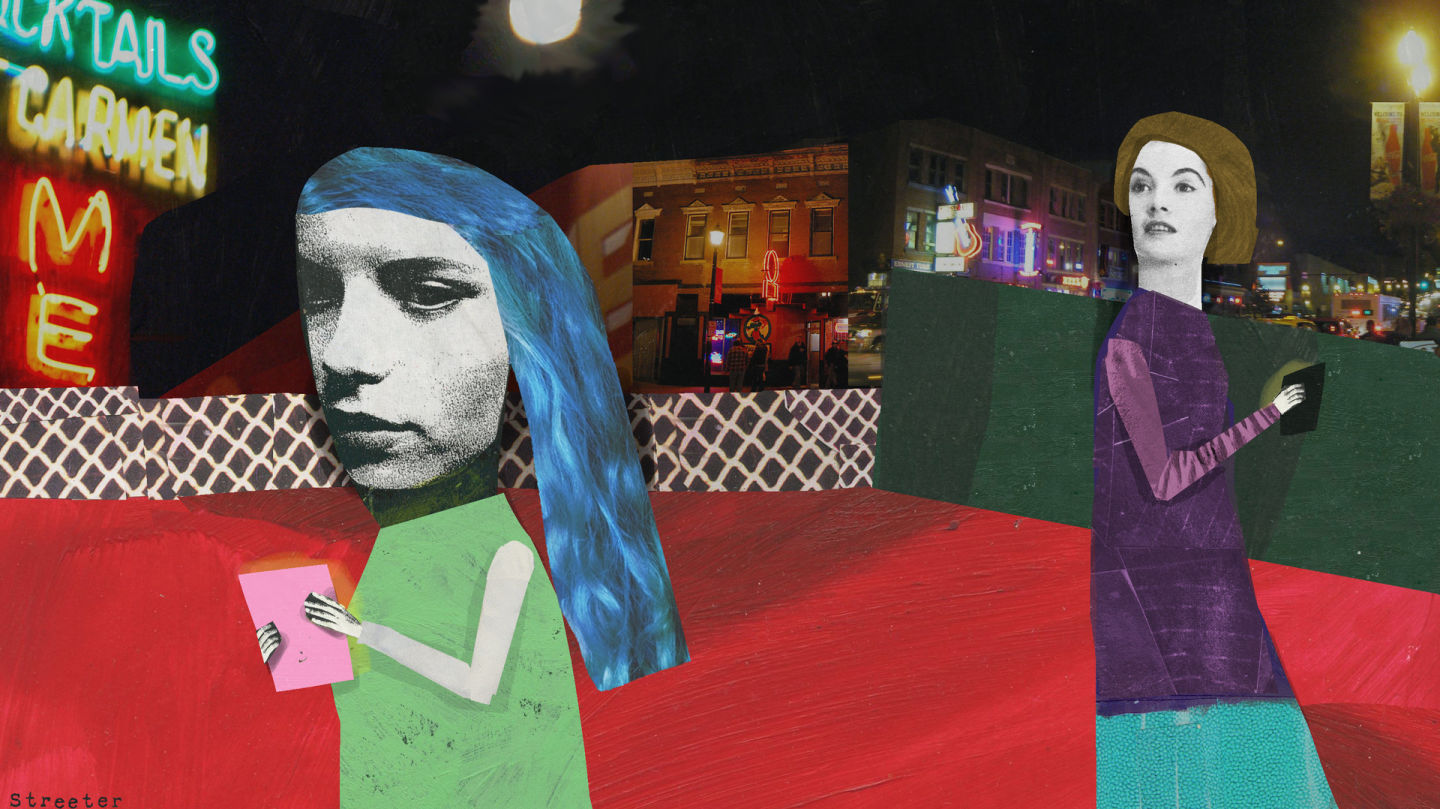
"caption": "For the modern parent, the smartphone is both a terrifying window into the world of teenage experimentation, and a way to keep tabs on teens who wouldn't otherwise share what they're up to.",
"description": "For the modern parent, the smartphone is both a terrifying window into the world of teenage experimentation, and a way to keep tabs on teens who wouldn't otherwise share what they're up to.",
"title": "RS16580_DonnaSet-qut",
"credit": "Katherine Streeter for KQED",
"status": "inherit",
"isLoading": false,
"fetchFailed": false
},
"news_10673754": {
"type": "attachments",
"id": "news_10673754",
"meta": {
"index": "attachments_1716263798",
"site": "news",
"id": "10673754",
"found": true
},
"parent": 10673637,
"imgSizes": {
"twentyfourteen-full-width": {
"file": "https://ww2.kqed.org/app/uploads/sites/10/2015/09/KimDavis-1038x576.jpg",
"width": 1038,
"mimeType": "image/jpeg",
"height": 576
},
"thumbnail": {
"file": "https://ww2.kqed.org/app/uploads/sites/10/2015/09/KimDavis-400x284.jpg",
"width": 400,
"mimeType": "image/jpeg",
"height": 284
},
"fd-sm": {
"file": "https://ww2.kqed.org/app/uploads/sites/10/2015/09/KimDavis-960x681.jpg",
"width": 960,
"mimeType": "image/jpeg",
"height": 681
},
"post-thumbnail": {
"file": "https://ww2.kqed.org/app/uploads/sites/10/2015/09/KimDavis-672x372.jpg",
"width": 672,
"mimeType": "image/jpeg",
"height": 372
},
"kqedFullSize": {
"file": "https://ww2.kqed.org/app/uploads/sites/10/2015/09/KimDavis.jpg",
"width": 1920,
"height": 1361
},
"large": {
"file": "https://ww2.kqed.org/app/uploads/sites/10/2015/09/KimDavis-1440x1021.jpg",
"width": 1440,
"mimeType": "image/jpeg",
"height": 1021
},
"guest-author-96": {
"file": "https://ww2.kqed.org/app/uploads/sites/10/2015/09/KimDavis-96x96.jpg",
"width": 96,
"mimeType": "image/jpeg",
"height": 96
},
"medium": {
"file": "https://ww2.kqed.org/app/uploads/sites/10/2015/09/KimDavis-800x567.jpg",
"width": 800,
"mimeType": "image/jpeg",
"height": 567
},
"guest-author-64": {
"file": "https://ww2.kqed.org/app/uploads/sites/10/2015/09/KimDavis-64x64.jpg",
"width": 64,
"mimeType": "image/jpeg",
"height": 64
},
"guest-author-32": {
"file": "https://ww2.kqed.org/app/uploads/sites/10/2015/09/KimDavis-32x32.jpg",
"width": 32,
"mimeType": "image/jpeg",
"height": 32
},
"jmtc-small-thumb": {
"file": "https://ww2.kqed.org/app/uploads/sites/10/2015/09/KimDavis-280x150.jpg",
"width": 280,
"mimeType": "image/jpeg",
"height": 150
},
"fd-lrg": {
"file": "https://ww2.kqed.org/app/uploads/sites/10/2015/09/KimDavis-1920x1361.jpg",
"width": 1920,
"mimeType": "image/jpeg",
"height": 1361
},
"fd-med": {
"file": "https://ww2.kqed.org/app/uploads/sites/10/2015/09/KimDavis-1180x836.jpg",
"width": 1180,
"mimeType": "image/jpeg",
"height": 836
},
"detail": {
"file": "https://ww2.kqed.org/app/uploads/sites/10/2015/09/KimDavis-75x75.jpg",
"width": 75,
"mimeType": "image/jpeg",
"height": 75
},
"guest-author-128": {
"file": "https://ww2.kqed.org/app/uploads/sites/10/2015/09/KimDavis-128x128.jpg",
"width": 128,
"mimeType": "image/jpeg",
"height": 128
}
},
"publishDate": 1441758388,
"modified": 1441758980,
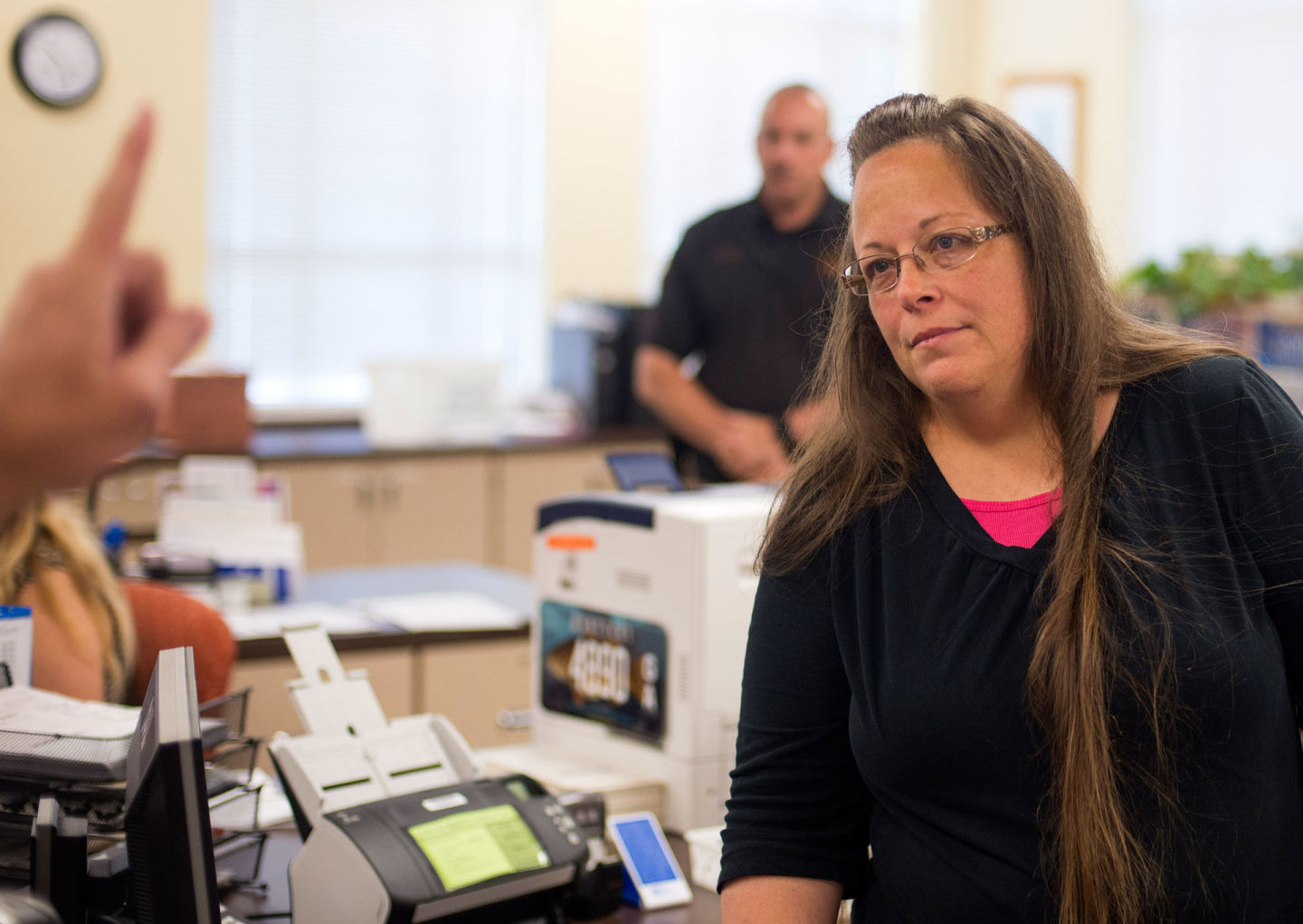
"caption": "Kim Davis, the Rowan County clerk of courts, listens to Robbie Blankenship and Jesse Cruz as they speak with her about getting a marriage license on Sept. 2, 2015, in Morehead, Kentucky. ",
"description": "Kim Davis, the Rowan County Clerk of Courts, listens to Robbie Blankenship and Jesse Cruz as they speak with her about getting a marriage license on September 2, 2015 in Morehead, Kentucky. ",
"title": "KimDavis",
"credit": "Ty Wright/Getty Images",
"status": "inherit",
"isLoading": false,
"fetchFailed": false
},
"news_10656284": {
"type": "attachments",
"id": "news_10656284",
"meta": {
"index": "attachments_1716263798",
"site": "news",
"id": "10656284",
"found": true
},
"parent": 10656191,
"imgSizes": {
"twentyfourteen-full-width": {
"file": "https://ww2.kqed.org/app/uploads/sites/10/2015/08/11902339_1790050367888651_3343617021542342617_n-e1440526641892-720x576.jpg",
"width": 720,
"mimeType": "image/jpeg",
"height": 576
},
"jmtc-small-thumb": {
"file": "https://ww2.kqed.org/app/uploads/sites/10/2015/08/11902339_1790050367888651_3343617021542342617_n-e1440526641892-280x150.jpg",
"width": 280,
"mimeType": "image/jpeg",
"height": 150
},
"thumbnail": {
"file": "https://ww2.kqed.org/app/uploads/sites/10/2015/08/11902339_1790050367888651_3343617021542342617_n-e1440526641892-400x324.jpg",
"width": 400,
"mimeType": "image/jpeg",
"height": 324
},
"post-thumbnail": {
"file": "https://ww2.kqed.org/app/uploads/sites/10/2015/08/11902339_1790050367888651_3343617021542342617_n-e1440526641892-672x372.jpg",
"width": 672,
"mimeType": "image/jpeg",
"height": 372
},
"kqedFullSize": {
"file": "https://ww2.kqed.org/app/uploads/sites/10/2015/08/11902339_1790050367888651_3343617021542342617_n-e1440526641892.jpg",
"width": 720,
"height": 583
},
"guest-author-96": {
"file": "https://ww2.kqed.org/app/uploads/sites/10/2015/08/11902339_1790050367888651_3343617021542342617_n-e1440526641892-96x96.jpg",
"width": 96,
"mimeType": "image/jpeg",
"height": 96
},
"guest-author-64": {
"file": "https://ww2.kqed.org/app/uploads/sites/10/2015/08/11902339_1790050367888651_3343617021542342617_n-e1440526641892-64x64.jpg",
"width": 64,
"mimeType": "image/jpeg",
"height": 64
},
"detail": {
"file": "https://ww2.kqed.org/app/uploads/sites/10/2015/08/11902339_1790050367888651_3343617021542342617_n-e1440526641892-75x75.jpg",
"width": 75,
"mimeType": "image/jpeg",
"height": 75
},
"guest-author-32": {
"file": "https://ww2.kqed.org/app/uploads/sites/10/2015/08/11902339_1790050367888651_3343617021542342617_n-e1440526641892-32x32.jpg",
"width": 32,
"mimeType": "image/jpeg",
"height": 32
},
"guest-author-128": {
"file": "https://ww2.kqed.org/app/uploads/sites/10/2015/08/11902339_1790050367888651_3343617021542342617_n-e1440526641892-128x128.jpg",
"width": 128,
"mimeType": "image/jpeg",
"height": 128
}
},
"publishDate": 1440525298,
"modified": 1443749008,
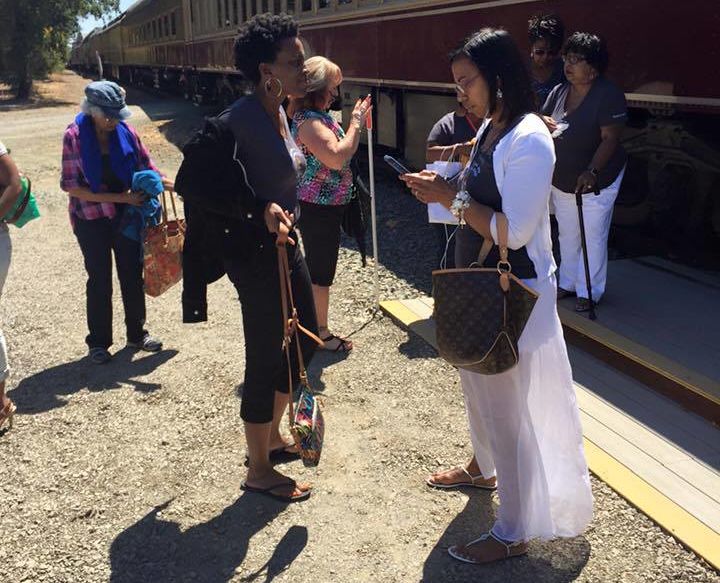
"caption": "Members of Sistahs on the Reading Edge after being ejected from Napa Valley Wine Train on Aug. 22. ",
"description": "Members of Sistahs on the Reading Edge after being ejected from Napa Valley Wine Train last Saturday. Aug. 22, 2015). ",
"title": "Napa Valley Wine Train-#LaughingWhileBlack",
"credit": "Lisa Renee Johnson via Facebook",
"status": "inherit",
"isLoading": false,
"fetchFailed": false
},
"news_10665771": {
"type": "attachments",
"id": "news_10665771",
"meta": {
"index": "attachments_1716263798",
"site": "news",
"id": "10665771",
"found": true
},
"parent": 10665724,
"imgSizes": {
"twentyfourteen-full-width": {
"file": "https://ww2.kqed.org/app/uploads/sites/10/2015/09/7721919384_e2d4c2f097_k-1038x576.jpg",
"width": 1038,
"mimeType": "image/jpeg",
"height": 576
},
"thumbnail": {
"file": "https://ww2.kqed.org/app/uploads/sites/10/2015/09/7721919384_e2d4c2f097_k-400x281.jpg",
"width": 400,
"mimeType": "image/jpeg",
"height": 281
},
"fd-sm": {
"file": "https://ww2.kqed.org/app/uploads/sites/10/2015/09/7721919384_e2d4c2f097_k-960x675.jpg",
"width": 960,
"mimeType": "image/jpeg",
"height": 675
},
"post-thumbnail": {
"file": "https://ww2.kqed.org/app/uploads/sites/10/2015/09/7721919384_e2d4c2f097_k-672x372.jpg",
"width": 672,
"mimeType": "image/jpeg",
"height": 372
},
"kqedFullSize": {
"file": "https://ww2.kqed.org/app/uploads/sites/10/2015/09/7721919384_e2d4c2f097_k-e1441204464538.jpg",
"width": 1920,
"height": 1349
},
"large": {
"file": "https://ww2.kqed.org/app/uploads/sites/10/2015/09/7721919384_e2d4c2f097_k-1440x1012.jpg",
"width": 1440,
"mimeType": "image/jpeg",
"height": 1012
},
"guest-author-96": {
"file": "https://ww2.kqed.org/app/uploads/sites/10/2015/09/7721919384_e2d4c2f097_k-96x96.jpg",
"width": 96,
"mimeType": "image/jpeg",
"height": 96
},
"medium": {
"file": "https://ww2.kqed.org/app/uploads/sites/10/2015/09/7721919384_e2d4c2f097_k-800x562.jpg",
"width": 800,
"mimeType": "image/jpeg",
"height": 562
},
"guest-author-64": {
"file": "https://ww2.kqed.org/app/uploads/sites/10/2015/09/7721919384_e2d4c2f097_k-64x64.jpg",
"width": 64,
"mimeType": "image/jpeg",
"height": 64
},
"guest-author-32": {
"file": "https://ww2.kqed.org/app/uploads/sites/10/2015/09/7721919384_e2d4c2f097_k-32x32.jpg",
"width": 32,
"mimeType": "image/jpeg",
"height": 32
},
"jmtc-small-thumb": {
"file": "https://ww2.kqed.org/app/uploads/sites/10/2015/09/7721919384_e2d4c2f097_k-280x150.jpg",
"width": 280,
"mimeType": "image/jpeg",
"height": 150
},
"fd-lrg": {
"file": "https://ww2.kqed.org/app/uploads/sites/10/2015/09/7721919384_e2d4c2f097_k-1920x1349.jpg",
"width": 1920,
"mimeType": "image/jpeg",
"height": 1349
},
"fd-med": {
"file": "https://ww2.kqed.org/app/uploads/sites/10/2015/09/7721919384_e2d4c2f097_k-1180x829.jpg",
"width": 1180,
"mimeType": "image/jpeg",
"height": 829
},
"detail": {
"file": "https://ww2.kqed.org/app/uploads/sites/10/2015/09/7721919384_e2d4c2f097_k-75x75.jpg",
"width": 75,
"mimeType": "image/jpeg",
"height": 75
},
"guest-author-128": {
"file": "https://ww2.kqed.org/app/uploads/sites/10/2015/09/7721919384_e2d4c2f097_k-128x128.jpg",
"width": 128,
"mimeType": "image/jpeg",
"height": 128
}
},
"publishDate": 1441204392,
"modified": 1441204453,
"caption": "Berkeley Public Library's landmark Central Branch. ",
"description": null,
"title": "Berkeley Public Library",
"credit": "\u003ca href=\"https://flic.kr/p/cLmRB7 target=\"_blank\">Sarah Stierch/Flickr\u003c/a>",
"status": "inherit",
"isLoading": false,
"fetchFailed": false
},
"news_10649142": {
"type": "attachments",
"id": "news_10649142",
"meta": {
"index": "attachments_1716263798",
"site": "news",
"id": "10649142",
"found": true
},
"parent": 10647782,
"imgSizes": {
"twentyfourteen-full-width": {
"file": "https://ww2.kqed.org/app/uploads/sites/10/2015/08/stone-wall-corner-house-1038x576.jpg",
"width": 1038,
"mimeType": "image/jpeg",
"height": 576
},
"thumbnail": {
"file": "https://ww2.kqed.org/app/uploads/sites/10/2015/08/stone-wall-corner-house-400x300.jpg",
"width": 400,
"mimeType": "image/jpeg",
"height": 300
},
"fd-sm": {
"file": "https://ww2.kqed.org/app/uploads/sites/10/2015/08/stone-wall-corner-house-960x720.jpg",
"width": 960,
"mimeType": "image/jpeg",
"height": 720
},
"post-thumbnail": {
"file": "https://ww2.kqed.org/app/uploads/sites/10/2015/08/stone-wall-corner-house-672x372.jpg",
"width": 672,
"mimeType": "image/jpeg",
"height": 372
},
"kqedFullSize": {
"file": "https://ww2.kqed.org/app/uploads/sites/10/2015/08/stone-wall-corner-house.jpg",
"width": 1920,
"height": 1440
},
"large": {
"file": "https://ww2.kqed.org/app/uploads/sites/10/2015/08/stone-wall-corner-house-1440x1080.jpg",
"width": 1440,
"mimeType": "image/jpeg",
"height": 1080
},
"guest-author-96": {
"file": "https://ww2.kqed.org/app/uploads/sites/10/2015/08/stone-wall-corner-house-96x96.jpg",
"width": 96,
"mimeType": "image/jpeg",
"height": 96
},
"medium": {
"file": "https://ww2.kqed.org/app/uploads/sites/10/2015/08/stone-wall-corner-house-800x600.jpg",
"width": 800,
"mimeType": "image/jpeg",
"height": 600
},
"guest-author-64": {
"file": "https://ww2.kqed.org/app/uploads/sites/10/2015/08/stone-wall-corner-house-64x64.jpg",
"width": 64,
"mimeType": "image/jpeg",
"height": 64
},
"guest-author-32": {
"file": "https://ww2.kqed.org/app/uploads/sites/10/2015/08/stone-wall-corner-house-32x32.jpg",
"width": 32,
"mimeType": "image/jpeg",
"height": 32
},
"jmtc-small-thumb": {
"file": "https://ww2.kqed.org/app/uploads/sites/10/2015/08/stone-wall-corner-house-280x150.jpg",
"width": 280,
"mimeType": "image/jpeg",
"height": 150
},
"fd-lrg": {
"file": "https://ww2.kqed.org/app/uploads/sites/10/2015/08/stone-wall-corner-house-1920x1440.jpg",
"width": 1920,
"mimeType": "image/jpeg",
"height": 1440
},
"fd-med": {
"file": "https://ww2.kqed.org/app/uploads/sites/10/2015/08/stone-wall-corner-house-1180x885.jpg",
"width": 1180,
"mimeType": "image/jpeg",
"height": 885
},
"detail": {
"file": "https://ww2.kqed.org/app/uploads/sites/10/2015/08/stone-wall-corner-house-75x75.jpg",
"width": 75,
"mimeType": "image/jpeg",
"height": 75
},
"guest-author-128": {
"file": "https://ww2.kqed.org/app/uploads/sites/10/2015/08/stone-wall-corner-house-128x128.jpg",
"width": 128,
"mimeType": "image/jpeg",
"height": 128
}
},
"publishDate": 1439967229,
"modified": 1439967272,
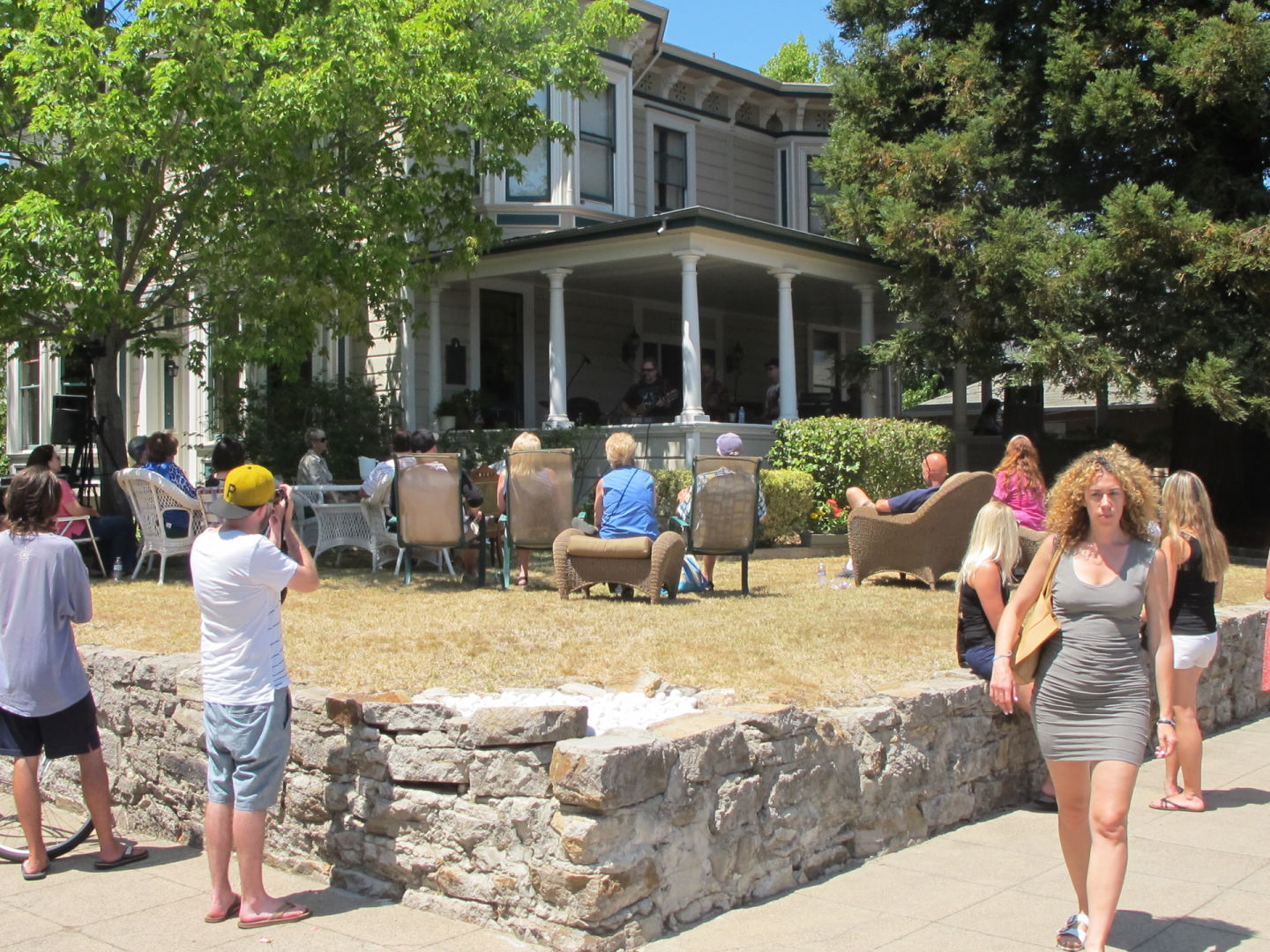
"caption": "56 porches participated in this years festival.",
"description": null,
"title": "stone wall corner house",
"credit": "Andrew Stelzer",
"status": "inherit",
"isLoading": false,
"fetchFailed": false
},
"news_10652221": {
"type": "attachments",
"id": "news_10652221",
"meta": {
"index": "attachments_1716263798",
"site": "news",
"id": "10652221",
"found": true
},
"parent": 10651178,
"imgSizes": {
"twentyfourteen-full-width": {
"file": "https://ww2.kqed.org/app/uploads/sites/10/2015/08/RS16448_19326-IMG_8253-1038x576.jpg",
"width": 1038,
"mimeType": "image/jpeg",
"height": 576
},
"thumbnail": {
"file": "https://ww2.kqed.org/app/uploads/sites/10/2015/08/RS16448_19326-IMG_8253-400x250.jpg",
"width": 400,
"mimeType": "image/jpeg",
"height": 250
},
"fd-sm": {
"file": "https://ww2.kqed.org/app/uploads/sites/10/2015/08/RS16448_19326-IMG_8253-960x600.jpg",
"width": 960,
"mimeType": "image/jpeg",
"height": 600
},
"post-thumbnail": {
"file": "https://ww2.kqed.org/app/uploads/sites/10/2015/08/RS16448_19326-IMG_8253-672x372.jpg",
"width": 672,
"mimeType": "image/jpeg",
"height": 372
},
"kqedFullSize": {
"file": "https://ww2.kqed.org/app/uploads/sites/10/2015/08/RS16448_19326-IMG_8253.jpg",
"width": 4511,
"height": 2819
},
"large": {
"file": "https://ww2.kqed.org/app/uploads/sites/10/2015/08/RS16448_19326-IMG_8253-1440x900.jpg",
"width": 1440,
"mimeType": "image/jpeg",
"height": 900
},
"guest-author-96": {
"file": "https://ww2.kqed.org/app/uploads/sites/10/2015/08/RS16448_19326-IMG_8253-96x96.jpg",
"width": 96,
"mimeType": "image/jpeg",
"height": 96
},
"medium": {
"file": "https://ww2.kqed.org/app/uploads/sites/10/2015/08/RS16448_19326-IMG_8253-800x500.jpg",
"width": 800,
"mimeType": "image/jpeg",
"height": 500
},
"guest-author-64": {
"file": "https://ww2.kqed.org/app/uploads/sites/10/2015/08/RS16448_19326-IMG_8253-64x64.jpg",
"width": 64,
"mimeType": "image/jpeg",
"height": 64
},
"guest-author-32": {
"file": "https://ww2.kqed.org/app/uploads/sites/10/2015/08/RS16448_19326-IMG_8253-32x32.jpg",
"width": 32,
"mimeType": "image/jpeg",
"height": 32
},
"jmtc-small-thumb": {
"file": "https://ww2.kqed.org/app/uploads/sites/10/2015/08/RS16448_19326-IMG_8253-280x150.jpg",
"width": 280,
"mimeType": "image/jpeg",
"height": 150
},
"fd-lrg": {
"file": "https://ww2.kqed.org/app/uploads/sites/10/2015/08/RS16448_19326-IMG_8253-1920x1200.jpg",
"width": 1920,
"mimeType": "image/jpeg",
"height": 1200
},
"fd-med": {
"file": "https://ww2.kqed.org/app/uploads/sites/10/2015/08/RS16448_19326-IMG_8253-1180x737.jpg",
"width": 1180,
"mimeType": "image/jpeg",
"height": 737
},
"detail": {
"file": "https://ww2.kqed.org/app/uploads/sites/10/2015/08/RS16448_19326-IMG_8253-75x75.jpg",
"width": 75,
"mimeType": "image/jpeg",
"height": 75
},
"guest-author-128": {
"file": "https://ww2.kqed.org/app/uploads/sites/10/2015/08/RS16448_19326-IMG_8253-128x128.jpg",
"width": 128,
"mimeType": "image/jpeg",
"height": 128
}
},
"publishDate": 1440183452,
"modified": 1440183537,
"caption": "Bicicletas Por La Paz",
"description": "Bicicletas Por La Paz",
"title": "RS16448_19326-IMG_8253",
"credit": null,
"status": "inherit",
"isLoading": false,
"fetchFailed": false
},
"news_10651407": {
"type": "attachments",
"id": "news_10651407",
"meta": {
"index": "attachments_1716263798",
"site": "news",
"id": "10651407",
"found": true
},
"parent": 10651180,
"imgSizes": {
"twentyfourteen-full-width": {
"file": "https://ww2.kqed.org/app/uploads/sites/10/2015/08/15299609522_300f136f8c_k-1038x576.jpg",
"width": 1038,
"mimeType": "image/jpeg",
"height": 576
},
"thumbnail": {
"file": "https://ww2.kqed.org/app/uploads/sites/10/2015/08/15299609522_300f136f8c_k-400x267.jpg",
"width": 400,
"mimeType": "image/jpeg",
"height": 267
},
"fd-sm": {
"file": "https://ww2.kqed.org/app/uploads/sites/10/2015/08/15299609522_300f136f8c_k-960x640.jpg",
"width": 960,
"mimeType": "image/jpeg",
"height": 640
},
"post-thumbnail": {
"file": "https://ww2.kqed.org/app/uploads/sites/10/2015/08/15299609522_300f136f8c_k-672x372.jpg",
"width": 672,
"mimeType": "image/jpeg",
"height": 372
},
"kqedFullSize": {
"file": "https://ww2.kqed.org/app/uploads/sites/10/2015/08/15299609522_300f136f8c_k-e1440116786633.jpg",
"width": 1920,
"height": 1280
},
"large": {
"file": "https://ww2.kqed.org/app/uploads/sites/10/2015/08/15299609522_300f136f8c_k-1440x960.jpg",
"width": 1440,
"mimeType": "image/jpeg",
"height": 960
},
"guest-author-96": {
"file": "https://ww2.kqed.org/app/uploads/sites/10/2015/08/15299609522_300f136f8c_k-96x96.jpg",
"width": 96,
"mimeType": "image/jpeg",
"height": 96
},
"medium": {
"file": "https://ww2.kqed.org/app/uploads/sites/10/2015/08/15299609522_300f136f8c_k-800x533.jpg",
"width": 800,
"mimeType": "image/jpeg",
"height": 533
},
"guest-author-64": {
"file": "https://ww2.kqed.org/app/uploads/sites/10/2015/08/15299609522_300f136f8c_k-64x64.jpg",
"width": 64,
"mimeType": "image/jpeg",
"height": 64
},
"guest-author-32": {
"file": "https://ww2.kqed.org/app/uploads/sites/10/2015/08/15299609522_300f136f8c_k-32x32.jpg",
"width": 32,
"mimeType": "image/jpeg",
"height": 32
},
"jmtc-small-thumb": {
"file": "https://ww2.kqed.org/app/uploads/sites/10/2015/08/15299609522_300f136f8c_k-280x150.jpg",
"width": 280,
"mimeType": "image/jpeg",
"height": 150
},
"fd-lrg": {
"file": "https://ww2.kqed.org/app/uploads/sites/10/2015/08/15299609522_300f136f8c_k-1920x1280.jpg",
"width": 1920,
"mimeType": "image/jpeg",
"height": 1280
},
"fd-med": {
"file": "https://ww2.kqed.org/app/uploads/sites/10/2015/08/15299609522_300f136f8c_k-1180x786.jpg",
"width": 1180,
"mimeType": "image/jpeg",
"height": 786
},
"detail": {
"file": "https://ww2.kqed.org/app/uploads/sites/10/2015/08/15299609522_300f136f8c_k-75x75.jpg",
"width": 75,
"mimeType": "image/jpeg",
"height": 75
},
"guest-author-128": {
"file": "https://ww2.kqed.org/app/uploads/sites/10/2015/08/15299609522_300f136f8c_k-128x128.jpg",
"width": 128,
"mimeType": "image/jpeg",
"height": 128
}
},
"publishDate": 1440116683,
"modified": 1440116779,
"caption": "Burning Man 2014, unafflicted by major bug infestation.",
"description": null,
"title": "Burning Man-2014-Fireworks",
"credit": "\u003ca href=\"https://www.flickr.com/photos/thelastminute/15299609522/\" target=\"_blank\">Duncan Rawlinson/Flickr\u003c/a>",
"status": "inherit",
"isLoading": false,
"fetchFailed": false
},
"news_10650255": {
"type": "attachments",
"id": "news_10650255",
"meta": {
"index": "attachments_1716263798",
"site": "news",
"id": "10650255",
"found": true
},
"parent": 10650203,
"imgSizes": {
"twentyfourteen-full-width": {
"file": "https://ww2.kqed.org/app/uploads/sites/10/2015/08/AAU-1038x576.jpg",
"width": 1038,
"mimeType": "image/jpeg",
"height": 576
},
"thumbnail": {
"file": "https://ww2.kqed.org/app/uploads/sites/10/2015/08/AAU-400x237.jpg",
"width": 400,
"mimeType": "image/jpeg",
"height": 237
},
"fd-sm": {
"file": "https://ww2.kqed.org/app/uploads/sites/10/2015/08/AAU-960x570.jpg",
"width": 960,
"mimeType": "image/jpeg",
"height": 570
},
"post-thumbnail": {
"file": "https://ww2.kqed.org/app/uploads/sites/10/2015/08/AAU-672x372.jpg",
"width": 672,
"mimeType": "image/jpeg",
"height": 372
},
"kqedFullSize": {
"file": "https://ww2.kqed.org/app/uploads/sites/10/2015/08/AAU.jpg",
"width": 1920,
"height": 1139
},
"large": {
"file": "https://ww2.kqed.org/app/uploads/sites/10/2015/08/AAU-1440x854.jpg",
"width": 1440,
"mimeType": "image/jpeg",
"height": 854
},
"guest-author-96": {
"file": "https://ww2.kqed.org/app/uploads/sites/10/2015/08/AAU-96x96.jpg",
"width": 96,
"mimeType": "image/jpeg",
"height": 96
},
"medium": {
"file": "https://ww2.kqed.org/app/uploads/sites/10/2015/08/AAU-800x475.jpg",
"width": 800,
"mimeType": "image/jpeg",
"height": 475
},
"guest-author-64": {
"file": "https://ww2.kqed.org/app/uploads/sites/10/2015/08/AAU-64x64.jpg",
"width": 64,
"mimeType": "image/jpeg",
"height": 64
},
"guest-author-32": {
"file": "https://ww2.kqed.org/app/uploads/sites/10/2015/08/AAU-32x32.jpg",
"width": 32,
"mimeType": "image/jpeg",
"height": 32
},
"jmtc-small-thumb": {
"file": "https://ww2.kqed.org/app/uploads/sites/10/2015/08/AAU-280x150.jpg",
"width": 280,
"mimeType": "image/jpeg",
"height": 150
},
"fd-lrg": {
"file": "https://ww2.kqed.org/app/uploads/sites/10/2015/08/AAU-1920x1139.jpg",
"width": 1920,
"mimeType": "image/jpeg",
"height": 1139
},
"fd-med": {
"file": "https://ww2.kqed.org/app/uploads/sites/10/2015/08/AAU-1180x700.jpg",
"width": 1180,
"mimeType": "image/jpeg",
"height": 700
},
"detail": {
"file": "https://ww2.kqed.org/app/uploads/sites/10/2015/08/AAU-75x75.jpg",
"width": 75,
"mimeType": "image/jpeg",
"height": 75
},
"guest-author-128": {
"file": "https://ww2.kqed.org/app/uploads/sites/10/2015/08/AAU-128x128.jpg",
"width": 128,
"mimeType": "image/jpeg",
"height": 128
}
},
"publishDate": 1440034563,
"modified": 1440110609,
"caption": "The Academy of Art University in San Francisco is the country's biggest private art college.",
"description": "The exterior of an Academy of Art University in downtown San Francisco .",
"title": "AAU",
"credit": "Wikimedia Commons",
"status": "inherit",
"isLoading": false,
"fetchFailed": false
},
"news_10647433": {
"type": "attachments",
"id": "news_10647433",
"meta": {
"index": "attachments_1716263798",
"site": "news",
"id": "10647433",
"found": true
},
"parent": 11669399,
"imgSizes": {
"twentyfourteen-full-width": {
"file": "https://ww2.kqed.org/app/uploads/sites/10/2015/08/sideshow-via-youtube-1038x576.jpg",
"width": 1038,
"mimeType": "image/jpeg",
"height": 576
},
"thumbnail": {
"file": "https://ww2.kqed.org/app/uploads/sites/10/2015/08/sideshow-via-youtube-400x218.jpg",
"width": 400,
"mimeType": "image/jpeg",
"height": 218
},
"fd-sm": {
"file": "https://ww2.kqed.org/app/uploads/sites/10/2015/08/sideshow-via-youtube-960x523.jpg",
"width": 960,
"mimeType": "image/jpeg",
"height": 523
},
"post-thumbnail": {
"file": "https://ww2.kqed.org/app/uploads/sites/10/2015/08/sideshow-via-youtube-672x372.jpg",
"width": 672,
"mimeType": "image/jpeg",
"height": 372
},
"kqedFullSize": {
"file": "https://ww2.kqed.org/app/uploads/sites/10/2015/08/sideshow-via-youtube.jpg",
"width": 1928,
"height": 1050
},
"large": {
"file": "https://ww2.kqed.org/app/uploads/sites/10/2015/08/sideshow-via-youtube-1440x784.jpg",
"width": 1440,
"mimeType": "image/jpeg",
"height": 784
},
"guest-author-96": {
"file": "https://ww2.kqed.org/app/uploads/sites/10/2015/08/sideshow-via-youtube-96x96.jpg",
"width": 96,
"mimeType": "image/jpeg",
"height": 96
},
"medium": {
"file": "https://ww2.kqed.org/app/uploads/sites/10/2015/08/sideshow-via-youtube-800x436.jpg",
"width": 800,
"mimeType": "image/jpeg",
"height": 436
},
"guest-author-64": {
"file": "https://ww2.kqed.org/app/uploads/sites/10/2015/08/sideshow-via-youtube-64x64.jpg",
"width": 64,
"mimeType": "image/jpeg",
"height": 64
},
"guest-author-32": {
"file": "https://ww2.kqed.org/app/uploads/sites/10/2015/08/sideshow-via-youtube-32x32.jpg",
"width": 32,
"mimeType": "image/jpeg",
"height": 32
},
"jmtc-small-thumb": {
"file": "https://ww2.kqed.org/app/uploads/sites/10/2015/08/sideshow-via-youtube-280x150.jpg",
"width": 280,
"mimeType": "image/jpeg",
"height": 150
},
"fd-lrg": {
"file": "https://ww2.kqed.org/app/uploads/sites/10/2015/08/sideshow-via-youtube-1920x1046.jpg",
"width": 1920,
"mimeType": "image/jpeg",
"height": 1046
},
"fd-med": {
"file": "https://ww2.kqed.org/app/uploads/sites/10/2015/08/sideshow-via-youtube-1180x643.jpg",
"width": 1180,
"mimeType": "image/jpeg",
"height": 643
},
"detail": {
"file": "https://ww2.kqed.org/app/uploads/sites/10/2015/08/sideshow-via-youtube-75x75.jpg",
"width": 75,
"mimeType": "image/jpeg",
"height": 75
},
"guest-author-128": {
"file": "https://ww2.kqed.org/app/uploads/sites/10/2015/08/sideshow-via-youtube-128x128.jpg",
"width": 128,
"mimeType": "image/jpeg",
"height": 128
}
},
"publishDate": 1439856180,
"modified": 1526775098,
"caption": "Spectators watch a sideshow at Foothill Boulevard and 55th Avenue in East Oakland on June 21, 2015. ",
"description": "Spectators watch a sideshow at Foothill Boulevard and 55th Avenue in East Oakland on June 21, 2015. ",
"title": "sideshow,-via-youtube",
"credit": "Jay Area/YouTube",
"status": "inherit",
"isLoading": false,
"fetchFailed": false
},
"news_10634776": {
"type": "attachments",
"id": "news_10634776",
"meta": {
"index": "attachments_1716263798",
"site": "news",
"id": "10634776",
"found": true
},
"parent": 10634303,
"imgSizes": {
"jmtc-small-thumb": {
"file": "https://ww2.kqed.org/app/uploads/sites/10/2015/08/RS16293_main_image_1-qut-280x150.jpg",
"width": 280,
"mimeType": "image/jpeg",
"height": 150
},
"thumbnail": {
"file": "https://ww2.kqed.org/app/uploads/sites/10/2015/08/RS16293_main_image_1-qut-400x183.jpg",
"width": 400,
"mimeType": "image/jpeg",
"height": 183
},
"fd-sm": {
"file": "https://ww2.kqed.org/app/uploads/sites/10/2015/08/RS16293_main_image_1-qut-960x438.jpg",
"width": 960,
"mimeType": "image/jpeg",
"height": 438
},
"post-thumbnail": {
"file": "https://ww2.kqed.org/app/uploads/sites/10/2015/08/RS16293_main_image_1-qut-672x372.jpg",
"width": 672,
"mimeType": "image/jpeg",
"height": 372
},
"kqedFullSize": {
"file": "https://ww2.kqed.org/app/uploads/sites/10/2015/08/RS16293_main_image_1-qut.jpg",
"width": 960,
"height": 438
},
"guest-author-96": {
"file": "https://ww2.kqed.org/app/uploads/sites/10/2015/08/RS16293_main_image_1-qut-96x96.jpg",
"width": 96,
"mimeType": "image/jpeg",
"height": 96
},
"medium": {
"file": "https://ww2.kqed.org/app/uploads/sites/10/2015/08/RS16293_main_image_1-qut-800x365.jpg",
"width": 800,
"mimeType": "image/jpeg",
"height": 365
},
"guest-author-64": {
"file": "https://ww2.kqed.org/app/uploads/sites/10/2015/08/RS16293_main_image_1-qut-64x64.jpg",
"width": 64,
"mimeType": "image/jpeg",
"height": 64
},
"detail": {
"file": "https://ww2.kqed.org/app/uploads/sites/10/2015/08/RS16293_main_image_1-qut-75x75.jpg",
"width": 75,
"mimeType": "image/jpeg",
"height": 75
},
"guest-author-32": {
"file": "https://ww2.kqed.org/app/uploads/sites/10/2015/08/RS16293_main_image_1-qut-32x32.jpg",
"width": 32,
"mimeType": "image/jpeg",
"height": 32
},
"guest-author-128": {
"file": "https://ww2.kqed.org/app/uploads/sites/10/2015/08/RS16293_main_image_1-qut-128x128.jpg",
"width": 128,
"mimeType": "image/jpeg",
"height": 128
}
},
"publishDate": 1439011538,
"modified": 1439155429,
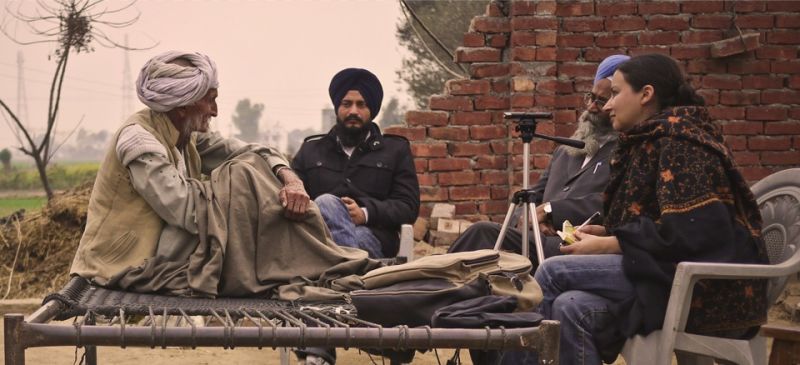
"caption": "Volunteers called citizen historians interview and record the experiences of those who witnessed the partition of British India in 1947.",
"description": "Volunteers called citizen historians interview and record the experiences of those who witnessed the partition of British India in 1947.",
"title": "RS16293_main_image_1-qut",
"credit": "Courtesy of 1947 Partition Archive",
"status": "inherit",
"isLoading": false,
"fetchFailed": false
}
},
"audioPlayerReducer": {
"postId": "stream_live",
"isPaused": true,
"isPlaying": false,
"pfsActive": false,
"pledgeModalIsOpen": true,
"playerDrawerIsOpen": false,
"liveAudioPlayStartedAt": 0,
"liveAudioPlayContext": ""
},
"authorsReducer": {
"byline_news_10665724": {
"type": "authors",
"id": "byline_news_10665724",
"meta": {
"override": true
},
"slug": "byline_news_10665724",
"name": "\u003cstrong>\u003ca href=\"http://www.berkeleyside.com/author/tracey/\" target=\"_blank\">Tracey Taylor\u003c/a>\u003cbr />Berkeleyside\u003c/strong>",
"isLoading": false
},
"byline_news_10650203": {
"type": "authors",
"id": "byline_news_10650203",
"meta": {
"override": true
},
"slug": "byline_news_10650203",
"name": "\u003cstrong>Natalie Yemenidjian\u003c/strong>",
"isLoading": false
},
"agilbert": {
"type": "authors",
"id": "86",
"meta": {
"index": "authors_1716337520",
"id": "86",
"found": true
},
"name": "Andrew Gilbert",
"firstName": "Andrew",
"lastName": "Gilbert",
"slug": "agilbert",
"email": "jazzscribe@aol.com",
"display_author_email": false,
"staff_mastheads": [],
"title": "KQED Contributor",
"bio": "A Los Angeles native based in the Berkeley area since 1996, Andrew Gilbert covers jazz, international music and dance for KQED's \u003ci>California Report, \u003c/i>the\u003ci> Mercury News\u003c/i>, \u003ci>San Francisco Chronicle\u003c/i>, \u003ci>Berkeleyside.com\u003c/i>, and other publications. He is available for weddings and bar and bat mitzvahs. #jazzscribe",
"avatar": "https://secure.gravatar.com/avatar/d7bcafdbefdd39e9a68f88724ca616eb4e7a5a6bff9cdfb62de652a1e1751471?s=600&d=blank&r=g",
"twitter": null,
"bluesky": null,
"facebook": null,
"instagram": null,
"linkedin": null,
"sites": [
{
"site": "arts",
"roles": [
"Contributor",
"author"
]
},
{
"site": "news",
"roles": [
"author"
]
}
],
"headData": {
"title": "Andrew Gilbert | KQED",
"description": "KQED Contributor",
"ogImgSrc": "https://secure.gravatar.com/avatar/d7bcafdbefdd39e9a68f88724ca616eb4e7a5a6bff9cdfb62de652a1e1751471?s=600&d=blank&r=g",
"twImgSrc": "https://secure.gravatar.com/avatar/d7bcafdbefdd39e9a68f88724ca616eb4e7a5a6bff9cdfb62de652a1e1751471?s=600&d=blank&r=g"
},
"isLoading": false,
"link": "/author/agilbert"
},
"shochman": {
"type": "authors",
"id": "87",
"meta": {
"index": "authors_1716337520",
"id": "87",
"found": true
},
"name": "Steve Hochman",
"firstName": "Steve",
"lastName": "Hochman",
"slug": "shochman",
"email": "sehochman@me.com",
"display_author_email": false,
"staff_mastheads": [],
"title": "KQED Contributor",
"bio": "Steve Hochman has covered popular, and unpopular, music for more than 30 years, most of that time as a key member of the \u003ci>Los Angeles Times\u003c/i>' music team. In that capacity he wrote about the full range of music and musicians, from Hungarian folk to industrial noise, and from 1991 through 2005 wrote the \u003ci>Times\u003c/i>' widely read weekly \"Pop Eye\" column. In addition to his role with \u003ci>The California Report\u003c/i>, he's a music critic for Pasadena station KPCC's morning magazine \u003ci>Take Two\u003c/i> and a regular contributor to Grammy.com, Fender.com and other outlets. His byline has appeared through the years in an array of major publications, including \u003ci>Rolling Stone\u003c/i>, \u003ci>Billboard\u003c/i> and \u003ci>Entertainment Weekly\u003c/i> and New Orleans' \u003ci>Offbeat\u003c/i>.",
"avatar": "https://secure.gravatar.com/avatar/37fbddee9db232a05a1be3b065171301e8baa142626c45b0caa6fc61c25a8c8d?s=600&d=blank&r=g",
"twitter": null,
"bluesky": null,
"facebook": null,
"instagram": null,
"linkedin": null,
"sites": [
{
"site": "arts",
"roles": [
"Contributor",
"subscriber"
]
},
{
"site": "news",
"roles": [
"subscriber"
]
}
],
"headData": {
"title": "Steve Hochman | KQED",
"description": "KQED Contributor",
"ogImgSrc": "https://secure.gravatar.com/avatar/37fbddee9db232a05a1be3b065171301e8baa142626c45b0caa6fc61c25a8c8d?s=600&d=blank&r=g",
"twImgSrc": "https://secure.gravatar.com/avatar/37fbddee9db232a05a1be3b065171301e8baa142626c45b0caa6fc61c25a8c8d?s=600&d=blank&r=g"
},
"isLoading": false,
"link": "/author/shochman"
},
"andrewstelzer": {
"type": "authors",
"id": "213",
"meta": {
"index": "authors_1716337520",
"id": "213",
"found": true
},
"name": "Andrew Stelzer",
"firstName": "Andrew",
"lastName": "Stelzer",
"slug": "andrewstelzer",
"email": "andrewstelzer@gmail.com",
"display_author_email": false,
"staff_mastheads": [],
"title": null,
"bio": "Andrew Stelzer has been reporting for KQED since 2010, and is a producer at \u003ca href=\"http://www.radioproject.org\" target=\"_blank\">Making Contact\u003c/a> in Oakland.. His work has been featured on programs including \u003ca href=\"http://www.npr.org/templates/story/story.php?storyId=5010\" target=\"_blank\">NPR’s Weekend Edition\u003c/a>, \u003ca href=\"http://www.theworld.org/\" target=\"_blank\">PRI’s The World\u003c/a>, \u003ca href=\"http://www.studio360.org/\" target=\"_blank\">Studio 360\u003c/a>, \u003ca href=\"http://marketplace.publicradio.org/\" target=\"_blank\">Marketplace\u003c/a>,\u003ca href=\"http://www.loe.org/\" target=\"_blank\">Living on Earth\u003c/a>, \u003ca href=\"http://www.onthemedia.org/\" target=\"_blank\">On the Media\u003c/a>, \u003ca href=\"http://www.latinousa.org/index.html\" target=\"_blank\">Latino USA,\u003c/a> \u003ca href=\"http://www.onlyagame.org/\" rel=\"tag\">Only a Game,\u003c/a> \u003ca href=\"http://www.tswi.org/\" target=\"_blank\">Radio Netherlands,\u003c/a> \u003ca href=\"http://worldradio.ch/index.shtml\" target=\"_blank\">World Radio Switzerland,\u003c/a> and \u003ca href=\"http://www.rfi.fr/langues/statiques/rfi_anglais.asp\" target=\"_blank\">Radio France International\u003c/a>. Andrew has written for publications including \u003ca href=\"http://www.inthesetimes.com/site/about/author/2369\" target=\"_blank\">In These Times\u003c/a>, \u003ca href=\"http://www.progressive.org/\" target=\"_blank\">The Progressive\u003c/a>, \u003ca href=\"http://ipsnews.net/\" target=\"_blank\">Interpress Service\u003c/a>, \u003ca href=\"http://www.tampabay.com/\" target=\"_blank\">The St. Petersburg Times\u003c/a>, and \u003ca href=\"http://www.eastbayexpress.com/ebx/Home\" target=\"_blank\">The East Bay Express\u003c/a>.\r\n\r\nAndrew’s work has received numerous awards from the Society of Professional Journalists, the National Lesbian and Gay Journalists Association, and the National Council on Crime and Delinquency.\r\n\r\nHe previously was a reporter at \u003ca href=\"http://www.wmnf.org/\" target=\"_blank\">WMNF\u003c/a> radio in Tampa, FL, and reporter and youth advocate st \u003ca href=\"http://www.kboo.org/\" target=\"_blank\">KBOO \u003c/a> in Portland, Oregon. Andrew has conducted radio production trainings around the world, from Algeria, to New Orleans, to the desert of Southern Jordan.",
"avatar": "https://secure.gravatar.com/avatar/14c7e75469395cb2468d45c9f6896ca9?s=600&d=blank&r=g",
"twitter": null,
"facebook": null,
"instagram": null,
"linkedin": null,
"sites": [
{
"site": "arts",
"roles": [
"contributor"
]
},
{
"site": "news",
"roles": [
"author"
]
},
{
"site": "stateofhealth",
"roles": [
"author"
]
}
],
"headData": {
"title": "Andrew Stelzer | KQED",
"description": null,
"ogImgSrc": "https://secure.gravatar.com/avatar/14c7e75469395cb2468d45c9f6896ca9?s=600&d=blank&r=g",
"twImgSrc": "https://secure.gravatar.com/avatar/14c7e75469395cb2468d45c9f6896ca9?s=600&d=blank&r=g"
},
"isLoading": false,
"link": "/author/andrewstelzer"
},
"danbrekke": {
"type": "authors",
"id": "222",
"meta": {
"index": "authors_1716337520",
"id": "222",
"found": true
},
"name": "Dan Brekke",
"firstName": "Dan",
"lastName": "Brekke",
"slug": "danbrekke",
"email": "dbrekke@kqed.org",
"display_author_email": true,
"staff_mastheads": [
"news",
"science"
],
"title": "KQED Editor and Reporter",
"bio": "Dan Brekke is a reporter and editor for KQED News, responsible for coverage of topics ranging from California water issues to the Bay Area's transportation challenges. In a newsroom career that began in Chicago in 1972, Dan has worked for \u003cem>The San Francisco Examiner,\u003c/em> Wired and TechTV and has been published in The New York Times, The New York Times Magazine, Business 2.0, Salon and elsewhere.\r\n\r\nSince joining KQED in 2007, Dan has reported, edited and produced both radio and online features and breaking news pieces. He has shared as both editor and reporter in four Society of Professional Journalists Norcal Excellence in Journalism awards and one Edward R. Murrow regional award. He was chosen for a spring 2017 residency at the Mesa Refuge to advance his research on California salmon.\r\n\r\nEmail Dan at: \u003ca href=\"mailto:dbrekke@kqed.org\">dbrekke@kqed.org\u003c/a>\r\n\r\n\u003cstrong>Twitter:\u003c/strong> \u003ca href=\"https://twitter.com/danbrekke\" rel=\"noopener noreferrer\">twitter.com/danbrekke\u003c/a>\r\n\u003cstrong>Facebook:\u003c/strong> \u003ca href=\"https://www.facebook.com/danbrekke\" rel=\"noopener noreferrer\">www.facebook.com/danbrekke\u003c/a>\r\n\u003cstrong>LinkedIn:\u003c/strong> \u003ca href=\"https://www.linkedin.com/in/danbrekke\" rel=\"noopener noreferrer\">www.linkedin.com/in/danbrekke\u003c/a>",
"avatar": "https://secure.gravatar.com/avatar/8f1f0d2a978fb3b23426c922c7e2af558fa36905b49c4ce76a97dc3c72d27226?s=600&d=mm&r=g",
"twitter": "danbrekke",
"bluesky": null,
"facebook": null,
"instagram": "https://www.instagram.com/dan.brekke/",
"linkedin": "https://www.linkedin.com/in/danbrekke/",
"sites": [
{
"site": "news",
"roles": [
"administrator",
"create_posts"
]
},
{
"site": "stateofhealth",
"roles": [
"editor"
]
},
{
"site": "science",
"roles": [
"editor"
]
},
{
"site": "quest",
"roles": [
"contributor"
]
},
{
"site": "food",
"roles": [
"contributor"
]
},
{
"site": "forum",
"roles": [
"contributor"
]
},
{
"site": "elections",
"roles": [
"editor"
]
},
{
"site": "liveblog",
"roles": [
"editor"
]
}
],
"headData": {
"title": "Dan Brekke | KQED",
"description": "KQED Editor and Reporter",
"ogImgSrc": "https://secure.gravatar.com/avatar/8f1f0d2a978fb3b23426c922c7e2af558fa36905b49c4ce76a97dc3c72d27226?s=600&d=mm&r=g",
"twImgSrc": "https://secure.gravatar.com/avatar/8f1f0d2a978fb3b23426c922c7e2af558fa36905b49c4ce76a97dc3c72d27226?s=600&d=mm&r=g"
},
"isLoading": false,
"link": "/author/danbrekke"
},
"joshuajohnson": {
"type": "authors",
"id": "233",
"meta": {
"index": "authors_1716337520",
"id": "233",
"found": true
},
"name": "Joshua Johnson",
"firstName": "Joshua",
"lastName": "Johnson",
"slug": "joshuajohnson",
"email": "jejohnson@kqed.org",
"display_author_email": false,
"staff_mastheads": [],
"title": null,
"bio": "Joshua Johnson is the creator and host of \u003cem>\u003ca href=\"http://www.truthbetoldshow.org\">Truth Be Told\u003c/a>,\u003c/em> a special series on race from KQED and PRI. Prior to creating the show, he served as the station's morning news anchor for five-and-half years.\r\n\r\nPrior to joining KQED, Joshua spent six years as an anchor/reporter for WLRN Miami Herald News. He's a native of South Florida, with degrees from the University of Miami. His reporting and newscasting have won awards from the Radio Television Digital News Association and from the National Association of Black Journalists. Joshua is also active in his union, SAG-AFTRA. He lives in San Francisco.",
"avatar": "https://secure.gravatar.com/avatar/2abea375594cdd54e4837846e3561fa4?s=600&d=blank&r=g",
"twitter": "@JEJohnson322",
"facebook": null,
"instagram": null,
"linkedin": null,
"sites": [
{
"site": "news",
"roles": [
"subscriber"
]
}
],
"headData": {
"title": "Joshua Johnson | KQED",
"description": null,
"ogImgSrc": "https://secure.gravatar.com/avatar/2abea375594cdd54e4837846e3561fa4?s=600&d=blank&r=g",
"twImgSrc": "https://secure.gravatar.com/avatar/2abea375594cdd54e4837846e3561fa4?s=600&d=blank&r=g"
},
"isLoading": false,
"link": "/author/joshuajohnson"
},
"rachael-myrow": {
"type": "authors",
"id": "251",
"meta": {
"index": "authors_1716337520",
"id": "251",
"found": true
},
"name": "Rachael Myrow",
"firstName": "Rachael",
"lastName": "Myrow",
"slug": "rachael-myrow",
"email": "rmyrow@kqed.org",
"display_author_email": true,
"staff_mastheads": [
"news"
],
"title": "Senior Editor of KQED's Silicon Valley News Desk",
"bio": "• I write and edit stories about how Silicon Valley power and policies shape everyday life in California. I’m also passionate about making Bay Area history and culture more accessible to a broad public. • I’ve been a journalist for most of my life, starting in high school with The Franklin Press in Los Angeles, where I grew up. While earning my first degree in English at UC Berkeley, I got my start in public radio at KALX-FM. After completing a second degree in journalism at Cal, I landed my first professional job at Marketplace, then moved on to KPCC (now LAist), and then KQED, where I hosted The California Report for more than seven years. • My reporting has appeared on NPR, The World, WBUR’s \u003ci>Here & Now\u003c/i>, and the BBC. I also guest host for KQED’s \u003ci>Forum\u003c/i>, as well as the Commonwealth Club in San Francisco. • I speak periodically on media, democracy and technology issues, and do voiceover work for documentaries and educational video projects. • Outside of the studio, you'll find me hiking Bay Area trails and whipping up Insta-ready meals in my kitchen. • I do not accept gifts, money, or favors from anyone connected to my reporting, I don't pay people for information, and I do not support or donate to political causes. • I strive to treat the people I report on with fairness, honesty, and respect. I also recognize there are often multiple sides to a story and work to verify information through multiple sources and documentation. If I get something wrong, I correct it.",
"avatar": "https://secure.gravatar.com/avatar/3ed8a3c5f26025e4a805ba634cda8cd764906b97438a6d9ce216b044e340da4e?s=600&d=blank&r=g",
"twitter": "rachaelmyrow",
"bluesky": null,
"facebook": null,
"instagram": null,
"linkedin": "https://www.linkedin.com/in/rachaelmyrow/",
"sites": [
{
"site": "arts",
"roles": [
"administrator"
]
},
{
"site": "news",
"roles": [
"edit_others_posts",
"editor"
]
},
{
"site": "futureofyou",
"roles": [
"editor"
]
},
{
"site": "bayareabites",
"roles": [
"editor"
]
},
{
"site": "stateofhealth",
"roles": [
"editor"
]
},
{
"site": "science",
"roles": [
"editor"
]
},
{
"site": "food",
"roles": [
"editor"
]
},
{
"site": "forum",
"roles": [
"editor"
]
},
{
"site": "liveblog",
"roles": [
"author"
]
}
],
"headData": {
"title": "Rachael Myrow | KQED",
"description": "Senior Editor of KQED's Silicon Valley News Desk",
"ogImgSrc": "https://secure.gravatar.com/avatar/3ed8a3c5f26025e4a805ba634cda8cd764906b97438a6d9ce216b044e340da4e?s=600&d=blank&r=g",
"twImgSrc": "https://secure.gravatar.com/avatar/3ed8a3c5f26025e4a805ba634cda8cd764906b97438a6d9ce216b044e340da4e?s=600&d=blank&r=g"
},
"isLoading": false,
"link": "/author/rachael-myrow"
},
"scottshafer": {
"type": "authors",
"id": "255",
"meta": {
"index": "authors_1716337520",
"id": "255",
"found": true
},
"name": "Scott Shafer",
"firstName": "Scott",
"lastName": "Shafer",
"slug": "scottshafer",
"email": "sshafer@kqed.org",
"display_author_email": false,
"staff_mastheads": [
"news"
],
"title": "KQED Contributor",
"bio": "Scott Shafer is a senior editor with the KQED Politics and Government desk. He is co-host of Political Breakdown, the award-winning radio show and podcast with a personal take on the world of politics. Scott came to KQED in 1998 to host the statewide\u003cem> California Report\u003c/em>. Prior to that he had extended stints in politics and government\u003cem>.\u003c/em> He uses that inside experience at KQED in his, reporting, hosting and analysis for the politics desk. Scott collaborated \u003cem>Political Breakdown a\u003c/em>nd on \u003cem>The Political Mind of Jerry Brown, \u003c/em>an eight-part series about the life and extraordinary political career of the former governor. For fun, he plays water polo with the San Francisco Tsunami.",
"avatar": "https://secure.gravatar.com/avatar/a62ebae45b79d7aed1a39a0e3bf68104?s=600&d=blank&r=g",
"twitter": "scottshafer",
"bluesky": null,
"facebook": null,
"instagram": null,
"linkedin": null,
"sites": [
{
"site": "news",
"roles": [
"editor"
]
},
{
"site": "stateofhealth",
"roles": [
"author"
]
},
{
"site": "science",
"roles": [
"author"
]
},
{
"site": "forum",
"roles": [
"subscriber"
]
},
{
"site": "liveblog",
"roles": [
"author"
]
}
],
"headData": {
"title": "Scott Shafer | KQED",
"description": "KQED Contributor",
"ogImgSrc": "https://secure.gravatar.com/avatar/a62ebae45b79d7aed1a39a0e3bf68104?s=600&d=blank&r=g",
"twImgSrc": "https://secure.gravatar.com/avatar/a62ebae45b79d7aed1a39a0e3bf68104?s=600&d=blank&r=g"
},
"isLoading": false,
"link": "/author/scottshafer"
},
"sdirks": {
"type": "authors",
"id": "7239",
"meta": {
"index": "authors_1716337520",
"id": "7239",
"found": true
},
"name": "Sandhya Dirks",
"firstName": "Sandhya",
"lastName": "Dirks",
"slug": "sdirks",
"email": "sdirks@kqed.org",
"display_author_email": true,
"staff_mastheads": [],
"title": null,
"bio": "Sandhya Dirks was the race and equity reporter at KQED. She approaches race and equity not as a beat, but as a fundamental lens for all investigative and explanatory reporting.\r\n\r\nSandhya covered policing, housing, social justice movements, and the shifting demographics of cities and suburbs.\r\n\r\nShe was the creator and co-host of the podcast American Suburb, about the transformation of suburbia into the most diverse space in American life. She was the editor for Truth Be Told, an advice show for and by people of color. \r\n\r\nHer stories about race, space, and belonging were part of KQED's So Well Spoken project, which won RNDTA's Kaleidoscope award, honoring outstanding achievements in the coverage of diversity.\r\n\r\nPrior to joining KQED in 2015, Sandhya covered the 2012 presidential election from the swing state of Iowa for Iowa Public Radio. At KPBS in San Diego, she broke the story of a sexual harassment scandal that led to the mayor's resignation.\r\n\r\nShe got her start in radio working on documentaries about Oakland that investigated the high drop-out rate in public schools and mistrust between the police and the community.\r\n\r\nSandhya lives in Oakland and believes all stories are stories about power.",
"avatar": "https://secure.gravatar.com/avatar/c0247cb15929cd4c197672fd73d45300?s=600&d=blank&r=g",
"twitter": "audiosand",
"facebook": null,
"instagram": null,
"linkedin": null,
"sites": [
{
"site": "news",
"roles": [
"subscriber"
]
},
{
"site": "stateofhealth",
"roles": [
"author"
]
}
],
"headData": {
"title": "Sandhya Dirks | KQED",
"description": null,
"ogImgSrc": "https://secure.gravatar.com/avatar/c0247cb15929cd4c197672fd73d45300?s=600&d=blank&r=g",
"twImgSrc": "https://secure.gravatar.com/avatar/c0247cb15929cd4c197672fd73d45300?s=600&d=blank&r=g"
},
"isLoading": false,
"link": "/author/sdirks"
},
"pzaveri": {
"type": "authors",
"id": "7609",
"meta": {
"index": "authors_1716337520",
"id": "7609",
"found": true
},
"name": "Paayal Zaveri",
"firstName": "Paayal",
"lastName": "Zaveri",
"slug": "pzaveri",
"email": "paayalz2010@gmail.com",
"display_author_email": false,
"staff_mastheads": [],
"title": null,
"bio": "Paayal Zaveri is a journalist based in the San Francisco Bay Area and currently attends UC Berkeley's Graduate School of Journalism. She also contributes to KQED's The California Report and previously interned for them. Previously, she wrote for The California Aggie, the student newspaper at the University of California, Davis, the San Francisco Public Press and other publications. Find her on Twitter \u003ca href=\"https://twitter.com/paayalzaveri\" target=\"_blank\">@paayalzaveri\u003c/a>.",
"avatar": "https://secure.gravatar.com/avatar/96bd6bf064aa0929fe44bd2947473069?s=600&d=blank&r=g",
"twitter": null,
"facebook": null,
"instagram": null,
"linkedin": null,
"sites": [
{
"site": "news",
"roles": [
"author"
]
}
],
"headData": {
"title": "Paayal Zaveri | KQED",
"description": null,
"ogImgSrc": "https://secure.gravatar.com/avatar/96bd6bf064aa0929fe44bd2947473069?s=600&d=blank&r=g",
"twImgSrc": "https://secure.gravatar.com/avatar/96bd6bf064aa0929fe44bd2947473069?s=600&d=blank&r=g"
},
"isLoading": false,
"link": "/author/pzaveri"
}
},
"pagesReducer": {
"news_category_arts-and-culture": {
"type": "terms",
"id": "news_223",
"meta": {
"index": "terms_1716263798",
"site": "news",
"id": "223",
"score": 11.242635
},
"featImg": null,
"name": "Arts and Culture",
"description": null,
"taxonomy": "category",
"headData": {
"twImgId": null,
"twTitle": null,
"ogTitle": null,
"ogImgId": null,
"twDescription": null,
"description": null,
"title": "Arts and Culture Archives | KQED News",
"ogDescription": null
},
"ttid": 231,
"slug": "arts-and-culture",
"isLoading": false,
"title": "Arts and Culture",
"pageMeta": {
"site": "news",
"WpPageTemplate": "page-topic-editorial",
"currentPage": 123
},
"blocks": [
{
"blockName": "kqed/post-list",
"attrs": {
"layout": "cardArticle2",
"query": "posts/news?category=arts-and-culture",
"seeMore": false,
"paginated": true,
"page": 123
}
},
{
"blockName": "kqed/ad"
}
]
}
},
"pfsSessionReducer": {},
"postsReducer": {
"stream_live": {
"type": "live",
"id": "stream_live",
"audioUrl": "https://streams.kqed.org/kqedradio",
"title": "Live Stream",
"excerpt": "Live Stream information currently unavailable.",
"link": "/radio",
"featImg": "",
"label": {
"name": "KQED Live",
"link": "/"
}
},
"stream_kqedNewscast": {
"type": "posts",
"id": "stream_kqedNewscast",
"audioUrl": "https://www.kqed.org/.stream/anon/radio/RDnews/newscast.mp3?_=1",
"title": "KQED Newscast",
"featImg": "",
"label": {
"name": "88.5 FM",
"link": "/"
}
},
"news_10668405": {
"type": "posts",
"id": "news_10668405",
"meta": {
"index": "posts_1716263798",
"site": "news",
"id": "10668405",
"score": null,
"sort": [
1442149207000
]
},
"parent": 0,
"labelTerm": {
"site": "news",
"term": 72
},
"blocks": [],
"publishDate": 1442149207,
"format": "standard",
"disqusTitle": "Kim Nalley Brings the Blues Home With New Album 'Blues People'",
"title": "Kim Nalley Brings the Blues Home With New Album 'Blues People'",
"headTitle": "The California Report | KQED News",
"content": "\u003cp>I need to start with a disclosure: About a dozen years ago I wrote the liner notes for a CD by San Francisco jazz and blues vocalist Kim Nalley. I’d covered her before, and I’ve written about her many times since while enjoying her evolution as an artist. Over the years she’s delved deeply into songs associated with Billie Holiday, Ella Fitzgerald and Nina Simone, and now she’s expanding the songbook herself.\u003c/p>\n\u003cp>[soundcloud url=\"https://api.soundcloud.com/tracks/223464895\" params=\"color=ff5500&auto_play=false&hide_related=false&show_comments=true&show_user=true&show_reposts=false\" width=\"100%\" height=\"166\" iframe=\"true\" /]\u003c/p>\n\u003cp>Steeped in a variety of jazz and blues idioms, Nalley turns her attention to unsettling recent events on her new album, \"Blues People,\" her sixth and most impressive release. She covers a lot of emotional ground, but the album’s through line is anger and defiance.\u003c/p>\n\u003cp>She opens with “Summertime,” the enduring lullaby from “Porgy and Bess” that’s been covered by everyone from Billie Holiday and Sarah Vaughan to Janis Joplin and the Zombies, though I’ve never heard a version like this.\u003c/p>\n\u003cp>Rather than lulling a baby to sleep, Nalley and her superlative accompanist, pianist Tammy Hall, evoke the long hot summers that can turn streets into battlefields. It’s a “Summertime” that doubles down on the song’s irony, making it clear that for far too many black folks, the living is anything but easy.\u003c/p>\n\u003cp>[ad fullwidth]\u003c/p>\n\u003cp>\u003cimg class=\"aligncenter size-full wp-image-10678095\" src=\"http://ww2.kqed.org/news/wp-content/uploads/sites/10/2015/09/BluesPeople.jpg\" alt=\"BluesPeople\" width=\"1920\" height=\"1920\" srcset=\"https://ww2.kqed.org/app/uploads/sites/10/2015/09/BluesPeople.jpg 1920w, https://ww2.kqed.org/app/uploads/sites/10/2015/09/BluesPeople-400x400.jpg 400w, https://ww2.kqed.org/app/uploads/sites/10/2015/09/BluesPeople-800x800.jpg 800w, https://ww2.kqed.org/app/uploads/sites/10/2015/09/BluesPeople-1440x1440.jpg 1440w, https://ww2.kqed.org/app/uploads/sites/10/2015/09/BluesPeople-1180x1180.jpg 1180w, https://ww2.kqed.org/app/uploads/sites/10/2015/09/BluesPeople-960x960.jpg 960w, https://ww2.kqed.org/app/uploads/sites/10/2015/09/BluesPeople-32x32.jpg 32w, https://ww2.kqed.org/app/uploads/sites/10/2015/09/BluesPeople-64x64.jpg 64w, https://ww2.kqed.org/app/uploads/sites/10/2015/09/BluesPeople-96x96.jpg 96w, https://ww2.kqed.org/app/uploads/sites/10/2015/09/BluesPeople-128x128.jpg 128w, https://ww2.kqed.org/app/uploads/sites/10/2015/09/BluesPeople-75x75.jpg 75w\" sizes=\"(max-width: 1920px) 100vw, 1920px\">\u003c/p>\n\u003cp>Nalley follows that with a song she wrote in response to the killing of Trayvon Martin, “Big Hooded Black Man.” It may be ripped from the headlines, but like Nina Simone’s “Mississippi Goddam,” a relentless groove and starkly pointed lyrics transform a topical spark into a timeless blue-hot flame. Which isn’t to say that the only thing on her mind is righteous anger.\u003c/p>\n\u003cp>She’s a master of the double entendre blues, and she offers three gems of the genre with Bessie Smith’s bawdy “Sugar In My Bowl,” Andy Razaf’s hilarious “The Chair Song,” and my favorite, because it always makes me blush, “Trombone Song (Big Long Slidin’ Thing),” a tune delivered with expert timing and maximum salaciousness.\u003c/p>\n\u003cp>Her abundant vocal skills are only part of the reason why Nalley has been one the Bay Area’s busiest and most consistently entertaining vocalists for more than two decades. She’s also a savvy bandleader who’s worked for years with the same world-class crew that accompanies her here, including bassist Michael Zisman, drummer Kent Bryson and guitarist Greg Skaff (Bryan Dyer provides soul-steeped backing vocals on several tracks).\u003c/p>\n\u003cp>Whether Nalley is laying down some serious funk on a medley weaving together the Les McCann/Eddie Harris hits, “Listen Here/Cold Duck/Compared to What,” or evoking Mahalia Jackson with two versions of the spiritual “Trouble of the World” (one acoustic, the other with Tammy Hall on organ), the band provides just the right rhythmic feel for her to groove or soar.\u003c/p>\n\u003cp>More than any of her previous albums, \"Blues People\" is a musical manifesto, and it’s no coincidence that the title echoes the seminal 1963 book of cultural criticism by LeRoi Jones (later known as Amiri Baraka). Nalley, who’s working on her doctoral dissertation in American history at UC Berkeley, makes her case for the depth, resilience and abiding humanity of black culture track by track.\u003c/p>\n\u003cp>Her music embodies a seamless African-American aesthetic encompassing the sacred and profane, the spiritual and the sensual, high art and popular culture, like her gospelized version of “Movin’ On Up,” the aspirational theme song from the 1970s sit-com, \"The Jeffersons .\"\u003c/p>\n\u003cp>\u003c/p>\n\u003cp>The album’s only misfire is the last piece, “I Shall Be Released.” The arrangement is fine, but on an album marked by sudden emotional shifts, Bob Dylan’s anthem of liberation could have packed a bigger punch. But that’s a quibble. This is the time of year when music writers start thinking about Top 10 lists, and \"Blues People\" is a sure bet for mine.\u003c/p>\n\n",
"disqusIdentifier": "10668405 http://ww2.kqed.org/news/?p=10668405",
"disqusUrl": "https://ww2.kqed.org/news/2015/09/13/kim-nalley-brings-the-blues-home-with-new-cd-blues-people/",
"stats": {
"hasVideo": false,
"hasChartOrMap": false,
"hasAudio": false,
"hasPolis": false,
"wordCount": 733,
"hasGoogleForm": false,
"hasGallery": false,
"hasHearkenModule": false,
"iframeSrcs": [],
"paragraphCount": 15
},
"modified": 1442258037,
"excerpt": "Singer makes her case for the depth, resilience and abiding humanity of black culture track by track.",
"headData": {
"twImgId": "",
"twTitle": "",
"ogTitle": "",
"ogImgId": "",
"twDescription": "",
"description": "Singer makes her case for the depth, resilience and abiding humanity of black culture track by track.",
"title": "Kim Nalley Brings the Blues Home With New Album 'Blues People' | KQED",
"ogDescription": "",
"schema": {
"@context": "https://schema.org",
"@type": "NewsArticle",
"headline": "Kim Nalley Brings the Blues Home With New Album 'Blues People'",
"datePublished": "2015-09-13T06:00:07-07:00",
"dateModified": "2015-09-14T12:13:57-07:00",
"image": "https://cdn.kqed.org/wp-content/uploads/2020/02/KQED-OG-Image@1x.png",
"isAccessibleForFree": "True",
"publisher": {
"@type": "NewsMediaOrganization",
"@id": "https://www.kqed.org/#organization",
"name": "KQED",
"logo": "https://cdn.kqed.org/wp-content/uploads/2020/02/KQED-OG-Image@1x.png",
"url": "https://www.kqed.org",
"sameAs": [
"https://www.facebook.com/KQED",
"https://twitter.com/KQED",
"https://www.instagram.com/kqed/",
"https://www.tiktok.com/@kqedofficial",
"https://www.linkedin.com/company/kqed",
"https://www.youtube.com/channel/UCeC0IOo7i1P_61zVUWbJ4nw"
]
}
}
},
"guestAuthors": [],
"slug": "kim-nalley-brings-the-blues-home-with-new-cd-blues-people",
"status": "publish",
"path": "/news/10668405/kim-nalley-brings-the-blues-home-with-new-cd-blues-people",
"audioTrackLength": null,
"parsedContent": [
{
"type": "contentString",
"content": "\u003cdiv class=\"post-body\">\u003cp>\u003cp>I need to start with a disclosure: About a dozen years ago I wrote the liner notes for a CD by San Francisco jazz and blues vocalist Kim Nalley. I’d covered her before, and I’ve written about her many times since while enjoying her evolution as an artist. Over the years she’s delved deeply into songs associated with Billie Holiday, Ella Fitzgerald and Nina Simone, and now she’s expanding the songbook herself.\u003c/p>\n\u003cp>\u003c/p>\u003cp>\u003cdiv class='utils-parseShortcode-shortcodes-__shortcodes__shortcodeWrapper'>\n \u003ciframe width='100%' height='166'\n scrolling='no' frameborder='no'\n src='https://w.soundcloud.com/player/?url=https://api.soundcloud.com/tracks/223464895&visual=true&color=ff5500&auto_play=false&hide_related=false&show_comments=true&show_user=true&show_reposts=false'\n title='https://api.soundcloud.com/tracks/223464895'>\n \u003c/iframe>\n \u003c/div>\u003c/p>\u003cp>\u003c/p>\n\u003cp>Steeped in a variety of jazz and blues idioms, Nalley turns her attention to unsettling recent events on her new album, \"Blues People,\" her sixth and most impressive release. She covers a lot of emotional ground, but the album’s through line is anger and defiance.\u003c/p>\n\u003cp>She opens with “Summertime,” the enduring lullaby from “Porgy and Bess” that’s been covered by everyone from Billie Holiday and Sarah Vaughan to Janis Joplin and the Zombies, though I’ve never heard a version like this.\u003c/p>\n\u003cp>Rather than lulling a baby to sleep, Nalley and her superlative accompanist, pianist Tammy Hall, evoke the long hot summers that can turn streets into battlefields. It’s a “Summertime” that doubles down on the song’s irony, making it clear that for far too many black folks, the living is anything but easy.\u003c/p>\n\u003cp>\u003c/p>\u003c/div>",
"attributes": {
"named": {},
"numeric": []
}
},
{
"type": "component",
"content": "",
"name": "ad",
"attributes": {
"named": {
"label": "fullwidth"
},
"numeric": [
"fullwidth"
]
}
},
{
"type": "contentString",
"content": "\u003cdiv class=\"post-body\">\u003cp>\u003c/p>\n\u003cp>\u003cimg class=\"aligncenter size-full wp-image-10678095\" src=\"http://ww2.kqed.org/news/wp-content/uploads/sites/10/2015/09/BluesPeople.jpg\" alt=\"BluesPeople\" width=\"1920\" height=\"1920\" srcset=\"https://ww2.kqed.org/app/uploads/sites/10/2015/09/BluesPeople.jpg 1920w, https://ww2.kqed.org/app/uploads/sites/10/2015/09/BluesPeople-400x400.jpg 400w, https://ww2.kqed.org/app/uploads/sites/10/2015/09/BluesPeople-800x800.jpg 800w, https://ww2.kqed.org/app/uploads/sites/10/2015/09/BluesPeople-1440x1440.jpg 1440w, https://ww2.kqed.org/app/uploads/sites/10/2015/09/BluesPeople-1180x1180.jpg 1180w, https://ww2.kqed.org/app/uploads/sites/10/2015/09/BluesPeople-960x960.jpg 960w, https://ww2.kqed.org/app/uploads/sites/10/2015/09/BluesPeople-32x32.jpg 32w, https://ww2.kqed.org/app/uploads/sites/10/2015/09/BluesPeople-64x64.jpg 64w, https://ww2.kqed.org/app/uploads/sites/10/2015/09/BluesPeople-96x96.jpg 96w, https://ww2.kqed.org/app/uploads/sites/10/2015/09/BluesPeople-128x128.jpg 128w, https://ww2.kqed.org/app/uploads/sites/10/2015/09/BluesPeople-75x75.jpg 75w\" sizes=\"(max-width: 1920px) 100vw, 1920px\">\u003c/p>\n\u003cp>Nalley follows that with a song she wrote in response to the killing of Trayvon Martin, “Big Hooded Black Man.” It may be ripped from the headlines, but like Nina Simone’s “Mississippi Goddam,” a relentless groove and starkly pointed lyrics transform a topical spark into a timeless blue-hot flame. Which isn’t to say that the only thing on her mind is righteous anger.\u003c/p>\n\u003cp>She’s a master of the double entendre blues, and she offers three gems of the genre with Bessie Smith’s bawdy “Sugar In My Bowl,” Andy Razaf’s hilarious “The Chair Song,” and my favorite, because it always makes me blush, “Trombone Song (Big Long Slidin’ Thing),” a tune delivered with expert timing and maximum salaciousness.\u003c/p>\n\u003cp>Her abundant vocal skills are only part of the reason why Nalley has been one the Bay Area’s busiest and most consistently entertaining vocalists for more than two decades. She’s also a savvy bandleader who’s worked for years with the same world-class crew that accompanies her here, including bassist Michael Zisman, drummer Kent Bryson and guitarist Greg Skaff (Bryan Dyer provides soul-steeped backing vocals on several tracks).\u003c/p>\n\u003cp>Whether Nalley is laying down some serious funk on a medley weaving together the Les McCann/Eddie Harris hits, “Listen Here/Cold Duck/Compared to What,” or evoking Mahalia Jackson with two versions of the spiritual “Trouble of the World” (one acoustic, the other with Tammy Hall on organ), the band provides just the right rhythmic feel for her to groove or soar.\u003c/p>\n\u003cp>More than any of her previous albums, \"Blues People\" is a musical manifesto, and it’s no coincidence that the title echoes the seminal 1963 book of cultural criticism by LeRoi Jones (later known as Amiri Baraka). Nalley, who’s working on her doctoral dissertation in American history at UC Berkeley, makes her case for the depth, resilience and abiding humanity of black culture track by track.\u003c/p>\n\u003cp>Her music embodies a seamless African-American aesthetic encompassing the sacred and profane, the spiritual and the sensual, high art and popular culture, like her gospelized version of “Movin’ On Up,” the aspirational theme song from the 1970s sit-com, \"The Jeffersons .\"\u003c/p>\n\u003cp>\u003c/p>\n\u003cp>The album’s only misfire is the last piece, “I Shall Be Released.” The arrangement is fine, but on an album marked by sudden emotional shifts, Bob Dylan’s anthem of liberation could have packed a bigger punch. But that’s a quibble. This is the time of year when music writers start thinking about Top 10 lists, and \"Blues People\" is a sure bet for mine.\u003c/p>\n\n\u003c/div>\u003c/p>",
"attributes": {
"named": {},
"numeric": []
}
}
],
"link": "/news/10668405/kim-nalley-brings-the-blues-home-with-new-cd-blues-people",
"authors": [
"86"
],
"programs": [
"news_72"
],
"categories": [
"news_223"
],
"tags": [
"news_3771",
"news_1425",
"news_17051",
"news_17286"
],
"featImg": "news_10678093",
"label": "news_72"
},
"news_10659934": {
"type": "posts",
"id": "news_10659934",
"meta": {
"index": "posts_1716263798",
"site": "news",
"id": "10659934",
"score": null,
"sort": [
1442016020000
]
},
"parent": 0,
"labelTerm": {
"site": "news",
"term": 72
},
"blocks": [],
"publishDate": 1442016020,
"format": "audio",
"disqusTitle": "Love in the Digital Age: Liam & Porn",
"title": "Love in the Digital Age: Liam & Porn",
"headTitle": "The California Report | KQED News",
"content": "\u003cp>This is not a story about whether porn is good or bad. This is not a story about whether porn addiction \u003cem>should\u003c/em> be a clinical diagnosis. This is a story about Liam (and we’re not using his real name because of the sensitive nature of the topic).\u003c/p>\n\u003cp>For Liam, porn became a compulsive, damaging habit around the time that high-speed Internet came around -- which is to say, his entire adult life, starting when he was 20. He’s 38 now, and it’s been a little over a year since he decided to quit. We asked him to go back in time for us and describe what his habit was like.\u003c/p>\n\u003cdiv class=\"callout alignright\">\n\u003cp>\u003cimg class=\"alignleft\" src=\"http://u.s.kqed.net/2015/09/14/LITDApodcastlogo.jpg\" alt=\"\">\u003c/p>\n\u003ch3>\u003ca href=\"https://itunes.apple.com/us/podcast/love-in-the-digital-age/id1037051180?mt=2\">Subscribe in iTunes\u003c/a>\u003c/h3>\n\u003cp>Don't miss an episode of 'Love in the Digital Age'\u003c/p>\n\u003c/div>\n\u003cp>\u003cstrong>The Bubble\u003c/strong>\u003c/p>\n\u003cp>\"It's like a bubble,\" he recalls. \"It's like an exciting, adrenaline-filled state of mind where you're not thinking about, 'OK, I have these bills due,' or 'I have to go meet my boss tomorrow and I'm nervous,' or 'She wants to talk about the relationship and I don't want to!' \"\u003c/p>\n\u003cp>At times, Liam would stay in the bubble for five, 10 hours at a time.\u003c/p>\n\u003cp>[ad fullwidth]\u003c/p>\n\u003cp>The variety of porn today is mind-boggling and unprecedented. Liam spent his hours scanning hundreds of images linking to videos, scrolling until he found just the right one for that moment. \"OK, there’s the girl I want to look at.\" Then he'd scroll some more.\u003c/p>\n\u003cp>Or perhaps he'd meet or pass a woman during the day that sparked his curiosity. “OK, I want to see what it would look like if that person was having sex.\" He'd go home and search for a video featuring somebody who looked like that woman.\u003c/p>\n\u003cp>[contextly_sidebar id=\"omWBriHHbVruyoAMyZ6MkR4EfKWEQkXW\"]\u003c/p>\n\u003cp>Liam's level of engagement with porn may have been more compulsive than average but it's hard to know, because many men are uncomfortable going public with their porn use.\u003c/p>\n\u003cp>\"There's an extra-special element of shame to this problem,\" says Liam, adding that people will \"deny it up and down the street, like I used to.\"\u003c/p>\n\u003cp>Pornography inspires powerful emotional responses, from those who see it as immoral, to those who feel it is \u003ca href=\"https://www.psychologytoday.com/blog/women-who-stray/201307/your-brain-porn-its-not-addictive\" target=\"_blank\" rel=\"noopener noreferrer\">demonized \u003c/a>by parents and the media, to those who would simply \u003ca href=\"http://www.theatlantic.com/health/archive/2013/06/was-i-actually-addicted-to-internet-pornography/276619/\" target=\"_blank\" rel=\"noopener noreferrer\">love a scientific explanation\u003c/a> for what they're experiencing. Sex, after all, is universal in a way few things are, other than food and sleep.\u003c/p>\n\u003cp>In this TED Talk, one of Liam's favorite public discussions about porn, retired science teacher Gary Wilson notes many researchers say they can't find a control group of men who have not been exposed to some pornography at some point in their lives.\u003c/p>\n\u003cp>[youtube https://www.youtube.com/watch?v=wSF82AwSDiU]\u003c/p>\n\u003cp>Liam, who works in construction and lives in Los Angeles, is no awkward loner using porn as a stand-in for human contact. He's the son of a therapist, raised in a \"liberal\" home in Santa Cruz. He's articulate and charming, and a veteran of several relationships, one of which almost led to marriage. But from early on, those girlfriends were competing with porn for primacy in Liam's mind.\u003c/p>\n\u003cp>\"Excitement and shame mixed together makes [porn] this erotic thing, whereas just being with someone’s kinda boring,\" Liam says.\u003c/p>\n\u003cp>That's not to say Liam wasn't bothered by what he called his emotional numbness. \"It’s almost like when I’m looking at pornography, I’m burning off the little receptors that are my feelings and enable me to care for somebody. You know, they get fried.\"\u003c/p>\n\u003caside class=\"pullquote alignright\">'Of course, I had these fantasies of ... oh, I want to do X, Y and Z once I saw that in a pornographic movie. But once I would find someone who was willing to do whatever I wanted, I’d be bored, like, right away.'\u003c/aside>\n\u003cp>Over the years, friends suggested to Liam he consider getting help, but he brushed them off. Ironically, he was open -- even proud -- of his involvement with \u003ca href=\"http://www.aa.org/\" target=\"_blank\" rel=\"noopener noreferrer\">Alcoholics Anonymous\u003c/a>. He's been in AA for 16 years now, thriving on the structured approach to recovery and the supportive community.\u003c/p>\n\u003cp>Then, about a year and a half ago, Liam paid for sex. \"The first time I did, I thought 'This is a great solution.' You know what I mean? 'Cause I can pay someone to be nice to me, and have sex with me, and it worked great.\" But subsequent dates were less enjoyable. \"I can’t describe other than, like, wow: This is the loneliest I’ve ever felt.\" By the fourth time, he says, \"I couldn't even have sex.\"\u003c/p>\n\u003cp>After that, Liam went to a men’s-only AA meeting and dropped an anonymous note into a basket asking if anybody else had trouble with porn and prostitution. Despite a lot of laughter and hooting when the question was read aloud, one man rose and invited whomever had written the note to reach out after the meeting. That man became Liam's sponsor in \u003ca href=\"https://saa-recovery.org/\" target=\"_blank\" rel=\"noopener noreferrer\">Sex Addicts Anonymous\u003c/a>.\u003c/p>\n\u003caside class=\"alignleft\">Hear from one of the foremost thinkers on the subject of porn addiction: \u003cstrong>Alexandra Katehakis\u003c/strong>, founder and clinical director of the Center for Healthy Sex in Los Angeles:\u003cbr>\n[soundcloud url=\"https://api.soundcloud.com/tracks/221349566\" params=\"color=ff5500&auto_play=false&hide_related=false&show_comments=true&show_user=true&show_reposts=false\" width=\"100%\" height=\"166\" iframe=\"true\" /]\u003c/aside>\n\u003cp>Every night now, Liam reports by phone. Has he exercised that day? Has he done something fun like go to a movie? Or something shameful? Is he resentful about anything? What is he grateful for? One thing is for sure: Liam is grateful for his SAA sponsor.\u003c/p>\n\u003cp>\"I have one person who’s willing to spend a lot of time talking to me on the phone,\" he says. \"I’ve been doing that for over a year and he never, ever makes it seem like it’s a burden.\"\u003c/p>\n\u003cp>In recent years, there have been a number of movies made about online porn addiction. For Liam, the best Hollywood treatment of the subject that doesn't glamorize it (like \"\u003ca href=\"http://www.sho.com/sho/californication/home\" target=\"_blank\" rel=\"noopener noreferrer\">Californication\u003c/a>\") is \"\u003ca href=\"http://thanksforsharingmovie.com/\" target=\"_blank\" rel=\"noopener noreferrer\">Thanks for Sharing\u003c/a>,\" starring Mark Ruffalo and Gwyneth Paltrow. “I’ve never seen anything that more accurately described how it is to be a sex addict,” Liam says.\u003c/p>\n\u003cp>The movie drops into the life of the main character, Adam, when he is in recovery and considers whether he's ready to be in a relationship.\u003c/p>\n\u003cp>[youtube https://www.youtube.com/watch?v=CR_OkBBzdew&w=560&h=315]\u003c/p>\n\u003cp>“For me,\" says Liam, \"the only problem is when he goes dark. He swings out of it really fast in the movie. Guys that I see do that in real life, it takes them a long time to recover from those relapses. And they lose their job. And she’s gone forever. All these really terrible consequences. Whereas [in the movie], he just, like, brushes his shoulder off. 'I’m back!'”\u003c/p>\n\u003cp>Liam says he doesn't have stories as terrible as the ones he's heard in SAA meetings. He also doesn't have a core reason or experience he can point to that might explain why pornography became a compulsive habit for him. He's happy to be dating now without the background presence and pressure that pornography put on his dating life.\u003c/p>\n\u003cp>\"It's a lot more pleasant, and friendly,\" he says.\u003c/p>\n\u003cp>[ad floatright]\u003c/p>\n\u003cp>\u003cem>This podcast features music by Van-G (\"Enter Sandman\" remix) and Dave Porter (\"Negra Arroyo Lane\" from \"Breaking Bad\").\u003c/em>\u003c/p>\n\n",
"disqusIdentifier": "10659934 http://ww2.kqed.org/news/?p=10659934",
"disqusUrl": "https://ww2.kqed.org/news/2015/09/11/love-in-the-digital-age-liam-porn/",
"stats": {
"hasVideo": true,
"hasChartOrMap": false,
"hasAudio": false,
"hasPolis": false,
"wordCount": 1292,
"hasGoogleForm": false,
"hasGallery": false,
"hasHearkenModule": false,
"iframeSrcs": [],
"paragraphCount": 32
},
"modified": 1616446698,
"excerpt": "'It’s almost like when I’m looking at pornography, I’m burning off the little receptors that are my feelings.'",
"headData": {
"twImgId": "",
"twTitle": "",
"ogTitle": "",
"ogImgId": "",
"twDescription": "",
"description": "'It’s almost like when I’m looking at pornography, I’m burning off the little receptors that are my feelings.'",
"title": "Love in the Digital Age: Liam & Porn | KQED",
"ogDescription": "",
"schema": {
"@context": "https://schema.org",
"@type": "NewsArticle",
"headline": "Love in the Digital Age: Liam & Porn",
"datePublished": "2015-09-11T17:00:20-07:00",
"dateModified": "2021-03-22T13:58:18-07:00",
"image": "https://cdn.kqed.org/wp-content/uploads/2020/02/KQED-OG-Image@1x.png",
"isAccessibleForFree": "True",
"publisher": {
"@type": "NewsMediaOrganization",
"@id": "https://www.kqed.org/#organization",
"name": "KQED",
"logo": "https://cdn.kqed.org/wp-content/uploads/2020/02/KQED-OG-Image@1x.png",
"url": "https://www.kqed.org",
"sameAs": [
"https://www.facebook.com/KQED",
"https://twitter.com/KQED",
"https://www.instagram.com/kqed/",
"https://www.tiktok.com/@kqedofficial",
"https://www.linkedin.com/company/kqed",
"https://www.youtube.com/channel/UCeC0IOo7i1P_61zVUWbJ4nw"
]
}
}
},
"guestAuthors": [],
"slug": "love-in-the-digital-age-liam-porn",
"status": "publish",
"customPermalink": "2015/09/02/love-in-the-digital-age-liam-porn/",
"templateType": "standard",
"audioUrl": "https://www.kqed.org/.stream/mp3splice/radio/tcr/2015/09/LDALiamPorn.mp3",
"featuredImageType": "standard",
"audioTrackLength": 755,
"path": "/news/10659934/love-in-the-digital-age-liam-porn",
"audioDuration": 463000,
"parsedContent": [
{
"type": "contentString",
"content": "\u003cdiv class=\"post-body\">\u003cp>\u003cp>This is not a story about whether porn is good or bad. This is not a story about whether porn addiction \u003cem>should\u003c/em> be a clinical diagnosis. This is a story about Liam (and we’re not using his real name because of the sensitive nature of the topic).\u003c/p>\n\u003cp>For Liam, porn became a compulsive, damaging habit around the time that high-speed Internet came around -- which is to say, his entire adult life, starting when he was 20. He’s 38 now, and it’s been a little over a year since he decided to quit. We asked him to go back in time for us and describe what his habit was like.\u003c/p>\n\u003cdiv class=\"callout alignright\">\n\u003cp>\u003cimg class=\"alignleft\" src=\"http://u.s.kqed.net/2015/09/14/LITDApodcastlogo.jpg\" alt=\"\">\u003c/p>\n\u003ch3>\u003ca href=\"https://itunes.apple.com/us/podcast/love-in-the-digital-age/id1037051180?mt=2\">Subscribe in iTunes\u003c/a>\u003c/h3>\n\u003cp>Don't miss an episode of 'Love in the Digital Age'\u003c/p>\n\u003c/div>\n\u003cp>\u003cstrong>The Bubble\u003c/strong>\u003c/p>\n\u003cp>\"It's like a bubble,\" he recalls. \"It's like an exciting, adrenaline-filled state of mind where you're not thinking about, 'OK, I have these bills due,' or 'I have to go meet my boss tomorrow and I'm nervous,' or 'She wants to talk about the relationship and I don't want to!' \"\u003c/p>\n\u003cp>At times, Liam would stay in the bubble for five, 10 hours at a time.\u003c/p>\n\u003cp>\u003c/p>\u003c/div>",
"attributes": {
"named": {},
"numeric": []
}
},
{
"type": "component",
"content": "",
"name": "ad",
"attributes": {
"named": {
"label": "fullwidth"
},
"numeric": [
"fullwidth"
]
}
},
{
"type": "contentString",
"content": "\u003cdiv class=\"post-body\">\u003cp>\u003c/p>\n\u003cp>The variety of porn today is mind-boggling and unprecedented. Liam spent his hours scanning hundreds of images linking to videos, scrolling until he found just the right one for that moment. \"OK, there’s the girl I want to look at.\" Then he'd scroll some more.\u003c/p>\n\u003cp>Or perhaps he'd meet or pass a woman during the day that sparked his curiosity. “OK, I want to see what it would look like if that person was having sex.\" He'd go home and search for a video featuring somebody who looked like that woman.\u003c/p>\n\u003cp>\u003c/p>\u003cp>\u003c/p>\u003cp>\u003c/p>\n\u003cp>Liam's level of engagement with porn may have been more compulsive than average but it's hard to know, because many men are uncomfortable going public with their porn use.\u003c/p>\n\u003cp>\"There's an extra-special element of shame to this problem,\" says Liam, adding that people will \"deny it up and down the street, like I used to.\"\u003c/p>\n\u003cp>Pornography inspires powerful emotional responses, from those who see it as immoral, to those who feel it is \u003ca href=\"https://www.psychologytoday.com/blog/women-who-stray/201307/your-brain-porn-its-not-addictive\" target=\"_blank\" rel=\"noopener noreferrer\">demonized \u003c/a>by parents and the media, to those who would simply \u003ca href=\"http://www.theatlantic.com/health/archive/2013/06/was-i-actually-addicted-to-internet-pornography/276619/\" target=\"_blank\" rel=\"noopener noreferrer\">love a scientific explanation\u003c/a> for what they're experiencing. Sex, after all, is universal in a way few things are, other than food and sleep.\u003c/p>\n\u003cp>In this TED Talk, one of Liam's favorite public discussions about porn, retired science teacher Gary Wilson notes many researchers say they can't find a control group of men who have not been exposed to some pornography at some point in their lives.\u003c/p>\n\u003cp>\u003c/p>\u003cp>\u003cspan class='utils-parseShortcode-shortcodes-__youtubeShortcode__embedYoutube'>\n \u003cspan class='utils-parseShortcode-shortcodes-__youtubeShortcode__embedYoutubeInside'>\n \u003ciframe\n loading='lazy'\n class='utils-parseShortcode-shortcodes-__youtubeShortcode__youtubePlayer'\n type='text/html'\n src='//www.youtube.com/embed/wSF82AwSDiU'\n title='//www.youtube.com/embed/wSF82AwSDiU'\n allowfullscreen='true'\n style='border:0;'>\u003c/iframe>\n \u003c/span>\n \u003c/span>\u003c/p>\u003cp>\u003c/p>\n\u003cp>Liam, who works in construction and lives in Los Angeles, is no awkward loner using porn as a stand-in for human contact. He's the son of a therapist, raised in a \"liberal\" home in Santa Cruz. He's articulate and charming, and a veteran of several relationships, one of which almost led to marriage. But from early on, those girlfriends were competing with porn for primacy in Liam's mind.\u003c/p>\n\u003cp>\"Excitement and shame mixed together makes [porn] this erotic thing, whereas just being with someone’s kinda boring,\" Liam says.\u003c/p>\n\u003cp>That's not to say Liam wasn't bothered by what he called his emotional numbness. \"It’s almost like when I’m looking at pornography, I’m burning off the little receptors that are my feelings and enable me to care for somebody. You know, they get fried.\"\u003c/p>\n\u003caside class=\"pullquote alignright\">'Of course, I had these fantasies of ... oh, I want to do X, Y and Z once I saw that in a pornographic movie. But once I would find someone who was willing to do whatever I wanted, I’d be bored, like, right away.'\u003c/aside>\n\u003cp>Over the years, friends suggested to Liam he consider getting help, but he brushed them off. Ironically, he was open -- even proud -- of his involvement with \u003ca href=\"http://www.aa.org/\" target=\"_blank\" rel=\"noopener noreferrer\">Alcoholics Anonymous\u003c/a>. He's been in AA for 16 years now, thriving on the structured approach to recovery and the supportive community.\u003c/p>\n\u003cp>Then, about a year and a half ago, Liam paid for sex. \"The first time I did, I thought 'This is a great solution.' You know what I mean? 'Cause I can pay someone to be nice to me, and have sex with me, and it worked great.\" But subsequent dates were less enjoyable. \"I can’t describe other than, like, wow: This is the loneliest I’ve ever felt.\" By the fourth time, he says, \"I couldn't even have sex.\"\u003c/p>\n\u003cp>After that, Liam went to a men’s-only AA meeting and dropped an anonymous note into a basket asking if anybody else had trouble with porn and prostitution. Despite a lot of laughter and hooting when the question was read aloud, one man rose and invited whomever had written the note to reach out after the meeting. That man became Liam's sponsor in \u003ca href=\"https://saa-recovery.org/\" target=\"_blank\" rel=\"noopener noreferrer\">Sex Addicts Anonymous\u003c/a>.\u003c/p>\n\u003caside class=\"alignleft\">Hear from one of the foremost thinkers on the subject of porn addiction: \u003cstrong>Alexandra Katehakis\u003c/strong>, founder and clinical director of the Center for Healthy Sex in Los Angeles:\u003cbr>\n\u003c/p>\u003cp>\u003cdiv class='utils-parseShortcode-shortcodes-__shortcodes__shortcodeWrapper'>\n \u003ciframe width='100%' height='166'\n scrolling='no' frameborder='no'\n src='https://w.soundcloud.com/player/?url=https://api.soundcloud.com/tracks/221349566&visual=true&color=ff5500&auto_play=false&hide_related=false&show_comments=true&show_user=true&show_reposts=false'\n title='https://api.soundcloud.com/tracks/221349566'>\n \u003c/iframe>\n \u003c/div>\u003c/p>\u003cp>\u003c/aside>\n\u003cp>Every night now, Liam reports by phone. Has he exercised that day? Has he done something fun like go to a movie? Or something shameful? Is he resentful about anything? What is he grateful for? One thing is for sure: Liam is grateful for his SAA sponsor.\u003c/p>\n\u003cp>\"I have one person who’s willing to spend a lot of time talking to me on the phone,\" he says. \"I’ve been doing that for over a year and he never, ever makes it seem like it’s a burden.\"\u003c/p>\n\u003cp>In recent years, there have been a number of movies made about online porn addiction. For Liam, the best Hollywood treatment of the subject that doesn't glamorize it (like \"\u003ca href=\"http://www.sho.com/sho/californication/home\" target=\"_blank\" rel=\"noopener noreferrer\">Californication\u003c/a>\") is \"\u003ca href=\"http://thanksforsharingmovie.com/\" target=\"_blank\" rel=\"noopener noreferrer\">Thanks for Sharing\u003c/a>,\" starring Mark Ruffalo and Gwyneth Paltrow. “I’ve never seen anything that more accurately described how it is to be a sex addict,” Liam says.\u003c/p>\n\u003cp>The movie drops into the life of the main character, Adam, when he is in recovery and considers whether he's ready to be in a relationship.\u003c/p>\n\u003cp>\u003c/p>\u003cp>\u003cspan class='utils-parseShortcode-shortcodes-__youtubeShortcode__embedYoutube'>\n \u003cspan class='utils-parseShortcode-shortcodes-__youtubeShortcode__embedYoutubeInside'>\n \u003ciframe\n loading='lazy'\n class='utils-parseShortcode-shortcodes-__youtubeShortcode__youtubePlayer'\n type='text/html'\n src='//www.youtube.com/embed/CR_OkBBzdew'\n title='//www.youtube.com/embed/CR_OkBBzdew'\n allowfullscreen='true'\n style='border:0;'>\u003c/iframe>\n \u003c/span>\n \u003c/span>\u003c/p>\u003cp>\u003c/p>\n\u003cp>“For me,\" says Liam, \"the only problem is when he goes dark. He swings out of it really fast in the movie. Guys that I see do that in real life, it takes them a long time to recover from those relapses. And they lose their job. And she’s gone forever. All these really terrible consequences. Whereas [in the movie], he just, like, brushes his shoulder off. 'I’m back!'”\u003c/p>\n\u003cp>Liam says he doesn't have stories as terrible as the ones he's heard in SAA meetings. He also doesn't have a core reason or experience he can point to that might explain why pornography became a compulsive habit for him. He's happy to be dating now without the background presence and pressure that pornography put on his dating life.\u003c/p>\n\u003cp>\"It's a lot more pleasant, and friendly,\" he says.\u003c/p>\n\u003cp>\u003c/p>\u003c/div>",
"attributes": {
"named": {},
"numeric": []
}
},
{
"type": "component",
"content": "",
"name": "ad",
"attributes": {
"named": {
"label": "floatright"
},
"numeric": [
"floatright"
]
}
},
{
"type": "contentString",
"content": "\u003cdiv class=\"post-body\">\u003cp>\u003c/p>\n\u003cp>\u003cem>This podcast features music by Van-G (\"Enter Sandman\" remix) and Dave Porter (\"Negra Arroyo Lane\" from \"Breaking Bad\").\u003c/em>\u003c/p>\n\n\u003c/div>\u003c/p>",
"attributes": {
"named": {},
"numeric": []
}
}
],
"link": "/news/10659934/love-in-the-digital-age-liam-porn",
"authors": [
"251"
],
"programs": [
"news_72"
],
"categories": [
"news_223",
"news_457",
"news_248"
],
"tags": [
"news_29274",
"news_3136",
"news_17286"
],
"featImg": "news_10659942",
"label": "news_72"
},
"news_10667532": {
"type": "posts",
"id": "news_10667532",
"meta": {
"index": "posts_1716263798",
"site": "news",
"id": "10667532",
"score": null,
"sort": [
1441992943000
]
},
"guestAuthors": [],
"slug": "love-in-the-digital-age-donna-cindy",
"title": "Love in the Digital Age: Donna & Cindy",
"publishDate": 1441992943,
"format": "audio",
"headTitle": "Love in the Digital Age: Donna & Cindy | KQED",
"labelTerm": {
"term": 72,
"site": "news"
},
"content": "\u003cp>Few things are more painful than watching people we love harm themselves. Most parents go through some iteration of this experience when their children become teenagers, but some families suffer more than others. One mom in Berkeley, Donna, found herself caught in a high-stakes game of cat-and-mouse with her daughter, Cindy, starting in middle school. (To protect the family, we’ve changed the names.)\u003c/p>\n\u003cp>When did the trouble start? The stories differ, depending on how you define trouble.\u003c/p>\n\u003cdiv class=\"callout alignright\">\n\u003cimg decoding=\"async\" class=\"alignleft\" src=\"http://u.s.kqed.net/2015/09/14/LITDApodcastlogo.jpg\">\n\u003ch3>\u003ca href=\"https://itunes.apple.com/us/podcast/love-in-the-digital-age/id1037051180?mt=2\">Subscribe in iTunes\u003c/a>\u003c/h3>\n\u003cp>Don’t miss an episode of ‘Love in the Digital Age’\u003c/p>\n\u003c/div>\n\u003cp>Donna recalls the moment she spotted the first sext on her daughter’s phone, while driving with her two girls in the car. Cindy was 13 at the time, and her younger sister was in the back seat, so Donna didn’t say anything out loud, at first.\u003c/p>\n\u003cp>“I looked over. My daughter was in the front seat. She was holding her phone. You know, she kind of scrolled through. But well, my first thought was: Why is there a male torso on my child’s phone? And then I thought to myself: Oh gosh, it’s, you know, this is happening.”\u003c/p>\n\u003caside class=\"pullquote alignright\">‘My first thought was: Why is there a male torso on my child’s phone? And then I thought to myself: Oh gosh, it’s, you know, this is happening.’\u003c/aside>\n\u003cp>That’s just the sexting. “I would see sometimes text conversations,” Donna says, “between her and someone I didn’t know, and I assume, actually, that she didn’t know. If I could ever really see the whole gist of a conversation, I would gather that the person on the other side was a boy or man, who eventually would lead the discussion to something sexual, and then it seemed like she would kind of stop.”\u003c/p>\n\u003cp>[ad fullwidth]\u003c/p>\n\u003cp>\u003cstrong>What Donna Ultimately Realized Was Happening\u003c/strong>\u003c/p>\n\u003cp>“I really wanted attention,” Cindy says. At that time, she adds, “I didn’t really care how people thought of me. Like, I’m going to text this guy a million times until he stops replying, and then I’ll find the next one.”\u003c/p>\n\u003cp>Cindy was an anxious kid, and a year into middle school, she found herself socially excluded by a group she calls the Abercrombie Girls, in reference to their focus on fashion. Cindy describes it as a “Mean Girls” situation. “I was always at the edge.”\u003c/p>\n\u003cp>[youtube https://www.youtube.com/watch?v=W8_POt2KlfQ]\u003c/p>\n\u003cp>So Cindy sought out boys, and men, consciously aware they were interested in sex, regardless of what she told her mom.\u003c/p>\n\u003cp>“It’s so easy, you know?” Cindy says. “Snap the picture and send it. It takes nothing.”\u003c/p>\n\u003cp>Cindy is hardly an anomaly. Sexting is a common practice among teenagers, and grownups everywhere are struggling to catch up. Some law enforcement agencies treat sexting an under-age girl as a criminal offense, but if the sexter is a teenage boy, that can come off as \u003ca href=\"http://www.bbc.co.uk/programmes/p031fztz\" target=\"_blank\" rel=\"noopener noreferrer\">heavy-handed\u003c/a>.\u003c/p>\n\u003cp>Donna warned her daughters about the fact that photos are forever on the Internet, but Cindy was favoring the bad information she got from girlfriends, who told her guys were unlikely to forward her photos if she had sexual photos of them: a kind of mutually assured destruction pact.\u003c/p>\n\u003cp>That turned out to be a naive assumption. But even after Cindy knew better, even after she had been publicly embarrassed, she kept sexting. Even after one of the older guys she was chatting with threatened to come find her, she kept looking for new, strange friends.\u003c/p>\n\u003cp>\u003cstrong>Parental Surveillance\u003c/strong>\u003c/p>\n\u003cp>Donna never really stalked her daughter. She openly checked Cindy’s phone once a week in middle school. But Cindy was much more careful about what she shared with her mom, regularly deleting incriminating evidence that could get her grounded or, at the very least, forced to endure a lecture.\u003c/p>\n\u003cp>Cindy wasn’t a big fan of social media, but Donna checked the feeds of her daughter’s Facebook friends nonetheless, looking for clues about her daughter’s life that Cindy wasn’t choosing to share with her. Donna also installed \u003ca href=\"http://www1.k9webprotection.com/\" target=\"_blank\" rel=\"noopener noreferrer\">K9 Web Protection\u003c/a>, filtering software that blocks sites and then emits a \u003ca href=\"https://www.youtube.com/watch?v=VyCXUuUKLxE&feature=youtu.be&t=6m23s\" target=\"_blank\" rel=\"noopener noreferrer\">loud dog bark\u003c/a>.\u003c/p>\n\u003cp>The cutting was the first clue that Cindy’s anxiety and depression were overwhelming her. Cindy fell in with a couple of girls at school who were also suffering from depression. They were also cutting themselves, and cutting themselves competitively with each other.\u003c/p>\n\u003cp>Cindy described her first scars as evidence of an encounter with a cat. That excuse worked only once, and her tolerance grew over time, so she needed to cut more often “to get the same relief.”\u003c/p>\n\u003cp>“They look like what they are: razor cuts,” says Donna. “So they’re very thin, and precise — but they can get a little deep. I know, it’s horrible.”\u003c/p>\n\u003cp>Soon after the cutting began, Donna lined up a therapist, but Cindy didn’t take to the woman. She was formal, the kind of therapist who likes to review her notes at the end of a session — with a 13-year-old.\u003c/p>\n\u003cp>“It wasn’t more damaging,” Cindy says now, “but it just wasn’t helpful — and that was a critical time.”\u003c/p>\n\u003cp>All this was before high school.\u003c/p>\n\u003cp>Listen to more of Cindy’s reflections on middle school:\u003c/p>\n\u003cp>[soundcloud url=”https://api.soundcloud.com/tracks/223991953”]\u003c/p>\n\u003cp>\u003cstrong>Berkeley High School\u003c/strong>\u003c/p>\n\u003cp>“Unfortunately, high school didn’t go as well as we had hoped for her,” Donna says. “She started out strong her freshman year, but by her sophomore year, she had gotten again with a group that was kind of fringe — not exactly motivated in school, and they were smoking a lot of pot.”\u003c/p>\n\u003cp>“It’s so easy to find,” Cindy says. “Everyone had this unlimited supply. I almost always got it for free in the beginning.”\u003c/p>\n\u003cp>By sophomore year, Cindy was smoking, by her own estimate, eight or nine “blunts” a day — and then drinking on top of that. There was also a one-month flirtation with cocaine, but that wasn’t her main drug.\u003c/p>\n\u003cp>Despite all this, Cindy was still getting A’s and B’s in school. She was taking care of business. “I was the only kid who went to class of the friends that I was with, ’cause I knew that If I started getting bad grades, my parents would notice.”\u003c/p>\n\u003cp>“There are kids who are very combative with their parents,” Donna says. “They’re ‘I hate you, Mom,’ and they’re fighting. We were never like that. She would tug at my heartstrings, versus push me away. We tried to rein her in. ‘You can’t go to this party, and you can’t hang out with so-and-so.'”\u003c/p>\n\u003cp>But Donna found it hard to lay down the law for any length of time. “You become a jailer, which is not fun,” she says.\u003c/p>\n\u003cp>[contextly_sidebar id=”Kfo8j15BfaTtV778Jwzc55k9CalAykEQ”]\u003c/p>\n\u003cp>Why didn’t Donna simply take away Cindy’s phone or Internet access? Cindy answers it best. “She really thought that if she punished me, I’d hurt myself.” Also, the phone was a valuable surveillance device for Donna, a way to keep tabs — however limited — on her daughter.\u003c/p>\n\u003cp>For example, Donna recalls following Cindy via GPS down Telegraph Avenue one Halloween night after dropping her off at a party.\u003c/p>\n\u003cp>“She was probably trying to score something,” Donna recalls. “I kept texting, ‘Where are you?’ and she kept telling me, ‘Oh, at this other party,’ and I could see the little dot moving around. I said, ‘You know, I’m just coming to get you.’ ”\u003c/p>\n\u003cp>“Things started to go downhill,” Donna continues. “It just went downhill really fast. I realized, again from looking at her phone, that she was financing her pot use by selling it.”\u003c/p>\n\u003cp>At this point, Donna had tried talk therapy, anti-depressants, dialectical behavior therapy — “a common form of therapy used for kids who cut” — which involved a year of classes for Cindy and Donna in Oakland at \u003ca href=\"http://www.clearwaterclinic.com/dialectical-behavior-therapy/\" target=\"_blank\" rel=\"noopener noreferrer\">Clearwater Clinic\u003c/a>.\u003c/p>\n\u003cp>Ultimately, nothing they could do in Berkeley seemed to be working. “I feel like, at a certain point, I didn’t know who she was,” Donna says. “Someone who’s using drugs and abusing alcohol, there’s a lot they have to hide and a lot of manipulation.”\u003c/p>\n\u003cp>Cindy agreed to go to North Carolina for 2½ months to attend what’s called a wilderness therapy program. There, Cindy was separated from everything: her friends, her drugs, her makeup and, of course, her iPhone. Such a dramatic intervention doesn’t always work. Some kids are literally dragged to wilderness school, and the therapy doesn’t take. But Cindy says she loved her experience at \u003ca href=\"http://trailscarolina.com/\" target=\"_blank\" rel=\"noopener noreferrer\">Trails \u003c/a>in North Carolina, and would even do it again.\u003c/p>\n\u003cp>\u003cstrong>Coming Clean\u003c/strong>\u003c/p>\n\u003cp>As part of her therapy, Cindy had to write letters home cataloging everything she’d done in the previous years. The letters were shocking to Donna. “I probably shouldn’t have trusted her as much as I did.”\u003c/p>\n\u003cp>Donna was genuinely surprised at the level of Cindy’s drinking, despite a couple instances in which she vomited in public, and one time when she blacked out in a public park. A friend carried her to his home and called Donna from there.\u003c/p>\n\u003cp>Cindy’s stint at Trails was followed by a therapeutic boarding school, \u003ca href=\"http://www.springridgeacademy.com/\" target=\"_blank\" rel=\"noopener noreferrer\">Spring Ridge Academy\u003c/a>, in Arizona, before she finished high school in the East Bay. She’s now a freshman at an East Coast university.\u003c/p>\n\u003cp>Mother and daughter are on good terms these days. “I will never not regret the pain that I caused my mother,” Cindy says. “I always knew that she loved me. She cared enough to repeatedly go through these things with me and not give up.”\u003c/p>\n\u003cfigure id=\"attachment_10668812\" class=\"wp-caption aligncenter\" style=\"max-width: 640px\">\u003ca href=\"http://ww2.kqed.org/news/wp-content/uploads/sites/10/2015/09/RS16581_chocolate.JPG-qut.jpg\">\u003cimg loading=\"lazy\" decoding=\"async\" class=\"size-full wp-image-10668812\" src=\"http://ww2.kqed.org/news/wp-content/uploads/sites/10/2015/09/RS16581_chocolate.JPG-qut.jpg\" alt=\"A chocolate cake with a chocolate ganache glaze and vanilla whipped cream center. Cindy now channels her energy into pursuits like baking that get a positive reaction from her mom and other family members.\" width=\"640\" height=\"480\" srcset=\"https://cdn.kqed.org/wp-content/uploads/sites/10/2015/09/RS16581_chocolate.JPG-qut.jpg 640w, https://cdn.kqed.org/wp-content/uploads/sites/10/2015/09/RS16581_chocolate.JPG-qut-400x300.jpg 400w\" sizes=\"(max-width: 640px) 100vw, 640px\">\u003c/a>\u003cfigcaption class=\"wp-caption-text\">A chocolate cake with a chocolate ganache glaze and vanilla whipped cream center. Cindy now channels her energy into pursuits like baking that get a positive reaction from her mom and other family members. \u003ccite>(Courtesy of Donna)\u003c/cite>\u003c/figcaption>\u003c/figure>\n\u003cp>[ad floatright]\u003c/p>\n\u003cp>\u003cem>This podcast features music by Yoga Meditation Music (“Healing Singing Bowl”) and Dave Porter (“The Morning After” from “Breaking Bad”).\u003c/em>\u003c/p>\n\n",
"blocks": [],
"excerpt": "A mother tries to figure out what to do as daughter sexts, cuts herself, drinks to excess and does drugs.",
"status": "publish",
"parent": 0,
"modified": 1721101152,
"stats": {
"hasAudio": false,
"hasVideo": true,
"hasChartOrMap": false,
"iframeSrcs": [],
"hasGoogleForm": false,
"hasGallery": false,
"hasHearkenModule": false,
"hasPolis": false,
"paragraphCount": 49,
"wordCount": 1837
},
"headData": {
"title": "Love in the Digital Age: Donna & Cindy | KQED",
"description": "A mother tries to figure out what to do as daughter sexts, cuts herself, drinks to excess and does drugs.",
"ogTitle": "",
"ogDescription": "",
"ogImgId": "",
"twTitle": "",
"twDescription": "",
"twImgId": "",
"schema": {
"@context": "https://schema.org",
"@type": "NewsArticle",
"headline": "Love in the Digital Age: Donna & Cindy",
"datePublished": "2015-09-11T10:35:43-07:00",
"dateModified": "2024-07-15T20:39:12-07:00",
"image": "https://cdn.kqed.org/wp-content/uploads/2020/02/KQED-OG-Image@1x.png",
"isAccessibleForFree": "True",
"publisher": {
"@type": "NewsMediaOrganization",
"@id": "https://www.kqed.org/#organization",
"name": "KQED",
"logo": "https://cdn.kqed.org/wp-content/uploads/2020/02/KQED-OG-Image@1x.png",
"url": "https://www.kqed.org",
"sameAs": [
"https://www.facebook.com/KQED",
"https://twitter.com/KQED",
"https://www.instagram.com/kqed/",
"https://www.tiktok.com/@kqedofficial",
"https://www.linkedin.com/company/kqed",
"https://www.youtube.com/channel/UCeC0IOo7i1P_61zVUWbJ4nw"
]
}
}
},
"audioUrl": "https://www.kqed.org/.stream/mp3splice/radio/tcr/2015/09/LDADonnaPodcast.mp3",
"sticky": false,
"nprStoryId": "465200082",
"templateType": "standard",
"featuredImageType": "standard",
"path": "/news/10667532/love-in-the-digital-age-donna-cindy",
"audioDuration": 501000,
"audioTrackLength": null,
"parsedContent": [
{
"type": "contentString",
"content": "\u003cdiv class=\"post-body\">\u003cp>\u003cp>Few things are more painful than watching people we love harm themselves. Most parents go through some iteration of this experience when their children become teenagers, but some families suffer more than others. One mom in Berkeley, Donna, found herself caught in a high-stakes game of cat-and-mouse with her daughter, Cindy, starting in middle school. (To protect the family, we’ve changed the names.)\u003c/p>\n\u003cp>When did the trouble start? The stories differ, depending on how you define trouble.\u003c/p>\n\u003cdiv class=\"callout alignright\">\n\u003cimg decoding=\"async\" class=\"alignleft\" src=\"http://u.s.kqed.net/2015/09/14/LITDApodcastlogo.jpg\">\n\u003ch3>\u003ca href=\"https://itunes.apple.com/us/podcast/love-in-the-digital-age/id1037051180?mt=2\">Subscribe in iTunes\u003c/a>\u003c/h3>\n\u003cp>Don’t miss an episode of ‘Love in the Digital Age’\u003c/p>\n\u003c/div>\n\u003cp>Donna recalls the moment she spotted the first sext on her daughter’s phone, while driving with her two girls in the car. Cindy was 13 at the time, and her younger sister was in the back seat, so Donna didn’t say anything out loud, at first.\u003c/p>\n\u003cp>“I looked over. My daughter was in the front seat. She was holding her phone. You know, she kind of scrolled through. But well, my first thought was: Why is there a male torso on my child’s phone? And then I thought to myself: Oh gosh, it’s, you know, this is happening.”\u003c/p>\n\u003caside class=\"pullquote alignright\">‘My first thought was: Why is there a male torso on my child’s phone? And then I thought to myself: Oh gosh, it’s, you know, this is happening.’\u003c/aside>\n\u003cp>That’s just the sexting. “I would see sometimes text conversations,” Donna says, “between her and someone I didn’t know, and I assume, actually, that she didn’t know. If I could ever really see the whole gist of a conversation, I would gather that the person on the other side was a boy or man, who eventually would lead the discussion to something sexual, and then it seemed like she would kind of stop.”\u003c/p>\n\u003cp>\u003c/p>\u003c/div>",
"attributes": {
"named": {},
"numeric": []
}
},
{
"type": "component",
"content": "",
"name": "ad",
"attributes": {
"named": {
"label": "fullwidth"
},
"numeric": [
"fullwidth"
]
}
},
{
"type": "contentString",
"content": "\u003cdiv class=\"post-body\">\u003cp>\u003c/p>\n\u003cp>\u003cstrong>What Donna Ultimately Realized Was Happening\u003c/strong>\u003c/p>\n\u003cp>“I really wanted attention,” Cindy says. At that time, she adds, “I didn’t really care how people thought of me. Like, I’m going to text this guy a million times until he stops replying, and then I’ll find the next one.”\u003c/p>\n\u003cp>Cindy was an anxious kid, and a year into middle school, she found herself socially excluded by a group she calls the Abercrombie Girls, in reference to their focus on fashion. Cindy describes it as a “Mean Girls” situation. “I was always at the edge.”\u003c/p>\n\u003cp>\u003c/p>\u003cp>\u003cspan class='utils-parseShortcode-shortcodes-__youtubeShortcode__embedYoutube'>\n \u003cspan class='utils-parseShortcode-shortcodes-__youtubeShortcode__embedYoutubeInside'>\n \u003ciframe\n loading='lazy'\n class='utils-parseShortcode-shortcodes-__youtubeShortcode__youtubePlayer'\n type='text/html'\n src='//www.youtube.com/embed/W8_POt2KlfQ'\n title='//www.youtube.com/embed/W8_POt2KlfQ'\n allowfullscreen='true'\n style='border:0;'>\u003c/iframe>\n \u003c/span>\n \u003c/span>\u003c/p>\u003cp>\u003c/p>\n\u003cp>So Cindy sought out boys, and men, consciously aware they were interested in sex, regardless of what she told her mom.\u003c/p>\n\u003cp>“It’s so easy, you know?” Cindy says. “Snap the picture and send it. It takes nothing.”\u003c/p>\n\u003cp>Cindy is hardly an anomaly. Sexting is a common practice among teenagers, and grownups everywhere are struggling to catch up. Some law enforcement agencies treat sexting an under-age girl as a criminal offense, but if the sexter is a teenage boy, that can come off as \u003ca href=\"http://www.bbc.co.uk/programmes/p031fztz\" target=\"_blank\" rel=\"noopener noreferrer\">heavy-handed\u003c/a>.\u003c/p>\n\u003cp>Donna warned her daughters about the fact that photos are forever on the Internet, but Cindy was favoring the bad information she got from girlfriends, who told her guys were unlikely to forward her photos if she had sexual photos of them: a kind of mutually assured destruction pact.\u003c/p>\n\u003cp>That turned out to be a naive assumption. But even after Cindy knew better, even after she had been publicly embarrassed, she kept sexting. Even after one of the older guys she was chatting with threatened to come find her, she kept looking for new, strange friends.\u003c/p>\n\u003cp>\u003cstrong>Parental Surveillance\u003c/strong>\u003c/p>\n\u003cp>Donna never really stalked her daughter. She openly checked Cindy’s phone once a week in middle school. But Cindy was much more careful about what she shared with her mom, regularly deleting incriminating evidence that could get her grounded or, at the very least, forced to endure a lecture.\u003c/p>\n\u003cp>Cindy wasn’t a big fan of social media, but Donna checked the feeds of her daughter’s Facebook friends nonetheless, looking for clues about her daughter’s life that Cindy wasn’t choosing to share with her. Donna also installed \u003ca href=\"http://www1.k9webprotection.com/\" target=\"_blank\" rel=\"noopener noreferrer\">K9 Web Protection\u003c/a>, filtering software that blocks sites and then emits a \u003ca href=\"https://www.youtube.com/watch?v=VyCXUuUKLxE&feature=youtu.be&t=6m23s\" target=\"_blank\" rel=\"noopener noreferrer\">loud dog bark\u003c/a>.\u003c/p>\n\u003cp>The cutting was the first clue that Cindy’s anxiety and depression were overwhelming her. Cindy fell in with a couple of girls at school who were also suffering from depression. They were also cutting themselves, and cutting themselves competitively with each other.\u003c/p>\n\u003cp>Cindy described her first scars as evidence of an encounter with a cat. That excuse worked only once, and her tolerance grew over time, so she needed to cut more often “to get the same relief.”\u003c/p>\n\u003cp>“They look like what they are: razor cuts,” says Donna. “So they’re very thin, and precise — but they can get a little deep. I know, it’s horrible.”\u003c/p>\n\u003cp>Soon after the cutting began, Donna lined up a therapist, but Cindy didn’t take to the woman. She was formal, the kind of therapist who likes to review her notes at the end of a session — with a 13-year-old.\u003c/p>\n\u003cp>“It wasn’t more damaging,” Cindy says now, “but it just wasn’t helpful — and that was a critical time.”\u003c/p>\n\u003cp>All this was before high school.\u003c/p>\n\u003cp>Listen to more of Cindy’s reflections on middle school:\u003c/p>\n\u003cp>\u003c/p>\u003cp>\u003cdiv class='utils-parseShortcode-shortcodes-__shortcodes__shortcodeWrapper'>\n \u003ciframe width='undefined' height='undefined'\n scrolling='no' frameborder='no'\n src='https://w.soundcloud.com/player/?url=”https://api.soundcloud.com/tracks/223991953”&visual=true&undefined'\n title='”https://api.soundcloud.com/tracks/223991953”'>\n \u003c/iframe>\n \u003c/div>\u003c/p>\u003cp>\u003c/p>\n\u003cp>\u003cstrong>Berkeley High School\u003c/strong>\u003c/p>\n\u003cp>“Unfortunately, high school didn’t go as well as we had hoped for her,” Donna says. “She started out strong her freshman year, but by her sophomore year, she had gotten again with a group that was kind of fringe — not exactly motivated in school, and they were smoking a lot of pot.”\u003c/p>\n\u003cp>“It’s so easy to find,” Cindy says. “Everyone had this unlimited supply. I almost always got it for free in the beginning.”\u003c/p>\n\u003cp>By sophomore year, Cindy was smoking, by her own estimate, eight or nine “blunts” a day — and then drinking on top of that. There was also a one-month flirtation with cocaine, but that wasn’t her main drug.\u003c/p>\n\u003cp>Despite all this, Cindy was still getting A’s and B’s in school. She was taking care of business. “I was the only kid who went to class of the friends that I was with, ’cause I knew that If I started getting bad grades, my parents would notice.”\u003c/p>\n\u003cp>“There are kids who are very combative with their parents,” Donna says. “They’re ‘I hate you, Mom,’ and they’re fighting. We were never like that. She would tug at my heartstrings, versus push me away. We tried to rein her in. ‘You can’t go to this party, and you can’t hang out with so-and-so.'”\u003c/p>\n\u003cp>But Donna found it hard to lay down the law for any length of time. “You become a jailer, which is not fun,” she says.\u003c/p>\n\u003cp>\u003c/p>\u003cp>\u003c/p>\u003cp>\u003c/p>\n\u003cp>Why didn’t Donna simply take away Cindy’s phone or Internet access? Cindy answers it best. “She really thought that if she punished me, I’d hurt myself.” Also, the phone was a valuable surveillance device for Donna, a way to keep tabs — however limited — on her daughter.\u003c/p>\n\u003cp>For example, Donna recalls following Cindy via GPS down Telegraph Avenue one Halloween night after dropping her off at a party.\u003c/p>\n\u003cp>“She was probably trying to score something,” Donna recalls. “I kept texting, ‘Where are you?’ and she kept telling me, ‘Oh, at this other party,’ and I could see the little dot moving around. I said, ‘You know, I’m just coming to get you.’ ”\u003c/p>\n\u003cp>“Things started to go downhill,” Donna continues. “It just went downhill really fast. I realized, again from looking at her phone, that she was financing her pot use by selling it.”\u003c/p>\n\u003cp>At this point, Donna had tried talk therapy, anti-depressants, dialectical behavior therapy — “a common form of therapy used for kids who cut” — which involved a year of classes for Cindy and Donna in Oakland at \u003ca href=\"http://www.clearwaterclinic.com/dialectical-behavior-therapy/\" target=\"_blank\" rel=\"noopener noreferrer\">Clearwater Clinic\u003c/a>.\u003c/p>\n\u003cp>Ultimately, nothing they could do in Berkeley seemed to be working. “I feel like, at a certain point, I didn’t know who she was,” Donna says. “Someone who’s using drugs and abusing alcohol, there’s a lot they have to hide and a lot of manipulation.”\u003c/p>\n\u003cp>Cindy agreed to go to North Carolina for 2½ months to attend what’s called a wilderness therapy program. There, Cindy was separated from everything: her friends, her drugs, her makeup and, of course, her iPhone. Such a dramatic intervention doesn’t always work. Some kids are literally dragged to wilderness school, and the therapy doesn’t take. But Cindy says she loved her experience at \u003ca href=\"http://trailscarolina.com/\" target=\"_blank\" rel=\"noopener noreferrer\">Trails \u003c/a>in North Carolina, and would even do it again.\u003c/p>\n\u003cp>\u003cstrong>Coming Clean\u003c/strong>\u003c/p>\n\u003cp>As part of her therapy, Cindy had to write letters home cataloging everything she’d done in the previous years. The letters were shocking to Donna. “I probably shouldn’t have trusted her as much as I did.”\u003c/p>\n\u003cp>Donna was genuinely surprised at the level of Cindy’s drinking, despite a couple instances in which she vomited in public, and one time when she blacked out in a public park. A friend carried her to his home and called Donna from there.\u003c/p>\n\u003cp>Cindy’s stint at Trails was followed by a therapeutic boarding school, \u003ca href=\"http://www.springridgeacademy.com/\" target=\"_blank\" rel=\"noopener noreferrer\">Spring Ridge Academy\u003c/a>, in Arizona, before she finished high school in the East Bay. She’s now a freshman at an East Coast university.\u003c/p>\n\u003cp>Mother and daughter are on good terms these days. “I will never not regret the pain that I caused my mother,” Cindy says. “I always knew that she loved me. She cared enough to repeatedly go through these things with me and not give up.”\u003c/p>\n\u003cfigure id=\"attachment_10668812\" class=\"wp-caption aligncenter\" style=\"max-width: 640px\">\u003ca href=\"http://ww2.kqed.org/news/wp-content/uploads/sites/10/2015/09/RS16581_chocolate.JPG-qut.jpg\">\u003cimg loading=\"lazy\" decoding=\"async\" class=\"size-full wp-image-10668812\" src=\"http://ww2.kqed.org/news/wp-content/uploads/sites/10/2015/09/RS16581_chocolate.JPG-qut.jpg\" alt=\"A chocolate cake with a chocolate ganache glaze and vanilla whipped cream center. Cindy now channels her energy into pursuits like baking that get a positive reaction from her mom and other family members.\" width=\"640\" height=\"480\" srcset=\"https://cdn.kqed.org/wp-content/uploads/sites/10/2015/09/RS16581_chocolate.JPG-qut.jpg 640w, https://cdn.kqed.org/wp-content/uploads/sites/10/2015/09/RS16581_chocolate.JPG-qut-400x300.jpg 400w\" sizes=\"(max-width: 640px) 100vw, 640px\">\u003c/a>\u003cfigcaption class=\"wp-caption-text\">A chocolate cake with a chocolate ganache glaze and vanilla whipped cream center. Cindy now channels her energy into pursuits like baking that get a positive reaction from her mom and other family members. \u003ccite>(Courtesy of Donna)\u003c/cite>\u003c/figcaption>\u003c/figure>\n\u003cp>\u003c/p>\u003c/div>",
"attributes": {
"named": {},
"numeric": []
}
},
{
"type": "component",
"content": "",
"name": "ad",
"attributes": {
"named": {
"label": "floatright"
},
"numeric": [
"floatright"
]
}
},
{
"type": "contentString",
"content": "\u003cdiv class=\"post-body\">\u003cp>\u003c/p>\n\u003cp>\u003cem>This podcast features music by Yoga Meditation Music (“Healing Singing Bowl”) and Dave Porter (“The Morning After” from “Breaking Bad”).\u003c/em>\u003c/p>\n\n\u003c/div>\u003c/p>",
"attributes": {
"named": {},
"numeric": []
}
}
],
"link": "/news/10667532/love-in-the-digital-age-donna-cindy",
"authors": [
"251"
],
"programs": [
"news_72"
],
"categories": [
"news_223",
"news_457",
"news_248"
],
"tags": [
"news_129",
"news_29274",
"news_689",
"news_2883"
],
"featImg": "news_10668562",
"label": "news_72"
},
"news_10673637": {
"type": "posts",
"id": "news_10673637",
"meta": {
"index": "posts_1716263798",
"site": "news",
"id": "10673637",
"score": null,
"sort": [
1441766544000
]
},
"parent": 0,
"labelTerm": {
"site": "news",
"term": 72
},
"blocks": [],
"publishDate": 1441766544,
"format": "standard",
"disqusTitle": "Meet the Californian Behind the Hilarious @nexttokimdavis Twitter Account",
"title": "Meet the Californian Behind the Hilarious @nexttokimdavis Twitter Account",
"headTitle": "The California Report | KQED News",
"content": "\u003cp>The national hysteria over \u003ca href=\"http://www.nytimes.com/2015/09/09/us/kim-davis-same-sex-marriage.html?_r=0\" target=\"_blank\">Kim Davis\u003c/a>, the Kentucky clerk who was jailed for refusing to grant marriage licenses to same-sex couples, has been, well, a godsend to late-night comedians.\u003c/p>\n\u003cp>It has also been an opportunity for one California comedy writer, who created the Twitter account \u003ca href=\"https://twitter.com/search?q=sit%20next%20to%20kim%20davis&src=tyah\" target=\"_blank\">@sitnexttokimdavis\u003c/a>. It was inspired by the photo of a slightly stunned co-worker sitting next to Davis. And the tweets are in her voice.\u003c/p>\n\u003cp>I reached out to the writer with a Twitter message and he responded right away. Then we talked by phone. He's a comedy writer in Los Angeles who asked that we use only his first name, Dave.\u003c/p>\n\u003cp>Dave said he started the account as a joke on a friend's Facebook page. It now has more than 91,000 followers. \"Five minutes after I created it, (gay columnist) Dan Savage called it his new favorite Twitter account -- and I haven't left my computer since.\"\u003c/p>\n\u003cp>The tweets are all in the voice of Davis' co-worker, seen in a photo of the office.\u003c/p>\n\u003cp>[ad fullwidth]\u003c/p>\n\u003cp>\"LOL MY BOSS IS IN JAIL RIGHT NOW,\" said one tweet.\u003c/p>\n\u003cp>\"We're going to hide the shredder. That will drive #KimDavis crazy when she gets here,\" said another, after Davis was released from jail Tuesday.\u003c/p>\n\u003cp>Dave said he \"absolutely\" supports gay marriage and notes that while he was growing up in Montgomery, Alabama, his grandparents were active in the civil rights movement.\u003c/p>\n\u003cp>\"They were also friends with Rosa Parks and, you know, to equate the two things (Davis refusing to give out marriage licenses to gay couples and Parks refusing to give up her seat on a bus) is shocking to me, and little offensive,\" said Dave.\u003c/p>\n\u003cp>I asked Dave what surprised him most since the account went live.\u003c/p>\n\u003cp>\"The thing that surprises me the most is how much more reaction I get when I mention a piece of office equipment,\" he said in all seriousness. \"Any tweet that refers to a Xerox machine or a chair, people really, really seem to enjoy.\"\u003c/p>\n\u003cp>In the end, Dave hopes to de-escalate the whole issue by keeping it all in perspective.\u003c/p>\n\u003cp>\"This is just one person, not a huge movement, not a huge war,\" Dave said. \"Just one person being kind of a jerk to everybody at her work.\"\u003c/p>\n\u003cp>Dave came to L.A. five years ago from Chicago, where he worked for the legendary \u003ca href=\"http://www.secondcity.com/\" target=\"_blank\">Second City\u003c/a> comedy club that launched the likes of Dan Aykroyd and Jim Belushi. Now he teaches comedy and improv classes.\u003c/p>\n\u003cp>He realizes this Twitter thing going viral could be a career opportunity for him. Still, he's waiting for advice from his agent before he reveals his full identity.\u003c/p>\n\u003cp>\u003c/p>\n\u003cp>\"I'm not sure that's a good idea,\" he said. \"I don't want to put myself out on this in a way that's not safe for me.\"\u003c/p>\n\n",
"disqusIdentifier": "10673637 http://ww2.kqed.org/news/?p=10673637",
"disqusUrl": "https://ww2.kqed.org/news/2015/09/08/meet-the-californian-behind-the-hilarious-nexttokimdavis-twitter-account/",
"stats": {
"hasVideo": false,
"hasChartOrMap": false,
"hasAudio": false,
"hasPolis": false,
"wordCount": 501,
"hasGoogleForm": false,
"hasGallery": false,
"hasHearkenModule": false,
"iframeSrcs": [],
"paragraphCount": 18
},
"modified": 1441766544,
"excerpt": "It turns out the person behind the viral account is a comedy writer living in Los Angeles. ",
"headData": {
"twImgId": "",
"twTitle": "",
"ogTitle": "",
"ogImgId": "",
"twDescription": "",
"description": "It turns out the person behind the viral account is a comedy writer living in Los Angeles. ",
"title": "Meet the Californian Behind the Hilarious @nexttokimdavis Twitter Account | KQED",
"ogDescription": "",
"schema": {
"@context": "https://schema.org",
"@type": "NewsArticle",
"headline": "Meet the Californian Behind the Hilarious @nexttokimdavis Twitter Account",
"datePublished": "2015-09-08T19:42:24-07:00",
"dateModified": "2015-09-08T19:42:24-07:00",
"image": "https://cdn.kqed.org/wp-content/uploads/2020/02/KQED-OG-Image@1x.png",
"isAccessibleForFree": "True",
"publisher": {
"@type": "NewsMediaOrganization",
"@id": "https://www.kqed.org/#organization",
"name": "KQED",
"logo": "https://cdn.kqed.org/wp-content/uploads/2020/02/KQED-OG-Image@1x.png",
"url": "https://www.kqed.org",
"sameAs": [
"https://www.facebook.com/KQED",
"https://twitter.com/KQED",
"https://www.instagram.com/kqed/",
"https://www.tiktok.com/@kqedofficial",
"https://www.linkedin.com/company/kqed",
"https://www.youtube.com/channel/UCeC0IOo7i1P_61zVUWbJ4nw"
]
}
}
},
"guestAuthors": [],
"slug": "meet-the-californian-behind-the-hilarious-nexttokimdavis-twitter-account",
"status": "publish",
"path": "/news/10673637/meet-the-californian-behind-the-hilarious-nexttokimdavis-twitter-account",
"audioTrackLength": null,
"parsedContent": [
{
"type": "contentString",
"content": "\u003cdiv class=\"post-body\">\u003cp>\u003cp>The national hysteria over \u003ca href=\"http://www.nytimes.com/2015/09/09/us/kim-davis-same-sex-marriage.html?_r=0\" target=\"_blank\">Kim Davis\u003c/a>, the Kentucky clerk who was jailed for refusing to grant marriage licenses to same-sex couples, has been, well, a godsend to late-night comedians.\u003c/p>\n\u003cp>It has also been an opportunity for one California comedy writer, who created the Twitter account \u003ca href=\"https://twitter.com/search?q=sit%20next%20to%20kim%20davis&src=tyah\" target=\"_blank\">@sitnexttokimdavis\u003c/a>. It was inspired by the photo of a slightly stunned co-worker sitting next to Davis. And the tweets are in her voice.\u003c/p>\n\u003cp>I reached out to the writer with a Twitter message and he responded right away. Then we talked by phone. He's a comedy writer in Los Angeles who asked that we use only his first name, Dave.\u003c/p>\n\u003cp>Dave said he started the account as a joke on a friend's Facebook page. It now has more than 91,000 followers. \"Five minutes after I created it, (gay columnist) Dan Savage called it his new favorite Twitter account -- and I haven't left my computer since.\"\u003c/p>\n\u003cp>The tweets are all in the voice of Davis' co-worker, seen in a photo of the office.\u003c/p>\n\u003cp>\u003c/p>\u003c/div>",
"attributes": {
"named": {},
"numeric": []
}
},
{
"type": "component",
"content": "",
"name": "ad",
"attributes": {
"named": {
"label": "fullwidth"
},
"numeric": [
"fullwidth"
]
}
},
{
"type": "contentString",
"content": "\u003cdiv class=\"post-body\">\u003cp>\u003c/p>\n\u003cp>\"LOL MY BOSS IS IN JAIL RIGHT NOW,\" said one tweet.\u003c/p>\n\u003cp>\"We're going to hide the shredder. That will drive #KimDavis crazy when she gets here,\" said another, after Davis was released from jail Tuesday.\u003c/p>\n\u003cp>Dave said he \"absolutely\" supports gay marriage and notes that while he was growing up in Montgomery, Alabama, his grandparents were active in the civil rights movement.\u003c/p>\n\u003cp>\"They were also friends with Rosa Parks and, you know, to equate the two things (Davis refusing to give out marriage licenses to gay couples and Parks refusing to give up her seat on a bus) is shocking to me, and little offensive,\" said Dave.\u003c/p>\n\u003cp>I asked Dave what surprised him most since the account went live.\u003c/p>\n\u003cp>\"The thing that surprises me the most is how much more reaction I get when I mention a piece of office equipment,\" he said in all seriousness. \"Any tweet that refers to a Xerox machine or a chair, people really, really seem to enjoy.\"\u003c/p>\n\u003cp>In the end, Dave hopes to de-escalate the whole issue by keeping it all in perspective.\u003c/p>\n\u003cp>\"This is just one person, not a huge movement, not a huge war,\" Dave said. \"Just one person being kind of a jerk to everybody at her work.\"\u003c/p>\n\u003cp>Dave came to L.A. five years ago from Chicago, where he worked for the legendary \u003ca href=\"http://www.secondcity.com/\" target=\"_blank\">Second City\u003c/a> comedy club that launched the likes of Dan Aykroyd and Jim Belushi. Now he teaches comedy and improv classes.\u003c/p>\n\u003cp>He realizes this Twitter thing going viral could be a career opportunity for him. Still, he's waiting for advice from his agent before he reveals his full identity.\u003c/p>\n\u003cp>\u003c/p>\n\u003cp>\"I'm not sure that's a good idea,\" he said. \"I don't want to put myself out on this in a way that's not safe for me.\"\u003c/p>\n\n\u003c/div>\u003c/p>",
"attributes": {
"named": {},
"numeric": []
}
}
],
"link": "/news/10673637/meet-the-californian-behind-the-hilarious-nexttokimdavis-twitter-account",
"authors": [
"255"
],
"programs": [
"news_72"
],
"categories": [
"news_223",
"news_6188",
"news_13"
],
"tags": [
"news_82",
"news_322",
"news_17286"
],
"featImg": "news_10673754",
"label": "news_72"
},
"news_10666338": {
"type": "posts",
"id": "news_10666338",
"meta": {
"index": "posts_1716263798",
"site": "news",
"id": "10666338",
"score": null,
"sort": [
1441285219000
]
},
"guestAuthors": [],
"slug": "introducing-kqeds-so-well-spoken-lets-improve-how-we-talk-about-race",
"title": "Introducing KQED's 'So Well Spoken': Let's Improve How We Talk About Race",
"publishDate": 1441285219,
"format": "standard",
"headTitle": "Introducing KQED’s ‘So Well Spoken’: Let’s Improve How We Talk About Race | KQED",
"labelTerm": {
"term": 6944,
"site": "news"
},
"content": "\u003cp>It seems the whole nation is having some deep conversations about race and culture right now — conversations that sometimes go very badly. It’s easy to end up with your foot in your mouth, offending someone by mistake or arguing over something that seemed harmless. That is why we are launching “So Well Spoken,” a special series on how to communicate better in situations where race and culture are factors.\u003c/p>\n\u003cp>That series starts this morning in a conversation on KQED radio with some of the women who say they were kicked off \u003ca href=\"http://ww2.kqed.org/news/tag/napa-valley-wine-train\" target=\"_blank\" rel=\"noopener\">the Napa Valley Wine Train\u003c/a> for “laughing while black” and who are now considering \u003ca href=\"http://ww2.kqed.org/news/2015/09/01/women-kicked-off-napa-wine-train-consider-lawsuit\" target=\"_blank\" rel=\"noopener\">filing a discrimination suit against the train operator\u003c/a>. It’s a situation that can be fraught with exactly the kinds of misunderstanding we’re hoping to examine in-depth — and it’s the perfect starting point for “So Well Spoken.”\u003c/p>\n\u003cp>[soundcloud url=”https://api.soundcloud.com/tracks/222190585″ params=”color=ff5500&auto_play=false&hide_related=false&show_comments=true&show_user=true&show_reposts=false” width=”100%” height=”166″ iframe=”true” /]\u003c/p>\n\u003cp>But it won’t be our ending point.\u003c/p>\n\u003cp>This series aims to be a conversation with our listeners and readers about their experiences, their questions and their stories.\u003c/p>\n\u003cp>[ad fullwidth]\u003c/p>\n\u003cp>We can’t do that without you. Tell us about an encounter or a conversation you had where race was at play (yours, the other person’s or both). If it was awkward — or even awful — what might have made it go better, or prevented it from happening at all? If it was awesome, what do you think you did right?\u003c/p>\n\u003cp>Call our voicemail number to be a part of the radio pieces: 415-553-8455\u003c/p>\n\u003cp>Or post your stories to Twitter and Facebook using #KQEDSpoken.\u003c/p>\n\u003cp>\u003c/p>\n\u003cp>Look for more weekly conversations airing on KQED and for a multipart series at the beginning of October.\u003c/p>\n\n",
"blocks": [],
"excerpt": "KQED is kicking off a series on how we talk about race. Share your own stories with 'So Well Spoken.'",
"status": "publish",
"parent": 0,
"modified": 1729713077,
"stats": {
"hasAudio": false,
"hasVideo": false,
"hasChartOrMap": false,
"iframeSrcs": [],
"hasGoogleForm": false,
"hasGallery": false,
"hasHearkenModule": false,
"hasPolis": false,
"paragraphCount": 11,
"wordCount": 344
},
"headData": {
"title": "Introducing KQED's 'So Well Spoken': Let's Improve How We Talk About Race | KQED",
"description": "KQED is kicking off a series on how we talk about race. Share your own stories with 'So Well Spoken.'",
"ogTitle": "",
"ogDescription": "",
"ogImgId": "",
"twTitle": "",
"twDescription": "",
"twImgId": "",
"schema": {
"@context": "https://schema.org",
"@type": "NewsArticle",
"headline": "Introducing KQED's 'So Well Spoken': Let's Improve How We Talk About Race",
"datePublished": "2015-09-03T06:00:19-07:00",
"dateModified": "2024-10-23T12:51:17-07:00",
"image": "https://cdn.kqed.org/wp-content/uploads/2020/02/KQED-OG-Image@1x.png",
"isAccessibleForFree": "True",
"publisher": {
"@type": "NewsMediaOrganization",
"@id": "https://www.kqed.org/#organization",
"name": "KQED",
"logo": "https://cdn.kqed.org/wp-content/uploads/2020/02/KQED-OG-Image@1x.png",
"url": "https://www.kqed.org",
"sameAs": [
"https://www.facebook.com/KQED",
"https://twitter.com/KQED",
"https://www.instagram.com/kqed/",
"https://www.tiktok.com/@kqedofficial",
"https://www.linkedin.com/company/kqed",
"https://www.youtube.com/channel/UCeC0IOo7i1P_61zVUWbJ4nw"
]
}
}
},
"sticky": false,
"customPermalink": "kqed-so-well-spoken/",
"path": "/news/10666338/introducing-kqeds-so-well-spoken-lets-improve-how-we-talk-about-race",
"audioTrackLength": null,
"parsedContent": [
{
"type": "contentString",
"content": "\u003cdiv class=\"post-body\">\u003cp>\u003cp>It seems the whole nation is having some deep conversations about race and culture right now — conversations that sometimes go very badly. It’s easy to end up with your foot in your mouth, offending someone by mistake or arguing over something that seemed harmless. That is why we are launching “So Well Spoken,” a special series on how to communicate better in situations where race and culture are factors.\u003c/p>\n\u003cp>That series starts this morning in a conversation on KQED radio with some of the women who say they were kicked off \u003ca href=\"http://ww2.kqed.org/news/tag/napa-valley-wine-train\" target=\"_blank\" rel=\"noopener\">the Napa Valley Wine Train\u003c/a> for “laughing while black” and who are now considering \u003ca href=\"http://ww2.kqed.org/news/2015/09/01/women-kicked-off-napa-wine-train-consider-lawsuit\" target=\"_blank\" rel=\"noopener\">filing a discrimination suit against the train operator\u003c/a>. It’s a situation that can be fraught with exactly the kinds of misunderstanding we’re hoping to examine in-depth — and it’s the perfect starting point for “So Well Spoken.”\u003c/p>\n\u003cp>\u003c/p>\u003cp>\u003cdiv class='utils-parseShortcode-shortcodes-__shortcodes__shortcodeWrapper'>\n \u003ciframe width='”100%”' height='”166″'\n scrolling='no' frameborder='no'\n src='https://w.soundcloud.com/player/?url=”https://api.soundcloud.com/tracks/222190585″&visual=true&”color=ff5500&auto_play=false&hide_related=false&show_comments=true&show_user=true&show_reposts=false”'\n title='”https://api.soundcloud.com/tracks/222190585″'>\n \u003c/iframe>\n \u003c/div>\u003c/p>\u003cp>\u003c/p>\n\u003cp>But it won’t be our ending point.\u003c/p>\n\u003cp>This series aims to be a conversation with our listeners and readers about their experiences, their questions and their stories.\u003c/p>\n\u003cp>\u003c/p>\u003c/div>",
"attributes": {
"named": {},
"numeric": []
}
},
{
"type": "component",
"content": "",
"name": "ad",
"attributes": {
"named": {
"label": "fullwidth"
},
"numeric": [
"fullwidth"
]
}
},
{
"type": "contentString",
"content": "\u003cdiv class=\"post-body\">\u003cp>\u003c/p>\n\u003cp>We can’t do that without you. Tell us about an encounter or a conversation you had where race was at play (yours, the other person’s or both). If it was awkward — or even awful — what might have made it go better, or prevented it from happening at all? If it was awesome, what do you think you did right?\u003c/p>\n\u003cp>Call our voicemail number to be a part of the radio pieces: 415-553-8455\u003c/p>\n\u003cp>Or post your stories to Twitter and Facebook using #KQEDSpoken.\u003c/p>\n\u003cp>\u003c/p>\n\u003cp>Look for more weekly conversations airing on KQED and for a multipart series at the beginning of October.\u003c/p>\n\n\u003c/div>\u003c/p>",
"attributes": {
"named": {},
"numeric": []
}
}
],
"link": "/news/10666338/introducing-kqeds-so-well-spoken-lets-improve-how-we-talk-about-race",
"authors": [
"233"
],
"programs": [
"news_6944"
],
"series": [
"news_18583"
],
"categories": [
"news_223",
"news_8"
],
"tags": [
"news_20219",
"news_18562"
],
"featImg": "news_10656284",
"label": "news_6944"
},
"news_10665724": {
"type": "posts",
"id": "news_10665724",
"meta": {
"index": "posts_1716263798",
"site": "news",
"id": "10665724",
"score": null,
"sort": [
1441204590000
]
},
"guestAuthors": [],
"slug": "berkeley-library-chief-quits-amid-furor-over-book-weeding",
"title": "Berkeley Library Chief Quits Amid Furor Over Book 'Weeding'",
"publishDate": 1441204590,
"format": "standard",
"headTitle": "Berkeley Library Chief Quits Amid Furor Over Book ‘Weeding’ | KQED",
"labelTerm": {
"term": 6944,
"site": "news"
},
"content": "\u003cp>The head of the Berkeley Public Library has resigned in the midst of \u003ca href=\"http://www.berkeleyside.com/2015/08/27/performance-of-berkeleys-library-director-under-fire-at-meeting-of-library-trustees/comment-page-1/\" target=\"_blank\" rel=\"noopener\">a controversy\u003c/a> over the weeding of books from the city’s Central Library.\u003c/p>\n\u003cp>Jeff Scott, who took the job as director of library services just 10 months ago, has been on the defensive as critics questioned his management style and honesty.\u003c/p>\n\u003cp>“It is with a heavy heart that I tender my resignation as the Director of Library Services of the Berkeley Public Library. I have enjoyed my work here at the library and I am proud of what we have been able to accomplish,” Scott said in a statement Monday.\u003c/p>\n\u003cp>The library’s Board of Trustees will initiate a search to fill the position.\u003c/p>\n\u003cp>Members of the public, as well as current and former librarians, have accused Scott of lying about the number of books discarded by the library in the weeding process. They’ve also charged that he removed key library personnel from the process of culling the collection.\u003c/p>\n\u003cp>[ad fullwidth]\u003c/p>\n\u003cp>Just under 1,000 people signed \u003ca href=\"http://www.petitions.moveon.org/sign/librarygate-stop-senseless/?source=search\" target=\"_blank\" rel=\"noopener\">a MoveOn.org\u003c/a> petition calling for Scott’s suspension or removal.\u003c/p>\n\u003cp>Scott took much of the criticism on at \u003ca href=\"http://www.berkeleyside.com/2015/08/27/performance-of-berkeleys-library-director-under-fire-at-meeting-of-library-trustees/comment-page-1/\" target=\"_blank\" rel=\"noopener\">a special meeting\u003c/a> of the Board of Library Trustees last week.\u003c/p>\n\u003cp>Many at the meeting complained about what they said was an overly aggressive book-weeding policy, as well as what they perceived to be a hostile working environment at the libraries and a lack of honesty and trust. They said they thought Scott had lied to the community about the number of items weeded out.\u003c/p>\n\u003cp>Scott initially said he thought 2,200 items had been discarded this year. He later acknowledged that the real number was 39,000, pointing out that in a previous year more than 50,000 items were weeded out. Some also said they were punished for speaking out against the collections management policy.\u003c/p>\n\u003cp>A number of the speakers called for Scott to be either fired or suspended without pay.\u003c/p>\n\u003cp>Pat Mullan, a former librarian who was a leader in the campaign against the weeding, told Berkeleyside she was “relieved” at the news of Scott’s resignation.\u003c/p>\n\u003cp>“The community is aghast at what happened,” Mullan said. “I hope the library board now can take the reins and find an interim director who understands the staff and the collection while doing a national search.“\u003c/p>\n\u003cp>Mullan added that she thought two other staffers in collection management should also leave.\u003c/p>\n\u003cp>“I am really happy he is gone. He was the wrong man for the job,” said Bob Baty, who retired as the libraries’ head of maintenance in 2008 after 19 years and who now serves on the board of the Friends of the Berkeley Public Library.\u003c/p>\n\u003cp>“He consistently lied to us about the number of books that were pulped, number one,” Baty said. “And number two, he kept saying they were all going to the Friends, and all we got were five boxes out of 39,000 volumes. So he broke trust with the entire staff, and therefore his ability to lead was gone.”\u003c/p>\n\u003cp>City Councilman Kriss Worthington, who called last week for an independent investigation into the weeding issue, said he still wants to know more about what happened at the libraries.\u003c/p>\n\u003cp>“If somebody else is responsible for the mistreatment of the librarians and inaccurate information, they shouldn’t be off the hook and have him be the sacrificial lamb,” Worthington said. “We need to see what went wrong. Where did the inaccurate information come from. Did it come from him only? From one person to him? From two people to him? Who made the mistakes?”\u003c/p>\n\u003cp>This is the second Berkeley library director who has been forced to resign in recent history. Jackie Griffin resigned in 2006 over union-related issues.\u003c/p>\n\u003cp>While Scott was in his position for only about 10 months, he oversaw the creation of a new strategic plan for the library, one that included creating a larger gathering spot for teens in the Central Library. He was concerned about how to balance the needs of the homeless with other patrons and set up a task force to consider the situation. He was also active on social media, \u003ca href=\"https://twitter.com/jdscott50/\" target=\"_blank\" rel=\"noopener\">tweeting regularly\u003c/a> about library events and issues. He is a voracious reader and posted book reviews regularly on \u003ca href=\"https://www.goodreads.com/review/list/321314-jeff-scott\" target=\"_blank\" rel=\"noopener\">Goodreads\u003c/a>.\u003c/p>\n\u003cp>The board is scheduled to meet next week, at which time it will discuss the details for a new director search.\u003c/p>\n\u003cp>“We feel the role of the director of the Berkeley Public Library is a terrific opportunity, and we look forward to proceeding with that selection,” said Abigail Franklin, chair of the library board.\u003c/p>\n\u003cp>\u003c/p>\n\u003cp>\u003cem>Berkeleyside broke this story on Twitter. Want to get breaking news quickly? Follow Berkeleyside on \u003ca href=\"https://twitter.com/berkeleyside\" target=\"_blank\" rel=\"noopener\">Twitter\u003c/a> and on \u003ca href=\"https://www.facebook.com/berkeleyside\" target=\"_blank\" rel=\"noopener\">Facebook\u003c/a>.\u003c/em>\u003c/p>\n\n",
"blocks": [],
"excerpt": "Director departs amid accusations he lied about how many books were being removed from shelves.",
"status": "publish",
"parent": 0,
"modified": 1721106348,
"stats": {
"hasAudio": false,
"hasVideo": false,
"hasChartOrMap": false,
"iframeSrcs": [],
"hasGoogleForm": false,
"hasGallery": false,
"hasHearkenModule": false,
"hasPolis": false,
"paragraphCount": 24,
"wordCount": 811
},
"headData": {
"title": "Berkeley Library Chief Quits Amid Furor Over Book 'Weeding' | KQED",
"description": "Director departs amid accusations he lied about how many books were being removed from shelves.",
"ogTitle": "",
"ogDescription": "",
"ogImgId": "",
"twTitle": "",
"twDescription": "",
"twImgId": "",
"schema": {
"@context": "https://schema.org",
"@type": "NewsArticle",
"headline": "Berkeley Library Chief Quits Amid Furor Over Book 'Weeding'",
"datePublished": "2015-09-02T07:36:30-07:00",
"dateModified": "2024-07-15T22:05:48-07:00",
"image": "https://cdn.kqed.org/wp-content/uploads/2020/02/KQED-OG-Image@1x.png",
"isAccessibleForFree": "True",
"publisher": {
"@type": "NewsMediaOrganization",
"@id": "https://www.kqed.org/#organization",
"name": "KQED",
"logo": "https://cdn.kqed.org/wp-content/uploads/2020/02/KQED-OG-Image@1x.png",
"url": "https://www.kqed.org",
"sameAs": [
"https://www.facebook.com/KQED",
"https://twitter.com/KQED",
"https://www.instagram.com/kqed/",
"https://www.tiktok.com/@kqedofficial",
"https://www.linkedin.com/company/kqed",
"https://www.youtube.com/channel/UCeC0IOo7i1P_61zVUWbJ4nw"
]
}
}
},
"sticky": false,
"nprByline": "\u003cstrong>\u003ca href=\"http://www.berkeleyside.com/author/tracey/\" target=\"_blank\">Tracey Taylor\u003c/a>\u003cbr />Berkeleyside\u003c/strong>",
"path": "/news/10665724/berkeley-library-chief-quits-amid-furor-over-book-weeding",
"audioTrackLength": null,
"parsedContent": [
{
"type": "contentString",
"content": "\u003cdiv class=\"post-body\">\u003cp>\u003cp>The head of the Berkeley Public Library has resigned in the midst of \u003ca href=\"http://www.berkeleyside.com/2015/08/27/performance-of-berkeleys-library-director-under-fire-at-meeting-of-library-trustees/comment-page-1/\" target=\"_blank\" rel=\"noopener\">a controversy\u003c/a> over the weeding of books from the city’s Central Library.\u003c/p>\n\u003cp>Jeff Scott, who took the job as director of library services just 10 months ago, has been on the defensive as critics questioned his management style and honesty.\u003c/p>\n\u003cp>“It is with a heavy heart that I tender my resignation as the Director of Library Services of the Berkeley Public Library. I have enjoyed my work here at the library and I am proud of what we have been able to accomplish,” Scott said in a statement Monday.\u003c/p>\n\u003cp>The library’s Board of Trustees will initiate a search to fill the position.\u003c/p>\n\u003cp>Members of the public, as well as current and former librarians, have accused Scott of lying about the number of books discarded by the library in the weeding process. They’ve also charged that he removed key library personnel from the process of culling the collection.\u003c/p>\n\u003cp>\u003c/p>\u003c/div>",
"attributes": {
"named": {},
"numeric": []
}
},
{
"type": "component",
"content": "",
"name": "ad",
"attributes": {
"named": {
"label": "fullwidth"
},
"numeric": [
"fullwidth"
]
}
},
{
"type": "contentString",
"content": "\u003cdiv class=\"post-body\">\u003cp>\u003c/p>\n\u003cp>Just under 1,000 people signed \u003ca href=\"http://www.petitions.moveon.org/sign/librarygate-stop-senseless/?source=search\" target=\"_blank\" rel=\"noopener\">a MoveOn.org\u003c/a> petition calling for Scott’s suspension or removal.\u003c/p>\n\u003cp>Scott took much of the criticism on at \u003ca href=\"http://www.berkeleyside.com/2015/08/27/performance-of-berkeleys-library-director-under-fire-at-meeting-of-library-trustees/comment-page-1/\" target=\"_blank\" rel=\"noopener\">a special meeting\u003c/a> of the Board of Library Trustees last week.\u003c/p>\n\u003cp>Many at the meeting complained about what they said was an overly aggressive book-weeding policy, as well as what they perceived to be a hostile working environment at the libraries and a lack of honesty and trust. They said they thought Scott had lied to the community about the number of items weeded out.\u003c/p>\n\u003cp>Scott initially said he thought 2,200 items had been discarded this year. He later acknowledged that the real number was 39,000, pointing out that in a previous year more than 50,000 items were weeded out. Some also said they were punished for speaking out against the collections management policy.\u003c/p>\n\u003cp>A number of the speakers called for Scott to be either fired or suspended without pay.\u003c/p>\n\u003cp>Pat Mullan, a former librarian who was a leader in the campaign against the weeding, told Berkeleyside she was “relieved” at the news of Scott’s resignation.\u003c/p>\n\u003cp>“The community is aghast at what happened,” Mullan said. “I hope the library board now can take the reins and find an interim director who understands the staff and the collection while doing a national search.“\u003c/p>\n\u003cp>Mullan added that she thought two other staffers in collection management should also leave.\u003c/p>\n\u003cp>“I am really happy he is gone. He was the wrong man for the job,” said Bob Baty, who retired as the libraries’ head of maintenance in 2008 after 19 years and who now serves on the board of the Friends of the Berkeley Public Library.\u003c/p>\n\u003cp>“He consistently lied to us about the number of books that were pulped, number one,” Baty said. “And number two, he kept saying they were all going to the Friends, and all we got were five boxes out of 39,000 volumes. So he broke trust with the entire staff, and therefore his ability to lead was gone.”\u003c/p>\n\u003cp>City Councilman Kriss Worthington, who called last week for an independent investigation into the weeding issue, said he still wants to know more about what happened at the libraries.\u003c/p>\n\u003cp>“If somebody else is responsible for the mistreatment of the librarians and inaccurate information, they shouldn’t be off the hook and have him be the sacrificial lamb,” Worthington said. “We need to see what went wrong. Where did the inaccurate information come from. Did it come from him only? From one person to him? From two people to him? Who made the mistakes?”\u003c/p>\n\u003cp>This is the second Berkeley library director who has been forced to resign in recent history. Jackie Griffin resigned in 2006 over union-related issues.\u003c/p>\n\u003cp>While Scott was in his position for only about 10 months, he oversaw the creation of a new strategic plan for the library, one that included creating a larger gathering spot for teens in the Central Library. He was concerned about how to balance the needs of the homeless with other patrons and set up a task force to consider the situation. He was also active on social media, \u003ca href=\"https://twitter.com/jdscott50/\" target=\"_blank\" rel=\"noopener\">tweeting regularly\u003c/a> about library events and issues. He is a voracious reader and posted book reviews regularly on \u003ca href=\"https://www.goodreads.com/review/list/321314-jeff-scott\" target=\"_blank\" rel=\"noopener\">Goodreads\u003c/a>.\u003c/p>\n\u003cp>The board is scheduled to meet next week, at which time it will discuss the details for a new director search.\u003c/p>\n\u003cp>“We feel the role of the director of the Berkeley Public Library is a terrific opportunity, and we look forward to proceeding with that selection,” said Abigail Franklin, chair of the library board.\u003c/p>\n\u003cp>\u003c/p>\n\u003cp>\u003cem>Berkeleyside broke this story on Twitter. Want to get breaking news quickly? Follow Berkeleyside on \u003ca href=\"https://twitter.com/berkeleyside\" target=\"_blank\" rel=\"noopener\">Twitter\u003c/a> and on \u003ca href=\"https://www.facebook.com/berkeleyside\" target=\"_blank\" rel=\"noopener\">Facebook\u003c/a>.\u003c/em>\u003c/p>\n\n\u003c/div>\u003c/p>",
"attributes": {
"named": {},
"numeric": []
}
}
],
"link": "/news/10665724/berkeley-library-chief-quits-amid-furor-over-book-weeding",
"authors": [
"byline_news_10665724"
],
"programs": [
"news_6944"
],
"categories": [
"news_223"
],
"tags": [
"news_129"
],
"featImg": "news_10665771",
"label": "news_6944"
},
"news_10647782": {
"type": "posts",
"id": "news_10647782",
"meta": {
"index": "posts_1716263798",
"site": "news",
"id": "10647782",
"score": null,
"sort": [
1440421212000
]
},
"parent": 0,
"labelTerm": {
"site": "news",
"term": 72
},
"blocks": [],
"publishDate": 1440421212,
"format": "image",
"disqusTitle": "Napa's Musicians Take Over the Town for 2015 Porchfest",
"title": "Napa's Musicians Take Over the Town for 2015 Porchfest",
"headTitle": "The California Report | KQED News",
"content": "\u003cp>A 116-band festival probably sounds like Coachella or Lollapalooza. But 59 different stages? For free? Its no wonder the town of Napa is trying to keep \u003ca href=\"https://www.facebook.com/pages/Napa-Porchfest/198470643510714\" target=\"_blank\">Porchfest\u003c/a> under wraps.\u003c/p>\n\u003cp>The basic premise of the Porchfest concept, which was \u003ca href=\"http://www.porchfest.org/\" target=\"_blank\">born in Ithaca, New York\u003c/a> in 2007, is to showcase local music on people’s front porches and yards.\u003c/p>\n\u003cp>It’s proved wildly successful, and \u003ca href=\"http://www.front-porch-ideas-and-more.com/porchfest.html\" target=\"_blank\">dozens of cities\u003c/a> now hold their own Porchfests. But Napa was the first in the western U.S.\u003c/p>\n\u003cp>“The first year we all had butterflies in our stomach,” said Rachel Clark, who helped start Napa Porchfest in 2011.\u003c/p>\n\u003cp>[soundcloud url=\"https://api.soundcloud.com/tracks/220325511\" params=\"color=ff5500&auto_play=false&hide_related=false&show_comments=true&show_user=true&show_reposts=false\" width=\"100%\" height=\"166\" iframe=\"true\" /]\u003c/p>\n\u003cp>“That morning we’re like ‘What if only 250 people show up?’ It ended up being more like 2,500,”Clark said, as she handed out maps to new arrivals wandering the streets of downtown Napa. Bikes zoomed by, families with strollers were out in force and lawns were dotted with strangers chatting and hopping from band to band.\u003c/p>\n\u003cfigure id=\"attachment_10649140\" class=\"wp-caption alignright\" style=\"max-width: 466px\">\u003ca href=\"http://ww2.kqed.org/news/wp-content/uploads/sites/10/2015/08/streets-are-packed.jpg\">\u003cimg class=\" wp-image-10649140\" src=\"http://ww2.kqed.org/news/wp-content/uploads/sites/10/2015/08/streets-are-packed-400x225.jpg\" alt=\"Many of Napa's streets are closed off to cars for the festival.\" width=\"466\" height=\"262\" srcset=\"https://ww2.kqed.org/app/uploads/sites/10/2015/08/streets-are-packed-400x225.jpg 400w, https://ww2.kqed.org/app/uploads/sites/10/2015/08/streets-are-packed-800x450.jpg 800w, https://ww2.kqed.org/app/uploads/sites/10/2015/08/streets-are-packed-1440x810.jpg 1440w, https://ww2.kqed.org/app/uploads/sites/10/2015/08/streets-are-packed.jpg 1920w, https://ww2.kqed.org/app/uploads/sites/10/2015/08/streets-are-packed-1180x664.jpg 1180w, https://ww2.kqed.org/app/uploads/sites/10/2015/08/streets-are-packed-960x540.jpg 960w\" sizes=\"(max-width: 466px) 100vw, 466px\">\u003c/a>\u003cfigcaption class=\"wp-caption-text\">Many of Napa's streets are closed off to cars for the festival. \u003ccite>(Andrew Stelzer)\u003c/cite>\u003c/figcaption>\u003c/figure>\n\u003cp>This year, with music ranging from Celtic folk to hip-hop, and everything in between, attendance topped 12,000, despite an intentional lack of promotion outside the area. There’s a concerted effort to keep Porchfest focused on locals. To play here, at least one member of the band must live in Napa County, and even the food trucks have to be local.\u003c/p>\n\u003cp>[ad fullwidth]\u003c/p>\n\u003cp>\u003cem>“\u003c/em>it’s a little more relaxing than our usual big shows where we’re in front of thousands of people,” said Izi Holokahi, who sings and plays ukulele for \u003ca href=\"https://www.facebook.com/BlessedLoveGospelReggaeBand\" target=\"_blank\">Blessed Love Gospel Reggae\u003c/a>, a 10-piece band\u003c/p>\n\u003cp>He’s sweating in the 85-degree heat, minutes after finishing a set out in front of the keyboardist’s house.\u003c/p>\n\u003cfigure id=\"attachment_10649137\" class=\"wp-caption alignleft\" style=\"max-width: 453px\">\u003ca href=\"http://ww2.kqed.org/news/wp-content/uploads/sites/10/2015/08/Blessed-Love-Gospel-Reggae.jpg\">\u003cimg class=\" wp-image-10649137\" src=\"http://ww2.kqed.org/news/wp-content/uploads/sites/10/2015/08/Blessed-Love-Gospel-Reggae-400x225.jpg\" alt=\"Blessed Love Gospel Reggae\" width=\"453\" height=\"255\" srcset=\"https://ww2.kqed.org/app/uploads/sites/10/2015/08/Blessed-Love-Gospel-Reggae-400x225.jpg 400w, https://ww2.kqed.org/app/uploads/sites/10/2015/08/Blessed-Love-Gospel-Reggae-800x450.jpg 800w, https://ww2.kqed.org/app/uploads/sites/10/2015/08/Blessed-Love-Gospel-Reggae-1440x810.jpg 1440w, https://ww2.kqed.org/app/uploads/sites/10/2015/08/Blessed-Love-Gospel-Reggae.jpg 1920w, https://ww2.kqed.org/app/uploads/sites/10/2015/08/Blessed-Love-Gospel-Reggae-1180x664.jpg 1180w, https://ww2.kqed.org/app/uploads/sites/10/2015/08/Blessed-Love-Gospel-Reggae-960x540.jpg 960w\" sizes=\"(max-width: 453px) 100vw, 453px\">\u003c/a>\u003cfigcaption class=\"wp-caption-text\">Blessed Love Gospel Reggae \u003ccite>(Andrew Stelzer)\u003c/cite>\u003c/figcaption>\u003c/figure>\n\u003cp>“People here live right down the road from each other,\"said Clark. \"So at least they know now, whenever they walk or drive past this house, 'Hey man! That’s the guy that was in that reggae band!'\u003c/p>\n\u003cp>“Who knew that our retired judge [is] an amazing drummer in a band? And our local kindergarten teacher is an awesome vocalist!\"\u003c/p>\n\u003cp>“I think it is absolutely the best thing this city has done,” said Sheree Solomon, who hosts an annual get-together every year. She and some friends are sitting on lawn chairs in her front yard, sipping wine and watching passers-by.\u003c/p>\n\u003cp>\"It gets everybody together as a family,\" she said. \"It supports all these local young startups. It’s awesome. …Every city should do this. It’s a family affair.“\u003c/p>\n\u003cp>Porchfest also can serve as a springboard for up-and-coming musicians, who need exposure and have limited venues in Napa County.\u003c/p>\n\u003cp>“It’s a great place to come and listen to music, and it doesn’t cost anything. So you can’t beat that,\" said Joe Barreca, who’s watching a band called Powerglide play on the porch of a house that dates from the late 1800s.\u003c/p>\n\u003cfigure id=\"attachment_10649138\" class=\"wp-caption aligncenter\" style=\"max-width: 640px\">\u003ca href=\"http://ww2.kqed.org/news/wp-content/uploads/sites/10/2015/08/Solomons-gathering.jpg\">\u003cimg class=\"wp-image-10649138 size-large\" src=\"http://ww2.kqed.org/news/wp-content/uploads/sites/10/2015/08/Solomons-gathering-1440x810.jpg\" alt=\"Sheree Solomon invites friends over each year to sit on the lawn and take in Porchfest.\" width=\"640\" height=\"360\" srcset=\"https://ww2.kqed.org/app/uploads/sites/10/2015/08/Solomons-gathering-1440x810.jpg 1440w, https://ww2.kqed.org/app/uploads/sites/10/2015/08/Solomons-gathering-400x225.jpg 400w, https://ww2.kqed.org/app/uploads/sites/10/2015/08/Solomons-gathering-800x450.jpg 800w, https://ww2.kqed.org/app/uploads/sites/10/2015/08/Solomons-gathering.jpg 1920w, https://ww2.kqed.org/app/uploads/sites/10/2015/08/Solomons-gathering-1180x664.jpg 1180w, https://ww2.kqed.org/app/uploads/sites/10/2015/08/Solomons-gathering-960x540.jpg 960w\" sizes=\"(max-width: 640px) 100vw, 640px\">\u003c/a>\u003cfigcaption class=\"wp-caption-text\">Sheree Solomon invites friends over each year to sit on the lawn and take in Porchfest. \u003ccite>(Andrew Stelzer)\u003c/cite>\u003c/figcaption>\u003c/figure>\n\u003cp>The home is being restored by Lauren Ackerman, to become a local \u003ca href=\"https://www.pinterest.com/napalauren/laurens-victorian/\" target=\"_blank\">heritage museum of sorts\u003c/a>. But Ackerman’s plans hit a major speed bump when last year’s earthquake hit.\u003c/p>\n\u003cp>“All the walls fell down in the main part of the house,” she said while giving visitors an impromptu tour. “I was about 45 days from being done and had to basically lock it up and put the key away for about eight to nine months.”\u003c/p>\n\u003cp>The Porchfest planning committee had been urging Ackerman to participate for several years. \u003ca href=\"http://www.napacountylandmarks.org/\" target=\"_blank\">Napa County Landmarks\u003c/a>, a local nonprofit and the event’s fiscal sponsor, sees live performance as a way to bring the town’s beautiful old houses to life.\u003c/p>\n\u003cp>“The music changes everything,” says the organization's director, Stacey DeShazo. “We want people involved in historic preservation and saving our structures, and seeing these old houses in these great neighborhoods, but seeing it in a different light.\"\u003c/p>\n\u003cfigure id=\"attachment_10649139\" class=\"wp-caption alignright\" style=\"max-width: 459px\">\u003ca href=\"http://ww2.kqed.org/news/wp-content/uploads/sites/10/2015/08/watching-from-corner-fence.jpg\">\u003cimg class=\" wp-image-10649139\" src=\"http://ww2.kqed.org/news/wp-content/uploads/sites/10/2015/08/watching-from-corner-fence-400x225.jpg\" alt=\"Napa Porchfest 2015 attendees check out a band.\" width=\"459\" height=\"258\" srcset=\"https://ww2.kqed.org/app/uploads/sites/10/2015/08/watching-from-corner-fence-400x225.jpg 400w, https://ww2.kqed.org/app/uploads/sites/10/2015/08/watching-from-corner-fence-800x450.jpg 800w, https://ww2.kqed.org/app/uploads/sites/10/2015/08/watching-from-corner-fence-1440x810.jpg 1440w, https://ww2.kqed.org/app/uploads/sites/10/2015/08/watching-from-corner-fence.jpg 1920w, https://ww2.kqed.org/app/uploads/sites/10/2015/08/watching-from-corner-fence-1180x664.jpg 1180w, https://ww2.kqed.org/app/uploads/sites/10/2015/08/watching-from-corner-fence-960x540.jpg 960w\" sizes=\"(max-width: 459px) 100vw, 459px\">\u003c/a>\u003cfigcaption class=\"wp-caption-text\">Napa Porchfest 2015 attendees check out a band. \u003ccite>(Andrew Stelzer)\u003c/cite>\u003c/figcaption>\u003c/figure>\n\u003cp>“We've done house tours for 30 or 40 years, and we do bicycle tours of historic neighborhoods, we do all kinds of ways,\" says Napa City Councilmember \u003ca href=\"http://www.cityofnapa.org/index.php?option=com_content&view=article&id=111&Itemid=1119\" target=\"_blank\">Juliana Inman\u003c/a>, who is also chair of the Porchfest committee. \"And this has by far been the most effective way to get lots of people into our historic neighborhoods and appreciate them.”\u003c/p>\n\u003cp>Inman has also helped other communities who are trying to start their own Porchfest, including the town of Carmel, Indiana.\u003c/p>\n\u003cp>\u003c/p>\n\u003cp>Here in California, San Francisco’s\u003ca href=\"http://www.sfporchfest.org/\" target=\"_blank\"> Mission and Noe Valley\u003c/a> neighborhoods held their inaugural Porchfest this year, and the town of Gilroy is \u003ca href=\"http://www.porchfestgilroy.org/\" target=\"_blank\">holding their second one this September. \u003c/a>\u003c/p>\n\n",
"disqusIdentifier": "10647782 http://ww2.kqed.org/news/?p=10647782",
"disqusUrl": "https://ww2.kqed.org/news/2015/08/24/napas-musicians-take-over-the-town-for-2015-porchfest/",
"stats": {
"hasVideo": false,
"hasChartOrMap": false,
"hasAudio": false,
"hasPolis": false,
"wordCount": 891,
"hasGoogleForm": false,
"hasGallery": false,
"hasHearkenModule": false,
"iframeSrcs": [],
"paragraphCount": 24
},
"modified": 1440202534,
"excerpt": "The national phenomenon is so successful that local leaders are trying to keep it as quiet and local as they can. ",
"headData": {
"twImgId": "",
"twTitle": "",
"ogTitle": "",
"ogImgId": "",
"twDescription": "",
"description": "The national phenomenon is so successful that local leaders are trying to keep it as quiet and local as they can. ",
"title": "Napa's Musicians Take Over the Town for 2015 Porchfest | KQED",
"ogDescription": "",
"schema": {
"@context": "https://schema.org",
"@type": "NewsArticle",
"headline": "Napa's Musicians Take Over the Town for 2015 Porchfest",
"datePublished": "2015-08-24T06:00:12-07:00",
"dateModified": "2015-08-21T17:15:34-07:00",
"image": "https://cdn.kqed.org/wp-content/uploads/2020/02/KQED-OG-Image@1x.png",
"isAccessibleForFree": "True",
"publisher": {
"@type": "NewsMediaOrganization",
"@id": "https://www.kqed.org/#organization",
"name": "KQED",
"logo": "https://cdn.kqed.org/wp-content/uploads/2020/02/KQED-OG-Image@1x.png",
"url": "https://www.kqed.org",
"sameAs": [
"https://www.facebook.com/KQED",
"https://twitter.com/KQED",
"https://www.instagram.com/kqed/",
"https://www.tiktok.com/@kqedofficial",
"https://www.linkedin.com/company/kqed",
"https://www.youtube.com/channel/UCeC0IOo7i1P_61zVUWbJ4nw"
]
}
}
},
"guestAuthors": [],
"slug": "napas-musicians-take-over-the-town-for-2015-porchfest",
"status": "publish",
"path": "/news/10647782/napas-musicians-take-over-the-town-for-2015-porchfest",
"audioTrackLength": null,
"parsedContent": [
{
"type": "contentString",
"content": "\u003cdiv class=\"post-body\">\u003cp>\u003cp>A 116-band festival probably sounds like Coachella or Lollapalooza. But 59 different stages? For free? Its no wonder the town of Napa is trying to keep \u003ca href=\"https://www.facebook.com/pages/Napa-Porchfest/198470643510714\" target=\"_blank\">Porchfest\u003c/a> under wraps.\u003c/p>\n\u003cp>The basic premise of the Porchfest concept, which was \u003ca href=\"http://www.porchfest.org/\" target=\"_blank\">born in Ithaca, New York\u003c/a> in 2007, is to showcase local music on people’s front porches and yards.\u003c/p>\n\u003cp>It’s proved wildly successful, and \u003ca href=\"http://www.front-porch-ideas-and-more.com/porchfest.html\" target=\"_blank\">dozens of cities\u003c/a> now hold their own Porchfests. But Napa was the first in the western U.S.\u003c/p>\n\u003cp>“The first year we all had butterflies in our stomach,” said Rachel Clark, who helped start Napa Porchfest in 2011.\u003c/p>\n\u003cp>\u003c/p>\u003cp>\u003cdiv class='utils-parseShortcode-shortcodes-__shortcodes__shortcodeWrapper'>\n \u003ciframe width='100%' height='166'\n scrolling='no' frameborder='no'\n src='https://w.soundcloud.com/player/?url=https://api.soundcloud.com/tracks/220325511&visual=true&color=ff5500&auto_play=false&hide_related=false&show_comments=true&show_user=true&show_reposts=false'\n title='https://api.soundcloud.com/tracks/220325511'>\n \u003c/iframe>\n \u003c/div>\u003c/p>\u003cp>\u003c/p>\n\u003cp>“That morning we’re like ‘What if only 250 people show up?’ It ended up being more like 2,500,”Clark said, as she handed out maps to new arrivals wandering the streets of downtown Napa. Bikes zoomed by, families with strollers were out in force and lawns were dotted with strangers chatting and hopping from band to band.\u003c/p>\n\u003cfigure id=\"attachment_10649140\" class=\"wp-caption alignright\" style=\"max-width: 466px\">\u003ca href=\"http://ww2.kqed.org/news/wp-content/uploads/sites/10/2015/08/streets-are-packed.jpg\">\u003cimg class=\" wp-image-10649140\" src=\"http://ww2.kqed.org/news/wp-content/uploads/sites/10/2015/08/streets-are-packed-400x225.jpg\" alt=\"Many of Napa's streets are closed off to cars for the festival.\" width=\"466\" height=\"262\" srcset=\"https://ww2.kqed.org/app/uploads/sites/10/2015/08/streets-are-packed-400x225.jpg 400w, https://ww2.kqed.org/app/uploads/sites/10/2015/08/streets-are-packed-800x450.jpg 800w, https://ww2.kqed.org/app/uploads/sites/10/2015/08/streets-are-packed-1440x810.jpg 1440w, https://ww2.kqed.org/app/uploads/sites/10/2015/08/streets-are-packed.jpg 1920w, https://ww2.kqed.org/app/uploads/sites/10/2015/08/streets-are-packed-1180x664.jpg 1180w, https://ww2.kqed.org/app/uploads/sites/10/2015/08/streets-are-packed-960x540.jpg 960w\" sizes=\"(max-width: 466px) 100vw, 466px\">\u003c/a>\u003cfigcaption class=\"wp-caption-text\">Many of Napa's streets are closed off to cars for the festival. \u003ccite>(Andrew Stelzer)\u003c/cite>\u003c/figcaption>\u003c/figure>\n\u003cp>This year, with music ranging from Celtic folk to hip-hop, and everything in between, attendance topped 12,000, despite an intentional lack of promotion outside the area. There’s a concerted effort to keep Porchfest focused on locals. To play here, at least one member of the band must live in Napa County, and even the food trucks have to be local.\u003c/p>\n\u003cp>\u003c/p>\u003c/div>",
"attributes": {
"named": {},
"numeric": []
}
},
{
"type": "component",
"content": "",
"name": "ad",
"attributes": {
"named": {
"label": "fullwidth"
},
"numeric": [
"fullwidth"
]
}
},
{
"type": "contentString",
"content": "\u003cdiv class=\"post-body\">\u003cp>\u003c/p>\n\u003cp>\u003cem>“\u003c/em>it’s a little more relaxing than our usual big shows where we’re in front of thousands of people,” said Izi Holokahi, who sings and plays ukulele for \u003ca href=\"https://www.facebook.com/BlessedLoveGospelReggaeBand\" target=\"_blank\">Blessed Love Gospel Reggae\u003c/a>, a 10-piece band\u003c/p>\n\u003cp>He’s sweating in the 85-degree heat, minutes after finishing a set out in front of the keyboardist’s house.\u003c/p>\n\u003cfigure id=\"attachment_10649137\" class=\"wp-caption alignleft\" style=\"max-width: 453px\">\u003ca href=\"http://ww2.kqed.org/news/wp-content/uploads/sites/10/2015/08/Blessed-Love-Gospel-Reggae.jpg\">\u003cimg class=\" wp-image-10649137\" src=\"http://ww2.kqed.org/news/wp-content/uploads/sites/10/2015/08/Blessed-Love-Gospel-Reggae-400x225.jpg\" alt=\"Blessed Love Gospel Reggae\" width=\"453\" height=\"255\" srcset=\"https://ww2.kqed.org/app/uploads/sites/10/2015/08/Blessed-Love-Gospel-Reggae-400x225.jpg 400w, https://ww2.kqed.org/app/uploads/sites/10/2015/08/Blessed-Love-Gospel-Reggae-800x450.jpg 800w, https://ww2.kqed.org/app/uploads/sites/10/2015/08/Blessed-Love-Gospel-Reggae-1440x810.jpg 1440w, https://ww2.kqed.org/app/uploads/sites/10/2015/08/Blessed-Love-Gospel-Reggae.jpg 1920w, https://ww2.kqed.org/app/uploads/sites/10/2015/08/Blessed-Love-Gospel-Reggae-1180x664.jpg 1180w, https://ww2.kqed.org/app/uploads/sites/10/2015/08/Blessed-Love-Gospel-Reggae-960x540.jpg 960w\" sizes=\"(max-width: 453px) 100vw, 453px\">\u003c/a>\u003cfigcaption class=\"wp-caption-text\">Blessed Love Gospel Reggae \u003ccite>(Andrew Stelzer)\u003c/cite>\u003c/figcaption>\u003c/figure>\n\u003cp>“People here live right down the road from each other,\"said Clark. \"So at least they know now, whenever they walk or drive past this house, 'Hey man! That’s the guy that was in that reggae band!'\u003c/p>\n\u003cp>“Who knew that our retired judge [is] an amazing drummer in a band? And our local kindergarten teacher is an awesome vocalist!\"\u003c/p>\n\u003cp>“I think it is absolutely the best thing this city has done,” said Sheree Solomon, who hosts an annual get-together every year. She and some friends are sitting on lawn chairs in her front yard, sipping wine and watching passers-by.\u003c/p>\n\u003cp>\"It gets everybody together as a family,\" she said. \"It supports all these local young startups. It’s awesome. …Every city should do this. It’s a family affair.“\u003c/p>\n\u003cp>Porchfest also can serve as a springboard for up-and-coming musicians, who need exposure and have limited venues in Napa County.\u003c/p>\n\u003cp>“It’s a great place to come and listen to music, and it doesn’t cost anything. So you can’t beat that,\" said Joe Barreca, who’s watching a band called Powerglide play on the porch of a house that dates from the late 1800s.\u003c/p>\n\u003cfigure id=\"attachment_10649138\" class=\"wp-caption aligncenter\" style=\"max-width: 640px\">\u003ca href=\"http://ww2.kqed.org/news/wp-content/uploads/sites/10/2015/08/Solomons-gathering.jpg\">\u003cimg class=\"wp-image-10649138 size-large\" src=\"http://ww2.kqed.org/news/wp-content/uploads/sites/10/2015/08/Solomons-gathering-1440x810.jpg\" alt=\"Sheree Solomon invites friends over each year to sit on the lawn and take in Porchfest.\" width=\"640\" height=\"360\" srcset=\"https://ww2.kqed.org/app/uploads/sites/10/2015/08/Solomons-gathering-1440x810.jpg 1440w, https://ww2.kqed.org/app/uploads/sites/10/2015/08/Solomons-gathering-400x225.jpg 400w, https://ww2.kqed.org/app/uploads/sites/10/2015/08/Solomons-gathering-800x450.jpg 800w, https://ww2.kqed.org/app/uploads/sites/10/2015/08/Solomons-gathering.jpg 1920w, https://ww2.kqed.org/app/uploads/sites/10/2015/08/Solomons-gathering-1180x664.jpg 1180w, https://ww2.kqed.org/app/uploads/sites/10/2015/08/Solomons-gathering-960x540.jpg 960w\" sizes=\"(max-width: 640px) 100vw, 640px\">\u003c/a>\u003cfigcaption class=\"wp-caption-text\">Sheree Solomon invites friends over each year to sit on the lawn and take in Porchfest. \u003ccite>(Andrew Stelzer)\u003c/cite>\u003c/figcaption>\u003c/figure>\n\u003cp>The home is being restored by Lauren Ackerman, to become a local \u003ca href=\"https://www.pinterest.com/napalauren/laurens-victorian/\" target=\"_blank\">heritage museum of sorts\u003c/a>. But Ackerman’s plans hit a major speed bump when last year’s earthquake hit.\u003c/p>\n\u003cp>“All the walls fell down in the main part of the house,” she said while giving visitors an impromptu tour. “I was about 45 days from being done and had to basically lock it up and put the key away for about eight to nine months.”\u003c/p>\n\u003cp>The Porchfest planning committee had been urging Ackerman to participate for several years. \u003ca href=\"http://www.napacountylandmarks.org/\" target=\"_blank\">Napa County Landmarks\u003c/a>, a local nonprofit and the event’s fiscal sponsor, sees live performance as a way to bring the town’s beautiful old houses to life.\u003c/p>\n\u003cp>“The music changes everything,” says the organization's director, Stacey DeShazo. “We want people involved in historic preservation and saving our structures, and seeing these old houses in these great neighborhoods, but seeing it in a different light.\"\u003c/p>\n\u003cfigure id=\"attachment_10649139\" class=\"wp-caption alignright\" style=\"max-width: 459px\">\u003ca href=\"http://ww2.kqed.org/news/wp-content/uploads/sites/10/2015/08/watching-from-corner-fence.jpg\">\u003cimg class=\" wp-image-10649139\" src=\"http://ww2.kqed.org/news/wp-content/uploads/sites/10/2015/08/watching-from-corner-fence-400x225.jpg\" alt=\"Napa Porchfest 2015 attendees check out a band.\" width=\"459\" height=\"258\" srcset=\"https://ww2.kqed.org/app/uploads/sites/10/2015/08/watching-from-corner-fence-400x225.jpg 400w, https://ww2.kqed.org/app/uploads/sites/10/2015/08/watching-from-corner-fence-800x450.jpg 800w, https://ww2.kqed.org/app/uploads/sites/10/2015/08/watching-from-corner-fence-1440x810.jpg 1440w, https://ww2.kqed.org/app/uploads/sites/10/2015/08/watching-from-corner-fence.jpg 1920w, https://ww2.kqed.org/app/uploads/sites/10/2015/08/watching-from-corner-fence-1180x664.jpg 1180w, https://ww2.kqed.org/app/uploads/sites/10/2015/08/watching-from-corner-fence-960x540.jpg 960w\" sizes=\"(max-width: 459px) 100vw, 459px\">\u003c/a>\u003cfigcaption class=\"wp-caption-text\">Napa Porchfest 2015 attendees check out a band. \u003ccite>(Andrew Stelzer)\u003c/cite>\u003c/figcaption>\u003c/figure>\n\u003cp>“We've done house tours for 30 or 40 years, and we do bicycle tours of historic neighborhoods, we do all kinds of ways,\" says Napa City Councilmember \u003ca href=\"http://www.cityofnapa.org/index.php?option=com_content&view=article&id=111&Itemid=1119\" target=\"_blank\">Juliana Inman\u003c/a>, who is also chair of the Porchfest committee. \"And this has by far been the most effective way to get lots of people into our historic neighborhoods and appreciate them.”\u003c/p>\n\u003cp>Inman has also helped other communities who are trying to start their own Porchfest, including the town of Carmel, Indiana.\u003c/p>\n\u003cp>\u003c/p>\n\u003cp>Here in California, San Francisco’s\u003ca href=\"http://www.sfporchfest.org/\" target=\"_blank\"> Mission and Noe Valley\u003c/a> neighborhoods held their inaugural Porchfest this year, and the town of Gilroy is \u003ca href=\"http://www.porchfestgilroy.org/\" target=\"_blank\">holding their second one this September. \u003c/a>\u003c/p>\n\n\u003c/div>\u003c/p>",
"attributes": {
"named": {},
"numeric": []
}
}
],
"link": "/news/10647782/napas-musicians-take-over-the-town-for-2015-porchfest",
"authors": [
"213"
],
"programs": [
"news_6944",
"news_72"
],
"categories": [
"news_223"
],
"tags": [
"news_1425",
"news_2520",
"news_17286",
"news_17041"
],
"featImg": "news_10649142",
"label": "news_72"
},
"news_10651178": {
"type": "posts",
"id": "news_10651178",
"meta": {
"index": "posts_1716263798",
"site": "news",
"id": "10651178",
"score": null,
"sort": [
1440338413000
]
},
"parent": 0,
"labelTerm": {
"site": "news",
"term": 72
},
"blocks": [],
"publishDate": 1440338413,
"format": "standard",
"disqusTitle": "Bicicletas Por La Paz's Rolling Revolution, With a Beat",
"title": "Bicicletas Por La Paz's Rolling Revolution, With a Beat",
"headTitle": "The California Report | KQED News",
"content": "\u003cp>Bicicletas Por la Paz sounds like the kind of thing people make fun of the Bay Area for. It’s a bicycle advocacy and awareness collective that’s serving healthy meals from its “People’s Kitchen” and building a center for displaced people in Colombia. Oh, and there’s the smoothies stand — blended using pedal power, of course.\u003c/p>\n\u003cp>So with all that, the thought of them being a band, too, might have you rolling your eyes. Not so fast.\u003c/p>\n\u003cp>[soundcloud url=\"https://api.soundcloud.com/tracks/220328502\" params=\"color=ff5500&auto_play=false&hide_related=false&show_comments=true&show_user=true&show_reposts=false\" width=\"100%\" height=\"166\" iframe=\"true\" /]\u003c/p>\n\u003cp>Take the song “Gigante Elefante,” about the perils of dodging cars while rolling on two wheels, which doesn’t sound like fun. And yet it’s a typically frisky — and accomplished — highlight from the debut album, “Musica por Puppets,” being celebrated with an Aug. 29 release party concert at San Francisco’s Great American Music Hall.\u003c/p>\n\u003cp>Throughout, there’s a mix of South American-angled funk, ska, reggae, \u003ci>rock en español\u003c/i> and even some credible rap. On “Keep On,” the band even manages to create sort of an organic hip-hop track.\u003c/p>\n\u003cp>[ad fullwidth]\u003c/p>\n\u003cp>\u003ca href=\"http://ww2.kqed.org/news/wp-content/uploads/sites/10/2015/08/RS16446_20143-Bicicletas_20Final_20Cover-qut.jpg\">\u003cimg class=\"alignleft wp-image-10652222\" src=\"http://ww2.kqed.org/news/wp-content/uploads/sites/10/2015/08/RS16446_20143-Bicicletas_20Final_20Cover-qut-400x388.jpg\" alt=\"Bicicletas Por La Paz\" width=\"342\" height=\"331\" srcset=\"https://ww2.kqed.org/app/uploads/sites/10/2015/08/RS16446_20143-Bicicletas_20Final_20Cover-qut-400x388.jpg 400w, https://ww2.kqed.org/app/uploads/sites/10/2015/08/RS16446_20143-Bicicletas_20Final_20Cover-qut-800x775.jpg 800w, https://ww2.kqed.org/app/uploads/sites/10/2015/08/RS16446_20143-Bicicletas_20Final_20Cover-qut-1440x1395.jpg 1440w, https://ww2.kqed.org/app/uploads/sites/10/2015/08/RS16446_20143-Bicicletas_20Final_20Cover-qut.jpg 1920w, https://ww2.kqed.org/app/uploads/sites/10/2015/08/RS16446_20143-Bicicletas_20Final_20Cover-qut-1180x1143.jpg 1180w, https://ww2.kqed.org/app/uploads/sites/10/2015/08/RS16446_20143-Bicicletas_20Final_20Cover-qut-960x930.jpg 960w, https://ww2.kqed.org/app/uploads/sites/10/2015/08/RS16446_20143-Bicicletas_20Final_20Cover-qut-32x32.jpg 32w\" sizes=\"(max-width: 342px) 100vw, 342px\">\u003c/a>The Bicicletas is a self-described group of “musicians, cyclists, circus performers, visual artists, hooligans and environmentalists,” united to fight “corporate power over people and the environment.” Fortunately, the eight-piece band, led by guitarist Adley Penner and sporting a rotating cast of four singers, understands that the best way to further that mission, musically speaking, is to get people to sing and dance.\u003c/p>\n\u003cp>So the material, by and large, is not specifically topical, but more celebrations and examinations of grass-roots spirit. “On the Clock,” an ode to life in the daily grind, has a dark cheerleading quality, a bit reminiscent of England’s exuberant Go! Team.\u003c/p>\n\u003cp>They do, though, get really topical -- with righteous fire -- on “Fruitvale.” Referencing the 2009 police shooting of young African-American Oscar Grant on a BART platform, the song lives up to the Johnny Rotten maxim: Anger is an energy. Sprawling over six minutes, it moves from slow-simmer prologue to full-on catharsis manifest in roiling ska and then into quasi-theatrical rage.\u003c/p>\n\u003cp>The heavy intensity of that works because it’s buoyed by the lightheartedness of free spirits elsewhere, a sense that the musicians feel that anything can be accomplished if they just get on two wheels and ride, literally or metaphorically.\u003c/p>\n\u003cp>\u003c/p>\n\u003cp>It’s a people-powered revolution and the activism, the politics and the world view all are spokes on one hub, something held forth in what is more or less the Biciclectas Por la Paz anthem, the album’s very first, very joyous song: “Vámonos Ciclista.\"\u003c/p>\n\n",
"disqusIdentifier": "10651178 http://ww2.kqed.org/news/?p=10651178",
"disqusUrl": "https://ww2.kqed.org/news/2015/08/23/bicicletas-por-la-pazs-rolling-revolution-with-a-beat/",
"stats": {
"hasVideo": false,
"hasChartOrMap": false,
"hasAudio": false,
"hasPolis": false,
"wordCount": 499,
"hasGoogleForm": false,
"hasGallery": false,
"hasHearkenModule": false,
"iframeSrcs": [],
"paragraphCount": 12
},
"modified": 1440203425,
"excerpt": "The California Report’s Steve Hochman says Bicicletas Por la Paz delivers grooves with its activism.",
"headData": {
"twImgId": "",
"twTitle": "",
"ogTitle": "",
"ogImgId": "",
"twDescription": "",
"description": "The California Report’s Steve Hochman says Bicicletas Por la Paz delivers grooves with its activism.",
"title": "Bicicletas Por La Paz's Rolling Revolution, With a Beat | KQED",
"ogDescription": "",
"schema": {
"@context": "https://schema.org",
"@type": "NewsArticle",
"headline": "Bicicletas Por La Paz's Rolling Revolution, With a Beat",
"datePublished": "2015-08-23T07:00:13-07:00",
"dateModified": "2015-08-21T17:30:25-07:00",
"image": "https://cdn.kqed.org/wp-content/uploads/2020/02/KQED-OG-Image@1x.png",
"isAccessibleForFree": "True",
"publisher": {
"@type": "NewsMediaOrganization",
"@id": "https://www.kqed.org/#organization",
"name": "KQED",
"logo": "https://cdn.kqed.org/wp-content/uploads/2020/02/KQED-OG-Image@1x.png",
"url": "https://www.kqed.org",
"sameAs": [
"https://www.facebook.com/KQED",
"https://twitter.com/KQED",
"https://www.instagram.com/kqed/",
"https://www.tiktok.com/@kqedofficial",
"https://www.linkedin.com/company/kqed",
"https://www.youtube.com/channel/UCeC0IOo7i1P_61zVUWbJ4nw"
]
}
}
},
"guestAuthors": [],
"slug": "bicicletas-por-la-pazs-rolling-revolution-with-a-beat",
"status": "publish",
"path": "/news/10651178/bicicletas-por-la-pazs-rolling-revolution-with-a-beat",
"audioTrackLength": null,
"parsedContent": [
{
"type": "contentString",
"content": "\u003cdiv class=\"post-body\">\u003cp>\u003cp>Bicicletas Por la Paz sounds like the kind of thing people make fun of the Bay Area for. It’s a bicycle advocacy and awareness collective that’s serving healthy meals from its “People’s Kitchen” and building a center for displaced people in Colombia. Oh, and there’s the smoothies stand — blended using pedal power, of course.\u003c/p>\n\u003cp>So with all that, the thought of them being a band, too, might have you rolling your eyes. Not so fast.\u003c/p>\n\u003cp>\u003c/p>\u003cp>\u003cdiv class='utils-parseShortcode-shortcodes-__shortcodes__shortcodeWrapper'>\n \u003ciframe width='100%' height='166'\n scrolling='no' frameborder='no'\n src='https://w.soundcloud.com/player/?url=https://api.soundcloud.com/tracks/220328502&visual=true&color=ff5500&auto_play=false&hide_related=false&show_comments=true&show_user=true&show_reposts=false'\n title='https://api.soundcloud.com/tracks/220328502'>\n \u003c/iframe>\n \u003c/div>\u003c/p>\u003cp>\u003c/p>\n\u003cp>Take the song “Gigante Elefante,” about the perils of dodging cars while rolling on two wheels, which doesn’t sound like fun. And yet it’s a typically frisky — and accomplished — highlight from the debut album, “Musica por Puppets,” being celebrated with an Aug. 29 release party concert at San Francisco’s Great American Music Hall.\u003c/p>\n\u003cp>Throughout, there’s a mix of South American-angled funk, ska, reggae, \u003ci>rock en español\u003c/i> and even some credible rap. On “Keep On,” the band even manages to create sort of an organic hip-hop track.\u003c/p>\n\u003cp>\u003c/p>\u003c/div>",
"attributes": {
"named": {},
"numeric": []
}
},
{
"type": "component",
"content": "",
"name": "ad",
"attributes": {
"named": {
"label": "fullwidth"
},
"numeric": [
"fullwidth"
]
}
},
{
"type": "contentString",
"content": "\u003cdiv class=\"post-body\">\u003cp>\u003c/p>\n\u003cp>\u003ca href=\"http://ww2.kqed.org/news/wp-content/uploads/sites/10/2015/08/RS16446_20143-Bicicletas_20Final_20Cover-qut.jpg\">\u003cimg class=\"alignleft wp-image-10652222\" src=\"http://ww2.kqed.org/news/wp-content/uploads/sites/10/2015/08/RS16446_20143-Bicicletas_20Final_20Cover-qut-400x388.jpg\" alt=\"Bicicletas Por La Paz\" width=\"342\" height=\"331\" srcset=\"https://ww2.kqed.org/app/uploads/sites/10/2015/08/RS16446_20143-Bicicletas_20Final_20Cover-qut-400x388.jpg 400w, https://ww2.kqed.org/app/uploads/sites/10/2015/08/RS16446_20143-Bicicletas_20Final_20Cover-qut-800x775.jpg 800w, https://ww2.kqed.org/app/uploads/sites/10/2015/08/RS16446_20143-Bicicletas_20Final_20Cover-qut-1440x1395.jpg 1440w, https://ww2.kqed.org/app/uploads/sites/10/2015/08/RS16446_20143-Bicicletas_20Final_20Cover-qut.jpg 1920w, https://ww2.kqed.org/app/uploads/sites/10/2015/08/RS16446_20143-Bicicletas_20Final_20Cover-qut-1180x1143.jpg 1180w, https://ww2.kqed.org/app/uploads/sites/10/2015/08/RS16446_20143-Bicicletas_20Final_20Cover-qut-960x930.jpg 960w, https://ww2.kqed.org/app/uploads/sites/10/2015/08/RS16446_20143-Bicicletas_20Final_20Cover-qut-32x32.jpg 32w\" sizes=\"(max-width: 342px) 100vw, 342px\">\u003c/a>The Bicicletas is a self-described group of “musicians, cyclists, circus performers, visual artists, hooligans and environmentalists,” united to fight “corporate power over people and the environment.” Fortunately, the eight-piece band, led by guitarist Adley Penner and sporting a rotating cast of four singers, understands that the best way to further that mission, musically speaking, is to get people to sing and dance.\u003c/p>\n\u003cp>So the material, by and large, is not specifically topical, but more celebrations and examinations of grass-roots spirit. “On the Clock,” an ode to life in the daily grind, has a dark cheerleading quality, a bit reminiscent of England’s exuberant Go! Team.\u003c/p>\n\u003cp>They do, though, get really topical -- with righteous fire -- on “Fruitvale.” Referencing the 2009 police shooting of young African-American Oscar Grant on a BART platform, the song lives up to the Johnny Rotten maxim: Anger is an energy. Sprawling over six minutes, it moves from slow-simmer prologue to full-on catharsis manifest in roiling ska and then into quasi-theatrical rage.\u003c/p>\n\u003cp>The heavy intensity of that works because it’s buoyed by the lightheartedness of free spirits elsewhere, a sense that the musicians feel that anything can be accomplished if they just get on two wheels and ride, literally or metaphorically.\u003c/p>\n\u003cp>\u003c/p>\n\u003cp>It’s a people-powered revolution and the activism, the politics and the world view all are spokes on one hub, something held forth in what is more or less the Biciclectas Por la Paz anthem, the album’s very first, very joyous song: “Vámonos Ciclista.\"\u003c/p>\n\n\u003c/div>\u003c/p>",
"attributes": {
"named": {},
"numeric": []
}
}
],
"link": "/news/10651178/bicicletas-por-la-pazs-rolling-revolution-with-a-beat",
"authors": [
"87"
],
"programs": [
"news_72"
],
"categories": [
"news_223"
],
"tags": [
"news_1425",
"news_17051",
"news_17286"
],
"featImg": "news_10652221",
"label": "news_72"
},
"news_10651180": {
"type": "posts",
"id": "news_10651180",
"meta": {
"index": "posts_1716263798",
"site": "news",
"id": "10651180",
"score": null,
"sort": [
1440118155000
]
},
"parent": 0,
"labelTerm": {
"site": "news",
"term": 6944
},
"blocks": [],
"publishDate": 1440118155,
"format": "standard",
"disqusTitle": "Burning Man's Got Bugs: Cue Radical Itching and Bitching",
"title": "Burning Man's Got Bugs: Cue Radical Itching and Bitching",
"headTitle": "News Fix | KQED News",
"content": "\u003cp>\u003cstrong>Update:\u003c/strong> Burning Man blogger John Curley reports that the strange bugs that unleashed waves of uncool angst among Burners old and new are \"all but gone.\" Read Curley's report here: \"\u003ca href=\"http://blog.burningman.com/2015/08/building-brc/bugs-what-bugs/\" target=\"_blank\">Bugs? What bugs?\u003c/a>\"\u003c/p>\n\u003cp>\u003cstrong>Original post, Thursday, Aug. 20:\u003c/strong> At first, one almost feels sympathy for The Greater Worldwide Burning Man Community -- not its real name -- about to descend on northwestern Nevada's Black Rock Desert.\u003c/p>\n\u003cp>That's because the site of the fiery annual festival of freedom, free expression, freewheeling inventiveness and free-floating dust is infested with six-legged invaders.\u003c/p>\n\u003cp>John Curley, a former San Francisco Chronicle sports and news editor -- now independent photographer and Burning Man blogger -- gave \u003ca href=\"http://blog.burningman.com/2015/08/building-brc/a-second-generation-and-yeah-those-bugs/\">the lowdown on the invasion\u003c/a> on Tuesday.\u003c/p>\n\u003cp>\"You may have seen the bug rumors on the internet,\" Curley wrote.\"We are here to tell you that they are all true. ... The bugs are real. They’re everywhere. They bite. They crawl all over you. They get up and in you.\"\u003c/p>\n\u003cp>[ad fullwidth]\u003c/p>\n\u003cp>Gosh. That sounds uncomfortable. Imagine 60,000 or 70,000 people driving out to a remote desert for \u003cem>that\u003c/em>.\u003c/p>\n\u003cp>And maybe that's why the Burning Man blog published another post on Thursday -- this one not attributed to Curley -- headlined \"\u003ca href=\"http://blog.burningman.com/2015/08/environment/bugs-on-the-playa-dont-believe-the-buzz/\" target=\"_blank\">Bugs on the Playa -- Don't Believe the Buzz\u003c/a>.\"\u003c/p>\n\u003cp>The post calls the bugs \"an interesting new challenge\" and urged the hordes expected at the event, which formally opens Aug. 30, not to start hyperventilating about the presence of a few million hungry insects.\u003c/p>\n\u003cp>\"These bugs are more of a mild nuisance than a full-blown infestation that should cause any major concern,\" the post said.\u003c/p>\n\u003cp>Gizmodo published a piece Thursday that makes \u003ca href=\"http://gizmodo.com/weve-identified-those-bugs-infesting-burning-man-and-1725287661\" target=\"_blank\">a convincing attempt\u003c/a> to identify the bugs. The experts cited by the site say there are at least two and perhaps more species involves -- large green stink bugs (family \u003ca href=\"https://en.wikipedia.org/wiki/Pentatomidae\" target=\"_blank\">Pentatomidae\u003c/a>) and some much smaller critters called seed bugs (genus \u003ca href=\"http://www.arizonensis.org/sonoran/fieldguide/arthropoda/nysius.html\" target=\"_blank\">Nysius\u003c/a>).\u003c/p>\n\u003cp>The latest Burning Man post on the Six-Legged Apocalypse calls on participants to remember the event's \u003ca href=\"http://burningman.org/culture/philosophical-center/10-principles/\" target=\"_blank\">principle \u003c/a> of Radical Self-Reliance: \"Burning Man encourages the individual to discover, exercise and rely on his or her inner resources.\"\u003c/p>\n\u003cp>As I said at the outset, one almost feels sympathy for those at the mercy of the seed bug's probing proboscis. Then you encounter what might be called Radical Self-Righteousness.\u003c/p>\n\u003cp>You need look no further than the comments responding to Curley's original bug post to see that not everyone in the Greater Burning Man Enlightenment Sphere is on the same page.\u003c/p>\n\u003cp>One \u003ca href=\"http://blog.burningman.com/2015/08/building-brc/a-second-generation-and-yeah-those-bugs/#comment-1239737\" target=\"_blank\">commenter complained\u003c/a>, perhaps more than a bit plaintively, that the reported Bug-nado might ruin a trip she has made a big sacrifice for:\u003c/p>\n\u003cblockquote>\u003cp>I am not a rich girl, I went broke to come to the festival and be at the whim of the desert… But being that I have paralyzing, allergic reactions to bugs I am disheartened to know that the money I’ve spent to burn will now be spent hardly being able to move.\u003c/p>\n\u003cp>I hope BM does something to get rid of these bugs, because it’s going to be a very painful trip for me. I will still find my way through, however, without complaint. I can’t afford to have thrown my last $1200 down the drain.\u003c/p>\u003c/blockquote>\n\u003cp>You might imagine all the empathy that comment provoked in the Enlightenment Sphere. \u003ca href=\"http://blog.burningman.com/2015/08/building-brc/a-second-generation-and-yeah-those-bugs/#comment-1239798\" target=\"_blank\">For instance\u003c/a>:\u003c/p>\n\u003cblockquote>\u003cp>The origin of the event isn’t to pander to peoples sensitivities. Read the first timers guide please to help reassess your perspective. As a physician with allergy specialization having paralyzing disability from insect stings is unheard of. If you used your last $1200 to come to a non-life sustaining event, I’m more concerned about your safety overall moving forward in the universe. We are guests on the playa, it’s not for us to destroy nature for our comfort....\u003c/p>\u003c/blockquote>\n\u003cp>One other commenter \u003ca href=\"http://blog.burningman.com/2015/08/building-brc/a-second-generation-and-yeah-those-bugs/#comment-1239700\" target=\"_blank\">pointed out\u003c/a> that people who are worried about bugs should relax, bring lots of \u003ca href=\"http://www2.epa.gov/insect-repellents/deet\" target=\"_blank\">DEET\u003c/a>, and remember that Black Rock Desert is toxic by nature.\u003c/p>\n\u003cp>\"You are breathing respirable glass and uranium dust,\" the commenter said. \"DEET’s like a rubber band wound next to a shotgun hole.\"\u003c/p>\n\u003cp>\u003c/p>\n\u003cp>No -- that and the 27,000-some vehicles out at the end of what amounts to a dead-end road -- not my idea of a party. But as others have pointed out, those desert bugs ought to be welcome as part of Burning Man's philosophy of Radical Inclusion.\u003c/p>\n\n",
"disqusIdentifier": "10651180 http://ww2.kqed.org/news/?p=10651180",
"disqusUrl": "https://ww2.kqed.org/news/2015/08/20/burning-mans-got-bugs-cue-radical-itching-and-bitching/",
"stats": {
"hasVideo": false,
"hasChartOrMap": false,
"hasAudio": false,
"hasPolis": false,
"wordCount": 750,
"hasGoogleForm": false,
"hasGallery": false,
"hasHearkenModule": false,
"iframeSrcs": [],
"paragraphCount": 23
},
"modified": 1440277137,
"excerpt": "Concern over insect invasion afflicts festival community on eve of big event. ",
"headData": {
"twImgId": "",
"twTitle": "",
"ogTitle": "",
"ogImgId": "",
"twDescription": "",
"description": "Concern over insect invasion afflicts festival community on eve of big event. ",
"title": "Burning Man's Got Bugs: Cue Radical Itching and Bitching | KQED",
"ogDescription": "",
"schema": {
"@context": "https://schema.org",
"@type": "NewsArticle",
"headline": "Burning Man's Got Bugs: Cue Radical Itching and Bitching",
"datePublished": "2015-08-20T17:49:15-07:00",
"dateModified": "2015-08-22T13:58:57-07:00",
"image": "https://cdn.kqed.org/wp-content/uploads/2020/02/KQED-OG-Image@1x.png",
"isAccessibleForFree": "True",
"publisher": {
"@type": "NewsMediaOrganization",
"@id": "https://www.kqed.org/#organization",
"name": "KQED",
"logo": "https://cdn.kqed.org/wp-content/uploads/2020/02/KQED-OG-Image@1x.png",
"url": "https://www.kqed.org",
"sameAs": [
"https://www.facebook.com/KQED",
"https://twitter.com/KQED",
"https://www.instagram.com/kqed/",
"https://www.tiktok.com/@kqedofficial",
"https://www.linkedin.com/company/kqed",
"https://www.youtube.com/channel/UCeC0IOo7i1P_61zVUWbJ4nw"
]
}
}
},
"guestAuthors": [],
"slug": "burning-mans-got-bugs-cue-radical-itching-and-bitching",
"status": "publish",
"path": "/news/10651180/burning-mans-got-bugs-cue-radical-itching-and-bitching",
"audioTrackLength": null,
"parsedContent": [
{
"type": "contentString",
"content": "\u003cdiv class=\"post-body\">\u003cp>\u003cp>\u003cstrong>Update:\u003c/strong> Burning Man blogger John Curley reports that the strange bugs that unleashed waves of uncool angst among Burners old and new are \"all but gone.\" Read Curley's report here: \"\u003ca href=\"http://blog.burningman.com/2015/08/building-brc/bugs-what-bugs/\" target=\"_blank\">Bugs? What bugs?\u003c/a>\"\u003c/p>\n\u003cp>\u003cstrong>Original post, Thursday, Aug. 20:\u003c/strong> At first, one almost feels sympathy for The Greater Worldwide Burning Man Community -- not its real name -- about to descend on northwestern Nevada's Black Rock Desert.\u003c/p>\n\u003cp>That's because the site of the fiery annual festival of freedom, free expression, freewheeling inventiveness and free-floating dust is infested with six-legged invaders.\u003c/p>\n\u003cp>John Curley, a former San Francisco Chronicle sports and news editor -- now independent photographer and Burning Man blogger -- gave \u003ca href=\"http://blog.burningman.com/2015/08/building-brc/a-second-generation-and-yeah-those-bugs/\">the lowdown on the invasion\u003c/a> on Tuesday.\u003c/p>\n\u003cp>\"You may have seen the bug rumors on the internet,\" Curley wrote.\"We are here to tell you that they are all true. ... The bugs are real. They’re everywhere. They bite. They crawl all over you. They get up and in you.\"\u003c/p>\n\u003cp>\u003c/p>\u003c/div>",
"attributes": {
"named": {},
"numeric": []
}
},
{
"type": "component",
"content": "",
"name": "ad",
"attributes": {
"named": {
"label": "fullwidth"
},
"numeric": [
"fullwidth"
]
}
},
{
"type": "contentString",
"content": "\u003cdiv class=\"post-body\">\u003cp>\u003c/p>\n\u003cp>Gosh. That sounds uncomfortable. Imagine 60,000 or 70,000 people driving out to a remote desert for \u003cem>that\u003c/em>.\u003c/p>\n\u003cp>And maybe that's why the Burning Man blog published another post on Thursday -- this one not attributed to Curley -- headlined \"\u003ca href=\"http://blog.burningman.com/2015/08/environment/bugs-on-the-playa-dont-believe-the-buzz/\" target=\"_blank\">Bugs on the Playa -- Don't Believe the Buzz\u003c/a>.\"\u003c/p>\n\u003cp>The post calls the bugs \"an interesting new challenge\" and urged the hordes expected at the event, which formally opens Aug. 30, not to start hyperventilating about the presence of a few million hungry insects.\u003c/p>\n\u003cp>\"These bugs are more of a mild nuisance than a full-blown infestation that should cause any major concern,\" the post said.\u003c/p>\n\u003cp>Gizmodo published a piece Thursday that makes \u003ca href=\"http://gizmodo.com/weve-identified-those-bugs-infesting-burning-man-and-1725287661\" target=\"_blank\">a convincing attempt\u003c/a> to identify the bugs. The experts cited by the site say there are at least two and perhaps more species involves -- large green stink bugs (family \u003ca href=\"https://en.wikipedia.org/wiki/Pentatomidae\" target=\"_blank\">Pentatomidae\u003c/a>) and some much smaller critters called seed bugs (genus \u003ca href=\"http://www.arizonensis.org/sonoran/fieldguide/arthropoda/nysius.html\" target=\"_blank\">Nysius\u003c/a>).\u003c/p>\n\u003cp>The latest Burning Man post on the Six-Legged Apocalypse calls on participants to remember the event's \u003ca href=\"http://burningman.org/culture/philosophical-center/10-principles/\" target=\"_blank\">principle \u003c/a> of Radical Self-Reliance: \"Burning Man encourages the individual to discover, exercise and rely on his or her inner resources.\"\u003c/p>\n\u003cp>As I said at the outset, one almost feels sympathy for those at the mercy of the seed bug's probing proboscis. Then you encounter what might be called Radical Self-Righteousness.\u003c/p>\n\u003cp>You need look no further than the comments responding to Curley's original bug post to see that not everyone in the Greater Burning Man Enlightenment Sphere is on the same page.\u003c/p>\n\u003cp>One \u003ca href=\"http://blog.burningman.com/2015/08/building-brc/a-second-generation-and-yeah-those-bugs/#comment-1239737\" target=\"_blank\">commenter complained\u003c/a>, perhaps more than a bit plaintively, that the reported Bug-nado might ruin a trip she has made a big sacrifice for:\u003c/p>\n\u003cblockquote>\u003cp>I am not a rich girl, I went broke to come to the festival and be at the whim of the desert… But being that I have paralyzing, allergic reactions to bugs I am disheartened to know that the money I’ve spent to burn will now be spent hardly being able to move.\u003c/p>\n\u003cp>I hope BM does something to get rid of these bugs, because it’s going to be a very painful trip for me. I will still find my way through, however, without complaint. I can’t afford to have thrown my last $1200 down the drain.\u003c/p>\u003c/blockquote>\n\u003cp>You might imagine all the empathy that comment provoked in the Enlightenment Sphere. \u003ca href=\"http://blog.burningman.com/2015/08/building-brc/a-second-generation-and-yeah-those-bugs/#comment-1239798\" target=\"_blank\">For instance\u003c/a>:\u003c/p>\n\u003cblockquote>\u003cp>The origin of the event isn’t to pander to peoples sensitivities. Read the first timers guide please to help reassess your perspective. As a physician with allergy specialization having paralyzing disability from insect stings is unheard of. If you used your last $1200 to come to a non-life sustaining event, I’m more concerned about your safety overall moving forward in the universe. We are guests on the playa, it’s not for us to destroy nature for our comfort....\u003c/p>\u003c/blockquote>\n\u003cp>One other commenter \u003ca href=\"http://blog.burningman.com/2015/08/building-brc/a-second-generation-and-yeah-those-bugs/#comment-1239700\" target=\"_blank\">pointed out\u003c/a> that people who are worried about bugs should relax, bring lots of \u003ca href=\"http://www2.epa.gov/insect-repellents/deet\" target=\"_blank\">DEET\u003c/a>, and remember that Black Rock Desert is toxic by nature.\u003c/p>\n\u003cp>\"You are breathing respirable glass and uranium dust,\" the commenter said. \"DEET’s like a rubber band wound next to a shotgun hole.\"\u003c/p>\n\u003cp>\u003c/p>\n\u003cp>No -- that and the 27,000-some vehicles out at the end of what amounts to a dead-end road -- not my idea of a party. But as others have pointed out, those desert bugs ought to be welcome as part of Burning Man's philosophy of Radical Inclusion.\u003c/p>\n\n\u003c/div>\u003c/p>",
"attributes": {
"named": {},
"numeric": []
}
}
],
"link": "/news/10651180/burning-mans-got-bugs-cue-radical-itching-and-bitching",
"authors": [
"222"
],
"programs": [
"news_6944"
],
"categories": [
"news_223"
],
"tags": [
"news_680"
],
"featImg": "news_10651407",
"label": "news_6944"
},
"news_10650203": {
"type": "posts",
"id": "news_10650203",
"meta": {
"index": "posts_1716263798",
"site": "news",
"id": "10650203",
"score": null,
"sort": [
1440085116000
]
},
"parent": 0,
"labelTerm": {
"site": "news",
"term": 6944
},
"blocks": [],
"publishDate": 1440085116,
"format": "standard",
"disqusTitle": "Forbes Report: S.F.'s Academy of Art Beset by Low Grad Rates, Code Violations",
"title": "Forbes Report: S.F.'s Academy of Art Beset by Low Grad Rates, Code Violations",
"headTitle": "News Fix | KQED News",
"content": "\u003cp>\u003cem>Editor's Note: This post has been updated to include a response from Dr. Elisa Stephens, president of Academy of Art University, as well as audio from a related episode of KQED's Forum. \u003c/em>\u003c/p>\n\u003cp>San Francisco’s Academy of Art University, an institution that's been operating for 86 years, is the nation's biggest private art college. But only 32 percent of its full-time students graduate in six years -- compared with 59 percent for colleges nationally and as high as 90 percent for top-of-the-line art colleges like the Rhode Island School of Design.\u003c/p>\n\u003cp>The September issue of Forbes magazine calls out the for-profit Academy of Art in two investigative reports for having \u003ca href=\"http://www.forbes.com/sites/katiasavchuk/2015/08/19/black-arts-the-800-million-family-selling-art-degrees-and-false-hopes/\" target=\"_blank\">low graduation rates\u003c/a>, nondisclosure of job placements and a student body that's burdened with debt. Forbes also discloses that the Stephens family, which owns the college, has outstanding \u003ca href=\"http://www.forbes.com/sites/katiasavchuk/2015/08/19/how-a-for-profit-university-flouts-san-franciscos-land-use-laws/\" target=\"_blank\">planning code violations\u003c/a> for 31 of 40 buildings it owns throughout the city.\u003c/p>\n\u003cp>In an email response to the Forbes stories, the Academy of Art University said: “We are disappointed that the reporter neglected to interview our successful students and alumni, or spend time in our classrooms. We are very proud of our instructors, our students and the caliber of arts education we provide.”\u003c/p>\n\u003cp>On Monday, August 24, a representative for the university sent a \"formal letter of response\" written by Dr. Elisa Stephens, president of Academy of Art University, to KQED. The letter is addressed to the Forbes' editors.\u003c/p>\n\u003cp>[ad fullwidth]\u003c/p>\n\u003cp>[scribd id=275910004 key=key-BpncYXZTpX68RWdVeCw4 mode=scroll]\u003c/p>\n\u003cp>Forbes reporter Katia Savchuk discussed her investigation in an interview Wednesday, August 20 with KQED's Tara Siler.\u003c/p>\n\u003cp>[soundcloud url=\"https://api.soundcloud.com/tracks/220029135\" params=\"color=ff5500&auto_play=false&hide_related=false&show_comments=true&show_user=true&show_reposts=false\" width=\"100%\" height=\"166\" iframe=\"true\" /]\u003c/p>\n\u003cp>Savchuk and Sue Rowley, executive vice president for educational services at \u003ca href=\"http://info.academyart.edu/programs?network=s&cid=81730026791&campaignid=267052751&adgroupid=21893257031&match=e&k=academy%20of%20art%20university&placement=&device=c&authkey=fa262b34-61e7-4654-ba10-1ee9358c979e&pmcode=GSGEN&adposition=1t1&gclid=Cj0KEQjwmNuuBRDTu5rDjr2kxJsBEiQAWlm6UjQdvA9faYwxj3vDp19umfMrQ5712uGhzTQq4z3n6jYaAkZj8P8HAQ\" target=\"_blank\">Academy of Art University\u003c/a> joined \u003ca href=\"http://www.kqed.org/a/forum/R201508200930\" target=\"_blank\">KQED's Forum\u003c/a> on Thursday, August 21. You can listen to that discussion here:\u003c/p>\n\u003cp>\u003c/p>\n\u003cp>[soundcloud url=\"https://api.soundcloud.com/tracks/220149910\" params=\"color=ff5500&auto_play=false&hide_related=false&show_comments=true&show_user=true&show_reposts=false\" width=\"100%\" height=\"166\" iframe=\"true\" /]\u003c/p>\n\n",
"disqusIdentifier": "10650203 http://ww2.kqed.org/news/?p=10650203",
"disqusUrl": "https://ww2.kqed.org/news/2015/08/20/forbes-report-s-f-s-academy-of-art-beset-by-low-grad-rates-code-violations/",
"stats": {
"hasVideo": false,
"hasChartOrMap": false,
"hasAudio": false,
"hasPolis": false,
"wordCount": 374,
"hasGoogleForm": false,
"hasGallery": false,
"hasHearkenModule": false,
"iframeSrcs": [],
"paragraphCount": 12
},
"modified": 1440445903,
"excerpt": "Magazine's investigation questions students' high debt load and college's property practices.",
"headData": {
"twImgId": "",
"twTitle": "",
"ogTitle": "",
"ogImgId": "",
"twDescription": "",
"description": "Magazine's investigation questions students' high debt load and college's property practices.",
"title": "Forbes Report: S.F.'s Academy of Art Beset by Low Grad Rates, Code Violations | KQED",
"ogDescription": "",
"schema": {
"@context": "https://schema.org",
"@type": "NewsArticle",
"headline": "Forbes Report: S.F.'s Academy of Art Beset by Low Grad Rates, Code Violations",
"datePublished": "2015-08-20T08:38:36-07:00",
"dateModified": "2015-08-24T12:51:43-07:00",
"image": "https://cdn.kqed.org/wp-content/uploads/2020/02/KQED-OG-Image@1x.png",
"isAccessibleForFree": "True",
"publisher": {
"@type": "NewsMediaOrganization",
"@id": "https://www.kqed.org/#organization",
"name": "KQED",
"logo": "https://cdn.kqed.org/wp-content/uploads/2020/02/KQED-OG-Image@1x.png",
"url": "https://www.kqed.org",
"sameAs": [
"https://www.facebook.com/KQED",
"https://twitter.com/KQED",
"https://www.instagram.com/kqed/",
"https://www.tiktok.com/@kqedofficial",
"https://www.linkedin.com/company/kqed",
"https://www.youtube.com/channel/UCeC0IOo7i1P_61zVUWbJ4nw"
]
}
}
},
"guestAuthors": [],
"slug": "forbes-report-s-f-s-academy-of-art-beset-by-low-grad-rates-code-violations",
"status": "publish",
"nprByline": "\u003cstrong>Natalie Yemenidjian\u003c/strong>",
"path": "/news/10650203/forbes-report-s-f-s-academy-of-art-beset-by-low-grad-rates-code-violations",
"audioTrackLength": null,
"parsedContent": [
{
"type": "contentString",
"content": "\u003cdiv class=\"post-body\">\u003cp>\u003cp>\u003cem>Editor's Note: This post has been updated to include a response from Dr. Elisa Stephens, president of Academy of Art University, as well as audio from a related episode of KQED's Forum. \u003c/em>\u003c/p>\n\u003cp>San Francisco’s Academy of Art University, an institution that's been operating for 86 years, is the nation's biggest private art college. But only 32 percent of its full-time students graduate in six years -- compared with 59 percent for colleges nationally and as high as 90 percent for top-of-the-line art colleges like the Rhode Island School of Design.\u003c/p>\n\u003cp>The September issue of Forbes magazine calls out the for-profit Academy of Art in two investigative reports for having \u003ca href=\"http://www.forbes.com/sites/katiasavchuk/2015/08/19/black-arts-the-800-million-family-selling-art-degrees-and-false-hopes/\" target=\"_blank\">low graduation rates\u003c/a>, nondisclosure of job placements and a student body that's burdened with debt. Forbes also discloses that the Stephens family, which owns the college, has outstanding \u003ca href=\"http://www.forbes.com/sites/katiasavchuk/2015/08/19/how-a-for-profit-university-flouts-san-franciscos-land-use-laws/\" target=\"_blank\">planning code violations\u003c/a> for 31 of 40 buildings it owns throughout the city.\u003c/p>\n\u003cp>In an email response to the Forbes stories, the Academy of Art University said: “We are disappointed that the reporter neglected to interview our successful students and alumni, or spend time in our classrooms. We are very proud of our instructors, our students and the caliber of arts education we provide.”\u003c/p>\n\u003cp>On Monday, August 24, a representative for the university sent a \"formal letter of response\" written by Dr. Elisa Stephens, president of Academy of Art University, to KQED. The letter is addressed to the Forbes' editors.\u003c/p>\n\u003cp>\u003c/p>\u003c/div>",
"attributes": {
"named": {},
"numeric": []
}
},
{
"type": "component",
"content": "",
"name": "ad",
"attributes": {
"named": {
"label": "fullwidth"
},
"numeric": [
"fullwidth"
]
}
},
{
"type": "contentString",
"content": "\u003cdiv class=\"post-body\">\u003cp>\u003c/p>\n\u003cp>\u003c/p>\u003cp>\u003ciframe\n class=\"scribd_iframe_embed\"\n src=\"//www.scribd.com/embeds/275910004/content?start_page=1&view_mode=&access_key=key-BpncYXZTpX68RWdVeCw4\"\n title=\"http://www.scribd.com/doc/275910004\"\n data-auto-height=\"true\" scrolling=\"no\" id=\"scribd_275910004\"\n width=\"100%\" height=\"500\" frameborder=\"0\">\u003c/iframe>\n \u003ca class=\"utils-parseShortcode-shortcodes-__scribdShortcode__scribd_footer\"\n href=\"http://www.scribd.com/doc/275910004\"\n target=\"_blank\" rel=\"noopener noreferrer\">View this document on Scribd\u003c/a>\u003c/p>\u003cp>\u003c/p>\n\u003cp>Forbes reporter Katia Savchuk discussed her investigation in an interview Wednesday, August 20 with KQED's Tara Siler.\u003c/p>\n\u003cp>\u003c/p>\u003cp>\u003cdiv class='utils-parseShortcode-shortcodes-__shortcodes__shortcodeWrapper'>\n \u003ciframe width='100%' height='166'\n scrolling='no' frameborder='no'\n src='https://w.soundcloud.com/player/?url=https://api.soundcloud.com/tracks/220029135&visual=true&color=ff5500&auto_play=false&hide_related=false&show_comments=true&show_user=true&show_reposts=false'\n title='https://api.soundcloud.com/tracks/220029135'>\n \u003c/iframe>\n \u003c/div>\u003c/p>\u003cp>\u003c/p>\n\u003cp>Savchuk and Sue Rowley, executive vice president for educational services at \u003ca href=\"http://info.academyart.edu/programs?network=s&cid=81730026791&campaignid=267052751&adgroupid=21893257031&match=e&k=academy%20of%20art%20university&placement=&device=c&authkey=fa262b34-61e7-4654-ba10-1ee9358c979e&pmcode=GSGEN&adposition=1t1&gclid=Cj0KEQjwmNuuBRDTu5rDjr2kxJsBEiQAWlm6UjQdvA9faYwxj3vDp19umfMrQ5712uGhzTQq4z3n6jYaAkZj8P8HAQ\" target=\"_blank\">Academy of Art University\u003c/a> joined \u003ca href=\"http://www.kqed.org/a/forum/R201508200930\" target=\"_blank\">KQED's Forum\u003c/a> on Thursday, August 21. You can listen to that discussion here:\u003c/p>\n\u003cp>\u003c/p>\n\u003cp>\u003c/p>\u003cp>\u003cdiv class='utils-parseShortcode-shortcodes-__shortcodes__shortcodeWrapper'>\n \u003ciframe width='100%' height='166'\n scrolling='no' frameborder='no'\n src='https://w.soundcloud.com/player/?url=https://api.soundcloud.com/tracks/220149910&visual=true&color=ff5500&auto_play=false&hide_related=false&show_comments=true&show_user=true&show_reposts=false'\n title='https://api.soundcloud.com/tracks/220149910'>\n \u003c/iframe>\n \u003c/div>\u003c/p>\u003cp>\u003c/p>\n\n\u003c/div>\u003c/p>",
"attributes": {
"named": {},
"numeric": []
}
}
],
"link": "/news/10650203/forbes-report-s-f-s-academy-of-art-beset-by-low-grad-rates-code-violations",
"authors": [
"byline_news_10650203"
],
"programs": [
"news_6944"
],
"categories": [
"news_223",
"news_18540"
],
"tags": [
"news_38"
],
"featImg": "news_10650255",
"label": "news_6944"
},
"news_10647205": {
"type": "posts",
"id": "news_10647205",
"meta": {
"index": "posts_1716263798",
"site": "news",
"id": "10647205",
"score": null,
"sort": [
1439918213000
]
},
"parent": 0,
"labelTerm": {
"site": "news",
"term": 6944
},
"blocks": [],
"publishDate": 1439918213,
"format": "image",
"disqusTitle": "Sideshows: The Birth of Oakland's Hyphy Culture",
"title": "Sideshows: The Birth of Oakland's Hyphy Culture",
"headTitle": "News Fix | KQED News",
"content": "\u003cp>Cars swerving back and forth, swinging side to side; the sound of tires screeching against concrete; the smell of burnt rubber. All of this makes up the sensory signature of events known as sideshows.\u003c/p>\n\u003cp>Sideshows have a \u003ca href=\"http://kron4.com/2015/06/26/oakland-police-warn-of-illegal-sideshows-this-summer/\" target=\"_blank\">bad reputation \u003c/a>as illegal, dangerous and occasionally violent street car shows, where gunshots may ring out and people could die. But for those who grew up in the early days, sideshows were not so much dangerous as they were innovative. They created a space for self-expression and originality that bubbled up on the streets of Deep East Oakland.\u003c/p>\n\u003cp>“It’s in the soil,” says \u003ca href=\"http://joehackman.com/2010/08/interview-sean-kennedy-good-news-podcast/\" target=\"_blank\">Sean Kennedy\u003c/a>, a multimedia producer and local hip-hop historian. “For some reason the air here in East Oakland breeds that type of creativity.”\u003c/p>\n\u003cp>https://youtu.be/BpjIy3rvfX4\u003c/p>\n\u003cp>\u003cb>Sideshow Beginnings \u003c/b>\u003c/p>\n\u003cp>[ad fullwidth]\u003c/p>\n\u003cp>Kennedy says it goes back to the early 1980s, when the music of the Sugar Hill Gang made it out here to the West Coast. “It seems like it started when hip-hop first got out here,” Kennedy said.\u003c/p>\n\u003cp>I meet Kennedy at the entrance to the Foods Co. in Foothill Square, so deep into East Oakland it is almost San Leandro. Kennedy says this is where it all began.\u003c/p>\n\u003cp>“There was a carnival that used to exist right here in Foothill Square, because there was a skating rink right here,” he says, pointing to what is now a Ross Dress for Less. “All the people would come down here to the skating rink and the carnival.” They would would bring their best cars and just cruise, he says.\u003c/p>\n\u003cp>https://youtu.be/ljUnyv5XUA8\u003c/p>\n\u003cp>Kennedy says that what many people think of as a sideshow these days, all doughnuts and destruction, was not the way it began. Back then, he says, “no one did doughnuts or spun their cars.” It was just peacocking, showing off the cars that were the pride and joy of many -- mostly male -- residents. “That,” Kennedy says, “was the original sideshow of East Oakland.”\u003c/p>\n\u003cp>People had cruised around in their souped up Chevys before, but it was as if the introduction of the new music taught the cars to dance.\u003c/p>\n\u003cp>In Kennedy's description, you can almost imagine the whole scene: Men slowly circling the parking lot in lovingly modified cars painted colors like cherry red or apple green. On the sidelines women watched, wearing tight skirts and showing off skin. The sideshow was a social event, a party in a parking lot, and showing off your car had a familiar goal: to woo women.\u003c/p>\n\u003cp>\u003c!-- iframe plugin v.4.3 wordpress.org/plugins/iframe/ -->\u003cbr>\n\u003ciframe width=\"100%\" height=\"166\" scrolling=\"no\" frameborder=\"no\" src=\"https://w.soundcloud.com/player/?url=https%3A//api.soundcloud.com/tracks/219807957&color=ff5500&auto_play=false&hide_related=false&show_comments=true&show_user=true&show_reposts=false\" class=\"iframe-class\">\u003c/iframe>\u003c/p>\n\u003cp>\u003cb>The Sideshow as Cultural Marketplace\u003c/b>\u003c/p>\n\u003cp>As the sideshows spread, Kennedy says, they became a sort of cultural marketplace where people repped parties, hawked homemade fashion lines and shared the latest in music.\u003c/p>\n\u003cp>Yakpusua Zazaboi \u003ca href=\"http://www.sydewayz.com/index.htm#\" target=\"_blank\">documented sideshows\u003c/a> across East Oakland for his documentary series \"Sidewayz.\" When a proposal to \u003ca href=\"http://www.sfgate.com/bayarea/article/OAKLAND-Sideshow-spectator-law-expected-to-pass-2622930.php\" target=\"_blank\">make it illegal to attend sideshows\u003c/a> went before the Oakland City Council in 2005, Sidewayz videos were singled out in the \u003ca href=\"http://thenewspaper.com/rlc/docs/05-oakland.pdf\" target=\"_blank\">law's language\u003c/a>: “These videos portray the city in a negative light, encourage the proliferation of the activity and allow the promoters to popularize and profit from sideshows.” \u003ca href=\"http://www.sfgate.com/bayarea/article/OAKLAND-Council-votes-for-sideshow-crackdown-2655825.php\" target=\"_blank\">The law\u003c/a>, championed by then-Mayor Jerry Brown, passed in modified form, allowing those who watched the sideshows from the sidelines to be fined and even arrested.\u003c/p>\n\u003cp>But the sideshow, according to Zazaboi, was a thriving place, part craft fair, part improv performance, and always a place to catch the cultural zeitgeist. The sideshows, he said, were not just part of Oakland's unique hyphy culture, they formed the space in which hyphy was born. (Some of you might ask, \"What's hyphy?\" In fact, the Oxford English Dictionary recently added an entry, suggesting the word dates back to 2002 and giving the following definitions: \"1. Extremely rowdy, excited, or energetic. 2. A style of uptempo hip-hop music and frenetic dancing.\")\u003c/p>\n\u003cp>“You would come out and you would really understand what is popular in Oakland,” Zazaboi says. A key part of that was the music. “I think for about three or four years straight, we used to hear this song by a group called 3X Krazy.”\u003c/p>\n\u003cp>“It was just a baseline and it was so popular and would sound so good on really nice audio systems, it was almost like a sideshow theme,\" Zazaboi says.\u003c/p>\n\u003cp>https://www.youtube.com/watch?v=ptou06aABg4\u003c/p>\n\u003cp>When asked to name his pick for the theme of the sideshows, Sean Kennedy says there is really only one: Richie Rich’s sideshow song.\u003c/p>\n\u003cp>https://www.youtube.com/watch?v=l87Z1Z-40ao\u003c/p>\n\u003cp>“Now that's a classic,” Kennedy says. “When it comes to explaining the sideshow, in the early days.”\u003c/p>\n\u003cp>You can hear the whole sideshow in Richie Rich’s deep and sonorous voice. “In Oakland, California,\" he raps, \"every Saturday night brothers be riding, straight-laced zeniths, drop-tops, buckets, high performance.”\u003c/p>\n\u003cp>Music might have been the lifeblood of the sideshow, but according to Kennedy, the heart pumping that blood was the neighborhood's deep-rooted car culture.\u003c/p>\n\u003cp>\u003cstrong>Car Culture and the Sideshow\u003c/strong>\u003c/p>\n\u003cfigure id=\"attachment_10647512\" class=\"wp-caption alignleft\" style=\"max-width: 400px\">\u003ca href=\"http://ww2.kqed.org/news/wp-content/uploads/sites/10/2015/08/Screen-Shot-2015-08-17-at-6.10.41-PM.png\">\u003cimg class=\"size-thumbnail wp-image-10647512\" src=\"http://ww2.kqed.org/news/wp-content/uploads/sites/10/2015/08/Screen-Shot-2015-08-17-at-6.10.41-PM-400x399.png\" alt='\"A-1ing it.\"(@a1springservice/Instagram)' width=\"400\" height=\"399\" srcset=\"https://ww2.kqed.org/app/uploads/sites/10/2015/08/Screen-Shot-2015-08-17-at-6.10.41-PM-400x399.png 400w, https://ww2.kqed.org/app/uploads/sites/10/2015/08/Screen-Shot-2015-08-17-at-6.10.41-PM-32x32.png 32w, https://ww2.kqed.org/app/uploads/sites/10/2015/08/Screen-Shot-2015-08-17-at-6.10.41-PM-64x64.png 64w, https://ww2.kqed.org/app/uploads/sites/10/2015/08/Screen-Shot-2015-08-17-at-6.10.41-PM-96x96.png 96w, https://ww2.kqed.org/app/uploads/sites/10/2015/08/Screen-Shot-2015-08-17-at-6.10.41-PM-128x128.png 128w, https://ww2.kqed.org/app/uploads/sites/10/2015/08/Screen-Shot-2015-08-17-at-6.10.41-PM-75x75.png 75w, https://ww2.kqed.org/app/uploads/sites/10/2015/08/Screen-Shot-2015-08-17-at-6.10.41-PM.png 603w\" sizes=\"(max-width: 400px) 100vw, 400px\">\u003c/a>\u003cfigcaption class=\"wp-caption-text\">\"A-1ing it.\"(@a1springservice/Instagram)\u003c/figcaption>\u003c/figure>\n\u003cp>Ruben Flores greets a customer whose car he’s just modified at A1 Spring Service, a mechanic on the corner of MacArthur Boulevard and 98th Avenue.\u003c/p>\n\u003cp>This was -- and still is -- the go-to place to bring your car for modifications.\u003c/p>\n\u003cp>Flores, who went to Castlemont, the neighborhood high school, got the job straight out of school.\u003c/p>\n\u003cp>“The owner of the shop, he was losing a man, a mechanic, so he came down to the high school to ask about the auto shop program.”\u003c/p>\n\u003cp>Flores was hired on the spot, and he has been here ever since. Now he owns the place.\u003c/p>\n\u003cp>\"The first day of work became the longest day of work, 38 years later,” Flores says, laughing as he shakes his head. Those years have given Flores a passenger seat to car culture in Deep East Oakland. He confirms what Sean Kennedy told me-- that in the beginning, it wasn’t about souping up cars to go fast. “It was going lower,” Flores says. “Low and slow.”\u003c/p>\n\u003cp>Low and slow, Flores said, was a way to show off the beauty of your car. Flores said his shop became known for fixing up cars in a signature style.\u003c/p>\n\u003cp>“What A1 means, in the car culture,” Flores said, “is the stance is higher in the front and lower in the back. So they have that pointing --towards-the-moon type of look.”\u003c/p>\n\u003cp>Yakpasua Zazaboi said everyone knew about A1. “That was the place to go,” he said. “People would say, I have my car sitting A1, it was because of the name of the shop.”\u003c/p>\n\u003cp>But the sideshows began to change and evolve with time; they went from low and slow to fast and loose, with drivers performing tricks with increasing levels of difficulty and danger. The Oakland Police Department began to take notice.\u003c/p>\n\u003cp>Zazaboi says sideshows veered from “a nice slow cruising type of an event to a much faster speed, away-from-the-cops type of an event.”\u003c/p>\n\u003cp>\u003cstrong>Sideshows Run Into the Law\u003c/strong>\u003c/p>\n\u003cp>Everyone has a story about when and how things got out of hand. Zazaboi says it was when guys with cheap cars started doing doughnuts to get attention.\u003c/p>\n\u003cp>Sean Kennedy says it was when the new built-for-speed Mustangs came on the market in the 1980s.\u003c/p>\n\u003cp>Maybe it was the death of a young girl, in a police chase during a sideshow in the mid-'90s.\u003c/p>\n\u003cp>Whatever the exact moment, the crackdown by Oakland police and the city came quickly. New laws were introduced that let the city impound any car involved in a sideshow. Then came the 2005 ordinance, which allowed police to \u003ca href=\"http://www.sfgate.com/bayarea/article/OAKLAND-Council-votes-for-sideshow-crackdown-2655825.php\" target=\"_blank\">permanently confiscate\u003c/a> any car directly involved in a sideshow. According to Zazaboi, that made it personal, because the cars were not just painted pieces of metal to the men who drove them.\u003c/p>\n\u003cp>“Their car is an extension of their ego,” Zazaboi says of sideshow participants. “You take away their car, you kill their ego, and that is exactly what they did out here in Oakland.”\u003c/p>\n\u003cp>Sean Kennedy says that response complicated the already tense relationship between police and the community.\u003c/p>\n\u003cp>\"Does that create an animosity to the police?\" Kennedy asks. \"It becomes a war at that point. And then it becomes a situation where the rebellion is, 'We're going to have sideshows anyway.'\"\u003c/p>\n\u003cp>Both Kennedy and Zazaboi say that while local politicians criminalized the sideshow, local media demonized it, with story after story of violent, out-of-control youth taking over the streets.\u003c/p>\n\u003cp>https://www.youtube.com/watch?v=FfuzDz9XCxc\u003c/p>\n\u003cp>Kennedy admits that bad stuff did go down, and there was by necessity a kind of nomadic, extra-legal element to the sideshows. People brought guns and sold drugs; sometimes fights broke out. And yes, young men acted stupid. But he says all that was just as likely to happen at a Raiders game.\u003c/p>\n\u003cp>Kennedy said despite all that, the sideshow did not breed criminal behavior. The bad behavior, he says, would have been on display with or without the sideshows. Kennedy believes the sideshows were targeted.\u003c/p>\n\u003cp>\"It's not about a car show,\" he says. \"At that point, it's about arresting black youth in Oakland.\"\u003c/p>\n\u003cp>He says the sideshow made it easy to paint East Oakland youth into an already-made stereotype: \"Young black kids who don’t have anything to do with their lives, out there playing around in these cars, carrying guns and selling drugs.”\u003c/p>\n\u003cp>\u003cstrong>Celebrating the Sideshow\u003c/strong>\u003c/p>\n\u003cp>What was lost in that narrative, Kennedy says, was the ingenuity of the sideshow: the mechanical skills it took to work on the cars, the driving skills it took to get them moving and dancing, the coordination to plan what are in essence the Bay Area's first pop-up events.\u003c/p>\n\u003cp>Kennedy acknowledges his perspective has changed with age. Now that he has a few years on him, he is a little more weary of making cars spin like whirling dervishes.\u003c/p>\n\u003cp>\"As much as I love sideshows,\" he says, \"it’s a dangerous culture when it comes to spinning around a half-a-ton vehicle with no barriers and people standing there.\"\u003c/p>\n\u003cp>That is why Kennedy, among others, supported a push to legalize sideshows that gained some ground in the late 2000s. The suggestion was to bring sideshows out of the shadows and turn them into neighborhood street parties. They could even make money, proponents argued.\u003c/p>\n\u003cp>But opponents, like Councilman Larry Reid, who represents Deep East Oakland, countered that it was folly for the city to sanction an illegal activity.\u003c/p>\n\u003cp>Reid says the sideshows slowed down for a bit, but in the last year they've once again become a regular weekend event. He said they take over the street every weekend from Friday to Sunday, around 106th and MacArthur. That is right by Foothill Square, where more than three decades ago, according to Sean Kennedy, sideshows began.\u003c/p>\n\u003cp>\"It is just crazy what the residents along the MacArthur corridor have to endure,\" Reid said. In the past few weeks, right here, there have been incidents, including \u003ca href=\"http://www.sfgate.com/news/article/Suspect-rams-CHP-officer-after-Oakland-sideshow-6447489.php\" target=\"_blank\">this past weekend\u003c/a> when a sideshow participant rammed into a California Highway Patrol car.\u003c/p>\n\u003cp>If you ask Yakpusau Zazaboi, he will say what is happening now is not even a real sideshow.\u003c/p>\n\u003cp>\"I break it down like this now,\" Zazaboi says. \"This is how you know it's a sideshow. If there are clean cars and women out there, you might have a sideshow. If it's a bunch of buckets and a whole bunch of dudes clowning around looking at each other -- you do not have sideshow.\"\u003c/p>\n\u003cp>[ad floatright]\u003c/p>\n\u003cp>The definition of just what makes a sideshow is constantly in flux. Every generation has its own version, just like every sideshow has people who say it is either a criminal act or a space for the creation of culture. Maybe, just maybe, there is a little bit of both, hanging out at the sideshow.\u003c/p>\n\n",
"disqusIdentifier": "10647205 http://ww2.kqed.org/news/?p=10647205",
"disqusUrl": "https://ww2.kqed.org/news/2015/08/18/sideshows-the-birth-of-oaklands-hyphy-culture/",
"stats": {
"hasVideo": true,
"hasChartOrMap": false,
"hasAudio": true,
"hasPolis": false,
"wordCount": 2096,
"hasGoogleForm": false,
"hasGallery": false,
"hasHearkenModule": false,
"iframeSrcs": [],
"paragraphCount": 59
},
"modified": 1439934529,
"excerpt": "Sideshows have a bad reputation, but they also have a long tradition and East Oakland roots. ",
"headData": {
"twImgId": "",
"twTitle": "",
"ogTitle": "",
"ogImgId": "",
"twDescription": "",
"description": "Sideshows have a bad reputation, but they also have a long tradition and East Oakland roots. ",
"title": "Sideshows: The Birth of Oakland's Hyphy Culture | KQED",
"ogDescription": "",
"schema": {
"@context": "https://schema.org",
"@type": "NewsArticle",
"headline": "Sideshows: The Birth of Oakland's Hyphy Culture",
"datePublished": "2015-08-18T10:16:53-07:00",
"dateModified": "2015-08-18T14:48:49-07:00",
"image": "https://cdn.kqed.org/wp-content/uploads/2020/02/KQED-OG-Image@1x.png",
"isAccessibleForFree": "True",
"publisher": {
"@type": "NewsMediaOrganization",
"@id": "https://www.kqed.org/#organization",
"name": "KQED",
"logo": "https://cdn.kqed.org/wp-content/uploads/2020/02/KQED-OG-Image@1x.png",
"url": "https://www.kqed.org",
"sameAs": [
"https://www.facebook.com/KQED",
"https://twitter.com/KQED",
"https://www.instagram.com/kqed/",
"https://www.tiktok.com/@kqedofficial",
"https://www.linkedin.com/company/kqed",
"https://www.youtube.com/channel/UCeC0IOo7i1P_61zVUWbJ4nw"
]
}
}
},
"guestAuthors": [],
"slug": "sideshows-the-birth-of-oaklands-hyphy-culture",
"status": "publish",
"path": "/news/10647205/sideshows-the-birth-of-oaklands-hyphy-culture",
"audioTrackLength": null,
"parsedContent": [
{
"type": "contentString",
"content": "\u003cdiv class=\"post-body\">\u003cp>\u003cp>Cars swerving back and forth, swinging side to side; the sound of tires screeching against concrete; the smell of burnt rubber. All of this makes up the sensory signature of events known as sideshows.\u003c/p>\n\u003cp>Sideshows have a \u003ca href=\"http://kron4.com/2015/06/26/oakland-police-warn-of-illegal-sideshows-this-summer/\" target=\"_blank\">bad reputation \u003c/a>as illegal, dangerous and occasionally violent street car shows, where gunshots may ring out and people could die. But for those who grew up in the early days, sideshows were not so much dangerous as they were innovative. They created a space for self-expression and originality that bubbled up on the streets of Deep East Oakland.\u003c/p>\n\u003cp>“It’s in the soil,” says \u003ca href=\"http://joehackman.com/2010/08/interview-sean-kennedy-good-news-podcast/\" target=\"_blank\">Sean Kennedy\u003c/a>, a multimedia producer and local hip-hop historian. “For some reason the air here in East Oakland breeds that type of creativity.”\u003c/p>\u003c/p>\u003cp>\u003cspan class='utils-parseShortcode-shortcodes-__youtubeShortcode__embedYoutube'>\n \u003cspan class='utils-parseShortcode-shortcodes-__youtubeShortcode__embedYoutubeInside'>\n \u003ciframe\n loading='lazy'\n class='utils-parseShortcode-shortcodes-__youtubeShortcode__youtubePlayer'\n type='text/html'\n src='//www.youtube.com/embed/BpjIy3rvfX4'\n title='//www.youtube.com/embed/BpjIy3rvfX4'\n allowfullscreen='true'\n style='border:0;'>\u003c/iframe>\n \u003c/span>\n \u003c/span>\u003c/p>\u003cp>\u003cp>\u003cb>Sideshow Beginnings \u003c/b>\u003c/p>\n\u003cp>\u003c/p>\u003c/div>",
"attributes": {
"named": {},
"numeric": []
}
},
{
"type": "component",
"content": "",
"name": "ad",
"attributes": {
"named": {
"label": "fullwidth"
},
"numeric": [
"fullwidth"
]
}
},
{
"type": "contentString",
"content": "\u003cdiv class=\"post-body\">\u003cp>\u003c/p>\n\u003cp>Kennedy says it goes back to the early 1980s, when the music of the Sugar Hill Gang made it out here to the West Coast. “It seems like it started when hip-hop first got out here,” Kennedy said.\u003c/p>\n\u003cp>I meet Kennedy at the entrance to the Foods Co. in Foothill Square, so deep into East Oakland it is almost San Leandro. Kennedy says this is where it all began.\u003c/p>\n\u003cp>“There was a carnival that used to exist right here in Foothill Square, because there was a skating rink right here,” he says, pointing to what is now a Ross Dress for Less. “All the people would come down here to the skating rink and the carnival.” They would would bring their best cars and just cruise, he says.\u003c/p>\u003c/p>\u003cp>\u003cspan class='utils-parseShortcode-shortcodes-__youtubeShortcode__embedYoutube'>\n \u003cspan class='utils-parseShortcode-shortcodes-__youtubeShortcode__embedYoutubeInside'>\n \u003ciframe\n loading='lazy'\n class='utils-parseShortcode-shortcodes-__youtubeShortcode__youtubePlayer'\n type='text/html'\n src='//www.youtube.com/embed/ljUnyv5XUA8'\n title='//www.youtube.com/embed/ljUnyv5XUA8'\n allowfullscreen='true'\n style='border:0;'>\u003c/iframe>\n \u003c/span>\n \u003c/span>\u003c/p>\u003cp>\u003cp>Kennedy says that what many people think of as a sideshow these days, all doughnuts and destruction, was not the way it began. Back then, he says, “no one did doughnuts or spun their cars.” It was just peacocking, showing off the cars that were the pride and joy of many -- mostly male -- residents. “That,” Kennedy says, “was the original sideshow of East Oakland.”\u003c/p>\n\u003cp>People had cruised around in their souped up Chevys before, but it was as if the introduction of the new music taught the cars to dance.\u003c/p>\n\u003cp>In Kennedy's description, you can almost imagine the whole scene: Men slowly circling the parking lot in lovingly modified cars painted colors like cherry red or apple green. On the sidelines women watched, wearing tight skirts and showing off skin. The sideshow was a social event, a party in a parking lot, and showing off your car had a familiar goal: to woo women.\u003c/p>\n\u003cp>\u003c!-- iframe plugin v.4.3 wordpress.org/plugins/iframe/ -->\u003cbr>\n\u003ciframe width=\"100%\" height=\"166\" scrolling=\"no\" frameborder=\"no\" src=\"https://w.soundcloud.com/player/?url=https%3A//api.soundcloud.com/tracks/219807957&color=ff5500&auto_play=false&hide_related=false&show_comments=true&show_user=true&show_reposts=false\" class=\"iframe-class\">\u003c/iframe>\u003c/p>\n\u003cp>\u003cb>The Sideshow as Cultural Marketplace\u003c/b>\u003c/p>\n\u003cp>As the sideshows spread, Kennedy says, they became a sort of cultural marketplace where people repped parties, hawked homemade fashion lines and shared the latest in music.\u003c/p>\n\u003cp>Yakpusua Zazaboi \u003ca href=\"http://www.sydewayz.com/index.htm#\" target=\"_blank\">documented sideshows\u003c/a> across East Oakland for his documentary series \"Sidewayz.\" When a proposal to \u003ca href=\"http://www.sfgate.com/bayarea/article/OAKLAND-Sideshow-spectator-law-expected-to-pass-2622930.php\" target=\"_blank\">make it illegal to attend sideshows\u003c/a> went before the Oakland City Council in 2005, Sidewayz videos were singled out in the \u003ca href=\"http://thenewspaper.com/rlc/docs/05-oakland.pdf\" target=\"_blank\">law's language\u003c/a>: “These videos portray the city in a negative light, encourage the proliferation of the activity and allow the promoters to popularize and profit from sideshows.” \u003ca href=\"http://www.sfgate.com/bayarea/article/OAKLAND-Council-votes-for-sideshow-crackdown-2655825.php\" target=\"_blank\">The law\u003c/a>, championed by then-Mayor Jerry Brown, passed in modified form, allowing those who watched the sideshows from the sidelines to be fined and even arrested.\u003c/p>\n\u003cp>But the sideshow, according to Zazaboi, was a thriving place, part craft fair, part improv performance, and always a place to catch the cultural zeitgeist. The sideshows, he said, were not just part of Oakland's unique hyphy culture, they formed the space in which hyphy was born. (Some of you might ask, \"What's hyphy?\" In fact, the Oxford English Dictionary recently added an entry, suggesting the word dates back to 2002 and giving the following definitions: \"1. Extremely rowdy, excited, or energetic. 2. A style of uptempo hip-hop music and frenetic dancing.\")\u003c/p>\n\u003cp>“You would come out and you would really understand what is popular in Oakland,” Zazaboi says. A key part of that was the music. “I think for about three or four years straight, we used to hear this song by a group called 3X Krazy.”\u003c/p>\n\u003cp>“It was just a baseline and it was so popular and would sound so good on really nice audio systems, it was almost like a sideshow theme,\" Zazaboi says.\u003c/p>\u003c/p>\u003cp>\u003cspan class='utils-parseShortcode-shortcodes-__youtubeShortcode__embedYoutube'>\n \u003cspan class='utils-parseShortcode-shortcodes-__youtubeShortcode__embedYoutubeInside'>\n \u003ciframe\n loading='lazy'\n class='utils-parseShortcode-shortcodes-__youtubeShortcode__youtubePlayer'\n type='text/html'\n src='//www.youtube.com/embed/ptou06aABg4'\n title='//www.youtube.com/embed/ptou06aABg4'\n allowfullscreen='true'\n style='border:0;'>\u003c/iframe>\n \u003c/span>\n \u003c/span>\u003c/p>\u003cp>\u003cp>When asked to name his pick for the theme of the sideshows, Sean Kennedy says there is really only one: Richie Rich’s sideshow song.\u003c/p>\u003c/p>\u003cp>\u003cspan class='utils-parseShortcode-shortcodes-__youtubeShortcode__embedYoutube'>\n \u003cspan class='utils-parseShortcode-shortcodes-__youtubeShortcode__embedYoutubeInside'>\n \u003ciframe\n loading='lazy'\n class='utils-parseShortcode-shortcodes-__youtubeShortcode__youtubePlayer'\n type='text/html'\n src='//www.youtube.com/embed/l87Z1Z-40ao'\n title='//www.youtube.com/embed/l87Z1Z-40ao'\n allowfullscreen='true'\n style='border:0;'>\u003c/iframe>\n \u003c/span>\n \u003c/span>\u003c/p>\u003cp>\u003cp>“Now that's a classic,” Kennedy says. “When it comes to explaining the sideshow, in the early days.”\u003c/p>\n\u003cp>You can hear the whole sideshow in Richie Rich’s deep and sonorous voice. “In Oakland, California,\" he raps, \"every Saturday night brothers be riding, straight-laced zeniths, drop-tops, buckets, high performance.”\u003c/p>\n\u003cp>Music might have been the lifeblood of the sideshow, but according to Kennedy, the heart pumping that blood was the neighborhood's deep-rooted car culture.\u003c/p>\n\u003cp>\u003cstrong>Car Culture and the Sideshow\u003c/strong>\u003c/p>\n\u003cfigure id=\"attachment_10647512\" class=\"wp-caption alignleft\" style=\"max-width: 400px\">\u003ca href=\"http://ww2.kqed.org/news/wp-content/uploads/sites/10/2015/08/Screen-Shot-2015-08-17-at-6.10.41-PM.png\">\u003cimg class=\"size-thumbnail wp-image-10647512\" src=\"http://ww2.kqed.org/news/wp-content/uploads/sites/10/2015/08/Screen-Shot-2015-08-17-at-6.10.41-PM-400x399.png\" alt='\"A-1ing it.\"(@a1springservice/Instagram)' width=\"400\" height=\"399\" srcset=\"https://ww2.kqed.org/app/uploads/sites/10/2015/08/Screen-Shot-2015-08-17-at-6.10.41-PM-400x399.png 400w, https://ww2.kqed.org/app/uploads/sites/10/2015/08/Screen-Shot-2015-08-17-at-6.10.41-PM-32x32.png 32w, https://ww2.kqed.org/app/uploads/sites/10/2015/08/Screen-Shot-2015-08-17-at-6.10.41-PM-64x64.png 64w, https://ww2.kqed.org/app/uploads/sites/10/2015/08/Screen-Shot-2015-08-17-at-6.10.41-PM-96x96.png 96w, https://ww2.kqed.org/app/uploads/sites/10/2015/08/Screen-Shot-2015-08-17-at-6.10.41-PM-128x128.png 128w, https://ww2.kqed.org/app/uploads/sites/10/2015/08/Screen-Shot-2015-08-17-at-6.10.41-PM-75x75.png 75w, https://ww2.kqed.org/app/uploads/sites/10/2015/08/Screen-Shot-2015-08-17-at-6.10.41-PM.png 603w\" sizes=\"(max-width: 400px) 100vw, 400px\">\u003c/a>\u003cfigcaption class=\"wp-caption-text\">\"A-1ing it.\"(@a1springservice/Instagram)\u003c/figcaption>\u003c/figure>\n\u003cp>Ruben Flores greets a customer whose car he’s just modified at A1 Spring Service, a mechanic on the corner of MacArthur Boulevard and 98th Avenue.\u003c/p>\n\u003cp>This was -- and still is -- the go-to place to bring your car for modifications.\u003c/p>\n\u003cp>Flores, who went to Castlemont, the neighborhood high school, got the job straight out of school.\u003c/p>\n\u003cp>“The owner of the shop, he was losing a man, a mechanic, so he came down to the high school to ask about the auto shop program.”\u003c/p>\n\u003cp>Flores was hired on the spot, and he has been here ever since. Now he owns the place.\u003c/p>\n\u003cp>\"The first day of work became the longest day of work, 38 years later,” Flores says, laughing as he shakes his head. Those years have given Flores a passenger seat to car culture in Deep East Oakland. He confirms what Sean Kennedy told me-- that in the beginning, it wasn’t about souping up cars to go fast. “It was going lower,” Flores says. “Low and slow.”\u003c/p>\n\u003cp>Low and slow, Flores said, was a way to show off the beauty of your car. Flores said his shop became known for fixing up cars in a signature style.\u003c/p>\n\u003cp>“What A1 means, in the car culture,” Flores said, “is the stance is higher in the front and lower in the back. So they have that pointing --towards-the-moon type of look.”\u003c/p>\n\u003cp>Yakpasua Zazaboi said everyone knew about A1. “That was the place to go,” he said. “People would say, I have my car sitting A1, it was because of the name of the shop.”\u003c/p>\n\u003cp>But the sideshows began to change and evolve with time; they went from low and slow to fast and loose, with drivers performing tricks with increasing levels of difficulty and danger. The Oakland Police Department began to take notice.\u003c/p>\n\u003cp>Zazaboi says sideshows veered from “a nice slow cruising type of an event to a much faster speed, away-from-the-cops type of an event.”\u003c/p>\n\u003cp>\u003cstrong>Sideshows Run Into the Law\u003c/strong>\u003c/p>\n\u003cp>Everyone has a story about when and how things got out of hand. Zazaboi says it was when guys with cheap cars started doing doughnuts to get attention.\u003c/p>\n\u003cp>Sean Kennedy says it was when the new built-for-speed Mustangs came on the market in the 1980s.\u003c/p>\n\u003cp>Maybe it was the death of a young girl, in a police chase during a sideshow in the mid-'90s.\u003c/p>\n\u003cp>Whatever the exact moment, the crackdown by Oakland police and the city came quickly. New laws were introduced that let the city impound any car involved in a sideshow. Then came the 2005 ordinance, which allowed police to \u003ca href=\"http://www.sfgate.com/bayarea/article/OAKLAND-Council-votes-for-sideshow-crackdown-2655825.php\" target=\"_blank\">permanently confiscate\u003c/a> any car directly involved in a sideshow. According to Zazaboi, that made it personal, because the cars were not just painted pieces of metal to the men who drove them.\u003c/p>\n\u003cp>“Their car is an extension of their ego,” Zazaboi says of sideshow participants. “You take away their car, you kill their ego, and that is exactly what they did out here in Oakland.”\u003c/p>\n\u003cp>Sean Kennedy says that response complicated the already tense relationship between police and the community.\u003c/p>\n\u003cp>\"Does that create an animosity to the police?\" Kennedy asks. \"It becomes a war at that point. And then it becomes a situation where the rebellion is, 'We're going to have sideshows anyway.'\"\u003c/p>\n\u003cp>Both Kennedy and Zazaboi say that while local politicians criminalized the sideshow, local media demonized it, with story after story of violent, out-of-control youth taking over the streets.\u003c/p>\u003c/p>\u003cp>\u003cspan class='utils-parseShortcode-shortcodes-__youtubeShortcode__embedYoutube'>\n \u003cspan class='utils-parseShortcode-shortcodes-__youtubeShortcode__embedYoutubeInside'>\n \u003ciframe\n loading='lazy'\n class='utils-parseShortcode-shortcodes-__youtubeShortcode__youtubePlayer'\n type='text/html'\n src='//www.youtube.com/embed/FfuzDz9XCxc'\n title='//www.youtube.com/embed/FfuzDz9XCxc'\n allowfullscreen='true'\n style='border:0;'>\u003c/iframe>\n \u003c/span>\n \u003c/span>\u003c/p>\u003cp>\u003cp>Kennedy admits that bad stuff did go down, and there was by necessity a kind of nomadic, extra-legal element to the sideshows. People brought guns and sold drugs; sometimes fights broke out. And yes, young men acted stupid. But he says all that was just as likely to happen at a Raiders game.\u003c/p>\n\u003cp>Kennedy said despite all that, the sideshow did not breed criminal behavior. The bad behavior, he says, would have been on display with or without the sideshows. Kennedy believes the sideshows were targeted.\u003c/p>\n\u003cp>\"It's not about a car show,\" he says. \"At that point, it's about arresting black youth in Oakland.\"\u003c/p>\n\u003cp>He says the sideshow made it easy to paint East Oakland youth into an already-made stereotype: \"Young black kids who don’t have anything to do with their lives, out there playing around in these cars, carrying guns and selling drugs.”\u003c/p>\n\u003cp>\u003cstrong>Celebrating the Sideshow\u003c/strong>\u003c/p>\n\u003cp>What was lost in that narrative, Kennedy says, was the ingenuity of the sideshow: the mechanical skills it took to work on the cars, the driving skills it took to get them moving and dancing, the coordination to plan what are in essence the Bay Area's first pop-up events.\u003c/p>\n\u003cp>Kennedy acknowledges his perspective has changed with age. Now that he has a few years on him, he is a little more weary of making cars spin like whirling dervishes.\u003c/p>\n\u003cp>\"As much as I love sideshows,\" he says, \"it’s a dangerous culture when it comes to spinning around a half-a-ton vehicle with no barriers and people standing there.\"\u003c/p>\n\u003cp>That is why Kennedy, among others, supported a push to legalize sideshows that gained some ground in the late 2000s. The suggestion was to bring sideshows out of the shadows and turn them into neighborhood street parties. They could even make money, proponents argued.\u003c/p>\n\u003cp>But opponents, like Councilman Larry Reid, who represents Deep East Oakland, countered that it was folly for the city to sanction an illegal activity.\u003c/p>\n\u003cp>Reid says the sideshows slowed down for a bit, but in the last year they've once again become a regular weekend event. He said they take over the street every weekend from Friday to Sunday, around 106th and MacArthur. That is right by Foothill Square, where more than three decades ago, according to Sean Kennedy, sideshows began.\u003c/p>\n\u003cp>\"It is just crazy what the residents along the MacArthur corridor have to endure,\" Reid said. In the past few weeks, right here, there have been incidents, including \u003ca href=\"http://www.sfgate.com/news/article/Suspect-rams-CHP-officer-after-Oakland-sideshow-6447489.php\" target=\"_blank\">this past weekend\u003c/a> when a sideshow participant rammed into a California Highway Patrol car.\u003c/p>\n\u003cp>If you ask Yakpusau Zazaboi, he will say what is happening now is not even a real sideshow.\u003c/p>\n\u003cp>\"I break it down like this now,\" Zazaboi says. \"This is how you know it's a sideshow. If there are clean cars and women out there, you might have a sideshow. If it's a bunch of buckets and a whole bunch of dudes clowning around looking at each other -- you do not have sideshow.\"\u003c/p>\n\u003cp>\u003c/p>\u003c/div>",
"attributes": {
"named": {},
"numeric": []
}
},
{
"type": "component",
"content": "",
"name": "ad",
"attributes": {
"named": {
"label": "floatright"
},
"numeric": [
"floatright"
]
}
},
{
"type": "contentString",
"content": "\u003cdiv class=\"post-body\">\u003cp>\u003c/p>\n\u003cp>The definition of just what makes a sideshow is constantly in flux. Every generation has its own version, just like every sideshow has people who say it is either a criminal act or a space for the creation of culture. Maybe, just maybe, there is a little bit of both, hanging out at the sideshow.\u003c/p>\n\n\u003c/div>\u003c/p>",
"attributes": {
"named": {},
"numeric": []
}
}
],
"link": "/news/10647205/sideshows-the-birth-of-oaklands-hyphy-culture",
"authors": [
"7239"
],
"programs": [
"news_6944"
],
"categories": [
"news_223",
"news_8"
],
"tags": [
"news_18066",
"news_18477"
],
"featImg": "news_10647433",
"label": "news_6944"
},
"news_10634303": {
"type": "posts",
"id": "news_10634303",
"meta": {
"index": "posts_1716263798",
"site": "news",
"id": "10634303",
"score": null,
"sort": [
1439739514000
]
},
"parent": 0,
"labelTerm": {
"site": "news",
"term": 72
},
"blocks": [],
"publishDate": 1439739514,
"format": "standard",
"disqusTitle": "Archive Preserves People’s Memories of South Asia’s Partition",
"title": "Archive Preserves People’s Memories of South Asia’s Partition",
"headTitle": "The California Report | KQED News",
"content": "\u003cp>This weekend, Indians and Pakistanis around the world celebrate their country’s respective independence days. It’s been 68 years since the subcontinent was hastily divided along religious lines into \u003ca href=\"http://newsvote.bbc.co.uk/2/hi/south_asia/6924732.stm\" target=\"_blank\">two countries\u003c/a>.\u003c/p>\n\u003cp>People on both sides of the border share traumatic memories of partition. Now a new archive, located in Berkeley, is collecting the stories of people who lived through the partition.\u003c/p>\n\u003cp>[soundcloud url=\"https://api.soundcloud.com/tracks/219660768\" params=\"color=ff5500&auto_play=false&hide_related=false&show_comments=true&show_user=true&show_reposts=false\" width=\"100%\" height=\"166\" iframe=\"true\" /]\u003c/p>\n\u003cp>\u003ca href=\"https://www.youtube.com/watch?v=_5dyEjkzs_U\" target=\"_blank\">Ravi Chopra\u003c/a> shared his story as part of the archive. He says those kind of memories never fade away.\u003c/p>\n\u003cp>“You have played with them, you have lived with them, you have eaten together! And the same people [are] coming and burning your houses and killing you and looting everything,” Chopra says about the riots he witnessed in 1947.\u003c/p>\n\u003cp>[ad fullwidth]\u003c/p>\n\u003cp>Guneeta Singh Bhalla, founder of the \u003ca href=\"http://www.1947partitionarchive.org/\" target=\"_blank\">1947 Partition Archive\u003c/a>, says she grew up listening to her grandparents’ frightening tales of partition.\u003c/p>\n\u003cp>“My grandmother had told me harrowing stories of the train rides that they took to come to India,” Bhalla says. “Also at one point how [she said] she was in a jeep with her brother and they literally were having to drive over dead bodies.”\u003c/p>\n\u003cfigure id=\"attachment_10637014\" class=\"wp-caption aligncenter\" style=\"max-width: 924px\">\u003ca href=\"http://ww2.kqed.org/news/wp-content/uploads/sites/10/2015/08/RS16297_Refugees_en_route_to_Pakistan-qut.jpg\">\u003cimg class=\"size-full wp-image-10637014\" src=\"http://ww2.kqed.org/news/wp-content/uploads/sites/10/2015/08/RS16297_Refugees_en_route_to_Pakistan-qut.jpg\" alt=\"Millions of people were displaced from their ancestral homes as partition divided South Asia along religious lines. Many refugees took the harrowing journey via train.\" width=\"924\" height=\"690\" srcset=\"https://ww2.kqed.org/app/uploads/sites/10/2015/08/RS16297_Refugees_en_route_to_Pakistan-qut.jpg 924w, https://ww2.kqed.org/app/uploads/sites/10/2015/08/RS16297_Refugees_en_route_to_Pakistan-qut-400x299.jpg 400w, https://ww2.kqed.org/app/uploads/sites/10/2015/08/RS16297_Refugees_en_route_to_Pakistan-qut-800x597.jpg 800w\" sizes=\"(max-width: 924px) 100vw, 924px\">\u003c/a>\u003cfigcaption class=\"wp-caption-text\">Millions of people were displaced from their ancestral homes as partition divided South Asia along religious lines. Many refugees took the harrowing journey via train. \u003ccite>(Wikimedia Commons)\u003c/cite>\u003c/figcaption>\u003c/figure>\n\u003cp>About 15 million people were displaced during the partition, the largest mass migration of the 20th century. But at the time, western media praised it as a triumph of democracy.\u003c/p>\n\u003cp>Bhalla says she never even learned about partition in her high school history class. Years later, she took a trip to Hiroshima that inspired her.\u003c/p>\n\u003cp>“I saw the oral testimony archives there,” she explains. “For me it was sort of that moment, it clicked. It was like OH. Wow. \u003ci>This\u003c/i> is what we need to do. My grandmother needs to tell her own story.”\u003c/p>\n\u003cp>So she created the 1947 Partition Archive, in a small office in downtown Berkeley. In the last 4 years they’ve collected about 2,000 video and audio testimonies.They plan to publish them in a few years. Some people are telling their story for the first time, like \u003ca href=\"https://www.youtube.com/watch?v=Lcx6O2Fltrc\" target=\"_blank\">Ali Shan\u003c/a>.\u003c/p>\n\u003cp>He was 6 years old in 1947. His life changed when a mob attacked his ancestral town, near the newly created India/Pakistan border. In his video testimony as he struggles to tell his story, its evident that the memories still haunt him.\u003c/p>\n\u003cp>“I was standing there not knowing what's happening. He, the gunman, was only about 10 feet away,” Shan says, with a shake in his voice. “You know, he shot at me few times. Every time he missed. So I start running.”\u003c/p>\n\u003cp>During that attack, Shan saw his mother and brother murdered and he was orphaned. It was months before he was reunited with some distant relatives. They already crossed the border into Pakistan.\u003c/p>\n\u003cfigure id=\"attachment_10637015\" class=\"wp-caption alignright\" style=\"max-width: 923px\">\u003ca href=\"http://ww2.kqed.org/news/wp-content/uploads/sites/10/2015/08/RS16298_Lord_Mountbatten_visits_Punjabi_riot_scenes-qut.jpg\">\u003cimg class=\"size-full wp-image-10637015\" src=\"http://ww2.kqed.org/news/wp-content/uploads/sites/10/2015/08/RS16298_Lord_Mountbatten_visits_Punjabi_riot_scenes-qut.jpg\" alt=\"British officials visit a scene from the Punjab riots. The province of Punjab was split in two during partition and in the aftermath had some of the most violent riots.\" width=\"923\" height=\"784\" srcset=\"https://ww2.kqed.org/app/uploads/sites/10/2015/08/RS16298_Lord_Mountbatten_visits_Punjabi_riot_scenes-qut.jpg 923w, https://ww2.kqed.org/app/uploads/sites/10/2015/08/RS16298_Lord_Mountbatten_visits_Punjabi_riot_scenes-qut-400x340.jpg 400w, https://ww2.kqed.org/app/uploads/sites/10/2015/08/RS16298_Lord_Mountbatten_visits_Punjabi_riot_scenes-qut-800x680.jpg 800w\" sizes=\"(max-width: 923px) 100vw, 923px\">\u003c/a>\u003cfigcaption class=\"wp-caption-text\">British officials visit a scene from the Punjab riots. The province of Punjab was split in two during partition and in the aftermath had some of the most violent riots. \u003ccite>(Wikimedia Commons)\u003c/cite>\u003c/figcaption>\u003c/figure>\n\u003cp>“When you don’t have a mother, father, and your own home and family, all the relatives are there to help you, but its not the same, it never was,” Shan says.\u003c/p>\n\u003cp>The archive has dispatched volunteers, called citizen historians, to record these stories. Most stories come from people in India, Pakistan and Bangladesh. But many come from South Asians living in the U.S.\u003c/p>\n\u003cp>An event at Santa Clara University spread the word about the archive among the South Asian community here. As witnesses told their stories, a packed audience hung on their every word.\u003c/p>\n\u003cp>Bhalla says hearing these first hand accounts inspires others to share their stories.\u003c/p>\n\u003cp>“Because partition has been at the crux of so much politics in South Asia and even war that a lot of that memory has been sort of shoved under the carpet,” she says. “Maybe not on purpose, maybe that's just been the circumstance. But yeah, the people haven't had an opportunity to share their stories and that's the gap that we're trying to fill.”\u003c/p>\n\u003cp>Bhalla says she regrets that she never got the chance to record her grandmother’s story. And time is running out for other survivors.\u003c/p>\n\u003cp>“Those who experienced partition as teenagers are in their 80s today. And those who were young adults are in their 90s and over 100,” Bhalla says. “So there's a really huge urgency in getting these stories recorded as fast as possible.”\u003c/p>\n\u003cp>\u003c/p>\n\u003cp>The archive wants 8,000 more stories recorded by 2017, the 70th anniversary of partition, while witnesses are still alive.\u003c/p>\n\n",
"disqusIdentifier": "10634303 http://ww2.kqed.org/news/?p=10634303",
"disqusUrl": "https://ww2.kqed.org/news/2015/08/16/archive-preserves-peoples-memories-of-south-asias-partition/",
"stats": {
"hasVideo": false,
"hasChartOrMap": false,
"hasAudio": false,
"hasPolis": false,
"wordCount": 835,
"hasGoogleForm": false,
"hasGallery": false,
"hasHearkenModule": false,
"iframeSrcs": [],
"paragraphCount": 24
},
"modified": 1439842797,
"excerpt": null,
"headData": {
"twImgId": "",
"twTitle": "",
"ogTitle": "",
"ogImgId": "",
"twDescription": "",
"description": "This weekend, Indians and Pakistanis around the world celebrate their country’s respective independence days. It’s been 68 years since the subcontinent was hastily divided along religious lines into two countries. People on both sides of the border share traumatic memories of partition. Now a new archive, located in Berkeley, is collecting the stories of people who",
"title": "Archive Preserves People’s Memories of South Asia’s Partition | KQED",
"ogDescription": "",
"schema": {
"@context": "https://schema.org",
"@type": "NewsArticle",
"headline": "Archive Preserves People’s Memories of South Asia’s Partition",
"datePublished": "2015-08-16T08:38:34-07:00",
"dateModified": "2015-08-17T13:19:57-07:00",
"image": "https://cdn.kqed.org/wp-content/uploads/2020/02/KQED-OG-Image@1x.png",
"isAccessibleForFree": "True",
"publisher": {
"@type": "NewsMediaOrganization",
"@id": "https://www.kqed.org/#organization",
"name": "KQED",
"logo": "https://cdn.kqed.org/wp-content/uploads/2020/02/KQED-OG-Image@1x.png",
"url": "https://www.kqed.org",
"sameAs": [
"https://www.facebook.com/KQED",
"https://twitter.com/KQED",
"https://www.instagram.com/kqed/",
"https://www.tiktok.com/@kqedofficial",
"https://www.linkedin.com/company/kqed",
"https://www.youtube.com/channel/UCeC0IOo7i1P_61zVUWbJ4nw"
]
}
}
},
"guestAuthors": [],
"slug": "archive-preserves-peoples-memories-of-south-asias-partition",
"status": "publish",
"path": "/news/10634303/archive-preserves-peoples-memories-of-south-asias-partition",
"audioTrackLength": null,
"parsedContent": [
{
"type": "contentString",
"content": "\u003cdiv class=\"post-body\">\u003cp>\u003cp>This weekend, Indians and Pakistanis around the world celebrate their country’s respective independence days. It’s been 68 years since the subcontinent was hastily divided along religious lines into \u003ca href=\"http://newsvote.bbc.co.uk/2/hi/south_asia/6924732.stm\" target=\"_blank\">two countries\u003c/a>.\u003c/p>\n\u003cp>People on both sides of the border share traumatic memories of partition. Now a new archive, located in Berkeley, is collecting the stories of people who lived through the partition.\u003c/p>\n\u003cp>\u003c/p>\u003cp>\u003cdiv class='utils-parseShortcode-shortcodes-__shortcodes__shortcodeWrapper'>\n \u003ciframe width='100%' height='166'\n scrolling='no' frameborder='no'\n src='https://w.soundcloud.com/player/?url=https://api.soundcloud.com/tracks/219660768&visual=true&color=ff5500&auto_play=false&hide_related=false&show_comments=true&show_user=true&show_reposts=false'\n title='https://api.soundcloud.com/tracks/219660768'>\n \u003c/iframe>\n \u003c/div>\u003c/p>\u003cp>\u003c/p>\n\u003cp>\u003ca href=\"https://www.youtube.com/watch?v=_5dyEjkzs_U\" target=\"_blank\">Ravi Chopra\u003c/a> shared his story as part of the archive. He says those kind of memories never fade away.\u003c/p>\n\u003cp>“You have played with them, you have lived with them, you have eaten together! And the same people [are] coming and burning your houses and killing you and looting everything,” Chopra says about the riots he witnessed in 1947.\u003c/p>\n\u003cp>\u003c/p>\u003c/div>",
"attributes": {
"named": {},
"numeric": []
}
},
{
"type": "component",
"content": "",
"name": "ad",
"attributes": {
"named": {
"label": "fullwidth"
},
"numeric": [
"fullwidth"
]
}
},
{
"type": "contentString",
"content": "\u003cdiv class=\"post-body\">\u003cp>\u003c/p>\n\u003cp>Guneeta Singh Bhalla, founder of the \u003ca href=\"http://www.1947partitionarchive.org/\" target=\"_blank\">1947 Partition Archive\u003c/a>, says she grew up listening to her grandparents’ frightening tales of partition.\u003c/p>\n\u003cp>“My grandmother had told me harrowing stories of the train rides that they took to come to India,” Bhalla says. “Also at one point how [she said] she was in a jeep with her brother and they literally were having to drive over dead bodies.”\u003c/p>\n\u003cfigure id=\"attachment_10637014\" class=\"wp-caption aligncenter\" style=\"max-width: 924px\">\u003ca href=\"http://ww2.kqed.org/news/wp-content/uploads/sites/10/2015/08/RS16297_Refugees_en_route_to_Pakistan-qut.jpg\">\u003cimg class=\"size-full wp-image-10637014\" src=\"http://ww2.kqed.org/news/wp-content/uploads/sites/10/2015/08/RS16297_Refugees_en_route_to_Pakistan-qut.jpg\" alt=\"Millions of people were displaced from their ancestral homes as partition divided South Asia along religious lines. Many refugees took the harrowing journey via train.\" width=\"924\" height=\"690\" srcset=\"https://ww2.kqed.org/app/uploads/sites/10/2015/08/RS16297_Refugees_en_route_to_Pakistan-qut.jpg 924w, https://ww2.kqed.org/app/uploads/sites/10/2015/08/RS16297_Refugees_en_route_to_Pakistan-qut-400x299.jpg 400w, https://ww2.kqed.org/app/uploads/sites/10/2015/08/RS16297_Refugees_en_route_to_Pakistan-qut-800x597.jpg 800w\" sizes=\"(max-width: 924px) 100vw, 924px\">\u003c/a>\u003cfigcaption class=\"wp-caption-text\">Millions of people were displaced from their ancestral homes as partition divided South Asia along religious lines. Many refugees took the harrowing journey via train. \u003ccite>(Wikimedia Commons)\u003c/cite>\u003c/figcaption>\u003c/figure>\n\u003cp>About 15 million people were displaced during the partition, the largest mass migration of the 20th century. But at the time, western media praised it as a triumph of democracy.\u003c/p>\n\u003cp>Bhalla says she never even learned about partition in her high school history class. Years later, she took a trip to Hiroshima that inspired her.\u003c/p>\n\u003cp>“I saw the oral testimony archives there,” she explains. “For me it was sort of that moment, it clicked. It was like OH. Wow. \u003ci>This\u003c/i> is what we need to do. My grandmother needs to tell her own story.”\u003c/p>\n\u003cp>So she created the 1947 Partition Archive, in a small office in downtown Berkeley. In the last 4 years they’ve collected about 2,000 video and audio testimonies.They plan to publish them in a few years. Some people are telling their story for the first time, like \u003ca href=\"https://www.youtube.com/watch?v=Lcx6O2Fltrc\" target=\"_blank\">Ali Shan\u003c/a>.\u003c/p>\n\u003cp>He was 6 years old in 1947. His life changed when a mob attacked his ancestral town, near the newly created India/Pakistan border. In his video testimony as he struggles to tell his story, its evident that the memories still haunt him.\u003c/p>\n\u003cp>“I was standing there not knowing what's happening. He, the gunman, was only about 10 feet away,” Shan says, with a shake in his voice. “You know, he shot at me few times. Every time he missed. So I start running.”\u003c/p>\n\u003cp>During that attack, Shan saw his mother and brother murdered and he was orphaned. It was months before he was reunited with some distant relatives. They already crossed the border into Pakistan.\u003c/p>\n\u003cfigure id=\"attachment_10637015\" class=\"wp-caption alignright\" style=\"max-width: 923px\">\u003ca href=\"http://ww2.kqed.org/news/wp-content/uploads/sites/10/2015/08/RS16298_Lord_Mountbatten_visits_Punjabi_riot_scenes-qut.jpg\">\u003cimg class=\"size-full wp-image-10637015\" src=\"http://ww2.kqed.org/news/wp-content/uploads/sites/10/2015/08/RS16298_Lord_Mountbatten_visits_Punjabi_riot_scenes-qut.jpg\" alt=\"British officials visit a scene from the Punjab riots. The province of Punjab was split in two during partition and in the aftermath had some of the most violent riots.\" width=\"923\" height=\"784\" srcset=\"https://ww2.kqed.org/app/uploads/sites/10/2015/08/RS16298_Lord_Mountbatten_visits_Punjabi_riot_scenes-qut.jpg 923w, https://ww2.kqed.org/app/uploads/sites/10/2015/08/RS16298_Lord_Mountbatten_visits_Punjabi_riot_scenes-qut-400x340.jpg 400w, https://ww2.kqed.org/app/uploads/sites/10/2015/08/RS16298_Lord_Mountbatten_visits_Punjabi_riot_scenes-qut-800x680.jpg 800w\" sizes=\"(max-width: 923px) 100vw, 923px\">\u003c/a>\u003cfigcaption class=\"wp-caption-text\">British officials visit a scene from the Punjab riots. The province of Punjab was split in two during partition and in the aftermath had some of the most violent riots. \u003ccite>(Wikimedia Commons)\u003c/cite>\u003c/figcaption>\u003c/figure>\n\u003cp>“When you don’t have a mother, father, and your own home and family, all the relatives are there to help you, but its not the same, it never was,” Shan says.\u003c/p>\n\u003cp>The archive has dispatched volunteers, called citizen historians, to record these stories. Most stories come from people in India, Pakistan and Bangladesh. But many come from South Asians living in the U.S.\u003c/p>\n\u003cp>An event at Santa Clara University spread the word about the archive among the South Asian community here. As witnesses told their stories, a packed audience hung on their every word.\u003c/p>\n\u003cp>Bhalla says hearing these first hand accounts inspires others to share their stories.\u003c/p>\n\u003cp>“Because partition has been at the crux of so much politics in South Asia and even war that a lot of that memory has been sort of shoved under the carpet,” she says. “Maybe not on purpose, maybe that's just been the circumstance. But yeah, the people haven't had an opportunity to share their stories and that's the gap that we're trying to fill.”\u003c/p>\n\u003cp>Bhalla says she regrets that she never got the chance to record her grandmother’s story. And time is running out for other survivors.\u003c/p>\n\u003cp>“Those who experienced partition as teenagers are in their 80s today. And those who were young adults are in their 90s and over 100,” Bhalla says. “So there's a really huge urgency in getting these stories recorded as fast as possible.”\u003c/p>\n\u003cp>\u003c/p>\n\u003cp>The archive wants 8,000 more stories recorded by 2017, the 70th anniversary of partition, while witnesses are still alive.\u003c/p>\n\n\u003c/div>\u003c/p>",
"attributes": {
"named": {},
"numeric": []
}
}
],
"link": "/news/10634303/archive-preserves-peoples-memories-of-south-asias-partition",
"authors": [
"7609"
],
"programs": [
"news_72"
],
"categories": [
"news_223",
"news_8"
],
"tags": [
"news_18436",
"news_17286"
],
"featImg": "news_10634776",
"label": "news_72"
}
},
"podcastsReducer": {
"isFetching": false,
"fetchFailed": false,
"hasFetched": false,
"podcasts": {}
},
"radioProgramsReducer": {
"isFetching": false,
"fetchFailed": false,
"hasFetched": false,
"radioPrograms": {}
},
"radioSearchSegmentsReducer": {},
"programsReducer": {
"all-things-considered": {
"id": "all-things-considered",
"title": "All Things Considered",
"info": "Every weekday, \u003cem>All Things Considered\u003c/em> hosts Robert Siegel, Audie Cornish, Ari Shapiro, and Kelly McEvers present the program's trademark mix of news, interviews, commentaries, reviews, and offbeat features. Michel Martin hosts on the weekends.",
"airtime": "MON-FRI 1pm-2pm, 4:30pm-6:30pm\u003cbr />SAT-SUN 5pm-6pm",
"imageSrc": "https://cdn.kqed.org/wp-content/uploads/2024/04/All-Things-Considered-Podcast-Tile-360x360-1.jpg",
"officialWebsiteLink": "https://www.npr.org/programs/all-things-considered/",
"meta": {
"site": "news",
"source": "npr"
},
"link": "/radio/program/all-things-considered"
},
"american-suburb-podcast": {
"id": "american-suburb-podcast",
"title": "American Suburb: The Podcast",
"tagline": "The flip side of gentrification, told through one town",
"info": "Gentrification is changing cities across America, forcing people from neighborhoods they have long called home. Call them the displaced. Now those priced out of the Bay Area are looking for a better life in an unlikely place. American Suburb follows this migration to one California town along the Delta, 45 miles from San Francisco. But is this once sleepy suburb ready for them?",
"imageSrc": "https://cdn.kqed.org/wp-content/uploads/2024/04/American-Suburb-Podcast-Tile-703x703-1.jpg",
"officialWebsiteLink": "/news/series/american-suburb-podcast",
"meta": {
"site": "news",
"source": "kqed",
"order": 19
},
"link": "/news/series/american-suburb-podcast/",
"subscribe": {
"npr": "https://rpb3r.app.goo.gl/RBrW",
"apple": "https://itunes.apple.com/WebObjects/MZStore.woa/wa/viewPodcast?mt=2&id=1287748328",
"tuneIn": "https://tunein.com/radio/American-Suburb-p1086805/",
"rss": "https://ww2.kqed.org/news/series/american-suburb-podcast/feed/podcast",
"google": "https://podcasts.google.com/feed/aHR0cHM6Ly9mZWVkcy5tZWdhcGhvbmUuZm0vS1FJTkMzMDExODgxNjA5"
}
},
"baycurious": {
"id": "baycurious",
"title": "Bay Curious",
"tagline": "Exploring the Bay Area, one question at a time",
"info": "KQED’s new podcast, Bay Curious, gets to the bottom of the mysteries — both profound and peculiar — that give the Bay Area its unique identity. And we’ll do it with your help! You ask the questions. You decide what Bay Curious investigates. And you join us on the journey to find the answers.",
"imageSrc": "https://cdn.kqed.org/wp-content/uploads/2024/04/Bay-Curious-Podcast-Tile-703x703-1.jpg",
"imageAlt": "KQED Bay Curious",
"officialWebsiteLink": "/news/series/baycurious",
"meta": {
"site": "news",
"source": "kqed",
"order": 3
},
"link": "/podcasts/baycurious",
"subscribe": {
"apple": "https://podcasts.apple.com/us/podcast/bay-curious/id1172473406",
"npr": "https://www.npr.org/podcasts/500557090/bay-curious",
"rss": "https://ww2.kqed.org/news/category/bay-curious-podcast/feed/podcast",
"amazon": "https://music.amazon.com/podcasts/9a90d476-aa04-455d-9a4c-0871ed6216d4/bay-curious",
"stitcher": "https://www.stitcher.com/podcast/kqed/bay-curious",
"spotify": "https://open.spotify.com/show/6O76IdmhixfijmhTZLIJ8k"
}
},
"bbc-world-service": {
"id": "bbc-world-service",
"title": "BBC World Service",
"info": "The day's top stories from BBC News compiled twice daily in the week, once at weekends.",
"airtime": "MON-FRI 9pm-10pm, TUE-FRI 1am-2am",
"imageSrc": "https://cdn.kqed.org/wp-content/uploads/2024/04/BBC-World-Service-Podcast-Tile-360x360-1.jpg",
"officialWebsiteLink": "https://www.bbc.co.uk/sounds/play/live:bbc_world_service",
"meta": {
"site": "news",
"source": "BBC World Service"
},
"link": "/radio/program/bbc-world-service",
"subscribe": {
"apple": "https://itunes.apple.com/us/podcast/global-news-podcast/id135067274?mt=2",
"tuneIn": "https://tunein.com/radio/BBC-World-Service-p455581/",
"rss": "https://podcasts.files.bbci.co.uk/p02nq0gn.rss"
}
},
"californiareport": {
"id": "californiareport",
"title": "The California Report",
"tagline": "California, day by day",
"info": "KQED’s statewide radio news program providing daily coverage of issues, trends and public policy decisions.",
"imageSrc": "https://cdn.kqed.org/wp-content/uploads/2024/04/The-California-Report-Podcast-Tile-703x703-1.jpg",
"imageAlt": "KQED The California Report",
"officialWebsiteLink": "/californiareport",
"meta": {
"site": "news",
"source": "kqed",
"order": 8
},
"link": "/californiareport",
"subscribe": {
"apple": "https://podcasts.apple.com/us/podcast/kqeds-the-california-report/id79681292",
"amazon": "https://music.amazon.com/podcasts/26099305-72af-4542-9dde-ac1807fe36d5/kqed-s-the-california-report",
"npr": "https://www.npr.org/podcasts/432285393/the-california-report",
"stitcher": "https://www.stitcher.com/podcast/kqedfm-kqeds-the-california-report-podcast-8838",
"rss": "https://ww2.kqed.org/news/tag/tcram/feed/podcast"
}
},
"californiareportmagazine": {
"id": "californiareportmagazine",
"title": "The California Report Magazine",
"tagline": "Your state, your stories",
"info": "Every week, The California Report Magazine takes you on a road trip for the ears: to visit the places and meet the people who make California unique. The in-depth storytelling podcast from the California Report.",
"airtime": "FRI 4:30pm-5pm, 6:30pm-7pm, 11pm-11:30pm",
"imageSrc": "https://cdn.kqed.org/wp-content/uploads/2024/04/The-California-Report-Magazine-Podcast-Tile-703x703-1.jpg",
"imageAlt": "KQED The California Report Magazine",
"officialWebsiteLink": "/californiareportmagazine",
"meta": {
"site": "news",
"source": "kqed",
"order": 10
},
"link": "/californiareportmagazine",
"subscribe": {
"apple": "https://podcasts.apple.com/us/podcast/the-california-report-magazine/id1314750545",
"google": "https://podcasts.google.com/feed/aHR0cHM6Ly9mZWVkcy5tZWdhcGhvbmUuZm0vS1FJTkM3NjkwNjk1OTAz",
"npr": "https://www.npr.org/podcasts/564733126/the-california-report-magazine",
"stitcher": "https://www.stitcher.com/podcast/kqed/the-california-report-magazine",
"rss": "https://ww2.kqed.org/news/tag/tcrmag/feed/podcast"
}
},
"city-arts": {
"id": "city-arts",
"title": "City Arts & Lectures",
"info": "A one-hour radio program to hear celebrated writers, artists and thinkers address contemporary ideas and values, often discussing the creative process. Please note: tapes or transcripts are not available",
"imageSrc": "https://ww2.kqed.org/radio/wp-content/uploads/sites/50/2018/05/cityartsandlecture-300x300.jpg",
"officialWebsiteLink": "https://www.cityarts.net/",
"airtime": "SUN 1pm-2pm, TUE 10pm, WED 1am",
"meta": {
"site": "news",
"source": "City Arts & Lectures"
},
"link": "https://www.cityarts.net",
"subscribe": {
"tuneIn": "https://tunein.com/radio/City-Arts-and-Lectures-p692/",
"rss": "https://www.cityarts.net/feed/"
}
},
"closealltabs": {
"id": "closealltabs",
"title": "Close All Tabs",
"tagline": "Your irreverent guide to the trends redefining our world",
"info": "Close All Tabs breaks down how digital culture shapes our world through thoughtful insights and irreverent humor.",
"imageSrc": "https://cdn.kqed.org/wp-content/uploads/2025/02/CAT_2_Tile-scaled.jpg",
"imageAlt": "KQED Close All Tabs",
"officialWebsiteLink": "/podcasts/closealltabs",
"meta": {
"site": "news",
"source": "kqed",
"order": 1
},
"link": "/podcasts/closealltabs",
"subscribe": {
"apple": "https://podcasts.apple.com/us/podcast/close-all-tabs/id214663465",
"rss": "https://feeds.megaphone.fm/KQINC6993880386",
"amazon": "https://music.amazon.com/podcasts/92d9d4ac-67a3-4eed-b10a-fb45d45b1ef2/close-all-tabs",
"spotify": "https://open.spotify.com/show/6LAJFHnGK1pYXYzv6SIol6?si=deb0cae19813417c"
}
},
"code-switch-life-kit": {
"id": "code-switch-life-kit",
"title": "Code Switch / Life Kit",
"info": "\u003cem>Code Switch\u003c/em>, which listeners will hear in the first part of the hour, has fearless and much-needed conversations about race. Hosted by journalists of color, the show tackles the subject of race head-on, exploring how it impacts every part of society — from politics and pop culture to history, sports and more.\u003cbr />\u003cbr />\u003cem>Life Kit\u003c/em>, which will be in the second part of the hour, guides you through spaces and feelings no one prepares you for — from finances to mental health, from workplace microaggressions to imposter syndrome, from relationships to parenting. The show features experts with real world experience and shares their knowledge. Because everyone needs a little help being human.\u003cbr />\u003cbr />\u003ca href=\"https://www.npr.org/podcasts/510312/codeswitch\">\u003cem>Code Switch\u003c/em> offical site and podcast\u003c/a>\u003cbr />\u003ca href=\"https://www.npr.org/lifekit\">\u003cem>Life Kit\u003c/em> offical site and podcast\u003c/a>\u003cbr />",
"airtime": "SUN 9pm-10pm",
"imageSrc": "https://cdn.kqed.org/wp-content/uploads/2024/04/Code-Switch-Life-Kit-Podcast-Tile-360x360-1.jpg",
"meta": {
"site": "radio",
"source": "npr"
},
"link": "/radio/program/code-switch-life-kit",
"subscribe": {
"apple": "https://podcasts.apple.com/podcast/1112190608?mt=2&at=11l79Y&ct=nprdirectory",
"google": "https://podcasts.google.com/feed/aHR0cHM6Ly93d3cubnByLm9yZy9yc3MvcG9kY2FzdC5waHA_aWQ9NTEwMzEy",
"spotify": "https://open.spotify.com/show/3bExJ9JQpkwNhoHvaIIuyV",
"rss": "https://feeds.npr.org/510312/podcast.xml"
}
},
"commonwealth-club": {
"id": "commonwealth-club",
"title": "Commonwealth Club of California Podcast",
"info": "The Commonwealth Club of California is the nation's oldest and largest public affairs forum. As a non-partisan forum, The Club brings to the public airwaves diverse viewpoints on important topics. The Club's weekly radio broadcast - the oldest in the U.S., dating back to 1924 - is carried across the nation on public radio stations and is now podcasting. Our website archive features audio of our recent programs, as well as selected speeches from our long and distinguished history. This podcast feed is usually updated twice a week and is always un-edited.",
"airtime": "THU 10pm, FRI 1am",
"imageSrc": "https://cdn.kqed.org/wp-content/uploads/2024/04/Commonwealth-Club-Podcast-Tile-360x360-1.jpg",
"officialWebsiteLink": "https://www.commonwealthclub.org/podcasts",
"meta": {
"site": "news",
"source": "Commonwealth Club of California"
},
"link": "/radio/program/commonwealth-club",
"subscribe": {
"apple": "https://itunes.apple.com/us/podcast/commonwealth-club-of-california-podcast/id976334034?mt=2",
"google": "https://podcasts.google.com/feed/aHR0cDovL3d3dy5jb21tb253ZWFsdGhjbHViLm9yZy9hdWRpby9wb2RjYXN0L3dlZWtseS54bWw",
"tuneIn": "https://tunein.com/radio/Commonwealth-Club-of-California-p1060/"
}
},
"forum": {
"id": "forum",
"title": "Forum",
"tagline": "The conversation starts here",
"info": "KQED’s live call-in program discussing local, state, national and international issues, as well as in-depth interviews.",
"airtime": "MON-FRI 9am-11am, 10pm-11pm",
"imageSrc": "https://cdn.kqed.org/wp-content/uploads/2024/04/Forum-Podcast-Tile-703x703-1.jpg",
"imageAlt": "KQED Forum with Mina Kim and Alexis Madrigal",
"officialWebsiteLink": "/forum",
"meta": {
"site": "news",
"source": "kqed",
"order": 9
},
"link": "/forum",
"subscribe": {
"apple": "https://podcasts.apple.com/us/podcast/kqeds-forum/id73329719",
"google": "https://podcasts.google.com/feed/aHR0cHM6Ly9mZWVkcy5tZWdhcGhvbmUuZm0vS1FJTkM5NTU3MzgxNjMz",
"npr": "https://www.npr.org/podcasts/432307980/forum",
"stitcher": "https://www.stitcher.com/podcast/kqedfm-kqeds-forum-podcast",
"rss": "https://feeds.megaphone.fm/KQINC9557381633"
}
},
"freakonomics-radio": {
"id": "freakonomics-radio",
"title": "Freakonomics Radio",
"info": "Freakonomics Radio is a one-hour award-winning podcast and public-radio project hosted by Stephen Dubner, with co-author Steve Levitt as a regular guest. It is produced in partnership with WNYC.",
"imageSrc": "https://ww2.kqed.org/news/wp-content/uploads/sites/10/2018/05/freakonomicsRadio.png",
"officialWebsiteLink": "http://freakonomics.com/",
"airtime": "SUN 1am-2am, SAT 3pm-4pm",
"meta": {
"site": "radio",
"source": "WNYC"
},
"link": "/radio/program/freakonomics-radio",
"subscribe": {
"npr": "https://rpb3r.app.goo.gl/4s8b",
"apple": "https://itunes.apple.com/us/podcast/freakonomics-radio/id354668519",
"tuneIn": "https://tunein.com/podcasts/WNYC-Podcasts/Freakonomics-Radio-p272293/",
"rss": "https://feeds.feedburner.com/freakonomicsradio"
}
},
"fresh-air": {
"id": "fresh-air",
"title": "Fresh Air",
"info": "Hosted by Terry Gross, \u003cem>Fresh Air from WHYY\u003c/em> is the Peabody Award-winning weekday magazine of contemporary arts and issues. One of public radio's most popular programs, Fresh Air features intimate conversations with today's biggest luminaries.",
"airtime": "MON-FRI 7pm-8pm",
"imageSrc": "https://cdn.kqed.org/wp-content/uploads/2024/04/Fresh-Air-Podcast-Tile-360x360-1.jpg",
"officialWebsiteLink": "https://www.npr.org/programs/fresh-air/",
"meta": {
"site": "radio",
"source": "npr"
},
"link": "/radio/program/fresh-air",
"subscribe": {
"npr": "https://rpb3r.app.goo.gl/4s8b",
"apple": "https://itunes.apple.com/WebObjects/MZStore.woa/wa/viewPodcast?s=143441&mt=2&id=214089682&at=11l79Y&ct=nprdirectory",
"tuneIn": "https://tunein.com/radio/Fresh-Air-p17/",
"rss": "https://feeds.npr.org/381444908/podcast.xml"
}
},
"here-and-now": {
"id": "here-and-now",
"title": "Here & Now",
"info": "A live production of NPR and WBUR Boston, in collaboration with stations across the country, Here & Now reflects the fluid world of news as it's happening in the middle of the day, with timely, in-depth news, interviews and conversation. Hosted by Robin Young, Jeremy Hobson and Tonya Mosley.",
"airtime": "MON-THU 11am-12pm",
"imageSrc": "https://cdn.kqed.org/wp-content/uploads/2024/04/Here-And-Now-Podcast-Tile-360x360-1.jpg",
"officialWebsiteLink": "http://www.wbur.org/hereandnow",
"meta": {
"site": "news",
"source": "npr"
},
"link": "/radio/program/here-and-now",
"subsdcribe": {
"apple": "https://itunes.apple.com/WebObjects/MZStore.woa/wa/viewPodcast?mt=2&id=426698661",
"tuneIn": "https://tunein.com/radio/Here--Now-p211/",
"rss": "https://feeds.npr.org/510051/podcast.xml"
}
},
"hidden-brain": {
"id": "hidden-brain",
"title": "Hidden Brain",
"info": "Shankar Vedantam uses science and storytelling to reveal the unconscious patterns that drive human behavior, shape our choices and direct our relationships.",
"imageSrc": "https://ww2.kqed.org/radio/wp-content/uploads/sites/50/2018/05/hiddenbrain.jpg",
"officialWebsiteLink": "https://www.npr.org/series/423302056/hidden-brain",
"airtime": "SUN 7pm-8pm",
"meta": {
"site": "news",
"source": "NPR"
},
"link": "/radio/program/hidden-brain",
"subscribe": {
"apple": "https://itunes.apple.com/us/podcast/hidden-brain/id1028908750?mt=2",
"tuneIn": "https://tunein.com/podcasts/Science-Podcasts/Hidden-Brain-p787503/",
"rss": "https://feeds.npr.org/510308/podcast.xml"
}
},
"how-i-built-this": {
"id": "how-i-built-this",
"title": "How I Built This with Guy Raz",
"info": "Guy Raz dives into the stories behind some of the world's best known companies. How I Built This weaves a narrative journey about innovators, entrepreneurs and idealists—and the movements they built.",
"imageSrc": "https://ww2.kqed.org/news/wp-content/uploads/sites/10/2018/05/howIBuiltThis.png",
"officialWebsiteLink": "https://www.npr.org/podcasts/510313/how-i-built-this",
"airtime": "SUN 7:30pm-8pm",
"meta": {
"site": "news",
"source": "npr"
},
"link": "/radio/program/how-i-built-this",
"subscribe": {
"npr": "https://rpb3r.app.goo.gl/3zxy",
"apple": "https://itunes.apple.com/us/podcast/how-i-built-this-with-guy-raz/id1150510297?mt=2",
"tuneIn": "https://tunein.com/podcasts/Arts--Culture-Podcasts/How-I-Built-This-p910896/",
"rss": "https://feeds.npr.org/510313/podcast.xml"
}
},
"hyphenacion": {
"id": "hyphenacion",
"title": "Hyphenación",
"tagline": "Where conversation and cultura meet",
"info": "What kind of no sabo word is Hyphenación? For us, it’s about living within a hyphenation. Like being a third-gen Mexican-American from the Texas border now living that Bay Area Chicano life. Like Xorje! Each week we bring together a couple of hyphenated Latinos to talk all about personal life choices: family, careers, relationships, belonging … everything is on the table. ",
"imageSrc": "https://cdn.kqed.org/wp-content/uploads/2025/03/Hyphenacion_FinalAssets_PodcastTile.png",
"imageAlt": "KQED Hyphenación",
"officialWebsiteLink": "/podcasts/hyphenacion",
"meta": {
"site": "news",
"source": "kqed",
"order": 15
},
"link": "/podcasts/hyphenacion",
"subscribe": {
"apple": "https://podcasts.apple.com/us/podcast/hyphenaci%C3%B3n/id1191591838",
"spotify": "https://open.spotify.com/show/2p3Fifq96nw9BPcmFdIq0o?si=39209f7b25774f38",
"youtube": "https://www.youtube.com/c/kqedarts",
"amazon": "https://music.amazon.com/podcasts/6c3dd23c-93fb-4aab-97ba-1725fa6315f1/hyphenaci%C3%B3n",
"rss": "https://feeds.megaphone.fm/KQINC2275451163"
}
},
"jerrybrown": {
"id": "jerrybrown",
"title": "The Political Mind of Jerry Brown",
"tagline": "Lessons from a lifetime in politics",
"info": "The Political Mind of Jerry Brown brings listeners the wisdom of the former Governor, Mayor, and presidential candidate. Scott Shafer interviewed Brown for more than 40 hours, covering the former governor's life and half-century in the political game – and Brown has some lessons he'd like to share. ",
"imageSrc": "https://cdn.kqed.org/wp-content/uploads/2024/04/The-Political-Mind-of-Jerry-Brown-Podcast-Tile-703x703-1.jpg",
"imageAlt": "KQED The Political Mind of Jerry Brown",
"officialWebsiteLink": "/podcasts/jerrybrown",
"meta": {
"site": "news",
"source": "kqed",
"order": 18
},
"link": "/podcasts/jerrybrown",
"subscribe": {
"npr": "https://www.npr.org/podcasts/790253322/the-political-mind-of-jerry-brown",
"apple": "https://itunes.apple.com/us/podcast/id1492194549",
"rss": "https://ww2.kqed.org/news/series/jerrybrown/feed/podcast/",
"tuneIn": "http://tun.in/pjGcK",
"stitcher": "https://www.stitcher.com/podcast/kqed/the-political-mind-of-jerry-brown",
"spotify": "https://open.spotify.com/show/54C1dmuyFyKMFttY6X2j6r?si=K8SgRCoISNK6ZbjpXrX5-w",
"amazon": "https://music.amazon.com/podcasts/44420f75-3b0e-4301-ab3b-16da6b09e543/the-political-mind-of-jerry-brown"
}
},
"latino-usa": {
"id": "latino-usa",
"title": "Latino USA",
"airtime": "MON 1am-2am, SUN 6pm-7pm",
"info": "Latino USA, the radio journal of news and culture, is the only national, English-language radio program produced from a Latino perspective.",
"imageSrc": "https://ww2.kqed.org/radio/wp-content/uploads/sites/50/2018/04/latinoUsa.jpg",
"officialWebsiteLink": "http://latinousa.org/",
"meta": {
"site": "news",
"source": "npr"
},
"link": "/radio/program/latino-usa",
"subscribe": {
"npr": "https://rpb3r.app.goo.gl/xtTd",
"apple": "https://itunes.apple.com/WebObjects/MZStore.woa/wa/viewPodcast?s=143441&mt=2&id=79681317&at=11l79Y&ct=nprdirectory",
"tuneIn": "https://tunein.com/radio/Latino-USA-p621/",
"rss": "https://feeds.npr.org/510016/podcast.xml"
}
},
"marketplace": {
"id": "marketplace",
"title": "Marketplace",
"info": "Our flagship program, helmed by Kai Ryssdal, examines what the day in money delivered, through stories, conversations, newsworthy numbers and more. Updated Monday through Friday at about 3:30 p.m. PT.",
"airtime": "MON-FRI 4pm-4:30pm, MON-WED 6:30pm-7pm",
"imageSrc": "https://cdn.kqed.org/wp-content/uploads/2024/04/Marketplace-Podcast-Tile-360x360-1.jpg",
"officialWebsiteLink": "https://www.marketplace.org/",
"meta": {
"site": "news",
"source": "American Public Media"
},
"link": "/radio/program/marketplace",
"subscribe": {
"apple": "https://itunes.apple.com/WebObjects/MZStore.woa/wa/viewPodcast?s=143441&mt=2&id=201853034&at=11l79Y&ct=nprdirectory",
"tuneIn": "https://tunein.com/radio/APM-Marketplace-p88/",
"rss": "https://feeds.publicradio.org/public_feeds/marketplace-pm/rss/rss"
}
},
"masters-of-scale": {
"id": "masters-of-scale",
"title": "Masters of Scale",
"info": "Masters of Scale is an original podcast in which LinkedIn co-founder and Greylock Partner Reid Hoffman sets out to describe and prove theories that explain how great entrepreneurs take their companies from zero to a gazillion in ingenious fashion.",
"airtime": "Every other Wednesday June 12 through October 16 at 8pm (repeats Thursdays at 2am)",
"imageSrc": "https://cdn.kqed.org/wp-content/uploads/2024/04/Masters-of-Scale-Podcast-Tile-360x360-1.jpg",
"officialWebsiteLink": "https://mastersofscale.com/",
"meta": {
"site": "radio",
"source": "WaitWhat"
},
"link": "/radio/program/masters-of-scale",
"subscribe": {
"apple": "http://mastersofscale.app.link/",
"rss": "https://rss.art19.com/masters-of-scale"
}
},
"mindshift": {
"id": "mindshift",
"title": "MindShift",
"tagline": "A podcast about the future of learning and how we raise our kids",
"info": "The MindShift podcast explores the innovations in education that are shaping how kids learn. Hosts Ki Sung and Katrina Schwartz introduce listeners to educators, researchers, parents and students who are developing effective ways to improve how kids learn. We cover topics like how fed-up administrators are developing surprising tactics to deal with classroom disruptions; how listening to podcasts are helping kids develop reading skills; the consequences of overparenting; and why interdisciplinary learning can engage students on all ends of the traditional achievement spectrum. This podcast is part of the MindShift education site, a division of KQED News. KQED is an NPR/PBS member station based in San Francisco. You can also visit the MindShift website for episodes and supplemental blog posts or tweet us \u003ca href=\"https://twitter.com/MindShiftKQED\">@MindShiftKQED\u003c/a> or visit us at \u003ca href=\"/mindshift\">MindShift.KQED.org\u003c/a>",
"imageSrc": "https://cdn.kqed.org/wp-content/uploads/2024/04/Mindshift-Podcast-Tile-703x703-1.jpg",
"imageAlt": "KQED MindShift: How We Will Learn",
"officialWebsiteLink": "/mindshift/",
"meta": {
"site": "news",
"source": "kqed",
"order": 12
},
"link": "/podcasts/mindshift",
"subscribe": {
"apple": "https://podcasts.apple.com/us/podcast/mindshift-podcast/id1078765985",
"google": "https://podcasts.google.com/feed/aHR0cHM6Ly9mZWVkcy5tZWdhcGhvbmUuZm0vS1FJTkM1NzY0NjAwNDI5",
"npr": "https://www.npr.org/podcasts/464615685/mind-shift-podcast",
"stitcher": "https://www.stitcher.com/podcast/kqed/stories-teachers-share",
"spotify": "https://open.spotify.com/show/0MxSpNYZKNprFLCl7eEtyx"
}
},
"morning-edition": {
"id": "morning-edition",
"title": "Morning Edition",
"info": "\u003cem>Morning Edition\u003c/em> takes listeners around the country and the world with multi-faceted stories and commentaries every weekday. Hosts Steve Inskeep, David Greene and Rachel Martin bring you the latest breaking news and features to prepare you for the day.",
"airtime": "MON-FRI 3am-9am",
"imageSrc": "https://cdn.kqed.org/wp-content/uploads/2024/04/Morning-Edition-Podcast-Tile-360x360-1.jpg",
"officialWebsiteLink": "https://www.npr.org/programs/morning-edition/",
"meta": {
"site": "news",
"source": "npr"
},
"link": "/radio/program/morning-edition"
},
"onourwatch": {
"id": "onourwatch",
"title": "On Our Watch",
"tagline": "Deeply-reported investigative journalism",
"info": "For decades, the process for how police police themselves has been inconsistent – if not opaque. In some states, like California, these proceedings were completely hidden. After a new police transparency law unsealed scores of internal affairs files, our reporters set out to examine these cases and the shadow world of police discipline. On Our Watch brings listeners into the rooms where officers are questioned and witnesses are interrogated to find out who this system is really protecting. Is it the officers, or the public they've sworn to serve?",
"imageSrc": "https://cdn.kqed.org/wp-content/uploads/2024/04/On-Our-Watch-Podcast-Tile-703x703-1.jpg",
"imageAlt": "On Our Watch from NPR and KQED",
"officialWebsiteLink": "/podcasts/onourwatch",
"meta": {
"site": "news",
"source": "kqed",
"order": 11
},
"link": "/podcasts/onourwatch",
"subscribe": {
"apple": "https://podcasts.apple.com/podcast/id1567098962",
"google": "https://podcasts.google.com/feed/aHR0cHM6Ly9mZWVkcy5ucHIub3JnLzUxMDM2MC9wb2RjYXN0LnhtbD9zYz1nb29nbGVwb2RjYXN0cw",
"npr": "https://rpb3r.app.goo.gl/onourwatch",
"spotify": "https://open.spotify.com/show/0OLWoyizopu6tY1XiuX70x",
"tuneIn": "https://tunein.com/radio/On-Our-Watch-p1436229/",
"stitcher": "https://www.stitcher.com/show/on-our-watch",
"rss": "https://feeds.npr.org/510360/podcast.xml"
}
},
"on-the-media": {
"id": "on-the-media",
"title": "On The Media",
"info": "Our weekly podcast explores how the media 'sausage' is made, casts an incisive eye on fluctuations in the marketplace of ideas, and examines threats to the freedom of information and expression in America and abroad. For one hour a week, the show tries to lift the veil from the process of \"making media,\" especially news media, because it's through that lens that we see the world and the world sees us",
"airtime": "SUN 2pm-3pm, MON 12am-1am",
"imageSrc": "https://ww2.kqed.org/radio/wp-content/uploads/sites/50/2018/04/onTheMedia.png",
"officialWebsiteLink": "https://www.wnycstudios.org/shows/otm",
"meta": {
"site": "news",
"source": "wnyc"
},
"link": "/radio/program/on-the-media",
"subscribe": {
"apple": "https://itunes.apple.com/us/podcast/on-the-media/id73330715?mt=2",
"tuneIn": "https://tunein.com/radio/On-the-Media-p69/",
"rss": "http://feeds.wnyc.org/onthemedia"
}
},
"pbs-newshour": {
"id": "pbs-newshour",
"title": "PBS NewsHour",
"info": "Analysis, background reports and updates from the PBS NewsHour putting today's news in context.",
"airtime": "MON-FRI 3pm-4pm",
"imageSrc": "https://cdn.kqed.org/wp-content/uploads/2024/04/PBS-News-Hour-Podcast-Tile-360x360-1.jpg",
"officialWebsiteLink": "https://www.pbs.org/newshour/",
"meta": {
"site": "news",
"source": "pbs"
},
"link": "/radio/program/pbs-newshour",
"subscribe": {
"apple": "https://itunes.apple.com/us/podcast/pbs-newshour-full-show/id394432287?mt=2",
"tuneIn": "https://tunein.com/radio/PBS-NewsHour---Full-Show-p425698/",
"rss": "https://www.pbs.org/newshour/feeds/rss/podcasts/show"
}
},
"perspectives": {
"id": "perspectives",
"title": "Perspectives",
"tagline": "KQED's series of daily listener commentaries since 1991",
"info": "KQED's series of daily listener commentaries since 1991.",
"imageSrc": "https://cdn.kqed.org/wp-content/uploads/2025/01/Perspectives_Tile_Final.jpg",
"imageAlt": "KQED Perspectives",
"officialWebsiteLink": "/perspectives/",
"meta": {
"site": "radio",
"source": "kqed",
"order": 14
},
"link": "/perspectives",
"subscribe": {
"apple": "https://podcasts.apple.com/us/podcast/id73801135",
"npr": "https://www.npr.org/podcasts/432309616/perspectives",
"rss": "https://ww2.kqed.org/perspectives/category/perspectives/feed/",
"google": "https://podcasts.google.com/feed/aHR0cHM6Ly93dzIua3FlZC5vcmcvcGVyc3BlY3RpdmVzL2NhdGVnb3J5L3BlcnNwZWN0aXZlcy9mZWVkLw"
}
},
"planet-money": {
"id": "planet-money",
"title": "Planet Money",
"info": "The economy explained. Imagine you could call up a friend and say, Meet me at the bar and tell me what's going on with the economy. Now imagine that's actually a fun evening.",
"airtime": "SUN 3pm-4pm",
"imageSrc": "https://ww2.kqed.org/radio/wp-content/uploads/sites/50/2018/04/planetmoney.jpg",
"officialWebsiteLink": "https://www.npr.org/sections/money/",
"meta": {
"site": "news",
"source": "npr"
},
"link": "/radio/program/planet-money",
"subscribe": {
"npr": "https://rpb3r.app.goo.gl/M4f5",
"apple": "https://itunes.apple.com/us/podcast/planet-money/id290783428?mt=2",
"tuneIn": "https://tunein.com/podcasts/Business--Economics-Podcasts/Planet-Money-p164680/",
"rss": "https://feeds.npr.org/510289/podcast.xml"
}
},
"politicalbreakdown": {
"id": "politicalbreakdown",
"title": "Political Breakdown",
"tagline": "Politics from a personal perspective",
"info": "Political Breakdown is a new series that explores the political intersection of California and the nation. Each week hosts Scott Shafer and Marisa Lagos are joined with a new special guest to unpack politics -- with personality — and offer an insider’s glimpse at how politics happens.",
"airtime": "THU 6:30pm-7pm",
"imageSrc": "https://cdn.kqed.org/wp-content/uploads/2024/04/Political-Breakdown-2024-Podcast-Tile-703x703-1.jpg",
"imageAlt": "KQED Political Breakdown",
"officialWebsiteLink": "/podcasts/politicalbreakdown",
"meta": {
"site": "radio",
"source": "kqed",
"order": 5
},
"link": "/podcasts/politicalbreakdown",
"subscribe": {
"apple": "https://podcasts.apple.com/us/podcast/political-breakdown/id1327641087",
"amazon": "https://music.amazon.com/podcasts/e0c2d153-ad36-4c8d-901d-f1da6a724824/political-breakdown",
"npr": "https://www.npr.org/podcasts/572155894/political-breakdown",
"stitcher": "https://www.stitcher.com/podcast/kqed/political-breakdown",
"spotify": "https://open.spotify.com/show/07RVyIjIdk2WDuVehvBMoN",
"rss": "https://ww2.kqed.org/news/tag/political-breakdown/feed/podcast"
}
},
"possible": {
"id": "possible",
"title": "Possible",
"info": "Possible is hosted by entrepreneur Reid Hoffman and writer Aria Finger. Together in Possible, Hoffman and Finger lead enlightening discussions about building a brighter collective future. The show features interviews with visionary guests like Trevor Noah, Sam Altman and Janette Sadik-Khan. Possible paints an optimistic portrait of the world we can create through science, policy, business, art and our shared humanity. It asks: What if everything goes right for once? How can we get there? Each episode also includes a short fiction story generated by advanced AI GPT-4, serving as a thought-provoking springboard to speculate how humanity could leverage technology for good.",
"airtime": "SUN 2pm",
"imageSrc": "https://cdn.kqed.org/wp-content/uploads/2024/04/Possible-Podcast-Tile-360x360-1.jpg",
"officialWebsiteLink": "https://www.possible.fm/",
"meta": {
"site": "news",
"source": "Possible"
},
"link": "/radio/program/possible",
"subscribe": {
"apple": "https://podcasts.apple.com/us/podcast/possible/id1677184070",
"spotify": "https://open.spotify.com/show/730YpdUSNlMyPQwNnyjp4k"
}
},
"pri-the-world": {
"id": "pri-the-world",
"title": "PRI's The World: Latest Edition",
"info": "Each weekday, host Marco Werman and his team of producers bring you the world's most interesting stories in an hour of radio that reminds us just how small our planet really is.",
"airtime": "MON-FRI 2pm-3pm",
"imageSrc": "https://cdn.kqed.org/wp-content/uploads/2024/04/The-World-Podcast-Tile-360x360-1.jpg",
"officialWebsiteLink": "https://www.pri.org/programs/the-world",
"meta": {
"site": "news",
"source": "PRI"
},
"link": "/radio/program/pri-the-world",
"subscribe": {
"apple": "https://itunes.apple.com/us/podcast/pris-the-world-latest-edition/id278196007?mt=2",
"tuneIn": "https://tunein.com/podcasts/News--Politics-Podcasts/PRIs-The-World-p24/",
"rss": "http://feeds.feedburner.com/pri/theworld"
}
},
"radiolab": {
"id": "radiolab",
"title": "Radiolab",
"info": "A two-time Peabody Award-winner, Radiolab is an investigation told through sounds and stories, and centered around one big idea. In the Radiolab world, information sounds like music and science and culture collide. Hosted by Jad Abumrad and Robert Krulwich, the show is designed for listeners who demand skepticism, but appreciate wonder. WNYC Studios is the producer of other leading podcasts including Freakonomics Radio, Death, Sex & Money, On the Media and many more.",
"airtime": "SUN 12am-1am, SAT 2pm-3pm",
"imageSrc": "https://ww2.kqed.org/radio/wp-content/uploads/sites/50/2018/04/radiolab1400.png",
"officialWebsiteLink": "https://www.wnycstudios.org/shows/radiolab/",
"meta": {
"site": "science",
"source": "WNYC"
},
"link": "/radio/program/radiolab",
"subscribe": {
"apple": "https://itunes.apple.com/us/podcast/radiolab/id152249110?mt=2",
"tuneIn": "https://tunein.com/radio/RadioLab-p68032/",
"rss": "https://feeds.wnyc.org/radiolab"
}
},
"reveal": {
"id": "reveal",
"title": "Reveal",
"info": "Created by The Center for Investigative Reporting and PRX, Reveal is public radios first one-hour weekly radio show and podcast dedicated to investigative reporting. Credible, fact based and without a partisan agenda, Reveal combines the power and artistry of driveway moment storytelling with data-rich reporting on critically important issues. The result is stories that inform and inspire, arming our listeners with information to right injustices, hold the powerful accountable and improve lives.Reveal is hosted by Al Letson and showcases the award-winning work of CIR and newsrooms large and small across the nation. In a radio and podcast market crowded with choices, Reveal focuses on important and often surprising stories that illuminate the world for our listeners.",
"airtime": "SAT 4pm-5pm",
"imageSrc": "https://ww2.kqed.org/radio/wp-content/uploads/sites/50/2018/04/reveal300px.png",
"officialWebsiteLink": "https://www.revealnews.org/episodes/",
"meta": {
"site": "news",
"source": "npr"
},
"link": "/radio/program/reveal",
"subscribe": {
"apple": "https://itunes.apple.com/us/podcast/reveal/id886009669",
"tuneIn": "https://tunein.com/radio/Reveal-p679597/",
"rss": "http://feeds.revealradio.org/revealpodcast"
}
},
"rightnowish": {
"id": "rightnowish",
"title": "Rightnowish",
"tagline": "Art is where you find it",
"info": "Rightnowish digs into life in the Bay Area right now… ish. Journalist Pendarvis Harshaw takes us to galleries painted on the sides of liquor stores in West Oakland. We'll dance in warehouses in the Bayview, make smoothies with kids in South Berkeley, and listen to classical music in a 1984 Cutlass Supreme in Richmond. Every week, Pen talks to movers and shakers about how the Bay Area shapes what they create, and how they shape the place we call home.",
"imageSrc": "https://cdn.kqed.org/wp-content/uploads/2024/04/Rightnowish-Podcast-Tile-500x500-1.jpg",
"imageAlt": "KQED Rightnowish with Pendarvis Harshaw",
"officialWebsiteLink": "/podcasts/rightnowish",
"meta": {
"site": "arts",
"source": "kqed",
"order": 16
},
"link": "/podcasts/rightnowish",
"subscribe": {
"npr": "https://www.npr.org/podcasts/721590300/rightnowish",
"rss": "https://ww2.kqed.org/arts/programs/rightnowish/feed/podcast",
"apple": "https://podcasts.apple.com/us/podcast/rightnowish/id1482187648",
"stitcher": "https://www.stitcher.com/podcast/kqed/rightnowish",
"google": "https://podcasts.google.com/feed/aHR0cHM6Ly9mZWVkcy5tZWdhcGhvbmUuZm0vS1FJTkMxMjU5MTY3NDc4",
"spotify": "https://open.spotify.com/show/7kEJuafTzTVan7B78ttz1I"
}
},
"science-friday": {
"id": "science-friday",
"title": "Science Friday",
"info": "Science Friday is a weekly science talk show, broadcast live over public radio stations nationwide. Each week, the show focuses on science topics that are in the news and tries to bring an educated, balanced discussion to bear on the scientific issues at hand. Panels of expert guests join host Ira Flatow, a veteran science journalist, to discuss science and to take questions from listeners during the call-in portion of the program.",
"airtime": "FRI 11am-1pm",
"imageSrc": "https://cdn.kqed.org/wp-content/uploads/2024/04/Science-Friday-Podcast-Tile-360x360-1.jpg",
"officialWebsiteLink": "https://www.wnycstudios.org/shows/science-friday",
"meta": {
"site": "news",
"source": "npr"
},
"link": "/radio/program/science-friday",
"subscribe": {
"apple": "https://itunes.apple.com/WebObjects/MZStore.woa/wa/viewPodcast?s=143441&mt=2&id=73329284&at=11l79Y&ct=nprdirectory",
"tuneIn": "https://tunein.com/radio/Science-Friday-p394/",
"rss": "http://feeds.wnyc.org/science-friday"
}
},
"snap-judgment": {
"id": "snap-judgment",
"title": "Snap Judgment",
"tagline": "Real stories with killer beats",
"info": "The Snap Judgment radio show and podcast mixes real stories with killer beats to produce cinematic, dramatic radio. Snap's musical brand of storytelling dares listeners to see the world through the eyes of another. This is storytelling... with a BEAT!! Snap first aired on public radio stations nationwide in July 2010. Today, Snap Judgment airs on over 450 public radio stations and is brought to the airwaves by KQED & PRX.",
"airtime": "SAT 1pm-2pm, 9pm-10pm",
"imageSrc": "https://cdn.kqed.org/wp-content/uploads/2024/05/Snap-Judgment-Podcast-Tile-703x703-1.jpg",
"imageAlt": "KQED Snap Judgment",
"officialWebsiteLink": "https://snapjudgment.org",
"meta": {
"site": "arts",
"source": "kqed",
"order": 4
},
"link": "https://snapjudgment.org",
"subscribe": {
"apple": "https://podcasts.apple.com/us/podcast/snap-judgment/id283657561",
"npr": "https://www.npr.org/podcasts/449018144/snap-judgment",
"stitcher": "https://www.pandora.com/podcast/snap-judgment/PC:241?source=stitcher-sunset",
"spotify": "https://open.spotify.com/show/3Cct7ZWmxHNAtLgBTqjC5v",
"rss": "https://snap.feed.snapjudgment.org/"
}
},
"soldout": {
"id": "soldout",
"title": "SOLD OUT: Rethinking Housing in America",
"tagline": "A new future for housing",
"info": "Sold Out: Rethinking Housing in America",
"imageSrc": "https://cdn.kqed.org/wp-content/uploads/2024/04/Sold-Out-Podcast-Tile-703x703-1.jpg",
"imageAlt": "KQED Sold Out: Rethinking Housing in America",
"officialWebsiteLink": "/podcasts/soldout",
"meta": {
"site": "news",
"source": "kqed",
"order": 13
},
"link": "/podcasts/soldout",
"subscribe": {
"npr": "https://www.npr.org/podcasts/911586047/s-o-l-d-o-u-t-a-new-future-for-housing",
"apple": "https://podcasts.apple.com/us/podcast/introducing-sold-out-rethinking-housing-in-america/id1531354937",
"rss": "https://feeds.megaphone.fm/soldout",
"spotify": "https://open.spotify.com/show/38dTBSk2ISFoPiyYNoKn1X",
"stitcher": "https://www.stitcher.com/podcast/kqed/sold-out-rethinking-housing-in-america",
"tunein": "https://tunein.com/radio/SOLD-OUT-Rethinking-Housing-in-America-p1365871/"
}
},
"spooked": {
"id": "spooked",
"title": "Spooked",
"tagline": "True-life supernatural stories",
"info": "",
"imageSrc": "https://cdn.kqed.org/wp-content/uploads/2024/10/Spooked-Podcast-Tile-703x703-1.jpg",
"imageAlt": "KQED Spooked",
"officialWebsiteLink": "https://spookedpodcast.org/",
"meta": {
"site": "news",
"source": "kqed",
"order": 7
},
"link": "https://spookedpodcast.org/",
"subscribe": {
"apple": "https://podcasts.apple.com/us/podcast/spooked/id1279361017",
"npr": "https://www.npr.org/podcasts/549547848/snap-judgment-presents-spooked",
"spotify": "https://open.spotify.com/show/76571Rfl3m7PLJQZKQIGCT",
"rss": "https://feeds.simplecast.com/TBotaapn"
}
},
"tech-nation": {
"id": "tech-nation",
"title": "Tech Nation Radio Podcast",
"info": "Tech Nation is a weekly public radio program, hosted by Dr. Moira Gunn. Founded in 1993, it has grown from a simple interview show to a multi-faceted production, featuring conversations with noted technology and science leaders, and a weekly science and technology-related commentary.",
"airtime": "FRI 10pm",
"imageSrc": "https://cdn.kqed.org/wp-content/uploads/2024/04/Tech-Nation-Radio-Podcast-Tile-360x360-1.jpg",
"officialWebsiteLink": "http://technation.podomatic.com/",
"meta": {
"site": "science",
"source": "Tech Nation Media"
},
"link": "/radio/program/tech-nation",
"subscribe": {
"rss": "https://technation.podomatic.com/rss2.xml"
}
},
"ted-radio-hour": {
"id": "ted-radio-hour",
"title": "TED Radio Hour",
"info": "The TED Radio Hour is a journey through fascinating ideas, astonishing inventions, fresh approaches to old problems, and new ways to think and create.",
"airtime": "SUN 3pm-4pm, SAT 10pm-11pm",
"imageSrc": "https://ww2.kqed.org/radio/wp-content/uploads/sites/50/2018/04/tedRadioHour.jpg",
"officialWebsiteLink": "https://www.npr.org/programs/ted-radio-hour/?showDate=2018-06-22",
"meta": {
"site": "news",
"source": "npr"
},
"link": "/radio/program/ted-radio-hour",
"subscribe": {
"npr": "https://rpb3r.app.goo.gl/8vsS",
"apple": "https://itunes.apple.com/WebObjects/MZStore.woa/wa/viewPodcast?s=143441&mt=2&id=523121474&at=11l79Y&ct=nprdirectory",
"tuneIn": "https://tunein.com/radio/TED-Radio-Hour-p418021/",
"rss": "https://feeds.npr.org/510298/podcast.xml"
}
},
"thebay": {
"id": "thebay",
"title": "The Bay",
"tagline": "Local news to keep you rooted",
"info": "Host Devin Katayama walks you through the biggest story of the day with reporters and newsmakers.",
"imageSrc": "https://cdn.kqed.org/wp-content/uploads/2024/04/The-Bay-Podcast-Tile-703x703-1.jpg",
"imageAlt": "KQED The Bay",
"officialWebsiteLink": "/podcasts/thebay",
"meta": {
"site": "radio",
"source": "kqed",
"order": 2
},
"link": "/podcasts/thebay",
"subscribe": {
"apple": "https://podcasts.apple.com/us/podcast/the-bay/id1350043452",
"amazon": "https://music.amazon.com/podcasts/d800ea4c-7a2c-42f2-b861-edaf78a5db0b/the-bay",
"npr": "https://www.npr.org/podcasts/586725995/the-bay",
"stitcher": "https://www.stitcher.com/podcast/kqed/the-bay",
"spotify": "https://open.spotify.com/show/4BIKBKIujizLHlIlBNaAqQ",
"rss": "https://feeds.megaphone.fm/KQINC8259786327"
}
},
"thelatest": {
"id": "thelatest",
"title": "The Latest",
"tagline": "Trusted local news in real time",
"info": "",
"imageSrc": "https://cdn.kqed.org/wp-content/uploads/2025/05/The-Latest-2025-Podcast-Tile-703x703-1.jpg",
"imageAlt": "KQED The Latest",
"officialWebsiteLink": "/thelatest",
"meta": {
"site": "news",
"source": "kqed",
"order": 6
},
"link": "/thelatest",
"subscribe": {
"apple": "https://podcasts.apple.com/us/podcast/the-latest-from-kqed/id1197721799",
"npr": "https://www.npr.org/podcasts/1257949365/the-latest-from-k-q-e-d",
"spotify": "https://open.spotify.com/show/5KIIXMgM9GTi5AepwOYvIZ?si=bd3053fec7244dba",
"rss": "https://feeds.megaphone.fm/KQINC9137121918"
}
},
"theleap": {
"id": "theleap",
"title": "The Leap",
"tagline": "What if you closed your eyes, and jumped?",
"info": "Stories about people making dramatic, risky changes, told by award-winning public radio reporter Judy Campbell.",
"imageSrc": "https://cdn.kqed.org/wp-content/uploads/2024/04/The-Leap-Podcast-Tile-703x703-1.jpg",
"imageAlt": "KQED The Leap",
"officialWebsiteLink": "/podcasts/theleap",
"meta": {
"site": "news",
"source": "kqed",
"order": 17
},
"link": "/podcasts/theleap",
"subscribe": {
"apple": "https://podcasts.apple.com/us/podcast/the-leap/id1046668171",
"npr": "https://www.npr.org/podcasts/447248267/the-leap",
"stitcher": "https://www.stitcher.com/podcast/kqed/the-leap",
"spotify": "https://open.spotify.com/show/3sSlVHHzU0ytLwuGs1SD1U",
"rss": "https://ww2.kqed.org/news/programs/the-leap/feed/podcast"
}
},
"the-moth-radio-hour": {
"id": "the-moth-radio-hour",
"title": "The Moth Radio Hour",
"info": "Since its launch in 1997, The Moth has presented thousands of true stories, told live and without notes, to standing-room-only crowds worldwide. Moth storytellers stand alone, under a spotlight, with only a microphone and a roomful of strangers. The storyteller and the audience embark on a high-wire act of shared experience which is both terrifying and exhilarating. Since 2008, The Moth podcast has featured many of our favorite stories told live on Moth stages around the country. For information on all of our programs and live events, visit themoth.org.",
"airtime": "SAT 8pm-9pm and SUN 11am-12pm",
"imageSrc": "https://ww2.kqed.org/radio/wp-content/uploads/sites/50/2018/04/theMoth.jpg",
"officialWebsiteLink": "https://themoth.org/",
"meta": {
"site": "arts",
"source": "prx"
},
"link": "/radio/program/the-moth-radio-hour",
"subscribe": {
"apple": "https://itunes.apple.com/us/podcast/the-moth-podcast/id275699983?mt=2",
"tuneIn": "https://tunein.com/radio/The-Moth-p273888/",
"rss": "http://feeds.themoth.org/themothpodcast"
}
},
"the-new-yorker-radio-hour": {
"id": "the-new-yorker-radio-hour",
"title": "The New Yorker Radio Hour",
"info": "The New Yorker Radio Hour is a weekly program presented by the magazine's editor, David Remnick, and produced by WNYC Studios and The New Yorker. Each episode features a diverse mix of interviews, profiles, storytelling, and an occasional burst of humor inspired by the magazine, and shaped by its writers, artists, and editors. This isn't a radio version of a magazine, but something all its own, reflecting the rich possibilities of audio storytelling and conversation. Theme music for the show was composed and performed by Merrill Garbus of tUnE-YArDs.",
"airtime": "SAT 10am-11am",
"imageSrc": "https://cdn.kqed.org/wp-content/uploads/2024/04/The-New-Yorker-Podcast-Tile-360x360-1.jpg",
"officialWebsiteLink": "https://www.wnycstudios.org/shows/tnyradiohour",
"meta": {
"site": "arts",
"source": "WNYC"
},
"link": "/radio/program/the-new-yorker-radio-hour",
"subscribe": {
"apple": "https://itunes.apple.com/us/podcast/id1050430296",
"tuneIn": "https://tunein.com/podcasts/WNYC-Podcasts/New-Yorker-Radio-Hour-p803804/",
"rss": "https://feeds.feedburner.com/newyorkerradiohour"
}
},
"the-sam-sanders-show": {
"id": "the-sam-sanders-show",
"title": "The Sam Sanders Show",
"info": "One of public radio's most dynamic voices, Sam Sanders helped launch The NPR Politics Podcast and hosted NPR's hit show It's Been A Minute. Now, the award-winning host returns with something brand new, The Sam Sanders Show. Every week, Sam Sanders and friends dig into the culture that shapes our lives: what's driving the biggest trends, how artists really think, and even the memes you can't stop scrolling past. Sam is beloved for his way of unpacking the world and bringing you up close to fresh currents and engaging conversations. The Sam Sanders Show is smart, funny and always a good time.",
"airtime": "FRI 12-1pm AND SAT 11am-12pm",
"imageSrc": "https://cdn.kqed.org/wp-content/uploads/2025/11/The-Sam-Sanders-Show-Podcast-Tile-400x400-1.jpg",
"officialWebsiteLink": "https://www.kcrw.com/shows/the-sam-sanders-show/latest",
"meta": {
"site": "arts",
"source": "KCRW"
},
"link": "https://www.kcrw.com/shows/the-sam-sanders-show/latest",
"subscribe": {
"rss": "https://feed.cdnstream1.com/zjb/feed/download/ac/28/59/ac28594c-e1d0-4231-8728-61865cdc80e8.xml"
}
},
"the-splendid-table": {
"id": "the-splendid-table",
"title": "The Splendid Table",
"info": "\u003cem>The Splendid Table\u003c/em> hosts our nation's conversations about cooking, sustainability and food culture.",
"imageSrc": "https://cdn.kqed.org/wp-content/uploads/2024/04/The-Splendid-Table-Podcast-Tile-360x360-1.jpg",
"officialWebsiteLink": "https://www.splendidtable.org/",
"airtime": "SUN 10-11 pm",
"meta": {
"site": "radio",
"source": "npr"
},
"link": "/radio/program/the-splendid-table"
},
"this-american-life": {
"id": "this-american-life",
"title": "This American Life",
"info": "This American Life is a weekly public radio show, heard by 2.2 million people on more than 500 stations. Another 2.5 million people download the weekly podcast. It is hosted by Ira Glass, produced in collaboration with Chicago Public Media, delivered to stations by PRX The Public Radio Exchange, and has won all of the major broadcasting awards.",
"airtime": "SAT 12pm-1pm, 7pm-8pm",
"imageSrc": "https://ww2.kqed.org/radio/wp-content/uploads/sites/50/2018/04/thisAmericanLife.png",
"officialWebsiteLink": "https://www.thisamericanlife.org/",
"meta": {
"site": "news",
"source": "wbez"
},
"link": "/radio/program/this-american-life",
"subscribe": {
"apple": "https://itunes.apple.com/WebObjects/MZStore.woa/wa/viewPodcast?s=143441&mt=2&id=201671138&at=11l79Y&ct=nprdirectory",
"rss": "https://www.thisamericanlife.org/podcast/rss.xml"
}
},
"tinydeskradio": {
"id": "tinydeskradio",
"title": "Tiny Desk Radio",
"info": "We're bringing the best of Tiny Desk to the airwaves, only on public radio.",
"airtime": "SUN 8pm and SAT 9pm",
"imageSrc": "https://cdn.kqed.org/wp-content/uploads/2025/04/300x300-For-Member-Station-Logo-Tiny-Desk-Radio-@2x.png",
"officialWebsiteLink": "https://www.npr.org/series/g-s1-52030/tiny-desk-radio",
"meta": {
"site": "news",
"source": "npr"
},
"link": "/radio/program/tinydeskradio",
"subscribe": {
"rss": "https://feeds.npr.org/g-s1-52030/rss.xml"
}
},
"wait-wait-dont-tell-me": {
"id": "wait-wait-dont-tell-me",
"title": "Wait Wait... Don't Tell Me!",
"info": "Peter Sagal and Bill Kurtis host the weekly NPR News quiz show alongside some of the best and brightest news and entertainment personalities.",
"airtime": "SUN 10am-11am, SAT 11am-12pm, SAT 6pm-7pm",
"imageSrc": "https://cdn.kqed.org/wp-content/uploads/2024/04/Wait-Wait-Podcast-Tile-300x300-1.jpg",
"officialWebsiteLink": "https://www.npr.org/programs/wait-wait-dont-tell-me/",
"meta": {
"site": "news",
"source": "npr"
},
"link": "/radio/program/wait-wait-dont-tell-me",
"subscribe": {
"npr": "https://rpb3r.app.goo.gl/Xogv",
"apple": "https://itunes.apple.com/WebObjects/MZStore.woa/wa/viewPodcast?s=143441&mt=2&id=121493804&at=11l79Y&ct=nprdirectory",
"tuneIn": "https://tunein.com/radio/Wait-Wait-Dont-Tell-Me-p46/",
"rss": "https://feeds.npr.org/344098539/podcast.xml"
}
},
"weekend-edition-saturday": {
"id": "weekend-edition-saturday",
"title": "Weekend Edition Saturday",
"info": "Weekend Edition Saturday wraps up the week's news and offers a mix of analysis and features on a wide range of topics, including arts, sports, entertainment, and human interest stories. The two-hour program is hosted by NPR's Peabody Award-winning Scott Simon.",
"airtime": "SAT 5am-10am",
"imageSrc": "https://cdn.kqed.org/wp-content/uploads/2024/04/Weekend-Edition-Podcast-Tile-360x360-1.jpg",
"officialWebsiteLink": "https://www.npr.org/programs/weekend-edition-saturday/",
"meta": {
"site": "news",
"source": "npr"
},
"link": "/radio/program/weekend-edition-saturday"
},
"weekend-edition-sunday": {
"id": "weekend-edition-sunday",
"title": "Weekend Edition Sunday",
"info": "Weekend Edition Sunday features interviews with newsmakers, artists, scientists, politicians, musicians, writers, theologians and historians. The program has covered news events from Nelson Mandela's 1990 release from a South African prison to the capture of Saddam Hussein.",
"airtime": "SUN 5am-10am",
"imageSrc": "https://cdn.kqed.org/wp-content/uploads/2024/04/Weekend-Edition-Podcast-Tile-360x360-1.jpg",
"officialWebsiteLink": "https://www.npr.org/programs/weekend-edition-sunday/",
"meta": {
"site": "news",
"source": "npr"
},
"link": "/radio/program/weekend-edition-sunday"
}
},
"racesReducer": {},
"racesGenElectionReducer": {},
"racesGenElection2026Reducer": {},
"racesGenElection2026PresidentialReducer": {},
"radioSchedulesReducer": {},
"listsReducer": {
"posts/news?category=arts-and-culture": {
"isFetching": false,
"latestQuery": {
"from": 1464,
"size": 12
},
"vitalsOnly": false,
"totalRequested": 12,
"isLoading": false,
"isLoadingMore": true,
"total": {
"value": 2197,
"relation": "eq"
},
"items": [
"news_10668405",
"news_10659934",
"news_10667532",
"news_10673637",
"news_10666338",
"news_10665724",
"news_10647782",
"news_10651178",
"news_10651180",
"news_10650203",
"news_10647205",
"news_10634303"
],
"complete": true
}
},
"recallGuideReducer": {
"intros": {},
"policy": {},
"candidates": {}
},
"savedArticleReducer": {
"articles": [],
"status": {}
},
"newslettersReducer": {
"isFetching": false,
"fetchFailed": false,
"hasFetched": false,
"newsletters": {},
"isSubscribing": false,
"isUnsubscribing": false,
"subscribedNewsletters": {}
},
"termsReducer": {
"about": {
"name": "About",
"type": "terms",
"id": "about",
"slug": "about",
"link": "/about",
"taxonomy": "site"
},
"arts": {
"name": "Arts & Culture",
"grouping": [
"arts",
"pop",
"trulyca"
],
"description": "KQED Arts provides daily in-depth coverage of the Bay Area's music, art, film, performing arts, literature and arts news, as well as cultural commentary and criticism.",
"type": "terms",
"id": "arts",
"slug": "arts",
"link": "/arts",
"taxonomy": "site"
},
"artschool": {
"name": "Art School",
"parent": "arts",
"type": "terms",
"id": "artschool",
"slug": "artschool",
"link": "/artschool",
"taxonomy": "site"
},
"bayareabites": {
"name": "KQED food",
"grouping": [
"food",
"bayareabites",
"checkplease"
],
"parent": "food",
"type": "terms",
"id": "bayareabites",
"slug": "bayareabites",
"link": "/food",
"taxonomy": "site"
},
"bayareahiphop": {
"name": "Bay Area Hiphop",
"type": "terms",
"id": "bayareahiphop",
"slug": "bayareahiphop",
"link": "/bayareahiphop",
"taxonomy": "site"
},
"campaign21": {
"name": "Campaign 21",
"type": "terms",
"id": "campaign21",
"slug": "campaign21",
"link": "/campaign21",
"taxonomy": "site"
},
"careers": {
"name": "Careers",
"type": "terms",
"id": "careers",
"slug": "careers",
"link": "/careers",
"taxonomy": "site"
},
"checkplease": {
"name": "KQED food",
"grouping": [
"food",
"bayareabites",
"checkplease"
],
"parent": "food",
"type": "terms",
"id": "checkplease",
"slug": "checkplease",
"link": "/food",
"taxonomy": "site"
},
"education": {
"name": "Education",
"grouping": [
"education"
],
"type": "terms",
"id": "education",
"slug": "education",
"link": "/education",
"taxonomy": "site"
},
"elections": {
"name": "Elections",
"type": "terms",
"id": "elections",
"slug": "elections",
"link": "/elections",
"taxonomy": "site"
},
"events": {
"name": "Events",
"type": "terms",
"id": "events",
"slug": "events",
"link": "/events",
"taxonomy": "site"
},
"event": {
"name": "Event",
"alias": "events",
"type": "terms",
"id": "event",
"slug": "event",
"link": "/event",
"taxonomy": "site"
},
"filmschoolshorts": {
"name": "Film School Shorts",
"type": "terms",
"id": "filmschoolshorts",
"slug": "filmschoolshorts",
"link": "/filmschoolshorts",
"taxonomy": "site"
},
"food": {
"name": "KQED food",
"grouping": [
"food",
"bayareabites",
"checkplease"
],
"type": "terms",
"id": "food",
"slug": "food",
"link": "/food",
"taxonomy": "site"
},
"forum": {
"name": "Forum",
"relatedContentQuery": "posts/forum?",
"parent": "news",
"type": "terms",
"id": "forum",
"slug": "forum",
"link": "/forum",
"taxonomy": "site"
},
"futureofyou": {
"name": "Future of You",
"grouping": [
"science",
"futureofyou"
],
"parent": "science",
"type": "terms",
"id": "futureofyou",
"slug": "futureofyou",
"link": "/futureofyou",
"taxonomy": "site"
},
"jpepinheart": {
"name": "KQED food",
"relatedContentQuery": "posts/food,bayareabites,checkplease",
"parent": "food",
"type": "terms",
"id": "jpepinheart",
"slug": "jpepinheart",
"link": "/food",
"taxonomy": "site"
},
"liveblog": {
"name": "Live Blog",
"type": "terms",
"id": "liveblog",
"slug": "liveblog",
"link": "/liveblog",
"taxonomy": "site"
},
"livetv": {
"name": "Live TV",
"parent": "tv",
"type": "terms",
"id": "livetv",
"slug": "livetv",
"link": "/livetv",
"taxonomy": "site"
},
"lowdown": {
"name": "The Lowdown",
"relatedContentQuery": "posts/lowdown?",
"parent": "news",
"type": "terms",
"id": "lowdown",
"slug": "lowdown",
"link": "/lowdown",
"taxonomy": "site"
},
"mindshift": {
"name": "Mindshift",
"parent": "news",
"description": "MindShift explores the future of education by highlighting the innovative – and sometimes counterintuitive – ways educators and parents are helping all children succeed.",
"type": "terms",
"id": "mindshift",
"slug": "mindshift",
"link": "/mindshift",
"taxonomy": "site"
},
"news": {
"name": "News",
"grouping": [
"news",
"forum"
],
"type": "terms",
"id": "news",
"slug": "news",
"link": "/news",
"taxonomy": "site"
},
"newsletters": {
"name": "newsletters",
"type": "terms",
"id": "newsletters",
"slug": "newsletters",
"link": "/newsletters",
"taxonomy": "site"
},
"perspectives": {
"name": "Perspectives",
"parent": "radio",
"type": "terms",
"id": "perspectives",
"slug": "perspectives",
"link": "/perspectives",
"taxonomy": "site"
},
"podcasts": {
"name": "Podcasts",
"type": "terms",
"id": "podcasts",
"slug": "podcasts",
"link": "/podcasts",
"taxonomy": "site"
},
"pop": {
"name": "Pop",
"parent": "arts",
"type": "terms",
"id": "pop",
"slug": "pop",
"link": "/pop",
"taxonomy": "site"
},
"pressroom": {
"name": "Pressroom",
"type": "terms",
"id": "pressroom",
"slug": "pressroom",
"link": "/pressroom",
"taxonomy": "site"
},
"quest": {
"name": "Quest",
"parent": "science",
"type": "terms",
"id": "quest",
"slug": "quest",
"link": "/quest",
"taxonomy": "site"
},
"radio": {
"name": "Radio",
"grouping": [
"forum",
"perspectives"
],
"description": "Listen to KQED Public Radio – home of Forum and The California Report – on 88.5 FM in San Francisco, 89.3 FM in Sacramento, 88.3 FM in Santa Rosa and 88.1 FM in Martinez.",
"type": "terms",
"id": "radio",
"slug": "radio",
"link": "/radio",
"taxonomy": "site"
},
"root": {
"name": "KQED",
"image": "https://ww2.kqed.org/app/uploads/2020/02/KQED-OG-Image@1x.png",
"imageWidth": 1200,
"imageHeight": 630,
"headData": {
"title": "KQED | News, Radio, Podcasts, TV | Public Media for Northern California",
"description": "KQED provides public radio, television, and independent reporting on issues that matter to the Bay Area. We’re the NPR and PBS member station for Northern California."
},
"type": "terms",
"id": "root",
"slug": "root",
"link": "/root",
"taxonomy": "site"
},
"science": {
"name": "Science",
"grouping": [
"science",
"futureofyou"
],
"description": "KQED Science brings you award-winning science and environment coverage from the Bay Area and beyond.",
"type": "terms",
"id": "science",
"slug": "science",
"link": "/science",
"taxonomy": "site"
},
"stateofhealth": {
"name": "State of Health",
"parent": "science",
"type": "terms",
"id": "stateofhealth",
"slug": "stateofhealth",
"link": "/stateofhealth",
"taxonomy": "site"
},
"support": {
"name": "Support",
"type": "terms",
"id": "support",
"slug": "support",
"link": "/support",
"taxonomy": "site"
},
"thedolist": {
"name": "The Do List",
"parent": "arts",
"type": "terms",
"id": "thedolist",
"slug": "thedolist",
"link": "/thedolist",
"taxonomy": "site"
},
"trulyca": {
"name": "Truly CA",
"grouping": [
"arts",
"pop",
"trulyca"
],
"parent": "arts",
"type": "terms",
"id": "trulyca",
"slug": "trulyca",
"link": "/trulyca",
"taxonomy": "site"
},
"tv": {
"name": "TV",
"type": "terms",
"id": "tv",
"slug": "tv",
"link": "/tv",
"taxonomy": "site"
},
"voterguide": {
"name": "Voter Guide",
"parent": "elections",
"alias": "elections",
"type": "terms",
"id": "voterguide",
"slug": "voterguide",
"link": "/voterguide",
"taxonomy": "site"
},
"guiaelectoral": {
"name": "Guia Electoral",
"parent": "elections",
"alias": "elections",
"type": "terms",
"id": "guiaelectoral",
"slug": "guiaelectoral",
"link": "/guiaelectoral",
"taxonomy": "site"
},
"news_category_arts-and-culture": {
"isLoading": true
},
"news_223": {
"type": "terms",
"id": "news_223",
"meta": {
"index": "terms_1716263798",
"site": "news",
"id": "223",
"found": true
},
"relationships": {},
"featImg": null,
"name": "Arts and Culture",
"description": null,
"taxonomy": "category",
"headData": {
"twImgId": null,
"twTitle": null,
"ogTitle": null,
"ogImgId": null,
"twDescription": null,
"description": null,
"title": "Arts and Culture Archives | KQED News",
"ogDescription": null
},
"ttid": 231,
"slug": "arts-and-culture",
"isLoading": false,
"link": "/news/category/arts-and-culture"
},
"news_72": {
"type": "terms",
"id": "news_72",
"meta": {
"index": "terms_1716263798",
"site": "news",
"id": "72",
"found": true
},
"relationships": {},
"featImg": "https://ww2.kqed.org/app/uploads/sites/10/2014/10/TCR-2-Logo-Web-Banners-03.png",
"name": "The California Report",
"description": null,
"taxonomy": "program",
"headData": {
"twImgId": null,
"twTitle": null,
"ogTitle": null,
"ogImgId": null,
"twDescription": null,
"description": null,
"title": "The California Report Archives | KQED News",
"ogDescription": null
},
"ttid": 6969,
"slug": "the-california-report",
"isLoading": false,
"link": "/news/program/the-california-report"
},
"news_3771": {
"type": "terms",
"id": "news_3771",
"meta": {
"index": "terms_1716263798",
"site": "news",
"id": "3771",
"found": true
},
"relationships": {},
"featImg": null,
"name": "jazz",
"description": null,
"taxonomy": "tag",
"headData": {
"twImgId": null,
"twTitle": null,
"ogTitle": null,
"ogImgId": null,
"twDescription": null,
"description": null,
"title": "jazz Archives | KQED News",
"ogDescription": null
},
"ttid": 3789,
"slug": "jazz",
"isLoading": false,
"link": "/news/tag/jazz"
},
"news_1425": {
"type": "terms",
"id": "news_1425",
"meta": {
"index": "terms_1716263798",
"site": "news",
"id": "1425",
"found": true
},
"relationships": {},
"featImg": null,
"name": "music",
"description": null,
"taxonomy": "tag",
"headData": {
"twImgId": null,
"twTitle": null,
"ogTitle": null,
"ogImgId": null,
"twDescription": null,
"description": null,
"title": "music Archives | KQED News",
"ogDescription": null
},
"ttid": 1437,
"slug": "music",
"isLoading": false,
"link": "/news/tag/music"
},
"news_17051": {
"type": "terms",
"id": "news_17051",
"meta": {
"index": "terms_1716263798",
"site": "news",
"id": "17051",
"found": true
},
"relationships": {},
"featImg": null,
"name": "Music Review",
"description": null,
"taxonomy": "tag",
"headData": {
"twImgId": null,
"twTitle": null,
"ogTitle": null,
"ogImgId": null,
"twDescription": null,
"description": null,
"title": "Music Review Archives | KQED News",
"ogDescription": null
},
"ttid": 17079,
"slug": "music-review",
"isLoading": false,
"link": "/news/tag/music-review"
},
"news_17286": {
"type": "terms",
"id": "news_17286",
"meta": {
"index": "terms_1716263798",
"site": "news",
"id": "17286",
"found": true
},
"relationships": {},
"featImg": null,
"name": "tcr",
"description": null,
"taxonomy": "tag",
"headData": {
"twImgId": null,
"twTitle": null,
"ogTitle": null,
"ogImgId": null,
"twDescription": null,
"description": null,
"title": "tcr Archives | KQED News",
"ogDescription": null
},
"ttid": 17318,
"slug": "tcr",
"isLoading": false,
"link": "/news/tag/tcr"
},
"news_457": {
"type": "terms",
"id": "news_457",
"meta": {
"index": "terms_1716263798",
"site": "news",
"id": "457",
"found": true
},
"relationships": {},
"featImg": null,
"name": "Health",
"description": null,
"taxonomy": "category",
"headData": {
"twImgId": null,
"twTitle": null,
"ogTitle": null,
"ogImgId": null,
"twDescription": null,
"description": null,
"title": "Health Archives | KQED News",
"ogDescription": null
},
"ttid": 16998,
"slug": "health",
"isLoading": false,
"link": "/news/category/health"
},
"news_248": {
"type": "terms",
"id": "news_248",
"meta": {
"index": "terms_1716263798",
"site": "news",
"id": "248",
"found": true
},
"relationships": {},
"featImg": null,
"name": "Technology",
"description": null,
"taxonomy": "category",
"headData": {
"twImgId": null,
"twTitle": null,
"ogTitle": null,
"ogImgId": null,
"twDescription": null,
"description": null,
"title": "Technology Archives | KQED News",
"ogDescription": null
},
"ttid": 256,
"slug": "technology",
"isLoading": false,
"link": "/news/category/technology"
},
"news_29274": {
"type": "terms",
"id": "news_29274",
"meta": {
"index": "terms_1716263798",
"site": "news",
"id": "29274",
"found": true
},
"relationships": {},
"featImg": null,
"name": "LITDA",
"description": null,
"taxonomy": "tag",
"headData": {
"twImgId": null,
"twTitle": null,
"ogTitle": null,
"ogImgId": null,
"twDescription": null,
"description": null,
"title": "LITDA Archives | KQED News",
"ogDescription": null
},
"ttid": 29291,
"slug": "litda",
"isLoading": false,
"link": "/news/tag/litda"
},
"news_3136": {
"type": "terms",
"id": "news_3136",
"meta": {
"index": "terms_1716263798",
"site": "news",
"id": "3136",
"found": true
},
"relationships": {},
"featImg": null,
"name": "sex",
"description": null,
"taxonomy": "tag",
"headData": {
"twImgId": null,
"twTitle": null,
"ogTitle": null,
"ogImgId": null,
"twDescription": null,
"description": null,
"title": "sex Archives | KQED News",
"ogDescription": null
},
"ttid": 3154,
"slug": "sex",
"isLoading": false,
"link": "/news/tag/sex"
},
"news_129": {
"type": "terms",
"id": "news_129",
"meta": {
"index": "terms_1716263798",
"site": "news",
"id": "129",
"found": true
},
"relationships": {},
"featImg": null,
"name": "Berkeley",
"description": null,
"taxonomy": "tag",
"headData": {
"twImgId": null,
"twTitle": null,
"ogTitle": null,
"ogImgId": null,
"twDescription": null,
"description": null,
"title": "Berkeley Archives | KQED News",
"ogDescription": null
},
"ttid": 133,
"slug": "berkeley",
"isLoading": false,
"link": "/news/tag/berkeley"
},
"news_689": {
"type": "terms",
"id": "news_689",
"meta": {
"index": "terms_1716263798",
"site": "news",
"id": "689",
"found": true
},
"relationships": {},
"featImg": null,
"name": "Parenting",
"description": null,
"taxonomy": "tag",
"headData": {
"twImgId": null,
"twTitle": null,
"ogTitle": null,
"ogImgId": null,
"twDescription": null,
"description": null,
"title": "Parenting Archives | KQED News",
"ogDescription": null
},
"ttid": 698,
"slug": "parenting",
"isLoading": false,
"link": "/news/tag/parenting"
},
"news_2883": {
"type": "terms",
"id": "news_2883",
"meta": {
"index": "terms_1716263798",
"site": "news",
"id": "2883",
"found": true
},
"relationships": {},
"featImg": null,
"name": "suicide",
"description": null,
"taxonomy": "tag",
"headData": {
"twImgId": null,
"twTitle": null,
"ogTitle": null,
"ogImgId": null,
"twDescription": null,
"description": null,
"title": "suicide Archives | KQED News",
"ogDescription": null
},
"ttid": 2901,
"slug": "suicide",
"isLoading": false,
"link": "/news/tag/suicide"
},
"news_6188": {
"type": "terms",
"id": "news_6188",
"meta": {
"index": "terms_1716263798",
"site": "news",
"id": "6188",
"found": true
},
"relationships": {},
"featImg": null,
"name": "Law and Justice",
"description": null,
"taxonomy": "category",
"headData": {
"twImgId": null,
"twTitle": null,
"ogTitle": null,
"ogImgId": null,
"twDescription": null,
"description": null,
"title": "Law and Justice Archives | KQED News",
"ogDescription": null
},
"ttid": 6212,
"slug": "law-and-justice",
"isLoading": false,
"link": "/news/category/law-and-justice"
},
"news_13": {
"type": "terms",
"id": "news_13",
"meta": {
"index": "terms_1716263798",
"site": "news",
"id": "13",
"found": true
},
"relationships": {},
"name": "Politics",
"slug": "politics",
"taxonomy": "category",
"description": null,
"featImg": null,
"headData": {
"title": "Politics | KQED News",
"description": null,
"ogTitle": null,
"ogDescription": null,
"ogImgId": null,
"twTitle": null,
"twDescription": null,
"twImgId": null
},
"ttid": 13,
"isLoading": false,
"link": "/news/category/politics"
},
"news_82": {
"type": "terms",
"id": "news_82",
"meta": {
"index": "terms_1716263798",
"site": "news",
"id": "82",
"found": true
},
"relationships": {},
"featImg": null,
"name": "LGBT",
"description": null,
"taxonomy": "tag",
"headData": {
"twImgId": null,
"twTitle": null,
"ogTitle": null,
"ogImgId": null,
"twDescription": null,
"description": null,
"title": "LGBT Archives | KQED News",
"ogDescription": null
},
"ttid": 83,
"slug": "lgbt",
"isLoading": false,
"link": "/news/tag/lgbt"
},
"news_322": {
"type": "terms",
"id": "news_322",
"meta": {
"index": "terms_1716263798",
"site": "news",
"id": "322",
"found": true
},
"relationships": {},
"featImg": null,
"name": "same-sex marriage",
"description": null,
"taxonomy": "tag",
"headData": {
"twImgId": null,
"twTitle": null,
"ogTitle": null,
"ogImgId": null,
"twDescription": null,
"description": null,
"title": "same-sex marriage Archives | KQED News",
"ogDescription": null
},
"ttid": 330,
"slug": "same-sex-marriage",
"isLoading": false,
"link": "/news/tag/same-sex-marriage"
},
"news_6944": {
"type": "terms",
"id": "news_6944",
"meta": {
"index": "terms_1716263798",
"site": "news",
"id": "6944",
"found": true
},
"relationships": {},
"featImg": "https://ww2.kqed.org/app/uploads/sites/10/2014/10/News-Fix-Logo-Web-Banners-04.png",
"name": "News Fix",
"description": null,
"taxonomy": "program",
"headData": {
"twImgId": null,
"twTitle": null,
"ogTitle": null,
"ogImgId": null,
"twDescription": null,
"description": "The News Fix is a daily news podcast from KQED that breaks down the latest headlines and provides in-depth analysis of the stories that matter to the Bay Area.",
"title": "News Fix - Daily Dose of Bay Area News | KQED",
"ogDescription": null
},
"ttid": 6968,
"slug": "news-fix",
"isLoading": false,
"link": "/news/program/news-fix"
},
"news_18583": {
"type": "terms",
"id": "news_18583",
"meta": {
"index": "terms_1716263798",
"site": "news",
"id": "18583",
"found": true
},
"relationships": {},
"featImg": "https://ww2.kqed.org/app/uploads/sites/10/2015/10/SoWellSpoken1.jpg",
"name": "So Well Spoken",
"description": "\u003ch3>We're going national!\u003c/h3>\r\nThis series of conversations about race and culture will continue early next year as a national broadcast. Public Radio International will distribute our next four episodes coast-to-coast. There’s plenty to do to get it ready, but we need to hear from \u003cem>you\u003c/em> about how we’re doing so far.\r\n\u003cul>\r\n\u003cli>Leave us a voicemail: 415-553-8455\u003c/li>\r\n\u003cli>Post to our \u003ca href=\"https://www.facebook.com/KQEDnews/\" target=\"_blank\">Facebook Page\u003c/a> or on \u003ca href=\"https://twitter.com/kqednews\" target=\"_blank\">Twitter\u003c/a> with \u003ca href=\"https://twitter.com/hashtag/kqedspoken\" target=\"_blank\">#KQEDSpoken\u003c/a>\u003c/li>\r\n\u003cli>Email us: \u003ca href=\"mailto:SoWellSpoken@KQED.org\" target=\"_blank\">SoWellSpoken@KQED.org\u003c/a>\u003c/li>\r\n\u003cul>",
"taxonomy": "series",
"headData": {
"twImgId": null,
"twTitle": null,
"ogTitle": null,
"ogImgId": null,
"twDescription": null,
"description": "We're going national! This series of conversations about race and culture will continue early next year as a national broadcast. Public Radio International will distribute our next four episodes coast-to-coast. There’s plenty to do to get it ready, but we need to hear from you about how we’re doing so far. Leave us a voicemail: 415-553-8455 Post to our Facebook Page or on Twitter with #KQEDSpoken Email us: SoWellSpoken@KQED.org",
"title": "So Well Spoken Archives | KQED News",
"ogDescription": null
},
"ttid": 18600,
"slug": "sowellspoken",
"isLoading": false,
"link": "/news/series/sowellspoken"
},
"news_8": {
"type": "terms",
"id": "news_8",
"meta": {
"index": "terms_1716263798",
"site": "news",
"id": "8",
"found": true
},
"relationships": {},
"featImg": null,
"name": "News",
"description": null,
"taxonomy": "category",
"headData": {
"twImgId": null,
"twTitle": null,
"ogTitle": null,
"ogImgId": null,
"twDescription": null,
"description": null,
"title": "News Archives | KQED News",
"ogDescription": null
},
"ttid": 8,
"slug": "news",
"isLoading": false,
"link": "/news/category/news"
},
"news_20219": {
"type": "terms",
"id": "news_20219",
"meta": {
"index": "terms_1716263798",
"site": "news",
"id": "20219",
"found": true
},
"relationships": {},
"featImg": null,
"name": "race",
"description": null,
"taxonomy": "tag",
"headData": {
"twImgId": null,
"twTitle": null,
"ogTitle": null,
"ogImgId": null,
"twDescription": null,
"description": null,
"title": "race Archives | KQED News",
"ogDescription": null
},
"ttid": 20236,
"slug": "race",
"isLoading": false,
"link": "/news/tag/race"
},
"news_18562": {
"type": "terms",
"id": "news_18562",
"meta": {
"index": "terms_1716263798",
"site": "news",
"id": "18562",
"found": true
},
"relationships": {},
"featImg": null,
"name": "So Well Spoken",
"description": null,
"taxonomy": "tag",
"headData": {
"twImgId": null,
"twTitle": null,
"ogTitle": null,
"ogImgId": null,
"twDescription": null,
"description": null,
"title": "So Well Spoken Archives | KQED News",
"ogDescription": null
},
"ttid": 18579,
"slug": "so-well-spoken",
"isLoading": false,
"link": "/news/tag/so-well-spoken"
},
"news_2520": {
"type": "terms",
"id": "news_2520",
"meta": {
"index": "terms_1716263798",
"site": "news",
"id": "2520",
"found": true
},
"relationships": {},
"featImg": null,
"name": "Napa",
"description": null,
"taxonomy": "tag",
"headData": {
"twImgId": null,
"twTitle": null,
"ogTitle": null,
"ogImgId": null,
"twDescription": null,
"description": null,
"title": "Napa Archives | KQED News",
"ogDescription": null
},
"ttid": 2535,
"slug": "napa",
"isLoading": false,
"link": "/news/tag/napa"
},
"news_17041": {
"type": "terms",
"id": "news_17041",
"meta": {
"index": "terms_1716263798",
"site": "news",
"id": "17041",
"found": true
},
"relationships": {},
"featImg": null,
"name": "the-california-report-featured",
"description": null,
"taxonomy": "tag",
"headData": {
"twImgId": null,
"twTitle": null,
"ogTitle": null,
"ogImgId": null,
"twDescription": null,
"description": null,
"title": "the-california-report-featured Archives | KQED News",
"ogDescription": null
},
"ttid": 17067,
"slug": "the-california-report-featured",
"isLoading": false,
"link": "/news/tag/the-california-report-featured"
},
"news_680": {
"type": "terms",
"id": "news_680",
"meta": {
"index": "terms_1716263798",
"site": "news",
"id": "680",
"found": true
},
"relationships": {},
"featImg": null,
"name": "Burning Man",
"description": null,
"taxonomy": "tag",
"headData": {
"twImgId": null,
"twTitle": null,
"ogTitle": null,
"ogImgId": null,
"twDescription": null,
"description": null,
"title": "Burning Man Archives | KQED News",
"ogDescription": null
},
"ttid": 689,
"slug": "burning-man",
"isLoading": false,
"link": "/news/tag/burning-man"
},
"news_18540": {
"type": "terms",
"id": "news_18540",
"meta": {
"index": "terms_1716263798",
"site": "news",
"id": "18540",
"found": true
},
"relationships": {},
"featImg": null,
"name": "Education",
"description": null,
"taxonomy": "category",
"headData": {
"twImgId": null,
"twTitle": null,
"ogTitle": null,
"ogImgId": null,
"twDescription": null,
"description": null,
"title": "Education Archives | KQED News",
"ogDescription": null
},
"ttid": 2595,
"slug": "education",
"isLoading": false,
"link": "/news/category/education"
},
"news_38": {
"type": "terms",
"id": "news_38",
"meta": {
"index": "terms_1716263798",
"site": "news",
"id": "38",
"found": true
},
"relationships": {},
"featImg": null,
"name": "San Francisco",
"description": null,
"taxonomy": "tag",
"headData": {
"twImgId": null,
"twTitle": null,
"ogTitle": null,
"ogImgId": null,
"twDescription": null,
"description": null,
"title": "San Francisco Archives | KQED News",
"ogDescription": null
},
"ttid": 58,
"slug": "san-francisco",
"isLoading": false,
"link": "/news/tag/san-francisco"
},
"news_18066": {
"type": "terms",
"id": "news_18066",
"meta": {
"index": "terms_1716263798",
"site": "news",
"id": "18066",
"found": true
},
"relationships": {},
"featImg": null,
"name": "east oakland",
"description": null,
"taxonomy": "tag",
"headData": {
"twImgId": null,
"twTitle": null,
"ogTitle": null,
"ogImgId": null,
"twDescription": null,
"description": null,
"title": "east oakland Archives | KQED News",
"ogDescription": null
},
"ttid": 18100,
"slug": "east-oakland",
"isLoading": false,
"link": "/news/tag/east-oakland"
},
"news_18477": {
"type": "terms",
"id": "news_18477",
"meta": {
"index": "terms_1716263798",
"site": "news",
"id": "18477",
"found": true
},
"relationships": {},
"featImg": null,
"name": "hip-hop",
"description": null,
"taxonomy": "tag",
"headData": {
"twImgId": null,
"twTitle": null,
"ogTitle": null,
"ogImgId": null,
"twDescription": null,
"description": null,
"title": "hip-hop Archives | KQED News",
"ogDescription": null
},
"ttid": 18511,
"slug": "hip-hop",
"isLoading": false,
"link": "/news/tag/hip-hop"
},
"news_18436": {
"type": "terms",
"id": "news_18436",
"meta": {
"index": "terms_1716263798",
"site": "news",
"id": "18436",
"found": true
},
"relationships": {},
"featImg": null,
"name": "India",
"description": null,
"taxonomy": "tag",
"headData": {
"twImgId": null,
"twTitle": null,
"ogTitle": null,
"ogImgId": null,
"twDescription": null,
"description": null,
"title": "India Archives | KQED News",
"ogDescription": null
},
"ttid": 18470,
"slug": "india",
"isLoading": false,
"link": "/news/tag/india"
}
},
"userPermissionsReducer": {
"wpLoggedIn": false
},
"eventsReducer": {},
"fssReducer": {},
"tvDailyScheduleReducer": {},
"tvWeeklyScheduleReducer": {},
"tvPrimetimeScheduleReducer": {},
"tvMonthlyScheduleReducer": {},
"userAccountReducer": {
"user": {
"email": null,
"emailStatus": "EMAIL_UNVALIDATED",
"loggedStatus": "LOGGED_OUT",
"loggingChecked": false,
"articles": [],
"firstName": null,
"lastName": null,
"phoneNumber": null,
"fetchingMembership": false,
"membershipError": false,
"memberships": [
{
"id": null,
"startDate": null,
"firstName": null,
"lastName": null,
"familyNumber": null,
"memberNumber": null,
"memberSince": null,
"expirationDate": null,
"pfsEligible": false,
"isSustaining": false,
"membershipLevel": "Prospect",
"membershipStatus": "Non Member",
"lastGiftDate": null,
"renewalDate": null,
"lastDonationAmount": null
}
]
},
"authModal": {
"isOpen": false,
"view": "LANDING_VIEW"
},
"error": null
},
"youthMediaReducer": {},
"checkPleaseReducer": {
"filterData": {
"region": {
"key": "Restaurant Region",
"filters": [
"Any Region"
]
},
"cuisine": {
"key": "Restaurant Cuisine",
"filters": [
"Any Cuisine"
]
}
},
"restaurantDataById": {},
"restaurantIdsSorted": [],
"error": null
},
"userAgentReducer": {
"userAgent": "Mozilla/5.0 AppleWebKit/537.36 (KHTML, like Gecko; compatible; ClaudeBot/1.0; +claudebot@anthropic.com)",
"isBot": true
},
"requestOutcomesReducer": {
"notFound": []
}
}