window.__IS_SSR__=true
window.__INITIAL_STATE__={
"attachmentsReducer": {
"audio_0": {
"type": "attachments",
"id": "audio_0",
"imgSizes": {
"kqedFullSize": {
"file": "https://ww2.kqed.org/news/wp-content/themes/KQED-unified/img/audio_bgs/background0.jpg"
}
}
},
"audio_1": {
"type": "attachments",
"id": "audio_1",
"imgSizes": {
"kqedFullSize": {
"file": "https://ww2.kqed.org/news/wp-content/themes/KQED-unified/img/audio_bgs/background1.jpg"
}
}
},
"audio_2": {
"type": "attachments",
"id": "audio_2",
"imgSizes": {
"kqedFullSize": {
"file": "https://ww2.kqed.org/news/wp-content/themes/KQED-unified/img/audio_bgs/background2.jpg"
}
}
},
"audio_3": {
"type": "attachments",
"id": "audio_3",
"imgSizes": {
"kqedFullSize": {
"file": "https://ww2.kqed.org/news/wp-content/themes/KQED-unified/img/audio_bgs/background3.jpg"
}
}
},
"audio_4": {
"type": "attachments",
"id": "audio_4",
"imgSizes": {
"kqedFullSize": {
"file": "https://ww2.kqed.org/news/wp-content/themes/KQED-unified/img/audio_bgs/background4.jpg"
}
}
},
"placeholder": {
"type": "attachments",
"id": "placeholder",
"imgSizes": {
"thumbnail": {
"file": "https://cdn.kqed.org/wp-content/uploads/2024/12/KQED-Default-Image-816638274-2000x1333-1-160x107.jpg",
"width": 160,
"height": 107,
"mimeType": "image/jpeg"
},
"medium": {
"file": "https://cdn.kqed.org/wp-content/uploads/2024/12/KQED-Default-Image-816638274-2000x1333-1-800x533.jpg",
"width": 800,
"height": 533,
"mimeType": "image/jpeg"
},
"medium_large": {
"file": "https://cdn.kqed.org/wp-content/uploads/2024/12/KQED-Default-Image-816638274-2000x1333-1-768x512.jpg",
"width": 768,
"height": 512,
"mimeType": "image/jpeg"
},
"large": {
"file": "https://cdn.kqed.org/wp-content/uploads/2024/12/KQED-Default-Image-816638274-2000x1333-1-1020x680.jpg",
"width": 1020,
"height": 680,
"mimeType": "image/jpeg"
},
"1536x1536": {
"file": "https://cdn.kqed.org/wp-content/uploads/2024/12/KQED-Default-Image-816638274-2000x1333-1-1536x1024.jpg",
"width": 1536,
"height": 1024,
"mimeType": "image/jpeg"
},
"fd-lrg": {
"file": "https://cdn.kqed.org/wp-content/uploads/2024/12/KQED-Default-Image-816638274-2000x1333-1-1536x1024.jpg",
"width": 1536,
"height": 1024,
"mimeType": "image/jpeg"
},
"fd-med": {
"file": "https://cdn.kqed.org/wp-content/uploads/2024/12/KQED-Default-Image-816638274-2000x1333-1-1020x680.jpg",
"width": 1020,
"height": 680,
"mimeType": "image/jpeg"
},
"fd-sm": {
"file": "https://cdn.kqed.org/wp-content/uploads/2024/12/KQED-Default-Image-816638274-2000x1333-1-800x533.jpg",
"width": 800,
"height": 533,
"mimeType": "image/jpeg"
},
"post-thumbnail": {
"file": "https://cdn.kqed.org/wp-content/uploads/2024/12/KQED-Default-Image-816638274-2000x1333-1-672x372.jpg",
"width": 672,
"height": 372,
"mimeType": "image/jpeg"
},
"twentyfourteen-full-width": {
"file": "https://cdn.kqed.org/wp-content/uploads/2024/12/KQED-Default-Image-816638274-2000x1333-1-1038x576.jpg",
"width": 1038,
"height": 576,
"mimeType": "image/jpeg"
},
"xxsmall": {
"file": "https://cdn.kqed.org/wp-content/uploads/2024/12/KQED-Default-Image-816638274-2000x1333-1-160x107.jpg",
"width": 160,
"height": 107,
"mimeType": "image/jpeg"
},
"xsmall": {
"file": "https://cdn.kqed.org/wp-content/uploads/2024/12/KQED-Default-Image-816638274-2000x1333-1-672x372.jpg",
"width": 672,
"height": 372,
"mimeType": "image/jpeg"
},
"small": {
"file": "https://cdn.kqed.org/wp-content/uploads/2024/12/KQED-Default-Image-816638274-2000x1333-1-672x372.jpg",
"width": 672,
"height": 372,
"mimeType": "image/jpeg"
},
"xlarge": {
"file": "https://cdn.kqed.org/wp-content/uploads/2024/12/KQED-Default-Image-816638274-2000x1333-1-1020x680.jpg",
"width": 1020,
"height": 680,
"mimeType": "image/jpeg"
},
"full-width": {
"file": "https://cdn.kqed.org/wp-content/uploads/2024/12/KQED-Default-Image-816638274-2000x1333-1-1920x1280.jpg",
"width": 1920,
"height": 1280,
"mimeType": "image/jpeg"
},
"guest-author-32": {
"file": "https://cdn.kqed.org/wp-content/uploads/2025/01/KQED-Default-Image-816638274-1333x1333-1-160x160.jpg",
"width": 32,
"height": 32,
"mimeType": "image/jpeg"
},
"guest-author-50": {
"file": "https://cdn.kqed.org/wp-content/uploads/2025/01/KQED-Default-Image-816638274-1333x1333-1-160x160.jpg",
"width": 50,
"height": 50,
"mimeType": "image/jpeg"
},
"guest-author-64": {
"file": "https://cdn.kqed.org/wp-content/uploads/2025/01/KQED-Default-Image-816638274-1333x1333-1-160x160.jpg",
"width": 64,
"height": 64,
"mimeType": "image/jpeg"
},
"guest-author-96": {
"file": "https://cdn.kqed.org/wp-content/uploads/2025/01/KQED-Default-Image-816638274-1333x1333-1-160x160.jpg",
"width": 96,
"height": 96,
"mimeType": "image/jpeg"
},
"guest-author-128": {
"file": "https://cdn.kqed.org/wp-content/uploads/2025/01/KQED-Default-Image-816638274-1333x1333-1-160x160.jpg",
"width": 128,
"height": 128,
"mimeType": "image/jpeg"
},
"detail": {
"file": "https://cdn.kqed.org/wp-content/uploads/2025/01/KQED-Default-Image-816638274-1333x1333-1-160x160.jpg",
"width": 160,
"height": 160,
"mimeType": "image/jpeg"
},
"kqedFullSize": {
"file": "https://cdn.kqed.org/wp-content/uploads/2024/12/KQED-Default-Image-816638274-2000x1333-1.jpg",
"width": 2000,
"height": 1333
}
}
},
"news_10811944": {
"type": "attachments",
"id": "news_10811944",
"meta": {
"index": "attachments_1716263798",
"site": "news",
"id": "10811944",
"found": true
},
"parent": 10811880,
"imgSizes": {
"twentyfourteen-full-width": {
"file": "https://ww2.kqed.org/app/uploads/sites/10/2015/12/Screen-Shot-2015-12-28-at-10.19.05-AM-912x576.png",
"width": 912,
"mimeType": "image/png",
"height": 576
},
"jmtc-small-thumb": {
"file": "https://ww2.kqed.org/app/uploads/sites/10/2015/12/Screen-Shot-2015-12-28-at-10.19.05-AM-280x150.png",
"width": 280,
"mimeType": "image/png",
"height": 150
},
"thumbnail": {
"file": "https://ww2.kqed.org/app/uploads/sites/10/2015/12/Screen-Shot-2015-12-28-at-10.19.05-AM-400x300.png",
"width": 400,
"mimeType": "image/png",
"height": 300
},
"post-thumbnail": {
"file": "https://ww2.kqed.org/app/uploads/sites/10/2015/12/Screen-Shot-2015-12-28-at-10.19.05-AM-672x372.png",
"width": 672,
"mimeType": "image/png",
"height": 372
},
"kqedFullSize": {
"file": "https://ww2.kqed.org/app/uploads/sites/10/2015/12/Screen-Shot-2015-12-28-at-10.19.05-AM.png",
"width": 912,
"height": 683
},
"guest-author-96": {
"file": "https://ww2.kqed.org/app/uploads/sites/10/2015/12/Screen-Shot-2015-12-28-at-10.19.05-AM-96x96.png",
"width": 96,
"mimeType": "image/png",
"height": 96
},
"medium": {
"file": "https://ww2.kqed.org/app/uploads/sites/10/2015/12/Screen-Shot-2015-12-28-at-10.19.05-AM-800x599.png",
"width": 800,
"mimeType": "image/png",
"height": 599
},
"guest-author-64": {
"file": "https://ww2.kqed.org/app/uploads/sites/10/2015/12/Screen-Shot-2015-12-28-at-10.19.05-AM-64x64.png",
"width": 64,
"mimeType": "image/png",
"height": 64
},
"detail": {
"file": "https://ww2.kqed.org/app/uploads/sites/10/2015/12/Screen-Shot-2015-12-28-at-10.19.05-AM-75x75.png",
"width": 75,
"mimeType": "image/png",
"height": 75
},
"guest-author-32": {
"file": "https://ww2.kqed.org/app/uploads/sites/10/2015/12/Screen-Shot-2015-12-28-at-10.19.05-AM-32x32.png",
"width": 32,
"mimeType": "image/png",
"height": 32
},
"medium_large": {
"file": "https://ww2.kqed.org/app/uploads/sites/10/2015/12/Screen-Shot-2015-12-28-at-10.19.05-AM-768x575.png",
"width": 768,
"mimeType": "image/png",
"height": 575
},
"guest-author-128": {
"file": "https://ww2.kqed.org/app/uploads/sites/10/2015/12/Screen-Shot-2015-12-28-at-10.19.05-AM-128x128.png",
"width": 128,
"mimeType": "image/png",
"height": 128
}
},
"publishDate": 1451326778,
"modified": 1451342142,
"caption": "Illegal Justin Bieber graffiti at 1453 Haight St.",
"description": "Illegal Justin Bieber graffiti at 1453 Haight Street.",
"title": "Screen Shot 2015-12-28 at 10.19.05 AM",
"credit": "San Francisco Public Works",
"status": "inherit",
"isLoading": false,
"fetchFailed": false
},
"news_10796835": {
"type": "attachments",
"id": "news_10796835",
"meta": {
"index": "attachments_1716263798",
"site": "news",
"id": "10796835",
"found": true
},
"parent": 10796781,
"imgSizes": {
"twentyfourteen-full-width": {
"file": "https://ww2.kqed.org/app/uploads/sites/10/2015/12/Karaoke2-1038x576.jpg",
"width": 1038,
"mimeType": "image/jpeg",
"height": 576
},
"thumbnail": {
"file": "https://ww2.kqed.org/app/uploads/sites/10/2015/12/Karaoke2-400x249.jpg",
"width": 400,
"mimeType": "image/jpeg",
"height": 249
},
"fd-sm": {
"file": "https://ww2.kqed.org/app/uploads/sites/10/2015/12/Karaoke2-960x598.jpg",
"width": 960,
"mimeType": "image/jpeg",
"height": 598
},
"post-thumbnail": {
"file": "https://ww2.kqed.org/app/uploads/sites/10/2015/12/Karaoke2-672x372.jpg",
"width": 672,
"mimeType": "image/jpeg",
"height": 372
},
"kqedFullSize": {
"file": "https://ww2.kqed.org/app/uploads/sites/10/2015/12/Karaoke2-e1450297842765.jpg",
"width": 2055,
"height": 1280
},
"large": {
"file": "https://ww2.kqed.org/app/uploads/sites/10/2015/12/Karaoke2-1440x897.jpg",
"width": 1440,
"mimeType": "image/jpeg",
"height": 897
},
"guest-author-96": {
"file": "https://ww2.kqed.org/app/uploads/sites/10/2015/12/Karaoke2-96x96.jpg",
"width": 96,
"mimeType": "image/jpeg",
"height": 96
},
"medium": {
"file": "https://ww2.kqed.org/app/uploads/sites/10/2015/12/Karaoke2-800x498.jpg",
"width": 800,
"mimeType": "image/jpeg",
"height": 498
},
"guest-author-64": {
"file": "https://ww2.kqed.org/app/uploads/sites/10/2015/12/Karaoke2-64x64.jpg",
"width": 64,
"mimeType": "image/jpeg",
"height": 64
},
"guest-author-32": {
"file": "https://ww2.kqed.org/app/uploads/sites/10/2015/12/Karaoke2-32x32.jpg",
"width": 32,
"mimeType": "image/jpeg",
"height": 32
},
"jmtc-small-thumb": {
"file": "https://ww2.kqed.org/app/uploads/sites/10/2015/12/Karaoke2-280x150.jpg",
"width": 280,
"mimeType": "image/jpeg",
"height": 150
},
"fd-lrg": {
"file": "https://ww2.kqed.org/app/uploads/sites/10/2015/12/Karaoke2-1920x1196.jpg",
"width": 1920,
"mimeType": "image/jpeg",
"height": 1196
},
"fd-med": {
"file": "https://ww2.kqed.org/app/uploads/sites/10/2015/12/Karaoke2-1180x735.jpg",
"width": 1180,
"mimeType": "image/jpeg",
"height": 735
},
"detail": {
"file": "https://ww2.kqed.org/app/uploads/sites/10/2015/12/Karaoke2-75x75.jpg",
"width": 75,
"mimeType": "image/jpeg",
"height": 75
},
"medium_large": {
"file": "https://ww2.kqed.org/app/uploads/sites/10/2015/12/Karaoke2-768x478.jpg",
"width": 768,
"mimeType": "image/jpeg",
"height": 478
},
"guest-author-128": {
"file": "https://ww2.kqed.org/app/uploads/sites/10/2015/12/Karaoke2-128x128.jpg",
"width": 128,
"mimeType": "image/jpeg",
"height": 128
}
},
"publishDate": 1450297791,
"modified": 1450826942,
"caption": "Deena Yagi sings at Nick's Lounge, a bar on Adeline Street in South Berkeley.",
"description": "Deena Yagi sings at Nick's Karaoke Lounge, a bar located off of Adeline Street in South Berkeley.",
"title": "Karaoke2",
"credit": "Dorothy Atkins",
"status": "inherit",
"isLoading": false,
"fetchFailed": false
},
"news_10797998": {
"type": "attachments",
"id": "news_10797998",
"meta": {
"index": "attachments_1716263798",
"site": "news",
"id": "10797998",
"found": true
},
"parent": 10796778,
"imgSizes": {
"twentyfourteen-full-width": {
"file": "https://ww2.kqed.org/app/uploads/sites/10/2015/12/RS17575_IMG_1803.JPG-qut-1038x576.jpg",
"width": 1038,
"mimeType": "image/jpeg",
"height": 576
},
"thumbnail": {
"file": "https://ww2.kqed.org/app/uploads/sites/10/2015/12/RS17575_IMG_1803.JPG-qut-400x267.jpg",
"width": 400,
"mimeType": "image/jpeg",
"height": 267
},
"fd-sm": {
"file": "https://ww2.kqed.org/app/uploads/sites/10/2015/12/RS17575_IMG_1803.JPG-qut-960x640.jpg",
"width": 960,
"mimeType": "image/jpeg",
"height": 640
},
"post-thumbnail": {
"file": "https://ww2.kqed.org/app/uploads/sites/10/2015/12/RS17575_IMG_1803.JPG-qut-672x372.jpg",
"width": 672,
"mimeType": "image/jpeg",
"height": 372
},
"kqedFullSize": {
"file": "https://ww2.kqed.org/app/uploads/sites/10/2015/12/RS17575_IMG_1803.JPG-qut.jpg",
"width": 1920,
"height": 1280
},
"large": {
"file": "https://ww2.kqed.org/app/uploads/sites/10/2015/12/RS17575_IMG_1803.JPG-qut-1440x960.jpg",
"width": 1440,
"mimeType": "image/jpeg",
"height": 960
},
"guest-author-96": {
"file": "https://ww2.kqed.org/app/uploads/sites/10/2015/12/RS17575_IMG_1803.JPG-qut-96x96.jpg",
"width": 96,
"mimeType": "image/jpeg",
"height": 96
},
"medium": {
"file": "https://ww2.kqed.org/app/uploads/sites/10/2015/12/RS17575_IMG_1803.JPG-qut-800x533.jpg",
"width": 800,
"mimeType": "image/jpeg",
"height": 533
},
"guest-author-64": {
"file": "https://ww2.kqed.org/app/uploads/sites/10/2015/12/RS17575_IMG_1803.JPG-qut-64x64.jpg",
"width": 64,
"mimeType": "image/jpeg",
"height": 64
},
"guest-author-32": {
"file": "https://ww2.kqed.org/app/uploads/sites/10/2015/12/RS17575_IMG_1803.JPG-qut-32x32.jpg",
"width": 32,
"mimeType": "image/jpeg",
"height": 32
},
"jmtc-small-thumb": {
"file": "https://ww2.kqed.org/app/uploads/sites/10/2015/12/RS17575_IMG_1803.JPG-qut-280x150.jpg",
"width": 280,
"mimeType": "image/jpeg",
"height": 150
},
"fd-lrg": {
"file": "https://ww2.kqed.org/app/uploads/sites/10/2015/12/RS17575_IMG_1803.JPG-qut-1920x1280.jpg",
"width": 1920,
"mimeType": "image/jpeg",
"height": 1280
},
"fd-med": {
"file": "https://ww2.kqed.org/app/uploads/sites/10/2015/12/RS17575_IMG_1803.JPG-qut-1180x787.jpg",
"width": 1180,
"mimeType": "image/jpeg",
"height": 787
},
"detail": {
"file": "https://ww2.kqed.org/app/uploads/sites/10/2015/12/RS17575_IMG_1803.JPG-qut-75x75.jpg",
"width": 75,
"mimeType": "image/jpeg",
"height": 75
},
"medium_large": {
"file": "https://ww2.kqed.org/app/uploads/sites/10/2015/12/RS17575_IMG_1803.JPG-qut-768x512.jpg",
"width": 768,
"mimeType": "image/jpeg",
"height": 512
},
"guest-author-128": {
"file": "https://ww2.kqed.org/app/uploads/sites/10/2015/12/RS17575_IMG_1803.JPG-qut-128x128.jpg",
"width": 128,
"mimeType": "image/jpeg",
"height": 128
}
},
"publishDate": 1450371725,
"modified": 1450371812,
"caption": "Members of the Aphasia Tones, a choir for people with aphasia, perform at their end-of-semester event at CSU East Bay in Hayward.",
"description": "Members of the Aphasia Tones, a choir for people with aphasia, perform at their end-of-semester event at CSU East Bay in Hayward.",
"title": "RS17575_IMG_1803.JPG-qut",
"credit": "Natalia Estrada/KQED",
"status": "inherit",
"isLoading": false,
"fetchFailed": false
},
"news_10795701": {
"type": "attachments",
"id": "news_10795701",
"meta": {
"index": "attachments_1716263798",
"site": "news",
"id": "10795701",
"found": true
},
"parent": 10795632,
"imgSizes": {
"twentyfourteen-full-width": {
"file": "https://ww2.kqed.org/app/uploads/sites/10/2015/12/RagtimePiano-1038x576.jpg",
"width": 1038,
"mimeType": "image/jpeg",
"height": 576
},
"thumbnail": {
"file": "https://ww2.kqed.org/app/uploads/sites/10/2015/12/RagtimePiano-400x300.jpg",
"width": 400,
"mimeType": "image/jpeg",
"height": 300
},
"fd-sm": {
"file": "https://ww2.kqed.org/app/uploads/sites/10/2015/12/RagtimePiano-960x720.jpg",
"width": 960,
"mimeType": "image/jpeg",
"height": 720
},
"post-thumbnail": {
"file": "https://ww2.kqed.org/app/uploads/sites/10/2015/12/RagtimePiano-672x372.jpg",
"width": 672,
"mimeType": "image/jpeg",
"height": 372
},
"kqedFullSize": {
"file": "https://ww2.kqed.org/app/uploads/sites/10/2015/12/RagtimePiano.jpg",
"width": 1920,
"height": 1440
},
"large": {
"file": "https://ww2.kqed.org/app/uploads/sites/10/2015/12/RagtimePiano-1440x1080.jpg",
"width": 1440,
"mimeType": "image/jpeg",
"height": 1080
},
"guest-author-96": {
"file": "https://ww2.kqed.org/app/uploads/sites/10/2015/12/RagtimePiano-96x96.jpg",
"width": 96,
"mimeType": "image/jpeg",
"height": 96
},
"medium": {
"file": "https://ww2.kqed.org/app/uploads/sites/10/2015/12/RagtimePiano-800x600.jpg",
"width": 800,
"mimeType": "image/jpeg",
"height": 600
},
"guest-author-64": {
"file": "https://ww2.kqed.org/app/uploads/sites/10/2015/12/RagtimePiano-64x64.jpg",
"width": 64,
"mimeType": "image/jpeg",
"height": 64
},
"guest-author-32": {
"file": "https://ww2.kqed.org/app/uploads/sites/10/2015/12/RagtimePiano-32x32.jpg",
"width": 32,
"mimeType": "image/jpeg",
"height": 32
},
"jmtc-small-thumb": {
"file": "https://ww2.kqed.org/app/uploads/sites/10/2015/12/RagtimePiano-280x150.jpg",
"width": 280,
"mimeType": "image/jpeg",
"height": 150
},
"fd-lrg": {
"file": "https://ww2.kqed.org/app/uploads/sites/10/2015/12/RagtimePiano-1920x1440.jpg",
"width": 1920,
"mimeType": "image/jpeg",
"height": 1440
},
"fd-med": {
"file": "https://ww2.kqed.org/app/uploads/sites/10/2015/12/RagtimePiano-1180x885.jpg",
"width": 1180,
"mimeType": "image/jpeg",
"height": 885
},
"detail": {
"file": "https://ww2.kqed.org/app/uploads/sites/10/2015/12/RagtimePiano-75x75.jpg",
"width": 75,
"mimeType": "image/jpeg",
"height": 75
},
"medium_large": {
"file": "https://ww2.kqed.org/app/uploads/sites/10/2015/12/RagtimePiano-768x576.jpg",
"width": 768,
"mimeType": "image/jpeg",
"height": 576
},
"guest-author-128": {
"file": "https://ww2.kqed.org/app/uploads/sites/10/2015/12/RagtimePiano-128x128.jpg",
"width": 128,
"mimeType": "image/jpeg",
"height": 128
}
},
"publishDate": 1450219183,
"modified": 1450219265,
"caption": "Rose Leaf Ragtime Club co-founder Bill Mitchell, 91, commands the upright at Wang's Place.",
"description": "Rose Leaf Ragtime Club co-founder Bill Mitchell, 91, commands the upright at Wang's Place.",
"title": "RagtimePiano",
"credit": "Peter Gilstrap/KQED",
"status": "inherit",
"isLoading": false,
"fetchFailed": false
},
"news_10805541": {
"type": "attachments",
"id": "news_10805541",
"meta": {
"index": "attachments_1716263798",
"site": "news",
"id": "10805541",
"found": true
},
"parent": 10798238,
"imgSizes": {
"twentyfourteen-full-width": {
"file": "https://ww2.kqed.org/app/uploads/sites/10/2015/12/main-house-1038x576.jpg",
"width": 1038,
"mimeType": "image/jpeg",
"height": 576
},
"thumbnail": {
"file": "https://ww2.kqed.org/app/uploads/sites/10/2015/12/main-house-400x267.jpg",
"width": 400,
"mimeType": "image/jpeg",
"height": 267
},
"fd-sm": {
"file": "https://ww2.kqed.org/app/uploads/sites/10/2015/12/main-house-960x640.jpg",
"width": 960,
"mimeType": "image/jpeg",
"height": 640
},
"post-thumbnail": {
"file": "https://ww2.kqed.org/app/uploads/sites/10/2015/12/main-house-672x372.jpg",
"width": 672,
"mimeType": "image/jpeg",
"height": 372
},
"kqedFullSize": {
"file": "https://ww2.kqed.org/app/uploads/sites/10/2015/12/main-house.jpg",
"width": 3000,
"height": 2000
},
"large": {
"file": "https://ww2.kqed.org/app/uploads/sites/10/2015/12/main-house-1440x960.jpg",
"width": 1440,
"mimeType": "image/jpeg",
"height": 960
},
"guest-author-96": {
"file": "https://ww2.kqed.org/app/uploads/sites/10/2015/12/main-house-96x96.jpg",
"width": 96,
"mimeType": "image/jpeg",
"height": 96
},
"medium": {
"file": "https://ww2.kqed.org/app/uploads/sites/10/2015/12/main-house-800x533.jpg",
"width": 800,
"mimeType": "image/jpeg",
"height": 533
},
"guest-author-64": {
"file": "https://ww2.kqed.org/app/uploads/sites/10/2015/12/main-house-64x64.jpg",
"width": 64,
"mimeType": "image/jpeg",
"height": 64
},
"guest-author-32": {
"file": "https://ww2.kqed.org/app/uploads/sites/10/2015/12/main-house-32x32.jpg",
"width": 32,
"mimeType": "image/jpeg",
"height": 32
},
"jmtc-small-thumb": {
"file": "https://ww2.kqed.org/app/uploads/sites/10/2015/12/main-house-280x150.jpg",
"width": 280,
"mimeType": "image/jpeg",
"height": 150
},
"fd-lrg": {
"file": "https://ww2.kqed.org/app/uploads/sites/10/2015/12/main-house-1920x1280.jpg",
"width": 1920,
"mimeType": "image/jpeg",
"height": 1280
},
"fd-med": {
"file": "https://ww2.kqed.org/app/uploads/sites/10/2015/12/main-house-1180x787.jpg",
"width": 1180,
"mimeType": "image/jpeg",
"height": 787
},
"detail": {
"file": "https://ww2.kqed.org/app/uploads/sites/10/2015/12/main-house-75x75.jpg",
"width": 75,
"mimeType": "image/jpeg",
"height": 75
},
"medium_large": {
"file": "https://ww2.kqed.org/app/uploads/sites/10/2015/12/main-house-768x512.jpg",
"width": 768,
"mimeType": "image/jpeg",
"height": 512
},
"guest-author-128": {
"file": "https://ww2.kqed.org/app/uploads/sites/10/2015/12/main-house-128x128.jpg",
"width": 128,
"mimeType": "image/jpeg",
"height": 128
}
},
"publishDate": 1450902498,
"modified": 1450902631,
"caption": "Deb and Terry Toews' house has 50,000 holiday lights synchronized to music.",
"description": null,
"title": "main-house",
"credit": "Courtesy Scott Davis",
"status": "inherit",
"isLoading": false,
"fetchFailed": false
},
"news_10799420": {
"type": "attachments",
"id": "news_10799420",
"meta": {
"index": "attachments_1716263798",
"site": "news",
"id": "10799420",
"found": true
},
"parent": 10799417,
"imgSizes": {
"twentyfourteen-full-width": {
"file": "https://ww2.kqed.org/app/uploads/sites/10/2015/12/RS17854_diablos2.JPG-qut-1038x576.jpg",
"width": 1038,
"mimeType": "image/jpeg",
"height": 576
},
"thumbnail": {
"file": "https://ww2.kqed.org/app/uploads/sites/10/2015/12/RS17854_diablos2.JPG-qut-400x266.jpg",
"width": 400,
"mimeType": "image/jpeg",
"height": 266
},
"fd-sm": {
"file": "https://ww2.kqed.org/app/uploads/sites/10/2015/12/RS17854_diablos2.JPG-qut-960x638.jpg",
"width": 960,
"mimeType": "image/jpeg",
"height": 638
},
"post-thumbnail": {
"file": "https://ww2.kqed.org/app/uploads/sites/10/2015/12/RS17854_diablos2.JPG-qut-672x372.jpg",
"width": 672,
"mimeType": "image/jpeg",
"height": 372
},
"kqedFullSize": {
"file": "https://ww2.kqed.org/app/uploads/sites/10/2015/12/RS17854_diablos2.JPG-qut.jpg",
"width": 1920,
"height": 1275
},
"large": {
"file": "https://ww2.kqed.org/app/uploads/sites/10/2015/12/RS17854_diablos2.JPG-qut-1440x956.jpg",
"width": 1440,
"mimeType": "image/jpeg",
"height": 956
},
"guest-author-96": {
"file": "https://ww2.kqed.org/app/uploads/sites/10/2015/12/RS17854_diablos2.JPG-qut-96x96.jpg",
"width": 96,
"mimeType": "image/jpeg",
"height": 96
},
"medium": {
"file": "https://ww2.kqed.org/app/uploads/sites/10/2015/12/RS17854_diablos2.JPG-qut-800x531.jpg",
"width": 800,
"mimeType": "image/jpeg",
"height": 531
},
"guest-author-64": {
"file": "https://ww2.kqed.org/app/uploads/sites/10/2015/12/RS17854_diablos2.JPG-qut-64x64.jpg",
"width": 64,
"mimeType": "image/jpeg",
"height": 64
},
"guest-author-32": {
"file": "https://ww2.kqed.org/app/uploads/sites/10/2015/12/RS17854_diablos2.JPG-qut-32x32.jpg",
"width": 32,
"mimeType": "image/jpeg",
"height": 32
},
"jmtc-small-thumb": {
"file": "https://ww2.kqed.org/app/uploads/sites/10/2015/12/RS17854_diablos2.JPG-qut-280x150.jpg",
"width": 280,
"mimeType": "image/jpeg",
"height": 150
},
"fd-lrg": {
"file": "https://ww2.kqed.org/app/uploads/sites/10/2015/12/RS17854_diablos2.JPG-qut-1920x1275.jpg",
"width": 1920,
"mimeType": "image/jpeg",
"height": 1275
},
"fd-med": {
"file": "https://ww2.kqed.org/app/uploads/sites/10/2015/12/RS17854_diablos2.JPG-qut-1180x784.jpg",
"width": 1180,
"mimeType": "image/jpeg",
"height": 784
},
"detail": {
"file": "https://ww2.kqed.org/app/uploads/sites/10/2015/12/RS17854_diablos2.JPG-qut-75x75.jpg",
"width": 75,
"mimeType": "image/jpeg",
"height": 75
},
"medium_large": {
"file": "https://ww2.kqed.org/app/uploads/sites/10/2015/12/RS17854_diablos2.JPG-qut-768x510.jpg",
"width": 768,
"mimeType": "image/jpeg",
"height": 510
},
"guest-author-128": {
"file": "https://ww2.kqed.org/app/uploads/sites/10/2015/12/RS17854_diablos2.JPG-qut-128x128.jpg",
"width": 128,
"mimeType": "image/jpeg",
"height": 128
}
},
"publishDate": 1450469377,
"modified": 1450469472,
"caption": " Grupo Nuu Yuku – Danza de los Diablos de San Miguel Cuevas is a self-supporting Mixteco dance group comprised of up to 50 men, women, and children. The dancers are local Mixteco immigrant farm workers from the Madera area north of Fresno. The danza de los diablos, or dance of the devils, represents a specialized local tradition that is widely practiced in San Miguel Cuevas and the nearby town of Juxtlahuaca in northern Oaxaca. ",
"description": null,
"title": "RS17854_diablos2.JPG-qut",
"credit": "Amy Kitchener/ACTA",
"status": "inherit",
"isLoading": false,
"fetchFailed": false
},
"news_10799637": {
"type": "attachments",
"id": "news_10799637",
"meta": {
"index": "attachments_1716263798",
"site": "news",
"id": "10799637",
"found": true
},
"parent": 10781988,
"imgSizes": {
"twentyfourteen-full-width": {
"file": "https://ww2.kqed.org/app/uploads/sites/10/2015/12/GettyImages-500371324-3-1038x576.jpg",
"width": 1038,
"mimeType": "image/jpeg",
"height": 576
},
"thumbnail": {
"file": "https://ww2.kqed.org/app/uploads/sites/10/2015/12/GettyImages-500371324-3-400x267.jpg",
"width": 400,
"mimeType": "image/jpeg",
"height": 267
},
"fd-sm": {
"file": "https://ww2.kqed.org/app/uploads/sites/10/2015/12/GettyImages-500371324-3-960x640.jpg",
"width": 960,
"mimeType": "image/jpeg",
"height": 640
},
"post-thumbnail": {
"file": "https://ww2.kqed.org/app/uploads/sites/10/2015/12/GettyImages-500371324-3-672x372.jpg",
"width": 672,
"mimeType": "image/jpeg",
"height": 372
},
"kqedFullSize": {
"file": "https://ww2.kqed.org/app/uploads/sites/10/2015/12/GettyImages-500371324-3-e1450480086850.jpg",
"width": 1440,
"height": 960
},
"large": {
"file": "https://ww2.kqed.org/app/uploads/sites/10/2015/12/GettyImages-500371324-3-1440x960.jpg",
"width": 1440,
"mimeType": "image/jpeg",
"height": 960
},
"guest-author-96": {
"file": "https://ww2.kqed.org/app/uploads/sites/10/2015/12/GettyImages-500371324-3-96x96.jpg",
"width": 96,
"mimeType": "image/jpeg",
"height": 96
},
"medium": {
"file": "https://ww2.kqed.org/app/uploads/sites/10/2015/12/GettyImages-500371324-3-800x533.jpg",
"width": 800,
"mimeType": "image/jpeg",
"height": 533
},
"guest-author-64": {
"file": "https://ww2.kqed.org/app/uploads/sites/10/2015/12/GettyImages-500371324-3-64x64.jpg",
"width": 64,
"mimeType": "image/jpeg",
"height": 64
},
"guest-author-32": {
"file": "https://ww2.kqed.org/app/uploads/sites/10/2015/12/GettyImages-500371324-3-32x32.jpg",
"width": 32,
"mimeType": "image/jpeg",
"height": 32
},
"jmtc-small-thumb": {
"file": "https://ww2.kqed.org/app/uploads/sites/10/2015/12/GettyImages-500371324-3-280x150.jpg",
"width": 280,
"mimeType": "image/jpeg",
"height": 150
},
"fd-lrg": {
"file": "https://ww2.kqed.org/app/uploads/sites/10/2015/12/GettyImages-500371324-3-1920x1280.jpg",
"width": 1920,
"mimeType": "image/jpeg",
"height": 1280
},
"fd-med": {
"file": "https://ww2.kqed.org/app/uploads/sites/10/2015/12/GettyImages-500371324-3-1180x787.jpg",
"width": 1180,
"mimeType": "image/jpeg",
"height": 787
},
"detail": {
"file": "https://ww2.kqed.org/app/uploads/sites/10/2015/12/GettyImages-500371324-3-75x75.jpg",
"width": 75,
"mimeType": "image/jpeg",
"height": 75
},
"medium_large": {
"file": "https://ww2.kqed.org/app/uploads/sites/10/2015/12/GettyImages-500371324-3-768x512.jpg",
"width": 768,
"mimeType": "image/jpeg",
"height": 512
},
"guest-author-128": {
"file": "https://ww2.kqed.org/app/uploads/sites/10/2015/12/GettyImages-500371324-3-128x128.jpg",
"width": 128,
"mimeType": "image/jpeg",
"height": 128
}
},
"publishDate": 1450480059,
"modified": 1450480188,
"caption": "Photographs of victims of the terrorist attack on the Inland Regional Center are seen as people hold candles while attending a vigil held at the San Bernardino County Board of Supervisors headquarters to remember those injured and killed during the shooting on Dec. 7, 2015, in San Bernardino, California. ",
"description": "Photographs of victims of the terrorist attack on the Inland Regional Center are seen as people hold candles while attending a vigil held at the San Bernardino County Board of Supervisors headquarters to remember those injured and killed during the shooting on December 7, 2015, in San Bernardino, California. ",
"title": "Community Mourns As Investigation Continues Into San Bernardino Mass Shooting",
"credit": "Joe Raedle/Getty Images",
"status": "inherit",
"isLoading": false,
"fetchFailed": false
},
"news_10798064": {
"type": "attachments",
"id": "news_10798064",
"meta": {
"index": "attachments_1716263798",
"site": "news",
"id": "10798064",
"found": true
},
"parent": 10757787,
"imgSizes": {
"twentyfourteen-full-width": {
"file": "https://ww2.kqed.org/app/uploads/sites/10/2015/12/RS17837_22168566355_93f2905ed5_o-qut-1038x576.jpg",
"width": 1038,
"mimeType": "image/jpeg",
"height": 576
},
"thumbnail": {
"file": "https://ww2.kqed.org/app/uploads/sites/10/2015/12/RS17837_22168566355_93f2905ed5_o-qut-400x290.jpg",
"width": 400,
"mimeType": "image/jpeg",
"height": 290
},
"fd-sm": {
"file": "https://ww2.kqed.org/app/uploads/sites/10/2015/12/RS17837_22168566355_93f2905ed5_o-qut-960x696.jpg",
"width": 960,
"mimeType": "image/jpeg",
"height": 696
},
"post-thumbnail": {
"file": "https://ww2.kqed.org/app/uploads/sites/10/2015/12/RS17837_22168566355_93f2905ed5_o-qut-672x372.jpg",
"width": 672,
"mimeType": "image/jpeg",
"height": 372
},
"kqedFullSize": {
"file": "https://ww2.kqed.org/app/uploads/sites/10/2015/12/RS17837_22168566355_93f2905ed5_o-qut.jpg",
"width": 1920,
"height": 1392
},
"large": {
"file": "https://ww2.kqed.org/app/uploads/sites/10/2015/12/RS17837_22168566355_93f2905ed5_o-qut-1440x1044.jpg",
"width": 1440,
"mimeType": "image/jpeg",
"height": 1044
},
"guest-author-96": {
"file": "https://ww2.kqed.org/app/uploads/sites/10/2015/12/RS17837_22168566355_93f2905ed5_o-qut-96x96.jpg",
"width": 96,
"mimeType": "image/jpeg",
"height": 96
},
"medium": {
"file": "https://ww2.kqed.org/app/uploads/sites/10/2015/12/RS17837_22168566355_93f2905ed5_o-qut-800x580.jpg",
"width": 800,
"mimeType": "image/jpeg",
"height": 580
},
"guest-author-64": {
"file": "https://ww2.kqed.org/app/uploads/sites/10/2015/12/RS17837_22168566355_93f2905ed5_o-qut-64x64.jpg",
"width": 64,
"mimeType": "image/jpeg",
"height": 64
},
"guest-author-32": {
"file": "https://ww2.kqed.org/app/uploads/sites/10/2015/12/RS17837_22168566355_93f2905ed5_o-qut-32x32.jpg",
"width": 32,
"mimeType": "image/jpeg",
"height": 32
},
"jmtc-small-thumb": {
"file": "https://ww2.kqed.org/app/uploads/sites/10/2015/12/RS17837_22168566355_93f2905ed5_o-qut-280x150.jpg",
"width": 280,
"mimeType": "image/jpeg",
"height": 150
},
"fd-lrg": {
"file": "https://ww2.kqed.org/app/uploads/sites/10/2015/12/RS17837_22168566355_93f2905ed5_o-qut-1920x1392.jpg",
"width": 1920,
"mimeType": "image/jpeg",
"height": 1392
},
"fd-med": {
"file": "https://ww2.kqed.org/app/uploads/sites/10/2015/12/RS17837_22168566355_93f2905ed5_o-qut-1180x856.jpg",
"width": 1180,
"mimeType": "image/jpeg",
"height": 856
},
"detail": {
"file": "https://ww2.kqed.org/app/uploads/sites/10/2015/12/RS17837_22168566355_93f2905ed5_o-qut-75x75.jpg",
"width": 75,
"mimeType": "image/jpeg",
"height": 75
},
"medium_large": {
"file": "https://ww2.kqed.org/app/uploads/sites/10/2015/12/RS17837_22168566355_93f2905ed5_o-qut-768x557.jpg",
"width": 768,
"mimeType": "image/jpeg",
"height": 557
},
"guest-author-128": {
"file": "https://ww2.kqed.org/app/uploads/sites/10/2015/12/RS17837_22168566355_93f2905ed5_o-qut-128x128.jpg",
"width": 128,
"mimeType": "image/jpeg",
"height": 128
}
},
"publishDate": 1450376116,
"modified": 1450376154,
"caption": "Del Norte High students stand in front of Kamome.",
"description": "Del Norte High students stand in front of Kamome.",
"title": "RS17837_22168566355_93f2905ed5_o-qut",
"credit": "Humboldt State Kamome Gallery",
"status": "inherit",
"isLoading": false,
"fetchFailed": false
},
"news_11310960": {
"type": "attachments",
"id": "news_11310960",
"meta": {
"index": "attachments_1716263798",
"site": "news",
"id": "11310960",
"found": true
},
"parent": 10795925,
"imgSizes": {
"small": {
"file": "https://ww2.kqed.org/app/uploads/sites/10/2015/12/The-Leap-Portraits-5-of-23-crop-520x293.jpg",
"width": 520,
"mimeType": "image/jpeg",
"height": 293
},
"twentyfourteen-full-width": {
"file": "https://ww2.kqed.org/app/uploads/sites/10/2015/12/The-Leap-Portraits-5-of-23-crop-1038x576.jpg",
"width": 1038,
"mimeType": "image/jpeg",
"height": 576
},
"thumbnail": {
"file": "https://ww2.kqed.org/app/uploads/sites/10/2015/12/The-Leap-Portraits-5-of-23-crop-160x90.jpg",
"width": 160,
"mimeType": "image/jpeg",
"height": 90
},
"fd-sm": {
"file": "https://ww2.kqed.org/app/uploads/sites/10/2015/12/The-Leap-Portraits-5-of-23-crop-960x540.jpg",
"width": 960,
"mimeType": "image/jpeg",
"height": 540
},
"post-thumbnail": {
"file": "https://ww2.kqed.org/app/uploads/sites/10/2015/12/The-Leap-Portraits-5-of-23-crop-672x372.jpg",
"width": 672,
"mimeType": "image/jpeg",
"height": 372
},
"xsmall": {
"file": "https://ww2.kqed.org/app/uploads/sites/10/2015/12/The-Leap-Portraits-5-of-23-crop-375x211.jpg",
"width": 375,
"mimeType": "image/jpeg",
"height": 211
},
"kqedFullSize": {
"file": "https://ww2.kqed.org/app/uploads/sites/10/2015/12/The-Leap-Portraits-5-of-23-crop.jpg",
"width": 1776,
"height": 999
},
"large": {
"file": "https://ww2.kqed.org/app/uploads/sites/10/2015/12/The-Leap-Portraits-5-of-23-crop-1020x574.jpg",
"width": 1020,
"mimeType": "image/jpeg",
"height": 574
},
"xlarge": {
"file": "https://ww2.kqed.org/app/uploads/sites/10/2015/12/The-Leap-Portraits-5-of-23-crop-1180x664.jpg",
"width": 1180,
"mimeType": "image/jpeg",
"height": 664
},
"guest-author-50": {
"file": "https://ww2.kqed.org/app/uploads/sites/10/2015/12/The-Leap-Portraits-5-of-23-crop-50x50.jpg",
"width": 50,
"mimeType": "image/jpeg",
"height": 50
},
"guest-author-96": {
"file": "https://ww2.kqed.org/app/uploads/sites/10/2015/12/The-Leap-Portraits-5-of-23-crop-96x96.jpg",
"width": 96,
"mimeType": "image/jpeg",
"height": 96
},
"medium": {
"file": "https://ww2.kqed.org/app/uploads/sites/10/2015/12/The-Leap-Portraits-5-of-23-crop-800x450.jpg",
"width": 800,
"mimeType": "image/jpeg",
"height": 450
},
"guest-author-64": {
"file": "https://ww2.kqed.org/app/uploads/sites/10/2015/12/The-Leap-Portraits-5-of-23-crop-64x64.jpg",
"width": 64,
"mimeType": "image/jpeg",
"height": 64
},
"guest-author-32": {
"file": "https://ww2.kqed.org/app/uploads/sites/10/2015/12/The-Leap-Portraits-5-of-23-crop-32x32.jpg",
"width": 32,
"mimeType": "image/jpeg",
"height": 32
},
"fd-med": {
"file": "https://ww2.kqed.org/app/uploads/sites/10/2015/12/The-Leap-Portraits-5-of-23-crop-1180x664.jpg",
"width": 1180,
"mimeType": "image/jpeg",
"height": 664
},
"detail": {
"file": "https://ww2.kqed.org/app/uploads/sites/10/2015/12/The-Leap-Portraits-5-of-23-crop-150x150.jpg",
"width": 150,
"mimeType": "image/jpeg",
"height": 150
},
"guest-author-128": {
"file": "https://ww2.kqed.org/app/uploads/sites/10/2015/12/The-Leap-Portraits-5-of-23-crop-128x128.jpg",
"width": 128,
"mimeType": "image/jpeg",
"height": 128
},
"xxsmall": {
"file": "https://ww2.kqed.org/app/uploads/sites/10/2015/12/The-Leap-Portraits-5-of-23-crop-240x135.jpg",
"width": 240,
"mimeType": "image/jpeg",
"height": 135
}
},
"publishDate": 1486774470,
"modified": 1486774470,
"caption": null,
"description": null,
"title": "The-Leap-Portraits-5-of-23-crop",
"credit": null,
"status": "inherit",
"isLoading": false,
"fetchFailed": false
},
"news_10791013": {
"type": "attachments",
"id": "news_10791013",
"meta": {
"index": "attachments_1716263798",
"site": "news",
"id": "10791013",
"found": true
},
"parent": 10780713,
"imgSizes": {
"twentyfourteen-full-width": {
"file": "https://ww2.kqed.org/app/uploads/sites/10/2015/12/ZakirHussain-1038x576.jpg",
"width": 1038,
"mimeType": "image/jpeg",
"height": 576
},
"thumbnail": {
"file": "https://ww2.kqed.org/app/uploads/sites/10/2015/12/ZakirHussain-400x269.jpg",
"width": 400,
"mimeType": "image/jpeg",
"height": 269
},
"fd-sm": {
"file": "https://ww2.kqed.org/app/uploads/sites/10/2015/12/ZakirHussain-960x645.jpg",
"width": 960,
"mimeType": "image/jpeg",
"height": 645
},
"post-thumbnail": {
"file": "https://ww2.kqed.org/app/uploads/sites/10/2015/12/ZakirHussain-672x372.jpg",
"width": 672,
"mimeType": "image/jpeg",
"height": 372
},
"kqedFullSize": {
"file": "https://ww2.kqed.org/app/uploads/sites/10/2015/12/ZakirHussain.jpg",
"width": 1920,
"height": 1289
},
"large": {
"file": "https://ww2.kqed.org/app/uploads/sites/10/2015/12/ZakirHussain-1440x967.jpg",
"width": 1440,
"mimeType": "image/jpeg",
"height": 967
},
"guest-author-96": {
"file": "https://ww2.kqed.org/app/uploads/sites/10/2015/12/ZakirHussain-96x96.jpg",
"width": 96,
"mimeType": "image/jpeg",
"height": 96
},
"medium": {
"file": "https://ww2.kqed.org/app/uploads/sites/10/2015/12/ZakirHussain-800x537.jpg",
"width": 800,
"mimeType": "image/jpeg",
"height": 537
},
"guest-author-64": {
"file": "https://ww2.kqed.org/app/uploads/sites/10/2015/12/ZakirHussain-64x64.jpg",
"width": 64,
"mimeType": "image/jpeg",
"height": 64
},
"guest-author-32": {
"file": "https://ww2.kqed.org/app/uploads/sites/10/2015/12/ZakirHussain-32x32.jpg",
"width": 32,
"mimeType": "image/jpeg",
"height": 32
},
"jmtc-small-thumb": {
"file": "https://ww2.kqed.org/app/uploads/sites/10/2015/12/ZakirHussain-280x150.jpg",
"width": 280,
"mimeType": "image/jpeg",
"height": 150
},
"fd-lrg": {
"file": "https://ww2.kqed.org/app/uploads/sites/10/2015/12/ZakirHussain-1920x1289.jpg",
"width": 1920,
"mimeType": "image/jpeg",
"height": 1289
},
"fd-med": {
"file": "https://ww2.kqed.org/app/uploads/sites/10/2015/12/ZakirHussain-1180x792.jpg",
"width": 1180,
"mimeType": "image/jpeg",
"height": 792
},
"detail": {
"file": "https://ww2.kqed.org/app/uploads/sites/10/2015/12/ZakirHussain-75x75.jpg",
"width": 75,
"mimeType": "image/jpeg",
"height": 75
},
"medium_large": {
"file": "https://ww2.kqed.org/app/uploads/sites/10/2015/12/ZakirHussain-768x516.jpg",
"width": 768,
"mimeType": "image/jpeg",
"height": 516
},
"guest-author-128": {
"file": "https://ww2.kqed.org/app/uploads/sites/10/2015/12/ZakirHussain-128x128.jpg",
"width": 128,
"mimeType": "image/jpeg",
"height": 128
}
},
"publishDate": 1449871509,
"modified": 1449871553,
"caption": "Zakir Hussain, performing in 2012.",
"description": "Zakir Hussain, performing in 2012.",
"title": "ZakirHussain",
"credit": "Ridvan Yumlu/Flickr",
"status": "inherit",
"isLoading": false,
"fetchFailed": false
},
"news_10790889": {
"type": "attachments",
"id": "news_10790889",
"meta": {
"index": "attachments_1716263798",
"site": "news",
"id": "10790889",
"found": true
},
"parent": 10788552,
"imgSizes": {
"twentyfourteen-full-width": {
"file": "https://ww2.kqed.org/app/uploads/sites/10/2015/12/GenerationThingInAmerica-1038x576.jpg",
"width": 1038,
"mimeType": "image/jpeg",
"height": 576
},
"thumbnail": {
"file": "https://ww2.kqed.org/app/uploads/sites/10/2015/12/GenerationThingInAmerica-400x314.jpg",
"width": 400,
"mimeType": "image/jpeg",
"height": 314
},
"fd-sm": {
"file": "https://ww2.kqed.org/app/uploads/sites/10/2015/12/GenerationThingInAmerica-960x753.jpg",
"width": 960,
"mimeType": "image/jpeg",
"height": 753
},
"post-thumbnail": {
"file": "https://ww2.kqed.org/app/uploads/sites/10/2015/12/GenerationThingInAmerica-672x372.jpg",
"width": 672,
"mimeType": "image/jpeg",
"height": 372
},
"kqedFullSize": {
"file": "https://ww2.kqed.org/app/uploads/sites/10/2015/12/GenerationThingInAmerica.jpg",
"width": 1920,
"height": 1505
},
"large": {
"file": "https://ww2.kqed.org/app/uploads/sites/10/2015/12/GenerationThingInAmerica-1440x1129.jpg",
"width": 1440,
"mimeType": "image/jpeg",
"height": 1129
},
"guest-author-96": {
"file": "https://ww2.kqed.org/app/uploads/sites/10/2015/12/GenerationThingInAmerica-96x96.jpg",
"width": 96,
"mimeType": "image/jpeg",
"height": 96
},
"medium": {
"file": "https://ww2.kqed.org/app/uploads/sites/10/2015/12/GenerationThingInAmerica-800x627.jpg",
"width": 800,
"mimeType": "image/jpeg",
"height": 627
},
"guest-author-64": {
"file": "https://ww2.kqed.org/app/uploads/sites/10/2015/12/GenerationThingInAmerica-64x64.jpg",
"width": 64,
"mimeType": "image/jpeg",
"height": 64
},
"guest-author-32": {
"file": "https://ww2.kqed.org/app/uploads/sites/10/2015/12/GenerationThingInAmerica-32x32.jpg",
"width": 32,
"mimeType": "image/jpeg",
"height": 32
},
"jmtc-small-thumb": {
"file": "https://ww2.kqed.org/app/uploads/sites/10/2015/12/GenerationThingInAmerica-280x150.jpg",
"width": 280,
"mimeType": "image/jpeg",
"height": 150
},
"fd-lrg": {
"file": "https://ww2.kqed.org/app/uploads/sites/10/2015/12/GenerationThingInAmerica-1920x1505.jpg",
"width": 1920,
"mimeType": "image/jpeg",
"height": 1505
},
"fd-med": {
"file": "https://ww2.kqed.org/app/uploads/sites/10/2015/12/GenerationThingInAmerica-1180x925.jpg",
"width": 1180,
"mimeType": "image/jpeg",
"height": 925
},
"detail": {
"file": "https://ww2.kqed.org/app/uploads/sites/10/2015/12/GenerationThingInAmerica-75x75.jpg",
"width": 75,
"mimeType": "image/jpeg",
"height": 75
},
"medium_large": {
"file": "https://ww2.kqed.org/app/uploads/sites/10/2015/12/GenerationThingInAmerica-768x602.jpg",
"width": 768,
"mimeType": "image/jpeg",
"height": 602
},
"guest-author-128": {
"file": "https://ww2.kqed.org/app/uploads/sites/10/2015/12/GenerationThingInAmerica-128x128.jpg",
"width": 128,
"mimeType": "image/jpeg",
"height": 128
}
},
"publishDate": 1449864612,
"modified": 1449865064,
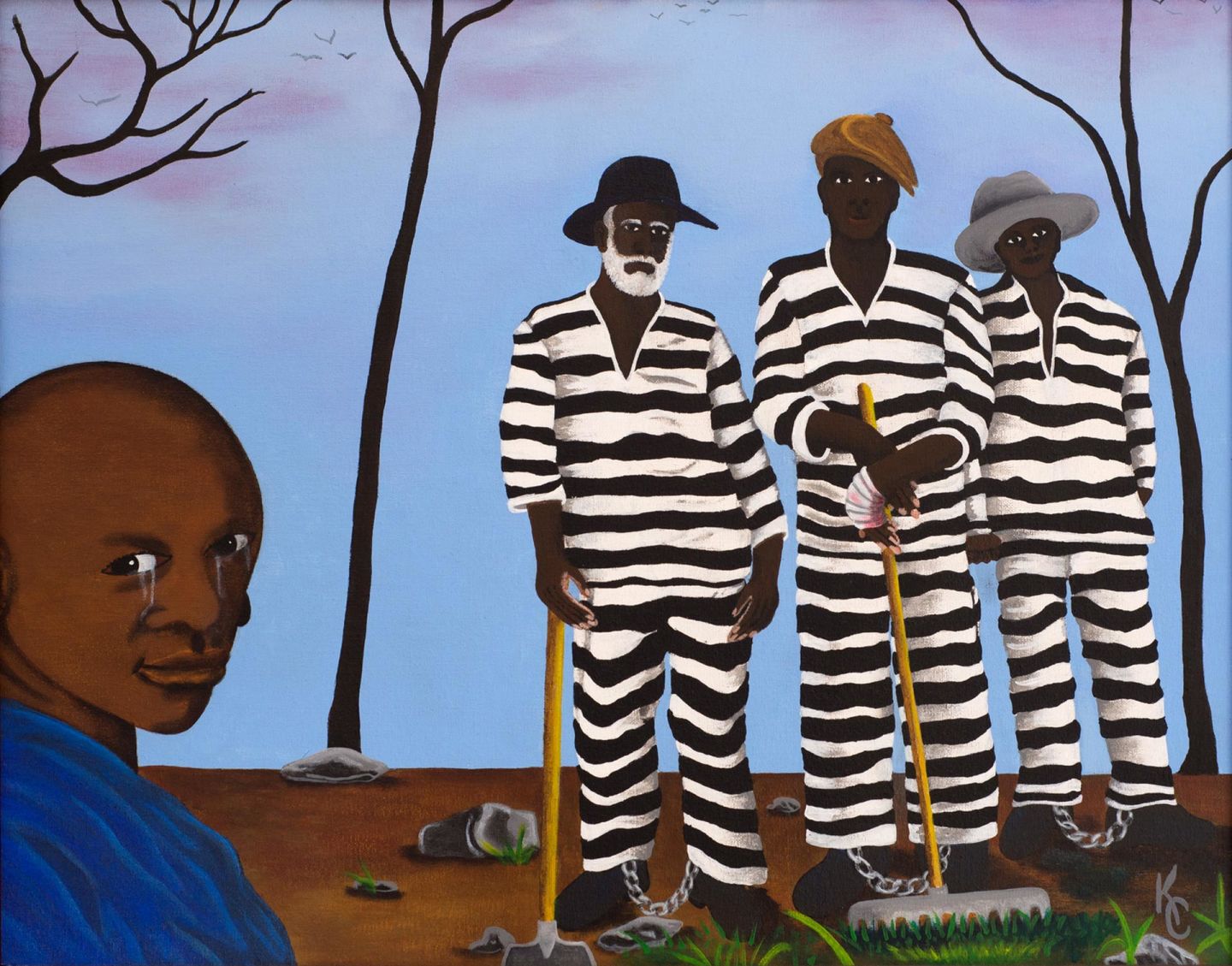
"caption": "Death row inmate Kevin Cooper's painting \"It’s a Generation Thing in America,\" part of the \"Windows on Death Row\" exhibition.",
"description": "Death row inmate Kevin Cooper's painting \"It’s a Generation Thing in America,\" part of the \"Windows on Death Row\" exhibition.",
"title": "GenerationThingInAmerica",
"credit": "Courtesy Kevin Cooper/Windows on Death Row",
"status": "inherit",
"isLoading": false,
"fetchFailed": false
},
"news_129493": {
"type": "attachments",
"id": "news_129493",
"meta": {
"index": "attachments_1716263798",
"site": "news",
"id": "129493",
"found": true
},
"parent": 129484,
"imgSizes": {
"kqedFullSize": {
"file": "https://ww2.kqed.org/app/uploads/sites/10/2014/03/LEVIDEO2-e1394825933920.jpg",
"width": 640,
"height": 230
}
},
"publishDate": 1394825913,
"modified": 1394825913,
"caption": null,
"description": null,
"title": "LEVIDEO2",
"credit": null,
"status": "inherit",
"isLoading": false,
"fetchFailed": false
}
},
"audioPlayerReducer": {
"postId": "stream_live",
"isPaused": true,
"isPlaying": false,
"pfsActive": false,
"pledgeModalIsOpen": true,
"playerDrawerIsOpen": false,
"liveAudioPlayStartedAt": 0,
"liveAudioPlayContext": ""
},
"authorsReducer": {
"byline_news_10796781": {
"type": "authors",
"id": "byline_news_10796781",
"meta": {
"override": true
},
"slug": "byline_news_10796781",
"name": "Dorothy Atkins",
"isLoading": false
},
"byline_news_10795632": {
"type": "authors",
"id": "byline_news_10795632",
"meta": {
"override": true
},
"slug": "byline_news_10795632",
"name": "Peter Gilstrap",
"isLoading": false
},
"byline_news_10781988": {
"type": "authors",
"id": "byline_news_10781988",
"meta": {
"override": true
},
"slug": "byline_news_10781988",
"name": "Natalya Estrada",
"isLoading": false
},
"byline_news_10757787": {
"type": "authors",
"id": "byline_news_10757787",
"meta": {
"override": true
},
"slug": "byline_news_10757787",
"name": "Natalya Estrada",
"isLoading": false
},
"byline_news_10788552": {
"type": "authors",
"id": "byline_news_10788552",
"meta": {
"override": true
},
"slug": "byline_news_10788552",
"name": "\u003cstrong>\u003ca href=\"http://www.kcrw.com/people/avishay-artsy\">Avishay Artsy\u003c/a>\u003c/strong>",
"isLoading": false
},
"jbrooks": {
"type": "authors",
"id": "80",
"meta": {
"index": "authors_1716337520",
"id": "80",
"found": true
},
"name": "Jon Brooks",
"firstName": "Jon",
"lastName": "Brooks",
"slug": "jbrooks",
"email": "jbrooks@kqed.org",
"display_author_email": true,
"staff_mastheads": [
"science"
],
"title": "Digital Editor",
"bio": "Jon Brooks is a former Digital Editor for KQED Science. He is the former editor of KQED’s daily news blog, News Fix. In 2014, he won a California Journalism Award for his coverage of ride services like Uber and Lyft and the taxi industry. A veteran blogger, he previously worked for Yahoo! in various news writing and editing roles. Jon is also a playwright whose work has been produced in San Francisco, New York, Italy, and around the U.S. He has written about film for his own blog and studied film at Boston University.",
"avatar": "https://secure.gravatar.com/avatar/98887f7ed1c876ed414d4c915e969584?s=600&d=blank&r=g",
"twitter": "jbrooksfoy",
"facebook": null,
"instagram": null,
"linkedin": null,
"sites": [
{
"site": "arts",
"roles": [
"Contributor",
"editor"
]
},
{
"site": "news",
"roles": [
"author"
]
},
{
"site": "futureofyou",
"roles": [
"administrator"
]
},
{
"site": "mindshift",
"roles": [
"editor"
]
},
{
"site": "stateofhealth",
"roles": [
"editor"
]
},
{
"site": "science",
"roles": [
"administrator"
]
},
{
"site": "quest",
"roles": [
"editor"
]
}
],
"headData": {
"title": "Jon Brooks | KQED",
"description": "Digital Editor",
"ogImgSrc": "https://secure.gravatar.com/avatar/98887f7ed1c876ed414d4c915e969584?s=600&d=blank&r=g",
"twImgSrc": "https://secure.gravatar.com/avatar/98887f7ed1c876ed414d4c915e969584?s=600&d=blank&r=g"
},
"isLoading": false,
"link": "/author/jbrooks"
},
"agilbert": {
"type": "authors",
"id": "86",
"meta": {
"index": "authors_1716337520",
"id": "86",
"found": true
},
"name": "Andrew Gilbert",
"firstName": "Andrew",
"lastName": "Gilbert",
"slug": "agilbert",
"email": "jazzscribe@aol.com",
"display_author_email": false,
"staff_mastheads": [],
"title": "KQED Contributor",
"bio": "A Los Angeles native based in the Berkeley area since 1996, Andrew Gilbert covers jazz, international music and dance for KQED's \u003ci>California Report, \u003c/i>the\u003ci> Mercury News\u003c/i>, \u003ci>San Francisco Chronicle\u003c/i>, \u003ci>Berkeleyside.com\u003c/i>, and other publications. He is available for weddings and bar and bat mitzvahs. #jazzscribe",
"avatar": "https://secure.gravatar.com/avatar/d7bcafdbefdd39e9a68f88724ca616eb4e7a5a6bff9cdfb62de652a1e1751471?s=600&d=blank&r=g",
"twitter": null,
"bluesky": null,
"facebook": null,
"instagram": null,
"linkedin": null,
"sites": [
{
"site": "arts",
"roles": [
"Contributor",
"author"
]
},
{
"site": "news",
"roles": [
"author"
]
}
],
"headData": {
"title": "Andrew Gilbert | KQED",
"description": "KQED Contributor",
"ogImgSrc": "https://secure.gravatar.com/avatar/d7bcafdbefdd39e9a68f88724ca616eb4e7a5a6bff9cdfb62de652a1e1751471?s=600&d=blank&r=g",
"twImgSrc": "https://secure.gravatar.com/avatar/d7bcafdbefdd39e9a68f88724ca616eb4e7a5a6bff9cdfb62de652a1e1751471?s=600&d=blank&r=g"
},
"isLoading": false,
"link": "/author/agilbert"
},
"ohubertallen": {
"type": "authors",
"id": "102",
"meta": {
"index": "authors_1716337520",
"id": "102",
"found": true
},
"name": "Olivia Allen-Price",
"firstName": "Olivia",
"lastName": "Allen-Price",
"slug": "ohubertallen",
"email": "oallenprice@kqed.org",
"display_author_email": false,
"staff_mastheads": [
"news"
],
"title": "Senior Editor",
"bio": "Olivia Allen-Price is senior editor and host of the award-winning Bay Curious podcast. Prior to joining KQED in 2013, Olivia worked at The Baltimore Sun and The Virginian-Pilot in Norfolk, Va. She holds degrees in journalism and political science from Elon University. Her work has earned awards from the Society of Professional Journalists, the Hearst Foundation and Hearken. She loves to talk about running and curly hair.\r\n\r\nFollow: \u003ca href=\"https://twitter.com/oallenprice\">@oallenprice\u003c/a>\r\nEmail: \u003ca href=\"mailto:oallenprice@kqed.org\">oallenprice@kqed.org\u003c/a>",
"avatar": "https://secure.gravatar.com/avatar/07f7803c1f6be56f3be58ef276dfa64dce898502e0554408ef4858451a8294f7?s=600&d=blank&r=g",
"twitter": "oallenprice",
"bluesky": null,
"facebook": null,
"instagram": null,
"linkedin": null,
"sites": [
{
"site": "",
"roles": [
"editor"
]
},
{
"site": "arts",
"roles": [
"subscriber"
]
},
{
"site": "news",
"roles": [
"administrator"
]
},
{
"site": "pop",
"roles": [
"administrator"
]
},
{
"site": "bayareabites",
"roles": [
"contributor"
]
},
{
"site": "stateofhealth",
"roles": [
"administrator"
]
},
{
"site": "science",
"roles": [
"editor"
]
}
],
"headData": {
"title": "Olivia Allen-Price | KQED",
"description": "Senior Editor",
"ogImgSrc": "https://secure.gravatar.com/avatar/07f7803c1f6be56f3be58ef276dfa64dce898502e0554408ef4858451a8294f7?s=600&d=blank&r=g",
"twImgSrc": "https://secure.gravatar.com/avatar/07f7803c1f6be56f3be58ef276dfa64dce898502e0554408ef4858451a8294f7?s=600&d=blank&r=g"
},
"isLoading": false,
"link": "/author/ohubertallen"
},
"aliceldaniel": {
"type": "authors",
"id": "208",
"meta": {
"index": "authors_1716337520",
"id": "208",
"found": true
},
"name": "Alice Daniel",
"firstName": "Alice",
"lastName": "Daniel",
"slug": "aliceldaniel",
"email": "adaniel@kqed.org",
"display_author_email": false,
"staff_mastheads": [],
"title": null,
"bio": "Alice Daniel loves the listening aspect of reporting because she gets to briefly walk in other people’s shoes. She has rappelled down into caves and gone up in helicopters for KQED’s The California Report but her favorite place to pursue a story is the High Sierra or any family-run bakery, of course. Alice has a masters in journalism from Columbia University and teaches at Fresno State. She is a California Healthline Regional Correspondent and a frequent contributor to Success magazine. In her free time, she skis and hikes, throws pottery, practices piano and looks out the window.",
"avatar": "https://secure.gravatar.com/avatar/e611aa06593b114a67f9f123a8e875ad?s=600&d=blank&r=g",
"twitter": null,
"facebook": null,
"instagram": null,
"linkedin": null,
"sites": [
{
"site": "news",
"roles": [
"author"
]
},
{
"site": "stateofhealth",
"roles": [
"author"
]
}
],
"headData": {
"title": "Alice Daniel | KQED",
"description": null,
"ogImgSrc": "https://secure.gravatar.com/avatar/e611aa06593b114a67f9f123a8e875ad?s=600&d=blank&r=g",
"twImgSrc": "https://secure.gravatar.com/avatar/e611aa06593b114a67f9f123a8e875ad?s=600&d=blank&r=g"
},
"isLoading": false,
"link": "/author/aliceldaniel"
},
"amystanden": {
"type": "authors",
"id": "210",
"meta": {
"index": "authors_1716337520",
"id": "210",
"found": true
},
"name": "Amy Standen",
"firstName": "Amy",
"lastName": "Standen",
"slug": "amystanden",
"email": "astanden@kqed.org",
"display_author_email": false,
"staff_mastheads": [],
"title": "KQED Contributor",
"bio": "Amy Standen (@amystanden) is co-host of #\u003ca href=\"https://ww2.kqed.org/news/programs/the-leap\">TheLeapPodcast\u003c/a> (subscribe on iTunes or Stitcher!) and host of KQED and PBSDigital Studios' science video series, \u003ca href=\"https://www.youtube.com/user/KQEDDeepLook\">Deep Look\u003c/a>. Her science radio stories appear on KQED and NPR.\r\n\r\nEmail her at astanden@kqed.org",
"avatar": "https://secure.gravatar.com/avatar/3d021b72de685a788b0487b059d0a6a1?s=600&d=blank&r=g",
"twitter": null,
"facebook": null,
"instagram": null,
"linkedin": null,
"sites": [
{
"site": "news",
"roles": [
"subscriber"
]
},
{
"site": "futureofyou",
"roles": [
"subscriber"
]
},
{
"site": "stateofhealth",
"roles": [
"subscriber"
]
},
{
"site": "science",
"roles": []
},
{
"site": "quest",
"roles": [
"subscriber"
]
}
],
"headData": {
"title": "Amy Standen | KQED",
"description": "KQED Contributor",
"ogImgSrc": "https://secure.gravatar.com/avatar/3d021b72de685a788b0487b059d0a6a1?s=600&d=blank&r=g",
"twImgSrc": "https://secure.gravatar.com/avatar/3d021b72de685a788b0487b059d0a6a1?s=600&d=blank&r=g"
},
"isLoading": false,
"link": "/author/amystanden"
},
"sasha-khokha": {
"type": "authors",
"id": "254",
"meta": {
"index": "authors_1716337520",
"id": "254",
"found": true
},
"name": "Sasha Khokha",
"firstName": "Sasha",
"lastName": "Khokha",
"slug": "sasha-khokha",
"email": "skhokha@kqed.org",
"display_author_email": true,
"staff_mastheads": [
"news"
],
"title": "Host, The California Report Magazine",
"bio": "Sasha Khokha is the host of \u003cem>The California Report's \u003c/em> weekly magazine program, which takes listeners on sound-rich excursions to meet the people that make the Golden State unique -- through audio documentaries and long-form stories. As \u003cem>The California Report's\u003c/em> Central Valley Bureau Chief based in Fresno for nearly a dozen years, Sasha brought the lives and concerns of rural Californians to listeners around the state. Her reporting helped expose the hidden price immigrant women janitors and farmworkers may pay to keep their jobs: sexual assault at work. It inspired two new California laws to protect them from sexual harassment. She was a key member of the reporting team for the Frontline film \u003cem>Rape on the Night Shift, \u003c/em>which was nominated for two national Emmys. Sasha has also won a national Edward R. Murrow and a national PRNDI award for investigative reporting, as well as multiple prizes from the Society for Professional Journalists. Sasha is a proud alum of the UC Berkeley Graduate School of Journalism and Brown University and a member of the South Asian Journalists Association.",
"avatar": "https://secure.gravatar.com/avatar/e4b5e1541aaeea2aa356aa1fb2a68950?s=600&d=blank&r=g",
"twitter": "KQEDSashaKhokha",
"facebook": null,
"instagram": null,
"linkedin": null,
"sites": [
{
"site": "news",
"roles": [
"editor"
]
},
{
"site": "stateofhealth",
"roles": [
"author"
]
},
{
"site": "science",
"roles": [
"author"
]
},
{
"site": "quest",
"roles": [
"subscriber"
]
}
],
"headData": {
"title": "Sasha Khokha | KQED",
"description": "Host, The California Report Magazine",
"ogImgSrc": "https://secure.gravatar.com/avatar/e4b5e1541aaeea2aa356aa1fb2a68950?s=600&d=blank&r=g",
"twImgSrc": "https://secure.gravatar.com/avatar/e4b5e1541aaeea2aa356aa1fb2a68950?s=600&d=blank&r=g"
},
"isLoading": false,
"link": "/author/sasha-khokha"
},
"lklivans": {
"type": "authors",
"id": "8648",
"meta": {
"index": "authors_1716337520",
"id": "8648",
"found": true
},
"name": "Laura Klivans",
"firstName": "Laura",
"lastName": "Klivans",
"slug": "lklivans",
"email": "lklivans@kqed.org",
"display_author_email": true,
"staff_mastheads": [
"news",
"science"
],
"title": "Reporter",
"bio": "Laura Klivans is an award-winning science reporter for KQED News, where she covers climate change with an eye on both groundbreaking progress and gaps in action. She is the former host of KQED's blockbuster video series about tiny, amazing animals, \u003cem>Deep Look\u003c/em>. Her work reaches national audiences through NPR, \u003cem>Here & Now, \u003c/em>PRI, and other major outlets. \r\n\r\nLaura’s won five Northern California Area Emmy Awards for Deep Look and First Place in the Greater Bay Area Journalism Awards for a podcast exploring how one Oakland neighborhood teamed up to reduce planet-heating pollution.\r\n\r\nBeyond her reporting, she hosts and moderates events. In the past, she taught audio storytelling at the UC Berkeley Graduate School of Journalism, led international education programs, worked with immigrants and refugees along the Thai-Burmese border, taught high schoolers sex ed, and was an actress. \r\n\r\nShe's a former UC Berkeley Human Rights Fellow, USC Center for Health Journalism's California Fellow and Coro Fellow in Public Affairs. Laura has a master’s in journalism from UC Berkeley, a master’s in education from Harvard, and an undergraduate degree from Northwestern University.\r\n\r\nShe loves trying to riddle the meaning out of vanity license plates.",
"avatar": "https://secure.gravatar.com/avatar/2d2ecd1550a494cc10ad4a503406965585902124739e775a9b3817eebf1d88be?s=600&d=blank&r=g",
"twitter": "lauraklivans",
"bluesky": null,
"facebook": null,
"instagram": null,
"linkedin": null,
"sites": [
{
"site": "news",
"roles": [
"editor"
]
},
{
"site": "stateofhealth",
"roles": [
"contributor",
"editor"
]
},
{
"site": "science",
"roles": [
"editor"
]
},
{
"site": "forum",
"roles": [
"editor"
]
}
],
"headData": {
"title": "Laura Klivans | KQED",
"description": "Reporter",
"ogImgSrc": "https://secure.gravatar.com/avatar/2d2ecd1550a494cc10ad4a503406965585902124739e775a9b3817eebf1d88be?s=600&d=blank&r=g",
"twImgSrc": "https://secure.gravatar.com/avatar/2d2ecd1550a494cc10ad4a503406965585902124739e775a9b3817eebf1d88be?s=600&d=blank&r=g"
},
"isLoading": false,
"link": "/author/lklivans"
},
"jcampbell": {
"type": "authors",
"id": "11094",
"meta": {
"index": "authors_1716337520",
"id": "11094",
"found": true
},
"name": "Judy Campbell",
"firstName": "Judy",
"lastName": "Campbell",
"slug": "jcampbell",
"email": "jcampbell@kqed.org",
"display_author_email": true,
"staff_mastheads": [
"news"
],
"title": "lead producer, Forum with Alexis Madrigal",
"bio": "Judy Campbell is the lead producer for \u003cem>Forum\u003c/em> with Alexis Madrigal. She hosted and produced the KQED podcast \u003cem>The Leap\u003c/em>, about people making dramatic, risky changes\u003cem>. \u003c/em>Previously, Judy was a KQED reporter, focusing on criminal justice and prison issues.\r\n\r\n ",
"avatar": "https://secure.gravatar.com/avatar/6104f6c32a87cf84a5f6c9dec82a79920c1ab746498a62f06b6e3f92e86d194e?s=600&d=blank&r=g",
"twitter": null,
"bluesky": null,
"facebook": null,
"instagram": null,
"linkedin": null,
"sites": [
{
"site": "news",
"roles": [
"editor"
]
},
{
"site": "forum",
"roles": [
"administrator"
]
}
],
"headData": {
"title": "Judy Campbell | KQED",
"description": "lead producer, Forum with Alexis Madrigal",
"ogImgSrc": "https://secure.gravatar.com/avatar/6104f6c32a87cf84a5f6c9dec82a79920c1ab746498a62f06b6e3f92e86d194e?s=600&d=blank&r=g",
"twImgSrc": "https://secure.gravatar.com/avatar/6104f6c32a87cf84a5f6c9dec82a79920c1ab746498a62f06b6e3f92e86d194e?s=600&d=blank&r=g"
},
"isLoading": false,
"link": "/author/jcampbell"
}
},
"pagesReducer": {
"news_category_arts-and-culture": {
"type": "terms",
"id": "news_223",
"meta": {
"index": "terms_1716263798",
"site": "news",
"id": "223",
"score": 11.242635
},
"featImg": null,
"name": "Arts and Culture",
"description": null,
"taxonomy": "category",
"headData": {
"twImgId": null,
"twTitle": null,
"ogTitle": null,
"ogImgId": null,
"twDescription": null,
"description": null,
"title": "Arts and Culture Archives | KQED News",
"ogDescription": null
},
"ttid": 231,
"slug": "arts-and-culture",
"isLoading": false,
"title": "Arts and Culture",
"pageMeta": {
"site": "news",
"WpPageTemplate": "page-topic-editorial",
"currentPage": 119
},
"blocks": [
{
"blockName": "kqed/post-list",
"attrs": {
"layout": "cardArticle2",
"query": "posts/news?category=arts-and-culture",
"seeMore": false,
"paginated": true,
"page": 119
}
},
{
"blockName": "kqed/ad"
}
]
}
},
"pfsSessionReducer": {},
"postsReducer": {
"stream_live": {
"type": "live",
"id": "stream_live",
"audioUrl": "https://streams.kqed.org/kqedradio",
"title": "Live Stream",
"excerpt": "Live Stream information currently unavailable.",
"link": "/radio",
"featImg": "",
"label": {
"name": "KQED Live",
"link": "/"
}
},
"stream_kqedNewscast": {
"type": "posts",
"id": "stream_kqedNewscast",
"audioUrl": "https://www.kqed.org/.stream/anon/radio/RDnews/newscast.mp3?_=1",
"title": "KQED Newscast",
"featImg": "",
"label": {
"name": "88.5 FM",
"link": "/"
}
},
"news_10811880": {
"type": "posts",
"id": "news_10811880",
"meta": {
"index": "posts_1716263798",
"site": "news",
"id": "10811880",
"score": null,
"sort": [
1451329194000
]
},
"guestAuthors": [],
"slug": "san-francisco-takes-on-justin-bieber-over-sidewalk-graffiti",
"title": "San Francisco Takes on Justin Bieber Over Sidewalk Graffiti",
"publishDate": 1451329194,
"format": "standard",
"headTitle": "San Francisco Takes on Justin Bieber Over Sidewalk Graffiti | KQED",
"labelTerm": {
"term": 6944,
"site": "news"
},
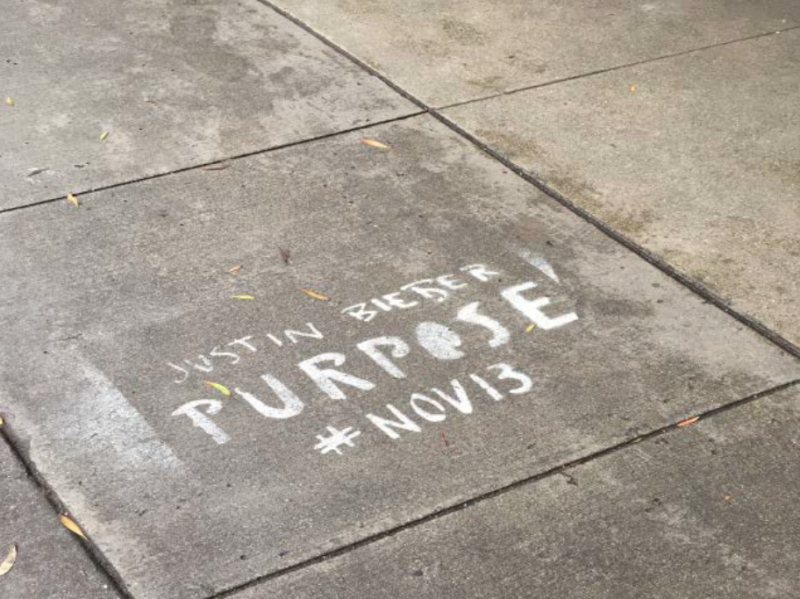
"content": "\u003cp>Finally! A news story featuring both San Francisco City Attorney Dennis Herrera \u003cem>and\u003c/em> Justin Bieber.\u003c/p>\n\u003cp>The Bieb and his record label have drawn the ire of Herrera over a guerrilla marketing campaign that plastered ads for his new album on sidewalks around the city. Residents have been complaining on social media and filing complaints with city officials for weeks.\u003c/p>\n\u003cp>Unlike other recent sidewalk marketing campaigns that used chalk, these ads were applied with permanent spraypaint and have already survived several rainstorms. The city spends $20 million in taxpayer dollars each year to remove graffiti.\u003c/p>\n\u003cp>https://twitter.com/suldrew/status/667801042420043776\u003c/p>\n\u003cp>San Francisco is now demanding cooperation from Bieber’s record label and distribution company, Def Jam Records and Universal Music Group, to punish those responsible.\u003c/p>\n\u003cp>[ad fullwidth]\u003c/p>\n\u003cp>Herrera has vowed to “aggressively pursue all available penalties and costs from those responsible for lawless marketing tactics,” he said in a written statement.\u003c/p>\n\u003cp>San Francisco Public Works Director Mohammed Nuru was also critical. “Our sidewalks in San Francisco are not canvases for corporate advertising, and we have made that clear,” he said in the news release. “Yet these guerrilla marketers believe they are above the law when it comes to blighting our city and we will take a strong stand against them.”\u003c/p>\n\u003cp>A photo of the graffiti\u003ca href=\"https://www.reddit.com/r/sanfrancisco/comments/3wewxd/worst_haight_graffiti_ever/\" target=\"_blank\" rel=\"noopener\"> posted on Reddit\u003c/a> two weeks ago is accompanied by the headline: “Worst. Haight graffiti. Ever.”\u003c/p>\n\u003cp>\u003c/p>\n\u003cp>Herrera’s office has successfully resolved similar violations over the years with corporations like IBM, NBC Universal, Turner Broadcasting and Zynga. In previous cases, those responsible for sidewalk graffiti ads have been fined and made to compensate taxpayers for removal.\u003c/p>\n\n",
"blocks": [],
"excerpt": "San Francisco's city attorney wants to punish those responsible for illegal marketing campaign. ",
"status": "publish",
"parent": 0,
"modified": 1721150634,
"stats": {
"hasAudio": false,
"hasVideo": false,
"hasChartOrMap": false,
"iframeSrcs": [],
"hasGoogleForm": false,
"hasGallery": false,
"hasHearkenModule": false,
"hasPolis": false,
"paragraphCount": 10,
"wordCount": 288
},
"headData": {
"title": "San Francisco Takes on Justin Bieber Over Sidewalk Graffiti | KQED",
"description": "San Francisco's city attorney wants to punish those responsible for illegal marketing campaign. ",
"ogTitle": "",
"ogDescription": "",
"ogImgId": "",
"twTitle": "",
"twDescription": "",
"twImgId": "",
"schema": {
"@context": "https://schema.org",
"@type": "NewsArticle",
"headline": "San Francisco Takes on Justin Bieber Over Sidewalk Graffiti",
"datePublished": "2015-12-28T10:59:54-08:00",
"dateModified": "2024-07-16T10:23:54-07:00",
"image": "https://cdn.kqed.org/wp-content/uploads/2020/02/KQED-OG-Image@1x.png",
"isAccessibleForFree": "True",
"publisher": {
"@type": "NewsMediaOrganization",
"@id": "https://www.kqed.org/#organization",
"name": "KQED",
"logo": "https://cdn.kqed.org/wp-content/uploads/2020/02/KQED-OG-Image@1x.png",
"url": "https://www.kqed.org",
"sameAs": [
"https://www.facebook.com/KQED",
"https://twitter.com/KQED",
"https://www.instagram.com/kqed/",
"https://www.tiktok.com/@kqedofficial",
"https://www.linkedin.com/company/kqed",
"https://www.youtube.com/channel/UCeC0IOo7i1P_61zVUWbJ4nw"
]
}
}
},
"sticky": false,
"path": "/news/10811880/san-francisco-takes-on-justin-bieber-over-sidewalk-graffiti",
"audioTrackLength": null,
"parsedContent": [
{
"type": "contentString",
"content": "\u003cdiv class=\"post-body\">\u003cp>\u003cp>Finally! A news story featuring both San Francisco City Attorney Dennis Herrera \u003cem>and\u003c/em> Justin Bieber.\u003c/p>\n\u003cp>The Bieb and his record label have drawn the ire of Herrera over a guerrilla marketing campaign that plastered ads for his new album on sidewalks around the city. Residents have been complaining on social media and filing complaints with city officials for weeks.\u003c/p>\n\u003cp>Unlike other recent sidewalk marketing campaigns that used chalk, these ads were applied with permanent spraypaint and have already survived several rainstorms. The city spends $20 million in taxpayer dollars each year to remove graffiti.\u003c/p>\u003c/p>\u003c/div>",
"attributes": {
"named": {},
"numeric": []
}
},
{
"type": "component",
"content": "",
"name": "singleTwitterStatus",
"attributes": {
"named": {
"id": "667801042420043776"
},
"numeric": []
}
},
{
"type": "contentString",
"content": "\u003cdiv class=\"post-body\">\u003cp>\n\u003cp>San Francisco is now demanding cooperation from Bieber’s record label and distribution company, Def Jam Records and Universal Music Group, to punish those responsible.\u003c/p>\n\u003cp>\u003c/p>\u003c/div>",
"attributes": {
"named": {},
"numeric": []
}
},
{
"type": "component",
"content": "",
"name": "ad",
"attributes": {
"named": {
"label": "fullwidth"
},
"numeric": [
"fullwidth"
]
}
},
{
"type": "contentString",
"content": "\u003cdiv class=\"post-body\">\u003cp>\u003c/p>\n\u003cp>Herrera has vowed to “aggressively pursue all available penalties and costs from those responsible for lawless marketing tactics,” he said in a written statement.\u003c/p>\n\u003cp>San Francisco Public Works Director Mohammed Nuru was also critical. “Our sidewalks in San Francisco are not canvases for corporate advertising, and we have made that clear,” he said in the news release. “Yet these guerrilla marketers believe they are above the law when it comes to blighting our city and we will take a strong stand against them.”\u003c/p>\n\u003cp>A photo of the graffiti\u003ca href=\"https://www.reddit.com/r/sanfrancisco/comments/3wewxd/worst_haight_graffiti_ever/\" target=\"_blank\" rel=\"noopener\"> posted on Reddit\u003c/a> two weeks ago is accompanied by the headline: “Worst. Haight graffiti. Ever.”\u003c/p>\n\u003cp>\u003c/p>\n\u003cp>Herrera’s office has successfully resolved similar violations over the years with corporations like IBM, NBC Universal, Turner Broadcasting and Zynga. In previous cases, those responsible for sidewalk graffiti ads have been fined and made to compensate taxpayers for removal.\u003c/p>\n\n\u003c/div>\u003c/p>",
"attributes": {
"named": {},
"numeric": []
}
}
],
"link": "/news/10811880/san-francisco-takes-on-justin-bieber-over-sidewalk-graffiti",
"authors": [
"102"
],
"programs": [
"news_6944"
],
"categories": [
"news_223",
"news_8"
],
"tags": [
"news_1692",
"news_19029"
],
"featImg": "news_10811944",
"label": "news_6944"
},
"news_10796781": {
"type": "posts",
"id": "news_10796781",
"meta": {
"index": "posts_1716263798",
"site": "news",
"id": "10796781",
"score": null,
"sort": [
1451205019000
]
},
"parent": 0,
"labelTerm": {
"site": "news",
"term": 72
},
"blocks": [],
"publishDate": 1451205019,
"format": "standard",
"disqusTitle": "My Spot: Where Karaoke Heals the Soul",
"title": "My Spot: Where Karaoke Heals the Soul",
"headTitle": "My Spot | The California Report | KQED News",
"content": "\u003cp>For 68-year-old Deena Yagi, singing is cheaper than therapy. That's why you can find her on most slow school nights singing old song standards or current pop jazz artists like \u003ca href=\"http://www.iamduffy.com/\">Duffy\u003c/a> at \u003ca href=\"http://nickslounge.com/\">Nick's Lounge\u003c/a>, a bar on Adeline Street in South Berkeley.\u003c/p>\n\u003cp>The lounge advertises itself as as a \"relaxed, unpretentious bar\" for local brews, nightly karaoke, live music and open-mic events. \"It's a very welcoming atmosphere,\" said Yagi, an unimposing woman with a sultry voice reminiscent of \u003ca href=\"http://marilynmonroe.com/\">Marilyn Monroe\u003c/a>, one Thursday evening before she took the stage.\u003c/p>\n\u003cp>[soundcloud url=\"https://api.soundcloud.com/tracks/238870924\" params=\"color=ff5500&auto_play=false&hide_related=false&show_comments=true&show_user=true&show_reposts=false\" width=\"100%\" height=\"166\" iframe=\"true\" /]\u003c/p>\n\u003cp>\"I try to come four nights a week,\" she said. \"Beyond that it's too much, less than that it's not enough. It's like practice for me.\"\u003c/p>\n\u003cp>Yagi started singing regularly at Nick's Lounge about 10 years ago as she was going through a divorce. \"I went through a bad time during that period,\" she said. As her 30-year marriage was falling apart, she found that singing made her feel good. \"It's like eating dark chocolate,\" she said.\u003c/p>\n\u003cp>[ad fullwidth]\u003c/p>\n\u003cp>[contextly_sidebar id=\"lRp5Pb5CZiQZ69RPEQeQIQWe7nNIz63u\"]\u003c/p>\n\u003cp>Although Yagi sometimes chooses songs to fit the mood of the crowd, most of the time she chooses songs that reflect what's going on in her life.\u003c/p>\n\u003cp>\"I don't have a great voice. I don't have a strong powerful voice like \u003ca href=\"http://adele.com/\">Adele\u003c/a> or something like that,\" Yagi said. \"It's more about singing the song and interpreting the lyrics for me. That's why I say I'm singing to myself a lot, because I'm working things out for myself in the song.\"\u003c/p>\n\u003cp>Yagi encourages others to try out new songs and take risks. A lot of times people don't sing because they're nervous about getting onstage in front of people, Yagi said. But if you just focus on having a good time, you'll realize it's not as scary as it seems, she said.\u003c/p>\n\u003cp>\u003c/p>\n\u003cp>\"You don't have to be a great singer,\" she said. \"Just do it because it makes you feel good.\"\u003c/p>\n\n",
"disqusIdentifier": "10796781 http://ww2.kqed.org/news/?p=10796781",
"disqusUrl": "https://ww2.kqed.org/news/2015/12/27/my-spot-where-karaoke-heals-the-soul/",
"stats": {
"hasVideo": false,
"hasChartOrMap": false,
"hasAudio": false,
"hasPolis": false,
"wordCount": 376,
"hasGoogleForm": false,
"hasGallery": false,
"hasHearkenModule": false,
"iframeSrcs": [],
"paragraphCount": 12
},
"modified": 1451000257,
"excerpt": "For 68-year-old Deena Yagi, singing at a karaoke lounge in South Berkeley is cheaper than therapy.",
"headData": {
"twImgId": "",
"twTitle": "",
"ogTitle": "",
"ogImgId": "",
"twDescription": "",
"description": "For 68-year-old Deena Yagi, singing at a karaoke lounge in South Berkeley is cheaper than therapy.",
"title": "My Spot: Where Karaoke Heals the Soul | KQED",
"ogDescription": "",
"schema": {
"@context": "https://schema.org",
"@type": "NewsArticle",
"headline": "My Spot: Where Karaoke Heals the Soul",
"datePublished": "2015-12-27T00:30:19-08:00",
"dateModified": "2015-12-24T15:37:37-08:00",
"image": "https://cdn.kqed.org/wp-content/uploads/2020/02/KQED-OG-Image@1x.png",
"isAccessibleForFree": "True",
"publisher": {
"@type": "NewsMediaOrganization",
"@id": "https://www.kqed.org/#organization",
"name": "KQED",
"logo": "https://cdn.kqed.org/wp-content/uploads/2020/02/KQED-OG-Image@1x.png",
"url": "https://www.kqed.org",
"sameAs": [
"https://www.facebook.com/KQED",
"https://twitter.com/KQED",
"https://www.instagram.com/kqed/",
"https://www.tiktok.com/@kqedofficial",
"https://www.linkedin.com/company/kqed",
"https://www.youtube.com/channel/UCeC0IOo7i1P_61zVUWbJ4nw"
]
}
}
},
"guestAuthors": [],
"slug": "my-spot-where-karaoke-heals-the-soul",
"status": "publish",
"nprByline": "Dorothy Atkins",
"path": "/news/10796781/my-spot-where-karaoke-heals-the-soul",
"audioTrackLength": null,
"parsedContent": [
{
"type": "contentString",
"content": "\u003cdiv class=\"post-body\">\u003cp>\u003cp>For 68-year-old Deena Yagi, singing is cheaper than therapy. That's why you can find her on most slow school nights singing old song standards or current pop jazz artists like \u003ca href=\"http://www.iamduffy.com/\">Duffy\u003c/a> at \u003ca href=\"http://nickslounge.com/\">Nick's Lounge\u003c/a>, a bar on Adeline Street in South Berkeley.\u003c/p>\n\u003cp>The lounge advertises itself as as a \"relaxed, unpretentious bar\" for local brews, nightly karaoke, live music and open-mic events. \"It's a very welcoming atmosphere,\" said Yagi, an unimposing woman with a sultry voice reminiscent of \u003ca href=\"http://marilynmonroe.com/\">Marilyn Monroe\u003c/a>, one Thursday evening before she took the stage.\u003c/p>\n\u003cp>\u003c/p>\u003cp>\u003cdiv class='utils-parseShortcode-shortcodes-__shortcodes__shortcodeWrapper'>\n \u003ciframe width='100%' height='166'\n scrolling='no' frameborder='no'\n src='https://w.soundcloud.com/player/?url=https://api.soundcloud.com/tracks/238870924&visual=true&color=ff5500&auto_play=false&hide_related=false&show_comments=true&show_user=true&show_reposts=false'\n title='https://api.soundcloud.com/tracks/238870924'>\n \u003c/iframe>\n \u003c/div>\u003c/p>\u003cp>\u003c/p>\n\u003cp>\"I try to come four nights a week,\" she said. \"Beyond that it's too much, less than that it's not enough. It's like practice for me.\"\u003c/p>\n\u003cp>Yagi started singing regularly at Nick's Lounge about 10 years ago as she was going through a divorce. \"I went through a bad time during that period,\" she said. As her 30-year marriage was falling apart, she found that singing made her feel good. \"It's like eating dark chocolate,\" she said.\u003c/p>\n\u003cp>\u003c/p>\u003c/div>",
"attributes": {
"named": {},
"numeric": []
}
},
{
"type": "component",
"content": "",
"name": "ad",
"attributes": {
"named": {
"label": "fullwidth"
},
"numeric": [
"fullwidth"
]
}
},
{
"type": "contentString",
"content": "\u003cdiv class=\"post-body\">\u003cp>\u003c/p>\n\u003cp>\u003c/p>\u003cp>\u003c/p>\u003cp>\u003c/p>\n\u003cp>Although Yagi sometimes chooses songs to fit the mood of the crowd, most of the time she chooses songs that reflect what's going on in her life.\u003c/p>\n\u003cp>\"I don't have a great voice. I don't have a strong powerful voice like \u003ca href=\"http://adele.com/\">Adele\u003c/a> or something like that,\" Yagi said. \"It's more about singing the song and interpreting the lyrics for me. That's why I say I'm singing to myself a lot, because I'm working things out for myself in the song.\"\u003c/p>\n\u003cp>Yagi encourages others to try out new songs and take risks. A lot of times people don't sing because they're nervous about getting onstage in front of people, Yagi said. But if you just focus on having a good time, you'll realize it's not as scary as it seems, she said.\u003c/p>\n\u003cp>\u003c/p>\n\u003cp>\"You don't have to be a great singer,\" she said. \"Just do it because it makes you feel good.\"\u003c/p>\n\n\u003c/div>\u003c/p>",
"attributes": {
"named": {},
"numeric": []
}
}
],
"link": "/news/10796781/my-spot-where-karaoke-heals-the-soul",
"authors": [
"byline_news_10796781"
],
"programs": [
"news_72"
],
"series": [
"news_17120"
],
"categories": [
"news_223"
],
"tags": [
"news_17286"
],
"featImg": "news_10796835",
"label": "news_72"
},
"news_10796778": {
"type": "posts",
"id": "news_10796778",
"meta": {
"index": "posts_1716263798",
"site": "news",
"id": "10796778",
"score": null,
"sort": [
1451152811000
]
},
"parent": 0,
"labelTerm": {
"site": "news",
"term": 72
},
"blocks": [],
"publishDate": 1451152811,
"format": "standard",
"disqusTitle": "In Hayward, a Singing Group for Those With the Language Impairment Aphasia",
"title": "In Hayward, a Singing Group for Those With the Language Impairment Aphasia",
"headTitle": "The California Report | KQED News",
"content": "\u003cp>The day before Thanksgiving in 2009, college student Drew Sperling collapsed in his San Luis Obispo apartment. He was 21 years old and having a stroke.\u003c/p>\n\u003cp>Instead of meeting their son that day for golf, Drew’s parents met him at the hospital, where he was in a medically induced coma to allow his brain to heal.\u003c/p>\n\u003cp>\"We brought his computer into the room and we started to play music that he had recorded on his computer,\" his father, Frank, remembers. \"And at one point as Drew started to come out of his coma you could see his lips move in time to the music. And that was our first indication that he was going to be okay.\"\u003c/p>\n\u003cp>[soundcloud url=\"https://api.soundcloud.com/tracks/238870705\" params=\"color=ff5500&auto_play=false&hide_related=false&show_comments=true&show_user=true&show_reposts=false\" width=\"100%\" height=\"166\" iframe=\"true\" /]\u003c/p>\n\u003cp>Six years later Drew’s made remarkable progress. Like many stroke survivors, however, he has a condition called aphasia, which makes communication complicated.\u003c/p>\n\u003cp>[ad fullwidth]\u003c/p>\n\u003cp>In the hospital and in the months that followed, Drew slowly regained his speech. At first, though, he was only able to say three words: no, go, and a swear word. Thoughts would form clearly in his mind but come out as some other variation of language. For the second time in his life, Drew had to learn to speak.\u003c/p>\n\u003cp>Today Drew's communicating with near-fluency. One thing that has helped him do that is song.\u003c/p>\n\u003cp>Drew is a member of a choir called the Aphasia Tones, based at California State University, East Bay, in Hayward.\u003c/p>\n\u003cp>Aphasia is a language impairment caused by brain injury, not an intellectual disability. The majority of people who have aphasia acquire it through stroke, but it can also be caused by other serious brain injuries, like car accidents or military combat. The disorder interrupts all aspects of communication, not just speaking, but reading, writing and listening.\u003c/p>\n\u003cp>About 2 million people in the U.S. have it, making it more common than Parkinson's Disease, but less well-known.\u003c/p>\n\u003cp>All 25 members of the Aphasia Tones have the disorder. The choir began in 2011 and is part of a larger aphasia treatment program at the university. Program director Ellen Bernstein-Ellis says choirs for people with aphasia are catching on globally, too. She regularly collaborates with an aphasia choir director in Australia.\u003c/p>\n\u003cfigure id=\"attachment_10797997\" class=\"wp-caption alignright\" style=\"max-width: 800px\">\u003cimg class=\"size-medium wp-image-10797997\" src=\"http://ww2.kqed.org/news/wp-content/uploads/sites/10/2015/12/RS17832_IMG_4853.JPG-qut-800x600.jpg\" alt=\"Because aphasia affects all aspects of communication, the Aphasia Tones use easy-to-read music guides like this one at a recent rehearsal in Hayward.\" width=\"800\" height=\"600\" srcset=\"https://ww2.kqed.org/app/uploads/sites/10/2015/12/RS17832_IMG_4853.JPG-qut-800x600.jpg 800w, https://ww2.kqed.org/app/uploads/sites/10/2015/12/RS17832_IMG_4853.JPG-qut-400x300.jpg 400w, https://ww2.kqed.org/app/uploads/sites/10/2015/12/RS17832_IMG_4853.JPG-qut-768x576.jpg 768w, https://ww2.kqed.org/app/uploads/sites/10/2015/12/RS17832_IMG_4853.JPG-qut-1440x1080.jpg 1440w, https://ww2.kqed.org/app/uploads/sites/10/2015/12/RS17832_IMG_4853.JPG-qut-1180x885.jpg 1180w, https://ww2.kqed.org/app/uploads/sites/10/2015/12/RS17832_IMG_4853.JPG-qut-960x720.jpg 960w, https://ww2.kqed.org/app/uploads/sites/10/2015/12/RS17832_IMG_4853.JPG-qut.jpg 1632w\" sizes=\"(max-width: 800px) 100vw, 800px\">\u003cfigcaption class=\"wp-caption-text\">Because aphasia affects all aspects of communication, the Aphasia Tones use easy-to-read music guides like this one at a recent rehearsal in Hayward. \u003ccite>(Laura Klivans/KQED)\u003c/cite>\u003c/figcaption>\u003c/figure>\n\u003cp>Carmen Preston is another member of the Aphasia Tones. She’s in her mid-60s and had a stroke six years ago.\u003c/p>\n\u003cp>\"Aphasia can lock you up in your body,\" she says. \"When I practice for myself, singing is much better. Then I can hear it in my ears how to say it -- the words.\"\u003c/p>\n\u003cp>She demonstrates by saying the word \"participate.\" It's challenging to get out, and she stutters a bit. She then sings the word three times. It flows.\u003c/p>\n\u003cp>Nidhi Mahendra is an associate professor of speech pathology at CSU, East Bay and works with program participants. She says there are several factors at play that make singing easier than speaking for people with aphasia.\u003c/p>\n\u003cp>\"You’re thinking about the music rather than the specific words and that actually allows the words to flow better,\" Mahendra says.\u003c/p>\n\u003cp>There's also the help of the rhythm and repetition involved in singing, she says. \"If that’s not enough, there’s the other part about emotions. We sing in the shower or we hum to ourselves. It usually does put us in a good mood.\"\u003c/p>\n\u003cp>Today, the Aphasia Tones sit in a campus classroom, facing an audience of mostly friends and family at this end-of-semester performance. They wear matching black polo shirts, the choir’s name embroidered in gold. The choir sings songs with messages of survival or aphasia-awareness, like Katy Perry's \"Roar\" or \"This Land is Your Land,\" with lyrics rewritten to educate audiences about aphasia.\u003c/p>\n\u003cp>In the audience, Frank Sperling watches his son Drew.\u003c/p>\n\u003cp>\"They continue to get better and better,\" Frank Sperling says, welling up with emotion. \"It touches on your heart to hear these people and to hear Drew in particular perform.\"\u003c/p>\n\u003cp>Being in the choir offers a meaningful way to step back into a life when everything you’ve identified with disappears. It gives members a purpose, and a community.\u003c/p>\n\u003cp>\"I like the interaction,\" Drew says. \"I really like having a choir. I really like to sing. Honestly it’s fantastic.\"\u003c/p>\n\u003cp>\u003c/p>\n\u003cp>After years with the Aphasia Tones, Drew recently joined another choir -- a community one -- where he’s the only one with aphasia.\u003c/p>\n\n",
"disqusIdentifier": "10796778 http://ww2.kqed.org/news/?p=10796778",
"disqusUrl": "https://ww2.kqed.org/news/2015/12/26/in-hayward-a-singing-group-for-those-with-the-language-impairment-aphasia/",
"stats": {
"hasVideo": false,
"hasChartOrMap": false,
"hasAudio": false,
"hasPolis": false,
"wordCount": 813,
"hasGoogleForm": false,
"hasGallery": false,
"hasHearkenModule": false,
"iframeSrcs": [],
"paragraphCount": 25
},
"modified": 1451243807,
"excerpt": "Having the language disorder aphasia can feel like being locked in your body. One choir is changing that.",
"headData": {
"twImgId": "",
"twTitle": "",
"ogTitle": "",
"ogImgId": "",
"twDescription": "",
"description": "Having the language disorder aphasia can feel like being locked in your body. One choir is changing that.",
"title": "In Hayward, a Singing Group for Those With the Language Impairment Aphasia | KQED",
"ogDescription": "",
"schema": {
"@context": "https://schema.org",
"@type": "NewsArticle",
"headline": "In Hayward, a Singing Group for Those With the Language Impairment Aphasia",
"datePublished": "2015-12-26T10:00:11-08:00",
"dateModified": "2015-12-27T11:16:47-08:00",
"image": "https://cdn.kqed.org/wp-content/uploads/2020/02/KQED-OG-Image@1x.png",
"isAccessibleForFree": "True",
"publisher": {
"@type": "NewsMediaOrganization",
"@id": "https://www.kqed.org/#organization",
"name": "KQED",
"logo": "https://cdn.kqed.org/wp-content/uploads/2020/02/KQED-OG-Image@1x.png",
"url": "https://www.kqed.org",
"sameAs": [
"https://www.facebook.com/KQED",
"https://twitter.com/KQED",
"https://www.instagram.com/kqed/",
"https://www.tiktok.com/@kqedofficial",
"https://www.linkedin.com/company/kqed",
"https://www.youtube.com/channel/UCeC0IOo7i1P_61zVUWbJ4nw"
]
}
}
},
"guestAuthors": [],
"slug": "in-hayward-a-singing-group-for-those-with-the-language-impairment-aphasia",
"status": "publish",
"path": "/news/10796778/in-hayward-a-singing-group-for-those-with-the-language-impairment-aphasia",
"audioTrackLength": null,
"parsedContent": [
{
"type": "contentString",
"content": "\u003cdiv class=\"post-body\">\u003cp>\u003cp>The day before Thanksgiving in 2009, college student Drew Sperling collapsed in his San Luis Obispo apartment. He was 21 years old and having a stroke.\u003c/p>\n\u003cp>Instead of meeting their son that day for golf, Drew’s parents met him at the hospital, where he was in a medically induced coma to allow his brain to heal.\u003c/p>\n\u003cp>\"We brought his computer into the room and we started to play music that he had recorded on his computer,\" his father, Frank, remembers. \"And at one point as Drew started to come out of his coma you could see his lips move in time to the music. And that was our first indication that he was going to be okay.\"\u003c/p>\n\u003cp>\u003c/p>\u003cp>\u003cdiv class='utils-parseShortcode-shortcodes-__shortcodes__shortcodeWrapper'>\n \u003ciframe width='100%' height='166'\n scrolling='no' frameborder='no'\n src='https://w.soundcloud.com/player/?url=https://api.soundcloud.com/tracks/238870705&visual=true&color=ff5500&auto_play=false&hide_related=false&show_comments=true&show_user=true&show_reposts=false'\n title='https://api.soundcloud.com/tracks/238870705'>\n \u003c/iframe>\n \u003c/div>\u003c/p>\u003cp>\u003c/p>\n\u003cp>Six years later Drew’s made remarkable progress. Like many stroke survivors, however, he has a condition called aphasia, which makes communication complicated.\u003c/p>\n\u003cp>\u003c/p>\u003c/div>",
"attributes": {
"named": {},
"numeric": []
}
},
{
"type": "component",
"content": "",
"name": "ad",
"attributes": {
"named": {
"label": "fullwidth"
},
"numeric": [
"fullwidth"
]
}
},
{
"type": "contentString",
"content": "\u003cdiv class=\"post-body\">\u003cp>\u003c/p>\n\u003cp>In the hospital and in the months that followed, Drew slowly regained his speech. At first, though, he was only able to say three words: no, go, and a swear word. Thoughts would form clearly in his mind but come out as some other variation of language. For the second time in his life, Drew had to learn to speak.\u003c/p>\n\u003cp>Today Drew's communicating with near-fluency. One thing that has helped him do that is song.\u003c/p>\n\u003cp>Drew is a member of a choir called the Aphasia Tones, based at California State University, East Bay, in Hayward.\u003c/p>\n\u003cp>Aphasia is a language impairment caused by brain injury, not an intellectual disability. The majority of people who have aphasia acquire it through stroke, but it can also be caused by other serious brain injuries, like car accidents or military combat. The disorder interrupts all aspects of communication, not just speaking, but reading, writing and listening.\u003c/p>\n\u003cp>About 2 million people in the U.S. have it, making it more common than Parkinson's Disease, but less well-known.\u003c/p>\n\u003cp>All 25 members of the Aphasia Tones have the disorder. The choir began in 2011 and is part of a larger aphasia treatment program at the university. Program director Ellen Bernstein-Ellis says choirs for people with aphasia are catching on globally, too. She regularly collaborates with an aphasia choir director in Australia.\u003c/p>\n\u003cfigure id=\"attachment_10797997\" class=\"wp-caption alignright\" style=\"max-width: 800px\">\u003cimg class=\"size-medium wp-image-10797997\" src=\"http://ww2.kqed.org/news/wp-content/uploads/sites/10/2015/12/RS17832_IMG_4853.JPG-qut-800x600.jpg\" alt=\"Because aphasia affects all aspects of communication, the Aphasia Tones use easy-to-read music guides like this one at a recent rehearsal in Hayward.\" width=\"800\" height=\"600\" srcset=\"https://ww2.kqed.org/app/uploads/sites/10/2015/12/RS17832_IMG_4853.JPG-qut-800x600.jpg 800w, https://ww2.kqed.org/app/uploads/sites/10/2015/12/RS17832_IMG_4853.JPG-qut-400x300.jpg 400w, https://ww2.kqed.org/app/uploads/sites/10/2015/12/RS17832_IMG_4853.JPG-qut-768x576.jpg 768w, https://ww2.kqed.org/app/uploads/sites/10/2015/12/RS17832_IMG_4853.JPG-qut-1440x1080.jpg 1440w, https://ww2.kqed.org/app/uploads/sites/10/2015/12/RS17832_IMG_4853.JPG-qut-1180x885.jpg 1180w, https://ww2.kqed.org/app/uploads/sites/10/2015/12/RS17832_IMG_4853.JPG-qut-960x720.jpg 960w, https://ww2.kqed.org/app/uploads/sites/10/2015/12/RS17832_IMG_4853.JPG-qut.jpg 1632w\" sizes=\"(max-width: 800px) 100vw, 800px\">\u003cfigcaption class=\"wp-caption-text\">Because aphasia affects all aspects of communication, the Aphasia Tones use easy-to-read music guides like this one at a recent rehearsal in Hayward. \u003ccite>(Laura Klivans/KQED)\u003c/cite>\u003c/figcaption>\u003c/figure>\n\u003cp>Carmen Preston is another member of the Aphasia Tones. She’s in her mid-60s and had a stroke six years ago.\u003c/p>\n\u003cp>\"Aphasia can lock you up in your body,\" she says. \"When I practice for myself, singing is much better. Then I can hear it in my ears how to say it -- the words.\"\u003c/p>\n\u003cp>She demonstrates by saying the word \"participate.\" It's challenging to get out, and she stutters a bit. She then sings the word three times. It flows.\u003c/p>\n\u003cp>Nidhi Mahendra is an associate professor of speech pathology at CSU, East Bay and works with program participants. She says there are several factors at play that make singing easier than speaking for people with aphasia.\u003c/p>\n\u003cp>\"You’re thinking about the music rather than the specific words and that actually allows the words to flow better,\" Mahendra says.\u003c/p>\n\u003cp>There's also the help of the rhythm and repetition involved in singing, she says. \"If that’s not enough, there’s the other part about emotions. We sing in the shower or we hum to ourselves. It usually does put us in a good mood.\"\u003c/p>\n\u003cp>Today, the Aphasia Tones sit in a campus classroom, facing an audience of mostly friends and family at this end-of-semester performance. They wear matching black polo shirts, the choir’s name embroidered in gold. The choir sings songs with messages of survival or aphasia-awareness, like Katy Perry's \"Roar\" or \"This Land is Your Land,\" with lyrics rewritten to educate audiences about aphasia.\u003c/p>\n\u003cp>In the audience, Frank Sperling watches his son Drew.\u003c/p>\n\u003cp>\"They continue to get better and better,\" Frank Sperling says, welling up with emotion. \"It touches on your heart to hear these people and to hear Drew in particular perform.\"\u003c/p>\n\u003cp>Being in the choir offers a meaningful way to step back into a life when everything you’ve identified with disappears. It gives members a purpose, and a community.\u003c/p>\n\u003cp>\"I like the interaction,\" Drew says. \"I really like having a choir. I really like to sing. Honestly it’s fantastic.\"\u003c/p>\n\u003cp>\u003c/p>\n\u003cp>After years with the Aphasia Tones, Drew recently joined another choir -- a community one -- where he’s the only one with aphasia.\u003c/p>\n\n\u003c/div>\u003c/p>",
"attributes": {
"named": {},
"numeric": []
}
}
],
"link": "/news/10796778/in-hayward-a-singing-group-for-those-with-the-language-impairment-aphasia",
"authors": [
"8648"
],
"programs": [
"news_6944",
"news_72"
],
"categories": [
"news_223",
"news_457",
"news_8"
],
"tags": [
"news_221",
"news_17286"
],
"featImg": "news_10797998",
"label": "news_72"
},
"news_10795632": {
"type": "posts",
"id": "news_10795632",
"meta": {
"index": "posts_1716263798",
"site": "news",
"id": "10795632",
"score": null,
"sort": [
1451134810000
]
},
"parent": 0,
"labelTerm": {
"site": "news",
"term": 72
},
"blocks": [],
"publishDate": 1451134810,
"format": "standard",
"disqusTitle": "Ragtime Lives On at a Southern California Chinese Restaurant",
"title": "Ragtime Lives On at a Southern California Chinese Restaurant",
"headTitle": "The California Report | KQED News",
"content": "\u003cp>In a small restaurant in Monrovia, a town just east of Pasadena, a handful of faithful music fans meet once a month to keep the genre they love alive. The group’s members range from their teens to their 90s, all bound by a deep passion for ragtime.\u003c/p>\n\u003cp>The pale light of a December afternoon comes through the picture windows of the banquet room at Wang’s Place, as Vincent Johnson coaxes a haunting piece called “Blueberry Rhyme” out of an old Yamaha upright.\u003c/p>\n\u003cp>Steam rises from the buffet table heaped with noodles, stir fry and egg rolls. It costs $2 to get in; admission is free if you’re a player. And most of those who show up are indeed players.\u003c/p>\n\u003cp>[soundcloud url=\"https://api.soundcloud.com/tracks/238871148\" params=\"color=ff5500&auto_play=false&hide_related=false&show_comments=true&show_user=true&show_reposts=false\" width=\"100%\" height=\"166\" iframe=\"true\" /]\u003c/p>\n\u003cp>About 20 people sit at tables scattered across the black-and-white checkerboard flooring. Eyes are closed. Heads nod slightly with the syncopated pulse of the song as they take in perhaps the most American of popular music, here in a Chinese restaurant, played on a Japanese piano.\u003c/p>\n\u003cp>[ad fullwidth]\u003c/p>\n\u003cp>Welcome to the Rose Leaf Ragtime Club.\u003c/p>\n\u003cfigure id=\"attachment_10795703\" class=\"wp-caption alignright\" style=\"max-width: 1920px\">\u003cimg class=\"wp-image-10795703 size-full\" src=\"http://ww2.kqed.org/news/wp-content/uploads/sites/10/2015/12/Mitchell.jpg\" alt=\"Rose Leaf Ragtime Club co-founder Bill Mitchell and his wife Yvonne.\" width=\"1920\" height=\"1749\" srcset=\"https://ww2.kqed.org/app/uploads/sites/10/2015/12/Mitchell.jpg 1920w, https://ww2.kqed.org/app/uploads/sites/10/2015/12/Mitchell-400x364.jpg 400w, https://ww2.kqed.org/app/uploads/sites/10/2015/12/Mitchell-800x729.jpg 800w, https://ww2.kqed.org/app/uploads/sites/10/2015/12/Mitchell-768x700.jpg 768w, https://ww2.kqed.org/app/uploads/sites/10/2015/12/Mitchell-1440x1312.jpg 1440w, https://ww2.kqed.org/app/uploads/sites/10/2015/12/Mitchell-1180x1075.jpg 1180w, https://ww2.kqed.org/app/uploads/sites/10/2015/12/Mitchell-960x875.jpg 960w\" sizes=\"(max-width: 1920px) 100vw, 1920px\">\u003cfigcaption class=\"wp-caption-text\">Rose Leaf Ragtime Club co-founder Bill Mitchell and his wife, Yvonne. \u003ccite>(Peter Gilstrap/KQED)\u003c/cite>\u003c/figcaption>\u003c/figure>\n\u003cp>It’s Bill Mitchell’s turn at the keys. He makes his way up to the piano, an instrument he’s been playing for 84 years.\u003c/p>\n\u003cp>“I’ve been playing ragtime since about 1950,” he says. “I’m 91.”\u003c/p>\n\u003cp>He’s been a founding member of local rag clubs since 1967. For him, the music is transcendent.\u003c/p>\n\u003cp>\"It takes me back in time,” Mitchell offers. “It takes me into kind of an enchanted world. Certainly a more innocent time, I think.”\u003c/p>\n\u003cp>The style was born in the not-so-innocent African-American red-light district of St. Louis in the 1890s. When jazz took over in the late teens, ragtime began to fade. But it refused to die. In 1974, the music re-entered the culture -- and topped the easy-listening charts as the soundtrack to the Oscar-winning film \"The Sting.\"\u003c/p>\n\u003cp>And while most of the Rose Leafers are easily old enough to have seen the film in theaters, there are three guys in the room who missed it by a long shot.\u003c/p>\n\u003cp>Ryan Wishner, 18, hunkers down at the piano and launches into a strident, rollicking tune he penned himself, “The Indestructible Rag,” inspired by an ad he saw for Indestructible phonograph records from the early 1900s.\u003c/p>\n\u003cp>But how does an 18-year-old get into this?\u003c/p>\n\u003cfigure id=\"attachment_10795707\" class=\"wp-caption aligncenter\" style=\"max-width: 1920px\">\u003cimg class=\"wp-image-10795707 size-full\" src=\"http://ww2.kqed.org/news/wp-content/uploads/sites/10/2015/12/WangsYoungins.jpg\" alt=\"Rose Leaf Ragtime Club members Vincent Johnson, Edward Maraga and Ryan Wishner (L-R).\" width=\"1920\" height=\"1324\" srcset=\"https://ww2.kqed.org/app/uploads/sites/10/2015/12/WangsYoungins.jpg 1920w, https://ww2.kqed.org/app/uploads/sites/10/2015/12/WangsYoungins-400x276.jpg 400w, https://ww2.kqed.org/app/uploads/sites/10/2015/12/WangsYoungins-800x552.jpg 800w, https://ww2.kqed.org/app/uploads/sites/10/2015/12/WangsYoungins-768x530.jpg 768w, https://ww2.kqed.org/app/uploads/sites/10/2015/12/WangsYoungins-1440x993.jpg 1440w, https://ww2.kqed.org/app/uploads/sites/10/2015/12/WangsYoungins-1180x814.jpg 1180w, https://ww2.kqed.org/app/uploads/sites/10/2015/12/WangsYoungins-960x662.jpg 960w\" sizes=\"(max-width: 1920px) 100vw, 1920px\">\u003cfigcaption class=\"wp-caption-text\">Rose Leaf Ragtime Club members Vincent Johnson, Edward Maraga and Ryan Wishner (L-R). \u003ccite>(Peter Gilstrap/KQED)\u003c/cite>\u003c/figcaption>\u003c/figure>\n\u003cp>“One night I heard my mom playing ‘The Entertainer,’ ” he explains. “This was about eight years ago, and I asked her to show me what notes to play and it turned into this.”\u003c/p>\n\u003cp>Edward Maraga, who’s 23, started playing the music of Joy Division and other ‘80s post-punk bands before discovering ragtime.\u003c/p>\n\u003cp>“I think not too many people our age play this type of music,” states Maraga. “It’s just rare. I listen to heavy metal every day, so I’m the oddball.”\u003c/p>\n\u003cp>Vincent Johnson, also 23, sits down for another tune. He’s been coming to the club, where the trio met, for a decade. He’s playing one of the 80-some compositions he’s written since he was 14, “Milk and Honey.”\u003c/p>\n\u003cp>“I feel like it’s my primary way of relating to America as a country because often times, culturally and politically, I feel at odds and it’s hard for me to say, you know, America!” explains Johnson. “But when I play this music I feel it’s very, very American. There’s definitely a connection to the land, the culture, to what life was like about 100 years ago.”\u003c/p>\n\u003cp>[gallery type=\"rectangular\" size=\"medium\" ids=\"10795716,10795715,10795714\"]\u003c/p>\n\u003cp>At a table in the back, Jeff Hartmann, who’s 56, hunches over his sketchbook, a plate of glistening noodles at his elbow. He’s drawing pen-and-ink images of vintage locomotives, cars and street scenes that fit perfectly with the music that fills the room.\u003c/p>\n\u003cp>“Between the drawing and listening to the music, you just forget about the bills you have to pay and your job and all the day-to-day things you have to deal with,” says Hartmann. “It’s nice to kind of forget about that for a while.”\u003c/p>\n\u003cp>But what’s the future of this music that has somehow managed to hold on for a century of ups and downs? Doug Haise ought to know. His day job has been performing ragtime at retirement communities and other venues since 1987.\u003c/p>\n\u003cp>“At any given ragtime event, there are fewer people and the ones that remain are generally old. But that’s fine with us because they love the music, we love to play it, so we’ll just keep going,” Haise says. “So if it ends up there’s no audience except ourselves, we’ll be playing it for each other, I guess.”\u003c/p>\n\u003cp>\u003c/p>\n\u003cp>At the very least, there’ll be an audience at Wang’s Place next month.\u003c/p>\n\n",
"disqusIdentifier": "10795632 http://ww2.kqed.org/news/?p=10795632",
"disqusUrl": "https://ww2.kqed.org/news/2015/12/26/ragtime-lives-on-at-a-southern-california-chinese-restaurant/",
"stats": {
"hasVideo": false,
"hasChartOrMap": false,
"hasAudio": false,
"hasPolis": false,
"wordCount": 946,
"hasGoogleForm": false,
"hasGallery": true,
"hasHearkenModule": false,
"iframeSrcs": [],
"paragraphCount": 27
},
"modified": 1451334001,
"excerpt": "Members of the Rose Leaf Ragtime Club in Monrovia, east of Pasadena, range in age from their teens to their 90s.",
"headData": {
"twImgId": "",
"twTitle": "",
"ogTitle": "",
"ogImgId": "",
"twDescription": "",
"description": "Members of the Rose Leaf Ragtime Club in Monrovia, east of Pasadena, range in age from their teens to their 90s.",
"title": "Ragtime Lives On at a Southern California Chinese Restaurant | KQED",
"ogDescription": "",
"schema": {
"@context": "https://schema.org",
"@type": "NewsArticle",
"headline": "Ragtime Lives On at a Southern California Chinese Restaurant",
"datePublished": "2015-12-26T05:00:10-08:00",
"dateModified": "2015-12-28T12:20:01-08:00",
"image": "https://cdn.kqed.org/wp-content/uploads/2020/02/KQED-OG-Image@1x.png",
"isAccessibleForFree": "True",
"publisher": {
"@type": "NewsMediaOrganization",
"@id": "https://www.kqed.org/#organization",
"name": "KQED",
"logo": "https://cdn.kqed.org/wp-content/uploads/2020/02/KQED-OG-Image@1x.png",
"url": "https://www.kqed.org",
"sameAs": [
"https://www.facebook.com/KQED",
"https://twitter.com/KQED",
"https://www.instagram.com/kqed/",
"https://www.tiktok.com/@kqedofficial",
"https://www.linkedin.com/company/kqed",
"https://www.youtube.com/channel/UCeC0IOo7i1P_61zVUWbJ4nw"
]
}
}
},
"guestAuthors": [],
"slug": "ragtime-lives-on-at-a-southern-california-chinese-restaurant",
"status": "publish",
"nprByline": "Peter Gilstrap",
"path": "/news/10795632/ragtime-lives-on-at-a-southern-california-chinese-restaurant",
"audioTrackLength": null,
"parsedContent": [
{
"type": "contentString",
"content": "\u003cdiv class=\"post-body\">\u003cp>\u003cp>In a small restaurant in Monrovia, a town just east of Pasadena, a handful of faithful music fans meet once a month to keep the genre they love alive. The group’s members range from their teens to their 90s, all bound by a deep passion for ragtime.\u003c/p>\n\u003cp>The pale light of a December afternoon comes through the picture windows of the banquet room at Wang’s Place, as Vincent Johnson coaxes a haunting piece called “Blueberry Rhyme” out of an old Yamaha upright.\u003c/p>\n\u003cp>Steam rises from the buffet table heaped with noodles, stir fry and egg rolls. It costs $2 to get in; admission is free if you’re a player. And most of those who show up are indeed players.\u003c/p>\n\u003cp>\u003c/p>\u003cp>\u003cdiv class='utils-parseShortcode-shortcodes-__shortcodes__shortcodeWrapper'>\n \u003ciframe width='100%' height='166'\n scrolling='no' frameborder='no'\n src='https://w.soundcloud.com/player/?url=https://api.soundcloud.com/tracks/238871148&visual=true&color=ff5500&auto_play=false&hide_related=false&show_comments=true&show_user=true&show_reposts=false'\n title='https://api.soundcloud.com/tracks/238871148'>\n \u003c/iframe>\n \u003c/div>\u003c/p>\u003cp>\u003c/p>\n\u003cp>About 20 people sit at tables scattered across the black-and-white checkerboard flooring. Eyes are closed. Heads nod slightly with the syncopated pulse of the song as they take in perhaps the most American of popular music, here in a Chinese restaurant, played on a Japanese piano.\u003c/p>\n\u003cp>\u003c/p>\u003c/div>",
"attributes": {
"named": {},
"numeric": []
}
},
{
"type": "component",
"content": "",
"name": "ad",
"attributes": {
"named": {
"label": "fullwidth"
},
"numeric": [
"fullwidth"
]
}
},
{
"type": "contentString",
"content": "\u003cdiv class=\"post-body\">\u003cp>\u003c/p>\n\u003cp>Welcome to the Rose Leaf Ragtime Club.\u003c/p>\n\u003cfigure id=\"attachment_10795703\" class=\"wp-caption alignright\" style=\"max-width: 1920px\">\u003cimg class=\"wp-image-10795703 size-full\" src=\"http://ww2.kqed.org/news/wp-content/uploads/sites/10/2015/12/Mitchell.jpg\" alt=\"Rose Leaf Ragtime Club co-founder Bill Mitchell and his wife Yvonne.\" width=\"1920\" height=\"1749\" srcset=\"https://ww2.kqed.org/app/uploads/sites/10/2015/12/Mitchell.jpg 1920w, https://ww2.kqed.org/app/uploads/sites/10/2015/12/Mitchell-400x364.jpg 400w, https://ww2.kqed.org/app/uploads/sites/10/2015/12/Mitchell-800x729.jpg 800w, https://ww2.kqed.org/app/uploads/sites/10/2015/12/Mitchell-768x700.jpg 768w, https://ww2.kqed.org/app/uploads/sites/10/2015/12/Mitchell-1440x1312.jpg 1440w, https://ww2.kqed.org/app/uploads/sites/10/2015/12/Mitchell-1180x1075.jpg 1180w, https://ww2.kqed.org/app/uploads/sites/10/2015/12/Mitchell-960x875.jpg 960w\" sizes=\"(max-width: 1920px) 100vw, 1920px\">\u003cfigcaption class=\"wp-caption-text\">Rose Leaf Ragtime Club co-founder Bill Mitchell and his wife, Yvonne. \u003ccite>(Peter Gilstrap/KQED)\u003c/cite>\u003c/figcaption>\u003c/figure>\n\u003cp>It’s Bill Mitchell’s turn at the keys. He makes his way up to the piano, an instrument he’s been playing for 84 years.\u003c/p>\n\u003cp>“I’ve been playing ragtime since about 1950,” he says. “I’m 91.”\u003c/p>\n\u003cp>He’s been a founding member of local rag clubs since 1967. For him, the music is transcendent.\u003c/p>\n\u003cp>\"It takes me back in time,” Mitchell offers. “It takes me into kind of an enchanted world. Certainly a more innocent time, I think.”\u003c/p>\n\u003cp>The style was born in the not-so-innocent African-American red-light district of St. Louis in the 1890s. When jazz took over in the late teens, ragtime began to fade. But it refused to die. In 1974, the music re-entered the culture -- and topped the easy-listening charts as the soundtrack to the Oscar-winning film \"The Sting.\"\u003c/p>\n\u003cp>And while most of the Rose Leafers are easily old enough to have seen the film in theaters, there are three guys in the room who missed it by a long shot.\u003c/p>\n\u003cp>Ryan Wishner, 18, hunkers down at the piano and launches into a strident, rollicking tune he penned himself, “The Indestructible Rag,” inspired by an ad he saw for Indestructible phonograph records from the early 1900s.\u003c/p>\n\u003cp>But how does an 18-year-old get into this?\u003c/p>\n\u003cfigure id=\"attachment_10795707\" class=\"wp-caption aligncenter\" style=\"max-width: 1920px\">\u003cimg class=\"wp-image-10795707 size-full\" src=\"http://ww2.kqed.org/news/wp-content/uploads/sites/10/2015/12/WangsYoungins.jpg\" alt=\"Rose Leaf Ragtime Club members Vincent Johnson, Edward Maraga and Ryan Wishner (L-R).\" width=\"1920\" height=\"1324\" srcset=\"https://ww2.kqed.org/app/uploads/sites/10/2015/12/WangsYoungins.jpg 1920w, https://ww2.kqed.org/app/uploads/sites/10/2015/12/WangsYoungins-400x276.jpg 400w, https://ww2.kqed.org/app/uploads/sites/10/2015/12/WangsYoungins-800x552.jpg 800w, https://ww2.kqed.org/app/uploads/sites/10/2015/12/WangsYoungins-768x530.jpg 768w, https://ww2.kqed.org/app/uploads/sites/10/2015/12/WangsYoungins-1440x993.jpg 1440w, https://ww2.kqed.org/app/uploads/sites/10/2015/12/WangsYoungins-1180x814.jpg 1180w, https://ww2.kqed.org/app/uploads/sites/10/2015/12/WangsYoungins-960x662.jpg 960w\" sizes=\"(max-width: 1920px) 100vw, 1920px\">\u003cfigcaption class=\"wp-caption-text\">Rose Leaf Ragtime Club members Vincent Johnson, Edward Maraga and Ryan Wishner (L-R). \u003ccite>(Peter Gilstrap/KQED)\u003c/cite>\u003c/figcaption>\u003c/figure>\n\u003cp>“One night I heard my mom playing ‘The Entertainer,’ ” he explains. “This was about eight years ago, and I asked her to show me what notes to play and it turned into this.”\u003c/p>\n\u003cp>Edward Maraga, who’s 23, started playing the music of Joy Division and other ‘80s post-punk bands before discovering ragtime.\u003c/p>\n\u003cp>“I think not too many people our age play this type of music,” states Maraga. “It’s just rare. I listen to heavy metal every day, so I’m the oddball.”\u003c/p>\n\u003cp>Vincent Johnson, also 23, sits down for another tune. He’s been coming to the club, where the trio met, for a decade. He’s playing one of the 80-some compositions he’s written since he was 14, “Milk and Honey.”\u003c/p>\n\u003cp>“I feel like it’s my primary way of relating to America as a country because often times, culturally and politically, I feel at odds and it’s hard for me to say, you know, America!” explains Johnson. “But when I play this music I feel it’s very, very American. There’s definitely a connection to the land, the culture, to what life was like about 100 years ago.”\u003c/p>\n\u003cp>\u003c/p>\u003c/div>",
"attributes": {
"named": {},
"numeric": []
}
},
{
"type": "component",
"content": "",
"name": "gallery",
"attributes": {
"named": {
"type": "rectangular",
"size": "medium",
"ids": "10795716,10795715,10795714",
"label": ""
},
"numeric": []
}
},
{
"type": "contentString",
"content": "\u003cdiv class=\"post-body\">\u003cp>\u003c/p>\n\u003cp>At a table in the back, Jeff Hartmann, who’s 56, hunches over his sketchbook, a plate of glistening noodles at his elbow. He’s drawing pen-and-ink images of vintage locomotives, cars and street scenes that fit perfectly with the music that fills the room.\u003c/p>\n\u003cp>“Between the drawing and listening to the music, you just forget about the bills you have to pay and your job and all the day-to-day things you have to deal with,” says Hartmann. “It’s nice to kind of forget about that for a while.”\u003c/p>\n\u003cp>But what’s the future of this music that has somehow managed to hold on for a century of ups and downs? Doug Haise ought to know. His day job has been performing ragtime at retirement communities and other venues since 1987.\u003c/p>\n\u003cp>“At any given ragtime event, there are fewer people and the ones that remain are generally old. But that’s fine with us because they love the music, we love to play it, so we’ll just keep going,” Haise says. “So if it ends up there’s no audience except ourselves, we’ll be playing it for each other, I guess.”\u003c/p>\n\u003cp>\u003c/p>\n\u003cp>At the very least, there’ll be an audience at Wang’s Place next month.\u003c/p>\n\n\u003c/div>\u003c/p>",
"attributes": {
"named": {},
"numeric": []
}
}
],
"link": "/news/10795632/ragtime-lives-on-at-a-southern-california-chinese-restaurant",
"authors": [
"byline_news_10795632"
],
"programs": [
"news_72"
],
"categories": [
"news_223"
],
"tags": [
"news_160",
"news_1425",
"news_17286"
],
"featImg": "news_10795701",
"label": "news_72"
},
"news_10798238": {
"type": "posts",
"id": "news_10798238",
"meta": {
"index": "posts_1716263798",
"site": "news",
"id": "10798238",
"score": null,
"sort": [
1450994039000
]
},
"parent": 0,
"labelTerm": {
"site": "news",
"term": 72
},
"blocks": [],
"publishDate": 1450994039,
"format": "standard",
"disqusTitle": "One Street, 16 Houses, 100,000 Christmas Lights. All Set to Music.",
"title": "One Street, 16 Houses, 100,000 Christmas Lights. All Set to Music.",
"headTitle": "The California Report | KQED News",
"content": "\u003cp>Deb and Terry Toews have been happily married for 26 years. They’re best friends, they say. And every year they try to envision an even brighter future -- for their front yard, that is.\u003c/p>\n\u003cp>They’ve spent many a Christmas season hanging up strands of decorative lights. They started off with 5,000 outdoor lights, then 10,000. In 2007, they synchronized the lights to music. Their suburban house became a big draw in the town of Clovis, just outside Fresno.\u003c/p>\n\u003cp>“Now we’re at 50,000 lights just in our yard,” says Terry. They could’ve added more this year, but they decided to amp it up in a different way -- by asking their neighbors to join in. They figured a few houses would participate, but they didn’t expect everyone on their street to sign up.\u003c/p>\n\u003cp>“I haven’t known my neighbors like this since I was a kid,” says Terry. He says people ask him how he got all the families to participate. “I don’t know. We just did.”\u003c/p>\n\u003cp>The result is \u003ca href=\"http://www.clovisfestivaloflights.org/santa_claus_lane.html\">Santa Claus Lane\u003c/a>: 16 houses, 100,000 lights and an hour of synchronized music. The lights flash to the music, bounce from one house to the next, and even race around the cul-de-sac.\u003c/p>\n\u003cfigure id=\"attachment_10805551\" class=\"wp-caption alignright\" style=\"max-width: 400px\">\u003cimg class=\"wp-image-10805551 size-thumbnail\" src=\"http://ww2.kqed.org/news/wp-content/uploads/sites/10/2015/12/houses-400x267.jpg\" alt=\"Sixteen houses light up Santa Claus Lane, free to visitors through New Year's Eve. \" width=\"400\" height=\"267\" srcset=\"https://ww2.kqed.org/app/uploads/sites/10/2015/12/houses-400x267.jpg 400w, https://ww2.kqed.org/app/uploads/sites/10/2015/12/houses-800x533.jpg 800w, https://ww2.kqed.org/app/uploads/sites/10/2015/12/houses-768x512.jpg 768w, https://ww2.kqed.org/app/uploads/sites/10/2015/12/houses-1440x960.jpg 1440w, https://ww2.kqed.org/app/uploads/sites/10/2015/12/houses-1920x1280.jpg 1920w, https://ww2.kqed.org/app/uploads/sites/10/2015/12/houses-1180x787.jpg 1180w, https://ww2.kqed.org/app/uploads/sites/10/2015/12/houses-960x640.jpg 960w\" sizes=\"(max-width: 400px) 100vw, 400px\">\u003cfigcaption class=\"wp-caption-text\">Sixteen houses light up Santa Claus Lane, free to visitors through New Year's Eve. \u003ccite>(Courtesy Scott Davis)\u003c/cite>\u003c/figcaption>\u003c/figure>\n\u003cp>“At first I wasn’t quite sure what to think of it,” says neighbor Tina Navarro. “It actually came together perfectly, though. I think it looks really nice. Everyone has their own little touch on their lawn.”\u003c/p>\n\u003cp>[ad fullwidth]\u003c/p>\n\u003cp>Take Navarro. She dresses up like Princess Leia from \"Star Wars\" and passes out sweets. “Would you like a candy cane?” she shouts to a gaggle of kids walking by her house.\u003c/p>\n\u003cp>The Toews say they both gave up their vacation time to get the street ready for the holidays.\u003c/p>\n\u003cp>“I do the programming and Terry does all the manual building,” says Deb. It takes at least three hours to synchronize one minute of a song to the flashing colored lights. Deb spent about 200 hours synchronizing the entire spectacle, which she says is a \"creative outlet.\"\u003c/p>\n\u003cp>Meanwhile, Terry set up command central on their front lawn. It looks like a tall gingerbread house on the outside, but inside hundreds of controllers power the mass of holiday lights.\u003c/p>\n\u003cp>“I laid awake nights before I went to sleep designing all of this and I’m not an electrician,” says Terry.\u003c/p>\n\u003cp>[soundcloud url=\"https://api.soundcloud.com/tracks/238870631\" params=\"color=ff5500&auto_play=false&hide_related=false&show_comments=true&show_user=true&show_reposts=false\" width=\"100%\" height=\"166\" iframe=\"true\" /]\u003c/p>\n\u003cp>The Toews even set up a nonprofit called \u003ca href=\"http://www.clovisfestivaloflights.org/become_a_sponsor.html\">Clovis Festival of Lights\u003c/a> to accept donations for the free nightly event. Neighbors also raise money for the production by selling pizza, popcorn and hot chocolate at a concession stand. And there’s a donation box to help out a local food pantry, Terry says.\u003c/p>\n\u003cp>All of the houses are wirelessly linked to a computer in the command center. Music is broadcast through a low frequency FM transmitter. Terry admits it’s all a little crazy. (\"Crazy fun,\" he says.) And it makes people happy.\u003c/p>\n\u003cp>He says a woman brought her mother to see the Christmas lights just at his house a couple of years ago. Her mom had Alzheimer’s disease and was feeling down -- but the lights put a smile on her face.\u003c/p>\n\u003cp>“That year she sent us a letter,\" Terry says. \"Her mom had passed away, but she thanked us for that one night because she saw a whole different person in her mom.”\u003c/p>\n\u003cp>The next Christmas, the daughter returned alone.\u003c/p>\n\u003cp>“I’m not usually an emotional person, but that really hit me,\"Terry says. That, \"and just the smile on kids’ faces.“\u003c/p>\n\u003cp>\"It’s just wonderful. I guess I’m just a little kid at heart, too. I love the lights.”\u003c/p>\n\u003cfigure id=\"attachment_10805546\" class=\"wp-caption alignleft\" style=\"max-width: 400px\">\u003cimg class=\"size-thumbnail wp-image-10805546\" src=\"http://ww2.kqed.org/news/wp-content/uploads/sites/10/2015/12/happy-couple-400x267.jpg\" alt=\"Deb Toews (left) helped Alex Michalski ask Danielle Ybarra to marry him by programming the proposal to music. \" width=\"400\" height=\"267\" srcset=\"https://ww2.kqed.org/app/uploads/sites/10/2015/12/happy-couple-400x267.jpg 400w, https://ww2.kqed.org/app/uploads/sites/10/2015/12/happy-couple-800x533.jpg 800w, https://ww2.kqed.org/app/uploads/sites/10/2015/12/happy-couple-768x512.jpg 768w, https://ww2.kqed.org/app/uploads/sites/10/2015/12/happy-couple-1440x960.jpg 1440w, https://ww2.kqed.org/app/uploads/sites/10/2015/12/happy-couple-1920x1280.jpg 1920w, https://ww2.kqed.org/app/uploads/sites/10/2015/12/happy-couple-1180x787.jpg 1180w, https://ww2.kqed.org/app/uploads/sites/10/2015/12/happy-couple-960x640.jpg 960w\" sizes=\"(max-width: 400px) 100vw, 400px\">\u003cfigcaption class=\"wp-caption-text\">Deb Toews (left) helped Alex Michalski ask Danielle Ybarra to marry him by programming the proposal to music. \u003ccite>(Courtesy Scott Davis)\u003c/cite>\u003c/figcaption>\u003c/figure>\n\u003cp>And he’s not the only one. A young man named Alex Michalski rang the Toews' doorbell a few weeks ago and asked if they could help him out. All he wanted for Christmas was to propose to his girlfriend Danielle Ybarra. Deb told him of course they could help.\u003c/p>\n\u003cp>The showpiece on the Toews' lawn is a tall, metal Christmas tree with hundreds of lights that can be programmed to form images or words. It’s kind of like a billboard in Times Square. Deb and Alex decided to program the proposal on the tree along with a favorite song, Mariah Carey’s \"All I Want for Christmas is You.\"\u003c/p>\n\u003cp>“After he left, me and my daughter were crying because it was just the sweetest thing,” Deb says. “And he was so excited.”\u003c/p>\n\u003cp>The plan went off without a hitch. Alex brought Danielle to Santa Claus Lane one recent Friday. After the Mariah Carey song ended, he got down on his knees. The lights on the tree flashed “Danielle, will you marry me?”\u003c/p>\n\u003cp>Friends and family started to cheer, and Danielle nodded yes.\u003c/p>\n\u003cp>“I love this woman and I want to be with her the rest of my life,” says Michalski.\u003c/p>\n\u003cp>\u003c/p>\n\u003cp>Christmas is magical, says Terry, and you never know what the lights might inspire.\u003c/p>\n\n",
"disqusIdentifier": "10798238 http://ww2.kqed.org/news/?p=10798238",
"disqusUrl": "https://ww2.kqed.org/news/2015/12/24/in-clovis-1-street-16-houses-100000-christmas-lights-plus-music/",
"stats": {
"hasVideo": false,
"hasChartOrMap": false,
"hasAudio": false,
"hasPolis": false,
"wordCount": 950,
"hasGoogleForm": false,
"hasGallery": false,
"hasHearkenModule": false,
"iframeSrcs": [],
"paragraphCount": 28
},
"modified": 1451437431,
"excerpt": "One couple in Clovis, California goes all out for the holidays by programming music and lights on an entire street. ",
"headData": {
"twImgId": "",
"twTitle": "",
"ogTitle": "",
"ogImgId": "",
"twDescription": "",
"description": "One couple in Clovis, California goes all out for the holidays by programming music and lights on an entire street. ",
"title": "One Street, 16 Houses, 100,000 Christmas Lights. All Set to Music. | KQED",
"ogDescription": "",
"schema": {
"@context": "https://schema.org",
"@type": "NewsArticle",
"headline": "One Street, 16 Houses, 100,000 Christmas Lights. All Set to Music.",
"datePublished": "2015-12-24T13:53:59-08:00",
"dateModified": "2015-12-29T17:03:51-08:00",
"image": "https://cdn.kqed.org/wp-content/uploads/2020/02/KQED-OG-Image@1x.png",
"isAccessibleForFree": "True",
"publisher": {
"@type": "NewsMediaOrganization",
"@id": "https://www.kqed.org/#organization",
"name": "KQED",
"logo": "https://cdn.kqed.org/wp-content/uploads/2020/02/KQED-OG-Image@1x.png",
"url": "https://www.kqed.org",
"sameAs": [
"https://www.facebook.com/KQED",
"https://twitter.com/KQED",
"https://www.instagram.com/kqed/",
"https://www.tiktok.com/@kqedofficial",
"https://www.linkedin.com/company/kqed",
"https://www.youtube.com/channel/UCeC0IOo7i1P_61zVUWbJ4nw"
]
}
}
},
"guestAuthors": [],
"slug": "in-clovis-1-street-16-houses-100000-christmas-lights-plus-music",
"status": "publish",
"path": "/news/10798238/in-clovis-1-street-16-houses-100000-christmas-lights-plus-music",
"audioTrackLength": null,
"parsedContent": [
{
"type": "contentString",
"content": "\u003cdiv class=\"post-body\">\u003cp>\u003cp>Deb and Terry Toews have been happily married for 26 years. They’re best friends, they say. And every year they try to envision an even brighter future -- for their front yard, that is.\u003c/p>\n\u003cp>They’ve spent many a Christmas season hanging up strands of decorative lights. They started off with 5,000 outdoor lights, then 10,000. In 2007, they synchronized the lights to music. Their suburban house became a big draw in the town of Clovis, just outside Fresno.\u003c/p>\n\u003cp>“Now we’re at 50,000 lights just in our yard,” says Terry. They could’ve added more this year, but they decided to amp it up in a different way -- by asking their neighbors to join in. They figured a few houses would participate, but they didn’t expect everyone on their street to sign up.\u003c/p>\n\u003cp>“I haven’t known my neighbors like this since I was a kid,” says Terry. He says people ask him how he got all the families to participate. “I don’t know. We just did.”\u003c/p>\n\u003cp>The result is \u003ca href=\"http://www.clovisfestivaloflights.org/santa_claus_lane.html\">Santa Claus Lane\u003c/a>: 16 houses, 100,000 lights and an hour of synchronized music. The lights flash to the music, bounce from one house to the next, and even race around the cul-de-sac.\u003c/p>\n\u003cfigure id=\"attachment_10805551\" class=\"wp-caption alignright\" style=\"max-width: 400px\">\u003cimg class=\"wp-image-10805551 size-thumbnail\" src=\"http://ww2.kqed.org/news/wp-content/uploads/sites/10/2015/12/houses-400x267.jpg\" alt=\"Sixteen houses light up Santa Claus Lane, free to visitors through New Year's Eve. \" width=\"400\" height=\"267\" srcset=\"https://ww2.kqed.org/app/uploads/sites/10/2015/12/houses-400x267.jpg 400w, https://ww2.kqed.org/app/uploads/sites/10/2015/12/houses-800x533.jpg 800w, https://ww2.kqed.org/app/uploads/sites/10/2015/12/houses-768x512.jpg 768w, https://ww2.kqed.org/app/uploads/sites/10/2015/12/houses-1440x960.jpg 1440w, https://ww2.kqed.org/app/uploads/sites/10/2015/12/houses-1920x1280.jpg 1920w, https://ww2.kqed.org/app/uploads/sites/10/2015/12/houses-1180x787.jpg 1180w, https://ww2.kqed.org/app/uploads/sites/10/2015/12/houses-960x640.jpg 960w\" sizes=\"(max-width: 400px) 100vw, 400px\">\u003cfigcaption class=\"wp-caption-text\">Sixteen houses light up Santa Claus Lane, free to visitors through New Year's Eve. \u003ccite>(Courtesy Scott Davis)\u003c/cite>\u003c/figcaption>\u003c/figure>\n\u003cp>“At first I wasn’t quite sure what to think of it,” says neighbor Tina Navarro. “It actually came together perfectly, though. I think it looks really nice. Everyone has their own little touch on their lawn.”\u003c/p>\n\u003cp>\u003c/p>\u003c/div>",
"attributes": {
"named": {},
"numeric": []
}
},
{
"type": "component",
"content": "",
"name": "ad",
"attributes": {
"named": {
"label": "fullwidth"
},
"numeric": [
"fullwidth"
]
}
},
{
"type": "contentString",
"content": "\u003cdiv class=\"post-body\">\u003cp>\u003c/p>\n\u003cp>Take Navarro. She dresses up like Princess Leia from \"Star Wars\" and passes out sweets. “Would you like a candy cane?” she shouts to a gaggle of kids walking by her house.\u003c/p>\n\u003cp>The Toews say they both gave up their vacation time to get the street ready for the holidays.\u003c/p>\n\u003cp>“I do the programming and Terry does all the manual building,” says Deb. It takes at least three hours to synchronize one minute of a song to the flashing colored lights. Deb spent about 200 hours synchronizing the entire spectacle, which she says is a \"creative outlet.\"\u003c/p>\n\u003cp>Meanwhile, Terry set up command central on their front lawn. It looks like a tall gingerbread house on the outside, but inside hundreds of controllers power the mass of holiday lights.\u003c/p>\n\u003cp>“I laid awake nights before I went to sleep designing all of this and I’m not an electrician,” says Terry.\u003c/p>\n\u003cp>\u003c/p>\u003cp>\u003cdiv class='utils-parseShortcode-shortcodes-__shortcodes__shortcodeWrapper'>\n \u003ciframe width='100%' height='166'\n scrolling='no' frameborder='no'\n src='https://w.soundcloud.com/player/?url=https://api.soundcloud.com/tracks/238870631&visual=true&color=ff5500&auto_play=false&hide_related=false&show_comments=true&show_user=true&show_reposts=false'\n title='https://api.soundcloud.com/tracks/238870631'>\n \u003c/iframe>\n \u003c/div>\u003c/p>\u003cp>\u003c/p>\n\u003cp>The Toews even set up a nonprofit called \u003ca href=\"http://www.clovisfestivaloflights.org/become_a_sponsor.html\">Clovis Festival of Lights\u003c/a> to accept donations for the free nightly event. Neighbors also raise money for the production by selling pizza, popcorn and hot chocolate at a concession stand. And there’s a donation box to help out a local food pantry, Terry says.\u003c/p>\n\u003cp>All of the houses are wirelessly linked to a computer in the command center. Music is broadcast through a low frequency FM transmitter. Terry admits it’s all a little crazy. (\"Crazy fun,\" he says.) And it makes people happy.\u003c/p>\n\u003cp>He says a woman brought her mother to see the Christmas lights just at his house a couple of years ago. Her mom had Alzheimer’s disease and was feeling down -- but the lights put a smile on her face.\u003c/p>\n\u003cp>“That year she sent us a letter,\" Terry says. \"Her mom had passed away, but she thanked us for that one night because she saw a whole different person in her mom.”\u003c/p>\n\u003cp>The next Christmas, the daughter returned alone.\u003c/p>\n\u003cp>“I’m not usually an emotional person, but that really hit me,\"Terry says. That, \"and just the smile on kids’ faces.“\u003c/p>\n\u003cp>\"It’s just wonderful. I guess I’m just a little kid at heart, too. I love the lights.”\u003c/p>\n\u003cfigure id=\"attachment_10805546\" class=\"wp-caption alignleft\" style=\"max-width: 400px\">\u003cimg class=\"size-thumbnail wp-image-10805546\" src=\"http://ww2.kqed.org/news/wp-content/uploads/sites/10/2015/12/happy-couple-400x267.jpg\" alt=\"Deb Toews (left) helped Alex Michalski ask Danielle Ybarra to marry him by programming the proposal to music. \" width=\"400\" height=\"267\" srcset=\"https://ww2.kqed.org/app/uploads/sites/10/2015/12/happy-couple-400x267.jpg 400w, https://ww2.kqed.org/app/uploads/sites/10/2015/12/happy-couple-800x533.jpg 800w, https://ww2.kqed.org/app/uploads/sites/10/2015/12/happy-couple-768x512.jpg 768w, https://ww2.kqed.org/app/uploads/sites/10/2015/12/happy-couple-1440x960.jpg 1440w, https://ww2.kqed.org/app/uploads/sites/10/2015/12/happy-couple-1920x1280.jpg 1920w, https://ww2.kqed.org/app/uploads/sites/10/2015/12/happy-couple-1180x787.jpg 1180w, https://ww2.kqed.org/app/uploads/sites/10/2015/12/happy-couple-960x640.jpg 960w\" sizes=\"(max-width: 400px) 100vw, 400px\">\u003cfigcaption class=\"wp-caption-text\">Deb Toews (left) helped Alex Michalski ask Danielle Ybarra to marry him by programming the proposal to music. \u003ccite>(Courtesy Scott Davis)\u003c/cite>\u003c/figcaption>\u003c/figure>\n\u003cp>And he’s not the only one. A young man named Alex Michalski rang the Toews' doorbell a few weeks ago and asked if they could help him out. All he wanted for Christmas was to propose to his girlfriend Danielle Ybarra. Deb told him of course they could help.\u003c/p>\n\u003cp>The showpiece on the Toews' lawn is a tall, metal Christmas tree with hundreds of lights that can be programmed to form images or words. It’s kind of like a billboard in Times Square. Deb and Alex decided to program the proposal on the tree along with a favorite song, Mariah Carey’s \"All I Want for Christmas is You.\"\u003c/p>\n\u003cp>“After he left, me and my daughter were crying because it was just the sweetest thing,” Deb says. “And he was so excited.”\u003c/p>\n\u003cp>The plan went off without a hitch. Alex brought Danielle to Santa Claus Lane one recent Friday. After the Mariah Carey song ended, he got down on his knees. The lights on the tree flashed “Danielle, will you marry me?”\u003c/p>\n\u003cp>Friends and family started to cheer, and Danielle nodded yes.\u003c/p>\n\u003cp>“I love this woman and I want to be with her the rest of my life,” says Michalski.\u003c/p>\n\u003cp>\u003c/p>\n\u003cp>Christmas is magical, says Terry, and you never know what the lights might inspire.\u003c/p>\n\n\u003c/div>\u003c/p>",
"attributes": {
"named": {},
"numeric": []
}
}
],
"link": "/news/10798238/in-clovis-1-street-16-houses-100000-christmas-lights-plus-music",
"authors": [
"208"
],
"programs": [
"news_72"
],
"categories": [
"news_223",
"news_8"
],
"tags": [
"news_18909",
"news_18999",
"news_17286",
"news_17041"
],
"featImg": "news_10805541",
"label": "news_72"
},
"news_10799417": {
"type": "posts",
"id": "news_10799417",
"meta": {
"index": "posts_1716263798",
"site": "news",
"id": "10799417",
"score": null,
"sort": [
1450718650000
]
},
"parent": 0,
"labelTerm": {
"site": "news",
"term": 72
},
"blocks": [],
"publishDate": 1450718650,
"format": "standard",
"disqusTitle": "Archive Documents California Immigrant Story, Through Music",
"title": "Archive Documents California Immigrant Story, Through Music",
"headTitle": "The California Report | KQED News",
"content": "\u003cp>In the 1930s, an extraordinary woman set up shop in a modest office on Shattuck Avenue in Berkeley. Her goal? To record an ethnographic survey of California folk music, using 237 blank acetate disks supplied by the Library of Congress\u003ca href=\"https://memory.loc.gov/ammem/afccchtml/cowsonek.html\">. \u003c/a>\u003c/p>\n\u003cp>\u003ca href=\"https://memory.loc.gov/ammem/afccchtml/cowsonek.html\">Sidney Robertson Cowell\u003c/a> traveled the state with a clunky recording device, seeking out folk musicians, from Armenian Oud players to Hungarian singers. She created a remarkable archive of recordings of 185 musicians from numerous ethnic groups, in 12 languages. The music, along with photographs and technical drawings of musical instruments, is part of a collection at the \u003ca href=\"https://www.loc.gov/folklife/\">American Folklife Center at the Library of Congress.\u003c/a>\u003c/p>\n\u003cp>http://stream.media.loc.gov/webcasts/2015/150909plc1700/data/150909plc1700_768x432_800.mp4\u003c/p>\n\u003cp> \u003c/p>\n\u003cp>Here’s what Russell Rodriguez of the \u003ca href=\"http://www.actaonline.org/\">Alliance for California Traditional Arts\u003c/a> (ACTA) and Sojin Kim of the \u003ca href=\"http://www.folklife.si.edu/talkstory/2015/sounds-of-california-hearing-migration-through-music/\">Smithsonian Center for Folklife and Cultural Heritage\u003c/a> had to say about Cowell’s work:\u003c/p>\n\u003cblockquote>\u003cp>Cowell collected from people whose experiences were unrepresented, if not unrecorded at the time. She was interested in what people were singing, recognizing this would be represented in different languages, sounds, and aesthetics. She understood that California was made up of people who brought cultural repertoire from many different places. It's a remarkable inclination given that the 1930s were an era marked by such Nativist reactions as the exclusion of Asian immigrants and the mass deportations of Mexicans and Mexican Americans.\u003c/p>\u003c/blockquote>\n\u003cp>Now, ACTA and the Smithsonian are teaming up with the national Latino public radio network \u003ca href=\"http://radiobilingue.org/en/\">Radio Bilingue\u003c/a> to continue where Cowell left off. The \u003ca href=\"http://www.folklife.si.edu/talkstory/2015/sounds-of-california-hearing-migration-through-music/\">Sounds of California\u003c/a> project will document contemporary music through the lens of migration and immigration. The goal is to provide a lasting sound archive to be housed at the Library of Congress.\u003c/p>\n\u003cp>[ad fullwidth]\u003c/p>\n\u003cp>[soundcloud url=\"https://api.soundcloud.com/tracks/238197469\" params=\"color=ff5500&auto_play=false&hide_related=false&show_comments=true&show_user=true&show_reposts=false\" width=\"100%\" height=\"166\" iframe=\"true\" /]\u003c/p>\n\u003cp>ACTA supports traditional arts passed down from one generation to the next: everything from African-American quilt-making to cowboy poetry to Vietnamese opera in California. Documenting the immigrant experience through sound is a natural extension of that work, says Executive Director Amy Kitchener.\u003c/p>\n\u003cp>“The immigrant experience is, of course, a very integral sound of California,” says Kitchener. \"One of the things I like to think about is that immigration is a gift to California culture.”\u003c/p>\n\u003cfigure id=\"attachment_10799422\" class=\"wp-caption alignnone\" style=\"max-width: 800px\">\u003cimg class=\"size-medium wp-image-10799422\" src=\"http://ww2.kqed.org/news/wp-content/uploads/sites/10/2015/12/RS17851_palabuniyan2-qut-800x357.jpg\" alt=\"The Palabuniyan Kulintang Ensemble is led by Danongan “Danny” Kalanduyan, an NEA Heritage Fellow, our nation’s highest honor for traditional artists. He is responsible for introducing this music to the West where its resurgence has inspired many Pilipino-American dance companies to research the indigenous roots of the Philippines. The brass instruments are played in interlocking percussive rhythms typical of music from the Mindanao, a predominately Muslim area of the Philippines archipelago and require precision ensemble practice. \" width=\"800\" height=\"357\" srcset=\"https://ww2.kqed.org/app/uploads/sites/10/2015/12/RS17851_palabuniyan2-qut-800x357.jpg 800w, https://ww2.kqed.org/app/uploads/sites/10/2015/12/RS17851_palabuniyan2-qut-400x179.jpg 400w, https://ww2.kqed.org/app/uploads/sites/10/2015/12/RS17851_palabuniyan2-qut-768x343.jpg 768w, https://ww2.kqed.org/app/uploads/sites/10/2015/12/RS17851_palabuniyan2-qut-960x428.jpg 960w, https://ww2.kqed.org/app/uploads/sites/10/2015/12/RS17851_palabuniyan2-qut.jpg 1024w\" sizes=\"(max-width: 800px) 100vw, 800px\">\u003cfigcaption class=\"wp-caption-text\">The Palabuniyan Kulintang Ensemble is led by Danongan “Danny” Kalanduyan, an NEA Heritage Fellow, our nation’s highest honor for traditional artists. He is responsible for introducing this music to the West where its resurgence has inspired many Pilipino-American dance companies to research the indigenous roots of the Philippines. The brass instruments are played in interlocking percussive rhythms typical of music from the Mindanao, a predominately Muslim area of the Philippines archipelago and require precision ensemble practice. \u003ccite>( Lily Kharrazi/ACTA)\u003c/cite>\u003c/figcaption>\u003c/figure>\n\u003cp>The project has already started to record artists like the San Francisco-based \u003ca href=\"http://www.festalpagdiriwang.com/#!palabuniyan-kulintang-ensemble/cxlh\">Palabuniyan Kulintang Ensemble\u003c/a>. They play a traditional tuned gong that predates the influence of either Islam or Christianity in the Philippines. Some of the central figures of Kulintang music in the U.S. are based in California, like \u003ca href=\"https://www.arts.gov/honors/heritage/fellows/danongan-kalanduyan\">Danongan “Danny” Kalunduyan.\u003c/a>\u003c/p>\n\u003cp>Ethnographers and folklorists with the project are also documenting performance and music that is rarely seen outside of immigrant communities. The “Diablo” or Devil dances of the traditional Mixteco dance group \u003ca href=\"//www.youtube.com/user/diegosolano27\">Nuu Yuku\u003c/a> are one such type of performance. These Oaxacan dancers from the San Joaquin Valley mostly work day jobs as farmworkers, but in their off time, they perform with ornate wooden devil masks adorned with deer antlers, cracking bull whips.\u003c/p>\n\u003cp>https://www.youtube.com/watch?v=jxCN-trcvu0\u003c/p>\n\u003cp>“A central idea is thinking about music and forms of oral expression that are part of a community, and that are valued in a community, and are parts of the identity of different groups of people in California,” says Kitchener.\u003c/p>\n\u003cp>This includes \u003ca href=\"https://www.facebook.com/events/679656802120626/\">FandangObon, \u003c/a>an L.A.-based fusion of Son Jaracho music from Veracruz, Mexico, and the tradition of Obon dance in Japanese-American culture.\u003c/p>\n\u003cp>https://www.youtube.com/watch?v=N3xVOB-HcMs\u003c/p>\n\u003cp>“This is a really very special California sound, and reflects a lot of the way that different cultural communities collaborate and know each other here,” says Kitchener.\u003c/p>\n\u003cp>The WPA California folk music project only had one recording from California Native Americans -- a Spanish Mission song. “California Sounds” is already filling in those gaps, by documenting the work of \u003ca href=\"http://ohlone.tumblr.com/\">Vincent Medina\u003c/a>, a storyteller from the Muwekma Olhone tribe, one of the original tribes in the Bay Area.\u003c/p>\n\u003cp>\u003c/p>\n\u003cp>After the last native speakers passed away, Medina says, the Chochenyo language was “sleeping” for over 70 years. But he listened to old wax cylinder recordings to teach himself to speak it. Earlier this month, Medina told a story in Chochenyo, without translation, at a celebration launching the California Sounds project at the Oakland Museum of California. He told the crowd, “This is the oldest language that Oakland has ever heard.”\u003c/p>\n\n",
"disqusIdentifier": "10799417 http://ww2.kqed.org/news/?p=10799417",
"disqusUrl": "https://ww2.kqed.org/news/2015/12/21/sounds-of-california-archives-californias-immigrant-story-through-music/",
"stats": {
"hasVideo": true,
"hasChartOrMap": false,
"hasAudio": false,
"hasPolis": false,
"wordCount": 856,
"hasGoogleForm": false,
"hasGallery": false,
"hasHearkenModule": false,
"iframeSrcs": [],
"paragraphCount": 17
},
"modified": 1450749738,
"excerpt": "This remarkable archive contains recordings of 185 musicians from numerous ethnic groups is in 12 languages. ",
"headData": {
"twImgId": "",
"twTitle": "",
"ogTitle": "",
"ogImgId": "",
"twDescription": "",
"description": "This remarkable archive contains recordings of 185 musicians from numerous ethnic groups is in 12 languages. ",
"title": "Archive Documents California Immigrant Story, Through Music | KQED",
"ogDescription": "",
"schema": {
"@context": "https://schema.org",
"@type": "NewsArticle",
"headline": "Archive Documents California Immigrant Story, Through Music",
"datePublished": "2015-12-21T09:24:10-08:00",
"dateModified": "2015-12-21T18:02:18-08:00",
"image": "https://cdn.kqed.org/wp-content/uploads/2020/02/KQED-OG-Image@1x.png",
"isAccessibleForFree": "True",
"publisher": {
"@type": "NewsMediaOrganization",
"@id": "https://www.kqed.org/#organization",
"name": "KQED",
"logo": "https://cdn.kqed.org/wp-content/uploads/2020/02/KQED-OG-Image@1x.png",
"url": "https://www.kqed.org",
"sameAs": [
"https://www.facebook.com/KQED",
"https://twitter.com/KQED",
"https://www.instagram.com/kqed/",
"https://www.tiktok.com/@kqedofficial",
"https://www.linkedin.com/company/kqed",
"https://www.youtube.com/channel/UCeC0IOo7i1P_61zVUWbJ4nw"
]
}
}
},
"guestAuthors": [],
"slug": "sounds-of-california-archives-californias-immigrant-story-through-music",
"status": "publish",
"path": "/news/10799417/sounds-of-california-archives-californias-immigrant-story-through-music",
"audioTrackLength": null,
"parsedContent": [
{
"type": "contentString",
"content": "\u003cdiv class=\"post-body\">\u003cp>\u003cp>In the 1930s, an extraordinary woman set up shop in a modest office on Shattuck Avenue in Berkeley. Her goal? To record an ethnographic survey of California folk music, using 237 blank acetate disks supplied by the Library of Congress\u003ca href=\"https://memory.loc.gov/ammem/afccchtml/cowsonek.html\">. \u003c/a>\u003c/p>\n\u003cp>\u003ca href=\"https://memory.loc.gov/ammem/afccchtml/cowsonek.html\">Sidney Robertson Cowell\u003c/a> traveled the state with a clunky recording device, seeking out folk musicians, from Armenian Oud players to Hungarian singers. She created a remarkable archive of recordings of 185 musicians from numerous ethnic groups, in 12 languages. The music, along with photographs and technical drawings of musical instruments, is part of a collection at the \u003ca href=\"https://www.loc.gov/folklife/\">American Folklife Center at the Library of Congress.\u003c/a>\u003c/p>\n\u003cp>http://stream.media.loc.gov/webcasts/2015/150909plc1700/data/150909plc1700_768x432_800.mp4\u003c/p>\n\u003cp> \u003c/p>\n\u003cp>Here’s what Russell Rodriguez of the \u003ca href=\"http://www.actaonline.org/\">Alliance for California Traditional Arts\u003c/a> (ACTA) and Sojin Kim of the \u003ca href=\"http://www.folklife.si.edu/talkstory/2015/sounds-of-california-hearing-migration-through-music/\">Smithsonian Center for Folklife and Cultural Heritage\u003c/a> had to say about Cowell’s work:\u003c/p>\n\u003cblockquote>\u003cp>Cowell collected from people whose experiences were unrepresented, if not unrecorded at the time. She was interested in what people were singing, recognizing this would be represented in different languages, sounds, and aesthetics. She understood that California was made up of people who brought cultural repertoire from many different places. It's a remarkable inclination given that the 1930s were an era marked by such Nativist reactions as the exclusion of Asian immigrants and the mass deportations of Mexicans and Mexican Americans.\u003c/p>\u003c/blockquote>\n\u003cp>Now, ACTA and the Smithsonian are teaming up with the national Latino public radio network \u003ca href=\"http://radiobilingue.org/en/\">Radio Bilingue\u003c/a> to continue where Cowell left off. The \u003ca href=\"http://www.folklife.si.edu/talkstory/2015/sounds-of-california-hearing-migration-through-music/\">Sounds of California\u003c/a> project will document contemporary music through the lens of migration and immigration. The goal is to provide a lasting sound archive to be housed at the Library of Congress.\u003c/p>\n\u003cp>\u003c/p>\u003c/div>",
"attributes": {
"named": {},
"numeric": []
}
},
{
"type": "component",
"content": "",
"name": "ad",
"attributes": {
"named": {
"label": "fullwidth"
},
"numeric": [
"fullwidth"
]
}
},
{
"type": "contentString",
"content": "\u003cdiv class=\"post-body\">\u003cp>\u003c/p>\n\u003cp>\u003c/p>\u003cp>\u003cdiv class='utils-parseShortcode-shortcodes-__shortcodes__shortcodeWrapper'>\n \u003ciframe width='100%' height='166'\n scrolling='no' frameborder='no'\n src='https://w.soundcloud.com/player/?url=https://api.soundcloud.com/tracks/238197469&visual=true&color=ff5500&auto_play=false&hide_related=false&show_comments=true&show_user=true&show_reposts=false'\n title='https://api.soundcloud.com/tracks/238197469'>\n \u003c/iframe>\n \u003c/div>\u003c/p>\u003cp>\u003c/p>\n\u003cp>ACTA supports traditional arts passed down from one generation to the next: everything from African-American quilt-making to cowboy poetry to Vietnamese opera in California. Documenting the immigrant experience through sound is a natural extension of that work, says Executive Director Amy Kitchener.\u003c/p>\n\u003cp>“The immigrant experience is, of course, a very integral sound of California,” says Kitchener. \"One of the things I like to think about is that immigration is a gift to California culture.”\u003c/p>\n\u003cfigure id=\"attachment_10799422\" class=\"wp-caption alignnone\" style=\"max-width: 800px\">\u003cimg class=\"size-medium wp-image-10799422\" src=\"http://ww2.kqed.org/news/wp-content/uploads/sites/10/2015/12/RS17851_palabuniyan2-qut-800x357.jpg\" alt=\"The Palabuniyan Kulintang Ensemble is led by Danongan “Danny” Kalanduyan, an NEA Heritage Fellow, our nation’s highest honor for traditional artists. He is responsible for introducing this music to the West where its resurgence has inspired many Pilipino-American dance companies to research the indigenous roots of the Philippines. The brass instruments are played in interlocking percussive rhythms typical of music from the Mindanao, a predominately Muslim area of the Philippines archipelago and require precision ensemble practice. \" width=\"800\" height=\"357\" srcset=\"https://ww2.kqed.org/app/uploads/sites/10/2015/12/RS17851_palabuniyan2-qut-800x357.jpg 800w, https://ww2.kqed.org/app/uploads/sites/10/2015/12/RS17851_palabuniyan2-qut-400x179.jpg 400w, https://ww2.kqed.org/app/uploads/sites/10/2015/12/RS17851_palabuniyan2-qut-768x343.jpg 768w, https://ww2.kqed.org/app/uploads/sites/10/2015/12/RS17851_palabuniyan2-qut-960x428.jpg 960w, https://ww2.kqed.org/app/uploads/sites/10/2015/12/RS17851_palabuniyan2-qut.jpg 1024w\" sizes=\"(max-width: 800px) 100vw, 800px\">\u003cfigcaption class=\"wp-caption-text\">The Palabuniyan Kulintang Ensemble is led by Danongan “Danny” Kalanduyan, an NEA Heritage Fellow, our nation’s highest honor for traditional artists. He is responsible for introducing this music to the West where its resurgence has inspired many Pilipino-American dance companies to research the indigenous roots of the Philippines. The brass instruments are played in interlocking percussive rhythms typical of music from the Mindanao, a predominately Muslim area of the Philippines archipelago and require precision ensemble practice. \u003ccite>( Lily Kharrazi/ACTA)\u003c/cite>\u003c/figcaption>\u003c/figure>\n\u003cp>The project has already started to record artists like the San Francisco-based \u003ca href=\"http://www.festalpagdiriwang.com/#!palabuniyan-kulintang-ensemble/cxlh\">Palabuniyan Kulintang Ensemble\u003c/a>. They play a traditional tuned gong that predates the influence of either Islam or Christianity in the Philippines. Some of the central figures of Kulintang music in the U.S. are based in California, like \u003ca href=\"https://www.arts.gov/honors/heritage/fellows/danongan-kalanduyan\">Danongan “Danny” Kalunduyan.\u003c/a>\u003c/p>\n\u003cp>Ethnographers and folklorists with the project are also documenting performance and music that is rarely seen outside of immigrant communities. The “Diablo” or Devil dances of the traditional Mixteco dance group \u003ca href=\"//www.youtube.com/user/diegosolano27\">Nuu Yuku\u003c/a> are one such type of performance. These Oaxacan dancers from the San Joaquin Valley mostly work day jobs as farmworkers, but in their off time, they perform with ornate wooden devil masks adorned with deer antlers, cracking bull whips.\u003c/p>\u003c/p>\u003cp>\u003cspan class='utils-parseShortcode-shortcodes-__youtubeShortcode__embedYoutube'>\n \u003cspan class='utils-parseShortcode-shortcodes-__youtubeShortcode__embedYoutubeInside'>\n \u003ciframe\n loading='lazy'\n class='utils-parseShortcode-shortcodes-__youtubeShortcode__youtubePlayer'\n type='text/html'\n src='//www.youtube.com/embed/jxCN-trcvu0'\n title='//www.youtube.com/embed/jxCN-trcvu0'\n allowfullscreen='true'\n style='border:0;'>\u003c/iframe>\n \u003c/span>\n \u003c/span>\u003c/p>\u003cp>\u003cp>“A central idea is thinking about music and forms of oral expression that are part of a community, and that are valued in a community, and are parts of the identity of different groups of people in California,” says Kitchener.\u003c/p>\n\u003cp>This includes \u003ca href=\"https://www.facebook.com/events/679656802120626/\">FandangObon, \u003c/a>an L.A.-based fusion of Son Jaracho music from Veracruz, Mexico, and the tradition of Obon dance in Japanese-American culture.\u003c/p>\u003c/p>\u003cp>\u003cspan class='utils-parseShortcode-shortcodes-__youtubeShortcode__embedYoutube'>\n \u003cspan class='utils-parseShortcode-shortcodes-__youtubeShortcode__embedYoutubeInside'>\n \u003ciframe\n loading='lazy'\n class='utils-parseShortcode-shortcodes-__youtubeShortcode__youtubePlayer'\n type='text/html'\n src='//www.youtube.com/embed/N3xVOB-HcMs'\n title='//www.youtube.com/embed/N3xVOB-HcMs'\n allowfullscreen='true'\n style='border:0;'>\u003c/iframe>\n \u003c/span>\n \u003c/span>\u003c/p>\u003cp>\u003cp>“This is a really very special California sound, and reflects a lot of the way that different cultural communities collaborate and know each other here,” says Kitchener.\u003c/p>\n\u003cp>The WPA California folk music project only had one recording from California Native Americans -- a Spanish Mission song. “California Sounds” is already filling in those gaps, by documenting the work of \u003ca href=\"http://ohlone.tumblr.com/\">Vincent Medina\u003c/a>, a storyteller from the Muwekma Olhone tribe, one of the original tribes in the Bay Area.\u003c/p>\n\u003cp>\u003c/p>\n\u003cp>After the last native speakers passed away, Medina says, the Chochenyo language was “sleeping” for over 70 years. But he listened to old wax cylinder recordings to teach himself to speak it. Earlier this month, Medina told a story in Chochenyo, without translation, at a celebration launching the California Sounds project at the Oakland Museum of California. He told the crowd, “This is the oldest language that Oakland has ever heard.”\u003c/p>\n\n\u003c/div>\u003c/p>",
"attributes": {
"named": {},
"numeric": []
}
}
],
"link": "/news/10799417/sounds-of-california-archives-californias-immigrant-story-through-music",
"authors": [
"254"
],
"programs": [
"news_72"
],
"categories": [
"news_223",
"news_8"
],
"tags": [
"news_17286"
],
"featImg": "news_10799420",
"label": "news_72"
},
"news_10781988": {
"type": "posts",
"id": "news_10781988",
"meta": {
"index": "posts_1716263798",
"site": "news",
"id": "10781988",
"score": null,
"sort": [
1450627255000
]
},
"parent": 0,
"labelTerm": {},
"blocks": [],
"publishDate": 1450627255,
"format": "standard",
"disqusTitle": "Growing Up in San Bernardino: A Remembrance",
"title": "Growing Up in San Bernardino: A Remembrance",
"headTitle": "The California Report | KQED News",
"content": "\u003cp>To most people, San Bernardino has never been a glamorous destination. It's not L.A. or Palm Springs but a spot in between, maybe where you stop for gas.\u003c/p>\n\u003cp>That's why those of us who called it home had to explain to everyone where it was. But some of them would look at us with a confused expression and say, \"I still have no idea where that is.\"\u003c/p>\n\u003cp>No matter how much people have heard now about San Bernardino, or how much they research the Inland Empire, they will never know what it was like before the Dec. 2 terrorist attack, which killed 14 people and injured 22.\u003c/p>\n\u003cfigure id=\"attachment_10785891\" class=\"wp-caption alignright\" style=\"max-width: 640px\">\u003ca href=\"http://ww2.kqed.org/news/san-bernardino-rembrance/rs17600_195922_1591423547831_3765356_n-qut\" rel=\"attachment wp-att-10785891\">\u003cimg class=\"wp-image-10785891 size-full\" src=\"http://ww2.kqed.org/news/wp-content/uploads/sites/10/2015/12/RS17600_195922_1591423547831_3765356_n-qut.jpg\" alt=\"Hiking near Jurupa Valley, to my right is Colton and San Bernardino, to my left is Rialto and Fontana.\" width=\"640\" height=\"512\" srcset=\"https://ww2.kqed.org/app/uploads/sites/10/2015/12/RS17600_195922_1591423547831_3765356_n-qut.jpg 640w, https://ww2.kqed.org/app/uploads/sites/10/2015/12/RS17600_195922_1591423547831_3765356_n-qut-400x320.jpg 400w\" sizes=\"(max-width: 640px) 100vw, 640px\">\u003c/a>\u003cfigcaption class=\"wp-caption-text\">Hiking near Jurupa Valley. To my right is Colton and San Bernardino, to my left is Rialto and Fontana. \u003ccite>(Provided by Natalya Estrada)\u003c/cite>\u003c/figcaption>\u003c/figure>\n\u003cp>When I was a child in the 1990s, San Bernardino was growing, diversifying and transitioning into more than just a town off Route 66. It was a place to start over, build families and get working-class jobs.\u003c/p>\n\u003cp>When I was 7, my parents would say, \"We're lucky we don't live in the city\" -- they meant L.A.. I would disagree then, but now I see they made the right choice for us.\u003c/p>\n\u003cp>[ad fullwidth]\u003c/p>\n\u003cp>We were a family of six. In the late '90s, my father injured his back at work. Our family had just settled into a house and my mother had stopped working to take care of us. For my parents, the American Dream was suddenly at risk.\u003c/p>\n\u003cp>My mother went back to work. My father was now at home, picking us up from school, packing our lunches and fixing our bikes for the summer. As a child, I had no idea how much our family was struggling. I assumed that everyone ate bean tacos and ramen for dinner, and that everyone's dad made their bikes out of old pieces from the junkyard.\u003c/p>\n\u003cp>There also were idyllic aspects to our lives. My dad would drive us to \u003ca href=\"http://www.parks.ca.gov/?page_id=650\">Silverwood Lake\u003c/a>, a small reservoir in San Bernardino County, and teach us how to fish. I remember coming home with an ice bucket filled with trout, and dirt all over my pink jeans. We fed ducks at Jurupa Hills, explored the remnants of Santa's Village near Lake Arrowhead and caught frogs at \u003ca href=\"http://www.fs.usda.gov/detail/sbnf/about-forest/districts/?cid=fsbdev7_007802\">Lytle Creek.\u003c/a>\u003c/p>\n\u003cfigure id=\"attachment_10787777\" class=\"wp-caption alignleft\" style=\"max-width: 800px\">\u003ca href=\"http://ww2.kqed.org/news/san-bernardino-rembrance/rs17707_img_0623-jpg-qut\" rel=\"attachment wp-att-10787777\">\u003cimg class=\"size-medium wp-image-10787777\" src=\"http://ww2.kqed.org/news/wp-content/uploads/sites/10/2015/12/RS17707_IMG_0623.JPG-qut-800x450.jpg\" alt=\"One of our trips to Lytle Creek. \" width=\"800\" height=\"450\" srcset=\"https://ww2.kqed.org/app/uploads/sites/10/2015/12/RS17707_IMG_0623.JPG-qut-800x450.jpg 800w, https://ww2.kqed.org/app/uploads/sites/10/2015/12/RS17707_IMG_0623.JPG-qut-400x225.jpg 400w, https://ww2.kqed.org/app/uploads/sites/10/2015/12/RS17707_IMG_0623.JPG-qut-1180x663.jpg 1180w, https://ww2.kqed.org/app/uploads/sites/10/2015/12/RS17707_IMG_0623.JPG-qut-960x540.jpg 960w, https://ww2.kqed.org/app/uploads/sites/10/2015/12/RS17707_IMG_0623.JPG-qut.jpg 1334w\" sizes=\"(max-width: 800px) 100vw, 800px\">\u003c/a>\u003cfigcaption class=\"wp-caption-text\">One of our trips to Lytle Creek.\u003c/figcaption>\u003c/figure>\n\u003cp>As I got older, I realized the many ways in which the Inland Empire was different from where my father had grown up -- in the East L.A. housing projects.\u003c/p>\n\u003cp>He wanted our lives to be better, and they were.\u003c/p>\n\u003cp>We had an endless supply of orange groves and chicken farms around us. The fields stretched on for miles and tumbleweeds scattered around town when the Santa Ana winds hit.\u003c/p>\n\u003cp>We woke up early on Saturdays to barter for Mexican candy and beaded necklaces at various flea markets called \"swap meets,\" where the smell of roasted peanuts and cinnamon churros filled the air.\u003c/p>\n\u003cp>We'd run across the street to catch the palatero man, who sold frozen fruit popsicles, which never seemed to melt even in the 100-degree weather.\u003c/p>\n\u003cp>There were two seasons, the hot and not so hot. Everyone fixed their cars in the driveway because most of our neighbors \"knew a guy\" who could help. In my neighborhood, that guy was my dad.\u003c/p>\n\u003cfigure id=\"attachment_10794146\" class=\"wp-caption alignleft\" style=\"max-width: 800px\">\u003ca href=\"http://ww2.kqed.org/news/san-bernardino-rembrance/rs17817_20151213_111355-qut\" rel=\"attachment wp-att-10794146\">\u003cimg class=\"wp-image-10794146 size-medium\" src=\"http://ww2.kqed.org/news/wp-content/uploads/sites/10/2015/12/RS17817_20151213_111355-qut-800x450.jpg\" alt=\"My Dad has thirty plus years of working on cars. He never ceases to amaze everyone with his knowledge of automotive. \" width=\"800\" height=\"450\" srcset=\"https://ww2.kqed.org/app/uploads/sites/10/2015/12/RS17817_20151213_111355-qut-800x450.jpg 800w, https://ww2.kqed.org/app/uploads/sites/10/2015/12/RS17817_20151213_111355-qut-400x225.jpg 400w, https://ww2.kqed.org/app/uploads/sites/10/2015/12/RS17817_20151213_111355-qut-768x432.jpg 768w, https://ww2.kqed.org/app/uploads/sites/10/2015/12/RS17817_20151213_111355-qut-960x540.jpg 960w, https://ww2.kqed.org/app/uploads/sites/10/2015/12/RS17817_20151213_111355-qut.jpg 1024w\" sizes=\"(max-width: 800px) 100vw, 800px\">\u003c/a>\u003cfigcaption class=\"wp-caption-text\">My dad has 30-plus years of working on cars. He never ceases to amaze everyone with his automotive knowledge.\u003c/figcaption>\u003c/figure>\n\u003cp>There were bad areas of town, where you couldn't tell if a loud noise came from fireworks or gunshots. Our parents taught us to lie on the floor when we heard them.\u003c/p>\n\u003cp>San Bernardino or San Berghetto. That's what we called it sometimes. People would joke about it all the time. Nowadays it's not that funny anymore. We never used to be \"famous,\" at least not for the reason we are now.\u003c/p>\n\u003cp>Before the shootings, the TV cameras and the national news coverage, we had plenty of problems. In \u003ca href=\"http://www.sbsun.com/social-affairs/20130919/census-inland-empire-has-nations-highest-poverty-rate\">2013, the whole Inland Empire\u003c/a> had the highest rate of poverty in the nation. The city of San Bernardino itself went into \u003ca href=\"http://www.sbsun.com/government-and-politics/20140731/san-bernardino-bankruptcy-timeline\">bankruptcy\u003c/a> several years ago.\u003c/p>\n\u003cp>\u003ca href=\"http://www.nytimes.com/2013/01/15/us/crime-rises-in-san-bernardino-after-bankruptcy.html?_r=0\">Crime rates\u003c/a> rose over 50 percent from 2005 to 2012 and San Bernardino was hit with street gangs, unrest and uncertainty. The area as a whole is spread out, \u003ca href=\"http://www.pe.com/articles/inland-759509-california-unemployment.html\">underfunded\u003c/a> and underrepresented. It's hard to unite a community with so many moving in and out. For many people, living in San Bernardino and the surrounding areas was \u003ca href=\"http://www.dailybulletin.com/social-affairs/20140205/why-42000-people-moved-from-los-angeles-county-to-san-bernardino-county-from-2007-2011\">temporary\u003c/a> and cheaper than living in Orange County or Los Angeles.\u003c/p>\n\u003cfigure id=\"attachment_10794379\" class=\"wp-caption alignleft\" style=\"max-width: 470px\">\u003ca href=\"http://ww2.kqed.org/news/san-bernardino-rembrance/rs17818_stats-qut\" rel=\"attachment wp-att-10794379\">\u003cimg class=\"wp-image-10794379 size-full\" src=\"http://ww2.kqed.org/news/wp-content/uploads/sites/10/2015/12/RS17818_stats-qut.jpg\" alt=\"2013 US Census Bureau\" width=\"470\" height=\"302\" srcset=\"https://ww2.kqed.org/app/uploads/sites/10/2015/12/RS17818_stats-qut.jpg 470w, https://ww2.kqed.org/app/uploads/sites/10/2015/12/RS17818_stats-qut-400x257.jpg 400w\" sizes=\"(max-width: 470px) 100vw, 470px\">\u003c/a>\u003cfigcaption class=\"wp-caption-text\">2013 U.S. Census Bureau. One in five adults in San Bernardino lacked basic literary skills.\u003c/figcaption>\u003c/figure>\n\u003cp>I saw new buildings pop up all over the county, and not long after they would be boarded up and closed. There were \u003ca href=\"http://articles.latimes.com/2002/may/20/local/me-empire20\">new homes\u003c/a> built in Fontana and Rialto, where people would move into them, only to lose them in the housing crisis in \u003ca href=\"http://money.cnn.com/2009/01/15/real_estate/millions_in_foreclosure/\">2008\u003c/a>.\u003c/p>\n\u003cp>Some would get second or third jobs at warehouses to avoid foreclosures. It became a harder life, but most people still managed to stay\u003ca href=\"http://www.scpr.org/news/2013/09/17/39287/five-years-after-the-housing-market-crash-the-inla/\"> afloat\u003c/a>.\u003c/p>\n\u003cp>Today when I see \"San Bernardino\" in bold red letters on CNN, it breaks my heart. All these people, people just like me, gone in an instant. I suppose that's how terrorism works. After we go through this state of \"high alert,\" panic and mourning, what will happen to us?\u003c/p>\n\u003cp>What will happen to San Bernardino? We can't wear a \u003cem>#San Bernardino Strong\u003c/em> and hope to suddenly heal. That's not how this works.\u003c/p>\n\u003cp>This Christmas I'll be returning to the San Bernardino area. I know it's not the same, but I do hope the little things haven't changed. I hope there are still cars overflowing in the driveway, endless tamales for dinner and hot chocolate around the fire pit in the backyard.\u003c/p>\n\u003cp>I hope my dad still tells his corny jokes, my sisters laugh until their stomachs hurt and my brother breaks another cup in the kitchen. It's tradition. I hope I come home to my mom sitting with my niece and sister-in-law on the couch, singing along to \"Frosty the Snowman.\"\u003c/p>\n\u003cp>[ad floatright]\u003c/p>\n\u003cp>Most of all, I hope we can just all be together and safe.\u003c/p>\n\n",
"disqusIdentifier": "10781988 http://ww2.kqed.org/news/?p=10781988",
"disqusUrl": "https://ww2.kqed.org/news/2015/12/20/growing-up-in-san-bernardino-a-remembrance/",
"stats": {
"hasVideo": false,
"hasChartOrMap": false,
"hasAudio": false,
"hasPolis": false,
"wordCount": 1083,
"hasGoogleForm": false,
"hasGallery": false,
"hasHearkenModule": false,
"iframeSrcs": [],
"paragraphCount": 27
},
"modified": 1450484073,
"excerpt": "It used to be a place to start over, build families and get jobs in what was a pretty good job market. ",
"headData": {
"twImgId": "",
"twTitle": "",
"ogTitle": "",
"ogImgId": "",
"twDescription": "",
"description": "It used to be a place to start over, build families and get jobs in what was a pretty good job market. ",
"title": "Growing Up in San Bernardino: A Remembrance | KQED",
"ogDescription": "",
"schema": {
"@context": "https://schema.org",
"@type": "NewsArticle",
"headline": "Growing Up in San Bernardino: A Remembrance",
"datePublished": "2015-12-20T08:00:55-08:00",
"dateModified": "2015-12-18T16:14:33-08:00",
"image": "https://cdn.kqed.org/wp-content/uploads/2020/02/KQED-OG-Image@1x.png",
"isAccessibleForFree": "True",
"publisher": {
"@type": "NewsMediaOrganization",
"@id": "https://www.kqed.org/#organization",
"name": "KQED",
"logo": "https://cdn.kqed.org/wp-content/uploads/2020/02/KQED-OG-Image@1x.png",
"url": "https://www.kqed.org",
"sameAs": [
"https://www.facebook.com/KQED",
"https://twitter.com/KQED",
"https://www.instagram.com/kqed/",
"https://www.tiktok.com/@kqedofficial",
"https://www.linkedin.com/company/kqed",
"https://www.youtube.com/channel/UCeC0IOo7i1P_61zVUWbJ4nw"
]
}
}
},
"guestAuthors": [],
"slug": "growing-up-in-san-bernardino-a-remembrance",
"status": "publish",
"customPermalink": "2015/12/20/san-bernardino-rembrance/",
"nprByline": "Natalya Estrada",
"source": "San Bernardino, local, Inland Empire",
"path": "/news/10781988/growing-up-in-san-bernardino-a-remembrance",
"audioTrackLength": null,
"parsedContent": [
{
"type": "contentString",
"content": "\u003cdiv class=\"post-body\">\u003cp>\u003cp>To most people, San Bernardino has never been a glamorous destination. It's not L.A. or Palm Springs but a spot in between, maybe where you stop for gas.\u003c/p>\n\u003cp>That's why those of us who called it home had to explain to everyone where it was. But some of them would look at us with a confused expression and say, \"I still have no idea where that is.\"\u003c/p>\n\u003cp>No matter how much people have heard now about San Bernardino, or how much they research the Inland Empire, they will never know what it was like before the Dec. 2 terrorist attack, which killed 14 people and injured 22.\u003c/p>\n\u003cfigure id=\"attachment_10785891\" class=\"wp-caption alignright\" style=\"max-width: 640px\">\u003ca href=\"http://ww2.kqed.org/news/san-bernardino-rembrance/rs17600_195922_1591423547831_3765356_n-qut\" rel=\"attachment wp-att-10785891\">\u003cimg class=\"wp-image-10785891 size-full\" src=\"http://ww2.kqed.org/news/wp-content/uploads/sites/10/2015/12/RS17600_195922_1591423547831_3765356_n-qut.jpg\" alt=\"Hiking near Jurupa Valley, to my right is Colton and San Bernardino, to my left is Rialto and Fontana.\" width=\"640\" height=\"512\" srcset=\"https://ww2.kqed.org/app/uploads/sites/10/2015/12/RS17600_195922_1591423547831_3765356_n-qut.jpg 640w, https://ww2.kqed.org/app/uploads/sites/10/2015/12/RS17600_195922_1591423547831_3765356_n-qut-400x320.jpg 400w\" sizes=\"(max-width: 640px) 100vw, 640px\">\u003c/a>\u003cfigcaption class=\"wp-caption-text\">Hiking near Jurupa Valley. To my right is Colton and San Bernardino, to my left is Rialto and Fontana. \u003ccite>(Provided by Natalya Estrada)\u003c/cite>\u003c/figcaption>\u003c/figure>\n\u003cp>When I was a child in the 1990s, San Bernardino was growing, diversifying and transitioning into more than just a town off Route 66. It was a place to start over, build families and get working-class jobs.\u003c/p>\n\u003cp>When I was 7, my parents would say, \"We're lucky we don't live in the city\" -- they meant L.A.. I would disagree then, but now I see they made the right choice for us.\u003c/p>\n\u003cp>\u003c/p>\u003c/div>",
"attributes": {
"named": {},
"numeric": []
}
},
{
"type": "component",
"content": "",
"name": "ad",
"attributes": {
"named": {
"label": "fullwidth"
},
"numeric": [
"fullwidth"
]
}
},
{
"type": "contentString",
"content": "\u003cdiv class=\"post-body\">\u003cp>\u003c/p>\n\u003cp>We were a family of six. In the late '90s, my father injured his back at work. Our family had just settled into a house and my mother had stopped working to take care of us. For my parents, the American Dream was suddenly at risk.\u003c/p>\n\u003cp>My mother went back to work. My father was now at home, picking us up from school, packing our lunches and fixing our bikes for the summer. As a child, I had no idea how much our family was struggling. I assumed that everyone ate bean tacos and ramen for dinner, and that everyone's dad made their bikes out of old pieces from the junkyard.\u003c/p>\n\u003cp>There also were idyllic aspects to our lives. My dad would drive us to \u003ca href=\"http://www.parks.ca.gov/?page_id=650\">Silverwood Lake\u003c/a>, a small reservoir in San Bernardino County, and teach us how to fish. I remember coming home with an ice bucket filled with trout, and dirt all over my pink jeans. We fed ducks at Jurupa Hills, explored the remnants of Santa's Village near Lake Arrowhead and caught frogs at \u003ca href=\"http://www.fs.usda.gov/detail/sbnf/about-forest/districts/?cid=fsbdev7_007802\">Lytle Creek.\u003c/a>\u003c/p>\n\u003cfigure id=\"attachment_10787777\" class=\"wp-caption alignleft\" style=\"max-width: 800px\">\u003ca href=\"http://ww2.kqed.org/news/san-bernardino-rembrance/rs17707_img_0623-jpg-qut\" rel=\"attachment wp-att-10787777\">\u003cimg class=\"size-medium wp-image-10787777\" src=\"http://ww2.kqed.org/news/wp-content/uploads/sites/10/2015/12/RS17707_IMG_0623.JPG-qut-800x450.jpg\" alt=\"One of our trips to Lytle Creek. \" width=\"800\" height=\"450\" srcset=\"https://ww2.kqed.org/app/uploads/sites/10/2015/12/RS17707_IMG_0623.JPG-qut-800x450.jpg 800w, https://ww2.kqed.org/app/uploads/sites/10/2015/12/RS17707_IMG_0623.JPG-qut-400x225.jpg 400w, https://ww2.kqed.org/app/uploads/sites/10/2015/12/RS17707_IMG_0623.JPG-qut-1180x663.jpg 1180w, https://ww2.kqed.org/app/uploads/sites/10/2015/12/RS17707_IMG_0623.JPG-qut-960x540.jpg 960w, https://ww2.kqed.org/app/uploads/sites/10/2015/12/RS17707_IMG_0623.JPG-qut.jpg 1334w\" sizes=\"(max-width: 800px) 100vw, 800px\">\u003c/a>\u003cfigcaption class=\"wp-caption-text\">One of our trips to Lytle Creek.\u003c/figcaption>\u003c/figure>\n\u003cp>As I got older, I realized the many ways in which the Inland Empire was different from where my father had grown up -- in the East L.A. housing projects.\u003c/p>\n\u003cp>He wanted our lives to be better, and they were.\u003c/p>\n\u003cp>We had an endless supply of orange groves and chicken farms around us. The fields stretched on for miles and tumbleweeds scattered around town when the Santa Ana winds hit.\u003c/p>\n\u003cp>We woke up early on Saturdays to barter for Mexican candy and beaded necklaces at various flea markets called \"swap meets,\" where the smell of roasted peanuts and cinnamon churros filled the air.\u003c/p>\n\u003cp>We'd run across the street to catch the palatero man, who sold frozen fruit popsicles, which never seemed to melt even in the 100-degree weather.\u003c/p>\n\u003cp>There were two seasons, the hot and not so hot. Everyone fixed their cars in the driveway because most of our neighbors \"knew a guy\" who could help. In my neighborhood, that guy was my dad.\u003c/p>\n\u003cfigure id=\"attachment_10794146\" class=\"wp-caption alignleft\" style=\"max-width: 800px\">\u003ca href=\"http://ww2.kqed.org/news/san-bernardino-rembrance/rs17817_20151213_111355-qut\" rel=\"attachment wp-att-10794146\">\u003cimg class=\"wp-image-10794146 size-medium\" src=\"http://ww2.kqed.org/news/wp-content/uploads/sites/10/2015/12/RS17817_20151213_111355-qut-800x450.jpg\" alt=\"My Dad has thirty plus years of working on cars. He never ceases to amaze everyone with his knowledge of automotive. \" width=\"800\" height=\"450\" srcset=\"https://ww2.kqed.org/app/uploads/sites/10/2015/12/RS17817_20151213_111355-qut-800x450.jpg 800w, https://ww2.kqed.org/app/uploads/sites/10/2015/12/RS17817_20151213_111355-qut-400x225.jpg 400w, https://ww2.kqed.org/app/uploads/sites/10/2015/12/RS17817_20151213_111355-qut-768x432.jpg 768w, https://ww2.kqed.org/app/uploads/sites/10/2015/12/RS17817_20151213_111355-qut-960x540.jpg 960w, https://ww2.kqed.org/app/uploads/sites/10/2015/12/RS17817_20151213_111355-qut.jpg 1024w\" sizes=\"(max-width: 800px) 100vw, 800px\">\u003c/a>\u003cfigcaption class=\"wp-caption-text\">My dad has 30-plus years of working on cars. He never ceases to amaze everyone with his automotive knowledge.\u003c/figcaption>\u003c/figure>\n\u003cp>There were bad areas of town, where you couldn't tell if a loud noise came from fireworks or gunshots. Our parents taught us to lie on the floor when we heard them.\u003c/p>\n\u003cp>San Bernardino or San Berghetto. That's what we called it sometimes. People would joke about it all the time. Nowadays it's not that funny anymore. We never used to be \"famous,\" at least not for the reason we are now.\u003c/p>\n\u003cp>Before the shootings, the TV cameras and the national news coverage, we had plenty of problems. In \u003ca href=\"http://www.sbsun.com/social-affairs/20130919/census-inland-empire-has-nations-highest-poverty-rate\">2013, the whole Inland Empire\u003c/a> had the highest rate of poverty in the nation. The city of San Bernardino itself went into \u003ca href=\"http://www.sbsun.com/government-and-politics/20140731/san-bernardino-bankruptcy-timeline\">bankruptcy\u003c/a> several years ago.\u003c/p>\n\u003cp>\u003ca href=\"http://www.nytimes.com/2013/01/15/us/crime-rises-in-san-bernardino-after-bankruptcy.html?_r=0\">Crime rates\u003c/a> rose over 50 percent from 2005 to 2012 and San Bernardino was hit with street gangs, unrest and uncertainty. The area as a whole is spread out, \u003ca href=\"http://www.pe.com/articles/inland-759509-california-unemployment.html\">underfunded\u003c/a> and underrepresented. It's hard to unite a community with so many moving in and out. For many people, living in San Bernardino and the surrounding areas was \u003ca href=\"http://www.dailybulletin.com/social-affairs/20140205/why-42000-people-moved-from-los-angeles-county-to-san-bernardino-county-from-2007-2011\">temporary\u003c/a> and cheaper than living in Orange County or Los Angeles.\u003c/p>\n\u003cfigure id=\"attachment_10794379\" class=\"wp-caption alignleft\" style=\"max-width: 470px\">\u003ca href=\"http://ww2.kqed.org/news/san-bernardino-rembrance/rs17818_stats-qut\" rel=\"attachment wp-att-10794379\">\u003cimg class=\"wp-image-10794379 size-full\" src=\"http://ww2.kqed.org/news/wp-content/uploads/sites/10/2015/12/RS17818_stats-qut.jpg\" alt=\"2013 US Census Bureau\" width=\"470\" height=\"302\" srcset=\"https://ww2.kqed.org/app/uploads/sites/10/2015/12/RS17818_stats-qut.jpg 470w, https://ww2.kqed.org/app/uploads/sites/10/2015/12/RS17818_stats-qut-400x257.jpg 400w\" sizes=\"(max-width: 470px) 100vw, 470px\">\u003c/a>\u003cfigcaption class=\"wp-caption-text\">2013 U.S. Census Bureau. One in five adults in San Bernardino lacked basic literary skills.\u003c/figcaption>\u003c/figure>\n\u003cp>I saw new buildings pop up all over the county, and not long after they would be boarded up and closed. There were \u003ca href=\"http://articles.latimes.com/2002/may/20/local/me-empire20\">new homes\u003c/a> built in Fontana and Rialto, where people would move into them, only to lose them in the housing crisis in \u003ca href=\"http://money.cnn.com/2009/01/15/real_estate/millions_in_foreclosure/\">2008\u003c/a>.\u003c/p>\n\u003cp>Some would get second or third jobs at warehouses to avoid foreclosures. It became a harder life, but most people still managed to stay\u003ca href=\"http://www.scpr.org/news/2013/09/17/39287/five-years-after-the-housing-market-crash-the-inla/\"> afloat\u003c/a>.\u003c/p>\n\u003cp>Today when I see \"San Bernardino\" in bold red letters on CNN, it breaks my heart. All these people, people just like me, gone in an instant. I suppose that's how terrorism works. After we go through this state of \"high alert,\" panic and mourning, what will happen to us?\u003c/p>\n\u003cp>What will happen to San Bernardino? We can't wear a \u003cem>#San Bernardino Strong\u003c/em> and hope to suddenly heal. That's not how this works.\u003c/p>\n\u003cp>This Christmas I'll be returning to the San Bernardino area. I know it's not the same, but I do hope the little things haven't changed. I hope there are still cars overflowing in the driveway, endless tamales for dinner and hot chocolate around the fire pit in the backyard.\u003c/p>\n\u003cp>I hope my dad still tells his corny jokes, my sisters laugh until their stomachs hurt and my brother breaks another cup in the kitchen. It's tradition. I hope I come home to my mom sitting with my niece and sister-in-law on the couch, singing along to \"Frosty the Snowman.\"\u003c/p>\n\u003cp>\u003c/p>\u003c/div>",
"attributes": {
"named": {},
"numeric": []
}
},
{
"type": "component",
"content": "",
"name": "ad",
"attributes": {
"named": {
"label": "floatright"
},
"numeric": [
"floatright"
]
}
},
{
"type": "contentString",
"content": "\u003cdiv class=\"post-body\">\u003cp>\u003c/p>\n\u003cp>Most of all, I hope we can just all be together and safe.\u003c/p>\n\n\u003c/div>\u003c/p>",
"attributes": {
"named": {},
"numeric": []
}
}
],
"link": "/news/10781988/growing-up-in-san-bernardino-a-remembrance",
"authors": [
"byline_news_10781988"
],
"programs": [
"news_6944",
"news_72"
],
"categories": [
"news_223",
"news_8"
],
"tags": [
"news_17286"
],
"featImg": "news_10799637",
"label": "source_news_10781988"
},
"news_10757787": {
"type": "posts",
"id": "news_10757787",
"meta": {
"index": "posts_1716263798",
"site": "news",
"id": "10757787",
"score": null,
"sort": [
1450544401000
]
},
"parent": 0,
"labelTerm": {
"site": "news",
"term": 72
},
"blocks": [],
"publishDate": 1450544401,
"format": "standard",
"disqusTitle": "Tsunami Boat Creates Ties Between Crescent City and Japanese Fishing Town",
"title": "Tsunami Boat Creates Ties Between Crescent City and Japanese Fishing Town",
"headTitle": "The California Report | KQED News",
"content": "\u003cp>In March 2011, a devastating earthquake and tsunami hit northeastern Japan. The damage was so severe that the small fishing town of Rikuzentakata was nearly flattened with 80 percent of it destroyed and more than 1,600 people dead. Almost five years have passed and the city is still recovering, but thanks to a few high school students on California's North Coast, a little bit of hope has emerged from some recovered tsunami debris.\u003c/p>\n\u003cp>It started at a beach in Crescent City. Cmdr. Bill Steven, of the Del Norte County Sheriff's Department, remembers answering a phone call one night in April 2013.\u003c/p>\n\u003cp>“We’d received a call from some people that said, 'Hey, there’s something suspicious happening on South Beach.' \"\u003c/p>\n\u003cp>[soundcloud url=\"https://api.soundcloud.com/tracks/238197745\" params=\"color=ff5500&auto_play=false&hide_related=false&show_comments=true&show_user=true&show_reposts=false\" width=\"100%\" height=\"166\" iframe=\"true\" /]\u003c/p>\n\u003cp>At first he thought people were stealing things from the harbor. But after he and other o\u003cspan style=\"font-weight: 400\">fficers from the Sheriff’s Department arrived, he saw that people were actually trying to lift an object out of the water. It was a small 20-foot fishing boat that washed up on the beach. It had flipped over in the ocean, and he could see that gooseneck barnacles covered the boat’s interior.\u003c/span>\u003c/p>\n\u003cfigure id=\"attachment_10798063\" class=\"wp-caption alignleft\" style=\"max-width: 800px\">\u003ca href=\"http://ww2.kqed.org/news/2015/12/19/tsunami-boat-creates-ties-between-crescent-city-and-japanese-fishing-town/rs17835_22178790101_e1caa1d747_o-qut\" rel=\"attachment wp-att-10798063\">\u003cimg class=\"wp-image-10798063 size-medium\" src=\"http://ww2.kqed.org/news/wp-content/uploads/sites/10/2015/12/RS17835_22178790101_e1caa1d747_o-qut-800x1067.jpg\" alt=\"When the boat arrived in Crescent City it was covered in Gooseneck barnacles. \" width=\"800\" height=\"1067\" srcset=\"https://ww2.kqed.org/app/uploads/sites/10/2015/12/RS17835_22178790101_e1caa1d747_o-qut-800x1067.jpg 800w, https://ww2.kqed.org/app/uploads/sites/10/2015/12/RS17835_22178790101_e1caa1d747_o-qut-400x533.jpg 400w, https://ww2.kqed.org/app/uploads/sites/10/2015/12/RS17835_22178790101_e1caa1d747_o-qut-768x1024.jpg 768w, https://ww2.kqed.org/app/uploads/sites/10/2015/12/RS17835_22178790101_e1caa1d747_o-qut-1440x1920.jpg 1440w, https://ww2.kqed.org/app/uploads/sites/10/2015/12/RS17835_22178790101_e1caa1d747_o-qut.jpg 1920w, https://ww2.kqed.org/app/uploads/sites/10/2015/12/RS17835_22178790101_e1caa1d747_o-qut-1180x1573.jpg 1180w, https://ww2.kqed.org/app/uploads/sites/10/2015/12/RS17835_22178790101_e1caa1d747_o-qut-960x1280.jpg 960w\" sizes=\"(max-width: 800px) 100vw, 800px\">\u003c/a>\u003cfigcaption class=\"wp-caption-text\">When the boat arrived in Crescent City, it was covered in gooseneck barnacles. \u003ccite>(Humboldt State Kamome Gallery)\u003c/cite>\u003c/figcaption>\u003c/figure>\n\u003cp>After transporting the boat to the Sheriff's Department, Steven was still curious about its owners.\u003c/p>\n\u003cp>[ad fullwidth]\u003c/p>\n\u003cp>\"I went to a number of people. I went to NOAA and I went to our Office of Emergencies here in town and said, ‘Hey, who’s laying claim to this boat?' \"\u003c/p>\n\u003cp>It turns out that he and the officers were in control of the boat, at least for the time being. That wasn't quite the answer Steven was looking for, but that did give him some time to figure out more about the boat. \u003cspan style=\"font-weight: 400\">After removing a few of the barnacles, he saw some Japanese symbols. That’s when he realized the boat was debris from the Japanese tsunami of 2011.\u003c/span>\u003c/p>\n\u003cp>\u003cspan style=\"font-weight: 400\">The symbols translated to: \u003c/span>\u003cspan style=\"font-weight: 400\">Takata High School.\u003c/span>\u003c/p>\n\u003cp>Steven didn’t know where that was exactly, but it made him think of his son, John, who was at the time a junior at Del Norte High School. That's when he approached John with a proposition.\u003c/p>\n\u003cp>“I called him into the living room and said, ‘Hey I got an idea. Tell me what you think.' \"\u003c/p>\n\u003cp>The idea was that his son and a few friends could clean up the boat and send it back to the high school in Japan, sort of like a small weekend project for Del Norte High.\u003c/p>\n\u003cp>John and six other students spent a day cleaning the boat, which included scrubbing barnacles for several hours. He never thought anything more could come out of it.\u003c/p>\n\u003cp>“We just thought it was something fun to do. You know, like send the boat back and it would be cool. We never had any idea how big this would get.”\u003c/p>\n\u003cfigure id=\"attachment_10798116\" class=\"wp-caption alignleft\" style=\"max-width: 640px\">\u003ca href=\"http://ww2.kqed.org/news/2015/12/19/tsunami-boat-creates-ties-between-crescent-city-and-japanese-fishing-town/rs17840_22168601975_a00db89ecf_o-qut\" rel=\"attachment wp-att-10798116\">\u003cimg class=\"size-full wp-image-10798116\" src=\"http://ww2.kqed.org/news/wp-content/uploads/sites/10/2015/12/RS17840_22168601975_a00db89ecf_o-qut.jpg\" alt=\"John Steven admires Kamome once all the barnacles were removed. \" width=\"640\" height=\"427\" srcset=\"https://ww2.kqed.org/app/uploads/sites/10/2015/12/RS17840_22168601975_a00db89ecf_o-qut.jpg 640w, https://ww2.kqed.org/app/uploads/sites/10/2015/12/RS17840_22168601975_a00db89ecf_o-qut-400x267.jpg 400w\" sizes=\"(max-width: 640px) 100vw, 640px\">\u003c/a>\u003cfigcaption class=\"wp-caption-text\">John Steven admires Kamome once all the barnacles were removed. \u003ccite>(Humboldt State Kamome Gallery)\u003c/cite>\u003c/figcaption>\u003c/figure>\n\u003cp>After a bit of hard work, they could see the boat's name: Kamome, which means \"seagull\" in Japanese.\u003c/p>\n\u003cp>\u003cspan style=\"font-weight: 400\">The community felt a deeper connection to the little boat. Crescent City has a long history with tsunamis. One nearly destroyed the town in 1964, and in 2011 part of its harbor was damaged from the same Japanese tsunami when it moved across the Pacific.\u003c/span>\u003c/p>\n\u003cp>A few more people found out about the boat, including Humboldt State University geologist Lori Dengler. She recognized the boat's origins because she studied recovery efforts after the 2011 tsunami and earthquake.\u003c/p>\n\u003cp>“I knew where it had come from. I had seen the city before, and I recognized that this was just an extraordinary connection,\" she said.\u003c/p>\n\u003cp>Dengler submitted paperwork to the National Oceanic and Atmospheric Administration and the Japanese Consulate. She also used social media to find out if anyone wanted Kamome back.\u003c/p>\n\u003cp>“All I did was just post a little note on the Facebook page. It said, 'We found this boat, It says Takata High School. Is it by any chance your boat?' ” she said.\u003c/p>\n\u003cp>That's when she informally met Amya Miller, the global public relations director for Rikuzentakata, who happened to be on the Facebook page.\u003c/p>\n\u003cp>“So I write back to Lori and say, ‘Yes this is our boat.' And that's how this incredible journey began.' ”\u003c/p>\n\u003cp>Dengler was ecstatic to receive a reply.\u003c/p>\n\u003cp>“Getting that message just sent chills up and down my spine. I jumped up in the air, pumped my fist up and said, “YES! We've connected!' ”\u003c/p>\n\u003cp>She also realized that Kamome was more than just tsunami debris. For Rikuzentakata, this boat was a glimmer of hope for the community.\u003c/p>\n\u003cp>Kamome eventually returned to Japanese shores, thanks to the NOAA and the Japanese Consulate. It was transported on a freighter via the Port of San Francisco. \u003cspan style=\"font-weight: 400\">City officials from Rikuzentakata greeted the boat at the docks in October 2013, and as part of the celebration Takata High invited John Steven and his friends -- who had cleaned the boat -- to visit them in Japan. \u003c/span>\u003c/p>\n\u003cfigure id=\"attachment_10798112\" class=\"wp-caption alignleft\" style=\"max-width: 800px\">\u003ca href=\"http://ww2.kqed.org/news/2015/12/19/tsunami-boat-creates-ties-between-crescent-city-and-japanese-fishing-town/rs17838_21545972694_75f4e2f3a6_o-qut\" rel=\"attachment wp-att-10798112\">\u003cimg class=\"size-medium wp-image-10798112\" src=\"http://ww2.kqed.org/news/wp-content/uploads/sites/10/2015/12/RS17838_21545972694_75f4e2f3a6_o-qut-800x534.jpg\" alt=\"Del Norte High School and Takata High School students connect. \" width=\"800\" height=\"534\" srcset=\"https://ww2.kqed.org/app/uploads/sites/10/2015/12/RS17838_21545972694_75f4e2f3a6_o-qut-800x534.jpg 800w, https://ww2.kqed.org/app/uploads/sites/10/2015/12/RS17838_21545972694_75f4e2f3a6_o-qut-400x267.jpg 400w, https://ww2.kqed.org/app/uploads/sites/10/2015/12/RS17838_21545972694_75f4e2f3a6_o-qut-768x512.jpg 768w, https://ww2.kqed.org/app/uploads/sites/10/2015/12/RS17838_21545972694_75f4e2f3a6_o-qut-1180x787.jpg 1180w, https://ww2.kqed.org/app/uploads/sites/10/2015/12/RS17838_21545972694_75f4e2f3a6_o-qut-960x641.jpg 960w, https://ww2.kqed.org/app/uploads/sites/10/2015/12/RS17838_21545972694_75f4e2f3a6_o-qut.jpg 1280w\" sizes=\"(max-width: 800px) 100vw, 800px\">\u003c/a>\u003cfigcaption class=\"wp-caption-text\">Del Norte High School and Takata High School students connect. \u003ccite>(Humboldt State Kamome Gallery)\u003c/cite>\u003c/figcaption>\u003c/figure>\n\u003cp> \u003c/p>\n\u003cp> \u003c/p>\n\u003cp> \u003c/p>\n\u003cp> \u003c/p>\n\u003cp> \u003c/p>\n\u003cp> \u003c/p>\n\u003cp> \u003c/p>\n\u003cp>John remembers meeting with Takata High School students in February 2014. That's when he realized how much this boat had affected them.\u003c/p>\n\u003cp>\"You didn’t realize how much they actually appreciate it till you were there and talking to them face to face. It was really amazing and I was really honored to be a part of that,\" he said.\u003c/p>\n\u003cp>He never thought they'd have so much in common.\u003c/p>\n\u003cp>“You know, well, we’re a small fishing community and so are they. They’re right on the ocean like we are,\" he said.\u003c/p>\n\u003cp>Takata High and Del Norte High became sister schools earlier this year and both schools are hoping to create more programs that connect them, including an event that let Takata High School students visit Crescent City and see the Coastal Redwoods in February 2015.\u003c/p>\n\u003cp>As for Kamome, it was on display at the\u003cspan style=\"font-weight: 400\"> Tokyo National Museum for several months. The boat is now in storage back in Rikuzentakata, where it will be exhibited in a new museum that’s still being built.\u003c/span>\u003c/p>\n\u003cp>The story of Kamome is not one to be forgotten. \u003cspan style=\"font-weight: 400\">This year, Dengler and Miller published a bilingual children’s book about the experience: \u003c/span>\u003cb>\u003ca href=\"http://www2.humboldt.edu/kamome/\">\"The Extraordinary Journey of Kamome: A Tsunami Boat Comes Home.\"\u003c/a>\u003c/b>\u003cspan style=\"font-weight: 400\"> They held their first reading in Crescent City and will visit the National Japanese American Historical Society in San Francisco and Eastwind Books in Berkeley in January 2016. \u003c/span>\u003c/p>\n\u003cfigure id=\"attachment_10798113\" class=\"wp-caption alignleft\" style=\"max-width: 800px\">\u003ca href=\"http://ww2.kqed.org/news/2015/12/19/tsunami-boat-creates-ties-between-crescent-city-and-japanese-fishing-town/rs17436_perdita_romania_1454_001-qut-1\" rel=\"attachment wp-att-10798113\">\u003cimg class=\"size-medium wp-image-10798113\" src=\"http://ww2.kqed.org/news/wp-content/uploads/sites/10/2015/12/RS17436_PERDITA_Romania_1454_001-qut-1-800x618.jpg\" alt=\"The Extraordinary Voyage of Kamome: A Tsunami Boat Comes Home. By Lori Dengler and Amya Miller. Illustrated by Amy Uyeki.\" width=\"800\" height=\"618\" srcset=\"https://ww2.kqed.org/app/uploads/sites/10/2015/12/RS17436_PERDITA_Romania_1454_001-qut-1-800x618.jpg 800w, https://ww2.kqed.org/app/uploads/sites/10/2015/12/RS17436_PERDITA_Romania_1454_001-qut-1-400x309.jpg 400w, https://ww2.kqed.org/app/uploads/sites/10/2015/12/RS17436_PERDITA_Romania_1454_001-qut-1-768x594.jpg 768w, https://ww2.kqed.org/app/uploads/sites/10/2015/12/RS17436_PERDITA_Romania_1454_001-qut-1-1440x1113.jpg 1440w, https://ww2.kqed.org/app/uploads/sites/10/2015/12/RS17436_PERDITA_Romania_1454_001-qut-1.jpg 1920w, https://ww2.kqed.org/app/uploads/sites/10/2015/12/RS17436_PERDITA_Romania_1454_001-qut-1-1180x912.jpg 1180w, https://ww2.kqed.org/app/uploads/sites/10/2015/12/RS17436_PERDITA_Romania_1454_001-qut-1-960x742.jpg 960w\" sizes=\"(max-width: 800px) 100vw, 800px\">\u003c/a>\u003cfigcaption class=\"wp-caption-text\">\"The Extraordinary Voyage of Kamome: A Tsunami Boat Comes Home.\" By Lori Dengler and Amya Miller. Illustrated by Amy Uyeki. \u003ccite>(Humboldt State Kamome Gallery)\u003c/cite>\u003c/figcaption>\u003c/figure>\n\u003cp>[ad floatright]\u003c/p>\n\u003cp>\u003cspan style=\"font-weight: 400\">While Kamome’s journey across the Pacific has ended, the students of Del Norte and Takata high schools are forever changed. Kamome reminds us that hope \u003c/span>\u003ci>\u003cspan style=\"font-weight: 400\">still\u003c/span>\u003c/i>\u003cspan style=\"font-weight: 400\"> floats even after a tsunami.\u003c/span>\u003c/p>\n\n",
"disqusIdentifier": "10757787 http://ww2.kqed.org/news/?p=10757787",
"disqusUrl": "https://ww2.kqed.org/news/2015/12/19/tsunami-boat-creates-ties-between-crescent-city-and-japanese-fishing-town/",
"stats": {
"hasVideo": false,
"hasChartOrMap": false,
"hasAudio": false,
"hasPolis": false,
"wordCount": 1242,
"hasGoogleForm": false,
"hasGallery": false,
"hasHearkenModule": false,
"iframeSrcs": [],
"paragraphCount": 36
},
"modified": 1454106576,
"excerpt": "'You know, well, we’re a small fishing community and so are they, they’re right on the ocean like we are,' says Crescent City teenager.",
"headData": {
"twImgId": "",
"twTitle": "",
"ogTitle": "",
"ogImgId": "",
"twDescription": "",
"description": "'You know, well, we’re a small fishing community and so are they, they’re right on the ocean like we are,' says Crescent City teenager.",
"title": "Tsunami Boat Creates Ties Between Crescent City and Japanese Fishing Town | KQED",
"ogDescription": "",
"schema": {
"@context": "https://schema.org",
"@type": "NewsArticle",
"headline": "Tsunami Boat Creates Ties Between Crescent City and Japanese Fishing Town",
"datePublished": "2015-12-19T09:00:01-08:00",
"dateModified": "2016-01-29T14:29:36-08:00",
"image": "https://cdn.kqed.org/wp-content/uploads/2020/02/KQED-OG-Image@1x.png",
"isAccessibleForFree": "True",
"publisher": {
"@type": "NewsMediaOrganization",
"@id": "https://www.kqed.org/#organization",
"name": "KQED",
"logo": "https://cdn.kqed.org/wp-content/uploads/2020/02/KQED-OG-Image@1x.png",
"url": "https://www.kqed.org",
"sameAs": [
"https://www.facebook.com/KQED",
"https://twitter.com/KQED",
"https://www.instagram.com/kqed/",
"https://www.tiktok.com/@kqedofficial",
"https://www.linkedin.com/company/kqed",
"https://www.youtube.com/channel/UCeC0IOo7i1P_61zVUWbJ4nw"
]
}
}
},
"guestAuthors": [],
"slug": "tsunami-boat-creates-ties-between-crescent-city-and-japanese-fishing-town",
"status": "publish",
"nprByline": "Natalya Estrada",
"nprStoryId": "464908820",
"path": "/news/10757787/tsunami-boat-creates-ties-between-crescent-city-and-japanese-fishing-town",
"audioTrackLength": null,
"parsedContent": [
{
"type": "contentString",
"content": "\u003cdiv class=\"post-body\">\u003cp>\u003cp>In March 2011, a devastating earthquake and tsunami hit northeastern Japan. The damage was so severe that the small fishing town of Rikuzentakata was nearly flattened with 80 percent of it destroyed and more than 1,600 people dead. Almost five years have passed and the city is still recovering, but thanks to a few high school students on California's North Coast, a little bit of hope has emerged from some recovered tsunami debris.\u003c/p>\n\u003cp>It started at a beach in Crescent City. Cmdr. Bill Steven, of the Del Norte County Sheriff's Department, remembers answering a phone call one night in April 2013.\u003c/p>\n\u003cp>“We’d received a call from some people that said, 'Hey, there’s something suspicious happening on South Beach.' \"\u003c/p>\n\u003cp>\u003c/p>\u003cp>\u003cdiv class='utils-parseShortcode-shortcodes-__shortcodes__shortcodeWrapper'>\n \u003ciframe width='100%' height='166'\n scrolling='no' frameborder='no'\n src='https://w.soundcloud.com/player/?url=https://api.soundcloud.com/tracks/238197745&visual=true&color=ff5500&auto_play=false&hide_related=false&show_comments=true&show_user=true&show_reposts=false'\n title='https://api.soundcloud.com/tracks/238197745'>\n \u003c/iframe>\n \u003c/div>\u003c/p>\u003cp>\u003c/p>\n\u003cp>At first he thought people were stealing things from the harbor. But after he and other o\u003cspan style=\"font-weight: 400\">fficers from the Sheriff’s Department arrived, he saw that people were actually trying to lift an object out of the water. It was a small 20-foot fishing boat that washed up on the beach. It had flipped over in the ocean, and he could see that gooseneck barnacles covered the boat’s interior.\u003c/span>\u003c/p>\n\u003cfigure id=\"attachment_10798063\" class=\"wp-caption alignleft\" style=\"max-width: 800px\">\u003ca href=\"http://ww2.kqed.org/news/2015/12/19/tsunami-boat-creates-ties-between-crescent-city-and-japanese-fishing-town/rs17835_22178790101_e1caa1d747_o-qut\" rel=\"attachment wp-att-10798063\">\u003cimg class=\"wp-image-10798063 size-medium\" src=\"http://ww2.kqed.org/news/wp-content/uploads/sites/10/2015/12/RS17835_22178790101_e1caa1d747_o-qut-800x1067.jpg\" alt=\"When the boat arrived in Crescent City it was covered in Gooseneck barnacles. \" width=\"800\" height=\"1067\" srcset=\"https://ww2.kqed.org/app/uploads/sites/10/2015/12/RS17835_22178790101_e1caa1d747_o-qut-800x1067.jpg 800w, https://ww2.kqed.org/app/uploads/sites/10/2015/12/RS17835_22178790101_e1caa1d747_o-qut-400x533.jpg 400w, https://ww2.kqed.org/app/uploads/sites/10/2015/12/RS17835_22178790101_e1caa1d747_o-qut-768x1024.jpg 768w, https://ww2.kqed.org/app/uploads/sites/10/2015/12/RS17835_22178790101_e1caa1d747_o-qut-1440x1920.jpg 1440w, https://ww2.kqed.org/app/uploads/sites/10/2015/12/RS17835_22178790101_e1caa1d747_o-qut.jpg 1920w, https://ww2.kqed.org/app/uploads/sites/10/2015/12/RS17835_22178790101_e1caa1d747_o-qut-1180x1573.jpg 1180w, https://ww2.kqed.org/app/uploads/sites/10/2015/12/RS17835_22178790101_e1caa1d747_o-qut-960x1280.jpg 960w\" sizes=\"(max-width: 800px) 100vw, 800px\">\u003c/a>\u003cfigcaption class=\"wp-caption-text\">When the boat arrived in Crescent City, it was covered in gooseneck barnacles. \u003ccite>(Humboldt State Kamome Gallery)\u003c/cite>\u003c/figcaption>\u003c/figure>\n\u003cp>After transporting the boat to the Sheriff's Department, Steven was still curious about its owners.\u003c/p>\n\u003cp>\u003c/p>\u003c/div>",
"attributes": {
"named": {},
"numeric": []
}
},
{
"type": "component",
"content": "",
"name": "ad",
"attributes": {
"named": {
"label": "fullwidth"
},
"numeric": [
"fullwidth"
]
}
},
{
"type": "contentString",
"content": "\u003cdiv class=\"post-body\">\u003cp>\u003c/p>\n\u003cp>\"I went to a number of people. I went to NOAA and I went to our Office of Emergencies here in town and said, ‘Hey, who’s laying claim to this boat?' \"\u003c/p>\n\u003cp>It turns out that he and the officers were in control of the boat, at least for the time being. That wasn't quite the answer Steven was looking for, but that did give him some time to figure out more about the boat. \u003cspan style=\"font-weight: 400\">After removing a few of the barnacles, he saw some Japanese symbols. That’s when he realized the boat was debris from the Japanese tsunami of 2011.\u003c/span>\u003c/p>\n\u003cp>\u003cspan style=\"font-weight: 400\">The symbols translated to: \u003c/span>\u003cspan style=\"font-weight: 400\">Takata High School.\u003c/span>\u003c/p>\n\u003cp>Steven didn’t know where that was exactly, but it made him think of his son, John, who was at the time a junior at Del Norte High School. That's when he approached John with a proposition.\u003c/p>\n\u003cp>“I called him into the living room and said, ‘Hey I got an idea. Tell me what you think.' \"\u003c/p>\n\u003cp>The idea was that his son and a few friends could clean up the boat and send it back to the high school in Japan, sort of like a small weekend project for Del Norte High.\u003c/p>\n\u003cp>John and six other students spent a day cleaning the boat, which included scrubbing barnacles for several hours. He never thought anything more could come out of it.\u003c/p>\n\u003cp>“We just thought it was something fun to do. You know, like send the boat back and it would be cool. We never had any idea how big this would get.”\u003c/p>\n\u003cfigure id=\"attachment_10798116\" class=\"wp-caption alignleft\" style=\"max-width: 640px\">\u003ca href=\"http://ww2.kqed.org/news/2015/12/19/tsunami-boat-creates-ties-between-crescent-city-and-japanese-fishing-town/rs17840_22168601975_a00db89ecf_o-qut\" rel=\"attachment wp-att-10798116\">\u003cimg class=\"size-full wp-image-10798116\" src=\"http://ww2.kqed.org/news/wp-content/uploads/sites/10/2015/12/RS17840_22168601975_a00db89ecf_o-qut.jpg\" alt=\"John Steven admires Kamome once all the barnacles were removed. \" width=\"640\" height=\"427\" srcset=\"https://ww2.kqed.org/app/uploads/sites/10/2015/12/RS17840_22168601975_a00db89ecf_o-qut.jpg 640w, https://ww2.kqed.org/app/uploads/sites/10/2015/12/RS17840_22168601975_a00db89ecf_o-qut-400x267.jpg 400w\" sizes=\"(max-width: 640px) 100vw, 640px\">\u003c/a>\u003cfigcaption class=\"wp-caption-text\">John Steven admires Kamome once all the barnacles were removed. \u003ccite>(Humboldt State Kamome Gallery)\u003c/cite>\u003c/figcaption>\u003c/figure>\n\u003cp>After a bit of hard work, they could see the boat's name: Kamome, which means \"seagull\" in Japanese.\u003c/p>\n\u003cp>\u003cspan style=\"font-weight: 400\">The community felt a deeper connection to the little boat. Crescent City has a long history with tsunamis. One nearly destroyed the town in 1964, and in 2011 part of its harbor was damaged from the same Japanese tsunami when it moved across the Pacific.\u003c/span>\u003c/p>\n\u003cp>A few more people found out about the boat, including Humboldt State University geologist Lori Dengler. She recognized the boat's origins because she studied recovery efforts after the 2011 tsunami and earthquake.\u003c/p>\n\u003cp>“I knew where it had come from. I had seen the city before, and I recognized that this was just an extraordinary connection,\" she said.\u003c/p>\n\u003cp>Dengler submitted paperwork to the National Oceanic and Atmospheric Administration and the Japanese Consulate. She also used social media to find out if anyone wanted Kamome back.\u003c/p>\n\u003cp>“All I did was just post a little note on the Facebook page. It said, 'We found this boat, It says Takata High School. Is it by any chance your boat?' ” she said.\u003c/p>\n\u003cp>That's when she informally met Amya Miller, the global public relations director for Rikuzentakata, who happened to be on the Facebook page.\u003c/p>\n\u003cp>“So I write back to Lori and say, ‘Yes this is our boat.' And that's how this incredible journey began.' ”\u003c/p>\n\u003cp>Dengler was ecstatic to receive a reply.\u003c/p>\n\u003cp>“Getting that message just sent chills up and down my spine. I jumped up in the air, pumped my fist up and said, “YES! We've connected!' ”\u003c/p>\n\u003cp>She also realized that Kamome was more than just tsunami debris. For Rikuzentakata, this boat was a glimmer of hope for the community.\u003c/p>\n\u003cp>Kamome eventually returned to Japanese shores, thanks to the NOAA and the Japanese Consulate. It was transported on a freighter via the Port of San Francisco. \u003cspan style=\"font-weight: 400\">City officials from Rikuzentakata greeted the boat at the docks in October 2013, and as part of the celebration Takata High invited John Steven and his friends -- who had cleaned the boat -- to visit them in Japan. \u003c/span>\u003c/p>\n\u003cfigure id=\"attachment_10798112\" class=\"wp-caption alignleft\" style=\"max-width: 800px\">\u003ca href=\"http://ww2.kqed.org/news/2015/12/19/tsunami-boat-creates-ties-between-crescent-city-and-japanese-fishing-town/rs17838_21545972694_75f4e2f3a6_o-qut\" rel=\"attachment wp-att-10798112\">\u003cimg class=\"size-medium wp-image-10798112\" src=\"http://ww2.kqed.org/news/wp-content/uploads/sites/10/2015/12/RS17838_21545972694_75f4e2f3a6_o-qut-800x534.jpg\" alt=\"Del Norte High School and Takata High School students connect. \" width=\"800\" height=\"534\" srcset=\"https://ww2.kqed.org/app/uploads/sites/10/2015/12/RS17838_21545972694_75f4e2f3a6_o-qut-800x534.jpg 800w, https://ww2.kqed.org/app/uploads/sites/10/2015/12/RS17838_21545972694_75f4e2f3a6_o-qut-400x267.jpg 400w, https://ww2.kqed.org/app/uploads/sites/10/2015/12/RS17838_21545972694_75f4e2f3a6_o-qut-768x512.jpg 768w, https://ww2.kqed.org/app/uploads/sites/10/2015/12/RS17838_21545972694_75f4e2f3a6_o-qut-1180x787.jpg 1180w, https://ww2.kqed.org/app/uploads/sites/10/2015/12/RS17838_21545972694_75f4e2f3a6_o-qut-960x641.jpg 960w, https://ww2.kqed.org/app/uploads/sites/10/2015/12/RS17838_21545972694_75f4e2f3a6_o-qut.jpg 1280w\" sizes=\"(max-width: 800px) 100vw, 800px\">\u003c/a>\u003cfigcaption class=\"wp-caption-text\">Del Norte High School and Takata High School students connect. \u003ccite>(Humboldt State Kamome Gallery)\u003c/cite>\u003c/figcaption>\u003c/figure>\n\u003cp> \u003c/p>\n\u003cp> \u003c/p>\n\u003cp> \u003c/p>\n\u003cp> \u003c/p>\n\u003cp> \u003c/p>\n\u003cp> \u003c/p>\n\u003cp> \u003c/p>\n\u003cp>John remembers meeting with Takata High School students in February 2014. That's when he realized how much this boat had affected them.\u003c/p>\n\u003cp>\"You didn’t realize how much they actually appreciate it till you were there and talking to them face to face. It was really amazing and I was really honored to be a part of that,\" he said.\u003c/p>\n\u003cp>He never thought they'd have so much in common.\u003c/p>\n\u003cp>“You know, well, we’re a small fishing community and so are they. They’re right on the ocean like we are,\" he said.\u003c/p>\n\u003cp>Takata High and Del Norte High became sister schools earlier this year and both schools are hoping to create more programs that connect them, including an event that let Takata High School students visit Crescent City and see the Coastal Redwoods in February 2015.\u003c/p>\n\u003cp>As for Kamome, it was on display at the\u003cspan style=\"font-weight: 400\"> Tokyo National Museum for several months. The boat is now in storage back in Rikuzentakata, where it will be exhibited in a new museum that’s still being built.\u003c/span>\u003c/p>\n\u003cp>The story of Kamome is not one to be forgotten. \u003cspan style=\"font-weight: 400\">This year, Dengler and Miller published a bilingual children’s book about the experience: \u003c/span>\u003cb>\u003ca href=\"http://www2.humboldt.edu/kamome/\">\"The Extraordinary Journey of Kamome: A Tsunami Boat Comes Home.\"\u003c/a>\u003c/b>\u003cspan style=\"font-weight: 400\"> They held their first reading in Crescent City and will visit the National Japanese American Historical Society in San Francisco and Eastwind Books in Berkeley in January 2016. \u003c/span>\u003c/p>\n\u003cfigure id=\"attachment_10798113\" class=\"wp-caption alignleft\" style=\"max-width: 800px\">\u003ca href=\"http://ww2.kqed.org/news/2015/12/19/tsunami-boat-creates-ties-between-crescent-city-and-japanese-fishing-town/rs17436_perdita_romania_1454_001-qut-1\" rel=\"attachment wp-att-10798113\">\u003cimg class=\"size-medium wp-image-10798113\" src=\"http://ww2.kqed.org/news/wp-content/uploads/sites/10/2015/12/RS17436_PERDITA_Romania_1454_001-qut-1-800x618.jpg\" alt=\"The Extraordinary Voyage of Kamome: A Tsunami Boat Comes Home. By Lori Dengler and Amya Miller. Illustrated by Amy Uyeki.\" width=\"800\" height=\"618\" srcset=\"https://ww2.kqed.org/app/uploads/sites/10/2015/12/RS17436_PERDITA_Romania_1454_001-qut-1-800x618.jpg 800w, https://ww2.kqed.org/app/uploads/sites/10/2015/12/RS17436_PERDITA_Romania_1454_001-qut-1-400x309.jpg 400w, https://ww2.kqed.org/app/uploads/sites/10/2015/12/RS17436_PERDITA_Romania_1454_001-qut-1-768x594.jpg 768w, https://ww2.kqed.org/app/uploads/sites/10/2015/12/RS17436_PERDITA_Romania_1454_001-qut-1-1440x1113.jpg 1440w, https://ww2.kqed.org/app/uploads/sites/10/2015/12/RS17436_PERDITA_Romania_1454_001-qut-1.jpg 1920w, https://ww2.kqed.org/app/uploads/sites/10/2015/12/RS17436_PERDITA_Romania_1454_001-qut-1-1180x912.jpg 1180w, https://ww2.kqed.org/app/uploads/sites/10/2015/12/RS17436_PERDITA_Romania_1454_001-qut-1-960x742.jpg 960w\" sizes=\"(max-width: 800px) 100vw, 800px\">\u003c/a>\u003cfigcaption class=\"wp-caption-text\">\"The Extraordinary Voyage of Kamome: A Tsunami Boat Comes Home.\" By Lori Dengler and Amya Miller. Illustrated by Amy Uyeki. \u003ccite>(Humboldt State Kamome Gallery)\u003c/cite>\u003c/figcaption>\u003c/figure>\n\u003cp>\u003c/p>\u003c/div>",
"attributes": {
"named": {},
"numeric": []
}
},
{
"type": "component",
"content": "",
"name": "ad",
"attributes": {
"named": {
"label": "floatright"
},
"numeric": [
"floatright"
]
}
},
{
"type": "contentString",
"content": "\u003cdiv class=\"post-body\">\u003cp>\u003c/p>\n\u003cp>\u003cspan style=\"font-weight: 400\">While Kamome’s journey across the Pacific has ended, the students of Del Norte and Takata high schools are forever changed. Kamome reminds us that hope \u003c/span>\u003ci>\u003cspan style=\"font-weight: 400\">still\u003c/span>\u003c/i>\u003cspan style=\"font-weight: 400\"> floats even after a tsunami.\u003c/span>\u003c/p>\n\n\u003c/div>\u003c/p>",
"attributes": {
"named": {},
"numeric": []
}
}
],
"link": "/news/10757787/tsunami-boat-creates-ties-between-crescent-city-and-japanese-fishing-town",
"authors": [
"byline_news_10757787"
],
"programs": [
"news_72"
],
"categories": [
"news_223"
],
"tags": [
"news_18880",
"news_1011",
"news_5930",
"news_17286",
"news_1013"
],
"featImg": "news_10798064",
"label": "news_72"
},
"news_10795925": {
"type": "posts",
"id": "news_10795925",
"meta": {
"index": "posts_1716263798",
"site": "news",
"id": "10795925",
"score": null,
"sort": [
1450289904000
]
},
"guestAuthors": [],
"slug": "episode-6-my-name-is-shawn-and-i-prefer-he",
"title": "My Name Is Shawn and I Prefer He",
"publishDate": 1450289904,
"format": "audio",
"headTitle": "My Name Is Shawn and I Prefer He | KQED",
"labelTerm": {
"term": 18606,
"site": "news"
},
"content": "\u003cdiv class=\"callout alignright\">\n\u003cp>\u003cimg decoding=\"async\" class=\"alignright\" src=\"http://ww2.kqed.org/pop/wp-content/uploads/sites/12/2015/10/TheLEAP-iTune-1400x1400-01-e1444097330587.png\" alt=\"\">\u003c/p>\n\u003ch3>\u003ca href=\"https://itunes.apple.com/us/podcast/the-leap/id1046668171\">Subscribe in iTunes\u003c/a>\u003c/h3>\n\u003cp>Don’t miss an episode of \u003cem>The Leap\u003c/em>.\u003c/p>\n\u003cp>Also available via \u003ca href=\"https://ww2.kqed.org/news/programs/the-leap/feed\">RSS\u003c/a>.\u003c/p>\n\u003c/div>\n\u003cp class=\"p1\">Shawn Demmons is a 50-year-old man now, but when he was growing up, he was Shawna Demmons. Lately we’ve heard a lot of stories about people who, after years in the closet, found the courage to come out as transgender. But for Shawn, courage was never the problem. His leap was a four decade journey to realize he was a man. And then he had to decide just what kind of man he wanted to be.\u003c/p>\n\u003chr>\n\u003cp>Support for The Leap is provided by\u003c/p>\n\u003cp>\u003ca href=\"http://www.act-sf.org\">\u003cimg decoding=\"async\" src=\"http://u.s.kqed.net/2015/09/21/actlogo250.jpg\" alt=\"\" width=\"200\">\u003c/a>\u003c/p>\n\u003cp>\u003ca href=\"http://www.operasj.org/\">\u003cimg decoding=\"async\" src=\"http://u.s.kqed.net/2015/09/21/operasjlogo250.jpg\" alt=\"\" width=\"200\">\u003c/a>\u003c/p>\n\u003cp>[ad fullwidth]\u003c/p>\u003cp>\u003c/p>\n",
"blocks": [],
"excerpt": "Lately we’ve heard a lot of stories about people who, after years in the closet, found the courage to come out as transgender. But for Shawn, courage was never the problem. ",
"status": "publish",
"parent": 0,
"modified": 1727132694,
"stats": {
"hasAudio": false,
"hasVideo": false,
"hasChartOrMap": false,
"iframeSrcs": [],
"hasGoogleForm": false,
"hasGallery": false,
"hasHearkenModule": false,
"hasPolis": false,
"paragraphCount": 8,
"wordCount": 105
},
"headData": {
"title": "My Name Is Shawn and I Prefer He | KQED",
"description": "Lately we’ve heard a lot of stories about people who, after years in the closet, found the courage to come out as transgender. But for Shawn, courage was never the problem. ",
"ogTitle": "",
"ogDescription": "",
"ogImgId": "",
"twTitle": "",
"twDescription": "",
"twImgId": "",
"schema": {
"@context": "https://schema.org",
"@type": "NewsArticle",
"headline": "My Name Is Shawn and I Prefer He",
"datePublished": "2015-12-16T10:18:24-08:00",
"dateModified": "2024-09-23T16:04:54-07:00",
"image": "https://cdn.kqed.org/wp-content/uploads/2020/02/KQED-OG-Image@1x.png",
"isAccessibleForFree": "True",
"publisher": {
"@type": "NewsMediaOrganization",
"@id": "https://www.kqed.org/#organization",
"name": "KQED",
"logo": "https://cdn.kqed.org/wp-content/uploads/2020/02/KQED-OG-Image@1x.png",
"url": "https://www.kqed.org",
"sameAs": [
"https://www.facebook.com/KQED",
"https://twitter.com/KQED",
"https://www.instagram.com/kqed/",
"https://www.tiktok.com/@kqedofficial",
"https://www.linkedin.com/company/kqed",
"https://www.youtube.com/channel/UCeC0IOo7i1P_61zVUWbJ4nw"
]
}
}
},
"audioUrl": "https://www.kqed.org/.stream/mp3splice/radio/theleap/2015/12/LeapEpisode6.mp3",
"sticky": false,
"excludeFromSiteSearch": "Include",
"path": "/news/10795925/episode-6-my-name-is-shawn-and-i-prefer-he",
"audioDuration": 1296000,
"audioTrackLength": null,
"parsedContent": [
{
"type": "contentString",
"content": "\u003cdiv class=\"post-body\">\u003cp>\u003cdiv class=\"callout alignright\">\n\u003cp>\u003cimg decoding=\"async\" class=\"alignright\" src=\"http://ww2.kqed.org/pop/wp-content/uploads/sites/12/2015/10/TheLEAP-iTune-1400x1400-01-e1444097330587.png\" alt=\"\">\u003c/p>\n\u003ch3>\u003ca href=\"https://itunes.apple.com/us/podcast/the-leap/id1046668171\">Subscribe in iTunes\u003c/a>\u003c/h3>\n\u003cp>Don’t miss an episode of \u003cem>The Leap\u003c/em>.\u003c/p>\n\u003cp>Also available via \u003ca href=\"https://ww2.kqed.org/news/programs/the-leap/feed\">RSS\u003c/a>.\u003c/p>\n\u003c/div>\n\u003cp class=\"p1\">Shawn Demmons is a 50-year-old man now, but when he was growing up, he was Shawna Demmons. Lately we’ve heard a lot of stories about people who, after years in the closet, found the courage to come out as transgender. But for Shawn, courage was never the problem. His leap was a four decade journey to realize he was a man. And then he had to decide just what kind of man he wanted to be.\u003c/p>\n\u003chr>\n\u003cp>Support for The Leap is provided by\u003c/p>\n\u003cp>\u003ca href=\"http://www.act-sf.org\">\u003cimg decoding=\"async\" src=\"http://u.s.kqed.net/2015/09/21/actlogo250.jpg\" alt=\"\" width=\"200\">\u003c/a>\u003c/p>\n\u003cp>\u003ca href=\"http://www.operasj.org/\">\u003cimg decoding=\"async\" src=\"http://u.s.kqed.net/2015/09/21/operasjlogo250.jpg\" alt=\"\" width=\"200\">\u003c/a>\u003c/p>\n\u003cp>\u003c/p>\u003c/div>",
"attributes": {
"named": {},
"numeric": []
}
},
{
"type": "component",
"content": "",
"name": "ad",
"attributes": {
"named": {
"label": "fullwidth"
},
"numeric": [
"fullwidth"
]
}
},
{
"type": "contentString",
"content": "\u003cdiv class=\"post-body\">\u003cp>\u003c/p>\u003cp>\u003c/p>\n\u003c/div>\u003c/p>",
"attributes": {
"named": {},
"numeric": []
}
}
],
"link": "/news/10795925/episode-6-my-name-is-shawn-and-i-prefer-he",
"authors": [
"11094",
"210"
],
"programs": [
"news_18606"
],
"categories": [
"news_223",
"news_33520"
],
"tags": [
"news_82",
"news_23257",
"news_2486"
],
"featImg": "news_11310960",
"label": "news_18606"
},
"news_10780713": {
"type": "posts",
"id": "news_10780713",
"meta": {
"index": "posts_1716263798",
"site": "news",
"id": "10780713",
"score": null,
"sort": [
1450015207000
]
},
"parent": 0,
"labelTerm": {
"site": "news",
"term": 72
},
"blocks": [],
"publishDate": 1450015207,
"format": "standard",
"disqusTitle": "Zakir Hussain's 'Distant Kin' Brings Together Indian, Celtic Traditions",
"title": "Zakir Hussain's 'Distant Kin' Brings Together Indian, Celtic Traditions",
"headTitle": "The California Report | KQED News",
"content": "\u003cp>Zakir Hussain belongs to one of Northern India’s most distinguished musical dynasties, and ever since he landed in the Bay Area in the early 1970s he’s sought out opportunities to collaborate with musicians far afield from the Hindustani classical tradition in which he was raised.\u003c/p>\n\u003cp>At first glance the swirling jigs and reels and sumptuous ballads of traditional Celtic music might seem like a particularly long stretch for Hussain. But the United Kingdom and India are tied together by a great deal of history, a colonial legacy on which the sun has yet to set. Consider: Hussain’s father, tabla legend Alla Rakha, spent the first three decades of his life as a British subject, and Great Britain’s centuries-long rule of the subcontinent led to countless informal East-meets-West musical encounters.\u003c/p>\n\u003cp>[soundcloud url=\"https://api.soundcloud.com/tracks/237171024\" params=\"color=ff5500&auto_play=false&hide_related=false&show_comments=true&show_user=true&show_reposts=false\" width=\"100%\" height=\"166\" iframe=\"true\" /]\u003c/p>\n\u003cp>That history is one of several paths that led Hussain, the world’s foremost tabla virtuoso, to his latest cross-cultural exploration, \"Distant Kin\" (Moment Records). It’s a nine-piece project that brings together a new generation of classically trained Indian masters with a prodigious cast of players from across the Celtic world.\u003c/p>\n\u003cp>“This does go back a couple of hundred years,” Hussain told me in an interview earlier this year. “Indian musicians were drafted into the British army’s marching bands, and pipers and big bass drums were a lot like the shehnai and Punjabi dhol. I grew up hearing processions and wedding bands with the pipes and a bodhrán-like frame drum played in a procession. Those sounds stuck with me.”\u003c/p>\n\u003cp>[ad fullwidth]\u003c/p>\n\u003cp>\u003cimg src=\"http://ww2.kqed.org/news/wp-content/uploads/sites/10/2015/12/DistantKin.jpg\" alt='The \"Distant Kin\" album cover' width=\"1500\" height=\"1355\" class=\"alignright size-full wp-image-10791011\" srcset=\"https://ww2.kqed.org/app/uploads/sites/10/2015/12/DistantKin.jpg 1500w, https://ww2.kqed.org/app/uploads/sites/10/2015/12/DistantKin-400x361.jpg 400w, https://ww2.kqed.org/app/uploads/sites/10/2015/12/DistantKin-800x723.jpg 800w, https://ww2.kqed.org/app/uploads/sites/10/2015/12/DistantKin-768x694.jpg 768w, https://ww2.kqed.org/app/uploads/sites/10/2015/12/DistantKin-1440x1301.jpg 1440w, https://ww2.kqed.org/app/uploads/sites/10/2015/12/DistantKin-1180x1066.jpg 1180w, https://ww2.kqed.org/app/uploads/sites/10/2015/12/DistantKin-960x867.jpg 960w\" sizes=\"(max-width: 1500px) 100vw, 1500px\">\u003c/p>\n\u003cp>When he’s not playing classical recitals or writing film scores, Hussain has dedicated himself to building musical bridges. The longtime Marin resident was a founding member of the seminal Indo-jazz ensemble Shakti. He’s collaborated widely with Yo-Yo Ma, and he earned the first Grammy Award for a world music album with Grateful Dead drummer Mickey Hart’s \"Planet Drum.\"\u003c/p>\n\u003cp>The Indo-Celtic concept first got a test drive a few years ago when a Glasgow festival invited Hussain to participate in a concert series called Celtic Connections. He expanded the framework for this project\u003cem>, \u003c/em>which was recorded last spring in San Francisco at the SFJAZZ Center (where Hussain is in the midst of a stint as a resident artistic director). The concert concluded a North American tour, and the music feels utterly organic and lived in. Hussain often borrows the Celtic habit of weaving tunes together as medleys, seamlessly moving from one tradition to another, like on the sinuously swaying “Trinkamp/Tajir.”\u003c/p>\n\u003cp>https://www.youtube.com/watch?v=zHFro4tRy3g\u003c/p>\n\u003cp>Part of what makes the album so consistently enthralling is that Hussain constructed the ensemble by twinning instruments to highlight the way the traditions draw on similar tonalities. His tablas work in tandem with John Joe Kelly’s Irish frame drum bodhrán. \u003c/p>\n\u003cp>Scottish fiddlers Charlie McKerron and Patsy Reid (who co-founded the acclaimed band Breabach) trade lines with Indian violinist Ganesh Rajagopalan. And on “Michael’s Matches/Rakesh’s Bansuri” Brittany’s Jean-Michel Veillon, a wooden flute player, is paired with bamboo flute Rakesh Chaurasia (yes, he’s the nephew and disciple of his legendary uncle, Hariprasad Chaurasia).\u003c/p>\n\u003cp>https://www.youtube.com/watch?v=c-fUxP_Bezc\u003c/p>\n\u003cp>Dublin guitarist Tony Byrne, a rhythmic dynamo, deserves a fair amount of credit for the way the ensemble locks together so effectively. In an interview earlier this year he told me that he grew up listening to Shakti and reveres the group’s guitarist, jazz great John McLaughlin.\u003c/p>\n\u003cp>\u003c/p>\n\u003cp>McLaughlin’s dedication to classical Indian music was another path that led to \"Distant Kin,\" as Hussain decided he wanted to reciprocate his friend’s passion by collaborating with traditional Scottish players (the ancestry of the Yorkshire-born McLaughlin). While this music flows from a history of colonial rule, \"Distant Kin\" embodies a far more powerful dynamic, as these musicians find a common language without sacrificing a bit of their identity.\u003c/p>\n\n",
"disqusIdentifier": "10780713 http://ww2.kqed.org/news/?p=10780713",
"disqusUrl": "https://ww2.kqed.org/news/2015/12/13/zakir-hussains-distant-kin-brings-together-indian-celtic-traditions/",
"stats": {
"hasVideo": true,
"hasChartOrMap": false,
"hasAudio": false,
"hasPolis": false,
"wordCount": 727,
"hasGoogleForm": false,
"hasGallery": false,
"hasHearkenModule": false,
"iframeSrcs": [],
"paragraphCount": 14
},
"modified": 1449883715,
"excerpt": "Nine-piece project brings together new generation of classically trained Indian masters with prodigious cast of players from across the Celtic world.",
"headData": {
"twImgId": "",
"twTitle": "",
"ogTitle": "",
"ogImgId": "",
"twDescription": "",
"description": "Nine-piece project brings together new generation of classically trained Indian masters with prodigious cast of players from across the Celtic world.",
"title": "Zakir Hussain's 'Distant Kin' Brings Together Indian, Celtic Traditions | KQED",
"ogDescription": "",
"schema": {
"@context": "https://schema.org",
"@type": "NewsArticle",
"headline": "Zakir Hussain's 'Distant Kin' Brings Together Indian, Celtic Traditions",
"datePublished": "2015-12-13T06:00:07-08:00",
"dateModified": "2015-12-11T17:28:35-08:00",
"image": "https://cdn.kqed.org/wp-content/uploads/2020/02/KQED-OG-Image@1x.png",
"isAccessibleForFree": "True",
"publisher": {
"@type": "NewsMediaOrganization",
"@id": "https://www.kqed.org/#organization",
"name": "KQED",
"logo": "https://cdn.kqed.org/wp-content/uploads/2020/02/KQED-OG-Image@1x.png",
"url": "https://www.kqed.org",
"sameAs": [
"https://www.facebook.com/KQED",
"https://twitter.com/KQED",
"https://www.instagram.com/kqed/",
"https://www.tiktok.com/@kqedofficial",
"https://www.linkedin.com/company/kqed",
"https://www.youtube.com/channel/UCeC0IOo7i1P_61zVUWbJ4nw"
]
}
}
},
"guestAuthors": [],
"slug": "zakir-hussains-distant-kin-brings-together-indian-celtic-traditions",
"status": "publish",
"path": "/news/10780713/zakir-hussains-distant-kin-brings-together-indian-celtic-traditions",
"audioTrackLength": null,
"parsedContent": [
{
"type": "contentString",
"content": "\u003cdiv class=\"post-body\">\u003cp>\u003cp>Zakir Hussain belongs to one of Northern India’s most distinguished musical dynasties, and ever since he landed in the Bay Area in the early 1970s he’s sought out opportunities to collaborate with musicians far afield from the Hindustani classical tradition in which he was raised.\u003c/p>\n\u003cp>At first glance the swirling jigs and reels and sumptuous ballads of traditional Celtic music might seem like a particularly long stretch for Hussain. But the United Kingdom and India are tied together by a great deal of history, a colonial legacy on which the sun has yet to set. Consider: Hussain’s father, tabla legend Alla Rakha, spent the first three decades of his life as a British subject, and Great Britain’s centuries-long rule of the subcontinent led to countless informal East-meets-West musical encounters.\u003c/p>\n\u003cp>\u003c/p>\u003cp>\u003cdiv class='utils-parseShortcode-shortcodes-__shortcodes__shortcodeWrapper'>\n \u003ciframe width='100%' height='166'\n scrolling='no' frameborder='no'\n src='https://w.soundcloud.com/player/?url=https://api.soundcloud.com/tracks/237171024&visual=true&color=ff5500&auto_play=false&hide_related=false&show_comments=true&show_user=true&show_reposts=false'\n title='https://api.soundcloud.com/tracks/237171024'>\n \u003c/iframe>\n \u003c/div>\u003c/p>\u003cp>\u003c/p>\n\u003cp>That history is one of several paths that led Hussain, the world’s foremost tabla virtuoso, to his latest cross-cultural exploration, \"Distant Kin\" (Moment Records). It’s a nine-piece project that brings together a new generation of classically trained Indian masters with a prodigious cast of players from across the Celtic world.\u003c/p>\n\u003cp>“This does go back a couple of hundred years,” Hussain told me in an interview earlier this year. “Indian musicians were drafted into the British army’s marching bands, and pipers and big bass drums were a lot like the shehnai and Punjabi dhol. I grew up hearing processions and wedding bands with the pipes and a bodhrán-like frame drum played in a procession. Those sounds stuck with me.”\u003c/p>\n\u003cp>\u003c/p>\u003c/div>",
"attributes": {
"named": {},
"numeric": []
}
},
{
"type": "component",
"content": "",
"name": "ad",
"attributes": {
"named": {
"label": "fullwidth"
},
"numeric": [
"fullwidth"
]
}
},
{
"type": "contentString",
"content": "\u003cdiv class=\"post-body\">\u003cp>\u003c/p>\n\u003cp>\u003cimg src=\"http://ww2.kqed.org/news/wp-content/uploads/sites/10/2015/12/DistantKin.jpg\" alt='The \"Distant Kin\" album cover' width=\"1500\" height=\"1355\" class=\"alignright size-full wp-image-10791011\" srcset=\"https://ww2.kqed.org/app/uploads/sites/10/2015/12/DistantKin.jpg 1500w, https://ww2.kqed.org/app/uploads/sites/10/2015/12/DistantKin-400x361.jpg 400w, https://ww2.kqed.org/app/uploads/sites/10/2015/12/DistantKin-800x723.jpg 800w, https://ww2.kqed.org/app/uploads/sites/10/2015/12/DistantKin-768x694.jpg 768w, https://ww2.kqed.org/app/uploads/sites/10/2015/12/DistantKin-1440x1301.jpg 1440w, https://ww2.kqed.org/app/uploads/sites/10/2015/12/DistantKin-1180x1066.jpg 1180w, https://ww2.kqed.org/app/uploads/sites/10/2015/12/DistantKin-960x867.jpg 960w\" sizes=\"(max-width: 1500px) 100vw, 1500px\">\u003c/p>\n\u003cp>When he’s not playing classical recitals or writing film scores, Hussain has dedicated himself to building musical bridges. The longtime Marin resident was a founding member of the seminal Indo-jazz ensemble Shakti. He’s collaborated widely with Yo-Yo Ma, and he earned the first Grammy Award for a world music album with Grateful Dead drummer Mickey Hart’s \"Planet Drum.\"\u003c/p>\n\u003cp>The Indo-Celtic concept first got a test drive a few years ago when a Glasgow festival invited Hussain to participate in a concert series called Celtic Connections. He expanded the framework for this project\u003cem>, \u003c/em>which was recorded last spring in San Francisco at the SFJAZZ Center (where Hussain is in the midst of a stint as a resident artistic director). The concert concluded a North American tour, and the music feels utterly organic and lived in. Hussain often borrows the Celtic habit of weaving tunes together as medleys, seamlessly moving from one tradition to another, like on the sinuously swaying “Trinkamp/Tajir.”\u003c/p>\u003c/p>\u003cp>\u003cspan class='utils-parseShortcode-shortcodes-__youtubeShortcode__embedYoutube'>\n \u003cspan class='utils-parseShortcode-shortcodes-__youtubeShortcode__embedYoutubeInside'>\n \u003ciframe\n loading='lazy'\n class='utils-parseShortcode-shortcodes-__youtubeShortcode__youtubePlayer'\n type='text/html'\n src='//www.youtube.com/embed/zHFro4tRy3g'\n title='//www.youtube.com/embed/zHFro4tRy3g'\n allowfullscreen='true'\n style='border:0;'>\u003c/iframe>\n \u003c/span>\n \u003c/span>\u003c/p>\u003cp>\u003cp>Part of what makes the album so consistently enthralling is that Hussain constructed the ensemble by twinning instruments to highlight the way the traditions draw on similar tonalities. His tablas work in tandem with John Joe Kelly’s Irish frame drum bodhrán. \u003c/p>\n\u003cp>Scottish fiddlers Charlie McKerron and Patsy Reid (who co-founded the acclaimed band Breabach) trade lines with Indian violinist Ganesh Rajagopalan. And on “Michael’s Matches/Rakesh’s Bansuri” Brittany’s Jean-Michel Veillon, a wooden flute player, is paired with bamboo flute Rakesh Chaurasia (yes, he’s the nephew and disciple of his legendary uncle, Hariprasad Chaurasia).\u003c/p>\u003c/p>\u003cp>\u003cspan class='utils-parseShortcode-shortcodes-__youtubeShortcode__embedYoutube'>\n \u003cspan class='utils-parseShortcode-shortcodes-__youtubeShortcode__embedYoutubeInside'>\n \u003ciframe\n loading='lazy'\n class='utils-parseShortcode-shortcodes-__youtubeShortcode__youtubePlayer'\n type='text/html'\n src='//www.youtube.com/embed/c-fUxP_Bezc'\n title='//www.youtube.com/embed/c-fUxP_Bezc'\n allowfullscreen='true'\n style='border:0;'>\u003c/iframe>\n \u003c/span>\n \u003c/span>\u003c/p>\u003cp>\u003cp>Dublin guitarist Tony Byrne, a rhythmic dynamo, deserves a fair amount of credit for the way the ensemble locks together so effectively. In an interview earlier this year he told me that he grew up listening to Shakti and reveres the group’s guitarist, jazz great John McLaughlin.\u003c/p>\n\u003cp>\u003c/p>\n\u003cp>McLaughlin’s dedication to classical Indian music was another path that led to \"Distant Kin,\" as Hussain decided he wanted to reciprocate his friend’s passion by collaborating with traditional Scottish players (the ancestry of the Yorkshire-born McLaughlin). While this music flows from a history of colonial rule, \"Distant Kin\" embodies a far more powerful dynamic, as these musicians find a common language without sacrificing a bit of their identity.\u003c/p>\n\n\u003c/div>\u003c/p>",
"attributes": {
"named": {},
"numeric": []
}
}
],
"link": "/news/10780713/zakir-hussains-distant-kin-brings-together-indian-celtic-traditions",
"authors": [
"86"
],
"programs": [
"news_72"
],
"categories": [
"news_223"
],
"tags": [
"news_18436",
"news_1425",
"news_17051",
"news_17286"
],
"featImg": "news_10791013",
"label": "news_72"
},
"news_10788552": {
"type": "posts",
"id": "news_10788552",
"meta": {
"index": "posts_1716263798",
"site": "news",
"id": "10788552",
"score": null,
"sort": [
1450011624000
]
},
"guestAuthors": [],
"slug": "l-a-exhibition-showcases-art-from-inside-death-row",
"title": "L.A. Exhibition Showcases Art From Inside Death Row",
"publishDate": 1450011624,
"format": "standard",
"headTitle": "L.A. Exhibition Showcases Art From Inside Death Row | KQED",
"labelTerm": {
"term": 72,
"site": "news"
},
"content": "\u003cp>Right now, 746 inmates await execution in California. We don’t often hear from those inmates, let alone see artwork they make in prison. But organizers of a \u003ca href=\"http://www.windowsondeathrow.com/\" target=\"_blank\">Los Angeles exhibition\u003c/a> of art made by death row inmates from across the country say they hope to reveal the humanity of those people whose lives hang in the balance.\u003c/p>\n\u003cp>On July 16, 2014, U.S. District Judge Cormac J. Carney ruled that California’s death penalty violates the U.S. Constitution’s ban on cruel and unusual punishment because it is arbitrary and plagued with delays. But that decision was overturned on Nov. 12, 2015, on technical grounds, which means executions could potentially move forward. The last execution in the state was in 2006.\u003c/p>\n\u003cp>[soundcloud url=”https://api.soundcloud.com/tracks/237170725″ params=”color=ff5500&auto_play=false&hide_related=false&show_comments=true&show_user=true&show_reposts=false” width=”100%” height=”166″ iframe=”true” /]\u003c/p>\n\u003cp>\u003ca href=\"http://www.windowsondeathrow.com/incarceratedart/#/kevin-cooper/\" target=\"_blank\">Kevin Cooper\u003c/a> has been on death row in San Quentin State Prison for 30 years. He’s on a short list of at least 17 death row inmates who have exhausted their appeals and would be the first to be put to death if executions resume in California. He spends much of his day in his cell.\u003c/p>\n\u003cp>“I live in a cage that is 4½ feet wide by 11 feet long,” Cooper says. “And everything that I do within this cage I do mostly to stay sane. But I have a TV, a typewriter, my art supplies and my books.”\u003c/p>\n\u003cfigure id=\"attachment_10790891\" class=\"wp-caption aligncenter\" style=\"max-width: 1920px\">\u003cimg loading=\"lazy\" decoding=\"async\" class=\"wp-image-10790891 size-full\" src=\"http://ww2.kqed.org/news/wp-content/uploads/sites/10/2015/12/KevinCooperWOrganizers.jpg\" alt=\"\" width=\"1920\" height=\"1206\" srcset=\"https://cdn.kqed.org/wp-content/uploads/sites/10/2015/12/KevinCooperWOrganizers.jpg 1920w, https://cdn.kqed.org/wp-content/uploads/sites/10/2015/12/KevinCooperWOrganizers-400x251.jpg 400w, https://cdn.kqed.org/wp-content/uploads/sites/10/2015/12/KevinCooperWOrganizers-800x503.jpg 800w, https://cdn.kqed.org/wp-content/uploads/sites/10/2015/12/KevinCooperWOrganizers-768x482.jpg 768w, https://cdn.kqed.org/wp-content/uploads/sites/10/2015/12/KevinCooperWOrganizers-1440x905.jpg 1440w, https://cdn.kqed.org/wp-content/uploads/sites/10/2015/12/KevinCooperWOrganizers-1180x741.jpg 1180w, https://cdn.kqed.org/wp-content/uploads/sites/10/2015/12/KevinCooperWOrganizers-960x603.jpg 960w\" sizes=\"auto, (max-width: 1920px) 100vw, 1920px\">\u003cfigcaption class=\"wp-caption-text\">San Quentin death row inmate Kevin Cooper (C), with ‘Windows on Death Row’ organizers Patrick Chappatte (L) and Anne Widmann. \u003ccite>(Courtesy Patrick Chappatte)\u003c/cite>\u003c/figcaption>\u003c/figure>\n\u003cp>There’s a tray slot in the door where guards pass him his meals or a cellphone. In 1985, Cooper was convicted of murdering four people in the Chino Hills area of Southern California. \u003ca href=\"http://articles.latimes.com/2010/jan/03/local/la-me-kevincooper3-2010jan03\" target=\"_blank\">His case is controversial\u003c/a>. People have marched to have him executed, while others have protested to demand his release. He has always maintained his innocence.\u003c/p>\n\u003cp>[ad fullwidth]\u003c/p>\n\u003cp>In 2004, Cooper was scheduled to be executed. Less than four hours before he was set to receive a lethal injection, it was postponed to allow for more DNA testing, which still failed to exonerate him. Still, he’s become a figurehead in the movement to abolish the death penalty.\u003c/p>\n\u003cp>[contextly_sidebar id=”kvfLbDPqPmuNxu24neZbunnXMlc6wn65″]\u003c/p>\n\u003cp>“I knew after I survived that stuff that my life wasn’t my own no more, that it belonged to this movement. And I’ve been involved in this movement for a very long time. And that is where I get my strength,” Cooper says.\u003c/p>\n\u003cp>Cooper is one of a couple dozen inmate artists represented in “\u003ca href=\"http://www.windowsondeathrow.com/\">Windows on Death Row\u003c/a>,” an exhibition at the University of Southern California. His acrylic paintings draw connections between slavery and prison labor. One, called “It’s a Generation Thing in America,” shows three black men — a grandfather, father and son — all wearing prison uniforms. Another piece, “Free Me,” shows a man cupping his hand to his mouth and shouting.\u003c/p>\n\u003cfigure id=\"attachment_10790938\" class=\"wp-caption alignright\" style=\"max-width: 1920px\">\u003cimg loading=\"lazy\" decoding=\"async\" class=\"size-full wp-image-10790938\" src=\"http://ww2.kqed.org/news/wp-content/uploads/sites/10/2015/12/CooperFreeMe.jpg\" alt=\"Kevin Cooper's "Free Me," part of the "Windows on Death Row" exhibition.\" width=\"1920\" height=\"2425\" srcset=\"https://cdn.kqed.org/wp-content/uploads/sites/10/2015/12/CooperFreeMe.jpg 1920w, https://cdn.kqed.org/wp-content/uploads/sites/10/2015/12/CooperFreeMe-400x505.jpg 400w, https://cdn.kqed.org/wp-content/uploads/sites/10/2015/12/CooperFreeMe-800x1010.jpg 800w, https://cdn.kqed.org/wp-content/uploads/sites/10/2015/12/CooperFreeMe-768x970.jpg 768w, https://cdn.kqed.org/wp-content/uploads/sites/10/2015/12/CooperFreeMe-1440x1819.jpg 1440w, https://cdn.kqed.org/wp-content/uploads/sites/10/2015/12/CooperFreeMe-1180x1490.jpg 1180w, https://cdn.kqed.org/wp-content/uploads/sites/10/2015/12/CooperFreeMe-960x1213.jpg 960w\" sizes=\"auto, (max-width: 1920px) 100vw, 1920px\">\u003cfigcaption class=\"wp-caption-text\">Kevin Cooper’s “Free Me,” part of the “Windows on Death Row” exhibition. \u003ccite>(Courtesy Kevin Cooper/Windows on Death Row)\u003c/cite>\u003c/figcaption>\u003c/figure>\n\u003cp>“Sometimes when you’re in a place like this and you tell people certain things, it’s just like they don’t hear. You have to scream it,” Cooper says. “And sometimes when you scream, they still don’t hear you.”\u003c/p>\n\u003cp>“Windows on Death Row” was organized by a Swiss couple: Patrick Chappatte, a political cartoonist for the International New York Times, and TV journalist and documentary filmmaker Anne Widmann. Chappatte says they wanted to reveal the humanity of the inmates.\u003c/p>\n\u003cp>“And that’s what is a bit unsettling, might be unsettling for some viewers, because death row is a place, is a forgotten place where we put, as a society we put people that are seen as monsters, and we don’t pay attention to what’s going on there. And what you see through the art is actually, you see beauty, you see human emotions,” Chappatte said.\u003c/p>\n\u003cp>Over 70 framed drawings and paintings line the walls. Some of those include political cartoons submitted by Chappatte’s fellow cartoonists. All the pieces in the show are critical of capital punishment. Chappatte said he reached out to conservative cartoonists but they, too, were against capital punishment.\u003c/p>\n\u003cp>“One of the cartoonists says that he’s describing in one of his cartoons that he was for death penalty, then changed his mind. Another of the conservative cartoonists told me, ‘You know what, I’m pro-life all the way, so I’m anti-abortion and anti-death penalty,’ ” Chappatte recalls.\u003c/p>\n\u003cp>[gallery type=\"rectangular\" size=\"large\" ids=\"10790941,10790943\"]\u003c/p>\n\u003cp>The cartoonist who changed his mind about the death penalty is Jack Ohman, editorial cartoonist for the Sacramento Bee and president of the Association of American Editorial Cartoonists.\u003c/p>\n\u003cp>“I don’t want to be executing somebody who — even if they had committed the crime — I don’t think that sends the right signal. As a society, if you’re saying killing is wrong, killing is wrong. We shouldn’t be killing,” Ohman says.\u003c/p>\n\u003cp>Widmann says “Windows on Death Row” is not about taking sides between criminals and victims. She points out that the group “Murder Victims’ Families for Human Rights” is one of the show’s sponsors. But she does want visitors to think about how race and class factor into how likely defendants are to be sentenced to death.\u003c/p>\n\u003cp>“I mean, look at this system. It’s broken. I mean, how come terrible murderers are not on death row, and how come some are? How come some people have money to hire great lawyers, and how come others don’t?” Widmann says. “It has nothing to do with empathy with criminals, you see what I mean?”\u003c/p>\n\u003cp>\u003c/p>\n\u003cp>“Windows on Death Row” will travel to North Carolina and Ohio after it closes in Los Angeles on Dec. 18.\u003c/p>\n\n",
"blocks": [],
"excerpt": "We talk with inmate and artist Kevin Cooper, who has been on death row at San Quentin for 30 years.",
"status": "publish",
"parent": 0,
"modified": 1738782801,
"stats": {
"hasAudio": false,
"hasVideo": false,
"hasChartOrMap": false,
"iframeSrcs": [],
"hasGoogleForm": false,
"hasGallery": true,
"hasHearkenModule": false,
"hasPolis": false,
"paragraphCount": 23,
"wordCount": 1081
},
"headData": {
"title": "L.A. Exhibition Showcases Art From Inside Death Row | KQED",
"description": "We talk with inmate and artist Kevin Cooper, who has been on death row at San Quentin for 30 years.",
"ogTitle": "",
"ogDescription": "",
"ogImgId": "",
"twTitle": "",
"twDescription": "",
"twImgId": "",
"schema": {
"@context": "https://schema.org",
"@type": "NewsArticle",
"headline": "L.A. Exhibition Showcases Art From Inside Death Row",
"datePublished": "2015-12-13T05:00:24-08:00",
"dateModified": "2025-02-05T11:13:21-08:00",
"image": "https://cdn.kqed.org/wp-content/uploads/2020/02/KQED-OG-Image@1x.png",
"isAccessibleForFree": "True",
"publisher": {
"@type": "NewsMediaOrganization",
"@id": "https://www.kqed.org/#organization",
"name": "KQED",
"logo": "https://cdn.kqed.org/wp-content/uploads/2020/02/KQED-OG-Image@1x.png",
"url": "https://www.kqed.org",
"sameAs": [
"https://www.facebook.com/KQED",
"https://twitter.com/KQED",
"https://www.instagram.com/kqed/",
"https://www.tiktok.com/@kqedofficial",
"https://www.linkedin.com/company/kqed",
"https://www.youtube.com/channel/UCeC0IOo7i1P_61zVUWbJ4nw"
]
}
}
},
"sticky": false,
"nprByline": "\u003cstrong>\u003ca href=\"http://www.kcrw.com/people/avishay-artsy\">Avishay Artsy\u003c/a>\u003c/strong>",
"path": "/news/10788552/l-a-exhibition-showcases-art-from-inside-death-row",
"audioTrackLength": null,
"parsedContent": [
{
"type": "contentString",
"content": "\u003cdiv class=\"post-body\">\u003cp>\u003cp>Right now, 746 inmates await execution in California. We don’t often hear from those inmates, let alone see artwork they make in prison. But organizers of a \u003ca href=\"http://www.windowsondeathrow.com/\" target=\"_blank\">Los Angeles exhibition\u003c/a> of art made by death row inmates from across the country say they hope to reveal the humanity of those people whose lives hang in the balance.\u003c/p>\n\u003cp>On July 16, 2014, U.S. District Judge Cormac J. Carney ruled that California’s death penalty violates the U.S. Constitution’s ban on cruel and unusual punishment because it is arbitrary and plagued with delays. But that decision was overturned on Nov. 12, 2015, on technical grounds, which means executions could potentially move forward. The last execution in the state was in 2006.\u003c/p>\n\u003cp>\u003c/p>\u003cp>\u003cdiv class='utils-parseShortcode-shortcodes-__shortcodes__shortcodeWrapper'>\n \u003ciframe width='”100%”' height='”166″'\n scrolling='no' frameborder='no'\n src='https://w.soundcloud.com/player/?url=”https://api.soundcloud.com/tracks/237170725″&visual=true&”color=ff5500&auto_play=false&hide_related=false&show_comments=true&show_user=true&show_reposts=false”'\n title='”https://api.soundcloud.com/tracks/237170725″'>\n \u003c/iframe>\n \u003c/div>\u003c/p>\u003cp>\u003c/p>\n\u003cp>\u003ca href=\"http://www.windowsondeathrow.com/incarceratedart/#/kevin-cooper/\" target=\"_blank\">Kevin Cooper\u003c/a> has been on death row in San Quentin State Prison for 30 years. He’s on a short list of at least 17 death row inmates who have exhausted their appeals and would be the first to be put to death if executions resume in California. He spends much of his day in his cell.\u003c/p>\n\u003cp>“I live in a cage that is 4½ feet wide by 11 feet long,” Cooper says. “And everything that I do within this cage I do mostly to stay sane. But I have a TV, a typewriter, my art supplies and my books.”\u003c/p>\n\u003cfigure id=\"attachment_10790891\" class=\"wp-caption aligncenter\" style=\"max-width: 1920px\">\u003cimg loading=\"lazy\" decoding=\"async\" class=\"wp-image-10790891 size-full\" src=\"http://ww2.kqed.org/news/wp-content/uploads/sites/10/2015/12/KevinCooperWOrganizers.jpg\" alt=\"\" width=\"1920\" height=\"1206\" srcset=\"https://cdn.kqed.org/wp-content/uploads/sites/10/2015/12/KevinCooperWOrganizers.jpg 1920w, https://cdn.kqed.org/wp-content/uploads/sites/10/2015/12/KevinCooperWOrganizers-400x251.jpg 400w, https://cdn.kqed.org/wp-content/uploads/sites/10/2015/12/KevinCooperWOrganizers-800x503.jpg 800w, https://cdn.kqed.org/wp-content/uploads/sites/10/2015/12/KevinCooperWOrganizers-768x482.jpg 768w, https://cdn.kqed.org/wp-content/uploads/sites/10/2015/12/KevinCooperWOrganizers-1440x905.jpg 1440w, https://cdn.kqed.org/wp-content/uploads/sites/10/2015/12/KevinCooperWOrganizers-1180x741.jpg 1180w, https://cdn.kqed.org/wp-content/uploads/sites/10/2015/12/KevinCooperWOrganizers-960x603.jpg 960w\" sizes=\"auto, (max-width: 1920px) 100vw, 1920px\">\u003cfigcaption class=\"wp-caption-text\">San Quentin death row inmate Kevin Cooper (C), with ‘Windows on Death Row’ organizers Patrick Chappatte (L) and Anne Widmann. \u003ccite>(Courtesy Patrick Chappatte)\u003c/cite>\u003c/figcaption>\u003c/figure>\n\u003cp>There’s a tray slot in the door where guards pass him his meals or a cellphone. In 1985, Cooper was convicted of murdering four people in the Chino Hills area of Southern California. \u003ca href=\"http://articles.latimes.com/2010/jan/03/local/la-me-kevincooper3-2010jan03\" target=\"_blank\">His case is controversial\u003c/a>. People have marched to have him executed, while others have protested to demand his release. He has always maintained his innocence.\u003c/p>\n\u003cp>\u003c/p>\u003c/div>",
"attributes": {
"named": {},
"numeric": []
}
},
{
"type": "component",
"content": "",
"name": "ad",
"attributes": {
"named": {
"label": "fullwidth"
},
"numeric": [
"fullwidth"
]
}
},
{
"type": "contentString",
"content": "\u003cdiv class=\"post-body\">\u003cp>\u003c/p>\n\u003cp>In 2004, Cooper was scheduled to be executed. Less than four hours before he was set to receive a lethal injection, it was postponed to allow for more DNA testing, which still failed to exonerate him. Still, he’s become a figurehead in the movement to abolish the death penalty.\u003c/p>\n\u003cp>\u003c/p>\u003cp>\u003c/p>\u003cp>\u003c/p>\n\u003cp>“I knew after I survived that stuff that my life wasn’t my own no more, that it belonged to this movement. And I’ve been involved in this movement for a very long time. And that is where I get my strength,” Cooper says.\u003c/p>\n\u003cp>Cooper is one of a couple dozen inmate artists represented in “\u003ca href=\"http://www.windowsondeathrow.com/\">Windows on Death Row\u003c/a>,” an exhibition at the University of Southern California. His acrylic paintings draw connections between slavery and prison labor. One, called “It’s a Generation Thing in America,” shows three black men — a grandfather, father and son — all wearing prison uniforms. Another piece, “Free Me,” shows a man cupping his hand to his mouth and shouting.\u003c/p>\n\u003cfigure id=\"attachment_10790938\" class=\"wp-caption alignright\" style=\"max-width: 1920px\">\u003cimg loading=\"lazy\" decoding=\"async\" class=\"size-full wp-image-10790938\" src=\"http://ww2.kqed.org/news/wp-content/uploads/sites/10/2015/12/CooperFreeMe.jpg\" alt=\"Kevin Cooper's "Free Me," part of the "Windows on Death Row" exhibition.\" width=\"1920\" height=\"2425\" srcset=\"https://cdn.kqed.org/wp-content/uploads/sites/10/2015/12/CooperFreeMe.jpg 1920w, https://cdn.kqed.org/wp-content/uploads/sites/10/2015/12/CooperFreeMe-400x505.jpg 400w, https://cdn.kqed.org/wp-content/uploads/sites/10/2015/12/CooperFreeMe-800x1010.jpg 800w, https://cdn.kqed.org/wp-content/uploads/sites/10/2015/12/CooperFreeMe-768x970.jpg 768w, https://cdn.kqed.org/wp-content/uploads/sites/10/2015/12/CooperFreeMe-1440x1819.jpg 1440w, https://cdn.kqed.org/wp-content/uploads/sites/10/2015/12/CooperFreeMe-1180x1490.jpg 1180w, https://cdn.kqed.org/wp-content/uploads/sites/10/2015/12/CooperFreeMe-960x1213.jpg 960w\" sizes=\"auto, (max-width: 1920px) 100vw, 1920px\">\u003cfigcaption class=\"wp-caption-text\">Kevin Cooper’s “Free Me,” part of the “Windows on Death Row” exhibition. \u003ccite>(Courtesy Kevin Cooper/Windows on Death Row)\u003c/cite>\u003c/figcaption>\u003c/figure>\n\u003cp>“Sometimes when you’re in a place like this and you tell people certain things, it’s just like they don’t hear. You have to scream it,” Cooper says. “And sometimes when you scream, they still don’t hear you.”\u003c/p>\n\u003cp>“Windows on Death Row” was organized by a Swiss couple: Patrick Chappatte, a political cartoonist for the International New York Times, and TV journalist and documentary filmmaker Anne Widmann. Chappatte says they wanted to reveal the humanity of the inmates.\u003c/p>\n\u003cp>“And that’s what is a bit unsettling, might be unsettling for some viewers, because death row is a place, is a forgotten place where we put, as a society we put people that are seen as monsters, and we don’t pay attention to what’s going on there. And what you see through the art is actually, you see beauty, you see human emotions,” Chappatte said.\u003c/p>\n\u003cp>Over 70 framed drawings and paintings line the walls. Some of those include political cartoons submitted by Chappatte’s fellow cartoonists. All the pieces in the show are critical of capital punishment. Chappatte said he reached out to conservative cartoonists but they, too, were against capital punishment.\u003c/p>\n\u003cp>“One of the cartoonists says that he’s describing in one of his cartoons that he was for death penalty, then changed his mind. Another of the conservative cartoonists told me, ‘You know what, I’m pro-life all the way, so I’m anti-abortion and anti-death penalty,’ ” Chappatte recalls.\u003c/p>\n\u003cp>\u003c/p>\u003c/div>",
"attributes": {
"named": {},
"numeric": []
}
},
{
"type": "component",
"content": "",
"name": "gallery",
"attributes": {
"named": {
"type": "rectangular",
"size": "large",
"ids": "10790941,10790943",
"label": ""
},
"numeric": []
}
},
{
"type": "contentString",
"content": "\u003cdiv class=\"post-body\">\u003cp>\u003c/p>\n\u003cp>The cartoonist who changed his mind about the death penalty is Jack Ohman, editorial cartoonist for the Sacramento Bee and president of the Association of American Editorial Cartoonists.\u003c/p>\n\u003cp>“I don’t want to be executing somebody who — even if they had committed the crime — I don’t think that sends the right signal. As a society, if you’re saying killing is wrong, killing is wrong. We shouldn’t be killing,” Ohman says.\u003c/p>\n\u003cp>Widmann says “Windows on Death Row” is not about taking sides between criminals and victims. She points out that the group “Murder Victims’ Families for Human Rights” is one of the show’s sponsors. But she does want visitors to think about how race and class factor into how likely defendants are to be sentenced to death.\u003c/p>\n\u003cp>“I mean, look at this system. It’s broken. I mean, how come terrible murderers are not on death row, and how come some are? How come some people have money to hire great lawyers, and how come others don’t?” Widmann says. “It has nothing to do with empathy with criminals, you see what I mean?”\u003c/p>\n\u003cp>\u003c/p>\n\u003cp>“Windows on Death Row” will travel to North Carolina and Ohio after it closes in Los Angeles on Dec. 18.\u003c/p>\n\n\u003c/div>\u003c/p>",
"attributes": {
"named": {},
"numeric": []
}
}
],
"link": "/news/10788552/l-a-exhibition-showcases-art-from-inside-death-row",
"authors": [
"byline_news_10788552"
],
"programs": [
"news_72"
],
"categories": [
"news_223",
"news_6188",
"news_8",
"news_33520"
],
"tags": [
"news_18282",
"news_18972",
"news_2727",
"news_1471",
"news_486",
"news_18743",
"news_17286",
"news_17041"
],
"featImg": "news_10790889",
"label": "news_72"
},
"news_10788546": {
"type": "posts",
"id": "news_10788546",
"meta": {
"index": "posts_1716263798",
"site": "news",
"id": "10788546",
"score": null,
"sort": [
1449692826000
]
},
"guestAuthors": [],
"slug": "alamo-drafthouse-makes-deal-to-preserve-titles-from-le-video-collection",
"title": "Alamo Drafthouse Makes Deal to Preserve Titles From Vast Le Video Collection",
"publishDate": 1449692826,
"format": "standard",
"headTitle": "Alamo Drafthouse Makes Deal to Preserve Titles From Vast Le Video Collection | KQED",
"labelTerm": {
"term": 6944,
"site": "news"
},
"content": "\u003cp>At one time San Francisco’s Le Video could arguably be hailed as the \u003ca href=\"http://time.com/45720/the-best-video-store-in-the-world-is-doing-a-hail-mary-to-reinvent-itself/\">world’s best video store\u003c/a>. That argument — if anyone was still having it — ended last month, because Le Video went out of business.\u003c/p>\n\u003cp>Among the ever-diminishing coterie of cinephiles who still depend solely on physical media for their narrative needs, this was a sad event. Only a handful of video stores remain in the city. Actually, more like a clawful — it’s \u003ca href=\"http://ww2.kqed.org/arts/2015/10/15/will-the-last-sf-video-store-please-remember-to-rewind/\" target=\"_blank\" rel=\"noopener\">down to like three\u003c/a>.\u003c/p>\n\u003cp>[contextly_sidebar id=”g86z6nZcWuX3br7qs7CtIsqbBGomV36T”]One of the issues around Le Video’s demise was what would happen to its insanely vast collection of roughly 90,000 titles. The store’s owner, Catherine Tchen, has been in prolonged negotiations with Alamo Drafthouse CEO Tim League to buy its inventory and keep it intact. Otherwise, Tchen said, she would have to sell it off piecemeal to collectors and the public.\u003c/p>\n\u003cp>Tchen said several times over the past few months that she thought the Alamo deal was dead, even \u003ca href=\"http://ww2.kqed.org/arts/2015/10/15/will-the-last-sf-video-store-please-remember-to-rewind/\" target=\"_blank\" rel=\"noopener\">telling me in October\u003c/a> the announcement was imminent that Le Video renters would soon get first crack at buying up its titles.\u003c/p>\n\u003cp>But 11th-hour negotiations ensued, apparently. Today, Alamo announced that it, along with Megan Ellison’s Annapurna Pictures, was providing access to “portions” of the Le Video archive. Alamo said it would partner with another struggling San Francisco video store, Lost Weekend, to rent the Le Video titles, along with some from Lost Weekend as well. Those films will be available at the new Alamo Drafthouse, which opens in the Mission on Dec. 17 with a showing of the latest “Star Wars” movie.\u003c/p>\n\u003cp>[ad fullwidth]\u003c/p>\n\u003cp>“Despite the fact that great video stores like Le Video are closing all over the country, I am confident that a new iteration of the video store experience can exist, and even thrive today,” said League in a press release. “A passionate video store clerk can do what no algorithm can. They can recommend your new favorite movie, one that can’t be predicted from your past viewing habits.”\u003c/p>\n\u003cp>\u003c/p>\n\u003cp>\u003cem>This post was updated to reflect Annapurna Pictures’ involvement in the deal.\u003c/em>\u003c/p>\n\n",
"blocks": [],
"excerpt": "Rentals from the shuttered video emporium and also from the video store Lost Weekend will be available at the new Alamo Drafthouse.",
"status": "publish",
"parent": 0,
"modified": 1721150795,
"stats": {
"hasAudio": false,
"hasVideo": false,
"hasChartOrMap": false,
"iframeSrcs": [],
"hasGoogleForm": false,
"hasGallery": false,
"hasHearkenModule": false,
"hasPolis": false,
"paragraphCount": 9,
"wordCount": 385
},
"headData": {
"title": "Alamo Drafthouse Makes Deal to Preserve Titles From Vast Le Video Collection | KQED",
"description": "Rentals from the shuttered video emporium and also from the video store Lost Weekend will be available at the new Alamo Drafthouse.",
"ogTitle": "",
"ogDescription": "",
"ogImgId": "",
"twTitle": "",
"twDescription": "",
"twImgId": "",
"schema": {
"@context": "https://schema.org",
"@type": "NewsArticle",
"headline": "Alamo Drafthouse Makes Deal to Preserve Titles From Vast Le Video Collection",
"datePublished": "2015-12-09T12:27:06-08:00",
"dateModified": "2024-07-16T10:26:35-07:00",
"image": "https://cdn.kqed.org/wp-content/uploads/2020/02/KQED-OG-Image@1x.png",
"isAccessibleForFree": "True",
"publisher": {
"@type": "NewsMediaOrganization",
"@id": "https://www.kqed.org/#organization",
"name": "KQED",
"logo": "https://cdn.kqed.org/wp-content/uploads/2020/02/KQED-OG-Image@1x.png",
"url": "https://www.kqed.org",
"sameAs": [
"https://www.facebook.com/KQED",
"https://twitter.com/KQED",
"https://www.instagram.com/kqed/",
"https://www.tiktok.com/@kqedofficial",
"https://www.linkedin.com/company/kqed",
"https://www.youtube.com/channel/UCeC0IOo7i1P_61zVUWbJ4nw"
]
}
}
},
"sticky": false,
"path": "/news/10788546/alamo-drafthouse-makes-deal-to-preserve-titles-from-le-video-collection",
"audioTrackLength": null,
"parsedContent": [
{
"type": "contentString",
"content": "\u003cdiv class=\"post-body\">\u003cp>\u003cp>At one time San Francisco’s Le Video could arguably be hailed as the \u003ca href=\"http://time.com/45720/the-best-video-store-in-the-world-is-doing-a-hail-mary-to-reinvent-itself/\">world’s best video store\u003c/a>. That argument — if anyone was still having it — ended last month, because Le Video went out of business.\u003c/p>\n\u003cp>Among the ever-diminishing coterie of cinephiles who still depend solely on physical media for their narrative needs, this was a sad event. Only a handful of video stores remain in the city. Actually, more like a clawful — it’s \u003ca href=\"http://ww2.kqed.org/arts/2015/10/15/will-the-last-sf-video-store-please-remember-to-rewind/\" target=\"_blank\" rel=\"noopener\">down to like three\u003c/a>.\u003c/p>\n\u003cp>\u003c/p>\u003cp>\u003c/p>\u003cp>One of the issues around Le Video’s demise was what would happen to its insanely vast collection of roughly 90,000 titles. The store’s owner, Catherine Tchen, has been in prolonged negotiations with Alamo Drafthouse CEO Tim League to buy its inventory and keep it intact. Otherwise, Tchen said, she would have to sell it off piecemeal to collectors and the public.\u003c/p>\n\u003cp>Tchen said several times over the past few months that she thought the Alamo deal was dead, even \u003ca href=\"http://ww2.kqed.org/arts/2015/10/15/will-the-last-sf-video-store-please-remember-to-rewind/\" target=\"_blank\" rel=\"noopener\">telling me in October\u003c/a> the announcement was imminent that Le Video renters would soon get first crack at buying up its titles.\u003c/p>\n\u003cp>But 11th-hour negotiations ensued, apparently. Today, Alamo announced that it, along with Megan Ellison’s Annapurna Pictures, was providing access to “portions” of the Le Video archive. Alamo said it would partner with another struggling San Francisco video store, Lost Weekend, to rent the Le Video titles, along with some from Lost Weekend as well. Those films will be available at the new Alamo Drafthouse, which opens in the Mission on Dec. 17 with a showing of the latest “Star Wars” movie.\u003c/p>\n\u003cp>\u003c/p>\u003c/div>",
"attributes": {
"named": {},
"numeric": []
}
},
{
"type": "component",
"content": "",
"name": "ad",
"attributes": {
"named": {
"label": "fullwidth"
},
"numeric": [
"fullwidth"
]
}
},
{
"type": "contentString",
"content": "\u003cdiv class=\"post-body\">\u003cp>\u003c/p>\n\u003cp>“Despite the fact that great video stores like Le Video are closing all over the country, I am confident that a new iteration of the video store experience can exist, and even thrive today,” said League in a press release. “A passionate video store clerk can do what no algorithm can. They can recommend your new favorite movie, one that can’t be predicted from your past viewing habits.”\u003c/p>\n\u003cp>\u003c/p>\n\u003cp>\u003cem>This post was updated to reflect Annapurna Pictures’ involvement in the deal.\u003c/em>\u003c/p>\n\n\u003c/div>\u003c/p>",
"attributes": {
"named": {},
"numeric": []
}
}
],
"link": "/news/10788546/alamo-drafthouse-makes-deal-to-preserve-titles-from-le-video-collection",
"authors": [
"80"
],
"programs": [
"news_6944"
],
"categories": [
"news_223"
],
"featImg": "news_129493",
"label": "news_6944"
}
},
"podcastsReducer": {
"isFetching": false,
"fetchFailed": false,
"hasFetched": false,
"podcasts": {}
},
"radioProgramsReducer": {
"isFetching": false,
"fetchFailed": false,
"hasFetched": false,
"radioPrograms": {}
},
"radioSearchSegmentsReducer": {},
"programsReducer": {
"all-things-considered": {
"id": "all-things-considered",
"title": "All Things Considered",
"info": "Every weekday, \u003cem>All Things Considered\u003c/em> hosts Robert Siegel, Audie Cornish, Ari Shapiro, and Kelly McEvers present the program's trademark mix of news, interviews, commentaries, reviews, and offbeat features. Michel Martin hosts on the weekends.",
"airtime": "MON-FRI 1pm-2pm, 4:30pm-6:30pm\u003cbr />SAT-SUN 5pm-6pm",
"imageSrc": "https://cdn.kqed.org/wp-content/uploads/2024/04/All-Things-Considered-Podcast-Tile-360x360-1.jpg",
"officialWebsiteLink": "https://www.npr.org/programs/all-things-considered/",
"meta": {
"site": "news",
"source": "npr"
},
"link": "/radio/program/all-things-considered"
},
"american-suburb-podcast": {
"id": "american-suburb-podcast",
"title": "American Suburb: The Podcast",
"tagline": "The flip side of gentrification, told through one town",
"info": "Gentrification is changing cities across America, forcing people from neighborhoods they have long called home. Call them the displaced. Now those priced out of the Bay Area are looking for a better life in an unlikely place. American Suburb follows this migration to one California town along the Delta, 45 miles from San Francisco. But is this once sleepy suburb ready for them?",
"imageSrc": "https://cdn.kqed.org/wp-content/uploads/2024/04/American-Suburb-Podcast-Tile-703x703-1.jpg",
"officialWebsiteLink": "/news/series/american-suburb-podcast",
"meta": {
"site": "news",
"source": "kqed",
"order": 19
},
"link": "/news/series/american-suburb-podcast/",
"subscribe": {
"npr": "https://rpb3r.app.goo.gl/RBrW",
"apple": "https://itunes.apple.com/WebObjects/MZStore.woa/wa/viewPodcast?mt=2&id=1287748328",
"tuneIn": "https://tunein.com/radio/American-Suburb-p1086805/",
"rss": "https://ww2.kqed.org/news/series/american-suburb-podcast/feed/podcast",
"google": "https://podcasts.google.com/feed/aHR0cHM6Ly9mZWVkcy5tZWdhcGhvbmUuZm0vS1FJTkMzMDExODgxNjA5"
}
},
"baycurious": {
"id": "baycurious",
"title": "Bay Curious",
"tagline": "Exploring the Bay Area, one question at a time",
"info": "KQED’s new podcast, Bay Curious, gets to the bottom of the mysteries — both profound and peculiar — that give the Bay Area its unique identity. And we’ll do it with your help! You ask the questions. You decide what Bay Curious investigates. And you join us on the journey to find the answers.",
"imageSrc": "https://cdn.kqed.org/wp-content/uploads/2024/04/Bay-Curious-Podcast-Tile-703x703-1.jpg",
"imageAlt": "KQED Bay Curious",
"officialWebsiteLink": "/news/series/baycurious",
"meta": {
"site": "news",
"source": "kqed",
"order": 3
},
"link": "/podcasts/baycurious",
"subscribe": {
"apple": "https://podcasts.apple.com/us/podcast/bay-curious/id1172473406",
"npr": "https://www.npr.org/podcasts/500557090/bay-curious",
"rss": "https://ww2.kqed.org/news/category/bay-curious-podcast/feed/podcast",
"amazon": "https://music.amazon.com/podcasts/9a90d476-aa04-455d-9a4c-0871ed6216d4/bay-curious",
"stitcher": "https://www.stitcher.com/podcast/kqed/bay-curious",
"spotify": "https://open.spotify.com/show/6O76IdmhixfijmhTZLIJ8k"
}
},
"bbc-world-service": {
"id": "bbc-world-service",
"title": "BBC World Service",
"info": "The day's top stories from BBC News compiled twice daily in the week, once at weekends.",
"airtime": "MON-FRI 9pm-10pm, TUE-FRI 1am-2am",
"imageSrc": "https://cdn.kqed.org/wp-content/uploads/2024/04/BBC-World-Service-Podcast-Tile-360x360-1.jpg",
"officialWebsiteLink": "https://www.bbc.co.uk/sounds/play/live:bbc_world_service",
"meta": {
"site": "news",
"source": "BBC World Service"
},
"link": "/radio/program/bbc-world-service",
"subscribe": {
"apple": "https://itunes.apple.com/us/podcast/global-news-podcast/id135067274?mt=2",
"tuneIn": "https://tunein.com/radio/BBC-World-Service-p455581/",
"rss": "https://podcasts.files.bbci.co.uk/p02nq0gn.rss"
}
},
"californiareport": {
"id": "californiareport",
"title": "The California Report",
"tagline": "California, day by day",
"info": "KQED’s statewide radio news program providing daily coverage of issues, trends and public policy decisions.",
"imageSrc": "https://cdn.kqed.org/wp-content/uploads/2024/04/The-California-Report-Podcast-Tile-703x703-1.jpg",
"imageAlt": "KQED The California Report",
"officialWebsiteLink": "/californiareport",
"meta": {
"site": "news",
"source": "kqed",
"order": 8
},
"link": "/californiareport",
"subscribe": {
"apple": "https://podcasts.apple.com/us/podcast/kqeds-the-california-report/id79681292",
"amazon": "https://music.amazon.com/podcasts/26099305-72af-4542-9dde-ac1807fe36d5/kqed-s-the-california-report",
"npr": "https://www.npr.org/podcasts/432285393/the-california-report",
"stitcher": "https://www.stitcher.com/podcast/kqedfm-kqeds-the-california-report-podcast-8838",
"rss": "https://ww2.kqed.org/news/tag/tcram/feed/podcast"
}
},
"californiareportmagazine": {
"id": "californiareportmagazine",
"title": "The California Report Magazine",
"tagline": "Your state, your stories",
"info": "Every week, The California Report Magazine takes you on a road trip for the ears: to visit the places and meet the people who make California unique. The in-depth storytelling podcast from the California Report.",
"airtime": "FRI 4:30pm-5pm, 6:30pm-7pm, 11pm-11:30pm",
"imageSrc": "https://cdn.kqed.org/wp-content/uploads/2024/04/The-California-Report-Magazine-Podcast-Tile-703x703-1.jpg",
"imageAlt": "KQED The California Report Magazine",
"officialWebsiteLink": "/californiareportmagazine",
"meta": {
"site": "news",
"source": "kqed",
"order": 10
},
"link": "/californiareportmagazine",
"subscribe": {
"apple": "https://podcasts.apple.com/us/podcast/the-california-report-magazine/id1314750545",
"google": "https://podcasts.google.com/feed/aHR0cHM6Ly9mZWVkcy5tZWdhcGhvbmUuZm0vS1FJTkM3NjkwNjk1OTAz",
"npr": "https://www.npr.org/podcasts/564733126/the-california-report-magazine",
"stitcher": "https://www.stitcher.com/podcast/kqed/the-california-report-magazine",
"rss": "https://ww2.kqed.org/news/tag/tcrmag/feed/podcast"
}
},
"city-arts": {
"id": "city-arts",
"title": "City Arts & Lectures",
"info": "A one-hour radio program to hear celebrated writers, artists and thinkers address contemporary ideas and values, often discussing the creative process. Please note: tapes or transcripts are not available",
"imageSrc": "https://ww2.kqed.org/radio/wp-content/uploads/sites/50/2018/05/cityartsandlecture-300x300.jpg",
"officialWebsiteLink": "https://www.cityarts.net/",
"airtime": "SUN 1pm-2pm, TUE 10pm, WED 1am",
"meta": {
"site": "news",
"source": "City Arts & Lectures"
},
"link": "https://www.cityarts.net",
"subscribe": {
"tuneIn": "https://tunein.com/radio/City-Arts-and-Lectures-p692/",
"rss": "https://www.cityarts.net/feed/"
}
},
"closealltabs": {
"id": "closealltabs",
"title": "Close All Tabs",
"tagline": "Your irreverent guide to the trends redefining our world",
"info": "Close All Tabs breaks down how digital culture shapes our world through thoughtful insights and irreverent humor.",
"imageSrc": "https://cdn.kqed.org/wp-content/uploads/2025/02/CAT_2_Tile-scaled.jpg",
"imageAlt": "KQED Close All Tabs",
"officialWebsiteLink": "/podcasts/closealltabs",
"meta": {
"site": "news",
"source": "kqed",
"order": 1
},
"link": "/podcasts/closealltabs",
"subscribe": {
"apple": "https://podcasts.apple.com/us/podcast/close-all-tabs/id214663465",
"rss": "https://feeds.megaphone.fm/KQINC6993880386",
"amazon": "https://music.amazon.com/podcasts/92d9d4ac-67a3-4eed-b10a-fb45d45b1ef2/close-all-tabs",
"spotify": "https://open.spotify.com/show/6LAJFHnGK1pYXYzv6SIol6?si=deb0cae19813417c"
}
},
"code-switch-life-kit": {
"id": "code-switch-life-kit",
"title": "Code Switch / Life Kit",
"info": "\u003cem>Code Switch\u003c/em>, which listeners will hear in the first part of the hour, has fearless and much-needed conversations about race. Hosted by journalists of color, the show tackles the subject of race head-on, exploring how it impacts every part of society — from politics and pop culture to history, sports and more.\u003cbr />\u003cbr />\u003cem>Life Kit\u003c/em>, which will be in the second part of the hour, guides you through spaces and feelings no one prepares you for — from finances to mental health, from workplace microaggressions to imposter syndrome, from relationships to parenting. The show features experts with real world experience and shares their knowledge. Because everyone needs a little help being human.\u003cbr />\u003cbr />\u003ca href=\"https://www.npr.org/podcasts/510312/codeswitch\">\u003cem>Code Switch\u003c/em> offical site and podcast\u003c/a>\u003cbr />\u003ca href=\"https://www.npr.org/lifekit\">\u003cem>Life Kit\u003c/em> offical site and podcast\u003c/a>\u003cbr />",
"airtime": "SUN 9pm-10pm",
"imageSrc": "https://cdn.kqed.org/wp-content/uploads/2024/04/Code-Switch-Life-Kit-Podcast-Tile-360x360-1.jpg",
"meta": {
"site": "radio",
"source": "npr"
},
"link": "/radio/program/code-switch-life-kit",
"subscribe": {
"apple": "https://podcasts.apple.com/podcast/1112190608?mt=2&at=11l79Y&ct=nprdirectory",
"google": "https://podcasts.google.com/feed/aHR0cHM6Ly93d3cubnByLm9yZy9yc3MvcG9kY2FzdC5waHA_aWQ9NTEwMzEy",
"spotify": "https://open.spotify.com/show/3bExJ9JQpkwNhoHvaIIuyV",
"rss": "https://feeds.npr.org/510312/podcast.xml"
}
},
"commonwealth-club": {
"id": "commonwealth-club",
"title": "Commonwealth Club of California Podcast",
"info": "The Commonwealth Club of California is the nation's oldest and largest public affairs forum. As a non-partisan forum, The Club brings to the public airwaves diverse viewpoints on important topics. The Club's weekly radio broadcast - the oldest in the U.S., dating back to 1924 - is carried across the nation on public radio stations and is now podcasting. Our website archive features audio of our recent programs, as well as selected speeches from our long and distinguished history. This podcast feed is usually updated twice a week and is always un-edited.",
"airtime": "THU 10pm, FRI 1am",
"imageSrc": "https://cdn.kqed.org/wp-content/uploads/2024/04/Commonwealth-Club-Podcast-Tile-360x360-1.jpg",
"officialWebsiteLink": "https://www.commonwealthclub.org/podcasts",
"meta": {
"site": "news",
"source": "Commonwealth Club of California"
},
"link": "/radio/program/commonwealth-club",
"subscribe": {
"apple": "https://itunes.apple.com/us/podcast/commonwealth-club-of-california-podcast/id976334034?mt=2",
"google": "https://podcasts.google.com/feed/aHR0cDovL3d3dy5jb21tb253ZWFsdGhjbHViLm9yZy9hdWRpby9wb2RjYXN0L3dlZWtseS54bWw",
"tuneIn": "https://tunein.com/radio/Commonwealth-Club-of-California-p1060/"
}
},
"forum": {
"id": "forum",
"title": "Forum",
"tagline": "The conversation starts here",
"info": "KQED’s live call-in program discussing local, state, national and international issues, as well as in-depth interviews.",
"airtime": "MON-FRI 9am-11am, 10pm-11pm",
"imageSrc": "https://cdn.kqed.org/wp-content/uploads/2024/04/Forum-Podcast-Tile-703x703-1.jpg",
"imageAlt": "KQED Forum with Mina Kim and Alexis Madrigal",
"officialWebsiteLink": "/forum",
"meta": {
"site": "news",
"source": "kqed",
"order": 9
},
"link": "/forum",
"subscribe": {
"apple": "https://podcasts.apple.com/us/podcast/kqeds-forum/id73329719",
"google": "https://podcasts.google.com/feed/aHR0cHM6Ly9mZWVkcy5tZWdhcGhvbmUuZm0vS1FJTkM5NTU3MzgxNjMz",
"npr": "https://www.npr.org/podcasts/432307980/forum",
"stitcher": "https://www.stitcher.com/podcast/kqedfm-kqeds-forum-podcast",
"rss": "https://feeds.megaphone.fm/KQINC9557381633"
}
},
"freakonomics-radio": {
"id": "freakonomics-radio",
"title": "Freakonomics Radio",
"info": "Freakonomics Radio is a one-hour award-winning podcast and public-radio project hosted by Stephen Dubner, with co-author Steve Levitt as a regular guest. It is produced in partnership with WNYC.",
"imageSrc": "https://ww2.kqed.org/news/wp-content/uploads/sites/10/2018/05/freakonomicsRadio.png",
"officialWebsiteLink": "http://freakonomics.com/",
"airtime": "SUN 1am-2am, SAT 3pm-4pm",
"meta": {
"site": "radio",
"source": "WNYC"
},
"link": "/radio/program/freakonomics-radio",
"subscribe": {
"npr": "https://rpb3r.app.goo.gl/4s8b",
"apple": "https://itunes.apple.com/us/podcast/freakonomics-radio/id354668519",
"tuneIn": "https://tunein.com/podcasts/WNYC-Podcasts/Freakonomics-Radio-p272293/",
"rss": "https://feeds.feedburner.com/freakonomicsradio"
}
},
"fresh-air": {
"id": "fresh-air",
"title": "Fresh Air",
"info": "Hosted by Terry Gross, \u003cem>Fresh Air from WHYY\u003c/em> is the Peabody Award-winning weekday magazine of contemporary arts and issues. One of public radio's most popular programs, Fresh Air features intimate conversations with today's biggest luminaries.",
"airtime": "MON-FRI 7pm-8pm",
"imageSrc": "https://cdn.kqed.org/wp-content/uploads/2024/04/Fresh-Air-Podcast-Tile-360x360-1.jpg",
"officialWebsiteLink": "https://www.npr.org/programs/fresh-air/",
"meta": {
"site": "radio",
"source": "npr"
},
"link": "/radio/program/fresh-air",
"subscribe": {
"npr": "https://rpb3r.app.goo.gl/4s8b",
"apple": "https://itunes.apple.com/WebObjects/MZStore.woa/wa/viewPodcast?s=143441&mt=2&id=214089682&at=11l79Y&ct=nprdirectory",
"tuneIn": "https://tunein.com/radio/Fresh-Air-p17/",
"rss": "https://feeds.npr.org/381444908/podcast.xml"
}
},
"here-and-now": {
"id": "here-and-now",
"title": "Here & Now",
"info": "A live production of NPR and WBUR Boston, in collaboration with stations across the country, Here & Now reflects the fluid world of news as it's happening in the middle of the day, with timely, in-depth news, interviews and conversation. Hosted by Robin Young, Jeremy Hobson and Tonya Mosley.",
"airtime": "MON-THU 11am-12pm",
"imageSrc": "https://cdn.kqed.org/wp-content/uploads/2024/04/Here-And-Now-Podcast-Tile-360x360-1.jpg",
"officialWebsiteLink": "http://www.wbur.org/hereandnow",
"meta": {
"site": "news",
"source": "npr"
},
"link": "/radio/program/here-and-now",
"subsdcribe": {
"apple": "https://itunes.apple.com/WebObjects/MZStore.woa/wa/viewPodcast?mt=2&id=426698661",
"tuneIn": "https://tunein.com/radio/Here--Now-p211/",
"rss": "https://feeds.npr.org/510051/podcast.xml"
}
},
"hidden-brain": {
"id": "hidden-brain",
"title": "Hidden Brain",
"info": "Shankar Vedantam uses science and storytelling to reveal the unconscious patterns that drive human behavior, shape our choices and direct our relationships.",
"imageSrc": "https://ww2.kqed.org/radio/wp-content/uploads/sites/50/2018/05/hiddenbrain.jpg",
"officialWebsiteLink": "https://www.npr.org/series/423302056/hidden-brain",
"airtime": "SUN 7pm-8pm",
"meta": {
"site": "news",
"source": "NPR"
},
"link": "/radio/program/hidden-brain",
"subscribe": {
"apple": "https://itunes.apple.com/us/podcast/hidden-brain/id1028908750?mt=2",
"tuneIn": "https://tunein.com/podcasts/Science-Podcasts/Hidden-Brain-p787503/",
"rss": "https://feeds.npr.org/510308/podcast.xml"
}
},
"how-i-built-this": {
"id": "how-i-built-this",
"title": "How I Built This with Guy Raz",
"info": "Guy Raz dives into the stories behind some of the world's best known companies. How I Built This weaves a narrative journey about innovators, entrepreneurs and idealists—and the movements they built.",
"imageSrc": "https://ww2.kqed.org/news/wp-content/uploads/sites/10/2018/05/howIBuiltThis.png",
"officialWebsiteLink": "https://www.npr.org/podcasts/510313/how-i-built-this",
"airtime": "SUN 7:30pm-8pm",
"meta": {
"site": "news",
"source": "npr"
},
"link": "/radio/program/how-i-built-this",
"subscribe": {
"npr": "https://rpb3r.app.goo.gl/3zxy",
"apple": "https://itunes.apple.com/us/podcast/how-i-built-this-with-guy-raz/id1150510297?mt=2",
"tuneIn": "https://tunein.com/podcasts/Arts--Culture-Podcasts/How-I-Built-This-p910896/",
"rss": "https://feeds.npr.org/510313/podcast.xml"
}
},
"hyphenacion": {
"id": "hyphenacion",
"title": "Hyphenación",
"tagline": "Where conversation and cultura meet",
"info": "What kind of no sabo word is Hyphenación? For us, it’s about living within a hyphenation. Like being a third-gen Mexican-American from the Texas border now living that Bay Area Chicano life. Like Xorje! Each week we bring together a couple of hyphenated Latinos to talk all about personal life choices: family, careers, relationships, belonging … everything is on the table. ",
"imageSrc": "https://cdn.kqed.org/wp-content/uploads/2025/03/Hyphenacion_FinalAssets_PodcastTile.png",
"imageAlt": "KQED Hyphenación",
"officialWebsiteLink": "/podcasts/hyphenacion",
"meta": {
"site": "news",
"source": "kqed",
"order": 15
},
"link": "/podcasts/hyphenacion",
"subscribe": {
"apple": "https://podcasts.apple.com/us/podcast/hyphenaci%C3%B3n/id1191591838",
"spotify": "https://open.spotify.com/show/2p3Fifq96nw9BPcmFdIq0o?si=39209f7b25774f38",
"youtube": "https://www.youtube.com/c/kqedarts",
"amazon": "https://music.amazon.com/podcasts/6c3dd23c-93fb-4aab-97ba-1725fa6315f1/hyphenaci%C3%B3n",
"rss": "https://feeds.megaphone.fm/KQINC2275451163"
}
},
"jerrybrown": {
"id": "jerrybrown",
"title": "The Political Mind of Jerry Brown",
"tagline": "Lessons from a lifetime in politics",
"info": "The Political Mind of Jerry Brown brings listeners the wisdom of the former Governor, Mayor, and presidential candidate. Scott Shafer interviewed Brown for more than 40 hours, covering the former governor's life and half-century in the political game – and Brown has some lessons he'd like to share. ",
"imageSrc": "https://cdn.kqed.org/wp-content/uploads/2024/04/The-Political-Mind-of-Jerry-Brown-Podcast-Tile-703x703-1.jpg",
"imageAlt": "KQED The Political Mind of Jerry Brown",
"officialWebsiteLink": "/podcasts/jerrybrown",
"meta": {
"site": "news",
"source": "kqed",
"order": 18
},
"link": "/podcasts/jerrybrown",
"subscribe": {
"npr": "https://www.npr.org/podcasts/790253322/the-political-mind-of-jerry-brown",
"apple": "https://itunes.apple.com/us/podcast/id1492194549",
"rss": "https://ww2.kqed.org/news/series/jerrybrown/feed/podcast/",
"tuneIn": "http://tun.in/pjGcK",
"stitcher": "https://www.stitcher.com/podcast/kqed/the-political-mind-of-jerry-brown",
"spotify": "https://open.spotify.com/show/54C1dmuyFyKMFttY6X2j6r?si=K8SgRCoISNK6ZbjpXrX5-w",
"amazon": "https://music.amazon.com/podcasts/44420f75-3b0e-4301-ab3b-16da6b09e543/the-political-mind-of-jerry-brown"
}
},
"latino-usa": {
"id": "latino-usa",
"title": "Latino USA",
"airtime": "MON 1am-2am, SUN 6pm-7pm",
"info": "Latino USA, the radio journal of news and culture, is the only national, English-language radio program produced from a Latino perspective.",
"imageSrc": "https://ww2.kqed.org/radio/wp-content/uploads/sites/50/2018/04/latinoUsa.jpg",
"officialWebsiteLink": "http://latinousa.org/",
"meta": {
"site": "news",
"source": "npr"
},
"link": "/radio/program/latino-usa",
"subscribe": {
"npr": "https://rpb3r.app.goo.gl/xtTd",
"apple": "https://itunes.apple.com/WebObjects/MZStore.woa/wa/viewPodcast?s=143441&mt=2&id=79681317&at=11l79Y&ct=nprdirectory",
"tuneIn": "https://tunein.com/radio/Latino-USA-p621/",
"rss": "https://feeds.npr.org/510016/podcast.xml"
}
},
"marketplace": {
"id": "marketplace",
"title": "Marketplace",
"info": "Our flagship program, helmed by Kai Ryssdal, examines what the day in money delivered, through stories, conversations, newsworthy numbers and more. Updated Monday through Friday at about 3:30 p.m. PT.",
"airtime": "MON-FRI 4pm-4:30pm, MON-WED 6:30pm-7pm",
"imageSrc": "https://cdn.kqed.org/wp-content/uploads/2024/04/Marketplace-Podcast-Tile-360x360-1.jpg",
"officialWebsiteLink": "https://www.marketplace.org/",
"meta": {
"site": "news",
"source": "American Public Media"
},
"link": "/radio/program/marketplace",
"subscribe": {
"apple": "https://itunes.apple.com/WebObjects/MZStore.woa/wa/viewPodcast?s=143441&mt=2&id=201853034&at=11l79Y&ct=nprdirectory",
"tuneIn": "https://tunein.com/radio/APM-Marketplace-p88/",
"rss": "https://feeds.publicradio.org/public_feeds/marketplace-pm/rss/rss"
}
},
"masters-of-scale": {
"id": "masters-of-scale",
"title": "Masters of Scale",
"info": "Masters of Scale is an original podcast in which LinkedIn co-founder and Greylock Partner Reid Hoffman sets out to describe and prove theories that explain how great entrepreneurs take their companies from zero to a gazillion in ingenious fashion.",
"airtime": "Every other Wednesday June 12 through October 16 at 8pm (repeats Thursdays at 2am)",
"imageSrc": "https://cdn.kqed.org/wp-content/uploads/2024/04/Masters-of-Scale-Podcast-Tile-360x360-1.jpg",
"officialWebsiteLink": "https://mastersofscale.com/",
"meta": {
"site": "radio",
"source": "WaitWhat"
},
"link": "/radio/program/masters-of-scale",
"subscribe": {
"apple": "http://mastersofscale.app.link/",
"rss": "https://rss.art19.com/masters-of-scale"
}
},
"mindshift": {
"id": "mindshift",
"title": "MindShift",
"tagline": "A podcast about the future of learning and how we raise our kids",
"info": "The MindShift podcast explores the innovations in education that are shaping how kids learn. Hosts Ki Sung and Katrina Schwartz introduce listeners to educators, researchers, parents and students who are developing effective ways to improve how kids learn. We cover topics like how fed-up administrators are developing surprising tactics to deal with classroom disruptions; how listening to podcasts are helping kids develop reading skills; the consequences of overparenting; and why interdisciplinary learning can engage students on all ends of the traditional achievement spectrum. This podcast is part of the MindShift education site, a division of KQED News. KQED is an NPR/PBS member station based in San Francisco. You can also visit the MindShift website for episodes and supplemental blog posts or tweet us \u003ca href=\"https://twitter.com/MindShiftKQED\">@MindShiftKQED\u003c/a> or visit us at \u003ca href=\"/mindshift\">MindShift.KQED.org\u003c/a>",
"imageSrc": "https://cdn.kqed.org/wp-content/uploads/2024/04/Mindshift-Podcast-Tile-703x703-1.jpg",
"imageAlt": "KQED MindShift: How We Will Learn",
"officialWebsiteLink": "/mindshift/",
"meta": {
"site": "news",
"source": "kqed",
"order": 12
},
"link": "/podcasts/mindshift",
"subscribe": {
"apple": "https://podcasts.apple.com/us/podcast/mindshift-podcast/id1078765985",
"google": "https://podcasts.google.com/feed/aHR0cHM6Ly9mZWVkcy5tZWdhcGhvbmUuZm0vS1FJTkM1NzY0NjAwNDI5",
"npr": "https://www.npr.org/podcasts/464615685/mind-shift-podcast",
"stitcher": "https://www.stitcher.com/podcast/kqed/stories-teachers-share",
"spotify": "https://open.spotify.com/show/0MxSpNYZKNprFLCl7eEtyx"
}
},
"morning-edition": {
"id": "morning-edition",
"title": "Morning Edition",
"info": "\u003cem>Morning Edition\u003c/em> takes listeners around the country and the world with multi-faceted stories and commentaries every weekday. Hosts Steve Inskeep, David Greene and Rachel Martin bring you the latest breaking news and features to prepare you for the day.",
"airtime": "MON-FRI 3am-9am",
"imageSrc": "https://cdn.kqed.org/wp-content/uploads/2024/04/Morning-Edition-Podcast-Tile-360x360-1.jpg",
"officialWebsiteLink": "https://www.npr.org/programs/morning-edition/",
"meta": {
"site": "news",
"source": "npr"
},
"link": "/radio/program/morning-edition"
},
"onourwatch": {
"id": "onourwatch",
"title": "On Our Watch",
"tagline": "Deeply-reported investigative journalism",
"info": "For decades, the process for how police police themselves has been inconsistent – if not opaque. In some states, like California, these proceedings were completely hidden. After a new police transparency law unsealed scores of internal affairs files, our reporters set out to examine these cases and the shadow world of police discipline. On Our Watch brings listeners into the rooms where officers are questioned and witnesses are interrogated to find out who this system is really protecting. Is it the officers, or the public they've sworn to serve?",
"imageSrc": "https://cdn.kqed.org/wp-content/uploads/2024/04/On-Our-Watch-Podcast-Tile-703x703-1.jpg",
"imageAlt": "On Our Watch from NPR and KQED",
"officialWebsiteLink": "/podcasts/onourwatch",
"meta": {
"site": "news",
"source": "kqed",
"order": 11
},
"link": "/podcasts/onourwatch",
"subscribe": {
"apple": "https://podcasts.apple.com/podcast/id1567098962",
"google": "https://podcasts.google.com/feed/aHR0cHM6Ly9mZWVkcy5ucHIub3JnLzUxMDM2MC9wb2RjYXN0LnhtbD9zYz1nb29nbGVwb2RjYXN0cw",
"npr": "https://rpb3r.app.goo.gl/onourwatch",
"spotify": "https://open.spotify.com/show/0OLWoyizopu6tY1XiuX70x",
"tuneIn": "https://tunein.com/radio/On-Our-Watch-p1436229/",
"stitcher": "https://www.stitcher.com/show/on-our-watch",
"rss": "https://feeds.npr.org/510360/podcast.xml"
}
},
"on-the-media": {
"id": "on-the-media",
"title": "On The Media",
"info": "Our weekly podcast explores how the media 'sausage' is made, casts an incisive eye on fluctuations in the marketplace of ideas, and examines threats to the freedom of information and expression in America and abroad. For one hour a week, the show tries to lift the veil from the process of \"making media,\" especially news media, because it's through that lens that we see the world and the world sees us",
"airtime": "SUN 2pm-3pm, MON 12am-1am",
"imageSrc": "https://ww2.kqed.org/radio/wp-content/uploads/sites/50/2018/04/onTheMedia.png",
"officialWebsiteLink": "https://www.wnycstudios.org/shows/otm",
"meta": {
"site": "news",
"source": "wnyc"
},
"link": "/radio/program/on-the-media",
"subscribe": {
"apple": "https://itunes.apple.com/us/podcast/on-the-media/id73330715?mt=2",
"tuneIn": "https://tunein.com/radio/On-the-Media-p69/",
"rss": "http://feeds.wnyc.org/onthemedia"
}
},
"pbs-newshour": {
"id": "pbs-newshour",
"title": "PBS NewsHour",
"info": "Analysis, background reports and updates from the PBS NewsHour putting today's news in context.",
"airtime": "MON-FRI 3pm-4pm",
"imageSrc": "https://cdn.kqed.org/wp-content/uploads/2024/04/PBS-News-Hour-Podcast-Tile-360x360-1.jpg",
"officialWebsiteLink": "https://www.pbs.org/newshour/",
"meta": {
"site": "news",
"source": "pbs"
},
"link": "/radio/program/pbs-newshour",
"subscribe": {
"apple": "https://itunes.apple.com/us/podcast/pbs-newshour-full-show/id394432287?mt=2",
"tuneIn": "https://tunein.com/radio/PBS-NewsHour---Full-Show-p425698/",
"rss": "https://www.pbs.org/newshour/feeds/rss/podcasts/show"
}
},
"perspectives": {
"id": "perspectives",
"title": "Perspectives",
"tagline": "KQED's series of daily listener commentaries since 1991",
"info": "KQED's series of daily listener commentaries since 1991.",
"imageSrc": "https://cdn.kqed.org/wp-content/uploads/2025/01/Perspectives_Tile_Final.jpg",
"imageAlt": "KQED Perspectives",
"officialWebsiteLink": "/perspectives/",
"meta": {
"site": "radio",
"source": "kqed",
"order": 14
},
"link": "/perspectives",
"subscribe": {
"apple": "https://podcasts.apple.com/us/podcast/id73801135",
"npr": "https://www.npr.org/podcasts/432309616/perspectives",
"rss": "https://ww2.kqed.org/perspectives/category/perspectives/feed/",
"google": "https://podcasts.google.com/feed/aHR0cHM6Ly93dzIua3FlZC5vcmcvcGVyc3BlY3RpdmVzL2NhdGVnb3J5L3BlcnNwZWN0aXZlcy9mZWVkLw"
}
},
"planet-money": {
"id": "planet-money",
"title": "Planet Money",
"info": "The economy explained. Imagine you could call up a friend and say, Meet me at the bar and tell me what's going on with the economy. Now imagine that's actually a fun evening.",
"airtime": "SUN 3pm-4pm",
"imageSrc": "https://ww2.kqed.org/radio/wp-content/uploads/sites/50/2018/04/planetmoney.jpg",
"officialWebsiteLink": "https://www.npr.org/sections/money/",
"meta": {
"site": "news",
"source": "npr"
},
"link": "/radio/program/planet-money",
"subscribe": {
"npr": "https://rpb3r.app.goo.gl/M4f5",
"apple": "https://itunes.apple.com/us/podcast/planet-money/id290783428?mt=2",
"tuneIn": "https://tunein.com/podcasts/Business--Economics-Podcasts/Planet-Money-p164680/",
"rss": "https://feeds.npr.org/510289/podcast.xml"
}
},
"politicalbreakdown": {
"id": "politicalbreakdown",
"title": "Political Breakdown",
"tagline": "Politics from a personal perspective",
"info": "Political Breakdown is a new series that explores the political intersection of California and the nation. Each week hosts Scott Shafer and Marisa Lagos are joined with a new special guest to unpack politics -- with personality — and offer an insider’s glimpse at how politics happens.",
"airtime": "THU 6:30pm-7pm",
"imageSrc": "https://cdn.kqed.org/wp-content/uploads/2024/04/Political-Breakdown-2024-Podcast-Tile-703x703-1.jpg",
"imageAlt": "KQED Political Breakdown",
"officialWebsiteLink": "/podcasts/politicalbreakdown",
"meta": {
"site": "radio",
"source": "kqed",
"order": 5
},
"link": "/podcasts/politicalbreakdown",
"subscribe": {
"apple": "https://podcasts.apple.com/us/podcast/political-breakdown/id1327641087",
"amazon": "https://music.amazon.com/podcasts/e0c2d153-ad36-4c8d-901d-f1da6a724824/political-breakdown",
"npr": "https://www.npr.org/podcasts/572155894/political-breakdown",
"stitcher": "https://www.stitcher.com/podcast/kqed/political-breakdown",
"spotify": "https://open.spotify.com/show/07RVyIjIdk2WDuVehvBMoN",
"rss": "https://ww2.kqed.org/news/tag/political-breakdown/feed/podcast"
}
},
"possible": {
"id": "possible",
"title": "Possible",
"info": "Possible is hosted by entrepreneur Reid Hoffman and writer Aria Finger. Together in Possible, Hoffman and Finger lead enlightening discussions about building a brighter collective future. The show features interviews with visionary guests like Trevor Noah, Sam Altman and Janette Sadik-Khan. Possible paints an optimistic portrait of the world we can create through science, policy, business, art and our shared humanity. It asks: What if everything goes right for once? How can we get there? Each episode also includes a short fiction story generated by advanced AI GPT-4, serving as a thought-provoking springboard to speculate how humanity could leverage technology for good.",
"airtime": "SUN 2pm",
"imageSrc": "https://cdn.kqed.org/wp-content/uploads/2024/04/Possible-Podcast-Tile-360x360-1.jpg",
"officialWebsiteLink": "https://www.possible.fm/",
"meta": {
"site": "news",
"source": "Possible"
},
"link": "/radio/program/possible",
"subscribe": {
"apple": "https://podcasts.apple.com/us/podcast/possible/id1677184070",
"spotify": "https://open.spotify.com/show/730YpdUSNlMyPQwNnyjp4k"
}
},
"pri-the-world": {
"id": "pri-the-world",
"title": "PRI's The World: Latest Edition",
"info": "Each weekday, host Marco Werman and his team of producers bring you the world's most interesting stories in an hour of radio that reminds us just how small our planet really is.",
"airtime": "MON-FRI 2pm-3pm",
"imageSrc": "https://cdn.kqed.org/wp-content/uploads/2024/04/The-World-Podcast-Tile-360x360-1.jpg",
"officialWebsiteLink": "https://www.pri.org/programs/the-world",
"meta": {
"site": "news",
"source": "PRI"
},
"link": "/radio/program/pri-the-world",
"subscribe": {
"apple": "https://itunes.apple.com/us/podcast/pris-the-world-latest-edition/id278196007?mt=2",
"tuneIn": "https://tunein.com/podcasts/News--Politics-Podcasts/PRIs-The-World-p24/",
"rss": "http://feeds.feedburner.com/pri/theworld"
}
},
"radiolab": {
"id": "radiolab",
"title": "Radiolab",
"info": "A two-time Peabody Award-winner, Radiolab is an investigation told through sounds and stories, and centered around one big idea. In the Radiolab world, information sounds like music and science and culture collide. Hosted by Jad Abumrad and Robert Krulwich, the show is designed for listeners who demand skepticism, but appreciate wonder. WNYC Studios is the producer of other leading podcasts including Freakonomics Radio, Death, Sex & Money, On the Media and many more.",
"airtime": "SUN 12am-1am, SAT 2pm-3pm",
"imageSrc": "https://ww2.kqed.org/radio/wp-content/uploads/sites/50/2018/04/radiolab1400.png",
"officialWebsiteLink": "https://www.wnycstudios.org/shows/radiolab/",
"meta": {
"site": "science",
"source": "WNYC"
},
"link": "/radio/program/radiolab",
"subscribe": {
"apple": "https://itunes.apple.com/us/podcast/radiolab/id152249110?mt=2",
"tuneIn": "https://tunein.com/radio/RadioLab-p68032/",
"rss": "https://feeds.wnyc.org/radiolab"
}
},
"reveal": {
"id": "reveal",
"title": "Reveal",
"info": "Created by The Center for Investigative Reporting and PRX, Reveal is public radios first one-hour weekly radio show and podcast dedicated to investigative reporting. Credible, fact based and without a partisan agenda, Reveal combines the power and artistry of driveway moment storytelling with data-rich reporting on critically important issues. The result is stories that inform and inspire, arming our listeners with information to right injustices, hold the powerful accountable and improve lives.Reveal is hosted by Al Letson and showcases the award-winning work of CIR and newsrooms large and small across the nation. In a radio and podcast market crowded with choices, Reveal focuses on important and often surprising stories that illuminate the world for our listeners.",
"airtime": "SAT 4pm-5pm",
"imageSrc": "https://ww2.kqed.org/radio/wp-content/uploads/sites/50/2018/04/reveal300px.png",
"officialWebsiteLink": "https://www.revealnews.org/episodes/",
"meta": {
"site": "news",
"source": "npr"
},
"link": "/radio/program/reveal",
"subscribe": {
"apple": "https://itunes.apple.com/us/podcast/reveal/id886009669",
"tuneIn": "https://tunein.com/radio/Reveal-p679597/",
"rss": "http://feeds.revealradio.org/revealpodcast"
}
},
"rightnowish": {
"id": "rightnowish",
"title": "Rightnowish",
"tagline": "Art is where you find it",
"info": "Rightnowish digs into life in the Bay Area right now… ish. Journalist Pendarvis Harshaw takes us to galleries painted on the sides of liquor stores in West Oakland. We'll dance in warehouses in the Bayview, make smoothies with kids in South Berkeley, and listen to classical music in a 1984 Cutlass Supreme in Richmond. Every week, Pen talks to movers and shakers about how the Bay Area shapes what they create, and how they shape the place we call home.",
"imageSrc": "https://cdn.kqed.org/wp-content/uploads/2024/04/Rightnowish-Podcast-Tile-500x500-1.jpg",
"imageAlt": "KQED Rightnowish with Pendarvis Harshaw",
"officialWebsiteLink": "/podcasts/rightnowish",
"meta": {
"site": "arts",
"source": "kqed",
"order": 16
},
"link": "/podcasts/rightnowish",
"subscribe": {
"npr": "https://www.npr.org/podcasts/721590300/rightnowish",
"rss": "https://ww2.kqed.org/arts/programs/rightnowish/feed/podcast",
"apple": "https://podcasts.apple.com/us/podcast/rightnowish/id1482187648",
"stitcher": "https://www.stitcher.com/podcast/kqed/rightnowish",
"google": "https://podcasts.google.com/feed/aHR0cHM6Ly9mZWVkcy5tZWdhcGhvbmUuZm0vS1FJTkMxMjU5MTY3NDc4",
"spotify": "https://open.spotify.com/show/7kEJuafTzTVan7B78ttz1I"
}
},
"science-friday": {
"id": "science-friday",
"title": "Science Friday",
"info": "Science Friday is a weekly science talk show, broadcast live over public radio stations nationwide. Each week, the show focuses on science topics that are in the news and tries to bring an educated, balanced discussion to bear on the scientific issues at hand. Panels of expert guests join host Ira Flatow, a veteran science journalist, to discuss science and to take questions from listeners during the call-in portion of the program.",
"airtime": "FRI 11am-1pm",
"imageSrc": "https://cdn.kqed.org/wp-content/uploads/2024/04/Science-Friday-Podcast-Tile-360x360-1.jpg",
"officialWebsiteLink": "https://www.wnycstudios.org/shows/science-friday",
"meta": {
"site": "news",
"source": "npr"
},
"link": "/radio/program/science-friday",
"subscribe": {
"apple": "https://itunes.apple.com/WebObjects/MZStore.woa/wa/viewPodcast?s=143441&mt=2&id=73329284&at=11l79Y&ct=nprdirectory",
"tuneIn": "https://tunein.com/radio/Science-Friday-p394/",
"rss": "http://feeds.wnyc.org/science-friday"
}
},
"snap-judgment": {
"id": "snap-judgment",
"title": "Snap Judgment",
"tagline": "Real stories with killer beats",
"info": "The Snap Judgment radio show and podcast mixes real stories with killer beats to produce cinematic, dramatic radio. Snap's musical brand of storytelling dares listeners to see the world through the eyes of another. This is storytelling... with a BEAT!! Snap first aired on public radio stations nationwide in July 2010. Today, Snap Judgment airs on over 450 public radio stations and is brought to the airwaves by KQED & PRX.",
"airtime": "SAT 1pm-2pm, 9pm-10pm",
"imageSrc": "https://cdn.kqed.org/wp-content/uploads/2024/05/Snap-Judgment-Podcast-Tile-703x703-1.jpg",
"imageAlt": "KQED Snap Judgment",
"officialWebsiteLink": "https://snapjudgment.org",
"meta": {
"site": "arts",
"source": "kqed",
"order": 4
},
"link": "https://snapjudgment.org",
"subscribe": {
"apple": "https://podcasts.apple.com/us/podcast/snap-judgment/id283657561",
"npr": "https://www.npr.org/podcasts/449018144/snap-judgment",
"stitcher": "https://www.pandora.com/podcast/snap-judgment/PC:241?source=stitcher-sunset",
"spotify": "https://open.spotify.com/show/3Cct7ZWmxHNAtLgBTqjC5v",
"rss": "https://snap.feed.snapjudgment.org/"
}
},
"soldout": {
"id": "soldout",
"title": "SOLD OUT: Rethinking Housing in America",
"tagline": "A new future for housing",
"info": "Sold Out: Rethinking Housing in America",
"imageSrc": "https://cdn.kqed.org/wp-content/uploads/2024/04/Sold-Out-Podcast-Tile-703x703-1.jpg",
"imageAlt": "KQED Sold Out: Rethinking Housing in America",
"officialWebsiteLink": "/podcasts/soldout",
"meta": {
"site": "news",
"source": "kqed",
"order": 13
},
"link": "/podcasts/soldout",
"subscribe": {
"npr": "https://www.npr.org/podcasts/911586047/s-o-l-d-o-u-t-a-new-future-for-housing",
"apple": "https://podcasts.apple.com/us/podcast/introducing-sold-out-rethinking-housing-in-america/id1531354937",
"rss": "https://feeds.megaphone.fm/soldout",
"spotify": "https://open.spotify.com/show/38dTBSk2ISFoPiyYNoKn1X",
"stitcher": "https://www.stitcher.com/podcast/kqed/sold-out-rethinking-housing-in-america",
"tunein": "https://tunein.com/radio/SOLD-OUT-Rethinking-Housing-in-America-p1365871/"
}
},
"spooked": {
"id": "spooked",
"title": "Spooked",
"tagline": "True-life supernatural stories",
"info": "",
"imageSrc": "https://cdn.kqed.org/wp-content/uploads/2024/10/Spooked-Podcast-Tile-703x703-1.jpg",
"imageAlt": "KQED Spooked",
"officialWebsiteLink": "https://spookedpodcast.org/",
"meta": {
"site": "news",
"source": "kqed",
"order": 7
},
"link": "https://spookedpodcast.org/",
"subscribe": {
"apple": "https://podcasts.apple.com/us/podcast/spooked/id1279361017",
"npr": "https://www.npr.org/podcasts/549547848/snap-judgment-presents-spooked",
"spotify": "https://open.spotify.com/show/76571Rfl3m7PLJQZKQIGCT",
"rss": "https://feeds.simplecast.com/TBotaapn"
}
},
"tech-nation": {
"id": "tech-nation",
"title": "Tech Nation Radio Podcast",
"info": "Tech Nation is a weekly public radio program, hosted by Dr. Moira Gunn. Founded in 1993, it has grown from a simple interview show to a multi-faceted production, featuring conversations with noted technology and science leaders, and a weekly science and technology-related commentary.",
"airtime": "FRI 10pm",
"imageSrc": "https://cdn.kqed.org/wp-content/uploads/2024/04/Tech-Nation-Radio-Podcast-Tile-360x360-1.jpg",
"officialWebsiteLink": "http://technation.podomatic.com/",
"meta": {
"site": "science",
"source": "Tech Nation Media"
},
"link": "/radio/program/tech-nation",
"subscribe": {
"rss": "https://technation.podomatic.com/rss2.xml"
}
},
"ted-radio-hour": {
"id": "ted-radio-hour",
"title": "TED Radio Hour",
"info": "The TED Radio Hour is a journey through fascinating ideas, astonishing inventions, fresh approaches to old problems, and new ways to think and create.",
"airtime": "SUN 3pm-4pm, SAT 10pm-11pm",
"imageSrc": "https://ww2.kqed.org/radio/wp-content/uploads/sites/50/2018/04/tedRadioHour.jpg",
"officialWebsiteLink": "https://www.npr.org/programs/ted-radio-hour/?showDate=2018-06-22",
"meta": {
"site": "news",
"source": "npr"
},
"link": "/radio/program/ted-radio-hour",
"subscribe": {
"npr": "https://rpb3r.app.goo.gl/8vsS",
"apple": "https://itunes.apple.com/WebObjects/MZStore.woa/wa/viewPodcast?s=143441&mt=2&id=523121474&at=11l79Y&ct=nprdirectory",
"tuneIn": "https://tunein.com/radio/TED-Radio-Hour-p418021/",
"rss": "https://feeds.npr.org/510298/podcast.xml"
}
},
"thebay": {
"id": "thebay",
"title": "The Bay",
"tagline": "Local news to keep you rooted",
"info": "Host Devin Katayama walks you through the biggest story of the day with reporters and newsmakers.",
"imageSrc": "https://cdn.kqed.org/wp-content/uploads/2024/04/The-Bay-Podcast-Tile-703x703-1.jpg",
"imageAlt": "KQED The Bay",
"officialWebsiteLink": "/podcasts/thebay",
"meta": {
"site": "radio",
"source": "kqed",
"order": 2
},
"link": "/podcasts/thebay",
"subscribe": {
"apple": "https://podcasts.apple.com/us/podcast/the-bay/id1350043452",
"amazon": "https://music.amazon.com/podcasts/d800ea4c-7a2c-42f2-b861-edaf78a5db0b/the-bay",
"npr": "https://www.npr.org/podcasts/586725995/the-bay",
"stitcher": "https://www.stitcher.com/podcast/kqed/the-bay",
"spotify": "https://open.spotify.com/show/4BIKBKIujizLHlIlBNaAqQ",
"rss": "https://feeds.megaphone.fm/KQINC8259786327"
}
},
"thelatest": {
"id": "thelatest",
"title": "The Latest",
"tagline": "Trusted local news in real time",
"info": "",
"imageSrc": "https://cdn.kqed.org/wp-content/uploads/2025/05/The-Latest-2025-Podcast-Tile-703x703-1.jpg",
"imageAlt": "KQED The Latest",
"officialWebsiteLink": "/thelatest",
"meta": {
"site": "news",
"source": "kqed",
"order": 6
},
"link": "/thelatest",
"subscribe": {
"apple": "https://podcasts.apple.com/us/podcast/the-latest-from-kqed/id1197721799",
"npr": "https://www.npr.org/podcasts/1257949365/the-latest-from-k-q-e-d",
"spotify": "https://open.spotify.com/show/5KIIXMgM9GTi5AepwOYvIZ?si=bd3053fec7244dba",
"rss": "https://feeds.megaphone.fm/KQINC9137121918"
}
},
"theleap": {
"id": "theleap",
"title": "The Leap",
"tagline": "What if you closed your eyes, and jumped?",
"info": "Stories about people making dramatic, risky changes, told by award-winning public radio reporter Judy Campbell.",
"imageSrc": "https://cdn.kqed.org/wp-content/uploads/2024/04/The-Leap-Podcast-Tile-703x703-1.jpg",
"imageAlt": "KQED The Leap",
"officialWebsiteLink": "/podcasts/theleap",
"meta": {
"site": "news",
"source": "kqed",
"order": 17
},
"link": "/podcasts/theleap",
"subscribe": {
"apple": "https://podcasts.apple.com/us/podcast/the-leap/id1046668171",
"npr": "https://www.npr.org/podcasts/447248267/the-leap",
"stitcher": "https://www.stitcher.com/podcast/kqed/the-leap",
"spotify": "https://open.spotify.com/show/3sSlVHHzU0ytLwuGs1SD1U",
"rss": "https://ww2.kqed.org/news/programs/the-leap/feed/podcast"
}
},
"the-moth-radio-hour": {
"id": "the-moth-radio-hour",
"title": "The Moth Radio Hour",
"info": "Since its launch in 1997, The Moth has presented thousands of true stories, told live and without notes, to standing-room-only crowds worldwide. Moth storytellers stand alone, under a spotlight, with only a microphone and a roomful of strangers. The storyteller and the audience embark on a high-wire act of shared experience which is both terrifying and exhilarating. Since 2008, The Moth podcast has featured many of our favorite stories told live on Moth stages around the country. For information on all of our programs and live events, visit themoth.org.",
"airtime": "SAT 8pm-9pm and SUN 11am-12pm",
"imageSrc": "https://ww2.kqed.org/radio/wp-content/uploads/sites/50/2018/04/theMoth.jpg",
"officialWebsiteLink": "https://themoth.org/",
"meta": {
"site": "arts",
"source": "prx"
},
"link": "/radio/program/the-moth-radio-hour",
"subscribe": {
"apple": "https://itunes.apple.com/us/podcast/the-moth-podcast/id275699983?mt=2",
"tuneIn": "https://tunein.com/radio/The-Moth-p273888/",
"rss": "http://feeds.themoth.org/themothpodcast"
}
},
"the-new-yorker-radio-hour": {
"id": "the-new-yorker-radio-hour",
"title": "The New Yorker Radio Hour",
"info": "The New Yorker Radio Hour is a weekly program presented by the magazine's editor, David Remnick, and produced by WNYC Studios and The New Yorker. Each episode features a diverse mix of interviews, profiles, storytelling, and an occasional burst of humor inspired by the magazine, and shaped by its writers, artists, and editors. This isn't a radio version of a magazine, but something all its own, reflecting the rich possibilities of audio storytelling and conversation. Theme music for the show was composed and performed by Merrill Garbus of tUnE-YArDs.",
"airtime": "SAT 10am-11am",
"imageSrc": "https://cdn.kqed.org/wp-content/uploads/2024/04/The-New-Yorker-Podcast-Tile-360x360-1.jpg",
"officialWebsiteLink": "https://www.wnycstudios.org/shows/tnyradiohour",
"meta": {
"site": "arts",
"source": "WNYC"
},
"link": "/radio/program/the-new-yorker-radio-hour",
"subscribe": {
"apple": "https://itunes.apple.com/us/podcast/id1050430296",
"tuneIn": "https://tunein.com/podcasts/WNYC-Podcasts/New-Yorker-Radio-Hour-p803804/",
"rss": "https://feeds.feedburner.com/newyorkerradiohour"
}
},
"the-sam-sanders-show": {
"id": "the-sam-sanders-show",
"title": "The Sam Sanders Show",
"info": "One of public radio's most dynamic voices, Sam Sanders helped launch The NPR Politics Podcast and hosted NPR's hit show It's Been A Minute. Now, the award-winning host returns with something brand new, The Sam Sanders Show. Every week, Sam Sanders and friends dig into the culture that shapes our lives: what's driving the biggest trends, how artists really think, and even the memes you can't stop scrolling past. Sam is beloved for his way of unpacking the world and bringing you up close to fresh currents and engaging conversations. The Sam Sanders Show is smart, funny and always a good time.",
"airtime": "FRI 12-1pm AND SAT 11am-12pm",
"imageSrc": "https://cdn.kqed.org/wp-content/uploads/2025/11/The-Sam-Sanders-Show-Podcast-Tile-400x400-1.jpg",
"officialWebsiteLink": "https://www.kcrw.com/shows/the-sam-sanders-show/latest",
"meta": {
"site": "arts",
"source": "KCRW"
},
"link": "https://www.kcrw.com/shows/the-sam-sanders-show/latest",
"subscribe": {
"rss": "https://feed.cdnstream1.com/zjb/feed/download/ac/28/59/ac28594c-e1d0-4231-8728-61865cdc80e8.xml"
}
},
"the-splendid-table": {
"id": "the-splendid-table",
"title": "The Splendid Table",
"info": "\u003cem>The Splendid Table\u003c/em> hosts our nation's conversations about cooking, sustainability and food culture.",
"imageSrc": "https://cdn.kqed.org/wp-content/uploads/2024/04/The-Splendid-Table-Podcast-Tile-360x360-1.jpg",
"officialWebsiteLink": "https://www.splendidtable.org/",
"airtime": "SUN 10-11 pm",
"meta": {
"site": "radio",
"source": "npr"
},
"link": "/radio/program/the-splendid-table"
},
"this-american-life": {
"id": "this-american-life",
"title": "This American Life",
"info": "This American Life is a weekly public radio show, heard by 2.2 million people on more than 500 stations. Another 2.5 million people download the weekly podcast. It is hosted by Ira Glass, produced in collaboration with Chicago Public Media, delivered to stations by PRX The Public Radio Exchange, and has won all of the major broadcasting awards.",
"airtime": "SAT 12pm-1pm, 7pm-8pm",
"imageSrc": "https://ww2.kqed.org/radio/wp-content/uploads/sites/50/2018/04/thisAmericanLife.png",
"officialWebsiteLink": "https://www.thisamericanlife.org/",
"meta": {
"site": "news",
"source": "wbez"
},
"link": "/radio/program/this-american-life",
"subscribe": {
"apple": "https://itunes.apple.com/WebObjects/MZStore.woa/wa/viewPodcast?s=143441&mt=2&id=201671138&at=11l79Y&ct=nprdirectory",
"rss": "https://www.thisamericanlife.org/podcast/rss.xml"
}
},
"tinydeskradio": {
"id": "tinydeskradio",
"title": "Tiny Desk Radio",
"info": "We're bringing the best of Tiny Desk to the airwaves, only on public radio.",
"airtime": "SUN 8pm and SAT 9pm",
"imageSrc": "https://cdn.kqed.org/wp-content/uploads/2025/04/300x300-For-Member-Station-Logo-Tiny-Desk-Radio-@2x.png",
"officialWebsiteLink": "https://www.npr.org/series/g-s1-52030/tiny-desk-radio",
"meta": {
"site": "news",
"source": "npr"
},
"link": "/radio/program/tinydeskradio",
"subscribe": {
"rss": "https://feeds.npr.org/g-s1-52030/rss.xml"
}
},
"wait-wait-dont-tell-me": {
"id": "wait-wait-dont-tell-me",
"title": "Wait Wait... Don't Tell Me!",
"info": "Peter Sagal and Bill Kurtis host the weekly NPR News quiz show alongside some of the best and brightest news and entertainment personalities.",
"airtime": "SUN 10am-11am, SAT 11am-12pm, SAT 6pm-7pm",
"imageSrc": "https://cdn.kqed.org/wp-content/uploads/2024/04/Wait-Wait-Podcast-Tile-300x300-1.jpg",
"officialWebsiteLink": "https://www.npr.org/programs/wait-wait-dont-tell-me/",
"meta": {
"site": "news",
"source": "npr"
},
"link": "/radio/program/wait-wait-dont-tell-me",
"subscribe": {
"npr": "https://rpb3r.app.goo.gl/Xogv",
"apple": "https://itunes.apple.com/WebObjects/MZStore.woa/wa/viewPodcast?s=143441&mt=2&id=121493804&at=11l79Y&ct=nprdirectory",
"tuneIn": "https://tunein.com/radio/Wait-Wait-Dont-Tell-Me-p46/",
"rss": "https://feeds.npr.org/344098539/podcast.xml"
}
},
"weekend-edition-saturday": {
"id": "weekend-edition-saturday",
"title": "Weekend Edition Saturday",
"info": "Weekend Edition Saturday wraps up the week's news and offers a mix of analysis and features on a wide range of topics, including arts, sports, entertainment, and human interest stories. The two-hour program is hosted by NPR's Peabody Award-winning Scott Simon.",
"airtime": "SAT 5am-10am",
"imageSrc": "https://cdn.kqed.org/wp-content/uploads/2024/04/Weekend-Edition-Podcast-Tile-360x360-1.jpg",
"officialWebsiteLink": "https://www.npr.org/programs/weekend-edition-saturday/",
"meta": {
"site": "news",
"source": "npr"
},
"link": "/radio/program/weekend-edition-saturday"
},
"weekend-edition-sunday": {
"id": "weekend-edition-sunday",
"title": "Weekend Edition Sunday",
"info": "Weekend Edition Sunday features interviews with newsmakers, artists, scientists, politicians, musicians, writers, theologians and historians. The program has covered news events from Nelson Mandela's 1990 release from a South African prison to the capture of Saddam Hussein.",
"airtime": "SUN 5am-10am",
"imageSrc": "https://cdn.kqed.org/wp-content/uploads/2024/04/Weekend-Edition-Podcast-Tile-360x360-1.jpg",
"officialWebsiteLink": "https://www.npr.org/programs/weekend-edition-sunday/",
"meta": {
"site": "news",
"source": "npr"
},
"link": "/radio/program/weekend-edition-sunday"
}
},
"racesReducer": {},
"racesGenElectionReducer": {},
"racesGenElection2026Reducer": {},
"racesGenElection2026PresidentialReducer": {},
"radioSchedulesReducer": {},
"listsReducer": {
"posts/news?category=arts-and-culture": {
"isFetching": false,
"latestQuery": {
"from": 1416,
"size": 12
},
"vitalsOnly": false,
"totalRequested": 12,
"isLoading": false,
"isLoadingMore": true,
"total": {
"value": 2197,
"relation": "eq"
},
"items": [
"news_10811880",
"news_10796781",
"news_10796778",
"news_10795632",
"news_10798238",
"news_10799417",
"news_10781988",
"news_10757787",
"news_10795925",
"news_10780713",
"news_10788552",
"news_10788546"
],
"complete": true
}
},
"recallGuideReducer": {
"intros": {},
"policy": {},
"candidates": {}
},
"savedArticleReducer": {
"articles": [],
"status": {}
},
"newslettersReducer": {
"isFetching": false,
"fetchFailed": false,
"hasFetched": false,
"newsletters": {},
"isSubscribing": false,
"isUnsubscribing": false,
"subscribedNewsletters": {}
},
"termsReducer": {
"about": {
"name": "About",
"type": "terms",
"id": "about",
"slug": "about",
"link": "/about",
"taxonomy": "site"
},
"arts": {
"name": "Arts & Culture",
"grouping": [
"arts",
"pop",
"trulyca"
],
"description": "KQED Arts provides daily in-depth coverage of the Bay Area's music, art, film, performing arts, literature and arts news, as well as cultural commentary and criticism.",
"type": "terms",
"id": "arts",
"slug": "arts",
"link": "/arts",
"taxonomy": "site"
},
"artschool": {
"name": "Art School",
"parent": "arts",
"type": "terms",
"id": "artschool",
"slug": "artschool",
"link": "/artschool",
"taxonomy": "site"
},
"bayareabites": {
"name": "KQED food",
"grouping": [
"food",
"bayareabites",
"checkplease"
],
"parent": "food",
"type": "terms",
"id": "bayareabites",
"slug": "bayareabites",
"link": "/food",
"taxonomy": "site"
},
"bayareahiphop": {
"name": "Bay Area Hiphop",
"type": "terms",
"id": "bayareahiphop",
"slug": "bayareahiphop",
"link": "/bayareahiphop",
"taxonomy": "site"
},
"campaign21": {
"name": "Campaign 21",
"type": "terms",
"id": "campaign21",
"slug": "campaign21",
"link": "/campaign21",
"taxonomy": "site"
},
"careers": {
"name": "Careers",
"type": "terms",
"id": "careers",
"slug": "careers",
"link": "/careers",
"taxonomy": "site"
},
"checkplease": {
"name": "KQED food",
"grouping": [
"food",
"bayareabites",
"checkplease"
],
"parent": "food",
"type": "terms",
"id": "checkplease",
"slug": "checkplease",
"link": "/food",
"taxonomy": "site"
},
"education": {
"name": "Education",
"grouping": [
"education"
],
"type": "terms",
"id": "education",
"slug": "education",
"link": "/education",
"taxonomy": "site"
},
"elections": {
"name": "Elections",
"type": "terms",
"id": "elections",
"slug": "elections",
"link": "/elections",
"taxonomy": "site"
},
"events": {
"name": "Events",
"type": "terms",
"id": "events",
"slug": "events",
"link": "/events",
"taxonomy": "site"
},
"event": {
"name": "Event",
"alias": "events",
"type": "terms",
"id": "event",
"slug": "event",
"link": "/event",
"taxonomy": "site"
},
"filmschoolshorts": {
"name": "Film School Shorts",
"type": "terms",
"id": "filmschoolshorts",
"slug": "filmschoolshorts",
"link": "/filmschoolshorts",
"taxonomy": "site"
},
"food": {
"name": "KQED food",
"grouping": [
"food",
"bayareabites",
"checkplease"
],
"type": "terms",
"id": "food",
"slug": "food",
"link": "/food",
"taxonomy": "site"
},
"forum": {
"name": "Forum",
"relatedContentQuery": "posts/forum?",
"parent": "news",
"type": "terms",
"id": "forum",
"slug": "forum",
"link": "/forum",
"taxonomy": "site"
},
"futureofyou": {
"name": "Future of You",
"grouping": [
"science",
"futureofyou"
],
"parent": "science",
"type": "terms",
"id": "futureofyou",
"slug": "futureofyou",
"link": "/futureofyou",
"taxonomy": "site"
},
"jpepinheart": {
"name": "KQED food",
"relatedContentQuery": "posts/food,bayareabites,checkplease",
"parent": "food",
"type": "terms",
"id": "jpepinheart",
"slug": "jpepinheart",
"link": "/food",
"taxonomy": "site"
},
"liveblog": {
"name": "Live Blog",
"type": "terms",
"id": "liveblog",
"slug": "liveblog",
"link": "/liveblog",
"taxonomy": "site"
},
"livetv": {
"name": "Live TV",
"parent": "tv",
"type": "terms",
"id": "livetv",
"slug": "livetv",
"link": "/livetv",
"taxonomy": "site"
},
"lowdown": {
"name": "The Lowdown",
"relatedContentQuery": "posts/lowdown?",
"parent": "news",
"type": "terms",
"id": "lowdown",
"slug": "lowdown",
"link": "/lowdown",
"taxonomy": "site"
},
"mindshift": {
"name": "Mindshift",
"parent": "news",
"description": "MindShift explores the future of education by highlighting the innovative – and sometimes counterintuitive – ways educators and parents are helping all children succeed.",
"type": "terms",
"id": "mindshift",
"slug": "mindshift",
"link": "/mindshift",
"taxonomy": "site"
},
"news": {
"name": "News",
"grouping": [
"news",
"forum"
],
"type": "terms",
"id": "news",
"slug": "news",
"link": "/news",
"taxonomy": "site"
},
"newsletters": {
"name": "newsletters",
"type": "terms",
"id": "newsletters",
"slug": "newsletters",
"link": "/newsletters",
"taxonomy": "site"
},
"perspectives": {
"name": "Perspectives",
"parent": "radio",
"type": "terms",
"id": "perspectives",
"slug": "perspectives",
"link": "/perspectives",
"taxonomy": "site"
},
"podcasts": {
"name": "Podcasts",
"type": "terms",
"id": "podcasts",
"slug": "podcasts",
"link": "/podcasts",
"taxonomy": "site"
},
"pop": {
"name": "Pop",
"parent": "arts",
"type": "terms",
"id": "pop",
"slug": "pop",
"link": "/pop",
"taxonomy": "site"
},
"pressroom": {
"name": "Pressroom",
"type": "terms",
"id": "pressroom",
"slug": "pressroom",
"link": "/pressroom",
"taxonomy": "site"
},
"quest": {
"name": "Quest",
"parent": "science",
"type": "terms",
"id": "quest",
"slug": "quest",
"link": "/quest",
"taxonomy": "site"
},
"radio": {
"name": "Radio",
"grouping": [
"forum",
"perspectives"
],
"description": "Listen to KQED Public Radio – home of Forum and The California Report – on 88.5 FM in San Francisco, 89.3 FM in Sacramento, 88.3 FM in Santa Rosa and 88.1 FM in Martinez.",
"type": "terms",
"id": "radio",
"slug": "radio",
"link": "/radio",
"taxonomy": "site"
},
"root": {
"name": "KQED",
"image": "https://ww2.kqed.org/app/uploads/2020/02/KQED-OG-Image@1x.png",
"imageWidth": 1200,
"imageHeight": 630,
"headData": {
"title": "KQED | News, Radio, Podcasts, TV | Public Media for Northern California",
"description": "KQED provides public radio, television, and independent reporting on issues that matter to the Bay Area. We’re the NPR and PBS member station for Northern California."
},
"type": "terms",
"id": "root",
"slug": "root",
"link": "/root",
"taxonomy": "site"
},
"science": {
"name": "Science",
"grouping": [
"science",
"futureofyou"
],
"description": "KQED Science brings you award-winning science and environment coverage from the Bay Area and beyond.",
"type": "terms",
"id": "science",
"slug": "science",
"link": "/science",
"taxonomy": "site"
},
"stateofhealth": {
"name": "State of Health",
"parent": "science",
"type": "terms",
"id": "stateofhealth",
"slug": "stateofhealth",
"link": "/stateofhealth",
"taxonomy": "site"
},
"support": {
"name": "Support",
"type": "terms",
"id": "support",
"slug": "support",
"link": "/support",
"taxonomy": "site"
},
"thedolist": {
"name": "The Do List",
"parent": "arts",
"type": "terms",
"id": "thedolist",
"slug": "thedolist",
"link": "/thedolist",
"taxonomy": "site"
},
"trulyca": {
"name": "Truly CA",
"grouping": [
"arts",
"pop",
"trulyca"
],
"parent": "arts",
"type": "terms",
"id": "trulyca",
"slug": "trulyca",
"link": "/trulyca",
"taxonomy": "site"
},
"tv": {
"name": "TV",
"type": "terms",
"id": "tv",
"slug": "tv",
"link": "/tv",
"taxonomy": "site"
},
"voterguide": {
"name": "Voter Guide",
"parent": "elections",
"alias": "elections",
"type": "terms",
"id": "voterguide",
"slug": "voterguide",
"link": "/voterguide",
"taxonomy": "site"
},
"guiaelectoral": {
"name": "Guia Electoral",
"parent": "elections",
"alias": "elections",
"type": "terms",
"id": "guiaelectoral",
"slug": "guiaelectoral",
"link": "/guiaelectoral",
"taxonomy": "site"
},
"news_category_arts-and-culture": {
"isLoading": true
},
"news_223": {
"type": "terms",
"id": "news_223",
"meta": {
"index": "terms_1716263798",
"site": "news",
"id": "223",
"found": true
},
"relationships": {},
"featImg": null,
"name": "Arts and Culture",
"description": null,
"taxonomy": "category",
"headData": {
"twImgId": null,
"twTitle": null,
"ogTitle": null,
"ogImgId": null,
"twDescription": null,
"description": null,
"title": "Arts and Culture Archives | KQED News",
"ogDescription": null
},
"ttid": 231,
"slug": "arts-and-culture",
"isLoading": false,
"link": "/news/category/arts-and-culture"
},
"source_news_10781988": {
"type": "terms",
"id": "source_news_10781988",
"meta": {
"override": true
},
"name": "San Bernardino, local, Inland Empire",
"isLoading": false
},
"news_6944": {
"type": "terms",
"id": "news_6944",
"meta": {
"index": "terms_1716263798",
"site": "news",
"id": "6944",
"found": true
},
"relationships": {},
"featImg": "https://ww2.kqed.org/app/uploads/sites/10/2014/10/News-Fix-Logo-Web-Banners-04.png",
"name": "News Fix",
"description": null,
"taxonomy": "program",
"headData": {
"twImgId": null,
"twTitle": null,
"ogTitle": null,
"ogImgId": null,
"twDescription": null,
"description": "The News Fix is a daily news podcast from KQED that breaks down the latest headlines and provides in-depth analysis of the stories that matter to the Bay Area.",
"title": "News Fix - Daily Dose of Bay Area News | KQED",
"ogDescription": null
},
"ttid": 6968,
"slug": "news-fix",
"isLoading": false,
"link": "/news/program/news-fix"
},
"news_8": {
"type": "terms",
"id": "news_8",
"meta": {
"index": "terms_1716263798",
"site": "news",
"id": "8",
"found": true
},
"relationships": {},
"featImg": null,
"name": "News",
"description": null,
"taxonomy": "category",
"headData": {
"twImgId": null,
"twTitle": null,
"ogTitle": null,
"ogImgId": null,
"twDescription": null,
"description": null,
"title": "News Archives | KQED News",
"ogDescription": null
},
"ttid": 8,
"slug": "news",
"isLoading": false,
"link": "/news/category/news"
},
"news_1692": {
"type": "terms",
"id": "news_1692",
"meta": {
"index": "terms_1716263798",
"site": "news",
"id": "1692",
"found": true
},
"relationships": {},
"featImg": null,
"name": "Dennis Herrera",
"description": null,
"taxonomy": "tag",
"headData": {
"twImgId": null,
"twTitle": null,
"ogTitle": null,
"ogImgId": null,
"twDescription": null,
"description": null,
"title": "Dennis Herrera Archives | KQED News",
"ogDescription": null
},
"ttid": 1704,
"slug": "dennis-herrera",
"isLoading": false,
"link": "/news/tag/dennis-herrera"
},
"news_19029": {
"type": "terms",
"id": "news_19029",
"meta": {
"index": "terms_1716263798",
"site": "news",
"id": "19029",
"found": true
},
"relationships": {},
"featImg": null,
"name": "street art",
"description": null,
"taxonomy": "tag",
"headData": {
"twImgId": null,
"twTitle": null,
"ogTitle": null,
"ogImgId": null,
"twDescription": null,
"description": null,
"title": "street art Archives | KQED News",
"ogDescription": null
},
"ttid": 19046,
"slug": "street-art",
"isLoading": false,
"link": "/news/tag/street-art"
},
"news_72": {
"type": "terms",
"id": "news_72",
"meta": {
"index": "terms_1716263798",
"site": "news",
"id": "72",
"found": true
},
"relationships": {},
"featImg": "https://ww2.kqed.org/app/uploads/sites/10/2014/10/TCR-2-Logo-Web-Banners-03.png",
"name": "The California Report",
"description": null,
"taxonomy": "program",
"headData": {
"twImgId": null,
"twTitle": null,
"ogTitle": null,
"ogImgId": null,
"twDescription": null,
"description": null,
"title": "The California Report Archives | KQED News",
"ogDescription": null
},
"ttid": 6969,
"slug": "the-california-report",
"isLoading": false,
"link": "/news/program/the-california-report"
},
"news_17120": {
"type": "terms",
"id": "news_17120",
"meta": {
"index": "terms_1716263798",
"site": "news",
"id": "17120",
"found": true
},
"relationships": {},
"featImg": null,
"name": "My Spot",
"description": "Do you have a place that's special to you in California?\r\n\r\n\"My Spot\" examines interesting and unique locations in the Golden State through personal experiences.\r\n\r\nIs there a California \"spot\" that's special to you? Send us an \u003ca href=\"mailto:calreport@kqed.org\">email\u003c/a>.",
"taxonomy": "series",
"headData": {
"twImgId": null,
"twTitle": null,
"ogTitle": null,
"ogImgId": null,
"twDescription": null,
"description": "Do you have a place that's special to you in California? \"My Spot\" examines interesting and unique locations in the Golden State through personal experiences. Is there a California \"spot\" that's special to you? Send us an email.",
"title": "My Spot Archives | KQED News",
"ogDescription": null
},
"ttid": 17150,
"slug": "my-spot",
"isLoading": false,
"link": "/news/series/my-spot"
},
"news_17286": {
"type": "terms",
"id": "news_17286",
"meta": {
"index": "terms_1716263798",
"site": "news",
"id": "17286",
"found": true
},
"relationships": {},
"featImg": null,
"name": "tcr",
"description": null,
"taxonomy": "tag",
"headData": {
"twImgId": null,
"twTitle": null,
"ogTitle": null,
"ogImgId": null,
"twDescription": null,
"description": null,
"title": "tcr Archives | KQED News",
"ogDescription": null
},
"ttid": 17318,
"slug": "tcr",
"isLoading": false,
"link": "/news/tag/tcr"
},
"news_457": {
"type": "terms",
"id": "news_457",
"meta": {
"index": "terms_1716263798",
"site": "news",
"id": "457",
"found": true
},
"relationships": {},
"featImg": null,
"name": "Health",
"description": null,
"taxonomy": "category",
"headData": {
"twImgId": null,
"twTitle": null,
"ogTitle": null,
"ogImgId": null,
"twDescription": null,
"description": null,
"title": "Health Archives | KQED News",
"ogDescription": null
},
"ttid": 16998,
"slug": "health",
"isLoading": false,
"link": "/news/category/health"
},
"news_221": {
"type": "terms",
"id": "news_221",
"meta": {
"index": "terms_1716263798",
"site": "news",
"id": "221",
"found": true
},
"relationships": {},
"featImg": null,
"name": "California State University",
"description": null,
"taxonomy": "tag",
"headData": {
"twImgId": null,
"twTitle": null,
"ogTitle": null,
"ogImgId": null,
"twDescription": null,
"description": null,
"title": "California State University Archives | KQED News",
"ogDescription": null
},
"ttid": 229,
"slug": "california-state-university",
"isLoading": false,
"link": "/news/tag/california-state-university"
},
"news_160": {
"type": "terms",
"id": "news_160",
"meta": {
"index": "terms_1716263798",
"site": "news",
"id": "160",
"found": true
},
"relationships": {},
"featImg": null,
"name": "history",
"description": null,
"taxonomy": "tag",
"headData": {
"twImgId": null,
"twTitle": null,
"ogTitle": null,
"ogImgId": null,
"twDescription": null,
"description": null,
"title": "history Archives | KQED News",
"ogDescription": null
},
"ttid": 167,
"slug": "history",
"isLoading": false,
"link": "/news/tag/history"
},
"news_1425": {
"type": "terms",
"id": "news_1425",
"meta": {
"index": "terms_1716263798",
"site": "news",
"id": "1425",
"found": true
},
"relationships": {},
"featImg": null,
"name": "music",
"description": null,
"taxonomy": "tag",
"headData": {
"twImgId": null,
"twTitle": null,
"ogTitle": null,
"ogImgId": null,
"twDescription": null,
"description": null,
"title": "music Archives | KQED News",
"ogDescription": null
},
"ttid": 1437,
"slug": "music",
"isLoading": false,
"link": "/news/tag/music"
},
"news_18909": {
"type": "terms",
"id": "news_18909",
"meta": {
"index": "terms_1716263798",
"site": "news",
"id": "18909",
"found": true
},
"relationships": {},
"featImg": null,
"name": "Christmas",
"description": null,
"taxonomy": "tag",
"headData": {
"twImgId": null,
"twTitle": null,
"ogTitle": null,
"ogImgId": null,
"twDescription": null,
"description": null,
"title": "Christmas Archives | KQED News",
"ogDescription": null
},
"ttid": 18926,
"slug": "christmas",
"isLoading": false,
"link": "/news/tag/christmas"
},
"news_18999": {
"type": "terms",
"id": "news_18999",
"meta": {
"index": "terms_1716263798",
"site": "news",
"id": "18999",
"found": true
},
"relationships": {},
"name": "Clovis",
"slug": "clovis",
"taxonomy": "tag",
"description": null,
"featImg": null,
"headData": {
"title": "Clovis | KQED News",
"description": null,
"ogTitle": null,
"ogDescription": null,
"ogImgId": null,
"twTitle": null,
"twDescription": null,
"twImgId": null,
"metaRobotsNoIndex": "noindex"
},
"ttid": 19016,
"isLoading": false,
"link": "/news/tag/clovis"
},
"news_17041": {
"type": "terms",
"id": "news_17041",
"meta": {
"index": "terms_1716263798",
"site": "news",
"id": "17041",
"found": true
},
"relationships": {},
"featImg": null,
"name": "the-california-report-featured",
"description": null,
"taxonomy": "tag",
"headData": {
"twImgId": null,
"twTitle": null,
"ogTitle": null,
"ogImgId": null,
"twDescription": null,
"description": null,
"title": "the-california-report-featured Archives | KQED News",
"ogDescription": null
},
"ttid": 17067,
"slug": "the-california-report-featured",
"isLoading": false,
"link": "/news/tag/the-california-report-featured"
},
"news_18880": {
"type": "terms",
"id": "news_18880",
"meta": {
"index": "terms_1716263798",
"site": "news",
"id": "18880",
"found": true
},
"relationships": {},
"featImg": null,
"name": "books",
"description": null,
"taxonomy": "tag",
"headData": {
"twImgId": null,
"twTitle": null,
"ogTitle": null,
"ogImgId": null,
"twDescription": null,
"description": null,
"title": "books Archives | KQED News",
"ogDescription": null
},
"ttid": 18897,
"slug": "books",
"isLoading": false,
"link": "/news/tag/books"
},
"news_1011": {
"type": "terms",
"id": "news_1011",
"meta": {
"index": "terms_1716263798",
"site": "news",
"id": "1011",
"found": true
},
"relationships": {},
"featImg": null,
"name": "japan",
"description": null,
"taxonomy": "tag",
"headData": {
"twImgId": null,
"twTitle": null,
"ogTitle": null,
"ogImgId": null,
"twDescription": null,
"description": null,
"title": "japan Archives | KQED News",
"ogDescription": null
},
"ttid": 1021,
"slug": "japan",
"isLoading": false,
"link": "/news/tag/japan"
},
"news_5930": {
"type": "terms",
"id": "news_5930",
"meta": {
"index": "terms_1716263798",
"site": "news",
"id": "5930",
"found": true
},
"relationships": {},
"featImg": null,
"name": "Northern California",
"description": null,
"taxonomy": "tag",
"headData": {
"twImgId": null,
"twTitle": null,
"ogTitle": null,
"ogImgId": null,
"twDescription": null,
"description": null,
"title": "Northern California Archives | KQED News",
"ogDescription": null
},
"ttid": 5954,
"slug": "northern-california",
"isLoading": false,
"link": "/news/tag/northern-california"
},
"news_1013": {
"type": "terms",
"id": "news_1013",
"meta": {
"index": "terms_1716263798",
"site": "news",
"id": "1013",
"found": true
},
"relationships": {},
"featImg": null,
"name": "tsunami",
"description": null,
"taxonomy": "tag",
"headData": {
"twImgId": null,
"twTitle": null,
"ogTitle": null,
"ogImgId": null,
"twDescription": null,
"description": null,
"title": "tsunami Archives | KQED News",
"ogDescription": null
},
"ttid": 1023,
"slug": "tsunami",
"isLoading": false,
"link": "/news/tag/tsunami"
},
"news_18606": {
"type": "terms",
"id": "news_18606",
"meta": {
"index": "terms_1716263798",
"site": "news",
"id": "18606",
"found": true
},
"relationships": {},
"featImg": "https://ww2.kqed.org/app/uploads/sites/10/2015/09/KQED_TheLEAP_final-Horizontal-01.png",
"name": "The Leap",
"description": "KQED's award-winning storytelling podcast about people making dramatic transformations and the risky choices that change everything.",
"taxonomy": "program",
"headData": {
"twImgId": null,
"twTitle": null,
"ogTitle": null,
"ogImgId": null,
"twDescription": null,
"description": "KQED's award-winning storytelling podcast about people making dramatic transformations and the risky choices that change everything.",
"title": "The Leap Archives | KQED News",
"ogDescription": null
},
"ttid": 18623,
"slug": "the-leap",
"isLoading": false,
"link": "/news/program/the-leap"
},
"news_33520": {
"type": "terms",
"id": "news_33520",
"meta": {
"index": "terms_1716263798",
"site": "news",
"id": "33520",
"found": true
},
"relationships": {},
"featImg": null,
"name": "Podcast",
"description": null,
"taxonomy": "category",
"headData": {
"twImgId": null,
"twTitle": null,
"ogTitle": null,
"ogImgId": null,
"twDescription": null,
"description": null,
"title": "Podcast Archives | KQED News",
"ogDescription": null
},
"ttid": 33537,
"slug": "podcast",
"isLoading": false,
"link": "/news/category/podcast"
},
"news_82": {
"type": "terms",
"id": "news_82",
"meta": {
"index": "terms_1716263798",
"site": "news",
"id": "82",
"found": true
},
"relationships": {},
"featImg": null,
"name": "LGBT",
"description": null,
"taxonomy": "tag",
"headData": {
"twImgId": null,
"twTitle": null,
"ogTitle": null,
"ogImgId": null,
"twDescription": null,
"description": null,
"title": "LGBT Archives | KQED News",
"ogDescription": null
},
"ttid": 83,
"slug": "lgbt",
"isLoading": false,
"link": "/news/tag/lgbt"
},
"news_23257": {
"type": "terms",
"id": "news_23257",
"meta": {
"index": "terms_1716263798",
"site": "news",
"id": "23257",
"found": true
},
"relationships": {},
"featImg": null,
"name": "the-leap",
"description": null,
"taxonomy": "tag",
"headData": {
"twImgId": null,
"twTitle": null,
"ogTitle": null,
"ogImgId": null,
"twDescription": null,
"description": null,
"title": "the-leap Archives | KQED News",
"ogDescription": null
},
"ttid": 23274,
"slug": "the-leap",
"isLoading": false,
"link": "/news/tag/the-leap"
},
"news_2486": {
"type": "terms",
"id": "news_2486",
"meta": {
"index": "terms_1716263798",
"site": "news",
"id": "2486",
"found": true
},
"relationships": {},
"featImg": null,
"name": "transgender",
"description": null,
"taxonomy": "tag",
"headData": {
"twImgId": null,
"twTitle": null,
"ogTitle": null,
"ogImgId": null,
"twDescription": null,
"description": null,
"title": "transgender Archives | KQED News",
"ogDescription": null
},
"ttid": 2501,
"slug": "transgender",
"isLoading": false,
"link": "/news/tag/transgender"
},
"news_18436": {
"type": "terms",
"id": "news_18436",
"meta": {
"index": "terms_1716263798",
"site": "news",
"id": "18436",
"found": true
},
"relationships": {},
"featImg": null,
"name": "India",
"description": null,
"taxonomy": "tag",
"headData": {
"twImgId": null,
"twTitle": null,
"ogTitle": null,
"ogImgId": null,
"twDescription": null,
"description": null,
"title": "India Archives | KQED News",
"ogDescription": null
},
"ttid": 18470,
"slug": "india",
"isLoading": false,
"link": "/news/tag/india"
},
"news_17051": {
"type": "terms",
"id": "news_17051",
"meta": {
"index": "terms_1716263798",
"site": "news",
"id": "17051",
"found": true
},
"relationships": {},
"featImg": null,
"name": "Music Review",
"description": null,
"taxonomy": "tag",
"headData": {
"twImgId": null,
"twTitle": null,
"ogTitle": null,
"ogImgId": null,
"twDescription": null,
"description": null,
"title": "Music Review Archives | KQED News",
"ogDescription": null
},
"ttid": 17079,
"slug": "music-review",
"isLoading": false,
"link": "/news/tag/music-review"
},
"news_6188": {
"type": "terms",
"id": "news_6188",
"meta": {
"index": "terms_1716263798",
"site": "news",
"id": "6188",
"found": true
},
"relationships": {},
"featImg": null,
"name": "Law and Justice",
"description": null,
"taxonomy": "category",
"headData": {
"twImgId": null,
"twTitle": null,
"ogTitle": null,
"ogImgId": null,
"twDescription": null,
"description": null,
"title": "Law and Justice Archives | KQED News",
"ogDescription": null
},
"ttid": 6212,
"slug": "law-and-justice",
"isLoading": false,
"link": "/news/category/law-and-justice"
},
"news_18282": {
"type": "terms",
"id": "news_18282",
"meta": {
"index": "terms_1716263798",
"site": "news",
"id": "18282",
"found": true
},
"relationships": {},
"featImg": null,
"name": "death penalty",
"description": null,
"taxonomy": "tag",
"headData": {
"twImgId": null,
"twTitle": null,
"ogTitle": null,
"ogImgId": null,
"twDescription": null,
"description": null,
"title": "death penalty Archives | KQED News",
"ogDescription": null
},
"ttid": 18316,
"slug": "death-penalty",
"isLoading": false,
"link": "/news/tag/death-penalty"
},
"news_18972": {
"type": "terms",
"id": "news_18972",
"meta": {
"index": "terms_1716263798",
"site": "news",
"id": "18972",
"found": true
},
"relationships": {},
"featImg": null,
"name": "death row",
"description": null,
"taxonomy": "tag",
"headData": {
"twImgId": null,
"twTitle": null,
"ogTitle": null,
"ogImgId": null,
"twDescription": null,
"description": null,
"title": "death row Archives | KQED News",
"ogDescription": null
},
"ttid": 18989,
"slug": "death-row",
"isLoading": false,
"link": "/news/tag/death-row"
},
"news_2727": {
"type": "terms",
"id": "news_2727",
"meta": {
"index": "terms_1716263798",
"site": "news",
"id": "2727",
"found": true
},
"relationships": {},
"featImg": null,
"name": "inmates",
"description": null,
"taxonomy": "tag",
"headData": {
"twImgId": null,
"twTitle": null,
"ogTitle": null,
"ogImgId": null,
"twDescription": null,
"description": null,
"title": "inmates Archives | KQED News",
"ogDescription": null
},
"ttid": 2745,
"slug": "inmates",
"isLoading": false,
"link": "/news/tag/inmates"
},
"news_1471": {
"type": "terms",
"id": "news_1471",
"meta": {
"index": "terms_1716263798",
"site": "news",
"id": "1471",
"found": true
},
"relationships": {},
"featImg": null,
"name": "prisons",
"description": null,
"taxonomy": "tag",
"headData": {
"twImgId": null,
"twTitle": null,
"ogTitle": null,
"ogImgId": null,
"twDescription": null,
"description": null,
"title": "prisons Archives | KQED News",
"ogDescription": null
},
"ttid": 1483,
"slug": "prisons",
"isLoading": false,
"link": "/news/tag/prisons"
},
"news_486": {
"type": "terms",
"id": "news_486",
"meta": {
"index": "terms_1716263798",
"site": "news",
"id": "486",
"found": true
},
"relationships": {},
"featImg": null,
"name": "San Quentin",
"description": null,
"taxonomy": "tag",
"headData": {
"twImgId": null,
"twTitle": null,
"ogTitle": null,
"ogImgId": null,
"twDescription": null,
"description": null,
"title": "San Quentin Archives | KQED News",
"ogDescription": null
},
"ttid": 495,
"slug": "san-quentin",
"isLoading": false,
"link": "/news/tag/san-quentin"
},
"news_18743": {
"type": "terms",
"id": "news_18743",
"meta": {
"index": "terms_1716263798",
"site": "news",
"id": "18743",
"found": true
},
"relationships": {},
"featImg": null,
"name": "Stories Shared on Instagram",
"description": null,
"taxonomy": "tag",
"headData": {
"twImgId": null,
"twTitle": null,
"ogTitle": null,
"ogImgId": null,
"twDescription": null,
"description": null,
"title": "Stories Shared on Instagram Archives | KQED News",
"ogDescription": null
},
"ttid": 18760,
"slug": "insta",
"isLoading": false,
"link": "/news/tag/insta"
}
},
"userPermissionsReducer": {
"wpLoggedIn": false
},
"eventsReducer": {},
"fssReducer": {},
"tvDailyScheduleReducer": {},
"tvWeeklyScheduleReducer": {},
"tvPrimetimeScheduleReducer": {},
"tvMonthlyScheduleReducer": {},
"userAccountReducer": {
"user": {
"email": null,
"emailStatus": "EMAIL_UNVALIDATED",
"loggedStatus": "LOGGED_OUT",
"loggingChecked": false,
"articles": [],
"firstName": null,
"lastName": null,
"phoneNumber": null,
"fetchingMembership": false,
"membershipError": false,
"memberships": [
{
"id": null,
"startDate": null,
"firstName": null,
"lastName": null,
"familyNumber": null,
"memberNumber": null,
"memberSince": null,
"expirationDate": null,
"pfsEligible": false,
"isSustaining": false,
"membershipLevel": "Prospect",
"membershipStatus": "Non Member",
"lastGiftDate": null,
"renewalDate": null,
"lastDonationAmount": null
}
]
},
"authModal": {
"isOpen": false,
"view": "LANDING_VIEW"
},
"error": null
},
"youthMediaReducer": {},
"checkPleaseReducer": {
"filterData": {
"region": {
"key": "Restaurant Region",
"filters": [
"Any Region"
]
},
"cuisine": {
"key": "Restaurant Cuisine",
"filters": [
"Any Cuisine"
]
}
},
"restaurantDataById": {},
"restaurantIdsSorted": [],
"error": null
},
"userAgentReducer": {
"userAgent": "Mozilla/5.0 AppleWebKit/537.36 (KHTML, like Gecko; compatible; ClaudeBot/1.0; +claudebot@anthropic.com)",
"isBot": true
},
"requestOutcomesReducer": {
"notFound": []
}
}