window.__IS_SSR__=true
window.__INITIAL_STATE__={
"attachmentsReducer": {
"audio_0": {
"type": "attachments",
"id": "audio_0",
"imgSizes": {
"kqedFullSize": {
"file": "https://ww2.kqed.org/news/wp-content/themes/KQED-unified/img/audio_bgs/background0.jpg"
}
}
},
"audio_1": {
"type": "attachments",
"id": "audio_1",
"imgSizes": {
"kqedFullSize": {
"file": "https://ww2.kqed.org/news/wp-content/themes/KQED-unified/img/audio_bgs/background1.jpg"
}
}
},
"audio_2": {
"type": "attachments",
"id": "audio_2",
"imgSizes": {
"kqedFullSize": {
"file": "https://ww2.kqed.org/news/wp-content/themes/KQED-unified/img/audio_bgs/background2.jpg"
}
}
},
"audio_3": {
"type": "attachments",
"id": "audio_3",
"imgSizes": {
"kqedFullSize": {
"file": "https://ww2.kqed.org/news/wp-content/themes/KQED-unified/img/audio_bgs/background3.jpg"
}
}
},
"audio_4": {
"type": "attachments",
"id": "audio_4",
"imgSizes": {
"kqedFullSize": {
"file": "https://ww2.kqed.org/news/wp-content/themes/KQED-unified/img/audio_bgs/background4.jpg"
}
}
},
"placeholder": {
"type": "attachments",
"id": "placeholder",
"imgSizes": {
"thumbnail": {
"file": "https://cdn.kqed.org/wp-content/uploads/2024/12/KQED-Default-Image-816638274-2000x1333-1-160x107.jpg",
"width": 160,
"height": 107,
"mimeType": "image/jpeg"
},
"medium": {
"file": "https://cdn.kqed.org/wp-content/uploads/2024/12/KQED-Default-Image-816638274-2000x1333-1-800x533.jpg",
"width": 800,
"height": 533,
"mimeType": "image/jpeg"
},
"medium_large": {
"file": "https://cdn.kqed.org/wp-content/uploads/2024/12/KQED-Default-Image-816638274-2000x1333-1-768x512.jpg",
"width": 768,
"height": 512,
"mimeType": "image/jpeg"
},
"large": {
"file": "https://cdn.kqed.org/wp-content/uploads/2024/12/KQED-Default-Image-816638274-2000x1333-1-1020x680.jpg",
"width": 1020,
"height": 680,
"mimeType": "image/jpeg"
},
"1536x1536": {
"file": "https://cdn.kqed.org/wp-content/uploads/2024/12/KQED-Default-Image-816638274-2000x1333-1-1536x1024.jpg",
"width": 1536,
"height": 1024,
"mimeType": "image/jpeg"
},
"fd-lrg": {
"file": "https://cdn.kqed.org/wp-content/uploads/2024/12/KQED-Default-Image-816638274-2000x1333-1-1536x1024.jpg",
"width": 1536,
"height": 1024,
"mimeType": "image/jpeg"
},
"fd-med": {
"file": "https://cdn.kqed.org/wp-content/uploads/2024/12/KQED-Default-Image-816638274-2000x1333-1-1020x680.jpg",
"width": 1020,
"height": 680,
"mimeType": "image/jpeg"
},
"fd-sm": {
"file": "https://cdn.kqed.org/wp-content/uploads/2024/12/KQED-Default-Image-816638274-2000x1333-1-800x533.jpg",
"width": 800,
"height": 533,
"mimeType": "image/jpeg"
},
"post-thumbnail": {
"file": "https://cdn.kqed.org/wp-content/uploads/2024/12/KQED-Default-Image-816638274-2000x1333-1-672x372.jpg",
"width": 672,
"height": 372,
"mimeType": "image/jpeg"
},
"twentyfourteen-full-width": {
"file": "https://cdn.kqed.org/wp-content/uploads/2024/12/KQED-Default-Image-816638274-2000x1333-1-1038x576.jpg",
"width": 1038,
"height": 576,
"mimeType": "image/jpeg"
},
"xxsmall": {
"file": "https://cdn.kqed.org/wp-content/uploads/2024/12/KQED-Default-Image-816638274-2000x1333-1-160x107.jpg",
"width": 160,
"height": 107,
"mimeType": "image/jpeg"
},
"xsmall": {
"file": "https://cdn.kqed.org/wp-content/uploads/2024/12/KQED-Default-Image-816638274-2000x1333-1-672x372.jpg",
"width": 672,
"height": 372,
"mimeType": "image/jpeg"
},
"small": {
"file": "https://cdn.kqed.org/wp-content/uploads/2024/12/KQED-Default-Image-816638274-2000x1333-1-672x372.jpg",
"width": 672,
"height": 372,
"mimeType": "image/jpeg"
},
"xlarge": {
"file": "https://cdn.kqed.org/wp-content/uploads/2024/12/KQED-Default-Image-816638274-2000x1333-1-1020x680.jpg",
"width": 1020,
"height": 680,
"mimeType": "image/jpeg"
},
"full-width": {
"file": "https://cdn.kqed.org/wp-content/uploads/2024/12/KQED-Default-Image-816638274-2000x1333-1-1920x1280.jpg",
"width": 1920,
"height": 1280,
"mimeType": "image/jpeg"
},
"guest-author-32": {
"file": "https://cdn.kqed.org/wp-content/uploads/2025/01/KQED-Default-Image-816638274-1333x1333-1-160x160.jpg",
"width": 32,
"height": 32,
"mimeType": "image/jpeg"
},
"guest-author-50": {
"file": "https://cdn.kqed.org/wp-content/uploads/2025/01/KQED-Default-Image-816638274-1333x1333-1-160x160.jpg",
"width": 50,
"height": 50,
"mimeType": "image/jpeg"
},
"guest-author-64": {
"file": "https://cdn.kqed.org/wp-content/uploads/2025/01/KQED-Default-Image-816638274-1333x1333-1-160x160.jpg",
"width": 64,
"height": 64,
"mimeType": "image/jpeg"
},
"guest-author-96": {
"file": "https://cdn.kqed.org/wp-content/uploads/2025/01/KQED-Default-Image-816638274-1333x1333-1-160x160.jpg",
"width": 96,
"height": 96,
"mimeType": "image/jpeg"
},
"guest-author-128": {
"file": "https://cdn.kqed.org/wp-content/uploads/2025/01/KQED-Default-Image-816638274-1333x1333-1-160x160.jpg",
"width": 128,
"height": 128,
"mimeType": "image/jpeg"
},
"detail": {
"file": "https://cdn.kqed.org/wp-content/uploads/2025/01/KQED-Default-Image-816638274-1333x1333-1-160x160.jpg",
"width": 160,
"height": 160,
"mimeType": "image/jpeg"
},
"kqedFullSize": {
"file": "https://cdn.kqed.org/wp-content/uploads/2024/12/KQED-Default-Image-816638274-2000x1333-1.jpg",
"width": 2000,
"height": 1333
}
}
},
"news_11310858": {
"type": "attachments",
"id": "news_11310858",
"meta": {
"index": "attachments_1716263798",
"site": "news",
"id": "11310858",
"found": true
},
"parent": 11306252,
"imgSizes": {
"small": {
"file": "https://ww2.kqed.org/app/uploads/sites/10/2017/02/Tanimoto-520x317.jpg",
"width": 520,
"mimeType": "image/jpeg",
"height": 317
},
"twentyfourteen-full-width": {
"file": "https://ww2.kqed.org/app/uploads/sites/10/2017/02/Tanimoto-1038x576.jpg",
"width": 1038,
"mimeType": "image/jpeg",
"height": 576
},
"thumbnail": {
"file": "https://ww2.kqed.org/app/uploads/sites/10/2017/02/Tanimoto-160x98.jpg",
"width": 160,
"mimeType": "image/jpeg",
"height": 98
},
"fd-sm": {
"file": "https://ww2.kqed.org/app/uploads/sites/10/2017/02/Tanimoto-960x586.jpg",
"width": 960,
"mimeType": "image/jpeg",
"height": 586
},
"post-thumbnail": {
"file": "https://ww2.kqed.org/app/uploads/sites/10/2017/02/Tanimoto-672x372.jpg",
"width": 672,
"mimeType": "image/jpeg",
"height": 372
},
"xsmall": {
"file": "https://ww2.kqed.org/app/uploads/sites/10/2017/02/Tanimoto-375x229.jpg",
"width": 375,
"mimeType": "image/jpeg",
"height": 229
},
"kqedFullSize": {
"file": "https://ww2.kqed.org/app/uploads/sites/10/2017/02/Tanimoto.jpg",
"width": 1920,
"height": 1171
},
"large": {
"file": "https://ww2.kqed.org/app/uploads/sites/10/2017/02/Tanimoto-1020x622.jpg",
"width": 1020,
"mimeType": "image/jpeg",
"height": 622
},
"xlarge": {
"file": "https://ww2.kqed.org/app/uploads/sites/10/2017/02/Tanimoto-1180x720.jpg",
"width": 1180,
"mimeType": "image/jpeg",
"height": 720
},
"guest-author-50": {
"file": "https://ww2.kqed.org/app/uploads/sites/10/2017/02/Tanimoto-50x50.jpg",
"width": 50,
"mimeType": "image/jpeg",
"height": 50
},
"guest-author-96": {
"file": "https://ww2.kqed.org/app/uploads/sites/10/2017/02/Tanimoto-96x96.jpg",
"width": 96,
"mimeType": "image/jpeg",
"height": 96
},
"medium": {
"file": "https://ww2.kqed.org/app/uploads/sites/10/2017/02/Tanimoto-800x488.jpg",
"width": 800,
"mimeType": "image/jpeg",
"height": 488
},
"guest-author-64": {
"file": "https://ww2.kqed.org/app/uploads/sites/10/2017/02/Tanimoto-64x64.jpg",
"width": 64,
"mimeType": "image/jpeg",
"height": 64
},
"guest-author-32": {
"file": "https://ww2.kqed.org/app/uploads/sites/10/2017/02/Tanimoto-32x32.jpg",
"width": 32,
"mimeType": "image/jpeg",
"height": 32
},
"fd-lrg": {
"file": "https://ww2.kqed.org/app/uploads/sites/10/2017/02/Tanimoto-1920x1171.jpg",
"width": 1920,
"mimeType": "image/jpeg",
"height": 1171
},
"fd-med": {
"file": "https://ww2.kqed.org/app/uploads/sites/10/2017/02/Tanimoto-1180x720.jpg",
"width": 1180,
"mimeType": "image/jpeg",
"height": 720
},
"full-width": {
"file": "https://ww2.kqed.org/app/uploads/sites/10/2017/02/Tanimoto-1920x1171.jpg",
"width": 1920,
"mimeType": "image/jpeg",
"height": 1171
},
"detail": {
"file": "https://ww2.kqed.org/app/uploads/sites/10/2017/02/Tanimoto-150x150.jpg",
"width": 150,
"mimeType": "image/jpeg",
"height": 150
},
"guest-author-128": {
"file": "https://ww2.kqed.org/app/uploads/sites/10/2017/02/Tanimoto-128x128.jpg",
"width": 128,
"mimeType": "image/jpeg",
"height": 128
},
"xxsmall": {
"file": "https://ww2.kqed.org/app/uploads/sites/10/2017/02/Tanimoto-240x146.jpg",
"width": 240,
"mimeType": "image/jpeg",
"height": 146
}
},
"publishDate": 1486767608,
"modified": 1486767649,
"caption": "Jim Tanimoto worked on the freight crew, packing and shipping out produce from the Tule Lake farm. Along with many others, he refused to sign the infamous “loyalty questionnaire.” He was jailed in a nearby town, and at this former Civilian Conservation Corps camp. He says, “I stood on my constitutional rights. You can’t do this to American citizens.”",
"description": "Jim Tanimoto worked on the freight crew, packing and shipping out produce from the Tule Lake farm. Along with many others, he refused to sign the infamous “loyalty questionnaire.” He was jailed in a nearby town, and at this former Civilian Conservation Corps camp. He says, “I stood on my constitutional rights. You can’t do this to American citizens.”",
"title": "Tanimoto",
"credit": "Courtesy Gen Fujitani",
"status": "inherit",
"isLoading": false,
"fetchFailed": false
},
"news_11223235": {
"type": "attachments",
"id": "news_11223235",
"meta": {
"index": "attachments_1716263798",
"site": "news",
"id": "11223235",
"found": true
},
"parent": 11223222,
"imgSizes": {
"small": {
"file": "https://ww2.kqed.org/app/uploads/sites/10/2016/12/warehouse-fire-1920a-520x342.jpg",
"width": 520,
"mimeType": "image/jpeg",
"height": 342
},
"twentyfourteen-full-width": {
"file": "https://ww2.kqed.org/app/uploads/sites/10/2016/12/warehouse-fire-1920a-1038x576.jpg",
"width": 1038,
"mimeType": "image/jpeg",
"height": 576
},
"thumbnail": {
"file": "https://ww2.kqed.org/app/uploads/sites/10/2016/12/warehouse-fire-1920a-160x105.jpg",
"width": 160,
"mimeType": "image/jpeg",
"height": 105
},
"fd-sm": {
"file": "https://ww2.kqed.org/app/uploads/sites/10/2016/12/warehouse-fire-1920a-960x632.jpg",
"width": 960,
"mimeType": "image/jpeg",
"height": 632
},
"post-thumbnail": {
"file": "https://ww2.kqed.org/app/uploads/sites/10/2016/12/warehouse-fire-1920a-672x372.jpg",
"width": 672,
"mimeType": "image/jpeg",
"height": 372
},
"xsmall": {
"file": "https://ww2.kqed.org/app/uploads/sites/10/2016/12/warehouse-fire-1920a-375x247.jpg",
"width": 375,
"mimeType": "image/jpeg",
"height": 247
},
"kqedFullSize": {
"file": "https://ww2.kqed.org/app/uploads/sites/10/2016/12/warehouse-fire-1920a.jpg",
"width": 1920,
"height": 1264
},
"large": {
"file": "https://ww2.kqed.org/app/uploads/sites/10/2016/12/warehouse-fire-1920a-1020x672.jpg",
"width": 1020,
"mimeType": "image/jpeg",
"height": 672
},
"xlarge": {
"file": "https://ww2.kqed.org/app/uploads/sites/10/2016/12/warehouse-fire-1920a-1180x777.jpg",
"width": 1180,
"mimeType": "image/jpeg",
"height": 777
},
"guest-author-50": {
"file": "https://ww2.kqed.org/app/uploads/sites/10/2016/12/warehouse-fire-1920a-50x50.jpg",
"width": 50,
"mimeType": "image/jpeg",
"height": 50
},
"guest-author-96": {
"file": "https://ww2.kqed.org/app/uploads/sites/10/2016/12/warehouse-fire-1920a-96x96.jpg",
"width": 96,
"mimeType": "image/jpeg",
"height": 96
},
"medium": {
"file": "https://ww2.kqed.org/app/uploads/sites/10/2016/12/warehouse-fire-1920a-800x527.jpg",
"width": 800,
"mimeType": "image/jpeg",
"height": 527
},
"guest-author-64": {
"file": "https://ww2.kqed.org/app/uploads/sites/10/2016/12/warehouse-fire-1920a-64x64.jpg",
"width": 64,
"mimeType": "image/jpeg",
"height": 64
},
"guest-author-32": {
"file": "https://ww2.kqed.org/app/uploads/sites/10/2016/12/warehouse-fire-1920a-32x32.jpg",
"width": 32,
"mimeType": "image/jpeg",
"height": 32
},
"jmtc-small-thumb": {
"file": "https://ww2.kqed.org/app/uploads/sites/10/2016/12/warehouse-fire-1920a-280x150.jpg",
"width": 280,
"mimeType": "image/jpeg",
"height": 150
},
"fd-lrg": {
"file": "https://ww2.kqed.org/app/uploads/sites/10/2016/12/warehouse-fire-1920a-1920x1264.jpg",
"width": 1920,
"mimeType": "image/jpeg",
"height": 1264
},
"fd-med": {
"file": "https://ww2.kqed.org/app/uploads/sites/10/2016/12/warehouse-fire-1920a-1180x777.jpg",
"width": 1180,
"mimeType": "image/jpeg",
"height": 777
},
"full-width": {
"file": "https://ww2.kqed.org/app/uploads/sites/10/2016/12/warehouse-fire-1920a-1920x1264.jpg",
"width": 1920,
"mimeType": "image/jpeg",
"height": 1264
},
"detail": {
"file": "https://ww2.kqed.org/app/uploads/sites/10/2016/12/warehouse-fire-1920a-150x150.jpg",
"width": 150,
"mimeType": "image/jpeg",
"height": 150
},
"guest-author-128": {
"file": "https://ww2.kqed.org/app/uploads/sites/10/2016/12/warehouse-fire-1920a-128x128.jpg",
"width": 128,
"mimeType": "image/jpeg",
"height": 128
},
"xxsmall": {
"file": "https://ww2.kqed.org/app/uploads/sites/10/2016/12/warehouse-fire-1920a-240x158.jpg",
"width": 240,
"mimeType": "image/jpeg",
"height": 158
}
},
"publishDate": 1481916808,
"modified": 1501289062,
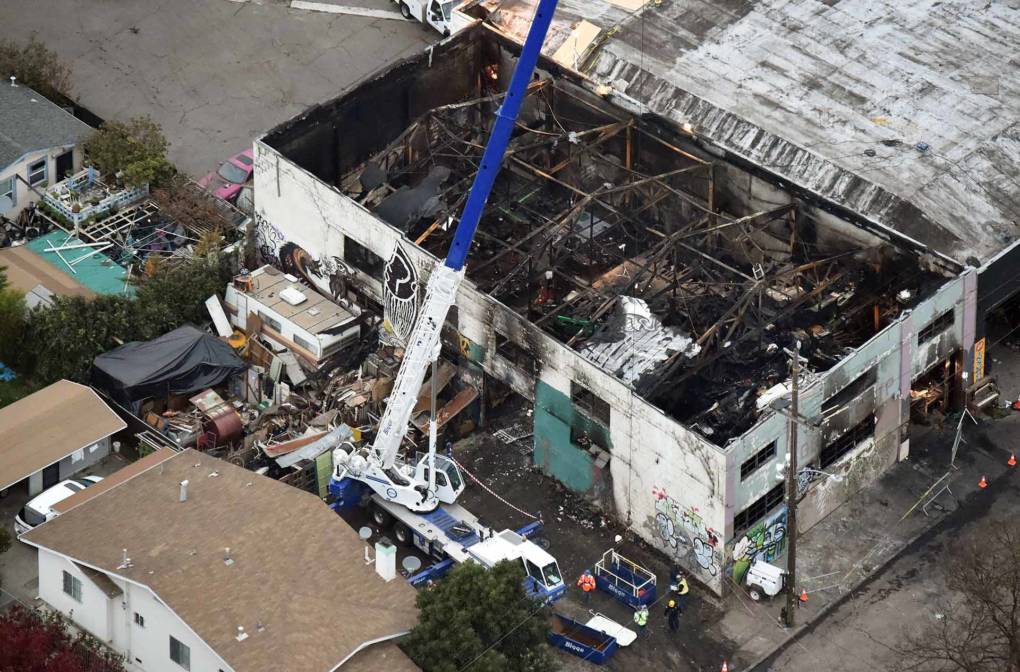
"caption": "A crane is used to lift wreckage as part of search efforts at the fire-ravaged Ghost Ship warehouse in December 2016. ",
"description": null,
"title": "Oakland-Ghost Ship Fire",
"credit": "Josh Edelson/AFP-Getty Image",
"status": "inherit",
"isLoading": false,
"fetchFailed": false
},
"news_11299999": {
"type": "attachments",
"id": "news_11299999",
"meta": {
"index": "attachments_1716263798",
"site": "news",
"id": "11299999",
"found": true
},
"parent": 11299596,
"imgSizes": {
"small": {
"file": "https://ww2.kqed.org/app/uploads/sites/10/2017/02/Viet-Thanh-Nguyen-1-520x347.jpg",
"width": 520,
"mimeType": "image/jpeg",
"height": 347
},
"twentyfourteen-full-width": {
"file": "https://ww2.kqed.org/app/uploads/sites/10/2017/02/Viet-Thanh-Nguyen-1-1038x576.jpg",
"width": 1038,
"mimeType": "image/jpeg",
"height": 576
},
"thumbnail": {
"file": "https://ww2.kqed.org/app/uploads/sites/10/2017/02/Viet-Thanh-Nguyen-1-160x107.jpg",
"width": 160,
"mimeType": "image/jpeg",
"height": 107
},
"fd-sm": {
"file": "https://ww2.kqed.org/app/uploads/sites/10/2017/02/Viet-Thanh-Nguyen-1-960x640.jpg",
"width": 960,
"mimeType": "image/jpeg",
"height": 640
},
"post-thumbnail": {
"file": "https://ww2.kqed.org/app/uploads/sites/10/2017/02/Viet-Thanh-Nguyen-1-672x372.jpg",
"width": 672,
"mimeType": "image/jpeg",
"height": 372
},
"xsmall": {
"file": "https://ww2.kqed.org/app/uploads/sites/10/2017/02/Viet-Thanh-Nguyen-1-375x250.jpg",
"width": 375,
"mimeType": "image/jpeg",
"height": 250
},
"kqedFullSize": {
"file": "https://ww2.kqed.org/app/uploads/sites/10/2017/02/Viet-Thanh-Nguyen-1.jpg",
"width": 1920,
"height": 1280
},
"large": {
"file": "https://ww2.kqed.org/app/uploads/sites/10/2017/02/Viet-Thanh-Nguyen-1-1020x680.jpg",
"width": 1020,
"mimeType": "image/jpeg",
"height": 680
},
"xlarge": {
"file": "https://ww2.kqed.org/app/uploads/sites/10/2017/02/Viet-Thanh-Nguyen-1-1180x787.jpg",
"width": 1180,
"mimeType": "image/jpeg",
"height": 787
},
"guest-author-50": {
"file": "https://ww2.kqed.org/app/uploads/sites/10/2017/02/Viet-Thanh-Nguyen-1-50x50.jpg",
"width": 50,
"mimeType": "image/jpeg",
"height": 50
},
"guest-author-96": {
"file": "https://ww2.kqed.org/app/uploads/sites/10/2017/02/Viet-Thanh-Nguyen-1-96x96.jpg",
"width": 96,
"mimeType": "image/jpeg",
"height": 96
},
"medium": {
"file": "https://ww2.kqed.org/app/uploads/sites/10/2017/02/Viet-Thanh-Nguyen-1-800x533.jpg",
"width": 800,
"mimeType": "image/jpeg",
"height": 533
},
"guest-author-64": {
"file": "https://ww2.kqed.org/app/uploads/sites/10/2017/02/Viet-Thanh-Nguyen-1-64x64.jpg",
"width": 64,
"mimeType": "image/jpeg",
"height": 64
},
"guest-author-32": {
"file": "https://ww2.kqed.org/app/uploads/sites/10/2017/02/Viet-Thanh-Nguyen-1-32x32.jpg",
"width": 32,
"mimeType": "image/jpeg",
"height": 32
},
"jmtc-small-thumb": {
"file": "https://ww2.kqed.org/app/uploads/sites/10/2017/02/Viet-Thanh-Nguyen-1-280x150.jpg",
"width": 280,
"mimeType": "image/jpeg",
"height": 150
},
"fd-lrg": {
"file": "https://ww2.kqed.org/app/uploads/sites/10/2017/02/Viet-Thanh-Nguyen-1-1920x1280.jpg",
"width": 1920,
"mimeType": "image/jpeg",
"height": 1280
},
"fd-med": {
"file": "https://ww2.kqed.org/app/uploads/sites/10/2017/02/Viet-Thanh-Nguyen-1-1180x787.jpg",
"width": 1180,
"mimeType": "image/jpeg",
"height": 787
},
"full-width": {
"file": "https://ww2.kqed.org/app/uploads/sites/10/2017/02/Viet-Thanh-Nguyen-1-1920x1280.jpg",
"width": 1920,
"mimeType": "image/jpeg",
"height": 1280
},
"detail": {
"file": "https://ww2.kqed.org/app/uploads/sites/10/2017/02/Viet-Thanh-Nguyen-1-150x150.jpg",
"width": 150,
"mimeType": "image/jpeg",
"height": 150
},
"guest-author-128": {
"file": "https://ww2.kqed.org/app/uploads/sites/10/2017/02/Viet-Thanh-Nguyen-1-128x128.jpg",
"width": 128,
"mimeType": "image/jpeg",
"height": 128
},
"xxsmall": {
"file": "https://ww2.kqed.org/app/uploads/sites/10/2017/02/Viet-Thanh-Nguyen-1-240x160.jpg",
"width": 240,
"mimeType": "image/jpeg",
"height": 160
}
},
"publishDate": 1486163837,
"modified": 1486164080,
"caption": "Pulitzer Prize-winning author Viet Thanh Nguyen signs copies of his new collection of short stories, \"The Refugees.\" Nguyen came to the United States with his family as a refugee from Vietnam after the end of the Vietnam War in 1975.",
"description": null,
"title": "Viet Thanh Nguyen",
"credit": "Sasha Khokha/KQED",
"status": "inherit",
"isLoading": false,
"fetchFailed": false
},
"news_11289197": {
"type": "attachments",
"id": "news_11289197",
"meta": {
"index": "attachments_1716263798",
"site": "news",
"id": "11289197",
"found": true
},
"parent": 11289193,
"imgSizes": {
"small": {
"file": "https://ww2.kqed.org/app/uploads/sites/10/2017/01/JustinBrown_Syd-520x347.jpg",
"width": 520,
"mimeType": "image/jpeg",
"height": 347
},
"twentyfourteen-full-width": {
"file": "https://ww2.kqed.org/app/uploads/sites/10/2017/01/JustinBrown_Syd-1038x576.jpg",
"width": 1038,
"mimeType": "image/jpeg",
"height": 576
},
"thumbnail": {
"file": "https://ww2.kqed.org/app/uploads/sites/10/2017/01/JustinBrown_Syd-160x107.jpg",
"width": 160,
"mimeType": "image/jpeg",
"height": 107
},
"fd-sm": {
"file": "https://ww2.kqed.org/app/uploads/sites/10/2017/01/JustinBrown_Syd-960x640.jpg",
"width": 960,
"mimeType": "image/jpeg",
"height": 640
},
"post-thumbnail": {
"file": "https://ww2.kqed.org/app/uploads/sites/10/2017/01/JustinBrown_Syd-672x372.jpg",
"width": 672,
"mimeType": "image/jpeg",
"height": 372
},
"xsmall": {
"file": "https://ww2.kqed.org/app/uploads/sites/10/2017/01/JustinBrown_Syd-375x250.jpg",
"width": 375,
"mimeType": "image/jpeg",
"height": 250
},
"kqedFullSize": {
"file": "https://ww2.kqed.org/app/uploads/sites/10/2017/01/JustinBrown_Syd.jpg",
"width": 6720,
"height": 4480
},
"large": {
"file": "https://ww2.kqed.org/app/uploads/sites/10/2017/01/JustinBrown_Syd-1020x680.jpg",
"width": 1020,
"mimeType": "image/jpeg",
"height": 680
},
"xlarge": {
"file": "https://ww2.kqed.org/app/uploads/sites/10/2017/01/JustinBrown_Syd-1180x787.jpg",
"width": 1180,
"mimeType": "image/jpeg",
"height": 787
},
"guest-author-50": {
"file": "https://ww2.kqed.org/app/uploads/sites/10/2017/01/JustinBrown_Syd-50x50.jpg",
"width": 50,
"mimeType": "image/jpeg",
"height": 50
},
"guest-author-96": {
"file": "https://ww2.kqed.org/app/uploads/sites/10/2017/01/JustinBrown_Syd-96x96.jpg",
"width": 96,
"mimeType": "image/jpeg",
"height": 96
},
"medium": {
"file": "https://ww2.kqed.org/app/uploads/sites/10/2017/01/JustinBrown_Syd-800x533.jpg",
"width": 800,
"mimeType": "image/jpeg",
"height": 533
},
"guest-author-64": {
"file": "https://ww2.kqed.org/app/uploads/sites/10/2017/01/JustinBrown_Syd-64x64.jpg",
"width": 64,
"mimeType": "image/jpeg",
"height": 64
},
"guest-author-32": {
"file": "https://ww2.kqed.org/app/uploads/sites/10/2017/01/JustinBrown_Syd-32x32.jpg",
"width": 32,
"mimeType": "image/jpeg",
"height": 32
},
"jmtc-small-thumb": {
"file": "https://ww2.kqed.org/app/uploads/sites/10/2017/01/JustinBrown_Syd-280x150.jpg",
"width": 280,
"mimeType": "image/jpeg",
"height": 150
},
"fd-lrg": {
"file": "https://ww2.kqed.org/app/uploads/sites/10/2017/01/JustinBrown_Syd-1920x1280.jpg",
"width": 1920,
"mimeType": "image/jpeg",
"height": 1280
},
"fd-med": {
"file": "https://ww2.kqed.org/app/uploads/sites/10/2017/01/JustinBrown_Syd-1180x787.jpg",
"width": 1180,
"mimeType": "image/jpeg",
"height": 787
},
"full-width": {
"file": "https://ww2.kqed.org/app/uploads/sites/10/2017/01/JustinBrown_Syd-1920x1280.jpg",
"width": 1920,
"mimeType": "image/jpeg",
"height": 1280
},
"detail": {
"file": "https://ww2.kqed.org/app/uploads/sites/10/2017/01/JustinBrown_Syd-150x150.jpg",
"width": 150,
"mimeType": "image/jpeg",
"height": 150
},
"guest-author-128": {
"file": "https://ww2.kqed.org/app/uploads/sites/10/2017/01/JustinBrown_Syd-128x128.jpg",
"width": 128,
"mimeType": "image/jpeg",
"height": 128
},
"xxsmall": {
"file": "https://ww2.kqed.org/app/uploads/sites/10/2017/01/JustinBrown_Syd-240x160.jpg",
"width": 240,
"mimeType": "image/jpeg",
"height": 160
}
},
"publishDate": 1485553109,
"modified": 1485553203,
"caption": "Singer Syd, of Odd Future and the Internet, emerges with a confident debut solo album.",
"description": null,
"title": "Syd",
"credit": "Justin Brown",
"status": "inherit",
"isLoading": false,
"fetchFailed": false
},
"news_11295151": {
"type": "attachments",
"id": "news_11295151",
"meta": {
"index": "attachments_1716263798",
"site": "news",
"id": "11295151",
"found": true
},
"parent": 11295142,
"imgSizes": {
"small": {
"file": "https://ww2.kqed.org/app/uploads/sites/10/2017/01/ExclusionWall-1-520x520.jpg",
"width": 520,
"mimeType": "image/jpeg",
"height": 520
},
"twentyfourteen-full-width": {
"file": "https://ww2.kqed.org/app/uploads/sites/10/2017/01/ExclusionWall-1-1038x576.jpg",
"width": 1038,
"mimeType": "image/jpeg",
"height": 576
},
"thumbnail": {
"file": "https://ww2.kqed.org/app/uploads/sites/10/2017/01/ExclusionWall-1-160x160.jpg",
"width": 160,
"mimeType": "image/jpeg",
"height": 160
},
"fd-sm": {
"file": "https://ww2.kqed.org/app/uploads/sites/10/2017/01/ExclusionWall-1-960x960.jpg",
"width": 960,
"mimeType": "image/jpeg",
"height": 960
},
"post-thumbnail": {
"file": "https://ww2.kqed.org/app/uploads/sites/10/2017/01/ExclusionWall-1-672x372.jpg",
"width": 672,
"mimeType": "image/jpeg",
"height": 372
},
"xsmall": {
"file": "https://ww2.kqed.org/app/uploads/sites/10/2017/01/ExclusionWall-1-375x375.jpg",
"width": 375,
"mimeType": "image/jpeg",
"height": 375
},
"kqedFullSize": {
"file": "https://ww2.kqed.org/app/uploads/sites/10/2017/01/ExclusionWall-1.jpg",
"width": 1920,
"height": 1920
},
"large": {
"file": "https://ww2.kqed.org/app/uploads/sites/10/2017/01/ExclusionWall-1-1020x1020.jpg",
"width": 1020,
"mimeType": "image/jpeg",
"height": 1020
},
"xlarge": {
"file": "https://ww2.kqed.org/app/uploads/sites/10/2017/01/ExclusionWall-1-1180x1180.jpg",
"width": 1180,
"mimeType": "image/jpeg",
"height": 1180
},
"guest-author-50": {
"file": "https://ww2.kqed.org/app/uploads/sites/10/2017/01/ExclusionWall-1-50x50.jpg",
"width": 50,
"mimeType": "image/jpeg",
"height": 50
},
"guest-author-96": {
"file": "https://ww2.kqed.org/app/uploads/sites/10/2017/01/ExclusionWall-1-96x96.jpg",
"width": 96,
"mimeType": "image/jpeg",
"height": 96
},
"medium": {
"file": "https://ww2.kqed.org/app/uploads/sites/10/2017/01/ExclusionWall-1-800x800.jpg",
"width": 800,
"mimeType": "image/jpeg",
"height": 800
},
"guest-author-64": {
"file": "https://ww2.kqed.org/app/uploads/sites/10/2017/01/ExclusionWall-1-64x64.jpg",
"width": 64,
"mimeType": "image/jpeg",
"height": 64
},
"guest-author-32": {
"file": "https://ww2.kqed.org/app/uploads/sites/10/2017/01/ExclusionWall-1-32x32.jpg",
"width": 32,
"mimeType": "image/jpeg",
"height": 32
},
"jmtc-small-thumb": {
"file": "https://ww2.kqed.org/app/uploads/sites/10/2017/01/ExclusionWall-1-280x150.jpg",
"width": 280,
"mimeType": "image/jpeg",
"height": 150
},
"fd-lrg": {
"file": "https://ww2.kqed.org/app/uploads/sites/10/2017/01/ExclusionWall-1-1920x1920.jpg",
"width": 1920,
"mimeType": "image/jpeg",
"height": 1920
},
"fd-med": {
"file": "https://ww2.kqed.org/app/uploads/sites/10/2017/01/ExclusionWall-1-1180x1180.jpg",
"width": 1180,
"mimeType": "image/jpeg",
"height": 1180
},
"full-width": {
"file": "https://ww2.kqed.org/app/uploads/sites/10/2017/01/ExclusionWall-1-1920x1920.jpg",
"width": 1920,
"mimeType": "image/jpeg",
"height": 1920
},
"detail": {
"file": "https://ww2.kqed.org/app/uploads/sites/10/2017/01/ExclusionWall-1-150x150.jpg",
"width": 150,
"mimeType": "image/jpeg",
"height": 150
},
"guest-author-128": {
"file": "https://ww2.kqed.org/app/uploads/sites/10/2017/01/ExclusionWall-1-128x128.jpg",
"width": 128,
"mimeType": "image/jpeg",
"height": 128
},
"xxsmall": {
"file": "https://ww2.kqed.org/app/uploads/sites/10/2017/01/ExclusionWall-1-240x240.jpg",
"width": 240,
"mimeType": "image/jpeg",
"height": 240
}
},
"publishDate": 1485902338,
"modified": 1485902485,
"caption": "Thomas Nast's cartoon from 1870 shows European immigrants, already in the United States, pulling up the ladder to stop Chinese immigration.",
"description": "Thomas Nast's cartoon from 1870 shows European immigrants, already in the United States, pulling up the ladder to stop Chinese immigration.",
"title": "ExclusionWall",
"credit": "Mark Fiore/KQED",
"status": "inherit",
"isLoading": false,
"fetchFailed": false
},
"news_11293849": {
"type": "attachments",
"id": "news_11293849",
"meta": {
"index": "attachments_1716263798",
"site": "news",
"id": "11293849",
"found": true
},
"parent": 11293550,
"imgSizes": {
"small": {
"file": "https://ww2.kqed.org/app/uploads/sites/10/2017/01/Houses_in_Sanaa_Yemen_10205293626-520x347.jpg",
"width": 520,
"mimeType": "image/jpeg",
"height": 347
},
"twentyfourteen-full-width": {
"file": "https://ww2.kqed.org/app/uploads/sites/10/2017/01/Houses_in_Sanaa_Yemen_10205293626-1038x576.jpg",
"width": 1038,
"mimeType": "image/jpeg",
"height": 576
},
"thumbnail": {
"file": "https://ww2.kqed.org/app/uploads/sites/10/2017/01/Houses_in_Sanaa_Yemen_10205293626-160x107.jpg",
"width": 160,
"mimeType": "image/jpeg",
"height": 107
},
"fd-sm": {
"file": "https://ww2.kqed.org/app/uploads/sites/10/2017/01/Houses_in_Sanaa_Yemen_10205293626-960x641.jpg",
"width": 960,
"mimeType": "image/jpeg",
"height": 641
},
"post-thumbnail": {
"file": "https://ww2.kqed.org/app/uploads/sites/10/2017/01/Houses_in_Sanaa_Yemen_10205293626-672x372.jpg",
"width": 672,
"mimeType": "image/jpeg",
"height": 372
},
"xsmall": {
"file": "https://ww2.kqed.org/app/uploads/sites/10/2017/01/Houses_in_Sanaa_Yemen_10205293626-375x250.jpg",
"width": 375,
"mimeType": "image/jpeg",
"height": 250
},
"kqedFullSize": {
"file": "https://ww2.kqed.org/app/uploads/sites/10/2017/01/Houses_in_Sanaa_Yemen_10205293626.jpg",
"width": 6016,
"height": 4016
},
"large": {
"file": "https://ww2.kqed.org/app/uploads/sites/10/2017/01/Houses_in_Sanaa_Yemen_10205293626-1020x681.jpg",
"width": 1020,
"mimeType": "image/jpeg",
"height": 681
},
"xlarge": {
"file": "https://ww2.kqed.org/app/uploads/sites/10/2017/01/Houses_in_Sanaa_Yemen_10205293626-1180x788.jpg",
"width": 1180,
"mimeType": "image/jpeg",
"height": 788
},
"guest-author-50": {
"file": "https://ww2.kqed.org/app/uploads/sites/10/2017/01/Houses_in_Sanaa_Yemen_10205293626-50x50.jpg",
"width": 50,
"mimeType": "image/jpeg",
"height": 50
},
"guest-author-96": {
"file": "https://ww2.kqed.org/app/uploads/sites/10/2017/01/Houses_in_Sanaa_Yemen_10205293626-96x96.jpg",
"width": 96,
"mimeType": "image/jpeg",
"height": 96
},
"medium": {
"file": "https://ww2.kqed.org/app/uploads/sites/10/2017/01/Houses_in_Sanaa_Yemen_10205293626-800x534.jpg",
"width": 800,
"mimeType": "image/jpeg",
"height": 534
},
"guest-author-64": {
"file": "https://ww2.kqed.org/app/uploads/sites/10/2017/01/Houses_in_Sanaa_Yemen_10205293626-64x64.jpg",
"width": 64,
"mimeType": "image/jpeg",
"height": 64
},
"guest-author-32": {
"file": "https://ww2.kqed.org/app/uploads/sites/10/2017/01/Houses_in_Sanaa_Yemen_10205293626-32x32.jpg",
"width": 32,
"mimeType": "image/jpeg",
"height": 32
},
"jmtc-small-thumb": {
"file": "https://ww2.kqed.org/app/uploads/sites/10/2017/01/Houses_in_Sanaa_Yemen_10205293626-280x150.jpg",
"width": 280,
"mimeType": "image/jpeg",
"height": 150
},
"fd-lrg": {
"file": "https://ww2.kqed.org/app/uploads/sites/10/2017/01/Houses_in_Sanaa_Yemen_10205293626-1920x1282.jpg",
"width": 1920,
"mimeType": "image/jpeg",
"height": 1282
},
"fd-med": {
"file": "https://ww2.kqed.org/app/uploads/sites/10/2017/01/Houses_in_Sanaa_Yemen_10205293626-1180x788.jpg",
"width": 1180,
"mimeType": "image/jpeg",
"height": 788
},
"full-width": {
"file": "https://ww2.kqed.org/app/uploads/sites/10/2017/01/Houses_in_Sanaa_Yemen_10205293626-1920x1282.jpg",
"width": 1920,
"mimeType": "image/jpeg",
"height": 1282
},
"detail": {
"file": "https://ww2.kqed.org/app/uploads/sites/10/2017/01/Houses_in_Sanaa_Yemen_10205293626-150x150.jpg",
"width": 150,
"mimeType": "image/jpeg",
"height": 150
},
"guest-author-128": {
"file": "https://ww2.kqed.org/app/uploads/sites/10/2017/01/Houses_in_Sanaa_Yemen_10205293626-128x128.jpg",
"width": 128,
"mimeType": "image/jpeg",
"height": 128
},
"xxsmall": {
"file": "https://ww2.kqed.org/app/uploads/sites/10/2017/01/Houses_in_Sanaa_Yemen_10205293626-240x160.jpg",
"width": 240,
"mimeType": "image/jpeg",
"height": 160
}
},
"publishDate": 1485824518,
"modified": 1485824551,
"caption": "Houses in Sanaa, Yemen.",
"description": null,
"title": "Houses_in_Sanaa,_Yemen_(10205293626)",
"credit": "Wikicommons",
"status": "inherit",
"isLoading": false,
"fetchFailed": false
},
"news_11293405": {
"type": "attachments",
"id": "news_11293405",
"meta": {
"index": "attachments_1716263798",
"site": "news",
"id": "11293405",
"found": true
},
"parent": 11293398,
"imgSizes": {
"small": {
"file": "https://ww2.kqed.org/app/uploads/sites/10/2017/01/GettyImages-633082980-520x347.jpg",
"width": 520,
"mimeType": "image/jpeg",
"height": 347
},
"twentyfourteen-full-width": {
"file": "https://ww2.kqed.org/app/uploads/sites/10/2017/01/GettyImages-633082980-1038x576.jpg",
"width": 1038,
"mimeType": "image/jpeg",
"height": 576
},
"thumbnail": {
"file": "https://ww2.kqed.org/app/uploads/sites/10/2017/01/GettyImages-633082980-160x107.jpg",
"width": 160,
"mimeType": "image/jpeg",
"height": 107
},
"fd-sm": {
"file": "https://ww2.kqed.org/app/uploads/sites/10/2017/01/GettyImages-633082980-960x640.jpg",
"width": 960,
"mimeType": "image/jpeg",
"height": 640
},
"post-thumbnail": {
"file": "https://ww2.kqed.org/app/uploads/sites/10/2017/01/GettyImages-633082980-672x372.jpg",
"width": 672,
"mimeType": "image/jpeg",
"height": 372
},
"xsmall": {
"file": "https://ww2.kqed.org/app/uploads/sites/10/2017/01/GettyImages-633082980-375x250.jpg",
"width": 375,
"mimeType": "image/jpeg",
"height": 250
},
"kqedFullSize": {
"file": "https://ww2.kqed.org/app/uploads/sites/10/2017/01/GettyImages-633082980-e1485804324351.jpg",
"width": 1920,
"height": 1280
},
"large": {
"file": "https://ww2.kqed.org/app/uploads/sites/10/2017/01/GettyImages-633082980-1020x680.jpg",
"width": 1020,
"mimeType": "image/jpeg",
"height": 680
},
"xlarge": {
"file": "https://ww2.kqed.org/app/uploads/sites/10/2017/01/GettyImages-633082980-1180x787.jpg",
"width": 1180,
"mimeType": "image/jpeg",
"height": 787
},
"guest-author-50": {
"file": "https://ww2.kqed.org/app/uploads/sites/10/2017/01/GettyImages-633082980-50x50.jpg",
"width": 50,
"mimeType": "image/jpeg",
"height": 50
},
"guest-author-96": {
"file": "https://ww2.kqed.org/app/uploads/sites/10/2017/01/GettyImages-633082980-96x96.jpg",
"width": 96,
"mimeType": "image/jpeg",
"height": 96
},
"medium": {
"file": "https://ww2.kqed.org/app/uploads/sites/10/2017/01/GettyImages-633082980-800x533.jpg",
"width": 800,
"mimeType": "image/jpeg",
"height": 533
},
"guest-author-64": {
"file": "https://ww2.kqed.org/app/uploads/sites/10/2017/01/GettyImages-633082980-64x64.jpg",
"width": 64,
"mimeType": "image/jpeg",
"height": 64
},
"guest-author-32": {
"file": "https://ww2.kqed.org/app/uploads/sites/10/2017/01/GettyImages-633082980-32x32.jpg",
"width": 32,
"mimeType": "image/jpeg",
"height": 32
},
"jmtc-small-thumb": {
"file": "https://ww2.kqed.org/app/uploads/sites/10/2017/01/GettyImages-633082980-280x150.jpg",
"width": 280,
"mimeType": "image/jpeg",
"height": 150
},
"fd-lrg": {
"file": "https://ww2.kqed.org/app/uploads/sites/10/2017/01/GettyImages-633082980-1920x1280.jpg",
"width": 1920,
"mimeType": "image/jpeg",
"height": 1280
},
"fd-med": {
"file": "https://ww2.kqed.org/app/uploads/sites/10/2017/01/GettyImages-633082980-1180x787.jpg",
"width": 1180,
"mimeType": "image/jpeg",
"height": 787
},
"full-width": {
"file": "https://ww2.kqed.org/app/uploads/sites/10/2017/01/GettyImages-633082980-1920x1280.jpg",
"width": 1920,
"mimeType": "image/jpeg",
"height": 1280
},
"detail": {
"file": "https://ww2.kqed.org/app/uploads/sites/10/2017/01/GettyImages-633082980-150x150.jpg",
"width": 150,
"mimeType": "image/jpeg",
"height": 150
},
"guest-author-128": {
"file": "https://ww2.kqed.org/app/uploads/sites/10/2017/01/GettyImages-633082980-128x128.jpg",
"width": 128,
"mimeType": "image/jpeg",
"height": 128
},
"xxsmall": {
"file": "https://ww2.kqed.org/app/uploads/sites/10/2017/01/GettyImages-633082980-240x160.jpg",
"width": 240,
"mimeType": "image/jpeg",
"height": 160
}
},
"publishDate": 1485804018,
"modified": 1485816899,
"caption": "Actor Mahershala Ali attends the 23rd Annual Screen Actors Guild Awards at Shrine Auditorium on Jan. 29, 2017, in Los Angeles, California. ",
"description": "Actor Mahershala Ali attends The 23rd Annual Screen Actors Guild Awards at The Shrine Auditorium on January 29, 2017 in Los Angeles, California. ",
"title": "The 23rd Annual Screen Actors Guild Awards - Roaming Show",
"credit": "Christopher Polk/Getty Images",
"status": "inherit",
"isLoading": false,
"fetchFailed": false
},
"news_11287755": {
"type": "attachments",
"id": "news_11287755",
"meta": {
"index": "attachments_1716263798",
"site": "news",
"id": "11287755",
"found": true
},
"parent": 11287753,
"imgSizes": {
"small": {
"file": "https://ww2.kqed.org/app/uploads/sites/10/2017/01/white-house-resist-1920-520x356.jpg",
"width": 520,
"mimeType": "image/jpeg",
"height": 356
},
"twentyfourteen-full-width": {
"file": "https://ww2.kqed.org/app/uploads/sites/10/2017/01/white-house-resist-1920-1038x576.jpg",
"width": 1038,
"mimeType": "image/jpeg",
"height": 576
},
"thumbnail": {
"file": "https://ww2.kqed.org/app/uploads/sites/10/2017/01/white-house-resist-1920-160x110.jpg",
"width": 160,
"mimeType": "image/jpeg",
"height": 110
},
"fd-sm": {
"file": "https://ww2.kqed.org/app/uploads/sites/10/2017/01/white-house-resist-1920-960x658.jpg",
"width": 960,
"mimeType": "image/jpeg",
"height": 658
},
"post-thumbnail": {
"file": "https://ww2.kqed.org/app/uploads/sites/10/2017/01/white-house-resist-1920-672x372.jpg",
"width": 672,
"mimeType": "image/jpeg",
"height": 372
},
"xsmall": {
"file": "https://ww2.kqed.org/app/uploads/sites/10/2017/01/white-house-resist-1920-375x257.jpg",
"width": 375,
"mimeType": "image/jpeg",
"height": 257
},
"kqedFullSize": {
"file": "https://ww2.kqed.org/app/uploads/sites/10/2017/01/white-house-resist-1920.jpg",
"width": 1920,
"height": 1315
},
"large": {
"file": "https://ww2.kqed.org/app/uploads/sites/10/2017/01/white-house-resist-1920-1020x699.jpg",
"width": 1020,
"mimeType": "image/jpeg",
"height": 699
},
"xlarge": {
"file": "https://ww2.kqed.org/app/uploads/sites/10/2017/01/white-house-resist-1920-1180x808.jpg",
"width": 1180,
"mimeType": "image/jpeg",
"height": 808
},
"guest-author-50": {
"file": "https://ww2.kqed.org/app/uploads/sites/10/2017/01/white-house-resist-1920-50x50.jpg",
"width": 50,
"mimeType": "image/jpeg",
"height": 50
},
"guest-author-96": {
"file": "https://ww2.kqed.org/app/uploads/sites/10/2017/01/white-house-resist-1920-96x96.jpg",
"width": 96,
"mimeType": "image/jpeg",
"height": 96
},
"medium": {
"file": "https://ww2.kqed.org/app/uploads/sites/10/2017/01/white-house-resist-1920-800x548.jpg",
"width": 800,
"mimeType": "image/jpeg",
"height": 548
},
"guest-author-64": {
"file": "https://ww2.kqed.org/app/uploads/sites/10/2017/01/white-house-resist-1920-64x64.jpg",
"width": 64,
"mimeType": "image/jpeg",
"height": 64
},
"guest-author-32": {
"file": "https://ww2.kqed.org/app/uploads/sites/10/2017/01/white-house-resist-1920-32x32.jpg",
"width": 32,
"mimeType": "image/jpeg",
"height": 32
},
"jmtc-small-thumb": {
"file": "https://ww2.kqed.org/app/uploads/sites/10/2017/01/white-house-resist-1920-280x150.jpg",
"width": 280,
"mimeType": "image/jpeg",
"height": 150
},
"fd-lrg": {
"file": "https://ww2.kqed.org/app/uploads/sites/10/2017/01/white-house-resist-1920-1920x1315.jpg",
"width": 1920,
"mimeType": "image/jpeg",
"height": 1315
},
"fd-med": {
"file": "https://ww2.kqed.org/app/uploads/sites/10/2017/01/white-house-resist-1920-1180x808.jpg",
"width": 1180,
"mimeType": "image/jpeg",
"height": 808
},
"full-width": {
"file": "https://ww2.kqed.org/app/uploads/sites/10/2017/01/white-house-resist-1920-1920x1315.jpg",
"width": 1920,
"mimeType": "image/jpeg",
"height": 1315
},
"detail": {
"file": "https://ww2.kqed.org/app/uploads/sites/10/2017/01/white-house-resist-1920-150x150.jpg",
"width": 150,
"mimeType": "image/jpeg",
"height": 150
},
"guest-author-128": {
"file": "https://ww2.kqed.org/app/uploads/sites/10/2017/01/white-house-resist-1920-128x128.jpg",
"width": 128,
"mimeType": "image/jpeg",
"height": 128
},
"xxsmall": {
"file": "https://ww2.kqed.org/app/uploads/sites/10/2017/01/white-house-resist-1920-240x164.jpg",
"width": 240,
"mimeType": "image/jpeg",
"height": 164
}
},
"publishDate": 1485464931,
"modified": 1485470296,
"caption": "Greenpeace protesters unfold a banner reading 'Resist' from atop a construction crane behind the White House Jan. 25, 2017, in Washington, D.C. The banner, flying high enough to be seen from the White House, is in opposition to the policies of President Donald Trump.",
"description": null,
"title": "white-house-resist-1920",
"credit": "Saul Loeb/AFP/Getty Images",
"status": "inherit",
"isLoading": false,
"fetchFailed": false
},
"news_11285965": {
"type": "attachments",
"id": "news_11285965",
"meta": {
"index": "attachments_1716263798",
"site": "news",
"id": "11285965",
"found": true
},
"parent": 11285964,
"imgSizes": {
"small": {
"file": "https://ww2.kqed.org/app/uploads/sites/10/2017/01/gettyimages-632320716-284f7bad6d523b357009017dd79219acbfa1186e-520x390.jpg",
"width": 520,
"mimeType": "image/jpeg",
"height": 390
},
"twentyfourteen-full-width": {
"file": "https://ww2.kqed.org/app/uploads/sites/10/2017/01/gettyimages-632320716-284f7bad6d523b357009017dd79219acbfa1186e-1038x576.jpg",
"width": 1038,
"mimeType": "image/jpeg",
"height": 576
},
"thumbnail": {
"file": "https://ww2.kqed.org/app/uploads/sites/10/2017/01/gettyimages-632320716-284f7bad6d523b357009017dd79219acbfa1186e-160x120.jpg",
"width": 160,
"mimeType": "image/jpeg",
"height": 120
},
"fd-sm": {
"file": "https://ww2.kqed.org/app/uploads/sites/10/2017/01/gettyimages-632320716-284f7bad6d523b357009017dd79219acbfa1186e-960x720.jpg",
"width": 960,
"mimeType": "image/jpeg",
"height": 720
},
"post-thumbnail": {
"file": "https://ww2.kqed.org/app/uploads/sites/10/2017/01/gettyimages-632320716-284f7bad6d523b357009017dd79219acbfa1186e-672x372.jpg",
"width": 672,
"mimeType": "image/jpeg",
"height": 372
},
"xsmall": {
"file": "https://ww2.kqed.org/app/uploads/sites/10/2017/01/gettyimages-632320716-284f7bad6d523b357009017dd79219acbfa1186e-375x281.jpg",
"width": 375,
"mimeType": "image/jpeg",
"height": 281
},
"kqedFullSize": {
"file": "https://ww2.kqed.org/app/uploads/sites/10/2017/01/gettyimages-632320716-284f7bad6d523b357009017dd79219acbfa1186e-e1485357735645.jpg",
"width": 1920,
"height": 1440
},
"large": {
"file": "https://ww2.kqed.org/app/uploads/sites/10/2017/01/gettyimages-632320716-284f7bad6d523b357009017dd79219acbfa1186e-1020x765.jpg",
"width": 1020,
"mimeType": "image/jpeg",
"height": 765
},
"xlarge": {
"file": "https://ww2.kqed.org/app/uploads/sites/10/2017/01/gettyimages-632320716-284f7bad6d523b357009017dd79219acbfa1186e-1180x885.jpg",
"width": 1180,
"mimeType": "image/jpeg",
"height": 885
},
"guest-author-50": {
"file": "https://ww2.kqed.org/app/uploads/sites/10/2017/01/gettyimages-632320716-284f7bad6d523b357009017dd79219acbfa1186e-50x50.jpg",
"width": 50,
"mimeType": "image/jpeg",
"height": 50
},
"guest-author-96": {
"file": "https://ww2.kqed.org/app/uploads/sites/10/2017/01/gettyimages-632320716-284f7bad6d523b357009017dd79219acbfa1186e-96x96.jpg",
"width": 96,
"mimeType": "image/jpeg",
"height": 96
},
"medium": {
"file": "https://ww2.kqed.org/app/uploads/sites/10/2017/01/gettyimages-632320716-284f7bad6d523b357009017dd79219acbfa1186e-800x600.jpg",
"width": 800,
"mimeType": "image/jpeg",
"height": 600
},
"guest-author-64": {
"file": "https://ww2.kqed.org/app/uploads/sites/10/2017/01/gettyimages-632320716-284f7bad6d523b357009017dd79219acbfa1186e-64x64.jpg",
"width": 64,
"mimeType": "image/jpeg",
"height": 64
},
"guest-author-32": {
"file": "https://ww2.kqed.org/app/uploads/sites/10/2017/01/gettyimages-632320716-284f7bad6d523b357009017dd79219acbfa1186e-32x32.jpg",
"width": 32,
"mimeType": "image/jpeg",
"height": 32
},
"jmtc-small-thumb": {
"file": "https://ww2.kqed.org/app/uploads/sites/10/2017/01/gettyimages-632320716-284f7bad6d523b357009017dd79219acbfa1186e-280x150.jpg",
"width": 280,
"mimeType": "image/jpeg",
"height": 150
},
"fd-lrg": {
"file": "https://ww2.kqed.org/app/uploads/sites/10/2017/01/gettyimages-632320716-284f7bad6d523b357009017dd79219acbfa1186e-1920x1440.jpg",
"width": 1920,
"mimeType": "image/jpeg",
"height": 1440
},
"fd-med": {
"file": "https://ww2.kqed.org/app/uploads/sites/10/2017/01/gettyimages-632320716-284f7bad6d523b357009017dd79219acbfa1186e-1180x885.jpg",
"width": 1180,
"mimeType": "image/jpeg",
"height": 885
},
"full-width": {
"file": "https://ww2.kqed.org/app/uploads/sites/10/2017/01/gettyimages-632320716-284f7bad6d523b357009017dd79219acbfa1186e-1920x1440.jpg",
"width": 1920,
"mimeType": "image/jpeg",
"height": 1440
},
"detail": {
"file": "https://ww2.kqed.org/app/uploads/sites/10/2017/01/gettyimages-632320716-284f7bad6d523b357009017dd79219acbfa1186e-150x150.jpg",
"width": 150,
"mimeType": "image/jpeg",
"height": 150
},
"guest-author-128": {
"file": "https://ww2.kqed.org/app/uploads/sites/10/2017/01/gettyimages-632320716-284f7bad6d523b357009017dd79219acbfa1186e-128x128.jpg",
"width": 128,
"mimeType": "image/jpeg",
"height": 128
},
"xxsmall": {
"file": "https://ww2.kqed.org/app/uploads/sites/10/2017/01/gettyimages-632320716-284f7bad6d523b357009017dd79219acbfa1186e-240x180.jpg",
"width": 240,
"mimeType": "image/jpeg",
"height": 180
}
},
"publishDate": 1485357408,
"modified": 1485386337,
"caption": "President Trump spoke at CIA headquarters in Langley, Virginia, on Jan. 21. He blamed the media for reports that he is feuding with the intelligence services, after comparing them to Nazi Germany.",
"description": null,
"title": "Donald Trump-CIA",
"credit": "Olivier Doulier/Pool-Getty Images",
"status": "inherit",
"isLoading": false,
"fetchFailed": false
},
"news_11203830": {
"type": "attachments",
"id": "news_11203830",
"meta": {
"index": "attachments_1716263798",
"site": "news",
"id": "11203830",
"found": true
},
"parent": 11203042,
"imgSizes": {
"small": {
"file": "https://ww2.kqed.org/app/uploads/sites/10/2016/12/RS23048_GettyImages-627450192-qut-520x347.jpg",
"width": 520,
"mimeType": "image/jpeg",
"height": 347
},
"twentyfourteen-full-width": {
"file": "https://ww2.kqed.org/app/uploads/sites/10/2016/12/RS23048_GettyImages-627450192-qut-1024x576.jpg",
"width": 1024,
"mimeType": "image/jpeg",
"height": 576
},
"thumbnail": {
"file": "https://ww2.kqed.org/app/uploads/sites/10/2016/12/RS23048_GettyImages-627450192-qut-160x107.jpg",
"width": 160,
"mimeType": "image/jpeg",
"height": 107
},
"fd-sm": {
"file": "https://ww2.kqed.org/app/uploads/sites/10/2016/12/RS23048_GettyImages-627450192-qut-960x640.jpg",
"width": 960,
"mimeType": "image/jpeg",
"height": 640
},
"post-thumbnail": {
"file": "https://ww2.kqed.org/app/uploads/sites/10/2016/12/RS23048_GettyImages-627450192-qut-672x372.jpg",
"width": 672,
"mimeType": "image/jpeg",
"height": 372
},
"xsmall": {
"file": "https://ww2.kqed.org/app/uploads/sites/10/2016/12/RS23048_GettyImages-627450192-qut-375x250.jpg",
"width": 375,
"mimeType": "image/jpeg",
"height": 250
},
"kqedFullSize": {
"file": "https://ww2.kqed.org/app/uploads/sites/10/2016/12/RS23048_GettyImages-627450192-qut.jpg",
"width": 1024,
"height": 683
},
"large": {
"file": "https://ww2.kqed.org/app/uploads/sites/10/2016/12/RS23048_GettyImages-627450192-qut-1020x680.jpg",
"width": 1020,
"mimeType": "image/jpeg",
"height": 680
},
"guest-author-50": {
"file": "https://ww2.kqed.org/app/uploads/sites/10/2016/12/RS23048_GettyImages-627450192-qut-50x50.jpg",
"width": 50,
"mimeType": "image/jpeg",
"height": 50
},
"guest-author-96": {
"file": "https://ww2.kqed.org/app/uploads/sites/10/2016/12/RS23048_GettyImages-627450192-qut-96x96.jpg",
"width": 96,
"mimeType": "image/jpeg",
"height": 96
},
"medium": {
"file": "https://ww2.kqed.org/app/uploads/sites/10/2016/12/RS23048_GettyImages-627450192-qut-800x534.jpg",
"width": 800,
"mimeType": "image/jpeg",
"height": 534
},
"guest-author-64": {
"file": "https://ww2.kqed.org/app/uploads/sites/10/2016/12/RS23048_GettyImages-627450192-qut-64x64.jpg",
"width": 64,
"mimeType": "image/jpeg",
"height": 64
},
"guest-author-32": {
"file": "https://ww2.kqed.org/app/uploads/sites/10/2016/12/RS23048_GettyImages-627450192-qut-32x32.jpg",
"width": 32,
"mimeType": "image/jpeg",
"height": 32
},
"jmtc-small-thumb": {
"file": "https://ww2.kqed.org/app/uploads/sites/10/2016/12/RS23048_GettyImages-627450192-qut-280x150.jpg",
"width": 280,
"mimeType": "image/jpeg",
"height": 150
},
"detail": {
"file": "https://ww2.kqed.org/app/uploads/sites/10/2016/12/RS23048_GettyImages-627450192-qut-150x150.jpg",
"width": 150,
"mimeType": "image/jpeg",
"height": 150
},
"guest-author-128": {
"file": "https://ww2.kqed.org/app/uploads/sites/10/2016/12/RS23048_GettyImages-627450192-qut-128x128.jpg",
"width": 128,
"mimeType": "image/jpeg",
"height": 128
},
"xxsmall": {
"file": "https://ww2.kqed.org/app/uploads/sites/10/2016/12/RS23048_GettyImages-627450192-qut-240x160.jpg",
"width": 240,
"mimeType": "image/jpeg",
"height": 160
}
},
"publishDate": 1480820582,
"modified": 1485299390,
"caption": "Firefighters clear debris from the entrance to the Ghost Ship warehouse in Oakland, where a fire killed 36 people on Dec. 2, 2016.",
"description": null,
"title": "Ghost Ship Fire",
"credit": "Elijah Nouvelage/Getty Images",
"status": "inherit",
"isLoading": false,
"fetchFailed": false
},
"news_11283116": {
"type": "attachments",
"id": "news_11283116",
"meta": {
"index": "attachments_1716263798",
"site": "news",
"id": "11283116",
"found": true
},
"parent": 11283115,
"imgSizes": {
"small": {
"file": "https://ww2.kqed.org/app/uploads/sites/10/2017/01/womens-march-sf-520x347.jpg",
"width": 520,
"mimeType": "image/jpeg",
"height": 347
},
"twentyfourteen-full-width": {
"file": "https://ww2.kqed.org/app/uploads/sites/10/2017/01/womens-march-sf-1038x576.jpg",
"width": 1038,
"mimeType": "image/jpeg",
"height": 576
},
"thumbnail": {
"file": "https://ww2.kqed.org/app/uploads/sites/10/2017/01/womens-march-sf-160x107.jpg",
"width": 160,
"mimeType": "image/jpeg",
"height": 107
},
"fd-sm": {
"file": "https://ww2.kqed.org/app/uploads/sites/10/2017/01/womens-march-sf-960x640.jpg",
"width": 960,
"mimeType": "image/jpeg",
"height": 640
},
"post-thumbnail": {
"file": "https://ww2.kqed.org/app/uploads/sites/10/2017/01/womens-march-sf-672x372.jpg",
"width": 672,
"mimeType": "image/jpeg",
"height": 372
},
"xsmall": {
"file": "https://ww2.kqed.org/app/uploads/sites/10/2017/01/womens-march-sf-375x250.jpg",
"width": 375,
"mimeType": "image/jpeg",
"height": 250
},
"kqedFullSize": {
"file": "https://ww2.kqed.org/app/uploads/sites/10/2017/01/womens-march-sf.jpg",
"width": 1920,
"height": 1280
},
"large": {
"file": "https://ww2.kqed.org/app/uploads/sites/10/2017/01/womens-march-sf-1020x680.jpg",
"width": 1020,
"mimeType": "image/jpeg",
"height": 680
},
"xlarge": {
"file": "https://ww2.kqed.org/app/uploads/sites/10/2017/01/womens-march-sf-1180x787.jpg",
"width": 1180,
"mimeType": "image/jpeg",
"height": 787
},
"guest-author-50": {
"file": "https://ww2.kqed.org/app/uploads/sites/10/2017/01/womens-march-sf-50x50.jpg",
"width": 50,
"mimeType": "image/jpeg",
"height": 50
},
"guest-author-96": {
"file": "https://ww2.kqed.org/app/uploads/sites/10/2017/01/womens-march-sf-96x96.jpg",
"width": 96,
"mimeType": "image/jpeg",
"height": 96
},
"medium": {
"file": "https://ww2.kqed.org/app/uploads/sites/10/2017/01/womens-march-sf-800x533.jpg",
"width": 800,
"mimeType": "image/jpeg",
"height": 533
},
"guest-author-64": {
"file": "https://ww2.kqed.org/app/uploads/sites/10/2017/01/womens-march-sf-64x64.jpg",
"width": 64,
"mimeType": "image/jpeg",
"height": 64
},
"guest-author-32": {
"file": "https://ww2.kqed.org/app/uploads/sites/10/2017/01/womens-march-sf-32x32.jpg",
"width": 32,
"mimeType": "image/jpeg",
"height": 32
},
"jmtc-small-thumb": {
"file": "https://ww2.kqed.org/app/uploads/sites/10/2017/01/womens-march-sf-280x150.jpg",
"width": 280,
"mimeType": "image/jpeg",
"height": 150
},
"fd-lrg": {
"file": "https://ww2.kqed.org/app/uploads/sites/10/2017/01/womens-march-sf-1920x1280.jpg",
"width": 1920,
"mimeType": "image/jpeg",
"height": 1280
},
"fd-med": {
"file": "https://ww2.kqed.org/app/uploads/sites/10/2017/01/womens-march-sf-1180x787.jpg",
"width": 1180,
"mimeType": "image/jpeg",
"height": 787
},
"full-width": {
"file": "https://ww2.kqed.org/app/uploads/sites/10/2017/01/womens-march-sf-1920x1280.jpg",
"width": 1920,
"mimeType": "image/jpeg",
"height": 1280
},
"detail": {
"file": "https://ww2.kqed.org/app/uploads/sites/10/2017/01/womens-march-sf-150x150.jpg",
"width": 150,
"mimeType": "image/jpeg",
"height": 150
},
"guest-author-128": {
"file": "https://ww2.kqed.org/app/uploads/sites/10/2017/01/womens-march-sf-128x128.jpg",
"width": 128,
"mimeType": "image/jpeg",
"height": 128
},
"xxsmall": {
"file": "https://ww2.kqed.org/app/uploads/sites/10/2017/01/womens-march-sf-240x160.jpg",
"width": 240,
"mimeType": "image/jpeg",
"height": 160
}
},
"publishDate": 1485192547,
"modified": 1485213116,
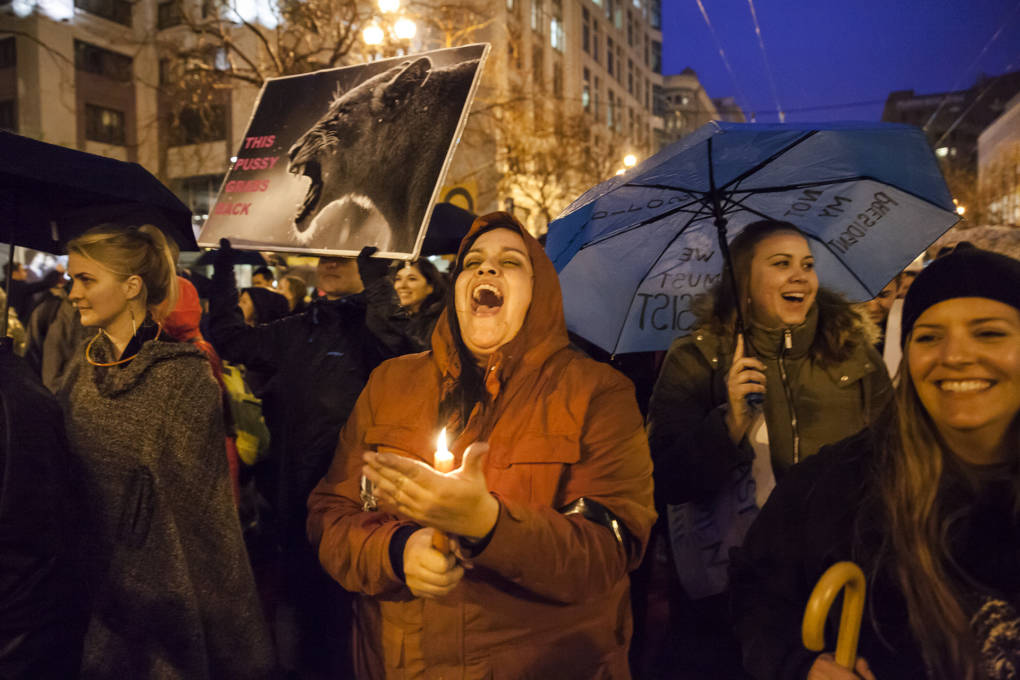
"caption": "Nicole Barnes (center) chants with other protesters as she carries a candle during the Women’s March in San Francisco on Jan. 21, 2017. “We are not invisible, and nobody is going to speak for us,” Barnes says. “We have a voice. We’ve had it the whole time.”",
"description": null,
"title": "womens-march-sf",
"credit": "Brittany Hosea-Small/KQED",
"status": "inherit",
"isLoading": false,
"fetchFailed": false
}
},
"audioPlayerReducer": {
"postId": "stream_live",
"isPaused": true,
"isPlaying": false,
"pfsActive": false,
"pledgeModalIsOpen": true,
"playerDrawerIsOpen": false,
"liveAudioPlayStartedAt": 0,
"liveAudioPlayContext": ""
},
"authorsReducer": {
"byline_news_11295142": {
"type": "authors",
"id": "byline_news_11295142",
"meta": {
"override": true
},
"slug": "byline_news_11295142",
"name": "\u003cstrong>\u003ca href=\"http://www.markfiore.com/\">Mark Fiore\u003c/a>\u003c/strong>",
"isLoading": false
},
"byline_news_11293550": {
"type": "authors",
"id": "byline_news_11293550",
"meta": {
"override": true
},
"slug": "byline_news_11293550",
"name": "\u003cstrong>Elizabeth Flock\u003c/strong>",
"isLoading": false
},
"byline_news_11293398": {
"type": "authors",
"id": "byline_news_11293398",
"meta": {
"override": true
},
"slug": "byline_news_11293398",
"name": "\u003cb> Jake Coyle \u003cbr> Associated Press \u003c/b>",
"isLoading": false
},
"byline_news_11289546": {
"type": "authors",
"id": "byline_news_11289546",
"meta": {
"override": true
},
"slug": "byline_news_11289546",
"name": "\u003cstrong>Cesar Saldana\u003c/strong>",
"isLoading": false
},
"byline_news_11287753": {
"type": "authors",
"id": "byline_news_11287753",
"meta": {
"override": true
},
"slug": "byline_news_11287753",
"name": "\u003cstrong>\u003ca href=\"http://missionlocal.org/author/laurawaxmann/\">Laura Waxmann\u003c/a>\u003cbr />Mission Local\u003c/strong>",
"isLoading": false
},
"byline_news_11285964": {
"type": "authors",
"id": "byline_news_11285964",
"meta": {
"override": true
},
"slug": "byline_news_11285964",
"name": "Richard Gonzales",
"isLoading": false
},
"shochman": {
"type": "authors",
"id": "87",
"meta": {
"index": "authors_1716337520",
"id": "87",
"found": true
},
"name": "Steve Hochman",
"firstName": "Steve",
"lastName": "Hochman",
"slug": "shochman",
"email": "sehochman@me.com",
"display_author_email": false,
"staff_mastheads": [],
"title": "KQED Contributor",
"bio": "Steve Hochman has covered popular, and unpopular, music for more than 30 years, most of that time as a key member of the \u003ci>Los Angeles Times\u003c/i>' music team. In that capacity he wrote about the full range of music and musicians, from Hungarian folk to industrial noise, and from 1991 through 2005 wrote the \u003ci>Times\u003c/i>' widely read weekly \"Pop Eye\" column. In addition to his role with \u003ci>The California Report\u003c/i>, he's a music critic for Pasadena station KPCC's morning magazine \u003ci>Take Two\u003c/i> and a regular contributor to Grammy.com, Fender.com and other outlets. His byline has appeared through the years in an array of major publications, including \u003ci>Rolling Stone\u003c/i>, \u003ci>Billboard\u003c/i> and \u003ci>Entertainment Weekly\u003c/i> and New Orleans' \u003ci>Offbeat\u003c/i>.",
"avatar": "https://secure.gravatar.com/avatar/37fbddee9db232a05a1be3b065171301e8baa142626c45b0caa6fc61c25a8c8d?s=600&d=blank&r=g",
"twitter": null,
"bluesky": null,
"facebook": null,
"instagram": null,
"linkedin": null,
"sites": [
{
"site": "arts",
"roles": [
"Contributor",
"subscriber"
]
},
{
"site": "news",
"roles": [
"subscriber"
]
}
],
"headData": {
"title": "Steve Hochman | KQED",
"description": "KQED Contributor",
"ogImgSrc": "https://secure.gravatar.com/avatar/37fbddee9db232a05a1be3b065171301e8baa142626c45b0caa6fc61c25a8c8d?s=600&d=blank&r=g",
"twImgSrc": "https://secure.gravatar.com/avatar/37fbddee9db232a05a1be3b065171301e8baa142626c45b0caa6fc61c25a8c8d?s=600&d=blank&r=g"
},
"isLoading": false,
"link": "/author/shochman"
},
"dclyde": {
"type": "authors",
"id": "104",
"meta": {
"index": "authors_1716337520",
"id": "104",
"found": true
},
"name": "Don Clyde",
"firstName": "Don",
"lastName": "Clyde",
"slug": "dclyde",
"email": "dclyde@kqed.org",
"display_author_email": false,
"staff_mastheads": [],
"title": "KQED Contributor",
"bio": "Don Clyde is an online producer, reporter and copy editor for KQED News. Before venturing into journalism, he worked as a medical device engineer and scientist for nearly a decade after earning a degree in physics from UC Berkeley. He loves travel, reading, living in Oakland, and most importantly, a good walk. Email him at dclyde@kqed.org or follow him @clydedon.",
"avatar": "https://secure.gravatar.com/avatar/decd3e640c3eedbd0a574275aebb2d19?s=600&d=blank&r=g",
"twitter": "clydedon",
"facebook": null,
"instagram": null,
"linkedin": null,
"sites": [
{
"site": "artschool",
"roles": [
"editor"
]
},
{
"site": "news",
"roles": [
"administrator"
]
},
{
"site": "futureofyou",
"roles": [
"editor"
]
},
{
"site": "about",
"roles": [
"editor"
]
},
{
"site": "mindshift",
"roles": [
"contributor"
]
},
{
"site": "bayareabites",
"roles": [
"contributor"
]
},
{
"site": "lowdown",
"roles": [
"editor"
]
},
{
"site": "stateofhealth",
"roles": [
"administrator"
]
},
{
"site": "spark",
"roles": [
"administrator"
]
},
{
"site": "trulyca",
"roles": [
"administrator"
]
},
{
"site": "imagemakers",
"roles": [
"administrator"
]
},
{
"site": "science",
"roles": []
},
{
"site": "education",
"roles": [
"editor"
]
},
{
"site": "quest",
"roles": [
"subscriber"
]
},
{
"site": "checkplease",
"roles": [
"subscriber"
]
},
{
"site": "forum",
"roles": [
"editor"
]
},
{
"site": "perspectives",
"roles": [
"editor"
]
}
],
"headData": {
"title": "Don Clyde | KQED",
"description": "KQED Contributor",
"ogImgSrc": "https://secure.gravatar.com/avatar/decd3e640c3eedbd0a574275aebb2d19?s=600&d=blank&r=g",
"twImgSrc": "https://secure.gravatar.com/avatar/decd3e640c3eedbd0a574275aebb2d19?s=600&d=blank&r=g"
},
"isLoading": false,
"link": "/author/dclyde"
},
"danbrekke": {
"type": "authors",
"id": "222",
"meta": {
"index": "authors_1716337520",
"id": "222",
"found": true
},
"name": "Dan Brekke",
"firstName": "Dan",
"lastName": "Brekke",
"slug": "danbrekke",
"email": "dbrekke@kqed.org",
"display_author_email": true,
"staff_mastheads": [
"news",
"science"
],
"title": "KQED Editor and Reporter",
"bio": "Dan Brekke is a reporter and editor for KQED News, responsible for coverage of topics ranging from California water issues to the Bay Area's transportation challenges. In a newsroom career that began in Chicago in 1972, Dan has worked for \u003cem>The San Francisco Examiner,\u003c/em> Wired and TechTV and has been published in The New York Times, The New York Times Magazine, Business 2.0, Salon and elsewhere.\r\n\r\nSince joining KQED in 2007, Dan has reported, edited and produced both radio and online features and breaking news pieces. He has shared as both editor and reporter in four Society of Professional Journalists Norcal Excellence in Journalism awards and one Edward R. Murrow regional award. He was chosen for a spring 2017 residency at the Mesa Refuge to advance his research on California salmon.\r\n\r\nEmail Dan at: \u003ca href=\"mailto:dbrekke@kqed.org\">dbrekke@kqed.org\u003c/a>\r\n\r\n\u003cstrong>Twitter:\u003c/strong> \u003ca href=\"https://twitter.com/danbrekke\" rel=\"noopener noreferrer\">twitter.com/danbrekke\u003c/a>\r\n\u003cstrong>Facebook:\u003c/strong> \u003ca href=\"https://www.facebook.com/danbrekke\" rel=\"noopener noreferrer\">www.facebook.com/danbrekke\u003c/a>\r\n\u003cstrong>LinkedIn:\u003c/strong> \u003ca href=\"https://www.linkedin.com/in/danbrekke\" rel=\"noopener noreferrer\">www.linkedin.com/in/danbrekke\u003c/a>",
"avatar": "https://secure.gravatar.com/avatar/8f1f0d2a978fb3b23426c922c7e2af558fa36905b49c4ce76a97dc3c72d27226?s=600&d=mm&r=g",
"twitter": "danbrekke",
"bluesky": null,
"facebook": null,
"instagram": "https://www.instagram.com/dan.brekke/",
"linkedin": "https://www.linkedin.com/in/danbrekke/",
"sites": [
{
"site": "news",
"roles": [
"administrator",
"create_posts"
]
},
{
"site": "stateofhealth",
"roles": [
"editor"
]
},
{
"site": "science",
"roles": [
"editor"
]
},
{
"site": "quest",
"roles": [
"contributor"
]
},
{
"site": "food",
"roles": [
"contributor"
]
},
{
"site": "forum",
"roles": [
"contributor"
]
},
{
"site": "elections",
"roles": [
"editor"
]
},
{
"site": "liveblog",
"roles": [
"editor"
]
}
],
"headData": {
"title": "Dan Brekke | KQED",
"description": "KQED Editor and Reporter",
"ogImgSrc": "https://secure.gravatar.com/avatar/8f1f0d2a978fb3b23426c922c7e2af558fa36905b49c4ce76a97dc3c72d27226?s=600&d=mm&r=g",
"twImgSrc": "https://secure.gravatar.com/avatar/8f1f0d2a978fb3b23426c922c7e2af558fa36905b49c4ce76a97dc3c72d27226?s=600&d=mm&r=g"
},
"isLoading": false,
"link": "/author/danbrekke"
},
"kqed": {
"type": "authors",
"id": "236",
"meta": {
"index": "authors_1716337520",
"id": "236",
"found": true
},
"name": "KQED News Staff",
"firstName": "KQED News Staff",
"lastName": null,
"slug": "kqed",
"email": "faq@kqed.org",
"display_author_email": false,
"staff_mastheads": [],
"title": null,
"bio": null,
"avatar": "https://secure.gravatar.com/avatar/ef0e801a68c4c54afa9180db14084167?s=600&d=blank&r=g",
"twitter": null,
"facebook": null,
"instagram": null,
"linkedin": null,
"sites": [
{
"site": "arts",
"roles": [
"contributor"
]
},
{
"site": "news",
"roles": [
"editor"
]
},
{
"site": "futureofyou",
"roles": [
"author"
]
}
],
"headData": {
"title": "KQED News Staff | KQED",
"description": null,
"ogImgSrc": "https://secure.gravatar.com/avatar/ef0e801a68c4c54afa9180db14084167?s=600&d=blank&r=g",
"twImgSrc": "https://secure.gravatar.com/avatar/ef0e801a68c4c54afa9180db14084167?s=600&d=blank&r=g"
},
"isLoading": false,
"link": "/author/kqed"
},
"sasha-khokha": {
"type": "authors",
"id": "254",
"meta": {
"index": "authors_1716337520",
"id": "254",
"found": true
},
"name": "Sasha Khokha",
"firstName": "Sasha",
"lastName": "Khokha",
"slug": "sasha-khokha",
"email": "skhokha@kqed.org",
"display_author_email": true,
"staff_mastheads": [
"news"
],
"title": "Host, The California Report Magazine",
"bio": "Sasha Khokha is the host of \u003cem>The California Report's \u003c/em> weekly magazine program, which takes listeners on sound-rich excursions to meet the people that make the Golden State unique -- through audio documentaries and long-form stories. As \u003cem>The California Report's\u003c/em> Central Valley Bureau Chief based in Fresno for nearly a dozen years, Sasha brought the lives and concerns of rural Californians to listeners around the state. Her reporting helped expose the hidden price immigrant women janitors and farmworkers may pay to keep their jobs: sexual assault at work. It inspired two new California laws to protect them from sexual harassment. She was a key member of the reporting team for the Frontline film \u003cem>Rape on the Night Shift, \u003c/em>which was nominated for two national Emmys. Sasha has also won a national Edward R. Murrow and a national PRNDI award for investigative reporting, as well as multiple prizes from the Society for Professional Journalists. Sasha is a proud alum of the UC Berkeley Graduate School of Journalism and Brown University and a member of the South Asian Journalists Association.",
"avatar": "https://secure.gravatar.com/avatar/e4b5e1541aaeea2aa356aa1fb2a68950?s=600&d=blank&r=g",
"twitter": "KQEDSashaKhokha",
"facebook": null,
"instagram": null,
"linkedin": null,
"sites": [
{
"site": "news",
"roles": [
"editor"
]
},
{
"site": "stateofhealth",
"roles": [
"author"
]
},
{
"site": "science",
"roles": [
"author"
]
},
{
"site": "quest",
"roles": [
"subscriber"
]
}
],
"headData": {
"title": "Sasha Khokha | KQED",
"description": "Host, The California Report Magazine",
"ogImgSrc": "https://secure.gravatar.com/avatar/e4b5e1541aaeea2aa356aa1fb2a68950?s=600&d=blank&r=g",
"twImgSrc": "https://secure.gravatar.com/avatar/e4b5e1541aaeea2aa356aa1fb2a68950?s=600&d=blank&r=g"
},
"isLoading": false,
"link": "/author/sasha-khokha"
},
"zstavely": {
"type": "authors",
"id": "3225",
"meta": {
"index": "authors_1716337520",
"id": "3225",
"found": true
},
"name": "Zaidee Stavely",
"firstName": "Zaidee",
"lastName": "Stavely",
"slug": "zstavely",
"email": "zstavely@gmail.com",
"display_author_email": false,
"staff_mastheads": [],
"title": "KQED Contributor",
"bio": "Zaidee Stavely is an award-winning reporter who writes about race, equity, immigration, and education.",
"avatar": "https://secure.gravatar.com/avatar/5154b3ee56a721c916ca429372ae629c?s=600&d=blank&r=g",
"twitter": null,
"facebook": null,
"instagram": null,
"linkedin": null,
"sites": [
{
"site": "news",
"roles": [
"subscriber"
]
},
{
"site": "mindshift",
"roles": [
"contributor"
]
}
],
"headData": {
"title": "Zaidee Stavely | KQED",
"description": "KQED Contributor",
"ogImgSrc": "https://secure.gravatar.com/avatar/5154b3ee56a721c916ca429372ae629c?s=600&d=blank&r=g",
"twImgSrc": "https://secure.gravatar.com/avatar/5154b3ee56a721c916ca429372ae629c?s=600&d=blank&r=g"
},
"isLoading": false,
"link": "/author/zstavely"
},
"lmorehouse": {
"type": "authors",
"id": "3229",
"meta": {
"index": "authors_1716337520",
"id": "3229",
"found": true
},
"name": "Lisa Morehouse",
"firstName": "Lisa",
"lastName": "Morehouse",
"slug": "lmorehouse",
"email": "morehouse.lisa@gmail.com",
"display_author_email": false,
"staff_mastheads": [],
"title": "KQED Contributor",
"bio": "Lisa Morehouse is an award-winning public radio and print journalist, who has filed for National Public Radio, American Public Media, KQED Public Radio, Edutopia, and McSweeney’s. Her reporting has taken her from Samoan traveling circuses to Mississippi Delta classrooms to the homes of Lao refugees in rural Iowa. In addition to reporting, she teaches radio production to at-risk youth in the Bay Area. Her series \u003ca href=\"http://afterthegoldrushradio.com/\">After the Gold Rush\u003c/a> featured the changing industries, populations and identities of rural towns throughout California. She’s now producing \u003ca href=\"http://www.californiafoodways.com/\">California Foodways\u003c/a>, a series exploring the intersections of food, culture, economics, history and labor. Follow along on the \u003ca href=\"https://www.facebook.com/californiafoodways?ref=hl\">Facebook page\u003c/a> or on Twitter @cafoodways.",
"avatar": "https://secure.gravatar.com/avatar/dae74b002a6e256f39abb19d6f5acaea?s=600&d=blank&r=g",
"twitter": null,
"facebook": null,
"instagram": null,
"linkedin": null,
"sites": [
{
"site": "",
"roles": [
"editor"
]
},
{
"site": "news",
"roles": [
"author"
]
}
],
"headData": {
"title": "Lisa Morehouse | KQED",
"description": "KQED Contributor",
"ogImgSrc": "https://secure.gravatar.com/avatar/dae74b002a6e256f39abb19d6f5acaea?s=600&d=blank&r=g",
"twImgSrc": "https://secure.gravatar.com/avatar/dae74b002a6e256f39abb19d6f5acaea?s=600&d=blank&r=g"
},
"isLoading": false,
"link": "/author/lmorehouse"
}
},
"pagesReducer": {
"news_category_arts-and-culture": {
"type": "terms",
"id": "news_223",
"meta": {
"index": "terms_1716263798",
"site": "news",
"id": "223",
"score": 11.242424
},
"featImg": null,
"name": "Arts and Culture",
"description": null,
"taxonomy": "category",
"headData": {
"twImgId": null,
"twTitle": null,
"ogTitle": null,
"ogImgId": null,
"twDescription": null,
"description": null,
"title": "Arts and Culture Archives | KQED News",
"ogDescription": null
},
"ttid": 231,
"slug": "arts-and-culture",
"isLoading": false,
"title": "Arts and Culture",
"pageMeta": {
"site": "news",
"WpPageTemplate": "page-topic-editorial",
"currentPage": 103
},
"blocks": [
{
"blockName": "kqed/post-list",
"attrs": {
"layout": "cardArticle2",
"query": "posts/news?category=arts-and-culture",
"seeMore": false,
"paginated": true,
"page": 103
}
},
{
"blockName": "kqed/ad"
}
]
}
},
"pfsSessionReducer": {},
"postsReducer": {
"stream_live": {
"type": "live",
"id": "stream_live",
"audioUrl": "https://streams.kqed.org/kqedradio",
"title": "Live Stream",
"excerpt": "Live Stream information currently unavailable.",
"link": "/radio",
"featImg": "",
"label": {
"name": "KQED Live",
"link": "/"
}
},
"stream_kqedNewscast": {
"type": "posts",
"id": "stream_kqedNewscast",
"audioUrl": "https://www.kqed.org/.stream/anon/radio/RDnews/newscast.mp3?_=1",
"title": "KQED Newscast",
"featImg": "",
"label": {
"name": "88.5 FM",
"link": "/"
}
},
"news_11306252": {
"type": "posts",
"id": "news_11306252",
"meta": {
"index": "posts_1716263798",
"site": "news",
"id": "11306252",
"score": null,
"sort": [
1486801824000
]
},
"parent": 0,
"labelTerm": {
"site": "news",
"term": 72
},
"blocks": [],
"publishDate": 1486801824,
"format": "audio",
"disqusTitle": "75 Years Later, Japanese-Americans Recall Incarceration, Forced Farm Labor",
"title": "75 Years Later, Japanese-Americans Recall Incarceration, Forced Farm Labor",
"headTitle": "California Foodways | The California Report | KQED News",
"content": "\u003cp>When President Trump signed an executive order last month banning people from seven predominantly Muslim countries from entering the U.S. and advocated for a Muslim registry, some of the loudest opponents were Japanese-Americans.\u003c/p>\n\u003cp>They have long memories of another executive order, No. 9066, that forced all Japanese-Americans on the West Coast from their homes and businesses during World War II. In 1942, almost 120,000 people of Japanese ancestry, most of them American citizens and farmers, were incarcerated in what were euphemistically called “relocation” or “\u003ca href=\"http://digitalcommons.law.seattleu.edu/sjsj/vol14/iss3/12/\">internment\u003c/a>” camps.\u003c/p>\n\u003caside class=\"pullquote alignright\">'You were more number than name.'\u003ccite>Riichi Fuwa\u003c/cite>\u003c/aside>\n\u003cp>Last summer, I got on a bus in San Francisco’s Japantown, joining a four-day \u003ca href=\"http://www.tulelake.org/\">pilgrimage \u003c/a>to one of these camps -- the former \u003ca href=\"https://www.nps.gov/tule/index.htm\">Tule Lake Segregation Center\u003c/a>, just south of the Oregon border in Modoc County.\u003c/p>\n\u003cp>Out the bus window, I saw the sparsely populated Tule Lake Basin, alternating between well-irrigated farm fields, dusty land and the occasional dramatic rock outcropping. On the bus, survivors of camps like Tule Lake and their children and grandchildren passed a microphone around. They introduced themselves and shared why they were making the trip: trying to make sense of an experience their families rarely talk about, making connections with others with a common history, visiting the place of their birth.\u003c/p>\n\u003cfigure id=\"attachment_11310862\" class=\"wp-caption aligncenter\" style=\"max-width: 800px\">\u003cimg class=\"size-medium wp-image-11310862\" src=\"https://ww2.kqed.org/news/wp-content/uploads/sites/10/2017/02/TuleBasin-800x533.jpg\" alt=\"The Segregation Center was located in the Tule Lake Basin, where irrigated fields still butt up against dusty land, interrupted by scrub brush and dramatic outcroppings.\" width=\"800\" height=\"533\" srcset=\"https://ww2.kqed.org/app/uploads/sites/10/2017/02/TuleBasin-800x533.jpg 800w, https://ww2.kqed.org/app/uploads/sites/10/2017/02/TuleBasin-160x107.jpg 160w, https://ww2.kqed.org/app/uploads/sites/10/2017/02/TuleBasin-1020x680.jpg 1020w, https://ww2.kqed.org/app/uploads/sites/10/2017/02/TuleBasin.jpg 1920w, https://ww2.kqed.org/app/uploads/sites/10/2017/02/TuleBasin-1180x787.jpg 1180w, https://ww2.kqed.org/app/uploads/sites/10/2017/02/TuleBasin-960x640.jpg 960w, https://ww2.kqed.org/app/uploads/sites/10/2017/02/TuleBasin-240x160.jpg 240w, https://ww2.kqed.org/app/uploads/sites/10/2017/02/TuleBasin-375x250.jpg 375w, https://ww2.kqed.org/app/uploads/sites/10/2017/02/TuleBasin-520x347.jpg 520w\" sizes=\"(max-width: 800px) 100vw, 800px\">\u003cfigcaption class=\"wp-caption-text\">The Segregation Center was located in the Tule Lake Basin, where irrigated fields still butt up against dusty land, interrupted by scrub brush and dramatic outcroppings. \u003ccite>(Courtesy Gen Fujitani)\u003c/cite>\u003c/figcaption>\u003c/figure>\n\u003cp>These kinds of introductions were taking place on other buses, too, traveling from San Jose, Union City, Seattle and Portland. Over 450 people converged for this pilgrimage that takes place every other year.\u003c/p>\n\u003cp>[ad fullwidth]\u003c/p>\n\u003cp>When we arrived at the nearby Oregon Institute of Technology that would be our base for the visit, one of the first people I met was Sacramento resident Riichi Fuwa.\u003c/p>\n\u003cp>\"I wanted to see the place for the last time,\" he told me. Fuwa, 98, doesn’t think he'll make this trip again, but his memories of being imprisoned at Tule Lake are crystal clear. At his age he doesn’t remember his Social Security number, but he remembers this: “19949. That was my number the government gave me,” he said. “19949. You were more number than name.”\u003c/p>\n\u003cp>Camp administrators assigned Fuwa that number when he was 24, soon after he was forced off his family’s farm in Bellingham, Washington. Before the war, nearly \u003ca href=\"https://www.archives.gov/files/research/japanese-americans/justice-denied/chapter-4.pdf\">two-thirds\u003c/a> of West Coast Japanese-Americans worked in agriculture, people like 93-year-old Jim Tanimoto, from the Sacramento Valley town of Gridley. His father grew rice, then cultivated peaches.\u003c/p>\n\u003cfigure id=\"attachment_11310866\" class=\"wp-caption aligncenter\" style=\"max-width: 800px\">\u003cimg class=\"wp-image-11310866 size-medium\" src=\"https://ww2.kqed.org/news/wp-content/uploads/sites/10/2017/02/Fuwa-800x579.jpg\" alt=\"Riichi Fuwa, 98, drove a tractor on the farm at the Tule Lake Segregation Center. Of his time there, he recalls 'You were more number than name.'\" width=\"800\" height=\"579\" srcset=\"https://ww2.kqed.org/app/uploads/sites/10/2017/02/Fuwa-800x579.jpg 800w, https://ww2.kqed.org/app/uploads/sites/10/2017/02/Fuwa-160x116.jpg 160w, https://ww2.kqed.org/app/uploads/sites/10/2017/02/Fuwa-1020x738.jpg 1020w, https://ww2.kqed.org/app/uploads/sites/10/2017/02/Fuwa.jpg 1920w, https://ww2.kqed.org/app/uploads/sites/10/2017/02/Fuwa-1180x854.jpg 1180w, https://ww2.kqed.org/app/uploads/sites/10/2017/02/Fuwa-960x695.jpg 960w, https://ww2.kqed.org/app/uploads/sites/10/2017/02/Fuwa-240x174.jpg 240w, https://ww2.kqed.org/app/uploads/sites/10/2017/02/Fuwa-375x271.jpg 375w, https://ww2.kqed.org/app/uploads/sites/10/2017/02/Fuwa-520x376.jpg 520w\" sizes=\"(max-width: 800px) 100vw, 800px\">\u003cfigcaption class=\"wp-caption-text\">Riichi Fuwa, 98, drove a tractor on the farm at the Tule Lake Segregation Center. Of his time there, he recalls, \"You were more number than name.\" \u003ccite>(Lisa Morehouse/KQED)\u003c/cite>\u003c/figcaption>\u003c/figure>\n\u003cp>Tanimoto and Fuwa’s immigrant parents faced \u003ca href=\"http://scholarship.law.berkeley.edu/cgi/viewcontent.cgi?article=3652&context=californialawreview\">laws\u003c/a> barring them from owning or holding long-term leases on land. Despite that, by 1940 they and their American-born children grew almost 40 percent of the produce in California.\u003c/p>\n\u003cp>Then, on Dec. 7, 1941, the Japanese military bombed Pearl Harbor. Resentment and hysteria grew about anyone of Japanese origin, even those born in the United States. Tanimoto remembered, “Then Executive Order 9066 was signed. Things changed.”\u003c/p>\n\u003cp>On February 19, 1942, when President Franklin Roosevelt signed the executive order authorizing the removal of anyone of Japanese ancestry from military areas, Japanese-Americans could read between the lines. Soon, the commanding general determined that all people of Japanese origin -- whether immigrant or U.S.-born citizen -- in coastal areas had to move inland onto so-called relocation camps. Many had to abandon their orchards and fields, with crops ready to harvest.\u003c/p>\n\u003cp>“When I stepped out of the train, the terrain was not a big shock,” Tanimoto said. “I knew what the terrain looked like.”\u003c/p>\n\u003cp>That’s because, when he was younger, Tanimoto had hunted deer up in the Tule Lake Basin, where all he could see was dusty land and scrub brush. In 1942, when Tanimoto and the 15,000 other forcibly evacuated Japanese-Americans arrived at Tule Lake, they saw a landscape dominated by barracks covered in black tar paper.\u003c/p>\n\u003cp>“Rows and rows and rows of these buildings,” said Tanimoto. “We were inside the barbed wire fence, the armed guard towers. We couldn’t walk out of the enclosure. I might get shot.” He remembered thinking, “Hey, I’m an American citizen! Now I’m the one being hunted.”\u003c/p>\n\u003cp>Tanimoto and many other once-successful farm owners were about to become field workers for the U.S. government.\u003c/p>\n\u003ch2>Government Farmworkers\u003c/h2>\n\u003cp>The guard towers and rows of barracks have long since been torn down or moved. Our guide on the pilgrimage points out the few remaining buildings, and the huge swaths of farmland once worked by Tule Lake prisoners. Over 1,000 Japanese-Americans worked in the fields, most earning just $12 a month, a quarter of what farmworkers made at the time.\u003c/p>\n\u003cfigure id=\"attachment_11310868\" class=\"wp-caption aligncenter\" style=\"max-width: 800px\">\u003cimg class=\"size-medium wp-image-11310868\" src=\"https://ww2.kqed.org/news/wp-content/uploads/sites/10/2017/02/WomenFarmworkers-800x667.jpg\" alt=\"Many of the Japanese-Americans incarcerated at Tule Lake had been farmers before the war. At camp, they were employed as field workers, often for just $12 a month.\" width=\"800\" height=\"667\" srcset=\"https://ww2.kqed.org/app/uploads/sites/10/2017/02/WomenFarmworkers-800x667.jpg 800w, https://ww2.kqed.org/app/uploads/sites/10/2017/02/WomenFarmworkers-160x133.jpg 160w, https://ww2.kqed.org/app/uploads/sites/10/2017/02/WomenFarmworkers-1020x851.jpg 1020w, https://ww2.kqed.org/app/uploads/sites/10/2017/02/WomenFarmworkers.jpg 1920w, https://ww2.kqed.org/app/uploads/sites/10/2017/02/WomenFarmworkers-1180x984.jpg 1180w, https://ww2.kqed.org/app/uploads/sites/10/2017/02/WomenFarmworkers-960x801.jpg 960w, https://ww2.kqed.org/app/uploads/sites/10/2017/02/WomenFarmworkers-240x200.jpg 240w, https://ww2.kqed.org/app/uploads/sites/10/2017/02/WomenFarmworkers-375x313.jpg 375w, https://ww2.kqed.org/app/uploads/sites/10/2017/02/WomenFarmworkers-520x434.jpg 520w\" sizes=\"(max-width: 800px) 100vw, 800px\">\u003cfigcaption class=\"wp-caption-text\">Many of the Japanese-Americans incarcerated at Tule Lake had been farmers before the war. At camp, they were employed as field workers, often for just $12 a month. \u003ccite>(Densho: The Japanese American Legacy Project via National Archives and Records Administration Collection)\u003c/cite>\u003c/figcaption>\u003c/figure>\n\u003cp>Agriculture wasn’t incidental at any of the incarceration camps. Many of the new War Relocation Authority administrators came right from the Department of Agriculture. Camp locations, though usually in deserts and other inhospitable places, were often chosen for their existing government irrigation projects or agricultural potential. The government’s intention was to improve the land for after the war.\u003c/p>\n\u003cp>Each of the 10 incarceration camps nationwide had working farms, but Tule Lake was different. The land was on a former lakebed, so despite a dusty, snowy and windy climate and a short growing season, it produced enough food for its own mess halls and those at other camps. That production was so essential that when the Tule Lake camp opened, eligible men who refused to work were fined $20 a month.\u003c/p>\n\u003cp>Farmworkers at Tule Lake harvested almost 30 crops, including potatoes, rutabagas and daikon radishes. They also grew grain and hay for animal feed, and kept hogs and chickens.\u003c/p>\n\u003cfigure id=\"attachment_11310871\" class=\"wp-caption aligncenter\" style=\"max-width: 800px\">\u003cimg class=\"wp-image-11310871 size-medium\" src=\"https://ww2.kqed.org/news/wp-content/uploads/sites/10/2017/02/IncarcPotatos-800x731.jpg\" alt=\"Japanese-Americans cut seed potatoes at the Tule Lake farm. The original War Relocation Authority caption for this May, 1943 image read, '7,500 sacks of potatoes will be cut by 48 workers in 2-1/2 weeks. This will be enough seeds to plant the 600 acres.'\" width=\"800\" height=\"731\" srcset=\"https://ww2.kqed.org/app/uploads/sites/10/2017/02/IncarcPotatos-800x731.jpg 800w, https://ww2.kqed.org/app/uploads/sites/10/2017/02/IncarcPotatos-160x146.jpg 160w, https://ww2.kqed.org/app/uploads/sites/10/2017/02/IncarcPotatos-1020x932.jpg 1020w, https://ww2.kqed.org/app/uploads/sites/10/2017/02/IncarcPotatos.jpg 1920w, https://ww2.kqed.org/app/uploads/sites/10/2017/02/IncarcPotatos-1180x1079.jpg 1180w, https://ww2.kqed.org/app/uploads/sites/10/2017/02/IncarcPotatos-960x878.jpg 960w, https://ww2.kqed.org/app/uploads/sites/10/2017/02/IncarcPotatos-240x219.jpg 240w, https://ww2.kqed.org/app/uploads/sites/10/2017/02/IncarcPotatos-375x343.jpg 375w, https://ww2.kqed.org/app/uploads/sites/10/2017/02/IncarcPotatos-520x475.jpg 520w\" sizes=\"(max-width: 800px) 100vw, 800px\">\u003cfigcaption class=\"wp-caption-text\">Japanese-Americans cut seed potatoes at the Tule Lake farm. The original War Relocation Authority caption for this May, 1943, image read, \"7,500 sacks of potatoes will be cut by 48 workers in 2-1/2 weeks. This will be enough seeds to plant the 600 acres.\" \u003ccite>(Densho: The Japanese American Legacy Project via National Archives and Records Administration Collection)\u003c/cite>\u003c/figcaption>\u003c/figure>\n\u003cp>Before the war, Lucille Hitomi’s father ran a commercial flower business in Mountain View. At Tule Lake, he worked the fields, under white supervisors.\u003c/p>\n\u003cp>“I remember my dad saying, ‘I don’t know if they were good farmers,’ ” she said, but those bosses relied on the expertise of the Japanese-American laborers to develop a productive farm. To keep some semblance of normalcy, families like Hitomi’s tried to create special meals. It helped that her brother worked at the camp slaughterhouse.\u003c/p>\n\u003cp>“I don’t know if this was legal,” Hitomi remembered, “but sometimes he would bring bits of meat home. My mother brought to camp a hot plate and a frying pan, and she’d cook the meat in the barrack,” instead of joining hundreds of others in the mess hall. “I guess it was more like home,” Hitomi said.\u003c/p>\n\u003cp>The stated purpose of these farms was to feed incarcerees, but camp administrators took produce, grain and hay grown by these imprisoned Japanese-American workers and sold it on the\u003ca href=\"http://archive.densho.org/Resource/popupenlarged.aspx?i=denshopd-i65-00334\"> open market\u003c/a> -- over 2 million pounds of it from Tule Lake alone.\u003c/p>\n\u003ch2>Loyalty Questioned\u003c/h2>\n\u003cp>One year after ordering Japanese-Americans out of their homes, the government made every adult in every camp fill out a questionnaire.\u003c/p>\n\u003cp>“This outrageous questionnaire was used to separate the so-called loyal people from the disloyal,” said writer and historian Barbara Takei, who also attended the pilgrimage.\u003c/p>\n\u003cp>Jim Tanimoto remembers that two questions caused the most confusion and anger: number 27 asked a person’s willingness to join the armed forces -- this, after being incarcerated.\u003c/p>\n\u003cp>\"And number 28 was sort of like a trick question, 'Would you cut your ties with Japan and the emperor?' \" he said.\u003c/p>\n\u003cp>\"Well, I’m an American citizen and a Gridley farmboy. I have no ties with Japan or the emperor, so how was I supposed to answer this question?” If he had no ties to begin with, he couldn’t answer “yes” and cut them, but if he answered “no,” the U.S. government would assume he was disloyal.\u003c/p>\n\u003cfigure id=\"attachment_11310858\" class=\"wp-caption aligncenter\" style=\"max-width: 800px\">\u003cimg class=\"size-medium wp-image-11310858\" src=\"https://ww2.kqed.org/news/wp-content/uploads/sites/10/2017/02/Tanimoto-800x488.jpg\" alt=\"Jim Tanimoto worked on the freight crew, packing and shipping out produce from the Tule Lake farm. Along with many others, he refused to sign the infamous “loyalty questionnaire.” He was jailed in a nearby town, and at this former Civilian Conservation Corps camp. He says, “I stood on my constitutional rights. You can’t do this to American citizens.”\" width=\"800\" height=\"488\" srcset=\"https://ww2.kqed.org/app/uploads/sites/10/2017/02/Tanimoto-800x488.jpg 800w, https://ww2.kqed.org/app/uploads/sites/10/2017/02/Tanimoto-160x98.jpg 160w, https://ww2.kqed.org/app/uploads/sites/10/2017/02/Tanimoto-1020x622.jpg 1020w, https://ww2.kqed.org/app/uploads/sites/10/2017/02/Tanimoto.jpg 1920w, https://ww2.kqed.org/app/uploads/sites/10/2017/02/Tanimoto-1180x720.jpg 1180w, https://ww2.kqed.org/app/uploads/sites/10/2017/02/Tanimoto-960x586.jpg 960w, https://ww2.kqed.org/app/uploads/sites/10/2017/02/Tanimoto-240x146.jpg 240w, https://ww2.kqed.org/app/uploads/sites/10/2017/02/Tanimoto-375x229.jpg 375w, https://ww2.kqed.org/app/uploads/sites/10/2017/02/Tanimoto-520x317.jpg 520w\" sizes=\"(max-width: 800px) 100vw, 800px\">\u003cfigcaption class=\"wp-caption-text\">Jim Tanimoto worked on the freight crew, packing and shipping out produce from the Tule Lake farm. Along with many others, he refused to sign the infamous “loyalty questionnaire.” He was jailed in a nearby town, and at this former Civilian Conservation Corps camp. He says, “I stood on my constitutional rights. You can’t do this to American citizens.” \u003ccite>(Courtesy Gen Fujitani)\u003c/cite>\u003c/figcaption>\u003c/figure>\n\u003cp>Tanimoto and all of the other young men in Block 42, his area of the Tule Lake camp, refused to answer. They were arrested and jailed in nearby towns, then at a former Civilian Conservation Corps camp nearby.\u003c/p>\n\u003cp>“I stood on my constitutional rights” Tanimoto said. “You can’t do this to American citizens.”\u003c/p>\n\u003cp>More people at Tule Lake refused to answer these questions, or answered \"no\" to one or both, than at any other camp. Additional fences and guard towers went up, and anyone in the whole camp system who didn’t answer \"yes\" to both questions was labeled “disloyal” and was sent to the renamed Tule Lake Segregation Center. This was in the 1940s, two decades before the civil rights movement.\u003c/p>\n\u003cp>“Now, post-civil rights movement, we realize that the right to protest is a precious American right,” Takei said. “It was something that the people who were imprisoned in Tule Lake exercised, and because of that they were punished.”\u003c/p>\n\u003ch2>Largest ‘City’ in Region\u003c/h2>\n\u003cp>By fall 1943, the Tule Lake Segregation Center became the largest “city” in California north of Sacramento, ballooning to nearly 19,000 people, most of them labeled \"troublemakers.\" Camp got tense. With a larger workforce, the administrators expanded the farm and expected a huge harvest -- but laborers complained of poor food rations and major safety concerns.\u003c/p>\n\u003cp>Then, a truck carrying Japanese-American laborers from the farm had an accident. Nearly 30 workers were injured. One died. Farmworkers refused to go back to work.\u003c/p>\n\u003cp>“They recognized that they had leverage by having the strike right when the crops are ready to pick,” Takei explained. The camp director turned around and brought in Japanese-Americans from other incarceration camps to break the strike.\u003c/p>\n\u003cp>“These strikebreakers were also paid $1 an hour, so in two days they could make more than a farmworker at Tule Lake would make in a month,” Takei said.\u003c/p>\n\u003cfigure id=\"attachment_11310951\" class=\"wp-caption aligncenter\" style=\"max-width: 800px\">\u003cimg class=\"size-medium wp-image-11310951\" src=\"https://ww2.kqed.org/news/wp-content/uploads/sites/10/2017/02/FieldworkTule-800x549.jpg\" alt=\"Many of the Japanese-Americans incarcerated at Tule Lake had been farmers before the war. At camp, they were employed as field workers, often for $12 a month. Here, incarcerees work in a carrot field.\" width=\"800\" height=\"549\" srcset=\"https://ww2.kqed.org/app/uploads/sites/10/2017/02/FieldworkTule-800x549.jpg 800w, https://ww2.kqed.org/app/uploads/sites/10/2017/02/FieldworkTule-160x110.jpg 160w, https://ww2.kqed.org/app/uploads/sites/10/2017/02/FieldworkTule-1020x700.jpg 1020w, https://ww2.kqed.org/app/uploads/sites/10/2017/02/FieldworkTule.jpg 1920w, https://ww2.kqed.org/app/uploads/sites/10/2017/02/FieldworkTule-1180x809.jpg 1180w, https://ww2.kqed.org/app/uploads/sites/10/2017/02/FieldworkTule-960x659.jpg 960w, https://ww2.kqed.org/app/uploads/sites/10/2017/02/FieldworkTule-240x165.jpg 240w, https://ww2.kqed.org/app/uploads/sites/10/2017/02/FieldworkTule-375x257.jpg 375w, https://ww2.kqed.org/app/uploads/sites/10/2017/02/FieldworkTule-520x357.jpg 520w\" sizes=\"(max-width: 800px) 100vw, 800px\">\u003cfigcaption class=\"wp-caption-text\">Many of the Japanese-Americans incarcerated at Tule Lake had been farmers before the war. At camp, they were employed as field workers, often for $12 a month. Here, incarcerees work in a carrot field. \u003ccite>(National Archives and Records Administration Collection/Densho: The Japanese American Legacy Project)\u003c/cite>\u003c/figcaption>\u003c/figure>\n\u003cp>Camp administrators would simply not let the fields go unharvested. A few days later, Takei explained, the Tule Lake laborers became even angrier.\u003c/p>\n\u003cp>“Workers saw a truck leaving the warehouse area filled with food,” ostensibly to feed the strikebreakers. About 200 people surrounded the truck.\u003c/p>\n\u003cp>“And that's what caused the camp director to call in a battalion, with the tanks rolling in, and the camp was shut down,” said Takei.\u003c/p>\n\u003cp>Japanese-American leaders were thrown in a stockade, with no legal recourse. Within days, martial law was declared.\u003c/p>\n\u003cp>This marked the end of large-scale farming, and the beginning of two tumultuous years at Tule Lake. The military raided barracks, and hundreds of people ended up in the stockade, then a jail, for months. There were more protests. A radical faction grew in camp, and eventually thousands of angry, scared or confused Japanese-Americans imprisoned at Tule Lake renounced their U.S. citizenship -- actions many felt were made under duress, and which took 20 years to reverse.\u003c/p>\n\u003cp>[contextly_sidebar id=\"yNayDmmS2vP0klPq3nGpyhkInMNtuYii\"]\u003c/p>\n\u003cp>The Tule Lake Segregation Center closed in the spring of 1946, six months after the war ended. What remained were empty barracks that once housed families, and thousands of acres of rich farmland. Ninety-eight-year-old Riichi Fuwa remembered that the land he and other Japanese-Americans improved got parceled off to veterans returning from war.\u003c/p>\n\u003cp>“When the soldiers came back and they wanted to farm, they could homestead that place,” he said.\u003c/p>\n\u003cp>I asked him, jokingly, if he was offered that land. Fuwa just laughed.\u003c/p>\n\u003cp>Some former incarcerees returned home and eventually rebuilt successful farm businesses. Not Fuwa. His farm was overgrown, all the equipment stolen.\u003c/p>\n\u003cp>“There’s no way to express that feeling when you see the place like that,” he said.\u003c/p>\n\u003cp>He soon left farming forever. By 1960, the number of Japanese-American farmers dropped to a quarter of their prewar presence. With lost farms, homes and businesses, it’s estimated that wartime incarceration cost Japanese-Americans up to $4 billion in today’s values. Some of those losses were compensated in 1988, when President Ronald Reagan signed redress legislation offering a formal apology and giving $20,000 to each survivor.\u003c/p>\n\u003cp>The non-economic losses -- to Japanese-Americans, to California, to the whole country -- are impossible to measure.\u003c/p>\n\u003cp>Especially now, Takei said, we must remember “how easily people -- because of fear and anger -- lose sight of our important national values of justice and rule of law.\" She drew parallels with Muslim Americans, refugees and immigrants, \"as though demonizing other people is going to solve our problems.\"\u003c/p>\n\u003cp>All we have to do, she said, is look at the World War II incarceration of Japanese-Americans to see that’s not true.\u003c/p>\n\u003cp>\u003cem>Editor's Note: This story has been updated to reflect the accurate amount of produce grown at Tule Lake that was sold on the open market. It was over 2 million pounds, not 2 million tons as previously stated.\u003cbr>\n\u003c/em>\u003cbr>\n\u003cem>This story was produced in collaboration with the \u003ca href=\"https://thefern.org/\">Food & Environment Reporting Network\u003c/a>, a nonprofit investigative news organization. Meradith Hoddinott helped with research.\u003cbr>\n\u003c/em>\u003c/p>\n\u003cp>[ad floatright]\u003c/p>\n\u003cp>\u003cem>For more on the Tule Lake story, please visit \u003ca href=\"http://www.tulelake.org/\">Tule Lake Committee\u003c/a>, \u003ca href=\"http://www.lifeorliberty.org/tule-lake-documentary\">Resistance at Tule Lake\u003c/a>,\u003ca href=\"http://janmstore.com/products/tule-lake-revisited\"> Tule Lake Revisited\u003c/a>, \u003ca href=\"http://www.densho.org/\">Densho: The Japanese American Legacy Project\u003c/a>, and the work of \u003ca href=\"https://www.cwu.edu/geography/geography-japanese-american-relocation-centers\">Dr. Karl Lillquist\u003c/a> and \u003ca href=\"http://pdxscholar.library.pdx.edu/open_access_etds/2934/\">Michael David Schmidli\u003c/a>. For more stories in the series, visit \u003ca href=\"http://www.californiafoodways.com/\">California Foodways\u003c/a>.\u003c/em>\u003c/p>\n\n",
"disqusIdentifier": "11306252 https://ww2.kqed.org/news/?p=11306252",
"disqusUrl": "https://ww2.kqed.org/news/2017/02/11/japanese-americans-recall-wartime-incarceration-forced-farm-labor/",
"stats": {
"hasVideo": false,
"hasChartOrMap": false,
"hasAudio": false,
"hasPolis": false,
"wordCount": 2516,
"hasGoogleForm": false,
"hasGallery": false,
"hasHearkenModule": false,
"iframeSrcs": [],
"paragraphCount": 55
},
"modified": 1488228056,
"excerpt": "They were already growing almost 40 percent of California’s produce by 1940, despite laws barring them from owning land. Then they were forced into field work at an internment camp, earning just $12 a month.",
"headData": {
"twImgId": "",
"twTitle": "",
"ogTitle": "",
"ogImgId": "",
"twDescription": "",
"description": "They were already growing almost 40 percent of California’s produce by 1940, despite laws barring them from owning land. Then they were forced into field work at an internment camp, earning just $12 a month.",
"title": "75 Years Later, Japanese-Americans Recall Incarceration, Forced Farm Labor | KQED",
"ogDescription": "",
"schema": {
"@context": "https://schema.org",
"@type": "NewsArticle",
"headline": "75 Years Later, Japanese-Americans Recall Incarceration, Forced Farm Labor",
"datePublished": "2017-02-11T00:30:24-08:00",
"dateModified": "2017-02-27T12:40:56-08:00",
"image": "https://cdn.kqed.org/wp-content/uploads/2020/02/KQED-OG-Image@1x.png",
"isAccessibleForFree": "True",
"publisher": {
"@type": "NewsMediaOrganization",
"@id": "https://www.kqed.org/#organization",
"name": "KQED",
"logo": "https://cdn.kqed.org/wp-content/uploads/2020/02/KQED-OG-Image@1x.png",
"url": "https://www.kqed.org",
"sameAs": [
"https://www.facebook.com/KQED",
"https://twitter.com/KQED",
"https://www.instagram.com/kqed/",
"https://www.tiktok.com/@kqedofficial",
"https://www.linkedin.com/company/kqed",
"https://www.youtube.com/channel/UCeC0IOo7i1P_61zVUWbJ4nw"
]
}
}
},
"guestAuthors": [],
"slug": "japanese-americans-recall-wartime-incarceration-forced-farm-labor",
"status": "publish",
"audioUrl": "http://www.kqed.org/.stream/anon/radio/tcrmag/2017/02/2017-02-10d-tcrmag.mp3",
"guestFields": "0",
"path": "/news/11306252/japanese-americans-recall-wartime-incarceration-forced-farm-labor",
"audioTrackLength": null,
"parsedContent": [
{
"type": "contentString",
"content": "\u003cdiv class=\"post-body\">\u003cp>\u003cp>When President Trump signed an executive order last month banning people from seven predominantly Muslim countries from entering the U.S. and advocated for a Muslim registry, some of the loudest opponents were Japanese-Americans.\u003c/p>\n\u003cp>They have long memories of another executive order, No. 9066, that forced all Japanese-Americans on the West Coast from their homes and businesses during World War II. In 1942, almost 120,000 people of Japanese ancestry, most of them American citizens and farmers, were incarcerated in what were euphemistically called “relocation” or “\u003ca href=\"http://digitalcommons.law.seattleu.edu/sjsj/vol14/iss3/12/\">internment\u003c/a>” camps.\u003c/p>\n\u003caside class=\"pullquote alignright\">'You were more number than name.'\u003ccite>Riichi Fuwa\u003c/cite>\u003c/aside>\n\u003cp>Last summer, I got on a bus in San Francisco’s Japantown, joining a four-day \u003ca href=\"http://www.tulelake.org/\">pilgrimage \u003c/a>to one of these camps -- the former \u003ca href=\"https://www.nps.gov/tule/index.htm\">Tule Lake Segregation Center\u003c/a>, just south of the Oregon border in Modoc County.\u003c/p>\n\u003cp>Out the bus window, I saw the sparsely populated Tule Lake Basin, alternating between well-irrigated farm fields, dusty land and the occasional dramatic rock outcropping. On the bus, survivors of camps like Tule Lake and their children and grandchildren passed a microphone around. They introduced themselves and shared why they were making the trip: trying to make sense of an experience their families rarely talk about, making connections with others with a common history, visiting the place of their birth.\u003c/p>\n\u003cfigure id=\"attachment_11310862\" class=\"wp-caption aligncenter\" style=\"max-width: 800px\">\u003cimg class=\"size-medium wp-image-11310862\" src=\"https://ww2.kqed.org/news/wp-content/uploads/sites/10/2017/02/TuleBasin-800x533.jpg\" alt=\"The Segregation Center was located in the Tule Lake Basin, where irrigated fields still butt up against dusty land, interrupted by scrub brush and dramatic outcroppings.\" width=\"800\" height=\"533\" srcset=\"https://ww2.kqed.org/app/uploads/sites/10/2017/02/TuleBasin-800x533.jpg 800w, https://ww2.kqed.org/app/uploads/sites/10/2017/02/TuleBasin-160x107.jpg 160w, https://ww2.kqed.org/app/uploads/sites/10/2017/02/TuleBasin-1020x680.jpg 1020w, https://ww2.kqed.org/app/uploads/sites/10/2017/02/TuleBasin.jpg 1920w, https://ww2.kqed.org/app/uploads/sites/10/2017/02/TuleBasin-1180x787.jpg 1180w, https://ww2.kqed.org/app/uploads/sites/10/2017/02/TuleBasin-960x640.jpg 960w, https://ww2.kqed.org/app/uploads/sites/10/2017/02/TuleBasin-240x160.jpg 240w, https://ww2.kqed.org/app/uploads/sites/10/2017/02/TuleBasin-375x250.jpg 375w, https://ww2.kqed.org/app/uploads/sites/10/2017/02/TuleBasin-520x347.jpg 520w\" sizes=\"(max-width: 800px) 100vw, 800px\">\u003cfigcaption class=\"wp-caption-text\">The Segregation Center was located in the Tule Lake Basin, where irrigated fields still butt up against dusty land, interrupted by scrub brush and dramatic outcroppings. \u003ccite>(Courtesy Gen Fujitani)\u003c/cite>\u003c/figcaption>\u003c/figure>\n\u003cp>These kinds of introductions were taking place on other buses, too, traveling from San Jose, Union City, Seattle and Portland. Over 450 people converged for this pilgrimage that takes place every other year.\u003c/p>\n\u003cp>\u003c/p>\u003c/div>",
"attributes": {
"named": {},
"numeric": []
}
},
{
"type": "component",
"content": "",
"name": "ad",
"attributes": {
"named": {
"label": "fullwidth"
},
"numeric": [
"fullwidth"
]
}
},
{
"type": "contentString",
"content": "\u003cdiv class=\"post-body\">\u003cp>\u003c/p>\n\u003cp>When we arrived at the nearby Oregon Institute of Technology that would be our base for the visit, one of the first people I met was Sacramento resident Riichi Fuwa.\u003c/p>\n\u003cp>\"I wanted to see the place for the last time,\" he told me. Fuwa, 98, doesn’t think he'll make this trip again, but his memories of being imprisoned at Tule Lake are crystal clear. At his age he doesn’t remember his Social Security number, but he remembers this: “19949. That was my number the government gave me,” he said. “19949. You were more number than name.”\u003c/p>\n\u003cp>Camp administrators assigned Fuwa that number when he was 24, soon after he was forced off his family’s farm in Bellingham, Washington. Before the war, nearly \u003ca href=\"https://www.archives.gov/files/research/japanese-americans/justice-denied/chapter-4.pdf\">two-thirds\u003c/a> of West Coast Japanese-Americans worked in agriculture, people like 93-year-old Jim Tanimoto, from the Sacramento Valley town of Gridley. His father grew rice, then cultivated peaches.\u003c/p>\n\u003cfigure id=\"attachment_11310866\" class=\"wp-caption aligncenter\" style=\"max-width: 800px\">\u003cimg class=\"wp-image-11310866 size-medium\" src=\"https://ww2.kqed.org/news/wp-content/uploads/sites/10/2017/02/Fuwa-800x579.jpg\" alt=\"Riichi Fuwa, 98, drove a tractor on the farm at the Tule Lake Segregation Center. Of his time there, he recalls 'You were more number than name.'\" width=\"800\" height=\"579\" srcset=\"https://ww2.kqed.org/app/uploads/sites/10/2017/02/Fuwa-800x579.jpg 800w, https://ww2.kqed.org/app/uploads/sites/10/2017/02/Fuwa-160x116.jpg 160w, https://ww2.kqed.org/app/uploads/sites/10/2017/02/Fuwa-1020x738.jpg 1020w, https://ww2.kqed.org/app/uploads/sites/10/2017/02/Fuwa.jpg 1920w, https://ww2.kqed.org/app/uploads/sites/10/2017/02/Fuwa-1180x854.jpg 1180w, https://ww2.kqed.org/app/uploads/sites/10/2017/02/Fuwa-960x695.jpg 960w, https://ww2.kqed.org/app/uploads/sites/10/2017/02/Fuwa-240x174.jpg 240w, https://ww2.kqed.org/app/uploads/sites/10/2017/02/Fuwa-375x271.jpg 375w, https://ww2.kqed.org/app/uploads/sites/10/2017/02/Fuwa-520x376.jpg 520w\" sizes=\"(max-width: 800px) 100vw, 800px\">\u003cfigcaption class=\"wp-caption-text\">Riichi Fuwa, 98, drove a tractor on the farm at the Tule Lake Segregation Center. Of his time there, he recalls, \"You were more number than name.\" \u003ccite>(Lisa Morehouse/KQED)\u003c/cite>\u003c/figcaption>\u003c/figure>\n\u003cp>Tanimoto and Fuwa’s immigrant parents faced \u003ca href=\"http://scholarship.law.berkeley.edu/cgi/viewcontent.cgi?article=3652&context=californialawreview\">laws\u003c/a> barring them from owning or holding long-term leases on land. Despite that, by 1940 they and their American-born children grew almost 40 percent of the produce in California.\u003c/p>\n\u003cp>Then, on Dec. 7, 1941, the Japanese military bombed Pearl Harbor. Resentment and hysteria grew about anyone of Japanese origin, even those born in the United States. Tanimoto remembered, “Then Executive Order 9066 was signed. Things changed.”\u003c/p>\n\u003cp>On February 19, 1942, when President Franklin Roosevelt signed the executive order authorizing the removal of anyone of Japanese ancestry from military areas, Japanese-Americans could read between the lines. Soon, the commanding general determined that all people of Japanese origin -- whether immigrant or U.S.-born citizen -- in coastal areas had to move inland onto so-called relocation camps. Many had to abandon their orchards and fields, with crops ready to harvest.\u003c/p>\n\u003cp>“When I stepped out of the train, the terrain was not a big shock,” Tanimoto said. “I knew what the terrain looked like.”\u003c/p>\n\u003cp>That’s because, when he was younger, Tanimoto had hunted deer up in the Tule Lake Basin, where all he could see was dusty land and scrub brush. In 1942, when Tanimoto and the 15,000 other forcibly evacuated Japanese-Americans arrived at Tule Lake, they saw a landscape dominated by barracks covered in black tar paper.\u003c/p>\n\u003cp>“Rows and rows and rows of these buildings,” said Tanimoto. “We were inside the barbed wire fence, the armed guard towers. We couldn’t walk out of the enclosure. I might get shot.” He remembered thinking, “Hey, I’m an American citizen! Now I’m the one being hunted.”\u003c/p>\n\u003cp>Tanimoto and many other once-successful farm owners were about to become field workers for the U.S. government.\u003c/p>\n\u003ch2>Government Farmworkers\u003c/h2>\n\u003cp>The guard towers and rows of barracks have long since been torn down or moved. Our guide on the pilgrimage points out the few remaining buildings, and the huge swaths of farmland once worked by Tule Lake prisoners. Over 1,000 Japanese-Americans worked in the fields, most earning just $12 a month, a quarter of what farmworkers made at the time.\u003c/p>\n\u003cfigure id=\"attachment_11310868\" class=\"wp-caption aligncenter\" style=\"max-width: 800px\">\u003cimg class=\"size-medium wp-image-11310868\" src=\"https://ww2.kqed.org/news/wp-content/uploads/sites/10/2017/02/WomenFarmworkers-800x667.jpg\" alt=\"Many of the Japanese-Americans incarcerated at Tule Lake had been farmers before the war. At camp, they were employed as field workers, often for just $12 a month.\" width=\"800\" height=\"667\" srcset=\"https://ww2.kqed.org/app/uploads/sites/10/2017/02/WomenFarmworkers-800x667.jpg 800w, https://ww2.kqed.org/app/uploads/sites/10/2017/02/WomenFarmworkers-160x133.jpg 160w, https://ww2.kqed.org/app/uploads/sites/10/2017/02/WomenFarmworkers-1020x851.jpg 1020w, https://ww2.kqed.org/app/uploads/sites/10/2017/02/WomenFarmworkers.jpg 1920w, https://ww2.kqed.org/app/uploads/sites/10/2017/02/WomenFarmworkers-1180x984.jpg 1180w, https://ww2.kqed.org/app/uploads/sites/10/2017/02/WomenFarmworkers-960x801.jpg 960w, https://ww2.kqed.org/app/uploads/sites/10/2017/02/WomenFarmworkers-240x200.jpg 240w, https://ww2.kqed.org/app/uploads/sites/10/2017/02/WomenFarmworkers-375x313.jpg 375w, https://ww2.kqed.org/app/uploads/sites/10/2017/02/WomenFarmworkers-520x434.jpg 520w\" sizes=\"(max-width: 800px) 100vw, 800px\">\u003cfigcaption class=\"wp-caption-text\">Many of the Japanese-Americans incarcerated at Tule Lake had been farmers before the war. At camp, they were employed as field workers, often for just $12 a month. \u003ccite>(Densho: The Japanese American Legacy Project via National Archives and Records Administration Collection)\u003c/cite>\u003c/figcaption>\u003c/figure>\n\u003cp>Agriculture wasn’t incidental at any of the incarceration camps. Many of the new War Relocation Authority administrators came right from the Department of Agriculture. Camp locations, though usually in deserts and other inhospitable places, were often chosen for their existing government irrigation projects or agricultural potential. The government’s intention was to improve the land for after the war.\u003c/p>\n\u003cp>Each of the 10 incarceration camps nationwide had working farms, but Tule Lake was different. The land was on a former lakebed, so despite a dusty, snowy and windy climate and a short growing season, it produced enough food for its own mess halls and those at other camps. That production was so essential that when the Tule Lake camp opened, eligible men who refused to work were fined $20 a month.\u003c/p>\n\u003cp>Farmworkers at Tule Lake harvested almost 30 crops, including potatoes, rutabagas and daikon radishes. They also grew grain and hay for animal feed, and kept hogs and chickens.\u003c/p>\n\u003cfigure id=\"attachment_11310871\" class=\"wp-caption aligncenter\" style=\"max-width: 800px\">\u003cimg class=\"wp-image-11310871 size-medium\" src=\"https://ww2.kqed.org/news/wp-content/uploads/sites/10/2017/02/IncarcPotatos-800x731.jpg\" alt=\"Japanese-Americans cut seed potatoes at the Tule Lake farm. The original War Relocation Authority caption for this May, 1943 image read, '7,500 sacks of potatoes will be cut by 48 workers in 2-1/2 weeks. This will be enough seeds to plant the 600 acres.'\" width=\"800\" height=\"731\" srcset=\"https://ww2.kqed.org/app/uploads/sites/10/2017/02/IncarcPotatos-800x731.jpg 800w, https://ww2.kqed.org/app/uploads/sites/10/2017/02/IncarcPotatos-160x146.jpg 160w, https://ww2.kqed.org/app/uploads/sites/10/2017/02/IncarcPotatos-1020x932.jpg 1020w, https://ww2.kqed.org/app/uploads/sites/10/2017/02/IncarcPotatos.jpg 1920w, https://ww2.kqed.org/app/uploads/sites/10/2017/02/IncarcPotatos-1180x1079.jpg 1180w, https://ww2.kqed.org/app/uploads/sites/10/2017/02/IncarcPotatos-960x878.jpg 960w, https://ww2.kqed.org/app/uploads/sites/10/2017/02/IncarcPotatos-240x219.jpg 240w, https://ww2.kqed.org/app/uploads/sites/10/2017/02/IncarcPotatos-375x343.jpg 375w, https://ww2.kqed.org/app/uploads/sites/10/2017/02/IncarcPotatos-520x475.jpg 520w\" sizes=\"(max-width: 800px) 100vw, 800px\">\u003cfigcaption class=\"wp-caption-text\">Japanese-Americans cut seed potatoes at the Tule Lake farm. The original War Relocation Authority caption for this May, 1943, image read, \"7,500 sacks of potatoes will be cut by 48 workers in 2-1/2 weeks. This will be enough seeds to plant the 600 acres.\" \u003ccite>(Densho: The Japanese American Legacy Project via National Archives and Records Administration Collection)\u003c/cite>\u003c/figcaption>\u003c/figure>\n\u003cp>Before the war, Lucille Hitomi’s father ran a commercial flower business in Mountain View. At Tule Lake, he worked the fields, under white supervisors.\u003c/p>\n\u003cp>“I remember my dad saying, ‘I don’t know if they were good farmers,’ ” she said, but those bosses relied on the expertise of the Japanese-American laborers to develop a productive farm. To keep some semblance of normalcy, families like Hitomi’s tried to create special meals. It helped that her brother worked at the camp slaughterhouse.\u003c/p>\n\u003cp>“I don’t know if this was legal,” Hitomi remembered, “but sometimes he would bring bits of meat home. My mother brought to camp a hot plate and a frying pan, and she’d cook the meat in the barrack,” instead of joining hundreds of others in the mess hall. “I guess it was more like home,” Hitomi said.\u003c/p>\n\u003cp>The stated purpose of these farms was to feed incarcerees, but camp administrators took produce, grain and hay grown by these imprisoned Japanese-American workers and sold it on the\u003ca href=\"http://archive.densho.org/Resource/popupenlarged.aspx?i=denshopd-i65-00334\"> open market\u003c/a> -- over 2 million pounds of it from Tule Lake alone.\u003c/p>\n\u003ch2>Loyalty Questioned\u003c/h2>\n\u003cp>One year after ordering Japanese-Americans out of their homes, the government made every adult in every camp fill out a questionnaire.\u003c/p>\n\u003cp>“This outrageous questionnaire was used to separate the so-called loyal people from the disloyal,” said writer and historian Barbara Takei, who also attended the pilgrimage.\u003c/p>\n\u003cp>Jim Tanimoto remembers that two questions caused the most confusion and anger: number 27 asked a person’s willingness to join the armed forces -- this, after being incarcerated.\u003c/p>\n\u003cp>\"And number 28 was sort of like a trick question, 'Would you cut your ties with Japan and the emperor?' \" he said.\u003c/p>\n\u003cp>\"Well, I’m an American citizen and a Gridley farmboy. I have no ties with Japan or the emperor, so how was I supposed to answer this question?” If he had no ties to begin with, he couldn’t answer “yes” and cut them, but if he answered “no,” the U.S. government would assume he was disloyal.\u003c/p>\n\u003cfigure id=\"attachment_11310858\" class=\"wp-caption aligncenter\" style=\"max-width: 800px\">\u003cimg class=\"size-medium wp-image-11310858\" src=\"https://ww2.kqed.org/news/wp-content/uploads/sites/10/2017/02/Tanimoto-800x488.jpg\" alt=\"Jim Tanimoto worked on the freight crew, packing and shipping out produce from the Tule Lake farm. Along with many others, he refused to sign the infamous “loyalty questionnaire.” He was jailed in a nearby town, and at this former Civilian Conservation Corps camp. He says, “I stood on my constitutional rights. You can’t do this to American citizens.”\" width=\"800\" height=\"488\" srcset=\"https://ww2.kqed.org/app/uploads/sites/10/2017/02/Tanimoto-800x488.jpg 800w, https://ww2.kqed.org/app/uploads/sites/10/2017/02/Tanimoto-160x98.jpg 160w, https://ww2.kqed.org/app/uploads/sites/10/2017/02/Tanimoto-1020x622.jpg 1020w, https://ww2.kqed.org/app/uploads/sites/10/2017/02/Tanimoto.jpg 1920w, https://ww2.kqed.org/app/uploads/sites/10/2017/02/Tanimoto-1180x720.jpg 1180w, https://ww2.kqed.org/app/uploads/sites/10/2017/02/Tanimoto-960x586.jpg 960w, https://ww2.kqed.org/app/uploads/sites/10/2017/02/Tanimoto-240x146.jpg 240w, https://ww2.kqed.org/app/uploads/sites/10/2017/02/Tanimoto-375x229.jpg 375w, https://ww2.kqed.org/app/uploads/sites/10/2017/02/Tanimoto-520x317.jpg 520w\" sizes=\"(max-width: 800px) 100vw, 800px\">\u003cfigcaption class=\"wp-caption-text\">Jim Tanimoto worked on the freight crew, packing and shipping out produce from the Tule Lake farm. Along with many others, he refused to sign the infamous “loyalty questionnaire.” He was jailed in a nearby town, and at this former Civilian Conservation Corps camp. He says, “I stood on my constitutional rights. You can’t do this to American citizens.” \u003ccite>(Courtesy Gen Fujitani)\u003c/cite>\u003c/figcaption>\u003c/figure>\n\u003cp>Tanimoto and all of the other young men in Block 42, his area of the Tule Lake camp, refused to answer. They were arrested and jailed in nearby towns, then at a former Civilian Conservation Corps camp nearby.\u003c/p>\n\u003cp>“I stood on my constitutional rights” Tanimoto said. “You can’t do this to American citizens.”\u003c/p>\n\u003cp>More people at Tule Lake refused to answer these questions, or answered \"no\" to one or both, than at any other camp. Additional fences and guard towers went up, and anyone in the whole camp system who didn’t answer \"yes\" to both questions was labeled “disloyal” and was sent to the renamed Tule Lake Segregation Center. This was in the 1940s, two decades before the civil rights movement.\u003c/p>\n\u003cp>“Now, post-civil rights movement, we realize that the right to protest is a precious American right,” Takei said. “It was something that the people who were imprisoned in Tule Lake exercised, and because of that they were punished.”\u003c/p>\n\u003ch2>Largest ‘City’ in Region\u003c/h2>\n\u003cp>By fall 1943, the Tule Lake Segregation Center became the largest “city” in California north of Sacramento, ballooning to nearly 19,000 people, most of them labeled \"troublemakers.\" Camp got tense. With a larger workforce, the administrators expanded the farm and expected a huge harvest -- but laborers complained of poor food rations and major safety concerns.\u003c/p>\n\u003cp>Then, a truck carrying Japanese-American laborers from the farm had an accident. Nearly 30 workers were injured. One died. Farmworkers refused to go back to work.\u003c/p>\n\u003cp>“They recognized that they had leverage by having the strike right when the crops are ready to pick,” Takei explained. The camp director turned around and brought in Japanese-Americans from other incarceration camps to break the strike.\u003c/p>\n\u003cp>“These strikebreakers were also paid $1 an hour, so in two days they could make more than a farmworker at Tule Lake would make in a month,” Takei said.\u003c/p>\n\u003cfigure id=\"attachment_11310951\" class=\"wp-caption aligncenter\" style=\"max-width: 800px\">\u003cimg class=\"size-medium wp-image-11310951\" src=\"https://ww2.kqed.org/news/wp-content/uploads/sites/10/2017/02/FieldworkTule-800x549.jpg\" alt=\"Many of the Japanese-Americans incarcerated at Tule Lake had been farmers before the war. At camp, they were employed as field workers, often for $12 a month. Here, incarcerees work in a carrot field.\" width=\"800\" height=\"549\" srcset=\"https://ww2.kqed.org/app/uploads/sites/10/2017/02/FieldworkTule-800x549.jpg 800w, https://ww2.kqed.org/app/uploads/sites/10/2017/02/FieldworkTule-160x110.jpg 160w, https://ww2.kqed.org/app/uploads/sites/10/2017/02/FieldworkTule-1020x700.jpg 1020w, https://ww2.kqed.org/app/uploads/sites/10/2017/02/FieldworkTule.jpg 1920w, https://ww2.kqed.org/app/uploads/sites/10/2017/02/FieldworkTule-1180x809.jpg 1180w, https://ww2.kqed.org/app/uploads/sites/10/2017/02/FieldworkTule-960x659.jpg 960w, https://ww2.kqed.org/app/uploads/sites/10/2017/02/FieldworkTule-240x165.jpg 240w, https://ww2.kqed.org/app/uploads/sites/10/2017/02/FieldworkTule-375x257.jpg 375w, https://ww2.kqed.org/app/uploads/sites/10/2017/02/FieldworkTule-520x357.jpg 520w\" sizes=\"(max-width: 800px) 100vw, 800px\">\u003cfigcaption class=\"wp-caption-text\">Many of the Japanese-Americans incarcerated at Tule Lake had been farmers before the war. At camp, they were employed as field workers, often for $12 a month. Here, incarcerees work in a carrot field. \u003ccite>(National Archives and Records Administration Collection/Densho: The Japanese American Legacy Project)\u003c/cite>\u003c/figcaption>\u003c/figure>\n\u003cp>Camp administrators would simply not let the fields go unharvested. A few days later, Takei explained, the Tule Lake laborers became even angrier.\u003c/p>\n\u003cp>“Workers saw a truck leaving the warehouse area filled with food,” ostensibly to feed the strikebreakers. About 200 people surrounded the truck.\u003c/p>\n\u003cp>“And that's what caused the camp director to call in a battalion, with the tanks rolling in, and the camp was shut down,” said Takei.\u003c/p>\n\u003cp>Japanese-American leaders were thrown in a stockade, with no legal recourse. Within days, martial law was declared.\u003c/p>\n\u003cp>This marked the end of large-scale farming, and the beginning of two tumultuous years at Tule Lake. The military raided barracks, and hundreds of people ended up in the stockade, then a jail, for months. There were more protests. A radical faction grew in camp, and eventually thousands of angry, scared or confused Japanese-Americans imprisoned at Tule Lake renounced their U.S. citizenship -- actions many felt were made under duress, and which took 20 years to reverse.\u003c/p>\n\u003cp>\u003c/p>\u003cp>\u003c/p>\u003cp>\u003c/p>\n\u003cp>The Tule Lake Segregation Center closed in the spring of 1946, six months after the war ended. What remained were empty barracks that once housed families, and thousands of acres of rich farmland. Ninety-eight-year-old Riichi Fuwa remembered that the land he and other Japanese-Americans improved got parceled off to veterans returning from war.\u003c/p>\n\u003cp>“When the soldiers came back and they wanted to farm, they could homestead that place,” he said.\u003c/p>\n\u003cp>I asked him, jokingly, if he was offered that land. Fuwa just laughed.\u003c/p>\n\u003cp>Some former incarcerees returned home and eventually rebuilt successful farm businesses. Not Fuwa. His farm was overgrown, all the equipment stolen.\u003c/p>\n\u003cp>“There’s no way to express that feeling when you see the place like that,” he said.\u003c/p>\n\u003cp>He soon left farming forever. By 1960, the number of Japanese-American farmers dropped to a quarter of their prewar presence. With lost farms, homes and businesses, it’s estimated that wartime incarceration cost Japanese-Americans up to $4 billion in today’s values. Some of those losses were compensated in 1988, when President Ronald Reagan signed redress legislation offering a formal apology and giving $20,000 to each survivor.\u003c/p>\n\u003cp>The non-economic losses -- to Japanese-Americans, to California, to the whole country -- are impossible to measure.\u003c/p>\n\u003cp>Especially now, Takei said, we must remember “how easily people -- because of fear and anger -- lose sight of our important national values of justice and rule of law.\" She drew parallels with Muslim Americans, refugees and immigrants, \"as though demonizing other people is going to solve our problems.\"\u003c/p>\n\u003cp>All we have to do, she said, is look at the World War II incarceration of Japanese-Americans to see that’s not true.\u003c/p>\n\u003cp>\u003cem>Editor's Note: This story has been updated to reflect the accurate amount of produce grown at Tule Lake that was sold on the open market. It was over 2 million pounds, not 2 million tons as previously stated.\u003cbr>\n\u003c/em>\u003cbr>\n\u003cem>This story was produced in collaboration with the \u003ca href=\"https://thefern.org/\">Food & Environment Reporting Network\u003c/a>, a nonprofit investigative news organization. Meradith Hoddinott helped with research.\u003cbr>\n\u003c/em>\u003c/p>\n\u003cp>\u003c/p>\u003c/div>",
"attributes": {
"named": {},
"numeric": []
}
},
{
"type": "component",
"content": "",
"name": "ad",
"attributes": {
"named": {
"label": "floatright"
},
"numeric": [
"floatright"
]
}
},
{
"type": "contentString",
"content": "\u003cdiv class=\"post-body\">\u003cp>\u003c/p>\n\u003cp>\u003cem>For more on the Tule Lake story, please visit \u003ca href=\"http://www.tulelake.org/\">Tule Lake Committee\u003c/a>, \u003ca href=\"http://www.lifeorliberty.org/tule-lake-documentary\">Resistance at Tule Lake\u003c/a>,\u003ca href=\"http://janmstore.com/products/tule-lake-revisited\"> Tule Lake Revisited\u003c/a>, \u003ca href=\"http://www.densho.org/\">Densho: The Japanese American Legacy Project\u003c/a>, and the work of \u003ca href=\"https://www.cwu.edu/geography/geography-japanese-american-relocation-centers\">Dr. Karl Lillquist\u003c/a> and \u003ca href=\"http://pdxscholar.library.pdx.edu/open_access_etds/2934/\">Michael David Schmidli\u003c/a>. For more stories in the series, visit \u003ca href=\"http://www.californiafoodways.com/\">California Foodways\u003c/a>.\u003c/em>\u003c/p>\n\n\u003c/div>\u003c/p>",
"attributes": {
"named": {},
"numeric": []
}
}
],
"link": "/news/11306252/japanese-americans-recall-wartime-incarceration-forced-farm-labor",
"authors": [
"3229"
],
"programs": [
"news_6944",
"news_72"
],
"series": [
"news_17045"
],
"categories": [
"news_223",
"news_6188",
"news_8",
"news_13"
],
"tags": [
"news_19542",
"news_160",
"news_6431",
"news_17286",
"news_17041"
],
"featImg": "news_11310858",
"label": "news_72"
},
"news_11307446": {
"type": "posts",
"id": "news_11307446",
"meta": {
"index": "posts_1716263798",
"site": "news",
"id": "11307446",
"score": null,
"sort": [
1486592305000
]
},
"parent": 0,
"labelTerm": {
"site": "news",
"term": 72
},
"blocks": [],
"publishDate": 1486592305,
"format": "standard",
"disqusTitle": "Oakland Records Give New Glimpses Into History Preceding Ghost Ship Fire",
"title": "Oakland Records Give New Glimpses Into History Preceding Ghost Ship Fire",
"headTitle": "The California Report | KQED News",
"content": "\u003cp>Firefighters from Engine Company 13, on the next block from the Ghost Ship warehouse, were alerted the building was on fire at 11:24 the night of Friday, Dec. 2, 2016. The warehouse, which \u003ca href=\"http://www2.oaklandnet.com/oaklandfire2016/index.htm\" target=\"_blank\">city documents released Wednesday\u003c/a> confirm had been the target of a long series of complaints to police and code enforcement officials, was about to become synonymous with an unspeakable tragedy.\u003c/p>\n\u003cp>Company 13 -- Capt. Heather Mozdean and three firefighters -- responded to the alarm within seconds. As the crew opened the station's truck bay to drive to the scene just 100 yards away, they could see smoke pouring from the Ghost Ship building.\u003c/p>\n\u003cp>The engine \"arrived on scene approximately 60 seconds after the initial call to find 2 story warehouse with heavy black smoke pushing from the doors and windows,\" Mozdean wrote in one of the documents the city made public.\u003c/p>\n\u003cp>In her brief account, Mozdean describes her crew's attempt -- along with a force of firefighters who had rushed to the scene from other Oakland stations -- to get into the building and fight the fire. But she notes that her engine's personnel were never able to penetrate more than 40 feet into the jumble of piano and other paraphernalia inside the warehouse.\u003c/p>\n\u003cp>After about 30 minutes, Mozdean noted, she and her crew \"exited the building to swap [oxygen] bottles at which time I did a face-to-face with IC [incident commander] stating that the interior lines were not capable of extinguishing in a safe manner due to advanced fire, smoke conditions and tremendous fire load.\"\u003c/p>\n\u003cp>[ad fullwidth]\u003c/p>\n\u003cp>Firefighters were withdrawn from the building, where 36 partygoers had died, and went into \"defensive mode' -- an attempt to contain the damage from the blaze and prevent it from spreading further.\u003c/p>\n\u003cp>However, the damage done to the city of Oakland's reputation -- for its apparent failure to respond to a long history of complaints about trash, the conversion of the Ghost Ship into an illegal residence, the use of the site for night-time music events, and other issues -- was just beginning.\u003c/p>\n\u003cp>The documents the city released Wednesday came in response to repeated media requests from KQED, the Bay Area News Group, the East Bay Express, Los Angeles Times and others. The trove of records, many of which confirm earlier reports, show:\u003c/p>\n\u003cul>\n\u003cli>The documents also show that the Oakland Fire Department had not conducted safety inspections in the Ng properties on 31st Avenue -- which also include an auto body shop next to the Ghost Ship -- since 2010. It has been previously reported that the city has no records of either fire safety or building code inspections for at least the last 30 years.\u003c/li>\n\u003cli>Nineteen separate Oakland Police Department calls for service at two addresses associated with the warehouse, 1305 and 1315 31st Ave., in the city's Fruitvale district. Among those calls was a March 2015 incident in which officers responded to a 2 a.m. call that a rave, complete with illegal alcohol sales, was occurring in the building and that 15 people inside were not being allowed to leave. One of the responding officers confirmed the situation, notified an unidentified person at the Ghost Ship that the event was in violation of city ordinances but decided not to issue a citation.\u003c/li>\n\u003cli>The documents also fleshed out earlier reports that the warehouse and an adjacent property owned by Oakland landlord Chor Ng had an extensive history of code violations, including blight and possible illegal building conversions. All told, the city records show as many as 15 code complaints and 45 code inspections at the property. The exact number of complaints and inspections and how many of them concerned with the warehouse is hard to determine because the records are sometimes unclear about the actual address of alleged violations. \u003c/li>\n\u003c/ul>\n\u003cp>\u003c/p>\n\u003cp>\u003cem>This post will be updated. \u003c/em>\u003c/p>\n\n",
"disqusIdentifier": "11307446 https://ww2.kqed.org/news/?p=11307446",
"disqusUrl": "https://ww2.kqed.org/news/2017/02/08/oakland-records-give-new-glimpses-into-history-preceding-ghost-ship-fire/",
"stats": {
"hasVideo": false,
"hasChartOrMap": false,
"hasAudio": false,
"hasPolis": false,
"wordCount": 637,
"hasGoogleForm": false,
"hasGallery": false,
"hasHearkenModule": false,
"iframeSrcs": [],
"paragraphCount": 11
},
"modified": 1486604036,
"excerpt": "City responds to media requests by releasing hundreds of pages of records documenting code enforcement and police calls at warehouse. ",
"headData": {
"twImgId": "",
"twTitle": "",
"ogTitle": "",
"ogImgId": "",
"twDescription": "",
"description": "City responds to media requests by releasing hundreds of pages of records documenting code enforcement and police calls at warehouse. ",
"title": "Oakland Records Give New Glimpses Into History Preceding Ghost Ship Fire | KQED",
"ogDescription": "",
"schema": {
"@context": "https://schema.org",
"@type": "NewsArticle",
"headline": "Oakland Records Give New Glimpses Into History Preceding Ghost Ship Fire",
"datePublished": "2017-02-08T14:18:25-08:00",
"dateModified": "2017-02-08T17:33:56-08:00",
"image": "https://cdn.kqed.org/wp-content/uploads/2020/02/KQED-OG-Image@1x.png",
"isAccessibleForFree": "True",
"publisher": {
"@type": "NewsMediaOrganization",
"@id": "https://www.kqed.org/#organization",
"name": "KQED",
"logo": "https://cdn.kqed.org/wp-content/uploads/2020/02/KQED-OG-Image@1x.png",
"url": "https://www.kqed.org",
"sameAs": [
"https://www.facebook.com/KQED",
"https://twitter.com/KQED",
"https://www.instagram.com/kqed/",
"https://www.tiktok.com/@kqedofficial",
"https://www.linkedin.com/company/kqed",
"https://www.youtube.com/channel/UCeC0IOo7i1P_61zVUWbJ4nw"
]
}
}
},
"guestAuthors": [],
"slug": "oakland-records-give-new-glimpses-into-history-preceding-ghost-ship-fire",
"status": "publish",
"path": "/news/11307446/oakland-records-give-new-glimpses-into-history-preceding-ghost-ship-fire",
"audioTrackLength": null,
"parsedContent": [
{
"type": "contentString",
"content": "\u003cdiv class=\"post-body\">\u003cp>\u003cp>Firefighters from Engine Company 13, on the next block from the Ghost Ship warehouse, were alerted the building was on fire at 11:24 the night of Friday, Dec. 2, 2016. The warehouse, which \u003ca href=\"http://www2.oaklandnet.com/oaklandfire2016/index.htm\" target=\"_blank\">city documents released Wednesday\u003c/a> confirm had been the target of a long series of complaints to police and code enforcement officials, was about to become synonymous with an unspeakable tragedy.\u003c/p>\n\u003cp>Company 13 -- Capt. Heather Mozdean and three firefighters -- responded to the alarm within seconds. As the crew opened the station's truck bay to drive to the scene just 100 yards away, they could see smoke pouring from the Ghost Ship building.\u003c/p>\n\u003cp>The engine \"arrived on scene approximately 60 seconds after the initial call to find 2 story warehouse with heavy black smoke pushing from the doors and windows,\" Mozdean wrote in one of the documents the city made public.\u003c/p>\n\u003cp>In her brief account, Mozdean describes her crew's attempt -- along with a force of firefighters who had rushed to the scene from other Oakland stations -- to get into the building and fight the fire. But she notes that her engine's personnel were never able to penetrate more than 40 feet into the jumble of piano and other paraphernalia inside the warehouse.\u003c/p>\n\u003cp>After about 30 minutes, Mozdean noted, she and her crew \"exited the building to swap [oxygen] bottles at which time I did a face-to-face with IC [incident commander] stating that the interior lines were not capable of extinguishing in a safe manner due to advanced fire, smoke conditions and tremendous fire load.\"\u003c/p>\n\u003cp>\u003c/p>\u003c/div>",
"attributes": {
"named": {},
"numeric": []
}
},
{
"type": "component",
"content": "",
"name": "ad",
"attributes": {
"named": {
"label": "fullwidth"
},
"numeric": [
"fullwidth"
]
}
},
{
"type": "contentString",
"content": "\u003cdiv class=\"post-body\">\u003cp>\u003c/p>\n\u003cp>Firefighters were withdrawn from the building, where 36 partygoers had died, and went into \"defensive mode' -- an attempt to contain the damage from the blaze and prevent it from spreading further.\u003c/p>\n\u003cp>However, the damage done to the city of Oakland's reputation -- for its apparent failure to respond to a long history of complaints about trash, the conversion of the Ghost Ship into an illegal residence, the use of the site for night-time music events, and other issues -- was just beginning.\u003c/p>\n\u003cp>The documents the city released Wednesday came in response to repeated media requests from KQED, the Bay Area News Group, the East Bay Express, Los Angeles Times and others. The trove of records, many of which confirm earlier reports, show:\u003c/p>\n\u003cul>\n\u003cli>The documents also show that the Oakland Fire Department had not conducted safety inspections in the Ng properties on 31st Avenue -- which also include an auto body shop next to the Ghost Ship -- since 2010. It has been previously reported that the city has no records of either fire safety or building code inspections for at least the last 30 years.\u003c/li>\n\u003cli>Nineteen separate Oakland Police Department calls for service at two addresses associated with the warehouse, 1305 and 1315 31st Ave., in the city's Fruitvale district. Among those calls was a March 2015 incident in which officers responded to a 2 a.m. call that a rave, complete with illegal alcohol sales, was occurring in the building and that 15 people inside were not being allowed to leave. One of the responding officers confirmed the situation, notified an unidentified person at the Ghost Ship that the event was in violation of city ordinances but decided not to issue a citation.\u003c/li>\n\u003cli>The documents also fleshed out earlier reports that the warehouse and an adjacent property owned by Oakland landlord Chor Ng had an extensive history of code violations, including blight and possible illegal building conversions. All told, the city records show as many as 15 code complaints and 45 code inspections at the property. The exact number of complaints and inspections and how many of them concerned with the warehouse is hard to determine because the records are sometimes unclear about the actual address of alleged violations. \u003c/li>\n\u003c/ul>\n\u003cp>\u003c/p>\n\u003cp>\u003cem>This post will be updated. \u003c/em>\u003c/p>\n\n\u003c/div>\u003c/p>",
"attributes": {
"named": {},
"numeric": []
}
}
],
"link": "/news/11307446/oakland-records-give-new-glimpses-into-history-preceding-ghost-ship-fire",
"authors": [
"222"
],
"programs": [
"news_6944",
"news_72"
],
"categories": [
"news_223",
"news_8"
],
"tags": [
"news_19542",
"news_20258",
"news_18"
],
"featImg": "news_11223235",
"label": "news_72"
},
"news_11299905": {
"type": "posts",
"id": "news_11299905",
"meta": {
"index": "posts_1716263798",
"site": "news",
"id": "11299905",
"score": null,
"sort": [
1486216840000
]
},
"parent": 0,
"labelTerm": {
"site": "news",
"term": 72
},
"blocks": [],
"publishDate": 1486216840,
"format": "standard",
"disqusTitle": "Viet Thanh Nguyen on His Timely Collection, ’The Refugees'",
"title": "Viet Thanh Nguyen on His Timely Collection, ’The Refugees'",
"headTitle": "The California Report | KQED News",
"content": "\u003cp>\u003cem>Viet Thanh Nguyen is an award-winning writer who grew up in San Jose after immigrating to the United States with his family in 1975 as a refugee fleeing the Communist-controlled country. He is a professor at the University of Southern California and the author of the 2016 Pulitzer Prize-winning novel, \u003c/em>\u003ca href=\"https://ww2.kqed.org/forum/2016/05/04/san-jose-native-viet-thanh-nguyen-wins-pulitzer-prize-for-the-sympathizer/\">\"The Sympathizer\"\u003c/a>. \u003cem>His newest book is a collection of short stories called \u003c/em>\u003ca href=\"http://vietnguyen.info/2016/refugee-pain-review-refugees\">\"The Refugees.\"\u003c/a>\u003c/p>\n\u003cp>\u003cem>We spoke with Nguyen about his decades thinking about, writing about and living the life of a refugee.\u003c/em>\u003c/p>\n\u003cp>[soundcloud url=\"https://api.soundcloud.com/tracks/306030181\" params=\"color=ff5500&auto_play=false&hide_related=false&show_comments=true&show_user=true&show_reposts=false\" width=\"100%\" height=\"166\" iframe=\"true\" /]\u003c/p>\n\u003cp>\u003cstrong>Can you start by sharing your memories of coming to the U.S. as a refugee?\u003c/strong>\u003c/p>\n\u003cp>I came to the United States in 1975 when I was four years old, and I came as a refugee.\u003c/p>\n\u003cp>[ad fullwidth]\u003c/p>\n\u003cp>The small town we were living in was the first town overrun by the final communist invasion. My father was actually in Saigon on business, and my mother had to make a life and death decision about what to do. So she decided to flee.\u003c/p>\n\u003cp>My brother and I and my mother walked to the nearest port town 184 kilometers away. We were able to get on board a boat or barge and make it to Saigon, find my dad, and then a month later, the communists took Saigon as well.\u003c/p>\n\u003cp>So we had to repeat the experience, trying to get out by the airport, trying to get out by whatever means necessary. Finally, we got out on another barge or boat picked up by the U.S. Navy and were taken to Guam and then we flew from there to \u003ca href=\"http://ftig.png.pa.gov/Pages/default.aspx\" target=\"_blank\">Fort Indiantown Gap\u003c/a>, in Pennsylvania, which is where my memory really begins.\u003c/p>\n\u003cp>\u003cstrong>So how much of that journey is etched in your memory and how much of it comes from what other people have told you?\u003c/strong>\u003c/p>\n\u003cp>I remember being taken away from my parents at 4 years old and sent to live with a white sponsor family while (the rest of my family) were sent to live with another family. That is a part of the refugee experience -- to be displaced and to have your lives suddenly at the mercy of other people's decisions.\u003c/p>\n\u003cp>\u003cstrong>You've said that your family didn't talk much about their refugee experience, or if they did it was through silences. Do you think that that's part of the reason why those stories don't end up getting told? Because it's painful for people to relive those experiences?\u003c/strong>\u003c/p>\n\u003cp>That's partially true. I mean I met many second generation Vietnamese-Americans who are not aware of what their parents have gone through. My own students for example, say \"Well I think my parents came on a boat.\" And they don't know and because their parents don't want to talk about it and I understand why. Because someone asks you what was it like and they expect an answer in a couple of minutes and you're supposed to try to convey a lifetime in that couple of minutes to even make sense out of what happened to you. So there's a reluctance to talk. But I think even when people do talk -- and there are people who do talk in Vietnamese about their stories -- the people who cannot speak Vietnamese can't hear it or don't want to hear it.\u003c/p>\n\u003cp>\u003cstrong>You've talked about people sharing their experiences within the community in Vietnamese, and you've also said that you know you're not writing for a white audience necessarily with your work. How do share those experiences in a way that creates empathy in a climate where some people have the notion that refugees are dangerous?\u003c/strong>\u003c/p>\n\u003cp>Well I think all novelists, all writers and artists work to create empathy and that's the basic material for what it is that we do. I don't think my work is any different. I mean the problem is not in getting people to read the books or watch the movies. The problem is the distribution of information. And the problem is that either some people live in places where they don't get this information or they don't want to get this information. If somebody picks up my book I've already won half the battle. But I think the real challenge is to get people to pick up the book.\u003c/p>\n\u003cp>\u003cstrong>Your new book \"The Refugees\" is a collection of stories that you wrote over two decades. You have a young woman who sees the ghost of her brother. You have this dynamic between two women of the same age within the Vietnamese community in San Jose. They're all stories of Vietnamese refugees, but told from different perspectives.\u003c/strong>\u003c/p>\n\u003cp>I think there is a great degree of emotional similarity across these different kinds of experiences. And certainly that was what I wanted to try to do with the book, to talk about people whose stories I knew very intimately and whose stories I also knew that most Americans knew nothing about. \u003c/p>\n\u003caside class=\"pullquote alignright\">'We don’t see refugees as courageous. We see refugees as as pitiful. And I think I hope that my own book and the stories of other refugees work to make it clear that they’re not pitiful — that they’re only pitiful because of their circumstances.'\u003c/aside>\n\u003cp>So the primary challenge of the of the collection was simply to convey the humanity of these people and their complexities and the nuances. So these stories range the spectrum from older people to younger people, gay and straight men and women and military and so on, to try to convey the fact that we cannot stereotype or flatten out or homogenize even a national or an ethnic population and the diversity of these people is exactly the diversity of other communities.\u003c/p>\n\u003cp>\u003cstrong>What can you tell us about American public opinion at the time that Vietnamese refugees were coming to the U.S. in the '70s and '80s?\u003c/strong>\u003c/p>\n\u003cp>Well, the U.S. just ended a very terrible war with the communists in Vietnam. But I think many Americans saw all Vietnamese as being rather foreign whether they were on the American side or not on the American side. So in 1975 when Congress was admitting Vietnamese refugees into the country, opinion polls show that the majority of Americans didn't want to accept Vietnamese or other Southeast Asian refugees.\u003c/p>\n\u003cp>\u003cstrong>I notice in your work that you make this distinction between immigrants and refugees. Why is that?\u003c/strong>\u003c/p>\n\u003cp>I think it's really important to assert that I am a refugee rather than an immigrant because when my book came out, when \u003ca href=\"https://www.nytimes.com/2015/04/05/books/review/the-sympathizer-by-viet-thanh-nguyen.html?_r=0\" target=\"_blank\">\"The Sympathizer\" \u003c/a>came out so many of the reviews were saying this is an immigrant novel. I understood why they were saying that because the idea of the immigrant experience is absolutely central to the American story or the American mythology. Even though at periodic points in American history the United States has been actually rather anti-immigrant. Nevertheless the idea of the American dream is that we welcome immigrants to these shores. And so the easiest way to make sense out of somebody like me who was born elsewhere is to call me an immigrant which implicitly turns me into a success story.\u003c/p>\n\u003cp>Refugees are much more threatening than immigrants. Immigrants voluntarily come to our country. They've chosen our country. Refugees have been forced out by circumstances and they are the unwanted in the countries that they come from. And that is one of the reasons why I think Americans and other people from other countries have a hard time dealing with refugees because of the stigma that they carry of being unwanted.\u003c/p>\n\u003cp>\u003cstrong>On the other hand you have some Americans who feel great compassion for refugees because they're 'legitimate' migrants fleeing war, versus migrants fleeing economic or environmental devastation.\u003c/strong>\u003c/p>\n\u003cp>So there's always been that tension within the United States and in other countries obviously. But so far as the question of whether refugees are more desirable than immigrants for some people I think that's absolutely true.\u003c/p>\n\u003cp>\u003cstrong>You said this is the stuff of fiction what's happening right now with refugee policy. Is there anything that you feel when you look at these experiences of Syrians and people from the Middle East that resonates with the experience of the Vietnamese community back when you came?\u003c/strong>\u003c/p>\n\u003cp>One of the things that I did in doing research for my nonfiction work was to visit a refugee camp in Indonesia. So the Vietnamese refugees who were fleeing -- the so-called \"boat people\" -- were trying to make it to neighboring South-East Asian countries like Indonesia. And it was a very horrible experience you know. And some estimates are that half of the people who went out to sea didn't survive. They just disappeared somewhere. And at this refugee camp there there was a cemetery and there are gravestones marking people who had died when they were 80 and marking people who had died when they were zero or three months. And I think then that we do share something in common with the Syrians for example who were trying to flee their country by boat. The terror, the fear. The odds being stacked completely stacked against you. There's a line in one of my stories I think where I say, you know to be a refugee is to be enormously courageous because you go out on that boat to the open sea knowing that the likelihood is that you're going to die.\u003c/p>\n\u003cp>But we don't see refugees as courageous. We see refugees as as pitiful. And I think I hope that my own book and the stories of other refugees work to make it clear that they're not pitiful -- that they're only pitiful because of their circumstances. But it takes enormous initiative as well as fear to take your life into your own hands and to risk it in that fashion and that is something that the Vietnamese and the Syrians shared.\u003c/p>\n\u003cp>\u003cstrong>How do you think your experience growing up as a refugee in California may have been different from the experience of refugees who grew up in other parts of the country?\u003c/strong>\u003c/p>\n\u003cp>I think that the refugees who ended up in California either because they were put there by government policy or because they voluntarily migrated thought of themselves as lucky because of the weather, because of the diversity, because of the economic and social welfare opportunities.\u003c/p>\n\u003cp>We also had the advantage of living in strong Vietnamese-American centers of population. Whereas if you were in some city in Kansas there might've been 100 or 200 Vietnamese people. That made a big difference. You know you didn't grow up feeling alone. You had all of the typical problems of being a refugee but at least you had the community with its churches, its stores its social services, its language. And that helped people to create a sense of home a displaced home not in the old country, but still, a Little Saigon or something like it.\u003c/p>\n\u003cp>\u003cstrong>So many of your stories touch on dislocation, a sense of not belonging. Do you still feel like a refugee?\u003c/strong>\u003c/p>\n\u003cp>I still feel like I am a refugee although I'm not certain whether I'm romanticizing myself. Obviously I am not a refugee in any material sense. I have made the transition as one colleague jokingly says from 'being refugee to bourgeoisie.' And no one would ever mistake me for a refugee unless I said it. But I feel like I've been shaped by my refugee experience and psychologically part of me is a refugee. I don't feel completely at home. I feel like I'm still somewhat of an outsider. And again maybe I cultivate that because being an outsider helps me to be a writer.\u003c/p>\n\u003cp>\u003cstrong>You've just come off of the great success of \"The Sympathizer\" and now you're moving into this collection of short stories. What's that transition been like? \u003c/strong>\u003c/p>\n\u003cp>Well, it's an unreal experience because it took 20 years from the first words of this book to seeing it published. And I think in the last few years I'd resigned myself to the possibility that the book was never going to be published and I had actually gotten to the psychological mindset of thinking. \"Well I didn't waste 20 years of my life. I used those 20 years to learn how to be a writer.\" It's a feeling of relief more than anything else, seeing it out there.\u003c/p>\n\u003cp>[ad floatright]\u003c/p>\n\u003cp>An excerpt from \"The Refugees\":\u003c/p>\n\u003cblockquote>\u003cp>I liked school even summer school. It was like being on vacation from home. And at 3 o'clock I was always a little disappointed to walk the four blocks to the grocery store. My parents owned the new Saigon market where English was hardly ever spoken and Vietnamese was loud. My mother and father rarely left their posts. The cash registers flanking the entrance of a new Saigon. Customers always crowded the market. One of the few places in San Jose were the Vietnamese could buy the staples and spices of home. People haggled endlessly with my mother over everything beginning with a rock sugar which I pretended was yellow kryptonite and ending with the varieties of meat in the freezer from pork chops and catfish with a glint of light in their eyes to shoestring s of chewy tripe and packets of chicken hearts small and tender as button mushrooms. Can we just sell TV dinners, I asked once.\u003c/p>\u003c/blockquote>\n\n",
"disqusIdentifier": "11299905 https://ww2.kqed.org/news/?p=11299905",
"disqusUrl": "https://ww2.kqed.org/news/2017/02/04/viet-thanh-nguyen-on-his-timely-collection-the-refugees/",
"stats": {
"hasVideo": false,
"hasChartOrMap": false,
"hasAudio": false,
"hasPolis": false,
"wordCount": 2329,
"hasGoogleForm": false,
"hasGallery": false,
"hasHearkenModule": false,
"iframeSrcs": [],
"paragraphCount": 38
},
"modified": 1486231681,
"excerpt": "Pulitzer winner Viet Thanh Nguyen reflects on his new collection of short stories, and on why some Americans fear refugees because 'they are living reminders for the fact that the lives we take for granted can be wiped away by one catastrophe.’",
"headData": {
"twImgId": "",
"twTitle": "",
"ogTitle": "",
"ogImgId": "",
"twDescription": "",
"description": "Pulitzer winner Viet Thanh Nguyen reflects on his new collection of short stories, and on why some Americans fear refugees because 'they are living reminders for the fact that the lives we take for granted can be wiped away by one catastrophe.’",
"title": "Viet Thanh Nguyen on His Timely Collection, ’The Refugees' | KQED",
"ogDescription": "",
"schema": {
"@context": "https://schema.org",
"@type": "NewsArticle",
"headline": "Viet Thanh Nguyen on His Timely Collection, ’The Refugees'",
"datePublished": "2017-02-04T06:00:40-08:00",
"dateModified": "2017-02-04T10:08:01-08:00",
"image": "https://cdn.kqed.org/wp-content/uploads/2020/02/KQED-OG-Image@1x.png",
"isAccessibleForFree": "True",
"publisher": {
"@type": "NewsMediaOrganization",
"@id": "https://www.kqed.org/#organization",
"name": "KQED",
"logo": "https://cdn.kqed.org/wp-content/uploads/2020/02/KQED-OG-Image@1x.png",
"url": "https://www.kqed.org",
"sameAs": [
"https://www.facebook.com/KQED",
"https://twitter.com/KQED",
"https://www.instagram.com/kqed/",
"https://www.tiktok.com/@kqedofficial",
"https://www.linkedin.com/company/kqed",
"https://www.youtube.com/channel/UCeC0IOo7i1P_61zVUWbJ4nw"
]
}
}
},
"guestAuthors": [],
"slug": "viet-thanh-nguyen-on-his-timely-collection-the-refugees",
"status": "publish",
"path": "/news/11299905/viet-thanh-nguyen-on-his-timely-collection-the-refugees",
"audioTrackLength": null,
"parsedContent": [
{
"type": "contentString",
"content": "\u003cdiv class=\"post-body\">\u003cp>\u003cp>\u003cem>Viet Thanh Nguyen is an award-winning writer who grew up in San Jose after immigrating to the United States with his family in 1975 as a refugee fleeing the Communist-controlled country. He is a professor at the University of Southern California and the author of the 2016 Pulitzer Prize-winning novel, \u003c/em>\u003ca href=\"https://ww2.kqed.org/forum/2016/05/04/san-jose-native-viet-thanh-nguyen-wins-pulitzer-prize-for-the-sympathizer/\">\"The Sympathizer\"\u003c/a>. \u003cem>His newest book is a collection of short stories called \u003c/em>\u003ca href=\"http://vietnguyen.info/2016/refugee-pain-review-refugees\">\"The Refugees.\"\u003c/a>\u003c/p>\n\u003cp>\u003cem>We spoke with Nguyen about his decades thinking about, writing about and living the life of a refugee.\u003c/em>\u003c/p>\n\u003cp>\u003c/p>\u003cp>\u003cdiv class='utils-parseShortcode-shortcodes-__shortcodes__shortcodeWrapper'>\n \u003ciframe width='100%' height='166'\n scrolling='no' frameborder='no'\n src='https://w.soundcloud.com/player/?url=https://api.soundcloud.com/tracks/306030181&visual=true&color=ff5500&auto_play=false&hide_related=false&show_comments=true&show_user=true&show_reposts=false'\n title='https://api.soundcloud.com/tracks/306030181'>\n \u003c/iframe>\n \u003c/div>\u003c/p>\u003cp>\u003c/p>\n\u003cp>\u003cstrong>Can you start by sharing your memories of coming to the U.S. as a refugee?\u003c/strong>\u003c/p>\n\u003cp>I came to the United States in 1975 when I was four years old, and I came as a refugee.\u003c/p>\n\u003cp>\u003c/p>\u003c/div>",
"attributes": {
"named": {},
"numeric": []
}
},
{
"type": "component",
"content": "",
"name": "ad",
"attributes": {
"named": {
"label": "fullwidth"
},
"numeric": [
"fullwidth"
]
}
},
{
"type": "contentString",
"content": "\u003cdiv class=\"post-body\">\u003cp>\u003c/p>\n\u003cp>The small town we were living in was the first town overrun by the final communist invasion. My father was actually in Saigon on business, and my mother had to make a life and death decision about what to do. So she decided to flee.\u003c/p>\n\u003cp>My brother and I and my mother walked to the nearest port town 184 kilometers away. We were able to get on board a boat or barge and make it to Saigon, find my dad, and then a month later, the communists took Saigon as well.\u003c/p>\n\u003cp>So we had to repeat the experience, trying to get out by the airport, trying to get out by whatever means necessary. Finally, we got out on another barge or boat picked up by the U.S. Navy and were taken to Guam and then we flew from there to \u003ca href=\"http://ftig.png.pa.gov/Pages/default.aspx\" target=\"_blank\">Fort Indiantown Gap\u003c/a>, in Pennsylvania, which is where my memory really begins.\u003c/p>\n\u003cp>\u003cstrong>So how much of that journey is etched in your memory and how much of it comes from what other people have told you?\u003c/strong>\u003c/p>\n\u003cp>I remember being taken away from my parents at 4 years old and sent to live with a white sponsor family while (the rest of my family) were sent to live with another family. That is a part of the refugee experience -- to be displaced and to have your lives suddenly at the mercy of other people's decisions.\u003c/p>\n\u003cp>\u003cstrong>You've said that your family didn't talk much about their refugee experience, or if they did it was through silences. Do you think that that's part of the reason why those stories don't end up getting told? Because it's painful for people to relive those experiences?\u003c/strong>\u003c/p>\n\u003cp>That's partially true. I mean I met many second generation Vietnamese-Americans who are not aware of what their parents have gone through. My own students for example, say \"Well I think my parents came on a boat.\" And they don't know and because their parents don't want to talk about it and I understand why. Because someone asks you what was it like and they expect an answer in a couple of minutes and you're supposed to try to convey a lifetime in that couple of minutes to even make sense out of what happened to you. So there's a reluctance to talk. But I think even when people do talk -- and there are people who do talk in Vietnamese about their stories -- the people who cannot speak Vietnamese can't hear it or don't want to hear it.\u003c/p>\n\u003cp>\u003cstrong>You've talked about people sharing their experiences within the community in Vietnamese, and you've also said that you know you're not writing for a white audience necessarily with your work. How do share those experiences in a way that creates empathy in a climate where some people have the notion that refugees are dangerous?\u003c/strong>\u003c/p>\n\u003cp>Well I think all novelists, all writers and artists work to create empathy and that's the basic material for what it is that we do. I don't think my work is any different. I mean the problem is not in getting people to read the books or watch the movies. The problem is the distribution of information. And the problem is that either some people live in places where they don't get this information or they don't want to get this information. If somebody picks up my book I've already won half the battle. But I think the real challenge is to get people to pick up the book.\u003c/p>\n\u003cp>\u003cstrong>Your new book \"The Refugees\" is a collection of stories that you wrote over two decades. You have a young woman who sees the ghost of her brother. You have this dynamic between two women of the same age within the Vietnamese community in San Jose. They're all stories of Vietnamese refugees, but told from different perspectives.\u003c/strong>\u003c/p>\n\u003cp>I think there is a great degree of emotional similarity across these different kinds of experiences. And certainly that was what I wanted to try to do with the book, to talk about people whose stories I knew very intimately and whose stories I also knew that most Americans knew nothing about. \u003c/p>\n\u003caside class=\"pullquote alignright\">'We don’t see refugees as courageous. We see refugees as as pitiful. And I think I hope that my own book and the stories of other refugees work to make it clear that they’re not pitiful — that they’re only pitiful because of their circumstances.'\u003c/aside>\n\u003cp>So the primary challenge of the of the collection was simply to convey the humanity of these people and their complexities and the nuances. So these stories range the spectrum from older people to younger people, gay and straight men and women and military and so on, to try to convey the fact that we cannot stereotype or flatten out or homogenize even a national or an ethnic population and the diversity of these people is exactly the diversity of other communities.\u003c/p>\n\u003cp>\u003cstrong>What can you tell us about American public opinion at the time that Vietnamese refugees were coming to the U.S. in the '70s and '80s?\u003c/strong>\u003c/p>\n\u003cp>Well, the U.S. just ended a very terrible war with the communists in Vietnam. But I think many Americans saw all Vietnamese as being rather foreign whether they were on the American side or not on the American side. So in 1975 when Congress was admitting Vietnamese refugees into the country, opinion polls show that the majority of Americans didn't want to accept Vietnamese or other Southeast Asian refugees.\u003c/p>\n\u003cp>\u003cstrong>I notice in your work that you make this distinction between immigrants and refugees. Why is that?\u003c/strong>\u003c/p>\n\u003cp>I think it's really important to assert that I am a refugee rather than an immigrant because when my book came out, when \u003ca href=\"https://www.nytimes.com/2015/04/05/books/review/the-sympathizer-by-viet-thanh-nguyen.html?_r=0\" target=\"_blank\">\"The Sympathizer\" \u003c/a>came out so many of the reviews were saying this is an immigrant novel. I understood why they were saying that because the idea of the immigrant experience is absolutely central to the American story or the American mythology. Even though at periodic points in American history the United States has been actually rather anti-immigrant. Nevertheless the idea of the American dream is that we welcome immigrants to these shores. And so the easiest way to make sense out of somebody like me who was born elsewhere is to call me an immigrant which implicitly turns me into a success story.\u003c/p>\n\u003cp>Refugees are much more threatening than immigrants. Immigrants voluntarily come to our country. They've chosen our country. Refugees have been forced out by circumstances and they are the unwanted in the countries that they come from. And that is one of the reasons why I think Americans and other people from other countries have a hard time dealing with refugees because of the stigma that they carry of being unwanted.\u003c/p>\n\u003cp>\u003cstrong>On the other hand you have some Americans who feel great compassion for refugees because they're 'legitimate' migrants fleeing war, versus migrants fleeing economic or environmental devastation.\u003c/strong>\u003c/p>\n\u003cp>So there's always been that tension within the United States and in other countries obviously. But so far as the question of whether refugees are more desirable than immigrants for some people I think that's absolutely true.\u003c/p>\n\u003cp>\u003cstrong>You said this is the stuff of fiction what's happening right now with refugee policy. Is there anything that you feel when you look at these experiences of Syrians and people from the Middle East that resonates with the experience of the Vietnamese community back when you came?\u003c/strong>\u003c/p>\n\u003cp>One of the things that I did in doing research for my nonfiction work was to visit a refugee camp in Indonesia. So the Vietnamese refugees who were fleeing -- the so-called \"boat people\" -- were trying to make it to neighboring South-East Asian countries like Indonesia. And it was a very horrible experience you know. And some estimates are that half of the people who went out to sea didn't survive. They just disappeared somewhere. And at this refugee camp there there was a cemetery and there are gravestones marking people who had died when they were 80 and marking people who had died when they were zero or three months. And I think then that we do share something in common with the Syrians for example who were trying to flee their country by boat. The terror, the fear. The odds being stacked completely stacked against you. There's a line in one of my stories I think where I say, you know to be a refugee is to be enormously courageous because you go out on that boat to the open sea knowing that the likelihood is that you're going to die.\u003c/p>\n\u003cp>But we don't see refugees as courageous. We see refugees as as pitiful. And I think I hope that my own book and the stories of other refugees work to make it clear that they're not pitiful -- that they're only pitiful because of their circumstances. But it takes enormous initiative as well as fear to take your life into your own hands and to risk it in that fashion and that is something that the Vietnamese and the Syrians shared.\u003c/p>\n\u003cp>\u003cstrong>How do you think your experience growing up as a refugee in California may have been different from the experience of refugees who grew up in other parts of the country?\u003c/strong>\u003c/p>\n\u003cp>I think that the refugees who ended up in California either because they were put there by government policy or because they voluntarily migrated thought of themselves as lucky because of the weather, because of the diversity, because of the economic and social welfare opportunities.\u003c/p>\n\u003cp>We also had the advantage of living in strong Vietnamese-American centers of population. Whereas if you were in some city in Kansas there might've been 100 or 200 Vietnamese people. That made a big difference. You know you didn't grow up feeling alone. You had all of the typical problems of being a refugee but at least you had the community with its churches, its stores its social services, its language. And that helped people to create a sense of home a displaced home not in the old country, but still, a Little Saigon or something like it.\u003c/p>\n\u003cp>\u003cstrong>So many of your stories touch on dislocation, a sense of not belonging. Do you still feel like a refugee?\u003c/strong>\u003c/p>\n\u003cp>I still feel like I am a refugee although I'm not certain whether I'm romanticizing myself. Obviously I am not a refugee in any material sense. I have made the transition as one colleague jokingly says from 'being refugee to bourgeoisie.' And no one would ever mistake me for a refugee unless I said it. But I feel like I've been shaped by my refugee experience and psychologically part of me is a refugee. I don't feel completely at home. I feel like I'm still somewhat of an outsider. And again maybe I cultivate that because being an outsider helps me to be a writer.\u003c/p>\n\u003cp>\u003cstrong>You've just come off of the great success of \"The Sympathizer\" and now you're moving into this collection of short stories. What's that transition been like? \u003c/strong>\u003c/p>\n\u003cp>Well, it's an unreal experience because it took 20 years from the first words of this book to seeing it published. And I think in the last few years I'd resigned myself to the possibility that the book was never going to be published and I had actually gotten to the psychological mindset of thinking. \"Well I didn't waste 20 years of my life. I used those 20 years to learn how to be a writer.\" It's a feeling of relief more than anything else, seeing it out there.\u003c/p>\n\u003cp>\u003c/p>\u003c/div>",
"attributes": {
"named": {},
"numeric": []
}
},
{
"type": "component",
"content": "",
"name": "ad",
"attributes": {
"named": {
"label": "floatright"
},
"numeric": [
"floatright"
]
}
},
{
"type": "contentString",
"content": "\u003cdiv class=\"post-body\">\u003cp>\u003c/p>\n\u003cp>An excerpt from \"The Refugees\":\u003c/p>\n\u003cblockquote>\u003cp>I liked school even summer school. It was like being on vacation from home. And at 3 o'clock I was always a little disappointed to walk the four blocks to the grocery store. My parents owned the new Saigon market where English was hardly ever spoken and Vietnamese was loud. My mother and father rarely left their posts. The cash registers flanking the entrance of a new Saigon. Customers always crowded the market. One of the few places in San Jose were the Vietnamese could buy the staples and spices of home. People haggled endlessly with my mother over everything beginning with a rock sugar which I pretended was yellow kryptonite and ending with the varieties of meat in the freezer from pork chops and catfish with a glint of light in their eyes to shoestring s of chewy tripe and packets of chicken hearts small and tender as button mushrooms. Can we just sell TV dinners, I asked once.\u003c/p>\u003c/blockquote>\n\n\u003c/div>\u003c/p>",
"attributes": {
"named": {},
"numeric": []
}
}
],
"link": "/news/11299905/viet-thanh-nguyen-on-his-timely-collection-the-refugees",
"authors": [
"254"
],
"programs": [
"news_6944",
"news_72"
],
"categories": [
"news_223",
"news_1169",
"news_8"
],
"tags": [
"news_18880",
"news_19542",
"news_19006",
"news_17286",
"news_235"
],
"featImg": "news_11299999",
"label": "news_72"
},
"news_11289193": {
"type": "posts",
"id": "news_11289193",
"meta": {
"index": "posts_1716263798",
"site": "news",
"id": "11289193",
"score": null,
"sort": [
1485995441000
]
},
"parent": 0,
"labelTerm": {
"site": "news",
"term": 72
},
"blocks": [],
"publishDate": 1485995441,
"format": "audio",
"disqusTitle": "Pop Music: Youth Is Served With New Maturity From Syd, Cherry Glazerr and Ty Segall",
"title": "Pop Music: Youth Is Served With New Maturity From Syd, Cherry Glazerr and Ty Segall",
"headTitle": "The California Report | KQED News",
"content": "\u003cp>\u003cem>Don't trust anyone over 30? Our three featured albums this month come from artists who are younger than that -- one still not even 20 -- but all accomplished veterans of their respective scenes, and all emerging with works of remarkable focus and vision.\u003c/em>\u003c/p>\n\u003ch2>Syd\u003c/h2>\n\u003cp>Sydney Bennett, known as Syd tha Kyd in her work with the \u003ca href=\"http://www.oddfuture.com\">Odd Future\u003c/a> collective and co-fronting the atmospheric-soul syndicate \u003ca href=\"http://www.internet-band.com\">the Internet\u003c/a>, has jettisoned that label of youth for her solo debut, \u003ca href=\"http://smarturl.it/FINalbum\">“Fin.”\u003c/a> Now, with her solo debut she is just simply \u003ca href=\"https://www.internetsyd.com/\">Syd\u003c/a>, as if she’d shed her skin and is moving on to something new.\u003c/p>\n\u003cp>Well, the opening song is titled “Shake Em Off,” and is all about being able to move forward, to get rid of excessive baggage — emotional baggage, of course, but also a sense of being open to new possibilities, to ignore limitations. That’s right down to the music on the track, produced by Fontana hip-hopper Hitboy, with its sense of confident focus, pared down to impactful minimalism, her delivery of her affirmation clear and sharp and uncomplicated. It’s not the only little bit of advice she has, as she sings “Smile More” with a hopeful tone to a lover, and perhaps to herself — a bit different and far more sensual context than the same advice given by Burr to Hamilton in the Broadway sensation.\u003c/p>\n\u003cp>That doesn't mean this is simple, not in any way. Working with a roster of producers including Internet guitarist Steve Lacy on some tracks and hazebanga (whose credits go from M.I.A. to Mariah Carey and Selena Gomez) on a couple, as well as producing three herself, she shows an impressive sense of art in the use of sound and space, building solidly on the Odd Future and Internet approaches. Connecting with the latter, this is being released concurrently with Internet partner Matt Martians’ album “The Drum Chord Theory,” and the two will be doing a joint tour. Even her voice is used with distinctive subtlety, often conversational but soaring with precise flights when she wishes, when it’s most effective.\u003c/p>\n\u003cp>And throughout there is a sense of promise in a young artist discovering her own talents, searching possibilities. One of the singles released ahead of the album puts that right in the title, the hip-hop/soul twitch “All About Me.” Based on what is heard here, we look forward to learning just that. She seems to be learning, too.\u003c/p>\n\u003cp>[ad fullwidth]\u003c/p>\n\u003cp>https://www.youtube.com/watch?v=ZNIOrsxsa0A\u003c/p>\n\u003ch2>Cherry Glazerr\u003c/h2>\n\u003cp>On arrival a few years ago, the then-teenaged L.A. trio \u003ca href=\"http://cherry-glazerr.com\">Cherry Glazerr\u003c/a> announced its sense of whimsy with its very name, an homage of sorts to L.A. public radio morning host \u003ca href=\"http://curious.kcrw.com/2014/02/radio-host-chery-glaser-interviews-the-band-cherry-glazerr\">Chery Glaser\u003c/a>. There’s still plenty of whimsy with this third album — it’s titled “Apocalipstick,” after all, but here the band announces that it, unlike many others, fully understands that whimsy and irony are not the same thing and that whimsy and depth can do more than just coexist, but strengthen each other. And founder-front person Clementine Creevy — now complemented by two new members in drummer Tabor Allen and multi-instrumentalist Sasami Ashworth — is still not yet 20.\u003c/p>\n\u003cp>\u003cimg class=\"alignleft wp-image-11289469\" src=\"https://ww2.kqed.org/news/wp-content/uploads/sites/10/2017/01/RS23897_SC345-qut-800x800.jpg\" alt=\"Cherry Glazerr\" width=\"301\" height=\"301\" srcset=\"https://ww2.kqed.org/app/uploads/sites/10/2017/01/RS23897_SC345-qut-800x800.jpg 800w, https://ww2.kqed.org/app/uploads/sites/10/2017/01/RS23897_SC345-qut-160x160.jpg 160w, https://ww2.kqed.org/app/uploads/sites/10/2017/01/RS23897_SC345-qut-1020x1020.jpg 1020w, https://ww2.kqed.org/app/uploads/sites/10/2017/01/RS23897_SC345-qut-1180x1180.jpg 1180w, https://ww2.kqed.org/app/uploads/sites/10/2017/01/RS23897_SC345-qut-960x960.jpg 960w, https://ww2.kqed.org/app/uploads/sites/10/2017/01/RS23897_SC345-qut-240x240.jpg 240w, https://ww2.kqed.org/app/uploads/sites/10/2017/01/RS23897_SC345-qut-375x375.jpg 375w, https://ww2.kqed.org/app/uploads/sites/10/2017/01/RS23897_SC345-qut-520x520.jpg 520w, https://ww2.kqed.org/app/uploads/sites/10/2017/01/RS23897_SC345-qut-32x32.jpg 32w, https://ww2.kqed.org/app/uploads/sites/10/2017/01/RS23897_SC345-qut-50x50.jpg 50w, https://ww2.kqed.org/app/uploads/sites/10/2017/01/RS23897_SC345-qut-64x64.jpg 64w, https://ww2.kqed.org/app/uploads/sites/10/2017/01/RS23897_SC345-qut-96x96.jpg 96w, https://ww2.kqed.org/app/uploads/sites/10/2017/01/RS23897_SC345-qut-128x128.jpg 128w, https://ww2.kqed.org/app/uploads/sites/10/2017/01/RS23897_SC345-qut-150x150.jpg 150w, https://ww2.kqed.org/app/uploads/sites/10/2017/01/RS23897_SC345-qut.jpg 1600w\" sizes=\"(max-width: 301px) 100vw, 301px\"> Opener “Told You I’d Be With the Guys” is an inside-out reach for solidarity with other women, echoed in the song’s sound, built on a kickoff guitar lick that consciously or otherwise evokes “Last Splash” by the Breeders, a notable ‘90s female-centric band. Guided by veteran producers Joe Chicarrelli and Carlos De La Garza, the trio brings brightness to the sound, punchy and powerful, but also loaded with hooks that call to mind not just the Breeders, but other similar vintage acts ranging from the Cure to Jane’s Addiction, Creevy able to shriek like Perry Farrell or coo like Debbie Harry, the swings maximizing the impact.\u003c/p>\n\u003cp>For all of that, at root this is still your basic rock trio of guitar, bass and drums, moving from the metal wallop of “Moon Dust” to the compelling punk-surf waves of “Humble Pro” (which itself breaks into melodic choruses before returning to crash-bang mode) to the more subdued, somber “Nuclear Bomb.” Later, “Sip O’ Poison” gallops away from — or perhaps it’s toward — dread in a dense clip-clop as Creevy’s guitar trades distorted solos with a tinny synthesizer.\u003c/p>\n\u003cp>And then there’s another title that catches the eye: “Nurse Ratched,” a tribute to the complicated, monstrous, manipulative nurse of “One Flew Over the Cuckoo’s Nest.” Is it a condemnation? Is it a tribute? “You’re so cold master, where do I begin?” Creevy sings, later adding, “She’s a wild one in the land that’s supposedly free.” Maybe not so much whimsy here, but ambiguity at its best.\u003c/p>\n\u003cp>https://www.youtube.com/watch?v=GFgz9aiiZlQ\u003c/p>\n\u003ch2>Ty Segall\u003c/h2>\n\u003cp>\u003ca href=\"http://ty-segall.com\">Ty Segall\u003c/a>’s riffed-up, revved-up guitar-rock song “Thank You Mr. K” stops for a second midway through, and then there’s a crash, like a chandelier flung down a sweeping staircase, before the musical fury resumes. Well, it’s not fine crystal. As you can \u003ca href=\"https://vimeo.com/188364924\">see in a video\u003c/a> on Segall’s web site, it’s really a toilet being smashed to bits. But those two contrasting images make for a pretty good description of what Segall offers on the latest of his many and frequent projects.\u003c/p>\n\u003cp>\u003cimg src=\"https://ww2.kqed.org/news/wp-content/uploads/sites/10/2017/02/Segall-800x568.jpg\" alt=\"Segall\" width=\"800\" height=\"568\" class=\"aligncenter size-medium wp-image-11299603\" srcset=\"https://ww2.kqed.org/app/uploads/sites/10/2017/02/Segall.jpg 800w, https://ww2.kqed.org/app/uploads/sites/10/2017/02/Segall-160x114.jpg 160w, https://ww2.kqed.org/app/uploads/sites/10/2017/02/Segall-240x170.jpg 240w, https://ww2.kqed.org/app/uploads/sites/10/2017/02/Segall-375x266.jpg 375w, https://ww2.kqed.org/app/uploads/sites/10/2017/02/Segall-520x369.jpg 520w\" sizes=\"(max-width: 800px) 100vw, 800px\">\u003c/p>\n\u003cp>Glory and irreverence do battle throughout the album, titled simply “Ty Segall,” in classic glam-rock fashion -- and this is perhaps the most glam, and most focused, of the Southern Californian’s catalog, in which he has moved readily from rock to metal to folky musings, often in the course of one album.\u003c/p>\n\u003cp>So in that sense it’s noteworthy and fitting that he’s recycled the simple, focused title of his first ultra-indie release from 2008, bespeaking that sense of renewed purpose, if not a truly cleaned slate. Of course, that might also be tongue-in-cheek (not unusual for him) in that where he often works in the studio as a one-man band, here he’s focused on guitar and vocals in league with a full group, accompanied by longtime co-conspirator Mikal Cronin on bass, Emmet Kelly on guitar, Charles Moothart on drums and Ben Boye on keyboards.\u003c/p>\n\u003cp>Relatively short and crisp is the dominant mode, opener “Break a Guitar” coming off as T. Rex (a long-time Segall fave) jamming with Neil Young (another hero). “Freedom,” just two minutes long, is a classic anglophilic shuffle. There is contrast: “Orange Color Queen” slows it down for an acoustic turn, while “Warm Hands (Freedom Returned)” plays off the opener with an extended excursion stretching more than 10 minutes, and giving the band plenty of time to work through ranges of styles. Another contrast brings it all together, with closing “Take Care (To Comb Your Hair)” reaching back to ‘60s Merseyside and ‘70s power-pop for a catchy ditty. Though…. technically it’s not the closer. Never one to let a mood stand or a conclusion really be a conclusion, right after that song ends comes “Untitled,” listed at a full 13 seconds (yes, seconds) but really just a four-Mississippi burst of two quick beats). Don’t be surprised if Segall’s next album \u003ci>starts\u003c/i> that way. Of course, at the rate he puts things out, we may have to wait just a few weeks for that one.\u003c/p>\n\u003cp>[soundcloud url=\"https://api.soundcloud.com/tracks/293028117\" params=\"auto_play=false&hide_related=false&show_comments=true&show_user=true&show_reposts=false&visual=true\" width=\"100%\" height=\"450\" iframe=\"true\" /]\u003c/p>\n\u003ch2>Bonus Track: \u003ca href=\"http://www.fatherjohnmisty.com\">Father John Misty\u003c/a>, “Pure Comedy” single\u003c/h2>\n\u003cp>And here, in a single previewing the upcoming album of the same title, we have the mercurial Mr. Misty channeling his inner Randy Newman (and a bit of John Lennon to boot) into timely, sardonic, unsparing topicality.\u003c/p>\n\u003cp>“Ladies, I hope we don’t end up regretting this,” he sings over a piano-centric arrangement in a song of fear about bringing children into this world — not a new concept, but perhaps a renewed one. In the accompanying video, our government is seen in places like something from a line-drawn Bosch hell-scape, countered here and there by images of children and animals, as well as some protests, for at least a slight glimmer of hope.\u003c/p>\n\u003cp>https://www.youtube.com/watch?v=wKrSYgirAhc\u003c/p>\n\u003cp>But that is hard-won and fleeting, as he finds plenty of targets at which to aim his disgust and despair, almost resignedly reaching the conclusion of the final line, as we see the Earth, photographed from space: “I hate to say it, but each other’s all we got.” Sounds like Father John is having something of a crisis of faith.\u003c/p>\n\u003cp>[ad floatright]\u003c/p>\n\u003cp>Still, there’s a sense of urgency to this, at least in its timing, a sense that he needs to say this right now. If that is something that carries throughout the album, it could be a masterpiece.\u003c/p>\n\n",
"disqusIdentifier": "11289193 https://ww2.kqed.org/news/?p=11289193",
"disqusUrl": "https://ww2.kqed.org/news/2017/02/01/pop-music-youth-is-served-with-new-maturity-from-syd-cherry-glazerr-and-ty-segall/",
"stats": {
"hasVideo": true,
"hasChartOrMap": false,
"hasAudio": false,
"hasPolis": false,
"wordCount": 1612,
"hasGoogleForm": false,
"hasGallery": false,
"hasHearkenModule": false,
"iframeSrcs": [],
"paragraphCount": 21
},
"modified": 1486146750,
"excerpt": "Our three featured albums this month come from artists who are young, but all accomplished veterans.",
"headData": {
"twImgId": "",
"twTitle": "",
"ogTitle": "",
"ogImgId": "",
"twDescription": "",
"description": "Our three featured albums this month come from artists who are young, but all accomplished veterans.",
"title": "Pop Music: Youth Is Served With New Maturity From Syd, Cherry Glazerr and Ty Segall | KQED",
"ogDescription": "",
"schema": {
"@context": "https://schema.org",
"@type": "NewsArticle",
"headline": "Pop Music: Youth Is Served With New Maturity From Syd, Cherry Glazerr and Ty Segall",
"datePublished": "2017-02-01T16:30:41-08:00",
"dateModified": "2017-02-03T10:32:30-08:00",
"image": "https://cdn.kqed.org/wp-content/uploads/2020/02/KQED-OG-Image@1x.png",
"isAccessibleForFree": "True",
"publisher": {
"@type": "NewsMediaOrganization",
"@id": "https://www.kqed.org/#organization",
"name": "KQED",
"logo": "https://cdn.kqed.org/wp-content/uploads/2020/02/KQED-OG-Image@1x.png",
"url": "https://www.kqed.org",
"sameAs": [
"https://www.facebook.com/KQED",
"https://twitter.com/KQED",
"https://www.instagram.com/kqed/",
"https://www.tiktok.com/@kqedofficial",
"https://www.linkedin.com/company/kqed",
"https://www.youtube.com/channel/UCeC0IOo7i1P_61zVUWbJ4nw"
]
}
}
},
"guestAuthors": [],
"slug": "pop-music-youth-is-served-with-new-maturity-from-syd-cherry-glazerr-and-ty-segall",
"status": "publish",
"audioUrl": "http://www.kqed.org/.stream/anon/radio/tcrmag/2017/01/2017-01-27f-tcrmag.mp3",
"guestFields": "0",
"path": "/news/11289193/pop-music-youth-is-served-with-new-maturity-from-syd-cherry-glazerr-and-ty-segall",
"audioTrackLength": null,
"parsedContent": [
{
"type": "contentString",
"content": "\u003cdiv class=\"post-body\">\u003cp>\u003cp>\u003cem>Don't trust anyone over 30? Our three featured albums this month come from artists who are younger than that -- one still not even 20 -- but all accomplished veterans of their respective scenes, and all emerging with works of remarkable focus and vision.\u003c/em>\u003c/p>\n\u003ch2>Syd\u003c/h2>\n\u003cp>Sydney Bennett, known as Syd tha Kyd in her work with the \u003ca href=\"http://www.oddfuture.com\">Odd Future\u003c/a> collective and co-fronting the atmospheric-soul syndicate \u003ca href=\"http://www.internet-band.com\">the Internet\u003c/a>, has jettisoned that label of youth for her solo debut, \u003ca href=\"http://smarturl.it/FINalbum\">“Fin.”\u003c/a> Now, with her solo debut she is just simply \u003ca href=\"https://www.internetsyd.com/\">Syd\u003c/a>, as if she’d shed her skin and is moving on to something new.\u003c/p>\n\u003cp>Well, the opening song is titled “Shake Em Off,” and is all about being able to move forward, to get rid of excessive baggage — emotional baggage, of course, but also a sense of being open to new possibilities, to ignore limitations. That’s right down to the music on the track, produced by Fontana hip-hopper Hitboy, with its sense of confident focus, pared down to impactful minimalism, her delivery of her affirmation clear and sharp and uncomplicated. It’s not the only little bit of advice she has, as she sings “Smile More” with a hopeful tone to a lover, and perhaps to herself — a bit different and far more sensual context than the same advice given by Burr to Hamilton in the Broadway sensation.\u003c/p>\n\u003cp>That doesn't mean this is simple, not in any way. Working with a roster of producers including Internet guitarist Steve Lacy on some tracks and hazebanga (whose credits go from M.I.A. to Mariah Carey and Selena Gomez) on a couple, as well as producing three herself, she shows an impressive sense of art in the use of sound and space, building solidly on the Odd Future and Internet approaches. Connecting with the latter, this is being released concurrently with Internet partner Matt Martians’ album “The Drum Chord Theory,” and the two will be doing a joint tour. Even her voice is used with distinctive subtlety, often conversational but soaring with precise flights when she wishes, when it’s most effective.\u003c/p>\n\u003cp>And throughout there is a sense of promise in a young artist discovering her own talents, searching possibilities. One of the singles released ahead of the album puts that right in the title, the hip-hop/soul twitch “All About Me.” Based on what is heard here, we look forward to learning just that. She seems to be learning, too.\u003c/p>\n\u003cp>\u003c/p>\u003c/div>",
"attributes": {
"named": {},
"numeric": []
}
},
{
"type": "component",
"content": "",
"name": "ad",
"attributes": {
"named": {
"label": "fullwidth"
},
"numeric": [
"fullwidth"
]
}
},
{
"type": "contentString",
"content": "\u003cdiv class=\"post-body\">\u003cp>\u003c/p>\u003c/p>\u003cp>\u003cspan class='utils-parseShortcode-shortcodes-__youtubeShortcode__embedYoutube'>\n \u003cspan class='utils-parseShortcode-shortcodes-__youtubeShortcode__embedYoutubeInside'>\n \u003ciframe\n loading='lazy'\n class='utils-parseShortcode-shortcodes-__youtubeShortcode__youtubePlayer'\n type='text/html'\n src='//www.youtube.com/embed/ZNIOrsxsa0A'\n title='//www.youtube.com/embed/ZNIOrsxsa0A'\n allowfullscreen='true'\n style='border:0;'>\u003c/iframe>\n \u003c/span>\n \u003c/span>\u003c/p>\u003cp>\u003ch2>Cherry Glazerr\u003c/h2>\n\u003cp>On arrival a few years ago, the then-teenaged L.A. trio \u003ca href=\"http://cherry-glazerr.com\">Cherry Glazerr\u003c/a> announced its sense of whimsy with its very name, an homage of sorts to L.A. public radio morning host \u003ca href=\"http://curious.kcrw.com/2014/02/radio-host-chery-glaser-interviews-the-band-cherry-glazerr\">Chery Glaser\u003c/a>. There’s still plenty of whimsy with this third album — it’s titled “Apocalipstick,” after all, but here the band announces that it, unlike many others, fully understands that whimsy and irony are not the same thing and that whimsy and depth can do more than just coexist, but strengthen each other. And founder-front person Clementine Creevy — now complemented by two new members in drummer Tabor Allen and multi-instrumentalist Sasami Ashworth — is still not yet 20.\u003c/p>\n\u003cp>\u003cimg class=\"alignleft wp-image-11289469\" src=\"https://ww2.kqed.org/news/wp-content/uploads/sites/10/2017/01/RS23897_SC345-qut-800x800.jpg\" alt=\"Cherry Glazerr\" width=\"301\" height=\"301\" srcset=\"https://ww2.kqed.org/app/uploads/sites/10/2017/01/RS23897_SC345-qut-800x800.jpg 800w, https://ww2.kqed.org/app/uploads/sites/10/2017/01/RS23897_SC345-qut-160x160.jpg 160w, https://ww2.kqed.org/app/uploads/sites/10/2017/01/RS23897_SC345-qut-1020x1020.jpg 1020w, https://ww2.kqed.org/app/uploads/sites/10/2017/01/RS23897_SC345-qut-1180x1180.jpg 1180w, https://ww2.kqed.org/app/uploads/sites/10/2017/01/RS23897_SC345-qut-960x960.jpg 960w, https://ww2.kqed.org/app/uploads/sites/10/2017/01/RS23897_SC345-qut-240x240.jpg 240w, https://ww2.kqed.org/app/uploads/sites/10/2017/01/RS23897_SC345-qut-375x375.jpg 375w, https://ww2.kqed.org/app/uploads/sites/10/2017/01/RS23897_SC345-qut-520x520.jpg 520w, https://ww2.kqed.org/app/uploads/sites/10/2017/01/RS23897_SC345-qut-32x32.jpg 32w, https://ww2.kqed.org/app/uploads/sites/10/2017/01/RS23897_SC345-qut-50x50.jpg 50w, https://ww2.kqed.org/app/uploads/sites/10/2017/01/RS23897_SC345-qut-64x64.jpg 64w, https://ww2.kqed.org/app/uploads/sites/10/2017/01/RS23897_SC345-qut-96x96.jpg 96w, https://ww2.kqed.org/app/uploads/sites/10/2017/01/RS23897_SC345-qut-128x128.jpg 128w, https://ww2.kqed.org/app/uploads/sites/10/2017/01/RS23897_SC345-qut-150x150.jpg 150w, https://ww2.kqed.org/app/uploads/sites/10/2017/01/RS23897_SC345-qut.jpg 1600w\" sizes=\"(max-width: 301px) 100vw, 301px\"> Opener “Told You I’d Be With the Guys” is an inside-out reach for solidarity with other women, echoed in the song’s sound, built on a kickoff guitar lick that consciously or otherwise evokes “Last Splash” by the Breeders, a notable ‘90s female-centric band. Guided by veteran producers Joe Chicarrelli and Carlos De La Garza, the trio brings brightness to the sound, punchy and powerful, but also loaded with hooks that call to mind not just the Breeders, but other similar vintage acts ranging from the Cure to Jane’s Addiction, Creevy able to shriek like Perry Farrell or coo like Debbie Harry, the swings maximizing the impact.\u003c/p>\n\u003cp>For all of that, at root this is still your basic rock trio of guitar, bass and drums, moving from the metal wallop of “Moon Dust” to the compelling punk-surf waves of “Humble Pro” (which itself breaks into melodic choruses before returning to crash-bang mode) to the more subdued, somber “Nuclear Bomb.” Later, “Sip O’ Poison” gallops away from — or perhaps it’s toward — dread in a dense clip-clop as Creevy’s guitar trades distorted solos with a tinny synthesizer.\u003c/p>\n\u003cp>And then there’s another title that catches the eye: “Nurse Ratched,” a tribute to the complicated, monstrous, manipulative nurse of “One Flew Over the Cuckoo’s Nest.” Is it a condemnation? Is it a tribute? “You’re so cold master, where do I begin?” Creevy sings, later adding, “She’s a wild one in the land that’s supposedly free.” Maybe not so much whimsy here, but ambiguity at its best.\u003c/p>\u003c/p>\u003cp>\u003cspan class='utils-parseShortcode-shortcodes-__youtubeShortcode__embedYoutube'>\n \u003cspan class='utils-parseShortcode-shortcodes-__youtubeShortcode__embedYoutubeInside'>\n \u003ciframe\n loading='lazy'\n class='utils-parseShortcode-shortcodes-__youtubeShortcode__youtubePlayer'\n type='text/html'\n src='//www.youtube.com/embed/GFgz9aiiZlQ'\n title='//www.youtube.com/embed/GFgz9aiiZlQ'\n allowfullscreen='true'\n style='border:0;'>\u003c/iframe>\n \u003c/span>\n \u003c/span>\u003c/p>\u003cp>\u003ch2>Ty Segall\u003c/h2>\n\u003cp>\u003ca href=\"http://ty-segall.com\">Ty Segall\u003c/a>’s riffed-up, revved-up guitar-rock song “Thank You Mr. K” stops for a second midway through, and then there’s a crash, like a chandelier flung down a sweeping staircase, before the musical fury resumes. Well, it’s not fine crystal. As you can \u003ca href=\"https://vimeo.com/188364924\">see in a video\u003c/a> on Segall’s web site, it’s really a toilet being smashed to bits. But those two contrasting images make for a pretty good description of what Segall offers on the latest of his many and frequent projects.\u003c/p>\n\u003cp>\u003cimg src=\"https://ww2.kqed.org/news/wp-content/uploads/sites/10/2017/02/Segall-800x568.jpg\" alt=\"Segall\" width=\"800\" height=\"568\" class=\"aligncenter size-medium wp-image-11299603\" srcset=\"https://ww2.kqed.org/app/uploads/sites/10/2017/02/Segall.jpg 800w, https://ww2.kqed.org/app/uploads/sites/10/2017/02/Segall-160x114.jpg 160w, https://ww2.kqed.org/app/uploads/sites/10/2017/02/Segall-240x170.jpg 240w, https://ww2.kqed.org/app/uploads/sites/10/2017/02/Segall-375x266.jpg 375w, https://ww2.kqed.org/app/uploads/sites/10/2017/02/Segall-520x369.jpg 520w\" sizes=\"(max-width: 800px) 100vw, 800px\">\u003c/p>\n\u003cp>Glory and irreverence do battle throughout the album, titled simply “Ty Segall,” in classic glam-rock fashion -- and this is perhaps the most glam, and most focused, of the Southern Californian’s catalog, in which he has moved readily from rock to metal to folky musings, often in the course of one album.\u003c/p>\n\u003cp>So in that sense it’s noteworthy and fitting that he’s recycled the simple, focused title of his first ultra-indie release from 2008, bespeaking that sense of renewed purpose, if not a truly cleaned slate. Of course, that might also be tongue-in-cheek (not unusual for him) in that where he often works in the studio as a one-man band, here he’s focused on guitar and vocals in league with a full group, accompanied by longtime co-conspirator Mikal Cronin on bass, Emmet Kelly on guitar, Charles Moothart on drums and Ben Boye on keyboards.\u003c/p>\n\u003cp>Relatively short and crisp is the dominant mode, opener “Break a Guitar” coming off as T. Rex (a long-time Segall fave) jamming with Neil Young (another hero). “Freedom,” just two minutes long, is a classic anglophilic shuffle. There is contrast: “Orange Color Queen” slows it down for an acoustic turn, while “Warm Hands (Freedom Returned)” plays off the opener with an extended excursion stretching more than 10 minutes, and giving the band plenty of time to work through ranges of styles. Another contrast brings it all together, with closing “Take Care (To Comb Your Hair)” reaching back to ‘60s Merseyside and ‘70s power-pop for a catchy ditty. Though…. technically it’s not the closer. Never one to let a mood stand or a conclusion really be a conclusion, right after that song ends comes “Untitled,” listed at a full 13 seconds (yes, seconds) but really just a four-Mississippi burst of two quick beats). Don’t be surprised if Segall’s next album \u003ci>starts\u003c/i> that way. Of course, at the rate he puts things out, we may have to wait just a few weeks for that one.\u003c/p>\n\u003cp>\u003c/p>\u003cp>\u003cdiv class='utils-parseShortcode-shortcodes-__shortcodes__shortcodeWrapper'>\n \u003ciframe width='100%' height='450'\n scrolling='no' frameborder='no'\n src='https://w.soundcloud.com/player/?url=https://api.soundcloud.com/tracks/293028117&visual=true&auto_play=false&hide_related=false&show_comments=true&show_user=true&show_reposts=false&visual=true'\n title='https://api.soundcloud.com/tracks/293028117'>\n \u003c/iframe>\n \u003c/div>\u003c/p>\u003cp>\u003c/p>\n\u003ch2>Bonus Track: \u003ca href=\"http://www.fatherjohnmisty.com\">Father John Misty\u003c/a>, “Pure Comedy” single\u003c/h2>\n\u003cp>And here, in a single previewing the upcoming album of the same title, we have the mercurial Mr. Misty channeling his inner Randy Newman (and a bit of John Lennon to boot) into timely, sardonic, unsparing topicality.\u003c/p>\n\u003cp>“Ladies, I hope we don’t end up regretting this,” he sings over a piano-centric arrangement in a song of fear about bringing children into this world — not a new concept, but perhaps a renewed one. In the accompanying video, our government is seen in places like something from a line-drawn Bosch hell-scape, countered here and there by images of children and animals, as well as some protests, for at least a slight glimmer of hope.\u003c/p>\u003c/p>\u003cp>\u003cspan class='utils-parseShortcode-shortcodes-__youtubeShortcode__embedYoutube'>\n \u003cspan class='utils-parseShortcode-shortcodes-__youtubeShortcode__embedYoutubeInside'>\n \u003ciframe\n loading='lazy'\n class='utils-parseShortcode-shortcodes-__youtubeShortcode__youtubePlayer'\n type='text/html'\n src='//www.youtube.com/embed/wKrSYgirAhc'\n title='//www.youtube.com/embed/wKrSYgirAhc'\n allowfullscreen='true'\n style='border:0;'>\u003c/iframe>\n \u003c/span>\n \u003c/span>\u003c/p>\u003cp>\u003cp>But that is hard-won and fleeting, as he finds plenty of targets at which to aim his disgust and despair, almost resignedly reaching the conclusion of the final line, as we see the Earth, photographed from space: “I hate to say it, but each other’s all we got.” Sounds like Father John is having something of a crisis of faith.\u003c/p>\n\u003cp>\u003c/p>\u003c/div>",
"attributes": {
"named": {},
"numeric": []
}
},
{
"type": "component",
"content": "",
"name": "ad",
"attributes": {
"named": {
"label": "floatright"
},
"numeric": [
"floatright"
]
}
},
{
"type": "contentString",
"content": "\u003cdiv class=\"post-body\">\u003cp>\u003c/p>\n\u003cp>Still, there’s a sense of urgency to this, at least in its timing, a sense that he needs to say this right now. If that is something that carries throughout the album, it could be a masterpiece.\u003c/p>\n\n\u003c/div>\u003c/p>",
"attributes": {
"named": {},
"numeric": []
}
}
],
"link": "/news/11289193/pop-music-youth-is-served-with-new-maturity-from-syd-cherry-glazerr-and-ty-segall",
"authors": [
"87"
],
"programs": [
"news_72"
],
"categories": [
"news_223"
],
"tags": [
"news_17051",
"news_17286"
],
"featImg": "news_11289197",
"label": "news_72"
},
"news_11295142": {
"type": "posts",
"id": "news_11295142",
"meta": {
"index": "posts_1716263798",
"site": "news",
"id": "11295142",
"score": null,
"sort": [
1485910947000
]
},
"parent": 0,
"labelTerm": {},
"blocks": [],
"publishDate": 1485910947,
"format": "standard",
"disqusTitle": "The 'Chinese Wall': How One 1870 Cartoon Looks Oddly Familiar",
"title": "The 'Chinese Wall': How One 1870 Cartoon Looks Oddly Familiar",
"headTitle": "The California Report | KQED News",
"content": "\u003cp>After President Trump \u003ca href=\"https://ww2.kqed.org/news/2017/01/28/arrivals-to-u-s-blocked-and-detained-as-trumps-immigration-freeze-sets-in/\" target=\"_blank\">announced his executive order\u003c/a> banning refugees and prohibiting people from seven predominantly Muslim nations from entering the United States, a faint bell went off somewhere deep in my brain. This seems kind of familiar, I thought. I know I’ve heard about this kind of thing before.\u003c/p>\n\u003cp>With some memory-jogging research, I focused on the \u003ca href=\"http://avalon.law.yale.edu/19th_century/chinese_exclusion_act.asp\" target=\"_blank\">Chinese Exclusion Act\u003c/a> and the anti-Chinese violence -- such as the \u003ca href=\"http://www.scpr.org/programs/offramp/2016/10/21/52801/commemorating-la-s-chinese-massacre-possibly-the-w/\" target=\"_blank\">1871 Chinese Massacre\u003c/a> -- that took place right here in California.\u003c/p>\n\u003cp>The Chinese Exclusion Act of 1882 -- the first major law restricting immigration to the United States -- was largely a response to fear on the part of Americans on the West Coast, who attributed declining wages and unemployment to Chinese workers. The act halted Chinese immigration for 10 years and prohibited Chinese from becoming U.S. citizens.\u003c/p>\n\u003cp>Sure, I could draw a new cartoon about the parallels to Trump's executive order and his \u003ca href=\"https://ww2.kqed.org/news/2017/01/26/trumps-suggested-import-tax-would-mean-u-s-consumers-pay-for-that-wall/\" target=\"_blank\">border wall\u003c/a>, but maybe there was a cartoon drawn back in the 1800s that's still timely today. With a little more digging, I discovered a wonderful cartoon by \u003ca href=\"https://cartoons.osu.edu/digital_albums/thomasnast/bio.htm\" target=\"_blank\">Thomas Nast\u003c/a>, a man often called \"the father of the American political cartoon.\"\u003c/p>\n\u003cp>The cartoon shows European immigrants, already in the United States, pulling up the ladder to stop Chinese immigration. The same issue of Harper’s included a story about a shoe factory owner who brought in Chinese immigrant workers and achieved great success.\u003c/p>\n\u003cp>[ad fullwidth]\u003c/p>\n\u003cp>According to my friend Jenny Robb, curator of the \u003ca href=\"https://cartoons.osu.edu/\" target=\"_blank\">Billy Ireland Cartoon Library and Museum\u003c/a> at Ohio State University, this particular cartoon was published in Harper's Weekly in 1870.\u003c/p>\n\u003cp>\"This cartoon might possibly be a response to the Naturalization Act of 1870, and also to residual opposition to the Burlingame Treaty of 1868, which was ratified by China in 1869 and the growing anti-Chinese sentiment in its wake,\" Robb says.\u003c/p>\n\u003cp>\"According to the issue of Harper’s Weekly where this cartoon appeared, Congress was debating the naturalization bill at this time.\"\u003c/p>\n\u003cp>\u003c/p>\n\u003cp>\u003cem>\u003ca href=\"http://www.markfiore.com/\" target=\"_blank\">Mark Fiore\u003c/a> is a Pulitzer Prize-winning political animator and cartoonist.\u003c/em>\u003c/p>\n\n",
"disqusIdentifier": "11295142 https://ww2.kqed.org/news/?p=11295142",
"disqusUrl": "https://ww2.kqed.org/news/2017/01/31/the-chinese-wall-how-one-1870-cartoon-looks-oddly-familiar/",
"stats": {
"hasVideo": false,
"hasChartOrMap": false,
"hasAudio": false,
"hasPolis": false,
"wordCount": 346,
"hasGoogleForm": false,
"hasGallery": false,
"hasHearkenModule": false,
"iframeSrcs": [],
"paragraphCount": 11
},
"modified": 1485911402,
"excerpt": "Cartoonist Mark Fiore sat down to draw a new cartoon in the wake of President Trump’s orders on immigration and his border wall plans. But then he found a much older one that still resonates.",
"headData": {
"twImgId": "",
"twTitle": "",
"ogTitle": "",
"ogImgId": "",
"twDescription": "",
"description": "Cartoonist Mark Fiore sat down to draw a new cartoon in the wake of President Trump’s orders on immigration and his border wall plans. But then he found a much older one that still resonates.",
"title": "The 'Chinese Wall': How One 1870 Cartoon Looks Oddly Familiar | KQED",
"ogDescription": "",
"schema": {
"@context": "https://schema.org",
"@type": "NewsArticle",
"headline": "The 'Chinese Wall': How One 1870 Cartoon Looks Oddly Familiar",
"datePublished": "2017-01-31T17:02:27-08:00",
"dateModified": "2017-01-31T17:10:02-08:00",
"image": "https://cdn.kqed.org/wp-content/uploads/2020/02/KQED-OG-Image@1x.png",
"isAccessibleForFree": "True",
"publisher": {
"@type": "NewsMediaOrganization",
"@id": "https://www.kqed.org/#organization",
"name": "KQED",
"logo": "https://cdn.kqed.org/wp-content/uploads/2020/02/KQED-OG-Image@1x.png",
"url": "https://www.kqed.org",
"sameAs": [
"https://www.facebook.com/KQED",
"https://twitter.com/KQED",
"https://www.instagram.com/kqed/",
"https://www.tiktok.com/@kqedofficial",
"https://www.linkedin.com/company/kqed",
"https://www.youtube.com/channel/UCeC0IOo7i1P_61zVUWbJ4nw"
]
}
}
},
"guestAuthors": [],
"slug": "the-chinese-wall-how-one-1870-cartoon-looks-oddly-familiar",
"status": "publish",
"sourceUrl": "https://ww2.kqed.org/news/series/mark-fiore-drawn-to-the-bay/",
"nprByline": "\u003cstrong>\u003ca href=\"http://www.markfiore.com/\">Mark Fiore\u003c/a>\u003c/strong>",
"source": "Mark Fiore's 'Drawn to the Bay'",
"path": "/news/11295142/the-chinese-wall-how-one-1870-cartoon-looks-oddly-familiar",
"audioTrackLength": null,
"parsedContent": [
{
"type": "contentString",
"content": "\u003cdiv class=\"post-body\">\u003cp>\u003cp>After President Trump \u003ca href=\"https://ww2.kqed.org/news/2017/01/28/arrivals-to-u-s-blocked-and-detained-as-trumps-immigration-freeze-sets-in/\" target=\"_blank\">announced his executive order\u003c/a> banning refugees and prohibiting people from seven predominantly Muslim nations from entering the United States, a faint bell went off somewhere deep in my brain. This seems kind of familiar, I thought. I know I’ve heard about this kind of thing before.\u003c/p>\n\u003cp>With some memory-jogging research, I focused on the \u003ca href=\"http://avalon.law.yale.edu/19th_century/chinese_exclusion_act.asp\" target=\"_blank\">Chinese Exclusion Act\u003c/a> and the anti-Chinese violence -- such as the \u003ca href=\"http://www.scpr.org/programs/offramp/2016/10/21/52801/commemorating-la-s-chinese-massacre-possibly-the-w/\" target=\"_blank\">1871 Chinese Massacre\u003c/a> -- that took place right here in California.\u003c/p>\n\u003cp>The Chinese Exclusion Act of 1882 -- the first major law restricting immigration to the United States -- was largely a response to fear on the part of Americans on the West Coast, who attributed declining wages and unemployment to Chinese workers. The act halted Chinese immigration for 10 years and prohibited Chinese from becoming U.S. citizens.\u003c/p>\n\u003cp>Sure, I could draw a new cartoon about the parallels to Trump's executive order and his \u003ca href=\"https://ww2.kqed.org/news/2017/01/26/trumps-suggested-import-tax-would-mean-u-s-consumers-pay-for-that-wall/\" target=\"_blank\">border wall\u003c/a>, but maybe there was a cartoon drawn back in the 1800s that's still timely today. With a little more digging, I discovered a wonderful cartoon by \u003ca href=\"https://cartoons.osu.edu/digital_albums/thomasnast/bio.htm\" target=\"_blank\">Thomas Nast\u003c/a>, a man often called \"the father of the American political cartoon.\"\u003c/p>\n\u003cp>The cartoon shows European immigrants, already in the United States, pulling up the ladder to stop Chinese immigration. The same issue of Harper’s included a story about a shoe factory owner who brought in Chinese immigrant workers and achieved great success.\u003c/p>\n\u003cp>\u003c/p>\u003c/div>",
"attributes": {
"named": {},
"numeric": []
}
},
{
"type": "component",
"content": "",
"name": "ad",
"attributes": {
"named": {
"label": "fullwidth"
},
"numeric": [
"fullwidth"
]
}
},
{
"type": "contentString",
"content": "\u003cdiv class=\"post-body\">\u003cp>\u003c/p>\n\u003cp>According to my friend Jenny Robb, curator of the \u003ca href=\"https://cartoons.osu.edu/\" target=\"_blank\">Billy Ireland Cartoon Library and Museum\u003c/a> at Ohio State University, this particular cartoon was published in Harper's Weekly in 1870.\u003c/p>\n\u003cp>\"This cartoon might possibly be a response to the Naturalization Act of 1870, and also to residual opposition to the Burlingame Treaty of 1868, which was ratified by China in 1869 and the growing anti-Chinese sentiment in its wake,\" Robb says.\u003c/p>\n\u003cp>\"According to the issue of Harper’s Weekly where this cartoon appeared, Congress was debating the naturalization bill at this time.\"\u003c/p>\n\u003cp>\u003c/p>\n\u003cp>\u003cem>\u003ca href=\"http://www.markfiore.com/\" target=\"_blank\">Mark Fiore\u003c/a> is a Pulitzer Prize-winning political animator and cartoonist.\u003c/em>\u003c/p>\n\n\u003c/div>\u003c/p>",
"attributes": {
"named": {},
"numeric": []
}
}
],
"link": "/news/11295142/the-chinese-wall-how-one-1870-cartoon-looks-oddly-familiar",
"authors": [
"byline_news_11295142"
],
"programs": [
"news_6944",
"news_72"
],
"categories": [
"news_223",
"news_1169",
"news_8",
"news_13"
],
"tags": [
"news_20446",
"news_20397",
"news_17286"
],
"featImg": "news_11295151",
"label": "source_news_11295142"
},
"news_11293550": {
"type": "posts",
"id": "news_11293550",
"meta": {
"index": "posts_1716263798",
"site": "news",
"id": "11293550",
"score": null,
"sort": [
1485824679000
]
},
"parent": 0,
"labelTerm": {},
"blocks": [],
"publishDate": 1485824679,
"format": "image",
"disqusTitle": "Read Poems From the 7 Countries Affected by Trump’s Immigration Ban",
"title": "Read Poems From the 7 Countries Affected by Trump’s Immigration Ban",
"headTitle": "News Fix | KQED News",
"content": "\u003cp>On Monday, Tehran-born poet Kaveh Akbar began tweeting out poetry written by poets from the seven countries — Iran, Libya, Yemen, Sudan, Somalia, Iraq and Syria — impacted by President Donald Trump’s executive order that \u003ca href=\"http://www.pbs.org/newshour/bb/trumps-immigration-order-tangle-legal-issues/\">temporarily bans immigrants\u003c/a> from those countries.\u003c/p>\n\u003cp>The poetry Akbar shared includes work from \u003ca href=\"https://www.poetryfoundation.org/poems-and-poets/poets/detail/khaled-mattawa\">Khaled Mattawa\u003c/a>, a Libyan poet born in Benghazi who emigrated to the U.S. as a teenager, \u003ca href=\"http://www.narrativemagazine.com/authors/ladan-osman\">Ladan Osman\u003c/a>, who was born in Somalia and raised in Columbus, Ohio, and \u003ca href=\"http://safia-mafia.com/bio\">Safia Elhillo\u003c/a>, a poet born in the U.S. to Sudanese parents, but who didn’t move to the U.S. until 2000.\u003c/p>\n\u003cp>Akbar said he was inspired to tweet Monday morning while reading the poetry of Persian poet Majid Naficy, and wondering what his life would be like without having read Naficy’s work. Naficy, who was born and raised in Iran, \u003ca href=\"http://www.scpr.org/news/2012/03/13/31608/los-angeles-iranian-poet-writes-farsi-about-life-a/\">fled to the U.S.\u003c/a> after \u003ca href=\"http://www.pbs.org/newshour/updates/middle_east-jan-june10-timeline/\">Ayatollah Khomeini\u003c/a> established theocratic rule in Iran in 1979, an experience that appears in Naficy’s poetry. His poem, “Allowance,” begins with the lines: “When creeping out of his tight skin / He suffers pain / And the world becomes small for him.”\u003c/p>\n\u003cp>“I was struck by how I was the very, very lucky beneficiary of this sort of gorgeousness and beauty,” Akbar said. “And how my person would be diminished from a lack of access to these sort of voices.”\u003c/p>\n\u003cp>Akbar often shares poets from a range of backgrounds on his Twitter account and at \u003ca href=\"https://www.divedapper.com/about/\">Divedapper\u003c/a>, a contemporary poetry site he founded and edits. He said he has always felt compelled to share the poetry he loves with others.\u003c/p>\n\u003cp>[ad fullwidth]\u003c/p>\n\u003cp>This seemed particularly important to him on Monday, after a \u003ca href=\"http://www.pbs.org/newshour/rundown/fallout-grows-trumps-new-immigration-crackdown/\">weekend of protests\u003c/a> over the ban. He hoped that in sharing the poetry it would channel the rage people felt “toward a kind of love, and gratefulness” for that writing, he said.\u003c/p>\n\u003cp>The ban also has personal resonance for Akbar, who was born in Tehran and moved to the U.S. when he was two and a half years old. Though English is his primary spoken language, he said “there is a part of Iran that is hardwired into me.”\u003c/p>\n\u003cfigure id=\"attachment_11293628\" class=\"wp-caption alignright\" style=\"max-width: 267px\">\u003cimg class=\"wp-image-11293628\" src=\"https://ww2.kqed.org/news/wp-content/uploads/sites/10/2017/01/kaveh-akbar-author-pic-by-b-a-van-sise-small-683x1024.jpg\" alt=\"Kaveh Akbar\" width=\"267\" height=\"400\" srcset=\"https://ww2.kqed.org/app/uploads/sites/10/2017/01/kaveh-akbar-author-pic-by-b-a-van-sise-small-683x1024.jpg 683w, https://ww2.kqed.org/app/uploads/sites/10/2017/01/kaveh-akbar-author-pic-by-b-a-van-sise-small-683x1024-160x240.jpg 160w, https://ww2.kqed.org/app/uploads/sites/10/2017/01/kaveh-akbar-author-pic-by-b-a-van-sise-small-683x1024-240x360.jpg 240w, https://ww2.kqed.org/app/uploads/sites/10/2017/01/kaveh-akbar-author-pic-by-b-a-van-sise-small-683x1024-375x562.jpg 375w, https://ww2.kqed.org/app/uploads/sites/10/2017/01/kaveh-akbar-author-pic-by-b-a-van-sise-small-683x1024-520x780.jpg 520w\" sizes=\"(max-width: 267px) 100vw, 267px\">\u003cfigcaption class=\"wp-caption-text\">Kaveh Akbar \u003ccite>(B. A. Van Sise)\u003c/cite>\u003c/figcaption>\u003c/figure>\n\u003cp>Akbar, who now teaches poetry in Florida, and whose \u003ca href=\"http://kavehakbar.com/Books\">debut full-length collection\u003c/a> is coming out this Fall, sometimes \u003ca href=\"http://www.narrativemagazine.com/issues/poems-week-2015-2016/poem-week/do-you-speak-persian-kaveh-akbar\">writes about the difficulty\u003c/a> of straddling different worlds and languages, and holding on to the culture of his origin country.\u003c/p>\n\u003cp>He believes that at its core, poetry is about sharing an experience with readers they might not have otherwise had.\u003c/p>\n\u003cp>“When you read a poem by a poet who is living in Syria, you are granted access to an experience that is absolutely nothing like your experience living in Duluth or Montpelier,” he said, and with that access often comes empathy. “So I think that engaging in that work is one of the most empathetic things we can do right now.”\u003c/p>\n\u003cp>Read the poetry Akbar shared below:\u003c/p>\n\u003cp>\u003c/p>\n\u003cp>\u003c!-- iframe plugin v.4.3 wordpress.org/plugins/iframe/ -->\u003cbr>\n\u003ciframe src=\"//storify.com/newshour/poets/embed?border=false\" width=\"100%\" height=\"750\" frameborder=\"no\" allowtransparency=\"true\" scrolling=\"yes\" class=\"iframe-class\">\u003c/iframe>\u003c/p>\n\n",
"disqusIdentifier": "11293550 https://ww2.kqed.org/news/?p=11293550",
"disqusUrl": "https://ww2.kqed.org/news/2017/01/30/read-poems-from-the-7-countries-affected-by-trumps-immigration-ban/",
"stats": {
"hasVideo": false,
"hasChartOrMap": false,
"hasAudio": false,
"hasPolis": false,
"wordCount": 511,
"hasGoogleForm": false,
"hasGallery": false,
"hasHearkenModule": false,
"iframeSrcs": [],
"paragraphCount": 14
},
"modified": 1485824679,
"excerpt": "Poetry written by poets from the seven countries affected by Trump's immigration ban -- Iran, Libya, Yemen, Sudan, Somalia, Iraq and Syria.",
"headData": {
"twImgId": "",
"twTitle": "",
"ogTitle": "",
"ogImgId": "",
"twDescription": "",
"description": "Poetry written by poets from the seven countries affected by Trump's immigration ban -- Iran, Libya, Yemen, Sudan, Somalia, Iraq and Syria.",
"title": "Read Poems From the 7 Countries Affected by Trump’s Immigration Ban | KQED",
"ogDescription": "",
"schema": {
"@context": "https://schema.org",
"@type": "NewsArticle",
"headline": "Read Poems From the 7 Countries Affected by Trump’s Immigration Ban",
"datePublished": "2017-01-30T17:04:39-08:00",
"dateModified": "2017-01-30T17:04:39-08:00",
"image": "https://cdn.kqed.org/wp-content/uploads/2020/02/KQED-OG-Image@1x.png",
"isAccessibleForFree": "True",
"publisher": {
"@type": "NewsMediaOrganization",
"@id": "https://www.kqed.org/#organization",
"name": "KQED",
"logo": "https://cdn.kqed.org/wp-content/uploads/2020/02/KQED-OG-Image@1x.png",
"url": "https://www.kqed.org",
"sameAs": [
"https://www.facebook.com/KQED",
"https://twitter.com/KQED",
"https://www.instagram.com/kqed/",
"https://www.tiktok.com/@kqedofficial",
"https://www.linkedin.com/company/kqed",
"https://www.youtube.com/channel/UCeC0IOo7i1P_61zVUWbJ4nw"
]
}
}
},
"guestAuthors": [],
"slug": "read-poems-from-the-7-countries-affected-by-trumps-immigration-ban",
"status": "publish",
"sourceUrl": "http://www.pbs.org/newshour/poetry/read-poems-7-countries-affected-trumps-immigration-ban/",
"nprByline": "\u003cstrong>Elizabeth Flock\u003c/strong>",
"source": "PBS",
"path": "/news/11293550/read-poems-from-the-7-countries-affected-by-trumps-immigration-ban",
"audioTrackLength": null,
"parsedContent": [
{
"type": "contentString",
"content": "\u003cdiv class=\"post-body\">\u003cp>\u003cp>On Monday, Tehran-born poet Kaveh Akbar began tweeting out poetry written by poets from the seven countries — Iran, Libya, Yemen, Sudan, Somalia, Iraq and Syria — impacted by President Donald Trump’s executive order that \u003ca href=\"http://www.pbs.org/newshour/bb/trumps-immigration-order-tangle-legal-issues/\">temporarily bans immigrants\u003c/a> from those countries.\u003c/p>\n\u003cp>The poetry Akbar shared includes work from \u003ca href=\"https://www.poetryfoundation.org/poems-and-poets/poets/detail/khaled-mattawa\">Khaled Mattawa\u003c/a>, a Libyan poet born in Benghazi who emigrated to the U.S. as a teenager, \u003ca href=\"http://www.narrativemagazine.com/authors/ladan-osman\">Ladan Osman\u003c/a>, who was born in Somalia and raised in Columbus, Ohio, and \u003ca href=\"http://safia-mafia.com/bio\">Safia Elhillo\u003c/a>, a poet born in the U.S. to Sudanese parents, but who didn’t move to the U.S. until 2000.\u003c/p>\n\u003cp>Akbar said he was inspired to tweet Monday morning while reading the poetry of Persian poet Majid Naficy, and wondering what his life would be like without having read Naficy’s work. Naficy, who was born and raised in Iran, \u003ca href=\"http://www.scpr.org/news/2012/03/13/31608/los-angeles-iranian-poet-writes-farsi-about-life-a/\">fled to the U.S.\u003c/a> after \u003ca href=\"http://www.pbs.org/newshour/updates/middle_east-jan-june10-timeline/\">Ayatollah Khomeini\u003c/a> established theocratic rule in Iran in 1979, an experience that appears in Naficy’s poetry. His poem, “Allowance,” begins with the lines: “When creeping out of his tight skin / He suffers pain / And the world becomes small for him.”\u003c/p>\n\u003cp>“I was struck by how I was the very, very lucky beneficiary of this sort of gorgeousness and beauty,” Akbar said. “And how my person would be diminished from a lack of access to these sort of voices.”\u003c/p>\n\u003cp>Akbar often shares poets from a range of backgrounds on his Twitter account and at \u003ca href=\"https://www.divedapper.com/about/\">Divedapper\u003c/a>, a contemporary poetry site he founded and edits. He said he has always felt compelled to share the poetry he loves with others.\u003c/p>\n\u003cp>\u003c/p>\u003c/div>",
"attributes": {
"named": {},
"numeric": []
}
},
{
"type": "component",
"content": "",
"name": "ad",
"attributes": {
"named": {
"label": "fullwidth"
},
"numeric": [
"fullwidth"
]
}
},
{
"type": "contentString",
"content": "\u003cdiv class=\"post-body\">\u003cp>\u003c/p>\n\u003cp>This seemed particularly important to him on Monday, after a \u003ca href=\"http://www.pbs.org/newshour/rundown/fallout-grows-trumps-new-immigration-crackdown/\">weekend of protests\u003c/a> over the ban. He hoped that in sharing the poetry it would channel the rage people felt “toward a kind of love, and gratefulness” for that writing, he said.\u003c/p>\n\u003cp>The ban also has personal resonance for Akbar, who was born in Tehran and moved to the U.S. when he was two and a half years old. Though English is his primary spoken language, he said “there is a part of Iran that is hardwired into me.”\u003c/p>\n\u003cfigure id=\"attachment_11293628\" class=\"wp-caption alignright\" style=\"max-width: 267px\">\u003cimg class=\"wp-image-11293628\" src=\"https://ww2.kqed.org/news/wp-content/uploads/sites/10/2017/01/kaveh-akbar-author-pic-by-b-a-van-sise-small-683x1024.jpg\" alt=\"Kaveh Akbar\" width=\"267\" height=\"400\" srcset=\"https://ww2.kqed.org/app/uploads/sites/10/2017/01/kaveh-akbar-author-pic-by-b-a-van-sise-small-683x1024.jpg 683w, https://ww2.kqed.org/app/uploads/sites/10/2017/01/kaveh-akbar-author-pic-by-b-a-van-sise-small-683x1024-160x240.jpg 160w, https://ww2.kqed.org/app/uploads/sites/10/2017/01/kaveh-akbar-author-pic-by-b-a-van-sise-small-683x1024-240x360.jpg 240w, https://ww2.kqed.org/app/uploads/sites/10/2017/01/kaveh-akbar-author-pic-by-b-a-van-sise-small-683x1024-375x562.jpg 375w, https://ww2.kqed.org/app/uploads/sites/10/2017/01/kaveh-akbar-author-pic-by-b-a-van-sise-small-683x1024-520x780.jpg 520w\" sizes=\"(max-width: 267px) 100vw, 267px\">\u003cfigcaption class=\"wp-caption-text\">Kaveh Akbar \u003ccite>(B. A. Van Sise)\u003c/cite>\u003c/figcaption>\u003c/figure>\n\u003cp>Akbar, who now teaches poetry in Florida, and whose \u003ca href=\"http://kavehakbar.com/Books\">debut full-length collection\u003c/a> is coming out this Fall, sometimes \u003ca href=\"http://www.narrativemagazine.com/issues/poems-week-2015-2016/poem-week/do-you-speak-persian-kaveh-akbar\">writes about the difficulty\u003c/a> of straddling different worlds and languages, and holding on to the culture of his origin country.\u003c/p>\n\u003cp>He believes that at its core, poetry is about sharing an experience with readers they might not have otherwise had.\u003c/p>\n\u003cp>“When you read a poem by a poet who is living in Syria, you are granted access to an experience that is absolutely nothing like your experience living in Duluth or Montpelier,” he said, and with that access often comes empathy. “So I think that engaging in that work is one of the most empathetic things we can do right now.”\u003c/p>\n\u003cp>Read the poetry Akbar shared below:\u003c/p>\n\u003cp>\u003c/p>\n\u003cp>\u003c!-- iframe plugin v.4.3 wordpress.org/plugins/iframe/ -->\u003cbr>\n\u003ciframe src=\"//storify.com/newshour/poets/embed?border=false\" width=\"100%\" height=\"750\" frameborder=\"no\" allowtransparency=\"true\" scrolling=\"yes\" class=\"iframe-class\">\u003c/iframe>\u003c/p>\n\n\u003c/div>\u003c/p>",
"attributes": {
"named": {},
"numeric": []
}
}
],
"link": "/news/11293550/read-poems-from-the-7-countries-affected-by-trumps-immigration-ban",
"authors": [
"byline_news_11293550"
],
"programs": [
"news_6944"
],
"categories": [
"news_223",
"news_8"
],
"featImg": "news_11293849",
"label": "source_news_11293550"
},
"news_11293398": {
"type": "posts",
"id": "news_11293398",
"meta": {
"index": "posts_1716263798",
"site": "news",
"id": "11293398",
"score": null,
"sort": [
1485804356000
]
},
"guestAuthors": [],
"slug": "at-sag-awards-protest-of-immigration-ban-takes-spotlight",
"title": "At SAG Awards, Protest of Immigration Ban Takes Spotlight",
"publishDate": 1485804356,
"format": "standard",
"headTitle": "At SAG Awards, Protest of Immigration Ban Takes Spotlight | KQED",
"labelTerm": {},
"content": "\u003cp>Oscar season is looking more and more like one very well-dressed protest against President Donald Trump.\u003c/p>\n\u003cp>In speech after fiery speech at Sunday night’s Screen Actors Guild Awards, winners struck a defiant tone against Trump’s sweeping immigration ban. Their words varied from tender personal reflections to full-throated battle cries, but they were nearly uniform in channeling the nationwide demonstrations sparked by Trump’s halting of immigrants from seven predominantly Muslim nations.\u003c/p>\n\u003cp>The SAG Awards culminated with the evening’s top honor, best movie ensemble, going to the cast of “Hidden Figures,” an uplifting drama about African-American mathematicians who aided NASA’s 1960s space race, starring Taraji P. Henson, Janelle Monae and Octavia Spencer. Henson concluded the show the same way its first presenter, Ashton Kutcher, began it: with the kind of pointed politics that have traditionally been more an aberration than a constant at Hollywood award shows.\u003c/p>\n\u003cp>“This story is about unity,” said Henson. ”This story is about what happens when we put our differences aside and we come together as a human race. We win. Love wins. Every time.”\u003c/p>\n\u003cp>It was a surprise win for “Hidden Figures.” With the Oscar front-runner “La La Land” (which took the Producers Guild Awards’ top honor on Saturday) not nominated in the category, most expected a contest between “Moonlight” or “Manchester by the Sea.” Such a result could now mean “Hidden Figures” is the strongest challenger to the “La La Land” dominance, or, perhaps, that none of the three films will be able to muster enough to topple the song-and-dance juggernaut.\u003c/p>\n\u003cp>[ad fullwidth]\u003c/p>\n\u003cp>Yet if Damien Chazelle’s musical is to go on to win best picture, it will be just the second film to do so without a SAG ensemble nod in the category’s history. Only Mel Gibson’s “Braveheart” managed it in 1996.\u003c/p>\n\u003cp>But such Oscar handicapping — usually the prime drama at the SAG Awards — largely took a back seat to politics on Sunday. (That is, with the possible exception of Denzel Washington’s surprise win over Casey Affleck.) Whichever film ultimately triumphs at the Oscars, it seems assured of being dwarfed by the growing off-screen clamor.\u003c/p>\n\u003cp>The immigration ban has already altered the Academy Awards. On Sunday, the revered Iranian filmmaker Asghar Farhadi, whose “A Salesman” is nominated for best foreign language film, said he would boycott the Oscars, even if he were allowed to travel for them.\u003c/p>\n\u003cp>Julia Louis-Dreyfus, who added another honor for her performance on the political satire “Veep,” said she was the daughter of an immigrant who fled religious persecution in Nazi-occupied France.\u003c/p>\n\u003cp>“Because I love this country, I am horrified by its blemishes,” said Louis-Dreyfus. “And this immigrant ban is a blemish and it is un-American.”\u003c/p>\n\u003cp>Perhaps the most moving speech came from Mahershala Ali, who won best supporting actor for his acclaimed performance in Barry Jenkins’ coming-of-age portrait, “Moonlight.” Ali said the film, about a shy, gay Miami boy’s hard life, held lessons of acceptance. “We see what happens when you persecute people,” Ali said. “They fold into themselves.”\u003c/p>\n\u003cp>Ali said his own relationship with his mother exemplified tolerance. The son of a Protestant minister, Ali converted to Islam 17 years ago.\u003c/p>\n\u003cp>“We put things to the side,” Ali said of their differences. “I’m able to see her. She’s able to see me. We love each other. The love has grown. That stuff is minutia. It’s not that important.”\u003c/p>\n\u003cp>Ali was among the several Oscar favorites who cemented their front-runner status, including best actress winner Emma Stone for “La La Land” and best supporting actress winner Viola Davis for “Fences.” But best actor went to Davis’ co-star (and director) Washington for his performance in the August Wilson adaptation. Most expected the award to go to Affleck, apparently including Washington himself.\u003c/p>\n\u003cp>“I’m a God-fearing man,” he said, still shaking his head as he reached the podium. “I’m supposed to have faith, but I didn’t have faith.”\u003c/p>\n\u003cp>The most blistering speech was by David Harbour, who led the cast of Netflix’s “Stranger Things” — another big surprise winner — on stage to accept best ensemble in a TV drama series. “We will hunt monsters,” Harbour vowed in lengthy remarks that drew a standing ovation.\u003c/p>\n\u003cp>The hit Netflix series “Orange Is the New Black” won best ensemble in a comedy series for the third straight year.\u003c/p>\n\u003cp>“We stand up here representing a diverse group of people, representing generations of families who have sought a better life here from places like Nigeria, the Dominican Republic, Puerto Rico, Colombia, Ireland,” said star Taylor Schilling, while a cast member added “Brooklyn!” ”And we know that it’s going to be up to us and all you, probably, to keep telling stories that show what unites us is stronger than the forces that divide us.”\u003c/p>\n\u003cp>Lily Tomlin was the lifetime achievement honoree Sunday. The 77-year-old actress gave a warm, rollicking speech that dispensed both drinking advice and regret over wasting “a lot of time being ambitious about the wrong things.”\u003c/p>\n\u003cp>\u003c/p>\n\u003cp>“Did you hear? The Doomsday Clock has been moved up to 2½ minutes before midnight,” said Tomlin. “And this award, it came just in the nick of time.”\u003c/p>\n\u003cdiv class=\"prose-body\">\n\u003ch2>Awards list\u003c/h2>\n\u003ch3 id=\"movies\">MOVIES\u003c/h3>\n\u003cul>\n\u003cli>\u003cstrong>Actor:\u003c/strong> Denzel Washington, “Fences”\u003c/li>\n\u003cli>\u003cstrong>Actress:\u003c/strong> Emma Stone, “La La Land”\u003c/li>\n\u003cli>\u003cstrong>Supporting actor:\u003c/strong> Mahershala Ali, “Moonlight”\u003c/li>\n\u003cli>\u003cstrong>Supporting actress:\u003c/strong> Viola Davis, “Fences”\u003c/li>\n\u003cli>\u003cstrong>Cast:\u003c/strong> “Hidden Figures”\u003c/li>\n\u003cli>\u003cstrong>Stunt ensemble:\u003c/strong> “Hacksaw Ridge”\u003c/li>\n\u003c/ul>\n\u003ch3 id=\"television\">TELEVISION\u003c/h3>\n\u003cul>\n\u003cli>\u003cstrong>Actor in a comedy series:\u003c/strong> William H. Macy, “Shameless”\u003c/li>\n\u003cli>\u003cstrong>Actress in a comedy series:\u003c/strong> Julia Louis-Dreyfus, “Veep”\u003c/li>\n\u003cli>\u003cstrong>Comedy series cast:\u003c/strong> “Orange is the New Black”\u003c/li>\n\u003cli>\u003cstrong>Actor in a movie or miniseries:\u003c/strong> Bryan Cranston, “All the Way”\u003c/li>\n\u003cli>\u003cstrong>Actress in a movie or miniseries:\u003c/strong> Sarah Paulson, “The People V. O.J. Simpson: American Crime Story”\u003c/li>\n\u003cli>\u003cstrong>Drama series cast:\u003c/strong> “Stranger Things”\u003c/li>\n\u003cli>\u003cstrong>Actor in a drama series:\u003c/strong> John Lithgow, “The Crown”\u003c/li>\n\u003cli>\u003cstrong>Actress in a drama series:\u003c/strong> Claire Foy, “The Crown”\u003c/li>\n\u003cli>\u003cstrong>Stunt ensemble:\u003c/strong> “Game of Thrones”\u003c/li>\n\u003c/ul>\n\u003ch3>LIFE ACHIEVEMENT\u003c/h3>\n\u003cp>\u003cstrong>Lily Tomlin\u003c/strong>\u003c/p>\n\u003cp>\u003cem>Sandy Cohen in Los Angeles contributed to this report.\u003c/em>\u003c/p>\n\u003c/div>\n\u003cdiv id=\"appeal-donate-cta\" class=\"appeal-newsletter donate-cta ancillary\">\u003c/div>\n\n",
"blocks": [],
"excerpt": "In speech after fiery speech at Sunday night's Screen Actors Guild Awards, winners struck a defiant tone against Trump's sweeping immigration ban.",
"status": "publish",
"parent": 0,
"modified": 1738179194,
"stats": {
"hasAudio": false,
"hasVideo": false,
"hasChartOrMap": false,
"iframeSrcs": [],
"hasGoogleForm": false,
"hasGallery": false,
"hasHearkenModule": false,
"hasPolis": false,
"paragraphCount": 24,
"wordCount": 1130
},
"headData": {
"title": "At SAG Awards, Protest of Immigration Ban Takes Spotlight | KQED",
"description": "In speech after fiery speech at Sunday night's Screen Actors Guild Awards, winners struck a defiant tone against Trump's sweeping immigration ban.",
"ogTitle": "",
"ogDescription": "",
"ogImgId": "",
"twTitle": "",
"twDescription": "",
"twImgId": "",
"schema": {
"@context": "https://schema.org",
"@type": "NewsArticle",
"headline": "At SAG Awards, Protest of Immigration Ban Takes Spotlight",
"datePublished": "2017-01-30T11:25:56-08:00",
"dateModified": "2025-01-29T11:33:14-08:00",
"image": "https://cdn.kqed.org/wp-content/uploads/2020/02/KQED-OG-Image@1x.png",
"isAccessibleForFree": "True",
"publisher": {
"@type": "NewsMediaOrganization",
"@id": "https://www.kqed.org/#organization",
"name": "KQED",
"logo": "https://cdn.kqed.org/wp-content/uploads/2020/02/KQED-OG-Image@1x.png",
"url": "https://www.kqed.org",
"sameAs": [
"https://www.facebook.com/KQED",
"https://twitter.com/KQED",
"https://www.instagram.com/kqed/",
"https://www.tiktok.com/@kqedofficial",
"https://www.linkedin.com/company/kqed",
"https://www.youtube.com/channel/UCeC0IOo7i1P_61zVUWbJ4nw"
]
}
}
},
"source": "Associated Press",
"sticky": false,
"nprByline": "\u003cb> Jake Coyle \u003cbr> Associated Press \u003c/b>",
"path": "/news/11293398/at-sag-awards-protest-of-immigration-ban-takes-spotlight",
"audioTrackLength": null,
"parsedContent": [
{
"type": "contentString",
"content": "\u003cdiv class=\"post-body\">\u003cp>\u003cp>Oscar season is looking more and more like one very well-dressed protest against President Donald Trump.\u003c/p>\n\u003cp>In speech after fiery speech at Sunday night’s Screen Actors Guild Awards, winners struck a defiant tone against Trump’s sweeping immigration ban. Their words varied from tender personal reflections to full-throated battle cries, but they were nearly uniform in channeling the nationwide demonstrations sparked by Trump’s halting of immigrants from seven predominantly Muslim nations.\u003c/p>\n\u003cp>The SAG Awards culminated with the evening’s top honor, best movie ensemble, going to the cast of “Hidden Figures,” an uplifting drama about African-American mathematicians who aided NASA’s 1960s space race, starring Taraji P. Henson, Janelle Monae and Octavia Spencer. Henson concluded the show the same way its first presenter, Ashton Kutcher, began it: with the kind of pointed politics that have traditionally been more an aberration than a constant at Hollywood award shows.\u003c/p>\n\u003cp>“This story is about unity,” said Henson. ”This story is about what happens when we put our differences aside and we come together as a human race. We win. Love wins. Every time.”\u003c/p>\n\u003cp>It was a surprise win for “Hidden Figures.” With the Oscar front-runner “La La Land” (which took the Producers Guild Awards’ top honor on Saturday) not nominated in the category, most expected a contest between “Moonlight” or “Manchester by the Sea.” Such a result could now mean “Hidden Figures” is the strongest challenger to the “La La Land” dominance, or, perhaps, that none of the three films will be able to muster enough to topple the song-and-dance juggernaut.\u003c/p>\n\u003cp>\u003c/p>\u003c/div>",
"attributes": {
"named": {},
"numeric": []
}
},
{
"type": "component",
"content": "",
"name": "ad",
"attributes": {
"named": {
"label": "fullwidth"
},
"numeric": [
"fullwidth"
]
}
},
{
"type": "contentString",
"content": "\u003cdiv class=\"post-body\">\u003cp>\u003c/p>\n\u003cp>Yet if Damien Chazelle’s musical is to go on to win best picture, it will be just the second film to do so without a SAG ensemble nod in the category’s history. Only Mel Gibson’s “Braveheart” managed it in 1996.\u003c/p>\n\u003cp>But such Oscar handicapping — usually the prime drama at the SAG Awards — largely took a back seat to politics on Sunday. (That is, with the possible exception of Denzel Washington’s surprise win over Casey Affleck.) Whichever film ultimately triumphs at the Oscars, it seems assured of being dwarfed by the growing off-screen clamor.\u003c/p>\n\u003cp>The immigration ban has already altered the Academy Awards. On Sunday, the revered Iranian filmmaker Asghar Farhadi, whose “A Salesman” is nominated for best foreign language film, said he would boycott the Oscars, even if he were allowed to travel for them.\u003c/p>\n\u003cp>Julia Louis-Dreyfus, who added another honor for her performance on the political satire “Veep,” said she was the daughter of an immigrant who fled religious persecution in Nazi-occupied France.\u003c/p>\n\u003cp>“Because I love this country, I am horrified by its blemishes,” said Louis-Dreyfus. “And this immigrant ban is a blemish and it is un-American.”\u003c/p>\n\u003cp>Perhaps the most moving speech came from Mahershala Ali, who won best supporting actor for his acclaimed performance in Barry Jenkins’ coming-of-age portrait, “Moonlight.” Ali said the film, about a shy, gay Miami boy’s hard life, held lessons of acceptance. “We see what happens when you persecute people,” Ali said. “They fold into themselves.”\u003c/p>\n\u003cp>Ali said his own relationship with his mother exemplified tolerance. The son of a Protestant minister, Ali converted to Islam 17 years ago.\u003c/p>\n\u003cp>“We put things to the side,” Ali said of their differences. “I’m able to see her. She’s able to see me. We love each other. The love has grown. That stuff is minutia. It’s not that important.”\u003c/p>\n\u003cp>Ali was among the several Oscar favorites who cemented their front-runner status, including best actress winner Emma Stone for “La La Land” and best supporting actress winner Viola Davis for “Fences.” But best actor went to Davis’ co-star (and director) Washington for his performance in the August Wilson adaptation. Most expected the award to go to Affleck, apparently including Washington himself.\u003c/p>\n\u003cp>“I’m a God-fearing man,” he said, still shaking his head as he reached the podium. “I’m supposed to have faith, but I didn’t have faith.”\u003c/p>\n\u003cp>The most blistering speech was by David Harbour, who led the cast of Netflix’s “Stranger Things” — another big surprise winner — on stage to accept best ensemble in a TV drama series. “We will hunt monsters,” Harbour vowed in lengthy remarks that drew a standing ovation.\u003c/p>\n\u003cp>The hit Netflix series “Orange Is the New Black” won best ensemble in a comedy series for the third straight year.\u003c/p>\n\u003cp>“We stand up here representing a diverse group of people, representing generations of families who have sought a better life here from places like Nigeria, the Dominican Republic, Puerto Rico, Colombia, Ireland,” said star Taylor Schilling, while a cast member added “Brooklyn!” ”And we know that it’s going to be up to us and all you, probably, to keep telling stories that show what unites us is stronger than the forces that divide us.”\u003c/p>\n\u003cp>Lily Tomlin was the lifetime achievement honoree Sunday. The 77-year-old actress gave a warm, rollicking speech that dispensed both drinking advice and regret over wasting “a lot of time being ambitious about the wrong things.”\u003c/p>\n\u003cp>\u003c/p>\n\u003cp>“Did you hear? The Doomsday Clock has been moved up to 2½ minutes before midnight,” said Tomlin. “And this award, it came just in the nick of time.”\u003c/p>\n\u003cdiv class=\"prose-body\">\n\u003ch2>Awards list\u003c/h2>\n\u003ch3 id=\"movies\">MOVIES\u003c/h3>\n\u003cul>\n\u003cli>\u003cstrong>Actor:\u003c/strong> Denzel Washington, “Fences”\u003c/li>\n\u003cli>\u003cstrong>Actress:\u003c/strong> Emma Stone, “La La Land”\u003c/li>\n\u003cli>\u003cstrong>Supporting actor:\u003c/strong> Mahershala Ali, “Moonlight”\u003c/li>\n\u003cli>\u003cstrong>Supporting actress:\u003c/strong> Viola Davis, “Fences”\u003c/li>\n\u003cli>\u003cstrong>Cast:\u003c/strong> “Hidden Figures”\u003c/li>\n\u003cli>\u003cstrong>Stunt ensemble:\u003c/strong> “Hacksaw Ridge”\u003c/li>\n\u003c/ul>\n\u003ch3 id=\"television\">TELEVISION\u003c/h3>\n\u003cul>\n\u003cli>\u003cstrong>Actor in a comedy series:\u003c/strong> William H. Macy, “Shameless”\u003c/li>\n\u003cli>\u003cstrong>Actress in a comedy series:\u003c/strong> Julia Louis-Dreyfus, “Veep”\u003c/li>\n\u003cli>\u003cstrong>Comedy series cast:\u003c/strong> “Orange is the New Black”\u003c/li>\n\u003cli>\u003cstrong>Actor in a movie or miniseries:\u003c/strong> Bryan Cranston, “All the Way”\u003c/li>\n\u003cli>\u003cstrong>Actress in a movie or miniseries:\u003c/strong> Sarah Paulson, “The People V. O.J. Simpson: American Crime Story”\u003c/li>\n\u003cli>\u003cstrong>Drama series cast:\u003c/strong> “Stranger Things”\u003c/li>\n\u003cli>\u003cstrong>Actor in a drama series:\u003c/strong> John Lithgow, “The Crown”\u003c/li>\n\u003cli>\u003cstrong>Actress in a drama series:\u003c/strong> Claire Foy, “The Crown”\u003c/li>\n\u003cli>\u003cstrong>Stunt ensemble:\u003c/strong> “Game of Thrones”\u003c/li>\n\u003c/ul>\n\u003ch3>LIFE ACHIEVEMENT\u003c/h3>\n\u003cp>\u003cstrong>Lily Tomlin\u003c/strong>\u003c/p>\n\u003cp>\u003cem>Sandy Cohen in Los Angeles contributed to this report.\u003c/em>\u003c/p>\n\u003c/div>\n\u003cdiv id=\"appeal-donate-cta\" class=\"appeal-newsletter donate-cta ancillary\">\u003c/div>\n\n\u003c/div>\u003c/p>",
"attributes": {
"named": {},
"numeric": []
}
}
],
"link": "/news/11293398/at-sag-awards-protest-of-immigration-ban-takes-spotlight",
"authors": [
"byline_news_11293398"
],
"programs": [
"news_72"
],
"categories": [
"news_223",
"news_8",
"news_33520"
],
"tags": [
"news_1323",
"news_701",
"news_1100",
"news_17286"
],
"featImg": "news_11293405",
"label": "source_news_11293398"
},
"news_11289546": {
"type": "posts",
"id": "news_11289546",
"meta": {
"index": "posts_1716263798",
"site": "news",
"id": "11289546",
"score": null,
"sort": [
1485571390000
]
},
"parent": 0,
"labelTerm": {
"site": "news",
"term": 6944
},
"blocks": [],
"publishDate": 1485571390,
"format": "standard",
"disqusTitle": "'Resist' Banner Activists Returning to Bay Area",
"title": "'Resist' Banner Activists Returning to Bay Area",
"headTitle": "News Fix | KQED News",
"content": "\u003cp>Four of seven Greenpeace activists will return to the Bay Area next week after they were arrested for scaling a 270-foot crane to hang a massive banner reading “Resist” just blocks from the White House on Wednesday.\u003c/p>\n\u003cp>The activists unfurled the banner a day after President Donald Trump issued executive orders to restart the controversial Keystone XL and Dakota Access pipeline projects. The protest also comes after the Trump administration placed new restrictions on the U.S. Environmental Protection Agency, including a media blackout and a halt on the awarding of new grants and contracts.\u003c/p>\n\u003cp>The seven environmentalists were arrested on their descent Wednesday night and charged with misdemeanor offenses in Washington, D.C. on Thursday.\u003c/p>\n\u003cp>San Francisco Mission district muralist Nancy Pili Hernandez was among those arrested.\u003c/p>\n\u003cp>“It was us sending a visual message to not only the new administration that we will not just roll over and accept the injustices we see in front of us, but also to the people who are feeling fear and feeling divided because of this current administration,” Pili Hernandez said on Friday.\u003c/p>\n\u003cp>[ad fullwidth]\u003c/p>\n\u003cp>In a \u003ca href=\"https://www.facebook.com/greenpeaceusa/videos/vb.5435784683/10155101622694684/\" target=\"_blank\">Facebook Live video she posted on Wednesday\u003c/a>, Hernandez showed viewers her perspective of Washington, D.C. from atop the crane.\u003c/p>\n\u003cp>Despite the arrest -- and her fear of heights -- she says she sticks by her decision to volunteer to hang the banner.\u003c/p>\n\u003cp>“We felt like it was important to inspire others, to hold our heads up high and not give up, and to figure out how we can resist racism, resist social injustice, and resist anybody who chooses to attempt to destroy the planet,” she said.\u003c/p>\n\u003cp>Pili Hernandez will return to San Francisco on Monday where she will resume her job as a Latino youth educator of in the Mission district.\u003c/p>\n\u003cp>\u003c/p>\n\u003cp>Pili Hernandez is a also social justice muralist, according to KQED Arts, and she's one of the subjects in a series of short documentaries called \"\u003ca href=\"https://www.youtube.com/watch?v=qyJo22hTsK8\" target=\"_blank\">Real Hood Heroes\u003c/a>.\" She’s also a member of the artist collective Trust Your Struggle.\u003c/p>\n\n",
"disqusIdentifier": "11289546 https://ww2.kqed.org/news/?p=11289546",
"disqusUrl": "https://ww2.kqed.org/news/2017/01/27/bay-area-resist-banner-activists-returning-to-bay-area/",
"stats": {
"hasVideo": false,
"hasChartOrMap": false,
"hasAudio": false,
"hasPolis": false,
"wordCount": 343,
"hasGoogleForm": false,
"hasGallery": false,
"hasHearkenModule": false,
"iframeSrcs": [],
"paragraphCount": 12
},
"modified": 1485735821,
"excerpt": "The group was arrested on their descent on Wednesday night and were charged with misdemeanor offenses in Washington, D.C. on Thursday.",
"headData": {
"twImgId": "",
"twTitle": "",
"ogTitle": "",
"ogImgId": "",
"twDescription": "",
"description": "The group was arrested on their descent on Wednesday night and were charged with misdemeanor offenses in Washington, D.C. on Thursday.",
"title": "'Resist' Banner Activists Returning to Bay Area | KQED",
"ogDescription": "",
"schema": {
"@context": "https://schema.org",
"@type": "NewsArticle",
"headline": "'Resist' Banner Activists Returning to Bay Area",
"datePublished": "2017-01-27T18:43:10-08:00",
"dateModified": "2017-01-29T16:23:41-08:00",
"image": "https://cdn.kqed.org/wp-content/uploads/2020/02/KQED-OG-Image@1x.png",
"isAccessibleForFree": "True",
"publisher": {
"@type": "NewsMediaOrganization",
"@id": "https://www.kqed.org/#organization",
"name": "KQED",
"logo": "https://cdn.kqed.org/wp-content/uploads/2020/02/KQED-OG-Image@1x.png",
"url": "https://www.kqed.org",
"sameAs": [
"https://www.facebook.com/KQED",
"https://twitter.com/KQED",
"https://www.instagram.com/kqed/",
"https://www.tiktok.com/@kqedofficial",
"https://www.linkedin.com/company/kqed",
"https://www.youtube.com/channel/UCeC0IOo7i1P_61zVUWbJ4nw"
]
}
}
},
"guestAuthors": [],
"slug": "bay-area-resist-banner-activists-returning-to-bay-area",
"status": "publish",
"nprByline": "\u003cstrong>Cesar Saldana\u003c/strong>",
"path": "/news/11289546/bay-area-resist-banner-activists-returning-to-bay-area",
"audioTrackLength": null,
"parsedContent": [
{
"type": "contentString",
"content": "\u003cdiv class=\"post-body\">\u003cp>\u003cp>Four of seven Greenpeace activists will return to the Bay Area next week after they were arrested for scaling a 270-foot crane to hang a massive banner reading “Resist” just blocks from the White House on Wednesday.\u003c/p>\n\u003cp>The activists unfurled the banner a day after President Donald Trump issued executive orders to restart the controversial Keystone XL and Dakota Access pipeline projects. The protest also comes after the Trump administration placed new restrictions on the U.S. Environmental Protection Agency, including a media blackout and a halt on the awarding of new grants and contracts.\u003c/p>\n\u003cp>The seven environmentalists were arrested on their descent Wednesday night and charged with misdemeanor offenses in Washington, D.C. on Thursday.\u003c/p>\n\u003cp>San Francisco Mission district muralist Nancy Pili Hernandez was among those arrested.\u003c/p>\n\u003cp>“It was us sending a visual message to not only the new administration that we will not just roll over and accept the injustices we see in front of us, but also to the people who are feeling fear and feeling divided because of this current administration,” Pili Hernandez said on Friday.\u003c/p>\n\u003cp>\u003c/p>\u003c/div>",
"attributes": {
"named": {},
"numeric": []
}
},
{
"type": "component",
"content": "",
"name": "ad",
"attributes": {
"named": {
"label": "fullwidth"
},
"numeric": [
"fullwidth"
]
}
},
{
"type": "contentString",
"content": "\u003cdiv class=\"post-body\">\u003cp>\u003c/p>\n\u003cp>In a \u003ca href=\"https://www.facebook.com/greenpeaceusa/videos/vb.5435784683/10155101622694684/\" target=\"_blank\">Facebook Live video she posted on Wednesday\u003c/a>, Hernandez showed viewers her perspective of Washington, D.C. from atop the crane.\u003c/p>\n\u003cp>Despite the arrest -- and her fear of heights -- she says she sticks by her decision to volunteer to hang the banner.\u003c/p>\n\u003cp>“We felt like it was important to inspire others, to hold our heads up high and not give up, and to figure out how we can resist racism, resist social injustice, and resist anybody who chooses to attempt to destroy the planet,” she said.\u003c/p>\n\u003cp>Pili Hernandez will return to San Francisco on Monday where she will resume her job as a Latino youth educator of in the Mission district.\u003c/p>\n\u003cp>\u003c/p>\n\u003cp>Pili Hernandez is a also social justice muralist, according to KQED Arts, and she's one of the subjects in a series of short documentaries called \"\u003ca href=\"https://www.youtube.com/watch?v=qyJo22hTsK8\" target=\"_blank\">Real Hood Heroes\u003c/a>.\" She’s also a member of the artist collective Trust Your Struggle.\u003c/p>\n\n\u003c/div>\u003c/p>",
"attributes": {
"named": {},
"numeric": []
}
}
],
"link": "/news/11289546/bay-area-resist-banner-activists-returning-to-bay-area",
"authors": [
"byline_news_11289546"
],
"programs": [
"news_6944"
],
"categories": [
"news_223",
"news_19906",
"news_8"
],
"tags": [
"news_1323"
],
"featImg": "news_11287755",
"label": "news_6944"
},
"news_11287753": {
"type": "posts",
"id": "news_11287753",
"meta": {
"index": "posts_1716263798",
"site": "news",
"id": "11287753",
"score": null,
"sort": [
1485465589000
]
},
"guestAuthors": [],
"slug": "mission-district-resident-helps-hoist-75-foot-resist-banner-in-d-c",
"title": "Mission District Resident Helps Hoist 75-Foot 'Resist' Banner in D.C.",
"publishDate": 1485465589,
"format": "standard",
"headTitle": "Mission District Resident Helps Hoist 75-Foot ‘Resist’ Banner in D.C. | KQED",
"labelTerm": {},
"content": "\u003cp>San Francisco Mission District activist, youth worker and muralist Nancy Pili Hernandez is one of seven protesters who were arrested on Wednesday after climbing a 270-foot crane in the nation’s capital as an act of peaceful defiance against the country’s new administration.\u003c/p>\n\u003cp>“We are hoping that people are looking up today and seeing that the resistance is strong, although the opposition in front of us seems to be adamant about dividing the people of this country,” Pili Hernandez said in a video of the action.\u003c/p>\n\u003cp>Strapped in harnesses and bound together by ropes, the “string of activists” spent some 14 hours dangling against a clear blue sky with a view of the White House, where President Donald Trump issued executive orders to restart two controversial pipeline projects and to stall environmental policy.\u003c/p>\n\u003cp>The protesters are associated with the environmental group Greenpeace and made national headlines after unfurling a 75-foot banner above a construction site that in bold handwritten letters said “Resist” — a message for President Trump that they hoped would resonate in communities across the country.\u003c/p>\n\u003cp>Read the rest of the story at \u003ca href=\"https://missionlocal.org/2017/01/a-missionite-helps-hoist-75-foot-resist-banner-in-dc/\" target=\"_blank\" rel=\"noopener\">Mission Local\u003c/a>.\u003c/p>\n\u003cp>[ad fullwidth]\u003c/p>\u003cp>\u003c/p>\n",
"blocks": [],
"excerpt": "Police arrested Pili Hernandez and six others who participated in the action on Wednesday evening after they descended the crane, and served them with charges of second-degree burglary, unlawful entry and destruction of property. ",
"status": "publish",
"parent": 0,
"modified": 1721149332,
"stats": {
"hasAudio": false,
"hasVideo": false,
"hasChartOrMap": false,
"iframeSrcs": [],
"hasGoogleForm": false,
"hasGallery": false,
"hasHearkenModule": false,
"hasPolis": false,
"paragraphCount": 7,
"wordCount": 200
},
"headData": {
"title": "Mission District Resident Helps Hoist 75-Foot 'Resist' Banner in D.C. | KQED",
"description": "Police arrested Pili Hernandez and six others who participated in the action on Wednesday evening after they descended the crane, and served them with charges of second-degree burglary, unlawful entry and destruction of property. ",
"ogTitle": "",
"ogDescription": "",
"ogImgId": "",
"twTitle": "",
"twDescription": "",
"twImgId": "",
"schema": {
"@context": "https://schema.org",
"@type": "NewsArticle",
"headline": "Mission District Resident Helps Hoist 75-Foot 'Resist' Banner in D.C.",
"datePublished": "2017-01-26T13:19:49-08:00",
"dateModified": "2024-07-16T10:02:12-07:00",
"image": "https://cdn.kqed.org/wp-content/uploads/2020/02/KQED-OG-Image@1x.png",
"isAccessibleForFree": "True",
"publisher": {
"@type": "NewsMediaOrganization",
"@id": "https://www.kqed.org/#organization",
"name": "KQED",
"logo": "https://cdn.kqed.org/wp-content/uploads/2020/02/KQED-OG-Image@1x.png",
"url": "https://www.kqed.org",
"sameAs": [
"https://www.facebook.com/KQED",
"https://twitter.com/KQED",
"https://www.instagram.com/kqed/",
"https://www.tiktok.com/@kqedofficial",
"https://www.linkedin.com/company/kqed",
"https://www.youtube.com/channel/UCeC0IOo7i1P_61zVUWbJ4nw"
]
}
}
},
"source": "Mission Local",
"sourceUrl": "https://missionlocal.org/",
"sticky": false,
"nprByline": "\u003cstrong>\u003ca href=\"http://missionlocal.org/author/laurawaxmann/\">Laura Waxmann\u003c/a>\u003cbr />Mission Local\u003c/strong>",
"path": "/news/11287753/mission-district-resident-helps-hoist-75-foot-resist-banner-in-d-c",
"audioTrackLength": null,
"parsedContent": [
{
"type": "contentString",
"content": "\u003cdiv class=\"post-body\">\u003cp>\u003cp>San Francisco Mission District activist, youth worker and muralist Nancy Pili Hernandez is one of seven protesters who were arrested on Wednesday after climbing a 270-foot crane in the nation’s capital as an act of peaceful defiance against the country’s new administration.\u003c/p>\n\u003cp>“We are hoping that people are looking up today and seeing that the resistance is strong, although the opposition in front of us seems to be adamant about dividing the people of this country,” Pili Hernandez said in a video of the action.\u003c/p>\n\u003cp>Strapped in harnesses and bound together by ropes, the “string of activists” spent some 14 hours dangling against a clear blue sky with a view of the White House, where President Donald Trump issued executive orders to restart two controversial pipeline projects and to stall environmental policy.\u003c/p>\n\u003cp>The protesters are associated with the environmental group Greenpeace and made national headlines after unfurling a 75-foot banner above a construction site that in bold handwritten letters said “Resist” — a message for President Trump that they hoped would resonate in communities across the country.\u003c/p>\n\u003cp>Read the rest of the story at \u003ca href=\"https://missionlocal.org/2017/01/a-missionite-helps-hoist-75-foot-resist-banner-in-dc/\" target=\"_blank\" rel=\"noopener\">Mission Local\u003c/a>.\u003c/p>\n\u003cp>\u003c/p>\u003c/div>",
"attributes": {
"named": {},
"numeric": []
}
},
{
"type": "component",
"content": "",
"name": "ad",
"attributes": {
"named": {
"label": "fullwidth"
},
"numeric": [
"fullwidth"
]
}
},
{
"type": "contentString",
"content": "\u003cdiv class=\"post-body\">\u003cp>\u003c/p>\u003cp>\u003c/p>\n\u003c/div>\u003c/p>",
"attributes": {
"named": {},
"numeric": []
}
}
],
"link": "/news/11287753/mission-district-resident-helps-hoist-75-foot-resist-banner-in-d-c",
"authors": [
"byline_news_11287753"
],
"programs": [
"news_6944",
"news_72"
],
"categories": [
"news_223",
"news_19906",
"news_8",
"news_13"
],
"tags": [
"news_1323",
"news_20449"
],
"affiliates": [
"news_6439"
],
"featImg": "news_11287755",
"label": "source_news_11287753"
},
"news_11285964": {
"type": "posts",
"id": "news_11285964",
"meta": {
"index": "posts_1716263798",
"site": "news",
"id": "11285964",
"score": null,
"sort": [
1485357806000
]
},
"parent": 0,
"labelTerm": {},
"blocks": [],
"publishDate": 1485357806,
"format": "standard",
"disqusTitle": "NPR and the Word 'Liar': Intent Is Key",
"title": "NPR and the Word 'Liar': Intent Is Key",
"headTitle": "The California Report | KQED News",
"content": "\u003cp>There's an active debate inside newsrooms, including the NPR newsroom, about how to characterize the statements of President Trump when they are at odds with evidence to the contrary.\u003c/p>\n\u003cp>That debate began during the presidential election campaign. For example, in 2015, candidate Trump \u003ca href=\"http://www.npr.org/sections/thetwo-way/2015/11/22/457012242/trump-doubles-down-on-claim-he-saw-thousands-cheer-on-9-11\">claimed\u003c/a> that when the World Trade Center was attacked on Sept. 11, \"I watched in Jersey City, N.J., where thousands and thousands of people were cheering as that building was coming down.\"\u003c/p>\n\u003cp>The claim was \u003ca href=\"http://ethics.npr.org/memos-from-memmott/when-theres-no-evidence-to-support-a-claim-we-should-say-that/\">never substantiated\u003c/a> and NPR said so. But we didn't call him a liar.\u003c/p>\n\u003cp>[http_redir]\u003c/p>\n\u003cp>\u003c!-- iframe plugin v.4.3 wordpress.org/plugins/iframe/ -->\u003cbr>\n\u003ciframe src=\"https://www.npr.org/player/embed/511503605/511554900\" width=\"100%\" height=\"290\" frameborder=\"0\" scrolling=\"no\" title=\"NPR embedded audio player\" class=\"iframe-class\">\u003c/iframe>\u003c/p>\n\u003cp>[ad fullwidth]\u003c/p>\n\u003cp>In September 2016, Trump got into a tiff with an African-American pastor, the Rev. Faith Green Timmons of Bethel United Methodist Church in Flint, Michigan. Timmons had criticized Trump for failing to keep his remarks to her congregation, as promised, nonpartisan. Trump later had his own version of that event. Our reporter Scott Detrow \u003ca href=\"http://www.npr.org/2016/09/15/494064219/trump-criticizes-flint-pastor-but-misstates-key-facts-about-their-encounter\">was there\u003c/a>. He reported what he saw and heard, and that didn't back up Trump's account. Back then some \u003ca href=\"http://www.npr.org/sections/npr-extra/2016/09/15/494122407/npr-editor-our-job-is-to-give-you-the-facts-not-tell-you-what-to-think\">listeners asked why\u003c/a> NPR didn't just report that Trump was a liar.\u003c/p>\n\u003cp>This week that same question is being posed to NPR.\u003c/p>\n\u003cp>This time, NPR's Mary Louise Kelly \u003ca href=\"http://www.npr.org/2017/01/23/511165541/president-trump-pays-a-fence-mending-visit-to-the-cia\">reported\u003c/a> on Trump's fence-mending visit to the CIA's headquarters in Langley, Virginia, the day after his inauguration. Despite his tweets comparing the intelligence services to those of Nazi Germany, Trump told his audience he is with them \"a thousand percent.\" He also said that the media were to blame for making up the feud between him and the intelligence services. Kelly said, \"It's provably not true. In that same speech out of the CIA this weekend, Trump also falsely inflated the size of the crowd at his inauguration.\"\u003c/p>\n\u003cp>Now many listeners want to know why Kelly didn't just call the president a liar.\u003c/p>\n\u003cp>On \u003cem>Morning Edition,\u003c/em> Kelly explains why. She says she went to the \u003cem>Oxford English Dictionary\u003c/em> seeking the definition of \"lie.\"\u003c/p>\n\u003cp>\"A false statement made with intent to deceive,\" says Kelly. \"Intent being the key word there. Without the ability to peer into Donald Trump's head, I can't tell you what his intent was. I can tell you what he said and how that squares, or doesn't, with facts.\"\u003c/p>\n\u003cp>NPR's senior vice president for news, Michael Oreskes, says NPR has decided not to use the word \"lie\" and that Kelly got it right by avoiding that word.\u003c/p>\n\u003cp>\"Our job as journalists is to report, to find facts, and establish their authenticity and share them with everybody,\" says Oreskes. \"It's really important that people understand that these aren't our opinions. ... These are things we've established through our journalism, through our reporting ... and I think the minute you start branding things with a word like 'lie,' you push people away from you.\"\u003c/p>\n\u003cp>Oreskes acknowledges that other news organizations have made a different decision, most notably the New York Times, where he worked for more than two decades. The Times uses the word \"lie\" in \u003ca href=\"https://www.nytimes.com/2017/01/24/us/politics/unauthorized-immigrant-voting-trump-lie.html\" target=\"_blank\">this headline\u003c/a> about Trump's repeated claim that millions of votes cast by immigrants who are in this country illegally prevented him from winning the popular vote.\u003c/p>\n\u003cp>\u003c/p>\n\u003cp>As the Times and \u003ca href=\"http://www.npr.org/2017/01/24/511468421/election-experts-dismiss-trumps-repeated-claims-of-illegal-voting\" target=\"_blank\">NPR\u003c/a> have reported, there is no credible evidence of widespread voter fraud.\u003c/p>\n\u003cdiv class=\"fullattribution\">Copyright 2017 NPR. To see more, visit http://www.npr.org/.\u003cimg src=\"http://www.google-analytics.com/__utm.gif?utmac=UA-5828686-4&utmdt=NPR+And+The+Word+%27Liar%27%3A+Intent+Is+Key&utme=8(APIKey)9(MDAxOTAwOTE4MDEyMTkxMDAzNjczZDljZA004)\">\u003c/div>\n\n",
"disqusIdentifier": "11285964 https://ww2.kqed.org/news/?p=11285964",
"disqusUrl": "https://ww2.kqed.org/news/2017/01/25/npr-and-the-word-liar-intent-is-key/",
"stats": {
"hasVideo": false,
"hasChartOrMap": false,
"hasAudio": false,
"hasPolis": false,
"wordCount": 563,
"hasGoogleForm": false,
"hasGallery": false,
"hasHearkenModule": false,
"iframeSrcs": [],
"paragraphCount": 17
},
"modified": 1485386342,
"excerpt": "President Trump's statements that aren't true challenge many newsrooms. NPR will report what it can verify, says news chief Michael Oreskes.",
"headData": {
"twImgId": "",
"twTitle": "",
"ogTitle": "",
"ogImgId": "",
"twDescription": "",
"description": "President Trump's statements that aren't true challenge many newsrooms. NPR will report what it can verify, says news chief Michael Oreskes.",
"title": "NPR and the Word 'Liar': Intent Is Key | KQED",
"ogDescription": "",
"schema": {
"@context": "https://schema.org",
"@type": "NewsArticle",
"headline": "NPR and the Word 'Liar': Intent Is Key",
"datePublished": "2017-01-25T07:23:26-08:00",
"dateModified": "2017-01-25T15:19:02-08:00",
"image": "https://cdn.kqed.org/wp-content/uploads/2020/02/KQED-OG-Image@1x.png",
"isAccessibleForFree": "True",
"publisher": {
"@type": "NewsMediaOrganization",
"@id": "https://www.kqed.org/#organization",
"name": "KQED",
"logo": "https://cdn.kqed.org/wp-content/uploads/2020/02/KQED-OG-Image@1x.png",
"url": "https://www.kqed.org",
"sameAs": [
"https://www.facebook.com/KQED",
"https://twitter.com/KQED",
"https://www.instagram.com/kqed/",
"https://www.tiktok.com/@kqedofficial",
"https://www.linkedin.com/company/kqed",
"https://www.youtube.com/channel/UCeC0IOo7i1P_61zVUWbJ4nw"
]
}
}
},
"guestAuthors": [],
"slug": "npr-and-the-word-liar-intent-is-key",
"status": "publish",
"nprApiLink": "http://api.npr.org/query?id=511503605&apiKey=MDAxOTAwOTE4MDEyMTkxMDAzNjczZDljZA004",
"nprStoryDate": "Wed, 25 Jan 2017 05:00:00 -0500",
"nprLastModifiedDate": "Wed, 25 Jan 2017 08:18:27 -0500",
"nprHtmlLink": "http://www.npr.org/sections/thetwo-way/2017/01/25/511503605/npr-and-the-l-word-intent-is-key?ft=nprml&f=511503605",
"nprAudio": "https://ondemand.npr.org/anon.npr-mp3/npr/me/2017/01/20170125_me_npr_and_the_l-word_intent_is_key.mp3?orgId=1&topicId=1003&d=299&p=3&story=511503605&t=progseg&e=511537841&seg=13&ft=nprml&f=511503605",
"nprImageAgency": "Getty Images",
"source": "NPR",
"nprAudioM3u": "http://api.npr.org/m3u/1511554900-420f0b.m3u?orgId=1&topicId=1003&d=299&p=3&story=511503605&t=progseg&e=511537841&seg=13&ft=nprml&f=511503605",
"nprStoryId": "511503605",
"sourceUrl": "http://www.npr.org/",
"nprByline": "Richard Gonzales",
"nprImageCredit": "Olivier Doulier/Pool",
"nprRetrievedStory": "1",
"nprPubDate": "Wed, 25 Jan 2017 08:18:00 -0500",
"path": "/news/11285964/npr-and-the-word-liar-intent-is-key",
"audioUrl": "https://ondemand.npr.org/anon.npr-mp3/npr/me/2017/01/20170125_me_npr_and_the_l-word_intent_is_key.mp3?orgId=1&topicId=1003&d=299&p=3&story=511503605&t=progseg&e=511537841&seg=13&ft=nprml&f=511503605",
"audioTrackLength": null,
"parsedContent": [
{
"type": "contentString",
"content": "\u003cdiv class=\"post-body\">\u003cp>\u003cp>There's an active debate inside newsrooms, including the NPR newsroom, about how to characterize the statements of President Trump when they are at odds with evidence to the contrary.\u003c/p>\n\u003cp>That debate began during the presidential election campaign. For example, in 2015, candidate Trump \u003ca href=\"http://www.npr.org/sections/thetwo-way/2015/11/22/457012242/trump-doubles-down-on-claim-he-saw-thousands-cheer-on-9-11\">claimed\u003c/a> that when the World Trade Center was attacked on Sept. 11, \"I watched in Jersey City, N.J., where thousands and thousands of people were cheering as that building was coming down.\"\u003c/p>\n\u003cp>The claim was \u003ca href=\"http://ethics.npr.org/memos-from-memmott/when-theres-no-evidence-to-support-a-claim-we-should-say-that/\">never substantiated\u003c/a> and NPR said so. But we didn't call him a liar.\u003c/p>\n\u003cp>[http_redir]\u003c/p>\n\u003cp>\u003c!-- iframe plugin v.4.3 wordpress.org/plugins/iframe/ -->\u003cbr>\n\u003ciframe src=\"https://www.npr.org/player/embed/511503605/511554900\" width=\"100%\" height=\"290\" frameborder=\"0\" scrolling=\"no\" title=\"NPR embedded audio player\" class=\"iframe-class\">\u003c/iframe>\u003c/p>\n\u003cp>\u003c/p>\u003c/div>",
"attributes": {
"named": {},
"numeric": []
}
},
{
"type": "component",
"content": "",
"name": "ad",
"attributes": {
"named": {
"label": "fullwidth"
},
"numeric": [
"fullwidth"
]
}
},
{
"type": "contentString",
"content": "\u003cdiv class=\"post-body\">\u003cp>\u003c/p>\n\u003cp>In September 2016, Trump got into a tiff with an African-American pastor, the Rev. Faith Green Timmons of Bethel United Methodist Church in Flint, Michigan. Timmons had criticized Trump for failing to keep his remarks to her congregation, as promised, nonpartisan. Trump later had his own version of that event. Our reporter Scott Detrow \u003ca href=\"http://www.npr.org/2016/09/15/494064219/trump-criticizes-flint-pastor-but-misstates-key-facts-about-their-encounter\">was there\u003c/a>. He reported what he saw and heard, and that didn't back up Trump's account. Back then some \u003ca href=\"http://www.npr.org/sections/npr-extra/2016/09/15/494122407/npr-editor-our-job-is-to-give-you-the-facts-not-tell-you-what-to-think\">listeners asked why\u003c/a> NPR didn't just report that Trump was a liar.\u003c/p>\n\u003cp>This week that same question is being posed to NPR.\u003c/p>\n\u003cp>This time, NPR's Mary Louise Kelly \u003ca href=\"http://www.npr.org/2017/01/23/511165541/president-trump-pays-a-fence-mending-visit-to-the-cia\">reported\u003c/a> on Trump's fence-mending visit to the CIA's headquarters in Langley, Virginia, the day after his inauguration. Despite his tweets comparing the intelligence services to those of Nazi Germany, Trump told his audience he is with them \"a thousand percent.\" He also said that the media were to blame for making up the feud between him and the intelligence services. Kelly said, \"It's provably not true. In that same speech out of the CIA this weekend, Trump also falsely inflated the size of the crowd at his inauguration.\"\u003c/p>\n\u003cp>Now many listeners want to know why Kelly didn't just call the president a liar.\u003c/p>\n\u003cp>On \u003cem>Morning Edition,\u003c/em> Kelly explains why. She says she went to the \u003cem>Oxford English Dictionary\u003c/em> seeking the definition of \"lie.\"\u003c/p>\n\u003cp>\"A false statement made with intent to deceive,\" says Kelly. \"Intent being the key word there. Without the ability to peer into Donald Trump's head, I can't tell you what his intent was. I can tell you what he said and how that squares, or doesn't, with facts.\"\u003c/p>\n\u003cp>NPR's senior vice president for news, Michael Oreskes, says NPR has decided not to use the word \"lie\" and that Kelly got it right by avoiding that word.\u003c/p>\n\u003cp>\"Our job as journalists is to report, to find facts, and establish their authenticity and share them with everybody,\" says Oreskes. \"It's really important that people understand that these aren't our opinions. ... These are things we've established through our journalism, through our reporting ... and I think the minute you start branding things with a word like 'lie,' you push people away from you.\"\u003c/p>\n\u003cp>Oreskes acknowledges that other news organizations have made a different decision, most notably the New York Times, where he worked for more than two decades. The Times uses the word \"lie\" in \u003ca href=\"https://www.nytimes.com/2017/01/24/us/politics/unauthorized-immigrant-voting-trump-lie.html\" target=\"_blank\">this headline\u003c/a> about Trump's repeated claim that millions of votes cast by immigrants who are in this country illegally prevented him from winning the popular vote.\u003c/p>\n\u003cp>\u003c/p>\n\u003cp>As the Times and \u003ca href=\"http://www.npr.org/2017/01/24/511468421/election-experts-dismiss-trumps-repeated-claims-of-illegal-voting\" target=\"_blank\">NPR\u003c/a> have reported, there is no credible evidence of widespread voter fraud.\u003c/p>\n\u003cdiv class=\"fullattribution\">Copyright 2017 NPR. To see more, visit http://www.npr.org/.\u003cimg src=\"http://www.google-analytics.com/__utm.gif?utmac=UA-5828686-4&utmdt=NPR+And+The+Word+%27Liar%27%3A+Intent+Is+Key&utme=8(APIKey)9(MDAxOTAwOTE4MDEyMTkxMDAzNjczZDljZA004)\">\u003c/div>\n\n\u003c/div>\u003c/p>",
"attributes": {
"named": {},
"numeric": []
}
}
],
"link": "/news/11285964/npr-and-the-word-liar-intent-is-key",
"authors": [
"byline_news_11285964"
],
"programs": [
"news_6944",
"news_72"
],
"categories": [
"news_223",
"news_13"
],
"tags": [
"news_1323"
],
"featImg": "news_11285965",
"label": "source_news_11285964"
},
"news_11284906": {
"type": "posts",
"id": "news_11284906",
"meta": {
"index": "posts_1716263798",
"site": "news",
"id": "11284906",
"score": null,
"sort": [
1485302841000
]
},
"parent": 0,
"labelTerm": {
"site": "news",
"term": 72
},
"blocks": [],
"publishDate": 1485302841,
"format": "standard",
"disqusTitle": "Oakland Council Declares Ghost Ship Remembrance Day; Passes Tenant Eviction Assistance Ordinance",
"title": "Oakland Council Declares Ghost Ship Remembrance Day; Passes Tenant Eviction Assistance Ordinance",
"headTitle": "The California Report | KQED News",
"content": "\u003cp>Vikram Babu read the names of the 36 people killed in the Ghost Ship warehouse fire to Oakland City Council members and others gathered Monday for a special meeting at City Hall. Babu's roommate, \u003ca href=\"https://ww2.kqed.org/arts/2016/12/06/alex-ghassan/\" target=\"_blank\">Alex Ghassan\u003c/a>, was one of the victims.\u003c/p>\n\u003cp>The council on Monday declared Dec. 2, the day of the conflagration in the Fruitvale neighborhood, as \u003ca href=\"https://oakland.legistar.com/LegislationDetail.aspx?ID=2916214&GUID=53303E0F-3624-4429-A9B1-5DEF2801768B&Options=&Search=\" target=\"_blank\">Ghost Ship Remembrance Day\u003c/a>.\u003c/p>\n\u003cp>[contextly_sidebar id=\"n1hgNfFtpb5ejeHc4yZGhLpqj32ZbXb0\"]\u003c/p>\n\u003cp>The council also unanimously approved an \u003ca href=\"https://oakland.legistar.com/LegislationDetail.aspx?ID=2500337&GUID=348C181E-5C5D-4895-BA60-49E46B255E89&Options=&Search=\" target=\"_blank\">emergency ordinance\u003c/a> introduced by Councilwoman Rebecca Kaplan that would increase the amount of money landlords have to pay to tenants evicted or displaced due to building code violations and repairs.\u003c/p>\n\u003cp>The ordinance was introduced before the deadly Ghost Ship blaze, but has taken on additional urgency following the fire, which has led to increased inspection of warehouse living spaces used by many artists. But Kaplan said the ordinance was not only about artists.\u003c/p>\n\u003cp>[ad fullwidth]\u003c/p>\n\u003cp>\"A wide array of tenants, particularly low-income tenants in communities of color, have been displaced due to enforcement, and it applies whether it's enforcement for lead paint or enforcement for any other type of code violation,\" Kaplan said.\u003c/p>\n\u003cp>Dozens of warehouse tenants and advocates spoke at the meeting in favor of \u003ca href=\"https://oakland.legistar.com/LegislationDetail.aspx?ID=2931930&GUID=99415E5A-2C2E-4099-823A-B26E3386D101&Options=&Search=\" target=\"_blank\">another ordinance that calls for a moratorium on evictions\u003c/a> from non-residential housing -- in places zoned for commercial usage, for example.\u003c/p>\n\u003cp>One of them was Carmen Brito, who lived at the Ghost Ship warehouse.\u003c/p>\n\u003cp>\"People want to be safe. Everybody here wants their buildings to be safe and up to code,\" Brito said. \"But if they're afraid that they're going to get evicted, they're not going to ask for help.\"\u003c/p>\n\u003cp>The proposed ordinance, which hasn't been voted on yet, would also prevent red-tagging of buildings for violations that are not life-threatening and would provide ample warning to tenants about upcoming building inspections.\u003c/p>\n\u003cp>\u003c/p>\n\u003cp>Oakland Mayor Libby Schaaf issued \u003ca href=\"https://ww2.kqed.org/arts/2017/01/11/oakland-mayor-issues-exec-order-protecting-tenants-of-unsafe-warehouse-spaces/\" target=\"_blank\">an executive order on Jan. 11\u003c/a> to increase safety at non-permitted live-work spaces while not displacing tenants.\u003c/p>\n\n",
"disqusIdentifier": "11284906 https://ww2.kqed.org/news/?p=11284906",
"disqusUrl": "https://ww2.kqed.org/news/2017/01/24/oakland-council-declares-ghost-ship-remembrance-day-passes-tenant-eviction-assistance-ordinance/",
"stats": {
"hasVideo": false,
"hasChartOrMap": false,
"hasAudio": false,
"hasPolis": false,
"wordCount": 332,
"hasGoogleForm": false,
"hasGallery": false,
"hasHearkenModule": false,
"iframeSrcs": [],
"paragraphCount": 13
},
"modified": 1485387776,
"excerpt": "The proposed ordinance, which hasn't been voted on yet, would also prevent red-tagging of buildings for non-life threatening violations and would provide ample warning to tenants about upcoming building inspections.",
"headData": {
"twImgId": "",
"twTitle": "",
"ogTitle": "",
"ogImgId": "",
"twDescription": "",
"description": "The proposed ordinance, which hasn't been voted on yet, would also prevent red-tagging of buildings for non-life threatening violations and would provide ample warning to tenants about upcoming building inspections.",
"title": "Oakland Council Declares Ghost Ship Remembrance Day; Passes Tenant Eviction Assistance Ordinance | KQED",
"ogDescription": "",
"schema": {
"@context": "https://schema.org",
"@type": "NewsArticle",
"headline": "Oakland Council Declares Ghost Ship Remembrance Day; Passes Tenant Eviction Assistance Ordinance",
"datePublished": "2017-01-24T16:07:21-08:00",
"dateModified": "2017-01-25T15:42:56-08:00",
"image": "https://cdn.kqed.org/wp-content/uploads/2020/02/KQED-OG-Image@1x.png",
"isAccessibleForFree": "True",
"publisher": {
"@type": "NewsMediaOrganization",
"@id": "https://www.kqed.org/#organization",
"name": "KQED",
"logo": "https://cdn.kqed.org/wp-content/uploads/2020/02/KQED-OG-Image@1x.png",
"url": "https://www.kqed.org",
"sameAs": [
"https://www.facebook.com/KQED",
"https://twitter.com/KQED",
"https://www.instagram.com/kqed/",
"https://www.tiktok.com/@kqedofficial",
"https://www.linkedin.com/company/kqed",
"https://www.youtube.com/channel/UCeC0IOo7i1P_61zVUWbJ4nw"
]
}
}
},
"guestAuthors": [],
"slug": "oakland-council-declares-ghost-ship-remembrance-day-passes-tenant-eviction-assistance-ordinance",
"status": "publish",
"path": "/news/11284906/oakland-council-declares-ghost-ship-remembrance-day-passes-tenant-eviction-assistance-ordinance",
"audioTrackLength": null,
"parsedContent": [
{
"type": "contentString",
"content": "\u003cdiv class=\"post-body\">\u003cp>\u003cp>Vikram Babu read the names of the 36 people killed in the Ghost Ship warehouse fire to Oakland City Council members and others gathered Monday for a special meeting at City Hall. Babu's roommate, \u003ca href=\"https://ww2.kqed.org/arts/2016/12/06/alex-ghassan/\" target=\"_blank\">Alex Ghassan\u003c/a>, was one of the victims.\u003c/p>\n\u003cp>The council on Monday declared Dec. 2, the day of the conflagration in the Fruitvale neighborhood, as \u003ca href=\"https://oakland.legistar.com/LegislationDetail.aspx?ID=2916214&GUID=53303E0F-3624-4429-A9B1-5DEF2801768B&Options=&Search=\" target=\"_blank\">Ghost Ship Remembrance Day\u003c/a>.\u003c/p>\n\u003cp>\u003c/p>\u003cp>\u003c/p>\u003cp>\u003c/p>\n\u003cp>The council also unanimously approved an \u003ca href=\"https://oakland.legistar.com/LegislationDetail.aspx?ID=2500337&GUID=348C181E-5C5D-4895-BA60-49E46B255E89&Options=&Search=\" target=\"_blank\">emergency ordinance\u003c/a> introduced by Councilwoman Rebecca Kaplan that would increase the amount of money landlords have to pay to tenants evicted or displaced due to building code violations and repairs.\u003c/p>\n\u003cp>The ordinance was introduced before the deadly Ghost Ship blaze, but has taken on additional urgency following the fire, which has led to increased inspection of warehouse living spaces used by many artists. But Kaplan said the ordinance was not only about artists.\u003c/p>\n\u003cp>\u003c/p>\u003c/div>",
"attributes": {
"named": {},
"numeric": []
}
},
{
"type": "component",
"content": "",
"name": "ad",
"attributes": {
"named": {
"label": "fullwidth"
},
"numeric": [
"fullwidth"
]
}
},
{
"type": "contentString",
"content": "\u003cdiv class=\"post-body\">\u003cp>\u003c/p>\n\u003cp>\"A wide array of tenants, particularly low-income tenants in communities of color, have been displaced due to enforcement, and it applies whether it's enforcement for lead paint or enforcement for any other type of code violation,\" Kaplan said.\u003c/p>\n\u003cp>Dozens of warehouse tenants and advocates spoke at the meeting in favor of \u003ca href=\"https://oakland.legistar.com/LegislationDetail.aspx?ID=2931930&GUID=99415E5A-2C2E-4099-823A-B26E3386D101&Options=&Search=\" target=\"_blank\">another ordinance that calls for a moratorium on evictions\u003c/a> from non-residential housing -- in places zoned for commercial usage, for example.\u003c/p>\n\u003cp>One of them was Carmen Brito, who lived at the Ghost Ship warehouse.\u003c/p>\n\u003cp>\"People want to be safe. Everybody here wants their buildings to be safe and up to code,\" Brito said. \"But if they're afraid that they're going to get evicted, they're not going to ask for help.\"\u003c/p>\n\u003cp>The proposed ordinance, which hasn't been voted on yet, would also prevent red-tagging of buildings for violations that are not life-threatening and would provide ample warning to tenants about upcoming building inspections.\u003c/p>\n\u003cp>\u003c/p>\n\u003cp>Oakland Mayor Libby Schaaf issued \u003ca href=\"https://ww2.kqed.org/arts/2017/01/11/oakland-mayor-issues-exec-order-protecting-tenants-of-unsafe-warehouse-spaces/\" target=\"_blank\">an executive order on Jan. 11\u003c/a> to increase safety at non-permitted live-work spaces while not displacing tenants.\u003c/p>\n\n\u003c/div>\u003c/p>",
"attributes": {
"named": {},
"numeric": []
}
}
],
"link": "/news/11284906/oakland-council-declares-ghost-ship-remembrance-day-passes-tenant-eviction-assistance-ordinance",
"authors": [
"104",
"3225"
],
"programs": [
"news_6944",
"news_72"
],
"categories": [
"news_223",
"news_6266",
"news_8"
],
"tags": [
"news_20258"
],
"featImg": "news_11203830",
"label": "news_72"
},
"news_11283115": {
"type": "posts",
"id": "news_11283115",
"meta": {
"index": "posts_1716263798",
"site": "news",
"id": "11283115",
"score": null,
"sort": [
1485210638000
]
},
"parent": 0,
"labelTerm": {
"site": "news",
"term": 72
},
"blocks": [],
"publishDate": 1485210638,
"format": "image",
"disqusTitle": "Photos: Massive Protests Across Bay Area and Sacramento Following Trump Inauguration",
"title": "Photos: Massive Protests Across Bay Area and Sacramento Following Trump Inauguration",
"headTitle": "The California Report | KQED News",
"content": "\u003cp>More than 100,000 demonstrators around the Bay Area and Sacramento joined over 1 million people in Women's Marches and protests across the United States on Saturday, rallying against President Donald J. Trump, particularly on issues of women's rights.\u003c/p>\n\u003cp>\u003ca href=\"https://ww2.kqed.org/news/2017/01/21/protesters-gather-across-bay-area-and-sacramento-for-womens-marches-against-trump/\" target=\"_blank\">The marches\u003c/a> paralleled the massive \u003ca href=\"https://ww2.kqed.org/news/2017/01/21/washington-flooded-with-pink-as-womens-march-descends-on-d-c/\" target=\"_blank\">Women's March on Washington\u003c/a>, which drew an estimated 500,000 protesters to the capital.\u003c/p>\n\u003cp>\u003ca href=\"https://ww2.kqed.org/news/2017/01/20/trump-inauguration-protests-sweep-across-bay-area/\" target=\"_blank\">Bay Area protests began Friday\u003c/a> morning following Trump's inauguration and lasted well into the evening. Take a look at some photos from protests in San Francisco, Oakland and Sacramento, just a few of many regional protests.\u003c/p>\n\u003ch3>San Francisco\u003c/h3>\n\u003cp>Tens of thousands gathered Saturday at Civic Center Plaza in San Francisco during the afternoon and then marched into the night through downtown in the wind and rain. On Friday morning after Trump's inauguration, thousands of protesters, many wearing purple rain slickers and pink pussyhats, formed a human chain across the Golden Gate Bridge in solidarity against the new administration.\u003c/p>\n\u003cfigure id=\"attachment_11283178\" class=\"wp-caption aligncenter\" style=\"max-width: 800px\">\u003cimg class=\"wp-image-11283178 size-medium\" src=\"https://ww2.kqed.org/news/wp-content/uploads/sites/10/2017/01/sf-womens-march3-1-800x533.jpg\" alt=\"Thousands of protesters join together to march in the Women’s March in San Francisco on Jan. 21, 2017.\" width=\"800\" height=\"533\" srcset=\"https://ww2.kqed.org/app/uploads/sites/10/2017/01/sf-womens-march3-1-800x533.jpg 800w, https://ww2.kqed.org/app/uploads/sites/10/2017/01/sf-womens-march3-1-160x107.jpg 160w, https://ww2.kqed.org/app/uploads/sites/10/2017/01/sf-womens-march3-1-1020x680.jpg 1020w, https://ww2.kqed.org/app/uploads/sites/10/2017/01/sf-womens-march3-1.jpg 1920w, https://ww2.kqed.org/app/uploads/sites/10/2017/01/sf-womens-march3-1-1180x787.jpg 1180w, https://ww2.kqed.org/app/uploads/sites/10/2017/01/sf-womens-march3-1-960x640.jpg 960w, https://ww2.kqed.org/app/uploads/sites/10/2017/01/sf-womens-march3-1-240x160.jpg 240w, https://ww2.kqed.org/app/uploads/sites/10/2017/01/sf-womens-march3-1-375x250.jpg 375w, https://ww2.kqed.org/app/uploads/sites/10/2017/01/sf-womens-march3-1-520x347.jpg 520w\" sizes=\"(max-width: 800px) 100vw, 800px\">\u003cfigcaption class=\"wp-caption-text\">Thousands of protesters join together to participate in the Women’s March in San Francisco on Jan. 21, 2017. \u003ccite>(Brittany Hosea-Small/KQED)\u003c/cite>\u003c/figcaption>\u003c/figure>\n\u003cfigure id=\"attachment_11283176\" class=\"wp-caption aligncenter\" style=\"max-width: 800px\">\u003cimg class=\"size-medium wp-image-11283176\" src=\"https://ww2.kqed.org/news/wp-content/uploads/sites/10/2017/01/sf-womens-march2-1-800x533.jpg\" alt=\"Protestors wearing rain jackets and ponchos brave the rain as they march through San Francisco streets during the Women’s March on Jan. 21, 2017.\" width=\"800\" height=\"533\" srcset=\"https://ww2.kqed.org/app/uploads/sites/10/2017/01/sf-womens-march2-1-800x533.jpg 800w, https://ww2.kqed.org/app/uploads/sites/10/2017/01/sf-womens-march2-1-160x107.jpg 160w, https://ww2.kqed.org/app/uploads/sites/10/2017/01/sf-womens-march2-1-1020x680.jpg 1020w, https://ww2.kqed.org/app/uploads/sites/10/2017/01/sf-womens-march2-1.jpg 1920w, https://ww2.kqed.org/app/uploads/sites/10/2017/01/sf-womens-march2-1-1180x787.jpg 1180w, https://ww2.kqed.org/app/uploads/sites/10/2017/01/sf-womens-march2-1-960x640.jpg 960w, https://ww2.kqed.org/app/uploads/sites/10/2017/01/sf-womens-march2-1-240x160.jpg 240w, https://ww2.kqed.org/app/uploads/sites/10/2017/01/sf-womens-march2-1-375x250.jpg 375w, https://ww2.kqed.org/app/uploads/sites/10/2017/01/sf-womens-march2-1-520x347.jpg 520w\" sizes=\"(max-width: 800px) 100vw, 800px\">\u003cfigcaption class=\"wp-caption-text\">Protesters wearing rain jackets and ponchos brave the rain as they march through San Francisco streets during the Women’s March on Jan. 21, 2017. \u003ccite>(Brittany Hosea-Small/KQED)\u003c/cite>\u003c/figcaption>\u003c/figure>\n\u003cfigure id=\"attachment_11283121\" class=\"wp-caption aligncenter\" style=\"max-width: 800px\">\u003cimg class=\"wp-image-11283121 size-medium\" src=\"https://ww2.kqed.org/news/wp-content/uploads/sites/10/2017/01/sf-womens-march3-800x533.jpg\" alt=\"Isabel Martinez, a ninth grader at Gateway High School in San Francisco, watches the parade from the sidewalk. After talking about social movements in school Martinez chose to come out to the march and participate. “I don’t think Donald Trump has a lot of respect for women, coming out here gives me a chance to share what I have to say,” Martinez said.\" width=\"800\" height=\"533\" srcset=\"https://ww2.kqed.org/app/uploads/sites/10/2017/01/sf-womens-march3-800x533.jpg 800w, https://ww2.kqed.org/app/uploads/sites/10/2017/01/sf-womens-march3-160x107.jpg 160w, https://ww2.kqed.org/app/uploads/sites/10/2017/01/sf-womens-march3-1020x680.jpg 1020w, https://ww2.kqed.org/app/uploads/sites/10/2017/01/sf-womens-march3.jpg 1920w, https://ww2.kqed.org/app/uploads/sites/10/2017/01/sf-womens-march3-1180x787.jpg 1180w, https://ww2.kqed.org/app/uploads/sites/10/2017/01/sf-womens-march3-960x640.jpg 960w, https://ww2.kqed.org/app/uploads/sites/10/2017/01/sf-womens-march3-240x160.jpg 240w, https://ww2.kqed.org/app/uploads/sites/10/2017/01/sf-womens-march3-375x250.jpg 375w, https://ww2.kqed.org/app/uploads/sites/10/2017/01/sf-womens-march3-520x347.jpg 520w\" sizes=\"(max-width: 800px) 100vw, 800px\">\u003cfigcaption class=\"wp-caption-text\">Isabel Martinez, a ninth-grader at Gateway High School in San Francisco, watches the parade from the sidewalk. After talking about social movements in school, Martinez chose to come out to the march and participate. “I don’t think Donald Trump has a lot of respect for women. Coming out here gives me a chance to share what I have to say,” Martinez said. \u003ccite>(Brittany Hosea-Small/KQED)\u003c/cite>\u003c/figcaption>\u003c/figure>\n\u003cfigure id=\"attachment_11283180\" class=\"wp-caption aligncenter\" style=\"max-width: 800px\">\u003cimg class=\"size-medium wp-image-11283180\" src=\"https://ww2.kqed.org/news/wp-content/uploads/sites/10/2017/01/sf-womens-march4-800x533.jpg\" alt=\"People danced to MicahTron even as the rain began to pour at the San Francisco Women's March at Civic Center Plaza on Jan 21, 2017.\" width=\"800\" height=\"533\" srcset=\"https://ww2.kqed.org/app/uploads/sites/10/2017/01/sf-womens-march4-800x533.jpg 800w, https://ww2.kqed.org/app/uploads/sites/10/2017/01/sf-womens-march4-160x107.jpg 160w, https://ww2.kqed.org/app/uploads/sites/10/2017/01/sf-womens-march4-1020x680.jpg 1020w, https://ww2.kqed.org/app/uploads/sites/10/2017/01/sf-womens-march4.jpg 1920w, https://ww2.kqed.org/app/uploads/sites/10/2017/01/sf-womens-march4-1180x787.jpg 1180w, https://ww2.kqed.org/app/uploads/sites/10/2017/01/sf-womens-march4-960x640.jpg 960w, https://ww2.kqed.org/app/uploads/sites/10/2017/01/sf-womens-march4-240x160.jpg 240w, https://ww2.kqed.org/app/uploads/sites/10/2017/01/sf-womens-march4-375x250.jpg 375w, https://ww2.kqed.org/app/uploads/sites/10/2017/01/sf-womens-march4-520x347.jpg 520w\" sizes=\"(max-width: 800px) 100vw, 800px\">\u003cfigcaption class=\"wp-caption-text\">People danced to MicahTron even as the rain began to pour at the San Francisco Women's March at Civic Center Plaza on Jan 21, 2017. \u003ccite>(Lisa Pickoff-White/KQED)\u003c/cite>\u003c/figcaption>\u003c/figure>\n\u003cfigure id=\"attachment_11283183\" class=\"wp-caption aligncenter\" style=\"max-width: 800px\">\u003cimg class=\"size-medium wp-image-11283183\" src=\"https://ww2.kqed.org/news/wp-content/uploads/sites/10/2017/01/sf-womens-march5-800x600.jpg\" alt=\"San Francisco City Hall on Jan. 21, 2017, after tens of thousands of people joined the Women's March a day after Donald Trump was inaugurated.\" width=\"800\" height=\"600\" srcset=\"https://ww2.kqed.org/app/uploads/sites/10/2017/01/sf-womens-march5-800x600.jpg 800w, https://ww2.kqed.org/app/uploads/sites/10/2017/01/sf-womens-march5-160x120.jpg 160w, https://ww2.kqed.org/app/uploads/sites/10/2017/01/sf-womens-march5-1020x765.jpg 1020w, https://ww2.kqed.org/app/uploads/sites/10/2017/01/sf-womens-march5.jpg 1920w, https://ww2.kqed.org/app/uploads/sites/10/2017/01/sf-womens-march5-1180x885.jpg 1180w, https://ww2.kqed.org/app/uploads/sites/10/2017/01/sf-womens-march5-960x720.jpg 960w, https://ww2.kqed.org/app/uploads/sites/10/2017/01/sf-womens-march5-240x180.jpg 240w, https://ww2.kqed.org/app/uploads/sites/10/2017/01/sf-womens-march5-375x281.jpg 375w, https://ww2.kqed.org/app/uploads/sites/10/2017/01/sf-womens-march5-520x390.jpg 520w\" sizes=\"(max-width: 800px) 100vw, 800px\">\u003cfigcaption class=\"wp-caption-text\">San Francisco City Hall on Jan. 21, 2017, after tens of thousands of people joined the Women's March a day after Donald Trump was inaugurated. \u003ccite>(Alex Emslie/KQED)\u003c/cite>\u003c/figcaption>\u003c/figure>\n\u003cfigure id=\"attachment_11283193\" class=\"wp-caption aligncenter\" style=\"max-width: 800px\">\u003cimg class=\"size-medium wp-image-11283193\" src=\"https://ww2.kqed.org/news/wp-content/uploads/sites/10/2017/01/RS23701_13-qut-1-800x533.jpg\" alt=\"Protestors gathered across the Golden Gate Bridge at about 10 a.m. on Jan. 20, 2017. The participants linked hands while cheering and wearing purple. Their demonstration acted as a message against President Donald Trump on the day of his inauguration.\" width=\"800\" height=\"533\" srcset=\"https://ww2.kqed.org/app/uploads/sites/10/2017/01/RS23701_13-qut-1-800x533.jpg 800w, https://ww2.kqed.org/app/uploads/sites/10/2017/01/RS23701_13-qut-1-160x107.jpg 160w, https://ww2.kqed.org/app/uploads/sites/10/2017/01/RS23701_13-qut-1-1020x680.jpg 1020w, https://ww2.kqed.org/app/uploads/sites/10/2017/01/RS23701_13-qut-1.jpg 1920w, https://ww2.kqed.org/app/uploads/sites/10/2017/01/RS23701_13-qut-1-1180x787.jpg 1180w, https://ww2.kqed.org/app/uploads/sites/10/2017/01/RS23701_13-qut-1-960x640.jpg 960w, https://ww2.kqed.org/app/uploads/sites/10/2017/01/RS23701_13-qut-1-240x160.jpg 240w, https://ww2.kqed.org/app/uploads/sites/10/2017/01/RS23701_13-qut-1-375x250.jpg 375w, https://ww2.kqed.org/app/uploads/sites/10/2017/01/RS23701_13-qut-1-520x347.jpg 520w\" sizes=\"(max-width: 800px) 100vw, 800px\">\u003cfigcaption class=\"wp-caption-text\">Protesters gathered across the Golden Gate Bridge about 10 a.m. on Jan. 20, 2017. The participants linked hands while cheering and wearing purple. Their demonstration acted as a message against President Donald Trump on the day of his inauguration. \u003ccite>(Erasmo Martinez/KQED)\u003c/cite>\u003c/figcaption>\u003c/figure>\n\u003cfigure id=\"attachment_11283265\" class=\"wp-caption aligncenter\" style=\"max-width: 800px\">\u003cimg class=\"wp-image-11283265 size-medium\" src=\"https://ww2.kqed.org/news/wp-content/uploads/sites/10/2018/01/RS23708_5-qut-800x533.jpg\" alt=\"Protestors gathered across the Golden Gate Bridge at about 10 am on Jan. 20, 2017. The participants linked hands while cheering and wearing purple. Their demonstration acted as a message against President Donald Trump on the day of his inauguration. \" width=\"800\" height=\"533\" srcset=\"https://ww2.kqed.org/app/uploads/sites/10/2018/01/RS23708_5-qut-800x533.jpg 800w, https://ww2.kqed.org/app/uploads/sites/10/2018/01/RS23708_5-qut-160x107.jpg 160w, https://ww2.kqed.org/app/uploads/sites/10/2018/01/RS23708_5-qut-1020x680.jpg 1020w, https://ww2.kqed.org/app/uploads/sites/10/2018/01/RS23708_5-qut.jpg 1920w, https://ww2.kqed.org/app/uploads/sites/10/2018/01/RS23708_5-qut-1180x787.jpg 1180w, https://ww2.kqed.org/app/uploads/sites/10/2018/01/RS23708_5-qut-960x640.jpg 960w, https://ww2.kqed.org/app/uploads/sites/10/2018/01/RS23708_5-qut-240x160.jpg 240w, https://ww2.kqed.org/app/uploads/sites/10/2018/01/RS23708_5-qut-375x250.jpg 375w, https://ww2.kqed.org/app/uploads/sites/10/2018/01/RS23708_5-qut-520x347.jpg 520w\" sizes=\"(max-width: 800px) 100vw, 800px\">\u003cfigcaption class=\"wp-caption-text\">A demonstrator wearing a Human Rights Campaign cap flashes the peace sign on the Golden Gate Bridge on Friday, Jan. 20, 2017. Protestors gathered across the bridge about 10 a.m., linking hands and cheering. Their demonstration acted as a message against President Donald Trump on the day of his inauguration. \u003ccite>(Erasmo Martinez/KQED)\u003c/cite>\u003c/figcaption>\u003c/figure>\n\u003cfigure id=\"attachment_11283272\" class=\"wp-caption aligncenter\" style=\"max-width: 800px\">\u003cimg class=\"size-medium wp-image-11283272\" src=\"https://ww2.kqed.org/news/wp-content/uploads/sites/10/2018/01/RS23697_18-qut-800x533.jpg\" alt='Participants in the \"Bridge Together Golden Gate\" protest. They met on Friday, Jan. 20, 2017 to protest the inauguration of Donald Trump.' width=\"800\" height=\"533\" srcset=\"https://ww2.kqed.org/app/uploads/sites/10/2018/01/RS23697_18-qut-800x533.jpg 800w, https://ww2.kqed.org/app/uploads/sites/10/2018/01/RS23697_18-qut-160x107.jpg 160w, https://ww2.kqed.org/app/uploads/sites/10/2018/01/RS23697_18-qut-1020x680.jpg 1020w, https://ww2.kqed.org/app/uploads/sites/10/2018/01/RS23697_18-qut.jpg 1920w, https://ww2.kqed.org/app/uploads/sites/10/2018/01/RS23697_18-qut-1180x787.jpg 1180w, https://ww2.kqed.org/app/uploads/sites/10/2018/01/RS23697_18-qut-960x640.jpg 960w, https://ww2.kqed.org/app/uploads/sites/10/2018/01/RS23697_18-qut-240x160.jpg 240w, https://ww2.kqed.org/app/uploads/sites/10/2018/01/RS23697_18-qut-375x250.jpg 375w, https://ww2.kqed.org/app/uploads/sites/10/2018/01/RS23697_18-qut-520x347.jpg 520w\" sizes=\"(max-width: 800px) 100vw, 800px\">\u003cfigcaption class=\"wp-caption-text\">Participants in the \"Bridge Together Golden Gate\" protest. They met on Friday, Jan. 20, 2017 to protest the inauguration of Donald Trump. \u003ccite>(Erasmo Martinez/KQED)\u003c/cite>\u003c/figcaption>\u003c/figure>\n\u003ch3>Oakland\u003c/h3>\n\u003cp>In Oakland, thousands gathered at Madison Park in the morning on Saturday for a march to City Hall. City officials said Frank Ogawa Plaza was at near capacity at 1:30 p.m. with approximately 60,000 demonstrators. The Oakland Police Department reported no arrests during the demonstration.\u003c/p>\n\u003cp>[ad fullwidth]\u003c/p>\n\u003cp>Approximately 300 marched through downtown Oakland Friday night, followed by a heavy police presence. One protester was arrested.\u003c/p>\n\u003cfigure id=\"attachment_11283335\" class=\"wp-caption aligncenter\" style=\"max-width: 800px\">\u003cimg class=\"size-medium wp-image-11283335\" src=\"https://ww2.kqed.org/news/wp-content/uploads/sites/10/2018/01/RS23768_170121_OaklandWomensMarch_bhs04-qut-800x533.jpg\" alt=\"Thousands of people crowded Frank Ogawa Plaza in Oakland during the Women’s March rally on Saturday, Jan. 21, 2017.\" width=\"800\" height=\"533\" srcset=\"https://ww2.kqed.org/app/uploads/sites/10/2018/01/RS23768_170121_OaklandWomensMarch_bhs04-qut-800x533.jpg 800w, https://ww2.kqed.org/app/uploads/sites/10/2018/01/RS23768_170121_OaklandWomensMarch_bhs04-qut-160x107.jpg 160w, https://ww2.kqed.org/app/uploads/sites/10/2018/01/RS23768_170121_OaklandWomensMarch_bhs04-qut-1020x680.jpg 1020w, https://ww2.kqed.org/app/uploads/sites/10/2018/01/RS23768_170121_OaklandWomensMarch_bhs04-qut.jpg 1920w, https://ww2.kqed.org/app/uploads/sites/10/2018/01/RS23768_170121_OaklandWomensMarch_bhs04-qut-1180x787.jpg 1180w, https://ww2.kqed.org/app/uploads/sites/10/2018/01/RS23768_170121_OaklandWomensMarch_bhs04-qut-960x640.jpg 960w, https://ww2.kqed.org/app/uploads/sites/10/2018/01/RS23768_170121_OaklandWomensMarch_bhs04-qut-240x160.jpg 240w, https://ww2.kqed.org/app/uploads/sites/10/2018/01/RS23768_170121_OaklandWomensMarch_bhs04-qut-375x250.jpg 375w, https://ww2.kqed.org/app/uploads/sites/10/2018/01/RS23768_170121_OaklandWomensMarch_bhs04-qut-520x347.jpg 520w\" sizes=\"(max-width: 800px) 100vw, 800px\">\u003cfigcaption class=\"wp-caption-text\">Thousands of people crowded Frank Ogawa Plaza in Oakland during the Women’s March rally on Saturday, Jan. 21, 2017. \u003ccite>(Brittany Hosea-Small/KQED)\u003c/cite>\u003c/figcaption>\u003c/figure>\n\u003cfigure id=\"attachment_11283338\" class=\"wp-caption aligncenter\" style=\"max-width: 800px\">\u003cimg class=\"wp-image-11283338 size-medium\" src=\"https://ww2.kqed.org/news/wp-content/uploads/sites/10/2018/01/RS23765_170121_OaklandWomensMarch_bhs01-qut-800x1200.jpg\" alt='Elizabeth Herman, of Oakland, Ca., carried a sign reading The \"Future is Female\" during the Women’s March in Oakland on Saturday, Jan. 21, 2017. ' width=\"800\" height=\"1200\" srcset=\"https://ww2.kqed.org/app/uploads/sites/10/2018/01/RS23765_170121_OaklandWomensMarch_bhs01-qut-800x1200.jpg 800w, https://ww2.kqed.org/app/uploads/sites/10/2018/01/RS23765_170121_OaklandWomensMarch_bhs01-qut-160x240.jpg 160w, https://ww2.kqed.org/app/uploads/sites/10/2018/01/RS23765_170121_OaklandWomensMarch_bhs01-qut-1020x1530.jpg 1020w, https://ww2.kqed.org/app/uploads/sites/10/2018/01/RS23765_170121_OaklandWomensMarch_bhs01-qut-1180x1770.jpg 1180w, https://ww2.kqed.org/app/uploads/sites/10/2018/01/RS23765_170121_OaklandWomensMarch_bhs01-qut-960x1440.jpg 960w, https://ww2.kqed.org/app/uploads/sites/10/2018/01/RS23765_170121_OaklandWomensMarch_bhs01-qut-240x360.jpg 240w, https://ww2.kqed.org/app/uploads/sites/10/2018/01/RS23765_170121_OaklandWomensMarch_bhs01-qut-375x563.jpg 375w, https://ww2.kqed.org/app/uploads/sites/10/2018/01/RS23765_170121_OaklandWomensMarch_bhs01-qut-520x780.jpg 520w, https://ww2.kqed.org/app/uploads/sites/10/2018/01/RS23765_170121_OaklandWomensMarch_bhs01-qut.jpg 1400w\" sizes=\"(max-width: 800px) 100vw, 800px\">\u003cfigcaption class=\"wp-caption-text\">Elizabeth Herman of Oakland carried a sign reading \"The Future is Female\" during the Women’s March in Oakland on Saturday, Jan. 21, 2017. \u003ccite>(Brittany Hosea-Small/KQED)\u003c/cite>\u003c/figcaption>\u003c/figure>\n\u003cfigure id=\"attachment_11283494\" class=\"wp-caption aligncenter\" style=\"max-width: 800px\">\u003cimg class=\"size-medium wp-image-11283494\" src=\"https://ww2.kqed.org/news/wp-content/uploads/sites/10/2018/01/oakland-protest-1920d-800x487.jpg\" alt=\"Protest signs left behind at 19th Street BART station following the Oakland Women's March on Jan. 21, 2017.\" width=\"800\" height=\"487\" srcset=\"https://ww2.kqed.org/app/uploads/sites/10/2018/01/oakland-protest-1920d-800x487.jpg 800w, https://ww2.kqed.org/app/uploads/sites/10/2018/01/oakland-protest-1920d-160x97.jpg 160w, https://ww2.kqed.org/app/uploads/sites/10/2018/01/oakland-protest-1920d-1020x621.jpg 1020w, https://ww2.kqed.org/app/uploads/sites/10/2018/01/oakland-protest-1920d.jpg 1920w, https://ww2.kqed.org/app/uploads/sites/10/2018/01/oakland-protest-1920d-1180x718.jpg 1180w, https://ww2.kqed.org/app/uploads/sites/10/2018/01/oakland-protest-1920d-960x585.jpg 960w, https://ww2.kqed.org/app/uploads/sites/10/2018/01/oakland-protest-1920d-240x146.jpg 240w, https://ww2.kqed.org/app/uploads/sites/10/2018/01/oakland-protest-1920d-375x228.jpg 375w, https://ww2.kqed.org/app/uploads/sites/10/2018/01/oakland-protest-1920d-520x317.jpg 520w\" sizes=\"(max-width: 800px) 100vw, 800px\">\u003cfigcaption class=\"wp-caption-text\">Protest signs left behind at 19th Street BART Station following the Oakland Women's March on Jan. 21, 2017. \u003ccite>(Alex Helmick/KQED)\u003c/cite>\u003c/figcaption>\u003c/figure>\n\u003cfigure id=\"attachment_11283573\" class=\"wp-caption aligncenter\" style=\"max-width: 800px\">\u003cimg class=\"size-medium wp-image-11283573\" src=\"https://ww2.kqed.org/news/wp-content/uploads/sites/10/2017/01/Frank-Ogawa-statue-1920-800x1113.jpg\" alt='A pink \"pussyhat\" sits on a bust of Frank Ogawa at Frank Ogawa Plaza on Jan. 21, 2017 in Oakland.' width=\"800\" height=\"1113\" srcset=\"https://ww2.kqed.org/app/uploads/sites/10/2017/01/Frank-Ogawa-statue-1920-800x1113.jpg 800w, https://ww2.kqed.org/app/uploads/sites/10/2017/01/Frank-Ogawa-statue-1920-160x223.jpg 160w, https://ww2.kqed.org/app/uploads/sites/10/2017/01/Frank-Ogawa-statue-1920-1020x1420.jpg 1020w, https://ww2.kqed.org/app/uploads/sites/10/2017/01/Frank-Ogawa-statue-1920.jpg 1920w, https://ww2.kqed.org/app/uploads/sites/10/2017/01/Frank-Ogawa-statue-1920-1180x1642.jpg 1180w, https://ww2.kqed.org/app/uploads/sites/10/2017/01/Frank-Ogawa-statue-1920-960x1336.jpg 960w, https://ww2.kqed.org/app/uploads/sites/10/2017/01/Frank-Ogawa-statue-1920-240x334.jpg 240w, https://ww2.kqed.org/app/uploads/sites/10/2017/01/Frank-Ogawa-statue-1920-375x522.jpg 375w, https://ww2.kqed.org/app/uploads/sites/10/2017/01/Frank-Ogawa-statue-1920-520x724.jpg 520w\" sizes=\"(max-width: 800px) 100vw, 800px\">\u003cfigcaption class=\"wp-caption-text\">A pink pussyhat sits on a bust of Frank Ogawa at Frank Ogawa Plaza on Jan. 21, 2017, in Oakland. \u003ccite>(Adam Grossberg/KQED)\u003c/cite>\u003c/figcaption>\u003c/figure>\n\u003ch3>Sacramento\u003c/h3>\n\u003cp>\u003c/p>\n\u003cp>More than 20,000 turned out for the Sacramento Women's March on Saturday, starting off at Southside Park and ending up at the state Capitol, followed by a rally and speeches.\u003c/p>\n\u003cfigure id=\"attachment_11283340\" class=\"wp-caption aligncenter\" style=\"max-width: 800px\">\u003cimg class=\"size-medium wp-image-11283340\" src=\"https://ww2.kqed.org/news/wp-content/uploads/sites/10/2018/01/RS23785_170121_SacramentoWomensMarch_bej-13-qut-800x1200.jpg\" alt=\"Linda Hsu of Sacramento attended the Women's March to the State Capitol Building on Saturday, Jan. 21, 2017 with fellow members of the Active Sacramento Lesbians. "Lesbians are the best feminists," she said, and shouted, "We love you all!" to other marchers.\" width=\"800\" height=\"1200\" srcset=\"https://ww2.kqed.org/app/uploads/sites/10/2018/01/RS23785_170121_SacramentoWomensMarch_bej-13-qut-800x1200.jpg 800w, https://ww2.kqed.org/app/uploads/sites/10/2018/01/RS23785_170121_SacramentoWomensMarch_bej-13-qut-160x240.jpg 160w, https://ww2.kqed.org/app/uploads/sites/10/2018/01/RS23785_170121_SacramentoWomensMarch_bej-13-qut-1020x1530.jpg 1020w, https://ww2.kqed.org/app/uploads/sites/10/2018/01/RS23785_170121_SacramentoWomensMarch_bej-13-qut.jpg 1920w, https://ww2.kqed.org/app/uploads/sites/10/2018/01/RS23785_170121_SacramentoWomensMarch_bej-13-qut-1180x1770.jpg 1180w, https://ww2.kqed.org/app/uploads/sites/10/2018/01/RS23785_170121_SacramentoWomensMarch_bej-13-qut-960x1440.jpg 960w, https://ww2.kqed.org/app/uploads/sites/10/2018/01/RS23785_170121_SacramentoWomensMarch_bej-13-qut-240x360.jpg 240w, https://ww2.kqed.org/app/uploads/sites/10/2018/01/RS23785_170121_SacramentoWomensMarch_bej-13-qut-375x563.jpg 375w, https://ww2.kqed.org/app/uploads/sites/10/2018/01/RS23785_170121_SacramentoWomensMarch_bej-13-qut-520x780.jpg 520w\" sizes=\"(max-width: 800px) 100vw, 800px\">\u003cfigcaption class=\"wp-caption-text\">Linda Hsu of Sacramento attended the Women's March to the State Capitol Building on Saturday, Jan. 21, 2017, with fellow members of the Active Sacramento Lesbians. \"Lesbians are the best feminists,\" she said, and shouted, \"We love you all!\" to other marchers. \u003ccite>(Bert Johnson/KQED)\u003c/cite>\u003c/figcaption>\u003c/figure>\n\u003cfigure id=\"attachment_11283364\" class=\"wp-caption aligncenter\" style=\"max-width: 800px\">\u003cimg class=\"size-medium wp-image-11283364\" src=\"https://ww2.kqed.org/news/wp-content/uploads/sites/10/2018/01/RS23788_170121_SacramentoWomensMarch_bej-22-qut-800x533.jpg\" alt=\"An estimated 20,000 demonstrators marched down the Capitol Mall during the Sacramento Women's March on Saturday, Jan. 21, 2017. The march culminated with a rally on the steps of the Capitol Building, with speakers, musicians and poetry performances.\" width=\"800\" height=\"533\" srcset=\"https://ww2.kqed.org/app/uploads/sites/10/2018/01/RS23788_170121_SacramentoWomensMarch_bej-22-qut-800x533.jpg 800w, https://ww2.kqed.org/app/uploads/sites/10/2018/01/RS23788_170121_SacramentoWomensMarch_bej-22-qut-160x107.jpg 160w, https://ww2.kqed.org/app/uploads/sites/10/2018/01/RS23788_170121_SacramentoWomensMarch_bej-22-qut-1020x680.jpg 1020w, https://ww2.kqed.org/app/uploads/sites/10/2018/01/RS23788_170121_SacramentoWomensMarch_bej-22-qut.jpg 1920w, https://ww2.kqed.org/app/uploads/sites/10/2018/01/RS23788_170121_SacramentoWomensMarch_bej-22-qut-1180x787.jpg 1180w, https://ww2.kqed.org/app/uploads/sites/10/2018/01/RS23788_170121_SacramentoWomensMarch_bej-22-qut-960x640.jpg 960w, https://ww2.kqed.org/app/uploads/sites/10/2018/01/RS23788_170121_SacramentoWomensMarch_bej-22-qut-240x160.jpg 240w, https://ww2.kqed.org/app/uploads/sites/10/2018/01/RS23788_170121_SacramentoWomensMarch_bej-22-qut-375x250.jpg 375w, https://ww2.kqed.org/app/uploads/sites/10/2018/01/RS23788_170121_SacramentoWomensMarch_bej-22-qut-520x347.jpg 520w\" sizes=\"(max-width: 800px) 100vw, 800px\">\u003cfigcaption class=\"wp-caption-text\">An estimated 20,000 demonstrators marched down the Capitol Mall during the Sacramento Women's March on Saturday, Jan. 21, 2017. The march culminated with a rally on the steps of the Capitol Building, with speakers, musicians and poetry performances. \u003ccite>(Bert Johnson/KQED)\u003c/cite>\u003c/figcaption>\u003c/figure>\n\u003cfigure id=\"attachment_11283347\" class=\"wp-caption aligncenter\" style=\"max-width: 800px\">\u003cimg class=\"size-medium wp-image-11283347\" src=\"https://ww2.kqed.org/news/wp-content/uploads/sites/10/2018/01/RS23790_170121_SacramentoWomensMarch_bej-28-qut-800x533.jpg\" alt=\"Roshumba Clarke, 56, of Elk Grove gave a poetry reading during the Sacramento Women's March on Saturday, Jan. 21, 2017. "I'm concerned about what's going to happen to the next generation," she said after her performance.\" width=\"800\" height=\"533\" srcset=\"https://ww2.kqed.org/app/uploads/sites/10/2018/01/RS23790_170121_SacramentoWomensMarch_bej-28-qut-800x533.jpg 800w, https://ww2.kqed.org/app/uploads/sites/10/2018/01/RS23790_170121_SacramentoWomensMarch_bej-28-qut-160x107.jpg 160w, https://ww2.kqed.org/app/uploads/sites/10/2018/01/RS23790_170121_SacramentoWomensMarch_bej-28-qut-1020x680.jpg 1020w, https://ww2.kqed.org/app/uploads/sites/10/2018/01/RS23790_170121_SacramentoWomensMarch_bej-28-qut.jpg 1920w, https://ww2.kqed.org/app/uploads/sites/10/2018/01/RS23790_170121_SacramentoWomensMarch_bej-28-qut-1180x787.jpg 1180w, https://ww2.kqed.org/app/uploads/sites/10/2018/01/RS23790_170121_SacramentoWomensMarch_bej-28-qut-960x640.jpg 960w, https://ww2.kqed.org/app/uploads/sites/10/2018/01/RS23790_170121_SacramentoWomensMarch_bej-28-qut-240x160.jpg 240w, https://ww2.kqed.org/app/uploads/sites/10/2018/01/RS23790_170121_SacramentoWomensMarch_bej-28-qut-375x250.jpg 375w, https://ww2.kqed.org/app/uploads/sites/10/2018/01/RS23790_170121_SacramentoWomensMarch_bej-28-qut-520x347.jpg 520w\" sizes=\"(max-width: 800px) 100vw, 800px\">\u003cfigcaption class=\"wp-caption-text\">Roshumba Clarke, 56, of Elk Grove gave a poetry reading during the Sacramento Women's March on Saturday, Jan. 21, 2017. \"I'm concerned about what's going to happen to the next generation,\" she said after her performance. \u003ccite>(Bert Johnson/KQED)\u003c/cite>\u003c/figcaption>\u003c/figure>\n\u003cfigure id=\"attachment_11283345\" class=\"wp-caption aligncenter\" style=\"max-width: 800px\">\u003cimg class=\"size-medium wp-image-11283345\" src=\"https://ww2.kqed.org/news/wp-content/uploads/sites/10/2018/01/RS23786_170121_SacramentoWomensMarch_bej-19-qut-800x533.jpg\" alt=\"Barbara Wortham of Davis marched down the Capitol Mall during the Sacramento Women's March on Saturday, Jan. 21, 2017. She painted her face with the logo for Planned Parenthood and the hashtags #blacklivesmatter and #nastywomen.\" width=\"800\" height=\"533\" srcset=\"https://ww2.kqed.org/app/uploads/sites/10/2018/01/RS23786_170121_SacramentoWomensMarch_bej-19-qut-800x533.jpg 800w, https://ww2.kqed.org/app/uploads/sites/10/2018/01/RS23786_170121_SacramentoWomensMarch_bej-19-qut-160x107.jpg 160w, https://ww2.kqed.org/app/uploads/sites/10/2018/01/RS23786_170121_SacramentoWomensMarch_bej-19-qut-1020x680.jpg 1020w, https://ww2.kqed.org/app/uploads/sites/10/2018/01/RS23786_170121_SacramentoWomensMarch_bej-19-qut.jpg 1920w, https://ww2.kqed.org/app/uploads/sites/10/2018/01/RS23786_170121_SacramentoWomensMarch_bej-19-qut-1180x787.jpg 1180w, https://ww2.kqed.org/app/uploads/sites/10/2018/01/RS23786_170121_SacramentoWomensMarch_bej-19-qut-960x640.jpg 960w, https://ww2.kqed.org/app/uploads/sites/10/2018/01/RS23786_170121_SacramentoWomensMarch_bej-19-qut-240x160.jpg 240w, https://ww2.kqed.org/app/uploads/sites/10/2018/01/RS23786_170121_SacramentoWomensMarch_bej-19-qut-375x250.jpg 375w, https://ww2.kqed.org/app/uploads/sites/10/2018/01/RS23786_170121_SacramentoWomensMarch_bej-19-qut-520x347.jpg 520w\" sizes=\"(max-width: 800px) 100vw, 800px\">\u003cfigcaption class=\"wp-caption-text\">Barbara Wortham of Davis marched down the Capitol Mall during the Sacramento Women's March on Saturday, Jan. 21, 2017. She painted her face with the logo for Planned Parenthood and the hashtags #blacklivesmatter and #nastywomen. \u003ccite>(Bert Johnson/KQED)\u003c/cite>\u003c/figcaption>\u003c/figure>\n\n",
"disqusIdentifier": "11283115 https://ww2.kqed.org/news/?p=11283115",
"disqusUrl": "https://ww2.kqed.org/news/2017/01/23/photos-massive-protests-across-bay-area-and-sacramento-following-trump-inauguration/",
"stats": {
"hasVideo": false,
"hasChartOrMap": false,
"hasAudio": false,
"hasPolis": false,
"wordCount": 838,
"hasGoogleForm": false,
"hasGallery": false,
"hasHearkenModule": false,
"iframeSrcs": [],
"paragraphCount": 9
},
"modified": 1485215874,
"excerpt": "More than a million protesters turned out across the U.S. on Friday and Saturday against President Trump and his agenda.",
"headData": {
"twImgId": "",
"twTitle": "",
"ogTitle": "",
"ogImgId": "",
"twDescription": "",
"description": "More than a million protesters turned out across the U.S. on Friday and Saturday against President Trump and his agenda.",
"title": "Photos: Massive Protests Across Bay Area and Sacramento Following Trump Inauguration | KQED",
"ogDescription": "",
"schema": {
"@context": "https://schema.org",
"@type": "NewsArticle",
"headline": "Photos: Massive Protests Across Bay Area and Sacramento Following Trump Inauguration",
"datePublished": "2017-01-23T14:30:38-08:00",
"dateModified": "2017-01-23T15:57:54-08:00",
"image": "https://cdn.kqed.org/wp-content/uploads/2020/02/KQED-OG-Image@1x.png",
"isAccessibleForFree": "True",
"publisher": {
"@type": "NewsMediaOrganization",
"@id": "https://www.kqed.org/#organization",
"name": "KQED",
"logo": "https://cdn.kqed.org/wp-content/uploads/2020/02/KQED-OG-Image@1x.png",
"url": "https://www.kqed.org",
"sameAs": [
"https://www.facebook.com/KQED",
"https://twitter.com/KQED",
"https://www.instagram.com/kqed/",
"https://www.tiktok.com/@kqedofficial",
"https://www.linkedin.com/company/kqed",
"https://www.youtube.com/channel/UCeC0IOo7i1P_61zVUWbJ4nw"
]
}
}
},
"guestAuthors": [],
"slug": "photos-massive-protests-across-bay-area-and-sacramento-following-trump-inauguration",
"status": "publish",
"path": "/news/11283115/photos-massive-protests-across-bay-area-and-sacramento-following-trump-inauguration",
"audioTrackLength": null,
"parsedContent": [
{
"type": "contentString",
"content": "\u003cdiv class=\"post-body\">\u003cp>\u003cp>More than 100,000 demonstrators around the Bay Area and Sacramento joined over 1 million people in Women's Marches and protests across the United States on Saturday, rallying against President Donald J. Trump, particularly on issues of women's rights.\u003c/p>\n\u003cp>\u003ca href=\"https://ww2.kqed.org/news/2017/01/21/protesters-gather-across-bay-area-and-sacramento-for-womens-marches-against-trump/\" target=\"_blank\">The marches\u003c/a> paralleled the massive \u003ca href=\"https://ww2.kqed.org/news/2017/01/21/washington-flooded-with-pink-as-womens-march-descends-on-d-c/\" target=\"_blank\">Women's March on Washington\u003c/a>, which drew an estimated 500,000 protesters to the capital.\u003c/p>\n\u003cp>\u003ca href=\"https://ww2.kqed.org/news/2017/01/20/trump-inauguration-protests-sweep-across-bay-area/\" target=\"_blank\">Bay Area protests began Friday\u003c/a> morning following Trump's inauguration and lasted well into the evening. Take a look at some photos from protests in San Francisco, Oakland and Sacramento, just a few of many regional protests.\u003c/p>\n\u003ch3>San Francisco\u003c/h3>\n\u003cp>Tens of thousands gathered Saturday at Civic Center Plaza in San Francisco during the afternoon and then marched into the night through downtown in the wind and rain. On Friday morning after Trump's inauguration, thousands of protesters, many wearing purple rain slickers and pink pussyhats, formed a human chain across the Golden Gate Bridge in solidarity against the new administration.\u003c/p>\n\u003cfigure id=\"attachment_11283178\" class=\"wp-caption aligncenter\" style=\"max-width: 800px\">\u003cimg class=\"wp-image-11283178 size-medium\" src=\"https://ww2.kqed.org/news/wp-content/uploads/sites/10/2017/01/sf-womens-march3-1-800x533.jpg\" alt=\"Thousands of protesters join together to march in the Women’s March in San Francisco on Jan. 21, 2017.\" width=\"800\" height=\"533\" srcset=\"https://ww2.kqed.org/app/uploads/sites/10/2017/01/sf-womens-march3-1-800x533.jpg 800w, https://ww2.kqed.org/app/uploads/sites/10/2017/01/sf-womens-march3-1-160x107.jpg 160w, https://ww2.kqed.org/app/uploads/sites/10/2017/01/sf-womens-march3-1-1020x680.jpg 1020w, https://ww2.kqed.org/app/uploads/sites/10/2017/01/sf-womens-march3-1.jpg 1920w, https://ww2.kqed.org/app/uploads/sites/10/2017/01/sf-womens-march3-1-1180x787.jpg 1180w, https://ww2.kqed.org/app/uploads/sites/10/2017/01/sf-womens-march3-1-960x640.jpg 960w, https://ww2.kqed.org/app/uploads/sites/10/2017/01/sf-womens-march3-1-240x160.jpg 240w, https://ww2.kqed.org/app/uploads/sites/10/2017/01/sf-womens-march3-1-375x250.jpg 375w, https://ww2.kqed.org/app/uploads/sites/10/2017/01/sf-womens-march3-1-520x347.jpg 520w\" sizes=\"(max-width: 800px) 100vw, 800px\">\u003cfigcaption class=\"wp-caption-text\">Thousands of protesters join together to participate in the Women’s March in San Francisco on Jan. 21, 2017. \u003ccite>(Brittany Hosea-Small/KQED)\u003c/cite>\u003c/figcaption>\u003c/figure>\n\u003cfigure id=\"attachment_11283176\" class=\"wp-caption aligncenter\" style=\"max-width: 800px\">\u003cimg class=\"size-medium wp-image-11283176\" src=\"https://ww2.kqed.org/news/wp-content/uploads/sites/10/2017/01/sf-womens-march2-1-800x533.jpg\" alt=\"Protestors wearing rain jackets and ponchos brave the rain as they march through San Francisco streets during the Women’s March on Jan. 21, 2017.\" width=\"800\" height=\"533\" srcset=\"https://ww2.kqed.org/app/uploads/sites/10/2017/01/sf-womens-march2-1-800x533.jpg 800w, https://ww2.kqed.org/app/uploads/sites/10/2017/01/sf-womens-march2-1-160x107.jpg 160w, https://ww2.kqed.org/app/uploads/sites/10/2017/01/sf-womens-march2-1-1020x680.jpg 1020w, https://ww2.kqed.org/app/uploads/sites/10/2017/01/sf-womens-march2-1.jpg 1920w, https://ww2.kqed.org/app/uploads/sites/10/2017/01/sf-womens-march2-1-1180x787.jpg 1180w, https://ww2.kqed.org/app/uploads/sites/10/2017/01/sf-womens-march2-1-960x640.jpg 960w, https://ww2.kqed.org/app/uploads/sites/10/2017/01/sf-womens-march2-1-240x160.jpg 240w, https://ww2.kqed.org/app/uploads/sites/10/2017/01/sf-womens-march2-1-375x250.jpg 375w, https://ww2.kqed.org/app/uploads/sites/10/2017/01/sf-womens-march2-1-520x347.jpg 520w\" sizes=\"(max-width: 800px) 100vw, 800px\">\u003cfigcaption class=\"wp-caption-text\">Protesters wearing rain jackets and ponchos brave the rain as they march through San Francisco streets during the Women’s March on Jan. 21, 2017. \u003ccite>(Brittany Hosea-Small/KQED)\u003c/cite>\u003c/figcaption>\u003c/figure>\n\u003cfigure id=\"attachment_11283121\" class=\"wp-caption aligncenter\" style=\"max-width: 800px\">\u003cimg class=\"wp-image-11283121 size-medium\" src=\"https://ww2.kqed.org/news/wp-content/uploads/sites/10/2017/01/sf-womens-march3-800x533.jpg\" alt=\"Isabel Martinez, a ninth grader at Gateway High School in San Francisco, watches the parade from the sidewalk. After talking about social movements in school Martinez chose to come out to the march and participate. “I don’t think Donald Trump has a lot of respect for women, coming out here gives me a chance to share what I have to say,” Martinez said.\" width=\"800\" height=\"533\" srcset=\"https://ww2.kqed.org/app/uploads/sites/10/2017/01/sf-womens-march3-800x533.jpg 800w, https://ww2.kqed.org/app/uploads/sites/10/2017/01/sf-womens-march3-160x107.jpg 160w, https://ww2.kqed.org/app/uploads/sites/10/2017/01/sf-womens-march3-1020x680.jpg 1020w, https://ww2.kqed.org/app/uploads/sites/10/2017/01/sf-womens-march3.jpg 1920w, https://ww2.kqed.org/app/uploads/sites/10/2017/01/sf-womens-march3-1180x787.jpg 1180w, https://ww2.kqed.org/app/uploads/sites/10/2017/01/sf-womens-march3-960x640.jpg 960w, https://ww2.kqed.org/app/uploads/sites/10/2017/01/sf-womens-march3-240x160.jpg 240w, https://ww2.kqed.org/app/uploads/sites/10/2017/01/sf-womens-march3-375x250.jpg 375w, https://ww2.kqed.org/app/uploads/sites/10/2017/01/sf-womens-march3-520x347.jpg 520w\" sizes=\"(max-width: 800px) 100vw, 800px\">\u003cfigcaption class=\"wp-caption-text\">Isabel Martinez, a ninth-grader at Gateway High School in San Francisco, watches the parade from the sidewalk. After talking about social movements in school, Martinez chose to come out to the march and participate. “I don’t think Donald Trump has a lot of respect for women. Coming out here gives me a chance to share what I have to say,” Martinez said. \u003ccite>(Brittany Hosea-Small/KQED)\u003c/cite>\u003c/figcaption>\u003c/figure>\n\u003cfigure id=\"attachment_11283180\" class=\"wp-caption aligncenter\" style=\"max-width: 800px\">\u003cimg class=\"size-medium wp-image-11283180\" src=\"https://ww2.kqed.org/news/wp-content/uploads/sites/10/2017/01/sf-womens-march4-800x533.jpg\" alt=\"People danced to MicahTron even as the rain began to pour at the San Francisco Women's March at Civic Center Plaza on Jan 21, 2017.\" width=\"800\" height=\"533\" srcset=\"https://ww2.kqed.org/app/uploads/sites/10/2017/01/sf-womens-march4-800x533.jpg 800w, https://ww2.kqed.org/app/uploads/sites/10/2017/01/sf-womens-march4-160x107.jpg 160w, https://ww2.kqed.org/app/uploads/sites/10/2017/01/sf-womens-march4-1020x680.jpg 1020w, https://ww2.kqed.org/app/uploads/sites/10/2017/01/sf-womens-march4.jpg 1920w, https://ww2.kqed.org/app/uploads/sites/10/2017/01/sf-womens-march4-1180x787.jpg 1180w, https://ww2.kqed.org/app/uploads/sites/10/2017/01/sf-womens-march4-960x640.jpg 960w, https://ww2.kqed.org/app/uploads/sites/10/2017/01/sf-womens-march4-240x160.jpg 240w, https://ww2.kqed.org/app/uploads/sites/10/2017/01/sf-womens-march4-375x250.jpg 375w, https://ww2.kqed.org/app/uploads/sites/10/2017/01/sf-womens-march4-520x347.jpg 520w\" sizes=\"(max-width: 800px) 100vw, 800px\">\u003cfigcaption class=\"wp-caption-text\">People danced to MicahTron even as the rain began to pour at the San Francisco Women's March at Civic Center Plaza on Jan 21, 2017. \u003ccite>(Lisa Pickoff-White/KQED)\u003c/cite>\u003c/figcaption>\u003c/figure>\n\u003cfigure id=\"attachment_11283183\" class=\"wp-caption aligncenter\" style=\"max-width: 800px\">\u003cimg class=\"size-medium wp-image-11283183\" src=\"https://ww2.kqed.org/news/wp-content/uploads/sites/10/2017/01/sf-womens-march5-800x600.jpg\" alt=\"San Francisco City Hall on Jan. 21, 2017, after tens of thousands of people joined the Women's March a day after Donald Trump was inaugurated.\" width=\"800\" height=\"600\" srcset=\"https://ww2.kqed.org/app/uploads/sites/10/2017/01/sf-womens-march5-800x600.jpg 800w, https://ww2.kqed.org/app/uploads/sites/10/2017/01/sf-womens-march5-160x120.jpg 160w, https://ww2.kqed.org/app/uploads/sites/10/2017/01/sf-womens-march5-1020x765.jpg 1020w, https://ww2.kqed.org/app/uploads/sites/10/2017/01/sf-womens-march5.jpg 1920w, https://ww2.kqed.org/app/uploads/sites/10/2017/01/sf-womens-march5-1180x885.jpg 1180w, https://ww2.kqed.org/app/uploads/sites/10/2017/01/sf-womens-march5-960x720.jpg 960w, https://ww2.kqed.org/app/uploads/sites/10/2017/01/sf-womens-march5-240x180.jpg 240w, https://ww2.kqed.org/app/uploads/sites/10/2017/01/sf-womens-march5-375x281.jpg 375w, https://ww2.kqed.org/app/uploads/sites/10/2017/01/sf-womens-march5-520x390.jpg 520w\" sizes=\"(max-width: 800px) 100vw, 800px\">\u003cfigcaption class=\"wp-caption-text\">San Francisco City Hall on Jan. 21, 2017, after tens of thousands of people joined the Women's March a day after Donald Trump was inaugurated. \u003ccite>(Alex Emslie/KQED)\u003c/cite>\u003c/figcaption>\u003c/figure>\n\u003cfigure id=\"attachment_11283193\" class=\"wp-caption aligncenter\" style=\"max-width: 800px\">\u003cimg class=\"size-medium wp-image-11283193\" src=\"https://ww2.kqed.org/news/wp-content/uploads/sites/10/2017/01/RS23701_13-qut-1-800x533.jpg\" alt=\"Protestors gathered across the Golden Gate Bridge at about 10 a.m. on Jan. 20, 2017. The participants linked hands while cheering and wearing purple. Their demonstration acted as a message against President Donald Trump on the day of his inauguration.\" width=\"800\" height=\"533\" srcset=\"https://ww2.kqed.org/app/uploads/sites/10/2017/01/RS23701_13-qut-1-800x533.jpg 800w, https://ww2.kqed.org/app/uploads/sites/10/2017/01/RS23701_13-qut-1-160x107.jpg 160w, https://ww2.kqed.org/app/uploads/sites/10/2017/01/RS23701_13-qut-1-1020x680.jpg 1020w, https://ww2.kqed.org/app/uploads/sites/10/2017/01/RS23701_13-qut-1.jpg 1920w, https://ww2.kqed.org/app/uploads/sites/10/2017/01/RS23701_13-qut-1-1180x787.jpg 1180w, https://ww2.kqed.org/app/uploads/sites/10/2017/01/RS23701_13-qut-1-960x640.jpg 960w, https://ww2.kqed.org/app/uploads/sites/10/2017/01/RS23701_13-qut-1-240x160.jpg 240w, https://ww2.kqed.org/app/uploads/sites/10/2017/01/RS23701_13-qut-1-375x250.jpg 375w, https://ww2.kqed.org/app/uploads/sites/10/2017/01/RS23701_13-qut-1-520x347.jpg 520w\" sizes=\"(max-width: 800px) 100vw, 800px\">\u003cfigcaption class=\"wp-caption-text\">Protesters gathered across the Golden Gate Bridge about 10 a.m. on Jan. 20, 2017. The participants linked hands while cheering and wearing purple. Their demonstration acted as a message against President Donald Trump on the day of his inauguration. \u003ccite>(Erasmo Martinez/KQED)\u003c/cite>\u003c/figcaption>\u003c/figure>\n\u003cfigure id=\"attachment_11283265\" class=\"wp-caption aligncenter\" style=\"max-width: 800px\">\u003cimg class=\"wp-image-11283265 size-medium\" src=\"https://ww2.kqed.org/news/wp-content/uploads/sites/10/2018/01/RS23708_5-qut-800x533.jpg\" alt=\"Protestors gathered across the Golden Gate Bridge at about 10 am on Jan. 20, 2017. The participants linked hands while cheering and wearing purple. Their demonstration acted as a message against President Donald Trump on the day of his inauguration. \" width=\"800\" height=\"533\" srcset=\"https://ww2.kqed.org/app/uploads/sites/10/2018/01/RS23708_5-qut-800x533.jpg 800w, https://ww2.kqed.org/app/uploads/sites/10/2018/01/RS23708_5-qut-160x107.jpg 160w, https://ww2.kqed.org/app/uploads/sites/10/2018/01/RS23708_5-qut-1020x680.jpg 1020w, https://ww2.kqed.org/app/uploads/sites/10/2018/01/RS23708_5-qut.jpg 1920w, https://ww2.kqed.org/app/uploads/sites/10/2018/01/RS23708_5-qut-1180x787.jpg 1180w, https://ww2.kqed.org/app/uploads/sites/10/2018/01/RS23708_5-qut-960x640.jpg 960w, https://ww2.kqed.org/app/uploads/sites/10/2018/01/RS23708_5-qut-240x160.jpg 240w, https://ww2.kqed.org/app/uploads/sites/10/2018/01/RS23708_5-qut-375x250.jpg 375w, https://ww2.kqed.org/app/uploads/sites/10/2018/01/RS23708_5-qut-520x347.jpg 520w\" sizes=\"(max-width: 800px) 100vw, 800px\">\u003cfigcaption class=\"wp-caption-text\">A demonstrator wearing a Human Rights Campaign cap flashes the peace sign on the Golden Gate Bridge on Friday, Jan. 20, 2017. Protestors gathered across the bridge about 10 a.m., linking hands and cheering. Their demonstration acted as a message against President Donald Trump on the day of his inauguration. \u003ccite>(Erasmo Martinez/KQED)\u003c/cite>\u003c/figcaption>\u003c/figure>\n\u003cfigure id=\"attachment_11283272\" class=\"wp-caption aligncenter\" style=\"max-width: 800px\">\u003cimg class=\"size-medium wp-image-11283272\" src=\"https://ww2.kqed.org/news/wp-content/uploads/sites/10/2018/01/RS23697_18-qut-800x533.jpg\" alt='Participants in the \"Bridge Together Golden Gate\" protest. They met on Friday, Jan. 20, 2017 to protest the inauguration of Donald Trump.' width=\"800\" height=\"533\" srcset=\"https://ww2.kqed.org/app/uploads/sites/10/2018/01/RS23697_18-qut-800x533.jpg 800w, https://ww2.kqed.org/app/uploads/sites/10/2018/01/RS23697_18-qut-160x107.jpg 160w, https://ww2.kqed.org/app/uploads/sites/10/2018/01/RS23697_18-qut-1020x680.jpg 1020w, https://ww2.kqed.org/app/uploads/sites/10/2018/01/RS23697_18-qut.jpg 1920w, https://ww2.kqed.org/app/uploads/sites/10/2018/01/RS23697_18-qut-1180x787.jpg 1180w, https://ww2.kqed.org/app/uploads/sites/10/2018/01/RS23697_18-qut-960x640.jpg 960w, https://ww2.kqed.org/app/uploads/sites/10/2018/01/RS23697_18-qut-240x160.jpg 240w, https://ww2.kqed.org/app/uploads/sites/10/2018/01/RS23697_18-qut-375x250.jpg 375w, https://ww2.kqed.org/app/uploads/sites/10/2018/01/RS23697_18-qut-520x347.jpg 520w\" sizes=\"(max-width: 800px) 100vw, 800px\">\u003cfigcaption class=\"wp-caption-text\">Participants in the \"Bridge Together Golden Gate\" protest. They met on Friday, Jan. 20, 2017 to protest the inauguration of Donald Trump. \u003ccite>(Erasmo Martinez/KQED)\u003c/cite>\u003c/figcaption>\u003c/figure>\n\u003ch3>Oakland\u003c/h3>\n\u003cp>In Oakland, thousands gathered at Madison Park in the morning on Saturday for a march to City Hall. City officials said Frank Ogawa Plaza was at near capacity at 1:30 p.m. with approximately 60,000 demonstrators. The Oakland Police Department reported no arrests during the demonstration.\u003c/p>\n\u003cp>\u003c/p>\u003c/div>",
"attributes": {
"named": {},
"numeric": []
}
},
{
"type": "component",
"content": "",
"name": "ad",
"attributes": {
"named": {
"label": "fullwidth"
},
"numeric": [
"fullwidth"
]
}
},
{
"type": "contentString",
"content": "\u003cdiv class=\"post-body\">\u003cp>\u003c/p>\n\u003cp>Approximately 300 marched through downtown Oakland Friday night, followed by a heavy police presence. One protester was arrested.\u003c/p>\n\u003cfigure id=\"attachment_11283335\" class=\"wp-caption aligncenter\" style=\"max-width: 800px\">\u003cimg class=\"size-medium wp-image-11283335\" src=\"https://ww2.kqed.org/news/wp-content/uploads/sites/10/2018/01/RS23768_170121_OaklandWomensMarch_bhs04-qut-800x533.jpg\" alt=\"Thousands of people crowded Frank Ogawa Plaza in Oakland during the Women’s March rally on Saturday, Jan. 21, 2017.\" width=\"800\" height=\"533\" srcset=\"https://ww2.kqed.org/app/uploads/sites/10/2018/01/RS23768_170121_OaklandWomensMarch_bhs04-qut-800x533.jpg 800w, https://ww2.kqed.org/app/uploads/sites/10/2018/01/RS23768_170121_OaklandWomensMarch_bhs04-qut-160x107.jpg 160w, https://ww2.kqed.org/app/uploads/sites/10/2018/01/RS23768_170121_OaklandWomensMarch_bhs04-qut-1020x680.jpg 1020w, https://ww2.kqed.org/app/uploads/sites/10/2018/01/RS23768_170121_OaklandWomensMarch_bhs04-qut.jpg 1920w, https://ww2.kqed.org/app/uploads/sites/10/2018/01/RS23768_170121_OaklandWomensMarch_bhs04-qut-1180x787.jpg 1180w, https://ww2.kqed.org/app/uploads/sites/10/2018/01/RS23768_170121_OaklandWomensMarch_bhs04-qut-960x640.jpg 960w, https://ww2.kqed.org/app/uploads/sites/10/2018/01/RS23768_170121_OaklandWomensMarch_bhs04-qut-240x160.jpg 240w, https://ww2.kqed.org/app/uploads/sites/10/2018/01/RS23768_170121_OaklandWomensMarch_bhs04-qut-375x250.jpg 375w, https://ww2.kqed.org/app/uploads/sites/10/2018/01/RS23768_170121_OaklandWomensMarch_bhs04-qut-520x347.jpg 520w\" sizes=\"(max-width: 800px) 100vw, 800px\">\u003cfigcaption class=\"wp-caption-text\">Thousands of people crowded Frank Ogawa Plaza in Oakland during the Women’s March rally on Saturday, Jan. 21, 2017. \u003ccite>(Brittany Hosea-Small/KQED)\u003c/cite>\u003c/figcaption>\u003c/figure>\n\u003cfigure id=\"attachment_11283338\" class=\"wp-caption aligncenter\" style=\"max-width: 800px\">\u003cimg class=\"wp-image-11283338 size-medium\" src=\"https://ww2.kqed.org/news/wp-content/uploads/sites/10/2018/01/RS23765_170121_OaklandWomensMarch_bhs01-qut-800x1200.jpg\" alt='Elizabeth Herman, of Oakland, Ca., carried a sign reading The \"Future is Female\" during the Women’s March in Oakland on Saturday, Jan. 21, 2017. ' width=\"800\" height=\"1200\" srcset=\"https://ww2.kqed.org/app/uploads/sites/10/2018/01/RS23765_170121_OaklandWomensMarch_bhs01-qut-800x1200.jpg 800w, https://ww2.kqed.org/app/uploads/sites/10/2018/01/RS23765_170121_OaklandWomensMarch_bhs01-qut-160x240.jpg 160w, https://ww2.kqed.org/app/uploads/sites/10/2018/01/RS23765_170121_OaklandWomensMarch_bhs01-qut-1020x1530.jpg 1020w, https://ww2.kqed.org/app/uploads/sites/10/2018/01/RS23765_170121_OaklandWomensMarch_bhs01-qut-1180x1770.jpg 1180w, https://ww2.kqed.org/app/uploads/sites/10/2018/01/RS23765_170121_OaklandWomensMarch_bhs01-qut-960x1440.jpg 960w, https://ww2.kqed.org/app/uploads/sites/10/2018/01/RS23765_170121_OaklandWomensMarch_bhs01-qut-240x360.jpg 240w, https://ww2.kqed.org/app/uploads/sites/10/2018/01/RS23765_170121_OaklandWomensMarch_bhs01-qut-375x563.jpg 375w, https://ww2.kqed.org/app/uploads/sites/10/2018/01/RS23765_170121_OaklandWomensMarch_bhs01-qut-520x780.jpg 520w, https://ww2.kqed.org/app/uploads/sites/10/2018/01/RS23765_170121_OaklandWomensMarch_bhs01-qut.jpg 1400w\" sizes=\"(max-width: 800px) 100vw, 800px\">\u003cfigcaption class=\"wp-caption-text\">Elizabeth Herman of Oakland carried a sign reading \"The Future is Female\" during the Women’s March in Oakland on Saturday, Jan. 21, 2017. \u003ccite>(Brittany Hosea-Small/KQED)\u003c/cite>\u003c/figcaption>\u003c/figure>\n\u003cfigure id=\"attachment_11283494\" class=\"wp-caption aligncenter\" style=\"max-width: 800px\">\u003cimg class=\"size-medium wp-image-11283494\" src=\"https://ww2.kqed.org/news/wp-content/uploads/sites/10/2018/01/oakland-protest-1920d-800x487.jpg\" alt=\"Protest signs left behind at 19th Street BART station following the Oakland Women's March on Jan. 21, 2017.\" width=\"800\" height=\"487\" srcset=\"https://ww2.kqed.org/app/uploads/sites/10/2018/01/oakland-protest-1920d-800x487.jpg 800w, https://ww2.kqed.org/app/uploads/sites/10/2018/01/oakland-protest-1920d-160x97.jpg 160w, https://ww2.kqed.org/app/uploads/sites/10/2018/01/oakland-protest-1920d-1020x621.jpg 1020w, https://ww2.kqed.org/app/uploads/sites/10/2018/01/oakland-protest-1920d.jpg 1920w, https://ww2.kqed.org/app/uploads/sites/10/2018/01/oakland-protest-1920d-1180x718.jpg 1180w, https://ww2.kqed.org/app/uploads/sites/10/2018/01/oakland-protest-1920d-960x585.jpg 960w, https://ww2.kqed.org/app/uploads/sites/10/2018/01/oakland-protest-1920d-240x146.jpg 240w, https://ww2.kqed.org/app/uploads/sites/10/2018/01/oakland-protest-1920d-375x228.jpg 375w, https://ww2.kqed.org/app/uploads/sites/10/2018/01/oakland-protest-1920d-520x317.jpg 520w\" sizes=\"(max-width: 800px) 100vw, 800px\">\u003cfigcaption class=\"wp-caption-text\">Protest signs left behind at 19th Street BART Station following the Oakland Women's March on Jan. 21, 2017. \u003ccite>(Alex Helmick/KQED)\u003c/cite>\u003c/figcaption>\u003c/figure>\n\u003cfigure id=\"attachment_11283573\" class=\"wp-caption aligncenter\" style=\"max-width: 800px\">\u003cimg class=\"size-medium wp-image-11283573\" src=\"https://ww2.kqed.org/news/wp-content/uploads/sites/10/2017/01/Frank-Ogawa-statue-1920-800x1113.jpg\" alt='A pink \"pussyhat\" sits on a bust of Frank Ogawa at Frank Ogawa Plaza on Jan. 21, 2017 in Oakland.' width=\"800\" height=\"1113\" srcset=\"https://ww2.kqed.org/app/uploads/sites/10/2017/01/Frank-Ogawa-statue-1920-800x1113.jpg 800w, https://ww2.kqed.org/app/uploads/sites/10/2017/01/Frank-Ogawa-statue-1920-160x223.jpg 160w, https://ww2.kqed.org/app/uploads/sites/10/2017/01/Frank-Ogawa-statue-1920-1020x1420.jpg 1020w, https://ww2.kqed.org/app/uploads/sites/10/2017/01/Frank-Ogawa-statue-1920.jpg 1920w, https://ww2.kqed.org/app/uploads/sites/10/2017/01/Frank-Ogawa-statue-1920-1180x1642.jpg 1180w, https://ww2.kqed.org/app/uploads/sites/10/2017/01/Frank-Ogawa-statue-1920-960x1336.jpg 960w, https://ww2.kqed.org/app/uploads/sites/10/2017/01/Frank-Ogawa-statue-1920-240x334.jpg 240w, https://ww2.kqed.org/app/uploads/sites/10/2017/01/Frank-Ogawa-statue-1920-375x522.jpg 375w, https://ww2.kqed.org/app/uploads/sites/10/2017/01/Frank-Ogawa-statue-1920-520x724.jpg 520w\" sizes=\"(max-width: 800px) 100vw, 800px\">\u003cfigcaption class=\"wp-caption-text\">A pink pussyhat sits on a bust of Frank Ogawa at Frank Ogawa Plaza on Jan. 21, 2017, in Oakland. \u003ccite>(Adam Grossberg/KQED)\u003c/cite>\u003c/figcaption>\u003c/figure>\n\u003ch3>Sacramento\u003c/h3>\n\u003cp>\u003c/p>\n\u003cp>More than 20,000 turned out for the Sacramento Women's March on Saturday, starting off at Southside Park and ending up at the state Capitol, followed by a rally and speeches.\u003c/p>\n\u003cfigure id=\"attachment_11283340\" class=\"wp-caption aligncenter\" style=\"max-width: 800px\">\u003cimg class=\"size-medium wp-image-11283340\" src=\"https://ww2.kqed.org/news/wp-content/uploads/sites/10/2018/01/RS23785_170121_SacramentoWomensMarch_bej-13-qut-800x1200.jpg\" alt=\"Linda Hsu of Sacramento attended the Women's March to the State Capitol Building on Saturday, Jan. 21, 2017 with fellow members of the Active Sacramento Lesbians. "Lesbians are the best feminists," she said, and shouted, "We love you all!" to other marchers.\" width=\"800\" height=\"1200\" srcset=\"https://ww2.kqed.org/app/uploads/sites/10/2018/01/RS23785_170121_SacramentoWomensMarch_bej-13-qut-800x1200.jpg 800w, https://ww2.kqed.org/app/uploads/sites/10/2018/01/RS23785_170121_SacramentoWomensMarch_bej-13-qut-160x240.jpg 160w, https://ww2.kqed.org/app/uploads/sites/10/2018/01/RS23785_170121_SacramentoWomensMarch_bej-13-qut-1020x1530.jpg 1020w, https://ww2.kqed.org/app/uploads/sites/10/2018/01/RS23785_170121_SacramentoWomensMarch_bej-13-qut.jpg 1920w, https://ww2.kqed.org/app/uploads/sites/10/2018/01/RS23785_170121_SacramentoWomensMarch_bej-13-qut-1180x1770.jpg 1180w, https://ww2.kqed.org/app/uploads/sites/10/2018/01/RS23785_170121_SacramentoWomensMarch_bej-13-qut-960x1440.jpg 960w, https://ww2.kqed.org/app/uploads/sites/10/2018/01/RS23785_170121_SacramentoWomensMarch_bej-13-qut-240x360.jpg 240w, https://ww2.kqed.org/app/uploads/sites/10/2018/01/RS23785_170121_SacramentoWomensMarch_bej-13-qut-375x563.jpg 375w, https://ww2.kqed.org/app/uploads/sites/10/2018/01/RS23785_170121_SacramentoWomensMarch_bej-13-qut-520x780.jpg 520w\" sizes=\"(max-width: 800px) 100vw, 800px\">\u003cfigcaption class=\"wp-caption-text\">Linda Hsu of Sacramento attended the Women's March to the State Capitol Building on Saturday, Jan. 21, 2017, with fellow members of the Active Sacramento Lesbians. \"Lesbians are the best feminists,\" she said, and shouted, \"We love you all!\" to other marchers. \u003ccite>(Bert Johnson/KQED)\u003c/cite>\u003c/figcaption>\u003c/figure>\n\u003cfigure id=\"attachment_11283364\" class=\"wp-caption aligncenter\" style=\"max-width: 800px\">\u003cimg class=\"size-medium wp-image-11283364\" src=\"https://ww2.kqed.org/news/wp-content/uploads/sites/10/2018/01/RS23788_170121_SacramentoWomensMarch_bej-22-qut-800x533.jpg\" alt=\"An estimated 20,000 demonstrators marched down the Capitol Mall during the Sacramento Women's March on Saturday, Jan. 21, 2017. The march culminated with a rally on the steps of the Capitol Building, with speakers, musicians and poetry performances.\" width=\"800\" height=\"533\" srcset=\"https://ww2.kqed.org/app/uploads/sites/10/2018/01/RS23788_170121_SacramentoWomensMarch_bej-22-qut-800x533.jpg 800w, https://ww2.kqed.org/app/uploads/sites/10/2018/01/RS23788_170121_SacramentoWomensMarch_bej-22-qut-160x107.jpg 160w, https://ww2.kqed.org/app/uploads/sites/10/2018/01/RS23788_170121_SacramentoWomensMarch_bej-22-qut-1020x680.jpg 1020w, https://ww2.kqed.org/app/uploads/sites/10/2018/01/RS23788_170121_SacramentoWomensMarch_bej-22-qut.jpg 1920w, https://ww2.kqed.org/app/uploads/sites/10/2018/01/RS23788_170121_SacramentoWomensMarch_bej-22-qut-1180x787.jpg 1180w, https://ww2.kqed.org/app/uploads/sites/10/2018/01/RS23788_170121_SacramentoWomensMarch_bej-22-qut-960x640.jpg 960w, https://ww2.kqed.org/app/uploads/sites/10/2018/01/RS23788_170121_SacramentoWomensMarch_bej-22-qut-240x160.jpg 240w, https://ww2.kqed.org/app/uploads/sites/10/2018/01/RS23788_170121_SacramentoWomensMarch_bej-22-qut-375x250.jpg 375w, https://ww2.kqed.org/app/uploads/sites/10/2018/01/RS23788_170121_SacramentoWomensMarch_bej-22-qut-520x347.jpg 520w\" sizes=\"(max-width: 800px) 100vw, 800px\">\u003cfigcaption class=\"wp-caption-text\">An estimated 20,000 demonstrators marched down the Capitol Mall during the Sacramento Women's March on Saturday, Jan. 21, 2017. The march culminated with a rally on the steps of the Capitol Building, with speakers, musicians and poetry performances. \u003ccite>(Bert Johnson/KQED)\u003c/cite>\u003c/figcaption>\u003c/figure>\n\u003cfigure id=\"attachment_11283347\" class=\"wp-caption aligncenter\" style=\"max-width: 800px\">\u003cimg class=\"size-medium wp-image-11283347\" src=\"https://ww2.kqed.org/news/wp-content/uploads/sites/10/2018/01/RS23790_170121_SacramentoWomensMarch_bej-28-qut-800x533.jpg\" alt=\"Roshumba Clarke, 56, of Elk Grove gave a poetry reading during the Sacramento Women's March on Saturday, Jan. 21, 2017. "I'm concerned about what's going to happen to the next generation," she said after her performance.\" width=\"800\" height=\"533\" srcset=\"https://ww2.kqed.org/app/uploads/sites/10/2018/01/RS23790_170121_SacramentoWomensMarch_bej-28-qut-800x533.jpg 800w, https://ww2.kqed.org/app/uploads/sites/10/2018/01/RS23790_170121_SacramentoWomensMarch_bej-28-qut-160x107.jpg 160w, https://ww2.kqed.org/app/uploads/sites/10/2018/01/RS23790_170121_SacramentoWomensMarch_bej-28-qut-1020x680.jpg 1020w, https://ww2.kqed.org/app/uploads/sites/10/2018/01/RS23790_170121_SacramentoWomensMarch_bej-28-qut.jpg 1920w, https://ww2.kqed.org/app/uploads/sites/10/2018/01/RS23790_170121_SacramentoWomensMarch_bej-28-qut-1180x787.jpg 1180w, https://ww2.kqed.org/app/uploads/sites/10/2018/01/RS23790_170121_SacramentoWomensMarch_bej-28-qut-960x640.jpg 960w, https://ww2.kqed.org/app/uploads/sites/10/2018/01/RS23790_170121_SacramentoWomensMarch_bej-28-qut-240x160.jpg 240w, https://ww2.kqed.org/app/uploads/sites/10/2018/01/RS23790_170121_SacramentoWomensMarch_bej-28-qut-375x250.jpg 375w, https://ww2.kqed.org/app/uploads/sites/10/2018/01/RS23790_170121_SacramentoWomensMarch_bej-28-qut-520x347.jpg 520w\" sizes=\"(max-width: 800px) 100vw, 800px\">\u003cfigcaption class=\"wp-caption-text\">Roshumba Clarke, 56, of Elk Grove gave a poetry reading during the Sacramento Women's March on Saturday, Jan. 21, 2017. \"I'm concerned about what's going to happen to the next generation,\" she said after her performance. \u003ccite>(Bert Johnson/KQED)\u003c/cite>\u003c/figcaption>\u003c/figure>\n\u003cfigure id=\"attachment_11283345\" class=\"wp-caption aligncenter\" style=\"max-width: 800px\">\u003cimg class=\"size-medium wp-image-11283345\" src=\"https://ww2.kqed.org/news/wp-content/uploads/sites/10/2018/01/RS23786_170121_SacramentoWomensMarch_bej-19-qut-800x533.jpg\" alt=\"Barbara Wortham of Davis marched down the Capitol Mall during the Sacramento Women's March on Saturday, Jan. 21, 2017. She painted her face with the logo for Planned Parenthood and the hashtags #blacklivesmatter and #nastywomen.\" width=\"800\" height=\"533\" srcset=\"https://ww2.kqed.org/app/uploads/sites/10/2018/01/RS23786_170121_SacramentoWomensMarch_bej-19-qut-800x533.jpg 800w, https://ww2.kqed.org/app/uploads/sites/10/2018/01/RS23786_170121_SacramentoWomensMarch_bej-19-qut-160x107.jpg 160w, https://ww2.kqed.org/app/uploads/sites/10/2018/01/RS23786_170121_SacramentoWomensMarch_bej-19-qut-1020x680.jpg 1020w, https://ww2.kqed.org/app/uploads/sites/10/2018/01/RS23786_170121_SacramentoWomensMarch_bej-19-qut.jpg 1920w, https://ww2.kqed.org/app/uploads/sites/10/2018/01/RS23786_170121_SacramentoWomensMarch_bej-19-qut-1180x787.jpg 1180w, https://ww2.kqed.org/app/uploads/sites/10/2018/01/RS23786_170121_SacramentoWomensMarch_bej-19-qut-960x640.jpg 960w, https://ww2.kqed.org/app/uploads/sites/10/2018/01/RS23786_170121_SacramentoWomensMarch_bej-19-qut-240x160.jpg 240w, https://ww2.kqed.org/app/uploads/sites/10/2018/01/RS23786_170121_SacramentoWomensMarch_bej-19-qut-375x250.jpg 375w, https://ww2.kqed.org/app/uploads/sites/10/2018/01/RS23786_170121_SacramentoWomensMarch_bej-19-qut-520x347.jpg 520w\" sizes=\"(max-width: 800px) 100vw, 800px\">\u003cfigcaption class=\"wp-caption-text\">Barbara Wortham of Davis marched down the Capitol Mall during the Sacramento Women's March on Saturday, Jan. 21, 2017. She painted her face with the logo for Planned Parenthood and the hashtags #blacklivesmatter and #nastywomen. \u003ccite>(Bert Johnson/KQED)\u003c/cite>\u003c/figcaption>\u003c/figure>\n\n\u003c/div>\u003c/p>",
"attributes": {
"named": {},
"numeric": []
}
}
],
"link": "/news/11283115/photos-massive-protests-across-bay-area-and-sacramento-following-trump-inauguration",
"authors": [
"236"
],
"programs": [
"news_6944",
"news_72"
],
"categories": [
"news_223",
"news_8",
"news_13"
],
"tags": [
"news_1323",
"news_20222",
"news_17041",
"news_20357"
],
"featImg": "news_11283116",
"label": "news_72"
}
},
"podcastsReducer": {
"isFetching": false,
"fetchFailed": false,
"hasFetched": false,
"podcasts": {}
},
"radioProgramsReducer": {
"isFetching": false,
"fetchFailed": false,
"hasFetched": false,
"radioPrograms": {}
},
"radioSearchSegmentsReducer": {},
"programsReducer": {
"all-things-considered": {
"id": "all-things-considered",
"title": "All Things Considered",
"info": "Every weekday, \u003cem>All Things Considered\u003c/em> hosts Robert Siegel, Audie Cornish, Ari Shapiro, and Kelly McEvers present the program's trademark mix of news, interviews, commentaries, reviews, and offbeat features. Michel Martin hosts on the weekends.",
"airtime": "MON-FRI 1pm-2pm, 4:30pm-6:30pm\u003cbr />SAT-SUN 5pm-6pm",
"imageSrc": "https://cdn.kqed.org/wp-content/uploads/2024/04/All-Things-Considered-Podcast-Tile-360x360-1.jpg",
"officialWebsiteLink": "https://www.npr.org/programs/all-things-considered/",
"meta": {
"site": "news",
"source": "npr"
},
"link": "/radio/program/all-things-considered"
},
"american-suburb-podcast": {
"id": "american-suburb-podcast",
"title": "American Suburb: The Podcast",
"tagline": "The flip side of gentrification, told through one town",
"info": "Gentrification is changing cities across America, forcing people from neighborhoods they have long called home. Call them the displaced. Now those priced out of the Bay Area are looking for a better life in an unlikely place. American Suburb follows this migration to one California town along the Delta, 45 miles from San Francisco. But is this once sleepy suburb ready for them?",
"imageSrc": "https://cdn.kqed.org/wp-content/uploads/2024/04/American-Suburb-Podcast-Tile-703x703-1.jpg",
"officialWebsiteLink": "/news/series/american-suburb-podcast",
"meta": {
"site": "news",
"source": "kqed",
"order": 19
},
"link": "/news/series/american-suburb-podcast/",
"subscribe": {
"npr": "https://rpb3r.app.goo.gl/RBrW",
"apple": "https://itunes.apple.com/WebObjects/MZStore.woa/wa/viewPodcast?mt=2&id=1287748328",
"tuneIn": "https://tunein.com/radio/American-Suburb-p1086805/",
"rss": "https://ww2.kqed.org/news/series/american-suburb-podcast/feed/podcast",
"google": "https://podcasts.google.com/feed/aHR0cHM6Ly9mZWVkcy5tZWdhcGhvbmUuZm0vS1FJTkMzMDExODgxNjA5"
}
},
"baycurious": {
"id": "baycurious",
"title": "Bay Curious",
"tagline": "Exploring the Bay Area, one question at a time",
"info": "KQED’s new podcast, Bay Curious, gets to the bottom of the mysteries — both profound and peculiar — that give the Bay Area its unique identity. And we’ll do it with your help! You ask the questions. You decide what Bay Curious investigates. And you join us on the journey to find the answers.",
"imageSrc": "https://cdn.kqed.org/wp-content/uploads/2024/04/Bay-Curious-Podcast-Tile-703x703-1.jpg",
"imageAlt": "KQED Bay Curious",
"officialWebsiteLink": "/news/series/baycurious",
"meta": {
"site": "news",
"source": "kqed",
"order": 3
},
"link": "/podcasts/baycurious",
"subscribe": {
"apple": "https://podcasts.apple.com/us/podcast/bay-curious/id1172473406",
"npr": "https://www.npr.org/podcasts/500557090/bay-curious",
"rss": "https://ww2.kqed.org/news/category/bay-curious-podcast/feed/podcast",
"amazon": "https://music.amazon.com/podcasts/9a90d476-aa04-455d-9a4c-0871ed6216d4/bay-curious",
"stitcher": "https://www.stitcher.com/podcast/kqed/bay-curious",
"spotify": "https://open.spotify.com/show/6O76IdmhixfijmhTZLIJ8k"
}
},
"bbc-world-service": {
"id": "bbc-world-service",
"title": "BBC World Service",
"info": "The day's top stories from BBC News compiled twice daily in the week, once at weekends.",
"airtime": "MON-FRI 9pm-10pm, TUE-FRI 1am-2am",
"imageSrc": "https://cdn.kqed.org/wp-content/uploads/2024/04/BBC-World-Service-Podcast-Tile-360x360-1.jpg",
"officialWebsiteLink": "https://www.bbc.co.uk/sounds/play/live:bbc_world_service",
"meta": {
"site": "news",
"source": "BBC World Service"
},
"link": "/radio/program/bbc-world-service",
"subscribe": {
"apple": "https://itunes.apple.com/us/podcast/global-news-podcast/id135067274?mt=2",
"tuneIn": "https://tunein.com/radio/BBC-World-Service-p455581/",
"rss": "https://podcasts.files.bbci.co.uk/p02nq0gn.rss"
}
},
"californiareport": {
"id": "californiareport",
"title": "The California Report",
"tagline": "California, day by day",
"info": "KQED’s statewide radio news program providing daily coverage of issues, trends and public policy decisions.",
"imageSrc": "https://cdn.kqed.org/wp-content/uploads/2024/04/The-California-Report-Podcast-Tile-703x703-1.jpg",
"imageAlt": "KQED The California Report",
"officialWebsiteLink": "/californiareport",
"meta": {
"site": "news",
"source": "kqed",
"order": 8
},
"link": "/californiareport",
"subscribe": {
"apple": "https://podcasts.apple.com/us/podcast/kqeds-the-california-report/id79681292",
"amazon": "https://music.amazon.com/podcasts/26099305-72af-4542-9dde-ac1807fe36d5/kqed-s-the-california-report",
"npr": "https://www.npr.org/podcasts/432285393/the-california-report",
"stitcher": "https://www.stitcher.com/podcast/kqedfm-kqeds-the-california-report-podcast-8838",
"rss": "https://ww2.kqed.org/news/tag/tcram/feed/podcast"
}
},
"californiareportmagazine": {
"id": "californiareportmagazine",
"title": "The California Report Magazine",
"tagline": "Your state, your stories",
"info": "Every week, The California Report Magazine takes you on a road trip for the ears: to visit the places and meet the people who make California unique. The in-depth storytelling podcast from the California Report.",
"airtime": "FRI 4:30pm-5pm, 6:30pm-7pm, 11pm-11:30pm",
"imageSrc": "https://cdn.kqed.org/wp-content/uploads/2024/04/The-California-Report-Magazine-Podcast-Tile-703x703-1.jpg",
"imageAlt": "KQED The California Report Magazine",
"officialWebsiteLink": "/californiareportmagazine",
"meta": {
"site": "news",
"source": "kqed",
"order": 10
},
"link": "/californiareportmagazine",
"subscribe": {
"apple": "https://podcasts.apple.com/us/podcast/the-california-report-magazine/id1314750545",
"google": "https://podcasts.google.com/feed/aHR0cHM6Ly9mZWVkcy5tZWdhcGhvbmUuZm0vS1FJTkM3NjkwNjk1OTAz",
"npr": "https://www.npr.org/podcasts/564733126/the-california-report-magazine",
"stitcher": "https://www.stitcher.com/podcast/kqed/the-california-report-magazine",
"rss": "https://ww2.kqed.org/news/tag/tcrmag/feed/podcast"
}
},
"city-arts": {
"id": "city-arts",
"title": "City Arts & Lectures",
"info": "A one-hour radio program to hear celebrated writers, artists and thinkers address contemporary ideas and values, often discussing the creative process. Please note: tapes or transcripts are not available",
"imageSrc": "https://ww2.kqed.org/radio/wp-content/uploads/sites/50/2018/05/cityartsandlecture-300x300.jpg",
"officialWebsiteLink": "https://www.cityarts.net/",
"airtime": "SUN 1pm-2pm, TUE 10pm, WED 1am",
"meta": {
"site": "news",
"source": "City Arts & Lectures"
},
"link": "https://www.cityarts.net",
"subscribe": {
"tuneIn": "https://tunein.com/radio/City-Arts-and-Lectures-p692/",
"rss": "https://www.cityarts.net/feed/"
}
},
"closealltabs": {
"id": "closealltabs",
"title": "Close All Tabs",
"tagline": "Your irreverent guide to the trends redefining our world",
"info": "Close All Tabs breaks down how digital culture shapes our world through thoughtful insights and irreverent humor.",
"imageSrc": "https://cdn.kqed.org/wp-content/uploads/2025/02/CAT_2_Tile-scaled.jpg",
"imageAlt": "KQED Close All Tabs",
"officialWebsiteLink": "/podcasts/closealltabs",
"meta": {
"site": "news",
"source": "kqed",
"order": 1
},
"link": "/podcasts/closealltabs",
"subscribe": {
"apple": "https://podcasts.apple.com/us/podcast/close-all-tabs/id214663465",
"rss": "https://feeds.megaphone.fm/KQINC6993880386",
"amazon": "https://music.amazon.com/podcasts/92d9d4ac-67a3-4eed-b10a-fb45d45b1ef2/close-all-tabs",
"spotify": "https://open.spotify.com/show/6LAJFHnGK1pYXYzv6SIol6?si=deb0cae19813417c"
}
},
"code-switch-life-kit": {
"id": "code-switch-life-kit",
"title": "Code Switch / Life Kit",
"info": "\u003cem>Code Switch\u003c/em>, which listeners will hear in the first part of the hour, has fearless and much-needed conversations about race. Hosted by journalists of color, the show tackles the subject of race head-on, exploring how it impacts every part of society — from politics and pop culture to history, sports and more.\u003cbr />\u003cbr />\u003cem>Life Kit\u003c/em>, which will be in the second part of the hour, guides you through spaces and feelings no one prepares you for — from finances to mental health, from workplace microaggressions to imposter syndrome, from relationships to parenting. The show features experts with real world experience and shares their knowledge. Because everyone needs a little help being human.\u003cbr />\u003cbr />\u003ca href=\"https://www.npr.org/podcasts/510312/codeswitch\">\u003cem>Code Switch\u003c/em> offical site and podcast\u003c/a>\u003cbr />\u003ca href=\"https://www.npr.org/lifekit\">\u003cem>Life Kit\u003c/em> offical site and podcast\u003c/a>\u003cbr />",
"airtime": "SUN 9pm-10pm",
"imageSrc": "https://cdn.kqed.org/wp-content/uploads/2024/04/Code-Switch-Life-Kit-Podcast-Tile-360x360-1.jpg",
"meta": {
"site": "radio",
"source": "npr"
},
"link": "/radio/program/code-switch-life-kit",
"subscribe": {
"apple": "https://podcasts.apple.com/podcast/1112190608?mt=2&at=11l79Y&ct=nprdirectory",
"google": "https://podcasts.google.com/feed/aHR0cHM6Ly93d3cubnByLm9yZy9yc3MvcG9kY2FzdC5waHA_aWQ9NTEwMzEy",
"spotify": "https://open.spotify.com/show/3bExJ9JQpkwNhoHvaIIuyV",
"rss": "https://feeds.npr.org/510312/podcast.xml"
}
},
"commonwealth-club": {
"id": "commonwealth-club",
"title": "Commonwealth Club of California Podcast",
"info": "The Commonwealth Club of California is the nation's oldest and largest public affairs forum. As a non-partisan forum, The Club brings to the public airwaves diverse viewpoints on important topics. The Club's weekly radio broadcast - the oldest in the U.S., dating back to 1924 - is carried across the nation on public radio stations and is now podcasting. Our website archive features audio of our recent programs, as well as selected speeches from our long and distinguished history. This podcast feed is usually updated twice a week and is always un-edited.",
"airtime": "THU 10pm, FRI 1am",
"imageSrc": "https://cdn.kqed.org/wp-content/uploads/2024/04/Commonwealth-Club-Podcast-Tile-360x360-1.jpg",
"officialWebsiteLink": "https://www.commonwealthclub.org/podcasts",
"meta": {
"site": "news",
"source": "Commonwealth Club of California"
},
"link": "/radio/program/commonwealth-club",
"subscribe": {
"apple": "https://itunes.apple.com/us/podcast/commonwealth-club-of-california-podcast/id976334034?mt=2",
"google": "https://podcasts.google.com/feed/aHR0cDovL3d3dy5jb21tb253ZWFsdGhjbHViLm9yZy9hdWRpby9wb2RjYXN0L3dlZWtseS54bWw",
"tuneIn": "https://tunein.com/radio/Commonwealth-Club-of-California-p1060/"
}
},
"forum": {
"id": "forum",
"title": "Forum",
"tagline": "The conversation starts here",
"info": "KQED’s live call-in program discussing local, state, national and international issues, as well as in-depth interviews.",
"airtime": "MON-FRI 9am-11am, 10pm-11pm",
"imageSrc": "https://cdn.kqed.org/wp-content/uploads/2024/04/Forum-Podcast-Tile-703x703-1.jpg",
"imageAlt": "KQED Forum with Mina Kim and Alexis Madrigal",
"officialWebsiteLink": "/forum",
"meta": {
"site": "news",
"source": "kqed",
"order": 9
},
"link": "/forum",
"subscribe": {
"apple": "https://podcasts.apple.com/us/podcast/kqeds-forum/id73329719",
"google": "https://podcasts.google.com/feed/aHR0cHM6Ly9mZWVkcy5tZWdhcGhvbmUuZm0vS1FJTkM5NTU3MzgxNjMz",
"npr": "https://www.npr.org/podcasts/432307980/forum",
"stitcher": "https://www.stitcher.com/podcast/kqedfm-kqeds-forum-podcast",
"rss": "https://feeds.megaphone.fm/KQINC9557381633"
}
},
"freakonomics-radio": {
"id": "freakonomics-radio",
"title": "Freakonomics Radio",
"info": "Freakonomics Radio is a one-hour award-winning podcast and public-radio project hosted by Stephen Dubner, with co-author Steve Levitt as a regular guest. It is produced in partnership with WNYC.",
"imageSrc": "https://ww2.kqed.org/news/wp-content/uploads/sites/10/2018/05/freakonomicsRadio.png",
"officialWebsiteLink": "http://freakonomics.com/",
"airtime": "SUN 1am-2am, SAT 3pm-4pm",
"meta": {
"site": "radio",
"source": "WNYC"
},
"link": "/radio/program/freakonomics-radio",
"subscribe": {
"npr": "https://rpb3r.app.goo.gl/4s8b",
"apple": "https://itunes.apple.com/us/podcast/freakonomics-radio/id354668519",
"tuneIn": "https://tunein.com/podcasts/WNYC-Podcasts/Freakonomics-Radio-p272293/",
"rss": "https://feeds.feedburner.com/freakonomicsradio"
}
},
"fresh-air": {
"id": "fresh-air",
"title": "Fresh Air",
"info": "Hosted by Terry Gross, \u003cem>Fresh Air from WHYY\u003c/em> is the Peabody Award-winning weekday magazine of contemporary arts and issues. One of public radio's most popular programs, Fresh Air features intimate conversations with today's biggest luminaries.",
"airtime": "MON-FRI 7pm-8pm",
"imageSrc": "https://cdn.kqed.org/wp-content/uploads/2024/04/Fresh-Air-Podcast-Tile-360x360-1.jpg",
"officialWebsiteLink": "https://www.npr.org/programs/fresh-air/",
"meta": {
"site": "radio",
"source": "npr"
},
"link": "/radio/program/fresh-air",
"subscribe": {
"npr": "https://rpb3r.app.goo.gl/4s8b",
"apple": "https://itunes.apple.com/WebObjects/MZStore.woa/wa/viewPodcast?s=143441&mt=2&id=214089682&at=11l79Y&ct=nprdirectory",
"tuneIn": "https://tunein.com/radio/Fresh-Air-p17/",
"rss": "https://feeds.npr.org/381444908/podcast.xml"
}
},
"here-and-now": {
"id": "here-and-now",
"title": "Here & Now",
"info": "A live production of NPR and WBUR Boston, in collaboration with stations across the country, Here & Now reflects the fluid world of news as it's happening in the middle of the day, with timely, in-depth news, interviews and conversation. Hosted by Robin Young, Jeremy Hobson and Tonya Mosley.",
"airtime": "MON-THU 11am-12pm",
"imageSrc": "https://cdn.kqed.org/wp-content/uploads/2024/04/Here-And-Now-Podcast-Tile-360x360-1.jpg",
"officialWebsiteLink": "http://www.wbur.org/hereandnow",
"meta": {
"site": "news",
"source": "npr"
},
"link": "/radio/program/here-and-now",
"subsdcribe": {
"apple": "https://itunes.apple.com/WebObjects/MZStore.woa/wa/viewPodcast?mt=2&id=426698661",
"tuneIn": "https://tunein.com/radio/Here--Now-p211/",
"rss": "https://feeds.npr.org/510051/podcast.xml"
}
},
"hidden-brain": {
"id": "hidden-brain",
"title": "Hidden Brain",
"info": "Shankar Vedantam uses science and storytelling to reveal the unconscious patterns that drive human behavior, shape our choices and direct our relationships.",
"imageSrc": "https://ww2.kqed.org/radio/wp-content/uploads/sites/50/2018/05/hiddenbrain.jpg",
"officialWebsiteLink": "https://www.npr.org/series/423302056/hidden-brain",
"airtime": "SUN 7pm-8pm",
"meta": {
"site": "news",
"source": "NPR"
},
"link": "/radio/program/hidden-brain",
"subscribe": {
"apple": "https://itunes.apple.com/us/podcast/hidden-brain/id1028908750?mt=2",
"tuneIn": "https://tunein.com/podcasts/Science-Podcasts/Hidden-Brain-p787503/",
"rss": "https://feeds.npr.org/510308/podcast.xml"
}
},
"how-i-built-this": {
"id": "how-i-built-this",
"title": "How I Built This with Guy Raz",
"info": "Guy Raz dives into the stories behind some of the world's best known companies. How I Built This weaves a narrative journey about innovators, entrepreneurs and idealists—and the movements they built.",
"imageSrc": "https://ww2.kqed.org/news/wp-content/uploads/sites/10/2018/05/howIBuiltThis.png",
"officialWebsiteLink": "https://www.npr.org/podcasts/510313/how-i-built-this",
"airtime": "SUN 7:30pm-8pm",
"meta": {
"site": "news",
"source": "npr"
},
"link": "/radio/program/how-i-built-this",
"subscribe": {
"npr": "https://rpb3r.app.goo.gl/3zxy",
"apple": "https://itunes.apple.com/us/podcast/how-i-built-this-with-guy-raz/id1150510297?mt=2",
"tuneIn": "https://tunein.com/podcasts/Arts--Culture-Podcasts/How-I-Built-This-p910896/",
"rss": "https://feeds.npr.org/510313/podcast.xml"
}
},
"hyphenacion": {
"id": "hyphenacion",
"title": "Hyphenación",
"tagline": "Where conversation and cultura meet",
"info": "What kind of no sabo word is Hyphenación? For us, it’s about living within a hyphenation. Like being a third-gen Mexican-American from the Texas border now living that Bay Area Chicano life. Like Xorje! Each week we bring together a couple of hyphenated Latinos to talk all about personal life choices: family, careers, relationships, belonging … everything is on the table. ",
"imageSrc": "https://cdn.kqed.org/wp-content/uploads/2025/03/Hyphenacion_FinalAssets_PodcastTile.png",
"imageAlt": "KQED Hyphenación",
"officialWebsiteLink": "/podcasts/hyphenacion",
"meta": {
"site": "news",
"source": "kqed",
"order": 15
},
"link": "/podcasts/hyphenacion",
"subscribe": {
"apple": "https://podcasts.apple.com/us/podcast/hyphenaci%C3%B3n/id1191591838",
"spotify": "https://open.spotify.com/show/2p3Fifq96nw9BPcmFdIq0o?si=39209f7b25774f38",
"youtube": "https://www.youtube.com/c/kqedarts",
"amazon": "https://music.amazon.com/podcasts/6c3dd23c-93fb-4aab-97ba-1725fa6315f1/hyphenaci%C3%B3n",
"rss": "https://feeds.megaphone.fm/KQINC2275451163"
}
},
"jerrybrown": {
"id": "jerrybrown",
"title": "The Political Mind of Jerry Brown",
"tagline": "Lessons from a lifetime in politics",
"info": "The Political Mind of Jerry Brown brings listeners the wisdom of the former Governor, Mayor, and presidential candidate. Scott Shafer interviewed Brown for more than 40 hours, covering the former governor's life and half-century in the political game – and Brown has some lessons he'd like to share. ",
"imageSrc": "https://cdn.kqed.org/wp-content/uploads/2024/04/The-Political-Mind-of-Jerry-Brown-Podcast-Tile-703x703-1.jpg",
"imageAlt": "KQED The Political Mind of Jerry Brown",
"officialWebsiteLink": "/podcasts/jerrybrown",
"meta": {
"site": "news",
"source": "kqed",
"order": 18
},
"link": "/podcasts/jerrybrown",
"subscribe": {
"npr": "https://www.npr.org/podcasts/790253322/the-political-mind-of-jerry-brown",
"apple": "https://itunes.apple.com/us/podcast/id1492194549",
"rss": "https://ww2.kqed.org/news/series/jerrybrown/feed/podcast/",
"tuneIn": "http://tun.in/pjGcK",
"stitcher": "https://www.stitcher.com/podcast/kqed/the-political-mind-of-jerry-brown",
"spotify": "https://open.spotify.com/show/54C1dmuyFyKMFttY6X2j6r?si=K8SgRCoISNK6ZbjpXrX5-w",
"amazon": "https://music.amazon.com/podcasts/44420f75-3b0e-4301-ab3b-16da6b09e543/the-political-mind-of-jerry-brown"
}
},
"latino-usa": {
"id": "latino-usa",
"title": "Latino USA",
"airtime": "MON 1am-2am, SUN 6pm-7pm",
"info": "Latino USA, the radio journal of news and culture, is the only national, English-language radio program produced from a Latino perspective.",
"imageSrc": "https://ww2.kqed.org/radio/wp-content/uploads/sites/50/2018/04/latinoUsa.jpg",
"officialWebsiteLink": "http://latinousa.org/",
"meta": {
"site": "news",
"source": "npr"
},
"link": "/radio/program/latino-usa",
"subscribe": {
"npr": "https://rpb3r.app.goo.gl/xtTd",
"apple": "https://itunes.apple.com/WebObjects/MZStore.woa/wa/viewPodcast?s=143441&mt=2&id=79681317&at=11l79Y&ct=nprdirectory",
"tuneIn": "https://tunein.com/radio/Latino-USA-p621/",
"rss": "https://feeds.npr.org/510016/podcast.xml"
}
},
"marketplace": {
"id": "marketplace",
"title": "Marketplace",
"info": "Our flagship program, helmed by Kai Ryssdal, examines what the day in money delivered, through stories, conversations, newsworthy numbers and more. Updated Monday through Friday at about 3:30 p.m. PT.",
"airtime": "MON-FRI 4pm-4:30pm, MON-WED 6:30pm-7pm",
"imageSrc": "https://cdn.kqed.org/wp-content/uploads/2024/04/Marketplace-Podcast-Tile-360x360-1.jpg",
"officialWebsiteLink": "https://www.marketplace.org/",
"meta": {
"site": "news",
"source": "American Public Media"
},
"link": "/radio/program/marketplace",
"subscribe": {
"apple": "https://itunes.apple.com/WebObjects/MZStore.woa/wa/viewPodcast?s=143441&mt=2&id=201853034&at=11l79Y&ct=nprdirectory",
"tuneIn": "https://tunein.com/radio/APM-Marketplace-p88/",
"rss": "https://feeds.publicradio.org/public_feeds/marketplace-pm/rss/rss"
}
},
"masters-of-scale": {
"id": "masters-of-scale",
"title": "Masters of Scale",
"info": "Masters of Scale is an original podcast in which LinkedIn co-founder and Greylock Partner Reid Hoffman sets out to describe and prove theories that explain how great entrepreneurs take their companies from zero to a gazillion in ingenious fashion.",
"airtime": "Every other Wednesday June 12 through October 16 at 8pm (repeats Thursdays at 2am)",
"imageSrc": "https://cdn.kqed.org/wp-content/uploads/2024/04/Masters-of-Scale-Podcast-Tile-360x360-1.jpg",
"officialWebsiteLink": "https://mastersofscale.com/",
"meta": {
"site": "radio",
"source": "WaitWhat"
},
"link": "/radio/program/masters-of-scale",
"subscribe": {
"apple": "http://mastersofscale.app.link/",
"rss": "https://rss.art19.com/masters-of-scale"
}
},
"mindshift": {
"id": "mindshift",
"title": "MindShift",
"tagline": "A podcast about the future of learning and how we raise our kids",
"info": "The MindShift podcast explores the innovations in education that are shaping how kids learn. Hosts Ki Sung and Katrina Schwartz introduce listeners to educators, researchers, parents and students who are developing effective ways to improve how kids learn. We cover topics like how fed-up administrators are developing surprising tactics to deal with classroom disruptions; how listening to podcasts are helping kids develop reading skills; the consequences of overparenting; and why interdisciplinary learning can engage students on all ends of the traditional achievement spectrum. This podcast is part of the MindShift education site, a division of KQED News. KQED is an NPR/PBS member station based in San Francisco. You can also visit the MindShift website for episodes and supplemental blog posts or tweet us \u003ca href=\"https://twitter.com/MindShiftKQED\">@MindShiftKQED\u003c/a> or visit us at \u003ca href=\"/mindshift\">MindShift.KQED.org\u003c/a>",
"imageSrc": "https://cdn.kqed.org/wp-content/uploads/2024/04/Mindshift-Podcast-Tile-703x703-1.jpg",
"imageAlt": "KQED MindShift: How We Will Learn",
"officialWebsiteLink": "/mindshift/",
"meta": {
"site": "news",
"source": "kqed",
"order": 12
},
"link": "/podcasts/mindshift",
"subscribe": {
"apple": "https://podcasts.apple.com/us/podcast/mindshift-podcast/id1078765985",
"google": "https://podcasts.google.com/feed/aHR0cHM6Ly9mZWVkcy5tZWdhcGhvbmUuZm0vS1FJTkM1NzY0NjAwNDI5",
"npr": "https://www.npr.org/podcasts/464615685/mind-shift-podcast",
"stitcher": "https://www.stitcher.com/podcast/kqed/stories-teachers-share",
"spotify": "https://open.spotify.com/show/0MxSpNYZKNprFLCl7eEtyx"
}
},
"morning-edition": {
"id": "morning-edition",
"title": "Morning Edition",
"info": "\u003cem>Morning Edition\u003c/em> takes listeners around the country and the world with multi-faceted stories and commentaries every weekday. Hosts Steve Inskeep, David Greene and Rachel Martin bring you the latest breaking news and features to prepare you for the day.",
"airtime": "MON-FRI 3am-9am",
"imageSrc": "https://cdn.kqed.org/wp-content/uploads/2024/04/Morning-Edition-Podcast-Tile-360x360-1.jpg",
"officialWebsiteLink": "https://www.npr.org/programs/morning-edition/",
"meta": {
"site": "news",
"source": "npr"
},
"link": "/radio/program/morning-edition"
},
"onourwatch": {
"id": "onourwatch",
"title": "On Our Watch",
"tagline": "Deeply-reported investigative journalism",
"info": "For decades, the process for how police police themselves has been inconsistent – if not opaque. In some states, like California, these proceedings were completely hidden. After a new police transparency law unsealed scores of internal affairs files, our reporters set out to examine these cases and the shadow world of police discipline. On Our Watch brings listeners into the rooms where officers are questioned and witnesses are interrogated to find out who this system is really protecting. Is it the officers, or the public they've sworn to serve?",
"imageSrc": "https://cdn.kqed.org/wp-content/uploads/2024/04/On-Our-Watch-Podcast-Tile-703x703-1.jpg",
"imageAlt": "On Our Watch from NPR and KQED",
"officialWebsiteLink": "/podcasts/onourwatch",
"meta": {
"site": "news",
"source": "kqed",
"order": 11
},
"link": "/podcasts/onourwatch",
"subscribe": {
"apple": "https://podcasts.apple.com/podcast/id1567098962",
"google": "https://podcasts.google.com/feed/aHR0cHM6Ly9mZWVkcy5ucHIub3JnLzUxMDM2MC9wb2RjYXN0LnhtbD9zYz1nb29nbGVwb2RjYXN0cw",
"npr": "https://rpb3r.app.goo.gl/onourwatch",
"spotify": "https://open.spotify.com/show/0OLWoyizopu6tY1XiuX70x",
"tuneIn": "https://tunein.com/radio/On-Our-Watch-p1436229/",
"stitcher": "https://www.stitcher.com/show/on-our-watch",
"rss": "https://feeds.npr.org/510360/podcast.xml"
}
},
"on-the-media": {
"id": "on-the-media",
"title": "On The Media",
"info": "Our weekly podcast explores how the media 'sausage' is made, casts an incisive eye on fluctuations in the marketplace of ideas, and examines threats to the freedom of information and expression in America and abroad. For one hour a week, the show tries to lift the veil from the process of \"making media,\" especially news media, because it's through that lens that we see the world and the world sees us",
"airtime": "SUN 2pm-3pm, MON 12am-1am",
"imageSrc": "https://ww2.kqed.org/radio/wp-content/uploads/sites/50/2018/04/onTheMedia.png",
"officialWebsiteLink": "https://www.wnycstudios.org/shows/otm",
"meta": {
"site": "news",
"source": "wnyc"
},
"link": "/radio/program/on-the-media",
"subscribe": {
"apple": "https://itunes.apple.com/us/podcast/on-the-media/id73330715?mt=2",
"tuneIn": "https://tunein.com/radio/On-the-Media-p69/",
"rss": "http://feeds.wnyc.org/onthemedia"
}
},
"pbs-newshour": {
"id": "pbs-newshour",
"title": "PBS NewsHour",
"info": "Analysis, background reports and updates from the PBS NewsHour putting today's news in context.",
"airtime": "MON-FRI 3pm-4pm",
"imageSrc": "https://cdn.kqed.org/wp-content/uploads/2024/04/PBS-News-Hour-Podcast-Tile-360x360-1.jpg",
"officialWebsiteLink": "https://www.pbs.org/newshour/",
"meta": {
"site": "news",
"source": "pbs"
},
"link": "/radio/program/pbs-newshour",
"subscribe": {
"apple": "https://itunes.apple.com/us/podcast/pbs-newshour-full-show/id394432287?mt=2",
"tuneIn": "https://tunein.com/radio/PBS-NewsHour---Full-Show-p425698/",
"rss": "https://www.pbs.org/newshour/feeds/rss/podcasts/show"
}
},
"perspectives": {
"id": "perspectives",
"title": "Perspectives",
"tagline": "KQED's series of daily listener commentaries since 1991",
"info": "KQED's series of daily listener commentaries since 1991.",
"imageSrc": "https://cdn.kqed.org/wp-content/uploads/2025/01/Perspectives_Tile_Final.jpg",
"imageAlt": "KQED Perspectives",
"officialWebsiteLink": "/perspectives/",
"meta": {
"site": "radio",
"source": "kqed",
"order": 14
},
"link": "/perspectives",
"subscribe": {
"apple": "https://podcasts.apple.com/us/podcast/id73801135",
"npr": "https://www.npr.org/podcasts/432309616/perspectives",
"rss": "https://ww2.kqed.org/perspectives/category/perspectives/feed/",
"google": "https://podcasts.google.com/feed/aHR0cHM6Ly93dzIua3FlZC5vcmcvcGVyc3BlY3RpdmVzL2NhdGVnb3J5L3BlcnNwZWN0aXZlcy9mZWVkLw"
}
},
"planet-money": {
"id": "planet-money",
"title": "Planet Money",
"info": "The economy explained. Imagine you could call up a friend and say, Meet me at the bar and tell me what's going on with the economy. Now imagine that's actually a fun evening.",
"airtime": "SUN 3pm-4pm",
"imageSrc": "https://ww2.kqed.org/radio/wp-content/uploads/sites/50/2018/04/planetmoney.jpg",
"officialWebsiteLink": "https://www.npr.org/sections/money/",
"meta": {
"site": "news",
"source": "npr"
},
"link": "/radio/program/planet-money",
"subscribe": {
"npr": "https://rpb3r.app.goo.gl/M4f5",
"apple": "https://itunes.apple.com/us/podcast/planet-money/id290783428?mt=2",
"tuneIn": "https://tunein.com/podcasts/Business--Economics-Podcasts/Planet-Money-p164680/",
"rss": "https://feeds.npr.org/510289/podcast.xml"
}
},
"politicalbreakdown": {
"id": "politicalbreakdown",
"title": "Political Breakdown",
"tagline": "Politics from a personal perspective",
"info": "Political Breakdown is a new series that explores the political intersection of California and the nation. Each week hosts Scott Shafer and Marisa Lagos are joined with a new special guest to unpack politics -- with personality — and offer an insider’s glimpse at how politics happens.",
"airtime": "THU 6:30pm-7pm",
"imageSrc": "https://cdn.kqed.org/wp-content/uploads/2024/04/Political-Breakdown-2024-Podcast-Tile-703x703-1.jpg",
"imageAlt": "KQED Political Breakdown",
"officialWebsiteLink": "/podcasts/politicalbreakdown",
"meta": {
"site": "radio",
"source": "kqed",
"order": 5
},
"link": "/podcasts/politicalbreakdown",
"subscribe": {
"apple": "https://podcasts.apple.com/us/podcast/political-breakdown/id1327641087",
"amazon": "https://music.amazon.com/podcasts/e0c2d153-ad36-4c8d-901d-f1da6a724824/political-breakdown",
"npr": "https://www.npr.org/podcasts/572155894/political-breakdown",
"stitcher": "https://www.stitcher.com/podcast/kqed/political-breakdown",
"spotify": "https://open.spotify.com/show/07RVyIjIdk2WDuVehvBMoN",
"rss": "https://ww2.kqed.org/news/tag/political-breakdown/feed/podcast"
}
},
"possible": {
"id": "possible",
"title": "Possible",
"info": "Possible is hosted by entrepreneur Reid Hoffman and writer Aria Finger. Together in Possible, Hoffman and Finger lead enlightening discussions about building a brighter collective future. The show features interviews with visionary guests like Trevor Noah, Sam Altman and Janette Sadik-Khan. Possible paints an optimistic portrait of the world we can create through science, policy, business, art and our shared humanity. It asks: What if everything goes right for once? How can we get there? Each episode also includes a short fiction story generated by advanced AI GPT-4, serving as a thought-provoking springboard to speculate how humanity could leverage technology for good.",
"airtime": "SUN 2pm",
"imageSrc": "https://cdn.kqed.org/wp-content/uploads/2024/04/Possible-Podcast-Tile-360x360-1.jpg",
"officialWebsiteLink": "https://www.possible.fm/",
"meta": {
"site": "news",
"source": "Possible"
},
"link": "/radio/program/possible",
"subscribe": {
"apple": "https://podcasts.apple.com/us/podcast/possible/id1677184070",
"spotify": "https://open.spotify.com/show/730YpdUSNlMyPQwNnyjp4k"
}
},
"pri-the-world": {
"id": "pri-the-world",
"title": "PRI's The World: Latest Edition",
"info": "Each weekday, host Marco Werman and his team of producers bring you the world's most interesting stories in an hour of radio that reminds us just how small our planet really is.",
"airtime": "MON-FRI 2pm-3pm",
"imageSrc": "https://cdn.kqed.org/wp-content/uploads/2024/04/The-World-Podcast-Tile-360x360-1.jpg",
"officialWebsiteLink": "https://www.pri.org/programs/the-world",
"meta": {
"site": "news",
"source": "PRI"
},
"link": "/radio/program/pri-the-world",
"subscribe": {
"apple": "https://itunes.apple.com/us/podcast/pris-the-world-latest-edition/id278196007?mt=2",
"tuneIn": "https://tunein.com/podcasts/News--Politics-Podcasts/PRIs-The-World-p24/",
"rss": "http://feeds.feedburner.com/pri/theworld"
}
},
"radiolab": {
"id": "radiolab",
"title": "Radiolab",
"info": "A two-time Peabody Award-winner, Radiolab is an investigation told through sounds and stories, and centered around one big idea. In the Radiolab world, information sounds like music and science and culture collide. Hosted by Jad Abumrad and Robert Krulwich, the show is designed for listeners who demand skepticism, but appreciate wonder. WNYC Studios is the producer of other leading podcasts including Freakonomics Radio, Death, Sex & Money, On the Media and many more.",
"airtime": "SUN 12am-1am, SAT 2pm-3pm",
"imageSrc": "https://ww2.kqed.org/radio/wp-content/uploads/sites/50/2018/04/radiolab1400.png",
"officialWebsiteLink": "https://www.wnycstudios.org/shows/radiolab/",
"meta": {
"site": "science",
"source": "WNYC"
},
"link": "/radio/program/radiolab",
"subscribe": {
"apple": "https://itunes.apple.com/us/podcast/radiolab/id152249110?mt=2",
"tuneIn": "https://tunein.com/radio/RadioLab-p68032/",
"rss": "https://feeds.wnyc.org/radiolab"
}
},
"reveal": {
"id": "reveal",
"title": "Reveal",
"info": "Created by The Center for Investigative Reporting and PRX, Reveal is public radios first one-hour weekly radio show and podcast dedicated to investigative reporting. Credible, fact based and without a partisan agenda, Reveal combines the power and artistry of driveway moment storytelling with data-rich reporting on critically important issues. The result is stories that inform and inspire, arming our listeners with information to right injustices, hold the powerful accountable and improve lives.Reveal is hosted by Al Letson and showcases the award-winning work of CIR and newsrooms large and small across the nation. In a radio and podcast market crowded with choices, Reveal focuses on important and often surprising stories that illuminate the world for our listeners.",
"airtime": "SAT 4pm-5pm",
"imageSrc": "https://ww2.kqed.org/radio/wp-content/uploads/sites/50/2018/04/reveal300px.png",
"officialWebsiteLink": "https://www.revealnews.org/episodes/",
"meta": {
"site": "news",
"source": "npr"
},
"link": "/radio/program/reveal",
"subscribe": {
"apple": "https://itunes.apple.com/us/podcast/reveal/id886009669",
"tuneIn": "https://tunein.com/radio/Reveal-p679597/",
"rss": "http://feeds.revealradio.org/revealpodcast"
}
},
"rightnowish": {
"id": "rightnowish",
"title": "Rightnowish",
"tagline": "Art is where you find it",
"info": "Rightnowish digs into life in the Bay Area right now… ish. Journalist Pendarvis Harshaw takes us to galleries painted on the sides of liquor stores in West Oakland. We'll dance in warehouses in the Bayview, make smoothies with kids in South Berkeley, and listen to classical music in a 1984 Cutlass Supreme in Richmond. Every week, Pen talks to movers and shakers about how the Bay Area shapes what they create, and how they shape the place we call home.",
"imageSrc": "https://cdn.kqed.org/wp-content/uploads/2024/04/Rightnowish-Podcast-Tile-500x500-1.jpg",
"imageAlt": "KQED Rightnowish with Pendarvis Harshaw",
"officialWebsiteLink": "/podcasts/rightnowish",
"meta": {
"site": "arts",
"source": "kqed",
"order": 16
},
"link": "/podcasts/rightnowish",
"subscribe": {
"npr": "https://www.npr.org/podcasts/721590300/rightnowish",
"rss": "https://ww2.kqed.org/arts/programs/rightnowish/feed/podcast",
"apple": "https://podcasts.apple.com/us/podcast/rightnowish/id1482187648",
"stitcher": "https://www.stitcher.com/podcast/kqed/rightnowish",
"google": "https://podcasts.google.com/feed/aHR0cHM6Ly9mZWVkcy5tZWdhcGhvbmUuZm0vS1FJTkMxMjU5MTY3NDc4",
"spotify": "https://open.spotify.com/show/7kEJuafTzTVan7B78ttz1I"
}
},
"science-friday": {
"id": "science-friday",
"title": "Science Friday",
"info": "Science Friday is a weekly science talk show, broadcast live over public radio stations nationwide. Each week, the show focuses on science topics that are in the news and tries to bring an educated, balanced discussion to bear on the scientific issues at hand. Panels of expert guests join host Ira Flatow, a veteran science journalist, to discuss science and to take questions from listeners during the call-in portion of the program.",
"airtime": "FRI 11am-1pm",
"imageSrc": "https://cdn.kqed.org/wp-content/uploads/2024/04/Science-Friday-Podcast-Tile-360x360-1.jpg",
"officialWebsiteLink": "https://www.wnycstudios.org/shows/science-friday",
"meta": {
"site": "news",
"source": "npr"
},
"link": "/radio/program/science-friday",
"subscribe": {
"apple": "https://itunes.apple.com/WebObjects/MZStore.woa/wa/viewPodcast?s=143441&mt=2&id=73329284&at=11l79Y&ct=nprdirectory",
"tuneIn": "https://tunein.com/radio/Science-Friday-p394/",
"rss": "http://feeds.wnyc.org/science-friday"
}
},
"snap-judgment": {
"id": "snap-judgment",
"title": "Snap Judgment",
"tagline": "Real stories with killer beats",
"info": "The Snap Judgment radio show and podcast mixes real stories with killer beats to produce cinematic, dramatic radio. Snap's musical brand of storytelling dares listeners to see the world through the eyes of another. This is storytelling... with a BEAT!! Snap first aired on public radio stations nationwide in July 2010. Today, Snap Judgment airs on over 450 public radio stations and is brought to the airwaves by KQED & PRX.",
"airtime": "SAT 1pm-2pm, 9pm-10pm",
"imageSrc": "https://cdn.kqed.org/wp-content/uploads/2024/05/Snap-Judgment-Podcast-Tile-703x703-1.jpg",
"imageAlt": "KQED Snap Judgment",
"officialWebsiteLink": "https://snapjudgment.org",
"meta": {
"site": "arts",
"source": "kqed",
"order": 4
},
"link": "https://snapjudgment.org",
"subscribe": {
"apple": "https://podcasts.apple.com/us/podcast/snap-judgment/id283657561",
"npr": "https://www.npr.org/podcasts/449018144/snap-judgment",
"stitcher": "https://www.pandora.com/podcast/snap-judgment/PC:241?source=stitcher-sunset",
"spotify": "https://open.spotify.com/show/3Cct7ZWmxHNAtLgBTqjC5v",
"rss": "https://snap.feed.snapjudgment.org/"
}
},
"soldout": {
"id": "soldout",
"title": "SOLD OUT: Rethinking Housing in America",
"tagline": "A new future for housing",
"info": "Sold Out: Rethinking Housing in America",
"imageSrc": "https://cdn.kqed.org/wp-content/uploads/2024/04/Sold-Out-Podcast-Tile-703x703-1.jpg",
"imageAlt": "KQED Sold Out: Rethinking Housing in America",
"officialWebsiteLink": "/podcasts/soldout",
"meta": {
"site": "news",
"source": "kqed",
"order": 13
},
"link": "/podcasts/soldout",
"subscribe": {
"npr": "https://www.npr.org/podcasts/911586047/s-o-l-d-o-u-t-a-new-future-for-housing",
"apple": "https://podcasts.apple.com/us/podcast/introducing-sold-out-rethinking-housing-in-america/id1531354937",
"rss": "https://feeds.megaphone.fm/soldout",
"spotify": "https://open.spotify.com/show/38dTBSk2ISFoPiyYNoKn1X",
"stitcher": "https://www.stitcher.com/podcast/kqed/sold-out-rethinking-housing-in-america",
"tunein": "https://tunein.com/radio/SOLD-OUT-Rethinking-Housing-in-America-p1365871/"
}
},
"spooked": {
"id": "spooked",
"title": "Spooked",
"tagline": "True-life supernatural stories",
"info": "",
"imageSrc": "https://cdn.kqed.org/wp-content/uploads/2024/10/Spooked-Podcast-Tile-703x703-1.jpg",
"imageAlt": "KQED Spooked",
"officialWebsiteLink": "https://spookedpodcast.org/",
"meta": {
"site": "news",
"source": "kqed",
"order": 7
},
"link": "https://spookedpodcast.org/",
"subscribe": {
"apple": "https://podcasts.apple.com/us/podcast/spooked/id1279361017",
"npr": "https://www.npr.org/podcasts/549547848/snap-judgment-presents-spooked",
"spotify": "https://open.spotify.com/show/76571Rfl3m7PLJQZKQIGCT",
"rss": "https://feeds.simplecast.com/TBotaapn"
}
},
"tech-nation": {
"id": "tech-nation",
"title": "Tech Nation Radio Podcast",
"info": "Tech Nation is a weekly public radio program, hosted by Dr. Moira Gunn. Founded in 1993, it has grown from a simple interview show to a multi-faceted production, featuring conversations with noted technology and science leaders, and a weekly science and technology-related commentary.",
"airtime": "FRI 10pm",
"imageSrc": "https://cdn.kqed.org/wp-content/uploads/2024/04/Tech-Nation-Radio-Podcast-Tile-360x360-1.jpg",
"officialWebsiteLink": "http://technation.podomatic.com/",
"meta": {
"site": "science",
"source": "Tech Nation Media"
},
"link": "/radio/program/tech-nation",
"subscribe": {
"rss": "https://technation.podomatic.com/rss2.xml"
}
},
"ted-radio-hour": {
"id": "ted-radio-hour",
"title": "TED Radio Hour",
"info": "The TED Radio Hour is a journey through fascinating ideas, astonishing inventions, fresh approaches to old problems, and new ways to think and create.",
"airtime": "SUN 3pm-4pm, SAT 10pm-11pm",
"imageSrc": "https://ww2.kqed.org/radio/wp-content/uploads/sites/50/2018/04/tedRadioHour.jpg",
"officialWebsiteLink": "https://www.npr.org/programs/ted-radio-hour/?showDate=2018-06-22",
"meta": {
"site": "news",
"source": "npr"
},
"link": "/radio/program/ted-radio-hour",
"subscribe": {
"npr": "https://rpb3r.app.goo.gl/8vsS",
"apple": "https://itunes.apple.com/WebObjects/MZStore.woa/wa/viewPodcast?s=143441&mt=2&id=523121474&at=11l79Y&ct=nprdirectory",
"tuneIn": "https://tunein.com/radio/TED-Radio-Hour-p418021/",
"rss": "https://feeds.npr.org/510298/podcast.xml"
}
},
"thebay": {
"id": "thebay",
"title": "The Bay",
"tagline": "Local news to keep you rooted",
"info": "Host Devin Katayama walks you through the biggest story of the day with reporters and newsmakers.",
"imageSrc": "https://cdn.kqed.org/wp-content/uploads/2024/04/The-Bay-Podcast-Tile-703x703-1.jpg",
"imageAlt": "KQED The Bay",
"officialWebsiteLink": "/podcasts/thebay",
"meta": {
"site": "radio",
"source": "kqed",
"order": 2
},
"link": "/podcasts/thebay",
"subscribe": {
"apple": "https://podcasts.apple.com/us/podcast/the-bay/id1350043452",
"amazon": "https://music.amazon.com/podcasts/d800ea4c-7a2c-42f2-b861-edaf78a5db0b/the-bay",
"npr": "https://www.npr.org/podcasts/586725995/the-bay",
"stitcher": "https://www.stitcher.com/podcast/kqed/the-bay",
"spotify": "https://open.spotify.com/show/4BIKBKIujizLHlIlBNaAqQ",
"rss": "https://feeds.megaphone.fm/KQINC8259786327"
}
},
"thelatest": {
"id": "thelatest",
"title": "The Latest",
"tagline": "Trusted local news in real time",
"info": "",
"imageSrc": "https://cdn.kqed.org/wp-content/uploads/2025/05/The-Latest-2025-Podcast-Tile-703x703-1.jpg",
"imageAlt": "KQED The Latest",
"officialWebsiteLink": "/thelatest",
"meta": {
"site": "news",
"source": "kqed",
"order": 6
},
"link": "/thelatest",
"subscribe": {
"apple": "https://podcasts.apple.com/us/podcast/the-latest-from-kqed/id1197721799",
"npr": "https://www.npr.org/podcasts/1257949365/the-latest-from-k-q-e-d",
"spotify": "https://open.spotify.com/show/5KIIXMgM9GTi5AepwOYvIZ?si=bd3053fec7244dba",
"rss": "https://feeds.megaphone.fm/KQINC9137121918"
}
},
"theleap": {
"id": "theleap",
"title": "The Leap",
"tagline": "What if you closed your eyes, and jumped?",
"info": "Stories about people making dramatic, risky changes, told by award-winning public radio reporter Judy Campbell.",
"imageSrc": "https://cdn.kqed.org/wp-content/uploads/2024/04/The-Leap-Podcast-Tile-703x703-1.jpg",
"imageAlt": "KQED The Leap",
"officialWebsiteLink": "/podcasts/theleap",
"meta": {
"site": "news",
"source": "kqed",
"order": 17
},
"link": "/podcasts/theleap",
"subscribe": {
"apple": "https://podcasts.apple.com/us/podcast/the-leap/id1046668171",
"npr": "https://www.npr.org/podcasts/447248267/the-leap",
"stitcher": "https://www.stitcher.com/podcast/kqed/the-leap",
"spotify": "https://open.spotify.com/show/3sSlVHHzU0ytLwuGs1SD1U",
"rss": "https://ww2.kqed.org/news/programs/the-leap/feed/podcast"
}
},
"the-moth-radio-hour": {
"id": "the-moth-radio-hour",
"title": "The Moth Radio Hour",
"info": "Since its launch in 1997, The Moth has presented thousands of true stories, told live and without notes, to standing-room-only crowds worldwide. Moth storytellers stand alone, under a spotlight, with only a microphone and a roomful of strangers. The storyteller and the audience embark on a high-wire act of shared experience which is both terrifying and exhilarating. Since 2008, The Moth podcast has featured many of our favorite stories told live on Moth stages around the country. For information on all of our programs and live events, visit themoth.org.",
"airtime": "SAT 8pm-9pm and SUN 11am-12pm",
"imageSrc": "https://ww2.kqed.org/radio/wp-content/uploads/sites/50/2018/04/theMoth.jpg",
"officialWebsiteLink": "https://themoth.org/",
"meta": {
"site": "arts",
"source": "prx"
},
"link": "/radio/program/the-moth-radio-hour",
"subscribe": {
"apple": "https://itunes.apple.com/us/podcast/the-moth-podcast/id275699983?mt=2",
"tuneIn": "https://tunein.com/radio/The-Moth-p273888/",
"rss": "http://feeds.themoth.org/themothpodcast"
}
},
"the-new-yorker-radio-hour": {
"id": "the-new-yorker-radio-hour",
"title": "The New Yorker Radio Hour",
"info": "The New Yorker Radio Hour is a weekly program presented by the magazine's editor, David Remnick, and produced by WNYC Studios and The New Yorker. Each episode features a diverse mix of interviews, profiles, storytelling, and an occasional burst of humor inspired by the magazine, and shaped by its writers, artists, and editors. This isn't a radio version of a magazine, but something all its own, reflecting the rich possibilities of audio storytelling and conversation. Theme music for the show was composed and performed by Merrill Garbus of tUnE-YArDs.",
"airtime": "SAT 10am-11am",
"imageSrc": "https://cdn.kqed.org/wp-content/uploads/2024/04/The-New-Yorker-Podcast-Tile-360x360-1.jpg",
"officialWebsiteLink": "https://www.wnycstudios.org/shows/tnyradiohour",
"meta": {
"site": "arts",
"source": "WNYC"
},
"link": "/radio/program/the-new-yorker-radio-hour",
"subscribe": {
"apple": "https://itunes.apple.com/us/podcast/id1050430296",
"tuneIn": "https://tunein.com/podcasts/WNYC-Podcasts/New-Yorker-Radio-Hour-p803804/",
"rss": "https://feeds.feedburner.com/newyorkerradiohour"
}
},
"the-sam-sanders-show": {
"id": "the-sam-sanders-show",
"title": "The Sam Sanders Show",
"info": "One of public radio's most dynamic voices, Sam Sanders helped launch The NPR Politics Podcast and hosted NPR's hit show It's Been A Minute. Now, the award-winning host returns with something brand new, The Sam Sanders Show. Every week, Sam Sanders and friends dig into the culture that shapes our lives: what's driving the biggest trends, how artists really think, and even the memes you can't stop scrolling past. Sam is beloved for his way of unpacking the world and bringing you up close to fresh currents and engaging conversations. The Sam Sanders Show is smart, funny and always a good time.",
"airtime": "FRI 12-1pm AND SAT 11am-12pm",
"imageSrc": "https://cdn.kqed.org/wp-content/uploads/2025/11/The-Sam-Sanders-Show-Podcast-Tile-400x400-1.jpg",
"officialWebsiteLink": "https://www.kcrw.com/shows/the-sam-sanders-show/latest",
"meta": {
"site": "arts",
"source": "KCRW"
},
"link": "https://www.kcrw.com/shows/the-sam-sanders-show/latest",
"subscribe": {
"rss": "https://feed.cdnstream1.com/zjb/feed/download/ac/28/59/ac28594c-e1d0-4231-8728-61865cdc80e8.xml"
}
},
"the-splendid-table": {
"id": "the-splendid-table",
"title": "The Splendid Table",
"info": "\u003cem>The Splendid Table\u003c/em> hosts our nation's conversations about cooking, sustainability and food culture.",
"imageSrc": "https://cdn.kqed.org/wp-content/uploads/2024/04/The-Splendid-Table-Podcast-Tile-360x360-1.jpg",
"officialWebsiteLink": "https://www.splendidtable.org/",
"airtime": "SUN 10-11 pm",
"meta": {
"site": "radio",
"source": "npr"
},
"link": "/radio/program/the-splendid-table"
},
"this-american-life": {
"id": "this-american-life",
"title": "This American Life",
"info": "This American Life is a weekly public radio show, heard by 2.2 million people on more than 500 stations. Another 2.5 million people download the weekly podcast. It is hosted by Ira Glass, produced in collaboration with Chicago Public Media, delivered to stations by PRX The Public Radio Exchange, and has won all of the major broadcasting awards.",
"airtime": "SAT 12pm-1pm, 7pm-8pm",
"imageSrc": "https://ww2.kqed.org/radio/wp-content/uploads/sites/50/2018/04/thisAmericanLife.png",
"officialWebsiteLink": "https://www.thisamericanlife.org/",
"meta": {
"site": "news",
"source": "wbez"
},
"link": "/radio/program/this-american-life",
"subscribe": {
"apple": "https://itunes.apple.com/WebObjects/MZStore.woa/wa/viewPodcast?s=143441&mt=2&id=201671138&at=11l79Y&ct=nprdirectory",
"rss": "https://www.thisamericanlife.org/podcast/rss.xml"
}
},
"tinydeskradio": {
"id": "tinydeskradio",
"title": "Tiny Desk Radio",
"info": "We're bringing the best of Tiny Desk to the airwaves, only on public radio.",
"airtime": "SUN 8pm and SAT 9pm",
"imageSrc": "https://cdn.kqed.org/wp-content/uploads/2025/04/300x300-For-Member-Station-Logo-Tiny-Desk-Radio-@2x.png",
"officialWebsiteLink": "https://www.npr.org/series/g-s1-52030/tiny-desk-radio",
"meta": {
"site": "news",
"source": "npr"
},
"link": "/radio/program/tinydeskradio",
"subscribe": {
"rss": "https://feeds.npr.org/g-s1-52030/rss.xml"
}
},
"wait-wait-dont-tell-me": {
"id": "wait-wait-dont-tell-me",
"title": "Wait Wait... Don't Tell Me!",
"info": "Peter Sagal and Bill Kurtis host the weekly NPR News quiz show alongside some of the best and brightest news and entertainment personalities.",
"airtime": "SUN 10am-11am, SAT 11am-12pm, SAT 6pm-7pm",
"imageSrc": "https://cdn.kqed.org/wp-content/uploads/2024/04/Wait-Wait-Podcast-Tile-300x300-1.jpg",
"officialWebsiteLink": "https://www.npr.org/programs/wait-wait-dont-tell-me/",
"meta": {
"site": "news",
"source": "npr"
},
"link": "/radio/program/wait-wait-dont-tell-me",
"subscribe": {
"npr": "https://rpb3r.app.goo.gl/Xogv",
"apple": "https://itunes.apple.com/WebObjects/MZStore.woa/wa/viewPodcast?s=143441&mt=2&id=121493804&at=11l79Y&ct=nprdirectory",
"tuneIn": "https://tunein.com/radio/Wait-Wait-Dont-Tell-Me-p46/",
"rss": "https://feeds.npr.org/344098539/podcast.xml"
}
},
"weekend-edition-saturday": {
"id": "weekend-edition-saturday",
"title": "Weekend Edition Saturday",
"info": "Weekend Edition Saturday wraps up the week's news and offers a mix of analysis and features on a wide range of topics, including arts, sports, entertainment, and human interest stories. The two-hour program is hosted by NPR's Peabody Award-winning Scott Simon.",
"airtime": "SAT 5am-10am",
"imageSrc": "https://cdn.kqed.org/wp-content/uploads/2024/04/Weekend-Edition-Podcast-Tile-360x360-1.jpg",
"officialWebsiteLink": "https://www.npr.org/programs/weekend-edition-saturday/",
"meta": {
"site": "news",
"source": "npr"
},
"link": "/radio/program/weekend-edition-saturday"
},
"weekend-edition-sunday": {
"id": "weekend-edition-sunday",
"title": "Weekend Edition Sunday",
"info": "Weekend Edition Sunday features interviews with newsmakers, artists, scientists, politicians, musicians, writers, theologians and historians. The program has covered news events from Nelson Mandela's 1990 release from a South African prison to the capture of Saddam Hussein.",
"airtime": "SUN 5am-10am",
"imageSrc": "https://cdn.kqed.org/wp-content/uploads/2024/04/Weekend-Edition-Podcast-Tile-360x360-1.jpg",
"officialWebsiteLink": "https://www.npr.org/programs/weekend-edition-sunday/",
"meta": {
"site": "news",
"source": "npr"
},
"link": "/radio/program/weekend-edition-sunday"
}
},
"racesReducer": {},
"racesGenElectionReducer": {},
"racesGenElection2026Reducer": {},
"racesGenElection2026PresidentialReducer": {},
"radioSchedulesReducer": {},
"listsReducer": {
"posts/news?category=arts-and-culture": {
"isFetching": false,
"latestQuery": {
"from": 1224,
"size": 12
},
"vitalsOnly": false,
"totalRequested": 12,
"isLoading": false,
"isLoadingMore": true,
"total": {
"value": 2196,
"relation": "eq"
},
"items": [
"news_11306252",
"news_11307446",
"news_11299905",
"news_11289193",
"news_11295142",
"news_11293550",
"news_11293398",
"news_11289546",
"news_11287753",
"news_11285964",
"news_11284906",
"news_11283115"
],
"complete": true
}
},
"recallGuideReducer": {
"intros": {},
"policy": {},
"candidates": {}
},
"savedArticleReducer": {
"articles": [],
"status": {}
},
"newslettersReducer": {
"isFetching": false,
"fetchFailed": false,
"hasFetched": false,
"newsletters": {},
"isSubscribing": false,
"isUnsubscribing": false,
"subscribedNewsletters": {}
},
"termsReducer": {
"about": {
"name": "About",
"type": "terms",
"id": "about",
"slug": "about",
"link": "/about",
"taxonomy": "site"
},
"arts": {
"name": "Arts & Culture",
"grouping": [
"arts",
"pop",
"trulyca"
],
"description": "KQED Arts provides daily in-depth coverage of the Bay Area's music, art, film, performing arts, literature and arts news, as well as cultural commentary and criticism.",
"type": "terms",
"id": "arts",
"slug": "arts",
"link": "/arts",
"taxonomy": "site"
},
"artschool": {
"name": "Art School",
"parent": "arts",
"type": "terms",
"id": "artschool",
"slug": "artschool",
"link": "/artschool",
"taxonomy": "site"
},
"bayareabites": {
"name": "KQED food",
"grouping": [
"food",
"bayareabites",
"checkplease"
],
"parent": "food",
"type": "terms",
"id": "bayareabites",
"slug": "bayareabites",
"link": "/food",
"taxonomy": "site"
},
"bayareahiphop": {
"name": "Bay Area Hiphop",
"type": "terms",
"id": "bayareahiphop",
"slug": "bayareahiphop",
"link": "/bayareahiphop",
"taxonomy": "site"
},
"campaign21": {
"name": "Campaign 21",
"type": "terms",
"id": "campaign21",
"slug": "campaign21",
"link": "/campaign21",
"taxonomy": "site"
},
"careers": {
"name": "Careers",
"type": "terms",
"id": "careers",
"slug": "careers",
"link": "/careers",
"taxonomy": "site"
},
"checkplease": {
"name": "KQED food",
"grouping": [
"food",
"bayareabites",
"checkplease"
],
"parent": "food",
"type": "terms",
"id": "checkplease",
"slug": "checkplease",
"link": "/food",
"taxonomy": "site"
},
"education": {
"name": "Education",
"grouping": [
"education"
],
"type": "terms",
"id": "education",
"slug": "education",
"link": "/education",
"taxonomy": "site"
},
"elections": {
"name": "Elections",
"type": "terms",
"id": "elections",
"slug": "elections",
"link": "/elections",
"taxonomy": "site"
},
"events": {
"name": "Events",
"type": "terms",
"id": "events",
"slug": "events",
"link": "/events",
"taxonomy": "site"
},
"event": {
"name": "Event",
"alias": "events",
"type": "terms",
"id": "event",
"slug": "event",
"link": "/event",
"taxonomy": "site"
},
"filmschoolshorts": {
"name": "Film School Shorts",
"type": "terms",
"id": "filmschoolshorts",
"slug": "filmschoolshorts",
"link": "/filmschoolshorts",
"taxonomy": "site"
},
"food": {
"name": "KQED food",
"grouping": [
"food",
"bayareabites",
"checkplease"
],
"type": "terms",
"id": "food",
"slug": "food",
"link": "/food",
"taxonomy": "site"
},
"forum": {
"name": "Forum",
"relatedContentQuery": "posts/forum?",
"parent": "news",
"type": "terms",
"id": "forum",
"slug": "forum",
"link": "/forum",
"taxonomy": "site"
},
"futureofyou": {
"name": "Future of You",
"grouping": [
"science",
"futureofyou"
],
"parent": "science",
"type": "terms",
"id": "futureofyou",
"slug": "futureofyou",
"link": "/futureofyou",
"taxonomy": "site"
},
"jpepinheart": {
"name": "KQED food",
"relatedContentQuery": "posts/food,bayareabites,checkplease",
"parent": "food",
"type": "terms",
"id": "jpepinheart",
"slug": "jpepinheart",
"link": "/food",
"taxonomy": "site"
},
"liveblog": {
"name": "Live Blog",
"type": "terms",
"id": "liveblog",
"slug": "liveblog",
"link": "/liveblog",
"taxonomy": "site"
},
"livetv": {
"name": "Live TV",
"parent": "tv",
"type": "terms",
"id": "livetv",
"slug": "livetv",
"link": "/livetv",
"taxonomy": "site"
},
"lowdown": {
"name": "The Lowdown",
"relatedContentQuery": "posts/lowdown?",
"parent": "news",
"type": "terms",
"id": "lowdown",
"slug": "lowdown",
"link": "/lowdown",
"taxonomy": "site"
},
"mindshift": {
"name": "Mindshift",
"parent": "news",
"description": "MindShift explores the future of education by highlighting the innovative – and sometimes counterintuitive – ways educators and parents are helping all children succeed.",
"type": "terms",
"id": "mindshift",
"slug": "mindshift",
"link": "/mindshift",
"taxonomy": "site"
},
"news": {
"name": "News",
"grouping": [
"news",
"forum"
],
"type": "terms",
"id": "news",
"slug": "news",
"link": "/news",
"taxonomy": "site"
},
"newsletters": {
"name": "newsletters",
"type": "terms",
"id": "newsletters",
"slug": "newsletters",
"link": "/newsletters",
"taxonomy": "site"
},
"perspectives": {
"name": "Perspectives",
"parent": "radio",
"type": "terms",
"id": "perspectives",
"slug": "perspectives",
"link": "/perspectives",
"taxonomy": "site"
},
"podcasts": {
"name": "Podcasts",
"type": "terms",
"id": "podcasts",
"slug": "podcasts",
"link": "/podcasts",
"taxonomy": "site"
},
"pop": {
"name": "Pop",
"parent": "arts",
"type": "terms",
"id": "pop",
"slug": "pop",
"link": "/pop",
"taxonomy": "site"
},
"pressroom": {
"name": "Pressroom",
"type": "terms",
"id": "pressroom",
"slug": "pressroom",
"link": "/pressroom",
"taxonomy": "site"
},
"quest": {
"name": "Quest",
"parent": "science",
"type": "terms",
"id": "quest",
"slug": "quest",
"link": "/quest",
"taxonomy": "site"
},
"radio": {
"name": "Radio",
"grouping": [
"forum",
"perspectives"
],
"description": "Listen to KQED Public Radio – home of Forum and The California Report – on 88.5 FM in San Francisco, 89.3 FM in Sacramento, 88.3 FM in Santa Rosa and 88.1 FM in Martinez.",
"type": "terms",
"id": "radio",
"slug": "radio",
"link": "/radio",
"taxonomy": "site"
},
"root": {
"name": "KQED",
"image": "https://ww2.kqed.org/app/uploads/2020/02/KQED-OG-Image@1x.png",
"imageWidth": 1200,
"imageHeight": 630,
"headData": {
"title": "KQED | News, Radio, Podcasts, TV | Public Media for Northern California",
"description": "KQED provides public radio, television, and independent reporting on issues that matter to the Bay Area. We’re the NPR and PBS member station for Northern California."
},
"type": "terms",
"id": "root",
"slug": "root",
"link": "/root",
"taxonomy": "site"
},
"science": {
"name": "Science",
"grouping": [
"science",
"futureofyou"
],
"description": "KQED Science brings you award-winning science and environment coverage from the Bay Area and beyond.",
"type": "terms",
"id": "science",
"slug": "science",
"link": "/science",
"taxonomy": "site"
},
"stateofhealth": {
"name": "State of Health",
"parent": "science",
"type": "terms",
"id": "stateofhealth",
"slug": "stateofhealth",
"link": "/stateofhealth",
"taxonomy": "site"
},
"support": {
"name": "Support",
"type": "terms",
"id": "support",
"slug": "support",
"link": "/support",
"taxonomy": "site"
},
"thedolist": {
"name": "The Do List",
"parent": "arts",
"type": "terms",
"id": "thedolist",
"slug": "thedolist",
"link": "/thedolist",
"taxonomy": "site"
},
"trulyca": {
"name": "Truly CA",
"grouping": [
"arts",
"pop",
"trulyca"
],
"parent": "arts",
"type": "terms",
"id": "trulyca",
"slug": "trulyca",
"link": "/trulyca",
"taxonomy": "site"
},
"tv": {
"name": "TV",
"type": "terms",
"id": "tv",
"slug": "tv",
"link": "/tv",
"taxonomy": "site"
},
"voterguide": {
"name": "Voter Guide",
"parent": "elections",
"alias": "elections",
"type": "terms",
"id": "voterguide",
"slug": "voterguide",
"link": "/voterguide",
"taxonomy": "site"
},
"guiaelectoral": {
"name": "Guia Electoral",
"parent": "elections",
"alias": "elections",
"type": "terms",
"id": "guiaelectoral",
"slug": "guiaelectoral",
"link": "/guiaelectoral",
"taxonomy": "site"
},
"news_category_arts-and-culture": {
"isLoading": true
},
"news_223": {
"type": "terms",
"id": "news_223",
"meta": {
"index": "terms_1716263798",
"site": "news",
"id": "223",
"found": true
},
"relationships": {},
"featImg": null,
"name": "Arts and Culture",
"description": null,
"taxonomy": "category",
"headData": {
"twImgId": null,
"twTitle": null,
"ogTitle": null,
"ogImgId": null,
"twDescription": null,
"description": null,
"title": "Arts and Culture Archives | KQED News",
"ogDescription": null
},
"ttid": 231,
"slug": "arts-and-culture",
"isLoading": false,
"link": "/news/category/arts-and-culture"
},
"source_news_11295142": {
"type": "terms",
"id": "source_news_11295142",
"meta": {
"override": true
},
"name": "Mark Fiore's 'Drawn to the Bay'",
"link": "https://ww2.kqed.org/news/series/mark-fiore-drawn-to-the-bay/",
"isLoading": false
},
"source_news_11293550": {
"type": "terms",
"id": "source_news_11293550",
"meta": {
"override": true
},
"name": "PBS",
"link": "http://www.pbs.org/newshour/poetry/read-poems-7-countries-affected-trumps-immigration-ban/",
"isLoading": false
},
"source_news_11293398": {
"type": "terms",
"id": "source_news_11293398",
"meta": {
"override": true
},
"name": "Associated Press",
"isLoading": false
},
"source_news_11287753": {
"type": "terms",
"id": "source_news_11287753",
"meta": {
"override": true
},
"name": "Mission Local",
"link": "https://missionlocal.org/",
"isLoading": false
},
"source_news_11285964": {
"type": "terms",
"id": "source_news_11285964",
"meta": {
"override": true
},
"name": "NPR",
"link": "http://www.npr.org/",
"isLoading": false
},
"news_6944": {
"type": "terms",
"id": "news_6944",
"meta": {
"index": "terms_1716263798",
"site": "news",
"id": "6944",
"found": true
},
"relationships": {},
"featImg": "https://ww2.kqed.org/app/uploads/sites/10/2014/10/News-Fix-Logo-Web-Banners-04.png",
"name": "News Fix",
"description": null,
"taxonomy": "program",
"headData": {
"twImgId": null,
"twTitle": null,
"ogTitle": null,
"ogImgId": null,
"twDescription": null,
"description": "The News Fix is a daily news podcast from KQED that breaks down the latest headlines and provides in-depth analysis of the stories that matter to the Bay Area.",
"title": "News Fix - Daily Dose of Bay Area News | KQED",
"ogDescription": null
},
"ttid": 6968,
"slug": "news-fix",
"isLoading": false,
"link": "/news/program/news-fix"
},
"news_72": {
"type": "terms",
"id": "news_72",
"meta": {
"index": "terms_1716263798",
"site": "news",
"id": "72",
"found": true
},
"relationships": {},
"featImg": "https://ww2.kqed.org/app/uploads/sites/10/2014/10/TCR-2-Logo-Web-Banners-03.png",
"name": "The California Report",
"description": null,
"taxonomy": "program",
"headData": {
"twImgId": null,
"twTitle": null,
"ogTitle": null,
"ogImgId": null,
"twDescription": null,
"description": null,
"title": "The California Report Archives | KQED News",
"ogDescription": null
},
"ttid": 6969,
"slug": "the-california-report",
"isLoading": false,
"link": "/news/program/the-california-report"
},
"news_17045": {
"type": "terms",
"id": "news_17045",
"meta": {
"index": "terms_1716263798",
"site": "news",
"id": "17045",
"found": true
},
"relationships": {},
"featImg": null,
"name": "California Foodways",
"description": "\u003ca href=\"http://www.californiafoodways.com/\" target=\"_blank\">California Foodways\u003c/a> is a series by independent producer Lisa Morehouse. She's traveling county by county reporting on people and places at the intersection of food, culture, history and economy.\r\n\r\nFollow the series on \u003ca href=\"https://www.facebook.com/californiafoodways\">Facebook\u003c/a> and Twitter \u003ca href=\"https://twitter.com/cafoodways\">@cafoodways.\r\n\u003c/a>\r\n\u003cem>Funded in part by \u003ca href=\"http://www.calhum.org/\">Cal Humanities\u003c/a>.\u003c/em>",
"taxonomy": "series",
"headData": {
"twImgId": null,
"twTitle": null,
"ogTitle": null,
"ogImgId": null,
"twDescription": null,
"description": "California Foodways is a series by independent producer Lisa Morehouse. She's traveling county by county reporting on people and places at the intersection of food, culture, history and economy. Follow the series on Facebook and Twitter @cafoodways. Funded in part by Cal Humanities.",
"title": "California Foodways Archives | KQED News",
"ogDescription": null
},
"ttid": 17073,
"slug": "california-foodways",
"isLoading": false,
"link": "/news/series/california-foodways"
},
"news_6188": {
"type": "terms",
"id": "news_6188",
"meta": {
"index": "terms_1716263798",
"site": "news",
"id": "6188",
"found": true
},
"relationships": {},
"featImg": null,
"name": "Law and Justice",
"description": null,
"taxonomy": "category",
"headData": {
"twImgId": null,
"twTitle": null,
"ogTitle": null,
"ogImgId": null,
"twDescription": null,
"description": null,
"title": "Law and Justice Archives | KQED News",
"ogDescription": null
},
"ttid": 6212,
"slug": "law-and-justice",
"isLoading": false,
"link": "/news/category/law-and-justice"
},
"news_8": {
"type": "terms",
"id": "news_8",
"meta": {
"index": "terms_1716263798",
"site": "news",
"id": "8",
"found": true
},
"relationships": {},
"featImg": null,
"name": "News",
"description": null,
"taxonomy": "category",
"headData": {
"twImgId": null,
"twTitle": null,
"ogTitle": null,
"ogImgId": null,
"twDescription": null,
"description": null,
"title": "News Archives | KQED News",
"ogDescription": null
},
"ttid": 8,
"slug": "news",
"isLoading": false,
"link": "/news/category/news"
},
"news_13": {
"type": "terms",
"id": "news_13",
"meta": {
"index": "terms_1716263798",
"site": "news",
"id": "13",
"found": true
},
"relationships": {},
"name": "Politics",
"slug": "politics",
"taxonomy": "category",
"description": null,
"featImg": null,
"headData": {
"title": "Politics | KQED News",
"description": null,
"ogTitle": null,
"ogDescription": null,
"ogImgId": null,
"twTitle": null,
"twDescription": null,
"twImgId": null
},
"ttid": 13,
"isLoading": false,
"link": "/news/category/politics"
},
"news_19542": {
"type": "terms",
"id": "news_19542",
"meta": {
"index": "terms_1716263798",
"site": "news",
"id": "19542",
"found": true
},
"relationships": {},
"featImg": null,
"name": "featured",
"description": null,
"taxonomy": "tag",
"headData": {
"twImgId": null,
"twTitle": null,
"ogTitle": null,
"ogImgId": null,
"twDescription": null,
"description": null,
"title": "featured Archives | KQED News",
"ogDescription": null
},
"ttid": 19559,
"slug": "featured",
"isLoading": false,
"link": "/news/tag/featured"
},
"news_160": {
"type": "terms",
"id": "news_160",
"meta": {
"index": "terms_1716263798",
"site": "news",
"id": "160",
"found": true
},
"relationships": {},
"featImg": null,
"name": "history",
"description": null,
"taxonomy": "tag",
"headData": {
"twImgId": null,
"twTitle": null,
"ogTitle": null,
"ogImgId": null,
"twDescription": null,
"description": null,
"title": "history Archives | KQED News",
"ogDescription": null
},
"ttid": 167,
"slug": "history",
"isLoading": false,
"link": "/news/tag/history"
},
"news_6431": {
"type": "terms",
"id": "news_6431",
"meta": {
"index": "terms_1716263798",
"site": "news",
"id": "6431",
"found": true
},
"relationships": {},
"featImg": null,
"name": "Japanese American internment",
"description": null,
"taxonomy": "tag",
"headData": {
"twImgId": null,
"twTitle": null,
"ogTitle": null,
"ogImgId": null,
"twDescription": null,
"description": null,
"title": "Japanese American internment Archives | KQED News",
"ogDescription": null
},
"ttid": 6455,
"slug": "japanese-american-internment",
"isLoading": false,
"link": "/news/tag/japanese-american-internment"
},
"news_17286": {
"type": "terms",
"id": "news_17286",
"meta": {
"index": "terms_1716263798",
"site": "news",
"id": "17286",
"found": true
},
"relationships": {},
"featImg": null,
"name": "tcr",
"description": null,
"taxonomy": "tag",
"headData": {
"twImgId": null,
"twTitle": null,
"ogTitle": null,
"ogImgId": null,
"twDescription": null,
"description": null,
"title": "tcr Archives | KQED News",
"ogDescription": null
},
"ttid": 17318,
"slug": "tcr",
"isLoading": false,
"link": "/news/tag/tcr"
},
"news_17041": {
"type": "terms",
"id": "news_17041",
"meta": {
"index": "terms_1716263798",
"site": "news",
"id": "17041",
"found": true
},
"relationships": {},
"featImg": null,
"name": "the-california-report-featured",
"description": null,
"taxonomy": "tag",
"headData": {
"twImgId": null,
"twTitle": null,
"ogTitle": null,
"ogImgId": null,
"twDescription": null,
"description": null,
"title": "the-california-report-featured Archives | KQED News",
"ogDescription": null
},
"ttid": 17067,
"slug": "the-california-report-featured",
"isLoading": false,
"link": "/news/tag/the-california-report-featured"
},
"news_20258": {
"type": "terms",
"id": "news_20258",
"meta": {
"index": "terms_1716263798",
"site": "news",
"id": "20258",
"found": true
},
"relationships": {},
"featImg": null,
"name": "Ghost Ship Fire",
"description": null,
"taxonomy": "tag",
"headData": {
"twImgId": null,
"twTitle": null,
"ogTitle": null,
"ogImgId": null,
"twDescription": null,
"description": null,
"title": "Ghost Ship Fire Archives | KQED News",
"ogDescription": null
},
"ttid": 20275,
"slug": "ghost-ship-fire",
"isLoading": false,
"link": "/news/tag/ghost-ship-fire"
},
"news_1169": {
"type": "terms",
"id": "news_1169",
"meta": {
"index": "terms_1716263798",
"site": "news",
"id": "1169",
"found": true
},
"relationships": {},
"featImg": null,
"name": "Immigration",
"description": null,
"taxonomy": "category",
"headData": {
"twImgId": null,
"twTitle": null,
"ogTitle": null,
"ogImgId": null,
"twDescription": null,
"description": null,
"title": "Immigration Archives | KQED News",
"ogDescription": null
},
"ttid": 1180,
"slug": "immigration",
"isLoading": false,
"link": "/news/category/immigration"
},
"news_18880": {
"type": "terms",
"id": "news_18880",
"meta": {
"index": "terms_1716263798",
"site": "news",
"id": "18880",
"found": true
},
"relationships": {},
"featImg": null,
"name": "books",
"description": null,
"taxonomy": "tag",
"headData": {
"twImgId": null,
"twTitle": null,
"ogTitle": null,
"ogImgId": null,
"twDescription": null,
"description": null,
"title": "books Archives | KQED News",
"ogDescription": null
},
"ttid": 18897,
"slug": "books",
"isLoading": false,
"link": "/news/tag/books"
},
"news_19006": {
"type": "terms",
"id": "news_19006",
"meta": {
"index": "terms_1716263798",
"site": "news",
"id": "19006",
"found": true
},
"relationships": {},
"featImg": null,
"name": "refugees",
"description": null,
"taxonomy": "tag",
"headData": {
"twImgId": null,
"twTitle": null,
"ogTitle": null,
"ogImgId": null,
"twDescription": null,
"description": null,
"title": "refugees Archives | KQED News",
"ogDescription": null
},
"ttid": 19023,
"slug": "refugees",
"isLoading": false,
"link": "/news/tag/refugees"
},
"news_235": {
"type": "terms",
"id": "news_235",
"meta": {
"index": "terms_1716263798",
"site": "news",
"id": "235",
"found": true
},
"relationships": {},
"featImg": null,
"name": "Vietnam",
"description": null,
"taxonomy": "tag",
"headData": {
"twImgId": null,
"twTitle": null,
"ogTitle": null,
"ogImgId": null,
"twDescription": null,
"description": null,
"title": "Vietnam Archives | KQED News",
"ogDescription": null
},
"ttid": 243,
"slug": "vietnam",
"isLoading": false,
"link": "/news/tag/vietnam"
},
"news_17051": {
"type": "terms",
"id": "news_17051",
"meta": {
"index": "terms_1716263798",
"site": "news",
"id": "17051",
"found": true
},
"relationships": {},
"featImg": null,
"name": "Music Review",
"description": null,
"taxonomy": "tag",
"headData": {
"twImgId": null,
"twTitle": null,
"ogTitle": null,
"ogImgId": null,
"twDescription": null,
"description": null,
"title": "Music Review Archives | KQED News",
"ogDescription": null
},
"ttid": 17079,
"slug": "music-review",
"isLoading": false,
"link": "/news/tag/music-review"
},
"news_20446": {
"type": "terms",
"id": "news_20446",
"meta": {
"index": "terms_1716263798",
"site": "news",
"id": "20446",
"found": true
},
"relationships": {},
"featImg": null,
"name": "Border Wall",
"description": null,
"taxonomy": "tag",
"headData": {
"twImgId": null,
"twTitle": null,
"ogTitle": null,
"ogImgId": null,
"twDescription": null,
"description": null,
"title": "Border Wall Archives | KQED News",
"ogDescription": null
},
"ttid": 20463,
"slug": "border-wall",
"isLoading": false,
"link": "/news/tag/border-wall"
},
"news_20397": {
"type": "terms",
"id": "news_20397",
"meta": {
"index": "terms_1716263798",
"site": "news",
"id": "20397",
"found": true
},
"relationships": {},
"featImg": null,
"name": "California history",
"description": null,
"taxonomy": "tag",
"headData": {
"twImgId": null,
"twTitle": null,
"ogTitle": null,
"ogImgId": null,
"twDescription": null,
"description": null,
"title": "California history Archives | KQED News",
"ogDescription": null
},
"ttid": 20414,
"slug": "california-history",
"isLoading": false,
"link": "/news/tag/california-history"
},
"news_33520": {
"type": "terms",
"id": "news_33520",
"meta": {
"index": "terms_1716263798",
"site": "news",
"id": "33520",
"found": true
},
"relationships": {},
"featImg": null,
"name": "Podcast",
"description": null,
"taxonomy": "category",
"headData": {
"twImgId": null,
"twTitle": null,
"ogTitle": null,
"ogImgId": null,
"twDescription": null,
"description": null,
"title": "Podcast Archives | KQED News",
"ogDescription": null
},
"ttid": 33537,
"slug": "podcast",
"isLoading": false,
"link": "/news/category/podcast"
},
"news_1323": {
"type": "terms",
"id": "news_1323",
"meta": {
"index": "terms_1716263798",
"site": "news",
"id": "1323",
"found": true
},
"relationships": {},
"featImg": null,
"name": "Donald Trump",
"description": null,
"taxonomy": "tag",
"headData": {
"twImgId": null,
"twTitle": null,
"ogTitle": null,
"ogImgId": null,
"twDescription": null,
"description": null,
"title": "Donald Trump Archives | KQED News",
"ogDescription": null
},
"ttid": 1335,
"slug": "donald-trump",
"isLoading": false,
"link": "/news/tag/donald-trump"
},
"news_701": {
"type": "terms",
"id": "news_701",
"meta": {
"index": "terms_1716263798",
"site": "news",
"id": "701",
"found": true
},
"relationships": {},
"featImg": null,
"name": "movies",
"description": null,
"taxonomy": "tag",
"headData": {
"twImgId": null,
"twTitle": null,
"ogTitle": null,
"ogImgId": null,
"twDescription": null,
"description": null,
"title": "movies Archives | KQED News",
"ogDescription": null
},
"ttid": 710,
"slug": "movies",
"isLoading": false,
"link": "/news/tag/movies"
},
"news_1100": {
"type": "terms",
"id": "news_1100",
"meta": {
"index": "terms_1716263798",
"site": "news",
"id": "1100",
"found": true
},
"relationships": {},
"featImg": null,
"name": "protest",
"description": null,
"taxonomy": "tag",
"headData": {
"twImgId": null,
"twTitle": null,
"ogTitle": null,
"ogImgId": null,
"twDescription": null,
"description": null,
"title": "protest Archives | KQED News",
"ogDescription": null
},
"ttid": 1111,
"slug": "protest",
"isLoading": false,
"link": "/news/tag/protest"
},
"news_19906": {
"type": "terms",
"id": "news_19906",
"meta": {
"index": "terms_1716263798",
"site": "news",
"id": "19906",
"found": true
},
"relationships": {},
"featImg": null,
"name": "Environment",
"description": null,
"taxonomy": "category",
"headData": {
"twImgId": null,
"twTitle": null,
"ogTitle": null,
"ogImgId": null,
"twDescription": null,
"description": null,
"title": "Environment Archives | KQED News",
"ogDescription": null
},
"ttid": 19923,
"slug": "environment",
"isLoading": false,
"link": "/news/category/environment"
},
"news_20449": {
"type": "terms",
"id": "news_20449",
"meta": {
"index": "terms_1716263798",
"site": "news",
"id": "20449",
"found": true
},
"relationships": {},
"featImg": null,
"name": "White House",
"description": null,
"taxonomy": "tag",
"headData": {
"twImgId": null,
"twTitle": null,
"ogTitle": null,
"ogImgId": null,
"twDescription": null,
"description": null,
"title": "White House Archives | KQED News",
"ogDescription": null
},
"ttid": 20466,
"slug": "white-house",
"isLoading": false,
"link": "/news/tag/white-house"
},
"news_6439": {
"type": "terms",
"id": "news_6439",
"meta": {
"index": "terms_1716263798",
"site": "news",
"id": "6439",
"found": true
},
"relationships": {},
"featImg": null,
"name": "Mission Local",
"description": null,
"taxonomy": "affiliate",
"headData": {
"twImgId": null,
"twTitle": null,
"ogTitle": null,
"ogImgId": null,
"twDescription": null,
"description": null,
"title": "Mission Local Archives | KQED Arts",
"ogDescription": null
},
"ttid": 7087,
"slug": "mission-local",
"isLoading": false,
"link": "/news/affiliate/mission-local"
},
"news_6266": {
"type": "terms",
"id": "news_6266",
"meta": {
"index": "terms_1716263798",
"site": "news",
"id": "6266",
"found": true
},
"relationships": {},
"featImg": null,
"name": "Housing",
"description": null,
"taxonomy": "category",
"headData": {
"twImgId": null,
"twTitle": null,
"ogTitle": null,
"ogImgId": null,
"twDescription": null,
"description": null,
"title": "Housing Archives | KQED News",
"ogDescription": null
},
"ttid": 6290,
"slug": "housing",
"isLoading": false,
"link": "/news/category/housing"
},
"news_20222": {
"type": "terms",
"id": "news_20222",
"meta": {
"index": "terms_1716263798",
"site": "news",
"id": "20222",
"found": true
},
"relationships": {},
"featImg": null,
"name": "inauguration",
"description": null,
"taxonomy": "tag",
"headData": {
"twImgId": null,
"twTitle": null,
"ogTitle": null,
"ogImgId": null,
"twDescription": null,
"description": null,
"title": "inauguration Archives | KQED News",
"ogDescription": null
},
"ttid": 20239,
"slug": "inauguration",
"isLoading": false,
"link": "/news/tag/inauguration"
},
"news_20357": {
"type": "terms",
"id": "news_20357",
"meta": {
"index": "terms_1716263798",
"site": "news",
"id": "20357",
"found": true
},
"relationships": {},
"featImg": null,
"name": "women's march",
"description": null,
"taxonomy": "tag",
"headData": {
"twImgId": null,
"twTitle": null,
"ogTitle": null,
"ogImgId": null,
"twDescription": null,
"description": null,
"title": "women's march Archives | KQED News",
"ogDescription": null
},
"ttid": 20374,
"slug": "womens-march",
"isLoading": false,
"link": "/news/tag/womens-march"
}
},
"userPermissionsReducer": {
"wpLoggedIn": false
},
"eventsReducer": {},
"fssReducer": {},
"tvDailyScheduleReducer": {},
"tvWeeklyScheduleReducer": {},
"tvPrimetimeScheduleReducer": {},
"tvMonthlyScheduleReducer": {},
"userAccountReducer": {
"user": {
"email": null,
"emailStatus": "EMAIL_UNVALIDATED",
"loggedStatus": "LOGGED_OUT",
"loggingChecked": false,
"articles": [],
"firstName": null,
"lastName": null,
"phoneNumber": null,
"fetchingMembership": false,
"membershipError": false,
"memberships": [
{
"id": null,
"startDate": null,
"firstName": null,
"lastName": null,
"familyNumber": null,
"memberNumber": null,
"memberSince": null,
"expirationDate": null,
"pfsEligible": false,
"isSustaining": false,
"membershipLevel": "Prospect",
"membershipStatus": "Non Member",
"lastGiftDate": null,
"renewalDate": null,
"lastDonationAmount": null
}
]
},
"authModal": {
"isOpen": false,
"view": "LANDING_VIEW"
},
"error": null
},
"youthMediaReducer": {},
"checkPleaseReducer": {
"filterData": {
"region": {
"key": "Restaurant Region",
"filters": [
"Any Region"
]
},
"cuisine": {
"key": "Restaurant Cuisine",
"filters": [
"Any Cuisine"
]
}
},
"restaurantDataById": {},
"restaurantIdsSorted": [],
"error": null
},
"userAgentReducer": {
"userAgent": "Mozilla/5.0 AppleWebKit/537.36 (KHTML, like Gecko; compatible; ClaudeBot/1.0; +claudebot@anthropic.com)",
"isBot": true
},
"requestOutcomesReducer": {
"notFound": []
}
}