window.__IS_SSR__=true
window.__INITIAL_STATE__={
"attachmentsReducer": {
"audio_0": {
"type": "attachments",
"id": "audio_0",
"imgSizes": {
"kqedFullSize": {
"file": "https://ww2.kqed.org/news/wp-content/themes/KQED-unified/img/audio_bgs/background0.jpg"
}
}
},
"audio_1": {
"type": "attachments",
"id": "audio_1",
"imgSizes": {
"kqedFullSize": {
"file": "https://ww2.kqed.org/news/wp-content/themes/KQED-unified/img/audio_bgs/background1.jpg"
}
}
},
"audio_2": {
"type": "attachments",
"id": "audio_2",
"imgSizes": {
"kqedFullSize": {
"file": "https://ww2.kqed.org/news/wp-content/themes/KQED-unified/img/audio_bgs/background2.jpg"
}
}
},
"audio_3": {
"type": "attachments",
"id": "audio_3",
"imgSizes": {
"kqedFullSize": {
"file": "https://ww2.kqed.org/news/wp-content/themes/KQED-unified/img/audio_bgs/background3.jpg"
}
}
},
"audio_4": {
"type": "attachments",
"id": "audio_4",
"imgSizes": {
"kqedFullSize": {
"file": "https://ww2.kqed.org/news/wp-content/themes/KQED-unified/img/audio_bgs/background4.jpg"
}
}
},
"placeholder": {
"type": "attachments",
"id": "placeholder",
"imgSizes": {
"thumbnail": {
"file": "https://cdn.kqed.org/wp-content/uploads/2024/12/KQED-Default-Image-816638274-2000x1333-1-160x107.jpg",
"width": 160,
"height": 107,
"mimeType": "image/jpeg"
},
"medium": {
"file": "https://cdn.kqed.org/wp-content/uploads/2024/12/KQED-Default-Image-816638274-2000x1333-1-800x533.jpg",
"width": 800,
"height": 533,
"mimeType": "image/jpeg"
},
"medium_large": {
"file": "https://cdn.kqed.org/wp-content/uploads/2024/12/KQED-Default-Image-816638274-2000x1333-1-768x512.jpg",
"width": 768,
"height": 512,
"mimeType": "image/jpeg"
},
"large": {
"file": "https://cdn.kqed.org/wp-content/uploads/2024/12/KQED-Default-Image-816638274-2000x1333-1-1020x680.jpg",
"width": 1020,
"height": 680,
"mimeType": "image/jpeg"
},
"1536x1536": {
"file": "https://cdn.kqed.org/wp-content/uploads/2024/12/KQED-Default-Image-816638274-2000x1333-1-1536x1024.jpg",
"width": 1536,
"height": 1024,
"mimeType": "image/jpeg"
},
"fd-lrg": {
"file": "https://cdn.kqed.org/wp-content/uploads/2024/12/KQED-Default-Image-816638274-2000x1333-1-1536x1024.jpg",
"width": 1536,
"height": 1024,
"mimeType": "image/jpeg"
},
"fd-med": {
"file": "https://cdn.kqed.org/wp-content/uploads/2024/12/KQED-Default-Image-816638274-2000x1333-1-1020x680.jpg",
"width": 1020,
"height": 680,
"mimeType": "image/jpeg"
},
"fd-sm": {
"file": "https://cdn.kqed.org/wp-content/uploads/2024/12/KQED-Default-Image-816638274-2000x1333-1-800x533.jpg",
"width": 800,
"height": 533,
"mimeType": "image/jpeg"
},
"post-thumbnail": {
"file": "https://cdn.kqed.org/wp-content/uploads/2024/12/KQED-Default-Image-816638274-2000x1333-1-672x372.jpg",
"width": 672,
"height": 372,
"mimeType": "image/jpeg"
},
"twentyfourteen-full-width": {
"file": "https://cdn.kqed.org/wp-content/uploads/2024/12/KQED-Default-Image-816638274-2000x1333-1-1038x576.jpg",
"width": 1038,
"height": 576,
"mimeType": "image/jpeg"
},
"xxsmall": {
"file": "https://cdn.kqed.org/wp-content/uploads/2024/12/KQED-Default-Image-816638274-2000x1333-1-160x107.jpg",
"width": 160,
"height": 107,
"mimeType": "image/jpeg"
},
"xsmall": {
"file": "https://cdn.kqed.org/wp-content/uploads/2024/12/KQED-Default-Image-816638274-2000x1333-1-672x372.jpg",
"width": 672,
"height": 372,
"mimeType": "image/jpeg"
},
"small": {
"file": "https://cdn.kqed.org/wp-content/uploads/2024/12/KQED-Default-Image-816638274-2000x1333-1-672x372.jpg",
"width": 672,
"height": 372,
"mimeType": "image/jpeg"
},
"xlarge": {
"file": "https://cdn.kqed.org/wp-content/uploads/2024/12/KQED-Default-Image-816638274-2000x1333-1-1020x680.jpg",
"width": 1020,
"height": 680,
"mimeType": "image/jpeg"
},
"full-width": {
"file": "https://cdn.kqed.org/wp-content/uploads/2024/12/KQED-Default-Image-816638274-2000x1333-1-1920x1280.jpg",
"width": 1920,
"height": 1280,
"mimeType": "image/jpeg"
},
"guest-author-32": {
"file": "https://cdn.kqed.org/wp-content/uploads/2025/01/KQED-Default-Image-816638274-1333x1333-1-160x160.jpg",
"width": 32,
"height": 32,
"mimeType": "image/jpeg"
},
"guest-author-50": {
"file": "https://cdn.kqed.org/wp-content/uploads/2025/01/KQED-Default-Image-816638274-1333x1333-1-160x160.jpg",
"width": 50,
"height": 50,
"mimeType": "image/jpeg"
},
"guest-author-64": {
"file": "https://cdn.kqed.org/wp-content/uploads/2025/01/KQED-Default-Image-816638274-1333x1333-1-160x160.jpg",
"width": 64,
"height": 64,
"mimeType": "image/jpeg"
},
"guest-author-96": {
"file": "https://cdn.kqed.org/wp-content/uploads/2025/01/KQED-Default-Image-816638274-1333x1333-1-160x160.jpg",
"width": 96,
"height": 96,
"mimeType": "image/jpeg"
},
"guest-author-128": {
"file": "https://cdn.kqed.org/wp-content/uploads/2025/01/KQED-Default-Image-816638274-1333x1333-1-160x160.jpg",
"width": 128,
"height": 128,
"mimeType": "image/jpeg"
},
"detail": {
"file": "https://cdn.kqed.org/wp-content/uploads/2025/01/KQED-Default-Image-816638274-1333x1333-1-160x160.jpg",
"width": 160,
"height": 160,
"mimeType": "image/jpeg"
},
"kqedFullSize": {
"file": "https://cdn.kqed.org/wp-content/uploads/2024/12/KQED-Default-Image-816638274-2000x1333-1.jpg",
"width": 2000,
"height": 1333
}
}
},
"news_11135384": {
"type": "attachments",
"id": "news_11135384",
"meta": {
"index": "attachments_1716263798",
"site": "news",
"id": "11135384",
"found": true
},
"parent": 11135378,
"imgSizes": {
"twentyfourteen-full-width": {
"file": "https://ww2.kqed.org/app/uploads/sites/10/2016/10/13266-1038x576.jpg",
"width": 1038,
"mimeType": "image/jpeg",
"height": 576
},
"thumbnail": {
"file": "https://ww2.kqed.org/app/uploads/sites/10/2016/10/13266-400x267.jpg",
"width": 400,
"mimeType": "image/jpeg",
"height": 267
},
"fd-sm": {
"file": "https://ww2.kqed.org/app/uploads/sites/10/2016/10/13266-960x640.jpg",
"width": 960,
"mimeType": "image/jpeg",
"height": 640
},
"post-thumbnail": {
"file": "https://ww2.kqed.org/app/uploads/sites/10/2016/10/13266-672x372.jpg",
"width": 672,
"mimeType": "image/jpeg",
"height": 372
},
"kqedFullSize": {
"file": "https://ww2.kqed.org/app/uploads/sites/10/2016/10/13266-e1476821309572.jpg",
"width": 1920,
"height": 1280
},
"large": {
"file": "https://ww2.kqed.org/app/uploads/sites/10/2016/10/13266-1920x1280.jpg",
"width": 1920,
"mimeType": "image/jpeg",
"height": 1280
},
"guest-author-50": {
"file": "https://ww2.kqed.org/app/uploads/sites/10/2016/10/13266-50x50.jpg",
"width": 50,
"mimeType": "image/jpeg",
"height": 50
},
"guest-author-96": {
"file": "https://ww2.kqed.org/app/uploads/sites/10/2016/10/13266-96x96.jpg",
"width": 96,
"mimeType": "image/jpeg",
"height": 96
},
"medium": {
"file": "https://ww2.kqed.org/app/uploads/sites/10/2016/10/13266-800x533.jpg",
"width": 800,
"mimeType": "image/jpeg",
"height": 533
},
"guest-author-64": {
"file": "https://ww2.kqed.org/app/uploads/sites/10/2016/10/13266-64x64.jpg",
"width": 64,
"mimeType": "image/jpeg",
"height": 64
},
"guest-author-32": {
"file": "https://ww2.kqed.org/app/uploads/sites/10/2016/10/13266-32x32.jpg",
"width": 32,
"mimeType": "image/jpeg",
"height": 32
},
"jmtc-small-thumb": {
"file": "https://ww2.kqed.org/app/uploads/sites/10/2016/10/13266-280x150.jpg",
"width": 280,
"mimeType": "image/jpeg",
"height": 150
},
"fd-lrg": {
"file": "https://ww2.kqed.org/app/uploads/sites/10/2016/10/13266-1920x1280.jpg",
"width": 1920,
"mimeType": "image/jpeg",
"height": 1280
},
"fd-med": {
"file": "https://ww2.kqed.org/app/uploads/sites/10/2016/10/13266-1180x787.jpg",
"width": 1180,
"mimeType": "image/jpeg",
"height": 787
},
"detail": {
"file": "https://ww2.kqed.org/app/uploads/sites/10/2016/10/13266-150x150.jpg",
"width": 150,
"mimeType": "image/jpeg",
"height": 150
},
"guest-author-128": {
"file": "https://ww2.kqed.org/app/uploads/sites/10/2016/10/13266-128x128.jpg",
"width": 128,
"mimeType": "image/jpeg",
"height": 128
}
},
"publishDate": 1476821249,
"modified": 1476830531,
"caption": "Police under a freeway.",
"description": "Police under a freeway.",
"title": "Police under a freeway.",
"credit": "Mark Andrew Boyer/KQED",
"status": "inherit",
"isLoading": false,
"fetchFailed": false
},
"news_11135175": {
"type": "attachments",
"id": "news_11135175",
"meta": {
"index": "attachments_1716263798",
"site": "news",
"id": "11135175",
"found": true
},
"parent": 11135172,
"imgSizes": {
"twentyfourteen-full-width": {
"file": "https://ww2.kqed.org/app/uploads/sites/10/2016/10/RS12899_155682075-1038x576.jpg",
"width": 1038,
"mimeType": "image/jpeg",
"height": 576
},
"thumbnail": {
"file": "https://ww2.kqed.org/app/uploads/sites/10/2016/10/RS12899_155682075-400x236.jpg",
"width": 400,
"mimeType": "image/jpeg",
"height": 236
},
"fd-sm": {
"file": "https://ww2.kqed.org/app/uploads/sites/10/2016/10/RS12899_155682075-960x566.jpg",
"width": 960,
"mimeType": "image/jpeg",
"height": 566
},
"post-thumbnail": {
"file": "https://ww2.kqed.org/app/uploads/sites/10/2016/10/RS12899_155682075-672x372.jpg",
"width": 672,
"mimeType": "image/jpeg",
"height": 372
},
"kqedFullSize": {
"file": "https://ww2.kqed.org/app/uploads/sites/10/2016/10/RS12899_155682075.jpg",
"width": 3600,
"height": 2123
},
"large": {
"file": "https://ww2.kqed.org/app/uploads/sites/10/2016/10/RS12899_155682075-1920x1132.jpg",
"width": 1920,
"mimeType": "image/jpeg",
"height": 1132
},
"guest-author-50": {
"file": "https://ww2.kqed.org/app/uploads/sites/10/2016/10/RS12899_155682075-50x50.jpg",
"width": 50,
"mimeType": "image/jpeg",
"height": 50
},
"guest-author-96": {
"file": "https://ww2.kqed.org/app/uploads/sites/10/2016/10/RS12899_155682075-96x96.jpg",
"width": 96,
"mimeType": "image/jpeg",
"height": 96
},
"medium": {
"file": "https://ww2.kqed.org/app/uploads/sites/10/2016/10/RS12899_155682075-800x472.jpg",
"width": 800,
"mimeType": "image/jpeg",
"height": 472
},
"guest-author-64": {
"file": "https://ww2.kqed.org/app/uploads/sites/10/2016/10/RS12899_155682075-64x64.jpg",
"width": 64,
"mimeType": "image/jpeg",
"height": 64
},
"guest-author-32": {
"file": "https://ww2.kqed.org/app/uploads/sites/10/2016/10/RS12899_155682075-32x32.jpg",
"width": 32,
"mimeType": "image/jpeg",
"height": 32
},
"jmtc-small-thumb": {
"file": "https://ww2.kqed.org/app/uploads/sites/10/2016/10/RS12899_155682075-280x150.jpg",
"width": 280,
"mimeType": "image/jpeg",
"height": 150
},
"fd-lrg": {
"file": "https://ww2.kqed.org/app/uploads/sites/10/2016/10/RS12899_155682075-1920x1132.jpg",
"width": 1920,
"mimeType": "image/jpeg",
"height": 1132
},
"fd-med": {
"file": "https://ww2.kqed.org/app/uploads/sites/10/2016/10/RS12899_155682075-1180x696.jpg",
"width": 1180,
"mimeType": "image/jpeg",
"height": 696
},
"detail": {
"file": "https://ww2.kqed.org/app/uploads/sites/10/2016/10/RS12899_155682075-150x150.jpg",
"width": 150,
"mimeType": "image/jpeg",
"height": 150
},
"guest-author-128": {
"file": "https://ww2.kqed.org/app/uploads/sites/10/2016/10/RS12899_155682075-128x128.jpg",
"width": 128,
"mimeType": "image/jpeg",
"height": 128
}
},
"publishDate": 1476810703,
"modified": 1476810748,
"caption": null,
"description": null,
"title": null,
"credit": "Frederic J. Brown/Getty Images",
"status": "inherit",
"isLoading": false,
"fetchFailed": false
},
"news_11133889": {
"type": "attachments",
"id": "news_11133889",
"meta": {
"index": "attachments_1716263798",
"site": "news",
"id": "11133889",
"found": true
},
"parent": 11133886,
"imgSizes": {
"twentyfourteen-full-width": {
"file": "https://ww2.kqed.org/app/uploads/sites/10/2016/10/RS12589_iStock_000005814659_Large-1038x576.jpg",
"width": 1038,
"mimeType": "image/jpeg",
"height": 576
},
"thumbnail": {
"file": "https://ww2.kqed.org/app/uploads/sites/10/2016/10/RS12589_iStock_000005814659_Large-400x266.jpg",
"width": 400,
"mimeType": "image/jpeg",
"height": 266
},
"fd-sm": {
"file": "https://ww2.kqed.org/app/uploads/sites/10/2016/10/RS12589_iStock_000005814659_Large-960x638.jpg",
"width": 960,
"mimeType": "image/jpeg",
"height": 638
},
"post-thumbnail": {
"file": "https://ww2.kqed.org/app/uploads/sites/10/2016/10/RS12589_iStock_000005814659_Large-672x372.jpg",
"width": 672,
"mimeType": "image/jpeg",
"height": 372
},
"kqedFullSize": {
"file": "https://ww2.kqed.org/app/uploads/sites/10/2016/10/RS12589_iStock_000005814659_Large-e1476731879444.jpg",
"width": 1920,
"height": 1276
},
"large": {
"file": "https://ww2.kqed.org/app/uploads/sites/10/2016/10/RS12589_iStock_000005814659_Large-1920x1276.jpg",
"width": 1920,
"mimeType": "image/jpeg",
"height": 1276
},
"guest-author-50": {
"file": "https://ww2.kqed.org/app/uploads/sites/10/2016/10/RS12589_iStock_000005814659_Large-50x50.jpg",
"width": 50,
"mimeType": "image/jpeg",
"height": 50
},
"guest-author-96": {
"file": "https://ww2.kqed.org/app/uploads/sites/10/2016/10/RS12589_iStock_000005814659_Large-96x96.jpg",
"width": 96,
"mimeType": "image/jpeg",
"height": 96
},
"medium": {
"file": "https://ww2.kqed.org/app/uploads/sites/10/2016/10/RS12589_iStock_000005814659_Large-800x532.jpg",
"width": 800,
"mimeType": "image/jpeg",
"height": 532
},
"guest-author-64": {
"file": "https://ww2.kqed.org/app/uploads/sites/10/2016/10/RS12589_iStock_000005814659_Large-64x64.jpg",
"width": 64,
"mimeType": "image/jpeg",
"height": 64
},
"guest-author-32": {
"file": "https://ww2.kqed.org/app/uploads/sites/10/2016/10/RS12589_iStock_000005814659_Large-32x32.jpg",
"width": 32,
"mimeType": "image/jpeg",
"height": 32
},
"jmtc-small-thumb": {
"file": "https://ww2.kqed.org/app/uploads/sites/10/2016/10/RS12589_iStock_000005814659_Large-280x150.jpg",
"width": 280,
"mimeType": "image/jpeg",
"height": 150
},
"fd-lrg": {
"file": "https://ww2.kqed.org/app/uploads/sites/10/2016/10/RS12589_iStock_000005814659_Large-1920x1276.jpg",
"width": 1920,
"mimeType": "image/jpeg",
"height": 1276
},
"fd-med": {
"file": "https://ww2.kqed.org/app/uploads/sites/10/2016/10/RS12589_iStock_000005814659_Large-1180x784.jpg",
"width": 1180,
"mimeType": "image/jpeg",
"height": 784
},
"detail": {
"file": "https://ww2.kqed.org/app/uploads/sites/10/2016/10/RS12589_iStock_000005814659_Large-150x150.jpg",
"width": 150,
"mimeType": "image/jpeg",
"height": 150
},
"guest-author-128": {
"file": "https://ww2.kqed.org/app/uploads/sites/10/2016/10/RS12589_iStock_000005814659_Large-128x128.jpg",
"width": 128,
"mimeType": "image/jpeg",
"height": 128
}
},
"publishDate": 1476731762,
"modified": 1476741521,
"caption": "Voting booths at Hermosa Beach City Hall.",
"description": "Voting booths at Hermosa Beach City Hall.",
"title": "Voting booths at Hermosa Beach City Hall.",
"credit": "Daniel Sofer/hermosawave.net",
"status": "inherit",
"isLoading": false,
"fetchFailed": false
},
"news_11133805": {
"type": "attachments",
"id": "news_11133805",
"meta": {
"index": "attachments_1716263798",
"site": "news",
"id": "11133805",
"found": true
},
"parent": 11133741,
"imgSizes": {
"twentyfourteen-full-width": {
"file": "https://ww2.kqed.org/app/uploads/sites/10/2016/10/RS6278_104188708-1038x576.jpg",
"width": 1038,
"mimeType": "image/jpeg",
"height": 576
},
"thumbnail": {
"file": "https://ww2.kqed.org/app/uploads/sites/10/2016/10/RS6278_104188708-400x271.jpg",
"width": 400,
"mimeType": "image/jpeg",
"height": 271
},
"fd-sm": {
"file": "https://ww2.kqed.org/app/uploads/sites/10/2016/10/RS6278_104188708-960x650.jpg",
"width": 960,
"mimeType": "image/jpeg",
"height": 650
},
"post-thumbnail": {
"file": "https://ww2.kqed.org/app/uploads/sites/10/2016/10/RS6278_104188708-672x372.jpg",
"width": 672,
"mimeType": "image/jpeg",
"height": 372
},
"kqedFullSize": {
"file": "https://ww2.kqed.org/app/uploads/sites/10/2016/10/RS6278_104188708.jpg",
"width": 4976,
"height": 3368
},
"large": {
"file": "https://ww2.kqed.org/app/uploads/sites/10/2016/10/RS6278_104188708-1920x1300.jpg",
"width": 1920,
"mimeType": "image/jpeg",
"height": 1300
},
"guest-author-50": {
"file": "https://ww2.kqed.org/app/uploads/sites/10/2016/10/RS6278_104188708-50x50.jpg",
"width": 50,
"mimeType": "image/jpeg",
"height": 50
},
"guest-author-96": {
"file": "https://ww2.kqed.org/app/uploads/sites/10/2016/10/RS6278_104188708-96x96.jpg",
"width": 96,
"mimeType": "image/jpeg",
"height": 96
},
"medium": {
"file": "https://ww2.kqed.org/app/uploads/sites/10/2016/10/RS6278_104188708-800x541.jpg",
"width": 800,
"mimeType": "image/jpeg",
"height": 541
},
"guest-author-64": {
"file": "https://ww2.kqed.org/app/uploads/sites/10/2016/10/RS6278_104188708-64x64.jpg",
"width": 64,
"mimeType": "image/jpeg",
"height": 64
},
"guest-author-32": {
"file": "https://ww2.kqed.org/app/uploads/sites/10/2016/10/RS6278_104188708-32x32.jpg",
"width": 32,
"mimeType": "image/jpeg",
"height": 32
},
"jmtc-small-thumb": {
"file": "https://ww2.kqed.org/app/uploads/sites/10/2016/10/RS6278_104188708-280x150.jpg",
"width": 280,
"mimeType": "image/jpeg",
"height": 150
},
"fd-lrg": {
"file": "https://ww2.kqed.org/app/uploads/sites/10/2016/10/RS6278_104188708-1920x1300.jpg",
"width": 1920,
"mimeType": "image/jpeg",
"height": 1300
},
"fd-med": {
"file": "https://ww2.kqed.org/app/uploads/sites/10/2016/10/RS6278_104188708-1180x799.jpg",
"width": 1180,
"mimeType": "image/jpeg",
"height": 799
},
"detail": {
"file": "https://ww2.kqed.org/app/uploads/sites/10/2016/10/RS6278_104188708-150x150.jpg",
"width": 150,
"mimeType": "image/jpeg",
"height": 150
},
"guest-author-128": {
"file": "https://ww2.kqed.org/app/uploads/sites/10/2016/10/RS6278_104188708-128x128.jpg",
"width": 128,
"mimeType": "image/jpeg",
"height": 128
}
},
"publishDate": 1476727250,
"modified": 1476746588,
"caption": "San Francisco’s homeless problem is much more visible than in other large cities because the city has more per capita unsheltered homeless people.",
"description": null,
"title": "RS6278_104188708",
"credit": "Justin Sullivan/Getty Images",
"status": "inherit",
"isLoading": false,
"fetchFailed": false
},
"stateofhealth_248366": {
"type": "attachments",
"id": "stateofhealth_248366",
"meta": {
"index": "attachments_1716263798",
"site": "stateofhealth",
"id": "248366",
"found": true
},
"parent": 248365,
"imgSizes": {
"twentyfourteen-full-width": {
"file": "https://ww2.kqed.org/app/uploads/sites/27/2016/10/research_enl-f2c8e115d6783c381da679bac9b2ac24ce322932-1038x576.jpg",
"width": 1038,
"mimeType": "image/jpeg",
"height": 576
},
"thumbnail": {
"file": "https://ww2.kqed.org/app/uploads/sites/27/2016/10/research_enl-f2c8e115d6783c381da679bac9b2ac24ce322932-400x266.jpg",
"width": 400,
"mimeType": "image/jpeg",
"height": 266
},
"fd-sm": {
"file": "https://ww2.kqed.org/app/uploads/sites/27/2016/10/research_enl-f2c8e115d6783c381da679bac9b2ac24ce322932-960x639.jpg",
"width": 960,
"mimeType": "image/jpeg",
"height": 639
},
"post-thumbnail": {
"file": "https://ww2.kqed.org/app/uploads/sites/27/2016/10/research_enl-f2c8e115d6783c381da679bac9b2ac24ce322932-672x372.jpg",
"width": 672,
"mimeType": "image/jpeg",
"height": 372
},
"kqedFullSize": {
"file": "https://ww2.kqed.org/app/uploads/sites/27/2016/10/research_enl-f2c8e115d6783c381da679bac9b2ac24ce322932.jpg",
"width": 1500,
"height": 999
},
"large": {
"file": "https://ww2.kqed.org/app/uploads/sites/27/2016/10/research_enl-f2c8e115d6783c381da679bac9b2ac24ce322932-1440x959.jpg",
"width": 1440,
"mimeType": "image/jpeg",
"height": 959
},
"guest-author-50": {
"file": "https://ww2.kqed.org/app/uploads/sites/27/2016/10/research_enl-f2c8e115d6783c381da679bac9b2ac24ce322932-50x50.jpg",
"width": 50,
"mimeType": "image/jpeg",
"height": 50
},
"guest-author-96": {
"file": "https://ww2.kqed.org/app/uploads/sites/27/2016/10/research_enl-f2c8e115d6783c381da679bac9b2ac24ce322932-96x96.jpg",
"width": 96,
"mimeType": "image/jpeg",
"height": 96
},
"medium": {
"file": "https://ww2.kqed.org/app/uploads/sites/27/2016/10/research_enl-f2c8e115d6783c381da679bac9b2ac24ce322932-800x533.jpg",
"width": 800,
"mimeType": "image/jpeg",
"height": 533
},
"guest-author-64": {
"file": "https://ww2.kqed.org/app/uploads/sites/27/2016/10/research_enl-f2c8e115d6783c381da679bac9b2ac24ce322932-64x64.jpg",
"width": 64,
"mimeType": "image/jpeg",
"height": 64
},
"guest-author-32": {
"file": "https://ww2.kqed.org/app/uploads/sites/27/2016/10/research_enl-f2c8e115d6783c381da679bac9b2ac24ce322932-32x32.jpg",
"width": 32,
"mimeType": "image/jpeg",
"height": 32
},
"jmtc-small-thumb": {
"file": "https://ww2.kqed.org/app/uploads/sites/27/2016/10/research_enl-f2c8e115d6783c381da679bac9b2ac24ce322932-280x150.jpg",
"width": 280,
"mimeType": "image/jpeg",
"height": 150
},
"fd-med": {
"file": "https://ww2.kqed.org/app/uploads/sites/27/2016/10/research_enl-f2c8e115d6783c381da679bac9b2ac24ce322932-1180x786.jpg",
"width": 1180,
"mimeType": "image/jpeg",
"height": 786
},
"detail": {
"file": "https://ww2.kqed.org/app/uploads/sites/27/2016/10/research_enl-f2c8e115d6783c381da679bac9b2ac24ce322932-150x150.jpg",
"width": 150,
"mimeType": "image/jpeg",
"height": 150
},
"medium_large": {
"file": "https://ww2.kqed.org/app/uploads/sites/27/2016/10/research_enl-f2c8e115d6783c381da679bac9b2ac24ce322932-768x511.jpg",
"width": 768,
"mimeType": "image/jpeg",
"height": 511
},
"guest-author-128": {
"file": "https://ww2.kqed.org/app/uploads/sites/27/2016/10/research_enl-f2c8e115d6783c381da679bac9b2ac24ce322932-128x128.jpg",
"width": 128,
"mimeType": "image/jpeg",
"height": 128
}
},
"publishDate": 1476472117,
"modified": 1476472165,
"caption": "Since a single scientific study rarely provides a definitive answer, researchers combine the results of several studies to reach clearer conclusions.",
"description": null,
"title": "research_enl-f2c8e115d6783c381da679bac9b2ac24ce322932",
"credit": "Roy Scott/Ikon Images/Getty Images",
"status": "inherit",
"isLoading": false,
"fetchFailed": false
},
"news_11128524": {
"type": "attachments",
"id": "news_11128524",
"meta": {
"index": "attachments_1716263798",
"site": "news",
"id": "11128524",
"found": true
},
"parent": 11128467,
"imgSizes": {
"twentyfourteen-full-width": {
"file": "https://ww2.kqed.org/app/uploads/sites/10/2016/10/Robena-1038x576.jpg",
"width": 1038,
"mimeType": "image/jpeg",
"height": 576
},
"thumbnail": {
"file": "https://ww2.kqed.org/app/uploads/sites/10/2016/10/Robena-400x245.jpg",
"width": 400,
"mimeType": "image/jpeg",
"height": 245
},
"fd-sm": {
"file": "https://ww2.kqed.org/app/uploads/sites/10/2016/10/Robena-960x589.jpg",
"width": 960,
"mimeType": "image/jpeg",
"height": 589
},
"post-thumbnail": {
"file": "https://ww2.kqed.org/app/uploads/sites/10/2016/10/Robena-672x372.jpg",
"width": 672,
"mimeType": "image/jpeg",
"height": 372
},
"kqedFullSize": {
"file": "https://ww2.kqed.org/app/uploads/sites/10/2016/10/Robena.jpg",
"width": 1920,
"height": 1177
},
"large": {
"file": "https://ww2.kqed.org/app/uploads/sites/10/2016/10/Robena-1920x1177.jpg",
"width": 1920,
"mimeType": "image/jpeg",
"height": 1177
},
"guest-author-50": {
"file": "https://ww2.kqed.org/app/uploads/sites/10/2016/10/Robena-50x50.jpg",
"width": 50,
"mimeType": "image/jpeg",
"height": 50
},
"guest-author-96": {
"file": "https://ww2.kqed.org/app/uploads/sites/10/2016/10/Robena-96x96.jpg",
"width": 96,
"mimeType": "image/jpeg",
"height": 96
},
"medium": {
"file": "https://ww2.kqed.org/app/uploads/sites/10/2016/10/Robena-800x490.jpg",
"width": 800,
"mimeType": "image/jpeg",
"height": 490
},
"guest-author-64": {
"file": "https://ww2.kqed.org/app/uploads/sites/10/2016/10/Robena-64x64.jpg",
"width": 64,
"mimeType": "image/jpeg",
"height": 64
},
"guest-author-32": {
"file": "https://ww2.kqed.org/app/uploads/sites/10/2016/10/Robena-32x32.jpg",
"width": 32,
"mimeType": "image/jpeg",
"height": 32
},
"jmtc-small-thumb": {
"file": "https://ww2.kqed.org/app/uploads/sites/10/2016/10/Robena-280x150.jpg",
"width": 280,
"mimeType": "image/jpeg",
"height": 150
},
"fd-lrg": {
"file": "https://ww2.kqed.org/app/uploads/sites/10/2016/10/Robena-1920x1177.jpg",
"width": 1920,
"mimeType": "image/jpeg",
"height": 1177
},
"fd-med": {
"file": "https://ww2.kqed.org/app/uploads/sites/10/2016/10/Robena-1180x723.jpg",
"width": 1180,
"mimeType": "image/jpeg",
"height": 723
},
"detail": {
"file": "https://ww2.kqed.org/app/uploads/sites/10/2016/10/Robena-150x150.jpg",
"width": 150,
"mimeType": "image/jpeg",
"height": 150
},
"guest-author-128": {
"file": "https://ww2.kqed.org/app/uploads/sites/10/2016/10/Robena-128x128.jpg",
"width": 128,
"mimeType": "image/jpeg",
"height": 128
}
},
"publishDate": 1476392380,
"modified": 1476399960,
"caption": "Robena Cheung votes at a polling station in Monterey Park, Los Angeles County, on Nov. 6, 2012.",
"description": "Robena Cheung votes at a polling station in Monterey Park, Los Angeles County, on November 6, 2012.",
"title": "Robena",
"credit": "Frederic J. Brown/AFP/Getty Images",
"status": "inherit",
"isLoading": false,
"fetchFailed": false
},
"news_11127336": {
"type": "attachments",
"id": "news_11127336",
"meta": {
"index": "attachments_1716263798",
"site": "news",
"id": "11127336",
"found": true
},
"parent": 11127324,
"imgSizes": {
"twentyfourteen-full-width": {
"file": "https://ww2.kqed.org/app/uploads/sites/10/2016/10/StandingRock-1038x576.jpg",
"width": 1038,
"mimeType": "image/jpeg",
"height": 576
},
"thumbnail": {
"file": "https://ww2.kqed.org/app/uploads/sites/10/2016/10/StandingRock-400x247.jpg",
"width": 400,
"mimeType": "image/jpeg",
"height": 247
},
"fd-sm": {
"file": "https://ww2.kqed.org/app/uploads/sites/10/2016/10/StandingRock-960x592.jpg",
"width": 960,
"mimeType": "image/jpeg",
"height": 592
},
"post-thumbnail": {
"file": "https://ww2.kqed.org/app/uploads/sites/10/2016/10/StandingRock-672x372.jpg",
"width": 672,
"mimeType": "image/jpeg",
"height": 372
},
"kqedFullSize": {
"file": "https://ww2.kqed.org/app/uploads/sites/10/2016/10/StandingRock.jpg",
"width": 1920,
"height": 1184
},
"large": {
"file": "https://ww2.kqed.org/app/uploads/sites/10/2016/10/StandingRock-1920x1184.jpg",
"width": 1920,
"mimeType": "image/jpeg",
"height": 1184
},
"guest-author-50": {
"file": "https://ww2.kqed.org/app/uploads/sites/10/2016/10/StandingRock-50x50.jpg",
"width": 50,
"mimeType": "image/jpeg",
"height": 50
},
"guest-author-96": {
"file": "https://ww2.kqed.org/app/uploads/sites/10/2016/10/StandingRock-96x96.jpg",
"width": 96,
"mimeType": "image/jpeg",
"height": 96
},
"medium": {
"file": "https://ww2.kqed.org/app/uploads/sites/10/2016/10/StandingRock-800x493.jpg",
"width": 800,
"mimeType": "image/jpeg",
"height": 493
},
"guest-author-64": {
"file": "https://ww2.kqed.org/app/uploads/sites/10/2016/10/StandingRock-64x64.jpg",
"width": 64,
"mimeType": "image/jpeg",
"height": 64
},
"guest-author-32": {
"file": "https://ww2.kqed.org/app/uploads/sites/10/2016/10/StandingRock-32x32.jpg",
"width": 32,
"mimeType": "image/jpeg",
"height": 32
},
"jmtc-small-thumb": {
"file": "https://ww2.kqed.org/app/uploads/sites/10/2016/10/StandingRock-280x150.jpg",
"width": 280,
"mimeType": "image/jpeg",
"height": 150
},
"fd-lrg": {
"file": "https://ww2.kqed.org/app/uploads/sites/10/2016/10/StandingRock-1920x1184.jpg",
"width": 1920,
"mimeType": "image/jpeg",
"height": 1184
},
"fd-med": {
"file": "https://ww2.kqed.org/app/uploads/sites/10/2016/10/StandingRock-1180x728.jpg",
"width": 1180,
"mimeType": "image/jpeg",
"height": 728
},
"detail": {
"file": "https://ww2.kqed.org/app/uploads/sites/10/2016/10/StandingRock-150x150.jpg",
"width": 150,
"mimeType": "image/jpeg",
"height": 150
},
"guest-author-128": {
"file": "https://ww2.kqed.org/app/uploads/sites/10/2016/10/StandingRock-128x128.jpg",
"width": 128,
"mimeType": "image/jpeg",
"height": 128
}
},
"publishDate": 1476319696,
"modified": 1476396507,
"caption": "Native Americans march to a sacred burial ground site that was disturbed by bulldozers building the Dakota Access Pipeline, near the encampment where hundreds of people gathered to join the Standing Rock Sioux Tribe's protest of the oil pipeline that was slated to cross the Missouri River on Sept. 4, 2016.",
"description": "Native Americans march to a sacred burial ground site that was disturbed by bulldozers building the Dakota Access Pipeline, near the encampment where hundreds of people gathered to join the Standing Rock Sioux Tribe's protest of the oil pipeline that is slated to cross the Missouri River on September 4, 2016.",
"title": "StandingRock",
"credit": "Robyn Beck/AFP/Getty Images",
"status": "inherit",
"isLoading": false,
"fetchFailed": false
},
"news_11106096": {
"type": "attachments",
"id": "news_11106096",
"meta": {
"index": "attachments_1716263798",
"site": "news",
"id": "11106096",
"found": true
},
"parent": 11106095,
"imgSizes": {
"twentyfourteen-full-width": {
"file": "https://ww2.kqed.org/app/uploads/sites/10/2016/09/gettyimages-608927650_wide-2fbc8b980b3273babd389e2f7f8a4d3569584a9a-1038x576.jpg",
"width": 1038,
"mimeType": "image/jpeg",
"height": 576
},
"thumbnail": {
"file": "https://ww2.kqed.org/app/uploads/sites/10/2016/09/gettyimages-608927650_wide-2fbc8b980b3273babd389e2f7f8a4d3569584a9a-400x225.jpg",
"width": 400,
"mimeType": "image/jpeg",
"height": 225
},
"fd-sm": {
"file": "https://ww2.kqed.org/app/uploads/sites/10/2016/09/gettyimages-608927650_wide-2fbc8b980b3273babd389e2f7f8a4d3569584a9a-960x540.jpg",
"width": 960,
"mimeType": "image/jpeg",
"height": 540
},
"post-thumbnail": {
"file": "https://ww2.kqed.org/app/uploads/sites/10/2016/09/gettyimages-608927650_wide-2fbc8b980b3273babd389e2f7f8a4d3569584a9a-672x372.jpg",
"width": 672,
"mimeType": "image/jpeg",
"height": 372
},
"kqedFullSize": {
"file": "https://ww2.kqed.org/app/uploads/sites/10/2016/09/gettyimages-608927650_wide-2fbc8b980b3273babd389e2f7f8a4d3569584a9a-e1474996761148.jpg",
"width": 1920,
"height": 1080
},
"large": {
"file": "https://ww2.kqed.org/app/uploads/sites/10/2016/09/gettyimages-608927650_wide-2fbc8b980b3273babd389e2f7f8a4d3569584a9a-1920x1080.jpg",
"width": 1920,
"mimeType": "image/jpeg",
"height": 1080
},
"guest-author-50": {
"file": "https://ww2.kqed.org/app/uploads/sites/10/2016/09/gettyimages-608927650_wide-2fbc8b980b3273babd389e2f7f8a4d3569584a9a-50x50.jpg",
"width": 50,
"mimeType": "image/jpeg",
"height": 50
},
"guest-author-96": {
"file": "https://ww2.kqed.org/app/uploads/sites/10/2016/09/gettyimages-608927650_wide-2fbc8b980b3273babd389e2f7f8a4d3569584a9a-96x96.jpg",
"width": 96,
"mimeType": "image/jpeg",
"height": 96
},
"medium": {
"file": "https://ww2.kqed.org/app/uploads/sites/10/2016/09/gettyimages-608927650_wide-2fbc8b980b3273babd389e2f7f8a4d3569584a9a-800x450.jpg",
"width": 800,
"mimeType": "image/jpeg",
"height": 450
},
"guest-author-64": {
"file": "https://ww2.kqed.org/app/uploads/sites/10/2016/09/gettyimages-608927650_wide-2fbc8b980b3273babd389e2f7f8a4d3569584a9a-64x64.jpg",
"width": 64,
"mimeType": "image/jpeg",
"height": 64
},
"guest-author-32": {
"file": "https://ww2.kqed.org/app/uploads/sites/10/2016/09/gettyimages-608927650_wide-2fbc8b980b3273babd389e2f7f8a4d3569584a9a-32x32.jpg",
"width": 32,
"mimeType": "image/jpeg",
"height": 32
},
"jmtc-small-thumb": {
"file": "https://ww2.kqed.org/app/uploads/sites/10/2016/09/gettyimages-608927650_wide-2fbc8b980b3273babd389e2f7f8a4d3569584a9a-280x150.jpg",
"width": 280,
"mimeType": "image/jpeg",
"height": 150
},
"fd-lrg": {
"file": "https://ww2.kqed.org/app/uploads/sites/10/2016/09/gettyimages-608927650_wide-2fbc8b980b3273babd389e2f7f8a4d3569584a9a-1920x1080.jpg",
"width": 1920,
"mimeType": "image/jpeg",
"height": 1080
},
"fd-med": {
"file": "https://ww2.kqed.org/app/uploads/sites/10/2016/09/gettyimages-608927650_wide-2fbc8b980b3273babd389e2f7f8a4d3569584a9a-1180x664.jpg",
"width": 1180,
"mimeType": "image/jpeg",
"height": 664
},
"detail": {
"file": "https://ww2.kqed.org/app/uploads/sites/10/2016/09/gettyimages-608927650_wide-2fbc8b980b3273babd389e2f7f8a4d3569584a9a-150x150.jpg",
"width": 150,
"mimeType": "image/jpeg",
"height": 150
},
"guest-author-128": {
"file": "https://ww2.kqed.org/app/uploads/sites/10/2016/09/gettyimages-608927650_wide-2fbc8b980b3273babd389e2f7f8a4d3569584a9a-128x128.jpg",
"width": 128,
"mimeType": "image/jpeg",
"height": 128
}
},
"publishDate": 1474996144,
"modified": 1474996193,
"caption": "John Stumpf, chairman and CEO of Wells Fargo, arrives to testify in a Senate hearing in Washington, D.C., on Sept. 20. Stumpf was discussing the unauthorized opening of accounts by Wells Fargo.",
"description": null,
"title": "Wells Fargo",
"credit": "Saul Loeb/AFP/Getty Images",
"status": "inherit",
"isLoading": false,
"fetchFailed": false
},
"news_11123752": {
"type": "attachments",
"id": "news_11123752",
"meta": {
"index": "attachments_1716263798",
"site": "news",
"id": "11123752",
"found": true
},
"parent": 11123751,
"imgSizes": {
"twentyfourteen-full-width": {
"file": "https://ww2.kqed.org/app/uploads/sites/10/2016/10/cafamily-1_enl-a3cc64338890567ba10e3f9a468ed4a5a3549cb4-1038x576.jpg",
"width": 1038,
"mimeType": "image/jpeg",
"height": 576
},
"thumbnail": {
"file": "https://ww2.kqed.org/app/uploads/sites/10/2016/10/cafamily-1_enl-a3cc64338890567ba10e3f9a468ed4a5a3549cb4-400x266.jpg",
"width": 400,
"mimeType": "image/jpeg",
"height": 266
},
"fd-sm": {
"file": "https://ww2.kqed.org/app/uploads/sites/10/2016/10/cafamily-1_enl-a3cc64338890567ba10e3f9a468ed4a5a3549cb4-960x637.jpg",
"width": 960,
"mimeType": "image/jpeg",
"height": 637
},
"post-thumbnail": {
"file": "https://ww2.kqed.org/app/uploads/sites/10/2016/10/cafamily-1_enl-a3cc64338890567ba10e3f9a468ed4a5a3549cb4-672x372.jpg",
"width": 672,
"mimeType": "image/jpeg",
"height": 372
},
"kqedFullSize": {
"file": "https://ww2.kqed.org/app/uploads/sites/10/2016/10/cafamily-1_enl-a3cc64338890567ba10e3f9a468ed4a5a3549cb4.jpg",
"width": 2000,
"height": 1328
},
"large": {
"file": "https://ww2.kqed.org/app/uploads/sites/10/2016/10/cafamily-1_enl-a3cc64338890567ba10e3f9a468ed4a5a3549cb4-1920x1275.jpg",
"width": 1920,
"mimeType": "image/jpeg",
"height": 1275
},
"guest-author-50": {
"file": "https://ww2.kqed.org/app/uploads/sites/10/2016/10/cafamily-1_enl-a3cc64338890567ba10e3f9a468ed4a5a3549cb4-50x50.jpg",
"width": 50,
"mimeType": "image/jpeg",
"height": 50
},
"guest-author-96": {
"file": "https://ww2.kqed.org/app/uploads/sites/10/2016/10/cafamily-1_enl-a3cc64338890567ba10e3f9a468ed4a5a3549cb4-96x96.jpg",
"width": 96,
"mimeType": "image/jpeg",
"height": 96
},
"medium": {
"file": "https://ww2.kqed.org/app/uploads/sites/10/2016/10/cafamily-1_enl-a3cc64338890567ba10e3f9a468ed4a5a3549cb4-800x531.jpg",
"width": 800,
"mimeType": "image/jpeg",
"height": 531
},
"guest-author-64": {
"file": "https://ww2.kqed.org/app/uploads/sites/10/2016/10/cafamily-1_enl-a3cc64338890567ba10e3f9a468ed4a5a3549cb4-64x64.jpg",
"width": 64,
"mimeType": "image/jpeg",
"height": 64
},
"guest-author-32": {
"file": "https://ww2.kqed.org/app/uploads/sites/10/2016/10/cafamily-1_enl-a3cc64338890567ba10e3f9a468ed4a5a3549cb4-32x32.jpg",
"width": 32,
"mimeType": "image/jpeg",
"height": 32
},
"jmtc-small-thumb": {
"file": "https://ww2.kqed.org/app/uploads/sites/10/2016/10/cafamily-1_enl-a3cc64338890567ba10e3f9a468ed4a5a3549cb4-280x150.jpg",
"width": 280,
"mimeType": "image/jpeg",
"height": 150
},
"fd-lrg": {
"file": "https://ww2.kqed.org/app/uploads/sites/10/2016/10/cafamily-1_enl-a3cc64338890567ba10e3f9a468ed4a5a3549cb4-1920x1275.jpg",
"width": 1920,
"mimeType": "image/jpeg",
"height": 1275
},
"fd-med": {
"file": "https://ww2.kqed.org/app/uploads/sites/10/2016/10/cafamily-1_enl-a3cc64338890567ba10e3f9a468ed4a5a3549cb4-1180x784.jpg",
"width": 1180,
"mimeType": "image/jpeg",
"height": 784
},
"detail": {
"file": "https://ww2.kqed.org/app/uploads/sites/10/2016/10/cafamily-1_enl-a3cc64338890567ba10e3f9a468ed4a5a3549cb4-150x150.jpg",
"width": 150,
"mimeType": "image/jpeg",
"height": 150
},
"guest-author-128": {
"file": "https://ww2.kqed.org/app/uploads/sites/10/2016/10/cafamily-1_enl-a3cc64338890567ba10e3f9a468ed4a5a3549cb4-128x128.jpg",
"width": 128,
"mimeType": "image/jpeg",
"height": 128
}
},
"publishDate": 1476121998,
"modified": 1476146858,
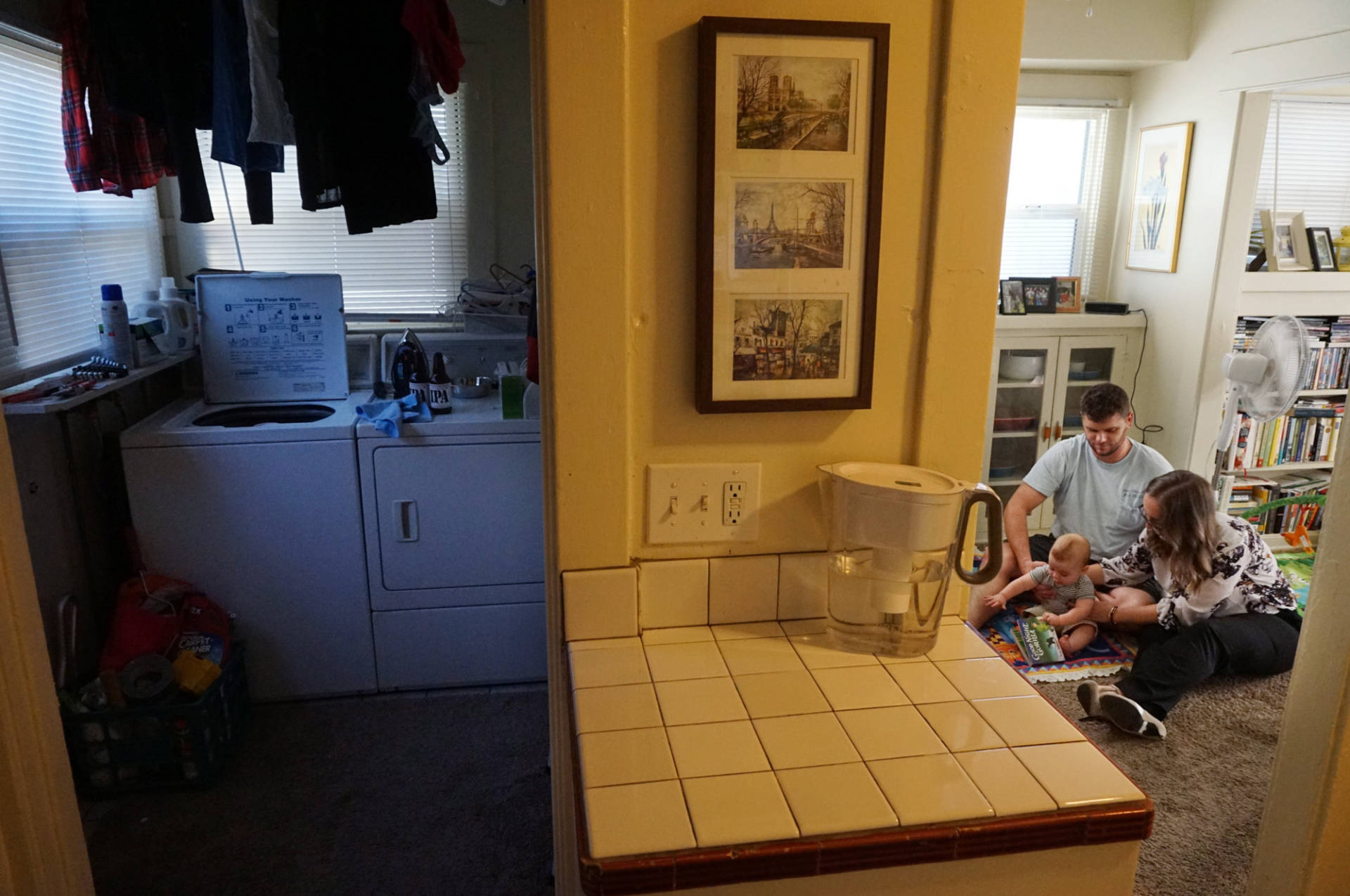
"caption": "Iris and Eli Fugate with their 6-month-old son, Jack, at the family's home in San Diego. Thanks to California's paid family leave law, Iris was able to take six weeks off when Jack was born, and Eli took three weeks, with plans to take the remaining time over the next few months.",
"description": "Iris and Eli Fugate with their 6-month-old son, Jack, at the family's home in San Diego. Thanks to California's paid family leave law, Iris was able to take six weeks off when Jack was born, and Eli took three weeks, with plans to take the remaining time over the next few months.",
"title": "Iris and Eli Fugate with their 6-month-old son Jack, at the family's home in San Diego. Thanks to California's paid family leave law, Iris was able to take six weeks off when Jack was born, and Eli took three weeks, with plans to take the remaining time over the next few months.",
"credit": "Sandy Huffaker for NPR",
"status": "inherit",
"isLoading": false,
"fetchFailed": false
},
"news_11123811": {
"type": "attachments",
"id": "news_11123811",
"meta": {
"index": "attachments_1716263798",
"site": "news",
"id": "11123811",
"found": true
},
"parent": 11123810,
"imgSizes": {
"twentyfourteen-full-width": {
"file": "https://ww2.kqed.org/app/uploads/sites/10/2016/10/gettyimages-577712042_wide-d72b9fedeba6c39729b49327bdec98cc02667da0-1024x576.jpg",
"width": 1024,
"mimeType": "image/jpeg",
"height": 576
},
"thumbnail": {
"file": "https://ww2.kqed.org/app/uploads/sites/10/2016/10/gettyimages-577712042_wide-d72b9fedeba6c39729b49327bdec98cc02667da0-400x225.jpg",
"width": 400,
"mimeType": "image/jpeg",
"height": 225
},
"fd-sm": {
"file": "https://ww2.kqed.org/app/uploads/sites/10/2016/10/gettyimages-577712042_wide-d72b9fedeba6c39729b49327bdec98cc02667da0-960x540.jpg",
"width": 960,
"mimeType": "image/jpeg",
"height": 540
},
"post-thumbnail": {
"file": "https://ww2.kqed.org/app/uploads/sites/10/2016/10/gettyimages-577712042_wide-d72b9fedeba6c39729b49327bdec98cc02667da0-672x372.jpg",
"width": 672,
"mimeType": "image/jpeg",
"height": 372
},
"kqedFullSize": {
"file": "https://ww2.kqed.org/app/uploads/sites/10/2016/10/gettyimages-577712042_wide-d72b9fedeba6c39729b49327bdec98cc02667da0.jpg",
"width": 1024,
"height": 576
},
"guest-author-50": {
"file": "https://ww2.kqed.org/app/uploads/sites/10/2016/10/gettyimages-577712042_wide-d72b9fedeba6c39729b49327bdec98cc02667da0-50x50.jpg",
"width": 50,
"mimeType": "image/jpeg",
"height": 50
},
"guest-author-96": {
"file": "https://ww2.kqed.org/app/uploads/sites/10/2016/10/gettyimages-577712042_wide-d72b9fedeba6c39729b49327bdec98cc02667da0-96x96.jpg",
"width": 96,
"mimeType": "image/jpeg",
"height": 96
},
"medium": {
"file": "https://ww2.kqed.org/app/uploads/sites/10/2016/10/gettyimages-577712042_wide-d72b9fedeba6c39729b49327bdec98cc02667da0-800x450.jpg",
"width": 800,
"mimeType": "image/jpeg",
"height": 450
},
"guest-author-64": {
"file": "https://ww2.kqed.org/app/uploads/sites/10/2016/10/gettyimages-577712042_wide-d72b9fedeba6c39729b49327bdec98cc02667da0-64x64.jpg",
"width": 64,
"mimeType": "image/jpeg",
"height": 64
},
"guest-author-32": {
"file": "https://ww2.kqed.org/app/uploads/sites/10/2016/10/gettyimages-577712042_wide-d72b9fedeba6c39729b49327bdec98cc02667da0-32x32.jpg",
"width": 32,
"mimeType": "image/jpeg",
"height": 32
},
"jmtc-small-thumb": {
"file": "https://ww2.kqed.org/app/uploads/sites/10/2016/10/gettyimages-577712042_wide-d72b9fedeba6c39729b49327bdec98cc02667da0-280x150.jpg",
"width": 280,
"mimeType": "image/jpeg",
"height": 150
},
"detail": {
"file": "https://ww2.kqed.org/app/uploads/sites/10/2016/10/gettyimages-577712042_wide-d72b9fedeba6c39729b49327bdec98cc02667da0-150x150.jpg",
"width": 150,
"mimeType": "image/jpeg",
"height": 150
},
"guest-author-128": {
"file": "https://ww2.kqed.org/app/uploads/sites/10/2016/10/gettyimages-577712042_wide-d72b9fedeba6c39729b49327bdec98cc02667da0-128x128.jpg",
"width": 128,
"mimeType": "image/jpeg",
"height": 128
}
},
"publishDate": 1476122201,
"modified": 1476122324,
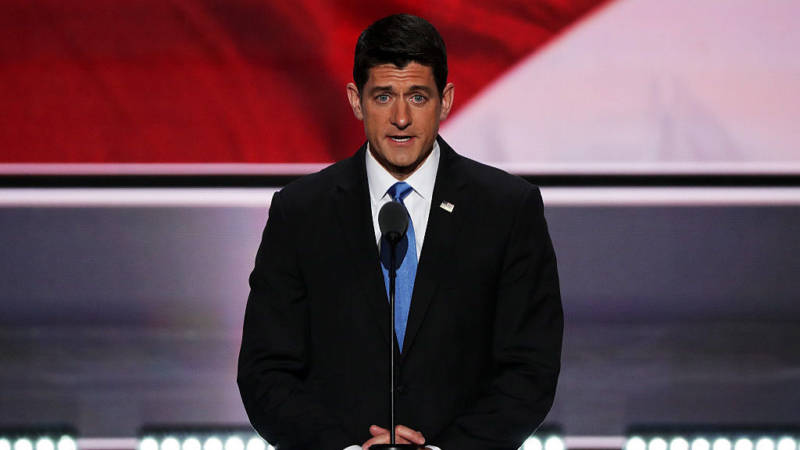
"caption": "House Speaker Paul Ryan told GOP members Monday he will no longer defend Donald Trump and is instead focusing on keeping the House in Republican hands.",
"description": "House Speaker Paul Ryan told GOP members Monday he will no longer defend Donald Trump and is instead focusing on keeping the House in Republican hands.",
"title": "House Speaker Paul Ryan told GOP members Monday he will no longer defend Donald Trump and is instead focusing on keeping the House in Republican hands.",
"credit": "Alex Wong/Getty Images",
"status": "inherit",
"isLoading": false,
"fetchFailed": false
},
"news_11120262": {
"type": "attachments",
"id": "news_11120262",
"meta": {
"index": "attachments_1716263798",
"site": "news",
"id": "11120262",
"found": true
},
"parent": 11120261,
"imgSizes": {
"twentyfourteen-full-width": {
"file": "https://ww2.kqed.org/app/uploads/sites/10/2016/10/gettyimages-610604666_wide-492c4d7fa718cd92635ed2b27ecea5324e152a15-1024x576.jpg",
"width": 1024,
"mimeType": "image/jpeg",
"height": 576
},
"thumbnail": {
"file": "https://ww2.kqed.org/app/uploads/sites/10/2016/10/gettyimages-610604666_wide-492c4d7fa718cd92635ed2b27ecea5324e152a15-400x225.jpg",
"width": 400,
"mimeType": "image/jpeg",
"height": 225
},
"fd-sm": {
"file": "https://ww2.kqed.org/app/uploads/sites/10/2016/10/gettyimages-610604666_wide-492c4d7fa718cd92635ed2b27ecea5324e152a15-960x540.jpg",
"width": 960,
"mimeType": "image/jpeg",
"height": 540
},
"post-thumbnail": {
"file": "https://ww2.kqed.org/app/uploads/sites/10/2016/10/gettyimages-610604666_wide-492c4d7fa718cd92635ed2b27ecea5324e152a15-672x372.jpg",
"width": 672,
"mimeType": "image/jpeg",
"height": 372
},
"kqedFullSize": {
"file": "https://ww2.kqed.org/app/uploads/sites/10/2016/10/gettyimages-610604666_wide-492c4d7fa718cd92635ed2b27ecea5324e152a15.jpg",
"width": 1024,
"height": 576
},
"guest-author-50": {
"file": "https://ww2.kqed.org/app/uploads/sites/10/2016/10/gettyimages-610604666_wide-492c4d7fa718cd92635ed2b27ecea5324e152a15-50x50.jpg",
"width": 50,
"mimeType": "image/jpeg",
"height": 50
},
"guest-author-96": {
"file": "https://ww2.kqed.org/app/uploads/sites/10/2016/10/gettyimages-610604666_wide-492c4d7fa718cd92635ed2b27ecea5324e152a15-96x96.jpg",
"width": 96,
"mimeType": "image/jpeg",
"height": 96
},
"medium": {
"file": "https://ww2.kqed.org/app/uploads/sites/10/2016/10/gettyimages-610604666_wide-492c4d7fa718cd92635ed2b27ecea5324e152a15-800x450.jpg",
"width": 800,
"mimeType": "image/jpeg",
"height": 450
},
"guest-author-64": {
"file": "https://ww2.kqed.org/app/uploads/sites/10/2016/10/gettyimages-610604666_wide-492c4d7fa718cd92635ed2b27ecea5324e152a15-64x64.jpg",
"width": 64,
"mimeType": "image/jpeg",
"height": 64
},
"guest-author-32": {
"file": "https://ww2.kqed.org/app/uploads/sites/10/2016/10/gettyimages-610604666_wide-492c4d7fa718cd92635ed2b27ecea5324e152a15-32x32.jpg",
"width": 32,
"mimeType": "image/jpeg",
"height": 32
},
"jmtc-small-thumb": {
"file": "https://ww2.kqed.org/app/uploads/sites/10/2016/10/gettyimages-610604666_wide-492c4d7fa718cd92635ed2b27ecea5324e152a15-280x150.jpg",
"width": 280,
"mimeType": "image/jpeg",
"height": 150
},
"detail": {
"file": "https://ww2.kqed.org/app/uploads/sites/10/2016/10/gettyimages-610604666_wide-492c4d7fa718cd92635ed2b27ecea5324e152a15-150x150.jpg",
"width": 150,
"mimeType": "image/jpeg",
"height": 150
},
"guest-author-128": {
"file": "https://ww2.kqed.org/app/uploads/sites/10/2016/10/gettyimages-610604666_wide-492c4d7fa718cd92635ed2b27ecea5324e152a15-128x128.jpg",
"width": 128,
"mimeType": "image/jpeg",
"height": 128
}
},
"publishDate": 1475879897,
"modified": 1475880086,
"caption": "Republican presidential nominee Donald Trump speaks to the media in the spin room as wife, Melania, looks on after the first general election debate last month at Hofstra University in N.Y.",
"description": "Republican presidential nominee Donald Trump speaks to the media in the spin room as wife, Melania, looks on after the first general election debate last month at Hofstra University in N.Y.",
"title": "Republican presidential nominee Donald Trump speaks to the media in the spin room as wife, Melania, looks on after the first general election debate last month at Hofstra University in N.Y.",
"credit": "Michael Bocchieri/Getty Images",
"status": "inherit",
"isLoading": false,
"fetchFailed": false
},
"news_11119997": {
"type": "attachments",
"id": "news_11119997",
"meta": {
"index": "attachments_1716263798",
"site": "news",
"id": "11119997",
"found": true
},
"parent": 11119995,
"imgSizes": {
"twentyfourteen-full-width": {
"file": "https://ww2.kqed.org/app/uploads/sites/10/2016/10/Ferrer-1038x576.jpg",
"width": 1038,
"mimeType": "image/jpeg",
"height": 576
},
"thumbnail": {
"file": "https://ww2.kqed.org/app/uploads/sites/10/2016/10/Ferrer-400x473.jpg",
"width": 400,
"mimeType": "image/jpeg",
"height": 473
},
"fd-sm": {
"file": "https://ww2.kqed.org/app/uploads/sites/10/2016/10/Ferrer-960x1135.jpg",
"width": 960,
"mimeType": "image/jpeg",
"height": 1135
},
"post-thumbnail": {
"file": "https://ww2.kqed.org/app/uploads/sites/10/2016/10/Ferrer-672x372.jpg",
"width": 672,
"mimeType": "image/jpeg",
"height": 372
},
"kqedFullSize": {
"file": "https://ww2.kqed.org/app/uploads/sites/10/2016/10/Ferrer.jpg",
"width": 1920,
"height": 2269
},
"large": {
"file": "https://ww2.kqed.org/app/uploads/sites/10/2016/10/Ferrer-1920x2269.jpg",
"width": 1920,
"mimeType": "image/jpeg",
"height": 2269
},
"guest-author-50": {
"file": "https://ww2.kqed.org/app/uploads/sites/10/2016/10/Ferrer-50x50.jpg",
"width": 50,
"mimeType": "image/jpeg",
"height": 50
},
"guest-author-96": {
"file": "https://ww2.kqed.org/app/uploads/sites/10/2016/10/Ferrer-96x96.jpg",
"width": 96,
"mimeType": "image/jpeg",
"height": 96
},
"medium": {
"file": "https://ww2.kqed.org/app/uploads/sites/10/2016/10/Ferrer-800x945.jpg",
"width": 800,
"mimeType": "image/jpeg",
"height": 945
},
"guest-author-64": {
"file": "https://ww2.kqed.org/app/uploads/sites/10/2016/10/Ferrer-64x64.jpg",
"width": 64,
"mimeType": "image/jpeg",
"height": 64
},
"guest-author-32": {
"file": "https://ww2.kqed.org/app/uploads/sites/10/2016/10/Ferrer-32x32.jpg",
"width": 32,
"mimeType": "image/jpeg",
"height": 32
},
"jmtc-small-thumb": {
"file": "https://ww2.kqed.org/app/uploads/sites/10/2016/10/Ferrer-280x150.jpg",
"width": 280,
"mimeType": "image/jpeg",
"height": 150
},
"fd-lrg": {
"file": "https://ww2.kqed.org/app/uploads/sites/10/2016/10/Ferrer-1920x2269.jpg",
"width": 1920,
"mimeType": "image/jpeg",
"height": 2269
},
"fd-med": {
"file": "https://ww2.kqed.org/app/uploads/sites/10/2016/10/Ferrer-1180x1394.jpg",
"width": 1180,
"mimeType": "image/jpeg",
"height": 1394
},
"detail": {
"file": "https://ww2.kqed.org/app/uploads/sites/10/2016/10/Ferrer-150x150.jpg",
"width": 150,
"mimeType": "image/jpeg",
"height": 150
},
"guest-author-128": {
"file": "https://ww2.kqed.org/app/uploads/sites/10/2016/10/Ferrer-128x128.jpg",
"width": 128,
"mimeType": "image/jpeg",
"height": 128
}
},
"publishDate": 1475867776,
"modified": 1475867810,
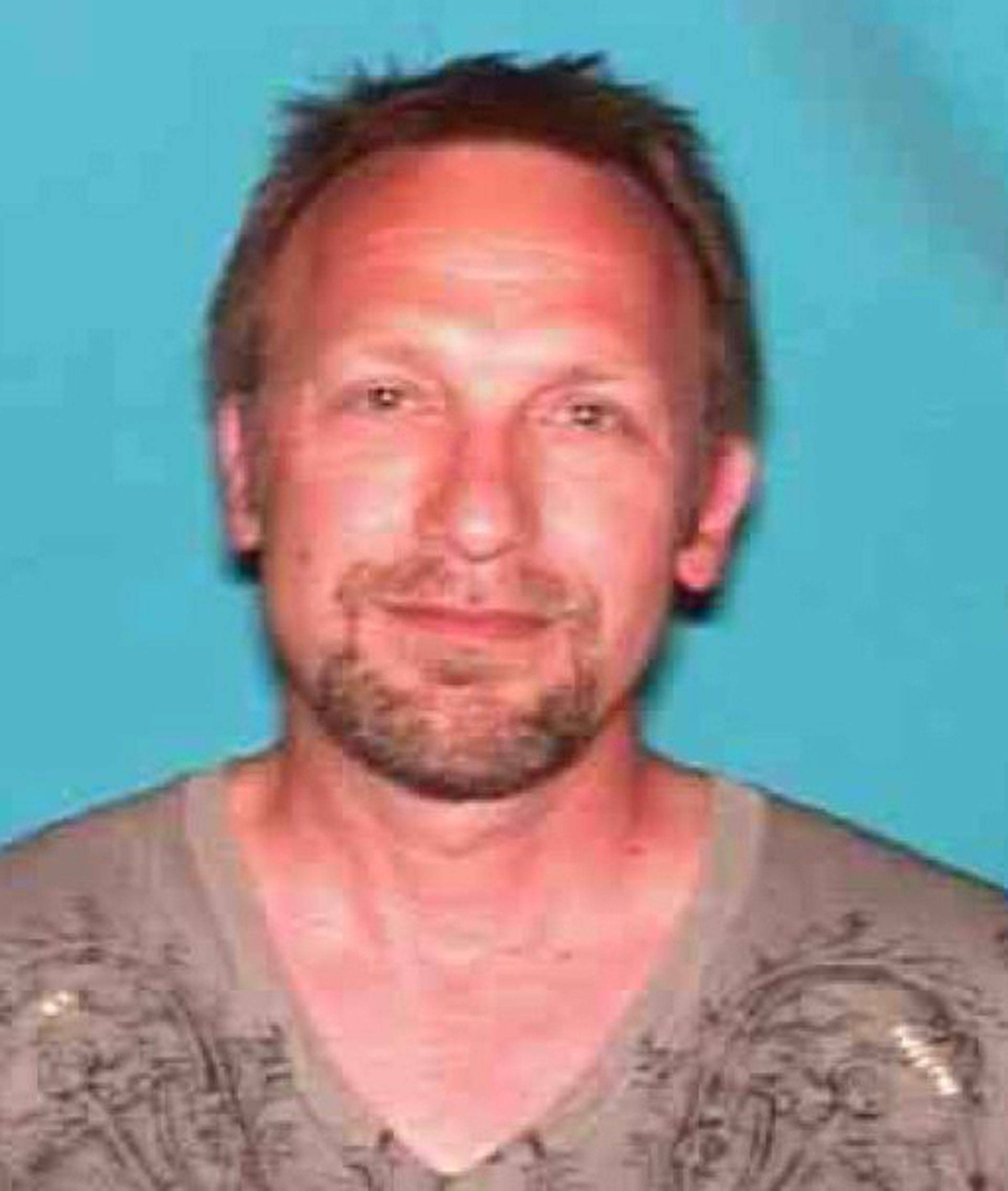
"caption": "This photo released by the Texas Office of the Attorney General shows Carl Ferrer, the CEO of Backpage, a classifieds website that allows users to post escort ads. Ferrer was arrested Thursday on felony pimping charges.",
"description": "This photo released by the Texas Office of the Attorney General shows Carl Ferrer, the CEO of Backpage, a classifieds website that allows users to post escort ads. Ferrer was arrested Thursday on felony pimping charges.",
"title": "Ferrer",
"credit": "Texas Office of the Attorney General",
"status": "inherit",
"isLoading": false,
"fetchFailed": false
}
},
"audioPlayerReducer": {
"postId": "stream_live",
"isPaused": true,
"isPlaying": false,
"pfsActive": false,
"pledgeModalIsOpen": true,
"playerDrawerIsOpen": false,
"liveAudioPlayStartedAt": 0,
"liveAudioPlayContext": ""
},
"authorsReducer": {
"byline_news_11135378": {
"type": "authors",
"id": "byline_news_11135378",
"meta": {
"override": true
},
"slug": "byline_news_11135378",
"name": "\u003cb> Merrit Kennedy \u003cbr> NPR \u003c/b>",
"isLoading": false
},
"byline_news_11135172": {
"type": "authors",
"id": "byline_news_11135172",
"meta": {
"override": true
},
"slug": "byline_news_11135172",
"name": "\u003cb> Danielle Kurtzleben \u003cbr> NPR \u003c/b>",
"isLoading": false
},
"byline_news_11133886": {
"type": "authors",
"id": "byline_news_11133886",
"meta": {
"override": true
},
"slug": "byline_news_11133886",
"name": "\u003cb> Sonari Glinton \u003cbr> NPR \u003c/b>",
"isLoading": false
},
"byline_news_11133741": {
"type": "authors",
"id": "byline_news_11133741",
"meta": {
"override": true
},
"slug": "byline_news_11133741",
"name": "\u003cb> Weekend Edition \u003c/b>",
"isLoading": false
},
"byline_stateofhealth_248365": {
"type": "authors",
"id": "byline_stateofhealth_248365",
"meta": {
"override": true
},
"slug": "byline_stateofhealth_248365",
"name": "Richard Harris \u003cbr> NPR Shots",
"isLoading": false
},
"byline_news_11128467": {
"type": "authors",
"id": "byline_news_11128467",
"meta": {
"override": true
},
"slug": "byline_news_11128467",
"name": "Kat Chow",
"isLoading": false
},
"byline_news_11127324": {
"type": "authors",
"id": "byline_news_11127324",
"meta": {
"override": true
},
"slug": "byline_news_11127324",
"name": "Rebecca Hersher",
"isLoading": false
},
"byline_news_11127101": {
"type": "authors",
"id": "byline_news_11127101",
"meta": {
"override": true
},
"slug": "byline_news_11127101",
"name": "Richard Gonzales",
"isLoading": false
},
"byline_news_11123751": {
"type": "authors",
"id": "byline_news_11123751",
"meta": {
"override": true
},
"slug": "byline_news_11123751",
"name": "\u003cstrong>\u003ca href=\"http://www.npr.org/people/2100955/patti-neighmond\">Patti Neighmond\u003c/a>\u003c/strong>",
"isLoading": false
},
"byline_news_11123810": {
"type": "authors",
"id": "byline_news_11123810",
"meta": {
"override": true
},
"slug": "byline_news_11123810",
"name": "\u003cstrong>\u003ca href=\"http://www.npr.org/people/467975902/susan-davis\">Susan Davis\u003c/a>\u003c/strong> and \u003cstrong>\u003ca href=\"http://www.npr.org/people/404496424/jessica-taylor\">Jessica Taylor\u003c/a>\u003c/strong>",
"isLoading": false
},
"byline_news_11120261": {
"type": "authors",
"id": "byline_news_11120261",
"meta": {
"override": true
},
"slug": "byline_news_11120261",
"name": "Jessica Taylor",
"isLoading": false
},
"byline_news_11119995": {
"type": "authors",
"id": "byline_news_11119995",
"meta": {
"override": true
},
"slug": "byline_news_11119995",
"name": "Camila Domonoske",
"isLoading": false
}
},
"pagesReducer": {
"news_affiliate_npr": {
"type": "terms",
"id": "news_253",
"meta": {
"index": "terms_1716263798",
"site": "news",
"id": "253",
"score": 14.255476
},
"featImg": null,
"name": "NPR",
"description": null,
"taxonomy": "affiliate",
"headData": {
"twImgId": null,
"twTitle": null,
"ogTitle": null,
"ogImgId": null,
"twDescription": null,
"description": "KQED is the NPR station for the Bay Area, providing award-winning news, programming, and community engagement.",
"title": "NPR Archives - Get the Latest News and Reports from California | KQED",
"ogDescription": null
},
"ttid": 7083,
"slug": "npr",
"isLoading": false,
"title": "NPR",
"pageMeta": {
"site": "news",
"WpPageTemplate": "page-topic-editorial",
"currentPage": 94
},
"blocks": [
{
"blockName": "kqed/post-list",
"attrs": {
"layout": "cardArticle2",
"query": "posts/news?affiliate=npr",
"seeMore": false,
"paginated": true,
"page": 94
}
},
{
"blockName": "kqed/ad"
}
]
}
},
"pfsSessionReducer": {},
"postsReducer": {
"stream_live": {
"type": "live",
"id": "stream_live",
"audioUrl": "https://streams.kqed.org/kqedradio",
"title": "Live Stream",
"excerpt": "Live Stream information currently unavailable.",
"link": "/radio",
"featImg": "",
"label": {
"name": "KQED Live",
"link": "/"
}
},
"stream_kqedNewscast": {
"type": "posts",
"id": "stream_kqedNewscast",
"audioUrl": "https://www.kqed.org/.stream/anon/radio/RDnews/newscast.mp3?_=1",
"title": "KQED Newscast",
"featImg": "",
"label": {
"name": "88.5 FM",
"link": "/"
}
},
"news_11135378": {
"type": "posts",
"id": "news_11135378",
"meta": {
"index": "posts_1716263798",
"site": "news",
"id": "11135378",
"score": null,
"sort": [
1476821365000
]
},
"parent": 0,
"labelTerm": {
"site": "news",
"term": 72
},
"blocks": [],
"publishDate": 1476821365,
"format": "standard",
"disqusTitle": "Head Of Police Chiefs Group Apologizes For 'Historical Mistreatment' Of Minorities",
"title": "Head Of Police Chiefs Group Apologizes For 'Historical Mistreatment' Of Minorities",
"headTitle": "The California Report | KQED News",
"content": "\u003cp>The head of the largest association of police chiefs in the U.S. has issued a formal apology on the group's behalf for \"historical mistreatment of communities of color.\"\u003c/p>\n\u003cp>Speaking Monday at the annual meeting of the International Association of Chiefs of Police in San Diego, Terry Cunningham \u003ca href=\"http://www.iacp.org/ViewResult?SearchID=2690\">said his remarks on behalf of the group\u003c/a> were aimed at breaking a \"historic cycle of mistrust.\"\u003c/p>\n\u003cp>He said that policing is, in essence, a \"noble profession\" that has seen dark periods in its history.\u003c/p>\n\u003cp>\"There have been times when law enforcement officers, because of the laws enacted by federal, state and local governments, have been the face of oppression for far too many of our fellow citizens,\" Cunningham said. \"In the past, the laws adopted by our society have required police officers to perform many unpalatable tasks, such as ensuring legalized discrimination or even denying the basic rights of citizenship to many of our fellow Americans.\"\u003c/p>\n\u003cp>He emphasized that these darker periods are in the past, adding that \"while this is no longer the case, this dark side of our shared history has created a multigenerational — almost inherited — mistrust between many communities of color and their law enforcement agencies.\u003c/p>\n\u003cp>[ad fullwidth]\u003c/p>\n\u003cp>\"We must move forward together to build a shared understanding,\" he said, calling the apology a first step in the process. \"At the same time, those who denounce the police must also acknowledge that today's officers are not to blame for the injustices of the past.\"\u003c/p>\n\u003cp>Police officers gave the speech a standing ovation, IACP spokeswoman Sarah Guy \u003ca href=\"https://www.washingtonpost.com/news/true-crime/wp/2016/10/17/head-of-u-s-police-chiefs-apologizes-for-historic-mistreatment-of-minorities/\">told the Washington Post\u003c/a>.\u003c/p>\n\u003cp>Cunningham, who is the police chief in Wellesley, Massachusetts, did not specifically mention any of the recent, numerous, high-profile police shootings of black men, nor did he bring up the police officers killed earlier this year in Dallas and Baton Rouge.\u003c/p>\n\u003cp>The issue of historic injustices is a \"delicate subject inside policing,\" as NPR's Martin Kaste tells our Newscast unit, \"especially as many rank-and-file cops have come to resent accusations of systemic racism by groups such as Black Lives Matter.\"\u003c/p>\n\u003cp>And as Martin reports, \"Cunningham says he decided to make this statement after a meeting last summer with President Obama, who told him police needed to acknowledge historical mistreatment of communities of color.\"\u003c/p>\n\u003cp>Civil rights groups such as the American Civil Liberties Union and the NAACP Legal Defense Fund told the \u003cem>Post \u003c/em>that they welcomed the apology. Here's what Jeffrey Robinson, ACLU deputy legal director, said to the newspaper:\u003c/p>\n\u003cblockquote>\u003cp>\"It seems to me that this is a very significant admission ... and a very significant acknowledgement of what much of America has known for some time about the historical relationship between police and communities of color. The fact someone high in the law enforcement community has said this is significant and I applaud it because it is long overdue. And I think it's a necessary first step to them trying to change these relationships.\"\u003c/p>\u003c/blockquote>\n\u003cp>But others were less impressed. \"[Cunningham] fails to acknowledge the deplorable behavior of some modern-day police officers who are allowed to go from police agency to police agency after having been cited for misconduct within one or more departments,\" Delores Jones-Brown, a professor at the John Jay College Center on Race, Crime and Justice, \u003ca href=\"http://www.latimes.com/nation/la-na-police-chiefs-apology-20161017-snap-story.html\">told the Los Angeles Times\u003c/a>. \"There are bigoted cops today, as there were when it was legal to be a bigoted cop.\"\u003c/p>\n\u003cp>\u003c/p>\n\u003cp>The apology comes less than a week after U.S. Attorney General Loretta Lynch \u003ca href=\"http://www.npr.org/sections/thetwo-way/2016/10/13/497850361/justice-department-will-track-police-killings-and-use-of-force\">announced that the Department of Justice plans\u003c/a> to collect data on killings by police and use of force.\u003c/p>\n\u003cdiv class=\"fullattribution\">\u003cem>Copyright 2016 NPR. To see more, visit http://www.npr.org/.\u003cimg src=\"http://www.google-analytics.com/__utm.gif?utmac=UA-5828686-4&utmdt=Head+Of+Police+Chiefs+Group+Apologizes+For+%27Historical+Mistreatment%27+Of+Minorities&utme=8(APIKey)9(MDAxOTAwOTE4MDEyMTkxMDAzNjczZDljZA004)\">\u003c/em>\u003c/div>\n\n",
"disqusIdentifier": "11135378 http://ww2.kqed.org/news/?p=11135378",
"disqusUrl": "https://ww2.kqed.org/news/2016/10/18/head-of-police-chiefs-group-apologizes-for-historical-mistreatment-of-minorities/",
"stats": {
"hasVideo": false,
"hasChartOrMap": false,
"hasAudio": false,
"hasPolis": false,
"wordCount": 616,
"hasGoogleForm": false,
"hasGallery": false,
"hasHearkenModule": false,
"iframeSrcs": [],
"paragraphCount": 16
},
"modified": 1476830593,
"excerpt": "Law enforcement officers 'have been the face of oppression for far too many of our fellow citizens,' Terry Cunningham said at the annual meeting of the International Association of Chiefs of Police.",
"headData": {
"twImgId": "",
"twTitle": "",
"ogTitle": "",
"ogImgId": "",
"twDescription": "",
"description": "Law enforcement officers 'have been the face of oppression for far too many of our fellow citizens,' Terry Cunningham said at the annual meeting of the International Association of Chiefs of Police.",
"title": "Head Of Police Chiefs Group Apologizes For 'Historical Mistreatment' Of Minorities | KQED",
"ogDescription": "",
"schema": {
"@context": "https://schema.org",
"@type": "NewsArticle",
"headline": "Head Of Police Chiefs Group Apologizes For 'Historical Mistreatment' Of Minorities",
"datePublished": "2016-10-18T13:09:25-07:00",
"dateModified": "2016-10-18T15:43:13-07:00",
"image": "https://cdn.kqed.org/wp-content/uploads/2020/02/KQED-OG-Image@1x.png",
"isAccessibleForFree": "True",
"publisher": {
"@type": "NewsMediaOrganization",
"@id": "https://www.kqed.org/#organization",
"name": "KQED",
"logo": "https://cdn.kqed.org/wp-content/uploads/2020/02/KQED-OG-Image@1x.png",
"url": "https://www.kqed.org",
"sameAs": [
"https://www.facebook.com/KQED",
"https://twitter.com/KQED",
"https://www.instagram.com/kqed/",
"https://www.tiktok.com/@kqedofficial",
"https://www.linkedin.com/company/kqed",
"https://www.youtube.com/channel/UCeC0IOo7i1P_61zVUWbJ4nw"
]
}
}
},
"guestAuthors": [],
"slug": "head-of-police-chiefs-group-apologizes-for-historical-mistreatment-of-minorities",
"status": "publish",
"nprApiLink": "http://api.npr.org/query?id=498380373&apiKey=MDAxOTAwOTE4MDEyMTkxMDAzNjczZDljZA004",
"nprByline": "\u003cb> Merrit Kennedy \u003cbr> NPR \u003c/b>",
"nprStoryDate": "Tue, 18 Oct 2016 11:16:00 -0400",
"nprLastModifiedDate": "Tue, 18 Oct 2016 11:44:10 -0400",
"nprHtmlLink": "http://www.npr.org/sections/thetwo-way/2016/10/18/498380373/head-of-police-chiefs-group-apologizes-for-historical-mistreatment-of-minorities?ft=nprml&f=498380373",
"nprImageAgency": "Getty Images",
"nprImageCredit": "Alex Wong",
"nprStoryId": "498380373",
"nprRetrievedStory": "1",
"nprPubDate": "Tue, 18 Oct 2016 11:44:00 -0400",
"path": "/news/11135378/head-of-police-chiefs-group-apologizes-for-historical-mistreatment-of-minorities",
"audioTrackLength": null,
"parsedContent": [
{
"type": "contentString",
"content": "\u003cdiv class=\"post-body\">\u003cp>\u003cp>The head of the largest association of police chiefs in the U.S. has issued a formal apology on the group's behalf for \"historical mistreatment of communities of color.\"\u003c/p>\n\u003cp>Speaking Monday at the annual meeting of the International Association of Chiefs of Police in San Diego, Terry Cunningham \u003ca href=\"http://www.iacp.org/ViewResult?SearchID=2690\">said his remarks on behalf of the group\u003c/a> were aimed at breaking a \"historic cycle of mistrust.\"\u003c/p>\n\u003cp>He said that policing is, in essence, a \"noble profession\" that has seen dark periods in its history.\u003c/p>\n\u003cp>\"There have been times when law enforcement officers, because of the laws enacted by federal, state and local governments, have been the face of oppression for far too many of our fellow citizens,\" Cunningham said. \"In the past, the laws adopted by our society have required police officers to perform many unpalatable tasks, such as ensuring legalized discrimination or even denying the basic rights of citizenship to many of our fellow Americans.\"\u003c/p>\n\u003cp>He emphasized that these darker periods are in the past, adding that \"while this is no longer the case, this dark side of our shared history has created a multigenerational — almost inherited — mistrust between many communities of color and their law enforcement agencies.\u003c/p>\n\u003cp>\u003c/p>\u003c/div>",
"attributes": {
"named": {},
"numeric": []
}
},
{
"type": "component",
"content": "",
"name": "ad",
"attributes": {
"named": {
"label": "fullwidth"
},
"numeric": [
"fullwidth"
]
}
},
{
"type": "contentString",
"content": "\u003cdiv class=\"post-body\">\u003cp>\u003c/p>\n\u003cp>\"We must move forward together to build a shared understanding,\" he said, calling the apology a first step in the process. \"At the same time, those who denounce the police must also acknowledge that today's officers are not to blame for the injustices of the past.\"\u003c/p>\n\u003cp>Police officers gave the speech a standing ovation, IACP spokeswoman Sarah Guy \u003ca href=\"https://www.washingtonpost.com/news/true-crime/wp/2016/10/17/head-of-u-s-police-chiefs-apologizes-for-historic-mistreatment-of-minorities/\">told the Washington Post\u003c/a>.\u003c/p>\n\u003cp>Cunningham, who is the police chief in Wellesley, Massachusetts, did not specifically mention any of the recent, numerous, high-profile police shootings of black men, nor did he bring up the police officers killed earlier this year in Dallas and Baton Rouge.\u003c/p>\n\u003cp>The issue of historic injustices is a \"delicate subject inside policing,\" as NPR's Martin Kaste tells our Newscast unit, \"especially as many rank-and-file cops have come to resent accusations of systemic racism by groups such as Black Lives Matter.\"\u003c/p>\n\u003cp>And as Martin reports, \"Cunningham says he decided to make this statement after a meeting last summer with President Obama, who told him police needed to acknowledge historical mistreatment of communities of color.\"\u003c/p>\n\u003cp>Civil rights groups such as the American Civil Liberties Union and the NAACP Legal Defense Fund told the \u003cem>Post \u003c/em>that they welcomed the apology. Here's what Jeffrey Robinson, ACLU deputy legal director, said to the newspaper:\u003c/p>\n\u003cblockquote>\u003cp>\"It seems to me that this is a very significant admission ... and a very significant acknowledgement of what much of America has known for some time about the historical relationship between police and communities of color. The fact someone high in the law enforcement community has said this is significant and I applaud it because it is long overdue. And I think it's a necessary first step to them trying to change these relationships.\"\u003c/p>\u003c/blockquote>\n\u003cp>But others were less impressed. \"[Cunningham] fails to acknowledge the deplorable behavior of some modern-day police officers who are allowed to go from police agency to police agency after having been cited for misconduct within one or more departments,\" Delores Jones-Brown, a professor at the John Jay College Center on Race, Crime and Justice, \u003ca href=\"http://www.latimes.com/nation/la-na-police-chiefs-apology-20161017-snap-story.html\">told the Los Angeles Times\u003c/a>. \"There are bigoted cops today, as there were when it was legal to be a bigoted cop.\"\u003c/p>\n\u003cp>\u003c/p>\n\u003cp>The apology comes less than a week after U.S. Attorney General Loretta Lynch \u003ca href=\"http://www.npr.org/sections/thetwo-way/2016/10/13/497850361/justice-department-will-track-police-killings-and-use-of-force\">announced that the Department of Justice plans\u003c/a> to collect data on killings by police and use of force.\u003c/p>\n\u003cdiv class=\"fullattribution\">\u003cem>Copyright 2016 NPR. To see more, visit http://www.npr.org/.\u003cimg src=\"http://www.google-analytics.com/__utm.gif?utmac=UA-5828686-4&utmdt=Head+Of+Police+Chiefs+Group+Apologizes+For+%27Historical+Mistreatment%27+Of+Minorities&utme=8(APIKey)9(MDAxOTAwOTE4MDEyMTkxMDAzNjczZDljZA004)\">\u003c/em>\u003c/div>\n\n\u003c/div>\u003c/p>",
"attributes": {
"named": {},
"numeric": []
}
}
],
"link": "/news/11135378/head-of-police-chiefs-group-apologizes-for-historical-mistreatment-of-minorities",
"authors": [
"byline_news_11135378"
],
"programs": [
"news_72"
],
"categories": [
"news_6188",
"news_8"
],
"tags": [
"news_19903",
"news_116",
"news_17286"
],
"affiliates": [
"news_253"
],
"featImg": "news_11135384",
"label": "news_72"
},
"news_11135172": {
"type": "posts",
"id": "news_11135172",
"meta": {
"index": "posts_1716263798",
"site": "news",
"id": "11135172",
"score": null,
"sort": [
1476811053000
]
},
"parent": 0,
"labelTerm": {
"site": "news",
"term": 72
},
"blocks": [],
"publishDate": 1476811053,
"format": "standard",
"disqusTitle": "5 Reasons (and Then Some) Not to Worry About a 'Rigged' Election",
"title": "5 Reasons (and Then Some) Not to Worry About a 'Rigged' Election",
"headTitle": "Election 2016 | The California Report | KQED News",
"content": "\u003cp>Donald Trump is warning that the election will be rigged. He has precisely zero evidence to back up that claim. But he has a remarkably receptive audience.\u003c/p>\n\u003cp>\u003ca href=\"http://www.apnorc.org/projects/Pages/HTML%20Reports/views-on-the-american-election-process-and-perceptions-of-voter-fraud-issue-brief.aspx\">Around 30 percent\u003c/a> of Americans have \"little or no confidence\" that votes will be counted accurately — and Trump's voters are far less confident about that than Clinton's.\u003c/p>\n\u003cp>That means that potentially millions of Americans will turn out to vote on Nov. 8, despite apparently believing their votes may not count at all. But to believe the election will be \"rigged\" is to believe that any number of improbable things will happen.\u003c/p>\n\u003cp>Here's a handful of reasons not to worry about any rigging:\u003c/p>\n\u003cp>\u003cstrong>\u003cstrong>1. The election is decentralized\u003c/strong>\u003c/strong>\u003c/p>\n\u003cp>[ad fullwidth]\u003c/p>\n\u003cp>Yes, election-rigging worked on \u003cem>Scandal\u003c/em>, when a super-secret cabal of five people (including the first lady AND the White House chief of staff) flipped the election by fiddling with a single voting machine in Ohio.\u003c/p>\n\u003cp>But then, Campaign 2016 is not a Shonda Rhimes production. Which is to say: Rigging the election would be much, much harder than this. For one, there are few options of where to try doing that voting-machine fiddling. Where would you begin? Ohio? Florida? Iowa? Arizona?\u003c/p>\n\u003cp>\"Conceivably one could focus on the few states that factor into the Electoral College,\" Walter Mebane, a political scientist who focuses on voter fraud at the University of Michigan, told NPR in August. \"And maybe that turns into a few hundred or a few thousand precincts.\"\u003c/p>\n\u003cp>And that would be difficult to do because — let's repeat this again — elections are not federally run. States run them themselves. Trying to twist the results in a bunch of different precincts run by different authorities would be monstrously difficult. And even if one could somehow pull it off, then there's the problem of people's big mouths.\u003c/p>\n\u003cp>\"So, say, 400 precincts in a big conspiracy, and no one will know?\" Mebane added. \"That's not gonna happen.\"\u003c/p>\n\u003cp>\u003cstrong>\u003cstrong>2. State officials are on guard\u003c/strong>\u003c/strong>\u003c/p>\n\u003cp>Secretaries of state are charged with administering elections in each state. And on Monday, Ohio Secretary of State Jon Husted, a Republican, insisted that rigging won't happen.\u003c/p>\n\u003cp>\"First of all, I can reassure Donald Trump: I am in charge of elections in Ohio, and they're not going to be rigged. I'll make sure of that,\" \u003ca href=\"http://www.politico.com/story/2016/10/trump-election-rigged-ohio-secretary-of-state-229\">he told CNN\u003c/a>. \"Our institutions, like our election system, is one of the bedrocks of American democracy. We should not question it or the legitimacy of it. It works very well. In places like Ohio, we make it easy to vote and hard to cheat.\"\u003c/p>\n\u003cp>And he's no enemy of Trump — Husted, by the way, said later Monday that he will vote for the Republican nominee.\u003c/p>\n\u003cp>Multiple other secretaries of state have likewise asserted that the elections in their states will not be rigged.\u003c/p>\n\u003cp>In addition, considering that the cries of election rigging are overwhelmingly coming from the right, there's another reason to be skeptical, as the \u003ca href=\"https://twitter.com/NickRiccardi/status/782210861330857985\">AP's Nick Riccardi\u003c/a> pointed out: Many of the closest states — Ohio, Iowa, Arizona, Florida, North Carolina, Alaska, Georgia — have Republican governors. That means the rigging would have to take place under Republican administrations — people who would, theoretically, have more reason to want Trump rather than Clinton to win.\u003c/p>\n\u003cp>\u003cstrong>\u003cstrong>3. Clinton is already leading by a lot\u003c/strong>\u003c/strong>\u003c/p>\n\u003cp>With a really close race, there could potentially be more of an argument that \"rigging\" the election would be possible (with irregularities in particular counties or precincts, which would be challenged and subject to recounts and oversight and courts weighing in).\u003c/p>\n\u003cp>But the way things look right now, that doesn't seem likely to happen.\u003c/p>\n\u003cp>\"If the polls in November look like they do now, then I don't see much of an issue,\" Vanderbilt University political science professor Marc Hetherington \u003ca href=\"http://www.npr.org/2016/08/07/488893858/questioning-if-an-election-will-be-rigged-strikes-at-the-heart-of-democracy\">told NPR in August\u003c/a>. \"No one will find credible charges of election fraud if it looks like a blowout in advance.\"\u003c/p>\n\u003cp>At the time, Clinton was far ahead of Trump — she had an 83 percent chance of winning to his 17, according to FiveThirtyEight. Now, it's looking slightly better for Clinton — 88 percent chance to his 12.\u003c/p>\n\u003cp>It's true that some states will be close. But if Clinton is far enough ahead in enough states — which is looking increasingly likely — then it wouldn't be necessary to rig the election. (Or you'd have to believe that many polls in many states are rigged, which isn't happening.)\u003c/p>\n\u003cp>\u003cstrong>\u003cstrong>4. Election fraud is rare (and it's not quite \"rigging\" either)\u003c/strong>\u003c/strong>\u003c/p>\n\u003cp>Multiple analyses have found the problem of voter fraud to be sparse.\u003c/p>\n\u003cp>According to Loyola Law School professor Justin Levitt's comprehensive analysis, there were only \u003ca href=\"https://www.washingtonpost.com/news/wonk/wp/2014/08/06/a-comprehensive-investigation-of-voter-impersonation-finds-31-credible-incidents-out-of-one-billion-ballots-cast/\">31 incidents of the type of voter fraud\u003c/a> that could have been prevented by voter ID laws — that is, voter impersonation — from 2000 through 2014. Another analysis from News21 looked into 2,068 allegations of election fraud and found only 10 cases of impersonation.\u003c/p>\n\u003cp>And after analyzing multiple studies, the \u003ca href=\"http://www.gao.gov/assets/670/665966.pdf\">Government Accountability Office\u003c/a> said it found \"few instances of in-person voter fraud\" (though it also acknowledged that in-person voter fraud is difficult to count accurately). So it appears that in-person voter fraud on the scale that it currently happens would have very little chance of swaying the election.\u003c/p>\n\u003cp>Still, Trump and Pence have told their supporters to head to the polls to make sure people are voting fairly on Election Day. But even then, they could easily miss some cases of fraud, because fraud via absentee ballots is \u003ca href=\"https://www.washingtonpost.com/news/the-fix/wp/2014/10/13/the-disconnect-between-voter-id-laws-and-voter-fraud/\">\"unfortunately quite real,\"\u003c/a> as Levitt told \u003cem>The Washington Post\u003c/em> in 2014.\u003c/p>\n\u003cp>Furthermore, as election lawyer Chris Ashby pointed out on CNN Monday afternoon (after an \u003ca href=\"https://twitter.com/ashbylaw/status/787352959633981440\">epic tweetstorm \u003c/a>over the weekend), individual instances of voter fraud aren't exactly \"rigging\" anyway. This isn't just semantics — yes, voter fraud is a bad thing. However, calling an election \"rigged\" implies a systematic, coordinated effort to cause one candidate to win.\u003c/p>\n\u003cp>One more point here is that voter ID laws are the weapon of choice, particularly for politicians on the right, for fighting voter fraud. However, there's evidence that voter ID laws — which are put in place to fight voter fraud — end up swinging elections themselves.\u003c/p>\n\u003cp>\u003cstrong>\u003cstrong>5 (and 6 and 7 and 8 ...). Read Chris Ashby's latest post\u003c/strong>\u003c/strong>\u003c/p>\n\u003cp>We'd be entirely remiss if we didn't point to Ashby's \u003ca href=\"https://extranewsfeed.com/the-election-is-not-rigged-23917d9b0534#.ii0k4de5k\">excellent Medium post\u003c/a> spelling out a few more reasons to be skeptical of \"rigging\" allegations. For example:\u003c/p>\n\u003cp>-- elections are held in public places and staffed by private citizens;\u003c/p>\n\u003cp>-- party officials and lawyers are at the ready to challenge if needed;\u003c/p>\n\u003cp>-- voting machines have systems in place to prevent fraud — for example, they are \"equipped with multiple interconnected counters that make it impossible to add or remove votes secretly\" (sorry, Olivia Pope); and ...\u003c/p>\n\u003cp>-- representatives of both candidates \u003cem>and \u003c/em>parties observe vote-counting.\u003c/p>\n\u003cp>And on.\u003c/p>\n\u003cp>[ad floatright]\u003c/p>\n\u003cp>So if someone tells you the election is rigged, it's just not true.\u003c/p>\n\u003cdiv class=\"fullattribution\">\u003cem>Copyright 2016 NPR. To see more, visit http://www.npr.org/.\u003cimg src=\"http://www.google-analytics.com/__utm.gif?utmac=UA-5828686-4&utmdt=5+Reasons+%28And+Then+Some%29+Not+To+Worry+About+A+%27Rigged%27+Election&utme=8(APIKey)9(MDAxOTAwOTE4MDEyMTkxMDAzNjczZDljZA004)\">\u003c/em>\u003c/div>\n\n",
"disqusIdentifier": "11135172 http://ww2.kqed.org/news/?p=11135172",
"disqusUrl": "https://ww2.kqed.org/news/2016/10/18/5-reasons-and-then-some-not-to-worry-about-a-rigged-election/",
"stats": {
"hasVideo": false,
"hasChartOrMap": false,
"hasAudio": false,
"hasPolis": false,
"wordCount": 1196,
"hasGoogleForm": false,
"hasGallery": false,
"hasHearkenModule": false,
"iframeSrcs": [],
"paragraphCount": 39
},
"modified": 1476827532,
"excerpt": "Donald Trump is insisting the presidential election will be rigged. There is about zero chance of that happening. It would require an unprecedented, bipartisan and broad-sweeping conspiracy.",
"headData": {
"twImgId": "",
"twTitle": "",
"ogTitle": "",
"ogImgId": "",
"twDescription": "",
"description": "Donald Trump is insisting the presidential election will be rigged. There is about zero chance of that happening. It would require an unprecedented, bipartisan and broad-sweeping conspiracy.",
"title": "5 Reasons (and Then Some) Not to Worry About a 'Rigged' Election | KQED",
"ogDescription": "",
"schema": {
"@context": "https://schema.org",
"@type": "NewsArticle",
"headline": "5 Reasons (and Then Some) Not to Worry About a 'Rigged' Election",
"datePublished": "2016-10-18T10:17:33-07:00",
"dateModified": "2016-10-18T14:52:12-07:00",
"image": "https://cdn.kqed.org/wp-content/uploads/2020/02/KQED-OG-Image@1x.png",
"isAccessibleForFree": "True",
"publisher": {
"@type": "NewsMediaOrganization",
"@id": "https://www.kqed.org/#organization",
"name": "KQED",
"logo": "https://cdn.kqed.org/wp-content/uploads/2020/02/KQED-OG-Image@1x.png",
"url": "https://www.kqed.org",
"sameAs": [
"https://www.facebook.com/KQED",
"https://twitter.com/KQED",
"https://www.instagram.com/kqed/",
"https://www.tiktok.com/@kqedofficial",
"https://www.linkedin.com/company/kqed",
"https://www.youtube.com/channel/UCeC0IOo7i1P_61zVUWbJ4nw"
]
}
}
},
"guestAuthors": [],
"slug": "5-reasons-and-then-some-not-to-worry-about-a-rigged-election",
"status": "publish",
"nprApiLink": "http://api.npr.org/query?id=498297287&apiKey=MDAxOTAwOTE4MDEyMTkxMDAzNjczZDljZA004",
"nprByline": "\u003cb> Danielle Kurtzleben \u003cbr> NPR \u003c/b>",
"nprStoryDate": "Tue, 18 Oct 2016 06:00:00 -0400",
"nprLastModifiedDate": "Tue, 18 Oct 2016 10:30:20 -0400",
"nprHtmlLink": "http://www.npr.org/2016/10/18/498297287/5-reasons-and-then-some-not-to-worry-about-a-rigged-election?ft=nprml&f=498297287",
"nprImageAgency": "AP",
"nprImageCredit": "Matt York",
"nprStoryId": "498297287",
"nprRetrievedStory": "1",
"nprPubDate": "Tue, 18 Oct 2016 10:30:00 -0400",
"path": "/news/11135172/5-reasons-and-then-some-not-to-worry-about-a-rigged-election",
"audioTrackLength": null,
"parsedContent": [
{
"type": "contentString",
"content": "\u003cdiv class=\"post-body\">\u003cp>\u003cp>Donald Trump is warning that the election will be rigged. He has precisely zero evidence to back up that claim. But he has a remarkably receptive audience.\u003c/p>\n\u003cp>\u003ca href=\"http://www.apnorc.org/projects/Pages/HTML%20Reports/views-on-the-american-election-process-and-perceptions-of-voter-fraud-issue-brief.aspx\">Around 30 percent\u003c/a> of Americans have \"little or no confidence\" that votes will be counted accurately — and Trump's voters are far less confident about that than Clinton's.\u003c/p>\n\u003cp>That means that potentially millions of Americans will turn out to vote on Nov. 8, despite apparently believing their votes may not count at all. But to believe the election will be \"rigged\" is to believe that any number of improbable things will happen.\u003c/p>\n\u003cp>Here's a handful of reasons not to worry about any rigging:\u003c/p>\n\u003cp>\u003cstrong>\u003cstrong>1. The election is decentralized\u003c/strong>\u003c/strong>\u003c/p>\n\u003cp>\u003c/p>\u003c/div>",
"attributes": {
"named": {},
"numeric": []
}
},
{
"type": "component",
"content": "",
"name": "ad",
"attributes": {
"named": {
"label": "fullwidth"
},
"numeric": [
"fullwidth"
]
}
},
{
"type": "contentString",
"content": "\u003cdiv class=\"post-body\">\u003cp>\u003c/p>\n\u003cp>Yes, election-rigging worked on \u003cem>Scandal\u003c/em>, when a super-secret cabal of five people (including the first lady AND the White House chief of staff) flipped the election by fiddling with a single voting machine in Ohio.\u003c/p>\n\u003cp>But then, Campaign 2016 is not a Shonda Rhimes production. Which is to say: Rigging the election would be much, much harder than this. For one, there are few options of where to try doing that voting-machine fiddling. Where would you begin? Ohio? Florida? Iowa? Arizona?\u003c/p>\n\u003cp>\"Conceivably one could focus on the few states that factor into the Electoral College,\" Walter Mebane, a political scientist who focuses on voter fraud at the University of Michigan, told NPR in August. \"And maybe that turns into a few hundred or a few thousand precincts.\"\u003c/p>\n\u003cp>And that would be difficult to do because — let's repeat this again — elections are not federally run. States run them themselves. Trying to twist the results in a bunch of different precincts run by different authorities would be monstrously difficult. And even if one could somehow pull it off, then there's the problem of people's big mouths.\u003c/p>\n\u003cp>\"So, say, 400 precincts in a big conspiracy, and no one will know?\" Mebane added. \"That's not gonna happen.\"\u003c/p>\n\u003cp>\u003cstrong>\u003cstrong>2. State officials are on guard\u003c/strong>\u003c/strong>\u003c/p>\n\u003cp>Secretaries of state are charged with administering elections in each state. And on Monday, Ohio Secretary of State Jon Husted, a Republican, insisted that rigging won't happen.\u003c/p>\n\u003cp>\"First of all, I can reassure Donald Trump: I am in charge of elections in Ohio, and they're not going to be rigged. I'll make sure of that,\" \u003ca href=\"http://www.politico.com/story/2016/10/trump-election-rigged-ohio-secretary-of-state-229\">he told CNN\u003c/a>. \"Our institutions, like our election system, is one of the bedrocks of American democracy. We should not question it or the legitimacy of it. It works very well. In places like Ohio, we make it easy to vote and hard to cheat.\"\u003c/p>\n\u003cp>And he's no enemy of Trump — Husted, by the way, said later Monday that he will vote for the Republican nominee.\u003c/p>\n\u003cp>Multiple other secretaries of state have likewise asserted that the elections in their states will not be rigged.\u003c/p>\n\u003cp>In addition, considering that the cries of election rigging are overwhelmingly coming from the right, there's another reason to be skeptical, as the \u003ca href=\"https://twitter.com/NickRiccardi/status/782210861330857985\">AP's Nick Riccardi\u003c/a> pointed out: Many of the closest states — Ohio, Iowa, Arizona, Florida, North Carolina, Alaska, Georgia — have Republican governors. That means the rigging would have to take place under Republican administrations — people who would, theoretically, have more reason to want Trump rather than Clinton to win.\u003c/p>\n\u003cp>\u003cstrong>\u003cstrong>3. Clinton is already leading by a lot\u003c/strong>\u003c/strong>\u003c/p>\n\u003cp>With a really close race, there could potentially be more of an argument that \"rigging\" the election would be possible (with irregularities in particular counties or precincts, which would be challenged and subject to recounts and oversight and courts weighing in).\u003c/p>\n\u003cp>But the way things look right now, that doesn't seem likely to happen.\u003c/p>\n\u003cp>\"If the polls in November look like they do now, then I don't see much of an issue,\" Vanderbilt University political science professor Marc Hetherington \u003ca href=\"http://www.npr.org/2016/08/07/488893858/questioning-if-an-election-will-be-rigged-strikes-at-the-heart-of-democracy\">told NPR in August\u003c/a>. \"No one will find credible charges of election fraud if it looks like a blowout in advance.\"\u003c/p>\n\u003cp>At the time, Clinton was far ahead of Trump — she had an 83 percent chance of winning to his 17, according to FiveThirtyEight. Now, it's looking slightly better for Clinton — 88 percent chance to his 12.\u003c/p>\n\u003cp>It's true that some states will be close. But if Clinton is far enough ahead in enough states — which is looking increasingly likely — then it wouldn't be necessary to rig the election. (Or you'd have to believe that many polls in many states are rigged, which isn't happening.)\u003c/p>\n\u003cp>\u003cstrong>\u003cstrong>4. Election fraud is rare (and it's not quite \"rigging\" either)\u003c/strong>\u003c/strong>\u003c/p>\n\u003cp>Multiple analyses have found the problem of voter fraud to be sparse.\u003c/p>\n\u003cp>According to Loyola Law School professor Justin Levitt's comprehensive analysis, there were only \u003ca href=\"https://www.washingtonpost.com/news/wonk/wp/2014/08/06/a-comprehensive-investigation-of-voter-impersonation-finds-31-credible-incidents-out-of-one-billion-ballots-cast/\">31 incidents of the type of voter fraud\u003c/a> that could have been prevented by voter ID laws — that is, voter impersonation — from 2000 through 2014. Another analysis from News21 looked into 2,068 allegations of election fraud and found only 10 cases of impersonation.\u003c/p>\n\u003cp>And after analyzing multiple studies, the \u003ca href=\"http://www.gao.gov/assets/670/665966.pdf\">Government Accountability Office\u003c/a> said it found \"few instances of in-person voter fraud\" (though it also acknowledged that in-person voter fraud is difficult to count accurately). So it appears that in-person voter fraud on the scale that it currently happens would have very little chance of swaying the election.\u003c/p>\n\u003cp>Still, Trump and Pence have told their supporters to head to the polls to make sure people are voting fairly on Election Day. But even then, they could easily miss some cases of fraud, because fraud via absentee ballots is \u003ca href=\"https://www.washingtonpost.com/news/the-fix/wp/2014/10/13/the-disconnect-between-voter-id-laws-and-voter-fraud/\">\"unfortunately quite real,\"\u003c/a> as Levitt told \u003cem>The Washington Post\u003c/em> in 2014.\u003c/p>\n\u003cp>Furthermore, as election lawyer Chris Ashby pointed out on CNN Monday afternoon (after an \u003ca href=\"https://twitter.com/ashbylaw/status/787352959633981440\">epic tweetstorm \u003c/a>over the weekend), individual instances of voter fraud aren't exactly \"rigging\" anyway. This isn't just semantics — yes, voter fraud is a bad thing. However, calling an election \"rigged\" implies a systematic, coordinated effort to cause one candidate to win.\u003c/p>\n\u003cp>One more point here is that voter ID laws are the weapon of choice, particularly for politicians on the right, for fighting voter fraud. However, there's evidence that voter ID laws — which are put in place to fight voter fraud — end up swinging elections themselves.\u003c/p>\n\u003cp>\u003cstrong>\u003cstrong>5 (and 6 and 7 and 8 ...). Read Chris Ashby's latest post\u003c/strong>\u003c/strong>\u003c/p>\n\u003cp>We'd be entirely remiss if we didn't point to Ashby's \u003ca href=\"https://extranewsfeed.com/the-election-is-not-rigged-23917d9b0534#.ii0k4de5k\">excellent Medium post\u003c/a> spelling out a few more reasons to be skeptical of \"rigging\" allegations. For example:\u003c/p>\n\u003cp>-- elections are held in public places and staffed by private citizens;\u003c/p>\n\u003cp>-- party officials and lawyers are at the ready to challenge if needed;\u003c/p>\n\u003cp>-- voting machines have systems in place to prevent fraud — for example, they are \"equipped with multiple interconnected counters that make it impossible to add or remove votes secretly\" (sorry, Olivia Pope); and ...\u003c/p>\n\u003cp>-- representatives of both candidates \u003cem>and \u003c/em>parties observe vote-counting.\u003c/p>\n\u003cp>And on.\u003c/p>\n\u003cp>\u003c/p>\u003c/div>",
"attributes": {
"named": {},
"numeric": []
}
},
{
"type": "component",
"content": "",
"name": "ad",
"attributes": {
"named": {
"label": "floatright"
},
"numeric": [
"floatright"
]
}
},
{
"type": "contentString",
"content": "\u003cdiv class=\"post-body\">\u003cp>\u003c/p>\n\u003cp>So if someone tells you the election is rigged, it's just not true.\u003c/p>\n\u003cdiv class=\"fullattribution\">\u003cem>Copyright 2016 NPR. To see more, visit http://www.npr.org/.\u003cimg src=\"http://www.google-analytics.com/__utm.gif?utmac=UA-5828686-4&utmdt=5+Reasons+%28And+Then+Some%29+Not+To+Worry+About+A+%27Rigged%27+Election&utme=8(APIKey)9(MDAxOTAwOTE4MDEyMTkxMDAzNjczZDljZA004)\">\u003c/em>\u003c/div>\n\n\u003c/div>\u003c/p>",
"attributes": {
"named": {},
"numeric": []
}
}
],
"link": "/news/11135172/5-reasons-and-then-some-not-to-worry-about-a-rigged-election",
"authors": [
"byline_news_11135172"
],
"programs": [
"news_6944",
"news_72"
],
"series": [
"news_19101"
],
"categories": [
"news_8",
"news_13"
],
"tags": [
"news_19964",
"news_19542",
"news_2027"
],
"affiliates": [
"news_253"
],
"featImg": "news_11135175",
"label": "news_72"
},
"news_11133886": {
"type": "posts",
"id": "news_11133886",
"meta": {
"index": "posts_1716263798",
"site": "news",
"id": "11133886",
"score": null,
"sort": [
1476732522000
]
},
"parent": 0,
"labelTerm": {
"site": "news",
"term": 72
},
"blocks": [],
"publishDate": 1476732522,
"format": "standard",
"disqusTitle": "Survey Says Americans Are Getting Stressed by the Election",
"title": "Survey Says Americans Are Getting Stressed by the Election",
"headTitle": "Election 2016 | The California Report | KQED News",
"content": "\u003cp>At some point everyone, regardless of party affiliation or lack thereof, wants to bail from a presidential election. OK, that's a hunch, but it's borne out, at least in part (caveats aplenty), in an online survey by the American Psychological Association.\u003c/p>\n\u003cp>Fifty-two percent of American adults tell the pollsters that the 2016 election is a very or somewhat significant source of stress. The survey was conducted online among adults 18 years old and older living in the U.S. \u003ca href=\"http://www.apa.org/news/press/releases/2016/10/presidential-election-stress.aspx\">by the Harris Poll for the association.\u003c/a>\u003c/p>\n\u003cblockquote>\u003cp>\"For the past decade, the Stress in America™ survey has examined how stress affects the health and well-being of American adults. Prior to the release of this year's full survey results slated for early 2017, APA highlighted data that points to Americans' stress levels related to the upcoming presidential election.\u003c/p>\n\u003cp>\" 'We're seeing that it doesn't matter whether you're registered as a Democrat or Republican — U.S. adults say they are experiencing significant stress from the current election,' said Lynn Bufka, PhD, APA's associate executive director for practice research and policy. Across party lines, those registered as Democrats (55 percent) and Republicans (59 percent) are statistically equally likely to say the election is a very or somewhat significant source of stress.\u003c/p>\n\u003cp>\" 'Election stress becomes exacerbated by arguments, stories, images and video on social media that can heighten concern and frustration, particularly with thousands of comments that can range from factual to hostile or even inflammatory,' said Bufka.\"\u003c/p>\u003c/blockquote>\n\u003cp>\"If there is an effect it's a lagged effect,\" says Joe Nunes. He is head of the marketing department at the University of Southern California Marshall School of Business and he studies consumer behavior. In an interview with NPR, Nunes says consumers and voters often show their reactions to elections in spending and investment patterns. However, so far in this election, Nunes says \"there's no economic indicator that shows people are fearful and not spending.\"\u003c/p>\n\u003cp>Nunes points out that the results of the American Psychological Association survey are not definitive. The poll is online and (more caveats) taken before the most recent round of political turmoil, but \"there is a real psychological effect of the news,\" Nunes says. If people felt the status quo was going to radically change, he says, \"they'd pull money out of the stock market, stop spending on major goods.\" He says people are likely feeling fatigue and concern but that's different from a panic.\u003c/p>\n\u003cp>But if you are feeling stressed, what can you do about it? \u003ca href=\"http://www.npr.org/sections/thetwo-way/2016/10/14/497942024/in-other-news-this-photo-of-an-elephant-snuggling-an-ostrich\">You could\u003c/a> follow\u003ca href=\"http://www.npr.org/sections/thetwo-way/2016/10/13/497824938/man-juggles-for-an-entire-marathon-without-a-single-drop\"> the links\u003c/a> to some of our \u003ca href=\"http://www.npr.org/sections/thetwo-way/2016/10/06/496938817/world-s-oldest-living-man-celebrates-his-bar-mitzvah-100-years-late\">non-politics news\u003c/a>.\u003c/p>\n\u003cp>[ad fullwidth]\u003c/p>\n\u003cp>\u003c/p>\n\u003cp>And the APA has these suggestions:\u003c/p>\n\u003cblockquote>\u003cp>\"If the 24-hour news cycle of claims and counterclaims from the candidates is causing you stress, limit your media consumption. Read just enough to stay informed. Turn off the newsfeed or take a digital break. Take some time for yourself, go for a walk, or spend time with friends and family doing things that you enjoy.\u003c/p>\n\u003cp>\"Avoid getting into discussions about the election if you think they have the potential to escalate to conflict. Be cognizant of the frequency with which you're discussing the election with friends, family members or coworkers.\u003c/p>\n\u003cp>\"Stress and anxiety about what might happen is not productive. Channel your concerns to make a positive difference on issues you care about. Consider volunteering in your community, advocating for an issue you support or joining a local group. Remember that in addition to the presidential election, there are state and local elections taking place in many parts of the country, providing more opportunities for civic involvement.\u003c/p>\n\u003cp>\"Whatever happens on Nov. 8, life will go on. Our political system and the three branches of government mean that we can expect a significant degree of stability immediately after a major transition of government. Avoid catastrophizing, and maintain a balanced perspective.\u003c/p>\n\u003cp>\"Vote. In a democracy, a citizen's voice does matter. By voting, you will hopefully feel you are taking a proactive step and participating in what for many has been a stressful election cycle. Find balanced information to learn about all the candidates and issues on your ballot (not just the presidential race), make informed decisions and wear your 'I voted' sticker with pride.\"\u003c/p>\u003c/blockquote>\n\u003cdiv class=\"fullattribution\">Copyright 2016 NPR. To see more, visit http://www.npr.org/.\u003cimg src=\"http://www.google-analytics.com/__utm.gif?utmac=UA-5828686-4&utmdt=Survey+Says+Americans+Are+Getting+Stressed+By+The+Elections&utme=8(APIKey)9(MDAxOTAwOTE4MDEyMTkxMDAzNjczZDljZA004)\">\u003c/div>\n\n",
"disqusIdentifier": "11133886 http://ww2.kqed.org/news/?p=11133886",
"disqusUrl": "https://ww2.kqed.org/news/2016/10/17/survey-says-americans-are-getting-stressed-by-the-elections/",
"stats": {
"hasVideo": false,
"hasChartOrMap": false,
"hasAudio": false,
"hasPolis": false,
"wordCount": 725,
"hasGoogleForm": false,
"hasGallery": false,
"hasHearkenModule": false,
"iframeSrcs": [],
"paragraphCount": 16
},
"modified": 1476741526,
"excerpt": "Fifty-two percent of American adults tell pollsters the 2016 election is a very or somewhat significant source of stress. That's according to a survey by the American Psychological Association.",
"headData": {
"twImgId": "",
"twTitle": "",
"ogTitle": "",
"ogImgId": "",
"twDescription": "",
"description": "Fifty-two percent of American adults tell pollsters the 2016 election is a very or somewhat significant source of stress. That's according to a survey by the American Psychological Association.",
"title": "Survey Says Americans Are Getting Stressed by the Election | KQED",
"ogDescription": "",
"schema": {
"@context": "https://schema.org",
"@type": "NewsArticle",
"headline": "Survey Says Americans Are Getting Stressed by the Election",
"datePublished": "2016-10-17T12:28:42-07:00",
"dateModified": "2016-10-17T14:58:46-07:00",
"image": "https://cdn.kqed.org/wp-content/uploads/2020/02/KQED-OG-Image@1x.png",
"isAccessibleForFree": "True",
"publisher": {
"@type": "NewsMediaOrganization",
"@id": "https://www.kqed.org/#organization",
"name": "KQED",
"logo": "https://cdn.kqed.org/wp-content/uploads/2020/02/KQED-OG-Image@1x.png",
"url": "https://www.kqed.org",
"sameAs": [
"https://www.facebook.com/KQED",
"https://twitter.com/KQED",
"https://www.instagram.com/kqed/",
"https://www.tiktok.com/@kqedofficial",
"https://www.linkedin.com/company/kqed",
"https://www.youtube.com/channel/UCeC0IOo7i1P_61zVUWbJ4nw"
]
}
}
},
"guestAuthors": [],
"slug": "survey-says-americans-are-getting-stressed-by-the-elections",
"status": "publish",
"nprApiLink": "http://api.npr.org/query?id=498033747&apiKey=MDAxOTAwOTE4MDEyMTkxMDAzNjczZDljZA004",
"nprByline": "\u003cb> Sonari Glinton \u003cbr> NPR \u003c/b>",
"nprStoryDate": "Sat, 15 Oct 2016 09:00:28 -0400",
"nprLastModifiedDate": "Sat, 15 Oct 2016 09:00:28 -0400",
"nprHtmlLink": "http://www.npr.org/sections/thetwo-way/2016/10/15/498033747/survey-says-americans-are-getting-stressed-by-the-elections?ft=nprml&f=498033747",
"nprImageAgency": "AFP/Getty Images",
"nprImageCredit": "PAUL J. RICHARDS",
"nprStoryId": "498033747",
"nprRetrievedStory": "1",
"nprPubDate": "Sat, 15 Oct 2016 09:00:00 -0400",
"path": "/news/11133886/survey-says-americans-are-getting-stressed-by-the-elections",
"audioTrackLength": null,
"parsedContent": [
{
"type": "contentString",
"content": "\u003cdiv class=\"post-body\">\u003cp>\u003cp>At some point everyone, regardless of party affiliation or lack thereof, wants to bail from a presidential election. OK, that's a hunch, but it's borne out, at least in part (caveats aplenty), in an online survey by the American Psychological Association.\u003c/p>\n\u003cp>Fifty-two percent of American adults tell the pollsters that the 2016 election is a very or somewhat significant source of stress. The survey was conducted online among adults 18 years old and older living in the U.S. \u003ca href=\"http://www.apa.org/news/press/releases/2016/10/presidential-election-stress.aspx\">by the Harris Poll for the association.\u003c/a>\u003c/p>\n\u003cblockquote>\u003cp>\"For the past decade, the Stress in America™ survey has examined how stress affects the health and well-being of American adults. Prior to the release of this year's full survey results slated for early 2017, APA highlighted data that points to Americans' stress levels related to the upcoming presidential election.\u003c/p>\n\u003cp>\" 'We're seeing that it doesn't matter whether you're registered as a Democrat or Republican — U.S. adults say they are experiencing significant stress from the current election,' said Lynn Bufka, PhD, APA's associate executive director for practice research and policy. Across party lines, those registered as Democrats (55 percent) and Republicans (59 percent) are statistically equally likely to say the election is a very or somewhat significant source of stress.\u003c/p>\n\u003cp>\" 'Election stress becomes exacerbated by arguments, stories, images and video on social media that can heighten concern and frustration, particularly with thousands of comments that can range from factual to hostile or even inflammatory,' said Bufka.\"\u003c/p>\u003c/blockquote>\n\u003cp>\"If there is an effect it's a lagged effect,\" says Joe Nunes. He is head of the marketing department at the University of Southern California Marshall School of Business and he studies consumer behavior. In an interview with NPR, Nunes says consumers and voters often show their reactions to elections in spending and investment patterns. However, so far in this election, Nunes says \"there's no economic indicator that shows people are fearful and not spending.\"\u003c/p>\n\u003cp>Nunes points out that the results of the American Psychological Association survey are not definitive. The poll is online and (more caveats) taken before the most recent round of political turmoil, but \"there is a real psychological effect of the news,\" Nunes says. If people felt the status quo was going to radically change, he says, \"they'd pull money out of the stock market, stop spending on major goods.\" He says people are likely feeling fatigue and concern but that's different from a panic.\u003c/p>\n\u003cp>But if you are feeling stressed, what can you do about it? \u003ca href=\"http://www.npr.org/sections/thetwo-way/2016/10/14/497942024/in-other-news-this-photo-of-an-elephant-snuggling-an-ostrich\">You could\u003c/a> follow\u003ca href=\"http://www.npr.org/sections/thetwo-way/2016/10/13/497824938/man-juggles-for-an-entire-marathon-without-a-single-drop\"> the links\u003c/a> to some of our \u003ca href=\"http://www.npr.org/sections/thetwo-way/2016/10/06/496938817/world-s-oldest-living-man-celebrates-his-bar-mitzvah-100-years-late\">non-politics news\u003c/a>.\u003c/p>\n\u003cp>\u003c/p>\u003c/div>",
"attributes": {
"named": {},
"numeric": []
}
},
{
"type": "component",
"content": "",
"name": "ad",
"attributes": {
"named": {
"label": "fullwidth"
},
"numeric": [
"fullwidth"
]
}
},
{
"type": "contentString",
"content": "\u003cdiv class=\"post-body\">\u003cp>\u003c/p>\n\u003cp>\u003c/p>\n\u003cp>And the APA has these suggestions:\u003c/p>\n\u003cblockquote>\u003cp>\"If the 24-hour news cycle of claims and counterclaims from the candidates is causing you stress, limit your media consumption. Read just enough to stay informed. Turn off the newsfeed or take a digital break. Take some time for yourself, go for a walk, or spend time with friends and family doing things that you enjoy.\u003c/p>\n\u003cp>\"Avoid getting into discussions about the election if you think they have the potential to escalate to conflict. Be cognizant of the frequency with which you're discussing the election with friends, family members or coworkers.\u003c/p>\n\u003cp>\"Stress and anxiety about what might happen is not productive. Channel your concerns to make a positive difference on issues you care about. Consider volunteering in your community, advocating for an issue you support or joining a local group. Remember that in addition to the presidential election, there are state and local elections taking place in many parts of the country, providing more opportunities for civic involvement.\u003c/p>\n\u003cp>\"Whatever happens on Nov. 8, life will go on. Our political system and the three branches of government mean that we can expect a significant degree of stability immediately after a major transition of government. Avoid catastrophizing, and maintain a balanced perspective.\u003c/p>\n\u003cp>\"Vote. In a democracy, a citizen's voice does matter. By voting, you will hopefully feel you are taking a proactive step and participating in what for many has been a stressful election cycle. Find balanced information to learn about all the candidates and issues on your ballot (not just the presidential race), make informed decisions and wear your 'I voted' sticker with pride.\"\u003c/p>\u003c/blockquote>\n\u003cdiv class=\"fullattribution\">Copyright 2016 NPR. To see more, visit http://www.npr.org/.\u003cimg src=\"http://www.google-analytics.com/__utm.gif?utmac=UA-5828686-4&utmdt=Survey+Says+Americans+Are+Getting+Stressed+By+The+Elections&utme=8(APIKey)9(MDAxOTAwOTE4MDEyMTkxMDAzNjczZDljZA004)\">\u003c/div>\n\n\u003c/div>\u003c/p>",
"attributes": {
"named": {},
"numeric": []
}
}
],
"link": "/news/11133886/survey-says-americans-are-getting-stressed-by-the-elections",
"authors": [
"byline_news_11133886"
],
"programs": [
"news_6944",
"news_72"
],
"series": [
"news_19101"
],
"categories": [
"news_8",
"news_13"
],
"affiliates": [
"news_253"
],
"featImg": "news_11133889",
"label": "news_72"
},
"news_11133741": {
"type": "posts",
"id": "news_11133741",
"meta": {
"index": "posts_1716263798",
"site": "news",
"id": "11133741",
"score": null,
"sort": [
1476728093000
]
},
"parent": 0,
"labelTerm": {
"site": "news",
"term": 6944
},
"blocks": [],
"publishDate": 1476728093,
"format": "standard",
"disqusTitle": "Harnessing Social Media To Reconnect Homeless People With Their Families",
"title": "Harnessing Social Media To Reconnect Homeless People With Their Families",
"headTitle": "News Fix | KQED News",
"content": "\u003cp>San Francisco has made headlines as a hub for technology — giants like Facebook, Apple and Google are headquartered nearby, as are a plethora of tech startups. At the same time, residents complain that those same tech companies are part of the cause of the city's \u003ca href=\"https://www.wired.com/2016/02/sfs-tech-bus-problem-isnt-about-buses-its-about-housing/\">astronomical cost of living\u003c/a> — and in turn contributing to the city's big homeless problem.\u003c/p>\n\u003cp>Homelessness in the city is \u003ca href=\"http://www.npr.org/2016/07/03/484516166/san-francisco-media-outlets-unite-to-help-end-the-citys-homelessness\">well reported\u003c/a> — the San Francisco Chronicle even ran a \u003ca href=\"http://projects.sfchronicle.com/sf-homeless/civic-disgrace/\">front-page editorial\u003c/a> earlier this year calling the \"level and pervasiveness of homelessness in San Francisco\" a \"civic disgrace.\"\u003c/p>\n\u003cp>Measuring the number of homeless people in San Francisco is hard. One estimate gathered by a group of volunteers over one night counted 6,686 adults. The city's \u003ca href=\"http://sfbos.org/sites/default/files/FileCenter/Documents/56163-061316%20Homeless%20Services%20in%20SF_Bud%26LegAnalyst.pdf\">Department of Public Health\u003c/a> counts homeless people using city services over a year and counted 9,975.\u003c/p>\n\u003cp>San Francisco doesn't lead the country in per capita homelessness. But the reason San Francisco's homeless problem is much more visible than in other large cities is because the city has more per capita unsheltered homeless people: \"511 people on the streets for every 100,000 residents,\" as noted by \u003ca href=\"http://projects.sfchronicle.com/sf-homeless/numbers/\">the Chronicle\u003c/a>.\u003c/p>\n\u003cp>Naturally, someone in San Francisco had an idea to use technology to help alleviate one of the symptoms of homelessness: falling out of touch with one's family.\u003c/p>\n\u003cp>[ad fullwidth]\u003c/p>\n\u003cp>That's the mission of \u003ca href=\"http://www.miraclemessages.org/\">Miracle Messages\u003c/a>, an organization started by Kevin Adler in 2014. Volunteers record video messages from homeless people to their loved ones, who they have often not seen for many years. The organization then uses social media to publicize the videos in hope of contacting that person's family.\u003c/p>\n\u003cp>https://www.youtube.com/watch?v=glXZS-LDVHE\u003c/p>\n\u003cp>Dave Adams lived on the streets in San Francisco for 20 years. He tells NPR's Mary Louise Kelly that he lost touch with his family and couldn't figure out how to make contact. \"I ain't computer smart,\" he says.\u003c/p>\n\u003cp>That changed after he recorded a video message with a Miracle Messages volunteer. Adams learned he had a half-sister named Dorothy, who had been looking for him for years. Adams says she started crying the first time he called her.\u003c/p>\n\u003cp>It's one of the success stories for founder and CEO Adler, who says messages are positively received in about 90 percent of the cases where they reach the family. Many people are hesitant to participate at first, though.\u003c/p>\n\u003cp>\"They've said, 'Well, I don't know how the family is going to respond, I feel like a burden, I feel ashamed, I'm embarrassed,' \" Adler tells NPR. \"Trying to get past that — doing something very simple, with what we call a video postcard, is a very helpful first step for basically saying who you love, who you want to reconnect with, whatever kind of message you want to leave. And we'll do our best to deliver it.\"\u003c/p>\n\u003cp>The mission is personal for Adler. It has to do with empathy and understanding people as more than just the label \"homeless,\" including his own family.\u003c/p>\n\u003cfigure id=\"attachment_11133746\" class=\"wp-caption alignnone\" style=\"max-width: 800px\">\u003cimg class=\"size-medium wp-image-11133746\" src=\"http://ww2.kqed.org/news/wp-content/uploads/sites/10/2016/10/RS13835_mission_camp_for_web-800x546.jpg\" alt=\"A homeless encampment in San Francisco.\" width=\"800\" height=\"546\">\u003cfigcaption class=\"wp-caption-text\">A homeless encampment in San Francisco. \u003ccite>(Eric Lawson/San Francisco Public Press)\u003c/cite>\u003c/figcaption>\u003c/figure>\n\u003cp>\"My uncle Mark had been homeless for about 30 years,\" Adler says. \"He suffered from schizophrenia, lived on and off the streets. I never saw him as a homeless man. He's my beloved uncle.\"\u003c/p>\n\u003cp>\"I ain't homeless, I'm houseless,\" Adams interrupts.\u003c/p>\n\u003cp>\"Exactly — houseless,\" Adler says. \"And so when we walk down the street and we see someone who is without a house, it's easy to define them by that. And we want to live in a world where we walk down the street and we don't see Homeless Joe or Jane ... but we see someone's loved one.\"\u003c/p>\n\u003cp>\"Homelessness is a state of mind,\" Adams says. \"Houseless is like how I think about it. Where you lay your head at night and lay down and go to sleep. Whether it's in a mansion, whether it's in a jail cell, or a car, or school bus, or a doorway — one thing about it is, that's home.\"\u003c/p>\n\u003cp>Adler's goal for Miracle Messages is ambitious.\u003c/p>\n\u003cp>\"We want to reunite 1 million people by 2021,\" he says. \"That's 1 percent of the world's homeless population — houseless population. So yeah, if we're really going to move the needle in ending homelessness and using social media for social good, we figure we need to set the goal at least at a million, and then hopefully exceed it.\"\u003c/p>\n\u003cp>\u003c/p>\n\u003cp>For his part, Adams is headed to work and live at his sister's farm in Tennessee. She's going to pick him up at the bus stop, he says.\u003c/p>\n\u003cdiv class=\"fullattribution\">\u003cem>Copyright 2016 NPR. To see more, visit http://www.npr.org/.\u003cimg src=\"http://www.google-analytics.com/__utm.gif?utmac=UA-5828686-4&utmdt=Harnessing+Social+Media+To+Reconnect+Homeless+People+With+Their+Families&utme=8(APIKey)9(MDAxOTAwOTE4MDEyMTkxMDAzNjczZDljZA004)\">\u003c/em>\u003c/div>\n\n",
"disqusIdentifier": "11133741 http://ww2.kqed.org/news/?p=11133741",
"disqusUrl": "https://ww2.kqed.org/news/2016/10/17/harnessing-social-media-to-reconnect-homeless-people-with-their-families/",
"stats": {
"hasVideo": true,
"hasChartOrMap": false,
"hasAudio": false,
"hasPolis": false,
"wordCount": 807,
"hasGoogleForm": false,
"hasGallery": false,
"hasHearkenModule": false,
"iframeSrcs": [],
"paragraphCount": 20
},
"modified": 1476746877,
"excerpt": "A San Francisco organization reunites homeless people — or 'houseless' people — with their families through social media. They want to reconnect 1 million people in the next five years.",
"headData": {
"twImgId": "",
"twTitle": "",
"ogTitle": "",
"ogImgId": "",
"twDescription": "",
"description": "A San Francisco organization reunites homeless people — or 'houseless' people — with their families through social media. They want to reconnect 1 million people in the next five years.",
"title": "Harnessing Social Media To Reconnect Homeless People With Their Families | KQED",
"ogDescription": "",
"schema": {
"@context": "https://schema.org",
"@type": "NewsArticle",
"headline": "Harnessing Social Media To Reconnect Homeless People With Their Families",
"datePublished": "2016-10-17T11:14:53-07:00",
"dateModified": "2016-10-17T16:27:57-07:00",
"image": "https://cdn.kqed.org/wp-content/uploads/2020/02/KQED-OG-Image@1x.png",
"isAccessibleForFree": "True",
"publisher": {
"@type": "NewsMediaOrganization",
"@id": "https://www.kqed.org/#organization",
"name": "KQED",
"logo": "https://cdn.kqed.org/wp-content/uploads/2020/02/KQED-OG-Image@1x.png",
"url": "https://www.kqed.org",
"sameAs": [
"https://www.facebook.com/KQED",
"https://twitter.com/KQED",
"https://www.instagram.com/kqed/",
"https://www.tiktok.com/@kqedofficial",
"https://www.linkedin.com/company/kqed",
"https://www.youtube.com/channel/UCeC0IOo7i1P_61zVUWbJ4nw"
]
}
}
},
"guestAuthors": [],
"slug": "harnessing-social-media-to-reconnect-homeless-people-with-their-families",
"status": "publish",
"nprApiLink": "http://api.npr.org/query?id=498074856&apiKey=MDAxOTAwOTE4MDEyMTkxMDAzNjczZDljZA004",
"nprByline": "\u003cb> Weekend Edition \u003c/b>",
"nprStoryDate": "Sun, 16 Oct 2016 07:26:00 -0400",
"nprLastModifiedDate": "Sun, 16 Oct 2016 18:44:23 -0400",
"nprHtmlLink": "http://www.npr.org/2016/10/16/498074856/harnessing-social-media-to-reconnect-homeless-people-with-their-families?ft=nprml&f=498074856",
"nprAudio": "https://ondemand.npr.org/anon.npr-mp3/npr/wesun/2016/10/20161016_wesun_harnessing_social_media_to_reconnect_homeless_people_with_their_families.mp3?orgId=1&topicId=1091&d=307&p=10&story=498074856&t=progseg&e=498135712&seg=6&ft=nprml&f=498074856",
"nprImageAgency": "AFP/Getty Images",
"nprImageCredit": "Josh Edelson",
"nprAudioM3u": "http://api.npr.org/m3u/1498135814-10dd95.m3u?orgId=1&topicId=1091&d=307&p=10&story=498074856&t=progseg&e=498135712&seg=6&ft=nprml&f=498074856",
"nprStoryId": "498074856",
"nprRetrievedStory": "1",
"nprPubDate": "Sun, 16 Oct 2016 18:44:00 -0400",
"path": "/news/11133741/harnessing-social-media-to-reconnect-homeless-people-with-their-families",
"audioUrl": "https://ondemand.npr.org/anon.npr-mp3/npr/wesun/2016/10/20161016_wesun_harnessing_social_media_to_reconnect_homeless_people_with_their_families.mp3?orgId=1&topicId=1091&d=307&p=10&story=498074856&t=progseg&e=498135712&seg=6&ft=nprml&f=498074856",
"audioTrackLength": null,
"parsedContent": [
{
"type": "contentString",
"content": "\u003cdiv class=\"post-body\">\u003cp>\u003cp>San Francisco has made headlines as a hub for technology — giants like Facebook, Apple and Google are headquartered nearby, as are a plethora of tech startups. At the same time, residents complain that those same tech companies are part of the cause of the city's \u003ca href=\"https://www.wired.com/2016/02/sfs-tech-bus-problem-isnt-about-buses-its-about-housing/\">astronomical cost of living\u003c/a> — and in turn contributing to the city's big homeless problem.\u003c/p>\n\u003cp>Homelessness in the city is \u003ca href=\"http://www.npr.org/2016/07/03/484516166/san-francisco-media-outlets-unite-to-help-end-the-citys-homelessness\">well reported\u003c/a> — the San Francisco Chronicle even ran a \u003ca href=\"http://projects.sfchronicle.com/sf-homeless/civic-disgrace/\">front-page editorial\u003c/a> earlier this year calling the \"level and pervasiveness of homelessness in San Francisco\" a \"civic disgrace.\"\u003c/p>\n\u003cp>Measuring the number of homeless people in San Francisco is hard. One estimate gathered by a group of volunteers over one night counted 6,686 adults. The city's \u003ca href=\"http://sfbos.org/sites/default/files/FileCenter/Documents/56163-061316%20Homeless%20Services%20in%20SF_Bud%26LegAnalyst.pdf\">Department of Public Health\u003c/a> counts homeless people using city services over a year and counted 9,975.\u003c/p>\n\u003cp>San Francisco doesn't lead the country in per capita homelessness. But the reason San Francisco's homeless problem is much more visible than in other large cities is because the city has more per capita unsheltered homeless people: \"511 people on the streets for every 100,000 residents,\" as noted by \u003ca href=\"http://projects.sfchronicle.com/sf-homeless/numbers/\">the Chronicle\u003c/a>.\u003c/p>\n\u003cp>Naturally, someone in San Francisco had an idea to use technology to help alleviate one of the symptoms of homelessness: falling out of touch with one's family.\u003c/p>\n\u003cp>\u003c/p>\u003c/div>",
"attributes": {
"named": {},
"numeric": []
}
},
{
"type": "component",
"content": "",
"name": "ad",
"attributes": {
"named": {
"label": "fullwidth"
},
"numeric": [
"fullwidth"
]
}
},
{
"type": "contentString",
"content": "\u003cdiv class=\"post-body\">\u003cp>\u003c/p>\n\u003cp>That's the mission of \u003ca href=\"http://www.miraclemessages.org/\">Miracle Messages\u003c/a>, an organization started by Kevin Adler in 2014. Volunteers record video messages from homeless people to their loved ones, who they have often not seen for many years. The organization then uses social media to publicize the videos in hope of contacting that person's family.\u003c/p>\u003c/p>\u003cp>\u003cspan class='utils-parseShortcode-shortcodes-__youtubeShortcode__embedYoutube'>\n \u003cspan class='utils-parseShortcode-shortcodes-__youtubeShortcode__embedYoutubeInside'>\n \u003ciframe\n loading='lazy'\n class='utils-parseShortcode-shortcodes-__youtubeShortcode__youtubePlayer'\n type='text/html'\n src='//www.youtube.com/embed/glXZS-LDVHE'\n title='//www.youtube.com/embed/glXZS-LDVHE'\n allowfullscreen='true'\n style='border:0;'>\u003c/iframe>\n \u003c/span>\n \u003c/span>\u003c/p>\u003cp>\u003cp>Dave Adams lived on the streets in San Francisco for 20 years. He tells NPR's Mary Louise Kelly that he lost touch with his family and couldn't figure out how to make contact. \"I ain't computer smart,\" he says.\u003c/p>\n\u003cp>That changed after he recorded a video message with a Miracle Messages volunteer. Adams learned he had a half-sister named Dorothy, who had been looking for him for years. Adams says she started crying the first time he called her.\u003c/p>\n\u003cp>It's one of the success stories for founder and CEO Adler, who says messages are positively received in about 90 percent of the cases where they reach the family. Many people are hesitant to participate at first, though.\u003c/p>\n\u003cp>\"They've said, 'Well, I don't know how the family is going to respond, I feel like a burden, I feel ashamed, I'm embarrassed,' \" Adler tells NPR. \"Trying to get past that — doing something very simple, with what we call a video postcard, is a very helpful first step for basically saying who you love, who you want to reconnect with, whatever kind of message you want to leave. And we'll do our best to deliver it.\"\u003c/p>\n\u003cp>The mission is personal for Adler. It has to do with empathy and understanding people as more than just the label \"homeless,\" including his own family.\u003c/p>\n\u003cfigure id=\"attachment_11133746\" class=\"wp-caption alignnone\" style=\"max-width: 800px\">\u003cimg class=\"size-medium wp-image-11133746\" src=\"http://ww2.kqed.org/news/wp-content/uploads/sites/10/2016/10/RS13835_mission_camp_for_web-800x546.jpg\" alt=\"A homeless encampment in San Francisco.\" width=\"800\" height=\"546\">\u003cfigcaption class=\"wp-caption-text\">A homeless encampment in San Francisco. \u003ccite>(Eric Lawson/San Francisco Public Press)\u003c/cite>\u003c/figcaption>\u003c/figure>\n\u003cp>\"My uncle Mark had been homeless for about 30 years,\" Adler says. \"He suffered from schizophrenia, lived on and off the streets. I never saw him as a homeless man. He's my beloved uncle.\"\u003c/p>\n\u003cp>\"I ain't homeless, I'm houseless,\" Adams interrupts.\u003c/p>\n\u003cp>\"Exactly — houseless,\" Adler says. \"And so when we walk down the street and we see someone who is without a house, it's easy to define them by that. And we want to live in a world where we walk down the street and we don't see Homeless Joe or Jane ... but we see someone's loved one.\"\u003c/p>\n\u003cp>\"Homelessness is a state of mind,\" Adams says. \"Houseless is like how I think about it. Where you lay your head at night and lay down and go to sleep. Whether it's in a mansion, whether it's in a jail cell, or a car, or school bus, or a doorway — one thing about it is, that's home.\"\u003c/p>\n\u003cp>Adler's goal for Miracle Messages is ambitious.\u003c/p>\n\u003cp>\"We want to reunite 1 million people by 2021,\" he says. \"That's 1 percent of the world's homeless population — houseless population. So yeah, if we're really going to move the needle in ending homelessness and using social media for social good, we figure we need to set the goal at least at a million, and then hopefully exceed it.\"\u003c/p>\n\u003cp>\u003c/p>\n\u003cp>For his part, Adams is headed to work and live at his sister's farm in Tennessee. She's going to pick him up at the bus stop, he says.\u003c/p>\n\u003cdiv class=\"fullattribution\">\u003cem>Copyright 2016 NPR. To see more, visit http://www.npr.org/.\u003cimg src=\"http://www.google-analytics.com/__utm.gif?utmac=UA-5828686-4&utmdt=Harnessing+Social+Media+To+Reconnect+Homeless+People+With+Their+Families&utme=8(APIKey)9(MDAxOTAwOTE4MDEyMTkxMDAzNjczZDljZA004)\">\u003c/em>\u003c/div>\n\n\u003c/div>\u003c/p>",
"attributes": {
"named": {},
"numeric": []
}
}
],
"link": "/news/11133741/harnessing-social-media-to-reconnect-homeless-people-with-their-families",
"authors": [
"byline_news_11133741"
],
"programs": [
"news_6944"
],
"categories": [
"news_6266",
"news_8"
],
"tags": [
"news_4020",
"news_1089"
],
"affiliates": [
"news_253"
],
"featImg": "news_11133805",
"label": "news_6944"
},
"stateofhealth_248365": {
"type": "posts",
"id": "stateofhealth_248365",
"meta": {
"index": "posts_1716263798",
"site": "stateofhealth",
"id": "248365",
"score": null,
"sort": [
1476472406000
]
},
"parent": 0,
"labelTerm": {},
"blocks": [],
"publishDate": 1476472406,
"format": "standard",
"disqusTitle": "Reviews of Medical Studies May be Tainted by Funders' Influence",
"title": "Reviews of Medical Studies May be Tainted by Funders' Influence",
"headTitle": "State of Health | KQED News",
"content": "\u003cp>When doctors want to help untangle confusing and sometimes contradictory findings in the scientific literature, they often turn to specially crafted summary studies. These are considered the gold standard for evidence. But one of the leading advocates for this practice is now raising alarm about them, because they are increasingly being tainted by commercial interests.\u003c/p>\n\u003cp>For many years, these studies — called meta-analyses and systematic reviews — seemed to solve a big problem. Doctors who had once relied on each other's expert opinions to select the best treatments gradually turned to careful scientific studies instead.\u003c/p>\n\u003cp>But the number of studies mushroomed and often came to different conclusions. So in the 1990s, doctors and medical advisory committees started relying on studies that combined results from many different research projects to streamline the search for answers.\u003c/p>\n\u003cp>These kinds of studies are \"extremely important,\" says \u003ca href=\"https://med.stanford.edu/profiles/john-ioannidis\">Dr. John Ioannidis\u003c/a>, a professor of medicine health research and policy at Stanford University. He has conducted many of these types of studies over the course of his career. \"They're trying to make some sense out of a very convoluted scientific and medical literature.\"\u003c/p>\n\u003cp>But Ioannidis says unfortunately things have gotten out of hand. First, \"the problem is that there are just too many meta-analyses,\" Ioannidis says.\u003c/p>\n\u003cp>[ad fullwidth]\u003c/p>\n\u003cp>In a \u003ca href=\"http://www.milbank.org/wp-content/files/documents/The_Mass_Production_of_Redundant_Misleading_and_Conflicted_Systematic_Reviews_and_Meta-Analyses.pdf\">recent study on the subject\u003c/a>, titled \"The Mass Production of Redundant, Misleading, and Conflicted Systematic Reviews and Meta-Analyses,\" he chose as an example studies involving antidepressant drugs. \"There are 185 of them published in the literature within seven years, which means about 25 of them published every year for the very same drugs and the very same indication, major depression,\" Ioannidis said.\u003c/p>\n\u003cp>What's worse, they're increasingly being generated by scientists who have financial interests in the outcome, Ioannidis \u003ca href=\"https://www.ncbi.nlm.nih.gov/pubmed/26399904\">found\u003c/a>.\u003c/p>\n\u003cp>\"About 80 percent of them have been funded or have some other conflicts of interest with manufacturers of these drugs,\" he says. \"If you look at what their conclusions are, those that have been authored by industry employees, practically all of them, with one exception, have claimed that there are no caveats about antidepressants.\"\u003c/p>\n\u003cp>You have to read deep into the studies to find warnings about potential suicide risks, for example — if downsides are mentioned at all.\u003c/p>\n\u003cp>That's potentially misleading to doctors who turn to this kind of analysis to get a quick take on what works and what doesn't. Ioannidis says the drug industry has started using meta-analysis for commercial purposes, rather than as a disinterested look at the evidence.\u003c/p>\n\u003cp>\"They can get the results or at least the interpretation that fits their needs. So you have the most powerful and most prestigious design in current medical evidence, and it can be easily manipulated as an advertisement, as a marketing tool.\"\u003c/p>\n\u003cp>And that defeats one of the main purposes of these studies, which is to make an overflowing scientific literature more manageable.\u003c/p>\n\u003cp>Peter Kramer, a clinical professor emeritus at Brown University and author of \u003cem>Listening to Prozac,\u003c/em> took a deep dive into meta-analyses when he was writing his latest book, \u003ca href=\"http://www.wbur.org/onpoint/2016/06/16/peter-kramers-new-defense-of-antidepressants\">Ordinarily Well\u003c/a>. He found the situation even worse than Ioannidis suggests.\u003c/p>\n\u003cp>\"In some ways my doubts are stronger than his,\" Kramer told Shots.\u003c/p>\n\u003cp>Some analyses he looked at were trying to parse very subtle differences — for example, comparing two very similar antidepressants. You could get any answer you want, depending on how you set up the study, Kramer says.\u003c/p>\n\u003cp>And the problems he found aren't simply commercial conflicts of interest. For example, he saw biases among academics who were wedded to the notion that placebos are just as good as actual drugs for depression.\u003c/p>\n\u003cp>\"Even on that side of the equation, where there's no adverse sponsorship but just an allegiance to an idea, I thought it wasn't always the case that everybody's hands were on the table,\" Kramer said.\u003c/p>\n\u003cp>But financial conflicts are easier to identify. Five years ago, the National Academy's Institute of Medicine (now called the National Academy of Medicine) suggested dozens of standards that should apply to systematic reviews of the research literature.\u003c/p>\n\u003cp>The influence of funders is a concern, says \u003ca href=\"https://depts.washington.edu/fammed/profile/?id=00041\">Dr. Alfred Berg\u003c/a>, a professor emeritus of family medicine at the University of Washington who chaired one of the committees.\u003c/p>\n\u003cp>\"If there's obvious sponsorship from an organization that might have a conflict of interest, that's probably not a good idea,\" he says. It's reasonable to suggest that scientists with clear financial conflicts of interest should not be producing these studies. \"Is it going to happen in my lifetime?\" Berg says. \"Probably not!\"\u003c/p>\n\u003cp>Pfizer, one of the many drug companies that fund meta-analyses involving their own products, declined an interview request. But the company noted in an emailed statement that the drug company \"shares data from its clinical trials with outside members of the research community for them to conduct their own independent meta-analyses.\"\u003c/p>\n\u003cp>Fortunately, scientific journals are starting to do a better job of making sure researchers disclose their financial interests. It's up to readers now to take heed.\u003c/p>\n\u003cp>\u003c/p>\n\u003cp>\u003cem>Email Richard Harris at \u003ca href=\"mailto:rharris@npr.org\">rharris@npr.org.\u003c/a>\u003c/em>\u003c/p>\n\u003cdiv class=\"fullattribution\">Copyright 2016 NPR. To see more, visit http://www.npr.org/.\u003cimg src=\"http://www.google-analytics.com/__utm.gif?utmac=UA-5828686-4&utmdt=Reviews+Of+Medical+Studies+May+Be+Tainted+By+Funders%27+Influence&utme=8(APIKey)9(MDAxOTAwOTE4MDEyMTkxMDAzNjczZDljZA004)\">\u003c/div>\n\n",
"disqusIdentifier": "248365 http://ww2.kqed.org/stateofhealth/?p=248365",
"disqusUrl": "https://ww2.kqed.org/stateofhealth/2016/10/14/reviews-of-medical-studies-may-be-tainted-by-funders-influence/",
"stats": {
"hasVideo": false,
"hasChartOrMap": false,
"hasAudio": false,
"hasPolis": false,
"wordCount": 868,
"hasGoogleForm": false,
"hasGallery": false,
"hasHearkenModule": false,
"iframeSrcs": [],
"paragraphCount": 25
},
"modified": 1476488138,
"excerpt": "Researchers often combine the results of many medical studies to evaluate treatments. But when the combiners have a financial interest, the results might be inaccurate, a scientist says.",
"headData": {
"twImgId": "",
"twTitle": "",
"ogTitle": "",
"ogImgId": "",
"twDescription": "",
"description": "Researchers often combine the results of many medical studies to evaluate treatments. But when the combiners have a financial interest, the results might be inaccurate, a scientist says.",
"title": "Reviews of Medical Studies May be Tainted by Funders' Influence | KQED",
"ogDescription": "",
"schema": {
"@context": "https://schema.org",
"@type": "Article",
"headline": "Reviews of Medical Studies May be Tainted by Funders' Influence",
"datePublished": "2016-10-14T12:13:26-07:00",
"dateModified": "2016-10-14T16:35:38-07:00",
"image": "https://cdn.kqed.org/wp-content/uploads/2020/02/KQED-OG-Image@1x.png"
}
},
"guestAuthors": [],
"slug": "reviews-of-medical-studies-may-be-tainted-by-funders-influence",
"status": "publish",
"nprApiLink": "http://api.npr.org/query?id=497550681&apiKey=MDAxOTAwOTE4MDEyMTkxMDAzNjczZDljZA004",
"nprStoryDate": "Wed, 12 Oct 2016 12:16:00 -0400",
"nprLastModifiedDate": "Fri, 14 Oct 2016 10:43:51 -0400",
"nprHtmlLink": "http://www.npr.org/sections/health-shots/2016/10/12/497550681/reviews-of-medical-studies-may-be-tainted-by-funders-influence?ft=nprml&f=497550681",
"nprAudio": "https://ondemand.npr.org/anon.npr-mp3/npr/atc/2016/10/20161012_atc_reviews_of_medical_studies_may_be_tainted_by_funders_influence.mp3?orgId=1&topicId=1128&d=266&p=2&story=497550681&t=progseg&e=497640285&seg=5&ft=nprml&f=497550681",
"nprImageAgency": "Ikon Images/Getty Images",
"source": "NPR",
"nprAudioM3u": "http://api.npr.org/m3u/1497715254-8f09f1.m3u?orgId=1&topicId=1128&d=266&p=2&story=497550681&t=progseg&e=497640285&seg=5&ft=nprml&f=497550681",
"nprStoryId": "497550681",
"nprByline": "Richard Harris \u003cbr> NPR Shots",
"nprImageCredit": "Roy Scott",
"nprRetrievedStory": "1",
"nprPubDate": "Fri, 14 Oct 2016 10:43:00 -0400",
"path": "/stateofhealth/248365/reviews-of-medical-studies-may-be-tainted-by-funders-influence",
"audioUrl": "https://ondemand.npr.org/anon.npr-mp3/npr/atc/2016/10/20161012_atc_reviews_of_medical_studies_may_be_tainted_by_funders_influence.mp3?orgId=1&topicId=1128&d=266&p=2&story=497550681&t=progseg&e=497640285&seg=5&ft=nprml&f=497550681",
"audioTrackLength": null,
"parsedContent": [
{
"type": "contentString",
"content": "\u003cdiv class=\"post-body\">\u003cp>\u003cp>When doctors want to help untangle confusing and sometimes contradictory findings in the scientific literature, they often turn to specially crafted summary studies. These are considered the gold standard for evidence. But one of the leading advocates for this practice is now raising alarm about them, because they are increasingly being tainted by commercial interests.\u003c/p>\n\u003cp>For many years, these studies — called meta-analyses and systematic reviews — seemed to solve a big problem. Doctors who had once relied on each other's expert opinions to select the best treatments gradually turned to careful scientific studies instead.\u003c/p>\n\u003cp>But the number of studies mushroomed and often came to different conclusions. So in the 1990s, doctors and medical advisory committees started relying on studies that combined results from many different research projects to streamline the search for answers.\u003c/p>\n\u003cp>These kinds of studies are \"extremely important,\" says \u003ca href=\"https://med.stanford.edu/profiles/john-ioannidis\">Dr. John Ioannidis\u003c/a>, a professor of medicine health research and policy at Stanford University. He has conducted many of these types of studies over the course of his career. \"They're trying to make some sense out of a very convoluted scientific and medical literature.\"\u003c/p>\n\u003cp>But Ioannidis says unfortunately things have gotten out of hand. First, \"the problem is that there are just too many meta-analyses,\" Ioannidis says.\u003c/p>\n\u003cp>\u003c/p>\u003c/div>",
"attributes": {
"named": {},
"numeric": []
}
},
{
"type": "component",
"content": "",
"name": "ad",
"attributes": {
"named": {
"label": "fullwidth"
},
"numeric": [
"fullwidth"
]
}
},
{
"type": "contentString",
"content": "\u003cdiv class=\"post-body\">\u003cp>\u003c/p>\n\u003cp>In a \u003ca href=\"http://www.milbank.org/wp-content/files/documents/The_Mass_Production_of_Redundant_Misleading_and_Conflicted_Systematic_Reviews_and_Meta-Analyses.pdf\">recent study on the subject\u003c/a>, titled \"The Mass Production of Redundant, Misleading, and Conflicted Systematic Reviews and Meta-Analyses,\" he chose as an example studies involving antidepressant drugs. \"There are 185 of them published in the literature within seven years, which means about 25 of them published every year for the very same drugs and the very same indication, major depression,\" Ioannidis said.\u003c/p>\n\u003cp>What's worse, they're increasingly being generated by scientists who have financial interests in the outcome, Ioannidis \u003ca href=\"https://www.ncbi.nlm.nih.gov/pubmed/26399904\">found\u003c/a>.\u003c/p>\n\u003cp>\"About 80 percent of them have been funded or have some other conflicts of interest with manufacturers of these drugs,\" he says. \"If you look at what their conclusions are, those that have been authored by industry employees, practically all of them, with one exception, have claimed that there are no caveats about antidepressants.\"\u003c/p>\n\u003cp>You have to read deep into the studies to find warnings about potential suicide risks, for example — if downsides are mentioned at all.\u003c/p>\n\u003cp>That's potentially misleading to doctors who turn to this kind of analysis to get a quick take on what works and what doesn't. Ioannidis says the drug industry has started using meta-analysis for commercial purposes, rather than as a disinterested look at the evidence.\u003c/p>\n\u003cp>\"They can get the results or at least the interpretation that fits their needs. So you have the most powerful and most prestigious design in current medical evidence, and it can be easily manipulated as an advertisement, as a marketing tool.\"\u003c/p>\n\u003cp>And that defeats one of the main purposes of these studies, which is to make an overflowing scientific literature more manageable.\u003c/p>\n\u003cp>Peter Kramer, a clinical professor emeritus at Brown University and author of \u003cem>Listening to Prozac,\u003c/em> took a deep dive into meta-analyses when he was writing his latest book, \u003ca href=\"http://www.wbur.org/onpoint/2016/06/16/peter-kramers-new-defense-of-antidepressants\">Ordinarily Well\u003c/a>. He found the situation even worse than Ioannidis suggests.\u003c/p>\n\u003cp>\"In some ways my doubts are stronger than his,\" Kramer told Shots.\u003c/p>\n\u003cp>Some analyses he looked at were trying to parse very subtle differences — for example, comparing two very similar antidepressants. You could get any answer you want, depending on how you set up the study, Kramer says.\u003c/p>\n\u003cp>And the problems he found aren't simply commercial conflicts of interest. For example, he saw biases among academics who were wedded to the notion that placebos are just as good as actual drugs for depression.\u003c/p>\n\u003cp>\"Even on that side of the equation, where there's no adverse sponsorship but just an allegiance to an idea, I thought it wasn't always the case that everybody's hands were on the table,\" Kramer said.\u003c/p>\n\u003cp>But financial conflicts are easier to identify. Five years ago, the National Academy's Institute of Medicine (now called the National Academy of Medicine) suggested dozens of standards that should apply to systematic reviews of the research literature.\u003c/p>\n\u003cp>The influence of funders is a concern, says \u003ca href=\"https://depts.washington.edu/fammed/profile/?id=00041\">Dr. Alfred Berg\u003c/a>, a professor emeritus of family medicine at the University of Washington who chaired one of the committees.\u003c/p>\n\u003cp>\"If there's obvious sponsorship from an organization that might have a conflict of interest, that's probably not a good idea,\" he says. It's reasonable to suggest that scientists with clear financial conflicts of interest should not be producing these studies. \"Is it going to happen in my lifetime?\" Berg says. \"Probably not!\"\u003c/p>\n\u003cp>Pfizer, one of the many drug companies that fund meta-analyses involving their own products, declined an interview request. But the company noted in an emailed statement that the drug company \"shares data from its clinical trials with outside members of the research community for them to conduct their own independent meta-analyses.\"\u003c/p>\n\u003cp>Fortunately, scientific journals are starting to do a better job of making sure researchers disclose their financial interests. It's up to readers now to take heed.\u003c/p>\n\u003cp>\u003c/p>\n\u003cp>\u003cem>Email Richard Harris at \u003ca href=\"mailto:rharris@npr.org\">rharris@npr.org.\u003c/a>\u003c/em>\u003c/p>\n\u003cdiv class=\"fullattribution\">Copyright 2016 NPR. To see more, visit http://www.npr.org/.\u003cimg src=\"http://www.google-analytics.com/__utm.gif?utmac=UA-5828686-4&utmdt=Reviews+Of+Medical+Studies+May+Be+Tainted+By+Funders%27+Influence&utme=8(APIKey)9(MDAxOTAwOTE4MDEyMTkxMDAzNjczZDljZA004)\">\u003c/div>\n\n\u003c/div>\u003c/p>",
"attributes": {
"named": {},
"numeric": []
}
}
],
"link": "/stateofhealth/248365/reviews-of-medical-studies-may-be-tainted-by-funders-influence",
"authors": [
"byline_stateofhealth_248365"
],
"categories": [
"stateofhealth_1"
],
"tags": [
"stateofhealth_2808",
"stateofhealth_2519",
"stateofhealth_2898",
"stateofhealth_461"
],
"featImg": "stateofhealth_248366",
"label": "source_stateofhealth_248365"
},
"news_11128467": {
"type": "posts",
"id": "news_11128467",
"meta": {
"index": "posts_1716263798",
"site": "news",
"id": "11128467",
"score": null,
"sort": [
1476395800000
]
},
"parent": 0,
"labelTerm": {},
"blocks": [],
"publishDate": 1476395800,
"format": "standard",
"disqusTitle": "Asian-Americans Continue to Drift Away From the GOP, But It's a Complicated Story",
"title": "Asian-Americans Continue to Drift Away From the GOP, But It's a Complicated Story",
"headTitle": "Election 2016 | The California Report | KQED News",
"content": "\u003cp>Former Florida Gov. Jeb Bush once described Asian-Americans as the \"canary in the coal mine\" of the Republican Party, saying that if Republicans didn't make more of an effort to court the fastest-growing racial group in the United States, the party would pay a price at the polls.\u003c/p>\n\u003cp>Now a \u003ca href=\"http://naasurvey.com/wp-content/uploads/2016/10/NAAS2016-Oct5-report.pdf\">new report\u003c/a> from the National Asian American Survey finds not only that Asian-Americans continue a steady drift away from the GOP, but that the party may be losing one of its most reliable ethnic groups.\u003c/p>\n\u003cp>Among registered Asian-American voters, the survey found Democrat Hillary Clinton had a 4-1 lead over Republican Donald Trump.\u003c/p>\n\u003cp>Alton Wang, a communications associate with the nonpartisan group \u003ca href=\"http://www.apiavote.org/\">APIAVote\u003c/a>, said many Asian-Americans are \u003ca href=\"http://www.npr.org/sections/itsallpolitics/2015/09/16/439574726/how-asian-american-voters-went-from-republican-to-democratic\">increasingly turned off\u003c/a> by anti-immigrant and anti-Muslim rhetoric. More than one in five respondents were undecided. This is especially key because swing states, including Nevada, Virginia and North Carolina, have sizable Asian-American populations with undecided voters.\u003c/p>\n\u003cp>One group stood out. Vietnamese-Americans were once considered a reliable Republican voting bloc. But since 2008, more voters identified as something other than Republican. Here's what the survey found:\u003c/p>\n\u003cblockquote>\u003cp>\"In the past, Vietnamese Americans were the only Asian American group more likely to identify as Republican than Democrat. In 2008, 42% of Vietnamese American registered voters identified as Republican, compared to 23% in 2016. Among this group, non-partisan identifiers are growing. In 2008, 40% of Vietnamese registered voters identified as independent or claimed they did 'not think in terms of political parties,' but this number rose to 47% in 2016.\"\u003c/p>\u003c/blockquote>\n\u003cp>Vietnamese-Americans, many of whom \u003ca href=\"http://www.migrationpolicy.org/article/vietnamese-immigrants-united-states\">came to the U.S.\u003c/a> as refugees after the Vietnam War, stood out in one other way: They were among the least likely to say they support accepting Syrian refugees into the United States.\u003c/p>\n\u003cp>[ad fullwidth]\u003c/p>\n\u003cp>Trump has made opposition to Syrian resettlement in the U.S. a key part of his campaign.\u003c/p>\n\u003cp>\"It's so ironic and contradictory to their history as refugees,\" said Linda Vo, a professor at the University of California, Irvine, who has been trying to make sense of this inconsistency. \"I've asked these individuals, 'Why would you be supportive of a candidate [Trump] who is anti-refugee, anti-immigrant, when you yourself came as one?' \"\u003c/p>\n\u003cfigure id=\"attachment_11128468\" class=\"wp-caption aligncenter\" style=\"max-width: 690px\">\u003cimg class=\"size-full wp-image-11128468\" src=\"http://ww2.kqed.org/news/wp-content/uploads/sites/10/2016/10/screen-shot-2016-10-12-at-11.28.18-am_custom-11ebd33722b9288b4d427577e8cdcaeec373f0f8.png\" alt=\"Source: 2016 National Asian American Survey of 1,694 Asian-American and 261 Native Hawaiian and Pacific Islander registered voters conducted by telephone between Aug. 10 and Sept. 29, 2016. The overall margin of error is +/- 3.5 percent.\" width=\"690\" height=\"408\" srcset=\"https://ww2.kqed.org/app/uploads/sites/10/2016/10/screen-shot-2016-10-12-at-11.28.18-am_custom-11ebd33722b9288b4d427577e8cdcaeec373f0f8.png 690w, https://ww2.kqed.org/app/uploads/sites/10/2016/10/screen-shot-2016-10-12-at-11.28.18-am_custom-11ebd33722b9288b4d427577e8cdcaeec373f0f8-400x237.png 400w\" sizes=\"(max-width: 690px) 100vw, 690px\">\u003cfigcaption class=\"wp-caption-text\">Source: 2016 National Asian American Survey of 1,694 Asian-American and 261 Native Hawaiian and Pacific Islander registered voters conducted by telephone between Aug. 10 and Sept. 29, 2016. The overall margin of error is +/- 3.5 percent. \u003ccite>(Alyson Hurt/NPR)\u003c/cite>\u003c/figcaption>\u003c/figure>\n\u003cp>Janelle Wong, one of the NAAS researchers, who also heads the Asian-American Studies department at the University of Maryland, broke the data down even further. She said Vietnamese-American respondents who are younger, U.S.-born and with a college degree were more likely to say they'd welcome Syrian refugees. Of all the groups surveyed, Vietnamese-Americans were the most divided: 34 percent said they opposed accepting refugees; 27 percent refused to answer the question or said they didn't know; and 38 percent said they favored accepting refugees. This is in stark contrast to Hmong-American respondents, 74 percent of whom supported accepting refugees.\u003c/p>\n\u003cp>Vo said many of the Vietnamese-Americans she spoke with who aren't welcoming of refugees tend to agree with the view that Syrian refugees are dangerous, and they think of themselves as different. That is, they consider themselves to be \"good\" refugees.\u003c/p>\n\u003cp>Postwar refugees from Vietnam, she said, considered the Republican Party to be more anti-Communist and — for the largely Catholic immigrants — more socially conservative, with values that aligned with their own. Second-generation Vietnamese-Americans, Vo said, tend to vote for Democratic candidates — as they voted for Barack Obama in 2012.\u003c/p>\n\u003cp>\"They're shifting away from the Republican Party, but not yet ready to commit to Democrats,\" Wong said. Many Vietnamese-Americans tend to be \"big government people\" — supporting social services, including Obamacare — but aren't necessarily comfortable with the label of \"Democrat,\" she said.\u003c/p>\n\u003cp>I talked with Steven Mai, a 42-year-old Vietnamese-American engineer and community activist who lives in Garden Grove, California. Mai immigrated to the U.S. in 1985. He's a Republican but says he doesn't always vote for GOP candidates. He said he had supported Trump until the Republican candidate \u003ca href=\"http://www.nytimes.com/2016/07/31/us/politics/donald-trump-khizr-khan-wife-ghazala.html\">criticized the family\u003c/a> of Humayun Khan, an American Muslim Army captain who died in Iraq.\u003c/p>\n\u003cp>\"Trump, when he was attacking that family ... I said, 'That's it, that's my final call,' \" said Mai, who serves in the California State Military Reserve. \"And now I confirmed my belief that yes ... he's just proven over time that he was never a leader.\"\u003c/p>\n\u003cp>But Mai's parents feel differently.\u003c/p>\n\u003cp>\"My parents are going to vote for Donald Trump,\" he said. \"Even though I told them their votes can be very dangerous, they said, 'Well, I'm not particularly liking Trump, I just don't like Hillary.'\u003c/p>\n\u003cp>\"I did mention that, 'Hey, after all, this person [Trump] is not supporting us — particularly minorities, or refugees. But my mom, she said, 'Well, the better of the two is still going to be Trump,' because [my parents are] Republican, and they vote by party line.\"\u003c/p>\n\u003cp>\u003c/p>\n\u003cp>Copyright 2016 NPR. To see more, visit http://www.npr.org/.\u003c/p>\n\n",
"disqusIdentifier": "11128467 http://ww2.kqed.org/news/?p=11128467",
"disqusUrl": "https://ww2.kqed.org/news/2016/10/13/asian-americans-continue-to-drift-away-from-the-gop-but-its-a-complicated-story/",
"stats": {
"hasVideo": false,
"hasChartOrMap": false,
"hasAudio": false,
"hasPolis": false,
"wordCount": 890,
"hasGoogleForm": false,
"hasGallery": false,
"hasHearkenModule": false,
"iframeSrcs": [],
"paragraphCount": 21
},
"modified": 1476400784,
"excerpt": "Nowadays Asian-Americans are more likely to register as independents, with very complex opinions on national issues.",
"headData": {
"twImgId": "",
"twTitle": "",
"ogTitle": "",
"ogImgId": "",
"twDescription": "",
"description": "Nowadays Asian-Americans are more likely to register as independents, with very complex opinions on national issues.",
"title": "Asian-Americans Continue to Drift Away From the GOP, But It's a Complicated Story | KQED",
"ogDescription": "",
"schema": {
"@context": "https://schema.org",
"@type": "NewsArticle",
"headline": "Asian-Americans Continue to Drift Away From the GOP, But It's a Complicated Story",
"datePublished": "2016-10-13T14:56:40-07:00",
"dateModified": "2016-10-13T16:19:44-07:00",
"image": "https://cdn.kqed.org/wp-content/uploads/2020/02/KQED-OG-Image@1x.png",
"isAccessibleForFree": "True",
"publisher": {
"@type": "NewsMediaOrganization",
"@id": "https://www.kqed.org/#organization",
"name": "KQED",
"logo": "https://cdn.kqed.org/wp-content/uploads/2020/02/KQED-OG-Image@1x.png",
"url": "https://www.kqed.org",
"sameAs": [
"https://www.facebook.com/KQED",
"https://twitter.com/KQED",
"https://www.instagram.com/kqed/",
"https://www.tiktok.com/@kqedofficial",
"https://www.linkedin.com/company/kqed",
"https://www.youtube.com/channel/UCeC0IOo7i1P_61zVUWbJ4nw"
]
}
}
},
"guestAuthors": [],
"slug": "asian-americans-continue-to-drift-away-from-the-gop-but-its-a-complicated-story",
"status": "publish",
"sourceUrl": "http://www.npr.org/",
"nprApiLink": "http://api.npr.org/query?id=497063888&apiKey=MDAxOTAwOTE4MDEyMTkxMDAzNjczZDljZA004",
"nprByline": "Kat Chow",
"nprStoryDate": "Wed, 12 Oct 2016 07:25:00 -0400",
"nprLastModifiedDate": "Wed, 12 Oct 2016 13:14:50 -0400",
"nprHtmlLink": "http://www.npr.org/sections/codeswitch/2016/10/12/497063888/asian-americans-continue-to-drift-away-from-republicans-but-it-s-a-complicated-s?ft=nprml&f=497063888",
"source": "NPR",
"nprStoryId": "497063888",
"nprRetrievedStory": "1",
"nprPubDate": "Wed, 12 Oct 2016 13:14:00 -0400",
"path": "/news/11128467/asian-americans-continue-to-drift-away-from-the-gop-but-its-a-complicated-story",
"audioTrackLength": null,
"parsedContent": [
{
"type": "contentString",
"content": "\u003cdiv class=\"post-body\">\u003cp>\u003cp>Former Florida Gov. Jeb Bush once described Asian-Americans as the \"canary in the coal mine\" of the Republican Party, saying that if Republicans didn't make more of an effort to court the fastest-growing racial group in the United States, the party would pay a price at the polls.\u003c/p>\n\u003cp>Now a \u003ca href=\"http://naasurvey.com/wp-content/uploads/2016/10/NAAS2016-Oct5-report.pdf\">new report\u003c/a> from the National Asian American Survey finds not only that Asian-Americans continue a steady drift away from the GOP, but that the party may be losing one of its most reliable ethnic groups.\u003c/p>\n\u003cp>Among registered Asian-American voters, the survey found Democrat Hillary Clinton had a 4-1 lead over Republican Donald Trump.\u003c/p>\n\u003cp>Alton Wang, a communications associate with the nonpartisan group \u003ca href=\"http://www.apiavote.org/\">APIAVote\u003c/a>, said many Asian-Americans are \u003ca href=\"http://www.npr.org/sections/itsallpolitics/2015/09/16/439574726/how-asian-american-voters-went-from-republican-to-democratic\">increasingly turned off\u003c/a> by anti-immigrant and anti-Muslim rhetoric. More than one in five respondents were undecided. This is especially key because swing states, including Nevada, Virginia and North Carolina, have sizable Asian-American populations with undecided voters.\u003c/p>\n\u003cp>One group stood out. Vietnamese-Americans were once considered a reliable Republican voting bloc. But since 2008, more voters identified as something other than Republican. Here's what the survey found:\u003c/p>\n\u003cblockquote>\u003cp>\"In the past, Vietnamese Americans were the only Asian American group more likely to identify as Republican than Democrat. In 2008, 42% of Vietnamese American registered voters identified as Republican, compared to 23% in 2016. Among this group, non-partisan identifiers are growing. In 2008, 40% of Vietnamese registered voters identified as independent or claimed they did 'not think in terms of political parties,' but this number rose to 47% in 2016.\"\u003c/p>\u003c/blockquote>\n\u003cp>Vietnamese-Americans, many of whom \u003ca href=\"http://www.migrationpolicy.org/article/vietnamese-immigrants-united-states\">came to the U.S.\u003c/a> as refugees after the Vietnam War, stood out in one other way: They were among the least likely to say they support accepting Syrian refugees into the United States.\u003c/p>\n\u003cp>\u003c/p>\u003c/div>",
"attributes": {
"named": {},
"numeric": []
}
},
{
"type": "component",
"content": "",
"name": "ad",
"attributes": {
"named": {
"label": "fullwidth"
},
"numeric": [
"fullwidth"
]
}
},
{
"type": "contentString",
"content": "\u003cdiv class=\"post-body\">\u003cp>\u003c/p>\n\u003cp>Trump has made opposition to Syrian resettlement in the U.S. a key part of his campaign.\u003c/p>\n\u003cp>\"It's so ironic and contradictory to their history as refugees,\" said Linda Vo, a professor at the University of California, Irvine, who has been trying to make sense of this inconsistency. \"I've asked these individuals, 'Why would you be supportive of a candidate [Trump] who is anti-refugee, anti-immigrant, when you yourself came as one?' \"\u003c/p>\n\u003cfigure id=\"attachment_11128468\" class=\"wp-caption aligncenter\" style=\"max-width: 690px\">\u003cimg class=\"size-full wp-image-11128468\" src=\"http://ww2.kqed.org/news/wp-content/uploads/sites/10/2016/10/screen-shot-2016-10-12-at-11.28.18-am_custom-11ebd33722b9288b4d427577e8cdcaeec373f0f8.png\" alt=\"Source: 2016 National Asian American Survey of 1,694 Asian-American and 261 Native Hawaiian and Pacific Islander registered voters conducted by telephone between Aug. 10 and Sept. 29, 2016. The overall margin of error is +/- 3.5 percent.\" width=\"690\" height=\"408\" srcset=\"https://ww2.kqed.org/app/uploads/sites/10/2016/10/screen-shot-2016-10-12-at-11.28.18-am_custom-11ebd33722b9288b4d427577e8cdcaeec373f0f8.png 690w, https://ww2.kqed.org/app/uploads/sites/10/2016/10/screen-shot-2016-10-12-at-11.28.18-am_custom-11ebd33722b9288b4d427577e8cdcaeec373f0f8-400x237.png 400w\" sizes=\"(max-width: 690px) 100vw, 690px\">\u003cfigcaption class=\"wp-caption-text\">Source: 2016 National Asian American Survey of 1,694 Asian-American and 261 Native Hawaiian and Pacific Islander registered voters conducted by telephone between Aug. 10 and Sept. 29, 2016. The overall margin of error is +/- 3.5 percent. \u003ccite>(Alyson Hurt/NPR)\u003c/cite>\u003c/figcaption>\u003c/figure>\n\u003cp>Janelle Wong, one of the NAAS researchers, who also heads the Asian-American Studies department at the University of Maryland, broke the data down even further. She said Vietnamese-American respondents who are younger, U.S.-born and with a college degree were more likely to say they'd welcome Syrian refugees. Of all the groups surveyed, Vietnamese-Americans were the most divided: 34 percent said they opposed accepting refugees; 27 percent refused to answer the question or said they didn't know; and 38 percent said they favored accepting refugees. This is in stark contrast to Hmong-American respondents, 74 percent of whom supported accepting refugees.\u003c/p>\n\u003cp>Vo said many of the Vietnamese-Americans she spoke with who aren't welcoming of refugees tend to agree with the view that Syrian refugees are dangerous, and they think of themselves as different. That is, they consider themselves to be \"good\" refugees.\u003c/p>\n\u003cp>Postwar refugees from Vietnam, she said, considered the Republican Party to be more anti-Communist and — for the largely Catholic immigrants — more socially conservative, with values that aligned with their own. Second-generation Vietnamese-Americans, Vo said, tend to vote for Democratic candidates — as they voted for Barack Obama in 2012.\u003c/p>\n\u003cp>\"They're shifting away from the Republican Party, but not yet ready to commit to Democrats,\" Wong said. Many Vietnamese-Americans tend to be \"big government people\" — supporting social services, including Obamacare — but aren't necessarily comfortable with the label of \"Democrat,\" she said.\u003c/p>\n\u003cp>I talked with Steven Mai, a 42-year-old Vietnamese-American engineer and community activist who lives in Garden Grove, California. Mai immigrated to the U.S. in 1985. He's a Republican but says he doesn't always vote for GOP candidates. He said he had supported Trump until the Republican candidate \u003ca href=\"http://www.nytimes.com/2016/07/31/us/politics/donald-trump-khizr-khan-wife-ghazala.html\">criticized the family\u003c/a> of Humayun Khan, an American Muslim Army captain who died in Iraq.\u003c/p>\n\u003cp>\"Trump, when he was attacking that family ... I said, 'That's it, that's my final call,' \" said Mai, who serves in the California State Military Reserve. \"And now I confirmed my belief that yes ... he's just proven over time that he was never a leader.\"\u003c/p>\n\u003cp>But Mai's parents feel differently.\u003c/p>\n\u003cp>\"My parents are going to vote for Donald Trump,\" he said. \"Even though I told them their votes can be very dangerous, they said, 'Well, I'm not particularly liking Trump, I just don't like Hillary.'\u003c/p>\n\u003cp>\"I did mention that, 'Hey, after all, this person [Trump] is not supporting us — particularly minorities, or refugees. But my mom, she said, 'Well, the better of the two is still going to be Trump,' because [my parents are] Republican, and they vote by party line.\"\u003c/p>\n\u003cp>\u003c/p>\n\u003cp>Copyright 2016 NPR. To see more, visit http://www.npr.org/.\u003c/p>\n\n\u003c/div>\u003c/p>",
"attributes": {
"named": {},
"numeric": []
}
}
],
"link": "/news/11128467/asian-americans-continue-to-drift-away-from-the-gop-but-its-a-complicated-story",
"authors": [
"byline_news_11128467"
],
"programs": [
"news_72"
],
"series": [
"news_19101"
],
"categories": [
"news_8",
"news_13"
],
"tags": [
"news_17286",
"news_2027"
],
"affiliates": [
"news_253"
],
"featImg": "news_11128524",
"label": "source_news_11128467"
},
"news_11127324": {
"type": "posts",
"id": "news_11127324",
"meta": {
"index": "posts_1716263798",
"site": "news",
"id": "11127324",
"score": null,
"sort": [
1476352848000
]
},
"guestAuthors": [],
"slug": "protests-disrupt-pipelines-across-the-west",
"title": "Protests Disrupt Pipelines Across the Northern U.S.",
"publishDate": 1476352848,
"format": "image",
"headTitle": "Protests Disrupt Pipelines Across the Northern U.S. | KQED",
"labelTerm": {},
"content": "\u003cp>The fight over transporting crude oil has spread across the northern U.S., with protesters disrupting pipelines that carry crude from Canada into the U.S. At least one protester has been injured and dozens have been arrested since Monday.\u003c/p>\n\u003cp>The unrest, in communities from Minnesota to Washington state, is connected in each case to the ongoing battle over an oil pipeline under construction in North Dakota. Since it was approved by the U.S. Army Corps of Engineers \u003ca href=\"http://www.npr.org/2016/08/25/491377956/native-americans-protest-new-oil-pipeline-in-north-dakota\">over the summer\u003c/a>, more than \u003ca href=\"http://www.npr.org/2016/09/12/493532162/n-d-pipeline-protester-its-about-our-rights-as-native-people\">1,000 people\u003c/a> have protested against the Dakota Access Pipeline — specifically the portion that is slated to run under a river near the Standing Rock Sioux Reservation in North Dakota.\u003c/p>\n\u003cp>The Standing Rock Sioux Tribe opposes the pipeline because they say the route crosses \u003ca href=\"https://www.documentcloud.org/documents/3098063-Mentz.html\">sacred sites and burial places\u003c/a>, and they are concerned that if the pipeline ruptures, an oil spill could pollute drinking water.\u003c/p>\n\u003cp>Construction had \u003ca href=\"https://www.documentcloud.org/documents/3097679-Standing-Rock-Sioux-Tribe-Army-Corps.html\">temporarily halted\u003c/a> while the courts reviewed the tribe’s complaints, but \u003ca href=\"http://www.pbs.org/newshour/rundown/weekend-court-decision-restarts-dakota-access-pipeline-construction-private-lands/\">on Sunday\u003c/a> a federal appeals court paved the way for building to resume.\u003c/p>\n\u003cp>That was when two days of clashes began.\u003c/p>\n\u003cp>[ad fullwidth]\u003c/p>\n\u003cp>https://twitter.com/NewsHour/status/786197730481827840\u003c/p>\n\u003cp>On Monday morning, the company building the Dakota Access Pipeline — Energy Transfer Partners — went ahead with construction, despite a \u003ca href=\"https://www.justice.gov/opa/pr/joint-statement-department-justice-department-army-and-department-interior-regarding-dc\">joint statement\u003c/a> from the U.S. Departments of Justice, Army and Interior requesting that they voluntarily pause until the Corps finishes its review of the pipeline’s entire route.\u003c/p>\n\u003cp>That day, 27 people near the Standing Rock Sioux Reservation were arrested for what the local sheriff called a “riot,” \u003ca href=\"http://bismarcktribune.com/news/state-and-regional/arrests-made-at-st-anthony-protest-sites/article_ba8d2aab-cf9c-5fa1-a268-46661bb51966.html\">according to the Bismarck Tribune\u003c/a>.\u003c/p>\n\u003cp>Meanwhile, a Columbus Day protest in Reno, Nevada, turned dangerous when a pickup truck barreled through a crowd of people demonstrating for Native American land rights, hurting several people and seriously injuring one woman, \u003ca href=\"https://www.google.com/url?sa=t&rct=j&q=&esrc=s&source=web&cd=1&cad=rja&uact=8&ved=0ahUKEwj20e6759XPAhXDVyYKHS-BBGYQqQIIHTAA&url=http%3A%2F%2Fwww.rgj.com%2Fstory%2Fnews%2Fcrime%2F2016%2F10%2F10%2Fdriver-plows-through-reno-protesters-under-arch%2F91883894%2F&usg=AFQjCNFXMBv7UAcU4LMGxDkfTL1zZHz3aQ&sig2=EoJiFfeZsfSuGBSXgeV9_w&bvm=bv.135475266,d.eWE\">according to the Reno Gazette-Journal\u003c/a>.\u003c/p>\n\u003cp>\u003ca href=\"https://www.facebook.com/100010016970938/videos/349103885433508/\">Audio from the scene appeared to capture\u003c/a> the pickup truck revving its engine before accelerating into a crosswalk. The Reno Police Department \u003ca href=\"https://www.google.com/url?sa=t&rct=j&q=&esrc=s&source=web&cd=4&cad=rja&uact=8&ved=0ahUKEwjGueGf8dXPAhWG6iYKHSqZBoIQFgglMAM&url=http%3A%2F%2Fwww.rgj.com%2Fstory%2Fnews%2Fcrime%2F2016%2F10%2F11%2Fupdate-reno-arch-incident%2F91903256%2F&usg=AFQjCNHzv31n3QOrzNPvnxKrM02hSDSs9Q&sig2=H43W5ErhK7sMrtvXN2aXJw&bvm=bv.135475266,d.eWE\">told the paper\u003c/a> they are investigating the incident and have not arrested the driver.\u003c/p>\n\u003cp>[contextly_sidebar id=”pDfklo2TQNITUAAaDuum19HIeiBU94eY”]\u003c/p>\n\u003cp>Then, on Tuesday, a group acting in support of Dakota Access Pipeline protesters carried out a coordinated protest that briefly shut down five pipelines that carry crude oil into the U.S. from Canada.\u003c/p>\n\u003cp>Climate Disobedience Action Fund \u003ca href=\"http://www.shutitdown.today/press\">said on its website\u003c/a> that a total of nine people affiliated with the group were arrested for tampering with two pipelines in Minnesota, and three others in Washington state, North Dakota and Montana.\u003c/p>\n\u003cp>The two Minnesota pipelines are run by the energy company Enbridge, which took to Twitter to condemn the protests as dangerous.\u003c/p>\n\u003cp>“We are aware of tampering that occurred on our infrastructure this morning — this action is incredibly dangerous and reckless,” \u003ca href=\"https://twitter.com/Enbridge?ref_src=twsrc%5Egoogle%7Ctwcamp%5Eserp%7Ctwgr%5Eauthor\">the company tweeted\u003c/a>. “Those involved claim to be protecting the environment, but their actions invite environmental incident and create a safety risk.”\u003c/p>\n\u003cp>https://twitter.com/Enbridge/status/785886797452771328\u003c/p>\n\u003cp>In Washington state, a spokesman for the Trans Mountain pipeline, Ali Hounsell, confirmed by email that three people were arrested after tampering with the Puget Sound portion of that pipeline.\u003c/p>\n\u003cp>The company echoed the concerns of other companies, calling the protesters “reckless.” A spokesman for the company’s Canadian operation told NPR the pipeline was not operating at the time, but that a line that feeds into the affected area was shut down as a precaution until the section could be inspected.\u003c/p>\n\u003cp>A spokesperson for Spectra Energy also confirmed a section of the company’s Express pipeline in Montana had been shut down on Tuesday after people tampered with a valve.\u003c/p>\n\u003cp>\u003c/p>\n\u003cp>The Association of Oil Pipe Lines, a trade group, released a statement calling for activists to “end their forms of dangerous protest,” and warning that “incorrectly closing a valve in the middle of a pipeline … could cause a pressure surge, rupture the pipeline and cause a spill.”\u003c/p>\n\u003cdiv class=\"fullattribution\">Copyright 2016 NPR. To see more, visit http://www.npr.org/.\u003cimg decoding=\"async\" src=\"http://www.google-analytics.com/__utm.gif?utmac=UA-5828686-4&utmdt=Protests+Disrupt+Pipelines+Across+The+West&utme=8(APIKey)9(MDAxOTAwOTE4MDEyMTkxMDAzNjczZDljZA004)\">\u003c/div>\n\n",
"blocks": [],
"excerpt": "On Tuesday activists targeted five pipelines carrying crude oil into the U.S. from Canada, as construction resumed on a North Dakota pipeline. The day before, 27 protesters were arrested.",
"status": "publish",
"parent": 0,
"modified": 1721109138,
"stats": {
"hasAudio": false,
"hasVideo": false,
"hasChartOrMap": false,
"iframeSrcs": [],
"hasGoogleForm": false,
"hasGallery": false,
"hasHearkenModule": false,
"hasPolis": false,
"paragraphCount": 20,
"wordCount": 674
},
"headData": {
"title": "Protests Disrupt Pipelines Across the Northern U.S. | KQED",
"description": "On Tuesday activists targeted five pipelines carrying crude oil into the U.S. from Canada, as construction resumed on a North Dakota pipeline. The day before, 27 protesters were arrested.",
"ogTitle": "",
"ogDescription": "",
"ogImgId": "",
"twTitle": "",
"twDescription": "",
"twImgId": "",
"schema": {
"@context": "https://schema.org",
"@type": "NewsArticle",
"headline": "Protests Disrupt Pipelines Across the Northern U.S.",
"datePublished": "2016-10-13T03:00:48-07:00",
"dateModified": "2024-07-15T22:52:18-07:00",
"image": "https://cdn.kqed.org/wp-content/uploads/2020/02/KQED-OG-Image@1x.png",
"isAccessibleForFree": "True",
"publisher": {
"@type": "NewsMediaOrganization",
"@id": "https://www.kqed.org/#organization",
"name": "KQED",
"logo": "https://cdn.kqed.org/wp-content/uploads/2020/02/KQED-OG-Image@1x.png",
"url": "https://www.kqed.org",
"sameAs": [
"https://www.facebook.com/KQED",
"https://twitter.com/KQED",
"https://www.instagram.com/kqed/",
"https://www.tiktok.com/@kqedofficial",
"https://www.linkedin.com/company/kqed",
"https://www.youtube.com/channel/UCeC0IOo7i1P_61zVUWbJ4nw"
]
}
}
},
"source": "NPR",
"sourceUrl": "http://www.npr.org/",
"sticky": false,
"nprByline": "Rebecca Hersher",
"nprImageAgency": "Andrew Cullen",
"nprStoryId": "497673866",
"nprApiLink": "http://api.npr.org/query?id=497673866&apiKey=MDAxOTAwOTE4MDEyMTkxMDAzNjczZDljZA004",
"nprHtmlLink": "http://www.npr.org/sections/thetwo-way/2016/10/12/497673866/protests-disrupt-pipelines-across-the-west?ft=nprml&f=497673866",
"nprRetrievedStory": "1",
"nprPubDate": "Wed, 12 Oct 2016 17:11:00 -0400",
"nprStoryDate": "Wed, 12 Oct 2016 17:08:00 -0400",
"nprLastModifiedDate": "Wed, 12 Oct 2016 17:11:36 -0400",
"path": "/news/11127324/protests-disrupt-pipelines-across-the-west",
"audioTrackLength": null,
"parsedContent": [
{
"type": "contentString",
"content": "\u003cdiv class=\"post-body\">\u003cp>\u003cp>The fight over transporting crude oil has spread across the northern U.S., with protesters disrupting pipelines that carry crude from Canada into the U.S. At least one protester has been injured and dozens have been arrested since Monday.\u003c/p>\n\u003cp>The unrest, in communities from Minnesota to Washington state, is connected in each case to the ongoing battle over an oil pipeline under construction in North Dakota. Since it was approved by the U.S. Army Corps of Engineers \u003ca href=\"http://www.npr.org/2016/08/25/491377956/native-americans-protest-new-oil-pipeline-in-north-dakota\">over the summer\u003c/a>, more than \u003ca href=\"http://www.npr.org/2016/09/12/493532162/n-d-pipeline-protester-its-about-our-rights-as-native-people\">1,000 people\u003c/a> have protested against the Dakota Access Pipeline — specifically the portion that is slated to run under a river near the Standing Rock Sioux Reservation in North Dakota.\u003c/p>\n\u003cp>The Standing Rock Sioux Tribe opposes the pipeline because they say the route crosses \u003ca href=\"https://www.documentcloud.org/documents/3098063-Mentz.html\">sacred sites and burial places\u003c/a>, and they are concerned that if the pipeline ruptures, an oil spill could pollute drinking water.\u003c/p>\n\u003cp>Construction had \u003ca href=\"https://www.documentcloud.org/documents/3097679-Standing-Rock-Sioux-Tribe-Army-Corps.html\">temporarily halted\u003c/a> while the courts reviewed the tribe’s complaints, but \u003ca href=\"http://www.pbs.org/newshour/rundown/weekend-court-decision-restarts-dakota-access-pipeline-construction-private-lands/\">on Sunday\u003c/a> a federal appeals court paved the way for building to resume.\u003c/p>\n\u003cp>That was when two days of clashes began.\u003c/p>\n\u003cp>\u003c/p>\u003c/div>",
"attributes": {
"named": {},
"numeric": []
}
},
{
"type": "component",
"content": "",
"name": "ad",
"attributes": {
"named": {
"label": "fullwidth"
},
"numeric": [
"fullwidth"
]
}
},
{
"type": "contentString",
"content": "\u003cdiv class=\"post-body\">\u003cp>\u003c/p>\u003c/p>\u003c/div>",
"attributes": {
"named": {},
"numeric": []
}
},
{
"type": "component",
"content": "",
"name": "singleTwitterStatus",
"attributes": {
"named": {
"id": "786197730481827840"
},
"numeric": []
}
},
{
"type": "contentString",
"content": "\u003cdiv class=\"post-body\">\u003cp>\n\u003cp>On Monday morning, the company building the Dakota Access Pipeline — Energy Transfer Partners — went ahead with construction, despite a \u003ca href=\"https://www.justice.gov/opa/pr/joint-statement-department-justice-department-army-and-department-interior-regarding-dc\">joint statement\u003c/a> from the U.S. Departments of Justice, Army and Interior requesting that they voluntarily pause until the Corps finishes its review of the pipeline’s entire route.\u003c/p>\n\u003cp>That day, 27 people near the Standing Rock Sioux Reservation were arrested for what the local sheriff called a “riot,” \u003ca href=\"http://bismarcktribune.com/news/state-and-regional/arrests-made-at-st-anthony-protest-sites/article_ba8d2aab-cf9c-5fa1-a268-46661bb51966.html\">according to the Bismarck Tribune\u003c/a>.\u003c/p>\n\u003cp>Meanwhile, a Columbus Day protest in Reno, Nevada, turned dangerous when a pickup truck barreled through a crowd of people demonstrating for Native American land rights, hurting several people and seriously injuring one woman, \u003ca href=\"https://www.google.com/url?sa=t&rct=j&q=&esrc=s&source=web&cd=1&cad=rja&uact=8&ved=0ahUKEwj20e6759XPAhXDVyYKHS-BBGYQqQIIHTAA&url=http%3A%2F%2Fwww.rgj.com%2Fstory%2Fnews%2Fcrime%2F2016%2F10%2F10%2Fdriver-plows-through-reno-protesters-under-arch%2F91883894%2F&usg=AFQjCNFXMBv7UAcU4LMGxDkfTL1zZHz3aQ&sig2=EoJiFfeZsfSuGBSXgeV9_w&bvm=bv.135475266,d.eWE\">according to the Reno Gazette-Journal\u003c/a>.\u003c/p>\n\u003cp>\u003ca href=\"https://www.facebook.com/100010016970938/videos/349103885433508/\">Audio from the scene appeared to capture\u003c/a> the pickup truck revving its engine before accelerating into a crosswalk. The Reno Police Department \u003ca href=\"https://www.google.com/url?sa=t&rct=j&q=&esrc=s&source=web&cd=4&cad=rja&uact=8&ved=0ahUKEwjGueGf8dXPAhWG6iYKHSqZBoIQFgglMAM&url=http%3A%2F%2Fwww.rgj.com%2Fstory%2Fnews%2Fcrime%2F2016%2F10%2F11%2Fupdate-reno-arch-incident%2F91903256%2F&usg=AFQjCNHzv31n3QOrzNPvnxKrM02hSDSs9Q&sig2=H43W5ErhK7sMrtvXN2aXJw&bvm=bv.135475266,d.eWE\">told the paper\u003c/a> they are investigating the incident and have not arrested the driver.\u003c/p>\n\u003cp>\u003c/p>\u003cp>\u003c/p>\u003cp>\u003c/p>\n\u003cp>Then, on Tuesday, a group acting in support of Dakota Access Pipeline protesters carried out a coordinated protest that briefly shut down five pipelines that carry crude oil into the U.S. from Canada.\u003c/p>\n\u003cp>Climate Disobedience Action Fund \u003ca href=\"http://www.shutitdown.today/press\">said on its website\u003c/a> that a total of nine people affiliated with the group were arrested for tampering with two pipelines in Minnesota, and three others in Washington state, North Dakota and Montana.\u003c/p>\n\u003cp>The two Minnesota pipelines are run by the energy company Enbridge, which took to Twitter to condemn the protests as dangerous.\u003c/p>\n\u003cp>“We are aware of tampering that occurred on our infrastructure this morning — this action is incredibly dangerous and reckless,” \u003ca href=\"https://twitter.com/Enbridge?ref_src=twsrc%5Egoogle%7Ctwcamp%5Eserp%7Ctwgr%5Eauthor\">the company tweeted\u003c/a>. “Those involved claim to be protecting the environment, but their actions invite environmental incident and create a safety risk.”\u003c/p>\u003c/p>\u003c/div>",
"attributes": {
"named": {},
"numeric": []
}
},
{
"type": "component",
"content": "",
"name": "singleTwitterStatus",
"attributes": {
"named": {
"id": "785886797452771328"
},
"numeric": []
}
},
{
"type": "contentString",
"content": "\u003cdiv class=\"post-body\">\u003cp>\n\u003cp>In Washington state, a spokesman for the Trans Mountain pipeline, Ali Hounsell, confirmed by email that three people were arrested after tampering with the Puget Sound portion of that pipeline.\u003c/p>\n\u003cp>The company echoed the concerns of other companies, calling the protesters “reckless.” A spokesman for the company’s Canadian operation told NPR the pipeline was not operating at the time, but that a line that feeds into the affected area was shut down as a precaution until the section could be inspected.\u003c/p>\n\u003cp>A spokesperson for Spectra Energy also confirmed a section of the company’s Express pipeline in Montana had been shut down on Tuesday after people tampered with a valve.\u003c/p>\n\u003cp>\u003c/p>\n\u003cp>The Association of Oil Pipe Lines, a trade group, released a statement calling for activists to “end their forms of dangerous protest,” and warning that “incorrectly closing a valve in the middle of a pipeline … could cause a pressure surge, rupture the pipeline and cause a spill.”\u003c/p>\n\u003cdiv class=\"fullattribution\">Copyright 2016 NPR. To see more, visit http://www.npr.org/.\u003cimg decoding=\"async\" src=\"http://www.google-analytics.com/__utm.gif?utmac=UA-5828686-4&utmdt=Protests+Disrupt+Pipelines+Across+The+West&utme=8(APIKey)9(MDAxOTAwOTE4MDEyMTkxMDAzNjczZDljZA004)\">\u003c/div>\n\n\u003c/div>\u003c/p>",
"attributes": {
"named": {},
"numeric": []
}
}
],
"link": "/news/11127324/protests-disrupt-pipelines-across-the-west",
"authors": [
"byline_news_11127324"
],
"programs": [
"news_6944",
"news_72"
],
"categories": [
"news_19906",
"news_8",
"news_356"
],
"tags": [
"news_3111",
"news_950",
"news_17286"
],
"affiliates": [
"news_253"
],
"featImg": "news_11127336",
"label": "source_news_11127324"
},
"news_11127101": {
"type": "posts",
"id": "news_11127101",
"meta": {
"index": "posts_1716263798",
"site": "news",
"id": "11127101",
"score": null,
"sort": [
1476312600000
]
},
"parent": 0,
"labelTerm": {},
"blocks": [],
"publishDate": 1476312600,
"format": "standard",
"disqusTitle": "Wells Fargo CEO John Stumpf Resigns Amid Scandal",
"title": "Wells Fargo CEO John Stumpf Resigns Amid Scandal",
"headTitle": "The California Report | KQED News",
"content": "\u003cp>\u003cem>Updated at 3:15pm PT with Wells Fargo statement.\u003cbr>\n\u003c/em>\u003cbr>\nThe chairman and chief executive of Wells Fargo & Co., John Stumpf, has resigned effective immediately in the aftermath of a scandal over the bank's past practice of secretly selling services to unsuspecting customers.\u003c/p>\n\u003cp>Stumpf will be replaced by President and Chief Operating Officer Timothy Sloan, long considered to be Stumpf's eventual successor.\u003c/p>\n\u003cp>Wells Fargo has been hammered in recent weeks by critics who say the bank unfairly took advantage of customers to meet sales targets. In September, the bank agreed to pay $185 million to settle charges that it had opened as many as 2 million accounts without the knowledge or approval of customers.\u003c/p>\n\u003cp>The bank's board already had sought to discipline Stumpf by requiring him to \u003ca href=\"http://www.npr.org/sections/thetwo-way/2016/09/27/495649072/report-wells-fargo-considers-clawing-back-executive-pay-over-fake-account-scanda\">forfeit $41 million\u003c/a> in unvested equity.\u003c/p>\n\u003cp>In a \u003ca href=\"http://www.businesswire.com/news/home/20161012006336/en/\">statement\u003c/a>, Wells Fargo Lead Director Stephen Sanger said:\u003c/p>\n\u003cp>[ad fullwidth]\u003c/p>\n\u003cp>\"John Stumpf has dedicated his professional life to banking, successfully leading Wells Fargo through the financial crisis and the largest merger in banking history, and helping to create one of the strongest and most well-known financial services companies in the world. However, he believes new leadership at this time is appropriate to guide Wells Fargo through its current challenges and take the Company forward.\u003c/p>\n\u003cp>Stumpf joined Wells Fargo in 1982 and became the bank's CEO in June 2007 and its chairman in January 2010, according to the statement.\u003c/p>\n\u003cp>There is no mention of the scandal that led to Stumpf's two \u003ca href=\"https://www.bostonglobe.com/news/politics/2016/09/20/warren-slams-gutless-leadership-wells-fargo-during-senate-hearing/kHSvtvES0Uskjbg8QVf6gP/story.html\">appearances before Congress,\u003c/a> where he faced \u003ca href=\"http://money.cnn.com/2016/09/29/investing/wells-fargo-john-stumpf-hearing-congress/index.html\">bipartisan wrath\u003c/a> over the bank's sales practices.\u003c/p>\n\u003cp>\u003c/p>\n\u003cp> \u003c/p>\n\u003cdiv class=\"fullattribution\">Copyright 2016 NPR. To see more, visit http://www.npr.org/.\u003cimg src=\"http://www.google-analytics.com/__utm.gif?utmac=UA-5828686-4&utmdt=Wells+Fargo+CEO+John+Stumpf+Resigns+Amid+Scandal&utme=8(APIKey)9(MDAxOTAwOTE4MDEyMTkxMDAzNjczZDljZA004)\">\u003c/div>\n\n",
"disqusIdentifier": "11127101 http://ww2.kqed.org/news/?p=11127101",
"disqusUrl": "https://ww2.kqed.org/news/2016/10/12/wells-fargo-ceo-john-stumpf-resigns-amid-scandal/",
"stats": {
"hasVideo": false,
"hasChartOrMap": false,
"hasAudio": false,
"hasPolis": false,
"wordCount": 277,
"hasGoogleForm": false,
"hasGallery": false,
"hasHearkenModule": false,
"iframeSrcs": [],
"paragraphCount": 10
},
"modified": 1526680874,
"excerpt": "The bank chief stepped down after facing withering criticism about employees meeting sales quotas by opening accounts for customers who never requested them.",
"headData": {
"twImgId": "",
"twTitle": "",
"ogTitle": "",
"ogImgId": "",
"twDescription": "",
"description": "The bank chief stepped down after facing withering criticism about employees meeting sales quotas by opening accounts for customers who never requested them.",
"title": "Wells Fargo CEO John Stumpf Resigns Amid Scandal | KQED",
"ogDescription": "",
"schema": {
"@context": "https://schema.org",
"@type": "NewsArticle",
"headline": "Wells Fargo CEO John Stumpf Resigns Amid Scandal",
"datePublished": "2016-10-12T15:50:00-07:00",
"dateModified": "2018-05-18T15:01:14-07:00",
"image": "https://cdn.kqed.org/wp-content/uploads/2020/02/KQED-OG-Image@1x.png",
"isAccessibleForFree": "True",
"publisher": {
"@type": "NewsMediaOrganization",
"@id": "https://www.kqed.org/#organization",
"name": "KQED",
"logo": "https://cdn.kqed.org/wp-content/uploads/2020/02/KQED-OG-Image@1x.png",
"url": "https://www.kqed.org",
"sameAs": [
"https://www.facebook.com/KQED",
"https://twitter.com/KQED",
"https://www.instagram.com/kqed/",
"https://www.tiktok.com/@kqedofficial",
"https://www.linkedin.com/company/kqed",
"https://www.youtube.com/channel/UCeC0IOo7i1P_61zVUWbJ4nw"
]
}
}
},
"guestAuthors": [],
"slug": "wells-fargo-ceo-john-stumpf-resigns-amid-scandal",
"status": "publish",
"sourceUrl": "http://www.npr.org/",
"nprApiLink": "http://api.npr.org/query?id=497729371&apiKey=MDAxOTAwOTE4MDEyMTkxMDAzNjczZDljZA004",
"nprByline": "Richard Gonzales",
"nprStoryDate": "Wed, 12 Oct 2016 17:37:00 -0400",
"nprLastModifiedDate": "Wed, 12 Oct 2016 18:04:11 -0400",
"nprHtmlLink": "http://www.npr.org/sections/thetwo-way/2016/10/12/497729371/wells-fargo-ceo-john-stumpf-resigns-amid-scandal?ft=nprml&f=497729371",
"nprImageAgency": "AP",
"nprImageCredit": "Susan Walsh",
"source": "NPR",
"nprStoryId": "497729371",
"nprRetrievedStory": "1",
"nprPubDate": "Wed, 12 Oct 2016 18:00:00 -0400",
"path": "/news/11127101/wells-fargo-ceo-john-stumpf-resigns-amid-scandal",
"audioTrackLength": null,
"parsedContent": [
{
"type": "contentString",
"content": "\u003cdiv class=\"post-body\">\u003cp>\u003cp>\u003cem>Updated at 3:15pm PT with Wells Fargo statement.\u003cbr>\n\u003c/em>\u003cbr>\nThe chairman and chief executive of Wells Fargo & Co., John Stumpf, has resigned effective immediately in the aftermath of a scandal over the bank's past practice of secretly selling services to unsuspecting customers.\u003c/p>\n\u003cp>Stumpf will be replaced by President and Chief Operating Officer Timothy Sloan, long considered to be Stumpf's eventual successor.\u003c/p>\n\u003cp>Wells Fargo has been hammered in recent weeks by critics who say the bank unfairly took advantage of customers to meet sales targets. In September, the bank agreed to pay $185 million to settle charges that it had opened as many as 2 million accounts without the knowledge or approval of customers.\u003c/p>\n\u003cp>The bank's board already had sought to discipline Stumpf by requiring him to \u003ca href=\"http://www.npr.org/sections/thetwo-way/2016/09/27/495649072/report-wells-fargo-considers-clawing-back-executive-pay-over-fake-account-scanda\">forfeit $41 million\u003c/a> in unvested equity.\u003c/p>\n\u003cp>In a \u003ca href=\"http://www.businesswire.com/news/home/20161012006336/en/\">statement\u003c/a>, Wells Fargo Lead Director Stephen Sanger said:\u003c/p>\n\u003cp>\u003c/p>\u003c/div>",
"attributes": {
"named": {},
"numeric": []
}
},
{
"type": "component",
"content": "",
"name": "ad",
"attributes": {
"named": {
"label": "fullwidth"
},
"numeric": [
"fullwidth"
]
}
},
{
"type": "contentString",
"content": "\u003cdiv class=\"post-body\">\u003cp>\u003c/p>\n\u003cp>\"John Stumpf has dedicated his professional life to banking, successfully leading Wells Fargo through the financial crisis and the largest merger in banking history, and helping to create one of the strongest and most well-known financial services companies in the world. However, he believes new leadership at this time is appropriate to guide Wells Fargo through its current challenges and take the Company forward.\u003c/p>\n\u003cp>Stumpf joined Wells Fargo in 1982 and became the bank's CEO in June 2007 and its chairman in January 2010, according to the statement.\u003c/p>\n\u003cp>There is no mention of the scandal that led to Stumpf's two \u003ca href=\"https://www.bostonglobe.com/news/politics/2016/09/20/warren-slams-gutless-leadership-wells-fargo-during-senate-hearing/kHSvtvES0Uskjbg8QVf6gP/story.html\">appearances before Congress,\u003c/a> where he faced \u003ca href=\"http://money.cnn.com/2016/09/29/investing/wells-fargo-john-stumpf-hearing-congress/index.html\">bipartisan wrath\u003c/a> over the bank's sales practices.\u003c/p>\n\u003cp>\u003c/p>\n\u003cp> \u003c/p>\n\u003cdiv class=\"fullattribution\">Copyright 2016 NPR. To see more, visit http://www.npr.org/.\u003cimg src=\"http://www.google-analytics.com/__utm.gif?utmac=UA-5828686-4&utmdt=Wells+Fargo+CEO+John+Stumpf+Resigns+Amid+Scandal&utme=8(APIKey)9(MDAxOTAwOTE4MDEyMTkxMDAzNjczZDljZA004)\">\u003c/div>\n\n\u003c/div>\u003c/p>",
"attributes": {
"named": {},
"numeric": []
}
}
],
"link": "/news/11127101/wells-fargo-ceo-john-stumpf-resigns-amid-scandal",
"authors": [
"byline_news_11127101"
],
"programs": [
"news_6944",
"news_72"
],
"categories": [
"news_6188",
"news_8"
],
"tags": [
"news_17286",
"news_2424"
],
"affiliates": [
"news_253"
],
"featImg": "news_11106096",
"label": "source_news_11127101"
},
"news_11123751": {
"type": "posts",
"id": "news_11123751",
"meta": {
"index": "posts_1716263798",
"site": "news",
"id": "11123751",
"score": null,
"sort": [
1476185414000
]
},
"parent": 0,
"labelTerm": {},
"blocks": [],
"publishDate": 1476185414,
"format": "standard",
"disqusTitle": "How California's 'Paid Family Leave' Law Buys Time for New Parents",
"title": "How California's 'Paid Family Leave' Law Buys Time for New Parents",
"headTitle": "The California Report | KQED News",
"content": "\u003cp>Back in 2002, California passed a law that provides \u003ca href=\"http://www.edd.ca.gov/disability/paid_family_leave.htm\">paid family leave benefits\u003c/a> to eligible workers. In many ways, the law mimicked paid parental leave policies that are in effect in \u003ca href=\"http://www.npr.org/2016/10/06/495839588/countries-around-the-world-beat-the-u-s-on-paid-parental-leave\">nearly every other country\u003c/a> in the world. But it was the first of its kind in the U.S., and several other states have \u003ca href=\"http://www.npr.org/2016/10/07/497079311/state-laws-build-momentum-for-first-national-paid-family-leave-program\">since followed suit\u003c/a>.\u003c/p>\n\u003cp>Here's how California's law, part of the state's disability insurance program, works: Most workers in the state have small deductions (less than 1 percent of their wages) withheld from each paycheck\u003cstrong>.\u003c/strong>\u003c/p>\n\u003cp>The program works sort of like the federal Social Security system, creating a pool of money employees can draw from if and when they need to take time off work to care for a seriously ill relative, or when they have a new baby.\u003c/p>\n\u003cp>New moms and dads get six weeks off at a little more than half their weekly pay — 55 percent, with a cap that's indexed to inflation each year.\u003cstrong>\u003cbr>\n\u003c/strong>\u003c/p>\n\u003cp>Iris and Eli Fugate, who live in San Diego, say the paid leave gave them precious time to welcome their son, Jack, into the family. Iris took the full six weeks of leave after Jack was born five months ago. Eli took three weeks, and plans to spread the rest out over the next few months.\u003c/p>\n\u003cfigure id=\"attachment_11123753\" class=\"wp-caption aligncenter\" style=\"max-width: 800px\">\u003cimg src=\"http://ww2.kqed.org/news/wp-content/uploads/sites/10/2016/10/cafamily-2_enl-fc34b2936b23c9298392c3d4ec1ceca4d7203069-800x534.jpg\" alt=\"Iris Fugate says having the time with her husband, Eli, to jointly care for their baby in Jack's first weeks of life helped them learn how to parent together.\" width=\"800\" height=\"534\" class=\"size-medium wp-image-11123753\" srcset=\"https://ww2.kqed.org/app/uploads/sites/10/2016/10/cafamily-2_enl-fc34b2936b23c9298392c3d4ec1ceca4d7203069-800x534.jpg 800w, https://ww2.kqed.org/app/uploads/sites/10/2016/10/cafamily-2_enl-fc34b2936b23c9298392c3d4ec1ceca4d7203069-400x267.jpg 400w, https://ww2.kqed.org/app/uploads/sites/10/2016/10/cafamily-2_enl-fc34b2936b23c9298392c3d4ec1ceca4d7203069-1920x1281.jpg 1920w, https://ww2.kqed.org/app/uploads/sites/10/2016/10/cafamily-2_enl-fc34b2936b23c9298392c3d4ec1ceca4d7203069-1180x787.jpg 1180w, https://ww2.kqed.org/app/uploads/sites/10/2016/10/cafamily-2_enl-fc34b2936b23c9298392c3d4ec1ceca4d7203069-960x641.jpg 960w, https://ww2.kqed.org/app/uploads/sites/10/2016/10/cafamily-2_enl-fc34b2936b23c9298392c3d4ec1ceca4d7203069.jpg 1996w\" sizes=\"(max-width: 800px) 100vw, 800px\">\u003cfigcaption class=\"wp-caption-text\">Iris Fugate says having the time with her husband, Eli, to jointly care for their baby in Jack's first weeks of life helped them learn how to parent together. \u003ccite>(Sandy Huffaker for NPR)\u003c/cite>\u003c/figcaption>\u003c/figure>\n\u003cp>\"We both got time to get to know him \u003cem>together\u003c/em>,\" Iris says of that early time with baby Jack. \"Really meaningful — I can't imagine it going any other way.\"\u003c/p>\n\u003cp>[ad fullwidth]\u003c/p>\n\u003cp>Eli agrees. \"It was really important during that first week or two especially,\" he says. Being able to encourage one of his son's first milestones — turning over for the first time — and share the baby's delight was priceless, he says.\u003c/p>\n\u003cp>Since the family leave law went into effect more than a decade ago, it's had a positive impact, says sociologist \u003ca href=\"https://www.gc.cuny.edu/Faculty/Core-Bios/Ruth-Milkman\">Ruth Milkman\u003c/a>, a professor at City University of New York, who has studied the law and its history. Business interests initially opposed the law, Milkman says, claiming it would kill jobs and drive small business out of business.\u003c/p>\n\u003cp>But when she and a colleague \u003ca href=\"http://cepr.net/documents/publications/paid-family-leave-1-2011.pdf\">surveyed \u003c/a>large, midsize and small companies in California five years after the state's family leave law went into effect, they discovered those early fears hadn't played out.\u003c/p>\n\u003cp>More than 90 percent of businesses reported a neutral or even positive impact on their companies after the law. The positive impact had to do with improved employee productivity and morale.\u003c/p>\n\u003cp>That makes sense, Milkman says. \"It's a new benefit and employees are happy about it.\"\u003c/p>\n\u003cp>Families too, have reported positive changes, she says. There's been a steady, significant increase in the number of new dads like Eli taking paternity leave to bond with their babies. And, since the law launched, the length of time new mothers like Iris breastfeed has doubled.\u003c/p>\n\u003cp>The law still requires sacrifice on the part of anyone taking the benefit. It doesn't provide a full paycheck — just 55 percent of an employee's weekly salary. The Fugates say living on a tighter budget each week wasn't easy, but the couple had enough saved to make that work. Eli works as a manager for a large grocery chain, and Iris is a lawyer.\u003c/p>\n\u003cp>But for many families, especially low-wage workers, living on half-pay is much tougher, or even impossible.\u003c/p>\n\u003cfigure id=\"attachment_11123754\" class=\"wp-caption aligncenter\" style=\"max-width: 800px\">\u003cimg src=\"http://ww2.kqed.org/news/wp-content/uploads/sites/10/2016/10/cafamily-duo_enl-c7df7d322a9aa9a2ab25f323c6a021ee3565b652-800x264.jpg\" alt=\"It was financially challenging to live on 55 percent of the family's income in the weeks after Jack was born, Iris Fugate says, but the couple had been able to save enough money to make it work.\" width=\"800\" height=\"264\" class=\"size-medium wp-image-11123754\" srcset=\"https://ww2.kqed.org/app/uploads/sites/10/2016/10/cafamily-duo_enl-c7df7d322a9aa9a2ab25f323c6a021ee3565b652-800x264.jpg 800w, https://ww2.kqed.org/app/uploads/sites/10/2016/10/cafamily-duo_enl-c7df7d322a9aa9a2ab25f323c6a021ee3565b652-400x132.jpg 400w, https://ww2.kqed.org/app/uploads/sites/10/2016/10/cafamily-duo_enl-c7df7d322a9aa9a2ab25f323c6a021ee3565b652-1920x634.jpg 1920w, https://ww2.kqed.org/app/uploads/sites/10/2016/10/cafamily-duo_enl-c7df7d322a9aa9a2ab25f323c6a021ee3565b652-1180x390.jpg 1180w, https://ww2.kqed.org/app/uploads/sites/10/2016/10/cafamily-duo_enl-c7df7d322a9aa9a2ab25f323c6a021ee3565b652-960x317.jpg 960w\" sizes=\"(max-width: 800px) 100vw, 800px\">\u003cfigcaption class=\"wp-caption-text\">It was financially challenging to live on 55 percent of the family's income in the weeks after Jack was born, Iris Fugate says, but the couple had been able to save enough money to make it work. \u003ccite>(Sandy Huffaker for NPR)\u003c/cite>\u003c/figcaption>\u003c/figure>\n\u003cp>Kitty Jensen and her husband, Lasha Gabrichi, live in North Hollywood, where Jensen works as a personal assistant to a clothing designer. Her boss encouraged her to take maternity leave after her baby was born, Jensen says, and never pressured her to return to work early.\u003c/p>\n\u003cp>Still, in the end, she returned to work much earlier than she wanted to. At the time of their son Leo's birth, Gabrichi was out of work, which meant the new family was living on half of Jensen's moderate salary.\u003c/p>\n\u003cp>It was money, says Jensen, but it felt like \"nothing!\" The family still had to pay rent, utilities, telephone, food, health insurance, car insurance, plus all the other new costs of having a baby — from medical bills to diapers.\u003c/p>\n\u003cp>\"If you're not in the upper middle class, I don't know how people survive on it,\" Jensen says. \"We certainly didn't.\"\u003c/p>\n\u003cp>Jensen turned to her parents for help. They're not well off, she says, but contributed as much as they could. Jensen and Gabrichi also started selling possessions on Craig's List — \"furniture and art stuff I had, vintage art pieces, chairs,\" Jensen says. \"I just sold anything I possibly could — all year.\"\u003c/p>\n\u003cp>Despite the financial strain, Jensen says she's grateful for the time she was able take away from her job to spend with the baby. But many workers who are eligible for family leave don't take it because they are even more stretched financially.\u003c/p>\n\u003cp>Beyond her survey of how companies were affected by the state law, Milkman also looked at whether Californians were able to take advantage of the family benefit. One-third of those surveyed said they couldn't afford to take the leave.\u003c/p>\n\u003cfigure id=\"attachment_11123755\" class=\"wp-caption aligncenter\" style=\"max-width: 800px\">\u003cimg src=\"http://ww2.kqed.org/news/wp-content/uploads/sites/10/2016/10/cafamily-5_enl-313fdbeb8e5b6f5d2d2ce3558c6cac7b026a0f4a-800x533.jpg\" alt=\"The Fugates still make time to stroll their San Diego neighborhood together. In a survey of California companies, more than 90 percent of businesses reported a neutral or positive impact on their companies after the 2002 California family leave law was enacted.\" width=\"800\" height=\"533\" class=\"size-medium wp-image-11123755\" srcset=\"https://ww2.kqed.org/app/uploads/sites/10/2016/10/cafamily-5_enl-313fdbeb8e5b6f5d2d2ce3558c6cac7b026a0f4a-800x533.jpg 800w, https://ww2.kqed.org/app/uploads/sites/10/2016/10/cafamily-5_enl-313fdbeb8e5b6f5d2d2ce3558c6cac7b026a0f4a-400x266.jpg 400w, https://ww2.kqed.org/app/uploads/sites/10/2016/10/cafamily-5_enl-313fdbeb8e5b6f5d2d2ce3558c6cac7b026a0f4a-1920x1279.jpg 1920w, https://ww2.kqed.org/app/uploads/sites/10/2016/10/cafamily-5_enl-313fdbeb8e5b6f5d2d2ce3558c6cac7b026a0f4a-1180x786.jpg 1180w, https://ww2.kqed.org/app/uploads/sites/10/2016/10/cafamily-5_enl-313fdbeb8e5b6f5d2d2ce3558c6cac7b026a0f4a-960x639.jpg 960w, https://ww2.kqed.org/app/uploads/sites/10/2016/10/cafamily-5_enl-313fdbeb8e5b6f5d2d2ce3558c6cac7b026a0f4a.jpg 2000w\" sizes=\"(max-width: 800px) 100vw, 800px\">\u003cfigcaption class=\"wp-caption-text\">The Fugates still make time to stroll their San Diego neighborhood together. In a survey of California companies, more than 90 percent of businesses reported a neutral or positive impact on their companies after the 2002 California family leave law was enacted. \u003ccite>(Sandy Huffaker for NPR)\u003c/cite>\u003c/figcaption>\u003c/figure>\n\u003cp>Even worse, says Milkman, more than half of those surveyed weren't even aware the law exists, she says.\u003c/p>\n\u003cp>\"And the people who need it most — immigrants, young workers, poor people, low-wage workers — they are the least likely to know about it,\" Milkman found.\u003c/p>\n\u003cp>Service industry workers, like Claudia Chi-Ku, who lives in Los Angeles, are often among those who don't realize they have the option of paid leave. Chi-Ku has worked in numerous restaurants, and is now doing housecleaning at a health care facility. But when she got pregnant with her fourth child several years ago, she was working for a large car wash chain.\u003c/p>\n\u003cp>\"At that time, to be honest with you I had no idea — none whatsoever — about the paid leave law and the benefits it came with,\" Chi-Ku says. Even half a paycheck would have been a godsend, she says.\u003c/p>\n\u003cp>\"I would have used that money,\" Chi-Ku says. \"I really needed it at that time.\"\u003c/p>\n\u003cp>Today Chi-Ku works with advocacy groups, like the\u003ca href=\"http://rocunited.org/\"> Restaurant Opportunities Centers United\u003c/a>, to help other low-wage workers understand their rights under the paid leave law.\u003c/p>\n\u003cp>[ad floatright]\u003c/p>\n\u003cp>And changes are on the way. Come 2018, leave benefits in California will be boosted to 60 percent of an employee's salary, and 70 percent for low-wage workers like Chi-Ku. State lawmakers have also worked to put more job protections in place for people who opt to take the leave.\u003c/p>\n\u003cdiv class=\"fullattribution\">Copyright 2016 NPR. To see more, visit http://www.npr.org/.\u003cimg src=\"http://www.google-analytics.com/__utm.gif?utmac=UA-5828686-4&utmdt=How+California%27s+%27Paid+Family+Leave%27+Law+Buys+Time+For+New+Parents&utme=8(APIKey)9(MDAxOTAwOTE4MDEyMTkxMDAzNjczZDljZA004)\">\u003c/div>\n\n",
"disqusIdentifier": "11123751 http://ww2.kqed.org/news/?p=11123751",
"disqusUrl": "https://ww2.kqed.org/news/2016/10/11/how-californias-paid-family-leave-law-buys-time-for-new-parents/",
"stats": {
"hasVideo": false,
"hasChartOrMap": false,
"hasAudio": false,
"hasPolis": false,
"wordCount": 1251,
"hasGoogleForm": false,
"hasGallery": false,
"hasHearkenModule": false,
"iframeSrcs": [],
"paragraphCount": 30
},
"modified": 1476147532,
"excerpt": "The state's 2002 law offers six weeks of leave at a little over half-pay to eligible workers after the birth of a child. Ninety percent of businesses say the law's had a 'neutral or positive' impact.",
"headData": {
"twImgId": "",
"twTitle": "",
"ogTitle": "",
"ogImgId": "",
"twDescription": "",
"description": "The state's 2002 law offers six weeks of leave at a little over half-pay to eligible workers after the birth of a child. Ninety percent of businesses say the law's had a 'neutral or positive' impact.",
"title": "How California's 'Paid Family Leave' Law Buys Time for New Parents | KQED",
"ogDescription": "",
"schema": {
"@context": "https://schema.org",
"@type": "NewsArticle",
"headline": "How California's 'Paid Family Leave' Law Buys Time for New Parents",
"datePublished": "2016-10-11T04:30:14-07:00",
"dateModified": "2016-10-10T17:58:52-07:00",
"image": "https://cdn.kqed.org/wp-content/uploads/2020/02/KQED-OG-Image@1x.png",
"isAccessibleForFree": "True",
"publisher": {
"@type": "NewsMediaOrganization",
"@id": "https://www.kqed.org/#organization",
"name": "KQED",
"logo": "https://cdn.kqed.org/wp-content/uploads/2020/02/KQED-OG-Image@1x.png",
"url": "https://www.kqed.org",
"sameAs": [
"https://www.facebook.com/KQED",
"https://twitter.com/KQED",
"https://www.instagram.com/kqed/",
"https://www.tiktok.com/@kqedofficial",
"https://www.linkedin.com/company/kqed",
"https://www.youtube.com/channel/UCeC0IOo7i1P_61zVUWbJ4nw"
]
}
}
},
"guestAuthors": [],
"slug": "how-californias-paid-family-leave-law-buys-time-for-new-parents",
"status": "publish",
"nprApiLink": "http://api.npr.org/query?id=496936072&apiKey=MDAxOTAwOTE4MDEyMTkxMDAzNjczZDljZA004",
"nprStoryDate": "Fri, 07 Oct 2016 16:33:00 -0400",
"nprLastModifiedDate": "Sun, 09 Oct 2016 16:43:55 -0400",
"nprHtmlLink": "http://www.npr.org/sections/health-shots/2016/10/07/496936072/how-californias-paid-family-leave-law-buys-time-for-new-parents?ft=nprml&f=496936072",
"nprAudio": "https://ondemand.npr.org/anon.npr-mp3/npr/atc/2016/10/20161007_atc_how_californias_paid_family_leave_law_buys_time_for_new_parents.mp3?orgId=1&topicId=1091&aggIds=496729626&d=310&p=2&story=496936072&t=progseg&e=496985593&seg=12&ft=nprml&f=496936072",
"nprImageAgency": "Sandy Huffaker for NPR",
"source": "NPR",
"nprAudioM3u": "http://api.npr.org/m3u/1497079378-08e5dc.m3u?orgId=1&topicId=1091&aggIds=496729626&d=310&p=2&story=496936072&t=progseg&e=496985593&seg=12&ft=nprml&f=496936072",
"nprStoryId": "496936072",
"sourceUrl": "http://www.npr.org/",
"nprByline": "\u003cstrong>\u003ca href=\"http://www.npr.org/people/2100955/patti-neighmond\">Patti Neighmond\u003c/a>\u003c/strong>",
"nprRetrievedStory": "1",
"nprPubDate": "Fri, 07 Oct 2016 22:40:00 -0400",
"path": "/news/11123751/how-californias-paid-family-leave-law-buys-time-for-new-parents",
"audioUrl": "https://ondemand.npr.org/anon.npr-mp3/npr/atc/2016/10/20161007_atc_how_californias_paid_family_leave_law_buys_time_for_new_parents.mp3?orgId=1&topicId=1091&aggIds=496729626&d=310&p=2&story=496936072&t=progseg&e=496985593&seg=12&ft=nprml&f=496936072",
"audioTrackLength": null,
"parsedContent": [
{
"type": "contentString",
"content": "\u003cdiv class=\"post-body\">\u003cp>\u003cp>Back in 2002, California passed a law that provides \u003ca href=\"http://www.edd.ca.gov/disability/paid_family_leave.htm\">paid family leave benefits\u003c/a> to eligible workers. In many ways, the law mimicked paid parental leave policies that are in effect in \u003ca href=\"http://www.npr.org/2016/10/06/495839588/countries-around-the-world-beat-the-u-s-on-paid-parental-leave\">nearly every other country\u003c/a> in the world. But it was the first of its kind in the U.S., and several other states have \u003ca href=\"http://www.npr.org/2016/10/07/497079311/state-laws-build-momentum-for-first-national-paid-family-leave-program\">since followed suit\u003c/a>.\u003c/p>\n\u003cp>Here's how California's law, part of the state's disability insurance program, works: Most workers in the state have small deductions (less than 1 percent of their wages) withheld from each paycheck\u003cstrong>.\u003c/strong>\u003c/p>\n\u003cp>The program works sort of like the federal Social Security system, creating a pool of money employees can draw from if and when they need to take time off work to care for a seriously ill relative, or when they have a new baby.\u003c/p>\n\u003cp>New moms and dads get six weeks off at a little more than half their weekly pay — 55 percent, with a cap that's indexed to inflation each year.\u003cstrong>\u003cbr>\n\u003c/strong>\u003c/p>\n\u003cp>Iris and Eli Fugate, who live in San Diego, say the paid leave gave them precious time to welcome their son, Jack, into the family. Iris took the full six weeks of leave after Jack was born five months ago. Eli took three weeks, and plans to spread the rest out over the next few months.\u003c/p>\n\u003cfigure id=\"attachment_11123753\" class=\"wp-caption aligncenter\" style=\"max-width: 800px\">\u003cimg src=\"http://ww2.kqed.org/news/wp-content/uploads/sites/10/2016/10/cafamily-2_enl-fc34b2936b23c9298392c3d4ec1ceca4d7203069-800x534.jpg\" alt=\"Iris Fugate says having the time with her husband, Eli, to jointly care for their baby in Jack's first weeks of life helped them learn how to parent together.\" width=\"800\" height=\"534\" class=\"size-medium wp-image-11123753\" srcset=\"https://ww2.kqed.org/app/uploads/sites/10/2016/10/cafamily-2_enl-fc34b2936b23c9298392c3d4ec1ceca4d7203069-800x534.jpg 800w, https://ww2.kqed.org/app/uploads/sites/10/2016/10/cafamily-2_enl-fc34b2936b23c9298392c3d4ec1ceca4d7203069-400x267.jpg 400w, https://ww2.kqed.org/app/uploads/sites/10/2016/10/cafamily-2_enl-fc34b2936b23c9298392c3d4ec1ceca4d7203069-1920x1281.jpg 1920w, https://ww2.kqed.org/app/uploads/sites/10/2016/10/cafamily-2_enl-fc34b2936b23c9298392c3d4ec1ceca4d7203069-1180x787.jpg 1180w, https://ww2.kqed.org/app/uploads/sites/10/2016/10/cafamily-2_enl-fc34b2936b23c9298392c3d4ec1ceca4d7203069-960x641.jpg 960w, https://ww2.kqed.org/app/uploads/sites/10/2016/10/cafamily-2_enl-fc34b2936b23c9298392c3d4ec1ceca4d7203069.jpg 1996w\" sizes=\"(max-width: 800px) 100vw, 800px\">\u003cfigcaption class=\"wp-caption-text\">Iris Fugate says having the time with her husband, Eli, to jointly care for their baby in Jack's first weeks of life helped them learn how to parent together. \u003ccite>(Sandy Huffaker for NPR)\u003c/cite>\u003c/figcaption>\u003c/figure>\n\u003cp>\"We both got time to get to know him \u003cem>together\u003c/em>,\" Iris says of that early time with baby Jack. \"Really meaningful — I can't imagine it going any other way.\"\u003c/p>\n\u003cp>\u003c/p>\u003c/div>",
"attributes": {
"named": {},
"numeric": []
}
},
{
"type": "component",
"content": "",
"name": "ad",
"attributes": {
"named": {
"label": "fullwidth"
},
"numeric": [
"fullwidth"
]
}
},
{
"type": "contentString",
"content": "\u003cdiv class=\"post-body\">\u003cp>\u003c/p>\n\u003cp>Eli agrees. \"It was really important during that first week or two especially,\" he says. Being able to encourage one of his son's first milestones — turning over for the first time — and share the baby's delight was priceless, he says.\u003c/p>\n\u003cp>Since the family leave law went into effect more than a decade ago, it's had a positive impact, says sociologist \u003ca href=\"https://www.gc.cuny.edu/Faculty/Core-Bios/Ruth-Milkman\">Ruth Milkman\u003c/a>, a professor at City University of New York, who has studied the law and its history. Business interests initially opposed the law, Milkman says, claiming it would kill jobs and drive small business out of business.\u003c/p>\n\u003cp>But when she and a colleague \u003ca href=\"http://cepr.net/documents/publications/paid-family-leave-1-2011.pdf\">surveyed \u003c/a>large, midsize and small companies in California five years after the state's family leave law went into effect, they discovered those early fears hadn't played out.\u003c/p>\n\u003cp>More than 90 percent of businesses reported a neutral or even positive impact on their companies after the law. The positive impact had to do with improved employee productivity and morale.\u003c/p>\n\u003cp>That makes sense, Milkman says. \"It's a new benefit and employees are happy about it.\"\u003c/p>\n\u003cp>Families too, have reported positive changes, she says. There's been a steady, significant increase in the number of new dads like Eli taking paternity leave to bond with their babies. And, since the law launched, the length of time new mothers like Iris breastfeed has doubled.\u003c/p>\n\u003cp>The law still requires sacrifice on the part of anyone taking the benefit. It doesn't provide a full paycheck — just 55 percent of an employee's weekly salary. The Fugates say living on a tighter budget each week wasn't easy, but the couple had enough saved to make that work. Eli works as a manager for a large grocery chain, and Iris is a lawyer.\u003c/p>\n\u003cp>But for many families, especially low-wage workers, living on half-pay is much tougher, or even impossible.\u003c/p>\n\u003cfigure id=\"attachment_11123754\" class=\"wp-caption aligncenter\" style=\"max-width: 800px\">\u003cimg src=\"http://ww2.kqed.org/news/wp-content/uploads/sites/10/2016/10/cafamily-duo_enl-c7df7d322a9aa9a2ab25f323c6a021ee3565b652-800x264.jpg\" alt=\"It was financially challenging to live on 55 percent of the family's income in the weeks after Jack was born, Iris Fugate says, but the couple had been able to save enough money to make it work.\" width=\"800\" height=\"264\" class=\"size-medium wp-image-11123754\" srcset=\"https://ww2.kqed.org/app/uploads/sites/10/2016/10/cafamily-duo_enl-c7df7d322a9aa9a2ab25f323c6a021ee3565b652-800x264.jpg 800w, https://ww2.kqed.org/app/uploads/sites/10/2016/10/cafamily-duo_enl-c7df7d322a9aa9a2ab25f323c6a021ee3565b652-400x132.jpg 400w, https://ww2.kqed.org/app/uploads/sites/10/2016/10/cafamily-duo_enl-c7df7d322a9aa9a2ab25f323c6a021ee3565b652-1920x634.jpg 1920w, https://ww2.kqed.org/app/uploads/sites/10/2016/10/cafamily-duo_enl-c7df7d322a9aa9a2ab25f323c6a021ee3565b652-1180x390.jpg 1180w, https://ww2.kqed.org/app/uploads/sites/10/2016/10/cafamily-duo_enl-c7df7d322a9aa9a2ab25f323c6a021ee3565b652-960x317.jpg 960w\" sizes=\"(max-width: 800px) 100vw, 800px\">\u003cfigcaption class=\"wp-caption-text\">It was financially challenging to live on 55 percent of the family's income in the weeks after Jack was born, Iris Fugate says, but the couple had been able to save enough money to make it work. \u003ccite>(Sandy Huffaker for NPR)\u003c/cite>\u003c/figcaption>\u003c/figure>\n\u003cp>Kitty Jensen and her husband, Lasha Gabrichi, live in North Hollywood, where Jensen works as a personal assistant to a clothing designer. Her boss encouraged her to take maternity leave after her baby was born, Jensen says, and never pressured her to return to work early.\u003c/p>\n\u003cp>Still, in the end, she returned to work much earlier than she wanted to. At the time of their son Leo's birth, Gabrichi was out of work, which meant the new family was living on half of Jensen's moderate salary.\u003c/p>\n\u003cp>It was money, says Jensen, but it felt like \"nothing!\" The family still had to pay rent, utilities, telephone, food, health insurance, car insurance, plus all the other new costs of having a baby — from medical bills to diapers.\u003c/p>\n\u003cp>\"If you're not in the upper middle class, I don't know how people survive on it,\" Jensen says. \"We certainly didn't.\"\u003c/p>\n\u003cp>Jensen turned to her parents for help. They're not well off, she says, but contributed as much as they could. Jensen and Gabrichi also started selling possessions on Craig's List — \"furniture and art stuff I had, vintage art pieces, chairs,\" Jensen says. \"I just sold anything I possibly could — all year.\"\u003c/p>\n\u003cp>Despite the financial strain, Jensen says she's grateful for the time she was able take away from her job to spend with the baby. But many workers who are eligible for family leave don't take it because they are even more stretched financially.\u003c/p>\n\u003cp>Beyond her survey of how companies were affected by the state law, Milkman also looked at whether Californians were able to take advantage of the family benefit. One-third of those surveyed said they couldn't afford to take the leave.\u003c/p>\n\u003cfigure id=\"attachment_11123755\" class=\"wp-caption aligncenter\" style=\"max-width: 800px\">\u003cimg src=\"http://ww2.kqed.org/news/wp-content/uploads/sites/10/2016/10/cafamily-5_enl-313fdbeb8e5b6f5d2d2ce3558c6cac7b026a0f4a-800x533.jpg\" alt=\"The Fugates still make time to stroll their San Diego neighborhood together. In a survey of California companies, more than 90 percent of businesses reported a neutral or positive impact on their companies after the 2002 California family leave law was enacted.\" width=\"800\" height=\"533\" class=\"size-medium wp-image-11123755\" srcset=\"https://ww2.kqed.org/app/uploads/sites/10/2016/10/cafamily-5_enl-313fdbeb8e5b6f5d2d2ce3558c6cac7b026a0f4a-800x533.jpg 800w, https://ww2.kqed.org/app/uploads/sites/10/2016/10/cafamily-5_enl-313fdbeb8e5b6f5d2d2ce3558c6cac7b026a0f4a-400x266.jpg 400w, https://ww2.kqed.org/app/uploads/sites/10/2016/10/cafamily-5_enl-313fdbeb8e5b6f5d2d2ce3558c6cac7b026a0f4a-1920x1279.jpg 1920w, https://ww2.kqed.org/app/uploads/sites/10/2016/10/cafamily-5_enl-313fdbeb8e5b6f5d2d2ce3558c6cac7b026a0f4a-1180x786.jpg 1180w, https://ww2.kqed.org/app/uploads/sites/10/2016/10/cafamily-5_enl-313fdbeb8e5b6f5d2d2ce3558c6cac7b026a0f4a-960x639.jpg 960w, https://ww2.kqed.org/app/uploads/sites/10/2016/10/cafamily-5_enl-313fdbeb8e5b6f5d2d2ce3558c6cac7b026a0f4a.jpg 2000w\" sizes=\"(max-width: 800px) 100vw, 800px\">\u003cfigcaption class=\"wp-caption-text\">The Fugates still make time to stroll their San Diego neighborhood together. In a survey of California companies, more than 90 percent of businesses reported a neutral or positive impact on their companies after the 2002 California family leave law was enacted. \u003ccite>(Sandy Huffaker for NPR)\u003c/cite>\u003c/figcaption>\u003c/figure>\n\u003cp>Even worse, says Milkman, more than half of those surveyed weren't even aware the law exists, she says.\u003c/p>\n\u003cp>\"And the people who need it most — immigrants, young workers, poor people, low-wage workers — they are the least likely to know about it,\" Milkman found.\u003c/p>\n\u003cp>Service industry workers, like Claudia Chi-Ku, who lives in Los Angeles, are often among those who don't realize they have the option of paid leave. Chi-Ku has worked in numerous restaurants, and is now doing housecleaning at a health care facility. But when she got pregnant with her fourth child several years ago, she was working for a large car wash chain.\u003c/p>\n\u003cp>\"At that time, to be honest with you I had no idea — none whatsoever — about the paid leave law and the benefits it came with,\" Chi-Ku says. Even half a paycheck would have been a godsend, she says.\u003c/p>\n\u003cp>\"I would have used that money,\" Chi-Ku says. \"I really needed it at that time.\"\u003c/p>\n\u003cp>Today Chi-Ku works with advocacy groups, like the\u003ca href=\"http://rocunited.org/\"> Restaurant Opportunities Centers United\u003c/a>, to help other low-wage workers understand their rights under the paid leave law.\u003c/p>\n\u003cp>\u003c/p>\u003c/div>",
"attributes": {
"named": {},
"numeric": []
}
},
{
"type": "component",
"content": "",
"name": "ad",
"attributes": {
"named": {
"label": "floatright"
},
"numeric": [
"floatright"
]
}
},
{
"type": "contentString",
"content": "\u003cdiv class=\"post-body\">\u003cp>\u003c/p>\n\u003cp>And changes are on the way. Come 2018, leave benefits in California will be boosted to 60 percent of an employee's salary, and 70 percent for low-wage workers like Chi-Ku. State lawmakers have also worked to put more job protections in place for people who opt to take the leave.\u003c/p>\n\u003cdiv class=\"fullattribution\">Copyright 2016 NPR. To see more, visit http://www.npr.org/.\u003cimg src=\"http://www.google-analytics.com/__utm.gif?utmac=UA-5828686-4&utmdt=How+California%27s+%27Paid+Family+Leave%27+Law+Buys+Time+For+New+Parents&utme=8(APIKey)9(MDAxOTAwOTE4MDEyMTkxMDAzNjczZDljZA004)\">\u003c/div>\n\n\u003c/div>\u003c/p>",
"attributes": {
"named": {},
"numeric": []
}
}
],
"link": "/news/11123751/how-californias-paid-family-leave-law-buys-time-for-new-parents",
"authors": [
"byline_news_11123751"
],
"programs": [
"news_72"
],
"categories": [
"news_1758",
"news_457",
"news_8"
],
"tags": [
"news_18143",
"news_18919",
"news_17286"
],
"affiliates": [
"news_253"
],
"featImg": "news_11123752",
"label": "source_news_11123751"
},
"news_11123810": {
"type": "posts",
"id": "news_11123810",
"meta": {
"index": "posts_1716263798",
"site": "news",
"id": "11123810",
"score": null,
"sort": [
1476122724000
]
},
"parent": 0,
"labelTerm": {},
"blocks": [],
"publishDate": 1476122724,
"format": "standard",
"disqusTitle": "Paul Ryan Will No Longer Defend Trump, Looks to Protect House Majority",
"title": "Paul Ryan Will No Longer Defend Trump, Looks to Protect House Majority",
"headTitle": "Election 2016 | The California Report | KQED News",
"content": "\u003cp>House Speaker Paul Ryan will no longer defend his party's embattled presidential nominee Donald Trump and will instead focus on protecting the GOP's congressional majority in the final month of the campaign.\u003c/p>\n\u003cp>Ryan told Republican members of his decision in a conference call Monday morning, according to someone on the call. The move comes after a wild weekend in the race for the White House that saw many lawmakers rescind their endorsements of Trump and call for him to leave the race after a \u003ca href=\"https://ww2.kqed.org/news/2016/10/07/you-can-do-anything-in-2005-tape-trump-brags-about-groping-kissing-women/\">2005 video surfaced\u003c/a> of Trump making lewd comments about women and bragging about groping and kissing them without consent.\u003c/p>\n\u003cp>The speaker told his members \"you all need to do what's best for you in your district\" and that he will not defend Trump or campaign with him over the next 29 days until Election Day on Nov. 8. Ryan had been planning to campaign with Trump on Saturday, the day after the video surfaced, but that appearance was quickly scrapped.\u003c/p>\n\u003cp>Trump responded on Twitter a short time later, chiding Ryan to \"not waste his time on fighting Republican nominee.\"\u003c/p>\n\u003cp>https://twitter.com/realDonaldTrump/status/785530928256933888\u003c/p>\n\u003cp>[ad fullwidth]\u003c/p>\n\u003cp>According to sources, Ryan will now spend his energy to make sure that Democratic nominee Hillary Clinton doesn't get a blank check with a Democratic-controlled Congress if she does win the presidency. That includes campaign stops in 17 states and 42 cities to help protect the GOP majorities in the House and Senate, with more planned. This is what Ryan sees as best for the party and for his members, not himself, and he was aware there may be other political pressures to get him to do otherwise, but his concerns about keeping the majority superseded that.\u003c/p>\n\u003cp>\"The speaker is going to spend the next month focused entirely on protecting our congressional majorities,\" Ryan spokeswoman AshLee Strong said.\u003c/p>\n\u003cp>As to speculation that Ryan could rescind his endorsement of Trump, Strong said \"there is no update in his position at this time.\"\u003c/p>\n\u003cp>Republicans have a 30-seat majority in the House, and it's one that wasn't considered very fragile until the events of the past 72 hours. While so many Democratic pickups remain a long shot, if Republicans stay home from the polls, frustrated with their two choices, more seats than expected could be lost. In the Senate, however, Democrats need to flip only five seats (or four with a Clinton victory) to take back control.\u003c/p>\n\u003cp>[contextly_sidebar id=\"k5rKfBuMbsYp2aPsxqF3G554eOSymXQj\"]\u003c/p>\n\u003cp>But while many of the more than 30 Republicans who called for Trump to drop out came from competitive districts, not all lawmakers were ready to dump Trump en masse.\u003c/p>\n\u003cp>Another source on the call said many lawmakers were \"really fired up\" and wanted to stick with the GOP nominee. The vast majority of House Republicans represent safe GOP districts and therefore have little political incentive to distance themselves from Trump.\u003c/p>\n\u003cp>California Rep. Dana Rohrabacher, who represents a safe Republican district, told leadership he was disappointed in them. But other more moderate members, such as Pennsylvania Rep. Charlie Dent, thought Trump should step aside. Dent predicted that more damaging information could still come out in the next 29 days.\u003c/p>\n\u003cp>House Majority Whip Kevin McCarthy, R-Calif., urged lawmakers to stick together, according to another source on the call. And National Republican Congressional Committee Chairman Greg Walden, R-Ore., said that the ground had shifted following the weekend's events and to keep looking at their polling numbers over the past few weeks.\u003c/p>\n\u003cp>Republican leadership recognizes that for the larger GOP as a whole — and members in competitive districts — the signs aren't good. Just as Ryan was informing members of his decision, an NBC News/Wall Street Journal poll came out showing Clinton with an 11-point lead over Trump, 46 percent-35 percent. That same survey gave Democrats a 7-point edge in the congressional generic ballot, 49 percent-42 percent — numbers that haven't been seen since the government shutdown in September 2013.\u003c/p>\n\u003cp>That poll was conducted after the release of the lewd video, but before Sunday's debate, where Trump tried to stop some of the bleeding. But the bitter debate likely did little to change voters' feelings about the GOP nominee on the whole. He showed little contrition for his actions 11 years ago, explaining the comments away as \"locker room talk.\" And Trump trotted out women who had accused former President Bill Clinton of sexual assault, and he claimed Clinton had done \"far worse\" to women — a strategy that GOP focus groups have shown backfires.\u003c/p>\n\u003cp>\u003c/p>\n\u003cp>Copyright 2016 NPR. To see more, \u003ca href=\"http://www.npr.org/\" target=\"_blank\">NPR.org\u003c/a>.\u003c/p>\n\n",
"disqusIdentifier": "11123810 http://ww2.kqed.org/news/?p=11123810",
"disqusUrl": "https://ww2.kqed.org/news/2016/10/10/paul-ryan-will-no-longer-defend-trump-looks-to-protect-house-majority/",
"stats": {
"hasVideo": false,
"hasChartOrMap": false,
"hasAudio": false,
"hasPolis": false,
"wordCount": 778,
"hasGoogleForm": false,
"hasGallery": false,
"hasHearkenModule": false,
"iframeSrcs": [],
"paragraphCount": 18
},
"modified": 1476137066,
"excerpt": "The House speaker told Republicans 'you all need to do what's best for you in your district' and that he will not defend Donald Trump or campaign with him over the next month.",
"headData": {
"twImgId": "",
"twTitle": "",
"ogTitle": "",
"ogImgId": "",
"twDescription": "",
"description": "The House speaker told Republicans 'you all need to do what's best for you in your district' and that he will not defend Donald Trump or campaign with him over the next month.",
"title": "Paul Ryan Will No Longer Defend Trump, Looks to Protect House Majority | KQED",
"ogDescription": "",
"schema": {
"@context": "https://schema.org",
"@type": "NewsArticle",
"headline": "Paul Ryan Will No Longer Defend Trump, Looks to Protect House Majority",
"datePublished": "2016-10-10T11:05:24-07:00",
"dateModified": "2016-10-10T15:04:26-07:00",
"image": "https://cdn.kqed.org/wp-content/uploads/2020/02/KQED-OG-Image@1x.png",
"isAccessibleForFree": "True",
"publisher": {
"@type": "NewsMediaOrganization",
"@id": "https://www.kqed.org/#organization",
"name": "KQED",
"logo": "https://cdn.kqed.org/wp-content/uploads/2020/02/KQED-OG-Image@1x.png",
"url": "https://www.kqed.org",
"sameAs": [
"https://www.facebook.com/KQED",
"https://twitter.com/KQED",
"https://www.instagram.com/kqed/",
"https://www.tiktok.com/@kqedofficial",
"https://www.linkedin.com/company/kqed",
"https://www.youtube.com/channel/UCeC0IOo7i1P_61zVUWbJ4nw"
]
}
}
},
"guestAuthors": [],
"slug": "paul-ryan-will-no-longer-defend-trump-looks-to-protect-house-majority",
"status": "publish",
"sourceUrl": "http://www.npr.org/",
"nprApiLink": "http://api.npr.org/query?id=497389822&apiKey=MDAxOTAwOTE4MDEyMTkxMDAzNjczZDljZA004",
"nprByline": "\u003cstrong>\u003ca href=\"http://www.npr.org/people/467975902/susan-davis\">Susan Davis\u003c/a>\u003c/strong> and \u003cstrong>\u003ca href=\"http://www.npr.org/people/404496424/jessica-taylor\">Jessica Taylor\u003c/a>\u003c/strong>",
"nprStoryDate": "Mon, 10 Oct 2016 12:10:00 -0400",
"nprLastModifiedDate": "Mon, 10 Oct 2016 13:29:15 -0400",
"nprHtmlLink": "http://www.npr.org/2016/10/10/497389822/paul-ryan-will-no-longer-defend-trump-looks-to-protect-house-majority?ft=nprml&f=497389822",
"nprImageAgency": "Getty Images ",
"nprImageCredit": "Alex Wong",
"source": "NPR",
"nprStoryId": "497389822",
"nprRetrievedStory": "1",
"nprPubDate": "Mon, 10 Oct 2016 13:29:00 -0400",
"path": "/news/11123810/paul-ryan-will-no-longer-defend-trump-looks-to-protect-house-majority",
"audioTrackLength": null,
"parsedContent": [
{
"type": "contentString",
"content": "\u003cdiv class=\"post-body\">\u003cp>\u003cp>House Speaker Paul Ryan will no longer defend his party's embattled presidential nominee Donald Trump and will instead focus on protecting the GOP's congressional majority in the final month of the campaign.\u003c/p>\n\u003cp>Ryan told Republican members of his decision in a conference call Monday morning, according to someone on the call. The move comes after a wild weekend in the race for the White House that saw many lawmakers rescind their endorsements of Trump and call for him to leave the race after a \u003ca href=\"https://ww2.kqed.org/news/2016/10/07/you-can-do-anything-in-2005-tape-trump-brags-about-groping-kissing-women/\">2005 video surfaced\u003c/a> of Trump making lewd comments about women and bragging about groping and kissing them without consent.\u003c/p>\n\u003cp>The speaker told his members \"you all need to do what's best for you in your district\" and that he will not defend Trump or campaign with him over the next 29 days until Election Day on Nov. 8. Ryan had been planning to campaign with Trump on Saturday, the day after the video surfaced, but that appearance was quickly scrapped.\u003c/p>\n\u003cp>Trump responded on Twitter a short time later, chiding Ryan to \"not waste his time on fighting Republican nominee.\"\u003c/p>\u003c/p>\u003c/div>",
"attributes": {
"named": {},
"numeric": []
}
},
{
"type": "component",
"content": "",
"name": "singleTwitterStatus",
"attributes": {
"named": {
"id": "785530928256933888"
},
"numeric": []
}
},
{
"type": "contentString",
"content": "\u003cdiv class=\"post-body\">\u003cp>\n\u003cp>\u003c/p>\u003c/div>",
"attributes": {
"named": {},
"numeric": []
}
},
{
"type": "component",
"content": "",
"name": "ad",
"attributes": {
"named": {
"label": "fullwidth"
},
"numeric": [
"fullwidth"
]
}
},
{
"type": "contentString",
"content": "\u003cdiv class=\"post-body\">\u003cp>\u003c/p>\n\u003cp>According to sources, Ryan will now spend his energy to make sure that Democratic nominee Hillary Clinton doesn't get a blank check with a Democratic-controlled Congress if she does win the presidency. That includes campaign stops in 17 states and 42 cities to help protect the GOP majorities in the House and Senate, with more planned. This is what Ryan sees as best for the party and for his members, not himself, and he was aware there may be other political pressures to get him to do otherwise, but his concerns about keeping the majority superseded that.\u003c/p>\n\u003cp>\"The speaker is going to spend the next month focused entirely on protecting our congressional majorities,\" Ryan spokeswoman AshLee Strong said.\u003c/p>\n\u003cp>As to speculation that Ryan could rescind his endorsement of Trump, Strong said \"there is no update in his position at this time.\"\u003c/p>\n\u003cp>Republicans have a 30-seat majority in the House, and it's one that wasn't considered very fragile until the events of the past 72 hours. While so many Democratic pickups remain a long shot, if Republicans stay home from the polls, frustrated with their two choices, more seats than expected could be lost. In the Senate, however, Democrats need to flip only five seats (or four with a Clinton victory) to take back control.\u003c/p>\n\u003cp>\u003c/p>\u003cp>\u003c/p>\u003cp>\u003c/p>\n\u003cp>But while many of the more than 30 Republicans who called for Trump to drop out came from competitive districts, not all lawmakers were ready to dump Trump en masse.\u003c/p>\n\u003cp>Another source on the call said many lawmakers were \"really fired up\" and wanted to stick with the GOP nominee. The vast majority of House Republicans represent safe GOP districts and therefore have little political incentive to distance themselves from Trump.\u003c/p>\n\u003cp>California Rep. Dana Rohrabacher, who represents a safe Republican district, told leadership he was disappointed in them. But other more moderate members, such as Pennsylvania Rep. Charlie Dent, thought Trump should step aside. Dent predicted that more damaging information could still come out in the next 29 days.\u003c/p>\n\u003cp>House Majority Whip Kevin McCarthy, R-Calif., urged lawmakers to stick together, according to another source on the call. And National Republican Congressional Committee Chairman Greg Walden, R-Ore., said that the ground had shifted following the weekend's events and to keep looking at their polling numbers over the past few weeks.\u003c/p>\n\u003cp>Republican leadership recognizes that for the larger GOP as a whole — and members in competitive districts — the signs aren't good. Just as Ryan was informing members of his decision, an NBC News/Wall Street Journal poll came out showing Clinton with an 11-point lead over Trump, 46 percent-35 percent. That same survey gave Democrats a 7-point edge in the congressional generic ballot, 49 percent-42 percent — numbers that haven't been seen since the government shutdown in September 2013.\u003c/p>\n\u003cp>That poll was conducted after the release of the lewd video, but before Sunday's debate, where Trump tried to stop some of the bleeding. But the bitter debate likely did little to change voters' feelings about the GOP nominee on the whole. He showed little contrition for his actions 11 years ago, explaining the comments away as \"locker room talk.\" And Trump trotted out women who had accused former President Bill Clinton of sexual assault, and he claimed Clinton had done \"far worse\" to women — a strategy that GOP focus groups have shown backfires.\u003c/p>\n\u003cp>\u003c/p>\n\u003cp>Copyright 2016 NPR. To see more, \u003ca href=\"http://www.npr.org/\" target=\"_blank\">NPR.org\u003c/a>.\u003c/p>\n\n\u003c/div>\u003c/p>",
"attributes": {
"named": {},
"numeric": []
}
}
],
"link": "/news/11123810/paul-ryan-will-no-longer-defend-trump-looks-to-protect-house-majority",
"authors": [
"byline_news_11123810"
],
"programs": [
"news_6944",
"news_72"
],
"series": [
"news_19101"
],
"categories": [
"news_8",
"news_13"
],
"tags": [
"news_1323",
"news_1889",
"news_17286"
],
"affiliates": [
"news_253"
],
"featImg": "news_11123811",
"label": "source_news_11123810"
},
"news_11120261": {
"type": "posts",
"id": "news_11120261",
"meta": {
"index": "posts_1716263798",
"site": "news",
"id": "11120261",
"score": null,
"sort": [
1475880227000
]
},
"parent": 0,
"labelTerm": {},
"blocks": [],
"publishDate": 1475880227,
"format": "standard",
"disqusTitle": "'You Can Do Anything': In 2005 Tape, Trump Brags About Groping, Kissing Women",
"title": "'You Can Do Anything': In 2005 Tape, Trump Brags About Groping, Kissing Women",
"headTitle": "Election 2016 | The California Report | KQED News",
"content": "\u003cp>\u003cem>\u003cstrong>WARNING: This post contains language that is crude, explicit and many will find offensive.\u003c/strong>\u003c/em>\u003c/p>\n\u003cp>Just two days before Donald Trump and Hillary Clinton are set to meet for their second presidential debate, more damaging audio of the GOP nominee using crude language about women and how he would hit on them has surfaced.\u003c/p>\n\u003cp>On Friday afternoon, the \u003ca href=\"https://www.washingtonpost.com/politics/trump-recorded-having-extremely-lewd-conversation-about-women-in-2005/2016/10/07/3b9ce776-8cb4-11e6-bf8a-3d26847eeed4_story.html?postshare=2491475870527101&tid=ss_tw\">Washington Post\u003c/a> published a clip of Trump on a hot mic before an interview with \"Access Hollywood.\" In chatting with then-host Billy Bush, who is now co-host of NBC's \"Today\" show, Trump talked about kissing women and grabbing them between their legs (using far cruder language) without permission, because he's \"attracted\" to them like a \"magnet.\"\u003c/p>\n\u003cp>\"[W]hen you're a star,\" he said, \"they let you do it. You can do anything.\"\u003c/p>\n\u003cp>The interview occurred before Trump was set to film a cameo on the soap opera \"Days of Our Lives,\" and he laughed that he needed \"some Tic Tacs, just in case I start kissing her.\"\u003c/p>\n\u003cp>[ad fullwidth]\u003c/p>\n\u003cp>He apparently was referencing actress Arianne Zucker, who, later in the video, meets Trump to take him on set.\u003c/p>\n\u003cp>In talking about kissing women, Trump boasted: \"I'm automatically attracted to beautiful — I just start kissing them. It's like a magnet. Just kiss. I don't even wait. And when you're a star, they let you do it. You can do anything.\"\u003c/p>\n\u003cp>\"Grab them by the p****. You can do anything,\" the Republican nominee continued, using vulgar slang for the female anatomy.\u003c/p>\n\u003cp>Trump also told Bush — who is the nephew of former President George H.W. Bush and cousin of former President George W. Bush and former 2016 candidate Jeb Bush — about a time he unsuccessfully tried to seduce a married woman.\u003c/p>\n\u003cp>\"I moved on her, and I failed,\" he said. \"I'll admit it. I did try and f*** her. She was married.\" He continued, \"I moved on her very heavily.\"\u003c/p>\n\u003cp>He said he even took her furniture shopping to try and get her to sleep with him.\u003c/p>\n\u003cp>\"I moved on her like a b****,\" he said, \"but I couldn't get there. And she was married. Then, all of a sudden, I see her — she's now got the big phony t*** and everything. She's totally changed her look.\"\u003c/p>\n\u003cp>Trump issued a three-sentence statement in response to the \u003cem>Post\u003c/em> report:\u003c/p>\n\u003cblockquote>\u003cp>\"This was locker room banter, a private conversation that took place many years ago. Bill Clinton has said far worse to me on the golf course — not even close. I apologize if anyone was offended.\"\u003c/p>\u003c/blockquote>\n\u003cp>Trump's last sentence amounts to a quasi-apology, saying, he apologizes \"if anyone was offended,\" not that he regrets the remarks.\u003c/p>\n\u003cp>[contextly_sidebar id=\"2askcu2gVdsaDRVEbEUM6A9Y6j2CeJhj\"]\u003c/p>\n\u003cp>In regard to trying to shift blame to Bill Clinton, Trump has also threatened to bring up the former president's infidelities in an attempt to damage his wife during the next debate. That's despite Trump having been divorced twice and admitting to his own adultery. At the time of this 2005 recording, Trump had just married this third and current wife, Melania.\u003c/p>\n\u003cp>This is far from the first time Trump has come under fire for using offensive language about women. Last fall, he criticized Fox News host Megyn Kelly for her tough questions during the first GOP primary debate and \u003ca href=\"https://www.washingtonpost.com/news/post-politics/wp/2015/08/07/trump-says-foxs-megyn-kelly-had-blood-coming-out-of-her-wherever/\">said\u003c/a> she had \"blood coming out of her wherever.\"\u003c/p>\n\u003cp>During the first general election debate last week, Trump said actress Rosie O'Donnell \"deserves\" \u003ca href=\"http://www.cnn.com/2016/09/27/politics/donald-trump-debate-rosie-odonnell-feud/\">past insults \u003c/a>he's made calling her a \"pig\" with a \"fat ugly face.\"\u003c/p>\n\u003cp>And when Clinton brought up how he had mocked a former Miss Universe, Alicia Machado, after she'd gained weight, Trump \u003ca href=\"http://www.nytimes.com/2016/09/28/us/politics/alicia-machado-donald-trump.html\">doubled down\u003c/a> on his comments for days.\u003c/p>\n\u003cp>\u003c/p>\n\u003cp>Copyright 2016 NPR. To see more, visit http://www.npr.org/\u003c/p>\n\n",
"disqusIdentifier": "11120261 http://ww2.kqed.org/news/?p=11120261",
"disqusUrl": "https://ww2.kqed.org/news/2016/10/07/you-can-do-anything-in-2005-tape-trump-brags-about-groping-kissing-women/",
"stats": {
"hasVideo": false,
"hasChartOrMap": false,
"hasAudio": false,
"hasPolis": false,
"wordCount": 641,
"hasGoogleForm": false,
"hasGallery": false,
"hasHearkenModule": false,
"iframeSrcs": [],
"paragraphCount": 23
},
"modified": 1475883668,
"excerpt": "In a leaked secret recording, the now-GOP presidential nominee can be heard talking about kissing and grabbing women, because, \"When you're a star, they let you do it. You can do anything.\"",
"headData": {
"twImgId": "",
"twTitle": "",
"ogTitle": "",
"ogImgId": "",
"twDescription": "",
"description": "In a leaked secret recording, the now-GOP presidential nominee can be heard talking about kissing and grabbing women, because, "When you're a star, they let you do it. You can do anything."",
"title": "'You Can Do Anything': In 2005 Tape, Trump Brags About Groping, Kissing Women | KQED",
"ogDescription": "",
"schema": {
"@context": "https://schema.org",
"@type": "NewsArticle",
"headline": "'You Can Do Anything': In 2005 Tape, Trump Brags About Groping, Kissing Women",
"datePublished": "2016-10-07T15:43:47-07:00",
"dateModified": "2016-10-07T16:41:08-07:00",
"image": "https://cdn.kqed.org/wp-content/uploads/2020/02/KQED-OG-Image@1x.png",
"isAccessibleForFree": "True",
"publisher": {
"@type": "NewsMediaOrganization",
"@id": "https://www.kqed.org/#organization",
"name": "KQED",
"logo": "https://cdn.kqed.org/wp-content/uploads/2020/02/KQED-OG-Image@1x.png",
"url": "https://www.kqed.org",
"sameAs": [
"https://www.facebook.com/KQED",
"https://twitter.com/KQED",
"https://www.instagram.com/kqed/",
"https://www.tiktok.com/@kqedofficial",
"https://www.linkedin.com/company/kqed",
"https://www.youtube.com/channel/UCeC0IOo7i1P_61zVUWbJ4nw"
]
}
}
},
"guestAuthors": [],
"slug": "you-can-do-anything-in-2005-tape-trump-brags-about-groping-kissing-women",
"status": "publish",
"sourceUrl": "http://www.npr.org/",
"nprApiLink": "http://api.npr.org/query?id=497087141&apiKey=MDAxOTAwOTE4MDEyMTkxMDAzNjczZDljZA004",
"nprByline": "Jessica Taylor",
"nprStoryDate": "Fri, 07 Oct 2016 18:05:00 -0400",
"nprLastModifiedDate": "Fri, 07 Oct 2016 18:14:09 -0400",
"nprHtmlLink": "http://www.npr.org/2016/10/07/497087141/donald-trump-caught-on-tape-making-vulgar-remarks-about-women?ft=nprml&f=497087141",
"nprImageAgency": "Getty Images",
"nprImageCredit": "Michael Bocchieri",
"source": "NPR",
"nprStoryId": "497087141",
"nprRetrievedStory": "1",
"nprPubDate": "Fri, 07 Oct 2016 18:14:00 -0400",
"path": "/news/11120261/you-can-do-anything-in-2005-tape-trump-brags-about-groping-kissing-women",
"audioTrackLength": null,
"parsedContent": [
{
"type": "contentString",
"content": "\u003cdiv class=\"post-body\">\u003cp>\u003cp>\u003cem>\u003cstrong>WARNING: This post contains language that is crude, explicit and many will find offensive.\u003c/strong>\u003c/em>\u003c/p>\n\u003cp>Just two days before Donald Trump and Hillary Clinton are set to meet for their second presidential debate, more damaging audio of the GOP nominee using crude language about women and how he would hit on them has surfaced.\u003c/p>\n\u003cp>On Friday afternoon, the \u003ca href=\"https://www.washingtonpost.com/politics/trump-recorded-having-extremely-lewd-conversation-about-women-in-2005/2016/10/07/3b9ce776-8cb4-11e6-bf8a-3d26847eeed4_story.html?postshare=2491475870527101&tid=ss_tw\">Washington Post\u003c/a> published a clip of Trump on a hot mic before an interview with \"Access Hollywood.\" In chatting with then-host Billy Bush, who is now co-host of NBC's \"Today\" show, Trump talked about kissing women and grabbing them between their legs (using far cruder language) without permission, because he's \"attracted\" to them like a \"magnet.\"\u003c/p>\n\u003cp>\"[W]hen you're a star,\" he said, \"they let you do it. You can do anything.\"\u003c/p>\n\u003cp>The interview occurred before Trump was set to film a cameo on the soap opera \"Days of Our Lives,\" and he laughed that he needed \"some Tic Tacs, just in case I start kissing her.\"\u003c/p>\n\u003cp>\u003c/p>\u003c/div>",
"attributes": {
"named": {},
"numeric": []
}
},
{
"type": "component",
"content": "",
"name": "ad",
"attributes": {
"named": {
"label": "fullwidth"
},
"numeric": [
"fullwidth"
]
}
},
{
"type": "contentString",
"content": "\u003cdiv class=\"post-body\">\u003cp>\u003c/p>\n\u003cp>He apparently was referencing actress Arianne Zucker, who, later in the video, meets Trump to take him on set.\u003c/p>\n\u003cp>In talking about kissing women, Trump boasted: \"I'm automatically attracted to beautiful — I just start kissing them. It's like a magnet. Just kiss. I don't even wait. And when you're a star, they let you do it. You can do anything.\"\u003c/p>\n\u003cp>\"Grab them by the p****. You can do anything,\" the Republican nominee continued, using vulgar slang for the female anatomy.\u003c/p>\n\u003cp>Trump also told Bush — who is the nephew of former President George H.W. Bush and cousin of former President George W. Bush and former 2016 candidate Jeb Bush — about a time he unsuccessfully tried to seduce a married woman.\u003c/p>\n\u003cp>\"I moved on her, and I failed,\" he said. \"I'll admit it. I did try and f*** her. She was married.\" He continued, \"I moved on her very heavily.\"\u003c/p>\n\u003cp>He said he even took her furniture shopping to try and get her to sleep with him.\u003c/p>\n\u003cp>\"I moved on her like a b****,\" he said, \"but I couldn't get there. And she was married. Then, all of a sudden, I see her — she's now got the big phony t*** and everything. She's totally changed her look.\"\u003c/p>\n\u003cp>Trump issued a three-sentence statement in response to the \u003cem>Post\u003c/em> report:\u003c/p>\n\u003cblockquote>\u003cp>\"This was locker room banter, a private conversation that took place many years ago. Bill Clinton has said far worse to me on the golf course — not even close. I apologize if anyone was offended.\"\u003c/p>\u003c/blockquote>\n\u003cp>Trump's last sentence amounts to a quasi-apology, saying, he apologizes \"if anyone was offended,\" not that he regrets the remarks.\u003c/p>\n\u003cp>\u003c/p>\u003cp>\u003c/p>\u003cp>\u003c/p>\n\u003cp>In regard to trying to shift blame to Bill Clinton, Trump has also threatened to bring up the former president's infidelities in an attempt to damage his wife during the next debate. That's despite Trump having been divorced twice and admitting to his own adultery. At the time of this 2005 recording, Trump had just married this third and current wife, Melania.\u003c/p>\n\u003cp>This is far from the first time Trump has come under fire for using offensive language about women. Last fall, he criticized Fox News host Megyn Kelly for her tough questions during the first GOP primary debate and \u003ca href=\"https://www.washingtonpost.com/news/post-politics/wp/2015/08/07/trump-says-foxs-megyn-kelly-had-blood-coming-out-of-her-wherever/\">said\u003c/a> she had \"blood coming out of her wherever.\"\u003c/p>\n\u003cp>During the first general election debate last week, Trump said actress Rosie O'Donnell \"deserves\" \u003ca href=\"http://www.cnn.com/2016/09/27/politics/donald-trump-debate-rosie-odonnell-feud/\">past insults \u003c/a>he's made calling her a \"pig\" with a \"fat ugly face.\"\u003c/p>\n\u003cp>And when Clinton brought up how he had mocked a former Miss Universe, Alicia Machado, after she'd gained weight, Trump \u003ca href=\"http://www.nytimes.com/2016/09/28/us/politics/alicia-machado-donald-trump.html\">doubled down\u003c/a> on his comments for days.\u003c/p>\n\u003cp>\u003c/p>\n\u003cp>Copyright 2016 NPR. To see more, visit http://www.npr.org/\u003c/p>\n\n\u003c/div>\u003c/p>",
"attributes": {
"named": {},
"numeric": []
}
}
],
"link": "/news/11120261/you-can-do-anything-in-2005-tape-trump-brags-about-groping-kissing-women",
"authors": [
"byline_news_11120261"
],
"programs": [
"news_6944",
"news_72"
],
"series": [
"news_19101"
],
"categories": [
"news_8",
"news_13"
],
"tags": [
"news_1323",
"news_19542",
"news_17286"
],
"affiliates": [
"news_253"
],
"featImg": "news_11120262",
"label": "source_news_11120261"
},
"news_11119995": {
"type": "posts",
"id": "news_11119995",
"meta": {
"index": "posts_1716263798",
"site": "news",
"id": "11119995",
"score": null,
"sort": [
1475868148000
]
},
"parent": 0,
"labelTerm": {},
"blocks": [],
"publishDate": 1475868148,
"format": "aside",
"disqusTitle": "CEO of Backpage.com Arrested, Charged With Pimping",
"title": "CEO of Backpage.com Arrested, Charged With Pimping",
"headTitle": "The California Report | KQED News",
"content": "\u003cp>The CEO of Backpage.com, a classifieds website that allows users to post escort ads, was arrested Thursday on felony pimping charges.\u003c/p>\n\u003cp>Carl Ferrer was arrested in Houston after he arrived on a flight from Amsterdam; dozens of law enforcement officers then searched Backpage's Dallas headquarters, the \u003ca href=\"https://texasattorneygeneral.gov/news/releases/ag-paxton-arrest-of-backpage.com-ceo-shows-texas-doesnt-tolerate-human-traf\">Texas attorney general's office says.\u003c/a>\u003c/p>\n\u003cp>Ferrer, 55, is charged with pimping a minor, pimping and conspiracy to commit pimping. Two controlling shareholders of Backpage — Michael Lacey and James Larkin — also are charged with conspiracy to commit pimping.\u003c/p>\n\u003cp>Lacey and Larkin are former owners of the \u003cem>Village Voice\u003c/em> and the \u003cem>Phoenix New Times\u003c/em>, The Associated Press reports.\u003c/p>\n\u003cfigure id=\"attachment_11119997\" class=\"wp-caption alignright\" style=\"max-width: 800px\">\u003cimg class=\"size-medium wp-image-11119997\" src=\"http://ww2.kqed.org/news/wp-content/uploads/sites/10/2016/10/Ferrer-800x945.jpg\" alt=\"This photo released by the Texas Office of the Attorney General shows Carl Ferrer, the CEO of Backpage, a classifieds website that allows users to post escort ads. Ferrer was arrested Thursday on felony pimping charges.\" width=\"800\" height=\"945\" srcset=\"https://ww2.kqed.org/app/uploads/sites/10/2016/10/Ferrer-800x945.jpg 800w, https://ww2.kqed.org/app/uploads/sites/10/2016/10/Ferrer-400x473.jpg 400w, https://ww2.kqed.org/app/uploads/sites/10/2016/10/Ferrer.jpg 1920w, https://ww2.kqed.org/app/uploads/sites/10/2016/10/Ferrer-1180x1394.jpg 1180w, https://ww2.kqed.org/app/uploads/sites/10/2016/10/Ferrer-960x1135.jpg 960w\" sizes=\"(max-width: 800px) 100vw, 800px\">\u003cfigcaption class=\"wp-caption-text\">This photo released by the Texas Office of the Attorney General shows Carl Ferrer, the CEO of Backpage, a classifieds website that allows users to post escort ads. Ferrer was arrested Thursday on felony pimping charges. \u003ccite>(Texas Office of the Attorney General)\u003c/cite>\u003c/figcaption>\u003c/figure>\n\u003cp>Backpage was started by Village Voice Media and is now owned by a Dutch company. The site allows users to post a variety of classified ads, but has come under scrutiny for its \"adult entertainment\" section, which includes escort ads. Backpage has continued to host those ads after other sites — including, most notably, Craigslist — shut down their adult sections.\u003c/p>\n\u003cp>[ad fullwidth]\u003c/p>\n\u003cp>The California Department of Justice \u003ca href=\"https://oag.ca.gov/news/press-releases/attorney-general-kamala-d-harris-announces-criminal-charges-against-senior\">spent three years\u003c/a> investigating Backpage, including with undercover agents posting ads, to confirm that the escorts ads were for the sole purpose of buying and selling sex.\u003c/p>\n\u003cp>California's attorney general, Kamala Harris, says that Backpage was \"purposefully and unlawfully designed\" as an online brothel. Her office alleges that the \"vast majority\" of Backpage's profits come from fees paid by users posting ads in the \"adult\" section.\u003c/p>\n\u003cp>The investigation was prompted, in part, by reports from the National Center for Missing and Exploited Children of thousands of instances of child sex trafficking through Backpage.\u003c/p>\n\u003cp>No trafficking charges were announced against Ferrer, Lacey or Larkin on Thursday, but the attorney general's office says the investigation \"found that many of the ads for prostitution services involved victims of sex trafficking, including children under the age of 18.\"\u003c/p>\n\u003cp>Harris, who is currently running for U.S. Senate, called profiting off trafficking and exploitation \"outrageous, despicable and illegal.\"\u003c/p>\n\u003cp>The AP has more on the charges:\u003c/p>\n\u003cblockquote>\u003cp>\"One of the advertisers, identified only as 15-year-old 'E.S.,' 'was forced into prostitution at the age of 13 by her pimp,' according to an affidavit filed with the complaint. She used other online advertising services until they were shut down, the court filing says, when she turned to Backpage.com.\u003c/p>\n\u003cp>\" 'I mean really, coming from someone my age, there is too much access, like it's too easy for people to get on it and post an ad,' she told California Special Agent Brian Fichtner, according to his affidavit. ...\u003c/p>\n\u003cp>\"The criminal complaint includes allegations that five minors, three of them including \"E.S.\" under age 16, paid to post advertisements on Backpage.com.\u003c/p>\n\u003cp>\"The charges against Ferrer could bring him nearly 22 years in prison, while Larkin and Lacey face a maximum six years.\"\u003c/p>\u003c/blockquote>\n\u003cp>Separately, U.S. Immigration and Customs Enforcement \u003ca href=\"https://www.ice.gov/news/releases/ice-investigation-results-17-sex-trafficking-indictments-minnesota#wcm-survey-target-id\">announced this week\u003c/a> that 17 people have been charged with running an international sex trafficking ring that imported women from Thailand and forced them into the sex trade.\u003c/p>\n\u003cp>The indictment alleges that the traffickers advertised the women on websites, including Backpage.\u003c/p>\n\u003cp>\u003c/p>\n\u003cp>Copyright 2016 NPR. To see more, visit http://www.npr.org/\u003c/p>\n\n",
"disqusIdentifier": "11119995 http://ww2.kqed.org/news/?p=11119995",
"disqusUrl": "https://ww2.kqed.org/news/2016/10/07/ceo-of-backpage-com-arrested-charged-with-pimping/",
"stats": {
"hasVideo": false,
"hasChartOrMap": false,
"hasAudio": false,
"hasPolis": false,
"wordCount": 576,
"hasGoogleForm": false,
"hasGallery": false,
"hasHearkenModule": false,
"iframeSrcs": [],
"paragraphCount": 20
},
"modified": 1475881426,
"excerpt": "Carl Ferrer, CEO of a classifieds website that allows users to post escort ads, was arrested in Texas on Thursday. He faces felony charges, including pimping a minor.",
"headData": {
"twImgId": "",
"twTitle": "",
"ogTitle": "",
"ogImgId": "",
"twDescription": "",
"description": "Carl Ferrer, CEO of a classifieds website that allows users to post escort ads, was arrested in Texas on Thursday. He faces felony charges, including pimping a minor.",
"title": "CEO of Backpage.com Arrested, Charged With Pimping | KQED",
"ogDescription": "",
"schema": {
"@context": "https://schema.org",
"@type": "NewsArticle",
"headline": "CEO of Backpage.com Arrested, Charged With Pimping",
"datePublished": "2016-10-07T12:22:28-07:00",
"dateModified": "2016-10-07T16:03:46-07:00",
"image": "https://cdn.kqed.org/wp-content/uploads/2020/02/KQED-OG-Image@1x.png",
"isAccessibleForFree": "True",
"publisher": {
"@type": "NewsMediaOrganization",
"@id": "https://www.kqed.org/#organization",
"name": "KQED",
"logo": "https://cdn.kqed.org/wp-content/uploads/2020/02/KQED-OG-Image@1x.png",
"url": "https://www.kqed.org",
"sameAs": [
"https://www.facebook.com/KQED",
"https://twitter.com/KQED",
"https://www.instagram.com/kqed/",
"https://www.tiktok.com/@kqedofficial",
"https://www.linkedin.com/company/kqed",
"https://www.youtube.com/channel/UCeC0IOo7i1P_61zVUWbJ4nw"
]
}
}
},
"guestAuthors": [],
"slug": "ceo-of-backpage-com-arrested-charged-with-pimping",
"status": "publish",
"sourceUrl": "http://www.npr.org/",
"nprApiLink": "http://api.npr.org/query?id=497006100&apiKey=MDAxOTAwOTE4MDEyMTkxMDAzNjczZDljZA004",
"nprByline": "Camila Domonoske",
"nprStoryDate": "Fri, 07 Oct 2016 11:17:00 -0400",
"nprLastModifiedDate": "Fri, 07 Oct 2016 13:17:28 -0400",
"nprHtmlLink": "http://www.npr.org/sections/thetwo-way/2016/10/07/497006100/ceo-of-backpage-com-arrested-charged-with-pimping?ft=nprml&f=497006100",
"source": "NPR",
"nprStoryId": "497006100",
"nprRetrievedStory": "1",
"nprPubDate": "Fri, 07 Oct 2016 13:17:00 -0400",
"path": "/news/11119995/ceo-of-backpage-com-arrested-charged-with-pimping",
"audioTrackLength": null,
"parsedContent": [
{
"type": "contentString",
"content": "\u003cdiv class=\"post-body\">\u003cp>\u003cp>The CEO of Backpage.com, a classifieds website that allows users to post escort ads, was arrested Thursday on felony pimping charges.\u003c/p>\n\u003cp>Carl Ferrer was arrested in Houston after he arrived on a flight from Amsterdam; dozens of law enforcement officers then searched Backpage's Dallas headquarters, the \u003ca href=\"https://texasattorneygeneral.gov/news/releases/ag-paxton-arrest-of-backpage.com-ceo-shows-texas-doesnt-tolerate-human-traf\">Texas attorney general's office says.\u003c/a>\u003c/p>\n\u003cp>Ferrer, 55, is charged with pimping a minor, pimping and conspiracy to commit pimping. Two controlling shareholders of Backpage — Michael Lacey and James Larkin — also are charged with conspiracy to commit pimping.\u003c/p>\n\u003cp>Lacey and Larkin are former owners of the \u003cem>Village Voice\u003c/em> and the \u003cem>Phoenix New Times\u003c/em>, The Associated Press reports.\u003c/p>\n\u003cfigure id=\"attachment_11119997\" class=\"wp-caption alignright\" style=\"max-width: 800px\">\u003cimg class=\"size-medium wp-image-11119997\" src=\"http://ww2.kqed.org/news/wp-content/uploads/sites/10/2016/10/Ferrer-800x945.jpg\" alt=\"This photo released by the Texas Office of the Attorney General shows Carl Ferrer, the CEO of Backpage, a classifieds website that allows users to post escort ads. Ferrer was arrested Thursday on felony pimping charges.\" width=\"800\" height=\"945\" srcset=\"https://ww2.kqed.org/app/uploads/sites/10/2016/10/Ferrer-800x945.jpg 800w, https://ww2.kqed.org/app/uploads/sites/10/2016/10/Ferrer-400x473.jpg 400w, https://ww2.kqed.org/app/uploads/sites/10/2016/10/Ferrer.jpg 1920w, https://ww2.kqed.org/app/uploads/sites/10/2016/10/Ferrer-1180x1394.jpg 1180w, https://ww2.kqed.org/app/uploads/sites/10/2016/10/Ferrer-960x1135.jpg 960w\" sizes=\"(max-width: 800px) 100vw, 800px\">\u003cfigcaption class=\"wp-caption-text\">This photo released by the Texas Office of the Attorney General shows Carl Ferrer, the CEO of Backpage, a classifieds website that allows users to post escort ads. Ferrer was arrested Thursday on felony pimping charges. \u003ccite>(Texas Office of the Attorney General)\u003c/cite>\u003c/figcaption>\u003c/figure>\n\u003cp>Backpage was started by Village Voice Media and is now owned by a Dutch company. The site allows users to post a variety of classified ads, but has come under scrutiny for its \"adult entertainment\" section, which includes escort ads. Backpage has continued to host those ads after other sites — including, most notably, Craigslist — shut down their adult sections.\u003c/p>\n\u003cp>\u003c/p>\u003c/div>",
"attributes": {
"named": {},
"numeric": []
}
},
{
"type": "component",
"content": "",
"name": "ad",
"attributes": {
"named": {
"label": "fullwidth"
},
"numeric": [
"fullwidth"
]
}
},
{
"type": "contentString",
"content": "\u003cdiv class=\"post-body\">\u003cp>\u003c/p>\n\u003cp>The California Department of Justice \u003ca href=\"https://oag.ca.gov/news/press-releases/attorney-general-kamala-d-harris-announces-criminal-charges-against-senior\">spent three years\u003c/a> investigating Backpage, including with undercover agents posting ads, to confirm that the escorts ads were for the sole purpose of buying and selling sex.\u003c/p>\n\u003cp>California's attorney general, Kamala Harris, says that Backpage was \"purposefully and unlawfully designed\" as an online brothel. Her office alleges that the \"vast majority\" of Backpage's profits come from fees paid by users posting ads in the \"adult\" section.\u003c/p>\n\u003cp>The investigation was prompted, in part, by reports from the National Center for Missing and Exploited Children of thousands of instances of child sex trafficking through Backpage.\u003c/p>\n\u003cp>No trafficking charges were announced against Ferrer, Lacey or Larkin on Thursday, but the attorney general's office says the investigation \"found that many of the ads for prostitution services involved victims of sex trafficking, including children under the age of 18.\"\u003c/p>\n\u003cp>Harris, who is currently running for U.S. Senate, called profiting off trafficking and exploitation \"outrageous, despicable and illegal.\"\u003c/p>\n\u003cp>The AP has more on the charges:\u003c/p>\n\u003cblockquote>\u003cp>\"One of the advertisers, identified only as 15-year-old 'E.S.,' 'was forced into prostitution at the age of 13 by her pimp,' according to an affidavit filed with the complaint. She used other online advertising services until they were shut down, the court filing says, when she turned to Backpage.com.\u003c/p>\n\u003cp>\" 'I mean really, coming from someone my age, there is too much access, like it's too easy for people to get on it and post an ad,' she told California Special Agent Brian Fichtner, according to his affidavit. ...\u003c/p>\n\u003cp>\"The criminal complaint includes allegations that five minors, three of them including \"E.S.\" under age 16, paid to post advertisements on Backpage.com.\u003c/p>\n\u003cp>\"The charges against Ferrer could bring him nearly 22 years in prison, while Larkin and Lacey face a maximum six years.\"\u003c/p>\u003c/blockquote>\n\u003cp>Separately, U.S. Immigration and Customs Enforcement \u003ca href=\"https://www.ice.gov/news/releases/ice-investigation-results-17-sex-trafficking-indictments-minnesota#wcm-survey-target-id\">announced this week\u003c/a> that 17 people have been charged with running an international sex trafficking ring that imported women from Thailand and forced them into the sex trade.\u003c/p>\n\u003cp>The indictment alleges that the traffickers advertised the women on websites, including Backpage.\u003c/p>\n\u003cp>\u003c/p>\n\u003cp>Copyright 2016 NPR. To see more, visit http://www.npr.org/\u003c/p>\n\n\u003c/div>\u003c/p>",
"attributes": {
"named": {},
"numeric": []
}
}
],
"link": "/news/11119995/ceo-of-backpage-com-arrested-charged-with-pimping",
"authors": [
"byline_news_11119995"
],
"programs": [
"news_72"
],
"categories": [
"news_6188",
"news_8",
"news_248"
],
"tags": [
"news_685",
"news_17286"
],
"affiliates": [
"news_253"
],
"featImg": "news_11119997",
"label": "source_news_11119995"
}
},
"podcastsReducer": {
"isFetching": false,
"fetchFailed": false,
"hasFetched": false,
"podcasts": {}
},
"radioProgramsReducer": {
"isFetching": false,
"fetchFailed": false,
"hasFetched": false,
"radioPrograms": {}
},
"radioSearchSegmentsReducer": {},
"programsReducer": {
"all-things-considered": {
"id": "all-things-considered",
"title": "All Things Considered",
"info": "Every weekday, \u003cem>All Things Considered\u003c/em> hosts Robert Siegel, Audie Cornish, Ari Shapiro, and Kelly McEvers present the program's trademark mix of news, interviews, commentaries, reviews, and offbeat features. Michel Martin hosts on the weekends.",
"airtime": "MON-FRI 1pm-2pm, 4:30pm-6:30pm\u003cbr />SAT-SUN 5pm-6pm",
"imageSrc": "https://cdn.kqed.org/wp-content/uploads/2024/04/All-Things-Considered-Podcast-Tile-360x360-1.jpg",
"officialWebsiteLink": "https://www.npr.org/programs/all-things-considered/",
"meta": {
"site": "news",
"source": "npr"
},
"link": "/radio/program/all-things-considered"
},
"american-suburb-podcast": {
"id": "american-suburb-podcast",
"title": "American Suburb: The Podcast",
"tagline": "The flip side of gentrification, told through one town",
"info": "Gentrification is changing cities across America, forcing people from neighborhoods they have long called home. Call them the displaced. Now those priced out of the Bay Area are looking for a better life in an unlikely place. American Suburb follows this migration to one California town along the Delta, 45 miles from San Francisco. But is this once sleepy suburb ready for them?",
"imageSrc": "https://cdn.kqed.org/wp-content/uploads/2024/04/American-Suburb-Podcast-Tile-703x703-1.jpg",
"officialWebsiteLink": "/news/series/american-suburb-podcast",
"meta": {
"site": "news",
"source": "kqed",
"order": 19
},
"link": "/news/series/american-suburb-podcast/",
"subscribe": {
"npr": "https://rpb3r.app.goo.gl/RBrW",
"apple": "https://itunes.apple.com/WebObjects/MZStore.woa/wa/viewPodcast?mt=2&id=1287748328",
"tuneIn": "https://tunein.com/radio/American-Suburb-p1086805/",
"rss": "https://ww2.kqed.org/news/series/american-suburb-podcast/feed/podcast",
"google": "https://podcasts.google.com/feed/aHR0cHM6Ly9mZWVkcy5tZWdhcGhvbmUuZm0vS1FJTkMzMDExODgxNjA5"
}
},
"baycurious": {
"id": "baycurious",
"title": "Bay Curious",
"tagline": "Exploring the Bay Area, one question at a time",
"info": "KQED’s new podcast, Bay Curious, gets to the bottom of the mysteries — both profound and peculiar — that give the Bay Area its unique identity. And we’ll do it with your help! You ask the questions. You decide what Bay Curious investigates. And you join us on the journey to find the answers.",
"imageSrc": "https://cdn.kqed.org/wp-content/uploads/2024/04/Bay-Curious-Podcast-Tile-703x703-1.jpg",
"imageAlt": "KQED Bay Curious",
"officialWebsiteLink": "/news/series/baycurious",
"meta": {
"site": "news",
"source": "kqed",
"order": 3
},
"link": "/podcasts/baycurious",
"subscribe": {
"apple": "https://podcasts.apple.com/us/podcast/bay-curious/id1172473406",
"npr": "https://www.npr.org/podcasts/500557090/bay-curious",
"rss": "https://ww2.kqed.org/news/category/bay-curious-podcast/feed/podcast",
"amazon": "https://music.amazon.com/podcasts/9a90d476-aa04-455d-9a4c-0871ed6216d4/bay-curious",
"stitcher": "https://www.stitcher.com/podcast/kqed/bay-curious",
"spotify": "https://open.spotify.com/show/6O76IdmhixfijmhTZLIJ8k"
}
},
"bbc-world-service": {
"id": "bbc-world-service",
"title": "BBC World Service",
"info": "The day's top stories from BBC News compiled twice daily in the week, once at weekends.",
"airtime": "MON-FRI 9pm-10pm, TUE-FRI 1am-2am",
"imageSrc": "https://cdn.kqed.org/wp-content/uploads/2024/04/BBC-World-Service-Podcast-Tile-360x360-1.jpg",
"officialWebsiteLink": "https://www.bbc.co.uk/sounds/play/live:bbc_world_service",
"meta": {
"site": "news",
"source": "BBC World Service"
},
"link": "/radio/program/bbc-world-service",
"subscribe": {
"apple": "https://itunes.apple.com/us/podcast/global-news-podcast/id135067274?mt=2",
"tuneIn": "https://tunein.com/radio/BBC-World-Service-p455581/",
"rss": "https://podcasts.files.bbci.co.uk/p02nq0gn.rss"
}
},
"californiareport": {
"id": "californiareport",
"title": "The California Report",
"tagline": "California, day by day",
"info": "KQED’s statewide radio news program providing daily coverage of issues, trends and public policy decisions.",
"imageSrc": "https://cdn.kqed.org/wp-content/uploads/2024/04/The-California-Report-Podcast-Tile-703x703-1.jpg",
"imageAlt": "KQED The California Report",
"officialWebsiteLink": "/californiareport",
"meta": {
"site": "news",
"source": "kqed",
"order": 8
},
"link": "/californiareport",
"subscribe": {
"apple": "https://podcasts.apple.com/us/podcast/kqeds-the-california-report/id79681292",
"amazon": "https://music.amazon.com/podcasts/26099305-72af-4542-9dde-ac1807fe36d5/kqed-s-the-california-report",
"npr": "https://www.npr.org/podcasts/432285393/the-california-report",
"stitcher": "https://www.stitcher.com/podcast/kqedfm-kqeds-the-california-report-podcast-8838",
"rss": "https://ww2.kqed.org/news/tag/tcram/feed/podcast"
}
},
"californiareportmagazine": {
"id": "californiareportmagazine",
"title": "The California Report Magazine",
"tagline": "Your state, your stories",
"info": "Every week, The California Report Magazine takes you on a road trip for the ears: to visit the places and meet the people who make California unique. The in-depth storytelling podcast from the California Report.",
"airtime": "FRI 4:30pm-5pm, 6:30pm-7pm, 11pm-11:30pm",
"imageSrc": "https://cdn.kqed.org/wp-content/uploads/2024/04/The-California-Report-Magazine-Podcast-Tile-703x703-1.jpg",
"imageAlt": "KQED The California Report Magazine",
"officialWebsiteLink": "/californiareportmagazine",
"meta": {
"site": "news",
"source": "kqed",
"order": 10
},
"link": "/californiareportmagazine",
"subscribe": {
"apple": "https://podcasts.apple.com/us/podcast/the-california-report-magazine/id1314750545",
"google": "https://podcasts.google.com/feed/aHR0cHM6Ly9mZWVkcy5tZWdhcGhvbmUuZm0vS1FJTkM3NjkwNjk1OTAz",
"npr": "https://www.npr.org/podcasts/564733126/the-california-report-magazine",
"stitcher": "https://www.stitcher.com/podcast/kqed/the-california-report-magazine",
"rss": "https://ww2.kqed.org/news/tag/tcrmag/feed/podcast"
}
},
"city-arts": {
"id": "city-arts",
"title": "City Arts & Lectures",
"info": "A one-hour radio program to hear celebrated writers, artists and thinkers address contemporary ideas and values, often discussing the creative process. Please note: tapes or transcripts are not available",
"imageSrc": "https://ww2.kqed.org/radio/wp-content/uploads/sites/50/2018/05/cityartsandlecture-300x300.jpg",
"officialWebsiteLink": "https://www.cityarts.net/",
"airtime": "SUN 1pm-2pm, TUE 10pm, WED 1am",
"meta": {
"site": "news",
"source": "City Arts & Lectures"
},
"link": "https://www.cityarts.net",
"subscribe": {
"tuneIn": "https://tunein.com/radio/City-Arts-and-Lectures-p692/",
"rss": "https://www.cityarts.net/feed/"
}
},
"closealltabs": {
"id": "closealltabs",
"title": "Close All Tabs",
"tagline": "Your irreverent guide to the trends redefining our world",
"info": "Close All Tabs breaks down how digital culture shapes our world through thoughtful insights and irreverent humor.",
"imageSrc": "https://cdn.kqed.org/wp-content/uploads/2025/02/CAT_2_Tile-scaled.jpg",
"imageAlt": "KQED Close All Tabs",
"officialWebsiteLink": "/podcasts/closealltabs",
"meta": {
"site": "news",
"source": "kqed",
"order": 1
},
"link": "/podcasts/closealltabs",
"subscribe": {
"apple": "https://podcasts.apple.com/us/podcast/close-all-tabs/id214663465",
"rss": "https://feeds.megaphone.fm/KQINC6993880386",
"amazon": "https://music.amazon.com/podcasts/92d9d4ac-67a3-4eed-b10a-fb45d45b1ef2/close-all-tabs",
"spotify": "https://open.spotify.com/show/6LAJFHnGK1pYXYzv6SIol6?si=deb0cae19813417c"
}
},
"code-switch-life-kit": {
"id": "code-switch-life-kit",
"title": "Code Switch / Life Kit",
"info": "\u003cem>Code Switch\u003c/em>, which listeners will hear in the first part of the hour, has fearless and much-needed conversations about race. Hosted by journalists of color, the show tackles the subject of race head-on, exploring how it impacts every part of society — from politics and pop culture to history, sports and more.\u003cbr />\u003cbr />\u003cem>Life Kit\u003c/em>, which will be in the second part of the hour, guides you through spaces and feelings no one prepares you for — from finances to mental health, from workplace microaggressions to imposter syndrome, from relationships to parenting. The show features experts with real world experience and shares their knowledge. Because everyone needs a little help being human.\u003cbr />\u003cbr />\u003ca href=\"https://www.npr.org/podcasts/510312/codeswitch\">\u003cem>Code Switch\u003c/em> offical site and podcast\u003c/a>\u003cbr />\u003ca href=\"https://www.npr.org/lifekit\">\u003cem>Life Kit\u003c/em> offical site and podcast\u003c/a>\u003cbr />",
"airtime": "SUN 9pm-10pm",
"imageSrc": "https://cdn.kqed.org/wp-content/uploads/2024/04/Code-Switch-Life-Kit-Podcast-Tile-360x360-1.jpg",
"meta": {
"site": "radio",
"source": "npr"
},
"link": "/radio/program/code-switch-life-kit",
"subscribe": {
"apple": "https://podcasts.apple.com/podcast/1112190608?mt=2&at=11l79Y&ct=nprdirectory",
"google": "https://podcasts.google.com/feed/aHR0cHM6Ly93d3cubnByLm9yZy9yc3MvcG9kY2FzdC5waHA_aWQ9NTEwMzEy",
"spotify": "https://open.spotify.com/show/3bExJ9JQpkwNhoHvaIIuyV",
"rss": "https://feeds.npr.org/510312/podcast.xml"
}
},
"commonwealth-club": {
"id": "commonwealth-club",
"title": "Commonwealth Club of California Podcast",
"info": "The Commonwealth Club of California is the nation's oldest and largest public affairs forum. As a non-partisan forum, The Club brings to the public airwaves diverse viewpoints on important topics. The Club's weekly radio broadcast - the oldest in the U.S., dating back to 1924 - is carried across the nation on public radio stations and is now podcasting. Our website archive features audio of our recent programs, as well as selected speeches from our long and distinguished history. This podcast feed is usually updated twice a week and is always un-edited.",
"airtime": "THU 10pm, FRI 1am",
"imageSrc": "https://cdn.kqed.org/wp-content/uploads/2024/04/Commonwealth-Club-Podcast-Tile-360x360-1.jpg",
"officialWebsiteLink": "https://www.commonwealthclub.org/podcasts",
"meta": {
"site": "news",
"source": "Commonwealth Club of California"
},
"link": "/radio/program/commonwealth-club",
"subscribe": {
"apple": "https://itunes.apple.com/us/podcast/commonwealth-club-of-california-podcast/id976334034?mt=2",
"google": "https://podcasts.google.com/feed/aHR0cDovL3d3dy5jb21tb253ZWFsdGhjbHViLm9yZy9hdWRpby9wb2RjYXN0L3dlZWtseS54bWw",
"tuneIn": "https://tunein.com/radio/Commonwealth-Club-of-California-p1060/"
}
},
"forum": {
"id": "forum",
"title": "Forum",
"tagline": "The conversation starts here",
"info": "KQED’s live call-in program discussing local, state, national and international issues, as well as in-depth interviews.",
"airtime": "MON-FRI 9am-11am, 10pm-11pm",
"imageSrc": "https://cdn.kqed.org/wp-content/uploads/2024/04/Forum-Podcast-Tile-703x703-1.jpg",
"imageAlt": "KQED Forum with Mina Kim and Alexis Madrigal",
"officialWebsiteLink": "/forum",
"meta": {
"site": "news",
"source": "kqed",
"order": 9
},
"link": "/forum",
"subscribe": {
"apple": "https://podcasts.apple.com/us/podcast/kqeds-forum/id73329719",
"google": "https://podcasts.google.com/feed/aHR0cHM6Ly9mZWVkcy5tZWdhcGhvbmUuZm0vS1FJTkM5NTU3MzgxNjMz",
"npr": "https://www.npr.org/podcasts/432307980/forum",
"stitcher": "https://www.stitcher.com/podcast/kqedfm-kqeds-forum-podcast",
"rss": "https://feeds.megaphone.fm/KQINC9557381633"
}
},
"freakonomics-radio": {
"id": "freakonomics-radio",
"title": "Freakonomics Radio",
"info": "Freakonomics Radio is a one-hour award-winning podcast and public-radio project hosted by Stephen Dubner, with co-author Steve Levitt as a regular guest. It is produced in partnership with WNYC.",
"imageSrc": "https://ww2.kqed.org/news/wp-content/uploads/sites/10/2018/05/freakonomicsRadio.png",
"officialWebsiteLink": "http://freakonomics.com/",
"airtime": "SUN 1am-2am, SAT 3pm-4pm",
"meta": {
"site": "radio",
"source": "WNYC"
},
"link": "/radio/program/freakonomics-radio",
"subscribe": {
"npr": "https://rpb3r.app.goo.gl/4s8b",
"apple": "https://itunes.apple.com/us/podcast/freakonomics-radio/id354668519",
"tuneIn": "https://tunein.com/podcasts/WNYC-Podcasts/Freakonomics-Radio-p272293/",
"rss": "https://feeds.feedburner.com/freakonomicsradio"
}
},
"fresh-air": {
"id": "fresh-air",
"title": "Fresh Air",
"info": "Hosted by Terry Gross, \u003cem>Fresh Air from WHYY\u003c/em> is the Peabody Award-winning weekday magazine of contemporary arts and issues. One of public radio's most popular programs, Fresh Air features intimate conversations with today's biggest luminaries.",
"airtime": "MON-FRI 7pm-8pm",
"imageSrc": "https://cdn.kqed.org/wp-content/uploads/2024/04/Fresh-Air-Podcast-Tile-360x360-1.jpg",
"officialWebsiteLink": "https://www.npr.org/programs/fresh-air/",
"meta": {
"site": "radio",
"source": "npr"
},
"link": "/radio/program/fresh-air",
"subscribe": {
"npr": "https://rpb3r.app.goo.gl/4s8b",
"apple": "https://itunes.apple.com/WebObjects/MZStore.woa/wa/viewPodcast?s=143441&mt=2&id=214089682&at=11l79Y&ct=nprdirectory",
"tuneIn": "https://tunein.com/radio/Fresh-Air-p17/",
"rss": "https://feeds.npr.org/381444908/podcast.xml"
}
},
"here-and-now": {
"id": "here-and-now",
"title": "Here & Now",
"info": "A live production of NPR and WBUR Boston, in collaboration with stations across the country, Here & Now reflects the fluid world of news as it's happening in the middle of the day, with timely, in-depth news, interviews and conversation. Hosted by Robin Young, Jeremy Hobson and Tonya Mosley.",
"airtime": "MON-THU 11am-12pm",
"imageSrc": "https://cdn.kqed.org/wp-content/uploads/2024/04/Here-And-Now-Podcast-Tile-360x360-1.jpg",
"officialWebsiteLink": "http://www.wbur.org/hereandnow",
"meta": {
"site": "news",
"source": "npr"
},
"link": "/radio/program/here-and-now",
"subsdcribe": {
"apple": "https://itunes.apple.com/WebObjects/MZStore.woa/wa/viewPodcast?mt=2&id=426698661",
"tuneIn": "https://tunein.com/radio/Here--Now-p211/",
"rss": "https://feeds.npr.org/510051/podcast.xml"
}
},
"hidden-brain": {
"id": "hidden-brain",
"title": "Hidden Brain",
"info": "Shankar Vedantam uses science and storytelling to reveal the unconscious patterns that drive human behavior, shape our choices and direct our relationships.",
"imageSrc": "https://ww2.kqed.org/radio/wp-content/uploads/sites/50/2018/05/hiddenbrain.jpg",
"officialWebsiteLink": "https://www.npr.org/series/423302056/hidden-brain",
"airtime": "SUN 7pm-8pm",
"meta": {
"site": "news",
"source": "NPR"
},
"link": "/radio/program/hidden-brain",
"subscribe": {
"apple": "https://itunes.apple.com/us/podcast/hidden-brain/id1028908750?mt=2",
"tuneIn": "https://tunein.com/podcasts/Science-Podcasts/Hidden-Brain-p787503/",
"rss": "https://feeds.npr.org/510308/podcast.xml"
}
},
"how-i-built-this": {
"id": "how-i-built-this",
"title": "How I Built This with Guy Raz",
"info": "Guy Raz dives into the stories behind some of the world's best known companies. How I Built This weaves a narrative journey about innovators, entrepreneurs and idealists—and the movements they built.",
"imageSrc": "https://ww2.kqed.org/news/wp-content/uploads/sites/10/2018/05/howIBuiltThis.png",
"officialWebsiteLink": "https://www.npr.org/podcasts/510313/how-i-built-this",
"airtime": "SUN 7:30pm-8pm",
"meta": {
"site": "news",
"source": "npr"
},
"link": "/radio/program/how-i-built-this",
"subscribe": {
"npr": "https://rpb3r.app.goo.gl/3zxy",
"apple": "https://itunes.apple.com/us/podcast/how-i-built-this-with-guy-raz/id1150510297?mt=2",
"tuneIn": "https://tunein.com/podcasts/Arts--Culture-Podcasts/How-I-Built-This-p910896/",
"rss": "https://feeds.npr.org/510313/podcast.xml"
}
},
"hyphenacion": {
"id": "hyphenacion",
"title": "Hyphenación",
"tagline": "Where conversation and cultura meet",
"info": "What kind of no sabo word is Hyphenación? For us, it’s about living within a hyphenation. Like being a third-gen Mexican-American from the Texas border now living that Bay Area Chicano life. Like Xorje! Each week we bring together a couple of hyphenated Latinos to talk all about personal life choices: family, careers, relationships, belonging … everything is on the table. ",
"imageSrc": "https://cdn.kqed.org/wp-content/uploads/2025/03/Hyphenacion_FinalAssets_PodcastTile.png",
"imageAlt": "KQED Hyphenación",
"officialWebsiteLink": "/podcasts/hyphenacion",
"meta": {
"site": "news",
"source": "kqed",
"order": 15
},
"link": "/podcasts/hyphenacion",
"subscribe": {
"apple": "https://podcasts.apple.com/us/podcast/hyphenaci%C3%B3n/id1191591838",
"spotify": "https://open.spotify.com/show/2p3Fifq96nw9BPcmFdIq0o?si=39209f7b25774f38",
"youtube": "https://www.youtube.com/c/kqedarts",
"amazon": "https://music.amazon.com/podcasts/6c3dd23c-93fb-4aab-97ba-1725fa6315f1/hyphenaci%C3%B3n",
"rss": "https://feeds.megaphone.fm/KQINC2275451163"
}
},
"jerrybrown": {
"id": "jerrybrown",
"title": "The Political Mind of Jerry Brown",
"tagline": "Lessons from a lifetime in politics",
"info": "The Political Mind of Jerry Brown brings listeners the wisdom of the former Governor, Mayor, and presidential candidate. Scott Shafer interviewed Brown for more than 40 hours, covering the former governor's life and half-century in the political game – and Brown has some lessons he'd like to share. ",
"imageSrc": "https://cdn.kqed.org/wp-content/uploads/2024/04/The-Political-Mind-of-Jerry-Brown-Podcast-Tile-703x703-1.jpg",
"imageAlt": "KQED The Political Mind of Jerry Brown",
"officialWebsiteLink": "/podcasts/jerrybrown",
"meta": {
"site": "news",
"source": "kqed",
"order": 18
},
"link": "/podcasts/jerrybrown",
"subscribe": {
"npr": "https://www.npr.org/podcasts/790253322/the-political-mind-of-jerry-brown",
"apple": "https://itunes.apple.com/us/podcast/id1492194549",
"rss": "https://ww2.kqed.org/news/series/jerrybrown/feed/podcast/",
"tuneIn": "http://tun.in/pjGcK",
"stitcher": "https://www.stitcher.com/podcast/kqed/the-political-mind-of-jerry-brown",
"spotify": "https://open.spotify.com/show/54C1dmuyFyKMFttY6X2j6r?si=K8SgRCoISNK6ZbjpXrX5-w",
"amazon": "https://music.amazon.com/podcasts/44420f75-3b0e-4301-ab3b-16da6b09e543/the-political-mind-of-jerry-brown"
}
},
"latino-usa": {
"id": "latino-usa",
"title": "Latino USA",
"airtime": "MON 1am-2am, SUN 6pm-7pm",
"info": "Latino USA, the radio journal of news and culture, is the only national, English-language radio program produced from a Latino perspective.",
"imageSrc": "https://ww2.kqed.org/radio/wp-content/uploads/sites/50/2018/04/latinoUsa.jpg",
"officialWebsiteLink": "http://latinousa.org/",
"meta": {
"site": "news",
"source": "npr"
},
"link": "/radio/program/latino-usa",
"subscribe": {
"npr": "https://rpb3r.app.goo.gl/xtTd",
"apple": "https://itunes.apple.com/WebObjects/MZStore.woa/wa/viewPodcast?s=143441&mt=2&id=79681317&at=11l79Y&ct=nprdirectory",
"tuneIn": "https://tunein.com/radio/Latino-USA-p621/",
"rss": "https://feeds.npr.org/510016/podcast.xml"
}
},
"marketplace": {
"id": "marketplace",
"title": "Marketplace",
"info": "Our flagship program, helmed by Kai Ryssdal, examines what the day in money delivered, through stories, conversations, newsworthy numbers and more. Updated Monday through Friday at about 3:30 p.m. PT.",
"airtime": "MON-FRI 4pm-4:30pm, MON-WED 6:30pm-7pm",
"imageSrc": "https://cdn.kqed.org/wp-content/uploads/2024/04/Marketplace-Podcast-Tile-360x360-1.jpg",
"officialWebsiteLink": "https://www.marketplace.org/",
"meta": {
"site": "news",
"source": "American Public Media"
},
"link": "/radio/program/marketplace",
"subscribe": {
"apple": "https://itunes.apple.com/WebObjects/MZStore.woa/wa/viewPodcast?s=143441&mt=2&id=201853034&at=11l79Y&ct=nprdirectory",
"tuneIn": "https://tunein.com/radio/APM-Marketplace-p88/",
"rss": "https://feeds.publicradio.org/public_feeds/marketplace-pm/rss/rss"
}
},
"masters-of-scale": {
"id": "masters-of-scale",
"title": "Masters of Scale",
"info": "Masters of Scale is an original podcast in which LinkedIn co-founder and Greylock Partner Reid Hoffman sets out to describe and prove theories that explain how great entrepreneurs take their companies from zero to a gazillion in ingenious fashion.",
"airtime": "Every other Wednesday June 12 through October 16 at 8pm (repeats Thursdays at 2am)",
"imageSrc": "https://cdn.kqed.org/wp-content/uploads/2024/04/Masters-of-Scale-Podcast-Tile-360x360-1.jpg",
"officialWebsiteLink": "https://mastersofscale.com/",
"meta": {
"site": "radio",
"source": "WaitWhat"
},
"link": "/radio/program/masters-of-scale",
"subscribe": {
"apple": "http://mastersofscale.app.link/",
"rss": "https://rss.art19.com/masters-of-scale"
}
},
"mindshift": {
"id": "mindshift",
"title": "MindShift",
"tagline": "A podcast about the future of learning and how we raise our kids",
"info": "The MindShift podcast explores the innovations in education that are shaping how kids learn. Hosts Ki Sung and Katrina Schwartz introduce listeners to educators, researchers, parents and students who are developing effective ways to improve how kids learn. We cover topics like how fed-up administrators are developing surprising tactics to deal with classroom disruptions; how listening to podcasts are helping kids develop reading skills; the consequences of overparenting; and why interdisciplinary learning can engage students on all ends of the traditional achievement spectrum. This podcast is part of the MindShift education site, a division of KQED News. KQED is an NPR/PBS member station based in San Francisco. You can also visit the MindShift website for episodes and supplemental blog posts or tweet us \u003ca href=\"https://twitter.com/MindShiftKQED\">@MindShiftKQED\u003c/a> or visit us at \u003ca href=\"/mindshift\">MindShift.KQED.org\u003c/a>",
"imageSrc": "https://cdn.kqed.org/wp-content/uploads/2024/04/Mindshift-Podcast-Tile-703x703-1.jpg",
"imageAlt": "KQED MindShift: How We Will Learn",
"officialWebsiteLink": "/mindshift/",
"meta": {
"site": "news",
"source": "kqed",
"order": 12
},
"link": "/podcasts/mindshift",
"subscribe": {
"apple": "https://podcasts.apple.com/us/podcast/mindshift-podcast/id1078765985",
"google": "https://podcasts.google.com/feed/aHR0cHM6Ly9mZWVkcy5tZWdhcGhvbmUuZm0vS1FJTkM1NzY0NjAwNDI5",
"npr": "https://www.npr.org/podcasts/464615685/mind-shift-podcast",
"stitcher": "https://www.stitcher.com/podcast/kqed/stories-teachers-share",
"spotify": "https://open.spotify.com/show/0MxSpNYZKNprFLCl7eEtyx"
}
},
"morning-edition": {
"id": "morning-edition",
"title": "Morning Edition",
"info": "\u003cem>Morning Edition\u003c/em> takes listeners around the country and the world with multi-faceted stories and commentaries every weekday. Hosts Steve Inskeep, David Greene and Rachel Martin bring you the latest breaking news and features to prepare you for the day.",
"airtime": "MON-FRI 3am-9am",
"imageSrc": "https://cdn.kqed.org/wp-content/uploads/2024/04/Morning-Edition-Podcast-Tile-360x360-1.jpg",
"officialWebsiteLink": "https://www.npr.org/programs/morning-edition/",
"meta": {
"site": "news",
"source": "npr"
},
"link": "/radio/program/morning-edition"
},
"onourwatch": {
"id": "onourwatch",
"title": "On Our Watch",
"tagline": "Deeply-reported investigative journalism",
"info": "For decades, the process for how police police themselves has been inconsistent – if not opaque. In some states, like California, these proceedings were completely hidden. After a new police transparency law unsealed scores of internal affairs files, our reporters set out to examine these cases and the shadow world of police discipline. On Our Watch brings listeners into the rooms where officers are questioned and witnesses are interrogated to find out who this system is really protecting. Is it the officers, or the public they've sworn to serve?",
"imageSrc": "https://cdn.kqed.org/wp-content/uploads/2024/04/On-Our-Watch-Podcast-Tile-703x703-1.jpg",
"imageAlt": "On Our Watch from NPR and KQED",
"officialWebsiteLink": "/podcasts/onourwatch",
"meta": {
"site": "news",
"source": "kqed",
"order": 11
},
"link": "/podcasts/onourwatch",
"subscribe": {
"apple": "https://podcasts.apple.com/podcast/id1567098962",
"google": "https://podcasts.google.com/feed/aHR0cHM6Ly9mZWVkcy5ucHIub3JnLzUxMDM2MC9wb2RjYXN0LnhtbD9zYz1nb29nbGVwb2RjYXN0cw",
"npr": "https://rpb3r.app.goo.gl/onourwatch",
"spotify": "https://open.spotify.com/show/0OLWoyizopu6tY1XiuX70x",
"tuneIn": "https://tunein.com/radio/On-Our-Watch-p1436229/",
"stitcher": "https://www.stitcher.com/show/on-our-watch",
"rss": "https://feeds.npr.org/510360/podcast.xml"
}
},
"on-the-media": {
"id": "on-the-media",
"title": "On The Media",
"info": "Our weekly podcast explores how the media 'sausage' is made, casts an incisive eye on fluctuations in the marketplace of ideas, and examines threats to the freedom of information and expression in America and abroad. For one hour a week, the show tries to lift the veil from the process of \"making media,\" especially news media, because it's through that lens that we see the world and the world sees us",
"airtime": "SUN 2pm-3pm, MON 12am-1am",
"imageSrc": "https://ww2.kqed.org/radio/wp-content/uploads/sites/50/2018/04/onTheMedia.png",
"officialWebsiteLink": "https://www.wnycstudios.org/shows/otm",
"meta": {
"site": "news",
"source": "wnyc"
},
"link": "/radio/program/on-the-media",
"subscribe": {
"apple": "https://itunes.apple.com/us/podcast/on-the-media/id73330715?mt=2",
"tuneIn": "https://tunein.com/radio/On-the-Media-p69/",
"rss": "http://feeds.wnyc.org/onthemedia"
}
},
"pbs-newshour": {
"id": "pbs-newshour",
"title": "PBS NewsHour",
"info": "Analysis, background reports and updates from the PBS NewsHour putting today's news in context.",
"airtime": "MON-FRI 3pm-4pm",
"imageSrc": "https://cdn.kqed.org/wp-content/uploads/2024/04/PBS-News-Hour-Podcast-Tile-360x360-1.jpg",
"officialWebsiteLink": "https://www.pbs.org/newshour/",
"meta": {
"site": "news",
"source": "pbs"
},
"link": "/radio/program/pbs-newshour",
"subscribe": {
"apple": "https://itunes.apple.com/us/podcast/pbs-newshour-full-show/id394432287?mt=2",
"tuneIn": "https://tunein.com/radio/PBS-NewsHour---Full-Show-p425698/",
"rss": "https://www.pbs.org/newshour/feeds/rss/podcasts/show"
}
},
"perspectives": {
"id": "perspectives",
"title": "Perspectives",
"tagline": "KQED's series of daily listener commentaries since 1991",
"info": "KQED's series of daily listener commentaries since 1991.",
"imageSrc": "https://cdn.kqed.org/wp-content/uploads/2025/01/Perspectives_Tile_Final.jpg",
"imageAlt": "KQED Perspectives",
"officialWebsiteLink": "/perspectives/",
"meta": {
"site": "radio",
"source": "kqed",
"order": 14
},
"link": "/perspectives",
"subscribe": {
"apple": "https://podcasts.apple.com/us/podcast/id73801135",
"npr": "https://www.npr.org/podcasts/432309616/perspectives",
"rss": "https://ww2.kqed.org/perspectives/category/perspectives/feed/",
"google": "https://podcasts.google.com/feed/aHR0cHM6Ly93dzIua3FlZC5vcmcvcGVyc3BlY3RpdmVzL2NhdGVnb3J5L3BlcnNwZWN0aXZlcy9mZWVkLw"
}
},
"planet-money": {
"id": "planet-money",
"title": "Planet Money",
"info": "The economy explained. Imagine you could call up a friend and say, Meet me at the bar and tell me what's going on with the economy. Now imagine that's actually a fun evening.",
"airtime": "SUN 3pm-4pm",
"imageSrc": "https://ww2.kqed.org/radio/wp-content/uploads/sites/50/2018/04/planetmoney.jpg",
"officialWebsiteLink": "https://www.npr.org/sections/money/",
"meta": {
"site": "news",
"source": "npr"
},
"link": "/radio/program/planet-money",
"subscribe": {
"npr": "https://rpb3r.app.goo.gl/M4f5",
"apple": "https://itunes.apple.com/us/podcast/planet-money/id290783428?mt=2",
"tuneIn": "https://tunein.com/podcasts/Business--Economics-Podcasts/Planet-Money-p164680/",
"rss": "https://feeds.npr.org/510289/podcast.xml"
}
},
"politicalbreakdown": {
"id": "politicalbreakdown",
"title": "Political Breakdown",
"tagline": "Politics from a personal perspective",
"info": "Political Breakdown is a new series that explores the political intersection of California and the nation. Each week hosts Scott Shafer and Marisa Lagos are joined with a new special guest to unpack politics -- with personality — and offer an insider’s glimpse at how politics happens.",
"airtime": "THU 6:30pm-7pm",
"imageSrc": "https://cdn.kqed.org/wp-content/uploads/2024/04/Political-Breakdown-2024-Podcast-Tile-703x703-1.jpg",
"imageAlt": "KQED Political Breakdown",
"officialWebsiteLink": "/podcasts/politicalbreakdown",
"meta": {
"site": "radio",
"source": "kqed",
"order": 5
},
"link": "/podcasts/politicalbreakdown",
"subscribe": {
"apple": "https://podcasts.apple.com/us/podcast/political-breakdown/id1327641087",
"amazon": "https://music.amazon.com/podcasts/e0c2d153-ad36-4c8d-901d-f1da6a724824/political-breakdown",
"npr": "https://www.npr.org/podcasts/572155894/political-breakdown",
"stitcher": "https://www.stitcher.com/podcast/kqed/political-breakdown",
"spotify": "https://open.spotify.com/show/07RVyIjIdk2WDuVehvBMoN",
"rss": "https://ww2.kqed.org/news/tag/political-breakdown/feed/podcast"
}
},
"possible": {
"id": "possible",
"title": "Possible",
"info": "Possible is hosted by entrepreneur Reid Hoffman and writer Aria Finger. Together in Possible, Hoffman and Finger lead enlightening discussions about building a brighter collective future. The show features interviews with visionary guests like Trevor Noah, Sam Altman and Janette Sadik-Khan. Possible paints an optimistic portrait of the world we can create through science, policy, business, art and our shared humanity. It asks: What if everything goes right for once? How can we get there? Each episode also includes a short fiction story generated by advanced AI GPT-4, serving as a thought-provoking springboard to speculate how humanity could leverage technology for good.",
"airtime": "SUN 2pm",
"imageSrc": "https://cdn.kqed.org/wp-content/uploads/2024/04/Possible-Podcast-Tile-360x360-1.jpg",
"officialWebsiteLink": "https://www.possible.fm/",
"meta": {
"site": "news",
"source": "Possible"
},
"link": "/radio/program/possible",
"subscribe": {
"apple": "https://podcasts.apple.com/us/podcast/possible/id1677184070",
"spotify": "https://open.spotify.com/show/730YpdUSNlMyPQwNnyjp4k"
}
},
"pri-the-world": {
"id": "pri-the-world",
"title": "PRI's The World: Latest Edition",
"info": "Each weekday, host Marco Werman and his team of producers bring you the world's most interesting stories in an hour of radio that reminds us just how small our planet really is.",
"airtime": "MON-FRI 2pm-3pm",
"imageSrc": "https://cdn.kqed.org/wp-content/uploads/2024/04/The-World-Podcast-Tile-360x360-1.jpg",
"officialWebsiteLink": "https://www.pri.org/programs/the-world",
"meta": {
"site": "news",
"source": "PRI"
},
"link": "/radio/program/pri-the-world",
"subscribe": {
"apple": "https://itunes.apple.com/us/podcast/pris-the-world-latest-edition/id278196007?mt=2",
"tuneIn": "https://tunein.com/podcasts/News--Politics-Podcasts/PRIs-The-World-p24/",
"rss": "http://feeds.feedburner.com/pri/theworld"
}
},
"radiolab": {
"id": "radiolab",
"title": "Radiolab",
"info": "A two-time Peabody Award-winner, Radiolab is an investigation told through sounds and stories, and centered around one big idea. In the Radiolab world, information sounds like music and science and culture collide. Hosted by Jad Abumrad and Robert Krulwich, the show is designed for listeners who demand skepticism, but appreciate wonder. WNYC Studios is the producer of other leading podcasts including Freakonomics Radio, Death, Sex & Money, On the Media and many more.",
"airtime": "SUN 12am-1am, SAT 2pm-3pm",
"imageSrc": "https://ww2.kqed.org/radio/wp-content/uploads/sites/50/2018/04/radiolab1400.png",
"officialWebsiteLink": "https://www.wnycstudios.org/shows/radiolab/",
"meta": {
"site": "science",
"source": "WNYC"
},
"link": "/radio/program/radiolab",
"subscribe": {
"apple": "https://itunes.apple.com/us/podcast/radiolab/id152249110?mt=2",
"tuneIn": "https://tunein.com/radio/RadioLab-p68032/",
"rss": "https://feeds.wnyc.org/radiolab"
}
},
"reveal": {
"id": "reveal",
"title": "Reveal",
"info": "Created by The Center for Investigative Reporting and PRX, Reveal is public radios first one-hour weekly radio show and podcast dedicated to investigative reporting. Credible, fact based and without a partisan agenda, Reveal combines the power and artistry of driveway moment storytelling with data-rich reporting on critically important issues. The result is stories that inform and inspire, arming our listeners with information to right injustices, hold the powerful accountable and improve lives.Reveal is hosted by Al Letson and showcases the award-winning work of CIR and newsrooms large and small across the nation. In a radio and podcast market crowded with choices, Reveal focuses on important and often surprising stories that illuminate the world for our listeners.",
"airtime": "SAT 4pm-5pm",
"imageSrc": "https://ww2.kqed.org/radio/wp-content/uploads/sites/50/2018/04/reveal300px.png",
"officialWebsiteLink": "https://www.revealnews.org/episodes/",
"meta": {
"site": "news",
"source": "npr"
},
"link": "/radio/program/reveal",
"subscribe": {
"apple": "https://itunes.apple.com/us/podcast/reveal/id886009669",
"tuneIn": "https://tunein.com/radio/Reveal-p679597/",
"rss": "http://feeds.revealradio.org/revealpodcast"
}
},
"rightnowish": {
"id": "rightnowish",
"title": "Rightnowish",
"tagline": "Art is where you find it",
"info": "Rightnowish digs into life in the Bay Area right now… ish. Journalist Pendarvis Harshaw takes us to galleries painted on the sides of liquor stores in West Oakland. We'll dance in warehouses in the Bayview, make smoothies with kids in South Berkeley, and listen to classical music in a 1984 Cutlass Supreme in Richmond. Every week, Pen talks to movers and shakers about how the Bay Area shapes what they create, and how they shape the place we call home.",
"imageSrc": "https://cdn.kqed.org/wp-content/uploads/2024/04/Rightnowish-Podcast-Tile-500x500-1.jpg",
"imageAlt": "KQED Rightnowish with Pendarvis Harshaw",
"officialWebsiteLink": "/podcasts/rightnowish",
"meta": {
"site": "arts",
"source": "kqed",
"order": 16
},
"link": "/podcasts/rightnowish",
"subscribe": {
"npr": "https://www.npr.org/podcasts/721590300/rightnowish",
"rss": "https://ww2.kqed.org/arts/programs/rightnowish/feed/podcast",
"apple": "https://podcasts.apple.com/us/podcast/rightnowish/id1482187648",
"stitcher": "https://www.stitcher.com/podcast/kqed/rightnowish",
"google": "https://podcasts.google.com/feed/aHR0cHM6Ly9mZWVkcy5tZWdhcGhvbmUuZm0vS1FJTkMxMjU5MTY3NDc4",
"spotify": "https://open.spotify.com/show/7kEJuafTzTVan7B78ttz1I"
}
},
"science-friday": {
"id": "science-friday",
"title": "Science Friday",
"info": "Science Friday is a weekly science talk show, broadcast live over public radio stations nationwide. Each week, the show focuses on science topics that are in the news and tries to bring an educated, balanced discussion to bear on the scientific issues at hand. Panels of expert guests join host Ira Flatow, a veteran science journalist, to discuss science and to take questions from listeners during the call-in portion of the program.",
"airtime": "FRI 11am-1pm",
"imageSrc": "https://cdn.kqed.org/wp-content/uploads/2024/04/Science-Friday-Podcast-Tile-360x360-1.jpg",
"officialWebsiteLink": "https://www.wnycstudios.org/shows/science-friday",
"meta": {
"site": "news",
"source": "npr"
},
"link": "/radio/program/science-friday",
"subscribe": {
"apple": "https://itunes.apple.com/WebObjects/MZStore.woa/wa/viewPodcast?s=143441&mt=2&id=73329284&at=11l79Y&ct=nprdirectory",
"tuneIn": "https://tunein.com/radio/Science-Friday-p394/",
"rss": "http://feeds.wnyc.org/science-friday"
}
},
"snap-judgment": {
"id": "snap-judgment",
"title": "Snap Judgment",
"tagline": "Real stories with killer beats",
"info": "The Snap Judgment radio show and podcast mixes real stories with killer beats to produce cinematic, dramatic radio. Snap's musical brand of storytelling dares listeners to see the world through the eyes of another. This is storytelling... with a BEAT!! Snap first aired on public radio stations nationwide in July 2010. Today, Snap Judgment airs on over 450 public radio stations and is brought to the airwaves by KQED & PRX.",
"airtime": "SAT 1pm-2pm, 9pm-10pm",
"imageSrc": "https://cdn.kqed.org/wp-content/uploads/2024/05/Snap-Judgment-Podcast-Tile-703x703-1.jpg",
"imageAlt": "KQED Snap Judgment",
"officialWebsiteLink": "https://snapjudgment.org",
"meta": {
"site": "arts",
"source": "kqed",
"order": 4
},
"link": "https://snapjudgment.org",
"subscribe": {
"apple": "https://podcasts.apple.com/us/podcast/snap-judgment/id283657561",
"npr": "https://www.npr.org/podcasts/449018144/snap-judgment",
"stitcher": "https://www.pandora.com/podcast/snap-judgment/PC:241?source=stitcher-sunset",
"spotify": "https://open.spotify.com/show/3Cct7ZWmxHNAtLgBTqjC5v",
"rss": "https://snap.feed.snapjudgment.org/"
}
},
"soldout": {
"id": "soldout",
"title": "SOLD OUT: Rethinking Housing in America",
"tagline": "A new future for housing",
"info": "Sold Out: Rethinking Housing in America",
"imageSrc": "https://cdn.kqed.org/wp-content/uploads/2024/04/Sold-Out-Podcast-Tile-703x703-1.jpg",
"imageAlt": "KQED Sold Out: Rethinking Housing in America",
"officialWebsiteLink": "/podcasts/soldout",
"meta": {
"site": "news",
"source": "kqed",
"order": 13
},
"link": "/podcasts/soldout",
"subscribe": {
"npr": "https://www.npr.org/podcasts/911586047/s-o-l-d-o-u-t-a-new-future-for-housing",
"apple": "https://podcasts.apple.com/us/podcast/introducing-sold-out-rethinking-housing-in-america/id1531354937",
"rss": "https://feeds.megaphone.fm/soldout",
"spotify": "https://open.spotify.com/show/38dTBSk2ISFoPiyYNoKn1X",
"stitcher": "https://www.stitcher.com/podcast/kqed/sold-out-rethinking-housing-in-america",
"tunein": "https://tunein.com/radio/SOLD-OUT-Rethinking-Housing-in-America-p1365871/"
}
},
"spooked": {
"id": "spooked",
"title": "Spooked",
"tagline": "True-life supernatural stories",
"info": "",
"imageSrc": "https://cdn.kqed.org/wp-content/uploads/2024/10/Spooked-Podcast-Tile-703x703-1.jpg",
"imageAlt": "KQED Spooked",
"officialWebsiteLink": "https://spookedpodcast.org/",
"meta": {
"site": "news",
"source": "kqed",
"order": 7
},
"link": "https://spookedpodcast.org/",
"subscribe": {
"apple": "https://podcasts.apple.com/us/podcast/spooked/id1279361017",
"npr": "https://www.npr.org/podcasts/549547848/snap-judgment-presents-spooked",
"spotify": "https://open.spotify.com/show/76571Rfl3m7PLJQZKQIGCT",
"rss": "https://feeds.simplecast.com/TBotaapn"
}
},
"tech-nation": {
"id": "tech-nation",
"title": "Tech Nation Radio Podcast",
"info": "Tech Nation is a weekly public radio program, hosted by Dr. Moira Gunn. Founded in 1993, it has grown from a simple interview show to a multi-faceted production, featuring conversations with noted technology and science leaders, and a weekly science and technology-related commentary.",
"airtime": "FRI 10pm",
"imageSrc": "https://cdn.kqed.org/wp-content/uploads/2024/04/Tech-Nation-Radio-Podcast-Tile-360x360-1.jpg",
"officialWebsiteLink": "http://technation.podomatic.com/",
"meta": {
"site": "science",
"source": "Tech Nation Media"
},
"link": "/radio/program/tech-nation",
"subscribe": {
"rss": "https://technation.podomatic.com/rss2.xml"
}
},
"ted-radio-hour": {
"id": "ted-radio-hour",
"title": "TED Radio Hour",
"info": "The TED Radio Hour is a journey through fascinating ideas, astonishing inventions, fresh approaches to old problems, and new ways to think and create.",
"airtime": "SUN 3pm-4pm, SAT 10pm-11pm",
"imageSrc": "https://ww2.kqed.org/radio/wp-content/uploads/sites/50/2018/04/tedRadioHour.jpg",
"officialWebsiteLink": "https://www.npr.org/programs/ted-radio-hour/?showDate=2018-06-22",
"meta": {
"site": "news",
"source": "npr"
},
"link": "/radio/program/ted-radio-hour",
"subscribe": {
"npr": "https://rpb3r.app.goo.gl/8vsS",
"apple": "https://itunes.apple.com/WebObjects/MZStore.woa/wa/viewPodcast?s=143441&mt=2&id=523121474&at=11l79Y&ct=nprdirectory",
"tuneIn": "https://tunein.com/radio/TED-Radio-Hour-p418021/",
"rss": "https://feeds.npr.org/510298/podcast.xml"
}
},
"thebay": {
"id": "thebay",
"title": "The Bay",
"tagline": "Local news to keep you rooted",
"info": "Host Devin Katayama walks you through the biggest story of the day with reporters and newsmakers.",
"imageSrc": "https://cdn.kqed.org/wp-content/uploads/2024/04/The-Bay-Podcast-Tile-703x703-1.jpg",
"imageAlt": "KQED The Bay",
"officialWebsiteLink": "/podcasts/thebay",
"meta": {
"site": "radio",
"source": "kqed",
"order": 2
},
"link": "/podcasts/thebay",
"subscribe": {
"apple": "https://podcasts.apple.com/us/podcast/the-bay/id1350043452",
"amazon": "https://music.amazon.com/podcasts/d800ea4c-7a2c-42f2-b861-edaf78a5db0b/the-bay",
"npr": "https://www.npr.org/podcasts/586725995/the-bay",
"stitcher": "https://www.stitcher.com/podcast/kqed/the-bay",
"spotify": "https://open.spotify.com/show/4BIKBKIujizLHlIlBNaAqQ",
"rss": "https://feeds.megaphone.fm/KQINC8259786327"
}
},
"thelatest": {
"id": "thelatest",
"title": "The Latest",
"tagline": "Trusted local news in real time",
"info": "",
"imageSrc": "https://cdn.kqed.org/wp-content/uploads/2025/05/The-Latest-2025-Podcast-Tile-703x703-1.jpg",
"imageAlt": "KQED The Latest",
"officialWebsiteLink": "/thelatest",
"meta": {
"site": "news",
"source": "kqed",
"order": 6
},
"link": "/thelatest",
"subscribe": {
"apple": "https://podcasts.apple.com/us/podcast/the-latest-from-kqed/id1197721799",
"npr": "https://www.npr.org/podcasts/1257949365/the-latest-from-k-q-e-d",
"spotify": "https://open.spotify.com/show/5KIIXMgM9GTi5AepwOYvIZ?si=bd3053fec7244dba",
"rss": "https://feeds.megaphone.fm/KQINC9137121918"
}
},
"theleap": {
"id": "theleap",
"title": "The Leap",
"tagline": "What if you closed your eyes, and jumped?",
"info": "Stories about people making dramatic, risky changes, told by award-winning public radio reporter Judy Campbell.",
"imageSrc": "https://cdn.kqed.org/wp-content/uploads/2024/04/The-Leap-Podcast-Tile-703x703-1.jpg",
"imageAlt": "KQED The Leap",
"officialWebsiteLink": "/podcasts/theleap",
"meta": {
"site": "news",
"source": "kqed",
"order": 17
},
"link": "/podcasts/theleap",
"subscribe": {
"apple": "https://podcasts.apple.com/us/podcast/the-leap/id1046668171",
"npr": "https://www.npr.org/podcasts/447248267/the-leap",
"stitcher": "https://www.stitcher.com/podcast/kqed/the-leap",
"spotify": "https://open.spotify.com/show/3sSlVHHzU0ytLwuGs1SD1U",
"rss": "https://ww2.kqed.org/news/programs/the-leap/feed/podcast"
}
},
"the-moth-radio-hour": {
"id": "the-moth-radio-hour",
"title": "The Moth Radio Hour",
"info": "Since its launch in 1997, The Moth has presented thousands of true stories, told live and without notes, to standing-room-only crowds worldwide. Moth storytellers stand alone, under a spotlight, with only a microphone and a roomful of strangers. The storyteller and the audience embark on a high-wire act of shared experience which is both terrifying and exhilarating. Since 2008, The Moth podcast has featured many of our favorite stories told live on Moth stages around the country. For information on all of our programs and live events, visit themoth.org.",
"airtime": "SAT 8pm-9pm and SUN 11am-12pm",
"imageSrc": "https://ww2.kqed.org/radio/wp-content/uploads/sites/50/2018/04/theMoth.jpg",
"officialWebsiteLink": "https://themoth.org/",
"meta": {
"site": "arts",
"source": "prx"
},
"link": "/radio/program/the-moth-radio-hour",
"subscribe": {
"apple": "https://itunes.apple.com/us/podcast/the-moth-podcast/id275699983?mt=2",
"tuneIn": "https://tunein.com/radio/The-Moth-p273888/",
"rss": "http://feeds.themoth.org/themothpodcast"
}
},
"the-new-yorker-radio-hour": {
"id": "the-new-yorker-radio-hour",
"title": "The New Yorker Radio Hour",
"info": "The New Yorker Radio Hour is a weekly program presented by the magazine's editor, David Remnick, and produced by WNYC Studios and The New Yorker. Each episode features a diverse mix of interviews, profiles, storytelling, and an occasional burst of humor inspired by the magazine, and shaped by its writers, artists, and editors. This isn't a radio version of a magazine, but something all its own, reflecting the rich possibilities of audio storytelling and conversation. Theme music for the show was composed and performed by Merrill Garbus of tUnE-YArDs.",
"airtime": "SAT 10am-11am",
"imageSrc": "https://cdn.kqed.org/wp-content/uploads/2024/04/The-New-Yorker-Podcast-Tile-360x360-1.jpg",
"officialWebsiteLink": "https://www.wnycstudios.org/shows/tnyradiohour",
"meta": {
"site": "arts",
"source": "WNYC"
},
"link": "/radio/program/the-new-yorker-radio-hour",
"subscribe": {
"apple": "https://itunes.apple.com/us/podcast/id1050430296",
"tuneIn": "https://tunein.com/podcasts/WNYC-Podcasts/New-Yorker-Radio-Hour-p803804/",
"rss": "https://feeds.feedburner.com/newyorkerradiohour"
}
},
"the-sam-sanders-show": {
"id": "the-sam-sanders-show",
"title": "The Sam Sanders Show",
"info": "One of public radio's most dynamic voices, Sam Sanders helped launch The NPR Politics Podcast and hosted NPR's hit show It's Been A Minute. Now, the award-winning host returns with something brand new, The Sam Sanders Show. Every week, Sam Sanders and friends dig into the culture that shapes our lives: what's driving the biggest trends, how artists really think, and even the memes you can't stop scrolling past. Sam is beloved for his way of unpacking the world and bringing you up close to fresh currents and engaging conversations. The Sam Sanders Show is smart, funny and always a good time.",
"airtime": "FRI 12-1pm AND SAT 11am-12pm",
"imageSrc": "https://cdn.kqed.org/wp-content/uploads/2025/11/The-Sam-Sanders-Show-Podcast-Tile-400x400-1.jpg",
"officialWebsiteLink": "https://www.kcrw.com/shows/the-sam-sanders-show/latest",
"meta": {
"site": "arts",
"source": "KCRW"
},
"link": "https://www.kcrw.com/shows/the-sam-sanders-show/latest",
"subscribe": {
"rss": "https://feed.cdnstream1.com/zjb/feed/download/ac/28/59/ac28594c-e1d0-4231-8728-61865cdc80e8.xml"
}
},
"the-splendid-table": {
"id": "the-splendid-table",
"title": "The Splendid Table",
"info": "\u003cem>The Splendid Table\u003c/em> hosts our nation's conversations about cooking, sustainability and food culture.",
"imageSrc": "https://cdn.kqed.org/wp-content/uploads/2024/04/The-Splendid-Table-Podcast-Tile-360x360-1.jpg",
"officialWebsiteLink": "https://www.splendidtable.org/",
"airtime": "SUN 10-11 pm",
"meta": {
"site": "radio",
"source": "npr"
},
"link": "/radio/program/the-splendid-table"
},
"this-american-life": {
"id": "this-american-life",
"title": "This American Life",
"info": "This American Life is a weekly public radio show, heard by 2.2 million people on more than 500 stations. Another 2.5 million people download the weekly podcast. It is hosted by Ira Glass, produced in collaboration with Chicago Public Media, delivered to stations by PRX The Public Radio Exchange, and has won all of the major broadcasting awards.",
"airtime": "SAT 12pm-1pm, 7pm-8pm",
"imageSrc": "https://ww2.kqed.org/radio/wp-content/uploads/sites/50/2018/04/thisAmericanLife.png",
"officialWebsiteLink": "https://www.thisamericanlife.org/",
"meta": {
"site": "news",
"source": "wbez"
},
"link": "/radio/program/this-american-life",
"subscribe": {
"apple": "https://itunes.apple.com/WebObjects/MZStore.woa/wa/viewPodcast?s=143441&mt=2&id=201671138&at=11l79Y&ct=nprdirectory",
"rss": "https://www.thisamericanlife.org/podcast/rss.xml"
}
},
"tinydeskradio": {
"id": "tinydeskradio",
"title": "Tiny Desk Radio",
"info": "We're bringing the best of Tiny Desk to the airwaves, only on public radio.",
"airtime": "SUN 8pm and SAT 9pm",
"imageSrc": "https://cdn.kqed.org/wp-content/uploads/2025/04/300x300-For-Member-Station-Logo-Tiny-Desk-Radio-@2x.png",
"officialWebsiteLink": "https://www.npr.org/series/g-s1-52030/tiny-desk-radio",
"meta": {
"site": "news",
"source": "npr"
},
"link": "/radio/program/tinydeskradio",
"subscribe": {
"rss": "https://feeds.npr.org/g-s1-52030/rss.xml"
}
},
"wait-wait-dont-tell-me": {
"id": "wait-wait-dont-tell-me",
"title": "Wait Wait... Don't Tell Me!",
"info": "Peter Sagal and Bill Kurtis host the weekly NPR News quiz show alongside some of the best and brightest news and entertainment personalities.",
"airtime": "SUN 10am-11am, SAT 11am-12pm, SAT 6pm-7pm",
"imageSrc": "https://cdn.kqed.org/wp-content/uploads/2024/04/Wait-Wait-Podcast-Tile-300x300-1.jpg",
"officialWebsiteLink": "https://www.npr.org/programs/wait-wait-dont-tell-me/",
"meta": {
"site": "news",
"source": "npr"
},
"link": "/radio/program/wait-wait-dont-tell-me",
"subscribe": {
"npr": "https://rpb3r.app.goo.gl/Xogv",
"apple": "https://itunes.apple.com/WebObjects/MZStore.woa/wa/viewPodcast?s=143441&mt=2&id=121493804&at=11l79Y&ct=nprdirectory",
"tuneIn": "https://tunein.com/radio/Wait-Wait-Dont-Tell-Me-p46/",
"rss": "https://feeds.npr.org/344098539/podcast.xml"
}
},
"weekend-edition-saturday": {
"id": "weekend-edition-saturday",
"title": "Weekend Edition Saturday",
"info": "Weekend Edition Saturday wraps up the week's news and offers a mix of analysis and features on a wide range of topics, including arts, sports, entertainment, and human interest stories. The two-hour program is hosted by NPR's Peabody Award-winning Scott Simon.",
"airtime": "SAT 5am-10am",
"imageSrc": "https://cdn.kqed.org/wp-content/uploads/2024/04/Weekend-Edition-Podcast-Tile-360x360-1.jpg",
"officialWebsiteLink": "https://www.npr.org/programs/weekend-edition-saturday/",
"meta": {
"site": "news",
"source": "npr"
},
"link": "/radio/program/weekend-edition-saturday"
},
"weekend-edition-sunday": {
"id": "weekend-edition-sunday",
"title": "Weekend Edition Sunday",
"info": "Weekend Edition Sunday features interviews with newsmakers, artists, scientists, politicians, musicians, writers, theologians and historians. The program has covered news events from Nelson Mandela's 1990 release from a South African prison to the capture of Saddam Hussein.",
"airtime": "SUN 5am-10am",
"imageSrc": "https://cdn.kqed.org/wp-content/uploads/2024/04/Weekend-Edition-Podcast-Tile-360x360-1.jpg",
"officialWebsiteLink": "https://www.npr.org/programs/weekend-edition-sunday/",
"meta": {
"site": "news",
"source": "npr"
},
"link": "/radio/program/weekend-edition-sunday"
}
},
"racesReducer": {},
"racesGenElectionReducer": {},
"racesGenElection2026Reducer": {},
"radioSchedulesReducer": {},
"listsReducer": {
"posts/news?affiliate=npr": {
"isFetching": false,
"latestQuery": {
"from": 1116,
"size": 12
},
"vitalsOnly": false,
"totalRequested": 12,
"isLoading": false,
"isLoadingMore": true,
"total": {
"value": 1246,
"relation": "eq"
},
"items": [
"news_11135378",
"news_11135172",
"news_11133886",
"news_11133741",
"stateofhealth_248365",
"news_11128467",
"news_11127324",
"news_11127101",
"news_11123751",
"news_11123810",
"news_11120261",
"news_11119995"
],
"complete": true
}
},
"recallGuideReducer": {
"intros": {},
"policy": {},
"candidates": {}
},
"savedArticleReducer": {
"articles": [],
"status": {}
},
"newslettersReducer": {
"isFetching": false,
"fetchFailed": false,
"hasFetched": false,
"newsletters": {},
"isSubscribing": false,
"isUnsubscribing": false,
"subscribedNewsletters": {}
},
"termsReducer": {
"about": {
"name": "About",
"type": "terms",
"id": "about",
"slug": "about",
"link": "/about",
"taxonomy": "site"
},
"arts": {
"name": "Arts & Culture",
"grouping": [
"arts",
"pop",
"trulyca"
],
"description": "KQED Arts provides daily in-depth coverage of the Bay Area's music, art, film, performing arts, literature and arts news, as well as cultural commentary and criticism.",
"type": "terms",
"id": "arts",
"slug": "arts",
"link": "/arts",
"taxonomy": "site"
},
"artschool": {
"name": "Art School",
"parent": "arts",
"type": "terms",
"id": "artschool",
"slug": "artschool",
"link": "/artschool",
"taxonomy": "site"
},
"bayareabites": {
"name": "KQED food",
"grouping": [
"food",
"bayareabites",
"checkplease"
],
"parent": "food",
"type": "terms",
"id": "bayareabites",
"slug": "bayareabites",
"link": "/food",
"taxonomy": "site"
},
"bayareahiphop": {
"name": "Bay Area Hiphop",
"type": "terms",
"id": "bayareahiphop",
"slug": "bayareahiphop",
"link": "/bayareahiphop",
"taxonomy": "site"
},
"campaign21": {
"name": "Campaign 21",
"type": "terms",
"id": "campaign21",
"slug": "campaign21",
"link": "/campaign21",
"taxonomy": "site"
},
"careers": {
"name": "Careers",
"type": "terms",
"id": "careers",
"slug": "careers",
"link": "/careers",
"taxonomy": "site"
},
"checkplease": {
"name": "KQED food",
"grouping": [
"food",
"bayareabites",
"checkplease"
],
"parent": "food",
"type": "terms",
"id": "checkplease",
"slug": "checkplease",
"link": "/food",
"taxonomy": "site"
},
"education": {
"name": "Education",
"grouping": [
"education"
],
"type": "terms",
"id": "education",
"slug": "education",
"link": "/education",
"taxonomy": "site"
},
"elections": {
"name": "Elections",
"type": "terms",
"id": "elections",
"slug": "elections",
"link": "/elections",
"taxonomy": "site"
},
"events": {
"name": "Events",
"type": "terms",
"id": "events",
"slug": "events",
"link": "/events",
"taxonomy": "site"
},
"event": {
"name": "Event",
"alias": "events",
"type": "terms",
"id": "event",
"slug": "event",
"link": "/event",
"taxonomy": "site"
},
"filmschoolshorts": {
"name": "Film School Shorts",
"type": "terms",
"id": "filmschoolshorts",
"slug": "filmschoolshorts",
"link": "/filmschoolshorts",
"taxonomy": "site"
},
"food": {
"name": "KQED food",
"grouping": [
"food",
"bayareabites",
"checkplease"
],
"type": "terms",
"id": "food",
"slug": "food",
"link": "/food",
"taxonomy": "site"
},
"forum": {
"name": "Forum",
"relatedContentQuery": "posts/forum?",
"parent": "news",
"type": "terms",
"id": "forum",
"slug": "forum",
"link": "/forum",
"taxonomy": "site"
},
"futureofyou": {
"name": "Future of You",
"grouping": [
"science",
"futureofyou"
],
"parent": "science",
"type": "terms",
"id": "futureofyou",
"slug": "futureofyou",
"link": "/futureofyou",
"taxonomy": "site"
},
"jpepinheart": {
"name": "KQED food",
"relatedContentQuery": "posts/food,bayareabites,checkplease",
"parent": "food",
"type": "terms",
"id": "jpepinheart",
"slug": "jpepinheart",
"link": "/food",
"taxonomy": "site"
},
"liveblog": {
"name": "Live Blog",
"type": "terms",
"id": "liveblog",
"slug": "liveblog",
"link": "/liveblog",
"taxonomy": "site"
},
"livetv": {
"name": "Live TV",
"parent": "tv",
"type": "terms",
"id": "livetv",
"slug": "livetv",
"link": "/livetv",
"taxonomy": "site"
},
"lowdown": {
"name": "The Lowdown",
"relatedContentQuery": "posts/lowdown?",
"parent": "news",
"type": "terms",
"id": "lowdown",
"slug": "lowdown",
"link": "/lowdown",
"taxonomy": "site"
},
"mindshift": {
"name": "Mindshift",
"parent": "news",
"description": "MindShift explores the future of education by highlighting the innovative – and sometimes counterintuitive – ways educators and parents are helping all children succeed.",
"type": "terms",
"id": "mindshift",
"slug": "mindshift",
"link": "/mindshift",
"taxonomy": "site"
},
"news": {
"name": "News",
"grouping": [
"news",
"forum"
],
"type": "terms",
"id": "news",
"slug": "news",
"link": "/news",
"taxonomy": "site"
},
"newsletters": {
"name": "newsletters",
"type": "terms",
"id": "newsletters",
"slug": "newsletters",
"link": "/newsletters",
"taxonomy": "site"
},
"perspectives": {
"name": "Perspectives",
"parent": "radio",
"type": "terms",
"id": "perspectives",
"slug": "perspectives",
"link": "/perspectives",
"taxonomy": "site"
},
"podcasts": {
"name": "Podcasts",
"type": "terms",
"id": "podcasts",
"slug": "podcasts",
"link": "/podcasts",
"taxonomy": "site"
},
"pop": {
"name": "Pop",
"parent": "arts",
"type": "terms",
"id": "pop",
"slug": "pop",
"link": "/pop",
"taxonomy": "site"
},
"pressroom": {
"name": "Pressroom",
"type": "terms",
"id": "pressroom",
"slug": "pressroom",
"link": "/pressroom",
"taxonomy": "site"
},
"quest": {
"name": "Quest",
"parent": "science",
"type": "terms",
"id": "quest",
"slug": "quest",
"link": "/quest",
"taxonomy": "site"
},
"radio": {
"name": "Radio",
"grouping": [
"forum",
"perspectives"
],
"description": "Listen to KQED Public Radio – home of Forum and The California Report – on 88.5 FM in San Francisco, 89.3 FM in Sacramento, 88.3 FM in Santa Rosa and 88.1 FM in Martinez.",
"type": "terms",
"id": "radio",
"slug": "radio",
"link": "/radio",
"taxonomy": "site"
},
"root": {
"name": "KQED",
"image": "https://ww2.kqed.org/app/uploads/2020/02/KQED-OG-Image@1x.png",
"imageWidth": 1200,
"imageHeight": 630,
"headData": {
"title": "KQED | News, Radio, Podcasts, TV | Public Media for Northern California",
"description": "KQED provides public radio, television, and independent reporting on issues that matter to the Bay Area. We’re the NPR and PBS member station for Northern California."
},
"type": "terms",
"id": "root",
"slug": "root",
"link": "/root",
"taxonomy": "site"
},
"science": {
"name": "Science",
"grouping": [
"science",
"futureofyou"
],
"description": "KQED Science brings you award-winning science and environment coverage from the Bay Area and beyond.",
"type": "terms",
"id": "science",
"slug": "science",
"link": "/science",
"taxonomy": "site"
},
"stateofhealth": {
"name": "State of Health",
"parent": "science",
"type": "terms",
"id": "stateofhealth",
"slug": "stateofhealth",
"link": "/stateofhealth",
"taxonomy": "site"
},
"support": {
"name": "Support",
"type": "terms",
"id": "support",
"slug": "support",
"link": "/support",
"taxonomy": "site"
},
"thedolist": {
"name": "The Do List",
"parent": "arts",
"type": "terms",
"id": "thedolist",
"slug": "thedolist",
"link": "/thedolist",
"taxonomy": "site"
},
"trulyca": {
"name": "Truly CA",
"grouping": [
"arts",
"pop",
"trulyca"
],
"parent": "arts",
"type": "terms",
"id": "trulyca",
"slug": "trulyca",
"link": "/trulyca",
"taxonomy": "site"
},
"tv": {
"name": "TV",
"type": "terms",
"id": "tv",
"slug": "tv",
"link": "/tv",
"taxonomy": "site"
},
"voterguide": {
"name": "Voter Guide",
"parent": "elections",
"alias": "elections",
"type": "terms",
"id": "voterguide",
"slug": "voterguide",
"link": "/voterguide",
"taxonomy": "site"
},
"guiaelectoral": {
"name": "Guia Electoral",
"parent": "elections",
"alias": "elections",
"type": "terms",
"id": "guiaelectoral",
"slug": "guiaelectoral",
"link": "/guiaelectoral",
"taxonomy": "site"
},
"news_affiliate_npr": {
"isLoading": true
},
"news_253": {
"type": "terms",
"id": "news_253",
"meta": {
"index": "terms_1716263798",
"site": "news",
"id": "253",
"found": true
},
"relationships": {},
"featImg": null,
"name": "NPR",
"description": null,
"taxonomy": "affiliate",
"headData": {
"twImgId": null,
"twTitle": null,
"ogTitle": null,
"ogImgId": null,
"twDescription": null,
"description": "KQED is the NPR station for the Bay Area, providing award-winning news, programming, and community engagement.",
"title": "NPR Archives - Get the Latest News and Reports from California | KQED",
"ogDescription": null
},
"ttid": 7083,
"slug": "npr",
"isLoading": false,
"link": "/news/affiliate/npr"
},
"source_stateofhealth_248365": {
"type": "terms",
"id": "source_stateofhealth_248365",
"meta": {
"override": true
},
"name": "NPR",
"isLoading": false
},
"source_news_11128467": {
"type": "terms",
"id": "source_news_11128467",
"meta": {
"override": true
},
"name": "NPR",
"link": "http://www.npr.org/",
"isLoading": false
},
"source_news_11127324": {
"type": "terms",
"id": "source_news_11127324",
"meta": {
"override": true
},
"name": "NPR",
"link": "http://www.npr.org/",
"isLoading": false
},
"source_news_11127101": {
"type": "terms",
"id": "source_news_11127101",
"meta": {
"override": true
},
"name": "NPR",
"link": "http://www.npr.org/",
"isLoading": false
},
"source_news_11123751": {
"type": "terms",
"id": "source_news_11123751",
"meta": {
"override": true
},
"name": "NPR",
"link": "http://www.npr.org/",
"isLoading": false
},
"source_news_11123810": {
"type": "terms",
"id": "source_news_11123810",
"meta": {
"override": true
},
"name": "NPR",
"link": "http://www.npr.org/",
"isLoading": false
},
"source_news_11120261": {
"type": "terms",
"id": "source_news_11120261",
"meta": {
"override": true
},
"name": "NPR",
"link": "http://www.npr.org/",
"isLoading": false
},
"source_news_11119995": {
"type": "terms",
"id": "source_news_11119995",
"meta": {
"override": true
},
"name": "NPR",
"link": "http://www.npr.org/",
"isLoading": false
},
"news_72": {
"type": "terms",
"id": "news_72",
"meta": {
"index": "terms_1716263798",
"site": "news",
"id": "72",
"found": true
},
"relationships": {},
"featImg": "https://ww2.kqed.org/app/uploads/sites/10/2014/10/TCR-2-Logo-Web-Banners-03.png",
"name": "The California Report",
"description": null,
"taxonomy": "program",
"headData": {
"twImgId": null,
"twTitle": null,
"ogTitle": null,
"ogImgId": null,
"twDescription": null,
"description": null,
"title": "The California Report Archives | KQED News",
"ogDescription": null
},
"ttid": 6969,
"slug": "the-california-report",
"isLoading": false,
"link": "/news/program/the-california-report"
},
"news_6188": {
"type": "terms",
"id": "news_6188",
"meta": {
"index": "terms_1716263798",
"site": "news",
"id": "6188",
"found": true
},
"relationships": {},
"featImg": null,
"name": "Law and Justice",
"description": null,
"taxonomy": "category",
"headData": {
"twImgId": null,
"twTitle": null,
"ogTitle": null,
"ogImgId": null,
"twDescription": null,
"description": null,
"title": "Law and Justice Archives | KQED News",
"ogDescription": null
},
"ttid": 6212,
"slug": "law-and-justice",
"isLoading": false,
"link": "/news/category/law-and-justice"
},
"news_8": {
"type": "terms",
"id": "news_8",
"meta": {
"index": "terms_1716263798",
"site": "news",
"id": "8",
"found": true
},
"relationships": {},
"featImg": null,
"name": "News",
"description": null,
"taxonomy": "category",
"headData": {
"twImgId": null,
"twTitle": null,
"ogTitle": null,
"ogImgId": null,
"twDescription": null,
"description": null,
"title": "News Archives | KQED News",
"ogDescription": null
},
"ttid": 8,
"slug": "news",
"isLoading": false,
"link": "/news/category/news"
},
"news_19903": {
"type": "terms",
"id": "news_19903",
"meta": {
"index": "terms_1716263798",
"site": "news",
"id": "19903",
"found": true
},
"relationships": {},
"featImg": null,
"name": "law enforcement",
"description": null,
"taxonomy": "tag",
"headData": {
"twImgId": null,
"twTitle": null,
"ogTitle": null,
"ogImgId": null,
"twDescription": null,
"description": null,
"title": "law enforcement Archives | KQED News",
"ogDescription": null
},
"ttid": 19920,
"slug": "law-enforcement",
"isLoading": false,
"link": "/news/tag/law-enforcement"
},
"news_116": {
"type": "terms",
"id": "news_116",
"meta": {
"index": "terms_1716263798",
"site": "news",
"id": "116",
"found": true
},
"relationships": {},
"featImg": null,
"name": "police",
"description": null,
"taxonomy": "tag",
"headData": {
"twImgId": null,
"twTitle": null,
"ogTitle": null,
"ogImgId": null,
"twDescription": null,
"description": null,
"title": "police Archives | KQED News",
"ogDescription": null
},
"ttid": 120,
"slug": "police",
"isLoading": false,
"link": "/news/tag/police"
},
"news_17286": {
"type": "terms",
"id": "news_17286",
"meta": {
"index": "terms_1716263798",
"site": "news",
"id": "17286",
"found": true
},
"relationships": {},
"featImg": null,
"name": "tcr",
"description": null,
"taxonomy": "tag",
"headData": {
"twImgId": null,
"twTitle": null,
"ogTitle": null,
"ogImgId": null,
"twDescription": null,
"description": null,
"title": "tcr Archives | KQED News",
"ogDescription": null
},
"ttid": 17318,
"slug": "tcr",
"isLoading": false,
"link": "/news/tag/tcr"
},
"news_6944": {
"type": "terms",
"id": "news_6944",
"meta": {
"index": "terms_1716263798",
"site": "news",
"id": "6944",
"found": true
},
"relationships": {},
"featImg": "https://ww2.kqed.org/app/uploads/sites/10/2014/10/News-Fix-Logo-Web-Banners-04.png",
"name": "News Fix",
"description": null,
"taxonomy": "program",
"headData": {
"twImgId": null,
"twTitle": null,
"ogTitle": null,
"ogImgId": null,
"twDescription": null,
"description": "The News Fix is a daily news podcast from KQED that breaks down the latest headlines and provides in-depth analysis of the stories that matter to the Bay Area.",
"title": "News Fix - Daily Dose of Bay Area News | KQED",
"ogDescription": null
},
"ttid": 6968,
"slug": "news-fix",
"isLoading": false,
"link": "/news/program/news-fix"
},
"news_19101": {
"type": "terms",
"id": "news_19101",
"meta": {
"index": "terms_1716263798",
"site": "news",
"id": "19101",
"found": true
},
"relationships": {},
"featImg": "https://ww2.kqed.org/app/uploads/sites/10/2016/04/election2016_hor.png",
"name": "Election 2016",
"description": null,
"taxonomy": "series",
"headData": {
"twImgId": null,
"twTitle": null,
"ogTitle": null,
"ogImgId": null,
"twDescription": null,
"description": null,
"title": "Election 2016 Archives | KQED News",
"ogDescription": null
},
"ttid": 19118,
"slug": "election-2016",
"isLoading": false,
"link": "/news/series/election-2016"
},
"news_13": {
"type": "terms",
"id": "news_13",
"meta": {
"index": "terms_1716263798",
"site": "news",
"id": "13",
"found": true
},
"relationships": {},
"name": "Politics",
"slug": "politics",
"taxonomy": "category",
"description": null,
"featImg": null,
"headData": {
"title": "Politics | KQED News",
"description": null,
"ogTitle": null,
"ogDescription": null,
"ogImgId": null,
"twTitle": null,
"twDescription": null,
"twImgId": null
},
"ttid": 13,
"isLoading": false,
"link": "/news/category/politics"
},
"news_19542": {
"type": "terms",
"id": "news_19542",
"meta": {
"index": "terms_1716263798",
"site": "news",
"id": "19542",
"found": true
},
"relationships": {},
"featImg": null,
"name": "featured",
"description": null,
"taxonomy": "tag",
"headData": {
"twImgId": null,
"twTitle": null,
"ogTitle": null,
"ogImgId": null,
"twDescription": null,
"description": null,
"title": "featured Archives | KQED News",
"ogDescription": null
},
"ttid": 19559,
"slug": "featured",
"isLoading": false,
"link": "/news/tag/featured"
},
"news_2027": {
"type": "terms",
"id": "news_2027",
"meta": {
"index": "terms_1716263798",
"site": "news",
"id": "2027",
"found": true
},
"relationships": {},
"featImg": null,
"name": "voting",
"description": null,
"taxonomy": "tag",
"headData": {
"twImgId": null,
"twTitle": null,
"ogTitle": null,
"ogImgId": null,
"twDescription": null,
"description": null,
"title": "voting Archives | KQED News",
"ogDescription": null
},
"ttid": 2042,
"slug": "voting",
"isLoading": false,
"link": "/news/tag/voting"
},
"news_6266": {
"type": "terms",
"id": "news_6266",
"meta": {
"index": "terms_1716263798",
"site": "news",
"id": "6266",
"found": true
},
"relationships": {},
"featImg": null,
"name": "Housing",
"description": null,
"taxonomy": "category",
"headData": {
"twImgId": null,
"twTitle": null,
"ogTitle": null,
"ogImgId": null,
"twDescription": null,
"description": null,
"title": "Housing Archives | KQED News",
"ogDescription": null
},
"ttid": 6290,
"slug": "housing",
"isLoading": false,
"link": "/news/category/housing"
},
"news_4020": {
"type": "terms",
"id": "news_4020",
"meta": {
"index": "terms_1716263798",
"site": "news",
"id": "4020",
"found": true
},
"relationships": {},
"name": "Homelessness",
"slug": "homelessness",
"taxonomy": "tag",
"description": null,
"featImg": null,
"headData": {
"title": "Homelessness | KQED News",
"description": null,
"ogTitle": null,
"ogDescription": null,
"ogImgId": null,
"twTitle": null,
"twDescription": null,
"twImgId": null,
"metaRobotsNoIndex": "index"
},
"ttid": 4039,
"isLoading": false,
"link": "/news/tag/homelessness"
},
"news_1089": {
"type": "terms",
"id": "news_1089",
"meta": {
"index": "terms_1716263798",
"site": "news",
"id": "1089",
"found": true
},
"relationships": {},
"featImg": null,
"name": "social media",
"description": null,
"taxonomy": "tag",
"headData": {
"twImgId": null,
"twTitle": null,
"ogTitle": null,
"ogImgId": null,
"twDescription": null,
"description": null,
"title": "social media Archives | KQED News",
"ogDescription": null
},
"ttid": 1100,
"slug": "social-media",
"isLoading": false,
"link": "/news/tag/social-media"
},
"stateofhealth_1": {
"type": "terms",
"id": "stateofhealth_1",
"meta": {
"index": "terms_1716263798",
"site": "stateofhealth",
"id": "1",
"found": true
},
"relationships": {},
"featImg": null,
"name": "Uncategorized",
"description": null,
"taxonomy": "category",
"headData": {
"twImgId": null,
"twTitle": null,
"ogTitle": null,
"ogImgId": null,
"twDescription": null,
"description": null,
"title": "Uncategorized Archives | KQED Arts",
"ogDescription": null
},
"ttid": 1,
"slug": "uncategorized",
"isLoading": false,
"link": "/stateofhealth/category/uncategorized"
},
"stateofhealth_2808": {
"type": "terms",
"id": "stateofhealth_2808",
"meta": {
"index": "terms_1716263798",
"site": "stateofhealth",
"id": "2808",
"found": true
},
"relationships": {},
"featImg": null,
"name": "featured",
"description": null,
"taxonomy": "tag",
"headData": {
"twImgId": null,
"twTitle": null,
"ogTitle": null,
"ogImgId": null,
"twDescription": null,
"description": null,
"title": "featured Archives | KQED Arts",
"ogDescription": null
},
"ttid": 2817,
"slug": "featured",
"isLoading": false,
"link": "/stateofhealth/tag/featured"
},
"stateofhealth_2519": {
"type": "terms",
"id": "stateofhealth_2519",
"meta": {
"index": "terms_1716263798",
"site": "stateofhealth",
"id": "2519",
"found": true
},
"relationships": {},
"featImg": null,
"name": "News",
"description": null,
"taxonomy": "tag",
"headData": {
"twImgId": null,
"twTitle": null,
"ogTitle": null,
"ogImgId": null,
"twDescription": null,
"description": null,
"title": "News Archives | KQED Arts",
"ogDescription": null
},
"ttid": 2528,
"slug": "news",
"isLoading": false,
"link": "/stateofhealth/tag/news"
},
"stateofhealth_2898": {
"type": "terms",
"id": "stateofhealth_2898",
"meta": {
"index": "terms_1716263798",
"site": "stateofhealth",
"id": "2898",
"found": true
},
"relationships": {},
"featImg": null,
"name": "Research",
"description": null,
"taxonomy": "tag",
"headData": {
"twImgId": null,
"twTitle": null,
"ogTitle": null,
"ogImgId": null,
"twDescription": null,
"description": null,
"title": "Research Archives | KQED Arts",
"ogDescription": null
},
"ttid": 2907,
"slug": "research",
"isLoading": false,
"link": "/stateofhealth/tag/research"
},
"stateofhealth_461": {
"type": "terms",
"id": "stateofhealth_461",
"meta": {
"index": "terms_1716263798",
"site": "stateofhealth",
"id": "461",
"found": true
},
"relationships": {},
"featImg": null,
"name": "Science",
"description": null,
"taxonomy": "tag",
"headData": {
"twImgId": null,
"twTitle": null,
"ogTitle": null,
"ogImgId": null,
"twDescription": null,
"description": null,
"title": "Science Archives | KQED Arts",
"ogDescription": null
},
"ttid": 462,
"slug": "science",
"isLoading": false,
"link": "/stateofhealth/tag/science"
},
"news_19906": {
"type": "terms",
"id": "news_19906",
"meta": {
"index": "terms_1716263798",
"site": "news",
"id": "19906",
"found": true
},
"relationships": {},
"featImg": null,
"name": "Environment",
"description": null,
"taxonomy": "category",
"headData": {
"twImgId": null,
"twTitle": null,
"ogTitle": null,
"ogImgId": null,
"twDescription": null,
"description": null,
"title": "Environment Archives | KQED News",
"ogDescription": null
},
"ttid": 19923,
"slug": "environment",
"isLoading": false,
"link": "/news/category/environment"
},
"news_356": {
"type": "terms",
"id": "news_356",
"meta": {
"index": "terms_1716263798",
"site": "news",
"id": "356",
"found": true
},
"relationships": {},
"featImg": null,
"name": "Science",
"description": null,
"taxonomy": "category",
"headData": {
"twImgId": null,
"twTitle": null,
"ogTitle": null,
"ogImgId": null,
"twDescription": null,
"description": null,
"title": "Science Archives | KQED News",
"ogDescription": null
},
"ttid": 364,
"slug": "science",
"isLoading": false,
"link": "/news/category/science"
},
"news_3111": {
"type": "terms",
"id": "news_3111",
"meta": {
"index": "terms_1716263798",
"site": "news",
"id": "3111",
"found": true
},
"relationships": {},
"featImg": null,
"name": "oil",
"description": null,
"taxonomy": "tag",
"headData": {
"twImgId": null,
"twTitle": null,
"ogTitle": null,
"ogImgId": null,
"twDescription": null,
"description": null,
"title": "oil Archives | KQED News",
"ogDescription": null
},
"ttid": 3129,
"slug": "oil",
"isLoading": false,
"link": "/news/tag/oil"
},
"news_950": {
"type": "terms",
"id": "news_950",
"meta": {
"index": "terms_1716263798",
"site": "news",
"id": "950",
"found": true
},
"relationships": {},
"featImg": null,
"name": "pipelines",
"description": null,
"taxonomy": "tag",
"headData": {
"twImgId": null,
"twTitle": null,
"ogTitle": null,
"ogImgId": null,
"twDescription": null,
"description": null,
"title": "pipelines Archives | KQED News",
"ogDescription": null
},
"ttid": 960,
"slug": "pipelines",
"isLoading": false,
"link": "/news/tag/pipelines"
},
"news_2424": {
"type": "terms",
"id": "news_2424",
"meta": {
"index": "terms_1716263798",
"site": "news",
"id": "2424",
"found": true
},
"relationships": {},
"featImg": null,
"name": "Wells Fargo",
"description": null,
"taxonomy": "tag",
"headData": {
"twImgId": null,
"twTitle": null,
"ogTitle": null,
"ogImgId": null,
"twDescription": null,
"description": null,
"title": "Wells Fargo Archives | KQED News",
"ogDescription": null
},
"ttid": 2439,
"slug": "wells-fargo",
"isLoading": false,
"link": "/news/tag/wells-fargo"
},
"news_1758": {
"type": "terms",
"id": "news_1758",
"meta": {
"index": "terms_1716263798",
"site": "news",
"id": "1758",
"found": true
},
"relationships": {},
"featImg": null,
"name": "Economy",
"description": null,
"taxonomy": "category",
"headData": {
"twImgId": null,
"twTitle": null,
"ogTitle": null,
"ogImgId": null,
"twDescription": null,
"description": "Full coverage of the economy",
"title": "Economy Archives | KQED News",
"ogDescription": null
},
"ttid": 2648,
"slug": "economy",
"isLoading": false,
"link": "/news/category/economy"
},
"news_457": {
"type": "terms",
"id": "news_457",
"meta": {
"index": "terms_1716263798",
"site": "news",
"id": "457",
"found": true
},
"relationships": {},
"featImg": null,
"name": "Health",
"description": null,
"taxonomy": "category",
"headData": {
"twImgId": null,
"twTitle": null,
"ogTitle": null,
"ogImgId": null,
"twDescription": null,
"description": null,
"title": "Health Archives | KQED News",
"ogDescription": null
},
"ttid": 16998,
"slug": "health",
"isLoading": false,
"link": "/news/category/health"
},
"news_18143": {
"type": "terms",
"id": "news_18143",
"meta": {
"index": "terms_1716263798",
"site": "news",
"id": "18143",
"found": true
},
"relationships": {},
"featImg": null,
"name": "family",
"description": null,
"taxonomy": "tag",
"headData": {
"twImgId": null,
"twTitle": null,
"ogTitle": null,
"ogImgId": null,
"twDescription": null,
"description": null,
"title": "family Archives | KQED News",
"ogDescription": null
},
"ttid": 18177,
"slug": "family",
"isLoading": false,
"link": "/news/tag/family"
},
"news_18919": {
"type": "terms",
"id": "news_18919",
"meta": {
"index": "terms_1716263798",
"site": "news",
"id": "18919",
"found": true
},
"relationships": {},
"featImg": null,
"name": "family leave",
"description": null,
"taxonomy": "tag",
"headData": {
"twImgId": null,
"twTitle": null,
"ogTitle": null,
"ogImgId": null,
"twDescription": null,
"description": null,
"title": "family leave Archives | KQED News",
"ogDescription": null
},
"ttid": 18936,
"slug": "family-leave",
"isLoading": false,
"link": "/news/tag/family-leave"
},
"news_1323": {
"type": "terms",
"id": "news_1323",
"meta": {
"index": "terms_1716263798",
"site": "news",
"id": "1323",
"found": true
},
"relationships": {},
"featImg": null,
"name": "Donald Trump",
"description": null,
"taxonomy": "tag",
"headData": {
"twImgId": null,
"twTitle": null,
"ogTitle": null,
"ogImgId": null,
"twDescription": null,
"description": null,
"title": "Donald Trump Archives | KQED News",
"ogDescription": null
},
"ttid": 1335,
"slug": "donald-trump",
"isLoading": false,
"link": "/news/tag/donald-trump"
},
"news_1889": {
"type": "terms",
"id": "news_1889",
"meta": {
"index": "terms_1716263798",
"site": "news",
"id": "1889",
"found": true
},
"relationships": {},
"featImg": null,
"name": "Paul Ryan",
"description": null,
"taxonomy": "tag",
"headData": {
"twImgId": null,
"twTitle": null,
"ogTitle": null,
"ogImgId": null,
"twDescription": null,
"description": null,
"title": "Paul Ryan Archives | KQED News",
"ogDescription": null
},
"ttid": 1904,
"slug": "paul-ryan",
"isLoading": false,
"link": "/news/tag/paul-ryan"
},
"news_248": {
"type": "terms",
"id": "news_248",
"meta": {
"index": "terms_1716263798",
"site": "news",
"id": "248",
"found": true
},
"relationships": {},
"featImg": null,
"name": "Technology",
"description": null,
"taxonomy": "category",
"headData": {
"twImgId": null,
"twTitle": null,
"ogTitle": null,
"ogImgId": null,
"twDescription": null,
"description": null,
"title": "Technology Archives | KQED News",
"ogDescription": null
},
"ttid": 256,
"slug": "technology",
"isLoading": false,
"link": "/news/category/technology"
},
"news_685": {
"type": "terms",
"id": "news_685",
"meta": {
"index": "terms_1716263798",
"site": "news",
"id": "685",
"found": true
},
"relationships": {},
"featImg": null,
"name": "human trafficking",
"description": null,
"taxonomy": "tag",
"headData": {
"twImgId": null,
"twTitle": null,
"ogTitle": null,
"ogImgId": null,
"twDescription": null,
"description": null,
"title": "human trafficking Archives | KQED News",
"ogDescription": null
},
"ttid": 694,
"slug": "human-trafficking",
"isLoading": false,
"link": "/news/tag/human-trafficking"
}
},
"userPermissionsReducer": {
"wpLoggedIn": false
},
"eventsReducer": {},
"fssReducer": {},
"tvDailyScheduleReducer": {},
"tvWeeklyScheduleReducer": {},
"tvPrimetimeScheduleReducer": {},
"tvMonthlyScheduleReducer": {},
"userAccountReducer": {
"user": {
"email": null,
"emailStatus": "EMAIL_UNVALIDATED",
"loggedStatus": "LOGGED_OUT",
"loggingChecked": false,
"articles": [],
"firstName": null,
"lastName": null,
"phoneNumber": null,
"fetchingMembership": false,
"membershipError": false,
"memberships": [
{
"id": null,
"startDate": null,
"firstName": null,
"lastName": null,
"familyNumber": null,
"memberNumber": null,
"memberSince": null,
"expirationDate": null,
"pfsEligible": false,
"isSustaining": false,
"membershipLevel": "Prospect",
"membershipStatus": "Non Member",
"lastGiftDate": null,
"renewalDate": null,
"lastDonationAmount": null
}
]
},
"authModal": {
"isOpen": false,
"view": "LANDING_VIEW"
},
"error": null
},
"youthMediaReducer": {},
"checkPleaseReducer": {
"filterData": {
"region": {
"key": "Restaurant Region",
"filters": [
"Any Region"
]
},
"cuisine": {
"key": "Restaurant Cuisine",
"filters": [
"Any Cuisine"
]
}
},
"restaurantDataById": {},
"restaurantIdsSorted": [],
"error": null
},
"userAgentReducer": {
"userAgent": "Mozilla/5.0 AppleWebKit/537.36 (KHTML, like Gecko; compatible; ClaudeBot/1.0; +claudebot@anthropic.com)",
"isBot": true
},
"requestOutcomesReducer": {
"notFound": []
}
}