window.__IS_SSR__=true
window.__INITIAL_STATE__={
"attachmentsReducer": {
"audio_0": {
"type": "attachments",
"id": "audio_0",
"imgSizes": {
"kqedFullSize": {
"file": "https://ww2.kqed.org/news/wp-content/themes/KQED-unified/img/audio_bgs/background0.jpg"
}
}
},
"audio_1": {
"type": "attachments",
"id": "audio_1",
"imgSizes": {
"kqedFullSize": {
"file": "https://ww2.kqed.org/news/wp-content/themes/KQED-unified/img/audio_bgs/background1.jpg"
}
}
},
"audio_2": {
"type": "attachments",
"id": "audio_2",
"imgSizes": {
"kqedFullSize": {
"file": "https://ww2.kqed.org/news/wp-content/themes/KQED-unified/img/audio_bgs/background2.jpg"
}
}
},
"audio_3": {
"type": "attachments",
"id": "audio_3",
"imgSizes": {
"kqedFullSize": {
"file": "https://ww2.kqed.org/news/wp-content/themes/KQED-unified/img/audio_bgs/background3.jpg"
}
}
},
"audio_4": {
"type": "attachments",
"id": "audio_4",
"imgSizes": {
"kqedFullSize": {
"file": "https://ww2.kqed.org/news/wp-content/themes/KQED-unified/img/audio_bgs/background4.jpg"
}
}
},
"placeholder": {
"type": "attachments",
"id": "placeholder",
"imgSizes": {
"thumbnail": {
"file": "https://cdn.kqed.org/wp-content/uploads/2024/12/KQED-Default-Image-816638274-2000x1333-1-160x107.jpg",
"width": 160,
"height": 107,
"mimeType": "image/jpeg"
},
"medium": {
"file": "https://cdn.kqed.org/wp-content/uploads/2024/12/KQED-Default-Image-816638274-2000x1333-1-800x533.jpg",
"width": 800,
"height": 533,
"mimeType": "image/jpeg"
},
"medium_large": {
"file": "https://cdn.kqed.org/wp-content/uploads/2024/12/KQED-Default-Image-816638274-2000x1333-1-768x512.jpg",
"width": 768,
"height": 512,
"mimeType": "image/jpeg"
},
"large": {
"file": "https://cdn.kqed.org/wp-content/uploads/2024/12/KQED-Default-Image-816638274-2000x1333-1-1020x680.jpg",
"width": 1020,
"height": 680,
"mimeType": "image/jpeg"
},
"1536x1536": {
"file": "https://cdn.kqed.org/wp-content/uploads/2024/12/KQED-Default-Image-816638274-2000x1333-1-1536x1024.jpg",
"width": 1536,
"height": 1024,
"mimeType": "image/jpeg"
},
"fd-lrg": {
"file": "https://cdn.kqed.org/wp-content/uploads/2024/12/KQED-Default-Image-816638274-2000x1333-1-1536x1024.jpg",
"width": 1536,
"height": 1024,
"mimeType": "image/jpeg"
},
"fd-med": {
"file": "https://cdn.kqed.org/wp-content/uploads/2024/12/KQED-Default-Image-816638274-2000x1333-1-1020x680.jpg",
"width": 1020,
"height": 680,
"mimeType": "image/jpeg"
},
"fd-sm": {
"file": "https://cdn.kqed.org/wp-content/uploads/2024/12/KQED-Default-Image-816638274-2000x1333-1-800x533.jpg",
"width": 800,
"height": 533,
"mimeType": "image/jpeg"
},
"post-thumbnail": {
"file": "https://cdn.kqed.org/wp-content/uploads/2024/12/KQED-Default-Image-816638274-2000x1333-1-672x372.jpg",
"width": 672,
"height": 372,
"mimeType": "image/jpeg"
},
"twentyfourteen-full-width": {
"file": "https://cdn.kqed.org/wp-content/uploads/2024/12/KQED-Default-Image-816638274-2000x1333-1-1038x576.jpg",
"width": 1038,
"height": 576,
"mimeType": "image/jpeg"
},
"xxsmall": {
"file": "https://cdn.kqed.org/wp-content/uploads/2024/12/KQED-Default-Image-816638274-2000x1333-1-160x107.jpg",
"width": 160,
"height": 107,
"mimeType": "image/jpeg"
},
"xsmall": {
"file": "https://cdn.kqed.org/wp-content/uploads/2024/12/KQED-Default-Image-816638274-2000x1333-1-672x372.jpg",
"width": 672,
"height": 372,
"mimeType": "image/jpeg"
},
"small": {
"file": "https://cdn.kqed.org/wp-content/uploads/2024/12/KQED-Default-Image-816638274-2000x1333-1-672x372.jpg",
"width": 672,
"height": 372,
"mimeType": "image/jpeg"
},
"xlarge": {
"file": "https://cdn.kqed.org/wp-content/uploads/2024/12/KQED-Default-Image-816638274-2000x1333-1-1020x680.jpg",
"width": 1020,
"height": 680,
"mimeType": "image/jpeg"
},
"full-width": {
"file": "https://cdn.kqed.org/wp-content/uploads/2024/12/KQED-Default-Image-816638274-2000x1333-1-1920x1280.jpg",
"width": 1920,
"height": 1280,
"mimeType": "image/jpeg"
},
"guest-author-32": {
"file": "https://cdn.kqed.org/wp-content/uploads/2025/01/KQED-Default-Image-816638274-1333x1333-1-160x160.jpg",
"width": 32,
"height": 32,
"mimeType": "image/jpeg"
},
"guest-author-50": {
"file": "https://cdn.kqed.org/wp-content/uploads/2025/01/KQED-Default-Image-816638274-1333x1333-1-160x160.jpg",
"width": 50,
"height": 50,
"mimeType": "image/jpeg"
},
"guest-author-64": {
"file": "https://cdn.kqed.org/wp-content/uploads/2025/01/KQED-Default-Image-816638274-1333x1333-1-160x160.jpg",
"width": 64,
"height": 64,
"mimeType": "image/jpeg"
},
"guest-author-96": {
"file": "https://cdn.kqed.org/wp-content/uploads/2025/01/KQED-Default-Image-816638274-1333x1333-1-160x160.jpg",
"width": 96,
"height": 96,
"mimeType": "image/jpeg"
},
"guest-author-128": {
"file": "https://cdn.kqed.org/wp-content/uploads/2025/01/KQED-Default-Image-816638274-1333x1333-1-160x160.jpg",
"width": 128,
"height": 128,
"mimeType": "image/jpeg"
},
"detail": {
"file": "https://cdn.kqed.org/wp-content/uploads/2025/01/KQED-Default-Image-816638274-1333x1333-1-160x160.jpg",
"width": 160,
"height": 160,
"mimeType": "image/jpeg"
},
"kqedFullSize": {
"file": "https://cdn.kqed.org/wp-content/uploads/2024/12/KQED-Default-Image-816638274-2000x1333-1.jpg",
"width": 2000,
"height": 1333
}
}
},
"news_11662019": {
"type": "attachments",
"id": "news_11662019",
"meta": {
"index": "attachments_1716263798",
"site": "news",
"id": "11662019",
"found": true
},
"parent": 11662018,
"imgSizes": {
"small": {
"file": "https://ww2.kqed.org/app/uploads/sites/10/2018/04/gettyimages-545144484_wide-c38c59ced2ed0a01e9315bea23038b0c75623dda-520x293.jpg",
"width": 520,
"mimeType": "image/jpeg",
"height": 293
},
"twentyfourteen-full-width": {
"file": "https://ww2.kqed.org/app/uploads/sites/10/2018/04/gettyimages-545144484_wide-c38c59ced2ed0a01e9315bea23038b0c75623dda-1038x576.jpg",
"width": 1038,
"mimeType": "image/jpeg",
"height": 576
},
"thumbnail": {
"file": "https://ww2.kqed.org/app/uploads/sites/10/2018/04/gettyimages-545144484_wide-c38c59ced2ed0a01e9315bea23038b0c75623dda-160x90.jpg",
"width": 160,
"mimeType": "image/jpeg",
"height": 90
},
"fd-sm": {
"file": "https://ww2.kqed.org/app/uploads/sites/10/2018/04/gettyimages-545144484_wide-c38c59ced2ed0a01e9315bea23038b0c75623dda-960x540.jpg",
"width": 960,
"mimeType": "image/jpeg",
"height": 540
},
"post-thumbnail": {
"file": "https://ww2.kqed.org/app/uploads/sites/10/2018/04/gettyimages-545144484_wide-c38c59ced2ed0a01e9315bea23038b0c75623dda-672x372.jpg",
"width": 672,
"mimeType": "image/jpeg",
"height": 372
},
"xsmall": {
"file": "https://ww2.kqed.org/app/uploads/sites/10/2018/04/gettyimages-545144484_wide-c38c59ced2ed0a01e9315bea23038b0c75623dda-375x211.jpg",
"width": 375,
"mimeType": "image/jpeg",
"height": 211
},
"kqedFullSize": {
"file": "https://ww2.kqed.org/app/uploads/sites/10/2018/04/gettyimages-545144484_wide-c38c59ced2ed0a01e9315bea23038b0c75623dda-e1523646352232.jpg",
"width": 1920,
"height": 1080
},
"large": {
"file": "https://ww2.kqed.org/app/uploads/sites/10/2018/04/gettyimages-545144484_wide-c38c59ced2ed0a01e9315bea23038b0c75623dda-1020x574.jpg",
"width": 1020,
"mimeType": "image/jpeg",
"height": 574
},
"xlarge": {
"file": "https://ww2.kqed.org/app/uploads/sites/10/2018/04/gettyimages-545144484_wide-c38c59ced2ed0a01e9315bea23038b0c75623dda-1180x664.jpg",
"width": 1180,
"mimeType": "image/jpeg",
"height": 664
},
"complete_open_graph": {
"file": "https://ww2.kqed.org/app/uploads/sites/10/2018/04/gettyimages-545144484_wide-c38c59ced2ed0a01e9315bea23038b0c75623dda-1200x675.jpg",
"width": 1200,
"mimeType": "image/jpeg",
"height": 675
},
"guest-author-50": {
"file": "https://ww2.kqed.org/app/uploads/sites/10/2018/04/gettyimages-545144484_wide-c38c59ced2ed0a01e9315bea23038b0c75623dda-50x50.jpg",
"width": 50,
"mimeType": "image/jpeg",
"height": 50
},
"guest-author-96": {
"file": "https://ww2.kqed.org/app/uploads/sites/10/2018/04/gettyimages-545144484_wide-c38c59ced2ed0a01e9315bea23038b0c75623dda-96x96.jpg",
"width": 96,
"mimeType": "image/jpeg",
"height": 96
},
"medium": {
"file": "https://ww2.kqed.org/app/uploads/sites/10/2018/04/gettyimages-545144484_wide-c38c59ced2ed0a01e9315bea23038b0c75623dda-800x450.jpg",
"width": 800,
"mimeType": "image/jpeg",
"height": 450
},
"guest-author-64": {
"file": "https://ww2.kqed.org/app/uploads/sites/10/2018/04/gettyimages-545144484_wide-c38c59ced2ed0a01e9315bea23038b0c75623dda-64x64.jpg",
"width": 64,
"mimeType": "image/jpeg",
"height": 64
},
"guest-author-32": {
"file": "https://ww2.kqed.org/app/uploads/sites/10/2018/04/gettyimages-545144484_wide-c38c59ced2ed0a01e9315bea23038b0c75623dda-32x32.jpg",
"width": 32,
"mimeType": "image/jpeg",
"height": 32
},
"fd-lrg": {
"file": "https://ww2.kqed.org/app/uploads/sites/10/2018/04/gettyimages-545144484_wide-c38c59ced2ed0a01e9315bea23038b0c75623dda-1920x1080.jpg",
"width": 1920,
"mimeType": "image/jpeg",
"height": 1080
},
"fd-med": {
"file": "https://ww2.kqed.org/app/uploads/sites/10/2018/04/gettyimages-545144484_wide-c38c59ced2ed0a01e9315bea23038b0c75623dda-1180x664.jpg",
"width": 1180,
"mimeType": "image/jpeg",
"height": 664
},
"full-width": {
"file": "https://ww2.kqed.org/app/uploads/sites/10/2018/04/gettyimages-545144484_wide-c38c59ced2ed0a01e9315bea23038b0c75623dda-1920x1080.jpg",
"width": 1920,
"mimeType": "image/jpeg",
"height": 1080
},
"detail": {
"file": "https://ww2.kqed.org/app/uploads/sites/10/2018/04/gettyimages-545144484_wide-c38c59ced2ed0a01e9315bea23038b0c75623dda-150x150.jpg",
"width": 150,
"mimeType": "image/jpeg",
"height": 150
},
"guest-author-128": {
"file": "https://ww2.kqed.org/app/uploads/sites/10/2018/04/gettyimages-545144484_wide-c38c59ced2ed0a01e9315bea23038b0c75623dda-128x128.jpg",
"width": 128,
"mimeType": "image/jpeg",
"height": 128
},
"xxsmall": {
"file": "https://ww2.kqed.org/app/uploads/sites/10/2018/04/gettyimages-545144484_wide-c38c59ced2ed0a01e9315bea23038b0c75623dda-240x135.jpg",
"width": 240,
"mimeType": "image/jpeg",
"height": 135
}
},
"publishDate": 1523646280,
"modified": 1523659174,
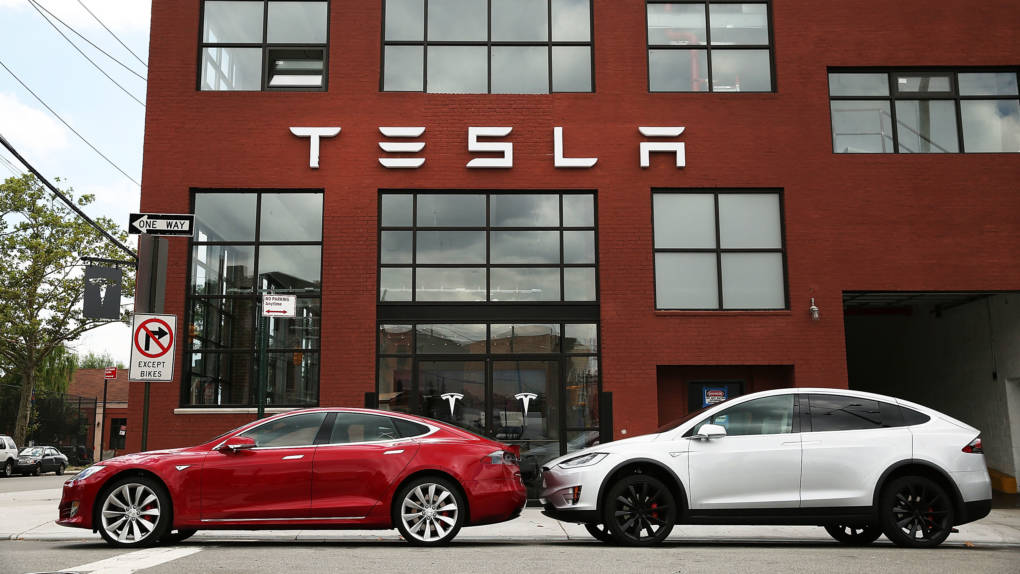
"caption": "Tesla vehicles sit parked outside of a new Tesla showroom and service center in Red Hook, Brooklyn, in 2016.",
"description": "Tesla vehicles sit parked outside of a new Tesla showroom and service center in Red Hook, Brooklyn in 2016.",
"title": "Tesla vehicles sit parked outside of a new Tesla showroom and service center in Red Hook, Brooklyn in 2016.",
"credit": "Spencer Platt/Getty Images",
"status": "inherit",
"isLoading": false,
"fetchFailed": false
},
"news_11662010": {
"type": "attachments",
"id": "news_11662010",
"meta": {
"index": "attachments_1716263798",
"site": "news",
"id": "11662010",
"found": true
},
"parent": 11662009,
"imgSizes": {
"small": {
"file": "https://ww2.kqed.org/app/uploads/sites/10/2018/04/gettyimages-632412514trumpcomey_wide-51824fb0db02f1e6c8ec6df1d0619d8128814313-520x293.jpg",
"width": 520,
"mimeType": "image/jpeg",
"height": 293
},
"twentyfourteen-full-width": {
"file": "https://ww2.kqed.org/app/uploads/sites/10/2018/04/gettyimages-632412514trumpcomey_wide-51824fb0db02f1e6c8ec6df1d0619d8128814313-1038x576.jpg",
"width": 1038,
"mimeType": "image/jpeg",
"height": 576
},
"thumbnail": {
"file": "https://ww2.kqed.org/app/uploads/sites/10/2018/04/gettyimages-632412514trumpcomey_wide-51824fb0db02f1e6c8ec6df1d0619d8128814313-160x90.jpg",
"width": 160,
"mimeType": "image/jpeg",
"height": 90
},
"fd-sm": {
"file": "https://ww2.kqed.org/app/uploads/sites/10/2018/04/gettyimages-632412514trumpcomey_wide-51824fb0db02f1e6c8ec6df1d0619d8128814313-960x540.jpg",
"width": 960,
"mimeType": "image/jpeg",
"height": 540
},
"post-thumbnail": {
"file": "https://ww2.kqed.org/app/uploads/sites/10/2018/04/gettyimages-632412514trumpcomey_wide-51824fb0db02f1e6c8ec6df1d0619d8128814313-672x372.jpg",
"width": 672,
"mimeType": "image/jpeg",
"height": 372
},
"xsmall": {
"file": "https://ww2.kqed.org/app/uploads/sites/10/2018/04/gettyimages-632412514trumpcomey_wide-51824fb0db02f1e6c8ec6df1d0619d8128814313-375x211.jpg",
"width": 375,
"mimeType": "image/jpeg",
"height": 211
},
"kqedFullSize": {
"file": "https://ww2.kqed.org/app/uploads/sites/10/2018/04/gettyimages-632412514trumpcomey_wide-51824fb0db02f1e6c8ec6df1d0619d8128814313-e1523646344701.jpg",
"width": 1920,
"height": 1080
},
"large": {
"file": "https://ww2.kqed.org/app/uploads/sites/10/2018/04/gettyimages-632412514trumpcomey_wide-51824fb0db02f1e6c8ec6df1d0619d8128814313-1020x574.jpg",
"width": 1020,
"mimeType": "image/jpeg",
"height": 574
},
"xlarge": {
"file": "https://ww2.kqed.org/app/uploads/sites/10/2018/04/gettyimages-632412514trumpcomey_wide-51824fb0db02f1e6c8ec6df1d0619d8128814313-1180x664.jpg",
"width": 1180,
"mimeType": "image/jpeg",
"height": 664
},
"complete_open_graph": {
"file": "https://ww2.kqed.org/app/uploads/sites/10/2018/04/gettyimages-632412514trumpcomey_wide-51824fb0db02f1e6c8ec6df1d0619d8128814313-1200x675.jpg",
"width": 1200,
"mimeType": "image/jpeg",
"height": 675
},
"guest-author-50": {
"file": "https://ww2.kqed.org/app/uploads/sites/10/2018/04/gettyimages-632412514trumpcomey_wide-51824fb0db02f1e6c8ec6df1d0619d8128814313-50x50.jpg",
"width": 50,
"mimeType": "image/jpeg",
"height": 50
},
"guest-author-96": {
"file": "https://ww2.kqed.org/app/uploads/sites/10/2018/04/gettyimages-632412514trumpcomey_wide-51824fb0db02f1e6c8ec6df1d0619d8128814313-96x96.jpg",
"width": 96,
"mimeType": "image/jpeg",
"height": 96
},
"medium": {
"file": "https://ww2.kqed.org/app/uploads/sites/10/2018/04/gettyimages-632412514trumpcomey_wide-51824fb0db02f1e6c8ec6df1d0619d8128814313-800x450.jpg",
"width": 800,
"mimeType": "image/jpeg",
"height": 450
},
"guest-author-64": {
"file": "https://ww2.kqed.org/app/uploads/sites/10/2018/04/gettyimages-632412514trumpcomey_wide-51824fb0db02f1e6c8ec6df1d0619d8128814313-64x64.jpg",
"width": 64,
"mimeType": "image/jpeg",
"height": 64
},
"guest-author-32": {
"file": "https://ww2.kqed.org/app/uploads/sites/10/2018/04/gettyimages-632412514trumpcomey_wide-51824fb0db02f1e6c8ec6df1d0619d8128814313-32x32.jpg",
"width": 32,
"mimeType": "image/jpeg",
"height": 32
},
"fd-lrg": {
"file": "https://ww2.kqed.org/app/uploads/sites/10/2018/04/gettyimages-632412514trumpcomey_wide-51824fb0db02f1e6c8ec6df1d0619d8128814313-1920x1080.jpg",
"width": 1920,
"mimeType": "image/jpeg",
"height": 1080
},
"fd-med": {
"file": "https://ww2.kqed.org/app/uploads/sites/10/2018/04/gettyimages-632412514trumpcomey_wide-51824fb0db02f1e6c8ec6df1d0619d8128814313-1180x664.jpg",
"width": 1180,
"mimeType": "image/jpeg",
"height": 664
},
"full-width": {
"file": "https://ww2.kqed.org/app/uploads/sites/10/2018/04/gettyimages-632412514trumpcomey_wide-51824fb0db02f1e6c8ec6df1d0619d8128814313-1920x1080.jpg",
"width": 1920,
"mimeType": "image/jpeg",
"height": 1080
},
"detail": {
"file": "https://ww2.kqed.org/app/uploads/sites/10/2018/04/gettyimages-632412514trumpcomey_wide-51824fb0db02f1e6c8ec6df1d0619d8128814313-150x150.jpg",
"width": 150,
"mimeType": "image/jpeg",
"height": 150
},
"guest-author-128": {
"file": "https://ww2.kqed.org/app/uploads/sites/10/2018/04/gettyimages-632412514trumpcomey_wide-51824fb0db02f1e6c8ec6df1d0619d8128814313-128x128.jpg",
"width": 128,
"mimeType": "image/jpeg",
"height": 128
},
"xxsmall": {
"file": "https://ww2.kqed.org/app/uploads/sites/10/2018/04/gettyimages-632412514trumpcomey_wide-51824fb0db02f1e6c8ec6df1d0619d8128814313-240x135.jpg",
"width": 240,
"mimeType": "image/jpeg",
"height": 135
}
},
"publishDate": 1523646118,
"modified": 1523646330,
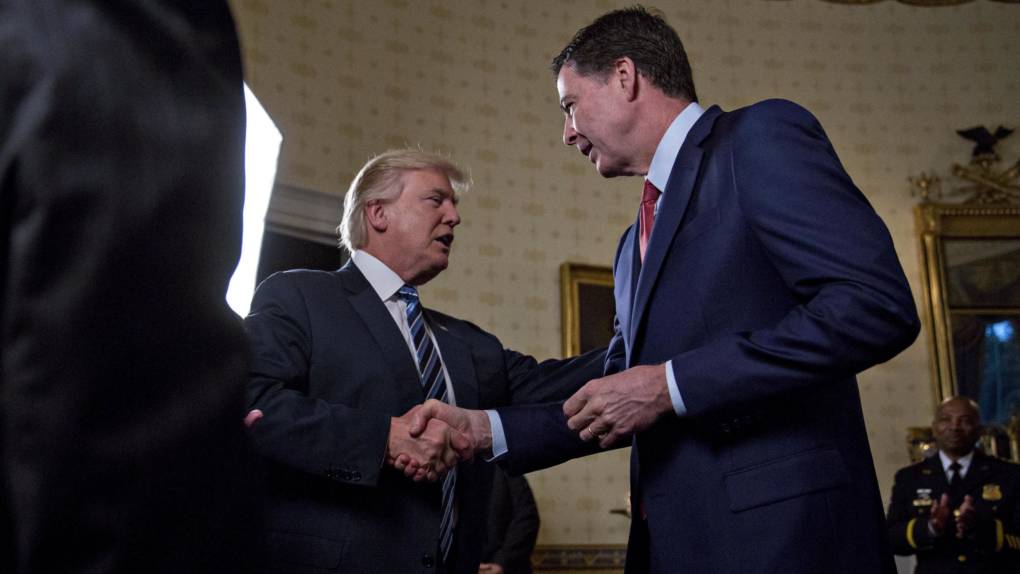
"caption": "The broad portrait James Comey tries to paint is of President Trump as a president so far outside democratic norms that he is a danger to the republic as he spouts conspiracy theories and untruths regularly.",
"description": "The broad portrait James Comey tries to paint is of President Trump as a president so far outside democratic norms that he is a danger to the republic as he spouts conspiracy theories and untruths regularly.",
"title": "The broad portrait James Comey tries to paint is of President Trump as a president so far outside democratic norms that he is a danger to the republic as he spouts conspiracy theories and untruths regularly.",
"credit": "Pool/Getty Images",
"status": "inherit",
"isLoading": false,
"fetchFailed": false
},
"news_11661296": {
"type": "attachments",
"id": "news_11661296",
"meta": {
"index": "attachments_1716263798",
"site": "news",
"id": "11661296",
"found": true
},
"parent": 11661295,
"imgSizes": {
"small": {
"file": "https://ww2.kqed.org/app/uploads/sites/10/2018/04/gettyimages-944410300_wide-ba1ec8bf1c903df916713ce47a712d5f2c435e1c-520x293.jpg",
"width": 520,
"mimeType": "image/jpeg",
"height": 293
},
"twentyfourteen-full-width": {
"file": "https://ww2.kqed.org/app/uploads/sites/10/2018/04/gettyimages-944410300_wide-ba1ec8bf1c903df916713ce47a712d5f2c435e1c-1038x576.jpg",
"width": 1038,
"mimeType": "image/jpeg",
"height": 576
},
"thumbnail": {
"file": "https://ww2.kqed.org/app/uploads/sites/10/2018/04/gettyimages-944410300_wide-ba1ec8bf1c903df916713ce47a712d5f2c435e1c-160x90.jpg",
"width": 160,
"mimeType": "image/jpeg",
"height": 90
},
"fd-sm": {
"file": "https://ww2.kqed.org/app/uploads/sites/10/2018/04/gettyimages-944410300_wide-ba1ec8bf1c903df916713ce47a712d5f2c435e1c-960x540.jpg",
"width": 960,
"mimeType": "image/jpeg",
"height": 540
},
"post-thumbnail": {
"file": "https://ww2.kqed.org/app/uploads/sites/10/2018/04/gettyimages-944410300_wide-ba1ec8bf1c903df916713ce47a712d5f2c435e1c-672x372.jpg",
"width": 672,
"mimeType": "image/jpeg",
"height": 372
},
"xsmall": {
"file": "https://ww2.kqed.org/app/uploads/sites/10/2018/04/gettyimages-944410300_wide-ba1ec8bf1c903df916713ce47a712d5f2c435e1c-375x211.jpg",
"width": 375,
"mimeType": "image/jpeg",
"height": 211
},
"kqedFullSize": {
"file": "https://ww2.kqed.org/app/uploads/sites/10/2018/04/gettyimages-944410300_wide-ba1ec8bf1c903df916713ce47a712d5f2c435e1c.jpg",
"width": 2608,
"height": 1467
},
"large": {
"file": "https://ww2.kqed.org/app/uploads/sites/10/2018/04/gettyimages-944410300_wide-ba1ec8bf1c903df916713ce47a712d5f2c435e1c-1020x574.jpg",
"width": 1020,
"mimeType": "image/jpeg",
"height": 574
},
"xlarge": {
"file": "https://ww2.kqed.org/app/uploads/sites/10/2018/04/gettyimages-944410300_wide-ba1ec8bf1c903df916713ce47a712d5f2c435e1c-1180x664.jpg",
"width": 1180,
"mimeType": "image/jpeg",
"height": 664
},
"guest-author-50": {
"file": "https://ww2.kqed.org/app/uploads/sites/10/2018/04/gettyimages-944410300_wide-ba1ec8bf1c903df916713ce47a712d5f2c435e1c-50x50.jpg",
"width": 50,
"mimeType": "image/jpeg",
"height": 50
},
"guest-author-96": {
"file": "https://ww2.kqed.org/app/uploads/sites/10/2018/04/gettyimages-944410300_wide-ba1ec8bf1c903df916713ce47a712d5f2c435e1c-96x96.jpg",
"width": 96,
"mimeType": "image/jpeg",
"height": 96
},
"medium": {
"file": "https://ww2.kqed.org/app/uploads/sites/10/2018/04/gettyimages-944410300_wide-ba1ec8bf1c903df916713ce47a712d5f2c435e1c-800x450.jpg",
"width": 800,
"mimeType": "image/jpeg",
"height": 450
},
"guest-author-64": {
"file": "https://ww2.kqed.org/app/uploads/sites/10/2018/04/gettyimages-944410300_wide-ba1ec8bf1c903df916713ce47a712d5f2c435e1c-64x64.jpg",
"width": 64,
"mimeType": "image/jpeg",
"height": 64
},
"guest-author-32": {
"file": "https://ww2.kqed.org/app/uploads/sites/10/2018/04/gettyimages-944410300_wide-ba1ec8bf1c903df916713ce47a712d5f2c435e1c-32x32.jpg",
"width": 32,
"mimeType": "image/jpeg",
"height": 32
},
"fd-lrg": {
"file": "https://ww2.kqed.org/app/uploads/sites/10/2018/04/gettyimages-944410300_wide-ba1ec8bf1c903df916713ce47a712d5f2c435e1c-1920x1080.jpg",
"width": 1920,
"mimeType": "image/jpeg",
"height": 1080
},
"fd-med": {
"file": "https://ww2.kqed.org/app/uploads/sites/10/2018/04/gettyimages-944410300_wide-ba1ec8bf1c903df916713ce47a712d5f2c435e1c-1180x664.jpg",
"width": 1180,
"mimeType": "image/jpeg",
"height": 664
},
"full-width": {
"file": "https://ww2.kqed.org/app/uploads/sites/10/2018/04/gettyimages-944410300_wide-ba1ec8bf1c903df916713ce47a712d5f2c435e1c-1920x1080.jpg",
"width": 1920,
"mimeType": "image/jpeg",
"height": 1080
},
"detail": {
"file": "https://ww2.kqed.org/app/uploads/sites/10/2018/04/gettyimages-944410300_wide-ba1ec8bf1c903df916713ce47a712d5f2c435e1c-150x150.jpg",
"width": 150,
"mimeType": "image/jpeg",
"height": 150
},
"guest-author-128": {
"file": "https://ww2.kqed.org/app/uploads/sites/10/2018/04/gettyimages-944410300_wide-ba1ec8bf1c903df916713ce47a712d5f2c435e1c-128x128.jpg",
"width": 128,
"mimeType": "image/jpeg",
"height": 128
},
"xxsmall": {
"file": "https://ww2.kqed.org/app/uploads/sites/10/2018/04/gettyimages-944410300_wide-ba1ec8bf1c903df916713ce47a712d5f2c435e1c-240x135.jpg",
"width": 240,
"mimeType": "image/jpeg",
"height": 135
}
},
"publishDate": 1523460368,
"modified": 1523460607,
"caption": "Facebook co-founder and CEO Mark Zuckerberg arrives to testify following a break during a Senate Commerce, Science and Transportation Committee and Senate Judiciary Committee joint hearing on Capitol Hill on Tuesday.",
"description": "Facebook co-founder and CEO Mark Zuckerberg arrives to testify following a break during a Senate Commerce, Science and Transportation Committee and Senate Judiciary Committee joint hearing on Capitol Hill on Tuesday.",
"title": "Facebook co-founder and CEO Mark Zuckerberg arrives to testify following a break during a Senate Commerce, Science and Transportation Committee and Senate Judiciary Committee joint hearing on Capitol Hill on Tuesday.",
"credit": "SAUL LOEB / AFP/GETTY IMAGES",
"status": "inherit",
"isLoading": false,
"fetchFailed": false
},
"news_11661268": {
"type": "attachments",
"id": "news_11661268",
"meta": {
"index": "attachments_1716263798",
"site": "news",
"id": "11661268",
"found": true
},
"parent": 11661267,
"imgSizes": {
"small": {
"file": "https://ww2.kqed.org/app/uploads/sites/10/2018/04/ap_18100686252663_custom-956cc1f6657aa487fdb758a195d89fb07a306151-520x312.jpg",
"width": 520,
"mimeType": "image/jpeg",
"height": 312
},
"twentyfourteen-full-width": {
"file": "https://ww2.kqed.org/app/uploads/sites/10/2018/04/ap_18100686252663_custom-956cc1f6657aa487fdb758a195d89fb07a306151-1038x576.jpg",
"width": 1038,
"mimeType": "image/jpeg",
"height": 576
},
"thumbnail": {
"file": "https://ww2.kqed.org/app/uploads/sites/10/2018/04/ap_18100686252663_custom-956cc1f6657aa487fdb758a195d89fb07a306151-160x96.jpg",
"width": 160,
"mimeType": "image/jpeg",
"height": 96
},
"fd-sm": {
"file": "https://ww2.kqed.org/app/uploads/sites/10/2018/04/ap_18100686252663_custom-956cc1f6657aa487fdb758a195d89fb07a306151-960x576.jpg",
"width": 960,
"mimeType": "image/jpeg",
"height": 576
},
"post-thumbnail": {
"file": "https://ww2.kqed.org/app/uploads/sites/10/2018/04/ap_18100686252663_custom-956cc1f6657aa487fdb758a195d89fb07a306151-672x372.jpg",
"width": 672,
"mimeType": "image/jpeg",
"height": 372
},
"xsmall": {
"file": "https://ww2.kqed.org/app/uploads/sites/10/2018/04/ap_18100686252663_custom-956cc1f6657aa487fdb758a195d89fb07a306151-375x225.jpg",
"width": 375,
"mimeType": "image/jpeg",
"height": 225
},
"kqedFullSize": {
"file": "https://ww2.kqed.org/app/uploads/sites/10/2018/04/ap_18100686252663_custom-956cc1f6657aa487fdb758a195d89fb07a306151-e1523411373670.jpg",
"width": 1920,
"height": 1152
},
"large": {
"file": "https://ww2.kqed.org/app/uploads/sites/10/2018/04/ap_18100686252663_custom-956cc1f6657aa487fdb758a195d89fb07a306151-1020x612.jpg",
"width": 1020,
"mimeType": "image/jpeg",
"height": 612
},
"xlarge": {
"file": "https://ww2.kqed.org/app/uploads/sites/10/2018/04/ap_18100686252663_custom-956cc1f6657aa487fdb758a195d89fb07a306151-1180x708.jpg",
"width": 1180,
"mimeType": "image/jpeg",
"height": 708
},
"guest-author-50": {
"file": "https://ww2.kqed.org/app/uploads/sites/10/2018/04/ap_18100686252663_custom-956cc1f6657aa487fdb758a195d89fb07a306151-50x50.jpg",
"width": 50,
"mimeType": "image/jpeg",
"height": 50
},
"guest-author-96": {
"file": "https://ww2.kqed.org/app/uploads/sites/10/2018/04/ap_18100686252663_custom-956cc1f6657aa487fdb758a195d89fb07a306151-96x96.jpg",
"width": 96,
"mimeType": "image/jpeg",
"height": 96
},
"medium": {
"file": "https://ww2.kqed.org/app/uploads/sites/10/2018/04/ap_18100686252663_custom-956cc1f6657aa487fdb758a195d89fb07a306151-800x480.jpg",
"width": 800,
"mimeType": "image/jpeg",
"height": 480
},
"guest-author-64": {
"file": "https://ww2.kqed.org/app/uploads/sites/10/2018/04/ap_18100686252663_custom-956cc1f6657aa487fdb758a195d89fb07a306151-64x64.jpg",
"width": 64,
"mimeType": "image/jpeg",
"height": 64
},
"guest-author-32": {
"file": "https://ww2.kqed.org/app/uploads/sites/10/2018/04/ap_18100686252663_custom-956cc1f6657aa487fdb758a195d89fb07a306151-32x32.jpg",
"width": 32,
"mimeType": "image/jpeg",
"height": 32
},
"fd-lrg": {
"file": "https://ww2.kqed.org/app/uploads/sites/10/2018/04/ap_18100686252663_custom-956cc1f6657aa487fdb758a195d89fb07a306151-1920x1152.jpg",
"width": 1920,
"mimeType": "image/jpeg",
"height": 1152
},
"fd-med": {
"file": "https://ww2.kqed.org/app/uploads/sites/10/2018/04/ap_18100686252663_custom-956cc1f6657aa487fdb758a195d89fb07a306151-1180x708.jpg",
"width": 1180,
"mimeType": "image/jpeg",
"height": 708
},
"full-width": {
"file": "https://ww2.kqed.org/app/uploads/sites/10/2018/04/ap_18100686252663_custom-956cc1f6657aa487fdb758a195d89fb07a306151-1920x1152.jpg",
"width": 1920,
"mimeType": "image/jpeg",
"height": 1152
},
"detail": {
"file": "https://ww2.kqed.org/app/uploads/sites/10/2018/04/ap_18100686252663_custom-956cc1f6657aa487fdb758a195d89fb07a306151-150x150.jpg",
"width": 150,
"mimeType": "image/jpeg",
"height": 150
},
"guest-author-128": {
"file": "https://ww2.kqed.org/app/uploads/sites/10/2018/04/ap_18100686252663_custom-956cc1f6657aa487fdb758a195d89fb07a306151-128x128.jpg",
"width": 128,
"mimeType": "image/jpeg",
"height": 128
},
"xxsmall": {
"file": "https://ww2.kqed.org/app/uploads/sites/10/2018/04/ap_18100686252663_custom-956cc1f6657aa487fdb758a195d89fb07a306151-240x144.jpg",
"width": 240,
"mimeType": "image/jpeg",
"height": 144
}
},
"publishDate": 1523411280,
"modified": 1523411394,
"caption": "White House press secretary Sarah Sanders said at a briefing on Tuesday that President Trump was frustrated by the special counsel's investigation.",
"description": "White House press secretary Sarah Sanders said at a briefing on Tuesday that President Trump was frustrated by the special counsel's investigation.",
"title": "White House press secretary Sarah Sanders said at a briefing on Tuesday that President Trump was frustrated by the special counsel's investigation.",
"credit": "Evan Vucci/AP",
"status": "inherit",
"isLoading": false,
"fetchFailed": false
},
"news_11661106": {
"type": "attachments",
"id": "news_11661106",
"meta": {
"index": "attachments_1716263798",
"site": "news",
"id": "11661106",
"found": true
},
"parent": 11661105,
"imgSizes": {
"small": {
"file": "https://ww2.kqed.org/app/uploads/sites/10/2018/04/ap_18099799656405_wide-31629caf32c30258388282beaab9f000772f3a8c-520x292.jpg",
"width": 520,
"mimeType": "image/jpeg",
"height": 292
},
"twentyfourteen-full-width": {
"file": "https://ww2.kqed.org/app/uploads/sites/10/2018/04/ap_18099799656405_wide-31629caf32c30258388282beaab9f000772f3a8c-1038x576.jpg",
"width": 1038,
"mimeType": "image/jpeg",
"height": 576
},
"thumbnail": {
"file": "https://ww2.kqed.org/app/uploads/sites/10/2018/04/ap_18099799656405_wide-31629caf32c30258388282beaab9f000772f3a8c-160x90.jpg",
"width": 160,
"mimeType": "image/jpeg",
"height": 90
},
"fd-sm": {
"file": "https://ww2.kqed.org/app/uploads/sites/10/2018/04/ap_18099799656405_wide-31629caf32c30258388282beaab9f000772f3a8c-960x540.jpg",
"width": 960,
"mimeType": "image/jpeg",
"height": 540
},
"post-thumbnail": {
"file": "https://ww2.kqed.org/app/uploads/sites/10/2018/04/ap_18099799656405_wide-31629caf32c30258388282beaab9f000772f3a8c-672x372.jpg",
"width": 672,
"mimeType": "image/jpeg",
"height": 372
},
"xsmall": {
"file": "https://ww2.kqed.org/app/uploads/sites/10/2018/04/ap_18099799656405_wide-31629caf32c30258388282beaab9f000772f3a8c-375x211.jpg",
"width": 375,
"mimeType": "image/jpeg",
"height": 211
},
"kqedFullSize": {
"file": "https://ww2.kqed.org/app/uploads/sites/10/2018/04/ap_18099799656405_wide-31629caf32c30258388282beaab9f000772f3a8c-e1523388497119.jpg",
"width": 1920,
"height": 1080
},
"large": {
"file": "https://ww2.kqed.org/app/uploads/sites/10/2018/04/ap_18099799656405_wide-31629caf32c30258388282beaab9f000772f3a8c-1020x574.jpg",
"width": 1020,
"mimeType": "image/jpeg",
"height": 574
},
"xlarge": {
"file": "https://ww2.kqed.org/app/uploads/sites/10/2018/04/ap_18099799656405_wide-31629caf32c30258388282beaab9f000772f3a8c-1180x664.jpg",
"width": 1180,
"mimeType": "image/jpeg",
"height": 664
},
"guest-author-50": {
"file": "https://ww2.kqed.org/app/uploads/sites/10/2018/04/ap_18099799656405_wide-31629caf32c30258388282beaab9f000772f3a8c-50x50.jpg",
"width": 50,
"mimeType": "image/jpeg",
"height": 50
},
"guest-author-96": {
"file": "https://ww2.kqed.org/app/uploads/sites/10/2018/04/ap_18099799656405_wide-31629caf32c30258388282beaab9f000772f3a8c-96x96.jpg",
"width": 96,
"mimeType": "image/jpeg",
"height": 96
},
"medium": {
"file": "https://ww2.kqed.org/app/uploads/sites/10/2018/04/ap_18099799656405_wide-31629caf32c30258388282beaab9f000772f3a8c-800x450.jpg",
"width": 800,
"mimeType": "image/jpeg",
"height": 450
},
"guest-author-64": {
"file": "https://ww2.kqed.org/app/uploads/sites/10/2018/04/ap_18099799656405_wide-31629caf32c30258388282beaab9f000772f3a8c-64x64.jpg",
"width": 64,
"mimeType": "image/jpeg",
"height": 64
},
"guest-author-32": {
"file": "https://ww2.kqed.org/app/uploads/sites/10/2018/04/ap_18099799656405_wide-31629caf32c30258388282beaab9f000772f3a8c-32x32.jpg",
"width": 32,
"mimeType": "image/jpeg",
"height": 32
},
"fd-lrg": {
"file": "https://ww2.kqed.org/app/uploads/sites/10/2018/04/ap_18099799656405_wide-31629caf32c30258388282beaab9f000772f3a8c-1920x1080.jpg",
"width": 1920,
"mimeType": "image/jpeg",
"height": 1080
},
"fd-med": {
"file": "https://ww2.kqed.org/app/uploads/sites/10/2018/04/ap_18099799656405_wide-31629caf32c30258388282beaab9f000772f3a8c-1180x664.jpg",
"width": 1180,
"mimeType": "image/jpeg",
"height": 664
},
"full-width": {
"file": "https://ww2.kqed.org/app/uploads/sites/10/2018/04/ap_18099799656405_wide-31629caf32c30258388282beaab9f000772f3a8c-1920x1080.jpg",
"width": 1920,
"mimeType": "image/jpeg",
"height": 1080
},
"detail": {
"file": "https://ww2.kqed.org/app/uploads/sites/10/2018/04/ap_18099799656405_wide-31629caf32c30258388282beaab9f000772f3a8c-150x150.jpg",
"width": 150,
"mimeType": "image/jpeg",
"height": 150
},
"guest-author-128": {
"file": "https://ww2.kqed.org/app/uploads/sites/10/2018/04/ap_18099799656405_wide-31629caf32c30258388282beaab9f000772f3a8c-128x128.jpg",
"width": 128,
"mimeType": "image/jpeg",
"height": 128
},
"xxsmall": {
"file": "https://ww2.kqed.org/app/uploads/sites/10/2018/04/ap_18099799656405_wide-31629caf32c30258388282beaab9f000772f3a8c-240x135.jpg",
"width": 240,
"mimeType": "image/jpeg",
"height": 135
}
},
"publishDate": 1523388391,
"modified": 1523388484,
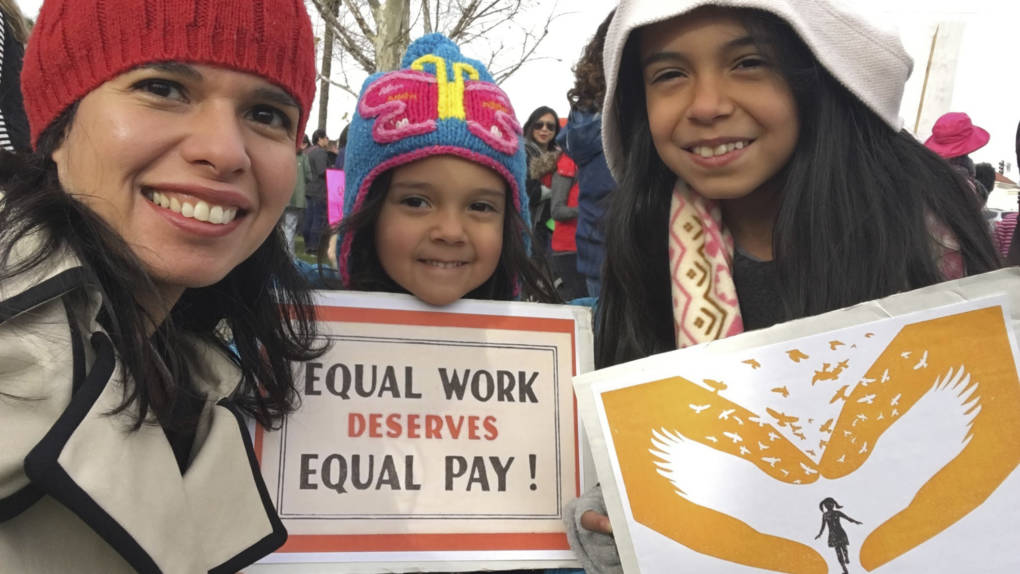
"caption": "A federal court has sided with Aileen Rizo, who filed suit after realizing her male counterparts were being paid more. The ruling overrules a previous interpretation of the 1963 Equal Pay Act. Rizo is seen here with her daughters in a photo she provided to the AP in 2017.",
"description": "A federal court has sided with Aileen Rizo, who filed suit after realizing her male counterparts were being paid more. The ruling overrules a previous interpretation of the 1963 Equal Pay Act. Rizo is seen here with her daughters in a photo she provided to the AP in 2017",
"title": "A federal court has sided with Aileen Rizo, who filed suit after realizing her male counterparts were being paid more. The ruling overrules a previous interpretation of the 1963 Equal Pay Act. Rizo is seen here with her daughters in a photo she provided to the AP in 2017.",
"credit": "Aileen Rizo/AP",
"status": "inherit",
"isLoading": false,
"fetchFailed": false
},
"news_11660903": {
"type": "attachments",
"id": "news_11660903",
"meta": {
"index": "attachments_1716263798",
"site": "news",
"id": "11660903",
"found": true
},
"parent": 11660902,
"imgSizes": {
"small": {
"file": "https://ww2.kqed.org/app/uploads/sites/10/2018/04/gettyimages-630089750_wide-b4004b9a471618c0563d2117a30d9c9a5c629bd8-520x292.jpg",
"width": 520,
"mimeType": "image/jpeg",
"height": 292
},
"thumbnail": {
"file": "https://ww2.kqed.org/app/uploads/sites/10/2018/04/gettyimages-630089750_wide-b4004b9a471618c0563d2117a30d9c9a5c629bd8-160x90.jpg",
"width": 160,
"mimeType": "image/jpeg",
"height": 90
},
"fd-sm": {
"file": "https://ww2.kqed.org/app/uploads/sites/10/2018/04/gettyimages-630089750_wide-b4004b9a471618c0563d2117a30d9c9a5c629bd8-960x539.jpg",
"width": 960,
"mimeType": "image/jpeg",
"height": 539
},
"post-thumbnail": {
"file": "https://ww2.kqed.org/app/uploads/sites/10/2018/04/gettyimages-630089750_wide-b4004b9a471618c0563d2117a30d9c9a5c629bd8-672x372.jpg",
"width": 672,
"mimeType": "image/jpeg",
"height": 372
},
"xsmall": {
"file": "https://ww2.kqed.org/app/uploads/sites/10/2018/04/gettyimages-630089750_wide-b4004b9a471618c0563d2117a30d9c9a5c629bd8-375x211.jpg",
"width": 375,
"mimeType": "image/jpeg",
"height": 211
},
"kqedFullSize": {
"file": "https://ww2.kqed.org/app/uploads/sites/10/2018/04/gettyimages-630089750_wide-b4004b9a471618c0563d2117a30d9c9a5c629bd8.jpg",
"width": 1018,
"height": 572
},
"guest-author-50": {
"file": "https://ww2.kqed.org/app/uploads/sites/10/2018/04/gettyimages-630089750_wide-b4004b9a471618c0563d2117a30d9c9a5c629bd8-50x50.jpg",
"width": 50,
"mimeType": "image/jpeg",
"height": 50
},
"guest-author-96": {
"file": "https://ww2.kqed.org/app/uploads/sites/10/2018/04/gettyimages-630089750_wide-b4004b9a471618c0563d2117a30d9c9a5c629bd8-96x96.jpg",
"width": 96,
"mimeType": "image/jpeg",
"height": 96
},
"medium": {
"file": "https://ww2.kqed.org/app/uploads/sites/10/2018/04/gettyimages-630089750_wide-b4004b9a471618c0563d2117a30d9c9a5c629bd8-800x450.jpg",
"width": 800,
"mimeType": "image/jpeg",
"height": 450
},
"guest-author-64": {
"file": "https://ww2.kqed.org/app/uploads/sites/10/2018/04/gettyimages-630089750_wide-b4004b9a471618c0563d2117a30d9c9a5c629bd8-64x64.jpg",
"width": 64,
"mimeType": "image/jpeg",
"height": 64
},
"guest-author-32": {
"file": "https://ww2.kqed.org/app/uploads/sites/10/2018/04/gettyimages-630089750_wide-b4004b9a471618c0563d2117a30d9c9a5c629bd8-32x32.jpg",
"width": 32,
"mimeType": "image/jpeg",
"height": 32
},
"detail": {
"file": "https://ww2.kqed.org/app/uploads/sites/10/2018/04/gettyimages-630089750_wide-b4004b9a471618c0563d2117a30d9c9a5c629bd8-150x150.jpg",
"width": 150,
"mimeType": "image/jpeg",
"height": 150
},
"guest-author-128": {
"file": "https://ww2.kqed.org/app/uploads/sites/10/2018/04/gettyimages-630089750_wide-b4004b9a471618c0563d2117a30d9c9a5c629bd8-128x128.jpg",
"width": 128,
"mimeType": "image/jpeg",
"height": 128
},
"xxsmall": {
"file": "https://ww2.kqed.org/app/uploads/sites/10/2018/04/gettyimages-630089750_wide-b4004b9a471618c0563d2117a30d9c9a5c629bd8-240x135.jpg",
"width": 240,
"mimeType": "image/jpeg",
"height": 135
}
},
"publishDate": 1523311282,
"modified": 1523311449,
"caption": "Attorney Michael Cohen arrives at Trump Tower for meetings with then-President-elect Donald Trump in December 2016.",
"description": "Attorney Michael Cohen arrives at Trump Tower for meetings with then-President-elect Donald Trump in December 2016",
"title": "Attorney Michael Cohen arrives at Trump Tower for meetings with then-President-elect Donald Trump in December 2016.",
"credit": "Bryan R. Smith/AFP/Getty Images",
"status": "inherit",
"isLoading": false,
"fetchFailed": false
},
"news_11660747": {
"type": "attachments",
"id": "news_11660747",
"meta": {
"index": "attachments_1716263798",
"site": "news",
"id": "11660747",
"found": true
},
"parent": 11660746,
"imgSizes": {
"small": {
"file": "https://ww2.kqed.org/app/uploads/sites/10/2018/04/gettyimages-936215654-45fdf72f121ffebe786572f10df9d13aab9eee42-520x390.jpg",
"width": 520,
"mimeType": "image/jpeg",
"height": 390
},
"twentyfourteen-full-width": {
"file": "https://ww2.kqed.org/app/uploads/sites/10/2018/04/gettyimages-936215654-45fdf72f121ffebe786572f10df9d13aab9eee42-1038x576.jpg",
"width": 1038,
"mimeType": "image/jpeg",
"height": 576
},
"thumbnail": {
"file": "https://ww2.kqed.org/app/uploads/sites/10/2018/04/gettyimages-936215654-45fdf72f121ffebe786572f10df9d13aab9eee42-160x120.jpg",
"width": 160,
"mimeType": "image/jpeg",
"height": 120
},
"fd-sm": {
"file": "https://ww2.kqed.org/app/uploads/sites/10/2018/04/gettyimages-936215654-45fdf72f121ffebe786572f10df9d13aab9eee42-960x720.jpg",
"width": 960,
"mimeType": "image/jpeg",
"height": 720
},
"post-thumbnail": {
"file": "https://ww2.kqed.org/app/uploads/sites/10/2018/04/gettyimages-936215654-45fdf72f121ffebe786572f10df9d13aab9eee42-672x372.jpg",
"width": 672,
"mimeType": "image/jpeg",
"height": 372
},
"xsmall": {
"file": "https://ww2.kqed.org/app/uploads/sites/10/2018/04/gettyimages-936215654-45fdf72f121ffebe786572f10df9d13aab9eee42-375x281.jpg",
"width": 375,
"mimeType": "image/jpeg",
"height": 281
},
"kqedFullSize": {
"file": "https://ww2.kqed.org/app/uploads/sites/10/2018/04/gettyimages-936215654-45fdf72f121ffebe786572f10df9d13aab9eee42-e1523287361599.jpg",
"width": 1920,
"height": 1440
},
"large": {
"file": "https://ww2.kqed.org/app/uploads/sites/10/2018/04/gettyimages-936215654-45fdf72f121ffebe786572f10df9d13aab9eee42-1020x765.jpg",
"width": 1020,
"mimeType": "image/jpeg",
"height": 765
},
"xlarge": {
"file": "https://ww2.kqed.org/app/uploads/sites/10/2018/04/gettyimages-936215654-45fdf72f121ffebe786572f10df9d13aab9eee42-1180x885.jpg",
"width": 1180,
"mimeType": "image/jpeg",
"height": 885
},
"guest-author-50": {
"file": "https://ww2.kqed.org/app/uploads/sites/10/2018/04/gettyimages-936215654-45fdf72f121ffebe786572f10df9d13aab9eee42-50x50.jpg",
"width": 50,
"mimeType": "image/jpeg",
"height": 50
},
"guest-author-96": {
"file": "https://ww2.kqed.org/app/uploads/sites/10/2018/04/gettyimages-936215654-45fdf72f121ffebe786572f10df9d13aab9eee42-96x96.jpg",
"width": 96,
"mimeType": "image/jpeg",
"height": 96
},
"medium": {
"file": "https://ww2.kqed.org/app/uploads/sites/10/2018/04/gettyimages-936215654-45fdf72f121ffebe786572f10df9d13aab9eee42-800x600.jpg",
"width": 800,
"mimeType": "image/jpeg",
"height": 600
},
"guest-author-64": {
"file": "https://ww2.kqed.org/app/uploads/sites/10/2018/04/gettyimages-936215654-45fdf72f121ffebe786572f10df9d13aab9eee42-64x64.jpg",
"width": 64,
"mimeType": "image/jpeg",
"height": 64
},
"guest-author-32": {
"file": "https://ww2.kqed.org/app/uploads/sites/10/2018/04/gettyimages-936215654-45fdf72f121ffebe786572f10df9d13aab9eee42-32x32.jpg",
"width": 32,
"mimeType": "image/jpeg",
"height": 32
},
"fd-lrg": {
"file": "https://ww2.kqed.org/app/uploads/sites/10/2018/04/gettyimages-936215654-45fdf72f121ffebe786572f10df9d13aab9eee42-1920x1440.jpg",
"width": 1920,
"mimeType": "image/jpeg",
"height": 1440
},
"fd-med": {
"file": "https://ww2.kqed.org/app/uploads/sites/10/2018/04/gettyimages-936215654-45fdf72f121ffebe786572f10df9d13aab9eee42-1180x885.jpg",
"width": 1180,
"mimeType": "image/jpeg",
"height": 885
},
"full-width": {
"file": "https://ww2.kqed.org/app/uploads/sites/10/2018/04/gettyimages-936215654-45fdf72f121ffebe786572f10df9d13aab9eee42-1920x1440.jpg",
"width": 1920,
"mimeType": "image/jpeg",
"height": 1440
},
"detail": {
"file": "https://ww2.kqed.org/app/uploads/sites/10/2018/04/gettyimages-936215654-45fdf72f121ffebe786572f10df9d13aab9eee42-150x150.jpg",
"width": 150,
"mimeType": "image/jpeg",
"height": 150
},
"guest-author-128": {
"file": "https://ww2.kqed.org/app/uploads/sites/10/2018/04/gettyimages-936215654-45fdf72f121ffebe786572f10df9d13aab9eee42-128x128.jpg",
"width": 128,
"mimeType": "image/jpeg",
"height": 128
},
"xxsmall": {
"file": "https://ww2.kqed.org/app/uploads/sites/10/2018/04/gettyimages-936215654-45fdf72f121ffebe786572f10df9d13aab9eee42-240x180.jpg",
"width": 240,
"mimeType": "image/jpeg",
"height": 180
}
},
"publishDate": 1523287240,
"modified": 1523287378,
"caption": "News about smartphone addiction, false stories and election interference have some tech executives regretful about what they've created.",
"description": "News about smartphone addiction, false stories and election interference have some tech executives regretful about what they've created.",
"title": "News about smartphone addiction, false stories and election interference have some tech executives regretful about what they've created.",
"credit": "Manan Vatsyayana/AFP/Getty Images",
"status": "inherit",
"isLoading": false,
"fetchFailed": false
},
"news_11660375": {
"type": "attachments",
"id": "news_11660375",
"meta": {
"index": "attachments_1716263798",
"site": "news",
"id": "11660375",
"found": true
},
"parent": 11660374,
"imgSizes": {
"small": {
"file": "https://ww2.kqed.org/app/uploads/sites/10/2018/04/img_5750_wide-80f27fdc6d5c86253038bdaa8838733d0d2f2680-520x293.jpg",
"width": 520,
"mimeType": "image/jpeg",
"height": 293
},
"twentyfourteen-full-width": {
"file": "https://ww2.kqed.org/app/uploads/sites/10/2018/04/img_5750_wide-80f27fdc6d5c86253038bdaa8838733d0d2f2680-1038x576.jpg",
"width": 1038,
"mimeType": "image/jpeg",
"height": 576
},
"thumbnail": {
"file": "https://ww2.kqed.org/app/uploads/sites/10/2018/04/img_5750_wide-80f27fdc6d5c86253038bdaa8838733d0d2f2680-160x90.jpg",
"width": 160,
"mimeType": "image/jpeg",
"height": 90
},
"fd-sm": {
"file": "https://ww2.kqed.org/app/uploads/sites/10/2018/04/img_5750_wide-80f27fdc6d5c86253038bdaa8838733d0d2f2680-960x540.jpg",
"width": 960,
"mimeType": "image/jpeg",
"height": 540
},
"post-thumbnail": {
"file": "https://ww2.kqed.org/app/uploads/sites/10/2018/04/img_5750_wide-80f27fdc6d5c86253038bdaa8838733d0d2f2680-672x372.jpg",
"width": 672,
"mimeType": "image/jpeg",
"height": 372
},
"xsmall": {
"file": "https://ww2.kqed.org/app/uploads/sites/10/2018/04/img_5750_wide-80f27fdc6d5c86253038bdaa8838733d0d2f2680-375x211.jpg",
"width": 375,
"mimeType": "image/jpeg",
"height": 211
},
"kqedFullSize": {
"file": "https://ww2.kqed.org/app/uploads/sites/10/2018/04/img_5750_wide-80f27fdc6d5c86253038bdaa8838733d0d2f2680-e1523049154242.jpg",
"width": 1920,
"height": 1080
},
"large": {
"file": "https://ww2.kqed.org/app/uploads/sites/10/2018/04/img_5750_wide-80f27fdc6d5c86253038bdaa8838733d0d2f2680-1020x574.jpg",
"width": 1020,
"mimeType": "image/jpeg",
"height": 574
},
"xlarge": {
"file": "https://ww2.kqed.org/app/uploads/sites/10/2018/04/img_5750_wide-80f27fdc6d5c86253038bdaa8838733d0d2f2680-1180x664.jpg",
"width": 1180,
"mimeType": "image/jpeg",
"height": 664
},
"guest-author-50": {
"file": "https://ww2.kqed.org/app/uploads/sites/10/2018/04/img_5750_wide-80f27fdc6d5c86253038bdaa8838733d0d2f2680-50x50.jpg",
"width": 50,
"mimeType": "image/jpeg",
"height": 50
},
"guest-author-96": {
"file": "https://ww2.kqed.org/app/uploads/sites/10/2018/04/img_5750_wide-80f27fdc6d5c86253038bdaa8838733d0d2f2680-96x96.jpg",
"width": 96,
"mimeType": "image/jpeg",
"height": 96
},
"medium": {
"file": "https://ww2.kqed.org/app/uploads/sites/10/2018/04/img_5750_wide-80f27fdc6d5c86253038bdaa8838733d0d2f2680-800x450.jpg",
"width": 800,
"mimeType": "image/jpeg",
"height": 450
},
"guest-author-64": {
"file": "https://ww2.kqed.org/app/uploads/sites/10/2018/04/img_5750_wide-80f27fdc6d5c86253038bdaa8838733d0d2f2680-64x64.jpg",
"width": 64,
"mimeType": "image/jpeg",
"height": 64
},
"guest-author-32": {
"file": "https://ww2.kqed.org/app/uploads/sites/10/2018/04/img_5750_wide-80f27fdc6d5c86253038bdaa8838733d0d2f2680-32x32.jpg",
"width": 32,
"mimeType": "image/jpeg",
"height": 32
},
"fd-lrg": {
"file": "https://ww2.kqed.org/app/uploads/sites/10/2018/04/img_5750_wide-80f27fdc6d5c86253038bdaa8838733d0d2f2680-1920x1080.jpg",
"width": 1920,
"mimeType": "image/jpeg",
"height": 1080
},
"fd-med": {
"file": "https://ww2.kqed.org/app/uploads/sites/10/2018/04/img_5750_wide-80f27fdc6d5c86253038bdaa8838733d0d2f2680-1180x664.jpg",
"width": 1180,
"mimeType": "image/jpeg",
"height": 664
},
"full-width": {
"file": "https://ww2.kqed.org/app/uploads/sites/10/2018/04/img_5750_wide-80f27fdc6d5c86253038bdaa8838733d0d2f2680-1920x1080.jpg",
"width": 1920,
"mimeType": "image/jpeg",
"height": 1080
},
"detail": {
"file": "https://ww2.kqed.org/app/uploads/sites/10/2018/04/img_5750_wide-80f27fdc6d5c86253038bdaa8838733d0d2f2680-150x150.jpg",
"width": 150,
"mimeType": "image/jpeg",
"height": 150
},
"guest-author-128": {
"file": "https://ww2.kqed.org/app/uploads/sites/10/2018/04/img_5750_wide-80f27fdc6d5c86253038bdaa8838733d0d2f2680-128x128.jpg",
"width": 128,
"mimeType": "image/jpeg",
"height": 128
},
"xxsmall": {
"file": "https://ww2.kqed.org/app/uploads/sites/10/2018/04/img_5750_wide-80f27fdc6d5c86253038bdaa8838733d0d2f2680-240x135.jpg",
"width": 240,
"mimeType": "image/jpeg",
"height": 135
}
},
"publishDate": 1523049046,
"modified": 1523049145,
"caption": "Los Alamitos Mayor Pro Tem Warren Kusumoto argues his small city is being caught in the middle of a legal fight between the Trump administration and the state of California.",
"description": "Los Alamitos Mayor Pro Tem Warren Kusumoto argues his small city is being caught in the middle of a legal fight between the Trump administration and the state of California.",
"title": "Los Alamitos Mayor Pro Tem Warren Kusumoto argues his small city is being caught in the middle of a legal fight between the Trump administration and the state of California.",
"credit": "Kirk Siegler/NPR",
"status": "inherit",
"isLoading": false,
"fetchFailed": false
},
"news_11660342": {
"type": "attachments",
"id": "news_11660342",
"meta": {
"index": "attachments_1716263798",
"site": "news",
"id": "11660342",
"found": true
},
"parent": 11660340,
"imgSizes": {
"small": {
"file": "https://ww2.kqed.org/app/uploads/sites/10/2018/04/gettyimages-115921695-f6a27d7221bf6affb2c3c51584bc3f674d262e96-520x390.jpg",
"width": 520,
"mimeType": "image/jpeg",
"height": 390
},
"twentyfourteen-full-width": {
"file": "https://ww2.kqed.org/app/uploads/sites/10/2018/04/gettyimages-115921695-f6a27d7221bf6affb2c3c51584bc3f674d262e96-1038x576.jpg",
"width": 1038,
"mimeType": "image/jpeg",
"height": 576
},
"thumbnail": {
"file": "https://ww2.kqed.org/app/uploads/sites/10/2018/04/gettyimages-115921695-f6a27d7221bf6affb2c3c51584bc3f674d262e96-160x120.jpg",
"width": 160,
"mimeType": "image/jpeg",
"height": 120
},
"fd-sm": {
"file": "https://ww2.kqed.org/app/uploads/sites/10/2018/04/gettyimages-115921695-f6a27d7221bf6affb2c3c51584bc3f674d262e96-960x720.jpg",
"width": 960,
"mimeType": "image/jpeg",
"height": 720
},
"post-thumbnail": {
"file": "https://ww2.kqed.org/app/uploads/sites/10/2018/04/gettyimages-115921695-f6a27d7221bf6affb2c3c51584bc3f674d262e96-672x372.jpg",
"width": 672,
"mimeType": "image/jpeg",
"height": 372
},
"xsmall": {
"file": "https://ww2.kqed.org/app/uploads/sites/10/2018/04/gettyimages-115921695-f6a27d7221bf6affb2c3c51584bc3f674d262e96-375x281.jpg",
"width": 375,
"mimeType": "image/jpeg",
"height": 281
},
"kqedFullSize": {
"file": "https://ww2.kqed.org/app/uploads/sites/10/2018/04/gettyimages-115921695-f6a27d7221bf6affb2c3c51584bc3f674d262e96-e1523044211569.jpg",
"width": 1920,
"height": 1440
},
"large": {
"file": "https://ww2.kqed.org/app/uploads/sites/10/2018/04/gettyimages-115921695-f6a27d7221bf6affb2c3c51584bc3f674d262e96-1020x765.jpg",
"width": 1020,
"mimeType": "image/jpeg",
"height": 765
},
"xlarge": {
"file": "https://ww2.kqed.org/app/uploads/sites/10/2018/04/gettyimages-115921695-f6a27d7221bf6affb2c3c51584bc3f674d262e96-1180x885.jpg",
"width": 1180,
"mimeType": "image/jpeg",
"height": 885
},
"guest-author-50": {
"file": "https://ww2.kqed.org/app/uploads/sites/10/2018/04/gettyimages-115921695-f6a27d7221bf6affb2c3c51584bc3f674d262e96-50x50.jpg",
"width": 50,
"mimeType": "image/jpeg",
"height": 50
},
"guest-author-96": {
"file": "https://ww2.kqed.org/app/uploads/sites/10/2018/04/gettyimages-115921695-f6a27d7221bf6affb2c3c51584bc3f674d262e96-96x96.jpg",
"width": 96,
"mimeType": "image/jpeg",
"height": 96
},
"medium": {
"file": "https://ww2.kqed.org/app/uploads/sites/10/2018/04/gettyimages-115921695-f6a27d7221bf6affb2c3c51584bc3f674d262e96-800x600.jpg",
"width": 800,
"mimeType": "image/jpeg",
"height": 600
},
"guest-author-64": {
"file": "https://ww2.kqed.org/app/uploads/sites/10/2018/04/gettyimages-115921695-f6a27d7221bf6affb2c3c51584bc3f674d262e96-64x64.jpg",
"width": 64,
"mimeType": "image/jpeg",
"height": 64
},
"guest-author-32": {
"file": "https://ww2.kqed.org/app/uploads/sites/10/2018/04/gettyimages-115921695-f6a27d7221bf6affb2c3c51584bc3f674d262e96-32x32.jpg",
"width": 32,
"mimeType": "image/jpeg",
"height": 32
},
"fd-lrg": {
"file": "https://ww2.kqed.org/app/uploads/sites/10/2018/04/gettyimages-115921695-f6a27d7221bf6affb2c3c51584bc3f674d262e96-1920x1440.jpg",
"width": 1920,
"mimeType": "image/jpeg",
"height": 1440
},
"fd-med": {
"file": "https://ww2.kqed.org/app/uploads/sites/10/2018/04/gettyimages-115921695-f6a27d7221bf6affb2c3c51584bc3f674d262e96-1180x885.jpg",
"width": 1180,
"mimeType": "image/jpeg",
"height": 885
},
"full-width": {
"file": "https://ww2.kqed.org/app/uploads/sites/10/2018/04/gettyimages-115921695-f6a27d7221bf6affb2c3c51584bc3f674d262e96-1920x1440.jpg",
"width": 1920,
"mimeType": "image/jpeg",
"height": 1440
},
"detail": {
"file": "https://ww2.kqed.org/app/uploads/sites/10/2018/04/gettyimages-115921695-f6a27d7221bf6affb2c3c51584bc3f674d262e96-150x150.jpg",
"width": 150,
"mimeType": "image/jpeg",
"height": 150
},
"guest-author-128": {
"file": "https://ww2.kqed.org/app/uploads/sites/10/2018/04/gettyimages-115921695-f6a27d7221bf6affb2c3c51584bc3f674d262e96-128x128.jpg",
"width": 128,
"mimeType": "image/jpeg",
"height": 128
},
"xxsmall": {
"file": "https://ww2.kqed.org/app/uploads/sites/10/2018/04/gettyimages-115921695-f6a27d7221bf6affb2c3c51584bc3f674d262e96-240x180.jpg",
"width": 240,
"mimeType": "image/jpeg",
"height": 180
}
},
"publishDate": 1523044078,
"modified": 1523044198,
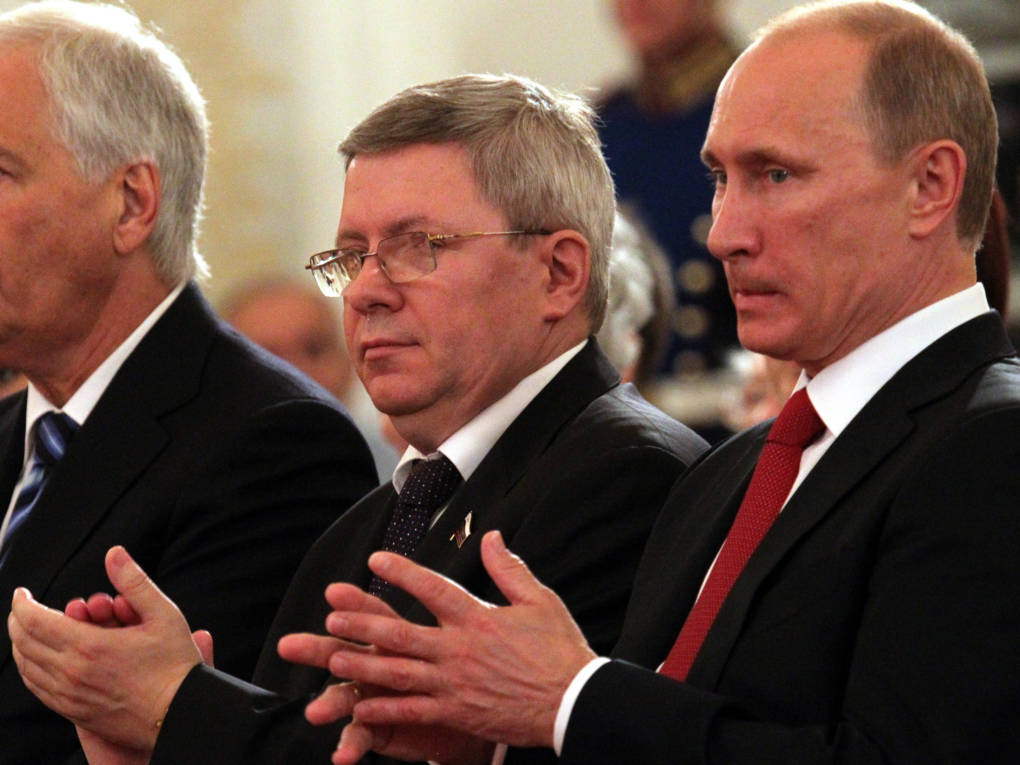
"caption": "Russian politician Alexander Torshin, with Russian leader Vladimir Putin, is one of a number of powerful Russians sanctioned by the United States on Friday.",
"description": "Russian politician Alexander Torshin, with Russian leader Vladimir Putin, is one of a number of powerful Russians sanctioned by the United States on Friday.",
"title": "Russian politician Alexander Torshin, with Russian leader Vladimir Putin, is one of a number of powerful Russians sanctioned by the United States on Friday.",
"credit": "Konstantin Zavrazhin/Getty Images",
"status": "inherit",
"isLoading": false,
"fetchFailed": false
},
"news_11660292": {
"type": "attachments",
"id": "news_11660292",
"meta": {
"index": "attachments_1716263798",
"site": "news",
"id": "11660292",
"found": true
},
"parent": 11660291,
"imgSizes": {
"small": {
"file": "https://ww2.kqed.org/app/uploads/sites/10/2018/04/sandberg_01_custom-1c103b063aba34bda2034faa4016ec54553fb2fa-520x348.jpg",
"width": 520,
"mimeType": "image/jpeg",
"height": 348
},
"twentyfourteen-full-width": {
"file": "https://ww2.kqed.org/app/uploads/sites/10/2018/04/sandberg_01_custom-1c103b063aba34bda2034faa4016ec54553fb2fa-1038x576.jpg",
"width": 1038,
"mimeType": "image/jpeg",
"height": 576
},
"thumbnail": {
"file": "https://ww2.kqed.org/app/uploads/sites/10/2018/04/sandberg_01_custom-1c103b063aba34bda2034faa4016ec54553fb2fa-160x107.jpg",
"width": 160,
"mimeType": "image/jpeg",
"height": 107
},
"fd-sm": {
"file": "https://ww2.kqed.org/app/uploads/sites/10/2018/04/sandberg_01_custom-1c103b063aba34bda2034faa4016ec54553fb2fa-960x642.jpg",
"width": 960,
"mimeType": "image/jpeg",
"height": 642
},
"post-thumbnail": {
"file": "https://ww2.kqed.org/app/uploads/sites/10/2018/04/sandberg_01_custom-1c103b063aba34bda2034faa4016ec54553fb2fa-672x372.jpg",
"width": 672,
"mimeType": "image/jpeg",
"height": 372
},
"xsmall": {
"file": "https://ww2.kqed.org/app/uploads/sites/10/2018/04/sandberg_01_custom-1c103b063aba34bda2034faa4016ec54553fb2fa-375x251.jpg",
"width": 375,
"mimeType": "image/jpeg",
"height": 251
},
"kqedFullSize": {
"file": "https://ww2.kqed.org/app/uploads/sites/10/2018/04/sandberg_01_custom-1c103b063aba34bda2034faa4016ec54553fb2fa-e1523037558303.jpg",
"width": 1920,
"height": 1285
},
"large": {
"file": "https://ww2.kqed.org/app/uploads/sites/10/2018/04/sandberg_01_custom-1c103b063aba34bda2034faa4016ec54553fb2fa-1020x682.jpg",
"width": 1020,
"mimeType": "image/jpeg",
"height": 682
},
"xlarge": {
"file": "https://ww2.kqed.org/app/uploads/sites/10/2018/04/sandberg_01_custom-1c103b063aba34bda2034faa4016ec54553fb2fa-1180x789.jpg",
"width": 1180,
"mimeType": "image/jpeg",
"height": 789
},
"guest-author-50": {
"file": "https://ww2.kqed.org/app/uploads/sites/10/2018/04/sandberg_01_custom-1c103b063aba34bda2034faa4016ec54553fb2fa-50x50.jpg",
"width": 50,
"mimeType": "image/jpeg",
"height": 50
},
"guest-author-96": {
"file": "https://ww2.kqed.org/app/uploads/sites/10/2018/04/sandberg_01_custom-1c103b063aba34bda2034faa4016ec54553fb2fa-96x96.jpg",
"width": 96,
"mimeType": "image/jpeg",
"height": 96
},
"medium": {
"file": "https://ww2.kqed.org/app/uploads/sites/10/2018/04/sandberg_01_custom-1c103b063aba34bda2034faa4016ec54553fb2fa-800x535.jpg",
"width": 800,
"mimeType": "image/jpeg",
"height": 535
},
"guest-author-64": {
"file": "https://ww2.kqed.org/app/uploads/sites/10/2018/04/sandberg_01_custom-1c103b063aba34bda2034faa4016ec54553fb2fa-64x64.jpg",
"width": 64,
"mimeType": "image/jpeg",
"height": 64
},
"guest-author-32": {
"file": "https://ww2.kqed.org/app/uploads/sites/10/2018/04/sandberg_01_custom-1c103b063aba34bda2034faa4016ec54553fb2fa-32x32.jpg",
"width": 32,
"mimeType": "image/jpeg",
"height": 32
},
"fd-lrg": {
"file": "https://ww2.kqed.org/app/uploads/sites/10/2018/04/sandberg_01_custom-1c103b063aba34bda2034faa4016ec54553fb2fa-1920x1285.jpg",
"width": 1920,
"mimeType": "image/jpeg",
"height": 1285
},
"fd-med": {
"file": "https://ww2.kqed.org/app/uploads/sites/10/2018/04/sandberg_01_custom-1c103b063aba34bda2034faa4016ec54553fb2fa-1180x789.jpg",
"width": 1180,
"mimeType": "image/jpeg",
"height": 789
},
"full-width": {
"file": "https://ww2.kqed.org/app/uploads/sites/10/2018/04/sandberg_01_custom-1c103b063aba34bda2034faa4016ec54553fb2fa-1920x1285.jpg",
"width": 1920,
"mimeType": "image/jpeg",
"height": 1285
},
"detail": {
"file": "https://ww2.kqed.org/app/uploads/sites/10/2018/04/sandberg_01_custom-1c103b063aba34bda2034faa4016ec54553fb2fa-150x150.jpg",
"width": 150,
"mimeType": "image/jpeg",
"height": 150
},
"guest-author-128": {
"file": "https://ww2.kqed.org/app/uploads/sites/10/2018/04/sandberg_01_custom-1c103b063aba34bda2034faa4016ec54553fb2fa-128x128.jpg",
"width": 128,
"mimeType": "image/jpeg",
"height": 128
},
"xxsmall": {
"file": "https://ww2.kqed.org/app/uploads/sites/10/2018/04/sandberg_01_custom-1c103b063aba34bda2034faa4016ec54553fb2fa-240x161.jpg",
"width": 240,
"mimeType": "image/jpeg",
"height": 161
}
},
"publishDate": 1523037408,
"modified": 1523037591,
"caption": "Facebook's chief operating officer, Sheryl Sandberg interviewed at the company's offices in Menlo Park, Calif., on Thursday told NPR: \"We did not think enough about the abuse cases.\"",
"description": "Facebook's chief operating officer, Sheryl Sandberg interviewed at the company's offices in Menlo Park, Calif., on Thursday told NPR: \"We did not think enough about the abuse cases",
"title": "Facebook's chief operating officer, Sheryl Sandberg interviewed at the company's offices in Menlo Park, Calif., on Thursday told NPR: \"We did not think enough about the abuse cases.\"",
"credit": "Deanne Fitzmaurice for NPR ",
"status": "inherit",
"isLoading": false,
"fetchFailed": false
},
"news_11660174": {
"type": "attachments",
"id": "news_11660174",
"meta": {
"index": "attachments_1716263798",
"site": "news",
"id": "11660174",
"found": true
},
"parent": 11660173,
"imgSizes": {
"small": {
"file": "https://ww2.kqed.org/app/uploads/sites/10/2018/04/trump-west-va_wide-e8c7eb2b23ff53a89bf3b6cc88423b385b7ad401-520x293.jpg",
"width": 520,
"mimeType": "image/jpeg",
"height": 293
},
"twentyfourteen-full-width": {
"file": "https://ww2.kqed.org/app/uploads/sites/10/2018/04/trump-west-va_wide-e8c7eb2b23ff53a89bf3b6cc88423b385b7ad401-1038x576.jpg",
"width": 1038,
"mimeType": "image/jpeg",
"height": 576
},
"thumbnail": {
"file": "https://ww2.kqed.org/app/uploads/sites/10/2018/04/trump-west-va_wide-e8c7eb2b23ff53a89bf3b6cc88423b385b7ad401-160x90.jpg",
"width": 160,
"mimeType": "image/jpeg",
"height": 90
},
"fd-sm": {
"file": "https://ww2.kqed.org/app/uploads/sites/10/2018/04/trump-west-va_wide-e8c7eb2b23ff53a89bf3b6cc88423b385b7ad401-960x540.jpg",
"width": 960,
"mimeType": "image/jpeg",
"height": 540
},
"post-thumbnail": {
"file": "https://ww2.kqed.org/app/uploads/sites/10/2018/04/trump-west-va_wide-e8c7eb2b23ff53a89bf3b6cc88423b385b7ad401-672x372.jpg",
"width": 672,
"mimeType": "image/jpeg",
"height": 372
},
"xsmall": {
"file": "https://ww2.kqed.org/app/uploads/sites/10/2018/04/trump-west-va_wide-e8c7eb2b23ff53a89bf3b6cc88423b385b7ad401-375x211.jpg",
"width": 375,
"mimeType": "image/jpeg",
"height": 211
},
"kqedFullSize": {
"file": "https://ww2.kqed.org/app/uploads/sites/10/2018/04/trump-west-va_wide-e8c7eb2b23ff53a89bf3b6cc88423b385b7ad401-e1522969695920.jpg",
"width": 1920,
"height": 1080
},
"large": {
"file": "https://ww2.kqed.org/app/uploads/sites/10/2018/04/trump-west-va_wide-e8c7eb2b23ff53a89bf3b6cc88423b385b7ad401-1020x574.jpg",
"width": 1020,
"mimeType": "image/jpeg",
"height": 574
},
"xlarge": {
"file": "https://ww2.kqed.org/app/uploads/sites/10/2018/04/trump-west-va_wide-e8c7eb2b23ff53a89bf3b6cc88423b385b7ad401-1180x664.jpg",
"width": 1180,
"mimeType": "image/jpeg",
"height": 664
},
"guest-author-50": {
"file": "https://ww2.kqed.org/app/uploads/sites/10/2018/04/trump-west-va_wide-e8c7eb2b23ff53a89bf3b6cc88423b385b7ad401-50x50.jpg",
"width": 50,
"mimeType": "image/jpeg",
"height": 50
},
"guest-author-96": {
"file": "https://ww2.kqed.org/app/uploads/sites/10/2018/04/trump-west-va_wide-e8c7eb2b23ff53a89bf3b6cc88423b385b7ad401-96x96.jpg",
"width": 96,
"mimeType": "image/jpeg",
"height": 96
},
"medium": {
"file": "https://ww2.kqed.org/app/uploads/sites/10/2018/04/trump-west-va_wide-e8c7eb2b23ff53a89bf3b6cc88423b385b7ad401-800x450.jpg",
"width": 800,
"mimeType": "image/jpeg",
"height": 450
},
"guest-author-64": {
"file": "https://ww2.kqed.org/app/uploads/sites/10/2018/04/trump-west-va_wide-e8c7eb2b23ff53a89bf3b6cc88423b385b7ad401-64x64.jpg",
"width": 64,
"mimeType": "image/jpeg",
"height": 64
},
"guest-author-32": {
"file": "https://ww2.kqed.org/app/uploads/sites/10/2018/04/trump-west-va_wide-e8c7eb2b23ff53a89bf3b6cc88423b385b7ad401-32x32.jpg",
"width": 32,
"mimeType": "image/jpeg",
"height": 32
},
"fd-lrg": {
"file": "https://ww2.kqed.org/app/uploads/sites/10/2018/04/trump-west-va_wide-e8c7eb2b23ff53a89bf3b6cc88423b385b7ad401-1920x1080.jpg",
"width": 1920,
"mimeType": "image/jpeg",
"height": 1080
},
"fd-med": {
"file": "https://ww2.kqed.org/app/uploads/sites/10/2018/04/trump-west-va_wide-e8c7eb2b23ff53a89bf3b6cc88423b385b7ad401-1180x664.jpg",
"width": 1180,
"mimeType": "image/jpeg",
"height": 664
},
"full-width": {
"file": "https://ww2.kqed.org/app/uploads/sites/10/2018/04/trump-west-va_wide-e8c7eb2b23ff53a89bf3b6cc88423b385b7ad401-1920x1080.jpg",
"width": 1920,
"mimeType": "image/jpeg",
"height": 1080
},
"detail": {
"file": "https://ww2.kqed.org/app/uploads/sites/10/2018/04/trump-west-va_wide-e8c7eb2b23ff53a89bf3b6cc88423b385b7ad401-150x150.jpg",
"width": 150,
"mimeType": "image/jpeg",
"height": 150
},
"guest-author-128": {
"file": "https://ww2.kqed.org/app/uploads/sites/10/2018/04/trump-west-va_wide-e8c7eb2b23ff53a89bf3b6cc88423b385b7ad401-128x128.jpg",
"width": 128,
"mimeType": "image/jpeg",
"height": 128
},
"xxsmall": {
"file": "https://ww2.kqed.org/app/uploads/sites/10/2018/04/trump-west-va_wide-e8c7eb2b23ff53a89bf3b6cc88423b385b7ad401-240x135.jpg",
"width": 240,
"mimeType": "image/jpeg",
"height": 135
}
},
"publishDate": 1522969586,
"modified": 1522969682,
"caption": "At an event in West Virginia on Thursday, President Trump said \"millions and millions\" of people vote illegally.",
"description": "At an event in West Virginia on Thursday, President Trump said \"millions and millions\" of people vote illegally.",
"title": "At an event in West Virginia on Thursday, President Trump said \"millions and millions\" of people vote illegally.",
"credit": "NICHOLAS KAMM/AFP/Getty Images",
"status": "inherit",
"isLoading": false,
"fetchFailed": false
},
"news_11660061": {
"type": "attachments",
"id": "news_11660061",
"meta": {
"index": "attachments_1716263798",
"site": "news",
"id": "11660061",
"found": true
},
"parent": 11660060,
"imgSizes": {
"small": {
"file": "https://ww2.kqed.org/app/uploads/sites/10/2018/04/gettyimages-823778840_slide-481ae3558d2683f8b972fa403b77bf627de6b1b2-520x346.jpg",
"width": 520,
"mimeType": "image/jpeg",
"height": 346
},
"twentyfourteen-full-width": {
"file": "https://ww2.kqed.org/app/uploads/sites/10/2018/04/gettyimages-823778840_slide-481ae3558d2683f8b972fa403b77bf627de6b1b2-1038x576.jpg",
"width": 1038,
"mimeType": "image/jpeg",
"height": 576
},
"thumbnail": {
"file": "https://ww2.kqed.org/app/uploads/sites/10/2018/04/gettyimages-823778840_slide-481ae3558d2683f8b972fa403b77bf627de6b1b2-160x107.jpg",
"width": 160,
"mimeType": "image/jpeg",
"height": 107
},
"fd-sm": {
"file": "https://ww2.kqed.org/app/uploads/sites/10/2018/04/gettyimages-823778840_slide-481ae3558d2683f8b972fa403b77bf627de6b1b2-960x640.jpg",
"width": 960,
"mimeType": "image/jpeg",
"height": 640
},
"post-thumbnail": {
"file": "https://ww2.kqed.org/app/uploads/sites/10/2018/04/gettyimages-823778840_slide-481ae3558d2683f8b972fa403b77bf627de6b1b2-672x372.jpg",
"width": 672,
"mimeType": "image/jpeg",
"height": 372
},
"xsmall": {
"file": "https://ww2.kqed.org/app/uploads/sites/10/2018/04/gettyimages-823778840_slide-481ae3558d2683f8b972fa403b77bf627de6b1b2-375x250.jpg",
"width": 375,
"mimeType": "image/jpeg",
"height": 250
},
"kqedFullSize": {
"file": "https://ww2.kqed.org/app/uploads/sites/10/2018/04/gettyimages-823778840_slide-481ae3558d2683f8b972fa403b77bf627de6b1b2-e1522957571712.jpg",
"width": 1920,
"height": 1279
},
"large": {
"file": "https://ww2.kqed.org/app/uploads/sites/10/2018/04/gettyimages-823778840_slide-481ae3558d2683f8b972fa403b77bf627de6b1b2-1020x680.jpg",
"width": 1020,
"mimeType": "image/jpeg",
"height": 680
},
"xlarge": {
"file": "https://ww2.kqed.org/app/uploads/sites/10/2018/04/gettyimages-823778840_slide-481ae3558d2683f8b972fa403b77bf627de6b1b2-1180x786.jpg",
"width": 1180,
"mimeType": "image/jpeg",
"height": 786
},
"guest-author-50": {
"file": "https://ww2.kqed.org/app/uploads/sites/10/2018/04/gettyimages-823778840_slide-481ae3558d2683f8b972fa403b77bf627de6b1b2-50x50.jpg",
"width": 50,
"mimeType": "image/jpeg",
"height": 50
},
"guest-author-96": {
"file": "https://ww2.kqed.org/app/uploads/sites/10/2018/04/gettyimages-823778840_slide-481ae3558d2683f8b972fa403b77bf627de6b1b2-96x96.jpg",
"width": 96,
"mimeType": "image/jpeg",
"height": 96
},
"medium": {
"file": "https://ww2.kqed.org/app/uploads/sites/10/2018/04/gettyimages-823778840_slide-481ae3558d2683f8b972fa403b77bf627de6b1b2-800x533.jpg",
"width": 800,
"mimeType": "image/jpeg",
"height": 533
},
"guest-author-64": {
"file": "https://ww2.kqed.org/app/uploads/sites/10/2018/04/gettyimages-823778840_slide-481ae3558d2683f8b972fa403b77bf627de6b1b2-64x64.jpg",
"width": 64,
"mimeType": "image/jpeg",
"height": 64
},
"guest-author-32": {
"file": "https://ww2.kqed.org/app/uploads/sites/10/2018/04/gettyimages-823778840_slide-481ae3558d2683f8b972fa403b77bf627de6b1b2-32x32.jpg",
"width": 32,
"mimeType": "image/jpeg",
"height": 32
},
"fd-lrg": {
"file": "https://ww2.kqed.org/app/uploads/sites/10/2018/04/gettyimages-823778840_slide-481ae3558d2683f8b972fa403b77bf627de6b1b2-1920x1279.jpg",
"width": 1920,
"mimeType": "image/jpeg",
"height": 1279
},
"fd-med": {
"file": "https://ww2.kqed.org/app/uploads/sites/10/2018/04/gettyimages-823778840_slide-481ae3558d2683f8b972fa403b77bf627de6b1b2-1180x786.jpg",
"width": 1180,
"mimeType": "image/jpeg",
"height": 786
},
"full-width": {
"file": "https://ww2.kqed.org/app/uploads/sites/10/2018/04/gettyimages-823778840_slide-481ae3558d2683f8b972fa403b77bf627de6b1b2-1920x1279.jpg",
"width": 1920,
"mimeType": "image/jpeg",
"height": 1279
},
"detail": {
"file": "https://ww2.kqed.org/app/uploads/sites/10/2018/04/gettyimages-823778840_slide-481ae3558d2683f8b972fa403b77bf627de6b1b2-150x150.jpg",
"width": 150,
"mimeType": "image/jpeg",
"height": 150
},
"guest-author-128": {
"file": "https://ww2.kqed.org/app/uploads/sites/10/2018/04/gettyimages-823778840_slide-481ae3558d2683f8b972fa403b77bf627de6b1b2-128x128.jpg",
"width": 128,
"mimeType": "image/jpeg",
"height": 128
},
"xxsmall": {
"file": "https://ww2.kqed.org/app/uploads/sites/10/2018/04/gettyimages-823778840_slide-481ae3558d2683f8b972fa403b77bf627de6b1b2-240x160.jpg",
"width": 240,
"mimeType": "image/jpeg",
"height": 160
}
},
"publishDate": 1522957472,
"modified": 1522957558,
"caption": "Facebook said data of more than 300,000 Australians may have been improperly shared with a third party.",
"description": "Facebook said data of more than 300,000 Australians may have been improperly shared with a third party.",
"title": "Facebook said data of more than 300,000 Australians may have been improperly shared with a third party.",
"credit": "StudioEAST/Getty Images",
"status": "inherit",
"isLoading": false,
"fetchFailed": false
}
},
"audioPlayerReducer": {
"postId": "stream_live",
"isPaused": true,
"isPlaying": false,
"pfsActive": false,
"pledgeModalIsOpen": true,
"playerDrawerIsOpen": false,
"liveAudioPlayStartedAt": 0,
"liveAudioPlayContext": ""
},
"authorsReducer": {
"byline_news_11662018": {
"type": "authors",
"id": "byline_news_11662018",
"meta": {
"override": true
},
"slug": "byline_news_11662018",
"name": "\u003cstrong>Scott Neuman\u003c/strong>",
"isLoading": false
},
"byline_news_11662009": {
"type": "authors",
"id": "byline_news_11662009",
"meta": {
"override": true
},
"slug": "byline_news_11662009",
"name": "Jessica Taylor",
"isLoading": false
},
"byline_news_11661295": {
"type": "authors",
"id": "byline_news_11661295",
"meta": {
"override": true
},
"slug": "byline_news_11661295",
"name": "Camila Domonoske",
"isLoading": false
},
"byline_news_11661267": {
"type": "authors",
"id": "byline_news_11661267",
"meta": {
"override": true
},
"slug": "byline_news_11661267",
"name": "Susan Davis",
"isLoading": false
},
"byline_news_11661105": {
"type": "authors",
"id": "byline_news_11661105",
"meta": {
"override": true
},
"slug": "byline_news_11661105",
"name": "Bill Chappell",
"isLoading": false
},
"byline_news_11660902": {
"type": "authors",
"id": "byline_news_11660902",
"meta": {
"override": true
},
"slug": "byline_news_11660902",
"name": "Ryan Lucas",
"isLoading": false
},
"byline_news_11660746": {
"type": "authors",
"id": "byline_news_11660746",
"meta": {
"override": true
},
"slug": "byline_news_11660746",
"name": "\u003cstrong>\u003ca href=\"https://www.npr.org/people/2101272/laura-sydell\">Laura Sydell\u003c/a>\u003cbr/>\u003ca href=\"https://www.npr.org/\">NPR\u003c/a>\u003c/strong>",
"isLoading": false
},
"byline_news_11660374": {
"type": "authors",
"id": "byline_news_11660374",
"meta": {
"override": true
},
"slug": "byline_news_11660374",
"name": "Kirk Siegler",
"isLoading": false
},
"byline_news_11660340": {
"type": "authors",
"id": "byline_news_11660340",
"meta": {
"override": true
},
"slug": "byline_news_11660340",
"name": "Philip Ewing",
"isLoading": false
},
"byline_news_11660291": {
"type": "authors",
"id": "byline_news_11660291",
"meta": {
"override": true
},
"slug": "byline_news_11660291",
"name": "Vanessa Romo",
"isLoading": false
},
"byline_news_11660173": {
"type": "authors",
"id": "byline_news_11660173",
"meta": {
"override": true
},
"slug": "byline_news_11660173",
"name": "Miles Parks",
"isLoading": false
},
"byline_news_11660060": {
"type": "authors",
"id": "byline_news_11660060",
"meta": {
"override": true
},
"slug": "byline_news_11660060",
"name": "Camila Domonoske",
"isLoading": false
}
},
"pagesReducer": {
"news_affiliate_npr": {
"type": "terms",
"id": "news_253",
"meta": {
"index": "terms_1716263798",
"site": "news",
"id": "253",
"score": 14.255856
},
"featImg": null,
"name": "NPR",
"description": null,
"taxonomy": "affiliate",
"headData": {
"twImgId": null,
"twTitle": null,
"ogTitle": null,
"ogImgId": null,
"twDescription": null,
"description": "KQED is the NPR station for the Bay Area, providing award-winning news, programming, and community engagement.",
"title": "NPR Archives - Get the Latest News and Reports from California | KQED",
"ogDescription": null
},
"ttid": 7083,
"slug": "npr",
"isLoading": false,
"title": "NPR",
"pageMeta": {
"site": "news",
"WpPageTemplate": "page-topic-editorial",
"currentPage": 62
},
"blocks": [
{
"blockName": "kqed/post-list",
"attrs": {
"layout": "cardArticle2",
"query": "posts/news?affiliate=npr",
"seeMore": false,
"paginated": true,
"page": 62
}
},
{
"blockName": "kqed/ad"
}
]
}
},
"pfsSessionReducer": {},
"postsReducer": {
"stream_live": {
"type": "live",
"id": "stream_live",
"audioUrl": "https://streams.kqed.org/kqedradio",
"title": "Live Stream",
"excerpt": "Live Stream information currently unavailable.",
"link": "/radio",
"featImg": "",
"label": {
"name": "KQED Live",
"link": "/"
}
},
"stream_kqedNewscast": {
"type": "posts",
"id": "stream_kqedNewscast",
"audioUrl": "https://www.kqed.org/.stream/anon/radio/RDnews/newscast.mp3?_=1",
"title": "KQED Newscast",
"featImg": "",
"label": {
"name": "88.5 FM",
"link": "/"
}
},
"news_11662018": {
"type": "posts",
"id": "news_11662018",
"meta": {
"index": "posts_1716263798",
"site": "news",
"id": "11662018",
"score": null,
"sort": [
1523647296000
]
},
"parent": 0,
"labelTerm": {
"site": "news",
"term": 72
},
"blocks": [],
"publishDate": 1523647296,
"format": "standard",
"disqusTitle": "NTSB: Tesla Booted From Crash Investigation for Not Following Rules",
"title": "NTSB: Tesla Booted From Crash Investigation for Not Following Rules",
"headTitle": "The California Report | KQED News",
"content": "\u003cp>\u003cstrong>Updated at 3 a.m. ET\u003c/strong>\u003c/p>\n\u003cp>The National Transportation Safety Board, which is looking into the \u003ca href=\"https://www.kqed.org/news/11658404/safety-agency-orders-probe-of-tesla-crash-and-fire-as-company-points-to-freeway-hazard\" target=\"_blank\" rel=\"noopener\">fatal crash last month\u003c/a> of an SUV using Tesla's Autopilot system, said it is removing the high-tech automaker from the probe for improperly disclosing details of the investigation.\u003c/p>\n\u003cp>Tesla says it withdrew from the investigation.\u003c/p>\n\u003cp>The NTSB is examining last month's crash of a 2017 Tesla Model X near Mountain View. The vehicle crashed into a concrete lane divider, killing the driver, Walter Huang.\u003c/p>\n\u003cp>Earlier this week, \u003ca href=\"https://www.kqed.org/news/11659115/tesla-says-vehicle-in-deadly-crash-was-on-autopilot\" target=\"_blank\" rel=\"noopener\">Tesla blamed Huang for the accident\u003c/a>, which the NTSB contends runs counter to agency protocols.\u003c/p>\n\u003cp>[ad fullwidth]\u003c/p>\n\u003cp>As \u003ca href=\"https://www.bloomberg.com/news/articles/2018-04-12/tesla-withdraws-from-ntsb-crash-probe-over-autopilot-data-flap\" target=\"_blank\" rel=\"noopener\">Bloomberg notes\u003c/a>, \"The NTSB guards the integrity of its investigations closely, demanding that participants adhere to rules about what information they can release and their expected cooperation. These so-called parties to investigations must sign legal agreements laying out their responsibilities.\"\u003c/p>\n\u003cp>\"Tesla violated the party agreement by releasing investigative information before it was vetted and confirmed by the NTSB,\" the agency said in a \u003ca href=\"https://www.ntsb.gov/news/press-releases/Pages/NR20180412.aspx\" target=\"_blank\" rel=\"noopener\">statement\u003c/a>. \"Such releases of incomplete information often lead to speculation and incorrect assumptions about the probable cause of a crash.\"\u003c/p>\n\u003cp>\"It is unfortunate that Tesla, by its actions, did not abide by the party agreement,\" said NTSB Chairman Robert Sumwalt. \"We decided to revoke Tesla's party status and informed Mr. Musk in a phone call last evening and \u003ca href=\"http://link.email.dynect.net/link.php?DynEngagement=true&H=oGJ1pkZyysOST8btnWeAdWfazdP60O3PLkuOZioW2RiI0IVhceklyikuuz730yACd%2BvEm0h%2B113mSmdgAw4ydO/suCeYKBzFnZcYcVV9wFyhwIiDVPNWUXsWB7zNOf9z&G=0&R=https://goo.gl/gZofXm&I=20180412174102.0000002a26a4%40mail6-94-usnbn1&X=MHwxMDQ2NzU4OjVhY2Y5YTJkYzdiZjIyZTQ3NTEzMTllNTs%3D&S=aToOg89TnPzHZ7NglVgNSTnTz0lqFtcgJ5Y1HLJiKOA\" target=\"_blank\" rel=\"noopener\">via letter \u003c/a>today. While we understand the demand for information that parties face during an NTSB investigation, uncoordinated releases of incomplete information do not further transportation safety or serve the public interest.\"\u003c/p>\n\u003cp>In a statement emailed to NPR, a Tesla spokesperson said the company decided to withdraw from the agreement of its own accord.\u003c/p>\n\u003cp>\"Last week, in a conversation with the NTSB, we were told that if we made additional statements before their 12-24 month investigative process is complete, we would no longer be a party to the investigation agreement. On Tuesday, we chose to withdraw from the agreement and issued a statement to correct misleading claims that had been made about Autopilot — claims which made it seem as though Autopilot creates safety problems when the opposite is true,\" the statement said.\u003c/p>\n\u003cp>\"It's been clear in our conversations with the NTSB that they're more concerned with press headlines than actually promoting safety,\" Tesla said. \"Among other things, they repeatedly released partial bits of incomplete information to the media in violation of their own rules, at the same time that they were trying to prevent us from telling all the facts.\"\u003c/p>\n\u003cp>\u003c/p>\n\u003cp>As \u003ca href=\"https://www.wsj.com/articles/tesla-withdraws-from-ntsb-agreement-in-fatal-crash-probe-1523547055\" target=\"_blank\" rel=\"noopener\">The Wall Street Journal\u003c/a> writes:\u003c/p>\n\u003cblockquote>\u003cp>\"Removals from NTSB party agreements are rare. The agency in 2014 revoked party status for \u003ca href=\"http://quotes.wsj.com/UPS\" target=\"_blank\" rel=\"noopener\">United Parcel Service\u003c/a> Inc. and a pilots union in the probe of a crash of one of the package-delivery company's cargo planes after public comments were made by each side about circumstances surrounding the accident.\u003c/p>\u003c/blockquote>\n\u003cblockquote>\u003cp>For Tesla, a departure from the NTSB agreement risks diminishing the car maker's influence over and insight into an investigation that could ultimately reach critical conclusions about one of the company's signature products.\"\u003c/p>\u003c/blockquote>\n\u003cdiv class=\"fullattribution\">Copyright 2018 NPR. To see more, visit http://www.npr.org/.\u003cimg src=\"https://www.google-analytics.com/__utm.gif?utmac=UA-5828686-4&utmdt=NTSB%3A+Tesla+Booted+From+Crash+Investigation+For+Not+Following+Rules&utme=8(APIKey)9(MDAxOTAwOTE4MDEyMTkxMDAzNjczZDljZA004)\">\u003c/div>\n\n",
"disqusIdentifier": "11662018 https://ww2.kqed.org/news/?p=11662018",
"disqusUrl": "https://ww2.kqed.org/news/2018/04/13/ntsb-tesla-booted-from-crash-investigation-for-not-following-rules/",
"stats": {
"hasVideo": false,
"hasChartOrMap": false,
"hasAudio": false,
"hasPolis": false,
"wordCount": 528,
"hasGoogleForm": false,
"hasGallery": false,
"hasHearkenModule": false,
"iframeSrcs": [],
"paragraphCount": 16
},
"modified": 1523659585,
"excerpt": "Safety board is examining last month's crash of a 2017 Tesla Model X near Mountain View. Vehicle crashed into a concrete lane divider, killing the driver.",
"headData": {
"twImgId": "",
"twTitle": "",
"ogTitle": "",
"ogImgId": "",
"twDescription": "",
"description": "Safety board is examining last month's crash of a 2017 Tesla Model X near Mountain View. Vehicle crashed into a concrete lane divider, killing the driver.",
"title": "NTSB: Tesla Booted From Crash Investigation for Not Following Rules | KQED",
"ogDescription": "",
"schema": {
"@context": "https://schema.org",
"@type": "NewsArticle",
"headline": "NTSB: Tesla Booted From Crash Investigation for Not Following Rules",
"datePublished": "2018-04-13T12:21:36-07:00",
"dateModified": "2018-04-13T15:46:25-07:00",
"image": "https://cdn.kqed.org/wp-content/uploads/2020/02/KQED-OG-Image@1x.png",
"isAccessibleForFree": "True",
"publisher": {
"@type": "NewsMediaOrganization",
"@id": "https://www.kqed.org/#organization",
"name": "KQED",
"logo": "https://cdn.kqed.org/wp-content/uploads/2020/02/KQED-OG-Image@1x.png",
"url": "https://www.kqed.org",
"sameAs": [
"https://www.facebook.com/KQED",
"https://twitter.com/KQED",
"https://www.instagram.com/kqed/",
"https://www.tiktok.com/@kqedofficial",
"https://www.linkedin.com/company/kqed",
"https://www.youtube.com/channel/UCeC0IOo7i1P_61zVUWbJ4nw"
]
}
}
},
"guestAuthors": [],
"slug": "ntsb-tesla-booted-from-crash-investigation-for-not-following-rules",
"status": "publish",
"nprApiLink": "http://api.npr.org/query?id=602081183&apiKey=MDAxOTAwOTE4MDEyMTkxMDAzNjczZDljZA004",
"nprByline": "\u003cstrong>Scott Neuman\u003c/strong>",
"nprStoryDate": "Fri, 13 Apr 2018 02:54:06 -0400",
"nprLastModifiedDate": "Fri, 13 Apr 2018 02:59:34 -0400",
"nprHtmlLink": "https://www.npr.org/sections/thetwo-way/2018/04/13/602081183/ntsb-tesla-booted-from-crash-investigation-for-not-following-rules?ft=nprml&f=602081183",
"nprImageAgency": "Getty Images",
"nprImageCredit": "Spencer Platt",
"nprStoryId": "602081183",
"nprRetrievedStory": "1",
"nprPubDate": "Fri, 13 Apr 2018 02:59:00 -0400",
"path": "/news/11662018/ntsb-tesla-booted-from-crash-investigation-for-not-following-rules",
"audioTrackLength": null,
"parsedContent": [
{
"type": "contentString",
"content": "\u003cdiv class=\"post-body\">\u003cp>\u003cp>\u003cstrong>Updated at 3 a.m. ET\u003c/strong>\u003c/p>\n\u003cp>The National Transportation Safety Board, which is looking into the \u003ca href=\"https://www.kqed.org/news/11658404/safety-agency-orders-probe-of-tesla-crash-and-fire-as-company-points-to-freeway-hazard\" target=\"_blank\" rel=\"noopener\">fatal crash last month\u003c/a> of an SUV using Tesla's Autopilot system, said it is removing the high-tech automaker from the probe for improperly disclosing details of the investigation.\u003c/p>\n\u003cp>Tesla says it withdrew from the investigation.\u003c/p>\n\u003cp>The NTSB is examining last month's crash of a 2017 Tesla Model X near Mountain View. The vehicle crashed into a concrete lane divider, killing the driver, Walter Huang.\u003c/p>\n\u003cp>Earlier this week, \u003ca href=\"https://www.kqed.org/news/11659115/tesla-says-vehicle-in-deadly-crash-was-on-autopilot\" target=\"_blank\" rel=\"noopener\">Tesla blamed Huang for the accident\u003c/a>, which the NTSB contends runs counter to agency protocols.\u003c/p>\n\u003cp>\u003c/p>\u003c/div>",
"attributes": {
"named": {},
"numeric": []
}
},
{
"type": "component",
"content": "",
"name": "ad",
"attributes": {
"named": {
"label": "fullwidth"
},
"numeric": [
"fullwidth"
]
}
},
{
"type": "contentString",
"content": "\u003cdiv class=\"post-body\">\u003cp>\u003c/p>\n\u003cp>As \u003ca href=\"https://www.bloomberg.com/news/articles/2018-04-12/tesla-withdraws-from-ntsb-crash-probe-over-autopilot-data-flap\" target=\"_blank\" rel=\"noopener\">Bloomberg notes\u003c/a>, \"The NTSB guards the integrity of its investigations closely, demanding that participants adhere to rules about what information they can release and their expected cooperation. These so-called parties to investigations must sign legal agreements laying out their responsibilities.\"\u003c/p>\n\u003cp>\"Tesla violated the party agreement by releasing investigative information before it was vetted and confirmed by the NTSB,\" the agency said in a \u003ca href=\"https://www.ntsb.gov/news/press-releases/Pages/NR20180412.aspx\" target=\"_blank\" rel=\"noopener\">statement\u003c/a>. \"Such releases of incomplete information often lead to speculation and incorrect assumptions about the probable cause of a crash.\"\u003c/p>\n\u003cp>\"It is unfortunate that Tesla, by its actions, did not abide by the party agreement,\" said NTSB Chairman Robert Sumwalt. \"We decided to revoke Tesla's party status and informed Mr. Musk in a phone call last evening and \u003ca href=\"http://link.email.dynect.net/link.php?DynEngagement=true&H=oGJ1pkZyysOST8btnWeAdWfazdP60O3PLkuOZioW2RiI0IVhceklyikuuz730yACd%2BvEm0h%2B113mSmdgAw4ydO/suCeYKBzFnZcYcVV9wFyhwIiDVPNWUXsWB7zNOf9z&G=0&R=https://goo.gl/gZofXm&I=20180412174102.0000002a26a4%40mail6-94-usnbn1&X=MHwxMDQ2NzU4OjVhY2Y5YTJkYzdiZjIyZTQ3NTEzMTllNTs%3D&S=aToOg89TnPzHZ7NglVgNSTnTz0lqFtcgJ5Y1HLJiKOA\" target=\"_blank\" rel=\"noopener\">via letter \u003c/a>today. While we understand the demand for information that parties face during an NTSB investigation, uncoordinated releases of incomplete information do not further transportation safety or serve the public interest.\"\u003c/p>\n\u003cp>In a statement emailed to NPR, a Tesla spokesperson said the company decided to withdraw from the agreement of its own accord.\u003c/p>\n\u003cp>\"Last week, in a conversation with the NTSB, we were told that if we made additional statements before their 12-24 month investigative process is complete, we would no longer be a party to the investigation agreement. On Tuesday, we chose to withdraw from the agreement and issued a statement to correct misleading claims that had been made about Autopilot — claims which made it seem as though Autopilot creates safety problems when the opposite is true,\" the statement said.\u003c/p>\n\u003cp>\"It's been clear in our conversations with the NTSB that they're more concerned with press headlines than actually promoting safety,\" Tesla said. \"Among other things, they repeatedly released partial bits of incomplete information to the media in violation of their own rules, at the same time that they were trying to prevent us from telling all the facts.\"\u003c/p>\n\u003cp>\u003c/p>\n\u003cp>As \u003ca href=\"https://www.wsj.com/articles/tesla-withdraws-from-ntsb-agreement-in-fatal-crash-probe-1523547055\" target=\"_blank\" rel=\"noopener\">The Wall Street Journal\u003c/a> writes:\u003c/p>\n\u003cblockquote>\u003cp>\"Removals from NTSB party agreements are rare. The agency in 2014 revoked party status for \u003ca href=\"http://quotes.wsj.com/UPS\" target=\"_blank\" rel=\"noopener\">United Parcel Service\u003c/a> Inc. and a pilots union in the probe of a crash of one of the package-delivery company's cargo planes after public comments were made by each side about circumstances surrounding the accident.\u003c/p>\u003c/blockquote>\n\u003cblockquote>\u003cp>For Tesla, a departure from the NTSB agreement risks diminishing the car maker's influence over and insight into an investigation that could ultimately reach critical conclusions about one of the company's signature products.\"\u003c/p>\u003c/blockquote>\n\u003cdiv class=\"fullattribution\">Copyright 2018 NPR. To see more, visit http://www.npr.org/.\u003cimg src=\"https://www.google-analytics.com/__utm.gif?utmac=UA-5828686-4&utmdt=NTSB%3A+Tesla+Booted+From+Crash+Investigation+For+Not+Following+Rules&utme=8(APIKey)9(MDAxOTAwOTE4MDEyMTkxMDAzNjczZDljZA004)\">\u003c/div>\n\n\u003c/div>\u003c/p>",
"attributes": {
"named": {},
"numeric": []
}
}
],
"link": "/news/11662018/ntsb-tesla-booted-from-crash-investigation-for-not-following-rules",
"authors": [
"byline_news_11662018"
],
"programs": [
"news_72"
],
"categories": [
"news_6188",
"news_8",
"news_1397"
],
"tags": [
"news_949",
"news_413",
"news_57"
],
"affiliates": [
"news_253"
],
"featImg": "news_11662019",
"label": "news_72"
},
"news_11662009": {
"type": "posts",
"id": "news_11662009",
"meta": {
"index": "posts_1716263798",
"site": "news",
"id": "11662009",
"score": null,
"sort": [
1523646840000
]
},
"parent": 0,
"labelTerm": {},
"blocks": [],
"publishDate": 1523646840,
"format": "image",
"disqusTitle": "5 Insights From Comey's Memoir: Ex-FBI Chief Blasts Trump as Mob-Like",
"title": "5 Insights From Comey's Memoir: Ex-FBI Chief Blasts Trump as Mob-Like",
"headTitle": "The California Report | KQED News",
"content": "\u003cp>James Comey's much-anticipated memoir, \u003cem>A Higher Loyalty: Truth, Lies, and Leadership,\u003c/em> doesn't pull any punches when it comes to condemning the tenure of President Trump. \u003c/p>\n\u003cp>The former FBI director, whom Trump unceremoniously fired, paints a picture of a chief executive only concerned about his own image in the press instead of the safety of the nation.\u003c/p>\n\u003cp>The book isn't set to be released until next week, but NPR has obtained a copy. In it, Comey reflects on the circumstances surrounding his dismissal, reveals further insights into his fraught conversations with the president and examines his own controversial decisions — namely how he handled the investigation into former Secretary of State Hillary Clinton's private email server and whether he impacted Clinton's chances against Trump in the 2016 presidential election.\u003c/p>\n\u003cp>Here are five major areas Comey examines in the memoir:\u003c/p>\n\u003ch2>1. Trump's \"unethical\" and \"transactional\" Mafia-like approach\u003c/h2>\n\u003cp>The broad portrait Comey tries to paint is of Trump as a president so far outside democratic norms that he is a danger to the republic as he spouts conspiracy theories and untruths regularly.\u003c/p>\n\u003cp>[ad fullwidth]\u003c/p>\n\u003cp>\"This president is unethical, and untethered to truth and institutional values,\" Comey writes. \"His leadership is transactional, ego driven and about personal loyalty.\"\u003c/p>\n\u003cp>And ultimately, it may have been Comey's refusal to bend to that demand for loyalty, he believes, that led to the president to suddenly fire him almost a year ago. That set in motion the appointment, by Deputy Attorney General Rod Rosenstein, of special counsel Robert Mueller. The title of Comey's book itself is a nod to his belief that a public servant's allegiance should not be to one man but instead to the belief in democratic ideals and to the Constitution.\u003c/p>\n\u003cp>Early in his law career, Comey writes, he worked as a prosecutor targeting organized crime, and he compares many of his interactions with Trump to those of mobsters and the Mafia.\u003c/p>\n\u003caside class=\"alignright\">\n\u003ch3>\u003ca href=\"https://www.npr.org/2017/05/15/527773206/what-just-happened-the-james-comey-saga-in-timeline-form\">The James Comey Saga, In Timeline Form\u003c/a>\u003c/h3>\n\u003cfigure>\u003ca href=\"https://www.npr.org/2017/05/15/527773206/what-just-happened-the-james-comey-saga-in-timeline-form\">\u003cimg src=\"https://media.npr.org/assets/img/2017/05/10/ap_17129807287428-41f7d297bc889255f8ece4811990290fdb3e705e-s1600-c85.jpg\" alt=\"\">\u003c/a>\u003c/figure>\n\u003c/aside>\n\u003cp>\"The silent circle of assent. The boss in complete control. The loyalty oaths. The us-versus-them worldview. The lying about all things, large and small, in service to some code of loyalty that put the organization above morality and above the truth,\" he writes.\u003c/p>\n\u003cp>Of the now infamous one-on-one dinner he had with Trump at which Comey says the president demanded loyalty — but Comey would only promise honesty and, finally, \"honest loyalty\" — Comey writes that the president's \u003cem>\"\u003c/em>demand was like Sammy the Bull's Cosa Nostra induction ceremony,\u003cem>\"\u003c/em> a reference\u003ca href=\"http://www.organized-crime.de/revmaa01sammygravano.htm\"> to a member of the Gambino crime family\u003c/a> who would eventually turn state's evidence to help bring down mob boss John Gotti.\u003c/p>\n\u003cp>In its response to the book, the Republican National Committee made its own play on the book's title.\u003c/p>\n\u003cp>\"James Comey's book is really just a way for him to make money off of his true higher loyalty \u003cem>– \u003c/em>to himself,\" the RNC said in an email to reporters Thursday evening after several reports about the book and its contents were posted online by multiple media outlets.\u003cem> \u003c/em>\u003c/p>\n\u003cp>And Trump himself fired back on Twitter early Friday morning, a \"proven LEAKER & LIAR\" whose firing was fully justified.\u003c/p>\n\u003cp>https://twitter.com/realDonaldTrump/status/984763579210633216\u003c/p>\n\u003cp>https://twitter.com/realDonaldTrump/status/984767560494313472\u003c/p>\n\u003ch2>2. Were Trump's actions illegal? \u003c/h2>\n\u003cp>Comey also writes about the pressure he felt from Trump when the president asked the then-FBI director whether he could \"see your way clear to letting this go, to letting [Michael] Flynn go.\" The president's longtime ally and former national security adviser, Flynn, had to resign because he had misrepresented to Vice President Pence his conversations with Russia's ambassador during the presidential transition.\u003c/p>\n\u003cp>Flynn has since pleaded guilty to lying to the FBI as part of a plea deal with Mueller. Precisely what Trump and others knew about what took place during the presidential transition and the early weeks of the administration remains unclear.\u003c/p>\n\u003cp>Comey reserves judgment on whether Trump's actions then and other times since constituted obstruction of justice, admitting, \"I have one perspective on the behavior I saw, which while disturbing and violating basic norms of ethical leadership, may fall short of being illegal.\"\u003c/p>\n\u003cp>He does, however, fault those who overlook how much he says Trump's actions are beyond the pale. Comey's ire seems to extend to much of a Republican Party that he appears to feel has made a Faustian bargain with Trump.\u003c/p>\n\u003cp>\"It is also wrong to stand idly by, or worse, to stay silent when you know better, while a president brazenly seeks to undermine public confidence in law enforcement institutions that were established to keep our leaders in check,\" Comey writes.\u003c/p>\n\u003cp>The difficulty confronted by the Washington establishment is embodied by retired Marine Gen. John Kelly. Comey writes that after he was fired, then-Secretary of Homeland Security Kelly phoned and offered to resign in protest in an \"emotional call\" with him.\u003c/p>\n\u003cp>\"He said he didn't want to work for dishonorable people who would treat someone like me in such a manner. I urged Kelly not to do that, arguing that the country needed principled people around this president. Especially this president,\" Comey writes.\u003c/p>\n\u003cp>Less than three months later, Trump would tap Kelly to be his chief of staff, but his relationship with Trump \u003ca href=\"https://www.axios.com/john-kelly-trump-oval-office-meeting-threatened-quit-f29667d3-d99f-4e23-92f6-9c48c360722b.html\">is described as tenuous\u003c/a>.\u003c/p>\n\u003ch2>3. The backlash over the Clinton email investigation\u003c/h2>\n\u003cp>While many liberals and opponents of the president will likely cheer the stinging rebuke Comey delivers of Trump, they also won't forget one of his most controversial decisions. Comey released a letter less than two weeks before the 2016 election revealing the FBI had reopened its investigation into Clinton's private email server used while she was secretary of state.\u003c/p>\n\u003cp>Many in Clinton's camp — and the former Democratic nominee herself — have said they believe that may have swayed the election. Ultimately, the weekend before the election, the FBI said no relevant information had been found. Clinton, however, felt she had been tarred too much too close to Election Day.\u003c/p>\n\u003cp>In his testimony before Congress last year, Comey told senators the idea that he had impacted the election with that pronouncement made him \"mildly nauseous.\"\u003c/p>\n\u003cp>\"I have read she has felt anger toward me personally, and I'm sorry for that,\" Comey writes in the memoir. \"I'm sorry that I couldn't do a better job explaining to her and her supporters why I made the decisions I made.\"\u003c/p>\n\u003cp>In his book, Comey explains that one reason he felt he had to release the letter was because he believed that Clinton was going to win — and he didn't want her presidency to be tainted.\u003c/p>\n\u003cp>\"It is entirely possible that, because I was making decisions in an environment where Hillary Clinton was sure to be the next president, my concern about making her an illegitimate president by concealing the restarted investigation bore greater weight than it would have if the election appeared closer or if Donald Trump were ahead in all polls. But I don't know,\" Comey writes.\u003c/p>\n\u003cfigure id=\"attachment_11662012\" class=\"wp-caption aligncenter\" style=\"max-width: 800px\">\u003cimg src=\"https://ww2.kqed.org/news/wp-content/uploads/sites/10/2018/04/gettyimages-693805668comeyaskew_wide-fba99371cb1191370d6c05af0bf64ec60eefc120-800x450.jpg\" alt=\"Former FBI Director James Comey testifies before the Senate intelligence committee on June 8, 2017.\" width=\"800\" height=\"450\" class=\"size-medium wp-image-11662012\">\u003cfigcaption class=\"wp-caption-text\">Former FBI Director James Comey testifies before the Senate intelligence committee on June 8, 2017. \u003ccite>(Chip Somodevilla/Getty Images)\u003c/cite>\u003c/figcaption>\u003c/figure>\n\u003cp>After Clinton's loss to Trump, Comey says President Barack Obama reassured Comey he had conducted himself the right way.\u003c/p>\n\u003cp>\"I picked you to be FBI director because of your integrity and your ability,\" Obama said, according to Comey. \"I want you to know that nothing – nothing – has happened in the last year to change my view.\"\u003c/p>\n\u003ch2>4. Comey's \"extremely careless\" damnation \u003c/h2>\n\u003cp>In July 2016, Comey went before TV cameras to announce that the Justice Department would not be filing charges against Clinton but that he felt she had acted irresponsibly by handling classified material on the personal email server.\u003c/p>\n\u003cp>In the book, Comey writes that he regrets using the language \"extremely careless\" to describe Clinton's conduct because it is so similar to \"grossly negligent\" — the legal standard under which she might have been prosecuted.\u003c/p>\n\u003cp>Everyone on the investigative team agreed there was no case against Clinton, Comey writes.\u003c/p>\n\u003cp>Comey said he still believes he did the right thing by making that statement because the Justice Department had taken a similar approach in other high-interest investigations.\u003c/p>\n\u003cp>Plus, he also confirms that the FBI had unverified classified information that could have hurt then-Attorney General Loretta Lynch's credibility in overseeing the probe — and that's one reason he took a more high-profile role.\u003c/p>\n\u003cp>\"Had it become public, the unverified material would undoubtedly have been used by political opponents to cast serious doubt on the attorney general's independence in connection with the Clinton investigation,\" Comey says. He doesn't elaborate more on what that information may be, simply that it's a \"development still unknown to the American public to this day.\"\u003c/p>\n\u003cp>\u003ca href=\"https://www.washingtonpost.com/world/national-security/how-a-dubious-russian-document-influenced-the-fbis-handling-of-the-clinton-probe/2017/05/24/f375c07c-3a95-11e7-9e48-c4f199710b69_story.html?utm_term=.0c803703aaff\">The Washington Post has reported\u003c/a> that the FBI obtained what appeared to be a Russian intelligence intercept that described documents in which Lynch assured Clinton's campaign that she would go easy on them in the email investigation. Comey and other FBI officials are believed to have suspected that intelligence was phony, but it, in part, prompted Comey to take matters into his own hands given the damage it might have done to Lynch's credibility if it became public.\u003c/p>\n\u003cp>But Lynch has also come under fire for a tarmac meeting with Clinton's husband, former President Bill Clinton, as the investigation was underway. Comey says he saw no evidence of her interfering with the probe.\u003c/p>\n\u003ch2>5. Trump's obsession with the Steele dossier — instead of Russian interference\u003c/h2>\n\u003cp>Comey also says that Trump was intently focused on disproving some salacious allegations in the unverified dossier — authored by former British spy Christopher Steele — about Trump's alleged actions with Russian prostitutes, raising it several times with Comey.\u003c/p>\n\u003cp>Trump \"strongly denied the allegations, asking — rhetorically, I assumed — whether he seemed like a guy who needed the service of prostitutes,\" the former FBI director writes. One reason Trump wanted the allegations disproved was because he feared there was a very slim chance his wife, Melania, might believe them.\u003c/p>\n\u003cp>\"He just rolled on, unprompted, explaining why it couldn't possibly be true, ending by saying he was thinking of asking me to investigate the allegation to prove it was a lie. I said it was up to him,\" Comey writes.\u003c/p>\n\u003cp>But one thing that Comey said wasn't on Trump's mind was dealing with the threat posed by Russia. The United States had publicly blamed Russia for interfering in the 2016 race, and by early 2017, the outgoing Obama administration was taking punitive actions including kicking out intelligence officers and closing Russian diplomatic posts inside the United States.\u003c/p>\n\u003cp>Trump and his advisers, however, were not curious about any of that, Comey writes. He recounts a meeting in which he and intelligence officials briefed the then-president elect in January 2017 in Trump Tower.\u003c/p>\n\u003cp>Trump and his aides were more concerned with how to \"spin\" the information they had just been given and concerned about the perception that people might believe the only reason Trump was elected was because of \u003ca href=\"https://www.npr.org/2017/05/23/528500501/lies-forgery-and-skulduggery-the-long-history-of-active-measures\">the Russian \"active measures\" effort.\u003c/a>\u003c/p>\n\u003cp>[ad floatright]\u003c/p>\n\u003cp>\"They were about to lead a country that had been attacked by a foreign adversary, yet they had no questions about what the future Russian threat might be,\" Comey writes. \u003c/p>\n\u003cdiv class=\"fullattribution\">Copyright 2018 NPR. To see more, visit http://www.npr.org/.\u003cimg src=\"https://www.google-analytics.com/__utm.gif?utmac=UA-5828686-4&utmdt=5+Insights+From+Comey%27s+Memoir%3A+Ex-FBI+Chief+Blasts+Trump+As+Mob-Like&utme=8(APIKey)9(MDAxOTAwOTE4MDEyMTkxMDAzNjczZDljZA004)\">\u003c/div>\n\n",
"disqusIdentifier": "11662009 https://ww2.kqed.org/news/?p=11662009",
"disqusUrl": "https://ww2.kqed.org/news/2018/04/13/5-insights-from-comeys-memoir-ex-fbi-chief-blasts-trump-as-mob-like/",
"stats": {
"hasVideo": false,
"hasChartOrMap": false,
"hasAudio": false,
"hasPolis": false,
"wordCount": 1931,
"hasGoogleForm": false,
"hasGallery": false,
"hasHearkenModule": false,
"iframeSrcs": [],
"paragraphCount": 46
},
"modified": 1523647143,
"excerpt": "In\u003cem> A Higher Loyalty\u003c/em>, James Comey says the president \"is unethical, and untethered to truth and institutional values. ... His leadership is transactional, ego driven and about personal loyalty.\"",
"headData": {
"twImgId": "",
"twTitle": "",
"ogTitle": "",
"ogImgId": "",
"twDescription": "",
"description": "In A Higher Loyalty, James Comey says the president "is unethical, and untethered to truth and institutional values. ... His leadership is transactional, ego driven and about personal loyalty."",
"title": "5 Insights From Comey's Memoir: Ex-FBI Chief Blasts Trump as Mob-Like | KQED",
"ogDescription": "",
"schema": {
"@context": "https://schema.org",
"@type": "NewsArticle",
"headline": "5 Insights From Comey's Memoir: Ex-FBI Chief Blasts Trump as Mob-Like",
"datePublished": "2018-04-13T12:14:00-07:00",
"dateModified": "2018-04-13T12:19:03-07:00",
"image": "https://cdn.kqed.org/wp-content/uploads/2020/02/KQED-OG-Image@1x.png",
"isAccessibleForFree": "True",
"publisher": {
"@type": "NewsMediaOrganization",
"@id": "https://www.kqed.org/#organization",
"name": "KQED",
"logo": "https://cdn.kqed.org/wp-content/uploads/2020/02/KQED-OG-Image@1x.png",
"url": "https://www.kqed.org",
"sameAs": [
"https://www.facebook.com/KQED",
"https://twitter.com/KQED",
"https://www.instagram.com/kqed/",
"https://www.tiktok.com/@kqedofficial",
"https://www.linkedin.com/company/kqed",
"https://www.youtube.com/channel/UCeC0IOo7i1P_61zVUWbJ4nw"
]
}
}
},
"guestAuthors": [],
"slug": "5-insights-from-comeys-memoir-ex-fbi-chief-blasts-trump-as-mob-like",
"status": "publish",
"sourceUrl": "https://www.npr.org/",
"nprApiLink": "http://api.npr.org/query?id=602029560&apiKey=MDAxOTAwOTE4MDEyMTkxMDAzNjczZDljZA004",
"nprByline": "Jessica Taylor",
"nprStoryDate": "Thu, 12 Apr 2018 22:24:00 -0400",
"nprLastModifiedDate": "Fri, 13 Apr 2018 11:37:03 -0400",
"nprHtmlLink": "https://www.npr.org/2018/04/12/602029560/5-insights-from-comeys-memoir-ex-fbi-chief-blasts-trump-as-mob-like?ft=nprml&f=602029560",
"nprImageAgency": "Getty Images",
"nprImageCredit": "Pool",
"source": "NPR",
"nprStoryId": "602029560",
"nprRetrievedStory": "1",
"nprPubDate": "Fri, 13 Apr 2018 11:37:00 -0400",
"path": "/news/11662009/5-insights-from-comeys-memoir-ex-fbi-chief-blasts-trump-as-mob-like",
"audioTrackLength": null,
"parsedContent": [
{
"type": "contentString",
"content": "\u003cdiv class=\"post-body\">\u003cp>\u003cp>James Comey's much-anticipated memoir, \u003cem>A Higher Loyalty: Truth, Lies, and Leadership,\u003c/em> doesn't pull any punches when it comes to condemning the tenure of President Trump. \u003c/p>\n\u003cp>The former FBI director, whom Trump unceremoniously fired, paints a picture of a chief executive only concerned about his own image in the press instead of the safety of the nation.\u003c/p>\n\u003cp>The book isn't set to be released until next week, but NPR has obtained a copy. In it, Comey reflects on the circumstances surrounding his dismissal, reveals further insights into his fraught conversations with the president and examines his own controversial decisions — namely how he handled the investigation into former Secretary of State Hillary Clinton's private email server and whether he impacted Clinton's chances against Trump in the 2016 presidential election.\u003c/p>\n\u003cp>Here are five major areas Comey examines in the memoir:\u003c/p>\n\u003ch2>1. Trump's \"unethical\" and \"transactional\" Mafia-like approach\u003c/h2>\n\u003cp>The broad portrait Comey tries to paint is of Trump as a president so far outside democratic norms that he is a danger to the republic as he spouts conspiracy theories and untruths regularly.\u003c/p>\n\u003cp>\u003c/p>\u003c/div>",
"attributes": {
"named": {},
"numeric": []
}
},
{
"type": "component",
"content": "",
"name": "ad",
"attributes": {
"named": {
"label": "fullwidth"
},
"numeric": [
"fullwidth"
]
}
},
{
"type": "contentString",
"content": "\u003cdiv class=\"post-body\">\u003cp>\u003c/p>\n\u003cp>\"This president is unethical, and untethered to truth and institutional values,\" Comey writes. \"His leadership is transactional, ego driven and about personal loyalty.\"\u003c/p>\n\u003cp>And ultimately, it may have been Comey's refusal to bend to that demand for loyalty, he believes, that led to the president to suddenly fire him almost a year ago. That set in motion the appointment, by Deputy Attorney General Rod Rosenstein, of special counsel Robert Mueller. The title of Comey's book itself is a nod to his belief that a public servant's allegiance should not be to one man but instead to the belief in democratic ideals and to the Constitution.\u003c/p>\n\u003cp>Early in his law career, Comey writes, he worked as a prosecutor targeting organized crime, and he compares many of his interactions with Trump to those of mobsters and the Mafia.\u003c/p>\n\u003caside class=\"alignright\">\n\u003ch3>\u003ca href=\"https://www.npr.org/2017/05/15/527773206/what-just-happened-the-james-comey-saga-in-timeline-form\">The James Comey Saga, In Timeline Form\u003c/a>\u003c/h3>\n\u003cfigure>\u003ca href=\"https://www.npr.org/2017/05/15/527773206/what-just-happened-the-james-comey-saga-in-timeline-form\">\u003cimg src=\"https://media.npr.org/assets/img/2017/05/10/ap_17129807287428-41f7d297bc889255f8ece4811990290fdb3e705e-s1600-c85.jpg\" alt=\"\">\u003c/a>\u003c/figure>\n\u003c/aside>\n\u003cp>\"The silent circle of assent. The boss in complete control. The loyalty oaths. The us-versus-them worldview. The lying about all things, large and small, in service to some code of loyalty that put the organization above morality and above the truth,\" he writes.\u003c/p>\n\u003cp>Of the now infamous one-on-one dinner he had with Trump at which Comey says the president demanded loyalty — but Comey would only promise honesty and, finally, \"honest loyalty\" — Comey writes that the president's \u003cem>\"\u003c/em>demand was like Sammy the Bull's Cosa Nostra induction ceremony,\u003cem>\"\u003c/em> a reference\u003ca href=\"http://www.organized-crime.de/revmaa01sammygravano.htm\"> to a member of the Gambino crime family\u003c/a> who would eventually turn state's evidence to help bring down mob boss John Gotti.\u003c/p>\n\u003cp>In its response to the book, the Republican National Committee made its own play on the book's title.\u003c/p>\n\u003cp>\"James Comey's book is really just a way for him to make money off of his true higher loyalty \u003cem>– \u003c/em>to himself,\" the RNC said in an email to reporters Thursday evening after several reports about the book and its contents were posted online by multiple media outlets.\u003cem> \u003c/em>\u003c/p>\n\u003cp>And Trump himself fired back on Twitter early Friday morning, a \"proven LEAKER & LIAR\" whose firing was fully justified.\u003c/p>\u003c/p>\u003c/div>",
"attributes": {
"named": {},
"numeric": []
}
},
{
"type": "component",
"content": "",
"name": "singleTwitterStatus",
"attributes": {
"named": {
"id": "984763579210633216"
},
"numeric": []
}
},
{
"type": "contentString",
"content": "\u003cdiv class=\"post-body\">\u003cp>\u003c/p>\u003c/div>",
"attributes": {
"named": {},
"numeric": []
}
},
{
"type": "component",
"content": "",
"name": "singleTwitterStatus",
"attributes": {
"named": {
"id": "984767560494313472"
},
"numeric": []
}
},
{
"type": "contentString",
"content": "\u003cdiv class=\"post-body\">\u003cp>\n\u003ch2>2. Were Trump's actions illegal? \u003c/h2>\n\u003cp>Comey also writes about the pressure he felt from Trump when the president asked the then-FBI director whether he could \"see your way clear to letting this go, to letting [Michael] Flynn go.\" The president's longtime ally and former national security adviser, Flynn, had to resign because he had misrepresented to Vice President Pence his conversations with Russia's ambassador during the presidential transition.\u003c/p>\n\u003cp>Flynn has since pleaded guilty to lying to the FBI as part of a plea deal with Mueller. Precisely what Trump and others knew about what took place during the presidential transition and the early weeks of the administration remains unclear.\u003c/p>\n\u003cp>Comey reserves judgment on whether Trump's actions then and other times since constituted obstruction of justice, admitting, \"I have one perspective on the behavior I saw, which while disturbing and violating basic norms of ethical leadership, may fall short of being illegal.\"\u003c/p>\n\u003cp>He does, however, fault those who overlook how much he says Trump's actions are beyond the pale. Comey's ire seems to extend to much of a Republican Party that he appears to feel has made a Faustian bargain with Trump.\u003c/p>\n\u003cp>\"It is also wrong to stand idly by, or worse, to stay silent when you know better, while a president brazenly seeks to undermine public confidence in law enforcement institutions that were established to keep our leaders in check,\" Comey writes.\u003c/p>\n\u003cp>The difficulty confronted by the Washington establishment is embodied by retired Marine Gen. John Kelly. Comey writes that after he was fired, then-Secretary of Homeland Security Kelly phoned and offered to resign in protest in an \"emotional call\" with him.\u003c/p>\n\u003cp>\"He said he didn't want to work for dishonorable people who would treat someone like me in such a manner. I urged Kelly not to do that, arguing that the country needed principled people around this president. Especially this president,\" Comey writes.\u003c/p>\n\u003cp>Less than three months later, Trump would tap Kelly to be his chief of staff, but his relationship with Trump \u003ca href=\"https://www.axios.com/john-kelly-trump-oval-office-meeting-threatened-quit-f29667d3-d99f-4e23-92f6-9c48c360722b.html\">is described as tenuous\u003c/a>.\u003c/p>\n\u003ch2>3. The backlash over the Clinton email investigation\u003c/h2>\n\u003cp>While many liberals and opponents of the president will likely cheer the stinging rebuke Comey delivers of Trump, they also won't forget one of his most controversial decisions. Comey released a letter less than two weeks before the 2016 election revealing the FBI had reopened its investigation into Clinton's private email server used while she was secretary of state.\u003c/p>\n\u003cp>Many in Clinton's camp — and the former Democratic nominee herself — have said they believe that may have swayed the election. Ultimately, the weekend before the election, the FBI said no relevant information had been found. Clinton, however, felt she had been tarred too much too close to Election Day.\u003c/p>\n\u003cp>In his testimony before Congress last year, Comey told senators the idea that he had impacted the election with that pronouncement made him \"mildly nauseous.\"\u003c/p>\n\u003cp>\"I have read she has felt anger toward me personally, and I'm sorry for that,\" Comey writes in the memoir. \"I'm sorry that I couldn't do a better job explaining to her and her supporters why I made the decisions I made.\"\u003c/p>\n\u003cp>In his book, Comey explains that one reason he felt he had to release the letter was because he believed that Clinton was going to win — and he didn't want her presidency to be tainted.\u003c/p>\n\u003cp>\"It is entirely possible that, because I was making decisions in an environment where Hillary Clinton was sure to be the next president, my concern about making her an illegitimate president by concealing the restarted investigation bore greater weight than it would have if the election appeared closer or if Donald Trump were ahead in all polls. But I don't know,\" Comey writes.\u003c/p>\n\u003cfigure id=\"attachment_11662012\" class=\"wp-caption aligncenter\" style=\"max-width: 800px\">\u003cimg src=\"https://ww2.kqed.org/news/wp-content/uploads/sites/10/2018/04/gettyimages-693805668comeyaskew_wide-fba99371cb1191370d6c05af0bf64ec60eefc120-800x450.jpg\" alt=\"Former FBI Director James Comey testifies before the Senate intelligence committee on June 8, 2017.\" width=\"800\" height=\"450\" class=\"size-medium wp-image-11662012\">\u003cfigcaption class=\"wp-caption-text\">Former FBI Director James Comey testifies before the Senate intelligence committee on June 8, 2017. \u003ccite>(Chip Somodevilla/Getty Images)\u003c/cite>\u003c/figcaption>\u003c/figure>\n\u003cp>After Clinton's loss to Trump, Comey says President Barack Obama reassured Comey he had conducted himself the right way.\u003c/p>\n\u003cp>\"I picked you to be FBI director because of your integrity and your ability,\" Obama said, according to Comey. \"I want you to know that nothing – nothing – has happened in the last year to change my view.\"\u003c/p>\n\u003ch2>4. Comey's \"extremely careless\" damnation \u003c/h2>\n\u003cp>In July 2016, Comey went before TV cameras to announce that the Justice Department would not be filing charges against Clinton but that he felt she had acted irresponsibly by handling classified material on the personal email server.\u003c/p>\n\u003cp>In the book, Comey writes that he regrets using the language \"extremely careless\" to describe Clinton's conduct because it is so similar to \"grossly negligent\" — the legal standard under which she might have been prosecuted.\u003c/p>\n\u003cp>Everyone on the investigative team agreed there was no case against Clinton, Comey writes.\u003c/p>\n\u003cp>Comey said he still believes he did the right thing by making that statement because the Justice Department had taken a similar approach in other high-interest investigations.\u003c/p>\n\u003cp>Plus, he also confirms that the FBI had unverified classified information that could have hurt then-Attorney General Loretta Lynch's credibility in overseeing the probe — and that's one reason he took a more high-profile role.\u003c/p>\n\u003cp>\"Had it become public, the unverified material would undoubtedly have been used by political opponents to cast serious doubt on the attorney general's independence in connection with the Clinton investigation,\" Comey says. He doesn't elaborate more on what that information may be, simply that it's a \"development still unknown to the American public to this day.\"\u003c/p>\n\u003cp>\u003ca href=\"https://www.washingtonpost.com/world/national-security/how-a-dubious-russian-document-influenced-the-fbis-handling-of-the-clinton-probe/2017/05/24/f375c07c-3a95-11e7-9e48-c4f199710b69_story.html?utm_term=.0c803703aaff\">The Washington Post has reported\u003c/a> that the FBI obtained what appeared to be a Russian intelligence intercept that described documents in which Lynch assured Clinton's campaign that she would go easy on them in the email investigation. Comey and other FBI officials are believed to have suspected that intelligence was phony, but it, in part, prompted Comey to take matters into his own hands given the damage it might have done to Lynch's credibility if it became public.\u003c/p>\n\u003cp>But Lynch has also come under fire for a tarmac meeting with Clinton's husband, former President Bill Clinton, as the investigation was underway. Comey says he saw no evidence of her interfering with the probe.\u003c/p>\n\u003ch2>5. Trump's obsession with the Steele dossier — instead of Russian interference\u003c/h2>\n\u003cp>Comey also says that Trump was intently focused on disproving some salacious allegations in the unverified dossier — authored by former British spy Christopher Steele — about Trump's alleged actions with Russian prostitutes, raising it several times with Comey.\u003c/p>\n\u003cp>Trump \"strongly denied the allegations, asking — rhetorically, I assumed — whether he seemed like a guy who needed the service of prostitutes,\" the former FBI director writes. One reason Trump wanted the allegations disproved was because he feared there was a very slim chance his wife, Melania, might believe them.\u003c/p>\n\u003cp>\"He just rolled on, unprompted, explaining why it couldn't possibly be true, ending by saying he was thinking of asking me to investigate the allegation to prove it was a lie. I said it was up to him,\" Comey writes.\u003c/p>\n\u003cp>But one thing that Comey said wasn't on Trump's mind was dealing with the threat posed by Russia. The United States had publicly blamed Russia for interfering in the 2016 race, and by early 2017, the outgoing Obama administration was taking punitive actions including kicking out intelligence officers and closing Russian diplomatic posts inside the United States.\u003c/p>\n\u003cp>Trump and his advisers, however, were not curious about any of that, Comey writes. He recounts a meeting in which he and intelligence officials briefed the then-president elect in January 2017 in Trump Tower.\u003c/p>\n\u003cp>Trump and his aides were more concerned with how to \"spin\" the information they had just been given and concerned about the perception that people might believe the only reason Trump was elected was because of \u003ca href=\"https://www.npr.org/2017/05/23/528500501/lies-forgery-and-skulduggery-the-long-history-of-active-measures\">the Russian \"active measures\" effort.\u003c/a>\u003c/p>\n\u003cp>\u003c/p>\u003c/div>",
"attributes": {
"named": {},
"numeric": []
}
},
{
"type": "component",
"content": "",
"name": "ad",
"attributes": {
"named": {
"label": "floatright"
},
"numeric": [
"floatright"
]
}
},
{
"type": "contentString",
"content": "\u003cdiv class=\"post-body\">\u003cp>\u003c/p>\n\u003cp>\"They were about to lead a country that had been attacked by a foreign adversary, yet they had no questions about what the future Russian threat might be,\" Comey writes. \u003c/p>\n\u003cdiv class=\"fullattribution\">Copyright 2018 NPR. To see more, visit http://www.npr.org/.\u003cimg src=\"https://www.google-analytics.com/__utm.gif?utmac=UA-5828686-4&utmdt=5+Insights+From+Comey%27s+Memoir%3A+Ex-FBI+Chief+Blasts+Trump+As+Mob-Like&utme=8(APIKey)9(MDAxOTAwOTE4MDEyMTkxMDAzNjczZDljZA004)\">\u003c/div>\n\n\u003c/div>\u003c/p>",
"attributes": {
"named": {},
"numeric": []
}
}
],
"link": "/news/11662009/5-insights-from-comeys-memoir-ex-fbi-chief-blasts-trump-as-mob-like",
"authors": [
"byline_news_11662009"
],
"programs": [
"news_72"
],
"categories": [
"news_6188",
"news_8",
"news_13"
],
"tags": [
"news_18880",
"news_1323",
"news_425",
"news_20383",
"news_20279",
"news_21120",
"news_21254"
],
"affiliates": [
"news_253"
],
"featImg": "news_11662010",
"label": "source_news_11662009"
},
"news_11661295": {
"type": "posts",
"id": "news_11661295",
"meta": {
"index": "posts_1716263798",
"site": "news",
"id": "11661295",
"score": null,
"sort": [
1523465937000
]
},
"parent": 0,
"labelTerm": {},
"blocks": [],
"publishDate": 1523465937,
"format": "aside",
"disqusTitle": "Lawmakers Push Zuckerberg on Security, Diversity, Drug Sales on Facebook",
"title": "Lawmakers Push Zuckerberg on Security, Diversity, Drug Sales on Facebook",
"headTitle": "The California Report | KQED News",
"content": "\u003cp>\u003c!-- iframe plugin v.4.3 wordpress.org/plugins/iframe/ -->\u003cbr>\n\u003ciframe width=\"600\" height=\"338\" src=\"https://www.npr.org/templates/event/embeddedVideo.php?storyId=599590470&mediaId=599595502\" frameborder=\"0\" scrolling=\"no\" class=\"iframe-class\">\u003c/iframe>\u003c/p>\n\u003cp>\u003cstrong>Updated at 3:08 p.m. ET\u003c/strong>\u003c/p>\n\u003cp>After \u003ca href=\"https://www.npr.org/sections/thetwo-way/2018/04/10/599808766/i-m-responsible-for-what-happens-at-facebook-mark-zuckerberg-will-tell-senate\">five hours of testimony\u003c/a> before a joint session of two Senate committees on Tuesday, Facebook CEO Mark Zuckerberg returned to the Capitol for a second straight day of grilling — this time before the House.\u003c/p>\n\u003cp>For another five hours, Zuckerberg took questions from the House Energy and Commerce Committee. Representatives took a generally sharp tone, pushing Zuckerberg to commit to yes or no answers and occasionally exclaiming with mock surprise when he protested that he couldn't answer.\u003c/p>\n\u003cp>And the questions extended far beyond security, privacy and data sharing, to address diversity at Facebook headquarters and whether the company is tacitly allowing illegal drug sales on the platform.\u003c/p>\n\u003cp>[ad fullwidth]\u003c/p>\n\u003cp>You can watch video of the proceedings above, or \u003ca href=\"https://www.youtube.com/watch?v=QmA3TsQ_ULo\">on YouTube via PBS\u003c/a>. Or, of course, read on for highlights.\u003c/p>\n\u003caside class=\"alignright\">\n\u003cul>\n\u003cli>\u003ca href=\"https://www.kqed.org/news/11661063/watch-live-testimony-by-zuckerberg-about-use-and-abuse-of-data\">Mark Zuckerberg Tells Senate: Election Security Is an 'Arms Race'\u003c/a>\u003c/li>\n\u003c/ul>\n\u003c/aside>\n\u003cp>The congressional hearings, Zuckerberg's first, come in the wake of a scandal in which Facebook user data was sold to Cambridge Analytica, a third-party group that assisted the Trump campaign. (Cambridge Analytica \u003ca href=\"https://twitter.com/CamAnalytica/status/983783500405977089\">says\u003c/a> it did not use the Facebook data in its 2016 election work.)\u003c/p>\n\u003cp>Zuckerberg has repeatedly apologized for the Cambridge Analytica scandal, while blaming the information sharing on a researcher who, according to Facebook, violated the platform's terms of service.\u003c/p>\n\u003cp>Zuckerberg says he found out that the data were sold to Cambridge Analytica after \u003cem>The Guardian \u003c/em>reported on the issue.\u003c/p>\n\u003cp>\"Do you routinely learn about these violations through the press?\" Rep. Mike Doyle, D-Pa., asked on Wednesday.\u003c/p>\n\u003cp>\"Sometimes we do,\" Zuckerberg said.\u003c/p>\n\u003cp>He told members of the House that his own data were included in the privacy breach.\u003c/p>\n\u003cfigure id=\"attachment_11661418\" class=\"wp-caption aligncenter\" style=\"max-width: 1600px\">\u003ca href=\"https://ww2.kqed.org/news/wp-content/uploads/sites/10/2018/04/gettyimages-944724840_wide-efe825aca5130c082689eaa3634e375d7917057b-s1600-c85.jpg\">\u003cimg class=\"size-full wp-image-11661418\" src=\"https://ww2.kqed.org/news/wp-content/uploads/sites/10/2018/04/gettyimages-944724840_wide-efe825aca5130c082689eaa3634e375d7917057b-s1600-c85.jpg\" alt=\"\" width=\"1600\" height=\"899\" srcset=\"https://ww2.kqed.org/app/uploads/sites/10/2018/04/gettyimages-944724840_wide-efe825aca5130c082689eaa3634e375d7917057b-s1600-c85.jpg 1600w, https://ww2.kqed.org/app/uploads/sites/10/2018/04/gettyimages-944724840_wide-efe825aca5130c082689eaa3634e375d7917057b-s1600-c85-160x90.jpg 160w, https://ww2.kqed.org/app/uploads/sites/10/2018/04/gettyimages-944724840_wide-efe825aca5130c082689eaa3634e375d7917057b-s1600-c85-800x450.jpg 800w, https://ww2.kqed.org/app/uploads/sites/10/2018/04/gettyimages-944724840_wide-efe825aca5130c082689eaa3634e375d7917057b-s1600-c85-1020x573.jpg 1020w, https://ww2.kqed.org/app/uploads/sites/10/2018/04/gettyimages-944724840_wide-efe825aca5130c082689eaa3634e375d7917057b-s1600-c85-1180x663.jpg 1180w, https://ww2.kqed.org/app/uploads/sites/10/2018/04/gettyimages-944724840_wide-efe825aca5130c082689eaa3634e375d7917057b-s1600-c85-960x539.jpg 960w, https://ww2.kqed.org/app/uploads/sites/10/2018/04/gettyimages-944724840_wide-efe825aca5130c082689eaa3634e375d7917057b-s1600-c85-240x135.jpg 240w, https://ww2.kqed.org/app/uploads/sites/10/2018/04/gettyimages-944724840_wide-efe825aca5130c082689eaa3634e375d7917057b-s1600-c85-375x211.jpg 375w, https://ww2.kqed.org/app/uploads/sites/10/2018/04/gettyimages-944724840_wide-efe825aca5130c082689eaa3634e375d7917057b-s1600-c85-520x292.jpg 520w\" sizes=\"(max-width: 1600px) 100vw, 1600px\">\u003c/a>\u003cfigcaption class=\"wp-caption-text\">Facebook co-founder and CEO Mark Zuckerberg prepares to testify before the House Energy and Commerce Committee in the Rayburn House Office Building on Capitol Hill on Wednesday. This is the second day of testimony before Congress by Zuckerberg, 33. \u003ccite>(Chip Somodevilla/Getty Images)\u003c/cite>\u003c/figcaption>\u003c/figure>\n\u003cp>A few of the other topics discussed in the hearing:\u003c/p>\n\u003cp>\u003cstrong>What \u003c/strong>\u003cstrong>\u003cem>is\u003c/em>\u003c/strong>\u003cstrong> Facebook? \u003c/strong>\u003c/p>\n\u003cp>Rep. Greg Walden, R-Ore., committee chairman, noted that Facebook has exclusive broadcasting deals as well as tools that allow people to transfer money.\u003c/p>\n\u003cp>\"Is Facebook a media company?\" he asked. \"Is Facebook a financial institution?\"\u003c/p>\n\u003cp>Zuckerberg replied: \"I consider us to be a technology company because the primary thing that we do is have engineers that write code and build products and services for other people. There are certainly other things that we do. ... We build planes to help connect people, and I don't consider us to be an aerospace company.\"\u003c/p>\n\u003cp>Facebook has been testing planes that \u003ca href=\"https://www.npr.org/sections/thetwo-way/2016/07/22/487021786/watch-facebook-tests-internet-beaming-plane\">broadcast internet signals \u003c/a>to the ground.\u003c/p>\n\u003cp>\u003cstrong>Does Facebook's data collection amount to surveillance of users? \u003c/strong>\u003c/p>\n\u003cp>Rep. Bobby Rush, D-Ill., accused Facebook of \"the wholesale invasion and manipulation of users' right to privacy.\"\u003c/p>\n\u003cp>\"What is the difference between Facebook's methodology and the methodology of the American political pariah J. Edgar Hoover?\" he asked.\u003c/p>\n\u003cp>\"The difference is extremely clear, which is that on Facebook you have control over your information,\" Zuckerberg said. \"The content that you share, you put there. ... The information that we collect, you can choose to have us not collect. You can delete any of it, and of course, you can leave Facebook if you want.\u003c/p>\n\u003cp>\"I know of no surveillance organization that gives people the option to delete the data that they have or even know what they're collecting,\" Zuckerberg said.\u003c/p>\n\u003cp>\u003cstrong>Do consumers understand what they've agreed to as they use Facebook? \u003c/strong>\u003c/p>\n\u003cp>Walden asked Zuckerberg, \"Did it ever cross your mind that you should be communicating more clearly with users about how Facebook is monetizing their data?\"\u003c/p>\n\u003cp>\"I would say that we do try to explain what we do as time goes on,\" Zuckerberg said. Every time someone adds content to Facebook, he said, there is \"a control right there about who you want to share it with. ... I think that in the product that's quite clear. I do think that we can do a better job of explaining how our advertising works.\"\u003c/p>\n\u003cp>Rep. Michael Burgess, R-Texas, approached the same question from a different angle. \"Can the average layperson look at the terms and conditions and make the evaluation: Is this strong enough protection for me to enter into this arrangement?\" he asked.\u003c/p>\n\u003cp>Zuckerberg said, \"I think if someone wanted to know that they could, but a lot of people probably just accept terms of service without taking the time to read through it. I view our responsibility not as just legally complying with laying it out, getting that consent, but actually trying to make sure that people understand what's happening throughout the product.\"\u003c/p>\n\u003cp>He repeatedly said he believes users do understand how their data will be used. Multiple lawmakers expressed skepticism on that point.\u003c/p>\n\u003cp>\u003cstrong>The question of financial penalties\u003c/strong>\u003c/p>\n\u003cp>In an occasionally tense exchange, Rep. Diana DeGette, D-Colo., challenged Zuckerberg over his company's billions of dollars in profit and what she described as the lack of financial penalty over prior privacy breaches.\u003c/p>\n\u003cp>She cited two settled class-action lawsuits — \u003cem>Lane v. Facebook\u003c/em>, in which users received no compensation, and \u003cem>Fraley v. Facebook\u003c/em>, in which users received $15 each. DeGette expressed surprise when Zuckerberg said he was not familiar with the details of the cases.\u003c/p>\n\u003caside class=\"alignright\">\n\u003cul>\n\u003cli>\u003ca href=\"https://www.kqed.org/news/11661220/how-to-check-if-your-facebook-data-was-used-by-cambridge-analytica\">How to Check If Your Facebook Data Was Used by Cambridge Analytica\u003c/a>\u003c/li>\n\u003c/ul>\n\u003c/aside>\n\u003cp>She also asked whether there was a financial penalty involved after a Federal Trade Commission investigation ended in a 2011 consent decree. Zuckerberg said he couldn't remember, which prompted more skepticism from DeGette.\u003c/p>\n\u003cp>\"The reason you probably don't remember is because the FTC doesn't have the authority to issue penalties for first-time violations,\" she said.\u003c/p>\n\u003cp>\"We continue to have these abuses and these data breaches, but at the same time, it doesn't seem like future activities are prevented,\" DeGette said. \"I think one of the things that we need to look at in the future ... is putting really robust penalties in place in case of improper actions.\"\u003c/p>\n\u003cp>\u003cstrong>On racial diversity within Facebook's staff and leadership\u003c/strong>\u003c/p>\n\u003cp>Congressional Black Caucus member Rep. G.K. Butterfield, D-N.C., said that Facebook lists five leaders on its website, none of whom are black. \"This does not reflect America,\" he said.\u003c/p>\n\u003cp>\"We have a broader leadership than just five people,\" Zuckerberg said.\u003c/p>\n\u003cp>\"Do you plan to add an African-American to your leadership team in the foreseeable future and will you commit that you will continue to work with us, the Congressional Black Caucus, to increase diversity within your company?\u003c/p>\n\u003cp>\"Congressman, we will certainly work with you,\" Zuckerberg said. \"This is an important issue.\"\u003c/p>\n\u003cp>Butterfield asked for data on the retention of employees by race; Zuckerberg said he would discuss it with his team.\u003c/p>\n\u003cp>Rep. Yvette Clarke, D-N.Y., also pushed Zuckerberg hard on the question of diversity, tying the \"monolithic\" makeup of the company to Facebook's failures to anticipate and prevent disinformation campaigns.\u003c/p>\n\u003cp>\u003cstrong>Is Facebook doing enough to stop opioid sales?\u003c/strong>\u003c/p>\n\u003cp>Rep. David McKinley, R-W.Va., brought up America's opioid crisis and posted a photo of drugs available for sale on Facebook, no prescription necessary.\u003c/p>\n\u003cp>\"Your platform is still being used to circumvent the law and allow people to buy highly addictive drugs without a prescription,\" he said. \"Facebook is actually enabling an illegal activity and in so doing, you are hurting people.\"\u003c/p>\n\u003cp>Zuckerberg replied that \"there are a number of areas of content that we need to do a better job policing on our service.\"\u003c/p>\n\u003cp>\"You've said before you were going to take down those ads but you didn't do it,\" McKinley said. \"When are you going to take them down? ... Where is your accountability to allow this to be occurring?\"\u003c/p>\n\u003cp>Zuckerberg said Facebook relies on users flagging inappropriate content to be taken down. He said with billions of pieces of content shared daily, it was not feasible for the company to examine all those posts. But he said the company hopes to use artificial intelligence tools to help flag inappropriate content.\u003c/p>\n\u003cp>\u003cstrong>On Facebook's collection of data on non-Facebook users \u003c/strong>\u003c/p>\n\u003cp>Zuckerberg's congressional testimony has focused on how Facebook handles user data. But Rep. Ben Luján, D-N.M., pushed Zuckerberg on how exactly Facebook uses the data of people who are \u003ca href=\"https://www.aclu.org/blog/privacy-technology/internet-privacy/facebook-tracking-me-even-though-im-not-facebook\">not users of the service.\u003c/a>\u003c/p>\n\u003cp>Their conversation went like this:\u003c/p>\n\u003cblockquote>\u003cp>Luján: \"Facebook has detailed profiles on people who have never signed up for Facebook, yes or no?\"\u003c/p>\n\u003cp>Zuckerberg: \"In general, we collect data from people who have not signed up from Facebook for security purposes.\"\u003c/p>\n\u003cp>Luján: \"... On average, how many data points does Facebook have on each Facebook user?\"\u003c/p>\n\u003cp>Zuckerberg: \"I do not know off the top of my head.\"\u003c/p>\n\u003cp>Luján: \"The average for non-Facebook platforms is 1,500. It's been reported that Facebook has as many as 29,000 data points for an average Facebook user. Do you know how many points of data Facebook has on the average non-Facebook user?\"\u003c/p>\n\u003cp>Zuckerberg: \"Congressman, I do not off the top off my head, but I can have our team get back to you afterwards.\"\u003c/p>\n\u003cp>Luján: \"I'd appreciate that. It's been admitted by Facebook that you do collect data points on non-Facebook users, so my question is, can someone who does not have a Facebook account opt out of Facebook's involuntary data collection?\"\u003c/p>\n\u003cp>Zuckerberg: \"Congressman, anyone can turn off and opt out of any data collection for ads, whether they use our services or not, but in order to prevent people from scraping public information ... we need to know when someone is trying to repeatedly access our services ... \"\u003c/p>\n\u003cp>Luján: \"You've said everyone controls their data but you are collecting data on people who are not even Facebook users, that have never signed a consent, a privacy agreement, and you're collecting their data. And it may surprise you that on Facebook's page, when you go to '\u003ca href=\"https://www.facebook.com/help/103846099705922?helpref=search&sr=1&query=I+don%27t+have+a+facebook+account\">I don't have a Facebook account and would like to request all my personal data stored by Facebook\u003c/a>,' it takes you to a \u003ca href=\"https://www.facebook.com/help/contact/180237885820953\">form\u003c/a> that says, 'Go to your Facebook page and then on your account settings you can download your data.' ... You're directing people who don't even have a Facebook page to have to sign up for a page to reach their data. We've got to fix that.\"\u003c/p>\u003c/blockquote>\n\u003cp>\u003cstrong>How does Facebook use information it collects\u003c/strong>\u003cstrong>\u003cem>, \u003c/em>\u003c/strong>\u003cstrong>as opposed to what users provide?\u003c/strong>\u003c/p>\n\u003cp>In his testimony, Zuckerberg has consistently emphasized the information people voluntarily supply to Facebook — photos they upload, status updates they write, pages they click \"like\" on. He says people own that data and can delete it at any time. He also stresses that Facebook, while it uses that data to power its ad business, does not sell the data itself to advertisers.\u003c/p>\n\u003cp>Rep. Joe Kennedy, D-Mass., pressed Zuckerberg on something different — the \"metadata\" about users that Facebook gathers without users uploading it themselves. That includes things like when and how users access Facebook, and what they click on or look at, including on sites other than Facebook. (\u003cem>The Wall Street Journal\u003c/em> recently published a \u003ca href=\"http://www.wsj.com/graphics/how-pizza-night-can-cost-more-in-data-than-dollars/\">visual breakdown\u003c/a> of data provided vs. data collected by various platforms.)\u003c/p>\n\u003cp>\"There's an awful lot of information that is generated that people don't think that they're generating, and that advertisers are being able to target because Facebook collects it,\" Kennedy said.\u003c/p>\n\u003cp>\"Yes,\" Zuckerberg said. \"My understanding is that the targeting options that are available for advertisers are generally things that are based on what people share. Now, once an advertiser chooses how they want to target something, Facebook also does its own work to rank and determine which ads are going to be interesting to which people. So we may use metadata or other behaviors of what you've shown that you're interested in in news feeds or other places in order to make our systems more relevant to you, but that's a little bit different from giving that as an option to an advertiser.\"\u003c/p>\n\u003cp>\"I don't understand how users then own that data,\" Kennedy said. He then ran out of time for questions.\u003c/p>\n\u003cp>On its \u003ca href=\"https://www.facebook.com/business/help/182371508761821?helpref=search&sr=2&query=ad%20interests\">business help pages\u003c/a>, Facebook tells advertisers it can target ads based on, among other things, users' purchase behaviors and \"activities people engage in on and off Facebook.\"\u003c/p>\n\u003cp>Members of Congress also asked pointed questions about how Facebook will defend civil rights — by preventing \u003ca href=\"https://www.propublica.org/article/facebook-fair-housing-lawsuit-ad-discrimination\">housing discrimination\u003c/a> in advertising, for instance — whether the platform suppresses conservative speech or might in the future, and the degree of responsibility Facebook has over content on its platform, including \u003ca href=\"https://www.npr.org/2018/04/11/601323233/6-facts-we-know-about-fake-news-in-the-2016-election\">disinformation\u003c/a>.\u003c/p>\n\u003cp>On Tuesday, the hearing before the Senate covered many of the same topics as well.\u003c/p>\n\u003cp>[ad floatright]\u003c/p>\n\u003cp>As NPR's Peter Overby \u003ca href=\"https://www.npr.org/2018/04/09/600233409/lobbyists-campaign-cash-and-think-tanks-how-silicon-valley-tackled-politics\">reported earlier this week\u003c/a>, Facebook — like Silicon Valley in general — has grown more involved in Washington politics over the years:\u003c/p>\n\u003cblockquote>\u003cp>\"Facebook opened its D.C. office when it was five years old — and already worth billions. It routinely hires lots of top-tier, veteran lobbyists, as does Google.\u003c/p>\n\u003cp>\"The current lobbying environment is ideal. Many lawmakers still don't fully grasp the technology. Congress long ago defunded its in-house technology office, which could have taught them.\u003c/p>\n\u003cp>\"Facebook reported its 2017 lobbying cost at nearly $12 million. Google spent even more: $18 million. ... Some of the money goes to think tanks, where experts can shape policy debates on Capitol Hill. ... Then there's campaign money. ...\u003c/p>\n\u003cp>\"Facebook's PAC and employees made political contributions totaling $4.5 million in the 2016 cycle, according to the nonpartisan Center for Responsive Politics. For Google's parent company, Alphabet, the total was nearly $8 million.\"\u003c/p>\u003c/blockquote>\n\u003cdiv class=\"fullattribution\">Copyright 2018 NPR. To see more, visit http://www.npr.org/.\u003cimg src=\"https://www.google-analytics.com/__utm.gif?utmac=UA-5828686-4&utmdt=Lawmakers+Push+Zuckerberg+On+Security%2C+Diversity%2C+Drug+Sales+On+Facebook&utme=8(APIKey)9(MDAxOTAwOTE4MDEyMTkxMDAzNjczZDljZA004)\">\u003c/div>\n\n",
"disqusIdentifier": "11661295 https://ww2.kqed.org/news/?p=11661295",
"disqusUrl": "https://ww2.kqed.org/news/2018/04/11/mark-zuckerberg-is-back-before-congress-for-a-second-day-of-testimony/",
"stats": {
"hasVideo": false,
"hasChartOrMap": false,
"hasAudio": false,
"hasPolis": false,
"wordCount": 2318,
"hasGoogleForm": false,
"hasGallery": false,
"hasHearkenModule": false,
"iframeSrcs": [],
"paragraphCount": 76
},
"modified": 1523494099,
"excerpt": "The Facebook CEO was grilled by members of the House of Representatives on Russian disinformation campaigns, third-party access to user data, abuses of Facebook's platform and other topics.",
"headData": {
"twImgId": "",
"twTitle": "",
"ogTitle": "",
"ogImgId": "",
"twDescription": "",
"description": "The Facebook CEO was grilled by members of the House of Representatives on Russian disinformation campaigns, third-party access to user data, abuses of Facebook's platform and other topics.",
"title": "Lawmakers Push Zuckerberg on Security, Diversity, Drug Sales on Facebook | KQED",
"ogDescription": "",
"schema": {
"@context": "https://schema.org",
"@type": "NewsArticle",
"headline": "Lawmakers Push Zuckerberg on Security, Diversity, Drug Sales on Facebook",
"datePublished": "2018-04-11T09:58:57-07:00",
"dateModified": "2018-04-11T17:48:19-07:00",
"image": "https://cdn.kqed.org/wp-content/uploads/2020/02/KQED-OG-Image@1x.png",
"isAccessibleForFree": "True",
"publisher": {
"@type": "NewsMediaOrganization",
"@id": "https://www.kqed.org/#organization",
"name": "KQED",
"logo": "https://cdn.kqed.org/wp-content/uploads/2020/02/KQED-OG-Image@1x.png",
"url": "https://www.kqed.org",
"sameAs": [
"https://www.facebook.com/KQED",
"https://twitter.com/KQED",
"https://www.instagram.com/kqed/",
"https://www.tiktok.com/@kqedofficial",
"https://www.linkedin.com/company/kqed",
"https://www.youtube.com/channel/UCeC0IOo7i1P_61zVUWbJ4nw"
]
}
}
},
"guestAuthors": [],
"slug": "mark-zuckerberg-is-back-before-congress-for-a-second-day-of-testimony",
"status": "publish",
"sourceUrl": "https://www.npr.org/sections/thetwo-way/2018/04/11/599590470/mark-zuckerberg-is-back-before-congress-for-a-second-day-of-testimony",
"nprApiLink": "http://api.npr.org/query?id=599590470&apiKey=MDAxOTAwOTE4MDEyMTkxMDAzNjczZDljZA004",
"nprByline": "Camila Domonoske",
"nprStoryDate": "Wed, 11 Apr 2018 09:58:57 -0400",
"nprLastModifiedDate": "Wed, 11 Apr 2018 15:47:37 -0400",
"nprHtmlLink": "https://www.npr.org/sections/thetwo-way/2018/04/11/599590470/mark-zuckerberg-is-back-before-congress-for-a-second-day-of-testimony?ft=nprml&f=599590470",
"nprImageAgency": "AFP/Getty Images",
"nprImageCredit": "Saul Loeb",
"source": "NPR",
"nprStoryId": "599590470",
"nprRetrievedStory": "1",
"nprPubDate": "Wed, 11 Apr 2018 15:47:00 -0400",
"path": "/news/11661295/mark-zuckerberg-is-back-before-congress-for-a-second-day-of-testimony",
"audioTrackLength": null,
"parsedContent": [
{
"type": "contentString",
"content": "\u003cdiv class=\"post-body\">\u003cp>\u003cp>\u003c!-- iframe plugin v.4.3 wordpress.org/plugins/iframe/ -->\u003cbr>\n\u003ciframe width=\"600\" height=\"338\" src=\"https://www.npr.org/templates/event/embeddedVideo.php?storyId=599590470&mediaId=599595502\" frameborder=\"0\" scrolling=\"no\" class=\"iframe-class\">\u003c/iframe>\u003c/p>\n\u003cp>\u003cstrong>Updated at 3:08 p.m. ET\u003c/strong>\u003c/p>\n\u003cp>After \u003ca href=\"https://www.npr.org/sections/thetwo-way/2018/04/10/599808766/i-m-responsible-for-what-happens-at-facebook-mark-zuckerberg-will-tell-senate\">five hours of testimony\u003c/a> before a joint session of two Senate committees on Tuesday, Facebook CEO Mark Zuckerberg returned to the Capitol for a second straight day of grilling — this time before the House.\u003c/p>\n\u003cp>For another five hours, Zuckerberg took questions from the House Energy and Commerce Committee. Representatives took a generally sharp tone, pushing Zuckerberg to commit to yes or no answers and occasionally exclaiming with mock surprise when he protested that he couldn't answer.\u003c/p>\n\u003cp>And the questions extended far beyond security, privacy and data sharing, to address diversity at Facebook headquarters and whether the company is tacitly allowing illegal drug sales on the platform.\u003c/p>\n\u003cp>\u003c/p>\u003c/div>",
"attributes": {
"named": {},
"numeric": []
}
},
{
"type": "component",
"content": "",
"name": "ad",
"attributes": {
"named": {
"label": "fullwidth"
},
"numeric": [
"fullwidth"
]
}
},
{
"type": "contentString",
"content": "\u003cdiv class=\"post-body\">\u003cp>\u003c/p>\n\u003cp>You can watch video of the proceedings above, or \u003ca href=\"https://www.youtube.com/watch?v=QmA3TsQ_ULo\">on YouTube via PBS\u003c/a>. Or, of course, read on for highlights.\u003c/p>\n\u003caside class=\"alignright\">\n\u003cul>\n\u003cli>\u003ca href=\"https://www.kqed.org/news/11661063/watch-live-testimony-by-zuckerberg-about-use-and-abuse-of-data\">Mark Zuckerberg Tells Senate: Election Security Is an 'Arms Race'\u003c/a>\u003c/li>\n\u003c/ul>\n\u003c/aside>\n\u003cp>The congressional hearings, Zuckerberg's first, come in the wake of a scandal in which Facebook user data was sold to Cambridge Analytica, a third-party group that assisted the Trump campaign. (Cambridge Analytica \u003ca href=\"https://twitter.com/CamAnalytica/status/983783500405977089\">says\u003c/a> it did not use the Facebook data in its 2016 election work.)\u003c/p>\n\u003cp>Zuckerberg has repeatedly apologized for the Cambridge Analytica scandal, while blaming the information sharing on a researcher who, according to Facebook, violated the platform's terms of service.\u003c/p>\n\u003cp>Zuckerberg says he found out that the data were sold to Cambridge Analytica after \u003cem>The Guardian \u003c/em>reported on the issue.\u003c/p>\n\u003cp>\"Do you routinely learn about these violations through the press?\" Rep. Mike Doyle, D-Pa., asked on Wednesday.\u003c/p>\n\u003cp>\"Sometimes we do,\" Zuckerberg said.\u003c/p>\n\u003cp>He told members of the House that his own data were included in the privacy breach.\u003c/p>\n\u003cfigure id=\"attachment_11661418\" class=\"wp-caption aligncenter\" style=\"max-width: 1600px\">\u003ca href=\"https://ww2.kqed.org/news/wp-content/uploads/sites/10/2018/04/gettyimages-944724840_wide-efe825aca5130c082689eaa3634e375d7917057b-s1600-c85.jpg\">\u003cimg class=\"size-full wp-image-11661418\" src=\"https://ww2.kqed.org/news/wp-content/uploads/sites/10/2018/04/gettyimages-944724840_wide-efe825aca5130c082689eaa3634e375d7917057b-s1600-c85.jpg\" alt=\"\" width=\"1600\" height=\"899\" srcset=\"https://ww2.kqed.org/app/uploads/sites/10/2018/04/gettyimages-944724840_wide-efe825aca5130c082689eaa3634e375d7917057b-s1600-c85.jpg 1600w, https://ww2.kqed.org/app/uploads/sites/10/2018/04/gettyimages-944724840_wide-efe825aca5130c082689eaa3634e375d7917057b-s1600-c85-160x90.jpg 160w, https://ww2.kqed.org/app/uploads/sites/10/2018/04/gettyimages-944724840_wide-efe825aca5130c082689eaa3634e375d7917057b-s1600-c85-800x450.jpg 800w, https://ww2.kqed.org/app/uploads/sites/10/2018/04/gettyimages-944724840_wide-efe825aca5130c082689eaa3634e375d7917057b-s1600-c85-1020x573.jpg 1020w, https://ww2.kqed.org/app/uploads/sites/10/2018/04/gettyimages-944724840_wide-efe825aca5130c082689eaa3634e375d7917057b-s1600-c85-1180x663.jpg 1180w, https://ww2.kqed.org/app/uploads/sites/10/2018/04/gettyimages-944724840_wide-efe825aca5130c082689eaa3634e375d7917057b-s1600-c85-960x539.jpg 960w, https://ww2.kqed.org/app/uploads/sites/10/2018/04/gettyimages-944724840_wide-efe825aca5130c082689eaa3634e375d7917057b-s1600-c85-240x135.jpg 240w, https://ww2.kqed.org/app/uploads/sites/10/2018/04/gettyimages-944724840_wide-efe825aca5130c082689eaa3634e375d7917057b-s1600-c85-375x211.jpg 375w, https://ww2.kqed.org/app/uploads/sites/10/2018/04/gettyimages-944724840_wide-efe825aca5130c082689eaa3634e375d7917057b-s1600-c85-520x292.jpg 520w\" sizes=\"(max-width: 1600px) 100vw, 1600px\">\u003c/a>\u003cfigcaption class=\"wp-caption-text\">Facebook co-founder and CEO Mark Zuckerberg prepares to testify before the House Energy and Commerce Committee in the Rayburn House Office Building on Capitol Hill on Wednesday. This is the second day of testimony before Congress by Zuckerberg, 33. \u003ccite>(Chip Somodevilla/Getty Images)\u003c/cite>\u003c/figcaption>\u003c/figure>\n\u003cp>A few of the other topics discussed in the hearing:\u003c/p>\n\u003cp>\u003cstrong>What \u003c/strong>\u003cstrong>\u003cem>is\u003c/em>\u003c/strong>\u003cstrong> Facebook? \u003c/strong>\u003c/p>\n\u003cp>Rep. Greg Walden, R-Ore., committee chairman, noted that Facebook has exclusive broadcasting deals as well as tools that allow people to transfer money.\u003c/p>\n\u003cp>\"Is Facebook a media company?\" he asked. \"Is Facebook a financial institution?\"\u003c/p>\n\u003cp>Zuckerberg replied: \"I consider us to be a technology company because the primary thing that we do is have engineers that write code and build products and services for other people. There are certainly other things that we do. ... We build planes to help connect people, and I don't consider us to be an aerospace company.\"\u003c/p>\n\u003cp>Facebook has been testing planes that \u003ca href=\"https://www.npr.org/sections/thetwo-way/2016/07/22/487021786/watch-facebook-tests-internet-beaming-plane\">broadcast internet signals \u003c/a>to the ground.\u003c/p>\n\u003cp>\u003cstrong>Does Facebook's data collection amount to surveillance of users? \u003c/strong>\u003c/p>\n\u003cp>Rep. Bobby Rush, D-Ill., accused Facebook of \"the wholesale invasion and manipulation of users' right to privacy.\"\u003c/p>\n\u003cp>\"What is the difference between Facebook's methodology and the methodology of the American political pariah J. Edgar Hoover?\" he asked.\u003c/p>\n\u003cp>\"The difference is extremely clear, which is that on Facebook you have control over your information,\" Zuckerberg said. \"The content that you share, you put there. ... The information that we collect, you can choose to have us not collect. You can delete any of it, and of course, you can leave Facebook if you want.\u003c/p>\n\u003cp>\"I know of no surveillance organization that gives people the option to delete the data that they have or even know what they're collecting,\" Zuckerberg said.\u003c/p>\n\u003cp>\u003cstrong>Do consumers understand what they've agreed to as they use Facebook? \u003c/strong>\u003c/p>\n\u003cp>Walden asked Zuckerberg, \"Did it ever cross your mind that you should be communicating more clearly with users about how Facebook is monetizing their data?\"\u003c/p>\n\u003cp>\"I would say that we do try to explain what we do as time goes on,\" Zuckerberg said. Every time someone adds content to Facebook, he said, there is \"a control right there about who you want to share it with. ... I think that in the product that's quite clear. I do think that we can do a better job of explaining how our advertising works.\"\u003c/p>\n\u003cp>Rep. Michael Burgess, R-Texas, approached the same question from a different angle. \"Can the average layperson look at the terms and conditions and make the evaluation: Is this strong enough protection for me to enter into this arrangement?\" he asked.\u003c/p>\n\u003cp>Zuckerberg said, \"I think if someone wanted to know that they could, but a lot of people probably just accept terms of service without taking the time to read through it. I view our responsibility not as just legally complying with laying it out, getting that consent, but actually trying to make sure that people understand what's happening throughout the product.\"\u003c/p>\n\u003cp>He repeatedly said he believes users do understand how their data will be used. Multiple lawmakers expressed skepticism on that point.\u003c/p>\n\u003cp>\u003cstrong>The question of financial penalties\u003c/strong>\u003c/p>\n\u003cp>In an occasionally tense exchange, Rep. Diana DeGette, D-Colo., challenged Zuckerberg over his company's billions of dollars in profit and what she described as the lack of financial penalty over prior privacy breaches.\u003c/p>\n\u003cp>She cited two settled class-action lawsuits — \u003cem>Lane v. Facebook\u003c/em>, in which users received no compensation, and \u003cem>Fraley v. Facebook\u003c/em>, in which users received $15 each. DeGette expressed surprise when Zuckerberg said he was not familiar with the details of the cases.\u003c/p>\n\u003caside class=\"alignright\">\n\u003cul>\n\u003cli>\u003ca href=\"https://www.kqed.org/news/11661220/how-to-check-if-your-facebook-data-was-used-by-cambridge-analytica\">How to Check If Your Facebook Data Was Used by Cambridge Analytica\u003c/a>\u003c/li>\n\u003c/ul>\n\u003c/aside>\n\u003cp>She also asked whether there was a financial penalty involved after a Federal Trade Commission investigation ended in a 2011 consent decree. Zuckerberg said he couldn't remember, which prompted more skepticism from DeGette.\u003c/p>\n\u003cp>\"The reason you probably don't remember is because the FTC doesn't have the authority to issue penalties for first-time violations,\" she said.\u003c/p>\n\u003cp>\"We continue to have these abuses and these data breaches, but at the same time, it doesn't seem like future activities are prevented,\" DeGette said. \"I think one of the things that we need to look at in the future ... is putting really robust penalties in place in case of improper actions.\"\u003c/p>\n\u003cp>\u003cstrong>On racial diversity within Facebook's staff and leadership\u003c/strong>\u003c/p>\n\u003cp>Congressional Black Caucus member Rep. G.K. Butterfield, D-N.C., said that Facebook lists five leaders on its website, none of whom are black. \"This does not reflect America,\" he said.\u003c/p>\n\u003cp>\"We have a broader leadership than just five people,\" Zuckerberg said.\u003c/p>\n\u003cp>\"Do you plan to add an African-American to your leadership team in the foreseeable future and will you commit that you will continue to work with us, the Congressional Black Caucus, to increase diversity within your company?\u003c/p>\n\u003cp>\"Congressman, we will certainly work with you,\" Zuckerberg said. \"This is an important issue.\"\u003c/p>\n\u003cp>Butterfield asked for data on the retention of employees by race; Zuckerberg said he would discuss it with his team.\u003c/p>\n\u003cp>Rep. Yvette Clarke, D-N.Y., also pushed Zuckerberg hard on the question of diversity, tying the \"monolithic\" makeup of the company to Facebook's failures to anticipate and prevent disinformation campaigns.\u003c/p>\n\u003cp>\u003cstrong>Is Facebook doing enough to stop opioid sales?\u003c/strong>\u003c/p>\n\u003cp>Rep. David McKinley, R-W.Va., brought up America's opioid crisis and posted a photo of drugs available for sale on Facebook, no prescription necessary.\u003c/p>\n\u003cp>\"Your platform is still being used to circumvent the law and allow people to buy highly addictive drugs without a prescription,\" he said. \"Facebook is actually enabling an illegal activity and in so doing, you are hurting people.\"\u003c/p>\n\u003cp>Zuckerberg replied that \"there are a number of areas of content that we need to do a better job policing on our service.\"\u003c/p>\n\u003cp>\"You've said before you were going to take down those ads but you didn't do it,\" McKinley said. \"When are you going to take them down? ... Where is your accountability to allow this to be occurring?\"\u003c/p>\n\u003cp>Zuckerberg said Facebook relies on users flagging inappropriate content to be taken down. He said with billions of pieces of content shared daily, it was not feasible for the company to examine all those posts. But he said the company hopes to use artificial intelligence tools to help flag inappropriate content.\u003c/p>\n\u003cp>\u003cstrong>On Facebook's collection of data on non-Facebook users \u003c/strong>\u003c/p>\n\u003cp>Zuckerberg's congressional testimony has focused on how Facebook handles user data. But Rep. Ben Luján, D-N.M., pushed Zuckerberg on how exactly Facebook uses the data of people who are \u003ca href=\"https://www.aclu.org/blog/privacy-technology/internet-privacy/facebook-tracking-me-even-though-im-not-facebook\">not users of the service.\u003c/a>\u003c/p>\n\u003cp>Their conversation went like this:\u003c/p>\n\u003cblockquote>\u003cp>Luján: \"Facebook has detailed profiles on people who have never signed up for Facebook, yes or no?\"\u003c/p>\n\u003cp>Zuckerberg: \"In general, we collect data from people who have not signed up from Facebook for security purposes.\"\u003c/p>\n\u003cp>Luján: \"... On average, how many data points does Facebook have on each Facebook user?\"\u003c/p>\n\u003cp>Zuckerberg: \"I do not know off the top of my head.\"\u003c/p>\n\u003cp>Luján: \"The average for non-Facebook platforms is 1,500. It's been reported that Facebook has as many as 29,000 data points for an average Facebook user. Do you know how many points of data Facebook has on the average non-Facebook user?\"\u003c/p>\n\u003cp>Zuckerberg: \"Congressman, I do not off the top off my head, but I can have our team get back to you afterwards.\"\u003c/p>\n\u003cp>Luján: \"I'd appreciate that. It's been admitted by Facebook that you do collect data points on non-Facebook users, so my question is, can someone who does not have a Facebook account opt out of Facebook's involuntary data collection?\"\u003c/p>\n\u003cp>Zuckerberg: \"Congressman, anyone can turn off and opt out of any data collection for ads, whether they use our services or not, but in order to prevent people from scraping public information ... we need to know when someone is trying to repeatedly access our services ... \"\u003c/p>\n\u003cp>Luján: \"You've said everyone controls their data but you are collecting data on people who are not even Facebook users, that have never signed a consent, a privacy agreement, and you're collecting their data. And it may surprise you that on Facebook's page, when you go to '\u003ca href=\"https://www.facebook.com/help/103846099705922?helpref=search&sr=1&query=I+don%27t+have+a+facebook+account\">I don't have a Facebook account and would like to request all my personal data stored by Facebook\u003c/a>,' it takes you to a \u003ca href=\"https://www.facebook.com/help/contact/180237885820953\">form\u003c/a> that says, 'Go to your Facebook page and then on your account settings you can download your data.' ... You're directing people who don't even have a Facebook page to have to sign up for a page to reach their data. We've got to fix that.\"\u003c/p>\u003c/blockquote>\n\u003cp>\u003cstrong>How does Facebook use information it collects\u003c/strong>\u003cstrong>\u003cem>, \u003c/em>\u003c/strong>\u003cstrong>as opposed to what users provide?\u003c/strong>\u003c/p>\n\u003cp>In his testimony, Zuckerberg has consistently emphasized the information people voluntarily supply to Facebook — photos they upload, status updates they write, pages they click \"like\" on. He says people own that data and can delete it at any time. He also stresses that Facebook, while it uses that data to power its ad business, does not sell the data itself to advertisers.\u003c/p>\n\u003cp>Rep. Joe Kennedy, D-Mass., pressed Zuckerberg on something different — the \"metadata\" about users that Facebook gathers without users uploading it themselves. That includes things like when and how users access Facebook, and what they click on or look at, including on sites other than Facebook. (\u003cem>The Wall Street Journal\u003c/em> recently published a \u003ca href=\"http://www.wsj.com/graphics/how-pizza-night-can-cost-more-in-data-than-dollars/\">visual breakdown\u003c/a> of data provided vs. data collected by various platforms.)\u003c/p>\n\u003cp>\"There's an awful lot of information that is generated that people don't think that they're generating, and that advertisers are being able to target because Facebook collects it,\" Kennedy said.\u003c/p>\n\u003cp>\"Yes,\" Zuckerberg said. \"My understanding is that the targeting options that are available for advertisers are generally things that are based on what people share. Now, once an advertiser chooses how they want to target something, Facebook also does its own work to rank and determine which ads are going to be interesting to which people. So we may use metadata or other behaviors of what you've shown that you're interested in in news feeds or other places in order to make our systems more relevant to you, but that's a little bit different from giving that as an option to an advertiser.\"\u003c/p>\n\u003cp>\"I don't understand how users then own that data,\" Kennedy said. He then ran out of time for questions.\u003c/p>\n\u003cp>On its \u003ca href=\"https://www.facebook.com/business/help/182371508761821?helpref=search&sr=2&query=ad%20interests\">business help pages\u003c/a>, Facebook tells advertisers it can target ads based on, among other things, users' purchase behaviors and \"activities people engage in on and off Facebook.\"\u003c/p>\n\u003cp>Members of Congress also asked pointed questions about how Facebook will defend civil rights — by preventing \u003ca href=\"https://www.propublica.org/article/facebook-fair-housing-lawsuit-ad-discrimination\">housing discrimination\u003c/a> in advertising, for instance — whether the platform suppresses conservative speech or might in the future, and the degree of responsibility Facebook has over content on its platform, including \u003ca href=\"https://www.npr.org/2018/04/11/601323233/6-facts-we-know-about-fake-news-in-the-2016-election\">disinformation\u003c/a>.\u003c/p>\n\u003cp>On Tuesday, the hearing before the Senate covered many of the same topics as well.\u003c/p>\n\u003cp>\u003c/p>\u003c/div>",
"attributes": {
"named": {},
"numeric": []
}
},
{
"type": "component",
"content": "",
"name": "ad",
"attributes": {
"named": {
"label": "floatright"
},
"numeric": [
"floatright"
]
}
},
{
"type": "contentString",
"content": "\u003cdiv class=\"post-body\">\u003cp>\u003c/p>\n\u003cp>As NPR's Peter Overby \u003ca href=\"https://www.npr.org/2018/04/09/600233409/lobbyists-campaign-cash-and-think-tanks-how-silicon-valley-tackled-politics\">reported earlier this week\u003c/a>, Facebook — like Silicon Valley in general — has grown more involved in Washington politics over the years:\u003c/p>\n\u003cblockquote>\u003cp>\"Facebook opened its D.C. office when it was five years old — and already worth billions. It routinely hires lots of top-tier, veteran lobbyists, as does Google.\u003c/p>\n\u003cp>\"The current lobbying environment is ideal. Many lawmakers still don't fully grasp the technology. Congress long ago defunded its in-house technology office, which could have taught them.\u003c/p>\n\u003cp>\"Facebook reported its 2017 lobbying cost at nearly $12 million. Google spent even more: $18 million. ... Some of the money goes to think tanks, where experts can shape policy debates on Capitol Hill. ... Then there's campaign money. ...\u003c/p>\n\u003cp>\"Facebook's PAC and employees made political contributions totaling $4.5 million in the 2016 cycle, according to the nonpartisan Center for Responsive Politics. For Google's parent company, Alphabet, the total was nearly $8 million.\"\u003c/p>\u003c/blockquote>\n\u003cdiv class=\"fullattribution\">Copyright 2018 NPR. To see more, visit http://www.npr.org/.\u003cimg src=\"https://www.google-analytics.com/__utm.gif?utmac=UA-5828686-4&utmdt=Lawmakers+Push+Zuckerberg+On+Security%2C+Diversity%2C+Drug+Sales+On+Facebook&utme=8(APIKey)9(MDAxOTAwOTE4MDEyMTkxMDAzNjczZDljZA004)\">\u003c/div>\n\n\u003c/div>\u003c/p>",
"attributes": {
"named": {},
"numeric": []
}
}
],
"link": "/news/11661295/mark-zuckerberg-is-back-before-congress-for-a-second-day-of-testimony",
"authors": [
"byline_news_11661295"
],
"programs": [
"news_72"
],
"categories": [
"news_8",
"news_13",
"news_248"
],
"tags": [
"news_20149",
"news_249",
"news_19542",
"news_2414",
"news_250",
"news_17041"
],
"affiliates": [
"news_253"
],
"featImg": "news_11661296",
"label": "source_news_11661295"
},
"news_11661267": {
"type": "posts",
"id": "news_11661267",
"meta": {
"index": "posts_1716263798",
"site": "news",
"id": "11661267",
"score": null,
"sort": [
1523411523000
]
},
"parent": 0,
"labelTerm": {},
"blocks": [],
"publishDate": 1523411523,
"format": "image",
"disqusTitle": "White House: Mueller Is Overreaching and Trump Has the Power to Fire Him",
"title": "White House: Mueller Is Overreaching and Trump Has the Power to Fire Him",
"headTitle": "The California Report | KQED News",
"content": "\u003cp>President Trump believes Justice Department special counsel Robert Mueller has gone too far in his probe of potential ties between Trump's campaign and Russian interference in the 2016 election, White House spokeswoman Sarah Sanders said Tuesday.\u003c/p>\n\u003cp>Her statement to reporters did little to tamp down speculation that Trump may seek to fire Mueller — an authority that Sanders says Trump enjoys.\u003c/p>\n\u003cp>Federal agents \u003ca href=\"https://www.npr.org/2018/04/09/600942396/fbi-raids-office-of-trump-attorney-michael-cohen\">raided the office\u003c/a> of Trump's longtime personal attorney, Michael Cohen, on Monday following a referral from Mueller. The targeting of Cohen prompted a furious response from Trump, who said Monday that the raid represented an \"attack on our country.\"\u003c/p>\n\u003cp>Asked about Trump's comments, Sanders said at a White House briefing on Tuesday that Trump was frustrated by the special counsel's investigation. She also seemed to assert that the president has the authority to fire Mueller directly — as opposed to, for example, needing to instruct Deputy Attorney General Rod Rosenstein to do so.\u003c/p>\n\u003cp>\"We've been advised that the president certainly has the power to make that decision,\" Sanders said. She would not say whether firing Mueller is under consideration.\u003c/p>\n\u003cp>[ad fullwidth]\u003c/p>\n\u003cp>The White House and Trump's lawyers have in the past repeatedly said Trump was not planning to fire Mueller. Legislative leaders including House Speaker Paul Ryan, R-Wis., have said they've \"received assurances\" that Mueller's job is secure.\u003c/p>\n\u003cp>Ty Cobb, the White House lawyer dealing with the special counsel investigation, has not responded to NPR requests for comment on Mueller's future since the Cohen raid.\u003c/p>\n\u003cp>Under Justice Department rules, a special counsel can only be fired for \"good cause,\" and some legal experts say that to remove Mueller, Trump would have to go through Rosenstein, who appointed Mueller after Attorney General Jeff Sessions recused himself from investigations of the 2016 election.\u003c/p>\n\u003cp>Trump had harsh words for Sessions and Rosenstein on Monday, but Sanders would not say whether Trump would take any action to move them from their posts.\u003c/p>\n\u003cp>Trump reportedly sought to fire Mueller last summer, but \u003ca href=\"https://www.npr.org/2018/01/26/580964814/the-10-events-you-need-to-know-to-understand-the-almost-firing-of-robert-mueller\">White House counsel Don McGahn refused to go along\u003c/a>. Trump dismissed that report as \"fake news.\"\u003c/p>\n\u003ch2>Democrats Call for Legislation\u003c/h2>\n\u003cp>Trump's remarks on Monday prompted top Senate Democrats to renew their calls to pass bipartisan legislation to protect Mueller's job.\u003c/p>\n\u003cp>Senate Minority Leader Chuck Schumer, D-N.Y., said it \"looks more and more like a possibility\" that the president will move to fire Mueller and shut down the investigation.\u003c/p>\n\u003cp>\"We Democrats are urging our Republican colleagues to work with us now to pass legislation to protect his investigation and head off a constitutional crisis that would be devastating to this country. Let's not wait until it's too late,\" Schumer said.\u003c/p>\n\u003cp>There are several bipartisan Senate bills intended to protect Mueller. Sens. Chris Coons, D-Del., and Thom Tillis, R-N.C., introduced legislation last August that would create a process to let a fired special counsel appeal the removal before a panel of three federal judges within 14 days of the firing.\u003c/p>\n\u003cp>If the judges ruled the firing was without cause, the special counsel would be reinstated immediately.\u003c/p>\n\u003cp>\"It is long past time for us to move forward with this legislation,\" Coons said on Tuesday.\u003c/p>\n\u003ch2>Republicans Sanguine\u003c/h2>\n\u003cp>Republicans' posture has not changed since the last flare-up about Mueller's job security.\u003c/p>\n\u003cp>GOP leaders have maintained that Mueller's investigation should run its course without interference and that there is no need to move forward with legislation to protect Mueller because they do not believe the president will make any moves to fire him.\u003c/p>\n\u003cp>\"It's still my view that Mueller should be able to finish his job, I think that's the view of most people in Congress,\" said Senate Majority Leader Mitch McConnell, R-Ky.\u003c/p>\n\u003cp>The political backlash that might follow a move by Trump to get rid of Mueller would be so intense that the White House has a powerful incentive not to attempt it, the thinking goes. Senate Judiciary Committee Chairman Chuck Grassley, R-Iowa, said Tuesday that Trump would be committing \u003ca href=\"https://www.cnn.com/2018/04/10/politics/chuck-grassley-firing-mueller-suicide/index.html\">\"suicide.\"\u003c/a>\u003c/p>\n\u003cp>That's why, for McConnell, there is no need for Senate Republicans to pass a bill.\u003c/p>\n\u003cp>\"I haven't seen clear indication yet that we needed to pass something to keep him from being removed because I don't think that's going to happen, and that remains my view,\" McConnell said Tuesday. \"I don't think he's going to be removed from this office, he shouldn't be removed from the office, he should be allowed to finish the job.\"\u003c/p>\n\u003cp>\u003c/p>\n\u003cp>\u003cem>Tamara Keith contributed to this story.\u003c/em> \u003c/p>\n\u003cdiv class=\"fullattribution\">Copyright 2018 NPR. To see more, visit http://www.npr.org/.\u003cimg src=\"https://www.google-analytics.com/__utm.gif?utmac=UA-5828686-4&utmdt=White+House%3A+Mueller+Is+Overreaching+And+Trump+Has+The+Power+To+Fire+Him&utme=8(APIKey)9(MDAxOTAwOTE4MDEyMTkxMDAzNjczZDljZA004)\">\u003c/div>\n\n",
"disqusIdentifier": "11661267 https://ww2.kqed.org/news/?p=11661267",
"disqusUrl": "https://ww2.kqed.org/news/2018/04/10/white-house-mueller-is-overreaching-and-trump-has-the-power-to-fire-him/",
"stats": {
"hasVideo": false,
"hasChartOrMap": false,
"hasAudio": false,
"hasPolis": false,
"wordCount": 781,
"hasGoogleForm": false,
"hasGallery": false,
"hasHearkenModule": false,
"iframeSrcs": [],
"paragraphCount": 25
},
"modified": 1523411523,
"excerpt": "White House spokeswoman Sarah Sanders would not say whether President Trump plans to remove Robert Mueller. Under Justice Department rules, a special counsel can only be fired for \"good cause.\"",
"headData": {
"twImgId": "",
"twTitle": "",
"ogTitle": "",
"ogImgId": "",
"twDescription": "",
"description": "White House spokeswoman Sarah Sanders would not say whether President Trump plans to remove Robert Mueller. Under Justice Department rules, a special counsel can only be fired for "good cause."",
"title": "White House: Mueller Is Overreaching and Trump Has the Power to Fire Him | KQED",
"ogDescription": "",
"schema": {
"@context": "https://schema.org",
"@type": "NewsArticle",
"headline": "White House: Mueller Is Overreaching and Trump Has the Power to Fire Him",
"datePublished": "2018-04-10T18:52:03-07:00",
"dateModified": "2018-04-10T18:52:03-07:00",
"image": "https://cdn.kqed.org/wp-content/uploads/2020/02/KQED-OG-Image@1x.png",
"isAccessibleForFree": "True",
"publisher": {
"@type": "NewsMediaOrganization",
"@id": "https://www.kqed.org/#organization",
"name": "KQED",
"logo": "https://cdn.kqed.org/wp-content/uploads/2020/02/KQED-OG-Image@1x.png",
"url": "https://www.kqed.org",
"sameAs": [
"https://www.facebook.com/KQED",
"https://twitter.com/KQED",
"https://www.instagram.com/kqed/",
"https://www.tiktok.com/@kqedofficial",
"https://www.linkedin.com/company/kqed",
"https://www.youtube.com/channel/UCeC0IOo7i1P_61zVUWbJ4nw"
]
}
}
},
"guestAuthors": [],
"slug": "white-house-mueller-is-overreaching-and-trump-has-the-power-to-fire-him",
"status": "publish",
"sourceUrl": "https://www.npr.org/",
"nprApiLink": "http://api.npr.org/query?id=601213958&apiKey=MDAxOTAwOTE4MDEyMTkxMDAzNjczZDljZA004",
"nprByline": "Susan Davis",
"nprStoryDate": "Tue, 10 Apr 2018 17:19:00 -0400",
"nprLastModifiedDate": "Tue, 10 Apr 2018 18:42:58 -0400",
"nprHtmlLink": "https://www.npr.org/2018/04/10/601213958/white-house-mueller-is-overreaching-and-trump-has-the-power-to-fire-him?ft=nprml&f=601213958",
"nprImageAgency": "AP",
"nprImageCredit": "Evan Vucci",
"source": "NPR",
"nprStoryId": "601213958",
"nprRetrievedStory": "1",
"nprPubDate": "Tue, 10 Apr 2018 18:42:00 -0400",
"path": "/news/11661267/white-house-mueller-is-overreaching-and-trump-has-the-power-to-fire-him",
"audioTrackLength": null,
"parsedContent": [
{
"type": "contentString",
"content": "\u003cdiv class=\"post-body\">\u003cp>\u003cp>President Trump believes Justice Department special counsel Robert Mueller has gone too far in his probe of potential ties between Trump's campaign and Russian interference in the 2016 election, White House spokeswoman Sarah Sanders said Tuesday.\u003c/p>\n\u003cp>Her statement to reporters did little to tamp down speculation that Trump may seek to fire Mueller — an authority that Sanders says Trump enjoys.\u003c/p>\n\u003cp>Federal agents \u003ca href=\"https://www.npr.org/2018/04/09/600942396/fbi-raids-office-of-trump-attorney-michael-cohen\">raided the office\u003c/a> of Trump's longtime personal attorney, Michael Cohen, on Monday following a referral from Mueller. The targeting of Cohen prompted a furious response from Trump, who said Monday that the raid represented an \"attack on our country.\"\u003c/p>\n\u003cp>Asked about Trump's comments, Sanders said at a White House briefing on Tuesday that Trump was frustrated by the special counsel's investigation. She also seemed to assert that the president has the authority to fire Mueller directly — as opposed to, for example, needing to instruct Deputy Attorney General Rod Rosenstein to do so.\u003c/p>\n\u003cp>\"We've been advised that the president certainly has the power to make that decision,\" Sanders said. She would not say whether firing Mueller is under consideration.\u003c/p>\n\u003cp>\u003c/p>\u003c/div>",
"attributes": {
"named": {},
"numeric": []
}
},
{
"type": "component",
"content": "",
"name": "ad",
"attributes": {
"named": {
"label": "fullwidth"
},
"numeric": [
"fullwidth"
]
}
},
{
"type": "contentString",
"content": "\u003cdiv class=\"post-body\">\u003cp>\u003c/p>\n\u003cp>The White House and Trump's lawyers have in the past repeatedly said Trump was not planning to fire Mueller. Legislative leaders including House Speaker Paul Ryan, R-Wis., have said they've \"received assurances\" that Mueller's job is secure.\u003c/p>\n\u003cp>Ty Cobb, the White House lawyer dealing with the special counsel investigation, has not responded to NPR requests for comment on Mueller's future since the Cohen raid.\u003c/p>\n\u003cp>Under Justice Department rules, a special counsel can only be fired for \"good cause,\" and some legal experts say that to remove Mueller, Trump would have to go through Rosenstein, who appointed Mueller after Attorney General Jeff Sessions recused himself from investigations of the 2016 election.\u003c/p>\n\u003cp>Trump had harsh words for Sessions and Rosenstein on Monday, but Sanders would not say whether Trump would take any action to move them from their posts.\u003c/p>\n\u003cp>Trump reportedly sought to fire Mueller last summer, but \u003ca href=\"https://www.npr.org/2018/01/26/580964814/the-10-events-you-need-to-know-to-understand-the-almost-firing-of-robert-mueller\">White House counsel Don McGahn refused to go along\u003c/a>. Trump dismissed that report as \"fake news.\"\u003c/p>\n\u003ch2>Democrats Call for Legislation\u003c/h2>\n\u003cp>Trump's remarks on Monday prompted top Senate Democrats to renew their calls to pass bipartisan legislation to protect Mueller's job.\u003c/p>\n\u003cp>Senate Minority Leader Chuck Schumer, D-N.Y., said it \"looks more and more like a possibility\" that the president will move to fire Mueller and shut down the investigation.\u003c/p>\n\u003cp>\"We Democrats are urging our Republican colleagues to work with us now to pass legislation to protect his investigation and head off a constitutional crisis that would be devastating to this country. Let's not wait until it's too late,\" Schumer said.\u003c/p>\n\u003cp>There are several bipartisan Senate bills intended to protect Mueller. Sens. Chris Coons, D-Del., and Thom Tillis, R-N.C., introduced legislation last August that would create a process to let a fired special counsel appeal the removal before a panel of three federal judges within 14 days of the firing.\u003c/p>\n\u003cp>If the judges ruled the firing was without cause, the special counsel would be reinstated immediately.\u003c/p>\n\u003cp>\"It is long past time for us to move forward with this legislation,\" Coons said on Tuesday.\u003c/p>\n\u003ch2>Republicans Sanguine\u003c/h2>\n\u003cp>Republicans' posture has not changed since the last flare-up about Mueller's job security.\u003c/p>\n\u003cp>GOP leaders have maintained that Mueller's investigation should run its course without interference and that there is no need to move forward with legislation to protect Mueller because they do not believe the president will make any moves to fire him.\u003c/p>\n\u003cp>\"It's still my view that Mueller should be able to finish his job, I think that's the view of most people in Congress,\" said Senate Majority Leader Mitch McConnell, R-Ky.\u003c/p>\n\u003cp>The political backlash that might follow a move by Trump to get rid of Mueller would be so intense that the White House has a powerful incentive not to attempt it, the thinking goes. Senate Judiciary Committee Chairman Chuck Grassley, R-Iowa, said Tuesday that Trump would be committing \u003ca href=\"https://www.cnn.com/2018/04/10/politics/chuck-grassley-firing-mueller-suicide/index.html\">\"suicide.\"\u003c/a>\u003c/p>\n\u003cp>That's why, for McConnell, there is no need for Senate Republicans to pass a bill.\u003c/p>\n\u003cp>\"I haven't seen clear indication yet that we needed to pass something to keep him from being removed because I don't think that's going to happen, and that remains my view,\" McConnell said Tuesday. \"I don't think he's going to be removed from this office, he shouldn't be removed from the office, he should be allowed to finish the job.\"\u003c/p>\n\u003cp>\u003c/p>\n\u003cp>\u003cem>Tamara Keith contributed to this story.\u003c/em> \u003c/p>\n\u003cdiv class=\"fullattribution\">Copyright 2018 NPR. To see more, visit http://www.npr.org/.\u003cimg src=\"https://www.google-analytics.com/__utm.gif?utmac=UA-5828686-4&utmdt=White+House%3A+Mueller+Is+Overreaching+And+Trump+Has+The+Power+To+Fire+Him&utme=8(APIKey)9(MDAxOTAwOTE4MDEyMTkxMDAzNjczZDljZA004)\">\u003c/div>\n\n\u003c/div>\u003c/p>",
"attributes": {
"named": {},
"numeric": []
}
}
],
"link": "/news/11661267/white-house-mueller-is-overreaching-and-trump-has-the-power-to-fire-him",
"authors": [
"byline_news_11661267"
],
"programs": [
"news_72"
],
"categories": [
"news_6188",
"news_8",
"news_13"
],
"tags": [
"news_1323",
"news_20963",
"news_20279",
"news_21120",
"news_21254"
],
"affiliates": [
"news_253"
],
"featImg": "news_11661268",
"label": "source_news_11661267"
},
"news_11661105": {
"type": "posts",
"id": "news_11661105",
"meta": {
"index": "posts_1716263798",
"site": "news",
"id": "11661105",
"score": null,
"sort": [
1523368848000
]
},
"parent": 0,
"labelTerm": {},
"blocks": [],
"publishDate": 1523368848,
"format": "standard",
"disqusTitle": "Women Can't Have Prior Salaries Used Against Them, Court Says in Equal Pay Case",
"title": "Women Can't Have Prior Salaries Used Against Them, Court Says in Equal Pay Case",
"headTitle": "The California Report | KQED News",
"content": "\u003cp>Employers can't pay women less than men just because they made less at a previous job, a federal appeals court has ruled. The continuing gender pay gap is \"an embarrassing reality of our economy,\" the 9th U.S. Circuit Court of Appeals said in its opinion.\u003c/p>\n\u003cp>The court said a woman's prior salary, whether considered on its own or along with other factors, can't be used to justify paying a female employee less than her male counterpart. To do so perpetuates discrimination, the court's majority opinion said.\u003c/p>\n\u003cp>Citing studies that show American women lose some $840 billion annually because of the wage gap, the court wrote, \"If money talks, the message to women costs more than 'just' billions: Women are told they are not worth as much as men.\"\u003c/p>\n\u003cp>In the U.S., the average wage gap for women stands at 80 cents for every dollar earned by men. Monday's unanimous ruling by an 11-judge panel came out one day before Equal Pay Day — when advocates work to raise awareness and push for closing the wage gap (you can follow the hashtag \u003ca href=\"https://twitter.com/hashtag/EqualPayDay?src=hash\">#EqualPayDay\u003c/a>).\u003c/p>\n\u003cp>The court's interpretation of the Equal Pay Act overturns a ruling that had stood since 1982. That precedent viewed an employee's pay history as one of the federal law's catchall exceptions that are \"based on any other factor other than sex,\" but the 9th U.S. Circuit Court of Appeals disagreed.\u003c/p>\n\u003cp>[ad fullwidth]\u003c/p>\n\u003cp>The point of the Equal Pay Act, the court's opinion said, is to eliminate long-standing pay disparities, not to preserve them.\u003c/p>\n\u003cp>Acceptable factors other than sex should be \"limited to legitimate, job-related factors such as a prospective employee's experience, educational background, ability, or prior job performance,\" the court said.\u003c/p>\n\u003cp>The ruling comes more than four years after Aileen Rizo sued the Fresno County Office of Education over her salary.\u003c/p>\n\u003cp>As \u003ca href=\"https://www.kqed.org/news/11660911/court-says-fresno-schools-cant-pay-women-less-than-men-based-on-past-wages\">The Associated Press reported\u003c/a>:\u003c/p>\n\u003cblockquote>\u003cp>\"The ruling came in a lawsuit by California school employee Aileen Rizo, who learned in 2012 while having lunch with her colleagues that male counterparts hired after her were making more money.\u003c/p>\n\u003cp>\"Fresno County public schools hired Rizo as a math consultant in 2009 for a little under $63,000 a year. The county had a standard policy that added 5 percent to her previous pay as a middle school math teacher in Arizona.\u003c/p>\n\u003cp>\"Fresno County \u003ca href=\"https://fcoe.org/superintendent\">Superintendent of Schools Jim Yovino\u003c/a> says he will appeal the ruling in the equal pay lawsuit to the U.S. Supreme Court.\"\u003c/p>\u003c/blockquote>\n\u003cp>Rizo explained why she filed the lawsuit last year, in an \u003ca href=\"https://www.npr.org/2017/05/30/528794176/proposals-aim-to-combat-discrimination-based-on-salary-history\">interview with NPR's Yuki Noguchi\u003c/a>.\u003c/p>\n\u003cp>\"I couldn't educate myself out of being paid less, I couldn't get more experience or be in the job market longer to break that cycle,\" Rizo said. \"Because low wages will follow you wherever you go as long as someone keeps asking you how much you were paid.\"\u003c/p>\n\u003cp>At a news conference after Monday's ruling, Rizo welcomed the news and made a formal announcement about her political plans: running for a seat in California's Assembly.\u003c/p>\n\u003cp>The court's opinion was written by District Judge Stephen Reinhardt — a noted liberal who died on March 29 after having a heart attack. He was 87.\u003c/p>\n\u003cp>In that opinion, Reinhardt noted that when Congress approved the Equal Pay Act in 1963, lawmakers were already calling it overdue. Back then, they talked about justice, fair play and economic soundness.\u003c/p>\n\u003cp>\"Salaries speak louder than words, however,\" Reinhardt wrote. \"Although the Act has prohibited sex-based wage discrimination for more than fifty years, the financial exploitation of working women embodied by the gender pay gap continues to be an embarrassing reality of our economy.\"\u003c/p>\n\u003cp>The case is now potentially heading to the Supreme Court — and the appeals ruling includes a preview of some of the ideas that might be argued if it reaches that stage.\u003c/p>\n\u003cp>Several judges wrote concurring opinions to say that while they agreed with the result of the court's ruling, they disagreed with parts of its rationale.\u003c/p>\n\u003cp>Judge M. Margaret McKeown, joined by Judge Mary H. Murguia, wrote, \"the majority goes too far in holding that any consideration of prior pay is 'impermissible' under the Equal Pay Act.\"\u003c/p>\n\u003cp>Rizo's case was an easy one to decide, McKeown says. But she adds that the majority opinion \"is unsupported by the statute, is unrealistic, and may work to women's disadvantage\" — citing the desire some female employees may have to bring up their own pay history to gain leverage in negotiations over pay.\u003c/p>\n\u003cp>In her concurring opinion, Judge Consuelo M. Callahan, joined by Judge Richard C. Tallman, wrote that Reinhardt's majority opinion \"fails to follow Supreme Court precedent, unnecessarily ignores the realities of business and, in doing so, may hinder rather than promote equal pay for equal work.\"\u003c/p>\n\u003cp>In addition to saying that barring any consideration of salary history would remove an economic incentive from the equation of offering and accepting a new job, Callahan writes: \"In the private sector, basing initial salary upon previous salary, plus other factors such as experience and education, encourages hard work and rewards applicants who have stellar credentials.\"\u003c/p>\n\u003cp>Callahan also said, \"The assumption that prior salary inherently reflects gender bias is not true,\" noting other potential explanations such as unequal costs of living in different parts of the country and fluctuations in the supply and demand for workers in certain positions.\u003c/p>\n\u003cp>\u003c/p>\n\u003cp>At least two states — California and Massachusetts — have approved legislation that bars employers from considering job applicants' prior salary. Similar bills have been introduced in more than 20 other states.\u003c/p>\n\u003cdiv class=\"fullattribution\">Copyright 2018 NPR. To see more, visit http://www.npr.org/.\u003cimg src=\"https://www.google-analytics.com/__utm.gif?utmac=UA-5828686-4&utmdt=Women+Can%27t+Have+Prior+Salaries+Used+Against+Them%2C+Court+Says+In+Equal+Pay+Case&utme=8(APIKey)9(MDAxOTAwOTE4MDEyMTkxMDAzNjczZDljZA004)\">\u003c/div>\n\n",
"disqusIdentifier": "11661105 https://ww2.kqed.org/news/?p=11661105",
"disqusUrl": "https://ww2.kqed.org/news/2018/04/10/women-cant-have-prior-salaries-used-against-them-court-says-in-equal-pay-case/",
"stats": {
"hasVideo": false,
"hasChartOrMap": false,
"hasAudio": false,
"hasPolis": false,
"wordCount": 953,
"hasGoogleForm": false,
"hasGallery": false,
"hasHearkenModule": false,
"iframeSrcs": [],
"paragraphCount": 28
},
"modified": 1523397147,
"excerpt": "America's continuing gender pay gap is \"an embarrassing reality of our economy,\" the 9th U.S. Circuit Court of Appeals said.",
"headData": {
"twImgId": "",
"twTitle": "",
"ogTitle": "",
"ogImgId": "",
"twDescription": "",
"description": "America's continuing gender pay gap is "an embarrassing reality of our economy," the 9th U.S. Circuit Court of Appeals said.",
"title": "Women Can't Have Prior Salaries Used Against Them, Court Says in Equal Pay Case | KQED",
"ogDescription": "",
"schema": {
"@context": "https://schema.org",
"@type": "NewsArticle",
"headline": "Women Can't Have Prior Salaries Used Against Them, Court Says in Equal Pay Case",
"datePublished": "2018-04-10T07:00:48-07:00",
"dateModified": "2018-04-10T14:52:27-07:00",
"image": "https://cdn.kqed.org/wp-content/uploads/2020/02/KQED-OG-Image@1x.png",
"isAccessibleForFree": "True",
"publisher": {
"@type": "NewsMediaOrganization",
"@id": "https://www.kqed.org/#organization",
"name": "KQED",
"logo": "https://cdn.kqed.org/wp-content/uploads/2020/02/KQED-OG-Image@1x.png",
"url": "https://www.kqed.org",
"sameAs": [
"https://www.facebook.com/KQED",
"https://twitter.com/KQED",
"https://www.instagram.com/kqed/",
"https://www.tiktok.com/@kqedofficial",
"https://www.linkedin.com/company/kqed",
"https://www.youtube.com/channel/UCeC0IOo7i1P_61zVUWbJ4nw"
]
}
}
},
"guestAuthors": [],
"slug": "women-cant-have-prior-salaries-used-against-them-court-says-in-equal-pay-case",
"status": "publish",
"sourceUrl": "https://www.npr.org/",
"nprApiLink": "http://api.npr.org/query?id=601096889&apiKey=MDAxOTAwOTE4MDEyMTkxMDAzNjczZDljZA004",
"nprByline": "Bill Chappell",
"nprStoryDate": "Tue, 10 Apr 2018 09:55:00 -0400",
"nprLastModifiedDate": "Tue, 10 Apr 2018 12:18:20 -0400",
"nprHtmlLink": "https://www.npr.org/sections/thetwo-way/2018/04/10/601096889/women-cant-have-prior-salaries-used-against-them-court-says-in-equal-pay-case?ft=nprml&f=601096889",
"nprImageAgency": "AP",
"nprImageCredit": "Aileen Rizo",
"source": "NPR",
"nprStoryId": "601096889",
"nprRetrievedStory": "1",
"nprPubDate": "Tue, 10 Apr 2018 12:18:00 -0400",
"path": "/news/11661105/women-cant-have-prior-salaries-used-against-them-court-says-in-equal-pay-case",
"audioTrackLength": null,
"parsedContent": [
{
"type": "contentString",
"content": "\u003cdiv class=\"post-body\">\u003cp>\u003cp>Employers can't pay women less than men just because they made less at a previous job, a federal appeals court has ruled. The continuing gender pay gap is \"an embarrassing reality of our economy,\" the 9th U.S. Circuit Court of Appeals said in its opinion.\u003c/p>\n\u003cp>The court said a woman's prior salary, whether considered on its own or along with other factors, can't be used to justify paying a female employee less than her male counterpart. To do so perpetuates discrimination, the court's majority opinion said.\u003c/p>\n\u003cp>Citing studies that show American women lose some $840 billion annually because of the wage gap, the court wrote, \"If money talks, the message to women costs more than 'just' billions: Women are told they are not worth as much as men.\"\u003c/p>\n\u003cp>In the U.S., the average wage gap for women stands at 80 cents for every dollar earned by men. Monday's unanimous ruling by an 11-judge panel came out one day before Equal Pay Day — when advocates work to raise awareness and push for closing the wage gap (you can follow the hashtag \u003ca href=\"https://twitter.com/hashtag/EqualPayDay?src=hash\">#EqualPayDay\u003c/a>).\u003c/p>\n\u003cp>The court's interpretation of the Equal Pay Act overturns a ruling that had stood since 1982. That precedent viewed an employee's pay history as one of the federal law's catchall exceptions that are \"based on any other factor other than sex,\" but the 9th U.S. Circuit Court of Appeals disagreed.\u003c/p>\n\u003cp>\u003c/p>\u003c/div>",
"attributes": {
"named": {},
"numeric": []
}
},
{
"type": "component",
"content": "",
"name": "ad",
"attributes": {
"named": {
"label": "fullwidth"
},
"numeric": [
"fullwidth"
]
}
},
{
"type": "contentString",
"content": "\u003cdiv class=\"post-body\">\u003cp>\u003c/p>\n\u003cp>The point of the Equal Pay Act, the court's opinion said, is to eliminate long-standing pay disparities, not to preserve them.\u003c/p>\n\u003cp>Acceptable factors other than sex should be \"limited to legitimate, job-related factors such as a prospective employee's experience, educational background, ability, or prior job performance,\" the court said.\u003c/p>\n\u003cp>The ruling comes more than four years after Aileen Rizo sued the Fresno County Office of Education over her salary.\u003c/p>\n\u003cp>As \u003ca href=\"https://www.kqed.org/news/11660911/court-says-fresno-schools-cant-pay-women-less-than-men-based-on-past-wages\">The Associated Press reported\u003c/a>:\u003c/p>\n\u003cblockquote>\u003cp>\"The ruling came in a lawsuit by California school employee Aileen Rizo, who learned in 2012 while having lunch with her colleagues that male counterparts hired after her were making more money.\u003c/p>\n\u003cp>\"Fresno County public schools hired Rizo as a math consultant in 2009 for a little under $63,000 a year. The county had a standard policy that added 5 percent to her previous pay as a middle school math teacher in Arizona.\u003c/p>\n\u003cp>\"Fresno County \u003ca href=\"https://fcoe.org/superintendent\">Superintendent of Schools Jim Yovino\u003c/a> says he will appeal the ruling in the equal pay lawsuit to the U.S. Supreme Court.\"\u003c/p>\u003c/blockquote>\n\u003cp>Rizo explained why she filed the lawsuit last year, in an \u003ca href=\"https://www.npr.org/2017/05/30/528794176/proposals-aim-to-combat-discrimination-based-on-salary-history\">interview with NPR's Yuki Noguchi\u003c/a>.\u003c/p>\n\u003cp>\"I couldn't educate myself out of being paid less, I couldn't get more experience or be in the job market longer to break that cycle,\" Rizo said. \"Because low wages will follow you wherever you go as long as someone keeps asking you how much you were paid.\"\u003c/p>\n\u003cp>At a news conference after Monday's ruling, Rizo welcomed the news and made a formal announcement about her political plans: running for a seat in California's Assembly.\u003c/p>\n\u003cp>The court's opinion was written by District Judge Stephen Reinhardt — a noted liberal who died on March 29 after having a heart attack. He was 87.\u003c/p>\n\u003cp>In that opinion, Reinhardt noted that when Congress approved the Equal Pay Act in 1963, lawmakers were already calling it overdue. Back then, they talked about justice, fair play and economic soundness.\u003c/p>\n\u003cp>\"Salaries speak louder than words, however,\" Reinhardt wrote. \"Although the Act has prohibited sex-based wage discrimination for more than fifty years, the financial exploitation of working women embodied by the gender pay gap continues to be an embarrassing reality of our economy.\"\u003c/p>\n\u003cp>The case is now potentially heading to the Supreme Court — and the appeals ruling includes a preview of some of the ideas that might be argued if it reaches that stage.\u003c/p>\n\u003cp>Several judges wrote concurring opinions to say that while they agreed with the result of the court's ruling, they disagreed with parts of its rationale.\u003c/p>\n\u003cp>Judge M. Margaret McKeown, joined by Judge Mary H. Murguia, wrote, \"the majority goes too far in holding that any consideration of prior pay is 'impermissible' under the Equal Pay Act.\"\u003c/p>\n\u003cp>Rizo's case was an easy one to decide, McKeown says. But she adds that the majority opinion \"is unsupported by the statute, is unrealistic, and may work to women's disadvantage\" — citing the desire some female employees may have to bring up their own pay history to gain leverage in negotiations over pay.\u003c/p>\n\u003cp>In her concurring opinion, Judge Consuelo M. Callahan, joined by Judge Richard C. Tallman, wrote that Reinhardt's majority opinion \"fails to follow Supreme Court precedent, unnecessarily ignores the realities of business and, in doing so, may hinder rather than promote equal pay for equal work.\"\u003c/p>\n\u003cp>In addition to saying that barring any consideration of salary history would remove an economic incentive from the equation of offering and accepting a new job, Callahan writes: \"In the private sector, basing initial salary upon previous salary, plus other factors such as experience and education, encourages hard work and rewards applicants who have stellar credentials.\"\u003c/p>\n\u003cp>Callahan also said, \"The assumption that prior salary inherently reflects gender bias is not true,\" noting other potential explanations such as unequal costs of living in different parts of the country and fluctuations in the supply and demand for workers in certain positions.\u003c/p>\n\u003cp>\u003c/p>\n\u003cp>At least two states — California and Massachusetts — have approved legislation that bars employers from considering job applicants' prior salary. Similar bills have been introduced in more than 20 other states.\u003c/p>\n\u003cdiv class=\"fullattribution\">Copyright 2018 NPR. To see more, visit http://www.npr.org/.\u003cimg src=\"https://www.google-analytics.com/__utm.gif?utmac=UA-5828686-4&utmdt=Women+Can%27t+Have+Prior+Salaries+Used+Against+Them%2C+Court+Says+In+Equal+Pay+Case&utme=8(APIKey)9(MDAxOTAwOTE4MDEyMTkxMDAzNjczZDljZA004)\">\u003c/div>\n\n\u003c/div>\u003c/p>",
"attributes": {
"named": {},
"numeric": []
}
}
],
"link": "/news/11661105/women-cant-have-prior-salaries-used-against-them-court-says-in-equal-pay-case",
"authors": [
"byline_news_11661105"
],
"programs": [
"news_72"
],
"categories": [
"news_1758",
"news_6188",
"news_8"
],
"tags": [
"news_18565",
"news_1917"
],
"affiliates": [
"news_253"
],
"featImg": "news_11661106",
"label": "source_news_11661105"
},
"news_11660902": {
"type": "posts",
"id": "news_11660902",
"meta": {
"index": "posts_1716263798",
"site": "news",
"id": "11660902",
"score": null,
"sort": [
1523319300000
]
},
"guestAuthors": [],
"slug": "fbi-raids-office-of-longtime-trump-attorney-michael-cohen",
"title": "Trump Blasts 'Total Witch Hunt' After FBI Raids His Longtime Attorney's Office",
"publishDate": 1523319300,
"format": "standard",
"headTitle": "Trump Blasts ‘Total Witch Hunt’ After FBI Raids His Longtime Attorney’s Office | KQED",
"labelTerm": {},
"content": "\u003cp>\u003cstrong>Updated at 5:15 p.m. PST\u003c/strong>\u003c/p>\n\u003cp>President Trump unloaded on both Justice Department special counsel Robert Mueller and Attorney General Jeff Sessions, hours after federal agents raided the office of Trump’s longtime personal attorney Michael Cohen. \u003c/p>\n\u003cp>“It’s a disgraceful situation. It’s a total witch hunt,” Trump said on Monday. “When I saw this, when I heard about it, that is a whole new level of unfairness.”\u003c/p>\n\u003cp>It was not immediately clear why investigators targeted Cohen, but Cohen’s lawyer said the raids followed a referral from Mueller. The \u003ca href=\"https://www.nytimes.com/2018/04/09/us/politics/fbi-raids-office-of-trumps-longtime-lawyer-michael-cohen.html?smid=tw-share\">New York Times\u003c/a>\u003cem>,\u003c/em> which first reported the raid, said that it does not appear as though the Cohen search was directly linked to the Russia investigation. \u003c/p>\n\u003cp>The \u003cem>Times \u003c/em>\u003ca href=\"https://www.washingtonpost.com/politics/fbi-seizes-records-related-to-stormy-daniels-in-raid-of-trump-attorney-michael-cohens-office/2018/04/09/e3e43cf4-3c30-11e8-974f-aacd97698cef_story.html?utm_term=.f7ee6a2954a7\">and the Washington Post\u003c/a> reported Cohen is under investigation for possible bank fraud.\u003c/p>\n\u003cp>[ad fullwidth]\u003c/p>\n\u003cp>Nonetheless, a visibly agitated Trump, speaking to reporters before he met with military and national security officials about the ongoing situation in Syria, put blame on Mueller and Sessions. \u003c/p>\n\u003cp>Trump called Mueller’s team, which is investigating Russian interference in the 2016 election and any potential ties between the Trump campaign and Russia, “the most biased group of people.”\u003c/p>\n\u003cp>“These people have the biggest conflicts of interest I have ever seen. Democrats — all. Either Democrats or a couple of Republicans who worked for President Obama,” Trump said. Mueller is a Republican, and the U.S. attorney for the Southern District of New York \u003ca href=\"https://www.justice.gov/usao-sdny/pr/attorney-general-jeff-sessions-appoints-geoffrey-s-berman-interim-united-states\">was appointed in January\u003c/a>. \u003c/p>\n\u003cp>\u003c!-- iframe plugin v.4.3 wordpress.org/plugins/iframe/ -->\u003cbr>\n\u003ciframe loading=\"lazy\" src=\"https://www.npr.org/player/embed/600942396/600967266\" width=\"100%\" height=\"290\" frameborder=\"0\" scrolling=\"no\" title=\"NPR embedded audio player\" class=\"iframe-class\">\u003c/iframe>\u003c/p>\n\u003cp>As to whether or not he would fire Mueller, Trump gave his frequently used “\u003ca href=\"https://www.npr.org/2017/10/21/559011234/trump-teases-threatens-and-dodges-with-we-ll-see-what-happens\">we’ll see what happens\u003c/a>” response, reiterating that he believed that the investigation was “a pure and simple witch hunt” that should have been wrapped up long ago.\u003c/p>\n\u003cp>“Why don’t I just fire Mueller? Well, I think it’s a disgrace what’s going on. We’ll see what happens,” Trump said. \u003c/p>\n\u003cp>The president went on to attack Sessions — his own appointee — for \u003ca href=\"https://www.npr.org/2017/03/02/518198749/attorney-general-sessions-to-recuse-himself-from-any-trump-campaign-investigatio\">recusing himself\u003c/a> from the Russia investigation in March 2017. The recusal put Deputy Attorney General Rod Rosenstein in charge of the probe, and he appointed Mueller in May. \u003c/p>\n\u003cp>“The attorney general made a terrible mistake when he did this and when recused himself or he certainly should have let us know if he was going to recuse himself and we would have put a different attorney general in,” Trump said. “So he made what I consider to be a very terrible mistake for the country. But you’ll figure that out.”\u003c/p>\n\u003cp>Cohen’s attorney Stephen Ryan argued the FBI had overstepped its bounds in seizing “privileged communications” between Cohen and his clients.\u003c/p>\n\u003cp>“The decision by the U.S. Attorney’s Office in New York to conduct their investigation using search warrants is completely inappropriate and unnecessary,” Ryan said in a statement.\u003c/p>\n\u003cp>He continued: “It resulted in the unnecessary seizure of protected attorney client communications between a lawyer and his clients. These government tactics are also wrong because Mr. Cohen has cooperated completely with all government entities, including providing thousands of non-privileged documents to the Congress and sitting for depositions under oath.”\u003c/p>\n\u003cp>Michael Moore, a former U.S. Attorney for the Middle District of Georgia, told NPR that for investigators, “the possibility of evidence destruction is likely at the forefront of their concern.”\u003c/p>\n\u003cp>“Remember that they are also gathering evidence and testimony from other sources, so they may already be in possession of corroborating evidence,” Moore said. “That’s what makes this move in the investigation so interesting. For example, there is a reason that search warrants were issued for the particular locations.”\u003c/p>\n\u003cp>The FBI, the U.S. Attorney’s Office for the Southern District of New York and the special counsel’s office declined to comment on the search. \u003c/p>\n\u003cp>Cohen has worked for Trump for many years and is closely tied in with many of his business and personal matters.\u003c/p>\n\u003cp>For example, Cohen has admitted he paid adult film actress Stormy Daniels $130,000 just weeks before the 2016 election. Daniels called that part of a concerted effort to stop her from going public about what she says was a 2006 tryst with Trump.\u003c/p>\n\u003cp>The president denies any liaison with Daniels and denies he knew about the payment. Trump told reporters on Air Force One recently to ask Cohen about it.\u003c/p>\n\u003cp>The president also said he didn’t know where Cohen got the $130,000 to give to Daniels. Cohen has said he used his own “personal funds.”\u003c/p>\n\u003cp>Cohen also was the point of contact between the Trump Organization and government officials in Russia at a time when Trump wanted to build a Trump Tower in Moscow.\u003c/p>\n\u003cp>\u003c/p>\n\u003cp>Cohen \u003ca href=\"https://www.npr.org/2017/08/28/546873657/trump-lawyer-emailed-senior-russian-aide-about-real-estate-proposal\">acknowledged sending an email\u003c/a> to Russian President Vladimir Putin’s personal spokesman to ask about starting discussions about a major new real estate project in the Russian capital — discussions that Cohen said never got underway. \u003c/p>\n\u003cdiv class=\"fullattribution\">Copyright 2018 NPR. To see more, visit http://www.npr.org/.\u003cimg decoding=\"async\" src=\"https://www.google-analytics.com/__utm.gif?utmac=UA-5828686-4&utmdt=Trump+Blasts+%27Total+Witch+Hunt%27+After+FBI+Raids+His+Longtime+Attorney%27s+Office&utme=8(APIKey)9(MDAxOTAwOTE4MDEyMTkxMDAzNjczZDljZA004)\">\u003c/div>\n\n",
"blocks": [],
"excerpt": "The president unloaded on special counsel Robert Mueller's Russia investigation and Attorney General Jeff Sessions hours after the FBI executed search warrants against Michael Cohen. ",
"status": "publish",
"parent": 0,
"modified": 1721115440,
"stats": {
"hasAudio": false,
"hasVideo": false,
"hasChartOrMap": false,
"iframeSrcs": [],
"hasGoogleForm": false,
"hasGallery": false,
"hasHearkenModule": false,
"hasPolis": false,
"paragraphCount": 27,
"wordCount": 869
},
"headData": {
"title": "Trump Blasts 'Total Witch Hunt' After FBI Raids His Longtime Attorney's Office | KQED",
"description": "The president unloaded on special counsel Robert Mueller's Russia investigation and Attorney General Jeff Sessions hours after the FBI executed search warrants against Michael Cohen. ",
"ogTitle": "",
"ogDescription": "",
"ogImgId": "",
"twTitle": "",
"twDescription": "",
"twImgId": "",
"schema": {
"@context": "https://schema.org",
"@type": "NewsArticle",
"headline": "Trump Blasts 'Total Witch Hunt' After FBI Raids His Longtime Attorney's Office",
"datePublished": "2018-04-09T17:15:00-07:00",
"dateModified": "2024-07-16T00:37:20-07:00",
"image": "https://cdn.kqed.org/wp-content/uploads/2020/02/KQED-OG-Image@1x.png",
"isAccessibleForFree": "True",
"publisher": {
"@type": "NewsMediaOrganization",
"@id": "https://www.kqed.org/#organization",
"name": "KQED",
"logo": "https://cdn.kqed.org/wp-content/uploads/2020/02/KQED-OG-Image@1x.png",
"url": "https://www.kqed.org",
"sameAs": [
"https://www.facebook.com/KQED",
"https://twitter.com/KQED",
"https://www.instagram.com/kqed/",
"https://www.tiktok.com/@kqedofficial",
"https://www.linkedin.com/company/kqed",
"https://www.youtube.com/channel/UCeC0IOo7i1P_61zVUWbJ4nw"
]
}
}
},
"source": "NPR",
"sourceUrl": "https://www.npr.org/",
"sticky": false,
"nprImageCredit": "Bryan R. Smith",
"nprByline": "Ryan Lucas",
"nprImageAgency": "AFP/Getty Images",
"nprStoryId": "600942396",
"nprApiLink": "http://api.npr.org/query?id=600942396&apiKey=MDAxOTAwOTE4MDEyMTkxMDAzNjczZDljZA004",
"nprHtmlLink": "https://www.npr.org/2018/04/09/600942396/fbi-raids-office-of-trump-attorney-michael-cohen?ft=nprml&f=600942396",
"nprRetrievedStory": "1",
"nprPubDate": "Mon, 09 Apr 2018 20:14:00 -0400",
"nprStoryDate": "Mon, 09 Apr 2018 17:06:00 -0400",
"nprLastModifiedDate": "Mon, 09 Apr 2018 20:16:10 -0400",
"nprAudio": "https://ondemand.npr.org/anon.npr-mp3/npr/atc/2018/04/20180409_atc_attorney_cohen_raid.mp3?orgId=1&topicId=1014&d=242&p=2&story=600942396&ft=nprml&f=600942396",
"nprAudioM3u": "http://api.npr.org/m3u/1600967266-8640be.m3u?orgId=1&topicId=1014&d=242&p=2&story=600942396&ft=nprml&f=600942396",
"path": "/news/11660902/fbi-raids-office-of-longtime-trump-attorney-michael-cohen",
"audioUrl": "https://ondemand.npr.org/anon.npr-mp3/npr/atc/2018/04/20180409_atc_attorney_cohen_raid.mp3?orgId=1&topicId=1014&d=242&p=2&story=600942396&ft=nprml&f=600942396",
"audioTrackLength": null,
"parsedContent": [
{
"type": "contentString",
"content": "\u003cdiv class=\"post-body\">\u003cp>\u003cp>\u003cstrong>Updated at 5:15 p.m. PST\u003c/strong>\u003c/p>\n\u003cp>President Trump unloaded on both Justice Department special counsel Robert Mueller and Attorney General Jeff Sessions, hours after federal agents raided the office of Trump’s longtime personal attorney Michael Cohen. \u003c/p>\n\u003cp>“It’s a disgraceful situation. It’s a total witch hunt,” Trump said on Monday. “When I saw this, when I heard about it, that is a whole new level of unfairness.”\u003c/p>\n\u003cp>It was not immediately clear why investigators targeted Cohen, but Cohen’s lawyer said the raids followed a referral from Mueller. The \u003ca href=\"https://www.nytimes.com/2018/04/09/us/politics/fbi-raids-office-of-trumps-longtime-lawyer-michael-cohen.html?smid=tw-share\">New York Times\u003c/a>\u003cem>,\u003c/em> which first reported the raid, said that it does not appear as though the Cohen search was directly linked to the Russia investigation. \u003c/p>\n\u003cp>The \u003cem>Times \u003c/em>\u003ca href=\"https://www.washingtonpost.com/politics/fbi-seizes-records-related-to-stormy-daniels-in-raid-of-trump-attorney-michael-cohens-office/2018/04/09/e3e43cf4-3c30-11e8-974f-aacd97698cef_story.html?utm_term=.f7ee6a2954a7\">and the Washington Post\u003c/a> reported Cohen is under investigation for possible bank fraud.\u003c/p>\n\u003cp>\u003c/p>\u003c/div>",
"attributes": {
"named": {},
"numeric": []
}
},
{
"type": "component",
"content": "",
"name": "ad",
"attributes": {
"named": {
"label": "fullwidth"
},
"numeric": [
"fullwidth"
]
}
},
{
"type": "contentString",
"content": "\u003cdiv class=\"post-body\">\u003cp>\u003c/p>\n\u003cp>Nonetheless, a visibly agitated Trump, speaking to reporters before he met with military and national security officials about the ongoing situation in Syria, put blame on Mueller and Sessions. \u003c/p>\n\u003cp>Trump called Mueller’s team, which is investigating Russian interference in the 2016 election and any potential ties between the Trump campaign and Russia, “the most biased group of people.”\u003c/p>\n\u003cp>“These people have the biggest conflicts of interest I have ever seen. Democrats — all. Either Democrats or a couple of Republicans who worked for President Obama,” Trump said. Mueller is a Republican, and the U.S. attorney for the Southern District of New York \u003ca href=\"https://www.justice.gov/usao-sdny/pr/attorney-general-jeff-sessions-appoints-geoffrey-s-berman-interim-united-states\">was appointed in January\u003c/a>. \u003c/p>\n\u003cp>\u003c!-- iframe plugin v.4.3 wordpress.org/plugins/iframe/ -->\u003cbr>\n\u003ciframe loading=\"lazy\" src=\"https://www.npr.org/player/embed/600942396/600967266\" width=\"100%\" height=\"290\" frameborder=\"0\" scrolling=\"no\" title=\"NPR embedded audio player\" class=\"iframe-class\">\u003c/iframe>\u003c/p>\n\u003cp>As to whether or not he would fire Mueller, Trump gave his frequently used “\u003ca href=\"https://www.npr.org/2017/10/21/559011234/trump-teases-threatens-and-dodges-with-we-ll-see-what-happens\">we’ll see what happens\u003c/a>” response, reiterating that he believed that the investigation was “a pure and simple witch hunt” that should have been wrapped up long ago.\u003c/p>\n\u003cp>“Why don’t I just fire Mueller? Well, I think it’s a disgrace what’s going on. We’ll see what happens,” Trump said. \u003c/p>\n\u003cp>The president went on to attack Sessions — his own appointee — for \u003ca href=\"https://www.npr.org/2017/03/02/518198749/attorney-general-sessions-to-recuse-himself-from-any-trump-campaign-investigatio\">recusing himself\u003c/a> from the Russia investigation in March 2017. The recusal put Deputy Attorney General Rod Rosenstein in charge of the probe, and he appointed Mueller in May. \u003c/p>\n\u003cp>“The attorney general made a terrible mistake when he did this and when recused himself or he certainly should have let us know if he was going to recuse himself and we would have put a different attorney general in,” Trump said. “So he made what I consider to be a very terrible mistake for the country. But you’ll figure that out.”\u003c/p>\n\u003cp>Cohen’s attorney Stephen Ryan argued the FBI had overstepped its bounds in seizing “privileged communications” between Cohen and his clients.\u003c/p>\n\u003cp>“The decision by the U.S. Attorney’s Office in New York to conduct their investigation using search warrants is completely inappropriate and unnecessary,” Ryan said in a statement.\u003c/p>\n\u003cp>He continued: “It resulted in the unnecessary seizure of protected attorney client communications between a lawyer and his clients. These government tactics are also wrong because Mr. Cohen has cooperated completely with all government entities, including providing thousands of non-privileged documents to the Congress and sitting for depositions under oath.”\u003c/p>\n\u003cp>Michael Moore, a former U.S. Attorney for the Middle District of Georgia, told NPR that for investigators, “the possibility of evidence destruction is likely at the forefront of their concern.”\u003c/p>\n\u003cp>“Remember that they are also gathering evidence and testimony from other sources, so they may already be in possession of corroborating evidence,” Moore said. “That’s what makes this move in the investigation so interesting. For example, there is a reason that search warrants were issued for the particular locations.”\u003c/p>\n\u003cp>The FBI, the U.S. Attorney’s Office for the Southern District of New York and the special counsel’s office declined to comment on the search. \u003c/p>\n\u003cp>Cohen has worked for Trump for many years and is closely tied in with many of his business and personal matters.\u003c/p>\n\u003cp>For example, Cohen has admitted he paid adult film actress Stormy Daniels $130,000 just weeks before the 2016 election. Daniels called that part of a concerted effort to stop her from going public about what she says was a 2006 tryst with Trump.\u003c/p>\n\u003cp>The president denies any liaison with Daniels and denies he knew about the payment. Trump told reporters on Air Force One recently to ask Cohen about it.\u003c/p>\n\u003cp>The president also said he didn’t know where Cohen got the $130,000 to give to Daniels. Cohen has said he used his own “personal funds.”\u003c/p>\n\u003cp>Cohen also was the point of contact between the Trump Organization and government officials in Russia at a time when Trump wanted to build a Trump Tower in Moscow.\u003c/p>\n\u003cp>\u003c/p>\n\u003cp>Cohen \u003ca href=\"https://www.npr.org/2017/08/28/546873657/trump-lawyer-emailed-senior-russian-aide-about-real-estate-proposal\">acknowledged sending an email\u003c/a> to Russian President Vladimir Putin’s personal spokesman to ask about starting discussions about a major new real estate project in the Russian capital — discussions that Cohen said never got underway. \u003c/p>\n\u003cdiv class=\"fullattribution\">Copyright 2018 NPR. To see more, visit http://www.npr.org/.\u003cimg decoding=\"async\" src=\"https://www.google-analytics.com/__utm.gif?utmac=UA-5828686-4&utmdt=Trump+Blasts+%27Total+Witch+Hunt%27+After+FBI+Raids+His+Longtime+Attorney%27s+Office&utme=8(APIKey)9(MDAxOTAwOTE4MDEyMTkxMDAzNjczZDljZA004)\">\u003c/div>\n\n\u003c/div>\u003c/p>",
"attributes": {
"named": {},
"numeric": []
}
}
],
"link": "/news/11660902/fbi-raids-office-of-longtime-trump-attorney-michael-cohen",
"authors": [
"byline_news_11660902"
],
"programs": [
"news_72"
],
"categories": [
"news_8"
],
"tags": [
"news_1323",
"news_425",
"news_19542",
"news_20377",
"news_22945",
"news_17968",
"news_20963"
],
"affiliates": [
"news_253"
],
"featImg": "news_11660903",
"label": "source_news_11660902"
},
"news_11660746": {
"type": "posts",
"id": "news_11660746",
"meta": {
"index": "posts_1716263798",
"site": "news",
"id": "11660746",
"score": null,
"sort": [
1523288099000
]
},
"guestAuthors": [],
"slug": "as-views-of-tech-turn-negative-remorse-comes-to-silicon-valley",
"title": "As Views of Tech Turn Negative, Remorse Comes to Silicon Valley",
"publishDate": 1523288099,
"format": "standard",
"headTitle": "As Views of Tech Turn Negative, Remorse Comes to Silicon Valley | KQED",
"labelTerm": {},
"content": "\u003cp>There are a lot of regrets coming out of Silicon Valley these days as the dark side of the tech revolution becomes increasingly apparent. From smartphone addiction to the big scandal involving the misuse of personal information from some \u003ca href=\"https://www.npr.org/sections/thetwo-way/2018/04/04/599542151/facebook-says-cambridge-analytica-data-grab-may-be-much-bigger-than-first-report\" target=\"_blank\" rel=\"noopener\">87 million\u003c/a> Facebook users.\u003c/p>\n\u003cp>Facebook Chief Operating Officer Sheryl Sandberg expressed her regrets in an\u003ca href=\"https://www.npr.org/sections/thetwo-way/2018/04/05/599770568/facebooks-sheryl-sandberg-on-data-privacy-fail-we-were-way-too-idealistic\" target=\"_blank\" rel=\"noopener\"> interview last week\u003c/a> with NPR. “We know that we did not do enough to protect people’s data,” Sandberg said. “I’m really sorry for that. Mark [Zuckerberg] is really sorry for that, and what we’re doing now is taking really firm action.”\u003c/p>\n\u003cp>Facebook CEO Mark Zuckerberg will have a chance to express his regrets when \u003ca href=\"https://www.npr.org/sections/thetwo-way/2018/04/04/599394175/facebooks-mark-zuckerberg-will-testify-in-congress-on-april-11\" target=\"_blank\" rel=\"noopener\">he testifies\u003c/a> in front of Congress later this week.\u003c/p>\n\u003cp>But the remorse coming out of Silicon Valley isn’t just from high-profile leaders like Sandberg and Zuckerberg. Investors and people who worked to build some of the problematic technologies are also taking the blame; some are even turning their attention to fixing the problems.\u003c/p>\n\u003cp>When Sandy Parakilas went to work for Facebook in 2011, he says, he deeply believed in its mission of bringing the world closer together and building community. At the time, the Arab Spring was in full bloom, and social media companies were getting credit for helping to launch a revolution.\u003c/p>\n\u003cp>[ad fullwidth]\u003c/p>\n\u003cp>“I was extremely excited about the power of social media to advance democracy all over the world,” Parakilas says.\u003c/p>\n\u003cp>But his optimism would be tempered by the reality of Facebook’s hunger for raw data about its users. He didn’t like the direction it was going.\u003c/p>\n\u003cp>“They have a business model that is going to push them continuously down a road of deceiving people,” he says. “It’s a surveillance advertising business model.”\u003c/p>\n\u003cp>Parakilas says he tried to warn his managers at Facebook that they were at risk of putting private information into the wrong hands. But the company was growing fast and making money. Its leaders believed connecting people was inherently good.\u003c/p>\n\u003cp>Many of its earliest investors believed in its mission, too. But now \u003ca href=\"https://www.npr.org/2018/03/20/595123564/facebook-is-losing-users-trust-tech-investor-says\" target=\"_blank\" rel=\"noopener\">Roger McNamee\u003c/a>, who helped mentor Zuckerberg, says he feels bad about what’s happened, “because at the end of the day these were my friends. I helped them be successful. I wanted them to be successful.”\u003c/p>\n\u003cp>As part of his penance, McNamee helped found the \u003ca href=\"http://humanetech.com/\" target=\"_blank\" rel=\"noopener\">Center for Humane Technology\u003c/a>. The center is trying to “realign technology with humanity’s best interests.” Parakilas has also joined the effort as an adviser.\u003c/p>\n\u003cp>While Facebook may be in the headlines now, there is plenty of regret going around Silicon Valley from people who were part of other companies.\u003c/p>\n\u003cp>Guillaume Chaslot joined Google/YouTube in 2010. He, too, started as a true believer. “We could only make things better if people were more connected,” he says. “If everybody could say what he wanted to say, things would naturally get better.”\u003c/p>\n\u003cp>But Chaslot says he noticed the main goal at YouTube wasn’t to inform people; it was to keep people watching videos for as long as possible. “This goal has some very bad side effects and I started to notice the side effect as I worked at YouTube,” he says.\u003c/p>\n\u003cp>Among the side effects he noticed: People tended to get only one point of view on a topic — and not always the right one. For example, a search for “moon landing” might bring up \u003ca href=\"https://www.youtube.com/watch?v=cCqgrcKYFx0\" target=\"_blank\" rel=\"noopener\">videos from conspiracy theorists \u003c/a>arguing that NASA faked the whole event.\u003c/p>\n\u003cp>Chaslot tried to create an algorithm that would show people different points of view. But, he says, his bosses weren’t interested.\u003c/p>\n\u003cp>A spokesperson from the company says it has updated its algorithms since Chaslot left. According to the company, it no longer just tries to keep people on the site for as long as possible; the goal is to measure through surveys how satisfied users are with the time they spend on the site.\u003c/p>\n\u003cp>Chaslot left in 2013. But, he continued to lose sleep over what was happening on YouTube. From the outside, he observed the site fill up with conspiracy theories and divisive content. He privately met with former colleagues and tried to warn them. But nothing began to change until after the presidential election, when news of Russian interference brought more attention to the kinds of videos on YouTube.\u003c/p>\n\u003cp>Chaslot now says he wishes he’d gone public sooner. “Now that’s what I’m doing but with a bit of a delay,” he says. He even started \u003ca href=\"https://algotransparency.org/?candidat=is%20the%20earth%20flat%20or%20round?&file=ytrecos-science-2018-02-01\" target=\"_blank\" rel=\"noopener\">a site\u003c/a> to track what kinds of videos surface when you search terms like “Is the Earth flat or round?” and “vaccine facts.” The results bring up plenty of factually incorrect conspiracies.\u003c/p>\n\u003cp>Of course, it may be easier for many techies to speak out now — investors have done well and employees were paid well for their work. Still, it’s probably good news that the very people who helped create the problem are now using their inside knowledge to fix it.\u003c/p>\n\u003cp>\u003c/p>\n\u003cp>Copyright 2018 NPR. To see more, visit http://www.npr.org/.\u003c/p>\n\n",
"blocks": [],
"excerpt": "News about smartphone addiction, false stories and election interference have some tech executives regretful about what they've created.",
"status": "publish",
"parent": 0,
"modified": 1740179103,
"stats": {
"hasAudio": false,
"hasVideo": false,
"hasChartOrMap": false,
"iframeSrcs": [],
"hasGoogleForm": false,
"hasGallery": false,
"hasHearkenModule": false,
"hasPolis": false,
"paragraphCount": 23,
"wordCount": 883
},
"headData": {
"title": "As Views of Tech Turn Negative, Remorse Comes to Silicon Valley | KQED",
"description": "News about smartphone addiction, false stories and election interference have some tech executives regretful about what they've created.",
"ogTitle": "",
"ogDescription": "",
"ogImgId": "",
"twTitle": "",
"twDescription": "",
"twImgId": "",
"schema": {
"@context": "https://schema.org",
"@type": "NewsArticle",
"headline": "As Views of Tech Turn Negative, Remorse Comes to Silicon Valley",
"datePublished": "2018-04-09T08:34:59-07:00",
"dateModified": "2025-02-21T15:05:03-08:00",
"image": "https://cdn.kqed.org/wp-content/uploads/2020/02/KQED-OG-Image@1x.png",
"isAccessibleForFree": "True",
"publisher": {
"@type": "NewsMediaOrganization",
"@id": "https://www.kqed.org/#organization",
"name": "KQED",
"logo": "https://cdn.kqed.org/wp-content/uploads/2020/02/KQED-OG-Image@1x.png",
"url": "https://www.kqed.org",
"sameAs": [
"https://www.facebook.com/KQED",
"https://twitter.com/KQED",
"https://www.instagram.com/kqed/",
"https://www.tiktok.com/@kqedofficial",
"https://www.linkedin.com/company/kqed",
"https://www.youtube.com/channel/UCeC0IOo7i1P_61zVUWbJ4nw"
]
}
}
},
"source": "NPR",
"sourceUrl": "https://www.npr.org/",
"sticky": false,
"nprImageCredit": "Manan Vatsyayana",
"nprByline": "\u003cstrong>\u003ca href=\"https://www.npr.org/people/2101272/laura-sydell\">Laura Sydell\u003c/a>\u003cbr/>\u003ca href=\"https://www.npr.org/\">NPR\u003c/a>\u003c/strong>",
"nprImageAgency": "AFP/Getty Images",
"nprStoryId": "600140471",
"nprApiLink": "http://api.npr.org/query?id=600140471&apiKey=MDAxOTAwOTE4MDEyMTkxMDAzNjczZDljZA004",
"nprHtmlLink": "https://www.npr.org/sections/alltechconsidered/2018/04/09/600140471/tech-executives-say-were-so-sorry?ft=nprml&f=600140471",
"nprRetrievedStory": "1",
"nprPubDate": "Mon, 09 Apr 2018 10:35:00 -0400",
"nprStoryDate": "Mon, 09 Apr 2018 04:54:00 -0400",
"nprLastModifiedDate": "Mon, 09 Apr 2018 10:35:45 -0400",
"nprAudio": "https://ondemand.npr.org/anon.npr-mp3/npr/me/2018/04/20180409_me_as_views_of_tech_turn_negative_remorse_comes_to_silicon_valley_.mp3?orgId=1&topicId=1019&d=241&p=3&story=600140471&ft=nprml&f=600140471",
"nprAudioM3u": "http://api.npr.org/m3u/1600761813-387c88.m3u?orgId=1&topicId=1019&d=241&p=3&story=600140471&ft=nprml&f=600140471",
"path": "/news/11660746/as-views-of-tech-turn-negative-remorse-comes-to-silicon-valley",
"audioUrl": "https://ondemand.npr.org/anon.npr-mp3/npr/me/2018/04/20180409_me_as_views_of_tech_turn_negative_remorse_comes_to_silicon_valley_.mp3?orgId=1&topicId=1019&d=241&p=3&story=600140471&ft=nprml&f=600140471",
"audioTrackLength": null,
"parsedContent": [
{
"type": "contentString",
"content": "\u003cdiv class=\"post-body\">\u003cp>\u003cp>There are a lot of regrets coming out of Silicon Valley these days as the dark side of the tech revolution becomes increasingly apparent. From smartphone addiction to the big scandal involving the misuse of personal information from some \u003ca href=\"https://www.npr.org/sections/thetwo-way/2018/04/04/599542151/facebook-says-cambridge-analytica-data-grab-may-be-much-bigger-than-first-report\" target=\"_blank\" rel=\"noopener\">87 million\u003c/a> Facebook users.\u003c/p>\n\u003cp>Facebook Chief Operating Officer Sheryl Sandberg expressed her regrets in an\u003ca href=\"https://www.npr.org/sections/thetwo-way/2018/04/05/599770568/facebooks-sheryl-sandberg-on-data-privacy-fail-we-were-way-too-idealistic\" target=\"_blank\" rel=\"noopener\"> interview last week\u003c/a> with NPR. “We know that we did not do enough to protect people’s data,” Sandberg said. “I’m really sorry for that. Mark [Zuckerberg] is really sorry for that, and what we’re doing now is taking really firm action.”\u003c/p>\n\u003cp>Facebook CEO Mark Zuckerberg will have a chance to express his regrets when \u003ca href=\"https://www.npr.org/sections/thetwo-way/2018/04/04/599394175/facebooks-mark-zuckerberg-will-testify-in-congress-on-april-11\" target=\"_blank\" rel=\"noopener\">he testifies\u003c/a> in front of Congress later this week.\u003c/p>\n\u003cp>But the remorse coming out of Silicon Valley isn’t just from high-profile leaders like Sandberg and Zuckerberg. Investors and people who worked to build some of the problematic technologies are also taking the blame; some are even turning their attention to fixing the problems.\u003c/p>\n\u003cp>When Sandy Parakilas went to work for Facebook in 2011, he says, he deeply believed in its mission of bringing the world closer together and building community. At the time, the Arab Spring was in full bloom, and social media companies were getting credit for helping to launch a revolution.\u003c/p>\n\u003cp>\u003c/p>\u003c/div>",
"attributes": {
"named": {},
"numeric": []
}
},
{
"type": "component",
"content": "",
"name": "ad",
"attributes": {
"named": {
"label": "fullwidth"
},
"numeric": [
"fullwidth"
]
}
},
{
"type": "contentString",
"content": "\u003cdiv class=\"post-body\">\u003cp>\u003c/p>\n\u003cp>“I was extremely excited about the power of social media to advance democracy all over the world,” Parakilas says.\u003c/p>\n\u003cp>But his optimism would be tempered by the reality of Facebook’s hunger for raw data about its users. He didn’t like the direction it was going.\u003c/p>\n\u003cp>“They have a business model that is going to push them continuously down a road of deceiving people,” he says. “It’s a surveillance advertising business model.”\u003c/p>\n\u003cp>Parakilas says he tried to warn his managers at Facebook that they were at risk of putting private information into the wrong hands. But the company was growing fast and making money. Its leaders believed connecting people was inherently good.\u003c/p>\n\u003cp>Many of its earliest investors believed in its mission, too. But now \u003ca href=\"https://www.npr.org/2018/03/20/595123564/facebook-is-losing-users-trust-tech-investor-says\" target=\"_blank\" rel=\"noopener\">Roger McNamee\u003c/a>, who helped mentor Zuckerberg, says he feels bad about what’s happened, “because at the end of the day these were my friends. I helped them be successful. I wanted them to be successful.”\u003c/p>\n\u003cp>As part of his penance, McNamee helped found the \u003ca href=\"http://humanetech.com/\" target=\"_blank\" rel=\"noopener\">Center for Humane Technology\u003c/a>. The center is trying to “realign technology with humanity’s best interests.” Parakilas has also joined the effort as an adviser.\u003c/p>\n\u003cp>While Facebook may be in the headlines now, there is plenty of regret going around Silicon Valley from people who were part of other companies.\u003c/p>\n\u003cp>Guillaume Chaslot joined Google/YouTube in 2010. He, too, started as a true believer. “We could only make things better if people were more connected,” he says. “If everybody could say what he wanted to say, things would naturally get better.”\u003c/p>\n\u003cp>But Chaslot says he noticed the main goal at YouTube wasn’t to inform people; it was to keep people watching videos for as long as possible. “This goal has some very bad side effects and I started to notice the side effect as I worked at YouTube,” he says.\u003c/p>\n\u003cp>Among the side effects he noticed: People tended to get only one point of view on a topic — and not always the right one. For example, a search for “moon landing” might bring up \u003ca href=\"https://www.youtube.com/watch?v=cCqgrcKYFx0\" target=\"_blank\" rel=\"noopener\">videos from conspiracy theorists \u003c/a>arguing that NASA faked the whole event.\u003c/p>\n\u003cp>Chaslot tried to create an algorithm that would show people different points of view. But, he says, his bosses weren’t interested.\u003c/p>\n\u003cp>A spokesperson from the company says it has updated its algorithms since Chaslot left. According to the company, it no longer just tries to keep people on the site for as long as possible; the goal is to measure through surveys how satisfied users are with the time they spend on the site.\u003c/p>\n\u003cp>Chaslot left in 2013. But, he continued to lose sleep over what was happening on YouTube. From the outside, he observed the site fill up with conspiracy theories and divisive content. He privately met with former colleagues and tried to warn them. But nothing began to change until after the presidential election, when news of Russian interference brought more attention to the kinds of videos on YouTube.\u003c/p>\n\u003cp>Chaslot now says he wishes he’d gone public sooner. “Now that’s what I’m doing but with a bit of a delay,” he says. He even started \u003ca href=\"https://algotransparency.org/?candidat=is%20the%20earth%20flat%20or%20round?&file=ytrecos-science-2018-02-01\" target=\"_blank\" rel=\"noopener\">a site\u003c/a> to track what kinds of videos surface when you search terms like “Is the Earth flat or round?” and “vaccine facts.” The results bring up plenty of factually incorrect conspiracies.\u003c/p>\n\u003cp>Of course, it may be easier for many techies to speak out now — investors have done well and employees were paid well for their work. Still, it’s probably good news that the very people who helped create the problem are now using their inside knowledge to fix it.\u003c/p>\n\u003cp>\u003c/p>\n\u003cp>Copyright 2018 NPR. To see more, visit http://www.npr.org/.\u003c/p>\n\n\u003c/div>\u003c/p>",
"attributes": {
"named": {},
"numeric": []
}
}
],
"link": "/news/11660746/as-views-of-tech-turn-negative-remorse-comes-to-silicon-valley",
"authors": [
"byline_news_11660746"
],
"programs": [
"news_72"
],
"categories": [
"news_8",
"news_33520",
"news_248"
],
"tags": [
"news_249",
"news_1631"
],
"affiliates": [
"news_253"
],
"featImg": "news_11660747",
"label": "source_news_11660746"
},
"news_11660374": {
"type": "posts",
"id": "news_11660374",
"meta": {
"index": "posts_1716263798",
"site": "news",
"id": "11660374",
"score": null,
"sort": [
1523049262000
]
},
"guestAuthors": [],
"slug": "conservative-california-cities-revolt-against-states-anti-trump-policies",
"title": "Conservative California Cities Revolt Against State's Anti-Trump Policies",
"publishDate": 1523049262,
"format": "standard",
"headTitle": "Conservative California Cities Revolt Against State’s Anti-Trump Policies | KQED",
"labelTerm": {},
"content": "\u003cp>At last count, nearly a dozen local governments in California have now voted to oppose what’s known as the state’s “sanctuary law” — Senate Bill 54 — escalating tensions over the long divisive issue of illegal immigration in the Golden State.\u003c/p>\n\u003cp>The law, passed last year, aims to protect some immigrants in the country illegally by limiting cooperation between local law enforcement and federal immigration authorities.\u003c/p>\n\u003cp>California is believed to have the largest population in the country of undocumented immigrants, and the state is on the front lines of the resistance to the Trump administration. But the recent wave of opposition to California’s opposition to the administration is turning some heads.\u003c/p>\n\u003cp>Much of it began in the small Orange County suburb of Los Alamitos, where the city council passed a measure last month to opt out of the ‘sanctuary’ law.\u003c/p>\n\u003cp>“I don’t like the direction California is [going],” says Warren Kusumoto, Mayor Pro Tem of the city.\u003c/p>\n\u003cp>[ad fullwidth]\u003c/p>\n\u003cp>Kusumoto decided to draft the initiative because he said Los Alamitos is caught in the middle of a national political fight and is being asked to work under conflicting laws. The small city of 11,000 also has close economic ties to the federal government. It is home to several companies with large federal contracts as well as a U.S. military base.\u003c/p>\n\u003cp>But there are also bigger symbolic reasons at play. Kusumoto is frustrated more broadly with state policies on everything from taxes to immigration.\u003c/p>\n\u003cp>“As a state, we’ve squandered away what the ‘Greatest Generation’ provided for us,” he says.\u003c/p>\n\u003cp>Kusumoto is a Republican and Japanese American — in his words, a product of immigrants.\u003c/p>\n\u003cp>“I believe my grandparents did it the right way, they were able to immigrate, become naturalized eventually and citizens,” he says. “Why is that not the right way for anybody to come over here as immigrants?”\u003c/p>\n\u003cp>\u003c!-- iframe plugin v.4.3 wordpress.org/plugins/iframe/ -->\u003cbr>\n\u003ciframe loading=\"lazy\" src=\"https://www.npr.org/player/embed/600211565/600288268\" width=\"100%\" height=\"290\" frameborder=\"0\" scrolling=\"no\" title=\"NPR embedded audio player\" class=\"iframe-class\">\u003c/iframe>\u003c/p>\n\u003cp>In some Southern California suburbs, and in many rural areas, there’s mounting frustration that views like Kusumoto’s are being crowded out by liberal cities that have gone to battle with President Trump.\u003c/p>\n\u003cp>“When you start to legislate that we cannot cooperate or communicate with another law enforcement partner, that is problematic,” says Orange County Undersheriff Don Barnes.\u003c/p>\n\u003cp>Last week, the sheriff’s office began posting the release dates of inmates online, using an existing database, they say, to alert federal immigration authorities to potential issues. That move was widely seen as an open defiance to Sacramento. Sheriff officials had loudly opposed SB-54 when it was under consideration last year.\u003c/p>\n\u003cp>“We shouldn’t be mixing public safety with politics,” Barnes says. “And there’s a crossover that keeps happening that is becoming more politically driven [that’s] disregarding the public’s safety.”\u003c/p>\n\u003cp>Still, it is clear that at least the undercurrent of this recent backlash in Southern California is also political.\u003c/p>\n\u003cp>“It’s the dying gasp of Orange County’s nasty brand of conservativism that’s infected the body politic of the United States for far too long,” says Gustavo Arellano, a longtime liberal columnist here.\u003c/p>\n\u003cp>One reason the wave of conservative opposition has turned some heads is that pundits had been predicting that Orange County in particular was beginning to turn blue. In the 2016 presidential race, for instance, the county voted Democratic for the first time since 1936. The demographics have changed dramatically since the 1990s. Whites are now in the minority in the O.C.\u003c/p>\n\u003cp>But Arellano says more diversity doesn’t necessarily mean it’s more Democratic.\u003c/p>\n\u003cp>Many of the city councils – and the Orange County Board of Supervisors which voted to join the Trump administration’s lawsuit against California – are still controlled by Republicans. And 2016 may have been an anomaly, he says.\u003c/p>\n\u003cp>“Ultimately the Orange County dream is suburbia and suburbia turns even the most fresh off the boat person from Mexico or whatever into a rock-ribbed Republican,” Arellano says.\u003c/p>\n\u003cp>So the national political divide is just as sharp – and complicated – in Southern California as it is anywhere else. At heated public hearings you can see a mix of local grassroots activists from both sides mingling with Trump supporters who travel from meeting to meeting, some from as far away as Arizona.\u003c/p>\n\u003cp>“Put the lives of Americans and American safety first,” said Jennifer Harrison, of Phoenix, who testified this week at a hearing in Escondido. She added: “Americans have dreams too.”\u003c/p>\n\u003cp>Earlier this week, Escondido became the latest city to pass a resolution condemning California’s sanctuary law, voting to file a legal brief in support of the Trump administration’s lawsuit against the state.\u003c/p>\n\u003cp>In Los Alamitos, where the recent backlash began, Warren Kusumoto says he was surprised by all the attention that his council’s “opt out” ordinance got. He also resents the fact that some on the left have cast his city as some sort of anti-immigrant enclave.\u003c/p>\n\u003cp>“I may be anti-illegal immigration but I don’t hate people,” Kusumoto says.\u003c/p>\n\u003cp>\u003c/p>\n\u003cp>Los Alamitos leaders aren’t sure whether their decision will hold up if it’s challenged in court. But, they say, it’s started a much needed debate. \u003c/p>\n\u003cdiv class=\"fullattribution\">Copyright 2018 NPR. To see more, visit http://www.npr.org/.\u003cimg decoding=\"async\" src=\"https://www.google-analytics.com/__utm.gif?utmac=UA-5828686-4&utmdt=Conservative+California+Cities+Revolt+Against+State%27s+Anti-Trump+Policies&utme=8(APIKey)9(MDAxOTAwOTE4MDEyMTkxMDAzNjczZDljZA004)\">\u003c/div>\n\n",
"blocks": [],
"excerpt": "In Southern California, there is a growing backlash against the state's resistance to the Trump administration on illegal immigration and other issues.",
"status": "publish",
"parent": 0,
"modified": 1721115398,
"stats": {
"hasAudio": false,
"hasVideo": false,
"hasChartOrMap": false,
"iframeSrcs": [],
"hasGoogleForm": false,
"hasGallery": false,
"hasHearkenModule": false,
"hasPolis": false,
"paragraphCount": 29,
"wordCount": 931
},
"headData": {
"title": "Conservative California Cities Revolt Against State's Anti-Trump Policies | KQED",
"description": "In Southern California, there is a growing backlash against the state's resistance to the Trump administration on illegal immigration and other issues.",
"ogTitle": "",
"ogDescription": "",
"ogImgId": "",
"twTitle": "",
"twDescription": "",
"twImgId": "",
"schema": {
"@context": "https://schema.org",
"@type": "NewsArticle",
"headline": "Conservative California Cities Revolt Against State's Anti-Trump Policies",
"datePublished": "2018-04-06T14:14:22-07:00",
"dateModified": "2024-07-16T00:36:38-07:00",
"image": "https://cdn.kqed.org/wp-content/uploads/2020/02/KQED-OG-Image@1x.png",
"isAccessibleForFree": "True",
"publisher": {
"@type": "NewsMediaOrganization",
"@id": "https://www.kqed.org/#organization",
"name": "KQED",
"logo": "https://cdn.kqed.org/wp-content/uploads/2020/02/KQED-OG-Image@1x.png",
"url": "https://www.kqed.org",
"sameAs": [
"https://www.facebook.com/KQED",
"https://twitter.com/KQED",
"https://www.instagram.com/kqed/",
"https://www.tiktok.com/@kqedofficial",
"https://www.linkedin.com/company/kqed",
"https://www.youtube.com/channel/UCeC0IOo7i1P_61zVUWbJ4nw"
]
}
}
},
"source": "NPR",
"sourceUrl": "https://www.npr.org/",
"sticky": false,
"nprImageCredit": "Kirk Siegler",
"nprByline": "Kirk Siegler",
"nprImageAgency": "NPR",
"nprStoryId": "600211565",
"nprApiLink": "http://api.npr.org/query?id=600211565&apiKey=MDAxOTAwOTE4MDEyMTkxMDAzNjczZDljZA004",
"nprHtmlLink": "https://www.npr.org/2018/04/06/600211565/conservative-california-cities-revolt-against-states-anti-trump-policies?ft=nprml&f=600211565",
"nprRetrievedStory": "1",
"nprPubDate": "Fri, 06 Apr 2018 16:48:00 -0400",
"nprStoryDate": "Fri, 06 Apr 2018 15:28:00 -0400",
"nprLastModifiedDate": "Fri, 06 Apr 2018 16:54:20 -0400",
"nprAudio": "https://ondemand.npr.org/anon.npr-mp3/npr/atc/2018/04/20180406_atc_conservative_california_cities_revolt_against_states_anti-trump_policies.mp3?orgId=1&topicId=1003&d=228&p=2&story=600211565&ft=nprml&f=600211565",
"nprAudioM3u": "http://api.npr.org/m3u/1600288268-e9b4a1.m3u?orgId=1&topicId=1003&d=228&p=2&story=600211565&ft=nprml&f=600211565",
"path": "/news/11660374/conservative-california-cities-revolt-against-states-anti-trump-policies",
"audioUrl": "https://ondemand.npr.org/anon.npr-mp3/npr/atc/2018/04/20180406_atc_conservative_california_cities_revolt_against_states_anti-trump_policies.mp3?orgId=1&topicId=1003&d=228&p=2&story=600211565&ft=nprml&f=600211565",
"audioTrackLength": null,
"parsedContent": [
{
"type": "contentString",
"content": "\u003cdiv class=\"post-body\">\u003cp>\u003cp>At last count, nearly a dozen local governments in California have now voted to oppose what’s known as the state’s “sanctuary law” — Senate Bill 54 — escalating tensions over the long divisive issue of illegal immigration in the Golden State.\u003c/p>\n\u003cp>The law, passed last year, aims to protect some immigrants in the country illegally by limiting cooperation between local law enforcement and federal immigration authorities.\u003c/p>\n\u003cp>California is believed to have the largest population in the country of undocumented immigrants, and the state is on the front lines of the resistance to the Trump administration. But the recent wave of opposition to California’s opposition to the administration is turning some heads.\u003c/p>\n\u003cp>Much of it began in the small Orange County suburb of Los Alamitos, where the city council passed a measure last month to opt out of the ‘sanctuary’ law.\u003c/p>\n\u003cp>“I don’t like the direction California is [going],” says Warren Kusumoto, Mayor Pro Tem of the city.\u003c/p>\n\u003cp>\u003c/p>\u003c/div>",
"attributes": {
"named": {},
"numeric": []
}
},
{
"type": "component",
"content": "",
"name": "ad",
"attributes": {
"named": {
"label": "fullwidth"
},
"numeric": [
"fullwidth"
]
}
},
{
"type": "contentString",
"content": "\u003cdiv class=\"post-body\">\u003cp>\u003c/p>\n\u003cp>Kusumoto decided to draft the initiative because he said Los Alamitos is caught in the middle of a national political fight and is being asked to work under conflicting laws. The small city of 11,000 also has close economic ties to the federal government. It is home to several companies with large federal contracts as well as a U.S. military base.\u003c/p>\n\u003cp>But there are also bigger symbolic reasons at play. Kusumoto is frustrated more broadly with state policies on everything from taxes to immigration.\u003c/p>\n\u003cp>“As a state, we’ve squandered away what the ‘Greatest Generation’ provided for us,” he says.\u003c/p>\n\u003cp>Kusumoto is a Republican and Japanese American — in his words, a product of immigrants.\u003c/p>\n\u003cp>“I believe my grandparents did it the right way, they were able to immigrate, become naturalized eventually and citizens,” he says. “Why is that not the right way for anybody to come over here as immigrants?”\u003c/p>\n\u003cp>\u003c!-- iframe plugin v.4.3 wordpress.org/plugins/iframe/ -->\u003cbr>\n\u003ciframe loading=\"lazy\" src=\"https://www.npr.org/player/embed/600211565/600288268\" width=\"100%\" height=\"290\" frameborder=\"0\" scrolling=\"no\" title=\"NPR embedded audio player\" class=\"iframe-class\">\u003c/iframe>\u003c/p>\n\u003cp>In some Southern California suburbs, and in many rural areas, there’s mounting frustration that views like Kusumoto’s are being crowded out by liberal cities that have gone to battle with President Trump.\u003c/p>\n\u003cp>“When you start to legislate that we cannot cooperate or communicate with another law enforcement partner, that is problematic,” says Orange County Undersheriff Don Barnes.\u003c/p>\n\u003cp>Last week, the sheriff’s office began posting the release dates of inmates online, using an existing database, they say, to alert federal immigration authorities to potential issues. That move was widely seen as an open defiance to Sacramento. Sheriff officials had loudly opposed SB-54 when it was under consideration last year.\u003c/p>\n\u003cp>“We shouldn’t be mixing public safety with politics,” Barnes says. “And there’s a crossover that keeps happening that is becoming more politically driven [that’s] disregarding the public’s safety.”\u003c/p>\n\u003cp>Still, it is clear that at least the undercurrent of this recent backlash in Southern California is also political.\u003c/p>\n\u003cp>“It’s the dying gasp of Orange County’s nasty brand of conservativism that’s infected the body politic of the United States for far too long,” says Gustavo Arellano, a longtime liberal columnist here.\u003c/p>\n\u003cp>One reason the wave of conservative opposition has turned some heads is that pundits had been predicting that Orange County in particular was beginning to turn blue. In the 2016 presidential race, for instance, the county voted Democratic for the first time since 1936. The demographics have changed dramatically since the 1990s. Whites are now in the minority in the O.C.\u003c/p>\n\u003cp>But Arellano says more diversity doesn’t necessarily mean it’s more Democratic.\u003c/p>\n\u003cp>Many of the city councils – and the Orange County Board of Supervisors which voted to join the Trump administration’s lawsuit against California – are still controlled by Republicans. And 2016 may have been an anomaly, he says.\u003c/p>\n\u003cp>“Ultimately the Orange County dream is suburbia and suburbia turns even the most fresh off the boat person from Mexico or whatever into a rock-ribbed Republican,” Arellano says.\u003c/p>\n\u003cp>So the national political divide is just as sharp – and complicated – in Southern California as it is anywhere else. At heated public hearings you can see a mix of local grassroots activists from both sides mingling with Trump supporters who travel from meeting to meeting, some from as far away as Arizona.\u003c/p>\n\u003cp>“Put the lives of Americans and American safety first,” said Jennifer Harrison, of Phoenix, who testified this week at a hearing in Escondido. She added: “Americans have dreams too.”\u003c/p>\n\u003cp>Earlier this week, Escondido became the latest city to pass a resolution condemning California’s sanctuary law, voting to file a legal brief in support of the Trump administration’s lawsuit against the state.\u003c/p>\n\u003cp>In Los Alamitos, where the recent backlash began, Warren Kusumoto says he was surprised by all the attention that his council’s “opt out” ordinance got. He also resents the fact that some on the left have cast his city as some sort of anti-immigrant enclave.\u003c/p>\n\u003cp>“I may be anti-illegal immigration but I don’t hate people,” Kusumoto says.\u003c/p>\n\u003cp>\u003c/p>\n\u003cp>Los Alamitos leaders aren’t sure whether their decision will hold up if it’s challenged in court. But, they say, it’s started a much needed debate. \u003c/p>\n\u003cdiv class=\"fullattribution\">Copyright 2018 NPR. To see more, visit http://www.npr.org/.\u003cimg decoding=\"async\" src=\"https://www.google-analytics.com/__utm.gif?utmac=UA-5828686-4&utmdt=Conservative+California+Cities+Revolt+Against+State%27s+Anti-Trump+Policies&utme=8(APIKey)9(MDAxOTAwOTE4MDEyMTkxMDAzNjczZDljZA004)\">\u003c/div>\n\n\u003c/div>\u003c/p>",
"attributes": {
"named": {},
"numeric": []
}
}
],
"link": "/news/11660374/conservative-california-cities-revolt-against-states-anti-trump-policies",
"authors": [
"byline_news_11660374"
],
"programs": [
"news_72"
],
"categories": [
"news_1169",
"news_8",
"news_13"
],
"tags": [
"news_18538",
"news_1323",
"news_20445",
"news_22719",
"news_244"
],
"affiliates": [
"news_253"
],
"featImg": "news_11660375",
"label": "source_news_11660374"
},
"news_11660340": {
"type": "posts",
"id": "news_11660340",
"meta": {
"index": "posts_1716263798",
"site": "news",
"id": "11660340",
"score": null,
"sort": [
1523044816000
]
},
"guestAuthors": [],
"slug": "the-russia-sanctions-saga-weapons-dealers-mobsters-and-suitcases-full-of-cash",
"title": "The Russia Sanctions Saga: Weapons Dealers, Mobsters and Suitcases Full of Cash",
"publishDate": 1523044816,
"format": "standard",
"headTitle": "The Russia Sanctions Saga: Weapons Dealers, Mobsters and Suitcases Full of Cash | KQED",
"labelTerm": {},
"content": "\u003cp>The Treasury Department wove a sprawling epic about global power and money on Friday in announcing new sanctions that target some of Russia’s most powerful men — including three with ties to Trump world.\u003c/p>\n\u003cp>The announcement included everything necessary for a first-class soap opera, from arms trafficking to organized crime to the smuggling of millions in cash in suitcases.\u003c/p>\n\u003cp>Treasury Secretary Steven Mnuchin said the time has come for the United States to shine a light on what Russia is doing:\u003c/p>\n\u003cp>“The Russian government engages in a range of malign activity around the globe, including continuing to occupy Crimea and instigate violence in eastern Ukraine, supplying the Assad regime with material and weaponry as they bomb their own civilians, attempting to subvert Western democracies, and malicious cyber activities,” Mnuchin said. “Russian oligarchs and elites who profit from this corrupt system will no longer be insulated from the consequences of their government’s destabilizing activities.”\u003c/p>\n\u003cp>The Treasury Department \u003ca href=\"https://home.treasury.gov/news/press-releases/sm0338\">announced new sanctions\u003c/a> against seven Russian “oligarchs” — billionaire business titans, often with close relationships to Russian President Vladimir Putin — 12 of their companies, 17 Russian government officials and two Russian companies, including its state arms exporter.\u003c/p>\n\u003cp>[ad fullwidth]\u003c/p>\n\u003cp>The restrictions on their ability to use American banking, do business in the United States or have other dealings with U.S. institutions are the latest punitive measures imposed by the West in view of what it calls Russia’s pattern of aggressive conduct.\u003c/p>\n\u003cp>Moscow has responded in kind, including by \u003ca href=\"https://www.npr.org/sections/thetwo-way/2018/04/05/599720203/60-u-s-diplomats-leave-russian-posts-expelled-over-skripal-poisoning-row\">ejecting an equal number of intelligence officers\u003c/a> as those kicked out by the United States and several European governments following the poisoning attack of a former Russian spy and his daughter in the United Kingdom.\u003c/p>\n\u003cp>On Friday, the Treasury Department depicted a web of official, semiofficial and ostensibly nonofficial servants of Russian state aims — and people who slide along the scale:\u003c/p>\n\u003cul>\n\u003cli>Aluminum plunderbund \u003cstrong>Oleg Deripaska\u003c/strong>, for example, \u003ca href=\"https://www.washingtonpost.com/news/worldviews/wp/2017/09/24/manaforts-russia-connection-what-you-need-to-know-about-oleg-deripaska/?utm_term=.faf01d75e714\">a onetime patron of former Trump campaign chairman Paul Manafort\u003c/a>, is a private business titan who was described by the Treasury Department on Friday as having “acted or purported to act for, or on behalf of, directly or indirectly, a senior official of the” Russian government. Deripaska holds a Russian diplomatic passport, for example, and has said he represented Moscow to other countries. The Treasury Department adds this: “There are also allegations that Deripaska bribed a government official, ordered the murder of a businessman, and had links to a Russian organized crime group.”\u003c/li>\n\u003cli>\u003cstrong>Alexander Torshin\u003c/strong>, deputy governor of the Central Bank of the Russian Federation, is notable in that \u003ca href=\"https://www.npr.org/2018/03/01/590076949/depth-of-russian-politicians-cultivation-of-nra-ties-revealed\">he has cultivated deep ties with the National Rifle Association\u003c/a> for years. He has met four NRA presidents and attended five NRA conventions in the United States, including one at which he met Donald Trump Jr. in 2016. The House intelligence committee said, apparently based on Trump Jr.’s account, that the two did not discuss the election.\u003c/li>\n\u003cli>\u003cstrong>Kirill Shamalov\u003c/strong>, Putin’s son-in-law, co-owns a company for which a shipping company owned by U.S. Commerce Secretary Wilbur Ross has \u003ca href=\"https://www.npr.org/sections/thetwo-way/2017/11/06/562349277/the-paradise-papers-revelations-spring-from-leaked-records-of-worlds-wealthy\">transported natural gas\u003c/a>.\u003c/li>\n\u003cli>Steelmaker and Duma deputy \u003cstrong>Andrei Skoch\u003c/strong> is described as having “long-standing ties to Russian organized criminal groups, including time spent leading one such enterprise.”\u003c/li>\n\u003cli>Gold baron and Russian Federation Council member \u003ca href=\"https://www.unian.info/world/2255641-russian-billionaire-lawmaker-detained-by-french-police-for-tax-evasion-media.html\">\u003cstrong>Suleiman Kerimov\u003c/strong>\u003c/a> is described as having allegedly transported millions of euros in cash to France without reporting the transfers to French authorities. “He is alleged to have brought hundreds of millions of euros into France — transporting as much as 20 million euros at a time in suitcases, in addition to conducting more conventional funds transfers,” the Treasury Department said. “Kerimov allegedly launders the funds through the purchase of villas.”\u003c/li>\n\u003c/ul>\n\u003cp>\u003cstrong>The money pipeline\u003c/strong>\u003c/p>\n\u003cp>The Treasury Department’s singling out of Kerimov for allegedly smuggling cash out of Russia followed \u003ca href=\"https://www.cnn.com/2018/04/04/politics/mueller-special-counsel-investigation-russian-oligarchs/index.html\">a report this week by CNN\u003c/a> that said Justice Department special counsel Robert Mueller’s office has been interdicting wealthy Russians as they fly into the United States in order to interview them about potentially transporting cash.\u003c/p>\n\u003cp>If Russia funneled money to American political campaigns or organizations as part of its attack on the 2016 election, one way it might have done so is by simply smuggling paper dollars in order to avoid electronic transfer records.\u003c/p>\n\u003cp>Foreign contributions are barred in U.S. elections. So cash could have been shipped to the United States and seeded with political groups or individuals to make the money appear to be legitimate contributions, according to the CNN report.\u003c/p>\n\u003cp>Kerimov’s alleged technique of purchasing of “villas” to launder his money also comports with questions that Trump opponents have asked about his business relationships with wealthy foreigners.\u003c/p>\n\u003cp>One way in which illicit money allegedly moves out of Russia is via real estate. A rich person buys property in the West — in London, New York or South Florida — without living in it. Instead, hot real estate markets in those places make it simple to resell a condo or a mansion and free up legitimate cash. In Kerimov’s case, he was allegedly using this scheme in the south of France when he was arrested in Nice last year.\u003c/p>\n\u003cp>In 2008, Donald Trump sold an estate he had purchased for around $42 million in Palm Beach, Fla., to Russian tycoon Dmitry Rybolovlev for $95 million. Rybolovlev then subdivided the property and began to sell it off as separate parcels, recouping some of the difference.\u003c/p>\n\u003cp>Sen. Ron Wyden, D-Ore., an opponent of Trump, \u003ca href=\"https://www.finance.senate.gov/imo/media/doc/020918%20-Mnuchin%202008%20Palm%20Beach%20Trump%20Sale%20Letter.pdf\">has asked Mnuchin and the Treasury Department to provide information\u003c/a> about that sale as part of Congress’ job to “follow the money and conduct a thorough investigation into any potential money laundering or other illicit dealings” Trump may have had.\u003c/p>\n\u003cp>Trump and his associates deny any wrongdoing or business relationships with Russians.\u003c/p>\n\u003cp>\u003cstrong>The cutouts\u003c/strong>\u003c/p>\n\u003cp>Russia’s active measures against the United States ranged from the theft and release of embarrassing political emails to social media agitation on Facebook and Twitter to exploratory cyberprobes of state elections systems.\u003c/p>\n\u003cp>They involved a web of intermediaries and cutouts in the same way as the practices described by the Treasury Department sanctions. Government cyber operatives stole emails from the Democratic National Committee and other victims but used purportedly independent actors — the now-shuttered Russian-created website DCLeaks or the anti-secrecy website WikiLeaks, which endures.\u003c/p>\n\u003caside class=\"alignright\">\n\u003ch3>\u003ca href=\"https://www.kqed.org/news/11651653/mueller-brings-more-charges-against-manafort-gates\">Mueller Brings More Charges Against Manafort, Gates\u003cbr>\n\u003c/a>\u003c/h3>\n\u003cfigure>\u003ca href=\"https://www.kqed.org/news/11651653/mueller-brings-more-charges-against-manafort-gates\">\u003cimg decoding=\"async\" src=\"https://ww2.kqed.org/wp-content/uploads/sites/10/2018/02/Manafort-1180x905.jpg\" alt=\"\">\u003c/a>\u003c/figure>\n\u003c/aside>\n\u003cp>In June 2016, when Manafort, Trump Jr, and Jared Kushner met with a delegation of Russians in New York City after what emails to Trump Jr. described as an offer of help by the Russian government, none of the people they hosted were Russian government employees.\u003c/p>\n\u003cp>Instead, Trump Jr.’s emails described the desire to reach the Trump campaign that originated with a Russian official — federal prosecutor Yuri Chaika — but which traveled along a path of cutouts: Chaika talked to Donald Trump’s onetime business associate, who then spoke to his son, who then spoke to his publicist, who then contacted Trump Jr.\u003c/p>\n\u003cp>Trump Jr., Kushner and Manafort all have denied conspiring with the Russian attack on the election. Manafort is facing federal charges that allege he acted as an unregistered foreign agent and laundered money, but he is not charged with conspiring with Russians who were attacking the election.\u003c/p>\n\u003cp>Manafort has pleaded not guilty and has sued the government asking to dismiss the case.\u003c/p>\n\u003cp>There are geopolitical implications to Friday’s sanctions announcement beyond the U.S.-Russia investigation. For example, the targeting of Russia’s lucrative state arms exporter, Rosoboroneksport, could complicate its ability to sell weapons to clients such as the Syrian government.\u003c/p>\n\u003cp>[ad floatright]\u003c/p>\n\u003cp>\u003cem>NPR correspondent Tim Mak contributed to this report.\u003c/em> \u003c/p>\n\u003cdiv class=\"fullattribution\">Copyright 2018 NPR. To see more, visit http://www.npr.org/.\u003cimg decoding=\"async\" src=\"https://www.google-analytics.com/__utm.gif?utmac=UA-5828686-4&utmdt=The+Russia+Sanctions+Saga%3A+Weapons+Dealers%2C+Mobsters+And+Suitcases+Full+Of+Cash&utme=8(APIKey)9(MDAxOTAwOTE4MDEyMTkxMDAzNjczZDljZA004)\">\u003c/div>\n\n",
"blocks": [],
"excerpt": "The Treasury Department's announcement of new sanctions on powerful Russians describes a global soap opera about power and money at the highest levels.",
"status": "publish",
"parent": 0,
"modified": 1721148202,
"stats": {
"hasAudio": false,
"hasVideo": false,
"hasChartOrMap": false,
"iframeSrcs": [],
"hasGoogleForm": false,
"hasGallery": false,
"hasHearkenModule": false,
"hasPolis": false,
"paragraphCount": 28,
"wordCount": 1326
},
"headData": {
"title": "The Russia Sanctions Saga: Weapons Dealers, Mobsters and Suitcases Full of Cash | KQED",
"description": "The Treasury Department's announcement of new sanctions on powerful Russians describes a global soap opera about power and money at the highest levels.",
"ogTitle": "",
"ogDescription": "",
"ogImgId": "",
"twTitle": "",
"twDescription": "",
"twImgId": "",
"schema": {
"@context": "https://schema.org",
"@type": "NewsArticle",
"headline": "The Russia Sanctions Saga: Weapons Dealers, Mobsters and Suitcases Full of Cash",
"datePublished": "2018-04-06T13:00:16-07:00",
"dateModified": "2024-07-16T09:43:22-07:00",
"image": "https://cdn.kqed.org/wp-content/uploads/2020/02/KQED-OG-Image@1x.png",
"isAccessibleForFree": "True",
"publisher": {
"@type": "NewsMediaOrganization",
"@id": "https://www.kqed.org/#organization",
"name": "KQED",
"logo": "https://cdn.kqed.org/wp-content/uploads/2020/02/KQED-OG-Image@1x.png",
"url": "https://www.kqed.org",
"sameAs": [
"https://www.facebook.com/KQED",
"https://twitter.com/KQED",
"https://www.instagram.com/kqed/",
"https://www.tiktok.com/@kqedofficial",
"https://www.linkedin.com/company/kqed",
"https://www.youtube.com/channel/UCeC0IOo7i1P_61zVUWbJ4nw"
]
}
}
},
"source": "NPR",
"sourceUrl": "https://www.npr.org/",
"sticky": false,
"nprImageCredit": "Konstantin Zavrazhin",
"nprByline": "Philip Ewing",
"nprImageAgency": "Getty Images",
"nprStoryId": "600111532",
"nprApiLink": "http://api.npr.org/query?id=600111532&apiKey=MDAxOTAwOTE4MDEyMTkxMDAzNjczZDljZA004",
"nprHtmlLink": "https://www.npr.org/2018/04/06/600111532/the-russia-sanctions-saga-weapons-dealers-mobsters-and-suitcases-full-of-cash?ft=nprml&f=600111532",
"nprRetrievedStory": "1",
"nprPubDate": "Fri, 06 Apr 2018 13:14:00 -0400",
"nprStoryDate": "Fri, 06 Apr 2018 12:02:00 -0400",
"nprLastModifiedDate": "Fri, 06 Apr 2018 13:14:10 -0400",
"path": "/news/11660340/the-russia-sanctions-saga-weapons-dealers-mobsters-and-suitcases-full-of-cash",
"audioTrackLength": null,
"parsedContent": [
{
"type": "contentString",
"content": "\u003cdiv class=\"post-body\">\u003cp>\u003cp>The Treasury Department wove a sprawling epic about global power and money on Friday in announcing new sanctions that target some of Russia’s most powerful men — including three with ties to Trump world.\u003c/p>\n\u003cp>The announcement included everything necessary for a first-class soap opera, from arms trafficking to organized crime to the smuggling of millions in cash in suitcases.\u003c/p>\n\u003cp>Treasury Secretary Steven Mnuchin said the time has come for the United States to shine a light on what Russia is doing:\u003c/p>\n\u003cp>“The Russian government engages in a range of malign activity around the globe, including continuing to occupy Crimea and instigate violence in eastern Ukraine, supplying the Assad regime with material and weaponry as they bomb their own civilians, attempting to subvert Western democracies, and malicious cyber activities,” Mnuchin said. “Russian oligarchs and elites who profit from this corrupt system will no longer be insulated from the consequences of their government’s destabilizing activities.”\u003c/p>\n\u003cp>The Treasury Department \u003ca href=\"https://home.treasury.gov/news/press-releases/sm0338\">announced new sanctions\u003c/a> against seven Russian “oligarchs” — billionaire business titans, often with close relationships to Russian President Vladimir Putin — 12 of their companies, 17 Russian government officials and two Russian companies, including its state arms exporter.\u003c/p>\n\u003cp>\u003c/p>\u003c/div>",
"attributes": {
"named": {},
"numeric": []
}
},
{
"type": "component",
"content": "",
"name": "ad",
"attributes": {
"named": {
"label": "fullwidth"
},
"numeric": [
"fullwidth"
]
}
},
{
"type": "contentString",
"content": "\u003cdiv class=\"post-body\">\u003cp>\u003c/p>\n\u003cp>The restrictions on their ability to use American banking, do business in the United States or have other dealings with U.S. institutions are the latest punitive measures imposed by the West in view of what it calls Russia’s pattern of aggressive conduct.\u003c/p>\n\u003cp>Moscow has responded in kind, including by \u003ca href=\"https://www.npr.org/sections/thetwo-way/2018/04/05/599720203/60-u-s-diplomats-leave-russian-posts-expelled-over-skripal-poisoning-row\">ejecting an equal number of intelligence officers\u003c/a> as those kicked out by the United States and several European governments following the poisoning attack of a former Russian spy and his daughter in the United Kingdom.\u003c/p>\n\u003cp>On Friday, the Treasury Department depicted a web of official, semiofficial and ostensibly nonofficial servants of Russian state aims — and people who slide along the scale:\u003c/p>\n\u003cul>\n\u003cli>Aluminum plunderbund \u003cstrong>Oleg Deripaska\u003c/strong>, for example, \u003ca href=\"https://www.washingtonpost.com/news/worldviews/wp/2017/09/24/manaforts-russia-connection-what-you-need-to-know-about-oleg-deripaska/?utm_term=.faf01d75e714\">a onetime patron of former Trump campaign chairman Paul Manafort\u003c/a>, is a private business titan who was described by the Treasury Department on Friday as having “acted or purported to act for, or on behalf of, directly or indirectly, a senior official of the” Russian government. Deripaska holds a Russian diplomatic passport, for example, and has said he represented Moscow to other countries. The Treasury Department adds this: “There are also allegations that Deripaska bribed a government official, ordered the murder of a businessman, and had links to a Russian organized crime group.”\u003c/li>\n\u003cli>\u003cstrong>Alexander Torshin\u003c/strong>, deputy governor of the Central Bank of the Russian Federation, is notable in that \u003ca href=\"https://www.npr.org/2018/03/01/590076949/depth-of-russian-politicians-cultivation-of-nra-ties-revealed\">he has cultivated deep ties with the National Rifle Association\u003c/a> for years. He has met four NRA presidents and attended five NRA conventions in the United States, including one at which he met Donald Trump Jr. in 2016. The House intelligence committee said, apparently based on Trump Jr.’s account, that the two did not discuss the election.\u003c/li>\n\u003cli>\u003cstrong>Kirill Shamalov\u003c/strong>, Putin’s son-in-law, co-owns a company for which a shipping company owned by U.S. Commerce Secretary Wilbur Ross has \u003ca href=\"https://www.npr.org/sections/thetwo-way/2017/11/06/562349277/the-paradise-papers-revelations-spring-from-leaked-records-of-worlds-wealthy\">transported natural gas\u003c/a>.\u003c/li>\n\u003cli>Steelmaker and Duma deputy \u003cstrong>Andrei Skoch\u003c/strong> is described as having “long-standing ties to Russian organized criminal groups, including time spent leading one such enterprise.”\u003c/li>\n\u003cli>Gold baron and Russian Federation Council member \u003ca href=\"https://www.unian.info/world/2255641-russian-billionaire-lawmaker-detained-by-french-police-for-tax-evasion-media.html\">\u003cstrong>Suleiman Kerimov\u003c/strong>\u003c/a> is described as having allegedly transported millions of euros in cash to France without reporting the transfers to French authorities. “He is alleged to have brought hundreds of millions of euros into France — transporting as much as 20 million euros at a time in suitcases, in addition to conducting more conventional funds transfers,” the Treasury Department said. “Kerimov allegedly launders the funds through the purchase of villas.”\u003c/li>\n\u003c/ul>\n\u003cp>\u003cstrong>The money pipeline\u003c/strong>\u003c/p>\n\u003cp>The Treasury Department’s singling out of Kerimov for allegedly smuggling cash out of Russia followed \u003ca href=\"https://www.cnn.com/2018/04/04/politics/mueller-special-counsel-investigation-russian-oligarchs/index.html\">a report this week by CNN\u003c/a> that said Justice Department special counsel Robert Mueller’s office has been interdicting wealthy Russians as they fly into the United States in order to interview them about potentially transporting cash.\u003c/p>\n\u003cp>If Russia funneled money to American political campaigns or organizations as part of its attack on the 2016 election, one way it might have done so is by simply smuggling paper dollars in order to avoid electronic transfer records.\u003c/p>\n\u003cp>Foreign contributions are barred in U.S. elections. So cash could have been shipped to the United States and seeded with political groups or individuals to make the money appear to be legitimate contributions, according to the CNN report.\u003c/p>\n\u003cp>Kerimov’s alleged technique of purchasing of “villas” to launder his money also comports with questions that Trump opponents have asked about his business relationships with wealthy foreigners.\u003c/p>\n\u003cp>One way in which illicit money allegedly moves out of Russia is via real estate. A rich person buys property in the West — in London, New York or South Florida — without living in it. Instead, hot real estate markets in those places make it simple to resell a condo or a mansion and free up legitimate cash. In Kerimov’s case, he was allegedly using this scheme in the south of France when he was arrested in Nice last year.\u003c/p>\n\u003cp>In 2008, Donald Trump sold an estate he had purchased for around $42 million in Palm Beach, Fla., to Russian tycoon Dmitry Rybolovlev for $95 million. Rybolovlev then subdivided the property and began to sell it off as separate parcels, recouping some of the difference.\u003c/p>\n\u003cp>Sen. Ron Wyden, D-Ore., an opponent of Trump, \u003ca href=\"https://www.finance.senate.gov/imo/media/doc/020918%20-Mnuchin%202008%20Palm%20Beach%20Trump%20Sale%20Letter.pdf\">has asked Mnuchin and the Treasury Department to provide information\u003c/a> about that sale as part of Congress’ job to “follow the money and conduct a thorough investigation into any potential money laundering or other illicit dealings” Trump may have had.\u003c/p>\n\u003cp>Trump and his associates deny any wrongdoing or business relationships with Russians.\u003c/p>\n\u003cp>\u003cstrong>The cutouts\u003c/strong>\u003c/p>\n\u003cp>Russia’s active measures against the United States ranged from the theft and release of embarrassing political emails to social media agitation on Facebook and Twitter to exploratory cyberprobes of state elections systems.\u003c/p>\n\u003cp>They involved a web of intermediaries and cutouts in the same way as the practices described by the Treasury Department sanctions. Government cyber operatives stole emails from the Democratic National Committee and other victims but used purportedly independent actors — the now-shuttered Russian-created website DCLeaks or the anti-secrecy website WikiLeaks, which endures.\u003c/p>\n\u003caside class=\"alignright\">\n\u003ch3>\u003ca href=\"https://www.kqed.org/news/11651653/mueller-brings-more-charges-against-manafort-gates\">Mueller Brings More Charges Against Manafort, Gates\u003cbr>\n\u003c/a>\u003c/h3>\n\u003cfigure>\u003ca href=\"https://www.kqed.org/news/11651653/mueller-brings-more-charges-against-manafort-gates\">\u003cimg decoding=\"async\" src=\"https://ww2.kqed.org/wp-content/uploads/sites/10/2018/02/Manafort-1180x905.jpg\" alt=\"\">\u003c/a>\u003c/figure>\n\u003c/aside>\n\u003cp>In June 2016, when Manafort, Trump Jr, and Jared Kushner met with a delegation of Russians in New York City after what emails to Trump Jr. described as an offer of help by the Russian government, none of the people they hosted were Russian government employees.\u003c/p>\n\u003cp>Instead, Trump Jr.’s emails described the desire to reach the Trump campaign that originated with a Russian official — federal prosecutor Yuri Chaika — but which traveled along a path of cutouts: Chaika talked to Donald Trump’s onetime business associate, who then spoke to his son, who then spoke to his publicist, who then contacted Trump Jr.\u003c/p>\n\u003cp>Trump Jr., Kushner and Manafort all have denied conspiring with the Russian attack on the election. Manafort is facing federal charges that allege he acted as an unregistered foreign agent and laundered money, but he is not charged with conspiring with Russians who were attacking the election.\u003c/p>\n\u003cp>Manafort has pleaded not guilty and has sued the government asking to dismiss the case.\u003c/p>\n\u003cp>There are geopolitical implications to Friday’s sanctions announcement beyond the U.S.-Russia investigation. For example, the targeting of Russia’s lucrative state arms exporter, Rosoboroneksport, could complicate its ability to sell weapons to clients such as the Syrian government.\u003c/p>\n\u003cp>\u003c/p>\u003c/div>",
"attributes": {
"named": {},
"numeric": []
}
},
{
"type": "component",
"content": "",
"name": "ad",
"attributes": {
"named": {
"label": "floatright"
},
"numeric": [
"floatright"
]
}
},
{
"type": "contentString",
"content": "\u003cdiv class=\"post-body\">\u003cp>\u003c/p>\n\u003cp>\u003cem>NPR correspondent Tim Mak contributed to this report.\u003c/em> \u003c/p>\n\u003cdiv class=\"fullattribution\">Copyright 2018 NPR. To see more, visit http://www.npr.org/.\u003cimg decoding=\"async\" src=\"https://www.google-analytics.com/__utm.gif?utmac=UA-5828686-4&utmdt=The+Russia+Sanctions+Saga%3A+Weapons+Dealers%2C+Mobsters+And+Suitcases+Full+Of+Cash&utme=8(APIKey)9(MDAxOTAwOTE4MDEyMTkxMDAzNjczZDljZA004)\">\u003c/div>\n\n\u003c/div>\u003c/p>",
"attributes": {
"named": {},
"numeric": []
}
}
],
"link": "/news/11660340/the-russia-sanctions-saga-weapons-dealers-mobsters-and-suitcases-full-of-cash",
"authors": [
"byline_news_11660340"
],
"programs": [
"news_72"
],
"categories": [
"news_8",
"news_13"
],
"tags": [
"news_1323",
"news_20279",
"news_21120",
"news_21254",
"news_20964"
],
"affiliates": [
"news_253"
],
"featImg": "news_11660342",
"label": "source_news_11660340"
},
"news_11660291": {
"type": "posts",
"id": "news_11660291",
"meta": {
"index": "posts_1716263798",
"site": "news",
"id": "11660291",
"score": null,
"sort": [
1523038181000
]
},
"guestAuthors": [],
"slug": "facebooks-sheryl-sandberg-on-data-privacy-fail-we-were-way-too-idealistic",
"title": "Facebook's Sheryl Sandberg on Data Privacy Fail: 'We Were Way Too Idealistic'",
"publishDate": 1523038181,
"format": "standard",
"headTitle": "Facebook’s Sheryl Sandberg on Data Privacy Fail: ‘We Were Way Too Idealistic’ | KQED",
"labelTerm": {},
"content": "\u003cp>After weeks of remaining conspicuously out of sight, Facebook Chief Operating Officer Sheryl Sandberg told NPR’s Steve Inskeep that she doesn’t know if companies other than Cambridge Analytica exploited users’ private data without their consent.\u003c/p>\n\u003cp>“We don’t know,” she said, leaning into a black leather swivel chair at the company’s headquarters in Menlo Park on Thursday.\u003c/p>\n\u003cp>Sandberg said Facebook has launched an investigation and audit to determine whether user information has been compromised by other firms.\u003c/p>\n\u003cp>“As we find those, we’re going to notify people,” she said.\u003c/p>\n\u003cp>The interview with NPR is part of an intense damage control tour the company has undertaken to respond to users, politicians and regulators who are outraged to learn that for years, Facebook had left people’s personal information open for mining by third-party app developers.\u003c/p>\n\u003cp>[ad fullwidth]\u003c/p>\n\u003cp>CEO Mark Zuckerberg is scheduled to \u003ca href=\"https://www.npr.org/sections/thetwo-way/2018/04/04/599394175/facebooks-mark-zuckerberg-will-testify-in-congress-on-april-11\" target=\"_blank\" rel=\"noopener\">testify \u003c/a>at congressional hearings next Tuesday and Wednesday.\u003c/p>\n\u003cp>\u003c!-- iframe plugin v.4.3 wordpress.org/plugins/iframe/ -->\u003cbr>\n\u003ciframe loading=\"lazy\" src=\"https://www.npr.org/player/embed/599770568/600055813\" width=\"100%\" height=\"290\" frameborder=\"0\" scrolling=\"no\" title=\"NPR embedded audio player\" class=\"iframe-class\">\u003c/iframe>\u003c/p>\n\u003cp>Sandberg outlined some of the steps the company is taking to repair the damage: On Monday, Facebook will begin notifying the 87 million users whose information may have been compromised and given to Cambridge Analytica, a data mining firm used by the Trump campaign.\u003c/p>\n\u003cp>But, she said, the company will not be making the same kind of individual outreach to the some 126 million Facebook users who were exposed to Russian disinformation, including through the use of pages and accounts linked to a \u003ca href=\"https://www.npr.org/sections/thetwo-way/2018/04/05/599712175/kremlin-calls-facebooks-takedown-of-russian-pages-and-ads-censorship\" target=\"_blank\" rel=\"noopener\">“troll factory.”\u003c/a>\u003c/p>\n\u003cp>“We really believed in social experiences. We really believed in protecting privacy. But we were way too idealistic. We did not think enough about the abuse cases,” she said.\u003c/p>\n\u003cp>Facebook, the world’s largest social media company, is in the middle of a reputational crisis and faces questions from lawmakers and regulatory agencies after the political research firm Cambridge Analytica collected information on as many as \u003ca href=\"https://www.npr.org/sections/thetwo-way/2018/04/04/599542151/facebook-says-cambridge-analytica-data-grab-may-be-much-bigger-than-first-report\" target=\"_blank\" rel=\"noopener\">87 million people\u003c/a> without their permission. Previous estimates had put the number of users affected at 50 million.\u003c/p>\n\u003cp>Now the company, which has lost about\u003ca href=\"https://www.verdict.co.uk/facebook-has-now-lost-100-billion-in-market-cap-since-february/\" target=\"_blank\" rel=\"noopener\"> $100 billion\u003c/a> in stock value since February, is reviewing its data policies — and \u003ca href=\"https://newsroom.fb.com/news/2018/04/restricting-data-access/\" target=\"_blank\" rel=\"noopener\">changing some of them\u003c/a> — to find better methods of protecting user data.\u003c/p>\n\u003cp>And its leaders are apologizing.\u003c/p>\n\u003cp>“We know that we did not do enough to protect people’s data,” Sandberg said. “I’m really sorry for that. Mark [Zuckerberg] is really sorry for that, and what we’re doing now is taking really firm action.”\u003c/p>\n\u003cp>The Federal Trade Commission \u003ca href=\"https://www.npr.org/sections/thetwo-way/2018/03/26/597135373/ftc-confirms-its-investigating-facebook-for-possible-privacy-violations\" target=\"_blank\" rel=\"noopener\">is looking into\u003c/a> whether Facebook violated a 2011 consent decree by allowing third parties to have unrestricted access to user data without users’ permission and contrary to user preferences and expectations.\u003c/p>\n\u003cp>The penalties for violating the order would be devastating, even for Facebook. At $40,000 per violation, the total cost could theoretically run into the billions.\u003c/p>\n\u003cp>Sandberg contended that Facebook is and has been in compliance with the agreement for years. She also said the company has been in constant contact with the FTC. But with regard to the steps Facebook has so far taken to better protect people’s privacy, Sandberg readily admitted these should have been done years ago.\u003c/p>\n\u003cp>Asked about any forthcoming governmental oversight, she insisted, “We’re not even waiting for regulation.”\u003c/p>\n\u003cp>Sandberg also touched on another contentious issue for Facebook: the role it will play in the upcoming elections and in the U.S. political system as a whole.\u003c/p>\n\u003cp>“We certainly know people want accurate information, not false news, on Facebook, and we take that really seriously,” she said.\u003c/p>\n\u003cp>Looking ahead to the midterm elections and the 2020 presidential race, Sandberg said, “We want to make sure that there’s no foreign interference.” Facebook plans to prevent that by “taking very aggressive steps on ads transparency.”\u003c/p>\n\u003cp>“I think what really matters is that we learn from what’s happened. Security is an ongoing game,” she said.\u003c/p>\n\u003cp>It is a game that will continue to challenge the company. “You build something; someone’s going to try to get around it. This is going to keep happening,” Sandberg said.\u003c/p>\n\u003cp>Sandberg has been \u003ca href=\"http://thehill.com/opinion/finance/381404-the-infuriating-invisibility-of-sheryl-sandberg\" target=\"_blank\" rel=\"noopener\">criticized \u003c/a>in recent weeks for her absence from the growing global debate about Facebook’s failure to protect user privacy and what it must do to move forward.\u003c/p>\n\u003cp>Until now, Sandberg had contributed little to that conversation, taking several days after the Cambridge Analytica revelation to write a \u003ca href=\"https://www.facebook.com/sheryl/posts/10160055807270177?pnref=story\" target=\"_blank\" rel=\"noopener\">Facebook post \u003c/a>explaining a few of the company’s next steps. It piggybacked on a similar mea culpa from Zuckerberg.\u003c/p>\n\u003cp>A day later, in an \u003ca href=\"https://youtu.be/p1CTHFEcoJc\" target=\"_blank\" rel=\"noopener\">interview \u003c/a>with CNBC, she admitted Facebook had violated its users’ trust.\u003c/p>\n\u003cp>Sandberg joined Facebook as second in command in 2008 and was then touted as the adult in the room who would help company co-founder Zuckerberg by bringing management expertise she had gained from six years at Google.\u003c/p>\n\u003cp>Her time at Facebook coincides with a period of tremendous growth at the company. The site now has about 2.2 billion users. She has been critical to Facebook’s success in becoming a behemoth in advertising. The company makes almost all of its revenue and profit from ads, in large part because of the strategies implemented under Sandberg, especially as Facebook moved to mobile. As of 2015, \u003ca href=\"https://www.inc.com/magazine/201510/jeff-bercovici/inside-the-mind-of-sheryl-sandberg.html\" target=\"_blank\" rel=\"noopener\">one in five minutes\u003c/a> spent in mobile apps was on Facebook.\u003c/p>\n\u003cp>And in that decade, Facebook’s massive trove of user data has been used to help companies create highly targeted ads. That has made it a dominant force in digital advertising.\u003c/p>\n\u003cp>\u003c/p>\n\u003cp>Copyright 2018 NPR. To see more, visit http://www.npr.org/.\u003c/p>\n\n",
"blocks": [],
"excerpt": "The chief operating officer tells NPR that she is sorry for not doing more to protect users and that the company is looking into whether user information has been compromised by other firms.",
"status": "publish",
"parent": 0,
"modified": 1721115347,
"stats": {
"hasAudio": false,
"hasVideo": false,
"hasChartOrMap": false,
"iframeSrcs": [],
"hasGoogleForm": false,
"hasGallery": false,
"hasHearkenModule": false,
"hasPolis": false,
"paragraphCount": 32,
"wordCount": 960
},
"headData": {
"title": "Facebook's Sheryl Sandberg on Data Privacy Fail: 'We Were Way Too Idealistic' | KQED",
"description": "The chief operating officer tells NPR that she is sorry for not doing more to protect users and that the company is looking into whether user information has been compromised by other firms.",
"ogTitle": "",
"ogDescription": "",
"ogImgId": "",
"twTitle": "",
"twDescription": "",
"twImgId": "",
"schema": {
"@context": "https://schema.org",
"@type": "NewsArticle",
"headline": "Facebook's Sheryl Sandberg on Data Privacy Fail: 'We Were Way Too Idealistic'",
"datePublished": "2018-04-06T11:09:41-07:00",
"dateModified": "2024-07-16T00:35:47-07:00",
"image": "https://cdn.kqed.org/wp-content/uploads/2020/02/KQED-OG-Image@1x.png",
"isAccessibleForFree": "True",
"publisher": {
"@type": "NewsMediaOrganization",
"@id": "https://www.kqed.org/#organization",
"name": "KQED",
"logo": "https://cdn.kqed.org/wp-content/uploads/2020/02/KQED-OG-Image@1x.png",
"url": "https://www.kqed.org",
"sameAs": [
"https://www.facebook.com/KQED",
"https://twitter.com/KQED",
"https://www.instagram.com/kqed/",
"https://www.tiktok.com/@kqedofficial",
"https://www.linkedin.com/company/kqed",
"https://www.youtube.com/channel/UCeC0IOo7i1P_61zVUWbJ4nw"
]
}
}
},
"source": "NPR",
"sourceUrl": "https://www.npr.org/",
"sticky": false,
"nprByline": "Vanessa Romo",
"nprImageAgency": "Deanne Fitzmaurice for NPR",
"nprStoryId": "599770568",
"nprApiLink": "http://api.npr.org/query?id=599770568&apiKey=MDAxOTAwOTE4MDEyMTkxMDAzNjczZDljZA004",
"nprHtmlLink": "https://www.npr.org/sections/thetwo-way/2018/04/05/599770568/facebooks-sheryl-sandberg-on-data-privacy-fail-we-were-way-too-idealistic?ft=nprml&f=599770568",
"nprRetrievedStory": "1",
"nprPubDate": "Fri, 06 Apr 2018 11:30:00 -0400",
"nprStoryDate": "Thu, 05 Apr 2018 21:51:00 -0400",
"nprLastModifiedDate": "Fri, 06 Apr 2018 12:27:20 -0400",
"nprAudio": "https://ondemand.npr.org/anon.npr-mp3/npr/me/2018/04/20180406_me_facebooks_sheryl_sandberg_on_data_privacy_fail_we_were_way_too_idealistic.mp3?orgId=1&topicId=1006&d=434&p=3&story=599770568&ft=nprml&f=599770568",
"nprAudioM3u": "http://api.npr.org/m3u/1600055813-774389.m3u?orgId=1&topicId=1006&d=434&p=3&story=599770568&ft=nprml&f=599770568",
"path": "/news/11660291/facebooks-sheryl-sandberg-on-data-privacy-fail-we-were-way-too-idealistic",
"audioUrl": "https://ondemand.npr.org/anon.npr-mp3/npr/me/2018/04/20180406_me_facebooks_sheryl_sandberg_on_data_privacy_fail_we_were_way_too_idealistic.mp3?orgId=1&topicId=1006&d=434&p=3&story=599770568&ft=nprml&f=599770568",
"audioTrackLength": null,
"parsedContent": [
{
"type": "contentString",
"content": "\u003cdiv class=\"post-body\">\u003cp>\u003cp>After weeks of remaining conspicuously out of sight, Facebook Chief Operating Officer Sheryl Sandberg told NPR’s Steve Inskeep that she doesn’t know if companies other than Cambridge Analytica exploited users’ private data without their consent.\u003c/p>\n\u003cp>“We don’t know,” she said, leaning into a black leather swivel chair at the company’s headquarters in Menlo Park on Thursday.\u003c/p>\n\u003cp>Sandberg said Facebook has launched an investigation and audit to determine whether user information has been compromised by other firms.\u003c/p>\n\u003cp>“As we find those, we’re going to notify people,” she said.\u003c/p>\n\u003cp>The interview with NPR is part of an intense damage control tour the company has undertaken to respond to users, politicians and regulators who are outraged to learn that for years, Facebook had left people’s personal information open for mining by third-party app developers.\u003c/p>\n\u003cp>\u003c/p>\u003c/div>",
"attributes": {
"named": {},
"numeric": []
}
},
{
"type": "component",
"content": "",
"name": "ad",
"attributes": {
"named": {
"label": "fullwidth"
},
"numeric": [
"fullwidth"
]
}
},
{
"type": "contentString",
"content": "\u003cdiv class=\"post-body\">\u003cp>\u003c/p>\n\u003cp>CEO Mark Zuckerberg is scheduled to \u003ca href=\"https://www.npr.org/sections/thetwo-way/2018/04/04/599394175/facebooks-mark-zuckerberg-will-testify-in-congress-on-april-11\" target=\"_blank\" rel=\"noopener\">testify \u003c/a>at congressional hearings next Tuesday and Wednesday.\u003c/p>\n\u003cp>\u003c!-- iframe plugin v.4.3 wordpress.org/plugins/iframe/ -->\u003cbr>\n\u003ciframe loading=\"lazy\" src=\"https://www.npr.org/player/embed/599770568/600055813\" width=\"100%\" height=\"290\" frameborder=\"0\" scrolling=\"no\" title=\"NPR embedded audio player\" class=\"iframe-class\">\u003c/iframe>\u003c/p>\n\u003cp>Sandberg outlined some of the steps the company is taking to repair the damage: On Monday, Facebook will begin notifying the 87 million users whose information may have been compromised and given to Cambridge Analytica, a data mining firm used by the Trump campaign.\u003c/p>\n\u003cp>But, she said, the company will not be making the same kind of individual outreach to the some 126 million Facebook users who were exposed to Russian disinformation, including through the use of pages and accounts linked to a \u003ca href=\"https://www.npr.org/sections/thetwo-way/2018/04/05/599712175/kremlin-calls-facebooks-takedown-of-russian-pages-and-ads-censorship\" target=\"_blank\" rel=\"noopener\">“troll factory.”\u003c/a>\u003c/p>\n\u003cp>“We really believed in social experiences. We really believed in protecting privacy. But we were way too idealistic. We did not think enough about the abuse cases,” she said.\u003c/p>\n\u003cp>Facebook, the world’s largest social media company, is in the middle of a reputational crisis and faces questions from lawmakers and regulatory agencies after the political research firm Cambridge Analytica collected information on as many as \u003ca href=\"https://www.npr.org/sections/thetwo-way/2018/04/04/599542151/facebook-says-cambridge-analytica-data-grab-may-be-much-bigger-than-first-report\" target=\"_blank\" rel=\"noopener\">87 million people\u003c/a> without their permission. Previous estimates had put the number of users affected at 50 million.\u003c/p>\n\u003cp>Now the company, which has lost about\u003ca href=\"https://www.verdict.co.uk/facebook-has-now-lost-100-billion-in-market-cap-since-february/\" target=\"_blank\" rel=\"noopener\"> $100 billion\u003c/a> in stock value since February, is reviewing its data policies — and \u003ca href=\"https://newsroom.fb.com/news/2018/04/restricting-data-access/\" target=\"_blank\" rel=\"noopener\">changing some of them\u003c/a> — to find better methods of protecting user data.\u003c/p>\n\u003cp>And its leaders are apologizing.\u003c/p>\n\u003cp>“We know that we did not do enough to protect people’s data,” Sandberg said. “I’m really sorry for that. Mark [Zuckerberg] is really sorry for that, and what we’re doing now is taking really firm action.”\u003c/p>\n\u003cp>The Federal Trade Commission \u003ca href=\"https://www.npr.org/sections/thetwo-way/2018/03/26/597135373/ftc-confirms-its-investigating-facebook-for-possible-privacy-violations\" target=\"_blank\" rel=\"noopener\">is looking into\u003c/a> whether Facebook violated a 2011 consent decree by allowing third parties to have unrestricted access to user data without users’ permission and contrary to user preferences and expectations.\u003c/p>\n\u003cp>The penalties for violating the order would be devastating, even for Facebook. At $40,000 per violation, the total cost could theoretically run into the billions.\u003c/p>\n\u003cp>Sandberg contended that Facebook is and has been in compliance with the agreement for years. She also said the company has been in constant contact with the FTC. But with regard to the steps Facebook has so far taken to better protect people’s privacy, Sandberg readily admitted these should have been done years ago.\u003c/p>\n\u003cp>Asked about any forthcoming governmental oversight, she insisted, “We’re not even waiting for regulation.”\u003c/p>\n\u003cp>Sandberg also touched on another contentious issue for Facebook: the role it will play in the upcoming elections and in the U.S. political system as a whole.\u003c/p>\n\u003cp>“We certainly know people want accurate information, not false news, on Facebook, and we take that really seriously,” she said.\u003c/p>\n\u003cp>Looking ahead to the midterm elections and the 2020 presidential race, Sandberg said, “We want to make sure that there’s no foreign interference.” Facebook plans to prevent that by “taking very aggressive steps on ads transparency.”\u003c/p>\n\u003cp>“I think what really matters is that we learn from what’s happened. Security is an ongoing game,” she said.\u003c/p>\n\u003cp>It is a game that will continue to challenge the company. “You build something; someone’s going to try to get around it. This is going to keep happening,” Sandberg said.\u003c/p>\n\u003cp>Sandberg has been \u003ca href=\"http://thehill.com/opinion/finance/381404-the-infuriating-invisibility-of-sheryl-sandberg\" target=\"_blank\" rel=\"noopener\">criticized \u003c/a>in recent weeks for her absence from the growing global debate about Facebook’s failure to protect user privacy and what it must do to move forward.\u003c/p>\n\u003cp>Until now, Sandberg had contributed little to that conversation, taking several days after the Cambridge Analytica revelation to write a \u003ca href=\"https://www.facebook.com/sheryl/posts/10160055807270177?pnref=story\" target=\"_blank\" rel=\"noopener\">Facebook post \u003c/a>explaining a few of the company’s next steps. It piggybacked on a similar mea culpa from Zuckerberg.\u003c/p>\n\u003cp>A day later, in an \u003ca href=\"https://youtu.be/p1CTHFEcoJc\" target=\"_blank\" rel=\"noopener\">interview \u003c/a>with CNBC, she admitted Facebook had violated its users’ trust.\u003c/p>\n\u003cp>Sandberg joined Facebook as second in command in 2008 and was then touted as the adult in the room who would help company co-founder Zuckerberg by bringing management expertise she had gained from six years at Google.\u003c/p>\n\u003cp>Her time at Facebook coincides with a period of tremendous growth at the company. The site now has about 2.2 billion users. She has been critical to Facebook’s success in becoming a behemoth in advertising. The company makes almost all of its revenue and profit from ads, in large part because of the strategies implemented under Sandberg, especially as Facebook moved to mobile. As of 2015, \u003ca href=\"https://www.inc.com/magazine/201510/jeff-bercovici/inside-the-mind-of-sheryl-sandberg.html\" target=\"_blank\" rel=\"noopener\">one in five minutes\u003c/a> spent in mobile apps was on Facebook.\u003c/p>\n\u003cp>And in that decade, Facebook’s massive trove of user data has been used to help companies create highly targeted ads. That has made it a dominant force in digital advertising.\u003c/p>\n\u003cp>\u003c/p>\n\u003cp>Copyright 2018 NPR. To see more, visit http://www.npr.org/.\u003c/p>\n\n\u003c/div>\u003c/p>",
"attributes": {
"named": {},
"numeric": []
}
}
],
"link": "/news/11660291/facebooks-sheryl-sandberg-on-data-privacy-fail-we-were-way-too-idealistic",
"authors": [
"byline_news_11660291"
],
"programs": [
"news_72"
],
"categories": [
"news_6188",
"news_8",
"news_13",
"news_248"
],
"tags": [
"news_249",
"news_250",
"news_1631"
],
"affiliates": [
"news_253"
],
"featImg": "news_11660292",
"label": "source_news_11660291"
},
"news_11660173": {
"type": "posts",
"id": "news_11660173",
"meta": {
"index": "posts_1716263798",
"site": "news",
"id": "11660173",
"score": null,
"sort": [
1522970028000
]
},
"parent": 0,
"labelTerm": {},
"blocks": [],
"publishDate": 1522970028,
"format": "standard",
"disqusTitle": "FACT CHECK: Trump Repeats Voter Fraud Claim About California",
"title": "FACT CHECK: Trump Repeats Voter Fraud Claim About California",
"headTitle": "The California Report | KQED News",
"content": "\u003cp>At an event billed as a roundtable discussion about taxes in West Virginia, President Trump went off script Thursday afternoon, and notably repeated a claim about voter fraud that has repeatedly been proved false.\u003c/p>\n\u003cp>\"In many places, like California, the same person votes many times — you've probably heard about that,\" Trump said. \"They always like to say, 'Oh, that's a conspiracy theory' — not a conspiracy theory, folks. Millions and millions of people.\"\u003c/p>\n\u003cp>The remarks came as Trump continued his \u003ca href=\"https://www.npr.org/2018/04/02/598916401/whats-behind-president-trump-s-latest-focus-on-illegal-immigration\">recent focus on immigration\u003c/a>, railing against what he sees as porous security on the U.S. southern border. He said Democrats are lax on immigration policies related to sanctuary cities and family-based \"chain\" migration, as he calls it, because \"they think they're going to vote Democrat.\"\u003c/p>\n\u003cp>It became clear Trump was improvising when a few minutes later he literally tossed his \"boring\" prepared remarks in the air to applause, and began the discussion on taxes.\u003c/p>\n\u003cp>https://twitter.com/stevenportnoy/status/981966377585127424\u003c/p>\n\u003cp>[ad fullwidth]\u003c/p>\n\u003cp>It's not the first time Trump has claimed widespread fraud in California, or nationally. Just a few weeks after the 2016 election, \u003ca href=\"https://twitter.com/realDonaldTrump/status/803033642545115140\">Trump tweeted\u003c/a> that there was \"serious voter fraud in Virginia, New Hampshire and California,\" but his campaign declined to provide further evidence.\u003c/p>\n\u003cp>https://twitter.com/realDonaldTrump/status/803033642545115140\u003c/p>\n\u003cp>The political fact-checking site \u003ca href=\"http://www.politifact.com/\" target=\"_blank\" rel=\"noopener\">Politifact\u003c/a> gave the claim that there was \"serious voter fraud\" in California a \u003ca href=\"http://www.politifact.com/california/statements/2016/nov/28/donald-trump/pants-fire-trumps-claim-about-california-voter-fra/\">\"Pants On Fire\"\u003c/a> rating at the time.\u003c/p>\n\u003cp>\"Elections officials and nonpartisan observers in California said there were no widespread reports of voter fraud,\" Politifact's Chris Nichols wrote. \"The state has some of the most stringent voter verification laws in the country. Allegations of fraud are so rare that Los Angeles County, the state's largest county, does not track them.\"\u003c/p>\n\u003cp>On Thursday, the Brennan Center for Justice at New York University \u003ca href=\"https://twitter.com/BrennanCenter/status/981972895948820482\">tweeted\u003c/a> in response to Trump's remarks, \"study after study has shown that voter fraud is vanishingly rare, and voter impersonation is nearly non-existent.\"\u003c/p>\n\u003cp>https://twitter.com/BrennanCenter/status/981972895948820482\u003c/p>\n\u003cp>Trump's claims have been widely criticized, by Democrats, Republicans and especially by election officials, who worry unsubstantiated claims about fraud will hurt voter confidence in elections.\u003c/p>\n\u003cp>Officials are already worried about the state of voter confidence heading into the 2018 midterm elections, as \u003ca href=\"https://www.npr.org/2018/03/27/597077701/despite-cash-from-congress-key-election-security-issue-may-not-get-fixed\">election security concerns\u003c/a> have come into the spotlight \u003ca href=\"https://www.npr.org/2018/03/21/595305722/senators-hold-election-security-hearing-after-releasing-recommendations-for-2018\">on Capitol Hill\u003c/a> and nationally.\u003c/p>\n\u003cp>In January, the president dissolved \u003ca href=\"https://www.npr.org/2017/05/11/527924633/white-house-expected-to-announce-voting-fraud-commission\">the commission he set up\u003c/a> to investigate claims of voter fraud.\u003c/p>\n\u003cp>\u003c/p>\n\u003cp>\"It's sad the president continues to recycle his same old lies,\" said California Secretary of State Alex Padilla, in a statement to NPR on Thursday. \"His rants dishonor the thousands of local elections officials and volunteers, from across the political spectrum, who work hard to ensure the integrity of our elections.\"\u003c/p>\n\u003cdiv class=\"fullattribution\">Copyright 2018 NPR. To see more, visit http://www.npr.org/.\u003cimg src=\"https://www.google-analytics.com/__utm.gif?utmac=UA-5828686-4&utmdt=FACT+CHECK%3A+Trump+Repeats+Voter+Fraud+Claim+About+California&utme=8(APIKey)9(MDAxOTAwOTE4MDEyMTkxMDAzNjczZDljZA004)\">\u003c/div>\n\n",
"disqusIdentifier": "11660173 https://ww2.kqed.org/news/?p=11660173",
"disqusUrl": "https://ww2.kqed.org/news/2018/04/05/fact-check-trump-repeats-voter-fraud-claim-about-california/",
"stats": {
"hasVideo": false,
"hasChartOrMap": false,
"hasAudio": false,
"hasPolis": false,
"wordCount": 476,
"hasGoogleForm": false,
"hasGallery": false,
"hasHearkenModule": false,
"iframeSrcs": [],
"paragraphCount": 14
},
"modified": 1522974442,
"excerpt": "It's not the first time Trump has claimed widespread fraud in California, or nationally. \"It's sad the president continues to recycle his same old lies,\" said California's top elections official.",
"headData": {
"twImgId": "",
"twTitle": "",
"ogTitle": "",
"ogImgId": "",
"twDescription": "",
"description": "It's not the first time Trump has claimed widespread fraud in California, or nationally. "It's sad the president continues to recycle his same old lies," said California's top elections official.",
"title": "FACT CHECK: Trump Repeats Voter Fraud Claim About California | KQED",
"ogDescription": "",
"schema": {
"@context": "https://schema.org",
"@type": "NewsArticle",
"headline": "FACT CHECK: Trump Repeats Voter Fraud Claim About California",
"datePublished": "2018-04-05T16:13:48-07:00",
"dateModified": "2018-04-05T17:27:22-07:00",
"image": "https://cdn.kqed.org/wp-content/uploads/2020/02/KQED-OG-Image@1x.png",
"isAccessibleForFree": "True",
"publisher": {
"@type": "NewsMediaOrganization",
"@id": "https://www.kqed.org/#organization",
"name": "KQED",
"logo": "https://cdn.kqed.org/wp-content/uploads/2020/02/KQED-OG-Image@1x.png",
"url": "https://www.kqed.org",
"sameAs": [
"https://www.facebook.com/KQED",
"https://twitter.com/KQED",
"https://www.instagram.com/kqed/",
"https://www.tiktok.com/@kqedofficial",
"https://www.linkedin.com/company/kqed",
"https://www.youtube.com/channel/UCeC0IOo7i1P_61zVUWbJ4nw"
]
}
}
},
"guestAuthors": [],
"slug": "fact-check-trump-repeats-voter-fraud-claim-about-california",
"status": "publish",
"sourceUrl": "https://www.npr.org/",
"nprApiLink": "http://api.npr.org/query?id=599868312&apiKey=MDAxOTAwOTE4MDEyMTkxMDAzNjczZDljZA004",
"nprByline": "Miles Parks",
"nprStoryDate": "Thu, 05 Apr 2018 17:26:00 -0400",
"nprLastModifiedDate": "Thu, 05 Apr 2018 17:26:59 -0400",
"nprHtmlLink": "https://www.npr.org/2018/04/05/599868312/fact-check-trump-repeats-voter-fraud-claim-about-california?ft=nprml&f=599868312",
"nprImageAgency": "AFP/Getty Images",
"nprImageCredit": "NICHOLAS KAMM",
"source": "NPR",
"nprStoryId": "599868312",
"nprRetrievedStory": "1",
"nprPubDate": "Thu, 05 Apr 2018 17:26:00 -0400",
"path": "/news/11660173/fact-check-trump-repeats-voter-fraud-claim-about-california",
"audioTrackLength": null,
"parsedContent": [
{
"type": "contentString",
"content": "\u003cdiv class=\"post-body\">\u003cp>\u003cp>At an event billed as a roundtable discussion about taxes in West Virginia, President Trump went off script Thursday afternoon, and notably repeated a claim about voter fraud that has repeatedly been proved false.\u003c/p>\n\u003cp>\"In many places, like California, the same person votes many times — you've probably heard about that,\" Trump said. \"They always like to say, 'Oh, that's a conspiracy theory' — not a conspiracy theory, folks. Millions and millions of people.\"\u003c/p>\n\u003cp>The remarks came as Trump continued his \u003ca href=\"https://www.npr.org/2018/04/02/598916401/whats-behind-president-trump-s-latest-focus-on-illegal-immigration\">recent focus on immigration\u003c/a>, railing against what he sees as porous security on the U.S. southern border. He said Democrats are lax on immigration policies related to sanctuary cities and family-based \"chain\" migration, as he calls it, because \"they think they're going to vote Democrat.\"\u003c/p>\n\u003cp>It became clear Trump was improvising when a few minutes later he literally tossed his \"boring\" prepared remarks in the air to applause, and began the discussion on taxes.\u003c/p>\u003c/p>\u003c/div>",
"attributes": {
"named": {},
"numeric": []
}
},
{
"type": "component",
"content": "",
"name": "singleTwitterStatus",
"attributes": {
"named": {
"id": "981966377585127424"
},
"numeric": []
}
},
{
"type": "contentString",
"content": "\u003cdiv class=\"post-body\">\u003cp>\n\u003cp>\u003c/p>\u003c/div>",
"attributes": {
"named": {},
"numeric": []
}
},
{
"type": "component",
"content": "",
"name": "ad",
"attributes": {
"named": {
"label": "fullwidth"
},
"numeric": [
"fullwidth"
]
}
},
{
"type": "contentString",
"content": "\u003cdiv class=\"post-body\">\u003cp>\u003c/p>\n\u003cp>It's not the first time Trump has claimed widespread fraud in California, or nationally. Just a few weeks after the 2016 election, \u003ca href=\"https://twitter.com/realDonaldTrump/status/803033642545115140\">Trump tweeted\u003c/a> that there was \"serious voter fraud in Virginia, New Hampshire and California,\" but his campaign declined to provide further evidence.\u003c/p>\u003c/p>\u003c/div>",
"attributes": {
"named": {},
"numeric": []
}
},
{
"type": "component",
"content": "",
"name": "singleTwitterStatus",
"attributes": {
"named": {
"id": "803033642545115140"
},
"numeric": []
}
},
{
"type": "contentString",
"content": "\u003cdiv class=\"post-body\">\u003cp>\n\u003cp>The political fact-checking site \u003ca href=\"http://www.politifact.com/\" target=\"_blank\" rel=\"noopener\">Politifact\u003c/a> gave the claim that there was \"serious voter fraud\" in California a \u003ca href=\"http://www.politifact.com/california/statements/2016/nov/28/donald-trump/pants-fire-trumps-claim-about-california-voter-fra/\">\"Pants On Fire\"\u003c/a> rating at the time.\u003c/p>\n\u003cp>\"Elections officials and nonpartisan observers in California said there were no widespread reports of voter fraud,\" Politifact's Chris Nichols wrote. \"The state has some of the most stringent voter verification laws in the country. Allegations of fraud are so rare that Los Angeles County, the state's largest county, does not track them.\"\u003c/p>\n\u003cp>On Thursday, the Brennan Center for Justice at New York University \u003ca href=\"https://twitter.com/BrennanCenter/status/981972895948820482\">tweeted\u003c/a> in response to Trump's remarks, \"study after study has shown that voter fraud is vanishingly rare, and voter impersonation is nearly non-existent.\"\u003c/p>\u003c/p>\u003c/div>",
"attributes": {
"named": {},
"numeric": []
}
},
{
"type": "component",
"content": "",
"name": "singleTwitterStatus",
"attributes": {
"named": {
"id": "981972895948820482"
},
"numeric": []
}
},
{
"type": "contentString",
"content": "\u003cdiv class=\"post-body\">\u003cp>\n\u003cp>Trump's claims have been widely criticized, by Democrats, Republicans and especially by election officials, who worry unsubstantiated claims about fraud will hurt voter confidence in elections.\u003c/p>\n\u003cp>Officials are already worried about the state of voter confidence heading into the 2018 midterm elections, as \u003ca href=\"https://www.npr.org/2018/03/27/597077701/despite-cash-from-congress-key-election-security-issue-may-not-get-fixed\">election security concerns\u003c/a> have come into the spotlight \u003ca href=\"https://www.npr.org/2018/03/21/595305722/senators-hold-election-security-hearing-after-releasing-recommendations-for-2018\">on Capitol Hill\u003c/a> and nationally.\u003c/p>\n\u003cp>In January, the president dissolved \u003ca href=\"https://www.npr.org/2017/05/11/527924633/white-house-expected-to-announce-voting-fraud-commission\">the commission he set up\u003c/a> to investigate claims of voter fraud.\u003c/p>\n\u003cp>\u003c/p>\n\u003cp>\"It's sad the president continues to recycle his same old lies,\" said California Secretary of State Alex Padilla, in a statement to NPR on Thursday. \"His rants dishonor the thousands of local elections officials and volunteers, from across the political spectrum, who work hard to ensure the integrity of our elections.\"\u003c/p>\n\u003cdiv class=\"fullattribution\">Copyright 2018 NPR. To see more, visit http://www.npr.org/.\u003cimg src=\"https://www.google-analytics.com/__utm.gif?utmac=UA-5828686-4&utmdt=FACT+CHECK%3A+Trump+Repeats+Voter+Fraud+Claim+About+California&utme=8(APIKey)9(MDAxOTAwOTE4MDEyMTkxMDAzNjczZDljZA004)\">\u003c/div>\n\n\u003c/div>\u003c/p>",
"attributes": {
"named": {},
"numeric": []
}
}
],
"link": "/news/11660173/fact-check-trump-repeats-voter-fraud-claim-about-california",
"authors": [
"byline_news_11660173"
],
"programs": [
"news_72"
],
"categories": [
"news_8",
"news_13"
],
"tags": [
"news_1323",
"news_17041",
"news_20469",
"news_2027"
],
"affiliates": [
"news_253"
],
"featImg": "news_11660174",
"label": "source_news_11660173"
},
"news_11660060": {
"type": "posts",
"id": "news_11660060",
"meta": {
"index": "posts_1716263798",
"site": "news",
"id": "11660060",
"score": null,
"sort": [
1522957862000
]
},
"guestAuthors": [],
"slug": "australian-authorities-open-investigation-into-facebooks-improper-sharing-of-data",
"title": "Australian Authorities Open Investigation Into Facebook's Improper Sharing of Data",
"publishDate": 1522957862,
"format": "standard",
"headTitle": "Australian Authorities Open Investigation Into Facebook’s Improper Sharing of Data | KQED",
"labelTerm": {},
"content": "\u003cp>Australia is investigating whether Facebook violated national privacy laws by exposing users’ information to the data analysis firm Cambridge Analytica.\u003c/p>\n\u003cp>Facebook has \u003ca href=\"https://newsroom.fb.com/news/2018/04/restricting-data-access/\">acknowledged\u003c/a> that data from more than 300,000 Australians may have been improperly shared with the analysis company — out of some 87 million users worldwide.\u003c/p>\n\u003cp>Australia’s acting privacy commissioner, Angelene Falk, says she has opened a formal investigation into whether Facebook broke the law by failing to secure personal information.\u003c/p>\n\u003cp>“If Facebook has breached [Australia’s] Privacy Act, it could face a fine of up to $1.5 million,” Louisa Lim reports for NPR from Melbourne. “But the company’s already lost $100 billion in market value since the scandal broke.”\u003c/p>\n\u003cp>A Facebook spokeswoman in Australia \u003ca href=\"https://www.reuters.com/article/us-facebook-privacy-australia/australia-begins-privacy-investigation-into-facebook-idUSKCN1HC0BF\">told Reuters\u003c/a> that the company will be “fully responsive” to the investigation.\u003c/p>\n\u003cp>[ad fullwidth]\u003c/p>\n\u003cp>The wire service also reported that Australia is already investigating Facebook, as well as Google, to see whether the companies have “disrupted the news media to the detriment of publishers and consumers.”\u003c/p>\n\u003cp>Australia’s 1988 Privacy Act mandates that organizations take “reasonable steps to ensure that personal information is held securely,” Falk \u003ca href=\"https://www.oaic.gov.au/media-and-speeches/statements/facebook-and-cambridge-analytica\">said in a statement\u003c/a>. “Organizations should regularly and proactively assess their information-handling practices to ensure that they are both compliant with privacy laws and in keeping with community expectations.”\u003c/p>\n\u003cp>The \u003ca href=\"https://www.reuters.com/article/us-facebook-cambridgeanalytica/uk-investigates-facebook-over-data-breach-to-raid-cambridge-analytica-idUSKBN1GW0WX\">U.K.\u003c/a> has also launched an investigation into Facebook because of the Cambridge Analytica scandal, and New Zealand \u003ca href=\"https://www.cnbc.com/2018/03/27/the-associated-press-facebook-accused-of-breaking-new-zealand-privacy-law.html\">has accused\u003c/a> the company of breaking its laws.\u003c/p>\n\u003cp>In the U.S., Facebook and Cambridge Analytica have been \u003ca href=\"https://www.theverge.com/2018/3/23/17155754/facebook-cambridge-analytica-data-breach-scandal\">hit\u003c/a> with \u003ca href=\"https://www.law.com/newyorklawjournal/2018/04/02/cambridge-analytica-facing-class-suit-over-facebook-users-info-acquisition/?slreturn=20180305115431\">lawsuits\u003c/a>, and some watchdog groups and politicians have \u003ca href=\"https://www.nytimes.com/2018/03/26/technology/ftc-facebook-investigation-cambridge-analytica.html\">called for\u003c/a> federal investigations into the apparent privacy breach.\u003c/p>\n\u003cp>\u003c/p>\n\u003cp>The FTC \u003ca href=\"https://www.npr.org/sections/thetwo-way/2018/03/26/597135373/ftc-confirms-its-investigating-facebook-for-possible-privacy-violations\">has confirmed\u003c/a> it is investigating how Facebook handles personal data.\u003c/p>\n\u003cdiv class=\"fullattribution\">Copyright 2018 NPR. To see more, visit http://www.npr.org/.\u003cimg decoding=\"async\" src=\"https://www.google-analytics.com/__utm.gif?utmac=UA-5828686-4&utmdt=Australian+Authorities+Open+Investigation+Into+Facebook%27s+Improper+Sharing+Of+Data&utme=8(APIKey)9(MDAxOTAwOTE4MDEyMTkxMDAzNjczZDljZA004)\">\u003c/div>\n\n",
"blocks": [],
"excerpt": "More than 300,000 Australians may have had their data improperly shared by Facebook with Cambridge Analytica. Australia is investigating whether Facebook broke the law.",
"status": "publish",
"parent": 0,
"modified": 1721115322,
"stats": {
"hasAudio": false,
"hasVideo": false,
"hasChartOrMap": false,
"iframeSrcs": [],
"hasGoogleForm": false,
"hasGallery": false,
"hasHearkenModule": false,
"hasPolis": false,
"paragraphCount": 12,
"wordCount": 312
},
"headData": {
"title": "Australian Authorities Open Investigation Into Facebook's Improper Sharing of Data | KQED",
"description": "More than 300,000 Australians may have had their data improperly shared by Facebook with Cambridge Analytica. Australia is investigating whether Facebook broke the law.",
"ogTitle": "",
"ogDescription": "",
"ogImgId": "",
"twTitle": "",
"twDescription": "",
"twImgId": "",
"schema": {
"@context": "https://schema.org",
"@type": "NewsArticle",
"headline": "Australian Authorities Open Investigation Into Facebook's Improper Sharing of Data",
"datePublished": "2018-04-05T12:51:02-07:00",
"dateModified": "2024-07-16T00:35:22-07:00",
"image": "https://cdn.kqed.org/wp-content/uploads/2020/02/KQED-OG-Image@1x.png",
"isAccessibleForFree": "True",
"publisher": {
"@type": "NewsMediaOrganization",
"@id": "https://www.kqed.org/#organization",
"name": "KQED",
"logo": "https://cdn.kqed.org/wp-content/uploads/2020/02/KQED-OG-Image@1x.png",
"url": "https://www.kqed.org",
"sameAs": [
"https://www.facebook.com/KQED",
"https://twitter.com/KQED",
"https://www.instagram.com/kqed/",
"https://www.tiktok.com/@kqedofficial",
"https://www.linkedin.com/company/kqed",
"https://www.youtube.com/channel/UCeC0IOo7i1P_61zVUWbJ4nw"
]
}
}
},
"source": "NPR",
"sourceUrl": "https://www.npr.org/",
"sticky": false,
"nprImageCredit": "StudioEAST",
"nprByline": "Camila Domonoske",
"nprImageAgency": "Getty Images",
"nprStoryId": "599771335",
"nprApiLink": "http://api.npr.org/query?id=599771335&apiKey=MDAxOTAwOTE4MDEyMTkxMDAzNjczZDljZA004",
"nprHtmlLink": "https://www.npr.org/sections/thetwo-way/2018/04/05/599771335/australian-authorities-open-investigation-into-facebook-for-possible-privacy-bre?ft=nprml&f=599771335",
"nprRetrievedStory": "1",
"nprPubDate": "Thu, 05 Apr 2018 15:22:00 -0400",
"nprStoryDate": "Thu, 05 Apr 2018 14:39:49 -0400",
"nprLastModifiedDate": "Thu, 05 Apr 2018 15:22:07 -0400",
"path": "/news/11660060/australian-authorities-open-investigation-into-facebooks-improper-sharing-of-data",
"audioTrackLength": null,
"parsedContent": [
{
"type": "contentString",
"content": "\u003cdiv class=\"post-body\">\u003cp>\u003cp>Australia is investigating whether Facebook violated national privacy laws by exposing users’ information to the data analysis firm Cambridge Analytica.\u003c/p>\n\u003cp>Facebook has \u003ca href=\"https://newsroom.fb.com/news/2018/04/restricting-data-access/\">acknowledged\u003c/a> that data from more than 300,000 Australians may have been improperly shared with the analysis company — out of some 87 million users worldwide.\u003c/p>\n\u003cp>Australia’s acting privacy commissioner, Angelene Falk, says she has opened a formal investigation into whether Facebook broke the law by failing to secure personal information.\u003c/p>\n\u003cp>“If Facebook has breached [Australia’s] Privacy Act, it could face a fine of up to $1.5 million,” Louisa Lim reports for NPR from Melbourne. “But the company’s already lost $100 billion in market value since the scandal broke.”\u003c/p>\n\u003cp>A Facebook spokeswoman in Australia \u003ca href=\"https://www.reuters.com/article/us-facebook-privacy-australia/australia-begins-privacy-investigation-into-facebook-idUSKCN1HC0BF\">told Reuters\u003c/a> that the company will be “fully responsive” to the investigation.\u003c/p>\n\u003cp>\u003c/p>\u003c/div>",
"attributes": {
"named": {},
"numeric": []
}
},
{
"type": "component",
"content": "",
"name": "ad",
"attributes": {
"named": {
"label": "fullwidth"
},
"numeric": [
"fullwidth"
]
}
},
{
"type": "contentString",
"content": "\u003cdiv class=\"post-body\">\u003cp>\u003c/p>\n\u003cp>The wire service also reported that Australia is already investigating Facebook, as well as Google, to see whether the companies have “disrupted the news media to the detriment of publishers and consumers.”\u003c/p>\n\u003cp>Australia’s 1988 Privacy Act mandates that organizations take “reasonable steps to ensure that personal information is held securely,” Falk \u003ca href=\"https://www.oaic.gov.au/media-and-speeches/statements/facebook-and-cambridge-analytica\">said in a statement\u003c/a>. “Organizations should regularly and proactively assess their information-handling practices to ensure that they are both compliant with privacy laws and in keeping with community expectations.”\u003c/p>\n\u003cp>The \u003ca href=\"https://www.reuters.com/article/us-facebook-cambridgeanalytica/uk-investigates-facebook-over-data-breach-to-raid-cambridge-analytica-idUSKBN1GW0WX\">U.K.\u003c/a> has also launched an investigation into Facebook because of the Cambridge Analytica scandal, and New Zealand \u003ca href=\"https://www.cnbc.com/2018/03/27/the-associated-press-facebook-accused-of-breaking-new-zealand-privacy-law.html\">has accused\u003c/a> the company of breaking its laws.\u003c/p>\n\u003cp>In the U.S., Facebook and Cambridge Analytica have been \u003ca href=\"https://www.theverge.com/2018/3/23/17155754/facebook-cambridge-analytica-data-breach-scandal\">hit\u003c/a> with \u003ca href=\"https://www.law.com/newyorklawjournal/2018/04/02/cambridge-analytica-facing-class-suit-over-facebook-users-info-acquisition/?slreturn=20180305115431\">lawsuits\u003c/a>, and some watchdog groups and politicians have \u003ca href=\"https://www.nytimes.com/2018/03/26/technology/ftc-facebook-investigation-cambridge-analytica.html\">called for\u003c/a> federal investigations into the apparent privacy breach.\u003c/p>\n\u003cp>\u003c/p>\n\u003cp>The FTC \u003ca href=\"https://www.npr.org/sections/thetwo-way/2018/03/26/597135373/ftc-confirms-its-investigating-facebook-for-possible-privacy-violations\">has confirmed\u003c/a> it is investigating how Facebook handles personal data.\u003c/p>\n\u003cdiv class=\"fullattribution\">Copyright 2018 NPR. To see more, visit http://www.npr.org/.\u003cimg decoding=\"async\" src=\"https://www.google-analytics.com/__utm.gif?utmac=UA-5828686-4&utmdt=Australian+Authorities+Open+Investigation+Into+Facebook%27s+Improper+Sharing+Of+Data&utme=8(APIKey)9(MDAxOTAwOTE4MDEyMTkxMDAzNjczZDljZA004)\">\u003c/div>\n\n\u003c/div>\u003c/p>",
"attributes": {
"named": {},
"numeric": []
}
}
],
"link": "/news/11660060/australian-authorities-open-investigation-into-facebooks-improper-sharing-of-data",
"authors": [
"byline_news_11660060"
],
"programs": [
"news_72"
],
"categories": [
"news_8",
"news_13",
"news_248"
],
"tags": [
"news_22790",
"news_249",
"news_2125",
"news_34074"
],
"affiliates": [
"news_253"
],
"featImg": "news_11660061",
"label": "source_news_11660060"
}
},
"podcastsReducer": {
"isFetching": false,
"fetchFailed": false,
"hasFetched": false,
"podcasts": {}
},
"radioProgramsReducer": {
"isFetching": false,
"fetchFailed": false,
"hasFetched": false,
"radioPrograms": {}
},
"radioSearchSegmentsReducer": {},
"programsReducer": {
"all-things-considered": {
"id": "all-things-considered",
"title": "All Things Considered",
"info": "Every weekday, \u003cem>All Things Considered\u003c/em> hosts Robert Siegel, Audie Cornish, Ari Shapiro, and Kelly McEvers present the program's trademark mix of news, interviews, commentaries, reviews, and offbeat features. Michel Martin hosts on the weekends.",
"airtime": "MON-FRI 1pm-2pm, 4:30pm-6:30pm\u003cbr />SAT-SUN 5pm-6pm",
"imageSrc": "https://cdn.kqed.org/wp-content/uploads/2024/04/All-Things-Considered-Podcast-Tile-360x360-1.jpg",
"officialWebsiteLink": "https://www.npr.org/programs/all-things-considered/",
"meta": {
"site": "news",
"source": "npr"
},
"link": "/radio/program/all-things-considered"
},
"american-suburb-podcast": {
"id": "american-suburb-podcast",
"title": "American Suburb: The Podcast",
"tagline": "The flip side of gentrification, told through one town",
"info": "Gentrification is changing cities across America, forcing people from neighborhoods they have long called home. Call them the displaced. Now those priced out of the Bay Area are looking for a better life in an unlikely place. American Suburb follows this migration to one California town along the Delta, 45 miles from San Francisco. But is this once sleepy suburb ready for them?",
"imageSrc": "https://cdn.kqed.org/wp-content/uploads/2024/04/American-Suburb-Podcast-Tile-703x703-1.jpg",
"officialWebsiteLink": "/news/series/american-suburb-podcast",
"meta": {
"site": "news",
"source": "kqed",
"order": 19
},
"link": "/news/series/american-suburb-podcast/",
"subscribe": {
"npr": "https://rpb3r.app.goo.gl/RBrW",
"apple": "https://itunes.apple.com/WebObjects/MZStore.woa/wa/viewPodcast?mt=2&id=1287748328",
"tuneIn": "https://tunein.com/radio/American-Suburb-p1086805/",
"rss": "https://ww2.kqed.org/news/series/american-suburb-podcast/feed/podcast",
"google": "https://podcasts.google.com/feed/aHR0cHM6Ly9mZWVkcy5tZWdhcGhvbmUuZm0vS1FJTkMzMDExODgxNjA5"
}
},
"baycurious": {
"id": "baycurious",
"title": "Bay Curious",
"tagline": "Exploring the Bay Area, one question at a time",
"info": "KQED’s new podcast, Bay Curious, gets to the bottom of the mysteries — both profound and peculiar — that give the Bay Area its unique identity. And we’ll do it with your help! You ask the questions. You decide what Bay Curious investigates. And you join us on the journey to find the answers.",
"imageSrc": "https://cdn.kqed.org/wp-content/uploads/2024/04/Bay-Curious-Podcast-Tile-703x703-1.jpg",
"imageAlt": "KQED Bay Curious",
"officialWebsiteLink": "/news/series/baycurious",
"meta": {
"site": "news",
"source": "kqed",
"order": 3
},
"link": "/podcasts/baycurious",
"subscribe": {
"apple": "https://podcasts.apple.com/us/podcast/bay-curious/id1172473406",
"npr": "https://www.npr.org/podcasts/500557090/bay-curious",
"rss": "https://ww2.kqed.org/news/category/bay-curious-podcast/feed/podcast",
"amazon": "https://music.amazon.com/podcasts/9a90d476-aa04-455d-9a4c-0871ed6216d4/bay-curious",
"stitcher": "https://www.stitcher.com/podcast/kqed/bay-curious",
"spotify": "https://open.spotify.com/show/6O76IdmhixfijmhTZLIJ8k"
}
},
"bbc-world-service": {
"id": "bbc-world-service",
"title": "BBC World Service",
"info": "The day's top stories from BBC News compiled twice daily in the week, once at weekends.",
"airtime": "MON-FRI 9pm-10pm, TUE-FRI 1am-2am",
"imageSrc": "https://cdn.kqed.org/wp-content/uploads/2024/04/BBC-World-Service-Podcast-Tile-360x360-1.jpg",
"officialWebsiteLink": "https://www.bbc.co.uk/sounds/play/live:bbc_world_service",
"meta": {
"site": "news",
"source": "BBC World Service"
},
"link": "/radio/program/bbc-world-service",
"subscribe": {
"apple": "https://itunes.apple.com/us/podcast/global-news-podcast/id135067274?mt=2",
"tuneIn": "https://tunein.com/radio/BBC-World-Service-p455581/",
"rss": "https://podcasts.files.bbci.co.uk/p02nq0gn.rss"
}
},
"californiareport": {
"id": "californiareport",
"title": "The California Report",
"tagline": "California, day by day",
"info": "KQED’s statewide radio news program providing daily coverage of issues, trends and public policy decisions.",
"imageSrc": "https://cdn.kqed.org/wp-content/uploads/2024/04/The-California-Report-Podcast-Tile-703x703-1.jpg",
"imageAlt": "KQED The California Report",
"officialWebsiteLink": "/californiareport",
"meta": {
"site": "news",
"source": "kqed",
"order": 8
},
"link": "/californiareport",
"subscribe": {
"apple": "https://podcasts.apple.com/us/podcast/kqeds-the-california-report/id79681292",
"amazon": "https://music.amazon.com/podcasts/26099305-72af-4542-9dde-ac1807fe36d5/kqed-s-the-california-report",
"npr": "https://www.npr.org/podcasts/432285393/the-california-report",
"stitcher": "https://www.stitcher.com/podcast/kqedfm-kqeds-the-california-report-podcast-8838",
"rss": "https://ww2.kqed.org/news/tag/tcram/feed/podcast"
}
},
"californiareportmagazine": {
"id": "californiareportmagazine",
"title": "The California Report Magazine",
"tagline": "Your state, your stories",
"info": "Every week, The California Report Magazine takes you on a road trip for the ears: to visit the places and meet the people who make California unique. The in-depth storytelling podcast from the California Report.",
"airtime": "FRI 4:30pm-5pm, 6:30pm-7pm, 11pm-11:30pm",
"imageSrc": "https://cdn.kqed.org/wp-content/uploads/2024/04/The-California-Report-Magazine-Podcast-Tile-703x703-1.jpg",
"imageAlt": "KQED The California Report Magazine",
"officialWebsiteLink": "/californiareportmagazine",
"meta": {
"site": "news",
"source": "kqed",
"order": 10
},
"link": "/californiareportmagazine",
"subscribe": {
"apple": "https://podcasts.apple.com/us/podcast/the-california-report-magazine/id1314750545",
"google": "https://podcasts.google.com/feed/aHR0cHM6Ly9mZWVkcy5tZWdhcGhvbmUuZm0vS1FJTkM3NjkwNjk1OTAz",
"npr": "https://www.npr.org/podcasts/564733126/the-california-report-magazine",
"stitcher": "https://www.stitcher.com/podcast/kqed/the-california-report-magazine",
"rss": "https://ww2.kqed.org/news/tag/tcrmag/feed/podcast"
}
},
"city-arts": {
"id": "city-arts",
"title": "City Arts & Lectures",
"info": "A one-hour radio program to hear celebrated writers, artists and thinkers address contemporary ideas and values, often discussing the creative process. Please note: tapes or transcripts are not available",
"imageSrc": "https://ww2.kqed.org/radio/wp-content/uploads/sites/50/2018/05/cityartsandlecture-300x300.jpg",
"officialWebsiteLink": "https://www.cityarts.net/",
"airtime": "SUN 1pm-2pm, TUE 10pm, WED 1am",
"meta": {
"site": "news",
"source": "City Arts & Lectures"
},
"link": "https://www.cityarts.net",
"subscribe": {
"tuneIn": "https://tunein.com/radio/City-Arts-and-Lectures-p692/",
"rss": "https://www.cityarts.net/feed/"
}
},
"closealltabs": {
"id": "closealltabs",
"title": "Close All Tabs",
"tagline": "Your irreverent guide to the trends redefining our world",
"info": "Close All Tabs breaks down how digital culture shapes our world through thoughtful insights and irreverent humor.",
"imageSrc": "https://cdn.kqed.org/wp-content/uploads/2025/02/CAT_2_Tile-scaled.jpg",
"imageAlt": "KQED Close All Tabs",
"officialWebsiteLink": "/podcasts/closealltabs",
"meta": {
"site": "news",
"source": "kqed",
"order": 1
},
"link": "/podcasts/closealltabs",
"subscribe": {
"apple": "https://podcasts.apple.com/us/podcast/close-all-tabs/id214663465",
"rss": "https://feeds.megaphone.fm/KQINC6993880386",
"amazon": "https://music.amazon.com/podcasts/92d9d4ac-67a3-4eed-b10a-fb45d45b1ef2/close-all-tabs",
"spotify": "https://open.spotify.com/show/6LAJFHnGK1pYXYzv6SIol6?si=deb0cae19813417c"
}
},
"code-switch-life-kit": {
"id": "code-switch-life-kit",
"title": "Code Switch / Life Kit",
"info": "\u003cem>Code Switch\u003c/em>, which listeners will hear in the first part of the hour, has fearless and much-needed conversations about race. Hosted by journalists of color, the show tackles the subject of race head-on, exploring how it impacts every part of society — from politics and pop culture to history, sports and more.\u003cbr />\u003cbr />\u003cem>Life Kit\u003c/em>, which will be in the second part of the hour, guides you through spaces and feelings no one prepares you for — from finances to mental health, from workplace microaggressions to imposter syndrome, from relationships to parenting. The show features experts with real world experience and shares their knowledge. Because everyone needs a little help being human.\u003cbr />\u003cbr />\u003ca href=\"https://www.npr.org/podcasts/510312/codeswitch\">\u003cem>Code Switch\u003c/em> offical site and podcast\u003c/a>\u003cbr />\u003ca href=\"https://www.npr.org/lifekit\">\u003cem>Life Kit\u003c/em> offical site and podcast\u003c/a>\u003cbr />",
"airtime": "SUN 9pm-10pm",
"imageSrc": "https://cdn.kqed.org/wp-content/uploads/2024/04/Code-Switch-Life-Kit-Podcast-Tile-360x360-1.jpg",
"meta": {
"site": "radio",
"source": "npr"
},
"link": "/radio/program/code-switch-life-kit",
"subscribe": {
"apple": "https://podcasts.apple.com/podcast/1112190608?mt=2&at=11l79Y&ct=nprdirectory",
"google": "https://podcasts.google.com/feed/aHR0cHM6Ly93d3cubnByLm9yZy9yc3MvcG9kY2FzdC5waHA_aWQ9NTEwMzEy",
"spotify": "https://open.spotify.com/show/3bExJ9JQpkwNhoHvaIIuyV",
"rss": "https://feeds.npr.org/510312/podcast.xml"
}
},
"commonwealth-club": {
"id": "commonwealth-club",
"title": "Commonwealth Club of California Podcast",
"info": "The Commonwealth Club of California is the nation's oldest and largest public affairs forum. As a non-partisan forum, The Club brings to the public airwaves diverse viewpoints on important topics. The Club's weekly radio broadcast - the oldest in the U.S., dating back to 1924 - is carried across the nation on public radio stations and is now podcasting. Our website archive features audio of our recent programs, as well as selected speeches from our long and distinguished history. This podcast feed is usually updated twice a week and is always un-edited.",
"airtime": "THU 10pm, FRI 1am",
"imageSrc": "https://cdn.kqed.org/wp-content/uploads/2024/04/Commonwealth-Club-Podcast-Tile-360x360-1.jpg",
"officialWebsiteLink": "https://www.commonwealthclub.org/podcasts",
"meta": {
"site": "news",
"source": "Commonwealth Club of California"
},
"link": "/radio/program/commonwealth-club",
"subscribe": {
"apple": "https://itunes.apple.com/us/podcast/commonwealth-club-of-california-podcast/id976334034?mt=2",
"google": "https://podcasts.google.com/feed/aHR0cDovL3d3dy5jb21tb253ZWFsdGhjbHViLm9yZy9hdWRpby9wb2RjYXN0L3dlZWtseS54bWw",
"tuneIn": "https://tunein.com/radio/Commonwealth-Club-of-California-p1060/"
}
},
"forum": {
"id": "forum",
"title": "Forum",
"tagline": "The conversation starts here",
"info": "KQED’s live call-in program discussing local, state, national and international issues, as well as in-depth interviews.",
"airtime": "MON-FRI 9am-11am, 10pm-11pm",
"imageSrc": "https://cdn.kqed.org/wp-content/uploads/2024/04/Forum-Podcast-Tile-703x703-1.jpg",
"imageAlt": "KQED Forum with Mina Kim and Alexis Madrigal",
"officialWebsiteLink": "/forum",
"meta": {
"site": "news",
"source": "kqed",
"order": 9
},
"link": "/forum",
"subscribe": {
"apple": "https://podcasts.apple.com/us/podcast/kqeds-forum/id73329719",
"google": "https://podcasts.google.com/feed/aHR0cHM6Ly9mZWVkcy5tZWdhcGhvbmUuZm0vS1FJTkM5NTU3MzgxNjMz",
"npr": "https://www.npr.org/podcasts/432307980/forum",
"stitcher": "https://www.stitcher.com/podcast/kqedfm-kqeds-forum-podcast",
"rss": "https://feeds.megaphone.fm/KQINC9557381633"
}
},
"freakonomics-radio": {
"id": "freakonomics-radio",
"title": "Freakonomics Radio",
"info": "Freakonomics Radio is a one-hour award-winning podcast and public-radio project hosted by Stephen Dubner, with co-author Steve Levitt as a regular guest. It is produced in partnership with WNYC.",
"imageSrc": "https://ww2.kqed.org/news/wp-content/uploads/sites/10/2018/05/freakonomicsRadio.png",
"officialWebsiteLink": "http://freakonomics.com/",
"airtime": "SUN 1am-2am, SAT 3pm-4pm",
"meta": {
"site": "radio",
"source": "WNYC"
},
"link": "/radio/program/freakonomics-radio",
"subscribe": {
"npr": "https://rpb3r.app.goo.gl/4s8b",
"apple": "https://itunes.apple.com/us/podcast/freakonomics-radio/id354668519",
"tuneIn": "https://tunein.com/podcasts/WNYC-Podcasts/Freakonomics-Radio-p272293/",
"rss": "https://feeds.feedburner.com/freakonomicsradio"
}
},
"fresh-air": {
"id": "fresh-air",
"title": "Fresh Air",
"info": "Hosted by Terry Gross, \u003cem>Fresh Air from WHYY\u003c/em> is the Peabody Award-winning weekday magazine of contemporary arts and issues. One of public radio's most popular programs, Fresh Air features intimate conversations with today's biggest luminaries.",
"airtime": "MON-FRI 7pm-8pm",
"imageSrc": "https://cdn.kqed.org/wp-content/uploads/2024/04/Fresh-Air-Podcast-Tile-360x360-1.jpg",
"officialWebsiteLink": "https://www.npr.org/programs/fresh-air/",
"meta": {
"site": "radio",
"source": "npr"
},
"link": "/radio/program/fresh-air",
"subscribe": {
"npr": "https://rpb3r.app.goo.gl/4s8b",
"apple": "https://itunes.apple.com/WebObjects/MZStore.woa/wa/viewPodcast?s=143441&mt=2&id=214089682&at=11l79Y&ct=nprdirectory",
"tuneIn": "https://tunein.com/radio/Fresh-Air-p17/",
"rss": "https://feeds.npr.org/381444908/podcast.xml"
}
},
"here-and-now": {
"id": "here-and-now",
"title": "Here & Now",
"info": "A live production of NPR and WBUR Boston, in collaboration with stations across the country, Here & Now reflects the fluid world of news as it's happening in the middle of the day, with timely, in-depth news, interviews and conversation. Hosted by Robin Young, Jeremy Hobson and Tonya Mosley.",
"airtime": "MON-THU 11am-12pm",
"imageSrc": "https://cdn.kqed.org/wp-content/uploads/2024/04/Here-And-Now-Podcast-Tile-360x360-1.jpg",
"officialWebsiteLink": "http://www.wbur.org/hereandnow",
"meta": {
"site": "news",
"source": "npr"
},
"link": "/radio/program/here-and-now",
"subsdcribe": {
"apple": "https://itunes.apple.com/WebObjects/MZStore.woa/wa/viewPodcast?mt=2&id=426698661",
"tuneIn": "https://tunein.com/radio/Here--Now-p211/",
"rss": "https://feeds.npr.org/510051/podcast.xml"
}
},
"hidden-brain": {
"id": "hidden-brain",
"title": "Hidden Brain",
"info": "Shankar Vedantam uses science and storytelling to reveal the unconscious patterns that drive human behavior, shape our choices and direct our relationships.",
"imageSrc": "https://ww2.kqed.org/radio/wp-content/uploads/sites/50/2018/05/hiddenbrain.jpg",
"officialWebsiteLink": "https://www.npr.org/series/423302056/hidden-brain",
"airtime": "SUN 7pm-8pm",
"meta": {
"site": "news",
"source": "NPR"
},
"link": "/radio/program/hidden-brain",
"subscribe": {
"apple": "https://itunes.apple.com/us/podcast/hidden-brain/id1028908750?mt=2",
"tuneIn": "https://tunein.com/podcasts/Science-Podcasts/Hidden-Brain-p787503/",
"rss": "https://feeds.npr.org/510308/podcast.xml"
}
},
"how-i-built-this": {
"id": "how-i-built-this",
"title": "How I Built This with Guy Raz",
"info": "Guy Raz dives into the stories behind some of the world's best known companies. How I Built This weaves a narrative journey about innovators, entrepreneurs and idealists—and the movements they built.",
"imageSrc": "https://ww2.kqed.org/news/wp-content/uploads/sites/10/2018/05/howIBuiltThis.png",
"officialWebsiteLink": "https://www.npr.org/podcasts/510313/how-i-built-this",
"airtime": "SUN 7:30pm-8pm",
"meta": {
"site": "news",
"source": "npr"
},
"link": "/radio/program/how-i-built-this",
"subscribe": {
"npr": "https://rpb3r.app.goo.gl/3zxy",
"apple": "https://itunes.apple.com/us/podcast/how-i-built-this-with-guy-raz/id1150510297?mt=2",
"tuneIn": "https://tunein.com/podcasts/Arts--Culture-Podcasts/How-I-Built-This-p910896/",
"rss": "https://feeds.npr.org/510313/podcast.xml"
}
},
"hyphenacion": {
"id": "hyphenacion",
"title": "Hyphenación",
"tagline": "Where conversation and cultura meet",
"info": "What kind of no sabo word is Hyphenación? For us, it’s about living within a hyphenation. Like being a third-gen Mexican-American from the Texas border now living that Bay Area Chicano life. Like Xorje! Each week we bring together a couple of hyphenated Latinos to talk all about personal life choices: family, careers, relationships, belonging … everything is on the table. ",
"imageSrc": "https://cdn.kqed.org/wp-content/uploads/2025/03/Hyphenacion_FinalAssets_PodcastTile.png",
"imageAlt": "KQED Hyphenación",
"officialWebsiteLink": "/podcasts/hyphenacion",
"meta": {
"site": "news",
"source": "kqed",
"order": 15
},
"link": "/podcasts/hyphenacion",
"subscribe": {
"apple": "https://podcasts.apple.com/us/podcast/hyphenaci%C3%B3n/id1191591838",
"spotify": "https://open.spotify.com/show/2p3Fifq96nw9BPcmFdIq0o?si=39209f7b25774f38",
"youtube": "https://www.youtube.com/c/kqedarts",
"amazon": "https://music.amazon.com/podcasts/6c3dd23c-93fb-4aab-97ba-1725fa6315f1/hyphenaci%C3%B3n",
"rss": "https://feeds.megaphone.fm/KQINC2275451163"
}
},
"jerrybrown": {
"id": "jerrybrown",
"title": "The Political Mind of Jerry Brown",
"tagline": "Lessons from a lifetime in politics",
"info": "The Political Mind of Jerry Brown brings listeners the wisdom of the former Governor, Mayor, and presidential candidate. Scott Shafer interviewed Brown for more than 40 hours, covering the former governor's life and half-century in the political game – and Brown has some lessons he'd like to share. ",
"imageSrc": "https://cdn.kqed.org/wp-content/uploads/2024/04/The-Political-Mind-of-Jerry-Brown-Podcast-Tile-703x703-1.jpg",
"imageAlt": "KQED The Political Mind of Jerry Brown",
"officialWebsiteLink": "/podcasts/jerrybrown",
"meta": {
"site": "news",
"source": "kqed",
"order": 18
},
"link": "/podcasts/jerrybrown",
"subscribe": {
"npr": "https://www.npr.org/podcasts/790253322/the-political-mind-of-jerry-brown",
"apple": "https://itunes.apple.com/us/podcast/id1492194549",
"rss": "https://ww2.kqed.org/news/series/jerrybrown/feed/podcast/",
"tuneIn": "http://tun.in/pjGcK",
"stitcher": "https://www.stitcher.com/podcast/kqed/the-political-mind-of-jerry-brown",
"spotify": "https://open.spotify.com/show/54C1dmuyFyKMFttY6X2j6r?si=K8SgRCoISNK6ZbjpXrX5-w",
"amazon": "https://music.amazon.com/podcasts/44420f75-3b0e-4301-ab3b-16da6b09e543/the-political-mind-of-jerry-brown"
}
},
"latino-usa": {
"id": "latino-usa",
"title": "Latino USA",
"airtime": "MON 1am-2am, SUN 6pm-7pm",
"info": "Latino USA, the radio journal of news and culture, is the only national, English-language radio program produced from a Latino perspective.",
"imageSrc": "https://ww2.kqed.org/radio/wp-content/uploads/sites/50/2018/04/latinoUsa.jpg",
"officialWebsiteLink": "http://latinousa.org/",
"meta": {
"site": "news",
"source": "npr"
},
"link": "/radio/program/latino-usa",
"subscribe": {
"npr": "https://rpb3r.app.goo.gl/xtTd",
"apple": "https://itunes.apple.com/WebObjects/MZStore.woa/wa/viewPodcast?s=143441&mt=2&id=79681317&at=11l79Y&ct=nprdirectory",
"tuneIn": "https://tunein.com/radio/Latino-USA-p621/",
"rss": "https://feeds.npr.org/510016/podcast.xml"
}
},
"marketplace": {
"id": "marketplace",
"title": "Marketplace",
"info": "Our flagship program, helmed by Kai Ryssdal, examines what the day in money delivered, through stories, conversations, newsworthy numbers and more. Updated Monday through Friday at about 3:30 p.m. PT.",
"airtime": "MON-FRI 4pm-4:30pm, MON-WED 6:30pm-7pm",
"imageSrc": "https://cdn.kqed.org/wp-content/uploads/2024/04/Marketplace-Podcast-Tile-360x360-1.jpg",
"officialWebsiteLink": "https://www.marketplace.org/",
"meta": {
"site": "news",
"source": "American Public Media"
},
"link": "/radio/program/marketplace",
"subscribe": {
"apple": "https://itunes.apple.com/WebObjects/MZStore.woa/wa/viewPodcast?s=143441&mt=2&id=201853034&at=11l79Y&ct=nprdirectory",
"tuneIn": "https://tunein.com/radio/APM-Marketplace-p88/",
"rss": "https://feeds.publicradio.org/public_feeds/marketplace-pm/rss/rss"
}
},
"masters-of-scale": {
"id": "masters-of-scale",
"title": "Masters of Scale",
"info": "Masters of Scale is an original podcast in which LinkedIn co-founder and Greylock Partner Reid Hoffman sets out to describe and prove theories that explain how great entrepreneurs take their companies from zero to a gazillion in ingenious fashion.",
"airtime": "Every other Wednesday June 12 through October 16 at 8pm (repeats Thursdays at 2am)",
"imageSrc": "https://cdn.kqed.org/wp-content/uploads/2024/04/Masters-of-Scale-Podcast-Tile-360x360-1.jpg",
"officialWebsiteLink": "https://mastersofscale.com/",
"meta": {
"site": "radio",
"source": "WaitWhat"
},
"link": "/radio/program/masters-of-scale",
"subscribe": {
"apple": "http://mastersofscale.app.link/",
"rss": "https://rss.art19.com/masters-of-scale"
}
},
"mindshift": {
"id": "mindshift",
"title": "MindShift",
"tagline": "A podcast about the future of learning and how we raise our kids",
"info": "The MindShift podcast explores the innovations in education that are shaping how kids learn. Hosts Ki Sung and Katrina Schwartz introduce listeners to educators, researchers, parents and students who are developing effective ways to improve how kids learn. We cover topics like how fed-up administrators are developing surprising tactics to deal with classroom disruptions; how listening to podcasts are helping kids develop reading skills; the consequences of overparenting; and why interdisciplinary learning can engage students on all ends of the traditional achievement spectrum. This podcast is part of the MindShift education site, a division of KQED News. KQED is an NPR/PBS member station based in San Francisco. You can also visit the MindShift website for episodes and supplemental blog posts or tweet us \u003ca href=\"https://twitter.com/MindShiftKQED\">@MindShiftKQED\u003c/a> or visit us at \u003ca href=\"/mindshift\">MindShift.KQED.org\u003c/a>",
"imageSrc": "https://cdn.kqed.org/wp-content/uploads/2024/04/Mindshift-Podcast-Tile-703x703-1.jpg",
"imageAlt": "KQED MindShift: How We Will Learn",
"officialWebsiteLink": "/mindshift/",
"meta": {
"site": "news",
"source": "kqed",
"order": 12
},
"link": "/podcasts/mindshift",
"subscribe": {
"apple": "https://podcasts.apple.com/us/podcast/mindshift-podcast/id1078765985",
"google": "https://podcasts.google.com/feed/aHR0cHM6Ly9mZWVkcy5tZWdhcGhvbmUuZm0vS1FJTkM1NzY0NjAwNDI5",
"npr": "https://www.npr.org/podcasts/464615685/mind-shift-podcast",
"stitcher": "https://www.stitcher.com/podcast/kqed/stories-teachers-share",
"spotify": "https://open.spotify.com/show/0MxSpNYZKNprFLCl7eEtyx"
}
},
"morning-edition": {
"id": "morning-edition",
"title": "Morning Edition",
"info": "\u003cem>Morning Edition\u003c/em> takes listeners around the country and the world with multi-faceted stories and commentaries every weekday. Hosts Steve Inskeep, David Greene and Rachel Martin bring you the latest breaking news and features to prepare you for the day.",
"airtime": "MON-FRI 3am-9am",
"imageSrc": "https://cdn.kqed.org/wp-content/uploads/2024/04/Morning-Edition-Podcast-Tile-360x360-1.jpg",
"officialWebsiteLink": "https://www.npr.org/programs/morning-edition/",
"meta": {
"site": "news",
"source": "npr"
},
"link": "/radio/program/morning-edition"
},
"onourwatch": {
"id": "onourwatch",
"title": "On Our Watch",
"tagline": "Deeply-reported investigative journalism",
"info": "For decades, the process for how police police themselves has been inconsistent – if not opaque. In some states, like California, these proceedings were completely hidden. After a new police transparency law unsealed scores of internal affairs files, our reporters set out to examine these cases and the shadow world of police discipline. On Our Watch brings listeners into the rooms where officers are questioned and witnesses are interrogated to find out who this system is really protecting. Is it the officers, or the public they've sworn to serve?",
"imageSrc": "https://cdn.kqed.org/wp-content/uploads/2024/04/On-Our-Watch-Podcast-Tile-703x703-1.jpg",
"imageAlt": "On Our Watch from NPR and KQED",
"officialWebsiteLink": "/podcasts/onourwatch",
"meta": {
"site": "news",
"source": "kqed",
"order": 11
},
"link": "/podcasts/onourwatch",
"subscribe": {
"apple": "https://podcasts.apple.com/podcast/id1567098962",
"google": "https://podcasts.google.com/feed/aHR0cHM6Ly9mZWVkcy5ucHIub3JnLzUxMDM2MC9wb2RjYXN0LnhtbD9zYz1nb29nbGVwb2RjYXN0cw",
"npr": "https://rpb3r.app.goo.gl/onourwatch",
"spotify": "https://open.spotify.com/show/0OLWoyizopu6tY1XiuX70x",
"tuneIn": "https://tunein.com/radio/On-Our-Watch-p1436229/",
"stitcher": "https://www.stitcher.com/show/on-our-watch",
"rss": "https://feeds.npr.org/510360/podcast.xml"
}
},
"on-the-media": {
"id": "on-the-media",
"title": "On The Media",
"info": "Our weekly podcast explores how the media 'sausage' is made, casts an incisive eye on fluctuations in the marketplace of ideas, and examines threats to the freedom of information and expression in America and abroad. For one hour a week, the show tries to lift the veil from the process of \"making media,\" especially news media, because it's through that lens that we see the world and the world sees us",
"airtime": "SUN 2pm-3pm, MON 12am-1am",
"imageSrc": "https://ww2.kqed.org/radio/wp-content/uploads/sites/50/2018/04/onTheMedia.png",
"officialWebsiteLink": "https://www.wnycstudios.org/shows/otm",
"meta": {
"site": "news",
"source": "wnyc"
},
"link": "/radio/program/on-the-media",
"subscribe": {
"apple": "https://itunes.apple.com/us/podcast/on-the-media/id73330715?mt=2",
"tuneIn": "https://tunein.com/radio/On-the-Media-p69/",
"rss": "http://feeds.wnyc.org/onthemedia"
}
},
"pbs-newshour": {
"id": "pbs-newshour",
"title": "PBS NewsHour",
"info": "Analysis, background reports and updates from the PBS NewsHour putting today's news in context.",
"airtime": "MON-FRI 3pm-4pm",
"imageSrc": "https://cdn.kqed.org/wp-content/uploads/2024/04/PBS-News-Hour-Podcast-Tile-360x360-1.jpg",
"officialWebsiteLink": "https://www.pbs.org/newshour/",
"meta": {
"site": "news",
"source": "pbs"
},
"link": "/radio/program/pbs-newshour",
"subscribe": {
"apple": "https://itunes.apple.com/us/podcast/pbs-newshour-full-show/id394432287?mt=2",
"tuneIn": "https://tunein.com/radio/PBS-NewsHour---Full-Show-p425698/",
"rss": "https://www.pbs.org/newshour/feeds/rss/podcasts/show"
}
},
"perspectives": {
"id": "perspectives",
"title": "Perspectives",
"tagline": "KQED's series of daily listener commentaries since 1991",
"info": "KQED's series of daily listener commentaries since 1991.",
"imageSrc": "https://cdn.kqed.org/wp-content/uploads/2025/01/Perspectives_Tile_Final.jpg",
"imageAlt": "KQED Perspectives",
"officialWebsiteLink": "/perspectives/",
"meta": {
"site": "radio",
"source": "kqed",
"order": 14
},
"link": "/perspectives",
"subscribe": {
"apple": "https://podcasts.apple.com/us/podcast/id73801135",
"npr": "https://www.npr.org/podcasts/432309616/perspectives",
"rss": "https://ww2.kqed.org/perspectives/category/perspectives/feed/",
"google": "https://podcasts.google.com/feed/aHR0cHM6Ly93dzIua3FlZC5vcmcvcGVyc3BlY3RpdmVzL2NhdGVnb3J5L3BlcnNwZWN0aXZlcy9mZWVkLw"
}
},
"planet-money": {
"id": "planet-money",
"title": "Planet Money",
"info": "The economy explained. Imagine you could call up a friend and say, Meet me at the bar and tell me what's going on with the economy. Now imagine that's actually a fun evening.",
"airtime": "SUN 3pm-4pm",
"imageSrc": "https://ww2.kqed.org/radio/wp-content/uploads/sites/50/2018/04/planetmoney.jpg",
"officialWebsiteLink": "https://www.npr.org/sections/money/",
"meta": {
"site": "news",
"source": "npr"
},
"link": "/radio/program/planet-money",
"subscribe": {
"npr": "https://rpb3r.app.goo.gl/M4f5",
"apple": "https://itunes.apple.com/us/podcast/planet-money/id290783428?mt=2",
"tuneIn": "https://tunein.com/podcasts/Business--Economics-Podcasts/Planet-Money-p164680/",
"rss": "https://feeds.npr.org/510289/podcast.xml"
}
},
"politicalbreakdown": {
"id": "politicalbreakdown",
"title": "Political Breakdown",
"tagline": "Politics from a personal perspective",
"info": "Political Breakdown is a new series that explores the political intersection of California and the nation. Each week hosts Scott Shafer and Marisa Lagos are joined with a new special guest to unpack politics -- with personality — and offer an insider’s glimpse at how politics happens.",
"airtime": "THU 6:30pm-7pm",
"imageSrc": "https://cdn.kqed.org/wp-content/uploads/2024/04/Political-Breakdown-2024-Podcast-Tile-703x703-1.jpg",
"imageAlt": "KQED Political Breakdown",
"officialWebsiteLink": "/podcasts/politicalbreakdown",
"meta": {
"site": "radio",
"source": "kqed",
"order": 5
},
"link": "/podcasts/politicalbreakdown",
"subscribe": {
"apple": "https://podcasts.apple.com/us/podcast/political-breakdown/id1327641087",
"amazon": "https://music.amazon.com/podcasts/e0c2d153-ad36-4c8d-901d-f1da6a724824/political-breakdown",
"npr": "https://www.npr.org/podcasts/572155894/political-breakdown",
"stitcher": "https://www.stitcher.com/podcast/kqed/political-breakdown",
"spotify": "https://open.spotify.com/show/07RVyIjIdk2WDuVehvBMoN",
"rss": "https://ww2.kqed.org/news/tag/political-breakdown/feed/podcast"
}
},
"possible": {
"id": "possible",
"title": "Possible",
"info": "Possible is hosted by entrepreneur Reid Hoffman and writer Aria Finger. Together in Possible, Hoffman and Finger lead enlightening discussions about building a brighter collective future. The show features interviews with visionary guests like Trevor Noah, Sam Altman and Janette Sadik-Khan. Possible paints an optimistic portrait of the world we can create through science, policy, business, art and our shared humanity. It asks: What if everything goes right for once? How can we get there? Each episode also includes a short fiction story generated by advanced AI GPT-4, serving as a thought-provoking springboard to speculate how humanity could leverage technology for good.",
"airtime": "SUN 2pm",
"imageSrc": "https://cdn.kqed.org/wp-content/uploads/2024/04/Possible-Podcast-Tile-360x360-1.jpg",
"officialWebsiteLink": "https://www.possible.fm/",
"meta": {
"site": "news",
"source": "Possible"
},
"link": "/radio/program/possible",
"subscribe": {
"apple": "https://podcasts.apple.com/us/podcast/possible/id1677184070",
"spotify": "https://open.spotify.com/show/730YpdUSNlMyPQwNnyjp4k"
}
},
"pri-the-world": {
"id": "pri-the-world",
"title": "PRI's The World: Latest Edition",
"info": "Each weekday, host Marco Werman and his team of producers bring you the world's most interesting stories in an hour of radio that reminds us just how small our planet really is.",
"airtime": "MON-FRI 2pm-3pm",
"imageSrc": "https://cdn.kqed.org/wp-content/uploads/2024/04/The-World-Podcast-Tile-360x360-1.jpg",
"officialWebsiteLink": "https://www.pri.org/programs/the-world",
"meta": {
"site": "news",
"source": "PRI"
},
"link": "/radio/program/pri-the-world",
"subscribe": {
"apple": "https://itunes.apple.com/us/podcast/pris-the-world-latest-edition/id278196007?mt=2",
"tuneIn": "https://tunein.com/podcasts/News--Politics-Podcasts/PRIs-The-World-p24/",
"rss": "http://feeds.feedburner.com/pri/theworld"
}
},
"radiolab": {
"id": "radiolab",
"title": "Radiolab",
"info": "A two-time Peabody Award-winner, Radiolab is an investigation told through sounds and stories, and centered around one big idea. In the Radiolab world, information sounds like music and science and culture collide. Hosted by Jad Abumrad and Robert Krulwich, the show is designed for listeners who demand skepticism, but appreciate wonder. WNYC Studios is the producer of other leading podcasts including Freakonomics Radio, Death, Sex & Money, On the Media and many more.",
"airtime": "SUN 12am-1am, SAT 2pm-3pm",
"imageSrc": "https://ww2.kqed.org/radio/wp-content/uploads/sites/50/2018/04/radiolab1400.png",
"officialWebsiteLink": "https://www.wnycstudios.org/shows/radiolab/",
"meta": {
"site": "science",
"source": "WNYC"
},
"link": "/radio/program/radiolab",
"subscribe": {
"apple": "https://itunes.apple.com/us/podcast/radiolab/id152249110?mt=2",
"tuneIn": "https://tunein.com/radio/RadioLab-p68032/",
"rss": "https://feeds.wnyc.org/radiolab"
}
},
"reveal": {
"id": "reveal",
"title": "Reveal",
"info": "Created by The Center for Investigative Reporting and PRX, Reveal is public radios first one-hour weekly radio show and podcast dedicated to investigative reporting. Credible, fact based and without a partisan agenda, Reveal combines the power and artistry of driveway moment storytelling with data-rich reporting on critically important issues. The result is stories that inform and inspire, arming our listeners with information to right injustices, hold the powerful accountable and improve lives.Reveal is hosted by Al Letson and showcases the award-winning work of CIR and newsrooms large and small across the nation. In a radio and podcast market crowded with choices, Reveal focuses on important and often surprising stories that illuminate the world for our listeners.",
"airtime": "SAT 4pm-5pm",
"imageSrc": "https://ww2.kqed.org/radio/wp-content/uploads/sites/50/2018/04/reveal300px.png",
"officialWebsiteLink": "https://www.revealnews.org/episodes/",
"meta": {
"site": "news",
"source": "npr"
},
"link": "/radio/program/reveal",
"subscribe": {
"apple": "https://itunes.apple.com/us/podcast/reveal/id886009669",
"tuneIn": "https://tunein.com/radio/Reveal-p679597/",
"rss": "http://feeds.revealradio.org/revealpodcast"
}
},
"rightnowish": {
"id": "rightnowish",
"title": "Rightnowish",
"tagline": "Art is where you find it",
"info": "Rightnowish digs into life in the Bay Area right now… ish. Journalist Pendarvis Harshaw takes us to galleries painted on the sides of liquor stores in West Oakland. We'll dance in warehouses in the Bayview, make smoothies with kids in South Berkeley, and listen to classical music in a 1984 Cutlass Supreme in Richmond. Every week, Pen talks to movers and shakers about how the Bay Area shapes what they create, and how they shape the place we call home.",
"imageSrc": "https://cdn.kqed.org/wp-content/uploads/2024/04/Rightnowish-Podcast-Tile-500x500-1.jpg",
"imageAlt": "KQED Rightnowish with Pendarvis Harshaw",
"officialWebsiteLink": "/podcasts/rightnowish",
"meta": {
"site": "arts",
"source": "kqed",
"order": 16
},
"link": "/podcasts/rightnowish",
"subscribe": {
"npr": "https://www.npr.org/podcasts/721590300/rightnowish",
"rss": "https://ww2.kqed.org/arts/programs/rightnowish/feed/podcast",
"apple": "https://podcasts.apple.com/us/podcast/rightnowish/id1482187648",
"stitcher": "https://www.stitcher.com/podcast/kqed/rightnowish",
"google": "https://podcasts.google.com/feed/aHR0cHM6Ly9mZWVkcy5tZWdhcGhvbmUuZm0vS1FJTkMxMjU5MTY3NDc4",
"spotify": "https://open.spotify.com/show/7kEJuafTzTVan7B78ttz1I"
}
},
"science-friday": {
"id": "science-friday",
"title": "Science Friday",
"info": "Science Friday is a weekly science talk show, broadcast live over public radio stations nationwide. Each week, the show focuses on science topics that are in the news and tries to bring an educated, balanced discussion to bear on the scientific issues at hand. Panels of expert guests join host Ira Flatow, a veteran science journalist, to discuss science and to take questions from listeners during the call-in portion of the program.",
"airtime": "FRI 11am-1pm",
"imageSrc": "https://cdn.kqed.org/wp-content/uploads/2024/04/Science-Friday-Podcast-Tile-360x360-1.jpg",
"officialWebsiteLink": "https://www.wnycstudios.org/shows/science-friday",
"meta": {
"site": "news",
"source": "npr"
},
"link": "/radio/program/science-friday",
"subscribe": {
"apple": "https://itunes.apple.com/WebObjects/MZStore.woa/wa/viewPodcast?s=143441&mt=2&id=73329284&at=11l79Y&ct=nprdirectory",
"tuneIn": "https://tunein.com/radio/Science-Friday-p394/",
"rss": "http://feeds.wnyc.org/science-friday"
}
},
"snap-judgment": {
"id": "snap-judgment",
"title": "Snap Judgment",
"tagline": "Real stories with killer beats",
"info": "The Snap Judgment radio show and podcast mixes real stories with killer beats to produce cinematic, dramatic radio. Snap's musical brand of storytelling dares listeners to see the world through the eyes of another. This is storytelling... with a BEAT!! Snap first aired on public radio stations nationwide in July 2010. Today, Snap Judgment airs on over 450 public radio stations and is brought to the airwaves by KQED & PRX.",
"airtime": "SAT 1pm-2pm, 9pm-10pm",
"imageSrc": "https://cdn.kqed.org/wp-content/uploads/2024/05/Snap-Judgment-Podcast-Tile-703x703-1.jpg",
"imageAlt": "KQED Snap Judgment",
"officialWebsiteLink": "https://snapjudgment.org",
"meta": {
"site": "arts",
"source": "kqed",
"order": 4
},
"link": "https://snapjudgment.org",
"subscribe": {
"apple": "https://podcasts.apple.com/us/podcast/snap-judgment/id283657561",
"npr": "https://www.npr.org/podcasts/449018144/snap-judgment",
"stitcher": "https://www.pandora.com/podcast/snap-judgment/PC:241?source=stitcher-sunset",
"spotify": "https://open.spotify.com/show/3Cct7ZWmxHNAtLgBTqjC5v",
"rss": "https://snap.feed.snapjudgment.org/"
}
},
"soldout": {
"id": "soldout",
"title": "SOLD OUT: Rethinking Housing in America",
"tagline": "A new future for housing",
"info": "Sold Out: Rethinking Housing in America",
"imageSrc": "https://cdn.kqed.org/wp-content/uploads/2024/04/Sold-Out-Podcast-Tile-703x703-1.jpg",
"imageAlt": "KQED Sold Out: Rethinking Housing in America",
"officialWebsiteLink": "/podcasts/soldout",
"meta": {
"site": "news",
"source": "kqed",
"order": 13
},
"link": "/podcasts/soldout",
"subscribe": {
"npr": "https://www.npr.org/podcasts/911586047/s-o-l-d-o-u-t-a-new-future-for-housing",
"apple": "https://podcasts.apple.com/us/podcast/introducing-sold-out-rethinking-housing-in-america/id1531354937",
"rss": "https://feeds.megaphone.fm/soldout",
"spotify": "https://open.spotify.com/show/38dTBSk2ISFoPiyYNoKn1X",
"stitcher": "https://www.stitcher.com/podcast/kqed/sold-out-rethinking-housing-in-america",
"tunein": "https://tunein.com/radio/SOLD-OUT-Rethinking-Housing-in-America-p1365871/"
}
},
"spooked": {
"id": "spooked",
"title": "Spooked",
"tagline": "True-life supernatural stories",
"info": "",
"imageSrc": "https://cdn.kqed.org/wp-content/uploads/2024/10/Spooked-Podcast-Tile-703x703-1.jpg",
"imageAlt": "KQED Spooked",
"officialWebsiteLink": "https://spookedpodcast.org/",
"meta": {
"site": "news",
"source": "kqed",
"order": 7
},
"link": "https://spookedpodcast.org/",
"subscribe": {
"apple": "https://podcasts.apple.com/us/podcast/spooked/id1279361017",
"npr": "https://www.npr.org/podcasts/549547848/snap-judgment-presents-spooked",
"spotify": "https://open.spotify.com/show/76571Rfl3m7PLJQZKQIGCT",
"rss": "https://feeds.simplecast.com/TBotaapn"
}
},
"tech-nation": {
"id": "tech-nation",
"title": "Tech Nation Radio Podcast",
"info": "Tech Nation is a weekly public radio program, hosted by Dr. Moira Gunn. Founded in 1993, it has grown from a simple interview show to a multi-faceted production, featuring conversations with noted technology and science leaders, and a weekly science and technology-related commentary.",
"airtime": "FRI 10pm",
"imageSrc": "https://cdn.kqed.org/wp-content/uploads/2024/04/Tech-Nation-Radio-Podcast-Tile-360x360-1.jpg",
"officialWebsiteLink": "http://technation.podomatic.com/",
"meta": {
"site": "science",
"source": "Tech Nation Media"
},
"link": "/radio/program/tech-nation",
"subscribe": {
"rss": "https://technation.podomatic.com/rss2.xml"
}
},
"ted-radio-hour": {
"id": "ted-radio-hour",
"title": "TED Radio Hour",
"info": "The TED Radio Hour is a journey through fascinating ideas, astonishing inventions, fresh approaches to old problems, and new ways to think and create.",
"airtime": "SUN 3pm-4pm, SAT 10pm-11pm",
"imageSrc": "https://ww2.kqed.org/radio/wp-content/uploads/sites/50/2018/04/tedRadioHour.jpg",
"officialWebsiteLink": "https://www.npr.org/programs/ted-radio-hour/?showDate=2018-06-22",
"meta": {
"site": "news",
"source": "npr"
},
"link": "/radio/program/ted-radio-hour",
"subscribe": {
"npr": "https://rpb3r.app.goo.gl/8vsS",
"apple": "https://itunes.apple.com/WebObjects/MZStore.woa/wa/viewPodcast?s=143441&mt=2&id=523121474&at=11l79Y&ct=nprdirectory",
"tuneIn": "https://tunein.com/radio/TED-Radio-Hour-p418021/",
"rss": "https://feeds.npr.org/510298/podcast.xml"
}
},
"thebay": {
"id": "thebay",
"title": "The Bay",
"tagline": "Local news to keep you rooted",
"info": "Host Devin Katayama walks you through the biggest story of the day with reporters and newsmakers.",
"imageSrc": "https://cdn.kqed.org/wp-content/uploads/2024/04/The-Bay-Podcast-Tile-703x703-1.jpg",
"imageAlt": "KQED The Bay",
"officialWebsiteLink": "/podcasts/thebay",
"meta": {
"site": "radio",
"source": "kqed",
"order": 2
},
"link": "/podcasts/thebay",
"subscribe": {
"apple": "https://podcasts.apple.com/us/podcast/the-bay/id1350043452",
"amazon": "https://music.amazon.com/podcasts/d800ea4c-7a2c-42f2-b861-edaf78a5db0b/the-bay",
"npr": "https://www.npr.org/podcasts/586725995/the-bay",
"stitcher": "https://www.stitcher.com/podcast/kqed/the-bay",
"spotify": "https://open.spotify.com/show/4BIKBKIujizLHlIlBNaAqQ",
"rss": "https://feeds.megaphone.fm/KQINC8259786327"
}
},
"thelatest": {
"id": "thelatest",
"title": "The Latest",
"tagline": "Trusted local news in real time",
"info": "",
"imageSrc": "https://cdn.kqed.org/wp-content/uploads/2025/05/The-Latest-2025-Podcast-Tile-703x703-1.jpg",
"imageAlt": "KQED The Latest",
"officialWebsiteLink": "/thelatest",
"meta": {
"site": "news",
"source": "kqed",
"order": 6
},
"link": "/thelatest",
"subscribe": {
"apple": "https://podcasts.apple.com/us/podcast/the-latest-from-kqed/id1197721799",
"npr": "https://www.npr.org/podcasts/1257949365/the-latest-from-k-q-e-d",
"spotify": "https://open.spotify.com/show/5KIIXMgM9GTi5AepwOYvIZ?si=bd3053fec7244dba",
"rss": "https://feeds.megaphone.fm/KQINC9137121918"
}
},
"theleap": {
"id": "theleap",
"title": "The Leap",
"tagline": "What if you closed your eyes, and jumped?",
"info": "Stories about people making dramatic, risky changes, told by award-winning public radio reporter Judy Campbell.",
"imageSrc": "https://cdn.kqed.org/wp-content/uploads/2024/04/The-Leap-Podcast-Tile-703x703-1.jpg",
"imageAlt": "KQED The Leap",
"officialWebsiteLink": "/podcasts/theleap",
"meta": {
"site": "news",
"source": "kqed",
"order": 17
},
"link": "/podcasts/theleap",
"subscribe": {
"apple": "https://podcasts.apple.com/us/podcast/the-leap/id1046668171",
"npr": "https://www.npr.org/podcasts/447248267/the-leap",
"stitcher": "https://www.stitcher.com/podcast/kqed/the-leap",
"spotify": "https://open.spotify.com/show/3sSlVHHzU0ytLwuGs1SD1U",
"rss": "https://ww2.kqed.org/news/programs/the-leap/feed/podcast"
}
},
"the-moth-radio-hour": {
"id": "the-moth-radio-hour",
"title": "The Moth Radio Hour",
"info": "Since its launch in 1997, The Moth has presented thousands of true stories, told live and without notes, to standing-room-only crowds worldwide. Moth storytellers stand alone, under a spotlight, with only a microphone and a roomful of strangers. The storyteller and the audience embark on a high-wire act of shared experience which is both terrifying and exhilarating. Since 2008, The Moth podcast has featured many of our favorite stories told live on Moth stages around the country. For information on all of our programs and live events, visit themoth.org.",
"airtime": "SAT 8pm-9pm and SUN 11am-12pm",
"imageSrc": "https://ww2.kqed.org/radio/wp-content/uploads/sites/50/2018/04/theMoth.jpg",
"officialWebsiteLink": "https://themoth.org/",
"meta": {
"site": "arts",
"source": "prx"
},
"link": "/radio/program/the-moth-radio-hour",
"subscribe": {
"apple": "https://itunes.apple.com/us/podcast/the-moth-podcast/id275699983?mt=2",
"tuneIn": "https://tunein.com/radio/The-Moth-p273888/",
"rss": "http://feeds.themoth.org/themothpodcast"
}
},
"the-new-yorker-radio-hour": {
"id": "the-new-yorker-radio-hour",
"title": "The New Yorker Radio Hour",
"info": "The New Yorker Radio Hour is a weekly program presented by the magazine's editor, David Remnick, and produced by WNYC Studios and The New Yorker. Each episode features a diverse mix of interviews, profiles, storytelling, and an occasional burst of humor inspired by the magazine, and shaped by its writers, artists, and editors. This isn't a radio version of a magazine, but something all its own, reflecting the rich possibilities of audio storytelling and conversation. Theme music for the show was composed and performed by Merrill Garbus of tUnE-YArDs.",
"airtime": "SAT 10am-11am",
"imageSrc": "https://cdn.kqed.org/wp-content/uploads/2024/04/The-New-Yorker-Podcast-Tile-360x360-1.jpg",
"officialWebsiteLink": "https://www.wnycstudios.org/shows/tnyradiohour",
"meta": {
"site": "arts",
"source": "WNYC"
},
"link": "/radio/program/the-new-yorker-radio-hour",
"subscribe": {
"apple": "https://itunes.apple.com/us/podcast/id1050430296",
"tuneIn": "https://tunein.com/podcasts/WNYC-Podcasts/New-Yorker-Radio-Hour-p803804/",
"rss": "https://feeds.feedburner.com/newyorkerradiohour"
}
},
"the-sam-sanders-show": {
"id": "the-sam-sanders-show",
"title": "The Sam Sanders Show",
"info": "One of public radio's most dynamic voices, Sam Sanders helped launch The NPR Politics Podcast and hosted NPR's hit show It's Been A Minute. Now, the award-winning host returns with something brand new, The Sam Sanders Show. Every week, Sam Sanders and friends dig into the culture that shapes our lives: what's driving the biggest trends, how artists really think, and even the memes you can't stop scrolling past. Sam is beloved for his way of unpacking the world and bringing you up close to fresh currents and engaging conversations. The Sam Sanders Show is smart, funny and always a good time.",
"airtime": "FRI 12-1pm AND SAT 11am-12pm",
"imageSrc": "https://cdn.kqed.org/wp-content/uploads/2025/11/The-Sam-Sanders-Show-Podcast-Tile-400x400-1.jpg",
"officialWebsiteLink": "https://www.kcrw.com/shows/the-sam-sanders-show/latest",
"meta": {
"site": "arts",
"source": "KCRW"
},
"link": "https://www.kcrw.com/shows/the-sam-sanders-show/latest",
"subscribe": {
"rss": "https://feed.cdnstream1.com/zjb/feed/download/ac/28/59/ac28594c-e1d0-4231-8728-61865cdc80e8.xml"
}
},
"the-splendid-table": {
"id": "the-splendid-table",
"title": "The Splendid Table",
"info": "\u003cem>The Splendid Table\u003c/em> hosts our nation's conversations about cooking, sustainability and food culture.",
"imageSrc": "https://cdn.kqed.org/wp-content/uploads/2024/04/The-Splendid-Table-Podcast-Tile-360x360-1.jpg",
"officialWebsiteLink": "https://www.splendidtable.org/",
"airtime": "SUN 10-11 pm",
"meta": {
"site": "radio",
"source": "npr"
},
"link": "/radio/program/the-splendid-table"
},
"this-american-life": {
"id": "this-american-life",
"title": "This American Life",
"info": "This American Life is a weekly public radio show, heard by 2.2 million people on more than 500 stations. Another 2.5 million people download the weekly podcast. It is hosted by Ira Glass, produced in collaboration with Chicago Public Media, delivered to stations by PRX The Public Radio Exchange, and has won all of the major broadcasting awards.",
"airtime": "SAT 12pm-1pm, 7pm-8pm",
"imageSrc": "https://ww2.kqed.org/radio/wp-content/uploads/sites/50/2018/04/thisAmericanLife.png",
"officialWebsiteLink": "https://www.thisamericanlife.org/",
"meta": {
"site": "news",
"source": "wbez"
},
"link": "/radio/program/this-american-life",
"subscribe": {
"apple": "https://itunes.apple.com/WebObjects/MZStore.woa/wa/viewPodcast?s=143441&mt=2&id=201671138&at=11l79Y&ct=nprdirectory",
"rss": "https://www.thisamericanlife.org/podcast/rss.xml"
}
},
"tinydeskradio": {
"id": "tinydeskradio",
"title": "Tiny Desk Radio",
"info": "We're bringing the best of Tiny Desk to the airwaves, only on public radio.",
"airtime": "SUN 8pm and SAT 9pm",
"imageSrc": "https://cdn.kqed.org/wp-content/uploads/2025/04/300x300-For-Member-Station-Logo-Tiny-Desk-Radio-@2x.png",
"officialWebsiteLink": "https://www.npr.org/series/g-s1-52030/tiny-desk-radio",
"meta": {
"site": "news",
"source": "npr"
},
"link": "/radio/program/tinydeskradio",
"subscribe": {
"rss": "https://feeds.npr.org/g-s1-52030/rss.xml"
}
},
"wait-wait-dont-tell-me": {
"id": "wait-wait-dont-tell-me",
"title": "Wait Wait... Don't Tell Me!",
"info": "Peter Sagal and Bill Kurtis host the weekly NPR News quiz show alongside some of the best and brightest news and entertainment personalities.",
"airtime": "SUN 10am-11am, SAT 11am-12pm, SAT 6pm-7pm",
"imageSrc": "https://cdn.kqed.org/wp-content/uploads/2024/04/Wait-Wait-Podcast-Tile-300x300-1.jpg",
"officialWebsiteLink": "https://www.npr.org/programs/wait-wait-dont-tell-me/",
"meta": {
"site": "news",
"source": "npr"
},
"link": "/radio/program/wait-wait-dont-tell-me",
"subscribe": {
"npr": "https://rpb3r.app.goo.gl/Xogv",
"apple": "https://itunes.apple.com/WebObjects/MZStore.woa/wa/viewPodcast?s=143441&mt=2&id=121493804&at=11l79Y&ct=nprdirectory",
"tuneIn": "https://tunein.com/radio/Wait-Wait-Dont-Tell-Me-p46/",
"rss": "https://feeds.npr.org/344098539/podcast.xml"
}
},
"weekend-edition-saturday": {
"id": "weekend-edition-saturday",
"title": "Weekend Edition Saturday",
"info": "Weekend Edition Saturday wraps up the week's news and offers a mix of analysis and features on a wide range of topics, including arts, sports, entertainment, and human interest stories. The two-hour program is hosted by NPR's Peabody Award-winning Scott Simon.",
"airtime": "SAT 5am-10am",
"imageSrc": "https://cdn.kqed.org/wp-content/uploads/2024/04/Weekend-Edition-Podcast-Tile-360x360-1.jpg",
"officialWebsiteLink": "https://www.npr.org/programs/weekend-edition-saturday/",
"meta": {
"site": "news",
"source": "npr"
},
"link": "/radio/program/weekend-edition-saturday"
},
"weekend-edition-sunday": {
"id": "weekend-edition-sunday",
"title": "Weekend Edition Sunday",
"info": "Weekend Edition Sunday features interviews with newsmakers, artists, scientists, politicians, musicians, writers, theologians and historians. The program has covered news events from Nelson Mandela's 1990 release from a South African prison to the capture of Saddam Hussein.",
"airtime": "SUN 5am-10am",
"imageSrc": "https://cdn.kqed.org/wp-content/uploads/2024/04/Weekend-Edition-Podcast-Tile-360x360-1.jpg",
"officialWebsiteLink": "https://www.npr.org/programs/weekend-edition-sunday/",
"meta": {
"site": "news",
"source": "npr"
},
"link": "/radio/program/weekend-edition-sunday"
}
},
"racesReducer": {},
"racesGenElectionReducer": {},
"racesGenElection2026Reducer": {},
"radioSchedulesReducer": {},
"listsReducer": {
"posts/news?affiliate=npr": {
"isFetching": false,
"latestQuery": {
"from": 732,
"size": 12
},
"vitalsOnly": false,
"totalRequested": 12,
"isLoading": false,
"isLoadingMore": true,
"total": {
"value": 1246,
"relation": "eq"
},
"items": [
"news_11662018",
"news_11662009",
"news_11661295",
"news_11661267",
"news_11661105",
"news_11660902",
"news_11660746",
"news_11660374",
"news_11660340",
"news_11660291",
"news_11660173",
"news_11660060"
],
"complete": true
}
},
"recallGuideReducer": {
"intros": {},
"policy": {},
"candidates": {}
},
"savedArticleReducer": {
"articles": [],
"status": {}
},
"newslettersReducer": {
"isFetching": false,
"fetchFailed": false,
"hasFetched": false,
"newsletters": {},
"isSubscribing": false,
"isUnsubscribing": false,
"subscribedNewsletters": {}
},
"termsReducer": {
"about": {
"name": "About",
"type": "terms",
"id": "about",
"slug": "about",
"link": "/about",
"taxonomy": "site"
},
"arts": {
"name": "Arts & Culture",
"grouping": [
"arts",
"pop",
"trulyca"
],
"description": "KQED Arts provides daily in-depth coverage of the Bay Area's music, art, film, performing arts, literature and arts news, as well as cultural commentary and criticism.",
"type": "terms",
"id": "arts",
"slug": "arts",
"link": "/arts",
"taxonomy": "site"
},
"artschool": {
"name": "Art School",
"parent": "arts",
"type": "terms",
"id": "artschool",
"slug": "artschool",
"link": "/artschool",
"taxonomy": "site"
},
"bayareabites": {
"name": "KQED food",
"grouping": [
"food",
"bayareabites",
"checkplease"
],
"parent": "food",
"type": "terms",
"id": "bayareabites",
"slug": "bayareabites",
"link": "/food",
"taxonomy": "site"
},
"bayareahiphop": {
"name": "Bay Area Hiphop",
"type": "terms",
"id": "bayareahiphop",
"slug": "bayareahiphop",
"link": "/bayareahiphop",
"taxonomy": "site"
},
"campaign21": {
"name": "Campaign 21",
"type": "terms",
"id": "campaign21",
"slug": "campaign21",
"link": "/campaign21",
"taxonomy": "site"
},
"careers": {
"name": "Careers",
"type": "terms",
"id": "careers",
"slug": "careers",
"link": "/careers",
"taxonomy": "site"
},
"checkplease": {
"name": "KQED food",
"grouping": [
"food",
"bayareabites",
"checkplease"
],
"parent": "food",
"type": "terms",
"id": "checkplease",
"slug": "checkplease",
"link": "/food",
"taxonomy": "site"
},
"education": {
"name": "Education",
"grouping": [
"education"
],
"type": "terms",
"id": "education",
"slug": "education",
"link": "/education",
"taxonomy": "site"
},
"elections": {
"name": "Elections",
"type": "terms",
"id": "elections",
"slug": "elections",
"link": "/elections",
"taxonomy": "site"
},
"events": {
"name": "Events",
"type": "terms",
"id": "events",
"slug": "events",
"link": "/events",
"taxonomy": "site"
},
"event": {
"name": "Event",
"alias": "events",
"type": "terms",
"id": "event",
"slug": "event",
"link": "/event",
"taxonomy": "site"
},
"filmschoolshorts": {
"name": "Film School Shorts",
"type": "terms",
"id": "filmschoolshorts",
"slug": "filmschoolshorts",
"link": "/filmschoolshorts",
"taxonomy": "site"
},
"food": {
"name": "KQED food",
"grouping": [
"food",
"bayareabites",
"checkplease"
],
"type": "terms",
"id": "food",
"slug": "food",
"link": "/food",
"taxonomy": "site"
},
"forum": {
"name": "Forum",
"relatedContentQuery": "posts/forum?",
"parent": "news",
"type": "terms",
"id": "forum",
"slug": "forum",
"link": "/forum",
"taxonomy": "site"
},
"futureofyou": {
"name": "Future of You",
"grouping": [
"science",
"futureofyou"
],
"parent": "science",
"type": "terms",
"id": "futureofyou",
"slug": "futureofyou",
"link": "/futureofyou",
"taxonomy": "site"
},
"jpepinheart": {
"name": "KQED food",
"relatedContentQuery": "posts/food,bayareabites,checkplease",
"parent": "food",
"type": "terms",
"id": "jpepinheart",
"slug": "jpepinheart",
"link": "/food",
"taxonomy": "site"
},
"liveblog": {
"name": "Live Blog",
"type": "terms",
"id": "liveblog",
"slug": "liveblog",
"link": "/liveblog",
"taxonomy": "site"
},
"livetv": {
"name": "Live TV",
"parent": "tv",
"type": "terms",
"id": "livetv",
"slug": "livetv",
"link": "/livetv",
"taxonomy": "site"
},
"lowdown": {
"name": "The Lowdown",
"relatedContentQuery": "posts/lowdown?",
"parent": "news",
"type": "terms",
"id": "lowdown",
"slug": "lowdown",
"link": "/lowdown",
"taxonomy": "site"
},
"mindshift": {
"name": "Mindshift",
"parent": "news",
"description": "MindShift explores the future of education by highlighting the innovative – and sometimes counterintuitive – ways educators and parents are helping all children succeed.",
"type": "terms",
"id": "mindshift",
"slug": "mindshift",
"link": "/mindshift",
"taxonomy": "site"
},
"news": {
"name": "News",
"grouping": [
"news",
"forum"
],
"type": "terms",
"id": "news",
"slug": "news",
"link": "/news",
"taxonomy": "site"
},
"newsletters": {
"name": "newsletters",
"type": "terms",
"id": "newsletters",
"slug": "newsletters",
"link": "/newsletters",
"taxonomy": "site"
},
"perspectives": {
"name": "Perspectives",
"parent": "radio",
"type": "terms",
"id": "perspectives",
"slug": "perspectives",
"link": "/perspectives",
"taxonomy": "site"
},
"podcasts": {
"name": "Podcasts",
"type": "terms",
"id": "podcasts",
"slug": "podcasts",
"link": "/podcasts",
"taxonomy": "site"
},
"pop": {
"name": "Pop",
"parent": "arts",
"type": "terms",
"id": "pop",
"slug": "pop",
"link": "/pop",
"taxonomy": "site"
},
"pressroom": {
"name": "Pressroom",
"type": "terms",
"id": "pressroom",
"slug": "pressroom",
"link": "/pressroom",
"taxonomy": "site"
},
"quest": {
"name": "Quest",
"parent": "science",
"type": "terms",
"id": "quest",
"slug": "quest",
"link": "/quest",
"taxonomy": "site"
},
"radio": {
"name": "Radio",
"grouping": [
"forum",
"perspectives"
],
"description": "Listen to KQED Public Radio – home of Forum and The California Report – on 88.5 FM in San Francisco, 89.3 FM in Sacramento, 88.3 FM in Santa Rosa and 88.1 FM in Martinez.",
"type": "terms",
"id": "radio",
"slug": "radio",
"link": "/radio",
"taxonomy": "site"
},
"root": {
"name": "KQED",
"image": "https://ww2.kqed.org/app/uploads/2020/02/KQED-OG-Image@1x.png",
"imageWidth": 1200,
"imageHeight": 630,
"headData": {
"title": "KQED | News, Radio, Podcasts, TV | Public Media for Northern California",
"description": "KQED provides public radio, television, and independent reporting on issues that matter to the Bay Area. We’re the NPR and PBS member station for Northern California."
},
"type": "terms",
"id": "root",
"slug": "root",
"link": "/root",
"taxonomy": "site"
},
"science": {
"name": "Science",
"grouping": [
"science",
"futureofyou"
],
"description": "KQED Science brings you award-winning science and environment coverage from the Bay Area and beyond.",
"type": "terms",
"id": "science",
"slug": "science",
"link": "/science",
"taxonomy": "site"
},
"stateofhealth": {
"name": "State of Health",
"parent": "science",
"type": "terms",
"id": "stateofhealth",
"slug": "stateofhealth",
"link": "/stateofhealth",
"taxonomy": "site"
},
"support": {
"name": "Support",
"type": "terms",
"id": "support",
"slug": "support",
"link": "/support",
"taxonomy": "site"
},
"thedolist": {
"name": "The Do List",
"parent": "arts",
"type": "terms",
"id": "thedolist",
"slug": "thedolist",
"link": "/thedolist",
"taxonomy": "site"
},
"trulyca": {
"name": "Truly CA",
"grouping": [
"arts",
"pop",
"trulyca"
],
"parent": "arts",
"type": "terms",
"id": "trulyca",
"slug": "trulyca",
"link": "/trulyca",
"taxonomy": "site"
},
"tv": {
"name": "TV",
"type": "terms",
"id": "tv",
"slug": "tv",
"link": "/tv",
"taxonomy": "site"
},
"voterguide": {
"name": "Voter Guide",
"parent": "elections",
"alias": "elections",
"type": "terms",
"id": "voterguide",
"slug": "voterguide",
"link": "/voterguide",
"taxonomy": "site"
},
"guiaelectoral": {
"name": "Guia Electoral",
"parent": "elections",
"alias": "elections",
"type": "terms",
"id": "guiaelectoral",
"slug": "guiaelectoral",
"link": "/guiaelectoral",
"taxonomy": "site"
},
"news_affiliate_npr": {
"isLoading": true
},
"news_253": {
"type": "terms",
"id": "news_253",
"meta": {
"index": "terms_1716263798",
"site": "news",
"id": "253",
"found": true
},
"relationships": {},
"featImg": null,
"name": "NPR",
"description": null,
"taxonomy": "affiliate",
"headData": {
"twImgId": null,
"twTitle": null,
"ogTitle": null,
"ogImgId": null,
"twDescription": null,
"description": "KQED is the NPR station for the Bay Area, providing award-winning news, programming, and community engagement.",
"title": "NPR Archives - Get the Latest News and Reports from California | KQED",
"ogDescription": null
},
"ttid": 7083,
"slug": "npr",
"isLoading": false,
"link": "/news/affiliate/npr"
},
"source_news_11662009": {
"type": "terms",
"id": "source_news_11662009",
"meta": {
"override": true
},
"name": "NPR",
"link": "https://www.npr.org/",
"isLoading": false
},
"source_news_11661295": {
"type": "terms",
"id": "source_news_11661295",
"meta": {
"override": true
},
"name": "NPR",
"link": "https://www.npr.org/sections/thetwo-way/2018/04/11/599590470/mark-zuckerberg-is-back-before-congress-for-a-second-day-of-testimony",
"isLoading": false
},
"source_news_11661267": {
"type": "terms",
"id": "source_news_11661267",
"meta": {
"override": true
},
"name": "NPR",
"link": "https://www.npr.org/",
"isLoading": false
},
"source_news_11661105": {
"type": "terms",
"id": "source_news_11661105",
"meta": {
"override": true
},
"name": "NPR",
"link": "https://www.npr.org/",
"isLoading": false
},
"source_news_11660902": {
"type": "terms",
"id": "source_news_11660902",
"meta": {
"override": true
},
"name": "NPR",
"link": "https://www.npr.org/",
"isLoading": false
},
"source_news_11660746": {
"type": "terms",
"id": "source_news_11660746",
"meta": {
"override": true
},
"name": "NPR",
"link": "https://www.npr.org/",
"isLoading": false
},
"source_news_11660374": {
"type": "terms",
"id": "source_news_11660374",
"meta": {
"override": true
},
"name": "NPR",
"link": "https://www.npr.org/",
"isLoading": false
},
"source_news_11660340": {
"type": "terms",
"id": "source_news_11660340",
"meta": {
"override": true
},
"name": "NPR",
"link": "https://www.npr.org/",
"isLoading": false
},
"source_news_11660291": {
"type": "terms",
"id": "source_news_11660291",
"meta": {
"override": true
},
"name": "NPR",
"link": "https://www.npr.org/",
"isLoading": false
},
"source_news_11660173": {
"type": "terms",
"id": "source_news_11660173",
"meta": {
"override": true
},
"name": "NPR",
"link": "https://www.npr.org/",
"isLoading": false
},
"source_news_11660060": {
"type": "terms",
"id": "source_news_11660060",
"meta": {
"override": true
},
"name": "NPR",
"link": "https://www.npr.org/",
"isLoading": false
},
"news_72": {
"type": "terms",
"id": "news_72",
"meta": {
"index": "terms_1716263798",
"site": "news",
"id": "72",
"found": true
},
"relationships": {},
"featImg": "https://ww2.kqed.org/app/uploads/sites/10/2014/10/TCR-2-Logo-Web-Banners-03.png",
"name": "The California Report",
"description": null,
"taxonomy": "program",
"headData": {
"twImgId": null,
"twTitle": null,
"ogTitle": null,
"ogImgId": null,
"twDescription": null,
"description": null,
"title": "The California Report Archives | KQED News",
"ogDescription": null
},
"ttid": 6969,
"slug": "the-california-report",
"isLoading": false,
"link": "/news/program/the-california-report"
},
"news_6188": {
"type": "terms",
"id": "news_6188",
"meta": {
"index": "terms_1716263798",
"site": "news",
"id": "6188",
"found": true
},
"relationships": {},
"featImg": null,
"name": "Law and Justice",
"description": null,
"taxonomy": "category",
"headData": {
"twImgId": null,
"twTitle": null,
"ogTitle": null,
"ogImgId": null,
"twDescription": null,
"description": null,
"title": "Law and Justice Archives | KQED News",
"ogDescription": null
},
"ttid": 6212,
"slug": "law-and-justice",
"isLoading": false,
"link": "/news/category/law-and-justice"
},
"news_8": {
"type": "terms",
"id": "news_8",
"meta": {
"index": "terms_1716263798",
"site": "news",
"id": "8",
"found": true
},
"relationships": {},
"featImg": null,
"name": "News",
"description": null,
"taxonomy": "category",
"headData": {
"twImgId": null,
"twTitle": null,
"ogTitle": null,
"ogImgId": null,
"twDescription": null,
"description": null,
"title": "News Archives | KQED News",
"ogDescription": null
},
"ttid": 8,
"slug": "news",
"isLoading": false,
"link": "/news/category/news"
},
"news_1397": {
"type": "terms",
"id": "news_1397",
"meta": {
"index": "terms_1716263798",
"site": "news",
"id": "1397",
"found": true
},
"relationships": {},
"featImg": null,
"name": "Transportation",
"description": null,
"taxonomy": "category",
"headData": {
"twImgId": null,
"twTitle": null,
"ogTitle": null,
"ogImgId": null,
"twDescription": null,
"description": null,
"title": "Transportation Archives | KQED News",
"ogDescription": null
},
"ttid": 1409,
"slug": "transportation",
"isLoading": false,
"link": "/news/category/transportation"
},
"news_949": {
"type": "terms",
"id": "news_949",
"meta": {
"index": "terms_1716263798",
"site": "news",
"id": "949",
"found": true
},
"relationships": {},
"featImg": null,
"name": "National Transportation Safety Board",
"description": null,
"taxonomy": "tag",
"headData": {
"twImgId": null,
"twTitle": null,
"ogTitle": null,
"ogImgId": null,
"twDescription": null,
"description": null,
"title": "National Transportation Safety Board Archives | KQED News",
"ogDescription": null
},
"ttid": 959,
"slug": "national-transportation-safety-board",
"isLoading": false,
"link": "/news/tag/national-transportation-safety-board"
},
"news_413": {
"type": "terms",
"id": "news_413",
"meta": {
"index": "terms_1716263798",
"site": "news",
"id": "413",
"found": true
},
"relationships": {},
"featImg": null,
"name": "NTSB",
"description": null,
"taxonomy": "tag",
"headData": {
"twImgId": null,
"twTitle": null,
"ogTitle": null,
"ogImgId": null,
"twDescription": null,
"description": null,
"title": "NTSB Archives | KQED News",
"ogDescription": null
},
"ttid": 422,
"slug": "ntsb",
"isLoading": false,
"link": "/news/tag/ntsb"
},
"news_57": {
"type": "terms",
"id": "news_57",
"meta": {
"index": "terms_1716263798",
"site": "news",
"id": "57",
"found": true
},
"relationships": {},
"featImg": null,
"name": "Tesla",
"description": null,
"taxonomy": "tag",
"headData": {
"twImgId": null,
"twTitle": null,
"ogTitle": null,
"ogImgId": null,
"twDescription": null,
"description": null,
"title": "Tesla Archives | KQED News",
"ogDescription": null
},
"ttid": 57,
"slug": "tesla",
"isLoading": false,
"link": "/news/tag/tesla"
},
"news_13": {
"type": "terms",
"id": "news_13",
"meta": {
"index": "terms_1716263798",
"site": "news",
"id": "13",
"found": true
},
"relationships": {},
"name": "Politics",
"slug": "politics",
"taxonomy": "category",
"description": null,
"featImg": null,
"headData": {
"title": "Politics | KQED News",
"description": null,
"ogTitle": null,
"ogDescription": null,
"ogImgId": null,
"twTitle": null,
"twDescription": null,
"twImgId": null
},
"ttid": 13,
"isLoading": false,
"link": "/news/category/politics"
},
"news_18880": {
"type": "terms",
"id": "news_18880",
"meta": {
"index": "terms_1716263798",
"site": "news",
"id": "18880",
"found": true
},
"relationships": {},
"featImg": null,
"name": "books",
"description": null,
"taxonomy": "tag",
"headData": {
"twImgId": null,
"twTitle": null,
"ogTitle": null,
"ogImgId": null,
"twDescription": null,
"description": null,
"title": "books Archives | KQED News",
"ogDescription": null
},
"ttid": 18897,
"slug": "books",
"isLoading": false,
"link": "/news/tag/books"
},
"news_1323": {
"type": "terms",
"id": "news_1323",
"meta": {
"index": "terms_1716263798",
"site": "news",
"id": "1323",
"found": true
},
"relationships": {},
"featImg": null,
"name": "Donald Trump",
"description": null,
"taxonomy": "tag",
"headData": {
"twImgId": null,
"twTitle": null,
"ogTitle": null,
"ogImgId": null,
"twDescription": null,
"description": null,
"title": "Donald Trump Archives | KQED News",
"ogDescription": null
},
"ttid": 1335,
"slug": "donald-trump",
"isLoading": false,
"link": "/news/tag/donald-trump"
},
"news_425": {
"type": "terms",
"id": "news_425",
"meta": {
"index": "terms_1716263798",
"site": "news",
"id": "425",
"found": true
},
"relationships": {},
"featImg": null,
"name": "FBI",
"description": null,
"taxonomy": "tag",
"headData": {
"twImgId": null,
"twTitle": null,
"ogTitle": null,
"ogImgId": null,
"twDescription": null,
"description": null,
"title": "FBI Archives | KQED News",
"ogDescription": null
},
"ttid": 434,
"slug": "fbi",
"isLoading": false,
"link": "/news/tag/fbi"
},
"news_20383": {
"type": "terms",
"id": "news_20383",
"meta": {
"index": "terms_1716263798",
"site": "news",
"id": "20383",
"found": true
},
"relationships": {},
"featImg": null,
"name": "James Comey",
"description": null,
"taxonomy": "tag",
"headData": {
"twImgId": null,
"twTitle": null,
"ogTitle": null,
"ogImgId": null,
"twDescription": null,
"description": null,
"title": "James Comey Archives | KQED News",
"ogDescription": null
},
"ttid": 20400,
"slug": "james-comey",
"isLoading": false,
"link": "/news/tag/james-comey"
},
"news_20279": {
"type": "terms",
"id": "news_20279",
"meta": {
"index": "terms_1716263798",
"site": "news",
"id": "20279",
"found": true
},
"relationships": {},
"featImg": null,
"name": "Russia",
"description": null,
"taxonomy": "tag",
"headData": {
"twImgId": null,
"twTitle": null,
"ogTitle": null,
"ogImgId": null,
"twDescription": null,
"description": null,
"title": "Russia Archives | KQED News",
"ogDescription": null
},
"ttid": 20296,
"slug": "russia",
"isLoading": false,
"link": "/news/tag/russia"
},
"news_21120": {
"type": "terms",
"id": "news_21120",
"meta": {
"index": "terms_1716263798",
"site": "news",
"id": "21120",
"found": true
},
"relationships": {},
"featImg": null,
"name": "Russia investigation",
"description": null,
"taxonomy": "tag",
"headData": {
"twImgId": null,
"twTitle": null,
"ogTitle": null,
"ogImgId": null,
"twDescription": null,
"description": null,
"title": "Russia investigation Archives | KQED News",
"ogDescription": null
},
"ttid": 21137,
"slug": "russia-investigation",
"isLoading": false,
"link": "/news/tag/russia-investigation"
},
"news_21254": {
"type": "terms",
"id": "news_21254",
"meta": {
"index": "terms_1716263798",
"site": "news",
"id": "21254",
"found": true
},
"relationships": {},
"featImg": null,
"name": "Russian meddling",
"description": null,
"taxonomy": "tag",
"headData": {
"twImgId": null,
"twTitle": null,
"ogTitle": null,
"ogImgId": null,
"twDescription": null,
"description": null,
"title": "Russian meddling Archives | KQED News",
"ogDescription": null
},
"ttid": 21271,
"slug": "russian-meddling",
"isLoading": false,
"link": "/news/tag/russian-meddling"
},
"news_248": {
"type": "terms",
"id": "news_248",
"meta": {
"index": "terms_1716263798",
"site": "news",
"id": "248",
"found": true
},
"relationships": {},
"featImg": null,
"name": "Technology",
"description": null,
"taxonomy": "category",
"headData": {
"twImgId": null,
"twTitle": null,
"ogTitle": null,
"ogImgId": null,
"twDescription": null,
"description": null,
"title": "Technology Archives | KQED News",
"ogDescription": null
},
"ttid": 256,
"slug": "technology",
"isLoading": false,
"link": "/news/category/technology"
},
"news_20149": {
"type": "terms",
"id": "news_20149",
"meta": {
"index": "terms_1716263798",
"site": "news",
"id": "20149",
"found": true
},
"relationships": {},
"featImg": null,
"name": "Congress",
"description": null,
"taxonomy": "tag",
"headData": {
"twImgId": null,
"twTitle": null,
"ogTitle": null,
"ogImgId": null,
"twDescription": null,
"description": null,
"title": "Congress Archives | KQED News",
"ogDescription": null
},
"ttid": 20166,
"slug": "congress",
"isLoading": false,
"link": "/news/tag/congress"
},
"news_249": {
"type": "terms",
"id": "news_249",
"meta": {
"index": "terms_1716263798",
"site": "news",
"id": "249",
"found": true
},
"relationships": {},
"featImg": null,
"name": "Facebook",
"description": null,
"taxonomy": "tag",
"headData": {
"twImgId": null,
"twTitle": null,
"ogTitle": null,
"ogImgId": null,
"twDescription": null,
"description": null,
"title": "Facebook Archives | KQED News",
"ogDescription": null
},
"ttid": 257,
"slug": "facebook",
"isLoading": false,
"link": "/news/tag/facebook"
},
"news_19542": {
"type": "terms",
"id": "news_19542",
"meta": {
"index": "terms_1716263798",
"site": "news",
"id": "19542",
"found": true
},
"relationships": {},
"featImg": null,
"name": "featured",
"description": null,
"taxonomy": "tag",
"headData": {
"twImgId": null,
"twTitle": null,
"ogTitle": null,
"ogImgId": null,
"twDescription": null,
"description": null,
"title": "featured Archives | KQED News",
"ogDescription": null
},
"ttid": 19559,
"slug": "featured",
"isLoading": false,
"link": "/news/tag/featured"
},
"news_2414": {
"type": "terms",
"id": "news_2414",
"meta": {
"index": "terms_1716263798",
"site": "news",
"id": "2414",
"found": true
},
"relationships": {},
"featImg": null,
"name": "Internet Privacy",
"description": null,
"taxonomy": "tag",
"headData": {
"twImgId": null,
"twTitle": null,
"ogTitle": null,
"ogImgId": null,
"twDescription": null,
"description": null,
"title": "Internet Privacy Archives | KQED News",
"ogDescription": null
},
"ttid": 2429,
"slug": "internet-privacy",
"isLoading": false,
"link": "/news/tag/internet-privacy"
},
"news_250": {
"type": "terms",
"id": "news_250",
"meta": {
"index": "terms_1716263798",
"site": "news",
"id": "250",
"found": true
},
"relationships": {},
"featImg": null,
"name": "Mark Zuckerberg",
"description": null,
"taxonomy": "tag",
"headData": {
"twImgId": null,
"twTitle": null,
"ogTitle": null,
"ogImgId": null,
"twDescription": null,
"description": null,
"title": "Mark Zuckerberg Archives | KQED News",
"ogDescription": null
},
"ttid": 258,
"slug": "mark-zuckerberg",
"isLoading": false,
"link": "/news/tag/mark-zuckerberg"
},
"news_17041": {
"type": "terms",
"id": "news_17041",
"meta": {
"index": "terms_1716263798",
"site": "news",
"id": "17041",
"found": true
},
"relationships": {},
"featImg": null,
"name": "the-california-report-featured",
"description": null,
"taxonomy": "tag",
"headData": {
"twImgId": null,
"twTitle": null,
"ogTitle": null,
"ogImgId": null,
"twDescription": null,
"description": null,
"title": "the-california-report-featured Archives | KQED News",
"ogDescription": null
},
"ttid": 17067,
"slug": "the-california-report-featured",
"isLoading": false,
"link": "/news/tag/the-california-report-featured"
},
"news_20963": {
"type": "terms",
"id": "news_20963",
"meta": {
"index": "terms_1716263798",
"site": "news",
"id": "20963",
"found": true
},
"relationships": {},
"featImg": null,
"name": "Robert Mueller",
"description": null,
"taxonomy": "tag",
"headData": {
"twImgId": null,
"twTitle": null,
"ogTitle": null,
"ogImgId": null,
"twDescription": null,
"description": null,
"title": "Robert Mueller Archives | KQED News",
"ogDescription": null
},
"ttid": 20980,
"slug": "robert-mueller",
"isLoading": false,
"link": "/news/tag/robert-mueller"
},
"news_1758": {
"type": "terms",
"id": "news_1758",
"meta": {
"index": "terms_1716263798",
"site": "news",
"id": "1758",
"found": true
},
"relationships": {},
"featImg": null,
"name": "Economy",
"description": null,
"taxonomy": "category",
"headData": {
"twImgId": null,
"twTitle": null,
"ogTitle": null,
"ogImgId": null,
"twDescription": null,
"description": "Full coverage of the economy",
"title": "Economy Archives | KQED News",
"ogDescription": null
},
"ttid": 2648,
"slug": "economy",
"isLoading": false,
"link": "/news/category/economy"
},
"news_18565": {
"type": "terms",
"id": "news_18565",
"meta": {
"index": "terms_1716263798",
"site": "news",
"id": "18565",
"found": true
},
"relationships": {},
"featImg": null,
"name": "equal pay",
"description": null,
"taxonomy": "tag",
"headData": {
"twImgId": null,
"twTitle": null,
"ogTitle": null,
"ogImgId": null,
"twDescription": null,
"description": null,
"title": "equal pay Archives | KQED News",
"ogDescription": null
},
"ttid": 18582,
"slug": "equal-pay",
"isLoading": false,
"link": "/news/tag/equal-pay"
},
"news_1917": {
"type": "terms",
"id": "news_1917",
"meta": {
"index": "terms_1716263798",
"site": "news",
"id": "1917",
"found": true
},
"relationships": {},
"featImg": null,
"name": "women's rights",
"description": null,
"taxonomy": "tag",
"headData": {
"twImgId": null,
"twTitle": null,
"ogTitle": null,
"ogImgId": null,
"twDescription": null,
"description": null,
"title": "women's rights Archives | KQED News",
"ogDescription": null
},
"ttid": 1932,
"slug": "womens-rights",
"isLoading": false,
"link": "/news/tag/womens-rights"
},
"news_20377": {
"type": "terms",
"id": "news_20377",
"meta": {
"index": "terms_1716263798",
"site": "news",
"id": "20377",
"found": true
},
"relationships": {},
"featImg": null,
"name": "jeff sessions",
"description": null,
"taxonomy": "tag",
"headData": {
"twImgId": null,
"twTitle": null,
"ogTitle": null,
"ogImgId": null,
"twDescription": null,
"description": null,
"title": "jeff sessions Archives | KQED News",
"ogDescription": null
},
"ttid": 20394,
"slug": "jeff-sessions",
"isLoading": false,
"link": "/news/tag/jeff-sessions"
},
"news_22945": {
"type": "terms",
"id": "news_22945",
"meta": {
"index": "terms_1716263798",
"site": "news",
"id": "22945",
"found": true
},
"relationships": {},
"featImg": null,
"name": "Michael Cohen",
"description": null,
"taxonomy": "tag",
"headData": {
"twImgId": null,
"twTitle": null,
"ogTitle": null,
"ogImgId": null,
"twDescription": null,
"description": null,
"title": "Michael Cohen Archives | KQED News",
"ogDescription": null
},
"ttid": 22962,
"slug": "michael-cohen",
"isLoading": false,
"link": "/news/tag/michael-cohen"
},
"news_17968": {
"type": "terms",
"id": "news_17968",
"meta": {
"index": "terms_1716263798",
"site": "news",
"id": "17968",
"found": true
},
"relationships": {},
"name": "Politics",
"slug": "politics",
"taxonomy": "tag",
"description": null,
"featImg": null,
"headData": {
"title": "Politics | KQED News",
"description": null,
"ogTitle": null,
"ogDescription": null,
"ogImgId": null,
"twTitle": null,
"twDescription": null,
"twImgId": null
},
"ttid": 18002,
"isLoading": false,
"link": "/news/tag/politics"
},
"news_33520": {
"type": "terms",
"id": "news_33520",
"meta": {
"index": "terms_1716263798",
"site": "news",
"id": "33520",
"found": true
},
"relationships": {},
"featImg": null,
"name": "Podcast",
"description": null,
"taxonomy": "category",
"headData": {
"twImgId": null,
"twTitle": null,
"ogTitle": null,
"ogImgId": null,
"twDescription": null,
"description": null,
"title": "Podcast Archives | KQED News",
"ogDescription": null
},
"ttid": 33537,
"slug": "podcast",
"isLoading": false,
"link": "/news/category/podcast"
},
"news_1631": {
"type": "terms",
"id": "news_1631",
"meta": {
"index": "terms_1716263798",
"site": "news",
"id": "1631",
"found": true
},
"relationships": {},
"name": "Technology",
"slug": "technology",
"taxonomy": "tag",
"description": null,
"featImg": null,
"headData": {
"title": "Technology | KQED News",
"description": null,
"ogTitle": null,
"ogDescription": null,
"ogImgId": null,
"twTitle": null,
"twDescription": null,
"twImgId": null
},
"ttid": 1643,
"isLoading": false,
"link": "/news/tag/technology"
},
"news_1169": {
"type": "terms",
"id": "news_1169",
"meta": {
"index": "terms_1716263798",
"site": "news",
"id": "1169",
"found": true
},
"relationships": {},
"featImg": null,
"name": "Immigration",
"description": null,
"taxonomy": "category",
"headData": {
"twImgId": null,
"twTitle": null,
"ogTitle": null,
"ogImgId": null,
"twDescription": null,
"description": null,
"title": "Immigration Archives | KQED News",
"ogDescription": null
},
"ttid": 1180,
"slug": "immigration",
"isLoading": false,
"link": "/news/category/immigration"
},
"news_18538": {
"type": "terms",
"id": "news_18538",
"meta": {
"index": "terms_1716263798",
"site": "news",
"id": "18538",
"found": true
},
"relationships": {},
"featImg": null,
"name": "California",
"description": null,
"taxonomy": "tag",
"headData": {
"twImgId": null,
"twTitle": null,
"ogTitle": null,
"ogImgId": null,
"twDescription": null,
"description": null,
"title": "California Archives | KQED News",
"ogDescription": null
},
"ttid": 31,
"slug": "california",
"isLoading": false,
"link": "/news/tag/california"
},
"news_20445": {
"type": "terms",
"id": "news_20445",
"meta": {
"index": "terms_1716263798",
"site": "news",
"id": "20445",
"found": true
},
"relationships": {},
"featImg": null,
"name": "Sanctuary Cities",
"description": null,
"taxonomy": "tag",
"headData": {
"twImgId": null,
"twTitle": null,
"ogTitle": null,
"ogImgId": null,
"twDescription": null,
"description": null,
"title": "Sanctuary Cities Archives | KQED News",
"ogDescription": null
},
"ttid": 20462,
"slug": "sanctuary-cities",
"isLoading": false,
"link": "/news/tag/sanctuary-cities"
},
"news_22719": {
"type": "terms",
"id": "news_22719",
"meta": {
"index": "terms_1716263798",
"site": "news",
"id": "22719",
"found": true
},
"relationships": {},
"featImg": null,
"name": "Sanctuary Policy",
"description": null,
"taxonomy": "tag",
"headData": {
"twImgId": null,
"twTitle": null,
"ogTitle": null,
"ogImgId": null,
"twDescription": null,
"description": null,
"title": "Sanctuary Policy Archives | KQED News",
"ogDescription": null
},
"ttid": 22736,
"slug": "sanctuary-policy",
"isLoading": false,
"link": "/news/tag/sanctuary-policy"
},
"news_244": {
"type": "terms",
"id": "news_244",
"meta": {
"index": "terms_1716263798",
"site": "news",
"id": "244",
"found": true
},
"relationships": {},
"featImg": null,
"name": "undocumented immigrants",
"description": null,
"taxonomy": "tag",
"headData": {
"twImgId": null,
"twTitle": null,
"ogTitle": null,
"ogImgId": null,
"twDescription": null,
"description": null,
"title": "undocumented immigrants Archives | KQED News",
"ogDescription": null
},
"ttid": 252,
"slug": "undocumented-immigrants",
"isLoading": false,
"link": "/news/tag/undocumented-immigrants"
},
"news_20964": {
"type": "terms",
"id": "news_20964",
"meta": {
"index": "terms_1716263798",
"site": "news",
"id": "20964",
"found": true
},
"relationships": {},
"featImg": null,
"name": "Vladimir Putin",
"description": null,
"taxonomy": "tag",
"headData": {
"twImgId": null,
"twTitle": null,
"ogTitle": null,
"ogImgId": null,
"twDescription": null,
"description": null,
"title": "Vladimir Putin Archives | KQED News",
"ogDescription": null
},
"ttid": 20981,
"slug": "vladimir-putin",
"isLoading": false,
"link": "/news/tag/vladimir-putin"
},
"news_20469": {
"type": "terms",
"id": "news_20469",
"meta": {
"index": "terms_1716263798",
"site": "news",
"id": "20469",
"found": true
},
"relationships": {},
"featImg": null,
"name": "Voter Fraud",
"description": null,
"taxonomy": "tag",
"headData": {
"twImgId": null,
"twTitle": null,
"ogTitle": null,
"ogImgId": null,
"twDescription": null,
"description": null,
"title": "Voter Fraud Archives | KQED News",
"ogDescription": null
},
"ttid": 20486,
"slug": "voter-fraud",
"isLoading": false,
"link": "/news/tag/voter-fraud"
},
"news_2027": {
"type": "terms",
"id": "news_2027",
"meta": {
"index": "terms_1716263798",
"site": "news",
"id": "2027",
"found": true
},
"relationships": {},
"featImg": null,
"name": "voting",
"description": null,
"taxonomy": "tag",
"headData": {
"twImgId": null,
"twTitle": null,
"ogTitle": null,
"ogImgId": null,
"twDescription": null,
"description": null,
"title": "voting Archives | KQED News",
"ogDescription": null
},
"ttid": 2042,
"slug": "voting",
"isLoading": false,
"link": "/news/tag/voting"
},
"news_22790": {
"type": "terms",
"id": "news_22790",
"meta": {
"index": "terms_1716263798",
"site": "news",
"id": "22790",
"found": true
},
"relationships": {},
"featImg": null,
"name": "cambridge analytica",
"description": null,
"taxonomy": "tag",
"headData": {
"twImgId": null,
"twTitle": null,
"ogTitle": null,
"ogImgId": null,
"twDescription": null,
"description": null,
"title": "cambridge analytica Archives | KQED News",
"ogDescription": null
},
"ttid": 22807,
"slug": "cambridge-analytica",
"isLoading": false,
"link": "/news/tag/cambridge-analytica"
},
"news_2125": {
"type": "terms",
"id": "news_2125",
"meta": {
"index": "terms_1716263798",
"site": "news",
"id": "2125",
"found": true
},
"relationships": {},
"featImg": null,
"name": "online privacy",
"description": null,
"taxonomy": "tag",
"headData": {
"twImgId": null,
"twTitle": null,
"ogTitle": null,
"ogImgId": null,
"twDescription": null,
"description": null,
"title": "online privacy Archives | KQED News",
"ogDescription": null
},
"ttid": 2140,
"slug": "online-privacy",
"isLoading": false,
"link": "/news/tag/online-privacy"
},
"news_34074": {
"type": "terms",
"id": "news_34074",
"meta": {
"index": "terms_1716263798",
"site": "news",
"id": "34074",
"found": true
},
"relationships": {},
"featImg": null,
"name": "world",
"description": null,
"taxonomy": "tag",
"headData": {
"twImgId": null,
"twTitle": null,
"ogTitle": null,
"ogImgId": null,
"twDescription": null,
"description": null,
"title": "world Archives | KQED News",
"ogDescription": null
},
"ttid": 34091,
"slug": "world",
"isLoading": false,
"link": "/news/tag/world"
}
},
"userPermissionsReducer": {
"wpLoggedIn": false
},
"eventsReducer": {},
"fssReducer": {},
"tvDailyScheduleReducer": {},
"tvWeeklyScheduleReducer": {},
"tvPrimetimeScheduleReducer": {},
"tvMonthlyScheduleReducer": {},
"userAccountReducer": {
"user": {
"email": null,
"emailStatus": "EMAIL_UNVALIDATED",
"loggedStatus": "LOGGED_OUT",
"loggingChecked": false,
"articles": [],
"firstName": null,
"lastName": null,
"phoneNumber": null,
"fetchingMembership": false,
"membershipError": false,
"memberships": [
{
"id": null,
"startDate": null,
"firstName": null,
"lastName": null,
"familyNumber": null,
"memberNumber": null,
"memberSince": null,
"expirationDate": null,
"pfsEligible": false,
"isSustaining": false,
"membershipLevel": "Prospect",
"membershipStatus": "Non Member",
"lastGiftDate": null,
"renewalDate": null,
"lastDonationAmount": null
}
]
},
"authModal": {
"isOpen": false,
"view": "LANDING_VIEW"
},
"error": null
},
"youthMediaReducer": {},
"checkPleaseReducer": {
"filterData": {
"region": {
"key": "Restaurant Region",
"filters": [
"Any Region"
]
},
"cuisine": {
"key": "Restaurant Cuisine",
"filters": [
"Any Cuisine"
]
}
},
"restaurantDataById": {},
"restaurantIdsSorted": [],
"error": null
},
"userAgentReducer": {
"userAgent": "Mozilla/5.0 AppleWebKit/537.36 (KHTML, like Gecko; compatible; ClaudeBot/1.0; +claudebot@anthropic.com)",
"isBot": true
},
"requestOutcomesReducer": {
"notFound": []
}
}