window.__IS_SSR__=true
window.__INITIAL_STATE__={
"attachmentsReducer": {
"audio_0": {
"type": "attachments",
"id": "audio_0",
"imgSizes": {
"kqedFullSize": {
"file": "https://ww2.kqed.org/news/wp-content/themes/KQED-unified/img/audio_bgs/background0.jpg"
}
}
},
"audio_1": {
"type": "attachments",
"id": "audio_1",
"imgSizes": {
"kqedFullSize": {
"file": "https://ww2.kqed.org/news/wp-content/themes/KQED-unified/img/audio_bgs/background1.jpg"
}
}
},
"audio_2": {
"type": "attachments",
"id": "audio_2",
"imgSizes": {
"kqedFullSize": {
"file": "https://ww2.kqed.org/news/wp-content/themes/KQED-unified/img/audio_bgs/background2.jpg"
}
}
},
"audio_3": {
"type": "attachments",
"id": "audio_3",
"imgSizes": {
"kqedFullSize": {
"file": "https://ww2.kqed.org/news/wp-content/themes/KQED-unified/img/audio_bgs/background3.jpg"
}
}
},
"audio_4": {
"type": "attachments",
"id": "audio_4",
"imgSizes": {
"kqedFullSize": {
"file": "https://ww2.kqed.org/news/wp-content/themes/KQED-unified/img/audio_bgs/background4.jpg"
}
}
},
"placeholder": {
"type": "attachments",
"id": "placeholder",
"imgSizes": {
"thumbnail": {
"file": "https://cdn.kqed.org/wp-content/uploads/2024/12/KQED-Default-Image-816638274-2000x1333-1-160x107.jpg",
"width": 160,
"height": 107,
"mimeType": "image/jpeg"
},
"medium": {
"file": "https://cdn.kqed.org/wp-content/uploads/2024/12/KQED-Default-Image-816638274-2000x1333-1-800x533.jpg",
"width": 800,
"height": 533,
"mimeType": "image/jpeg"
},
"medium_large": {
"file": "https://cdn.kqed.org/wp-content/uploads/2024/12/KQED-Default-Image-816638274-2000x1333-1-768x512.jpg",
"width": 768,
"height": 512,
"mimeType": "image/jpeg"
},
"large": {
"file": "https://cdn.kqed.org/wp-content/uploads/2024/12/KQED-Default-Image-816638274-2000x1333-1-1020x680.jpg",
"width": 1020,
"height": 680,
"mimeType": "image/jpeg"
},
"1536x1536": {
"file": "https://cdn.kqed.org/wp-content/uploads/2024/12/KQED-Default-Image-816638274-2000x1333-1-1536x1024.jpg",
"width": 1536,
"height": 1024,
"mimeType": "image/jpeg"
},
"fd-lrg": {
"file": "https://cdn.kqed.org/wp-content/uploads/2024/12/KQED-Default-Image-816638274-2000x1333-1-1536x1024.jpg",
"width": 1536,
"height": 1024,
"mimeType": "image/jpeg"
},
"fd-med": {
"file": "https://cdn.kqed.org/wp-content/uploads/2024/12/KQED-Default-Image-816638274-2000x1333-1-1020x680.jpg",
"width": 1020,
"height": 680,
"mimeType": "image/jpeg"
},
"fd-sm": {
"file": "https://cdn.kqed.org/wp-content/uploads/2024/12/KQED-Default-Image-816638274-2000x1333-1-800x533.jpg",
"width": 800,
"height": 533,
"mimeType": "image/jpeg"
},
"post-thumbnail": {
"file": "https://cdn.kqed.org/wp-content/uploads/2024/12/KQED-Default-Image-816638274-2000x1333-1-672x372.jpg",
"width": 672,
"height": 372,
"mimeType": "image/jpeg"
},
"twentyfourteen-full-width": {
"file": "https://cdn.kqed.org/wp-content/uploads/2024/12/KQED-Default-Image-816638274-2000x1333-1-1038x576.jpg",
"width": 1038,
"height": 576,
"mimeType": "image/jpeg"
},
"xxsmall": {
"file": "https://cdn.kqed.org/wp-content/uploads/2024/12/KQED-Default-Image-816638274-2000x1333-1-160x107.jpg",
"width": 160,
"height": 107,
"mimeType": "image/jpeg"
},
"xsmall": {
"file": "https://cdn.kqed.org/wp-content/uploads/2024/12/KQED-Default-Image-816638274-2000x1333-1-672x372.jpg",
"width": 672,
"height": 372,
"mimeType": "image/jpeg"
},
"small": {
"file": "https://cdn.kqed.org/wp-content/uploads/2024/12/KQED-Default-Image-816638274-2000x1333-1-672x372.jpg",
"width": 672,
"height": 372,
"mimeType": "image/jpeg"
},
"xlarge": {
"file": "https://cdn.kqed.org/wp-content/uploads/2024/12/KQED-Default-Image-816638274-2000x1333-1-1020x680.jpg",
"width": 1020,
"height": 680,
"mimeType": "image/jpeg"
},
"full-width": {
"file": "https://cdn.kqed.org/wp-content/uploads/2024/12/KQED-Default-Image-816638274-2000x1333-1-1920x1280.jpg",
"width": 1920,
"height": 1280,
"mimeType": "image/jpeg"
},
"guest-author-32": {
"file": "https://cdn.kqed.org/wp-content/uploads/2025/01/KQED-Default-Image-816638274-1333x1333-1-160x160.jpg",
"width": 32,
"height": 32,
"mimeType": "image/jpeg"
},
"guest-author-50": {
"file": "https://cdn.kqed.org/wp-content/uploads/2025/01/KQED-Default-Image-816638274-1333x1333-1-160x160.jpg",
"width": 50,
"height": 50,
"mimeType": "image/jpeg"
},
"guest-author-64": {
"file": "https://cdn.kqed.org/wp-content/uploads/2025/01/KQED-Default-Image-816638274-1333x1333-1-160x160.jpg",
"width": 64,
"height": 64,
"mimeType": "image/jpeg"
},
"guest-author-96": {
"file": "https://cdn.kqed.org/wp-content/uploads/2025/01/KQED-Default-Image-816638274-1333x1333-1-160x160.jpg",
"width": 96,
"height": 96,
"mimeType": "image/jpeg"
},
"guest-author-128": {
"file": "https://cdn.kqed.org/wp-content/uploads/2025/01/KQED-Default-Image-816638274-1333x1333-1-160x160.jpg",
"width": 128,
"height": 128,
"mimeType": "image/jpeg"
},
"detail": {
"file": "https://cdn.kqed.org/wp-content/uploads/2025/01/KQED-Default-Image-816638274-1333x1333-1-160x160.jpg",
"width": 160,
"height": 160,
"mimeType": "image/jpeg"
},
"kqedFullSize": {
"file": "https://cdn.kqed.org/wp-content/uploads/2024/12/KQED-Default-Image-816638274-2000x1333-1.jpg",
"width": 2000,
"height": 1333
}
}
},
"news_12064004": {
"type": "attachments",
"id": "news_12064004",
"meta": {
"index": "attachments_1716263798",
"site": "news",
"id": "12064004",
"found": true
},
"title": "082125_Redistricting-Newsom_MG_CM_20",
"publishDate": 1763064441,
"status": "inherit",
"parent": 12063984,
"modified": 1763064805,
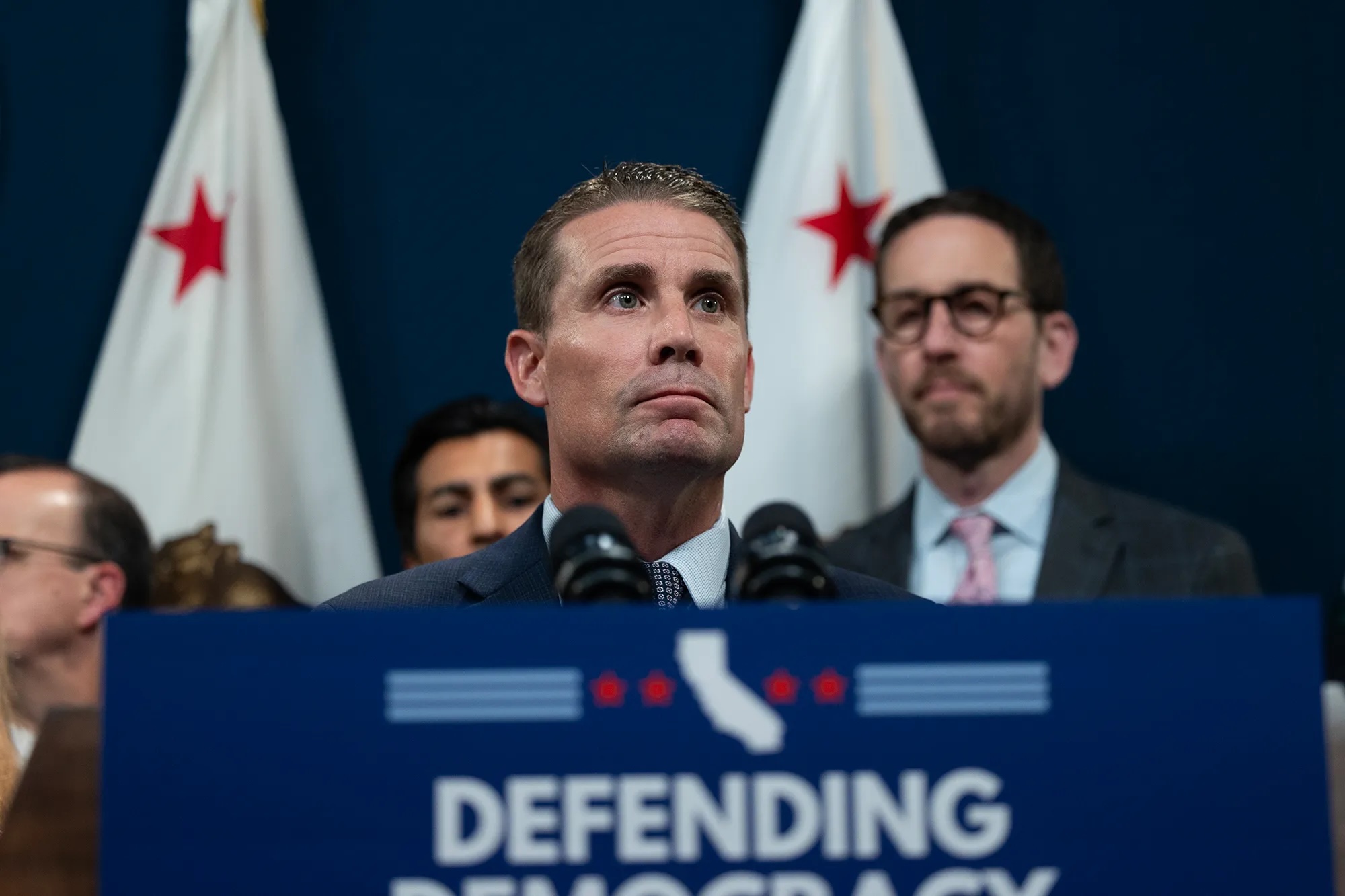
"caption": "Senate President Pro Tem Mike McGuire speaks during a press conference in Sacramento on Aug. 21, 2025. McGuire, who terms out of the Legislature next year, hopes to capitalize on Democrats’ new voter registration advantage in LaMalfa’s post-Prop. 50 district, to flip a congressional seat from red to blue.",
"credit": "Miguel Gutierrez Jr./CalMatters",
"altTag": null,
"description": null,
"imgSizes": {
"thumbnail": {
"file": "https://cdn.kqed.org/wp-content/uploads/sites/10/2025/11/082125_Redistricting-Newsom_MG_CM_20-160x107.jpg",
"width": 160,
"height": 107,
"mimeType": "image/jpeg"
},
"1536x1536": {
"file": "https://cdn.kqed.org/wp-content/uploads/sites/10/2025/11/082125_Redistricting-Newsom_MG_CM_20-1536x1024.jpg",
"width": 1536,
"height": 1024,
"mimeType": "image/jpeg"
},
"post-thumbnail": {
"file": "https://cdn.kqed.org/wp-content/uploads/sites/10/2025/11/082125_Redistricting-Newsom_MG_CM_20-672x372.jpg",
"width": 672,
"height": 372,
"mimeType": "image/jpeg"
},
"twentyfourteen-full-width": {
"file": "https://cdn.kqed.org/wp-content/uploads/sites/10/2025/11/082125_Redistricting-Newsom_MG_CM_20-1038x576.jpg",
"width": 1038,
"height": 576,
"mimeType": "image/jpeg"
},
"npr-cds-wide": {
"file": "https://cdn.kqed.org/wp-content/uploads/sites/10/2025/11/082125_Redistricting-Newsom_MG_CM_20-1200x675.jpg",
"width": 1200,
"height": 675,
"mimeType": "image/jpeg"
},
"kqedFullSize": {
"file": "https://cdn.kqed.org/wp-content/uploads/sites/10/2025/11/082125_Redistricting-Newsom_MG_CM_20.jpg",
"width": 2000,
"height": 1333
}
},
"isLoading": false,
"fetchFailed": false
},
"news_12062600": {
"type": "attachments",
"id": "news_12062600",
"meta": {
"index": "attachments_1716263798",
"site": "news",
"id": "12062600",
"found": true
},
"title": "111623_Sam-Altman_AP_CM_01",
"publishDate": 1761950606,
"status": "inherit",
"parent": 12062523,
"modified": 1775852918,
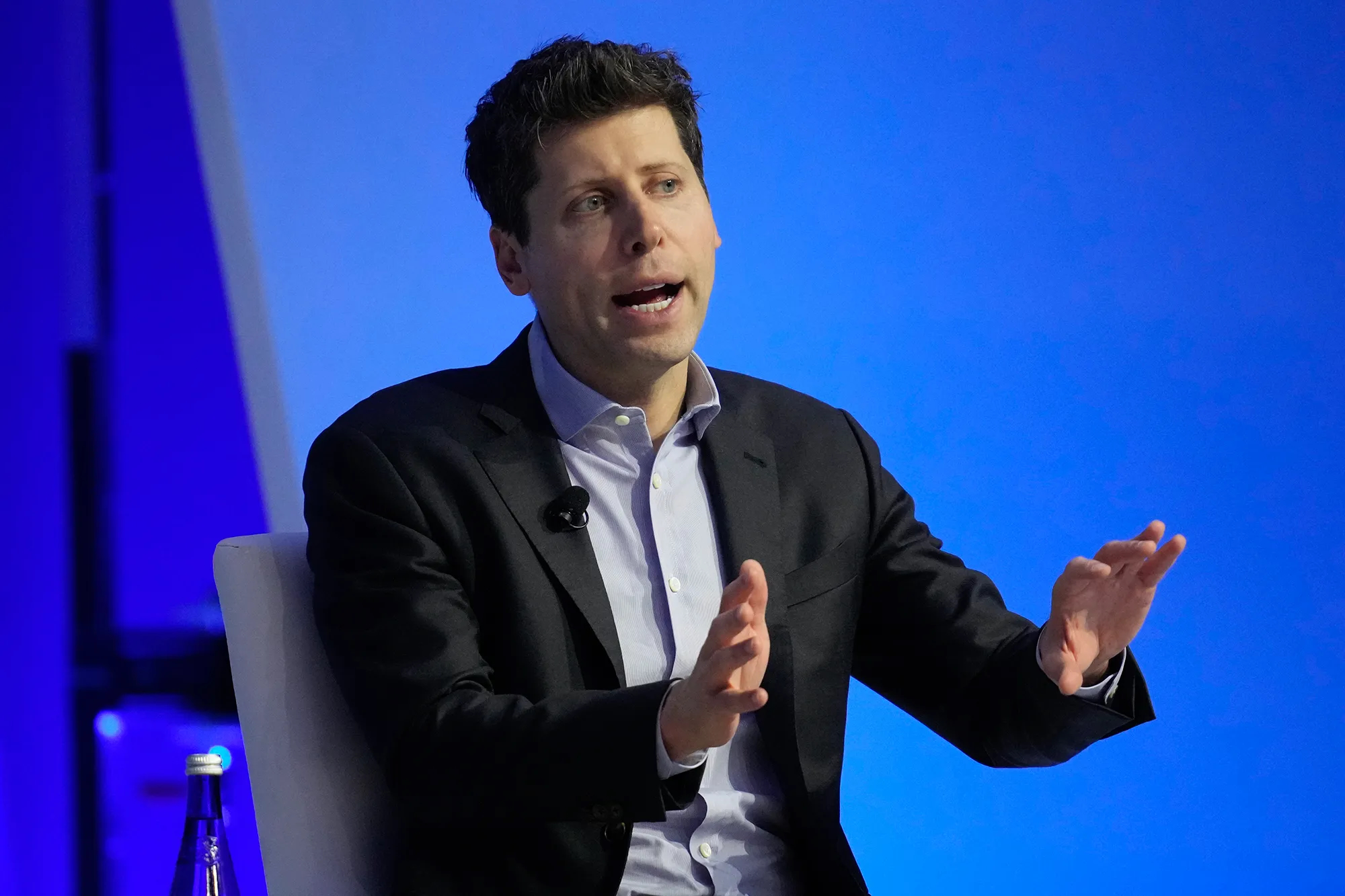
"caption": "OpenAI restructured to a for-profit company in a move tied to an agreement with California Attorney General Rob Bonta. Company CEO Sam Altman participates in a discussion in San Francisco on Nov. 16, 2023.",
"credit": "Photo by Eric Risberg, AP Photo",
"altTag": null,
"description": null,
"imgSizes": {
"thumbnail": {
"file": "https://cdn.kqed.org/wp-content/uploads/sites/10/2025/10/111623_Sam-Altman_AP_CM_01-160x107.jpeg",
"width": 160,
"height": 107,
"mimeType": "image/jpeg"
},
"1536x1536": {
"file": "https://cdn.kqed.org/wp-content/uploads/sites/10/2025/10/111623_Sam-Altman_AP_CM_01-1536x1024.jpeg",
"width": 1536,
"height": 1024,
"mimeType": "image/jpeg"
},
"post-thumbnail": {
"file": "https://cdn.kqed.org/wp-content/uploads/sites/10/2025/10/111623_Sam-Altman_AP_CM_01-672x372.jpeg",
"width": 672,
"height": 372,
"mimeType": "image/jpeg"
},
"twentyfourteen-full-width": {
"file": "https://cdn.kqed.org/wp-content/uploads/sites/10/2025/10/111623_Sam-Altman_AP_CM_01-1038x576.jpeg",
"width": 1038,
"height": 576,
"mimeType": "image/jpeg"
},
"npr-cds-wide": {
"file": "https://cdn.kqed.org/wp-content/uploads/sites/10/2025/10/111623_Sam-Altman_AP_CM_01-1200x675.jpeg",
"width": 1200,
"height": 675,
"mimeType": "image/jpeg"
},
"kqedFullSize": {
"file": "https://cdn.kqed.org/wp-content/uploads/sites/10/2025/10/111623_Sam-Altman_AP_CM_01.jpeg",
"width": 2000,
"height": 1333
}
},
"isLoading": false,
"fetchFailed": false
},
"news_12061726": {
"type": "attachments",
"id": "news_12061726",
"meta": {
"index": "attachments_1716263798",
"site": "news",
"id": "12061726",
"found": true
},
"title": "060722-Sac-County-Voter-Registrar-MG-CM-02",
"publishDate": 1761598711,
"status": "inherit",
"parent": 12061723,
"modified": 1761599877,
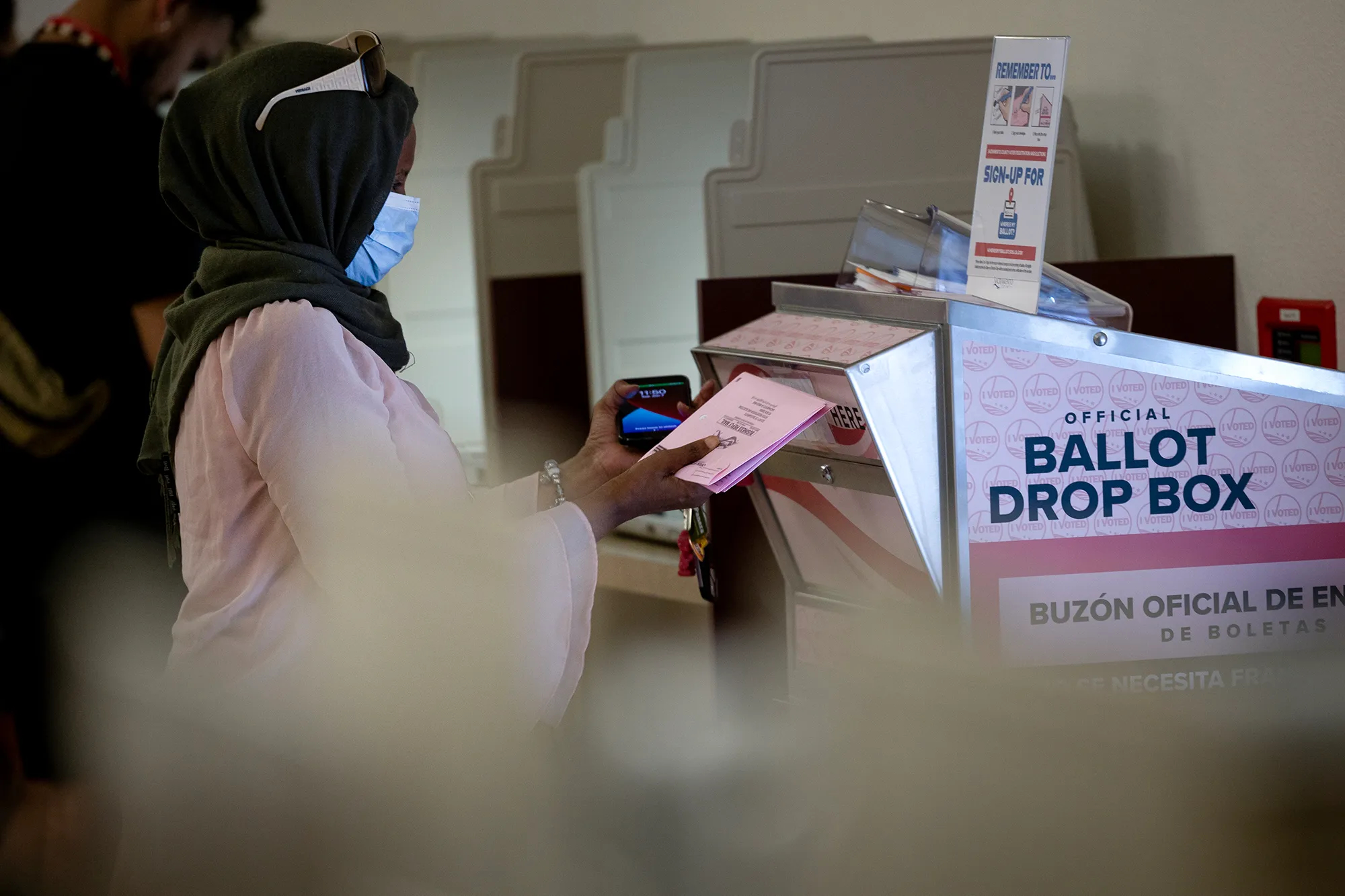
"caption": "Voters cast their ballots at the Sacramento County Registrar of Voters office in Sacramento on June 7, 2022.",
"credit": "Miguel Gutierrez Jr./CalMatters",
"altTag": null,
"description": null,
"imgSizes": {
"thumbnail": {
"file": "https://cdn.kqed.org/wp-content/uploads/sites/10/2025/10/060722-Sac-County-Voter-Registrar-MG-CM-02-160x107.jpeg",
"width": 160,
"height": 107,
"mimeType": "image/jpeg"
},
"1536x1536": {
"file": "https://cdn.kqed.org/wp-content/uploads/sites/10/2025/10/060722-Sac-County-Voter-Registrar-MG-CM-02-1536x1024.jpeg",
"width": 1536,
"height": 1024,
"mimeType": "image/jpeg"
},
"post-thumbnail": {
"file": "https://cdn.kqed.org/wp-content/uploads/sites/10/2025/10/060722-Sac-County-Voter-Registrar-MG-CM-02-672x372.jpeg",
"width": 672,
"height": 372,
"mimeType": "image/jpeg"
},
"twentyfourteen-full-width": {
"file": "https://cdn.kqed.org/wp-content/uploads/sites/10/2025/10/060722-Sac-County-Voter-Registrar-MG-CM-02-1038x576.jpeg",
"width": 1038,
"height": 576,
"mimeType": "image/jpeg"
},
"npr-cds-wide": {
"file": "https://cdn.kqed.org/wp-content/uploads/sites/10/2025/10/060722-Sac-County-Voter-Registrar-MG-CM-02-1600x900.jpeg",
"width": 1600,
"height": 900,
"mimeType": "image/jpeg"
},
"kqedFullSize": {
"file": "https://cdn.kqed.org/wp-content/uploads/sites/10/2025/10/060722-Sac-County-Voter-Registrar-MG-CM-02.jpeg",
"width": 2000,
"height": 1333
}
},
"isLoading": false,
"fetchFailed": false
},
"news_12059467": {
"type": "attachments",
"id": "news_12059467",
"meta": {
"index": "attachments_1716263798",
"site": "news",
"id": "12059467",
"found": true
},
"title": "GavinNewsom",
"publishDate": 1760120330,
"status": "inherit",
"parent": 12059464,
"modified": 1760120385,
"caption": "Gov. Gavin Newsom signed a law today expanding eligibility for CARE Court, one of his signature mental health programs. Here, he announced a successful 2024 mental health ballot initiative at Alvarado Hospital in San Diego on March 19, 2023. \n",
"credit": "Adriana Heldiz/The San Diego Union-Tribune via AP Pool",
"altTag": null,
"description": null,
"imgSizes": {
"thumbnail": {
"file": "https://cdn.kqed.org/wp-content/uploads/sites/10/2025/10/GavinNewsom-160x107.jpg",
"width": 160,
"height": 107,
"mimeType": "image/jpeg"
},
"1536x1536": {
"file": "https://cdn.kqed.org/wp-content/uploads/sites/10/2025/10/GavinNewsom-1536x1024.jpg",
"width": 1536,
"height": 1024,
"mimeType": "image/jpeg"
},
"post-thumbnail": {
"file": "https://cdn.kqed.org/wp-content/uploads/sites/10/2025/10/GavinNewsom-672x372.jpg",
"width": 672,
"height": 372,
"mimeType": "image/jpeg"
},
"twentyfourteen-full-width": {
"file": "https://cdn.kqed.org/wp-content/uploads/sites/10/2025/10/GavinNewsom-1038x576.jpg",
"width": 1038,
"height": 576,
"mimeType": "image/jpeg"
},
"kqedFullSize": {
"file": "https://cdn.kqed.org/wp-content/uploads/sites/10/2025/10/GavinNewsom.jpg",
"width": 2000,
"height": 1333
}
},
"isLoading": false,
"fetchFailed": false
},
"news_12057865": {
"type": "attachments",
"id": "news_12057865",
"meta": {
"index": "attachments_1716263798",
"site": "news",
"id": "12057865",
"found": true
},
"title": "071223_San-Francisco_SN_CM_15 copy",
"publishDate": 1758986265,
"status": "inherit",
"parent": 12057863,
"modified": 1758986297,
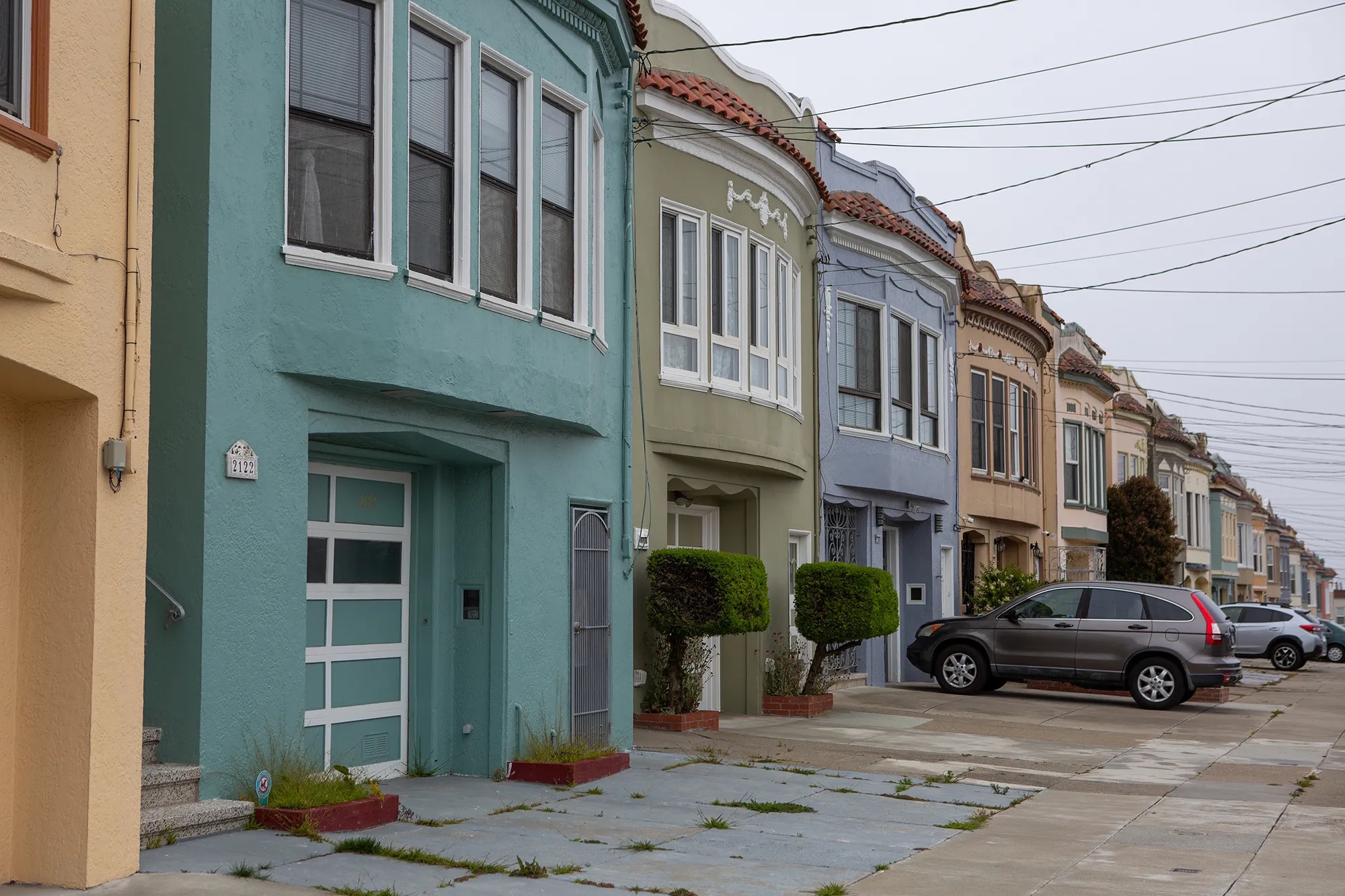
"caption": "Houses in San Francisco's Sunset District on July 12, 2023.\n",
"credit": "Semantha Norris/CalMatters",
"altTag": null,
"description": null,
"imgSizes": {
"thumbnail": {
"file": "https://cdn.kqed.org/wp-content/uploads/sites/10/2025/09/071223_San-Francisco_SN_CM_15-copy-160x107.jpg",
"width": 160,
"height": 107,
"mimeType": "image/jpeg"
},
"1536x1536": {
"file": "https://cdn.kqed.org/wp-content/uploads/sites/10/2025/09/071223_San-Francisco_SN_CM_15-copy-1536x1024.jpg",
"width": 1536,
"height": 1024,
"mimeType": "image/jpeg"
},
"post-thumbnail": {
"file": "https://cdn.kqed.org/wp-content/uploads/sites/10/2025/09/071223_San-Francisco_SN_CM_15-copy-672x372.jpg",
"width": 672,
"height": 372,
"mimeType": "image/jpeg"
},
"twentyfourteen-full-width": {
"file": "https://cdn.kqed.org/wp-content/uploads/sites/10/2025/09/071223_San-Francisco_SN_CM_15-copy-1038x576.jpg",
"width": 1038,
"height": 576,
"mimeType": "image/jpeg"
},
"kqedFullSize": {
"file": "https://cdn.kqed.org/wp-content/uploads/sites/10/2025/09/071223_San-Francisco_SN_CM_15-copy.jpg",
"width": 2000,
"height": 1333
}
},
"isLoading": false,
"fetchFailed": false
},
"news_12057283": {
"type": "attachments",
"id": "news_12057283",
"meta": {
"index": "attachments_1716263798",
"site": "news",
"id": "12057283",
"found": true
},
"title": "calmatters_091825_Fresno-Courthouse_LV_10",
"publishDate": 1758654977,
"status": "inherit",
"parent": 12057278,
"modified": 1758655019,
"caption": "The Fresno County Courthouse on Sept. 17, 2025.",
"credit": "Larry Valenzuela, CalMatters/CatchLight Local",
"altTag": null,
"description": null,
"imgSizes": {
"thumbnail": {
"file": "https://cdn.kqed.org/wp-content/uploads/sites/10/2025/09/calmatters_091825_Fresno-Courthouse_LV_10-160x107.jpg",
"width": 160,
"height": 107,
"mimeType": "image/jpeg"
},
"1536x1536": {
"file": "https://cdn.kqed.org/wp-content/uploads/sites/10/2025/09/calmatters_091825_Fresno-Courthouse_LV_10-1536x1024.jpg",
"width": 1536,
"height": 1024,
"mimeType": "image/jpeg"
},
"post-thumbnail": {
"file": "https://cdn.kqed.org/wp-content/uploads/sites/10/2025/09/calmatters_091825_Fresno-Courthouse_LV_10-672x372.jpg",
"width": 672,
"height": 372,
"mimeType": "image/jpeg"
},
"twentyfourteen-full-width": {
"file": "https://cdn.kqed.org/wp-content/uploads/sites/10/2025/09/calmatters_091825_Fresno-Courthouse_LV_10-1038x576.jpg",
"width": 1038,
"height": 576,
"mimeType": "image/jpeg"
},
"kqedFullSize": {
"file": "https://cdn.kqed.org/wp-content/uploads/sites/10/2025/09/calmatters_091825_Fresno-Courthouse_LV_10.jpg",
"width": 2000,
"height": 1333
}
},
"isLoading": false,
"fetchFailed": false
},
"news_12057038": {
"type": "attachments",
"id": "news_12057038",
"meta": {
"index": "attachments_1716263798",
"site": "news",
"id": "12057038",
"found": true
},
"title": "Upload_091225_Laney-College_MO_CM_13",
"publishDate": 1758562963,
"status": "inherit",
"parent": 12057033,
"modified": 1758562983,
"caption": null,
"credit": "Manuel Orbegozo/CalMatters",
"altTag": null,
"description": null,
"imgSizes": {
"thumbnail": {
"file": "https://cdn.kqed.org/wp-content/uploads/sites/10/2025/09/Upload_091225_Laney-College_MO_CM_13-160x107.jpg",
"width": 160,
"height": 107,
"mimeType": "image/jpeg"
},
"1536x1536": {
"file": "https://cdn.kqed.org/wp-content/uploads/sites/10/2025/09/Upload_091225_Laney-College_MO_CM_13-1536x1024.jpg",
"width": 1536,
"height": 1024,
"mimeType": "image/jpeg"
},
"post-thumbnail": {
"file": "https://cdn.kqed.org/wp-content/uploads/sites/10/2025/09/Upload_091225_Laney-College_MO_CM_13-672x372.jpg",
"width": 672,
"height": 372,
"mimeType": "image/jpeg"
},
"twentyfourteen-full-width": {
"file": "https://cdn.kqed.org/wp-content/uploads/sites/10/2025/09/Upload_091225_Laney-College_MO_CM_13-1038x576.jpg",
"width": 1038,
"height": 576,
"mimeType": "image/jpeg"
},
"kqedFullSize": {
"file": "https://cdn.kqed.org/wp-content/uploads/sites/10/2025/09/Upload_091225_Laney-College_MO_CM_13.jpg",
"width": 2000,
"height": 1333
}
},
"isLoading": false,
"fetchFailed": false
},
"news_12056909": {
"type": "attachments",
"id": "news_12056909",
"meta": {
"index": "attachments_1716263798",
"site": "news",
"id": "12056909",
"found": true
},
"title": "Edited_033023-Hollister-Hospital-LV_01-CM-1",
"publishDate": 1758311931,
"status": "inherit",
"parent": 12056817,
"modified": 1758379627,
"caption": "A patient room at a hospital on March 30, 2023.",
"credit": "Larry Valenzuela/CalMatters/CatchLight Local",
"altTag": null,
"description": null,
"imgSizes": {
"thumbnail": {
"file": "https://cdn.kqed.org/wp-content/uploads/sites/10/2025/09/Edited_033023-Hollister-Hospital-LV_01-CM-1-160x107.jpg",
"width": 160,
"height": 107,
"mimeType": "image/jpeg"
},
"1536x1536": {
"file": "https://cdn.kqed.org/wp-content/uploads/sites/10/2025/09/Edited_033023-Hollister-Hospital-LV_01-CM-1-1536x1024.jpg",
"width": 1536,
"height": 1024,
"mimeType": "image/jpeg"
},
"post-thumbnail": {
"file": "https://cdn.kqed.org/wp-content/uploads/sites/10/2025/09/Edited_033023-Hollister-Hospital-LV_01-CM-1-672x372.jpg",
"width": 672,
"height": 372,
"mimeType": "image/jpeg"
},
"twentyfourteen-full-width": {
"file": "https://cdn.kqed.org/wp-content/uploads/sites/10/2025/09/Edited_033023-Hollister-Hospital-LV_01-CM-1-1038x576.jpg",
"width": 1038,
"height": 576,
"mimeType": "image/jpeg"
},
"kqedFullSize": {
"file": "https://cdn.kqed.org/wp-content/uploads/sites/10/2025/09/Edited_033023-Hollister-Hospital-LV_01-CM-1.jpg",
"width": 2000,
"height": 1333
}
},
"isLoading": false,
"fetchFailed": false
},
"news_12056974": {
"type": "attachments",
"id": "news_12056974",
"meta": {
"index": "attachments_1716263798",
"site": "news",
"id": "12056974",
"found": true
},
"title": "071625_Newsom-ICE-Raids_CM_36 copy",
"publishDate": 1758399342,
"status": "inherit",
"parent": 12056972,
"modified": 1758399371,
"caption": "Gov. Gavin Newsom speaks to the media at Downey Memorial Christian Church after visiting Los Angeles communities affected by immigration raids, in Downey on July 16, 2025. ",
"credit": "Ted Soqui for CalMatters",
"altTag": null,
"description": null,
"imgSizes": {
"thumbnail": {
"file": "https://cdn.kqed.org/wp-content/uploads/sites/10/2025/09/071625_Newsom-ICE-Raids_CM_36-copy-160x107.jpg",
"width": 160,
"height": 107,
"mimeType": "image/jpeg"
},
"1536x1536": {
"file": "https://cdn.kqed.org/wp-content/uploads/sites/10/2025/09/071625_Newsom-ICE-Raids_CM_36-copy-1536x1025.jpg",
"width": 1536,
"height": 1025,
"mimeType": "image/jpeg"
},
"post-thumbnail": {
"file": "https://cdn.kqed.org/wp-content/uploads/sites/10/2025/09/071625_Newsom-ICE-Raids_CM_36-copy-672x372.jpg",
"width": 672,
"height": 372,
"mimeType": "image/jpeg"
},
"twentyfourteen-full-width": {
"file": "https://cdn.kqed.org/wp-content/uploads/sites/10/2025/09/071625_Newsom-ICE-Raids_CM_36-copy-1038x576.jpg",
"width": 1038,
"height": 576,
"mimeType": "image/jpeg"
},
"kqedFullSize": {
"file": "https://cdn.kqed.org/wp-content/uploads/sites/10/2025/09/071625_Newsom-ICE-Raids_CM_36-copy.jpg",
"width": 2000,
"height": 1334
}
},
"isLoading": false,
"fetchFailed": false
},
"news_12056383": {
"type": "attachments",
"id": "news_12056383",
"meta": {
"index": "attachments_1716263798",
"site": "news",
"id": "12056383",
"found": true
},
"title": "DC: U.S. Congress",
"publishDate": 1758137369,
"status": "inherit",
"parent": 12056371,
"modified": 1761693101,
"caption": "U.S. Rep. Darrell Issa speaks to media outside of a House Republican meeting at the U.S. Capitol in Washington, D.C. on Sept. 14, 2023. ",
"credit": "Graeme Sloan/Sipa USA via Reuters",
"altTag": null,
"description": null,
"imgSizes": {
"thumbnail": {
"file": "https://cdn.kqed.org/wp-content/uploads/sites/10/2025/09/Newsom-Gerry_CalMatters-160x107.jpg",
"width": 160,
"height": 107,
"mimeType": "image/jpeg"
},
"1536x1536": {
"file": "https://cdn.kqed.org/wp-content/uploads/sites/10/2025/09/Newsom-Gerry_CalMatters-1536x1024.jpg",
"width": 1536,
"height": 1024,
"mimeType": "image/jpeg"
},
"post-thumbnail": {
"file": "https://cdn.kqed.org/wp-content/uploads/sites/10/2025/09/Newsom-Gerry_CalMatters-672x372.jpg",
"width": 672,
"height": 372,
"mimeType": "image/jpeg"
},
"twentyfourteen-full-width": {
"file": "https://cdn.kqed.org/wp-content/uploads/sites/10/2025/09/Newsom-Gerry_CalMatters-1038x576.jpg",
"width": 1038,
"height": 576,
"mimeType": "image/jpeg"
},
"kqedFullSize": {
"file": "https://cdn.kqed.org/wp-content/uploads/sites/10/2025/09/Newsom-Gerry_CalMatters.jpg",
"width": 2000,
"height": 1333
}
},
"isLoading": false,
"fetchFailed": false
},
"news_12051156": {
"type": "attachments",
"id": "news_12051156",
"meta": {
"index": "attachments_1716263798",
"site": "news",
"id": "12051156",
"found": true
},
"title": "US-POLITICS-HEALTH-TECHNOLOGY-TRUMP",
"publishDate": 1754516689,
"status": "inherit",
"parent": 12051152,
"modified": 1754516740,
"caption": "President Donald Trump listens as Secretary of Health and Human Services Robert F. Kennedy Jr. speaks at an event on \"Making Health Technology Great Again,\" in the East Room of the White House in Washington, D.C. on July 30, 2025. ",
"credit": "Jim Watson/AFP via Getty Images",
"altTag": null,
"description": null,
"imgSizes": {
"thumbnail": {
"file": "https://cdn.kqed.org/wp-content/uploads/sites/10/2025/08/RFKJr.Getty_-160x102.jpg",
"width": 160,
"height": 102,
"mimeType": "image/jpeg"
},
"1536x1536": {
"file": "https://cdn.kqed.org/wp-content/uploads/sites/10/2025/08/RFKJr.Getty_-1536x978.jpg",
"width": 1536,
"height": 978,
"mimeType": "image/jpeg"
},
"post-thumbnail": {
"file": "https://cdn.kqed.org/wp-content/uploads/sites/10/2025/08/RFKJr.Getty_-672x372.jpg",
"width": 672,
"height": 372,
"mimeType": "image/jpeg"
},
"twentyfourteen-full-width": {
"file": "https://cdn.kqed.org/wp-content/uploads/sites/10/2025/08/RFKJr.Getty_-1038x576.jpg",
"width": 1038,
"height": 576,
"mimeType": "image/jpeg"
},
"kqedFullSize": {
"file": "https://cdn.kqed.org/wp-content/uploads/sites/10/2025/08/RFKJr.Getty_.jpg",
"width": 2000,
"height": 1274
}
},
"isLoading": false,
"fetchFailed": false
},
"news_12055876": {
"type": "attachments",
"id": "news_12055876",
"meta": {
"index": "attachments_1716263798",
"site": "news",
"id": "12055876",
"found": true
},
"title": "052024_Delta_LE_CM_24",
"publishDate": 1757721086,
"status": "inherit",
"parent": 12055868,
"modified": 1757721110,
"caption": "An aerial view of Threemile Slough in the Sacramento-San Joaquin River Delta near Rio Vista on May 19, 2024. The Delta is formed by the confluence of the Sacramento and San Joaquin rivers before their waters flow into San Francisco Bay.",
"credit": " Photo by Loren Elliott for CalMatters",
"altTag": null,
"description": null,
"imgSizes": {
"thumbnail": {
"file": "https://cdn.kqed.org/wp-content/uploads/sites/10/2025/09/052024_Delta_LE_CM_24-160x107.jpg",
"width": 160,
"height": 107,
"mimeType": "image/jpeg"
},
"1536x1536": {
"file": "https://cdn.kqed.org/wp-content/uploads/sites/10/2025/09/052024_Delta_LE_CM_24-1536x1024.jpg",
"width": 1536,
"height": 1024,
"mimeType": "image/jpeg"
},
"post-thumbnail": {
"file": "https://cdn.kqed.org/wp-content/uploads/sites/10/2025/09/052024_Delta_LE_CM_24-672x372.jpg",
"width": 672,
"height": 372,
"mimeType": "image/jpeg"
},
"twentyfourteen-full-width": {
"file": "https://cdn.kqed.org/wp-content/uploads/sites/10/2025/09/052024_Delta_LE_CM_24-1038x576.jpg",
"width": 1038,
"height": 576,
"mimeType": "image/jpeg"
},
"kqedFullSize": {
"file": "https://cdn.kqed.org/wp-content/uploads/sites/10/2025/09/052024_Delta_LE_CM_24.jpg",
"width": 2000,
"height": 1333
}
},
"isLoading": false,
"fetchFailed": false
}
},
"audioPlayerReducer": {
"postId": "stream_live",
"isPaused": true,
"isPlaying": false,
"pfsActive": false,
"pledgeModalIsOpen": true,
"playerDrawerIsOpen": false,
"liveAudioPlayStartedAt": 0,
"liveAudioPlayContext": ""
},
"authorsReducer": {
"byline_news_12063984": {
"type": "authors",
"id": "byline_news_12063984",
"meta": {
"override": true
},
"slug": "byline_news_12063984",
"name": "Maya C. Miller, CalMatters",
"isLoading": false
},
"byline_news_12062523": {
"type": "authors",
"id": "byline_news_12062523",
"meta": {
"override": true
},
"slug": "byline_news_12062523",
"name": "Khari Johnson and Levi Sumagaysay, CalMatters",
"isLoading": false
},
"byline_news_12061723": {
"type": "authors",
"id": "byline_news_12061723",
"meta": {
"override": true
},
"slug": "byline_news_12061723",
"name": "Maya C. Miller, CalMatters",
"isLoading": false
},
"byline_news_12059464": {
"type": "authors",
"id": "byline_news_12059464",
"meta": {
"override": true
},
"slug": "byline_news_12059464",
"name": "Jocelyn Wiener and Marisa Kendall, CalMatters",
"isLoading": false
},
"byline_news_12057863": {
"type": "authors",
"id": "byline_news_12057863",
"meta": {
"override": true
},
"slug": "byline_news_12057863",
"name": "Ben Christopher, CalMatters",
"isLoading": false
},
"byline_news_12057278": {
"type": "authors",
"id": "byline_news_12057278",
"meta": {
"override": true
},
"slug": "byline_news_12057278",
"name": "Nigel Duara, CalMatters",
"isLoading": false
},
"byline_news_12057033": {
"type": "authors",
"id": "byline_news_12057033",
"meta": {
"override": true
},
"slug": "byline_news_12057033",
"name": "Adam Echelman, CalMatters",
"isLoading": false
},
"byline_news_12056817": {
"type": "authors",
"id": "byline_news_12056817",
"meta": {
"override": true
},
"slug": "byline_news_12056817",
"name": "Kristen Hwang, CalMatters",
"isLoading": false
},
"byline_news_12056972": {
"type": "authors",
"id": "byline_news_12056972",
"meta": {
"override": true
},
"slug": "byline_news_12056972",
"name": "Cayla Mihalovich and Jeanne Kuang, CalMatters",
"isLoading": false
},
"byline_news_12056371": {
"type": "authors",
"id": "byline_news_12056371",
"meta": {
"override": true
},
"slug": "byline_news_12056371",
"name": "Maya C. Miller, CalMatters",
"isLoading": false
},
"byline_news_12056004": {
"type": "authors",
"id": "byline_news_12056004",
"meta": {
"override": true
},
"slug": "byline_news_12056004",
"name": "Kristen Hwang, CalMatters",
"isLoading": false
},
"byline_news_12055868": {
"type": "authors",
"id": "byline_news_12055868",
"meta": {
"override": true
},
"slug": "byline_news_12055868",
"name": "Devon Provo, Special for CalMatters",
"isLoading": false
}
},
"pagesReducer": {
"news_affiliate_calmatters": {
"type": "terms",
"id": "news_18481",
"meta": {
"index": "terms_1716263798",
"site": "news",
"id": "18481",
"score": 15.355862
},
"featImg": null,
"name": "CALmatters",
"description": null,
"taxonomy": "affiliate",
"headData": {
"twImgId": null,
"twTitle": null,
"ogTitle": null,
"ogImgId": null,
"twDescription": null,
"description": null,
"title": "CALmatters Archives | KQED Arts",
"ogDescription": null
},
"ttid": 18515,
"slug": "calmatters",
"isLoading": false,
"title": "CALmatters",
"pageMeta": {
"site": "news",
"WpPageTemplate": "page-topic-editorial",
"currentPage": 9
},
"blocks": [
{
"blockName": "kqed/post-list",
"attrs": {
"layout": "cardArticle2",
"query": "posts/news?affiliate=calmatters",
"seeMore": false,
"paginated": true,
"page": 9
}
},
{
"blockName": "kqed/ad"
}
]
}
},
"pfsSessionReducer": {},
"postsReducer": {
"stream_live": {
"type": "live",
"id": "stream_live",
"audioUrl": "https://streams.kqed.org/kqedradio",
"title": "Live Stream",
"excerpt": "Live Stream information currently unavailable.",
"link": "/radio",
"featImg": "",
"label": {
"name": "KQED Live",
"link": "/"
}
},
"stream_kqedNewscast": {
"type": "posts",
"id": "stream_kqedNewscast",
"audioUrl": "https://www.kqed.org/.stream/anon/radio/RDnews/newscast.mp3?_=1",
"title": "KQED Newscast",
"featImg": "",
"label": {
"name": "88.5 FM",
"link": "/"
}
},
"news_12063984": {
"type": "posts",
"id": "news_12063984",
"meta": {
"index": "posts_1716263798",
"site": "news",
"id": "12063984",
"score": null,
"sort": [
1763067630000
]
},
"guestAuthors": [],
"slug": "democrat-mike-mcguire-challenges-gop-rep-doug-lamalfa-for-new-prop-50-seat",
"title": "Democrat Mike McGuire Challenges GOP Rep. Doug LaMalfa for New Prop. 50 Seat",
"publishDate": 1763067630,
"format": "standard",
"headTitle": "Democrat Mike McGuire Challenges GOP Rep. Doug LaMalfa for New Prop. 50 Seat | KQED",
"labelTerm": {},
"content": "\u003cp>\u003c!-- Creative Commons Attribution-NonCommercial-NoDerivatives https://creativecommons.org/licenses/by-nc-nd/4.0/ -->\u003c/p>\n\u003cp>\u003cem>This story was originally published by \u003ca href=\"https://calmatters.org/\">CalMatters\u003c/a>. \u003ca href=\"https://calmatters.org/subscribe-to-calmatters/\">Sign up\u003c/a> for their newsletters.\u003c/em>\u003c/p>\n\u003cp>California Senate President Pro Tem Mike McGuire has officially launched his challenge to longtime Republican Rep. Doug LaMalfa in a congressional district \u003ca href=\"https://www.kqed.org/news/12063016/how-prop-50s-win-reshapes-californias-2026-elections\">drastically redrawn \u003c/a>by Proposition 50.\u003c/p>\n\u003cp>The Santa Rosa Democrat, who will hit his 12-year term limit in the Legislature next year, was widely viewed once the new maps were drawn as a prospective challenger to LaMalfa, a rice farmer from Oroville who has represented the North State in Congress since 2013.\u003c/p>\n\u003cp>LaMalfa’s current district stretches from Siskiyou County and much of the Oregon-California border down through rural Shasta and Sutter Counties.\u003c/p>\n\u003cp>[ad fullwidth]\u003c/p>\n\u003cp>Under the \u003ca href=\"https://www.kqed.org/proposition-50\">new voter-approved\u003c/a> Prop. 50 maps, the district shifts south out of Modoc County and jogs westward to pick up parts of Sonoma County and McGuire’s home base of Santa Rosa.\u003c/p>\n\u003cp>McGuire will face heavy skepticism from some northern rural residents in the 1st Congressional District, who just a few years ago tried to secede from liberal California to form the conservative “state of Jefferson” with rural parts of southern Oregon.\u003c/p>\n\u003cp>In an apparent effort to head off inevitable accusations of being out of touch with rural life, McGuire spent much of \u003ca href=\"https://x.com/ilike_mike/status/1988984850825519432\">his launch video\u003c/a> doubling down on promises to prioritize farmers’ needs and “make sure rural communities get their fair share.”[aside postID=news_12063055 hero='https://cdn.kqed.org/wp-content/uploads/sites/10/2025/11/AP25309664191702-KQED.jpg']“I know these roads. I know these towns,” McGuire says as he strolls down a tree-lined country road, a white pickup truck clearly visible in the background. “This district is big, it’s rural, and now more than ever, it needs a fighter.”\u003c/p>\n\u003cp>After devastating wildfires that wiped out thousands of homes and killed dozens in Sonoma and Napa counties in 2017, McGuire made wildfire prevention his signature issue in the Legislature.\u003c/p>\n\u003cp>Following the Palisades and Eaton fires in January, McGuire ushered through an ambitious 13-bill package that expanded insurance coverage and sped up rebuilding of damaged homes after destructive fires.\u003c/p>\n\u003cp>His critics have said McGuire’s singular focus on wildfire issues sometimes clouded his ability to balance and prioritize other policy areas, especially once he ascended to the role of pro tem last February, succeeding the well-regarded former Sen. Toni Atkins and becoming the chief traffic cop for which bills could come to the Senate floor.\u003c/p>\n\u003cp>McGuire also developed a reputation for holding out on negotiations until he could extract a win for his policy priorities or his constituents: He was the \u003ca href=\"https://calmatters.org/politics/2025/11/california-budget-earmarks-2025/\">top recipient of budget “earmarks”\u003c/a> for local projects back home, funds that he will surely tout as major wins during his campaign.\u003c/p>\n\u003cfigure id=\"attachment_12060675\" class=\"wp-caption aligncenter\" style=\"max-width: 2000px\">\u003cimg loading=\"lazy\" decoding=\"async\" class=\"size-full wp-image-12060675\" src=\"https://cdn.kqed.org/wp-content/uploads/sites/10/2025/10/GettyImages-2230160972-scaled-e1760990148740.jpg\" alt=\"\" width=\"2000\" height=\"1356\">\u003cfigcaption class=\"wp-caption-text\">California Gov. Gavin Newsom speaks about California redistricting plans at a press conference at the Democracy Center, Japanese American Museum on August 14, 2025 in Los Angeles, California. Newsom spoke about a possible California referendum on redistricting to counter the legislative effort to add five Republican House seats in the state of Texas. \u003ccite>(Mario Tama/Getty Images)\u003c/cite>\u003c/figcaption>\u003c/figure>\n\u003cp>During \u003ca href=\"https://www.kqed.org/news/12055461/california-lawmakers-reach-last-minute-deals-on-climate-energy\">last-minute negotiations\u003c/a> on a multi-pronged climate and energy policy deal earlier this fall, Gov. Gavin Newsom had to make an eleventh hour visit to the Capitol to push McGuire and his team onto the same page as him and Assembly leadership.\u003c/p>\n\u003cp>McGuire promised in his launch video to deliver “no drama, no BS, no gimmicks” if elected to Congress.\u003c/p>\n\u003cp>And while he mostly shied away from the argument that he would flip a seat from Republican to Democratic control, he did acknowledge that he would push back on the Trump administration.\u003c/p>\n\u003cp>“Don’t worry, I will always stand up to the destructive policies of Donald Trump,” he said in the video. “I’m all in — every damn day.”\u003c/p>\n\u003cp>\u003cem>This article was \u003ca href=\"https://calmatters.org/politics/2025/11/mcguire-1st-congressional-district/\">originally published on CalMatters\u003c/a> and was republished under the \u003ca href=\"https://creativecommons.org/licenses/by-nc-nd/4.0/\">Creative Commons Attribution-NonCommercial-NoDerivatives\u003c/a> license.\u003c/em>\u003c/p>\n\u003cp>\u003c/p>\n",
"blocks": [],
"excerpt": "McGuire, who terms out of the Legislature next year, hopes to capitalize on Democrats’ new voter registration advantage in LaMalfa’s post-Prop. 50 district to flip a congressional seat from red to blue. His launch video appears to preemptively address the criticism that he’s out of touch with rural Californians.",
"status": "publish",
"parent": 0,
"modified": 1763064973,
"stats": {
"hasAudio": false,
"hasVideo": false,
"hasChartOrMap": false,
"iframeSrcs": [],
"hasGoogleForm": false,
"hasGallery": false,
"hasHearkenModule": false,
"hasPolis": false,
"paragraphCount": 19,
"wordCount": 671
},
"headData": {
"title": "Democrat Mike McGuire Challenges GOP Rep. Doug LaMalfa for New Prop. 50 Seat | KQED",
"description": "McGuire, who terms out of the Legislature next year, hopes to capitalize on Democrats’ new voter registration advantage in LaMalfa’s post-Prop. 50 district to flip a congressional seat from red to blue. His launch video appears to preemptively address the criticism that he’s out of touch with rural Californians.",
"ogTitle": "",
"ogDescription": "",
"ogImgId": "",
"twTitle": "",
"twDescription": "",
"twImgId": "",
"schema": {
"@context": "https://schema.org",
"@type": "NewsArticle",
"headline": "Democrat Mike McGuire Challenges GOP Rep. Doug LaMalfa for New Prop. 50 Seat",
"datePublished": "2025-11-13T13:00:30-08:00",
"dateModified": "2025-11-13T12:16:13-08:00",
"image": "https://cdn.kqed.org/wp-content/uploads/2020/02/KQED-OG-Image@1x.png",
"isAccessibleForFree": "True",
"publisher": {
"@type": "NewsMediaOrganization",
"@id": "https://www.kqed.org/#organization",
"name": "KQED",
"logo": "https://cdn.kqed.org/wp-content/uploads/2020/02/KQED-OG-Image@1x.png",
"url": "https://www.kqed.org",
"sameAs": [
"https://www.facebook.com/KQED",
"https://twitter.com/KQED",
"https://www.instagram.com/kqed/",
"https://www.tiktok.com/@kqedofficial",
"https://www.linkedin.com/company/kqed",
"https://www.youtube.com/channel/UCeC0IOo7i1P_61zVUWbJ4nw"
]
}
}
},
"primaryCategory": {
"termId": 13,
"slug": "politics",
"name": "Politics"
},
"source": "CalMatters",
"sourceUrl": "https://calmatters.org/",
"sticky": false,
"nprByline": "Maya C. Miller, CalMatters",
"templateType": "standard",
"featuredImageType": "standard",
"excludeFromSiteSearch": "Include",
"showOnAuthorArchivePages": "No",
"articleAge": "0",
"path": "/news/12063984/democrat-mike-mcguire-challenges-gop-rep-doug-lamalfa-for-new-prop-50-seat",
"audioTrackLength": null,
"parsedContent": [
{
"type": "contentString",
"content": "\u003cdiv class=\"post-body\">\u003cp>\u003cp>\u003c!-- Creative Commons Attribution-NonCommercial-NoDerivatives https://creativecommons.org/licenses/by-nc-nd/4.0/ -->\u003c/p>\n\u003cp>\u003cem>This story was originally published by \u003ca href=\"https://calmatters.org/\">CalMatters\u003c/a>. \u003ca href=\"https://calmatters.org/subscribe-to-calmatters/\">Sign up\u003c/a> for their newsletters.\u003c/em>\u003c/p>\n\u003cp>California Senate President Pro Tem Mike McGuire has officially launched his challenge to longtime Republican Rep. Doug LaMalfa in a congressional district \u003ca href=\"https://www.kqed.org/news/12063016/how-prop-50s-win-reshapes-californias-2026-elections\">drastically redrawn \u003c/a>by Proposition 50.\u003c/p>\n\u003cp>The Santa Rosa Democrat, who will hit his 12-year term limit in the Legislature next year, was widely viewed once the new maps were drawn as a prospective challenger to LaMalfa, a rice farmer from Oroville who has represented the North State in Congress since 2013.\u003c/p>\n\u003cp>LaMalfa’s current district stretches from Siskiyou County and much of the Oregon-California border down through rural Shasta and Sutter Counties.\u003c/p>\n\u003cp>\u003c/p>\u003c/div>",
"attributes": {
"named": {},
"numeric": []
}
},
{
"type": "component",
"content": "",
"name": "ad",
"attributes": {
"named": {
"label": "fullwidth"
},
"numeric": [
"fullwidth"
]
}
},
{
"type": "contentString",
"content": "\u003cdiv class=\"post-body\">\u003cp>\u003c/p>\n\u003cp>Under the \u003ca href=\"https://www.kqed.org/proposition-50\">new voter-approved\u003c/a> Prop. 50 maps, the district shifts south out of Modoc County and jogs westward to pick up parts of Sonoma County and McGuire’s home base of Santa Rosa.\u003c/p>\n\u003cp>McGuire will face heavy skepticism from some northern rural residents in the 1st Congressional District, who just a few years ago tried to secede from liberal California to form the conservative “state of Jefferson” with rural parts of southern Oregon.\u003c/p>\n\u003cp>In an apparent effort to head off inevitable accusations of being out of touch with rural life, McGuire spent much of \u003ca href=\"https://x.com/ilike_mike/status/1988984850825519432\">his launch video\u003c/a> doubling down on promises to prioritize farmers’ needs and “make sure rural communities get their fair share.”\u003c/p>\u003c/div>",
"attributes": {
"named": {},
"numeric": []
}
},
{
"type": "component",
"content": "",
"name": "aside",
"attributes": {
"named": {
"postid": "news_12063055",
"hero": "https://cdn.kqed.org/wp-content/uploads/sites/10/2025/11/AP25309664191702-KQED.jpg",
"label": ""
},
"numeric": []
}
},
{
"type": "contentString",
"content": "\u003cdiv class=\"post-body\">\u003cp>“I know these roads. I know these towns,” McGuire says as he strolls down a tree-lined country road, a white pickup truck clearly visible in the background. “This district is big, it’s rural, and now more than ever, it needs a fighter.”\u003c/p>\n\u003cp>After devastating wildfires that wiped out thousands of homes and killed dozens in Sonoma and Napa counties in 2017, McGuire made wildfire prevention his signature issue in the Legislature.\u003c/p>\n\u003cp>Following the Palisades and Eaton fires in January, McGuire ushered through an ambitious 13-bill package that expanded insurance coverage and sped up rebuilding of damaged homes after destructive fires.\u003c/p>\n\u003cp>His critics have said McGuire’s singular focus on wildfire issues sometimes clouded his ability to balance and prioritize other policy areas, especially once he ascended to the role of pro tem last February, succeeding the well-regarded former Sen. Toni Atkins and becoming the chief traffic cop for which bills could come to the Senate floor.\u003c/p>\n\u003cp>McGuire also developed a reputation for holding out on negotiations until he could extract a win for his policy priorities or his constituents: He was the \u003ca href=\"https://calmatters.org/politics/2025/11/california-budget-earmarks-2025/\">top recipient of budget “earmarks”\u003c/a> for local projects back home, funds that he will surely tout as major wins during his campaign.\u003c/p>\n\u003cfigure id=\"attachment_12060675\" class=\"wp-caption aligncenter\" style=\"max-width: 2000px\">\u003cimg loading=\"lazy\" decoding=\"async\" class=\"size-full wp-image-12060675\" src=\"https://cdn.kqed.org/wp-content/uploads/sites/10/2025/10/GettyImages-2230160972-scaled-e1760990148740.jpg\" alt=\"\" width=\"2000\" height=\"1356\">\u003cfigcaption class=\"wp-caption-text\">California Gov. Gavin Newsom speaks about California redistricting plans at a press conference at the Democracy Center, Japanese American Museum on August 14, 2025 in Los Angeles, California. Newsom spoke about a possible California referendum on redistricting to counter the legislative effort to add five Republican House seats in the state of Texas. \u003ccite>(Mario Tama/Getty Images)\u003c/cite>\u003c/figcaption>\u003c/figure>\n\u003cp>During \u003ca href=\"https://www.kqed.org/news/12055461/california-lawmakers-reach-last-minute-deals-on-climate-energy\">last-minute negotiations\u003c/a> on a multi-pronged climate and energy policy deal earlier this fall, Gov. Gavin Newsom had to make an eleventh hour visit to the Capitol to push McGuire and his team onto the same page as him and Assembly leadership.\u003c/p>\n\u003cp>McGuire promised in his launch video to deliver “no drama, no BS, no gimmicks” if elected to Congress.\u003c/p>\n\u003cp>And while he mostly shied away from the argument that he would flip a seat from Republican to Democratic control, he did acknowledge that he would push back on the Trump administration.\u003c/p>\n\u003cp>“Don’t worry, I will always stand up to the destructive policies of Donald Trump,” he said in the video. “I’m all in — every damn day.”\u003c/p>\n\u003cp>\u003cem>This article was \u003ca href=\"https://calmatters.org/politics/2025/11/mcguire-1st-congressional-district/\">originally published on CalMatters\u003c/a> and was republished under the \u003ca href=\"https://creativecommons.org/licenses/by-nc-nd/4.0/\">Creative Commons Attribution-NonCommercial-NoDerivatives\u003c/a> license.\u003c/em>\u003c/p>\n\u003cp>\u003c/p>\n\u003c/div>\u003c/p>",
"attributes": {
"named": {},
"numeric": []
}
}
],
"link": "/news/12063984/democrat-mike-mcguire-challenges-gop-rep-doug-lamalfa-for-new-prop-50-seat",
"authors": [
"byline_news_12063984"
],
"categories": [
"news_31795",
"news_28250",
"news_8",
"news_13"
],
"tags": [
"news_1323",
"news_35746",
"news_35929",
"news_16",
"news_17996",
"news_17968",
"news_35928",
"news_36057"
],
"affiliates": [
"news_18481"
],
"featImg": "news_12064004",
"label": "source_news_12063984"
},
"news_12062523": {
"type": "posts",
"id": "news_12062523",
"meta": {
"index": "posts_1716263798",
"site": "news",
"id": "12062523",
"score": null,
"sort": [
1762113614000
]
},
"guestAuthors": [],
"slug": "openai-just-cut-a-deal-with-california-critics-say-its-full-of-holes",
"title": "OpenAI Just Cut a Deal With California. Critics Say It’s Full of Holes",
"publishDate": 1762113614,
"format": "standard",
"headTitle": "OpenAI Just Cut a Deal With California. Critics Say It’s Full of Holes | KQED",
"labelTerm": {
"term": 18481,
"site": "news"
},
"content": "\u003cp>\u003cem>This story was originally published by \u003ca href=\"https://calmatters.org/\">CalMatters\u003c/a>. \u003ca href=\"https://calmatters.org/subscribe-to-calmatters/\">Sign up\u003c/a> for their newsletters.\u003c/em>\u003c/p>\n\u003cp>\u003ca href=\"https://www.kqed.org/news/category/technology\">OpenAI\u003c/a> said Tuesday it would restructure as a for-profit company in a way that addresses concerns from California Attorney General Rob Bonta, who signed off on the transformation.\u003c/p>\n\u003cp>But details of the move could revive worries that OpenAI is misusing charitable tax exemptions, experts and advocates told CalMatters. The ChatGPT maker is putting its nonprofit arm nominally in control of the for-profit entity, but there are numerous ways the for-profit company could end up calling the shots, these people said. There are also important, unanswered questions about the safeguards that are supposed to keep that from happening.\u003c/p>\n\u003cp>Under the restructuring, the newly-formed OpenAI Foundation will hold about 26 percent of \u003ca href=\"https://www.reuters.com/technology/openai-hits-500-billion-valuation-after-share-sale-source-says-2025-10-02/\">OpenAI’s valuation\u003c/a>, a share amounting to $130 billion, instantly making it one of the most well-endowed philanthropic organizations in the world. Microsoft, company employees, and other investors will hold the rest. The controlling nonprofit foundation can appoint members of the for-profit board of directors and, through a special committee, step in to address AI safety concerns. The company also pledged to remain in California.\u003c/p>\n\u003cp>[ad fullwidth]\u003c/p>\n\u003cp>OpenAI did not respond to a CalMatters request for additional details about potential safeguards to preserve the independence of the OpenAI Foundation.\u003c/p>\n\u003cp>OpenAI’s plans \u003ca href=\"https://calmatters.org/economy/technology/2025/01/openai-investigation-california/\">came under scrutiny in California because\u003c/a> Bonta, along with Delaware Attorney General Kathy Jennings, wanted to ensure the company stayed true to the mission laid out in its charter when the organization was founded as a nonprofit a decade ago to make artificial intelligence that benefits humanity. The company had pledged all “assets are irrevocably dedicated” to this purpose.\u003c/p>\n\u003cp>OpenAI has faced criticism for a wide range of impacts on society. In August, \u003ca href=\"https://www.nytimes.com/2025/08/26/technology/chatgpt-openai-suicide.html\">the parents of California teenager Adam Raine alleged in a lawsuit that ChatGPT \u003c/a>coached him on how to commit suicide. The company put restrictions on its generative AI video app Sora 2 after depictions \u003ca href=\"https://www.cbsnews.com/news/openai-martin-luther-depictions-king-jr-sora-2-app/\">of Martin Luther King Jr\u003c/a> were criticized as disrespectful. Lawmakers in California \u003ca href=\"https://calmatters.org/environment/2025/09/data-centers-california-electricity-rates/\">have also moved to mitigate\u003c/a> rising power consumption and proliferation of data centers driven by ChatGPT and similar tools. At the same time, the company has helped drive an AI boom that has seen Big Tech companies \u003ca href=\"https://calmatters.org/economy/technology/2024/10/ca-corporate-tax-revenue-surge/\">surge money into state tax coffers\u003c/a>.\u003c/p>\n\u003cp>Bonta and Jennings have both now signed \u003ca href=\"https://oag.ca.gov/system/files/attachments/press-docs/Final%20Executed%20MOU%20Between%20OpenAI%20and%20California%20AG%20re%20Notice%20of%20Conditions%20of%20Non-Objection%20%2810.27.2025%29%20%28Signed%20by%20OpenAI%29%20%28Signed%20by%20CA%20DOJ%29.pdf\">agreements with OpenAI\u003c/a> blessing its new structure.\u003c/p>\n\u003cp>[aside postID=news_12060365 hero='https://cdn.kqed.org/wp-content/uploads/sites/10/2025/10/SamAltmanGetty.jpg']\u003c/p>\n\u003cp>“We will be keeping a close eye on OpenAI to ensure ongoing adherence to its charitable mission and the protection of the safety of all Californians,” Bonta \u003ca href=\"https://oag.ca.gov/news/press-releases/attorney-general-bonta-issues-statement-openai%E2%80%99s-recapitalization-plan\">wrote\u003c/a>.\u003c/p>\n\u003cp>Robert Bartlett, a professor of law and business at Stanford Law School, has studied and worked in the venture capital ecosystem for three decades. He said OpenAI’s start as a nonprofit was unusual and related to its unique mission around artificial intelligence. But it found being a nonprofit restrictive, making it difficult to raise capital and compensate its employees with equity in the company. Its restructuring should pave the way for an eventual \u003ca href=\"https://www.reuters.com/business/openai-lays-groundwork-juggernaut-ipo-up-1-trillion-valuation-2025-10-29/\">initial public offering\u003c/a>.\u003c/p>\n\u003cp>Bartlett said the new arrangement that the nonprofit, a minority stakeholder, will have oversight of the public benefit corporation is also unusual. He said the deal envisions a “pretty active role” for the nonprofit’s safety committee, which will include the right to control safety procedures and halt the release of AI models made by the corporation. OpenAI previously \u003ca href=\"https://openai.com/index/update-on-safety-and-security-practices/\">named four members\u003c/a> of the safety committee on its website and has \u003ca href=\"https://openai.com/our-structure/\">said all current members\u003c/a> of the non-profit board will serve on the for-profit board, with some as observers.\u003c/p>\n\u003cp>But not knowing exactly how much overlap there might be between the boards of the nonprofit and the corporation is a big question, as is the ultimate composition of the committee, Bartlett said. \u003c/p>\n\u003cp>“We’ll have to see what happens, who’s on the committee, how active (they are), and their relationship to OpenAI,” Bartlett said. “Will (the structure) be meaningful and consistent with the AG’s focus on safety?”\u003c/p>\n\u003cp>Steven Adler previously led a product safety team at OpenAI. On Tuesday he published an\u003ca href=\"https://www.nytimes.com/2025/10/28/opinion/openai-chatgpt-safety.html\"> op-ed in the New York Times\u003c/a> that argues that the company can’t be trusted when they say they can safely\u003ca href=\"https://x.com/sama/status/1978129344598827128\"> deploy erotica chatbots\u003c/a> in part because it has a history of ignoring risks.\u003c/p>\n\u003cp>He told CalMatters that under the restructure that he thinks the nonprofit’s safety committee needs more independence to operate effectively. “I hope that a truly independent body will do a better job of protecting the organization’s mission than one that feels any pull toward profits,” he said.\u003c/p>\n\u003cfigure>\n\u003cblockquote>\n\u003cp>“There’s a bazillion conflicts of interest here.”\u003c/p>\n\u003cp>\u003ccite>Judith Bell, San Francisco Foundation\u003c/cite>\u003c/p>\u003c/blockquote>\n\u003c/figure>\n\u003cp>OpenAI’s restructuring drew ire from \u003ca href=\"https://www.eyesonopenai.org/\">Eyes On OpenAI\u003c/a>, a coalition of more than 60 California nonprofit organizations who have argued for more than a year that attorneys general should force the company to transfer its assets to an independent nonprofit entity. The precedent for this approach comes from Blue Cross of California, which started as a nonprofit. Following a transfer of assets to a for-profit subsidiary in the 1990s, that organization \u003ca href=\"https://pmc.ncbi.nlm.nih.gov/articles/PMC2690248/\">gave more than $3 billion in stock to two foundations\u003c/a>.\u003c/p>\n\u003cp>San Francisco Foundation chief Impact Officer Judith Bell, a member of the Eyes on OpenAI coalition, said the deal could set a precedent for startups to evade taxes, and is also concerned that under the restructuring the same people can serve on boards of directors for the for-profit and the nonprofit.\u003c/p>\n\u003cp>“There’s a bazillion conflicts of interest here,” she said, adding that those conflicts are particularly worrisome given the broad potential harms the foundation needs to keep an eye on, including how the tech impacts children, the economy, the workplace, and society.\u003c/p>\n\u003cp>The deal speaks to the tremendous influence of a corporation to push forward a deal, said Orson Aguilar, director of the advocacy nonprofit LatinoProsperity and a member of the Eyes On OpenAI coalition.\u003c/p>\n\u003cp>He believes OpenAI lost its way when key executives realized they could make an enormous amount of money for themselves. Members of the nonprofit board, meanwhile, variously quit and lost influence after some of them attempted to oust CEO Sam Altman in 2023.\u003c/p>\n\u003cp>“The nonprofit continues to operate under the influence of the for-profit it supposedly oversees and that’s been our biggest objection and nothing today tells us that anything meaningful has changed that,” he said.\u003c/p>\n\u003cp>This article was \u003ca href=\"https://calmatters.org/economy/technology/2025/10/openai-restructuring-deal-full-of-holes-critics-say/\">originally published on CalMatters\u003c/a> and was republished under the \u003ca href=\"https://creativecommons.org/licenses/by-nc-nd/4.0/\">Creative Commons Attribution-NonCommercial-NoDerivatives\u003c/a> license.\u003c/p>\n\u003cp>[ad floatright]\u003c/p>\n",
"blocks": [],
"excerpt": "The company behind ChatGPT is converting to a for-profit company and settling an investigation by California’s attorney general. Experts and advocates say the company could still exploit its charitable roots.\r\n\r\n",
"status": "publish",
"parent": 0,
"modified": 1761950860,
"stats": {
"hasAudio": false,
"hasVideo": false,
"hasChartOrMap": false,
"iframeSrcs": [],
"hasGoogleForm": false,
"hasGallery": false,
"hasHearkenModule": false,
"hasPolis": false,
"paragraphCount": 27,
"wordCount": 1133
},
"headData": {
"title": "OpenAI Just Cut a Deal With California. Critics Say It’s Full of Holes | KQED",
"description": "The company behind ChatGPT is converting to a for-profit company and settling an investigation by California’s attorney general. Experts and advocates say the company could still exploit its charitable roots.\r\n\r\n",
"ogTitle": "",
"ogDescription": "",
"ogImgId": "",
"twTitle": "",
"twDescription": "",
"twImgId": "",
"schema": {
"@context": "https://schema.org",
"@type": "NewsArticle",
"headline": "OpenAI Just Cut a Deal With California. Critics Say It’s Full of Holes",
"datePublished": "2025-11-02T12:00:14-08:00",
"dateModified": "2025-10-31T15:47:40-07:00",
"image": "https://cdn.kqed.org/wp-content/uploads/2020/02/KQED-OG-Image@1x.png",
"isAccessibleForFree": "True",
"publisher": {
"@type": "NewsMediaOrganization",
"@id": "https://www.kqed.org/#organization",
"name": "KQED",
"logo": "https://cdn.kqed.org/wp-content/uploads/2020/02/KQED-OG-Image@1x.png",
"url": "https://www.kqed.org",
"sameAs": [
"https://www.facebook.com/KQED",
"https://twitter.com/KQED",
"https://www.instagram.com/kqed/",
"https://www.tiktok.com/@kqedofficial",
"https://www.linkedin.com/company/kqed",
"https://www.youtube.com/channel/UCeC0IOo7i1P_61zVUWbJ4nw"
]
}
}
},
"primaryCategory": {
"termId": 13,
"slug": "politics",
"name": "Politics"
},
"sourceUrl": "https://calmatters.org/",
"sticky": false,
"nprByline": "Khari Johnson and Levi Sumagaysay, CalMatters",
"nprStoryId": "kqed-12061723",
"templateType": "standard",
"featuredImageType": "standard",
"excludeFromSiteSearch": "Include",
"showOnAuthorArchivePages": "No",
"articleAge": "0",
"path": "/news/12062523/openai-just-cut-a-deal-with-california-critics-say-its-full-of-holes",
"audioTrackLength": null,
"parsedContent": [
{
"type": "contentString",
"content": "\u003cdiv class=\"post-body\">\u003cp>\u003cp>\u003cem>This story was originally published by \u003ca href=\"https://calmatters.org/\">CalMatters\u003c/a>. \u003ca href=\"https://calmatters.org/subscribe-to-calmatters/\">Sign up\u003c/a> for their newsletters.\u003c/em>\u003c/p>\n\u003cp>\u003ca href=\"https://www.kqed.org/news/category/technology\">OpenAI\u003c/a> said Tuesday it would restructure as a for-profit company in a way that addresses concerns from California Attorney General Rob Bonta, who signed off on the transformation.\u003c/p>\n\u003cp>But details of the move could revive worries that OpenAI is misusing charitable tax exemptions, experts and advocates told CalMatters. The ChatGPT maker is putting its nonprofit arm nominally in control of the for-profit entity, but there are numerous ways the for-profit company could end up calling the shots, these people said. There are also important, unanswered questions about the safeguards that are supposed to keep that from happening.\u003c/p>\n\u003cp>Under the restructuring, the newly-formed OpenAI Foundation will hold about 26 percent of \u003ca href=\"https://www.reuters.com/technology/openai-hits-500-billion-valuation-after-share-sale-source-says-2025-10-02/\">OpenAI’s valuation\u003c/a>, a share amounting to $130 billion, instantly making it one of the most well-endowed philanthropic organizations in the world. Microsoft, company employees, and other investors will hold the rest. The controlling nonprofit foundation can appoint members of the for-profit board of directors and, through a special committee, step in to address AI safety concerns. The company also pledged to remain in California.\u003c/p>\n\u003cp>\u003c/p>\u003c/div>",
"attributes": {
"named": {},
"numeric": []
}
},
{
"type": "component",
"content": "",
"name": "ad",
"attributes": {
"named": {
"label": "fullwidth"
},
"numeric": [
"fullwidth"
]
}
},
{
"type": "contentString",
"content": "\u003cdiv class=\"post-body\">\u003cp>\u003c/p>\n\u003cp>OpenAI did not respond to a CalMatters request for additional details about potential safeguards to preserve the independence of the OpenAI Foundation.\u003c/p>\n\u003cp>OpenAI’s plans \u003ca href=\"https://calmatters.org/economy/technology/2025/01/openai-investigation-california/\">came under scrutiny in California because\u003c/a> Bonta, along with Delaware Attorney General Kathy Jennings, wanted to ensure the company stayed true to the mission laid out in its charter when the organization was founded as a nonprofit a decade ago to make artificial intelligence that benefits humanity. The company had pledged all “assets are irrevocably dedicated” to this purpose.\u003c/p>\n\u003cp>OpenAI has faced criticism for a wide range of impacts on society. In August, \u003ca href=\"https://www.nytimes.com/2025/08/26/technology/chatgpt-openai-suicide.html\">the parents of California teenager Adam Raine alleged in a lawsuit that ChatGPT \u003c/a>coached him on how to commit suicide. The company put restrictions on its generative AI video app Sora 2 after depictions \u003ca href=\"https://www.cbsnews.com/news/openai-martin-luther-depictions-king-jr-sora-2-app/\">of Martin Luther King Jr\u003c/a> were criticized as disrespectful. Lawmakers in California \u003ca href=\"https://calmatters.org/environment/2025/09/data-centers-california-electricity-rates/\">have also moved to mitigate\u003c/a> rising power consumption and proliferation of data centers driven by ChatGPT and similar tools. At the same time, the company has helped drive an AI boom that has seen Big Tech companies \u003ca href=\"https://calmatters.org/economy/technology/2024/10/ca-corporate-tax-revenue-surge/\">surge money into state tax coffers\u003c/a>.\u003c/p>\n\u003cp>Bonta and Jennings have both now signed \u003ca href=\"https://oag.ca.gov/system/files/attachments/press-docs/Final%20Executed%20MOU%20Between%20OpenAI%20and%20California%20AG%20re%20Notice%20of%20Conditions%20of%20Non-Objection%20%2810.27.2025%29%20%28Signed%20by%20OpenAI%29%20%28Signed%20by%20CA%20DOJ%29.pdf\">agreements with OpenAI\u003c/a> blessing its new structure.\u003c/p>\n\u003cp>\u003c/p>\u003c/div>",
"attributes": {
"named": {},
"numeric": []
}
},
{
"type": "component",
"content": "",
"name": "aside",
"attributes": {
"named": {
"postid": "news_12060365",
"hero": "https://cdn.kqed.org/wp-content/uploads/sites/10/2025/10/SamAltmanGetty.jpg",
"label": ""
},
"numeric": []
}
},
{
"type": "contentString",
"content": "\u003cdiv class=\"post-body\">\u003cp>\u003c/p>\n\u003cp>“We will be keeping a close eye on OpenAI to ensure ongoing adherence to its charitable mission and the protection of the safety of all Californians,” Bonta \u003ca href=\"https://oag.ca.gov/news/press-releases/attorney-general-bonta-issues-statement-openai%E2%80%99s-recapitalization-plan\">wrote\u003c/a>.\u003c/p>\n\u003cp>Robert Bartlett, a professor of law and business at Stanford Law School, has studied and worked in the venture capital ecosystem for three decades. He said OpenAI’s start as a nonprofit was unusual and related to its unique mission around artificial intelligence. But it found being a nonprofit restrictive, making it difficult to raise capital and compensate its employees with equity in the company. Its restructuring should pave the way for an eventual \u003ca href=\"https://www.reuters.com/business/openai-lays-groundwork-juggernaut-ipo-up-1-trillion-valuation-2025-10-29/\">initial public offering\u003c/a>.\u003c/p>\n\u003cp>Bartlett said the new arrangement that the nonprofit, a minority stakeholder, will have oversight of the public benefit corporation is also unusual. He said the deal envisions a “pretty active role” for the nonprofit’s safety committee, which will include the right to control safety procedures and halt the release of AI models made by the corporation. OpenAI previously \u003ca href=\"https://openai.com/index/update-on-safety-and-security-practices/\">named four members\u003c/a> of the safety committee on its website and has \u003ca href=\"https://openai.com/our-structure/\">said all current members\u003c/a> of the non-profit board will serve on the for-profit board, with some as observers.\u003c/p>\n\u003cp>But not knowing exactly how much overlap there might be between the boards of the nonprofit and the corporation is a big question, as is the ultimate composition of the committee, Bartlett said. \u003c/p>\n\u003cp>“We’ll have to see what happens, who’s on the committee, how active (they are), and their relationship to OpenAI,” Bartlett said. “Will (the structure) be meaningful and consistent with the AG’s focus on safety?”\u003c/p>\n\u003cp>Steven Adler previously led a product safety team at OpenAI. On Tuesday he published an\u003ca href=\"https://www.nytimes.com/2025/10/28/opinion/openai-chatgpt-safety.html\"> op-ed in the New York Times\u003c/a> that argues that the company can’t be trusted when they say they can safely\u003ca href=\"https://x.com/sama/status/1978129344598827128\"> deploy erotica chatbots\u003c/a> in part because it has a history of ignoring risks.\u003c/p>\n\u003cp>He told CalMatters that under the restructure that he thinks the nonprofit’s safety committee needs more independence to operate effectively. “I hope that a truly independent body will do a better job of protecting the organization’s mission than one that feels any pull toward profits,” he said.\u003c/p>\n\u003cfigure>\n\u003cblockquote>\n\u003cp>“There’s a bazillion conflicts of interest here.”\u003c/p>\n\u003cp>\u003ccite>Judith Bell, San Francisco Foundation\u003c/cite>\u003c/p>\u003c/blockquote>\n\u003c/figure>\n\u003cp>OpenAI’s restructuring drew ire from \u003ca href=\"https://www.eyesonopenai.org/\">Eyes On OpenAI\u003c/a>, a coalition of more than 60 California nonprofit organizations who have argued for more than a year that attorneys general should force the company to transfer its assets to an independent nonprofit entity. The precedent for this approach comes from Blue Cross of California, which started as a nonprofit. Following a transfer of assets to a for-profit subsidiary in the 1990s, that organization \u003ca href=\"https://pmc.ncbi.nlm.nih.gov/articles/PMC2690248/\">gave more than $3 billion in stock to two foundations\u003c/a>.\u003c/p>\n\u003cp>San Francisco Foundation chief Impact Officer Judith Bell, a member of the Eyes on OpenAI coalition, said the deal could set a precedent for startups to evade taxes, and is also concerned that under the restructuring the same people can serve on boards of directors for the for-profit and the nonprofit.\u003c/p>\n\u003cp>“There’s a bazillion conflicts of interest here,” she said, adding that those conflicts are particularly worrisome given the broad potential harms the foundation needs to keep an eye on, including how the tech impacts children, the economy, the workplace, and society.\u003c/p>\n\u003cp>The deal speaks to the tremendous influence of a corporation to push forward a deal, said Orson Aguilar, director of the advocacy nonprofit LatinoProsperity and a member of the Eyes On OpenAI coalition.\u003c/p>\n\u003cp>He believes OpenAI lost its way when key executives realized they could make an enormous amount of money for themselves. Members of the nonprofit board, meanwhile, variously quit and lost influence after some of them attempted to oust CEO Sam Altman in 2023.\u003c/p>\n\u003cp>“The nonprofit continues to operate under the influence of the for-profit it supposedly oversees and that’s been our biggest objection and nothing today tells us that anything meaningful has changed that,” he said.\u003c/p>\n\u003cp>This article was \u003ca href=\"https://calmatters.org/economy/technology/2025/10/openai-restructuring-deal-full-of-holes-critics-say/\">originally published on CalMatters\u003c/a> and was republished under the \u003ca href=\"https://creativecommons.org/licenses/by-nc-nd/4.0/\">Creative Commons Attribution-NonCommercial-NoDerivatives\u003c/a> license.\u003c/p>\n\u003cp>\u003c/p>\u003c/div>",
"attributes": {
"named": {},
"numeric": []
}
},
{
"type": "component",
"content": "",
"name": "ad",
"attributes": {
"named": {
"label": "floatright"
},
"numeric": [
"floatright"
]
}
},
{
"type": "contentString",
"content": "\u003cdiv class=\"post-body\">\u003cp>\u003c/p>\n\u003c/div>\u003c/p>",
"attributes": {
"named": {},
"numeric": []
}
}
],
"link": "/news/12062523/openai-just-cut-a-deal-with-california-critics-say-its-full-of-holes",
"authors": [
"byline_news_12062523"
],
"categories": [
"news_31795",
"news_1169",
"news_8",
"news_13"
],
"tags": [
"news_25184",
"news_18538",
"news_16",
"news_17968",
"news_35940",
"news_1631"
],
"affiliates": [
"news_18481"
],
"featImg": "news_12062600",
"label": "news_18481"
},
"news_12061723": {
"type": "posts",
"id": "news_12061723",
"meta": {
"index": "posts_1716263798",
"site": "news",
"id": "12061723",
"score": null,
"sort": [
1761599481000
]
},
"guestAuthors": [],
"slug": "california-latinos-take-pride-in-voting-in-person-ice-at-polls-could-deter-that",
"title": "California Latinos Take Pride in Voting in Person. ICE at Polls Could Deter That",
"publishDate": 1761599481,
"format": "standard",
"headTitle": "California Latinos Take Pride in Voting in Person. ICE at Polls Could Deter That | KQED",
"labelTerm": {
"term": 18481,
"site": "news"
},
"content": "\u003cp>As in-person voting begins in California’s special election on redistricting, \u003ca href=\"https://www.kqed.org/news/tag/gavin-newsom\">Gov. Gavin Newsom\u003c/a> has repeatedly asserted that the Trump administration could send immigration agents to polling places in an attempt to intimidate voters and depress turnout.\u003c/p>\n\u003cp>The governor’s warnings, while unspecific, speak to what community leaders call real, palpable fears within some Latino communities that immigration agents could show up on Election Day. And ever since the Supreme Court greenlit using \u003ca href=\"https://calmatters.org/justice/2025/09/la-immigration-sweeps-supreme-court/\">racial profiling in immigration stops\u003c/a>, even U.S. citizens are scared they could be detained simply for being in the wrong place at the wrong time.\u003c/p>\n\u003cp>“You’re going to likely see members of our military in and around polling booths and voting places all across this country,” Newsom warned last week during a virtual event with former President Barack Obama in support of \u003ca href=\"https://calmatters.org/tag/prop-50/\">Proposition 50\u003c/a>. “I would say the same about ICE and Border Patrol, and I say that soberly.”\u003c/p>\n\u003cp>[ad fullwidth]\u003c/p>\n\u003cp>Newsom has not provided any evidence to suggest that the Department of Homeland Security will deploy immigration agents to polling sites. But he pointed to the Los Angeles campaign launch event for Prop. 50, his plan to redraw the state’s congressional districts to favor Democrats, where federal immigration agents blocked supporters from entering the area and detained a nearby strawberry vendor.\u003c/p>\n\u003cp>A spokesperson for Immigration and Customs Enforcement wrote in a statement that the agency “is not planning operations targeting polling locations,” but that if agents are tracking “a dangerous criminal alien” who goes near a voting site they could be arrested there. A spokesperson for Customs and Border Patrol did not respond to emailed questions.\u003c/p>\n\u003cfigure id=\"attachment_12061617\" class=\"wp-caption aligncenter\" style=\"max-width: 2000px\">\u003ca href=\"https://cdn.kqed.org/wp-content/uploads/sites/10/2025/10/20251023_BAYRESISTANCE_HERNANDEZ-13-KQED.jpg\">\u003cimg loading=\"lazy\" decoding=\"async\" class=\"size-full wp-image-12061617\" src=\"https://cdn.kqed.org/wp-content/uploads/sites/10/2025/10/20251023_BAYRESISTANCE_HERNANDEZ-13-KQED.jpg\" alt=\"\" width=\"2000\" height=\"1333\" srcset=\"https://cdn.kqed.org/wp-content/uploads/sites/10/2025/10/20251023_BAYRESISTANCE_HERNANDEZ-13-KQED.jpg 2000w, https://cdn.kqed.org/wp-content/uploads/sites/10/2025/10/20251023_BAYRESISTANCE_HERNANDEZ-13-KQED-160x107.jpg 160w, https://cdn.kqed.org/wp-content/uploads/sites/10/2025/10/20251023_BAYRESISTANCE_HERNANDEZ-13-KQED-1536x1024.jpg 1536w\" sizes=\"auto, (max-width: 2000px) 100vw, 2000px\">\u003c/a>\u003cfigcaption class=\"wp-caption-text\">A man watches from an office window as protesters pass by during the Bay Resistance march in San Francisco on Oct. 23, 2025. \u003ccite>(Gustavo Hernandez/KQED)\u003c/cite>\u003c/figcaption>\u003c/figure>\n\u003cp>The governor argues that the Trump administration’s indiscriminate immigration raids, military and National Guard deployments are intended to suppress Democratic voters and keep Republicans in control of Congress for the duration of Trump’s presidency.\u003c/p>\n\u003cp>“We know the intention of this administration — to rig next year’s midterms,” Newsom told reporters recently. “It’s absolutely predictable. It’s a script that’s been written for centuries. It’s the authoritarian playbook.”\u003c/p>\n\u003cp>The Trump administration’s Justice Department \u003ca href=\"https://www.justice.gov/opa/pr/justice-department-monitor-polling-sites-california-new-jersey\">announced on Friday\u003c/a> that it will \u003ca href=\"https://calmatters.org/politics/2025/10/proposition-50-election-monitors/\">deploy personnel to monitor polling sites in five counties\u003c/a>: Fresno, Kern, Los Angeles, Orange and Riverside on Election Day. Fresno, Kern and Riverside counties are majority Latino.\u003c/p>\n\u003cp>The poll monitors will “ensure transparency, ballot security, and compliance with federal law,” according to the department. The administration has not said whether the agents will be stationed at polling sites in addition to county election offices where ballots are counted.\u003c/p>\n\u003cp>Democrats denounced the plan.\u003c/p>\n\u003cp>“Deploying federal forces to ‘monitor’ elections is nothing more than an intimidation tactic meant to suppress the vote,” said Rusty Hicks, chair of the California Democratic Party. “What Republicans are really afraid of is record voter participation and a clear verdict from the people of California in support of Prop. 50.”\u003c/p>\n\u003ch2>\u003cstrong>‘Alarming’ number of Latinos fear ICE at polls\u003c/strong>\u003c/h2>\n\u003cp>The vast majority of Californians vote by mail, especially since the state adopted universal mail-in voting during the COVID-19 pandemic. Just over 80% of votes cast in the 2024 presidential election were mail-in ballots.\u003c/p>\n\u003cp>But casting a ballot in-person on Election Day is a point of pride for many American immigrants, especially Latinos, said Yvette Martinez, executive director of the California Democratic Party.[aside postID=news_12061545 hero='https://cdn.kqed.org/wp-content/uploads/sites/10/2025/10/251023-MAYOR-LEE-PRESSER-MD-05-KQED.jpg']“It’s a cultural thing,” said Martinez. “People want to show up and say, ‘I’m patriotic, here’s my civic duty. I’m here to vote, I’m here to make my voice heard.’ And when you quell that, it’s dangerous. And it’s actually sad.”\u003c/p>\n\u003cp>In a \u003ca href=\"https://latinocf.org/wp-content/uploads/2025/09/1.-LCF-Latino-Survey-Sept-2025-Results-by-Region.pdf\">September survey\u003c/a> of 1,200 registered Latino voters conducted by the Latino Community Foundation, a nonprofit that funds Latino advocacy, 53% said they planned to vote in person. Of those, more than half said they would vote on Election Day.\u003c/p>\n\u003cp>The same survey also found that two-thirds of the Latino voters surveyed said they were at least somewhat worried that ICE or Border Patrol agents could show up at polling places. The poll had a sampling error margin of plus or minus 2.8 percentage points.\u003c/p>\n\u003cp>“These are citizens of this country. And if they are concerned about immigration or any type of federal presence at in-person voting sites, that is alarming,” said Christian Arana, who leads policy strategy for the foundation.\u003c/p>\n\u003cp>“If people want to vote in person, it is their fundamental right,” Arana said. “I never want us to buy into the fear that you can’t participate in democracy because immigration enforcement may show up.”\u003c/p>\n\u003cp>So far in the race for Prop. 50, only 9% of registered Latino voters have returned their ballots, according to the most recent data available from Political Data Inc., compared to 19% of white voters and 13% of Black voters. California pollster Ben Tulchin, who recently surveyed Latino voters about Prop. 50, said those numbers “are not unusual” since Latino voters tend to lag other ethnic and racial groups in casting ballots.\u003c/p>\n\u003cp>\u003ca href=\"https://calmatters.digitaldemocracy.org/legislators/anna-caballero-101330\">Sen. Anna Caballero\u003c/a>, Democrat of Merced, said U.S. citizens told her they’re afraid to go outside, especially when there have been reports of ICE sightings in the region. Many of her constituents come from mixed-status families in which some family members are citizens and others aren’t. She blames the Trump administration for terrifying those families so much that they don’t want to leave their homes unless absolutely necessary.\u003c/p>\n\u003cfigure>\u003cimg decoding=\"async\" src=\"https://calmatters.org/wp-content/uploads/2025/06/060625_ICE-Raid-DTLA_JWBH_CM_02-1024x683.jpg\" alt='A heavily armed individual in military-style gear and a gas mask stands behind yellow caution tape marked \"crime scene do not cross.\" They are holding a rifle and surrounded by others in tactical uniforms. Behind them, a crowd of onlookers gathers near a building with a sign that reads \"ambiance – not open to the public.\" The scene appears tense, unfolding in an urban area.'>\u003cfigcaption>Federal immigration authorities face off against protesters during an ICE raid at Ambiance Apparel in Downtown Los Angeles on June 6, 2025. \u003cem>(J.W. Hendricks for CalMatters)\u003c/em>\u003c/figcaption>\u003c/figure>\n\u003cp>“This idea that all you have to do is pull out your driver’s license, or pull out some kind of documentation, that’s a fantasy,” said Caballero. “U.S. citizens have been detained and taken into custody.”\u003c/p>\n\u003cp>A recent \u003ca href=\"https://www.propublica.org/article/immigration-dhs-american-citizens-arrested-detained-against-will\">investigation by ProPublica\u003c/a> found that at least 170 U.S. citizens have been wrongfully detained by ICE since the second Trump administration took office, prompting intense criticism from opponents. Top Democrats on the House and Senate government oversight committees, Rep. Robert Garcia of California and Sen. Richard Blumenthal of Connecticut, have opened an investigation.\u003c/p>\n\u003cp>\u003ca href=\"https://calmatters.digitaldemocracy.org/legislators/esmeralda-soria-1989\">Assemblymember Esmeralda Soria\u003c/a>, another Merced Democrat and the daughter of Mexican immigrants, said ever since the Supreme Court \u003ca href=\"https://calmatters.org/justice/2025/09/la-immigration-sweeps-supreme-court/\">issued its racial profiling ruling\u003c/a> earlier this summer, she keeps her passport in her bag at all times.\u003c/p>\n\u003cp>“Just because you may look like an immigrant — which I don’t even know what that really means — you know, I could also be targeted,” Soria said.\u003c/p>\n\u003ch2>\u003cstrong>‘My voice will be heard’\u003c/strong>\u003c/h2>\n\u003cp>Opponents of Newsom’s redistricting plan say the governor’s warnings about Election Day intimidation and interference from federal agents are exaggerated.\u003c/p>\n\u003cp>“People see it for what it is. It’s politics, it’s headline-grabbing,” said Hector Barajas, a spokesperson for the No on 50 campaign.[aside postID=news_12061080 hero='https://cdn.kqed.org/wp-content/uploads/sites/10/2025/07/GettyImages-2220045842-2000x1334.jpg']Barajas denounced Democrats for what he said was intentional disenfranchisement of nonwhite voters, since white college-educated voters are historically far more likely to turn out during off-year elections.\u003c/p>\n\u003cp>“This is what happens with special elections, is people don’t turn out to vote, especially Hispanics, which is a sad tragedy in itself,” Barajas said.\u003c/p>\n\u003cp>Martinez said Democratic Party volunteers are for the first time urging voters to return their ballots early via mail or drop-off when they go door to door and handing out pamphlets with instructions for how to report any suspicious activity near polling sites.\u003c/p>\n\u003cp>The party has also trained hundreds of volunteers as poll watchers who will monitor polling sites for signs of intimidation or federal interference starting the weekend before Election Day.\u003c/p>\n\u003cp>Arana, with the Latino Community Foundation, said he’s choosing to vote in person as an act of defiance.\u003c/p>\n\u003cp>“I’m seeing this as a form of a declaration that I am a Latino man in the state,” he said. “My voice will be heard on this issue, and no one is ever gonna take that right away from me.”\u003c/p>\n\u003cp>\u003cem>This story was originally published by \u003ca href=\"https://calmatters.org/\">CalMatters\u003c/a>. \u003ca href=\"https://calmatters.org/subscribe-to-calmatters/\">Sign up\u003c/a> for their newsletters.\u003c/em>\u003c/p>\n\u003cp>[ad floatright]\u003c/p>\n",
"blocks": [],
"excerpt": "Gov. Gavin Newsom has repeatedly warned that immigration agents could show up at polling sites the way they did at the launch for Proposition 50. Community members and local leaders say those fears are real.\r\n",
"status": "publish",
"parent": 0,
"modified": 1761600623,
"stats": {
"hasAudio": false,
"hasVideo": false,
"hasChartOrMap": false,
"iframeSrcs": [],
"hasGoogleForm": false,
"hasGallery": false,
"hasHearkenModule": false,
"hasPolis": false,
"paragraphCount": 33,
"wordCount": 1506
},
"headData": {
"title": "California Latinos Take Pride in Voting in Person. ICE at Polls Could Deter That | KQED",
"description": "Gov. Gavin Newsom has repeatedly warned that immigration agents could show up at polling sites the way they did at the launch for Proposition 50. Community members and local leaders say those fears are real.\r\n",
"ogTitle": "",
"ogDescription": "",
"ogImgId": "",
"twTitle": "",
"twDescription": "",
"twImgId": "",
"schema": {
"@context": "https://schema.org",
"@type": "NewsArticle",
"headline": "California Latinos Take Pride in Voting in Person. ICE at Polls Could Deter That",
"datePublished": "2025-10-27T14:11:21-07:00",
"dateModified": "2025-10-27T14:30:23-07:00",
"image": "https://cdn.kqed.org/wp-content/uploads/2020/02/KQED-OG-Image@1x.png",
"isAccessibleForFree": "True",
"publisher": {
"@type": "NewsMediaOrganization",
"@id": "https://www.kqed.org/#organization",
"name": "KQED",
"logo": "https://cdn.kqed.org/wp-content/uploads/2020/02/KQED-OG-Image@1x.png",
"url": "https://www.kqed.org",
"sameAs": [
"https://www.facebook.com/KQED",
"https://twitter.com/KQED",
"https://www.instagram.com/kqed/",
"https://www.tiktok.com/@kqedofficial",
"https://www.linkedin.com/company/kqed",
"https://www.youtube.com/channel/UCeC0IOo7i1P_61zVUWbJ4nw"
]
}
}
},
"primaryCategory": {
"termId": 13,
"slug": "politics",
"name": "Politics"
},
"sourceUrl": "https://calmatters.org/",
"sticky": false,
"nprByline": "Maya C. Miller, CalMatters",
"nprStoryId": "kqed-12061723",
"templateType": "standard",
"featuredImageType": "standard",
"excludeFromSiteSearch": "Include",
"showOnAuthorArchivePages": "No",
"articleAge": "0",
"path": "/news/12061723/california-latinos-take-pride-in-voting-in-person-ice-at-polls-could-deter-that",
"audioTrackLength": null,
"parsedContent": [
{
"type": "contentString",
"content": "\u003cdiv class=\"post-body\">\u003cp>\u003cp>As in-person voting begins in California’s special election on redistricting, \u003ca href=\"https://www.kqed.org/news/tag/gavin-newsom\">Gov. Gavin Newsom\u003c/a> has repeatedly asserted that the Trump administration could send immigration agents to polling places in an attempt to intimidate voters and depress turnout.\u003c/p>\n\u003cp>The governor’s warnings, while unspecific, speak to what community leaders call real, palpable fears within some Latino communities that immigration agents could show up on Election Day. And ever since the Supreme Court greenlit using \u003ca href=\"https://calmatters.org/justice/2025/09/la-immigration-sweeps-supreme-court/\">racial profiling in immigration stops\u003c/a>, even U.S. citizens are scared they could be detained simply for being in the wrong place at the wrong time.\u003c/p>\n\u003cp>“You’re going to likely see members of our military in and around polling booths and voting places all across this country,” Newsom warned last week during a virtual event with former President Barack Obama in support of \u003ca href=\"https://calmatters.org/tag/prop-50/\">Proposition 50\u003c/a>. “I would say the same about ICE and Border Patrol, and I say that soberly.”\u003c/p>\n\u003cp>\u003c/p>\u003c/div>",
"attributes": {
"named": {},
"numeric": []
}
},
{
"type": "component",
"content": "",
"name": "ad",
"attributes": {
"named": {
"label": "fullwidth"
},
"numeric": [
"fullwidth"
]
}
},
{
"type": "contentString",
"content": "\u003cdiv class=\"post-body\">\u003cp>\u003c/p>\n\u003cp>Newsom has not provided any evidence to suggest that the Department of Homeland Security will deploy immigration agents to polling sites. But he pointed to the Los Angeles campaign launch event for Prop. 50, his plan to redraw the state’s congressional districts to favor Democrats, where federal immigration agents blocked supporters from entering the area and detained a nearby strawberry vendor.\u003c/p>\n\u003cp>A spokesperson for Immigration and Customs Enforcement wrote in a statement that the agency “is not planning operations targeting polling locations,” but that if agents are tracking “a dangerous criminal alien” who goes near a voting site they could be arrested there. A spokesperson for Customs and Border Patrol did not respond to emailed questions.\u003c/p>\n\u003cfigure id=\"attachment_12061617\" class=\"wp-caption aligncenter\" style=\"max-width: 2000px\">\u003ca href=\"https://cdn.kqed.org/wp-content/uploads/sites/10/2025/10/20251023_BAYRESISTANCE_HERNANDEZ-13-KQED.jpg\">\u003cimg loading=\"lazy\" decoding=\"async\" class=\"size-full wp-image-12061617\" src=\"https://cdn.kqed.org/wp-content/uploads/sites/10/2025/10/20251023_BAYRESISTANCE_HERNANDEZ-13-KQED.jpg\" alt=\"\" width=\"2000\" height=\"1333\" srcset=\"https://cdn.kqed.org/wp-content/uploads/sites/10/2025/10/20251023_BAYRESISTANCE_HERNANDEZ-13-KQED.jpg 2000w, https://cdn.kqed.org/wp-content/uploads/sites/10/2025/10/20251023_BAYRESISTANCE_HERNANDEZ-13-KQED-160x107.jpg 160w, https://cdn.kqed.org/wp-content/uploads/sites/10/2025/10/20251023_BAYRESISTANCE_HERNANDEZ-13-KQED-1536x1024.jpg 1536w\" sizes=\"auto, (max-width: 2000px) 100vw, 2000px\">\u003c/a>\u003cfigcaption class=\"wp-caption-text\">A man watches from an office window as protesters pass by during the Bay Resistance march in San Francisco on Oct. 23, 2025. \u003ccite>(Gustavo Hernandez/KQED)\u003c/cite>\u003c/figcaption>\u003c/figure>\n\u003cp>The governor argues that the Trump administration’s indiscriminate immigration raids, military and National Guard deployments are intended to suppress Democratic voters and keep Republicans in control of Congress for the duration of Trump’s presidency.\u003c/p>\n\u003cp>“We know the intention of this administration — to rig next year’s midterms,” Newsom told reporters recently. “It’s absolutely predictable. It’s a script that’s been written for centuries. It’s the authoritarian playbook.”\u003c/p>\n\u003cp>The Trump administration’s Justice Department \u003ca href=\"https://www.justice.gov/opa/pr/justice-department-monitor-polling-sites-california-new-jersey\">announced on Friday\u003c/a> that it will \u003ca href=\"https://calmatters.org/politics/2025/10/proposition-50-election-monitors/\">deploy personnel to monitor polling sites in five counties\u003c/a>: Fresno, Kern, Los Angeles, Orange and Riverside on Election Day. Fresno, Kern and Riverside counties are majority Latino.\u003c/p>\n\u003cp>The poll monitors will “ensure transparency, ballot security, and compliance with federal law,” according to the department. The administration has not said whether the agents will be stationed at polling sites in addition to county election offices where ballots are counted.\u003c/p>\n\u003cp>Democrats denounced the plan.\u003c/p>\n\u003cp>“Deploying federal forces to ‘monitor’ elections is nothing more than an intimidation tactic meant to suppress the vote,” said Rusty Hicks, chair of the California Democratic Party. “What Republicans are really afraid of is record voter participation and a clear verdict from the people of California in support of Prop. 50.”\u003c/p>\n\u003ch2>\u003cstrong>‘Alarming’ number of Latinos fear ICE at polls\u003c/strong>\u003c/h2>\n\u003cp>The vast majority of Californians vote by mail, especially since the state adopted universal mail-in voting during the COVID-19 pandemic. Just over 80% of votes cast in the 2024 presidential election were mail-in ballots.\u003c/p>\n\u003cp>But casting a ballot in-person on Election Day is a point of pride for many American immigrants, especially Latinos, said Yvette Martinez, executive director of the California Democratic Party.\u003c/p>\u003c/div>",
"attributes": {
"named": {},
"numeric": []
}
},
{
"type": "component",
"content": "",
"name": "aside",
"attributes": {
"named": {
"postid": "news_12061545",
"hero": "https://cdn.kqed.org/wp-content/uploads/sites/10/2025/10/251023-MAYOR-LEE-PRESSER-MD-05-KQED.jpg",
"label": ""
},
"numeric": []
}
},
{
"type": "contentString",
"content": "\u003cdiv class=\"post-body\">\u003cp>“It’s a cultural thing,” said Martinez. “People want to show up and say, ‘I’m patriotic, here’s my civic duty. I’m here to vote, I’m here to make my voice heard.’ And when you quell that, it’s dangerous. And it’s actually sad.”\u003c/p>\n\u003cp>In a \u003ca href=\"https://latinocf.org/wp-content/uploads/2025/09/1.-LCF-Latino-Survey-Sept-2025-Results-by-Region.pdf\">September survey\u003c/a> of 1,200 registered Latino voters conducted by the Latino Community Foundation, a nonprofit that funds Latino advocacy, 53% said they planned to vote in person. Of those, more than half said they would vote on Election Day.\u003c/p>\n\u003cp>The same survey also found that two-thirds of the Latino voters surveyed said they were at least somewhat worried that ICE or Border Patrol agents could show up at polling places. The poll had a sampling error margin of plus or minus 2.8 percentage points.\u003c/p>\n\u003cp>“These are citizens of this country. And if they are concerned about immigration or any type of federal presence at in-person voting sites, that is alarming,” said Christian Arana, who leads policy strategy for the foundation.\u003c/p>\n\u003cp>“If people want to vote in person, it is their fundamental right,” Arana said. “I never want us to buy into the fear that you can’t participate in democracy because immigration enforcement may show up.”\u003c/p>\n\u003cp>So far in the race for Prop. 50, only 9% of registered Latino voters have returned their ballots, according to the most recent data available from Political Data Inc., compared to 19% of white voters and 13% of Black voters. California pollster Ben Tulchin, who recently surveyed Latino voters about Prop. 50, said those numbers “are not unusual” since Latino voters tend to lag other ethnic and racial groups in casting ballots.\u003c/p>\n\u003cp>\u003ca href=\"https://calmatters.digitaldemocracy.org/legislators/anna-caballero-101330\">Sen. Anna Caballero\u003c/a>, Democrat of Merced, said U.S. citizens told her they’re afraid to go outside, especially when there have been reports of ICE sightings in the region. Many of her constituents come from mixed-status families in which some family members are citizens and others aren’t. She blames the Trump administration for terrifying those families so much that they don’t want to leave their homes unless absolutely necessary.\u003c/p>\n\u003cfigure>\u003cimg decoding=\"async\" src=\"https://calmatters.org/wp-content/uploads/2025/06/060625_ICE-Raid-DTLA_JWBH_CM_02-1024x683.jpg\" alt='A heavily armed individual in military-style gear and a gas mask stands behind yellow caution tape marked \"crime scene do not cross.\" They are holding a rifle and surrounded by others in tactical uniforms. Behind them, a crowd of onlookers gathers near a building with a sign that reads \"ambiance – not open to the public.\" The scene appears tense, unfolding in an urban area.'>\u003cfigcaption>Federal immigration authorities face off against protesters during an ICE raid at Ambiance Apparel in Downtown Los Angeles on June 6, 2025. \u003cem>(J.W. Hendricks for CalMatters)\u003c/em>\u003c/figcaption>\u003c/figure>\n\u003cp>“This idea that all you have to do is pull out your driver’s license, or pull out some kind of documentation, that’s a fantasy,” said Caballero. “U.S. citizens have been detained and taken into custody.”\u003c/p>\n\u003cp>A recent \u003ca href=\"https://www.propublica.org/article/immigration-dhs-american-citizens-arrested-detained-against-will\">investigation by ProPublica\u003c/a> found that at least 170 U.S. citizens have been wrongfully detained by ICE since the second Trump administration took office, prompting intense criticism from opponents. Top Democrats on the House and Senate government oversight committees, Rep. Robert Garcia of California and Sen. Richard Blumenthal of Connecticut, have opened an investigation.\u003c/p>\n\u003cp>\u003ca href=\"https://calmatters.digitaldemocracy.org/legislators/esmeralda-soria-1989\">Assemblymember Esmeralda Soria\u003c/a>, another Merced Democrat and the daughter of Mexican immigrants, said ever since the Supreme Court \u003ca href=\"https://calmatters.org/justice/2025/09/la-immigration-sweeps-supreme-court/\">issued its racial profiling ruling\u003c/a> earlier this summer, she keeps her passport in her bag at all times.\u003c/p>\n\u003cp>“Just because you may look like an immigrant — which I don’t even know what that really means — you know, I could also be targeted,” Soria said.\u003c/p>\n\u003ch2>\u003cstrong>‘My voice will be heard’\u003c/strong>\u003c/h2>\n\u003cp>Opponents of Newsom’s redistricting plan say the governor’s warnings about Election Day intimidation and interference from federal agents are exaggerated.\u003c/p>\n\u003cp>“People see it for what it is. It’s politics, it’s headline-grabbing,” said Hector Barajas, a spokesperson for the No on 50 campaign.\u003c/p>\u003c/div>",
"attributes": {
"named": {},
"numeric": []
}
},
{
"type": "component",
"content": "",
"name": "aside",
"attributes": {
"named": {
"postid": "news_12061080",
"hero": "https://cdn.kqed.org/wp-content/uploads/sites/10/2025/07/GettyImages-2220045842-2000x1334.jpg",
"label": ""
},
"numeric": []
}
},
{
"type": "contentString",
"content": "\u003cdiv class=\"post-body\">\u003cp>Barajas denounced Democrats for what he said was intentional disenfranchisement of nonwhite voters, since white college-educated voters are historically far more likely to turn out during off-year elections.\u003c/p>\n\u003cp>“This is what happens with special elections, is people don’t turn out to vote, especially Hispanics, which is a sad tragedy in itself,” Barajas said.\u003c/p>\n\u003cp>Martinez said Democratic Party volunteers are for the first time urging voters to return their ballots early via mail or drop-off when they go door to door and handing out pamphlets with instructions for how to report any suspicious activity near polling sites.\u003c/p>\n\u003cp>The party has also trained hundreds of volunteers as poll watchers who will monitor polling sites for signs of intimidation or federal interference starting the weekend before Election Day.\u003c/p>\n\u003cp>Arana, with the Latino Community Foundation, said he’s choosing to vote in person as an act of defiance.\u003c/p>\n\u003cp>“I’m seeing this as a form of a declaration that I am a Latino man in the state,” he said. “My voice will be heard on this issue, and no one is ever gonna take that right away from me.”\u003c/p>\n\u003cp>\u003cem>This story was originally published by \u003ca href=\"https://calmatters.org/\">CalMatters\u003c/a>. \u003ca href=\"https://calmatters.org/subscribe-to-calmatters/\">Sign up\u003c/a> for their newsletters.\u003c/em>\u003c/p>\n\u003cp>\u003c/p>\u003c/div>",
"attributes": {
"named": {},
"numeric": []
}
},
{
"type": "component",
"content": "",
"name": "ad",
"attributes": {
"named": {
"label": "floatright"
},
"numeric": [
"floatright"
]
}
},
{
"type": "contentString",
"content": "\u003cdiv class=\"post-body\">\u003cp>\u003c/p>\n\u003c/div>\u003c/p>",
"attributes": {
"named": {},
"numeric": []
}
}
],
"link": "/news/12061723/california-latinos-take-pride-in-voting-in-person-ice-at-polls-could-deter-that",
"authors": [
"byline_news_12061723"
],
"categories": [
"news_31795",
"news_1169",
"news_8",
"news_13"
],
"tags": [
"news_18538",
"news_16",
"news_20202",
"news_17968"
],
"affiliates": [
"news_18481"
],
"featImg": "news_12061726",
"label": "news_18481"
},
"news_12059464": {
"type": "posts",
"id": "news_12059464",
"meta": {
"index": "posts_1716263798",
"site": "news",
"id": "12059464",
"score": null,
"sort": [
1760122824000
]
},
"guestAuthors": [],
"slug": "newsom-expands-care-court-mental-health-law-to-reach-more-californians",
"title": "Newsom Expands CARE Court Mental Health Law to Reach More Californians",
"publishDate": 1760122824,
"format": "standard",
"headTitle": "Newsom Expands CARE Court Mental Health Law to Reach More Californians | KQED",
"labelTerm": {
"term": 18481,
"site": "news"
},
"content": "\u003cp>\u003c!-- Creative Commons Attribution-NonCommercial-NoDerivatives https://creativecommons.org/licenses/by-nc-nd/4.0/ -->\u003c/p>\n\u003cp>\u003cem>This story was originally published by \u003ca href=\"https://calmatters.org/\">CalMatters\u003c/a>. \u003ca href=\"https://calmatters.org/subscribe-to-calmatters/\">Sign up\u003c/a> for their newsletters.\u003c/em>\u003c/p>\n\u003cp>One of Gov. \u003ca href=\"https://www.kqed.org/news/tag/gavin-newsom\">Gavin Newsom\u003c/a>’s marquee mental health programs may broaden its reach despite persistent questions about the number of people it’s helping and whether it’s achieving the goals he set out for it \u003ca href=\"https://www.kqed.org/news/12007175/care-court-was-supposed-to-help-those-hardest-to-treat-heres-how-its-going\">when it launched\u003c/a>.\u003c/p>\n\u003cp>Newsom today signed a law that expands eligibility for CARE Court to include people who experience psychotic symptoms as a result of bipolar disorder. Under the law’s previous constraints, only people with schizophrenia and other limited psychotic disorders were eligible.\u003c/p>\n\u003cp>Newsom, in a written statement, called the law and its expansion an important part of his administration’s efforts to bring people with serious \u003ca href=\"https://www.kqed.org/news/tag/mental-health\">mental illness\u003c/a> into treatment.\u003c/p>\n\u003cp>[ad fullwidth]\u003c/p>\n\u003cp>“California doesn’t sit on the sidelines while people fall through the cracks,” he said. “We don’t stand by while people spiral on our sidewalks or cycle through emergency rooms and jail cells — we step up. We built CARE Court to connect people to treatment, dignity, and accountability — because care and accountability belong at the center of how we serve our communities.”\u003c/p>\n\u003cp>Newsom \u003ca href=\"https://calmatters.org/health/2022/03/newsom-california-mental-illness-treatment/\">introduced CARE Court in 2022\u003c/a>, creating a program that allows family members, first responders, doctors and others to petition the courts on behalf of people with severe psychosis who couldn’t care for themselves.\u003c/p>\n\u003cfigure id=\"attachment_12047982\" class=\"wp-caption aligncenter\" style=\"max-width: 2000px\">\u003cimg loading=\"lazy\" decoding=\"async\" class=\"size-full wp-image-12047982\" src=\"https://cdn.kqed.org/wp-content/uploads/sites/10/2025/07/230707-ORANGE-COUNTY-CARE-COURT-AD-02-KQED.jpg\" alt=\"\" width=\"2000\" height=\"1333\" srcset=\"https://cdn.kqed.org/wp-content/uploads/sites/10/2025/07/230707-ORANGE-COUNTY-CARE-COURT-AD-02-KQED.jpg 2000w, https://cdn.kqed.org/wp-content/uploads/sites/10/2025/07/230707-ORANGE-COUNTY-CARE-COURT-AD-02-KQED-160x107.jpg 160w, https://cdn.kqed.org/wp-content/uploads/sites/10/2025/07/230707-ORANGE-COUNTY-CARE-COURT-AD-02-KQED-1536x1024.jpg 1536w\" sizes=\"auto, (max-width: 2000px) 100vw, 2000px\">\u003cfigcaption class=\"wp-caption-text\">Orange County Superior Court will technically house the local CARE Court, though judges say they will more likely hold meetings with patients at a more neutral site, like a conference room at the county health office. \u003ccite>(April Dembosky/KQED)\u003c/cite>\u003c/figcaption>\u003c/figure>\n\u003cp>Once a petition is accepted, individuals are presented with a voluntary treatment plan, which can include counseling, medication and housing. If they refuse, a judge can, in theory, order them to participate in a treatment plan.\u003c/p>\n\u003cp>Almost two years in, CARE Court has struggled to fulfill Newsom’s initial promises. A recent \u003ca href=\"https://calmatters.org/health/mental-health/2025/09/care-court-2025-data/\">CalMatters investigation\u003c/a> found that the program has so far reached a few hundred people, far short of the thousands originally projected.\u003c/p>\n\u003cp>The new law, by \u003ca href=\"https://calmatters.digitaldemocracy.org/legislators/thomas-umberg-165043\">Sen. Tom Umberg,\u003c/a> a Santa Ana Democrat, sailed through the Legislature with \u003ca href=\"https://calmatters.digitaldemocracy.org/bills/ca_202520260sb27\">nearly unanimous bipartisan support,\u003c/a> no votes against and just a handful of abstentions.[aside postID=news_12048062 hero='https://cdn.kqed.org/wp-content/uploads/sites/10/2025/07/Rodriguez_CARE_07_07_2025-1.jpg']“The beauty of CARE Court is that it holds both institutions and individuals accountable, ensures individuals get the care they need and gives judges a clear role in overseeing and guiding the process,” Umberg said in a written statement today. “This bill focuses on implementation by listening to and learning from counties about what’s working and what’s not, in order to meet the goals of the original CARE Court legislation.”\u003c/p>\n\u003cp>But the bill faced plenty of criticism in the community, with counties \u003ca href=\"https://www.abridged.org/news/low-use-program-mental-illness-homelessness/\">questioning how they will implement\u003c/a> an expanded program on a tight timeline and disability rights advocates raising concerns about the effectiveness of a program they consider “unimplementable.”\u003c/p>\n\u003cp>“We have to tell the truth,” said Lex Steppling, a founding member of All People’s Health Collective. “This is not workable. It’s not going to be workable. And I personally believe the cracks in the foundation are getting bigger and bigger and it’s going to collapse.”\u003c/p>\n\u003cp>Steppling saved his harshest criticism for “the state’s self-described ‘liberal and progressive’ politicians,” who he said were too afraid of the Newsom administration to oppose the bill.\u003c/p>\n\u003ch2>Wide estimates on CARE Court expansion\u003c/h2>\n\u003cp>Umberg’s legislation could expand CARE Court enrollment, though it’s unclear by how much. Umberg’s office doesn’t have an estimate of how many more people will be eligible for the program under the new parameters. San Diego County said the new rules could increase its numbers by anywhere from 3.5% to 48.1%.\u003c/p>\n\u003cp>“We’re trying to focus on the right populations,” Umberg said. “I do think it will expand it, but not dramatically.”\u003c/p>\n\u003cfigure id=\"attachment_11983393\" class=\"wp-caption aligncenter\" style=\"max-width: 1980px\">\u003cimg loading=\"lazy\" decoding=\"async\" class=\"size-full wp-image-11983393\" src=\"https://cdn.kqed.org/wp-content/uploads/sites/10/2024/04/GettyImages-1244278587-scaled-e1713477910867.jpg\" alt=\"\" width=\"1980\" height=\"1319\">\u003cfigcaption class=\"wp-caption-text\">California State Sen. Tom Umberg during the opening of Hope Center in Fullerton, California, on Oct. 27, 2022. \u003ccite>(Jeff Gritchen/MediaNews Group/Orange County Register via Getty Images)\u003c/cite>\u003c/figcaption>\u003c/figure>\n\u003cp>Monica Porter Gilbert, a mental health policy advocate with Disability Rights California, said the lack of clear information from the state about how the program has been implemented thus far is a big part of the problem.\u003c/p>\n\u003cp>“It feels concerning to massively open the gates to expand eligibility for the program when we really have no evidence that the program is having a positive impact,” she said.\u003c/p>\n\u003cp>Umberg initially wanted to expand CARE Court in a way that would have made even more people eligible for it. An earlier draft of his legislation would have included all mood disorders with psychotic features. But critics, including the County Behavioral Health Directors Association, warned that “massive expansion” would lead to people flooding into CARE Court faster than counties could provide services. As a concession, Umberg eventually limited his bill to bipolar disorder.\u003c/p>\n\u003ch2>Newsom’s mental health overhaul\u003c/h2>\n\u003cp>In addition to expanding eligibility, Umberg’s bill also eliminates what he said are some “inefficiencies” from the CARE Court process. That includes combining two early court hearings into one, he said, thereby reducing the amount of time participants have to spend in court and saving administrative resources.[aside postID=news_12007420 hero='https://cdn.kqed.org/wp-content/uploads/sites/10/2024/10/GettyImages-1612098398-1020x691.jpg']The legislation also allows the criminal justice system to refer someone directly into CARE Court if they are charged with a crime and are deemed incompetent to stand trial.\u003c/p>\n\u003cp>Michelle Doty Cabrera, executive director of the California Behavioral Health Directors Association, said her organization opposed the new law. She worries that counties won’t have the staffing or housing resources necessary to handle an influx of people. And they are still working out kinks in a system that is still relatively new, she said.\u003c/p>\n\u003cp>At the same time, she said, county behavioral health departments are also pivoting to address dozens of other new initiatives, including Newsom’s 2024 \u003ca href=\"https://calmatters.org/health/mental-health/2025/06/prop-1-mental-health-awards/\">mental health housing bond\u003c/a> known as Proposition 1 as well as CalAIM, the governor’s overhaul of \u003ca href=\"https://calmatters.org/housing/homelessness/2024/12/calaim-federal-waivers/\">Medi-Cal for mental health services\u003c/a>.\u003c/p>\n\u003cp>“We need to allow counties to implement the very many things that have been put on the table,” she said.\u003c/p>\n\u003cp>\u003cem>This article was \u003ca href=\"https://calmatters.org/health/mental-health/2025/10/care-court-expansion-new-law/\">originally published on CalMatters\u003c/a> and was republished under the \u003ca href=\"https://creativecommons.org/licenses/by-nc-nd/4.0/\">Creative Commons Attribution-NonCommercial-NoDerivatives\u003c/a> license.\u003c/em>\u003c/p>\n\u003cp>[ad floatright]\u003c/p>\n",
"blocks": [],
"excerpt": "Gov. Newsom introduced CARE Court to bring more people experiencing severe mental illness into treatment. It has helped fewer people than he projected, but a new law will make more people eligible for it.",
"status": "publish",
"parent": 0,
"modified": 1760125261,
"stats": {
"hasAudio": false,
"hasVideo": false,
"hasChartOrMap": false,
"iframeSrcs": [],
"hasGoogleForm": false,
"hasGallery": false,
"hasHearkenModule": false,
"hasPolis": false,
"paragraphCount": 25,
"wordCount": 1121
},
"headData": {
"title": "Newsom Expands CARE Court Mental Health Law to Reach More Californians | KQED",
"description": "Gov. Newsom introduced CARE Court to bring more people experiencing severe mental illness into treatment. It has helped fewer people than he projected, but a new law will make more people eligible for it.",
"ogTitle": "",
"ogDescription": "",
"ogImgId": "",
"twTitle": "",
"twDescription": "",
"twImgId": "",
"schema": {
"@context": "https://schema.org",
"@type": "NewsArticle",
"headline": "Newsom Expands CARE Court Mental Health Law to Reach More Californians",
"datePublished": "2025-10-10T12:00:24-07:00",
"dateModified": "2025-10-10T12:41:01-07:00",
"image": "https://cdn.kqed.org/wp-content/uploads/2020/02/KQED-OG-Image@1x.png",
"isAccessibleForFree": "True",
"publisher": {
"@type": "NewsMediaOrganization",
"@id": "https://www.kqed.org/#organization",
"name": "KQED",
"logo": "https://cdn.kqed.org/wp-content/uploads/2020/02/KQED-OG-Image@1x.png",
"url": "https://www.kqed.org",
"sameAs": [
"https://www.facebook.com/KQED",
"https://twitter.com/KQED",
"https://www.instagram.com/kqed/",
"https://www.tiktok.com/@kqedofficial",
"https://www.linkedin.com/company/kqed",
"https://www.youtube.com/channel/UCeC0IOo7i1P_61zVUWbJ4nw"
]
}
}
},
"primaryCategory": {
"termId": 6266,
"slug": "housing",
"name": "Housing"
},
"sticky": false,
"nprByline": "Jocelyn Wiener and Marisa Kendall, CalMatters",
"nprStoryId": "kqed-12059464",
"templateType": "standard",
"featuredImageType": "standard",
"excludeFromSiteSearch": "Include",
"showOnAuthorArchivePages": "No",
"articleAge": "0",
"path": "/news/12059464/newsom-expands-care-court-mental-health-law-to-reach-more-californians",
"audioTrackLength": null,
"parsedContent": [
{
"type": "contentString",
"content": "\u003cdiv class=\"post-body\">\u003cp>\u003cp>\u003c!-- Creative Commons Attribution-NonCommercial-NoDerivatives https://creativecommons.org/licenses/by-nc-nd/4.0/ -->\u003c/p>\n\u003cp>\u003cem>This story was originally published by \u003ca href=\"https://calmatters.org/\">CalMatters\u003c/a>. \u003ca href=\"https://calmatters.org/subscribe-to-calmatters/\">Sign up\u003c/a> for their newsletters.\u003c/em>\u003c/p>\n\u003cp>One of Gov. \u003ca href=\"https://www.kqed.org/news/tag/gavin-newsom\">Gavin Newsom\u003c/a>’s marquee mental health programs may broaden its reach despite persistent questions about the number of people it’s helping and whether it’s achieving the goals he set out for it \u003ca href=\"https://www.kqed.org/news/12007175/care-court-was-supposed-to-help-those-hardest-to-treat-heres-how-its-going\">when it launched\u003c/a>.\u003c/p>\n\u003cp>Newsom today signed a law that expands eligibility for CARE Court to include people who experience psychotic symptoms as a result of bipolar disorder. Under the law’s previous constraints, only people with schizophrenia and other limited psychotic disorders were eligible.\u003c/p>\n\u003cp>Newsom, in a written statement, called the law and its expansion an important part of his administration’s efforts to bring people with serious \u003ca href=\"https://www.kqed.org/news/tag/mental-health\">mental illness\u003c/a> into treatment.\u003c/p>\n\u003cp>\u003c/p>\u003c/div>",
"attributes": {
"named": {},
"numeric": []
}
},
{
"type": "component",
"content": "",
"name": "ad",
"attributes": {
"named": {
"label": "fullwidth"
},
"numeric": [
"fullwidth"
]
}
},
{
"type": "contentString",
"content": "\u003cdiv class=\"post-body\">\u003cp>\u003c/p>\n\u003cp>“California doesn’t sit on the sidelines while people fall through the cracks,” he said. “We don’t stand by while people spiral on our sidewalks or cycle through emergency rooms and jail cells — we step up. We built CARE Court to connect people to treatment, dignity, and accountability — because care and accountability belong at the center of how we serve our communities.”\u003c/p>\n\u003cp>Newsom \u003ca href=\"https://calmatters.org/health/2022/03/newsom-california-mental-illness-treatment/\">introduced CARE Court in 2022\u003c/a>, creating a program that allows family members, first responders, doctors and others to petition the courts on behalf of people with severe psychosis who couldn’t care for themselves.\u003c/p>\n\u003cfigure id=\"attachment_12047982\" class=\"wp-caption aligncenter\" style=\"max-width: 2000px\">\u003cimg loading=\"lazy\" decoding=\"async\" class=\"size-full wp-image-12047982\" src=\"https://cdn.kqed.org/wp-content/uploads/sites/10/2025/07/230707-ORANGE-COUNTY-CARE-COURT-AD-02-KQED.jpg\" alt=\"\" width=\"2000\" height=\"1333\" srcset=\"https://cdn.kqed.org/wp-content/uploads/sites/10/2025/07/230707-ORANGE-COUNTY-CARE-COURT-AD-02-KQED.jpg 2000w, https://cdn.kqed.org/wp-content/uploads/sites/10/2025/07/230707-ORANGE-COUNTY-CARE-COURT-AD-02-KQED-160x107.jpg 160w, https://cdn.kqed.org/wp-content/uploads/sites/10/2025/07/230707-ORANGE-COUNTY-CARE-COURT-AD-02-KQED-1536x1024.jpg 1536w\" sizes=\"auto, (max-width: 2000px) 100vw, 2000px\">\u003cfigcaption class=\"wp-caption-text\">Orange County Superior Court will technically house the local CARE Court, though judges say they will more likely hold meetings with patients at a more neutral site, like a conference room at the county health office. \u003ccite>(April Dembosky/KQED)\u003c/cite>\u003c/figcaption>\u003c/figure>\n\u003cp>Once a petition is accepted, individuals are presented with a voluntary treatment plan, which can include counseling, medication and housing. If they refuse, a judge can, in theory, order them to participate in a treatment plan.\u003c/p>\n\u003cp>Almost two years in, CARE Court has struggled to fulfill Newsom’s initial promises. A recent \u003ca href=\"https://calmatters.org/health/mental-health/2025/09/care-court-2025-data/\">CalMatters investigation\u003c/a> found that the program has so far reached a few hundred people, far short of the thousands originally projected.\u003c/p>\n\u003cp>The new law, by \u003ca href=\"https://calmatters.digitaldemocracy.org/legislators/thomas-umberg-165043\">Sen. Tom Umberg,\u003c/a> a Santa Ana Democrat, sailed through the Legislature with \u003ca href=\"https://calmatters.digitaldemocracy.org/bills/ca_202520260sb27\">nearly unanimous bipartisan support,\u003c/a> no votes against and just a handful of abstentions.\u003c/p>\u003c/div>",
"attributes": {
"named": {},
"numeric": []
}
},
{
"type": "component",
"content": "",
"name": "aside",
"attributes": {
"named": {
"postid": "news_12048062",
"hero": "https://cdn.kqed.org/wp-content/uploads/sites/10/2025/07/Rodriguez_CARE_07_07_2025-1.jpg",
"label": ""
},
"numeric": []
}
},
{
"type": "contentString",
"content": "\u003cdiv class=\"post-body\">\u003cp>“The beauty of CARE Court is that it holds both institutions and individuals accountable, ensures individuals get the care they need and gives judges a clear role in overseeing and guiding the process,” Umberg said in a written statement today. “This bill focuses on implementation by listening to and learning from counties about what’s working and what’s not, in order to meet the goals of the original CARE Court legislation.”\u003c/p>\n\u003cp>But the bill faced plenty of criticism in the community, with counties \u003ca href=\"https://www.abridged.org/news/low-use-program-mental-illness-homelessness/\">questioning how they will implement\u003c/a> an expanded program on a tight timeline and disability rights advocates raising concerns about the effectiveness of a program they consider “unimplementable.”\u003c/p>\n\u003cp>“We have to tell the truth,” said Lex Steppling, a founding member of All People’s Health Collective. “This is not workable. It’s not going to be workable. And I personally believe the cracks in the foundation are getting bigger and bigger and it’s going to collapse.”\u003c/p>\n\u003cp>Steppling saved his harshest criticism for “the state’s self-described ‘liberal and progressive’ politicians,” who he said were too afraid of the Newsom administration to oppose the bill.\u003c/p>\n\u003ch2>Wide estimates on CARE Court expansion\u003c/h2>\n\u003cp>Umberg’s legislation could expand CARE Court enrollment, though it’s unclear by how much. Umberg’s office doesn’t have an estimate of how many more people will be eligible for the program under the new parameters. San Diego County said the new rules could increase its numbers by anywhere from 3.5% to 48.1%.\u003c/p>\n\u003cp>“We’re trying to focus on the right populations,” Umberg said. “I do think it will expand it, but not dramatically.”\u003c/p>\n\u003cfigure id=\"attachment_11983393\" class=\"wp-caption aligncenter\" style=\"max-width: 1980px\">\u003cimg loading=\"lazy\" decoding=\"async\" class=\"size-full wp-image-11983393\" src=\"https://cdn.kqed.org/wp-content/uploads/sites/10/2024/04/GettyImages-1244278587-scaled-e1713477910867.jpg\" alt=\"\" width=\"1980\" height=\"1319\">\u003cfigcaption class=\"wp-caption-text\">California State Sen. Tom Umberg during the opening of Hope Center in Fullerton, California, on Oct. 27, 2022. \u003ccite>(Jeff Gritchen/MediaNews Group/Orange County Register via Getty Images)\u003c/cite>\u003c/figcaption>\u003c/figure>\n\u003cp>Monica Porter Gilbert, a mental health policy advocate with Disability Rights California, said the lack of clear information from the state about how the program has been implemented thus far is a big part of the problem.\u003c/p>\n\u003cp>“It feels concerning to massively open the gates to expand eligibility for the program when we really have no evidence that the program is having a positive impact,” she said.\u003c/p>\n\u003cp>Umberg initially wanted to expand CARE Court in a way that would have made even more people eligible for it. An earlier draft of his legislation would have included all mood disorders with psychotic features. But critics, including the County Behavioral Health Directors Association, warned that “massive expansion” would lead to people flooding into CARE Court faster than counties could provide services. As a concession, Umberg eventually limited his bill to bipolar disorder.\u003c/p>\n\u003ch2>Newsom’s mental health overhaul\u003c/h2>\n\u003cp>In addition to expanding eligibility, Umberg’s bill also eliminates what he said are some “inefficiencies” from the CARE Court process. That includes combining two early court hearings into one, he said, thereby reducing the amount of time participants have to spend in court and saving administrative resources.\u003c/p>\u003c/div>",
"attributes": {
"named": {},
"numeric": []
}
},
{
"type": "component",
"content": "",
"name": "aside",
"attributes": {
"named": {
"postid": "news_12007420",
"hero": "https://cdn.kqed.org/wp-content/uploads/sites/10/2024/10/GettyImages-1612098398-1020x691.jpg",
"label": ""
},
"numeric": []
}
},
{
"type": "contentString",
"content": "\u003cdiv class=\"post-body\">\u003cp>The legislation also allows the criminal justice system to refer someone directly into CARE Court if they are charged with a crime and are deemed incompetent to stand trial.\u003c/p>\n\u003cp>Michelle Doty Cabrera, executive director of the California Behavioral Health Directors Association, said her organization opposed the new law. She worries that counties won’t have the staffing or housing resources necessary to handle an influx of people. And they are still working out kinks in a system that is still relatively new, she said.\u003c/p>\n\u003cp>At the same time, she said, county behavioral health departments are also pivoting to address dozens of other new initiatives, including Newsom’s 2024 \u003ca href=\"https://calmatters.org/health/mental-health/2025/06/prop-1-mental-health-awards/\">mental health housing bond\u003c/a> known as Proposition 1 as well as CalAIM, the governor’s overhaul of \u003ca href=\"https://calmatters.org/housing/homelessness/2024/12/calaim-federal-waivers/\">Medi-Cal for mental health services\u003c/a>.\u003c/p>\n\u003cp>“We need to allow counties to implement the very many things that have been put on the table,” she said.\u003c/p>\n\u003cp>\u003cem>This article was \u003ca href=\"https://calmatters.org/health/mental-health/2025/10/care-court-expansion-new-law/\">originally published on CalMatters\u003c/a> and was republished under the \u003ca href=\"https://creativecommons.org/licenses/by-nc-nd/4.0/\">Creative Commons Attribution-NonCommercial-NoDerivatives\u003c/a> license.\u003c/em>\u003c/p>\n\u003cp>\u003c/p>\u003c/div>",
"attributes": {
"named": {},
"numeric": []
}
},
{
"type": "component",
"content": "",
"name": "ad",
"attributes": {
"named": {
"label": "floatright"
},
"numeric": [
"floatright"
]
}
},
{
"type": "contentString",
"content": "\u003cdiv class=\"post-body\">\u003cp>\u003c/p>\n\u003c/div>\u003c/p>",
"attributes": {
"named": {},
"numeric": []
}
}
],
"link": "/news/12059464/newsom-expands-care-court-mental-health-law-to-reach-more-californians",
"authors": [
"byline_news_12059464"
],
"categories": [
"news_31795",
"news_457",
"news_6266",
"news_8",
"news_13"
],
"tags": [
"news_3921",
"news_18538",
"news_31336",
"news_16",
"news_18543",
"news_35118",
"news_1775",
"news_2109"
],
"affiliates": [
"news_18481"
],
"featImg": "news_12059467",
"label": "news_18481"
},
"news_12057863": {
"type": "posts",
"id": "news_12057863",
"meta": {
"index": "posts_1716263798",
"site": "news",
"id": "12057863",
"score": null,
"sort": [
1758992437000
]
},
"guestAuthors": [],
"slug": "how-bad-is-californias-housing-shortage-it-depends-on-whos-doing-the-counting",
"title": "How Bad Is California’s Housing Shortage? It Depends on Who’s Doing the Counting",
"publishDate": 1758992437,
"format": "standard",
"headTitle": "How Bad Is California’s Housing Shortage? It Depends on Who’s Doing the Counting | KQED",
"labelTerm": {
"term": 18481,
"site": "news"
},
"content": "\u003cp>\u003c!-- Creative Commons Attribution-NonCommercial-NoDerivatives https://creativecommons.org/licenses/by-nc-nd/4.0/ -->\u003c/p>\n\u003cp>\u003cem>This story was originally published by \u003ca href=\"https://calmatters.org/\">CalMatters\u003c/a>. \u003ca href=\"https://calmatters.org/subscribe-to-calmatters/\">Sign up\u003c/a> for their newsletters.\u003c/em>\u003c/p>\n\u003cp>Imagine you’ve finally taken your car to the mechanic to investigate that mysterious warning light that’s been flashing on your dashboard for the past week and a half.\u003c/p>\n\u003cp>The mechanic informs you that your car’s brake fluid is too low. Dangerously low. Your brake fluid supply, he says, has reached “crisis” levels, which sounds both scary and very expensive.\u003c/p>\n\u003cp>Naturally, you would prefer that your car have a non-critical amount of brake fluid. “How much more do I need?” you ask.\u003c/p>\n\u003cp>“A quart,” the mechanic responds. “No, actually, three quarts. Or maybe seven gallons — but only routed to your rear brakes. Actually, let’s settle on half an ounce.”\u003c/p>\n\u003cp>Such is the situation with \u003ca href=\"https://www.kqed.org/podcasts/soldout\">California’s housing\u003c/a> shortage.\u003c/p>\n\u003cp>[ad fullwidth]\u003c/p>\n\u003cp>For nearly a decade now, the Legislature has been churning out bills, Attorney General Rob Bonta has been \u003ca href=\"https://voiceofoc.org/2025/09/huntington-beach-housing-penalty/\">filing lawsuits\u003c/a> and Gov. Gavin Newsom has been \u003ca href=\"https://calmatters.org/housing/2025/07/california-construction-unions-housing-2/\">revamping agencies\u003c/a>, dashing off executive orders and \u003ca href=\"https://www.gov.ca.gov/2025/06/30/governor-newsom-signs-into-law-groundbreaking-reforms-to-build-more-housing-affordability/\">quoting Ezra Klein\u003c/a> with the explicit goal of easing the state’s chronic undersupply of places to live.\u003c/p>\n\u003cp>California simply doesn’t have enough housing and this shortage is the leading cause of our housing affordability concerns — virtually everyone in and around the state government, along with the vast \u003ca href=\"https://www.tandfonline.com/doi/full/10.1080/10511482.2024.2418044\">majority of academics\u003c/a> who have studied the issue, seems now to agree on this point.\u003c/p>\n\u003cp>This consensus was on display this year when lawmakers passed two sweeping changes to state housing law, one that \u003ca href=\"https://calmatters.org/housing/2025/06/ceqa-urban-development-infill-budget/\">shields apartment developments\u003c/a> from environmental litigation and the other that would \u003ca href=\"https://calmatters.org/housing/2025/09/neighborhood-transit-upzoning/\">permit denser development\u003c/a> near major public transit stops in big cities. Both were legislative non-starters just a few years ago. These days even the opponents of these bills have accepted the premise that the state faces a “housing shortage,” a term evoked \u003ca href=\"https://calmatters.digitaldemocracy.org/search?s=%22housing+shortage%22&variant=hearings&sort=latest&page=1\">at least 30 times\u003c/a> in committee hearings and floor speeches this year.\u003c/p>\n\u003cp>Now, if only anyone could agree on how big the housing shortage actually is.\u003c/p>\n\u003cp>[aside postID=forum_2010101910955 hero='https://cdn.kqed.org/wp-content/uploads/sites/43/2025/08/housing.png']\u003c/p>\n\u003cp>Plenty of people have tried to put a number on the problem. In 2015, the \u003ca href=\"https://lao.ca.gov/reports/2015/finance/housing-costs/housing-costs.aspx\">Legislative Analyst’s Office\u003c/a>, which serves as a policy analysis shop and think tank for the Legislature, took an early crack at quantifying the state’s shortage by calculating how many additional units major metro areas would have had to build over the prior three decades to keep housing cost inflation on par with that of the rest of the country.\u003c/p>\n\u003cp>It came up with 2.7 million missing units.\u003c/p>\n\u003cp>A year later, consulting giant McKinsey one-upped the LAO, putting the state’s “housing shortfall” at \u003ca href=\"https://www.mckinsey.com/~/media/mckinsey/industries/public%20and%20social%20sector/our%20insights/closing%20californias%20housing%20gap/closing-californias-housing-gap-full-report.pdf\">3.5 million houses\u003c/a>, apartments and condos, a number \u003ca href=\"https://medium.com/@GavinNewsom/the-california-dream-starts-at-home-9dbb38c51cae\">Newsom campaigned on\u003c/a>.\u003c/p>\n\u003cp>Not all estimates hit seven digits. In 2024, the housing policy nonprofit Up For Growth published the more modest \u003ca href=\"https://upforgrowth.org/wp-content/uploads/2024/10/2024_Housing-Underproduction-in-the-U.S.-Report_Final-c-1.pdf\">estimated shortfall\u003c/a> of 840,000 units, which comes pretty close to the 820,000 \u003ca href=\"https://www.freddiemac.com/research/insight/20200227-the-housing-supply-shortage\">Freddie Mac\u003c/a> put forward a few years earlier.\u003c/p>\n\u003cp>California Housing Partnership, a nonprofit that advocates for affordable housing, has \u003ca href=\"https://chpc.net/housingneeds/\">counted the deficit\u003c/a> at 1.3 million units — but not just any units. That’s how many homes the state needs to add that are affordable to people making under a certain income.\u003c/p>\n\u003cp>Then, this summer, a group of housing analysts including an economist at Moody’s Analytics, came up with the strikingly low figure of \u003ca href=\"https://www.economy.com/bringing-the-housing-shortage-into-sharper-focus\">just 56,000\u003c/a> — though the authors acknowledged that it’s probably an underestimate.\u003c/p>\n\u003cp>Estimates of the nation’s overall housing supply are similarly all over the place: From as high as \u003ca href=\"https://www.mckinsey.com/~/media/mckinsey/mckinsey%20institute%20for%20economic%20mobility/our%20insights/investing%20in%20housing%20unlocking%20economic%20mobility%20for%20black%20families%20and%20all%20americans/investing%20in%20housing%20unlocking%20economic%20mobility%20for%20black%20families%20and%20all%20americans%20full.pdf\">8.2 million\u003c/a> to \u003ca href=\"https://eyeonhousing.org/2022/12/the-size-of-the-housing-shortage-2021-data/\">1.5 million\u003c/a> (and, in one \u003ca href=\"https://www.tandfonline.com/doi/full/10.1080/10511482.2024.2334011\">controversial paper\u003c/a>, zero).\u003c/p>\n\u003ch2>What even is a housing shortage?\u003c/h2>\n\u003cp>The concept of a “housing shortage” is, in theory, pretty simple, said Anjali Kolachalam, an analyst at Up For Growth.\u003c/p>\n\u003cp>“It’s basically just the gap between the housing you have and the housing you need,” she said.\u003c/p>\n\u003cp>In practice, defining and then setting out to quantify the “housing you need” is an exercise fraught with messy data, guestimation and an inconvenient need for judgement calls.\u003c/p>\n\u003cp>Most estimates begin with a target vacancy rate. In any reasonably well-functioning housing market, the logic goes, some houses and apartments sit empty, either because they’re between renters, they’ve just been built or sold, they’re being fixed or renovated or they’re someone’s second home. A modest vacancy rate is what allows you to pull up Zillow or Craigslist and not get a “No Results Found” error. A very low one suggests there aren’t enough homes to go around.[aside postID=news_12057068 hero='https://cdn.kqed.org/wp-content/uploads/sites/10/2025/06/250519-AffordableHousingFile-13-BL_qed.jpg']But choosing a “healthy” vacancy rate — one that reflects a functional housing market — and then backing out the number of additional homes needed to hit it, is more art than science. Most estimates turn to historical data to find some level when supply and demand weren’t completely out of whack. Whether that halcyon period of relative affordability is 2015 or 2006 or 2000 or 1980 varies by researcher and, likely, by the region being considered.\u003c/p>\n\u003cp>Beyond that, many researchers have tried to put a value on what is sometimes called “pent up” demand or “missing households.” Those are all the people who would have gone off and gotten their own apartment or bought their own place, but, because of the unavailability of affordable places to live, have opted to keep living with housemates, with parents or, in more extreme cases, without shelter of any kind.\u003c/p>\n\u003cp>Absent a survey of every living person, there’s no way to precisely measure how many people fall into this camp.\u003c/p>\n\u003cp>“This notion of ‘pent up demand’ is necessarily in an economist’s judgment call,” said Elena Patel, a fellow at the Brookings Institution who helped put together a nationwide shortage estimate last year (\u003ca href=\"https://www.brookings.edu/articles/make-it-count-measuring-our-housing-supply-shortage/\">4.9 million\u003c/a>).\u003c/p>\n\u003cp>These variations in methods help explain some of the differences in the shortage estimates. Other differences pop up thanks to the vagaries of data.\u003c/p>\n\u003cp>The Moody’s Analytics-led report, for example, calculated a national shortage of roughly 2 million units by adding together both the number of new units needed to raise the overall vacancy rate and the homes needed to backfill their measure of “pent up” demand. But for its California-specific estimate, the data wasn’t available to do the latter, potentially leaving out a big chunk of the statewide shortage.\u003c/p>\n\u003cp>Then some estimates differ because the analysts are defining the shortage in a completely different way.\u003c/p>\n\u003cp>The California Housing Partnership looks at the difference between the number of households deemed by federal housing guidelines to have “very” or “extremely” low incomes and the number of units that those households could conceivably rent with less than 30% of their incomes.\u003c/p>\n\u003cp>That gap of 1.3 million gets at a problem totally distinct from an overall shortage of homes.\u003c/p>\n\u003cp>Finally, there’s the question of scale. Housing markets are, on the whole, local. A national shortage is going to add together San Francisco and Detroit, masking the extremes of both. A shortage estimate for a state as large and diverse as California may have the same problem.\u003c/p>\n\u003cp>“It is like looking for a weather forecast for a trip to the beach and being told that the average temperature nationwide is likely to be 67 degrees,” the authors of the \u003ca href=\"https://www.economy.com/bringing-the-housing-shortage-into-sharper-focus\">Moody’s-led analysis\u003c/a> wrote.\u003c/p>\n\u003ch2>Why estimate a shortage?\u003c/h2>\n\u003cp>What might be more valuable than fixating on any one shortage estimate, said Daniel McCue, a researcher at the Harvard Joint Center for Housing Studies, is to look at all the estimates together and appreciate that, by and large, they’re all huge.\u003c/p>\n\u003cp>“Whether it’s one-and-a-half million or five-and-a-half million, these are big numbers,” he said. That leads to an inescapable takeaway, he said. “There’s so much to do. There’s so far to go.”\u003c/p>\n\u003cp>Patel, from Brookings, said trying to put a precise tally on what is ultimately the somewhat nebulous concept of a “housing shortage” is still a worthwhile exercise because it gives lawmakers and planners a benchmark against which to measure progress.\u003c/p>\n\u003cp>How much additional taxpayer money should a state throw at affordable housing development? How aggressive should a locality be in pursuing changes to local zoning? “The more concrete you can be in policy making land, the better,” she said.\u003c/p>\n\u003cp>The state of California does in fact have its own set of concrete numbers.\u003c/p>\n\u003cp>Every eight years, the Department of Housing and Community Development issues planning goals to regions across the state — a number of additional homes, broken down by affordability level, that every municipality should plan for. These are, effectively, California government’s official estimates of the state shortage.\u003c/p>\n\u003cp>To cobble together these numbers, state regulators look at projections of population growth to accommodate the need for future homes and then tack on adjustments to account for all the homes that weren’t built in prior periods, but perhaps ought to have been. If a region has an excess number of households deemed overcrowded, it gets more units. If vacancy rates are below a predetermined level, it gets more units. If there is a bevy of people spending more than 30% of their incomes on rent, more (affordable) units.\u003c/p>\n\u003cp>It’s a process that the state regulators have come to \u003ca href=\"https://calmatters.org/housing/2024/01/california-zoning/\">take somewhat more seriously\u003c/a> in recent years, engendering an ongoing political backlash from density-averse local governments and neighborhood activists.\u003c/p>\n\u003cp>In the state’s last estimate, the topline total was 2.5 million units.\u003c/p>\n\u003cp>This coming cycle, which has already begun in the rural north and will slowly roll out across the state in the coming years, will produce yet another number. That will be one more estimate for state lawmakers of how much brake fluid the car needs.\u003c/p>\n\u003cp>\u003cem>This article was \u003ca href=\"https://calmatters.org/housing/2025/09/california-housing-shortage/\">originally published on CalMatters\u003c/a> and was republished under the \u003ca href=\"https://creativecommons.org/licenses/by-nc-nd/4.0/\">Creative Commons Attribution-NonCommercial-NoDerivatives\u003c/a> license.\u003c/em>\u003c/p>\n\u003cp>[ad floatright]\u003c/p>\n",
"blocks": [],
"excerpt": "Experts and policymakers agree that California doesn’t have enough housing and that this shortage is the leading cause of housing affordability concerns. But measuring the shortage is one of California’s most pressing policy problems.",
"status": "publish",
"parent": 0,
"modified": 1758992477,
"stats": {
"hasAudio": false,
"hasVideo": false,
"hasChartOrMap": false,
"iframeSrcs": [],
"hasGoogleForm": false,
"hasGallery": false,
"hasHearkenModule": false,
"hasPolis": false,
"paragraphCount": 46,
"wordCount": 1766
},
"headData": {
"title": "How Bad Is California’s Housing Shortage? It Depends on Who’s Doing the Counting | KQED",
"description": "Experts and policymakers agree that California doesn’t have enough housing and that this shortage is the leading cause of housing affordability concerns. But measuring the shortage is one of California’s most pressing policy problems.",
"ogTitle": "",
"ogDescription": "",
"ogImgId": "",
"twTitle": "",
"twDescription": "",
"twImgId": "",
"schema": {
"@context": "https://schema.org",
"@type": "NewsArticle",
"headline": "How Bad Is California’s Housing Shortage? It Depends on Who’s Doing the Counting",
"datePublished": "2025-09-27T10:00:37-07:00",
"dateModified": "2025-09-27T10:01:17-07:00",
"image": "https://cdn.kqed.org/wp-content/uploads/2020/02/KQED-OG-Image@1x.png",
"isAccessibleForFree": "True",
"publisher": {
"@type": "NewsMediaOrganization",
"@id": "https://www.kqed.org/#organization",
"name": "KQED",
"logo": "https://cdn.kqed.org/wp-content/uploads/2020/02/KQED-OG-Image@1x.png",
"url": "https://www.kqed.org",
"sameAs": [
"https://www.facebook.com/KQED",
"https://twitter.com/KQED",
"https://www.instagram.com/kqed/",
"https://www.tiktok.com/@kqedofficial",
"https://www.linkedin.com/company/kqed",
"https://www.youtube.com/channel/UCeC0IOo7i1P_61zVUWbJ4nw"
]
}
}
},
"primaryCategory": {
"termId": 8,
"slug": "news",
"name": "News"
},
"sticky": false,
"nprByline": "Ben Christopher, CalMatters",
"nprStoryId": "kqed-12057863",
"templateType": "standard",
"featuredImageType": "standard",
"excludeFromSiteSearch": "Include",
"showOnAuthorArchivePages": "No",
"articleAge": "0",
"path": "/news/12057863/how-bad-is-californias-housing-shortage-it-depends-on-whos-doing-the-counting",
"audioTrackLength": null,
"parsedContent": [
{
"type": "contentString",
"content": "\u003cdiv class=\"post-body\">\u003cp>\u003cp>\u003c!-- Creative Commons Attribution-NonCommercial-NoDerivatives https://creativecommons.org/licenses/by-nc-nd/4.0/ -->\u003c/p>\n\u003cp>\u003cem>This story was originally published by \u003ca href=\"https://calmatters.org/\">CalMatters\u003c/a>. \u003ca href=\"https://calmatters.org/subscribe-to-calmatters/\">Sign up\u003c/a> for their newsletters.\u003c/em>\u003c/p>\n\u003cp>Imagine you’ve finally taken your car to the mechanic to investigate that mysterious warning light that’s been flashing on your dashboard for the past week and a half.\u003c/p>\n\u003cp>The mechanic informs you that your car’s brake fluid is too low. Dangerously low. Your brake fluid supply, he says, has reached “crisis” levels, which sounds both scary and very expensive.\u003c/p>\n\u003cp>Naturally, you would prefer that your car have a non-critical amount of brake fluid. “How much more do I need?” you ask.\u003c/p>\n\u003cp>“A quart,” the mechanic responds. “No, actually, three quarts. Or maybe seven gallons — but only routed to your rear brakes. Actually, let’s settle on half an ounce.”\u003c/p>\n\u003cp>Such is the situation with \u003ca href=\"https://www.kqed.org/podcasts/soldout\">California’s housing\u003c/a> shortage.\u003c/p>\n\u003cp>\u003c/p>\u003c/div>",
"attributes": {
"named": {},
"numeric": []
}
},
{
"type": "component",
"content": "",
"name": "ad",
"attributes": {
"named": {
"label": "fullwidth"
},
"numeric": [
"fullwidth"
]
}
},
{
"type": "contentString",
"content": "\u003cdiv class=\"post-body\">\u003cp>\u003c/p>\n\u003cp>For nearly a decade now, the Legislature has been churning out bills, Attorney General Rob Bonta has been \u003ca href=\"https://voiceofoc.org/2025/09/huntington-beach-housing-penalty/\">filing lawsuits\u003c/a> and Gov. Gavin Newsom has been \u003ca href=\"https://calmatters.org/housing/2025/07/california-construction-unions-housing-2/\">revamping agencies\u003c/a>, dashing off executive orders and \u003ca href=\"https://www.gov.ca.gov/2025/06/30/governor-newsom-signs-into-law-groundbreaking-reforms-to-build-more-housing-affordability/\">quoting Ezra Klein\u003c/a> with the explicit goal of easing the state’s chronic undersupply of places to live.\u003c/p>\n\u003cp>California simply doesn’t have enough housing and this shortage is the leading cause of our housing affordability concerns — virtually everyone in and around the state government, along with the vast \u003ca href=\"https://www.tandfonline.com/doi/full/10.1080/10511482.2024.2418044\">majority of academics\u003c/a> who have studied the issue, seems now to agree on this point.\u003c/p>\n\u003cp>This consensus was on display this year when lawmakers passed two sweeping changes to state housing law, one that \u003ca href=\"https://calmatters.org/housing/2025/06/ceqa-urban-development-infill-budget/\">shields apartment developments\u003c/a> from environmental litigation and the other that would \u003ca href=\"https://calmatters.org/housing/2025/09/neighborhood-transit-upzoning/\">permit denser development\u003c/a> near major public transit stops in big cities. Both were legislative non-starters just a few years ago. These days even the opponents of these bills have accepted the premise that the state faces a “housing shortage,” a term evoked \u003ca href=\"https://calmatters.digitaldemocracy.org/search?s=%22housing+shortage%22&variant=hearings&sort=latest&page=1\">at least 30 times\u003c/a> in committee hearings and floor speeches this year.\u003c/p>\n\u003cp>Now, if only anyone could agree on how big the housing shortage actually is.\u003c/p>\n\u003cp>\u003c/p>\u003c/div>",
"attributes": {
"named": {},
"numeric": []
}
},
{
"type": "component",
"content": "",
"name": "aside",
"attributes": {
"named": {
"postid": "forum_2010101910955",
"hero": "https://cdn.kqed.org/wp-content/uploads/sites/43/2025/08/housing.png",
"label": ""
},
"numeric": []
}
},
{
"type": "contentString",
"content": "\u003cdiv class=\"post-body\">\u003cp>\u003c/p>\n\u003cp>Plenty of people have tried to put a number on the problem. In 2015, the \u003ca href=\"https://lao.ca.gov/reports/2015/finance/housing-costs/housing-costs.aspx\">Legislative Analyst’s Office\u003c/a>, which serves as a policy analysis shop and think tank for the Legislature, took an early crack at quantifying the state’s shortage by calculating how many additional units major metro areas would have had to build over the prior three decades to keep housing cost inflation on par with that of the rest of the country.\u003c/p>\n\u003cp>It came up with 2.7 million missing units.\u003c/p>\n\u003cp>A year later, consulting giant McKinsey one-upped the LAO, putting the state’s “housing shortfall” at \u003ca href=\"https://www.mckinsey.com/~/media/mckinsey/industries/public%20and%20social%20sector/our%20insights/closing%20californias%20housing%20gap/closing-californias-housing-gap-full-report.pdf\">3.5 million houses\u003c/a>, apartments and condos, a number \u003ca href=\"https://medium.com/@GavinNewsom/the-california-dream-starts-at-home-9dbb38c51cae\">Newsom campaigned on\u003c/a>.\u003c/p>\n\u003cp>Not all estimates hit seven digits. In 2024, the housing policy nonprofit Up For Growth published the more modest \u003ca href=\"https://upforgrowth.org/wp-content/uploads/2024/10/2024_Housing-Underproduction-in-the-U.S.-Report_Final-c-1.pdf\">estimated shortfall\u003c/a> of 840,000 units, which comes pretty close to the 820,000 \u003ca href=\"https://www.freddiemac.com/research/insight/20200227-the-housing-supply-shortage\">Freddie Mac\u003c/a> put forward a few years earlier.\u003c/p>\n\u003cp>California Housing Partnership, a nonprofit that advocates for affordable housing, has \u003ca href=\"https://chpc.net/housingneeds/\">counted the deficit\u003c/a> at 1.3 million units — but not just any units. That’s how many homes the state needs to add that are affordable to people making under a certain income.\u003c/p>\n\u003cp>Then, this summer, a group of housing analysts including an economist at Moody’s Analytics, came up with the strikingly low figure of \u003ca href=\"https://www.economy.com/bringing-the-housing-shortage-into-sharper-focus\">just 56,000\u003c/a> — though the authors acknowledged that it’s probably an underestimate.\u003c/p>\n\u003cp>Estimates of the nation’s overall housing supply are similarly all over the place: From as high as \u003ca href=\"https://www.mckinsey.com/~/media/mckinsey/mckinsey%20institute%20for%20economic%20mobility/our%20insights/investing%20in%20housing%20unlocking%20economic%20mobility%20for%20black%20families%20and%20all%20americans/investing%20in%20housing%20unlocking%20economic%20mobility%20for%20black%20families%20and%20all%20americans%20full.pdf\">8.2 million\u003c/a> to \u003ca href=\"https://eyeonhousing.org/2022/12/the-size-of-the-housing-shortage-2021-data/\">1.5 million\u003c/a> (and, in one \u003ca href=\"https://www.tandfonline.com/doi/full/10.1080/10511482.2024.2334011\">controversial paper\u003c/a>, zero).\u003c/p>\n\u003ch2>What even is a housing shortage?\u003c/h2>\n\u003cp>The concept of a “housing shortage” is, in theory, pretty simple, said Anjali Kolachalam, an analyst at Up For Growth.\u003c/p>\n\u003cp>“It’s basically just the gap between the housing you have and the housing you need,” she said.\u003c/p>\n\u003cp>In practice, defining and then setting out to quantify the “housing you need” is an exercise fraught with messy data, guestimation and an inconvenient need for judgement calls.\u003c/p>\n\u003cp>Most estimates begin with a target vacancy rate. In any reasonably well-functioning housing market, the logic goes, some houses and apartments sit empty, either because they’re between renters, they’ve just been built or sold, they’re being fixed or renovated or they’re someone’s second home. A modest vacancy rate is what allows you to pull up Zillow or Craigslist and not get a “No Results Found” error. A very low one suggests there aren’t enough homes to go around.\u003c/p>\u003c/div>",
"attributes": {
"named": {},
"numeric": []
}
},
{
"type": "component",
"content": "",
"name": "aside",
"attributes": {
"named": {
"postid": "news_12057068",
"hero": "https://cdn.kqed.org/wp-content/uploads/sites/10/2025/06/250519-AffordableHousingFile-13-BL_qed.jpg",
"label": ""
},
"numeric": []
}
},
{
"type": "contentString",
"content": "\u003cdiv class=\"post-body\">\u003cp>But choosing a “healthy” vacancy rate — one that reflects a functional housing market — and then backing out the number of additional homes needed to hit it, is more art than science. Most estimates turn to historical data to find some level when supply and demand weren’t completely out of whack. Whether that halcyon period of relative affordability is 2015 or 2006 or 2000 or 1980 varies by researcher and, likely, by the region being considered.\u003c/p>\n\u003cp>Beyond that, many researchers have tried to put a value on what is sometimes called “pent up” demand or “missing households.” Those are all the people who would have gone off and gotten their own apartment or bought their own place, but, because of the unavailability of affordable places to live, have opted to keep living with housemates, with parents or, in more extreme cases, without shelter of any kind.\u003c/p>\n\u003cp>Absent a survey of every living person, there’s no way to precisely measure how many people fall into this camp.\u003c/p>\n\u003cp>“This notion of ‘pent up demand’ is necessarily in an economist’s judgment call,” said Elena Patel, a fellow at the Brookings Institution who helped put together a nationwide shortage estimate last year (\u003ca href=\"https://www.brookings.edu/articles/make-it-count-measuring-our-housing-supply-shortage/\">4.9 million\u003c/a>).\u003c/p>\n\u003cp>These variations in methods help explain some of the differences in the shortage estimates. Other differences pop up thanks to the vagaries of data.\u003c/p>\n\u003cp>The Moody’s Analytics-led report, for example, calculated a national shortage of roughly 2 million units by adding together both the number of new units needed to raise the overall vacancy rate and the homes needed to backfill their measure of “pent up” demand. But for its California-specific estimate, the data wasn’t available to do the latter, potentially leaving out a big chunk of the statewide shortage.\u003c/p>\n\u003cp>Then some estimates differ because the analysts are defining the shortage in a completely different way.\u003c/p>\n\u003cp>The California Housing Partnership looks at the difference between the number of households deemed by federal housing guidelines to have “very” or “extremely” low incomes and the number of units that those households could conceivably rent with less than 30% of their incomes.\u003c/p>\n\u003cp>That gap of 1.3 million gets at a problem totally distinct from an overall shortage of homes.\u003c/p>\n\u003cp>Finally, there’s the question of scale. Housing markets are, on the whole, local. A national shortage is going to add together San Francisco and Detroit, masking the extremes of both. A shortage estimate for a state as large and diverse as California may have the same problem.\u003c/p>\n\u003cp>“It is like looking for a weather forecast for a trip to the beach and being told that the average temperature nationwide is likely to be 67 degrees,” the authors of the \u003ca href=\"https://www.economy.com/bringing-the-housing-shortage-into-sharper-focus\">Moody’s-led analysis\u003c/a> wrote.\u003c/p>\n\u003ch2>Why estimate a shortage?\u003c/h2>\n\u003cp>What might be more valuable than fixating on any one shortage estimate, said Daniel McCue, a researcher at the Harvard Joint Center for Housing Studies, is to look at all the estimates together and appreciate that, by and large, they’re all huge.\u003c/p>\n\u003cp>“Whether it’s one-and-a-half million or five-and-a-half million, these are big numbers,” he said. That leads to an inescapable takeaway, he said. “There’s so much to do. There’s so far to go.”\u003c/p>\n\u003cp>Patel, from Brookings, said trying to put a precise tally on what is ultimately the somewhat nebulous concept of a “housing shortage” is still a worthwhile exercise because it gives lawmakers and planners a benchmark against which to measure progress.\u003c/p>\n\u003cp>How much additional taxpayer money should a state throw at affordable housing development? How aggressive should a locality be in pursuing changes to local zoning? “The more concrete you can be in policy making land, the better,” she said.\u003c/p>\n\u003cp>The state of California does in fact have its own set of concrete numbers.\u003c/p>\n\u003cp>Every eight years, the Department of Housing and Community Development issues planning goals to regions across the state — a number of additional homes, broken down by affordability level, that every municipality should plan for. These are, effectively, California government’s official estimates of the state shortage.\u003c/p>\n\u003cp>To cobble together these numbers, state regulators look at projections of population growth to accommodate the need for future homes and then tack on adjustments to account for all the homes that weren’t built in prior periods, but perhaps ought to have been. If a region has an excess number of households deemed overcrowded, it gets more units. If vacancy rates are below a predetermined level, it gets more units. If there is a bevy of people spending more than 30% of their incomes on rent, more (affordable) units.\u003c/p>\n\u003cp>It’s a process that the state regulators have come to \u003ca href=\"https://calmatters.org/housing/2024/01/california-zoning/\">take somewhat more seriously\u003c/a> in recent years, engendering an ongoing political backlash from density-averse local governments and neighborhood activists.\u003c/p>\n\u003cp>In the state’s last estimate, the topline total was 2.5 million units.\u003c/p>\n\u003cp>This coming cycle, which has already begun in the rural north and will slowly roll out across the state in the coming years, will produce yet another number. That will be one more estimate for state lawmakers of how much brake fluid the car needs.\u003c/p>\n\u003cp>\u003cem>This article was \u003ca href=\"https://calmatters.org/housing/2025/09/california-housing-shortage/\">originally published on CalMatters\u003c/a> and was republished under the \u003ca href=\"https://creativecommons.org/licenses/by-nc-nd/4.0/\">Creative Commons Attribution-NonCommercial-NoDerivatives\u003c/a> license.\u003c/em>\u003c/p>\n\u003cp>\u003c/p>\u003c/div>",
"attributes": {
"named": {},
"numeric": []
}
},
{
"type": "component",
"content": "",
"name": "ad",
"attributes": {
"named": {
"label": "floatright"
},
"numeric": [
"floatright"
]
}
},
{
"type": "contentString",
"content": "\u003cdiv class=\"post-body\">\u003cp>\u003c/p>\n\u003c/div>\u003c/p>",
"attributes": {
"named": {},
"numeric": []
}
}
],
"link": "/news/12057863/how-bad-is-californias-housing-shortage-it-depends-on-whos-doing-the-counting",
"authors": [
"byline_news_12057863"
],
"categories": [
"news_31795",
"news_6266",
"news_8"
],
"tags": [
"news_20472",
"news_16",
"news_1775",
"news_27208",
"news_34417"
],
"affiliates": [
"news_18481"
],
"featImg": "news_12057865",
"label": "news_18481"
},
"news_12057278": {
"type": "posts",
"id": "news_12057278",
"meta": {
"index": "posts_1716263798",
"site": "news",
"id": "12057278",
"score": null,
"sort": [
1758733252000
]
},
"guestAuthors": [],
"slug": "california-law-forbids-ice-from-making-arrests-at-courthouses-officers-are-showing-up-anyway",
"title": "California Law Forbids ICE From Making Arrests at Courthouses. Officers are Showing Up Anyway",
"publishDate": 1758733252,
"format": "standard",
"headTitle": "California Law Forbids ICE From Making Arrests at Courthouses. Officers are Showing Up Anyway | KQED",
"labelTerm": {},
"content": "\u003cp>\u003cem>This story was originally published by \u003ca href=\"https://calmatters.org/\">CalMatters\u003c/a>. \u003ca href=\"https://calmatters.org/subscribe-to-calmatters/\">Sign up\u003c/a> for their newsletters.\u003c/em>\u003c/p>\n\u003cp>Jennifer isn’t saying her brother is a saint. Far from it. He was convicted of domestic violence last year and entered a one-year intervention program. He graduated on July 23 in a \u003ca href=\"https://www.kqed.org/news/tag/fresno\">Fresno\u003c/a> County courtroom, where a judge told him he had done a good job.\u003c/p>\n\u003cp>Minutes later, while leaving the courthouse, five men and one woman in plain clothes approached him.\u003c/p>\n\u003cp>“Someone came up to him, got in his face and said his name,” said Jennifer, who did not want CalMatters to use her last name because she was concerned about immigration enforcement agents targeting other relatives. “And they grabbed him, and I tried to get between them.”\u003c/p>\n\u003cp>[ad fullwidth]\u003c/p>\n\u003cp>Her brother, who is undocumented, didn’t provide them with an identification.\u003c/p>\n\u003cp>“They shoved him in this car, which was a plain, beat-up van,” Jennifer said. “Then one of them asked if they should wait for ‘the other guy,’ and a different person said ‘we’re good with this one,’ like he was just part of their quota that day.”\u003c/p>\n\u003cp>Her brother is already back in Mexico.\u003c/p>\n\u003cfigure id=\"attachment_11658200\" class=\"wp-caption aligncenter\" style=\"max-width: 1920px\">\u003cimg loading=\"lazy\" decoding=\"async\" class=\"wp-image-11658200 size-full\" src=\"https://cdn.kqed.org/wp-content/uploads/sites/10/2018/03/RS24379_GettyImages-492659304-qut.jpg\" alt=\"A man is detained by Immigration and Customs Enforcement (ICE), agents early on October 14, 2015 in Los Angeles, California.\" width=\"1920\" height=\"1280\" srcset=\"https://cdn.kqed.org/wp-content/uploads/sites/10/2018/03/RS24379_GettyImages-492659304-qut.jpg 1920w, https://cdn.kqed.org/wp-content/uploads/sites/10/2018/03/RS24379_GettyImages-492659304-qut-160x107.jpg 160w, https://cdn.kqed.org/wp-content/uploads/sites/10/2018/03/RS24379_GettyImages-492659304-qut-800x533.jpg 800w, https://cdn.kqed.org/wp-content/uploads/sites/10/2018/03/RS24379_GettyImages-492659304-qut-1020x680.jpg 1020w, https://cdn.kqed.org/wp-content/uploads/sites/10/2018/03/RS24379_GettyImages-492659304-qut-1180x787.jpg 1180w, https://cdn.kqed.org/wp-content/uploads/sites/10/2018/03/RS24379_GettyImages-492659304-qut-960x640.jpg 960w, https://cdn.kqed.org/wp-content/uploads/sites/10/2018/03/RS24379_GettyImages-492659304-qut-240x160.jpg 240w, https://cdn.kqed.org/wp-content/uploads/sites/10/2018/03/RS24379_GettyImages-492659304-qut-375x250.jpg 375w, https://cdn.kqed.org/wp-content/uploads/sites/10/2018/03/RS24379_GettyImages-492659304-qut-520x347.jpg 520w\" sizes=\"auto, (max-width: 1920px) 100vw, 1920px\">\u003cfigcaption class=\"wp-caption-text\">A man is detained by Immigration and Customs Enforcement (ICE) agents early on Oct. 14, 2015, in Los Angeles, California. \u003ccite>(John Moore/Getty Images)\u003c/cite>\u003c/figcaption>\u003c/figure>\n\u003cp>Social media is awash with videos of federal agents making arrests at immigration court hearings, which are on federal property, inside federal courthouses.\u003c/p>\n\u003cp>What’s different about the detention of Jennifer’s brother is that it took place on the grounds of a state courthouse. Local media have reported the detention of at least two dozen other people on the grounds of California court buildings in \u003ca href=\"https://www.modbee.com/news/local/article311886762.html\">Stanislaus\u003c/a>, \u003ca href=\"https://www.sacbee.com/news/politics-government/capitol-alert/article311556058.html\">Glenn\u003c/a>, \u003ca href=\"https://www.cbsnews.com/losangeles/news/la-county-judge-denounces-ice-arrest-outside-downtown-courthouse/\">Los Angeles\u003c/a> and Fresno counties, and \u003ca href=\"https://www.npr.org/2025/08/08/nx-s1-5496530/legal-experts-ice-criminal-courts-a-slower-path-to-justice\">NPR reports\u003c/a> federal immigration detentions in state courthouses across the country, from the Chicago suburbs to a county south of Boston.\u003c/p>\n\u003cp>During the last Trump administration, California Democrats were so concerned about ICE making arrests at superior court buildings and potentially discouraging witnesses from testifying that they \u003ca href=\"https://leginfo.legislature.ca.gov/faces/billTextClient.xhtml?bill_id=201920200AB668\">passed a law to forbid that kind of enforcement\u003c/a>.[aside postID=news_12055651 hero='https://cdn.kqed.org/wp-content/uploads/sites/10/2025/04/TravisAirForceBaseGetty3-1020x603.jpg']Picking people up at a courthouse can have a “potential chilling effect” on witnesses, victims and even suspects who are afraid to show up for court, California Supreme Court Chief Justice Patricia Guerrero \u003ca href=\"https://newsroom.courts.ca.gov/news/california-chief-justice-issues-statement-immigration-enforcement-california-courthouses\">said earlier this summer.\u003c/a>\u003c/p>\n\u003cp>“Making courthouses a focus of immigration enforcement hinders, rather than helps, the administration of justice by deterring witnesses and victims from coming forward and discouraging individuals from asserting their rights,” Guerrero said.\u003c/p>\n\u003cp>By waiting outside the courthouse, immigration agents appear to be complying with California law, though it’s unclear whether the word “courthouse” in the law includes the grounds outside the courthouse. Attorney General Rob Bonta’s office wouldn’t provide what it a spokesperson called “legal analysis” of those actions when CalMatters asked about them.\u003c/p>\n\u003cp>But at least one immigration enforcement action was a clear violation of state law.\u003c/p>\n\u003cp>In Butte County, immigration enforcement agents conducted an operation inside the county’s Oroville courthouse on July 28. State law forbids civil arrests “in a courthouse while attending a court proceeding or having legal business in the courthouse.”\u003c/p>\n\u003cfigure id=\"attachment_12056765\" class=\"wp-caption aligncenter\" style=\"max-width: 2000px\">\u003cimg loading=\"lazy\" decoding=\"async\" class=\"wp-image-12056765 size-full\" src=\"https://cdn.kqed.org/wp-content/uploads/sites/10/2025/09/250715-ImmigrationCourtProtests-16-BL_qed.jpg\" alt=\"\" width=\"2000\" height=\"1333\" srcset=\"https://cdn.kqed.org/wp-content/uploads/sites/10/2025/09/250715-ImmigrationCourtProtests-16-BL_qed.jpg 2000w, https://cdn.kqed.org/wp-content/uploads/sites/10/2025/09/250715-ImmigrationCourtProtests-16-BL_qed-160x107.jpg 160w, https://cdn.kqed.org/wp-content/uploads/sites/10/2025/09/250715-ImmigrationCourtProtests-16-BL_qed-1536x1024.jpg 1536w\" sizes=\"auto, (max-width: 2000px) 100vw, 2000px\">\u003cfigcaption class=\"wp-caption-text\">Supporters rally outside the U.S. District Court in San Francisco on July 15, 2025, calling on ICE to release a person ahead of a preliminary injunction hearing. \u003ccite>(Beth LaBerge/KQED)\u003c/cite>\u003c/figcaption>\u003c/figure>\n\u003cp>“As far as the court is aware, ICE had not conducted enforcement actions inside one of its courthouses prior to Monday, July 28th,” Butte County Superior Court executive officer Sharif Elmallah said in a statement.\u003c/p>\n\u003cp>“The court is concerned by the potential chilling effect and other potential adverse impacts on participation in the legal system that may occur due to these enforcement actions being conducted in and around courthouses.”\u003c/p>\n\u003cp>As with the \u003ca href=\"https://calmatters.org/justice/2025/09/newsom-new-immigration-laws/\">package of bills\u003c/a> Gov. Gavin Newsom signed Saturday meant to keep immigration enforcement agents out of schools and hospitals, it’s unclear what California law enforcement can actually do to enforce the law forbidding immigration agents from making arrests inside courthouses.\u003c/p>\n\u003cp>The state Justice Department’s \u003ca href=\"https://oag.ca.gov/immigrant#resources\">guidance to state courthouses\u003c/a> provides some latitude to immigration enforcement agents. They may make arrests inside a courthouse if the case involves a national security threat, someone’s life is in danger, evidence is in danger or agents are in “hot pursuit.”\u003c/p>\n\u003cp>Failing all of that, under California law, immigration agents can enter a courthouse to detain someone whom they believe poses a danger to public safety if they can’t find an alternate location and they have the approval of a federal immigration enforcement supervisor.\u003c/p>\n\u003ch2>ICE defends courthouse arrests\u003c/h2>\n\u003cp>Jennifer believes immigration agents ran her brother’s name through their own database when it was posted on the Fresno County Superior Court’s public online court docket, then waited for him to appear.\u003c/p>\n\u003cp>In response to questions from CalMatters, U.S. Immigration and Customs Enforcement responded with a July quote from a Department of Homeland Security spokesperson, which asserted the agency’s right to make arrests of “a lawbreaker where you find them.” The spokesperson also said the arrests are safer for immigration agents, since the people they’re arresting have been through security.\u003c/p>\n\u003cfigure id=\"attachment_12046907\" class=\"wp-caption aligncenter\" style=\"max-width: 2560px\">\u003cimg loading=\"lazy\" decoding=\"async\" class=\"wp-image-12046907 size-full\" src=\"https://cdn.kqed.org/wp-content/uploads/sites/10/2025/07/IMG_1067.jpg\" alt=\"\" width=\"2560\" height=\"1920\" srcset=\"https://cdn.kqed.org/wp-content/uploads/sites/10/2025/07/IMG_1067.jpg 2560w, https://cdn.kqed.org/wp-content/uploads/sites/10/2025/07/IMG_1067-2000x1500.jpg 2000w, https://cdn.kqed.org/wp-content/uploads/sites/10/2025/07/IMG_1067-160x120.jpg 160w, https://cdn.kqed.org/wp-content/uploads/sites/10/2025/07/IMG_1067-1536x1152.jpg 1536w, https://cdn.kqed.org/wp-content/uploads/sites/10/2025/07/IMG_1067-2048x1536.jpg 2048w\" sizes=\"auto, (max-width: 2560px) 100vw, 2560px\">\u003cfigcaption class=\"wp-caption-text\">ICE presence in immigration courts. \u003ccite>(Anna Vignet/KQED)\u003c/cite>\u003c/figcaption>\u003c/figure>\n\u003cp>Policies on courthouse arrests have seesawed through Democratic and Republican administrations.\u003c/p>\n\u003cp>The Obama administration in 2011 \u003ca href=\"https://www.ice.gov/doclib/ero-outreach/pdf/10029.2-policy.pdf\">designated schools, hospitals and religious buildings\u003c/a> as “sensitive locations” where immigration agents need permission to operate. ICE at the time said the list of sensitive locations was longer than those three types of places and urged agents to get permission from higher-ups before making arrests at any organization assisting “victims of crime.”\u003c/p>\n\u003cp>Trump undid that policy in 2018 with a directive instructing ICE agents to make arrests at state and local courthouses. They proceeded to do so, \u003ca href=\"https://apnews.com/56303dd4fea7b23d9375c1400d997364\">even in California\u003c/a>. In 2021, the Biden administration \u003ca href=\"https://www.dhs.gov/archive/news/2021/04/27/dhs-announces-new-guidance-limit-ice-and-cbp-civil-enforcement-actions-or-near\">reversed that guidance\u003c/a>, putting courthouses mostly off-limits. In May, Wired reported that the new Trump administration went even further than its 2018 directive, \u003ca href=\"https://www.wired.com/story/ice-quietly-scales-back-rules-for-courthouse-raids/\">explicitly removing instructions\u003c/a> to agents that they should respect local laws that would prevent them from arresting people.\u003c/p>\n\u003ch2>Are immigrants avoiding court?\u003c/h2>\n\u003cp>Jennifer said word has already gotten out among the immigrant community in Fresno to stop attending court. Family members even tried to discourage her brother from appearing on the day he was detained.\u003c/p>\n\u003cp>“In general, people are just avoiding going to the courthouse, even after meeting with groups who inform them that there’s consequences to not showing up,” said Nora Zaragoza-Yáñez, a program manager for the Valley Watch Network, an immigrant rights group.\u003c/p>\n\u003cfigure id=\"attachment_12043437\" class=\"wp-caption aligncenter\" style=\"max-width: 2000px\">\u003cimg loading=\"lazy\" decoding=\"async\" class=\"wp-image-12043437 size-full\" src=\"https://cdn.kqed.org/wp-content/uploads/sites/10/2025/06/250609-SEIUPROTESTS-22-BL-KQED.jpg\" alt=\"\" width=\"2000\" height=\"1333\" srcset=\"https://cdn.kqed.org/wp-content/uploads/sites/10/2025/06/250609-SEIUPROTESTS-22-BL-KQED.jpg 2000w, https://cdn.kqed.org/wp-content/uploads/sites/10/2025/06/250609-SEIUPROTESTS-22-BL-KQED-160x107.jpg 160w, https://cdn.kqed.org/wp-content/uploads/sites/10/2025/06/250609-SEIUPROTESTS-22-BL-KQED-1536x1024.jpg 1536w\" sizes=\"auto, (max-width: 2000px) 100vw, 2000px\">\u003cfigcaption class=\"wp-caption-text\">Demonstrators rally outside the California State Building in San Francisco on June 9, 2025. \u003ccite>(Beth LaBerge/KQED)\u003c/cite>\u003c/figcaption>\u003c/figure>\n\u003cp>A Fresno County Superior Court spokesperson said the court hasn’t seen a change in the number of people appearing, but noted that in a county of 1 million people, such shifts among a relatively small population would be hard to notice.\u003c/p>\n\u003cp>The state Department of Justice said it’s aware of the courthouse arrests. As a former member of the Assembly, Bonta, now the state attorney general, was a co-author of the law that was meant to deter immigration enforcement at California courthouses.\u003c/p>\n\u003cp>“We are very concerned with the Trump administration’s actions, which make our communities less safe by deterring victims or witnesses of crimes from coming forward out of fear of getting caught up in the President’s mass deportation dragnet,” the California Department of Justice said in an unsigned statement to CalMatters.\u003c/p>\n\u003cp>\u003cem>This article was \u003ca href=\"https://calmatters.org/justice/2025/09/ice-courthouse-arrests/\">originally published on CalMatters\u003c/a> and was republished under the \u003ca href=\"https://creativecommons.org/licenses/by-nc-nd/4.0/\">Creative Commons Attribution-NonCommercial-NoDerivatives\u003c/a> license.\u003c/em>\u003c/p>\n\u003cp>[ad floatright]\u003c/p>\n",
"blocks": [],
"excerpt": "A California law bans immigration enforcement at courthouses. ICE under the Trump administration is detaining people there, anyway, arguing it’s a safe place to apprehend someone.",
"status": "publish",
"parent": 0,
"modified": 1758733557,
"stats": {
"hasAudio": false,
"hasVideo": false,
"hasChartOrMap": false,
"iframeSrcs": [],
"hasGoogleForm": false,
"hasGallery": false,
"hasHearkenModule": false,
"hasPolis": false,
"paragraphCount": 32,
"wordCount": 1343
},
"headData": {
"title": "California Law Forbids ICE From Making Arrests at Courthouses. Officers are Showing Up Anyway | KQED",
"description": "A California law bans immigration enforcement at courthouses. ICE under the Trump administration is detaining people there, anyway, arguing it’s a safe place to apprehend someone.",
"ogTitle": "",
"ogDescription": "",
"ogImgId": "",
"twTitle": "",
"twDescription": "",
"twImgId": "",
"schema": {
"@context": "https://schema.org",
"@type": "NewsArticle",
"headline": "California Law Forbids ICE From Making Arrests at Courthouses. Officers are Showing Up Anyway",
"datePublished": "2025-09-24T10:00:52-07:00",
"dateModified": "2025-09-24T10:05:57-07:00",
"image": "https://cdn.kqed.org/wp-content/uploads/2020/02/KQED-OG-Image@1x.png",
"isAccessibleForFree": "True",
"publisher": {
"@type": "NewsMediaOrganization",
"@id": "https://www.kqed.org/#organization",
"name": "KQED",
"logo": "https://cdn.kqed.org/wp-content/uploads/2020/02/KQED-OG-Image@1x.png",
"url": "https://www.kqed.org",
"sameAs": [
"https://www.facebook.com/KQED",
"https://twitter.com/KQED",
"https://www.instagram.com/kqed/",
"https://www.tiktok.com/@kqedofficial",
"https://www.linkedin.com/company/kqed",
"https://www.youtube.com/channel/UCeC0IOo7i1P_61zVUWbJ4nw"
]
}
}
},
"primaryCategory": {
"termId": 1169,
"slug": "immigration",
"name": "Immigration"
},
"source": "CalMatters",
"sourceUrl": "http://calmatters.org",
"sticky": false,
"nprByline": "Nigel Duara, CalMatters",
"nprStoryId": "kqed-12057278",
"templateType": "standard",
"featuredImageType": "standard",
"excludeFromSiteSearch": "Include",
"showOnAuthorArchivePages": "No",
"articleAge": "0",
"path": "/news/12057278/california-law-forbids-ice-from-making-arrests-at-courthouses-officers-are-showing-up-anyway",
"audioTrackLength": null,
"parsedContent": [
{
"type": "contentString",
"content": "\u003cdiv class=\"post-body\">\u003cp>\u003cp>\u003cem>This story was originally published by \u003ca href=\"https://calmatters.org/\">CalMatters\u003c/a>. \u003ca href=\"https://calmatters.org/subscribe-to-calmatters/\">Sign up\u003c/a> for their newsletters.\u003c/em>\u003c/p>\n\u003cp>Jennifer isn’t saying her brother is a saint. Far from it. He was convicted of domestic violence last year and entered a one-year intervention program. He graduated on July 23 in a \u003ca href=\"https://www.kqed.org/news/tag/fresno\">Fresno\u003c/a> County courtroom, where a judge told him he had done a good job.\u003c/p>\n\u003cp>Minutes later, while leaving the courthouse, five men and one woman in plain clothes approached him.\u003c/p>\n\u003cp>“Someone came up to him, got in his face and said his name,” said Jennifer, who did not want CalMatters to use her last name because she was concerned about immigration enforcement agents targeting other relatives. “And they grabbed him, and I tried to get between them.”\u003c/p>\n\u003cp>\u003c/p>\u003c/div>",
"attributes": {
"named": {},
"numeric": []
}
},
{
"type": "component",
"content": "",
"name": "ad",
"attributes": {
"named": {
"label": "fullwidth"
},
"numeric": [
"fullwidth"
]
}
},
{
"type": "contentString",
"content": "\u003cdiv class=\"post-body\">\u003cp>\u003c/p>\n\u003cp>Her brother, who is undocumented, didn’t provide them with an identification.\u003c/p>\n\u003cp>“They shoved him in this car, which was a plain, beat-up van,” Jennifer said. “Then one of them asked if they should wait for ‘the other guy,’ and a different person said ‘we’re good with this one,’ like he was just part of their quota that day.”\u003c/p>\n\u003cp>Her brother is already back in Mexico.\u003c/p>\n\u003cfigure id=\"attachment_11658200\" class=\"wp-caption aligncenter\" style=\"max-width: 1920px\">\u003cimg loading=\"lazy\" decoding=\"async\" class=\"wp-image-11658200 size-full\" src=\"https://cdn.kqed.org/wp-content/uploads/sites/10/2018/03/RS24379_GettyImages-492659304-qut.jpg\" alt=\"A man is detained by Immigration and Customs Enforcement (ICE), agents early on October 14, 2015 in Los Angeles, California.\" width=\"1920\" height=\"1280\" srcset=\"https://cdn.kqed.org/wp-content/uploads/sites/10/2018/03/RS24379_GettyImages-492659304-qut.jpg 1920w, https://cdn.kqed.org/wp-content/uploads/sites/10/2018/03/RS24379_GettyImages-492659304-qut-160x107.jpg 160w, https://cdn.kqed.org/wp-content/uploads/sites/10/2018/03/RS24379_GettyImages-492659304-qut-800x533.jpg 800w, https://cdn.kqed.org/wp-content/uploads/sites/10/2018/03/RS24379_GettyImages-492659304-qut-1020x680.jpg 1020w, https://cdn.kqed.org/wp-content/uploads/sites/10/2018/03/RS24379_GettyImages-492659304-qut-1180x787.jpg 1180w, https://cdn.kqed.org/wp-content/uploads/sites/10/2018/03/RS24379_GettyImages-492659304-qut-960x640.jpg 960w, https://cdn.kqed.org/wp-content/uploads/sites/10/2018/03/RS24379_GettyImages-492659304-qut-240x160.jpg 240w, https://cdn.kqed.org/wp-content/uploads/sites/10/2018/03/RS24379_GettyImages-492659304-qut-375x250.jpg 375w, https://cdn.kqed.org/wp-content/uploads/sites/10/2018/03/RS24379_GettyImages-492659304-qut-520x347.jpg 520w\" sizes=\"auto, (max-width: 1920px) 100vw, 1920px\">\u003cfigcaption class=\"wp-caption-text\">A man is detained by Immigration and Customs Enforcement (ICE) agents early on Oct. 14, 2015, in Los Angeles, California. \u003ccite>(John Moore/Getty Images)\u003c/cite>\u003c/figcaption>\u003c/figure>\n\u003cp>Social media is awash with videos of federal agents making arrests at immigration court hearings, which are on federal property, inside federal courthouses.\u003c/p>\n\u003cp>What’s different about the detention of Jennifer’s brother is that it took place on the grounds of a state courthouse. Local media have reported the detention of at least two dozen other people on the grounds of California court buildings in \u003ca href=\"https://www.modbee.com/news/local/article311886762.html\">Stanislaus\u003c/a>, \u003ca href=\"https://www.sacbee.com/news/politics-government/capitol-alert/article311556058.html\">Glenn\u003c/a>, \u003ca href=\"https://www.cbsnews.com/losangeles/news/la-county-judge-denounces-ice-arrest-outside-downtown-courthouse/\">Los Angeles\u003c/a> and Fresno counties, and \u003ca href=\"https://www.npr.org/2025/08/08/nx-s1-5496530/legal-experts-ice-criminal-courts-a-slower-path-to-justice\">NPR reports\u003c/a> federal immigration detentions in state courthouses across the country, from the Chicago suburbs to a county south of Boston.\u003c/p>\n\u003cp>During the last Trump administration, California Democrats were so concerned about ICE making arrests at superior court buildings and potentially discouraging witnesses from testifying that they \u003ca href=\"https://leginfo.legislature.ca.gov/faces/billTextClient.xhtml?bill_id=201920200AB668\">passed a law to forbid that kind of enforcement\u003c/a>.\u003c/p>\u003c/div>",
"attributes": {
"named": {},
"numeric": []
}
},
{
"type": "component",
"content": "",
"name": "aside",
"attributes": {
"named": {
"postid": "news_12055651",
"hero": "https://cdn.kqed.org/wp-content/uploads/sites/10/2025/04/TravisAirForceBaseGetty3-1020x603.jpg",
"label": ""
},
"numeric": []
}
},
{
"type": "contentString",
"content": "\u003cdiv class=\"post-body\">\u003cp>Picking people up at a courthouse can have a “potential chilling effect” on witnesses, victims and even suspects who are afraid to show up for court, California Supreme Court Chief Justice Patricia Guerrero \u003ca href=\"https://newsroom.courts.ca.gov/news/california-chief-justice-issues-statement-immigration-enforcement-california-courthouses\">said earlier this summer.\u003c/a>\u003c/p>\n\u003cp>“Making courthouses a focus of immigration enforcement hinders, rather than helps, the administration of justice by deterring witnesses and victims from coming forward and discouraging individuals from asserting their rights,” Guerrero said.\u003c/p>\n\u003cp>By waiting outside the courthouse, immigration agents appear to be complying with California law, though it’s unclear whether the word “courthouse” in the law includes the grounds outside the courthouse. Attorney General Rob Bonta’s office wouldn’t provide what it a spokesperson called “legal analysis” of those actions when CalMatters asked about them.\u003c/p>\n\u003cp>But at least one immigration enforcement action was a clear violation of state law.\u003c/p>\n\u003cp>In Butte County, immigration enforcement agents conducted an operation inside the county’s Oroville courthouse on July 28. State law forbids civil arrests “in a courthouse while attending a court proceeding or having legal business in the courthouse.”\u003c/p>\n\u003cfigure id=\"attachment_12056765\" class=\"wp-caption aligncenter\" style=\"max-width: 2000px\">\u003cimg loading=\"lazy\" decoding=\"async\" class=\"wp-image-12056765 size-full\" src=\"https://cdn.kqed.org/wp-content/uploads/sites/10/2025/09/250715-ImmigrationCourtProtests-16-BL_qed.jpg\" alt=\"\" width=\"2000\" height=\"1333\" srcset=\"https://cdn.kqed.org/wp-content/uploads/sites/10/2025/09/250715-ImmigrationCourtProtests-16-BL_qed.jpg 2000w, https://cdn.kqed.org/wp-content/uploads/sites/10/2025/09/250715-ImmigrationCourtProtests-16-BL_qed-160x107.jpg 160w, https://cdn.kqed.org/wp-content/uploads/sites/10/2025/09/250715-ImmigrationCourtProtests-16-BL_qed-1536x1024.jpg 1536w\" sizes=\"auto, (max-width: 2000px) 100vw, 2000px\">\u003cfigcaption class=\"wp-caption-text\">Supporters rally outside the U.S. District Court in San Francisco on July 15, 2025, calling on ICE to release a person ahead of a preliminary injunction hearing. \u003ccite>(Beth LaBerge/KQED)\u003c/cite>\u003c/figcaption>\u003c/figure>\n\u003cp>“As far as the court is aware, ICE had not conducted enforcement actions inside one of its courthouses prior to Monday, July 28th,” Butte County Superior Court executive officer Sharif Elmallah said in a statement.\u003c/p>\n\u003cp>“The court is concerned by the potential chilling effect and other potential adverse impacts on participation in the legal system that may occur due to these enforcement actions being conducted in and around courthouses.”\u003c/p>\n\u003cp>As with the \u003ca href=\"https://calmatters.org/justice/2025/09/newsom-new-immigration-laws/\">package of bills\u003c/a> Gov. Gavin Newsom signed Saturday meant to keep immigration enforcement agents out of schools and hospitals, it’s unclear what California law enforcement can actually do to enforce the law forbidding immigration agents from making arrests inside courthouses.\u003c/p>\n\u003cp>The state Justice Department’s \u003ca href=\"https://oag.ca.gov/immigrant#resources\">guidance to state courthouses\u003c/a> provides some latitude to immigration enforcement agents. They may make arrests inside a courthouse if the case involves a national security threat, someone’s life is in danger, evidence is in danger or agents are in “hot pursuit.”\u003c/p>\n\u003cp>Failing all of that, under California law, immigration agents can enter a courthouse to detain someone whom they believe poses a danger to public safety if they can’t find an alternate location and they have the approval of a federal immigration enforcement supervisor.\u003c/p>\n\u003ch2>ICE defends courthouse arrests\u003c/h2>\n\u003cp>Jennifer believes immigration agents ran her brother’s name through their own database when it was posted on the Fresno County Superior Court’s public online court docket, then waited for him to appear.\u003c/p>\n\u003cp>In response to questions from CalMatters, U.S. Immigration and Customs Enforcement responded with a July quote from a Department of Homeland Security spokesperson, which asserted the agency’s right to make arrests of “a lawbreaker where you find them.” The spokesperson also said the arrests are safer for immigration agents, since the people they’re arresting have been through security.\u003c/p>\n\u003cfigure id=\"attachment_12046907\" class=\"wp-caption aligncenter\" style=\"max-width: 2560px\">\u003cimg loading=\"lazy\" decoding=\"async\" class=\"wp-image-12046907 size-full\" src=\"https://cdn.kqed.org/wp-content/uploads/sites/10/2025/07/IMG_1067.jpg\" alt=\"\" width=\"2560\" height=\"1920\" srcset=\"https://cdn.kqed.org/wp-content/uploads/sites/10/2025/07/IMG_1067.jpg 2560w, https://cdn.kqed.org/wp-content/uploads/sites/10/2025/07/IMG_1067-2000x1500.jpg 2000w, https://cdn.kqed.org/wp-content/uploads/sites/10/2025/07/IMG_1067-160x120.jpg 160w, https://cdn.kqed.org/wp-content/uploads/sites/10/2025/07/IMG_1067-1536x1152.jpg 1536w, https://cdn.kqed.org/wp-content/uploads/sites/10/2025/07/IMG_1067-2048x1536.jpg 2048w\" sizes=\"auto, (max-width: 2560px) 100vw, 2560px\">\u003cfigcaption class=\"wp-caption-text\">ICE presence in immigration courts. \u003ccite>(Anna Vignet/KQED)\u003c/cite>\u003c/figcaption>\u003c/figure>\n\u003cp>Policies on courthouse arrests have seesawed through Democratic and Republican administrations.\u003c/p>\n\u003cp>The Obama administration in 2011 \u003ca href=\"https://www.ice.gov/doclib/ero-outreach/pdf/10029.2-policy.pdf\">designated schools, hospitals and religious buildings\u003c/a> as “sensitive locations” where immigration agents need permission to operate. ICE at the time said the list of sensitive locations was longer than those three types of places and urged agents to get permission from higher-ups before making arrests at any organization assisting “victims of crime.”\u003c/p>\n\u003cp>Trump undid that policy in 2018 with a directive instructing ICE agents to make arrests at state and local courthouses. They proceeded to do so, \u003ca href=\"https://apnews.com/56303dd4fea7b23d9375c1400d997364\">even in California\u003c/a>. In 2021, the Biden administration \u003ca href=\"https://www.dhs.gov/archive/news/2021/04/27/dhs-announces-new-guidance-limit-ice-and-cbp-civil-enforcement-actions-or-near\">reversed that guidance\u003c/a>, putting courthouses mostly off-limits. In May, Wired reported that the new Trump administration went even further than its 2018 directive, \u003ca href=\"https://www.wired.com/story/ice-quietly-scales-back-rules-for-courthouse-raids/\">explicitly removing instructions\u003c/a> to agents that they should respect local laws that would prevent them from arresting people.\u003c/p>\n\u003ch2>Are immigrants avoiding court?\u003c/h2>\n\u003cp>Jennifer said word has already gotten out among the immigrant community in Fresno to stop attending court. Family members even tried to discourage her brother from appearing on the day he was detained.\u003c/p>\n\u003cp>“In general, people are just avoiding going to the courthouse, even after meeting with groups who inform them that there’s consequences to not showing up,” said Nora Zaragoza-Yáñez, a program manager for the Valley Watch Network, an immigrant rights group.\u003c/p>\n\u003cfigure id=\"attachment_12043437\" class=\"wp-caption aligncenter\" style=\"max-width: 2000px\">\u003cimg loading=\"lazy\" decoding=\"async\" class=\"wp-image-12043437 size-full\" src=\"https://cdn.kqed.org/wp-content/uploads/sites/10/2025/06/250609-SEIUPROTESTS-22-BL-KQED.jpg\" alt=\"\" width=\"2000\" height=\"1333\" srcset=\"https://cdn.kqed.org/wp-content/uploads/sites/10/2025/06/250609-SEIUPROTESTS-22-BL-KQED.jpg 2000w, https://cdn.kqed.org/wp-content/uploads/sites/10/2025/06/250609-SEIUPROTESTS-22-BL-KQED-160x107.jpg 160w, https://cdn.kqed.org/wp-content/uploads/sites/10/2025/06/250609-SEIUPROTESTS-22-BL-KQED-1536x1024.jpg 1536w\" sizes=\"auto, (max-width: 2000px) 100vw, 2000px\">\u003cfigcaption class=\"wp-caption-text\">Demonstrators rally outside the California State Building in San Francisco on June 9, 2025. \u003ccite>(Beth LaBerge/KQED)\u003c/cite>\u003c/figcaption>\u003c/figure>\n\u003cp>A Fresno County Superior Court spokesperson said the court hasn’t seen a change in the number of people appearing, but noted that in a county of 1 million people, such shifts among a relatively small population would be hard to notice.\u003c/p>\n\u003cp>The state Department of Justice said it’s aware of the courthouse arrests. As a former member of the Assembly, Bonta, now the state attorney general, was a co-author of the law that was meant to deter immigration enforcement at California courthouses.\u003c/p>\n\u003cp>“We are very concerned with the Trump administration’s actions, which make our communities less safe by deterring victims or witnesses of crimes from coming forward out of fear of getting caught up in the President’s mass deportation dragnet,” the California Department of Justice said in an unsigned statement to CalMatters.\u003c/p>\n\u003cp>\u003cem>This article was \u003ca href=\"https://calmatters.org/justice/2025/09/ice-courthouse-arrests/\">originally published on CalMatters\u003c/a> and was republished under the \u003ca href=\"https://creativecommons.org/licenses/by-nc-nd/4.0/\">Creative Commons Attribution-NonCommercial-NoDerivatives\u003c/a> license.\u003c/em>\u003c/p>\n\u003cp>\u003c/p>\u003c/div>",
"attributes": {
"named": {},
"numeric": []
}
},
{
"type": "component",
"content": "",
"name": "ad",
"attributes": {
"named": {
"label": "floatright"
},
"numeric": [
"floatright"
]
}
},
{
"type": "contentString",
"content": "\u003cdiv class=\"post-body\">\u003cp>\u003c/p>\n\u003c/div>\u003c/p>",
"attributes": {
"named": {},
"numeric": []
}
}
],
"link": "/news/12057278/california-law-forbids-ice-from-making-arrests-at-courthouses-officers-are-showing-up-anyway",
"authors": [
"byline_news_12057278"
],
"categories": [
"news_31795",
"news_1169",
"news_34551",
"news_6188",
"news_8"
],
"tags": [
"news_18538",
"news_21216",
"news_20202",
"news_35766",
"news_6883",
"news_20857",
"news_21791"
],
"affiliates": [
"news_18481"
],
"featImg": "news_12057283",
"label": "source_news_12057278"
},
"news_12057033": {
"type": "posts",
"id": "news_12057033",
"meta": {
"index": "posts_1716263798",
"site": "news",
"id": "12057033",
"score": null,
"sort": [
1758654001000
]
},
"guestAuthors": [],
"slug": "california-faces-steepest-cuts-as-trump-ends-diversity-grants-how-one-college-is-faring",
"title": "California Faces Steepest Cuts as Trump Ends Diversity Grants. How One College Is Faring",
"publishDate": 1758654001,
"format": "standard",
"headTitle": "California Faces Steepest Cuts as Trump Ends Diversity Grants. How One College Is Faring | KQED",
"labelTerm": {},
"content": "\u003cp>\u003cem>This story was originally published by \u003ca href=\"https://calmatters.org/\">CalMatters\u003c/a>. \u003ca href=\"https://calmatters.org/subscribe-to-calmatters/\">Sign up\u003c/a> for their newsletters.\u003c/em>\u003c/p>\n\u003cp>In a few weeks, over 100 colleges and universities across \u003ca href=\"https://www.kqed.org/news/tag/california\">California\u003c/a> will lose access to essential funding for tutoring, academic counseling and other support services aimed at helping Black, Latino, Asian and Native American students succeed in college.\u003c/p>\n\u003cp>The change comes after the U.S. Department of Education said earlier this month that it was ending \u003ca href=\"https://www.ed.gov/about/news/press-release/us-department-of-education-ends-funding-racially-discriminatory-discretionary-grant-programs-minority-serving-institutions\">a grant program \u003c/a>that supports “minority-serving institutions,” claiming that it illegally favors certain racial or ethnic groups.\u003c/p>\n\u003cp>Every state will lose money, but the Education Department’s decision hits California hardest. The state receives over a quarter of all of these diversity grants, since it has a high percentage of minority students, especially Latinos, and it has more college campuses than any other state.\u003c/p>\n\u003cp>[ad fullwidth]\u003c/p>\n\u003cp>The state’s community college system could lose $20 million next year as a result of the funding cuts, said Chris Ferguson, who supports finance and strategic relations at the California Community Colleges Chancellor’s Office. The Cal State University and the University of California systems, which also receive this money, did not respond to questions about the amount of funding at risk.\u003c/p>\n\u003cp>Laney College, located just a few blocks from Oakland’s Chinatown and Little Saignon, has used these federal grants for the past 15 years to run the Asian Pacific American Student Success center on campus, helping students improve their English, build community and find work.\u003c/p>\n\u003cfigure class=\"wp-caption alignnone\" style=\"max-width: 1023px\">\u003cimg loading=\"lazy\" decoding=\"async\" src=\"https://calmatters.org/wp-content/uploads/2025/09/091225_Laney-College_MO_CM_18-1024x682.jpg\" alt=\"A person in a dark blazer stands in a covered walkway holding a framed certificate of appreciation with both hands. The background shows a corridor with concrete walls, doors, and bulletin boards.\" width=\"1023\" height=\"682\">\u003cfigcaption class=\"wp-caption-text\">Director David Lee stands outside the Asian Pacific American Student Success center. Lee will be left without a job at the end of the month due to President Donald Trump’s cuts on funding for minority-serving colleges. Photo by Manuel Orbegozo for CalMatters\u003c/figcaption>\u003c/figure>\n\u003cp>At the end of the month, David Lee, its longtime director, will lose his job. “It’s like a gut punch,” he said, standing in his basement office, which doubles as the Asian student center. All around him are signs of his legacy — posters on the wall from various campus events, photos of students and staff who treat the center as a second home.\u003c/p>\n\u003cp>After CalMatters reached out to the college about the future of the student center, Laney College’s Vice President of Student Services Lily Espinoza sent an email to faculty, saying that the space will continue to be available to students after Lee leaves, although with fewer staff to support it.\u003c/p>\n\u003cp>Of California’s 116 community colleges, 22 California State University campuses, and 10 UC campuses, about two-thirds receive these diversity grants. Colleges that receive these grants get to decide how they use the money to support students. The grants max out at about $600,000 per school per year.[aside postID=news_12056908 hero='https://cdn.kqed.org/wp-content/uploads/sites/10/2024/07/230817-UC-BERKELEY-CAMPUS-MD-03-1020x680.jpg']Laney College gets much less than that, though. Lee said the school’s federal grant, about $300,000 a year, supports his salary, the salary of up to three part-time counselors and various expenses for events. The state also provides some money, and the college grants access to the basement office and community space for free.\u003c/p>\n\u003cp>The center is next to the boiler, which emits a loud humming noise for hours each day. A slanted pole runs through the middle of it, hiding wires and breaking up the space, which can only accommodate a few students at a time.\u003c/p>\n\u003cp>Still, Lee is proud of the program and the impact it has had. “There’s a lot of history here,” he said. “We’re the only center serving Asian students in Peralta.” Last year, roughly 5,500 Asian students attended one of the four schools in the Peralta Community College District, which includes Laney College, according to state data.\u003c/p>\n\u003cp>In his budget for next year, which was released in May, President Trump proposed expanding this federal grant program, known as “minority-serving institutions” grants, but he didn’t say why. Both Republicans and Democrats have long supported the program, especially those who represent states with large Latino populations such as California, Texas and Florida.\u003c/p>\n\u003cp>But Trump’s support for the program didn’t last long. In June, the attorney general for Tennessee and a legal advocacy group, Students for Fair Admissions, \u003ca href=\"https://www.tn.gov/content/dam/tn/attorneygeneral/documents/pr/2025/2025-6-hsi.pdf\">sued\u003c/a> the U.S. Department of Education, claiming that the grant program was discriminatory. In July, the Department of Justice, which is representing the Education Department in the case, told the judge it would not defend against the lawsuit, saying grants to certain minority-serving institutions violate the U.S. Constitution’s prohibition on \u003ca href=\"https://www.justice.gov/oip/media/1411811/dl?inline\">discrimination\u003c/a>.\u003c/p>\n\u003cfigure class=\"wp-caption aligncenter\" style=\"max-width: 1023px\">\u003cimg loading=\"lazy\" decoding=\"async\" src=\"https://calmatters.org/wp-content/uploads/2025/09/091225_Laney-College_MO_CM_32-1024x682.jpg\" alt=\"Office workspace with a large sign reading “APASS Asian and Pacific American Student Success” above cubicles, decorated with international flags, photos, papers, and a gift bag hanging from the cabinet.\" width=\"1023\" height=\"682\">\u003cfigcaption class=\"wp-caption-text\">The Asian Pacific American Student Success center has provided a platform for students to build community and access academic support as they navigate college life. Photo by Manuel Orbegozo for CalMatters\u003c/figcaption>\u003c/figure>\n\u003cp>The Education Department reiterated that reasoning with its decision last week to stop funding minority-serving institutions.\u003c/p>\n\u003cp>But some minority-serving institutions, namely historically Black colleges and tribal colleges, are exempt from the department’s decision. McMahon said last week that she’ll use the money that’s earmarked for minority-serving institutions, especially Hispanic-serving institutions, and \u003ca href=\"https://www.ed.gov/about/news/press-release/us-department-of-education-makes-historic-grant-investments-programs-bolster-educational-outcomes\">redirect\u003c/a> it toward those exempt schools instead.\u003c/p>\n\u003cp>The decision effectively pulls money away from California, which has a high concentration of Hispanic-serving institutions, and moves it to the exempt schools, which are generally located in \u003ca href=\"https://collegefund.org/tribal-colleges-and-universities/\">swing states\u003c/a> or \u003ca href=\"https://www.google.com/maps/d/u/0/viewer?mid=1zx-DKOdr0Mc42eGiC0nJbDBYz96EnJp9&ll=33.73239834721144%2C-86.34591083746132&z=5\">states that voted for Trump in 2024\u003c/a>. While California has many minority-serving institutions, and even one historically Black graduate school, none are recognized as historically Black colleges or official tribal colleges.\u003c/p>\n\u003ch2>The first Mongolian student club\u003c/h2>\n\u003cp>To be considered a historically Black college, the undergraduate institution must have been established prior to 1964 and have a track record of serving Black students, which is less applicable to a newer state like California. Becoming a registered tribal college is also difficult, even for \u003ca href=\"https://calmatters.org/education/higher-education/college-beat/2021/08/california-tribal-colleges/\">schools that might otherwise meet the criteria.\u003c/a>\u003c/p>\n\u003cp>As a result, most other minority-serving schools, including many schools with a high percentage of Black or Native American students, apply for a more general federal grant that only asks the institution to prove that it has less money per-student than the average school in the U.S. and that it serves a diverse population.\u003c/p>\n\u003cfigure class=\"wp-caption aligncenter\" style=\"max-width: 1024px\">\u003cimg loading=\"lazy\" decoding=\"async\" src=\"https://calmatters.org/wp-content/uploads/2025/09/091225_Laney-College_MO_CM_30-1024x683.jpg\" alt=\"A person sits at a desk in an office, partly hidden by the blurred foreground of another person holding a phone. The individual at the desk rests their hand on their chin while looking toward a computer screen, with stacks of papers, framed certificates, and colorful notes on the wall around them.\" width=\"1024\" height=\"683\">\u003cfigcaption class=\"wp-caption-text\">Staff assistant Huizhen Joan Su looks at student Narmandakh Suurinburneebaatar as she shows videos from a Mongolian cultural activity. Photos by Manuel Orbegozo for CalMatters\u003c/figcaption>\u003c/figure>\n\u003cp>Laney College easily qualifies. Its enrollment is almost equally divided among Latino, Asian, Black and white students. The school is \u003ca href=\"https://calmatters.org/education/2025/06/california-bay-area-community-colleges-funding-formula/\">struggling financially\u003c/a> under the state’s new community college funding formula, potentially requiring it to merge with another local college in the coming years. Its hard-scrabble reputation was depicted in the \u003ca href=\"https://www.youtube.com/watch?v=6wXRJL52ZD8\">2020 Netflix documentary\u003c/a> Last Chance U, which profiled Laney College football players and the issues they faced in addition to their sport — including hunger and caring for their kids.\u003c/p>\n\u003cp>Laney College uses all of its minority-serving institution grant funding for the Asian Pacific American Student Success center. Colleges are typically only eligible for one of these grants, even when it may have numerous communities that need support. Though the center is focused on Asian students, anyone is technically welcome to the services it provides.\u003c/p>\n\u003cp>The center is what kept Narmandakh Suurinburneebaatar in school. After moving from Mongolia to Oakland in 2008, she spent years knowing just a few words of English. When she enrolled in an English-language learning course at Laney College in 2013, she wasn’t aware of the Asian student center. She was nervous at the time and struggled to talk with other students and teachers, she said. She dropped out before the end of the semester. She also enrolled in 2016 but dropped out again after the first semester.\u003c/p>\n\u003cfigure>\n\u003cfigure>\u003c/figure>\n\u003c/figure>\n\u003cp>In 2022, Laney College offered free classes in light of the \u003ca href=\"https://calmatters.org/education/higher-education/2023/09/community-college-enrollment-3/#:~:text=At%20its%20lowest%20point%20following%20the%20start%20of%20the%20pandemic%2C%20the%20California%20Community%20Colleges%20system%20had%20lost%20just%20over%20417%2C000%20students%2C%20an%2018.5%25%20drop%C2%A0%20compared%20to%20the%202018%2D19%20academic%20year.\">decline in student enrollment \u003c/a>during the COVID-19 pandemic. Suurinburneebaatar’s son had also started moving through the Oakland school system, and she wanted to communicate with his teachers. She re-enrolled again, but this time, a representative from the Asian student center came to her English class, offering interpretation services for Mongolian speakers. It changed her entire trajectory.\u003c/p>\n\u003cfigure class=\"wp-caption aligncenter\" style=\"max-width: 1023px\">\u003cimg loading=\"lazy\" decoding=\"async\" src=\"https://calmatters.org/wp-content/uploads/2025/09/091225_Laney-College_MO_CM_10-1024x682.jpg\" alt=\"\" width=\"1023\" height=\"682\">\u003cfigcaption class=\"wp-caption-text\">According to Director David Lee, many of the students who work part time at the Asian Pacific American Student Success center are immigrant single mothers. Photos by Manuel Orbegozo for CalMatters\u003c/figcaption>\u003c/figure>\n\u003cp>The center offered support, she said repeatedly: support in school, in finding a job, and in taking care of her son.\u003c/p>\n\u003cp>In the fall of 2023, soon after discovering the Asian student center, she founded a Mongolian students club with a goal of strengthening the community, including one event that brought over 100 Mongolians to campus. Now Mongolian students from other colleges come to Laney because of its support services, and Suurinburneebaatar works part time at the Asian student center, tutoring others.\u003c/p>\n\u003ch2>Proven success\u003c/h2>\n\u003cp>The Asian center has never been financially secure, even before the Trump administration’s support for minority-serving institutions began to wane. The federal grant is awarded on a five-year cycle and Laney College’s final year was scheduled to end this month.\u003c/p>\n\u003cp>Though the college applied again for another five-year grant, and has received the grant for the past 15 years, successfully navigating three different grant cycles, it’s a competitive process and the money is \u003ca href=\"https://calmatters.org/education/higher-education/2024/05/hispanic-serving-institutions-programs-funding/\">never guaranteed\u003c/a>. To receive the money repeatedly, schools need to prove their programs are successful.\u003c/p>\n\u003cp>In 2019, Lee co-published \u003ca href=\"https://journals.sagepub.com/doi/abs/10.1177/15210251221134686\">a study\u003c/a> that looked at how counseling for English-language learners affected their performance. The study found that students who received counseling support were more likely to “return and re-enroll” than those who didn’t, though the study also found that academic performance was roughly the same for both groups.\u003c/p>\n\u003cfigure>\u003cimg decoding=\"async\" src=\"https://calmatters.org/wp-content/uploads/2025/09/091225_Laney-College_MO_CM_28-1024x682.jpg\" alt=\"Reflection through a circular surface showing an office with a desk, computer, certificate on the wall, and a banner for the Asian and Pacific American Student Success program. A person is seated at the desk, hand partially covering their face, surrounded by papers and office supplies.\">\u003cfigcaption>\u003cstrong> \u003c/strong>A clock hangs inside the Asian Pacific American Student Success center at Laney College. Photo by Manuel Orbegozo for CalMatters\u003c/figcaption>\u003c/figure>\n\u003cp>At Southwestern College, a community college and a federally designated Hispanic-serving institution near San Diego, students were invited to join what’s known as a “learning community,” where they had access to specialized counseling and content tailored for Latinos. An \u003ca href=\"https://public.tableau.com/app/profile/southwesterncollege/viz/EnrollmentandCourseOutcomesDashboard/EnrollmentandCourseOutcomesDashboard\">evaluation\u003c/a> conducted by the school found that students who participated in the grant-funded learning community were far more likely to stay in school, to graduate and to transfer to a four-year institution, said President Mark Sanchez.\u003c/p>\n\u003cp>Because minority-serving institutions have wide discretion as to how they use federal money, evaluating the efficacy of the entire program — including hundreds of institutions and thousands of programs — is tough, said Marcela Cuellar, a professor at UC Davis. Some programs are\u003ca href=\"https://calmatters.org/education/higher-education/college-beat/2022/11/hispanic-serving-institutions-california/\"> a mixed bag\u003c/a> in terms of results. Nonetheless, Cuellar pointed to a few studies that show the grants’ broad-reaching impact on increasing students’ retention, \u003ca href=\"https://www.ifo.de/en/cesifo/publications/2024/working-paper/impact-developing-hispanic-serving-institution-program-college\">reducing their debt\u003c/a>, and \u003ca href=\"https://journals.sagepub.com/doi/abs/10.1177/1538192718801792\">improving graduation rates\u003c/a>. She said the new cuts are “heartbreaking.”\u003c/p>\n\u003cp>Officials at both the community college system and the University of California system agreed with Cuellar, saying the cuts were concerning or troubling, according to their respective spokespeople. A spokesperson for the Cal State University system said it was too early to comment on the decision.\u003c/p>\n\u003cp>Using state funds, which currently represent about a quarter of the center’s annual budget, Espinoza said in her email to faculty that Laney College will replace Lee’s full-time position with a part-time faculty role next year. She also said the college will offer each student worker another campus job.\u003c/p>\n\u003cp>Lee has already offered Suurinburneebaatar a different campus job, but she said no. She’s taking five classes this semester in pursuit of a goal — to graduate this spring with an associate degree in business administration.\u003c/p>\n\u003cp>\u003cem>This article was \u003ca href=\"https://calmatters.org/education/higher-education/2025/09/minority-student-funding-california/\">originally published on CalMatters\u003c/a> and was republished under the \u003ca href=\"https://creativecommons.org/licenses/by-nc-nd/4.0/\">Creative Commons Attribution-NonCommercial-NoDerivatives\u003c/a> license.\u003c/em>\u003c/p>\n\u003cp>[ad floatright]\u003c/p>\n",
"blocks": [],
"excerpt": "As the U.S. Department of Education cuts back on grants to colleges and universities that serve Latino, Asian, Black and Native American students, California will lose millions — including money that will soon get sent to other institutions in swing states and states that voted for Trump in 2024.",
"status": "publish",
"parent": 0,
"modified": 1758566630,
"stats": {
"hasAudio": false,
"hasVideo": false,
"hasChartOrMap": false,
"iframeSrcs": [],
"hasGoogleForm": false,
"hasGallery": false,
"hasHearkenModule": false,
"hasPolis": false,
"paragraphCount": 35,
"wordCount": 2024
},
"headData": {
"title": "California Faces Steepest Cuts as Trump Ends Diversity Grants. How One College Is Faring | KQED",
"description": "As the U.S. Department of Education cuts back on grants to colleges and universities that serve Latino, Asian, Black and Native American students, California will lose millions — including money that will soon get sent to other institutions in swing states and states that voted for Trump in 2024.",
"ogTitle": "",
"ogDescription": "",
"ogImgId": "",
"twTitle": "",
"twDescription": "",
"twImgId": "",
"schema": {
"@context": "https://schema.org",
"@type": "NewsArticle",
"headline": "California Faces Steepest Cuts as Trump Ends Diversity Grants. How One College Is Faring",
"datePublished": "2025-09-23T12:00:01-07:00",
"dateModified": "2025-09-22T11:43:50-07:00",
"image": "https://cdn.kqed.org/wp-content/uploads/2020/02/KQED-OG-Image@1x.png",
"isAccessibleForFree": "True",
"publisher": {
"@type": "NewsMediaOrganization",
"@id": "https://www.kqed.org/#organization",
"name": "KQED",
"logo": "https://cdn.kqed.org/wp-content/uploads/2020/02/KQED-OG-Image@1x.png",
"url": "https://www.kqed.org",
"sameAs": [
"https://www.facebook.com/KQED",
"https://twitter.com/KQED",
"https://www.instagram.com/kqed/",
"https://www.tiktok.com/@kqedofficial",
"https://www.linkedin.com/company/kqed",
"https://www.youtube.com/channel/UCeC0IOo7i1P_61zVUWbJ4nw"
]
}
}
},
"primaryCategory": {
"termId": 18540,
"slug": "education",
"name": "Education"
},
"source": "CalMatters",
"sourceUrl": "http://calmatters.org",
"sticky": false,
"nprByline": "Adam Echelman, CalMatters",
"templateType": "standard",
"featuredImageType": "standard",
"excludeFromSiteSearch": "Include",
"showOnAuthorArchivePages": "No",
"articleAge": "0",
"path": "/news/12057033/california-faces-steepest-cuts-as-trump-ends-diversity-grants-how-one-college-is-faring",
"audioTrackLength": null,
"parsedContent": [
{
"type": "contentString",
"content": "\u003cdiv class=\"post-body\">\u003cp>\u003cp>\u003cem>This story was originally published by \u003ca href=\"https://calmatters.org/\">CalMatters\u003c/a>. \u003ca href=\"https://calmatters.org/subscribe-to-calmatters/\">Sign up\u003c/a> for their newsletters.\u003c/em>\u003c/p>\n\u003cp>In a few weeks, over 100 colleges and universities across \u003ca href=\"https://www.kqed.org/news/tag/california\">California\u003c/a> will lose access to essential funding for tutoring, academic counseling and other support services aimed at helping Black, Latino, Asian and Native American students succeed in college.\u003c/p>\n\u003cp>The change comes after the U.S. Department of Education said earlier this month that it was ending \u003ca href=\"https://www.ed.gov/about/news/press-release/us-department-of-education-ends-funding-racially-discriminatory-discretionary-grant-programs-minority-serving-institutions\">a grant program \u003c/a>that supports “minority-serving institutions,” claiming that it illegally favors certain racial or ethnic groups.\u003c/p>\n\u003cp>Every state will lose money, but the Education Department’s decision hits California hardest. The state receives over a quarter of all of these diversity grants, since it has a high percentage of minority students, especially Latinos, and it has more college campuses than any other state.\u003c/p>\n\u003cp>\u003c/p>\u003c/div>",
"attributes": {
"named": {},
"numeric": []
}
},
{
"type": "component",
"content": "",
"name": "ad",
"attributes": {
"named": {
"label": "fullwidth"
},
"numeric": [
"fullwidth"
]
}
},
{
"type": "contentString",
"content": "\u003cdiv class=\"post-body\">\u003cp>\u003c/p>\n\u003cp>The state’s community college system could lose $20 million next year as a result of the funding cuts, said Chris Ferguson, who supports finance and strategic relations at the California Community Colleges Chancellor’s Office. The Cal State University and the University of California systems, which also receive this money, did not respond to questions about the amount of funding at risk.\u003c/p>\n\u003cp>Laney College, located just a few blocks from Oakland’s Chinatown and Little Saignon, has used these federal grants for the past 15 years to run the Asian Pacific American Student Success center on campus, helping students improve their English, build community and find work.\u003c/p>\n\u003cfigure class=\"wp-caption alignnone\" style=\"max-width: 1023px\">\u003cimg loading=\"lazy\" decoding=\"async\" src=\"https://calmatters.org/wp-content/uploads/2025/09/091225_Laney-College_MO_CM_18-1024x682.jpg\" alt=\"A person in a dark blazer stands in a covered walkway holding a framed certificate of appreciation with both hands. The background shows a corridor with concrete walls, doors, and bulletin boards.\" width=\"1023\" height=\"682\">\u003cfigcaption class=\"wp-caption-text\">Director David Lee stands outside the Asian Pacific American Student Success center. Lee will be left without a job at the end of the month due to President Donald Trump’s cuts on funding for minority-serving colleges. Photo by Manuel Orbegozo for CalMatters\u003c/figcaption>\u003c/figure>\n\u003cp>At the end of the month, David Lee, its longtime director, will lose his job. “It’s like a gut punch,” he said, standing in his basement office, which doubles as the Asian student center. All around him are signs of his legacy — posters on the wall from various campus events, photos of students and staff who treat the center as a second home.\u003c/p>\n\u003cp>After CalMatters reached out to the college about the future of the student center, Laney College’s Vice President of Student Services Lily Espinoza sent an email to faculty, saying that the space will continue to be available to students after Lee leaves, although with fewer staff to support it.\u003c/p>\n\u003cp>Of California’s 116 community colleges, 22 California State University campuses, and 10 UC campuses, about two-thirds receive these diversity grants. Colleges that receive these grants get to decide how they use the money to support students. The grants max out at about $600,000 per school per year.\u003c/p>\u003c/div>",
"attributes": {
"named": {},
"numeric": []
}
},
{
"type": "component",
"content": "",
"name": "aside",
"attributes": {
"named": {
"postid": "news_12056908",
"hero": "https://cdn.kqed.org/wp-content/uploads/sites/10/2024/07/230817-UC-BERKELEY-CAMPUS-MD-03-1020x680.jpg",
"label": ""
},
"numeric": []
}
},
{
"type": "contentString",
"content": "\u003cdiv class=\"post-body\">\u003cp>Laney College gets much less than that, though. Lee said the school’s federal grant, about $300,000 a year, supports his salary, the salary of up to three part-time counselors and various expenses for events. The state also provides some money, and the college grants access to the basement office and community space for free.\u003c/p>\n\u003cp>The center is next to the boiler, which emits a loud humming noise for hours each day. A slanted pole runs through the middle of it, hiding wires and breaking up the space, which can only accommodate a few students at a time.\u003c/p>\n\u003cp>Still, Lee is proud of the program and the impact it has had. “There’s a lot of history here,” he said. “We’re the only center serving Asian students in Peralta.” Last year, roughly 5,500 Asian students attended one of the four schools in the Peralta Community College District, which includes Laney College, according to state data.\u003c/p>\n\u003cp>In his budget for next year, which was released in May, President Trump proposed expanding this federal grant program, known as “minority-serving institutions” grants, but he didn’t say why. Both Republicans and Democrats have long supported the program, especially those who represent states with large Latino populations such as California, Texas and Florida.\u003c/p>\n\u003cp>But Trump’s support for the program didn’t last long. In June, the attorney general for Tennessee and a legal advocacy group, Students for Fair Admissions, \u003ca href=\"https://www.tn.gov/content/dam/tn/attorneygeneral/documents/pr/2025/2025-6-hsi.pdf\">sued\u003c/a> the U.S. Department of Education, claiming that the grant program was discriminatory. In July, the Department of Justice, which is representing the Education Department in the case, told the judge it would not defend against the lawsuit, saying grants to certain minority-serving institutions violate the U.S. Constitution’s prohibition on \u003ca href=\"https://www.justice.gov/oip/media/1411811/dl?inline\">discrimination\u003c/a>.\u003c/p>\n\u003cfigure class=\"wp-caption aligncenter\" style=\"max-width: 1023px\">\u003cimg loading=\"lazy\" decoding=\"async\" src=\"https://calmatters.org/wp-content/uploads/2025/09/091225_Laney-College_MO_CM_32-1024x682.jpg\" alt=\"Office workspace with a large sign reading “APASS Asian and Pacific American Student Success” above cubicles, decorated with international flags, photos, papers, and a gift bag hanging from the cabinet.\" width=\"1023\" height=\"682\">\u003cfigcaption class=\"wp-caption-text\">The Asian Pacific American Student Success center has provided a platform for students to build community and access academic support as they navigate college life. Photo by Manuel Orbegozo for CalMatters\u003c/figcaption>\u003c/figure>\n\u003cp>The Education Department reiterated that reasoning with its decision last week to stop funding minority-serving institutions.\u003c/p>\n\u003cp>But some minority-serving institutions, namely historically Black colleges and tribal colleges, are exempt from the department’s decision. McMahon said last week that she’ll use the money that’s earmarked for minority-serving institutions, especially Hispanic-serving institutions, and \u003ca href=\"https://www.ed.gov/about/news/press-release/us-department-of-education-makes-historic-grant-investments-programs-bolster-educational-outcomes\">redirect\u003c/a> it toward those exempt schools instead.\u003c/p>\n\u003cp>The decision effectively pulls money away from California, which has a high concentration of Hispanic-serving institutions, and moves it to the exempt schools, which are generally located in \u003ca href=\"https://collegefund.org/tribal-colleges-and-universities/\">swing states\u003c/a> or \u003ca href=\"https://www.google.com/maps/d/u/0/viewer?mid=1zx-DKOdr0Mc42eGiC0nJbDBYz96EnJp9&ll=33.73239834721144%2C-86.34591083746132&z=5\">states that voted for Trump in 2024\u003c/a>. While California has many minority-serving institutions, and even one historically Black graduate school, none are recognized as historically Black colleges or official tribal colleges.\u003c/p>\n\u003ch2>The first Mongolian student club\u003c/h2>\n\u003cp>To be considered a historically Black college, the undergraduate institution must have been established prior to 1964 and have a track record of serving Black students, which is less applicable to a newer state like California. Becoming a registered tribal college is also difficult, even for \u003ca href=\"https://calmatters.org/education/higher-education/college-beat/2021/08/california-tribal-colleges/\">schools that might otherwise meet the criteria.\u003c/a>\u003c/p>\n\u003cp>As a result, most other minority-serving schools, including many schools with a high percentage of Black or Native American students, apply for a more general federal grant that only asks the institution to prove that it has less money per-student than the average school in the U.S. and that it serves a diverse population.\u003c/p>\n\u003cfigure class=\"wp-caption aligncenter\" style=\"max-width: 1024px\">\u003cimg loading=\"lazy\" decoding=\"async\" src=\"https://calmatters.org/wp-content/uploads/2025/09/091225_Laney-College_MO_CM_30-1024x683.jpg\" alt=\"A person sits at a desk in an office, partly hidden by the blurred foreground of another person holding a phone. The individual at the desk rests their hand on their chin while looking toward a computer screen, with stacks of papers, framed certificates, and colorful notes on the wall around them.\" width=\"1024\" height=\"683\">\u003cfigcaption class=\"wp-caption-text\">Staff assistant Huizhen Joan Su looks at student Narmandakh Suurinburneebaatar as she shows videos from a Mongolian cultural activity. Photos by Manuel Orbegozo for CalMatters\u003c/figcaption>\u003c/figure>\n\u003cp>Laney College easily qualifies. Its enrollment is almost equally divided among Latino, Asian, Black and white students. The school is \u003ca href=\"https://calmatters.org/education/2025/06/california-bay-area-community-colleges-funding-formula/\">struggling financially\u003c/a> under the state’s new community college funding formula, potentially requiring it to merge with another local college in the coming years. Its hard-scrabble reputation was depicted in the \u003ca href=\"https://www.youtube.com/watch?v=6wXRJL52ZD8\">2020 Netflix documentary\u003c/a> Last Chance U, which profiled Laney College football players and the issues they faced in addition to their sport — including hunger and caring for their kids.\u003c/p>\n\u003cp>Laney College uses all of its minority-serving institution grant funding for the Asian Pacific American Student Success center. Colleges are typically only eligible for one of these grants, even when it may have numerous communities that need support. Though the center is focused on Asian students, anyone is technically welcome to the services it provides.\u003c/p>\n\u003cp>The center is what kept Narmandakh Suurinburneebaatar in school. After moving from Mongolia to Oakland in 2008, she spent years knowing just a few words of English. When she enrolled in an English-language learning course at Laney College in 2013, she wasn’t aware of the Asian student center. She was nervous at the time and struggled to talk with other students and teachers, she said. She dropped out before the end of the semester. She also enrolled in 2016 but dropped out again after the first semester.\u003c/p>\n\u003cfigure>\n\u003cfigure>\u003c/figure>\n\u003c/figure>\n\u003cp>In 2022, Laney College offered free classes in light of the \u003ca href=\"https://calmatters.org/education/higher-education/2023/09/community-college-enrollment-3/#:~:text=At%20its%20lowest%20point%20following%20the%20start%20of%20the%20pandemic%2C%20the%20California%20Community%20Colleges%20system%20had%20lost%20just%20over%20417%2C000%20students%2C%20an%2018.5%25%20drop%C2%A0%20compared%20to%20the%202018%2D19%20academic%20year.\">decline in student enrollment \u003c/a>during the COVID-19 pandemic. Suurinburneebaatar’s son had also started moving through the Oakland school system, and she wanted to communicate with his teachers. She re-enrolled again, but this time, a representative from the Asian student center came to her English class, offering interpretation services for Mongolian speakers. It changed her entire trajectory.\u003c/p>\n\u003cfigure class=\"wp-caption aligncenter\" style=\"max-width: 1023px\">\u003cimg loading=\"lazy\" decoding=\"async\" src=\"https://calmatters.org/wp-content/uploads/2025/09/091225_Laney-College_MO_CM_10-1024x682.jpg\" alt=\"\" width=\"1023\" height=\"682\">\u003cfigcaption class=\"wp-caption-text\">According to Director David Lee, many of the students who work part time at the Asian Pacific American Student Success center are immigrant single mothers. Photos by Manuel Orbegozo for CalMatters\u003c/figcaption>\u003c/figure>\n\u003cp>The center offered support, she said repeatedly: support in school, in finding a job, and in taking care of her son.\u003c/p>\n\u003cp>In the fall of 2023, soon after discovering the Asian student center, she founded a Mongolian students club with a goal of strengthening the community, including one event that brought over 100 Mongolians to campus. Now Mongolian students from other colleges come to Laney because of its support services, and Suurinburneebaatar works part time at the Asian student center, tutoring others.\u003c/p>\n\u003ch2>Proven success\u003c/h2>\n\u003cp>The Asian center has never been financially secure, even before the Trump administration’s support for minority-serving institutions began to wane. The federal grant is awarded on a five-year cycle and Laney College’s final year was scheduled to end this month.\u003c/p>\n\u003cp>Though the college applied again for another five-year grant, and has received the grant for the past 15 years, successfully navigating three different grant cycles, it’s a competitive process and the money is \u003ca href=\"https://calmatters.org/education/higher-education/2024/05/hispanic-serving-institutions-programs-funding/\">never guaranteed\u003c/a>. To receive the money repeatedly, schools need to prove their programs are successful.\u003c/p>\n\u003cp>In 2019, Lee co-published \u003ca href=\"https://journals.sagepub.com/doi/abs/10.1177/15210251221134686\">a study\u003c/a> that looked at how counseling for English-language learners affected their performance. The study found that students who received counseling support were more likely to “return and re-enroll” than those who didn’t, though the study also found that academic performance was roughly the same for both groups.\u003c/p>\n\u003cfigure>\u003cimg decoding=\"async\" src=\"https://calmatters.org/wp-content/uploads/2025/09/091225_Laney-College_MO_CM_28-1024x682.jpg\" alt=\"Reflection through a circular surface showing an office with a desk, computer, certificate on the wall, and a banner for the Asian and Pacific American Student Success program. A person is seated at the desk, hand partially covering their face, surrounded by papers and office supplies.\">\u003cfigcaption>\u003cstrong> \u003c/strong>A clock hangs inside the Asian Pacific American Student Success center at Laney College. Photo by Manuel Orbegozo for CalMatters\u003c/figcaption>\u003c/figure>\n\u003cp>At Southwestern College, a community college and a federally designated Hispanic-serving institution near San Diego, students were invited to join what’s known as a “learning community,” where they had access to specialized counseling and content tailored for Latinos. An \u003ca href=\"https://public.tableau.com/app/profile/southwesterncollege/viz/EnrollmentandCourseOutcomesDashboard/EnrollmentandCourseOutcomesDashboard\">evaluation\u003c/a> conducted by the school found that students who participated in the grant-funded learning community were far more likely to stay in school, to graduate and to transfer to a four-year institution, said President Mark Sanchez.\u003c/p>\n\u003cp>Because minority-serving institutions have wide discretion as to how they use federal money, evaluating the efficacy of the entire program — including hundreds of institutions and thousands of programs — is tough, said Marcela Cuellar, a professor at UC Davis. Some programs are\u003ca href=\"https://calmatters.org/education/higher-education/college-beat/2022/11/hispanic-serving-institutions-california/\"> a mixed bag\u003c/a> in terms of results. Nonetheless, Cuellar pointed to a few studies that show the grants’ broad-reaching impact on increasing students’ retention, \u003ca href=\"https://www.ifo.de/en/cesifo/publications/2024/working-paper/impact-developing-hispanic-serving-institution-program-college\">reducing their debt\u003c/a>, and \u003ca href=\"https://journals.sagepub.com/doi/abs/10.1177/1538192718801792\">improving graduation rates\u003c/a>. She said the new cuts are “heartbreaking.”\u003c/p>\n\u003cp>Officials at both the community college system and the University of California system agreed with Cuellar, saying the cuts were concerning or troubling, according to their respective spokespeople. A spokesperson for the Cal State University system said it was too early to comment on the decision.\u003c/p>\n\u003cp>Using state funds, which currently represent about a quarter of the center’s annual budget, Espinoza said in her email to faculty that Laney College will replace Lee’s full-time position with a part-time faculty role next year. She also said the college will offer each student worker another campus job.\u003c/p>\n\u003cp>Lee has already offered Suurinburneebaatar a different campus job, but she said no. She’s taking five classes this semester in pursuit of a goal — to graduate this spring with an associate degree in business administration.\u003c/p>\n\u003cp>\u003cem>This article was \u003ca href=\"https://calmatters.org/education/higher-education/2025/09/minority-student-funding-california/\">originally published on CalMatters\u003c/a> and was republished under the \u003ca href=\"https://creativecommons.org/licenses/by-nc-nd/4.0/\">Creative Commons Attribution-NonCommercial-NoDerivatives\u003c/a> license.\u003c/em>\u003c/p>\n\u003cp>\u003c/p>\u003c/div>",
"attributes": {
"named": {},
"numeric": []
}
},
{
"type": "component",
"content": "",
"name": "ad",
"attributes": {
"named": {
"label": "floatright"
},
"numeric": [
"floatright"
]
}
},
{
"type": "contentString",
"content": "\u003cdiv class=\"post-body\">\u003cp>\u003c/p>\n\u003c/div>\u003c/p>",
"attributes": {
"named": {},
"numeric": []
}
}
],
"link": "/news/12057033/california-faces-steepest-cuts-as-trump-ends-diversity-grants-how-one-college-is-faring",
"authors": [
"byline_news_12057033"
],
"categories": [
"news_31795",
"news_1758",
"news_18540",
"news_28250",
"news_8",
"news_13"
],
"tags": [
"news_18538",
"news_18085",
"news_17687",
"news_1323",
"news_20013",
"news_35063",
"news_35760",
"news_35572",
"news_4843",
"news_20264",
"news_34054",
"news_21567"
],
"affiliates": [
"news_18481"
],
"featImg": "news_12057038",
"label": "source_news_12057033"
},
"news_12056817": {
"type": "posts",
"id": "news_12056817",
"meta": {
"index": "posts_1716263798",
"site": "news",
"id": "12056817",
"score": null,
"sort": [
1758474003000
]
},
"guestAuthors": [],
"slug": "with-just-days-of-cash-left-remote-california-hospital-nears-crisis-point",
"title": "With Just Days of Cash Left, Remote California Hospital Nears Crisis Point",
"publishDate": 1758474003,
"format": "standard",
"headTitle": "With Just Days of Cash Left, Remote California Hospital Nears Crisis Point | KQED",
"labelTerm": {},
"content": "\u003cp>\u003cem>This story was originally published by \u003ca href=\"https://calmatters.org/\">CalMatters\u003c/a>. \u003ca href=\"https://calmatters.org/subscribe-to-calmatters/\">Sign up\u003c/a> for their newsletters.\u003c/em>\u003c/p>\n\u003cp>Inyo County, on the eastern side of the Sierra Nevada, has two hospitals. In a matter of weeks it may be down to one, local and state officials say.\u003c/p>\n\u003cp>Southern Inyo Healthcare District, a 37-bed hospital in Lone Pine, had eight days of cash on hand as of Sept.12, chief executive Dr. Kevin Flanigan told CalMatters. Local officials have sent a letter asking Gov. Gavin Newsom for an emergency $3 million to stabilize its finances through the end of the year, but absent state intervention the hospital may have to severely cut services and staff — or close altogether.\u003c/p>\n\u003cp>“If they don’t come through and nobody else comes through then…the board of directors is going to have some very hard decisions to make,” Flanigan said.\u003c/p>\n\u003cp>[ad fullwidth]\u003c/p>\n\u003cp>On average, hospitals generally have more than 200 days of cash on hand, according to a recent \u003ca href=\"https://www.kff.org/health-costs/most-nonprofit-hospitals-and-health-systems-had-strong-days-of-cash-on-hand-in-2022-though-about-one-in-10-were-vulnerable/\">KFF analysis\u003c/a>. Hospitals with less than 80 days of cash on hand are considered “highly vulnerable” to a “financial crisis.”\u003c/p>\n\u003cp>Located in Lone Pine, a town at the base of Mt. Whitney with just 1,300 residents, Southern Inyo Healthcare District is the only hospital within a nearly 60-mile radius. It’s the closest stop for injured hikers and dehydrated tourists visiting Whitney or nearby Death Valley, which regularly receives over 1 million visitors per year. Without it there would be a 136-mile stretch between the next closest hospitals in the eastern Sierra Nevada.\u003c/p>\n\u003cfigure id=\"attachment_11954574\" class=\"wp-caption aligncenter\" style=\"max-width: 800px\">\u003cimg loading=\"lazy\" decoding=\"async\" class=\"wp-image-11954574 size-medium\" src=\"https://cdn.kqed.org/wp-content/uploads/sites/10/2023/06/011_KQED_SFGeneralMethadoneClinic_02102023-800x533.jpg\" alt=\"A woman leans on a walker while holding a clear prescription bottle with pink fluid inside.\" width=\"800\" height=\"533\" srcset=\"https://cdn.kqed.org/wp-content/uploads/sites/10/2023/06/011_KQED_SFGeneralMethadoneClinic_02102023-800x533.jpg 800w, https://cdn.kqed.org/wp-content/uploads/sites/10/2023/06/011_KQED_SFGeneralMethadoneClinic_02102023-1020x680.jpg 1020w, https://cdn.kqed.org/wp-content/uploads/sites/10/2023/06/011_KQED_SFGeneralMethadoneClinic_02102023-160x107.jpg 160w, https://cdn.kqed.org/wp-content/uploads/sites/10/2023/06/011_KQED_SFGeneralMethadoneClinic_02102023-1536x1024.jpg 1536w, https://cdn.kqed.org/wp-content/uploads/sites/10/2023/06/011_KQED_SFGeneralMethadoneClinic_02102023.jpg 1920w\" sizes=\"auto, (max-width: 800px) 100vw, 800px\">\u003cfigcaption class=\"wp-caption-text\">A woman leans on a walker while holding a clear prescription bottle with pink fluid inside on Feb. 10, 2023. The financial crisis at Southern Inyo Healthcare District comes as rural hospitals nationwide face rising costs and federal Medicaid cuts. \u003ccite>(Beth LaBerge/KQED)\u003c/cite>\u003c/figcaption>\u003c/figure>\n\u003cp>The hospital’s financial distress comes as rural hospitals across the country face rising costs related to labor and supplies as well as projected future decreases in revenue from federal Medicaid cuts. Three weeks ago \u003ca href=\"https://calmatters.org/health/2025/09/glenn-county-hospital-medicaid-lamalfa-oz-closure/\">Glenn Medical Center\u003c/a>, the only hospital in Glenn County in Northern California, said it would shut down by October.\u003c/p>\n\u003cp>Assemblymember David Tangipa, Sen. Marie Alvarado-Gil, and Inyo County supervisors said in the letter to Newsom that the hospital faces a short-term deficit and a one-time infusion from the state would be enough to stabilize the facility long term.\u003c/p>\n\u003cp>“If doors close, thousands of elderly and rural Californians will be left without access to critical healthcare, creating a true medical desert in another region of the state,” the letter says.\u003c/p>\n\u003cp>Sami Gallegos, a spokesperson for the California Health and Human Services agency, said in a statement that the administration is working with Southern Inyo Healthcare District to expedite payments due to the hospital “where possible.”\u003c/p>\n\u003cp>“Our top priority is to ensure Californians in all areas of the state have access to quality, equitable health care,” Gallegos said.\u003c/p>\n\u003cp>She did not address whether the administration would be able to give the hospital the emergency infusion of cash it has requested.\u003c/p>\n\u003ch2>Hospital struggles to pay bills, employees\u003c/h2>\n\u003cp>During a board meeting Tuesday, Flanigan said the hospital has about $2 million in unpaid bills. Since asking the state for help, the hospital has received about $11,000 in payment owed for medical services.\u003c/p>\n\u003cp>“It’s small stuff, but important,” he said. “It’s helping us make payroll.”\u003c/p>\n\u003cp>Will Wadelton, the county supervisor for the area that encompasses the hospital, said the county doesn’t have the money to bail the hospital out.\u003c/p>\n\u003cp>“We are pursuing all other options to keep the hospital solvent,” Wadelton said, including soliciting donations and hoping for state intervention.\u003c/p>\n\u003cfigure>\u003cimg decoding=\"async\" class=\"aligncenter\" src=\"https://calmatters.org/wp-content/uploads/2023/07/051123-Eastern-Sierra-LV_07-1024x682.jpg\" alt=\"View of snow on top of the Eastern Sierra mountains from Alabama Hills outside of Lone Pine on May 11, 2023. Photo by Larry Valenzuela, CalMatters/CatchLight Local\">\u003cfigcaption>View of snow on top of the Eastern Sierra mountains from Alabama Hills outside of Lone Pine on May 11, 2023. \u003cem>(Larry Valenzuela/CalMatters/CatchLight Local)\u003c/em>\u003c/figcaption>\u003c/figure>\n\u003cp>It’s unclear how lawmakers could appropriate money to the hospital quickly. Local officials requested emergency funding on the last regular day of the legislative session, meaning the state’s checkbook can’t be adjusted until lawmakers reconvene in January.\u003c/p>\n\u003cp>Flanigan said he is still hopeful the hospital will find a solution.\u003c/p>\n\u003cp>Flanigan, who started the job as CEO just four weeks ago, said the hospital’s dire financial straits had been masked by leftover money from the COVID-19 pandemic. At the time the federal government pumped billions of dollars into health care to help keep hospitals and other facilities afloat while costs rose and other revenue sources declined. \u003ca href=\"https://lci.ca.gov/sch/docs/20240403-FY21_FederalGrantFundingtoCA.pdf\">State agencies received more than $109 billion\u003c/a> in 2021 to support health services while counties and cities got additional money to assist with local response.[aside postID=news_12053773 hero='https://cdn.kqed.org/wp-content/uploads/sites/10/2025/08/20250725_KaiserTransProtest_GC-14_qed.jpg']Flanigan said emergency funding from the state would give him time to reduce operating costs to a sustainable level and allow the facility to access additional revenue expected in January that would sustain the hospital in the long term.\u003c/p>\n\u003cp>“With this funding I would be able to adjust the operations of the hospital without being disruptive and have the highest probability of success,” Flanigan said.\u003c/p>\n\u003cp>Money from the $50 billion rural health fund included in the Republican “One Big Beautiful Bill Act” to placate conservative lawmakers from rural states would not be available soon enough to help Southern Inyo Healthcare District, he said.\u003c/p>\n\u003cp>In Northern California, Glenn Medical’s financial difficulties began when the U.S. Centers for Medicare and Medicaid Services stripped it of its “critical access” status — a special designation given to qualifying rural hospitals — causing it to lose 40% of its revenue.\u003c/p>\n\u003cp>Southern Inyo Healthcare District is also a critical access hospital.\u003c/p>\n\u003cp>“It’s of utmost importance to us to not let another rural hospital close,” said Austin Gilbert, a spokesperson for Tangipa’s office.\u003c/p>\n\u003cp>\u003cem>Supported by the California Health Care Foundation (CHCF), which works to ensure that people have access to the care they need, when they need it, at a price they can afford. Visit www.chcf.org to learn more.\u003c/em>\u003c/p>\n\u003cp>\u003cem>This article was \u003ca href=\"https://calmatters.org/health/2025/09/inyo-hospital-closure-financial/\">originally published on CalMatters\u003c/a> and was republished under the \u003ca href=\"https://creativecommons.org/licenses/by-nc-nd/4.0/\">Creative Commons Attribution-NonCommercial-NoDerivatives\u003c/a> license.\u003c/em>\u003c/p>\n\u003cp>\u003c/p>\n",
"blocks": [],
"excerpt": "The financial crisis at Southern Inyo Healthcare District comes as rural hospitals nationwide face rising costs and federal Medicaid cuts.",
"status": "publish",
"parent": 0,
"modified": 1758379692,
"stats": {
"hasAudio": false,
"hasVideo": false,
"hasChartOrMap": false,
"iframeSrcs": [],
"hasGoogleForm": false,
"hasGallery": false,
"hasHearkenModule": false,
"hasPolis": false,
"paragraphCount": 28,
"wordCount": 1061
},
"headData": {
"title": "With Just Days of Cash Left, Remote California Hospital Nears Crisis Point | KQED",
"description": "The financial crisis at Southern Inyo Healthcare District comes as rural hospitals nationwide face rising costs and federal Medicaid cuts.",
"ogTitle": "",
"ogDescription": "",
"ogImgId": "",
"twTitle": "",
"twDescription": "",
"twImgId": "",
"schema": {
"@context": "https://schema.org",
"@type": "NewsArticle",
"headline": "With Just Days of Cash Left, Remote California Hospital Nears Crisis Point",
"datePublished": "2025-09-21T10:00:03-07:00",
"dateModified": "2025-09-20T07:48:12-07:00",
"image": "https://cdn.kqed.org/wp-content/uploads/2020/02/KQED-OG-Image@1x.png",
"isAccessibleForFree": "True",
"publisher": {
"@type": "NewsMediaOrganization",
"@id": "https://www.kqed.org/#organization",
"name": "KQED",
"logo": "https://cdn.kqed.org/wp-content/uploads/2020/02/KQED-OG-Image@1x.png",
"url": "https://www.kqed.org",
"sameAs": [
"https://www.facebook.com/KQED",
"https://twitter.com/KQED",
"https://www.instagram.com/kqed/",
"https://www.tiktok.com/@kqedofficial",
"https://www.linkedin.com/company/kqed",
"https://www.youtube.com/channel/UCeC0IOo7i1P_61zVUWbJ4nw"
]
}
}
},
"primaryCategory": {
"termId": 457,
"slug": "health",
"name": "Health"
},
"source": "CalMatters",
"sourceUrl": "http://calmatters.org",
"sticky": false,
"nprByline": "Kristen Hwang, CalMatters",
"templateType": "standard",
"featuredImageType": "standard",
"excludeFromSiteSearch": "Include",
"showOnAuthorArchivePages": "No",
"articleAge": "0",
"path": "/news/12056817/with-just-days-of-cash-left-remote-california-hospital-nears-crisis-point",
"audioTrackLength": null,
"parsedContent": [
{
"type": "contentString",
"content": "\u003cdiv class=\"post-body\">\u003cp>\u003cp>\u003cem>This story was originally published by \u003ca href=\"https://calmatters.org/\">CalMatters\u003c/a>. \u003ca href=\"https://calmatters.org/subscribe-to-calmatters/\">Sign up\u003c/a> for their newsletters.\u003c/em>\u003c/p>\n\u003cp>Inyo County, on the eastern side of the Sierra Nevada, has two hospitals. In a matter of weeks it may be down to one, local and state officials say.\u003c/p>\n\u003cp>Southern Inyo Healthcare District, a 37-bed hospital in Lone Pine, had eight days of cash on hand as of Sept.12, chief executive Dr. Kevin Flanigan told CalMatters. Local officials have sent a letter asking Gov. Gavin Newsom for an emergency $3 million to stabilize its finances through the end of the year, but absent state intervention the hospital may have to severely cut services and staff — or close altogether.\u003c/p>\n\u003cp>“If they don’t come through and nobody else comes through then…the board of directors is going to have some very hard decisions to make,” Flanigan said.\u003c/p>\n\u003cp>\u003c/p>\u003c/div>",
"attributes": {
"named": {},
"numeric": []
}
},
{
"type": "component",
"content": "",
"name": "ad",
"attributes": {
"named": {
"label": "fullwidth"
},
"numeric": [
"fullwidth"
]
}
},
{
"type": "contentString",
"content": "\u003cdiv class=\"post-body\">\u003cp>\u003c/p>\n\u003cp>On average, hospitals generally have more than 200 days of cash on hand, according to a recent \u003ca href=\"https://www.kff.org/health-costs/most-nonprofit-hospitals-and-health-systems-had-strong-days-of-cash-on-hand-in-2022-though-about-one-in-10-were-vulnerable/\">KFF analysis\u003c/a>. Hospitals with less than 80 days of cash on hand are considered “highly vulnerable” to a “financial crisis.”\u003c/p>\n\u003cp>Located in Lone Pine, a town at the base of Mt. Whitney with just 1,300 residents, Southern Inyo Healthcare District is the only hospital within a nearly 60-mile radius. It’s the closest stop for injured hikers and dehydrated tourists visiting Whitney or nearby Death Valley, which regularly receives over 1 million visitors per year. Without it there would be a 136-mile stretch between the next closest hospitals in the eastern Sierra Nevada.\u003c/p>\n\u003cfigure id=\"attachment_11954574\" class=\"wp-caption aligncenter\" style=\"max-width: 800px\">\u003cimg loading=\"lazy\" decoding=\"async\" class=\"wp-image-11954574 size-medium\" src=\"https://cdn.kqed.org/wp-content/uploads/sites/10/2023/06/011_KQED_SFGeneralMethadoneClinic_02102023-800x533.jpg\" alt=\"A woman leans on a walker while holding a clear prescription bottle with pink fluid inside.\" width=\"800\" height=\"533\" srcset=\"https://cdn.kqed.org/wp-content/uploads/sites/10/2023/06/011_KQED_SFGeneralMethadoneClinic_02102023-800x533.jpg 800w, https://cdn.kqed.org/wp-content/uploads/sites/10/2023/06/011_KQED_SFGeneralMethadoneClinic_02102023-1020x680.jpg 1020w, https://cdn.kqed.org/wp-content/uploads/sites/10/2023/06/011_KQED_SFGeneralMethadoneClinic_02102023-160x107.jpg 160w, https://cdn.kqed.org/wp-content/uploads/sites/10/2023/06/011_KQED_SFGeneralMethadoneClinic_02102023-1536x1024.jpg 1536w, https://cdn.kqed.org/wp-content/uploads/sites/10/2023/06/011_KQED_SFGeneralMethadoneClinic_02102023.jpg 1920w\" sizes=\"auto, (max-width: 800px) 100vw, 800px\">\u003cfigcaption class=\"wp-caption-text\">A woman leans on a walker while holding a clear prescription bottle with pink fluid inside on Feb. 10, 2023. The financial crisis at Southern Inyo Healthcare District comes as rural hospitals nationwide face rising costs and federal Medicaid cuts. \u003ccite>(Beth LaBerge/KQED)\u003c/cite>\u003c/figcaption>\u003c/figure>\n\u003cp>The hospital’s financial distress comes as rural hospitals across the country face rising costs related to labor and supplies as well as projected future decreases in revenue from federal Medicaid cuts. Three weeks ago \u003ca href=\"https://calmatters.org/health/2025/09/glenn-county-hospital-medicaid-lamalfa-oz-closure/\">Glenn Medical Center\u003c/a>, the only hospital in Glenn County in Northern California, said it would shut down by October.\u003c/p>\n\u003cp>Assemblymember David Tangipa, Sen. Marie Alvarado-Gil, and Inyo County supervisors said in the letter to Newsom that the hospital faces a short-term deficit and a one-time infusion from the state would be enough to stabilize the facility long term.\u003c/p>\n\u003cp>“If doors close, thousands of elderly and rural Californians will be left without access to critical healthcare, creating a true medical desert in another region of the state,” the letter says.\u003c/p>\n\u003cp>Sami Gallegos, a spokesperson for the California Health and Human Services agency, said in a statement that the administration is working with Southern Inyo Healthcare District to expedite payments due to the hospital “where possible.”\u003c/p>\n\u003cp>“Our top priority is to ensure Californians in all areas of the state have access to quality, equitable health care,” Gallegos said.\u003c/p>\n\u003cp>She did not address whether the administration would be able to give the hospital the emergency infusion of cash it has requested.\u003c/p>\n\u003ch2>Hospital struggles to pay bills, employees\u003c/h2>\n\u003cp>During a board meeting Tuesday, Flanigan said the hospital has about $2 million in unpaid bills. Since asking the state for help, the hospital has received about $11,000 in payment owed for medical services.\u003c/p>\n\u003cp>“It’s small stuff, but important,” he said. “It’s helping us make payroll.”\u003c/p>\n\u003cp>Will Wadelton, the county supervisor for the area that encompasses the hospital, said the county doesn’t have the money to bail the hospital out.\u003c/p>\n\u003cp>“We are pursuing all other options to keep the hospital solvent,” Wadelton said, including soliciting donations and hoping for state intervention.\u003c/p>\n\u003cfigure>\u003cimg decoding=\"async\" class=\"aligncenter\" src=\"https://calmatters.org/wp-content/uploads/2023/07/051123-Eastern-Sierra-LV_07-1024x682.jpg\" alt=\"View of snow on top of the Eastern Sierra mountains from Alabama Hills outside of Lone Pine on May 11, 2023. Photo by Larry Valenzuela, CalMatters/CatchLight Local\">\u003cfigcaption>View of snow on top of the Eastern Sierra mountains from Alabama Hills outside of Lone Pine on May 11, 2023. \u003cem>(Larry Valenzuela/CalMatters/CatchLight Local)\u003c/em>\u003c/figcaption>\u003c/figure>\n\u003cp>It’s unclear how lawmakers could appropriate money to the hospital quickly. Local officials requested emergency funding on the last regular day of the legislative session, meaning the state’s checkbook can’t be adjusted until lawmakers reconvene in January.\u003c/p>\n\u003cp>Flanigan said he is still hopeful the hospital will find a solution.\u003c/p>\n\u003cp>Flanigan, who started the job as CEO just four weeks ago, said the hospital’s dire financial straits had been masked by leftover money from the COVID-19 pandemic. At the time the federal government pumped billions of dollars into health care to help keep hospitals and other facilities afloat while costs rose and other revenue sources declined. \u003ca href=\"https://lci.ca.gov/sch/docs/20240403-FY21_FederalGrantFundingtoCA.pdf\">State agencies received more than $109 billion\u003c/a> in 2021 to support health services while counties and cities got additional money to assist with local response.\u003c/p>\u003c/div>",
"attributes": {
"named": {},
"numeric": []
}
},
{
"type": "component",
"content": "",
"name": "aside",
"attributes": {
"named": {
"postid": "news_12053773",
"hero": "https://cdn.kqed.org/wp-content/uploads/sites/10/2025/08/20250725_KaiserTransProtest_GC-14_qed.jpg",
"label": ""
},
"numeric": []
}
},
{
"type": "contentString",
"content": "\u003cdiv class=\"post-body\">\u003cp>Flanigan said emergency funding from the state would give him time to reduce operating costs to a sustainable level and allow the facility to access additional revenue expected in January that would sustain the hospital in the long term.\u003c/p>\n\u003cp>“With this funding I would be able to adjust the operations of the hospital without being disruptive and have the highest probability of success,” Flanigan said.\u003c/p>\n\u003cp>Money from the $50 billion rural health fund included in the Republican “One Big Beautiful Bill Act” to placate conservative lawmakers from rural states would not be available soon enough to help Southern Inyo Healthcare District, he said.\u003c/p>\n\u003cp>In Northern California, Glenn Medical’s financial difficulties began when the U.S. Centers for Medicare and Medicaid Services stripped it of its “critical access” status — a special designation given to qualifying rural hospitals — causing it to lose 40% of its revenue.\u003c/p>\n\u003cp>Southern Inyo Healthcare District is also a critical access hospital.\u003c/p>\n\u003cp>“It’s of utmost importance to us to not let another rural hospital close,” said Austin Gilbert, a spokesperson for Tangipa’s office.\u003c/p>\n\u003cp>\u003cem>Supported by the California Health Care Foundation (CHCF), which works to ensure that people have access to the care they need, when they need it, at a price they can afford. Visit www.chcf.org to learn more.\u003c/em>\u003c/p>\n\u003cp>\u003cem>This article was \u003ca href=\"https://calmatters.org/health/2025/09/inyo-hospital-closure-financial/\">originally published on CalMatters\u003c/a> and was republished under the \u003ca href=\"https://creativecommons.org/licenses/by-nc-nd/4.0/\">Creative Commons Attribution-NonCommercial-NoDerivatives\u003c/a> license.\u003c/em>\u003c/p>\n\u003cp>\u003c/p>\n\u003c/div>\u003c/p>",
"attributes": {
"named": {},
"numeric": []
}
}
],
"link": "/news/12056817/with-just-days-of-cash-left-remote-california-hospital-nears-crisis-point",
"authors": [
"byline_news_12056817"
],
"categories": [
"news_31795",
"news_457",
"news_8"
],
"tags": [
"news_18538",
"news_35723",
"news_18543",
"news_35118",
"news_18659",
"news_20666",
"news_35619",
"news_19960"
],
"affiliates": [
"news_18481"
],
"featImg": "news_12056909",
"label": "source_news_12056817"
},
"news_12056972": {
"type": "posts",
"id": "news_12056972",
"meta": {
"index": "posts_1716263798",
"site": "news",
"id": "12056972",
"score": null,
"sort": [
1758399726000
]
},
"guestAuthors": [],
"slug": "newsom-signs-laws-to-resist-trumps-immigration-crackdown-including-ban-on-masks-for-ice-agents",
"title": "Newsom Signs Laws to Resist Trump’s Immigration Crackdown, Including Ban on Masks for ICE Agents",
"publishDate": 1758399726,
"format": "standard",
"headTitle": "Newsom Signs Laws to Resist Trump’s Immigration Crackdown, Including Ban on Masks for ICE Agents | KQED",
"labelTerm": {
"term": 18481,
"site": "news"
},
"content": "\u003cp>\u003c!-- Creative Commons Attribution-NonCommercial-NoDerivatives https://creativecommons.org/licenses/by-nc-nd/4.0/ -->\u003c/p>\n\u003cp>\u003cem>This story was originally published by \u003ca href=\"https://calmatters.org/\">CalMatters\u003c/a>. \u003ca href=\"https://calmatters.org/subscribe-to-calmatters/\">Sign up\u003c/a> for their newsletters.\u003c/em>\u003c/p>\n\u003cp>Gov. \u003ca href=\"https://calmatters.org/tag/gavin-newsom/\">Gavin Newsom\u003c/a> today signed a set of bills meant to check the Trump administration’s aggressive immigration crackdown in California, including a first-in-the nation measure to prohibit officers from wearing masks and others that limit their access to schools and hospitals.\u003c/p>\n\u003cp>The new laws echo the “resistance” measures California adopted during the first administration, when it passed a \u003ca href=\"https://calmatters.org/justice/2025/01/california-sanctuary-state/\">so-called sanctuary law\u003c/a> to limit local law enforcement from cooperating with immigration agents, among other policies.\u003c/p>\n\u003cp>“Immigrants have rights and we have the right to stand up and push back,” Newsom said at an event in Los Angeles where he signed the legislation.\u003c/p>\n\u003cp>[ad fullwidth]\u003c/p>\n\u003cp>\u003ca href=\"https://calmatters.org/tag/donald-trump/\">President Trump\u003c/a> promised a historic deportation effort and assault on \u003ca href=\"https://calmatters.org/justice/2024/12/sanctuary-cities-san-diego-letter/\">sanctuary-style policies\u003c/a> when he took office for the second time. His administration criticized the state’s new immigration laws even before Newsom signed them.\u003c/p>\n\u003cp>The Department of Homeland Security earlier this week \u003ca href=\"https://www.dhs.gov/news/2025/09/16/dhs-calls-governor-newsom-veto-californias-no-secret-police-act#:~:text=WASHINGTON%20%E2%80%94%20The%20Department%20of%20Homeland,coverings%20to%20conceal%20their%20identities.\">called on Newsom to veto the mask bill\u003c/a> — one of the more contentious pieces of immigration legislation — calling it “despicable.”\u003c/p>\n\u003cp>“Once again sanctuary politicians are trying to outlaw officers wearing masks to protect themselves from being doxed and targeted by known and suspected terrorist sympathizers,” said Assistant Secretary Tricia McLaughlin in a Sept. 16 press release.\u003c/p>\n\u003cp>[aside postID=forum_2010101911301 hero='https://cdn.kqed.org/wp-content/uploads/sites/43/2025/09/Cali-vs-Florida.png']\u003c/p>\n\u003cp>California may struggle to enforce the new laws, some of which have already raised constitutional questions around the state’s role in federal operations, but lawmakers maintain that they are legally defensible.\u003c/p>\n\u003cp>California political consultant Mike Madrid said in signing the laws Newsom is showing that he can stand up and fight, whether or not he has a chance of winning.\u003c/p>\n\u003cp>“In this moment, when there are very few cards to play for state governments and state legislatures, California has done what no other state has done: establish itself as the tip of the spear on resisting a lot of these efforts that are an affront to its values,” said Madrid, a longtime Republican consultant who co-founded the anti-Trump Lincoln Project.\u003c/p>\n\u003cp>“99% of this is the purview of the federal government. So a lot of it is just symbolic, but symbolism matters. It’s both politically astute but also morally right,” he said.\u003c/p>\n\u003cp>The package of bills Newsom signed included:\u003c/p>\n\u003cul>\n\u003cli>\u003ca href=\"https://calmatters.digitaldemocracy.org/bills/ca_202520260ab49\">Assembly Bill 49\u003c/a> prohibits schools from allowing immigration enforcement officers on campus without a warrant.\u003c/li>\n\u003cli>\u003ca href=\"https://calmatters.digitaldemocracy.org/bills/ca_202520260sb627\">Senate Bill 627\u003c/a> widely prohibits federal and local law enforcement officers from wearing face masks while conducting their duties.\u003c/li>\n\u003cli>\u003ca href=\"https://calmatters.digitaldemocracy.org/bills/ca_202520260sb805\">Senate Bill 805\u003c/a> requires that law enforcement officers identify themselves while conducting their duties, with some exceptions.\u003c/li>\n\u003cli>\u003ca href=\"https://calmatters.digitaldemocracy.org/bills/ca_202520260sb81\">Senate Bill 81\u003c/a> prohibits immigration enforcement from entering restricted areas of a health facility without a judicial warrant or court order.\u003c/li>\n\u003cli>\u003ca href=\"https://calmatters.digitaldemocracy.org/bills/ca_202520260sb98\">Senate Bill 98\u003c/a> requires schools and higher education institutions to send community notifications when immigration enforcement is on campus, and prohibits immigration enforcement from entering certain areas without a judicial warrant or court order.\u003c/li>\n\u003c/ul>\n\u003cp>California Democrats began drafting immigration-related bills almost as soon Trump took office in January. Those efforts accelerated after the Trump administration launched \u003ca href=\"https://calmatters.org/investigation/2025/06/taken-la-immigration-raids/\">aggressive immigration sweeps\u003c/a> throughout Los Angeles, which led to weeks of protests and a subsequent \u003ca href=\"https://calmatters.org/justice/2025/09/trump-national-guard-posse-comitatus/\">National Guard deployment\u003c/a>.\u003c/p>\n\u003cp>“All of this legislative resistance is to protect Angelenos from their own federal government. That is profound,” Los Angeles Mayor Karen Bass said at a news conference with Newsom and other Democratic leaders.\u003c/p>\n\u003ch2>Will the laws make a difference?\u003c/h2>\n\u003cp>Kevin Johnson, an immigration law professor and former dean of the UC Davis School of Law, said the legislation may have a marginal impact on federal immigration enforcement operations.\u003c/p>\n\u003cp>In 2018, for instance, California passed a law to restrict \u003ca href=\"https://leginfo.legislature.ca.gov/faces/billTextClient.xhtml?bill_id=201920200AB668\">immigration arrests at superior court buildings\u003c/a>. That hasn’t stopped the Trump administration from \u003ca href=\"https://www.dailyjournal.com/articles/386953-california-chief-justice-condemns-immigration-enforcement-at-courthouses\">detaining people at those courts\u003c/a> this year.\u003c/p>\n\u003cp>“The federal government is going to continue doing what it’s doing, in one form or another,” he said. “I do think the legislation gives some hope and optimism to communities that feel under fire, vulnerable and basically hated by the federal government.”\u003c/p>\n\u003cp>Shiu-Ming Cheer, deputy director at California Immigrant Policy Center, remains hopeful that the package of bills will ensure safety for people attending school and accessing health care.\u003c/p>\n\u003cp>“With most laws, there has to be really vigorous monitoring, both by the state as well as by advocates to ensure that it’s truly being implemented and followed,” she said.\u003c/p>\n\u003ch2>California police opposed mask ban\u003c/h2>\n\u003cp>The most controversial bill in the package was Democratic Sen. Scott Wiener’s proposal to widely ban federal and local law enforcement officers from \u003ca href=\"https://calmatters.org/justice/2025/07/immigration-raids-who/\">wearing face masks while conducting their duties\u003c/a>. The law, also known as the “No Secret Police Act,” does not apply to certain forms of face coverings, such as face shields, and it exempts some officers, including those who are undercover. Officers who violate the law will face an infraction or misdemeanor.\u003c/p>\n\u003cp>Wiener and Democratic Sens. Jesse Arreguín, Sasha Pérez and Aisha Wahab championed the legislation after seeing footage of \u003ca href=\"https://calmatters.org/justice/2025/07/immigration-raids-who/\">masked and unidentifiable agents\u003c/a> carrying out operations.[aside postID=news_12055416 hero='https://cdn.kqed.org/wp-content/uploads/sites/10/2025/07/250715-ImmigrationCourtProtests-16-BL_qed.jpg']“ICE’s recklessness creates chaos as agents run around with what are effectively ski masks and no identification, grabbing people, throwing them in unmarked vehicles, and disappearing them,” Wiener of San Francisco said at a legislative hearing in August. “When law enforcement officers hide their identities, it destroys community trust.”\u003c/p>\n\u003cp>California’s law enforcement groups widely opposed the bill, arguing it will largely apply to local police, rather than federal agents, because the federal government is likely to sue on constitutional grounds.\u003c/p>\n\u003cp>“It’s using an emotionally charged issue on a federal level to pass a bill that will only affect local peace officers,” said Brian Marvel, president of the Peace Officers Research Association of California, an umbrella labor organization that lobbies on behalf of police unions. “You’re upset with the feds, but you’re going to punish us.”\u003c/p>\n\u003cp>Other law enforcement experts echoed those concerns, arguing that it’s illegal to interfere with federal operations.\u003c/p>\n\u003cp>“California cops are not going to enforce this law,” said Ed Obayashi, a longtime California police officer who now is a special prosecutor and policy adviser to the Modoc County Sheriff’s Office. “You cannot regulate lawful federal conduct, whether the Legislature likes it or not.”\u003c/p>\n\u003cp>The law allows officers to be sued personally for “tortious conduct,” including if they assault or falsely arrest someone while masked.\u003c/p>\n\u003cp>“Private enforcement could be the avenue where enforcement is the likeliest,” said Johnson.\u003c/p>\n\u003cp>The bill caused hours of contentious debate on the Senate and Assembly floors, with many Republicans calling it misguided.\u003c/p>\n\u003cp>“My immigrant family is not afraid” of ramped-up immigration enforcement, Fresno Republican Assemblymember David Tangipa said, “because we did not break the law.”\u003c/p>\n\u003cp>But Democrats were animated because just days before, the U.S. Supreme Court had sided with the Trump administration and ICE for \u003ca href=\"https://calmatters.org/justice/2025/09/la-immigration-sweeps-supreme-court/\">conducting roving sweeps through Los Angeles\u003c/a>, apparently catching bystander day laborers or anyone who appeared Latino in their dragnet. The bill, they said, was their way of pushing back.\u003c/p>\n\u003cp>“We need a full front defense for the violence that is coming from this regime,” said Hector Pereyra, policy manager for the nonprofit Inland Coalition for Immigrant Justice, which co-sponsored the mask bill and another bill \u003ca href=\"https://calmatters.digitaldemocracy.org/bills/ca_202520260sb635\">to protect the private data of street vendors\u003c/a>. “We have to respond with a united front of strength and aggressiveness, not of passiveness.”\u003c/p>\n\u003cp>\u003cem>Cayla Mihalovich is a California Local News fellow.\u003c/em>\u003c/p>\n\u003cp>\u003cem>This article was \u003ca href=\"https://calmatters.org/justice/2025/09/newsom-new-immigration-laws/\">originally published on CalMatters\u003c/a> and was republished under the \u003ca href=\"https://creativecommons.org/licenses/by-nc-nd/4.0/\">Creative Commons Attribution-NonCommercial-NoDerivatives\u003c/a> license.\u003c/em>\u003c/p>\n\u003cp>[ad floatright]\u003c/p>\n",
"blocks": [],
"excerpt": "Gov. Newsom signed laws meant to protect immigrants during President Trump’s extensive deportation program. Some of the measures raise constitutional questions and likely will be challenged.",
"status": "publish",
"parent": 0,
"modified": 1758399726,
"stats": {
"hasAudio": false,
"hasVideo": false,
"hasChartOrMap": false,
"iframeSrcs": [],
"hasGoogleForm": false,
"hasGallery": false,
"hasHearkenModule": false,
"hasPolis": false,
"paragraphCount": 37,
"wordCount": 1358
},
"headData": {
"title": "Newsom Signs Laws to Resist Trump’s Immigration Crackdown, Including Ban on Masks for ICE Agents | KQED",
"description": "Gov. Newsom signed laws meant to protect immigrants during President Trump’s extensive deportation program. Some of the measures raise constitutional questions and likely will be challenged.",
"ogTitle": "",
"ogDescription": "",
"ogImgId": "",
"twTitle": "",
"twDescription": "",
"twImgId": "",
"schema": {
"@context": "https://schema.org",
"@type": "NewsArticle",
"headline": "Newsom Signs Laws to Resist Trump’s Immigration Crackdown, Including Ban on Masks for ICE Agents",
"datePublished": "2025-09-20T13:22:06-07:00",
"dateModified": "2025-09-20T13:22:06-07:00",
"image": "https://cdn.kqed.org/wp-content/uploads/2020/02/KQED-OG-Image@1x.png",
"isAccessibleForFree": "True",
"publisher": {
"@type": "NewsMediaOrganization",
"@id": "https://www.kqed.org/#organization",
"name": "KQED",
"logo": "https://cdn.kqed.org/wp-content/uploads/2020/02/KQED-OG-Image@1x.png",
"url": "https://www.kqed.org",
"sameAs": [
"https://www.facebook.com/KQED",
"https://twitter.com/KQED",
"https://www.instagram.com/kqed/",
"https://www.tiktok.com/@kqedofficial",
"https://www.linkedin.com/company/kqed",
"https://www.youtube.com/channel/UCeC0IOo7i1P_61zVUWbJ4nw"
]
}
}
},
"primaryCategory": {
"termId": 8,
"slug": "news",
"name": "News"
},
"sticky": false,
"nprByline": "Cayla Mihalovich and Jeanne Kuang, CalMatters",
"nprStoryId": "kqed-12056972",
"templateType": "standard",
"featuredImageType": "standard",
"excludeFromSiteSearch": "Include",
"showOnAuthorArchivePages": "No",
"articleAge": "0",
"path": "/news/12056972/newsom-signs-laws-to-resist-trumps-immigration-crackdown-including-ban-on-masks-for-ice-agents",
"audioTrackLength": null,
"parsedContent": [
{
"type": "contentString",
"content": "\u003cdiv class=\"post-body\">\u003cp>\u003cp>\u003c!-- Creative Commons Attribution-NonCommercial-NoDerivatives https://creativecommons.org/licenses/by-nc-nd/4.0/ -->\u003c/p>\n\u003cp>\u003cem>This story was originally published by \u003ca href=\"https://calmatters.org/\">CalMatters\u003c/a>. \u003ca href=\"https://calmatters.org/subscribe-to-calmatters/\">Sign up\u003c/a> for their newsletters.\u003c/em>\u003c/p>\n\u003cp>Gov. \u003ca href=\"https://calmatters.org/tag/gavin-newsom/\">Gavin Newsom\u003c/a> today signed a set of bills meant to check the Trump administration’s aggressive immigration crackdown in California, including a first-in-the nation measure to prohibit officers from wearing masks and others that limit their access to schools and hospitals.\u003c/p>\n\u003cp>The new laws echo the “resistance” measures California adopted during the first administration, when it passed a \u003ca href=\"https://calmatters.org/justice/2025/01/california-sanctuary-state/\">so-called sanctuary law\u003c/a> to limit local law enforcement from cooperating with immigration agents, among other policies.\u003c/p>\n\u003cp>“Immigrants have rights and we have the right to stand up and push back,” Newsom said at an event in Los Angeles where he signed the legislation.\u003c/p>\n\u003cp>\u003c/p>\u003c/div>",
"attributes": {
"named": {},
"numeric": []
}
},
{
"type": "component",
"content": "",
"name": "ad",
"attributes": {
"named": {
"label": "fullwidth"
},
"numeric": [
"fullwidth"
]
}
},
{
"type": "contentString",
"content": "\u003cdiv class=\"post-body\">\u003cp>\u003c/p>\n\u003cp>\u003ca href=\"https://calmatters.org/tag/donald-trump/\">President Trump\u003c/a> promised a historic deportation effort and assault on \u003ca href=\"https://calmatters.org/justice/2024/12/sanctuary-cities-san-diego-letter/\">sanctuary-style policies\u003c/a> when he took office for the second time. His administration criticized the state’s new immigration laws even before Newsom signed them.\u003c/p>\n\u003cp>The Department of Homeland Security earlier this week \u003ca href=\"https://www.dhs.gov/news/2025/09/16/dhs-calls-governor-newsom-veto-californias-no-secret-police-act#:~:text=WASHINGTON%20%E2%80%94%20The%20Department%20of%20Homeland,coverings%20to%20conceal%20their%20identities.\">called on Newsom to veto the mask bill\u003c/a> — one of the more contentious pieces of immigration legislation — calling it “despicable.”\u003c/p>\n\u003cp>“Once again sanctuary politicians are trying to outlaw officers wearing masks to protect themselves from being doxed and targeted by known and suspected terrorist sympathizers,” said Assistant Secretary Tricia McLaughlin in a Sept. 16 press release.\u003c/p>\n\u003cp>\u003c/p>\u003c/div>",
"attributes": {
"named": {},
"numeric": []
}
},
{
"type": "component",
"content": "",
"name": "aside",
"attributes": {
"named": {
"postid": "forum_2010101911301",
"hero": "https://cdn.kqed.org/wp-content/uploads/sites/43/2025/09/Cali-vs-Florida.png",
"label": ""
},
"numeric": []
}
},
{
"type": "contentString",
"content": "\u003cdiv class=\"post-body\">\u003cp>\u003c/p>\n\u003cp>California may struggle to enforce the new laws, some of which have already raised constitutional questions around the state’s role in federal operations, but lawmakers maintain that they are legally defensible.\u003c/p>\n\u003cp>California political consultant Mike Madrid said in signing the laws Newsom is showing that he can stand up and fight, whether or not he has a chance of winning.\u003c/p>\n\u003cp>“In this moment, when there are very few cards to play for state governments and state legislatures, California has done what no other state has done: establish itself as the tip of the spear on resisting a lot of these efforts that are an affront to its values,” said Madrid, a longtime Republican consultant who co-founded the anti-Trump Lincoln Project.\u003c/p>\n\u003cp>“99% of this is the purview of the federal government. So a lot of it is just symbolic, but symbolism matters. It’s both politically astute but also morally right,” he said.\u003c/p>\n\u003cp>The package of bills Newsom signed included:\u003c/p>\n\u003cul>\n\u003cli>\u003ca href=\"https://calmatters.digitaldemocracy.org/bills/ca_202520260ab49\">Assembly Bill 49\u003c/a> prohibits schools from allowing immigration enforcement officers on campus without a warrant.\u003c/li>\n\u003cli>\u003ca href=\"https://calmatters.digitaldemocracy.org/bills/ca_202520260sb627\">Senate Bill 627\u003c/a> widely prohibits federal and local law enforcement officers from wearing face masks while conducting their duties.\u003c/li>\n\u003cli>\u003ca href=\"https://calmatters.digitaldemocracy.org/bills/ca_202520260sb805\">Senate Bill 805\u003c/a> requires that law enforcement officers identify themselves while conducting their duties, with some exceptions.\u003c/li>\n\u003cli>\u003ca href=\"https://calmatters.digitaldemocracy.org/bills/ca_202520260sb81\">Senate Bill 81\u003c/a> prohibits immigration enforcement from entering restricted areas of a health facility without a judicial warrant or court order.\u003c/li>\n\u003cli>\u003ca href=\"https://calmatters.digitaldemocracy.org/bills/ca_202520260sb98\">Senate Bill 98\u003c/a> requires schools and higher education institutions to send community notifications when immigration enforcement is on campus, and prohibits immigration enforcement from entering certain areas without a judicial warrant or court order.\u003c/li>\n\u003c/ul>\n\u003cp>California Democrats began drafting immigration-related bills almost as soon Trump took office in January. Those efforts accelerated after the Trump administration launched \u003ca href=\"https://calmatters.org/investigation/2025/06/taken-la-immigration-raids/\">aggressive immigration sweeps\u003c/a> throughout Los Angeles, which led to weeks of protests and a subsequent \u003ca href=\"https://calmatters.org/justice/2025/09/trump-national-guard-posse-comitatus/\">National Guard deployment\u003c/a>.\u003c/p>\n\u003cp>“All of this legislative resistance is to protect Angelenos from their own federal government. That is profound,” Los Angeles Mayor Karen Bass said at a news conference with Newsom and other Democratic leaders.\u003c/p>\n\u003ch2>Will the laws make a difference?\u003c/h2>\n\u003cp>Kevin Johnson, an immigration law professor and former dean of the UC Davis School of Law, said the legislation may have a marginal impact on federal immigration enforcement operations.\u003c/p>\n\u003cp>In 2018, for instance, California passed a law to restrict \u003ca href=\"https://leginfo.legislature.ca.gov/faces/billTextClient.xhtml?bill_id=201920200AB668\">immigration arrests at superior court buildings\u003c/a>. That hasn’t stopped the Trump administration from \u003ca href=\"https://www.dailyjournal.com/articles/386953-california-chief-justice-condemns-immigration-enforcement-at-courthouses\">detaining people at those courts\u003c/a> this year.\u003c/p>\n\u003cp>“The federal government is going to continue doing what it’s doing, in one form or another,” he said. “I do think the legislation gives some hope and optimism to communities that feel under fire, vulnerable and basically hated by the federal government.”\u003c/p>\n\u003cp>Shiu-Ming Cheer, deputy director at California Immigrant Policy Center, remains hopeful that the package of bills will ensure safety for people attending school and accessing health care.\u003c/p>\n\u003cp>“With most laws, there has to be really vigorous monitoring, both by the state as well as by advocates to ensure that it’s truly being implemented and followed,” she said.\u003c/p>\n\u003ch2>California police opposed mask ban\u003c/h2>\n\u003cp>The most controversial bill in the package was Democratic Sen. Scott Wiener’s proposal to widely ban federal and local law enforcement officers from \u003ca href=\"https://calmatters.org/justice/2025/07/immigration-raids-who/\">wearing face masks while conducting their duties\u003c/a>. The law, also known as the “No Secret Police Act,” does not apply to certain forms of face coverings, such as face shields, and it exempts some officers, including those who are undercover. Officers who violate the law will face an infraction or misdemeanor.\u003c/p>\n\u003cp>Wiener and Democratic Sens. Jesse Arreguín, Sasha Pérez and Aisha Wahab championed the legislation after seeing footage of \u003ca href=\"https://calmatters.org/justice/2025/07/immigration-raids-who/\">masked and unidentifiable agents\u003c/a> carrying out operations.\u003c/p>\u003c/div>",
"attributes": {
"named": {},
"numeric": []
}
},
{
"type": "component",
"content": "",
"name": "aside",
"attributes": {
"named": {
"postid": "news_12055416",
"hero": "https://cdn.kqed.org/wp-content/uploads/sites/10/2025/07/250715-ImmigrationCourtProtests-16-BL_qed.jpg",
"label": ""
},
"numeric": []
}
},
{
"type": "contentString",
"content": "\u003cdiv class=\"post-body\">\u003cp>“ICE’s recklessness creates chaos as agents run around with what are effectively ski masks and no identification, grabbing people, throwing them in unmarked vehicles, and disappearing them,” Wiener of San Francisco said at a legislative hearing in August. “When law enforcement officers hide their identities, it destroys community trust.”\u003c/p>\n\u003cp>California’s law enforcement groups widely opposed the bill, arguing it will largely apply to local police, rather than federal agents, because the federal government is likely to sue on constitutional grounds.\u003c/p>\n\u003cp>“It’s using an emotionally charged issue on a federal level to pass a bill that will only affect local peace officers,” said Brian Marvel, president of the Peace Officers Research Association of California, an umbrella labor organization that lobbies on behalf of police unions. “You’re upset with the feds, but you’re going to punish us.”\u003c/p>\n\u003cp>Other law enforcement experts echoed those concerns, arguing that it’s illegal to interfere with federal operations.\u003c/p>\n\u003cp>“California cops are not going to enforce this law,” said Ed Obayashi, a longtime California police officer who now is a special prosecutor and policy adviser to the Modoc County Sheriff’s Office. “You cannot regulate lawful federal conduct, whether the Legislature likes it or not.”\u003c/p>\n\u003cp>The law allows officers to be sued personally for “tortious conduct,” including if they assault or falsely arrest someone while masked.\u003c/p>\n\u003cp>“Private enforcement could be the avenue where enforcement is the likeliest,” said Johnson.\u003c/p>\n\u003cp>The bill caused hours of contentious debate on the Senate and Assembly floors, with many Republicans calling it misguided.\u003c/p>\n\u003cp>“My immigrant family is not afraid” of ramped-up immigration enforcement, Fresno Republican Assemblymember David Tangipa said, “because we did not break the law.”\u003c/p>\n\u003cp>But Democrats were animated because just days before, the U.S. Supreme Court had sided with the Trump administration and ICE for \u003ca href=\"https://calmatters.org/justice/2025/09/la-immigration-sweeps-supreme-court/\">conducting roving sweeps through Los Angeles\u003c/a>, apparently catching bystander day laborers or anyone who appeared Latino in their dragnet. The bill, they said, was their way of pushing back.\u003c/p>\n\u003cp>“We need a full front defense for the violence that is coming from this regime,” said Hector Pereyra, policy manager for the nonprofit Inland Coalition for Immigrant Justice, which co-sponsored the mask bill and another bill \u003ca href=\"https://calmatters.digitaldemocracy.org/bills/ca_202520260sb635\">to protect the private data of street vendors\u003c/a>. “We have to respond with a united front of strength and aggressiveness, not of passiveness.”\u003c/p>\n\u003cp>\u003cem>Cayla Mihalovich is a California Local News fellow.\u003c/em>\u003c/p>\n\u003cp>\u003cem>This article was \u003ca href=\"https://calmatters.org/justice/2025/09/newsom-new-immigration-laws/\">originally published on CalMatters\u003c/a> and was republished under the \u003ca href=\"https://creativecommons.org/licenses/by-nc-nd/4.0/\">Creative Commons Attribution-NonCommercial-NoDerivatives\u003c/a> license.\u003c/em>\u003c/p>\n\u003cp>\u003c/p>\u003c/div>",
"attributes": {
"named": {},
"numeric": []
}
},
{
"type": "component",
"content": "",
"name": "ad",
"attributes": {
"named": {
"label": "floatright"
},
"numeric": [
"floatright"
]
}
},
{
"type": "contentString",
"content": "\u003cdiv class=\"post-body\">\u003cp>\u003c/p>\n\u003c/div>\u003c/p>",
"attributes": {
"named": {},
"numeric": []
}
}
],
"link": "/news/12056972/newsom-signs-laws-to-resist-trumps-immigration-crackdown-including-ban-on-masks-for-ice-agents",
"authors": [
"byline_news_12056972"
],
"categories": [
"news_31795",
"news_1169",
"news_8",
"news_13"
],
"tags": [
"news_18538",
"news_16",
"news_20202",
"news_20529"
],
"affiliates": [
"news_18481"
],
"featImg": "news_12056974",
"label": "news_18481"
},
"news_12056371": {
"type": "posts",
"id": "news_12056371",
"meta": {
"index": "posts_1716263798",
"site": "news",
"id": "12056371",
"score": null,
"sort": [
1758214856000
]
},
"guestAuthors": [],
"slug": "heres-how-newsoms-maps-are-already-changing-californias-congressional-races",
"title": "Here’s How Newsom’s Maps Are Already Changing California’s Congressional Races",
"publishDate": 1758214856,
"format": "standard",
"headTitle": "Here’s How Newsom’s Maps Are Already Changing California’s Congressional Races | KQED",
"labelTerm": {},
"content": "\u003cp>\u003cem>This story was originally published by \u003ca href=\"https://calmatters.org/\">CalMatters\u003c/a>. \u003ca href=\"https://calmatters.org/subscribe-to-calmatters/\">Sign up\u003c/a> for their newsletters.\u003c/em>\u003c/p>\n\u003cp>Gov. \u003ca href=\"https://www.kqed.org/news/tag/gavin-newsom\">Gavin Newsom’s\u003c/a> plan to redraw California’s congressional map has kicked off a game of musical chairs as candidates evaluate which districts they’ll run in and see new possibilities to jump into districts that were previously not competitive.\u003c/p>\n\u003cp>Some have already announced plans to switch districts if voters approve the new maps in November.\u003c/p>\n\u003cp>“Chaos breeds opportunity in politics, and that’s what we’re experiencing right now,” said Katie Merrill, a veteran Democratic political strategist and campaign consultant. “It’s basically opening more doors than it’s closing.”\u003c/p>\n\u003cp>[ad fullwidth]\u003c/p>\n\u003cp>Voters in November will be asked to approve Newsom’s proposal to toss out the congressional maps drawn four years ago by California’s independent citizens redistricting commission and temporarily adopt partisan maps that gerrymander districts to favor Democrats.\u003c/p>\n\u003cp>Newsom’s pitch came in response to President Donald Trump’s demand that Republican states redraw their maps to solidify House Republicans’ precarious majority in 2026. If the GOP loses the House, Trump would face considerable roadblocks to his agenda and also subject his administration to Democratic scrutiny — and potentially impeachment.\u003c/p>\n\u003cfigure id=\"attachment_12052277\" class=\"wp-caption aligncenter\" style=\"max-width: 2000px\">\u003cimg loading=\"lazy\" decoding=\"async\" class=\"size-full wp-image-12052277\" src=\"https://cdn.kqed.org/wp-content/uploads/sites/10/2025/08/GavinNewsomRedistrictingCAGetty.jpg\" alt=\"\" width=\"2000\" height=\"1346\" srcset=\"https://cdn.kqed.org/wp-content/uploads/sites/10/2025/08/GavinNewsomRedistrictingCAGetty.jpg 2000w, https://cdn.kqed.org/wp-content/uploads/sites/10/2025/08/GavinNewsomRedistrictingCAGetty-160x108.jpg 160w, https://cdn.kqed.org/wp-content/uploads/sites/10/2025/08/GavinNewsomRedistrictingCAGetty-1536x1034.jpg 1536w\" sizes=\"auto, (max-width: 2000px) 100vw, 2000px\">\u003cfigcaption class=\"wp-caption-text\">Gov. Gavin Newsom speaks about the “Election Rigging Response Act” at a press conference at the Democracy Center, Japanese American National Museum, on Aug. 14, 2025, in Los Angeles. Newsom spoke about a possible California referendum on redistricting to counter the legislative effort to add five Republican House seats in the state of Texas. \u003ccite>(Mario Tama/Getty Images)\u003c/cite>\u003c/figcaption>\u003c/figure>\n\u003cp>Marni von Wilpert, a Democratic San Diego city councilmember who flipped the city’s most conservative district blue in 2020, is diving headfirst through one of those newly opened doors. The 42-year-old former congressional staffer for the House labor committee recently announced she would challenge Republican Rep. Darrell Issa, an 11-term incumbent, in the new proposed 48th District.\u003c/p>\n\u003cp>“When the lines were redrawn, it did open up a valuable opportunity,” von Wilpert told CalMatters. She said that a younger LGBTQ Democrat like her stood a much stronger chance of toppling Issa under the proposed maps, which add more registered Democrats to the voter pool.\u003c/p>\n\u003cp>Several Democratic congressional hopefuls and at least one Republican have signaled that they too would switch districts should voters adopt the new maps. Democrats Brandon Riker, Anuj Dixit and Abel Chavez, who all filed to run against longtime incumbent Republican Rep. Ken Calvert, have announced they’ll switch to run against Issa if voters approve the maps in November.[aside postID=news_12051494 hero='https://cdn.kqed.org/wp-content/uploads/sites/10/2025/08/GavinNewsomTexasDemsAP.jpg']Dixit, a voting rights attorney, \u003ca href=\"https://x.com/anujdixitca/status/1960348028331753840/photo/1\">declared on social media\u003c/a> that he would fight to pass Newsom’s redistricting plan and challenge Issa.\u003c/p>\n\u003cp>Riker, an entrepreneur who previously ran for lieutenant governor of Vermont in 2016, chose less overtly pro-Prop. 50 language and instead committed to running in whichever district contained his home base of Palm Springs.\u003c/p>\n\u003cp>“Both Calvert and Issa are voting against California families and dodging their constituents,” Riker said in a statement. “No matter where the boundaries fall, I got in this race to represent my community in Palm Springs,” he added. “If we don’t put a stop to Trump’s madness, Californians will suffer.”\u003c/p>\n\u003cp>Riker said he would continue campaigning actively in both districts until voters settled the maps in November. Chavez, a former teacher and now president of his local school board in Nuevo, similarly defended his decision to switch districts as a choice to represent his home community and refrained from any pro-Proposition 50 language in his \u003ca href=\"https://x.com/Abel4Congress/status/1965114481865839035\">social media announcement\u003c/a>.\u003c/p>\n\u003cp>Even Republican Kevin Lincoln is eyeing a district swap should voters approve the new maps.\u003c/p>\n\u003cp>Lincoln, the former mayor of Stockton, has already launched a rematch campaign against Democratic incumbent Rep. Josh Harder, to whom he lost in 2024. But if voters embrace the new maps, Lincoln has indicated he might instead challenge the more vulnerable Democratic Rep. Adam Gray, whose district under the new maps is gerrymandered to capture part of Stockton’s downtown core.\u003c/p>\n\u003ch2>Prop. 50 delay is a boon to Democrats\u003c/h2>\n\u003cp>Rather than wait for a final verdict on Prop. 50, candidates are forging ahead with voter engagement and fundraising as best they can, even without a guarantee that the new maps will prevail.\u003c/p>\n\u003cp>That’s the correct strategy for Democrats, said Merrill, the Democratic strategist, given that there will be plenty of time for fundraising and endorsement gathering after Nov. 4.\u003c/p>\n\u003cfigure id=\"attachment_12012694\" class=\"wp-caption aligncenter\" style=\"max-width: 2000px\">\u003cimg loading=\"lazy\" decoding=\"async\" class=\"size-full wp-image-12012694\" src=\"https://cdn.kqed.org/wp-content/uploads/sites/10/2024/11/241105-ELECTIONDAY-35-BL-KQED.jpg\" alt=\"\" width=\"2000\" height=\"1333\" srcset=\"https://cdn.kqed.org/wp-content/uploads/sites/10/2024/11/241105-ELECTIONDAY-35-BL-KQED.jpg 2000w, https://cdn.kqed.org/wp-content/uploads/sites/10/2024/11/241105-ELECTIONDAY-35-BL-KQED-800x533.jpg 800w, https://cdn.kqed.org/wp-content/uploads/sites/10/2024/11/241105-ELECTIONDAY-35-BL-KQED-1020x680.jpg 1020w, https://cdn.kqed.org/wp-content/uploads/sites/10/2024/11/241105-ELECTIONDAY-35-BL-KQED-160x107.jpg 160w, https://cdn.kqed.org/wp-content/uploads/sites/10/2024/11/241105-ELECTIONDAY-35-BL-KQED-1536x1024.jpg 1536w, https://cdn.kqed.org/wp-content/uploads/sites/10/2024/11/241105-ELECTIONDAY-35-BL-KQED-1920x1280.jpg 1920w\" sizes=\"auto, (max-width: 2000px) 100vw, 2000px\">\u003cfigcaption class=\"wp-caption-text\">Voters drop off their ballots on Election Day at City Hall in San Francisco on Nov. 5, 2024. \u003ccite>(Beth LaBerge/KQED)\u003c/cite>\u003c/figcaption>\u003c/figure>\n\u003cp>“Everybody should jump out there and start the race,” Merrill said. “They have to sort of stake their ground so they freeze other candidates from jumping in. They send signals to the endorsing groups and donors about what they’re intending to do.”\u003c/p>\n\u003cp>The fight for Proposition 50, which is expected to cost hundreds of millions of dollars that might otherwise flow toward individual candidates — could actually benefit Democrats even though it delays their ability to fundraise and gather endorsements.\u003c/p>\n\u003cp>Merrill noted that House Majority PAC, a super PAC aligned with House Democratic leadership, has already contributed $5 million to the Yes on Prop. 50 campaign. But, Merrill noted, if the group can get five new Democratic seats out of California, that investment pales in comparison to what would otherwise have been multimillion-dollar fights in each of the state’s previously competitive districts.\u003c/p>\n\u003cp>“For them, it’s the most efficient use of money you can think of,” Merrill said of the super PAC.[aside postID=news_12049973 hero='https://cdn.kqed.org/wp-content/uploads/sites/10/2025/07/GavinNewsomAPJuly2025.jpg']But for Republican challengers, who will face an even steeper battle if voters approve the redrawn maps, the expensive Prop. 50 fight risks siphoning crucial funds that would otherwise go to candidates.\u003c/p>\n\u003cp>“We need money today, not tomorrow, because money begets money, and momentum begets momentum,” said Sam Oh, a Republican campaign consultant who works with Lincoln’s campaign as well as with incumbent Republican Rep. Young Kim.\u003c/p>\n\u003cp>In 2020 and 2022, Oh helped Kim and former Republican Rep. Michelle Steel oust incumbent Democrats in two Orange County swing seats. The new proposed maps shift far more Democrats into those districts to shore up support for vulnerable incumbent Reps. Dave Min and Derek Tran, who defeated Steel in 2024 to flip the seat blue.\u003c/p>\n\u003cp>If they want competitive races next November, Oh said, Republican donors should give to candidates directly in addition to supporting the anti-Proposition 50 campaign.\u003c/p>\n\u003cp>\u003cem>This article was \u003ca href=\"https://calmatters.org/politics/2025/09/california-redistricting-prop50-shakeup/\">originally published on CalMatters\u003c/a> and was republished under the \u003ca href=\"https://creativecommons.org/licenses/by-nc-nd/4.0/\">Creative Commons Attribution-NonCommercial-NoDerivatives\u003c/a> license.\u003c/em>\u003c/p>\n\u003cp>[ad floatright]\u003c/p>\n",
"blocks": [],
"excerpt": "California congressional wannabes aren’t waiting for Proposition 50 to start campaigning in the newly drawn districts. Candidates are evaluating which seats they stand the greatest chance of winning in. For Republican challengers, the eight-week delay is far more consequential.",
"status": "publish",
"parent": 0,
"modified": 1758215006,
"stats": {
"hasAudio": false,
"hasVideo": false,
"hasChartOrMap": false,
"iframeSrcs": [],
"hasGoogleForm": false,
"hasGallery": false,
"hasHearkenModule": false,
"hasPolis": false,
"paragraphCount": 26,
"wordCount": 1168
},
"headData": {
"title": "Here’s How Newsom’s Maps Are Already Changing California’s Congressional Races | KQED",
"description": "California congressional wannabes aren’t waiting for Proposition 50 to start campaigning in the newly drawn districts. Candidates are evaluating which seats they stand the greatest chance of winning in. For Republican challengers, the eight-week delay is far more consequential.",
"ogTitle": "",
"ogDescription": "",
"ogImgId": "",
"twTitle": "",
"twDescription": "",
"twImgId": "",
"schema": {
"@context": "https://schema.org",
"@type": "NewsArticle",
"headline": "Here’s How Newsom’s Maps Are Already Changing California’s Congressional Races",
"datePublished": "2025-09-18T10:00:56-07:00",
"dateModified": "2025-09-18T10:03:26-07:00",
"image": "https://cdn.kqed.org/wp-content/uploads/2020/02/KQED-OG-Image@1x.png",
"isAccessibleForFree": "True",
"publisher": {
"@type": "NewsMediaOrganization",
"@id": "https://www.kqed.org/#organization",
"name": "KQED",
"logo": "https://cdn.kqed.org/wp-content/uploads/2020/02/KQED-OG-Image@1x.png",
"url": "https://www.kqed.org",
"sameAs": [
"https://www.facebook.com/KQED",
"https://twitter.com/KQED",
"https://www.instagram.com/kqed/",
"https://www.tiktok.com/@kqedofficial",
"https://www.linkedin.com/company/kqed",
"https://www.youtube.com/channel/UCeC0IOo7i1P_61zVUWbJ4nw"
]
}
}
},
"primaryCategory": {
"termId": 13,
"slug": "politics",
"name": "Politics"
},
"source": "CalMatters",
"sourceUrl": "http://calmatters.org",
"sticky": false,
"nprByline": "Maya C. Miller, CalMatters",
"nprStoryId": "kqed-12056371",
"templateType": "standard",
"featuredImageType": "standard",
"excludeFromSiteSearch": "Include",
"showOnAuthorArchivePages": "No",
"articleAge": "0",
"path": "/news/12056371/heres-how-newsoms-maps-are-already-changing-californias-congressional-races",
"audioTrackLength": null,
"parsedContent": [
{
"type": "contentString",
"content": "\u003cdiv class=\"post-body\">\u003cp>\u003cp>\u003cem>This story was originally published by \u003ca href=\"https://calmatters.org/\">CalMatters\u003c/a>. \u003ca href=\"https://calmatters.org/subscribe-to-calmatters/\">Sign up\u003c/a> for their newsletters.\u003c/em>\u003c/p>\n\u003cp>Gov. \u003ca href=\"https://www.kqed.org/news/tag/gavin-newsom\">Gavin Newsom’s\u003c/a> plan to redraw California’s congressional map has kicked off a game of musical chairs as candidates evaluate which districts they’ll run in and see new possibilities to jump into districts that were previously not competitive.\u003c/p>\n\u003cp>Some have already announced plans to switch districts if voters approve the new maps in November.\u003c/p>\n\u003cp>“Chaos breeds opportunity in politics, and that’s what we’re experiencing right now,” said Katie Merrill, a veteran Democratic political strategist and campaign consultant. “It’s basically opening more doors than it’s closing.”\u003c/p>\n\u003cp>\u003c/p>\u003c/div>",
"attributes": {
"named": {},
"numeric": []
}
},
{
"type": "component",
"content": "",
"name": "ad",
"attributes": {
"named": {
"label": "fullwidth"
},
"numeric": [
"fullwidth"
]
}
},
{
"type": "contentString",
"content": "\u003cdiv class=\"post-body\">\u003cp>\u003c/p>\n\u003cp>Voters in November will be asked to approve Newsom’s proposal to toss out the congressional maps drawn four years ago by California’s independent citizens redistricting commission and temporarily adopt partisan maps that gerrymander districts to favor Democrats.\u003c/p>\n\u003cp>Newsom’s pitch came in response to President Donald Trump’s demand that Republican states redraw their maps to solidify House Republicans’ precarious majority in 2026. If the GOP loses the House, Trump would face considerable roadblocks to his agenda and also subject his administration to Democratic scrutiny — and potentially impeachment.\u003c/p>\n\u003cfigure id=\"attachment_12052277\" class=\"wp-caption aligncenter\" style=\"max-width: 2000px\">\u003cimg loading=\"lazy\" decoding=\"async\" class=\"size-full wp-image-12052277\" src=\"https://cdn.kqed.org/wp-content/uploads/sites/10/2025/08/GavinNewsomRedistrictingCAGetty.jpg\" alt=\"\" width=\"2000\" height=\"1346\" srcset=\"https://cdn.kqed.org/wp-content/uploads/sites/10/2025/08/GavinNewsomRedistrictingCAGetty.jpg 2000w, https://cdn.kqed.org/wp-content/uploads/sites/10/2025/08/GavinNewsomRedistrictingCAGetty-160x108.jpg 160w, https://cdn.kqed.org/wp-content/uploads/sites/10/2025/08/GavinNewsomRedistrictingCAGetty-1536x1034.jpg 1536w\" sizes=\"auto, (max-width: 2000px) 100vw, 2000px\">\u003cfigcaption class=\"wp-caption-text\">Gov. Gavin Newsom speaks about the “Election Rigging Response Act” at a press conference at the Democracy Center, Japanese American National Museum, on Aug. 14, 2025, in Los Angeles. Newsom spoke about a possible California referendum on redistricting to counter the legislative effort to add five Republican House seats in the state of Texas. \u003ccite>(Mario Tama/Getty Images)\u003c/cite>\u003c/figcaption>\u003c/figure>\n\u003cp>Marni von Wilpert, a Democratic San Diego city councilmember who flipped the city’s most conservative district blue in 2020, is diving headfirst through one of those newly opened doors. The 42-year-old former congressional staffer for the House labor committee recently announced she would challenge Republican Rep. Darrell Issa, an 11-term incumbent, in the new proposed 48th District.\u003c/p>\n\u003cp>“When the lines were redrawn, it did open up a valuable opportunity,” von Wilpert told CalMatters. She said that a younger LGBTQ Democrat like her stood a much stronger chance of toppling Issa under the proposed maps, which add more registered Democrats to the voter pool.\u003c/p>\n\u003cp>Several Democratic congressional hopefuls and at least one Republican have signaled that they too would switch districts should voters adopt the new maps. Democrats Brandon Riker, Anuj Dixit and Abel Chavez, who all filed to run against longtime incumbent Republican Rep. Ken Calvert, have announced they’ll switch to run against Issa if voters approve the maps in November.\u003c/p>\u003c/div>",
"attributes": {
"named": {},
"numeric": []
}
},
{
"type": "component",
"content": "",
"name": "aside",
"attributes": {
"named": {
"postid": "news_12051494",
"hero": "https://cdn.kqed.org/wp-content/uploads/sites/10/2025/08/GavinNewsomTexasDemsAP.jpg",
"label": ""
},
"numeric": []
}
},
{
"type": "contentString",
"content": "\u003cdiv class=\"post-body\">\u003cp>Dixit, a voting rights attorney, \u003ca href=\"https://x.com/anujdixitca/status/1960348028331753840/photo/1\">declared on social media\u003c/a> that he would fight to pass Newsom’s redistricting plan and challenge Issa.\u003c/p>\n\u003cp>Riker, an entrepreneur who previously ran for lieutenant governor of Vermont in 2016, chose less overtly pro-Prop. 50 language and instead committed to running in whichever district contained his home base of Palm Springs.\u003c/p>\n\u003cp>“Both Calvert and Issa are voting against California families and dodging their constituents,” Riker said in a statement. “No matter where the boundaries fall, I got in this race to represent my community in Palm Springs,” he added. “If we don’t put a stop to Trump’s madness, Californians will suffer.”\u003c/p>\n\u003cp>Riker said he would continue campaigning actively in both districts until voters settled the maps in November. Chavez, a former teacher and now president of his local school board in Nuevo, similarly defended his decision to switch districts as a choice to represent his home community and refrained from any pro-Proposition 50 language in his \u003ca href=\"https://x.com/Abel4Congress/status/1965114481865839035\">social media announcement\u003c/a>.\u003c/p>\n\u003cp>Even Republican Kevin Lincoln is eyeing a district swap should voters approve the new maps.\u003c/p>\n\u003cp>Lincoln, the former mayor of Stockton, has already launched a rematch campaign against Democratic incumbent Rep. Josh Harder, to whom he lost in 2024. But if voters embrace the new maps, Lincoln has indicated he might instead challenge the more vulnerable Democratic Rep. Adam Gray, whose district under the new maps is gerrymandered to capture part of Stockton’s downtown core.\u003c/p>\n\u003ch2>Prop. 50 delay is a boon to Democrats\u003c/h2>\n\u003cp>Rather than wait for a final verdict on Prop. 50, candidates are forging ahead with voter engagement and fundraising as best they can, even without a guarantee that the new maps will prevail.\u003c/p>\n\u003cp>That’s the correct strategy for Democrats, said Merrill, the Democratic strategist, given that there will be plenty of time for fundraising and endorsement gathering after Nov. 4.\u003c/p>\n\u003cfigure id=\"attachment_12012694\" class=\"wp-caption aligncenter\" style=\"max-width: 2000px\">\u003cimg loading=\"lazy\" decoding=\"async\" class=\"size-full wp-image-12012694\" src=\"https://cdn.kqed.org/wp-content/uploads/sites/10/2024/11/241105-ELECTIONDAY-35-BL-KQED.jpg\" alt=\"\" width=\"2000\" height=\"1333\" srcset=\"https://cdn.kqed.org/wp-content/uploads/sites/10/2024/11/241105-ELECTIONDAY-35-BL-KQED.jpg 2000w, https://cdn.kqed.org/wp-content/uploads/sites/10/2024/11/241105-ELECTIONDAY-35-BL-KQED-800x533.jpg 800w, https://cdn.kqed.org/wp-content/uploads/sites/10/2024/11/241105-ELECTIONDAY-35-BL-KQED-1020x680.jpg 1020w, https://cdn.kqed.org/wp-content/uploads/sites/10/2024/11/241105-ELECTIONDAY-35-BL-KQED-160x107.jpg 160w, https://cdn.kqed.org/wp-content/uploads/sites/10/2024/11/241105-ELECTIONDAY-35-BL-KQED-1536x1024.jpg 1536w, https://cdn.kqed.org/wp-content/uploads/sites/10/2024/11/241105-ELECTIONDAY-35-BL-KQED-1920x1280.jpg 1920w\" sizes=\"auto, (max-width: 2000px) 100vw, 2000px\">\u003cfigcaption class=\"wp-caption-text\">Voters drop off their ballots on Election Day at City Hall in San Francisco on Nov. 5, 2024. \u003ccite>(Beth LaBerge/KQED)\u003c/cite>\u003c/figcaption>\u003c/figure>\n\u003cp>“Everybody should jump out there and start the race,” Merrill said. “They have to sort of stake their ground so they freeze other candidates from jumping in. They send signals to the endorsing groups and donors about what they’re intending to do.”\u003c/p>\n\u003cp>The fight for Proposition 50, which is expected to cost hundreds of millions of dollars that might otherwise flow toward individual candidates — could actually benefit Democrats even though it delays their ability to fundraise and gather endorsements.\u003c/p>\n\u003cp>Merrill noted that House Majority PAC, a super PAC aligned with House Democratic leadership, has already contributed $5 million to the Yes on Prop. 50 campaign. But, Merrill noted, if the group can get five new Democratic seats out of California, that investment pales in comparison to what would otherwise have been multimillion-dollar fights in each of the state’s previously competitive districts.\u003c/p>\n\u003cp>“For them, it’s the most efficient use of money you can think of,” Merrill said of the super PAC.\u003c/p>\u003c/div>",
"attributes": {
"named": {},
"numeric": []
}
},
{
"type": "component",
"content": "",
"name": "aside",
"attributes": {
"named": {
"postid": "news_12049973",
"hero": "https://cdn.kqed.org/wp-content/uploads/sites/10/2025/07/GavinNewsomAPJuly2025.jpg",
"label": ""
},
"numeric": []
}
},
{
"type": "contentString",
"content": "\u003cdiv class=\"post-body\">\u003cp>But for Republican challengers, who will face an even steeper battle if voters approve the redrawn maps, the expensive Prop. 50 fight risks siphoning crucial funds that would otherwise go to candidates.\u003c/p>\n\u003cp>“We need money today, not tomorrow, because money begets money, and momentum begets momentum,” said Sam Oh, a Republican campaign consultant who works with Lincoln’s campaign as well as with incumbent Republican Rep. Young Kim.\u003c/p>\n\u003cp>In 2020 and 2022, Oh helped Kim and former Republican Rep. Michelle Steel oust incumbent Democrats in two Orange County swing seats. The new proposed maps shift far more Democrats into those districts to shore up support for vulnerable incumbent Reps. Dave Min and Derek Tran, who defeated Steel in 2024 to flip the seat blue.\u003c/p>\n\u003cp>If they want competitive races next November, Oh said, Republican donors should give to candidates directly in addition to supporting the anti-Proposition 50 campaign.\u003c/p>\n\u003cp>\u003cem>This article was \u003ca href=\"https://calmatters.org/politics/2025/09/california-redistricting-prop50-shakeup/\">originally published on CalMatters\u003c/a> and was republished under the \u003ca href=\"https://creativecommons.org/licenses/by-nc-nd/4.0/\">Creative Commons Attribution-NonCommercial-NoDerivatives\u003c/a> license.\u003c/em>\u003c/p>\n\u003cp>\u003c/p>\u003c/div>",
"attributes": {
"named": {},
"numeric": []
}
},
{
"type": "component",
"content": "",
"name": "ad",
"attributes": {
"named": {
"label": "floatright"
},
"numeric": [
"floatright"
]
}
},
{
"type": "contentString",
"content": "\u003cdiv class=\"post-body\">\u003cp>\u003c/p>\n\u003c/div>\u003c/p>",
"attributes": {
"named": {},
"numeric": []
}
}
],
"link": "/news/12056371/heres-how-newsoms-maps-are-already-changing-californias-congressional-races",
"authors": [
"byline_news_12056371"
],
"categories": [
"news_31795",
"news_8",
"news_13"
],
"tags": [
"news_18538",
"news_176",
"news_23394",
"news_16",
"news_35791",
"news_35733",
"news_17968",
"news_282",
"news_35732",
"news_21616"
],
"affiliates": [
"news_18481"
],
"featImg": "news_12056383",
"label": "source_news_12056371"
},
"news_12056004": {
"type": "posts",
"id": "news_12056004",
"meta": {
"index": "posts_1716263798",
"site": "news",
"id": "12056004",
"score": null,
"sort": [
1757976829000
]
},
"guestAuthors": [],
"slug": "as-rfk-pushes-maha-federal-cuts-shut-down-california-health-and-nutrition-programs",
"title": "As RFK Pushes MAHA, Federal Cuts Shut Down California Health and Nutrition Programs",
"publishDate": 1757976829,
"format": "standard",
"headTitle": "As RFK Pushes MAHA, Federal Cuts Shut Down California Health and Nutrition Programs | KQED",
"labelTerm": {},
"content": "\u003cp>\u003c!-- Creative Commons Attribution-NonCommercial-NoDerivatives https://creativecommons.org/licenses/by-nc-nd/4.0/ -->\u003c/p>\n\u003cp>\u003cem>This story was originally published by \u003ca href=\"https://calmatters.org/\">CalMatters\u003c/a>. \u003ca href=\"https://calmatters.org/subscribe-to-calmatters/\">Sign up\u003c/a> for their newsletters.\u003c/em>\u003c/p>\n\u003cp>Earlier this year, Selena Peña spent her days helping Kern County residents learn how to lead healthier lives through nutrition and fitness classes. She was part of a public health team focused on reducing high rates of obesity and heart disease.\u003c/p>\n\u003cp>But in July the county eliminated the program, citing the loss of $12.5 million in federal public health funding. It was early in a series of cascading cuts to Kern’s health programs this year. Other counties are making similar decisions.\u003c/p>\n\u003cp>Across the state, county health and human services departments have made significant reductions to bread-and-butter programs as a result of the Trump administration’s funding cuts and freezes. Kern, San Luis Obispo, Orange and Los Angeles counties, as well as the city of Long Beach, are among those reducing health services. The state’s budgetary crisis and subsequent public health cuts have also strained local resources.\u003c/p>\n\u003cp>[ad fullwidth]\u003c/p>\n\u003cp>California cities and counties have closed public health clinics, eliminated family planning programs, stopped dental services, reduced appointment availability for immunizations, instituted hiring freezes and laid off dozens of local health workers. At the end of the month, because of cuts in \u003ca href=\"https://calmatters.org/health/2025/07/federal-budget-health-care-medicaid-medi-cal/\">Trump’s so-called One Big Beautiful Bill\u003c/a>, most county \u003ca href=\"https://www.fns.usda.gov/snap-ed/grant-qas\">health departments will shut down nutrition programs\u003c/a> focused on teaching low-income families how to stretch their food stamp dollars and cook healthier food.\u003c/p>\n\u003cp>Kern has the \u003ca href=\"https://www.cdph.ca.gov/Programs/CHSI/CDPH%20Document%20Library/CHSP_Profiles/CHSP-2024.pdf\">highest rate of diabetes-related deaths in the state\u003c/a>, and 78% of adults are overweight or obese, according to state data. Peña, who was born and raised there, has seen firsthand how poverty, lack of education and language barriers contribute to poor health. That’s why she was thrilled to do work that helped people like her mom begin to take control of their health.[aside postID=news_12054491 hero='https://cdn.kqed.org/wp-content/uploads/sites/10/2025/09/CAORWASHAP1.jpg']The irony is not lost on local health leaders that while U.S. Health and Human Services Secretary Robert F. Kennedy Jr. vocally pushes an agenda targeting leading causes of chronic disease like obesity and heart disease, local programs to address these issues and more have been gutted. His recent “\u003ca href=\"https://www.hhs.gov/press-room/maha-commission-report-childhood-disease-strategy.html\">Make Our Children Healthy Again\u003c/a>” strategy report called out poor diet and lack of physical activity as primary drivers of chronic disease among kids.\u003c/p>\n\u003cp>“It’s not good enough to say this is important,” said Bernadette Boden-Albala, dean of the school of population and public health at UC Irvine. “They talk about nutrition, but where’s the money on nutrition?\u003c/p>\n\u003cp>Health departments are well-positioned to improve community health outcomes, Boden-Albala said, because their services are often aimed at improving systemic barriers that make it harder for people to be healthy. They focus on food insecurity, health education and access, disease prevention and surveillance, mental health and regulations to promote safety.\u003c/p>\n\u003cp>The work is preventative in nature, and without it communities will have more illness, higher costs and fewer health care options, said Long Beach Health and Human Services Director Alison King.\u003c/p>\n\u003cp>“When public health funding is reduced, prevention work is often the first to be impacted,” King said.\u003c/p>\n\u003cp>Long Beach has lost nearly $4 million in federal grants with the largest cut affecting its HIV and sexually transmitted infection prevention program.\u003c/p>\n\u003cp>These policies “will reverberate for the rest of this administration if not well beyond that,” said Arthur Reingold, professor of epidemiology at UC Berkeley School of Public Health and global infectious disease expert.\u003c/p>\n\u003ch2>DOGE cuts billions of public health dollars\u003c/h2>\n\u003cp>Many of the cuts to local health departments started in March when Elon Musk, then-adviser to the Department of Government Efficiency,\u003ca href=\"https://calmatters.org/health/2025/03/trump-budget-cuts-health-grants/\"> terminated more than $11 billion of public health funding nationwide\u003c/a>. California lost nearly $1 billion.\u003c/p>\n\u003cp>Those cuts targeted money that health departments had used to bolster their response to the COVID-19 pandemic by shoring up laboratory capacity, community outreach and immunization programs. In turn, many counties hired dozens of public health workers and were able to expand other services.\u003c/p>\n\u003cfigure id=\"attachment_12029287\" class=\"wp-caption aligncenter\" style=\"max-width: 2000px\">\u003cimg loading=\"lazy\" decoding=\"async\" class=\"size-full wp-image-12029287\" src=\"https://cdn.kqed.org/wp-content/uploads/sites/10/2025/02/ElonMuskGetty.jpg\" alt=\"\" width=\"2000\" height=\"1333\" srcset=\"https://cdn.kqed.org/wp-content/uploads/sites/10/2025/02/ElonMuskGetty.jpg 2000w, https://cdn.kqed.org/wp-content/uploads/sites/10/2025/02/ElonMuskGetty-800x533.jpg 800w, https://cdn.kqed.org/wp-content/uploads/sites/10/2025/02/ElonMuskGetty-1020x680.jpg 1020w, https://cdn.kqed.org/wp-content/uploads/sites/10/2025/02/ElonMuskGetty-160x107.jpg 160w, https://cdn.kqed.org/wp-content/uploads/sites/10/2025/02/ElonMuskGetty-1536x1024.jpg 1536w, https://cdn.kqed.org/wp-content/uploads/sites/10/2025/02/ElonMuskGetty-1920x1280.jpg 1920w\" sizes=\"auto, (max-width: 2000px) 100vw, 2000px\">\u003cfigcaption class=\"wp-caption-text\">Elon Musk speaks at the Conservative Political Action Conference (CPAC) at the National Harbor in Oxon Hill, Maryland, on Feb. 20, 2025. \u003ccite>(Valerie Plesch/The Washington Post via Getty Images)\u003c/cite>\u003c/figcaption>\u003c/figure>\n\u003cp>The grants were, in some cases, scheduled to last until 2027. Their abrupt termination left counties scrambling.\u003c/p>\n\u003cp>“We couldn’t even prepare for the end of this funding. That was what was so catastrophic for us,” said Brynn Carrigan, Kern County public health director. “We received notification the day after the stop-funding order was effective.”\u003c/p>\n\u003cp>\u003ca href=\"https://oag.ca.gov/news/press-releases/attorney-general-bonta-files-lawsuit-against-trump-administration-over-unlawful\">California sued\u003c/a> to prevent the Trump administration’s cuts, and a \u003ca href=\"https://oag.ca.gov/news/press-releases/attorney-general-bonta-secures-preliminary-injunction-trump-administration\">federal judge ruled in May that the money must be restored\u003c/a> while the lawsuit plays out. But in many ways, the tug of war between federal cuts and state litigation still left local governments with no choice but to eliminate services. If the courts were to ultimately side with the Trump administration, counties would have to repay the money to the federal government.\u003c/p>\n\u003cp>“At the end of the day all of the liability and all of the risk is on the county, and we’re talking millions of dollars,” Carrigan said.\u003c/p>\n\u003cp>That’s why programs like Peña’s healthy habits team and others have been terminated.\u003c/p>\n\u003cp>Her team — called “Know Your Numbers” — checked residents’ blood pressure, glucose, cholesterol and body mass index before providing seven weeks of free dietary and exercise classes to show them how their numbers improved.\u003c/p>\n\u003cp>“Our health should be a priority. We should want to combat the things that make us unhealthy: Diseases, tobacco, unhealthy foods,” said Peña, a member of Service Employees International Union Local 721. “It’s discouraging when the government doesn’t want to care for the health of the public.”\u003c/p>\n\u003ch2>California counties eliminate dental, other programs\u003c/h2>\n\u003cp>In Kern County, the department has also been forced to close a clinic serving rural farm communities, stop most mobile clinic services, reduce appointment availability at its primary Bakersfield clinic by 67%, and eliminate 35 jobs.\u003c/p>\n\u003cp>More than 170 miles south, Orange County Health Director Veronica Kelley has grappled with the same difficult decisions. Public health has “not been whole for decades,” Kelly said, but the early federal grant terminations have been especially harsh. They cost Orange County $13.7 million over the next two years.\u003c/p>\n\u003cfigure id=\"attachment_12056034\" class=\"wp-caption aligncenter\" style=\"max-width: 2000px\">\u003cimg loading=\"lazy\" decoding=\"async\" class=\"size-full wp-image-12056034\" src=\"https://cdn.kqed.org/wp-content/uploads/sites/10/2025/09/250323-DEM-TOWN-HALLS-MD-12_qed.jpg\" alt=\"\" width=\"2000\" height=\"1333\" srcset=\"https://cdn.kqed.org/wp-content/uploads/sites/10/2025/09/250323-DEM-TOWN-HALLS-MD-12_qed.jpg 2000w, https://cdn.kqed.org/wp-content/uploads/sites/10/2025/09/250323-DEM-TOWN-HALLS-MD-12_qed-160x107.jpg 160w, https://cdn.kqed.org/wp-content/uploads/sites/10/2025/09/250323-DEM-TOWN-HALLS-MD-12_qed-1536x1024.jpg 1536w\" sizes=\"auto, (max-width: 2000px) 100vw, 2000px\">\u003cfigcaption class=\"wp-caption-text\">A Kern County resident listens at a town hall meeting with Rep. Ro Khanna at the MLK Community Center in Bakersfield on March 23, 2025. \u003ccite>(Martin do Nascimento/KQED)\u003c/cite>\u003c/figcaption>\u003c/figure>\n\u003cp>In May, the county closed its emergency dental clinic. A month later, the children’s clinic and family planning clinic also closed. A federal program to help new moms with diapers, breastfeeding support and food has also been reduced. In October, the county will lose an additional $4 million to combat obesity and food insecurity.\u003c/p>\n\u003cp>“If we do care about the health of Americans and people who live here and the health of Orange County residents, then we need to put more focus on funding these services,” Kelley said.\u003c/p>\n\u003cp>The department tried to make reductions in areas where other community providers could absorb the patient load and have the least impact on access to services, Kelley said. But the county isn’t blind to the probability that more cuts will happen in the coming years, as federal support for Medicaid decreases substantially.\u003c/p>\n\u003cp>Most counties rely on Medicaid to provide mental health services and inpatient substance abuse treatment. It also helps pay for public health clinics where people can get immunizations and testing and treatment for sexually transmitted infections. Counties that run public hospitals are facing even greater uncertainty.\u003c/p>\n\u003ch2>Los Angeles public hospitals brace for Medicaid cuts\u003c/h2>\n\u003cp>In Los Angeles County, the health services department projects it will have a $1.85 billion annual deficit by 2028-29 largely due to Medicaid cuts. The department operates four public hospitals, and 80% of its patients rely on Medicaid for health insurance.\u003c/p>\n\u003cp>At a \u003ca href=\"https://file.lacounty.gov/SDSInter/bos/sop/transcripts/1189244_072925.pdf\">recent county supervisors meeting\u003c/a>, county Chief Executive Fesia Davenport said federal cuts will likely result in thousands of layoffs and could precipitate the closure of a county hospital.\u003c/p>\n\u003cfigure id=\"attachment_12030841\" class=\"wp-caption aligncenter\" style=\"max-width: 2000px\">\u003cimg loading=\"lazy\" decoding=\"async\" class=\"size-full wp-image-12030841\" src=\"https://cdn.kqed.org/wp-content/uploads/sites/10/2025/03/GettyImages-2201320740.jpg\" alt=\"\" width=\"2000\" height=\"1333\" srcset=\"https://cdn.kqed.org/wp-content/uploads/sites/10/2025/03/GettyImages-2201320740.jpg 2000w, https://cdn.kqed.org/wp-content/uploads/sites/10/2025/03/GettyImages-2201320740-800x533.jpg 800w, https://cdn.kqed.org/wp-content/uploads/sites/10/2025/03/GettyImages-2201320740-1020x680.jpg 1020w, https://cdn.kqed.org/wp-content/uploads/sites/10/2025/03/GettyImages-2201320740-160x107.jpg 160w, https://cdn.kqed.org/wp-content/uploads/sites/10/2025/03/GettyImages-2201320740-1536x1024.jpg 1536w, https://cdn.kqed.org/wp-content/uploads/sites/10/2025/03/GettyImages-2201320740-1920x1280.jpg 1920w\" sizes=\"auto, (max-width: 2000px) 100vw, 2000px\">\u003cfigcaption class=\"wp-caption-text\">A “Save Medicaid” sign is affixed to the podium for the House Democrats’ press event to oppose the Republicans’ budget on the House steps of the Capitol on Feb. 25, 2024. \u003ccite>(Bill Clark/CRoll Call, Inc., via Getty Images)\u003c/cite>\u003c/figcaption>\u003c/figure>\n\u003cp>There are no current plans to close any hospitals, said Jorge Orozco, chief executive of L.A. General Medical Center, but the department has instituted a hiring freeze. County officials are also considering consolidating services that might be provided at multiple hospitals like radiation oncology and delaying maintenance and capital improvement projects.\u003c/p>\n\u003cp>Still, a deficit of that magnitude will be impossible for the county to fully absorb.\u003c/p>\n\u003cp>“Belt tightening efforts and cost efficiencies really are not sufficient to make up $1.85 billion,” Orozco said. “That’s really catastrophic.”\u003c/p>\n\u003cp>The L.A. County Department of Public Health earlier this year also lost $45 million in federal grants and has instituted a hiring freeze.\u003c/p>\n\u003cp>Orozco said cuts to the health care safety net will ultimately impact everyone in L.A. County. One-third of all trauma cases are taken to a county hospital, he added.\u003c/p>\n\u003cp>“Our safety net system really serves a huge segment of our population here at L.A. General,” Orozco said. “So the impact of service reductions, the impact of budget reductions, will be felt not only to the most vulnerable, but really all of our community.”\u003c/p>\n\u003cp>\u003cem>Supported by the California Health Care Foundation (CHCF), which works to ensure that people have access to the care they need, when they need it, at a price they can afford. Visit www.chcf.org to learn more.\u003c/em>\u003c/p>\n\u003cp>\u003cem>This article was \u003ca href=\"https://calmatters.org/health/2025/09/doge-cuts-county-health-prevention/\">originally published on CalMatters\u003c/a> and was republished under the \u003ca href=\"https://creativecommons.org/licenses/by-nc-nd/4.0/\">Creative Commons Attribution-NonCommercial-NoDerivatives\u003c/a> license.\u003c/em>\u003c/p>\n\u003cp>[ad floatright]\u003c/p>\n",
"blocks": [],
"excerpt": "Whether federal cuts are legal is still undecided. But local health departments have closed clinics, stopped programs, cut immunization appointments, and laid off workers anyway.",
"status": "publish",
"parent": 0,
"modified": 1757976829,
"stats": {
"hasAudio": false,
"hasVideo": false,
"hasChartOrMap": false,
"iframeSrcs": [],
"hasGoogleForm": false,
"hasGallery": false,
"hasHearkenModule": false,
"hasPolis": false,
"paragraphCount": 40,
"wordCount": 1708
},
"headData": {
"title": "As RFK Pushes MAHA, Federal Cuts Shut Down California Health and Nutrition Programs | KQED",
"description": "Whether federal cuts are legal is still undecided. But local health departments have closed clinics, stopped programs, cut immunization appointments, and laid off workers anyway.",
"ogTitle": "",
"ogDescription": "",
"ogImgId": "",
"twTitle": "",
"twDescription": "",
"twImgId": "",
"schema": {
"@context": "https://schema.org",
"@type": "NewsArticle",
"headline": "As RFK Pushes MAHA, Federal Cuts Shut Down California Health and Nutrition Programs",
"datePublished": "2025-09-15T15:53:49-07:00",
"dateModified": "2025-09-15T15:53:49-07:00",
"image": "https://cdn.kqed.org/wp-content/uploads/2020/02/KQED-OG-Image@1x.png",
"isAccessibleForFree": "True",
"publisher": {
"@type": "NewsMediaOrganization",
"@id": "https://www.kqed.org/#organization",
"name": "KQED",
"logo": "https://cdn.kqed.org/wp-content/uploads/2020/02/KQED-OG-Image@1x.png",
"url": "https://www.kqed.org",
"sameAs": [
"https://www.facebook.com/KQED",
"https://twitter.com/KQED",
"https://www.instagram.com/kqed/",
"https://www.tiktok.com/@kqedofficial",
"https://www.linkedin.com/company/kqed",
"https://www.youtube.com/channel/UCeC0IOo7i1P_61zVUWbJ4nw"
]
}
}
},
"primaryCategory": {
"termId": 457,
"slug": "health",
"name": "Health"
},
"source": "CalMatters",
"sourceUrl": "http://calmatters.org",
"sticky": false,
"nprByline": "Kristen Hwang, CalMatters",
"nprStoryId": "kqed-12056004",
"templateType": "standard",
"featuredImageType": "standard",
"excludeFromSiteSearch": "Include",
"showOnAuthorArchivePages": "No",
"articleAge": "0",
"path": "/news/12056004/as-rfk-pushes-maha-federal-cuts-shut-down-california-health-and-nutrition-programs",
"audioTrackLength": null,
"parsedContent": [
{
"type": "contentString",
"content": "\u003cdiv class=\"post-body\">\u003cp>\u003cp>\u003c!-- Creative Commons Attribution-NonCommercial-NoDerivatives https://creativecommons.org/licenses/by-nc-nd/4.0/ -->\u003c/p>\n\u003cp>\u003cem>This story was originally published by \u003ca href=\"https://calmatters.org/\">CalMatters\u003c/a>. \u003ca href=\"https://calmatters.org/subscribe-to-calmatters/\">Sign up\u003c/a> for their newsletters.\u003c/em>\u003c/p>\n\u003cp>Earlier this year, Selena Peña spent her days helping Kern County residents learn how to lead healthier lives through nutrition and fitness classes. She was part of a public health team focused on reducing high rates of obesity and heart disease.\u003c/p>\n\u003cp>But in July the county eliminated the program, citing the loss of $12.5 million in federal public health funding. It was early in a series of cascading cuts to Kern’s health programs this year. Other counties are making similar decisions.\u003c/p>\n\u003cp>Across the state, county health and human services departments have made significant reductions to bread-and-butter programs as a result of the Trump administration’s funding cuts and freezes. Kern, San Luis Obispo, Orange and Los Angeles counties, as well as the city of Long Beach, are among those reducing health services. The state’s budgetary crisis and subsequent public health cuts have also strained local resources.\u003c/p>\n\u003cp>\u003c/p>\u003c/div>",
"attributes": {
"named": {},
"numeric": []
}
},
{
"type": "component",
"content": "",
"name": "ad",
"attributes": {
"named": {
"label": "fullwidth"
},
"numeric": [
"fullwidth"
]
}
},
{
"type": "contentString",
"content": "\u003cdiv class=\"post-body\">\u003cp>\u003c/p>\n\u003cp>California cities and counties have closed public health clinics, eliminated family planning programs, stopped dental services, reduced appointment availability for immunizations, instituted hiring freezes and laid off dozens of local health workers. At the end of the month, because of cuts in \u003ca href=\"https://calmatters.org/health/2025/07/federal-budget-health-care-medicaid-medi-cal/\">Trump’s so-called One Big Beautiful Bill\u003c/a>, most county \u003ca href=\"https://www.fns.usda.gov/snap-ed/grant-qas\">health departments will shut down nutrition programs\u003c/a> focused on teaching low-income families how to stretch their food stamp dollars and cook healthier food.\u003c/p>\n\u003cp>Kern has the \u003ca href=\"https://www.cdph.ca.gov/Programs/CHSI/CDPH%20Document%20Library/CHSP_Profiles/CHSP-2024.pdf\">highest rate of diabetes-related deaths in the state\u003c/a>, and 78% of adults are overweight or obese, according to state data. Peña, who was born and raised there, has seen firsthand how poverty, lack of education and language barriers contribute to poor health. That’s why she was thrilled to do work that helped people like her mom begin to take control of their health.\u003c/p>\u003c/div>",
"attributes": {
"named": {},
"numeric": []
}
},
{
"type": "component",
"content": "",
"name": "aside",
"attributes": {
"named": {
"postid": "news_12054491",
"hero": "https://cdn.kqed.org/wp-content/uploads/sites/10/2025/09/CAORWASHAP1.jpg",
"label": ""
},
"numeric": []
}
},
{
"type": "contentString",
"content": "\u003cdiv class=\"post-body\">\u003cp>The irony is not lost on local health leaders that while U.S. Health and Human Services Secretary Robert F. Kennedy Jr. vocally pushes an agenda targeting leading causes of chronic disease like obesity and heart disease, local programs to address these issues and more have been gutted. His recent “\u003ca href=\"https://www.hhs.gov/press-room/maha-commission-report-childhood-disease-strategy.html\">Make Our Children Healthy Again\u003c/a>” strategy report called out poor diet and lack of physical activity as primary drivers of chronic disease among kids.\u003c/p>\n\u003cp>“It’s not good enough to say this is important,” said Bernadette Boden-Albala, dean of the school of population and public health at UC Irvine. “They talk about nutrition, but where’s the money on nutrition?\u003c/p>\n\u003cp>Health departments are well-positioned to improve community health outcomes, Boden-Albala said, because their services are often aimed at improving systemic barriers that make it harder for people to be healthy. They focus on food insecurity, health education and access, disease prevention and surveillance, mental health and regulations to promote safety.\u003c/p>\n\u003cp>The work is preventative in nature, and without it communities will have more illness, higher costs and fewer health care options, said Long Beach Health and Human Services Director Alison King.\u003c/p>\n\u003cp>“When public health funding is reduced, prevention work is often the first to be impacted,” King said.\u003c/p>\n\u003cp>Long Beach has lost nearly $4 million in federal grants with the largest cut affecting its HIV and sexually transmitted infection prevention program.\u003c/p>\n\u003cp>These policies “will reverberate for the rest of this administration if not well beyond that,” said Arthur Reingold, professor of epidemiology at UC Berkeley School of Public Health and global infectious disease expert.\u003c/p>\n\u003ch2>DOGE cuts billions of public health dollars\u003c/h2>\n\u003cp>Many of the cuts to local health departments started in March when Elon Musk, then-adviser to the Department of Government Efficiency,\u003ca href=\"https://calmatters.org/health/2025/03/trump-budget-cuts-health-grants/\"> terminated more than $11 billion of public health funding nationwide\u003c/a>. California lost nearly $1 billion.\u003c/p>\n\u003cp>Those cuts targeted money that health departments had used to bolster their response to the COVID-19 pandemic by shoring up laboratory capacity, community outreach and immunization programs. In turn, many counties hired dozens of public health workers and were able to expand other services.\u003c/p>\n\u003cfigure id=\"attachment_12029287\" class=\"wp-caption aligncenter\" style=\"max-width: 2000px\">\u003cimg loading=\"lazy\" decoding=\"async\" class=\"size-full wp-image-12029287\" src=\"https://cdn.kqed.org/wp-content/uploads/sites/10/2025/02/ElonMuskGetty.jpg\" alt=\"\" width=\"2000\" height=\"1333\" srcset=\"https://cdn.kqed.org/wp-content/uploads/sites/10/2025/02/ElonMuskGetty.jpg 2000w, https://cdn.kqed.org/wp-content/uploads/sites/10/2025/02/ElonMuskGetty-800x533.jpg 800w, https://cdn.kqed.org/wp-content/uploads/sites/10/2025/02/ElonMuskGetty-1020x680.jpg 1020w, https://cdn.kqed.org/wp-content/uploads/sites/10/2025/02/ElonMuskGetty-160x107.jpg 160w, https://cdn.kqed.org/wp-content/uploads/sites/10/2025/02/ElonMuskGetty-1536x1024.jpg 1536w, https://cdn.kqed.org/wp-content/uploads/sites/10/2025/02/ElonMuskGetty-1920x1280.jpg 1920w\" sizes=\"auto, (max-width: 2000px) 100vw, 2000px\">\u003cfigcaption class=\"wp-caption-text\">Elon Musk speaks at the Conservative Political Action Conference (CPAC) at the National Harbor in Oxon Hill, Maryland, on Feb. 20, 2025. \u003ccite>(Valerie Plesch/The Washington Post via Getty Images)\u003c/cite>\u003c/figcaption>\u003c/figure>\n\u003cp>The grants were, in some cases, scheduled to last until 2027. Their abrupt termination left counties scrambling.\u003c/p>\n\u003cp>“We couldn’t even prepare for the end of this funding. That was what was so catastrophic for us,” said Brynn Carrigan, Kern County public health director. “We received notification the day after the stop-funding order was effective.”\u003c/p>\n\u003cp>\u003ca href=\"https://oag.ca.gov/news/press-releases/attorney-general-bonta-files-lawsuit-against-trump-administration-over-unlawful\">California sued\u003c/a> to prevent the Trump administration’s cuts, and a \u003ca href=\"https://oag.ca.gov/news/press-releases/attorney-general-bonta-secures-preliminary-injunction-trump-administration\">federal judge ruled in May that the money must be restored\u003c/a> while the lawsuit plays out. But in many ways, the tug of war between federal cuts and state litigation still left local governments with no choice but to eliminate services. If the courts were to ultimately side with the Trump administration, counties would have to repay the money to the federal government.\u003c/p>\n\u003cp>“At the end of the day all of the liability and all of the risk is on the county, and we’re talking millions of dollars,” Carrigan said.\u003c/p>\n\u003cp>That’s why programs like Peña’s healthy habits team and others have been terminated.\u003c/p>\n\u003cp>Her team — called “Know Your Numbers” — checked residents’ blood pressure, glucose, cholesterol and body mass index before providing seven weeks of free dietary and exercise classes to show them how their numbers improved.\u003c/p>\n\u003cp>“Our health should be a priority. We should want to combat the things that make us unhealthy: Diseases, tobacco, unhealthy foods,” said Peña, a member of Service Employees International Union Local 721. “It’s discouraging when the government doesn’t want to care for the health of the public.”\u003c/p>\n\u003ch2>California counties eliminate dental, other programs\u003c/h2>\n\u003cp>In Kern County, the department has also been forced to close a clinic serving rural farm communities, stop most mobile clinic services, reduce appointment availability at its primary Bakersfield clinic by 67%, and eliminate 35 jobs.\u003c/p>\n\u003cp>More than 170 miles south, Orange County Health Director Veronica Kelley has grappled with the same difficult decisions. Public health has “not been whole for decades,” Kelly said, but the early federal grant terminations have been especially harsh. They cost Orange County $13.7 million over the next two years.\u003c/p>\n\u003cfigure id=\"attachment_12056034\" class=\"wp-caption aligncenter\" style=\"max-width: 2000px\">\u003cimg loading=\"lazy\" decoding=\"async\" class=\"size-full wp-image-12056034\" src=\"https://cdn.kqed.org/wp-content/uploads/sites/10/2025/09/250323-DEM-TOWN-HALLS-MD-12_qed.jpg\" alt=\"\" width=\"2000\" height=\"1333\" srcset=\"https://cdn.kqed.org/wp-content/uploads/sites/10/2025/09/250323-DEM-TOWN-HALLS-MD-12_qed.jpg 2000w, https://cdn.kqed.org/wp-content/uploads/sites/10/2025/09/250323-DEM-TOWN-HALLS-MD-12_qed-160x107.jpg 160w, https://cdn.kqed.org/wp-content/uploads/sites/10/2025/09/250323-DEM-TOWN-HALLS-MD-12_qed-1536x1024.jpg 1536w\" sizes=\"auto, (max-width: 2000px) 100vw, 2000px\">\u003cfigcaption class=\"wp-caption-text\">A Kern County resident listens at a town hall meeting with Rep. Ro Khanna at the MLK Community Center in Bakersfield on March 23, 2025. \u003ccite>(Martin do Nascimento/KQED)\u003c/cite>\u003c/figcaption>\u003c/figure>\n\u003cp>In May, the county closed its emergency dental clinic. A month later, the children’s clinic and family planning clinic also closed. A federal program to help new moms with diapers, breastfeeding support and food has also been reduced. In October, the county will lose an additional $4 million to combat obesity and food insecurity.\u003c/p>\n\u003cp>“If we do care about the health of Americans and people who live here and the health of Orange County residents, then we need to put more focus on funding these services,” Kelley said.\u003c/p>\n\u003cp>The department tried to make reductions in areas where other community providers could absorb the patient load and have the least impact on access to services, Kelley said. But the county isn’t blind to the probability that more cuts will happen in the coming years, as federal support for Medicaid decreases substantially.\u003c/p>\n\u003cp>Most counties rely on Medicaid to provide mental health services and inpatient substance abuse treatment. It also helps pay for public health clinics where people can get immunizations and testing and treatment for sexually transmitted infections. Counties that run public hospitals are facing even greater uncertainty.\u003c/p>\n\u003ch2>Los Angeles public hospitals brace for Medicaid cuts\u003c/h2>\n\u003cp>In Los Angeles County, the health services department projects it will have a $1.85 billion annual deficit by 2028-29 largely due to Medicaid cuts. The department operates four public hospitals, and 80% of its patients rely on Medicaid for health insurance.\u003c/p>\n\u003cp>At a \u003ca href=\"https://file.lacounty.gov/SDSInter/bos/sop/transcripts/1189244_072925.pdf\">recent county supervisors meeting\u003c/a>, county Chief Executive Fesia Davenport said federal cuts will likely result in thousands of layoffs and could precipitate the closure of a county hospital.\u003c/p>\n\u003cfigure id=\"attachment_12030841\" class=\"wp-caption aligncenter\" style=\"max-width: 2000px\">\u003cimg loading=\"lazy\" decoding=\"async\" class=\"size-full wp-image-12030841\" src=\"https://cdn.kqed.org/wp-content/uploads/sites/10/2025/03/GettyImages-2201320740.jpg\" alt=\"\" width=\"2000\" height=\"1333\" srcset=\"https://cdn.kqed.org/wp-content/uploads/sites/10/2025/03/GettyImages-2201320740.jpg 2000w, https://cdn.kqed.org/wp-content/uploads/sites/10/2025/03/GettyImages-2201320740-800x533.jpg 800w, https://cdn.kqed.org/wp-content/uploads/sites/10/2025/03/GettyImages-2201320740-1020x680.jpg 1020w, https://cdn.kqed.org/wp-content/uploads/sites/10/2025/03/GettyImages-2201320740-160x107.jpg 160w, https://cdn.kqed.org/wp-content/uploads/sites/10/2025/03/GettyImages-2201320740-1536x1024.jpg 1536w, https://cdn.kqed.org/wp-content/uploads/sites/10/2025/03/GettyImages-2201320740-1920x1280.jpg 1920w\" sizes=\"auto, (max-width: 2000px) 100vw, 2000px\">\u003cfigcaption class=\"wp-caption-text\">A “Save Medicaid” sign is affixed to the podium for the House Democrats’ press event to oppose the Republicans’ budget on the House steps of the Capitol on Feb. 25, 2024. \u003ccite>(Bill Clark/CRoll Call, Inc., via Getty Images)\u003c/cite>\u003c/figcaption>\u003c/figure>\n\u003cp>There are no current plans to close any hospitals, said Jorge Orozco, chief executive of L.A. General Medical Center, but the department has instituted a hiring freeze. County officials are also considering consolidating services that might be provided at multiple hospitals like radiation oncology and delaying maintenance and capital improvement projects.\u003c/p>\n\u003cp>Still, a deficit of that magnitude will be impossible for the county to fully absorb.\u003c/p>\n\u003cp>“Belt tightening efforts and cost efficiencies really are not sufficient to make up $1.85 billion,” Orozco said. “That’s really catastrophic.”\u003c/p>\n\u003cp>The L.A. County Department of Public Health earlier this year also lost $45 million in federal grants and has instituted a hiring freeze.\u003c/p>\n\u003cp>Orozco said cuts to the health care safety net will ultimately impact everyone in L.A. County. One-third of all trauma cases are taken to a county hospital, he added.\u003c/p>\n\u003cp>“Our safety net system really serves a huge segment of our population here at L.A. General,” Orozco said. “So the impact of service reductions, the impact of budget reductions, will be felt not only to the most vulnerable, but really all of our community.”\u003c/p>\n\u003cp>\u003cem>Supported by the California Health Care Foundation (CHCF), which works to ensure that people have access to the care they need, when they need it, at a price they can afford. Visit www.chcf.org to learn more.\u003c/em>\u003c/p>\n\u003cp>\u003cem>This article was \u003ca href=\"https://calmatters.org/health/2025/09/doge-cuts-county-health-prevention/\">originally published on CalMatters\u003c/a> and was republished under the \u003ca href=\"https://creativecommons.org/licenses/by-nc-nd/4.0/\">Creative Commons Attribution-NonCommercial-NoDerivatives\u003c/a> license.\u003c/em>\u003c/p>\n\u003cp>\u003c/p>\u003c/div>",
"attributes": {
"named": {},
"numeric": []
}
},
{
"type": "component",
"content": "",
"name": "ad",
"attributes": {
"named": {
"label": "floatright"
},
"numeric": [
"floatright"
]
}
},
{
"type": "contentString",
"content": "\u003cdiv class=\"post-body\">\u003cp>\u003c/p>\n\u003c/div>\u003c/p>",
"attributes": {
"named": {},
"numeric": []
}
}
],
"link": "/news/12056004/as-rfk-pushes-maha-federal-cuts-shut-down-california-health-and-nutrition-programs",
"authors": [
"byline_news_12056004"
],
"categories": [
"news_31795",
"news_457",
"news_8",
"news_13"
],
"tags": [
"news_18538",
"news_34975",
"news_1323",
"news_18543",
"news_35118",
"news_20666",
"news_33927"
],
"affiliates": [
"news_18481"
],
"featImg": "news_12051156",
"label": "source_news_12056004"
},
"news_12055868": {
"type": "posts",
"id": "news_12055868",
"meta": {
"index": "posts_1716263798",
"site": "news",
"id": "12055868",
"score": null,
"sort": [
1757869232000
]
},
"guestAuthors": [],
"slug": "delta-tunnel-plans-echo-californias-troubled-history-of-trying-to-control-water",
"title": "Delta Tunnel Plans Echo California’s Troubled History of Trying to Control Water",
"publishDate": 1757869232,
"format": "standard",
"headTitle": "Delta Tunnel Plans Echo California’s Troubled History of Trying to Control Water | KQED",
"labelTerm": {},
"content": "\u003cp>\u003cem>This story is part of California Voices, a commentary forum aiming to broaden our understanding of the state and spotlight Californians directly impacted by policy or its absence. Learn more \u003ca href=\"https://calmatters.org/category/commentary/\">here\u003c/a>.\u003c/em>\u003c/p>\n\u003cp>Most mornings, I walk my dog at \u003ca href=\"https://www.cityofpasadena.net/parks-and-rec/parks/hahamongna-watershed-park/\">Hahamongna Watershed Park\u003c/a> in Pasadena, pausing by the reservoir to watch grebes and ducks glide across the water. It’s a quiet routine, but since the \u003ca href=\"https://calmatters.org/environment/wildfires/2025/07/sce-eaton-fire-compensation-fund/\">fire tore\u003c/a> through Eaton Canyon in January, the silence feels louder, like this place has something to say.\u003c/p>\n\u003cp>As an urban planner, I’ve spent years working on land use and \u003ca href=\"https://calmatters.org/category/environment/water/\">water policy\u003c/a>. When I walk through my Altadena neighborhood, I don’t see a freak disaster. I see a moment of reckoning, in a much older story about the quest to control nature and consequences that echo across generations.\u003c/p>\n\u003cp>[ad fullwidth]\u003c/p>\n\u003cp>As Californians struggle to recover from compounding climate disasters, Gov. Gavin Newsom is \u003ca href=\"https://calmatters.org/environment/water/2025/05/california-lawmakers-governor-plan-to-streamline-delta-tunnel/\">moving to fast-track the Delta Conveyance Project\u003c/a>, presenting lawmakers with a familiar choice. But before committing billions to yet another major water project, we must confront some hard lessons from our past.\u003c/p>\n\u003cp>Eaton Canyon is named after Judge Benjamin Eaton, an Anglo-American settler who built Pasadena’s first water infrastructure in the 1860s. Eaton engineered irrigation ditches to support settler agriculture and real estate development by diverting water away from Hahamongna, a place named “Flowing Waters, Fruitful Valley” by the original Tongva inhabitants. His intervention added to a harmful pattern that began with the Spanish mission system, when the violent colonization of Hahamongna Village disrupted sacred community relationships with land and water.\u003c/p>\n\u003cfigure id=\"attachment_12021030\" class=\"wp-caption aligncenter\" style=\"max-width: 1100px\">\u003ca href=\"https://cdn.kqed.org/wp-content/uploads/sites/10/2025/01/npr.brightspotcdn-copy-24.jpg\">\u003cimg loading=\"lazy\" decoding=\"async\" class=\"size-full wp-image-12021030\" src=\"https://cdn.kqed.org/wp-content/uploads/sites/10/2025/01/npr.brightspotcdn-copy-24.jpg\" alt=\"Fire and flame with smoke rising on a distant wooded mountain with the sea in the foreground.\" width=\"1100\" height=\"733\" srcset=\"https://cdn.kqed.org/wp-content/uploads/sites/10/2025/01/npr.brightspotcdn-copy-24.jpg 1100w, https://cdn.kqed.org/wp-content/uploads/sites/10/2025/01/npr.brightspotcdn-copy-24-800x533.jpg 800w, https://cdn.kqed.org/wp-content/uploads/sites/10/2025/01/npr.brightspotcdn-copy-24-1020x680.jpg 1020w, https://cdn.kqed.org/wp-content/uploads/sites/10/2025/01/npr.brightspotcdn-copy-24-160x107.jpg 160w\" sizes=\"auto, (max-width: 1100px) 100vw, 1100px\">\u003c/a>\u003cfigcaption class=\"wp-caption-text\">Smoke from the Palisades Fire is seen from Point Dume while it burns homes along the Pacific Coast Highway amid the devastating fires in Los Angeles in January 2025. \u003ccite>(Apu Gomes/Getty Images North America)\u003c/cite>\u003c/figcaption>\u003c/figure>\n\u003cp>Eaton’s son, Frederick, later expanded his father’s ambitions on a larger scale. As mayor of Los Angeles in the early 1900s, Frederick Eaton partnered with William Mulholland to develop the L.A. Aqueduct, a massive conveyance system that redirects water from Mono Lake and Owens Valley — called Payahuunadü by the Native residents — to fuel Los Angeles’ growth 220 miles south.\u003c/p>\n\u003cp>It was one of the most significant and destructive water transfers in U.S. history, devastating the ecosystems and homelands of the Nüümü, Newe, and Kootzaduka’a people. Owens Lake, which is also called Patsiata, was once full of life. After it dried out, \u003ca href=\"https://www.pacific.edu/about-pacific/reynolds-gallery/exhibitions/drought-dust-flood\">it became the largest source of dust pollution\u003c/a> in the country, exposing nearby residents to toxins that increased cancer risk.\u003c/p>\n\u003cp>The consequences were not limited to the Eastern Sierra. Angelenos suffered, too.\u003c/p>\n\u003cp>The aqueduct committed Los Angeles to a model of extraction that has persisted for more than a century. Today we’re often told L.A. is a desert, obscuring the truth that the rivers, wetlands and groundwater that shaped this region didn’t disappear — they were buried, paved and drained.\u003c/p>\n\u003cp>Instead of investing in local solutions like stormwater capture, recycled water and fire stewardship, Los Angeles prioritized importing water, urban sprawl, and fire suppression practices throughout the 20th century, leaving it increasingly vulnerable to disaster.[aside postID=science_1998445 hero='https://cdn.kqed.org/wp-content/uploads/sites/35/2025/09/Delta-2000x1334.jpg']The result: L.A.’s stormwater rushes to the ocean through concrete channels, bypassing the thirsty soil beneath our feet. Fire-adapted chaparral, once tended through Indigenous cultural burns, goes misunderstood and mismanaged. \u003ca href=\"https://calmatters.org/environment/wildfires/2025/01/dry-danger-zone-california-fires-climate-change/\">Fire always finds its fuel\u003c/a>.\u003c/p>\n\u003cp>This legacy didn’t spark the Eaton Fire, but it seeded conditions that allowed it to spread and devastate. Eventually the truth catches up to us. The land remembers what we try to forget.\u003c/p>\n\u003cp>Meanwhile, policymakers rely on public amnesia. The governor’s latest push to secure legislative approval for the Delta Conveyance before the session ends in September risks repeating history. The success of this water diversion megaproject hinges on the same myth of control, the illusion that humans stand apart from the very ecosystems that sustain us, that futile attempts at domination can shield us from the fragile, uncomfortable reality of our interdependence with nature.\u003c/p>\n\u003cp>A tragedy like the Eaton Fire reminds us that true leadership begins with humility, with the courage to take a hard look at ourselves and admit that we’re in a relationship with living systems, not in charge.\u003c/p>\n\u003cp>If destruction can be built one choice at a time, so can repair.\u003c/p>\n\u003cp>In Payahuunadü, the Owens Valley Indian Water Commission continues to fight for water justice and the right to care for Owens Lake once again. Here in Los Angeles, tribal governments and Indigenous-led groups, such as the Tataviam Land Conservancy and Sacred Places Institute, work to restore ancestral lands, revitalize native plants and uplift traditional ecological knowledge.\u003c/p>\n\u003cp>Across the region, grassroots groups are repairing relationships to water and soil, planting native trees, removing asphalt and transforming concrete schoolyards into living landscapes. Local agencies are getting serious about solutions we’ve long ignored: stormwater capture, recycled water, groundwater recharge and conservation.\u003c/p>\n\u003cp>The Eaton Fire is the latest chapter in the long Eaton story. A name once celebrated for taming water now symbolizes a fire that reveals the limits of our control.\u003c/p>\n\u003cp>The irony invites a deeper question: what does accountability look like when harm is inherited but the consequences are still unfolding? The control we seek may already reside within us — in our ability to exercise restraint, respect limits and stay in relationship with things we don’t fully understand.\u003c/p>\n\u003cp>Like those before us, we face complex trade-offs. But unlike them, we have the benefit of hindsight and the opportunity, if we’re willing, to choose another way. Will we take it?\u003c/p>\n\u003cp>\u003cem>Devon Provo is an urban planner and senior policy manager at Accelerate Resilience L.A. She lives in Altadena.\u003c/em>\u003c/p>\n\u003cp>\u003cem>This commentary was originally published by \u003ca href=\"https://calmatters.org/\">CalMatters\u003c/a>. \u003ca href=\"https://calmatters.org/subscribe-to-calmatters/\">Sign up\u003c/a> for their newsletters.\u003c/em>\u003c/p>\n\u003cp>\u003cem>This article was \u003ca href=\"https://calmatters.org/commentary/2025/08/delta-water-tunnel-project-california/\">originally published on CalMatters\u003c/a> and was republished under the \u003ca href=\"https://creativecommons.org/licenses/by-nc-nd/4.0/\">Creative Commons Attribution-NonCommercial-NoDerivatives\u003c/a> license.\u003c/em>\u003c/p>\n\u003cp> \u003c/p>\n\u003cp>\u003c/p>\n",
"blocks": [],
"excerpt": "As California struggles to recover from compounding climate disasters, Gov. Gavin Newsom moves to fast-track the Delta Conveyance Project. But before committing billions to yet another major water project, Californians will need to confront some hard lessons from the past.",
"status": "publish",
"parent": 0,
"modified": 1757788231,
"stats": {
"hasAudio": false,
"hasVideo": false,
"hasChartOrMap": false,
"iframeSrcs": [],
"hasGoogleForm": false,
"hasGallery": false,
"hasHearkenModule": false,
"hasPolis": false,
"paragraphCount": 24,
"wordCount": 1027
},
"headData": {
"title": "Delta Tunnel Plans Echo California’s Troubled History of Trying to Control Water | KQED",
"description": "As California struggles to recover from compounding climate disasters, Gov. Gavin Newsom moves to fast-track the Delta Conveyance Project. But before committing billions to yet another major water project, Californians will need to confront some hard lessons from the past.",
"ogTitle": "",
"ogDescription": "",
"ogImgId": "",
"twTitle": "",
"twDescription": "",
"twImgId": "",
"schema": {
"@context": "https://schema.org",
"@type": "NewsArticle",
"headline": "Delta Tunnel Plans Echo California’s Troubled History of Trying to Control Water",
"datePublished": "2025-09-14T10:00:32-07:00",
"dateModified": "2025-09-13T11:30:31-07:00",
"image": "https://cdn.kqed.org/wp-content/uploads/2020/02/KQED-OG-Image@1x.png",
"isAccessibleForFree": "True",
"publisher": {
"@type": "NewsMediaOrganization",
"@id": "https://www.kqed.org/#organization",
"name": "KQED",
"logo": "https://cdn.kqed.org/wp-content/uploads/2020/02/KQED-OG-Image@1x.png",
"url": "https://www.kqed.org",
"sameAs": [
"https://www.facebook.com/KQED",
"https://twitter.com/KQED",
"https://www.instagram.com/kqed/",
"https://www.tiktok.com/@kqedofficial",
"https://www.linkedin.com/company/kqed",
"https://www.youtube.com/channel/UCeC0IOo7i1P_61zVUWbJ4nw"
]
}
}
},
"primaryCategory": {
"termId": 34165,
"slug": "climate",
"name": "Climate"
},
"source": "CalMatters",
"sourceUrl": "https://calmatters.org/",
"sticky": false,
"nprByline": "Devon Provo, Special for CalMatters",
"templateType": "standard",
"featuredImageType": "standard",
"excludeFromSiteSearch": "Include",
"showOnAuthorArchivePages": "No",
"articleAge": "0",
"path": "/news/12055868/delta-tunnel-plans-echo-californias-troubled-history-of-trying-to-control-water",
"audioTrackLength": null,
"parsedContent": [
{
"type": "contentString",
"content": "\u003cdiv class=\"post-body\">\u003cp>\u003cp>\u003cem>This story is part of California Voices, a commentary forum aiming to broaden our understanding of the state and spotlight Californians directly impacted by policy or its absence. Learn more \u003ca href=\"https://calmatters.org/category/commentary/\">here\u003c/a>.\u003c/em>\u003c/p>\n\u003cp>Most mornings, I walk my dog at \u003ca href=\"https://www.cityofpasadena.net/parks-and-rec/parks/hahamongna-watershed-park/\">Hahamongna Watershed Park\u003c/a> in Pasadena, pausing by the reservoir to watch grebes and ducks glide across the water. It’s a quiet routine, but since the \u003ca href=\"https://calmatters.org/environment/wildfires/2025/07/sce-eaton-fire-compensation-fund/\">fire tore\u003c/a> through Eaton Canyon in January, the silence feels louder, like this place has something to say.\u003c/p>\n\u003cp>As an urban planner, I’ve spent years working on land use and \u003ca href=\"https://calmatters.org/category/environment/water/\">water policy\u003c/a>. When I walk through my Altadena neighborhood, I don’t see a freak disaster. I see a moment of reckoning, in a much older story about the quest to control nature and consequences that echo across generations.\u003c/p>\n\u003cp>\u003c/p>\u003c/div>",
"attributes": {
"named": {},
"numeric": []
}
},
{
"type": "component",
"content": "",
"name": "ad",
"attributes": {
"named": {
"label": "fullwidth"
},
"numeric": [
"fullwidth"
]
}
},
{
"type": "contentString",
"content": "\u003cdiv class=\"post-body\">\u003cp>\u003c/p>\n\u003cp>As Californians struggle to recover from compounding climate disasters, Gov. Gavin Newsom is \u003ca href=\"https://calmatters.org/environment/water/2025/05/california-lawmakers-governor-plan-to-streamline-delta-tunnel/\">moving to fast-track the Delta Conveyance Project\u003c/a>, presenting lawmakers with a familiar choice. But before committing billions to yet another major water project, we must confront some hard lessons from our past.\u003c/p>\n\u003cp>Eaton Canyon is named after Judge Benjamin Eaton, an Anglo-American settler who built Pasadena’s first water infrastructure in the 1860s. Eaton engineered irrigation ditches to support settler agriculture and real estate development by diverting water away from Hahamongna, a place named “Flowing Waters, Fruitful Valley” by the original Tongva inhabitants. His intervention added to a harmful pattern that began with the Spanish mission system, when the violent colonization of Hahamongna Village disrupted sacred community relationships with land and water.\u003c/p>\n\u003cfigure id=\"attachment_12021030\" class=\"wp-caption aligncenter\" style=\"max-width: 1100px\">\u003ca href=\"https://cdn.kqed.org/wp-content/uploads/sites/10/2025/01/npr.brightspotcdn-copy-24.jpg\">\u003cimg loading=\"lazy\" decoding=\"async\" class=\"size-full wp-image-12021030\" src=\"https://cdn.kqed.org/wp-content/uploads/sites/10/2025/01/npr.brightspotcdn-copy-24.jpg\" alt=\"Fire and flame with smoke rising on a distant wooded mountain with the sea in the foreground.\" width=\"1100\" height=\"733\" srcset=\"https://cdn.kqed.org/wp-content/uploads/sites/10/2025/01/npr.brightspotcdn-copy-24.jpg 1100w, https://cdn.kqed.org/wp-content/uploads/sites/10/2025/01/npr.brightspotcdn-copy-24-800x533.jpg 800w, https://cdn.kqed.org/wp-content/uploads/sites/10/2025/01/npr.brightspotcdn-copy-24-1020x680.jpg 1020w, https://cdn.kqed.org/wp-content/uploads/sites/10/2025/01/npr.brightspotcdn-copy-24-160x107.jpg 160w\" sizes=\"auto, (max-width: 1100px) 100vw, 1100px\">\u003c/a>\u003cfigcaption class=\"wp-caption-text\">Smoke from the Palisades Fire is seen from Point Dume while it burns homes along the Pacific Coast Highway amid the devastating fires in Los Angeles in January 2025. \u003ccite>(Apu Gomes/Getty Images North America)\u003c/cite>\u003c/figcaption>\u003c/figure>\n\u003cp>Eaton’s son, Frederick, later expanded his father’s ambitions on a larger scale. As mayor of Los Angeles in the early 1900s, Frederick Eaton partnered with William Mulholland to develop the L.A. Aqueduct, a massive conveyance system that redirects water from Mono Lake and Owens Valley — called Payahuunadü by the Native residents — to fuel Los Angeles’ growth 220 miles south.\u003c/p>\n\u003cp>It was one of the most significant and destructive water transfers in U.S. history, devastating the ecosystems and homelands of the Nüümü, Newe, and Kootzaduka’a people. Owens Lake, which is also called Patsiata, was once full of life. After it dried out, \u003ca href=\"https://www.pacific.edu/about-pacific/reynolds-gallery/exhibitions/drought-dust-flood\">it became the largest source of dust pollution\u003c/a> in the country, exposing nearby residents to toxins that increased cancer risk.\u003c/p>\n\u003cp>The consequences were not limited to the Eastern Sierra. Angelenos suffered, too.\u003c/p>\n\u003cp>The aqueduct committed Los Angeles to a model of extraction that has persisted for more than a century. Today we’re often told L.A. is a desert, obscuring the truth that the rivers, wetlands and groundwater that shaped this region didn’t disappear — they were buried, paved and drained.\u003c/p>\n\u003cp>Instead of investing in local solutions like stormwater capture, recycled water and fire stewardship, Los Angeles prioritized importing water, urban sprawl, and fire suppression practices throughout the 20th century, leaving it increasingly vulnerable to disaster.\u003c/p>\u003c/div>",
"attributes": {
"named": {},
"numeric": []
}
},
{
"type": "component",
"content": "",
"name": "aside",
"attributes": {
"named": {
"postid": "science_1998445",
"hero": "https://cdn.kqed.org/wp-content/uploads/sites/35/2025/09/Delta-2000x1334.jpg",
"label": ""
},
"numeric": []
}
},
{
"type": "contentString",
"content": "\u003cdiv class=\"post-body\">\u003cp>The result: L.A.’s stormwater rushes to the ocean through concrete channels, bypassing the thirsty soil beneath our feet. Fire-adapted chaparral, once tended through Indigenous cultural burns, goes misunderstood and mismanaged. \u003ca href=\"https://calmatters.org/environment/wildfires/2025/01/dry-danger-zone-california-fires-climate-change/\">Fire always finds its fuel\u003c/a>.\u003c/p>\n\u003cp>This legacy didn’t spark the Eaton Fire, but it seeded conditions that allowed it to spread and devastate. Eventually the truth catches up to us. The land remembers what we try to forget.\u003c/p>\n\u003cp>Meanwhile, policymakers rely on public amnesia. The governor’s latest push to secure legislative approval for the Delta Conveyance before the session ends in September risks repeating history. The success of this water diversion megaproject hinges on the same myth of control, the illusion that humans stand apart from the very ecosystems that sustain us, that futile attempts at domination can shield us from the fragile, uncomfortable reality of our interdependence with nature.\u003c/p>\n\u003cp>A tragedy like the Eaton Fire reminds us that true leadership begins with humility, with the courage to take a hard look at ourselves and admit that we’re in a relationship with living systems, not in charge.\u003c/p>\n\u003cp>If destruction can be built one choice at a time, so can repair.\u003c/p>\n\u003cp>In Payahuunadü, the Owens Valley Indian Water Commission continues to fight for water justice and the right to care for Owens Lake once again. Here in Los Angeles, tribal governments and Indigenous-led groups, such as the Tataviam Land Conservancy and Sacred Places Institute, work to restore ancestral lands, revitalize native plants and uplift traditional ecological knowledge.\u003c/p>\n\u003cp>Across the region, grassroots groups are repairing relationships to water and soil, planting native trees, removing asphalt and transforming concrete schoolyards into living landscapes. Local agencies are getting serious about solutions we’ve long ignored: stormwater capture, recycled water, groundwater recharge and conservation.\u003c/p>\n\u003cp>The Eaton Fire is the latest chapter in the long Eaton story. A name once celebrated for taming water now symbolizes a fire that reveals the limits of our control.\u003c/p>\n\u003cp>The irony invites a deeper question: what does accountability look like when harm is inherited but the consequences are still unfolding? The control we seek may already reside within us — in our ability to exercise restraint, respect limits and stay in relationship with things we don’t fully understand.\u003c/p>\n\u003cp>Like those before us, we face complex trade-offs. But unlike them, we have the benefit of hindsight and the opportunity, if we’re willing, to choose another way. Will we take it?\u003c/p>\n\u003cp>\u003cem>Devon Provo is an urban planner and senior policy manager at Accelerate Resilience L.A. She lives in Altadena.\u003c/em>\u003c/p>\n\u003cp>\u003cem>This commentary was originally published by \u003ca href=\"https://calmatters.org/\">CalMatters\u003c/a>. \u003ca href=\"https://calmatters.org/subscribe-to-calmatters/\">Sign up\u003c/a> for their newsletters.\u003c/em>\u003c/p>\n\u003cp>\u003cem>This article was \u003ca href=\"https://calmatters.org/commentary/2025/08/delta-water-tunnel-project-california/\">originally published on CalMatters\u003c/a> and was republished under the \u003ca href=\"https://creativecommons.org/licenses/by-nc-nd/4.0/\">Creative Commons Attribution-NonCommercial-NoDerivatives\u003c/a> license.\u003c/em>\u003c/p>\n\u003cp> \u003c/p>\n\u003cp>\u003c/p>\n\u003c/div>\u003c/p>",
"attributes": {
"named": {},
"numeric": []
}
}
],
"link": "/news/12055868/delta-tunnel-plans-echo-californias-troubled-history-of-trying-to-control-water",
"authors": [
"byline_news_12055868"
],
"categories": [
"news_31795",
"news_34165",
"news_8"
],
"tags": [
"news_18538",
"news_19204",
"news_18863",
"news_16",
"news_3187"
],
"affiliates": [
"news_18481"
],
"featImg": "news_12055876",
"label": "source_news_12055868"
}
},
"podcastsReducer": {
"isFetching": false,
"fetchFailed": false,
"hasFetched": false,
"podcasts": {}
},
"radioProgramsReducer": {
"isFetching": false,
"fetchFailed": false,
"hasFetched": false,
"radioPrograms": {}
},
"radioSearchSegmentsReducer": {},
"programsReducer": {
"all-things-considered": {
"id": "all-things-considered",
"title": "All Things Considered",
"info": "Every weekday, \u003cem>All Things Considered\u003c/em> hosts Robert Siegel, Audie Cornish, Ari Shapiro, and Kelly McEvers present the program's trademark mix of news, interviews, commentaries, reviews, and offbeat features. Michel Martin hosts on the weekends.",
"airtime": "MON-FRI 1pm-2pm, 4:30pm-6:30pm\u003cbr />SAT-SUN 5pm-6pm",
"imageSrc": "https://cdn.kqed.org/wp-content/uploads/2024/04/All-Things-Considered-Podcast-Tile-360x360-1.jpg",
"officialWebsiteLink": "https://www.npr.org/programs/all-things-considered/",
"meta": {
"site": "news",
"source": "npr"
},
"link": "/radio/program/all-things-considered"
},
"american-suburb-podcast": {
"id": "american-suburb-podcast",
"title": "American Suburb: The Podcast",
"tagline": "The flip side of gentrification, told through one town",
"info": "Gentrification is changing cities across America, forcing people from neighborhoods they have long called home. Call them the displaced. Now those priced out of the Bay Area are looking for a better life in an unlikely place. American Suburb follows this migration to one California town along the Delta, 45 miles from San Francisco. But is this once sleepy suburb ready for them?",
"imageSrc": "https://cdn.kqed.org/wp-content/uploads/2024/04/American-Suburb-Podcast-Tile-703x703-1.jpg",
"officialWebsiteLink": "/news/series/american-suburb-podcast",
"meta": {
"site": "news",
"source": "kqed",
"order": 19
},
"link": "/news/series/american-suburb-podcast/",
"subscribe": {
"npr": "https://rpb3r.app.goo.gl/RBrW",
"apple": "https://itunes.apple.com/WebObjects/MZStore.woa/wa/viewPodcast?mt=2&id=1287748328",
"tuneIn": "https://tunein.com/radio/American-Suburb-p1086805/",
"rss": "https://ww2.kqed.org/news/series/american-suburb-podcast/feed/podcast",
"google": "https://podcasts.google.com/feed/aHR0cHM6Ly9mZWVkcy5tZWdhcGhvbmUuZm0vS1FJTkMzMDExODgxNjA5"
}
},
"baycurious": {
"id": "baycurious",
"title": "Bay Curious",
"tagline": "Exploring the Bay Area, one question at a time",
"info": "KQED’s new podcast, Bay Curious, gets to the bottom of the mysteries — both profound and peculiar — that give the Bay Area its unique identity. And we’ll do it with your help! You ask the questions. You decide what Bay Curious investigates. And you join us on the journey to find the answers.",
"imageSrc": "https://cdn.kqed.org/wp-content/uploads/2024/04/Bay-Curious-Podcast-Tile-703x703-1.jpg",
"imageAlt": "KQED Bay Curious",
"officialWebsiteLink": "/news/series/baycurious",
"meta": {
"site": "news",
"source": "kqed",
"order": 3
},
"link": "/podcasts/baycurious",
"subscribe": {
"apple": "https://podcasts.apple.com/us/podcast/bay-curious/id1172473406",
"npr": "https://www.npr.org/podcasts/500557090/bay-curious",
"rss": "https://ww2.kqed.org/news/category/bay-curious-podcast/feed/podcast",
"amazon": "https://music.amazon.com/podcasts/9a90d476-aa04-455d-9a4c-0871ed6216d4/bay-curious",
"stitcher": "https://www.stitcher.com/podcast/kqed/bay-curious",
"spotify": "https://open.spotify.com/show/6O76IdmhixfijmhTZLIJ8k"
}
},
"bbc-world-service": {
"id": "bbc-world-service",
"title": "BBC World Service",
"info": "The day's top stories from BBC News compiled twice daily in the week, once at weekends.",
"airtime": "MON-FRI 9pm-10pm, TUE-FRI 1am-2am",
"imageSrc": "https://cdn.kqed.org/wp-content/uploads/2024/04/BBC-World-Service-Podcast-Tile-360x360-1.jpg",
"officialWebsiteLink": "https://www.bbc.co.uk/sounds/play/live:bbc_world_service",
"meta": {
"site": "news",
"source": "BBC World Service"
},
"link": "/radio/program/bbc-world-service",
"subscribe": {
"apple": "https://itunes.apple.com/us/podcast/global-news-podcast/id135067274?mt=2",
"tuneIn": "https://tunein.com/radio/BBC-World-Service-p455581/",
"rss": "https://podcasts.files.bbci.co.uk/p02nq0gn.rss"
}
},
"californiareport": {
"id": "californiareport",
"title": "The California Report",
"tagline": "California, day by day",
"info": "KQED’s statewide radio news program providing daily coverage of issues, trends and public policy decisions.",
"imageSrc": "https://cdn.kqed.org/wp-content/uploads/2024/04/The-California-Report-Podcast-Tile-703x703-1.jpg",
"imageAlt": "KQED The California Report",
"officialWebsiteLink": "/californiareport",
"meta": {
"site": "news",
"source": "kqed",
"order": 8
},
"link": "/californiareport",
"subscribe": {
"apple": "https://podcasts.apple.com/us/podcast/kqeds-the-california-report/id79681292",
"amazon": "https://music.amazon.com/podcasts/26099305-72af-4542-9dde-ac1807fe36d5/kqed-s-the-california-report",
"npr": "https://www.npr.org/podcasts/432285393/the-california-report",
"stitcher": "https://www.stitcher.com/podcast/kqedfm-kqeds-the-california-report-podcast-8838",
"rss": "https://ww2.kqed.org/news/tag/tcram/feed/podcast"
}
},
"californiareportmagazine": {
"id": "californiareportmagazine",
"title": "The California Report Magazine",
"tagline": "Your state, your stories",
"info": "Every week, The California Report Magazine takes you on a road trip for the ears: to visit the places and meet the people who make California unique. The in-depth storytelling podcast from the California Report.",
"airtime": "FRI 4:30pm-5pm, 6:30pm-7pm, 11pm-11:30pm",
"imageSrc": "https://cdn.kqed.org/wp-content/uploads/2024/04/The-California-Report-Magazine-Podcast-Tile-703x703-1.jpg",
"imageAlt": "KQED The California Report Magazine",
"officialWebsiteLink": "/californiareportmagazine",
"meta": {
"site": "news",
"source": "kqed",
"order": 10
},
"link": "/californiareportmagazine",
"subscribe": {
"apple": "https://podcasts.apple.com/us/podcast/the-california-report-magazine/id1314750545",
"google": "https://podcasts.google.com/feed/aHR0cHM6Ly9mZWVkcy5tZWdhcGhvbmUuZm0vS1FJTkM3NjkwNjk1OTAz",
"npr": "https://www.npr.org/podcasts/564733126/the-california-report-magazine",
"stitcher": "https://www.stitcher.com/podcast/kqed/the-california-report-magazine",
"rss": "https://ww2.kqed.org/news/tag/tcrmag/feed/podcast"
}
},
"city-arts": {
"id": "city-arts",
"title": "City Arts & Lectures",
"info": "A one-hour radio program to hear celebrated writers, artists and thinkers address contemporary ideas and values, often discussing the creative process. Please note: tapes or transcripts are not available",
"imageSrc": "https://ww2.kqed.org/radio/wp-content/uploads/sites/50/2018/05/cityartsandlecture-300x300.jpg",
"officialWebsiteLink": "https://www.cityarts.net/",
"airtime": "SUN 1pm-2pm, TUE 10pm, WED 1am",
"meta": {
"site": "news",
"source": "City Arts & Lectures"
},
"link": "https://www.cityarts.net",
"subscribe": {
"tuneIn": "https://tunein.com/radio/City-Arts-and-Lectures-p692/",
"rss": "https://www.cityarts.net/feed/"
}
},
"closealltabs": {
"id": "closealltabs",
"title": "Close All Tabs",
"tagline": "Your irreverent guide to the trends redefining our world",
"info": "Close All Tabs breaks down how digital culture shapes our world through thoughtful insights and irreverent humor.",
"imageSrc": "https://cdn.kqed.org/wp-content/uploads/2025/02/CAT_2_Tile-scaled.jpg",
"imageAlt": "KQED Close All Tabs",
"officialWebsiteLink": "/podcasts/closealltabs",
"meta": {
"site": "news",
"source": "kqed",
"order": 1
},
"link": "/podcasts/closealltabs",
"subscribe": {
"apple": "https://podcasts.apple.com/us/podcast/close-all-tabs/id214663465",
"rss": "https://feeds.megaphone.fm/KQINC6993880386",
"amazon": "https://music.amazon.com/podcasts/92d9d4ac-67a3-4eed-b10a-fb45d45b1ef2/close-all-tabs",
"spotify": "https://open.spotify.com/show/6LAJFHnGK1pYXYzv6SIol6?si=deb0cae19813417c"
}
},
"code-switch-life-kit": {
"id": "code-switch-life-kit",
"title": "Code Switch / Life Kit",
"info": "\u003cem>Code Switch\u003c/em>, which listeners will hear in the first part of the hour, has fearless and much-needed conversations about race. Hosted by journalists of color, the show tackles the subject of race head-on, exploring how it impacts every part of society — from politics and pop culture to history, sports and more.\u003cbr />\u003cbr />\u003cem>Life Kit\u003c/em>, which will be in the second part of the hour, guides you through spaces and feelings no one prepares you for — from finances to mental health, from workplace microaggressions to imposter syndrome, from relationships to parenting. The show features experts with real world experience and shares their knowledge. Because everyone needs a little help being human.\u003cbr />\u003cbr />\u003ca href=\"https://www.npr.org/podcasts/510312/codeswitch\">\u003cem>Code Switch\u003c/em> offical site and podcast\u003c/a>\u003cbr />\u003ca href=\"https://www.npr.org/lifekit\">\u003cem>Life Kit\u003c/em> offical site and podcast\u003c/a>\u003cbr />",
"airtime": "SUN 9pm-10pm",
"imageSrc": "https://cdn.kqed.org/wp-content/uploads/2024/04/Code-Switch-Life-Kit-Podcast-Tile-360x360-1.jpg",
"meta": {
"site": "radio",
"source": "npr"
},
"link": "/radio/program/code-switch-life-kit",
"subscribe": {
"apple": "https://podcasts.apple.com/podcast/1112190608?mt=2&at=11l79Y&ct=nprdirectory",
"google": "https://podcasts.google.com/feed/aHR0cHM6Ly93d3cubnByLm9yZy9yc3MvcG9kY2FzdC5waHA_aWQ9NTEwMzEy",
"spotify": "https://open.spotify.com/show/3bExJ9JQpkwNhoHvaIIuyV",
"rss": "https://feeds.npr.org/510312/podcast.xml"
}
},
"commonwealth-club": {
"id": "commonwealth-club",
"title": "Commonwealth Club of California Podcast",
"info": "The Commonwealth Club of California is the nation's oldest and largest public affairs forum. As a non-partisan forum, The Club brings to the public airwaves diverse viewpoints on important topics. The Club's weekly radio broadcast - the oldest in the U.S., dating back to 1924 - is carried across the nation on public radio stations and is now podcasting. Our website archive features audio of our recent programs, as well as selected speeches from our long and distinguished history. This podcast feed is usually updated twice a week and is always un-edited.",
"airtime": "THU 10pm, FRI 1am",
"imageSrc": "https://cdn.kqed.org/wp-content/uploads/2024/04/Commonwealth-Club-Podcast-Tile-360x360-1.jpg",
"officialWebsiteLink": "https://www.commonwealthclub.org/podcasts",
"meta": {
"site": "news",
"source": "Commonwealth Club of California"
},
"link": "/radio/program/commonwealth-club",
"subscribe": {
"apple": "https://itunes.apple.com/us/podcast/commonwealth-club-of-california-podcast/id976334034?mt=2",
"google": "https://podcasts.google.com/feed/aHR0cDovL3d3dy5jb21tb253ZWFsdGhjbHViLm9yZy9hdWRpby9wb2RjYXN0L3dlZWtseS54bWw",
"tuneIn": "https://tunein.com/radio/Commonwealth-Club-of-California-p1060/"
}
},
"forum": {
"id": "forum",
"title": "Forum",
"tagline": "The conversation starts here",
"info": "KQED’s live call-in program discussing local, state, national and international issues, as well as in-depth interviews.",
"airtime": "MON-FRI 9am-11am, 10pm-11pm",
"imageSrc": "https://cdn.kqed.org/wp-content/uploads/2024/04/Forum-Podcast-Tile-703x703-1.jpg",
"imageAlt": "KQED Forum with Mina Kim and Alexis Madrigal",
"officialWebsiteLink": "/forum",
"meta": {
"site": "news",
"source": "kqed",
"order": 9
},
"link": "/forum",
"subscribe": {
"apple": "https://podcasts.apple.com/us/podcast/kqeds-forum/id73329719",
"google": "https://podcasts.google.com/feed/aHR0cHM6Ly9mZWVkcy5tZWdhcGhvbmUuZm0vS1FJTkM5NTU3MzgxNjMz",
"npr": "https://www.npr.org/podcasts/432307980/forum",
"stitcher": "https://www.stitcher.com/podcast/kqedfm-kqeds-forum-podcast",
"rss": "https://feeds.megaphone.fm/KQINC9557381633"
}
},
"freakonomics-radio": {
"id": "freakonomics-radio",
"title": "Freakonomics Radio",
"info": "Freakonomics Radio is a one-hour award-winning podcast and public-radio project hosted by Stephen Dubner, with co-author Steve Levitt as a regular guest. It is produced in partnership with WNYC.",
"imageSrc": "https://ww2.kqed.org/news/wp-content/uploads/sites/10/2018/05/freakonomicsRadio.png",
"officialWebsiteLink": "http://freakonomics.com/",
"airtime": "SUN 1am-2am, SAT 3pm-4pm",
"meta": {
"site": "radio",
"source": "WNYC"
},
"link": "/radio/program/freakonomics-radio",
"subscribe": {
"npr": "https://rpb3r.app.goo.gl/4s8b",
"apple": "https://itunes.apple.com/us/podcast/freakonomics-radio/id354668519",
"tuneIn": "https://tunein.com/podcasts/WNYC-Podcasts/Freakonomics-Radio-p272293/",
"rss": "https://feeds.feedburner.com/freakonomicsradio"
}
},
"fresh-air": {
"id": "fresh-air",
"title": "Fresh Air",
"info": "Hosted by Terry Gross, \u003cem>Fresh Air from WHYY\u003c/em> is the Peabody Award-winning weekday magazine of contemporary arts and issues. One of public radio's most popular programs, Fresh Air features intimate conversations with today's biggest luminaries.",
"airtime": "MON-FRI 7pm-8pm",
"imageSrc": "https://cdn.kqed.org/wp-content/uploads/2024/04/Fresh-Air-Podcast-Tile-360x360-1.jpg",
"officialWebsiteLink": "https://www.npr.org/programs/fresh-air/",
"meta": {
"site": "radio",
"source": "npr"
},
"link": "/radio/program/fresh-air",
"subscribe": {
"npr": "https://rpb3r.app.goo.gl/4s8b",
"apple": "https://itunes.apple.com/WebObjects/MZStore.woa/wa/viewPodcast?s=143441&mt=2&id=214089682&at=11l79Y&ct=nprdirectory",
"tuneIn": "https://tunein.com/radio/Fresh-Air-p17/",
"rss": "https://feeds.npr.org/381444908/podcast.xml"
}
},
"here-and-now": {
"id": "here-and-now",
"title": "Here & Now",
"info": "A live production of NPR and WBUR Boston, in collaboration with stations across the country, Here & Now reflects the fluid world of news as it's happening in the middle of the day, with timely, in-depth news, interviews and conversation. Hosted by Robin Young, Jeremy Hobson and Tonya Mosley.",
"airtime": "MON-THU 11am-12pm",
"imageSrc": "https://cdn.kqed.org/wp-content/uploads/2024/04/Here-And-Now-Podcast-Tile-360x360-1.jpg",
"officialWebsiteLink": "http://www.wbur.org/hereandnow",
"meta": {
"site": "news",
"source": "npr"
},
"link": "/radio/program/here-and-now",
"subsdcribe": {
"apple": "https://itunes.apple.com/WebObjects/MZStore.woa/wa/viewPodcast?mt=2&id=426698661",
"tuneIn": "https://tunein.com/radio/Here--Now-p211/",
"rss": "https://feeds.npr.org/510051/podcast.xml"
}
},
"hidden-brain": {
"id": "hidden-brain",
"title": "Hidden Brain",
"info": "Shankar Vedantam uses science and storytelling to reveal the unconscious patterns that drive human behavior, shape our choices and direct our relationships.",
"imageSrc": "https://ww2.kqed.org/radio/wp-content/uploads/sites/50/2018/05/hiddenbrain.jpg",
"officialWebsiteLink": "https://www.npr.org/series/423302056/hidden-brain",
"airtime": "SUN 7pm-8pm",
"meta": {
"site": "news",
"source": "NPR"
},
"link": "/radio/program/hidden-brain",
"subscribe": {
"apple": "https://itunes.apple.com/us/podcast/hidden-brain/id1028908750?mt=2",
"tuneIn": "https://tunein.com/podcasts/Science-Podcasts/Hidden-Brain-p787503/",
"rss": "https://feeds.npr.org/510308/podcast.xml"
}
},
"how-i-built-this": {
"id": "how-i-built-this",
"title": "How I Built This with Guy Raz",
"info": "Guy Raz dives into the stories behind some of the world's best known companies. How I Built This weaves a narrative journey about innovators, entrepreneurs and idealists—and the movements they built.",
"imageSrc": "https://ww2.kqed.org/news/wp-content/uploads/sites/10/2018/05/howIBuiltThis.png",
"officialWebsiteLink": "https://www.npr.org/podcasts/510313/how-i-built-this",
"airtime": "SUN 7:30pm-8pm",
"meta": {
"site": "news",
"source": "npr"
},
"link": "/radio/program/how-i-built-this",
"subscribe": {
"npr": "https://rpb3r.app.goo.gl/3zxy",
"apple": "https://itunes.apple.com/us/podcast/how-i-built-this-with-guy-raz/id1150510297?mt=2",
"tuneIn": "https://tunein.com/podcasts/Arts--Culture-Podcasts/How-I-Built-This-p910896/",
"rss": "https://feeds.npr.org/510313/podcast.xml"
}
},
"hyphenacion": {
"id": "hyphenacion",
"title": "Hyphenación",
"tagline": "Where conversation and cultura meet",
"info": "What kind of no sabo word is Hyphenación? For us, it’s about living within a hyphenation. Like being a third-gen Mexican-American from the Texas border now living that Bay Area Chicano life. Like Xorje! Each week we bring together a couple of hyphenated Latinos to talk all about personal life choices: family, careers, relationships, belonging … everything is on the table. ",
"imageSrc": "https://cdn.kqed.org/wp-content/uploads/2025/03/Hyphenacion_FinalAssets_PodcastTile.png",
"imageAlt": "KQED Hyphenación",
"officialWebsiteLink": "/podcasts/hyphenacion",
"meta": {
"site": "news",
"source": "kqed",
"order": 15
},
"link": "/podcasts/hyphenacion",
"subscribe": {
"apple": "https://podcasts.apple.com/us/podcast/hyphenaci%C3%B3n/id1191591838",
"spotify": "https://open.spotify.com/show/2p3Fifq96nw9BPcmFdIq0o?si=39209f7b25774f38",
"youtube": "https://www.youtube.com/c/kqedarts",
"amazon": "https://music.amazon.com/podcasts/6c3dd23c-93fb-4aab-97ba-1725fa6315f1/hyphenaci%C3%B3n",
"rss": "https://feeds.megaphone.fm/KQINC2275451163"
}
},
"jerrybrown": {
"id": "jerrybrown",
"title": "The Political Mind of Jerry Brown",
"tagline": "Lessons from a lifetime in politics",
"info": "The Political Mind of Jerry Brown brings listeners the wisdom of the former Governor, Mayor, and presidential candidate. Scott Shafer interviewed Brown for more than 40 hours, covering the former governor's life and half-century in the political game – and Brown has some lessons he'd like to share. ",
"imageSrc": "https://cdn.kqed.org/wp-content/uploads/2024/04/The-Political-Mind-of-Jerry-Brown-Podcast-Tile-703x703-1.jpg",
"imageAlt": "KQED The Political Mind of Jerry Brown",
"officialWebsiteLink": "/podcasts/jerrybrown",
"meta": {
"site": "news",
"source": "kqed",
"order": 18
},
"link": "/podcasts/jerrybrown",
"subscribe": {
"npr": "https://www.npr.org/podcasts/790253322/the-political-mind-of-jerry-brown",
"apple": "https://itunes.apple.com/us/podcast/id1492194549",
"rss": "https://ww2.kqed.org/news/series/jerrybrown/feed/podcast/",
"tuneIn": "http://tun.in/pjGcK",
"stitcher": "https://www.stitcher.com/podcast/kqed/the-political-mind-of-jerry-brown",
"spotify": "https://open.spotify.com/show/54C1dmuyFyKMFttY6X2j6r?si=K8SgRCoISNK6ZbjpXrX5-w",
"amazon": "https://music.amazon.com/podcasts/44420f75-3b0e-4301-ab3b-16da6b09e543/the-political-mind-of-jerry-brown"
}
},
"latino-usa": {
"id": "latino-usa",
"title": "Latino USA",
"airtime": "MON 1am-2am, SUN 6pm-7pm",
"info": "Latino USA, the radio journal of news and culture, is the only national, English-language radio program produced from a Latino perspective.",
"imageSrc": "https://ww2.kqed.org/radio/wp-content/uploads/sites/50/2018/04/latinoUsa.jpg",
"officialWebsiteLink": "http://latinousa.org/",
"meta": {
"site": "news",
"source": "npr"
},
"link": "/radio/program/latino-usa",
"subscribe": {
"npr": "https://rpb3r.app.goo.gl/xtTd",
"apple": "https://itunes.apple.com/WebObjects/MZStore.woa/wa/viewPodcast?s=143441&mt=2&id=79681317&at=11l79Y&ct=nprdirectory",
"tuneIn": "https://tunein.com/radio/Latino-USA-p621/",
"rss": "https://feeds.npr.org/510016/podcast.xml"
}
},
"marketplace": {
"id": "marketplace",
"title": "Marketplace",
"info": "Our flagship program, helmed by Kai Ryssdal, examines what the day in money delivered, through stories, conversations, newsworthy numbers and more. Updated Monday through Friday at about 3:30 p.m. PT.",
"airtime": "MON-FRI 4pm-4:30pm, MON-WED 6:30pm-7pm",
"imageSrc": "https://cdn.kqed.org/wp-content/uploads/2024/04/Marketplace-Podcast-Tile-360x360-1.jpg",
"officialWebsiteLink": "https://www.marketplace.org/",
"meta": {
"site": "news",
"source": "American Public Media"
},
"link": "/radio/program/marketplace",
"subscribe": {
"apple": "https://itunes.apple.com/WebObjects/MZStore.woa/wa/viewPodcast?s=143441&mt=2&id=201853034&at=11l79Y&ct=nprdirectory",
"tuneIn": "https://tunein.com/radio/APM-Marketplace-p88/",
"rss": "https://feeds.publicradio.org/public_feeds/marketplace-pm/rss/rss"
}
},
"masters-of-scale": {
"id": "masters-of-scale",
"title": "Masters of Scale",
"info": "Masters of Scale is an original podcast in which LinkedIn co-founder and Greylock Partner Reid Hoffman sets out to describe and prove theories that explain how great entrepreneurs take their companies from zero to a gazillion in ingenious fashion.",
"airtime": "Every other Wednesday June 12 through October 16 at 8pm (repeats Thursdays at 2am)",
"imageSrc": "https://cdn.kqed.org/wp-content/uploads/2024/04/Masters-of-Scale-Podcast-Tile-360x360-1.jpg",
"officialWebsiteLink": "https://mastersofscale.com/",
"meta": {
"site": "radio",
"source": "WaitWhat"
},
"link": "/radio/program/masters-of-scale",
"subscribe": {
"apple": "http://mastersofscale.app.link/",
"rss": "https://rss.art19.com/masters-of-scale"
}
},
"mindshift": {
"id": "mindshift",
"title": "MindShift",
"tagline": "A podcast about the future of learning and how we raise our kids",
"info": "The MindShift podcast explores the innovations in education that are shaping how kids learn. Hosts Ki Sung and Katrina Schwartz introduce listeners to educators, researchers, parents and students who are developing effective ways to improve how kids learn. We cover topics like how fed-up administrators are developing surprising tactics to deal with classroom disruptions; how listening to podcasts are helping kids develop reading skills; the consequences of overparenting; and why interdisciplinary learning can engage students on all ends of the traditional achievement spectrum. This podcast is part of the MindShift education site, a division of KQED News. KQED is an NPR/PBS member station based in San Francisco. You can also visit the MindShift website for episodes and supplemental blog posts or tweet us \u003ca href=\"https://twitter.com/MindShiftKQED\">@MindShiftKQED\u003c/a> or visit us at \u003ca href=\"/mindshift\">MindShift.KQED.org\u003c/a>",
"imageSrc": "https://cdn.kqed.org/wp-content/uploads/2024/04/Mindshift-Podcast-Tile-703x703-1.jpg",
"imageAlt": "KQED MindShift: How We Will Learn",
"officialWebsiteLink": "/mindshift/",
"meta": {
"site": "news",
"source": "kqed",
"order": 12
},
"link": "/podcasts/mindshift",
"subscribe": {
"apple": "https://podcasts.apple.com/us/podcast/mindshift-podcast/id1078765985",
"google": "https://podcasts.google.com/feed/aHR0cHM6Ly9mZWVkcy5tZWdhcGhvbmUuZm0vS1FJTkM1NzY0NjAwNDI5",
"npr": "https://www.npr.org/podcasts/464615685/mind-shift-podcast",
"stitcher": "https://www.stitcher.com/podcast/kqed/stories-teachers-share",
"spotify": "https://open.spotify.com/show/0MxSpNYZKNprFLCl7eEtyx"
}
},
"morning-edition": {
"id": "morning-edition",
"title": "Morning Edition",
"info": "\u003cem>Morning Edition\u003c/em> takes listeners around the country and the world with multi-faceted stories and commentaries every weekday. Hosts Steve Inskeep, David Greene and Rachel Martin bring you the latest breaking news and features to prepare you for the day.",
"airtime": "MON-FRI 3am-9am",
"imageSrc": "https://cdn.kqed.org/wp-content/uploads/2024/04/Morning-Edition-Podcast-Tile-360x360-1.jpg",
"officialWebsiteLink": "https://www.npr.org/programs/morning-edition/",
"meta": {
"site": "news",
"source": "npr"
},
"link": "/radio/program/morning-edition"
},
"onourwatch": {
"id": "onourwatch",
"title": "On Our Watch",
"tagline": "Deeply-reported investigative journalism",
"info": "For decades, the process for how police police themselves has been inconsistent – if not opaque. In some states, like California, these proceedings were completely hidden. After a new police transparency law unsealed scores of internal affairs files, our reporters set out to examine these cases and the shadow world of police discipline. On Our Watch brings listeners into the rooms where officers are questioned and witnesses are interrogated to find out who this system is really protecting. Is it the officers, or the public they've sworn to serve?",
"imageSrc": "https://cdn.kqed.org/wp-content/uploads/2024/04/On-Our-Watch-Podcast-Tile-703x703-1.jpg",
"imageAlt": "On Our Watch from NPR and KQED",
"officialWebsiteLink": "/podcasts/onourwatch",
"meta": {
"site": "news",
"source": "kqed",
"order": 11
},
"link": "/podcasts/onourwatch",
"subscribe": {
"apple": "https://podcasts.apple.com/podcast/id1567098962",
"google": "https://podcasts.google.com/feed/aHR0cHM6Ly9mZWVkcy5ucHIub3JnLzUxMDM2MC9wb2RjYXN0LnhtbD9zYz1nb29nbGVwb2RjYXN0cw",
"npr": "https://rpb3r.app.goo.gl/onourwatch",
"spotify": "https://open.spotify.com/show/0OLWoyizopu6tY1XiuX70x",
"tuneIn": "https://tunein.com/radio/On-Our-Watch-p1436229/",
"stitcher": "https://www.stitcher.com/show/on-our-watch",
"rss": "https://feeds.npr.org/510360/podcast.xml"
}
},
"on-the-media": {
"id": "on-the-media",
"title": "On The Media",
"info": "Our weekly podcast explores how the media 'sausage' is made, casts an incisive eye on fluctuations in the marketplace of ideas, and examines threats to the freedom of information and expression in America and abroad. For one hour a week, the show tries to lift the veil from the process of \"making media,\" especially news media, because it's through that lens that we see the world and the world sees us",
"airtime": "SUN 2pm-3pm, MON 12am-1am",
"imageSrc": "https://ww2.kqed.org/radio/wp-content/uploads/sites/50/2018/04/onTheMedia.png",
"officialWebsiteLink": "https://www.wnycstudios.org/shows/otm",
"meta": {
"site": "news",
"source": "wnyc"
},
"link": "/radio/program/on-the-media",
"subscribe": {
"apple": "https://itunes.apple.com/us/podcast/on-the-media/id73330715?mt=2",
"tuneIn": "https://tunein.com/radio/On-the-Media-p69/",
"rss": "http://feeds.wnyc.org/onthemedia"
}
},
"pbs-newshour": {
"id": "pbs-newshour",
"title": "PBS NewsHour",
"info": "Analysis, background reports and updates from the PBS NewsHour putting today's news in context.",
"airtime": "MON-FRI 3pm-4pm",
"imageSrc": "https://cdn.kqed.org/wp-content/uploads/2024/04/PBS-News-Hour-Podcast-Tile-360x360-1.jpg",
"officialWebsiteLink": "https://www.pbs.org/newshour/",
"meta": {
"site": "news",
"source": "pbs"
},
"link": "/radio/program/pbs-newshour",
"subscribe": {
"apple": "https://itunes.apple.com/us/podcast/pbs-newshour-full-show/id394432287?mt=2",
"tuneIn": "https://tunein.com/radio/PBS-NewsHour---Full-Show-p425698/",
"rss": "https://www.pbs.org/newshour/feeds/rss/podcasts/show"
}
},
"perspectives": {
"id": "perspectives",
"title": "Perspectives",
"tagline": "KQED's series of daily listener commentaries since 1991",
"info": "KQED's series of daily listener commentaries since 1991.",
"imageSrc": "https://cdn.kqed.org/wp-content/uploads/2025/01/Perspectives_Tile_Final.jpg",
"imageAlt": "KQED Perspectives",
"officialWebsiteLink": "/perspectives/",
"meta": {
"site": "radio",
"source": "kqed",
"order": 14
},
"link": "/perspectives",
"subscribe": {
"apple": "https://podcasts.apple.com/us/podcast/id73801135",
"npr": "https://www.npr.org/podcasts/432309616/perspectives",
"rss": "https://ww2.kqed.org/perspectives/category/perspectives/feed/",
"google": "https://podcasts.google.com/feed/aHR0cHM6Ly93dzIua3FlZC5vcmcvcGVyc3BlY3RpdmVzL2NhdGVnb3J5L3BlcnNwZWN0aXZlcy9mZWVkLw"
}
},
"planet-money": {
"id": "planet-money",
"title": "Planet Money",
"info": "The economy explained. Imagine you could call up a friend and say, Meet me at the bar and tell me what's going on with the economy. Now imagine that's actually a fun evening.",
"airtime": "SUN 3pm-4pm",
"imageSrc": "https://ww2.kqed.org/radio/wp-content/uploads/sites/50/2018/04/planetmoney.jpg",
"officialWebsiteLink": "https://www.npr.org/sections/money/",
"meta": {
"site": "news",
"source": "npr"
},
"link": "/radio/program/planet-money",
"subscribe": {
"npr": "https://rpb3r.app.goo.gl/M4f5",
"apple": "https://itunes.apple.com/us/podcast/planet-money/id290783428?mt=2",
"tuneIn": "https://tunein.com/podcasts/Business--Economics-Podcasts/Planet-Money-p164680/",
"rss": "https://feeds.npr.org/510289/podcast.xml"
}
},
"politicalbreakdown": {
"id": "politicalbreakdown",
"title": "Political Breakdown",
"tagline": "Politics from a personal perspective",
"info": "Political Breakdown is a new series that explores the political intersection of California and the nation. Each week hosts Scott Shafer and Marisa Lagos are joined with a new special guest to unpack politics -- with personality — and offer an insider’s glimpse at how politics happens.",
"airtime": "THU 6:30pm-7pm",
"imageSrc": "https://cdn.kqed.org/wp-content/uploads/2024/04/Political-Breakdown-2024-Podcast-Tile-703x703-1.jpg",
"imageAlt": "KQED Political Breakdown",
"officialWebsiteLink": "/podcasts/politicalbreakdown",
"meta": {
"site": "radio",
"source": "kqed",
"order": 5
},
"link": "/podcasts/politicalbreakdown",
"subscribe": {
"apple": "https://podcasts.apple.com/us/podcast/political-breakdown/id1327641087",
"amazon": "https://music.amazon.com/podcasts/e0c2d153-ad36-4c8d-901d-f1da6a724824/political-breakdown",
"npr": "https://www.npr.org/podcasts/572155894/political-breakdown",
"stitcher": "https://www.stitcher.com/podcast/kqed/political-breakdown",
"spotify": "https://open.spotify.com/show/07RVyIjIdk2WDuVehvBMoN",
"rss": "https://ww2.kqed.org/news/tag/political-breakdown/feed/podcast"
}
},
"possible": {
"id": "possible",
"title": "Possible",
"info": "Possible is hosted by entrepreneur Reid Hoffman and writer Aria Finger. Together in Possible, Hoffman and Finger lead enlightening discussions about building a brighter collective future. The show features interviews with visionary guests like Trevor Noah, Sam Altman and Janette Sadik-Khan. Possible paints an optimistic portrait of the world we can create through science, policy, business, art and our shared humanity. It asks: What if everything goes right for once? How can we get there? Each episode also includes a short fiction story generated by advanced AI GPT-4, serving as a thought-provoking springboard to speculate how humanity could leverage technology for good.",
"airtime": "SUN 2pm",
"imageSrc": "https://cdn.kqed.org/wp-content/uploads/2024/04/Possible-Podcast-Tile-360x360-1.jpg",
"officialWebsiteLink": "https://www.possible.fm/",
"meta": {
"site": "news",
"source": "Possible"
},
"link": "/radio/program/possible",
"subscribe": {
"apple": "https://podcasts.apple.com/us/podcast/possible/id1677184070",
"spotify": "https://open.spotify.com/show/730YpdUSNlMyPQwNnyjp4k"
}
},
"pri-the-world": {
"id": "pri-the-world",
"title": "PRI's The World: Latest Edition",
"info": "Each weekday, host Marco Werman and his team of producers bring you the world's most interesting stories in an hour of radio that reminds us just how small our planet really is.",
"airtime": "MON-FRI 2pm-3pm",
"imageSrc": "https://cdn.kqed.org/wp-content/uploads/2024/04/The-World-Podcast-Tile-360x360-1.jpg",
"officialWebsiteLink": "https://www.pri.org/programs/the-world",
"meta": {
"site": "news",
"source": "PRI"
},
"link": "/radio/program/pri-the-world",
"subscribe": {
"apple": "https://itunes.apple.com/us/podcast/pris-the-world-latest-edition/id278196007?mt=2",
"tuneIn": "https://tunein.com/podcasts/News--Politics-Podcasts/PRIs-The-World-p24/",
"rss": "http://feeds.feedburner.com/pri/theworld"
}
},
"radiolab": {
"id": "radiolab",
"title": "Radiolab",
"info": "A two-time Peabody Award-winner, Radiolab is an investigation told through sounds and stories, and centered around one big idea. In the Radiolab world, information sounds like music and science and culture collide. Hosted by Jad Abumrad and Robert Krulwich, the show is designed for listeners who demand skepticism, but appreciate wonder. WNYC Studios is the producer of other leading podcasts including Freakonomics Radio, Death, Sex & Money, On the Media and many more.",
"airtime": "SUN 12am-1am, SAT 2pm-3pm",
"imageSrc": "https://ww2.kqed.org/radio/wp-content/uploads/sites/50/2018/04/radiolab1400.png",
"officialWebsiteLink": "https://www.wnycstudios.org/shows/radiolab/",
"meta": {
"site": "science",
"source": "WNYC"
},
"link": "/radio/program/radiolab",
"subscribe": {
"apple": "https://itunes.apple.com/us/podcast/radiolab/id152249110?mt=2",
"tuneIn": "https://tunein.com/radio/RadioLab-p68032/",
"rss": "https://feeds.wnyc.org/radiolab"
}
},
"reveal": {
"id": "reveal",
"title": "Reveal",
"info": "Created by The Center for Investigative Reporting and PRX, Reveal is public radios first one-hour weekly radio show and podcast dedicated to investigative reporting. Credible, fact based and without a partisan agenda, Reveal combines the power and artistry of driveway moment storytelling with data-rich reporting on critically important issues. The result is stories that inform and inspire, arming our listeners with information to right injustices, hold the powerful accountable and improve lives.Reveal is hosted by Al Letson and showcases the award-winning work of CIR and newsrooms large and small across the nation. In a radio and podcast market crowded with choices, Reveal focuses on important and often surprising stories that illuminate the world for our listeners.",
"airtime": "SAT 4pm-5pm",
"imageSrc": "https://ww2.kqed.org/radio/wp-content/uploads/sites/50/2018/04/reveal300px.png",
"officialWebsiteLink": "https://www.revealnews.org/episodes/",
"meta": {
"site": "news",
"source": "npr"
},
"link": "/radio/program/reveal",
"subscribe": {
"apple": "https://itunes.apple.com/us/podcast/reveal/id886009669",
"tuneIn": "https://tunein.com/radio/Reveal-p679597/",
"rss": "http://feeds.revealradio.org/revealpodcast"
}
},
"rightnowish": {
"id": "rightnowish",
"title": "Rightnowish",
"tagline": "Art is where you find it",
"info": "Rightnowish digs into life in the Bay Area right now… ish. Journalist Pendarvis Harshaw takes us to galleries painted on the sides of liquor stores in West Oakland. We'll dance in warehouses in the Bayview, make smoothies with kids in South Berkeley, and listen to classical music in a 1984 Cutlass Supreme in Richmond. Every week, Pen talks to movers and shakers about how the Bay Area shapes what they create, and how they shape the place we call home.",
"imageSrc": "https://cdn.kqed.org/wp-content/uploads/2024/04/Rightnowish-Podcast-Tile-500x500-1.jpg",
"imageAlt": "KQED Rightnowish with Pendarvis Harshaw",
"officialWebsiteLink": "/podcasts/rightnowish",
"meta": {
"site": "arts",
"source": "kqed",
"order": 16
},
"link": "/podcasts/rightnowish",
"subscribe": {
"npr": "https://www.npr.org/podcasts/721590300/rightnowish",
"rss": "https://ww2.kqed.org/arts/programs/rightnowish/feed/podcast",
"apple": "https://podcasts.apple.com/us/podcast/rightnowish/id1482187648",
"stitcher": "https://www.stitcher.com/podcast/kqed/rightnowish",
"google": "https://podcasts.google.com/feed/aHR0cHM6Ly9mZWVkcy5tZWdhcGhvbmUuZm0vS1FJTkMxMjU5MTY3NDc4",
"spotify": "https://open.spotify.com/show/7kEJuafTzTVan7B78ttz1I"
}
},
"science-friday": {
"id": "science-friday",
"title": "Science Friday",
"info": "Science Friday is a weekly science talk show, broadcast live over public radio stations nationwide. Each week, the show focuses on science topics that are in the news and tries to bring an educated, balanced discussion to bear on the scientific issues at hand. Panels of expert guests join host Ira Flatow, a veteran science journalist, to discuss science and to take questions from listeners during the call-in portion of the program.",
"airtime": "FRI 11am-1pm",
"imageSrc": "https://cdn.kqed.org/wp-content/uploads/2024/04/Science-Friday-Podcast-Tile-360x360-1.jpg",
"officialWebsiteLink": "https://www.wnycstudios.org/shows/science-friday",
"meta": {
"site": "news",
"source": "npr"
},
"link": "/radio/program/science-friday",
"subscribe": {
"apple": "https://itunes.apple.com/WebObjects/MZStore.woa/wa/viewPodcast?s=143441&mt=2&id=73329284&at=11l79Y&ct=nprdirectory",
"tuneIn": "https://tunein.com/radio/Science-Friday-p394/",
"rss": "http://feeds.wnyc.org/science-friday"
}
},
"snap-judgment": {
"id": "snap-judgment",
"title": "Snap Judgment",
"tagline": "Real stories with killer beats",
"info": "The Snap Judgment radio show and podcast mixes real stories with killer beats to produce cinematic, dramatic radio. Snap's musical brand of storytelling dares listeners to see the world through the eyes of another. This is storytelling... with a BEAT!! Snap first aired on public radio stations nationwide in July 2010. Today, Snap Judgment airs on over 450 public radio stations and is brought to the airwaves by KQED & PRX.",
"airtime": "SAT 1pm-2pm, 9pm-10pm",
"imageSrc": "https://cdn.kqed.org/wp-content/uploads/2024/05/Snap-Judgment-Podcast-Tile-703x703-1.jpg",
"imageAlt": "KQED Snap Judgment",
"officialWebsiteLink": "https://snapjudgment.org",
"meta": {
"site": "arts",
"source": "kqed",
"order": 4
},
"link": "https://snapjudgment.org",
"subscribe": {
"apple": "https://podcasts.apple.com/us/podcast/snap-judgment/id283657561",
"npr": "https://www.npr.org/podcasts/449018144/snap-judgment",
"stitcher": "https://www.pandora.com/podcast/snap-judgment/PC:241?source=stitcher-sunset",
"spotify": "https://open.spotify.com/show/3Cct7ZWmxHNAtLgBTqjC5v",
"rss": "https://snap.feed.snapjudgment.org/"
}
},
"soldout": {
"id": "soldout",
"title": "SOLD OUT: Rethinking Housing in America",
"tagline": "A new future for housing",
"info": "Sold Out: Rethinking Housing in America",
"imageSrc": "https://cdn.kqed.org/wp-content/uploads/2024/04/Sold-Out-Podcast-Tile-703x703-1.jpg",
"imageAlt": "KQED Sold Out: Rethinking Housing in America",
"officialWebsiteLink": "/podcasts/soldout",
"meta": {
"site": "news",
"source": "kqed",
"order": 13
},
"link": "/podcasts/soldout",
"subscribe": {
"npr": "https://www.npr.org/podcasts/911586047/s-o-l-d-o-u-t-a-new-future-for-housing",
"apple": "https://podcasts.apple.com/us/podcast/introducing-sold-out-rethinking-housing-in-america/id1531354937",
"rss": "https://feeds.megaphone.fm/soldout",
"spotify": "https://open.spotify.com/show/38dTBSk2ISFoPiyYNoKn1X",
"stitcher": "https://www.stitcher.com/podcast/kqed/sold-out-rethinking-housing-in-america",
"tunein": "https://tunein.com/radio/SOLD-OUT-Rethinking-Housing-in-America-p1365871/"
}
},
"spooked": {
"id": "spooked",
"title": "Spooked",
"tagline": "True-life supernatural stories",
"info": "",
"imageSrc": "https://cdn.kqed.org/wp-content/uploads/2024/10/Spooked-Podcast-Tile-703x703-1.jpg",
"imageAlt": "KQED Spooked",
"officialWebsiteLink": "https://spookedpodcast.org/",
"meta": {
"site": "news",
"source": "kqed",
"order": 7
},
"link": "https://spookedpodcast.org/",
"subscribe": {
"apple": "https://podcasts.apple.com/us/podcast/spooked/id1279361017",
"npr": "https://www.npr.org/podcasts/549547848/snap-judgment-presents-spooked",
"spotify": "https://open.spotify.com/show/76571Rfl3m7PLJQZKQIGCT",
"rss": "https://feeds.simplecast.com/TBotaapn"
}
},
"tech-nation": {
"id": "tech-nation",
"title": "Tech Nation Radio Podcast",
"info": "Tech Nation is a weekly public radio program, hosted by Dr. Moira Gunn. Founded in 1993, it has grown from a simple interview show to a multi-faceted production, featuring conversations with noted technology and science leaders, and a weekly science and technology-related commentary.",
"airtime": "FRI 10pm",
"imageSrc": "https://cdn.kqed.org/wp-content/uploads/2024/04/Tech-Nation-Radio-Podcast-Tile-360x360-1.jpg",
"officialWebsiteLink": "http://technation.podomatic.com/",
"meta": {
"site": "science",
"source": "Tech Nation Media"
},
"link": "/radio/program/tech-nation",
"subscribe": {
"rss": "https://technation.podomatic.com/rss2.xml"
}
},
"ted-radio-hour": {
"id": "ted-radio-hour",
"title": "TED Radio Hour",
"info": "The TED Radio Hour is a journey through fascinating ideas, astonishing inventions, fresh approaches to old problems, and new ways to think and create.",
"airtime": "SUN 3pm-4pm, SAT 10pm-11pm",
"imageSrc": "https://ww2.kqed.org/radio/wp-content/uploads/sites/50/2018/04/tedRadioHour.jpg",
"officialWebsiteLink": "https://www.npr.org/programs/ted-radio-hour/?showDate=2018-06-22",
"meta": {
"site": "news",
"source": "npr"
},
"link": "/radio/program/ted-radio-hour",
"subscribe": {
"npr": "https://rpb3r.app.goo.gl/8vsS",
"apple": "https://itunes.apple.com/WebObjects/MZStore.woa/wa/viewPodcast?s=143441&mt=2&id=523121474&at=11l79Y&ct=nprdirectory",
"tuneIn": "https://tunein.com/radio/TED-Radio-Hour-p418021/",
"rss": "https://feeds.npr.org/510298/podcast.xml"
}
},
"thebay": {
"id": "thebay",
"title": "The Bay",
"tagline": "Local news to keep you rooted",
"info": "Host Devin Katayama walks you through the biggest story of the day with reporters and newsmakers.",
"imageSrc": "https://cdn.kqed.org/wp-content/uploads/2024/04/The-Bay-Podcast-Tile-703x703-1.jpg",
"imageAlt": "KQED The Bay",
"officialWebsiteLink": "/podcasts/thebay",
"meta": {
"site": "radio",
"source": "kqed",
"order": 2
},
"link": "/podcasts/thebay",
"subscribe": {
"apple": "https://podcasts.apple.com/us/podcast/the-bay/id1350043452",
"amazon": "https://music.amazon.com/podcasts/d800ea4c-7a2c-42f2-b861-edaf78a5db0b/the-bay",
"npr": "https://www.npr.org/podcasts/586725995/the-bay",
"stitcher": "https://www.stitcher.com/podcast/kqed/the-bay",
"spotify": "https://open.spotify.com/show/4BIKBKIujizLHlIlBNaAqQ",
"rss": "https://feeds.megaphone.fm/KQINC8259786327"
}
},
"thelatest": {
"id": "thelatest",
"title": "The Latest",
"tagline": "Trusted local news in real time",
"info": "",
"imageSrc": "https://cdn.kqed.org/wp-content/uploads/2025/05/The-Latest-2025-Podcast-Tile-703x703-1.jpg",
"imageAlt": "KQED The Latest",
"officialWebsiteLink": "/thelatest",
"meta": {
"site": "news",
"source": "kqed",
"order": 6
},
"link": "/thelatest",
"subscribe": {
"apple": "https://podcasts.apple.com/us/podcast/the-latest-from-kqed/id1197721799",
"npr": "https://www.npr.org/podcasts/1257949365/the-latest-from-k-q-e-d",
"spotify": "https://open.spotify.com/show/5KIIXMgM9GTi5AepwOYvIZ?si=bd3053fec7244dba",
"rss": "https://feeds.megaphone.fm/KQINC9137121918"
}
},
"theleap": {
"id": "theleap",
"title": "The Leap",
"tagline": "What if you closed your eyes, and jumped?",
"info": "Stories about people making dramatic, risky changes, told by award-winning public radio reporter Judy Campbell.",
"imageSrc": "https://cdn.kqed.org/wp-content/uploads/2024/04/The-Leap-Podcast-Tile-703x703-1.jpg",
"imageAlt": "KQED The Leap",
"officialWebsiteLink": "/podcasts/theleap",
"meta": {
"site": "news",
"source": "kqed",
"order": 17
},
"link": "/podcasts/theleap",
"subscribe": {
"apple": "https://podcasts.apple.com/us/podcast/the-leap/id1046668171",
"npr": "https://www.npr.org/podcasts/447248267/the-leap",
"stitcher": "https://www.stitcher.com/podcast/kqed/the-leap",
"spotify": "https://open.spotify.com/show/3sSlVHHzU0ytLwuGs1SD1U",
"rss": "https://ww2.kqed.org/news/programs/the-leap/feed/podcast"
}
},
"the-moth-radio-hour": {
"id": "the-moth-radio-hour",
"title": "The Moth Radio Hour",
"info": "Since its launch in 1997, The Moth has presented thousands of true stories, told live and without notes, to standing-room-only crowds worldwide. Moth storytellers stand alone, under a spotlight, with only a microphone and a roomful of strangers. The storyteller and the audience embark on a high-wire act of shared experience which is both terrifying and exhilarating. Since 2008, The Moth podcast has featured many of our favorite stories told live on Moth stages around the country. For information on all of our programs and live events, visit themoth.org.",
"airtime": "SAT 8pm-9pm and SUN 11am-12pm",
"imageSrc": "https://ww2.kqed.org/radio/wp-content/uploads/sites/50/2018/04/theMoth.jpg",
"officialWebsiteLink": "https://themoth.org/",
"meta": {
"site": "arts",
"source": "prx"
},
"link": "/radio/program/the-moth-radio-hour",
"subscribe": {
"apple": "https://itunes.apple.com/us/podcast/the-moth-podcast/id275699983?mt=2",
"tuneIn": "https://tunein.com/radio/The-Moth-p273888/",
"rss": "http://feeds.themoth.org/themothpodcast"
}
},
"the-new-yorker-radio-hour": {
"id": "the-new-yorker-radio-hour",
"title": "The New Yorker Radio Hour",
"info": "The New Yorker Radio Hour is a weekly program presented by the magazine's editor, David Remnick, and produced by WNYC Studios and The New Yorker. Each episode features a diverse mix of interviews, profiles, storytelling, and an occasional burst of humor inspired by the magazine, and shaped by its writers, artists, and editors. This isn't a radio version of a magazine, but something all its own, reflecting the rich possibilities of audio storytelling and conversation. Theme music for the show was composed and performed by Merrill Garbus of tUnE-YArDs.",
"airtime": "SAT 10am-11am",
"imageSrc": "https://cdn.kqed.org/wp-content/uploads/2024/04/The-New-Yorker-Podcast-Tile-360x360-1.jpg",
"officialWebsiteLink": "https://www.wnycstudios.org/shows/tnyradiohour",
"meta": {
"site": "arts",
"source": "WNYC"
},
"link": "/radio/program/the-new-yorker-radio-hour",
"subscribe": {
"apple": "https://itunes.apple.com/us/podcast/id1050430296",
"tuneIn": "https://tunein.com/podcasts/WNYC-Podcasts/New-Yorker-Radio-Hour-p803804/",
"rss": "https://feeds.feedburner.com/newyorkerradiohour"
}
},
"the-sam-sanders-show": {
"id": "the-sam-sanders-show",
"title": "The Sam Sanders Show",
"info": "One of public radio's most dynamic voices, Sam Sanders helped launch The NPR Politics Podcast and hosted NPR's hit show It's Been A Minute. Now, the award-winning host returns with something brand new, The Sam Sanders Show. Every week, Sam Sanders and friends dig into the culture that shapes our lives: what's driving the biggest trends, how artists really think, and even the memes you can't stop scrolling past. Sam is beloved for his way of unpacking the world and bringing you up close to fresh currents and engaging conversations. The Sam Sanders Show is smart, funny and always a good time.",
"airtime": "FRI 12-1pm AND SAT 11am-12pm",
"imageSrc": "https://cdn.kqed.org/wp-content/uploads/2025/11/The-Sam-Sanders-Show-Podcast-Tile-400x400-1.jpg",
"officialWebsiteLink": "https://www.kcrw.com/shows/the-sam-sanders-show/latest",
"meta": {
"site": "arts",
"source": "KCRW"
},
"link": "https://www.kcrw.com/shows/the-sam-sanders-show/latest",
"subscribe": {
"rss": "https://feed.cdnstream1.com/zjb/feed/download/ac/28/59/ac28594c-e1d0-4231-8728-61865cdc80e8.xml"
}
},
"the-splendid-table": {
"id": "the-splendid-table",
"title": "The Splendid Table",
"info": "\u003cem>The Splendid Table\u003c/em> hosts our nation's conversations about cooking, sustainability and food culture.",
"imageSrc": "https://cdn.kqed.org/wp-content/uploads/2024/04/The-Splendid-Table-Podcast-Tile-360x360-1.jpg",
"officialWebsiteLink": "https://www.splendidtable.org/",
"airtime": "SUN 10-11 pm",
"meta": {
"site": "radio",
"source": "npr"
},
"link": "/radio/program/the-splendid-table"
},
"this-american-life": {
"id": "this-american-life",
"title": "This American Life",
"info": "This American Life is a weekly public radio show, heard by 2.2 million people on more than 500 stations. Another 2.5 million people download the weekly podcast. It is hosted by Ira Glass, produced in collaboration with Chicago Public Media, delivered to stations by PRX The Public Radio Exchange, and has won all of the major broadcasting awards.",
"airtime": "SAT 12pm-1pm, 7pm-8pm",
"imageSrc": "https://ww2.kqed.org/radio/wp-content/uploads/sites/50/2018/04/thisAmericanLife.png",
"officialWebsiteLink": "https://www.thisamericanlife.org/",
"meta": {
"site": "news",
"source": "wbez"
},
"link": "/radio/program/this-american-life",
"subscribe": {
"apple": "https://itunes.apple.com/WebObjects/MZStore.woa/wa/viewPodcast?s=143441&mt=2&id=201671138&at=11l79Y&ct=nprdirectory",
"rss": "https://www.thisamericanlife.org/podcast/rss.xml"
}
},
"tinydeskradio": {
"id": "tinydeskradio",
"title": "Tiny Desk Radio",
"info": "We're bringing the best of Tiny Desk to the airwaves, only on public radio.",
"airtime": "SUN 8pm and SAT 9pm",
"imageSrc": "https://cdn.kqed.org/wp-content/uploads/2025/04/300x300-For-Member-Station-Logo-Tiny-Desk-Radio-@2x.png",
"officialWebsiteLink": "https://www.npr.org/series/g-s1-52030/tiny-desk-radio",
"meta": {
"site": "news",
"source": "npr"
},
"link": "/radio/program/tinydeskradio",
"subscribe": {
"rss": "https://feeds.npr.org/g-s1-52030/rss.xml"
}
},
"wait-wait-dont-tell-me": {
"id": "wait-wait-dont-tell-me",
"title": "Wait Wait... Don't Tell Me!",
"info": "Peter Sagal and Bill Kurtis host the weekly NPR News quiz show alongside some of the best and brightest news and entertainment personalities.",
"airtime": "SUN 10am-11am, SAT 11am-12pm, SAT 6pm-7pm",
"imageSrc": "https://cdn.kqed.org/wp-content/uploads/2024/04/Wait-Wait-Podcast-Tile-300x300-1.jpg",
"officialWebsiteLink": "https://www.npr.org/programs/wait-wait-dont-tell-me/",
"meta": {
"site": "news",
"source": "npr"
},
"link": "/radio/program/wait-wait-dont-tell-me",
"subscribe": {
"npr": "https://rpb3r.app.goo.gl/Xogv",
"apple": "https://itunes.apple.com/WebObjects/MZStore.woa/wa/viewPodcast?s=143441&mt=2&id=121493804&at=11l79Y&ct=nprdirectory",
"tuneIn": "https://tunein.com/radio/Wait-Wait-Dont-Tell-Me-p46/",
"rss": "https://feeds.npr.org/344098539/podcast.xml"
}
},
"weekend-edition-saturday": {
"id": "weekend-edition-saturday",
"title": "Weekend Edition Saturday",
"info": "Weekend Edition Saturday wraps up the week's news and offers a mix of analysis and features on a wide range of topics, including arts, sports, entertainment, and human interest stories. The two-hour program is hosted by NPR's Peabody Award-winning Scott Simon.",
"airtime": "SAT 5am-10am",
"imageSrc": "https://cdn.kqed.org/wp-content/uploads/2024/04/Weekend-Edition-Podcast-Tile-360x360-1.jpg",
"officialWebsiteLink": "https://www.npr.org/programs/weekend-edition-saturday/",
"meta": {
"site": "news",
"source": "npr"
},
"link": "/radio/program/weekend-edition-saturday"
},
"weekend-edition-sunday": {
"id": "weekend-edition-sunday",
"title": "Weekend Edition Sunday",
"info": "Weekend Edition Sunday features interviews with newsmakers, artists, scientists, politicians, musicians, writers, theologians and historians. The program has covered news events from Nelson Mandela's 1990 release from a South African prison to the capture of Saddam Hussein.",
"airtime": "SUN 5am-10am",
"imageSrc": "https://cdn.kqed.org/wp-content/uploads/2024/04/Weekend-Edition-Podcast-Tile-360x360-1.jpg",
"officialWebsiteLink": "https://www.npr.org/programs/weekend-edition-sunday/",
"meta": {
"site": "news",
"source": "npr"
},
"link": "/radio/program/weekend-edition-sunday"
}
},
"racesReducer": {},
"racesGenElectionReducer": {},
"racesGenElection2026Reducer": {},
"racesGenElection2026PresidentialReducer": {},
"radioSchedulesReducer": {},
"listsReducer": {
"posts/news?affiliate=calmatters": {
"isFetching": false,
"latestQuery": {
"from": 96,
"size": 12
},
"vitalsOnly": false,
"totalRequested": 12,
"isLoading": false,
"isLoadingMore": true,
"total": {
"value": 1004,
"relation": "eq"
},
"items": [
"news_12063984",
"news_12062523",
"news_12061723",
"news_12059464",
"news_12057863",
"news_12057278",
"news_12057033",
"news_12056817",
"news_12056972",
"news_12056371",
"news_12056004",
"news_12055868"
],
"complete": true
}
},
"recallGuideReducer": {
"intros": {},
"policy": {},
"candidates": {}
},
"savedArticleReducer": {
"articles": [],
"status": {}
},
"newslettersReducer": {
"isFetching": false,
"fetchFailed": false,
"hasFetched": false,
"newsletters": {},
"isSubscribing": false,
"isUnsubscribing": false,
"subscribedNewsletters": {}
},
"termsReducer": {
"about": {
"name": "About",
"type": "terms",
"id": "about",
"slug": "about",
"link": "/about",
"taxonomy": "site"
},
"arts": {
"name": "Arts & Culture",
"grouping": [
"arts",
"pop",
"trulyca"
],
"description": "KQED Arts provides daily in-depth coverage of the Bay Area's music, art, film, performing arts, literature and arts news, as well as cultural commentary and criticism.",
"type": "terms",
"id": "arts",
"slug": "arts",
"link": "/arts",
"taxonomy": "site"
},
"artschool": {
"name": "Art School",
"parent": "arts",
"type": "terms",
"id": "artschool",
"slug": "artschool",
"link": "/artschool",
"taxonomy": "site"
},
"bayareabites": {
"name": "KQED food",
"grouping": [
"food",
"bayareabites",
"checkplease"
],
"parent": "food",
"type": "terms",
"id": "bayareabites",
"slug": "bayareabites",
"link": "/food",
"taxonomy": "site"
},
"bayareahiphop": {
"name": "Bay Area Hiphop",
"type": "terms",
"id": "bayareahiphop",
"slug": "bayareahiphop",
"link": "/bayareahiphop",
"taxonomy": "site"
},
"campaign21": {
"name": "Campaign 21",
"type": "terms",
"id": "campaign21",
"slug": "campaign21",
"link": "/campaign21",
"taxonomy": "site"
},
"careers": {
"name": "Careers",
"type": "terms",
"id": "careers",
"slug": "careers",
"link": "/careers",
"taxonomy": "site"
},
"checkplease": {
"name": "KQED food",
"grouping": [
"food",
"bayareabites",
"checkplease"
],
"parent": "food",
"type": "terms",
"id": "checkplease",
"slug": "checkplease",
"link": "/food",
"taxonomy": "site"
},
"education": {
"name": "Education",
"grouping": [
"education"
],
"type": "terms",
"id": "education",
"slug": "education",
"link": "/education",
"taxonomy": "site"
},
"elections": {
"name": "Elections",
"type": "terms",
"id": "elections",
"slug": "elections",
"link": "/elections",
"taxonomy": "site"
},
"events": {
"name": "Events",
"type": "terms",
"id": "events",
"slug": "events",
"link": "/events",
"taxonomy": "site"
},
"event": {
"name": "Event",
"alias": "events",
"type": "terms",
"id": "event",
"slug": "event",
"link": "/event",
"taxonomy": "site"
},
"filmschoolshorts": {
"name": "Film School Shorts",
"type": "terms",
"id": "filmschoolshorts",
"slug": "filmschoolshorts",
"link": "/filmschoolshorts",
"taxonomy": "site"
},
"food": {
"name": "KQED food",
"grouping": [
"food",
"bayareabites",
"checkplease"
],
"type": "terms",
"id": "food",
"slug": "food",
"link": "/food",
"taxonomy": "site"
},
"forum": {
"name": "Forum",
"relatedContentQuery": "posts/forum?",
"parent": "news",
"type": "terms",
"id": "forum",
"slug": "forum",
"link": "/forum",
"taxonomy": "site"
},
"futureofyou": {
"name": "Future of You",
"grouping": [
"science",
"futureofyou"
],
"parent": "science",
"type": "terms",
"id": "futureofyou",
"slug": "futureofyou",
"link": "/futureofyou",
"taxonomy": "site"
},
"jpepinheart": {
"name": "KQED food",
"relatedContentQuery": "posts/food,bayareabites,checkplease",
"parent": "food",
"type": "terms",
"id": "jpepinheart",
"slug": "jpepinheart",
"link": "/food",
"taxonomy": "site"
},
"liveblog": {
"name": "Live Blog",
"type": "terms",
"id": "liveblog",
"slug": "liveblog",
"link": "/liveblog",
"taxonomy": "site"
},
"livetv": {
"name": "Live TV",
"parent": "tv",
"type": "terms",
"id": "livetv",
"slug": "livetv",
"link": "/livetv",
"taxonomy": "site"
},
"lowdown": {
"name": "The Lowdown",
"relatedContentQuery": "posts/lowdown?",
"parent": "news",
"type": "terms",
"id": "lowdown",
"slug": "lowdown",
"link": "/lowdown",
"taxonomy": "site"
},
"mindshift": {
"name": "Mindshift",
"parent": "news",
"description": "MindShift explores the future of education by highlighting the innovative – and sometimes counterintuitive – ways educators and parents are helping all children succeed.",
"type": "terms",
"id": "mindshift",
"slug": "mindshift",
"link": "/mindshift",
"taxonomy": "site"
},
"news": {
"name": "News",
"grouping": [
"news",
"forum"
],
"type": "terms",
"id": "news",
"slug": "news",
"link": "/news",
"taxonomy": "site"
},
"newsletters": {
"name": "newsletters",
"type": "terms",
"id": "newsletters",
"slug": "newsletters",
"link": "/newsletters",
"taxonomy": "site"
},
"perspectives": {
"name": "Perspectives",
"parent": "radio",
"type": "terms",
"id": "perspectives",
"slug": "perspectives",
"link": "/perspectives",
"taxonomy": "site"
},
"podcasts": {
"name": "Podcasts",
"type": "terms",
"id": "podcasts",
"slug": "podcasts",
"link": "/podcasts",
"taxonomy": "site"
},
"pop": {
"name": "Pop",
"parent": "arts",
"type": "terms",
"id": "pop",
"slug": "pop",
"link": "/pop",
"taxonomy": "site"
},
"pressroom": {
"name": "Pressroom",
"type": "terms",
"id": "pressroom",
"slug": "pressroom",
"link": "/pressroom",
"taxonomy": "site"
},
"quest": {
"name": "Quest",
"parent": "science",
"type": "terms",
"id": "quest",
"slug": "quest",
"link": "/quest",
"taxonomy": "site"
},
"radio": {
"name": "Radio",
"grouping": [
"forum",
"perspectives"
],
"description": "Listen to KQED Public Radio – home of Forum and The California Report – on 88.5 FM in San Francisco, 89.3 FM in Sacramento, 88.3 FM in Santa Rosa and 88.1 FM in Martinez.",
"type": "terms",
"id": "radio",
"slug": "radio",
"link": "/radio",
"taxonomy": "site"
},
"root": {
"name": "KQED",
"image": "https://ww2.kqed.org/app/uploads/2020/02/KQED-OG-Image@1x.png",
"imageWidth": 1200,
"imageHeight": 630,
"headData": {
"title": "KQED | News, Radio, Podcasts, TV | Public Media for Northern California",
"description": "KQED provides public radio, television, and independent reporting on issues that matter to the Bay Area. We’re the NPR and PBS member station for Northern California."
},
"type": "terms",
"id": "root",
"slug": "root",
"link": "/root",
"taxonomy": "site"
},
"science": {
"name": "Science",
"grouping": [
"science",
"futureofyou"
],
"description": "KQED Science brings you award-winning science and environment coverage from the Bay Area and beyond.",
"type": "terms",
"id": "science",
"slug": "science",
"link": "/science",
"taxonomy": "site"
},
"stateofhealth": {
"name": "State of Health",
"parent": "science",
"type": "terms",
"id": "stateofhealth",
"slug": "stateofhealth",
"link": "/stateofhealth",
"taxonomy": "site"
},
"support": {
"name": "Support",
"type": "terms",
"id": "support",
"slug": "support",
"link": "/support",
"taxonomy": "site"
},
"thedolist": {
"name": "The Do List",
"parent": "arts",
"type": "terms",
"id": "thedolist",
"slug": "thedolist",
"link": "/thedolist",
"taxonomy": "site"
},
"trulyca": {
"name": "Truly CA",
"grouping": [
"arts",
"pop",
"trulyca"
],
"parent": "arts",
"type": "terms",
"id": "trulyca",
"slug": "trulyca",
"link": "/trulyca",
"taxonomy": "site"
},
"tv": {
"name": "TV",
"type": "terms",
"id": "tv",
"slug": "tv",
"link": "/tv",
"taxonomy": "site"
},
"voterguide": {
"name": "Voter Guide",
"parent": "elections",
"alias": "elections",
"type": "terms",
"id": "voterguide",
"slug": "voterguide",
"link": "/voterguide",
"taxonomy": "site"
},
"guiaelectoral": {
"name": "Guia Electoral",
"parent": "elections",
"alias": "elections",
"type": "terms",
"id": "guiaelectoral",
"slug": "guiaelectoral",
"link": "/guiaelectoral",
"taxonomy": "site"
},
"news_affiliate_calmatters": {
"isLoading": true
},
"news_18481": {
"type": "terms",
"id": "news_18481",
"meta": {
"index": "terms_1716263798",
"site": "news",
"id": "18481",
"found": true
},
"relationships": {},
"featImg": null,
"name": "CALmatters",
"description": null,
"taxonomy": "affiliate",
"headData": {
"twImgId": null,
"twTitle": null,
"ogTitle": null,
"ogImgId": null,
"twDescription": null,
"description": null,
"title": "CALmatters Archives | KQED Arts",
"ogDescription": null
},
"ttid": 18515,
"slug": "calmatters",
"isLoading": false,
"link": "/news/affiliate/calmatters"
},
"source_news_12063984": {
"type": "terms",
"id": "source_news_12063984",
"meta": {
"override": true
},
"name": "CalMatters",
"link": "https://calmatters.org/",
"isLoading": false
},
"source_news_12057278": {
"type": "terms",
"id": "source_news_12057278",
"meta": {
"override": true
},
"name": "CalMatters",
"link": "http://calmatters.org",
"isLoading": false
},
"source_news_12057033": {
"type": "terms",
"id": "source_news_12057033",
"meta": {
"override": true
},
"name": "CalMatters",
"link": "http://calmatters.org",
"isLoading": false
},
"source_news_12056817": {
"type": "terms",
"id": "source_news_12056817",
"meta": {
"override": true
},
"name": "CalMatters",
"link": "http://calmatters.org",
"isLoading": false
},
"source_news_12056371": {
"type": "terms",
"id": "source_news_12056371",
"meta": {
"override": true
},
"name": "CalMatters",
"link": "http://calmatters.org",
"isLoading": false
},
"source_news_12056004": {
"type": "terms",
"id": "source_news_12056004",
"meta": {
"override": true
},
"name": "CalMatters",
"link": "http://calmatters.org",
"isLoading": false
},
"source_news_12055868": {
"type": "terms",
"id": "source_news_12055868",
"meta": {
"override": true
},
"name": "CalMatters",
"link": "https://calmatters.org/",
"isLoading": false
},
"news_31795": {
"type": "terms",
"id": "news_31795",
"meta": {
"index": "terms_1716263798",
"site": "news",
"id": "31795",
"found": true
},
"relationships": {},
"featImg": null,
"name": "California",
"description": null,
"taxonomy": "category",
"headData": {
"twImgId": null,
"twTitle": null,
"ogTitle": null,
"ogImgId": null,
"twDescription": null,
"description": null,
"title": "California Archives | KQED News",
"ogDescription": null
},
"ttid": 31812,
"slug": "california",
"isLoading": false,
"link": "/news/category/california"
},
"news_28250": {
"type": "terms",
"id": "news_28250",
"meta": {
"index": "terms_1716263798",
"site": "news",
"id": "28250",
"found": true
},
"relationships": {},
"featImg": null,
"name": "Local",
"description": null,
"taxonomy": "category",
"headData": {
"twImgId": null,
"twTitle": null,
"ogTitle": null,
"ogImgId": null,
"twDescription": null,
"description": null,
"title": "Local Archives | KQED News",
"ogDescription": null
},
"ttid": 28267,
"slug": "local",
"isLoading": false,
"link": "/news/category/local"
},
"news_8": {
"type": "terms",
"id": "news_8",
"meta": {
"index": "terms_1716263798",
"site": "news",
"id": "8",
"found": true
},
"relationships": {},
"featImg": null,
"name": "News",
"description": null,
"taxonomy": "category",
"headData": {
"twImgId": null,
"twTitle": null,
"ogTitle": null,
"ogImgId": null,
"twDescription": null,
"description": null,
"title": "News Archives | KQED News",
"ogDescription": null
},
"ttid": 8,
"slug": "news",
"isLoading": false,
"link": "/news/category/news"
},
"news_13": {
"type": "terms",
"id": "news_13",
"meta": {
"index": "terms_1716263798",
"site": "news",
"id": "13",
"found": true
},
"relationships": {},
"name": "Politics",
"slug": "politics",
"taxonomy": "category",
"description": null,
"featImg": null,
"headData": {
"title": "Politics | KQED News",
"description": null,
"ogTitle": null,
"ogDescription": null,
"ogImgId": null,
"twTitle": null,
"twDescription": null,
"twImgId": null
},
"ttid": 13,
"isLoading": false,
"link": "/news/category/politics"
},
"news_1323": {
"type": "terms",
"id": "news_1323",
"meta": {
"index": "terms_1716263798",
"site": "news",
"id": "1323",
"found": true
},
"relationships": {},
"featImg": null,
"name": "Donald Trump",
"description": null,
"taxonomy": "tag",
"headData": {
"twImgId": null,
"twTitle": null,
"ogTitle": null,
"ogImgId": null,
"twDescription": null,
"description": null,
"title": "Donald Trump Archives | KQED News",
"ogDescription": null
},
"ttid": 1335,
"slug": "donald-trump",
"isLoading": false,
"link": "/news/tag/donald-trump"
},
"news_35746": {
"type": "terms",
"id": "news_35746",
"meta": {
"index": "terms_1716263798",
"site": "news",
"id": "35746",
"found": true
},
"relationships": {},
"name": "Doug LaMalfa",
"slug": "doug-lamalfa",
"taxonomy": "tag",
"description": null,
"featImg": null,
"headData": {
"title": "Doug LaMalfa | KQED News",
"description": null,
"ogTitle": null,
"ogDescription": null,
"ogImgId": null,
"twTitle": null,
"twDescription": null,
"twImgId": null
},
"ttid": 35763,
"isLoading": false,
"link": "/news/tag/doug-lamalfa"
},
"news_35929": {
"type": "terms",
"id": "news_35929",
"meta": {
"index": "terms_1716263798",
"site": "news",
"id": "35929",
"found": true
},
"relationships": {},
"name": "Election 2025",
"slug": "election-2025",
"taxonomy": "tag",
"description": null,
"featImg": null,
"headData": {
"title": "Election 2025 | KQED News",
"description": null,
"ogTitle": null,
"ogDescription": null,
"ogImgId": null,
"twTitle": null,
"twDescription": null,
"twImgId": null
},
"ttid": 35946,
"isLoading": false,
"link": "/news/tag/election-2025"
},
"news_16": {
"type": "terms",
"id": "news_16",
"meta": {
"index": "terms_1716263798",
"site": "news",
"id": "16",
"found": true
},
"relationships": {},
"featImg": null,
"name": "Gavin Newsom",
"description": null,
"taxonomy": "tag",
"headData": {
"twImgId": null,
"twTitle": null,
"ogTitle": null,
"ogImgId": null,
"twDescription": null,
"description": null,
"title": "Gavin Newsom Archives | KQED News",
"ogDescription": null
},
"ttid": 16,
"slug": "gavin-newsom",
"isLoading": false,
"link": "/news/tag/gavin-newsom"
},
"news_17996": {
"type": "terms",
"id": "news_17996",
"meta": {
"index": "terms_1716263798",
"site": "news",
"id": "17996",
"found": true
},
"relationships": {},
"featImg": null,
"name": "News",
"description": null,
"taxonomy": "tag",
"headData": {
"twImgId": null,
"twTitle": null,
"ogTitle": null,
"ogImgId": null,
"twDescription": null,
"description": null,
"title": "News Archives | KQED News",
"ogDescription": null
},
"ttid": 18030,
"slug": "news",
"isLoading": false,
"link": "/news/tag/news"
},
"news_17968": {
"type": "terms",
"id": "news_17968",
"meta": {
"index": "terms_1716263798",
"site": "news",
"id": "17968",
"found": true
},
"relationships": {},
"name": "Politics",
"slug": "politics",
"taxonomy": "tag",
"description": null,
"featImg": null,
"headData": {
"title": "Politics | KQED News",
"description": null,
"ogTitle": null,
"ogDescription": null,
"ogImgId": null,
"twTitle": null,
"twDescription": null,
"twImgId": null
},
"ttid": 18002,
"isLoading": false,
"link": "/news/tag/politics"
},
"news_35928": {
"type": "terms",
"id": "news_35928",
"meta": {
"index": "terms_1716263798",
"site": "news",
"id": "35928",
"found": true
},
"relationships": {},
"name": "Proposition 50",
"slug": "proposition-50",
"taxonomy": "tag",
"description": null,
"featImg": null,
"headData": {
"title": "Proposition 50 | KQED News",
"description": null,
"ogTitle": null,
"ogDescription": null,
"ogImgId": null,
"twTitle": null,
"twDescription": null,
"twImgId": null
},
"ttid": 35945,
"isLoading": false,
"link": "/news/tag/proposition-50"
},
"news_36057": {
"type": "terms",
"id": "news_36057",
"meta": {
"index": "terms_1716263798",
"site": "news",
"id": "36057",
"found": true
},
"relationships": {},
"name": "redrawing",
"slug": "redrawing",
"taxonomy": "tag",
"description": null,
"featImg": null,
"headData": {
"title": "redrawing | KQED News",
"description": null,
"ogTitle": null,
"ogDescription": null,
"ogImgId": null,
"twTitle": null,
"twDescription": null,
"twImgId": null
},
"ttid": 36074,
"isLoading": false,
"link": "/news/tag/redrawing"
},
"news_33738": {
"type": "terms",
"id": "news_33738",
"meta": {
"index": "terms_1716263798",
"site": "news",
"id": "33738",
"found": true
},
"relationships": {},
"featImg": null,
"name": "California",
"description": null,
"taxonomy": "interest",
"headData": {
"twImgId": null,
"twTitle": null,
"ogTitle": null,
"ogImgId": null,
"twDescription": null,
"description": null,
"title": "California Archives | KQED News",
"ogDescription": null
},
"ttid": 33755,
"slug": "california",
"isLoading": false,
"link": "/news/interest/california"
},
"news_33734": {
"type": "terms",
"id": "news_33734",
"meta": {
"index": "terms_1716263798",
"site": "news",
"id": "33734",
"found": true
},
"relationships": {},
"featImg": null,
"name": "Local Politics",
"description": null,
"taxonomy": "interest",
"headData": {
"twImgId": null,
"twTitle": null,
"ogTitle": null,
"ogImgId": null,
"twDescription": null,
"description": null,
"title": "Local Politics Archives | KQED News",
"ogDescription": null
},
"ttid": 33751,
"slug": "local-politics",
"isLoading": false,
"link": "/news/interest/local-politics"
},
"news_33733": {
"type": "terms",
"id": "news_33733",
"meta": {
"index": "terms_1716263798",
"site": "news",
"id": "33733",
"found": true
},
"relationships": {},
"featImg": null,
"name": "News",
"description": null,
"taxonomy": "interest",
"headData": {
"twImgId": null,
"twTitle": null,
"ogTitle": null,
"ogImgId": null,
"twDescription": null,
"description": null,
"title": "News Archives | KQED News",
"ogDescription": null
},
"ttid": 33750,
"slug": "news",
"isLoading": false,
"link": "/news/interest/news"
},
"news_33743": {
"type": "terms",
"id": "news_33743",
"meta": {
"index": "terms_1716263798",
"site": "news",
"id": "33743",
"found": true
},
"relationships": {},
"featImg": null,
"name": "North Bay",
"description": null,
"taxonomy": "interest",
"headData": {
"twImgId": null,
"twTitle": null,
"ogTitle": null,
"ogImgId": null,
"twDescription": null,
"description": null,
"title": "North Bay Archives | KQED News",
"ogDescription": null
},
"ttid": 33760,
"slug": "north-bay",
"isLoading": false,
"link": "/news/interest/north-bay"
},
"news_1169": {
"type": "terms",
"id": "news_1169",
"meta": {
"index": "terms_1716263798",
"site": "news",
"id": "1169",
"found": true
},
"relationships": {},
"featImg": null,
"name": "Immigration",
"description": null,
"taxonomy": "category",
"headData": {
"twImgId": null,
"twTitle": null,
"ogTitle": null,
"ogImgId": null,
"twDescription": null,
"description": null,
"title": "Immigration Archives | KQED News",
"ogDescription": null
},
"ttid": 1180,
"slug": "immigration",
"isLoading": false,
"link": "/news/category/immigration"
},
"news_25184": {
"type": "terms",
"id": "news_25184",
"meta": {
"index": "terms_1716263798",
"site": "news",
"id": "25184",
"found": true
},
"relationships": {},
"featImg": null,
"name": "AI",
"description": null,
"taxonomy": "tag",
"headData": {
"twImgId": null,
"twTitle": null,
"ogTitle": null,
"ogImgId": null,
"twDescription": null,
"description": null,
"title": "AI Archives | KQED News",
"ogDescription": null
},
"ttid": 25201,
"slug": "ai",
"isLoading": false,
"link": "/news/tag/ai"
},
"news_18538": {
"type": "terms",
"id": "news_18538",
"meta": {
"index": "terms_1716263798",
"site": "news",
"id": "18538",
"found": true
},
"relationships": {},
"featImg": null,
"name": "California",
"description": null,
"taxonomy": "tag",
"headData": {
"twImgId": null,
"twTitle": null,
"ogTitle": null,
"ogImgId": null,
"twDescription": null,
"description": null,
"title": "California Archives | KQED News",
"ogDescription": null
},
"ttid": 31,
"slug": "california",
"isLoading": false,
"link": "/news/tag/california"
},
"news_35940": {
"type": "terms",
"id": "news_35940",
"meta": {
"index": "terms_1716263798",
"site": "news",
"id": "35940",
"found": true
},
"relationships": {},
"name": "tech industry",
"slug": "tech-industry",
"taxonomy": "tag",
"description": null,
"featImg": null,
"headData": {
"title": "tech industry | KQED News",
"description": null,
"ogTitle": null,
"ogDescription": null,
"ogImgId": null,
"twTitle": null,
"twDescription": null,
"twImgId": null
},
"ttid": 35957,
"isLoading": false,
"link": "/news/tag/tech-industry"
},
"news_1631": {
"type": "terms",
"id": "news_1631",
"meta": {
"index": "terms_1716263798",
"site": "news",
"id": "1631",
"found": true
},
"relationships": {},
"name": "Technology",
"slug": "technology",
"taxonomy": "tag",
"description": null,
"featImg": null,
"headData": {
"title": "Technology | KQED News",
"description": null,
"ogTitle": null,
"ogDescription": null,
"ogImgId": null,
"twTitle": null,
"twDescription": null,
"twImgId": null
},
"ttid": 1643,
"isLoading": false,
"link": "/news/tag/technology"
},
"news_33732": {
"type": "terms",
"id": "news_33732",
"meta": {
"index": "terms_1716263798",
"site": "news",
"id": "33732",
"found": true
},
"relationships": {},
"featImg": null,
"name": "Technology",
"description": null,
"taxonomy": "interest",
"headData": {
"twImgId": null,
"twTitle": null,
"ogTitle": null,
"ogImgId": null,
"twDescription": null,
"description": null,
"title": "Technology Archives | KQED News",
"ogDescription": null
},
"ttid": 33749,
"slug": "technology",
"isLoading": false,
"link": "/news/interest/technology"
},
"news_20202": {
"type": "terms",
"id": "news_20202",
"meta": {
"index": "terms_1716263798",
"site": "news",
"id": "20202",
"found": true
},
"relationships": {},
"featImg": null,
"name": "immigration",
"description": null,
"taxonomy": "tag",
"headData": {
"twImgId": null,
"twTitle": null,
"ogTitle": null,
"ogImgId": null,
"twDescription": null,
"description": null,
"title": "immigration Archives | KQED News",
"ogDescription": null
},
"ttid": 20219,
"slug": "immigration",
"isLoading": false,
"link": "/news/tag/immigration"
},
"news_33748": {
"type": "terms",
"id": "news_33748",
"meta": {
"index": "terms_1716263798",
"site": "news",
"id": "33748",
"found": true
},
"relationships": {},
"featImg": null,
"name": "Immigration",
"description": null,
"taxonomy": "interest",
"headData": {
"twImgId": null,
"twTitle": null,
"ogTitle": null,
"ogImgId": null,
"twDescription": null,
"description": null,
"title": "Immigration Archives | KQED News",
"ogDescription": null
},
"ttid": 33765,
"slug": "immigration",
"isLoading": false,
"link": "/news/interest/immigration"
},
"news_457": {
"type": "terms",
"id": "news_457",
"meta": {
"index": "terms_1716263798",
"site": "news",
"id": "457",
"found": true
},
"relationships": {},
"featImg": null,
"name": "Health",
"description": null,
"taxonomy": "category",
"headData": {
"twImgId": null,
"twTitle": null,
"ogTitle": null,
"ogImgId": null,
"twDescription": null,
"description": null,
"title": "Health Archives | KQED News",
"ogDescription": null
},
"ttid": 16998,
"slug": "health",
"isLoading": false,
"link": "/news/category/health"
},
"news_6266": {
"type": "terms",
"id": "news_6266",
"meta": {
"index": "terms_1716263798",
"site": "news",
"id": "6266",
"found": true
},
"relationships": {},
"featImg": null,
"name": "Housing",
"description": null,
"taxonomy": "category",
"headData": {
"twImgId": null,
"twTitle": null,
"ogTitle": null,
"ogImgId": null,
"twDescription": null,
"description": null,
"title": "Housing Archives | KQED News",
"ogDescription": null
},
"ttid": 6290,
"slug": "housing",
"isLoading": false,
"link": "/news/category/housing"
},
"news_3921": {
"type": "terms",
"id": "news_3921",
"meta": {
"index": "terms_1716263798",
"site": "news",
"id": "3921",
"found": true
},
"relationships": {},
"featImg": null,
"name": "affordable housing",
"description": null,
"taxonomy": "tag",
"headData": {
"twImgId": null,
"twTitle": null,
"ogTitle": null,
"ogImgId": null,
"twDescription": null,
"description": null,
"title": "affordable housing Archives | KQED News",
"ogDescription": null
},
"ttid": 3940,
"slug": "affordable-housing",
"isLoading": false,
"link": "/news/tag/affordable-housing"
},
"news_31336": {
"type": "terms",
"id": "news_31336",
"meta": {
"index": "terms_1716263798",
"site": "news",
"id": "31336",
"found": true
},
"relationships": {},
"featImg": null,
"name": "CARE court",
"description": null,
"taxonomy": "tag",
"headData": {
"twImgId": null,
"twTitle": null,
"ogTitle": null,
"ogImgId": null,
"twDescription": null,
"description": null,
"title": "CARE court Archives | KQED News",
"ogDescription": null
},
"ttid": 31353,
"slug": "care-court",
"isLoading": false,
"link": "/news/tag/care-court"
},
"news_18543": {
"type": "terms",
"id": "news_18543",
"meta": {
"index": "terms_1716263798",
"site": "news",
"id": "18543",
"found": true
},
"relationships": {},
"featImg": null,
"name": "Health",
"description": null,
"taxonomy": "tag",
"headData": {
"twImgId": null,
"twTitle": null,
"ogTitle": null,
"ogImgId": null,
"twDescription": null,
"description": null,
"title": "Health Archives | KQED News",
"ogDescription": null
},
"ttid": 466,
"slug": "health",
"isLoading": false,
"link": "/news/tag/health"
},
"news_35118": {
"type": "terms",
"id": "news_35118",
"meta": {
"index": "terms_1716263798",
"site": "news",
"id": "35118",
"found": true
},
"relationships": {},
"name": "health care",
"slug": "health-care",
"taxonomy": "tag",
"description": null,
"featImg": null,
"headData": {
"title": "health care | KQED News",
"description": null,
"ogTitle": null,
"ogDescription": null,
"ogImgId": null,
"twTitle": null,
"twDescription": null,
"twImgId": null
},
"ttid": 35135,
"isLoading": false,
"link": "/news/tag/health-care"
},
"news_1775": {
"type": "terms",
"id": "news_1775",
"meta": {
"index": "terms_1716263798",
"site": "news",
"id": "1775",
"found": true
},
"relationships": {},
"featImg": null,
"name": "housing",
"description": null,
"taxonomy": "tag",
"headData": {
"twImgId": null,
"twTitle": null,
"ogTitle": null,
"ogImgId": null,
"twDescription": null,
"description": null,
"title": "housing Archives | KQED News",
"ogDescription": null
},
"ttid": 1790,
"slug": "housing",
"isLoading": false,
"link": "/news/tag/housing"
},
"news_2109": {
"type": "terms",
"id": "news_2109",
"meta": {
"index": "terms_1716263798",
"site": "news",
"id": "2109",
"found": true
},
"relationships": {},
"featImg": null,
"name": "mental health",
"description": null,
"taxonomy": "tag",
"headData": {
"twImgId": null,
"twTitle": null,
"ogTitle": null,
"ogImgId": null,
"twDescription": null,
"description": null,
"title": "mental health Archives | KQED News",
"ogDescription": null
},
"ttid": 2124,
"slug": "mental-health",
"isLoading": false,
"link": "/news/tag/mental-health"
},
"news_33739": {
"type": "terms",
"id": "news_33739",
"meta": {
"index": "terms_1716263798",
"site": "news",
"id": "33739",
"found": true
},
"relationships": {},
"featImg": null,
"name": "Housing",
"description": null,
"taxonomy": "interest",
"headData": {
"twImgId": null,
"twTitle": null,
"ogTitle": null,
"ogImgId": null,
"twDescription": null,
"description": null,
"title": "Housing Archives | KQED News",
"ogDescription": null
},
"ttid": 33756,
"slug": "housing",
"isLoading": false,
"link": "/news/interest/housing"
},
"news_20472": {
"type": "terms",
"id": "news_20472",
"meta": {
"index": "terms_1716263798",
"site": "news",
"id": "20472",
"found": true
},
"relationships": {},
"featImg": null,
"name": "california housing",
"description": null,
"taxonomy": "tag",
"headData": {
"twImgId": null,
"twTitle": null,
"ogTitle": null,
"ogImgId": null,
"twDescription": null,
"description": null,
"title": "california housing Archives | KQED News",
"ogDescription": null
},
"ttid": 20489,
"slug": "california-housing",
"isLoading": false,
"link": "/news/tag/california-housing"
},
"news_27208": {
"type": "terms",
"id": "news_27208",
"meta": {
"index": "terms_1716263798",
"site": "news",
"id": "27208",
"found": true
},
"relationships": {},
"featImg": null,
"name": "housing affordability",
"description": null,
"taxonomy": "tag",
"headData": {
"twImgId": null,
"twTitle": null,
"ogTitle": null,
"ogImgId": null,
"twDescription": null,
"description": null,
"title": "housing affordability Archives | KQED News",
"ogDescription": null
},
"ttid": 27225,
"slug": "housing-affordability",
"isLoading": false,
"link": "/news/tag/housing-affordability"
},
"news_34417": {
"type": "terms",
"id": "news_34417",
"meta": {
"index": "terms_1716263798",
"site": "news",
"id": "34417",
"found": true
},
"relationships": {},
"name": "housing shortage",
"slug": "housing-shortage",
"taxonomy": "tag",
"description": null,
"featImg": null,
"headData": {
"title": "housing shortage | KQED News",
"description": null,
"ogTitle": null,
"ogDescription": null,
"ogImgId": null,
"twTitle": null,
"twDescription": null,
"twImgId": null
},
"ttid": 34434,
"isLoading": false,
"link": "/news/tag/housing-shortage"
},
"news_34551": {
"type": "terms",
"id": "news_34551",
"meta": {
"index": "terms_1716263798",
"site": "news",
"id": "34551",
"found": true
},
"relationships": {},
"name": "Labor",
"slug": "labor",
"taxonomy": "category",
"description": "We examine worker safety, workplace regulation, employment trends and union organizing.",
"featImg": null,
"headData": {
"title": "Labor | KQED News",
"description": "We examine worker safety, workplace regulation, employment trends and union organizing.",
"ogTitle": null,
"ogDescription": null,
"ogImgId": null,
"twTitle": null,
"twDescription": null,
"twImgId": null
},
"ttid": 34568,
"isLoading": false,
"link": "/news/category/labor"
},
"news_6188": {
"type": "terms",
"id": "news_6188",
"meta": {
"index": "terms_1716263798",
"site": "news",
"id": "6188",
"found": true
},
"relationships": {},
"featImg": null,
"name": "Law and Justice",
"description": null,
"taxonomy": "category",
"headData": {
"twImgId": null,
"twTitle": null,
"ogTitle": null,
"ogImgId": null,
"twDescription": null,
"description": null,
"title": "Law and Justice Archives | KQED News",
"ogDescription": null
},
"ttid": 6212,
"slug": "law-and-justice",
"isLoading": false,
"link": "/news/category/law-and-justice"
},
"news_21216": {
"type": "terms",
"id": "news_21216",
"meta": {
"index": "terms_1716263798",
"site": "news",
"id": "21216",
"found": true
},
"relationships": {},
"featImg": null,
"name": "Fresno County",
"description": null,
"taxonomy": "tag",
"headData": {
"twImgId": null,
"twTitle": null,
"ogTitle": null,
"ogImgId": null,
"twDescription": null,
"description": null,
"title": "Fresno County Archives | KQED News",
"ogDescription": null
},
"ttid": 21233,
"slug": "fresno-county",
"isLoading": false,
"link": "/news/tag/fresno-county"
},
"news_35766": {
"type": "terms",
"id": "news_35766",
"meta": {
"index": "terms_1716263798",
"site": "news",
"id": "35766",
"found": true
},
"relationships": {},
"name": "immigration arrest",
"slug": "immigration-arrest",
"taxonomy": "tag",
"description": null,
"featImg": null,
"headData": {
"title": "immigration arrest | KQED News",
"description": null,
"ogTitle": null,
"ogDescription": null,
"ogImgId": null,
"twTitle": null,
"twDescription": null,
"twImgId": null
},
"ttid": 35783,
"isLoading": false,
"link": "/news/tag/immigration-arrest"
},
"news_6883": {
"type": "terms",
"id": "news_6883",
"meta": {
"index": "terms_1716263798",
"site": "news",
"id": "6883",
"found": true
},
"relationships": {},
"featImg": null,
"name": "immigration courts",
"description": null,
"taxonomy": "tag",
"headData": {
"twImgId": null,
"twTitle": null,
"ogTitle": null,
"ogImgId": null,
"twDescription": null,
"description": null,
"title": "immigration courts Archives | KQED News",
"ogDescription": null
},
"ttid": 6907,
"slug": "immigration-courts",
"isLoading": false,
"link": "/news/tag/immigration-courts"
},
"news_20857": {
"type": "terms",
"id": "news_20857",
"meta": {
"index": "terms_1716263798",
"site": "news",
"id": "20857",
"found": true
},
"relationships": {},
"featImg": null,
"name": "Immigration Customs and Enforcement",
"description": null,
"taxonomy": "tag",
"headData": {
"twImgId": null,
"twTitle": null,
"ogTitle": null,
"ogImgId": null,
"twDescription": null,
"description": null,
"title": "Immigration Customs and Enforcement Archives | KQED News",
"ogDescription": null
},
"ttid": 20874,
"slug": "immigration-customs-and-enforcement",
"isLoading": false,
"link": "/news/tag/immigration-customs-and-enforcement"
},
"news_21791": {
"type": "terms",
"id": "news_21791",
"meta": {
"index": "terms_1716263798",
"site": "news",
"id": "21791",
"found": true
},
"relationships": {},
"featImg": null,
"name": "immigration enforcement",
"description": null,
"taxonomy": "tag",
"headData": {
"twImgId": null,
"twTitle": null,
"ogTitle": null,
"ogImgId": null,
"twDescription": null,
"description": null,
"title": "immigration enforcement Archives | KQED News",
"ogDescription": null
},
"ttid": 21808,
"slug": "immigration-enforcement",
"isLoading": false,
"link": "/news/tag/immigration-enforcement"
},
"news_1758": {
"type": "terms",
"id": "news_1758",
"meta": {
"index": "terms_1716263798",
"site": "news",
"id": "1758",
"found": true
},
"relationships": {},
"featImg": null,
"name": "Economy",
"description": null,
"taxonomy": "category",
"headData": {
"twImgId": null,
"twTitle": null,
"ogTitle": null,
"ogImgId": null,
"twDescription": null,
"description": "Full coverage of the economy",
"title": "Economy Archives | KQED News",
"ogDescription": null
},
"ttid": 2648,
"slug": "economy",
"isLoading": false,
"link": "/news/category/economy"
},
"news_18540": {
"type": "terms",
"id": "news_18540",
"meta": {
"index": "terms_1716263798",
"site": "news",
"id": "18540",
"found": true
},
"relationships": {},
"featImg": null,
"name": "Education",
"description": null,
"taxonomy": "category",
"headData": {
"twImgId": null,
"twTitle": null,
"ogTitle": null,
"ogImgId": null,
"twDescription": null,
"description": null,
"title": "Education Archives | KQED News",
"ogDescription": null
},
"ttid": 2595,
"slug": "education",
"isLoading": false,
"link": "/news/category/education"
},
"news_18085": {
"type": "terms",
"id": "news_18085",
"meta": {
"index": "terms_1716263798",
"site": "news",
"id": "18085",
"found": true
},
"relationships": {},
"name": "College",
"slug": "college",
"taxonomy": "tag",
"description": null,
"featImg": null,
"headData": {
"title": "College | KQED News",
"description": null,
"ogTitle": null,
"ogDescription": null,
"ogImgId": null,
"twTitle": null,
"twDescription": null,
"twImgId": null
},
"ttid": 18119,
"isLoading": false,
"link": "/news/tag/college"
},
"news_17687": {
"type": "terms",
"id": "news_17687",
"meta": {
"index": "terms_1716263798",
"site": "news",
"id": "17687",
"found": true
},
"relationships": {},
"featImg": null,
"name": "diversity",
"description": null,
"taxonomy": "tag",
"headData": {
"twImgId": null,
"twTitle": null,
"ogTitle": null,
"ogImgId": null,
"twDescription": null,
"description": null,
"title": "diversity Archives | KQED News",
"ogDescription": null
},
"ttid": 17721,
"slug": "diversity",
"isLoading": false,
"link": "/news/tag/diversity"
},
"news_20013": {
"type": "terms",
"id": "news_20013",
"meta": {
"index": "terms_1716263798",
"site": "news",
"id": "20013",
"found": true
},
"relationships": {},
"featImg": null,
"name": "education",
"description": null,
"taxonomy": "tag",
"headData": {
"twImgId": null,
"twTitle": null,
"ogTitle": null,
"ogImgId": null,
"twDescription": null,
"description": null,
"title": "education Archives | KQED News",
"ogDescription": null
},
"ttid": 20030,
"slug": "education",
"isLoading": false,
"link": "/news/tag/education"
},
"news_35063": {
"type": "terms",
"id": "news_35063",
"meta": {
"index": "terms_1716263798",
"site": "news",
"id": "35063",
"found": true
},
"relationships": {},
"name": "federal funding",
"slug": "federal-funding",
"taxonomy": "tag",
"description": null,
"featImg": null,
"headData": {
"title": "federal funding | KQED News",
"description": null,
"ogTitle": null,
"ogDescription": null,
"ogImgId": null,
"twTitle": null,
"twDescription": null,
"twImgId": null
},
"ttid": 35080,
"isLoading": false,
"link": "/news/tag/federal-funding"
},
"news_35760": {
"type": "terms",
"id": "news_35760",
"meta": {
"index": "terms_1716263798",
"site": "news",
"id": "35760",
"found": true
},
"relationships": {},
"name": "funding cuts",
"slug": "funding-cuts",
"taxonomy": "tag",
"description": null,
"featImg": null,
"headData": {
"title": "funding cuts | KQED News",
"description": null,
"ogTitle": null,
"ogDescription": null,
"ogImgId": null,
"twTitle": null,
"twDescription": null,
"twImgId": null
},
"ttid": 35777,
"isLoading": false,
"link": "/news/tag/funding-cuts"
},
"news_35572": {
"type": "terms",
"id": "news_35572",
"meta": {
"index": "terms_1716263798",
"site": "news",
"id": "35572",
"found": true
},
"relationships": {},
"name": "grants",
"slug": "grants",
"taxonomy": "tag",
"description": null,
"featImg": null,
"headData": {
"title": "grants | KQED News",
"description": null,
"ogTitle": null,
"ogDescription": null,
"ogImgId": null,
"twTitle": null,
"twDescription": null,
"twImgId": null
},
"ttid": 35589,
"isLoading": false,
"link": "/news/tag/grants"
},
"news_4843": {
"type": "terms",
"id": "news_4843",
"meta": {
"index": "terms_1716263798",
"site": "news",
"id": "4843",
"found": true
},
"relationships": {},
"featImg": null,
"name": "higher education",
"description": null,
"taxonomy": "tag",
"headData": {
"twImgId": null,
"twTitle": null,
"ogTitle": null,
"ogImgId": null,
"twDescription": null,
"description": null,
"title": "higher education Archives | KQED News",
"ogDescription": null
},
"ttid": 4862,
"slug": "higher-education",
"isLoading": false,
"link": "/news/tag/higher-education"
},
"news_20264": {
"type": "terms",
"id": "news_20264",
"meta": {
"index": "terms_1716263798",
"site": "news",
"id": "20264",
"found": true
},
"relationships": {},
"name": "Laney College",
"slug": "laney-college",
"taxonomy": "tag",
"description": null,
"featImg": null,
"headData": {
"title": "Laney College | KQED News",
"description": null,
"ogTitle": null,
"ogDescription": null,
"ogImgId": null,
"twTitle": null,
"twDescription": null,
"twImgId": null,
"metaRobotsNoIndex": "noindex"
},
"ttid": 20281,
"isLoading": false,
"link": "/news/tag/laney-college"
},
"news_34054": {
"type": "terms",
"id": "news_34054",
"meta": {
"index": "terms_1716263798",
"site": "news",
"id": "34054",
"found": true
},
"relationships": {},
"featImg": null,
"name": "oakland",
"description": null,
"taxonomy": "tag",
"headData": {
"twImgId": null,
"twTitle": null,
"ogTitle": null,
"ogImgId": null,
"twDescription": null,
"description": null,
"title": "oakland Archives | KQED News",
"ogDescription": null
},
"ttid": 34071,
"slug": "oakland",
"isLoading": false,
"link": "/news/tag/oakland"
},
"news_21567": {
"type": "terms",
"id": "news_21567",
"meta": {
"index": "terms_1716263798",
"site": "news",
"id": "21567",
"found": true
},
"relationships": {},
"featImg": null,
"name": "U.S. Department of Education",
"description": null,
"taxonomy": "tag",
"headData": {
"twImgId": null,
"twTitle": null,
"ogTitle": null,
"ogImgId": null,
"twDescription": null,
"description": null,
"title": "U.S. Department of Education Archives | KQED News",
"ogDescription": null
},
"ttid": 21584,
"slug": "u-s-department-of-education",
"isLoading": false,
"link": "/news/tag/u-s-department-of-education"
},
"news_33746": {
"type": "terms",
"id": "news_33746",
"meta": {
"index": "terms_1716263798",
"site": "news",
"id": "33746",
"found": true
},
"relationships": {},
"featImg": null,
"name": "Education",
"description": null,
"taxonomy": "interest",
"headData": {
"twImgId": null,
"twTitle": null,
"ogTitle": null,
"ogImgId": null,
"twDescription": null,
"description": null,
"title": "Education Archives | KQED News",
"ogDescription": null
},
"ttid": 33763,
"slug": "education",
"isLoading": false,
"link": "/news/interest/education"
},
"news_35723": {
"type": "terms",
"id": "news_35723",
"meta": {
"index": "terms_1716263798",
"site": "news",
"id": "35723",
"found": true
},
"relationships": {},
"name": "Federal Cuts",
"slug": "federal-cuts",
"taxonomy": "tag",
"description": null,
"featImg": null,
"headData": {
"title": "Federal Cuts | KQED News",
"description": null,
"ogTitle": null,
"ogDescription": null,
"ogImgId": null,
"twTitle": null,
"twDescription": null,
"twImgId": null
},
"ttid": 35740,
"isLoading": false,
"link": "/news/tag/federal-cuts"
},
"news_18659": {
"type": "terms",
"id": "news_18659",
"meta": {
"index": "terms_1716263798",
"site": "news",
"id": "18659",
"found": true
},
"relationships": {},
"featImg": null,
"name": "hospitals",
"description": null,
"taxonomy": "tag",
"headData": {
"twImgId": null,
"twTitle": null,
"ogTitle": null,
"ogImgId": null,
"twDescription": null,
"description": null,
"title": "hospitals Archives | KQED News",
"ogDescription": null
},
"ttid": 18676,
"slug": "hospitals",
"isLoading": false,
"link": "/news/tag/hospitals"
},
"news_20666": {
"type": "terms",
"id": "news_20666",
"meta": {
"index": "terms_1716263798",
"site": "news",
"id": "20666",
"found": true
},
"relationships": {},
"featImg": null,
"name": "Medicaid",
"description": null,
"taxonomy": "tag",
"headData": {
"twImgId": null,
"twTitle": null,
"ogTitle": null,
"ogImgId": null,
"twDescription": null,
"description": null,
"title": "Medicaid Archives | KQED News",
"ogDescription": null
},
"ttid": 20683,
"slug": "medicaid",
"isLoading": false,
"link": "/news/tag/medicaid"
},
"news_35619": {
"type": "terms",
"id": "news_35619",
"meta": {
"index": "terms_1716263798",
"site": "news",
"id": "35619",
"found": true
},
"relationships": {},
"name": "medical",
"slug": "medical",
"taxonomy": "tag",
"description": null,
"featImg": null,
"headData": {
"title": "medical | KQED News",
"description": null,
"ogTitle": null,
"ogDescription": null,
"ogImgId": null,
"twTitle": null,
"twDescription": null,
"twImgId": null
},
"ttid": 35636,
"isLoading": false,
"link": "/news/tag/medical"
},
"news_19960": {
"type": "terms",
"id": "news_19960",
"meta": {
"index": "terms_1716263798",
"site": "news",
"id": "19960",
"found": true
},
"relationships": {},
"featImg": null,
"name": "public health",
"description": null,
"taxonomy": "tag",
"headData": {
"twImgId": null,
"twTitle": null,
"ogTitle": null,
"ogImgId": null,
"twDescription": null,
"description": null,
"title": "public health Archives | KQED News",
"ogDescription": null
},
"ttid": 19977,
"slug": "public-health",
"isLoading": false,
"link": "/news/tag/public-health"
},
"news_33747": {
"type": "terms",
"id": "news_33747",
"meta": {
"index": "terms_1716263798",
"site": "news",
"id": "33747",
"found": true
},
"relationships": {},
"featImg": null,
"name": "Health",
"description": null,
"taxonomy": "interest",
"headData": {
"twImgId": null,
"twTitle": null,
"ogTitle": null,
"ogImgId": null,
"twDescription": null,
"description": null,
"title": "Health Archives | KQED News",
"ogDescription": null
},
"ttid": 33764,
"slug": "health",
"isLoading": false,
"link": "/news/interest/health"
},
"news_20529": {
"type": "terms",
"id": "news_20529",
"meta": {
"index": "terms_1716263798",
"site": "news",
"id": "20529",
"found": true
},
"relationships": {},
"featImg": null,
"name": "U.S. Immigration and Customs Enforcement",
"description": null,
"taxonomy": "tag",
"headData": {
"twImgId": null,
"twTitle": null,
"ogTitle": null,
"ogImgId": null,
"twDescription": null,
"description": null,
"title": "U.S. Immigration and Customs Enforcement Archives | KQED News",
"ogDescription": null
},
"ttid": 20546,
"slug": "u-s-immigration-and-customs-enforcement",
"isLoading": false,
"link": "/news/tag/u-s-immigration-and-customs-enforcement"
},
"news_176": {
"type": "terms",
"id": "news_176",
"meta": {
"index": "terms_1716263798",
"site": "news",
"id": "176",
"found": true
},
"relationships": {},
"featImg": null,
"name": "Democrats",
"description": null,
"taxonomy": "tag",
"headData": {
"twImgId": null,
"twTitle": null,
"ogTitle": null,
"ogImgId": null,
"twDescription": null,
"description": null,
"title": "Democrats Archives | KQED News",
"ogDescription": null
},
"ttid": 183,
"slug": "democrats",
"isLoading": false,
"link": "/news/tag/democrats"
},
"news_23394": {
"type": "terms",
"id": "news_23394",
"meta": {
"index": "terms_1716263798",
"site": "news",
"id": "23394",
"found": true
},
"relationships": {},
"featImg": null,
"name": "elections",
"description": null,
"taxonomy": "tag",
"headData": {
"twImgId": null,
"twTitle": null,
"ogTitle": null,
"ogImgId": null,
"twDescription": null,
"description": null,
"title": "elections Archives | KQED News",
"ogDescription": null
},
"ttid": 23411,
"slug": "elections",
"isLoading": false,
"link": "/news/tag/elections"
},
"news_35791": {
"type": "terms",
"id": "news_35791",
"meta": {
"index": "terms_1716263798",
"site": "news",
"id": "35791",
"found": true
},
"relationships": {},
"name": "Gerrymander",
"slug": "gerrymander",
"taxonomy": "tag",
"description": null,
"featImg": null,
"headData": {
"title": "Gerrymander | KQED News",
"description": null,
"ogTitle": null,
"ogDescription": null,
"ogImgId": null,
"twTitle": null,
"twDescription": null,
"twImgId": null
},
"ttid": 35808,
"isLoading": false,
"link": "/news/tag/gerrymander"
},
"news_35733": {
"type": "terms",
"id": "news_35733",
"meta": {
"index": "terms_1716263798",
"site": "news",
"id": "35733",
"found": true
},
"relationships": {},
"name": "gerrymandering",
"slug": "gerrymandering",
"taxonomy": "tag",
"description": null,
"featImg": null,
"headData": {
"title": "gerrymandering | KQED News",
"description": null,
"ogTitle": null,
"ogDescription": null,
"ogImgId": null,
"twTitle": null,
"twDescription": null,
"twImgId": null
},
"ttid": 35750,
"isLoading": false,
"link": "/news/tag/gerrymandering"
},
"news_282": {
"type": "terms",
"id": "news_282",
"meta": {
"index": "terms_1716263798",
"site": "news",
"id": "282",
"found": true
},
"relationships": {},
"featImg": null,
"name": "redistricting",
"description": null,
"taxonomy": "tag",
"headData": {
"twImgId": null,
"twTitle": null,
"ogTitle": null,
"ogImgId": null,
"twDescription": null,
"description": null,
"title": "redistricting Archives | KQED News",
"ogDescription": null
},
"ttid": 290,
"slug": "redistricting",
"isLoading": false,
"link": "/news/tag/redistricting"
},
"news_35732": {
"type": "terms",
"id": "news_35732",
"meta": {
"index": "terms_1716263798",
"site": "news",
"id": "35732",
"found": true
},
"relationships": {},
"name": "texas redistricting",
"slug": "texas-redistricting",
"taxonomy": "tag",
"description": null,
"featImg": null,
"headData": {
"title": "texas redistricting | KQED News",
"description": null,
"ogTitle": null,
"ogDescription": null,
"ogImgId": null,
"twTitle": null,
"twDescription": null,
"twImgId": null
},
"ttid": 35749,
"isLoading": false,
"link": "/news/tag/texas-redistricting"
},
"news_21616": {
"type": "terms",
"id": "news_21616",
"meta": {
"index": "terms_1716263798",
"site": "news",
"id": "21616",
"found": true
},
"relationships": {},
"featImg": null,
"name": "vote",
"description": null,
"taxonomy": "tag",
"headData": {
"twImgId": null,
"twTitle": null,
"ogTitle": null,
"ogImgId": null,
"twDescription": null,
"description": null,
"title": "vote Archives | KQED News",
"ogDescription": null
},
"ttid": 21633,
"slug": "vote",
"isLoading": false,
"link": "/news/tag/vote"
},
"news_34975": {
"type": "terms",
"id": "news_34975",
"meta": {
"index": "terms_1716263798",
"site": "news",
"id": "34975",
"found": true
},
"relationships": {},
"name": "doge",
"slug": "doge",
"taxonomy": "tag",
"description": null,
"featImg": null,
"headData": {
"title": "doge | KQED News",
"description": null,
"ogTitle": null,
"ogDescription": null,
"ogImgId": null,
"twTitle": null,
"twDescription": null,
"twImgId": null
},
"ttid": 34992,
"isLoading": false,
"link": "/news/tag/doge"
},
"news_33927": {
"type": "terms",
"id": "news_33927",
"meta": {
"index": "terms_1716263798",
"site": "news",
"id": "33927",
"found": true
},
"relationships": {},
"featImg": null,
"name": "RFK Jr.",
"description": null,
"taxonomy": "tag",
"headData": {
"twImgId": null,
"twTitle": null,
"ogTitle": null,
"ogImgId": null,
"twDescription": null,
"description": null,
"title": "RFK Jr. Archives | KQED News",
"ogDescription": null
},
"ttid": 33944,
"slug": "rfk-jr",
"isLoading": false,
"link": "/news/tag/rfk-jr"
},
"news_34165": {
"type": "terms",
"id": "news_34165",
"meta": {
"index": "terms_1716263798",
"site": "news",
"id": "34165",
"found": true
},
"relationships": {},
"name": "Climate",
"slug": "climate",
"taxonomy": "category",
"description": null,
"featImg": null,
"headData": {
"title": "Climate Archives | KQED News",
"description": null,
"ogTitle": null,
"ogDescription": null,
"ogImgId": null,
"twTitle": null,
"twDescription": null,
"twImgId": null
},
"ttid": 34182,
"isLoading": false,
"link": "/news/category/climate"
},
"news_19204": {
"type": "terms",
"id": "news_19204",
"meta": {
"index": "terms_1716263798",
"site": "news",
"id": "19204",
"found": true
},
"relationships": {},
"featImg": null,
"name": "climate",
"description": null,
"taxonomy": "tag",
"headData": {
"twImgId": null,
"twTitle": null,
"ogTitle": null,
"ogImgId": null,
"twDescription": null,
"description": null,
"title": "climate Archives | KQED News",
"ogDescription": null
},
"ttid": 19221,
"slug": "climate",
"isLoading": false,
"link": "/news/tag/climate"
},
"news_18863": {
"type": "terms",
"id": "news_18863",
"meta": {
"index": "terms_1716263798",
"site": "news",
"id": "18863",
"found": true
},
"relationships": {},
"featImg": null,
"name": "Delta",
"description": null,
"taxonomy": "tag",
"headData": {
"twImgId": null,
"twTitle": null,
"ogTitle": null,
"ogImgId": null,
"twDescription": null,
"description": null,
"title": "Delta Archives | KQED News",
"ogDescription": null
},
"ttid": 18880,
"slug": "delta",
"isLoading": false,
"link": "/news/tag/delta"
},
"news_3187": {
"type": "terms",
"id": "news_3187",
"meta": {
"index": "terms_1716263798",
"site": "news",
"id": "3187",
"found": true
},
"relationships": {},
"featImg": null,
"name": "science",
"description": null,
"taxonomy": "tag",
"headData": {
"twImgId": null,
"twTitle": null,
"ogTitle": null,
"ogImgId": null,
"twDescription": null,
"description": null,
"title": "science Archives | KQED News",
"ogDescription": null
},
"ttid": 3205,
"slug": "science-2",
"isLoading": false,
"link": "/news/tag/science-2"
},
"news_33750": {
"type": "terms",
"id": "news_33750",
"meta": {
"index": "terms_1716263798",
"site": "news",
"id": "33750",
"found": true
},
"relationships": {},
"featImg": null,
"name": "Climate",
"description": null,
"taxonomy": "interest",
"headData": {
"twImgId": null,
"twTitle": null,
"ogTitle": null,
"ogImgId": null,
"twDescription": null,
"description": null,
"title": "Climate Archives | KQED News",
"ogDescription": null
},
"ttid": 33767,
"slug": "climate",
"isLoading": false,
"link": "/news/interest/climate"
}
},
"userPermissionsReducer": {
"wpLoggedIn": false
},
"eventsReducer": {},
"fssReducer": {},
"tvDailyScheduleReducer": {},
"tvWeeklyScheduleReducer": {},
"tvPrimetimeScheduleReducer": {},
"tvMonthlyScheduleReducer": {},
"userAccountReducer": {
"user": {
"email": null,
"emailStatus": "EMAIL_UNVALIDATED",
"loggedStatus": "LOGGED_OUT",
"loggingChecked": false,
"articles": [],
"firstName": null,
"lastName": null,
"phoneNumber": null,
"fetchingMembership": false,
"membershipError": false,
"memberships": [
{
"id": null,
"startDate": null,
"firstName": null,
"lastName": null,
"familyNumber": null,
"memberNumber": null,
"memberSince": null,
"expirationDate": null,
"pfsEligible": false,
"isSustaining": false,
"membershipLevel": "Prospect",
"membershipStatus": "Non Member",
"lastGiftDate": null,
"renewalDate": null,
"lastDonationAmount": null
}
]
},
"authModal": {
"isOpen": false,
"view": "LANDING_VIEW"
},
"error": null
},
"youthMediaReducer": {},
"checkPleaseReducer": {
"filterData": {
"region": {
"key": "Restaurant Region",
"filters": [
"Any Region"
]
},
"cuisine": {
"key": "Restaurant Cuisine",
"filters": [
"Any Cuisine"
]
}
},
"restaurantDataById": {},
"restaurantIdsSorted": [],
"error": null
},
"userAgentReducer": {
"userAgent": "Mozilla/5.0 AppleWebKit/537.36 (KHTML, like Gecko; compatible; ClaudeBot/1.0; +claudebot@anthropic.com)",
"isBot": true
},
"requestOutcomesReducer": {
"notFound": []
}
}