window.__IS_SSR__=true
window.__INITIAL_STATE__={
"attachmentsReducer": {
"audio_0": {
"type": "attachments",
"id": "audio_0",
"imgSizes": {
"kqedFullSize": {
"file": "https://ww2.kqed.org/news/wp-content/themes/KQED-unified/img/audio_bgs/background0.jpg"
}
}
},
"audio_1": {
"type": "attachments",
"id": "audio_1",
"imgSizes": {
"kqedFullSize": {
"file": "https://ww2.kqed.org/news/wp-content/themes/KQED-unified/img/audio_bgs/background1.jpg"
}
}
},
"audio_2": {
"type": "attachments",
"id": "audio_2",
"imgSizes": {
"kqedFullSize": {
"file": "https://ww2.kqed.org/news/wp-content/themes/KQED-unified/img/audio_bgs/background2.jpg"
}
}
},
"audio_3": {
"type": "attachments",
"id": "audio_3",
"imgSizes": {
"kqedFullSize": {
"file": "https://ww2.kqed.org/news/wp-content/themes/KQED-unified/img/audio_bgs/background3.jpg"
}
}
},
"audio_4": {
"type": "attachments",
"id": "audio_4",
"imgSizes": {
"kqedFullSize": {
"file": "https://ww2.kqed.org/news/wp-content/themes/KQED-unified/img/audio_bgs/background4.jpg"
}
}
},
"placeholder": {
"type": "attachments",
"id": "placeholder",
"imgSizes": {
"thumbnail": {
"file": "https://cdn.kqed.org/wp-content/uploads/2024/12/KQED-Default-Image-816638274-2000x1333-1-160x107.jpg",
"width": 160,
"height": 107,
"mimeType": "image/jpeg"
},
"medium": {
"file": "https://cdn.kqed.org/wp-content/uploads/2024/12/KQED-Default-Image-816638274-2000x1333-1-800x533.jpg",
"width": 800,
"height": 533,
"mimeType": "image/jpeg"
},
"medium_large": {
"file": "https://cdn.kqed.org/wp-content/uploads/2024/12/KQED-Default-Image-816638274-2000x1333-1-768x512.jpg",
"width": 768,
"height": 512,
"mimeType": "image/jpeg"
},
"large": {
"file": "https://cdn.kqed.org/wp-content/uploads/2024/12/KQED-Default-Image-816638274-2000x1333-1-1020x680.jpg",
"width": 1020,
"height": 680,
"mimeType": "image/jpeg"
},
"1536x1536": {
"file": "https://cdn.kqed.org/wp-content/uploads/2024/12/KQED-Default-Image-816638274-2000x1333-1-1536x1024.jpg",
"width": 1536,
"height": 1024,
"mimeType": "image/jpeg"
},
"fd-lrg": {
"file": "https://cdn.kqed.org/wp-content/uploads/2024/12/KQED-Default-Image-816638274-2000x1333-1-1536x1024.jpg",
"width": 1536,
"height": 1024,
"mimeType": "image/jpeg"
},
"fd-med": {
"file": "https://cdn.kqed.org/wp-content/uploads/2024/12/KQED-Default-Image-816638274-2000x1333-1-1020x680.jpg",
"width": 1020,
"height": 680,
"mimeType": "image/jpeg"
},
"fd-sm": {
"file": "https://cdn.kqed.org/wp-content/uploads/2024/12/KQED-Default-Image-816638274-2000x1333-1-800x533.jpg",
"width": 800,
"height": 533,
"mimeType": "image/jpeg"
},
"post-thumbnail": {
"file": "https://cdn.kqed.org/wp-content/uploads/2024/12/KQED-Default-Image-816638274-2000x1333-1-672x372.jpg",
"width": 672,
"height": 372,
"mimeType": "image/jpeg"
},
"twentyfourteen-full-width": {
"file": "https://cdn.kqed.org/wp-content/uploads/2024/12/KQED-Default-Image-816638274-2000x1333-1-1038x576.jpg",
"width": 1038,
"height": 576,
"mimeType": "image/jpeg"
},
"xxsmall": {
"file": "https://cdn.kqed.org/wp-content/uploads/2024/12/KQED-Default-Image-816638274-2000x1333-1-160x107.jpg",
"width": 160,
"height": 107,
"mimeType": "image/jpeg"
},
"xsmall": {
"file": "https://cdn.kqed.org/wp-content/uploads/2024/12/KQED-Default-Image-816638274-2000x1333-1-672x372.jpg",
"width": 672,
"height": 372,
"mimeType": "image/jpeg"
},
"small": {
"file": "https://cdn.kqed.org/wp-content/uploads/2024/12/KQED-Default-Image-816638274-2000x1333-1-672x372.jpg",
"width": 672,
"height": 372,
"mimeType": "image/jpeg"
},
"xlarge": {
"file": "https://cdn.kqed.org/wp-content/uploads/2024/12/KQED-Default-Image-816638274-2000x1333-1-1020x680.jpg",
"width": 1020,
"height": 680,
"mimeType": "image/jpeg"
},
"full-width": {
"file": "https://cdn.kqed.org/wp-content/uploads/2024/12/KQED-Default-Image-816638274-2000x1333-1-1920x1280.jpg",
"width": 1920,
"height": 1280,
"mimeType": "image/jpeg"
},
"guest-author-32": {
"file": "https://cdn.kqed.org/wp-content/uploads/2025/01/KQED-Default-Image-816638274-1333x1333-1-160x160.jpg",
"width": 32,
"height": 32,
"mimeType": "image/jpeg"
},
"guest-author-50": {
"file": "https://cdn.kqed.org/wp-content/uploads/2025/01/KQED-Default-Image-816638274-1333x1333-1-160x160.jpg",
"width": 50,
"height": 50,
"mimeType": "image/jpeg"
},
"guest-author-64": {
"file": "https://cdn.kqed.org/wp-content/uploads/2025/01/KQED-Default-Image-816638274-1333x1333-1-160x160.jpg",
"width": 64,
"height": 64,
"mimeType": "image/jpeg"
},
"guest-author-96": {
"file": "https://cdn.kqed.org/wp-content/uploads/2025/01/KQED-Default-Image-816638274-1333x1333-1-160x160.jpg",
"width": 96,
"height": 96,
"mimeType": "image/jpeg"
},
"guest-author-128": {
"file": "https://cdn.kqed.org/wp-content/uploads/2025/01/KQED-Default-Image-816638274-1333x1333-1-160x160.jpg",
"width": 128,
"height": 128,
"mimeType": "image/jpeg"
},
"detail": {
"file": "https://cdn.kqed.org/wp-content/uploads/2025/01/KQED-Default-Image-816638274-1333x1333-1-160x160.jpg",
"width": 160,
"height": 160,
"mimeType": "image/jpeg"
},
"kqedFullSize": {
"file": "https://cdn.kqed.org/wp-content/uploads/2024/12/KQED-Default-Image-816638274-2000x1333-1.jpg",
"width": 2000,
"height": 1333
}
}
},
"news_12072135": {
"type": "attachments",
"id": "news_12072135",
"meta": {
"index": "attachments_1716263798",
"site": "news",
"id": "12072135",
"found": true
},
"title": "020226-DUI-Laws-FG-CM-05",
"publishDate": 1770161665,
"status": "inherit",
"parent": 12072132,
"modified": 1770161691,
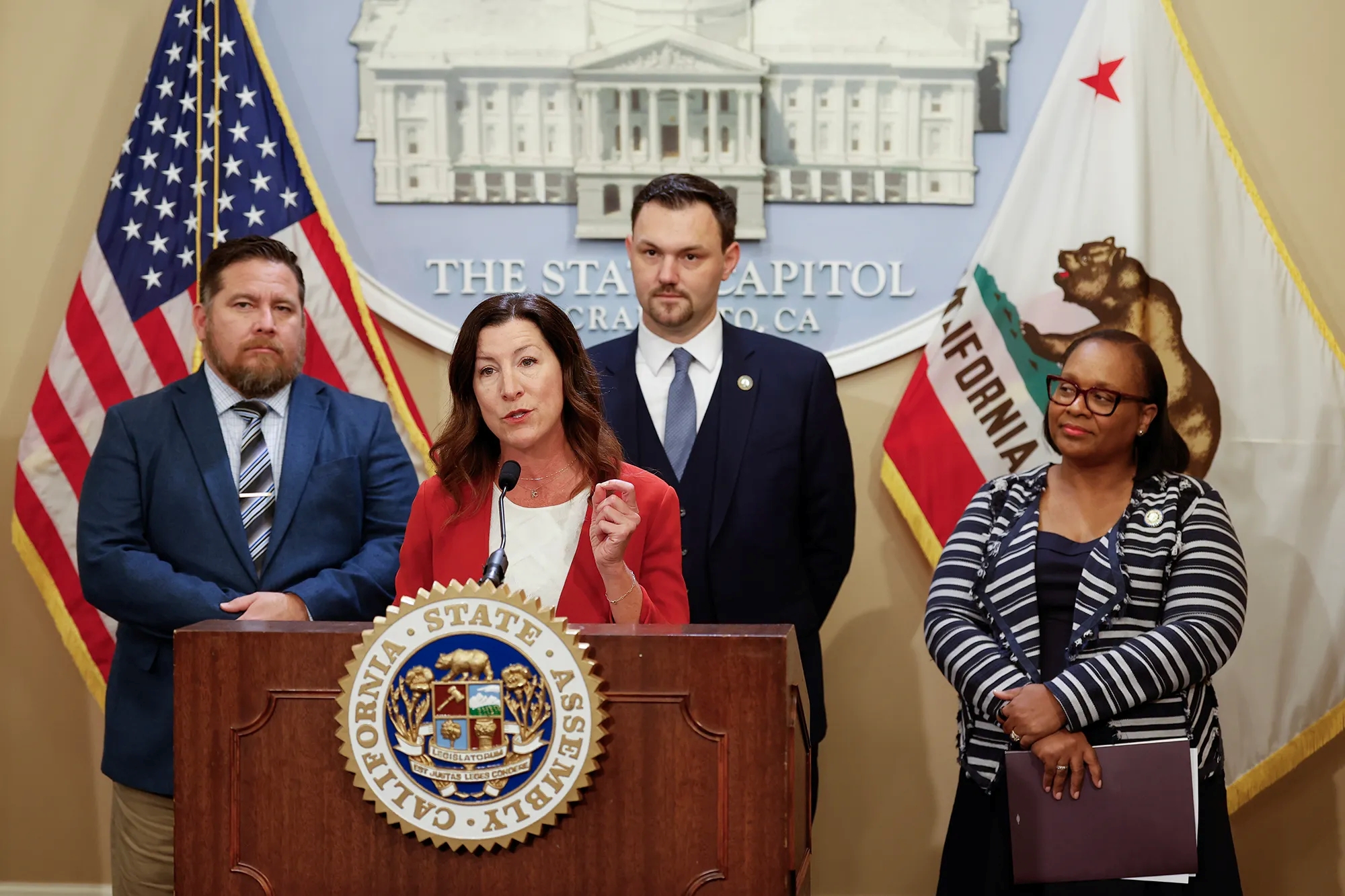
"caption": "Flanked by Democratic and Republican lawmakers, Assemblymember Cottie Petrie-Norris addresses the media at the state Capitol in Sacramento about a series of bills that aim to reduce DUI fatalities and injuries in the state, on Feb. 2, 2026. ",
"credit": "Fred Greaves/CalMatters",
"altTag": null,
"description": null,
"imgSizes": {
"thumbnail": {
"file": "https://cdn.kqed.org/wp-content/uploads/sites/10/2026/02/020226-DUI-Laws-FG-CM-05-160x107.jpg",
"width": 160,
"height": 107,
"mimeType": "image/jpeg"
},
"1536x1536": {
"file": "https://cdn.kqed.org/wp-content/uploads/sites/10/2026/02/020226-DUI-Laws-FG-CM-05-1536x1024.jpg",
"width": 1536,
"height": 1024,
"mimeType": "image/jpeg"
},
"post-thumbnail": {
"file": "https://cdn.kqed.org/wp-content/uploads/sites/10/2026/02/020226-DUI-Laws-FG-CM-05-672x372.jpg",
"width": 672,
"height": 372,
"mimeType": "image/jpeg"
},
"twentyfourteen-full-width": {
"file": "https://cdn.kqed.org/wp-content/uploads/sites/10/2026/02/020226-DUI-Laws-FG-CM-05-1038x576.jpg",
"width": 1038,
"height": 576,
"mimeType": "image/jpeg"
},
"npr-cds-wide": {
"file": "https://cdn.kqed.org/wp-content/uploads/sites/10/2026/02/020226-DUI-Laws-FG-CM-05-1200x675.jpg",
"width": 1200,
"height": 675,
"mimeType": "image/jpeg"
},
"kqedFullSize": {
"file": "https://cdn.kqed.org/wp-content/uploads/sites/10/2026/02/020226-DUI-Laws-FG-CM-05.jpg",
"width": 2000,
"height": 1333
}
},
"isLoading": false,
"fetchFailed": false
},
"news_12072103": {
"type": "attachments",
"id": "news_12072103",
"meta": {
"index": "attachments_1716263798",
"site": "news",
"id": "12072103",
"found": true
},
"title": "030623-High-Speed-Rail-LV_CM_04",
"publishDate": 1770154021,
"status": "inherit",
"parent": 12072100,
"modified": 1770154052,
"caption": "Construction on the high-speed rail project above Highway 99 in south Fresno on March 3, 2023.",
"credit": "Larry Valenzuela/CalMatters via CatchLight Local",
"altTag": null,
"description": null,
"imgSizes": {
"thumbnail": {
"file": "https://cdn.kqed.org/wp-content/uploads/sites/10/2026/02/030623-High-Speed-Rail-LV_CM_04-160x107.jpg",
"width": 160,
"height": 107,
"mimeType": "image/jpeg"
},
"1536x1536": {
"file": "https://cdn.kqed.org/wp-content/uploads/sites/10/2026/02/030623-High-Speed-Rail-LV_CM_04-1536x1024.jpg",
"width": 1536,
"height": 1024,
"mimeType": "image/jpeg"
},
"post-thumbnail": {
"file": "https://cdn.kqed.org/wp-content/uploads/sites/10/2026/02/030623-High-Speed-Rail-LV_CM_04-672x372.jpg",
"width": 672,
"height": 372,
"mimeType": "image/jpeg"
},
"twentyfourteen-full-width": {
"file": "https://cdn.kqed.org/wp-content/uploads/sites/10/2026/02/030623-High-Speed-Rail-LV_CM_04-1038x576.jpg",
"width": 1038,
"height": 576,
"mimeType": "image/jpeg"
},
"npr-cds-wide": {
"file": "https://cdn.kqed.org/wp-content/uploads/sites/10/2026/02/030623-High-Speed-Rail-LV_CM_04-1200x675.jpg",
"width": 1200,
"height": 675,
"mimeType": "image/jpeg"
},
"kqedFullSize": {
"file": "https://cdn.kqed.org/wp-content/uploads/sites/10/2026/02/030623-High-Speed-Rail-LV_CM_04.jpg",
"width": 2000,
"height": 1333
}
},
"isLoading": false,
"fetchFailed": false
},
"news_12071896": {
"type": "attachments",
"id": "news_12071896",
"meta": {
"index": "attachments_1716263798",
"site": "news",
"id": "12071896",
"found": true
},
"title": "121319_BurntRanchElementary_DW_12-CM",
"publishDate": 1770054179,
"status": "inherit",
"parent": 12071892,
"modified": 1770054215,
"caption": "An empty classroom for pre-K and kindergarten students in Burnt Ranch on Dec. 13, 2019.",
"credit": "Dave Woody/CalMatters",
"altTag": null,
"description": null,
"imgSizes": {
"thumbnail": {
"file": "https://cdn.kqed.org/wp-content/uploads/sites/10/2026/02/121319_BurntRanchElementary_DW_12-CM-160x107.jpeg",
"width": 160,
"height": 107,
"mimeType": "image/jpeg"
},
"1536x1536": {
"file": "https://cdn.kqed.org/wp-content/uploads/sites/10/2026/02/121319_BurntRanchElementary_DW_12-CM-1536x1026.jpeg",
"width": 1536,
"height": 1026,
"mimeType": "image/jpeg"
},
"post-thumbnail": {
"file": "https://cdn.kqed.org/wp-content/uploads/sites/10/2026/02/121319_BurntRanchElementary_DW_12-CM-672x372.jpeg",
"width": 672,
"height": 372,
"mimeType": "image/jpeg"
},
"twentyfourteen-full-width": {
"file": "https://cdn.kqed.org/wp-content/uploads/sites/10/2026/02/121319_BurntRanchElementary_DW_12-CM-1038x576.jpeg",
"width": 1038,
"height": 576,
"mimeType": "image/jpeg"
},
"npr-cds-wide": {
"file": "https://cdn.kqed.org/wp-content/uploads/sites/10/2026/02/121319_BurntRanchElementary_DW_12-CM-1200x675.jpeg",
"width": 1200,
"height": 675,
"mimeType": "image/jpeg"
},
"kqedFullSize": {
"file": "https://cdn.kqed.org/wp-content/uploads/sites/10/2026/02/121319_BurntRanchElementary_DW_12-CM.jpeg",
"width": 2000,
"height": 1336
}
},
"isLoading": false,
"fetchFailed": false
},
"news_12071887": {
"type": "attachments",
"id": "news_12071887",
"meta": {
"index": "attachments_1716263798",
"site": "news",
"id": "12071887",
"found": true
},
"title": "092222-DAVID-VALADAO-REUTERS-GS-CM",
"publishDate": 1770052779,
"status": "inherit",
"parent": 12071886,
"modified": 1770053168,
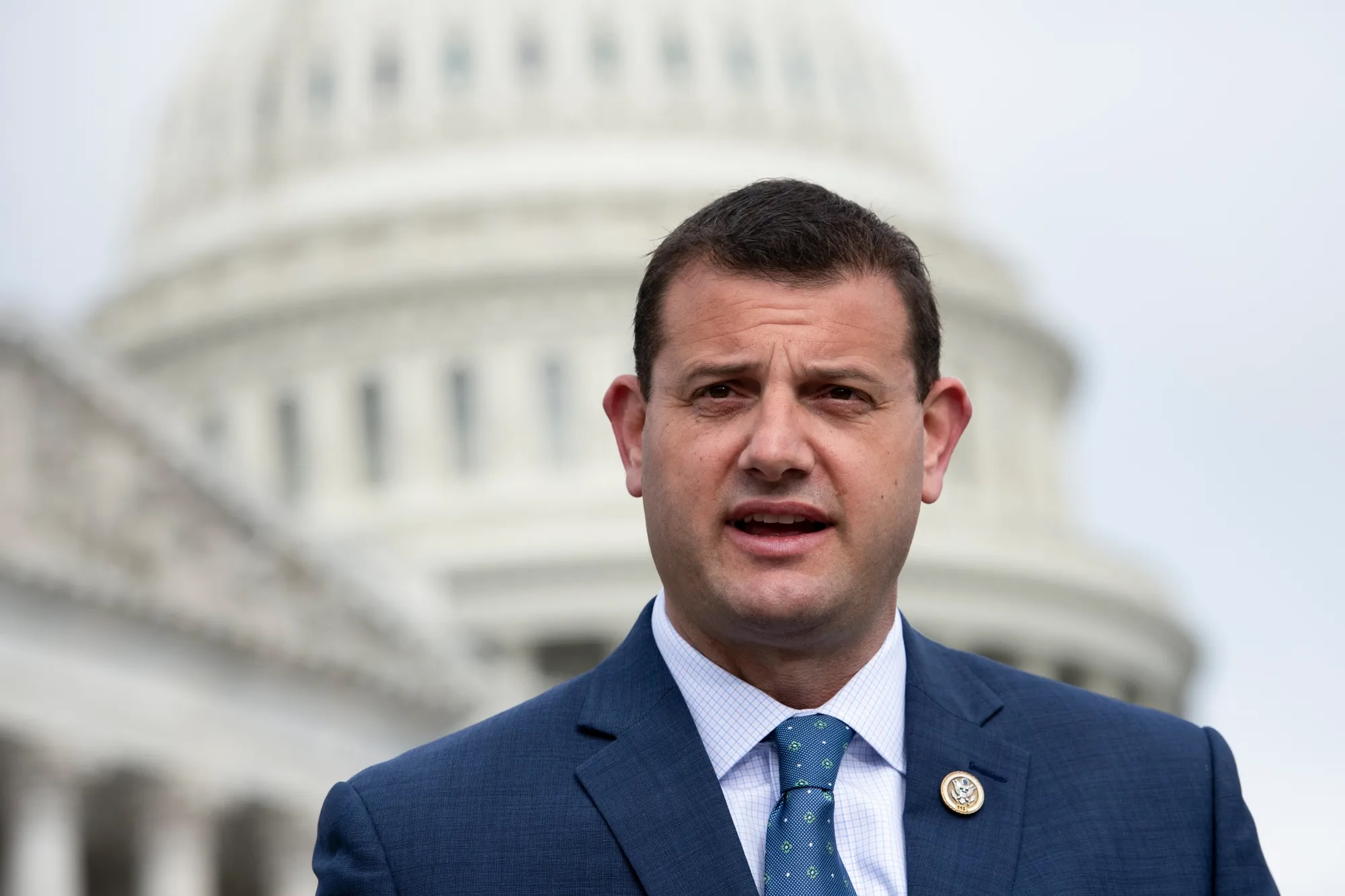
"caption": "Rep. David Valadao of California speaks at the U.S. Capitol in Washington, D.C., on March 17, 2021. ",
"credit": "Graeme Sloan/Sipa USA via Reuters",
"altTag": null,
"description": null,
"imgSizes": {
"thumbnail": {
"file": "https://cdn.kqed.org/wp-content/uploads/sites/10/2026/02/092222-DAVID-VALADAO-REUTERS-GS-CM-160x107.jpeg",
"width": 160,
"height": 107,
"mimeType": "image/jpeg"
},
"1536x1536": {
"file": "https://cdn.kqed.org/wp-content/uploads/sites/10/2026/02/092222-DAVID-VALADAO-REUTERS-GS-CM-1536x1024.jpeg",
"width": 1536,
"height": 1024,
"mimeType": "image/jpeg"
},
"post-thumbnail": {
"file": "https://cdn.kqed.org/wp-content/uploads/sites/10/2026/02/092222-DAVID-VALADAO-REUTERS-GS-CM-672x372.jpeg",
"width": 672,
"height": 372,
"mimeType": "image/jpeg"
},
"twentyfourteen-full-width": {
"file": "https://cdn.kqed.org/wp-content/uploads/sites/10/2026/02/092222-DAVID-VALADAO-REUTERS-GS-CM-1038x576.jpeg",
"width": 1038,
"height": 576,
"mimeType": "image/jpeg"
},
"npr-cds-wide": {
"file": "https://cdn.kqed.org/wp-content/uploads/sites/10/2026/02/092222-DAVID-VALADAO-REUTERS-GS-CM-1200x675.jpeg",
"width": 1200,
"height": 675,
"mimeType": "image/jpeg"
},
"kqedFullSize": {
"file": "https://cdn.kqed.org/wp-content/uploads/sites/10/2026/02/092222-DAVID-VALADAO-REUTERS-GS-CM.jpeg",
"width": 2000,
"height": 1333
}
},
"isLoading": false,
"fetchFailed": false
},
"news_12071739": {
"type": "attachments",
"id": "news_12071739",
"meta": {
"index": "attachments_1716263798",
"site": "news",
"id": "12071739",
"found": true
},
"title": "PlacerCM",
"publishDate": 1769801460,
"status": "inherit",
"parent": 12071732,
"modified": 1769801481,
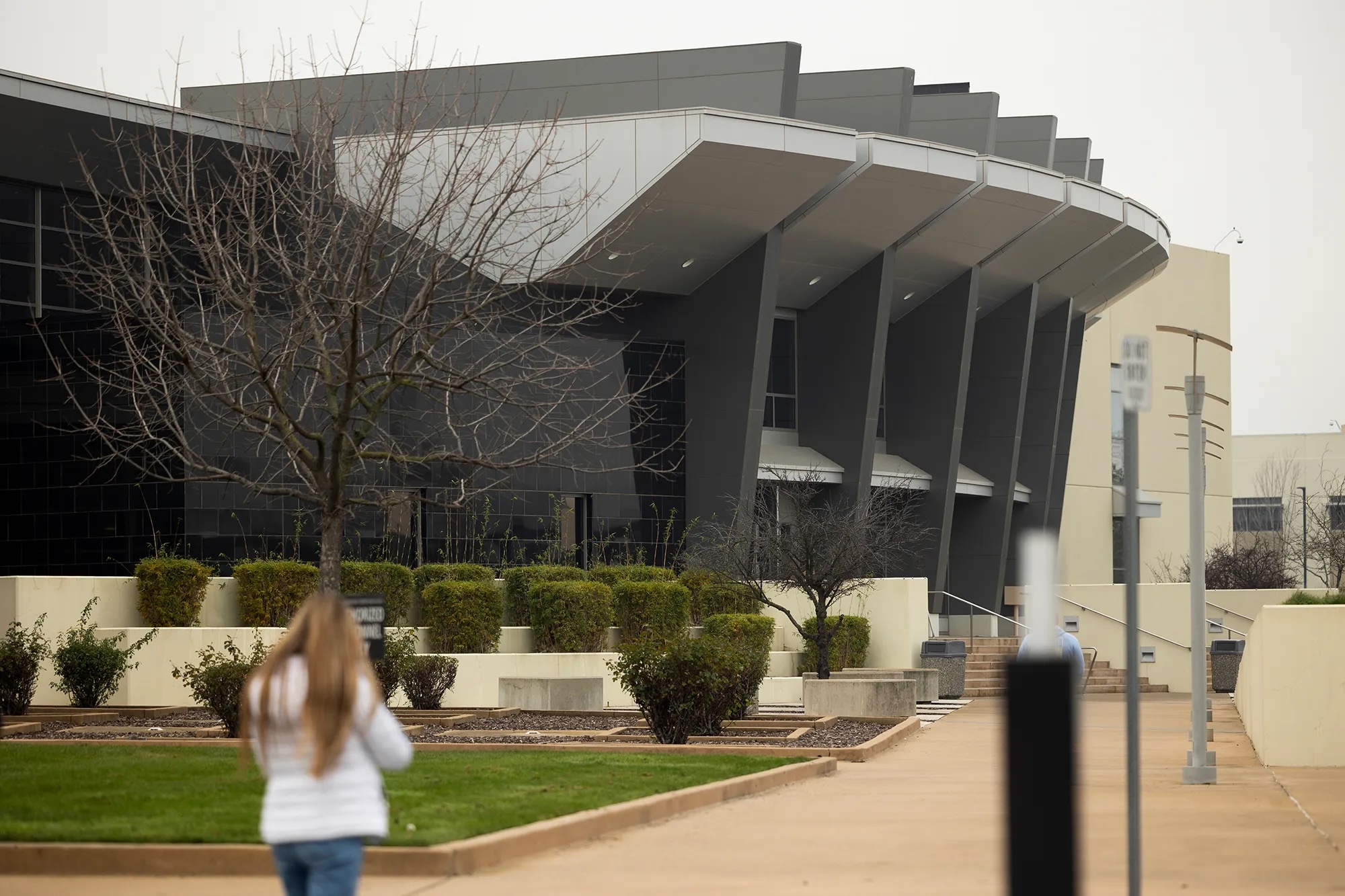
"caption": "The Placer County Superior Court in Roseville on Jan. 23, 2026. ",
"credit": "Photo by Miguel Gutierrez Jr., CalMatters",
"altTag": null,
"description": null,
"imgSizes": {
"thumbnail": {
"file": "https://cdn.kqed.org/wp-content/uploads/sites/10/2026/01/PlacerCM-160x107.jpg",
"width": 160,
"height": 107,
"mimeType": "image/jpeg"
},
"1536x1536": {
"file": "https://cdn.kqed.org/wp-content/uploads/sites/10/2026/01/PlacerCM-1536x1024.jpg",
"width": 1536,
"height": 1024,
"mimeType": "image/jpeg"
},
"post-thumbnail": {
"file": "https://cdn.kqed.org/wp-content/uploads/sites/10/2026/01/PlacerCM-672x372.jpg",
"width": 672,
"height": 372,
"mimeType": "image/jpeg"
},
"twentyfourteen-full-width": {
"file": "https://cdn.kqed.org/wp-content/uploads/sites/10/2026/01/PlacerCM-1038x576.jpg",
"width": 1038,
"height": 576,
"mimeType": "image/jpeg"
},
"npr-cds-wide": {
"file": "https://cdn.kqed.org/wp-content/uploads/sites/10/2026/01/PlacerCM-1200x675.jpg",
"width": 1200,
"height": 675,
"mimeType": "image/jpeg"
},
"kqedFullSize": {
"file": "https://cdn.kqed.org/wp-content/uploads/sites/10/2026/01/PlacerCM.jpg",
"width": 2000,
"height": 1333
}
},
"isLoading": false,
"fetchFailed": false
},
"news_11955214": {
"type": "attachments",
"id": "news_11955214",
"meta": {
"index": "attachments_1716263798",
"site": "news",
"id": "11955214",
"found": true
},
"parent": 11955206,
"imgSizes": {
"twentyfourteen-full-width": {
"file": "https://ww2.kqed.org/app/uploads/sites/10/2023/07/GettyImages-1322014635-1024x576.jpg",
"width": 1024,
"mimeType": "image/jpeg",
"height": 576
},
"thumbnail": {
"file": "https://ww2.kqed.org/app/uploads/sites/10/2023/07/GettyImages-1322014635-160x107.jpg",
"width": 160,
"mimeType": "image/jpeg",
"height": 107
},
"post-thumbnail": {
"file": "https://ww2.kqed.org/app/uploads/sites/10/2023/07/GettyImages-1322014635-672x372.jpg",
"width": 672,
"mimeType": "image/jpeg",
"height": 372
},
"kqedFullSize": {
"file": "https://ww2.kqed.org/app/uploads/sites/10/2023/07/GettyImages-1322014635.jpg",
"width": 1024,
"height": 683
},
"large": {
"file": "https://ww2.kqed.org/app/uploads/sites/10/2023/07/GettyImages-1322014635-1020x680.jpg",
"width": 1020,
"mimeType": "image/jpeg",
"height": 680
},
"medium": {
"file": "https://ww2.kqed.org/app/uploads/sites/10/2023/07/GettyImages-1322014635-800x534.jpg",
"width": 800,
"mimeType": "image/jpeg",
"height": 534
}
},
"publishDate": 1688767371,
"modified": 1688769462,
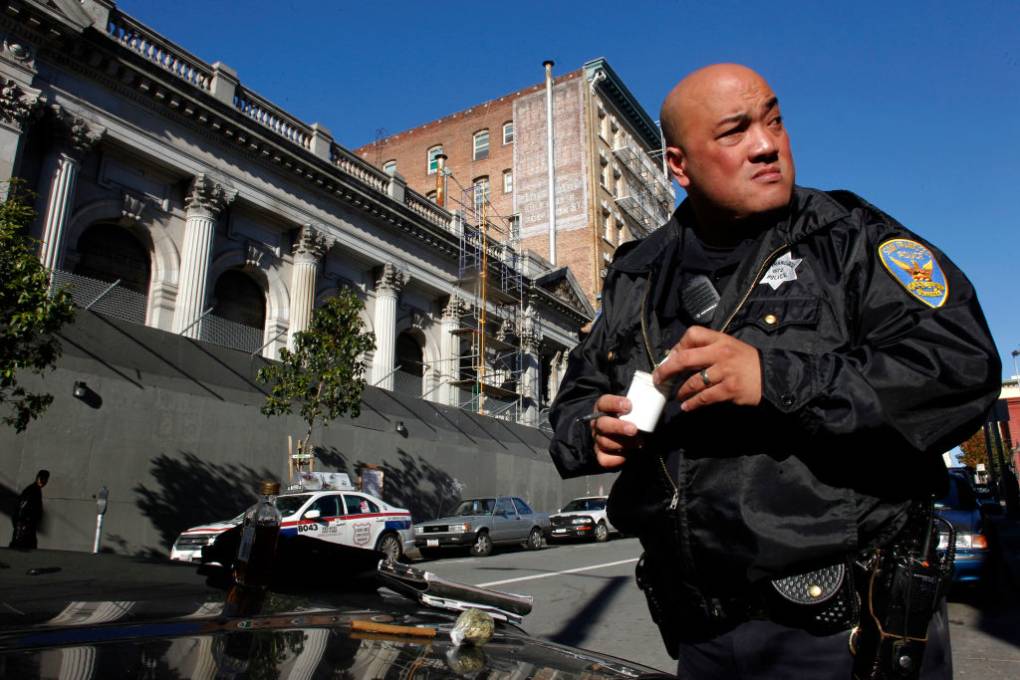
"caption": "Officer Louis Wong with the San Francisco Police Department with a jar of marijuana as he prepares to arrest a young man for drug possession in the Tenderloin neighborhood of San Francisco on Jan. 2, 2013.",
"description": null,
"title": "Officer Louis Wong with the San Francisco Police Department with a jar of marijuana as he prepares to arrest a young man for drug possession in the Tenderloin neighborhood of San Francisco, Calif. on Wednesday Jan. 2, 2013.",
"credit": "Michael Macor/The San Francisco Chronicle via Getty Images",
"status": "inherit",
"altTag": null,
"isLoading": false,
"fetchFailed": false
},
"news_12069810": {
"type": "attachments",
"id": "news_12069810",
"meta": {
"index": "attachments_1716263798",
"site": "news",
"id": "12069810",
"found": true
},
"title": "Ingest_Xai",
"publishDate": 1768428297,
"status": "inherit",
"parent": 12069808,
"modified": 1768429021,
"caption": "orkers install lighting on an \"X\" sign atop the company headquarters in downtown San Francisco on July 28, 2023.",
"credit": "Noah Berger/AP",
"altTag": null,
"description": null,
"imgSizes": {
"thumbnail": {
"file": "https://cdn.kqed.org/wp-content/uploads/sites/10/2026/01/Ingest_Xai-160x107.jpeg",
"width": 160,
"height": 107,
"mimeType": "image/jpeg"
},
"1536x1536": {
"file": "https://cdn.kqed.org/wp-content/uploads/sites/10/2026/01/Ingest_Xai-1536x1024.jpeg",
"width": 1536,
"height": 1024,
"mimeType": "image/jpeg"
},
"post-thumbnail": {
"file": "https://cdn.kqed.org/wp-content/uploads/sites/10/2026/01/Ingest_Xai-672x372.jpeg",
"width": 672,
"height": 372,
"mimeType": "image/jpeg"
},
"twentyfourteen-full-width": {
"file": "https://cdn.kqed.org/wp-content/uploads/sites/10/2026/01/Ingest_Xai-1038x576.jpeg",
"width": 1038,
"height": 576,
"mimeType": "image/jpeg"
},
"npr-cds-wide": {
"file": "https://cdn.kqed.org/wp-content/uploads/sites/10/2026/01/Ingest_Xai-1200x675.jpeg",
"width": 1200,
"height": 675,
"mimeType": "image/jpeg"
},
"kqedFullSize": {
"file": "https://cdn.kqed.org/wp-content/uploads/sites/10/2026/01/Ingest_Xai.jpeg",
"width": 2000,
"height": 1333
}
},
"isLoading": false,
"fetchFailed": false
},
"news_12066344": {
"type": "attachments",
"id": "news_12066344",
"meta": {
"index": "attachments_1716263798",
"site": "news",
"id": "12066344",
"found": true
},
"title": "120125-Lena-Deacy-ZS-11",
"publishDate": 1765142405,
"status": "inherit",
"parent": 12066341,
"modified": 1765142472,
"caption": "Lena Deacy at her home in Culver City, on Dec. 1, 2025. ",
"credit": "Zaydee Sanchez/CalMatters",
"altTag": "A young woman with glasses and a pink shirt stands outside on a deck.",
"description": null,
"imgSizes": {
"thumbnail": {
"file": "https://cdn.kqed.org/wp-content/uploads/sites/10/2025/12/120125-Lena-Deacy-ZS-11-160x105.jpg",
"width": 160,
"height": 105,
"mimeType": "image/jpeg"
},
"1536x1536": {
"file": "https://cdn.kqed.org/wp-content/uploads/sites/10/2025/12/120125-Lena-Deacy-ZS-11-1536x1005.jpg",
"width": 1536,
"height": 1005,
"mimeType": "image/jpeg"
},
"post-thumbnail": {
"file": "https://cdn.kqed.org/wp-content/uploads/sites/10/2025/12/120125-Lena-Deacy-ZS-11-672x372.jpg",
"width": 672,
"height": 372,
"mimeType": "image/jpeg"
},
"twentyfourteen-full-width": {
"file": "https://cdn.kqed.org/wp-content/uploads/sites/10/2025/12/120125-Lena-Deacy-ZS-11-1038x576.jpg",
"width": 1038,
"height": 576,
"mimeType": "image/jpeg"
},
"npr-cds-wide": {
"file": "https://cdn.kqed.org/wp-content/uploads/sites/10/2025/12/120125-Lena-Deacy-ZS-11-1200x675.jpg",
"width": 1200,
"height": 675,
"mimeType": "image/jpeg"
},
"kqedFullSize": {
"file": "https://cdn.kqed.org/wp-content/uploads/sites/10/2025/12/120125-Lena-Deacy-ZS-11.jpg",
"width": 2000,
"height": 1309
}
},
"isLoading": false,
"fetchFailed": false
},
"news_12065491": {
"type": "attachments",
"id": "news_12065491",
"meta": {
"index": "attachments_1716263798",
"site": "news",
"id": "12065491",
"found": true
},
"title": "112823_DACA-Students_AE_CM_20",
"publishDate": 1764188381,
"status": "inherit",
"parent": 12065490,
"modified": 1764188402,
"caption": "Stickers and flyers on a table in the Undocumented Community Center at the College of San Mateo in San Mateo, on Nov. 28, 2023. At this center, students without legal status can access financial and legal aid as well as guidance in navigating grant applications.",
"credit": "Photo by Amaya Edwards for CalMatters",
"altTag": null,
"description": null,
"imgSizes": {
"thumbnail": {
"file": "https://cdn.kqed.org/wp-content/uploads/sites/10/2025/11/112823_DACA-Students_AE_CM_20-160x107.jpeg",
"width": 160,
"height": 107,
"mimeType": "image/jpeg"
},
"1536x1536": {
"file": "https://cdn.kqed.org/wp-content/uploads/sites/10/2025/11/112823_DACA-Students_AE_CM_20-1536x1024.jpeg",
"width": 1536,
"height": 1024,
"mimeType": "image/jpeg"
},
"post-thumbnail": {
"file": "https://cdn.kqed.org/wp-content/uploads/sites/10/2025/11/112823_DACA-Students_AE_CM_20-672x372.jpeg",
"width": 672,
"height": 372,
"mimeType": "image/jpeg"
},
"twentyfourteen-full-width": {
"file": "https://cdn.kqed.org/wp-content/uploads/sites/10/2025/11/112823_DACA-Students_AE_CM_20-1038x576.jpeg",
"width": 1038,
"height": 576,
"mimeType": "image/jpeg"
},
"npr-cds-wide": {
"file": "https://cdn.kqed.org/wp-content/uploads/sites/10/2025/11/112823_DACA-Students_AE_CM_20-1200x675.jpeg",
"width": 1200,
"height": 675,
"mimeType": "image/jpeg"
},
"kqedFullSize": {
"file": "https://cdn.kqed.org/wp-content/uploads/sites/10/2025/11/112823_DACA-Students_AE_CM_20.jpeg",
"width": 2000,
"height": 1333
}
},
"isLoading": false,
"fetchFailed": false
},
"news_12065345": {
"type": "attachments",
"id": "news_12065345",
"meta": {
"index": "attachments_1716263798",
"site": "news",
"id": "12065345",
"found": true
},
"title": "111023_Angelica-Vasquez_MO_CM_13",
"publishDate": 1764101772,
"status": "inherit",
"parent": 12065344,
"modified": 1778260202,
"caption": "A PG&E bill, on Nov. 10, 2023.",
"credit": "Photo by Manuel Orbegozo for CalMatters",
"altTag": null,
"description": null,
"imgSizes": {
"thumbnail": {
"file": "https://cdn.kqed.org/wp-content/uploads/sites/10/2025/11/111023_Angelica-Vasquez_MO_CM_13-160x107.jpeg",
"width": 160,
"height": 107,
"mimeType": "image/jpeg"
},
"1536x1536": {
"file": "https://cdn.kqed.org/wp-content/uploads/sites/10/2025/11/111023_Angelica-Vasquez_MO_CM_13-1536x1024.jpeg",
"width": 1536,
"height": 1024,
"mimeType": "image/jpeg"
},
"post-thumbnail": {
"file": "https://cdn.kqed.org/wp-content/uploads/sites/10/2025/11/111023_Angelica-Vasquez_MO_CM_13-672x372.jpeg",
"width": 672,
"height": 372,
"mimeType": "image/jpeg"
},
"twentyfourteen-full-width": {
"file": "https://cdn.kqed.org/wp-content/uploads/sites/10/2025/11/111023_Angelica-Vasquez_MO_CM_13-1038x576.jpeg",
"width": 1038,
"height": 576,
"mimeType": "image/jpeg"
},
"npr-cds-wide": {
"file": "https://cdn.kqed.org/wp-content/uploads/sites/10/2025/11/111023_Angelica-Vasquez_MO_CM_13-1200x675.jpeg",
"width": 1200,
"height": 675,
"mimeType": "image/jpeg"
},
"kqedFullSize": {
"file": "https://cdn.kqed.org/wp-content/uploads/sites/10/2025/11/111023_Angelica-Vasquez_MO_CM_13.jpeg",
"width": 2000,
"height": 1333
}
},
"isLoading": false,
"fetchFailed": false
},
"news_12065160": {
"type": "attachments",
"id": "news_12065160",
"meta": {
"index": "attachments_1716263798",
"site": "news",
"id": "12065160",
"found": true
},
"title": "021125-ICE-Schools-Salinas-LV_CM_30",
"publishDate": 1763931365,
"status": "inherit",
"parent": 12065159,
"modified": 1763931425,
"caption": "Students walk through the basketball courts at Sherwood Elementary School in Salinas on Feb. 11, 2025. ",
"credit": "Larry Valenzuela, CalMatters/CatchLight Local",
"altTag": "Several children on a playground and basketball court with three facing away from the camera.",
"description": null,
"imgSizes": {
"thumbnail": {
"file": "https://cdn.kqed.org/wp-content/uploads/sites/10/2025/11/021125-ICE-Schools-Salinas-LV_CM_30-160x107.jpg",
"width": 160,
"height": 107,
"mimeType": "image/jpeg"
},
"1536x1536": {
"file": "https://cdn.kqed.org/wp-content/uploads/sites/10/2025/11/021125-ICE-Schools-Salinas-LV_CM_30-1536x1024.jpg",
"width": 1536,
"height": 1024,
"mimeType": "image/jpeg"
},
"post-thumbnail": {
"file": "https://cdn.kqed.org/wp-content/uploads/sites/10/2025/11/021125-ICE-Schools-Salinas-LV_CM_30-672x372.jpg",
"width": 672,
"height": 372,
"mimeType": "image/jpeg"
},
"twentyfourteen-full-width": {
"file": "https://cdn.kqed.org/wp-content/uploads/sites/10/2025/11/021125-ICE-Schools-Salinas-LV_CM_30-1038x576.jpg",
"width": 1038,
"height": 576,
"mimeType": "image/jpeg"
},
"npr-cds-wide": {
"file": "https://cdn.kqed.org/wp-content/uploads/sites/10/2025/11/021125-ICE-Schools-Salinas-LV_CM_30-1200x675.jpg",
"width": 1200,
"height": 675,
"mimeType": "image/jpeg"
},
"kqedFullSize": {
"file": "https://cdn.kqed.org/wp-content/uploads/sites/10/2025/11/021125-ICE-Schools-Salinas-LV_CM_30.jpg",
"width": 2000,
"height": 1333
}
},
"isLoading": false,
"fetchFailed": false
},
"news_12064836": {
"type": "attachments",
"id": "news_12064836",
"meta": {
"index": "attachments_1716263798",
"site": "news",
"id": "12064836",
"found": true
},
"title": "111925-UC-Students-Tuition-Hike-March-MZ-CM-01",
"publishDate": 1763599061,
"status": "inherit",
"parent": 12064807,
"modified": 1763599085,
"caption": "Dozens of UC students march outside a meeting of the University of California Board of Regents in Los Angeles to protest the system’s plan to continue annual tuition increases on Nov. 19, 2025. \n",
"credit": "Photo by Mikhail Zinshteyn, CalMatters",
"altTag": null,
"description": null,
"imgSizes": {
"thumbnail": {
"file": "https://cdn.kqed.org/wp-content/uploads/sites/10/2025/11/111925-UC-Students-Tuition-Hike-March-MZ-CM-01-160x107.jpg",
"width": 160,
"height": 107,
"mimeType": "image/jpeg"
},
"1536x1536": {
"file": "https://cdn.kqed.org/wp-content/uploads/sites/10/2025/11/111925-UC-Students-Tuition-Hike-March-MZ-CM-01-1536x1024.jpg",
"width": 1536,
"height": 1024,
"mimeType": "image/jpeg"
},
"post-thumbnail": {
"file": "https://cdn.kqed.org/wp-content/uploads/sites/10/2025/11/111925-UC-Students-Tuition-Hike-March-MZ-CM-01-672x372.jpg",
"width": 672,
"height": 372,
"mimeType": "image/jpeg"
},
"twentyfourteen-full-width": {
"file": "https://cdn.kqed.org/wp-content/uploads/sites/10/2025/11/111925-UC-Students-Tuition-Hike-March-MZ-CM-01-1038x576.jpg",
"width": 1038,
"height": 576,
"mimeType": "image/jpeg"
},
"npr-cds-wide": {
"file": "https://cdn.kqed.org/wp-content/uploads/sites/10/2025/11/111925-UC-Students-Tuition-Hike-March-MZ-CM-01-1200x675.jpg",
"width": 1200,
"height": 675,
"mimeType": "image/jpeg"
},
"kqedFullSize": {
"file": "https://cdn.kqed.org/wp-content/uploads/sites/10/2025/11/111925-UC-Students-Tuition-Hike-March-MZ-CM-01.jpg",
"width": 2000,
"height": 1333
}
},
"isLoading": false,
"fetchFailed": false
}
},
"audioPlayerReducer": {
"postId": "stream_live",
"isPaused": true,
"isPlaying": false,
"pfsActive": false,
"pledgeModalIsOpen": true,
"playerDrawerIsOpen": false,
"liveAudioPlayStartedAt": 0,
"liveAudioPlayContext": ""
},
"authorsReducer": {
"byline_news_12072132": {
"type": "authors",
"id": "byline_news_12072132",
"meta": {
"override": true
},
"slug": "byline_news_12072132",
"name": "\u003ca href=\"https://calmatters.org/author/robert-lewis/\">Robert Lewis\u003c/a>, \u003ca href=\"https://calmatters.org/author/laurenhepler/\">Lauren Hepler\u003c/a>, CalMatters",
"isLoading": false
},
"byline_news_12072100": {
"type": "authors",
"id": "byline_news_12072100",
"meta": {
"override": true
},
"slug": "byline_news_12072100",
"name": "Yue Stella Yu, CalMatters",
"isLoading": false
},
"byline_news_12071892": {
"type": "authors",
"id": "byline_news_12071892",
"meta": {
"override": true
},
"slug": "byline_news_12071892",
"name": "Carolyn Jones, CalMatters",
"isLoading": false
},
"byline_news_12071886": {
"type": "authors",
"id": "byline_news_12071886",
"meta": {
"override": true
},
"slug": "byline_news_12071886",
"name": "Maya C. Miller, CalMatters",
"isLoading": false
},
"byline_news_12071732": {
"type": "authors",
"id": "byline_news_12071732",
"meta": {
"override": true
},
"slug": "byline_news_12071732",
"name": "Cayla Mihalovich, CalMatters",
"isLoading": false
},
"byline_news_12071647": {
"type": "authors",
"id": "byline_news_12071647",
"meta": {
"override": true
},
"slug": "byline_news_12071647",
"name": "Nigel Duara, CalMatters",
"isLoading": false
},
"byline_news_12069808": {
"type": "authors",
"id": "byline_news_12069808",
"meta": {
"override": true
},
"slug": "byline_news_12069808",
"name": "Khari Johnson, CalMatters",
"isLoading": false
},
"byline_news_12066341": {
"type": "authors",
"id": "byline_news_12066341",
"meta": {
"override": true
},
"slug": "byline_news_12066341",
"name": "\u003ca href=\"https://calmatters.org/author/carolyn-jones/\">Carolyn Jones, \u003c/a>CalMatters",
"isLoading": false
},
"byline_news_12065490": {
"type": "authors",
"id": "byline_news_12065490",
"meta": {
"override": true
},
"slug": "byline_news_12065490",
"name": "Adam Echelman and Mikhail Zinshteyn, CalMatters",
"isLoading": false
},
"byline_news_12065344": {
"type": "authors",
"id": "byline_news_12065344",
"meta": {
"override": true
},
"slug": "byline_news_12065344",
"name": "Malena Carollo, CalMatters",
"isLoading": false
},
"byline_news_12065159": {
"type": "authors",
"id": "byline_news_12065159",
"meta": {
"override": true
},
"slug": "byline_news_12065159",
"name": "\u003ca href=\"https://calmatters.org/author/carolyn-jones/\">Carolyn Jones, \u003c/a>CalMatters",
"isLoading": false
},
"byline_news_12064807": {
"type": "authors",
"id": "byline_news_12064807",
"meta": {
"override": true
},
"slug": "byline_news_12064807",
"name": "Mikhail Zinshteyn, CalMatters",
"isLoading": false
}
},
"pagesReducer": {
"news_affiliate_calmatters": {
"type": "terms",
"id": "news_18481",
"meta": {
"index": "terms_1716263798",
"site": "news",
"id": "18481",
"score": 15.355862
},
"featImg": null,
"name": "CALmatters",
"description": null,
"taxonomy": "affiliate",
"headData": {
"twImgId": null,
"twTitle": null,
"ogTitle": null,
"ogImgId": null,
"twDescription": null,
"description": null,
"title": "CALmatters Archives | KQED Arts",
"ogDescription": null
},
"ttid": 18515,
"slug": "calmatters",
"isLoading": false,
"title": "CALmatters",
"pageMeta": {
"site": "news",
"WpPageTemplate": "page-topic-editorial",
"currentPage": 8
},
"blocks": [
{
"blockName": "kqed/post-list",
"attrs": {
"layout": "cardArticle2",
"query": "posts/news?affiliate=calmatters",
"seeMore": false,
"paginated": true,
"page": 8
}
},
{
"blockName": "kqed/ad"
}
]
}
},
"pfsSessionReducer": {},
"postsReducer": {
"stream_live": {
"type": "live",
"id": "stream_live",
"audioUrl": "https://streams.kqed.org/kqedradio",
"title": "Live Stream",
"excerpt": "Live Stream information currently unavailable.",
"link": "/radio",
"featImg": "",
"label": {
"name": "KQED Live",
"link": "/"
}
},
"stream_kqedNewscast": {
"type": "posts",
"id": "stream_kqedNewscast",
"audioUrl": "https://www.kqed.org/.stream/anon/radio/RDnews/newscast.mp3?_=1",
"title": "KQED Newscast",
"featImg": "",
"label": {
"name": "88.5 FM",
"link": "/"
}
},
"news_12072132": {
"type": "posts",
"id": "news_12072132",
"meta": {
"index": "posts_1716263798",
"site": "news",
"id": "12072132",
"score": null,
"sort": [
1770217210000
]
},
"guestAuthors": [],
"slug": "california-has-a-dangerous-driver-problem-a-bipartisan-group-of-lawmakers-wants-to-fix-that",
"title": "California Has a Dangerous Driver Problem. A Bipartisan Group of Lawmakers Wants to Fix That",
"publishDate": 1770217210,
"format": "standard",
"headTitle": "California Has a Dangerous Driver Problem. A Bipartisan Group of Lawmakers Wants to Fix That | KQED",
"labelTerm": {
"term": 18481,
"site": "news"
},
"content": "\u003cp>\u003cem>This story was originally published by \u003ca href=\"https://calmatters.org/\">CalMatters\u003c/a>. \u003ca href=\"https://calmatters.org/subscribe-to-calmatters/\">Sign up\u003c/a> for their newsletters.\u003c/em>\u003c/p>\n\u003cp>A bipartisan group of \u003ca href=\"https://www.kqed.org/news/tag/california-assembly\">state Assembly members\u003c/a> announced a package of bills Monday to crack down on dangerous drivers and address some of the roadway safety issues CalMatters uncovered as part of its ongoing \u003ca href=\"https://calmatters.org/series/license-to-kill/\">License to Kill\u003c/a> series.\u003c/p>\n\u003cp>The proposals take aim at laws and practices that have allowed dangerous drivers to stay on California’s roads and contributed to a spike in traffic deaths. The bills would: require first-time DUI offenders to install in-car breathalyzers, lengthen many license suspensions and revocations, increase DUI training for law enforcement and close a loophole that allows people who’ve killed with their car to avoid consequences through a diversion program.\u003c/p>\n\u003cp>[ad fullwidth]\u003c/p>\n\u003cp>“Sacramento is listening. We see that there is a problem and we are doing what we can, crossing that partisan divide and trying to identify real solutions that we can deliver now to make our communities safer,” said Democratic Assemblymember Nick Schultz of Burbank, chair of the Assembly Public Safety Committee.\u003c/p>\n\u003cp>The Assembly proposals are one component of a \u003ca href=\"https://www.kqed.org/news/12041243/san-franciscos-streets-still-deadly-advocates-want-lurie-to-do-more\">broader reckoning over years of rising traffic deaths\u003c/a> playing out at the Capitol. Next week, a separate event is expected to include more details about new bills from the California Senate, related budget proposals and the perspective of families who have lost loved ones to drunk drivers.\u003c/p>\n\u003cp>Last month, Schultz \u003ca href=\"https://calmatters.org/investigation/2026/01/californa-dui-law-reform/\">introduced \u003c/a>a bill to increase penalties for repeat DUI offenders. Assembly members detailed several additional legislative efforts at Monday’s press conference that would:\u003cstrong> \u003c/strong>\u003c/p>\n\u003cp>\u003cstrong>Close a diversion loophole.\u003c/strong>\u003c/p>\n\u003cp>We reported in December that a criminal justice reform law from a few years ago was allowing judges to dismiss misdemeanor vehicular manslaughter charges for drivers who agreed to take part in what’s known as a \u003ca href=\"https://calmatters.org/investigation/2025/12/california-vehicular-manslaughter-diversion/\">diversion program\u003c/a>. But in an unintended twist, that has meant the drivers not only avoided a criminal conviction but also kept a clean driving record.\u003c/p>\n\u003cp>Assembly Member Lori Wilson, a Democrat from Suisun City who chairs the Assembly Transportation Committee, introduced \u003ca href=\"https://leginfo.legislature.ca.gov/faces/billNavClient.xhtml?bill_id=202520260AB1662\">a new bill\u003c/a> that would require the DMV to add points to a driver’s license when they’re granted misdemeanor diversion.\u003c/p>\n\u003cp>\u003cstrong>Make license suspensions and revocations start when a driver is released from custody as opposed to at the time of conviction.\u003c/strong>\u003c/p>\n\u003cp>Currently, someone who is convicted of felony vehicular manslaughter would likely by law have their license revoked for three years. But the revocation would often start while they’re in prison and they might be eligible to get their license back as soon as they’re out.\u003c/p>\n\u003cp>Wilson said her office is finalizing language on another bill that would change that.\u003c/p>\n\u003cp>\u003cstrong>“\u003c/strong>Driving is a privilege,” Wilson said. “This package holds dangerous drivers accountable and keeps our streets safer for everyone.”\u003c/p>\n\u003cp>\u003cstrong>Force first-time DUI offenders to install what’s known as an ignition interlock device on their vehicles.\u003c/strong>\u003c/p>\n\u003cp>This is now the third time that Assemblymember Cottie Petrie-Norris, a Democrat from Irvine, has introduced this measure.[aside postID=forum_2010101909751 hero='https://cdn.kqed.org/wp-content/uploads/sites/43/2025/04/GettyImages-1230256771-1-1020x574.jpg']California is currently one of the few states that doesn’t require first time offenders to install the technology, which forces a driver to blow into a breathalyzer and prove they haven’t been drinking in order to start their car. Her \u003ca href=\"https://calmatters.org/investigation/2025/12/california-roadway-deaths-inaction/\">previous efforts failed\u003c/a> after the Department of Motor Vehicles raised budget concerns and civil liberties groups worried it would disproportionately impact the poor and people of color.\u003c/p>\n\u003cp>\u003cstrong>“\u003c/strong>California is the \u003ca href=\"https://www.kqed.org/news/12035925/license-to-kill\">epicenter of America’s DUI and drunk driving epidemic\u003c/a>. As moms, as dads, as Californians, it’s horrifying. And as policymakers, we have an opportunity and we have an obligation to do something about this,” Petrie-Norris said. “We know these devices work. We know that they can save lives.”\u003c/p>\n\u003cp>\u003cstrong>Increase training for law enforcement officers on how to enforce the state’s DUI laws.\u003c/strong>\u003c/p>\n\u003cp>Assembly Member Juan Alanis, a Republican from Modesto, said currently many officers only get basic training at the academy on drunk and drugged driving and must often wait for colleagues with more specialized training to assess a driver’s sobriety level.\u003c/p>\n\u003cp>“This is to help those agencies and officers to be able to have that training so that way we can identify DUI drivers faster, quicker and get them off the streets,” Alanis said.\u003c/p>\n\u003cp>Schultz called the package of proposals a “starting point” and said he expects his colleagues in the state Senate will also be proposing changes to save lives on the road.\u003c/p>\n\u003cp>Indeed, last month state Sen. Bob Archuleta, a Democrat from Norwalk, \u003ca href=\"https://leginfo.legislature.ca.gov/faces/billNavClient.xhtml?bill_id=202520260SB907\">introduced a bill\u003c/a> to crack down on DUIs – increasing punishment and making it easier for prosecutors to charge repeat offenders with murder.\u003c/p>\n\u003cp>Archuleta is expected to hold a press conference later this month along with Mothers Against Drunk Driving, road safety advocates and other lawmakers to announce further road safety bills.\u003c/p>\n\u003cp>\u003cem>This article was \u003ca href=\"https://calmatters.org/investigation/2026/02/assembly-driving-bills/\">originally published on CalMatters\u003c/a> and was republished under the \u003ca href=\"https://creativecommons.org/licenses/by-nc-nd/4.0/\">Creative Commons Attribution-NonCommercial-NoDerivatives\u003c/a> license.\u003c/em>\u003c/p>\n\u003cp>\u003c/p>\n",
"blocks": [],
"excerpt": "The Assembly proposals are part of a broader push at the Capitol to reform California’s weak driving laws.",
"status": "publish",
"parent": 0,
"modified": 1770163066,
"stats": {
"hasAudio": false,
"hasVideo": false,
"hasChartOrMap": false,
"iframeSrcs": [],
"hasGoogleForm": false,
"hasGallery": false,
"hasHearkenModule": false,
"hasPolis": false,
"paragraphCount": 25,
"wordCount": 871
},
"headData": {
"title": "California Has a Dangerous Driver Problem. A Bipartisan Group of Lawmakers Wants to Fix That | KQED",
"description": "The Assembly proposals are part of a broader push at the Capitol to reform California’s weak driving laws.",
"ogTitle": "",
"ogDescription": "",
"ogImgId": "",
"twTitle": "",
"twDescription": "",
"twImgId": "",
"schema": {
"@context": "https://schema.org",
"@type": "NewsArticle",
"headline": "California Has a Dangerous Driver Problem. A Bipartisan Group of Lawmakers Wants to Fix That",
"datePublished": "2026-02-04T07:00:10-08:00",
"dateModified": "2026-02-03T15:57:46-08:00",
"image": "https://cdn.kqed.org/wp-content/uploads/2020/02/KQED-OG-Image@1x.png",
"isAccessibleForFree": "True",
"publisher": {
"@type": "NewsMediaOrganization",
"@id": "https://www.kqed.org/#organization",
"name": "KQED",
"logo": "https://cdn.kqed.org/wp-content/uploads/2020/02/KQED-OG-Image@1x.png",
"url": "https://www.kqed.org",
"sameAs": [
"https://www.facebook.com/KQED",
"https://twitter.com/KQED",
"https://www.instagram.com/kqed/",
"https://www.tiktok.com/@kqedofficial",
"https://www.linkedin.com/company/kqed",
"https://www.youtube.com/channel/UCeC0IOo7i1P_61zVUWbJ4nw"
]
}
}
},
"primaryCategory": {
"termId": 13,
"slug": "politics",
"name": "Politics"
},
"sticky": false,
"nprByline": "\u003ca href=\"https://calmatters.org/author/robert-lewis/\">Robert Lewis\u003c/a>, \u003ca href=\"https://calmatters.org/author/laurenhepler/\">Lauren Hepler\u003c/a>, CalMatters",
"nprStoryId": "kqed-12035925",
"templateType": "standard",
"featuredImageType": "standard",
"excludeFromSiteSearch": "Include",
"showOnAuthorArchivePages": "No",
"articleAge": "0",
"path": "/news/12072132/california-has-a-dangerous-driver-problem-a-bipartisan-group-of-lawmakers-wants-to-fix-that",
"audioTrackLength": null,
"parsedContent": [
{
"type": "contentString",
"content": "\u003cdiv class=\"post-body\">\u003cp>\u003cp>\u003cem>This story was originally published by \u003ca href=\"https://calmatters.org/\">CalMatters\u003c/a>. \u003ca href=\"https://calmatters.org/subscribe-to-calmatters/\">Sign up\u003c/a> for their newsletters.\u003c/em>\u003c/p>\n\u003cp>A bipartisan group of \u003ca href=\"https://www.kqed.org/news/tag/california-assembly\">state Assembly members\u003c/a> announced a package of bills Monday to crack down on dangerous drivers and address some of the roadway safety issues CalMatters uncovered as part of its ongoing \u003ca href=\"https://calmatters.org/series/license-to-kill/\">License to Kill\u003c/a> series.\u003c/p>\n\u003cp>The proposals take aim at laws and practices that have allowed dangerous drivers to stay on California’s roads and contributed to a spike in traffic deaths. The bills would: require first-time DUI offenders to install in-car breathalyzers, lengthen many license suspensions and revocations, increase DUI training for law enforcement and close a loophole that allows people who’ve killed with their car to avoid consequences through a diversion program.\u003c/p>\n\u003cp>\u003c/p>\u003c/div>",
"attributes": {
"named": {},
"numeric": []
}
},
{
"type": "component",
"content": "",
"name": "ad",
"attributes": {
"named": {
"label": "fullwidth"
},
"numeric": [
"fullwidth"
]
}
},
{
"type": "contentString",
"content": "\u003cdiv class=\"post-body\">\u003cp>\u003c/p>\n\u003cp>“Sacramento is listening. We see that there is a problem and we are doing what we can, crossing that partisan divide and trying to identify real solutions that we can deliver now to make our communities safer,” said Democratic Assemblymember Nick Schultz of Burbank, chair of the Assembly Public Safety Committee.\u003c/p>\n\u003cp>The Assembly proposals are one component of a \u003ca href=\"https://www.kqed.org/news/12041243/san-franciscos-streets-still-deadly-advocates-want-lurie-to-do-more\">broader reckoning over years of rising traffic deaths\u003c/a> playing out at the Capitol. Next week, a separate event is expected to include more details about new bills from the California Senate, related budget proposals and the perspective of families who have lost loved ones to drunk drivers.\u003c/p>\n\u003cp>Last month, Schultz \u003ca href=\"https://calmatters.org/investigation/2026/01/californa-dui-law-reform/\">introduced \u003c/a>a bill to increase penalties for repeat DUI offenders. Assembly members detailed several additional legislative efforts at Monday’s press conference that would:\u003cstrong> \u003c/strong>\u003c/p>\n\u003cp>\u003cstrong>Close a diversion loophole.\u003c/strong>\u003c/p>\n\u003cp>We reported in December that a criminal justice reform law from a few years ago was allowing judges to dismiss misdemeanor vehicular manslaughter charges for drivers who agreed to take part in what’s known as a \u003ca href=\"https://calmatters.org/investigation/2025/12/california-vehicular-manslaughter-diversion/\">diversion program\u003c/a>. But in an unintended twist, that has meant the drivers not only avoided a criminal conviction but also kept a clean driving record.\u003c/p>\n\u003cp>Assembly Member Lori Wilson, a Democrat from Suisun City who chairs the Assembly Transportation Committee, introduced \u003ca href=\"https://leginfo.legislature.ca.gov/faces/billNavClient.xhtml?bill_id=202520260AB1662\">a new bill\u003c/a> that would require the DMV to add points to a driver’s license when they’re granted misdemeanor diversion.\u003c/p>\n\u003cp>\u003cstrong>Make license suspensions and revocations start when a driver is released from custody as opposed to at the time of conviction.\u003c/strong>\u003c/p>\n\u003cp>Currently, someone who is convicted of felony vehicular manslaughter would likely by law have their license revoked for three years. But the revocation would often start while they’re in prison and they might be eligible to get their license back as soon as they’re out.\u003c/p>\n\u003cp>Wilson said her office is finalizing language on another bill that would change that.\u003c/p>\n\u003cp>\u003cstrong>“\u003c/strong>Driving is a privilege,” Wilson said. “This package holds dangerous drivers accountable and keeps our streets safer for everyone.”\u003c/p>\n\u003cp>\u003cstrong>Force first-time DUI offenders to install what’s known as an ignition interlock device on their vehicles.\u003c/strong>\u003c/p>\n\u003cp>This is now the third time that Assemblymember Cottie Petrie-Norris, a Democrat from Irvine, has introduced this measure.\u003c/p>\u003c/div>",
"attributes": {
"named": {},
"numeric": []
}
},
{
"type": "component",
"content": "",
"name": "aside",
"attributes": {
"named": {
"postid": "forum_2010101909751",
"hero": "https://cdn.kqed.org/wp-content/uploads/sites/43/2025/04/GettyImages-1230256771-1-1020x574.jpg",
"label": ""
},
"numeric": []
}
},
{
"type": "contentString",
"content": "\u003cdiv class=\"post-body\">\u003cp>California is currently one of the few states that doesn’t require first time offenders to install the technology, which forces a driver to blow into a breathalyzer and prove they haven’t been drinking in order to start their car. Her \u003ca href=\"https://calmatters.org/investigation/2025/12/california-roadway-deaths-inaction/\">previous efforts failed\u003c/a> after the Department of Motor Vehicles raised budget concerns and civil liberties groups worried it would disproportionately impact the poor and people of color.\u003c/p>\n\u003cp>\u003cstrong>“\u003c/strong>California is the \u003ca href=\"https://www.kqed.org/news/12035925/license-to-kill\">epicenter of America’s DUI and drunk driving epidemic\u003c/a>. As moms, as dads, as Californians, it’s horrifying. And as policymakers, we have an opportunity and we have an obligation to do something about this,” Petrie-Norris said. “We know these devices work. We know that they can save lives.”\u003c/p>\n\u003cp>\u003cstrong>Increase training for law enforcement officers on how to enforce the state’s DUI laws.\u003c/strong>\u003c/p>\n\u003cp>Assembly Member Juan Alanis, a Republican from Modesto, said currently many officers only get basic training at the academy on drunk and drugged driving and must often wait for colleagues with more specialized training to assess a driver’s sobriety level.\u003c/p>\n\u003cp>“This is to help those agencies and officers to be able to have that training so that way we can identify DUI drivers faster, quicker and get them off the streets,” Alanis said.\u003c/p>\n\u003cp>Schultz called the package of proposals a “starting point” and said he expects his colleagues in the state Senate will also be proposing changes to save lives on the road.\u003c/p>\n\u003cp>Indeed, last month state Sen. Bob Archuleta, a Democrat from Norwalk, \u003ca href=\"https://leginfo.legislature.ca.gov/faces/billNavClient.xhtml?bill_id=202520260SB907\">introduced a bill\u003c/a> to crack down on DUIs – increasing punishment and making it easier for prosecutors to charge repeat offenders with murder.\u003c/p>\n\u003cp>Archuleta is expected to hold a press conference later this month along with Mothers Against Drunk Driving, road safety advocates and other lawmakers to announce further road safety bills.\u003c/p>\n\u003cp>\u003cem>This article was \u003ca href=\"https://calmatters.org/investigation/2026/02/assembly-driving-bills/\">originally published on CalMatters\u003c/a> and was republished under the \u003ca href=\"https://creativecommons.org/licenses/by-nc-nd/4.0/\">Creative Commons Attribution-NonCommercial-NoDerivatives\u003c/a> license.\u003c/em>\u003c/p>\n\u003cp>\u003c/p>\n\u003c/div>\u003c/p>",
"attributes": {
"named": {},
"numeric": []
}
}
],
"link": "/news/12072132/california-has-a-dangerous-driver-problem-a-bipartisan-group-of-lawmakers-wants-to-fix-that",
"authors": [
"byline_news_12072132"
],
"categories": [
"news_31795",
"news_8",
"news_13",
"news_1397"
],
"tags": [
"news_18538",
"news_35344",
"news_22456"
],
"affiliates": [
"news_18481"
],
"featImg": "news_12072135",
"label": "news_18481"
},
"news_12072100": {
"type": "posts",
"id": "news_12072100",
"meta": {
"index": "posts_1716263798",
"site": "news",
"id": "12072100",
"score": null,
"sort": [
1770154471000
]
},
"guestAuthors": [],
"slug": "some-california-high-speed-rail-records-could-remain-secret-under-proposed-law",
"title": "Some California High-Speed Rail Records Could Remain Secret Under Proposed Law",
"publishDate": 1770154471,
"format": "standard",
"headTitle": "Some California High-Speed Rail Records Could Remain Secret Under Proposed Law | KQED",
"labelTerm": {
"term": 18481,
"site": "news"
},
"content": "\u003cp>\u003cem>This story was originally published by \u003ca href=\"https://calmatters.org/\">CalMatters\u003c/a>. \u003ca href=\"https://calmatters.org/subscribe-to-calmatters/\">Sign up\u003c/a> for their newsletters.\u003c/em>\u003c/p>\n\u003cp>The auditor of \u003ca href=\"https://www.kqed.org/news/tag/california-high-speed-rail\">California’s High-Speed Rail Authority\u003c/a> wants the power to keep certain records confidential, drawing concerns from transparency advocates that the agency could shield vital information about a controversial and costly public infrastructure project from the public.\u003c/p>\n\u003cp>\u003ca href=\"https://leginfo.legislature.ca.gov/faces/billNavClient.xhtml?bill_id=202120220AB1608\">Assembly Bill 1608\u003c/a>, authored by Assembly Transportation \u003ca href=\"https://www.kqed.org/news/11937950/lori-wilson-on-her-faith-family-and-the-special-session-on-oil-prices\">Committee Chair Lori Wilson\u003c/a>, would allow the inspector general overseeing the high-speed rail authority to withhold records that the official believes would “reveal weaknesses” that could harm the state or benefit someone inappropriately.\u003c/p>\n\u003cp>The bill would also prevent the release of internal discussions and “personal papers and correspondence” if the person involved submits a written request to keep their records private.\u003c/p>\n\u003cp>[ad fullwidth]\u003c/p>\n\u003cp>The legislation appears to have the blessing of Gov. Gavin Newsom, whose administration released a nearly identical \u003ca href=\"https://trailerbill.dof.ca.gov/public/trailerBill/pdf/1379\">budget trailer bill\u003c/a> — a vehicle for the governor and legislative leaders to adopt major reforms swiftly with minimal public input — on Monday. The language for both proposals came from the inspector general’s office, said H.D. Palmer, spokesperson of the state Department of Finance.\u003c/p>\n\u003cp>The Office of the Inspector General of High-Speed Rail Authority, which audits, monitors and makes policy recommendations to the authority, \u003ca href=\"https://calmatters.org/economy/2022/07/high-speed-rail-california/\">was formed in 2022\u003c/a> after Assembly Democrats held bullet train funding hostage in exchange for increased oversight.\u003c/p>\n\u003cfigure id=\"attachment_11913625\" class=\"wp-caption aligncenter\" style=\"max-width: 1920px\">\u003ca href=\"https://cdn.kqed.org/wp-content/uploads/sites/10/2022/05/IMG_7164-scaled-e1652127989772.jpeg\">\u003cimg loading=\"lazy\" decoding=\"async\" class=\"size-full wp-image-11913625\" src=\"https://cdn.kqed.org/wp-content/uploads/sites/10/2022/05/IMG_7164-scaled-e1652127989772.jpeg\" alt=\"A construction worker walks down a steep bridge arch.\" width=\"1920\" height=\"1440\">\u003c/a>\u003cfigcaption class=\"wp-caption-text\">A worker on the partially constructed Cedar Viaduct in Fresno in March. The 3,700-foot-long structure, with four massive arches, is part of California’s high-speed rail project. \u003ccite>(Saul Gonzalez/KQED)\u003c/cite>\u003c/figcaption>\u003c/figure>\n\u003cp>The rail line, designed to connect San Francisco and Los Angeles, was approved by voters in 2008. At the time, it was estimated to cost $33 billion and be completed by 2020. It is now estimated to cost more than $100 billion, with only a 171-mile segment connecting Merced and Bakersfield planned for completion by 2033.\u003c/p>\n\u003cp>The project delays and ever-increasing price tag have frustrated both Democrats and Republicans. Former Assembly Speaker Anthony Rendon, a Los Angeles Democrat who held up the funding in 2022, said at the time there was \u003ca href=\"https://calmatters.org/politics/2022/05/california-high-speed-rail-standoff/\">“no confidence”\u003c/a> in the project. U.S. Rep. Kevin Kiley, a Rocklin Republican, has fiercely criticized it as a waste of money and \u003ca href=\"https://kiley.house.gov/posts/representative-kiley-introduces-legislation-to-eliminate-funding-for-the-ca-high-speed-rail-project\">introduced legislation to gut federal funding\u003c/a> for it.\u003c/p>\n\u003cp>Wilson, a Suisun City Democrat and a former county auditor, said her bill would empower the inspector general’s office and shield it from public records requests for sensitive data, such as whistleblowers’ identities, details of fraud, documents regarding pending litigation and records about security risks. High-speed rail authority officials often will not turn over sensitive records to the oversight agency out of fear that the office would be compelled to release them, forcing the inspector general’s office to jump through hoops to obtain information for audits, she argued.\u003c/p>\n\u003cp>“The only way we’ll get the level of transparency and the accountability that the Legislature requires is to make sure that our (inspector general’s office), who are technically the eyes and ears of the public … have every protection they need to be able to take the full deep dive without hindrance,” Wilson told CalMatters in an interview last week.\u003c/p>\n\u003cp>Palmer echoed Wilson’s point, arguing that the governor’s proposal aims to allow the inspector general’s office to “communicate sensitive findings to external bodies in position to take corrective action.”[aside postID=news_12057238 hero='https://cdn.kqed.org/wp-content/uploads/sites/10/2025/09/AP25265725194713-1-2000x1333.jpg']But some good government groups see the measure as offering the inspector general’s office blanket authority to withhold anything it doesn’t want to disclose.\u003c/p>\n\u003cp>“This is a wholesale atom bomb on disclosure,” said Chuck Champion, president of the California News Publishers Association.\u003c/p>\n\u003cp>And the measure is drawing opposition from Republicans who already consider the project a failure. Assemblymember \u003ca href=\"https://calmatters.digitaldemocracy.org/legislators/alexandra-macedo-187421\">Alexandra Macedo\u003c/a>, a Visalia Republican, said it is “insulting” that the project began when she was in middle school and remains far from complete. She called the empty concrete high-speed rail structures throughout her district a “modern day Stonehenge.”\u003c/p>\n\u003cp>“As far as I’m concerned, every ounce of this project should be available for public consumption and should be presented factually and in entirety to the entire legislative body,” she said.\u003c/p>\n\u003cp>Officials from the High-Speed Rail Authority and the inspector general that oversees it declined CalMatters’ request for comment. Newsom’s office also did not respond to CalMatters’ questions.\u003c/p>\n\u003cp>The bill is the latest in a series of legislative attempts to shield records and agencies from the public. Last year, lawmakers passed laws that loosened public meeting requirements for various groups, from \u003ca href=\"https://calmatters.digitaldemocracy.org/bills/ca_202520260sb707\">local governments\u003c/a> to \u003ca href=\"https://calmatters.digitaldemocracy.org/bills/ca_202520260ab1103\">research review organizations\u003c/a>, and exempted \u003ca href=\"https://calmatters.digitaldemocracy.org/bills/ca_202520260sb495\">insurers\u003c/a> from having to disclose information they report to the Legislature. State Treasurer Fiona Ma sponsored a measure to establish a new infrastructure agency within her office while exempting much of its operations from public disclosure, a bill that was ultimately watered down and killed last year.\u003c/p>\n\u003cp>The California Public Records Act, which applies to all state and local agencies except the state Legislature and judicial offices, already exempts disclosure of various types of sensitive information Wilson’s measure aims to protect, said Ginny LaRoe, advocacy director at the First Amendment Coalition, which champions press freedom and transparency.\u003c/p>\n\u003cp>For example, state law \u003ca href=\"https://law.justia.com/codes/california/code-gov/title-1/division-10/part-2/chapter-3/article-1/section-7922-000/\">broadly allows\u003c/a> agencies to withhold records when they believe it serves the public interest. There are also specific protections for \u003ca href=\"https://law.justia.com/codes/california/code-gov/title-1/division-10/part-5/chapter-11/section-7927-500/\">preliminary drafts\u003c/a> and internal discussions, \u003ca href=\"https://law.justia.com/codes/california/code-gov/title-1/division-10/part-5/chapter-12/section-7927-605/\">trade secrets\u003c/a> and \u003ca href=\"https://law.justia.com/codes/california/code-gov/title-1/division-10/part-5/chapter-8/section-7927-200/\">documents related to pending litigation\u003c/a> involving a public agency, which are disclosable once a lawsuit is resolved.\u003c/p>\n\u003cfigure>\u003cimg decoding=\"async\" src=\"https://calmatters.org/wp-content/uploads/2022/06/030623-High-Speed-Rail-LV_CM_17-1024x682.jpg\" alt=\"Construction on the High-Speed Rail above Highway 99 in south Fresno on March 6, 2023. Photo by Larry Valenzuela, CalMatters/CatchLight Local\">\u003cfigcaption>Construction on the high-speed rail project above Highway 99 in south Fresno on March 6, 2023. Photo by Larry Valenzuela, CalMatters/CatchLight Local\u003c/figcaption>\u003c/figure>\n\u003cp>But interpreting the public records law would take up a lot of the inspector general’s capacity, said Wilson’s chief of staff Taylor Woolfork.\u003c/p>\n\u003cp>“The bill’s objective is for this small oversight body to concentrate on generating meaningful reports that strengthen the high speed rail program, not to divert limited resources toward interpreting complex CPRA questions or defending disclosure decisions in court,” he said in an email.\u003c/p>\n\u003cp>While Woolfork acknowledged the existing exemptions for the agency in the public records law, he said it does not go far enough to protect the inspector general’s office. Under current law, if the high-speed rail authority is being sued, the inspector general’s office could be required to release information because the agency itself isn’t being sued, he said.\u003c/p>\n\u003cp>Both proposals would allow people who communicate with the inspector general’s office to stay confidential as long as they make a written request, a practice in laws that govern the state auditor’s office and inspectors general at other agencies, such as the state departments of transportation and corrections and rehabilitation.\u003c/p>\n\u003cfigure>\n\u003cblockquote>\u003cp>‘If any project should have intense transparency and scrutiny, it’s the high-speed rail.’\u003c/p>\n\u003cp>\u003ccite>Chuck Champion, president of the California News Publishers Association\u003c/cite>\u003c/p>\u003c/blockquote>\n\u003c/figure>\n\u003cp>But the decision to withhold that information should be based on a set of “objective legitimate criteria … independent of someone’s personal wishes,” LaRoe said.\u003c/p>\n\u003cp>“A whistleblower … understandably may have fear of coming forward with important information about waste, fraud or abuse, but that doesn’t mean that they should unilaterally be able to control what the public has access to.”\u003c/p>\n\u003cp>LaRoe also took issue with allowing the inspector general to shield information due to potential “weaknesses” such as “information security, physical security, fraud detection controls, or pending litigation” — language that CalMatters could not find anywhere else in state public records access laws.\u003c/p>\n\u003cp>“On its face, I could see an agency refusing to disclose information because it’s embarrassing, because it shows a weakness,” LaRoe said. “Too often, we see agencies interpreting words in ways that ultimately protect people or decisions that maybe look embarrassing or are uncomfortable or create controversy.”\u003c/p>\n\u003cp>When asked about the language, Wilson said she expects the proposal will be “honed in” on through the legislative process. “This was, we felt, a good starting point,” she said.\u003c/p>\n\u003cp>But it is troubling whenever lawmakers seek to further shield public agencies from disclosure requirements — especially a watchdog agency overseeing such a controversial project, LaRoe and Champion said.\u003c/p>\n\u003cp>“If any project should have intense transparency and scrutiny, it’s the high-speed rail,” Champion said. “This project has been a disaster from jump street. And what else is in there that we have not yet found that they could tuck into this loophole?”\u003c/p>\n\u003cp>\u003cem>This article was \u003ca href=\"https://calmatters.org/politics/2026/02/california-high-speed-rail-record-exemption/\">originally published on CalMatters\u003c/a> and was republished under the \u003ca href=\"https://creativecommons.org/licenses/by-nc-nd/4.0/\">Creative Commons Attribution-NonCommercial-NoDerivatives\u003c/a> license.\u003c/em>\u003c/p>\n\u003cp>[ad floatright]\u003c/p>\n",
"blocks": [],
"excerpt": "California created an inspector general to monitor its long-delayed high-speed rail project. Now, one lawmaker wants to allow that office to withhold some investigative records from the public.\r\n\r\n",
"status": "publish",
"parent": 0,
"modified": 1770154471,
"stats": {
"hasAudio": false,
"hasVideo": false,
"hasChartOrMap": false,
"iframeSrcs": [],
"hasGoogleForm": false,
"hasGallery": false,
"hasHearkenModule": false,
"hasPolis": false,
"paragraphCount": 34,
"wordCount": 1519
},
"headData": {
"title": "Some California High-Speed Rail Records Could Remain Secret Under Proposed Law | KQED",
"description": "California created an inspector general to monitor its long-delayed high-speed rail project. Now, one lawmaker wants to allow that office to withhold some investigative records from the public.\r\n\r\n",
"ogTitle": "",
"ogDescription": "",
"ogImgId": "",
"twTitle": "",
"twDescription": "",
"twImgId": "",
"schema": {
"@context": "https://schema.org",
"@type": "NewsArticle",
"headline": "Some California High-Speed Rail Records Could Remain Secret Under Proposed Law",
"datePublished": "2026-02-03T13:34:31-08:00",
"dateModified": "2026-02-03T13:34:31-08:00",
"image": "https://cdn.kqed.org/wp-content/uploads/2020/02/KQED-OG-Image@1x.png",
"isAccessibleForFree": "True",
"publisher": {
"@type": "NewsMediaOrganization",
"@id": "https://www.kqed.org/#organization",
"name": "KQED",
"logo": "https://cdn.kqed.org/wp-content/uploads/2020/02/KQED-OG-Image@1x.png",
"url": "https://www.kqed.org",
"sameAs": [
"https://www.facebook.com/KQED",
"https://twitter.com/KQED",
"https://www.instagram.com/kqed/",
"https://www.tiktok.com/@kqedofficial",
"https://www.linkedin.com/company/kqed",
"https://www.youtube.com/channel/UCeC0IOo7i1P_61zVUWbJ4nw"
]
}
}
},
"primaryCategory": {
"termId": 1397,
"slug": "transportation",
"name": "Transportation"
},
"sticky": false,
"nprByline": "Yue Stella Yu, CalMatters",
"nprStoryId": "kqed-12072100",
"templateType": "standard",
"featuredImageType": "standard",
"excludeFromSiteSearch": "Include",
"showOnAuthorArchivePages": "No",
"articleAge": "0",
"path": "/news/12072100/some-california-high-speed-rail-records-could-remain-secret-under-proposed-law",
"audioTrackLength": null,
"parsedContent": [
{
"type": "contentString",
"content": "\u003cdiv class=\"post-body\">\u003cp>\u003cp>\u003cem>This story was originally published by \u003ca href=\"https://calmatters.org/\">CalMatters\u003c/a>. \u003ca href=\"https://calmatters.org/subscribe-to-calmatters/\">Sign up\u003c/a> for their newsletters.\u003c/em>\u003c/p>\n\u003cp>The auditor of \u003ca href=\"https://www.kqed.org/news/tag/california-high-speed-rail\">California’s High-Speed Rail Authority\u003c/a> wants the power to keep certain records confidential, drawing concerns from transparency advocates that the agency could shield vital information about a controversial and costly public infrastructure project from the public.\u003c/p>\n\u003cp>\u003ca href=\"https://leginfo.legislature.ca.gov/faces/billNavClient.xhtml?bill_id=202120220AB1608\">Assembly Bill 1608\u003c/a>, authored by Assembly Transportation \u003ca href=\"https://www.kqed.org/news/11937950/lori-wilson-on-her-faith-family-and-the-special-session-on-oil-prices\">Committee Chair Lori Wilson\u003c/a>, would allow the inspector general overseeing the high-speed rail authority to withhold records that the official believes would “reveal weaknesses” that could harm the state or benefit someone inappropriately.\u003c/p>\n\u003cp>The bill would also prevent the release of internal discussions and “personal papers and correspondence” if the person involved submits a written request to keep their records private.\u003c/p>\n\u003cp>\u003c/p>\u003c/div>",
"attributes": {
"named": {},
"numeric": []
}
},
{
"type": "component",
"content": "",
"name": "ad",
"attributes": {
"named": {
"label": "fullwidth"
},
"numeric": [
"fullwidth"
]
}
},
{
"type": "contentString",
"content": "\u003cdiv class=\"post-body\">\u003cp>\u003c/p>\n\u003cp>The legislation appears to have the blessing of Gov. Gavin Newsom, whose administration released a nearly identical \u003ca href=\"https://trailerbill.dof.ca.gov/public/trailerBill/pdf/1379\">budget trailer bill\u003c/a> — a vehicle for the governor and legislative leaders to adopt major reforms swiftly with minimal public input — on Monday. The language for both proposals came from the inspector general’s office, said H.D. Palmer, spokesperson of the state Department of Finance.\u003c/p>\n\u003cp>The Office of the Inspector General of High-Speed Rail Authority, which audits, monitors and makes policy recommendations to the authority, \u003ca href=\"https://calmatters.org/economy/2022/07/high-speed-rail-california/\">was formed in 2022\u003c/a> after Assembly Democrats held bullet train funding hostage in exchange for increased oversight.\u003c/p>\n\u003cfigure id=\"attachment_11913625\" class=\"wp-caption aligncenter\" style=\"max-width: 1920px\">\u003ca href=\"https://cdn.kqed.org/wp-content/uploads/sites/10/2022/05/IMG_7164-scaled-e1652127989772.jpeg\">\u003cimg loading=\"lazy\" decoding=\"async\" class=\"size-full wp-image-11913625\" src=\"https://cdn.kqed.org/wp-content/uploads/sites/10/2022/05/IMG_7164-scaled-e1652127989772.jpeg\" alt=\"A construction worker walks down a steep bridge arch.\" width=\"1920\" height=\"1440\">\u003c/a>\u003cfigcaption class=\"wp-caption-text\">A worker on the partially constructed Cedar Viaduct in Fresno in March. The 3,700-foot-long structure, with four massive arches, is part of California’s high-speed rail project. \u003ccite>(Saul Gonzalez/KQED)\u003c/cite>\u003c/figcaption>\u003c/figure>\n\u003cp>The rail line, designed to connect San Francisco and Los Angeles, was approved by voters in 2008. At the time, it was estimated to cost $33 billion and be completed by 2020. It is now estimated to cost more than $100 billion, with only a 171-mile segment connecting Merced and Bakersfield planned for completion by 2033.\u003c/p>\n\u003cp>The project delays and ever-increasing price tag have frustrated both Democrats and Republicans. Former Assembly Speaker Anthony Rendon, a Los Angeles Democrat who held up the funding in 2022, said at the time there was \u003ca href=\"https://calmatters.org/politics/2022/05/california-high-speed-rail-standoff/\">“no confidence”\u003c/a> in the project. U.S. Rep. Kevin Kiley, a Rocklin Republican, has fiercely criticized it as a waste of money and \u003ca href=\"https://kiley.house.gov/posts/representative-kiley-introduces-legislation-to-eliminate-funding-for-the-ca-high-speed-rail-project\">introduced legislation to gut federal funding\u003c/a> for it.\u003c/p>\n\u003cp>Wilson, a Suisun City Democrat and a former county auditor, said her bill would empower the inspector general’s office and shield it from public records requests for sensitive data, such as whistleblowers’ identities, details of fraud, documents regarding pending litigation and records about security risks. High-speed rail authority officials often will not turn over sensitive records to the oversight agency out of fear that the office would be compelled to release them, forcing the inspector general’s office to jump through hoops to obtain information for audits, she argued.\u003c/p>\n\u003cp>“The only way we’ll get the level of transparency and the accountability that the Legislature requires is to make sure that our (inspector general’s office), who are technically the eyes and ears of the public … have every protection they need to be able to take the full deep dive without hindrance,” Wilson told CalMatters in an interview last week.\u003c/p>\n\u003cp>Palmer echoed Wilson’s point, arguing that the governor’s proposal aims to allow the inspector general’s office to “communicate sensitive findings to external bodies in position to take corrective action.”\u003c/p>\u003c/div>",
"attributes": {
"named": {},
"numeric": []
}
},
{
"type": "component",
"content": "",
"name": "aside",
"attributes": {
"named": {
"postid": "news_12057238",
"hero": "https://cdn.kqed.org/wp-content/uploads/sites/10/2025/09/AP25265725194713-1-2000x1333.jpg",
"label": ""
},
"numeric": []
}
},
{
"type": "contentString",
"content": "\u003cdiv class=\"post-body\">\u003cp>But some good government groups see the measure as offering the inspector general’s office blanket authority to withhold anything it doesn’t want to disclose.\u003c/p>\n\u003cp>“This is a wholesale atom bomb on disclosure,” said Chuck Champion, president of the California News Publishers Association.\u003c/p>\n\u003cp>And the measure is drawing opposition from Republicans who already consider the project a failure. Assemblymember \u003ca href=\"https://calmatters.digitaldemocracy.org/legislators/alexandra-macedo-187421\">Alexandra Macedo\u003c/a>, a Visalia Republican, said it is “insulting” that the project began when she was in middle school and remains far from complete. She called the empty concrete high-speed rail structures throughout her district a “modern day Stonehenge.”\u003c/p>\n\u003cp>“As far as I’m concerned, every ounce of this project should be available for public consumption and should be presented factually and in entirety to the entire legislative body,” she said.\u003c/p>\n\u003cp>Officials from the High-Speed Rail Authority and the inspector general that oversees it declined CalMatters’ request for comment. Newsom’s office also did not respond to CalMatters’ questions.\u003c/p>\n\u003cp>The bill is the latest in a series of legislative attempts to shield records and agencies from the public. Last year, lawmakers passed laws that loosened public meeting requirements for various groups, from \u003ca href=\"https://calmatters.digitaldemocracy.org/bills/ca_202520260sb707\">local governments\u003c/a> to \u003ca href=\"https://calmatters.digitaldemocracy.org/bills/ca_202520260ab1103\">research review organizations\u003c/a>, and exempted \u003ca href=\"https://calmatters.digitaldemocracy.org/bills/ca_202520260sb495\">insurers\u003c/a> from having to disclose information they report to the Legislature. State Treasurer Fiona Ma sponsored a measure to establish a new infrastructure agency within her office while exempting much of its operations from public disclosure, a bill that was ultimately watered down and killed last year.\u003c/p>\n\u003cp>The California Public Records Act, which applies to all state and local agencies except the state Legislature and judicial offices, already exempts disclosure of various types of sensitive information Wilson’s measure aims to protect, said Ginny LaRoe, advocacy director at the First Amendment Coalition, which champions press freedom and transparency.\u003c/p>\n\u003cp>For example, state law \u003ca href=\"https://law.justia.com/codes/california/code-gov/title-1/division-10/part-2/chapter-3/article-1/section-7922-000/\">broadly allows\u003c/a> agencies to withhold records when they believe it serves the public interest. There are also specific protections for \u003ca href=\"https://law.justia.com/codes/california/code-gov/title-1/division-10/part-5/chapter-11/section-7927-500/\">preliminary drafts\u003c/a> and internal discussions, \u003ca href=\"https://law.justia.com/codes/california/code-gov/title-1/division-10/part-5/chapter-12/section-7927-605/\">trade secrets\u003c/a> and \u003ca href=\"https://law.justia.com/codes/california/code-gov/title-1/division-10/part-5/chapter-8/section-7927-200/\">documents related to pending litigation\u003c/a> involving a public agency, which are disclosable once a lawsuit is resolved.\u003c/p>\n\u003cfigure>\u003cimg decoding=\"async\" src=\"https://calmatters.org/wp-content/uploads/2022/06/030623-High-Speed-Rail-LV_CM_17-1024x682.jpg\" alt=\"Construction on the High-Speed Rail above Highway 99 in south Fresno on March 6, 2023. Photo by Larry Valenzuela, CalMatters/CatchLight Local\">\u003cfigcaption>Construction on the high-speed rail project above Highway 99 in south Fresno on March 6, 2023. Photo by Larry Valenzuela, CalMatters/CatchLight Local\u003c/figcaption>\u003c/figure>\n\u003cp>But interpreting the public records law would take up a lot of the inspector general’s capacity, said Wilson’s chief of staff Taylor Woolfork.\u003c/p>\n\u003cp>“The bill’s objective is for this small oversight body to concentrate on generating meaningful reports that strengthen the high speed rail program, not to divert limited resources toward interpreting complex CPRA questions or defending disclosure decisions in court,” he said in an email.\u003c/p>\n\u003cp>While Woolfork acknowledged the existing exemptions for the agency in the public records law, he said it does not go far enough to protect the inspector general’s office. Under current law, if the high-speed rail authority is being sued, the inspector general’s office could be required to release information because the agency itself isn’t being sued, he said.\u003c/p>\n\u003cp>Both proposals would allow people who communicate with the inspector general’s office to stay confidential as long as they make a written request, a practice in laws that govern the state auditor’s office and inspectors general at other agencies, such as the state departments of transportation and corrections and rehabilitation.\u003c/p>\n\u003cfigure>\n\u003cblockquote>\u003cp>‘If any project should have intense transparency and scrutiny, it’s the high-speed rail.’\u003c/p>\n\u003cp>\u003ccite>Chuck Champion, president of the California News Publishers Association\u003c/cite>\u003c/p>\u003c/blockquote>\n\u003c/figure>\n\u003cp>But the decision to withhold that information should be based on a set of “objective legitimate criteria … independent of someone’s personal wishes,” LaRoe said.\u003c/p>\n\u003cp>“A whistleblower … understandably may have fear of coming forward with important information about waste, fraud or abuse, but that doesn’t mean that they should unilaterally be able to control what the public has access to.”\u003c/p>\n\u003cp>LaRoe also took issue with allowing the inspector general to shield information due to potential “weaknesses” such as “information security, physical security, fraud detection controls, or pending litigation” — language that CalMatters could not find anywhere else in state public records access laws.\u003c/p>\n\u003cp>“On its face, I could see an agency refusing to disclose information because it’s embarrassing, because it shows a weakness,” LaRoe said. “Too often, we see agencies interpreting words in ways that ultimately protect people or decisions that maybe look embarrassing or are uncomfortable or create controversy.”\u003c/p>\n\u003cp>When asked about the language, Wilson said she expects the proposal will be “honed in” on through the legislative process. “This was, we felt, a good starting point,” she said.\u003c/p>\n\u003cp>But it is troubling whenever lawmakers seek to further shield public agencies from disclosure requirements — especially a watchdog agency overseeing such a controversial project, LaRoe and Champion said.\u003c/p>\n\u003cp>“If any project should have intense transparency and scrutiny, it’s the high-speed rail,” Champion said. “This project has been a disaster from jump street. And what else is in there that we have not yet found that they could tuck into this loophole?”\u003c/p>\n\u003cp>\u003cem>This article was \u003ca href=\"https://calmatters.org/politics/2026/02/california-high-speed-rail-record-exemption/\">originally published on CalMatters\u003c/a> and was republished under the \u003ca href=\"https://creativecommons.org/licenses/by-nc-nd/4.0/\">Creative Commons Attribution-NonCommercial-NoDerivatives\u003c/a> license.\u003c/em>\u003c/p>\n\u003cp>\u003c/p>\u003c/div>",
"attributes": {
"named": {},
"numeric": []
}
},
{
"type": "component",
"content": "",
"name": "ad",
"attributes": {
"named": {
"label": "floatright"
},
"numeric": [
"floatright"
]
}
},
{
"type": "contentString",
"content": "\u003cdiv class=\"post-body\">\u003cp>\u003c/p>\n\u003c/div>\u003c/p>",
"attributes": {
"named": {},
"numeric": []
}
}
],
"link": "/news/12072100/some-california-high-speed-rail-records-could-remain-secret-under-proposed-law",
"authors": [
"byline_news_12072100"
],
"categories": [
"news_31795",
"news_8",
"news_13",
"news_1397"
],
"tags": [
"news_20290",
"news_22772",
"news_16",
"news_309",
"news_4",
"news_1764",
"news_38"
],
"affiliates": [
"news_18481"
],
"featImg": "news_12072103",
"label": "news_18481"
},
"news_12071892": {
"type": "posts",
"id": "news_12071892",
"meta": {
"index": "posts_1716263798",
"site": "news",
"id": "12071892",
"score": null,
"sort": [
1770066010000
]
},
"guestAuthors": [],
"slug": "child-care-in-california-was-already-hard-to-find-the-immigration-crackdown-has-made-it-worse",
"title": "Child Care in California Was Already Hard to Find — the Immigration Crackdown Has Made It Worse",
"publishDate": 1770066010,
"format": "standard",
"headTitle": "Child Care in California Was Already Hard to Find — the Immigration Crackdown Has Made It Worse | KQED",
"labelTerm": {
"term": 18481,
"site": "news"
},
"content": "\u003cp>\u003cem>This story was originally published by \u003ca href=\"https://calmatters.org/\">CalMatters\u003c/a>. \u003ca href=\"https://calmatters.org/subscribe-to-calmatters/\">Sign up\u003c/a> for their newsletters.\u003c/em>\u003c/p>\n\u003cp>On a recent weekday morning in Los Angeles, a young mother dropped off her 2-year-old and 4-year-old at a child care center located in a neighbor’s home. It was the 2-year-old’s birthday, so she also brought a treat for the staff and kids: a “Cars”-themed red velvet cake, the child’s favorite.\u003c/p>\n\u003cp>Then she went off to her job as an office cleaner. The child care provider never saw her again.\u003c/p>\n\u003cp>“She was picked up,” said the provider, Adriana, who asked to be identified only by her first name because although she is a legal resident of the U.S. she fears wrongful deportation. She also asked not to name the mother and children. “The kids were saying, ‘Where’s mommy? Where’s mommy?’ It was hard for us providers to explain. It was heartbreaking.”\u003c/p>\n\u003cp>[ad fullwidth]\u003c/p>\n\u003cp>The Trump administration’s sweeping crackdown on immigrants has taken a particularly high toll on the child care industry – both for families and providers. In California, \u003ca href=\"https://cscce.berkeley.edu/publications/blog/nearly-half-a-million-early-childhood-educators-are-immigrants/\">almost 40%\u003c/a> of the workforce is foreign-born and more than a million parents — immigrant and otherwise — rely on child care providers so they can go to work.\u003c/p>\n\u003ch2>Absenteeism and empty classrooms\u003c/h2>\n\u003cp>Several recent reports have found that since Trump beefed up immigration enforcement, child care centers have lost staff — immigrants who are afraid to come to work — as well as immigrant parents who are afraid to drop their children off for fear of being arrested and separated from their children.\u003c/p>\n\u003cp>\u003ca href=\"https://cscce.berkeley.edu/publications/brief/immigration-policies-harm-ece/\">One study\u003c/a>, from the Center for Study of Child Care Employment at UC Berkeley, found the effects to be wide-ranging.\u003c/p>\n\u003cfigure id=\"attachment_12071645\" class=\"wp-caption aligncenter\" style=\"max-width: 2000px\">\u003ca href=\"https://cdn.kqed.org/wp-content/uploads/sites/10/2026/01/231002-ChildCareLaborMovement-011-BL_qed.jpg\">\u003cimg loading=\"lazy\" decoding=\"async\" class=\"size-full wp-image-12071645\" src=\"https://cdn.kqed.org/wp-content/uploads/sites/10/2026/01/231002-ChildCareLaborMovement-011-BL_qed.jpg\" alt=\"\" width=\"2000\" height=\"1333\" srcset=\"https://cdn.kqed.org/wp-content/uploads/sites/10/2026/01/231002-ChildCareLaborMovement-011-BL_qed.jpg 2000w, https://cdn.kqed.org/wp-content/uploads/sites/10/2026/01/231002-ChildCareLaborMovement-011-BL_qed-160x107.jpg 160w, https://cdn.kqed.org/wp-content/uploads/sites/10/2026/01/231002-ChildCareLaborMovement-011-BL_qed-1536x1024.jpg 1536w\" sizes=\"auto, (max-width: 2000px) 100vw, 2000px\">\u003c/a>\u003cfigcaption class=\"wp-caption-text\">A daycare worker hugs a child in a play room at her child care facility in San José on Oct. 2, 2023. \u003ccite>(Beth LaBerge/KQED)\u003c/cite>\u003c/figcaption>\u003c/figure>\n\u003cp>“The administration’s policies targeting immigrant populations not only harm the immigrant (early childhood education) workforce, they also have the potential to destabilize the already-fragile ECE system that immigrant and nonimmigrant children, families, and ECE professionals rely on,” the authors wrote.\u003c/p>\n\u003cp>The loss of staff and revenue has \u003ca href=\"https://d1y8sb8igg2f8e.cloudfront.net/documents/ICE_and_Child_Care__Media_1-Pager.pdf\">affected all families\u003c/a>, not just immigrants, because it means the already-tight child care market has shrunk even further, according to New America, a left-leaning think tank based in Washington, D.C.\u003c/p>\n\u003cp>“Aggressive immigration enforcement has already caused closures, empty classrooms, and absenteeism in day care centers in some communities,” \u003ca href=\"https://www.americanimmigrationcouncil.org/report/immigrant-workers-childcare-crisis/\">according to a report \u003c/a>by the American Immigration Council, a research and advocacy organization.\u003c/p>\n\u003ch2>‘Bigger than we can imagine’\u003c/h2>\n\u003cp>California is home to about 1.7 million babies and toddlers, the vast majority of whom spend at least some time in child care while their parents work. Some are enrolled in licensed day care centers, some have nannies, and others have informal arrangements with neighbors or family members.\u003c/p>\n\u003cp>The tightening of the child care industry has been an extra burden on families who are already juggling the demands of work and home life. Child care is \u003ca href=\"https://calbudgetcenter.org/resources/californias-child-care-crisis-high-unmet-need-and-regional-disparities/\">expensive and hard to find\u003c/a> in California — the immigration crackdown has made it even harder.[aside postID=news_12070762 hero='https://cdn.kqed.org/wp-content/uploads/sites/10/2026/01/240911-CHILDCARE-REAX-MD-01_qed.jpg']“The impact, especially on women, is bigger than we can imagine,” said Patricia Lozano, executive director of Early Edge California, which advocates for early childhood education.\u003c/p>\n\u003cp>But it’s the children who might suffer the most, she said. Not only are some missing their regular child care providers, but those with immigrant parents may be experiencing stress at home and a disruption of their routine.\u003c/p>\n\u003cp>“Kids benefit from going to child care. That’s a healthy, safe place for them to be,” Lozano said.\u003c/p>\n\u003cp>Lozano’s group encourages immigrant families to make a plan for their children in case a parent is arrested, and inform the child care provider. The group also reminds child care providers they shouldn’t allow immigration enforcement officers into a child care center unless the agents have a signed judicial warrant. Early Edge California and other groups have published a website, \u003ca href=\"https://allinforhealth.org/safe-schools/\">All in for Safe Schools\u003c/a>, that offers guidance to schools and child care centers on how to help immigrant families and LGBTQ students. In addition, the Service Employees International Union, which represents more than 30,000 chid care providers in California, also provides resources for immigrants.\u003c/p>\n\u003cp>“Know your rights, have a plan, be prepared,” Lozano said. “And talk to your kids about it in a way they can understand.”\u003c/p>\n\u003ch2>Locked doors, pulled shades\u003c/h2>\n\u003cp>In Alameda County, where 34% of the population is foreign-born, the immigration crackdown has had a noticeable effect on families and child care providers, even though the county has not seen significant immigration enforcement compared to other regions, said Kym Johnson, chief executive officer of BANANAS, a nonprofit child care referral and family resource service in Oakland.\u003c/p>\n\u003cp>Some child care providers are avoiding public places, such as parks and playgrounds, while some immigrant families have dropped out of playgroups or kept their children home from day care when immigration agents are spotted in the neighborhood, Johnson said.[aside postID=news_12069711 hero='https://cdn.kqed.org/wp-content/uploads/sites/10/2026/01/260115-SFCHILDCARESUBSIDIES00057_TV-KQED.jpg']At one playgroup in East Oakland, organizers started locking the door and closing the blinds to make families feel safe. At another playgroup, located at a library, staff helped families create safety plans in case immigration agents arrived.\u003c/p>\n\u003cp>Bananas used to hold monthly diaper give-aways in a parking lot that would regularly attract 200 families. Fewer people started showing up after Trump took office, Johnson said, so now the group holds the giveaways several times a month, attracting smaller crowds, and moved the event indoors, so families can’t be seen from the street.\u003c/p>\n\u003cp>“People have been trying to stay under the radar when they can,” Johnson said. “We do what we can to help people, because so many of these families don’t have a voice. And the kiddos especially don’t have a voice.”\u003c/p>\n\u003ch2>‘They’re targeting everyone’\u003c/h2>\n\u003cp>Adriana, the child care provider in Los Angeles, has been in the child care business for 23 years. She tends to a dozen or so children in her home and is also raising her own four children. The day of the 2-year-old’s “Cars”-themed birthday, Adriana called the children’s grandmother after the mother didn’t arrive to pick them up.\u003c/p>\n\u003cp>Alarmed, the grandmother tried unsuccessfully to reach the children’s mother and then brought the children to her house. Eventually the family learned what happened: Both the children’s parents plus their uncle were arrested and deported to Colombia. After a few weeks, the grandmother and children moved to Colombia, as well, so the family could be united.\u003c/p>\n\u003cp>Meanwhile, Adriana started bringing her passport everywhere she went. She also started locking both gates at her house, not opening the front door unless she knows who’s ringing the bell, and working with parents — even those with legal status — to create back-up plans in case they’re arrested.\u003c/p>\n\u003cp>“I’m here legally, but they’re targeting everyone,” she said. “I’m just scared. What if my kids are in school and I can’t call? I try not to let it affect me, but it’s always in the back of my mind.”\u003c/p>\n\u003cp>She often feels frustrated and helpless, but tries to create a safe, welcoming environment for the children in her care so they can focus on having fun — and find some relief from the anxiety they may be feeling at home.\u003c/p>\n\u003cp>“It’s sad. (Immigration agents) are targeting hard-working people, not criminals,” she said. “People who are just trying to make ends meet for their families. But my job is to take care of children. So we try not to put that fear onto the kids.”\u003c/p>\n\u003cp>\u003cem>This article was \u003ca href=\"https://calmatters.org/education/2026/02/child-care-california-2/\">originally published on CalMatters\u003c/a> and was republished under the \u003ca href=\"https://creativecommons.org/licenses/by-nc-nd/4.0/\">Creative Commons Attribution-NonCommercial-NoDerivatives\u003c/a> license.\u003c/em>\u003c/p>\n\u003cp>[ad floatright]\u003c/p>\n",
"blocks": [],
"excerpt": "In California, almost 40% of the workforce is foreign-born and more than a million parents — immigrant and otherwise — rely on child care providers so they can go to work.\r\n\r\n",
"status": "publish",
"parent": 0,
"modified": 1770054554,
"stats": {
"hasAudio": false,
"hasVideo": false,
"hasChartOrMap": false,
"iframeSrcs": [],
"hasGoogleForm": false,
"hasGallery": false,
"hasHearkenModule": false,
"hasPolis": false,
"paragraphCount": 29,
"wordCount": 1420
},
"headData": {
"title": "Child Care in California Was Already Hard to Find — the Immigration Crackdown Has Made It Worse | KQED",
"description": "In California, almost 40% of the workforce is foreign-born and more than a million parents — immigrant and otherwise — rely on child care providers so they can go to work.\r\n\r\n",
"ogTitle": "",
"ogDescription": "",
"ogImgId": "",
"twTitle": "",
"twDescription": "",
"twImgId": "",
"schema": {
"@context": "https://schema.org",
"@type": "NewsArticle",
"headline": "Child Care in California Was Already Hard to Find — the Immigration Crackdown Has Made It Worse",
"datePublished": "2026-02-02T13:00:10-08:00",
"dateModified": "2026-02-02T09:49:14-08:00",
"image": "https://cdn.kqed.org/wp-content/uploads/2020/02/KQED-OG-Image@1x.png",
"isAccessibleForFree": "True",
"publisher": {
"@type": "NewsMediaOrganization",
"@id": "https://www.kqed.org/#organization",
"name": "KQED",
"logo": "https://cdn.kqed.org/wp-content/uploads/2020/02/KQED-OG-Image@1x.png",
"url": "https://www.kqed.org",
"sameAs": [
"https://www.facebook.com/KQED",
"https://twitter.com/KQED",
"https://www.instagram.com/kqed/",
"https://www.tiktok.com/@kqedofficial",
"https://www.linkedin.com/company/kqed",
"https://www.youtube.com/channel/UCeC0IOo7i1P_61zVUWbJ4nw"
]
}
}
},
"primaryCategory": {
"termId": 1169,
"slug": "immigration",
"name": "Immigration"
},
"sticky": false,
"nprByline": "Carolyn Jones, CalMatters",
"nprStoryId": "kqed-12071647",
"templateType": "standard",
"featuredImageType": "standard",
"excludeFromSiteSearch": "Include",
"showOnAuthorArchivePages": "No",
"articleAge": "0",
"path": "/news/12071892/child-care-in-california-was-already-hard-to-find-the-immigration-crackdown-has-made-it-worse",
"audioTrackLength": null,
"parsedContent": [
{
"type": "contentString",
"content": "\u003cdiv class=\"post-body\">\u003cp>\u003cp>\u003cem>This story was originally published by \u003ca href=\"https://calmatters.org/\">CalMatters\u003c/a>. \u003ca href=\"https://calmatters.org/subscribe-to-calmatters/\">Sign up\u003c/a> for their newsletters.\u003c/em>\u003c/p>\n\u003cp>On a recent weekday morning in Los Angeles, a young mother dropped off her 2-year-old and 4-year-old at a child care center located in a neighbor’s home. It was the 2-year-old’s birthday, so she also brought a treat for the staff and kids: a “Cars”-themed red velvet cake, the child’s favorite.\u003c/p>\n\u003cp>Then she went off to her job as an office cleaner. The child care provider never saw her again.\u003c/p>\n\u003cp>“She was picked up,” said the provider, Adriana, who asked to be identified only by her first name because although she is a legal resident of the U.S. she fears wrongful deportation. She also asked not to name the mother and children. “The kids were saying, ‘Where’s mommy? Where’s mommy?’ It was hard for us providers to explain. It was heartbreaking.”\u003c/p>\n\u003cp>\u003c/p>\u003c/div>",
"attributes": {
"named": {},
"numeric": []
}
},
{
"type": "component",
"content": "",
"name": "ad",
"attributes": {
"named": {
"label": "fullwidth"
},
"numeric": [
"fullwidth"
]
}
},
{
"type": "contentString",
"content": "\u003cdiv class=\"post-body\">\u003cp>\u003c/p>\n\u003cp>The Trump administration’s sweeping crackdown on immigrants has taken a particularly high toll on the child care industry – both for families and providers. In California, \u003ca href=\"https://cscce.berkeley.edu/publications/blog/nearly-half-a-million-early-childhood-educators-are-immigrants/\">almost 40%\u003c/a> of the workforce is foreign-born and more than a million parents — immigrant and otherwise — rely on child care providers so they can go to work.\u003c/p>\n\u003ch2>Absenteeism and empty classrooms\u003c/h2>\n\u003cp>Several recent reports have found that since Trump beefed up immigration enforcement, child care centers have lost staff — immigrants who are afraid to come to work — as well as immigrant parents who are afraid to drop their children off for fear of being arrested and separated from their children.\u003c/p>\n\u003cp>\u003ca href=\"https://cscce.berkeley.edu/publications/brief/immigration-policies-harm-ece/\">One study\u003c/a>, from the Center for Study of Child Care Employment at UC Berkeley, found the effects to be wide-ranging.\u003c/p>\n\u003cfigure id=\"attachment_12071645\" class=\"wp-caption aligncenter\" style=\"max-width: 2000px\">\u003ca href=\"https://cdn.kqed.org/wp-content/uploads/sites/10/2026/01/231002-ChildCareLaborMovement-011-BL_qed.jpg\">\u003cimg loading=\"lazy\" decoding=\"async\" class=\"size-full wp-image-12071645\" src=\"https://cdn.kqed.org/wp-content/uploads/sites/10/2026/01/231002-ChildCareLaborMovement-011-BL_qed.jpg\" alt=\"\" width=\"2000\" height=\"1333\" srcset=\"https://cdn.kqed.org/wp-content/uploads/sites/10/2026/01/231002-ChildCareLaborMovement-011-BL_qed.jpg 2000w, https://cdn.kqed.org/wp-content/uploads/sites/10/2026/01/231002-ChildCareLaborMovement-011-BL_qed-160x107.jpg 160w, https://cdn.kqed.org/wp-content/uploads/sites/10/2026/01/231002-ChildCareLaborMovement-011-BL_qed-1536x1024.jpg 1536w\" sizes=\"auto, (max-width: 2000px) 100vw, 2000px\">\u003c/a>\u003cfigcaption class=\"wp-caption-text\">A daycare worker hugs a child in a play room at her child care facility in San José on Oct. 2, 2023. \u003ccite>(Beth LaBerge/KQED)\u003c/cite>\u003c/figcaption>\u003c/figure>\n\u003cp>“The administration’s policies targeting immigrant populations not only harm the immigrant (early childhood education) workforce, they also have the potential to destabilize the already-fragile ECE system that immigrant and nonimmigrant children, families, and ECE professionals rely on,” the authors wrote.\u003c/p>\n\u003cp>The loss of staff and revenue has \u003ca href=\"https://d1y8sb8igg2f8e.cloudfront.net/documents/ICE_and_Child_Care__Media_1-Pager.pdf\">affected all families\u003c/a>, not just immigrants, because it means the already-tight child care market has shrunk even further, according to New America, a left-leaning think tank based in Washington, D.C.\u003c/p>\n\u003cp>“Aggressive immigration enforcement has already caused closures, empty classrooms, and absenteeism in day care centers in some communities,” \u003ca href=\"https://www.americanimmigrationcouncil.org/report/immigrant-workers-childcare-crisis/\">according to a report \u003c/a>by the American Immigration Council, a research and advocacy organization.\u003c/p>\n\u003ch2>‘Bigger than we can imagine’\u003c/h2>\n\u003cp>California is home to about 1.7 million babies and toddlers, the vast majority of whom spend at least some time in child care while their parents work. Some are enrolled in licensed day care centers, some have nannies, and others have informal arrangements with neighbors or family members.\u003c/p>\n\u003cp>The tightening of the child care industry has been an extra burden on families who are already juggling the demands of work and home life. Child care is \u003ca href=\"https://calbudgetcenter.org/resources/californias-child-care-crisis-high-unmet-need-and-regional-disparities/\">expensive and hard to find\u003c/a> in California — the immigration crackdown has made it even harder.\u003c/p>\u003c/div>",
"attributes": {
"named": {},
"numeric": []
}
},
{
"type": "component",
"content": "",
"name": "aside",
"attributes": {
"named": {
"postid": "news_12070762",
"hero": "https://cdn.kqed.org/wp-content/uploads/sites/10/2026/01/240911-CHILDCARE-REAX-MD-01_qed.jpg",
"label": ""
},
"numeric": []
}
},
{
"type": "contentString",
"content": "\u003cdiv class=\"post-body\">\u003cp>“The impact, especially on women, is bigger than we can imagine,” said Patricia Lozano, executive director of Early Edge California, which advocates for early childhood education.\u003c/p>\n\u003cp>But it’s the children who might suffer the most, she said. Not only are some missing their regular child care providers, but those with immigrant parents may be experiencing stress at home and a disruption of their routine.\u003c/p>\n\u003cp>“Kids benefit from going to child care. That’s a healthy, safe place for them to be,” Lozano said.\u003c/p>\n\u003cp>Lozano’s group encourages immigrant families to make a plan for their children in case a parent is arrested, and inform the child care provider. The group also reminds child care providers they shouldn’t allow immigration enforcement officers into a child care center unless the agents have a signed judicial warrant. Early Edge California and other groups have published a website, \u003ca href=\"https://allinforhealth.org/safe-schools/\">All in for Safe Schools\u003c/a>, that offers guidance to schools and child care centers on how to help immigrant families and LGBTQ students. In addition, the Service Employees International Union, which represents more than 30,000 chid care providers in California, also provides resources for immigrants.\u003c/p>\n\u003cp>“Know your rights, have a plan, be prepared,” Lozano said. “And talk to your kids about it in a way they can understand.”\u003c/p>\n\u003ch2>Locked doors, pulled shades\u003c/h2>\n\u003cp>In Alameda County, where 34% of the population is foreign-born, the immigration crackdown has had a noticeable effect on families and child care providers, even though the county has not seen significant immigration enforcement compared to other regions, said Kym Johnson, chief executive officer of BANANAS, a nonprofit child care referral and family resource service in Oakland.\u003c/p>\n\u003cp>Some child care providers are avoiding public places, such as parks and playgrounds, while some immigrant families have dropped out of playgroups or kept their children home from day care when immigration agents are spotted in the neighborhood, Johnson said.\u003c/p>\u003c/div>",
"attributes": {
"named": {},
"numeric": []
}
},
{
"type": "component",
"content": "",
"name": "aside",
"attributes": {
"named": {
"postid": "news_12069711",
"hero": "https://cdn.kqed.org/wp-content/uploads/sites/10/2026/01/260115-SFCHILDCARESUBSIDIES00057_TV-KQED.jpg",
"label": ""
},
"numeric": []
}
},
{
"type": "contentString",
"content": "\u003cdiv class=\"post-body\">\u003cp>At one playgroup in East Oakland, organizers started locking the door and closing the blinds to make families feel safe. At another playgroup, located at a library, staff helped families create safety plans in case immigration agents arrived.\u003c/p>\n\u003cp>Bananas used to hold monthly diaper give-aways in a parking lot that would regularly attract 200 families. Fewer people started showing up after Trump took office, Johnson said, so now the group holds the giveaways several times a month, attracting smaller crowds, and moved the event indoors, so families can’t be seen from the street.\u003c/p>\n\u003cp>“People have been trying to stay under the radar when they can,” Johnson said. “We do what we can to help people, because so many of these families don’t have a voice. And the kiddos especially don’t have a voice.”\u003c/p>\n\u003ch2>‘They’re targeting everyone’\u003c/h2>\n\u003cp>Adriana, the child care provider in Los Angeles, has been in the child care business for 23 years. She tends to a dozen or so children in her home and is also raising her own four children. The day of the 2-year-old’s “Cars”-themed birthday, Adriana called the children’s grandmother after the mother didn’t arrive to pick them up.\u003c/p>\n\u003cp>Alarmed, the grandmother tried unsuccessfully to reach the children’s mother and then brought the children to her house. Eventually the family learned what happened: Both the children’s parents plus their uncle were arrested and deported to Colombia. After a few weeks, the grandmother and children moved to Colombia, as well, so the family could be united.\u003c/p>\n\u003cp>Meanwhile, Adriana started bringing her passport everywhere she went. She also started locking both gates at her house, not opening the front door unless she knows who’s ringing the bell, and working with parents — even those with legal status — to create back-up plans in case they’re arrested.\u003c/p>\n\u003cp>“I’m here legally, but they’re targeting everyone,” she said. “I’m just scared. What if my kids are in school and I can’t call? I try not to let it affect me, but it’s always in the back of my mind.”\u003c/p>\n\u003cp>She often feels frustrated and helpless, but tries to create a safe, welcoming environment for the children in her care so they can focus on having fun — and find some relief from the anxiety they may be feeling at home.\u003c/p>\n\u003cp>“It’s sad. (Immigration agents) are targeting hard-working people, not criminals,” she said. “People who are just trying to make ends meet for their families. But my job is to take care of children. So we try not to put that fear onto the kids.”\u003c/p>\n\u003cp>\u003cem>This article was \u003ca href=\"https://calmatters.org/education/2026/02/child-care-california-2/\">originally published on CalMatters\u003c/a> and was republished under the \u003ca href=\"https://creativecommons.org/licenses/by-nc-nd/4.0/\">Creative Commons Attribution-NonCommercial-NoDerivatives\u003c/a> license.\u003c/em>\u003c/p>\n\u003cp>\u003c/p>\u003c/div>",
"attributes": {
"named": {},
"numeric": []
}
},
{
"type": "component",
"content": "",
"name": "ad",
"attributes": {
"named": {
"label": "floatright"
},
"numeric": [
"floatright"
]
}
},
{
"type": "contentString",
"content": "\u003cdiv class=\"post-body\">\u003cp>\u003c/p>\n\u003c/div>\u003c/p>",
"attributes": {
"named": {},
"numeric": []
}
}
],
"link": "/news/12071892/child-care-in-california-was-already-hard-to-find-the-immigration-crackdown-has-made-it-worse",
"authors": [
"byline_news_12071892"
],
"categories": [
"news_31795",
"news_18540",
"news_1169",
"news_8",
"news_13"
],
"tags": [
"news_22772",
"news_20754",
"news_29460",
"news_20202"
],
"affiliates": [
"news_18481"
],
"featImg": "news_12071896",
"label": "news_18481"
},
"news_12071886": {
"type": "posts",
"id": "news_12071886",
"meta": {
"index": "posts_1716263798",
"site": "news",
"id": "12071886",
"score": null,
"sort": [
1770055248000
]
},
"guestAuthors": [],
"slug": "california-rep-david-valadao-voted-for-medi-cal-cuts-will-voters-hold-it-against-him",
"title": "California Rep. David Valadao Voted for Medi-Cal Cuts. Will Voters Hold It Against Him?",
"publishDate": 1770055248,
"format": "standard",
"headTitle": "California Rep. David Valadao Voted for Medi-Cal Cuts. Will Voters Hold It Against Him? | KQED",
"labelTerm": {
"term": 18481,
"site": "news"
},
"content": "\u003cp>\u003cem>This story was originally published by \u003ca href=\"https://calmatters.org/\">CalMatters\u003c/a>. \u003ca href=\"https://calmatters.org/subscribe-to-calmatters/\">Sign up\u003c/a> for their newsletters.\u003c/em>\u003c/p>\n\u003cp>California Rep. \u003ca href=\"https://www.kqed.org/news/tag/david-valadao\">David Valadao\u003c/a> has some explaining to do.\u003c/p>\n\u003cp>Nearly two-thirds of constituents in his Central Valley district — approximately 527,000 Californians — are enrolled in Medi-Cal, the state Medicaid program that provides health care coverage to low-income Americans and those with disabilities. At 64%, Valadao’s district has the \u003ca href=\"https://www.kff.org/medicaid/congressional-district-interactive-map-medicaid-enrollment-by-eligibility-group/\">highest \u003c/a>Medicaid enrollment rate of any Republican seat in the country.\u003c/p>\n\u003cp>Yet last year, the \u003ca href=\"https://www.kqed.org/news/12033802/how-cuts-medicaid-republican-gains-california\">Republican cast what would become\u003c/a> the decisive vote to pass President Donald Trump’s domestic policy megabill, a law that \u003ca href=\"https://www.kqed.org/news/12051681/local-health-providers-prepare-for-medi-cal-cuts\">slashed more than $1 trillion\u003c/a> from Medicaid and other programs that help the poorest Americans to pay for tax cuts that will mostly \u003ca href=\"https://www.nytimes.com/2025/08/11/us/politics/trump-gop-policy-bill-rich-poor.html\">benefit \u003c/a>the country’s richest. One of the most drastic changes is stricter eligibility requirements for Medicaid that California officials \u003ca href=\"https://www.youtube.com/watch?v=gT9_aI0TD5U\">estimate \u003c/a>will kick two million Californians off their health care.\u003c/p>\n\u003cp>[ad fullwidth]\u003c/p>\n\u003cp>Republicans across the country will face an uphill battle in the midterms as they toil to defend — and sell — the record of their party’s widely unpopular and polarizing president.\u003c/p>\n\u003cp>But Valadao in particular has the unenviable task of justifying why he consistently supported — not just on final passage, but at each procedural step along the way — a measure that bears such dire consequences for so many of the constituents whose votes he’ll need to win reelection.\u003c/p>\n\u003cfigure id=\"attachment_11977150\" class=\"wp-caption aligncenter\" style=\"max-width: 2000px\">\u003ca href=\"https://cdn.kqed.org/wp-content/uploads/sites/10/2024/02/GettyImages-1255046317-scaled-e1770053296326.jpg\">\u003cimg loading=\"lazy\" decoding=\"async\" class=\"size-full wp-image-11977150\" src=\"https://cdn.kqed.org/wp-content/uploads/sites/10/2024/02/GettyImages-1255046317-scaled-e1770053296326.jpg\" alt=\"\" width=\"2000\" height=\"1334\">\u003c/a>\u003cfigcaption class=\"wp-caption-text\">Rep. David Valadao stands in his milo field on Oct. 21, 2022 in Hanford, King’s County. \u003ccite>(Irfan Khan/Los Angeles Times via Getty Images)\u003c/cite>\u003c/figcaption>\u003c/figure>\n\u003cp>His two Democratic opponents are already arguing that Valadao’s vote in favor of the “one big beautiful bill,” which came after he suggested he wouldn’t support cutting Medicaid, amounts to a breach of trust that should cost him his job.\u003c/p>\n\u003cp>“He was the deciding vote. His one vote could have stopped that,” said Assemblymember \u003ca href=\"https://calmatters.digitaldemocracy.org/legislators/jasmeet-bains-165424\">Jasmeet Bains\u003c/a>, a Bakersfield physician who’s challenging Valadao.\u003c/p>\n\u003cp>Randy Villegas, a Visalia school board trustee and college professor who is also vying for the chance to unseat Valadao, put it more bluntly.\u003c/p>\n\u003cp>He “lied to our faces,” Villegas said, using an expletive for emphasis. “We have somebody in office who is willing to try and do or say whatever is politically convenient to save his own butt.”\u003c/p>\n\u003cp>A spokesperson for the six-term congressman declined CalMatters’ requests for an interview, saying his schedule was full.\u003c/p>\n\u003cp>“Congressman David Valadao has consistently fought for Central Valley families and real solutions to strengthen rural health care, not played politics for headlines,” wrote Christian Martinez, regional press secretary for the National Republican Congressional Committee, in a statement.\u003c/p>\n\u003cp>Shortly after his final vote on the megabill, Valadao stressed that even though he \u003ca href=\"https://valadao.house.gov/news/documentsingle.aspx?DocumentID=3103\">still had concerns\u003c/a> with the bill, he ultimately voted for it to avoid tax hikes that would result from the expiration of Trump’s 2017 tax cuts. While Valadao and other Republicans have marketed those cuts as tax relief for middle- and low-income families, economists agree that they \u003ca href=\"https://economics.ucla.edu/how-a-historic-corporate-tax-cut-reshaped-the-u-s-economy/#:~:text=The%20researchers%20identify%20a%20substantial,costs%20required%20to%20produce%20them.\">disproportionately benefit wealthy Americans and corporations\u003c/a>.\u003c/p>\n\u003ch2>\u003cstrong>Can Democrats replicate 2018?\u003c/strong>\u003c/h2>\n\u003cp>Out of seven elections, Valadao has only lost once – in 2018, as part of the decisive “blue wave” that flipped control of the House during Trump’s first midterm.\u003c/p>\n\u003cp>That year, Democrats leveraged the GOP’s multiple failed attempts to repeal the Affordable Care Act, a program that since its creation has grown broadly popular with Americans across the political spectrum. Also looming then was the White House’s controversial practice of separating immigrant children from their parents and detaining them to deter border crossings.[aside postID=news_12033802 hero='https://cdn.kqed.org/wp-content/uploads/sites/10/2025/03/250323-DEM-TOWN-HALLS-MD-14-KQED-1-1020x680.jpg']Even casual observers of politics can draw the parallels between 2018 — a Trump midterm election defined by Republican attacks on health care and aggressive immigration enforcement — and 2026. And national Democrats for months have said they plan to \u003ca href=\"https://www.nytimes.com/2025/03/01/us/politics/trump-budget-medicaid.html\">run the same playbook\u003c/a> as they push to flip the House.\u003c/p>\n\u003cp>Republican strategists agree this will be the most difficult reelection that incumbent House Republicans have faced since the last time Trump was in office, even for someone like Valadao who has consistently outperformed as a Republican in a Democratic-leaning district.\u003c/p>\n\u003cp>“I do think this is the year that Valadao is in deep trouble,” said Mike Madrid, Republican political consultant and cofounder of the anti-Trump Lincoln Project. “Nine times out of 10, I don’t say that. But this year is going to look a lot like 2018 — probably more.”\u003c/p>\n\u003cp>Since Valadao reclaimed his seat in 2020, he’s twice fended off challenges from former Democratic Assemblyman Rudy Salas, a moderate with strong backing from national Democrats. (Salas \u003ca href=\"https://docquery.fec.gov/cgi-bin/forms/C00791756/1932283/\">filed candidate paperwork\u003c/a> but \u003ca href=\"https://www.politico.com/newsletters/california-playbook/2026/01/27/republicans-navigate-alex-prettis-killing-00748773\">recently stated\u003c/a> he has not yet decided whether he’ll enter the race.)\u003c/p>\n\u003cp>He has also sought to further burnish his reputation as a moderate and an independent thinker rather than a Trump acolyte. Of the 10 Republican defectors who voted with Democrats in 2021 to impeach Trump for inciting an insurrection on Jan. 6, Valadao is the only one left in Congress.\u003c/p>\n\u003ch2>\u003cstrong>Will Medicaid vote cost Valadao his job?\u003c/strong>\u003c/h2>\n\u003cp>After Trump won reelection in 2024 and congressional Republicans started crafting the president’s first big legislative package, Valadao repeatedly signaled that he wouldn’t support a bill that threatened Medicaid.\u003c/p>\n\u003cp>In one letter to House leadership, Valadao and some Hispanic lawmakers argued that such cuts “would have serious consequences, particularly in rural and predominantly Hispanic communities where hospitals and nursing homes are already struggling to keep their doors open.”\u003c/p>\n\u003cfigure>\u003cimg decoding=\"async\" src=\"https://calmatters.org/wp-content/uploads/2026/01/092525_Redistricting-Day-2_LV_CM_12-1024x682.jpg\" alt='A red political sign is seen near a highways with cars passing through. That sign, that includes an image of a lawmaker next to an image of a child, reads \" Rep. Valadao cut our healthcare to give tax breaks to billionaires.\"'>\u003cfigcaption>A political sign against U.S. Rep. David Valadao off of Highway 198 in Lemoore on Sept. 26, 2025. Larry Valenzuela/CalMatters via CatchLight Local\u003c/figcaption>\u003c/figure>\n\u003cp>But ultimately, he voted several times to advance Trump’s domestic policy agenda, which health care advocates and constituents lambasted.\u003c/p>\n\u003cp>“I do think there was really a sense of betrayal among at least some of his voters, who thought, ‘You know, this is not what I elected him to Congress to do — I thought he was a different kind of Republican who would represent the needs of the district,’” said Amanda McAllister-Wallner, executive director of Health Access. She helped lead the coalition known as “Fight for Our Health,” which lobbied Valadao and other California House Republicans to vote against the cuts.\u003c/p>\n\u003cp>Valadao’s vote was especially significant given that the 22nd Congressional District, which he represents, is home to a higher percentage of Medicaid enrollees than any other Republican district in the U.S.\u003c/p>\n\u003cp>Valadao has defended his votes and said he ultimately supported the legislation because it preserved the Medicaid program “for its intended recipients — children, pregnant women, the disabled and elderly.”\u003c/p>\n\u003cp>Critics say the more stringent eligibility requirements will cause patients of all ages to lose coverage, since proving eligibility can be a confusing and laborious process.\u003c/p>\n\u003cp>“I know how important the program is for my constituents,” Valadao \u003ca href=\"https://valadao.house.gov/news/documentsingle.aspx?DocumentID=3103\">wrote in a statement\u003c/a> after he voted to approve the bill. He added that several of the most concerning policy changes that “would have devastated healthcare in my district,” were removed as a result of his “many months of meetings” with Republican leadership.\u003c/p>\n\u003ch2>\u003cstrong>Valadao does damage control\u003c/strong>\u003c/h2>\n\u003cp>Since the vote, Valadao has seemingly worked to insulate himself from potentially difficult questions, declining multiple interviews with CalMatters for several different stories.\u003c/p>\n\u003cp>In a nod to the issue that lost him the 2018 race, Valadao also joined Democrats and 16 other Republicans to buck House GOP leadership in a symbolic vote to extend the already-expired Affordable Care Act tax subsidies. More than 85,000 of his constituents on ACA plans saw their health premiums skyrocket by an average of $85 per month, \u003ca href=\"https://fightforourhealth.org/wp-content/uploads/FFOH-District-22-Fact-Sheet-23636-1.pdf\">according to health advocates\u003c/a>.[aside postID=news_12071841 hero='https://cdn.kqed.org/wp-content/uploads/sites/10/2025/03/250312-MATT-MAHAN-ON-PB-MD-06-KQED-1020x680.jpg']When he has received questions about Medicaid funding, he has pointed repeatedly to the “Rural Health Transformation Project,” a $50 billion fund tucked into the Trump megabill designed to help some rural hospitals keep their doors open as \u003ca href=\"https://calhospital.org/federal-medicaid-cuts-will-strip-up-to-128-billion-from-ca-hospitals-cha-estimates/\">they prepare to lose billions in Medicaid revenue\u003c/a>. Critics have pointed out that California would only receive $230 million from the program in 2026, a fraction of the estimated $15 billion the state’s hospitals would have received in Medicaid dollars this year.\u003c/p>\n\u003cp>Valadao co-hosted a roundtable last month with local health care industry leaders and advocates, Rep. Vince Fong and Dr. Mehmet Oz, administrator of the Centers for Medicare and Medicaid Services under Trump. The event was closed to the press, and one attendee said there was little time to address specific questions or concerns.\u003c/p>\n\u003cp>“I would say that it felt performative,” said Virginia Hedrick, CEO of the California Rural Indian Health Board. She said she was frustrated that the conversation was largely scripted and felt more like a sales pitch for Oz and the White House’s agenda than a genuine discussion.\u003c/p>\n\u003cp>“There was a great roundtable of people who would have loved to have a more robust conversation around true impacts and what solutions exist,” Hedrick said. “And those solutions would be congressional fixes.”\u003c/p>\n\u003cfigure>\n\u003cblockquote>\u003cp>‘It felt performative.’\u003c/p>\n\u003cp>\u003ccite>Virginia Hedrick, CEO of the California Rural Indian Health Board.\u003c/cite>\u003c/p>\u003c/blockquote>\n\u003c/figure>\n\u003cp>But as much as Valadao’s opponents hope to leverage the Medicaid cuts, political strategists warn that they should not fixate too much on health care.\u003c/p>\n\u003cp>“If I were running the campaign against him, I would not pin all my hopes on that,” said Madrid. He argued that Democrats should tap into Americans’ concerns about the economy and the cost of living, which consistently poll as the top issue for voters and are “politically poisonous” for Republicans given that prices have only risen since their party took control of Washington.\u003c/p>\n\u003cp>Rob Stutzman, a veteran Republican political strategist, posited that Medicaid wouldn’t be as strong a motivator as the Affordable Care Act was to get voters out. The people most affected by those cuts, low-income families and those with disabilities, are not the typical demographic of likely midterm voters.\u003c/p>\n\u003cp>“He’s as equipped to weather a Trump midterm as a lot of Republicans in similar situations across the country,” Stutzman said of Valadao. “He’s now a long-term incumbent. He’s got a lot of muscle and strength in that district.”\u003c/p>\n\u003cp>\u003cem>This article was \u003ca href=\"https://calmatters.org/politics/2026/02/congress-valadao-medicaid-cuts/\">originally published on CalMatters\u003c/a> and was republished under the \u003ca href=\"https://creativecommons.org/licenses/by-nc-nd/4.0/\">Creative Commons Attribution-NonCommercial-NoDerivatives\u003c/a> license.\u003c/em>\u003c/p>\n\u003cp>[ad floatright]\u003c/p>\n",
"blocks": [],
"excerpt": "Democrats hope to oust him again by leveraging his vote for the GOP megabill that will cut funding to Medi-Cal, which provides health coverage for nearly two-thirds of his constituents.\r\n\r\n",
"status": "publish",
"parent": 0,
"modified": 1770069079,
"stats": {
"hasAudio": false,
"hasVideo": false,
"hasChartOrMap": false,
"iframeSrcs": [],
"hasGoogleForm": false,
"hasGallery": false,
"hasHearkenModule": false,
"hasPolis": false,
"paragraphCount": 41,
"wordCount": 1842
},
"headData": {
"title": "California Rep. David Valadao Voted for Medi-Cal Cuts. Will Voters Hold It Against Him? | KQED",
"description": "Democrats hope to oust him again by leveraging his vote for the GOP megabill that will cut funding to Medi-Cal, which provides health coverage for nearly two-thirds of his constituents.\r\n\r\n",
"ogTitle": "",
"ogDescription": "",
"ogImgId": "",
"twTitle": "",
"twDescription": "",
"twImgId": "",
"schema": {
"@context": "https://schema.org",
"@type": "NewsArticle",
"headline": "California Rep. David Valadao Voted for Medi-Cal Cuts. Will Voters Hold It Against Him?",
"datePublished": "2026-02-02T10:00:48-08:00",
"dateModified": "2026-02-02T13:51:19-08:00",
"image": "https://cdn.kqed.org/wp-content/uploads/2020/02/KQED-OG-Image@1x.png",
"isAccessibleForFree": "True",
"publisher": {
"@type": "NewsMediaOrganization",
"@id": "https://www.kqed.org/#organization",
"name": "KQED",
"logo": "https://cdn.kqed.org/wp-content/uploads/2020/02/KQED-OG-Image@1x.png",
"url": "https://www.kqed.org",
"sameAs": [
"https://www.facebook.com/KQED",
"https://twitter.com/KQED",
"https://www.instagram.com/kqed/",
"https://www.tiktok.com/@kqedofficial",
"https://www.linkedin.com/company/kqed",
"https://www.youtube.com/channel/UCeC0IOo7i1P_61zVUWbJ4nw"
]
}
}
},
"primaryCategory": {
"termId": 13,
"slug": "politics",
"name": "Politics"
},
"sticky": false,
"nprByline": "Maya C. Miller, CalMatters",
"nprStoryId": "kqed-12071886",
"templateType": "standard",
"featuredImageType": "standard",
"excludeFromSiteSearch": "Include",
"showOnAuthorArchivePages": "No",
"articleAge": "0",
"path": "/news/12071886/california-rep-david-valadao-voted-for-medi-cal-cuts-will-voters-hold-it-against-him",
"audioTrackLength": null,
"parsedContent": [
{
"type": "contentString",
"content": "\u003cdiv class=\"post-body\">\u003cp>\u003cp>\u003cem>This story was originally published by \u003ca href=\"https://calmatters.org/\">CalMatters\u003c/a>. \u003ca href=\"https://calmatters.org/subscribe-to-calmatters/\">Sign up\u003c/a> for their newsletters.\u003c/em>\u003c/p>\n\u003cp>California Rep. \u003ca href=\"https://www.kqed.org/news/tag/david-valadao\">David Valadao\u003c/a> has some explaining to do.\u003c/p>\n\u003cp>Nearly two-thirds of constituents in his Central Valley district — approximately 527,000 Californians — are enrolled in Medi-Cal, the state Medicaid program that provides health care coverage to low-income Americans and those with disabilities. At 64%, Valadao’s district has the \u003ca href=\"https://www.kff.org/medicaid/congressional-district-interactive-map-medicaid-enrollment-by-eligibility-group/\">highest \u003c/a>Medicaid enrollment rate of any Republican seat in the country.\u003c/p>\n\u003cp>Yet last year, the \u003ca href=\"https://www.kqed.org/news/12033802/how-cuts-medicaid-republican-gains-california\">Republican cast what would become\u003c/a> the decisive vote to pass President Donald Trump’s domestic policy megabill, a law that \u003ca href=\"https://www.kqed.org/news/12051681/local-health-providers-prepare-for-medi-cal-cuts\">slashed more than $1 trillion\u003c/a> from Medicaid and other programs that help the poorest Americans to pay for tax cuts that will mostly \u003ca href=\"https://www.nytimes.com/2025/08/11/us/politics/trump-gop-policy-bill-rich-poor.html\">benefit \u003c/a>the country’s richest. One of the most drastic changes is stricter eligibility requirements for Medicaid that California officials \u003ca href=\"https://www.youtube.com/watch?v=gT9_aI0TD5U\">estimate \u003c/a>will kick two million Californians off their health care.\u003c/p>\n\u003cp>\u003c/p>\u003c/div>",
"attributes": {
"named": {},
"numeric": []
}
},
{
"type": "component",
"content": "",
"name": "ad",
"attributes": {
"named": {
"label": "fullwidth"
},
"numeric": [
"fullwidth"
]
}
},
{
"type": "contentString",
"content": "\u003cdiv class=\"post-body\">\u003cp>\u003c/p>\n\u003cp>Republicans across the country will face an uphill battle in the midterms as they toil to defend — and sell — the record of their party’s widely unpopular and polarizing president.\u003c/p>\n\u003cp>But Valadao in particular has the unenviable task of justifying why he consistently supported — not just on final passage, but at each procedural step along the way — a measure that bears such dire consequences for so many of the constituents whose votes he’ll need to win reelection.\u003c/p>\n\u003cfigure id=\"attachment_11977150\" class=\"wp-caption aligncenter\" style=\"max-width: 2000px\">\u003ca href=\"https://cdn.kqed.org/wp-content/uploads/sites/10/2024/02/GettyImages-1255046317-scaled-e1770053296326.jpg\">\u003cimg loading=\"lazy\" decoding=\"async\" class=\"size-full wp-image-11977150\" src=\"https://cdn.kqed.org/wp-content/uploads/sites/10/2024/02/GettyImages-1255046317-scaled-e1770053296326.jpg\" alt=\"\" width=\"2000\" height=\"1334\">\u003c/a>\u003cfigcaption class=\"wp-caption-text\">Rep. David Valadao stands in his milo field on Oct. 21, 2022 in Hanford, King’s County. \u003ccite>(Irfan Khan/Los Angeles Times via Getty Images)\u003c/cite>\u003c/figcaption>\u003c/figure>\n\u003cp>His two Democratic opponents are already arguing that Valadao’s vote in favor of the “one big beautiful bill,” which came after he suggested he wouldn’t support cutting Medicaid, amounts to a breach of trust that should cost him his job.\u003c/p>\n\u003cp>“He was the deciding vote. His one vote could have stopped that,” said Assemblymember \u003ca href=\"https://calmatters.digitaldemocracy.org/legislators/jasmeet-bains-165424\">Jasmeet Bains\u003c/a>, a Bakersfield physician who’s challenging Valadao.\u003c/p>\n\u003cp>Randy Villegas, a Visalia school board trustee and college professor who is also vying for the chance to unseat Valadao, put it more bluntly.\u003c/p>\n\u003cp>He “lied to our faces,” Villegas said, using an expletive for emphasis. “We have somebody in office who is willing to try and do or say whatever is politically convenient to save his own butt.”\u003c/p>\n\u003cp>A spokesperson for the six-term congressman declined CalMatters’ requests for an interview, saying his schedule was full.\u003c/p>\n\u003cp>“Congressman David Valadao has consistently fought for Central Valley families and real solutions to strengthen rural health care, not played politics for headlines,” wrote Christian Martinez, regional press secretary for the National Republican Congressional Committee, in a statement.\u003c/p>\n\u003cp>Shortly after his final vote on the megabill, Valadao stressed that even though he \u003ca href=\"https://valadao.house.gov/news/documentsingle.aspx?DocumentID=3103\">still had concerns\u003c/a> with the bill, he ultimately voted for it to avoid tax hikes that would result from the expiration of Trump’s 2017 tax cuts. While Valadao and other Republicans have marketed those cuts as tax relief for middle- and low-income families, economists agree that they \u003ca href=\"https://economics.ucla.edu/how-a-historic-corporate-tax-cut-reshaped-the-u-s-economy/#:~:text=The%20researchers%20identify%20a%20substantial,costs%20required%20to%20produce%20them.\">disproportionately benefit wealthy Americans and corporations\u003c/a>.\u003c/p>\n\u003ch2>\u003cstrong>Can Democrats replicate 2018?\u003c/strong>\u003c/h2>\n\u003cp>Out of seven elections, Valadao has only lost once – in 2018, as part of the decisive “blue wave” that flipped control of the House during Trump’s first midterm.\u003c/p>\n\u003cp>That year, Democrats leveraged the GOP’s multiple failed attempts to repeal the Affordable Care Act, a program that since its creation has grown broadly popular with Americans across the political spectrum. Also looming then was the White House’s controversial practice of separating immigrant children from their parents and detaining them to deter border crossings.\u003c/p>\u003c/div>",
"attributes": {
"named": {},
"numeric": []
}
},
{
"type": "component",
"content": "",
"name": "aside",
"attributes": {
"named": {
"postid": "news_12033802",
"hero": "https://cdn.kqed.org/wp-content/uploads/sites/10/2025/03/250323-DEM-TOWN-HALLS-MD-14-KQED-1-1020x680.jpg",
"label": ""
},
"numeric": []
}
},
{
"type": "contentString",
"content": "\u003cdiv class=\"post-body\">\u003cp>Even casual observers of politics can draw the parallels between 2018 — a Trump midterm election defined by Republican attacks on health care and aggressive immigration enforcement — and 2026. And national Democrats for months have said they plan to \u003ca href=\"https://www.nytimes.com/2025/03/01/us/politics/trump-budget-medicaid.html\">run the same playbook\u003c/a> as they push to flip the House.\u003c/p>\n\u003cp>Republican strategists agree this will be the most difficult reelection that incumbent House Republicans have faced since the last time Trump was in office, even for someone like Valadao who has consistently outperformed as a Republican in a Democratic-leaning district.\u003c/p>\n\u003cp>“I do think this is the year that Valadao is in deep trouble,” said Mike Madrid, Republican political consultant and cofounder of the anti-Trump Lincoln Project. “Nine times out of 10, I don’t say that. But this year is going to look a lot like 2018 — probably more.”\u003c/p>\n\u003cp>Since Valadao reclaimed his seat in 2020, he’s twice fended off challenges from former Democratic Assemblyman Rudy Salas, a moderate with strong backing from national Democrats. (Salas \u003ca href=\"https://docquery.fec.gov/cgi-bin/forms/C00791756/1932283/\">filed candidate paperwork\u003c/a> but \u003ca href=\"https://www.politico.com/newsletters/california-playbook/2026/01/27/republicans-navigate-alex-prettis-killing-00748773\">recently stated\u003c/a> he has not yet decided whether he’ll enter the race.)\u003c/p>\n\u003cp>He has also sought to further burnish his reputation as a moderate and an independent thinker rather than a Trump acolyte. Of the 10 Republican defectors who voted with Democrats in 2021 to impeach Trump for inciting an insurrection on Jan. 6, Valadao is the only one left in Congress.\u003c/p>\n\u003ch2>\u003cstrong>Will Medicaid vote cost Valadao his job?\u003c/strong>\u003c/h2>\n\u003cp>After Trump won reelection in 2024 and congressional Republicans started crafting the president’s first big legislative package, Valadao repeatedly signaled that he wouldn’t support a bill that threatened Medicaid.\u003c/p>\n\u003cp>In one letter to House leadership, Valadao and some Hispanic lawmakers argued that such cuts “would have serious consequences, particularly in rural and predominantly Hispanic communities where hospitals and nursing homes are already struggling to keep their doors open.”\u003c/p>\n\u003cfigure>\u003cimg decoding=\"async\" src=\"https://calmatters.org/wp-content/uploads/2026/01/092525_Redistricting-Day-2_LV_CM_12-1024x682.jpg\" alt='A red political sign is seen near a highways with cars passing through. That sign, that includes an image of a lawmaker next to an image of a child, reads \" Rep. Valadao cut our healthcare to give tax breaks to billionaires.\"'>\u003cfigcaption>A political sign against U.S. Rep. David Valadao off of Highway 198 in Lemoore on Sept. 26, 2025. Larry Valenzuela/CalMatters via CatchLight Local\u003c/figcaption>\u003c/figure>\n\u003cp>But ultimately, he voted several times to advance Trump’s domestic policy agenda, which health care advocates and constituents lambasted.\u003c/p>\n\u003cp>“I do think there was really a sense of betrayal among at least some of his voters, who thought, ‘You know, this is not what I elected him to Congress to do — I thought he was a different kind of Republican who would represent the needs of the district,’” said Amanda McAllister-Wallner, executive director of Health Access. She helped lead the coalition known as “Fight for Our Health,” which lobbied Valadao and other California House Republicans to vote against the cuts.\u003c/p>\n\u003cp>Valadao’s vote was especially significant given that the 22nd Congressional District, which he represents, is home to a higher percentage of Medicaid enrollees than any other Republican district in the U.S.\u003c/p>\n\u003cp>Valadao has defended his votes and said he ultimately supported the legislation because it preserved the Medicaid program “for its intended recipients — children, pregnant women, the disabled and elderly.”\u003c/p>\n\u003cp>Critics say the more stringent eligibility requirements will cause patients of all ages to lose coverage, since proving eligibility can be a confusing and laborious process.\u003c/p>\n\u003cp>“I know how important the program is for my constituents,” Valadao \u003ca href=\"https://valadao.house.gov/news/documentsingle.aspx?DocumentID=3103\">wrote in a statement\u003c/a> after he voted to approve the bill. He added that several of the most concerning policy changes that “would have devastated healthcare in my district,” were removed as a result of his “many months of meetings” with Republican leadership.\u003c/p>\n\u003ch2>\u003cstrong>Valadao does damage control\u003c/strong>\u003c/h2>\n\u003cp>Since the vote, Valadao has seemingly worked to insulate himself from potentially difficult questions, declining multiple interviews with CalMatters for several different stories.\u003c/p>\n\u003cp>In a nod to the issue that lost him the 2018 race, Valadao also joined Democrats and 16 other Republicans to buck House GOP leadership in a symbolic vote to extend the already-expired Affordable Care Act tax subsidies. More than 85,000 of his constituents on ACA plans saw their health premiums skyrocket by an average of $85 per month, \u003ca href=\"https://fightforourhealth.org/wp-content/uploads/FFOH-District-22-Fact-Sheet-23636-1.pdf\">according to health advocates\u003c/a>.\u003c/p>\u003c/div>",
"attributes": {
"named": {},
"numeric": []
}
},
{
"type": "component",
"content": "",
"name": "aside",
"attributes": {
"named": {
"postid": "news_12071841",
"hero": "https://cdn.kqed.org/wp-content/uploads/sites/10/2025/03/250312-MATT-MAHAN-ON-PB-MD-06-KQED-1020x680.jpg",
"label": ""
},
"numeric": []
}
},
{
"type": "contentString",
"content": "\u003cdiv class=\"post-body\">\u003cp>When he has received questions about Medicaid funding, he has pointed repeatedly to the “Rural Health Transformation Project,” a $50 billion fund tucked into the Trump megabill designed to help some rural hospitals keep their doors open as \u003ca href=\"https://calhospital.org/federal-medicaid-cuts-will-strip-up-to-128-billion-from-ca-hospitals-cha-estimates/\">they prepare to lose billions in Medicaid revenue\u003c/a>. Critics have pointed out that California would only receive $230 million from the program in 2026, a fraction of the estimated $15 billion the state’s hospitals would have received in Medicaid dollars this year.\u003c/p>\n\u003cp>Valadao co-hosted a roundtable last month with local health care industry leaders and advocates, Rep. Vince Fong and Dr. Mehmet Oz, administrator of the Centers for Medicare and Medicaid Services under Trump. The event was closed to the press, and one attendee said there was little time to address specific questions or concerns.\u003c/p>\n\u003cp>“I would say that it felt performative,” said Virginia Hedrick, CEO of the California Rural Indian Health Board. She said she was frustrated that the conversation was largely scripted and felt more like a sales pitch for Oz and the White House’s agenda than a genuine discussion.\u003c/p>\n\u003cp>“There was a great roundtable of people who would have loved to have a more robust conversation around true impacts and what solutions exist,” Hedrick said. “And those solutions would be congressional fixes.”\u003c/p>\n\u003cfigure>\n\u003cblockquote>\u003cp>‘It felt performative.’\u003c/p>\n\u003cp>\u003ccite>Virginia Hedrick, CEO of the California Rural Indian Health Board.\u003c/cite>\u003c/p>\u003c/blockquote>\n\u003c/figure>\n\u003cp>But as much as Valadao’s opponents hope to leverage the Medicaid cuts, political strategists warn that they should not fixate too much on health care.\u003c/p>\n\u003cp>“If I were running the campaign against him, I would not pin all my hopes on that,” said Madrid. He argued that Democrats should tap into Americans’ concerns about the economy and the cost of living, which consistently poll as the top issue for voters and are “politically poisonous” for Republicans given that prices have only risen since their party took control of Washington.\u003c/p>\n\u003cp>Rob Stutzman, a veteran Republican political strategist, posited that Medicaid wouldn’t be as strong a motivator as the Affordable Care Act was to get voters out. The people most affected by those cuts, low-income families and those with disabilities, are not the typical demographic of likely midterm voters.\u003c/p>\n\u003cp>“He’s as equipped to weather a Trump midterm as a lot of Republicans in similar situations across the country,” Stutzman said of Valadao. “He’s now a long-term incumbent. He’s got a lot of muscle and strength in that district.”\u003c/p>\n\u003cp>\u003cem>This article was \u003ca href=\"https://calmatters.org/politics/2026/02/congress-valadao-medicaid-cuts/\">originally published on CalMatters\u003c/a> and was republished under the \u003ca href=\"https://creativecommons.org/licenses/by-nc-nd/4.0/\">Creative Commons Attribution-NonCommercial-NoDerivatives\u003c/a> license.\u003c/em>\u003c/p>\n\u003cp>\u003c/p>\u003c/div>",
"attributes": {
"named": {},
"numeric": []
}
},
{
"type": "component",
"content": "",
"name": "ad",
"attributes": {
"named": {
"label": "floatright"
},
"numeric": [
"floatright"
]
}
},
{
"type": "contentString",
"content": "\u003cdiv class=\"post-body\">\u003cp>\u003c/p>\n\u003c/div>\u003c/p>",
"attributes": {
"named": {},
"numeric": []
}
}
],
"link": "/news/12071886/california-rep-david-valadao-voted-for-medi-cal-cuts-will-voters-hold-it-against-him",
"authors": [
"byline_news_12071886"
],
"categories": [
"news_31795",
"news_8",
"news_13"
],
"tags": [
"news_22772",
"news_1323",
"news_2605",
"news_17968"
],
"affiliates": [
"news_18481"
],
"featImg": "news_12071887",
"label": "news_18481"
},
"news_12071732": {
"type": "posts",
"id": "news_12071732",
"meta": {
"index": "posts_1716263798",
"site": "news",
"id": "12071732",
"score": null,
"sort": [
1769806827000
]
},
"guestAuthors": [],
"slug": "california-chief-justice-steps-up-monitoring-of-immigration-arrests-at-courthouses",
"title": "California Chief Justice Steps Up Monitoring of Immigration Arrests at Courthouses",
"publishDate": 1769806827,
"format": "standard",
"headTitle": "California Chief Justice Steps Up Monitoring of Immigration Arrests at Courthouses | KQED",
"labelTerm": {
"term": 18481,
"site": "news"
},
"content": "\u003cp>\u003cem>This story was originally published by \u003ca href=\"https://calmatters.org/\">CalMatters\u003c/a>. \u003ca href=\"https://calmatters.org/subscribe-to-calmatters/\">Sign up\u003c/a> for their newsletters.\u003c/em>\u003c/p>\n\u003cp>\u003ca href=\"https://www.kqed.org/news/tag/california-supreme-court\">California Supreme Court\u003c/a> Chief Justice Patricia Guerrero said she is taking a more proactive stance to preserve access to the judicial system as the Trump administration continues to make arrests in courthouses.\u003c/p>\n\u003cp>At a press conference on Thursday, Guerrero — the high court’s first Latina chief — expressed concern over the “chilling effects” of federal \u003ca href=\"https://www.kqed.org/news/12066492/us-judge-hears-lawsuits-over-ice-arrests-at-courthouses-immigration-check-ins\">immigration enforcement in California courthouses\u003c/a> and said the Judicial Council has been closely monitoring the situation.\u003c/p>\n\u003cp>“The type of immigration enforcement action that we’ve seen instills fear in witnesses, litigants that creates problems for them being able to access the courts,” she said.\u003c/p>\n\u003cp>[ad fullwidth]\u003c/p>\n\u003cp>Immigration enforcement agencies in general did not make arrests in courthouses during the Biden administration, a policy meant to ensure that people would feel safe participating in the judicial system.\u003c/p>\n\u003cp>That changed when President Donald Trump took office. The Republican administration has allowed agents to arrest people in and around courthouses.\u003c/p>\n\u003cp>Guerrero’s office has documented immigration enforcement incidents in 17 courthouses, with the most activity reported by the Superior Court of Shasta County. The data tracking has been informal so far, she said, but the Judicial Council will \u003ca href=\"https://courts.ca.gov/system/files/itc/sp25-05.pdf\">consider a proposal to formalize it on April 24\u003c/a>. That would require courts to regularly submit data to the Judicial Council on civil arrests in and around superior courthouses.[aside postID=news_12068969 hero='https://cdn.kqed.org/wp-content/uploads/sites/10/2026/01/250820-ICEActivity-05_qed.jpg']“The proposal will help ensure consistent and coordinated statewide collection and reporting of data to better assess broader implications for access to justice,” wrote the Trial Court Presiding Judges Advisory Committee and Court Executives Advisory Committee in their proposal.\u003c/p>\n\u003cp>Guerrero said the monitoring is passed onto the attorney general’s office and serves to “be better prepared to take any additional further actions.”\u003c/p>\n\u003cp>“The president is not going to listen to me if I try to tell him what to do, so what really is the point of that?” she said. “I’m less interested in making statements, trying to tell people what they’re doing wrong, and instead trying to find a way forward so that our courts are informed — that we are available.”\u003c/p>\n\u003cp>That means looking for ways for state courts to assert their authority, she said. She pointed to remote hearings, educating the branch about its legal authority, and connecting the public with resources so they can pursue additional remedies.\u003c/p>\n\u003cp>California Democratic senators this month \u003ca href=\"https://calmatters.org/politics/2026/01/democrats-immigration-legislation/\">introduced new efforts\u003c/a> to bolster protections in courthouse. Sen. Susan Rubio, a Democrat from West Covina, introduced a bill that would allow remote courthouse appearances for the majority of civil or criminal state court hearings, trials or conferences until January 2029. Sen. Eloise Gómez Reyes, a Democrat from San Bernardino, introduced legislation to prevent federal immigration agents from making “unannounced and indiscriminate” arrests in courthouses.\u003c/p>\n\u003cp>\u003cem>Cayla Mihalovich is a California Local News fellow.\u003c/em>\u003c/p>\n\u003cp>\u003cem>This article was \u003ca href=\"https://calmatters.org/justice/2026/01/chief-justice-immigration-arrests/\">originally published on CalMatters\u003c/a> and was republished under the \u003ca href=\"https://creativecommons.org/licenses/by-nc-nd/4.0/\">Creative Commons Attribution-NonCommercial-NoDerivatives\u003c/a> license.\u003c/em>\u003c/p>\n\u003cp> \u003c/p>\n\u003cp>\u003c/p>\n",
"blocks": [],
"excerpt": "California’s top judge wants to deter immigration agents from making arrests in courthouses, a practice that she says instills fear in witnesses and litigants.\r\n\r\n",
"status": "publish",
"parent": 0,
"modified": 1769801631,
"stats": {
"hasAudio": false,
"hasVideo": false,
"hasChartOrMap": false,
"iframeSrcs": [],
"hasGoogleForm": false,
"hasGallery": false,
"hasHearkenModule": false,
"hasPolis": false,
"paragraphCount": 15,
"wordCount": 534
},
"headData": {
"title": "California Chief Justice Steps Up Monitoring of Immigration Arrests at Courthouses | KQED",
"description": "California’s top judge wants to deter immigration agents from making arrests in courthouses, a practice that she says instills fear in witnesses and litigants.\r\n\r\n",
"ogTitle": "",
"ogDescription": "",
"ogImgId": "",
"twTitle": "",
"twDescription": "",
"twImgId": "",
"schema": {
"@context": "https://schema.org",
"@type": "NewsArticle",
"headline": "California Chief Justice Steps Up Monitoring of Immigration Arrests at Courthouses",
"datePublished": "2026-01-30T13:00:27-08:00",
"dateModified": "2026-01-30T11:33:51-08:00",
"image": "https://cdn.kqed.org/wp-content/uploads/2020/02/KQED-OG-Image@1x.png",
"isAccessibleForFree": "True",
"publisher": {
"@type": "NewsMediaOrganization",
"@id": "https://www.kqed.org/#organization",
"name": "KQED",
"logo": "https://cdn.kqed.org/wp-content/uploads/2020/02/KQED-OG-Image@1x.png",
"url": "https://www.kqed.org",
"sameAs": [
"https://www.facebook.com/KQED",
"https://twitter.com/KQED",
"https://www.instagram.com/kqed/",
"https://www.tiktok.com/@kqedofficial",
"https://www.linkedin.com/company/kqed",
"https://www.youtube.com/channel/UCeC0IOo7i1P_61zVUWbJ4nw"
]
}
}
},
"primaryCategory": {
"termId": 1169,
"slug": "immigration",
"name": "Immigration"
},
"sticky": false,
"nprByline": "Cayla Mihalovich, CalMatters",
"nprStoryId": "kqed-12071647",
"templateType": "standard",
"featuredImageType": "standard",
"excludeFromSiteSearch": "Include",
"showOnAuthorArchivePages": "No",
"articleAge": "0",
"path": "/news/12071732/california-chief-justice-steps-up-monitoring-of-immigration-arrests-at-courthouses",
"audioTrackLength": null,
"parsedContent": [
{
"type": "contentString",
"content": "\u003cdiv class=\"post-body\">\u003cp>\u003cp>\u003cem>This story was originally published by \u003ca href=\"https://calmatters.org/\">CalMatters\u003c/a>. \u003ca href=\"https://calmatters.org/subscribe-to-calmatters/\">Sign up\u003c/a> for their newsletters.\u003c/em>\u003c/p>\n\u003cp>\u003ca href=\"https://www.kqed.org/news/tag/california-supreme-court\">California Supreme Court\u003c/a> Chief Justice Patricia Guerrero said she is taking a more proactive stance to preserve access to the judicial system as the Trump administration continues to make arrests in courthouses.\u003c/p>\n\u003cp>At a press conference on Thursday, Guerrero — the high court’s first Latina chief — expressed concern over the “chilling effects” of federal \u003ca href=\"https://www.kqed.org/news/12066492/us-judge-hears-lawsuits-over-ice-arrests-at-courthouses-immigration-check-ins\">immigration enforcement in California courthouses\u003c/a> and said the Judicial Council has been closely monitoring the situation.\u003c/p>\n\u003cp>“The type of immigration enforcement action that we’ve seen instills fear in witnesses, litigants that creates problems for them being able to access the courts,” she said.\u003c/p>\n\u003cp>\u003c/p>\u003c/div>",
"attributes": {
"named": {},
"numeric": []
}
},
{
"type": "component",
"content": "",
"name": "ad",
"attributes": {
"named": {
"label": "fullwidth"
},
"numeric": [
"fullwidth"
]
}
},
{
"type": "contentString",
"content": "\u003cdiv class=\"post-body\">\u003cp>\u003c/p>\n\u003cp>Immigration enforcement agencies in general did not make arrests in courthouses during the Biden administration, a policy meant to ensure that people would feel safe participating in the judicial system.\u003c/p>\n\u003cp>That changed when President Donald Trump took office. The Republican administration has allowed agents to arrest people in and around courthouses.\u003c/p>\n\u003cp>Guerrero’s office has documented immigration enforcement incidents in 17 courthouses, with the most activity reported by the Superior Court of Shasta County. The data tracking has been informal so far, she said, but the Judicial Council will \u003ca href=\"https://courts.ca.gov/system/files/itc/sp25-05.pdf\">consider a proposal to formalize it on April 24\u003c/a>. That would require courts to regularly submit data to the Judicial Council on civil arrests in and around superior courthouses.\u003c/p>\u003c/div>",
"attributes": {
"named": {},
"numeric": []
}
},
{
"type": "component",
"content": "",
"name": "aside",
"attributes": {
"named": {
"postid": "news_12068969",
"hero": "https://cdn.kqed.org/wp-content/uploads/sites/10/2026/01/250820-ICEActivity-05_qed.jpg",
"label": ""
},
"numeric": []
}
},
{
"type": "contentString",
"content": "\u003cdiv class=\"post-body\">\u003cp>“The proposal will help ensure consistent and coordinated statewide collection and reporting of data to better assess broader implications for access to justice,” wrote the Trial Court Presiding Judges Advisory Committee and Court Executives Advisory Committee in their proposal.\u003c/p>\n\u003cp>Guerrero said the monitoring is passed onto the attorney general’s office and serves to “be better prepared to take any additional further actions.”\u003c/p>\n\u003cp>“The president is not going to listen to me if I try to tell him what to do, so what really is the point of that?” she said. “I’m less interested in making statements, trying to tell people what they’re doing wrong, and instead trying to find a way forward so that our courts are informed — that we are available.”\u003c/p>\n\u003cp>That means looking for ways for state courts to assert their authority, she said. She pointed to remote hearings, educating the branch about its legal authority, and connecting the public with resources so they can pursue additional remedies.\u003c/p>\n\u003cp>California Democratic senators this month \u003ca href=\"https://calmatters.org/politics/2026/01/democrats-immigration-legislation/\">introduced new efforts\u003c/a> to bolster protections in courthouse. Sen. Susan Rubio, a Democrat from West Covina, introduced a bill that would allow remote courthouse appearances for the majority of civil or criminal state court hearings, trials or conferences until January 2029. Sen. Eloise Gómez Reyes, a Democrat from San Bernardino, introduced legislation to prevent federal immigration agents from making “unannounced and indiscriminate” arrests in courthouses.\u003c/p>\n\u003cp>\u003cem>Cayla Mihalovich is a California Local News fellow.\u003c/em>\u003c/p>\n\u003cp>\u003cem>This article was \u003ca href=\"https://calmatters.org/justice/2026/01/chief-justice-immigration-arrests/\">originally published on CalMatters\u003c/a> and was republished under the \u003ca href=\"https://creativecommons.org/licenses/by-nc-nd/4.0/\">Creative Commons Attribution-NonCommercial-NoDerivatives\u003c/a> license.\u003c/em>\u003c/p>\n\u003cp> \u003c/p>\n\u003cp>\u003c/p>\n\u003c/div>\u003c/p>",
"attributes": {
"named": {},
"numeric": []
}
}
],
"link": "/news/12071732/california-chief-justice-steps-up-monitoring-of-immigration-arrests-at-courthouses",
"authors": [
"byline_news_12071732"
],
"categories": [
"news_31795",
"news_1169",
"news_6188",
"news_8"
],
"tags": [
"news_22772",
"news_20202"
],
"affiliates": [
"news_18481"
],
"featImg": "news_12071739",
"label": "news_18481"
},
"news_12071647": {
"type": "posts",
"id": "news_12071647",
"meta": {
"index": "posts_1716263798",
"site": "news",
"id": "12071647",
"score": null,
"sort": [
1769732931000
]
},
"guestAuthors": [],
"slug": "cops-have-to-treat-marijuana-in-your-car-differently-after-new-california-supreme-court-ruling",
"title": "Cops Have to Treat Marijuana in Your Car Differently After New California Supreme Court Ruling",
"publishDate": 1769732931,
"format": "standard",
"headTitle": "Cops Have to Treat Marijuana in Your Car Differently After New California Supreme Court Ruling | KQED",
"labelTerm": {
"term": 18481,
"site": "news"
},
"content": "\u003cp>\u003cem>This story was originally published by \u003ca href=\"https://calmatters.org/\">CalMatters\u003c/a>. \u003ca href=\"https://calmatters.org/subscribe-to-calmatters/\">Sign up\u003c/a> for their newsletters.\u003c/em>\u003c/p>\n\u003cp>When it comes to impaired driving and the state’s open container law, a rolled and ready joint is more like a can of beer in giving police cause to search a car than a few crumbs of marijuana, according to the \u003ca href=\"https://calmatters.org/tag/california-supreme-court/\">California Supreme Court\u003c/a>.\u003c/p>\n\u003cp>The court’s reasoning: You can smoke a joint and drink a beer, but loose marijuana isn’t readily consumable.\u003c/p>\n\u003cp>In a \u003ca href=\"https://www4.courts.ca.gov/opinions/documents/S287164.PDF\">ruling handed down Thursday\u003c/a>, the high court ruled that police must find marijuana in a condition that’s ready to be smoked if they are going to charge a driver with an open container violation.\u003c/p>\n\u003cp>[ad fullwidth]\u003c/p>\n\u003cp>“We hold that at a minimum, to constitute a violation of (the open container law), marijuana in a vehicle must be of a usable quantity, in imminently usable condition, and readily accessible to an occupant,” wrote Associate Justice Goodwin Liu in a unanimous opinion.\u003c/p>\n\u003cp>Loose marijuana found on a car’s floorboards is like spilled beer, the court ruled. “In assessing whether the marijuana is imminently usable or readily accessible, courts should consider whether the marijuana could be consumed with minimal effort by an occupant of the vehicle,” the court found.\u003c/p>\n\u003cp>The ruling reversed a magistrate judge, trial court and the California Court of Appeal, which had all agreed that the loose marijuana constituted an open container violation and gave police cause to search a vehicle.\u003c/p>\n\u003cp>\u003ca href=\"https://calmatters.org/tag/marijuana/\">Recreational marijuana\u003c/a> has been legal in California since 2016 when voters passed an initiative allowing it. It remains illegal under federal law.\u003c/p>\n\u003cp>[aside postID=news_12071253 hero='https://cdn.kqed.org/wp-content/uploads/sites/10/2026/01/010318-Oakland-PD-CM-01.jpg']The case at issue was out of Sacramento, where police officers stopped a car and searched it, finding 0.36 grams of marijuana crumbs on the floorboards of the backseat, along with a tray on which to roll joints. The driver hadn’t been driving erratically, her registration and license were unblemished and she had no warrants out.\u003c/p>\n\u003cp>“No officer suggested he was concerned that (the driver and passenger) could have somehow, while riding in the front of the car, collected the scattered bits of marijuana from the rear floor behind (the passenger) for imminent consumption,” the court ruled. “Nor was there evidence of paraphernalia, such as matches, lighters, rolling papers, blunts, or vaporizers, that could facilitate the marijuana’s consumption.”\u003c/p>\n\u003cp>The Supreme Court also found that the officers did not have probable cause to search the car in the first place. The police had argued that the driver’s nervousness and possession of a rolling tray was sufficient to search the car, an argument the court rejected.\u003c/p>\n\u003cp>\u003cem>This article was \u003ca href=\"https://calmatters.org/justice/2026/01/marijauna-laws-driving/\">originally published on CalMatters\u003c/a> and was republished under the \u003ca href=\"https://creativecommons.org/licenses/by-nc-nd/4.0/\">Creative Commons Attribution-NonCommercial-NoDerivatives\u003c/a> license.\u003c/em>\u003c/p>\n\u003cp>\u003c/p>\n",
"blocks": [],
"excerpt": "In a ruling handed down Thursday, the high court ruled that police must find marijuana in a condition that’s ready to be smoked if they are going to charge a driver with an open container violation. ",
"status": "publish",
"parent": 0,
"modified": 1769732931,
"stats": {
"hasAudio": false,
"hasVideo": false,
"hasChartOrMap": false,
"iframeSrcs": [],
"hasGoogleForm": false,
"hasGallery": false,
"hasHearkenModule": false,
"hasPolis": false,
"paragraphCount": 14,
"wordCount": 486
},
"headData": {
"title": "Cops Have to Treat Marijuana in Your Car Differently After New California Supreme Court Ruling | KQED",
"description": "In a ruling handed down Thursday, the high court ruled that police must find marijuana in a condition that’s ready to be smoked if they are going to charge a driver with an open container violation. ",
"ogTitle": "",
"ogDescription": "",
"ogImgId": "",
"twTitle": "",
"twDescription": "",
"twImgId": "",
"schema": {
"@context": "https://schema.org",
"@type": "NewsArticle",
"headline": "Cops Have to Treat Marijuana in Your Car Differently After New California Supreme Court Ruling",
"datePublished": "2026-01-29T16:28:51-08:00",
"dateModified": "2026-01-29T16:28:51-08:00",
"image": "https://cdn.kqed.org/wp-content/uploads/2020/02/KQED-OG-Image@1x.png",
"isAccessibleForFree": "True",
"publisher": {
"@type": "NewsMediaOrganization",
"@id": "https://www.kqed.org/#organization",
"name": "KQED",
"logo": "https://cdn.kqed.org/wp-content/uploads/2020/02/KQED-OG-Image@1x.png",
"url": "https://www.kqed.org",
"sameAs": [
"https://www.facebook.com/KQED",
"https://twitter.com/KQED",
"https://www.instagram.com/kqed/",
"https://www.tiktok.com/@kqedofficial",
"https://www.linkedin.com/company/kqed",
"https://www.youtube.com/channel/UCeC0IOo7i1P_61zVUWbJ4nw"
]
}
}
},
"primaryCategory": {
"termId": 31795,
"slug": "california",
"name": "California"
},
"sticky": false,
"nprByline": "Nigel Duara, CalMatters",
"nprStoryId": "kqed-12071647",
"templateType": "standard",
"featuredImageType": "standard",
"excludeFromSiteSearch": "Include",
"showOnAuthorArchivePages": "No",
"articleAge": "0",
"path": "/news/12071647/cops-have-to-treat-marijuana-in-your-car-differently-after-new-california-supreme-court-ruling",
"audioTrackLength": null,
"parsedContent": [
{
"type": "contentString",
"content": "\u003cdiv class=\"post-body\">\u003cp>\u003cp>\u003cem>This story was originally published by \u003ca href=\"https://calmatters.org/\">CalMatters\u003c/a>. \u003ca href=\"https://calmatters.org/subscribe-to-calmatters/\">Sign up\u003c/a> for their newsletters.\u003c/em>\u003c/p>\n\u003cp>When it comes to impaired driving and the state’s open container law, a rolled and ready joint is more like a can of beer in giving police cause to search a car than a few crumbs of marijuana, according to the \u003ca href=\"https://calmatters.org/tag/california-supreme-court/\">California Supreme Court\u003c/a>.\u003c/p>\n\u003cp>The court’s reasoning: You can smoke a joint and drink a beer, but loose marijuana isn’t readily consumable.\u003c/p>\n\u003cp>In a \u003ca href=\"https://www4.courts.ca.gov/opinions/documents/S287164.PDF\">ruling handed down Thursday\u003c/a>, the high court ruled that police must find marijuana in a condition that’s ready to be smoked if they are going to charge a driver with an open container violation.\u003c/p>\n\u003cp>\u003c/p>\u003c/div>",
"attributes": {
"named": {},
"numeric": []
}
},
{
"type": "component",
"content": "",
"name": "ad",
"attributes": {
"named": {
"label": "fullwidth"
},
"numeric": [
"fullwidth"
]
}
},
{
"type": "contentString",
"content": "\u003cdiv class=\"post-body\">\u003cp>\u003c/p>\n\u003cp>“We hold that at a minimum, to constitute a violation of (the open container law), marijuana in a vehicle must be of a usable quantity, in imminently usable condition, and readily accessible to an occupant,” wrote Associate Justice Goodwin Liu in a unanimous opinion.\u003c/p>\n\u003cp>Loose marijuana found on a car’s floorboards is like spilled beer, the court ruled. “In assessing whether the marijuana is imminently usable or readily accessible, courts should consider whether the marijuana could be consumed with minimal effort by an occupant of the vehicle,” the court found.\u003c/p>\n\u003cp>The ruling reversed a magistrate judge, trial court and the California Court of Appeal, which had all agreed that the loose marijuana constituted an open container violation and gave police cause to search a vehicle.\u003c/p>\n\u003cp>\u003ca href=\"https://calmatters.org/tag/marijuana/\">Recreational marijuana\u003c/a> has been legal in California since 2016 when voters passed an initiative allowing it. It remains illegal under federal law.\u003c/p>\n\u003cp>\u003c/p>\u003c/div>",
"attributes": {
"named": {},
"numeric": []
}
},
{
"type": "component",
"content": "",
"name": "aside",
"attributes": {
"named": {
"postid": "news_12071253",
"hero": "https://cdn.kqed.org/wp-content/uploads/sites/10/2026/01/010318-Oakland-PD-CM-01.jpg",
"label": ""
},
"numeric": []
}
},
{
"type": "contentString",
"content": "\u003cdiv class=\"post-body\">\u003cp>The case at issue was out of Sacramento, where police officers stopped a car and searched it, finding 0.36 grams of marijuana crumbs on the floorboards of the backseat, along with a tray on which to roll joints. The driver hadn’t been driving erratically, her registration and license were unblemished and she had no warrants out.\u003c/p>\n\u003cp>“No officer suggested he was concerned that (the driver and passenger) could have somehow, while riding in the front of the car, collected the scattered bits of marijuana from the rear floor behind (the passenger) for imminent consumption,” the court ruled. “Nor was there evidence of paraphernalia, such as matches, lighters, rolling papers, blunts, or vaporizers, that could facilitate the marijuana’s consumption.”\u003c/p>\n\u003cp>The Supreme Court also found that the officers did not have probable cause to search the car in the first place. The police had argued that the driver’s nervousness and possession of a rolling tray was sufficient to search the car, an argument the court rejected.\u003c/p>\n\u003cp>\u003cem>This article was \u003ca href=\"https://calmatters.org/justice/2026/01/marijauna-laws-driving/\">originally published on CalMatters\u003c/a> and was republished under the \u003ca href=\"https://creativecommons.org/licenses/by-nc-nd/4.0/\">Creative Commons Attribution-NonCommercial-NoDerivatives\u003c/a> license.\u003c/em>\u003c/p>\n\u003cp>\u003c/p>\n\u003c/div>\u003c/p>",
"attributes": {
"named": {},
"numeric": []
}
}
],
"link": "/news/12071647/cops-have-to-treat-marijuana-in-your-car-differently-after-new-california-supreme-court-ruling",
"authors": [
"byline_news_12071647"
],
"categories": [
"news_31795",
"news_34167",
"news_6188",
"news_8"
],
"tags": [
"news_548",
"news_22772",
"news_102"
],
"affiliates": [
"news_18481"
],
"featImg": "news_11955214",
"label": "news_18481"
},
"news_12069808": {
"type": "posts",
"id": "news_12069808",
"meta": {
"index": "posts_1716263798",
"site": "news",
"id": "12069808",
"score": null,
"sort": [
1768430014000
]
},
"guestAuthors": [],
"slug": "california-investigates-elon-musks-ai-company-after-avalanche-of-complaints-about-sexual-content",
"title": "California Investigates Elon Musk’s AI Company After ‘Avalanche’ of Complaints About Sexual Content",
"publishDate": 1768430014,
"format": "standard",
"headTitle": "California Investigates Elon Musk’s AI Company After ‘Avalanche’ of Complaints About Sexual Content | KQED",
"labelTerm": {},
"content": "\u003cp>\u003c!-- Creative Commons Attribution-NonCommercial-NoDerivatives https://creativecommons.org/licenses/by-nc-nd/4.0/ -->\u003c/p>\n\u003cp>\u003cem>This story was originally published by \u003ca href=\"https://calmatters.org/\">CalMatters\u003c/a>. \u003ca href=\"https://calmatters.org/subscribe-to-calmatters/\">Sign up\u003c/a> for their newsletters.\u003c/em>\u003c/p>\n\u003cp>California Attorney General \u003ca href=\"https://www.kqed.org/news/tag/rob-bonta\">Rob Bonta\u003c/a> today announced an investigation into how and whether Elon Musk’s X and xAI broke the law in the past few weeks by enabling the spread of naked or sexual imagery without consent.\u003c/p>\n\u003cp>xAI \u003ca href=\"https://www.wsj.com/tech/xai-grok-child-sexualized-photos-59cabffe?gaa_at=eafs&gaa_n=AWEtsqeXFpqFQcrxsO5WTkfUv06n_yUF6SLsaiidykNtXuu99sfcWdIeGHE6&gaa_ts=6967eaf6&gaa_sig=Xo5Vee-O05o95LbH9S5pemMTlPI6DdA5iZKEj5SEbQPtBBwZQuX9-vC1SF3WvpfVZT6YyP8zLGAprQ5MlwHhpQ%3D%3D\">reportedly\u003c/a> updated its Grok artificial intelligence tool last month to allow image editing. Users on the social media platform X, which is connected to the tool, began using Grok to remove clothing in pictures of women and children.\u003c/p>\n\u003cp>“The avalanche of reports detailing the non-consensual sexually explicit material that xAI has produced and posted online in recent weeks is shocking,” Bonta \u003ca href=\"https://oag.ca.gov/news/press-releases/attorney-general-bonta-launches-investigation-xai-grok-over-undressed-sexual-ai\">said in a written statement\u003c/a>. “This material, which depicts women and children in nude and sexually explicit situations, has been used to harass people across the internet. I urge xAI to take immediate action to ensure this goes no further.”\u003c/p>\n\u003cp>[ad fullwidth]\u003c/p>\n\u003cp>Bonta urged Californians who want to report depictions of them or their children undressed or commiting sexual acts to visit \u003ca href=\"http://oag.ca.gov/report\">oag.ca.gov/report\u003c/a>. In an emailed response, xAI did not address questions about the investigation.\u003c/p>\n\u003cp>Research \u003ca href=\"https://www.bloomberg.com/news/articles/2026-01-07/musk-s-grok-ai-generated-thousands-of-undressed-images-per-hour-on-x?accessToken=eyJhbGciOiJIUzI1NiIsInR5cCI6IkpXVCJ9.eyJzb3VyY2UiOiJTdWJzY3JpYmVyR2lmdGVkQXJ0aWNsZSIsImlhdCI6MTc2Nzc5MDk4NywiZXhwIjoxNzY4Mzk1Nzg3LCJhcnRpY2xlSWQiOiJUOEhRS0hLR0lGUE8wMCIsImJjb25uZWN0SWQiOiJGRUIzODlCNUI2ODI0RTY0QjY5MENEODE1RTBDREZGRCJ9.3B4JWnmqmXFC3DOqhs11h99g5gNzi4j_poKAHLuWdrY&leadSource=uverify%20wall\">obtained by Bloomberg\u003c/a> found that X now produces more non-consensual naked or sexual imagery than any other website online. In a posting on X, Musk promised “consequences” for people who made illegal content with the tool. On Friday, Grok limited image editing to paying subscribers.\u003c/p>\n\u003cp>One potential route for Bonta to prosecute xAI is a law that \u003ca href=\"https://www.gov.ca.gov/2025/10/13/governor-newsom-signs-bills-to-further-strengthen-californias-leadership-in-protecting-children-online/\">went into effect\u003c/a> just two weeks ago \u003ca href=\"https://calmatters.digitaldemocracy.org/bills/ca_202520260ab621\">creating legal liability for the creation and distribution\u003c/a> of “deepfake” pornography.\u003c/p>\n\u003cfigure id=\"attachment_12013478\" class=\"wp-caption aligncenter\" style=\"max-width: 2000px\">\u003cimg loading=\"lazy\" decoding=\"async\" class=\"size-full wp-image-12013478\" src=\"https://cdn.kqed.org/wp-content/uploads/sites/10/2024/11/241107-ATTORNEYGENERALBONTA-09-BL-KQED.jpg\" alt=\"\" width=\"2000\" height=\"1333\" srcset=\"https://cdn.kqed.org/wp-content/uploads/sites/10/2024/11/241107-ATTORNEYGENERALBONTA-09-BL-KQED.jpg 2000w, https://cdn.kqed.org/wp-content/uploads/sites/10/2024/11/241107-ATTORNEYGENERALBONTA-09-BL-KQED-800x533.jpg 800w, https://cdn.kqed.org/wp-content/uploads/sites/10/2024/11/241107-ATTORNEYGENERALBONTA-09-BL-KQED-1020x680.jpg 1020w, https://cdn.kqed.org/wp-content/uploads/sites/10/2024/11/241107-ATTORNEYGENERALBONTA-09-BL-KQED-160x107.jpg 160w, https://cdn.kqed.org/wp-content/uploads/sites/10/2024/11/241107-ATTORNEYGENERALBONTA-09-BL-KQED-1536x1024.jpg 1536w, https://cdn.kqed.org/wp-content/uploads/sites/10/2024/11/241107-ATTORNEYGENERALBONTA-09-BL-KQED-1920x1280.jpg 1920w\" sizes=\"auto, (max-width: 2000px) 100vw, 2000px\">\u003cfigcaption class=\"wp-caption-text\">Attorney General Rob Bonta speaks with KQED politics reporters Marisa Lagos and Scott Shafer for Political Breakdown at the KQED offices in San Francisco on Nov. 7, 2024. \u003ccite>(Beth LaBerge/KQED)\u003c/cite>\u003c/figcaption>\u003c/figure>\n\u003cp>X and xAI appear to be violating the provisions of that law, known as AB 621, said Sam Dordulian, who previously worked in the sex crimes unit of the Los Angeles District Attorney’s Office but today works in private practice as a lawyer for people in cases involving deepfakes or revenge porn.\u003c/p>\n\u003cp>Assemblymember Rebecca Bauer-Kahan, author of the law, told CalMatters in a statement last week that she reached out to prosecutors, including the attorney general’s office and the city attorney of San Francisco, to remind them that they can act under the law.\u003c/p>\n\u003cp>What’s happening on X, Bauer-Kahan said, is what AB 621 was designed to address.\u003c/p>\n\u003cp>“Real women are having their images manipulated without consent, and the psychological and reputational harm is devastating,” the San Ramon Democrat said in an emailed statement. “Underage children are having their images used to create child sexual abuse material, and these websites are knowingly facilitating it.”\u003c/p>\n\u003ch2>A global concern\u003c/h2>\n\u003cp>Bonta’s inquiry also comes shortly after a \u003ca href=\"https://x.com/cagovernor/status/2011489740026232891\">call for an investigation\u003c/a> by Gov. Gavin Newsom, backlash from regulators in the European Union and India and bans on X in Malaysia, Indonesia, and potentially the United Kingdom. As Grok app downloads \u003ca href=\"https://sherwood.news/tech/grok-has-been-climbing-apple-and-googles-app-store-rankings-amid-calls-to/\">rise in Apple and Google app store\u003c/a>s, lawmakers and advocates are calling for the smartphone makers to prohibit the application.\u003c/p>\n\u003cp>Why Grok created the feature the way it did and how it will respond to the controversy around it is unclear, and answers may not be forthcoming, since \u003ca href=\"https://www.bloomberg.com/news/articles/2026-01-07/musk-s-grok-ai-generated-thousands-of-undressed-images-per-hour-on-x?accessToken=eyJhbGciOiJIUzI1NiIsInR5cCI6IkpXVCJ9.eyJzb3VyY2UiOiJTdWJzY3JpYmVyR2lmdGVkQXJ0aWNsZSIsImlhdCI6MTc2Nzc5MDk4NywiZXhwIjoxNzY4Mzk1Nzg3LCJhcnRpY2xlSWQiOiJUOEhRS0hLR0lGUE8wMCIsImJjb25uZWN0SWQiOiJGRUIzODlCNUI2ODI0RTY0QjY5MENEODE1RTBDREZGRCJ9.3B4JWnmqmXFC3DOqhs11h99g5gNzi4j_poKAHLuWdrY&leadSource=uverify%20wall\">an analysis recently concluded\u003c/a> that it’s the least transparent of major AI systems available today. xAI did not address questions about the investigation from CalMatters.\u003c/p>\n\u003cp>Evidence of concrete harm from deepfakes is piling up. In 2024, the FBI warned that the use of \u003ca href=\"https://www.fbi.gov/contact-us/field-offices/nashville/news/sextortion-a-growing-threat-targeting-minors\">deepfake tools to extort young people is a growing problem\u003c/a> that has led to instances of self-harm and suicide. Multiple audits have found that \u003ca href=\"https://www.techpolicy.press/laion-and-the-challenges-of-preventing-ai-generated-csam/\">child sexual abuse material is inside the training data of AI models\u003c/a>, making them capable of generating vulgar photos. A \u003ca href=\"https://cdt.org/wp-content/uploads/2024/09/FINAL-UPDATED-CDT-2024-NCII-Polling-Slide-Deck.pdf\">2024 Center for Democracy and Technology survey\u003c/a> found that 15% of high school students have heard of or seen sexually explicit imagery of someone they know at school in the past year.\u003c/p>\n\u003cp>The investigation announced today is the latest action by the attorney general to push AI companies to keep kids safe. Late last year, Bonta endorsed a bill that would have prevented chatbots that talk about self-harm and engage in sexually explicit conversations from interacting with people under 18.[aside postID=news_12064374 hero='https://cdn.kqed.org/wp-content/uploads/sites/10/2025/11/TeslaFremontGetty.jpg']He also joined attorneys general from 44 other states in sending a letter that questions why companies like Meta and OpenAI allow their chatbots to have sexually inappropriate conversations with minors.\u003c/p>\n\u003cp>California has passed roughly half a dozen laws since 2019 to protect people from deepfakes. The \u003ca href=\"https://calmatters.digitaldemocracy.org/bills/ca_202520260ab621\">new law by Bauer-Kahan\u003c/a> amends and strengthens a 2019 law, most significantly by allowing district attorneys to bring cases against companies that “recklessly aid and abet” the distribution of deepfakes without the consent of the person depicted nude or committing sexual acts. That means the average person can ask the attorney general or the district attorney where they live to file a case on their behalf. It also increases the maximum amount that a judge can award a person from $150,000 to $250,000. Under the law, a public prosecutor is not required to prove that an individual depicted in an AI-generated nude or sexual image suffered actual harm to bring a case to court. Websites that refuse to comply within 30 days can face penalties of $25,000 per violation.\u003c/p>\n\u003cp>In addition to those measures, two 2024 laws (\u003ca href=\"https://calmatters.digitaldemocracy.org/bills/ca_202320240ab1831\">AB 1831\u003c/a> and \u003ca href=\"https://calmatters.digitaldemocracy.org/bills/ca_202320240sb1381?slug=CA_202320240SB1381\">SB 1381\u003c/a>) expand the state’s definition of child pornography to make possession or distribution of artificially-generated child sexual abuse material illegal. \u003ca href=\"https://calmatters.digitaldemocracy.org/bills/ca_202320240sb981\">Another required\u003c/a> social media platforms to give people an easy way to request the immediate removal of a deepfake, and defines the posting of such material as a form of digital identity theft. A California law limiting the use of deepfakes in elections was signed into law last year, but was \u003ca href=\"https://www.politico.com/news/2025/08/05/elon-musk-x-court-win-california-deepfake-law-00494936\">struck down by a federal judge last summer\u003c/a> following a lawsuit by X and Elon Musk.\u003c/p>\n\u003ch2>Future reforms\u003c/h2>\n\u003cp>Every new state law helps give lawyers like Dordulian a new avenue to address harmful uses of deepfakes, but he said more needs to be done to help people protect themselves. He said his clients face challenges proving violation of existing laws since they require distribution of explicit materials, for example, with a messaging app or social media platform, for protections to kick in. In his experience, people who use nudify apps typically know each other, so distribution doesn’t always take place, and if it does, it can be hard to prove.\u003c/p>\n\u003cp>For example, he said, he has a client who works as a nanny who alleges that the father of the kids she takes care of made images of her using photos she posted on Instagram. The nanny found the images on his iPad. This discovery was disturbing for her and caused her emotional trauma, but since he can’t use deepfake laws, he has to sue on the basis of negligence or emotional distress, and laws that were never created to address deepfakes. Similarly, \u003ca href=\"https://www.cnbc.com/2025/09/27/nudify-ai-generated-deepfake-fbi.html\">victims told CNBC last year\u003c/a> that the distinction between creating and distributing deepfakes left a gap in the law in a number of U.S. states.\u003c/p>\n\u003cp>“The law needs to keep up with what’s really happening on the ground and what women are experiencing, which is just the simple act of creation itself is the problem,” Dordulian said.\u003c/p>\n\u003cfigure id=\"attachment_12069820\" class=\"wp-caption aligncenter\" style=\"max-width: 1980px\">\u003cimg loading=\"lazy\" decoding=\"async\" class=\"size-full wp-image-12069820\" src=\"https://cdn.kqed.org/wp-content/uploads/sites/10/2026/01/GettyImages-2255688657.jpg\" alt=\"\" width=\"1980\" height=\"1320\" srcset=\"https://cdn.kqed.org/wp-content/uploads/sites/10/2026/01/GettyImages-2255688657.jpg 1980w, https://cdn.kqed.org/wp-content/uploads/sites/10/2026/01/GettyImages-2255688657-160x107.jpg 160w, https://cdn.kqed.org/wp-content/uploads/sites/10/2026/01/GettyImages-2255688657-1536x1024.jpg 1536w\" sizes=\"auto, (max-width: 1980px) 100vw, 1980px\">\u003cfigcaption class=\"wp-caption-text\">An iPhone screen displays the Grok logo on the Grok AI app on January 11, 2026. \u003ccite>(Anna Barclay/Getty Images)\u003c/cite>\u003c/figcaption>\u003c/figure>\n\u003cp>California is at the forefront of passing laws to protect people from deepfakes, but existing law isn’t meeting the moment, said Jennifer Gibson, cofounder and director of \u003ca href=\"https://psst.org/\">Psst\u003c/a>, a group created a little over a year ago that provides pro bono legal services to tech and AI workers interested in whistleblowing.\u003c/p>\n\u003cp>A \u003ca href=\"https://calmatters.org/economy/technology/2025/12/new-ai-regulation/\">California law that went into effect Jan. 1\u003c/a> protects whistleblowers inside AI companies but only if they work on catastrophic risk that can kill more than 50 people or cause more than $1 billion in damages. If the law protected people who work on deepfakes, former X employees who \u003ca href=\"https://www.businessinsider.com/elon-musk-grok-explicit-content-data-annotation-2025-9?utm_source=substack&utm_medium=email\">detailed witnessing Grok generating illegal sexually explicit material last year to Business Insider\u003c/a> would, Gibson said, have had protections if they shared the information with authorities.\u003c/p>\n\u003cp>“There needs to be a lot more protection for exactly this kind of scenario in which an insider sees that this is foreseeable, knows that this is going to happen, and they need somewhere to go to report to both to keep the company accountable and protect the public.”\u003c/p>\n\u003cp>\u003cem>This article was \u003ca href=\"https://calmatters.org/economy/technology/2026/01/california-investigates-deepfakes-elon-musk-company/\">originally published on CalMatters\u003c/a> and was republished under the \u003ca href=\"https://creativecommons.org/licenses/by-nc-nd/4.0/\">Creative Commons Attribution-NonCommercial-NoDerivatives\u003c/a> license.\u003c/em>\u003c/p>\n\u003cp>[ad floatright]\u003c/p>\n",
"blocks": [],
"excerpt": "Attorney General Rob Bonta said his office is looking into whether a new AI image editing tool from Elon Musk’s company violates California law.",
"status": "publish",
"parent": 0,
"modified": 1768430741,
"stats": {
"hasAudio": false,
"hasVideo": false,
"hasChartOrMap": false,
"iframeSrcs": [],
"hasGoogleForm": false,
"hasGallery": false,
"hasHearkenModule": false,
"hasPolis": false,
"paragraphCount": 27,
"wordCount": 1503
},
"headData": {
"title": "California Investigates Elon Musk’s AI Company After ‘Avalanche’ of Complaints About Sexual Content | KQED",
"description": "Attorney General Rob Bonta said his office is looking into whether a new AI image editing tool from Elon Musk’s company violates California law.",
"ogTitle": "",
"ogDescription": "",
"ogImgId": "",
"twTitle": "",
"twDescription": "",
"twImgId": "",
"schema": {
"@context": "https://schema.org",
"@type": "NewsArticle",
"headline": "California Investigates Elon Musk’s AI Company After ‘Avalanche’ of Complaints About Sexual Content",
"datePublished": "2026-01-14T14:33:34-08:00",
"dateModified": "2026-01-14T14:45:41-08:00",
"image": "https://cdn.kqed.org/wp-content/uploads/2020/02/KQED-OG-Image@1x.png",
"isAccessibleForFree": "True",
"publisher": {
"@type": "NewsMediaOrganization",
"@id": "https://www.kqed.org/#organization",
"name": "KQED",
"logo": "https://cdn.kqed.org/wp-content/uploads/2020/02/KQED-OG-Image@1x.png",
"url": "https://www.kqed.org",
"sameAs": [
"https://www.facebook.com/KQED",
"https://twitter.com/KQED",
"https://www.instagram.com/kqed/",
"https://www.tiktok.com/@kqedofficial",
"https://www.linkedin.com/company/kqed",
"https://www.youtube.com/channel/UCeC0IOo7i1P_61zVUWbJ4nw"
]
}
}
},
"primaryCategory": {
"termId": 6188,
"slug": "law-and-justice",
"name": "Law and Justice"
},
"source": "CalMatters",
"sourceUrl": "https://calmatters.org/",
"sticky": false,
"nprByline": "Khari Johnson, CalMatters",
"nprStoryId": "kqed-12069808",
"templateType": "standard",
"featuredImageType": "standard",
"excludeFromSiteSearch": "Include",
"showOnAuthorArchivePages": "No",
"articleAge": "0",
"path": "/news/12069808/california-investigates-elon-musks-ai-company-after-avalanche-of-complaints-about-sexual-content",
"audioTrackLength": null,
"parsedContent": [
{
"type": "contentString",
"content": "\u003cdiv class=\"post-body\">\u003cp>\u003cp>\u003c!-- Creative Commons Attribution-NonCommercial-NoDerivatives https://creativecommons.org/licenses/by-nc-nd/4.0/ -->\u003c/p>\n\u003cp>\u003cem>This story was originally published by \u003ca href=\"https://calmatters.org/\">CalMatters\u003c/a>. \u003ca href=\"https://calmatters.org/subscribe-to-calmatters/\">Sign up\u003c/a> for their newsletters.\u003c/em>\u003c/p>\n\u003cp>California Attorney General \u003ca href=\"https://www.kqed.org/news/tag/rob-bonta\">Rob Bonta\u003c/a> today announced an investigation into how and whether Elon Musk’s X and xAI broke the law in the past few weeks by enabling the spread of naked or sexual imagery without consent.\u003c/p>\n\u003cp>xAI \u003ca href=\"https://www.wsj.com/tech/xai-grok-child-sexualized-photos-59cabffe?gaa_at=eafs&gaa_n=AWEtsqeXFpqFQcrxsO5WTkfUv06n_yUF6SLsaiidykNtXuu99sfcWdIeGHE6&gaa_ts=6967eaf6&gaa_sig=Xo5Vee-O05o95LbH9S5pemMTlPI6DdA5iZKEj5SEbQPtBBwZQuX9-vC1SF3WvpfVZT6YyP8zLGAprQ5MlwHhpQ%3D%3D\">reportedly\u003c/a> updated its Grok artificial intelligence tool last month to allow image editing. Users on the social media platform X, which is connected to the tool, began using Grok to remove clothing in pictures of women and children.\u003c/p>\n\u003cp>“The avalanche of reports detailing the non-consensual sexually explicit material that xAI has produced and posted online in recent weeks is shocking,” Bonta \u003ca href=\"https://oag.ca.gov/news/press-releases/attorney-general-bonta-launches-investigation-xai-grok-over-undressed-sexual-ai\">said in a written statement\u003c/a>. “This material, which depicts women and children in nude and sexually explicit situations, has been used to harass people across the internet. I urge xAI to take immediate action to ensure this goes no further.”\u003c/p>\n\u003cp>\u003c/p>\u003c/div>",
"attributes": {
"named": {},
"numeric": []
}
},
{
"type": "component",
"content": "",
"name": "ad",
"attributes": {
"named": {
"label": "fullwidth"
},
"numeric": [
"fullwidth"
]
}
},
{
"type": "contentString",
"content": "\u003cdiv class=\"post-body\">\u003cp>\u003c/p>\n\u003cp>Bonta urged Californians who want to report depictions of them or their children undressed or commiting sexual acts to visit \u003ca href=\"http://oag.ca.gov/report\">oag.ca.gov/report\u003c/a>. In an emailed response, xAI did not address questions about the investigation.\u003c/p>\n\u003cp>Research \u003ca href=\"https://www.bloomberg.com/news/articles/2026-01-07/musk-s-grok-ai-generated-thousands-of-undressed-images-per-hour-on-x?accessToken=eyJhbGciOiJIUzI1NiIsInR5cCI6IkpXVCJ9.eyJzb3VyY2UiOiJTdWJzY3JpYmVyR2lmdGVkQXJ0aWNsZSIsImlhdCI6MTc2Nzc5MDk4NywiZXhwIjoxNzY4Mzk1Nzg3LCJhcnRpY2xlSWQiOiJUOEhRS0hLR0lGUE8wMCIsImJjb25uZWN0SWQiOiJGRUIzODlCNUI2ODI0RTY0QjY5MENEODE1RTBDREZGRCJ9.3B4JWnmqmXFC3DOqhs11h99g5gNzi4j_poKAHLuWdrY&leadSource=uverify%20wall\">obtained by Bloomberg\u003c/a> found that X now produces more non-consensual naked or sexual imagery than any other website online. In a posting on X, Musk promised “consequences” for people who made illegal content with the tool. On Friday, Grok limited image editing to paying subscribers.\u003c/p>\n\u003cp>One potential route for Bonta to prosecute xAI is a law that \u003ca href=\"https://www.gov.ca.gov/2025/10/13/governor-newsom-signs-bills-to-further-strengthen-californias-leadership-in-protecting-children-online/\">went into effect\u003c/a> just two weeks ago \u003ca href=\"https://calmatters.digitaldemocracy.org/bills/ca_202520260ab621\">creating legal liability for the creation and distribution\u003c/a> of “deepfake” pornography.\u003c/p>\n\u003cfigure id=\"attachment_12013478\" class=\"wp-caption aligncenter\" style=\"max-width: 2000px\">\u003cimg loading=\"lazy\" decoding=\"async\" class=\"size-full wp-image-12013478\" src=\"https://cdn.kqed.org/wp-content/uploads/sites/10/2024/11/241107-ATTORNEYGENERALBONTA-09-BL-KQED.jpg\" alt=\"\" width=\"2000\" height=\"1333\" srcset=\"https://cdn.kqed.org/wp-content/uploads/sites/10/2024/11/241107-ATTORNEYGENERALBONTA-09-BL-KQED.jpg 2000w, https://cdn.kqed.org/wp-content/uploads/sites/10/2024/11/241107-ATTORNEYGENERALBONTA-09-BL-KQED-800x533.jpg 800w, https://cdn.kqed.org/wp-content/uploads/sites/10/2024/11/241107-ATTORNEYGENERALBONTA-09-BL-KQED-1020x680.jpg 1020w, https://cdn.kqed.org/wp-content/uploads/sites/10/2024/11/241107-ATTORNEYGENERALBONTA-09-BL-KQED-160x107.jpg 160w, https://cdn.kqed.org/wp-content/uploads/sites/10/2024/11/241107-ATTORNEYGENERALBONTA-09-BL-KQED-1536x1024.jpg 1536w, https://cdn.kqed.org/wp-content/uploads/sites/10/2024/11/241107-ATTORNEYGENERALBONTA-09-BL-KQED-1920x1280.jpg 1920w\" sizes=\"auto, (max-width: 2000px) 100vw, 2000px\">\u003cfigcaption class=\"wp-caption-text\">Attorney General Rob Bonta speaks with KQED politics reporters Marisa Lagos and Scott Shafer for Political Breakdown at the KQED offices in San Francisco on Nov. 7, 2024. \u003ccite>(Beth LaBerge/KQED)\u003c/cite>\u003c/figcaption>\u003c/figure>\n\u003cp>X and xAI appear to be violating the provisions of that law, known as AB 621, said Sam Dordulian, who previously worked in the sex crimes unit of the Los Angeles District Attorney’s Office but today works in private practice as a lawyer for people in cases involving deepfakes or revenge porn.\u003c/p>\n\u003cp>Assemblymember Rebecca Bauer-Kahan, author of the law, told CalMatters in a statement last week that she reached out to prosecutors, including the attorney general’s office and the city attorney of San Francisco, to remind them that they can act under the law.\u003c/p>\n\u003cp>What’s happening on X, Bauer-Kahan said, is what AB 621 was designed to address.\u003c/p>\n\u003cp>“Real women are having their images manipulated without consent, and the psychological and reputational harm is devastating,” the San Ramon Democrat said in an emailed statement. “Underage children are having their images used to create child sexual abuse material, and these websites are knowingly facilitating it.”\u003c/p>\n\u003ch2>A global concern\u003c/h2>\n\u003cp>Bonta’s inquiry also comes shortly after a \u003ca href=\"https://x.com/cagovernor/status/2011489740026232891\">call for an investigation\u003c/a> by Gov. Gavin Newsom, backlash from regulators in the European Union and India and bans on X in Malaysia, Indonesia, and potentially the United Kingdom. As Grok app downloads \u003ca href=\"https://sherwood.news/tech/grok-has-been-climbing-apple-and-googles-app-store-rankings-amid-calls-to/\">rise in Apple and Google app store\u003c/a>s, lawmakers and advocates are calling for the smartphone makers to prohibit the application.\u003c/p>\n\u003cp>Why Grok created the feature the way it did and how it will respond to the controversy around it is unclear, and answers may not be forthcoming, since \u003ca href=\"https://www.bloomberg.com/news/articles/2026-01-07/musk-s-grok-ai-generated-thousands-of-undressed-images-per-hour-on-x?accessToken=eyJhbGciOiJIUzI1NiIsInR5cCI6IkpXVCJ9.eyJzb3VyY2UiOiJTdWJzY3JpYmVyR2lmdGVkQXJ0aWNsZSIsImlhdCI6MTc2Nzc5MDk4NywiZXhwIjoxNzY4Mzk1Nzg3LCJhcnRpY2xlSWQiOiJUOEhRS0hLR0lGUE8wMCIsImJjb25uZWN0SWQiOiJGRUIzODlCNUI2ODI0RTY0QjY5MENEODE1RTBDREZGRCJ9.3B4JWnmqmXFC3DOqhs11h99g5gNzi4j_poKAHLuWdrY&leadSource=uverify%20wall\">an analysis recently concluded\u003c/a> that it’s the least transparent of major AI systems available today. xAI did not address questions about the investigation from CalMatters.\u003c/p>\n\u003cp>Evidence of concrete harm from deepfakes is piling up. In 2024, the FBI warned that the use of \u003ca href=\"https://www.fbi.gov/contact-us/field-offices/nashville/news/sextortion-a-growing-threat-targeting-minors\">deepfake tools to extort young people is a growing problem\u003c/a> that has led to instances of self-harm and suicide. Multiple audits have found that \u003ca href=\"https://www.techpolicy.press/laion-and-the-challenges-of-preventing-ai-generated-csam/\">child sexual abuse material is inside the training data of AI models\u003c/a>, making them capable of generating vulgar photos. A \u003ca href=\"https://cdt.org/wp-content/uploads/2024/09/FINAL-UPDATED-CDT-2024-NCII-Polling-Slide-Deck.pdf\">2024 Center for Democracy and Technology survey\u003c/a> found that 15% of high school students have heard of or seen sexually explicit imagery of someone they know at school in the past year.\u003c/p>\n\u003cp>The investigation announced today is the latest action by the attorney general to push AI companies to keep kids safe. Late last year, Bonta endorsed a bill that would have prevented chatbots that talk about self-harm and engage in sexually explicit conversations from interacting with people under 18.\u003c/p>\u003c/div>",
"attributes": {
"named": {},
"numeric": []
}
},
{
"type": "component",
"content": "",
"name": "aside",
"attributes": {
"named": {
"postid": "news_12064374",
"hero": "https://cdn.kqed.org/wp-content/uploads/sites/10/2025/11/TeslaFremontGetty.jpg",
"label": ""
},
"numeric": []
}
},
{
"type": "contentString",
"content": "\u003cdiv class=\"post-body\">\u003cp>He also joined attorneys general from 44 other states in sending a letter that questions why companies like Meta and OpenAI allow their chatbots to have sexually inappropriate conversations with minors.\u003c/p>\n\u003cp>California has passed roughly half a dozen laws since 2019 to protect people from deepfakes. The \u003ca href=\"https://calmatters.digitaldemocracy.org/bills/ca_202520260ab621\">new law by Bauer-Kahan\u003c/a> amends and strengthens a 2019 law, most significantly by allowing district attorneys to bring cases against companies that “recklessly aid and abet” the distribution of deepfakes without the consent of the person depicted nude or committing sexual acts. That means the average person can ask the attorney general or the district attorney where they live to file a case on their behalf. It also increases the maximum amount that a judge can award a person from $150,000 to $250,000. Under the law, a public prosecutor is not required to prove that an individual depicted in an AI-generated nude or sexual image suffered actual harm to bring a case to court. Websites that refuse to comply within 30 days can face penalties of $25,000 per violation.\u003c/p>\n\u003cp>In addition to those measures, two 2024 laws (\u003ca href=\"https://calmatters.digitaldemocracy.org/bills/ca_202320240ab1831\">AB 1831\u003c/a> and \u003ca href=\"https://calmatters.digitaldemocracy.org/bills/ca_202320240sb1381?slug=CA_202320240SB1381\">SB 1381\u003c/a>) expand the state’s definition of child pornography to make possession or distribution of artificially-generated child sexual abuse material illegal. \u003ca href=\"https://calmatters.digitaldemocracy.org/bills/ca_202320240sb981\">Another required\u003c/a> social media platforms to give people an easy way to request the immediate removal of a deepfake, and defines the posting of such material as a form of digital identity theft. A California law limiting the use of deepfakes in elections was signed into law last year, but was \u003ca href=\"https://www.politico.com/news/2025/08/05/elon-musk-x-court-win-california-deepfake-law-00494936\">struck down by a federal judge last summer\u003c/a> following a lawsuit by X and Elon Musk.\u003c/p>\n\u003ch2>Future reforms\u003c/h2>\n\u003cp>Every new state law helps give lawyers like Dordulian a new avenue to address harmful uses of deepfakes, but he said more needs to be done to help people protect themselves. He said his clients face challenges proving violation of existing laws since they require distribution of explicit materials, for example, with a messaging app or social media platform, for protections to kick in. In his experience, people who use nudify apps typically know each other, so distribution doesn’t always take place, and if it does, it can be hard to prove.\u003c/p>\n\u003cp>For example, he said, he has a client who works as a nanny who alleges that the father of the kids she takes care of made images of her using photos she posted on Instagram. The nanny found the images on his iPad. This discovery was disturbing for her and caused her emotional trauma, but since he can’t use deepfake laws, he has to sue on the basis of negligence or emotional distress, and laws that were never created to address deepfakes. Similarly, \u003ca href=\"https://www.cnbc.com/2025/09/27/nudify-ai-generated-deepfake-fbi.html\">victims told CNBC last year\u003c/a> that the distinction between creating and distributing deepfakes left a gap in the law in a number of U.S. states.\u003c/p>\n\u003cp>“The law needs to keep up with what’s really happening on the ground and what women are experiencing, which is just the simple act of creation itself is the problem,” Dordulian said.\u003c/p>\n\u003cfigure id=\"attachment_12069820\" class=\"wp-caption aligncenter\" style=\"max-width: 1980px\">\u003cimg loading=\"lazy\" decoding=\"async\" class=\"size-full wp-image-12069820\" src=\"https://cdn.kqed.org/wp-content/uploads/sites/10/2026/01/GettyImages-2255688657.jpg\" alt=\"\" width=\"1980\" height=\"1320\" srcset=\"https://cdn.kqed.org/wp-content/uploads/sites/10/2026/01/GettyImages-2255688657.jpg 1980w, https://cdn.kqed.org/wp-content/uploads/sites/10/2026/01/GettyImages-2255688657-160x107.jpg 160w, https://cdn.kqed.org/wp-content/uploads/sites/10/2026/01/GettyImages-2255688657-1536x1024.jpg 1536w\" sizes=\"auto, (max-width: 1980px) 100vw, 1980px\">\u003cfigcaption class=\"wp-caption-text\">An iPhone screen displays the Grok logo on the Grok AI app on January 11, 2026. \u003ccite>(Anna Barclay/Getty Images)\u003c/cite>\u003c/figcaption>\u003c/figure>\n\u003cp>California is at the forefront of passing laws to protect people from deepfakes, but existing law isn’t meeting the moment, said Jennifer Gibson, cofounder and director of \u003ca href=\"https://psst.org/\">Psst\u003c/a>, a group created a little over a year ago that provides pro bono legal services to tech and AI workers interested in whistleblowing.\u003c/p>\n\u003cp>A \u003ca href=\"https://calmatters.org/economy/technology/2025/12/new-ai-regulation/\">California law that went into effect Jan. 1\u003c/a> protects whistleblowers inside AI companies but only if they work on catastrophic risk that can kill more than 50 people or cause more than $1 billion in damages. If the law protected people who work on deepfakes, former X employees who \u003ca href=\"https://www.businessinsider.com/elon-musk-grok-explicit-content-data-annotation-2025-9?utm_source=substack&utm_medium=email\">detailed witnessing Grok generating illegal sexually explicit material last year to Business Insider\u003c/a> would, Gibson said, have had protections if they shared the information with authorities.\u003c/p>\n\u003cp>“There needs to be a lot more protection for exactly this kind of scenario in which an insider sees that this is foreseeable, knows that this is going to happen, and they need somewhere to go to report to both to keep the company accountable and protect the public.”\u003c/p>\n\u003cp>\u003cem>This article was \u003ca href=\"https://calmatters.org/economy/technology/2026/01/california-investigates-deepfakes-elon-musk-company/\">originally published on CalMatters\u003c/a> and was republished under the \u003ca href=\"https://creativecommons.org/licenses/by-nc-nd/4.0/\">Creative Commons Attribution-NonCommercial-NoDerivatives\u003c/a> license.\u003c/em>\u003c/p>\n\u003cp>\u003c/p>\u003c/div>",
"attributes": {
"named": {},
"numeric": []
}
},
{
"type": "component",
"content": "",
"name": "ad",
"attributes": {
"named": {
"label": "floatright"
},
"numeric": [
"floatright"
]
}
},
{
"type": "contentString",
"content": "\u003cdiv class=\"post-body\">\u003cp>\u003c/p>\n\u003c/div>\u003c/p>",
"attributes": {
"named": {},
"numeric": []
}
}
],
"link": "/news/12069808/california-investigates-elon-musks-ai-company-after-avalanche-of-complaints-about-sexual-content",
"authors": [
"byline_news_12069808"
],
"categories": [
"news_6188",
"news_8",
"news_248"
],
"tags": [
"news_25184",
"news_3897",
"news_16",
"news_35354",
"news_17996",
"news_3674",
"news_346"
],
"affiliates": [
"news_18481"
],
"featImg": "news_12069810",
"label": "source_news_12069808"
},
"news_12066341": {
"type": "posts",
"id": "news_12066341",
"meta": {
"index": "posts_1716263798",
"site": "news",
"id": "12066341",
"score": null,
"sort": [
1765144824000
]
},
"guestAuthors": [],
"slug": "california-students-with-disabilities-fear-cuts-after-trumps-policy-changes",
"title": "California Students With Disabilities Fear Cuts After Trump's Policy Changes",
"publishDate": 1765144824,
"format": "standard",
"headTitle": "California Students With Disabilities Fear Cuts After Trump’s Policy Changes | KQED",
"labelTerm": {},
"content": "\u003cp>Sleep is a rare commodity at Lindsay Crain’s house. Most nights, she and her husband are up dozens of times, tending to their daughter’s seizures. The 16-year-old flails her arms, thrashes and kicks — sometimes for hours.\u003c/p>\n\u003cp>But these days, that’s not the only thing keeping Crain awake. The Culver City mother worries about how President Donald Trump’s myriad budget cuts could strip their daughter of services she needs to go to school, live at home and enjoy a degree of independence that would have been impossible a generation ago.\u003c/p>\n\u003cp>“Every family I know is terrified right now,” Crain said. “We still have to live our everyday lives, which are challenging enough, but now it feels like our kids’ futures are at stake.”\u003c/p>\n\u003cp>Trump’s budget includes \u003ca href=\"https://www.google.com/search?client=safari&rls=en&q=how+much+medicaid+cuts&ie=UTF-8&oe=UTF-8\">nearly $1 trillion in cuts\u003c/a> to Medicaid, which funds a wide swath of services to disabled children, including speech, occupational and physical therapy, wheelchairs, in-home aides and medical care. All children with physical, developmental or cognitive disabilities – in California, nearly 1 million – receive at least some services through Medicaid.\u003c/p>\n\u003cp>Meanwhile, at the U.S. Department of Education, Trump has gutted the Office of Civil Rights, which is among the agencies that enforce the 50-year-old law granting students with disabilities the right to attend school and receive an education appropriate to their needs. Before that law was enacted, students with disabilities often didn’t attend school at all.\u003c/p>\n\u003cp>[ad fullwidth]\u003c/p>\n\u003cp>“We have a delicate web of services that, combined, support a whole child, a whole family,” said Kristin Wright, executive director of inclusive practices and systems at the Sacramento County Office of Education and the former California state director of special education. “So when the basic foundational structure is upended, like Medicaid, for example, it’s not just one cut from a knife. It’s multiple.”\u003c/p>\n\u003cp>Republicans have also suggested moving the office of special education out of the Department of Education altogether and moving it to the Department of Health and Human Services. Disability rights advocates say that would bring a medical – rather than a social – lens to special education, which they described as a major reversal of progress.\u003c/p>\n\u003cp>Trump has chipped away at other rights protecting people with disabilities, as well. In September, the U.S. Department of Transportation said it \u003ca href=\"https://www.reuters.com/world/usdot-will-not-enforce-biden-wheelchair-passenger-protection-rule-2025-09-29/\">would not enforce a rule\u003c/a> that requires airlines to reimburse passengers for damaged or lost wheelchairs. Trump has also repeatedly used the word “\u003ca href=\"https://truthsocial.com/@realDonaldTrump/posts/115625429081411360\">retarded\u003c/a>,” widely considered a slur, \u003ca href=\"https://www.specialolympics.org/stories/news/resurgence-of-r-word-alarms-disability-advocates\">alarming advocates\u003c/a> who say it shows a lack of respect and understanding of the historical discrimination against people with disabilities. It’s all \u003ca href=\"https://www.newyorker.com/news/deep-state-diaries/donald-trumps-assault-on-disability-rights\">left some wondering\u003c/a> if the administration plans more cuts to hard-fought rights protecting people with disabilities.\u003c/p>\n\u003ch2>Fewer therapists, less equipment\u003c/h2>\n\u003cp>The Medicaid cuts may have the most immediate effect. People with developmental disabilities typically receive therapy, home visits from aides, equipment and other services through regional centers, a network of 21 mostly government-funded nonprofits in California that coordinate services for people with disabilities. The goal of regional centers is to help people with disabilities live as independently as possible.\u003cbr>\n[aside postID=\"mindshift_65382,news_12058726\" label=\"Related Stories\"]\u003cbr>\nMore than a third of regional centers’ funding comes from Medicaid, which is facing deep cuts under Trump’s budget. The money runs out at the end of January, and it’s unclear what services will be cut.\u003c/p>\n\u003cp>Schools also rely on Medicaid to pay for therapists, equipment, vision and hearing tests and other services that benefit all students, not just those with disabilities. In light of \u003ca href=\"https://calmatters.org/politics/2025/11/california-budget-lao-forecast/\">state budget uncertainty\u003c/a>, it’s not likely the state could backfill the loss of Medicaid funding, and schools would have to pare down their services.\u003c/p>\n\u003ch2>Uncertain futures\u003c/h2>\n\u003cp>For Lelah Coppedge, whose teenage son has cerebral palsy, the worst part is the uncertainty. She knows cuts are coming, but she doesn’t know when or what they’ll include.\u003c/p>\n\u003cp>“I go down this rabbit hole of worst-case scenarios,” said Coppedge, who lives in the Canoga Park neighborhood in Los Angeles. “Before this happened, I felt there was a clear path for my son. Now that path is going away, and it’s terrifying.”\u003c/p>\n\u003cp>Coppedge’s son, Jack, is a 16-year-old high school student who excels at algebra and physics. He loves video games and has a wide circle of friends at school. He uses a wheelchair and struggles with speech, communicating mostly through eye movements. He’ll look at his mom’s right hand to indicate “yes,” her left hand for “no.”\u003c/p>\n\u003cp>Coppedge and her husband rely on a nurse who comes four days a week to help Jack get dressed, get ready for bed and do other basic activities. Medicaid pays for the nurse, as well as other services like physical therapy. Even though Coppedge and her husband both work and have high-quality private health insurance, they could not afford Jack’s care without help from the government.\u003c/p>\n\u003cp>They also rely on the local regional center, which they assumed would help Jack after he graduates from high school, so he can remain at home, continue to hone his skills and generally live as independently as possible. If that funding vanishes, Coppedage worries Jack will someday end up in a facility where people don’t know him, don’t know how to communicate with him and don’t care about him.\u003c/p>\n\u003cp>“It feels like we’re going backward,” Coppedge said. “Half the time, I put my head in the sand because I’m just trying to manage the day-to-day. The rest of the time I worry that (the federal government) is looking at people like Jack as medical problems, not as unique people who want to have full, happy lives. It feels like that’s getting lost.”\u003c/p>\n\u003cp>The current uncertainty is stressful, but it’s even harder for families who are immigrants, Wright said. Those families are less likely to stand up for services they’re entitled to and are facing the extra fear of deportation. English learners, as well as low-income children, are disproportionately represented among students in special education, \u003ca href=\"https://dq.cde.ca.gov/dataquest/DQCensus/EnrELAS.aspx?cds=00&agglevel=State&year=2024-25\">according to state data\u003c/a>.\u003c/p>\n\u003cp>“That’s the other piece to all this — how it’s affecting immigrant families,” Wright said. “It’s a whole other level of anxiety and fear.”\u003c/p>\n\u003ch2>Decades of progress on the line\u003c/h2>\n\u003cp>Karma Quick-Panwala, an advocate at the nonprofit Disability Rights Education and Defense Fund, said she worries about the rollback of decades’ worth of progress that was hard-won by the disability rights community.\u003c/p>\n\u003cp>The \u003ca href=\"https://sites.ed.gov/idea/\">Individuals with Disabilities Education Act\u003c/a>, the 1975 law that created special education, actually predates the federal Department of Education. In fact, Congress created the department in part to oversee special education. Removing special ed would be a devastating blow to the disability community — not just because services might be curtailed, but philosophically, as well, Quick-Panwala said.\u003c/p>\n\u003cp>In the Department of Education, special education is under the purview of education experts who promote optimal ways to educate students with disabilities, so they can learn, graduate from high school and ideally go on to productive lives. In the Department of Health and Human Services, special education would no longer be overseen by educators but by those in the medical field, where they’re more likely to “look at disability as something to be cured or segregated and set aside,” Quick-Panwala said.\u003c/p>\n\u003cp>“The disability rights community has worked so hard and gave so much to make sure people with disabilities had a right to a meaningful education, so they could have gainful employment opportunities and participate in the world,” Quick-Panwala said. “The idea is that they wouldn’t just be present at school, but they would actually learn and thrive.”\u003c/p>\n\u003cp>For the time being, Wright, Quick-Panwala and other advocates are reminding families that federal funding might be shrinking, but the laws remain unchanged. Students are still entitled under federal law to the services outlined in their individual education plans, regardless of whether there’s money to pay for it. The funding will have to come from somewhere, at least for now, even if that means cutting it from another program. And California is unlikely to roll back its own special education protections, regardless of what happens in Washington, D.C.\u003c/p>\n\u003ch2>An imperfect but successful routine\u003c/h2>\n\u003cp>Those reassurances are scant comfort to Crain, whose daughter Lena will rely on government support her entire life. Born seven weeks prematurely, Lena has cerebral palsy, epilepsy, a cognitive impairment and is on the deaf-blind spectrum. But she has a 100-watt smile and a relentless spirit, Crain said. Even after the whole family has been up all night, Lena insists on going to school and getting the most out of every day.\u003c/p>\n\u003cfigure id=\"attachment_12066343\" class=\"wp-caption aligncenter\" style=\"max-width: 2000px\">\u003ca href=\"https://cdn.kqed.org/wp-content/uploads/sites/10/2025/12/120125-Lena-Deacy-ZS-13.jpg\">\u003cimg loading=\"lazy\" decoding=\"async\" class=\"size-full wp-image-12066343\" src=\"https://cdn.kqed.org/wp-content/uploads/sites/10/2025/12/120125-Lena-Deacy-ZS-13.jpg\" alt=\"A man and two women stand next to each other on a deck outside a home.\" width=\"2000\" height=\"1333\" srcset=\"https://cdn.kqed.org/wp-content/uploads/sites/10/2025/12/120125-Lena-Deacy-ZS-13.jpg 2000w, https://cdn.kqed.org/wp-content/uploads/sites/10/2025/12/120125-Lena-Deacy-ZS-13-160x107.jpg 160w, https://cdn.kqed.org/wp-content/uploads/sites/10/2025/12/120125-Lena-Deacy-ZS-13-1536x1024.jpg 1536w\" sizes=\"auto, (max-width: 2000px) 100vw, 2000px\">\u003c/a>\u003cfigcaption class=\"wp-caption-text\">From left, Jack Deacy, his daughter Lena Deacy, and Lindsay Crain at their home in Culver City on Dec. 1, 2025. The family fears potential Medicaid cuts because Lena, who has cerebral palsy, epilepsy and other medical conditions, relies on Medicaid-funded services for her daily care and well-being. \u003ccite>(Zaydee Sanchez/CalMatters)\u003c/cite>\u003c/figcaption>\u003c/figure>\n\u003cp>Funny and assertive, she has a few close friends and, like many teenagers, plenty of opinions about her parents. She loves her English teacher and spends most of her day in regular classrooms with help from an aide. Her favorite book is about Malala Yousafzai, the Pakistani activist who won a Nobel Peace Prize for fighting for girls’ right to an education.\u003c/p>\n\u003cp>Between school and home visits from aides and after-school therapists, Crain feels the family has pieced together an imperfect but mostly successful routine for Lena.\u003c/p>\n\u003cp>[ad floatright]\u003c/p>\n\u003cp>“Our entire lives are about teaching her self-advocacy, so she can have the most independent life possible,” Crain said. “Just because you need support doesn’t mean you can’t have a say in your life. There’s been so much work around the culture and the laws and the education system to make sure disabled people can make their own choices in life. We’re absolutely terrified of losing that.”\u003c/p>\n\n",
"blocks": [],
"excerpt": "Trump has cut funding to Medicaid, which pays for many services for students with disabilities. He also gutted the Office of Civil Rights, which helps enforce disability law.",
"status": "publish",
"parent": 0,
"modified": 1765143192,
"stats": {
"hasAudio": false,
"hasVideo": false,
"hasChartOrMap": false,
"iframeSrcs": [],
"hasGoogleForm": false,
"hasGallery": false,
"hasHearkenModule": false,
"hasPolis": false,
"paragraphCount": 29,
"wordCount": 1760
},
"headData": {
"title": "California Students With Disabilities Fear Cuts After Trump's Policy Changes | KQED",
"description": "Trump has cut funding to Medicaid, which pays for many services for students with disabilities. He also gutted the Office of Civil Rights, which helps enforce disability law.",
"ogTitle": "",
"ogDescription": "",
"ogImgId": "",
"twTitle": "",
"twDescription": "",
"twImgId": "",
"schema": {
"@context": "https://schema.org",
"@type": "NewsArticle",
"headline": "California Students With Disabilities Fear Cuts After Trump's Policy Changes",
"datePublished": "2025-12-07T14:00:24-08:00",
"dateModified": "2025-12-07T13:33:12-08:00",
"image": "https://cdn.kqed.org/wp-content/uploads/2020/02/KQED-OG-Image@1x.png",
"isAccessibleForFree": "True",
"publisher": {
"@type": "NewsMediaOrganization",
"@id": "https://www.kqed.org/#organization",
"name": "KQED",
"logo": "https://cdn.kqed.org/wp-content/uploads/2020/02/KQED-OG-Image@1x.png",
"url": "https://www.kqed.org",
"sameAs": [
"https://www.facebook.com/KQED",
"https://twitter.com/KQED",
"https://www.instagram.com/kqed/",
"https://www.tiktok.com/@kqedofficial",
"https://www.linkedin.com/company/kqed",
"https://www.youtube.com/channel/UCeC0IOo7i1P_61zVUWbJ4nw"
]
}
}
},
"primaryCategory": {
"termId": 8,
"slug": "news",
"name": "News"
},
"source": "CalMatters",
"sourceUrl": "https://calmatters.org/",
"sticky": false,
"nprByline": "\u003ca href=\"https://calmatters.org/author/carolyn-jones/\">Carolyn Jones, \u003c/a>CalMatters",
"templateType": "standard",
"featuredImageType": "standard",
"excludeFromSiteSearch": "Include",
"showOnAuthorArchivePages": "No",
"articleAge": "0",
"path": "/news/12066341/california-students-with-disabilities-fear-cuts-after-trumps-policy-changes",
"audioTrackLength": null,
"parsedContent": [
{
"type": "contentString",
"content": "\u003cdiv class=\"post-body\">\u003cp>\u003cp>Sleep is a rare commodity at Lindsay Crain’s house. Most nights, she and her husband are up dozens of times, tending to their daughter’s seizures. The 16-year-old flails her arms, thrashes and kicks — sometimes for hours.\u003c/p>\n\u003cp>But these days, that’s not the only thing keeping Crain awake. The Culver City mother worries about how President Donald Trump’s myriad budget cuts could strip their daughter of services she needs to go to school, live at home and enjoy a degree of independence that would have been impossible a generation ago.\u003c/p>\n\u003cp>“Every family I know is terrified right now,” Crain said. “We still have to live our everyday lives, which are challenging enough, but now it feels like our kids’ futures are at stake.”\u003c/p>\n\u003cp>Trump’s budget includes \u003ca href=\"https://www.google.com/search?client=safari&rls=en&q=how+much+medicaid+cuts&ie=UTF-8&oe=UTF-8\">nearly $1 trillion in cuts\u003c/a> to Medicaid, which funds a wide swath of services to disabled children, including speech, occupational and physical therapy, wheelchairs, in-home aides and medical care. All children with physical, developmental or cognitive disabilities – in California, nearly 1 million – receive at least some services through Medicaid.\u003c/p>\n\u003cp>Meanwhile, at the U.S. Department of Education, Trump has gutted the Office of Civil Rights, which is among the agencies that enforce the 50-year-old law granting students with disabilities the right to attend school and receive an education appropriate to their needs. Before that law was enacted, students with disabilities often didn’t attend school at all.\u003c/p>\n\u003cp>\u003c/p>\u003c/div>",
"attributes": {
"named": {},
"numeric": []
}
},
{
"type": "component",
"content": "",
"name": "ad",
"attributes": {
"named": {
"label": "fullwidth"
},
"numeric": [
"fullwidth"
]
}
},
{
"type": "contentString",
"content": "\u003cdiv class=\"post-body\">\u003cp>\u003c/p>\n\u003cp>“We have a delicate web of services that, combined, support a whole child, a whole family,” said Kristin Wright, executive director of inclusive practices and systems at the Sacramento County Office of Education and the former California state director of special education. “So when the basic foundational structure is upended, like Medicaid, for example, it’s not just one cut from a knife. It’s multiple.”\u003c/p>\n\u003cp>Republicans have also suggested moving the office of special education out of the Department of Education altogether and moving it to the Department of Health and Human Services. Disability rights advocates say that would bring a medical – rather than a social – lens to special education, which they described as a major reversal of progress.\u003c/p>\n\u003cp>Trump has chipped away at other rights protecting people with disabilities, as well. In September, the U.S. Department of Transportation said it \u003ca href=\"https://www.reuters.com/world/usdot-will-not-enforce-biden-wheelchair-passenger-protection-rule-2025-09-29/\">would not enforce a rule\u003c/a> that requires airlines to reimburse passengers for damaged or lost wheelchairs. Trump has also repeatedly used the word “\u003ca href=\"https://truthsocial.com/@realDonaldTrump/posts/115625429081411360\">retarded\u003c/a>,” widely considered a slur, \u003ca href=\"https://www.specialolympics.org/stories/news/resurgence-of-r-word-alarms-disability-advocates\">alarming advocates\u003c/a> who say it shows a lack of respect and understanding of the historical discrimination against people with disabilities. It’s all \u003ca href=\"https://www.newyorker.com/news/deep-state-diaries/donald-trumps-assault-on-disability-rights\">left some wondering\u003c/a> if the administration plans more cuts to hard-fought rights protecting people with disabilities.\u003c/p>\n\u003ch2>Fewer therapists, less equipment\u003c/h2>\n\u003cp>The Medicaid cuts may have the most immediate effect. People with developmental disabilities typically receive therapy, home visits from aides, equipment and other services through regional centers, a network of 21 mostly government-funded nonprofits in California that coordinate services for people with disabilities. The goal of regional centers is to help people with disabilities live as independently as possible.\u003cbr>\n\u003c/p>\u003c/div>",
"attributes": {
"named": {},
"numeric": []
}
},
{
"type": "component",
"content": "",
"name": "aside",
"attributes": {
"named": {
"postid": "mindshift_65382,news_12058726",
"label": "Related Stories "
},
"numeric": []
}
},
{
"type": "contentString",
"content": "\u003cdiv class=\"post-body\">\u003cp>\u003cbr>\nMore than a third of regional centers’ funding comes from Medicaid, which is facing deep cuts under Trump’s budget. The money runs out at the end of January, and it’s unclear what services will be cut.\u003c/p>\n\u003cp>Schools also rely on Medicaid to pay for therapists, equipment, vision and hearing tests and other services that benefit all students, not just those with disabilities. In light of \u003ca href=\"https://calmatters.org/politics/2025/11/california-budget-lao-forecast/\">state budget uncertainty\u003c/a>, it’s not likely the state could backfill the loss of Medicaid funding, and schools would have to pare down their services.\u003c/p>\n\u003ch2>Uncertain futures\u003c/h2>\n\u003cp>For Lelah Coppedge, whose teenage son has cerebral palsy, the worst part is the uncertainty. She knows cuts are coming, but she doesn’t know when or what they’ll include.\u003c/p>\n\u003cp>“I go down this rabbit hole of worst-case scenarios,” said Coppedge, who lives in the Canoga Park neighborhood in Los Angeles. “Before this happened, I felt there was a clear path for my son. Now that path is going away, and it’s terrifying.”\u003c/p>\n\u003cp>Coppedge’s son, Jack, is a 16-year-old high school student who excels at algebra and physics. He loves video games and has a wide circle of friends at school. He uses a wheelchair and struggles with speech, communicating mostly through eye movements. He’ll look at his mom’s right hand to indicate “yes,” her left hand for “no.”\u003c/p>\n\u003cp>Coppedge and her husband rely on a nurse who comes four days a week to help Jack get dressed, get ready for bed and do other basic activities. Medicaid pays for the nurse, as well as other services like physical therapy. Even though Coppedge and her husband both work and have high-quality private health insurance, they could not afford Jack’s care without help from the government.\u003c/p>\n\u003cp>They also rely on the local regional center, which they assumed would help Jack after he graduates from high school, so he can remain at home, continue to hone his skills and generally live as independently as possible. If that funding vanishes, Coppedage worries Jack will someday end up in a facility where people don’t know him, don’t know how to communicate with him and don’t care about him.\u003c/p>\n\u003cp>“It feels like we’re going backward,” Coppedge said. “Half the time, I put my head in the sand because I’m just trying to manage the day-to-day. The rest of the time I worry that (the federal government) is looking at people like Jack as medical problems, not as unique people who want to have full, happy lives. It feels like that’s getting lost.”\u003c/p>\n\u003cp>The current uncertainty is stressful, but it’s even harder for families who are immigrants, Wright said. Those families are less likely to stand up for services they’re entitled to and are facing the extra fear of deportation. English learners, as well as low-income children, are disproportionately represented among students in special education, \u003ca href=\"https://dq.cde.ca.gov/dataquest/DQCensus/EnrELAS.aspx?cds=00&agglevel=State&year=2024-25\">according to state data\u003c/a>.\u003c/p>\n\u003cp>“That’s the other piece to all this — how it’s affecting immigrant families,” Wright said. “It’s a whole other level of anxiety and fear.”\u003c/p>\n\u003ch2>Decades of progress on the line\u003c/h2>\n\u003cp>Karma Quick-Panwala, an advocate at the nonprofit Disability Rights Education and Defense Fund, said she worries about the rollback of decades’ worth of progress that was hard-won by the disability rights community.\u003c/p>\n\u003cp>The \u003ca href=\"https://sites.ed.gov/idea/\">Individuals with Disabilities Education Act\u003c/a>, the 1975 law that created special education, actually predates the federal Department of Education. In fact, Congress created the department in part to oversee special education. Removing special ed would be a devastating blow to the disability community — not just because services might be curtailed, but philosophically, as well, Quick-Panwala said.\u003c/p>\n\u003cp>In the Department of Education, special education is under the purview of education experts who promote optimal ways to educate students with disabilities, so they can learn, graduate from high school and ideally go on to productive lives. In the Department of Health and Human Services, special education would no longer be overseen by educators but by those in the medical field, where they’re more likely to “look at disability as something to be cured or segregated and set aside,” Quick-Panwala said.\u003c/p>\n\u003cp>“The disability rights community has worked so hard and gave so much to make sure people with disabilities had a right to a meaningful education, so they could have gainful employment opportunities and participate in the world,” Quick-Panwala said. “The idea is that they wouldn’t just be present at school, but they would actually learn and thrive.”\u003c/p>\n\u003cp>For the time being, Wright, Quick-Panwala and other advocates are reminding families that federal funding might be shrinking, but the laws remain unchanged. Students are still entitled under federal law to the services outlined in their individual education plans, regardless of whether there’s money to pay for it. The funding will have to come from somewhere, at least for now, even if that means cutting it from another program. And California is unlikely to roll back its own special education protections, regardless of what happens in Washington, D.C.\u003c/p>\n\u003ch2>An imperfect but successful routine\u003c/h2>\n\u003cp>Those reassurances are scant comfort to Crain, whose daughter Lena will rely on government support her entire life. Born seven weeks prematurely, Lena has cerebral palsy, epilepsy, a cognitive impairment and is on the deaf-blind spectrum. But she has a 100-watt smile and a relentless spirit, Crain said. Even after the whole family has been up all night, Lena insists on going to school and getting the most out of every day.\u003c/p>\n\u003cfigure id=\"attachment_12066343\" class=\"wp-caption aligncenter\" style=\"max-width: 2000px\">\u003ca href=\"https://cdn.kqed.org/wp-content/uploads/sites/10/2025/12/120125-Lena-Deacy-ZS-13.jpg\">\u003cimg loading=\"lazy\" decoding=\"async\" class=\"size-full wp-image-12066343\" src=\"https://cdn.kqed.org/wp-content/uploads/sites/10/2025/12/120125-Lena-Deacy-ZS-13.jpg\" alt=\"A man and two women stand next to each other on a deck outside a home.\" width=\"2000\" height=\"1333\" srcset=\"https://cdn.kqed.org/wp-content/uploads/sites/10/2025/12/120125-Lena-Deacy-ZS-13.jpg 2000w, https://cdn.kqed.org/wp-content/uploads/sites/10/2025/12/120125-Lena-Deacy-ZS-13-160x107.jpg 160w, https://cdn.kqed.org/wp-content/uploads/sites/10/2025/12/120125-Lena-Deacy-ZS-13-1536x1024.jpg 1536w\" sizes=\"auto, (max-width: 2000px) 100vw, 2000px\">\u003c/a>\u003cfigcaption class=\"wp-caption-text\">From left, Jack Deacy, his daughter Lena Deacy, and Lindsay Crain at their home in Culver City on Dec. 1, 2025. The family fears potential Medicaid cuts because Lena, who has cerebral palsy, epilepsy and other medical conditions, relies on Medicaid-funded services for her daily care and well-being. \u003ccite>(Zaydee Sanchez/CalMatters)\u003c/cite>\u003c/figcaption>\u003c/figure>\n\u003cp>Funny and assertive, she has a few close friends and, like many teenagers, plenty of opinions about her parents. She loves her English teacher and spends most of her day in regular classrooms with help from an aide. Her favorite book is about Malala Yousafzai, the Pakistani activist who won a Nobel Peace Prize for fighting for girls’ right to an education.\u003c/p>\n\u003cp>Between school and home visits from aides and after-school therapists, Crain feels the family has pieced together an imperfect but mostly successful routine for Lena.\u003c/p>\n\u003cp>\u003c/p>\u003c/div>",
"attributes": {
"named": {},
"numeric": []
}
},
{
"type": "component",
"content": "",
"name": "ad",
"attributes": {
"named": {
"label": "floatright"
},
"numeric": [
"floatright"
]
}
},
{
"type": "contentString",
"content": "\u003cdiv class=\"post-body\">\u003cp>\u003c/p>\n\u003cp>“Our entire lives are about teaching her self-advocacy, so she can have the most independent life possible,” Crain said. “Just because you need support doesn’t mean you can’t have a say in your life. There’s been so much work around the culture and the laws and the education system to make sure disabled people can make their own choices in life. We’re absolutely terrified of losing that.”\u003c/p>\n\n\u003c/div>\u003c/p>",
"attributes": {
"named": {},
"numeric": []
}
}
],
"link": "/news/12066341/california-students-with-disabilities-fear-cuts-after-trumps-policy-changes",
"authors": [
"byline_news_12066341"
],
"categories": [
"news_18540",
"news_8"
],
"tags": [
"news_29228",
"news_20666",
"news_4449",
"news_3457"
],
"affiliates": [
"news_18481"
],
"featImg": "news_12066344",
"label": "source_news_12066341"
},
"news_12065490": {
"type": "posts",
"id": "news_12065490",
"meta": {
"index": "posts_1716263798",
"site": "news",
"id": "12065490",
"score": null,
"sort": [
1764255627000
]
},
"guestAuthors": [],
"slug": "misinformation-spreads-as-trump-moves-to-cut-aid-for-some-california-students",
"title": "Misinformation Spreads as Trump Moves to Cut Aid for Some California Students",
"publishDate": 1764255627,
"format": "standard",
"headTitle": "Misinformation Spreads as Trump Moves to Cut Aid for Some California Students | KQED",
"labelTerm": {},
"content": "\u003cp>\u003cem>This story was originally published by \u003ca href=\"https://calmatters.org/\">CalMatters\u003c/a>. \u003ca href=\"https://calmatters.org/subscribe-to-calmatters/\">Sign up\u003c/a> for their newsletters.\u003c/em>\u003c/p>\n\u003cp>Hours after the \u003ca href=\"https://www.kqed.org/news/tag/donald-trump\">Trump administration\u003c/a> sued \u003ca href=\"https://www.kqed.org/news/tag/california\">California\u003c/a> last week, threatening to end key benefits for students without legal status, Michelle was scrolling social media when she saw a video that made her panic.\u003c/p>\n\u003cp>The Trump administration \u003ca href=\"https://storage.courtlistener.com/recap/gov.uscourts.caed.475466/gov.uscourts.caed.475466.1.0.pdf\">is challenging\u003c/a> California’s policy of providing in-state tuition, scholarships and subsidized loans to immigrants without legal status — including Michelle, an immigrant who is a community college student in \u003ca href=\"https://www.kqed.org/news/tag/san-mateo-county\">San Mateo County\u003c/a>. CalMatters has agreed to withhold her full name because she fears drawing attention to her legal status.\u003c/p>\n\u003cp>On TikTok, rumors swirled. Michelle saw a video of a young man, around her age, asking if the Free Application for Federal Student Aid, or FAFSA, \u003ca href=\"https://www.tiktok.com/@king.squidwardd/video/7574821777012985118?q=is%20fafsa%20getting%20taken%20away%20king.squidwardd&t=1764088724748\">is gone\u003c/a>.\u003c/p>\n\u003cp>[ad fullwidth]\u003c/p>\n\u003cp>In reality, FAFSA is still around, and while the new lawsuit could affect some students’ financial aid, some top legal experts say the Trump administration is unlikely to win. Regardless, the court process may take weeks or much longer to resolve the government’s claims against California.\u003c/p>\n\u003cp>In the lawsuit, the U.S. Department of Justice alleges that California’s policy of granting in-state tuition and financial aid for some students without legal status is unconstitutional. Federal lawyers also argue that California’s policies violate a 1996 federal law, which bars states from providing benefits to residents without legal status that aren’t also available to U.S. citizens who live anywhere in the U.S. The Justice Department is arguing that California either needs to drop the policy or let all U.S. citizens, including those who are out-of-state, pay the same rate.[aside postID=news_12063723 hero='https://cdn.kqed.org/wp-content/uploads/sites/10/2025/11/251110-COLLEGE-STUDENTS-CALFRESH-MD-01-KQED.jpg']In California, over \u003ca href=\"https://www.higheredimmigrationportal.org/state/california/\">100,000 college students\u003c/a> lack legal status, according to one estimate by an alliance of university leaders who advocate for immigrants. Federal assistance, such as Pell grants and federal student loans, are off-limits to anyone who isn’t a U.S. citizen or does not have permanent legal status. California has its own money for college financial aid, which it distributes according to state law.\u003c/p>\n\u003cp>As long as individuals meet certain requirements, such as attending three years of high school in California, they’re eligible for in-state tuition, saving as much as $39,000 of dollars each year \u003ca href=\"https://admission.universityofcalifornia.edu/tuition-financial-aid/tuition-cost-of-attendance/\">compared\u003c/a> to their out-of-state peers. Once they meet those requirements, students without legal status can also qualify for the state’s cornerstone financial aid program, known as Cal Grant, though \u003ca href=\"https://www.csac.ca.gov/undocumented-student-affordability-report\">only a small fraction\u003c/a> of these students actually apply for and receive it.\u003c/p>\n\u003cp>To Kevin Johnson, a law professor at UC Davis, Trump’s actions may be more about political wins than legal ones. “The Trump administration is engaged in a full-court press on undocumented immigrants and so-called sanctuary jurisdictions, and California and Governor Newsom in particular,” Johnson said. That the U.S. Department of Justice named the suit “United States of America v. Newsom” is another indication that this is political, he added.\u003c/p>\n\u003cp>Others noted that states have\u003ca href=\"https://calmatters.org/education/k-12-education/2025/08/immigrants-california/\"> already invested\u003c/a> in students without legal status and denying them an affordable path toward a college education is a waste of resources. Economists have pointed out that immigrants without status also are \u003ca href=\"https://calmatters.org/economy/2025/11/immigration-california-farms/\">integral\u003c/a> to the U.S. workforce and aren’t \u003ca href=\"https://calmatters.org/politics/2025/06/trumps-first-immigration-crackdown-shrank-californias-population-it-could-happen-again/\">easily replaceable\u003c/a>.\u003c/p>\n\u003ch2>‘We didn’t expect them to go this low’\u003c/h2>\n\u003cp>Even weak lawsuits or outright misinformation can make students nervous during November, when college and financial aid application season is in full swing.\u003c/p>\n\u003cp>On TikTok, videos of students \u003ca href=\"https://www.tiktok.com/@biancadanae_/video/7351047038030597422?q=fafsa%20glitches&t=1764088866073\">panicking\u003c/a> about the financial aid system surfaced last winter, after the Biden administration delayed and botched the rollout of the new FAFSA. Among its many \u003ca href=\"https://calmatters.org/education/higher-education/2024/02/federal-financial-aid/\">glitches\u003c/a>, the new form prevented students whose parents lacked a Social Security number from submitting their information.[aside postID=news_12065240 hero='https://cdn.kqed.org/wp-content/uploads/sites/10/2022/01/IMG_4486-1020x765.jpeg']After Trump was elected last November, fears about the \u003ca href=\"https://www.tiktok.com/@brisprivatediary/video/7434187434746711327?q=is%20fafsa%20getting%20taken%20away&t=1764076992930\">total demise\u003c/a> of federal financial aid swirled again on TikTok. Over the course of this year, as his administration targets universities and continues to dismantle the U.S. Department of Education, those fears have \u003ca href=\"https://www.tiktok.com/@christian_jwalker/video/7484092163530280235?q=is%20fafsa%20getting%20taken%20away&t=1764076992930\">persisted\u003c/a>.\u003c/p>\n\u003cp>In California, Trump seeks to impose a $1 billion penalty on UCLA for alleged civil rights abuses, though a federal judge recently \u003ca href=\"https://calmatters.org/education/higher-education/2025/11/uc/\">handed the White House a temporary loss \u003c/a>on that front. His administration is also suing California colleges and universities for alleged antisemitism violations and has sought to freeze or curtail billions of dollars in federal research funding.\u003c/p>\n\u003cp>Much of those freezes have been blocked or reversed \u003ca href=\"https://calmatters.org/education/2025/09/ucla-research-grants/\">by federal judges\u003c/a>, but hundreds of millions of dollars still remain \u003ca href=\"https://calmatters.org/education/higher-education/2025/11/uc-tuition/#:~:text=Nearly%20800%20employees,totalling%20%24230%20million\">cut off to campuses\u003c/a>. Much, if not all, of those friction points between California and Trump could be resolved through settlements and negotiations, which are political in nature, said UCLA law professor Hiroshi Motomura in an interview.\u003c/p>\n\u003cp>Before Trump was elected, state leaders, including Assemblymember \u003ca href=\"https://calmatters.digitaldemocracy.org/legislators/david-alvarez-112993\">David Alvarez\u003c/a>, a Chula Vista Democrat, pushed for California to offer additional benefits to students without legal status, such as the opportunity to work \u003ca href=\"https://calmatters.org/education/higher-education/2024/05/undocumented-students-work/\">campus jobs\u003c/a>.\u003c/p>\n\u003cp>Now, with access to financial aid programs at risk for these students, Alvarez said the focus is shifting. “We didn’t expect it would go this low as to go after students that the president had previously said should be welcomed here.” In 2024, Trump told a podcast host that students should \u003ca href=\"https://x.com/theallinpod/status/1803932968794108081?lang=en\">“automatically”\u003c/a> receive “a Green Card,” otherwise known as permanent residency, when they get their college diploma.\u003c/p>\n\u003ch2>Legal scholars doubt Trump’s lawsuit will win\u003c/h2>\n\u003cp>The lawsuit against California is the Trump administration’s sixth against states with policies allowing in-state tuition for students without legal status. The White House went after \u003ca href=\"https://www.texastribune.org/2025/06/04/texas-justice-department-lawsuit-undocumented-in-state-tuition/\">Texas first\u003c/a>, in June. Underscoring how much of a bipartisan issue in-state tuition is, Texan lawmakers were the first in the U.S. to enshrine the policy in 2001. In all, \u003ca href=\"https://www.higheredimmigrationportal.org/states/\">more than\u003c/a> 20 states passed some in-state tuition policy benefiting some residents without legal status.\u003c/p>\n\u003cp>Trump’s legal attacks on the policy this year prompted leaders in \u003ca href=\"https://www.courtlistener.com/docket/70562424/united-states-v-beshear/\">Kentucky\u003c/a>, \u003ca href=\"https://www.insidehighered.com/news/quick-takes/2025/08/06/after-doj-sues-okla-ends-state-tuition-noncitizens\">Oklahoma\u003c/a> and \u003ca href=\"https://www.texastribune.org/2025/06/04/texas-justice-department-lawsuit-undocumented-in-state-tuition/\">Texas\u003c/a> to side with the White House to terminate the benefit in those respective states. Some \u003ca href=\"https://www.insidehighered.com/news/quick-takes/2025/11/20/judge-lets-group-defend-kys-undocumented-state-tuition\">legal groups\u003c/a> that want to continue in-state tuition for students lacking legal status are challenging those states’ moves.[aside postID=news_12065375 hero='https://cdn.kqed.org/wp-content/uploads/sites/10/2025/11/240508-Berkeley-High-File-MD-03_qed.jpg']Trump has also sued Minnesota and Illinois, states with Democrats as governors and attorneys general who are \u003ca href=\"https://storage.courtlistener.com/recap/gov.uscourts.mnd.226137/gov.uscourts.mnd.226137.9.0.pdf\">challenging\u003c/a> Trump’s \u003ca href=\"https://storage.courtlistener.com/recap/gov.uscourts.ilsd.106533/gov.uscourts.ilsd.106533.18.0.pdf\">lawsuits\u003c/a>.\u003c/p>\n\u003cp>The U.S. Department of Justice \u003ca href=\"https://storage.courtlistener.com/recap/gov.uscourts.caed.475466/gov.uscourts.caed.475466.1.0.pdf#page=12\">says that\u003c/a> the federal law in question bars students without legal status from receiving in-state tuition and financial aid benefits based on their living in the state. This, the federal lawyers argue, violates federal law since public campuses in California require U.S. citizens from other states to pay higher tuition rates.\u003c/p>\n\u003cp>However, California’s law, \u003ca href=\"https://leginfo.legislature.ca.gov/faces/billTextClient.xhtml?bill_id=200120020AB540\">Assembly Bill 540\u003c/a>, doesn’t extend in-state tuition based on where students live, scholars and a previous court ruling say. Instead, students generally need to prove that they \u003ca href=\"https://www.csac.ca.gov/post/california-nonresident-tuition-exemption\">attended three years of high school\u003c/a> or community college in California; they also need to earn in California a high school diploma or obtain enough community college credits to be eligible for transfer into a public university.\u003c/p>\n\u003cp>The Department of Justice says those three-year high school or community college requirements are tantamount to an in-state residency criteria and therefore violate the 1996 federal law.\u003c/p>\n\u003cp>But the California Supreme Court in 2010 already \u003ca href=\"https://cases.justia.com/california/supreme-court/S167791.PDF?ts=1462305163\">struck down that interpretation\u003c/a>. The high court observed that some students living in areas bordering California are permitted to study at California high schools. High school students from out of state enrolled in private boarding schools also satisfy the requirement; they don’t count as residents of California either. And students who were residents of California during high school but moved to a different state could still enroll in California colleges or universities paying in-state tuition.\u003c/p>\n\u003cp>All of these scenarios require a student to complete the same AB 540 application as students who lack legal status. The only difference is that students without status must also complete an affidavit that they’ll pursue legal residency as soon as they can.\u003c/p>\n\u003cp>In fact, the University of California enrolled more students under AB 540 who were legal U.S. residents than those who weren’t, the state high court said then.\u003c/p>\n\u003cp>“If Congress had intended to prohibit states entirely from making unlawful aliens eligible for in-state tuition, it could easily have done so,” the state Supreme Court wrote in 2010. But Congress didn’t do that, the court noted.\u003c/p>\n\u003cp>Lawmakers in California who passed AB 540 in 2001 knew what the federal law restricted, said Motomura, and they crafted a state law that wouldn’t contravene what Congress intended. “It was drafted to avoid the residency test, and it was drafted to avoid the exclusion of U.S. citizens,” he said.\u003c/p>\n\u003ch2>What’s likely next\u003c/h2>\n\u003cp>California has already signaled that it will fight the lawsuit. “The Trump Administration has once again missed the mark with its latest attack on California, and we look forward to proving it in court,” wrote Nina Sheridan, a spokesperson for the California Department of Justice.\u003c/p>\n\u003cp>Both the UC and the community college system said their tuition and financial aid policies have always been legally compliant. The Cal State University system did not respond to a request for comment.[aside postID=news_12063793 hero='https://cdn.kqed.org/wp-content/uploads/sites/10/2025/10/20251028_IMMIGRANT-MASS-_HERNANDEZ-17-KQED.jpg']The Trump administration may also seek a preliminary injunction to halt California’s in-state tuition law for nonresidents, which would again expose Californians to a seesaw of temporary court orders, sometimes contradictory in nature, while the full legal merits of the case play out slowly in court.\u003c/p>\n\u003cp>Thomas A. Saenz, president and general counsel for the Mexican American Legal Defense and Educational Fund, or MALDEF, thinks the U.S. Supreme Court will likely side with California despite its conservative orientation if the case goes that far.\u003c/p>\n\u003cp>A major legal question underscoring the case against California is when and how federal rules preempt or supersede state laws. The Trump White House is arguing California’s in-state policies are preempted by federal law. But the legal concept of preemption is a pillar in jurisprudence. Liberal and conservative interests benefit similarly from a consistent application of preemption as a legal concept, Saenz said. For example, businesses rely on preemption rules in situations where a state law is more progressive or consumer-friendly than a federal rule and want courts to defend them from following the more demanding state rules.\u003c/p>\n\u003cp>The U.S. Supreme Court is “going to be very wary of making bad law in the realm of preemption, because it could then come back to bite the right wing in protecting businesses,” Saenz said.\u003c/p>\n\u003cp>For Michelle and other students without legal status navigating their own financial aid applications — and the misinformation online — a series of temporary court orders could create more panic. Financial aid is top of mind, said Michelle, but she doesn’t have time to track the legal back-and-forth of her eligibility.\u003c/p>\n\u003cp>In addition to being a full-time student, Michelle works four days a week at a restaurant, saving up money not only to support herself but also her family. She’s the oldest of four kids and said she sends $500 to her parents each month.\u003c/p>\n\u003cp>College is “an opportunity for me to be someone in life, to make my parents proud,” she said. Asked about the lawsuit at the cafeteria of her college, Michelle made a choking gesture with her hand, as though the threat of losing financial aid next year could kill her. “Trump is taking that opportunity away because he doesn’t like immigrants.”\u003c/p>\n\u003cp>The deadline to submit financial aid applications for community college is Sept. 2, but Michelle is already working on her application, just in case.\u003c/p>\n\u003cp>\u003cem>This article was \u003ca href=\"https://calmatters.org/economy/2025/11/electric-bills-will-not-reflect-historically-low-profit-margins/\">originally published on CalMatters\u003c/a> and was republished under the \u003ca href=\"https://creativecommons.org/licenses/by-nc-nd/4.0/\">Creative Commons Attribution-NonCommercial-NoDerivatives\u003c/a> license.\u003c/em>\u003c/p>\n\u003cp>[ad floatright]\u003c/p>\n",
"blocks": [],
"excerpt": "The Trump administration is suing California, asking the state to end its policies allowing students without legal status to access in-state tuition and financial aid. But the administration’s legal argument is weak, according to top legal experts.\r\n\r\n\r\n",
"status": "publish",
"parent": 0,
"modified": 1764191367,
"stats": {
"hasAudio": false,
"hasVideo": false,
"hasChartOrMap": false,
"iframeSrcs": [],
"hasGoogleForm": false,
"hasGallery": false,
"hasHearkenModule": false,
"hasPolis": false,
"paragraphCount": 37,
"wordCount": 2098
},
"headData": {
"title": "Misinformation Spreads as Trump Moves to Cut Aid for Some California Students | KQED",
"description": "The Trump administration is suing California, asking the state to end its policies allowing students without legal status to access in-state tuition and financial aid. But the administration’s legal argument is weak, according to top legal experts.\r\n\r\n\r\n",
"ogTitle": "",
"ogDescription": "",
"ogImgId": "",
"twTitle": "",
"twDescription": "",
"twImgId": "",
"schema": {
"@context": "https://schema.org",
"@type": "NewsArticle",
"headline": "Misinformation Spreads as Trump Moves to Cut Aid for Some California Students",
"datePublished": "2025-11-27T07:00:27-08:00",
"dateModified": "2025-11-26T13:09:27-08:00",
"image": "https://cdn.kqed.org/wp-content/uploads/2020/02/KQED-OG-Image@1x.png",
"isAccessibleForFree": "True",
"publisher": {
"@type": "NewsMediaOrganization",
"@id": "https://www.kqed.org/#organization",
"name": "KQED",
"logo": "https://cdn.kqed.org/wp-content/uploads/2020/02/KQED-OG-Image@1x.png",
"url": "https://www.kqed.org",
"sameAs": [
"https://www.facebook.com/KQED",
"https://twitter.com/KQED",
"https://www.instagram.com/kqed/",
"https://www.tiktok.com/@kqedofficial",
"https://www.linkedin.com/company/kqed",
"https://www.youtube.com/channel/UCeC0IOo7i1P_61zVUWbJ4nw"
]
}
}
},
"primaryCategory": {
"termId": 18540,
"slug": "education",
"name": "Education"
},
"source": "CalMatters",
"sourceUrl": "https://calmatters.org/",
"sticky": false,
"nprByline": "Adam Echelman and Mikhail Zinshteyn, CalMatters",
"nprStoryId": "kqed-12064807",
"templateType": "standard",
"featuredImageType": "standard",
"excludeFromSiteSearch": "Include",
"showOnAuthorArchivePages": "No",
"articleAge": "0",
"path": "/news/12065490/misinformation-spreads-as-trump-moves-to-cut-aid-for-some-california-students",
"audioTrackLength": null,
"parsedContent": [
{
"type": "contentString",
"content": "\u003cdiv class=\"post-body\">\u003cp>\u003cp>\u003cem>This story was originally published by \u003ca href=\"https://calmatters.org/\">CalMatters\u003c/a>. \u003ca href=\"https://calmatters.org/subscribe-to-calmatters/\">Sign up\u003c/a> for their newsletters.\u003c/em>\u003c/p>\n\u003cp>Hours after the \u003ca href=\"https://www.kqed.org/news/tag/donald-trump\">Trump administration\u003c/a> sued \u003ca href=\"https://www.kqed.org/news/tag/california\">California\u003c/a> last week, threatening to end key benefits for students without legal status, Michelle was scrolling social media when she saw a video that made her panic.\u003c/p>\n\u003cp>The Trump administration \u003ca href=\"https://storage.courtlistener.com/recap/gov.uscourts.caed.475466/gov.uscourts.caed.475466.1.0.pdf\">is challenging\u003c/a> California’s policy of providing in-state tuition, scholarships and subsidized loans to immigrants without legal status — including Michelle, an immigrant who is a community college student in \u003ca href=\"https://www.kqed.org/news/tag/san-mateo-county\">San Mateo County\u003c/a>. CalMatters has agreed to withhold her full name because she fears drawing attention to her legal status.\u003c/p>\n\u003cp>On TikTok, rumors swirled. Michelle saw a video of a young man, around her age, asking if the Free Application for Federal Student Aid, or FAFSA, \u003ca href=\"https://www.tiktok.com/@king.squidwardd/video/7574821777012985118?q=is%20fafsa%20getting%20taken%20away%20king.squidwardd&t=1764088724748\">is gone\u003c/a>.\u003c/p>\n\u003cp>\u003c/p>\u003c/div>",
"attributes": {
"named": {},
"numeric": []
}
},
{
"type": "component",
"content": "",
"name": "ad",
"attributes": {
"named": {
"label": "fullwidth"
},
"numeric": [
"fullwidth"
]
}
},
{
"type": "contentString",
"content": "\u003cdiv class=\"post-body\">\u003cp>\u003c/p>\n\u003cp>In reality, FAFSA is still around, and while the new lawsuit could affect some students’ financial aid, some top legal experts say the Trump administration is unlikely to win. Regardless, the court process may take weeks or much longer to resolve the government’s claims against California.\u003c/p>\n\u003cp>In the lawsuit, the U.S. Department of Justice alleges that California’s policy of granting in-state tuition and financial aid for some students without legal status is unconstitutional. Federal lawyers also argue that California’s policies violate a 1996 federal law, which bars states from providing benefits to residents without legal status that aren’t also available to U.S. citizens who live anywhere in the U.S. The Justice Department is arguing that California either needs to drop the policy or let all U.S. citizens, including those who are out-of-state, pay the same rate.\u003c/p>\u003c/div>",
"attributes": {
"named": {},
"numeric": []
}
},
{
"type": "component",
"content": "",
"name": "aside",
"attributes": {
"named": {
"postid": "news_12063723",
"hero": "https://cdn.kqed.org/wp-content/uploads/sites/10/2025/11/251110-COLLEGE-STUDENTS-CALFRESH-MD-01-KQED.jpg",
"label": ""
},
"numeric": []
}
},
{
"type": "contentString",
"content": "\u003cdiv class=\"post-body\">\u003cp>In California, over \u003ca href=\"https://www.higheredimmigrationportal.org/state/california/\">100,000 college students\u003c/a> lack legal status, according to one estimate by an alliance of university leaders who advocate for immigrants. Federal assistance, such as Pell grants and federal student loans, are off-limits to anyone who isn’t a U.S. citizen or does not have permanent legal status. California has its own money for college financial aid, which it distributes according to state law.\u003c/p>\n\u003cp>As long as individuals meet certain requirements, such as attending three years of high school in California, they’re eligible for in-state tuition, saving as much as $39,000 of dollars each year \u003ca href=\"https://admission.universityofcalifornia.edu/tuition-financial-aid/tuition-cost-of-attendance/\">compared\u003c/a> to their out-of-state peers. Once they meet those requirements, students without legal status can also qualify for the state’s cornerstone financial aid program, known as Cal Grant, though \u003ca href=\"https://www.csac.ca.gov/undocumented-student-affordability-report\">only a small fraction\u003c/a> of these students actually apply for and receive it.\u003c/p>\n\u003cp>To Kevin Johnson, a law professor at UC Davis, Trump’s actions may be more about political wins than legal ones. “The Trump administration is engaged in a full-court press on undocumented immigrants and so-called sanctuary jurisdictions, and California and Governor Newsom in particular,” Johnson said. That the U.S. Department of Justice named the suit “United States of America v. Newsom” is another indication that this is political, he added.\u003c/p>\n\u003cp>Others noted that states have\u003ca href=\"https://calmatters.org/education/k-12-education/2025/08/immigrants-california/\"> already invested\u003c/a> in students without legal status and denying them an affordable path toward a college education is a waste of resources. Economists have pointed out that immigrants without status also are \u003ca href=\"https://calmatters.org/economy/2025/11/immigration-california-farms/\">integral\u003c/a> to the U.S. workforce and aren’t \u003ca href=\"https://calmatters.org/politics/2025/06/trumps-first-immigration-crackdown-shrank-californias-population-it-could-happen-again/\">easily replaceable\u003c/a>.\u003c/p>\n\u003ch2>‘We didn’t expect them to go this low’\u003c/h2>\n\u003cp>Even weak lawsuits or outright misinformation can make students nervous during November, when college and financial aid application season is in full swing.\u003c/p>\n\u003cp>On TikTok, videos of students \u003ca href=\"https://www.tiktok.com/@biancadanae_/video/7351047038030597422?q=fafsa%20glitches&t=1764088866073\">panicking\u003c/a> about the financial aid system surfaced last winter, after the Biden administration delayed and botched the rollout of the new FAFSA. Among its many \u003ca href=\"https://calmatters.org/education/higher-education/2024/02/federal-financial-aid/\">glitches\u003c/a>, the new form prevented students whose parents lacked a Social Security number from submitting their information.\u003c/p>\u003c/div>",
"attributes": {
"named": {},
"numeric": []
}
},
{
"type": "component",
"content": "",
"name": "aside",
"attributes": {
"named": {
"postid": "news_12065240",
"hero": "https://cdn.kqed.org/wp-content/uploads/sites/10/2022/01/IMG_4486-1020x765.jpeg",
"label": ""
},
"numeric": []
}
},
{
"type": "contentString",
"content": "\u003cdiv class=\"post-body\">\u003cp>After Trump was elected last November, fears about the \u003ca href=\"https://www.tiktok.com/@brisprivatediary/video/7434187434746711327?q=is%20fafsa%20getting%20taken%20away&t=1764076992930\">total demise\u003c/a> of federal financial aid swirled again on TikTok. Over the course of this year, as his administration targets universities and continues to dismantle the U.S. Department of Education, those fears have \u003ca href=\"https://www.tiktok.com/@christian_jwalker/video/7484092163530280235?q=is%20fafsa%20getting%20taken%20away&t=1764076992930\">persisted\u003c/a>.\u003c/p>\n\u003cp>In California, Trump seeks to impose a $1 billion penalty on UCLA for alleged civil rights abuses, though a federal judge recently \u003ca href=\"https://calmatters.org/education/higher-education/2025/11/uc/\">handed the White House a temporary loss \u003c/a>on that front. His administration is also suing California colleges and universities for alleged antisemitism violations and has sought to freeze or curtail billions of dollars in federal research funding.\u003c/p>\n\u003cp>Much of those freezes have been blocked or reversed \u003ca href=\"https://calmatters.org/education/2025/09/ucla-research-grants/\">by federal judges\u003c/a>, but hundreds of millions of dollars still remain \u003ca href=\"https://calmatters.org/education/higher-education/2025/11/uc-tuition/#:~:text=Nearly%20800%20employees,totalling%20%24230%20million\">cut off to campuses\u003c/a>. Much, if not all, of those friction points between California and Trump could be resolved through settlements and negotiations, which are political in nature, said UCLA law professor Hiroshi Motomura in an interview.\u003c/p>\n\u003cp>Before Trump was elected, state leaders, including Assemblymember \u003ca href=\"https://calmatters.digitaldemocracy.org/legislators/david-alvarez-112993\">David Alvarez\u003c/a>, a Chula Vista Democrat, pushed for California to offer additional benefits to students without legal status, such as the opportunity to work \u003ca href=\"https://calmatters.org/education/higher-education/2024/05/undocumented-students-work/\">campus jobs\u003c/a>.\u003c/p>\n\u003cp>Now, with access to financial aid programs at risk for these students, Alvarez said the focus is shifting. “We didn’t expect it would go this low as to go after students that the president had previously said should be welcomed here.” In 2024, Trump told a podcast host that students should \u003ca href=\"https://x.com/theallinpod/status/1803932968794108081?lang=en\">“automatically”\u003c/a> receive “a Green Card,” otherwise known as permanent residency, when they get their college diploma.\u003c/p>\n\u003ch2>Legal scholars doubt Trump’s lawsuit will win\u003c/h2>\n\u003cp>The lawsuit against California is the Trump administration’s sixth against states with policies allowing in-state tuition for students without legal status. The White House went after \u003ca href=\"https://www.texastribune.org/2025/06/04/texas-justice-department-lawsuit-undocumented-in-state-tuition/\">Texas first\u003c/a>, in June. Underscoring how much of a bipartisan issue in-state tuition is, Texan lawmakers were the first in the U.S. to enshrine the policy in 2001. In all, \u003ca href=\"https://www.higheredimmigrationportal.org/states/\">more than\u003c/a> 20 states passed some in-state tuition policy benefiting some residents without legal status.\u003c/p>\n\u003cp>Trump’s legal attacks on the policy this year prompted leaders in \u003ca href=\"https://www.courtlistener.com/docket/70562424/united-states-v-beshear/\">Kentucky\u003c/a>, \u003ca href=\"https://www.insidehighered.com/news/quick-takes/2025/08/06/after-doj-sues-okla-ends-state-tuition-noncitizens\">Oklahoma\u003c/a> and \u003ca href=\"https://www.texastribune.org/2025/06/04/texas-justice-department-lawsuit-undocumented-in-state-tuition/\">Texas\u003c/a> to side with the White House to terminate the benefit in those respective states. Some \u003ca href=\"https://www.insidehighered.com/news/quick-takes/2025/11/20/judge-lets-group-defend-kys-undocumented-state-tuition\">legal groups\u003c/a> that want to continue in-state tuition for students lacking legal status are challenging those states’ moves.\u003c/p>\u003c/div>",
"attributes": {
"named": {},
"numeric": []
}
},
{
"type": "component",
"content": "",
"name": "aside",
"attributes": {
"named": {
"postid": "news_12065375",
"hero": "https://cdn.kqed.org/wp-content/uploads/sites/10/2025/11/240508-Berkeley-High-File-MD-03_qed.jpg",
"label": ""
},
"numeric": []
}
},
{
"type": "contentString",
"content": "\u003cdiv class=\"post-body\">\u003cp>Trump has also sued Minnesota and Illinois, states with Democrats as governors and attorneys general who are \u003ca href=\"https://storage.courtlistener.com/recap/gov.uscourts.mnd.226137/gov.uscourts.mnd.226137.9.0.pdf\">challenging\u003c/a> Trump’s \u003ca href=\"https://storage.courtlistener.com/recap/gov.uscourts.ilsd.106533/gov.uscourts.ilsd.106533.18.0.pdf\">lawsuits\u003c/a>.\u003c/p>\n\u003cp>The U.S. Department of Justice \u003ca href=\"https://storage.courtlistener.com/recap/gov.uscourts.caed.475466/gov.uscourts.caed.475466.1.0.pdf#page=12\">says that\u003c/a> the federal law in question bars students without legal status from receiving in-state tuition and financial aid benefits based on their living in the state. This, the federal lawyers argue, violates federal law since public campuses in California require U.S. citizens from other states to pay higher tuition rates.\u003c/p>\n\u003cp>However, California’s law, \u003ca href=\"https://leginfo.legislature.ca.gov/faces/billTextClient.xhtml?bill_id=200120020AB540\">Assembly Bill 540\u003c/a>, doesn’t extend in-state tuition based on where students live, scholars and a previous court ruling say. Instead, students generally need to prove that they \u003ca href=\"https://www.csac.ca.gov/post/california-nonresident-tuition-exemption\">attended three years of high school\u003c/a> or community college in California; they also need to earn in California a high school diploma or obtain enough community college credits to be eligible for transfer into a public university.\u003c/p>\n\u003cp>The Department of Justice says those three-year high school or community college requirements are tantamount to an in-state residency criteria and therefore violate the 1996 federal law.\u003c/p>\n\u003cp>But the California Supreme Court in 2010 already \u003ca href=\"https://cases.justia.com/california/supreme-court/S167791.PDF?ts=1462305163\">struck down that interpretation\u003c/a>. The high court observed that some students living in areas bordering California are permitted to study at California high schools. High school students from out of state enrolled in private boarding schools also satisfy the requirement; they don’t count as residents of California either. And students who were residents of California during high school but moved to a different state could still enroll in California colleges or universities paying in-state tuition.\u003c/p>\n\u003cp>All of these scenarios require a student to complete the same AB 540 application as students who lack legal status. The only difference is that students without status must also complete an affidavit that they’ll pursue legal residency as soon as they can.\u003c/p>\n\u003cp>In fact, the University of California enrolled more students under AB 540 who were legal U.S. residents than those who weren’t, the state high court said then.\u003c/p>\n\u003cp>“If Congress had intended to prohibit states entirely from making unlawful aliens eligible for in-state tuition, it could easily have done so,” the state Supreme Court wrote in 2010. But Congress didn’t do that, the court noted.\u003c/p>\n\u003cp>Lawmakers in California who passed AB 540 in 2001 knew what the federal law restricted, said Motomura, and they crafted a state law that wouldn’t contravene what Congress intended. “It was drafted to avoid the residency test, and it was drafted to avoid the exclusion of U.S. citizens,” he said.\u003c/p>\n\u003ch2>What’s likely next\u003c/h2>\n\u003cp>California has already signaled that it will fight the lawsuit. “The Trump Administration has once again missed the mark with its latest attack on California, and we look forward to proving it in court,” wrote Nina Sheridan, a spokesperson for the California Department of Justice.\u003c/p>\n\u003cp>Both the UC and the community college system said their tuition and financial aid policies have always been legally compliant. The Cal State University system did not respond to a request for comment.\u003c/p>\u003c/div>",
"attributes": {
"named": {},
"numeric": []
}
},
{
"type": "component",
"content": "",
"name": "aside",
"attributes": {
"named": {
"postid": "news_12063793",
"hero": "https://cdn.kqed.org/wp-content/uploads/sites/10/2025/10/20251028_IMMIGRANT-MASS-_HERNANDEZ-17-KQED.jpg",
"label": ""
},
"numeric": []
}
},
{
"type": "contentString",
"content": "\u003cdiv class=\"post-body\">\u003cp>The Trump administration may also seek a preliminary injunction to halt California’s in-state tuition law for nonresidents, which would again expose Californians to a seesaw of temporary court orders, sometimes contradictory in nature, while the full legal merits of the case play out slowly in court.\u003c/p>\n\u003cp>Thomas A. Saenz, president and general counsel for the Mexican American Legal Defense and Educational Fund, or MALDEF, thinks the U.S. Supreme Court will likely side with California despite its conservative orientation if the case goes that far.\u003c/p>\n\u003cp>A major legal question underscoring the case against California is when and how federal rules preempt or supersede state laws. The Trump White House is arguing California’s in-state policies are preempted by federal law. But the legal concept of preemption is a pillar in jurisprudence. Liberal and conservative interests benefit similarly from a consistent application of preemption as a legal concept, Saenz said. For example, businesses rely on preemption rules in situations where a state law is more progressive or consumer-friendly than a federal rule and want courts to defend them from following the more demanding state rules.\u003c/p>\n\u003cp>The U.S. Supreme Court is “going to be very wary of making bad law in the realm of preemption, because it could then come back to bite the right wing in protecting businesses,” Saenz said.\u003c/p>\n\u003cp>For Michelle and other students without legal status navigating their own financial aid applications — and the misinformation online — a series of temporary court orders could create more panic. Financial aid is top of mind, said Michelle, but she doesn’t have time to track the legal back-and-forth of her eligibility.\u003c/p>\n\u003cp>In addition to being a full-time student, Michelle works four days a week at a restaurant, saving up money not only to support herself but also her family. She’s the oldest of four kids and said she sends $500 to her parents each month.\u003c/p>\n\u003cp>College is “an opportunity for me to be someone in life, to make my parents proud,” she said. Asked about the lawsuit at the cafeteria of her college, Michelle made a choking gesture with her hand, as though the threat of losing financial aid next year could kill her. “Trump is taking that opportunity away because he doesn’t like immigrants.”\u003c/p>\n\u003cp>The deadline to submit financial aid applications for community college is Sept. 2, but Michelle is already working on her application, just in case.\u003c/p>\n\u003cp>\u003cem>This article was \u003ca href=\"https://calmatters.org/economy/2025/11/electric-bills-will-not-reflect-historically-low-profit-margins/\">originally published on CalMatters\u003c/a> and was republished under the \u003ca href=\"https://creativecommons.org/licenses/by-nc-nd/4.0/\">Creative Commons Attribution-NonCommercial-NoDerivatives\u003c/a> license.\u003c/em>\u003c/p>\n\u003cp>\u003c/p>\u003c/div>",
"attributes": {
"named": {},
"numeric": []
}
},
{
"type": "component",
"content": "",
"name": "ad",
"attributes": {
"named": {
"label": "floatright"
},
"numeric": [
"floatright"
]
}
},
{
"type": "contentString",
"content": "\u003cdiv class=\"post-body\">\u003cp>\u003c/p>\n\u003c/div>\u003c/p>",
"attributes": {
"named": {},
"numeric": []
}
}
],
"link": "/news/12065490/misinformation-spreads-as-trump-moves-to-cut-aid-for-some-california-students",
"authors": [
"byline_news_12065490"
],
"categories": [
"news_31795",
"news_18540",
"news_1169",
"news_8"
],
"tags": [
"news_18538",
"news_22772",
"news_1323",
"news_20013",
"news_20202"
],
"affiliates": [
"news_18481"
],
"featImg": "news_12065491",
"label": "source_news_12065490"
},
"news_12065344": {
"type": "posts",
"id": "news_12065344",
"meta": {
"index": "posts_1716263798",
"site": "news",
"id": "12065344",
"score": null,
"sort": [
1764187259000
]
},
"guestAuthors": [],
"slug": "california-is-about-to-cut-power-company-profits-to-historic-lows-your-bill-will-barely-drop",
"title": "California Is About to Cut Power Company Profits to Historic Lows. Your Bill Will Barely Drop",
"publishDate": 1764187259,
"format": "standard",
"headTitle": "California Is About to Cut Power Company Profits to Historic Lows. Your Bill Will Barely Drop | KQED",
"labelTerm": {},
"content": "\u003cp>\u003cem>This story was originally published by \u003ca href=\"https://calmatters.org/\">CalMatters\u003c/a>. \u003ca href=\"https://calmatters.org/subscribe-to-calmatters/\">Sign up\u003c/a> for their newsletters.\u003c/em>\u003c/p>\n\u003cp>With California electric rates stuck at nearly the highest in the nation, the state’s utility regulator is poised to lower the payout shareholders can receive from California’s three large investor-owned power companies.\u003c/p>\n\u003cp>\u003ca href=\"https://docs.cpuc.ca.gov/PublishedDocs/Efile/G000/M587/K323/587323962.PDF\">In a proposed decision\u003c/a>, the California Public Utilities Commission recommended dropping the “return on equity” by 0.35% each for Pacific Gas & Electric, Southern California Edison and San Diego Gas & Electric. If approved, shareholders of all three companies would see a potential return next year of just under 10%. Such returns for PG&E and Edison haven’t dipped below double digits in at least 20 years.\u003c/p>\n\u003cp>Utilities said the decline would affect their ability to bring in needed investment for their work. Critics of the decision said that the decline is too small to meaningfully impact ratepayers’ bills, even if it’s a step in the right direction.\u003c/p>\n\u003cp>[ad fullwidth]\u003c/p>\n\u003cp>“California and other [public utility commissions] authorize rates of return that are far in excess of the statutory requirement,” said Mark Ellis, former chief economist at Sempra, which owns San Diego Gas & Electric.\u003c/p>\n\u003cp>The California Public Utility Commission is expected to vote on the decision in December.[aside postID=science_1998536 hero='https://cdn.kqed.org/wp-content/uploads/sites/35/2025/07/GavinNewsomGetty.jpg']Californians pay \u003ca href=\"https://www.eia.gov/electricity/monthly/epm_table_grapher.php?t=epmt_5_6_a\">the second-highest electric rates\u003c/a> in the U.S. after Hawaii, according to the most recent figures from the U.S. Energy Information Administration. A number of factors go into those rates, including \u003ca href=\"https://calmatters.org/environment/2024/12/pge-utilities-wildfire-prevention-customer-bills-california/\">wildfire mitigation costs\u003c/a>. PG&E in particular has attracted the ire of California customers for its \u003ca href=\"https://www.sfchronicle.com/climate/article/pge-rate-hikes-2025-19993571.php\">frequent rate hikes\u003c/a> within the last year. \u003c/p>\n\u003cp>Baked into those bills is the return on equity, \u003ca href=\"https://calmatters.org/economy/2025/01/electricity-bills-include-bonuses-for-utility-companies/\">money meant to compensate shareholders\u003c/a> for the risk of doing business. These shareholder return rates are set by each state’s utility regulators and hover nationally around 10%. If approved, PG&E’s rate would be 9.93% (down from 10.28%), Edison would be 9.98% (down from 10.33%), and San Diego Gas & Electric would be 9.88% (down from 10.23%). These rates are not automatically guaranteed – utilities can fall short of this return if they don’t keep down costs, such as project overruns or unexpected lawsuit fees. \u003c/p>\n\u003cp>A small change in this rate can be a difference of millions of dollars for ratepayers. The return is a percentage of the rate base, the total value of a utility’s assets it can earn a return on; this includes projects such as building a new power plant, for example. The rate bases for California’s three large investor-owned utilities have steadily grown each year as they add new customers and projects, increasing the amount that shareholders can receive. \u003c/p>\n\u003cp>PG&E, for example, had a 10% shareholder return in 2023, a possible return of about $125 million. Had it been 1% lower, the potential return would have been $12.5 million less.\u003c/p>\n\u003cp>“The proposed cost of capital decision needs refinement to better reflect California’s unique risks and market realities,” said Edison spokesperson Jeff Monford. “Making those refinements in the final decision will enhance SCE’s ability to finance essential infrastructure projects for a more reliable, resilient and ready electric grid.”\u003c/p>\n\u003cp>PG&E spokesperson Jennifer Robison echoed this sentiment, saying the decision “fails to acknowledge current elevated risks to help attract the needed investment for California’s energy systems.”[aside postID=news_12060292 hero='https://cdn.kqed.org/wp-content/uploads/sites/10/2025/10/ClimateBill_lede.jpg']Anthony Wagner, spokesperson at San Diego Gas & Electric, said, “A decision that accurately reflects these realities is essential to enabling investments that reduce wildfire risk, strengthen reliability, replace aging infrastructure and advance California’s clean energy transition for the benefit of the communities we serve.”\u003c/p>\n\u003cp>Utilities routinely request these rates be pushed higher because they are a key part of what goes into utilities’ credit rating, affecting the interest they pay on loans for infrastructure investments. But in recent years, experts and consumer advocates point to a mismatch – the utility industry is typically considered low-risk, but critics say the shareholder return rates don’t reflect that. Rates for U.S. 10-year treasury bonds, which are considered the benchmark for a risk-free investment, are about half of the national average for approved utility shareholder return rates. And it’s costing utility ratepayers across the country \u003ca href=\"https://haas.berkeley.edu/wp-content/uploads/WP329.pdf\">as much as $7 billion annually\u003c/a>, according to academics.\u003c/p>\n\u003cp>Ellis, the former Sempra economist, said there is a way to lower shareholder returns while keeping customer bills in check and maintaining credit ratings that the commission has not yet explored – changing the balance of debt and equity each utility has. \u003c/p>\n\u003cp>“You really need to understand credit,” he said. “This is where they’re going to get you.”\u003c/p>\n\u003cp>The commission is allowed to set the debt-equity balance when it determines shareholder returns, but it left this unchanged for all three utilities in its proposed decision for 2026. Keeping shareholder return rates high as the main means for keeping credit ratings up, Ellis said, unnecessarily burdens ratepayers.\u003c/p>\n\u003cp>\u003cem>This article was \u003ca href=\"https://calmatters.org/economy/2025/11/electric-bills-will-not-reflect-historically-low-profit-margins/\">originally published on CalMatters\u003c/a> and was republished under the \u003ca href=\"https://creativecommons.org/licenses/by-nc-nd/4.0/\">Creative Commons Attribution-NonCommercial-NoDerivatives\u003c/a> license.\u003c/em>\u003c/p>\n\u003cp>\u003c/p>\n",
"blocks": [],
"excerpt": "California utilities regulators are bringing down “return on equity” payments to power company shareholders. It’s the lowest profit margin in 20 years for PG&E and Southern California Edison, but will be hard to notice in your payments.\r\n\r\n\r\n\r\n",
"status": "publish",
"parent": 0,
"modified": 1764102411,
"stats": {
"hasAudio": false,
"hasVideo": false,
"hasChartOrMap": false,
"iframeSrcs": [],
"hasGoogleForm": false,
"hasGallery": false,
"hasHearkenModule": false,
"hasPolis": false,
"paragraphCount": 18,
"wordCount": 922
},
"headData": {
"title": "California Is About to Cut Power Company Profits to Historic Lows. Your Bill Will Barely Drop | KQED",
"description": "California utilities regulators are bringing down “return on equity” payments to power company shareholders. It’s the lowest profit margin in 20 years for PG&E and Southern California Edison, but will be hard to notice in your payments.\r\n\r\n\r\n\r\n",
"ogTitle": "",
"ogDescription": "",
"ogImgId": "",
"twTitle": "",
"twDescription": "",
"twImgId": "",
"schema": {
"@context": "https://schema.org",
"@type": "NewsArticle",
"headline": "California Is About to Cut Power Company Profits to Historic Lows. Your Bill Will Barely Drop",
"datePublished": "2025-11-26T12:00:59-08:00",
"dateModified": "2025-11-25T12:26:51-08:00",
"image": "https://cdn.kqed.org/wp-content/uploads/2020/02/KQED-OG-Image@1x.png",
"isAccessibleForFree": "True",
"publisher": {
"@type": "NewsMediaOrganization",
"@id": "https://www.kqed.org/#organization",
"name": "KQED",
"logo": "https://cdn.kqed.org/wp-content/uploads/2020/02/KQED-OG-Image@1x.png",
"url": "https://www.kqed.org",
"sameAs": [
"https://www.facebook.com/KQED",
"https://twitter.com/KQED",
"https://www.instagram.com/kqed/",
"https://www.tiktok.com/@kqedofficial",
"https://www.linkedin.com/company/kqed",
"https://www.youtube.com/channel/UCeC0IOo7i1P_61zVUWbJ4nw"
]
}
}
},
"primaryCategory": {
"termId": 18540,
"slug": "education",
"name": "Education"
},
"source": "CalMatters",
"sourceUrl": "https://calmatters.org/",
"sticky": false,
"nprByline": "Malena Carollo, CalMatters",
"nprStoryId": "kqed-12064807",
"templateType": "standard",
"featuredImageType": "standard",
"excludeFromSiteSearch": "Include",
"showOnAuthorArchivePages": "No",
"articleAge": "0",
"path": "/news/12065344/california-is-about-to-cut-power-company-profits-to-historic-lows-your-bill-will-barely-drop",
"audioTrackLength": null,
"parsedContent": [
{
"type": "contentString",
"content": "\u003cdiv class=\"post-body\">\u003cp>\u003cp>\u003cem>This story was originally published by \u003ca href=\"https://calmatters.org/\">CalMatters\u003c/a>. \u003ca href=\"https://calmatters.org/subscribe-to-calmatters/\">Sign up\u003c/a> for their newsletters.\u003c/em>\u003c/p>\n\u003cp>With California electric rates stuck at nearly the highest in the nation, the state’s utility regulator is poised to lower the payout shareholders can receive from California’s three large investor-owned power companies.\u003c/p>\n\u003cp>\u003ca href=\"https://docs.cpuc.ca.gov/PublishedDocs/Efile/G000/M587/K323/587323962.PDF\">In a proposed decision\u003c/a>, the California Public Utilities Commission recommended dropping the “return on equity” by 0.35% each for Pacific Gas & Electric, Southern California Edison and San Diego Gas & Electric. If approved, shareholders of all three companies would see a potential return next year of just under 10%. Such returns for PG&E and Edison haven’t dipped below double digits in at least 20 years.\u003c/p>\n\u003cp>Utilities said the decline would affect their ability to bring in needed investment for their work. Critics of the decision said that the decline is too small to meaningfully impact ratepayers’ bills, even if it’s a step in the right direction.\u003c/p>\n\u003cp>\u003c/p>\u003c/div>",
"attributes": {
"named": {},
"numeric": []
}
},
{
"type": "component",
"content": "",
"name": "ad",
"attributes": {
"named": {
"label": "fullwidth"
},
"numeric": [
"fullwidth"
]
}
},
{
"type": "contentString",
"content": "\u003cdiv class=\"post-body\">\u003cp>\u003c/p>\n\u003cp>“California and other [public utility commissions] authorize rates of return that are far in excess of the statutory requirement,” said Mark Ellis, former chief economist at Sempra, which owns San Diego Gas & Electric.\u003c/p>\n\u003cp>The California Public Utility Commission is expected to vote on the decision in December.\u003c/p>\u003c/div>",
"attributes": {
"named": {},
"numeric": []
}
},
{
"type": "component",
"content": "",
"name": "aside",
"attributes": {
"named": {
"postid": "science_1998536",
"hero": "https://cdn.kqed.org/wp-content/uploads/sites/35/2025/07/GavinNewsomGetty.jpg",
"label": ""
},
"numeric": []
}
},
{
"type": "contentString",
"content": "\u003cdiv class=\"post-body\">\u003cp>Californians pay \u003ca href=\"https://www.eia.gov/electricity/monthly/epm_table_grapher.php?t=epmt_5_6_a\">the second-highest electric rates\u003c/a> in the U.S. after Hawaii, according to the most recent figures from the U.S. Energy Information Administration. A number of factors go into those rates, including \u003ca href=\"https://calmatters.org/environment/2024/12/pge-utilities-wildfire-prevention-customer-bills-california/\">wildfire mitigation costs\u003c/a>. PG&E in particular has attracted the ire of California customers for its \u003ca href=\"https://www.sfchronicle.com/climate/article/pge-rate-hikes-2025-19993571.php\">frequent rate hikes\u003c/a> within the last year. \u003c/p>\n\u003cp>Baked into those bills is the return on equity, \u003ca href=\"https://calmatters.org/economy/2025/01/electricity-bills-include-bonuses-for-utility-companies/\">money meant to compensate shareholders\u003c/a> for the risk of doing business. These shareholder return rates are set by each state’s utility regulators and hover nationally around 10%. If approved, PG&E’s rate would be 9.93% (down from 10.28%), Edison would be 9.98% (down from 10.33%), and San Diego Gas & Electric would be 9.88% (down from 10.23%). These rates are not automatically guaranteed – utilities can fall short of this return if they don’t keep down costs, such as project overruns or unexpected lawsuit fees. \u003c/p>\n\u003cp>A small change in this rate can be a difference of millions of dollars for ratepayers. The return is a percentage of the rate base, the total value of a utility’s assets it can earn a return on; this includes projects such as building a new power plant, for example. The rate bases for California’s three large investor-owned utilities have steadily grown each year as they add new customers and projects, increasing the amount that shareholders can receive. \u003c/p>\n\u003cp>PG&E, for example, had a 10% shareholder return in 2023, a possible return of about $125 million. Had it been 1% lower, the potential return would have been $12.5 million less.\u003c/p>\n\u003cp>“The proposed cost of capital decision needs refinement to better reflect California’s unique risks and market realities,” said Edison spokesperson Jeff Monford. “Making those refinements in the final decision will enhance SCE’s ability to finance essential infrastructure projects for a more reliable, resilient and ready electric grid.”\u003c/p>\n\u003cp>PG&E spokesperson Jennifer Robison echoed this sentiment, saying the decision “fails to acknowledge current elevated risks to help attract the needed investment for California’s energy systems.”\u003c/p>\u003c/div>",
"attributes": {
"named": {},
"numeric": []
}
},
{
"type": "component",
"content": "",
"name": "aside",
"attributes": {
"named": {
"postid": "news_12060292",
"hero": "https://cdn.kqed.org/wp-content/uploads/sites/10/2025/10/ClimateBill_lede.jpg",
"label": ""
},
"numeric": []
}
},
{
"type": "contentString",
"content": "\u003cdiv class=\"post-body\">\u003cp>Anthony Wagner, spokesperson at San Diego Gas & Electric, said, “A decision that accurately reflects these realities is essential to enabling investments that reduce wildfire risk, strengthen reliability, replace aging infrastructure and advance California’s clean energy transition for the benefit of the communities we serve.”\u003c/p>\n\u003cp>Utilities routinely request these rates be pushed higher because they are a key part of what goes into utilities’ credit rating, affecting the interest they pay on loans for infrastructure investments. But in recent years, experts and consumer advocates point to a mismatch – the utility industry is typically considered low-risk, but critics say the shareholder return rates don’t reflect that. Rates for U.S. 10-year treasury bonds, which are considered the benchmark for a risk-free investment, are about half of the national average for approved utility shareholder return rates. And it’s costing utility ratepayers across the country \u003ca href=\"https://haas.berkeley.edu/wp-content/uploads/WP329.pdf\">as much as $7 billion annually\u003c/a>, according to academics.\u003c/p>\n\u003cp>Ellis, the former Sempra economist, said there is a way to lower shareholder returns while keeping customer bills in check and maintaining credit ratings that the commission has not yet explored – changing the balance of debt and equity each utility has. \u003c/p>\n\u003cp>“You really need to understand credit,” he said. “This is where they’re going to get you.”\u003c/p>\n\u003cp>The commission is allowed to set the debt-equity balance when it determines shareholder returns, but it left this unchanged for all three utilities in its proposed decision for 2026. Keeping shareholder return rates high as the main means for keeping credit ratings up, Ellis said, unnecessarily burdens ratepayers.\u003c/p>\n\u003cp>\u003cem>This article was \u003ca href=\"https://calmatters.org/economy/2025/11/electric-bills-will-not-reflect-historically-low-profit-margins/\">originally published on CalMatters\u003c/a> and was republished under the \u003ca href=\"https://creativecommons.org/licenses/by-nc-nd/4.0/\">Creative Commons Attribution-NonCommercial-NoDerivatives\u003c/a> license.\u003c/em>\u003c/p>\n\u003cp>\u003c/p>\n\u003c/div>\u003c/p>",
"attributes": {
"named": {},
"numeric": []
}
}
],
"link": "/news/12065344/california-is-about-to-cut-power-company-profits-to-historic-lows-your-bill-will-barely-drop",
"authors": [
"byline_news_12065344"
],
"categories": [
"news_31795",
"news_18540",
"news_8"
],
"tags": [
"news_18538",
"news_22772"
],
"affiliates": [
"news_18481"
],
"featImg": "news_12065345",
"label": "source_news_12065344"
},
"news_12065159": {
"type": "posts",
"id": "news_12065159",
"meta": {
"index": "posts_1716263798",
"site": "news",
"id": "12065159",
"score": null,
"sort": [
1763933455000
]
},
"guestAuthors": [],
"slug": "will-californias-antisemitism-law-counter-trumps-civil-rights-cuts",
"title": "Will California's Antisemitism Law Counter Trump's Civil Rights Cuts?",
"publishDate": 1763933455,
"format": "standard",
"headTitle": "Will California’s Antisemitism Law Counter Trump’s Civil Rights Cuts? | KQED",
"labelTerm": {},
"content": "\u003cp>At a time when the federal government is dismantling civil rights protections in K-12 schools, California is expanding them — although some wonder how far the state will go to combat discrimination in schools.\u003c/p>\n\u003cp>\u003ca href=\"https://calmatters.digitaldemocracy.org/bills/ca_202520260ab715\">A new law\u003c/a>, signed by Gov. Gavin Newsom last month, creates an Office of Civil Rights within the California Department of Education. The office will have a staff of at least six, including an antisemitism coordinator, who will educate school districts about the harms of bias and investigate discrimination complaints.\u003c/p>\n\u003cp>“I think it’s a good idea and the state of California will pull it off. The risks are small and the possibility for good is large,” said Gary Orfield, co-director of the Civil Rights Project at UCLA. “But for it to be successful, it has to have real responsibility and real power.”\u003c/p>\n\u003cp>The new law stems from a \u003ca href=\"https://data-openjustice.doj.ca.gov/sites/default/files/2025-06/Hate%20Crime%20In%20CA%202024.pdf\">surge in antisemitic incidents\u003c/a> in California last year following the Oct. 7, 2023 attacks in Israel and the ensuing violence in Gaza. Authored by Assemblyman Rick Zbur and Assemblywoman Dawn Addis, the law is intended to eliminate anti-Jewish and other bias in the classroom and ensure that students of all ethnicities and religions feel protected.\u003c/p>\n\u003cp>But the road to Newsom’s desk was not smooth. The bill faced \u003ca href=\"https://calmatters.org/politics/2025/10/school-antisemitism-bill-signed/\">tough opposition\u003c/a> from the California Teachers Association, the state’s largest teachers union, which argued that the law would limit teachers’ right to free speech by curbing their ability to discuss the conflict in Gaza or other topical issues. The union declined to comment for this article.\u003c/p>\n\u003cp>[ad fullwidth]\u003c/p>\n\u003cp>Zbur, a Democrat from Los Angeles who was among the law’s authors, said the new Office of Civil Rights and the antisemitism coordinator are not intended to punish teachers. The idea, he said, is to help schools stamp out bullying, discrimination and other acts targeting specific groups of students.\u003c/p>\n\u003cp>“The idea that this law is about policing is hogwash,” Zbur said. “It’s intended to be productive, to provide districts with resources so they can prevent students from being harmed in school.”\u003c/p>\n\u003ch2>Federal layoffs and closures\u003c/h2>\n\u003cp>Discrimination has long been illegal in California schools. Individuals who feel they’ve been discriminated against can file complaints with the state’s \u003ca href=\"https://calcivilrights.ca.gov/\">Civil Rights Department\u003c/a> or with their \u003ca href=\"https://www.cde.ca.gov/re/di/eo/complaint.asp\">local school district\u003c/a>. But much K-12 anti-discrimination enforcement has fallen on the federal government’s Office of Civil Rights. Created in the mid-1960s, the office investigates complaints about a range of issues, such as school segregation, unfair discipline practices and whether students with disabilities or English learners are receiving the services they’re entitled to.\u003c/p>\n\u003cp>In March, the Trump administration announced it was laying off nearly half of the U.S. Department of Education workforce and closing numerous branches of the Office of Civil Rights, including the one in California. That’s meant a steep decline in the number of cases and long delays for those the office investigates. In the three months after the Department of Education cuts, for example, the office received nearly 5,000 complaints but\u003ca href=\"https://www.insidehighered.com/news/government/politics-elections/2025/07/08/trump-admin-dismisses-34k-civil-rights-complaints-3\"> investigated only 309\u003c/a>.\u003c/p>\n\u003cp>On Tuesday, the Department of Education went even further, spinning off some of the agency’s largest responsibilities to other federal departments — including much of the administration of \u003ca href=\"https://www.ed.gov/media/document/fact-sheet-department-of-education-ed-and-department-of-labor-dol-elementary-and-secondary-education-partnership-112465.pdf\">elementary and high school funding\u003c/a>. Project 2025, the Heritage Foundation’s conservative vision for the country that so far Trump has followed, calls for the Office of Civil Rights to become part of the Department of Justice and for it to “reject gender ideology and critical race theory.”\u003c/p>\n\u003cp>The U.S. Department of Education didn’t respond to a request for comment.\u003c/p>\n\u003ch2>‘Cutting off funding, that’s what works’\u003c/h2>\n\u003cp>California’s new Office of Civil Rights will have a director and several coordinators who will oversee anti-discrimination cases based on race and ethnicity, gender, sexual orientation and religion. The director and anti-discrimination coordinators will be appointed by the governor and confirmed by the Legislature, likely after Jan. 1.\u003c/p>\n\u003cp>The office will provide schools with materials about preventing discrimination, and work with districts that have been the subject of complaints from students, families or the public. In serious cases, the office will recommend more intensive assistance to the state Department of Education to correct problems. For districts that persistently flout anti-discrimination laws, “the department may use any means necessary to effect compliance,” according to laws already in place. That may include cutting funding for textbooks or other materials found to be discriminatory.\u003cbr>\n[aside postID=\"news_12055560,news_12056118\" label=\"Related Stories\"]\u003c/p>\n\u003cp>The office will also submit an annual report to the Legislature on the overall picture of discrimination in schools, including the number of complaints, how they were resolved, and their outcomes.\u003c/p>\n\u003cp>But to be successful, the office will have to be nonpartisan, transparent and fair, Orfield said. Cases against a school should include strong evidence, and schools should have the opportunity to defend themselves and appeal a verdict if they believe it was wrongly issued.\u003c/p>\n\u003cp>And the office should not shy away from cutting funds to schools that don’t comply, he said. In the 1960s and ‘70s, the federal Office of Civil Rights cut funds to more than 100 schools in the South that refused to desegregate — a move that may have been the only way to force compliance, Orfield said.\u003c/p>\n\u003cp>“Cutting off funding, that’s what works,” he said. “Although if you’re going to have sanctions, there must be due process.”\u003c/p>\n\u003ch2>Photo ops and reports?\u003c/h2>\n\u003cp>Mark Rosenbaum, senior special counsel for strategic litigation for the public interest law firm Public Counsel, agreed that enforcement will be the key to whether the new office is effective.\u003c/p>\n\u003cp>“If the office just issues reports and does photo ops, we don’t need another one of those,” Rosenbaum said. “The issue is whether or not they can enforce these rights across the board.”\u003c/p>\n\u003cp>He’d also like to see the office take a more proactive approach instead of only responding to individuals’ complaints. Education itself, he said, is a civil right, and too many students are not receiving the high-quality lessons in safe, well-equipped schools that they’re entitled to.\u003c/p>\n\u003cp>Still, he’s happy to see the office get off the ground, particularly in light of the federal cuts to civil rights enforcement.\u003c/p>\n\u003cp>[ad floatright]\u003c/p>\n\u003cp>“There’s an urgency for California to fill a void,” Rosenbaum said. “It should have happened decades ago, but it’s a good start.”\u003c/p>\n\n",
"blocks": [],
"excerpt": "The new law aims to educate school staff and investigate discrimination complaints. It stems from a surge in antisemitic incidents in California following the Israeli attacks on Gaza in 2023.",
"status": "publish",
"parent": 0,
"modified": 1763931970,
"stats": {
"hasAudio": false,
"hasVideo": false,
"hasChartOrMap": false,
"iframeSrcs": [],
"hasGoogleForm": false,
"hasGallery": false,
"hasHearkenModule": false,
"hasPolis": false,
"paragraphCount": 24,
"wordCount": 1129
},
"headData": {
"title": "Will California's Antisemitism Law Counter Trump's Civil Rights Cuts? | KQED",
"description": "The new law aims to educate school staff and investigate discrimination complaints. It stems from a surge in antisemitic incidents in California following the Israeli attacks on Gaza in 2023.",
"ogTitle": "",
"ogDescription": "",
"ogImgId": "",
"twTitle": "",
"twDescription": "",
"twImgId": "",
"schema": {
"@context": "https://schema.org",
"@type": "NewsArticle",
"headline": "Will California's Antisemitism Law Counter Trump's Civil Rights Cuts?",
"datePublished": "2025-11-23T13:30:55-08:00",
"dateModified": "2025-11-23T13:06:10-08:00",
"image": "https://cdn.kqed.org/wp-content/uploads/2020/02/KQED-OG-Image@1x.png",
"isAccessibleForFree": "True",
"publisher": {
"@type": "NewsMediaOrganization",
"@id": "https://www.kqed.org/#organization",
"name": "KQED",
"logo": "https://cdn.kqed.org/wp-content/uploads/2020/02/KQED-OG-Image@1x.png",
"url": "https://www.kqed.org",
"sameAs": [
"https://www.facebook.com/KQED",
"https://twitter.com/KQED",
"https://www.instagram.com/kqed/",
"https://www.tiktok.com/@kqedofficial",
"https://www.linkedin.com/company/kqed",
"https://www.youtube.com/channel/UCeC0IOo7i1P_61zVUWbJ4nw"
]
}
}
},
"primaryCategory": {
"termId": 8,
"slug": "news",
"name": "News"
},
"source": "CalMatters",
"sourceUrl": "https://calmatters.org/",
"sticky": false,
"nprByline": "\u003ca href=\"https://calmatters.org/author/carolyn-jones/\">Carolyn Jones, \u003c/a>CalMatters",
"templateType": "standard",
"featuredImageType": "standard",
"excludeFromSiteSearch": "Include",
"showOnAuthorArchivePages": "No",
"articleAge": "0",
"path": "/news/12065159/will-californias-antisemitism-law-counter-trumps-civil-rights-cuts",
"audioTrackLength": null,
"parsedContent": [
{
"type": "contentString",
"content": "\u003cdiv class=\"post-body\">\u003cp>\u003cp>At a time when the federal government is dismantling civil rights protections in K-12 schools, California is expanding them — although some wonder how far the state will go to combat discrimination in schools.\u003c/p>\n\u003cp>\u003ca href=\"https://calmatters.digitaldemocracy.org/bills/ca_202520260ab715\">A new law\u003c/a>, signed by Gov. Gavin Newsom last month, creates an Office of Civil Rights within the California Department of Education. The office will have a staff of at least six, including an antisemitism coordinator, who will educate school districts about the harms of bias and investigate discrimination complaints.\u003c/p>\n\u003cp>“I think it’s a good idea and the state of California will pull it off. The risks are small and the possibility for good is large,” said Gary Orfield, co-director of the Civil Rights Project at UCLA. “But for it to be successful, it has to have real responsibility and real power.”\u003c/p>\n\u003cp>The new law stems from a \u003ca href=\"https://data-openjustice.doj.ca.gov/sites/default/files/2025-06/Hate%20Crime%20In%20CA%202024.pdf\">surge in antisemitic incidents\u003c/a> in California last year following the Oct. 7, 2023 attacks in Israel and the ensuing violence in Gaza. Authored by Assemblyman Rick Zbur and Assemblywoman Dawn Addis, the law is intended to eliminate anti-Jewish and other bias in the classroom and ensure that students of all ethnicities and religions feel protected.\u003c/p>\n\u003cp>But the road to Newsom’s desk was not smooth. The bill faced \u003ca href=\"https://calmatters.org/politics/2025/10/school-antisemitism-bill-signed/\">tough opposition\u003c/a> from the California Teachers Association, the state’s largest teachers union, which argued that the law would limit teachers’ right to free speech by curbing their ability to discuss the conflict in Gaza or other topical issues. The union declined to comment for this article.\u003c/p>\n\u003cp>\u003c/p>\u003c/div>",
"attributes": {
"named": {},
"numeric": []
}
},
{
"type": "component",
"content": "",
"name": "ad",
"attributes": {
"named": {
"label": "fullwidth"
},
"numeric": [
"fullwidth"
]
}
},
{
"type": "contentString",
"content": "\u003cdiv class=\"post-body\">\u003cp>\u003c/p>\n\u003cp>Zbur, a Democrat from Los Angeles who was among the law’s authors, said the new Office of Civil Rights and the antisemitism coordinator are not intended to punish teachers. The idea, he said, is to help schools stamp out bullying, discrimination and other acts targeting specific groups of students.\u003c/p>\n\u003cp>“The idea that this law is about policing is hogwash,” Zbur said. “It’s intended to be productive, to provide districts with resources so they can prevent students from being harmed in school.”\u003c/p>\n\u003ch2>Federal layoffs and closures\u003c/h2>\n\u003cp>Discrimination has long been illegal in California schools. Individuals who feel they’ve been discriminated against can file complaints with the state’s \u003ca href=\"https://calcivilrights.ca.gov/\">Civil Rights Department\u003c/a> or with their \u003ca href=\"https://www.cde.ca.gov/re/di/eo/complaint.asp\">local school district\u003c/a>. But much K-12 anti-discrimination enforcement has fallen on the federal government’s Office of Civil Rights. Created in the mid-1960s, the office investigates complaints about a range of issues, such as school segregation, unfair discipline practices and whether students with disabilities or English learners are receiving the services they’re entitled to.\u003c/p>\n\u003cp>In March, the Trump administration announced it was laying off nearly half of the U.S. Department of Education workforce and closing numerous branches of the Office of Civil Rights, including the one in California. That’s meant a steep decline in the number of cases and long delays for those the office investigates. In the three months after the Department of Education cuts, for example, the office received nearly 5,000 complaints but\u003ca href=\"https://www.insidehighered.com/news/government/politics-elections/2025/07/08/trump-admin-dismisses-34k-civil-rights-complaints-3\"> investigated only 309\u003c/a>.\u003c/p>\n\u003cp>On Tuesday, the Department of Education went even further, spinning off some of the agency’s largest responsibilities to other federal departments — including much of the administration of \u003ca href=\"https://www.ed.gov/media/document/fact-sheet-department-of-education-ed-and-department-of-labor-dol-elementary-and-secondary-education-partnership-112465.pdf\">elementary and high school funding\u003c/a>. Project 2025, the Heritage Foundation’s conservative vision for the country that so far Trump has followed, calls for the Office of Civil Rights to become part of the Department of Justice and for it to “reject gender ideology and critical race theory.”\u003c/p>\n\u003cp>The U.S. Department of Education didn’t respond to a request for comment.\u003c/p>\n\u003ch2>‘Cutting off funding, that’s what works’\u003c/h2>\n\u003cp>California’s new Office of Civil Rights will have a director and several coordinators who will oversee anti-discrimination cases based on race and ethnicity, gender, sexual orientation and religion. The director and anti-discrimination coordinators will be appointed by the governor and confirmed by the Legislature, likely after Jan. 1.\u003c/p>\n\u003cp>The office will provide schools with materials about preventing discrimination, and work with districts that have been the subject of complaints from students, families or the public. In serious cases, the office will recommend more intensive assistance to the state Department of Education to correct problems. For districts that persistently flout anti-discrimination laws, “the department may use any means necessary to effect compliance,” according to laws already in place. That may include cutting funding for textbooks or other materials found to be discriminatory.\u003cbr>\n\u003c/p>\u003c/div>",
"attributes": {
"named": {},
"numeric": []
}
},
{
"type": "component",
"content": "",
"name": "aside",
"attributes": {
"named": {
"postid": "news_12055560,news_12056118",
"label": "Related Stories "
},
"numeric": []
}
},
{
"type": "contentString",
"content": "\u003cdiv class=\"post-body\">\u003cp>\u003c/p>\n\u003cp>The office will also submit an annual report to the Legislature on the overall picture of discrimination in schools, including the number of complaints, how they were resolved, and their outcomes.\u003c/p>\n\u003cp>But to be successful, the office will have to be nonpartisan, transparent and fair, Orfield said. Cases against a school should include strong evidence, and schools should have the opportunity to defend themselves and appeal a verdict if they believe it was wrongly issued.\u003c/p>\n\u003cp>And the office should not shy away from cutting funds to schools that don’t comply, he said. In the 1960s and ‘70s, the federal Office of Civil Rights cut funds to more than 100 schools in the South that refused to desegregate — a move that may have been the only way to force compliance, Orfield said.\u003c/p>\n\u003cp>“Cutting off funding, that’s what works,” he said. “Although if you’re going to have sanctions, there must be due process.”\u003c/p>\n\u003ch2>Photo ops and reports?\u003c/h2>\n\u003cp>Mark Rosenbaum, senior special counsel for strategic litigation for the public interest law firm Public Counsel, agreed that enforcement will be the key to whether the new office is effective.\u003c/p>\n\u003cp>“If the office just issues reports and does photo ops, we don’t need another one of those,” Rosenbaum said. “The issue is whether or not they can enforce these rights across the board.”\u003c/p>\n\u003cp>He’d also like to see the office take a more proactive approach instead of only responding to individuals’ complaints. Education itself, he said, is a civil right, and too many students are not receiving the high-quality lessons in safe, well-equipped schools that they’re entitled to.\u003c/p>\n\u003cp>Still, he’s happy to see the office get off the ground, particularly in light of the federal cuts to civil rights enforcement.\u003c/p>\n\u003cp>\u003c/p>\u003c/div>",
"attributes": {
"named": {},
"numeric": []
}
},
{
"type": "component",
"content": "",
"name": "ad",
"attributes": {
"named": {
"label": "floatright"
},
"numeric": [
"floatright"
]
}
},
{
"type": "contentString",
"content": "\u003cdiv class=\"post-body\">\u003cp>\u003c/p>\n\u003cp>“There’s an urgency for California to fill a void,” Rosenbaum said. “It should have happened decades ago, but it’s a good start.”\u003c/p>\n\n\u003c/div>\u003c/p>",
"attributes": {
"named": {},
"numeric": []
}
}
],
"link": "/news/12065159/will-californias-antisemitism-law-counter-trumps-civil-rights-cuts",
"authors": [
"byline_news_12065159"
],
"categories": [
"news_8"
],
"affiliates": [
"news_18481"
],
"featImg": "news_12065160",
"label": "source_news_12065159"
},
"news_12064807": {
"type": "posts",
"id": "news_12064807",
"meta": {
"index": "posts_1716263798",
"site": "news",
"id": "12064807",
"score": null,
"sort": [
1763599880000
]
},
"guestAuthors": [],
"slug": "uc-continues-annual-tuition-hikes-despite-student-appeals-heres-how-much-it-will-increase",
"title": "UC Continues Annual Tuition Hikes Despite Student Appeals. Here’s How Much It Will Increase",
"publishDate": 1763599880,
"format": "standard",
"headTitle": "UC Continues Annual Tuition Hikes Despite Student Appeals. Here’s How Much It Will Increase | KQED",
"labelTerm": {},
"content": "\u003cp>\u003cem>\u003c/em>\u003c/p>\n\u003cp>This story was originally published by \u003ca href=\"https://calmatters.org/\">CalMatters\u003c/a>. \u003ca href=\"https://calmatters.org/subscribe-to-calmatters/\">Sign up\u003c/a> for their newsletters.\u003c/p>\n\u003cp>\u003c/p>\n\u003cp>The \u003ca href=\"https://www.kqed.org/news/tag/university-of-california\">University of California\u003c/a> has renewed its policy of annual tuition hikes today after the UC Board of Regents voted 13 to 3 to approve the measure, despite fierce opposition from undergraduates.\u003c/p>\n\u003cp>Broadly, what undergraduates will expect to pay for tuition doesn’t change once they enroll. The model regents approved still allows the system to increase undergraduate tuition and systemwide fees by as much as 5% annually, depending on inflation, and locks in that rate for students enrolling that year for up to six years.\u003c/p>\n\u003cp>Each cohort of incoming students pays the same tuition, but what they pay is more than the previous year’s cohort, and less than what the next cohort will pay. This means that current undergraduate students would see no change to their tuition. Graduate students, however, would continue to see annual increases because they’re not on the cohort model.\u003c/p>\n\u003cp>[ad fullwidth]\u003c/p>\n\u003cp>The revised plan begins in 2026-27.\u003c/p>\n\u003cp>This “stability” plan is a way to ensure UC can collect more revenue to finance the ever-increasing costs of educating students that signals consistency and predictability to students and their families, UC officials contend. The approach is a departure from a boom-and-bust cycle at UC in which tuition stays flat for several years until recessions and state cutbacks prompt double-digit tuition spikes in consecutive years. That happened during the 2007 Great Recession. After six years, tuition \u003ca href=\"https://calmatters.org/explainers/cost-of-college-california/#:~:text=Here%E2%80%99s%20a%20primer%20on%20how%20costs%20have%20changed%20%E2%80%94%20and%20how%20and%20where%20higher%20education%20can%20be%20affordable.\">had doubled\u003c/a>.\u003c/p>\n\u003cp>The regents first adopted this cohort tuition model in 2021 and it took effect in 2022. Since 2021, tuition for entering undergraduates has risen from \u003ca href=\"https://www.ucop.edu/operating-budget/_files/fees/202223/2022-23.pdf\">$12,570\u003c/a> to \u003ca href=\"https://www.ucop.edu/operating-budget/_files/fees/202526/2025-26.pdf\">$14,934\u003c/a> this year. UC first began charging tuition in 1970 — the enrollment fees were $450.[aside postID=news_12064357 hero='https://cdn.kqed.org/wp-content/uploads/sites/10/2025/11/251117-UCStrike-08-BL.jpg']Students were livid in 2021 and remained so today.\u003c/p>\n\u003cp>“Students should not be fighting for our lives,” said Diego Emilio Bollo, president of the undergraduate student association at UCLA. He spoke at a rally today with dozens of students opposing the tuition plan and said the UC should look elsewhere for money. “The UC should be fighting in Sacramento and in Washington, DC. And the students are not the UC’s backup budget plan.”\u003c/p>\n\u003cp>UC says 98% of California students with household incomes below $60,000 and who applied for financial aid don’t pay tuition, though student advocates say some undergraduates still fall through the cracks.\u003c/p>\n\u003cp>Regent Michael Cohen, who helped to secure more financial aid for UC students when the board voted to launch the cohort plan in 2021, said he supported the model today because tuition stays flat for individual students for up to six years after they see a tuition hike once. To him, that means students get an increasing discount, as tuition stays flat while inflation rises.\u003c/p>\n\u003cp>Cohen added that the revenue from the tuition increases allowed the UC to enroll 15,000 more new California undergraduates. “That’s remarkable,” he said. State aid alone couldn’t have given more Californians access to the UC, he noted. \u003c/p>\n\u003cp>But Lt. Gov. Eleni Kounalakis vehemently opposed the continuation of the tuition increases. She said these decisions should be reviewed at least annually, not left alone for years at a time. “Our students sleep in their cars. Our students go to food banks in order to be able to eat,” she said. “I think that any time we raise tuition, we should be going back and understanding whether or not we’ve done every other possible thing to avoid raising tuition.”\u003c/p>\n\u003cp>The original plan proposed today would have led to endless ongoing tuition increases. But students and some regents were critical of the cohort model continuing without end, so the board voted to revisit the model in seven years.\u003c/p>\n\u003cp>Guided by UC Office of the President officials, the board also lowered from 45% to 40% the share of new tuition revenue that flows to undergraduate financial aid. When regents installed this tuition hike plan, the return-to-aid figure was 33%.[aside postID=news_12062080 hero='https://cdn.kqed.org/wp-content/uploads/sites/10/2025/09/20250929_UCBERKELEY_GC-5-KQED.jpg']Counterintuitively, this means that low- and moderate-income students \u003ca href=\"https://regents.universityofcalifornia.edu/regmeet/july25/b2.pdf#page=5\">got thousands more in financial aid\u003c/a> to cover tuition and additional living costs under these tuition increases than they would have had the UC not increased tuition. On the other hand, higher-income students, those from families with incomes above $120,000, generally paid hundreds of dollars more for their cost of attendance because they get less financial aid, median data from UC show. UC projections show that those \u003ca href=\"https://regents.universityofcalifornia.edu/regmeet/nov25/b3.pdf#page=8\">trends will continue\u003c/a> through the end of the decade.\u003c/p>\n\u003cp>Still, some higher-income students receive UC grants from return-to-aid. For example, a quarter of students whose families make between $147,000 and $184,000 \u003ca href=\"https://www.ucop.edu/enrollment-services/data-and-reporting/reports-to-the-regents-on-student-financial-support/2025-guea-student-financial-support-report-nf-final.pdf#page=7\">received a UC grant in 2023-24\u003c/a>. Students receive financial aid based on a federal formula that takes into account household income, money in certain financial accounts and \u003ca href=\"https://www.kiplinger.com/taxes/types-of-nontaxable-income\">untaxed income\u003c/a>, such as life insurance payouts and inheritances.\u003c/p>\n\u003cp>About half of in-state undergraduate students at UC live in households with incomes below $120,000, \u003ca href=\"https://accountability.universityofcalifornia.edu/2025/chapters/chapter-2.html#:~:text=31%20percent%20of%20in%2Dstate%20students%2C%20come%20from%20low%2Dincome%C2%A0families.\">UC data show\u003c/a>.\u003c/p>\n\u003cp>Funneling a portion of tuition increases to financial aid has resulted in an extra roughly $1 billion in financial aid for students, a UC finance official said today. Overall, 35% of UC undergraduates from California take out loans to attend the system and the average debt has been constant at about $17,000, said Shawn Brick, who heads financial aid, at the regents meeting. \u003c/p>\n\u003cp>\u003c/p>\u003ch2>UC budget struggles\u003c/h2>\n\n\u003cp>The drop in return-to-aid is a way to route more funding to campuses that have been rocked by federal cutbacks tied up in legal battles and state support that is less than Gov. Gavin Newsom and the state Legislature had indicated the UC \u003ca href=\"https://regents.universityofcalifornia.edu/regmeet/sept25/f2.pdf#page=3\">would receive in past years\u003c/a>.[aside postID=news_12056908 hero='https://cdn.kqed.org/wp-content/uploads/sites/10/2024/07/230817-UC-BERKELEY-CAMPUS-MD-03-1020x680.jpg']Already, the UC is enrolling about 4,000 more California students than the state is giving them money for. Because of this, UC reported that it brings in less money per student to educate them than the system collected four years ago — down to $28,000 from $30,000.\u003c/p>\n\u003cp>Nearly 800 employees have been laid off across the UC system this year, UC President James B. Milliken said. “These layoffs reflect the seriousness of the financial pressures we are navigating,” he said this morning.\u003c/p>\n\u003cp>UC has also fought to recover 1,600 federal research grants that the Trump administration suspended or terminated. While many have been restored through court orders, 400 are still defunded, totalling $230 million, Milliken said. Meanwhile the UC \u003ca href=\"https://calmatters.org/education/2025/03/university-of-california/#:~:text=is%20antisemitism.-,UC%20lawsuits,-In%20protecting%20its\">has sued to halt\u003c/a> Trump from changing a formula for how much campuses receive in grant funds to maintain labs. At stake is \u003ca href=\"https://www.chronicle.com/article/trump-wants-to-cut-billions-in-research-spending-heres-how-much-it-might-cost-your-university\">another half-billion dollars\u003c/a>. That money supports jobs and regional economies; the UC is the state’s \u003ca href=\"https://accountability.universityofcalifornia.edu/2025/exec-sum.html\">second-largest employer\u003c/a>.\u003c/p>\n\u003cp>UC officials persuaded the regents to make other technical changes that increase the odds that tuition for the next cohort would rise more than it has so far, but tuition increases would still be capped at 5%.\u003c/p>\n\u003cp>One allows UC to defer the financial impact if inflation exceeds 5%. In that case, the percent that is above 5% would be applied to a future year when the inflation rate is lower. \u003c/p>\n\u003cp>Had this plan been in place since 2022, tuition would have risen by 1.5% \u003ca href=\"https://regents.universityofcalifornia.edu/regmeet/nov25/b3.pdf#page=4\">more than it did this year\u003c/a>, UC finance staff said.\u003c/p>\n\u003cp>The UC Regents also agreed to include another one-percentage-point increase in cohort tuition that would be dedicated to building maintenance or another campus need. Still, tuition increases wouldn’t exceed 5%. The system regularly asks for hundreds of millions in money but often gets much less. The system is able to issue bonds for new construction, but the amount is limited. \u003c/p>\n\u003cp>In the original plan today, the additional revenue from this 1% bump would have been limited to structures that service students. Now, the extra 1% can be used by campus chancellors for other spending priorities. The system has a deferred maintenance backlog of $9 billion, UC officials said today.\u003c/p>\n\u003cp>The UC student association said capital projects shouldn’t be paid for with tuition dollars. “We urge the Board to reject the proposed 1% step increase, or commit to dedicating a portion of the revenue to go to vital student supports, such as basic needs, retention programs and health services,” \u003ca href=\"https://docs.google.com/document/d/1MVEZ3qRSLbGP-WwUXrRL6zn_V2oULqa8qEgVCnUMazo/edit?tab=t.0\">the group wrote in a public letter\u003c/a>. \u003c/p>\n\u003cp>\u003c/p>\u003ch2>Some students fall through the cracks\u003c/h2>\n\n\u003cp>Even with generous financial aid, some California students at UC still incur hardship and a bureaucratic runaround. \u003c/p>\n\u003cp>Joshua Mata entered UC Berkeley in 2019 intent on taking on no debt. He arranged to pay a friend $300 to use the parking spot in her apartment building to park a used van he bought to sleep in. The friend provided him with a key to her apartment so he could bathe.\u003c/p>\n\u003cp>He was no stranger to residing in cars — housing stability was sporadic after he moved to California to attend community college. A year into his studies, he received in-state tuition status. His story is unusual: He lived with his father in China, who taught English, until Mata graduated from high school and moved back to the U.S. to live with his grandmother for a year in Texas before driving to California. \u003c/p>\n\u003cp>After three years at community college, he transferred to California’s top public university, thinking he’d retain his in-state residency status and the much lower tuition bill, with financial aid to both cover his enrollment fees and some extra money for living costs. A half-semester later, he dropped out: The campus rejected his in-state claim and froze his financial aid, leaving him with a roughly $40,000 bill, he recalled.\u003c/p>\n\u003cp>He wishes the campus gave him more of a heads up during the summer so he could have cleared the issue before school started. “Maybe I’d have a degree by now,” he said.\u003c/p>\n\u003cp>Though he re-enrolled in 2023, students with unique financial issues such as Mata must also be looked out for, said Alexis Zaragoza during public comments today. Zaragoza was a UC student regent when the UC board approved the cohort tuition model. While she opposed it, she led board members in increasing how much new tuition revenue flows to financial aid.\u003c/p>\n\u003cp>“Dozens of those students go through residency and income appeals, but those processes take months– sometimes up to 6 or 7 months, to be resolved. For low-income and even homeless students– those months are crucial. Many students drop out to avoid $30,000-plus charges, but are still charged them,” she said.\u003c/p>\n\u003cp>Asked whether the additional revenue from tuition would flow toward more student services positions such as financial aid staff or those that deal with residency disputes, UC spokesperson Omar Rodriguez wrote in an email that “any new funding generated for operating support will be used at the discretion of each location to meet their local needs.”\u003c/p>\n\u003cp>A few dozen students briefly shut down the meeting on the vote today after they shouted prewritten slogans at regents condemning the ongoing tuition increases. The regents asked UC police to declare an unlawful assembly and a row of police clutching batons and wearing helmets with facial shields assembled as the students left the meeting chamber. There was no confrontation between police and protesters. \u003c/p>\n\u003cp>\u003cem>\u003c/em>\u003c/p>\n\u003cp>This article was \u003ca href=\"https://calmatters.org/education/higher-education/2025/11/uc-tuition/\">originally published on CalMatters\u003c/a> and was republished under the \u003ca href=\"https://creativecommons.org/licenses/by-nc-nd/4.0/\">Creative Commons Attribution-NonCommercial-NoDerivatives\u003c/a> license.\u003c/p>\n\u003cp>\u003c/p>\n\u003cp>[ad floatright]\u003c/p>\n",
"blocks": [],
"excerpt": "The University of California’s Board of Regents on Wednesday is slated to vote on a proposal that could hike tuition rates for incoming students beginning in fall 2027.\r\n\r\n\r\n",
"status": "publish",
"parent": 0,
"modified": 1763600076,
"stats": {
"hasAudio": false,
"hasVideo": false,
"hasChartOrMap": false,
"iframeSrcs": [],
"hasGoogleForm": false,
"hasGallery": false,
"hasHearkenModule": false,
"hasPolis": false,
"paragraphCount": 44,
"wordCount": 2008
},
"headData": {
"title": "UC Continues Annual Tuition Hikes Despite Student Appeals. Here’s How Much It Will Increase | KQED",
"description": "The University of California’s Board of Regents on Wednesday is slated to vote on a proposal that could hike tuition rates for incoming students beginning in fall 2027.\r\n\r\n\r\n",
"ogTitle": "",
"ogDescription": "",
"ogImgId": "",
"twTitle": "",
"twDescription": "",
"twImgId": "",
"schema": {
"@context": "https://schema.org",
"@type": "NewsArticle",
"headline": "UC Continues Annual Tuition Hikes Despite Student Appeals. Here’s How Much It Will Increase",
"datePublished": "2025-11-19T16:51:20-08:00",
"dateModified": "2025-11-19T16:54:36-08:00",
"image": "https://cdn.kqed.org/wp-content/uploads/2020/02/KQED-OG-Image@1x.png",
"isAccessibleForFree": "True",
"publisher": {
"@type": "NewsMediaOrganization",
"@id": "https://www.kqed.org/#organization",
"name": "KQED",
"logo": "https://cdn.kqed.org/wp-content/uploads/2020/02/KQED-OG-Image@1x.png",
"url": "https://www.kqed.org",
"sameAs": [
"https://www.facebook.com/KQED",
"https://twitter.com/KQED",
"https://www.instagram.com/kqed/",
"https://www.tiktok.com/@kqedofficial",
"https://www.linkedin.com/company/kqed",
"https://www.youtube.com/channel/UCeC0IOo7i1P_61zVUWbJ4nw"
]
}
}
},
"primaryCategory": {
"termId": 18540,
"slug": "education",
"name": "Education"
},
"source": "CalMatters",
"sourceUrl": "https://calmatters.org/",
"sticky": false,
"nprByline": "Mikhail Zinshteyn, CalMatters",
"nprStoryId": "kqed-12064807",
"templateType": "standard",
"featuredImageType": "standard",
"excludeFromSiteSearch": "Include",
"showOnAuthorArchivePages": "No",
"articleAge": "0",
"path": "/news/12064807/uc-continues-annual-tuition-hikes-despite-student-appeals-heres-how-much-it-will-increase",
"audioTrackLength": null,
"parsedContent": [
{
"type": "contentString",
"content": "\u003cdiv class=\"post-body\">\u003cp>\u003cp>\u003cem>\u003c/em>\u003c/p>\n\u003cp>This story was originally published by \u003ca href=\"https://calmatters.org/\">CalMatters\u003c/a>. \u003ca href=\"https://calmatters.org/subscribe-to-calmatters/\">Sign up\u003c/a> for their newsletters.\u003c/p>\n\u003cp>\u003c/p>\n\u003cp>The \u003ca href=\"https://www.kqed.org/news/tag/university-of-california\">University of California\u003c/a> has renewed its policy of annual tuition hikes today after the UC Board of Regents voted 13 to 3 to approve the measure, despite fierce opposition from undergraduates.\u003c/p>\n\u003cp>Broadly, what undergraduates will expect to pay for tuition doesn’t change once they enroll. The model regents approved still allows the system to increase undergraduate tuition and systemwide fees by as much as 5% annually, depending on inflation, and locks in that rate for students enrolling that year for up to six years.\u003c/p>\n\u003cp>Each cohort of incoming students pays the same tuition, but what they pay is more than the previous year’s cohort, and less than what the next cohort will pay. This means that current undergraduate students would see no change to their tuition. Graduate students, however, would continue to see annual increases because they’re not on the cohort model.\u003c/p>\n\u003cp>\u003c/p>\u003c/div>",
"attributes": {
"named": {},
"numeric": []
}
},
{
"type": "component",
"content": "",
"name": "ad",
"attributes": {
"named": {
"label": "fullwidth"
},
"numeric": [
"fullwidth"
]
}
},
{
"type": "contentString",
"content": "\u003cdiv class=\"post-body\">\u003cp>\u003c/p>\n\u003cp>The revised plan begins in 2026-27.\u003c/p>\n\u003cp>This “stability” plan is a way to ensure UC can collect more revenue to finance the ever-increasing costs of educating students that signals consistency and predictability to students and their families, UC officials contend. The approach is a departure from a boom-and-bust cycle at UC in which tuition stays flat for several years until recessions and state cutbacks prompt double-digit tuition spikes in consecutive years. That happened during the 2007 Great Recession. After six years, tuition \u003ca href=\"https://calmatters.org/explainers/cost-of-college-california/#:~:text=Here%E2%80%99s%20a%20primer%20on%20how%20costs%20have%20changed%20%E2%80%94%20and%20how%20and%20where%20higher%20education%20can%20be%20affordable.\">had doubled\u003c/a>.\u003c/p>\n\u003cp>The regents first adopted this cohort tuition model in 2021 and it took effect in 2022. Since 2021, tuition for entering undergraduates has risen from \u003ca href=\"https://www.ucop.edu/operating-budget/_files/fees/202223/2022-23.pdf\">$12,570\u003c/a> to \u003ca href=\"https://www.ucop.edu/operating-budget/_files/fees/202526/2025-26.pdf\">$14,934\u003c/a> this year. UC first began charging tuition in 1970 — the enrollment fees were $450.\u003c/p>\u003c/div>",
"attributes": {
"named": {},
"numeric": []
}
},
{
"type": "component",
"content": "",
"name": "aside",
"attributes": {
"named": {
"postid": "news_12064357",
"hero": "https://cdn.kqed.org/wp-content/uploads/sites/10/2025/11/251117-UCStrike-08-BL.jpg",
"label": ""
},
"numeric": []
}
},
{
"type": "contentString",
"content": "\u003cdiv class=\"post-body\">\u003cp>Students were livid in 2021 and remained so today.\u003c/p>\n\u003cp>“Students should not be fighting for our lives,” said Diego Emilio Bollo, president of the undergraduate student association at UCLA. He spoke at a rally today with dozens of students opposing the tuition plan and said the UC should look elsewhere for money. “The UC should be fighting in Sacramento and in Washington, DC. And the students are not the UC’s backup budget plan.”\u003c/p>\n\u003cp>UC says 98% of California students with household incomes below $60,000 and who applied for financial aid don’t pay tuition, though student advocates say some undergraduates still fall through the cracks.\u003c/p>\n\u003cp>Regent Michael Cohen, who helped to secure more financial aid for UC students when the board voted to launch the cohort plan in 2021, said he supported the model today because tuition stays flat for individual students for up to six years after they see a tuition hike once. To him, that means students get an increasing discount, as tuition stays flat while inflation rises.\u003c/p>\n\u003cp>Cohen added that the revenue from the tuition increases allowed the UC to enroll 15,000 more new California undergraduates. “That’s remarkable,” he said. State aid alone couldn’t have given more Californians access to the UC, he noted. \u003c/p>\n\u003cp>But Lt. Gov. Eleni Kounalakis vehemently opposed the continuation of the tuition increases. She said these decisions should be reviewed at least annually, not left alone for years at a time. “Our students sleep in their cars. Our students go to food banks in order to be able to eat,” she said. “I think that any time we raise tuition, we should be going back and understanding whether or not we’ve done every other possible thing to avoid raising tuition.”\u003c/p>\n\u003cp>The original plan proposed today would have led to endless ongoing tuition increases. But students and some regents were critical of the cohort model continuing without end, so the board voted to revisit the model in seven years.\u003c/p>\n\u003cp>Guided by UC Office of the President officials, the board also lowered from 45% to 40% the share of new tuition revenue that flows to undergraduate financial aid. When regents installed this tuition hike plan, the return-to-aid figure was 33%.\u003c/p>\u003c/div>",
"attributes": {
"named": {},
"numeric": []
}
},
{
"type": "component",
"content": "",
"name": "aside",
"attributes": {
"named": {
"postid": "news_12062080",
"hero": "https://cdn.kqed.org/wp-content/uploads/sites/10/2025/09/20250929_UCBERKELEY_GC-5-KQED.jpg",
"label": ""
},
"numeric": []
}
},
{
"type": "contentString",
"content": "\u003cdiv class=\"post-body\">\u003cp>Counterintuitively, this means that low- and moderate-income students \u003ca href=\"https://regents.universityofcalifornia.edu/regmeet/july25/b2.pdf#page=5\">got thousands more in financial aid\u003c/a> to cover tuition and additional living costs under these tuition increases than they would have had the UC not increased tuition. On the other hand, higher-income students, those from families with incomes above $120,000, generally paid hundreds of dollars more for their cost of attendance because they get less financial aid, median data from UC show. UC projections show that those \u003ca href=\"https://regents.universityofcalifornia.edu/regmeet/nov25/b3.pdf#page=8\">trends will continue\u003c/a> through the end of the decade.\u003c/p>\n\u003cp>Still, some higher-income students receive UC grants from return-to-aid. For example, a quarter of students whose families make between $147,000 and $184,000 \u003ca href=\"https://www.ucop.edu/enrollment-services/data-and-reporting/reports-to-the-regents-on-student-financial-support/2025-guea-student-financial-support-report-nf-final.pdf#page=7\">received a UC grant in 2023-24\u003c/a>. Students receive financial aid based on a federal formula that takes into account household income, money in certain financial accounts and \u003ca href=\"https://www.kiplinger.com/taxes/types-of-nontaxable-income\">untaxed income\u003c/a>, such as life insurance payouts and inheritances.\u003c/p>\n\u003cp>About half of in-state undergraduate students at UC live in households with incomes below $120,000, \u003ca href=\"https://accountability.universityofcalifornia.edu/2025/chapters/chapter-2.html#:~:text=31%20percent%20of%20in%2Dstate%20students%2C%20come%20from%20low%2Dincome%C2%A0families.\">UC data show\u003c/a>.\u003c/p>\n\u003cp>Funneling a portion of tuition increases to financial aid has resulted in an extra roughly $1 billion in financial aid for students, a UC finance official said today. Overall, 35% of UC undergraduates from California take out loans to attend the system and the average debt has been constant at about $17,000, said Shawn Brick, who heads financial aid, at the regents meeting. \u003c/p>\n\u003cp>\u003c/p>\u003ch2>UC budget struggles\u003c/h2>\n\n\u003cp>The drop in return-to-aid is a way to route more funding to campuses that have been rocked by federal cutbacks tied up in legal battles and state support that is less than Gov. Gavin Newsom and the state Legislature had indicated the UC \u003ca href=\"https://regents.universityofcalifornia.edu/regmeet/sept25/f2.pdf#page=3\">would receive in past years\u003c/a>.\u003c/p>\u003c/div>",
"attributes": {
"named": {},
"numeric": []
}
},
{
"type": "component",
"content": "",
"name": "aside",
"attributes": {
"named": {
"postid": "news_12056908",
"hero": "https://cdn.kqed.org/wp-content/uploads/sites/10/2024/07/230817-UC-BERKELEY-CAMPUS-MD-03-1020x680.jpg",
"label": ""
},
"numeric": []
}
},
{
"type": "contentString",
"content": "\u003cdiv class=\"post-body\">\u003cp>Already, the UC is enrolling about 4,000 more California students than the state is giving them money for. Because of this, UC reported that it brings in less money per student to educate them than the system collected four years ago — down to $28,000 from $30,000.\u003c/p>\n\u003cp>Nearly 800 employees have been laid off across the UC system this year, UC President James B. Milliken said. “These layoffs reflect the seriousness of the financial pressures we are navigating,” he said this morning.\u003c/p>\n\u003cp>UC has also fought to recover 1,600 federal research grants that the Trump administration suspended or terminated. While many have been restored through court orders, 400 are still defunded, totalling $230 million, Milliken said. Meanwhile the UC \u003ca href=\"https://calmatters.org/education/2025/03/university-of-california/#:~:text=is%20antisemitism.-,UC%20lawsuits,-In%20protecting%20its\">has sued to halt\u003c/a> Trump from changing a formula for how much campuses receive in grant funds to maintain labs. At stake is \u003ca href=\"https://www.chronicle.com/article/trump-wants-to-cut-billions-in-research-spending-heres-how-much-it-might-cost-your-university\">another half-billion dollars\u003c/a>. That money supports jobs and regional economies; the UC is the state’s \u003ca href=\"https://accountability.universityofcalifornia.edu/2025/exec-sum.html\">second-largest employer\u003c/a>.\u003c/p>\n\u003cp>UC officials persuaded the regents to make other technical changes that increase the odds that tuition for the next cohort would rise more than it has so far, but tuition increases would still be capped at 5%.\u003c/p>\n\u003cp>One allows UC to defer the financial impact if inflation exceeds 5%. In that case, the percent that is above 5% would be applied to a future year when the inflation rate is lower. \u003c/p>\n\u003cp>Had this plan been in place since 2022, tuition would have risen by 1.5% \u003ca href=\"https://regents.universityofcalifornia.edu/regmeet/nov25/b3.pdf#page=4\">more than it did this year\u003c/a>, UC finance staff said.\u003c/p>\n\u003cp>The UC Regents also agreed to include another one-percentage-point increase in cohort tuition that would be dedicated to building maintenance or another campus need. Still, tuition increases wouldn’t exceed 5%. The system regularly asks for hundreds of millions in money but often gets much less. The system is able to issue bonds for new construction, but the amount is limited. \u003c/p>\n\u003cp>In the original plan today, the additional revenue from this 1% bump would have been limited to structures that service students. Now, the extra 1% can be used by campus chancellors for other spending priorities. The system has a deferred maintenance backlog of $9 billion, UC officials said today.\u003c/p>\n\u003cp>The UC student association said capital projects shouldn’t be paid for with tuition dollars. “We urge the Board to reject the proposed 1% step increase, or commit to dedicating a portion of the revenue to go to vital student supports, such as basic needs, retention programs and health services,” \u003ca href=\"https://docs.google.com/document/d/1MVEZ3qRSLbGP-WwUXrRL6zn_V2oULqa8qEgVCnUMazo/edit?tab=t.0\">the group wrote in a public letter\u003c/a>. \u003c/p>\n\u003cp>\u003c/p>\u003ch2>Some students fall through the cracks\u003c/h2>\n\n\u003cp>Even with generous financial aid, some California students at UC still incur hardship and a bureaucratic runaround. \u003c/p>\n\u003cp>Joshua Mata entered UC Berkeley in 2019 intent on taking on no debt. He arranged to pay a friend $300 to use the parking spot in her apartment building to park a used van he bought to sleep in. The friend provided him with a key to her apartment so he could bathe.\u003c/p>\n\u003cp>He was no stranger to residing in cars — housing stability was sporadic after he moved to California to attend community college. A year into his studies, he received in-state tuition status. His story is unusual: He lived with his father in China, who taught English, until Mata graduated from high school and moved back to the U.S. to live with his grandmother for a year in Texas before driving to California. \u003c/p>\n\u003cp>After three years at community college, he transferred to California’s top public university, thinking he’d retain his in-state residency status and the much lower tuition bill, with financial aid to both cover his enrollment fees and some extra money for living costs. A half-semester later, he dropped out: The campus rejected his in-state claim and froze his financial aid, leaving him with a roughly $40,000 bill, he recalled.\u003c/p>\n\u003cp>He wishes the campus gave him more of a heads up during the summer so he could have cleared the issue before school started. “Maybe I’d have a degree by now,” he said.\u003c/p>\n\u003cp>Though he re-enrolled in 2023, students with unique financial issues such as Mata must also be looked out for, said Alexis Zaragoza during public comments today. Zaragoza was a UC student regent when the UC board approved the cohort tuition model. While she opposed it, she led board members in increasing how much new tuition revenue flows to financial aid.\u003c/p>\n\u003cp>“Dozens of those students go through residency and income appeals, but those processes take months– sometimes up to 6 or 7 months, to be resolved. For low-income and even homeless students– those months are crucial. Many students drop out to avoid $30,000-plus charges, but are still charged them,” she said.\u003c/p>\n\u003cp>Asked whether the additional revenue from tuition would flow toward more student services positions such as financial aid staff or those that deal with residency disputes, UC spokesperson Omar Rodriguez wrote in an email that “any new funding generated for operating support will be used at the discretion of each location to meet their local needs.”\u003c/p>\n\u003cp>A few dozen students briefly shut down the meeting on the vote today after they shouted prewritten slogans at regents condemning the ongoing tuition increases. The regents asked UC police to declare an unlawful assembly and a row of police clutching batons and wearing helmets with facial shields assembled as the students left the meeting chamber. There was no confrontation between police and protesters. \u003c/p>\n\u003cp>\u003cem>\u003c/em>\u003c/p>\n\u003cp>This article was \u003ca href=\"https://calmatters.org/education/higher-education/2025/11/uc-tuition/\">originally published on CalMatters\u003c/a> and was republished under the \u003ca href=\"https://creativecommons.org/licenses/by-nc-nd/4.0/\">Creative Commons Attribution-NonCommercial-NoDerivatives\u003c/a> license.\u003c/p>\n\u003cp>\u003c/p>\n\u003cp>\u003c/p>\u003c/div>",
"attributes": {
"named": {},
"numeric": []
}
},
{
"type": "component",
"content": "",
"name": "ad",
"attributes": {
"named": {
"label": "floatright"
},
"numeric": [
"floatright"
]
}
},
{
"type": "contentString",
"content": "\u003cdiv class=\"post-body\">\u003cp>\u003c/p>\n\u003c/div>\u003c/p>",
"attributes": {
"named": {},
"numeric": []
}
}
],
"link": "/news/12064807/uc-continues-annual-tuition-hikes-despite-student-appeals-heres-how-much-it-will-increase",
"authors": [
"byline_news_12064807"
],
"categories": [
"news_31795",
"news_18540",
"news_8"
],
"tags": [
"news_18538",
"news_22772",
"news_16",
"news_2100",
"news_206"
],
"affiliates": [
"news_18481"
],
"featImg": "news_12064836",
"label": "source_news_12064807"
}
},
"podcastsReducer": {
"isFetching": false,
"fetchFailed": false,
"hasFetched": false,
"podcasts": {}
},
"radioProgramsReducer": {
"isFetching": false,
"fetchFailed": false,
"hasFetched": false,
"radioPrograms": {}
},
"radioSearchSegmentsReducer": {},
"programsReducer": {
"all-things-considered": {
"id": "all-things-considered",
"title": "All Things Considered",
"info": "Every weekday, \u003cem>All Things Considered\u003c/em> hosts Robert Siegel, Audie Cornish, Ari Shapiro, and Kelly McEvers present the program's trademark mix of news, interviews, commentaries, reviews, and offbeat features. Michel Martin hosts on the weekends.",
"airtime": "MON-FRI 1pm-2pm, 4:30pm-6:30pm\u003cbr />SAT-SUN 5pm-6pm",
"imageSrc": "https://cdn.kqed.org/wp-content/uploads/2024/04/All-Things-Considered-Podcast-Tile-360x360-1.jpg",
"officialWebsiteLink": "https://www.npr.org/programs/all-things-considered/",
"meta": {
"site": "news",
"source": "npr"
},
"link": "/radio/program/all-things-considered"
},
"american-suburb-podcast": {
"id": "american-suburb-podcast",
"title": "American Suburb: The Podcast",
"tagline": "The flip side of gentrification, told through one town",
"info": "Gentrification is changing cities across America, forcing people from neighborhoods they have long called home. Call them the displaced. Now those priced out of the Bay Area are looking for a better life in an unlikely place. American Suburb follows this migration to one California town along the Delta, 45 miles from San Francisco. But is this once sleepy suburb ready for them?",
"imageSrc": "https://cdn.kqed.org/wp-content/uploads/2024/04/American-Suburb-Podcast-Tile-703x703-1.jpg",
"officialWebsiteLink": "/news/series/american-suburb-podcast",
"meta": {
"site": "news",
"source": "kqed",
"order": 19
},
"link": "/news/series/american-suburb-podcast/",
"subscribe": {
"npr": "https://rpb3r.app.goo.gl/RBrW",
"apple": "https://itunes.apple.com/WebObjects/MZStore.woa/wa/viewPodcast?mt=2&id=1287748328",
"tuneIn": "https://tunein.com/radio/American-Suburb-p1086805/",
"rss": "https://ww2.kqed.org/news/series/american-suburb-podcast/feed/podcast",
"google": "https://podcasts.google.com/feed/aHR0cHM6Ly9mZWVkcy5tZWdhcGhvbmUuZm0vS1FJTkMzMDExODgxNjA5"
}
},
"baycurious": {
"id": "baycurious",
"title": "Bay Curious",
"tagline": "Exploring the Bay Area, one question at a time",
"info": "KQED’s new podcast, Bay Curious, gets to the bottom of the mysteries — both profound and peculiar — that give the Bay Area its unique identity. And we’ll do it with your help! You ask the questions. You decide what Bay Curious investigates. And you join us on the journey to find the answers.",
"imageSrc": "https://cdn.kqed.org/wp-content/uploads/2024/04/Bay-Curious-Podcast-Tile-703x703-1.jpg",
"imageAlt": "KQED Bay Curious",
"officialWebsiteLink": "/news/series/baycurious",
"meta": {
"site": "news",
"source": "kqed",
"order": 3
},
"link": "/podcasts/baycurious",
"subscribe": {
"apple": "https://podcasts.apple.com/us/podcast/bay-curious/id1172473406",
"npr": "https://www.npr.org/podcasts/500557090/bay-curious",
"rss": "https://ww2.kqed.org/news/category/bay-curious-podcast/feed/podcast",
"amazon": "https://music.amazon.com/podcasts/9a90d476-aa04-455d-9a4c-0871ed6216d4/bay-curious",
"stitcher": "https://www.stitcher.com/podcast/kqed/bay-curious",
"spotify": "https://open.spotify.com/show/6O76IdmhixfijmhTZLIJ8k"
}
},
"bbc-world-service": {
"id": "bbc-world-service",
"title": "BBC World Service",
"info": "The day's top stories from BBC News compiled twice daily in the week, once at weekends.",
"airtime": "MON-FRI 9pm-10pm, TUE-FRI 1am-2am",
"imageSrc": "https://cdn.kqed.org/wp-content/uploads/2024/04/BBC-World-Service-Podcast-Tile-360x360-1.jpg",
"officialWebsiteLink": "https://www.bbc.co.uk/sounds/play/live:bbc_world_service",
"meta": {
"site": "news",
"source": "BBC World Service"
},
"link": "/radio/program/bbc-world-service",
"subscribe": {
"apple": "https://itunes.apple.com/us/podcast/global-news-podcast/id135067274?mt=2",
"tuneIn": "https://tunein.com/radio/BBC-World-Service-p455581/",
"rss": "https://podcasts.files.bbci.co.uk/p02nq0gn.rss"
}
},
"californiareport": {
"id": "californiareport",
"title": "The California Report",
"tagline": "California, day by day",
"info": "KQED’s statewide radio news program providing daily coverage of issues, trends and public policy decisions.",
"imageSrc": "https://cdn.kqed.org/wp-content/uploads/2024/04/The-California-Report-Podcast-Tile-703x703-1.jpg",
"imageAlt": "KQED The California Report",
"officialWebsiteLink": "/californiareport",
"meta": {
"site": "news",
"source": "kqed",
"order": 8
},
"link": "/californiareport",
"subscribe": {
"apple": "https://podcasts.apple.com/us/podcast/kqeds-the-california-report/id79681292",
"amazon": "https://music.amazon.com/podcasts/26099305-72af-4542-9dde-ac1807fe36d5/kqed-s-the-california-report",
"npr": "https://www.npr.org/podcasts/432285393/the-california-report",
"stitcher": "https://www.stitcher.com/podcast/kqedfm-kqeds-the-california-report-podcast-8838",
"rss": "https://ww2.kqed.org/news/tag/tcram/feed/podcast"
}
},
"californiareportmagazine": {
"id": "californiareportmagazine",
"title": "The California Report Magazine",
"tagline": "Your state, your stories",
"info": "Every week, The California Report Magazine takes you on a road trip for the ears: to visit the places and meet the people who make California unique. The in-depth storytelling podcast from the California Report.",
"airtime": "FRI 4:30pm-5pm, 6:30pm-7pm, 11pm-11:30pm",
"imageSrc": "https://cdn.kqed.org/wp-content/uploads/2024/04/The-California-Report-Magazine-Podcast-Tile-703x703-1.jpg",
"imageAlt": "KQED The California Report Magazine",
"officialWebsiteLink": "/californiareportmagazine",
"meta": {
"site": "news",
"source": "kqed",
"order": 10
},
"link": "/californiareportmagazine",
"subscribe": {
"apple": "https://podcasts.apple.com/us/podcast/the-california-report-magazine/id1314750545",
"google": "https://podcasts.google.com/feed/aHR0cHM6Ly9mZWVkcy5tZWdhcGhvbmUuZm0vS1FJTkM3NjkwNjk1OTAz",
"npr": "https://www.npr.org/podcasts/564733126/the-california-report-magazine",
"stitcher": "https://www.stitcher.com/podcast/kqed/the-california-report-magazine",
"rss": "https://ww2.kqed.org/news/tag/tcrmag/feed/podcast"
}
},
"city-arts": {
"id": "city-arts",
"title": "City Arts & Lectures",
"info": "A one-hour radio program to hear celebrated writers, artists and thinkers address contemporary ideas and values, often discussing the creative process. Please note: tapes or transcripts are not available",
"imageSrc": "https://ww2.kqed.org/radio/wp-content/uploads/sites/50/2018/05/cityartsandlecture-300x300.jpg",
"officialWebsiteLink": "https://www.cityarts.net/",
"airtime": "SUN 1pm-2pm, TUE 10pm, WED 1am",
"meta": {
"site": "news",
"source": "City Arts & Lectures"
},
"link": "https://www.cityarts.net",
"subscribe": {
"tuneIn": "https://tunein.com/radio/City-Arts-and-Lectures-p692/",
"rss": "https://www.cityarts.net/feed/"
}
},
"closealltabs": {
"id": "closealltabs",
"title": "Close All Tabs",
"tagline": "Your irreverent guide to the trends redefining our world",
"info": "Close All Tabs breaks down how digital culture shapes our world through thoughtful insights and irreverent humor.",
"imageSrc": "https://cdn.kqed.org/wp-content/uploads/2025/02/CAT_2_Tile-scaled.jpg",
"imageAlt": "KQED Close All Tabs",
"officialWebsiteLink": "/podcasts/closealltabs",
"meta": {
"site": "news",
"source": "kqed",
"order": 1
},
"link": "/podcasts/closealltabs",
"subscribe": {
"apple": "https://podcasts.apple.com/us/podcast/close-all-tabs/id214663465",
"rss": "https://feeds.megaphone.fm/KQINC6993880386",
"amazon": "https://music.amazon.com/podcasts/92d9d4ac-67a3-4eed-b10a-fb45d45b1ef2/close-all-tabs",
"spotify": "https://open.spotify.com/show/6LAJFHnGK1pYXYzv6SIol6?si=deb0cae19813417c"
}
},
"code-switch-life-kit": {
"id": "code-switch-life-kit",
"title": "Code Switch / Life Kit",
"info": "\u003cem>Code Switch\u003c/em>, which listeners will hear in the first part of the hour, has fearless and much-needed conversations about race. Hosted by journalists of color, the show tackles the subject of race head-on, exploring how it impacts every part of society — from politics and pop culture to history, sports and more.\u003cbr />\u003cbr />\u003cem>Life Kit\u003c/em>, which will be in the second part of the hour, guides you through spaces and feelings no one prepares you for — from finances to mental health, from workplace microaggressions to imposter syndrome, from relationships to parenting. The show features experts with real world experience and shares their knowledge. Because everyone needs a little help being human.\u003cbr />\u003cbr />\u003ca href=\"https://www.npr.org/podcasts/510312/codeswitch\">\u003cem>Code Switch\u003c/em> offical site and podcast\u003c/a>\u003cbr />\u003ca href=\"https://www.npr.org/lifekit\">\u003cem>Life Kit\u003c/em> offical site and podcast\u003c/a>\u003cbr />",
"airtime": "SUN 9pm-10pm",
"imageSrc": "https://cdn.kqed.org/wp-content/uploads/2024/04/Code-Switch-Life-Kit-Podcast-Tile-360x360-1.jpg",
"meta": {
"site": "radio",
"source": "npr"
},
"link": "/radio/program/code-switch-life-kit",
"subscribe": {
"apple": "https://podcasts.apple.com/podcast/1112190608?mt=2&at=11l79Y&ct=nprdirectory",
"google": "https://podcasts.google.com/feed/aHR0cHM6Ly93d3cubnByLm9yZy9yc3MvcG9kY2FzdC5waHA_aWQ9NTEwMzEy",
"spotify": "https://open.spotify.com/show/3bExJ9JQpkwNhoHvaIIuyV",
"rss": "https://feeds.npr.org/510312/podcast.xml"
}
},
"commonwealth-club": {
"id": "commonwealth-club",
"title": "Commonwealth Club of California Podcast",
"info": "The Commonwealth Club of California is the nation's oldest and largest public affairs forum. As a non-partisan forum, The Club brings to the public airwaves diverse viewpoints on important topics. The Club's weekly radio broadcast - the oldest in the U.S., dating back to 1924 - is carried across the nation on public radio stations and is now podcasting. Our website archive features audio of our recent programs, as well as selected speeches from our long and distinguished history. This podcast feed is usually updated twice a week and is always un-edited.",
"airtime": "THU 10pm, FRI 1am",
"imageSrc": "https://cdn.kqed.org/wp-content/uploads/2024/04/Commonwealth-Club-Podcast-Tile-360x360-1.jpg",
"officialWebsiteLink": "https://www.commonwealthclub.org/podcasts",
"meta": {
"site": "news",
"source": "Commonwealth Club of California"
},
"link": "/radio/program/commonwealth-club",
"subscribe": {
"apple": "https://itunes.apple.com/us/podcast/commonwealth-club-of-california-podcast/id976334034?mt=2",
"google": "https://podcasts.google.com/feed/aHR0cDovL3d3dy5jb21tb253ZWFsdGhjbHViLm9yZy9hdWRpby9wb2RjYXN0L3dlZWtseS54bWw",
"tuneIn": "https://tunein.com/radio/Commonwealth-Club-of-California-p1060/"
}
},
"forum": {
"id": "forum",
"title": "Forum",
"tagline": "The conversation starts here",
"info": "KQED’s live call-in program discussing local, state, national and international issues, as well as in-depth interviews.",
"airtime": "MON-FRI 9am-11am, 10pm-11pm",
"imageSrc": "https://cdn.kqed.org/wp-content/uploads/2024/04/Forum-Podcast-Tile-703x703-1.jpg",
"imageAlt": "KQED Forum with Mina Kim and Alexis Madrigal",
"officialWebsiteLink": "/forum",
"meta": {
"site": "news",
"source": "kqed",
"order": 9
},
"link": "/forum",
"subscribe": {
"apple": "https://podcasts.apple.com/us/podcast/kqeds-forum/id73329719",
"google": "https://podcasts.google.com/feed/aHR0cHM6Ly9mZWVkcy5tZWdhcGhvbmUuZm0vS1FJTkM5NTU3MzgxNjMz",
"npr": "https://www.npr.org/podcasts/432307980/forum",
"stitcher": "https://www.stitcher.com/podcast/kqedfm-kqeds-forum-podcast",
"rss": "https://feeds.megaphone.fm/KQINC9557381633"
}
},
"freakonomics-radio": {
"id": "freakonomics-radio",
"title": "Freakonomics Radio",
"info": "Freakonomics Radio is a one-hour award-winning podcast and public-radio project hosted by Stephen Dubner, with co-author Steve Levitt as a regular guest. It is produced in partnership with WNYC.",
"imageSrc": "https://ww2.kqed.org/news/wp-content/uploads/sites/10/2018/05/freakonomicsRadio.png",
"officialWebsiteLink": "http://freakonomics.com/",
"airtime": "SUN 1am-2am, SAT 3pm-4pm",
"meta": {
"site": "radio",
"source": "WNYC"
},
"link": "/radio/program/freakonomics-radio",
"subscribe": {
"npr": "https://rpb3r.app.goo.gl/4s8b",
"apple": "https://itunes.apple.com/us/podcast/freakonomics-radio/id354668519",
"tuneIn": "https://tunein.com/podcasts/WNYC-Podcasts/Freakonomics-Radio-p272293/",
"rss": "https://feeds.feedburner.com/freakonomicsradio"
}
},
"fresh-air": {
"id": "fresh-air",
"title": "Fresh Air",
"info": "Hosted by Terry Gross, \u003cem>Fresh Air from WHYY\u003c/em> is the Peabody Award-winning weekday magazine of contemporary arts and issues. One of public radio's most popular programs, Fresh Air features intimate conversations with today's biggest luminaries.",
"airtime": "MON-FRI 7pm-8pm",
"imageSrc": "https://cdn.kqed.org/wp-content/uploads/2024/04/Fresh-Air-Podcast-Tile-360x360-1.jpg",
"officialWebsiteLink": "https://www.npr.org/programs/fresh-air/",
"meta": {
"site": "radio",
"source": "npr"
},
"link": "/radio/program/fresh-air",
"subscribe": {
"npr": "https://rpb3r.app.goo.gl/4s8b",
"apple": "https://itunes.apple.com/WebObjects/MZStore.woa/wa/viewPodcast?s=143441&mt=2&id=214089682&at=11l79Y&ct=nprdirectory",
"tuneIn": "https://tunein.com/radio/Fresh-Air-p17/",
"rss": "https://feeds.npr.org/381444908/podcast.xml"
}
},
"here-and-now": {
"id": "here-and-now",
"title": "Here & Now",
"info": "A live production of NPR and WBUR Boston, in collaboration with stations across the country, Here & Now reflects the fluid world of news as it's happening in the middle of the day, with timely, in-depth news, interviews and conversation. Hosted by Robin Young, Jeremy Hobson and Tonya Mosley.",
"airtime": "MON-THU 11am-12pm",
"imageSrc": "https://cdn.kqed.org/wp-content/uploads/2024/04/Here-And-Now-Podcast-Tile-360x360-1.jpg",
"officialWebsiteLink": "http://www.wbur.org/hereandnow",
"meta": {
"site": "news",
"source": "npr"
},
"link": "/radio/program/here-and-now",
"subsdcribe": {
"apple": "https://itunes.apple.com/WebObjects/MZStore.woa/wa/viewPodcast?mt=2&id=426698661",
"tuneIn": "https://tunein.com/radio/Here--Now-p211/",
"rss": "https://feeds.npr.org/510051/podcast.xml"
}
},
"hidden-brain": {
"id": "hidden-brain",
"title": "Hidden Brain",
"info": "Shankar Vedantam uses science and storytelling to reveal the unconscious patterns that drive human behavior, shape our choices and direct our relationships.",
"imageSrc": "https://ww2.kqed.org/radio/wp-content/uploads/sites/50/2018/05/hiddenbrain.jpg",
"officialWebsiteLink": "https://www.npr.org/series/423302056/hidden-brain",
"airtime": "SUN 7pm-8pm",
"meta": {
"site": "news",
"source": "NPR"
},
"link": "/radio/program/hidden-brain",
"subscribe": {
"apple": "https://itunes.apple.com/us/podcast/hidden-brain/id1028908750?mt=2",
"tuneIn": "https://tunein.com/podcasts/Science-Podcasts/Hidden-Brain-p787503/",
"rss": "https://feeds.npr.org/510308/podcast.xml"
}
},
"how-i-built-this": {
"id": "how-i-built-this",
"title": "How I Built This with Guy Raz",
"info": "Guy Raz dives into the stories behind some of the world's best known companies. How I Built This weaves a narrative journey about innovators, entrepreneurs and idealists—and the movements they built.",
"imageSrc": "https://ww2.kqed.org/news/wp-content/uploads/sites/10/2018/05/howIBuiltThis.png",
"officialWebsiteLink": "https://www.npr.org/podcasts/510313/how-i-built-this",
"airtime": "SUN 7:30pm-8pm",
"meta": {
"site": "news",
"source": "npr"
},
"link": "/radio/program/how-i-built-this",
"subscribe": {
"npr": "https://rpb3r.app.goo.gl/3zxy",
"apple": "https://itunes.apple.com/us/podcast/how-i-built-this-with-guy-raz/id1150510297?mt=2",
"tuneIn": "https://tunein.com/podcasts/Arts--Culture-Podcasts/How-I-Built-This-p910896/",
"rss": "https://feeds.npr.org/510313/podcast.xml"
}
},
"hyphenacion": {
"id": "hyphenacion",
"title": "Hyphenación",
"tagline": "Where conversation and cultura meet",
"info": "What kind of no sabo word is Hyphenación? For us, it’s about living within a hyphenation. Like being a third-gen Mexican-American from the Texas border now living that Bay Area Chicano life. Like Xorje! Each week we bring together a couple of hyphenated Latinos to talk all about personal life choices: family, careers, relationships, belonging … everything is on the table. ",
"imageSrc": "https://cdn.kqed.org/wp-content/uploads/2025/03/Hyphenacion_FinalAssets_PodcastTile.png",
"imageAlt": "KQED Hyphenación",
"officialWebsiteLink": "/podcasts/hyphenacion",
"meta": {
"site": "news",
"source": "kqed",
"order": 15
},
"link": "/podcasts/hyphenacion",
"subscribe": {
"apple": "https://podcasts.apple.com/us/podcast/hyphenaci%C3%B3n/id1191591838",
"spotify": "https://open.spotify.com/show/2p3Fifq96nw9BPcmFdIq0o?si=39209f7b25774f38",
"youtube": "https://www.youtube.com/c/kqedarts",
"amazon": "https://music.amazon.com/podcasts/6c3dd23c-93fb-4aab-97ba-1725fa6315f1/hyphenaci%C3%B3n",
"rss": "https://feeds.megaphone.fm/KQINC2275451163"
}
},
"jerrybrown": {
"id": "jerrybrown",
"title": "The Political Mind of Jerry Brown",
"tagline": "Lessons from a lifetime in politics",
"info": "The Political Mind of Jerry Brown brings listeners the wisdom of the former Governor, Mayor, and presidential candidate. Scott Shafer interviewed Brown for more than 40 hours, covering the former governor's life and half-century in the political game – and Brown has some lessons he'd like to share. ",
"imageSrc": "https://cdn.kqed.org/wp-content/uploads/2024/04/The-Political-Mind-of-Jerry-Brown-Podcast-Tile-703x703-1.jpg",
"imageAlt": "KQED The Political Mind of Jerry Brown",
"officialWebsiteLink": "/podcasts/jerrybrown",
"meta": {
"site": "news",
"source": "kqed",
"order": 18
},
"link": "/podcasts/jerrybrown",
"subscribe": {
"npr": "https://www.npr.org/podcasts/790253322/the-political-mind-of-jerry-brown",
"apple": "https://itunes.apple.com/us/podcast/id1492194549",
"rss": "https://ww2.kqed.org/news/series/jerrybrown/feed/podcast/",
"tuneIn": "http://tun.in/pjGcK",
"stitcher": "https://www.stitcher.com/podcast/kqed/the-political-mind-of-jerry-brown",
"spotify": "https://open.spotify.com/show/54C1dmuyFyKMFttY6X2j6r?si=K8SgRCoISNK6ZbjpXrX5-w",
"amazon": "https://music.amazon.com/podcasts/44420f75-3b0e-4301-ab3b-16da6b09e543/the-political-mind-of-jerry-brown"
}
},
"latino-usa": {
"id": "latino-usa",
"title": "Latino USA",
"airtime": "MON 1am-2am, SUN 6pm-7pm",
"info": "Latino USA, the radio journal of news and culture, is the only national, English-language radio program produced from a Latino perspective.",
"imageSrc": "https://ww2.kqed.org/radio/wp-content/uploads/sites/50/2018/04/latinoUsa.jpg",
"officialWebsiteLink": "http://latinousa.org/",
"meta": {
"site": "news",
"source": "npr"
},
"link": "/radio/program/latino-usa",
"subscribe": {
"npr": "https://rpb3r.app.goo.gl/xtTd",
"apple": "https://itunes.apple.com/WebObjects/MZStore.woa/wa/viewPodcast?s=143441&mt=2&id=79681317&at=11l79Y&ct=nprdirectory",
"tuneIn": "https://tunein.com/radio/Latino-USA-p621/",
"rss": "https://feeds.npr.org/510016/podcast.xml"
}
},
"marketplace": {
"id": "marketplace",
"title": "Marketplace",
"info": "Our flagship program, helmed by Kai Ryssdal, examines what the day in money delivered, through stories, conversations, newsworthy numbers and more. Updated Monday through Friday at about 3:30 p.m. PT.",
"airtime": "MON-FRI 4pm-4:30pm, MON-WED 6:30pm-7pm",
"imageSrc": "https://cdn.kqed.org/wp-content/uploads/2024/04/Marketplace-Podcast-Tile-360x360-1.jpg",
"officialWebsiteLink": "https://www.marketplace.org/",
"meta": {
"site": "news",
"source": "American Public Media"
},
"link": "/radio/program/marketplace",
"subscribe": {
"apple": "https://itunes.apple.com/WebObjects/MZStore.woa/wa/viewPodcast?s=143441&mt=2&id=201853034&at=11l79Y&ct=nprdirectory",
"tuneIn": "https://tunein.com/radio/APM-Marketplace-p88/",
"rss": "https://feeds.publicradio.org/public_feeds/marketplace-pm/rss/rss"
}
},
"masters-of-scale": {
"id": "masters-of-scale",
"title": "Masters of Scale",
"info": "Masters of Scale is an original podcast in which LinkedIn co-founder and Greylock Partner Reid Hoffman sets out to describe and prove theories that explain how great entrepreneurs take their companies from zero to a gazillion in ingenious fashion.",
"airtime": "Every other Wednesday June 12 through October 16 at 8pm (repeats Thursdays at 2am)",
"imageSrc": "https://cdn.kqed.org/wp-content/uploads/2024/04/Masters-of-Scale-Podcast-Tile-360x360-1.jpg",
"officialWebsiteLink": "https://mastersofscale.com/",
"meta": {
"site": "radio",
"source": "WaitWhat"
},
"link": "/radio/program/masters-of-scale",
"subscribe": {
"apple": "http://mastersofscale.app.link/",
"rss": "https://rss.art19.com/masters-of-scale"
}
},
"mindshift": {
"id": "mindshift",
"title": "MindShift",
"tagline": "A podcast about the future of learning and how we raise our kids",
"info": "The MindShift podcast explores the innovations in education that are shaping how kids learn. Hosts Ki Sung and Katrina Schwartz introduce listeners to educators, researchers, parents and students who are developing effective ways to improve how kids learn. We cover topics like how fed-up administrators are developing surprising tactics to deal with classroom disruptions; how listening to podcasts are helping kids develop reading skills; the consequences of overparenting; and why interdisciplinary learning can engage students on all ends of the traditional achievement spectrum. This podcast is part of the MindShift education site, a division of KQED News. KQED is an NPR/PBS member station based in San Francisco. You can also visit the MindShift website for episodes and supplemental blog posts or tweet us \u003ca href=\"https://twitter.com/MindShiftKQED\">@MindShiftKQED\u003c/a> or visit us at \u003ca href=\"/mindshift\">MindShift.KQED.org\u003c/a>",
"imageSrc": "https://cdn.kqed.org/wp-content/uploads/2024/04/Mindshift-Podcast-Tile-703x703-1.jpg",
"imageAlt": "KQED MindShift: How We Will Learn",
"officialWebsiteLink": "/mindshift/",
"meta": {
"site": "news",
"source": "kqed",
"order": 12
},
"link": "/podcasts/mindshift",
"subscribe": {
"apple": "https://podcasts.apple.com/us/podcast/mindshift-podcast/id1078765985",
"google": "https://podcasts.google.com/feed/aHR0cHM6Ly9mZWVkcy5tZWdhcGhvbmUuZm0vS1FJTkM1NzY0NjAwNDI5",
"npr": "https://www.npr.org/podcasts/464615685/mind-shift-podcast",
"stitcher": "https://www.stitcher.com/podcast/kqed/stories-teachers-share",
"spotify": "https://open.spotify.com/show/0MxSpNYZKNprFLCl7eEtyx"
}
},
"morning-edition": {
"id": "morning-edition",
"title": "Morning Edition",
"info": "\u003cem>Morning Edition\u003c/em> takes listeners around the country and the world with multi-faceted stories and commentaries every weekday. Hosts Steve Inskeep, David Greene and Rachel Martin bring you the latest breaking news and features to prepare you for the day.",
"airtime": "MON-FRI 3am-9am",
"imageSrc": "https://cdn.kqed.org/wp-content/uploads/2024/04/Morning-Edition-Podcast-Tile-360x360-1.jpg",
"officialWebsiteLink": "https://www.npr.org/programs/morning-edition/",
"meta": {
"site": "news",
"source": "npr"
},
"link": "/radio/program/morning-edition"
},
"onourwatch": {
"id": "onourwatch",
"title": "On Our Watch",
"tagline": "Deeply-reported investigative journalism",
"info": "For decades, the process for how police police themselves has been inconsistent – if not opaque. In some states, like California, these proceedings were completely hidden. After a new police transparency law unsealed scores of internal affairs files, our reporters set out to examine these cases and the shadow world of police discipline. On Our Watch brings listeners into the rooms where officers are questioned and witnesses are interrogated to find out who this system is really protecting. Is it the officers, or the public they've sworn to serve?",
"imageSrc": "https://cdn.kqed.org/wp-content/uploads/2024/04/On-Our-Watch-Podcast-Tile-703x703-1.jpg",
"imageAlt": "On Our Watch from NPR and KQED",
"officialWebsiteLink": "/podcasts/onourwatch",
"meta": {
"site": "news",
"source": "kqed",
"order": 11
},
"link": "/podcasts/onourwatch",
"subscribe": {
"apple": "https://podcasts.apple.com/podcast/id1567098962",
"google": "https://podcasts.google.com/feed/aHR0cHM6Ly9mZWVkcy5ucHIub3JnLzUxMDM2MC9wb2RjYXN0LnhtbD9zYz1nb29nbGVwb2RjYXN0cw",
"npr": "https://rpb3r.app.goo.gl/onourwatch",
"spotify": "https://open.spotify.com/show/0OLWoyizopu6tY1XiuX70x",
"tuneIn": "https://tunein.com/radio/On-Our-Watch-p1436229/",
"stitcher": "https://www.stitcher.com/show/on-our-watch",
"rss": "https://feeds.npr.org/510360/podcast.xml"
}
},
"on-the-media": {
"id": "on-the-media",
"title": "On The Media",
"info": "Our weekly podcast explores how the media 'sausage' is made, casts an incisive eye on fluctuations in the marketplace of ideas, and examines threats to the freedom of information and expression in America and abroad. For one hour a week, the show tries to lift the veil from the process of \"making media,\" especially news media, because it's through that lens that we see the world and the world sees us",
"airtime": "SUN 2pm-3pm, MON 12am-1am",
"imageSrc": "https://ww2.kqed.org/radio/wp-content/uploads/sites/50/2018/04/onTheMedia.png",
"officialWebsiteLink": "https://www.wnycstudios.org/shows/otm",
"meta": {
"site": "news",
"source": "wnyc"
},
"link": "/radio/program/on-the-media",
"subscribe": {
"apple": "https://itunes.apple.com/us/podcast/on-the-media/id73330715?mt=2",
"tuneIn": "https://tunein.com/radio/On-the-Media-p69/",
"rss": "http://feeds.wnyc.org/onthemedia"
}
},
"pbs-newshour": {
"id": "pbs-newshour",
"title": "PBS NewsHour",
"info": "Analysis, background reports and updates from the PBS NewsHour putting today's news in context.",
"airtime": "MON-FRI 3pm-4pm",
"imageSrc": "https://cdn.kqed.org/wp-content/uploads/2024/04/PBS-News-Hour-Podcast-Tile-360x360-1.jpg",
"officialWebsiteLink": "https://www.pbs.org/newshour/",
"meta": {
"site": "news",
"source": "pbs"
},
"link": "/radio/program/pbs-newshour",
"subscribe": {
"apple": "https://itunes.apple.com/us/podcast/pbs-newshour-full-show/id394432287?mt=2",
"tuneIn": "https://tunein.com/radio/PBS-NewsHour---Full-Show-p425698/",
"rss": "https://www.pbs.org/newshour/feeds/rss/podcasts/show"
}
},
"perspectives": {
"id": "perspectives",
"title": "Perspectives",
"tagline": "KQED's series of daily listener commentaries since 1991",
"info": "KQED's series of daily listener commentaries since 1991.",
"imageSrc": "https://cdn.kqed.org/wp-content/uploads/2025/01/Perspectives_Tile_Final.jpg",
"imageAlt": "KQED Perspectives",
"officialWebsiteLink": "/perspectives/",
"meta": {
"site": "radio",
"source": "kqed",
"order": 14
},
"link": "/perspectives",
"subscribe": {
"apple": "https://podcasts.apple.com/us/podcast/id73801135",
"npr": "https://www.npr.org/podcasts/432309616/perspectives",
"rss": "https://ww2.kqed.org/perspectives/category/perspectives/feed/",
"google": "https://podcasts.google.com/feed/aHR0cHM6Ly93dzIua3FlZC5vcmcvcGVyc3BlY3RpdmVzL2NhdGVnb3J5L3BlcnNwZWN0aXZlcy9mZWVkLw"
}
},
"planet-money": {
"id": "planet-money",
"title": "Planet Money",
"info": "The economy explained. Imagine you could call up a friend and say, Meet me at the bar and tell me what's going on with the economy. Now imagine that's actually a fun evening.",
"airtime": "SUN 3pm-4pm",
"imageSrc": "https://ww2.kqed.org/radio/wp-content/uploads/sites/50/2018/04/planetmoney.jpg",
"officialWebsiteLink": "https://www.npr.org/sections/money/",
"meta": {
"site": "news",
"source": "npr"
},
"link": "/radio/program/planet-money",
"subscribe": {
"npr": "https://rpb3r.app.goo.gl/M4f5",
"apple": "https://itunes.apple.com/us/podcast/planet-money/id290783428?mt=2",
"tuneIn": "https://tunein.com/podcasts/Business--Economics-Podcasts/Planet-Money-p164680/",
"rss": "https://feeds.npr.org/510289/podcast.xml"
}
},
"politicalbreakdown": {
"id": "politicalbreakdown",
"title": "Political Breakdown",
"tagline": "Politics from a personal perspective",
"info": "Political Breakdown is a new series that explores the political intersection of California and the nation. Each week hosts Scott Shafer and Marisa Lagos are joined with a new special guest to unpack politics -- with personality — and offer an insider’s glimpse at how politics happens.",
"airtime": "THU 6:30pm-7pm",
"imageSrc": "https://cdn.kqed.org/wp-content/uploads/2024/04/Political-Breakdown-2024-Podcast-Tile-703x703-1.jpg",
"imageAlt": "KQED Political Breakdown",
"officialWebsiteLink": "/podcasts/politicalbreakdown",
"meta": {
"site": "radio",
"source": "kqed",
"order": 5
},
"link": "/podcasts/politicalbreakdown",
"subscribe": {
"apple": "https://podcasts.apple.com/us/podcast/political-breakdown/id1327641087",
"amazon": "https://music.amazon.com/podcasts/e0c2d153-ad36-4c8d-901d-f1da6a724824/political-breakdown",
"npr": "https://www.npr.org/podcasts/572155894/political-breakdown",
"stitcher": "https://www.stitcher.com/podcast/kqed/political-breakdown",
"spotify": "https://open.spotify.com/show/07RVyIjIdk2WDuVehvBMoN",
"rss": "https://ww2.kqed.org/news/tag/political-breakdown/feed/podcast"
}
},
"possible": {
"id": "possible",
"title": "Possible",
"info": "Possible is hosted by entrepreneur Reid Hoffman and writer Aria Finger. Together in Possible, Hoffman and Finger lead enlightening discussions about building a brighter collective future. The show features interviews with visionary guests like Trevor Noah, Sam Altman and Janette Sadik-Khan. Possible paints an optimistic portrait of the world we can create through science, policy, business, art and our shared humanity. It asks: What if everything goes right for once? How can we get there? Each episode also includes a short fiction story generated by advanced AI GPT-4, serving as a thought-provoking springboard to speculate how humanity could leverage technology for good.",
"airtime": "SUN 2pm",
"imageSrc": "https://cdn.kqed.org/wp-content/uploads/2024/04/Possible-Podcast-Tile-360x360-1.jpg",
"officialWebsiteLink": "https://www.possible.fm/",
"meta": {
"site": "news",
"source": "Possible"
},
"link": "/radio/program/possible",
"subscribe": {
"apple": "https://podcasts.apple.com/us/podcast/possible/id1677184070",
"spotify": "https://open.spotify.com/show/730YpdUSNlMyPQwNnyjp4k"
}
},
"pri-the-world": {
"id": "pri-the-world",
"title": "PRI's The World: Latest Edition",
"info": "Each weekday, host Marco Werman and his team of producers bring you the world's most interesting stories in an hour of radio that reminds us just how small our planet really is.",
"airtime": "MON-FRI 2pm-3pm",
"imageSrc": "https://cdn.kqed.org/wp-content/uploads/2024/04/The-World-Podcast-Tile-360x360-1.jpg",
"officialWebsiteLink": "https://www.pri.org/programs/the-world",
"meta": {
"site": "news",
"source": "PRI"
},
"link": "/radio/program/pri-the-world",
"subscribe": {
"apple": "https://itunes.apple.com/us/podcast/pris-the-world-latest-edition/id278196007?mt=2",
"tuneIn": "https://tunein.com/podcasts/News--Politics-Podcasts/PRIs-The-World-p24/",
"rss": "http://feeds.feedburner.com/pri/theworld"
}
},
"radiolab": {
"id": "radiolab",
"title": "Radiolab",
"info": "A two-time Peabody Award-winner, Radiolab is an investigation told through sounds and stories, and centered around one big idea. In the Radiolab world, information sounds like music and science and culture collide. Hosted by Jad Abumrad and Robert Krulwich, the show is designed for listeners who demand skepticism, but appreciate wonder. WNYC Studios is the producer of other leading podcasts including Freakonomics Radio, Death, Sex & Money, On the Media and many more.",
"airtime": "SUN 12am-1am, SAT 2pm-3pm",
"imageSrc": "https://ww2.kqed.org/radio/wp-content/uploads/sites/50/2018/04/radiolab1400.png",
"officialWebsiteLink": "https://www.wnycstudios.org/shows/radiolab/",
"meta": {
"site": "science",
"source": "WNYC"
},
"link": "/radio/program/radiolab",
"subscribe": {
"apple": "https://itunes.apple.com/us/podcast/radiolab/id152249110?mt=2",
"tuneIn": "https://tunein.com/radio/RadioLab-p68032/",
"rss": "https://feeds.wnyc.org/radiolab"
}
},
"reveal": {
"id": "reveal",
"title": "Reveal",
"info": "Created by The Center for Investigative Reporting and PRX, Reveal is public radios first one-hour weekly radio show and podcast dedicated to investigative reporting. Credible, fact based and without a partisan agenda, Reveal combines the power and artistry of driveway moment storytelling with data-rich reporting on critically important issues. The result is stories that inform and inspire, arming our listeners with information to right injustices, hold the powerful accountable and improve lives.Reveal is hosted by Al Letson and showcases the award-winning work of CIR and newsrooms large and small across the nation. In a radio and podcast market crowded with choices, Reveal focuses on important and often surprising stories that illuminate the world for our listeners.",
"airtime": "SAT 4pm-5pm",
"imageSrc": "https://ww2.kqed.org/radio/wp-content/uploads/sites/50/2018/04/reveal300px.png",
"officialWebsiteLink": "https://www.revealnews.org/episodes/",
"meta": {
"site": "news",
"source": "npr"
},
"link": "/radio/program/reveal",
"subscribe": {
"apple": "https://itunes.apple.com/us/podcast/reveal/id886009669",
"tuneIn": "https://tunein.com/radio/Reveal-p679597/",
"rss": "http://feeds.revealradio.org/revealpodcast"
}
},
"rightnowish": {
"id": "rightnowish",
"title": "Rightnowish",
"tagline": "Art is where you find it",
"info": "Rightnowish digs into life in the Bay Area right now… ish. Journalist Pendarvis Harshaw takes us to galleries painted on the sides of liquor stores in West Oakland. We'll dance in warehouses in the Bayview, make smoothies with kids in South Berkeley, and listen to classical music in a 1984 Cutlass Supreme in Richmond. Every week, Pen talks to movers and shakers about how the Bay Area shapes what they create, and how they shape the place we call home.",
"imageSrc": "https://cdn.kqed.org/wp-content/uploads/2024/04/Rightnowish-Podcast-Tile-500x500-1.jpg",
"imageAlt": "KQED Rightnowish with Pendarvis Harshaw",
"officialWebsiteLink": "/podcasts/rightnowish",
"meta": {
"site": "arts",
"source": "kqed",
"order": 16
},
"link": "/podcasts/rightnowish",
"subscribe": {
"npr": "https://www.npr.org/podcasts/721590300/rightnowish",
"rss": "https://ww2.kqed.org/arts/programs/rightnowish/feed/podcast",
"apple": "https://podcasts.apple.com/us/podcast/rightnowish/id1482187648",
"stitcher": "https://www.stitcher.com/podcast/kqed/rightnowish",
"google": "https://podcasts.google.com/feed/aHR0cHM6Ly9mZWVkcy5tZWdhcGhvbmUuZm0vS1FJTkMxMjU5MTY3NDc4",
"spotify": "https://open.spotify.com/show/7kEJuafTzTVan7B78ttz1I"
}
},
"science-friday": {
"id": "science-friday",
"title": "Science Friday",
"info": "Science Friday is a weekly science talk show, broadcast live over public radio stations nationwide. Each week, the show focuses on science topics that are in the news and tries to bring an educated, balanced discussion to bear on the scientific issues at hand. Panels of expert guests join host Ira Flatow, a veteran science journalist, to discuss science and to take questions from listeners during the call-in portion of the program.",
"airtime": "FRI 11am-1pm",
"imageSrc": "https://cdn.kqed.org/wp-content/uploads/2024/04/Science-Friday-Podcast-Tile-360x360-1.jpg",
"officialWebsiteLink": "https://www.wnycstudios.org/shows/science-friday",
"meta": {
"site": "news",
"source": "npr"
},
"link": "/radio/program/science-friday",
"subscribe": {
"apple": "https://itunes.apple.com/WebObjects/MZStore.woa/wa/viewPodcast?s=143441&mt=2&id=73329284&at=11l79Y&ct=nprdirectory",
"tuneIn": "https://tunein.com/radio/Science-Friday-p394/",
"rss": "http://feeds.wnyc.org/science-friday"
}
},
"snap-judgment": {
"id": "snap-judgment",
"title": "Snap Judgment",
"tagline": "Real stories with killer beats",
"info": "The Snap Judgment radio show and podcast mixes real stories with killer beats to produce cinematic, dramatic radio. Snap's musical brand of storytelling dares listeners to see the world through the eyes of another. This is storytelling... with a BEAT!! Snap first aired on public radio stations nationwide in July 2010. Today, Snap Judgment airs on over 450 public radio stations and is brought to the airwaves by KQED & PRX.",
"airtime": "SAT 1pm-2pm, 9pm-10pm",
"imageSrc": "https://cdn.kqed.org/wp-content/uploads/2024/05/Snap-Judgment-Podcast-Tile-703x703-1.jpg",
"imageAlt": "KQED Snap Judgment",
"officialWebsiteLink": "https://snapjudgment.org",
"meta": {
"site": "arts",
"source": "kqed",
"order": 4
},
"link": "https://snapjudgment.org",
"subscribe": {
"apple": "https://podcasts.apple.com/us/podcast/snap-judgment/id283657561",
"npr": "https://www.npr.org/podcasts/449018144/snap-judgment",
"stitcher": "https://www.pandora.com/podcast/snap-judgment/PC:241?source=stitcher-sunset",
"spotify": "https://open.spotify.com/show/3Cct7ZWmxHNAtLgBTqjC5v",
"rss": "https://snap.feed.snapjudgment.org/"
}
},
"soldout": {
"id": "soldout",
"title": "SOLD OUT: Rethinking Housing in America",
"tagline": "A new future for housing",
"info": "Sold Out: Rethinking Housing in America",
"imageSrc": "https://cdn.kqed.org/wp-content/uploads/2024/04/Sold-Out-Podcast-Tile-703x703-1.jpg",
"imageAlt": "KQED Sold Out: Rethinking Housing in America",
"officialWebsiteLink": "/podcasts/soldout",
"meta": {
"site": "news",
"source": "kqed",
"order": 13
},
"link": "/podcasts/soldout",
"subscribe": {
"npr": "https://www.npr.org/podcasts/911586047/s-o-l-d-o-u-t-a-new-future-for-housing",
"apple": "https://podcasts.apple.com/us/podcast/introducing-sold-out-rethinking-housing-in-america/id1531354937",
"rss": "https://feeds.megaphone.fm/soldout",
"spotify": "https://open.spotify.com/show/38dTBSk2ISFoPiyYNoKn1X",
"stitcher": "https://www.stitcher.com/podcast/kqed/sold-out-rethinking-housing-in-america",
"tunein": "https://tunein.com/radio/SOLD-OUT-Rethinking-Housing-in-America-p1365871/"
}
},
"spooked": {
"id": "spooked",
"title": "Spooked",
"tagline": "True-life supernatural stories",
"info": "",
"imageSrc": "https://cdn.kqed.org/wp-content/uploads/2024/10/Spooked-Podcast-Tile-703x703-1.jpg",
"imageAlt": "KQED Spooked",
"officialWebsiteLink": "https://spookedpodcast.org/",
"meta": {
"site": "news",
"source": "kqed",
"order": 7
},
"link": "https://spookedpodcast.org/",
"subscribe": {
"apple": "https://podcasts.apple.com/us/podcast/spooked/id1279361017",
"npr": "https://www.npr.org/podcasts/549547848/snap-judgment-presents-spooked",
"spotify": "https://open.spotify.com/show/76571Rfl3m7PLJQZKQIGCT",
"rss": "https://feeds.simplecast.com/TBotaapn"
}
},
"tech-nation": {
"id": "tech-nation",
"title": "Tech Nation Radio Podcast",
"info": "Tech Nation is a weekly public radio program, hosted by Dr. Moira Gunn. Founded in 1993, it has grown from a simple interview show to a multi-faceted production, featuring conversations with noted technology and science leaders, and a weekly science and technology-related commentary.",
"airtime": "FRI 10pm",
"imageSrc": "https://cdn.kqed.org/wp-content/uploads/2024/04/Tech-Nation-Radio-Podcast-Tile-360x360-1.jpg",
"officialWebsiteLink": "http://technation.podomatic.com/",
"meta": {
"site": "science",
"source": "Tech Nation Media"
},
"link": "/radio/program/tech-nation",
"subscribe": {
"rss": "https://technation.podomatic.com/rss2.xml"
}
},
"ted-radio-hour": {
"id": "ted-radio-hour",
"title": "TED Radio Hour",
"info": "The TED Radio Hour is a journey through fascinating ideas, astonishing inventions, fresh approaches to old problems, and new ways to think and create.",
"airtime": "SUN 3pm-4pm, SAT 10pm-11pm",
"imageSrc": "https://ww2.kqed.org/radio/wp-content/uploads/sites/50/2018/04/tedRadioHour.jpg",
"officialWebsiteLink": "https://www.npr.org/programs/ted-radio-hour/?showDate=2018-06-22",
"meta": {
"site": "news",
"source": "npr"
},
"link": "/radio/program/ted-radio-hour",
"subscribe": {
"npr": "https://rpb3r.app.goo.gl/8vsS",
"apple": "https://itunes.apple.com/WebObjects/MZStore.woa/wa/viewPodcast?s=143441&mt=2&id=523121474&at=11l79Y&ct=nprdirectory",
"tuneIn": "https://tunein.com/radio/TED-Radio-Hour-p418021/",
"rss": "https://feeds.npr.org/510298/podcast.xml"
}
},
"thebay": {
"id": "thebay",
"title": "The Bay",
"tagline": "Local news to keep you rooted",
"info": "Host Devin Katayama walks you through the biggest story of the day with reporters and newsmakers.",
"imageSrc": "https://cdn.kqed.org/wp-content/uploads/2024/04/The-Bay-Podcast-Tile-703x703-1.jpg",
"imageAlt": "KQED The Bay",
"officialWebsiteLink": "/podcasts/thebay",
"meta": {
"site": "radio",
"source": "kqed",
"order": 2
},
"link": "/podcasts/thebay",
"subscribe": {
"apple": "https://podcasts.apple.com/us/podcast/the-bay/id1350043452",
"amazon": "https://music.amazon.com/podcasts/d800ea4c-7a2c-42f2-b861-edaf78a5db0b/the-bay",
"npr": "https://www.npr.org/podcasts/586725995/the-bay",
"stitcher": "https://www.stitcher.com/podcast/kqed/the-bay",
"spotify": "https://open.spotify.com/show/4BIKBKIujizLHlIlBNaAqQ",
"rss": "https://feeds.megaphone.fm/KQINC8259786327"
}
},
"thelatest": {
"id": "thelatest",
"title": "The Latest",
"tagline": "Trusted local news in real time",
"info": "",
"imageSrc": "https://cdn.kqed.org/wp-content/uploads/2025/05/The-Latest-2025-Podcast-Tile-703x703-1.jpg",
"imageAlt": "KQED The Latest",
"officialWebsiteLink": "/thelatest",
"meta": {
"site": "news",
"source": "kqed",
"order": 6
},
"link": "/thelatest",
"subscribe": {
"apple": "https://podcasts.apple.com/us/podcast/the-latest-from-kqed/id1197721799",
"npr": "https://www.npr.org/podcasts/1257949365/the-latest-from-k-q-e-d",
"spotify": "https://open.spotify.com/show/5KIIXMgM9GTi5AepwOYvIZ?si=bd3053fec7244dba",
"rss": "https://feeds.megaphone.fm/KQINC9137121918"
}
},
"theleap": {
"id": "theleap",
"title": "The Leap",
"tagline": "What if you closed your eyes, and jumped?",
"info": "Stories about people making dramatic, risky changes, told by award-winning public radio reporter Judy Campbell.",
"imageSrc": "https://cdn.kqed.org/wp-content/uploads/2024/04/The-Leap-Podcast-Tile-703x703-1.jpg",
"imageAlt": "KQED The Leap",
"officialWebsiteLink": "/podcasts/theleap",
"meta": {
"site": "news",
"source": "kqed",
"order": 17
},
"link": "/podcasts/theleap",
"subscribe": {
"apple": "https://podcasts.apple.com/us/podcast/the-leap/id1046668171",
"npr": "https://www.npr.org/podcasts/447248267/the-leap",
"stitcher": "https://www.stitcher.com/podcast/kqed/the-leap",
"spotify": "https://open.spotify.com/show/3sSlVHHzU0ytLwuGs1SD1U",
"rss": "https://ww2.kqed.org/news/programs/the-leap/feed/podcast"
}
},
"the-moth-radio-hour": {
"id": "the-moth-radio-hour",
"title": "The Moth Radio Hour",
"info": "Since its launch in 1997, The Moth has presented thousands of true stories, told live and without notes, to standing-room-only crowds worldwide. Moth storytellers stand alone, under a spotlight, with only a microphone and a roomful of strangers. The storyteller and the audience embark on a high-wire act of shared experience which is both terrifying and exhilarating. Since 2008, The Moth podcast has featured many of our favorite stories told live on Moth stages around the country. For information on all of our programs and live events, visit themoth.org.",
"airtime": "SAT 8pm-9pm and SUN 11am-12pm",
"imageSrc": "https://ww2.kqed.org/radio/wp-content/uploads/sites/50/2018/04/theMoth.jpg",
"officialWebsiteLink": "https://themoth.org/",
"meta": {
"site": "arts",
"source": "prx"
},
"link": "/radio/program/the-moth-radio-hour",
"subscribe": {
"apple": "https://itunes.apple.com/us/podcast/the-moth-podcast/id275699983?mt=2",
"tuneIn": "https://tunein.com/radio/The-Moth-p273888/",
"rss": "http://feeds.themoth.org/themothpodcast"
}
},
"the-new-yorker-radio-hour": {
"id": "the-new-yorker-radio-hour",
"title": "The New Yorker Radio Hour",
"info": "The New Yorker Radio Hour is a weekly program presented by the magazine's editor, David Remnick, and produced by WNYC Studios and The New Yorker. Each episode features a diverse mix of interviews, profiles, storytelling, and an occasional burst of humor inspired by the magazine, and shaped by its writers, artists, and editors. This isn't a radio version of a magazine, but something all its own, reflecting the rich possibilities of audio storytelling and conversation. Theme music for the show was composed and performed by Merrill Garbus of tUnE-YArDs.",
"airtime": "SAT 10am-11am",
"imageSrc": "https://cdn.kqed.org/wp-content/uploads/2024/04/The-New-Yorker-Podcast-Tile-360x360-1.jpg",
"officialWebsiteLink": "https://www.wnycstudios.org/shows/tnyradiohour",
"meta": {
"site": "arts",
"source": "WNYC"
},
"link": "/radio/program/the-new-yorker-radio-hour",
"subscribe": {
"apple": "https://itunes.apple.com/us/podcast/id1050430296",
"tuneIn": "https://tunein.com/podcasts/WNYC-Podcasts/New-Yorker-Radio-Hour-p803804/",
"rss": "https://feeds.feedburner.com/newyorkerradiohour"
}
},
"the-sam-sanders-show": {
"id": "the-sam-sanders-show",
"title": "The Sam Sanders Show",
"info": "One of public radio's most dynamic voices, Sam Sanders helped launch The NPR Politics Podcast and hosted NPR's hit show It's Been A Minute. Now, the award-winning host returns with something brand new, The Sam Sanders Show. Every week, Sam Sanders and friends dig into the culture that shapes our lives: what's driving the biggest trends, how artists really think, and even the memes you can't stop scrolling past. Sam is beloved for his way of unpacking the world and bringing you up close to fresh currents and engaging conversations. The Sam Sanders Show is smart, funny and always a good time.",
"airtime": "FRI 12-1pm AND SAT 11am-12pm",
"imageSrc": "https://cdn.kqed.org/wp-content/uploads/2025/11/The-Sam-Sanders-Show-Podcast-Tile-400x400-1.jpg",
"officialWebsiteLink": "https://www.kcrw.com/shows/the-sam-sanders-show/latest",
"meta": {
"site": "arts",
"source": "KCRW"
},
"link": "https://www.kcrw.com/shows/the-sam-sanders-show/latest",
"subscribe": {
"rss": "https://feed.cdnstream1.com/zjb/feed/download/ac/28/59/ac28594c-e1d0-4231-8728-61865cdc80e8.xml"
}
},
"the-splendid-table": {
"id": "the-splendid-table",
"title": "The Splendid Table",
"info": "\u003cem>The Splendid Table\u003c/em> hosts our nation's conversations about cooking, sustainability and food culture.",
"imageSrc": "https://cdn.kqed.org/wp-content/uploads/2024/04/The-Splendid-Table-Podcast-Tile-360x360-1.jpg",
"officialWebsiteLink": "https://www.splendidtable.org/",
"airtime": "SUN 10-11 pm",
"meta": {
"site": "radio",
"source": "npr"
},
"link": "/radio/program/the-splendid-table"
},
"this-american-life": {
"id": "this-american-life",
"title": "This American Life",
"info": "This American Life is a weekly public radio show, heard by 2.2 million people on more than 500 stations. Another 2.5 million people download the weekly podcast. It is hosted by Ira Glass, produced in collaboration with Chicago Public Media, delivered to stations by PRX The Public Radio Exchange, and has won all of the major broadcasting awards.",
"airtime": "SAT 12pm-1pm, 7pm-8pm",
"imageSrc": "https://ww2.kqed.org/radio/wp-content/uploads/sites/50/2018/04/thisAmericanLife.png",
"officialWebsiteLink": "https://www.thisamericanlife.org/",
"meta": {
"site": "news",
"source": "wbez"
},
"link": "/radio/program/this-american-life",
"subscribe": {
"apple": "https://itunes.apple.com/WebObjects/MZStore.woa/wa/viewPodcast?s=143441&mt=2&id=201671138&at=11l79Y&ct=nprdirectory",
"rss": "https://www.thisamericanlife.org/podcast/rss.xml"
}
},
"tinydeskradio": {
"id": "tinydeskradio",
"title": "Tiny Desk Radio",
"info": "We're bringing the best of Tiny Desk to the airwaves, only on public radio.",
"airtime": "SUN 8pm and SAT 9pm",
"imageSrc": "https://cdn.kqed.org/wp-content/uploads/2025/04/300x300-For-Member-Station-Logo-Tiny-Desk-Radio-@2x.png",
"officialWebsiteLink": "https://www.npr.org/series/g-s1-52030/tiny-desk-radio",
"meta": {
"site": "news",
"source": "npr"
},
"link": "/radio/program/tinydeskradio",
"subscribe": {
"rss": "https://feeds.npr.org/g-s1-52030/rss.xml"
}
},
"wait-wait-dont-tell-me": {
"id": "wait-wait-dont-tell-me",
"title": "Wait Wait... Don't Tell Me!",
"info": "Peter Sagal and Bill Kurtis host the weekly NPR News quiz show alongside some of the best and brightest news and entertainment personalities.",
"airtime": "SUN 10am-11am, SAT 11am-12pm, SAT 6pm-7pm",
"imageSrc": "https://cdn.kqed.org/wp-content/uploads/2024/04/Wait-Wait-Podcast-Tile-300x300-1.jpg",
"officialWebsiteLink": "https://www.npr.org/programs/wait-wait-dont-tell-me/",
"meta": {
"site": "news",
"source": "npr"
},
"link": "/radio/program/wait-wait-dont-tell-me",
"subscribe": {
"npr": "https://rpb3r.app.goo.gl/Xogv",
"apple": "https://itunes.apple.com/WebObjects/MZStore.woa/wa/viewPodcast?s=143441&mt=2&id=121493804&at=11l79Y&ct=nprdirectory",
"tuneIn": "https://tunein.com/radio/Wait-Wait-Dont-Tell-Me-p46/",
"rss": "https://feeds.npr.org/344098539/podcast.xml"
}
},
"weekend-edition-saturday": {
"id": "weekend-edition-saturday",
"title": "Weekend Edition Saturday",
"info": "Weekend Edition Saturday wraps up the week's news and offers a mix of analysis and features on a wide range of topics, including arts, sports, entertainment, and human interest stories. The two-hour program is hosted by NPR's Peabody Award-winning Scott Simon.",
"airtime": "SAT 5am-10am",
"imageSrc": "https://cdn.kqed.org/wp-content/uploads/2024/04/Weekend-Edition-Podcast-Tile-360x360-1.jpg",
"officialWebsiteLink": "https://www.npr.org/programs/weekend-edition-saturday/",
"meta": {
"site": "news",
"source": "npr"
},
"link": "/radio/program/weekend-edition-saturday"
},
"weekend-edition-sunday": {
"id": "weekend-edition-sunday",
"title": "Weekend Edition Sunday",
"info": "Weekend Edition Sunday features interviews with newsmakers, artists, scientists, politicians, musicians, writers, theologians and historians. The program has covered news events from Nelson Mandela's 1990 release from a South African prison to the capture of Saddam Hussein.",
"airtime": "SUN 5am-10am",
"imageSrc": "https://cdn.kqed.org/wp-content/uploads/2024/04/Weekend-Edition-Podcast-Tile-360x360-1.jpg",
"officialWebsiteLink": "https://www.npr.org/programs/weekend-edition-sunday/",
"meta": {
"site": "news",
"source": "npr"
},
"link": "/radio/program/weekend-edition-sunday"
}
},
"racesReducer": {},
"racesGenElectionReducer": {},
"racesGenElection2026Reducer": {},
"racesGenElection2026PresidentialReducer": {},
"radioSchedulesReducer": {},
"listsReducer": {
"posts/news?affiliate=calmatters": {
"isFetching": false,
"latestQuery": {
"from": 84,
"size": 12
},
"vitalsOnly": false,
"totalRequested": 12,
"isLoading": false,
"isLoadingMore": true,
"total": {
"value": 1004,
"relation": "eq"
},
"items": [
"news_12072132",
"news_12072100",
"news_12071892",
"news_12071886",
"news_12071732",
"news_12071647",
"news_12069808",
"news_12066341",
"news_12065490",
"news_12065344",
"news_12065159",
"news_12064807"
],
"complete": true
}
},
"recallGuideReducer": {
"intros": {},
"policy": {},
"candidates": {}
},
"savedArticleReducer": {
"articles": [],
"status": {}
},
"newslettersReducer": {
"isFetching": false,
"fetchFailed": false,
"hasFetched": false,
"newsletters": {},
"isSubscribing": false,
"isUnsubscribing": false,
"subscribedNewsletters": {}
},
"termsReducer": {
"about": {
"name": "About",
"type": "terms",
"id": "about",
"slug": "about",
"link": "/about",
"taxonomy": "site"
},
"arts": {
"name": "Arts & Culture",
"grouping": [
"arts",
"pop",
"trulyca"
],
"description": "KQED Arts provides daily in-depth coverage of the Bay Area's music, art, film, performing arts, literature and arts news, as well as cultural commentary and criticism.",
"type": "terms",
"id": "arts",
"slug": "arts",
"link": "/arts",
"taxonomy": "site"
},
"artschool": {
"name": "Art School",
"parent": "arts",
"type": "terms",
"id": "artschool",
"slug": "artschool",
"link": "/artschool",
"taxonomy": "site"
},
"bayareabites": {
"name": "KQED food",
"grouping": [
"food",
"bayareabites",
"checkplease"
],
"parent": "food",
"type": "terms",
"id": "bayareabites",
"slug": "bayareabites",
"link": "/food",
"taxonomy": "site"
},
"bayareahiphop": {
"name": "Bay Area Hiphop",
"type": "terms",
"id": "bayareahiphop",
"slug": "bayareahiphop",
"link": "/bayareahiphop",
"taxonomy": "site"
},
"campaign21": {
"name": "Campaign 21",
"type": "terms",
"id": "campaign21",
"slug": "campaign21",
"link": "/campaign21",
"taxonomy": "site"
},
"careers": {
"name": "Careers",
"type": "terms",
"id": "careers",
"slug": "careers",
"link": "/careers",
"taxonomy": "site"
},
"checkplease": {
"name": "KQED food",
"grouping": [
"food",
"bayareabites",
"checkplease"
],
"parent": "food",
"type": "terms",
"id": "checkplease",
"slug": "checkplease",
"link": "/food",
"taxonomy": "site"
},
"education": {
"name": "Education",
"grouping": [
"education"
],
"type": "terms",
"id": "education",
"slug": "education",
"link": "/education",
"taxonomy": "site"
},
"elections": {
"name": "Elections",
"type": "terms",
"id": "elections",
"slug": "elections",
"link": "/elections",
"taxonomy": "site"
},
"events": {
"name": "Events",
"type": "terms",
"id": "events",
"slug": "events",
"link": "/events",
"taxonomy": "site"
},
"event": {
"name": "Event",
"alias": "events",
"type": "terms",
"id": "event",
"slug": "event",
"link": "/event",
"taxonomy": "site"
},
"filmschoolshorts": {
"name": "Film School Shorts",
"type": "terms",
"id": "filmschoolshorts",
"slug": "filmschoolshorts",
"link": "/filmschoolshorts",
"taxonomy": "site"
},
"food": {
"name": "KQED food",
"grouping": [
"food",
"bayareabites",
"checkplease"
],
"type": "terms",
"id": "food",
"slug": "food",
"link": "/food",
"taxonomy": "site"
},
"forum": {
"name": "Forum",
"relatedContentQuery": "posts/forum?",
"parent": "news",
"type": "terms",
"id": "forum",
"slug": "forum",
"link": "/forum",
"taxonomy": "site"
},
"futureofyou": {
"name": "Future of You",
"grouping": [
"science",
"futureofyou"
],
"parent": "science",
"type": "terms",
"id": "futureofyou",
"slug": "futureofyou",
"link": "/futureofyou",
"taxonomy": "site"
},
"jpepinheart": {
"name": "KQED food",
"relatedContentQuery": "posts/food,bayareabites,checkplease",
"parent": "food",
"type": "terms",
"id": "jpepinheart",
"slug": "jpepinheart",
"link": "/food",
"taxonomy": "site"
},
"liveblog": {
"name": "Live Blog",
"type": "terms",
"id": "liveblog",
"slug": "liveblog",
"link": "/liveblog",
"taxonomy": "site"
},
"livetv": {
"name": "Live TV",
"parent": "tv",
"type": "terms",
"id": "livetv",
"slug": "livetv",
"link": "/livetv",
"taxonomy": "site"
},
"lowdown": {
"name": "The Lowdown",
"relatedContentQuery": "posts/lowdown?",
"parent": "news",
"type": "terms",
"id": "lowdown",
"slug": "lowdown",
"link": "/lowdown",
"taxonomy": "site"
},
"mindshift": {
"name": "Mindshift",
"parent": "news",
"description": "MindShift explores the future of education by highlighting the innovative – and sometimes counterintuitive – ways educators and parents are helping all children succeed.",
"type": "terms",
"id": "mindshift",
"slug": "mindshift",
"link": "/mindshift",
"taxonomy": "site"
},
"news": {
"name": "News",
"grouping": [
"news",
"forum"
],
"type": "terms",
"id": "news",
"slug": "news",
"link": "/news",
"taxonomy": "site"
},
"newsletters": {
"name": "newsletters",
"type": "terms",
"id": "newsletters",
"slug": "newsletters",
"link": "/newsletters",
"taxonomy": "site"
},
"perspectives": {
"name": "Perspectives",
"parent": "radio",
"type": "terms",
"id": "perspectives",
"slug": "perspectives",
"link": "/perspectives",
"taxonomy": "site"
},
"podcasts": {
"name": "Podcasts",
"type": "terms",
"id": "podcasts",
"slug": "podcasts",
"link": "/podcasts",
"taxonomy": "site"
},
"pop": {
"name": "Pop",
"parent": "arts",
"type": "terms",
"id": "pop",
"slug": "pop",
"link": "/pop",
"taxonomy": "site"
},
"pressroom": {
"name": "Pressroom",
"type": "terms",
"id": "pressroom",
"slug": "pressroom",
"link": "/pressroom",
"taxonomy": "site"
},
"quest": {
"name": "Quest",
"parent": "science",
"type": "terms",
"id": "quest",
"slug": "quest",
"link": "/quest",
"taxonomy": "site"
},
"radio": {
"name": "Radio",
"grouping": [
"forum",
"perspectives"
],
"description": "Listen to KQED Public Radio – home of Forum and The California Report – on 88.5 FM in San Francisco, 89.3 FM in Sacramento, 88.3 FM in Santa Rosa and 88.1 FM in Martinez.",
"type": "terms",
"id": "radio",
"slug": "radio",
"link": "/radio",
"taxonomy": "site"
},
"root": {
"name": "KQED",
"image": "https://ww2.kqed.org/app/uploads/2020/02/KQED-OG-Image@1x.png",
"imageWidth": 1200,
"imageHeight": 630,
"headData": {
"title": "KQED | News, Radio, Podcasts, TV | Public Media for Northern California",
"description": "KQED provides public radio, television, and independent reporting on issues that matter to the Bay Area. We’re the NPR and PBS member station for Northern California."
},
"type": "terms",
"id": "root",
"slug": "root",
"link": "/root",
"taxonomy": "site"
},
"science": {
"name": "Science",
"grouping": [
"science",
"futureofyou"
],
"description": "KQED Science brings you award-winning science and environment coverage from the Bay Area and beyond.",
"type": "terms",
"id": "science",
"slug": "science",
"link": "/science",
"taxonomy": "site"
},
"stateofhealth": {
"name": "State of Health",
"parent": "science",
"type": "terms",
"id": "stateofhealth",
"slug": "stateofhealth",
"link": "/stateofhealth",
"taxonomy": "site"
},
"support": {
"name": "Support",
"type": "terms",
"id": "support",
"slug": "support",
"link": "/support",
"taxonomy": "site"
},
"thedolist": {
"name": "The Do List",
"parent": "arts",
"type": "terms",
"id": "thedolist",
"slug": "thedolist",
"link": "/thedolist",
"taxonomy": "site"
},
"trulyca": {
"name": "Truly CA",
"grouping": [
"arts",
"pop",
"trulyca"
],
"parent": "arts",
"type": "terms",
"id": "trulyca",
"slug": "trulyca",
"link": "/trulyca",
"taxonomy": "site"
},
"tv": {
"name": "TV",
"type": "terms",
"id": "tv",
"slug": "tv",
"link": "/tv",
"taxonomy": "site"
},
"voterguide": {
"name": "Voter Guide",
"parent": "elections",
"alias": "elections",
"type": "terms",
"id": "voterguide",
"slug": "voterguide",
"link": "/voterguide",
"taxonomy": "site"
},
"guiaelectoral": {
"name": "Guia Electoral",
"parent": "elections",
"alias": "elections",
"type": "terms",
"id": "guiaelectoral",
"slug": "guiaelectoral",
"link": "/guiaelectoral",
"taxonomy": "site"
},
"news_affiliate_calmatters": {
"isLoading": true
},
"news_18481": {
"type": "terms",
"id": "news_18481",
"meta": {
"index": "terms_1716263798",
"site": "news",
"id": "18481",
"found": true
},
"relationships": {},
"featImg": null,
"name": "CALmatters",
"description": null,
"taxonomy": "affiliate",
"headData": {
"twImgId": null,
"twTitle": null,
"ogTitle": null,
"ogImgId": null,
"twDescription": null,
"description": null,
"title": "CALmatters Archives | KQED Arts",
"ogDescription": null
},
"ttid": 18515,
"slug": "calmatters",
"isLoading": false,
"link": "/news/affiliate/calmatters"
},
"source_news_12069808": {
"type": "terms",
"id": "source_news_12069808",
"meta": {
"override": true
},
"name": "CalMatters",
"link": "https://calmatters.org/",
"isLoading": false
},
"source_news_12066341": {
"type": "terms",
"id": "source_news_12066341",
"meta": {
"override": true
},
"name": "CalMatters",
"link": "https://calmatters.org/",
"isLoading": false
},
"source_news_12065490": {
"type": "terms",
"id": "source_news_12065490",
"meta": {
"override": true
},
"name": "CalMatters",
"link": "https://calmatters.org/",
"isLoading": false
},
"source_news_12065344": {
"type": "terms",
"id": "source_news_12065344",
"meta": {
"override": true
},
"name": "CalMatters",
"link": "https://calmatters.org/",
"isLoading": false
},
"source_news_12065159": {
"type": "terms",
"id": "source_news_12065159",
"meta": {
"override": true
},
"name": "CalMatters",
"link": "https://calmatters.org/",
"isLoading": false
},
"source_news_12064807": {
"type": "terms",
"id": "source_news_12064807",
"meta": {
"override": true
},
"name": "CalMatters",
"link": "https://calmatters.org/",
"isLoading": false
},
"news_31795": {
"type": "terms",
"id": "news_31795",
"meta": {
"index": "terms_1716263798",
"site": "news",
"id": "31795",
"found": true
},
"relationships": {},
"featImg": null,
"name": "California",
"description": null,
"taxonomy": "category",
"headData": {
"twImgId": null,
"twTitle": null,
"ogTitle": null,
"ogImgId": null,
"twDescription": null,
"description": null,
"title": "California Archives | KQED News",
"ogDescription": null
},
"ttid": 31812,
"slug": "california",
"isLoading": false,
"link": "/news/category/california"
},
"news_8": {
"type": "terms",
"id": "news_8",
"meta": {
"index": "terms_1716263798",
"site": "news",
"id": "8",
"found": true
},
"relationships": {},
"featImg": null,
"name": "News",
"description": null,
"taxonomy": "category",
"headData": {
"twImgId": null,
"twTitle": null,
"ogTitle": null,
"ogImgId": null,
"twDescription": null,
"description": null,
"title": "News Archives | KQED News",
"ogDescription": null
},
"ttid": 8,
"slug": "news",
"isLoading": false,
"link": "/news/category/news"
},
"news_13": {
"type": "terms",
"id": "news_13",
"meta": {
"index": "terms_1716263798",
"site": "news",
"id": "13",
"found": true
},
"relationships": {},
"name": "Politics",
"slug": "politics",
"taxonomy": "category",
"description": null,
"featImg": null,
"headData": {
"title": "Politics | KQED News",
"description": null,
"ogTitle": null,
"ogDescription": null,
"ogImgId": null,
"twTitle": null,
"twDescription": null,
"twImgId": null
},
"ttid": 13,
"isLoading": false,
"link": "/news/category/politics"
},
"news_1397": {
"type": "terms",
"id": "news_1397",
"meta": {
"index": "terms_1716263798",
"site": "news",
"id": "1397",
"found": true
},
"relationships": {},
"featImg": null,
"name": "Transportation",
"description": null,
"taxonomy": "category",
"headData": {
"twImgId": null,
"twTitle": null,
"ogTitle": null,
"ogImgId": null,
"twDescription": null,
"description": null,
"title": "Transportation Archives | KQED News",
"ogDescription": null
},
"ttid": 1409,
"slug": "transportation",
"isLoading": false,
"link": "/news/category/transportation"
},
"news_18538": {
"type": "terms",
"id": "news_18538",
"meta": {
"index": "terms_1716263798",
"site": "news",
"id": "18538",
"found": true
},
"relationships": {},
"featImg": null,
"name": "California",
"description": null,
"taxonomy": "tag",
"headData": {
"twImgId": null,
"twTitle": null,
"ogTitle": null,
"ogImgId": null,
"twDescription": null,
"description": null,
"title": "California Archives | KQED News",
"ogDescription": null
},
"ttid": 31,
"slug": "california",
"isLoading": false,
"link": "/news/tag/california"
},
"news_35344": {
"type": "terms",
"id": "news_35344",
"meta": {
"index": "terms_1716263798",
"site": "news",
"id": "35344",
"found": true
},
"relationships": {},
"name": "California DMV",
"slug": "california-dmv",
"taxonomy": "tag",
"description": null,
"featImg": null,
"headData": {
"title": "California DMV | KQED News",
"description": null,
"ogTitle": null,
"ogDescription": null,
"ogImgId": null,
"twTitle": null,
"twDescription": null,
"twImgId": null
},
"ttid": 35361,
"isLoading": false,
"link": "/news/tag/california-dmv"
},
"news_22456": {
"type": "terms",
"id": "news_22456",
"meta": {
"index": "terms_1716263798",
"site": "news",
"id": "22456",
"found": true
},
"relationships": {},
"featImg": null,
"name": "public safety",
"description": null,
"taxonomy": "tag",
"headData": {
"twImgId": null,
"twTitle": null,
"ogTitle": null,
"ogImgId": null,
"twDescription": null,
"description": null,
"title": "public safety Archives | KQED News",
"ogDescription": null
},
"ttid": 22473,
"slug": "public-safety",
"isLoading": false,
"link": "/news/tag/public-safety"
},
"news_33738": {
"type": "terms",
"id": "news_33738",
"meta": {
"index": "terms_1716263798",
"site": "news",
"id": "33738",
"found": true
},
"relationships": {},
"featImg": null,
"name": "California",
"description": null,
"taxonomy": "interest",
"headData": {
"twImgId": null,
"twTitle": null,
"ogTitle": null,
"ogImgId": null,
"twDescription": null,
"description": null,
"title": "California Archives | KQED News",
"ogDescription": null
},
"ttid": 33755,
"slug": "california",
"isLoading": false,
"link": "/news/interest/california"
},
"news_33734": {
"type": "terms",
"id": "news_33734",
"meta": {
"index": "terms_1716263798",
"site": "news",
"id": "33734",
"found": true
},
"relationships": {},
"featImg": null,
"name": "Local Politics",
"description": null,
"taxonomy": "interest",
"headData": {
"twImgId": null,
"twTitle": null,
"ogTitle": null,
"ogImgId": null,
"twDescription": null,
"description": null,
"title": "Local Politics Archives | KQED News",
"ogDescription": null
},
"ttid": 33751,
"slug": "local-politics",
"isLoading": false,
"link": "/news/interest/local-politics"
},
"news_33733": {
"type": "terms",
"id": "news_33733",
"meta": {
"index": "terms_1716263798",
"site": "news",
"id": "33733",
"found": true
},
"relationships": {},
"featImg": null,
"name": "News",
"description": null,
"taxonomy": "interest",
"headData": {
"twImgId": null,
"twTitle": null,
"ogTitle": null,
"ogImgId": null,
"twDescription": null,
"description": null,
"title": "News Archives | KQED News",
"ogDescription": null
},
"ttid": 33750,
"slug": "news",
"isLoading": false,
"link": "/news/interest/news"
},
"news_20290": {
"type": "terms",
"id": "news_20290",
"meta": {
"index": "terms_1716263798",
"site": "news",
"id": "20290",
"found": true
},
"relationships": {},
"featImg": null,
"name": "California High-Speed Rail",
"description": null,
"taxonomy": "tag",
"headData": {
"twImgId": null,
"twTitle": null,
"ogTitle": null,
"ogImgId": null,
"twDescription": null,
"description": null,
"title": "California High-Speed Rail Archives | KQED News",
"ogDescription": null
},
"ttid": 20307,
"slug": "california-high-speed-rail",
"isLoading": false,
"link": "/news/tag/california-high-speed-rail"
},
"news_22772": {
"type": "terms",
"id": "news_22772",
"meta": {
"index": "terms_1716263798",
"site": "news",
"id": "22772",
"found": true
},
"relationships": {},
"featImg": null,
"name": "CALmatters",
"description": null,
"taxonomy": "tag",
"headData": {
"twImgId": null,
"twTitle": null,
"ogTitle": null,
"ogImgId": null,
"twDescription": null,
"description": null,
"title": "CALmatters Archives | KQED News",
"ogDescription": null
},
"ttid": 22789,
"slug": "calmatters",
"isLoading": false,
"link": "/news/tag/calmatters"
},
"news_16": {
"type": "terms",
"id": "news_16",
"meta": {
"index": "terms_1716263798",
"site": "news",
"id": "16",
"found": true
},
"relationships": {},
"featImg": null,
"name": "Gavin Newsom",
"description": null,
"taxonomy": "tag",
"headData": {
"twImgId": null,
"twTitle": null,
"ogTitle": null,
"ogImgId": null,
"twDescription": null,
"description": null,
"title": "Gavin Newsom Archives | KQED News",
"ogDescription": null
},
"ttid": 16,
"slug": "gavin-newsom",
"isLoading": false,
"link": "/news/tag/gavin-newsom"
},
"news_309": {
"type": "terms",
"id": "news_309",
"meta": {
"index": "terms_1716263798",
"site": "news",
"id": "309",
"found": true
},
"relationships": {},
"featImg": null,
"name": "high-speed rail",
"description": null,
"taxonomy": "tag",
"headData": {
"twImgId": null,
"twTitle": null,
"ogTitle": null,
"ogImgId": null,
"twDescription": null,
"description": null,
"title": "high-speed rail Archives | KQED News",
"ogDescription": null
},
"ttid": 317,
"slug": "high-speed-rail",
"isLoading": false,
"link": "/news/tag/high-speed-rail"
},
"news_4": {
"type": "terms",
"id": "news_4",
"meta": {
"index": "terms_1716263798",
"site": "news",
"id": "4",
"found": true
},
"relationships": {},
"featImg": null,
"name": "los angeles",
"description": null,
"taxonomy": "tag",
"headData": {
"twImgId": null,
"twTitle": null,
"ogTitle": null,
"ogImgId": null,
"twDescription": null,
"description": null,
"title": "los angeles Archives | KQED News",
"ogDescription": null
},
"ttid": 4,
"slug": "los-angeles",
"isLoading": false,
"link": "/news/tag/los-angeles"
},
"news_1764": {
"type": "terms",
"id": "news_1764",
"meta": {
"index": "terms_1716263798",
"site": "news",
"id": "1764",
"found": true
},
"relationships": {},
"featImg": null,
"name": "public transit",
"description": null,
"taxonomy": "tag",
"headData": {
"twImgId": null,
"twTitle": null,
"ogTitle": null,
"ogImgId": null,
"twDescription": null,
"description": null,
"title": "public transit Archives | KQED News",
"ogDescription": null
},
"ttid": 1777,
"slug": "public-transit",
"isLoading": false,
"link": "/news/tag/public-transit"
},
"news_38": {
"type": "terms",
"id": "news_38",
"meta": {
"index": "terms_1716263798",
"site": "news",
"id": "38",
"found": true
},
"relationships": {},
"featImg": null,
"name": "San Francisco",
"description": null,
"taxonomy": "tag",
"headData": {
"twImgId": null,
"twTitle": null,
"ogTitle": null,
"ogImgId": null,
"twDescription": null,
"description": null,
"title": "San Francisco Archives | KQED News",
"ogDescription": null
},
"ttid": 58,
"slug": "san-francisco",
"isLoading": false,
"link": "/news/tag/san-francisco"
},
"news_18540": {
"type": "terms",
"id": "news_18540",
"meta": {
"index": "terms_1716263798",
"site": "news",
"id": "18540",
"found": true
},
"relationships": {},
"featImg": null,
"name": "Education",
"description": null,
"taxonomy": "category",
"headData": {
"twImgId": null,
"twTitle": null,
"ogTitle": null,
"ogImgId": null,
"twDescription": null,
"description": null,
"title": "Education Archives | KQED News",
"ogDescription": null
},
"ttid": 2595,
"slug": "education",
"isLoading": false,
"link": "/news/category/education"
},
"news_1169": {
"type": "terms",
"id": "news_1169",
"meta": {
"index": "terms_1716263798",
"site": "news",
"id": "1169",
"found": true
},
"relationships": {},
"featImg": null,
"name": "Immigration",
"description": null,
"taxonomy": "category",
"headData": {
"twImgId": null,
"twTitle": null,
"ogTitle": null,
"ogImgId": null,
"twDescription": null,
"description": null,
"title": "Immigration Archives | KQED News",
"ogDescription": null
},
"ttid": 1180,
"slug": "immigration",
"isLoading": false,
"link": "/news/category/immigration"
},
"news_20754": {
"type": "terms",
"id": "news_20754",
"meta": {
"index": "terms_1716263798",
"site": "news",
"id": "20754",
"found": true
},
"relationships": {},
"featImg": null,
"name": "child care",
"description": null,
"taxonomy": "tag",
"headData": {
"twImgId": null,
"twTitle": null,
"ogTitle": null,
"ogImgId": null,
"twDescription": null,
"description": null,
"title": "child care Archives | KQED News",
"ogDescription": null
},
"ttid": 20771,
"slug": "child-care",
"isLoading": false,
"link": "/news/tag/child-care"
},
"news_29460": {
"type": "terms",
"id": "news_29460",
"meta": {
"index": "terms_1716263798",
"site": "news",
"id": "29460",
"found": true
},
"relationships": {},
"featImg": null,
"name": "early education",
"description": null,
"taxonomy": "tag",
"headData": {
"twImgId": null,
"twTitle": null,
"ogTitle": null,
"ogImgId": null,
"twDescription": null,
"description": null,
"title": "early education Archives | KQED News",
"ogDescription": null
},
"ttid": 29477,
"slug": "early-education",
"isLoading": false,
"link": "/news/tag/early-education"
},
"news_20202": {
"type": "terms",
"id": "news_20202",
"meta": {
"index": "terms_1716263798",
"site": "news",
"id": "20202",
"found": true
},
"relationships": {},
"featImg": null,
"name": "immigration",
"description": null,
"taxonomy": "tag",
"headData": {
"twImgId": null,
"twTitle": null,
"ogTitle": null,
"ogImgId": null,
"twDescription": null,
"description": null,
"title": "immigration Archives | KQED News",
"ogDescription": null
},
"ttid": 20219,
"slug": "immigration",
"isLoading": false,
"link": "/news/tag/immigration"
},
"news_33748": {
"type": "terms",
"id": "news_33748",
"meta": {
"index": "terms_1716263798",
"site": "news",
"id": "33748",
"found": true
},
"relationships": {},
"featImg": null,
"name": "Immigration",
"description": null,
"taxonomy": "interest",
"headData": {
"twImgId": null,
"twTitle": null,
"ogTitle": null,
"ogImgId": null,
"twDescription": null,
"description": null,
"title": "Immigration Archives | KQED News",
"ogDescription": null
},
"ttid": 33765,
"slug": "immigration",
"isLoading": false,
"link": "/news/interest/immigration"
},
"news_1323": {
"type": "terms",
"id": "news_1323",
"meta": {
"index": "terms_1716263798",
"site": "news",
"id": "1323",
"found": true
},
"relationships": {},
"featImg": null,
"name": "Donald Trump",
"description": null,
"taxonomy": "tag",
"headData": {
"twImgId": null,
"twTitle": null,
"ogTitle": null,
"ogImgId": null,
"twDescription": null,
"description": null,
"title": "Donald Trump Archives | KQED News",
"ogDescription": null
},
"ttid": 1335,
"slug": "donald-trump",
"isLoading": false,
"link": "/news/tag/donald-trump"
},
"news_2605": {
"type": "terms",
"id": "news_2605",
"meta": {
"index": "terms_1716263798",
"site": "news",
"id": "2605",
"found": true
},
"relationships": {},
"featImg": null,
"name": "Medi-Cal",
"description": null,
"taxonomy": "tag",
"headData": {
"twImgId": null,
"twTitle": null,
"ogTitle": null,
"ogImgId": null,
"twDescription": null,
"description": null,
"title": "Medi-Cal Archives | KQED News",
"ogDescription": null
},
"ttid": 2621,
"slug": "medi-cal",
"isLoading": false,
"link": "/news/tag/medi-cal"
},
"news_17968": {
"type": "terms",
"id": "news_17968",
"meta": {
"index": "terms_1716263798",
"site": "news",
"id": "17968",
"found": true
},
"relationships": {},
"name": "Politics",
"slug": "politics",
"taxonomy": "tag",
"description": null,
"featImg": null,
"headData": {
"title": "Politics | KQED News",
"description": null,
"ogTitle": null,
"ogDescription": null,
"ogImgId": null,
"twTitle": null,
"twDescription": null,
"twImgId": null
},
"ttid": 18002,
"isLoading": false,
"link": "/news/tag/politics"
},
"news_6188": {
"type": "terms",
"id": "news_6188",
"meta": {
"index": "terms_1716263798",
"site": "news",
"id": "6188",
"found": true
},
"relationships": {},
"featImg": null,
"name": "Law and Justice",
"description": null,
"taxonomy": "category",
"headData": {
"twImgId": null,
"twTitle": null,
"ogTitle": null,
"ogImgId": null,
"twDescription": null,
"description": null,
"title": "Law and Justice Archives | KQED News",
"ogDescription": null
},
"ttid": 6212,
"slug": "law-and-justice",
"isLoading": false,
"link": "/news/category/law-and-justice"
},
"news_34167": {
"type": "terms",
"id": "news_34167",
"meta": {
"index": "terms_1716263798",
"site": "news",
"id": "34167",
"found": true
},
"relationships": {},
"name": "Criminal Justice",
"slug": "criminal-justice",
"taxonomy": "category",
"description": null,
"featImg": null,
"headData": {
"title": "Criminal Justice Archives | KQED News",
"description": null,
"ogTitle": null,
"ogDescription": null,
"ogImgId": null,
"twTitle": null,
"twDescription": null,
"twImgId": null
},
"ttid": 34184,
"isLoading": false,
"link": "/news/category/criminal-justice"
},
"news_548": {
"type": "terms",
"id": "news_548",
"meta": {
"index": "terms_1716263798",
"site": "news",
"id": "548",
"found": true
},
"relationships": {},
"featImg": null,
"name": "California Supreme Court",
"description": null,
"taxonomy": "tag",
"headData": {
"twImgId": null,
"twTitle": null,
"ogTitle": null,
"ogImgId": null,
"twDescription": null,
"description": null,
"title": "California Supreme Court Archives | KQED News",
"ogDescription": null
},
"ttid": 557,
"slug": "california-supreme-court",
"isLoading": false,
"link": "/news/tag/california-supreme-court"
},
"news_102": {
"type": "terms",
"id": "news_102",
"meta": {
"index": "terms_1716263798",
"site": "news",
"id": "102",
"found": true
},
"relationships": {},
"featImg": null,
"name": "marijuana",
"description": null,
"taxonomy": "tag",
"headData": {
"twImgId": null,
"twTitle": null,
"ogTitle": null,
"ogImgId": null,
"twDescription": null,
"description": null,
"title": "marijuana Archives | KQED News",
"ogDescription": null
},
"ttid": 106,
"slug": "marijuana",
"isLoading": false,
"link": "/news/tag/marijuana"
},
"news_33745": {
"type": "terms",
"id": "news_33745",
"meta": {
"index": "terms_1716263798",
"site": "news",
"id": "33745",
"found": true
},
"relationships": {},
"featImg": null,
"name": "Criminal Justice",
"description": null,
"taxonomy": "interest",
"headData": {
"twImgId": null,
"twTitle": null,
"ogTitle": null,
"ogImgId": null,
"twDescription": null,
"description": null,
"title": "Criminal Justice Archives | KQED News",
"ogDescription": null
},
"ttid": 33762,
"slug": "criminal-justice",
"isLoading": false,
"link": "/news/interest/criminal-justice"
},
"news_248": {
"type": "terms",
"id": "news_248",
"meta": {
"index": "terms_1716263798",
"site": "news",
"id": "248",
"found": true
},
"relationships": {},
"featImg": null,
"name": "Technology",
"description": null,
"taxonomy": "category",
"headData": {
"twImgId": null,
"twTitle": null,
"ogTitle": null,
"ogImgId": null,
"twDescription": null,
"description": null,
"title": "Technology Archives | KQED News",
"ogDescription": null
},
"ttid": 256,
"slug": "technology",
"isLoading": false,
"link": "/news/category/technology"
},
"news_25184": {
"type": "terms",
"id": "news_25184",
"meta": {
"index": "terms_1716263798",
"site": "news",
"id": "25184",
"found": true
},
"relationships": {},
"featImg": null,
"name": "AI",
"description": null,
"taxonomy": "tag",
"headData": {
"twImgId": null,
"twTitle": null,
"ogTitle": null,
"ogImgId": null,
"twDescription": null,
"description": null,
"title": "AI Archives | KQED News",
"ogDescription": null
},
"ttid": 25201,
"slug": "ai",
"isLoading": false,
"link": "/news/tag/ai"
},
"news_3897": {
"type": "terms",
"id": "news_3897",
"meta": {
"index": "terms_1716263798",
"site": "news",
"id": "3897",
"found": true
},
"relationships": {},
"featImg": null,
"name": "Elon Musk",
"description": null,
"taxonomy": "tag",
"headData": {
"twImgId": null,
"twTitle": null,
"ogTitle": null,
"ogImgId": null,
"twDescription": null,
"description": null,
"title": "Elon Musk Archives | KQED News",
"ogDescription": null
},
"ttid": 3916,
"slug": "elon-musk",
"isLoading": false,
"link": "/news/tag/elon-musk"
},
"news_35354": {
"type": "terms",
"id": "news_35354",
"meta": {
"index": "terms_1716263798",
"site": "news",
"id": "35354",
"found": true
},
"relationships": {},
"name": "investigation",
"slug": "investigation",
"taxonomy": "tag",
"description": null,
"featImg": null,
"headData": {
"title": "investigation | KQED News",
"description": null,
"ogTitle": null,
"ogDescription": null,
"ogImgId": null,
"twTitle": null,
"twDescription": null,
"twImgId": null
},
"ttid": 35371,
"isLoading": false,
"link": "/news/tag/investigation"
},
"news_17996": {
"type": "terms",
"id": "news_17996",
"meta": {
"index": "terms_1716263798",
"site": "news",
"id": "17996",
"found": true
},
"relationships": {},
"featImg": null,
"name": "News",
"description": null,
"taxonomy": "tag",
"headData": {
"twImgId": null,
"twTitle": null,
"ogTitle": null,
"ogImgId": null,
"twDescription": null,
"description": null,
"title": "News Archives | KQED News",
"ogDescription": null
},
"ttid": 18030,
"slug": "news",
"isLoading": false,
"link": "/news/tag/news"
},
"news_3674": {
"type": "terms",
"id": "news_3674",
"meta": {
"index": "terms_1716263798",
"site": "news",
"id": "3674",
"found": true
},
"relationships": {},
"featImg": null,
"name": "Rob Bonta",
"description": null,
"taxonomy": "tag",
"headData": {
"twImgId": null,
"twTitle": null,
"ogTitle": null,
"ogImgId": null,
"twDescription": null,
"description": null,
"title": "Rob Bonta Archives | KQED News",
"ogDescription": null
},
"ttid": 3692,
"slug": "rob-bonta",
"isLoading": false,
"link": "/news/tag/rob-bonta"
},
"news_346": {
"type": "terms",
"id": "news_346",
"meta": {
"index": "terms_1716263798",
"site": "news",
"id": "346",
"found": true
},
"relationships": {},
"featImg": null,
"name": "Twitter",
"description": null,
"taxonomy": "tag",
"headData": {
"twImgId": null,
"twTitle": null,
"ogTitle": null,
"ogImgId": null,
"twDescription": null,
"description": null,
"title": "Twitter Archives | KQED News",
"ogDescription": null
},
"ttid": 354,
"slug": "twitter",
"isLoading": false,
"link": "/news/tag/twitter"
},
"news_33732": {
"type": "terms",
"id": "news_33732",
"meta": {
"index": "terms_1716263798",
"site": "news",
"id": "33732",
"found": true
},
"relationships": {},
"featImg": null,
"name": "Technology",
"description": null,
"taxonomy": "interest",
"headData": {
"twImgId": null,
"twTitle": null,
"ogTitle": null,
"ogImgId": null,
"twDescription": null,
"description": null,
"title": "Technology Archives | KQED News",
"ogDescription": null
},
"ttid": 33749,
"slug": "technology",
"isLoading": false,
"link": "/news/interest/technology"
},
"news_29228": {
"type": "terms",
"id": "news_29228",
"meta": {
"index": "terms_1716263798",
"site": "news",
"id": "29228",
"found": true
},
"relationships": {},
"featImg": null,
"name": "disability community",
"description": null,
"taxonomy": "tag",
"headData": {
"twImgId": null,
"twTitle": null,
"ogTitle": null,
"ogImgId": null,
"twDescription": null,
"description": null,
"title": "disability community Archives | KQED News",
"ogDescription": null
},
"ttid": 29245,
"slug": "disability-community",
"isLoading": false,
"link": "/news/tag/disability-community"
},
"news_20666": {
"type": "terms",
"id": "news_20666",
"meta": {
"index": "terms_1716263798",
"site": "news",
"id": "20666",
"found": true
},
"relationships": {},
"featImg": null,
"name": "Medicaid",
"description": null,
"taxonomy": "tag",
"headData": {
"twImgId": null,
"twTitle": null,
"ogTitle": null,
"ogImgId": null,
"twDescription": null,
"description": null,
"title": "Medicaid Archives | KQED News",
"ogDescription": null
},
"ttid": 20683,
"slug": "medicaid",
"isLoading": false,
"link": "/news/tag/medicaid"
},
"news_4449": {
"type": "terms",
"id": "news_4449",
"meta": {
"index": "terms_1716263798",
"site": "news",
"id": "4449",
"found": true
},
"relationships": {},
"featImg": null,
"name": "special education",
"description": null,
"taxonomy": "tag",
"headData": {
"twImgId": null,
"twTitle": null,
"ogTitle": null,
"ogImgId": null,
"twDescription": null,
"description": null,
"title": "special education Archives | KQED News",
"ogDescription": null
},
"ttid": 4468,
"slug": "special-education",
"isLoading": false,
"link": "/news/tag/special-education"
},
"news_3457": {
"type": "terms",
"id": "news_3457",
"meta": {
"index": "terms_1716263798",
"site": "news",
"id": "3457",
"found": true
},
"relationships": {},
"name": "Students",
"slug": "students",
"taxonomy": "tag",
"description": null,
"featImg": null,
"headData": {
"title": "Students | KQED News",
"description": null,
"ogTitle": null,
"ogDescription": null,
"ogImgId": null,
"twTitle": null,
"twDescription": null,
"twImgId": null
},
"ttid": 3475,
"isLoading": false,
"link": "/news/tag/students"
},
"news_33746": {
"type": "terms",
"id": "news_33746",
"meta": {
"index": "terms_1716263798",
"site": "news",
"id": "33746",
"found": true
},
"relationships": {},
"featImg": null,
"name": "Education",
"description": null,
"taxonomy": "interest",
"headData": {
"twImgId": null,
"twTitle": null,
"ogTitle": null,
"ogImgId": null,
"twDescription": null,
"description": null,
"title": "Education Archives | KQED News",
"ogDescription": null
},
"ttid": 33763,
"slug": "education",
"isLoading": false,
"link": "/news/interest/education"
},
"news_20013": {
"type": "terms",
"id": "news_20013",
"meta": {
"index": "terms_1716263798",
"site": "news",
"id": "20013",
"found": true
},
"relationships": {},
"featImg": null,
"name": "education",
"description": null,
"taxonomy": "tag",
"headData": {
"twImgId": null,
"twTitle": null,
"ogTitle": null,
"ogImgId": null,
"twDescription": null,
"description": null,
"title": "education Archives | KQED News",
"ogDescription": null
},
"ttid": 20030,
"slug": "education",
"isLoading": false,
"link": "/news/tag/education"
},
"news_2100": {
"type": "terms",
"id": "news_2100",
"meta": {
"index": "terms_1716263798",
"site": "news",
"id": "2100",
"found": true
},
"relationships": {},
"featImg": null,
"name": "UC regents",
"description": null,
"taxonomy": "tag",
"headData": {
"twImgId": null,
"twTitle": null,
"ogTitle": null,
"ogImgId": null,
"twDescription": null,
"description": null,
"title": "UC regents Archives | KQED News",
"ogDescription": null
},
"ttid": 2115,
"slug": "uc-regents",
"isLoading": false,
"link": "/news/tag/uc-regents"
},
"news_206": {
"type": "terms",
"id": "news_206",
"meta": {
"index": "terms_1716263798",
"site": "news",
"id": "206",
"found": true
},
"relationships": {},
"featImg": null,
"name": "University of California",
"description": null,
"taxonomy": "tag",
"headData": {
"twImgId": null,
"twTitle": null,
"ogTitle": null,
"ogImgId": null,
"twDescription": null,
"description": null,
"title": "University of California Archives | KQED News",
"ogDescription": null
},
"ttid": 214,
"slug": "university-of-california",
"isLoading": false,
"link": "/news/tag/university-of-california"
}
},
"userPermissionsReducer": {
"wpLoggedIn": false
},
"eventsReducer": {},
"fssReducer": {},
"tvDailyScheduleReducer": {},
"tvWeeklyScheduleReducer": {},
"tvPrimetimeScheduleReducer": {},
"tvMonthlyScheduleReducer": {},
"userAccountReducer": {
"user": {
"email": null,
"emailStatus": "EMAIL_UNVALIDATED",
"loggedStatus": "LOGGED_OUT",
"loggingChecked": false,
"articles": [],
"firstName": null,
"lastName": null,
"phoneNumber": null,
"fetchingMembership": false,
"membershipError": false,
"memberships": [
{
"id": null,
"startDate": null,
"firstName": null,
"lastName": null,
"familyNumber": null,
"memberNumber": null,
"memberSince": null,
"expirationDate": null,
"pfsEligible": false,
"isSustaining": false,
"membershipLevel": "Prospect",
"membershipStatus": "Non Member",
"lastGiftDate": null,
"renewalDate": null,
"lastDonationAmount": null
}
]
},
"authModal": {
"isOpen": false,
"view": "LANDING_VIEW"
},
"error": null
},
"youthMediaReducer": {},
"checkPleaseReducer": {
"filterData": {
"region": {
"key": "Restaurant Region",
"filters": [
"Any Region"
]
},
"cuisine": {
"key": "Restaurant Cuisine",
"filters": [
"Any Cuisine"
]
}
},
"restaurantDataById": {},
"restaurantIdsSorted": [],
"error": null
},
"userAgentReducer": {
"userAgent": "Mozilla/5.0 AppleWebKit/537.36 (KHTML, like Gecko; compatible; ClaudeBot/1.0; +claudebot@anthropic.com)",
"isBot": true
},
"requestOutcomesReducer": {
"notFound": []
}
}