window.__IS_SSR__=true
window.__INITIAL_STATE__={
"attachmentsReducer": {
"audio_0": {
"type": "attachments",
"id": "audio_0",
"imgSizes": {
"kqedFullSize": {
"file": "https://ww2.kqed.org/news/wp-content/themes/KQED-unified/img/audio_bgs/background0.jpg"
}
}
},
"audio_1": {
"type": "attachments",
"id": "audio_1",
"imgSizes": {
"kqedFullSize": {
"file": "https://ww2.kqed.org/news/wp-content/themes/KQED-unified/img/audio_bgs/background1.jpg"
}
}
},
"audio_2": {
"type": "attachments",
"id": "audio_2",
"imgSizes": {
"kqedFullSize": {
"file": "https://ww2.kqed.org/news/wp-content/themes/KQED-unified/img/audio_bgs/background2.jpg"
}
}
},
"audio_3": {
"type": "attachments",
"id": "audio_3",
"imgSizes": {
"kqedFullSize": {
"file": "https://ww2.kqed.org/news/wp-content/themes/KQED-unified/img/audio_bgs/background3.jpg"
}
}
},
"audio_4": {
"type": "attachments",
"id": "audio_4",
"imgSizes": {
"kqedFullSize": {
"file": "https://ww2.kqed.org/news/wp-content/themes/KQED-unified/img/audio_bgs/background4.jpg"
}
}
},
"placeholder": {
"type": "attachments",
"id": "placeholder",
"imgSizes": {
"thumbnail": {
"file": "https://cdn.kqed.org/wp-content/uploads/2024/12/KQED-Default-Image-816638274-2000x1333-1-160x107.jpg",
"width": 160,
"height": 107,
"mimeType": "image/jpeg"
},
"medium": {
"file": "https://cdn.kqed.org/wp-content/uploads/2024/12/KQED-Default-Image-816638274-2000x1333-1-800x533.jpg",
"width": 800,
"height": 533,
"mimeType": "image/jpeg"
},
"medium_large": {
"file": "https://cdn.kqed.org/wp-content/uploads/2024/12/KQED-Default-Image-816638274-2000x1333-1-768x512.jpg",
"width": 768,
"height": 512,
"mimeType": "image/jpeg"
},
"large": {
"file": "https://cdn.kqed.org/wp-content/uploads/2024/12/KQED-Default-Image-816638274-2000x1333-1-1020x680.jpg",
"width": 1020,
"height": 680,
"mimeType": "image/jpeg"
},
"1536x1536": {
"file": "https://cdn.kqed.org/wp-content/uploads/2024/12/KQED-Default-Image-816638274-2000x1333-1-1536x1024.jpg",
"width": 1536,
"height": 1024,
"mimeType": "image/jpeg"
},
"fd-lrg": {
"file": "https://cdn.kqed.org/wp-content/uploads/2024/12/KQED-Default-Image-816638274-2000x1333-1-1536x1024.jpg",
"width": 1536,
"height": 1024,
"mimeType": "image/jpeg"
},
"fd-med": {
"file": "https://cdn.kqed.org/wp-content/uploads/2024/12/KQED-Default-Image-816638274-2000x1333-1-1020x680.jpg",
"width": 1020,
"height": 680,
"mimeType": "image/jpeg"
},
"fd-sm": {
"file": "https://cdn.kqed.org/wp-content/uploads/2024/12/KQED-Default-Image-816638274-2000x1333-1-800x533.jpg",
"width": 800,
"height": 533,
"mimeType": "image/jpeg"
},
"post-thumbnail": {
"file": "https://cdn.kqed.org/wp-content/uploads/2024/12/KQED-Default-Image-816638274-2000x1333-1-672x372.jpg",
"width": 672,
"height": 372,
"mimeType": "image/jpeg"
},
"twentyfourteen-full-width": {
"file": "https://cdn.kqed.org/wp-content/uploads/2024/12/KQED-Default-Image-816638274-2000x1333-1-1038x576.jpg",
"width": 1038,
"height": 576,
"mimeType": "image/jpeg"
},
"xxsmall": {
"file": "https://cdn.kqed.org/wp-content/uploads/2024/12/KQED-Default-Image-816638274-2000x1333-1-160x107.jpg",
"width": 160,
"height": 107,
"mimeType": "image/jpeg"
},
"xsmall": {
"file": "https://cdn.kqed.org/wp-content/uploads/2024/12/KQED-Default-Image-816638274-2000x1333-1-672x372.jpg",
"width": 672,
"height": 372,
"mimeType": "image/jpeg"
},
"small": {
"file": "https://cdn.kqed.org/wp-content/uploads/2024/12/KQED-Default-Image-816638274-2000x1333-1-672x372.jpg",
"width": 672,
"height": 372,
"mimeType": "image/jpeg"
},
"xlarge": {
"file": "https://cdn.kqed.org/wp-content/uploads/2024/12/KQED-Default-Image-816638274-2000x1333-1-1020x680.jpg",
"width": 1020,
"height": 680,
"mimeType": "image/jpeg"
},
"full-width": {
"file": "https://cdn.kqed.org/wp-content/uploads/2024/12/KQED-Default-Image-816638274-2000x1333-1-1920x1280.jpg",
"width": 1920,
"height": 1280,
"mimeType": "image/jpeg"
},
"guest-author-32": {
"file": "https://cdn.kqed.org/wp-content/uploads/2025/01/KQED-Default-Image-816638274-1333x1333-1-160x160.jpg",
"width": 32,
"height": 32,
"mimeType": "image/jpeg"
},
"guest-author-50": {
"file": "https://cdn.kqed.org/wp-content/uploads/2025/01/KQED-Default-Image-816638274-1333x1333-1-160x160.jpg",
"width": 50,
"height": 50,
"mimeType": "image/jpeg"
},
"guest-author-64": {
"file": "https://cdn.kqed.org/wp-content/uploads/2025/01/KQED-Default-Image-816638274-1333x1333-1-160x160.jpg",
"width": 64,
"height": 64,
"mimeType": "image/jpeg"
},
"guest-author-96": {
"file": "https://cdn.kqed.org/wp-content/uploads/2025/01/KQED-Default-Image-816638274-1333x1333-1-160x160.jpg",
"width": 96,
"height": 96,
"mimeType": "image/jpeg"
},
"guest-author-128": {
"file": "https://cdn.kqed.org/wp-content/uploads/2025/01/KQED-Default-Image-816638274-1333x1333-1-160x160.jpg",
"width": 128,
"height": 128,
"mimeType": "image/jpeg"
},
"detail": {
"file": "https://cdn.kqed.org/wp-content/uploads/2025/01/KQED-Default-Image-816638274-1333x1333-1-160x160.jpg",
"width": 160,
"height": 160,
"mimeType": "image/jpeg"
},
"kqedFullSize": {
"file": "https://cdn.kqed.org/wp-content/uploads/2024/12/KQED-Default-Image-816638274-2000x1333-1.jpg",
"width": 2000,
"height": 1333
}
}
},
"news_11960340": {
"type": "attachments",
"id": "news_11960340",
"meta": {
"index": "attachments_1716263798",
"site": "news",
"id": "11960340",
"found": true
},
"parent": 11960324,
"imgSizes": {
"twentyfourteen-full-width": {
"file": "https://ww2.kqed.org/app/uploads/sites/10/2023/09/080923_School-Attendance_SN_CM_19-1038x576.jpg",
"width": 1038,
"mimeType": "image/jpeg",
"height": 576
},
"thumbnail": {
"file": "https://ww2.kqed.org/app/uploads/sites/10/2023/09/080923_School-Attendance_SN_CM_19-160x107.jpg",
"width": 160,
"mimeType": "image/jpeg",
"height": 107
},
"post-thumbnail": {
"file": "https://ww2.kqed.org/app/uploads/sites/10/2023/09/080923_School-Attendance_SN_CM_19-672x372.jpg",
"width": 672,
"mimeType": "image/jpeg",
"height": 372
},
"kqedFullSize": {
"file": "https://ww2.kqed.org/app/uploads/sites/10/2023/09/080923_School-Attendance_SN_CM_19.jpg",
"width": 2000,
"height": 1333
},
"large": {
"file": "https://ww2.kqed.org/app/uploads/sites/10/2023/09/080923_School-Attendance_SN_CM_19-1020x680.jpg",
"width": 1020,
"mimeType": "image/jpeg",
"height": 680
},
"1536x1536": {
"file": "https://ww2.kqed.org/app/uploads/sites/10/2023/09/080923_School-Attendance_SN_CM_19-1536x1024.jpg",
"width": 1536,
"mimeType": "image/jpeg",
"height": 1024
},
"full-width": {
"file": "https://ww2.kqed.org/app/uploads/sites/10/2023/09/080923_School-Attendance_SN_CM_19-1920x1280.jpg",
"width": 1920,
"mimeType": "image/jpeg",
"height": 1280
},
"medium": {
"file": "https://ww2.kqed.org/app/uploads/sites/10/2023/09/080923_School-Attendance_SN_CM_19-800x533.jpg",
"width": 800,
"mimeType": "image/jpeg",
"height": 533
}
},
"publishDate": 1694117456,
"modified": 1694117773,
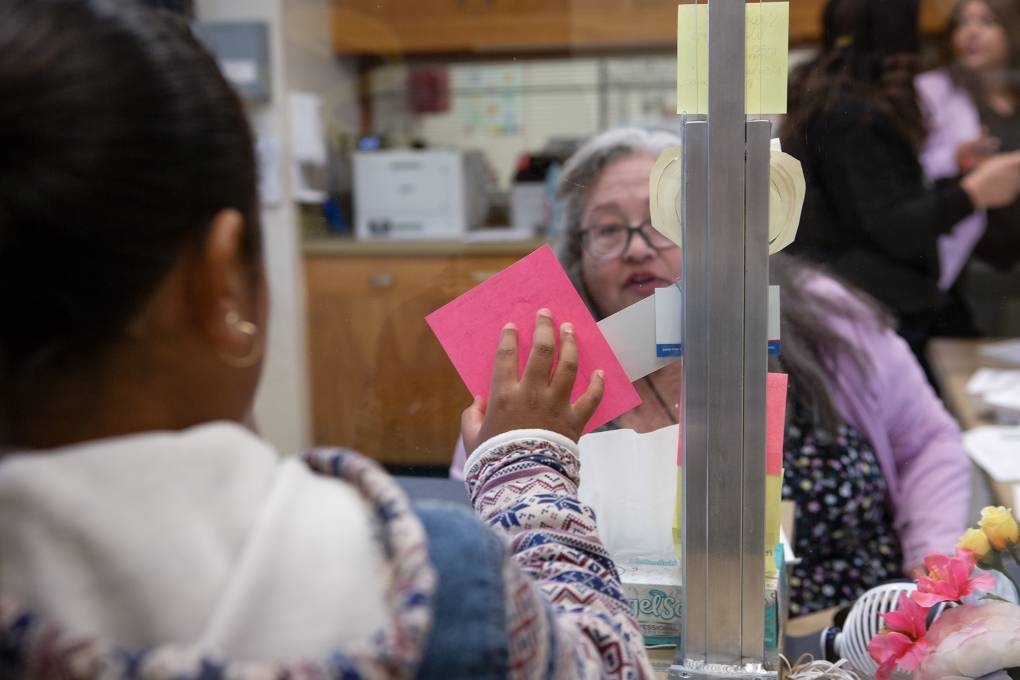
"caption": "A student holds up a nurse note for Catalina Cisneros, secretary at Loma Vista Elementary School, on the first day of school in Salinas on Aug. 8, 2023. ",
"description": null,
"title": "080923_School-Attendance_SN_CM_19",
"credit": "Semantha Norris/CalMatters",
"status": "inherit",
"altTag": "A young woman holds a pink card against a glass window as a woman wearing glasses looks at her.",
"isLoading": false,
"fetchFailed": false
},
"news_11960134": {
"type": "attachments",
"id": "news_11960134",
"meta": {
"index": "attachments_1716263798",
"site": "news",
"id": "11960134",
"found": true
},
"parent": 0,
"imgSizes": {
"twentyfourteen-full-width": {
"file": "https://ww2.kqed.org/app/uploads/sites/10/2023/09/CMWildfire-1038x576.jpg",
"width": 1038,
"mimeType": "image/jpeg",
"height": 576
},
"thumbnail": {
"file": "https://ww2.kqed.org/app/uploads/sites/10/2023/09/CMWildfire-160x106.jpg",
"width": 160,
"mimeType": "image/jpeg",
"height": 106
},
"post-thumbnail": {
"file": "https://ww2.kqed.org/app/uploads/sites/10/2023/09/CMWildfire-672x372.jpg",
"width": 672,
"mimeType": "image/jpeg",
"height": 372
},
"kqedFullSize": {
"file": "https://ww2.kqed.org/app/uploads/sites/10/2023/09/CMWildfire.jpg",
"width": 2000,
"height": 1331
},
"large": {
"file": "https://ww2.kqed.org/app/uploads/sites/10/2023/09/CMWildfire-1020x679.jpg",
"width": 1020,
"mimeType": "image/jpeg",
"height": 679
},
"1536x1536": {
"file": "https://ww2.kqed.org/app/uploads/sites/10/2023/09/CMWildfire-1536x1022.jpg",
"width": 1536,
"mimeType": "image/jpeg",
"height": 1022
},
"full-width": {
"file": "https://ww2.kqed.org/app/uploads/sites/10/2023/09/CMWildfire-1920x1278.jpg",
"width": 1920,
"mimeType": "image/jpeg",
"height": 1278
},
"medium": {
"file": "https://ww2.kqed.org/app/uploads/sites/10/2023/09/CMWildfire-800x532.jpg",
"width": 800,
"mimeType": "image/jpeg",
"height": 532
}
},
"publishDate": 1693948094,
"modified": 1693956218,
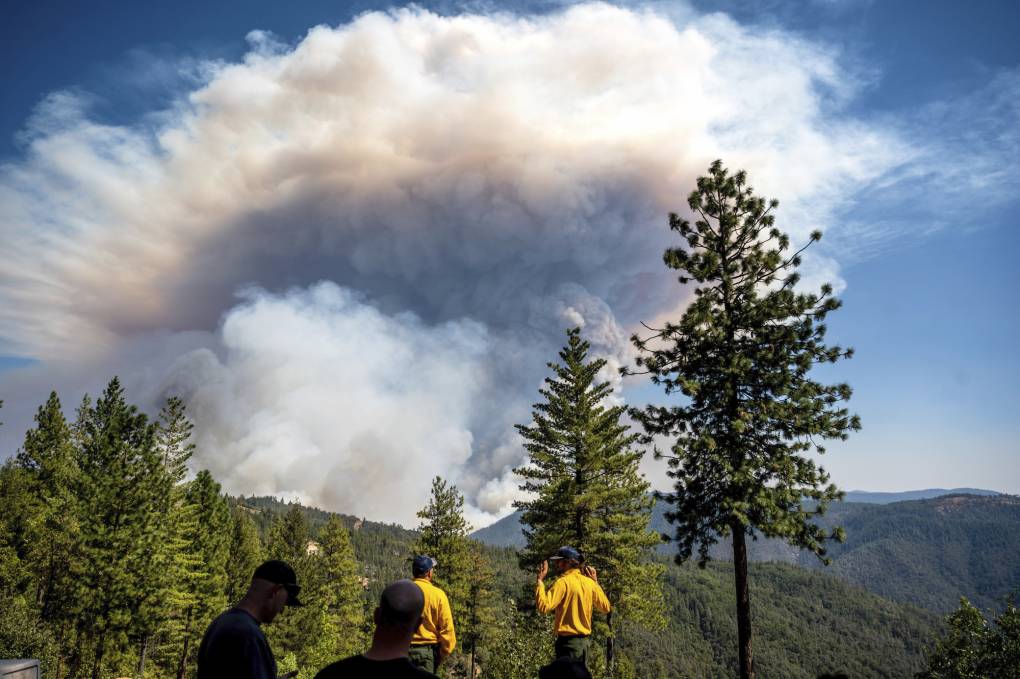
"caption": "Firefighters in the Foresthill community of Placer County watch as a plume rises from the Mosquito Fire on Sept. 8, 2022. ",
"description": null,
"title": "Western Wildfires",
"credit": "Noah Berger/AP Photo",
"status": "inherit",
"altTag": "A gigantic, gray plume of wildfire smoke is seen in the distance. Green, rolling mountains with lush trees surround it. Men in yellow uniforms and baseball caps observe the plume from a distance.",
"isLoading": false,
"fetchFailed": false
},
"news_11960073": {
"type": "attachments",
"id": "news_11960073",
"meta": {
"index": "attachments_1716263798",
"site": "news",
"id": "11960073",
"found": true
},
"parent": 11960066,
"imgSizes": {
"twentyfourteen-full-width": {
"file": "https://ww2.kqed.org/app/uploads/sites/10/2023/09/082823_Alameda-Police-Chief_SN_CM_17-1038x576.jpg",
"width": 1038,
"mimeType": "image/jpeg",
"height": 576
},
"thumbnail": {
"file": "https://ww2.kqed.org/app/uploads/sites/10/2023/09/082823_Alameda-Police-Chief_SN_CM_17-160x107.jpg",
"width": 160,
"mimeType": "image/jpeg",
"height": 107
},
"post-thumbnail": {
"file": "https://ww2.kqed.org/app/uploads/sites/10/2023/09/082823_Alameda-Police-Chief_SN_CM_17-672x372.jpg",
"width": 672,
"mimeType": "image/jpeg",
"height": 372
},
"kqedFullSize": {
"file": "https://ww2.kqed.org/app/uploads/sites/10/2023/09/082823_Alameda-Police-Chief_SN_CM_17.jpg",
"width": 2000,
"height": 1333
},
"large": {
"file": "https://ww2.kqed.org/app/uploads/sites/10/2023/09/082823_Alameda-Police-Chief_SN_CM_17-1020x680.jpg",
"width": 1020,
"mimeType": "image/jpeg",
"height": 680
},
"1536x1536": {
"file": "https://ww2.kqed.org/app/uploads/sites/10/2023/09/082823_Alameda-Police-Chief_SN_CM_17-1536x1024.jpg",
"width": 1536,
"mimeType": "image/jpeg",
"height": 1024
},
"full-width": {
"file": "https://ww2.kqed.org/app/uploads/sites/10/2023/09/082823_Alameda-Police-Chief_SN_CM_17-1920x1280.jpg",
"width": 1920,
"mimeType": "image/jpeg",
"height": 1280
},
"medium": {
"file": "https://ww2.kqed.org/app/uploads/sites/10/2023/09/082823_Alameda-Police-Chief_SN_CM_17-800x533.jpg",
"width": 800,
"mimeType": "image/jpeg",
"height": 533
}
},
"publishDate": 1693934863,
"modified": 1693935294,
"caption": "An officer walks to his car at the Alameda Police Department in Alameda on Aug. 28, 2023. ",
"description": null,
"title": "082823_Alameda-Police-Chief_SN_CM_17",
"credit": "Semantha Norris/CalMatters",
"status": "inherit",
"altTag": "A man wearing a police uniform and hat walks toward police vehicles.",
"isLoading": false,
"fetchFailed": false
},
"news_11959936": {
"type": "attachments",
"id": "news_11959936",
"meta": {
"index": "attachments_1716263798",
"site": "news",
"id": "11959936",
"found": true
},
"parent": 11959915,
"imgSizes": {
"twentyfourteen-full-width": {
"file": "https://ww2.kqed.org/app/uploads/sites/10/2023/09/082823-Fast-Food-Workers-COVID-CM-01-1038x576.jpg",
"width": 1038,
"mimeType": "image/jpeg",
"height": 576
},
"thumbnail": {
"file": "https://ww2.kqed.org/app/uploads/sites/10/2023/09/082823-Fast-Food-Workers-COVID-CM-01-160x107.jpg",
"width": 160,
"mimeType": "image/jpeg",
"height": 107
},
"post-thumbnail": {
"file": "https://ww2.kqed.org/app/uploads/sites/10/2023/09/082823-Fast-Food-Workers-COVID-CM-01-672x372.jpg",
"width": 672,
"mimeType": "image/jpeg",
"height": 372
},
"kqedFullSize": {
"file": "https://ww2.kqed.org/app/uploads/sites/10/2023/09/082823-Fast-Food-Workers-COVID-CM-01.jpg",
"width": 2000,
"height": 1333
},
"large": {
"file": "https://ww2.kqed.org/app/uploads/sites/10/2023/09/082823-Fast-Food-Workers-COVID-CM-01-1020x680.jpg",
"width": 1020,
"mimeType": "image/jpeg",
"height": 680
},
"1536x1536": {
"file": "https://ww2.kqed.org/app/uploads/sites/10/2023/09/082823-Fast-Food-Workers-COVID-CM-01-1536x1024.jpg",
"width": 1536,
"mimeType": "image/jpeg",
"height": 1024
},
"full-width": {
"file": "https://ww2.kqed.org/app/uploads/sites/10/2023/09/082823-Fast-Food-Workers-COVID-CM-01-1920x1280.jpg",
"width": 1920,
"mimeType": "image/jpeg",
"height": 1280
},
"medium": {
"file": "https://ww2.kqed.org/app/uploads/sites/10/2023/09/082823-Fast-Food-Workers-COVID-CM-01-800x533.jpg",
"width": 800,
"mimeType": "image/jpeg",
"height": 533
}
},
"publishDate": 1693604240,
"modified": 1693610682,
"caption": "McDonald's workers, including Lizzet Aguilar, celebrate winning a state retaliation claim against a Boyle Heights franchise location. Four workers won more than $100,000 in lost hours, penalties and back pay after they alleged the owners illegally retaliated against them for making a workplace safety complaint during the pandemic. ",
"description": null,
"title": "082823-Fast-Food-Workers-COVID-CM-01",
"credit": "Alejandra Reyes-Velarde/CalMatters",
"status": "inherit",
"altTag": "a group of people protesting outside a McDonald's hold a giant fake check addressed to 'fast food workers'",
"isLoading": false,
"fetchFailed": false
},
"news_11959643": {
"type": "attachments",
"id": "news_11959643",
"meta": {
"index": "attachments_1716263798",
"site": "news",
"id": "11959643",
"found": true
},
"parent": 11959628,
"imgSizes": {
"twentyfourteen-full-width": {
"file": "https://ww2.kqed.org/app/uploads/sites/10/2023/08/GettyImages-1576472057-1024x576.jpg",
"width": 1024,
"mimeType": "image/jpeg",
"height": 576
},
"thumbnail": {
"file": "https://ww2.kqed.org/app/uploads/sites/10/2023/08/GettyImages-1576472057-160x120.jpg",
"width": 160,
"mimeType": "image/jpeg",
"height": 120
},
"post-thumbnail": {
"file": "https://ww2.kqed.org/app/uploads/sites/10/2023/08/GettyImages-1576472057-672x372.jpg",
"width": 672,
"mimeType": "image/jpeg",
"height": 372
},
"kqedFullSize": {
"file": "https://ww2.kqed.org/app/uploads/sites/10/2023/08/GettyImages-1576472057.jpg",
"width": 1024,
"height": 768
},
"large": {
"file": "https://ww2.kqed.org/app/uploads/sites/10/2023/08/GettyImages-1576472057-1020x765.jpg",
"width": 1020,
"mimeType": "image/jpeg",
"height": 765
},
"medium": {
"file": "https://ww2.kqed.org/app/uploads/sites/10/2023/08/GettyImages-1576472057-800x600.jpg",
"width": 800,
"mimeType": "image/jpeg",
"height": 600
}
},
"publishDate": 1693431050,
"modified": 1693437126,
"caption": "Psilocybin mushrooms stand ready for harvest in a humidified 'fruiting chamber' in the basement of a private home on July 28, 2023 in Fairfield County, Connecticut. ",
"description": null,
"title": "Psilocybin Mushrooms Increasingly Sought For Therapeutic Purposes",
"credit": "John Moore/Getty Images",
"status": "inherit",
"altTag": "A large amount of mushrooms in soil inside a basement.",
"isLoading": false,
"fetchFailed": false
},
"news_11959636": {
"type": "attachments",
"id": "news_11959636",
"meta": {
"index": "attachments_1716263798",
"site": "news",
"id": "11959636",
"found": true
},
"parent": 11959618,
"imgSizes": {
"twentyfourteen-full-width": {
"file": "https://ww2.kqed.org/app/uploads/sites/10/2023/08/081623_Berkeley-Student-Housing_SN_CM_19-1038x576.jpeg",
"width": 1038,
"mimeType": "image/jpeg",
"height": 576
},
"thumbnail": {
"file": "https://ww2.kqed.org/app/uploads/sites/10/2023/08/081623_Berkeley-Student-Housing_SN_CM_19-160x107.jpeg",
"width": 160,
"mimeType": "image/jpeg",
"height": 107
},
"post-thumbnail": {
"file": "https://ww2.kqed.org/app/uploads/sites/10/2023/08/081623_Berkeley-Student-Housing_SN_CM_19-672x372.jpeg",
"width": 672,
"mimeType": "image/jpeg",
"height": 372
},
"kqedFullSize": {
"file": "https://ww2.kqed.org/app/uploads/sites/10/2023/08/081623_Berkeley-Student-Housing_SN_CM_19.jpeg",
"width": 2000,
"height": 1334
},
"large": {
"file": "https://ww2.kqed.org/app/uploads/sites/10/2023/08/081623_Berkeley-Student-Housing_SN_CM_19-1020x680.jpeg",
"width": 1020,
"mimeType": "image/jpeg",
"height": 680
},
"1536x1536": {
"file": "https://ww2.kqed.org/app/uploads/sites/10/2023/08/081623_Berkeley-Student-Housing_SN_CM_19-1536x1025.jpeg",
"width": 1536,
"mimeType": "image/jpeg",
"height": 1025
},
"full-width": {
"file": "https://ww2.kqed.org/app/uploads/sites/10/2023/08/081623_Berkeley-Student-Housing_SN_CM_19-1920x1281.jpeg",
"width": 1920,
"mimeType": "image/jpeg",
"height": 1281
},
"medium": {
"file": "https://ww2.kqed.org/app/uploads/sites/10/2023/08/081623_Berkeley-Student-Housing_SN_CM_19-800x534.jpeg",
"width": 800,
"mimeType": "image/jpeg",
"height": 534
}
},
"publishDate": 1693429968,
"modified": 1693430031,
"caption": "Students move into the University of California, Berkeley dorms in Berkeley on Aug. 16, 2023. ",
"description": null,
"title": "081623_Berkeley-Student-Housing_SN_CM_19",
"credit": "Semantha Norris/CalMatters",
"status": "inherit",
"altTag": "A woman sits with a blue bag on top of a purple suitcase in front of a tree.",
"isLoading": false,
"fetchFailed": false
},
"news_11959457": {
"type": "attachments",
"id": "news_11959457",
"meta": {
"index": "attachments_1716263798",
"site": "news",
"id": "11959457",
"found": true
},
"parent": 11959451,
"imgSizes": {
"twentyfourteen-full-width": {
"file": "https://ww2.kqed.org/app/uploads/sites/10/2023/08/08282023-Protect-Kids-California-Presser-RL-CM-03-1038x576.jpg",
"width": 1038,
"mimeType": "image/jpeg",
"height": 576
},
"thumbnail": {
"file": "https://ww2.kqed.org/app/uploads/sites/10/2023/08/08282023-Protect-Kids-California-Presser-RL-CM-03-160x107.jpg",
"width": 160,
"mimeType": "image/jpeg",
"height": 107
},
"post-thumbnail": {
"file": "https://ww2.kqed.org/app/uploads/sites/10/2023/08/08282023-Protect-Kids-California-Presser-RL-CM-03-672x372.jpg",
"width": 672,
"mimeType": "image/jpeg",
"height": 372
},
"kqedFullSize": {
"file": "https://ww2.kqed.org/app/uploads/sites/10/2023/08/08282023-Protect-Kids-California-Presser-RL-CM-03.jpg",
"width": 2000,
"height": 1333
},
"large": {
"file": "https://ww2.kqed.org/app/uploads/sites/10/2023/08/08282023-Protect-Kids-California-Presser-RL-CM-03-1020x680.jpg",
"width": 1020,
"mimeType": "image/jpeg",
"height": 680
},
"1536x1536": {
"file": "https://ww2.kqed.org/app/uploads/sites/10/2023/08/08282023-Protect-Kids-California-Presser-RL-CM-03-1536x1024.jpg",
"width": 1536,
"mimeType": "image/jpeg",
"height": 1024
},
"full-width": {
"file": "https://ww2.kqed.org/app/uploads/sites/10/2023/08/08282023-Protect-Kids-California-Presser-RL-CM-03-1920x1280.jpg",
"width": 1920,
"mimeType": "image/jpeg",
"height": 1280
},
"medium": {
"file": "https://ww2.kqed.org/app/uploads/sites/10/2023/08/08282023-Protect-Kids-California-Presser-RL-CM-03-800x533.jpg",
"width": 800,
"mimeType": "image/jpeg",
"height": 533
}
},
"publishDate": 1693332062,
"modified": 1693337950,
"caption": "People show support for 3 statewide initiatives at a press conference at the state Capitol in Sacramento on Aug. 28, 2023.",
"description": null,
"title": "08282023-Protect-Kids-California-Presser-RL-CM-03",
"credit": "Rahul Lal/CalMatters",
"status": "inherit",
"altTag": "People stand side-by-side holding up signs.",
"isLoading": false,
"fetchFailed": false
},
"news_11959337": {
"type": "attachments",
"id": "news_11959337",
"meta": {
"index": "attachments_1716263798",
"site": "news",
"id": "11959337",
"found": true
},
"parent": 0,
"imgSizes": {
"twentyfourteen-full-width": {
"file": "https://ww2.kqed.org/app/uploads/sites/10/2023/08/CMCareCourts01-1038x576.jpg",
"width": 1038,
"mimeType": "image/jpeg",
"height": 576
},
"thumbnail": {
"file": "https://ww2.kqed.org/app/uploads/sites/10/2023/08/CMCareCourts01-160x107.jpg",
"width": 160,
"mimeType": "image/jpeg",
"height": 107
},
"post-thumbnail": {
"file": "https://ww2.kqed.org/app/uploads/sites/10/2023/08/CMCareCourts01-672x372.jpg",
"width": 672,
"mimeType": "image/jpeg",
"height": 372
},
"kqedFullSize": {
"file": "https://ww2.kqed.org/app/uploads/sites/10/2023/08/CMCareCourts01.jpg",
"width": 2000,
"height": 1333
},
"large": {
"file": "https://ww2.kqed.org/app/uploads/sites/10/2023/08/CMCareCourts01-1020x680.jpg",
"width": 1020,
"mimeType": "image/jpeg",
"height": 680
},
"1536x1536": {
"file": "https://ww2.kqed.org/app/uploads/sites/10/2023/08/CMCareCourts01-1536x1024.jpg",
"width": 1536,
"mimeType": "image/jpeg",
"height": 1024
},
"full-width": {
"file": "https://ww2.kqed.org/app/uploads/sites/10/2023/08/CMCareCourts01-1920x1280.jpg",
"width": 1920,
"mimeType": "image/jpeg",
"height": 1280
},
"medium": {
"file": "https://ww2.kqed.org/app/uploads/sites/10/2023/08/CMCareCourts01-800x533.jpg",
"width": 800,
"mimeType": "image/jpeg",
"height": 533
}
},
"publishDate": 1693249635,
"modified": 1693255903,
"caption": "Stacey Berardino, assistant deputy director over the forensics and justice involved division of mental health, speaks to community members about CARE Court, a new program that will be implemented in October 2023, at the St. Irenaeus Catholic Church in Cypress.",
"description": null,
"title": "CMCareCourts01",
"credit": "Lauren Justice/CalMatters",
"status": "inherit",
"altTag": "A woman speaks in front of a crowd with a microphone in her hand. A projected screen behind her reads, \"What is in a CARE/Agreement Plan?\"",
"isLoading": false,
"fetchFailed": false
},
"news_11959187": {
"type": "attachments",
"id": "news_11959187",
"meta": {
"index": "attachments_1716263798",
"site": "news",
"id": "11959187",
"found": true
},
"parent": 0,
"imgSizes": {
"twentyfourteen-full-width": {
"file": "https://ww2.kqed.org/app/uploads/sites/10/2023/08/CalMattersHospitals-1038x576.jpg",
"width": 1038,
"mimeType": "image/jpeg",
"height": 576
},
"thumbnail": {
"file": "https://ww2.kqed.org/app/uploads/sites/10/2023/08/CalMattersHospitals-160x107.jpg",
"width": 160,
"mimeType": "image/jpeg",
"height": 107
},
"post-thumbnail": {
"file": "https://ww2.kqed.org/app/uploads/sites/10/2023/08/CalMattersHospitals-672x372.jpg",
"width": 672,
"mimeType": "image/jpeg",
"height": 372
},
"kqedFullSize": {
"file": "https://ww2.kqed.org/app/uploads/sites/10/2023/08/CalMattersHospitals.jpg",
"width": 2000,
"height": 1333
},
"large": {
"file": "https://ww2.kqed.org/app/uploads/sites/10/2023/08/CalMattersHospitals-1020x680.jpg",
"width": 1020,
"mimeType": "image/jpeg",
"height": 680
},
"1536x1536": {
"file": "https://ww2.kqed.org/app/uploads/sites/10/2023/08/CalMattersHospitals-1536x1024.jpg",
"width": 1536,
"mimeType": "image/jpeg",
"height": 1024
},
"full-width": {
"file": "https://ww2.kqed.org/app/uploads/sites/10/2023/08/CalMattersHospitals-1920x1280.jpg",
"width": 1920,
"mimeType": "image/jpeg",
"height": 1280
},
"medium": {
"file": "https://ww2.kqed.org/app/uploads/sites/10/2023/08/CalMattersHospitals-800x533.jpg",
"width": 800,
"mimeType": "image/jpeg",
"height": 533
}
},
"publishDate": 1692985617,
"modified": 1692986189,
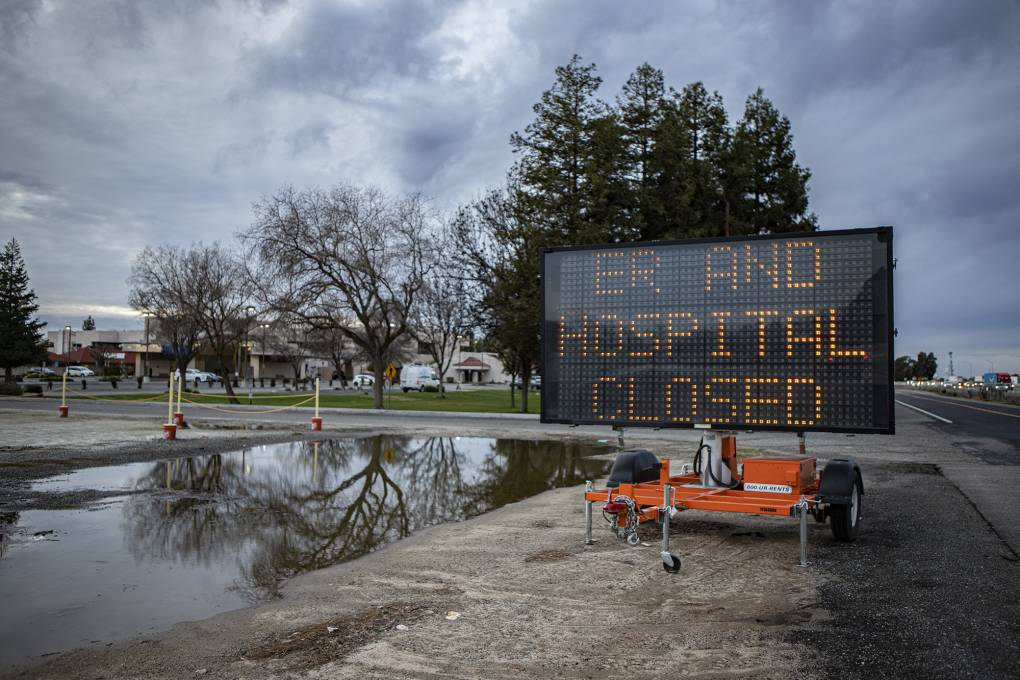
"caption": "A road sign announcing the closure of the Emergency Room and Madera Community Hospital outside the main entrance on Jan. 2, 2023.",
"description": null,
"title": "CalMattersHospitals",
"credit": "Larry Valenzuela/CalMatters via CatchLight Local",
"status": "inherit",
"altTag": "An electric road sign on a gloomy, wet day reads, \"ER and Hospital Closed.\" A hospital is seen in the background with several white vehicles in the parking lot.",
"isLoading": false,
"fetchFailed": false
},
"news_11958890": {
"type": "attachments",
"id": "news_11958890",
"meta": {
"index": "attachments_1716263798",
"site": "news",
"id": "11958890",
"found": true
},
"parent": 11958880,
"imgSizes": {
"twentyfourteen-full-width": {
"file": "https://ww2.kqed.org/app/uploads/sites/10/2023/08/012623_CROB_Meeting_RL_CM_13-1038x576.jpeg",
"width": 1038,
"mimeType": "image/jpeg",
"height": 576
},
"thumbnail": {
"file": "https://ww2.kqed.org/app/uploads/sites/10/2023/08/012623_CROB_Meeting_RL_CM_13-160x107.jpeg",
"width": 160,
"mimeType": "image/jpeg",
"height": 107
},
"post-thumbnail": {
"file": "https://ww2.kqed.org/app/uploads/sites/10/2023/08/012623_CROB_Meeting_RL_CM_13-672x372.jpeg",
"width": 672,
"mimeType": "image/jpeg",
"height": 372
},
"kqedFullSize": {
"file": "https://ww2.kqed.org/app/uploads/sites/10/2023/08/012623_CROB_Meeting_RL_CM_13.jpeg",
"width": 2000,
"height": 1333
},
"large": {
"file": "https://ww2.kqed.org/app/uploads/sites/10/2023/08/012623_CROB_Meeting_RL_CM_13-1020x680.jpeg",
"width": 1020,
"mimeType": "image/jpeg",
"height": 680
},
"1536x1536": {
"file": "https://ww2.kqed.org/app/uploads/sites/10/2023/08/012623_CROB_Meeting_RL_CM_13-1536x1024.jpeg",
"width": 1536,
"mimeType": "image/jpeg",
"height": 1024
},
"full-width": {
"file": "https://ww2.kqed.org/app/uploads/sites/10/2023/08/012623_CROB_Meeting_RL_CM_13-1920x1280.jpeg",
"width": 1920,
"mimeType": "image/jpeg",
"height": 1280
},
"medium": {
"file": "https://ww2.kqed.org/app/uploads/sites/10/2023/08/012623_CROB_Meeting_RL_CM_13-800x533.jpeg",
"width": 800,
"mimeType": "image/jpeg",
"height": 533
}
},
"publishDate": 1692819727,
"modified": 1692824156,
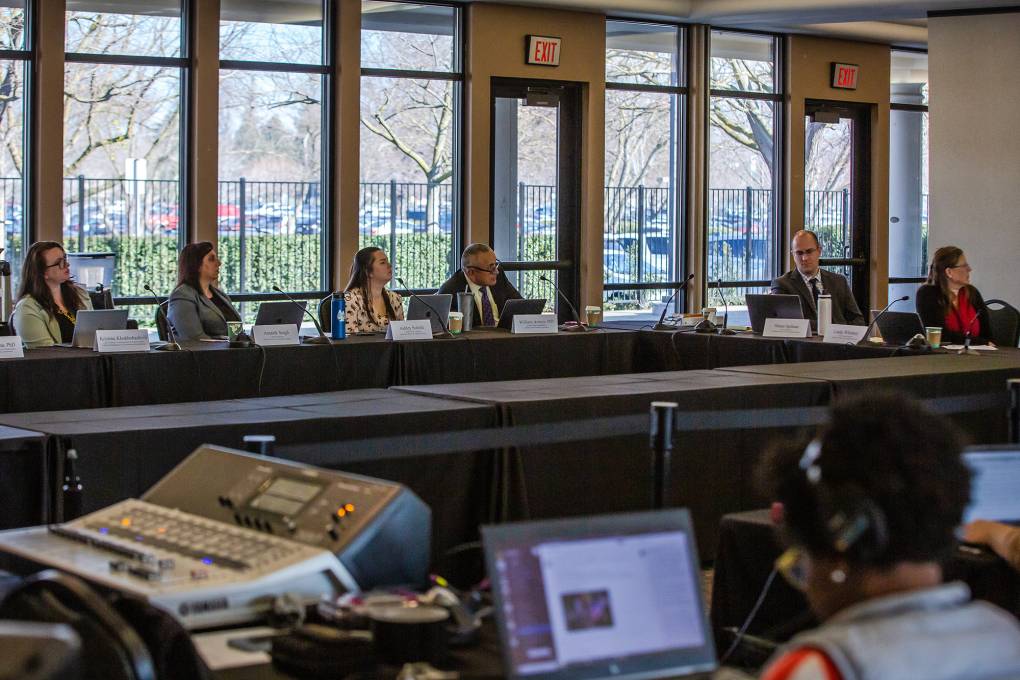
"caption": "California Rehabilitation Oversight board members listen to speakers during a meeting at Sacramento State University in Sacramento on Jan. 26, 2023. ",
"description": null,
"title": "012623_CROB_Meeting_RL_CM_13",
"credit": "Rahul Lal/CalMatters",
"status": "inherit",
"altTag": "Several people sit in a room with placards and microphones.",
"isLoading": false,
"fetchFailed": false
},
"news_11958774": {
"type": "attachments",
"id": "news_11958774",
"meta": {
"index": "attachments_1716263798",
"site": "news",
"id": "11958774",
"found": true
},
"parent": 0,
"imgSizes": {
"twentyfourteen-full-width": {
"file": "https://ww2.kqed.org/app/uploads/sites/10/2023/08/CMFarmworkers01-1038x576.jpg",
"width": 1038,
"mimeType": "image/jpeg",
"height": 576
},
"thumbnail": {
"file": "https://ww2.kqed.org/app/uploads/sites/10/2023/08/CMFarmworkers01-160x107.jpg",
"width": 160,
"mimeType": "image/jpeg",
"height": 107
},
"post-thumbnail": {
"file": "https://ww2.kqed.org/app/uploads/sites/10/2023/08/CMFarmworkers01-672x372.jpg",
"width": 672,
"mimeType": "image/jpeg",
"height": 372
},
"kqedFullSize": {
"file": "https://ww2.kqed.org/app/uploads/sites/10/2023/08/CMFarmworkers01.jpg",
"width": 2000,
"height": 1334
},
"large": {
"file": "https://ww2.kqed.org/app/uploads/sites/10/2023/08/CMFarmworkers01-1020x680.jpg",
"width": 1020,
"mimeType": "image/jpeg",
"height": 680
},
"1536x1536": {
"file": "https://ww2.kqed.org/app/uploads/sites/10/2023/08/CMFarmworkers01-1536x1025.jpg",
"width": 1536,
"mimeType": "image/jpeg",
"height": 1025
},
"full-width": {
"file": "https://ww2.kqed.org/app/uploads/sites/10/2023/08/CMFarmworkers01-1920x1281.jpg",
"width": 1920,
"mimeType": "image/jpeg",
"height": 1281
},
"medium": {
"file": "https://ww2.kqed.org/app/uploads/sites/10/2023/08/CMFarmworkers01-800x534.jpg",
"width": 800,
"mimeType": "image/jpeg",
"height": 534
}
},
"publishDate": 1692726230,
"modified": 1692733809,
"caption": "Farmworkers work on a field outside of Bakersfield in Kern County on July 25, 2023. ",
"description": null,
"title": "CMFarmworkers01",
"credit": "Larry Valenzuela/CalMatters via CatchLight Local",
"status": "inherit",
"altTag": "Seven farmworkers are seen bent over in a field of green produce that comes up to their waists. It's a bright, sunny day. Many of the workers are wearing large, straw hats and long-sleeved clothing.",
"isLoading": false,
"fetchFailed": false
},
"news_11958565": {
"type": "attachments",
"id": "news_11958565",
"meta": {
"index": "attachments_1716263798",
"site": "news",
"id": "11958565",
"found": true
},
"parent": 11958561,
"imgSizes": {
"twentyfourteen-full-width": {
"file": "https://ww2.kqed.org/app/uploads/sites/10/2023/08/081822_NewsomFresno_LV_CM_006-copy-1038x576.jpg",
"width": 1038,
"mimeType": "image/jpeg",
"height": 576
},
"thumbnail": {
"file": "https://ww2.kqed.org/app/uploads/sites/10/2023/08/081822_NewsomFresno_LV_CM_006-copy-160x107.jpg",
"width": 160,
"mimeType": "image/jpeg",
"height": 107
},
"post-thumbnail": {
"file": "https://ww2.kqed.org/app/uploads/sites/10/2023/08/081822_NewsomFresno_LV_CM_006-copy-672x372.jpg",
"width": 672,
"mimeType": "image/jpeg",
"height": 372
},
"kqedFullSize": {
"file": "https://ww2.kqed.org/app/uploads/sites/10/2023/08/081822_NewsomFresno_LV_CM_006-copy.jpg",
"width": 2000,
"height": 1333
},
"large": {
"file": "https://ww2.kqed.org/app/uploads/sites/10/2023/08/081822_NewsomFresno_LV_CM_006-copy-1020x680.jpg",
"width": 1020,
"mimeType": "image/jpeg",
"height": 680
},
"1536x1536": {
"file": "https://ww2.kqed.org/app/uploads/sites/10/2023/08/081822_NewsomFresno_LV_CM_006-copy-1536x1024.jpg",
"width": 1536,
"mimeType": "image/jpeg",
"height": 1024
},
"full-width": {
"file": "https://ww2.kqed.org/app/uploads/sites/10/2023/08/081822_NewsomFresno_LV_CM_006-copy-1920x1280.jpg",
"width": 1920,
"mimeType": "image/jpeg",
"height": 1280
},
"medium": {
"file": "https://ww2.kqed.org/app/uploads/sites/10/2023/08/081822_NewsomFresno_LV_CM_006-copy-800x533.jpg",
"width": 800,
"mimeType": "image/jpeg",
"height": 533
}
},
"publishDate": 1692383651,
"modified": 1692383792,
"caption": "Gov. Gavin Newsom outlined new efforts to support the mental health of students at McLane High School in Fresno on Aug. 18, 2022.",
"description": null,
"title": "081822_NewsomFresno_LV_CM_006 copy",
"credit": "Larry Valenzuela, CalMatters/CatchLight Local",
"status": "inherit",
"altTag": "A white middle-aged man in a blue suit and blue tie speaks behind a dais that says \"Healthy Minds For California Kids\" surrounded by people.",
"isLoading": false,
"fetchFailed": false
}
},
"audioPlayerReducer": {
"postId": "stream_live",
"isPaused": true,
"isPlaying": false,
"pfsActive": false,
"pledgeModalIsOpen": true,
"playerDrawerIsOpen": false,
"liveAudioPlayStartedAt": 0,
"liveAudioPlayContext": ""
},
"authorsReducer": {
"byline_news_11960324": {
"type": "authors",
"id": "byline_news_11960324",
"meta": {
"override": true
},
"slug": "byline_news_11960324",
"name": "\u003ca href=\"https://calmatters.org/author/carolyn-jones/\">Carolyn Jones\u003c/a>",
"isLoading": false
},
"byline_news_11960130": {
"type": "authors",
"id": "byline_news_11960130",
"meta": {
"override": true
},
"slug": "byline_news_11960130",
"name": "\u003ca href=\"https://calmatters.org/author/alejandro-lazo/\">Alejandro Lazo\u003c/a>",
"isLoading": false
},
"byline_news_11960066": {
"type": "authors",
"id": "byline_news_11960066",
"meta": {
"override": true
},
"slug": "byline_news_11960066",
"name": "\u003ca href=\"https://calmatters.org/author/anabelsosa\">Anabel Sosa\u003c/a>",
"isLoading": false
},
"byline_news_11959915": {
"type": "authors",
"id": "byline_news_11959915",
"meta": {
"override": true
},
"slug": "byline_news_11959915",
"name": "\u003ca href=\"https://calmatters.org/author/jeanne-kuang/\">Jeanna Kuang\u003c/a> and \u003ca href=\"https://calmatters.org/author/alejandra-reyesvelarde/\">Alejandra Reyes-Velarde\u003c/a>",
"isLoading": false
},
"byline_news_11959628": {
"type": "authors",
"id": "byline_news_11959628",
"meta": {
"override": true
},
"slug": "byline_news_11959628",
"name": "\u003ca href=\"https://calmatters.org/author/anaibarra/\">Ana B. Ibarra\u003c/a>",
"isLoading": false
},
"byline_news_11959618": {
"type": "authors",
"id": "byline_news_11959618",
"meta": {
"override": true
},
"slug": "byline_news_11959618",
"name": "\u003ca href=\"https://calmatters.org/author/mikhailzinshteyn/\">Mikhail Zinshteyn\u003c/a>",
"isLoading": false
},
"byline_news_11959451": {
"type": "authors",
"id": "byline_news_11959451",
"meta": {
"override": true
},
"slug": "byline_news_11959451",
"name": "\u003ca href=\"https://calmatters.org/author/carolyn-jones/\">Carolyn Jones\u003c/a> and \u003ca href=\"https://calmatters.org/author/alexei-koseff/\">Alexei Koseff\u003c/a>",
"isLoading": false
},
"byline_news_11959302": {
"type": "authors",
"id": "byline_news_11959302",
"meta": {
"override": true
},
"slug": "byline_news_11959302",
"name": "\u003ca href=\"https://calmatters.org/author/jeanne-kuang/\">Jeanne Kuang\u003c/a>",
"isLoading": false
},
"byline_news_11959175": {
"type": "authors",
"id": "byline_news_11959175",
"meta": {
"override": true
},
"slug": "byline_news_11959175",
"name": "\u003ca href=\"https://calmatters.org/author/anaibarra/\">Ana B. Ibarra\u003c/a>",
"isLoading": false
},
"byline_news_11958880": {
"type": "authors",
"id": "byline_news_11958880",
"meta": {
"override": true
},
"slug": "byline_news_11958880",
"name": "\u003ca />Sameea Kamal\u003c/a>",
"isLoading": false
},
"byline_news_11958764": {
"type": "authors",
"id": "byline_news_11958764",
"meta": {
"override": true
},
"slug": "byline_news_11958764",
"name": "\u003ca href=\"https://calmatters.org/author/nicole-foy/\">Nicole Foy\u003c/a>",
"isLoading": false
},
"byline_news_11958561": {
"type": "authors",
"id": "byline_news_11958561",
"meta": {
"override": true
},
"slug": "byline_news_11958561",
"name": "\u003ca href=\"https://calmatters.org/author/kristen-hwang/\">Kristen Hwang\u003c/a>",
"isLoading": false
}
},
"pagesReducer": {
"news_affiliate_calmatters": {
"type": "terms",
"id": "news_18481",
"meta": {
"index": "terms_1716263798",
"site": "news",
"id": "18481",
"score": 15.355862
},
"featImg": null,
"name": "CALmatters",
"description": null,
"taxonomy": "affiliate",
"headData": {
"twImgId": null,
"twTitle": null,
"ogTitle": null,
"ogImgId": null,
"twDescription": null,
"description": null,
"title": "CALmatters Archives | KQED Arts",
"ogDescription": null
},
"ttid": 18515,
"slug": "calmatters",
"isLoading": false,
"title": "CALmatters",
"pageMeta": {
"site": "news",
"WpPageTemplate": "page-topic-editorial",
"currentPage": 44
},
"blocks": [
{
"blockName": "kqed/post-list",
"attrs": {
"layout": "cardArticle2",
"query": "posts/news?affiliate=calmatters",
"seeMore": false,
"paginated": true,
"page": 44
}
},
{
"blockName": "kqed/ad"
}
]
}
},
"pfsSessionReducer": {},
"postsReducer": {
"stream_live": {
"type": "live",
"id": "stream_live",
"audioUrl": "https://streams.kqed.org/kqedradio",
"title": "Live Stream",
"excerpt": "Live Stream information currently unavailable.",
"link": "/radio",
"featImg": "",
"label": {
"name": "KQED Live",
"link": "/"
}
},
"stream_kqedNewscast": {
"type": "posts",
"id": "stream_kqedNewscast",
"audioUrl": "https://www.kqed.org/.stream/anon/radio/RDnews/newscast.mp3?_=1",
"title": "KQED Newscast",
"featImg": "",
"label": {
"name": "88.5 FM",
"link": "/"
}
},
"news_11960324": {
"type": "posts",
"id": "news_11960324",
"meta": {
"index": "posts_1716263798",
"site": "news",
"id": "11960324",
"score": null,
"sort": [
1694183434000
]
},
"parent": 0,
"labelTerm": {
"site": "news",
"term": 18481
},
"blocks": [],
"publishDate": 1694183434,
"format": "standard",
"title": "California Schools Struggle to Deal With Soaring Chronic Absenteeism",
"headTitle": "California Schools Struggle to Deal With Soaring Chronic Absenteeism | KQED",
"content": "\u003cp>As a new school year gets underway in California, districts are desperately trying to lure thousands of missing, tardy and truant students back to the classroom in what many view as a pivotal moment for education in California.\u003c/p>\n\u003cp>In 2021–22, 30% of students in California’s public schools were chronically absent, an all-time high and more than three times the pre-pandemic rate. Advocates fear that unless schools can reverse the trend, so many students will fall behind that they may never catch up.\u003c/p>\n\u003cp>“This is a crisis, and it’s not going to change until we do everything we can to get kids back in school 100%,” said Heather Hough, director of Policy Analysis for California Education. “What we all fear is that this will become the new normal. … It is hard to overstate the importance of this issue, and it is absolutely a pivotal moment.”[pullquote size=\"medium\" align=\"right\" citation=\"Hedy Chang, executive director, Attendance Works\"]‘We need to create those deep connections, so every child knows that there’s an adult waiting with open arms to welcome them to school. That needs to be the new normal.’[/pullquote]Before the pandemic, about 10% of students in California’s public schools missed at least 10% (or 18 days) in a school year, which the state defines as chronically absent. But COVID-related school closures, remote learning and quarantines have created a new habit for millions of families: optional, not mandatory, daily school attendance.\u003c/p>\n\u003cp>Even though California \u003ca href=\"https://www.cde.ca.gov/ls/ai/sb/#:~:text=California%20compulsory%20education%20law%20requires,Exam%20and%20obtained%20parental%20permission.\">law\u003c/a> requires all children ages 6 through 18 to attend school every day, nearly 2 million students were chronically absent in 2021–22, the most recent year data is available. Nearly every group of students had high rates of absenteeism, but the highest rates were among kindergartners. Kindergartners who are Black, Pacific Islander or have disabilities all had rates of 50% or higher.\u003c/p>\n\u003cfigure id=\"attachment_11960341\" class=\"wp-caption aligncenter\" style=\"max-width: 800px\">\u003ca href=\"https://ww2.kqed.org/app/uploads/sites/10/2023/09/080923_School-Attendance_SN_CM_21.jpg\">\u003cimg decoding=\"async\" loading=\"lazy\" class=\"size-medium wp-image-11960341\" src=\"https://ww2.kqed.org/app/uploads/sites/10/2023/09/080923_School-Attendance_SN_CM_21-800x533.jpg\" alt=\"Seven small children stand in line on a playground.\" width=\"800\" height=\"533\" srcset=\"https://ww2.kqed.org/app/uploads/sites/10/2023/09/080923_School-Attendance_SN_CM_21-800x533.jpg 800w, https://ww2.kqed.org/app/uploads/sites/10/2023/09/080923_School-Attendance_SN_CM_21-1020x680.jpg 1020w, https://ww2.kqed.org/app/uploads/sites/10/2023/09/080923_School-Attendance_SN_CM_21-160x107.jpg 160w, https://ww2.kqed.org/app/uploads/sites/10/2023/09/080923_School-Attendance_SN_CM_21-1536x1024.jpg 1536w, https://ww2.kqed.org/app/uploads/sites/10/2023/09/080923_School-Attendance_SN_CM_21-1920x1280.jpg 1920w, https://ww2.kqed.org/app/uploads/sites/10/2023/09/080923_School-Attendance_SN_CM_21.jpg 2000w\" sizes=\"(max-width: 800px) 100vw, 800px\">\u003c/a>\u003cfigcaption class=\"wp-caption-text\">Students line up on the first day of school at Loma Vista Elementary School in Salinas on Aug. 8, 2023. \u003ccite>(Semantha Norris/CalMatters)\u003c/cite>\u003c/figcaption>\u003c/figure>\n\u003cp>Students’ specific reasons for missing school are varied. Lack of transportation is among the most common reasons, but sometimes students have to look after younger siblings or go to work. In some cases, students stay home because they’re being bullied or don’t like their teachers. After COVID, some parents have become overly cautious about sending their children to school with minor ailments.\u003c/p>\n\u003cp>Personal connections have made all the difference at an elementary school in Salinas — thanks in part to a school secretary the students call “Miss Cathy.”[aside postID=\"mindshift_61166,mindshift_61278,news_11940901\" label=\"Related Stories\"]As students and their parents file into Loma Vista Elementary every morning, Catalina Cisneros greets them by name, gives them hugs and catches up in Spanish, the predominant language in that part of the city. Cisneros, a Salinas native, said she understands the struggles that families face as they raise their children while working long hours, sometimes starting their days at 4 a.m. in the nearby lettuce fields.\u003c/p>\n\u003cp>“I treat the parents how I’d like to be treated, with empathy and compassion,” said Cisneros, who started working at Loma Vista Elementary three years ago. “We have to, because we want the kids in school. The parents want their kids in school, too. They’re doing the best they can, and sometimes it’s hard. I get that.”\u003c/p>\n\u003cp>Absenteeism has myriad negative impacts. For students, they’re more likely to fall behind academically, drop out and not graduate. For schools, lower attendance means less revenue from the state, which bases its funding on how many students show up every day. For teachers, poor attendance means half-empty classrooms, with some students who are weeks or months behind their peers.\u003c/p>\n\u003cfigure id=\"attachment_11960342\" class=\"wp-caption aligncenter\" style=\"max-width: 800px\">\u003ca href=\"https://ww2.kqed.org/app/uploads/sites/10/2023/09/080923_School-Attendance_SN_CM_26.jpg\">\u003cimg decoding=\"async\" loading=\"lazy\" class=\"size-medium wp-image-11960342\" src=\"https://ww2.kqed.org/app/uploads/sites/10/2023/09/080923_School-Attendance_SN_CM_26-800x533.jpg\" alt=\"A woman wearing a dress and pink sweater embraces a child wearing a blue sweater and jeans on a playground.\" width=\"800\" height=\"533\" srcset=\"https://ww2.kqed.org/app/uploads/sites/10/2023/09/080923_School-Attendance_SN_CM_26-800x533.jpg 800w, https://ww2.kqed.org/app/uploads/sites/10/2023/09/080923_School-Attendance_SN_CM_26-1020x680.jpg 1020w, https://ww2.kqed.org/app/uploads/sites/10/2023/09/080923_School-Attendance_SN_CM_26-160x107.jpg 160w, https://ww2.kqed.org/app/uploads/sites/10/2023/09/080923_School-Attendance_SN_CM_26-1536x1024.jpg 1536w, https://ww2.kqed.org/app/uploads/sites/10/2023/09/080923_School-Attendance_SN_CM_26-1920x1280.jpg 1920w, https://ww2.kqed.org/app/uploads/sites/10/2023/09/080923_School-Attendance_SN_CM_26.jpg 2000w\" sizes=\"(max-width: 800px) 100vw, 800px\">\u003c/a>\u003cfigcaption class=\"wp-caption-text\">Catalina Cisneros, secretary at Loma Vista Elementary School, gets a hug from a student on the first day of school in Salinas on Aug. 8, 2023. \u003ccite>(Semantha Norris/CalMatters)\u003c/cite>\u003c/figcaption>\u003c/figure>\n\u003cp>There are legal implications, as well. In extreme cases, local district attorneys can get involved, citing and fining parents or students who persistently flout the mandatory attendance law.\u003c/p>\n\u003cp>Alarmed at the extent of the crisis, the Legislature is intervening. The Assembly recently asked Hough’s organization, Policy Analysis for California Education, to study the issue and come up with recommendations.\u003c/p>\n\u003cp>The findings could lead to legislation that would address the issue directly. A few possibilities include increased accountability at the local level, such as offering districts more incentives to get students back in class; better data collection; and broader efforts to make school a more attractive place for students to be.\u003c/p>\n\u003cp>In response to the pandemic, the state has already invested billions in initiatives aimed at boosting student engagement, including:\u003c/p>\n\u003cul>\n\u003cli>\u003ca href=\"https://www.cde.ca.gov/ls/ex/elopinfo.asp\">After-school and summer programs\u003c/a>.\u003c/li>\n\u003cli>\u003ca href=\"https://calmatters.org/education/k-12-education/2023/08/school-lunches/\">Improved school meals\u003c/a>.\u003c/li>\n\u003cli>\u003ca href=\"https://www.cde.ca.gov/eo/in/ts-communityschools.asp\">Community schools\u003c/a>, which offer social services to students, their families and others in the neighborhood.\u003c/li>\n\u003cli>\u003ca href=\"https://www.gov.ca.gov/2022/08/18/governor-newsom-unveils-new-plan-to-transform-kids-mental-health/\">Mental health\u003c/a> counselors, on-campus wellness centers and staff training on social-emotional learning.\u003c/li>\n\u003cli>\u003ca href=\"https://stnonline.com/special-reports/historic-california-budget-provides-more-funding-to-school-transportation-questions-remain/\">Expanded school bus services\u003c/a>.\u003c/li>\n\u003c/ul>\n\u003cp>It’s unclear how much impact these programs have had so far, or if they’ll survive once COVID relief funding expires or the state budget tightens. But in any case, the state needs to do more, said Assembly Budget Chair Phil Ting, a Democrat representing San Francisco.\u003c/p>\n\u003cp>“It’s worrisome that kids are still staying home from school in record numbers,” Ting said. “Our investments in universal school meals, after-school programs and home-to-school transportation have not been enough to bring students back.”\u003c/p>\n\u003cp>[ad fullwidth]\u003c/p>\n\u003cp>Ting said he’s hopeful that studying the issue will lead to solutions.\u003c/p>\n\u003cp>“When children don’t regularly attend class, they fall behind on their lessons, and they are more likely to drop out — some as early as kindergarten. The implications of a less-educated generation are great,” he said. “We need to understand why attendance is below pre-COVID levels, so that we can better direct state resources and education leaders where they’ll be most effective in re-engaging students.”\u003c/p>\n\u003cp>Absenteeism has been so high in the Salinas City Elementary District — approaching 40% last year — that the district convened a group of teachers, administrators, counselors and others to brainstorm how to get students back in the classroom. Among the steps is encouraging office staff to be friendly, welcoming and non-judgmental, even when students are late or absent for long periods. Another step is talking to the families and students who have struggled the most with attendance, and addressing the specific reasons they can’t get to school.\u003c/p>\n\u003cfigure id=\"attachment_11960336\" class=\"wp-caption aligncenter\" style=\"max-width: 800px\">\u003ca href=\"https://ww2.kqed.org/app/uploads/sites/10/2023/09/080923_School-Attendance_SN_CM_03.jpg\">\u003cimg decoding=\"async\" loading=\"lazy\" class=\"size-medium wp-image-11960336\" src=\"https://ww2.kqed.org/app/uploads/sites/10/2023/09/080923_School-Attendance_SN_CM_03-800x533.jpg\" alt=\"A small girl wearing a purple skirt and pink backpack walks with a bald man wearing a black shirt and camouflage pants in a crosswalk.\" width=\"800\" height=\"533\" srcset=\"https://ww2.kqed.org/app/uploads/sites/10/2023/09/080923_School-Attendance_SN_CM_03-800x533.jpg 800w, https://ww2.kqed.org/app/uploads/sites/10/2023/09/080923_School-Attendance_SN_CM_03-1020x680.jpg 1020w, https://ww2.kqed.org/app/uploads/sites/10/2023/09/080923_School-Attendance_SN_CM_03-160x107.jpg 160w, https://ww2.kqed.org/app/uploads/sites/10/2023/09/080923_School-Attendance_SN_CM_03-1536x1024.jpg 1536w, https://ww2.kqed.org/app/uploads/sites/10/2023/09/080923_School-Attendance_SN_CM_03-1920x1280.jpg 1920w, https://ww2.kqed.org/app/uploads/sites/10/2023/09/080923_School-Attendance_SN_CM_03.jpg 2000w\" sizes=\"(max-width: 800px) 100vw, 800px\">\u003c/a>\u003cfigcaption class=\"wp-caption-text\">Parents walk their kids to school on the first day of classes at Loma Vista Elementary School in Salinas on Aug. 8, 2023. \u003ccite>(Semantha Norris/CalMatters)\u003c/cite>\u003c/figcaption>\u003c/figure>\n\u003cp>In some cases, families said the bus pickup time was too early. So the district purchased a fleet of vans that could do shorter bus routes, allowing for later pickup times. Other families said their children didn’t want to go to school because they felt anxious or bullied, so the district connected students with counselors, tried to end the bullying and worked to improve the overall campus climate. Some students said they simply hate school, so the district arranged for them to transfer to a school that might be a better fit.\u003c/p>\n\u003cp>The efforts appear to be working. In 2021–22, the district’s chronic absenteeism rate was 38%, almost triple the pre-pandemic rate and well above the state average. By January, it had fallen to 29%, and last week it had fallen to 21%. Loma Vista, which had one of the district’s highest absenteeism rates — 46% in 2021–22 — saw its rate drop to just over 24% so far this school year.\u003c/p>\n\u003cp>The numbers are important, said Superintendent Rebeca Andrade, but students’ success is more important. The pandemic was particularly hard on the community, and families in the lower-income agricultural region have struggled to rebound.\u003c/p>\n\u003cp>“To see so many kids missing school — it wasn’t just frustrating. It was heartbreaking,” Andrade said. “School is supposed to be a safe place, and too many students were missing that. We knew we had to do something.”\u003c/p>\n\u003cfigure id=\"attachment_11960339\" class=\"wp-caption aligncenter\" style=\"max-width: 800px\">\u003ca href=\"https://ww2.kqed.org/app/uploads/sites/10/2023/09/080923_School-Attendance_SN_CM_12.jpg\">\u003cimg decoding=\"async\" loading=\"lazy\" class=\"size-medium wp-image-11960339\" src=\"https://ww2.kqed.org/app/uploads/sites/10/2023/09/080923_School-Attendance_SN_CM_12-800x533.jpg\" alt='A woman wearing a shirt with blue and white designs holds a book that reads \"Good Morning\" with illustrations in front of children.' width=\"800\" height=\"533\" srcset=\"https://ww2.kqed.org/app/uploads/sites/10/2023/09/080923_School-Attendance_SN_CM_12-800x533.jpg 800w, https://ww2.kqed.org/app/uploads/sites/10/2023/09/080923_School-Attendance_SN_CM_12-1020x680.jpg 1020w, https://ww2.kqed.org/app/uploads/sites/10/2023/09/080923_School-Attendance_SN_CM_12-160x107.jpg 160w, https://ww2.kqed.org/app/uploads/sites/10/2023/09/080923_School-Attendance_SN_CM_12-1536x1024.jpg 1536w, https://ww2.kqed.org/app/uploads/sites/10/2023/09/080923_School-Attendance_SN_CM_12-1920x1280.jpg 1920w, https://ww2.kqed.org/app/uploads/sites/10/2023/09/080923_School-Attendance_SN_CM_12.jpg 2000w\" sizes=\"(max-width: 800px) 100vw, 800px\">\u003c/a>\u003cfigcaption class=\"wp-caption-text\">A teacher greets her students as they enter the classroom on the first day of school at Loma Vista Elementary School in Salinas on Aug. 8, 2023. \u003ccite>(Semantha Norris/CalMatters)\u003c/cite>\u003c/figcaption>\u003c/figure>\n\u003cp>Stemming absenteeism ultimately may be up to individual schools and staff, said Hedy Chang, executive director of the advocacy group Attendance Works.\u003c/p>\n\u003cp>For starters, health standards need to change, she said. Schools should promote better preventative care for students, but also convince parents that COVID is no longer a public health emergency and that children should not miss school “for every sniffle or tummy ache.”\u003c/p>\n\u003cp>But more importantly, school staff must work directly with families to address the specific reasons for absenteeism, taking into account language and cultural barriers, and build strong personal relationships with parents and students, she said.\u003c/p>\n\u003cfigure id=\"attachment_11960337\" class=\"wp-caption aligncenter\" style=\"max-width: 800px\">\u003ca href=\"https://ww2.kqed.org/app/uploads/sites/10/2023/09/080923_School-Attendance_SN_CM_08.jpg\">\u003cimg decoding=\"async\" loading=\"lazy\" class=\"size-medium wp-image-11960337\" src=\"https://ww2.kqed.org/app/uploads/sites/10/2023/09/080923_School-Attendance_SN_CM_08-800x533.jpg\" alt=\"Eight children sit in chairs on a playground with their hands on their heads facing a woman who is doing the same thing while standing.\" width=\"800\" height=\"533\" srcset=\"https://ww2.kqed.org/app/uploads/sites/10/2023/09/080923_School-Attendance_SN_CM_08-800x533.jpg 800w, https://ww2.kqed.org/app/uploads/sites/10/2023/09/080923_School-Attendance_SN_CM_08-1020x680.jpg 1020w, https://ww2.kqed.org/app/uploads/sites/10/2023/09/080923_School-Attendance_SN_CM_08-160x107.jpg 160w, https://ww2.kqed.org/app/uploads/sites/10/2023/09/080923_School-Attendance_SN_CM_08-1536x1024.jpg 1536w, https://ww2.kqed.org/app/uploads/sites/10/2023/09/080923_School-Attendance_SN_CM_08-1920x1280.jpg 1920w, https://ww2.kqed.org/app/uploads/sites/10/2023/09/080923_School-Attendance_SN_CM_08.jpg 2000w\" sizes=\"(max-width: 800px) 100vw, 800px\">\u003c/a>\u003cfigcaption class=\"wp-caption-text\">A teacher plays a game with students before an assembly on the first day of school at Loma Vista Elementary School in Salinas on Aug. 8, 2023. \u003ccite>(Semantha Norris/CalMatters)\u003c/cite>\u003c/figcaption>\u003c/figure>\n\u003cp>“We need to create those deep connections, so every child knows that there’s an adult waiting with open arms to welcome them to school,” Chang said. “That needs to be the new normal.”\u003c/p>\n\u003cp>Maria Perez, a parent at Loma Vista, said she wakes up at 5:30 a.m. to get her fourth grade daughter to school in time to be at her job at a Castroville fruit distribution center by 8 a.m. It doesn’t help, she said, when her daughter oversleeps or doesn’t feel well.\u003c/p>\n\u003cp>“Sometimes it’s a challenge. I tell her, it’s going to be a good day, it’s alright, don’t worry,” Perez said. “It’s important she goes to school because I want her to meet people, to make friends, to learn, to be someone in life.”\u003c/p>\n\u003cp>Parent Leslie Naranjo, who dropped four of her six kids off at Loma Vista on a recent morning, said getting out the door every day can be a Herculean task. She hasn’t always been as punctual as she’d like to be, but she’s trying: She now puts out her kids’ clothes the night before, bought a shoe rack so they’re not constantly searching for lost shoes, and has them shower before bed instead of in the morning.\u003c/p>\n\u003cp>It’s all helped, she said, but it’s Miss Cathy’s smiles that have made the difference.\u003c/p>\n\u003cp>“When we come in, she always says, ‘Hi!’ She’s always so happy to see us,” Naranjo said. “The kids see she’s excited to be here, so they get excited. It works.”\u003c/p>\n\u003cp>[ad floatright]\u003c/p>\n",
"stats": {
"hasVideo": false,
"hasChartOrMap": false,
"hasAudio": false,
"hasPolis": false,
"wordCount": 1873,
"hasGoogleForm": false,
"hasGallery": false,
"hasHearkenModule": false,
"iframeSrcs": [],
"paragraphCount": 32
},
"modified": 1694129158,
"excerpt": "Nearly a third of K–12 students statewide were chronically absent in 2020–21, more than 3 times the pre-pandemic rate. Some school officials fear that pattern will become the new normal.",
"headData": {
"twImgId": "",
"twTitle": "",
"ogTitle": "",
"ogImgId": "",
"twDescription": "",
"description": "Nearly a third of K–12 students statewide were chronically absent in 2020–21, more than 3 times the pre-pandemic rate. Some school officials fear that pattern will become the new normal.",
"title": "California Schools Struggle to Deal With Soaring Chronic Absenteeism | KQED",
"ogDescription": "",
"schema": {
"@context": "https://schema.org",
"@type": "NewsArticle",
"headline": "California Schools Struggle to Deal With Soaring Chronic Absenteeism",
"datePublished": "2023-09-08T07:30:34-07:00",
"dateModified": "2023-09-07T16:25:58-07:00",
"image": "https://cdn.kqed.org/wp-content/uploads/2020/02/KQED-OG-Image@1x.png",
"isAccessibleForFree": "True",
"publisher": {
"@type": "NewsMediaOrganization",
"@id": "https://www.kqed.org/#organization",
"name": "KQED",
"logo": "https://cdn.kqed.org/wp-content/uploads/2020/02/KQED-OG-Image@1x.png",
"url": "https://www.kqed.org",
"sameAs": [
"https://www.facebook.com/KQED",
"https://twitter.com/KQED",
"https://www.instagram.com/kqed/",
"https://www.tiktok.com/@kqedofficial",
"https://www.linkedin.com/company/kqed",
"https://www.youtube.com/channel/UCeC0IOo7i1P_61zVUWbJ4nw"
]
}
}
},
"guestAuthors": [],
"slug": "california-schools-struggle-to-deal-with-soaring-chronic-absenteeism",
"status": "publish",
"nprByline": "\u003ca href=\"https://calmatters.org/author/carolyn-jones/\">Carolyn Jones\u003c/a>",
"excludeFromSiteSearch": "Include",
"showOnAuthorArchivePages": "No",
"articleAge": "0",
"path": "/news/11960324/california-schools-struggle-to-deal-with-soaring-chronic-absenteeism",
"audioTrackLength": null,
"parsedContent": [
{
"type": "contentString",
"content": "\u003cdiv class=\"post-body\">\u003cp>\u003cp>As a new school year gets underway in California, districts are desperately trying to lure thousands of missing, tardy and truant students back to the classroom in what many view as a pivotal moment for education in California.\u003c/p>\n\u003cp>In 2021–22, 30% of students in California’s public schools were chronically absent, an all-time high and more than three times the pre-pandemic rate. Advocates fear that unless schools can reverse the trend, so many students will fall behind that they may never catch up.\u003c/p>\n\u003cp>“This is a crisis, and it’s not going to change until we do everything we can to get kids back in school 100%,” said Heather Hough, director of Policy Analysis for California Education. “What we all fear is that this will become the new normal. … It is hard to overstate the importance of this issue, and it is absolutely a pivotal moment.”\u003c/p>\u003c/div>",
"attributes": {
"named": {},
"numeric": []
}
},
{
"type": "component",
"content": "‘We need to create those deep connections, so every child knows that there’s an adult waiting with open arms to welcome them to school. That needs to be the new normal.’",
"name": "pullquote",
"attributes": {
"named": {
"size": "medium",
"align": "right",
"citation": "Hedy Chang, executive director, Attendance Works",
"label": ""
},
"numeric": []
}
},
{
"type": "contentString",
"content": "\u003cdiv class=\"post-body\">\u003cp>Before the pandemic, about 10% of students in California’s public schools missed at least 10% (or 18 days) in a school year, which the state defines as chronically absent. But COVID-related school closures, remote learning and quarantines have created a new habit for millions of families: optional, not mandatory, daily school attendance.\u003c/p>\n\u003cp>Even though California \u003ca href=\"https://www.cde.ca.gov/ls/ai/sb/#:~:text=California%20compulsory%20education%20law%20requires,Exam%20and%20obtained%20parental%20permission.\">law\u003c/a> requires all children ages 6 through 18 to attend school every day, nearly 2 million students were chronically absent in 2021–22, the most recent year data is available. Nearly every group of students had high rates of absenteeism, but the highest rates were among kindergartners. Kindergartners who are Black, Pacific Islander or have disabilities all had rates of 50% or higher.\u003c/p>\n\u003cfigure id=\"attachment_11960341\" class=\"wp-caption aligncenter\" style=\"max-width: 800px\">\u003ca href=\"https://ww2.kqed.org/app/uploads/sites/10/2023/09/080923_School-Attendance_SN_CM_21.jpg\">\u003cimg decoding=\"async\" loading=\"lazy\" class=\"size-medium wp-image-11960341\" src=\"https://ww2.kqed.org/app/uploads/sites/10/2023/09/080923_School-Attendance_SN_CM_21-800x533.jpg\" alt=\"Seven small children stand in line on a playground.\" width=\"800\" height=\"533\" srcset=\"https://ww2.kqed.org/app/uploads/sites/10/2023/09/080923_School-Attendance_SN_CM_21-800x533.jpg 800w, https://ww2.kqed.org/app/uploads/sites/10/2023/09/080923_School-Attendance_SN_CM_21-1020x680.jpg 1020w, https://ww2.kqed.org/app/uploads/sites/10/2023/09/080923_School-Attendance_SN_CM_21-160x107.jpg 160w, https://ww2.kqed.org/app/uploads/sites/10/2023/09/080923_School-Attendance_SN_CM_21-1536x1024.jpg 1536w, https://ww2.kqed.org/app/uploads/sites/10/2023/09/080923_School-Attendance_SN_CM_21-1920x1280.jpg 1920w, https://ww2.kqed.org/app/uploads/sites/10/2023/09/080923_School-Attendance_SN_CM_21.jpg 2000w\" sizes=\"(max-width: 800px) 100vw, 800px\">\u003c/a>\u003cfigcaption class=\"wp-caption-text\">Students line up on the first day of school at Loma Vista Elementary School in Salinas on Aug. 8, 2023. \u003ccite>(Semantha Norris/CalMatters)\u003c/cite>\u003c/figcaption>\u003c/figure>\n\u003cp>Students’ specific reasons for missing school are varied. Lack of transportation is among the most common reasons, but sometimes students have to look after younger siblings or go to work. In some cases, students stay home because they’re being bullied or don’t like their teachers. After COVID, some parents have become overly cautious about sending their children to school with minor ailments.\u003c/p>\n\u003cp>Personal connections have made all the difference at an elementary school in Salinas — thanks in part to a school secretary the students call “Miss Cathy.”\u003c/p>\u003c/div>",
"attributes": {
"named": {},
"numeric": []
}
},
{
"type": "component",
"content": "",
"name": "aside",
"attributes": {
"named": {
"postid": "mindshift_61166,mindshift_61278,news_11940901",
"label": "Related Stories "
},
"numeric": []
}
},
{
"type": "contentString",
"content": "\u003cdiv class=\"post-body\">\u003cp>As students and their parents file into Loma Vista Elementary every morning, Catalina Cisneros greets them by name, gives them hugs and catches up in Spanish, the predominant language in that part of the city. Cisneros, a Salinas native, said she understands the struggles that families face as they raise their children while working long hours, sometimes starting their days at 4 a.m. in the nearby lettuce fields.\u003c/p>\n\u003cp>“I treat the parents how I’d like to be treated, with empathy and compassion,” said Cisneros, who started working at Loma Vista Elementary three years ago. “We have to, because we want the kids in school. The parents want their kids in school, too. They’re doing the best they can, and sometimes it’s hard. I get that.”\u003c/p>\n\u003cp>Absenteeism has myriad negative impacts. For students, they’re more likely to fall behind academically, drop out and not graduate. For schools, lower attendance means less revenue from the state, which bases its funding on how many students show up every day. For teachers, poor attendance means half-empty classrooms, with some students who are weeks or months behind their peers.\u003c/p>\n\u003cfigure id=\"attachment_11960342\" class=\"wp-caption aligncenter\" style=\"max-width: 800px\">\u003ca href=\"https://ww2.kqed.org/app/uploads/sites/10/2023/09/080923_School-Attendance_SN_CM_26.jpg\">\u003cimg decoding=\"async\" loading=\"lazy\" class=\"size-medium wp-image-11960342\" src=\"https://ww2.kqed.org/app/uploads/sites/10/2023/09/080923_School-Attendance_SN_CM_26-800x533.jpg\" alt=\"A woman wearing a dress and pink sweater embraces a child wearing a blue sweater and jeans on a playground.\" width=\"800\" height=\"533\" srcset=\"https://ww2.kqed.org/app/uploads/sites/10/2023/09/080923_School-Attendance_SN_CM_26-800x533.jpg 800w, https://ww2.kqed.org/app/uploads/sites/10/2023/09/080923_School-Attendance_SN_CM_26-1020x680.jpg 1020w, https://ww2.kqed.org/app/uploads/sites/10/2023/09/080923_School-Attendance_SN_CM_26-160x107.jpg 160w, https://ww2.kqed.org/app/uploads/sites/10/2023/09/080923_School-Attendance_SN_CM_26-1536x1024.jpg 1536w, https://ww2.kqed.org/app/uploads/sites/10/2023/09/080923_School-Attendance_SN_CM_26-1920x1280.jpg 1920w, https://ww2.kqed.org/app/uploads/sites/10/2023/09/080923_School-Attendance_SN_CM_26.jpg 2000w\" sizes=\"(max-width: 800px) 100vw, 800px\">\u003c/a>\u003cfigcaption class=\"wp-caption-text\">Catalina Cisneros, secretary at Loma Vista Elementary School, gets a hug from a student on the first day of school in Salinas on Aug. 8, 2023. \u003ccite>(Semantha Norris/CalMatters)\u003c/cite>\u003c/figcaption>\u003c/figure>\n\u003cp>There are legal implications, as well. In extreme cases, local district attorneys can get involved, citing and fining parents or students who persistently flout the mandatory attendance law.\u003c/p>\n\u003cp>Alarmed at the extent of the crisis, the Legislature is intervening. The Assembly recently asked Hough’s organization, Policy Analysis for California Education, to study the issue and come up with recommendations.\u003c/p>\n\u003cp>The findings could lead to legislation that would address the issue directly. A few possibilities include increased accountability at the local level, such as offering districts more incentives to get students back in class; better data collection; and broader efforts to make school a more attractive place for students to be.\u003c/p>\n\u003cp>In response to the pandemic, the state has already invested billions in initiatives aimed at boosting student engagement, including:\u003c/p>\n\u003cul>\n\u003cli>\u003ca href=\"https://www.cde.ca.gov/ls/ex/elopinfo.asp\">After-school and summer programs\u003c/a>.\u003c/li>\n\u003cli>\u003ca href=\"https://calmatters.org/education/k-12-education/2023/08/school-lunches/\">Improved school meals\u003c/a>.\u003c/li>\n\u003cli>\u003ca href=\"https://www.cde.ca.gov/eo/in/ts-communityschools.asp\">Community schools\u003c/a>, which offer social services to students, their families and others in the neighborhood.\u003c/li>\n\u003cli>\u003ca href=\"https://www.gov.ca.gov/2022/08/18/governor-newsom-unveils-new-plan-to-transform-kids-mental-health/\">Mental health\u003c/a> counselors, on-campus wellness centers and staff training on social-emotional learning.\u003c/li>\n\u003cli>\u003ca href=\"https://stnonline.com/special-reports/historic-california-budget-provides-more-funding-to-school-transportation-questions-remain/\">Expanded school bus services\u003c/a>.\u003c/li>\n\u003c/ul>\n\u003cp>It’s unclear how much impact these programs have had so far, or if they’ll survive once COVID relief funding expires or the state budget tightens. But in any case, the state needs to do more, said Assembly Budget Chair Phil Ting, a Democrat representing San Francisco.\u003c/p>\n\u003cp>“It’s worrisome that kids are still staying home from school in record numbers,” Ting said. “Our investments in universal school meals, after-school programs and home-to-school transportation have not been enough to bring students back.”\u003c/p>\n\u003cp>\u003c/p>\u003c/div>",
"attributes": {
"named": {},
"numeric": []
}
},
{
"type": "component",
"content": "",
"name": "ad",
"attributes": {
"named": {
"label": "fullwidth"
},
"numeric": [
"fullwidth"
]
}
},
{
"type": "contentString",
"content": "\u003cdiv class=\"post-body\">\u003cp>\u003c/p>\n\u003cp>Ting said he’s hopeful that studying the issue will lead to solutions.\u003c/p>\n\u003cp>“When children don’t regularly attend class, they fall behind on their lessons, and they are more likely to drop out — some as early as kindergarten. The implications of a less-educated generation are great,” he said. “We need to understand why attendance is below pre-COVID levels, so that we can better direct state resources and education leaders where they’ll be most effective in re-engaging students.”\u003c/p>\n\u003cp>Absenteeism has been so high in the Salinas City Elementary District — approaching 40% last year — that the district convened a group of teachers, administrators, counselors and others to brainstorm how to get students back in the classroom. Among the steps is encouraging office staff to be friendly, welcoming and non-judgmental, even when students are late or absent for long periods. Another step is talking to the families and students who have struggled the most with attendance, and addressing the specific reasons they can’t get to school.\u003c/p>\n\u003cfigure id=\"attachment_11960336\" class=\"wp-caption aligncenter\" style=\"max-width: 800px\">\u003ca href=\"https://ww2.kqed.org/app/uploads/sites/10/2023/09/080923_School-Attendance_SN_CM_03.jpg\">\u003cimg decoding=\"async\" loading=\"lazy\" class=\"size-medium wp-image-11960336\" src=\"https://ww2.kqed.org/app/uploads/sites/10/2023/09/080923_School-Attendance_SN_CM_03-800x533.jpg\" alt=\"A small girl wearing a purple skirt and pink backpack walks with a bald man wearing a black shirt and camouflage pants in a crosswalk.\" width=\"800\" height=\"533\" srcset=\"https://ww2.kqed.org/app/uploads/sites/10/2023/09/080923_School-Attendance_SN_CM_03-800x533.jpg 800w, https://ww2.kqed.org/app/uploads/sites/10/2023/09/080923_School-Attendance_SN_CM_03-1020x680.jpg 1020w, https://ww2.kqed.org/app/uploads/sites/10/2023/09/080923_School-Attendance_SN_CM_03-160x107.jpg 160w, https://ww2.kqed.org/app/uploads/sites/10/2023/09/080923_School-Attendance_SN_CM_03-1536x1024.jpg 1536w, https://ww2.kqed.org/app/uploads/sites/10/2023/09/080923_School-Attendance_SN_CM_03-1920x1280.jpg 1920w, https://ww2.kqed.org/app/uploads/sites/10/2023/09/080923_School-Attendance_SN_CM_03.jpg 2000w\" sizes=\"(max-width: 800px) 100vw, 800px\">\u003c/a>\u003cfigcaption class=\"wp-caption-text\">Parents walk their kids to school on the first day of classes at Loma Vista Elementary School in Salinas on Aug. 8, 2023. \u003ccite>(Semantha Norris/CalMatters)\u003c/cite>\u003c/figcaption>\u003c/figure>\n\u003cp>In some cases, families said the bus pickup time was too early. So the district purchased a fleet of vans that could do shorter bus routes, allowing for later pickup times. Other families said their children didn’t want to go to school because they felt anxious or bullied, so the district connected students with counselors, tried to end the bullying and worked to improve the overall campus climate. Some students said they simply hate school, so the district arranged for them to transfer to a school that might be a better fit.\u003c/p>\n\u003cp>The efforts appear to be working. In 2021–22, the district’s chronic absenteeism rate was 38%, almost triple the pre-pandemic rate and well above the state average. By January, it had fallen to 29%, and last week it had fallen to 21%. Loma Vista, which had one of the district’s highest absenteeism rates — 46% in 2021–22 — saw its rate drop to just over 24% so far this school year.\u003c/p>\n\u003cp>The numbers are important, said Superintendent Rebeca Andrade, but students’ success is more important. The pandemic was particularly hard on the community, and families in the lower-income agricultural region have struggled to rebound.\u003c/p>\n\u003cp>“To see so many kids missing school — it wasn’t just frustrating. It was heartbreaking,” Andrade said. “School is supposed to be a safe place, and too many students were missing that. We knew we had to do something.”\u003c/p>\n\u003cfigure id=\"attachment_11960339\" class=\"wp-caption aligncenter\" style=\"max-width: 800px\">\u003ca href=\"https://ww2.kqed.org/app/uploads/sites/10/2023/09/080923_School-Attendance_SN_CM_12.jpg\">\u003cimg decoding=\"async\" loading=\"lazy\" class=\"size-medium wp-image-11960339\" src=\"https://ww2.kqed.org/app/uploads/sites/10/2023/09/080923_School-Attendance_SN_CM_12-800x533.jpg\" alt='A woman wearing a shirt with blue and white designs holds a book that reads \"Good Morning\" with illustrations in front of children.' width=\"800\" height=\"533\" srcset=\"https://ww2.kqed.org/app/uploads/sites/10/2023/09/080923_School-Attendance_SN_CM_12-800x533.jpg 800w, https://ww2.kqed.org/app/uploads/sites/10/2023/09/080923_School-Attendance_SN_CM_12-1020x680.jpg 1020w, https://ww2.kqed.org/app/uploads/sites/10/2023/09/080923_School-Attendance_SN_CM_12-160x107.jpg 160w, https://ww2.kqed.org/app/uploads/sites/10/2023/09/080923_School-Attendance_SN_CM_12-1536x1024.jpg 1536w, https://ww2.kqed.org/app/uploads/sites/10/2023/09/080923_School-Attendance_SN_CM_12-1920x1280.jpg 1920w, https://ww2.kqed.org/app/uploads/sites/10/2023/09/080923_School-Attendance_SN_CM_12.jpg 2000w\" sizes=\"(max-width: 800px) 100vw, 800px\">\u003c/a>\u003cfigcaption class=\"wp-caption-text\">A teacher greets her students as they enter the classroom on the first day of school at Loma Vista Elementary School in Salinas on Aug. 8, 2023. \u003ccite>(Semantha Norris/CalMatters)\u003c/cite>\u003c/figcaption>\u003c/figure>\n\u003cp>Stemming absenteeism ultimately may be up to individual schools and staff, said Hedy Chang, executive director of the advocacy group Attendance Works.\u003c/p>\n\u003cp>For starters, health standards need to change, she said. Schools should promote better preventative care for students, but also convince parents that COVID is no longer a public health emergency and that children should not miss school “for every sniffle or tummy ache.”\u003c/p>\n\u003cp>But more importantly, school staff must work directly with families to address the specific reasons for absenteeism, taking into account language and cultural barriers, and build strong personal relationships with parents and students, she said.\u003c/p>\n\u003cfigure id=\"attachment_11960337\" class=\"wp-caption aligncenter\" style=\"max-width: 800px\">\u003ca href=\"https://ww2.kqed.org/app/uploads/sites/10/2023/09/080923_School-Attendance_SN_CM_08.jpg\">\u003cimg decoding=\"async\" loading=\"lazy\" class=\"size-medium wp-image-11960337\" src=\"https://ww2.kqed.org/app/uploads/sites/10/2023/09/080923_School-Attendance_SN_CM_08-800x533.jpg\" alt=\"Eight children sit in chairs on a playground with their hands on their heads facing a woman who is doing the same thing while standing.\" width=\"800\" height=\"533\" srcset=\"https://ww2.kqed.org/app/uploads/sites/10/2023/09/080923_School-Attendance_SN_CM_08-800x533.jpg 800w, https://ww2.kqed.org/app/uploads/sites/10/2023/09/080923_School-Attendance_SN_CM_08-1020x680.jpg 1020w, https://ww2.kqed.org/app/uploads/sites/10/2023/09/080923_School-Attendance_SN_CM_08-160x107.jpg 160w, https://ww2.kqed.org/app/uploads/sites/10/2023/09/080923_School-Attendance_SN_CM_08-1536x1024.jpg 1536w, https://ww2.kqed.org/app/uploads/sites/10/2023/09/080923_School-Attendance_SN_CM_08-1920x1280.jpg 1920w, https://ww2.kqed.org/app/uploads/sites/10/2023/09/080923_School-Attendance_SN_CM_08.jpg 2000w\" sizes=\"(max-width: 800px) 100vw, 800px\">\u003c/a>\u003cfigcaption class=\"wp-caption-text\">A teacher plays a game with students before an assembly on the first day of school at Loma Vista Elementary School in Salinas on Aug. 8, 2023. \u003ccite>(Semantha Norris/CalMatters)\u003c/cite>\u003c/figcaption>\u003c/figure>\n\u003cp>“We need to create those deep connections, so every child knows that there’s an adult waiting with open arms to welcome them to school,” Chang said. “That needs to be the new normal.”\u003c/p>\n\u003cp>Maria Perez, a parent at Loma Vista, said she wakes up at 5:30 a.m. to get her fourth grade daughter to school in time to be at her job at a Castroville fruit distribution center by 8 a.m. It doesn’t help, she said, when her daughter oversleeps or doesn’t feel well.\u003c/p>\n\u003cp>“Sometimes it’s a challenge. I tell her, it’s going to be a good day, it’s alright, don’t worry,” Perez said. “It’s important she goes to school because I want her to meet people, to make friends, to learn, to be someone in life.”\u003c/p>\n\u003cp>Parent Leslie Naranjo, who dropped four of her six kids off at Loma Vista on a recent morning, said getting out the door every day can be a Herculean task. She hasn’t always been as punctual as she’d like to be, but she’s trying: She now puts out her kids’ clothes the night before, bought a shoe rack so they’re not constantly searching for lost shoes, and has them shower before bed instead of in the morning.\u003c/p>\n\u003cp>It’s all helped, she said, but it’s Miss Cathy’s smiles that have made the difference.\u003c/p>\n\u003cp>“When we come in, she always says, ‘Hi!’ She’s always so happy to see us,” Naranjo said. “The kids see she’s excited to be here, so they get excited. It works.”\u003c/p>\n\u003cp>\u003c/p>\u003c/div>",
"attributes": {
"named": {},
"numeric": []
}
},
{
"type": "component",
"content": "",
"name": "ad",
"attributes": {
"named": {
"label": "floatright"
},
"numeric": [
"floatright"
]
}
},
{
"type": "contentString",
"content": "\u003cdiv class=\"post-body\">\u003cp>\u003c/p>\n\u003c/div>\u003c/p>",
"attributes": {
"named": {},
"numeric": []
}
}
],
"link": "/news/11960324/california-schools-struggle-to-deal-with-soaring-chronic-absenteeism",
"authors": [
"byline_news_11960324"
],
"categories": [
"news_18540",
"news_8"
],
"tags": [
"news_28367",
"news_30911",
"news_31231",
"news_20517"
],
"affiliates": [
"news_18481"
],
"featImg": "news_11960340",
"label": "news_18481"
},
"news_11960130": {
"type": "posts",
"id": "news_11960130",
"meta": {
"index": "posts_1716263798",
"site": "news",
"id": "11960130",
"score": null,
"sort": [
1694010623000
]
},
"guestAuthors": [],
"slug": "4-things-about-californias-wildfire-smoke-climate-change",
"title": "4 Things to Know About California's Wildfire Smoke and Climate Change",
"publishDate": 1694010623,
"format": "standard",
"headTitle": "4 Things to Know About California’s Wildfire Smoke and Climate Change | KQED",
"labelTerm": {
"term": 18481,
"site": "news"
},
"content": "\u003cp>Wildfires and climate change are locked in a vicious circle: Fires worsen climate change — and climate change worsens fires.\u003c/p>\n\u003cp>Scientists, including \u003ca href=\"https://www.wri.org/insights/6-graphics-explain-climate-feedback-loop-fueling-us-fires\">those at the World Resources Institute\u003c/a>, have been increasingly sounding the alarm about this feedback loop, warning that fires don’t burn in isolation — they produce greenhouse gases that, in turn, create warmer and drier conditions that ignite more frequent and intense fires.\u003c/p>\n\u003cp>Last week, wildfire smoke prompted another round of unhealthy air quality in California. Fires in Oregon and Northern California sent smoke into Sacramento and the San Francisco Bay Area.\u003c/p>\n\u003cp>And it’s a global nightmare: This summer, world temperatures hit an \u003ca href=\"https://public.wmo.int/en/media/news/july-2023-confirmed-hottest-month-record#:~:text=The%20global%20average%20temperature%20for,previous%20warmest%20month%2C%20July%202019.\">all-time high\u003c/a>, the worst U.S. wildfire in \u003ca href=\"https://apnews.com/article/maui-deadliest-fires-us-history-507273968474a03bec332f42d10a018b\">more than a century\u003c/a> devastated Maui, a deadly \u003ca href=\"https://www.theguardian.com/world/2023/aug/29/greece-wildfire-declared-largest-ever-recorded-in-eu\">fire in Greece\u003c/a> was declared Europe’s largest ever, and swaths of the Midwest and Northeast have been blanketed \u003ca href=\"https://www.nytimes.com/2023/06/30/us/air-quality-wildfires-smoke-forecast.html\">by smoke\u003c/a> from Canada’s forest fires.\u003c/p>\n\u003cp>[ad fullwidth]\u003c/p>\n\u003cp>As California’s most intense wildfire months approach, the volume of greenhouse gases they emit is expected to grow.\u003c/p>\n\u003cp>A \u003ca href=\"https://leginfo.legislature.ca.gov/faces/billTextClient.xhtml?bill_id=202320240AB397\">bill\u003c/a> by Assemblymember \u003ca href=\"https://calmatters.org/legislator-tracker/bill-essayli-1985/\">Bill Essayli\u003c/a>, a Republican from Riverside, introduced this year would have required the state to count wildfire emissions in its efforts to reduce statewide greenhouse gases. But the bill didn’t get far: It was defeated in committee.\u003c/p>\n\u003cp>Here are answers to some of the key questions raised by the symbiotic relationship between wildfires and climate change:\u003c/p>\n\u003ch2>What’s happening to carbon emissions as wildfires worsen?\u003c/h2>\n\u003cp>Scientists around the world are trying to quantify just how much wildfires contribute to climate change.\u003c/p>\n\u003cp>Last year, California wildfires sent an estimated 9 million metric tons of carbon dioxide into the atmosphere, according to \u003ca href=\"https://ww2.arb.ca.gov/sites/default/files/classic/cc/inventory/Wildfire%20Emission%20Estimates%20for%202022%20%28ADA%29.pdf\">California Air Resources Board estimates (PDF)\u003c/a>. That’s equivalent to the emissions of about 1.9 million cars in a year.\u003c/p>\n\u003cp>In 2020, California’s wildfires were its second-largest source of greenhouse gases, after transportation, according to a study published \u003ca href=\"https://www.sciencedirect.com/science/article/pii/S0269749122011022#!\">last year\u003c/a>. The researchers from UCLA and the University of Chicago concluded that the 2020 wildfires increased overall emissions by about 30%.\u003c/p>\n\u003cp>When forests burn, carbon dioxide and other greenhouse gases are released into the air. It’s considered part of a natural cycle, with plants absorbing and then releasing the chemicals into the air over time. But experts say the increasing frequency of fires might be \u003ca href=\"https://ww2.arb.ca.gov/resources/documents/frequently-asked-questions-wildfire-emissions\">throwing this cycle out of balance\u003c/a>.[pullquote size=\"medium\" align=\"right\" citation=\"Char Miller, environmental professor, Pomona College\"]‘Where does that carbon go? It goes up into the atmosphere, it circles all around the globe, it’s affecting all of us.’[/pullquote]Emissions this year from Canada’s forests have shattered records, according to the European Union’s Copernicus Atmosphere Monitoring Service. Last year, carbon dioxide from boreal forests — the world’s northernmost forests, which span vast swaths of Canada and Alaska — hit a record high, UC Irvine researchers reported in the journal \u003cem>\u003ca href=\"https://www.science.org/doi/10.1126/science.ade0805\">Science\u003c/a>\u003c/em>.\u003c/p>\n\u003cp>Fires in these northern latitudes are of deep concern to researchers, as those forests historically were too cold to experience significant burns. They are incredibly dense and emit methane from the permafrost that lies beneath them.\u003c/p>\n\u003cp>“These are forests that haven’t burned, not just in decades but probably centuries,” said Char Miller, an environmental professor at Pomona College in Claremont. “Where does that carbon go? It goes up into the atmosphere, it circles all around the globe, it’s affecting all of us. It’s both symbolic and I think really significant. The coldest part of the planet is also exploding in fire.”\u003c/p>\n\u003cp>In addition, wildfires emit methane, which is a much more potent greenhouse gas than carbon dioxide, according to a \u003ca href=\"https://eos.org/articles/as-wildfires-grow-so-could-methane-emissions\">study published earlier this summer\u003c/a>.\u003c/p>\n\u003ch2>Will wildfire smoke derail the state’s climate goals?\u003c/h2>\n\u003cp>Researchers are increasingly calling attention to how forest fires might be eroding \u003ca href=\"https://www.sciencedirect.com/science/article/pii/S0269749122011022#bbib30\">the state’s climate goals\u003c/a>, with UCLA scientists describing the state’s efforts as “up in smoke.”\u003c/p>\n\u003cp>Michael Jerrett, a professor at the UCLA Fielding School of Public Health, said nearly two decades worth of emission reductions from power plants were threatened by the 2020 fires, which included some of California’s \u003ca href=\"https://calmatters.org/california-wildfire-map-tracker/\">largest and most destructive fires\u003c/a>.\u003c/p>\n\u003cp>“Essentially, the positive impact of all that hard work over almost two decades is at risk of being swept aside by the smoke produced in a single year of record-breaking wildfires,” Jerrett said in a statement.\u003c/p>\n\u003cp>\u003ca href=\"https://aqrc.ucdavis.edu/news/how-much-problem-co2-emitted-ca-wildfires\">Some experts\u003c/a> say carbon emissions from wildfires are not much of a concern — that the carbon captured by trees, brush and grasses already exists in the atmosphere so its release during fires is part of a natural cycle. As a result, they say, those emissions shouldn’t be considered net contributors to climate change.[aside postID=news_11959515 hero='https://ww2.kqed.org/app/uploads/sites/10/2023/08/230829-POWER-LINES-Getty-JS-KQED-1020x669.jpg']“These are distractions from the real issue which is that we need to generate a lot more renewable energy to displace our use of fossil fuels,” Anthony Wexler, director of the Air Quality Research Center at UC Davis, wrote to CalMatters in an email.\u003c/p>\n\u003cp>On the other hand, some experts say carbon is carbon — and that it all contributes to climate change. Jerrett and the other authors of the UCLA report \u003ca href=\"https://news.uchicago.edu/story/wildfires-are-erasing-californias-climate-gains-research-shows\">said\u003c/a> wildfire emissions should be a bigger part of California’s climate policy.\u003c/p>\n\u003cp>For its part, the California Air Resources Board estimates emissions from wildfires, but it doesn’t count them against greenhouse gas targets for 2030. The targets are based only on gases produced by industries, energy, transportation \u003ca href=\"https://ww2.arb.ca.gov/our-work/programs/ghg-inventory-program\">and other human sources\u003c/a>.\u003c/p>\n\u003cp>Last year, Gov. Gavin Newsom \u003ca href=\"https://a66.asmdc.org/press-releases/20220916-governor-newsom-signs-assemblymember-muratsuchis-ab-1279-california-climate\">signed into law\u003c/a> a requirement that the state achieve net-zero emissions as quickly as possible, no later than 2045. That mandate means the state will have to ultimately consider the roles of natural and working lands, said David Clegern, an air board spokesman. However, some wildfires are “part of the natural cycle and should not count against targets,” Clegern wrote in an email.\u003c/p>\n\u003cp>Clegern said “It’s difficult to know” how much carbon from wildfires “might reduce the effectiveness of the state’s climate programs.”\u003c/p>\n\u003cp>“That’s because, to a certain extent, wildfire smoke is part of a natural carbon cycle. … We cannot yet draw a bright line to accurately measure that impact,” he said.\u003c/p>\n\u003cp>Instead, he said scaling back fossil fuels has to be California’s priority.\u003c/p>\n\u003cp>“California is working on reducing wildfire in an all-hands-on-deck manner, but we won’t really fix the problem until we quit pumping more fossil fuel emissions into the atmosphere,” Clegern said.\u003c/p>\n\u003ch2>How does the state plan to deal with carbon from fires?\u003c/h2>\n\u003cp>State officials say restoring the health of forests and taking steps to make sure they are more resilient to fires will result in fewer wildfires and fewer climate-changing emissions.\u003c/p>\n\u003cp>Air board models project that natural and working lands — forests, rangelands, urban green spaces, wetlands and farms — will be a net source of emissions through 2045, while at the same time these lands will experience a decrease in the trees, shrubbery, soil and other natural features that naturally sequester carbon.\u003c/p>\n\u003cp>That’s why the proper management of these undeveloped lands will be important in the coming two decades. More than half of California’s forestland is managed by the federal government, and the Newsom administration \u003ca href=\"https://www.gov.ca.gov/2021/08/04/governor-newsom-u-s-agriculture-secretary-vilsack-and-forest-service-chief-moore-discuss-state-federal-efforts-to-build-wildfire-resilience/#:~:text=Last%20year%2C%20the%20Newsom%20Administration,the%20risk%20of%20catastrophic%20wildfire.\">announced\u003c/a> in 2021 that it was working with the Biden administration to better manage forests and build fire resilience.\u003c/p>\n\u003cfigure id=\"attachment_11960144\" class=\"wp-caption aligncenter\" style=\"max-width: 2000px\">\u003cimg loading=\"lazy\" decoding=\"async\" class=\"size-full wp-image-11960144\" src=\"https://ww2.kqed.org/app/uploads/sites/10/2023/09/CMWildfire02.jpg\" alt=\"The San Francisco skyline is illuminated in a burnt, orange smog during wildfire season.\" width=\"2000\" height=\"1333\" srcset=\"https://cdn.kqed.org/wp-content/uploads/sites/10/2023/09/CMWildfire02.jpg 2000w, https://cdn.kqed.org/wp-content/uploads/sites/10/2023/09/CMWildfire02-800x533.jpg 800w, https://cdn.kqed.org/wp-content/uploads/sites/10/2023/09/CMWildfire02-1020x680.jpg 1020w, https://cdn.kqed.org/wp-content/uploads/sites/10/2023/09/CMWildfire02-160x107.jpg 160w, https://cdn.kqed.org/wp-content/uploads/sites/10/2023/09/CMWildfire02-1536x1024.jpg 1536w, https://cdn.kqed.org/wp-content/uploads/sites/10/2023/09/CMWildfire02-1920x1280.jpg 1920w\" sizes=\"(max-width: 2000px) 100vw, 2000px\">\u003cfigcaption class=\"wp-caption-text\">The San Francisco skyline in the distance behind Crissy Field is barely visible due to smoke from wildfires burning across California on Sept. 9, 2020. Researchers say smoke from wildfires accounted for up to half of all small-particle air pollution in parts of the western U.S. in recent years. \u003ccite>(Eric Risberg/AP Photo)\u003c/cite>\u003c/figcaption>\u003c/figure>\n\u003cp>“These lands can be part of the climate solution, but we need to increase our efforts to reduce their emissions and improve their ability to store carbon into the future,” Clegern said.\u003c/p>\n\u003cp>Burning forests might be complicating the state’s climate goals in other ways, too. California’s carbon offset market has been threatened by out-of-state wildfires, the online publication Grist reported, because the state awards \u003ca href=\"https://grist.org/wildfires/california-forests-carbon-offsets-reduce-emissions/\">credits\u003c/a> to companies that maintain forests elsewhere to store carbon.\u003c/p>\n\u003ch2>What about the impact of smog and soot?\u003c/h2>\n\u003cp>Wildfire smoke is \u003ca href=\"https://www.airnow.gov/sites/default/files/2021-05/wildfire-smoke-guide-revised-2019-chapters-1-3.pdf\">toxic (PDF),\u003c/a> containing substances such as carbon monoxide and benzene, a carcinogen. Smoke’s tiny particles of soot are considered its most hazardous ingredient since they can enter airways, lodge in the lungs and trigger asthma or heart attacks. Local air quality districts regularly send out warnings in California when wildfires spread smoke, sometimes hundreds of miles from the fires.[aside label='More on Wildfires' tag='wildfire']Smoke may be negating some of California’s hard-fought \u003ca href=\"https://www.nytimes.com/interactive/2022/09/22/climate/wildfire-smoke-pollution.html?partner=slack&smid=sl-share\">clean-air gains\u003c/a>. A \u003ca href=\"https://epic.uchicago.edu/insights/wildfire-ravaged-california-is-home-to-29-of-the-top-30-most-polluted-counties/\">report\u003c/a> last year by the Energy Policy Institute of Chicago found that some California counties were more polluted than they were in 1970. In 2020, more than half of California counties experienced their worst air pollution since 1998, according to the report.\u003c/p>\n\u003cp>California’s air quality agencies do not have to consider wildfire smoke when they outline plans to attain health standards for air pollutants, such as fine particles and ozone. That’s because fires are considered “exceptional events” under the federal Clean Air Act.\u003c/p>\n\u003cp>“Even though the frequency of wildfires is increasing, we have no reason to believe that (U.S.) EPA will change how wildfire emissions are treated under the exceptional events process,” Clegern said.\u003c/p>\n\u003cp>Meanwhile, concern about the impact of smoke on communities is growing. Nitrogen oxides, which form smog, appear to be increasing in rural areas — largely due to wildfires, according to a \u003ca href=\"https://iopscience.iop.org/article/10.1088/1748-9326/acec5f\">recent UC Davis study\u003c/a>.\u003c/p>\n\u003cp>“If you go to these remote forests — which are predominantly in the north and the Sierras in the south — what you find is that there’s this large increase,” said study co-author \u003ca href=\"https://lawr.ucdavis.edu/people/faculty/faloona-ian\">Ian Faloona\u003c/a>, a UC Davis bio-micro-meteorologist.\u003c/p>\n\u003cp>[ad floatright]\u003c/p>\n",
"blocks": [],
"excerpt": "Every year, California wildfires emit as much carbon as almost 2 million cars, posing a threat to efforts to battle climate change.",
"status": "publish",
"parent": 0,
"modified": 1722638087,
"stats": {
"hasAudio": false,
"hasVideo": false,
"hasChartOrMap": false,
"iframeSrcs": [],
"hasGoogleForm": false,
"hasGallery": false,
"hasHearkenModule": false,
"hasPolis": false,
"paragraphCount": 37,
"wordCount": 1763
},
"headData": {
"title": "4 Things to Know About California's Wildfire Smoke and Climate Change | KQED",
"description": "Every year, California wildfires emit as much carbon as almost 2 million cars, posing a threat to efforts to battle climate change.",
"ogTitle": "",
"ogDescription": "",
"ogImgId": "",
"twTitle": "",
"twDescription": "",
"twImgId": "",
"schema": {
"@context": "https://schema.org",
"@type": "NewsArticle",
"headline": "4 Things to Know About California's Wildfire Smoke and Climate Change",
"datePublished": "2023-09-06T07:30:23-07:00",
"dateModified": "2024-08-02T15:34:47-07:00",
"image": "https://cdn.kqed.org/wp-content/uploads/2020/02/KQED-OG-Image@1x.png",
"isAccessibleForFree": "True",
"publisher": {
"@type": "NewsMediaOrganization",
"@id": "https://www.kqed.org/#organization",
"name": "KQED",
"logo": "https://cdn.kqed.org/wp-content/uploads/2020/02/KQED-OG-Image@1x.png",
"url": "https://www.kqed.org",
"sameAs": [
"https://www.facebook.com/KQED",
"https://twitter.com/KQED",
"https://www.instagram.com/kqed/",
"https://www.tiktok.com/@kqedofficial",
"https://www.linkedin.com/company/kqed",
"https://www.youtube.com/channel/UCeC0IOo7i1P_61zVUWbJ4nw"
]
}
}
},
"sticky": false,
"nprByline": "\u003ca href=\"https://calmatters.org/author/alejandro-lazo/\">Alejandro Lazo\u003c/a>",
"excludeFromSiteSearch": "Include",
"showOnAuthorArchivePages": "No",
"articleAge": "0",
"path": "/news/11960130/4-things-about-californias-wildfire-smoke-climate-change",
"audioTrackLength": null,
"parsedContent": [
{
"type": "contentString",
"content": "\u003cdiv class=\"post-body\">\u003cp>\u003cp>Wildfires and climate change are locked in a vicious circle: Fires worsen climate change — and climate change worsens fires.\u003c/p>\n\u003cp>Scientists, including \u003ca href=\"https://www.wri.org/insights/6-graphics-explain-climate-feedback-loop-fueling-us-fires\">those at the World Resources Institute\u003c/a>, have been increasingly sounding the alarm about this feedback loop, warning that fires don’t burn in isolation — they produce greenhouse gases that, in turn, create warmer and drier conditions that ignite more frequent and intense fires.\u003c/p>\n\u003cp>Last week, wildfire smoke prompted another round of unhealthy air quality in California. Fires in Oregon and Northern California sent smoke into Sacramento and the San Francisco Bay Area.\u003c/p>\n\u003cp>And it’s a global nightmare: This summer, world temperatures hit an \u003ca href=\"https://public.wmo.int/en/media/news/july-2023-confirmed-hottest-month-record#:~:text=The%20global%20average%20temperature%20for,previous%20warmest%20month%2C%20July%202019.\">all-time high\u003c/a>, the worst U.S. wildfire in \u003ca href=\"https://apnews.com/article/maui-deadliest-fires-us-history-507273968474a03bec332f42d10a018b\">more than a century\u003c/a> devastated Maui, a deadly \u003ca href=\"https://www.theguardian.com/world/2023/aug/29/greece-wildfire-declared-largest-ever-recorded-in-eu\">fire in Greece\u003c/a> was declared Europe’s largest ever, and swaths of the Midwest and Northeast have been blanketed \u003ca href=\"https://www.nytimes.com/2023/06/30/us/air-quality-wildfires-smoke-forecast.html\">by smoke\u003c/a> from Canada’s forest fires.\u003c/p>\n\u003cp>\u003c/p>\u003c/div>",
"attributes": {
"named": {},
"numeric": []
}
},
{
"type": "component",
"content": "",
"name": "ad",
"attributes": {
"named": {
"label": "fullwidth"
},
"numeric": [
"fullwidth"
]
}
},
{
"type": "contentString",
"content": "\u003cdiv class=\"post-body\">\u003cp>\u003c/p>\n\u003cp>As California’s most intense wildfire months approach, the volume of greenhouse gases they emit is expected to grow.\u003c/p>\n\u003cp>A \u003ca href=\"https://leginfo.legislature.ca.gov/faces/billTextClient.xhtml?bill_id=202320240AB397\">bill\u003c/a> by Assemblymember \u003ca href=\"https://calmatters.org/legislator-tracker/bill-essayli-1985/\">Bill Essayli\u003c/a>, a Republican from Riverside, introduced this year would have required the state to count wildfire emissions in its efforts to reduce statewide greenhouse gases. But the bill didn’t get far: It was defeated in committee.\u003c/p>\n\u003cp>Here are answers to some of the key questions raised by the symbiotic relationship between wildfires and climate change:\u003c/p>\n\u003ch2>What’s happening to carbon emissions as wildfires worsen?\u003c/h2>\n\u003cp>Scientists around the world are trying to quantify just how much wildfires contribute to climate change.\u003c/p>\n\u003cp>Last year, California wildfires sent an estimated 9 million metric tons of carbon dioxide into the atmosphere, according to \u003ca href=\"https://ww2.arb.ca.gov/sites/default/files/classic/cc/inventory/Wildfire%20Emission%20Estimates%20for%202022%20%28ADA%29.pdf\">California Air Resources Board estimates (PDF)\u003c/a>. That’s equivalent to the emissions of about 1.9 million cars in a year.\u003c/p>\n\u003cp>In 2020, California’s wildfires were its second-largest source of greenhouse gases, after transportation, according to a study published \u003ca href=\"https://www.sciencedirect.com/science/article/pii/S0269749122011022#!\">last year\u003c/a>. The researchers from UCLA and the University of Chicago concluded that the 2020 wildfires increased overall emissions by about 30%.\u003c/p>\n\u003cp>When forests burn, carbon dioxide and other greenhouse gases are released into the air. It’s considered part of a natural cycle, with plants absorbing and then releasing the chemicals into the air over time. But experts say the increasing frequency of fires might be \u003ca href=\"https://ww2.arb.ca.gov/resources/documents/frequently-asked-questions-wildfire-emissions\">throwing this cycle out of balance\u003c/a>.\u003c/p>\u003c/div>",
"attributes": {
"named": {},
"numeric": []
}
},
{
"type": "component",
"content": "‘Where does that carbon go? It goes up into the atmosphere, it circles all around the globe, it’s affecting all of us.’",
"name": "pullquote",
"attributes": {
"named": {
"size": "medium",
"align": "right",
"citation": "Char Miller, environmental professor, Pomona College",
"label": ""
},
"numeric": []
}
},
{
"type": "contentString",
"content": "\u003cdiv class=\"post-body\">\u003cp>Emissions this year from Canada’s forests have shattered records, according to the European Union’s Copernicus Atmosphere Monitoring Service. Last year, carbon dioxide from boreal forests — the world’s northernmost forests, which span vast swaths of Canada and Alaska — hit a record high, UC Irvine researchers reported in the journal \u003cem>\u003ca href=\"https://www.science.org/doi/10.1126/science.ade0805\">Science\u003c/a>\u003c/em>.\u003c/p>\n\u003cp>Fires in these northern latitudes are of deep concern to researchers, as those forests historically were too cold to experience significant burns. They are incredibly dense and emit methane from the permafrost that lies beneath them.\u003c/p>\n\u003cp>“These are forests that haven’t burned, not just in decades but probably centuries,” said Char Miller, an environmental professor at Pomona College in Claremont. “Where does that carbon go? It goes up into the atmosphere, it circles all around the globe, it’s affecting all of us. It’s both symbolic and I think really significant. The coldest part of the planet is also exploding in fire.”\u003c/p>\n\u003cp>In addition, wildfires emit methane, which is a much more potent greenhouse gas than carbon dioxide, according to a \u003ca href=\"https://eos.org/articles/as-wildfires-grow-so-could-methane-emissions\">study published earlier this summer\u003c/a>.\u003c/p>\n\u003ch2>Will wildfire smoke derail the state’s climate goals?\u003c/h2>\n\u003cp>Researchers are increasingly calling attention to how forest fires might be eroding \u003ca href=\"https://www.sciencedirect.com/science/article/pii/S0269749122011022#bbib30\">the state’s climate goals\u003c/a>, with UCLA scientists describing the state’s efforts as “up in smoke.”\u003c/p>\n\u003cp>Michael Jerrett, a professor at the UCLA Fielding School of Public Health, said nearly two decades worth of emission reductions from power plants were threatened by the 2020 fires, which included some of California’s \u003ca href=\"https://calmatters.org/california-wildfire-map-tracker/\">largest and most destructive fires\u003c/a>.\u003c/p>\n\u003cp>“Essentially, the positive impact of all that hard work over almost two decades is at risk of being swept aside by the smoke produced in a single year of record-breaking wildfires,” Jerrett said in a statement.\u003c/p>\n\u003cp>\u003ca href=\"https://aqrc.ucdavis.edu/news/how-much-problem-co2-emitted-ca-wildfires\">Some experts\u003c/a> say carbon emissions from wildfires are not much of a concern — that the carbon captured by trees, brush and grasses already exists in the atmosphere so its release during fires is part of a natural cycle. As a result, they say, those emissions shouldn’t be considered net contributors to climate change.\u003c/p>\u003c/div>",
"attributes": {
"named": {},
"numeric": []
}
},
{
"type": "component",
"content": "",
"name": "aside",
"attributes": {
"named": {
"postid": "news_11959515",
"hero": "https://ww2.kqed.org/app/uploads/sites/10/2023/08/230829-POWER-LINES-Getty-JS-KQED-1020x669.jpg",
"label": ""
},
"numeric": []
}
},
{
"type": "contentString",
"content": "\u003cdiv class=\"post-body\">\u003cp>“These are distractions from the real issue which is that we need to generate a lot more renewable energy to displace our use of fossil fuels,” Anthony Wexler, director of the Air Quality Research Center at UC Davis, wrote to CalMatters in an email.\u003c/p>\n\u003cp>On the other hand, some experts say carbon is carbon — and that it all contributes to climate change. Jerrett and the other authors of the UCLA report \u003ca href=\"https://news.uchicago.edu/story/wildfires-are-erasing-californias-climate-gains-research-shows\">said\u003c/a> wildfire emissions should be a bigger part of California’s climate policy.\u003c/p>\n\u003cp>For its part, the California Air Resources Board estimates emissions from wildfires, but it doesn’t count them against greenhouse gas targets for 2030. The targets are based only on gases produced by industries, energy, transportation \u003ca href=\"https://ww2.arb.ca.gov/our-work/programs/ghg-inventory-program\">and other human sources\u003c/a>.\u003c/p>\n\u003cp>Last year, Gov. Gavin Newsom \u003ca href=\"https://a66.asmdc.org/press-releases/20220916-governor-newsom-signs-assemblymember-muratsuchis-ab-1279-california-climate\">signed into law\u003c/a> a requirement that the state achieve net-zero emissions as quickly as possible, no later than 2045. That mandate means the state will have to ultimately consider the roles of natural and working lands, said David Clegern, an air board spokesman. However, some wildfires are “part of the natural cycle and should not count against targets,” Clegern wrote in an email.\u003c/p>\n\u003cp>Clegern said “It’s difficult to know” how much carbon from wildfires “might reduce the effectiveness of the state’s climate programs.”\u003c/p>\n\u003cp>“That’s because, to a certain extent, wildfire smoke is part of a natural carbon cycle. … We cannot yet draw a bright line to accurately measure that impact,” he said.\u003c/p>\n\u003cp>Instead, he said scaling back fossil fuels has to be California’s priority.\u003c/p>\n\u003cp>“California is working on reducing wildfire in an all-hands-on-deck manner, but we won’t really fix the problem until we quit pumping more fossil fuel emissions into the atmosphere,” Clegern said.\u003c/p>\n\u003ch2>How does the state plan to deal with carbon from fires?\u003c/h2>\n\u003cp>State officials say restoring the health of forests and taking steps to make sure they are more resilient to fires will result in fewer wildfires and fewer climate-changing emissions.\u003c/p>\n\u003cp>Air board models project that natural and working lands — forests, rangelands, urban green spaces, wetlands and farms — will be a net source of emissions through 2045, while at the same time these lands will experience a decrease in the trees, shrubbery, soil and other natural features that naturally sequester carbon.\u003c/p>\n\u003cp>That’s why the proper management of these undeveloped lands will be important in the coming two decades. More than half of California’s forestland is managed by the federal government, and the Newsom administration \u003ca href=\"https://www.gov.ca.gov/2021/08/04/governor-newsom-u-s-agriculture-secretary-vilsack-and-forest-service-chief-moore-discuss-state-federal-efforts-to-build-wildfire-resilience/#:~:text=Last%20year%2C%20the%20Newsom%20Administration,the%20risk%20of%20catastrophic%20wildfire.\">announced\u003c/a> in 2021 that it was working with the Biden administration to better manage forests and build fire resilience.\u003c/p>\n\u003cfigure id=\"attachment_11960144\" class=\"wp-caption aligncenter\" style=\"max-width: 2000px\">\u003cimg loading=\"lazy\" decoding=\"async\" class=\"size-full wp-image-11960144\" src=\"https://ww2.kqed.org/app/uploads/sites/10/2023/09/CMWildfire02.jpg\" alt=\"The San Francisco skyline is illuminated in a burnt, orange smog during wildfire season.\" width=\"2000\" height=\"1333\" srcset=\"https://cdn.kqed.org/wp-content/uploads/sites/10/2023/09/CMWildfire02.jpg 2000w, https://cdn.kqed.org/wp-content/uploads/sites/10/2023/09/CMWildfire02-800x533.jpg 800w, https://cdn.kqed.org/wp-content/uploads/sites/10/2023/09/CMWildfire02-1020x680.jpg 1020w, https://cdn.kqed.org/wp-content/uploads/sites/10/2023/09/CMWildfire02-160x107.jpg 160w, https://cdn.kqed.org/wp-content/uploads/sites/10/2023/09/CMWildfire02-1536x1024.jpg 1536w, https://cdn.kqed.org/wp-content/uploads/sites/10/2023/09/CMWildfire02-1920x1280.jpg 1920w\" sizes=\"(max-width: 2000px) 100vw, 2000px\">\u003cfigcaption class=\"wp-caption-text\">The San Francisco skyline in the distance behind Crissy Field is barely visible due to smoke from wildfires burning across California on Sept. 9, 2020. Researchers say smoke from wildfires accounted for up to half of all small-particle air pollution in parts of the western U.S. in recent years. \u003ccite>(Eric Risberg/AP Photo)\u003c/cite>\u003c/figcaption>\u003c/figure>\n\u003cp>“These lands can be part of the climate solution, but we need to increase our efforts to reduce their emissions and improve their ability to store carbon into the future,” Clegern said.\u003c/p>\n\u003cp>Burning forests might be complicating the state’s climate goals in other ways, too. California’s carbon offset market has been threatened by out-of-state wildfires, the online publication Grist reported, because the state awards \u003ca href=\"https://grist.org/wildfires/california-forests-carbon-offsets-reduce-emissions/\">credits\u003c/a> to companies that maintain forests elsewhere to store carbon.\u003c/p>\n\u003ch2>What about the impact of smog and soot?\u003c/h2>\n\u003cp>Wildfire smoke is \u003ca href=\"https://www.airnow.gov/sites/default/files/2021-05/wildfire-smoke-guide-revised-2019-chapters-1-3.pdf\">toxic (PDF),\u003c/a> containing substances such as carbon monoxide and benzene, a carcinogen. Smoke’s tiny particles of soot are considered its most hazardous ingredient since they can enter airways, lodge in the lungs and trigger asthma or heart attacks. Local air quality districts regularly send out warnings in California when wildfires spread smoke, sometimes hundreds of miles from the fires.\u003c/p>\u003c/div>",
"attributes": {
"named": {},
"numeric": []
}
},
{
"type": "component",
"content": "",
"name": "aside",
"attributes": {
"named": {
"label": "More on Wildfires ",
"tag": "wildfire"
},
"numeric": []
}
},
{
"type": "contentString",
"content": "\u003cdiv class=\"post-body\">\u003cp>Smoke may be negating some of California’s hard-fought \u003ca href=\"https://www.nytimes.com/interactive/2022/09/22/climate/wildfire-smoke-pollution.html?partner=slack&smid=sl-share\">clean-air gains\u003c/a>. A \u003ca href=\"https://epic.uchicago.edu/insights/wildfire-ravaged-california-is-home-to-29-of-the-top-30-most-polluted-counties/\">report\u003c/a> last year by the Energy Policy Institute of Chicago found that some California counties were more polluted than they were in 1970. In 2020, more than half of California counties experienced their worst air pollution since 1998, according to the report.\u003c/p>\n\u003cp>California’s air quality agencies do not have to consider wildfire smoke when they outline plans to attain health standards for air pollutants, such as fine particles and ozone. That’s because fires are considered “exceptional events” under the federal Clean Air Act.\u003c/p>\n\u003cp>“Even though the frequency of wildfires is increasing, we have no reason to believe that (U.S.) EPA will change how wildfire emissions are treated under the exceptional events process,” Clegern said.\u003c/p>\n\u003cp>Meanwhile, concern about the impact of smoke on communities is growing. Nitrogen oxides, which form smog, appear to be increasing in rural areas — largely due to wildfires, according to a \u003ca href=\"https://iopscience.iop.org/article/10.1088/1748-9326/acec5f\">recent UC Davis study\u003c/a>.\u003c/p>\n\u003cp>“If you go to these remote forests — which are predominantly in the north and the Sierras in the south — what you find is that there’s this large increase,” said study co-author \u003ca href=\"https://lawr.ucdavis.edu/people/faculty/faloona-ian\">Ian Faloona\u003c/a>, a UC Davis bio-micro-meteorologist.\u003c/p>\n\u003cp>\u003c/p>\u003c/div>",
"attributes": {
"named": {},
"numeric": []
}
},
{
"type": "component",
"content": "",
"name": "ad",
"attributes": {
"named": {
"label": "floatright"
},
"numeric": [
"floatright"
]
}
},
{
"type": "contentString",
"content": "\u003cdiv class=\"post-body\">\u003cp>\u003c/p>\n\u003c/div>\u003c/p>",
"attributes": {
"named": {},
"numeric": []
}
}
],
"link": "/news/11960130/4-things-about-californias-wildfire-smoke-climate-change",
"authors": [
"byline_news_11960130"
],
"categories": [
"news_19906",
"news_8"
],
"tags": [
"news_18538",
"news_23716",
"news_4463"
],
"affiliates": [
"news_18481"
],
"featImg": "news_11960134",
"label": "news_18481"
},
"news_11960066": {
"type": "posts",
"id": "news_11960066",
"meta": {
"index": "posts_1716263798",
"site": "news",
"id": "11960066",
"score": null,
"sort": [
1693940590000
]
},
"guestAuthors": [],
"slug": "alameda-police-offer-75000-bonus-to-bolster-recruitment-goals",
"title": "Alameda Police Offer $75,000 Bonus to Bolster Recruitment Goals",
"publishDate": 1693940590,
"format": "standard",
"headTitle": "Alameda Police Offer $75,000 Bonus to Bolster Recruitment Goals | KQED",
"labelTerm": {
"term": 18481,
"site": "news"
},
"content": "\u003cp>Just five months ago, Alameda Police Chief Nishant Joshi faced a dire staffing crisis. Almost one third of the 88 sworn positions in his department were vacant, giving him 24 jobs to fill as quickly as possible.\u003c/p>\n\u003cp>He wasn’t alone in that predicament. Many California police departments have reported serious hiring challenges in a persistently tight labor market over the past several years.\u003c/p>\n\u003cp>But Joshi’s city council in April gave him something exceptional to lure candidates to Alameda: a $75,000 enlistment bonus in addition to \u003ca href=\"https://www.cbsnews.com/sanfrancisco/news/alameda-pd-signs-off-on-75000-hiring-bonus/\">regular pay that starts at $110,000 a year\u003c/a>.\u003c/p>\n\u003cp>It’s working.\u003c/p>\n\u003cp>[ad fullwidth]\u003c/p>\n\u003cp>After receiving 170 applications from all over the country, the Alameda Police Department now has enough officers enrolled in academies to bring its projected total vacancies down to 10 by early next year. Joshi credits the bonuses, in part, for attracting applicants to a city with an expensive cost of living.\u003c/p>\n\u003cp>“There are million-dollar homes here. The average rent here is also $3,000,” said Joshi, who hopes the extra cash bonus could ease the financial burden on officers who are expected to live in the East Bay’s pricey housing market.[pullquote size=\"medium\" align=\"right\" citation=\"Natasha Minsker, policy adviser, Smart Justice California\"]‘Pay them a fair wage, whatever that is. People should get paid a fair wage. It doesn’t matter how much you pay them, it’s how much you change the culture.’[/pullquote]Alameda’s high dollar bonuses are an attention-grabbing example of the fierce competition among California law enforcement agencies trying to replenish the ranks of officers who retired or changed careers during the COVID-19 pandemic. Now, cities are offering lucrative new contracts and incentives for law enforcement officers throughout the state.\u003c/p>\n\u003cp>The Los Angeles City Council last month approved a four-year \u003ca href=\"https://www.latimes.com/california/story/2023-08-22/union-contract-would-increase-lapd-budget-by-nearly-400-million-by-2027-report-says\">$384 million contract for police officers\u003c/a> that sharply raises starting pay and provides retention bonuses to officers with as little as two years of experience. The San Francisco Board of Supervisors in April approved a contract that \u003ca href=\"https://www.sfchronicle.com/crime/article/s-f-police-contract-pay-raises-17823168.php\">raises starting pay for entry-level officers\u003c/a> to about $108,000, the San Francisco Chronicle reported. The city is offering \u003ca href=\"https://www.sanfranciscopolice.org/your-sfpd/careers/sworn-job-openings/lateral-entry-program#:~:text=%245%2C000%20Signing%20Bonus*%20View%20more,beautiful%20cities%20in%20the%20world.\">$5,000 signing bonuses, too\u003c/a>.\u003c/p>\n\u003cp>Closer to Alameda in the East Bay, \u003ca href=\"https://pub-richmond.escribemeetings.com/Meeting.aspx?Id=0ca1c8af-3ef9-4a2c-8772-88c2f8050dc5&Agenda=Agenda&lang=English\">Richmond in October\u003c/a> adopted a police contract that \u003ca href=\"https://www.ci.richmond.ca.us/DocumentCenter/View/1083/MOU-RPOA---July-1-2022-through-June-30-2025?bidId=\">raises pay by 20% over 26 months (PDF)\u003c/a>. Another Alameda neighbor, El Cerrito, offered a $10,000 signing bonus to attract new recruits.\u003c/p>\n\u003cp>Alameda Mayor Marilyn Ashcraft acknowledged the $75,000 bonus has been “a little bit eye-popping.” But, she added, “more of what I hear is envy” from leaders in other cities who would like to match or beat the offer.\u003c/p>\n\u003cfigure id=\"attachment_11960071\" class=\"wp-caption aligncenter\" style=\"max-width: 800px\">\u003ca href=\"https://ww2.kqed.org/app/uploads/sites/10/2023/09/082823_Alameda-Police-Chief_SN_CM_15.jpg\">\u003cimg loading=\"lazy\" decoding=\"async\" class=\"size-medium wp-image-11960071\" src=\"https://ww2.kqed.org/app/uploads/sites/10/2023/09/082823_Alameda-Police-Chief_SN_CM_15-800x533.jpg\" alt=\"A man wearing a police uniform stands by a brick wall outside.\" width=\"800\" height=\"533\" srcset=\"https://cdn.kqed.org/wp-content/uploads/sites/10/2023/09/082823_Alameda-Police-Chief_SN_CM_15-800x533.jpg 800w, https://cdn.kqed.org/wp-content/uploads/sites/10/2023/09/082823_Alameda-Police-Chief_SN_CM_15-1020x680.jpg 1020w, https://cdn.kqed.org/wp-content/uploads/sites/10/2023/09/082823_Alameda-Police-Chief_SN_CM_15-160x107.jpg 160w, https://cdn.kqed.org/wp-content/uploads/sites/10/2023/09/082823_Alameda-Police-Chief_SN_CM_15-1536x1024.jpg 1536w, https://cdn.kqed.org/wp-content/uploads/sites/10/2023/09/082823_Alameda-Police-Chief_SN_CM_15-1920x1280.jpg 1920w, https://cdn.kqed.org/wp-content/uploads/sites/10/2023/09/082823_Alameda-Police-Chief_SN_CM_15.jpg 2000w\" sizes=\"(max-width: 800px) 100vw, 800px\">\u003c/a>\u003cfigcaption class=\"wp-caption-text\">Chief of Police Nishant Joshi at the Alameda Police Department in Alameda on Aug. 28, 2023. \u003ccite>(Semantha Norris/CalMatters)\u003c/cite>\u003c/figcaption>\u003c/figure>\n\u003cp>The danger, said retired Redondo Beach Police Department lieutenant Diane Goldstein, is a widening divide between the cities and counties that can afford to pay big bonuses to address their staffing shortages and those that can’t.\u003c/p>\n\u003cp>“This whole signing bonus started a few years back. It creates police agencies of the haves and the have-nots,” said Goldstein, the executive director of the Law Enforcement Action Partnership, a nonprofit that supports improving police-community relations.\u003c/p>\n\u003cp>“It may be a well-intentioned policy, thinking they can attract the best and brightest, but it creates inequities potentially in policing,” she said.\u003c/p>\n\u003ch2>More California police, and more accountability\u003c/h2>\n\u003cp>The police hiring perks come as California cities address conflicting demands from their constituents after the civil rights protests that followed George Floyd’s killing by a Minneapolis police officer in 2020.\u003c/p>\n\u003cp>A January 2023 survey found that \u003ca href=\"https://www.pewresearch.org/short-reads/2023/02/03/before-release-of-video-showing-tyre-nichols-beating-public-views-of-police-conduct-had-improved-modestly/\">49% of adults say police spending in their area should be increased\u003c/a> while 13% said spending should be decreased, according to the Pew Research Center.\u003c/p>\n\u003cp>Some Californians are especially concerned about rising crime. The Oakland chapter of the National Association for the Advancement of Colored People, for instance, in July \u003ca href=\"https://sfstandard.com/2023/07/28/oakland-naacp-calls-for-emergency-over-crime/\">wrote a letter\u003c/a> calling on city leaders to declare a state of emergency due to rising crime.[aside label=\"Related Stories\" postID=\"news_11958522,news_11955812\"]“People are moving out of Oakland in droves. They are afraid to venture out of their homes to go to work, shop, or dine in Oakland and this is destroying economic activity. Businesses, small and large, struggle and close, tax revenues vanish, and we are creating the notorious doom-loop where life in our city continues to spiral downward,” the letter read.\u003c/p>\n\u003cp>But Americans after Floyd’s killing have \u003ca href=\"https://news.gallup.com/poll/315962/americans-say-policing-needs-major-changes.aspx\">also asked for “major changes”\u003c/a> in the way policing is practiced, according to a Gallup poll from 2020. Those changes include holding officers accountable for abuses of power and capping law enforcement spending in the interest of hiring social workers or other professionals to respond to more emergency calls.\u003c/p>\n\u003cp>California lawmakers responded to those appeals by passing bills that empower a commission to \u003ca href=\"https://calmatters.org/justice/2021/07/decertify-police-california/\">decertify police officers\u003c/a> accused of misconduct and require the state Department of Justice to \u003ca href=\"https://calmatters.org/justice/2023/05/california-police-shooting-delays/\">investigate most fatal police shootings\u003c/a>.\u003c/p>\n\u003cp>This year police accountability advocates pressed for other bills, including one that would limit the use of \u003ca href=\"https://leginfo.legislature.ca.gov/faces/billTextClient.xhtml?bill_id=202320240SB50\">police stops for bicyclists and drivers\u003c/a> for low-level traffic stops and minor infractions, like expired license plates.\u003c/p>\n\u003cp>“Instead of putting more money toward police departments and creating those huge hiring bonuses, cities could look at the moment we’re currently in and say maybe it’s time to reduce our police force and invest more in alternatives,” said Eliana Machefsky, a legal fellow for the National Police Accountability Project.\u003c/p>\n\u003cp>Natasha Minsker, a policy adviser at the nonprofit Smart Justice California, said law enforcement agencies should focus on changing their cultures.\u003c/p>\n\u003cp>“Pay them a fair wage, whatever that is. People should get paid a fair wage,” Minsker said about about the recent hikes in office pay. “It doesn’t matter how much you pay them, it’s how much you change the culture.”\u003c/p>\n\u003cfigure id=\"attachment_11960075\" class=\"wp-caption aligncenter\" style=\"max-width: 800px\">\u003ca href=\"https://ww2.kqed.org/app/uploads/sites/10/2023/09/082923_El-Cerrito-Police-Chief-and-Mayor_SN_CM_15.jpg\">\u003cimg loading=\"lazy\" decoding=\"async\" class=\"size-medium wp-image-11960075\" src=\"https://ww2.kqed.org/app/uploads/sites/10/2023/09/082923_El-Cerrito-Police-Chief-and-Mayor_SN_CM_15-800x533.jpg\" alt=\"A man wearing a police uniform stands by a building outside.\" width=\"800\" height=\"533\" srcset=\"https://cdn.kqed.org/wp-content/uploads/sites/10/2023/09/082923_El-Cerrito-Police-Chief-and-Mayor_SN_CM_15-800x533.jpg 800w, https://cdn.kqed.org/wp-content/uploads/sites/10/2023/09/082923_El-Cerrito-Police-Chief-and-Mayor_SN_CM_15-1020x680.jpg 1020w, https://cdn.kqed.org/wp-content/uploads/sites/10/2023/09/082923_El-Cerrito-Police-Chief-and-Mayor_SN_CM_15-160x107.jpg 160w, https://cdn.kqed.org/wp-content/uploads/sites/10/2023/09/082923_El-Cerrito-Police-Chief-and-Mayor_SN_CM_15-1536x1024.jpg 1536w, https://cdn.kqed.org/wp-content/uploads/sites/10/2023/09/082923_El-Cerrito-Police-Chief-and-Mayor_SN_CM_15-1920x1280.jpg 1920w, https://cdn.kqed.org/wp-content/uploads/sites/10/2023/09/082923_El-Cerrito-Police-Chief-and-Mayor_SN_CM_15.jpg 2000w\" sizes=\"(max-width: 800px) 100vw, 800px\">\u003c/a>\u003cfigcaption class=\"wp-caption-text\">El Cerrito Police Chief Paul Keith outside City Hall in El Cerrito on Aug. 29, 2023. \u003ccite>(Semantha Norris/CalMatters)\u003c/cite>\u003c/figcaption>\u003c/figure>\n\u003ch2>How a small East Bay city recruits\u003c/h2>\n\u003cp>Many California police chiefs say they’re trying to figure out how to both fill their ranks while also improving relationships in their communities.\u003c/p>\n\u003cp>El Cerrito, a city of 26,000 nestled north of Berkeley, has faced staffing issues of its own. The average price of a home hovers around $1 million, just like Alameda and their neighbors in the inner Bay Area.\u003c/p>\n\u003cp>“I think if you are motivated by higher pay, there’s not much we can do to stop you,” said El Cerrito Mayor Lisa Motoyama, who said she has little wiggle room to fix staffing woes in the city’s $14 million police budget. “There’s no way we can match Alameda. We can’t compete.”\u003c/p>\n\u003cp>From 2020 to 2021, El Cerrito lost 21 officers.\u003c/p>\n\u003cp>Among those departures, nine were retirements or resignations and 12 transferred to other police and sheriff’s departments, including Solano, Marin, Walnut Creek, and Contra Costa, according to the police chief.\u003c/p>\n\u003cp>“The most common reasons cited in our exit interviews were the desire to be closer to home or have more opportunities for personal growth in a new agency,” El Cerrito Police Chief Paul Keith said in an email.\u003c/p>\n\u003cp>Keith first noticed the staffing crisis after the summer of 2020. Ever since then, he has continued to hear officers express dissatisfaction with their careers.“They also predominantly left for agencies that paid more money,” he added.\u003c/p>\n\u003cp>The city stepped in with some new perks, including free gym memberships and dry cleaning. Then it kicked in some extra money.\u003c/p>\n\u003cp>“We tried to institute a recruitment bonus which is nowhere near that $75,000,” Motoyama said. Instead, the El Cerrito department offered a $10,000 signing bonus.\u003c/p>\n\u003cp>“Four months ago we had a big swearing in, lots of women. Whatever we’re doing is working,” she said.\u003c/p>\n\u003cp>As of this summer, El Cerrito has 36 officers, leaving just one vacancy.\u003c/p>\n\u003cfigure id=\"attachment_11960074\" class=\"wp-caption aligncenter\" style=\"max-width: 800px\">\u003ca href=\"https://ww2.kqed.org/app/uploads/sites/10/2023/09/082923_El-Cerrito-Police-Chief-and-Mayor_SN_CM_08.jpg\">\u003cimg loading=\"lazy\" decoding=\"async\" class=\"size-medium wp-image-11960074\" src=\"https://ww2.kqed.org/app/uploads/sites/10/2023/09/082923_El-Cerrito-Police-Chief-and-Mayor_SN_CM_08-800x533.jpg\" alt='A woman wearing glasses stands below a sign that reads \"The City of El Cerrito.\"' width=\"800\" height=\"533\" srcset=\"https://cdn.kqed.org/wp-content/uploads/sites/10/2023/09/082923_El-Cerrito-Police-Chief-and-Mayor_SN_CM_08-800x533.jpg 800w, https://cdn.kqed.org/wp-content/uploads/sites/10/2023/09/082923_El-Cerrito-Police-Chief-and-Mayor_SN_CM_08-1020x680.jpg 1020w, https://cdn.kqed.org/wp-content/uploads/sites/10/2023/09/082923_El-Cerrito-Police-Chief-and-Mayor_SN_CM_08-160x107.jpg 160w, https://cdn.kqed.org/wp-content/uploads/sites/10/2023/09/082923_El-Cerrito-Police-Chief-and-Mayor_SN_CM_08-1536x1024.jpg 1536w, https://cdn.kqed.org/wp-content/uploads/sites/10/2023/09/082923_El-Cerrito-Police-Chief-and-Mayor_SN_CM_08-1920x1280.jpg 1920w, https://cdn.kqed.org/wp-content/uploads/sites/10/2023/09/082923_El-Cerrito-Police-Chief-and-Mayor_SN_CM_08.jpg 2000w\" sizes=\"(max-width: 800px) 100vw, 800px\">\u003c/a>\u003cfigcaption class=\"wp-caption-text\">El Cerrito Mayor Lisa Motoyama outside City Hall in El Cerrito on Aug. 29, 2023. \u003ccite>(Semantha Norris/CalMatters)\u003c/cite>\u003c/figcaption>\u003c/figure>\n\u003cp>[ad floatright]\u003c/p>\n",
"blocks": [],
"excerpt": "California cities are struggling to hire police in a tight labor market after the COVID pandemic. Some are raising by double digits and offering eye-catching bonuses.",
"status": "publish",
"parent": 0,
"modified": 1721158728,
"stats": {
"hasAudio": false,
"hasVideo": false,
"hasChartOrMap": false,
"iframeSrcs": [],
"hasGoogleForm": false,
"hasGallery": false,
"hasHearkenModule": false,
"hasPolis": false,
"paragraphCount": 34,
"wordCount": 1399
},
"headData": {
"title": "Alameda Police Offer $75,000 Bonus to Bolster Recruitment Goals | KQED",
"description": "California cities are struggling to hire police in a tight labor market after the COVID pandemic. Some are raising by double digits and offering eye-catching bonuses.",
"ogTitle": "",
"ogDescription": "",
"ogImgId": "",
"twTitle": "",
"twDescription": "",
"twImgId": "",
"schema": {
"@context": "https://schema.org",
"@type": "NewsArticle",
"headline": "Alameda Police Offer $75,000 Bonus to Bolster Recruitment Goals",
"datePublished": "2023-09-05T12:03:10-07:00",
"dateModified": "2024-07-16T12:38:48-07:00",
"image": "https://cdn.kqed.org/wp-content/uploads/2020/02/KQED-OG-Image@1x.png",
"isAccessibleForFree": "True",
"publisher": {
"@type": "NewsMediaOrganization",
"@id": "https://www.kqed.org/#organization",
"name": "KQED",
"logo": "https://cdn.kqed.org/wp-content/uploads/2020/02/KQED-OG-Image@1x.png",
"url": "https://www.kqed.org",
"sameAs": [
"https://www.facebook.com/KQED",
"https://twitter.com/KQED",
"https://www.instagram.com/kqed/",
"https://www.tiktok.com/@kqedofficial",
"https://www.linkedin.com/company/kqed",
"https://www.youtube.com/channel/UCeC0IOo7i1P_61zVUWbJ4nw"
]
}
}
},
"sticky": false,
"nprByline": "\u003ca href=\"https://calmatters.org/author/anabelsosa\">Anabel Sosa\u003c/a>",
"excludeFromSiteSearch": "Include",
"showOnAuthorArchivePages": "No",
"articleAge": "0",
"path": "/news/11960066/alameda-police-offer-75000-bonus-to-bolster-recruitment-goals",
"audioTrackLength": null,
"parsedContent": [
{
"type": "contentString",
"content": "\u003cdiv class=\"post-body\">\u003cp>\u003cp>Just five months ago, Alameda Police Chief Nishant Joshi faced a dire staffing crisis. Almost one third of the 88 sworn positions in his department were vacant, giving him 24 jobs to fill as quickly as possible.\u003c/p>\n\u003cp>He wasn’t alone in that predicament. Many California police departments have reported serious hiring challenges in a persistently tight labor market over the past several years.\u003c/p>\n\u003cp>But Joshi’s city council in April gave him something exceptional to lure candidates to Alameda: a $75,000 enlistment bonus in addition to \u003ca href=\"https://www.cbsnews.com/sanfrancisco/news/alameda-pd-signs-off-on-75000-hiring-bonus/\">regular pay that starts at $110,000 a year\u003c/a>.\u003c/p>\n\u003cp>It’s working.\u003c/p>\n\u003cp>\u003c/p>\u003c/div>",
"attributes": {
"named": {},
"numeric": []
}
},
{
"type": "component",
"content": "",
"name": "ad",
"attributes": {
"named": {
"label": "fullwidth"
},
"numeric": [
"fullwidth"
]
}
},
{
"type": "contentString",
"content": "\u003cdiv class=\"post-body\">\u003cp>\u003c/p>\n\u003cp>After receiving 170 applications from all over the country, the Alameda Police Department now has enough officers enrolled in academies to bring its projected total vacancies down to 10 by early next year. Joshi credits the bonuses, in part, for attracting applicants to a city with an expensive cost of living.\u003c/p>\n\u003cp>“There are million-dollar homes here. The average rent here is also $3,000,” said Joshi, who hopes the extra cash bonus could ease the financial burden on officers who are expected to live in the East Bay’s pricey housing market.\u003c/p>\u003c/div>",
"attributes": {
"named": {},
"numeric": []
}
},
{
"type": "component",
"content": "‘Pay them a fair wage, whatever that is. People should get paid a fair wage. It doesn’t matter how much you pay them, it’s how much you change the culture.’",
"name": "pullquote",
"attributes": {
"named": {
"size": "medium",
"align": "right",
"citation": "Natasha Minsker, policy adviser, Smart Justice California",
"label": ""
},
"numeric": []
}
},
{
"type": "contentString",
"content": "\u003cdiv class=\"post-body\">\u003cp>Alameda’s high dollar bonuses are an attention-grabbing example of the fierce competition among California law enforcement agencies trying to replenish the ranks of officers who retired or changed careers during the COVID-19 pandemic. Now, cities are offering lucrative new contracts and incentives for law enforcement officers throughout the state.\u003c/p>\n\u003cp>The Los Angeles City Council last month approved a four-year \u003ca href=\"https://www.latimes.com/california/story/2023-08-22/union-contract-would-increase-lapd-budget-by-nearly-400-million-by-2027-report-says\">$384 million contract for police officers\u003c/a> that sharply raises starting pay and provides retention bonuses to officers with as little as two years of experience. The San Francisco Board of Supervisors in April approved a contract that \u003ca href=\"https://www.sfchronicle.com/crime/article/s-f-police-contract-pay-raises-17823168.php\">raises starting pay for entry-level officers\u003c/a> to about $108,000, the San Francisco Chronicle reported. The city is offering \u003ca href=\"https://www.sanfranciscopolice.org/your-sfpd/careers/sworn-job-openings/lateral-entry-program#:~:text=%245%2C000%20Signing%20Bonus*%20View%20more,beautiful%20cities%20in%20the%20world.\">$5,000 signing bonuses, too\u003c/a>.\u003c/p>\n\u003cp>Closer to Alameda in the East Bay, \u003ca href=\"https://pub-richmond.escribemeetings.com/Meeting.aspx?Id=0ca1c8af-3ef9-4a2c-8772-88c2f8050dc5&Agenda=Agenda&lang=English\">Richmond in October\u003c/a> adopted a police contract that \u003ca href=\"https://www.ci.richmond.ca.us/DocumentCenter/View/1083/MOU-RPOA---July-1-2022-through-June-30-2025?bidId=\">raises pay by 20% over 26 months (PDF)\u003c/a>. Another Alameda neighbor, El Cerrito, offered a $10,000 signing bonus to attract new recruits.\u003c/p>\n\u003cp>Alameda Mayor Marilyn Ashcraft acknowledged the $75,000 bonus has been “a little bit eye-popping.” But, she added, “more of what I hear is envy” from leaders in other cities who would like to match or beat the offer.\u003c/p>\n\u003cfigure id=\"attachment_11960071\" class=\"wp-caption aligncenter\" style=\"max-width: 800px\">\u003ca href=\"https://ww2.kqed.org/app/uploads/sites/10/2023/09/082823_Alameda-Police-Chief_SN_CM_15.jpg\">\u003cimg loading=\"lazy\" decoding=\"async\" class=\"size-medium wp-image-11960071\" src=\"https://ww2.kqed.org/app/uploads/sites/10/2023/09/082823_Alameda-Police-Chief_SN_CM_15-800x533.jpg\" alt=\"A man wearing a police uniform stands by a brick wall outside.\" width=\"800\" height=\"533\" srcset=\"https://cdn.kqed.org/wp-content/uploads/sites/10/2023/09/082823_Alameda-Police-Chief_SN_CM_15-800x533.jpg 800w, https://cdn.kqed.org/wp-content/uploads/sites/10/2023/09/082823_Alameda-Police-Chief_SN_CM_15-1020x680.jpg 1020w, https://cdn.kqed.org/wp-content/uploads/sites/10/2023/09/082823_Alameda-Police-Chief_SN_CM_15-160x107.jpg 160w, https://cdn.kqed.org/wp-content/uploads/sites/10/2023/09/082823_Alameda-Police-Chief_SN_CM_15-1536x1024.jpg 1536w, https://cdn.kqed.org/wp-content/uploads/sites/10/2023/09/082823_Alameda-Police-Chief_SN_CM_15-1920x1280.jpg 1920w, https://cdn.kqed.org/wp-content/uploads/sites/10/2023/09/082823_Alameda-Police-Chief_SN_CM_15.jpg 2000w\" sizes=\"(max-width: 800px) 100vw, 800px\">\u003c/a>\u003cfigcaption class=\"wp-caption-text\">Chief of Police Nishant Joshi at the Alameda Police Department in Alameda on Aug. 28, 2023. \u003ccite>(Semantha Norris/CalMatters)\u003c/cite>\u003c/figcaption>\u003c/figure>\n\u003cp>The danger, said retired Redondo Beach Police Department lieutenant Diane Goldstein, is a widening divide between the cities and counties that can afford to pay big bonuses to address their staffing shortages and those that can’t.\u003c/p>\n\u003cp>“This whole signing bonus started a few years back. It creates police agencies of the haves and the have-nots,” said Goldstein, the executive director of the Law Enforcement Action Partnership, a nonprofit that supports improving police-community relations.\u003c/p>\n\u003cp>“It may be a well-intentioned policy, thinking they can attract the best and brightest, but it creates inequities potentially in policing,” she said.\u003c/p>\n\u003ch2>More California police, and more accountability\u003c/h2>\n\u003cp>The police hiring perks come as California cities address conflicting demands from their constituents after the civil rights protests that followed George Floyd’s killing by a Minneapolis police officer in 2020.\u003c/p>\n\u003cp>A January 2023 survey found that \u003ca href=\"https://www.pewresearch.org/short-reads/2023/02/03/before-release-of-video-showing-tyre-nichols-beating-public-views-of-police-conduct-had-improved-modestly/\">49% of adults say police spending in their area should be increased\u003c/a> while 13% said spending should be decreased, according to the Pew Research Center.\u003c/p>\n\u003cp>Some Californians are especially concerned about rising crime. The Oakland chapter of the National Association for the Advancement of Colored People, for instance, in July \u003ca href=\"https://sfstandard.com/2023/07/28/oakland-naacp-calls-for-emergency-over-crime/\">wrote a letter\u003c/a> calling on city leaders to declare a state of emergency due to rising crime.\u003c/p>\u003c/div>",
"attributes": {
"named": {},
"numeric": []
}
},
{
"type": "component",
"content": "",
"name": "aside",
"attributes": {
"named": {
"label": "Related Stories ",
"postid": "news_11958522,news_11955812"
},
"numeric": []
}
},
{
"type": "contentString",
"content": "\u003cdiv class=\"post-body\">\u003cp>“People are moving out of Oakland in droves. They are afraid to venture out of their homes to go to work, shop, or dine in Oakland and this is destroying economic activity. Businesses, small and large, struggle and close, tax revenues vanish, and we are creating the notorious doom-loop where life in our city continues to spiral downward,” the letter read.\u003c/p>\n\u003cp>But Americans after Floyd’s killing have \u003ca href=\"https://news.gallup.com/poll/315962/americans-say-policing-needs-major-changes.aspx\">also asked for “major changes”\u003c/a> in the way policing is practiced, according to a Gallup poll from 2020. Those changes include holding officers accountable for abuses of power and capping law enforcement spending in the interest of hiring social workers or other professionals to respond to more emergency calls.\u003c/p>\n\u003cp>California lawmakers responded to those appeals by passing bills that empower a commission to \u003ca href=\"https://calmatters.org/justice/2021/07/decertify-police-california/\">decertify police officers\u003c/a> accused of misconduct and require the state Department of Justice to \u003ca href=\"https://calmatters.org/justice/2023/05/california-police-shooting-delays/\">investigate most fatal police shootings\u003c/a>.\u003c/p>\n\u003cp>This year police accountability advocates pressed for other bills, including one that would limit the use of \u003ca href=\"https://leginfo.legislature.ca.gov/faces/billTextClient.xhtml?bill_id=202320240SB50\">police stops for bicyclists and drivers\u003c/a> for low-level traffic stops and minor infractions, like expired license plates.\u003c/p>\n\u003cp>“Instead of putting more money toward police departments and creating those huge hiring bonuses, cities could look at the moment we’re currently in and say maybe it’s time to reduce our police force and invest more in alternatives,” said Eliana Machefsky, a legal fellow for the National Police Accountability Project.\u003c/p>\n\u003cp>Natasha Minsker, a policy adviser at the nonprofit Smart Justice California, said law enforcement agencies should focus on changing their cultures.\u003c/p>\n\u003cp>“Pay them a fair wage, whatever that is. People should get paid a fair wage,” Minsker said about about the recent hikes in office pay. “It doesn’t matter how much you pay them, it’s how much you change the culture.”\u003c/p>\n\u003cfigure id=\"attachment_11960075\" class=\"wp-caption aligncenter\" style=\"max-width: 800px\">\u003ca href=\"https://ww2.kqed.org/app/uploads/sites/10/2023/09/082923_El-Cerrito-Police-Chief-and-Mayor_SN_CM_15.jpg\">\u003cimg loading=\"lazy\" decoding=\"async\" class=\"size-medium wp-image-11960075\" src=\"https://ww2.kqed.org/app/uploads/sites/10/2023/09/082923_El-Cerrito-Police-Chief-and-Mayor_SN_CM_15-800x533.jpg\" alt=\"A man wearing a police uniform stands by a building outside.\" width=\"800\" height=\"533\" srcset=\"https://cdn.kqed.org/wp-content/uploads/sites/10/2023/09/082923_El-Cerrito-Police-Chief-and-Mayor_SN_CM_15-800x533.jpg 800w, https://cdn.kqed.org/wp-content/uploads/sites/10/2023/09/082923_El-Cerrito-Police-Chief-and-Mayor_SN_CM_15-1020x680.jpg 1020w, https://cdn.kqed.org/wp-content/uploads/sites/10/2023/09/082923_El-Cerrito-Police-Chief-and-Mayor_SN_CM_15-160x107.jpg 160w, https://cdn.kqed.org/wp-content/uploads/sites/10/2023/09/082923_El-Cerrito-Police-Chief-and-Mayor_SN_CM_15-1536x1024.jpg 1536w, https://cdn.kqed.org/wp-content/uploads/sites/10/2023/09/082923_El-Cerrito-Police-Chief-and-Mayor_SN_CM_15-1920x1280.jpg 1920w, https://cdn.kqed.org/wp-content/uploads/sites/10/2023/09/082923_El-Cerrito-Police-Chief-and-Mayor_SN_CM_15.jpg 2000w\" sizes=\"(max-width: 800px) 100vw, 800px\">\u003c/a>\u003cfigcaption class=\"wp-caption-text\">El Cerrito Police Chief Paul Keith outside City Hall in El Cerrito on Aug. 29, 2023. \u003ccite>(Semantha Norris/CalMatters)\u003c/cite>\u003c/figcaption>\u003c/figure>\n\u003ch2>How a small East Bay city recruits\u003c/h2>\n\u003cp>Many California police chiefs say they’re trying to figure out how to both fill their ranks while also improving relationships in their communities.\u003c/p>\n\u003cp>El Cerrito, a city of 26,000 nestled north of Berkeley, has faced staffing issues of its own. The average price of a home hovers around $1 million, just like Alameda and their neighbors in the inner Bay Area.\u003c/p>\n\u003cp>“I think if you are motivated by higher pay, there’s not much we can do to stop you,” said El Cerrito Mayor Lisa Motoyama, who said she has little wiggle room to fix staffing woes in the city’s $14 million police budget. “There’s no way we can match Alameda. We can’t compete.”\u003c/p>\n\u003cp>From 2020 to 2021, El Cerrito lost 21 officers.\u003c/p>\n\u003cp>Among those departures, nine were retirements or resignations and 12 transferred to other police and sheriff’s departments, including Solano, Marin, Walnut Creek, and Contra Costa, according to the police chief.\u003c/p>\n\u003cp>“The most common reasons cited in our exit interviews were the desire to be closer to home or have more opportunities for personal growth in a new agency,” El Cerrito Police Chief Paul Keith said in an email.\u003c/p>\n\u003cp>Keith first noticed the staffing crisis after the summer of 2020. Ever since then, he has continued to hear officers express dissatisfaction with their careers.“They also predominantly left for agencies that paid more money,” he added.\u003c/p>\n\u003cp>The city stepped in with some new perks, including free gym memberships and dry cleaning. Then it kicked in some extra money.\u003c/p>\n\u003cp>“We tried to institute a recruitment bonus which is nowhere near that $75,000,” Motoyama said. Instead, the El Cerrito department offered a $10,000 signing bonus.\u003c/p>\n\u003cp>“Four months ago we had a big swearing in, lots of women. Whatever we’re doing is working,” she said.\u003c/p>\n\u003cp>As of this summer, El Cerrito has 36 officers, leaving just one vacancy.\u003c/p>\n\u003cfigure id=\"attachment_11960074\" class=\"wp-caption aligncenter\" style=\"max-width: 800px\">\u003ca href=\"https://ww2.kqed.org/app/uploads/sites/10/2023/09/082923_El-Cerrito-Police-Chief-and-Mayor_SN_CM_08.jpg\">\u003cimg loading=\"lazy\" decoding=\"async\" class=\"size-medium wp-image-11960074\" src=\"https://ww2.kqed.org/app/uploads/sites/10/2023/09/082923_El-Cerrito-Police-Chief-and-Mayor_SN_CM_08-800x533.jpg\" alt='A woman wearing glasses stands below a sign that reads \"The City of El Cerrito.\"' width=\"800\" height=\"533\" srcset=\"https://cdn.kqed.org/wp-content/uploads/sites/10/2023/09/082923_El-Cerrito-Police-Chief-and-Mayor_SN_CM_08-800x533.jpg 800w, https://cdn.kqed.org/wp-content/uploads/sites/10/2023/09/082923_El-Cerrito-Police-Chief-and-Mayor_SN_CM_08-1020x680.jpg 1020w, https://cdn.kqed.org/wp-content/uploads/sites/10/2023/09/082923_El-Cerrito-Police-Chief-and-Mayor_SN_CM_08-160x107.jpg 160w, https://cdn.kqed.org/wp-content/uploads/sites/10/2023/09/082923_El-Cerrito-Police-Chief-and-Mayor_SN_CM_08-1536x1024.jpg 1536w, https://cdn.kqed.org/wp-content/uploads/sites/10/2023/09/082923_El-Cerrito-Police-Chief-and-Mayor_SN_CM_08-1920x1280.jpg 1920w, https://cdn.kqed.org/wp-content/uploads/sites/10/2023/09/082923_El-Cerrito-Police-Chief-and-Mayor_SN_CM_08.jpg 2000w\" sizes=\"(max-width: 800px) 100vw, 800px\">\u003c/a>\u003cfigcaption class=\"wp-caption-text\">El Cerrito Mayor Lisa Motoyama outside City Hall in El Cerrito on Aug. 29, 2023. \u003ccite>(Semantha Norris/CalMatters)\u003c/cite>\u003c/figcaption>\u003c/figure>\n\u003cp>\u003c/p>\u003c/div>",
"attributes": {
"named": {},
"numeric": []
}
},
{
"type": "component",
"content": "",
"name": "ad",
"attributes": {
"named": {
"label": "floatright"
},
"numeric": [
"floatright"
]
}
},
{
"type": "contentString",
"content": "\u003cdiv class=\"post-body\">\u003cp>\u003c/p>\n\u003c/div>\u003c/p>",
"attributes": {
"named": {},
"numeric": []
}
}
],
"link": "/news/11960066/alameda-police-offer-75000-bonus-to-bolster-recruitment-goals",
"authors": [
"byline_news_11960066"
],
"categories": [
"news_6188",
"news_8"
],
"tags": [
"news_33136",
"news_116"
],
"affiliates": [
"news_18481"
],
"featImg": "news_11960073",
"label": "news_18481"
},
"news_11959915": {
"type": "posts",
"id": "news_11959915",
"meta": {
"index": "posts_1716263798",
"site": "news",
"id": "11959915",
"score": null,
"sort": [
1693611416000
]
},
"guestAuthors": [],
"slug": "amid-rise-in-labor-activism-in-california-on-the-job-violation-and-employer-retaliation-claims-increase",
"title": "Amid Rise in Labor Activism in California, on-the-Job Violation and Employer Retaliation Claims Increase",
"publishDate": 1693611416,
"format": "standard",
"headTitle": "Amid Rise in Labor Activism in California, on-the-Job Violation and Employer Retaliation Claims Increase | KQED",
"labelTerm": {},
"content": "\u003cp>In June 2020, as California was deep in the throes of the COVID pandemic, Lizzet Aguilar raised the alarm about working conditions at the Los Angeles McDonald’s where she worked.\u003c/p>\n\u003cp>Joined at times by her coworkers, Aguilar filed three safety complaints with the state and the county alleging that workers were forced to work without masks and that managers failed to notify them when they were exposed to the virus. The workers staged strikes over the summer outside the Boyle Heights restaurant, demanding improvements.\u003c/p>\n\u003cp>That September, Aguilar and three coworkers were fired.\u003c/p>\n\u003cp>A citation from the state Labor Commissioner’s Office against the business followed, along with two years of appeals. This past February the case finally came to a close: \u003ca href=\"https://calmatters.org/wp-content/uploads/2023/08/Ntc-of-Findings-Order-McDonalds-2.16.23.pdf\">A state hearing officer ruled (PDF)\u003c/a> the workers were owed back wages and should be rehired.\u003c/p>\n\u003cp>The case, whose resolution the Labor Commissioner \u003ca href=\"https://www.dir.ca.gov/DIRNews/2023/2023-30.html\">announced\u003c/a> in April, was one of the state’s rare public crackdowns against retaliation — the act of employers firing workers, changing their schedules, cutting their hours or otherwise disciplining them for making legitimate complaints about working conditions.\u003c/p>\n\u003cp>[ad fullwidth]\u003c/p>\n\u003cp>Retaliation is banned by dozens of California labor laws, but workers’ rights advocates say it’s a common barrier to lower-income laborers organizing or demanding more from their jobs.\u003c/p>\n\u003cp>Now labor activists are pushing for the state to more swiftly resolve retaliation claims, and for the Legislature to pass a measure making it easier for workers to win them. It’s a move business interests oppose, warning it could subject employers to unjustified claims.\u003c/p>\n\u003cp>Amid an upswing in labor activism, claims of retaliation are rising across the state, CalMatters has found.\u003c/p>\n\u003cp>California workers last year filed an average of 706 claims of workplace retaliation per month with the state’s Labor Commissioner’s Office, which enforces many labor laws including those banning wage theft.\u003c/p>\n\u003cp>That’s a 50% increase over the pre-pandemic monthly average in 2019, according to a CalMatters analysis of data obtained through a public records request. In the first three months of this year, workers averaged more claims per month than the monthly average last year.\u003c/p>\n\u003cp>Workers’ advocates and the state say the increase is driven in part by workers’ increasing awareness of their own labor protections.\u003c/p>\n\u003cp>“Why this retaliation happens is workers standing up for themselves, standing up for their rights, and owners and companies putting those workers down, deterring the other workers by this increased fear,” said Jules Yun, who organizes restaurant and retail workers for the Koreatown Immigrant Workers Alliance, an advocacy center in Los Angeles.\u003c/p>\n\u003cp>Those who do complain of retaliation may wait years before the state investigates or hears their claims.\u003c/p>\n\u003cp>The number of retaliation claims awaiting investigation grew more than five-fold from 2018 through 2021 — to 3,378 cases, according to public reports. By April 2023 the backlog had grown to 4,878 claims, the Labor Commissioner’s Office told CalMatters.\u003c/p>\n\u003cp>And claims are hard to prove. The Labor Commissioner’s Office in 2021 issued 237 decisions on retaliation claims, \u003ca href=\"https://www.dir.ca.gov/dlse/RCILegReport2021.pdf\">most of which had been filed in prior years (PDF)\u003c/a>. Officials dismissed 228 of those claims for a lack of evidence, deciding in the worker’s favor in just nine cases.\u003c/p>\n\u003ch2>A rare win on workplace retaliation\u003c/h2>\n\u003cp>After being fired from her McDonald’s job, Aguilar’s debt piled up and her household income dwindled.\u003c/p>\n\u003cp>She and her 8-year-old son relied more on her husband as the primary breadwinner, as inflation rose during the pandemic. Aguilar later got a job at another McDonald’s. It was a longer commute, and the cost of gas ate into their budgets.\u003c/p>\n\u003cp>“I thought, ‘I can’t believe this is happening to me,’” she said. “There are needs in the home. I have to pay for gas. I have to pay bills.”\u003c/p>\n\u003cp>She was on her way to work at the newer job this year when she learned of the Labor Commissioner hearing officer’s decision in her favor.\u003c/p>\n\u003cp>The officer ruled that the owner of the Boyle Heights franchise location, R&B Sanchez, Inc., along with its owners Beverly Sanchez and the late Robert Sanchez, and their nephew who was the human resources manager, had illegally retaliated against the four workers for making a legally protected workplace-safety complaint.\u003c/p>\n\u003cp>The state ordered the defendants and the late Sanchez’ estate to pay the four workers back wages and the restaurant’s new owner, DRS Hospitality, LLC, to rehire them. Aguilar, the office ruled, was owed more than $14,700 for the lost hours, plus back pay and $10,000 in penalties.\u003c/p>\n\u003cp>“I almost screamed throughout the McDonald’s, ‘We won, we won!’” she said. “It was a tremendous joy.”\u003c/p>\n\u003cp>The money will help Aguilar pay down debts she said she accumulated over months of having lost work.\u003c/p>\n\u003cp>An attorney representing the Sanchezes and the company did not respond to multiple requests for comment. Reached by phone, DRS Hospitality CEO Dean Sanchez — a relative of the former owners whom the state also listed in the case as an R&B Sanchez company representative — declined to comment, saying he was only “an employee at the time all that happened.”\u003c/p>\n\u003ch2>Rising claims\u003c/h2>\n\u003cp>The labor groups’ advocacy around retaliation targets a central dynamic in the employee-employer relationship: the fear of losing a job.\u003c/p>\n\u003cp>That power imbalance is a persistent bar to enforcing workplace protections, labor groups say, despite California having some of \u003ca href=\"https://calmatters.org/california-divide/2022/08/wage-theft-california-car-wash\">the strictest labor laws\u003c/a> in the nation.\u003c/p>\n\u003cp>\u003c!-- iframe plugin v.4.3 wordpress.org/plugins/iframe/ -->\u003cbr>\n\u003ciframe loading=\"lazy\" src=\"https://flo.uri.sh/visualisation/14624243/embed\" title=\"Interactive or visual content\" class=\"flourish-embed-iframe\" frameborder=\"0\" scrolling=\"no\" style=\"width:100%;height:600px;\" sandbox=\"allow-same-origin allow-forms allow-scripts allow-downloads allow-popups allow-popups-to-escape-sandbox allow-top-navigation-by-user-activation\" width=\"100%\" height=\"500\">\u003c/iframe>\u003c/p>\n\u003cp>“Retaliation is the thing hanging over so many people in the workplace that prevents us from actually accessing the rights that we have on paper,” said Nayantara Mehta, director of the National Employment Law Center’s Worker Power Program.\u003c/p>\n\u003cp>The center surveyed 1,000 California workers of various incomes and found 38% said they had experienced a workplace violation, but only 10% had reported it to a state agency. Many workers said fear of retaliation would prevent them from reporting a violation, according to \u003ca href=\"https://s27147.pcdn.co/wp-content/uploads/NELP-Report-CA-Retaliation-Funds-2022.pdf\">the center’s report (PDF)\u003c/a> released last November.\u003c/p>\n\u003cp>Sandra and Veronica Barreno felt that fear after complaining this March that their employer had underpaid them for overtime work.\u003c/p>\n\u003cp>The sisters, immigrants from Guatemala, said they had previously been involved in workplace activism with the help of the Koreatown Immigrant Workers Alliance, demanding rest breaks and sick time at the same restaurant. Veronica, who in December 2021 filed for a restraining order against a coworker, said in her petition that she had repeatedly reported workplace sexual harassment to management. The next month, managers agreed to investigate her complaints and change both workers’ schedules, according to a letter that appears to be from management, which the workers alliance shared with CalMatters. (The alliance also shared a copy of an apparent no-contact agreement signed by Veronica and the co-worker, after which court records show that she withdrew her petition for the permanent restraining order.)[aside postID=news_11955920,news_11940316,news_11913643]This spring the sisters filed a lawsuit against Hong Kong Banjum, the restaurant that employed them as cooks and dishwashers, alleging wage theft. In a court filing, CEO Min Kyung Jeong denied the accusations, saying the sisters were paid for all hours worked and given rest breaks. Jeong and her attorney did not respond to several CalMatters emails and phone calls requesting comment.\u003c/p>\n\u003cp>The day after the suit was filed, Sandra told CalMatters, the manager was waiting for Sandra with two other workers when she arrived at work.\u003c/p>\n\u003cp>For part of the conversation, several organizers with the worker center accompanied Sandra. After the manager, Sandra and the organizers talked about the lawsuit, the organizer said, they left. Sandra recalled that she felt frightened by the conversation and wanted to go home.\u003c/p>\n\u003cp>But Sandra said her employer told her that if she left work early that day, she wouldn’t have a job.\u003c/p>\n\u003cp>She called the Koreatown worker center organizers back crying, Yun said, and repeated to them what she said the manager had just told her. The organizers returned. “We were comforting Sandra and we were encouraging her to stay a couple more hours,” Yun said.\u003c/p>\n\u003cp>Sandra said that, fearful of losing her job, she worked all day.\u003c/p>\n\u003cfigure id=\"attachment_11959934\" class=\"wp-caption aligncenter\" style=\"max-width: 1568px\">\u003ca href=\"https://ww2.kqed.org/news/2023/09/01/amid-rise-in-labor-activism-in-california-on-the-job-violation-and-employer-retaliation-claims-increase/v-sandra-retaliation-ab-23/\" rel=\"attachment wp-att-11959934\">\u003cimg loading=\"lazy\" decoding=\"async\" class=\"size-full wp-image-11959934\" src=\"https://ww2.kqed.org/app/uploads/sites/10/2023/09/V.-Sandra-Retaliation-AB-23.jpg\" alt=\"a Latino woman stands in front of a tree\" width=\"1568\" height=\"1046\" srcset=\"https://cdn.kqed.org/wp-content/uploads/sites/10/2023/09/V.-Sandra-Retaliation-AB-23.jpg 1568w, https://cdn.kqed.org/wp-content/uploads/sites/10/2023/09/V.-Sandra-Retaliation-AB-23-800x534.jpg 800w, https://cdn.kqed.org/wp-content/uploads/sites/10/2023/09/V.-Sandra-Retaliation-AB-23-1020x680.jpg 1020w, https://cdn.kqed.org/wp-content/uploads/sites/10/2023/09/V.-Sandra-Retaliation-AB-23-160x107.jpg 160w, https://cdn.kqed.org/wp-content/uploads/sites/10/2023/09/V.-Sandra-Retaliation-AB-23-1536x1025.jpg 1536w\" sizes=\"(max-width: 1568px) 100vw, 1568px\">\u003c/a>\u003cfigcaption class=\"wp-caption-text\">Sandra Barreno at Harvard Park, Los Angeles, on July 13, 2023. \u003ccite>(Ashley Balderrama/CalMatters)\u003c/cite>\u003c/figcaption>\u003c/figure>\n\u003cp>Veronica has since left the restaurant, and Sandra said she has thought about it too. But she added that she hopes the lawsuit can improve things, so she wants to see it through.\u003c/p>\n\u003cp>“We endure so much because we fear that any other job we find would be the same,” Veronica said. “My sister and I don’t have an education. We don’t speak English. And we’re afraid that going somewhere else we’ll be intimidated.”\u003c/p>\n\u003cp>Veronica also told CalMatters that she had previously had some hours cut and tips taken after making complaints about workplace conditions at Hong Kong Banjum restaurant. Yun said Veronica reported both to worker center organizers; internal documents from the worker center, shared with CalMatters, indicate that Veronica told organizers she wasn’t being given tips on certain shifts.\u003c/p>\n\u003cp>But the lawsuit does not include allegations of retaliation — the Barrenos’ lawyer said they would be hard to prove. Nor have the sisters filed a retaliation complaint with the state — worker center organizers knew of a significant backlog, Yun said.\u003c/p>\n\u003ch2>‘A chilling effect?’\u003c/h2>\n\u003cp>In California, the Labor Commissioner handles cases in which workers claim employer retaliation for certain legally protected activities, such as lodging complaints about unpaid wages or unsafe working conditions, taking sick leave, or reporting wage discrimination based on race or gender.\u003c/p>\n\u003cp>Other state and federal laws ban retaliation for reporting harassment or discrimination, or for organizing a union.\u003c/p>\n\u003cp>The Koreatown Immigrant Workers Alliance, the National Employment Law Center and a group of other worker centers have sponsored a bill they hope will make it easier for workers to win state retaliation claims.\u003c/p>\n\u003cp>The measure, \u003ca href=\"https://leginfo.legislature.ca.gov/faces/billCompareClient.xhtml?bill_id=202320240SB497\">Senate Bill 497\u003c/a>, would direct the Labor Commissioner’s Office and California courts to assume employers are illegally retaliating if they fire, demote or cut the hours of a worker who in the past 90 days has made a wage claim or a complaint about unequal pay.\u003c/p>\n\u003cp>The employer would have the burden of proving that the disciplinary action is justified and not retaliatory.\u003c/p>\n\u003cp>Under current state law, workers must prove their employer’s actions were retaliatory to win their case. Then the state could fine the business or force the employer to pay back-pay for an illegal firing.\u003c/p>\n\u003cp>The bill would direct some of the fines to the wronged worker.\u003c/p>\n\u003cp>Yun said the bill could encourage more workers to organize themselves to make workplace demands together: “It won’t eliminate all the fear, of course, but it is one more step.”\u003c/p>\n\u003cfigure id=\"attachment_11959935\" class=\"wp-caption aligncenter\" style=\"max-width: 1568px\">\u003ca href=\"https://ww2.kqed.org/news/2023/09/01/amid-rise-in-labor-activism-in-california-on-the-job-violation-and-employer-retaliation-claims-increase/v-sandra-retaliation-ab-19/\" rel=\"attachment wp-att-11959935\">\u003cimg loading=\"lazy\" decoding=\"async\" class=\"size-full wp-image-11959935\" src=\"https://ww2.kqed.org/app/uploads/sites/10/2023/09/V.-Sandra-Retaliation-AB-19.jpg\" alt=\"two women sit together in a park, looking into the distance\" width=\"1568\" height=\"1046\" srcset=\"https://cdn.kqed.org/wp-content/uploads/sites/10/2023/09/V.-Sandra-Retaliation-AB-19.jpg 1568w, https://cdn.kqed.org/wp-content/uploads/sites/10/2023/09/V.-Sandra-Retaliation-AB-19-800x534.jpg 800w, https://cdn.kqed.org/wp-content/uploads/sites/10/2023/09/V.-Sandra-Retaliation-AB-19-1020x680.jpg 1020w, https://cdn.kqed.org/wp-content/uploads/sites/10/2023/09/V.-Sandra-Retaliation-AB-19-160x107.jpg 160w, https://cdn.kqed.org/wp-content/uploads/sites/10/2023/09/V.-Sandra-Retaliation-AB-19-1536x1025.jpg 1536w\" sizes=\"(max-width: 1568px) 100vw, 1568px\">\u003c/a>\u003cfigcaption class=\"wp-caption-text\">Sisters Sandra and Veronica Barreno, at Harvard Park in Los Angeles. \u003ccite>(Ashley Balderrama/CalMatters)\u003c/cite>\u003c/figcaption>\u003c/figure>\n\u003cp>Business groups including the California Chamber of Commerce oppose the measure, arguing it would invite frivolous retaliation claims.\u003c/p>\n\u003cp>At a July hearing before the Assembly labor committee, Courtney Jensen, a lobbyist working for the Chamber, said California courts already consider the timing of a disciplinary action. If a worker was fired a day after making a complaint, most judges would agree that’s retaliatory, she said.\u003c/p>\n\u003cp>“Our concern is when you start to get out 60, 90 days that’s when judges tend to look at other circumstances,” such as whether anything happened in between that time or whether the worker had a pattern of other behavior, Jensen said.\u003c/p>\n\u003cp>She also said businesses are worried the Legislature is setting a precedent of making it harder to discipline employees for longer periods of time. Last year, for example, Newsom signed a bill making it easier for farm workers to unionize that included a provision allowing employees to more easily claim retaliation if they are disciplined during the duration of a union campaign — a period of time that could be months or even years.\u003c/p>\n\u003cp>These concerns killed a similar measure the Legislature passed in 2002. That bill was an effort to encourage workers in the underground economy to come forward about labor violations.\u003c/p>\n\u003cp>Then-Gov. Gray Davis vetoed that bill at the urging of employer groups and his administration’s Department of Industrial Relations, which houses the Labor Commissioner’s Office.\u003c/p>\n\u003cp>Opponents argued then that workers could stave off justified firings by filing labor complaints ahead of time. Davis wrote in his veto letter that the measure would have “a chilling effect on a supervisor’s willingness to legitimately discipline problem employees.”\u003c/p>\n\u003cp>The current retaliation bill has passed the Senate and has passed easily through committees in the Assembly, where it awaits a floor vote. Gov. Gavin Newsom’s office refused to comment on it.\u003c/p>\n\u003ch2>State system backlogs\u003c/h2>\n\u003cp>The same understaffing plaguing the Labor Commissioner’s system for hearing wage theft claims also has grounded its Retaliation Complaints Investigation unit to a near halt, workers’ attorneys said.\u003c/p>\n\u003cp>In 2022 nearly a third of the unit’s 60 positions were vacant. The Legislature has since added funding to grow the unit to 94 positions in the next year, but the office’s employees have complained of \u003ca href=\"https://calmatters.org/newsletters/whatmatters/2023/07/california-cost-of-living-3/#wm-story-2\">slow hiring and persistent vacancies\u003c/a>.\u003c/p>\n\u003cp>Representatives for the Labor Commissioner’s Office said their increased outreach to workers about labor rights may be in part driving an influx of retaliation claims. The office said it’s “developed different approaches to help process the increase in case filings,” including engaging with employers early to warn against retaliatory actions and holding settlement conferences to resolve claims faster.\u003c/p>\n\u003cp>After a worker files a retaliation claim, the Labor Commissioner’s Office decides whether to investigate it or dismiss the case.\u003c/p>\n\u003cp>Unlike with wage theft claims, the office is not required to hold a hearing for every retaliation claim — although it could — so the state doesn’t track how long it takes to hear workers’ cases, a spokesperson said.\u003c/p>\n\u003cp>The state told attorneys this year it is hearing retaliation cases from five years ago, said Amy Yu, an attorney at the Neighborhood Legal Services of Los Angeles, which represents workers.\u003c/p>\n\u003cp>Clients often give up when cases drag on. Yu filed a claim on behalf of a worker in early 2021 and heard nothing from the Labor Commissioner’s Office until the end of 2022, she said.\u003c/p>\n\u003cp>“The client already vanished,” she said. “The case is no longer viable.”\u003c/p>\n\u003cp>Like in other labor cases, resolutions are slow even when workers win their cases.\u003c/p>\n\u003cp>Aguilar has not yet gotten her old job back. She was asked to re-apply, she said, and is waiting to be called to the store for orientation. But she remains determined to speak up for lower-income immigrant workers, like herself.\u003c/p>\n\u003cp>[ad floatright]\u003c/p>\n\u003cp>“I hope that by raising my voice things will change, not just for workers in fast food, but also other industries,” she said, “because it’s not just us who go through this. There are thousands who go through similar situations.”\u003c/p>\n\n",
"blocks": [],
"excerpt": "More workers are filing claims alleging employers are retaliating against them for engaging in legally protected activities, such as seeking overtime pay or reporting wage theft or discrimination.",
"status": "publish",
"parent": 0,
"modified": 1721146041,
"stats": {
"hasAudio": false,
"hasVideo": false,
"hasChartOrMap": true,
"iframeSrcs": [
"https://flo.uri.sh/visualisation/14624243/embed"
],
"hasGoogleForm": false,
"hasGallery": false,
"hasHearkenModule": false,
"hasPolis": false,
"paragraphCount": 69,
"wordCount": 2595
},
"headData": {
"title": "Amid Rise in Labor Activism in California, on-the-Job Violation and Employer Retaliation Claims Increase | KQED",
"description": "More workers are filing claims alleging employers are retaliating against them for engaging in legally protected activities, such as seeking overtime pay or reporting wage theft or discrimination.",
"ogTitle": "",
"ogDescription": "",
"ogImgId": "",
"twTitle": "",
"twDescription": "",
"twImgId": "",
"schema": {
"@context": "https://schema.org",
"@type": "NewsArticle",
"headline": "Amid Rise in Labor Activism in California, on-the-Job Violation and Employer Retaliation Claims Increase",
"datePublished": "2023-09-01T16:36:56-07:00",
"dateModified": "2024-07-16T09:07:21-07:00",
"image": "https://cdn.kqed.org/wp-content/uploads/2020/02/KQED-OG-Image@1x.png",
"isAccessibleForFree": "True",
"publisher": {
"@type": "NewsMediaOrganization",
"@id": "https://www.kqed.org/#organization",
"name": "KQED",
"logo": "https://cdn.kqed.org/wp-content/uploads/2020/02/KQED-OG-Image@1x.png",
"url": "https://www.kqed.org",
"sameAs": [
"https://www.facebook.com/KQED",
"https://twitter.com/KQED",
"https://www.instagram.com/kqed/",
"https://www.tiktok.com/@kqedofficial",
"https://www.linkedin.com/company/kqed",
"https://www.youtube.com/channel/UCeC0IOo7i1P_61zVUWbJ4nw"
]
}
}
},
"source": "CALmatters",
"sourceUrl": "https://calmatters.org/california-divide/2023/09/workplace-retaliation-california-labor/",
"sticky": false,
"nprByline": "\u003ca href=\"https://calmatters.org/author/jeanne-kuang/\">Jeanna Kuang\u003c/a> and \u003ca href=\"https://calmatters.org/author/alejandra-reyesvelarde/\">Alejandra Reyes-Velarde\u003c/a>",
"excludeFromSiteSearch": "Include",
"showOnAuthorArchivePages": "No",
"articleAge": "0",
"path": "/news/11959915/amid-rise-in-labor-activism-in-california-on-the-job-violation-and-employer-retaliation-claims-increase",
"audioTrackLength": null,
"parsedContent": [
{
"type": "contentString",
"content": "\u003cdiv class=\"post-body\">\u003cp>\u003cp>In June 2020, as California was deep in the throes of the COVID pandemic, Lizzet Aguilar raised the alarm about working conditions at the Los Angeles McDonald’s where she worked.\u003c/p>\n\u003cp>Joined at times by her coworkers, Aguilar filed three safety complaints with the state and the county alleging that workers were forced to work without masks and that managers failed to notify them when they were exposed to the virus. The workers staged strikes over the summer outside the Boyle Heights restaurant, demanding improvements.\u003c/p>\n\u003cp>That September, Aguilar and three coworkers were fired.\u003c/p>\n\u003cp>A citation from the state Labor Commissioner’s Office against the business followed, along with two years of appeals. This past February the case finally came to a close: \u003ca href=\"https://calmatters.org/wp-content/uploads/2023/08/Ntc-of-Findings-Order-McDonalds-2.16.23.pdf\">A state hearing officer ruled (PDF)\u003c/a> the workers were owed back wages and should be rehired.\u003c/p>\n\u003cp>The case, whose resolution the Labor Commissioner \u003ca href=\"https://www.dir.ca.gov/DIRNews/2023/2023-30.html\">announced\u003c/a> in April, was one of the state’s rare public crackdowns against retaliation — the act of employers firing workers, changing their schedules, cutting their hours or otherwise disciplining them for making legitimate complaints about working conditions.\u003c/p>\n\u003cp>\u003c/p>\u003c/div>",
"attributes": {
"named": {},
"numeric": []
}
},
{
"type": "component",
"content": "",
"name": "ad",
"attributes": {
"named": {
"label": "fullwidth"
},
"numeric": [
"fullwidth"
]
}
},
{
"type": "contentString",
"content": "\u003cdiv class=\"post-body\">\u003cp>\u003c/p>\n\u003cp>Retaliation is banned by dozens of California labor laws, but workers’ rights advocates say it’s a common barrier to lower-income laborers organizing or demanding more from their jobs.\u003c/p>\n\u003cp>Now labor activists are pushing for the state to more swiftly resolve retaliation claims, and for the Legislature to pass a measure making it easier for workers to win them. It’s a move business interests oppose, warning it could subject employers to unjustified claims.\u003c/p>\n\u003cp>Amid an upswing in labor activism, claims of retaliation are rising across the state, CalMatters has found.\u003c/p>\n\u003cp>California workers last year filed an average of 706 claims of workplace retaliation per month with the state’s Labor Commissioner’s Office, which enforces many labor laws including those banning wage theft.\u003c/p>\n\u003cp>That’s a 50% increase over the pre-pandemic monthly average in 2019, according to a CalMatters analysis of data obtained through a public records request. In the first three months of this year, workers averaged more claims per month than the monthly average last year.\u003c/p>\n\u003cp>Workers’ advocates and the state say the increase is driven in part by workers’ increasing awareness of their own labor protections.\u003c/p>\n\u003cp>“Why this retaliation happens is workers standing up for themselves, standing up for their rights, and owners and companies putting those workers down, deterring the other workers by this increased fear,” said Jules Yun, who organizes restaurant and retail workers for the Koreatown Immigrant Workers Alliance, an advocacy center in Los Angeles.\u003c/p>\n\u003cp>Those who do complain of retaliation may wait years before the state investigates or hears their claims.\u003c/p>\n\u003cp>The number of retaliation claims awaiting investigation grew more than five-fold from 2018 through 2021 — to 3,378 cases, according to public reports. By April 2023 the backlog had grown to 4,878 claims, the Labor Commissioner’s Office told CalMatters.\u003c/p>\n\u003cp>And claims are hard to prove. The Labor Commissioner’s Office in 2021 issued 237 decisions on retaliation claims, \u003ca href=\"https://www.dir.ca.gov/dlse/RCILegReport2021.pdf\">most of which had been filed in prior years (PDF)\u003c/a>. Officials dismissed 228 of those claims for a lack of evidence, deciding in the worker’s favor in just nine cases.\u003c/p>\n\u003ch2>A rare win on workplace retaliation\u003c/h2>\n\u003cp>After being fired from her McDonald’s job, Aguilar’s debt piled up and her household income dwindled.\u003c/p>\n\u003cp>She and her 8-year-old son relied more on her husband as the primary breadwinner, as inflation rose during the pandemic. Aguilar later got a job at another McDonald’s. It was a longer commute, and the cost of gas ate into their budgets.\u003c/p>\n\u003cp>“I thought, ‘I can’t believe this is happening to me,’” she said. “There are needs in the home. I have to pay for gas. I have to pay bills.”\u003c/p>\n\u003cp>She was on her way to work at the newer job this year when she learned of the Labor Commissioner hearing officer’s decision in her favor.\u003c/p>\n\u003cp>The officer ruled that the owner of the Boyle Heights franchise location, R&B Sanchez, Inc., along with its owners Beverly Sanchez and the late Robert Sanchez, and their nephew who was the human resources manager, had illegally retaliated against the four workers for making a legally protected workplace-safety complaint.\u003c/p>\n\u003cp>The state ordered the defendants and the late Sanchez’ estate to pay the four workers back wages and the restaurant’s new owner, DRS Hospitality, LLC, to rehire them. Aguilar, the office ruled, was owed more than $14,700 for the lost hours, plus back pay and $10,000 in penalties.\u003c/p>\n\u003cp>“I almost screamed throughout the McDonald’s, ‘We won, we won!’” she said. “It was a tremendous joy.”\u003c/p>\n\u003cp>The money will help Aguilar pay down debts she said she accumulated over months of having lost work.\u003c/p>\n\u003cp>An attorney representing the Sanchezes and the company did not respond to multiple requests for comment. Reached by phone, DRS Hospitality CEO Dean Sanchez — a relative of the former owners whom the state also listed in the case as an R&B Sanchez company representative — declined to comment, saying he was only “an employee at the time all that happened.”\u003c/p>\n\u003ch2>Rising claims\u003c/h2>\n\u003cp>The labor groups’ advocacy around retaliation targets a central dynamic in the employee-employer relationship: the fear of losing a job.\u003c/p>\n\u003cp>That power imbalance is a persistent bar to enforcing workplace protections, labor groups say, despite California having some of \u003ca href=\"https://calmatters.org/california-divide/2022/08/wage-theft-california-car-wash\">the strictest labor laws\u003c/a> in the nation.\u003c/p>\n\u003cp>\u003c!-- iframe plugin v.4.3 wordpress.org/plugins/iframe/ -->\u003cbr>\n\u003ciframe loading=\"lazy\" src=\"https://flo.uri.sh/visualisation/14624243/embed\" title=\"Interactive or visual content\" class=\"flourish-embed-iframe\" frameborder=\"0\" scrolling=\"no\" style=\"width:100%;height:600px;\" sandbox=\"allow-same-origin allow-forms allow-scripts allow-downloads allow-popups allow-popups-to-escape-sandbox allow-top-navigation-by-user-activation\" width=\"100%\" height=\"500\">\u003c/iframe>\u003c/p>\n\u003cp>“Retaliation is the thing hanging over so many people in the workplace that prevents us from actually accessing the rights that we have on paper,” said Nayantara Mehta, director of the National Employment Law Center’s Worker Power Program.\u003c/p>\n\u003cp>The center surveyed 1,000 California workers of various incomes and found 38% said they had experienced a workplace violation, but only 10% had reported it to a state agency. Many workers said fear of retaliation would prevent them from reporting a violation, according to \u003ca href=\"https://s27147.pcdn.co/wp-content/uploads/NELP-Report-CA-Retaliation-Funds-2022.pdf\">the center’s report (PDF)\u003c/a> released last November.\u003c/p>\n\u003cp>Sandra and Veronica Barreno felt that fear after complaining this March that their employer had underpaid them for overtime work.\u003c/p>\n\u003cp>The sisters, immigrants from Guatemala, said they had previously been involved in workplace activism with the help of the Koreatown Immigrant Workers Alliance, demanding rest breaks and sick time at the same restaurant. Veronica, who in December 2021 filed for a restraining order against a coworker, said in her petition that she had repeatedly reported workplace sexual harassment to management. The next month, managers agreed to investigate her complaints and change both workers’ schedules, according to a letter that appears to be from management, which the workers alliance shared with CalMatters. (The alliance also shared a copy of an apparent no-contact agreement signed by Veronica and the co-worker, after which court records show that she withdrew her petition for the permanent restraining order.)\u003c/p>\u003c/div>",
"attributes": {
"named": {},
"numeric": []
}
},
{
"type": "component",
"content": "",
"name": "aside",
"attributes": {
"named": {
"postid": "news_11955920,news_11940316,news_11913643",
"label": ""
},
"numeric": []
}
},
{
"type": "contentString",
"content": "\u003cdiv class=\"post-body\">\u003cp>This spring the sisters filed a lawsuit against Hong Kong Banjum, the restaurant that employed them as cooks and dishwashers, alleging wage theft. In a court filing, CEO Min Kyung Jeong denied the accusations, saying the sisters were paid for all hours worked and given rest breaks. Jeong and her attorney did not respond to several CalMatters emails and phone calls requesting comment.\u003c/p>\n\u003cp>The day after the suit was filed, Sandra told CalMatters, the manager was waiting for Sandra with two other workers when she arrived at work.\u003c/p>\n\u003cp>For part of the conversation, several organizers with the worker center accompanied Sandra. After the manager, Sandra and the organizers talked about the lawsuit, the organizer said, they left. Sandra recalled that she felt frightened by the conversation and wanted to go home.\u003c/p>\n\u003cp>But Sandra said her employer told her that if she left work early that day, she wouldn’t have a job.\u003c/p>\n\u003cp>She called the Koreatown worker center organizers back crying, Yun said, and repeated to them what she said the manager had just told her. The organizers returned. “We were comforting Sandra and we were encouraging her to stay a couple more hours,” Yun said.\u003c/p>\n\u003cp>Sandra said that, fearful of losing her job, she worked all day.\u003c/p>\n\u003cfigure id=\"attachment_11959934\" class=\"wp-caption aligncenter\" style=\"max-width: 1568px\">\u003ca href=\"https://ww2.kqed.org/news/2023/09/01/amid-rise-in-labor-activism-in-california-on-the-job-violation-and-employer-retaliation-claims-increase/v-sandra-retaliation-ab-23/\" rel=\"attachment wp-att-11959934\">\u003cimg loading=\"lazy\" decoding=\"async\" class=\"size-full wp-image-11959934\" src=\"https://ww2.kqed.org/app/uploads/sites/10/2023/09/V.-Sandra-Retaliation-AB-23.jpg\" alt=\"a Latino woman stands in front of a tree\" width=\"1568\" height=\"1046\" srcset=\"https://cdn.kqed.org/wp-content/uploads/sites/10/2023/09/V.-Sandra-Retaliation-AB-23.jpg 1568w, https://cdn.kqed.org/wp-content/uploads/sites/10/2023/09/V.-Sandra-Retaliation-AB-23-800x534.jpg 800w, https://cdn.kqed.org/wp-content/uploads/sites/10/2023/09/V.-Sandra-Retaliation-AB-23-1020x680.jpg 1020w, https://cdn.kqed.org/wp-content/uploads/sites/10/2023/09/V.-Sandra-Retaliation-AB-23-160x107.jpg 160w, https://cdn.kqed.org/wp-content/uploads/sites/10/2023/09/V.-Sandra-Retaliation-AB-23-1536x1025.jpg 1536w\" sizes=\"(max-width: 1568px) 100vw, 1568px\">\u003c/a>\u003cfigcaption class=\"wp-caption-text\">Sandra Barreno at Harvard Park, Los Angeles, on July 13, 2023. \u003ccite>(Ashley Balderrama/CalMatters)\u003c/cite>\u003c/figcaption>\u003c/figure>\n\u003cp>Veronica has since left the restaurant, and Sandra said she has thought about it too. But she added that she hopes the lawsuit can improve things, so she wants to see it through.\u003c/p>\n\u003cp>“We endure so much because we fear that any other job we find would be the same,” Veronica said. “My sister and I don’t have an education. We don’t speak English. And we’re afraid that going somewhere else we’ll be intimidated.”\u003c/p>\n\u003cp>Veronica also told CalMatters that she had previously had some hours cut and tips taken after making complaints about workplace conditions at Hong Kong Banjum restaurant. Yun said Veronica reported both to worker center organizers; internal documents from the worker center, shared with CalMatters, indicate that Veronica told organizers she wasn’t being given tips on certain shifts.\u003c/p>\n\u003cp>But the lawsuit does not include allegations of retaliation — the Barrenos’ lawyer said they would be hard to prove. Nor have the sisters filed a retaliation complaint with the state — worker center organizers knew of a significant backlog, Yun said.\u003c/p>\n\u003ch2>‘A chilling effect?’\u003c/h2>\n\u003cp>In California, the Labor Commissioner handles cases in which workers claim employer retaliation for certain legally protected activities, such as lodging complaints about unpaid wages or unsafe working conditions, taking sick leave, or reporting wage discrimination based on race or gender.\u003c/p>\n\u003cp>Other state and federal laws ban retaliation for reporting harassment or discrimination, or for organizing a union.\u003c/p>\n\u003cp>The Koreatown Immigrant Workers Alliance, the National Employment Law Center and a group of other worker centers have sponsored a bill they hope will make it easier for workers to win state retaliation claims.\u003c/p>\n\u003cp>The measure, \u003ca href=\"https://leginfo.legislature.ca.gov/faces/billCompareClient.xhtml?bill_id=202320240SB497\">Senate Bill 497\u003c/a>, would direct the Labor Commissioner’s Office and California courts to assume employers are illegally retaliating if they fire, demote or cut the hours of a worker who in the past 90 days has made a wage claim or a complaint about unequal pay.\u003c/p>\n\u003cp>The employer would have the burden of proving that the disciplinary action is justified and not retaliatory.\u003c/p>\n\u003cp>Under current state law, workers must prove their employer’s actions were retaliatory to win their case. Then the state could fine the business or force the employer to pay back-pay for an illegal firing.\u003c/p>\n\u003cp>The bill would direct some of the fines to the wronged worker.\u003c/p>\n\u003cp>Yun said the bill could encourage more workers to organize themselves to make workplace demands together: “It won’t eliminate all the fear, of course, but it is one more step.”\u003c/p>\n\u003cfigure id=\"attachment_11959935\" class=\"wp-caption aligncenter\" style=\"max-width: 1568px\">\u003ca href=\"https://ww2.kqed.org/news/2023/09/01/amid-rise-in-labor-activism-in-california-on-the-job-violation-and-employer-retaliation-claims-increase/v-sandra-retaliation-ab-19/\" rel=\"attachment wp-att-11959935\">\u003cimg loading=\"lazy\" decoding=\"async\" class=\"size-full wp-image-11959935\" src=\"https://ww2.kqed.org/app/uploads/sites/10/2023/09/V.-Sandra-Retaliation-AB-19.jpg\" alt=\"two women sit together in a park, looking into the distance\" width=\"1568\" height=\"1046\" srcset=\"https://cdn.kqed.org/wp-content/uploads/sites/10/2023/09/V.-Sandra-Retaliation-AB-19.jpg 1568w, https://cdn.kqed.org/wp-content/uploads/sites/10/2023/09/V.-Sandra-Retaliation-AB-19-800x534.jpg 800w, https://cdn.kqed.org/wp-content/uploads/sites/10/2023/09/V.-Sandra-Retaliation-AB-19-1020x680.jpg 1020w, https://cdn.kqed.org/wp-content/uploads/sites/10/2023/09/V.-Sandra-Retaliation-AB-19-160x107.jpg 160w, https://cdn.kqed.org/wp-content/uploads/sites/10/2023/09/V.-Sandra-Retaliation-AB-19-1536x1025.jpg 1536w\" sizes=\"(max-width: 1568px) 100vw, 1568px\">\u003c/a>\u003cfigcaption class=\"wp-caption-text\">Sisters Sandra and Veronica Barreno, at Harvard Park in Los Angeles. \u003ccite>(Ashley Balderrama/CalMatters)\u003c/cite>\u003c/figcaption>\u003c/figure>\n\u003cp>Business groups including the California Chamber of Commerce oppose the measure, arguing it would invite frivolous retaliation claims.\u003c/p>\n\u003cp>At a July hearing before the Assembly labor committee, Courtney Jensen, a lobbyist working for the Chamber, said California courts already consider the timing of a disciplinary action. If a worker was fired a day after making a complaint, most judges would agree that’s retaliatory, she said.\u003c/p>\n\u003cp>“Our concern is when you start to get out 60, 90 days that’s when judges tend to look at other circumstances,” such as whether anything happened in between that time or whether the worker had a pattern of other behavior, Jensen said.\u003c/p>\n\u003cp>She also said businesses are worried the Legislature is setting a precedent of making it harder to discipline employees for longer periods of time. Last year, for example, Newsom signed a bill making it easier for farm workers to unionize that included a provision allowing employees to more easily claim retaliation if they are disciplined during the duration of a union campaign — a period of time that could be months or even years.\u003c/p>\n\u003cp>These concerns killed a similar measure the Legislature passed in 2002. That bill was an effort to encourage workers in the underground economy to come forward about labor violations.\u003c/p>\n\u003cp>Then-Gov. Gray Davis vetoed that bill at the urging of employer groups and his administration’s Department of Industrial Relations, which houses the Labor Commissioner’s Office.\u003c/p>\n\u003cp>Opponents argued then that workers could stave off justified firings by filing labor complaints ahead of time. Davis wrote in his veto letter that the measure would have “a chilling effect on a supervisor’s willingness to legitimately discipline problem employees.”\u003c/p>\n\u003cp>The current retaliation bill has passed the Senate and has passed easily through committees in the Assembly, where it awaits a floor vote. Gov. Gavin Newsom’s office refused to comment on it.\u003c/p>\n\u003ch2>State system backlogs\u003c/h2>\n\u003cp>The same understaffing plaguing the Labor Commissioner’s system for hearing wage theft claims also has grounded its Retaliation Complaints Investigation unit to a near halt, workers’ attorneys said.\u003c/p>\n\u003cp>In 2022 nearly a third of the unit’s 60 positions were vacant. The Legislature has since added funding to grow the unit to 94 positions in the next year, but the office’s employees have complained of \u003ca href=\"https://calmatters.org/newsletters/whatmatters/2023/07/california-cost-of-living-3/#wm-story-2\">slow hiring and persistent vacancies\u003c/a>.\u003c/p>\n\u003cp>Representatives for the Labor Commissioner’s Office said their increased outreach to workers about labor rights may be in part driving an influx of retaliation claims. The office said it’s “developed different approaches to help process the increase in case filings,” including engaging with employers early to warn against retaliatory actions and holding settlement conferences to resolve claims faster.\u003c/p>\n\u003cp>After a worker files a retaliation claim, the Labor Commissioner’s Office decides whether to investigate it or dismiss the case.\u003c/p>\n\u003cp>Unlike with wage theft claims, the office is not required to hold a hearing for every retaliation claim — although it could — so the state doesn’t track how long it takes to hear workers’ cases, a spokesperson said.\u003c/p>\n\u003cp>The state told attorneys this year it is hearing retaliation cases from five years ago, said Amy Yu, an attorney at the Neighborhood Legal Services of Los Angeles, which represents workers.\u003c/p>\n\u003cp>Clients often give up when cases drag on. Yu filed a claim on behalf of a worker in early 2021 and heard nothing from the Labor Commissioner’s Office until the end of 2022, she said.\u003c/p>\n\u003cp>“The client already vanished,” she said. “The case is no longer viable.”\u003c/p>\n\u003cp>Like in other labor cases, resolutions are slow even when workers win their cases.\u003c/p>\n\u003cp>Aguilar has not yet gotten her old job back. She was asked to re-apply, she said, and is waiting to be called to the store for orientation. But she remains determined to speak up for lower-income immigrant workers, like herself.\u003c/p>\n\u003cp>\u003c/p>\u003c/div>",
"attributes": {
"named": {},
"numeric": []
}
},
{
"type": "component",
"content": "",
"name": "ad",
"attributes": {
"named": {
"label": "floatright"
},
"numeric": [
"floatright"
]
}
},
{
"type": "contentString",
"content": "\u003cdiv class=\"post-body\">\u003cp>\u003c/p>\n\u003cp>“I hope that by raising my voice things will change, not just for workers in fast food, but also other industries,” she said, “because it’s not just us who go through this. There are thousands who go through similar situations.”\u003c/p>\n\n\u003c/div>\u003c/p>",
"attributes": {
"named": {},
"numeric": []
}
}
],
"link": "/news/11959915/amid-rise-in-labor-activism-in-california-on-the-job-violation-and-employer-retaliation-claims-increase",
"authors": [
"byline_news_11959915"
],
"categories": [
"news_8"
],
"tags": [
"news_30731",
"news_794",
"news_18208"
],
"affiliates": [
"news_18481"
],
"featImg": "news_11959936",
"label": "source_news_11959915"
},
"news_11959628": {
"type": "posts",
"id": "news_11959628",
"meta": {
"index": "posts_1716263798",
"site": "news",
"id": "11959628",
"score": null,
"sort": [
1693439225000
]
},
"guestAuthors": [],
"slug": "california-advocates-push-to-decriminalize-psychedelics-with-therapeutic-benefits",
"title": "California Advocates Push to Decriminalize Psychedelics With Therapeutic Benefits",
"publishDate": 1693439225,
"format": "standard",
"headTitle": "California Advocates Push to Decriminalize Psychedelics With Therapeutic Benefits | KQED",
"labelTerm": {
"term": 18481,
"site": "news"
},
"content": "\u003cp>Psychedelics are having a moment. A nationwide push to bring magic mushrooms and other psychedelics into the mainstream is gaining traction, and some Californians want in.\u003c/p>\n\u003cp>While hallucinogens are often associated with the drug culture of the 1960s, today’s movement on psychedelics is largely about using them to help treat the nation’s ballooning mental health crisis. Growing research portrays the drugs as a promising tool in helping people heal from various mental illnesses, including depression and post-traumatic stress disorder.[pullquote size=\"medium\" align=\"right\" citation=\"Jennifer Mitchell, neurology professor, UC San Francisco\"]‘[Psychedelics] are actually exceedingly safe physiologically; psychologically is where we get into trouble.’[/pullquote]Now several proposals floating around in California seek to make psychedelics more accessible for therapeutic and personal use. These include one legislative proposal that would decriminalize use of certain natural hallucinogens and two pending initiatives for next year’s ballot — one that would legalize the use and sale of psilocybin mushrooms, and a second that would fund a $5 billion agency to research and develop psychedelic therapies.\u003c/p>\n\u003cp>One recent \u003ca href=\"https://psychedelics.berkeley.edu/bcsp-first-study-results/\">UC Berkeley survey\u003c/a> offers a glimpse of where the public currently stands on these types of reforms. For example, more than 60% of those surveyed supported psychedelics for therapeutic use. Also, 78% supported making it easier for researchers to further study psychedelics. Meanwhile, 49% said they supported removing criminal penalties for personal use.\u003c/p>\n\u003cp>Some researchers, doctors and parents urge caution around personal use because psychedelics aren’t for everyone and potential risks are still not all that well understood. Use of these substances should be done with safeguards in place, they say.\u003c/p>\n\u003cp>The bill to decriminalize plant-based psychedelics faces a key test this week at a hearing that could determine whether it moves forward this year. \u003ca href=\"https://leginfo.legislature.ca.gov/faces/billNavClient.xhtml?bill_id=202320240SB58\">Senate Bill 58\u003c/a>, by state Sen. Scott Wiener, a San Francisco Democrat, would ensure that people do not get arrested for possessing and ingesting specified quantities of psilocybin and psilocin, the psychoactive ingredient in hallucinogenic mushrooms; mescaline; ibogaine; and dimethyltryptamine, or DMT.\u003c/p>\n\u003cp>The bill does not, however, legalize the sale of any of these substances.\u003c/p>\n\u003cp>“A huge number of people right now in California are using psychedelics, despite the fact that it is banned,” Wiener said during an Assembly Health Committee hearing last month.[aside postID=\"science_1982857,forum_2010101883458,news_11873841\" label=\"Related Stories\"]Decriminalizing these substances, he argued, promotes responsible use. “If you think you’re doing something wrong, you’re less likely to seek information or talk to someone about how to be safe,” he said.\u003c/p>\n\u003cp>His bill would also order the state’s health agency to form a workgroup that would make recommendations regarding supervised medical use of these psychedelics — although any psychedelic-assisted therapies first need approval from the U.S. Food and Drug Administration.\u003c/p>\n\u003cp>This is the second time Wiener has tried to decriminalize psychedelics; the first failed last year. This time around, his bill is more narrow in that it excludes synthetic psychedelics, such as LSD.\u003c/p>\n\u003cp>If Wiener’s bill makes it through the Legislature and across the governor’s desk, California would follow Oregon and Colorado, where voters have already decriminalized psychedelics. Some cities in the Golden State are a step ahead — \u003ca href=\"https://www.sfchronicle.com/bayarea/article/Oakland-expected-to-vote-tonight-on-whether-to-13937792.php\">Oakland\u003c/a>, \u003ca href=\"https://sfstandard.com/2022/11/01/san-francisco-has-effectively-decriminalized-mushrooms-now-what/\">San Francisco\u003c/a>, \u003ca href=\"https://www.santacruzsentinel.com/2020/01/29/santa-cruz-decriminalizes-natural-psychedelics/\">Santa Cruz\u003c/a> and most recently \u003ca href=\"https://www.berkeleyside.org/2023/07/12/berkeley-psychedelics-decriminalization\">Berkeley\u003c/a>, have already passed measures that order law enforcement to back off arresting people for using plant-based psychedelics.\u003c/p>\n\u003ch2>Benefits and risks of psychedelics\u003c/h2>\n\u003cp>Supporters of decriminalization point to \u003ca href=\"https://maps.org/mdma/ptsd/\">promising data about some psychedelic-assisted therapies\u003c/a> now in \u003ca href=\"https://clinicaltrials.gov/study/NCT03537014\">end stages of clinical trials\u003c/a>, such as the use of MDMA (commonly known as “ecstasy”) to treat symptoms in patients with post-traumatic stress disorder.\u003c/p>\n\u003cp>Additionally, psilocybin, found in hallucinogenic mushrooms, is being studied for treating depression. For example, early data from The Johns Hopkins Center for Psychedelic and Consciousness Research, has shown that \u003ca href=\"https://journals.sagepub.com/doi/10.1177/02698811211073759\">psilocybin therapy can reduce major depressive disorder symptoms\u003c/a> for up to a year.\u003c/p>\n\u003cp>Wiener has taken combat veterans and retired first responders to testify before the Legislature about their “transformational” experiences using psychedelics to help relieve suicidal thoughts and PTSD symptoms.\u003c/p>\n\u003cp>According to the U.S. Veterans Affairs Department, \u003ca href=\"https://www.ptsd.va.gov/understand/common/common_adults.asp\">about 6% of the U.S. population\u003c/a> will have PTSD at some point in their lives. About \u003ca href=\"https://www.nimh.nih.gov/health/statistics/mental-illness#:~:text=Mental%20illnesses%20are%20common%20in,(57.8%20million%20in%202021).\">one in five adults live with a mental illness\u003c/a>, according to some national estimates.\u003c/p>\n\u003cp>Researchers believe public attention on the worsening mental health crisis during the COVID-19 pandemic may also play a role in this renewed interest in psychedelics.\u003c/p>\n\u003cp>“Suddenly you’ve got this discussion about mental health issues in a way that, at least in American culture, we really hadn’t been discussing,” said Jennifer Mitchell, a neurology professor at the University of California, San Francisco who has been working on the development of psychedelic therapies and collecting safety data.\u003c/p>\n\u003cp>Mitchell opposes Wiener’s decriminalization bill because she believes access to psychedelics for therapeutic use should come before personal use.\u003c/p>\n\u003cp>Currently, psychedelics are only allowed for clinical research. If and once therapies are approved by the FDA, those lessons, she argues, could then help inform safety guidelines for personal access.\u003c/p>\n\u003cp>“[Psychedelics] are actually exceedingly safe physiologically; psychologically is where we get into trouble,” Mitchell said. “Because if you take a drug and think you can fly, you’re capable of self-harm. If you take a drug and think you can breathe underwater, you are capable of self-harm. And those are the types of reasons why when you take a psychedelic, we want you to be in a facilitated environment where you’re being watched and well maintained.”\u003c/p>\n\u003ch2>A California mother’s campaign\u003c/h2>\n\u003cp>One powerful voice opposing Wiener’s bill is \u003ca href=\"https://www.sfgate.com/politics/article/moms-not-cops-biggest-roadblock-calif-drug-reform-18200005.php\">a coalition led by mothers\u003c/a> who have lost a child to an adverse reaction after ingesting psychedelics. Kristin Nash, for one, has widely shared the story of her son who died 21 months before his college graduation. In \u003ca href=\"https://themicrodose.substack.com/p/5-questions-for-kristin-nash\">blogs and Op-Eds\u003c/a>, Nash has shared that in 2020, Will took two grams of psilocybin mushrooms and in his altered state mistook a jar of protein powder for a water jug and suffocated.\u003c/p>\n\u003cp>[ad fullwidth]\u003c/p>\n\u003cp>Nash now \u003ca href=\"https://www.williamgnash.org/\">runs a foundation named after her son\u003c/a>, William, through which she works to raise awareness and advocates for harm-reduction efforts, such as better tracking of adverse reactions and training for college campus responders. Nash said she is not against allowing veterans and others to use these substances for treatment, but she’d like to see Wiener’s bill amended so it includes safety measures for personal use.\u003c/p>\n\u003cp>Nash, who also has a background in public health and most recently worked at an AIDS nonprofit, is a participating author in a Stanford-led study (yet to be peer reviewed), that showed \u003ca href=\"https://www.medrxiv.org/content/10.1101/2023.08.18.23294275v1\">emergency room visits in California linked to hallucinogens\u003c/a> jumped 84% from 2,260 in 2016 to 4,161 in 2021. But that data includes a spectrum of substances, from plant-based psychedelics to MDMA and ketamine. Authors note that currently data is collected in a way that makes it difficult to comb for specific substances.\u003c/p>\n\u003cp>“I don’t believe people should be arrested for possessing and using mushrooms,” Nash told CalMatters. “These are being used whether we legalize them or not. And so I would argue that we need these safeguards. When we make this policy shift, we know that use will increase further, that adverse events will increase further, and so I feel like we don’t have to choose between social justice, equitable access and safety, we can do all of those things.”\u003c/p>\n\u003ch2>Mushrooms on the ballot\u003c/h2>\n\u003cp>California voters may hear more about psychedelics next year even if Wiener’s bill fails as advocacy groups attempt to qualify ballot initiatives for the November 2024 election.\u003c/p>\n\u003cp>One group, \u003ca href=\"https://decrimca.org/\">Decriminalize California\u003c/a>, is looking to legalize hallucinogenic mushrooms. Its proposal goes further than Wiener’s bill by legalizing not only possession, but also the sale and commercialization of these substances. If approved by voters, the measure would go into effect in January 2025.\u003c/p>\n\u003cp>“Originally we wanted to go for all psychedelics, but the problem was there wasn’t enough public comprehension about what else was out there,” said Ryan Munevar, campaign director at Decriminalize California. Noting that voters are a lot more familiar and likely more comfortable with magic mushrooms than any other psychedelic drug.\u003c/p>\n\u003cp>A separate measure would ask voters to approve $5 billion in bonds to create a government agency that would focus on psychedelic research with the goal of developing therapeutics. The idea, according to proponents, is to dedicate more resources to research that shows promise but has for long been underfunded.\u003c/p>\n\u003cp>Dr. Jeannie Fontana, the chief executive officer of \u003ca href=\"https://www.treatcalifornia.org/\">TREAT California\u003c/a>, who is spearheading this initiative, said California’s lead on innovation makes it the ideal location for this type of research. TREAT stands for Treatments, Research, Education, Access and Therapies.\u003c/p>\n\u003cp>“The federal government is not there yet. They recognize the problem, but they just don’t know how to deal with this psychedelic hangover from the ’60s and ’70s,” Fontana said. “California is a progressive citizenry. We are innovators and leaders in many things.”\u003c/p>\n\u003cp>[ad floatright]\u003c/p>\n",
"blocks": [],
"excerpt": "Psychedelics like mushrooms and mescaline could be decriminalized in California as advocates tout their therapeutic potential.",
"status": "publish",
"parent": 0,
"modified": 1726004877,
"stats": {
"hasAudio": false,
"hasVideo": false,
"hasChartOrMap": false,
"iframeSrcs": [],
"hasGoogleForm": false,
"hasGallery": false,
"hasHearkenModule": false,
"hasPolis": false,
"paragraphCount": 31,
"wordCount": 1565
},
"headData": {
"title": "California Advocates Push to Decriminalize Psychedelics With Therapeutic Benefits | KQED",
"description": "Psychedelics like mushrooms and mescaline could be decriminalized in California as advocates tout their therapeutic potential.",
"ogTitle": "",
"ogDescription": "",
"ogImgId": "",
"twTitle": "",
"twDescription": "",
"twImgId": "",
"schema": {
"@context": "https://schema.org",
"@type": "NewsArticle",
"headline": "California Advocates Push to Decriminalize Psychedelics With Therapeutic Benefits",
"datePublished": "2023-08-30T16:47:05-07:00",
"dateModified": "2024-09-10T14:47:57-07:00",
"image": "https://cdn.kqed.org/wp-content/uploads/2020/02/KQED-OG-Image@1x.png",
"isAccessibleForFree": "True",
"publisher": {
"@type": "NewsMediaOrganization",
"@id": "https://www.kqed.org/#organization",
"name": "KQED",
"logo": "https://cdn.kqed.org/wp-content/uploads/2020/02/KQED-OG-Image@1x.png",
"url": "https://www.kqed.org",
"sameAs": [
"https://www.facebook.com/KQED",
"https://twitter.com/KQED",
"https://www.instagram.com/kqed/",
"https://www.tiktok.com/@kqedofficial",
"https://www.linkedin.com/company/kqed",
"https://www.youtube.com/channel/UCeC0IOo7i1P_61zVUWbJ4nw"
]
}
}
},
"sticky": false,
"nprByline": "\u003ca href=\"https://calmatters.org/author/anaibarra/\">Ana B. Ibarra\u003c/a>",
"excludeFromSiteSearch": "Include",
"showOnAuthorArchivePages": "No",
"articleAge": "0",
"path": "/news/11959628/california-advocates-push-to-decriminalize-psychedelics-with-therapeutic-benefits",
"audioTrackLength": null,
"parsedContent": [
{
"type": "contentString",
"content": "\u003cdiv class=\"post-body\">\u003cp>\u003cp>Psychedelics are having a moment. A nationwide push to bring magic mushrooms and other psychedelics into the mainstream is gaining traction, and some Californians want in.\u003c/p>\n\u003cp>While hallucinogens are often associated with the drug culture of the 1960s, today’s movement on psychedelics is largely about using them to help treat the nation’s ballooning mental health crisis. Growing research portrays the drugs as a promising tool in helping people heal from various mental illnesses, including depression and post-traumatic stress disorder.\u003c/p>\u003c/div>",
"attributes": {
"named": {},
"numeric": []
}
},
{
"type": "component",
"content": "‘[Psychedelics] are actually exceedingly safe physiologically; psychologically is where we get into trouble.’",
"name": "pullquote",
"attributes": {
"named": {
"size": "medium",
"align": "right",
"citation": "Jennifer Mitchell, neurology professor, UC San Francisco",
"label": ""
},
"numeric": []
}
},
{
"type": "contentString",
"content": "\u003cdiv class=\"post-body\">\u003cp>Now several proposals floating around in California seek to make psychedelics more accessible for therapeutic and personal use. These include one legislative proposal that would decriminalize use of certain natural hallucinogens and two pending initiatives for next year’s ballot — one that would legalize the use and sale of psilocybin mushrooms, and a second that would fund a $5 billion agency to research and develop psychedelic therapies.\u003c/p>\n\u003cp>One recent \u003ca href=\"https://psychedelics.berkeley.edu/bcsp-first-study-results/\">UC Berkeley survey\u003c/a> offers a glimpse of where the public currently stands on these types of reforms. For example, more than 60% of those surveyed supported psychedelics for therapeutic use. Also, 78% supported making it easier for researchers to further study psychedelics. Meanwhile, 49% said they supported removing criminal penalties for personal use.\u003c/p>\n\u003cp>Some researchers, doctors and parents urge caution around personal use because psychedelics aren’t for everyone and potential risks are still not all that well understood. Use of these substances should be done with safeguards in place, they say.\u003c/p>\n\u003cp>The bill to decriminalize plant-based psychedelics faces a key test this week at a hearing that could determine whether it moves forward this year. \u003ca href=\"https://leginfo.legislature.ca.gov/faces/billNavClient.xhtml?bill_id=202320240SB58\">Senate Bill 58\u003c/a>, by state Sen. Scott Wiener, a San Francisco Democrat, would ensure that people do not get arrested for possessing and ingesting specified quantities of psilocybin and psilocin, the psychoactive ingredient in hallucinogenic mushrooms; mescaline; ibogaine; and dimethyltryptamine, or DMT.\u003c/p>\n\u003cp>The bill does not, however, legalize the sale of any of these substances.\u003c/p>\n\u003cp>“A huge number of people right now in California are using psychedelics, despite the fact that it is banned,” Wiener said during an Assembly Health Committee hearing last month.\u003c/p>\u003c/div>",
"attributes": {
"named": {},
"numeric": []
}
},
{
"type": "component",
"content": "",
"name": "aside",
"attributes": {
"named": {
"postid": "science_1982857,forum_2010101883458,news_11873841",
"label": "Related Stories "
},
"numeric": []
}
},
{
"type": "contentString",
"content": "\u003cdiv class=\"post-body\">\u003cp>Decriminalizing these substances, he argued, promotes responsible use. “If you think you’re doing something wrong, you’re less likely to seek information or talk to someone about how to be safe,” he said.\u003c/p>\n\u003cp>His bill would also order the state’s health agency to form a workgroup that would make recommendations regarding supervised medical use of these psychedelics — although any psychedelic-assisted therapies first need approval from the U.S. Food and Drug Administration.\u003c/p>\n\u003cp>This is the second time Wiener has tried to decriminalize psychedelics; the first failed last year. This time around, his bill is more narrow in that it excludes synthetic psychedelics, such as LSD.\u003c/p>\n\u003cp>If Wiener’s bill makes it through the Legislature and across the governor’s desk, California would follow Oregon and Colorado, where voters have already decriminalized psychedelics. Some cities in the Golden State are a step ahead — \u003ca href=\"https://www.sfchronicle.com/bayarea/article/Oakland-expected-to-vote-tonight-on-whether-to-13937792.php\">Oakland\u003c/a>, \u003ca href=\"https://sfstandard.com/2022/11/01/san-francisco-has-effectively-decriminalized-mushrooms-now-what/\">San Francisco\u003c/a>, \u003ca href=\"https://www.santacruzsentinel.com/2020/01/29/santa-cruz-decriminalizes-natural-psychedelics/\">Santa Cruz\u003c/a> and most recently \u003ca href=\"https://www.berkeleyside.org/2023/07/12/berkeley-psychedelics-decriminalization\">Berkeley\u003c/a>, have already passed measures that order law enforcement to back off arresting people for using plant-based psychedelics.\u003c/p>\n\u003ch2>Benefits and risks of psychedelics\u003c/h2>\n\u003cp>Supporters of decriminalization point to \u003ca href=\"https://maps.org/mdma/ptsd/\">promising data about some psychedelic-assisted therapies\u003c/a> now in \u003ca href=\"https://clinicaltrials.gov/study/NCT03537014\">end stages of clinical trials\u003c/a>, such as the use of MDMA (commonly known as “ecstasy”) to treat symptoms in patients with post-traumatic stress disorder.\u003c/p>\n\u003cp>Additionally, psilocybin, found in hallucinogenic mushrooms, is being studied for treating depression. For example, early data from The Johns Hopkins Center for Psychedelic and Consciousness Research, has shown that \u003ca href=\"https://journals.sagepub.com/doi/10.1177/02698811211073759\">psilocybin therapy can reduce major depressive disorder symptoms\u003c/a> for up to a year.\u003c/p>\n\u003cp>Wiener has taken combat veterans and retired first responders to testify before the Legislature about their “transformational” experiences using psychedelics to help relieve suicidal thoughts and PTSD symptoms.\u003c/p>\n\u003cp>According to the U.S. Veterans Affairs Department, \u003ca href=\"https://www.ptsd.va.gov/understand/common/common_adults.asp\">about 6% of the U.S. population\u003c/a> will have PTSD at some point in their lives. About \u003ca href=\"https://www.nimh.nih.gov/health/statistics/mental-illness#:~:text=Mental%20illnesses%20are%20common%20in,(57.8%20million%20in%202021).\">one in five adults live with a mental illness\u003c/a>, according to some national estimates.\u003c/p>\n\u003cp>Researchers believe public attention on the worsening mental health crisis during the COVID-19 pandemic may also play a role in this renewed interest in psychedelics.\u003c/p>\n\u003cp>“Suddenly you’ve got this discussion about mental health issues in a way that, at least in American culture, we really hadn’t been discussing,” said Jennifer Mitchell, a neurology professor at the University of California, San Francisco who has been working on the development of psychedelic therapies and collecting safety data.\u003c/p>\n\u003cp>Mitchell opposes Wiener’s decriminalization bill because she believes access to psychedelics for therapeutic use should come before personal use.\u003c/p>\n\u003cp>Currently, psychedelics are only allowed for clinical research. If and once therapies are approved by the FDA, those lessons, she argues, could then help inform safety guidelines for personal access.\u003c/p>\n\u003cp>“[Psychedelics] are actually exceedingly safe physiologically; psychologically is where we get into trouble,” Mitchell said. “Because if you take a drug and think you can fly, you’re capable of self-harm. If you take a drug and think you can breathe underwater, you are capable of self-harm. And those are the types of reasons why when you take a psychedelic, we want you to be in a facilitated environment where you’re being watched and well maintained.”\u003c/p>\n\u003ch2>A California mother’s campaign\u003c/h2>\n\u003cp>One powerful voice opposing Wiener’s bill is \u003ca href=\"https://www.sfgate.com/politics/article/moms-not-cops-biggest-roadblock-calif-drug-reform-18200005.php\">a coalition led by mothers\u003c/a> who have lost a child to an adverse reaction after ingesting psychedelics. Kristin Nash, for one, has widely shared the story of her son who died 21 months before his college graduation. In \u003ca href=\"https://themicrodose.substack.com/p/5-questions-for-kristin-nash\">blogs and Op-Eds\u003c/a>, Nash has shared that in 2020, Will took two grams of psilocybin mushrooms and in his altered state mistook a jar of protein powder for a water jug and suffocated.\u003c/p>\n\u003cp>\u003c/p>\u003c/div>",
"attributes": {
"named": {},
"numeric": []
}
},
{
"type": "component",
"content": "",
"name": "ad",
"attributes": {
"named": {
"label": "fullwidth"
},
"numeric": [
"fullwidth"
]
}
},
{
"type": "contentString",
"content": "\u003cdiv class=\"post-body\">\u003cp>\u003c/p>\n\u003cp>Nash now \u003ca href=\"https://www.williamgnash.org/\">runs a foundation named after her son\u003c/a>, William, through which she works to raise awareness and advocates for harm-reduction efforts, such as better tracking of adverse reactions and training for college campus responders. Nash said she is not against allowing veterans and others to use these substances for treatment, but she’d like to see Wiener’s bill amended so it includes safety measures for personal use.\u003c/p>\n\u003cp>Nash, who also has a background in public health and most recently worked at an AIDS nonprofit, is a participating author in a Stanford-led study (yet to be peer reviewed), that showed \u003ca href=\"https://www.medrxiv.org/content/10.1101/2023.08.18.23294275v1\">emergency room visits in California linked to hallucinogens\u003c/a> jumped 84% from 2,260 in 2016 to 4,161 in 2021. But that data includes a spectrum of substances, from plant-based psychedelics to MDMA and ketamine. Authors note that currently data is collected in a way that makes it difficult to comb for specific substances.\u003c/p>\n\u003cp>“I don’t believe people should be arrested for possessing and using mushrooms,” Nash told CalMatters. “These are being used whether we legalize them or not. And so I would argue that we need these safeguards. When we make this policy shift, we know that use will increase further, that adverse events will increase further, and so I feel like we don’t have to choose between social justice, equitable access and safety, we can do all of those things.”\u003c/p>\n\u003ch2>Mushrooms on the ballot\u003c/h2>\n\u003cp>California voters may hear more about psychedelics next year even if Wiener’s bill fails as advocacy groups attempt to qualify ballot initiatives for the November 2024 election.\u003c/p>\n\u003cp>One group, \u003ca href=\"https://decrimca.org/\">Decriminalize California\u003c/a>, is looking to legalize hallucinogenic mushrooms. Its proposal goes further than Wiener’s bill by legalizing not only possession, but also the sale and commercialization of these substances. If approved by voters, the measure would go into effect in January 2025.\u003c/p>\n\u003cp>“Originally we wanted to go for all psychedelics, but the problem was there wasn’t enough public comprehension about what else was out there,” said Ryan Munevar, campaign director at Decriminalize California. Noting that voters are a lot more familiar and likely more comfortable with magic mushrooms than any other psychedelic drug.\u003c/p>\n\u003cp>A separate measure would ask voters to approve $5 billion in bonds to create a government agency that would focus on psychedelic research with the goal of developing therapeutics. The idea, according to proponents, is to dedicate more resources to research that shows promise but has for long been underfunded.\u003c/p>\n\u003cp>Dr. Jeannie Fontana, the chief executive officer of \u003ca href=\"https://www.treatcalifornia.org/\">TREAT California\u003c/a>, who is spearheading this initiative, said California’s lead on innovation makes it the ideal location for this type of research. TREAT stands for Treatments, Research, Education, Access and Therapies.\u003c/p>\n\u003cp>“The federal government is not there yet. They recognize the problem, but they just don’t know how to deal with this psychedelic hangover from the ’60s and ’70s,” Fontana said. “California is a progressive citizenry. We are innovators and leaders in many things.”\u003c/p>\n\u003cp>\u003c/p>\u003c/div>",
"attributes": {
"named": {},
"numeric": []
}
},
{
"type": "component",
"content": "",
"name": "ad",
"attributes": {
"named": {
"label": "floatright"
},
"numeric": [
"floatright"
]
}
},
{
"type": "contentString",
"content": "\u003cdiv class=\"post-body\">\u003cp>\u003c/p>\n\u003c/div>\u003c/p>",
"attributes": {
"named": {},
"numeric": []
}
}
],
"link": "/news/11959628/california-advocates-push-to-decriminalize-psychedelics-with-therapeutic-benefits",
"authors": [
"byline_news_11959628"
],
"categories": [
"news_457",
"news_8"
],
"tags": [
"news_18543",
"news_33111",
"news_29536"
],
"affiliates": [
"news_18481"
],
"featImg": "news_11959643",
"label": "news_18481"
},
"news_11959618": {
"type": "posts",
"id": "news_11959618",
"meta": {
"index": "posts_1716263798",
"site": "news",
"id": "11959618",
"score": null,
"sort": [
1693433895000
]
},
"guestAuthors": [],
"slug": "why-new-uc-berkeley-housing-law-if-approved-wont-clear-the-way-to-build-dorms-yet",
"title": "Why New UC Berkeley Housing Law, if Approved, Won’t Clear the Way to Build Dorms Yet",
"publishDate": 1693433895,
"format": "standard",
"headTitle": "Why New UC Berkeley Housing Law, if Approved, Won’t Clear the Way to Build Dorms Yet | KQED",
"labelTerm": {
"term": 18481,
"site": "news"
},
"content": "\u003cp>Yes, a bill meant to help UC Berkeley build dorms for 1,100 students passed the Legislature this week, but the campus said it cannot begin construction until the state’s judicial system gives the green light.\u003c/p>\n\u003cp>The Legislature’s goal with \u003ca href=\"https://leginfo.legislature.ca.gov/faces/billTextClient.xhtml?bill_id=202320240AB1307\">AB 1307\u003c/a> is to reverse a state court decision that in effect blocked UC Berkeley from building dorms on the grounds of the \u003ca href=\"https://www.berkeleyside.org/2022/05/31/peoples-park-listed-on-national-register-of-historic-places\">storied People’s Park\u003c/a> in Berkeley. A key part of that decision was that human noise caused by housing development is a kind of pollution in California, \u003ca href=\"https://calmatters.org/housing/2023/08/ceqa-noise-pollution/\">a new legal standard\u003c/a> that the bill seeks to refute. But for UC Berkeley, the bill’s impact will take time, as the issue must still play out in courts, even if Gov. Gavin Newsom signs the bill as many expect.\u003c/p>\n\u003cp>“The (state) Supreme Court still has jurisdiction to resolve our pending appeal of the appellate court ruling, even if the statute is adopted,” wrote Dan Mogulof, a senior spokesperson for UC Berkeley, in an email to CalMatters. “The campus will resume construction of the People’s Park project when the lawsuit is resolved and hopes that the new law will substantially hasten the resolution of the lawsuit.”\u003c/p>\n\u003cp>[ad fullwidth]\u003c/p>\n\u003cp>A spokesperson for Assemblymember Buffy Wicks, a Democrat from Oakland who is the lead author of the bill, echoed that sentiment. “The bill would let the court process run its course, but give (it) direction,” wrote Erin Ivie, in an email.\u003c/p>\n\u003cp>When the courts will make a conclusive ruling on the case is unclear. “It depends on the specific issue before the court and the effect of the legislation,” said Cathal Conneely, a spokesperson for the California Supreme Court.\u003c/p>\n\u003cp>Nor will the bill stymie one of the groups suing UC Berkeley. Harvey Smith, president of the People’s Park Historic District Advocacy Group, said in an interview they’ll “absolutely” proceed with their legal complaint against the campus. How they’ll respond to the bill is to be determined, he added. “Our legal team has been focused on the Supreme Court case, and so, it’s kind of like for us one step at a time.”\u003c/p>\n\u003cp>UC Berkeley’s project has been stalled since last summer and has incurred higher projected costs of “many millions of dollars,” Mogulof said, though he declined to give a precise figure.\u003c/p>\n\u003cp>Construction costs in the Bay Area and Los Angeles have \u003ca href=\"https://www.dgs.ca.gov/RESD/Resources/Page-Content/Real-Estate-Services-Division-Resources-List-Folder/DGS-California-Construction-Cost-Index-CCCI\">increased by 21% in the past two years\u003c/a>. The project cost was \u003ca href=\"https://calmatters.org/wp-content/uploads/2023/08/UCB-SB169-COBCP.pdf\">$312 million in 2021 (PDF)\u003c/a>, a third of that backed by a \u003ca href=\"https://calmatters.org/education/higher-education/2022/07/student-housing-affordable-dorms/\">state student housing program\u003c/a> to support at least 300 beds for lower-income students who’ll pay cheaper rents.\u003c/p>\n\u003ch2>How did we get here?\u003c/h2>\n\u003cp>The February appellate court decision overturned a lower court’s ruling that sided with UC Berkeley. \u003ca href=\"https://calmatters.org/newsletters/whatmatters/2023/02/california-cannabis-emerald-triangle/#wm-story-1\">The appellate court wrote\u003c/a> that the university ran afoul of the California Environmental Quality Act on two fronts: that UC Berkeley needs to study and mitigate the potential “\u003ca href=\"https://www.courts.ca.gov/opinions/revpub/A165451M.PDF#page=6\">noise impacts from loud student parties (PDF)\u003c/a>” and that UC Berkeley should have considered a different site for its proposed dorms — arguments made by two neighborhood groups that sued UC Berkeley. The University of California appealed and now the case is before the state Supreme Court.[pullquote size=\"medium\" align=\"right\" citation=\"Harvey Smith, president, People’s Park Historic District Advocacy Group\"]‘We don’t see students as pollution, but noise can be an issue, and we certainly are not NIMBY neighbors.’[/pullquote]UC Berkeley for years has struggled to build enough housing for its growing student population — a legacy that came to a head last year when a court nearly forced the campus to enroll fewer new students \u003ca href=\"https://calmatters.org/education/2022/03/uc-enrollment-cap-fix/\">before lawmakers and the governor intervened\u003c/a>.\u003c/p>\n\u003cp>UCLA legal scholar Jonathan Zasloff wrote that UC Berkeley lost its February appellate case \u003ca href=\"https://legal-planet.org/2023/02/28/ceqa-and-uc-berkeley-housing-dont-panic/#:~:text=Calm%20down.%20This%20isn%E2%80%99t%20a%20good%20decision%2C%20but%20it%20isn%E2%80%99t%20an%20awful%20one%2C%20either.%20It%20shows%20a%20Court%20trying%20to%20figure%20things%20out%3A%20while%20it%20could%20have%20been%20more%20creative%2C%20and%20the%20statute%20is%20badly%20flawed%2C%20the%20biggest%20problem%20comes%20from%20the%20university%2C%20which%20basically%20didn%E2%80%99t%20do%20its%20homework.\">largely because it “didn’t do its homework.”\u003c/a> The campus itself \u003ca href=\"https://www.courts.ca.gov/opinions/revpub/A165451M.PDF#page=36\">previously conceded to the court (PDF)\u003c/a> that its students make a lot of noise, yet \u003ca href=\"https://legal-planet.org/2023/02/28/ceqa-and-uc-berkeley-housing-dont-panic/#:~:text=And%20then%20the%20University%20just%20chose%20not%20to%20deal%20with%20it%20in%20the%20EIR.%20That%E2%80%99s%20on%20the%20University%2C%20not%20CEQA.\">didn’t address that point\u003c/a> in its environmental review.\u003c/p>\n\u003cp>Smith’s group wants UC Berkeley to instead build the dorms one block over, on the site of what they say is a 60-year-old parking structure that needs to be demolished soon anyway.\u003c/p>\n\u003cp>“We don’t see students as pollution, but noise can be an issue, and we certainly are not NIMBY neighbors,” Smith said in an interview. “We want UC to build housing. We want them to do what they neglected to do for nearly a half century. But we see it’s a big problem if you destroy an open space.”\u003c/p>\n\u003cp>Since the February ruling, another state court cited it in a decision that pumped the brakes on a residential development in Los Angeles, \u003ca href=\"https://calmatters.org/housing/2023/08/ceqa-noise-pollution/\">reanimating worries that the February decision\u003c/a> will encourage other neighborhood groups to sue developers from creating much-needed housing in California. Environmentalists argue the February decision was the right one, in large part because noise of any kind was always viewed as a potentially significant environmental impact under the state environmental law.\u003c/p>\n\u003cp>Lawmakers showed no love for that appellate court ruling, never once voting against the bill during any of its hearings.\u003c/p>\n\u003cp>Wicks said in May her proposed law “will reverse the bizarre ‘people is pollution’ decision that was created by the recent appellate court decision (in) the UC Berkeley People’s Park case.” She made the comments during an Assembly hearing.\u003c/p>\n\u003cp>The bill was introduced in March and along the way had input from the University of California Office of the President, a spokesperson for Wicks wrote in an email. For its part, UC Berkeley “did not ask for or initiate the legislation,” Mogulof wrote.\u003c/p>\n\u003cp>Just before lawmakers sent the bill to Newsom’s desk Monday, Wicks underscored that the proposed law “has been done in response to the court case (at) UC Berkeley; folks are trying to fight student housing there.”\u003c/p>\n\u003cp>Unlike most bills, if Newsom signs the bill, it will take effect immediately because it secured two-thirds of the votes in both chambers of the Legislature. Bills that pass with less than two-thirds in each chamber take effect at the start of the next year.\u003c/p>\n\u003cp>Still, a signature from Newsom isn’t enough to give UC Berkeley the green light to start building.\u003c/p>\n\u003ch2>Why won’t this law guarantee student housing at UC Berkeley?\u003c/h2>\n\u003cp>In short, the Legislature cannot tell the courts how to handle a case, even with a new law, so a parallel process in the judicial branch of government must proceed.[pullquote size=\"medium\" align=\"right\" citation=\"Asm. Buffy Wicks (D-Oakland)\"]The proposed law ‘will reverse the bizarre ‘people is pollution’ decision that was created by the recent appellate court decision (in) the UC Berkeley People’s Park case.’[/pullquote]What that process looks like, no one can say with certainty. Legal experts CalMatters spoke with said that what’ll likely happen first is that lawyers representing the University of California and UC Berkeley will write a letter or brief to the Supreme Court noting that Wicks’ bill is now law.\u003c/p>\n\u003cp>That’ll probably prompt the court to determine whether it should continue reviewing the case or kick it back to the appellate court to redo its ruling given the new law. It’s doubtful that the Supreme Court will want to hear the case because there’ll be no thorny legal issue at hand if Newsom signs Wicks’ bill — assuming the bill fully neutralized what the appellate court ruled in February, said Brandon Stracener, a senior research fellow at the California Constitution Center, in an interview.\u003c/p>\n\u003cp>In the event the case goes back to the appellate court, then both the UC and the neighborhood groups can file more legal briefs within a 30-day window.\u003c/p>\n\u003cp>If the appellate court sees nothing wrong with the new law, it’ll probably de-publish its original ruling so that other courts cannot cite it as precedent, Stracener added.[aside postID=news_119429754,news_11959483]But even if the old ruling is de-published, UC Berkeley still needs to complete required paperwork, though it’ll likely have the legal upper hand if Newsom signs the bill, said Zasloff, who focuses on environmental, housing and land-use issues, in an interview.\u003c/p>\n\u003cp>He said if he were legal counsel for UC Berkeley, he’d tell administrators that they will probably need to submit an environmental impact report — the same document that the appellate court ruled was in violation of state environmental law. But in this scenario, because Wicks’ bill would be law, UC Berkeley can use the same draft it submitted the first time and “the neighbors won’t be able to sue you over the things that they sued you” for the last time, Zasloff said.\u003c/p>\n\u003cp>The draft report would require another round of public comment, which takes at least 30 days, \u003ca href=\"https://www.califaep.org/docs/CEQA_Handbook_2023_final.pdf#page=267\">according to state guidance (PDF)\u003c/a>. After that, the UC regents will probably have to approve the environmental report to make it final, which will allow UC Berkeley to start building the dorms.\u003c/p>\n\u003cp>Whether neighborhood groups can mount another round of legal maneuvers over the same draft environmental report is unclear, Zasloff said. Regardless, he said they may choose to sue again and basically say, “we’re just going to keep delaying you unless you make a deal with us.”\u003c/p>\n\u003cp>[ad floatright]\u003c/p>\n",
"blocks": [],
"excerpt": "Asm. Buffy Wicks proposed legislation to help get around a court's rejection of a UC Berkeley housing plan. But even if the law is approved, its fate is in the hands of the state Supreme Court.",
"status": "publish",
"parent": 0,
"modified": 1721146188,
"stats": {
"hasAudio": false,
"hasVideo": false,
"hasChartOrMap": false,
"iframeSrcs": [],
"hasGoogleForm": false,
"hasGallery": false,
"hasHearkenModule": false,
"hasPolis": false,
"paragraphCount": 28,
"wordCount": 1629
},
"headData": {
"title": "Why New UC Berkeley Housing Law, if Approved, Won’t Clear the Way to Build Dorms Yet | KQED",
"description": "Asm. Buffy Wicks proposed legislation to help get around a court's rejection of a UC Berkeley housing plan. But even if the law is approved, its fate is in the hands of the state Supreme Court.",
"ogTitle": "",
"ogDescription": "",
"ogImgId": "",
"twTitle": "",
"twDescription": "",
"twImgId": "",
"schema": {
"@context": "https://schema.org",
"@type": "NewsArticle",
"headline": "Why New UC Berkeley Housing Law, if Approved, Won’t Clear the Way to Build Dorms Yet",
"datePublished": "2023-08-30T15:18:15-07:00",
"dateModified": "2024-07-16T09:09:48-07:00",
"image": "https://cdn.kqed.org/wp-content/uploads/2020/02/KQED-OG-Image@1x.png",
"isAccessibleForFree": "True",
"publisher": {
"@type": "NewsMediaOrganization",
"@id": "https://www.kqed.org/#organization",
"name": "KQED",
"logo": "https://cdn.kqed.org/wp-content/uploads/2020/02/KQED-OG-Image@1x.png",
"url": "https://www.kqed.org",
"sameAs": [
"https://www.facebook.com/KQED",
"https://twitter.com/KQED",
"https://www.instagram.com/kqed/",
"https://www.tiktok.com/@kqedofficial",
"https://www.linkedin.com/company/kqed",
"https://www.youtube.com/channel/UCeC0IOo7i1P_61zVUWbJ4nw"
]
}
}
},
"sticky": false,
"nprByline": "\u003ca href=\"https://calmatters.org/author/mikhailzinshteyn/\">Mikhail Zinshteyn\u003c/a>",
"excludeFromSiteSearch": "Include",
"showOnAuthorArchivePages": "No",
"articleAge": "0",
"path": "/news/11959618/why-new-uc-berkeley-housing-law-if-approved-wont-clear-the-way-to-build-dorms-yet",
"audioTrackLength": null,
"parsedContent": [
{
"type": "contentString",
"content": "\u003cdiv class=\"post-body\">\u003cp>\u003cp>Yes, a bill meant to help UC Berkeley build dorms for 1,100 students passed the Legislature this week, but the campus said it cannot begin construction until the state’s judicial system gives the green light.\u003c/p>\n\u003cp>The Legislature’s goal with \u003ca href=\"https://leginfo.legislature.ca.gov/faces/billTextClient.xhtml?bill_id=202320240AB1307\">AB 1307\u003c/a> is to reverse a state court decision that in effect blocked UC Berkeley from building dorms on the grounds of the \u003ca href=\"https://www.berkeleyside.org/2022/05/31/peoples-park-listed-on-national-register-of-historic-places\">storied People’s Park\u003c/a> in Berkeley. A key part of that decision was that human noise caused by housing development is a kind of pollution in California, \u003ca href=\"https://calmatters.org/housing/2023/08/ceqa-noise-pollution/\">a new legal standard\u003c/a> that the bill seeks to refute. But for UC Berkeley, the bill’s impact will take time, as the issue must still play out in courts, even if Gov. Gavin Newsom signs the bill as many expect.\u003c/p>\n\u003cp>“The (state) Supreme Court still has jurisdiction to resolve our pending appeal of the appellate court ruling, even if the statute is adopted,” wrote Dan Mogulof, a senior spokesperson for UC Berkeley, in an email to CalMatters. “The campus will resume construction of the People’s Park project when the lawsuit is resolved and hopes that the new law will substantially hasten the resolution of the lawsuit.”\u003c/p>\n\u003cp>\u003c/p>\u003c/div>",
"attributes": {
"named": {},
"numeric": []
}
},
{
"type": "component",
"content": "",
"name": "ad",
"attributes": {
"named": {
"label": "fullwidth"
},
"numeric": [
"fullwidth"
]
}
},
{
"type": "contentString",
"content": "\u003cdiv class=\"post-body\">\u003cp>\u003c/p>\n\u003cp>A spokesperson for Assemblymember Buffy Wicks, a Democrat from Oakland who is the lead author of the bill, echoed that sentiment. “The bill would let the court process run its course, but give (it) direction,” wrote Erin Ivie, in an email.\u003c/p>\n\u003cp>When the courts will make a conclusive ruling on the case is unclear. “It depends on the specific issue before the court and the effect of the legislation,” said Cathal Conneely, a spokesperson for the California Supreme Court.\u003c/p>\n\u003cp>Nor will the bill stymie one of the groups suing UC Berkeley. Harvey Smith, president of the People’s Park Historic District Advocacy Group, said in an interview they’ll “absolutely” proceed with their legal complaint against the campus. How they’ll respond to the bill is to be determined, he added. “Our legal team has been focused on the Supreme Court case, and so, it’s kind of like for us one step at a time.”\u003c/p>\n\u003cp>UC Berkeley’s project has been stalled since last summer and has incurred higher projected costs of “many millions of dollars,” Mogulof said, though he declined to give a precise figure.\u003c/p>\n\u003cp>Construction costs in the Bay Area and Los Angeles have \u003ca href=\"https://www.dgs.ca.gov/RESD/Resources/Page-Content/Real-Estate-Services-Division-Resources-List-Folder/DGS-California-Construction-Cost-Index-CCCI\">increased by 21% in the past two years\u003c/a>. The project cost was \u003ca href=\"https://calmatters.org/wp-content/uploads/2023/08/UCB-SB169-COBCP.pdf\">$312 million in 2021 (PDF)\u003c/a>, a third of that backed by a \u003ca href=\"https://calmatters.org/education/higher-education/2022/07/student-housing-affordable-dorms/\">state student housing program\u003c/a> to support at least 300 beds for lower-income students who’ll pay cheaper rents.\u003c/p>\n\u003ch2>How did we get here?\u003c/h2>\n\u003cp>The February appellate court decision overturned a lower court’s ruling that sided with UC Berkeley. \u003ca href=\"https://calmatters.org/newsletters/whatmatters/2023/02/california-cannabis-emerald-triangle/#wm-story-1\">The appellate court wrote\u003c/a> that the university ran afoul of the California Environmental Quality Act on two fronts: that UC Berkeley needs to study and mitigate the potential “\u003ca href=\"https://www.courts.ca.gov/opinions/revpub/A165451M.PDF#page=6\">noise impacts from loud student parties (PDF)\u003c/a>” and that UC Berkeley should have considered a different site for its proposed dorms — arguments made by two neighborhood groups that sued UC Berkeley. The University of California appealed and now the case is before the state Supreme Court.\u003c/p>\u003c/div>",
"attributes": {
"named": {},
"numeric": []
}
},
{
"type": "component",
"content": "‘We don’t see students as pollution, but noise can be an issue, and we certainly are not NIMBY neighbors.’",
"name": "pullquote",
"attributes": {
"named": {
"size": "medium",
"align": "right",
"citation": "Harvey Smith, president, People’s Park Historic District Advocacy Group",
"label": ""
},
"numeric": []
}
},
{
"type": "contentString",
"content": "\u003cdiv class=\"post-body\">\u003cp>UC Berkeley for years has struggled to build enough housing for its growing student population — a legacy that came to a head last year when a court nearly forced the campus to enroll fewer new students \u003ca href=\"https://calmatters.org/education/2022/03/uc-enrollment-cap-fix/\">before lawmakers and the governor intervened\u003c/a>.\u003c/p>\n\u003cp>UCLA legal scholar Jonathan Zasloff wrote that UC Berkeley lost its February appellate case \u003ca href=\"https://legal-planet.org/2023/02/28/ceqa-and-uc-berkeley-housing-dont-panic/#:~:text=Calm%20down.%20This%20isn%E2%80%99t%20a%20good%20decision%2C%20but%20it%20isn%E2%80%99t%20an%20awful%20one%2C%20either.%20It%20shows%20a%20Court%20trying%20to%20figure%20things%20out%3A%20while%20it%20could%20have%20been%20more%20creative%2C%20and%20the%20statute%20is%20badly%20flawed%2C%20the%20biggest%20problem%20comes%20from%20the%20university%2C%20which%20basically%20didn%E2%80%99t%20do%20its%20homework.\">largely because it “didn’t do its homework.”\u003c/a> The campus itself \u003ca href=\"https://www.courts.ca.gov/opinions/revpub/A165451M.PDF#page=36\">previously conceded to the court (PDF)\u003c/a> that its students make a lot of noise, yet \u003ca href=\"https://legal-planet.org/2023/02/28/ceqa-and-uc-berkeley-housing-dont-panic/#:~:text=And%20then%20the%20University%20just%20chose%20not%20to%20deal%20with%20it%20in%20the%20EIR.%20That%E2%80%99s%20on%20the%20University%2C%20not%20CEQA.\">didn’t address that point\u003c/a> in its environmental review.\u003c/p>\n\u003cp>Smith’s group wants UC Berkeley to instead build the dorms one block over, on the site of what they say is a 60-year-old parking structure that needs to be demolished soon anyway.\u003c/p>\n\u003cp>“We don’t see students as pollution, but noise can be an issue, and we certainly are not NIMBY neighbors,” Smith said in an interview. “We want UC to build housing. We want them to do what they neglected to do for nearly a half century. But we see it’s a big problem if you destroy an open space.”\u003c/p>\n\u003cp>Since the February ruling, another state court cited it in a decision that pumped the brakes on a residential development in Los Angeles, \u003ca href=\"https://calmatters.org/housing/2023/08/ceqa-noise-pollution/\">reanimating worries that the February decision\u003c/a> will encourage other neighborhood groups to sue developers from creating much-needed housing in California. Environmentalists argue the February decision was the right one, in large part because noise of any kind was always viewed as a potentially significant environmental impact under the state environmental law.\u003c/p>\n\u003cp>Lawmakers showed no love for that appellate court ruling, never once voting against the bill during any of its hearings.\u003c/p>\n\u003cp>Wicks said in May her proposed law “will reverse the bizarre ‘people is pollution’ decision that was created by the recent appellate court decision (in) the UC Berkeley People’s Park case.” She made the comments during an Assembly hearing.\u003c/p>\n\u003cp>The bill was introduced in March and along the way had input from the University of California Office of the President, a spokesperson for Wicks wrote in an email. For its part, UC Berkeley “did not ask for or initiate the legislation,” Mogulof wrote.\u003c/p>\n\u003cp>Just before lawmakers sent the bill to Newsom’s desk Monday, Wicks underscored that the proposed law “has been done in response to the court case (at) UC Berkeley; folks are trying to fight student housing there.”\u003c/p>\n\u003cp>Unlike most bills, if Newsom signs the bill, it will take effect immediately because it secured two-thirds of the votes in both chambers of the Legislature. Bills that pass with less than two-thirds in each chamber take effect at the start of the next year.\u003c/p>\n\u003cp>Still, a signature from Newsom isn’t enough to give UC Berkeley the green light to start building.\u003c/p>\n\u003ch2>Why won’t this law guarantee student housing at UC Berkeley?\u003c/h2>\n\u003cp>In short, the Legislature cannot tell the courts how to handle a case, even with a new law, so a parallel process in the judicial branch of government must proceed.\u003c/p>\u003c/div>",
"attributes": {
"named": {},
"numeric": []
}
},
{
"type": "component",
"content": "The proposed law ‘will reverse the bizarre ‘people is pollution’ decision that was created by the recent appellate court decision (in) the UC Berkeley People’s Park case.’",
"name": "pullquote",
"attributes": {
"named": {
"size": "medium",
"align": "right",
"citation": "Asm. Buffy Wicks (D-Oakland)",
"label": ""
},
"numeric": []
}
},
{
"type": "contentString",
"content": "\u003cdiv class=\"post-body\">\u003cp>What that process looks like, no one can say with certainty. Legal experts CalMatters spoke with said that what’ll likely happen first is that lawyers representing the University of California and UC Berkeley will write a letter or brief to the Supreme Court noting that Wicks’ bill is now law.\u003c/p>\n\u003cp>That’ll probably prompt the court to determine whether it should continue reviewing the case or kick it back to the appellate court to redo its ruling given the new law. It’s doubtful that the Supreme Court will want to hear the case because there’ll be no thorny legal issue at hand if Newsom signs Wicks’ bill — assuming the bill fully neutralized what the appellate court ruled in February, said Brandon Stracener, a senior research fellow at the California Constitution Center, in an interview.\u003c/p>\n\u003cp>In the event the case goes back to the appellate court, then both the UC and the neighborhood groups can file more legal briefs within a 30-day window.\u003c/p>\n\u003cp>If the appellate court sees nothing wrong with the new law, it’ll probably de-publish its original ruling so that other courts cannot cite it as precedent, Stracener added.\u003c/p>\u003c/div>",
"attributes": {
"named": {},
"numeric": []
}
},
{
"type": "component",
"content": "",
"name": "aside",
"attributes": {
"named": {
"postid": "news_119429754,news_11959483",
"label": ""
},
"numeric": []
}
},
{
"type": "contentString",
"content": "\u003cdiv class=\"post-body\">\u003cp>But even if the old ruling is de-published, UC Berkeley still needs to complete required paperwork, though it’ll likely have the legal upper hand if Newsom signs the bill, said Zasloff, who focuses on environmental, housing and land-use issues, in an interview.\u003c/p>\n\u003cp>He said if he were legal counsel for UC Berkeley, he’d tell administrators that they will probably need to submit an environmental impact report — the same document that the appellate court ruled was in violation of state environmental law. But in this scenario, because Wicks’ bill would be law, UC Berkeley can use the same draft it submitted the first time and “the neighbors won’t be able to sue you over the things that they sued you” for the last time, Zasloff said.\u003c/p>\n\u003cp>The draft report would require another round of public comment, which takes at least 30 days, \u003ca href=\"https://www.califaep.org/docs/CEQA_Handbook_2023_final.pdf#page=267\">according to state guidance (PDF)\u003c/a>. After that, the UC regents will probably have to approve the environmental report to make it final, which will allow UC Berkeley to start building the dorms.\u003c/p>\n\u003cp>Whether neighborhood groups can mount another round of legal maneuvers over the same draft environmental report is unclear, Zasloff said. Regardless, he said they may choose to sue again and basically say, “we’re just going to keep delaying you unless you make a deal with us.”\u003c/p>\n\u003cp>\u003c/p>\u003c/div>",
"attributes": {
"named": {},
"numeric": []
}
},
{
"type": "component",
"content": "",
"name": "ad",
"attributes": {
"named": {
"label": "floatright"
},
"numeric": [
"floatright"
]
}
},
{
"type": "contentString",
"content": "\u003cdiv class=\"post-body\">\u003cp>\u003c/p>\n\u003c/div>\u003c/p>",
"attributes": {
"named": {},
"numeric": []
}
}
],
"link": "/news/11959618/why-new-uc-berkeley-housing-law-if-approved-wont-clear-the-way-to-build-dorms-yet",
"authors": [
"byline_news_11959618"
],
"categories": [
"news_31795",
"news_1758",
"news_18540",
"news_6266",
"news_8"
],
"tags": [
"news_316",
"news_20013",
"news_1775",
"news_29198",
"news_17597"
],
"affiliates": [
"news_18481"
],
"featImg": "news_11959636",
"label": "news_18481"
},
"news_11959451": {
"type": "posts",
"id": "news_11959451",
"meta": {
"index": "posts_1716263798",
"site": "news",
"id": "11959451",
"score": null,
"sort": [
1693342905000
]
},
"guestAuthors": [],
"slug": "culture-wars-escalate-as-state-takes-on-school-boards-over-lgbtq-rights",
"title": "California Officials Spar With Local School Boards Over LGBTQ Rights",
"publishDate": 1693342905,
"format": "standard",
"headTitle": "California Officials Spar With Local School Boards Over LGBTQ Rights | KQED",
"labelTerm": {
"term": 18481,
"site": "news"
},
"content": "\u003cp>California’s culture wars escalated Monday as the state sued a school district over its transgender student policy, and a parents’ group took the first step toward placing a trio of initiatives on next year’s ballot that would restrict protections for transgender youth.\u003c/p>\n\u003cp>The moves follow highly publicized \u003ca href=\"https://calmatters.org/education/k-12-education/2023/07/school-boards/\">incidents\u003c/a> last month in which state leaders attempted to rein in school boards they said had run afoul of civil rights laws. Under California’s local control system, school boards have wide latitude to enact their own policies — a freedom that’s now being tested as a handful of districts move to expand parental rights by limiting the rights of LGBTQ students.\u003c/p>\n\u003cp>Monday morning, Attorney General Rob Bonta filed a \u003ca href=\"https://oag.ca.gov/system/files/attachments/press-docs/082723.Complaint.pdf\">complaint (PDF)\u003c/a> against the Chino Valley Unified School District in San Bernardino County over its new \u003ca href=\"https://www.chino.k12.ca.us/cms/lib/CA01902308/Centricity/domain/693/series_5000/BP%205020.1.pdf\">policy (PDF)\u003c/a> requiring parental notification when students change their gender identity at school.\u003c/p>\n\u003cp>The complaint, filed in San Bernardino County Superior Court, seeks a temporary restraining order against enforcement of the policy, which Bonta referred to as the “forced outing” of transgender and gender nonconforming students, while the court determines whether it violates state law.\u003c/p>\n\u003cp>“It presents students with a terrible choice,” the attorney general said at a news conference in Los Angeles. “Either walk back your rights to gender identity and gender expression, to be yourself, to be who you are, or face the risk of serious harm. Mental harm, emotional harm, physical harm.”\u003c/p>\n\u003cp>[ad fullwidth]\u003c/p>\n\u003cp>The policy requires schools to notify parents when students request to be identified by a name or pronoun, or use facilities or participate in a program that does not align with the sex on their official records. Parents would be notified even if they do not have the student’s permission.\u003c/p>\n\u003cp>Bonta said this could potentially put students with parents hostile to their gender expression in danger. He argued that the policy violates California’s constitutional right to privacy, as well as the state’s equal protection clause and state laws that guarantee students the equal right to an education regardless of their gender identity.\u003c/p>\n\u003cp>Citing comments from school board members who said transgender students were suffering from a mental illness and a perversion, Bonta said the policy was plainly discriminatory.\u003c/p>\n\u003cp>“In its function, in its text and in its context, this policy is destructive, it’s discriminatory and it is downright dangerous,” Bonta said. “It has no place in California, which is why we have moved in court to strike it down.”\u003c/p>\n\u003ch2>‘Desperate attempt to stop us’\u003c/h2>\n\u003cp>Sonja Shaw, Chino Valley’s school board president, was undaunted by the lawsuit, and said the district’s policy is legally sound.[pullquote size='medium' align='right' citation=\"Sonja Shaw, president, Chino Valley Unified School Board of Education\"]‘This is a desperate attempt to stop us, and quite honestly, it’s embarrassing that Bonta is wasting so much time and money on this.’[/pullquote]“This is a desperate attempt to stop us, and quite honestly, it’s embarrassing that Bonta is wasting so much time and money on this,” Shaw said Monday. “Every time he does something like this, it’s a gift, because it exposes who these people really are — extremists who want to come between students and their parents.”\u003c/p>\n\u003cp>At a boisterous meeting July 20, the Chino Valley Unified board voted 4–1 to pass the policy requiring school staff to notify parents within three days of discovering that a child has changed their gender identity. That could include changing their name or pronouns, joining a single-sex team or club or using bathrooms or locker rooms that don’t align with their gender at birth.\u003c/p>\n\u003cp>State Superintendent of Public Instruction Tony Thurmond attended the meeting to protest the policy, but police escorted him out when he spoke longer than his allotted time.\u003c/p>\n\u003cp>Andi Johnston, Chino Valley Unified communications director, said that the district’s policy does actually include protections for students who might be at risk for abuse from parents. If a student believes they are in danger or may be abused, injured or neglected due to their parents knowing of their preferred gender identity, staff must notify police or child protective services and won’t immediately notify parents.\u003c/p>\n\u003cfigure id=\"attachment_11959460\" class=\"wp-caption aligncenter\" style=\"max-width: 1568px\">\u003cimg loading=\"lazy\" decoding=\"async\" class=\"size-full wp-image-11959460\" src=\"https://ww2.kqed.org/app/uploads/sites/10/2023/08/08282023-Protect-Kids-California-Presser-RL-CM-01.jpg\" alt=\"A state representative speaks behind a podium. \" width=\"1568\" height=\"1045\" srcset=\"https://cdn.kqed.org/wp-content/uploads/sites/10/2023/08/08282023-Protect-Kids-California-Presser-RL-CM-01.jpg 1568w, https://cdn.kqed.org/wp-content/uploads/sites/10/2023/08/08282023-Protect-Kids-California-Presser-RL-CM-01-800x533.jpg 800w, https://cdn.kqed.org/wp-content/uploads/sites/10/2023/08/08282023-Protect-Kids-California-Presser-RL-CM-01-1020x680.jpg 1020w, https://cdn.kqed.org/wp-content/uploads/sites/10/2023/08/08282023-Protect-Kids-California-Presser-RL-CM-01-160x107.jpg 160w, https://cdn.kqed.org/wp-content/uploads/sites/10/2023/08/08282023-Protect-Kids-California-Presser-RL-CM-01-1536x1024.jpg 1536w\" sizes=\"auto, (max-width: 1568px) 100vw, 1568px\">\u003cfigcaption class=\"wp-caption-text\">Assemblymember Bill Essayli, a Corona Republican, speaks during a press conference at the state Capitol in Sacramento on Aug. 28, 2023. \u003ccite>(Rahul Lal/CalMatters)\u003c/cite>\u003c/figcaption>\u003c/figure>\n\u003cp>Chino Valley Unified was among the state’s first districts to enact such a policy, which is based on a bill that’s currently stalled in the Legislature. \u003ca href=\"https://leginfo.legislature.ca.gov/faces/billTextClient.xhtml?bill_id=202320240AB1314\">Assembly Bill 1314\u003c/a>, proposed by Assemblymember Bill Essayli, a Republican from Riverside, would have reversed the state’s current policy of protecting the privacy of LGBTQ students who might not be “out” at home. Because the chair of the Assembly education committee, Al Muratsuchi, declined to schedule the bill for a hearing, Essayli said he would contact school boards directly and urge them to pursue the issue.\u003c/p>\n\u003cp>Since then, three other districts — Anderson Union High School District in Shasta County, and Murrieta Valley Unified and Temecula Valley Unified in Riverside County — have adopted similar policies. Several others have proposals in the works.\u003c/p>\n\u003ch2>Going to the voters in 2024\u003c/h2>\n\u003cp>A few hours after Bonta filed his lawsuit, the group Protect Kids California filed state paperwork to place \u003ca href=\"https://oag.ca.gov/initiatives/active-measures\">three initiatives\u003c/a> on the fall 2024 ballot that would require schools to notify parents when students alter their gender identity; restrict girls’ locker rooms, bathrooms and sports teams to “biological” girls, based on the sex assigned them on their birth certificates; and ban surgery and hormone therapy for transgender minors.[aside postID=\"news_11959323,news_11936552\" label=\"Related Coverage\"]“These initiatives are necessary because we have a Legislature that’s out of touch with most Californians, so we’re taking these issues directly to the voters,” said Jonathan Zachreson, a Roseville City School District board member and president of Students First California, which is backing the initiatives.\u003c/p>\n\u003cp>The group has until April to gather close to 550,000 signatures per initiative to qualify for the ballot.\u003c/p>\n\u003cp>At a press conference Monday afternoon on the steps of the Capitol, backers of the initiatives said they were eager to return rights to parents, who they say are best suited to help their children.\u003c/p>\n\u003cp>“What we are concerned with is who gets to raise our kids, who gets to raise the next generation of students in the state of California,” Essayli said. “Is it the government or is it their parents?”\u003c/p>\n\u003cp>At the end of the event, a group of young activists confronted one of the speakers but was then surrounded by backers of the initiatives. The activists wanted to know why adults were speaking on behalf of youth who’d be affected by the policies.\u003c/p>\n\u003ch2>Impacts on young people\u003c/h2>\n\u003cp>LGBTQ groups said both efforts — the proposed initiatives and the school board actions — are deeply harmful to LGBTQ students, and that the state is right to intervene. The 2015 \u003ca href=\"https://www.ustranssurvey.org/\">U.S. Trans Survey\u003c/a> found that 10% of transgender people had faced violence from a family member due to their gender identity, and 15% had run away or been forced from their homes. In general, LGBTQ youth are more prone to depression and anxiety and are four times as likely to attempt suicide as their peers, according to the\u003ca href=\"https://www.thetrevorproject.org/\"> Trevor Project,\u003c/a> which advocates for LGBTQ youth.[pullquote size='medium' align='right' citation=\"Jorge Reyes Salinas, communications director, Equality California\"]‘These anti-LGBTQ policies are spreading like wildfire, and people need to realize the harmful impact that these policies have on young people.’[/pullquote]“These anti-LGBTQ policies are spreading like wildfire, and people need to realize the harmful impact that these policies have on young people,” said Jorge Reyes Salinas, communications director for \u003ca href=\"https://www.eqca.org/\">Equality California\u003c/a>, a civil rights organization focusing on LGBTQ issues. “It’s imperative that the state take action. … We’re grateful that Bonta filed this suit to uphold the rights and dignity of LGBTQ students.”\u003c/p>\n\u003cp>He said he’s confident the ballot initiatives will fail, saying that most Californians oppose “hate and discrimination, especially when it comes to LGBTQ students. But we are ready to continue fighting, and we’re not going to stop until we’re victorious.”\u003c/p>\n\u003cp>Meanwhile, members of the California Legislative LGBT Caucus, with help from Gov. Gavin Newsom, said they were continuing to craft a bill strengthening the rights of transgender students.\u003c/p>\n\u003cp>“Recognizing the nuance and complexity of this work, we are continuing to refine our legislative approach in this two-year session, including working with the governor and key stakeholders, to ensure the most comprehensive and responsible legislation is proposed,” said Assemblymember Chris Ward, a Democrat from San Diego. “Our LGBTQ Caucus is fully committed to assuring that every student feels safe and supported in their school environment and that teachers aren’t forced into policing and outing students. We know that lives and careers are at stake here.”\u003c/p>\n\u003cp>[ad floatright]\u003c/p>\n",
"blocks": [],
"excerpt": "Under a system that has long prioritized local control for school districts, state officials are now fighting some recent board decisions regarding LGBTQ students.",
"status": "publish",
"parent": 0,
"modified": 1738777595,
"stats": {
"hasAudio": false,
"hasVideo": false,
"hasChartOrMap": false,
"iframeSrcs": [],
"hasGoogleForm": false,
"hasGallery": false,
"hasHearkenModule": false,
"hasPolis": false,
"paragraphCount": 26,
"wordCount": 1573
},
"headData": {
"title": "California Officials Spar With Local School Boards Over LGBTQ Rights | KQED",
"description": "Under a system that has long prioritized local control for school districts, state officials are now fighting some recent board decisions regarding LGBTQ students.",
"ogTitle": "",
"ogDescription": "",
"ogImgId": "",
"twTitle": "",
"twDescription": "",
"twImgId": "",
"schema": {
"@context": "https://schema.org",
"@type": "NewsArticle",
"headline": "California Officials Spar With Local School Boards Over LGBTQ Rights",
"datePublished": "2023-08-29T14:01:45-07:00",
"dateModified": "2025-02-05T09:46:35-08:00",
"image": "https://cdn.kqed.org/wp-content/uploads/2020/02/KQED-OG-Image@1x.png",
"isAccessibleForFree": "True",
"publisher": {
"@type": "NewsMediaOrganization",
"@id": "https://www.kqed.org/#organization",
"name": "KQED",
"logo": "https://cdn.kqed.org/wp-content/uploads/2020/02/KQED-OG-Image@1x.png",
"url": "https://www.kqed.org",
"sameAs": [
"https://www.facebook.com/KQED",
"https://twitter.com/KQED",
"https://www.instagram.com/kqed/",
"https://www.tiktok.com/@kqedofficial",
"https://www.linkedin.com/company/kqed",
"https://www.youtube.com/channel/UCeC0IOo7i1P_61zVUWbJ4nw"
]
}
}
},
"sticky": false,
"nprByline": "\u003ca href=\"https://calmatters.org/author/carolyn-jones/\">Carolyn Jones\u003c/a> and \u003ca href=\"https://calmatters.org/author/alexei-koseff/\">Alexei Koseff\u003c/a>",
"excludeFromSiteSearch": "Include",
"showOnAuthorArchivePages": "No",
"articleAge": "0",
"path": "/news/11959451/culture-wars-escalate-as-state-takes-on-school-boards-over-lgbtq-rights",
"audioTrackLength": null,
"parsedContent": [
{
"type": "contentString",
"content": "\u003cdiv class=\"post-body\">\u003cp>\u003cp>California’s culture wars escalated Monday as the state sued a school district over its transgender student policy, and a parents’ group took the first step toward placing a trio of initiatives on next year’s ballot that would restrict protections for transgender youth.\u003c/p>\n\u003cp>The moves follow highly publicized \u003ca href=\"https://calmatters.org/education/k-12-education/2023/07/school-boards/\">incidents\u003c/a> last month in which state leaders attempted to rein in school boards they said had run afoul of civil rights laws. Under California’s local control system, school boards have wide latitude to enact their own policies — a freedom that’s now being tested as a handful of districts move to expand parental rights by limiting the rights of LGBTQ students.\u003c/p>\n\u003cp>Monday morning, Attorney General Rob Bonta filed a \u003ca href=\"https://oag.ca.gov/system/files/attachments/press-docs/082723.Complaint.pdf\">complaint (PDF)\u003c/a> against the Chino Valley Unified School District in San Bernardino County over its new \u003ca href=\"https://www.chino.k12.ca.us/cms/lib/CA01902308/Centricity/domain/693/series_5000/BP%205020.1.pdf\">policy (PDF)\u003c/a> requiring parental notification when students change their gender identity at school.\u003c/p>\n\u003cp>The complaint, filed in San Bernardino County Superior Court, seeks a temporary restraining order against enforcement of the policy, which Bonta referred to as the “forced outing” of transgender and gender nonconforming students, while the court determines whether it violates state law.\u003c/p>\n\u003cp>“It presents students with a terrible choice,” the attorney general said at a news conference in Los Angeles. “Either walk back your rights to gender identity and gender expression, to be yourself, to be who you are, or face the risk of serious harm. Mental harm, emotional harm, physical harm.”\u003c/p>\n\u003cp>\u003c/p>\u003c/div>",
"attributes": {
"named": {},
"numeric": []
}
},
{
"type": "component",
"content": "",
"name": "ad",
"attributes": {
"named": {
"label": "fullwidth"
},
"numeric": [
"fullwidth"
]
}
},
{
"type": "contentString",
"content": "\u003cdiv class=\"post-body\">\u003cp>\u003c/p>\n\u003cp>The policy requires schools to notify parents when students request to be identified by a name or pronoun, or use facilities or participate in a program that does not align with the sex on their official records. Parents would be notified even if they do not have the student’s permission.\u003c/p>\n\u003cp>Bonta said this could potentially put students with parents hostile to their gender expression in danger. He argued that the policy violates California’s constitutional right to privacy, as well as the state’s equal protection clause and state laws that guarantee students the equal right to an education regardless of their gender identity.\u003c/p>\n\u003cp>Citing comments from school board members who said transgender students were suffering from a mental illness and a perversion, Bonta said the policy was plainly discriminatory.\u003c/p>\n\u003cp>“In its function, in its text and in its context, this policy is destructive, it’s discriminatory and it is downright dangerous,” Bonta said. “It has no place in California, which is why we have moved in court to strike it down.”\u003c/p>\n\u003ch2>‘Desperate attempt to stop us’\u003c/h2>\n\u003cp>Sonja Shaw, Chino Valley’s school board president, was undaunted by the lawsuit, and said the district’s policy is legally sound.\u003c/p>\u003c/div>",
"attributes": {
"named": {},
"numeric": []
}
},
{
"type": "component",
"content": "‘This is a desperate attempt to stop us, and quite honestly, it’s embarrassing that Bonta is wasting so much time and money on this.’",
"name": "pullquote",
"attributes": {
"named": {
"size": "medium",
"align": "right",
"citation": "Sonja Shaw, president, Chino Valley Unified School Board of Education",
"label": ""
},
"numeric": []
}
},
{
"type": "contentString",
"content": "\u003cdiv class=\"post-body\">\u003cp>“This is a desperate attempt to stop us, and quite honestly, it’s embarrassing that Bonta is wasting so much time and money on this,” Shaw said Monday. “Every time he does something like this, it’s a gift, because it exposes who these people really are — extremists who want to come between students and their parents.”\u003c/p>\n\u003cp>At a boisterous meeting July 20, the Chino Valley Unified board voted 4–1 to pass the policy requiring school staff to notify parents within three days of discovering that a child has changed their gender identity. That could include changing their name or pronouns, joining a single-sex team or club or using bathrooms or locker rooms that don’t align with their gender at birth.\u003c/p>\n\u003cp>State Superintendent of Public Instruction Tony Thurmond attended the meeting to protest the policy, but police escorted him out when he spoke longer than his allotted time.\u003c/p>\n\u003cp>Andi Johnston, Chino Valley Unified communications director, said that the district’s policy does actually include protections for students who might be at risk for abuse from parents. If a student believes they are in danger or may be abused, injured or neglected due to their parents knowing of their preferred gender identity, staff must notify police or child protective services and won’t immediately notify parents.\u003c/p>\n\u003cfigure id=\"attachment_11959460\" class=\"wp-caption aligncenter\" style=\"max-width: 1568px\">\u003cimg loading=\"lazy\" decoding=\"async\" class=\"size-full wp-image-11959460\" src=\"https://ww2.kqed.org/app/uploads/sites/10/2023/08/08282023-Protect-Kids-California-Presser-RL-CM-01.jpg\" alt=\"A state representative speaks behind a podium. \" width=\"1568\" height=\"1045\" srcset=\"https://cdn.kqed.org/wp-content/uploads/sites/10/2023/08/08282023-Protect-Kids-California-Presser-RL-CM-01.jpg 1568w, https://cdn.kqed.org/wp-content/uploads/sites/10/2023/08/08282023-Protect-Kids-California-Presser-RL-CM-01-800x533.jpg 800w, https://cdn.kqed.org/wp-content/uploads/sites/10/2023/08/08282023-Protect-Kids-California-Presser-RL-CM-01-1020x680.jpg 1020w, https://cdn.kqed.org/wp-content/uploads/sites/10/2023/08/08282023-Protect-Kids-California-Presser-RL-CM-01-160x107.jpg 160w, https://cdn.kqed.org/wp-content/uploads/sites/10/2023/08/08282023-Protect-Kids-California-Presser-RL-CM-01-1536x1024.jpg 1536w\" sizes=\"auto, (max-width: 1568px) 100vw, 1568px\">\u003cfigcaption class=\"wp-caption-text\">Assemblymember Bill Essayli, a Corona Republican, speaks during a press conference at the state Capitol in Sacramento on Aug. 28, 2023. \u003ccite>(Rahul Lal/CalMatters)\u003c/cite>\u003c/figcaption>\u003c/figure>\n\u003cp>Chino Valley Unified was among the state’s first districts to enact such a policy, which is based on a bill that’s currently stalled in the Legislature. \u003ca href=\"https://leginfo.legislature.ca.gov/faces/billTextClient.xhtml?bill_id=202320240AB1314\">Assembly Bill 1314\u003c/a>, proposed by Assemblymember Bill Essayli, a Republican from Riverside, would have reversed the state’s current policy of protecting the privacy of LGBTQ students who might not be “out” at home. Because the chair of the Assembly education committee, Al Muratsuchi, declined to schedule the bill for a hearing, Essayli said he would contact school boards directly and urge them to pursue the issue.\u003c/p>\n\u003cp>Since then, three other districts — Anderson Union High School District in Shasta County, and Murrieta Valley Unified and Temecula Valley Unified in Riverside County — have adopted similar policies. Several others have proposals in the works.\u003c/p>\n\u003ch2>Going to the voters in 2024\u003c/h2>\n\u003cp>A few hours after Bonta filed his lawsuit, the group Protect Kids California filed state paperwork to place \u003ca href=\"https://oag.ca.gov/initiatives/active-measures\">three initiatives\u003c/a> on the fall 2024 ballot that would require schools to notify parents when students alter their gender identity; restrict girls’ locker rooms, bathrooms and sports teams to “biological” girls, based on the sex assigned them on their birth certificates; and ban surgery and hormone therapy for transgender minors.\u003c/p>\u003c/div>",
"attributes": {
"named": {},
"numeric": []
}
},
{
"type": "component",
"content": "",
"name": "aside",
"attributes": {
"named": {
"postid": "news_11959323,news_11936552",
"label": "Related Coverage "
},
"numeric": []
}
},
{
"type": "contentString",
"content": "\u003cdiv class=\"post-body\">\u003cp>“These initiatives are necessary because we have a Legislature that’s out of touch with most Californians, so we’re taking these issues directly to the voters,” said Jonathan Zachreson, a Roseville City School District board member and president of Students First California, which is backing the initiatives.\u003c/p>\n\u003cp>The group has until April to gather close to 550,000 signatures per initiative to qualify for the ballot.\u003c/p>\n\u003cp>At a press conference Monday afternoon on the steps of the Capitol, backers of the initiatives said they were eager to return rights to parents, who they say are best suited to help their children.\u003c/p>\n\u003cp>“What we are concerned with is who gets to raise our kids, who gets to raise the next generation of students in the state of California,” Essayli said. “Is it the government or is it their parents?”\u003c/p>\n\u003cp>At the end of the event, a group of young activists confronted one of the speakers but was then surrounded by backers of the initiatives. The activists wanted to know why adults were speaking on behalf of youth who’d be affected by the policies.\u003c/p>\n\u003ch2>Impacts on young people\u003c/h2>\n\u003cp>LGBTQ groups said both efforts — the proposed initiatives and the school board actions — are deeply harmful to LGBTQ students, and that the state is right to intervene. The 2015 \u003ca href=\"https://www.ustranssurvey.org/\">U.S. Trans Survey\u003c/a> found that 10% of transgender people had faced violence from a family member due to their gender identity, and 15% had run away or been forced from their homes. In general, LGBTQ youth are more prone to depression and anxiety and are four times as likely to attempt suicide as their peers, according to the\u003ca href=\"https://www.thetrevorproject.org/\"> Trevor Project,\u003c/a> which advocates for LGBTQ youth.\u003c/p>\u003c/div>",
"attributes": {
"named": {},
"numeric": []
}
},
{
"type": "component",
"content": "‘These anti-LGBTQ policies are spreading like wildfire, and people need to realize the harmful impact that these policies have on young people.’",
"name": "pullquote",
"attributes": {
"named": {
"size": "medium",
"align": "right",
"citation": "Jorge Reyes Salinas, communications director, Equality California",
"label": ""
},
"numeric": []
}
},
{
"type": "contentString",
"content": "\u003cdiv class=\"post-body\">\u003cp>“These anti-LGBTQ policies are spreading like wildfire, and people need to realize the harmful impact that these policies have on young people,” said Jorge Reyes Salinas, communications director for \u003ca href=\"https://www.eqca.org/\">Equality California\u003c/a>, a civil rights organization focusing on LGBTQ issues. “It’s imperative that the state take action. … We’re grateful that Bonta filed this suit to uphold the rights and dignity of LGBTQ students.”\u003c/p>\n\u003cp>He said he’s confident the ballot initiatives will fail, saying that most Californians oppose “hate and discrimination, especially when it comes to LGBTQ students. But we are ready to continue fighting, and we’re not going to stop until we’re victorious.”\u003c/p>\n\u003cp>Meanwhile, members of the California Legislative LGBT Caucus, with help from Gov. Gavin Newsom, said they were continuing to craft a bill strengthening the rights of transgender students.\u003c/p>\n\u003cp>“Recognizing the nuance and complexity of this work, we are continuing to refine our legislative approach in this two-year session, including working with the governor and key stakeholders, to ensure the most comprehensive and responsible legislation is proposed,” said Assemblymember Chris Ward, a Democrat from San Diego. “Our LGBTQ Caucus is fully committed to assuring that every student feels safe and supported in their school environment and that teachers aren’t forced into policing and outing students. We know that lives and careers are at stake here.”\u003c/p>\n\u003cp>\u003c/p>\u003c/div>",
"attributes": {
"named": {},
"numeric": []
}
},
{
"type": "component",
"content": "",
"name": "ad",
"attributes": {
"named": {
"label": "floatright"
},
"numeric": [
"floatright"
]
}
},
{
"type": "contentString",
"content": "\u003cdiv class=\"post-body\">\u003cp>\u003c/p>\n\u003c/div>\u003c/p>",
"attributes": {
"named": {},
"numeric": []
}
}
],
"link": "/news/11959451/culture-wars-escalate-as-state-takes-on-school-boards-over-lgbtq-rights",
"authors": [
"byline_news_11959451"
],
"categories": [
"news_31795",
"news_18540",
"news_8"
],
"tags": [
"news_33094",
"news_82",
"news_20004",
"news_3674",
"news_2486"
],
"affiliates": [
"news_18481"
],
"featImg": "news_11959457",
"label": "news_18481"
},
"news_11959302": {
"type": "posts",
"id": "news_11959302",
"meta": {
"index": "posts_1716263798",
"site": "news",
"id": "11959302",
"score": null,
"sort": [
1693256756000
]
},
"guestAuthors": [],
"slug": "newsoms-care-courts-plan-limited",
"title": "California Families Can Expect Eligibility Limits in CARE Courts Rollout",
"publishDate": 1693256756,
"format": "standard",
"headTitle": "California Families Can Expect Eligibility Limits in CARE Courts Rollout | KQED",
"labelTerm": {},
"content": "\u003cp>Under the low hum of cold fluorescent lights in a nondescript office park in Orange County, dozens of Californians gathered to find out if they could get help for their loved ones under the state’s new \u003ca href=\"https://www.kqed.org/news/tag/care-court\">CARE Court\u003c/a> system.\u003c/p>\n\u003cp>Unless that loved one has a medical diagnosis specific to schizophrenia or some other psychotic disorders, the answer is probably not.\u003c/p>\n\u003cp>The mid-August meeting was a series held by a mental health advocacy group in Orange County with the officials in charge of implementing CARE Court, which starts in October, about what the new system can and cannot do.\u003c/p>\n\u003cp>“What we’re here to do is share the facts to help manage expectations,” said Veronica Kelley, Orange County’s chief of mental health and recovery services.\u003c/p>\n\u003cp>[ad fullwidth]\u003c/p>\n\u003cp>Community Assistance, Recovery, and Empowerment (CARE) Court was Gov. Gavin Newsom’s \u003ca href=\"https://calmatters.org/housing/2022/09/california-lawmakers-approved-care-court-what-comes-next/\">biggest legislative priority\u003c/a> last year — what state lawmakers and local politicians hoped would be one answer to California’s dual, overlapping homelessness and mental health crises.\u003c/p>\n\u003cp>The new program allows family members and others to petition someone with untreated mental illness into civil courts, where a judge would order a treatment plan and require county mental health departments to provide it.\u003c/p>\n\u003cp>Backed by millions in new state funds, it’s a mandate for those departments at a time when Californians have become increasingly frustrated with one of the most visible consequences of the state’s trenchant homelessness crisis — people with the most severe mental illnesses languishing on the streets. [pullquote size=\"medium\" align=\"right\" citation=\"Luke Bergmann, director, San Diego County Behavioral Health Services\"]‘[CARE Court’s] not going to be this thing that dramatically changes homelessness.’[/pullquote] Counties will be judged on how well they’re able to get people, who may be resistant to help, inside and into treatment, even though CARE Court is not exclusively a program targeting homelessness. Local mental health officials are warning it won’t be a panacea.\u003c/p>\n\u003cp>“There’s been a presumption — and this is, to be clear, driven by how the administration talked about CARE Court at the outset — a broad presumption that CARE Court is going to fix homelessness or have a broad impact on the nexus of homelessness and behavioral health,” said Luke Bergmann, director of the San Diego County Behavioral Health Services department.\u003c/p>\n\u003cp>In reality, he said, it’s “actually going to be a pretty small program. It’s not going to be this thing that dramatically changes homelessness.”\u003c/p>\n\u003cp>The program aims to walk the line between forced treatment and completely voluntary treatment for those with the gravest needs. Disability rights groups decry it as a violation of a person’s civil liberties, and a potential path \u003ca href=\"https://calmatters.org/justice/2021/07/britney-spears-conservatorship/\">toward conservatorship\u003c/a> and the loss of legal rights for those who repeatedly decline care.\u003c/p>\n\u003cfigure id=\"attachment_11959338\" class=\"wp-caption aligncenter\" style=\"max-width: 2000px\">\u003cimg loading=\"lazy\" decoding=\"async\" class=\"size-full wp-image-11959338\" src=\"https://ww2.kqed.org/app/uploads/sites/10/2023/08/CMCareCourts02.jpg\" alt='An office full of people sit at tables looking toward a woman with a purple blouse who speaks from a microphone and holding index cards in her other hand. A flat-screen television hangs above her head displaying \"What is in a CARE Agreement Plan?\"' width=\"2000\" height=\"1333\" srcset=\"https://cdn.kqed.org/wp-content/uploads/sites/10/2023/08/CMCareCourts02.jpg 2000w, https://cdn.kqed.org/wp-content/uploads/sites/10/2023/08/CMCareCourts02-800x533.jpg 800w, https://cdn.kqed.org/wp-content/uploads/sites/10/2023/08/CMCareCourts02-1020x680.jpg 1020w, https://cdn.kqed.org/wp-content/uploads/sites/10/2023/08/CMCareCourts02-160x107.jpg 160w, https://cdn.kqed.org/wp-content/uploads/sites/10/2023/08/CMCareCourts02-1536x1024.jpg 1536w, https://cdn.kqed.org/wp-content/uploads/sites/10/2023/08/CMCareCourts02-1920x1280.jpg 1920w\" sizes=\"auto, (max-width: 2000px) 100vw, 2000px\">\u003cfigcaption class=\"wp-caption-text\">Annette Mugrditchian, deputy director, speaks to community members about CARE Court at the Behavioral Health Training Center in Orange County. \u003ccite>(Lauren Justice/CalMatters)\u003c/cite>\u003c/figcaption>\u003c/figure>\n\u003cp>CARE Court \u003ca href=\"https://www.latimes.com/california/story/2023-01-26/disability-advocates-lawsuit-care-court-newsom-mental-illness-addiction-homeless\">survived a legal challenge\u003c/a> from Disability Rights California and other civil rights groups earlier this year. The group sat on a state working group for the program’s implementation and will monitor its rollout.\u003c/p>\n\u003cp>The program was welcomed by some family members of those with severe mental illness, who have complained that the state’s privacy and patients’ rights laws only allow their loved ones to \u003ca href=\"https://calmatters.org/projects/mentally-ill-forced-treatment-conservatorship-california-debate/\">be compelled into treatment \u003c/a>when in crisis, trapping them in a revolving door of short-term hospital stays and homelessness.\u003c/p>\n\u003cp>The first courts will open across the state in about a month. Seven counties, urban and rural, have been deep in preparation to be the first to roll out the program in October.\u003c/p>\n\u003cp>Los Angeles County, whose roughly 75,000-person unhoused population is the state’s largest, will start the program in December; the rest of the state will follow next year.\u003c/p>\n\u003cp>Those in the first group — San Francisco, Orange, San Diego, Riverside, Stanislaus, Glenn and Tuolumne counties — have had numerous questions to address, such as:\u003c/p>\n\u003cul>\n\u003cli>Who will find and serve respondents with their CARE Court petition if the respondent is unhoused?\u003c/li>\n\u003cli>How can county courts make the paperwork-heavy petition process easy for family members?\u003c/li>\n\u003cli>How many mental health treatment beds will counties need to add?\u003c/li>\n\u003cli>Where will people live after completing the court-ordered plans?\u003c/li>\n\u003c/ul>\n\u003cp>The state estimates between 7,000 and 12,000 people will qualify. They needn’t be homeless to receive the services, though many who qualify are likely to be unhoused. The state’s homeless population on any given night last year topped 171,000. [aside postID=news_11955211 hero='https://ww2.kqed.org/app/uploads/sites/10/2023/07/230707-ORANGE-COUNTY-CARE-COURT-AD-02-KQED-1020x680.jpg'] A UC San Francisco \u003ca href=\"https://homelessness.ucsf.edu/sites/default/files/2023-06/CASPEH_Report_62023.pdf\">study of homelessness statewide (PDF)\u003c/a> this year found that more than a quarter of unhoused people had been hospitalized at some point in their lives for a mental health problem; the homeless services authority in Los Angeles \u003ca href=\"https://www.lahsa.org/documents?id=3422-2019-greater-los-angeles-homeless-count-los-angeles-continuum-of-care.pdf\">has estimated (PDF)\u003c/a> a quarter of the city’s homeless adults has a severe mental illness. But CARE Court is targeted at an even narrower set of diagnoses and circumstances.\u003c/p>\n\u003cp>So counties are also playing a careful game of “level-setting,” Bergman said, “about what this thing will actually be.”\u003c/p>\n\u003cp>Still, local officials see the program as an opportunity to get more people into mental health care who haven’t been treated, before their condition deteriorates to the point of being put in conservatorships.\u003c/p>\n\u003cp>And the state’s Department of Health Care Services says it will be looking out for whether the program reduces emergency room visits, police encounters, short-term hospital stays and involuntary psychiatric holds — and whether it helps people find stable housing.\u003c/p>\n\u003ch2>Managing expectations\u003c/h2>\n\u003cp>One major uncertainty counties face, officials say, is even knowing how many cases they’ll get.\u003c/p>\n\u003cp>That’s in part because the law allows a wide range of people to petition for someone to be in CARE Court, including family members, roommates, health care providers, paramedics, hospital officials or homeless outreach workers.\u003c/p>\n\u003cp>But the list of actual conditions the program targets is narrow. It’s limited to schizophrenia and related illnesses. [pullquote size=\"medium\" align=\"right\" citation=\"Michelle Doty Cabrera, director, County Behavioral Health Directors Association\"]‘What the public thinks CARE Court is and what it is are definitely two very different things.’[/pullquote] That could disappoint those whose loved ones have other diagnoses — and create an unknown amount of work for counties if a flood of those family members file petitions. Behavioral health departments must evaluate each person if it’s not clear whether they qualify for the program.\u003c/p>\n\u003cp>San Diego County estimates it will get 1,000 petitions in the first year and establish court-ordered treatment plans for 250 people; the remainder likely will either not qualify or will agree to services voluntarily, Bergmann said. Orange County expects about 1,400 petitions and anywhere from 400 to 600 treatment plans.\u003c/p>\n\u003cp>Officials in Riverside County don’t even have an estimate, citing varying data there on the prevalence of schizophrenia in the unhoused population.\u003c/p>\n\u003cp>“We really think it’s unknowable,” said Marcus Cannon, the county’s deputy behavioral health director.\u003c/p>\n\u003cp>Counties want the state to help them manage public expectations. Both Kelley and Cannon said they’ve heard from local leaders who have floated having city workers file petitions for a wide swath of unhoused residents, to get them indoors.\u003c/p>\n\u003cp>“What the public thinks CARE Court is and what it is are definitely two very different things,” said Michelle Doty Cabrera, director of \u003ca href=\"https://www.cbhda.org/\">the County Behavioral Health Directors Association\u003c/a>.\u003c/p>\n\u003cp>In an emailed statement, state Department of Health Care Services spokesperson Sami Gallegos said that counties “are managing public relations among local elected officials and others” to spread the message about who the program is and isn’t for.\u003c/p>\n\u003cp>After learning of the narrow eligibility criteria at a community meeting in August, Nancy Beltran considered her options.\u003c/p>\n\u003cp>Beltran, of Anaheim, said she lives with a family member whose psychotic condition caused him to hit another relative in 2020, landing him in the hospital against his will. She said he’s refused treatment and doesn’t believe he’s sick. Another psychotic episode earlier this year didn’t qualify him for hospitalization, she said, because the symptoms weren’t as severe.\u003c/p>\n\u003cp>“I didn’t want it to get to that point,” she said. “I don’t want him to be incarcerated. I want it to be the least restrictive, least traumatic experience.”\u003c/p>\n\u003cp>She’s still not sure whether the program is for her family member, because they haven’t gotten a clear diagnosis, she said.\u003c/p>\n\u003cp>Beltran said she also wishes the program could help a friend, who is already enrolled in therapy sessions for diagnosed schizophrenia, find a place to live. Her friend’s condition, she said, deteriorates because he is unhoused, but he remains on waiting lists for housing. But CARE Court, she was disappointed to learn at the meetings, is only for those with untreated schizophrenia.\u003c/p>\n\u003ch2>Threading a needle\u003c/h2>\n\u003cp>Everyone involved in CARE Court in Orange County — from the judge who would ultimately order treatment to the public defender who will represent respondents to the behavioral health officials responsible for finding, diagnosing and treating them — had the same message for the public: The program will be voluntary.\u003c/p>\n\u003cp>Critics, however,\u003cstrong> \u003c/strong>contend that there’s no way a court process can be voluntary, since at some point there is a judge’s order. By law, counties must try at least twice to persuade a respondent to accept treatment before a judge orders it. Even then, the treatment plan, which can include therapy, medication and housing, doesn’t come with much enforcement. Medication can be ordered, but not forcibly administered.\u003c/p>\n\u003cfigure id=\"attachment_11959344\" class=\"wp-caption aligncenter\" style=\"max-width: 2000px\">\u003cimg loading=\"lazy\" decoding=\"async\" class=\"size-full wp-image-11959344\" src=\"https://ww2.kqed.org/app/uploads/sites/10/2023/08/CMCareCourts03.jpg\" alt=\"A bald man in a business suit speaks to a crowd as he sits at a table holding a microphone in his hand.\" width=\"2000\" height=\"1333\" srcset=\"https://cdn.kqed.org/wp-content/uploads/sites/10/2023/08/CMCareCourts03.jpg 2000w, https://cdn.kqed.org/wp-content/uploads/sites/10/2023/08/CMCareCourts03-800x533.jpg 800w, https://cdn.kqed.org/wp-content/uploads/sites/10/2023/08/CMCareCourts03-1020x680.jpg 1020w, https://cdn.kqed.org/wp-content/uploads/sites/10/2023/08/CMCareCourts03-160x107.jpg 160w, https://cdn.kqed.org/wp-content/uploads/sites/10/2023/08/CMCareCourts03-1536x1024.jpg 1536w, https://cdn.kqed.org/wp-content/uploads/sites/10/2023/08/CMCareCourts03-1920x1280.jpg 1920w\" sizes=\"auto, (max-width: 2000px) 100vw, 2000px\">\u003cfigcaption class=\"wp-caption-text\">Judge Ebrahim Baytieh speaks to community members about CARE Court, a new program that will be implemented in the fall. \u003ccite>(Lauren Justice/CalMatters)\u003c/cite>\u003c/figcaption>\u003c/figure>\n\u003cp>Over the course of a year, respondents will attend court hearings to see whether they’re adhering to the treatment and whether the county is providing it. Counties can be fined as much as $1,000 a day for not providing the care; if the person fails to complete treatment they could be considered for conservatorship.\u003c/p>\n\u003cp>But county officials stressed that’s not the goal.\u003c/p>\n\u003cp>“We have tried for 40 years in this wonderful country of ours to force people with mental illness” to be treated, Orange County Superior Court Judge Ebrahim Baytieh told family members at another community meeting, in a church in Cypress. “Study after study has found it doesn’t work. We all know there’s no magical answer. But we will be patient, and we will be persistent.”\u003c/p>\n\u003cp>Kelley’s department is training its workers and peer supporters — people who also have mental illness or have recovered who can help guide a respondent through CARE Court — in a well-regarded communication method \u003ca href=\"https://leapinstitute.org/about/#:~:text=LEAP%20(Listen%2DEmpathize%2DAgree,and%20the%20treatment%20they%20need.\">called LEAP\u003c/a> to persuade respondents to accept care. It will offer services to those in CARE Court under a “whatever it takes” approach, whether it’s a ride to the doctor’s office, help to enroll in food stamps, addiction treatment, or temporary housing.\u003c/p>\n\u003cp>The task will take time.\u003c/p>\n\u003cp>At the community meetings, Kelley and her colleagues repeatedly described a pilot program she ran as behavioral health director in San Bernardino County. The program took referrals from family, police or other community members who wanted to prod those who were resistant to mental health treatment. [pullquote size=\"medium\" align=\"right\" citation=\"Orange County Superior Court Judge Ebrahim Baytieh\"]‘We have tried for 40 years in this wonderful country of ours to force people with mental illness” [to be treated]. … We all know there’s no magical answer. But we will be patient, and we will be persistent.’[/pullquote] The time it took for county workers using the LEAP method to persuade respondents to enter treatment varied, Kelley said. But on average, she said it took 20 visits if a respondent was housed — and 40 visits if they were unhoused. Visit times varied, from a few minutes to a whole day so that the whole process could take weeks or months, Kelley said.\u003c/p>\n\u003cp>The timetables set by law for CARE Court are much tighter.\u003c/p>\n\u003cp>If counties initially determine a client won’t agree to treatment, they get 14 days to try again before the next court hearing. Kelley said the judges in her county are sympathetic toward those concerns, but not all counties will get such flexibility.\u003c/p>\n\u003cp>“I can’t do 40 face-to-face visits in 14 days,” she said.\u003c/p>\n\u003cp>Civil rights advocates balked at the counties’ suggestion that any program involving the pressure of the judicial system, even a non-criminal court, could be voluntary.\u003c/p>\n\u003cp>“If you’re trying to engage somebody, and there’s a petition that involves a court,” there’s less hope of building genuine trust, said Keris Myrick, a mental health advocate who lives with schizophrenia and a board member of Disability Rights California.\u003c/p>\n\u003cp>The group is particularly concerned the court process could be ineffective or harmful among Black residents, who are overrepresented both in California’s homeless population and among people diagnosed with schizophrenia.\u003c/p>\n\u003cp>Myrick, who is Black, said she has been subject to involuntary treatment and described harrowing experiences during which she was handcuffed in the back of a police car or strapped down to a gurney for hours before a doctor visited. She said one thing that actually helped her recover was having a peer supporter who was also African American and related to her experiences, eventually persuading her to get treatment on her own terms.\u003c/p>\n\u003cp>She later ran a peer support program in Los Angeles County and trained workers in the county mental health department. Myrick says the state needs to expand those services, as well as housing and social supports to help people live stable lives, without the threat of a judicial order.\u003c/p>\n\u003cp>Alex Barnard, a sociologist at New York University who has studied involuntary mental health treatment in California, is skeptical about whether the state can appease both civil libertarians and those who want more aggressive treatment. But he said the program’s mandate of a year of persistent engagement is promising.\u003c/p>\n\u003cp>“If CARE Courts work, it will probably be because of that,” he said. “It creates some accountability on the provider to keep trying to work with somebody who might be very challenging, and elsewhere in the system would just have their file closed out.”\u003c/p>\n\u003ch2>Long-term resources\u003c/h2>\n\u003cp>Those implementation questions are among a list of other practical hurdles counties face for the program to be successful.\u003c/p>\n\u003cp>There’s long-term funding. The first seven counties were given $26 million in one-time state grants to start the programs; some have estimated annual costs of the services themselves will \u003ca href=\"https://sfstandard.com/2023/04/20/newsoms-care-court-faces-50-million-hurdle-in-san-francisco-as-key-deadline-approaches/\">far exceed\u003c/a> those allotments.\u003c/p>\n\u003cp>The state says most services will be covered by Medi-Cal or private insurance, and expects counties to submit reimbursement requests, including the costs of going to court or finding respondents.\u003c/p>\n\u003cp>But the \u003ca href=\"https://www.kqed.org/news/11923034/were-drowning-why-kaiser-mental-health-workers-are-striking#:~:text=Kaiser%20administrators%20point%20to%20what,15%20statement.\">nationwide shortage of behavioral health workers\u003c/a> has made it a challenge for some departments to hire. In San Diego County, Bergmann’s department plans to add 55 new staff, including 10 clinicians, for CARE Court. Only 35% have been hired so far, a spokesperson said. [aside label='More on Public Health' tag='public-health'] And there’s housing and beds, which all agree are crucial to making treatment a success.\u003c/p>\n\u003cp>Health officials believe most people who qualify for CARE Court will need a more intensive treatment placement in the beginning, while some may be able to be placed in residential facilities or their own apartments after being stabilized.\u003c/p>\n\u003cp>But there are shortages across that spectrum. A \u003ca href=\"https://www.rand.org/pubs/research_reports/RRA1824-1-v2.html\">2021 Rand analysis\u003c/a> found the state is short more than 4,700 psychiatric inpatient treatment beds and nearly 3,000 residential facility beds such as \u003ca href=\"https://calmatters.org/projects/board-and-care-homes-closing-in-california-mental-health-crisis/\">board-and-cares\u003c/a>—long-term housing for people with severe mental illness and one option for respondents to live after they complete CARE Court.\u003c/p>\n\u003cp>Included in last year’s state budget was \u003ca href=\"https://bridgehousing.buildingcalhhs.com/county-behavioral-health-agencies/\">nearly $1 billion\u003c/a> in new funding for counties to expand temporary housing placements for those with mental illness, with priority given to people in CARE Court.\u003c/p>\n\u003cp>Orange County and some others are using the grants to open new treatment beds. In San Diego, Bergmann’s department will use the money to pay for board-and-care placements. Significant new infrastructure, however, will take years to complete. Over the past five years, Bergmann said, the county has lost a fifth of those residential facilities.\u003c/p>\n\u003cp>“In the near term, those funds will help us help people with the fewest resources to compete more” for placements, he said. “It’s not going to all of a sudden create a net increase in infrastructure.”\u003c/p>\n\u003cp>\u003cem>\u003ca href=\"https://calmatters.org/author/marisa-kendall/\">Marisa Kendall\u003c/a> contributed to this reporting.\u003c/em>\u003c/p>\n\u003cp>[ad floatright]\u003c/p>\n",
"blocks": [],
"excerpt": "Gov. Gavin Newsom’s plan to encourage people with mental illnesses to accept treatment starts this fall. Counties responsible say it may be more modest than advertised.",
"status": "publish",
"parent": 0,
"modified": 1738185739,
"stats": {
"hasAudio": false,
"hasVideo": false,
"hasChartOrMap": false,
"iframeSrcs": [],
"hasGoogleForm": false,
"hasGallery": false,
"hasHearkenModule": false,
"hasPolis": false,
"paragraphCount": 63,
"wordCount": 2944
},
"headData": {
"title": "California Families Can Expect Eligibility Limits in CARE Courts Rollout | KQED",
"description": "Gov. Gavin Newsom’s plan to encourage people with mental illnesses to accept treatment starts this fall. Counties responsible say it may be more modest than advertised.",
"ogTitle": "",
"ogDescription": "",
"ogImgId": "",
"twTitle": "",
"twDescription": "",
"twImgId": "",
"schema": {
"@context": "https://schema.org",
"@type": "NewsArticle",
"headline": "California Families Can Expect Eligibility Limits in CARE Courts Rollout",
"datePublished": "2023-08-28T14:05:56-07:00",
"dateModified": "2025-01-29T13:22:19-08:00",
"image": "https://cdn.kqed.org/wp-content/uploads/2020/02/KQED-OG-Image@1x.png",
"isAccessibleForFree": "True",
"publisher": {
"@type": "NewsMediaOrganization",
"@id": "https://www.kqed.org/#organization",
"name": "KQED",
"logo": "https://cdn.kqed.org/wp-content/uploads/2020/02/KQED-OG-Image@1x.png",
"url": "https://www.kqed.org",
"sameAs": [
"https://www.facebook.com/KQED",
"https://twitter.com/KQED",
"https://www.instagram.com/kqed/",
"https://www.tiktok.com/@kqedofficial",
"https://www.linkedin.com/company/kqed",
"https://www.youtube.com/channel/UCeC0IOo7i1P_61zVUWbJ4nw"
]
}
}
},
"source": "CalMatters",
"sourceUrl": "https://calmatters.org/",
"sticky": false,
"nprByline": "\u003ca href=\"https://calmatters.org/author/jeanne-kuang/\">Jeanne Kuang\u003c/a>",
"excludeFromSiteSearch": "Include",
"showOnAuthorArchivePages": "No",
"articleAge": "0",
"path": "/news/11959302/newsoms-care-courts-plan-limited",
"audioTrackLength": null,
"parsedContent": [
{
"type": "contentString",
"content": "\u003cdiv class=\"post-body\">\u003cp>\u003cp>Under the low hum of cold fluorescent lights in a nondescript office park in Orange County, dozens of Californians gathered to find out if they could get help for their loved ones under the state’s new \u003ca href=\"https://www.kqed.org/news/tag/care-court\">CARE Court\u003c/a> system.\u003c/p>\n\u003cp>Unless that loved one has a medical diagnosis specific to schizophrenia or some other psychotic disorders, the answer is probably not.\u003c/p>\n\u003cp>The mid-August meeting was a series held by a mental health advocacy group in Orange County with the officials in charge of implementing CARE Court, which starts in October, about what the new system can and cannot do.\u003c/p>\n\u003cp>“What we’re here to do is share the facts to help manage expectations,” said Veronica Kelley, Orange County’s chief of mental health and recovery services.\u003c/p>\n\u003cp>\u003c/p>\u003c/div>",
"attributes": {
"named": {},
"numeric": []
}
},
{
"type": "component",
"content": "",
"name": "ad",
"attributes": {
"named": {
"label": "fullwidth"
},
"numeric": [
"fullwidth"
]
}
},
{
"type": "contentString",
"content": "\u003cdiv class=\"post-body\">\u003cp>\u003c/p>\n\u003cp>Community Assistance, Recovery, and Empowerment (CARE) Court was Gov. Gavin Newsom’s \u003ca href=\"https://calmatters.org/housing/2022/09/california-lawmakers-approved-care-court-what-comes-next/\">biggest legislative priority\u003c/a> last year — what state lawmakers and local politicians hoped would be one answer to California’s dual, overlapping homelessness and mental health crises.\u003c/p>\n\u003cp>The new program allows family members and others to petition someone with untreated mental illness into civil courts, where a judge would order a treatment plan and require county mental health departments to provide it.\u003c/p>\n\u003cp>Backed by millions in new state funds, it’s a mandate for those departments at a time when Californians have become increasingly frustrated with one of the most visible consequences of the state’s trenchant homelessness crisis — people with the most severe mental illnesses languishing on the streets. \u003c/p>\u003c/div>",
"attributes": {
"named": {},
"numeric": []
}
},
{
"type": "component",
"content": "‘[CARE Court’s] not going to be this thing that dramatically changes homelessness.’",
"name": "pullquote",
"attributes": {
"named": {
"size": "medium",
"align": "right",
"citation": "Luke Bergmann, director, San Diego County Behavioral Health Services",
"label": ""
},
"numeric": []
}
},
{
"type": "contentString",
"content": "\u003cdiv class=\"post-body\">\u003cp> Counties will be judged on how well they’re able to get people, who may be resistant to help, inside and into treatment, even though CARE Court is not exclusively a program targeting homelessness. Local mental health officials are warning it won’t be a panacea.\u003c/p>\n\u003cp>“There’s been a presumption — and this is, to be clear, driven by how the administration talked about CARE Court at the outset — a broad presumption that CARE Court is going to fix homelessness or have a broad impact on the nexus of homelessness and behavioral health,” said Luke Bergmann, director of the San Diego County Behavioral Health Services department.\u003c/p>\n\u003cp>In reality, he said, it’s “actually going to be a pretty small program. It’s not going to be this thing that dramatically changes homelessness.”\u003c/p>\n\u003cp>The program aims to walk the line between forced treatment and completely voluntary treatment for those with the gravest needs. Disability rights groups decry it as a violation of a person’s civil liberties, and a potential path \u003ca href=\"https://calmatters.org/justice/2021/07/britney-spears-conservatorship/\">toward conservatorship\u003c/a> and the loss of legal rights for those who repeatedly decline care.\u003c/p>\n\u003cfigure id=\"attachment_11959338\" class=\"wp-caption aligncenter\" style=\"max-width: 2000px\">\u003cimg loading=\"lazy\" decoding=\"async\" class=\"size-full wp-image-11959338\" src=\"https://ww2.kqed.org/app/uploads/sites/10/2023/08/CMCareCourts02.jpg\" alt='An office full of people sit at tables looking toward a woman with a purple blouse who speaks from a microphone and holding index cards in her other hand. A flat-screen television hangs above her head displaying \"What is in a CARE Agreement Plan?\"' width=\"2000\" height=\"1333\" srcset=\"https://cdn.kqed.org/wp-content/uploads/sites/10/2023/08/CMCareCourts02.jpg 2000w, https://cdn.kqed.org/wp-content/uploads/sites/10/2023/08/CMCareCourts02-800x533.jpg 800w, https://cdn.kqed.org/wp-content/uploads/sites/10/2023/08/CMCareCourts02-1020x680.jpg 1020w, https://cdn.kqed.org/wp-content/uploads/sites/10/2023/08/CMCareCourts02-160x107.jpg 160w, https://cdn.kqed.org/wp-content/uploads/sites/10/2023/08/CMCareCourts02-1536x1024.jpg 1536w, https://cdn.kqed.org/wp-content/uploads/sites/10/2023/08/CMCareCourts02-1920x1280.jpg 1920w\" sizes=\"auto, (max-width: 2000px) 100vw, 2000px\">\u003cfigcaption class=\"wp-caption-text\">Annette Mugrditchian, deputy director, speaks to community members about CARE Court at the Behavioral Health Training Center in Orange County. \u003ccite>(Lauren Justice/CalMatters)\u003c/cite>\u003c/figcaption>\u003c/figure>\n\u003cp>CARE Court \u003ca href=\"https://www.latimes.com/california/story/2023-01-26/disability-advocates-lawsuit-care-court-newsom-mental-illness-addiction-homeless\">survived a legal challenge\u003c/a> from Disability Rights California and other civil rights groups earlier this year. The group sat on a state working group for the program’s implementation and will monitor its rollout.\u003c/p>\n\u003cp>The program was welcomed by some family members of those with severe mental illness, who have complained that the state’s privacy and patients’ rights laws only allow their loved ones to \u003ca href=\"https://calmatters.org/projects/mentally-ill-forced-treatment-conservatorship-california-debate/\">be compelled into treatment \u003c/a>when in crisis, trapping them in a revolving door of short-term hospital stays and homelessness.\u003c/p>\n\u003cp>The first courts will open across the state in about a month. Seven counties, urban and rural, have been deep in preparation to be the first to roll out the program in October.\u003c/p>\n\u003cp>Los Angeles County, whose roughly 75,000-person unhoused population is the state’s largest, will start the program in December; the rest of the state will follow next year.\u003c/p>\n\u003cp>Those in the first group — San Francisco, Orange, San Diego, Riverside, Stanislaus, Glenn and Tuolumne counties — have had numerous questions to address, such as:\u003c/p>\n\u003cul>\n\u003cli>Who will find and serve respondents with their CARE Court petition if the respondent is unhoused?\u003c/li>\n\u003cli>How can county courts make the paperwork-heavy petition process easy for family members?\u003c/li>\n\u003cli>How many mental health treatment beds will counties need to add?\u003c/li>\n\u003cli>Where will people live after completing the court-ordered plans?\u003c/li>\n\u003c/ul>\n\u003cp>The state estimates between 7,000 and 12,000 people will qualify. They needn’t be homeless to receive the services, though many who qualify are likely to be unhoused. The state’s homeless population on any given night last year topped 171,000. \u003c/p>\u003c/div>",
"attributes": {
"named": {},
"numeric": []
}
},
{
"type": "component",
"content": "",
"name": "aside",
"attributes": {
"named": {
"postid": "news_11955211",
"hero": "https://ww2.kqed.org/app/uploads/sites/10/2023/07/230707-ORANGE-COUNTY-CARE-COURT-AD-02-KQED-1020x680.jpg",
"label": ""
},
"numeric": []
}
},
{
"type": "contentString",
"content": "\u003cdiv class=\"post-body\">\u003cp> A UC San Francisco \u003ca href=\"https://homelessness.ucsf.edu/sites/default/files/2023-06/CASPEH_Report_62023.pdf\">study of homelessness statewide (PDF)\u003c/a> this year found that more than a quarter of unhoused people had been hospitalized at some point in their lives for a mental health problem; the homeless services authority in Los Angeles \u003ca href=\"https://www.lahsa.org/documents?id=3422-2019-greater-los-angeles-homeless-count-los-angeles-continuum-of-care.pdf\">has estimated (PDF)\u003c/a> a quarter of the city’s homeless adults has a severe mental illness. But CARE Court is targeted at an even narrower set of diagnoses and circumstances.\u003c/p>\n\u003cp>So counties are also playing a careful game of “level-setting,” Bergman said, “about what this thing will actually be.”\u003c/p>\n\u003cp>Still, local officials see the program as an opportunity to get more people into mental health care who haven’t been treated, before their condition deteriorates to the point of being put in conservatorships.\u003c/p>\n\u003cp>And the state’s Department of Health Care Services says it will be looking out for whether the program reduces emergency room visits, police encounters, short-term hospital stays and involuntary psychiatric holds — and whether it helps people find stable housing.\u003c/p>\n\u003ch2>Managing expectations\u003c/h2>\n\u003cp>One major uncertainty counties face, officials say, is even knowing how many cases they’ll get.\u003c/p>\n\u003cp>That’s in part because the law allows a wide range of people to petition for someone to be in CARE Court, including family members, roommates, health care providers, paramedics, hospital officials or homeless outreach workers.\u003c/p>\n\u003cp>But the list of actual conditions the program targets is narrow. It’s limited to schizophrenia and related illnesses. \u003c/p>\u003c/div>",
"attributes": {
"named": {},
"numeric": []
}
},
{
"type": "component",
"content": "‘What the public thinks CARE Court is and what it is are definitely two very different things.’",
"name": "pullquote",
"attributes": {
"named": {
"size": "medium",
"align": "right",
"citation": "Michelle Doty Cabrera, director, County Behavioral Health Directors Association",
"label": ""
},
"numeric": []
}
},
{
"type": "contentString",
"content": "\u003cdiv class=\"post-body\">\u003cp> That could disappoint those whose loved ones have other diagnoses — and create an unknown amount of work for counties if a flood of those family members file petitions. Behavioral health departments must evaluate each person if it’s not clear whether they qualify for the program.\u003c/p>\n\u003cp>San Diego County estimates it will get 1,000 petitions in the first year and establish court-ordered treatment plans for 250 people; the remainder likely will either not qualify or will agree to services voluntarily, Bergmann said. Orange County expects about 1,400 petitions and anywhere from 400 to 600 treatment plans.\u003c/p>\n\u003cp>Officials in Riverside County don’t even have an estimate, citing varying data there on the prevalence of schizophrenia in the unhoused population.\u003c/p>\n\u003cp>“We really think it’s unknowable,” said Marcus Cannon, the county’s deputy behavioral health director.\u003c/p>\n\u003cp>Counties want the state to help them manage public expectations. Both Kelley and Cannon said they’ve heard from local leaders who have floated having city workers file petitions for a wide swath of unhoused residents, to get them indoors.\u003c/p>\n\u003cp>“What the public thinks CARE Court is and what it is are definitely two very different things,” said Michelle Doty Cabrera, director of \u003ca href=\"https://www.cbhda.org/\">the County Behavioral Health Directors Association\u003c/a>.\u003c/p>\n\u003cp>In an emailed statement, state Department of Health Care Services spokesperson Sami Gallegos said that counties “are managing public relations among local elected officials and others” to spread the message about who the program is and isn’t for.\u003c/p>\n\u003cp>After learning of the narrow eligibility criteria at a community meeting in August, Nancy Beltran considered her options.\u003c/p>\n\u003cp>Beltran, of Anaheim, said she lives with a family member whose psychotic condition caused him to hit another relative in 2020, landing him in the hospital against his will. She said he’s refused treatment and doesn’t believe he’s sick. Another psychotic episode earlier this year didn’t qualify him for hospitalization, she said, because the symptoms weren’t as severe.\u003c/p>\n\u003cp>“I didn’t want it to get to that point,” she said. “I don’t want him to be incarcerated. I want it to be the least restrictive, least traumatic experience.”\u003c/p>\n\u003cp>She’s still not sure whether the program is for her family member, because they haven’t gotten a clear diagnosis, she said.\u003c/p>\n\u003cp>Beltran said she also wishes the program could help a friend, who is already enrolled in therapy sessions for diagnosed schizophrenia, find a place to live. Her friend’s condition, she said, deteriorates because he is unhoused, but he remains on waiting lists for housing. But CARE Court, she was disappointed to learn at the meetings, is only for those with untreated schizophrenia.\u003c/p>\n\u003ch2>Threading a needle\u003c/h2>\n\u003cp>Everyone involved in CARE Court in Orange County — from the judge who would ultimately order treatment to the public defender who will represent respondents to the behavioral health officials responsible for finding, diagnosing and treating them — had the same message for the public: The program will be voluntary.\u003c/p>\n\u003cp>Critics, however,\u003cstrong> \u003c/strong>contend that there’s no way a court process can be voluntary, since at some point there is a judge’s order. By law, counties must try at least twice to persuade a respondent to accept treatment before a judge orders it. Even then, the treatment plan, which can include therapy, medication and housing, doesn’t come with much enforcement. Medication can be ordered, but not forcibly administered.\u003c/p>\n\u003cfigure id=\"attachment_11959344\" class=\"wp-caption aligncenter\" style=\"max-width: 2000px\">\u003cimg loading=\"lazy\" decoding=\"async\" class=\"size-full wp-image-11959344\" src=\"https://ww2.kqed.org/app/uploads/sites/10/2023/08/CMCareCourts03.jpg\" alt=\"A bald man in a business suit speaks to a crowd as he sits at a table holding a microphone in his hand.\" width=\"2000\" height=\"1333\" srcset=\"https://cdn.kqed.org/wp-content/uploads/sites/10/2023/08/CMCareCourts03.jpg 2000w, https://cdn.kqed.org/wp-content/uploads/sites/10/2023/08/CMCareCourts03-800x533.jpg 800w, https://cdn.kqed.org/wp-content/uploads/sites/10/2023/08/CMCareCourts03-1020x680.jpg 1020w, https://cdn.kqed.org/wp-content/uploads/sites/10/2023/08/CMCareCourts03-160x107.jpg 160w, https://cdn.kqed.org/wp-content/uploads/sites/10/2023/08/CMCareCourts03-1536x1024.jpg 1536w, https://cdn.kqed.org/wp-content/uploads/sites/10/2023/08/CMCareCourts03-1920x1280.jpg 1920w\" sizes=\"auto, (max-width: 2000px) 100vw, 2000px\">\u003cfigcaption class=\"wp-caption-text\">Judge Ebrahim Baytieh speaks to community members about CARE Court, a new program that will be implemented in the fall. \u003ccite>(Lauren Justice/CalMatters)\u003c/cite>\u003c/figcaption>\u003c/figure>\n\u003cp>Over the course of a year, respondents will attend court hearings to see whether they’re adhering to the treatment and whether the county is providing it. Counties can be fined as much as $1,000 a day for not providing the care; if the person fails to complete treatment they could be considered for conservatorship.\u003c/p>\n\u003cp>But county officials stressed that’s not the goal.\u003c/p>\n\u003cp>“We have tried for 40 years in this wonderful country of ours to force people with mental illness” to be treated, Orange County Superior Court Judge Ebrahim Baytieh told family members at another community meeting, in a church in Cypress. “Study after study has found it doesn’t work. We all know there’s no magical answer. But we will be patient, and we will be persistent.”\u003c/p>\n\u003cp>Kelley’s department is training its workers and peer supporters — people who also have mental illness or have recovered who can help guide a respondent through CARE Court — in a well-regarded communication method \u003ca href=\"https://leapinstitute.org/about/#:~:text=LEAP%20(Listen%2DEmpathize%2DAgree,and%20the%20treatment%20they%20need.\">called LEAP\u003c/a> to persuade respondents to accept care. It will offer services to those in CARE Court under a “whatever it takes” approach, whether it’s a ride to the doctor’s office, help to enroll in food stamps, addiction treatment, or temporary housing.\u003c/p>\n\u003cp>The task will take time.\u003c/p>\n\u003cp>At the community meetings, Kelley and her colleagues repeatedly described a pilot program she ran as behavioral health director in San Bernardino County. The program took referrals from family, police or other community members who wanted to prod those who were resistant to mental health treatment. \u003c/p>\u003c/div>",
"attributes": {
"named": {},
"numeric": []
}
},
{
"type": "component",
"content": "‘We have tried for 40 years in this wonderful country of ours to force people with mental illness” [to be treated]. … We all know there’s no magical answer. But we will be patient, and we will be persistent.’",
"name": "pullquote",
"attributes": {
"named": {
"size": "medium",
"align": "right",
"citation": "Orange County Superior Court Judge Ebrahim Baytieh",
"label": ""
},
"numeric": []
}
},
{
"type": "contentString",
"content": "\u003cdiv class=\"post-body\">\u003cp> The time it took for county workers using the LEAP method to persuade respondents to enter treatment varied, Kelley said. But on average, she said it took 20 visits if a respondent was housed — and 40 visits if they were unhoused. Visit times varied, from a few minutes to a whole day so that the whole process could take weeks or months, Kelley said.\u003c/p>\n\u003cp>The timetables set by law for CARE Court are much tighter.\u003c/p>\n\u003cp>If counties initially determine a client won’t agree to treatment, they get 14 days to try again before the next court hearing. Kelley said the judges in her county are sympathetic toward those concerns, but not all counties will get such flexibility.\u003c/p>\n\u003cp>“I can’t do 40 face-to-face visits in 14 days,” she said.\u003c/p>\n\u003cp>Civil rights advocates balked at the counties’ suggestion that any program involving the pressure of the judicial system, even a non-criminal court, could be voluntary.\u003c/p>\n\u003cp>“If you’re trying to engage somebody, and there’s a petition that involves a court,” there’s less hope of building genuine trust, said Keris Myrick, a mental health advocate who lives with schizophrenia and a board member of Disability Rights California.\u003c/p>\n\u003cp>The group is particularly concerned the court process could be ineffective or harmful among Black residents, who are overrepresented both in California’s homeless population and among people diagnosed with schizophrenia.\u003c/p>\n\u003cp>Myrick, who is Black, said she has been subject to involuntary treatment and described harrowing experiences during which she was handcuffed in the back of a police car or strapped down to a gurney for hours before a doctor visited. She said one thing that actually helped her recover was having a peer supporter who was also African American and related to her experiences, eventually persuading her to get treatment on her own terms.\u003c/p>\n\u003cp>She later ran a peer support program in Los Angeles County and trained workers in the county mental health department. Myrick says the state needs to expand those services, as well as housing and social supports to help people live stable lives, without the threat of a judicial order.\u003c/p>\n\u003cp>Alex Barnard, a sociologist at New York University who has studied involuntary mental health treatment in California, is skeptical about whether the state can appease both civil libertarians and those who want more aggressive treatment. But he said the program’s mandate of a year of persistent engagement is promising.\u003c/p>\n\u003cp>“If CARE Courts work, it will probably be because of that,” he said. “It creates some accountability on the provider to keep trying to work with somebody who might be very challenging, and elsewhere in the system would just have their file closed out.”\u003c/p>\n\u003ch2>Long-term resources\u003c/h2>\n\u003cp>Those implementation questions are among a list of other practical hurdles counties face for the program to be successful.\u003c/p>\n\u003cp>There’s long-term funding. The first seven counties were given $26 million in one-time state grants to start the programs; some have estimated annual costs of the services themselves will \u003ca href=\"https://sfstandard.com/2023/04/20/newsoms-care-court-faces-50-million-hurdle-in-san-francisco-as-key-deadline-approaches/\">far exceed\u003c/a> those allotments.\u003c/p>\n\u003cp>The state says most services will be covered by Medi-Cal or private insurance, and expects counties to submit reimbursement requests, including the costs of going to court or finding respondents.\u003c/p>\n\u003cp>But the \u003ca href=\"https://www.kqed.org/news/11923034/were-drowning-why-kaiser-mental-health-workers-are-striking#:~:text=Kaiser%20administrators%20point%20to%20what,15%20statement.\">nationwide shortage of behavioral health workers\u003c/a> has made it a challenge for some departments to hire. In San Diego County, Bergmann’s department plans to add 55 new staff, including 10 clinicians, for CARE Court. Only 35% have been hired so far, a spokesperson said. \u003c/p>\u003c/div>",
"attributes": {
"named": {},
"numeric": []
}
},
{
"type": "component",
"content": "",
"name": "aside",
"attributes": {
"named": {
"label": "More on Public Health ",
"tag": "public-health"
},
"numeric": []
}
},
{
"type": "contentString",
"content": "\u003cdiv class=\"post-body\">\u003cp> And there’s housing and beds, which all agree are crucial to making treatment a success.\u003c/p>\n\u003cp>Health officials believe most people who qualify for CARE Court will need a more intensive treatment placement in the beginning, while some may be able to be placed in residential facilities or their own apartments after being stabilized.\u003c/p>\n\u003cp>But there are shortages across that spectrum. A \u003ca href=\"https://www.rand.org/pubs/research_reports/RRA1824-1-v2.html\">2021 Rand analysis\u003c/a> found the state is short more than 4,700 psychiatric inpatient treatment beds and nearly 3,000 residential facility beds such as \u003ca href=\"https://calmatters.org/projects/board-and-care-homes-closing-in-california-mental-health-crisis/\">board-and-cares\u003c/a>—long-term housing for people with severe mental illness and one option for respondents to live after they complete CARE Court.\u003c/p>\n\u003cp>Included in last year’s state budget was \u003ca href=\"https://bridgehousing.buildingcalhhs.com/county-behavioral-health-agencies/\">nearly $1 billion\u003c/a> in new funding for counties to expand temporary housing placements for those with mental illness, with priority given to people in CARE Court.\u003c/p>\n\u003cp>Orange County and some others are using the grants to open new treatment beds. In San Diego, Bergmann’s department will use the money to pay for board-and-care placements. Significant new infrastructure, however, will take years to complete. Over the past five years, Bergmann said, the county has lost a fifth of those residential facilities.\u003c/p>\n\u003cp>“In the near term, those funds will help us help people with the fewest resources to compete more” for placements, he said. “It’s not going to all of a sudden create a net increase in infrastructure.”\u003c/p>\n\u003cp>\u003cem>\u003ca href=\"https://calmatters.org/author/marisa-kendall/\">Marisa Kendall\u003c/a> contributed to this reporting.\u003c/em>\u003c/p>\n\u003cp>\u003c/p>\u003c/div>",
"attributes": {
"named": {},
"numeric": []
}
},
{
"type": "component",
"content": "",
"name": "ad",
"attributes": {
"named": {
"label": "floatright"
},
"numeric": [
"floatright"
]
}
},
{
"type": "contentString",
"content": "\u003cdiv class=\"post-body\">\u003cp>\u003c/p>\n\u003c/div>\u003c/p>",
"attributes": {
"named": {},
"numeric": []
}
}
],
"link": "/news/11959302/newsoms-care-courts-plan-limited",
"authors": [
"byline_news_11959302"
],
"categories": [
"news_457",
"news_8"
],
"tags": [
"news_18538",
"news_31336",
"news_16",
"news_18543"
],
"affiliates": [
"news_18481"
],
"featImg": "news_11959337",
"label": "source_news_11959302"
},
"news_11959175": {
"type": "posts",
"id": "news_11959175",
"meta": {
"index": "posts_1716263798",
"site": "news",
"id": "11959175",
"score": null,
"sort": [
1692989337000
]
},
"guestAuthors": [],
"slug": "17-california-hospitals-accept-millions-interest-free-loans",
"title": "17 Struggling California Hospitals Accept Millions in Interest-Free Loans",
"publishDate": 1692989337,
"format": "standard",
"headTitle": "17 Struggling California Hospitals Accept Millions in Interest-Free Loans | KQED",
"labelTerm": {
"term": 18481,
"site": "news"
},
"content": "\u003cp>Seventeen \u003ca href=\"https://hcai.ca.gov/california-announces-300-million-in-financial-support-for-community-hospitals-across-the-state/\">financially distressed California hospitals\u003c/a> — including three that filed for bankruptcy earlier this year — will receive close to $300 million in interest-free loans, state officials announced Thursday.\u003c/p>\n\u003cp>\u003ca href=\"https://calmatters.org/health/2023/01/hospital-closure/\">Madera Community Hospital\u003c/a>, which closed its doors in January, stands to receive the biggest chunk, $52 million. The money comes from the Distressed Hospital Loan Program, which the Legislature created to support rural and independent hospitals that faced financial challenges coming out of the COVID-19 pandemic.\u003c/p>\n\u003cp>The Madera hospital had requested $80 million, but the money it received is expected to be enough to fund a reopening for the rural hospital about 25 miles north of Fresno.\u003c/p>\n\u003cp>[ad fullwidth]\u003c/p>\n\u003cp>Adventist Health, which operates hospitals in four West Coast states, last month announced a proposal to take over Madera’s operations through a management agreement, contingent on it receiving the state funds. In a letter outlining its terms, Adventist \u003ca href=\"https://calmatters.org/wp-content/uploads/2023/08/Madera-LOI-20230727-final.pdf\">projected needing $55 million to reopen (PDF)\u003c/a> and another $30 million to sustain operations in the second year.[aside postID=news_11958245 hero='https://ww2.kqed.org/app/uploads/sites/10/2023/08/033023_Hollister_Hospital_LV_CM_01-1020x680.jpg']Madera will initially receive $2 million to cover immediate operating costs. Officials at Adventist Health and Madera Community will have to submit a “comprehensive hospital turnaround plan” and, if approved, will then become eligible to receive the remaining $50 million.\u003c/p>\n\u003cp>“This financial assistance is an important step in the right direction to help Madera Community Hospital reopen its doors to the community. We have more work to do, but I’m proud to have led this effort,” said Assemblymember Esmeralda Soria, a Fresno Democrat whose district includes Madera and who authored legislation that led to the loan program.\u003c/p>\n\u003cp>Adventist Health in a written statement said it is working with “community partners and stakeholders in developing a thoughtful, comprehensive hospital turnaround plan.”\u003c/p>\n\u003cp>Beverly Hospital, located east of Los Angeles, will receive $5 million to cover operations while it is in bankruptcy. The hospital applied for $35 million, but it is now set to be bought by Adventist Health White Memorial. A bankruptcy judge last week approved \u003ca href=\"https://oag.ca.gov/system/files/media/bh-638.pdf\">Adventist’s $39 million purchase of Beverly (PDF)\u003c/a>.[pullquote size=\"medium\" align=\"right\" citation=\"State Treasurer Fiona Ma\"]‘The hospitals approved for this program have shown a detailed plan for financial recovery and these funds will help them keep the doors open so they can keep serving their communities.’[/pullquote]Another bankrupt hospital, Hazel Hawkins Memorial, will receive the $10 million it requested. It’s the only source of emergency care in San Benito County, a rural community east of Monterey.\u003c/p>\n\u003cp>“The hospitals approved for this program have shown a detailed plan for financial recovery and these funds will help them keep the doors open so they can keep serving their communities,” said State Treasurer Fiona Ma, whose office is helping administer the funds. Ma said her team has already begun providing instructions and assistance to the awarded hospitals.\u003c/p>\n\u003ch2>Biggest loans to distressed hospitals\u003c/h2>\n\u003cp>The Department of Health Care Access and Information reviewed applications and selected hospitals for the program. Thirty hospitals applied for loans.\u003c/p>\n\u003cp>Other hospitals that will receive significant funding include the following:\u003c/p>\n\u003cul>\n\u003cli>\u003ca href=\"https://www.tricitymed.org/wp-content/uploads/2023/07/agenda-packet.Special-Meeting-7.27.23.pdf\">Tri-City Medical Center (PDF)\u003c/a> in San Diego will receive $33.2 million. The hospital recently announced plans to suspend its labor and delivery services amid “financial losses.”\u003c/li>\n\u003cli>\u003ca href=\"https://calmatters.org/health/2023/01/hospital-closure/\">Kaweah Delta Health Care District\u003c/a> in Visalia will get a $20.8 million loan. This hospital laid off 130 employees late last year.\u003c/li>\n\u003cli>\u003ca href=\"https://inewsource.org/2023/02/07/el-centro-hospital-financial-problems/\">El Centro Regional Medical Center\u003c/a> in Imperial County, which in January closed its maternity ward, will receive $28 million.\u003c/li>\n\u003cli>\u003ca href=\"https://pmhd.org/\">Pioneers Memorial Healthcare District\u003c/a>, Imperial County’s only other hospital, also is set to receive $28 million.\u003c/li>\n\u003cli>\u003ca href=\"https://www.dameronhospital.org/\">Dameron Hospital\u003c/a> in Stockton, now also being managed by Adventist Health, will be loaned $29 million.\u003c/li>\n\u003c/ul>\n\u003ch2>Vulnerable California hospitals\u003c/h2>\n\u003cp>Most California hospitals are part of large networks that can navigate turbulent financial periods. A number of community and independent hospitals have struggled for years, especially after the peak of the pandemic. Some recently reduced services or laid off staff.[aside label='More on Health Care' tag='health-care']Hospitals have pointed to a number of factors for their distressed state — increased labor costs, and inadequate reimbursement from public insurance programs, Medicare and Medi-Cal, and in \u003ca href=\"https://fresnoland.org/2023/03/01/reimbursements-rates-madera-hospital-closure/\">some cases private insurance.\u003c/a>\u003c/p>\n\u003cp>Some hospitals began to ask the state for help late last year, but the closure of Madera Community Hospital prompted more urgency from lawmakers. It shut its doors after Trinity Health, a large Catholic health system, pulled out of negotiations to purchase the hospital.\u003c/p>\n\u003cp>Madera Community Hospital in the San Joaquin Valley was the only general acute care hospital in the county of about 160,000 people. The closest emergency rooms are about \u003ca href=\"https://www.fresnobee.com/news/local/article272712840.html\">30 and 40 minutes drive away in Fresno and Merced\u003c/a>.\u003c/p>\n\u003cp>The Distressed Hospital Loan Program closes at the end of 2031. Hospitals will get an 18-month grace period and then will have to repay loans over a six-year period.\u003c/p>\n\u003cp>\u003c/p>\n",
"blocks": [],
"excerpt": "The Distressed Hospital Loan Program provides interest-free loans to struggling medical centers in an effort to combat rising costs exacerbated by the pandemic.",
"status": "publish",
"parent": 0,
"modified": 1726004880,
"stats": {
"hasAudio": false,
"hasVideo": false,
"hasChartOrMap": false,
"iframeSrcs": [],
"hasGoogleForm": false,
"hasGallery": false,
"hasHearkenModule": false,
"hasPolis": false,
"paragraphCount": 16,
"wordCount": 850
},
"headData": {
"title": "17 Struggling California Hospitals Accept Millions in Interest-Free Loans | KQED",
"description": "The Distressed Hospital Loan Program provides interest-free loans to struggling medical centers in an effort to combat rising costs exacerbated by the pandemic.",
"ogTitle": "",
"ogDescription": "",
"ogImgId": "",
"twTitle": "",
"twDescription": "",
"twImgId": "",
"schema": {
"@context": "https://schema.org",
"@type": "NewsArticle",
"headline": "17 Struggling California Hospitals Accept Millions in Interest-Free Loans",
"datePublished": "2023-08-25T11:48:57-07:00",
"dateModified": "2024-09-10T14:48:00-07:00",
"image": "https://cdn.kqed.org/wp-content/uploads/2020/02/KQED-OG-Image@1x.png",
"isAccessibleForFree": "True",
"publisher": {
"@type": "NewsMediaOrganization",
"@id": "https://www.kqed.org/#organization",
"name": "KQED",
"logo": "https://cdn.kqed.org/wp-content/uploads/2020/02/KQED-OG-Image@1x.png",
"url": "https://www.kqed.org",
"sameAs": [
"https://www.facebook.com/KQED",
"https://twitter.com/KQED",
"https://www.instagram.com/kqed/",
"https://www.tiktok.com/@kqedofficial",
"https://www.linkedin.com/company/kqed",
"https://www.youtube.com/channel/UCeC0IOo7i1P_61zVUWbJ4nw"
]
}
}
},
"sticky": false,
"nprByline": "\u003ca href=\"https://calmatters.org/author/anaibarra/\">Ana B. Ibarra\u003c/a>",
"excludeFromSiteSearch": "Include",
"showOnAuthorArchivePages": "No",
"articleAge": "0",
"path": "/news/11959175/17-california-hospitals-accept-millions-interest-free-loans",
"audioTrackLength": null,
"parsedContent": [
{
"type": "contentString",
"content": "\u003cdiv class=\"post-body\">\u003cp>\u003cp>Seventeen \u003ca href=\"https://hcai.ca.gov/california-announces-300-million-in-financial-support-for-community-hospitals-across-the-state/\">financially distressed California hospitals\u003c/a> — including three that filed for bankruptcy earlier this year — will receive close to $300 million in interest-free loans, state officials announced Thursday.\u003c/p>\n\u003cp>\u003ca href=\"https://calmatters.org/health/2023/01/hospital-closure/\">Madera Community Hospital\u003c/a>, which closed its doors in January, stands to receive the biggest chunk, $52 million. The money comes from the Distressed Hospital Loan Program, which the Legislature created to support rural and independent hospitals that faced financial challenges coming out of the COVID-19 pandemic.\u003c/p>\n\u003cp>The Madera hospital had requested $80 million, but the money it received is expected to be enough to fund a reopening for the rural hospital about 25 miles north of Fresno.\u003c/p>\n\u003cp>\u003c/p>\u003c/div>",
"attributes": {
"named": {},
"numeric": []
}
},
{
"type": "component",
"content": "",
"name": "ad",
"attributes": {
"named": {
"label": "fullwidth"
},
"numeric": [
"fullwidth"
]
}
},
{
"type": "contentString",
"content": "\u003cdiv class=\"post-body\">\u003cp>\u003c/p>\n\u003cp>Adventist Health, which operates hospitals in four West Coast states, last month announced a proposal to take over Madera’s operations through a management agreement, contingent on it receiving the state funds. In a letter outlining its terms, Adventist \u003ca href=\"https://calmatters.org/wp-content/uploads/2023/08/Madera-LOI-20230727-final.pdf\">projected needing $55 million to reopen (PDF)\u003c/a> and another $30 million to sustain operations in the second year.\u003c/p>\u003c/div>",
"attributes": {
"named": {},
"numeric": []
}
},
{
"type": "component",
"content": "",
"name": "aside",
"attributes": {
"named": {
"postid": "news_11958245",
"hero": "https://ww2.kqed.org/app/uploads/sites/10/2023/08/033023_Hollister_Hospital_LV_CM_01-1020x680.jpg",
"label": ""
},
"numeric": []
}
},
{
"type": "contentString",
"content": "\u003cdiv class=\"post-body\">\u003cp>Madera will initially receive $2 million to cover immediate operating costs. Officials at Adventist Health and Madera Community will have to submit a “comprehensive hospital turnaround plan” and, if approved, will then become eligible to receive the remaining $50 million.\u003c/p>\n\u003cp>“This financial assistance is an important step in the right direction to help Madera Community Hospital reopen its doors to the community. We have more work to do, but I’m proud to have led this effort,” said Assemblymember Esmeralda Soria, a Fresno Democrat whose district includes Madera and who authored legislation that led to the loan program.\u003c/p>\n\u003cp>Adventist Health in a written statement said it is working with “community partners and stakeholders in developing a thoughtful, comprehensive hospital turnaround plan.”\u003c/p>\n\u003cp>Beverly Hospital, located east of Los Angeles, will receive $5 million to cover operations while it is in bankruptcy. The hospital applied for $35 million, but it is now set to be bought by Adventist Health White Memorial. A bankruptcy judge last week approved \u003ca href=\"https://oag.ca.gov/system/files/media/bh-638.pdf\">Adventist’s $39 million purchase of Beverly (PDF)\u003c/a>.\u003c/p>\u003c/div>",
"attributes": {
"named": {},
"numeric": []
}
},
{
"type": "component",
"content": "‘The hospitals approved for this program have shown a detailed plan for financial recovery and these funds will help them keep the doors open so they can keep serving their communities.’",
"name": "pullquote",
"attributes": {
"named": {
"size": "medium",
"align": "right",
"citation": "State Treasurer Fiona Ma",
"label": ""
},
"numeric": []
}
},
{
"type": "contentString",
"content": "\u003cdiv class=\"post-body\">\u003cp>Another bankrupt hospital, Hazel Hawkins Memorial, will receive the $10 million it requested. It’s the only source of emergency care in San Benito County, a rural community east of Monterey.\u003c/p>\n\u003cp>“The hospitals approved for this program have shown a detailed plan for financial recovery and these funds will help them keep the doors open so they can keep serving their communities,” said State Treasurer Fiona Ma, whose office is helping administer the funds. Ma said her team has already begun providing instructions and assistance to the awarded hospitals.\u003c/p>\n\u003ch2>Biggest loans to distressed hospitals\u003c/h2>\n\u003cp>The Department of Health Care Access and Information reviewed applications and selected hospitals for the program. Thirty hospitals applied for loans.\u003c/p>\n\u003cp>Other hospitals that will receive significant funding include the following:\u003c/p>\n\u003cul>\n\u003cli>\u003ca href=\"https://www.tricitymed.org/wp-content/uploads/2023/07/agenda-packet.Special-Meeting-7.27.23.pdf\">Tri-City Medical Center (PDF)\u003c/a> in San Diego will receive $33.2 million. The hospital recently announced plans to suspend its labor and delivery services amid “financial losses.”\u003c/li>\n\u003cli>\u003ca href=\"https://calmatters.org/health/2023/01/hospital-closure/\">Kaweah Delta Health Care District\u003c/a> in Visalia will get a $20.8 million loan. This hospital laid off 130 employees late last year.\u003c/li>\n\u003cli>\u003ca href=\"https://inewsource.org/2023/02/07/el-centro-hospital-financial-problems/\">El Centro Regional Medical Center\u003c/a> in Imperial County, which in January closed its maternity ward, will receive $28 million.\u003c/li>\n\u003cli>\u003ca href=\"https://pmhd.org/\">Pioneers Memorial Healthcare District\u003c/a>, Imperial County’s only other hospital, also is set to receive $28 million.\u003c/li>\n\u003cli>\u003ca href=\"https://www.dameronhospital.org/\">Dameron Hospital\u003c/a> in Stockton, now also being managed by Adventist Health, will be loaned $29 million.\u003c/li>\n\u003c/ul>\n\u003ch2>Vulnerable California hospitals\u003c/h2>\n\u003cp>Most California hospitals are part of large networks that can navigate turbulent financial periods. A number of community and independent hospitals have struggled for years, especially after the peak of the pandemic. Some recently reduced services or laid off staff.\u003c/p>\u003c/div>",
"attributes": {
"named": {},
"numeric": []
}
},
{
"type": "component",
"content": "",
"name": "aside",
"attributes": {
"named": {
"label": "More on Health Care ",
"tag": "health-care"
},
"numeric": []
}
},
{
"type": "contentString",
"content": "\u003cdiv class=\"post-body\">\u003cp>Hospitals have pointed to a number of factors for their distressed state — increased labor costs, and inadequate reimbursement from public insurance programs, Medicare and Medi-Cal, and in \u003ca href=\"https://fresnoland.org/2023/03/01/reimbursements-rates-madera-hospital-closure/\">some cases private insurance.\u003c/a>\u003c/p>\n\u003cp>Some hospitals began to ask the state for help late last year, but the closure of Madera Community Hospital prompted more urgency from lawmakers. It shut its doors after Trinity Health, a large Catholic health system, pulled out of negotiations to purchase the hospital.\u003c/p>\n\u003cp>Madera Community Hospital in the San Joaquin Valley was the only general acute care hospital in the county of about 160,000 people. The closest emergency rooms are about \u003ca href=\"https://www.fresnobee.com/news/local/article272712840.html\">30 and 40 minutes drive away in Fresno and Merced\u003c/a>.\u003c/p>\n\u003cp>The Distressed Hospital Loan Program closes at the end of 2031. Hospitals will get an 18-month grace period and then will have to repay loans over a six-year period.\u003c/p>\n\u003cp>\u003c/p>\n\u003c/div>\u003c/p>",
"attributes": {
"named": {},
"numeric": []
}
}
],
"link": "/news/11959175/17-california-hospitals-accept-millions-interest-free-loans",
"authors": [
"byline_news_11959175"
],
"categories": [
"news_457",
"news_8"
],
"tags": [
"news_2632",
"news_33026",
"news_18538",
"news_29546",
"news_37",
"news_33025",
"news_18543",
"news_18659",
"news_4032",
"news_33024"
],
"affiliates": [
"news_18481"
],
"featImg": "news_11959187",
"label": "news_18481"
},
"news_11958880": {
"type": "posts",
"id": "news_11958880",
"meta": {
"index": "posts_1716263798",
"site": "news",
"id": "11958880",
"score": null,
"sort": [
1692825379000
]
},
"parent": 0,
"labelTerm": {
"site": "news",
"term": 18481
},
"blocks": [],
"publishDate": 1692825379,
"format": "standard",
"title": "California Boards Want to Keep Pandemic Rules for Public Meetings. Critics Say It's Bad for Democracy",
"headTitle": "California Boards Want to Keep Pandemic Rules for Public Meetings. Critics Say It’s Bad for Democracy | KQED",
"content": "\u003cp>For a July meeting, the Little Hoover Commission — an independent state oversight agency — posted notice that the public could attend in Sacramento, but also in Traverse City, Mich., or Southampton, N.Y.\u003c/p>\n\u003cp>Why the locations scattered across the country? Because some commissioners were taking part in the \u003ca href=\"https://lhc.ca.gov/report/master-plan-aging-implementation#schedule\">discussion on aging\u003c/a> while on vacation, but California’s open meetings law requires in-person access to members of state bodies during public meetings, wherever they are.\u003c/p>\n\u003cp>The odd setup is a reflection of a \u003ca href=\"https://www.cdc.gov/coronavirus/2019-ncov/your-health/end-of-phe.html\">post-pandemic world\u003c/a>: While COVID-19 public health rules have relaxed around in-person gatherings, remote work continues, even in state government. And as of \u003ca href=\"https://leginfo.legislature.ca.gov/faces/billNavClient.xhtml?bill_id=202120220SB189\">July 1\u003c/a>, some of the in-person requirements suspended during the pandemic are back in place — including disclosing remote meeting locations and making them accessible to the public.\u003c/p>\n\u003cp>Enter \u003ca href=\"https://leginfo.legislature.ca.gov/faces/billTextClient.xhtml?bill_id=202320240SB544\">Senate Bill 544\u003c/a>, sponsored by the \u003ca href=\"https://ccoa.ca.gov/docs/Advocary/CCoA%20SB%20544%20Sponsor%20Support%20Letter%203.22.23.pdf\">California Commission on Aging (PDF)\u003c/a>, which seeks to reinstate some of those exemptions until Jan. 1, 2026. The bill — the latest of several in the last few years seeking to ease open meeting rules — passed the Senate in May, and is awaiting an Assembly appropriations committee hearing.[pullquote size=\"medium\" align=\"right\" citation=\"State Sen. John Laird\"]‘While the executive order was in place during COVID about public meetings, costs went down 90%. Participation went up from vulnerable populations, and people were able to participate remotely in hearings the way they hadn’t before.’[/pullquote]“While the executive order was in place during COVID about public meetings, costs went down 90%. Participation went up from vulnerable populations, and people were able to participate remotely in hearings the way they hadn’t before, and it was trying to continue those benefits,” said state Sen. \u003ca href=\"https://calmatters.org/legislator-tracker/john-laird-1950/\">John Laird\u003c/a>, the bill’s author and a Democrat from Santa Cruz.\u003c/p>\n\u003cp>The bill seeks to remove requirements to post all teleconference locations, post agendas at each location and make those locations accessible to the public. Instead, boards would only be required to post the physical address for one site, and only one board member or staff member would have to be physically present at that site.\u003c/p>\n\u003cp>But the bill’s opponents — a rare coalition of good government, press, taxpayer and industry groups — say Californians should be able to address their government officials in person.\u003c/p>\n\u003cp>“We really believe that having the opportunity to have that face-to- face interaction … is a really core belief for the democratic institutions,” said Laurel Brodzinsky, legislative director for California Common Cause.\u003c/p>\n\u003cp>Opponents also raise concerns that state boards could save the controversial topics for remote-only meetings, where the public may have less opportunity to weigh in.\u003c/p>\n\u003cp>“We see this all the time here [in Sacramento] — there is a huge line of members of the public for controversial bills choosing to participate,” said Brittney Barsotti, general counsel for the California News Publishers Association, which opposes the bill unless it’s amended further. “And while it might be disruptive for those of us that work in the Capitol every day, like, that’s the point, right? It’s the ability to organize and have your voice heard, instead of being in an empty room with one poor staffer and a speaker.”\u003c/p>\n\u003cp>In a concession to those concerns, the bill was amended last week to require that a majority of the members of a board be at the same location for at least half of its meetings.\u003c/p>\n\u003cp>Ethan Rarick, executive director of the \u003ca href=\"https://lhc.ca.gov/\">Little Hoover Commission\u003c/a>, said it supports the bill based on its own positive experience with remote meetings, but also on its \u003ca href=\"https://lhc.ca.gov/sites/lhc.ca.gov/files/Reports/261/Report261.pdf\">June 2021 report on online meetings (PDF)\u003c/a>, which showed that more than half of the 46 state boards surveyed reported greater attendance by members.\u003c/p>\n\u003cp>Rarick noted that the Bagley-Keene Act — the law that governs open meetings for state boards and commissions — doesn’t require meetings be livestreamed, which would become a mandate under Laird’s bill.\u003c/p>\n\u003cp>“The more important point for our commission was that it can also increase the kind of people who are able to serve, and thus kind of increase the diversity and representation,” Rarick said.\u003c/p>\n\u003cp>Barsotti doesn’t buy that justification from the state boards: “They’re not simply expanding access for the public virtually. What they’re doing is trading it off.”\u003c/p>\n\u003ch2>Charting the new normal\u003c/h2>\n\u003cp>The Bagley-Keene Open Meeting Act, passed in 1967, says: “The people of this state do not yield their sovereignty to the agencies which serve them … The people insist on remaining informed so that they may retain control over the instruments they have created.”\u003c/p>\n\u003cp>Staying informed means a state body — any multi-member body that is created by statute or required by law to conduct meetings — is required to post public notices about when they’re meeting, prepare agendas and accept public testimony.\u003c/p>\n\u003cp>But balancing openness with efficiency can be frustrating, according to the state itself.\u003c/p>\n\u003cp>A \u003ca href=\"https://www.sco.ca.gov/Files-ARD/BudLeg/Bagley-Keene%20Open%20Meeting%20Act%20Requirements.pdf\">handbook by the Attorney General’s office (PDF)\u003c/a>, updated in 2004, notes that the “unnatural communication patterns brought about by compliance with its rules” is an intentional choice to ensure the public has a seat at the table. “Simply put, some efficiency is sacrificed for the benefits of greater public participation in government,” the handbook says.\u003c/p>\n\u003cp>But Laird said the state learned a lot during the pandemic on ways to increase public participation while protecting people’s health.\u003c/p>\n\u003cp>“While it’s very important to have a majority of people there in person, we’ve been given some options that increase participation and protect people,” he told CalMatters on Tuesday. “And we should leverage those into a public process that really allows people to participate and has a majority of people there all the time in person.”\u003c/p>\n\u003cfigure id=\"attachment_11958885\" class=\"wp-caption alignnone\" style=\"max-width: 800px\">\u003cimg decoding=\"async\" loading=\"lazy\" class=\"size-medium wp-image-11958885\" src=\"https://ww2.kqed.org/app/uploads/sites/10/2023/08/062322-CARB-MEETING-RL-CM-800x533.jpeg\" alt=\"Wide shot of two screens in the distance with several people in the audience and several people sitting near microphones.\" width=\"800\" height=\"533\" srcset=\"https://ww2.kqed.org/app/uploads/sites/10/2023/08/062322-CARB-MEETING-RL-CM-800x533.jpeg 800w, https://ww2.kqed.org/app/uploads/sites/10/2023/08/062322-CARB-MEETING-RL-CM-1020x680.jpeg 1020w, https://ww2.kqed.org/app/uploads/sites/10/2023/08/062322-CARB-MEETING-RL-CM-160x107.jpeg 160w, https://ww2.kqed.org/app/uploads/sites/10/2023/08/062322-CARB-MEETING-RL-CM-1536x1024.jpeg 1536w, https://ww2.kqed.org/app/uploads/sites/10/2023/08/062322-CARB-MEETING-RL-CM-1920x1280.jpeg 1920w, https://ww2.kqed.org/app/uploads/sites/10/2023/08/062322-CARB-MEETING-RL-CM.jpeg 2000w\" sizes=\"(max-width: 800px) 100vw, 800px\">\u003cfigcaption class=\"wp-caption-text\">The California Air Resources Board meets at the California Environmental Protection Agency building in Sacramento on June 23, 2022. \u003ccite>(Rahul Lal/CalMatters)\u003c/cite>\u003c/figcaption>\u003c/figure>\n\u003cp>Still, some of the bill’s provisions remain to be worked out, such as no longer requiring disclosure and access to some remote locations, specifically private homes. Supporters argue that change is necessary to protect the privacy and safety of state board members, particularly those in “vulnerable groups” who may be targeted for “harm or harassment,” according to the bill analysis.\u003c/p>\n\u003cp>Brodzinsky of California Common Cause said she understands the privacy concerns, but aside from emergencies or health issues, doesn’t think it’s appropriate for members who choose to serve on boards and are accountable to the public to participate in meetings from home.\u003c/p>\n\u003cp>“Folks have gotten a little bit too comfortable with that, and saying, ‘Oh, this is really convenient, this is easy,’ and are losing the benefits to the public of being able to meet in person,” she said.\u003c/p>\n\u003cp>Common Cause, as well as the California Newspaper Publishers Association, also raised concerns that current language only requires an audio option, and not video.\u003c/p>\n\u003cp>It’s not just the expected opponents who are raising concerns.\u003c/p>\n\u003cp>In a July opposition letter, the Glass Packaging Institute, the California Manufacturers and Technology Association, the American Chemistry Council, the California Association of Winegrape Growers and the American Composites Manufacturers Association wrote that remote participation eliminates eye contact, discourages debate, and stifles pre- and post-meeting discussions.[aside tag=\"politics, state-legislature\" label=\"More Related Stories\"]“The elected and appointed members of government boards and commissions are making consequential decisions that quite literally affect the life, liberty, and property of business and individuals,” the groups wrote. “Those decisions should be made face-to-face, in full view of the public, media, and affected parties. It simply is not enough to sit in front of a computer screen at home or other undisclosed remote location while making such important decisions.”\u003c/p>\n\u003cp>Laird said he heard the concerns from last week’s hearing “loudly and clearly,” and is considering amendments, such as on-camera participation and quorum requirements.\u003c/p>\n\u003cp>“I believe this bill is a work in progress still,” he said. “We’re talking to all the stakeholders to decide what precisely those amendments will look like, but they will move the bill toward where the concerns for that are expressed.”\u003c/p>\n\u003cp>And while the Legislature is scheduled to adjourn Sept. 14, the senator still hopes to get it passed this session due to what he calls the ongoing need to allow people with disabilities or those with trouble traveling to serve on commissions or boards.\u003c/p>\n\u003cp>“We are still in the middle of COVID. And so I think that we still have to figure out a way that people that are compromised have a way to participate, and that is something that can’t be put off ’til next year,” he said.\u003c/p>\n\u003ch2>A concerning trend?\u003c/h2>\n\u003cp>Common Cause says its concern isn’t just with this bill, but with a “dangerous trend” of legislation the last two years that seeks to roll back public access.\u003c/p>\n\u003cp>Last year, a \u003ca href=\"https://leginfo.legislature.ca.gov/faces/billStatusClient.xhtml?bill_id=202120220AB1733\">similar bill\u003c/a> by former Assemblymember Bill Quirk that would have allowed meetings to be held entirely by teleconference died in committee. But \u003ca href=\"https://leginfo.legislature.ca.gov/faces/billNavClient.xhtml?bill_id=202120220AB2449\">Assembly Bill 2449\u003c/a> passed, extending until 2026 pandemic-era exemptions to teleconferencing rules for local governments.\u003c/p>\n\u003cp>This year, at least seven bills have been proposed that would expand the use of teleconferencing for public meetings, three of which have moved forward.\u003c/p>\n\u003cp>And it’s not just public meetings. Several pandemic-era practices are being carried over by state agencies and the Legislature that \u003ca href=\"https://calmatters.org/politics/2023/04/public-information-california-press/\">limit opportunities for the press\u003c/a> to ask questions, such as fewer press conferences, written statements instead of interviews, or the shutdown of media phone lines where journalists could talk to a live staffer.\u003c/p>\n\u003cp>“Some of these bills are trying to present themselves as narrowly tailored and for really specific solutions,” Brodzinsky said. “But when you start looking at it as a trend comprehensively, it’s really concerning that this is going to be kind of the camel’s nose under the tent, to just rolling back all of these long-standing democracy protections.”\u003c/p>\n\u003cp>\u003cem>CalMatters newsletter writer \u003ca href=\"https://calmatters.org/author/lynn-la/\">Lynn La\u003c/a> contributed to this story.\u003c/em>\u003c/p>\n\u003cp>[ad fullwidth]\u003c/p>\n\u003cp>[ad floatright]\u003c/p>\n",
"stats": {
"hasVideo": false,
"hasChartOrMap": false,
"hasAudio": false,
"hasPolis": false,
"wordCount": 1754,
"hasGoogleForm": false,
"hasGallery": false,
"hasHearkenModule": false,
"iframeSrcs": [],
"paragraphCount": 38
},
"modified": 1692825379,
"excerpt": "State boards are backing a bill to continue carve-outs from California’s open meetings law. An unusual coalition of good government, press, taxpayer and industry groups is fighting back.",
"headData": {
"twImgId": "",
"twTitle": "",
"ogTitle": "",
"ogImgId": "",
"twDescription": "",
"description": "State boards are backing a bill to continue carve-outs from California’s open meetings law. An unusual coalition of good government, press, taxpayer and industry groups is fighting back.",
"title": "California Boards Want to Keep Pandemic Rules for Public Meetings. Critics Say It's Bad for Democracy | KQED",
"ogDescription": "",
"schema": {
"@context": "https://schema.org",
"@type": "NewsArticle",
"headline": "California Boards Want to Keep Pandemic Rules for Public Meetings. Critics Say It's Bad for Democracy",
"datePublished": "2023-08-23T14:16:19-07:00",
"dateModified": "2023-08-23T14:16:19-07:00",
"image": "https://cdn.kqed.org/wp-content/uploads/2020/02/KQED-OG-Image@1x.png",
"isAccessibleForFree": "True",
"publisher": {
"@type": "NewsMediaOrganization",
"@id": "https://www.kqed.org/#organization",
"name": "KQED",
"logo": "https://cdn.kqed.org/wp-content/uploads/2020/02/KQED-OG-Image@1x.png",
"url": "https://www.kqed.org",
"sameAs": [
"https://www.facebook.com/KQED",
"https://twitter.com/KQED",
"https://www.instagram.com/kqed/",
"https://www.tiktok.com/@kqedofficial",
"https://www.linkedin.com/company/kqed",
"https://www.youtube.com/channel/UCeC0IOo7i1P_61zVUWbJ4nw"
]
}
}
},
"guestAuthors": [],
"slug": "california-boards-want-to-keep-pandemic-rules-for-public-meetings-critics-say-its-bad-for-democracy",
"status": "publish",
"nprByline": "\u003ca />Sameea Kamal\u003c/a>",
"excludeFromSiteSearch": "Include",
"showOnAuthorArchivePages": "No",
"articleAge": "0",
"path": "/news/11958880/california-boards-want-to-keep-pandemic-rules-for-public-meetings-critics-say-its-bad-for-democracy",
"audioTrackLength": null,
"parsedContent": [
{
"type": "contentString",
"content": "\u003cdiv class=\"post-body\">\u003cp>\u003cp>For a July meeting, the Little Hoover Commission — an independent state oversight agency — posted notice that the public could attend in Sacramento, but also in Traverse City, Mich., or Southampton, N.Y.\u003c/p>\n\u003cp>Why the locations scattered across the country? Because some commissioners were taking part in the \u003ca href=\"https://lhc.ca.gov/report/master-plan-aging-implementation#schedule\">discussion on aging\u003c/a> while on vacation, but California’s open meetings law requires in-person access to members of state bodies during public meetings, wherever they are.\u003c/p>\n\u003cp>The odd setup is a reflection of a \u003ca href=\"https://www.cdc.gov/coronavirus/2019-ncov/your-health/end-of-phe.html\">post-pandemic world\u003c/a>: While COVID-19 public health rules have relaxed around in-person gatherings, remote work continues, even in state government. And as of \u003ca href=\"https://leginfo.legislature.ca.gov/faces/billNavClient.xhtml?bill_id=202120220SB189\">July 1\u003c/a>, some of the in-person requirements suspended during the pandemic are back in place — including disclosing remote meeting locations and making them accessible to the public.\u003c/p>\n\u003cp>Enter \u003ca href=\"https://leginfo.legislature.ca.gov/faces/billTextClient.xhtml?bill_id=202320240SB544\">Senate Bill 544\u003c/a>, sponsored by the \u003ca href=\"https://ccoa.ca.gov/docs/Advocary/CCoA%20SB%20544%20Sponsor%20Support%20Letter%203.22.23.pdf\">California Commission on Aging (PDF)\u003c/a>, which seeks to reinstate some of those exemptions until Jan. 1, 2026. The bill — the latest of several in the last few years seeking to ease open meeting rules — passed the Senate in May, and is awaiting an Assembly appropriations committee hearing.\u003c/p>\u003c/div>",
"attributes": {
"named": {},
"numeric": []
}
},
{
"type": "component",
"content": "‘While the executive order was in place during COVID about public meetings, costs went down 90%. Participation went up from vulnerable populations, and people were able to participate remotely in hearings the way they hadn’t before.’",
"name": "pullquote",
"attributes": {
"named": {
"size": "medium",
"align": "right",
"citation": "State Sen. John Laird",
"label": ""
},
"numeric": []
}
},
{
"type": "contentString",
"content": "\u003cdiv class=\"post-body\">\u003cp>“While the executive order was in place during COVID about public meetings, costs went down 90%. Participation went up from vulnerable populations, and people were able to participate remotely in hearings the way they hadn’t before, and it was trying to continue those benefits,” said state Sen. \u003ca href=\"https://calmatters.org/legislator-tracker/john-laird-1950/\">John Laird\u003c/a>, the bill’s author and a Democrat from Santa Cruz.\u003c/p>\n\u003cp>The bill seeks to remove requirements to post all teleconference locations, post agendas at each location and make those locations accessible to the public. Instead, boards would only be required to post the physical address for one site, and only one board member or staff member would have to be physically present at that site.\u003c/p>\n\u003cp>But the bill’s opponents — a rare coalition of good government, press, taxpayer and industry groups — say Californians should be able to address their government officials in person.\u003c/p>\n\u003cp>“We really believe that having the opportunity to have that face-to- face interaction … is a really core belief for the democratic institutions,” said Laurel Brodzinsky, legislative director for California Common Cause.\u003c/p>\n\u003cp>Opponents also raise concerns that state boards could save the controversial topics for remote-only meetings, where the public may have less opportunity to weigh in.\u003c/p>\n\u003cp>“We see this all the time here [in Sacramento] — there is a huge line of members of the public for controversial bills choosing to participate,” said Brittney Barsotti, general counsel for the California News Publishers Association, which opposes the bill unless it’s amended further. “And while it might be disruptive for those of us that work in the Capitol every day, like, that’s the point, right? It’s the ability to organize and have your voice heard, instead of being in an empty room with one poor staffer and a speaker.”\u003c/p>\n\u003cp>In a concession to those concerns, the bill was amended last week to require that a majority of the members of a board be at the same location for at least half of its meetings.\u003c/p>\n\u003cp>Ethan Rarick, executive director of the \u003ca href=\"https://lhc.ca.gov/\">Little Hoover Commission\u003c/a>, said it supports the bill based on its own positive experience with remote meetings, but also on its \u003ca href=\"https://lhc.ca.gov/sites/lhc.ca.gov/files/Reports/261/Report261.pdf\">June 2021 report on online meetings (PDF)\u003c/a>, which showed that more than half of the 46 state boards surveyed reported greater attendance by members.\u003c/p>\n\u003cp>Rarick noted that the Bagley-Keene Act — the law that governs open meetings for state boards and commissions — doesn’t require meetings be livestreamed, which would become a mandate under Laird’s bill.\u003c/p>\n\u003cp>“The more important point for our commission was that it can also increase the kind of people who are able to serve, and thus kind of increase the diversity and representation,” Rarick said.\u003c/p>\n\u003cp>Barsotti doesn’t buy that justification from the state boards: “They’re not simply expanding access for the public virtually. What they’re doing is trading it off.”\u003c/p>\n\u003ch2>Charting the new normal\u003c/h2>\n\u003cp>The Bagley-Keene Open Meeting Act, passed in 1967, says: “The people of this state do not yield their sovereignty to the agencies which serve them … The people insist on remaining informed so that they may retain control over the instruments they have created.”\u003c/p>\n\u003cp>Staying informed means a state body — any multi-member body that is created by statute or required by law to conduct meetings — is required to post public notices about when they’re meeting, prepare agendas and accept public testimony.\u003c/p>\n\u003cp>But balancing openness with efficiency can be frustrating, according to the state itself.\u003c/p>\n\u003cp>A \u003ca href=\"https://www.sco.ca.gov/Files-ARD/BudLeg/Bagley-Keene%20Open%20Meeting%20Act%20Requirements.pdf\">handbook by the Attorney General’s office (PDF)\u003c/a>, updated in 2004, notes that the “unnatural communication patterns brought about by compliance with its rules” is an intentional choice to ensure the public has a seat at the table. “Simply put, some efficiency is sacrificed for the benefits of greater public participation in government,” the handbook says.\u003c/p>\n\u003cp>But Laird said the state learned a lot during the pandemic on ways to increase public participation while protecting people’s health.\u003c/p>\n\u003cp>“While it’s very important to have a majority of people there in person, we’ve been given some options that increase participation and protect people,” he told CalMatters on Tuesday. “And we should leverage those into a public process that really allows people to participate and has a majority of people there all the time in person.”\u003c/p>\n\u003cfigure id=\"attachment_11958885\" class=\"wp-caption alignnone\" style=\"max-width: 800px\">\u003cimg decoding=\"async\" loading=\"lazy\" class=\"size-medium wp-image-11958885\" src=\"https://ww2.kqed.org/app/uploads/sites/10/2023/08/062322-CARB-MEETING-RL-CM-800x533.jpeg\" alt=\"Wide shot of two screens in the distance with several people in the audience and several people sitting near microphones.\" width=\"800\" height=\"533\" srcset=\"https://ww2.kqed.org/app/uploads/sites/10/2023/08/062322-CARB-MEETING-RL-CM-800x533.jpeg 800w, https://ww2.kqed.org/app/uploads/sites/10/2023/08/062322-CARB-MEETING-RL-CM-1020x680.jpeg 1020w, https://ww2.kqed.org/app/uploads/sites/10/2023/08/062322-CARB-MEETING-RL-CM-160x107.jpeg 160w, https://ww2.kqed.org/app/uploads/sites/10/2023/08/062322-CARB-MEETING-RL-CM-1536x1024.jpeg 1536w, https://ww2.kqed.org/app/uploads/sites/10/2023/08/062322-CARB-MEETING-RL-CM-1920x1280.jpeg 1920w, https://ww2.kqed.org/app/uploads/sites/10/2023/08/062322-CARB-MEETING-RL-CM.jpeg 2000w\" sizes=\"(max-width: 800px) 100vw, 800px\">\u003cfigcaption class=\"wp-caption-text\">The California Air Resources Board meets at the California Environmental Protection Agency building in Sacramento on June 23, 2022. \u003ccite>(Rahul Lal/CalMatters)\u003c/cite>\u003c/figcaption>\u003c/figure>\n\u003cp>Still, some of the bill’s provisions remain to be worked out, such as no longer requiring disclosure and access to some remote locations, specifically private homes. Supporters argue that change is necessary to protect the privacy and safety of state board members, particularly those in “vulnerable groups” who may be targeted for “harm or harassment,” according to the bill analysis.\u003c/p>\n\u003cp>Brodzinsky of California Common Cause said she understands the privacy concerns, but aside from emergencies or health issues, doesn’t think it’s appropriate for members who choose to serve on boards and are accountable to the public to participate in meetings from home.\u003c/p>\n\u003cp>“Folks have gotten a little bit too comfortable with that, and saying, ‘Oh, this is really convenient, this is easy,’ and are losing the benefits to the public of being able to meet in person,” she said.\u003c/p>\n\u003cp>Common Cause, as well as the California Newspaper Publishers Association, also raised concerns that current language only requires an audio option, and not video.\u003c/p>\n\u003cp>It’s not just the expected opponents who are raising concerns.\u003c/p>\n\u003cp>In a July opposition letter, the Glass Packaging Institute, the California Manufacturers and Technology Association, the American Chemistry Council, the California Association of Winegrape Growers and the American Composites Manufacturers Association wrote that remote participation eliminates eye contact, discourages debate, and stifles pre- and post-meeting discussions.\u003c/p>\u003c/div>",
"attributes": {
"named": {},
"numeric": []
}
},
{
"type": "component",
"content": "",
"name": "aside",
"attributes": {
"named": {
"tag": "politics, state-legislature",
"label": "More Related Stories "
},
"numeric": []
}
},
{
"type": "contentString",
"content": "\u003cdiv class=\"post-body\">\u003cp>“The elected and appointed members of government boards and commissions are making consequential decisions that quite literally affect the life, liberty, and property of business and individuals,” the groups wrote. “Those decisions should be made face-to-face, in full view of the public, media, and affected parties. It simply is not enough to sit in front of a computer screen at home or other undisclosed remote location while making such important decisions.”\u003c/p>\n\u003cp>Laird said he heard the concerns from last week’s hearing “loudly and clearly,” and is considering amendments, such as on-camera participation and quorum requirements.\u003c/p>\n\u003cp>“I believe this bill is a work in progress still,” he said. “We’re talking to all the stakeholders to decide what precisely those amendments will look like, but they will move the bill toward where the concerns for that are expressed.”\u003c/p>\n\u003cp>And while the Legislature is scheduled to adjourn Sept. 14, the senator still hopes to get it passed this session due to what he calls the ongoing need to allow people with disabilities or those with trouble traveling to serve on commissions or boards.\u003c/p>\n\u003cp>“We are still in the middle of COVID. And so I think that we still have to figure out a way that people that are compromised have a way to participate, and that is something that can’t be put off ’til next year,” he said.\u003c/p>\n\u003ch2>A concerning trend?\u003c/h2>\n\u003cp>Common Cause says its concern isn’t just with this bill, but with a “dangerous trend” of legislation the last two years that seeks to roll back public access.\u003c/p>\n\u003cp>Last year, a \u003ca href=\"https://leginfo.legislature.ca.gov/faces/billStatusClient.xhtml?bill_id=202120220AB1733\">similar bill\u003c/a> by former Assemblymember Bill Quirk that would have allowed meetings to be held entirely by teleconference died in committee. But \u003ca href=\"https://leginfo.legislature.ca.gov/faces/billNavClient.xhtml?bill_id=202120220AB2449\">Assembly Bill 2449\u003c/a> passed, extending until 2026 pandemic-era exemptions to teleconferencing rules for local governments.\u003c/p>\n\u003cp>This year, at least seven bills have been proposed that would expand the use of teleconferencing for public meetings, three of which have moved forward.\u003c/p>\n\u003cp>And it’s not just public meetings. Several pandemic-era practices are being carried over by state agencies and the Legislature that \u003ca href=\"https://calmatters.org/politics/2023/04/public-information-california-press/\">limit opportunities for the press\u003c/a> to ask questions, such as fewer press conferences, written statements instead of interviews, or the shutdown of media phone lines where journalists could talk to a live staffer.\u003c/p>\n\u003cp>“Some of these bills are trying to present themselves as narrowly tailored and for really specific solutions,” Brodzinsky said. “But when you start looking at it as a trend comprehensively, it’s really concerning that this is going to be kind of the camel’s nose under the tent, to just rolling back all of these long-standing democracy protections.”\u003c/p>\n\u003cp>\u003cem>CalMatters newsletter writer \u003ca href=\"https://calmatters.org/author/lynn-la/\">Lynn La\u003c/a> contributed to this story.\u003c/em>\u003c/p>\n\u003cp>\u003c/p>\u003c/div>",
"attributes": {
"named": {},
"numeric": []
}
},
{
"type": "component",
"content": "",
"name": "ad",
"attributes": {
"named": {
"label": "fullwidth"
},
"numeric": [
"fullwidth"
]
}
},
{
"type": "contentString",
"content": "\u003cdiv class=\"post-body\">\u003cp>\u003c/p>\n\u003cp>\u003c/p>\u003c/div>",
"attributes": {
"named": {},
"numeric": []
}
},
{
"type": "component",
"content": "",
"name": "ad",
"attributes": {
"named": {
"label": "floatright"
},
"numeric": [
"floatright"
]
}
},
{
"type": "contentString",
"content": "\u003cdiv class=\"post-body\">\u003cp>\u003c/p>\n\u003c/div>\u003c/p>",
"attributes": {
"named": {},
"numeric": []
}
}
],
"link": "/news/11958880/california-boards-want-to-keep-pandemic-rules-for-public-meetings-critics-say-its-bad-for-democracy",
"authors": [
"byline_news_11958880"
],
"categories": [
"news_6188",
"news_8",
"news_13"
],
"tags": [
"news_33066",
"news_33065",
"news_33067",
"news_4123",
"news_33064"
],
"affiliates": [
"news_18481"
],
"featImg": "news_11958890",
"label": "news_18481"
},
"news_11958764": {
"type": "posts",
"id": "news_11958764",
"meta": {
"index": "posts_1716263798",
"site": "news",
"id": "11958764",
"score": null,
"sort": [
1692734565000
]
},
"guestAuthors": [],
"slug": "farmworker-death-california-heat-ufw-padilla-urging-major-changes-protections",
"title": "A Farmworker Death in California Heat Has UFW, Padilla Urging Major Changes",
"publishDate": 1692734565,
"format": "standard",
"headTitle": "A Farmworker Death in California Heat Has UFW, Padilla Urging Major Changes | KQED",
"labelTerm": {
"term": 18481,
"site": "news"
},
"content": "\u003cp>As Fresno-area temperatures sizzled around 100 recently, a 59-year-old tomatillo field worker collapsed and died. The coroner listed the cause of death as cardiovascular disease caused by cholesterol buildup; the farmworkers’ union blamed it on working in such heat.\u003c/p>\n\u003cp>“Elidio Hernández should not have died,” said United Farm Workers President Teresa Romero at a Friday press conference in Delano. “Elidio had two young daughters who now don’t have a father.”\u003c/p>\n\u003cp>The case shines a spotlight on the effectiveness of a California law designed to protect workers laboring outdoors in searing temperatures — and it took center stage at a press conference called by U.S. Sen. Alex Padilla to push federal legislation that would impose stronger federal heat protections in workplaces.\u003c/p>\n\u003cp>[ad fullwidth]\u003c/p>\n\u003cp>Romero said the 59-year-old father of two, whose full name is Elidio Hernández Gómez, reported feeling ill to his supervisor but did not receive help. After he collapsed, his supervisor and coworkers did not report the incident, she said, but his coworkers were told to take him to a hospital.\u003c/p>\n\u003cp>National weather services reported temperatures in the Fresno area around 100 degrees on Aug. 8. A coroner’s report said he was pronounced dead at 1:44 p.m.\u003c/p>\n\u003cp>The coroner’s report says Hernández Gómez’s death was due to atherosclerotic cardiovascular disease, which is when cholesterol plaque builds up in arteries, obstructing blood flow.[pullquote size=\"medium\" align=\"right\" citation=\"Teresa Romero, president, United Farm Workers\"]‘Elidio Hernández should not have died. Elidio had two young daughters who now don’t have a father.’[/pullquote]There was no evidence showing whether heat played a role in his death, said Tony Botti, spokesperson for the Fresno County Coroner’s office.\u003c/p>\n\u003cp>Romero did not disclose the names of the employer or the workers. CalMatters has been unable to identify Hernández Gómez’s employer or to speak to his family members or coworkers.\u003c/p>\n\u003cp>Romero said the union and the United Farmworkers Foundation are assisting the family but family members fear retaliation. Hernández Gómez’s sister-in-law, Ana Navarro, \u003ca href=\"https://www.fresnobee.com/article278374474.html\">told the \u003cem>Fresno Bee\u003c/em>\u003c/a> the family is still searching for answers and just wants to “know what really happened.”\u003c/p>\n\u003cp>Some of Hernández Gómez’s relatives have organized a GoFundMe page to raise money to send his body back to his native Guanajuato in Mexico. The page says Hernández Gómez died from a heart attack caused by working in the heat.\u003c/p>\n\u003cp>A staffer at the Fresno district office of the California Division of Occupational Safety and Health told CalMatters Thursday the office has not received a report of the farmworker’s death.\u003c/p>\n\u003cp>Cal/OSHA asked UFW officials for information about the incident Friday, Romero said.\u003c/p>\n\u003cp>A Cal/OSHA statement said the agency is “gathering facts to determine whether to conduct an inspection.”\u003c/p>\n\u003cp>The announcement places a spotlight on California because it is one of the few states with an outdoor heat standard that is supposed to protect farmworkers. The state often is cited as an example by lawmakers pushing for tougher federal workplace standards — although California still does not have heat rules for indoor workplaces.\u003c/p>\n\u003cfigure id=\"attachment_11958775\" class=\"wp-caption aligncenter\" style=\"max-width: 2000px\">\u003cimg loading=\"lazy\" decoding=\"async\" class=\"size-full wp-image-11958775\" src=\"https://ww2.kqed.org/app/uploads/sites/10/2023/08/CMFarmworkers02.jpg\" alt=\"A group of men and women some in business attire, many in red T-shirts, sit around a large group of tables discussing a serious matter as many wear solemn faces. They're inside a conference room that has many framed pictures on the walls and a fireplace is pictured in the background.\" width=\"2000\" height=\"1334\" srcset=\"https://cdn.kqed.org/wp-content/uploads/sites/10/2023/08/CMFarmworkers02.jpg 2000w, https://cdn.kqed.org/wp-content/uploads/sites/10/2023/08/CMFarmworkers02-800x534.jpg 800w, https://cdn.kqed.org/wp-content/uploads/sites/10/2023/08/CMFarmworkers02-1020x680.jpg 1020w, https://cdn.kqed.org/wp-content/uploads/sites/10/2023/08/CMFarmworkers02-160x107.jpg 160w, https://cdn.kqed.org/wp-content/uploads/sites/10/2023/08/CMFarmworkers02-1536x1025.jpg 1536w, https://cdn.kqed.org/wp-content/uploads/sites/10/2023/08/CMFarmworkers02-1920x1281.jpg 1920w\" sizes=\"(max-width: 2000px) 100vw, 2000px\">\u003cfigcaption class=\"wp-caption-text\">Sen. Alex Padilla during a roundtable discussion with local organizers and farmworkers in Delano, Kern County, on Aug. 18, 2023. \u003ccite>(Julie Leopo-Bermudez/CalMatters)\u003c/cite>\u003c/figcaption>\u003c/figure>\n\u003cp>Any state investigation into Hernández Gómez’s death could also test two new initiatives Gov. Gavin Newsom’s administration recently touted as tools for protecting workers.\u003c/p>\n\u003cp>One is the recent establishment of temporary regional offices by Cal/OSHA, announced on Aug. 10, in several parts of the state — including Fresno — where there has been increased demand for services from workers and advocates seeking responses to complaints, accidents and requests for proactive high-heat inspections.[aside label='More on California Farmworkers' tag='farmworkers']The other state tool involves administrative actions to protect immigrant workers.\u003c/p>\n\u003cp>California labor department officials earlier this year said they have begun supporting undocumented workers’ requests for “prosecutorial discretion” or “deferred action” from federal immigration officials so that undocumented workers would not be deported or detained if the workers are involved in state labor investigations.\u003c/p>\n\u003cp>Newsom’s office took it a step further in July, announcing plans to refer and pay for \u003ca href=\"https://calmatters.org/california-divide/2023/07/farmworker-labor-california/\">immigration legal services\u003c/a> for undocumented workers assisting the state with labor investigations, whether as victims or witnesses.\u003c/p>\n\u003cp>At least 112 federal lawmakers recently signed a \u003ca href=\"https://casar.house.gov/sites/evo-subsites/casar.house.gov/files/evo-media-document/congressional-letter-to-biden-administration-on-extreme-heat.pdf\">letter (PDF)\u003c/a> pushing President Joe Biden to take administrative actions to better protect workers from too-hot workplaces.\u003c/p>\n\u003cp>Padilla also recently cosponsored the \u003ca href=\"https://www.padilla.senate.gov/newsroom/press-releases/padilla-introduces-legislation-to-protect-workers-from-extreme-heat/\">Asunción Valdivia Heat, Illness, Injury and Fatality Prevention Act\u003c/a>, which refers to a California farmworker who died of heat illness in 2004. The subsequent deaths of several other farmworkers the following year led to California adopting such outdoor heat standards as requiring employers to provide water and shade breaks for workers and emergency response and transportation for workers sickened by heat.[pullquote size=\"medium\" align=\"right\" citation=\"Teresa Romero, president, United Farm Workers\"]‘The law on the books is not the same as the law in the fields.’[/pullquote]The bill recently went to the Senate Committee on Health, Education, Labor, and Pensions. It has 18 cosponsors in the Senate and 35 in the House of Representatives.\u003c/p>\n\u003cp>Romero said California’s outdoor heat standard has saved lives, but employers have to know there will be legal consequences if they don’t take action when their employees show signs of heat illness.\u003c/p>\n\u003cp>“The law on the books is not the same as the law in the fields,” she said.\u003c/p>\n\u003cp>\u003c/p>\n",
"blocks": [],
"excerpt": "US Sen. Alex Padilla and the United Farm Workers union say a recent death in a tomatillo field was due to heat, but a coroner’s report doesn’t back that up.",
"status": "publish",
"parent": 0,
"modified": 1721146017,
"stats": {
"hasAudio": false,
"hasVideo": false,
"hasChartOrMap": false,
"iframeSrcs": [],
"hasGoogleForm": false,
"hasGallery": false,
"hasHearkenModule": false,
"hasPolis": false,
"paragraphCount": 23,
"wordCount": 989
},
"headData": {
"title": "A Farmworker Death in California Heat Has UFW, Padilla Urging Major Changes | KQED",
"description": "US Sen. Alex Padilla and the United Farm Workers union say a recent death in a tomatillo field was due to heat, but a coroner’s report doesn’t back that up.",
"ogTitle": "",
"ogDescription": "",
"ogImgId": "",
"twTitle": "",
"twDescription": "",
"twImgId": "",
"schema": {
"@context": "https://schema.org",
"@type": "NewsArticle",
"headline": "A Farmworker Death in California Heat Has UFW, Padilla Urging Major Changes",
"datePublished": "2023-08-22T13:02:45-07:00",
"dateModified": "2024-07-16T09:06:57-07:00",
"image": "https://cdn.kqed.org/wp-content/uploads/2020/02/KQED-OG-Image@1x.png",
"isAccessibleForFree": "True",
"publisher": {
"@type": "NewsMediaOrganization",
"@id": "https://www.kqed.org/#organization",
"name": "KQED",
"logo": "https://cdn.kqed.org/wp-content/uploads/2020/02/KQED-OG-Image@1x.png",
"url": "https://www.kqed.org",
"sameAs": [
"https://www.facebook.com/KQED",
"https://twitter.com/KQED",
"https://www.instagram.com/kqed/",
"https://www.tiktok.com/@kqedofficial",
"https://www.linkedin.com/company/kqed",
"https://www.youtube.com/channel/UCeC0IOo7i1P_61zVUWbJ4nw"
]
}
}
},
"sticky": false,
"nprByline": "\u003ca href=\"https://calmatters.org/author/nicole-foy/\">Nicole Foy\u003c/a>",
"excludeFromSiteSearch": "Include",
"showOnAuthorArchivePages": "No",
"articleAge": "0",
"path": "/news/11958764/farmworker-death-california-heat-ufw-padilla-urging-major-changes-protections",
"audioTrackLength": null,
"parsedContent": [
{
"type": "contentString",
"content": "\u003cdiv class=\"post-body\">\u003cp>\u003cp>As Fresno-area temperatures sizzled around 100 recently, a 59-year-old tomatillo field worker collapsed and died. The coroner listed the cause of death as cardiovascular disease caused by cholesterol buildup; the farmworkers’ union blamed it on working in such heat.\u003c/p>\n\u003cp>“Elidio Hernández should not have died,” said United Farm Workers President Teresa Romero at a Friday press conference in Delano. “Elidio had two young daughters who now don’t have a father.”\u003c/p>\n\u003cp>The case shines a spotlight on the effectiveness of a California law designed to protect workers laboring outdoors in searing temperatures — and it took center stage at a press conference called by U.S. Sen. Alex Padilla to push federal legislation that would impose stronger federal heat protections in workplaces.\u003c/p>\n\u003cp>\u003c/p>\u003c/div>",
"attributes": {
"named": {},
"numeric": []
}
},
{
"type": "component",
"content": "",
"name": "ad",
"attributes": {
"named": {
"label": "fullwidth"
},
"numeric": [
"fullwidth"
]
}
},
{
"type": "contentString",
"content": "\u003cdiv class=\"post-body\">\u003cp>\u003c/p>\n\u003cp>Romero said the 59-year-old father of two, whose full name is Elidio Hernández Gómez, reported feeling ill to his supervisor but did not receive help. After he collapsed, his supervisor and coworkers did not report the incident, she said, but his coworkers were told to take him to a hospital.\u003c/p>\n\u003cp>National weather services reported temperatures in the Fresno area around 100 degrees on Aug. 8. A coroner’s report said he was pronounced dead at 1:44 p.m.\u003c/p>\n\u003cp>The coroner’s report says Hernández Gómez’s death was due to atherosclerotic cardiovascular disease, which is when cholesterol plaque builds up in arteries, obstructing blood flow.\u003c/p>\u003c/div>",
"attributes": {
"named": {},
"numeric": []
}
},
{
"type": "component",
"content": "‘Elidio Hernández should not have died. Elidio had two young daughters who now don’t have a father.’",
"name": "pullquote",
"attributes": {
"named": {
"size": "medium",
"align": "right",
"citation": "Teresa Romero, president, United Farm Workers",
"label": ""
},
"numeric": []
}
},
{
"type": "contentString",
"content": "\u003cdiv class=\"post-body\">\u003cp>There was no evidence showing whether heat played a role in his death, said Tony Botti, spokesperson for the Fresno County Coroner’s office.\u003c/p>\n\u003cp>Romero did not disclose the names of the employer or the workers. CalMatters has been unable to identify Hernández Gómez’s employer or to speak to his family members or coworkers.\u003c/p>\n\u003cp>Romero said the union and the United Farmworkers Foundation are assisting the family but family members fear retaliation. Hernández Gómez’s sister-in-law, Ana Navarro, \u003ca href=\"https://www.fresnobee.com/article278374474.html\">told the \u003cem>Fresno Bee\u003c/em>\u003c/a> the family is still searching for answers and just wants to “know what really happened.”\u003c/p>\n\u003cp>Some of Hernández Gómez’s relatives have organized a GoFundMe page to raise money to send his body back to his native Guanajuato in Mexico. The page says Hernández Gómez died from a heart attack caused by working in the heat.\u003c/p>\n\u003cp>A staffer at the Fresno district office of the California Division of Occupational Safety and Health told CalMatters Thursday the office has not received a report of the farmworker’s death.\u003c/p>\n\u003cp>Cal/OSHA asked UFW officials for information about the incident Friday, Romero said.\u003c/p>\n\u003cp>A Cal/OSHA statement said the agency is “gathering facts to determine whether to conduct an inspection.”\u003c/p>\n\u003cp>The announcement places a spotlight on California because it is one of the few states with an outdoor heat standard that is supposed to protect farmworkers. The state often is cited as an example by lawmakers pushing for tougher federal workplace standards — although California still does not have heat rules for indoor workplaces.\u003c/p>\n\u003cfigure id=\"attachment_11958775\" class=\"wp-caption aligncenter\" style=\"max-width: 2000px\">\u003cimg loading=\"lazy\" decoding=\"async\" class=\"size-full wp-image-11958775\" src=\"https://ww2.kqed.org/app/uploads/sites/10/2023/08/CMFarmworkers02.jpg\" alt=\"A group of men and women some in business attire, many in red T-shirts, sit around a large group of tables discussing a serious matter as many wear solemn faces. They're inside a conference room that has many framed pictures on the walls and a fireplace is pictured in the background.\" width=\"2000\" height=\"1334\" srcset=\"https://cdn.kqed.org/wp-content/uploads/sites/10/2023/08/CMFarmworkers02.jpg 2000w, https://cdn.kqed.org/wp-content/uploads/sites/10/2023/08/CMFarmworkers02-800x534.jpg 800w, https://cdn.kqed.org/wp-content/uploads/sites/10/2023/08/CMFarmworkers02-1020x680.jpg 1020w, https://cdn.kqed.org/wp-content/uploads/sites/10/2023/08/CMFarmworkers02-160x107.jpg 160w, https://cdn.kqed.org/wp-content/uploads/sites/10/2023/08/CMFarmworkers02-1536x1025.jpg 1536w, https://cdn.kqed.org/wp-content/uploads/sites/10/2023/08/CMFarmworkers02-1920x1281.jpg 1920w\" sizes=\"(max-width: 2000px) 100vw, 2000px\">\u003cfigcaption class=\"wp-caption-text\">Sen. Alex Padilla during a roundtable discussion with local organizers and farmworkers in Delano, Kern County, on Aug. 18, 2023. \u003ccite>(Julie Leopo-Bermudez/CalMatters)\u003c/cite>\u003c/figcaption>\u003c/figure>\n\u003cp>Any state investigation into Hernández Gómez’s death could also test two new initiatives Gov. Gavin Newsom’s administration recently touted as tools for protecting workers.\u003c/p>\n\u003cp>One is the recent establishment of temporary regional offices by Cal/OSHA, announced on Aug. 10, in several parts of the state — including Fresno — where there has been increased demand for services from workers and advocates seeking responses to complaints, accidents and requests for proactive high-heat inspections.\u003c/p>\u003c/div>",
"attributes": {
"named": {},
"numeric": []
}
},
{
"type": "component",
"content": "",
"name": "aside",
"attributes": {
"named": {
"label": "More on California Farmworkers ",
"tag": "farmworkers"
},
"numeric": []
}
},
{
"type": "contentString",
"content": "\u003cdiv class=\"post-body\">\u003cp>The other state tool involves administrative actions to protect immigrant workers.\u003c/p>\n\u003cp>California labor department officials earlier this year said they have begun supporting undocumented workers’ requests for “prosecutorial discretion” or “deferred action” from federal immigration officials so that undocumented workers would not be deported or detained if the workers are involved in state labor investigations.\u003c/p>\n\u003cp>Newsom’s office took it a step further in July, announcing plans to refer and pay for \u003ca href=\"https://calmatters.org/california-divide/2023/07/farmworker-labor-california/\">immigration legal services\u003c/a> for undocumented workers assisting the state with labor investigations, whether as victims or witnesses.\u003c/p>\n\u003cp>At least 112 federal lawmakers recently signed a \u003ca href=\"https://casar.house.gov/sites/evo-subsites/casar.house.gov/files/evo-media-document/congressional-letter-to-biden-administration-on-extreme-heat.pdf\">letter (PDF)\u003c/a> pushing President Joe Biden to take administrative actions to better protect workers from too-hot workplaces.\u003c/p>\n\u003cp>Padilla also recently cosponsored the \u003ca href=\"https://www.padilla.senate.gov/newsroom/press-releases/padilla-introduces-legislation-to-protect-workers-from-extreme-heat/\">Asunción Valdivia Heat, Illness, Injury and Fatality Prevention Act\u003c/a>, which refers to a California farmworker who died of heat illness in 2004. The subsequent deaths of several other farmworkers the following year led to California adopting such outdoor heat standards as requiring employers to provide water and shade breaks for workers and emergency response and transportation for workers sickened by heat.\u003c/p>\u003c/div>",
"attributes": {
"named": {},
"numeric": []
}
},
{
"type": "component",
"content": "‘The law on the books is not the same as the law in the fields.’",
"name": "pullquote",
"attributes": {
"named": {
"size": "medium",
"align": "right",
"citation": "Teresa Romero, president, United Farm Workers",
"label": ""
},
"numeric": []
}
},
{
"type": "contentString",
"content": "\u003cdiv class=\"post-body\">\u003cp>The bill recently went to the Senate Committee on Health, Education, Labor, and Pensions. It has 18 cosponsors in the Senate and 35 in the House of Representatives.\u003c/p>\n\u003cp>Romero said California’s outdoor heat standard has saved lives, but employers have to know there will be legal consequences if they don’t take action when their employees show signs of heat illness.\u003c/p>\n\u003cp>“The law on the books is not the same as the law in the fields,” she said.\u003c/p>\n\u003cp>\u003c/p>\n\u003c/div>\u003c/p>",
"attributes": {
"named": {},
"numeric": []
}
}
],
"link": "/news/11958764/farmworker-death-california-heat-ufw-padilla-urging-major-changes-protections",
"authors": [
"byline_news_11958764"
],
"categories": [
"news_8"
],
"tags": [
"news_19112",
"news_18538",
"news_29593",
"news_5043",
"news_18269",
"news_2929",
"news_31551",
"news_1602"
],
"affiliates": [
"news_18481"
],
"featImg": "news_11958774",
"label": "news_18481"
},
"news_11958561": {
"type": "posts",
"id": "news_11958561",
"meta": {
"index": "posts_1716263798",
"site": "news",
"id": "11958561",
"score": null,
"sort": [
1692392452000
]
},
"guestAuthors": [],
"slug": "gov-newsom-gives-ground-to-critics-on-mental-health-plan-but-will-voters-support-it",
"title": "Gov. Newsom Gives Ground to Critics on Mental Health Plan — but Will Voters Support It?",
"publishDate": 1692392452,
"format": "standard",
"headTitle": "Gov. Newsom Gives Ground to Critics on Mental Health Plan — but Will Voters Support It? | KQED",
"labelTerm": {
"term": 18481,
"site": "news"
},
"content": "\u003cp>In a major about-face, Gov. Gavin Newsom gave ground this week on his signature mental health plan, aiming to appease critics who have argued his overhaul would starve youth services and other county-run programs of millions of dollars of tax revenue.\u003c/p>\n\u003cp>The proposal is the second time in as many years that Newsom has advocated for significant changes to the state’s behavioral health system, following the passage of last year’s \u003ca href=\"https://calmatters.org/health/2022/07/care-court-california/\">controversial CARE Court law\u003c/a>. This year’s proposal aims to update the Mental Health Services Act, a 20-year-old ballot initiative that has raised billions of dollars per year for mental health programs through a tax on high incomes. The tax funds nearly one-third of the state’s mental health infrastructure and raised $4.8 billion last year.\u003c/p>\n\u003cp>At its crux, Newsom’s proposal would require counties to spend two-thirds of revenue from the tax on housing and 24/7 services for the state’s severely mentally ill homeless population. That equates to roughly $3.1 billion based on last year’s Mental Health Services Act revenue.\u003c/p>\n\u003cp>[ad fullwidth]\u003c/p>\n\u003cp>Some of the concessions introduced this week would loosen the definition of the “housing interventions” counties would be required to fund, reinstate some local spending flexibility, remove a requirement to add services for people suffering from addiction, and carve out money for children and youth programs.\u003c/p>\n\u003cp>Newsom’s reform needs more than legislative buy-in. It also requires voter support to change the original ballot initiative. His pitch to voters: Redirect some of the money in an effort to help address California’s out-of-control homelessness crisis. The \u003ca href=\"https://calmatters.org/housing/homelessness/2023/04/california-homeless-spending-audit/\">state has spent more than $20 billion\u003c/a> on homelessness in the past five years with little impact.\u003c/p>\n\u003cp>However, key mental health advocates remain skeptical. Many of the organizations that voiced concerns with the initial proposal say the recent amendments are “weak” and continue to stretch vital resources too thin.\u003c/p>\n\u003cp>“We’re still slicing up the too-small pie,” said Clare Cortright, policy director for Cal Voices, a coalition of mental health peer support organizations. “What happens to the people with services now? What happens to the people with housing now?”\u003c/p>\n\u003cp>The plan, which mental health groups have criticized for being rushed, will get its first full legislative hearing next week. Lawmakers then would have four weeks before the end of the session to decide whether to place the measure on the March 2024 ballot.\u003c/p>\n\u003cp>Newsom argues that his administration has spent “years preparing for this” overhaul in tandem with other major changes to the state’s health care delivery system.\u003c/p>\n\u003cp>“We’ve organized this very deliberatively,” Newsom told reporters last week. “This is very methodical, very focused. It’s not ready, fire, aim. It’s ready, aim, fire. It’s long overdue, and the consequences of neglect, delay denial — it’s too great.”\u003c/p>\n\u003ch2>What Newsom’s mental health amendments allow\u003c/h2>\n\u003cp>While Tuesday night’s amendments preserve the most significant change Newsom put forward — that a majority of the money be used on housing interventions and intensive services for unhoused people — it offers counties more local control.\u003c/p>\n\u003cp>The amended proposal:\u003c/p>\n\u003cul>\n\u003cli>Allows counties to transfer some money between spending categories like housing and prevention.\u003c/li>\n\u003cli>Offers small counties with more volatile year-to-year budgets exemptions from meeting some mandates.\u003c/li>\n\u003cli>Increases the amount of money allocated to the “flexible” spending bucket by 5%.\u003c/li>\n\u003cli>Expands the definition of housing interventions to include a wide range of social services like housing navigation rather than only “hard” costs like rent.\u003c/li>\n\u003cli>Requires 51% of money spent on prevention programs go toward children and youth.\u003c/li>\n\u003cli>Reinstates some of the power previously stripped from the Mental Health Services Oversight and Accountability Committee.\u003c/li>\n\u003c/ul>\n\u003cp>“We’ve seen some changes and certainly changes that seem helpful in moving to ameliorate some of the concerns that we’ve had. However, there’s also a bunch of new stuff in here that we’re trying to figure out,” said Jacqueline Wong-Hernandez, chief policy officer for the California State Association of Counties.\u003c/p>\n\u003cp>County leaders and behavioral health directors are most concerned with proposed minimum spending mandates that are funded through volatile income tax revenue. The Mental Health Services Act levies a 1% tax on earnings over $1 million, an income bracket that depends on capital gains. They have also questioned how many existing services would be cut to meet the new housing mandate.\u003c/p>\n\u003cp>The amendments come on the heels of several \u003ca href=\"https://lao.ca.gov/Publications/Report/4782\">Legislative Analyst’s Office briefs\u003c/a> that estimated $718 million would be stripped from existing county mental health programs, including children and youth early intervention services, to fund the proposed housing mandate. The briefs said the Newsom administration gave “incomplete justification” for the changes without an impact analysis.\u003c/p>\n\u003ch2>Momentum builds from youth advocates\u003c/h2>\n\u003cp>Despite Newsom investing significant political capital into pushing this reform, it became increasingly difficult to ignore the \u003ca href=\"https://calmatters.org/health/mental-health/2023/06/mental-health-funding-2/\">opposition of children’s mental health advocates,\u003c/a> who said the governor was unnecessarily pitting the needs of the state’s homeless population against children’s mental services. Prevention and early intervention services would take the biggest cuts, they said, ultimately \u003ca href=\"https://calmatters.org/series/california-mental-health/\">worsening a parallel mental health crisis\u003c/a>.[pullquote align=\"right\" size=\"medium\" citation=\"Adrienne Shilton, lobbyist, California Alliance of Child and Family Services\"]‘We’re moving in a positive direction here … The administration has come a long way in partnership with us.’[/pullquote]Last week a coalition of nearly 300 groups representing local mental health agencies, school districts, and family resource centers among others, sent a letter to Newsom and Senate Health Committee Chair Susan Talamantes-Eggman, urging them to continue funding programs targeting ages 0 to 25. Eggman, a Democrat from Stockton, is carrying the bill that would place Newsom’s proposal on the ballot and was instrumental in passing Newsom’s CARE Court legislation last year. Eggman has not responded to multiple requests for comment.\u003c/p>\n\u003cp>“For years, children’s advocates have worked to ensure (this) funding prioritizes children and youth given the historic lack of focus on this population,” the letter states. “We are deeply concerned by the current proposal … to severely limit and reroute hard fought investments away from child-serving programs.”\u003c/p>\n\u003cp>The amendments address the primary concerns raised by the coalition and preserve a majority of the roughly $448 million spent on children and youth mental health programs annually, said Adrienne Shilton, a lobbyist for the California Alliance of Child and Family Services.\u003c/p>\n\u003cp>“We’re moving in a positive direction here,” Shilton said. “The administration has come a long way in partnership with us.”\u003c/p>\n\u003cp>Newsom administration officials contend that the proposal is part of a larger effort to remake the state’s health care system. They point to last year’s \u003ca href=\"https://calmatters.org/health/2022/03/california-children-mental-health-crisis/?series=california-mental-health\">$4.3 billion budget allocation for children and youth mental health services\u003c/a> and Medi-Cal as alternate funding sources for current programs. But advocates say a majority of that investment comes from one-time allocations and integral programs like family support groups, parenting classes and suicide prevention programs don’t qualify for Medi-Cal reimbursement.\u003c/p>\n\u003cp>Courtney Armstrong, director of government affairs with the First 5 Association of California, said roughly 95% of programs statewide that serve infants and children up to age 5 are not reimbursable through Medi-Cal.\u003c/p>\n\u003ch2>Who is still left out in mental health plan\u003c/h2>\n\u003cp>Despite the concessions, disability rights groups, peer support advocates, and many of the advocates that opposed last year’s CARE Court legislation are still against this version of Newsom’s overhaul. They want more assurances that the money won’t be used to place homeless people in locked treatment facilities against their will.\u003c/p>\n\u003cp>“The average Californian absolutely wants more services and more housing for those who need it most, but they don’t want to be duped into funding the legal system and criminalization of communities of color and more involuntary institutionalization,” said Carolina Valle, senior policy director with the California Pan Ethnic Health Network.\u003c/p>\n\u003cp>Historically institutionalization and jail-based services have disproportionately impacted \u003ca href=\"https://cpehn.org/assets/uploads/2021/09/A-Right-To-Heal-Report_final.pdf\">communities of color (PDF)\u003c/a>, Valle said. Critics also point out that \u003ca href=\"https://calmatters.org/housing/2023/06/california-homeless-growth-report/\">California’s homelessness crisis\u003c/a> is primarily driven by lack of affordable housing and incomes that have not kept pace with the cost of living, not mental illness.\u003c/p>\n\u003cp>“This budget fight around the (Mental Health Services Act) is not a moment in time. It’s a continuation of failed mental health policy and failed housing policy in California,” Valle said.\u003c/p>\n\u003cp>[ad floatright]\u003c/p>\n",
"blocks": [],
"excerpt": "Gov. Newsom wants counties to spend some revenue from California’s so-called 'millionaire’s tax' on the state’s homeless crisis. That alarms advocates for programs that are getting that money today.",
"status": "publish",
"parent": 0,
"modified": 1740530302,
"stats": {
"hasAudio": false,
"hasVideo": false,
"hasChartOrMap": false,
"iframeSrcs": [],
"hasGoogleForm": false,
"hasGallery": false,
"hasHearkenModule": false,
"hasPolis": false,
"paragraphCount": 27,
"wordCount": 1494
},
"headData": {
"title": "Gov. Newsom Gives Ground to Critics on Mental Health Plan — but Will Voters Support It? | KQED",
"description": "Gov. Newsom wants counties to spend some revenue from California’s so-called 'millionaire’s tax' on the state’s homeless crisis. That alarms advocates for programs that are getting that money today.",
"ogTitle": "",
"ogDescription": "",
"ogImgId": "",
"twTitle": "",
"twDescription": "",
"twImgId": "",
"schema": {
"@context": "https://schema.org",
"@type": "NewsArticle",
"headline": "Gov. Newsom Gives Ground to Critics on Mental Health Plan — but Will Voters Support It?",
"datePublished": "2023-08-18T14:00:52-07:00",
"dateModified": "2025-02-25T16:38:22-08:00",
"image": "https://cdn.kqed.org/wp-content/uploads/2020/02/KQED-OG-Image@1x.png",
"isAccessibleForFree": "True",
"publisher": {
"@type": "NewsMediaOrganization",
"@id": "https://www.kqed.org/#organization",
"name": "KQED",
"logo": "https://cdn.kqed.org/wp-content/uploads/2020/02/KQED-OG-Image@1x.png",
"url": "https://www.kqed.org",
"sameAs": [
"https://www.facebook.com/KQED",
"https://twitter.com/KQED",
"https://www.instagram.com/kqed/",
"https://www.tiktok.com/@kqedofficial",
"https://www.linkedin.com/company/kqed",
"https://www.youtube.com/channel/UCeC0IOo7i1P_61zVUWbJ4nw"
]
}
}
},
"sticky": false,
"nprByline": "\u003ca href=\"https://calmatters.org/author/kristen-hwang/\">Kristen Hwang\u003c/a>",
"excludeFromSiteSearch": "Include",
"showOnAuthorArchivePages": "No",
"articleAge": "0",
"path": "/news/11958561/gov-newsom-gives-ground-to-critics-on-mental-health-plan-but-will-voters-support-it",
"audioTrackLength": null,
"parsedContent": [
{
"type": "contentString",
"content": "\u003cdiv class=\"post-body\">\u003cp>\u003cp>In a major about-face, Gov. Gavin Newsom gave ground this week on his signature mental health plan, aiming to appease critics who have argued his overhaul would starve youth services and other county-run programs of millions of dollars of tax revenue.\u003c/p>\n\u003cp>The proposal is the second time in as many years that Newsom has advocated for significant changes to the state’s behavioral health system, following the passage of last year’s \u003ca href=\"https://calmatters.org/health/2022/07/care-court-california/\">controversial CARE Court law\u003c/a>. This year’s proposal aims to update the Mental Health Services Act, a 20-year-old ballot initiative that has raised billions of dollars per year for mental health programs through a tax on high incomes. The tax funds nearly one-third of the state’s mental health infrastructure and raised $4.8 billion last year.\u003c/p>\n\u003cp>At its crux, Newsom’s proposal would require counties to spend two-thirds of revenue from the tax on housing and 24/7 services for the state’s severely mentally ill homeless population. That equates to roughly $3.1 billion based on last year’s Mental Health Services Act revenue.\u003c/p>\n\u003cp>\u003c/p>\u003c/div>",
"attributes": {
"named": {},
"numeric": []
}
},
{
"type": "component",
"content": "",
"name": "ad",
"attributes": {
"named": {
"label": "fullwidth"
},
"numeric": [
"fullwidth"
]
}
},
{
"type": "contentString",
"content": "\u003cdiv class=\"post-body\">\u003cp>\u003c/p>\n\u003cp>Some of the concessions introduced this week would loosen the definition of the “housing interventions” counties would be required to fund, reinstate some local spending flexibility, remove a requirement to add services for people suffering from addiction, and carve out money for children and youth programs.\u003c/p>\n\u003cp>Newsom’s reform needs more than legislative buy-in. It also requires voter support to change the original ballot initiative. His pitch to voters: Redirect some of the money in an effort to help address California’s out-of-control homelessness crisis. The \u003ca href=\"https://calmatters.org/housing/homelessness/2023/04/california-homeless-spending-audit/\">state has spent more than $20 billion\u003c/a> on homelessness in the past five years with little impact.\u003c/p>\n\u003cp>However, key mental health advocates remain skeptical. Many of the organizations that voiced concerns with the initial proposal say the recent amendments are “weak” and continue to stretch vital resources too thin.\u003c/p>\n\u003cp>“We’re still slicing up the too-small pie,” said Clare Cortright, policy director for Cal Voices, a coalition of mental health peer support organizations. “What happens to the people with services now? What happens to the people with housing now?”\u003c/p>\n\u003cp>The plan, which mental health groups have criticized for being rushed, will get its first full legislative hearing next week. Lawmakers then would have four weeks before the end of the session to decide whether to place the measure on the March 2024 ballot.\u003c/p>\n\u003cp>Newsom argues that his administration has spent “years preparing for this” overhaul in tandem with other major changes to the state’s health care delivery system.\u003c/p>\n\u003cp>“We’ve organized this very deliberatively,” Newsom told reporters last week. “This is very methodical, very focused. It’s not ready, fire, aim. It’s ready, aim, fire. It’s long overdue, and the consequences of neglect, delay denial — it’s too great.”\u003c/p>\n\u003ch2>What Newsom’s mental health amendments allow\u003c/h2>\n\u003cp>While Tuesday night’s amendments preserve the most significant change Newsom put forward — that a majority of the money be used on housing interventions and intensive services for unhoused people — it offers counties more local control.\u003c/p>\n\u003cp>The amended proposal:\u003c/p>\n\u003cul>\n\u003cli>Allows counties to transfer some money between spending categories like housing and prevention.\u003c/li>\n\u003cli>Offers small counties with more volatile year-to-year budgets exemptions from meeting some mandates.\u003c/li>\n\u003cli>Increases the amount of money allocated to the “flexible” spending bucket by 5%.\u003c/li>\n\u003cli>Expands the definition of housing interventions to include a wide range of social services like housing navigation rather than only “hard” costs like rent.\u003c/li>\n\u003cli>Requires 51% of money spent on prevention programs go toward children and youth.\u003c/li>\n\u003cli>Reinstates some of the power previously stripped from the Mental Health Services Oversight and Accountability Committee.\u003c/li>\n\u003c/ul>\n\u003cp>“We’ve seen some changes and certainly changes that seem helpful in moving to ameliorate some of the concerns that we’ve had. However, there’s also a bunch of new stuff in here that we’re trying to figure out,” said Jacqueline Wong-Hernandez, chief policy officer for the California State Association of Counties.\u003c/p>\n\u003cp>County leaders and behavioral health directors are most concerned with proposed minimum spending mandates that are funded through volatile income tax revenue. The Mental Health Services Act levies a 1% tax on earnings over $1 million, an income bracket that depends on capital gains. They have also questioned how many existing services would be cut to meet the new housing mandate.\u003c/p>\n\u003cp>The amendments come on the heels of several \u003ca href=\"https://lao.ca.gov/Publications/Report/4782\">Legislative Analyst’s Office briefs\u003c/a> that estimated $718 million would be stripped from existing county mental health programs, including children and youth early intervention services, to fund the proposed housing mandate. The briefs said the Newsom administration gave “incomplete justification” for the changes without an impact analysis.\u003c/p>\n\u003ch2>Momentum builds from youth advocates\u003c/h2>\n\u003cp>Despite Newsom investing significant political capital into pushing this reform, it became increasingly difficult to ignore the \u003ca href=\"https://calmatters.org/health/mental-health/2023/06/mental-health-funding-2/\">opposition of children’s mental health advocates,\u003c/a> who said the governor was unnecessarily pitting the needs of the state’s homeless population against children’s mental services. Prevention and early intervention services would take the biggest cuts, they said, ultimately \u003ca href=\"https://calmatters.org/series/california-mental-health/\">worsening a parallel mental health crisis\u003c/a>.\u003c/p>\u003c/div>",
"attributes": {
"named": {},
"numeric": []
}
},
{
"type": "component",
"content": "‘We’re moving in a positive direction here … The administration has come a long way in partnership with us.’",
"name": "pullquote",
"attributes": {
"named": {
"align": "right",
"size": "medium",
"citation": "Adrienne Shilton, lobbyist, California Alliance of Child and Family Services",
"label": ""
},
"numeric": []
}
},
{
"type": "contentString",
"content": "\u003cdiv class=\"post-body\">\u003cp>Last week a coalition of nearly 300 groups representing local mental health agencies, school districts, and family resource centers among others, sent a letter to Newsom and Senate Health Committee Chair Susan Talamantes-Eggman, urging them to continue funding programs targeting ages 0 to 25. Eggman, a Democrat from Stockton, is carrying the bill that would place Newsom’s proposal on the ballot and was instrumental in passing Newsom’s CARE Court legislation last year. Eggman has not responded to multiple requests for comment.\u003c/p>\n\u003cp>“For years, children’s advocates have worked to ensure (this) funding prioritizes children and youth given the historic lack of focus on this population,” the letter states. “We are deeply concerned by the current proposal … to severely limit and reroute hard fought investments away from child-serving programs.”\u003c/p>\n\u003cp>The amendments address the primary concerns raised by the coalition and preserve a majority of the roughly $448 million spent on children and youth mental health programs annually, said Adrienne Shilton, a lobbyist for the California Alliance of Child and Family Services.\u003c/p>\n\u003cp>“We’re moving in a positive direction here,” Shilton said. “The administration has come a long way in partnership with us.”\u003c/p>\n\u003cp>Newsom administration officials contend that the proposal is part of a larger effort to remake the state’s health care system. They point to last year’s \u003ca href=\"https://calmatters.org/health/2022/03/california-children-mental-health-crisis/?series=california-mental-health\">$4.3 billion budget allocation for children and youth mental health services\u003c/a> and Medi-Cal as alternate funding sources for current programs. But advocates say a majority of that investment comes from one-time allocations and integral programs like family support groups, parenting classes and suicide prevention programs don’t qualify for Medi-Cal reimbursement.\u003c/p>\n\u003cp>Courtney Armstrong, director of government affairs with the First 5 Association of California, said roughly 95% of programs statewide that serve infants and children up to age 5 are not reimbursable through Medi-Cal.\u003c/p>\n\u003ch2>Who is still left out in mental health plan\u003c/h2>\n\u003cp>Despite the concessions, disability rights groups, peer support advocates, and many of the advocates that opposed last year’s CARE Court legislation are still against this version of Newsom’s overhaul. They want more assurances that the money won’t be used to place homeless people in locked treatment facilities against their will.\u003c/p>\n\u003cp>“The average Californian absolutely wants more services and more housing for those who need it most, but they don’t want to be duped into funding the legal system and criminalization of communities of color and more involuntary institutionalization,” said Carolina Valle, senior policy director with the California Pan Ethnic Health Network.\u003c/p>\n\u003cp>Historically institutionalization and jail-based services have disproportionately impacted \u003ca href=\"https://cpehn.org/assets/uploads/2021/09/A-Right-To-Heal-Report_final.pdf\">communities of color (PDF)\u003c/a>, Valle said. Critics also point out that \u003ca href=\"https://calmatters.org/housing/2023/06/california-homeless-growth-report/\">California’s homelessness crisis\u003c/a> is primarily driven by lack of affordable housing and incomes that have not kept pace with the cost of living, not mental illness.\u003c/p>\n\u003cp>“This budget fight around the (Mental Health Services Act) is not a moment in time. It’s a continuation of failed mental health policy and failed housing policy in California,” Valle said.\u003c/p>\n\u003cp>\u003c/p>\u003c/div>",
"attributes": {
"named": {},
"numeric": []
}
},
{
"type": "component",
"content": "",
"name": "ad",
"attributes": {
"named": {
"label": "floatright"
},
"numeric": [
"floatright"
]
}
},
{
"type": "contentString",
"content": "\u003cdiv class=\"post-body\">\u003cp>\u003c/p>\n\u003c/div>\u003c/p>",
"attributes": {
"named": {},
"numeric": []
}
}
],
"link": "/news/11958561/gov-newsom-gives-ground-to-critics-on-mental-health-plan-but-will-voters-support-it",
"authors": [
"byline_news_11958561"
],
"categories": [
"news_31795",
"news_18540",
"news_6266",
"news_8"
],
"tags": [
"news_30826",
"news_16",
"news_4020"
],
"affiliates": [
"news_18481"
],
"featImg": "news_11958565",
"label": "news_18481"
}
},
"podcastsReducer": {
"isFetching": false,
"fetchFailed": false,
"hasFetched": false,
"podcasts": {}
},
"radioProgramsReducer": {
"isFetching": false,
"fetchFailed": false,
"hasFetched": false,
"radioPrograms": {}
},
"radioSearchSegmentsReducer": {},
"programsReducer": {
"all-things-considered": {
"id": "all-things-considered",
"title": "All Things Considered",
"info": "Every weekday, \u003cem>All Things Considered\u003c/em> hosts Robert Siegel, Audie Cornish, Ari Shapiro, and Kelly McEvers present the program's trademark mix of news, interviews, commentaries, reviews, and offbeat features. Michel Martin hosts on the weekends.",
"airtime": "MON-FRI 1pm-2pm, 4:30pm-6:30pm\u003cbr />SAT-SUN 5pm-6pm",
"imageSrc": "https://cdn.kqed.org/wp-content/uploads/2024/04/All-Things-Considered-Podcast-Tile-360x360-1.jpg",
"officialWebsiteLink": "https://www.npr.org/programs/all-things-considered/",
"meta": {
"site": "news",
"source": "npr"
},
"link": "/radio/program/all-things-considered"
},
"american-suburb-podcast": {
"id": "american-suburb-podcast",
"title": "American Suburb: The Podcast",
"tagline": "The flip side of gentrification, told through one town",
"info": "Gentrification is changing cities across America, forcing people from neighborhoods they have long called home. Call them the displaced. Now those priced out of the Bay Area are looking for a better life in an unlikely place. American Suburb follows this migration to one California town along the Delta, 45 miles from San Francisco. But is this once sleepy suburb ready for them?",
"imageSrc": "https://cdn.kqed.org/wp-content/uploads/2024/04/American-Suburb-Podcast-Tile-703x703-1.jpg",
"officialWebsiteLink": "/news/series/american-suburb-podcast",
"meta": {
"site": "news",
"source": "kqed",
"order": 19
},
"link": "/news/series/american-suburb-podcast/",
"subscribe": {
"npr": "https://rpb3r.app.goo.gl/RBrW",
"apple": "https://itunes.apple.com/WebObjects/MZStore.woa/wa/viewPodcast?mt=2&id=1287748328",
"tuneIn": "https://tunein.com/radio/American-Suburb-p1086805/",
"rss": "https://ww2.kqed.org/news/series/american-suburb-podcast/feed/podcast",
"google": "https://podcasts.google.com/feed/aHR0cHM6Ly9mZWVkcy5tZWdhcGhvbmUuZm0vS1FJTkMzMDExODgxNjA5"
}
},
"baycurious": {
"id": "baycurious",
"title": "Bay Curious",
"tagline": "Exploring the Bay Area, one question at a time",
"info": "KQED’s new podcast, Bay Curious, gets to the bottom of the mysteries — both profound and peculiar — that give the Bay Area its unique identity. And we’ll do it with your help! You ask the questions. You decide what Bay Curious investigates. And you join us on the journey to find the answers.",
"imageSrc": "https://cdn.kqed.org/wp-content/uploads/2024/04/Bay-Curious-Podcast-Tile-703x703-1.jpg",
"imageAlt": "KQED Bay Curious",
"officialWebsiteLink": "/news/series/baycurious",
"meta": {
"site": "news",
"source": "kqed",
"order": 3
},
"link": "/podcasts/baycurious",
"subscribe": {
"apple": "https://podcasts.apple.com/us/podcast/bay-curious/id1172473406",
"npr": "https://www.npr.org/podcasts/500557090/bay-curious",
"rss": "https://ww2.kqed.org/news/category/bay-curious-podcast/feed/podcast",
"amazon": "https://music.amazon.com/podcasts/9a90d476-aa04-455d-9a4c-0871ed6216d4/bay-curious",
"stitcher": "https://www.stitcher.com/podcast/kqed/bay-curious",
"spotify": "https://open.spotify.com/show/6O76IdmhixfijmhTZLIJ8k"
}
},
"bbc-world-service": {
"id": "bbc-world-service",
"title": "BBC World Service",
"info": "The day's top stories from BBC News compiled twice daily in the week, once at weekends.",
"airtime": "MON-FRI 9pm-10pm, TUE-FRI 1am-2am",
"imageSrc": "https://cdn.kqed.org/wp-content/uploads/2024/04/BBC-World-Service-Podcast-Tile-360x360-1.jpg",
"officialWebsiteLink": "https://www.bbc.co.uk/sounds/play/live:bbc_world_service",
"meta": {
"site": "news",
"source": "BBC World Service"
},
"link": "/radio/program/bbc-world-service",
"subscribe": {
"apple": "https://itunes.apple.com/us/podcast/global-news-podcast/id135067274?mt=2",
"tuneIn": "https://tunein.com/radio/BBC-World-Service-p455581/",
"rss": "https://podcasts.files.bbci.co.uk/p02nq0gn.rss"
}
},
"californiareport": {
"id": "californiareport",
"title": "The California Report",
"tagline": "California, day by day",
"info": "KQED’s statewide radio news program providing daily coverage of issues, trends and public policy decisions.",
"imageSrc": "https://cdn.kqed.org/wp-content/uploads/2024/04/The-California-Report-Podcast-Tile-703x703-1.jpg",
"imageAlt": "KQED The California Report",
"officialWebsiteLink": "/californiareport",
"meta": {
"site": "news",
"source": "kqed",
"order": 8
},
"link": "/californiareport",
"subscribe": {
"apple": "https://podcasts.apple.com/us/podcast/kqeds-the-california-report/id79681292",
"amazon": "https://music.amazon.com/podcasts/26099305-72af-4542-9dde-ac1807fe36d5/kqed-s-the-california-report",
"npr": "https://www.npr.org/podcasts/432285393/the-california-report",
"stitcher": "https://www.stitcher.com/podcast/kqedfm-kqeds-the-california-report-podcast-8838",
"rss": "https://ww2.kqed.org/news/tag/tcram/feed/podcast"
}
},
"californiareportmagazine": {
"id": "californiareportmagazine",
"title": "The California Report Magazine",
"tagline": "Your state, your stories",
"info": "Every week, The California Report Magazine takes you on a road trip for the ears: to visit the places and meet the people who make California unique. The in-depth storytelling podcast from the California Report.",
"airtime": "FRI 4:30pm-5pm, 6:30pm-7pm, 11pm-11:30pm",
"imageSrc": "https://cdn.kqed.org/wp-content/uploads/2024/04/The-California-Report-Magazine-Podcast-Tile-703x703-1.jpg",
"imageAlt": "KQED The California Report Magazine",
"officialWebsiteLink": "/californiareportmagazine",
"meta": {
"site": "news",
"source": "kqed",
"order": 10
},
"link": "/californiareportmagazine",
"subscribe": {
"apple": "https://podcasts.apple.com/us/podcast/the-california-report-magazine/id1314750545",
"google": "https://podcasts.google.com/feed/aHR0cHM6Ly9mZWVkcy5tZWdhcGhvbmUuZm0vS1FJTkM3NjkwNjk1OTAz",
"npr": "https://www.npr.org/podcasts/564733126/the-california-report-magazine",
"stitcher": "https://www.stitcher.com/podcast/kqed/the-california-report-magazine",
"rss": "https://ww2.kqed.org/news/tag/tcrmag/feed/podcast"
}
},
"city-arts": {
"id": "city-arts",
"title": "City Arts & Lectures",
"info": "A one-hour radio program to hear celebrated writers, artists and thinkers address contemporary ideas and values, often discussing the creative process. Please note: tapes or transcripts are not available",
"imageSrc": "https://ww2.kqed.org/radio/wp-content/uploads/sites/50/2018/05/cityartsandlecture-300x300.jpg",
"officialWebsiteLink": "https://www.cityarts.net/",
"airtime": "SUN 1pm-2pm, TUE 10pm, WED 1am",
"meta": {
"site": "news",
"source": "City Arts & Lectures"
},
"link": "https://www.cityarts.net",
"subscribe": {
"tuneIn": "https://tunein.com/radio/City-Arts-and-Lectures-p692/",
"rss": "https://www.cityarts.net/feed/"
}
},
"closealltabs": {
"id": "closealltabs",
"title": "Close All Tabs",
"tagline": "Your irreverent guide to the trends redefining our world",
"info": "Close All Tabs breaks down how digital culture shapes our world through thoughtful insights and irreverent humor.",
"imageSrc": "https://cdn.kqed.org/wp-content/uploads/2025/02/CAT_2_Tile-scaled.jpg",
"imageAlt": "KQED Close All Tabs",
"officialWebsiteLink": "/podcasts/closealltabs",
"meta": {
"site": "news",
"source": "kqed",
"order": 1
},
"link": "/podcasts/closealltabs",
"subscribe": {
"apple": "https://podcasts.apple.com/us/podcast/close-all-tabs/id214663465",
"rss": "https://feeds.megaphone.fm/KQINC6993880386",
"amazon": "https://music.amazon.com/podcasts/92d9d4ac-67a3-4eed-b10a-fb45d45b1ef2/close-all-tabs",
"spotify": "https://open.spotify.com/show/6LAJFHnGK1pYXYzv6SIol6?si=deb0cae19813417c"
}
},
"code-switch-life-kit": {
"id": "code-switch-life-kit",
"title": "Code Switch / Life Kit",
"info": "\u003cem>Code Switch\u003c/em>, which listeners will hear in the first part of the hour, has fearless and much-needed conversations about race. Hosted by journalists of color, the show tackles the subject of race head-on, exploring how it impacts every part of society — from politics and pop culture to history, sports and more.\u003cbr />\u003cbr />\u003cem>Life Kit\u003c/em>, which will be in the second part of the hour, guides you through spaces and feelings no one prepares you for — from finances to mental health, from workplace microaggressions to imposter syndrome, from relationships to parenting. The show features experts with real world experience and shares their knowledge. Because everyone needs a little help being human.\u003cbr />\u003cbr />\u003ca href=\"https://www.npr.org/podcasts/510312/codeswitch\">\u003cem>Code Switch\u003c/em> offical site and podcast\u003c/a>\u003cbr />\u003ca href=\"https://www.npr.org/lifekit\">\u003cem>Life Kit\u003c/em> offical site and podcast\u003c/a>\u003cbr />",
"airtime": "SUN 9pm-10pm",
"imageSrc": "https://cdn.kqed.org/wp-content/uploads/2024/04/Code-Switch-Life-Kit-Podcast-Tile-360x360-1.jpg",
"meta": {
"site": "radio",
"source": "npr"
},
"link": "/radio/program/code-switch-life-kit",
"subscribe": {
"apple": "https://podcasts.apple.com/podcast/1112190608?mt=2&at=11l79Y&ct=nprdirectory",
"google": "https://podcasts.google.com/feed/aHR0cHM6Ly93d3cubnByLm9yZy9yc3MvcG9kY2FzdC5waHA_aWQ9NTEwMzEy",
"spotify": "https://open.spotify.com/show/3bExJ9JQpkwNhoHvaIIuyV",
"rss": "https://feeds.npr.org/510312/podcast.xml"
}
},
"commonwealth-club": {
"id": "commonwealth-club",
"title": "Commonwealth Club of California Podcast",
"info": "The Commonwealth Club of California is the nation's oldest and largest public affairs forum. As a non-partisan forum, The Club brings to the public airwaves diverse viewpoints on important topics. The Club's weekly radio broadcast - the oldest in the U.S., dating back to 1924 - is carried across the nation on public radio stations and is now podcasting. Our website archive features audio of our recent programs, as well as selected speeches from our long and distinguished history. This podcast feed is usually updated twice a week and is always un-edited.",
"airtime": "THU 10pm, FRI 1am",
"imageSrc": "https://cdn.kqed.org/wp-content/uploads/2024/04/Commonwealth-Club-Podcast-Tile-360x360-1.jpg",
"officialWebsiteLink": "https://www.commonwealthclub.org/podcasts",
"meta": {
"site": "news",
"source": "Commonwealth Club of California"
},
"link": "/radio/program/commonwealth-club",
"subscribe": {
"apple": "https://itunes.apple.com/us/podcast/commonwealth-club-of-california-podcast/id976334034?mt=2",
"google": "https://podcasts.google.com/feed/aHR0cDovL3d3dy5jb21tb253ZWFsdGhjbHViLm9yZy9hdWRpby9wb2RjYXN0L3dlZWtseS54bWw",
"tuneIn": "https://tunein.com/radio/Commonwealth-Club-of-California-p1060/"
}
},
"forum": {
"id": "forum",
"title": "Forum",
"tagline": "The conversation starts here",
"info": "KQED’s live call-in program discussing local, state, national and international issues, as well as in-depth interviews.",
"airtime": "MON-FRI 9am-11am, 10pm-11pm",
"imageSrc": "https://cdn.kqed.org/wp-content/uploads/2024/04/Forum-Podcast-Tile-703x703-1.jpg",
"imageAlt": "KQED Forum with Mina Kim and Alexis Madrigal",
"officialWebsiteLink": "/forum",
"meta": {
"site": "news",
"source": "kqed",
"order": 9
},
"link": "/forum",
"subscribe": {
"apple": "https://podcasts.apple.com/us/podcast/kqeds-forum/id73329719",
"google": "https://podcasts.google.com/feed/aHR0cHM6Ly9mZWVkcy5tZWdhcGhvbmUuZm0vS1FJTkM5NTU3MzgxNjMz",
"npr": "https://www.npr.org/podcasts/432307980/forum",
"stitcher": "https://www.stitcher.com/podcast/kqedfm-kqeds-forum-podcast",
"rss": "https://feeds.megaphone.fm/KQINC9557381633"
}
},
"freakonomics-radio": {
"id": "freakonomics-radio",
"title": "Freakonomics Radio",
"info": "Freakonomics Radio is a one-hour award-winning podcast and public-radio project hosted by Stephen Dubner, with co-author Steve Levitt as a regular guest. It is produced in partnership with WNYC.",
"imageSrc": "https://ww2.kqed.org/news/wp-content/uploads/sites/10/2018/05/freakonomicsRadio.png",
"officialWebsiteLink": "http://freakonomics.com/",
"airtime": "SUN 1am-2am, SAT 3pm-4pm",
"meta": {
"site": "radio",
"source": "WNYC"
},
"link": "/radio/program/freakonomics-radio",
"subscribe": {
"npr": "https://rpb3r.app.goo.gl/4s8b",
"apple": "https://itunes.apple.com/us/podcast/freakonomics-radio/id354668519",
"tuneIn": "https://tunein.com/podcasts/WNYC-Podcasts/Freakonomics-Radio-p272293/",
"rss": "https://feeds.feedburner.com/freakonomicsradio"
}
},
"fresh-air": {
"id": "fresh-air",
"title": "Fresh Air",
"info": "Hosted by Terry Gross, \u003cem>Fresh Air from WHYY\u003c/em> is the Peabody Award-winning weekday magazine of contemporary arts and issues. One of public radio's most popular programs, Fresh Air features intimate conversations with today's biggest luminaries.",
"airtime": "MON-FRI 7pm-8pm",
"imageSrc": "https://cdn.kqed.org/wp-content/uploads/2024/04/Fresh-Air-Podcast-Tile-360x360-1.jpg",
"officialWebsiteLink": "https://www.npr.org/programs/fresh-air/",
"meta": {
"site": "radio",
"source": "npr"
},
"link": "/radio/program/fresh-air",
"subscribe": {
"npr": "https://rpb3r.app.goo.gl/4s8b",
"apple": "https://itunes.apple.com/WebObjects/MZStore.woa/wa/viewPodcast?s=143441&mt=2&id=214089682&at=11l79Y&ct=nprdirectory",
"tuneIn": "https://tunein.com/radio/Fresh-Air-p17/",
"rss": "https://feeds.npr.org/381444908/podcast.xml"
}
},
"here-and-now": {
"id": "here-and-now",
"title": "Here & Now",
"info": "A live production of NPR and WBUR Boston, in collaboration with stations across the country, Here & Now reflects the fluid world of news as it's happening in the middle of the day, with timely, in-depth news, interviews and conversation. Hosted by Robin Young, Jeremy Hobson and Tonya Mosley.",
"airtime": "MON-THU 11am-12pm",
"imageSrc": "https://cdn.kqed.org/wp-content/uploads/2024/04/Here-And-Now-Podcast-Tile-360x360-1.jpg",
"officialWebsiteLink": "http://www.wbur.org/hereandnow",
"meta": {
"site": "news",
"source": "npr"
},
"link": "/radio/program/here-and-now",
"subsdcribe": {
"apple": "https://itunes.apple.com/WebObjects/MZStore.woa/wa/viewPodcast?mt=2&id=426698661",
"tuneIn": "https://tunein.com/radio/Here--Now-p211/",
"rss": "https://feeds.npr.org/510051/podcast.xml"
}
},
"hidden-brain": {
"id": "hidden-brain",
"title": "Hidden Brain",
"info": "Shankar Vedantam uses science and storytelling to reveal the unconscious patterns that drive human behavior, shape our choices and direct our relationships.",
"imageSrc": "https://ww2.kqed.org/radio/wp-content/uploads/sites/50/2018/05/hiddenbrain.jpg",
"officialWebsiteLink": "https://www.npr.org/series/423302056/hidden-brain",
"airtime": "SUN 7pm-8pm",
"meta": {
"site": "news",
"source": "NPR"
},
"link": "/radio/program/hidden-brain",
"subscribe": {
"apple": "https://itunes.apple.com/us/podcast/hidden-brain/id1028908750?mt=2",
"tuneIn": "https://tunein.com/podcasts/Science-Podcasts/Hidden-Brain-p787503/",
"rss": "https://feeds.npr.org/510308/podcast.xml"
}
},
"how-i-built-this": {
"id": "how-i-built-this",
"title": "How I Built This with Guy Raz",
"info": "Guy Raz dives into the stories behind some of the world's best known companies. How I Built This weaves a narrative journey about innovators, entrepreneurs and idealists—and the movements they built.",
"imageSrc": "https://ww2.kqed.org/news/wp-content/uploads/sites/10/2018/05/howIBuiltThis.png",
"officialWebsiteLink": "https://www.npr.org/podcasts/510313/how-i-built-this",
"airtime": "SUN 7:30pm-8pm",
"meta": {
"site": "news",
"source": "npr"
},
"link": "/radio/program/how-i-built-this",
"subscribe": {
"npr": "https://rpb3r.app.goo.gl/3zxy",
"apple": "https://itunes.apple.com/us/podcast/how-i-built-this-with-guy-raz/id1150510297?mt=2",
"tuneIn": "https://tunein.com/podcasts/Arts--Culture-Podcasts/How-I-Built-This-p910896/",
"rss": "https://feeds.npr.org/510313/podcast.xml"
}
},
"hyphenacion": {
"id": "hyphenacion",
"title": "Hyphenación",
"tagline": "Where conversation and cultura meet",
"info": "What kind of no sabo word is Hyphenación? For us, it’s about living within a hyphenation. Like being a third-gen Mexican-American from the Texas border now living that Bay Area Chicano life. Like Xorje! Each week we bring together a couple of hyphenated Latinos to talk all about personal life choices: family, careers, relationships, belonging … everything is on the table. ",
"imageSrc": "https://cdn.kqed.org/wp-content/uploads/2025/03/Hyphenacion_FinalAssets_PodcastTile.png",
"imageAlt": "KQED Hyphenación",
"officialWebsiteLink": "/podcasts/hyphenacion",
"meta": {
"site": "news",
"source": "kqed",
"order": 15
},
"link": "/podcasts/hyphenacion",
"subscribe": {
"apple": "https://podcasts.apple.com/us/podcast/hyphenaci%C3%B3n/id1191591838",
"spotify": "https://open.spotify.com/show/2p3Fifq96nw9BPcmFdIq0o?si=39209f7b25774f38",
"youtube": "https://www.youtube.com/c/kqedarts",
"amazon": "https://music.amazon.com/podcasts/6c3dd23c-93fb-4aab-97ba-1725fa6315f1/hyphenaci%C3%B3n",
"rss": "https://feeds.megaphone.fm/KQINC2275451163"
}
},
"jerrybrown": {
"id": "jerrybrown",
"title": "The Political Mind of Jerry Brown",
"tagline": "Lessons from a lifetime in politics",
"info": "The Political Mind of Jerry Brown brings listeners the wisdom of the former Governor, Mayor, and presidential candidate. Scott Shafer interviewed Brown for more than 40 hours, covering the former governor's life and half-century in the political game – and Brown has some lessons he'd like to share. ",
"imageSrc": "https://cdn.kqed.org/wp-content/uploads/2024/04/The-Political-Mind-of-Jerry-Brown-Podcast-Tile-703x703-1.jpg",
"imageAlt": "KQED The Political Mind of Jerry Brown",
"officialWebsiteLink": "/podcasts/jerrybrown",
"meta": {
"site": "news",
"source": "kqed",
"order": 18
},
"link": "/podcasts/jerrybrown",
"subscribe": {
"npr": "https://www.npr.org/podcasts/790253322/the-political-mind-of-jerry-brown",
"apple": "https://itunes.apple.com/us/podcast/id1492194549",
"rss": "https://ww2.kqed.org/news/series/jerrybrown/feed/podcast/",
"tuneIn": "http://tun.in/pjGcK",
"stitcher": "https://www.stitcher.com/podcast/kqed/the-political-mind-of-jerry-brown",
"spotify": "https://open.spotify.com/show/54C1dmuyFyKMFttY6X2j6r?si=K8SgRCoISNK6ZbjpXrX5-w",
"amazon": "https://music.amazon.com/podcasts/44420f75-3b0e-4301-ab3b-16da6b09e543/the-political-mind-of-jerry-brown"
}
},
"latino-usa": {
"id": "latino-usa",
"title": "Latino USA",
"airtime": "MON 1am-2am, SUN 6pm-7pm",
"info": "Latino USA, the radio journal of news and culture, is the only national, English-language radio program produced from a Latino perspective.",
"imageSrc": "https://ww2.kqed.org/radio/wp-content/uploads/sites/50/2018/04/latinoUsa.jpg",
"officialWebsiteLink": "http://latinousa.org/",
"meta": {
"site": "news",
"source": "npr"
},
"link": "/radio/program/latino-usa",
"subscribe": {
"npr": "https://rpb3r.app.goo.gl/xtTd",
"apple": "https://itunes.apple.com/WebObjects/MZStore.woa/wa/viewPodcast?s=143441&mt=2&id=79681317&at=11l79Y&ct=nprdirectory",
"tuneIn": "https://tunein.com/radio/Latino-USA-p621/",
"rss": "https://feeds.npr.org/510016/podcast.xml"
}
},
"marketplace": {
"id": "marketplace",
"title": "Marketplace",
"info": "Our flagship program, helmed by Kai Ryssdal, examines what the day in money delivered, through stories, conversations, newsworthy numbers and more. Updated Monday through Friday at about 3:30 p.m. PT.",
"airtime": "MON-FRI 4pm-4:30pm, MON-WED 6:30pm-7pm",
"imageSrc": "https://cdn.kqed.org/wp-content/uploads/2024/04/Marketplace-Podcast-Tile-360x360-1.jpg",
"officialWebsiteLink": "https://www.marketplace.org/",
"meta": {
"site": "news",
"source": "American Public Media"
},
"link": "/radio/program/marketplace",
"subscribe": {
"apple": "https://itunes.apple.com/WebObjects/MZStore.woa/wa/viewPodcast?s=143441&mt=2&id=201853034&at=11l79Y&ct=nprdirectory",
"tuneIn": "https://tunein.com/radio/APM-Marketplace-p88/",
"rss": "https://feeds.publicradio.org/public_feeds/marketplace-pm/rss/rss"
}
},
"masters-of-scale": {
"id": "masters-of-scale",
"title": "Masters of Scale",
"info": "Masters of Scale is an original podcast in which LinkedIn co-founder and Greylock Partner Reid Hoffman sets out to describe and prove theories that explain how great entrepreneurs take their companies from zero to a gazillion in ingenious fashion.",
"airtime": "Every other Wednesday June 12 through October 16 at 8pm (repeats Thursdays at 2am)",
"imageSrc": "https://cdn.kqed.org/wp-content/uploads/2024/04/Masters-of-Scale-Podcast-Tile-360x360-1.jpg",
"officialWebsiteLink": "https://mastersofscale.com/",
"meta": {
"site": "radio",
"source": "WaitWhat"
},
"link": "/radio/program/masters-of-scale",
"subscribe": {
"apple": "http://mastersofscale.app.link/",
"rss": "https://rss.art19.com/masters-of-scale"
}
},
"mindshift": {
"id": "mindshift",
"title": "MindShift",
"tagline": "A podcast about the future of learning and how we raise our kids",
"info": "The MindShift podcast explores the innovations in education that are shaping how kids learn. Hosts Ki Sung and Katrina Schwartz introduce listeners to educators, researchers, parents and students who are developing effective ways to improve how kids learn. We cover topics like how fed-up administrators are developing surprising tactics to deal with classroom disruptions; how listening to podcasts are helping kids develop reading skills; the consequences of overparenting; and why interdisciplinary learning can engage students on all ends of the traditional achievement spectrum. This podcast is part of the MindShift education site, a division of KQED News. KQED is an NPR/PBS member station based in San Francisco. You can also visit the MindShift website for episodes and supplemental blog posts or tweet us \u003ca href=\"https://twitter.com/MindShiftKQED\">@MindShiftKQED\u003c/a> or visit us at \u003ca href=\"/mindshift\">MindShift.KQED.org\u003c/a>",
"imageSrc": "https://cdn.kqed.org/wp-content/uploads/2024/04/Mindshift-Podcast-Tile-703x703-1.jpg",
"imageAlt": "KQED MindShift: How We Will Learn",
"officialWebsiteLink": "/mindshift/",
"meta": {
"site": "news",
"source": "kqed",
"order": 12
},
"link": "/podcasts/mindshift",
"subscribe": {
"apple": "https://podcasts.apple.com/us/podcast/mindshift-podcast/id1078765985",
"google": "https://podcasts.google.com/feed/aHR0cHM6Ly9mZWVkcy5tZWdhcGhvbmUuZm0vS1FJTkM1NzY0NjAwNDI5",
"npr": "https://www.npr.org/podcasts/464615685/mind-shift-podcast",
"stitcher": "https://www.stitcher.com/podcast/kqed/stories-teachers-share",
"spotify": "https://open.spotify.com/show/0MxSpNYZKNprFLCl7eEtyx"
}
},
"morning-edition": {
"id": "morning-edition",
"title": "Morning Edition",
"info": "\u003cem>Morning Edition\u003c/em> takes listeners around the country and the world with multi-faceted stories and commentaries every weekday. Hosts Steve Inskeep, David Greene and Rachel Martin bring you the latest breaking news and features to prepare you for the day.",
"airtime": "MON-FRI 3am-9am",
"imageSrc": "https://cdn.kqed.org/wp-content/uploads/2024/04/Morning-Edition-Podcast-Tile-360x360-1.jpg",
"officialWebsiteLink": "https://www.npr.org/programs/morning-edition/",
"meta": {
"site": "news",
"source": "npr"
},
"link": "/radio/program/morning-edition"
},
"onourwatch": {
"id": "onourwatch",
"title": "On Our Watch",
"tagline": "Deeply-reported investigative journalism",
"info": "For decades, the process for how police police themselves has been inconsistent – if not opaque. In some states, like California, these proceedings were completely hidden. After a new police transparency law unsealed scores of internal affairs files, our reporters set out to examine these cases and the shadow world of police discipline. On Our Watch brings listeners into the rooms where officers are questioned and witnesses are interrogated to find out who this system is really protecting. Is it the officers, or the public they've sworn to serve?",
"imageSrc": "https://cdn.kqed.org/wp-content/uploads/2024/04/On-Our-Watch-Podcast-Tile-703x703-1.jpg",
"imageAlt": "On Our Watch from NPR and KQED",
"officialWebsiteLink": "/podcasts/onourwatch",
"meta": {
"site": "news",
"source": "kqed",
"order": 11
},
"link": "/podcasts/onourwatch",
"subscribe": {
"apple": "https://podcasts.apple.com/podcast/id1567098962",
"google": "https://podcasts.google.com/feed/aHR0cHM6Ly9mZWVkcy5ucHIub3JnLzUxMDM2MC9wb2RjYXN0LnhtbD9zYz1nb29nbGVwb2RjYXN0cw",
"npr": "https://rpb3r.app.goo.gl/onourwatch",
"spotify": "https://open.spotify.com/show/0OLWoyizopu6tY1XiuX70x",
"tuneIn": "https://tunein.com/radio/On-Our-Watch-p1436229/",
"stitcher": "https://www.stitcher.com/show/on-our-watch",
"rss": "https://feeds.npr.org/510360/podcast.xml"
}
},
"on-the-media": {
"id": "on-the-media",
"title": "On The Media",
"info": "Our weekly podcast explores how the media 'sausage' is made, casts an incisive eye on fluctuations in the marketplace of ideas, and examines threats to the freedom of information and expression in America and abroad. For one hour a week, the show tries to lift the veil from the process of \"making media,\" especially news media, because it's through that lens that we see the world and the world sees us",
"airtime": "SUN 2pm-3pm, MON 12am-1am",
"imageSrc": "https://ww2.kqed.org/radio/wp-content/uploads/sites/50/2018/04/onTheMedia.png",
"officialWebsiteLink": "https://www.wnycstudios.org/shows/otm",
"meta": {
"site": "news",
"source": "wnyc"
},
"link": "/radio/program/on-the-media",
"subscribe": {
"apple": "https://itunes.apple.com/us/podcast/on-the-media/id73330715?mt=2",
"tuneIn": "https://tunein.com/radio/On-the-Media-p69/",
"rss": "http://feeds.wnyc.org/onthemedia"
}
},
"pbs-newshour": {
"id": "pbs-newshour",
"title": "PBS NewsHour",
"info": "Analysis, background reports and updates from the PBS NewsHour putting today's news in context.",
"airtime": "MON-FRI 3pm-4pm",
"imageSrc": "https://cdn.kqed.org/wp-content/uploads/2024/04/PBS-News-Hour-Podcast-Tile-360x360-1.jpg",
"officialWebsiteLink": "https://www.pbs.org/newshour/",
"meta": {
"site": "news",
"source": "pbs"
},
"link": "/radio/program/pbs-newshour",
"subscribe": {
"apple": "https://itunes.apple.com/us/podcast/pbs-newshour-full-show/id394432287?mt=2",
"tuneIn": "https://tunein.com/radio/PBS-NewsHour---Full-Show-p425698/",
"rss": "https://www.pbs.org/newshour/feeds/rss/podcasts/show"
}
},
"perspectives": {
"id": "perspectives",
"title": "Perspectives",
"tagline": "KQED's series of daily listener commentaries since 1991",
"info": "KQED's series of daily listener commentaries since 1991.",
"imageSrc": "https://cdn.kqed.org/wp-content/uploads/2025/01/Perspectives_Tile_Final.jpg",
"imageAlt": "KQED Perspectives",
"officialWebsiteLink": "/perspectives/",
"meta": {
"site": "radio",
"source": "kqed",
"order": 14
},
"link": "/perspectives",
"subscribe": {
"apple": "https://podcasts.apple.com/us/podcast/id73801135",
"npr": "https://www.npr.org/podcasts/432309616/perspectives",
"rss": "https://ww2.kqed.org/perspectives/category/perspectives/feed/",
"google": "https://podcasts.google.com/feed/aHR0cHM6Ly93dzIua3FlZC5vcmcvcGVyc3BlY3RpdmVzL2NhdGVnb3J5L3BlcnNwZWN0aXZlcy9mZWVkLw"
}
},
"planet-money": {
"id": "planet-money",
"title": "Planet Money",
"info": "The economy explained. Imagine you could call up a friend and say, Meet me at the bar and tell me what's going on with the economy. Now imagine that's actually a fun evening.",
"airtime": "SUN 3pm-4pm",
"imageSrc": "https://ww2.kqed.org/radio/wp-content/uploads/sites/50/2018/04/planetmoney.jpg",
"officialWebsiteLink": "https://www.npr.org/sections/money/",
"meta": {
"site": "news",
"source": "npr"
},
"link": "/radio/program/planet-money",
"subscribe": {
"npr": "https://rpb3r.app.goo.gl/M4f5",
"apple": "https://itunes.apple.com/us/podcast/planet-money/id290783428?mt=2",
"tuneIn": "https://tunein.com/podcasts/Business--Economics-Podcasts/Planet-Money-p164680/",
"rss": "https://feeds.npr.org/510289/podcast.xml"
}
},
"politicalbreakdown": {
"id": "politicalbreakdown",
"title": "Political Breakdown",
"tagline": "Politics from a personal perspective",
"info": "Political Breakdown is a new series that explores the political intersection of California and the nation. Each week hosts Scott Shafer and Marisa Lagos are joined with a new special guest to unpack politics -- with personality — and offer an insider’s glimpse at how politics happens.",
"airtime": "THU 6:30pm-7pm",
"imageSrc": "https://cdn.kqed.org/wp-content/uploads/2024/04/Political-Breakdown-2024-Podcast-Tile-703x703-1.jpg",
"imageAlt": "KQED Political Breakdown",
"officialWebsiteLink": "/podcasts/politicalbreakdown",
"meta": {
"site": "radio",
"source": "kqed",
"order": 5
},
"link": "/podcasts/politicalbreakdown",
"subscribe": {
"apple": "https://podcasts.apple.com/us/podcast/political-breakdown/id1327641087",
"amazon": "https://music.amazon.com/podcasts/e0c2d153-ad36-4c8d-901d-f1da6a724824/political-breakdown",
"npr": "https://www.npr.org/podcasts/572155894/political-breakdown",
"stitcher": "https://www.stitcher.com/podcast/kqed/political-breakdown",
"spotify": "https://open.spotify.com/show/07RVyIjIdk2WDuVehvBMoN",
"rss": "https://ww2.kqed.org/news/tag/political-breakdown/feed/podcast"
}
},
"possible": {
"id": "possible",
"title": "Possible",
"info": "Possible is hosted by entrepreneur Reid Hoffman and writer Aria Finger. Together in Possible, Hoffman and Finger lead enlightening discussions about building a brighter collective future. The show features interviews with visionary guests like Trevor Noah, Sam Altman and Janette Sadik-Khan. Possible paints an optimistic portrait of the world we can create through science, policy, business, art and our shared humanity. It asks: What if everything goes right for once? How can we get there? Each episode also includes a short fiction story generated by advanced AI GPT-4, serving as a thought-provoking springboard to speculate how humanity could leverage technology for good.",
"airtime": "SUN 2pm",
"imageSrc": "https://cdn.kqed.org/wp-content/uploads/2024/04/Possible-Podcast-Tile-360x360-1.jpg",
"officialWebsiteLink": "https://www.possible.fm/",
"meta": {
"site": "news",
"source": "Possible"
},
"link": "/radio/program/possible",
"subscribe": {
"apple": "https://podcasts.apple.com/us/podcast/possible/id1677184070",
"spotify": "https://open.spotify.com/show/730YpdUSNlMyPQwNnyjp4k"
}
},
"pri-the-world": {
"id": "pri-the-world",
"title": "PRI's The World: Latest Edition",
"info": "Each weekday, host Marco Werman and his team of producers bring you the world's most interesting stories in an hour of radio that reminds us just how small our planet really is.",
"airtime": "MON-FRI 2pm-3pm",
"imageSrc": "https://cdn.kqed.org/wp-content/uploads/2024/04/The-World-Podcast-Tile-360x360-1.jpg",
"officialWebsiteLink": "https://www.pri.org/programs/the-world",
"meta": {
"site": "news",
"source": "PRI"
},
"link": "/radio/program/pri-the-world",
"subscribe": {
"apple": "https://itunes.apple.com/us/podcast/pris-the-world-latest-edition/id278196007?mt=2",
"tuneIn": "https://tunein.com/podcasts/News--Politics-Podcasts/PRIs-The-World-p24/",
"rss": "http://feeds.feedburner.com/pri/theworld"
}
},
"radiolab": {
"id": "radiolab",
"title": "Radiolab",
"info": "A two-time Peabody Award-winner, Radiolab is an investigation told through sounds and stories, and centered around one big idea. In the Radiolab world, information sounds like music and science and culture collide. Hosted by Jad Abumrad and Robert Krulwich, the show is designed for listeners who demand skepticism, but appreciate wonder. WNYC Studios is the producer of other leading podcasts including Freakonomics Radio, Death, Sex & Money, On the Media and many more.",
"airtime": "SUN 12am-1am, SAT 2pm-3pm",
"imageSrc": "https://ww2.kqed.org/radio/wp-content/uploads/sites/50/2018/04/radiolab1400.png",
"officialWebsiteLink": "https://www.wnycstudios.org/shows/radiolab/",
"meta": {
"site": "science",
"source": "WNYC"
},
"link": "/radio/program/radiolab",
"subscribe": {
"apple": "https://itunes.apple.com/us/podcast/radiolab/id152249110?mt=2",
"tuneIn": "https://tunein.com/radio/RadioLab-p68032/",
"rss": "https://feeds.wnyc.org/radiolab"
}
},
"reveal": {
"id": "reveal",
"title": "Reveal",
"info": "Created by The Center for Investigative Reporting and PRX, Reveal is public radios first one-hour weekly radio show and podcast dedicated to investigative reporting. Credible, fact based and without a partisan agenda, Reveal combines the power and artistry of driveway moment storytelling with data-rich reporting on critically important issues. The result is stories that inform and inspire, arming our listeners with information to right injustices, hold the powerful accountable and improve lives.Reveal is hosted by Al Letson and showcases the award-winning work of CIR and newsrooms large and small across the nation. In a radio and podcast market crowded with choices, Reveal focuses on important and often surprising stories that illuminate the world for our listeners.",
"airtime": "SAT 4pm-5pm",
"imageSrc": "https://ww2.kqed.org/radio/wp-content/uploads/sites/50/2018/04/reveal300px.png",
"officialWebsiteLink": "https://www.revealnews.org/episodes/",
"meta": {
"site": "news",
"source": "npr"
},
"link": "/radio/program/reveal",
"subscribe": {
"apple": "https://itunes.apple.com/us/podcast/reveal/id886009669",
"tuneIn": "https://tunein.com/radio/Reveal-p679597/",
"rss": "http://feeds.revealradio.org/revealpodcast"
}
},
"rightnowish": {
"id": "rightnowish",
"title": "Rightnowish",
"tagline": "Art is where you find it",
"info": "Rightnowish digs into life in the Bay Area right now… ish. Journalist Pendarvis Harshaw takes us to galleries painted on the sides of liquor stores in West Oakland. We'll dance in warehouses in the Bayview, make smoothies with kids in South Berkeley, and listen to classical music in a 1984 Cutlass Supreme in Richmond. Every week, Pen talks to movers and shakers about how the Bay Area shapes what they create, and how they shape the place we call home.",
"imageSrc": "https://cdn.kqed.org/wp-content/uploads/2024/04/Rightnowish-Podcast-Tile-500x500-1.jpg",
"imageAlt": "KQED Rightnowish with Pendarvis Harshaw",
"officialWebsiteLink": "/podcasts/rightnowish",
"meta": {
"site": "arts",
"source": "kqed",
"order": 16
},
"link": "/podcasts/rightnowish",
"subscribe": {
"npr": "https://www.npr.org/podcasts/721590300/rightnowish",
"rss": "https://ww2.kqed.org/arts/programs/rightnowish/feed/podcast",
"apple": "https://podcasts.apple.com/us/podcast/rightnowish/id1482187648",
"stitcher": "https://www.stitcher.com/podcast/kqed/rightnowish",
"google": "https://podcasts.google.com/feed/aHR0cHM6Ly9mZWVkcy5tZWdhcGhvbmUuZm0vS1FJTkMxMjU5MTY3NDc4",
"spotify": "https://open.spotify.com/show/7kEJuafTzTVan7B78ttz1I"
}
},
"science-friday": {
"id": "science-friday",
"title": "Science Friday",
"info": "Science Friday is a weekly science talk show, broadcast live over public radio stations nationwide. Each week, the show focuses on science topics that are in the news and tries to bring an educated, balanced discussion to bear on the scientific issues at hand. Panels of expert guests join host Ira Flatow, a veteran science journalist, to discuss science and to take questions from listeners during the call-in portion of the program.",
"airtime": "FRI 11am-1pm",
"imageSrc": "https://cdn.kqed.org/wp-content/uploads/2024/04/Science-Friday-Podcast-Tile-360x360-1.jpg",
"officialWebsiteLink": "https://www.wnycstudios.org/shows/science-friday",
"meta": {
"site": "news",
"source": "npr"
},
"link": "/radio/program/science-friday",
"subscribe": {
"apple": "https://itunes.apple.com/WebObjects/MZStore.woa/wa/viewPodcast?s=143441&mt=2&id=73329284&at=11l79Y&ct=nprdirectory",
"tuneIn": "https://tunein.com/radio/Science-Friday-p394/",
"rss": "http://feeds.wnyc.org/science-friday"
}
},
"snap-judgment": {
"id": "snap-judgment",
"title": "Snap Judgment",
"tagline": "Real stories with killer beats",
"info": "The Snap Judgment radio show and podcast mixes real stories with killer beats to produce cinematic, dramatic radio. Snap's musical brand of storytelling dares listeners to see the world through the eyes of another. This is storytelling... with a BEAT!! Snap first aired on public radio stations nationwide in July 2010. Today, Snap Judgment airs on over 450 public radio stations and is brought to the airwaves by KQED & PRX.",
"airtime": "SAT 1pm-2pm, 9pm-10pm",
"imageSrc": "https://cdn.kqed.org/wp-content/uploads/2024/05/Snap-Judgment-Podcast-Tile-703x703-1.jpg",
"imageAlt": "KQED Snap Judgment",
"officialWebsiteLink": "https://snapjudgment.org",
"meta": {
"site": "arts",
"source": "kqed",
"order": 4
},
"link": "https://snapjudgment.org",
"subscribe": {
"apple": "https://podcasts.apple.com/us/podcast/snap-judgment/id283657561",
"npr": "https://www.npr.org/podcasts/449018144/snap-judgment",
"stitcher": "https://www.pandora.com/podcast/snap-judgment/PC:241?source=stitcher-sunset",
"spotify": "https://open.spotify.com/show/3Cct7ZWmxHNAtLgBTqjC5v",
"rss": "https://snap.feed.snapjudgment.org/"
}
},
"soldout": {
"id": "soldout",
"title": "SOLD OUT: Rethinking Housing in America",
"tagline": "A new future for housing",
"info": "Sold Out: Rethinking Housing in America",
"imageSrc": "https://cdn.kqed.org/wp-content/uploads/2024/04/Sold-Out-Podcast-Tile-703x703-1.jpg",
"imageAlt": "KQED Sold Out: Rethinking Housing in America",
"officialWebsiteLink": "/podcasts/soldout",
"meta": {
"site": "news",
"source": "kqed",
"order": 13
},
"link": "/podcasts/soldout",
"subscribe": {
"npr": "https://www.npr.org/podcasts/911586047/s-o-l-d-o-u-t-a-new-future-for-housing",
"apple": "https://podcasts.apple.com/us/podcast/introducing-sold-out-rethinking-housing-in-america/id1531354937",
"rss": "https://feeds.megaphone.fm/soldout",
"spotify": "https://open.spotify.com/show/38dTBSk2ISFoPiyYNoKn1X",
"stitcher": "https://www.stitcher.com/podcast/kqed/sold-out-rethinking-housing-in-america",
"tunein": "https://tunein.com/radio/SOLD-OUT-Rethinking-Housing-in-America-p1365871/"
}
},
"spooked": {
"id": "spooked",
"title": "Spooked",
"tagline": "True-life supernatural stories",
"info": "",
"imageSrc": "https://cdn.kqed.org/wp-content/uploads/2024/10/Spooked-Podcast-Tile-703x703-1.jpg",
"imageAlt": "KQED Spooked",
"officialWebsiteLink": "https://spookedpodcast.org/",
"meta": {
"site": "news",
"source": "kqed",
"order": 7
},
"link": "https://spookedpodcast.org/",
"subscribe": {
"apple": "https://podcasts.apple.com/us/podcast/spooked/id1279361017",
"npr": "https://www.npr.org/podcasts/549547848/snap-judgment-presents-spooked",
"spotify": "https://open.spotify.com/show/76571Rfl3m7PLJQZKQIGCT",
"rss": "https://feeds.simplecast.com/TBotaapn"
}
},
"tech-nation": {
"id": "tech-nation",
"title": "Tech Nation Radio Podcast",
"info": "Tech Nation is a weekly public radio program, hosted by Dr. Moira Gunn. Founded in 1993, it has grown from a simple interview show to a multi-faceted production, featuring conversations with noted technology and science leaders, and a weekly science and technology-related commentary.",
"airtime": "FRI 10pm",
"imageSrc": "https://cdn.kqed.org/wp-content/uploads/2024/04/Tech-Nation-Radio-Podcast-Tile-360x360-1.jpg",
"officialWebsiteLink": "http://technation.podomatic.com/",
"meta": {
"site": "science",
"source": "Tech Nation Media"
},
"link": "/radio/program/tech-nation",
"subscribe": {
"rss": "https://technation.podomatic.com/rss2.xml"
}
},
"ted-radio-hour": {
"id": "ted-radio-hour",
"title": "TED Radio Hour",
"info": "The TED Radio Hour is a journey through fascinating ideas, astonishing inventions, fresh approaches to old problems, and new ways to think and create.",
"airtime": "SUN 3pm-4pm, SAT 10pm-11pm",
"imageSrc": "https://ww2.kqed.org/radio/wp-content/uploads/sites/50/2018/04/tedRadioHour.jpg",
"officialWebsiteLink": "https://www.npr.org/programs/ted-radio-hour/?showDate=2018-06-22",
"meta": {
"site": "news",
"source": "npr"
},
"link": "/radio/program/ted-radio-hour",
"subscribe": {
"npr": "https://rpb3r.app.goo.gl/8vsS",
"apple": "https://itunes.apple.com/WebObjects/MZStore.woa/wa/viewPodcast?s=143441&mt=2&id=523121474&at=11l79Y&ct=nprdirectory",
"tuneIn": "https://tunein.com/radio/TED-Radio-Hour-p418021/",
"rss": "https://feeds.npr.org/510298/podcast.xml"
}
},
"thebay": {
"id": "thebay",
"title": "The Bay",
"tagline": "Local news to keep you rooted",
"info": "Host Devin Katayama walks you through the biggest story of the day with reporters and newsmakers.",
"imageSrc": "https://cdn.kqed.org/wp-content/uploads/2024/04/The-Bay-Podcast-Tile-703x703-1.jpg",
"imageAlt": "KQED The Bay",
"officialWebsiteLink": "/podcasts/thebay",
"meta": {
"site": "radio",
"source": "kqed",
"order": 2
},
"link": "/podcasts/thebay",
"subscribe": {
"apple": "https://podcasts.apple.com/us/podcast/the-bay/id1350043452",
"amazon": "https://music.amazon.com/podcasts/d800ea4c-7a2c-42f2-b861-edaf78a5db0b/the-bay",
"npr": "https://www.npr.org/podcasts/586725995/the-bay",
"stitcher": "https://www.stitcher.com/podcast/kqed/the-bay",
"spotify": "https://open.spotify.com/show/4BIKBKIujizLHlIlBNaAqQ",
"rss": "https://feeds.megaphone.fm/KQINC8259786327"
}
},
"thelatest": {
"id": "thelatest",
"title": "The Latest",
"tagline": "Trusted local news in real time",
"info": "",
"imageSrc": "https://cdn.kqed.org/wp-content/uploads/2025/05/The-Latest-2025-Podcast-Tile-703x703-1.jpg",
"imageAlt": "KQED The Latest",
"officialWebsiteLink": "/thelatest",
"meta": {
"site": "news",
"source": "kqed",
"order": 6
},
"link": "/thelatest",
"subscribe": {
"apple": "https://podcasts.apple.com/us/podcast/the-latest-from-kqed/id1197721799",
"npr": "https://www.npr.org/podcasts/1257949365/the-latest-from-k-q-e-d",
"spotify": "https://open.spotify.com/show/5KIIXMgM9GTi5AepwOYvIZ?si=bd3053fec7244dba",
"rss": "https://feeds.megaphone.fm/KQINC9137121918"
}
},
"theleap": {
"id": "theleap",
"title": "The Leap",
"tagline": "What if you closed your eyes, and jumped?",
"info": "Stories about people making dramatic, risky changes, told by award-winning public radio reporter Judy Campbell.",
"imageSrc": "https://cdn.kqed.org/wp-content/uploads/2024/04/The-Leap-Podcast-Tile-703x703-1.jpg",
"imageAlt": "KQED The Leap",
"officialWebsiteLink": "/podcasts/theleap",
"meta": {
"site": "news",
"source": "kqed",
"order": 17
},
"link": "/podcasts/theleap",
"subscribe": {
"apple": "https://podcasts.apple.com/us/podcast/the-leap/id1046668171",
"npr": "https://www.npr.org/podcasts/447248267/the-leap",
"stitcher": "https://www.stitcher.com/podcast/kqed/the-leap",
"spotify": "https://open.spotify.com/show/3sSlVHHzU0ytLwuGs1SD1U",
"rss": "https://ww2.kqed.org/news/programs/the-leap/feed/podcast"
}
},
"the-moth-radio-hour": {
"id": "the-moth-radio-hour",
"title": "The Moth Radio Hour",
"info": "Since its launch in 1997, The Moth has presented thousands of true stories, told live and without notes, to standing-room-only crowds worldwide. Moth storytellers stand alone, under a spotlight, with only a microphone and a roomful of strangers. The storyteller and the audience embark on a high-wire act of shared experience which is both terrifying and exhilarating. Since 2008, The Moth podcast has featured many of our favorite stories told live on Moth stages around the country. For information on all of our programs and live events, visit themoth.org.",
"airtime": "SAT 8pm-9pm and SUN 11am-12pm",
"imageSrc": "https://ww2.kqed.org/radio/wp-content/uploads/sites/50/2018/04/theMoth.jpg",
"officialWebsiteLink": "https://themoth.org/",
"meta": {
"site": "arts",
"source": "prx"
},
"link": "/radio/program/the-moth-radio-hour",
"subscribe": {
"apple": "https://itunes.apple.com/us/podcast/the-moth-podcast/id275699983?mt=2",
"tuneIn": "https://tunein.com/radio/The-Moth-p273888/",
"rss": "http://feeds.themoth.org/themothpodcast"
}
},
"the-new-yorker-radio-hour": {
"id": "the-new-yorker-radio-hour",
"title": "The New Yorker Radio Hour",
"info": "The New Yorker Radio Hour is a weekly program presented by the magazine's editor, David Remnick, and produced by WNYC Studios and The New Yorker. Each episode features a diverse mix of interviews, profiles, storytelling, and an occasional burst of humor inspired by the magazine, and shaped by its writers, artists, and editors. This isn't a radio version of a magazine, but something all its own, reflecting the rich possibilities of audio storytelling and conversation. Theme music for the show was composed and performed by Merrill Garbus of tUnE-YArDs.",
"airtime": "SAT 10am-11am",
"imageSrc": "https://cdn.kqed.org/wp-content/uploads/2024/04/The-New-Yorker-Podcast-Tile-360x360-1.jpg",
"officialWebsiteLink": "https://www.wnycstudios.org/shows/tnyradiohour",
"meta": {
"site": "arts",
"source": "WNYC"
},
"link": "/radio/program/the-new-yorker-radio-hour",
"subscribe": {
"apple": "https://itunes.apple.com/us/podcast/id1050430296",
"tuneIn": "https://tunein.com/podcasts/WNYC-Podcasts/New-Yorker-Radio-Hour-p803804/",
"rss": "https://feeds.feedburner.com/newyorkerradiohour"
}
},
"the-sam-sanders-show": {
"id": "the-sam-sanders-show",
"title": "The Sam Sanders Show",
"info": "One of public radio's most dynamic voices, Sam Sanders helped launch The NPR Politics Podcast and hosted NPR's hit show It's Been A Minute. Now, the award-winning host returns with something brand new, The Sam Sanders Show. Every week, Sam Sanders and friends dig into the culture that shapes our lives: what's driving the biggest trends, how artists really think, and even the memes you can't stop scrolling past. Sam is beloved for his way of unpacking the world and bringing you up close to fresh currents and engaging conversations. The Sam Sanders Show is smart, funny and always a good time.",
"airtime": "FRI 12-1pm AND SAT 11am-12pm",
"imageSrc": "https://cdn.kqed.org/wp-content/uploads/2025/11/The-Sam-Sanders-Show-Podcast-Tile-400x400-1.jpg",
"officialWebsiteLink": "https://www.kcrw.com/shows/the-sam-sanders-show/latest",
"meta": {
"site": "arts",
"source": "KCRW"
},
"link": "https://www.kcrw.com/shows/the-sam-sanders-show/latest",
"subscribe": {
"rss": "https://feed.cdnstream1.com/zjb/feed/download/ac/28/59/ac28594c-e1d0-4231-8728-61865cdc80e8.xml"
}
},
"the-splendid-table": {
"id": "the-splendid-table",
"title": "The Splendid Table",
"info": "\u003cem>The Splendid Table\u003c/em> hosts our nation's conversations about cooking, sustainability and food culture.",
"imageSrc": "https://cdn.kqed.org/wp-content/uploads/2024/04/The-Splendid-Table-Podcast-Tile-360x360-1.jpg",
"officialWebsiteLink": "https://www.splendidtable.org/",
"airtime": "SUN 10-11 pm",
"meta": {
"site": "radio",
"source": "npr"
},
"link": "/radio/program/the-splendid-table"
},
"this-american-life": {
"id": "this-american-life",
"title": "This American Life",
"info": "This American Life is a weekly public radio show, heard by 2.2 million people on more than 500 stations. Another 2.5 million people download the weekly podcast. It is hosted by Ira Glass, produced in collaboration with Chicago Public Media, delivered to stations by PRX The Public Radio Exchange, and has won all of the major broadcasting awards.",
"airtime": "SAT 12pm-1pm, 7pm-8pm",
"imageSrc": "https://ww2.kqed.org/radio/wp-content/uploads/sites/50/2018/04/thisAmericanLife.png",
"officialWebsiteLink": "https://www.thisamericanlife.org/",
"meta": {
"site": "news",
"source": "wbez"
},
"link": "/radio/program/this-american-life",
"subscribe": {
"apple": "https://itunes.apple.com/WebObjects/MZStore.woa/wa/viewPodcast?s=143441&mt=2&id=201671138&at=11l79Y&ct=nprdirectory",
"rss": "https://www.thisamericanlife.org/podcast/rss.xml"
}
},
"tinydeskradio": {
"id": "tinydeskradio",
"title": "Tiny Desk Radio",
"info": "We're bringing the best of Tiny Desk to the airwaves, only on public radio.",
"airtime": "SUN 8pm and SAT 9pm",
"imageSrc": "https://cdn.kqed.org/wp-content/uploads/2025/04/300x300-For-Member-Station-Logo-Tiny-Desk-Radio-@2x.png",
"officialWebsiteLink": "https://www.npr.org/series/g-s1-52030/tiny-desk-radio",
"meta": {
"site": "news",
"source": "npr"
},
"link": "/radio/program/tinydeskradio",
"subscribe": {
"rss": "https://feeds.npr.org/g-s1-52030/rss.xml"
}
},
"wait-wait-dont-tell-me": {
"id": "wait-wait-dont-tell-me",
"title": "Wait Wait... Don't Tell Me!",
"info": "Peter Sagal and Bill Kurtis host the weekly NPR News quiz show alongside some of the best and brightest news and entertainment personalities.",
"airtime": "SUN 10am-11am, SAT 11am-12pm, SAT 6pm-7pm",
"imageSrc": "https://cdn.kqed.org/wp-content/uploads/2024/04/Wait-Wait-Podcast-Tile-300x300-1.jpg",
"officialWebsiteLink": "https://www.npr.org/programs/wait-wait-dont-tell-me/",
"meta": {
"site": "news",
"source": "npr"
},
"link": "/radio/program/wait-wait-dont-tell-me",
"subscribe": {
"npr": "https://rpb3r.app.goo.gl/Xogv",
"apple": "https://itunes.apple.com/WebObjects/MZStore.woa/wa/viewPodcast?s=143441&mt=2&id=121493804&at=11l79Y&ct=nprdirectory",
"tuneIn": "https://tunein.com/radio/Wait-Wait-Dont-Tell-Me-p46/",
"rss": "https://feeds.npr.org/344098539/podcast.xml"
}
},
"weekend-edition-saturday": {
"id": "weekend-edition-saturday",
"title": "Weekend Edition Saturday",
"info": "Weekend Edition Saturday wraps up the week's news and offers a mix of analysis and features on a wide range of topics, including arts, sports, entertainment, and human interest stories. The two-hour program is hosted by NPR's Peabody Award-winning Scott Simon.",
"airtime": "SAT 5am-10am",
"imageSrc": "https://cdn.kqed.org/wp-content/uploads/2024/04/Weekend-Edition-Podcast-Tile-360x360-1.jpg",
"officialWebsiteLink": "https://www.npr.org/programs/weekend-edition-saturday/",
"meta": {
"site": "news",
"source": "npr"
},
"link": "/radio/program/weekend-edition-saturday"
},
"weekend-edition-sunday": {
"id": "weekend-edition-sunday",
"title": "Weekend Edition Sunday",
"info": "Weekend Edition Sunday features interviews with newsmakers, artists, scientists, politicians, musicians, writers, theologians and historians. The program has covered news events from Nelson Mandela's 1990 release from a South African prison to the capture of Saddam Hussein.",
"airtime": "SUN 5am-10am",
"imageSrc": "https://cdn.kqed.org/wp-content/uploads/2024/04/Weekend-Edition-Podcast-Tile-360x360-1.jpg",
"officialWebsiteLink": "https://www.npr.org/programs/weekend-edition-sunday/",
"meta": {
"site": "news",
"source": "npr"
},
"link": "/radio/program/weekend-edition-sunday"
}
},
"racesReducer": {},
"racesGenElectionReducer": {},
"racesGenElection2026Reducer": {},
"racesGenElection2026PresidentialReducer": {},
"radioSchedulesReducer": {},
"listsReducer": {
"posts/news?affiliate=calmatters": {
"isFetching": false,
"latestQuery": {
"from": 516,
"size": 12
},
"vitalsOnly": false,
"totalRequested": 12,
"isLoading": false,
"isLoadingMore": true,
"total": {
"value": 1005,
"relation": "eq"
},
"items": [
"news_11960324",
"news_11960130",
"news_11960066",
"news_11959915",
"news_11959628",
"news_11959618",
"news_11959451",
"news_11959302",
"news_11959175",
"news_11958880",
"news_11958764",
"news_11958561"
],
"complete": true
}
},
"recallGuideReducer": {
"intros": {},
"policy": {},
"candidates": {}
},
"savedArticleReducer": {
"articles": [],
"status": {}
},
"newslettersReducer": {
"isFetching": false,
"fetchFailed": false,
"hasFetched": false,
"newsletters": {},
"isSubscribing": false,
"isUnsubscribing": false,
"subscribedNewsletters": {}
},
"termsReducer": {
"about": {
"name": "About",
"type": "terms",
"id": "about",
"slug": "about",
"link": "/about",
"taxonomy": "site"
},
"arts": {
"name": "Arts & Culture",
"grouping": [
"arts",
"pop",
"trulyca"
],
"description": "KQED Arts provides daily in-depth coverage of the Bay Area's music, art, film, performing arts, literature and arts news, as well as cultural commentary and criticism.",
"type": "terms",
"id": "arts",
"slug": "arts",
"link": "/arts",
"taxonomy": "site"
},
"artschool": {
"name": "Art School",
"parent": "arts",
"type": "terms",
"id": "artschool",
"slug": "artschool",
"link": "/artschool",
"taxonomy": "site"
},
"bayareabites": {
"name": "KQED food",
"grouping": [
"food",
"bayareabites",
"checkplease"
],
"parent": "food",
"type": "terms",
"id": "bayareabites",
"slug": "bayareabites",
"link": "/food",
"taxonomy": "site"
},
"bayareahiphop": {
"name": "Bay Area Hiphop",
"type": "terms",
"id": "bayareahiphop",
"slug": "bayareahiphop",
"link": "/bayareahiphop",
"taxonomy": "site"
},
"campaign21": {
"name": "Campaign 21",
"type": "terms",
"id": "campaign21",
"slug": "campaign21",
"link": "/campaign21",
"taxonomy": "site"
},
"careers": {
"name": "Careers",
"type": "terms",
"id": "careers",
"slug": "careers",
"link": "/careers",
"taxonomy": "site"
},
"checkplease": {
"name": "KQED food",
"grouping": [
"food",
"bayareabites",
"checkplease"
],
"parent": "food",
"type": "terms",
"id": "checkplease",
"slug": "checkplease",
"link": "/food",
"taxonomy": "site"
},
"education": {
"name": "Education",
"grouping": [
"education"
],
"type": "terms",
"id": "education",
"slug": "education",
"link": "/education",
"taxonomy": "site"
},
"elections": {
"name": "Elections",
"type": "terms",
"id": "elections",
"slug": "elections",
"link": "/elections",
"taxonomy": "site"
},
"events": {
"name": "Events",
"type": "terms",
"id": "events",
"slug": "events",
"link": "/events",
"taxonomy": "site"
},
"event": {
"name": "Event",
"alias": "events",
"type": "terms",
"id": "event",
"slug": "event",
"link": "/event",
"taxonomy": "site"
},
"filmschoolshorts": {
"name": "Film School Shorts",
"type": "terms",
"id": "filmschoolshorts",
"slug": "filmschoolshorts",
"link": "/filmschoolshorts",
"taxonomy": "site"
},
"food": {
"name": "KQED food",
"grouping": [
"food",
"bayareabites",
"checkplease"
],
"type": "terms",
"id": "food",
"slug": "food",
"link": "/food",
"taxonomy": "site"
},
"forum": {
"name": "Forum",
"relatedContentQuery": "posts/forum?",
"parent": "news",
"type": "terms",
"id": "forum",
"slug": "forum",
"link": "/forum",
"taxonomy": "site"
},
"futureofyou": {
"name": "Future of You",
"grouping": [
"science",
"futureofyou"
],
"parent": "science",
"type": "terms",
"id": "futureofyou",
"slug": "futureofyou",
"link": "/futureofyou",
"taxonomy": "site"
},
"jpepinheart": {
"name": "KQED food",
"relatedContentQuery": "posts/food,bayareabites,checkplease",
"parent": "food",
"type": "terms",
"id": "jpepinheart",
"slug": "jpepinheart",
"link": "/food",
"taxonomy": "site"
},
"liveblog": {
"name": "Live Blog",
"type": "terms",
"id": "liveblog",
"slug": "liveblog",
"link": "/liveblog",
"taxonomy": "site"
},
"livetv": {
"name": "Live TV",
"parent": "tv",
"type": "terms",
"id": "livetv",
"slug": "livetv",
"link": "/livetv",
"taxonomy": "site"
},
"lowdown": {
"name": "The Lowdown",
"relatedContentQuery": "posts/lowdown?",
"parent": "news",
"type": "terms",
"id": "lowdown",
"slug": "lowdown",
"link": "/lowdown",
"taxonomy": "site"
},
"mindshift": {
"name": "Mindshift",
"parent": "news",
"description": "MindShift explores the future of education by highlighting the innovative – and sometimes counterintuitive – ways educators and parents are helping all children succeed.",
"type": "terms",
"id": "mindshift",
"slug": "mindshift",
"link": "/mindshift",
"taxonomy": "site"
},
"news": {
"name": "News",
"grouping": [
"news",
"forum"
],
"type": "terms",
"id": "news",
"slug": "news",
"link": "/news",
"taxonomy": "site"
},
"newsletters": {
"name": "newsletters",
"type": "terms",
"id": "newsletters",
"slug": "newsletters",
"link": "/newsletters",
"taxonomy": "site"
},
"perspectives": {
"name": "Perspectives",
"parent": "radio",
"type": "terms",
"id": "perspectives",
"slug": "perspectives",
"link": "/perspectives",
"taxonomy": "site"
},
"podcasts": {
"name": "Podcasts",
"type": "terms",
"id": "podcasts",
"slug": "podcasts",
"link": "/podcasts",
"taxonomy": "site"
},
"pop": {
"name": "Pop",
"parent": "arts",
"type": "terms",
"id": "pop",
"slug": "pop",
"link": "/pop",
"taxonomy": "site"
},
"pressroom": {
"name": "Pressroom",
"type": "terms",
"id": "pressroom",
"slug": "pressroom",
"link": "/pressroom",
"taxonomy": "site"
},
"quest": {
"name": "Quest",
"parent": "science",
"type": "terms",
"id": "quest",
"slug": "quest",
"link": "/quest",
"taxonomy": "site"
},
"radio": {
"name": "Radio",
"grouping": [
"forum",
"perspectives"
],
"description": "Listen to KQED Public Radio – home of Forum and The California Report – on 88.5 FM in San Francisco, 89.3 FM in Sacramento, 88.3 FM in Santa Rosa and 88.1 FM in Martinez.",
"type": "terms",
"id": "radio",
"slug": "radio",
"link": "/radio",
"taxonomy": "site"
},
"root": {
"name": "KQED",
"image": "https://ww2.kqed.org/app/uploads/2020/02/KQED-OG-Image@1x.png",
"imageWidth": 1200,
"imageHeight": 630,
"headData": {
"title": "KQED | News, Radio, Podcasts, TV | Public Media for Northern California",
"description": "KQED provides public radio, television, and independent reporting on issues that matter to the Bay Area. We’re the NPR and PBS member station for Northern California."
},
"type": "terms",
"id": "root",
"slug": "root",
"link": "/root",
"taxonomy": "site"
},
"science": {
"name": "Science",
"grouping": [
"science",
"futureofyou"
],
"description": "KQED Science brings you award-winning science and environment coverage from the Bay Area and beyond.",
"type": "terms",
"id": "science",
"slug": "science",
"link": "/science",
"taxonomy": "site"
},
"stateofhealth": {
"name": "State of Health",
"parent": "science",
"type": "terms",
"id": "stateofhealth",
"slug": "stateofhealth",
"link": "/stateofhealth",
"taxonomy": "site"
},
"support": {
"name": "Support",
"type": "terms",
"id": "support",
"slug": "support",
"link": "/support",
"taxonomy": "site"
},
"thedolist": {
"name": "The Do List",
"parent": "arts",
"type": "terms",
"id": "thedolist",
"slug": "thedolist",
"link": "/thedolist",
"taxonomy": "site"
},
"trulyca": {
"name": "Truly CA",
"grouping": [
"arts",
"pop",
"trulyca"
],
"parent": "arts",
"type": "terms",
"id": "trulyca",
"slug": "trulyca",
"link": "/trulyca",
"taxonomy": "site"
},
"tv": {
"name": "TV",
"type": "terms",
"id": "tv",
"slug": "tv",
"link": "/tv",
"taxonomy": "site"
},
"voterguide": {
"name": "Voter Guide",
"parent": "elections",
"alias": "elections",
"type": "terms",
"id": "voterguide",
"slug": "voterguide",
"link": "/voterguide",
"taxonomy": "site"
},
"guiaelectoral": {
"name": "Guia Electoral",
"parent": "elections",
"alias": "elections",
"type": "terms",
"id": "guiaelectoral",
"slug": "guiaelectoral",
"link": "/guiaelectoral",
"taxonomy": "site"
},
"news_affiliate_calmatters": {
"isLoading": true
},
"news_18481": {
"type": "terms",
"id": "news_18481",
"meta": {
"index": "terms_1716263798",
"site": "news",
"id": "18481",
"found": true
},
"relationships": {},
"featImg": null,
"name": "CALmatters",
"description": null,
"taxonomy": "affiliate",
"headData": {
"twImgId": null,
"twTitle": null,
"ogTitle": null,
"ogImgId": null,
"twDescription": null,
"description": null,
"title": "CALmatters Archives | KQED Arts",
"ogDescription": null
},
"ttid": 18515,
"slug": "calmatters",
"isLoading": false,
"link": "/news/affiliate/calmatters"
},
"source_news_11959915": {
"type": "terms",
"id": "source_news_11959915",
"meta": {
"override": true
},
"name": "CALmatters",
"link": "https://calmatters.org/california-divide/2023/09/workplace-retaliation-california-labor/",
"isLoading": false
},
"source_news_11959302": {
"type": "terms",
"id": "source_news_11959302",
"meta": {
"override": true
},
"name": "CalMatters",
"link": "https://calmatters.org/",
"isLoading": false
},
"news_18540": {
"type": "terms",
"id": "news_18540",
"meta": {
"index": "terms_1716263798",
"site": "news",
"id": "18540",
"found": true
},
"relationships": {},
"featImg": null,
"name": "Education",
"description": null,
"taxonomy": "category",
"headData": {
"twImgId": null,
"twTitle": null,
"ogTitle": null,
"ogImgId": null,
"twDescription": null,
"description": null,
"title": "Education Archives | KQED News",
"ogDescription": null
},
"ttid": 2595,
"slug": "education",
"isLoading": false,
"link": "/news/category/education"
},
"news_8": {
"type": "terms",
"id": "news_8",
"meta": {
"index": "terms_1716263798",
"site": "news",
"id": "8",
"found": true
},
"relationships": {},
"featImg": null,
"name": "News",
"description": null,
"taxonomy": "category",
"headData": {
"twImgId": null,
"twTitle": null,
"ogTitle": null,
"ogImgId": null,
"twDescription": null,
"description": null,
"title": "News Archives | KQED News",
"ogDescription": null
},
"ttid": 8,
"slug": "news",
"isLoading": false,
"link": "/news/category/news"
},
"news_28367": {
"type": "terms",
"id": "news_28367",
"meta": {
"index": "terms_1716263798",
"site": "news",
"id": "28367",
"found": true
},
"relationships": {},
"name": "attendance",
"slug": "attendance",
"taxonomy": "tag",
"description": null,
"featImg": null,
"headData": {
"title": "attendance | KQED News",
"description": null,
"ogTitle": null,
"ogDescription": null,
"ogImgId": null,
"twTitle": null,
"twDescription": null,
"twImgId": null,
"metaRobotsNoIndex": "noindex"
},
"ttid": 28384,
"isLoading": false,
"link": "/news/tag/attendance"
},
"news_30911": {
"type": "terms",
"id": "news_30911",
"meta": {
"index": "terms_1716263798",
"site": "news",
"id": "30911",
"found": true
},
"relationships": {},
"featImg": null,
"name": "california schools",
"description": null,
"taxonomy": "tag",
"headData": {
"twImgId": null,
"twTitle": null,
"ogTitle": null,
"ogImgId": null,
"twDescription": null,
"description": null,
"title": "california schools Archives | KQED News",
"ogDescription": null
},
"ttid": 30928,
"slug": "california-schools",
"isLoading": false,
"link": "/news/tag/california-schools"
},
"news_31231": {
"type": "terms",
"id": "news_31231",
"meta": {
"index": "terms_1716263798",
"site": "news",
"id": "31231",
"found": true
},
"relationships": {},
"name": "chronic absenteeism",
"slug": "chronic-absenteeism",
"taxonomy": "tag",
"description": null,
"featImg": null,
"headData": {
"title": "chronic absenteeism | KQED News",
"description": null,
"ogTitle": null,
"ogDescription": null,
"ogImgId": null,
"twTitle": null,
"twDescription": null,
"twImgId": null,
"metaRobotsNoIndex": "noindex"
},
"ttid": 31248,
"isLoading": false,
"link": "/news/tag/chronic-absenteeism"
},
"news_20517": {
"type": "terms",
"id": "news_20517",
"meta": {
"index": "terms_1716263798",
"site": "news",
"id": "20517",
"found": true
},
"relationships": {},
"featImg": null,
"name": "transportation",
"description": null,
"taxonomy": "tag",
"headData": {
"twImgId": null,
"twTitle": null,
"ogTitle": null,
"ogImgId": null,
"twDescription": null,
"description": null,
"title": "transportation Archives | KQED News",
"ogDescription": null
},
"ttid": 20534,
"slug": "transportation",
"isLoading": false,
"link": "/news/tag/transportation"
},
"news_19906": {
"type": "terms",
"id": "news_19906",
"meta": {
"index": "terms_1716263798",
"site": "news",
"id": "19906",
"found": true
},
"relationships": {},
"featImg": null,
"name": "Environment",
"description": null,
"taxonomy": "category",
"headData": {
"twImgId": null,
"twTitle": null,
"ogTitle": null,
"ogImgId": null,
"twDescription": null,
"description": null,
"title": "Environment Archives | KQED News",
"ogDescription": null
},
"ttid": 19923,
"slug": "environment",
"isLoading": false,
"link": "/news/category/environment"
},
"news_18538": {
"type": "terms",
"id": "news_18538",
"meta": {
"index": "terms_1716263798",
"site": "news",
"id": "18538",
"found": true
},
"relationships": {},
"featImg": null,
"name": "California",
"description": null,
"taxonomy": "tag",
"headData": {
"twImgId": null,
"twTitle": null,
"ogTitle": null,
"ogImgId": null,
"twDescription": null,
"description": null,
"title": "California Archives | KQED News",
"ogDescription": null
},
"ttid": 31,
"slug": "california",
"isLoading": false,
"link": "/news/tag/california"
},
"news_23716": {
"type": "terms",
"id": "news_23716",
"meta": {
"index": "terms_1716263798",
"site": "news",
"id": "23716",
"found": true
},
"relationships": {},
"featImg": null,
"name": "carbon emissions",
"description": null,
"taxonomy": "tag",
"headData": {
"twImgId": null,
"twTitle": null,
"ogTitle": null,
"ogImgId": null,
"twDescription": null,
"description": null,
"title": "carbon emissions Archives | KQED News",
"ogDescription": null
},
"ttid": 23733,
"slug": "carbon-emissions",
"isLoading": false,
"link": "/news/tag/carbon-emissions"
},
"news_4463": {
"type": "terms",
"id": "news_4463",
"meta": {
"index": "terms_1716263798",
"site": "news",
"id": "4463",
"found": true
},
"relationships": {},
"featImg": null,
"name": "wildfires",
"description": null,
"taxonomy": "tag",
"headData": {
"twImgId": null,
"twTitle": null,
"ogTitle": null,
"ogImgId": null,
"twDescription": null,
"description": null,
"title": "wildfires Archives | KQED News",
"ogDescription": null
},
"ttid": 4482,
"slug": "wildfires",
"isLoading": false,
"link": "/news/tag/wildfires"
},
"news_6188": {
"type": "terms",
"id": "news_6188",
"meta": {
"index": "terms_1716263798",
"site": "news",
"id": "6188",
"found": true
},
"relationships": {},
"featImg": null,
"name": "Law and Justice",
"description": null,
"taxonomy": "category",
"headData": {
"twImgId": null,
"twTitle": null,
"ogTitle": null,
"ogImgId": null,
"twDescription": null,
"description": null,
"title": "Law and Justice Archives | KQED News",
"ogDescription": null
},
"ttid": 6212,
"slug": "law-and-justice",
"isLoading": false,
"link": "/news/category/law-and-justice"
},
"news_33136": {
"type": "terms",
"id": "news_33136",
"meta": {
"index": "terms_1716263798",
"site": "news",
"id": "33136",
"found": true
},
"relationships": {},
"featImg": null,
"name": "california police",
"description": null,
"taxonomy": "tag",
"headData": {
"twImgId": null,
"twTitle": null,
"ogTitle": null,
"ogImgId": null,
"twDescription": null,
"description": null,
"title": "california police Archives | KQED News",
"ogDescription": null
},
"ttid": 33153,
"slug": "california-police",
"isLoading": false,
"link": "/news/tag/california-police"
},
"news_116": {
"type": "terms",
"id": "news_116",
"meta": {
"index": "terms_1716263798",
"site": "news",
"id": "116",
"found": true
},
"relationships": {},
"featImg": null,
"name": "police",
"description": null,
"taxonomy": "tag",
"headData": {
"twImgId": null,
"twTitle": null,
"ogTitle": null,
"ogImgId": null,
"twDescription": null,
"description": null,
"title": "police Archives | KQED News",
"ogDescription": null
},
"ttid": 120,
"slug": "police",
"isLoading": false,
"link": "/news/tag/police"
},
"news_30731": {
"type": "terms",
"id": "news_30731",
"meta": {
"index": "terms_1716263798",
"site": "news",
"id": "30731",
"found": true
},
"relationships": {},
"featImg": null,
"name": "California Labor Commissioner’s Office",
"description": null,
"taxonomy": "tag",
"headData": {
"twImgId": null,
"twTitle": null,
"ogTitle": null,
"ogImgId": null,
"twDescription": null,
"description": null,
"title": "California Labor Commissioner’s Office Archives | KQED News",
"ogDescription": null
},
"ttid": 30748,
"slug": "california-labor-commissioners-office",
"isLoading": false,
"link": "/news/tag/california-labor-commissioners-office"
},
"news_794": {
"type": "terms",
"id": "news_794",
"meta": {
"index": "terms_1716263798",
"site": "news",
"id": "794",
"found": true
},
"relationships": {},
"name": "Unions",
"slug": "unions",
"taxonomy": "tag",
"description": null,
"featImg": null,
"headData": {
"title": "Unions | KQED News",
"description": null,
"ogTitle": null,
"ogDescription": null,
"ogImgId": null,
"twTitle": null,
"twDescription": null,
"twImgId": null
},
"ttid": 804,
"isLoading": false,
"link": "/news/tag/unions"
},
"news_18208": {
"type": "terms",
"id": "news_18208",
"meta": {
"index": "terms_1716263798",
"site": "news",
"id": "18208",
"found": true
},
"relationships": {},
"featImg": null,
"name": "wage theft",
"description": null,
"taxonomy": "tag",
"headData": {
"twImgId": null,
"twTitle": null,
"ogTitle": null,
"ogImgId": null,
"twDescription": null,
"description": null,
"title": "wage theft Archives | KQED News",
"ogDescription": null
},
"ttid": 18242,
"slug": "wage-theft",
"isLoading": false,
"link": "/news/tag/wage-theft"
},
"news_457": {
"type": "terms",
"id": "news_457",
"meta": {
"index": "terms_1716263798",
"site": "news",
"id": "457",
"found": true
},
"relationships": {},
"featImg": null,
"name": "Health",
"description": null,
"taxonomy": "category",
"headData": {
"twImgId": null,
"twTitle": null,
"ogTitle": null,
"ogImgId": null,
"twDescription": null,
"description": null,
"title": "Health Archives | KQED News",
"ogDescription": null
},
"ttid": 16998,
"slug": "health",
"isLoading": false,
"link": "/news/category/health"
},
"news_18543": {
"type": "terms",
"id": "news_18543",
"meta": {
"index": "terms_1716263798",
"site": "news",
"id": "18543",
"found": true
},
"relationships": {},
"featImg": null,
"name": "Health",
"description": null,
"taxonomy": "tag",
"headData": {
"twImgId": null,
"twTitle": null,
"ogTitle": null,
"ogImgId": null,
"twDescription": null,
"description": null,
"title": "Health Archives | KQED News",
"ogDescription": null
},
"ttid": 466,
"slug": "health",
"isLoading": false,
"link": "/news/tag/health"
},
"news_33111": {
"type": "terms",
"id": "news_33111",
"meta": {
"index": "terms_1716263798",
"site": "news",
"id": "33111",
"found": true
},
"relationships": {},
"featImg": null,
"name": "psilocybin mushrooms",
"description": null,
"taxonomy": "tag",
"headData": {
"twImgId": null,
"twTitle": null,
"ogTitle": null,
"ogImgId": null,
"twDescription": null,
"description": null,
"title": "psilocybin mushrooms Archives | KQED News",
"ogDescription": null
},
"ttid": 33128,
"slug": "psilocybin-mushrooms",
"isLoading": false,
"link": "/news/tag/psilocybin-mushrooms"
},
"news_29536": {
"type": "terms",
"id": "news_29536",
"meta": {
"index": "terms_1716263798",
"site": "news",
"id": "29536",
"found": true
},
"relationships": {},
"featImg": null,
"name": "psychedelics",
"description": null,
"taxonomy": "tag",
"headData": {
"twImgId": null,
"twTitle": null,
"ogTitle": null,
"ogImgId": null,
"twDescription": null,
"description": null,
"title": "psychedelics Archives | KQED News",
"ogDescription": null
},
"ttid": 29553,
"slug": "psychedelics",
"isLoading": false,
"link": "/news/tag/psychedelics"
},
"news_31795": {
"type": "terms",
"id": "news_31795",
"meta": {
"index": "terms_1716263798",
"site": "news",
"id": "31795",
"found": true
},
"relationships": {},
"featImg": null,
"name": "California",
"description": null,
"taxonomy": "category",
"headData": {
"twImgId": null,
"twTitle": null,
"ogTitle": null,
"ogImgId": null,
"twDescription": null,
"description": null,
"title": "California Archives | KQED News",
"ogDescription": null
},
"ttid": 31812,
"slug": "california",
"isLoading": false,
"link": "/news/category/california"
},
"news_1758": {
"type": "terms",
"id": "news_1758",
"meta": {
"index": "terms_1716263798",
"site": "news",
"id": "1758",
"found": true
},
"relationships": {},
"featImg": null,
"name": "Economy",
"description": null,
"taxonomy": "category",
"headData": {
"twImgId": null,
"twTitle": null,
"ogTitle": null,
"ogImgId": null,
"twDescription": null,
"description": "Full coverage of the economy",
"title": "Economy Archives | KQED News",
"ogDescription": null
},
"ttid": 2648,
"slug": "economy",
"isLoading": false,
"link": "/news/category/economy"
},
"news_6266": {
"type": "terms",
"id": "news_6266",
"meta": {
"index": "terms_1716263798",
"site": "news",
"id": "6266",
"found": true
},
"relationships": {},
"featImg": null,
"name": "Housing",
"description": null,
"taxonomy": "category",
"headData": {
"twImgId": null,
"twTitle": null,
"ogTitle": null,
"ogImgId": null,
"twDescription": null,
"description": null,
"title": "Housing Archives | KQED News",
"ogDescription": null
},
"ttid": 6290,
"slug": "housing",
"isLoading": false,
"link": "/news/category/housing"
},
"news_316": {
"type": "terms",
"id": "news_316",
"meta": {
"index": "terms_1716263798",
"site": "news",
"id": "316",
"found": true
},
"relationships": {},
"featImg": null,
"name": "Cal",
"description": null,
"taxonomy": "tag",
"headData": {
"twImgId": null,
"twTitle": null,
"ogTitle": null,
"ogImgId": null,
"twDescription": null,
"description": null,
"title": "Cal Archives | KQED News",
"ogDescription": null
},
"ttid": 324,
"slug": "cal",
"isLoading": false,
"link": "/news/tag/cal"
},
"news_20013": {
"type": "terms",
"id": "news_20013",
"meta": {
"index": "terms_1716263798",
"site": "news",
"id": "20013",
"found": true
},
"relationships": {},
"featImg": null,
"name": "education",
"description": null,
"taxonomy": "tag",
"headData": {
"twImgId": null,
"twTitle": null,
"ogTitle": null,
"ogImgId": null,
"twDescription": null,
"description": null,
"title": "education Archives | KQED News",
"ogDescription": null
},
"ttid": 20030,
"slug": "education",
"isLoading": false,
"link": "/news/tag/education"
},
"news_1775": {
"type": "terms",
"id": "news_1775",
"meta": {
"index": "terms_1716263798",
"site": "news",
"id": "1775",
"found": true
},
"relationships": {},
"featImg": null,
"name": "housing",
"description": null,
"taxonomy": "tag",
"headData": {
"twImgId": null,
"twTitle": null,
"ogTitle": null,
"ogImgId": null,
"twDescription": null,
"description": null,
"title": "housing Archives | KQED News",
"ogDescription": null
},
"ttid": 1790,
"slug": "housing",
"isLoading": false,
"link": "/news/tag/housing"
},
"news_29198": {
"type": "terms",
"id": "news_29198",
"meta": {
"index": "terms_1716263798",
"site": "news",
"id": "29198",
"found": true
},
"relationships": {},
"featImg": null,
"name": "people's park",
"description": null,
"taxonomy": "tag",
"headData": {
"twImgId": null,
"twTitle": null,
"ogTitle": null,
"ogImgId": null,
"twDescription": null,
"description": null,
"title": "people's park Archives | KQED News",
"ogDescription": null
},
"ttid": 29215,
"slug": "peoples-park",
"isLoading": false,
"link": "/news/tag/peoples-park"
},
"news_17597": {
"type": "terms",
"id": "news_17597",
"meta": {
"index": "terms_1716263798",
"site": "news",
"id": "17597",
"found": true
},
"relationships": {},
"featImg": null,
"name": "UC Berkeley",
"description": null,
"taxonomy": "tag",
"headData": {
"twImgId": null,
"twTitle": null,
"ogTitle": null,
"ogImgId": null,
"twDescription": null,
"description": null,
"title": "UC Berkeley Archives | KQED News",
"ogDescription": null
},
"ttid": 17631,
"slug": "uc-berkeley",
"isLoading": false,
"link": "/news/tag/uc-berkeley"
},
"news_33094": {
"type": "terms",
"id": "news_33094",
"meta": {
"index": "terms_1716263798",
"site": "news",
"id": "33094",
"found": true
},
"relationships": {},
"name": "Chino Valley Unified School District",
"slug": "chino-valley-unified-school-district",
"taxonomy": "tag",
"description": null,
"featImg": null,
"headData": {
"title": "Chino Valley Unified School District | KQED News",
"description": null,
"ogTitle": null,
"ogDescription": null,
"ogImgId": null,
"twTitle": null,
"twDescription": null,
"twImgId": null,
"metaRobotsNoIndex": "noindex"
},
"ttid": 33111,
"isLoading": false,
"link": "/news/tag/chino-valley-unified-school-district"
},
"news_82": {
"type": "terms",
"id": "news_82",
"meta": {
"index": "terms_1716263798",
"site": "news",
"id": "82",
"found": true
},
"relationships": {},
"featImg": null,
"name": "LGBT",
"description": null,
"taxonomy": "tag",
"headData": {
"twImgId": null,
"twTitle": null,
"ogTitle": null,
"ogImgId": null,
"twDescription": null,
"description": null,
"title": "LGBT Archives | KQED News",
"ogDescription": null
},
"ttid": 83,
"slug": "lgbt",
"isLoading": false,
"link": "/news/tag/lgbt"
},
"news_20004": {
"type": "terms",
"id": "news_20004",
"meta": {
"index": "terms_1716263798",
"site": "news",
"id": "20004",
"found": true
},
"relationships": {},
"featImg": null,
"name": "LGBTQ",
"description": null,
"taxonomy": "tag",
"headData": {
"twImgId": null,
"twTitle": null,
"ogTitle": null,
"ogImgId": null,
"twDescription": null,
"description": null,
"title": "LGBTQ Archives | KQED News",
"ogDescription": null
},
"ttid": 20021,
"slug": "lgbtq",
"isLoading": false,
"link": "/news/tag/lgbtq"
},
"news_3674": {
"type": "terms",
"id": "news_3674",
"meta": {
"index": "terms_1716263798",
"site": "news",
"id": "3674",
"found": true
},
"relationships": {},
"featImg": null,
"name": "Rob Bonta",
"description": null,
"taxonomy": "tag",
"headData": {
"twImgId": null,
"twTitle": null,
"ogTitle": null,
"ogImgId": null,
"twDescription": null,
"description": null,
"title": "Rob Bonta Archives | KQED News",
"ogDescription": null
},
"ttid": 3692,
"slug": "rob-bonta",
"isLoading": false,
"link": "/news/tag/rob-bonta"
},
"news_2486": {
"type": "terms",
"id": "news_2486",
"meta": {
"index": "terms_1716263798",
"site": "news",
"id": "2486",
"found": true
},
"relationships": {},
"featImg": null,
"name": "transgender",
"description": null,
"taxonomy": "tag",
"headData": {
"twImgId": null,
"twTitle": null,
"ogTitle": null,
"ogImgId": null,
"twDescription": null,
"description": null,
"title": "transgender Archives | KQED News",
"ogDescription": null
},
"ttid": 2501,
"slug": "transgender",
"isLoading": false,
"link": "/news/tag/transgender"
},
"news_31336": {
"type": "terms",
"id": "news_31336",
"meta": {
"index": "terms_1716263798",
"site": "news",
"id": "31336",
"found": true
},
"relationships": {},
"featImg": null,
"name": "CARE court",
"description": null,
"taxonomy": "tag",
"headData": {
"twImgId": null,
"twTitle": null,
"ogTitle": null,
"ogImgId": null,
"twDescription": null,
"description": null,
"title": "CARE court Archives | KQED News",
"ogDescription": null
},
"ttid": 31353,
"slug": "care-court",
"isLoading": false,
"link": "/news/tag/care-court"
},
"news_16": {
"type": "terms",
"id": "news_16",
"meta": {
"index": "terms_1716263798",
"site": "news",
"id": "16",
"found": true
},
"relationships": {},
"featImg": null,
"name": "Gavin Newsom",
"description": null,
"taxonomy": "tag",
"headData": {
"twImgId": null,
"twTitle": null,
"ogTitle": null,
"ogImgId": null,
"twDescription": null,
"description": null,
"title": "Gavin Newsom Archives | KQED News",
"ogDescription": null
},
"ttid": 16,
"slug": "gavin-newsom",
"isLoading": false,
"link": "/news/tag/gavin-newsom"
},
"news_2632": {
"type": "terms",
"id": "news_2632",
"meta": {
"index": "terms_1716263798",
"site": "news",
"id": "2632",
"found": true
},
"relationships": {},
"featImg": null,
"name": "bankruptcy",
"description": null,
"taxonomy": "tag",
"headData": {
"twImgId": null,
"twTitle": null,
"ogTitle": null,
"ogImgId": null,
"twDescription": null,
"description": null,
"title": "bankruptcy Archives | KQED News",
"ogDescription": null
},
"ttid": 2649,
"slug": "bankruptcy",
"isLoading": false,
"link": "/news/tag/bankruptcy"
},
"news_33026": {
"type": "terms",
"id": "news_33026",
"meta": {
"index": "terms_1716263798",
"site": "news",
"id": "33026",
"found": true
},
"relationships": {},
"name": "Beverly Community Hospital",
"slug": "beverly-community-hospital",
"taxonomy": "tag",
"description": null,
"featImg": null,
"headData": {
"title": "Beverly Community Hospital | KQED News",
"description": null,
"ogTitle": null,
"ogDescription": null,
"ogImgId": null,
"twTitle": null,
"twDescription": null,
"twImgId": null,
"metaRobotsNoIndex": "noindex"
},
"ttid": 33043,
"isLoading": false,
"link": "/news/tag/beverly-community-hospital"
},
"news_29546": {
"type": "terms",
"id": "news_29546",
"meta": {
"index": "terms_1716263798",
"site": "news",
"id": "29546",
"found": true
},
"relationships": {},
"featImg": null,
"name": "Covid 19 Pandemic",
"description": null,
"taxonomy": "tag",
"headData": {
"twImgId": null,
"twTitle": null,
"ogTitle": null,
"ogImgId": null,
"twDescription": null,
"description": null,
"title": "Covid 19 Pandemic Archives | KQED News",
"ogDescription": null
},
"ttid": 29563,
"slug": "covid-19-pandemic",
"isLoading": false,
"link": "/news/tag/covid-19-pandemic"
},
"news_37": {
"type": "terms",
"id": "news_37",
"meta": {
"index": "terms_1716263798",
"site": "news",
"id": "37",
"found": true
},
"relationships": {},
"featImg": null,
"name": "Fresno",
"description": null,
"taxonomy": "tag",
"headData": {
"twImgId": null,
"twTitle": null,
"ogTitle": null,
"ogImgId": null,
"twDescription": null,
"description": null,
"title": "Fresno Archives | KQED News",
"ogDescription": null
},
"ttid": 37,
"slug": "fresno",
"isLoading": false,
"link": "/news/tag/fresno"
},
"news_33025": {
"type": "terms",
"id": "news_33025",
"meta": {
"index": "terms_1716263798",
"site": "news",
"id": "33025",
"found": true
},
"relationships": {},
"name": "Hazel Hawkins Memorial Hospital",
"slug": "hazel-hawkins-memorial-hospital",
"taxonomy": "tag",
"description": null,
"featImg": null,
"headData": {
"title": "Hazel Hawkins Memorial Hospital | KQED News",
"description": null,
"ogTitle": null,
"ogDescription": null,
"ogImgId": null,
"twTitle": null,
"twDescription": null,
"twImgId": null,
"metaRobotsNoIndex": "noindex"
},
"ttid": 33042,
"isLoading": false,
"link": "/news/tag/hazel-hawkins-memorial-hospital"
},
"news_18659": {
"type": "terms",
"id": "news_18659",
"meta": {
"index": "terms_1716263798",
"site": "news",
"id": "18659",
"found": true
},
"relationships": {},
"featImg": null,
"name": "hospitals",
"description": null,
"taxonomy": "tag",
"headData": {
"twImgId": null,
"twTitle": null,
"ogTitle": null,
"ogImgId": null,
"twDescription": null,
"description": null,
"title": "hospitals Archives | KQED News",
"ogDescription": null
},
"ttid": 18676,
"slug": "hospitals",
"isLoading": false,
"link": "/news/tag/hospitals"
},
"news_4032": {
"type": "terms",
"id": "news_4032",
"meta": {
"index": "terms_1716263798",
"site": "news",
"id": "4032",
"found": true
},
"relationships": {},
"featImg": null,
"name": "loans",
"description": null,
"taxonomy": "tag",
"headData": {
"twImgId": null,
"twTitle": null,
"ogTitle": null,
"ogImgId": null,
"twDescription": null,
"description": null,
"title": "loans Archives | KQED News",
"ogDescription": null
},
"ttid": 4051,
"slug": "loans",
"isLoading": false,
"link": "/news/tag/loans"
},
"news_33024": {
"type": "terms",
"id": "news_33024",
"meta": {
"index": "terms_1716263798",
"site": "news",
"id": "33024",
"found": true
},
"relationships": {},
"featImg": null,
"name": "Madera Community Hospital",
"description": null,
"taxonomy": "tag",
"headData": {
"twImgId": null,
"twTitle": null,
"ogTitle": null,
"ogImgId": null,
"twDescription": null,
"description": null,
"title": "Madera Community Hospital Archives | KQED News",
"ogDescription": null
},
"ttid": 33041,
"slug": "madera-community-hospital",
"isLoading": false,
"link": "/news/tag/madera-community-hospital"
},
"news_13": {
"type": "terms",
"id": "news_13",
"meta": {
"index": "terms_1716263798",
"site": "news",
"id": "13",
"found": true
},
"relationships": {},
"name": "Politics",
"slug": "politics",
"taxonomy": "category",
"description": null,
"featImg": null,
"headData": {
"title": "Politics | KQED News",
"description": null,
"ogTitle": null,
"ogDescription": null,
"ogImgId": null,
"twTitle": null,
"twDescription": null,
"twImgId": null
},
"ttid": 13,
"isLoading": false,
"link": "/news/category/politics"
},
"news_4123": {
"type": "terms",
"id": "news_4123",
"meta": {
"index": "terms_1716263798",
"site": "news",
"id": "4123",
"found": true
},
"relationships": {},
"name": "Little Hoover Commission",
"slug": "little-hoover-commission",
"taxonomy": "tag",
"description": null,
"featImg": null,
"headData": {
"title": "Little Hoover Commission | KQED News",
"description": null,
"ogTitle": null,
"ogDescription": null,
"ogImgId": null,
"twTitle": null,
"twDescription": null,
"twImgId": null,
"metaRobotsNoIndex": "noindex"
},
"ttid": 4142,
"isLoading": false,
"link": "/news/tag/little-hoover-commission"
},
"news_19112": {
"type": "terms",
"id": "news_19112",
"meta": {
"index": "terms_1716263798",
"site": "news",
"id": "19112",
"found": true
},
"relationships": {},
"featImg": null,
"name": "Alex Padilla",
"description": null,
"taxonomy": "tag",
"headData": {
"twImgId": null,
"twTitle": null,
"ogTitle": null,
"ogImgId": null,
"twDescription": null,
"description": null,
"title": "Alex Padilla Archives | KQED News",
"ogDescription": null
},
"ttid": 19129,
"slug": "alex-padilla",
"isLoading": false,
"link": "/news/tag/alex-padilla"
},
"news_29593": {
"type": "terms",
"id": "news_29593",
"meta": {
"index": "terms_1716263798",
"site": "news",
"id": "29593",
"found": true
},
"relationships": {},
"name": "California Occupational Safety and Health Standards Board",
"slug": "california-occupational-safety-and-health-standards-board",
"taxonomy": "tag",
"description": null,
"featImg": null,
"headData": {
"title": "California Occupational Safety and Health Standards Board | KQED News",
"description": null,
"ogTitle": null,
"ogDescription": null,
"ogImgId": null,
"twTitle": null,
"twDescription": null,
"twImgId": null,
"metaRobotsNoIndex": "noindex"
},
"ttid": 29610,
"isLoading": false,
"link": "/news/tag/california-occupational-safety-and-health-standards-board"
},
"news_5043": {
"type": "terms",
"id": "news_5043",
"meta": {
"index": "terms_1716263798",
"site": "news",
"id": "5043",
"found": true
},
"relationships": {},
"featImg": null,
"name": "CalOSHA",
"description": null,
"taxonomy": "tag",
"headData": {
"twImgId": null,
"twTitle": null,
"ogTitle": null,
"ogImgId": null,
"twDescription": null,
"description": null,
"title": "CalOSHA Archives | KQED News",
"ogDescription": null
},
"ttid": 5063,
"slug": "calosha",
"isLoading": false,
"link": "/news/tag/calosha"
},
"news_18269": {
"type": "terms",
"id": "news_18269",
"meta": {
"index": "terms_1716263798",
"site": "news",
"id": "18269",
"found": true
},
"relationships": {},
"featImg": null,
"name": "farmworkers",
"description": null,
"taxonomy": "tag",
"headData": {
"twImgId": null,
"twTitle": null,
"ogTitle": null,
"ogImgId": null,
"twDescription": null,
"description": null,
"title": "farmworkers Archives | KQED News",
"ogDescription": null
},
"ttid": 18303,
"slug": "farmworkers",
"isLoading": false,
"link": "/news/tag/farmworkers"
},
"news_2929": {
"type": "terms",
"id": "news_2929",
"meta": {
"index": "terms_1716263798",
"site": "news",
"id": "2929",
"found": true
},
"relationships": {},
"featImg": null,
"name": "heat",
"description": null,
"taxonomy": "tag",
"headData": {
"twImgId": null,
"twTitle": null,
"ogTitle": null,
"ogImgId": null,
"twDescription": null,
"description": null,
"title": "heat Archives | KQED News",
"ogDescription": null
},
"ttid": 2947,
"slug": "heat",
"isLoading": false,
"link": "/news/tag/heat"
},
"news_31551": {
"type": "terms",
"id": "news_31551",
"meta": {
"index": "terms_1716263798",
"site": "news",
"id": "31551",
"found": true
},
"relationships": {},
"featImg": null,
"name": "heat illness",
"description": null,
"taxonomy": "tag",
"headData": {
"twImgId": null,
"twTitle": null,
"ogTitle": null,
"ogImgId": null,
"twDescription": null,
"description": null,
"title": "heat illness Archives | KQED News",
"ogDescription": null
},
"ttid": 31568,
"slug": "heat-illness",
"isLoading": false,
"link": "/news/tag/heat-illness"
},
"news_1602": {
"type": "terms",
"id": "news_1602",
"meta": {
"index": "terms_1716263798",
"site": "news",
"id": "1602",
"found": true
},
"relationships": {},
"featImg": null,
"name": "united farm workers",
"description": null,
"taxonomy": "tag",
"headData": {
"twImgId": null,
"twTitle": null,
"ogTitle": null,
"ogImgId": null,
"twDescription": null,
"description": null,
"title": "united farm workers Archives | KQED News",
"ogDescription": null
},
"ttid": 1614,
"slug": "united-farm-workers",
"isLoading": false,
"link": "/news/tag/united-farm-workers"
},
"news_30826": {
"type": "terms",
"id": "news_30826",
"meta": {
"index": "terms_1716263798",
"site": "news",
"id": "30826",
"found": true
},
"relationships": {},
"featImg": null,
"name": "children's mental health",
"description": null,
"taxonomy": "tag",
"headData": {
"twImgId": null,
"twTitle": null,
"ogTitle": null,
"ogImgId": null,
"twDescription": null,
"description": null,
"title": "children's mental health Archives | KQED News",
"ogDescription": null
},
"ttid": 30843,
"slug": "childrens-mental-health",
"isLoading": false,
"link": "/news/tag/childrens-mental-health"
},
"news_4020": {
"type": "terms",
"id": "news_4020",
"meta": {
"index": "terms_1716263798",
"site": "news",
"id": "4020",
"found": true
},
"relationships": {},
"name": "Homelessness",
"slug": "homelessness",
"taxonomy": "tag",
"description": null,
"featImg": null,
"headData": {
"title": "Homelessness | KQED News",
"description": null,
"ogTitle": null,
"ogDescription": null,
"ogImgId": null,
"twTitle": null,
"twDescription": null,
"twImgId": null,
"metaRobotsNoIndex": "index"
},
"ttid": 4039,
"isLoading": false,
"link": "/news/tag/homelessness"
}
},
"userPermissionsReducer": {
"wpLoggedIn": false
},
"eventsReducer": {},
"fssReducer": {},
"tvDailyScheduleReducer": {},
"tvWeeklyScheduleReducer": {},
"tvPrimetimeScheduleReducer": {},
"tvMonthlyScheduleReducer": {},
"userAccountReducer": {
"user": {
"email": null,
"emailStatus": "EMAIL_UNVALIDATED",
"loggedStatus": "LOGGED_OUT",
"loggingChecked": false,
"articles": [],
"firstName": null,
"lastName": null,
"phoneNumber": null,
"fetchingMembership": false,
"membershipError": false,
"memberships": [
{
"id": null,
"startDate": null,
"firstName": null,
"lastName": null,
"familyNumber": null,
"memberNumber": null,
"memberSince": null,
"expirationDate": null,
"pfsEligible": false,
"isSustaining": false,
"membershipLevel": "Prospect",
"membershipStatus": "Non Member",
"lastGiftDate": null,
"renewalDate": null,
"lastDonationAmount": null
}
]
},
"authModal": {
"isOpen": false,
"view": "LANDING_VIEW"
},
"error": null
},
"youthMediaReducer": {},
"checkPleaseReducer": {
"filterData": {
"region": {
"key": "Restaurant Region",
"filters": [
"Any Region"
]
},
"cuisine": {
"key": "Restaurant Cuisine",
"filters": [
"Any Cuisine"
]
}
},
"restaurantDataById": {},
"restaurantIdsSorted": [],
"error": null
},
"userAgentReducer": {
"userAgent": "Mozilla/5.0 AppleWebKit/537.36 (KHTML, like Gecko; compatible; ClaudeBot/1.0; +claudebot@anthropic.com)",
"isBot": true
},
"requestOutcomesReducer": {
"notFound": []
}
}