window.__IS_SSR__=true
window.__INITIAL_STATE__={
"attachmentsReducer": {
"audio_0": {
"type": "attachments",
"id": "audio_0",
"imgSizes": {
"kqedFullSize": {
"file": "https://ww2.kqed.org/news/wp-content/themes/KQED-unified/img/audio_bgs/background0.jpg"
}
}
},
"audio_1": {
"type": "attachments",
"id": "audio_1",
"imgSizes": {
"kqedFullSize": {
"file": "https://ww2.kqed.org/news/wp-content/themes/KQED-unified/img/audio_bgs/background1.jpg"
}
}
},
"audio_2": {
"type": "attachments",
"id": "audio_2",
"imgSizes": {
"kqedFullSize": {
"file": "https://ww2.kqed.org/news/wp-content/themes/KQED-unified/img/audio_bgs/background2.jpg"
}
}
},
"audio_3": {
"type": "attachments",
"id": "audio_3",
"imgSizes": {
"kqedFullSize": {
"file": "https://ww2.kqed.org/news/wp-content/themes/KQED-unified/img/audio_bgs/background3.jpg"
}
}
},
"audio_4": {
"type": "attachments",
"id": "audio_4",
"imgSizes": {
"kqedFullSize": {
"file": "https://ww2.kqed.org/news/wp-content/themes/KQED-unified/img/audio_bgs/background4.jpg"
}
}
},
"placeholder": {
"type": "attachments",
"id": "placeholder",
"imgSizes": {
"thumbnail": {
"file": "https://cdn.kqed.org/wp-content/uploads/2024/12/KQED-Default-Image-816638274-2000x1333-1-160x107.jpg",
"width": 160,
"height": 107,
"mimeType": "image/jpeg"
},
"medium": {
"file": "https://cdn.kqed.org/wp-content/uploads/2024/12/KQED-Default-Image-816638274-2000x1333-1-800x533.jpg",
"width": 800,
"height": 533,
"mimeType": "image/jpeg"
},
"medium_large": {
"file": "https://cdn.kqed.org/wp-content/uploads/2024/12/KQED-Default-Image-816638274-2000x1333-1-768x512.jpg",
"width": 768,
"height": 512,
"mimeType": "image/jpeg"
},
"large": {
"file": "https://cdn.kqed.org/wp-content/uploads/2024/12/KQED-Default-Image-816638274-2000x1333-1-1020x680.jpg",
"width": 1020,
"height": 680,
"mimeType": "image/jpeg"
},
"1536x1536": {
"file": "https://cdn.kqed.org/wp-content/uploads/2024/12/KQED-Default-Image-816638274-2000x1333-1-1536x1024.jpg",
"width": 1536,
"height": 1024,
"mimeType": "image/jpeg"
},
"fd-lrg": {
"file": "https://cdn.kqed.org/wp-content/uploads/2024/12/KQED-Default-Image-816638274-2000x1333-1-1536x1024.jpg",
"width": 1536,
"height": 1024,
"mimeType": "image/jpeg"
},
"fd-med": {
"file": "https://cdn.kqed.org/wp-content/uploads/2024/12/KQED-Default-Image-816638274-2000x1333-1-1020x680.jpg",
"width": 1020,
"height": 680,
"mimeType": "image/jpeg"
},
"fd-sm": {
"file": "https://cdn.kqed.org/wp-content/uploads/2024/12/KQED-Default-Image-816638274-2000x1333-1-800x533.jpg",
"width": 800,
"height": 533,
"mimeType": "image/jpeg"
},
"post-thumbnail": {
"file": "https://cdn.kqed.org/wp-content/uploads/2024/12/KQED-Default-Image-816638274-2000x1333-1-672x372.jpg",
"width": 672,
"height": 372,
"mimeType": "image/jpeg"
},
"twentyfourteen-full-width": {
"file": "https://cdn.kqed.org/wp-content/uploads/2024/12/KQED-Default-Image-816638274-2000x1333-1-1038x576.jpg",
"width": 1038,
"height": 576,
"mimeType": "image/jpeg"
},
"xxsmall": {
"file": "https://cdn.kqed.org/wp-content/uploads/2024/12/KQED-Default-Image-816638274-2000x1333-1-160x107.jpg",
"width": 160,
"height": 107,
"mimeType": "image/jpeg"
},
"xsmall": {
"file": "https://cdn.kqed.org/wp-content/uploads/2024/12/KQED-Default-Image-816638274-2000x1333-1-672x372.jpg",
"width": 672,
"height": 372,
"mimeType": "image/jpeg"
},
"small": {
"file": "https://cdn.kqed.org/wp-content/uploads/2024/12/KQED-Default-Image-816638274-2000x1333-1-672x372.jpg",
"width": 672,
"height": 372,
"mimeType": "image/jpeg"
},
"xlarge": {
"file": "https://cdn.kqed.org/wp-content/uploads/2024/12/KQED-Default-Image-816638274-2000x1333-1-1020x680.jpg",
"width": 1020,
"height": 680,
"mimeType": "image/jpeg"
},
"full-width": {
"file": "https://cdn.kqed.org/wp-content/uploads/2024/12/KQED-Default-Image-816638274-2000x1333-1-1920x1280.jpg",
"width": 1920,
"height": 1280,
"mimeType": "image/jpeg"
},
"guest-author-32": {
"file": "https://cdn.kqed.org/wp-content/uploads/2025/01/KQED-Default-Image-816638274-1333x1333-1-160x160.jpg",
"width": 32,
"height": 32,
"mimeType": "image/jpeg"
},
"guest-author-50": {
"file": "https://cdn.kqed.org/wp-content/uploads/2025/01/KQED-Default-Image-816638274-1333x1333-1-160x160.jpg",
"width": 50,
"height": 50,
"mimeType": "image/jpeg"
},
"guest-author-64": {
"file": "https://cdn.kqed.org/wp-content/uploads/2025/01/KQED-Default-Image-816638274-1333x1333-1-160x160.jpg",
"width": 64,
"height": 64,
"mimeType": "image/jpeg"
},
"guest-author-96": {
"file": "https://cdn.kqed.org/wp-content/uploads/2025/01/KQED-Default-Image-816638274-1333x1333-1-160x160.jpg",
"width": 96,
"height": 96,
"mimeType": "image/jpeg"
},
"guest-author-128": {
"file": "https://cdn.kqed.org/wp-content/uploads/2025/01/KQED-Default-Image-816638274-1333x1333-1-160x160.jpg",
"width": 128,
"height": 128,
"mimeType": "image/jpeg"
},
"detail": {
"file": "https://cdn.kqed.org/wp-content/uploads/2025/01/KQED-Default-Image-816638274-1333x1333-1-160x160.jpg",
"width": 160,
"height": 160,
"mimeType": "image/jpeg"
},
"kqedFullSize": {
"file": "https://cdn.kqed.org/wp-content/uploads/2024/12/KQED-Default-Image-816638274-2000x1333-1.jpg",
"width": 2000,
"height": 1333
}
}
},
"news_11970804": {
"type": "attachments",
"id": "news_11970804",
"meta": {
"index": "attachments_1716263798",
"site": "news",
"id": "11970804",
"found": true
},
"parent": 11970802,
"imgSizes": {
"twentyfourteen-full-width": {
"file": "https://cdn.kqed.org/wp-content/uploads/sites/10/2023/12/101423_Collge-Info-Berkeley_JY_CM_08-copy-1038x576.jpg",
"width": 1038,
"mimeType": "image/jpeg",
"height": 576
},
"thumbnail": {
"file": "https://cdn.kqed.org/wp-content/uploads/sites/10/2023/12/101423_Collge-Info-Berkeley_JY_CM_08-copy-160x107.jpg",
"width": 160,
"mimeType": "image/jpeg",
"height": 107
},
"post-thumbnail": {
"file": "https://cdn.kqed.org/wp-content/uploads/sites/10/2023/12/101423_Collge-Info-Berkeley_JY_CM_08-copy-672x372.jpg",
"width": 672,
"mimeType": "image/jpeg",
"height": 372
},
"kqedFullSize": {
"file": "https://cdn.kqed.org/wp-content/uploads/sites/10/2023/12/101423_Collge-Info-Berkeley_JY_CM_08-copy.jpg",
"width": 2000,
"height": 1333
},
"large": {
"file": "https://cdn.kqed.org/wp-content/uploads/sites/10/2023/12/101423_Collge-Info-Berkeley_JY_CM_08-copy-1020x680.jpg",
"width": 1020,
"mimeType": "image/jpeg",
"height": 680
},
"1536x1536": {
"file": "https://cdn.kqed.org/wp-content/uploads/sites/10/2023/12/101423_Collge-Info-Berkeley_JY_CM_08-copy-1536x1024.jpg",
"width": 1536,
"mimeType": "image/jpeg",
"height": 1024
},
"full-width": {
"file": "https://cdn.kqed.org/wp-content/uploads/sites/10/2023/12/101423_Collge-Info-Berkeley_JY_CM_08-copy-1920x1280.jpg",
"width": 1920,
"mimeType": "image/jpeg",
"height": 1280
},
"medium": {
"file": "https://cdn.kqed.org/wp-content/uploads/sites/10/2023/12/101423_Collge-Info-Berkeley_JY_CM_08-copy-800x533.jpg",
"width": 800,
"mimeType": "image/jpeg",
"height": 533
}
},
"publishDate": 1703362534,
"modified": 1703362590,
"caption": "Prospective college applicants visit the California Student Aid Commission booth at College Information Day at UC Berkeley in Berkeley on Oct. 14, 2023. CSAC held informational sessions on financial aid to help inform students and their families about their options.",
"description": null,
"title": "101423_Collge-Info-Berkeley_JY_CM_08 copy",
"credit": "Juliana Yamada for CalMatters",
"status": "inherit",
"altTag": "Female students behind a desk outdoors.",
"isLoading": false,
"fetchFailed": false
},
"news_11970644": {
"type": "attachments",
"id": "news_11970644",
"meta": {
"index": "attachments_1716263798",
"site": "news",
"id": "11970644",
"found": true
},
"parent": 0,
"imgSizes": {
"twentyfourteen-full-width": {
"file": "https://cdn.kqed.org/wp-content/uploads/sites/10/2023/12/CMWage01-1038x576.jpg",
"width": 1038,
"mimeType": "image/jpeg",
"height": 576
},
"thumbnail": {
"file": "https://cdn.kqed.org/wp-content/uploads/sites/10/2023/12/CMWage01-160x107.jpg",
"width": 160,
"mimeType": "image/jpeg",
"height": 107
},
"post-thumbnail": {
"file": "https://cdn.kqed.org/wp-content/uploads/sites/10/2023/12/CMWage01-672x372.jpg",
"width": 672,
"mimeType": "image/jpeg",
"height": 372
},
"kqedFullSize": {
"file": "https://cdn.kqed.org/wp-content/uploads/sites/10/2023/12/CMWage01.jpg",
"width": 2000,
"height": 1333
},
"large": {
"file": "https://cdn.kqed.org/wp-content/uploads/sites/10/2023/12/CMWage01-1020x680.jpg",
"width": 1020,
"mimeType": "image/jpeg",
"height": 680
},
"1536x1536": {
"file": "https://cdn.kqed.org/wp-content/uploads/sites/10/2023/12/CMWage01-1536x1024.jpg",
"width": 1536,
"mimeType": "image/jpeg",
"height": 1024
},
"full-width": {
"file": "https://cdn.kqed.org/wp-content/uploads/sites/10/2023/12/CMWage01-1920x1280.jpg",
"width": 1920,
"mimeType": "image/jpeg",
"height": 1280
},
"medium": {
"file": "https://cdn.kqed.org/wp-content/uploads/sites/10/2023/12/CMWage01-800x533.jpg",
"width": 800,
"mimeType": "image/jpeg",
"height": 533
}
},
"publishDate": 1703190297,
"modified": 1703190553,
"caption": "Fast food workers rally at the state Capitol in Sacramento on Aug. 31, 2023.",
"description": null,
"title": "CMWage01",
"credit": "Rahul Lal/CalMatters",
"status": "inherit",
"altTag": "Men and women hold signs that say, \"Fast Food Workers Demand A Seat At The Table.\"",
"isLoading": false,
"fetchFailed": false
},
"news_11970417": {
"type": "attachments",
"id": "news_11970417",
"meta": {
"index": "attachments_1716263798",
"site": "news",
"id": "11970417",
"found": true
},
"parent": 11970414,
"imgSizes": {
"twentyfourteen-full-width": {
"file": "https://cdn.kqed.org/wp-content/uploads/sites/10/2023/12/07262022_MLK-Hospital_PU_CM_23-1038x576.jpeg",
"width": 1038,
"mimeType": "image/jpeg",
"height": 576
},
"thumbnail": {
"file": "https://cdn.kqed.org/wp-content/uploads/sites/10/2023/12/07262022_MLK-Hospital_PU_CM_23-160x107.jpeg",
"width": 160,
"mimeType": "image/jpeg",
"height": 107
},
"post-thumbnail": {
"file": "https://cdn.kqed.org/wp-content/uploads/sites/10/2023/12/07262022_MLK-Hospital_PU_CM_23-672x372.jpeg",
"width": 672,
"mimeType": "image/jpeg",
"height": 372
},
"kqedFullSize": {
"file": "https://cdn.kqed.org/wp-content/uploads/sites/10/2023/12/07262022_MLK-Hospital_PU_CM_23.jpeg",
"width": 2000,
"height": 1333
},
"large": {
"file": "https://cdn.kqed.org/wp-content/uploads/sites/10/2023/12/07262022_MLK-Hospital_PU_CM_23-1020x680.jpeg",
"width": 1020,
"mimeType": "image/jpeg",
"height": 680
},
"1536x1536": {
"file": "https://cdn.kqed.org/wp-content/uploads/sites/10/2023/12/07262022_MLK-Hospital_PU_CM_23-1536x1024.jpeg",
"width": 1536,
"mimeType": "image/jpeg",
"height": 1024
},
"full-width": {
"file": "https://cdn.kqed.org/wp-content/uploads/sites/10/2023/12/07262022_MLK-Hospital_PU_CM_23-1920x1280.jpeg",
"width": 1920,
"mimeType": "image/jpeg",
"height": 1280
},
"medium": {
"file": "https://cdn.kqed.org/wp-content/uploads/sites/10/2023/12/07262022_MLK-Hospital_PU_CM_23-800x533.jpeg",
"width": 800,
"mimeType": "image/jpeg",
"height": 533
}
},
"publishDate": 1703009122,
"modified": 1703015336,
"caption": "Elvia Macedo, a Medi-Cal patient, gets a check-up with Dr. Oscar Casillas at Martin Luther King Jr. Community Hospital in Los Angeles on July 26, 2022. ",
"description": null,
"title": "07262022_MLK-Hospital_PU_CM_23",
"credit": "Pablo Unzueta/CalMatters",
"status": "inherit",
"altTag": "A male doctor examines a seated female patient who is sticking out her tongue in an exam room.",
"isLoading": false,
"fetchFailed": false
},
"news_11970243": {
"type": "attachments",
"id": "news_11970243",
"meta": {
"index": "attachments_1716263798",
"site": "news",
"id": "11970243",
"found": true
},
"parent": 11970242,
"imgSizes": {
"twentyfourteen-full-width": {
"file": "https://cdn.kqed.org/wp-content/uploads/sites/10/2023/12/021723-LA-Street-Medicine-Project-LV_CM_09-copy-1038x576.jpg",
"width": 1038,
"mimeType": "image/jpeg",
"height": 576
},
"thumbnail": {
"file": "https://cdn.kqed.org/wp-content/uploads/sites/10/2023/12/021723-LA-Street-Medicine-Project-LV_CM_09-copy-160x107.jpg",
"width": 160,
"mimeType": "image/jpeg",
"height": 107
},
"post-thumbnail": {
"file": "https://cdn.kqed.org/wp-content/uploads/sites/10/2023/12/021723-LA-Street-Medicine-Project-LV_CM_09-copy-672x372.jpg",
"width": 672,
"mimeType": "image/jpeg",
"height": 372
},
"kqedFullSize": {
"file": "https://cdn.kqed.org/wp-content/uploads/sites/10/2023/12/021723-LA-Street-Medicine-Project-LV_CM_09-copy.jpg",
"width": 2000,
"height": 1333
},
"large": {
"file": "https://cdn.kqed.org/wp-content/uploads/sites/10/2023/12/021723-LA-Street-Medicine-Project-LV_CM_09-copy-1020x680.jpg",
"width": 1020,
"mimeType": "image/jpeg",
"height": 680
},
"1536x1536": {
"file": "https://cdn.kqed.org/wp-content/uploads/sites/10/2023/12/021723-LA-Street-Medicine-Project-LV_CM_09-copy-1536x1024.jpg",
"width": 1536,
"mimeType": "image/jpeg",
"height": 1024
},
"full-width": {
"file": "https://cdn.kqed.org/wp-content/uploads/sites/10/2023/12/021723-LA-Street-Medicine-Project-LV_CM_09-copy-1920x1280.jpg",
"width": 1920,
"mimeType": "image/jpeg",
"height": 1280
},
"medium": {
"file": "https://cdn.kqed.org/wp-content/uploads/sites/10/2023/12/021723-LA-Street-Medicine-Project-LV_CM_09-copy-800x533.jpg",
"width": 800,
"mimeType": "image/jpeg",
"height": 533
}
},
"publishDate": 1702753802,
"modified": 1702834276,
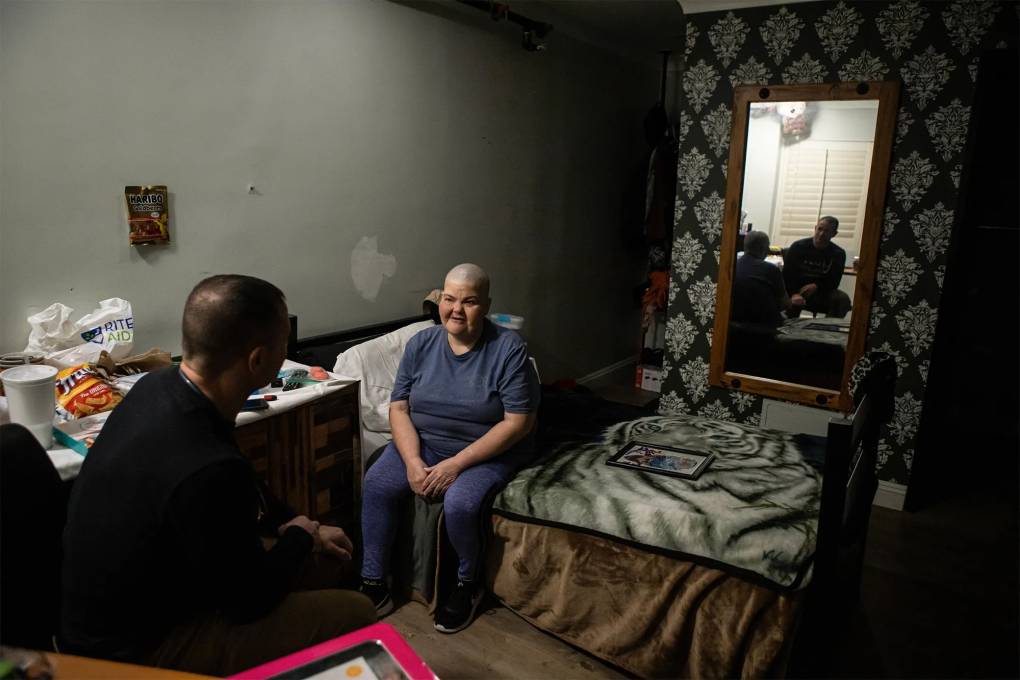
"caption": "Physician assistant Brett Feldman and Calra Bolen sit in her room at a motel turned into housing for unhoused residents as part of the state's Homekey program in downtown Los Angeles on Feb. 13, 2023. ",
"description": null,
"title": "021723-LA-Street-Medicine-Project-LV_CM_09 copy",
"credit": "Larry Valenzuela/CalMatters/CatchLight Local",
"status": "inherit",
"altTag": "A woman with little hair and a blue outfit sits on a bed talking to a man.",
"isLoading": false,
"fetchFailed": false
},
"news_11970234": {
"type": "attachments",
"id": "news_11970234",
"meta": {
"index": "attachments_1716263798",
"site": "news",
"id": "11970234",
"found": true
},
"parent": 11970233,
"imgSizes": {
"twentyfourteen-full-width": {
"file": "https://cdn.kqed.org/wp-content/uploads/sites/10/2023/12/031623-SOS-Cal-Expo-Newsom-MG-CM-16-copy-1038x576.jpg",
"width": 1038,
"mimeType": "image/jpeg",
"height": 576
},
"thumbnail": {
"file": "https://cdn.kqed.org/wp-content/uploads/sites/10/2023/12/031623-SOS-Cal-Expo-Newsom-MG-CM-16-copy-160x107.jpg",
"width": 160,
"mimeType": "image/jpeg",
"height": 107
},
"post-thumbnail": {
"file": "https://cdn.kqed.org/wp-content/uploads/sites/10/2023/12/031623-SOS-Cal-Expo-Newsom-MG-CM-16-copy-672x372.jpg",
"width": 672,
"mimeType": "image/jpeg",
"height": 372
},
"kqedFullSize": {
"file": "https://cdn.kqed.org/wp-content/uploads/sites/10/2023/12/031623-SOS-Cal-Expo-Newsom-MG-CM-16-copy.jpg",
"width": 2000,
"height": 1333
},
"large": {
"file": "https://cdn.kqed.org/wp-content/uploads/sites/10/2023/12/031623-SOS-Cal-Expo-Newsom-MG-CM-16-copy-1020x680.jpg",
"width": 1020,
"mimeType": "image/jpeg",
"height": 680
},
"1536x1536": {
"file": "https://cdn.kqed.org/wp-content/uploads/sites/10/2023/12/031623-SOS-Cal-Expo-Newsom-MG-CM-16-copy-1536x1024.jpg",
"width": 1536,
"mimeType": "image/jpeg",
"height": 1024
},
"full-width": {
"file": "https://cdn.kqed.org/wp-content/uploads/sites/10/2023/12/031623-SOS-Cal-Expo-Newsom-MG-CM-16-copy-1920x1280.jpg",
"width": 1920,
"mimeType": "image/jpeg",
"height": 1280
},
"medium": {
"file": "https://cdn.kqed.org/wp-content/uploads/sites/10/2023/12/031623-SOS-Cal-Expo-Newsom-MG-CM-16-copy-800x533.jpg",
"width": 800,
"mimeType": "image/jpeg",
"height": 533
}
},
"publishDate": 1702751625,
"modified": 1702751746,
"caption": "Gov. Gavin Newsom speaks to the media after announcing the state's plan to address homelessness across the state at Cal Expo in Sacramento, on March 16, 2023. ",
"description": null,
"title": "031623-SOS-Cal-Expo-Newsom-MG-CM-16 copy",
"credit": "Miguel Gutierrez Jr./CalMatters",
"status": "inherit",
"altTag": "A white man in a blue suit and tieless white shirt gestures as he speaks.",
"isLoading": false,
"fetchFailed": false
},
"news_11969783": {
"type": "attachments",
"id": "news_11969783",
"meta": {
"index": "attachments_1716263798",
"site": "news",
"id": "11969783",
"found": true
},
"parent": 11969781,
"imgSizes": {
"twentyfourteen-full-width": {
"file": "https://cdn.kqed.org/wp-content/uploads/sites/10/2023/12/021023-CANNABIS-CRASH-MHN-32-CM-1038x576.jpg",
"width": 1038,
"mimeType": "image/jpeg",
"height": 576
},
"thumbnail": {
"file": "https://cdn.kqed.org/wp-content/uploads/sites/10/2023/12/021023-CANNABIS-CRASH-MHN-32-CM-160x107.jpg",
"width": 160,
"mimeType": "image/jpeg",
"height": 107
},
"post-thumbnail": {
"file": "https://cdn.kqed.org/wp-content/uploads/sites/10/2023/12/021023-CANNABIS-CRASH-MHN-32-CM-672x372.jpg",
"width": 672,
"mimeType": "image/jpeg",
"height": 372
},
"kqedFullSize": {
"file": "https://cdn.kqed.org/wp-content/uploads/sites/10/2023/12/021023-CANNABIS-CRASH-MHN-32-CM.jpg",
"width": 2000,
"height": 1333
},
"large": {
"file": "https://cdn.kqed.org/wp-content/uploads/sites/10/2023/12/021023-CANNABIS-CRASH-MHN-32-CM-1020x680.jpg",
"width": 1020,
"mimeType": "image/jpeg",
"height": 680
},
"1536x1536": {
"file": "https://cdn.kqed.org/wp-content/uploads/sites/10/2023/12/021023-CANNABIS-CRASH-MHN-32-CM-1536x1024.jpg",
"width": 1536,
"mimeType": "image/jpeg",
"height": 1024
},
"full-width": {
"file": "https://cdn.kqed.org/wp-content/uploads/sites/10/2023/12/021023-CANNABIS-CRASH-MHN-32-CM-1920x1280.jpg",
"width": 1920,
"mimeType": "image/jpeg",
"height": 1280
},
"medium": {
"file": "https://cdn.kqed.org/wp-content/uploads/sites/10/2023/12/021023-CANNABIS-CRASH-MHN-32-CM-800x533.jpg",
"width": 800,
"mimeType": "image/jpeg",
"height": 533
}
},
"publishDate": 1702503041,
"modified": 1702508159,
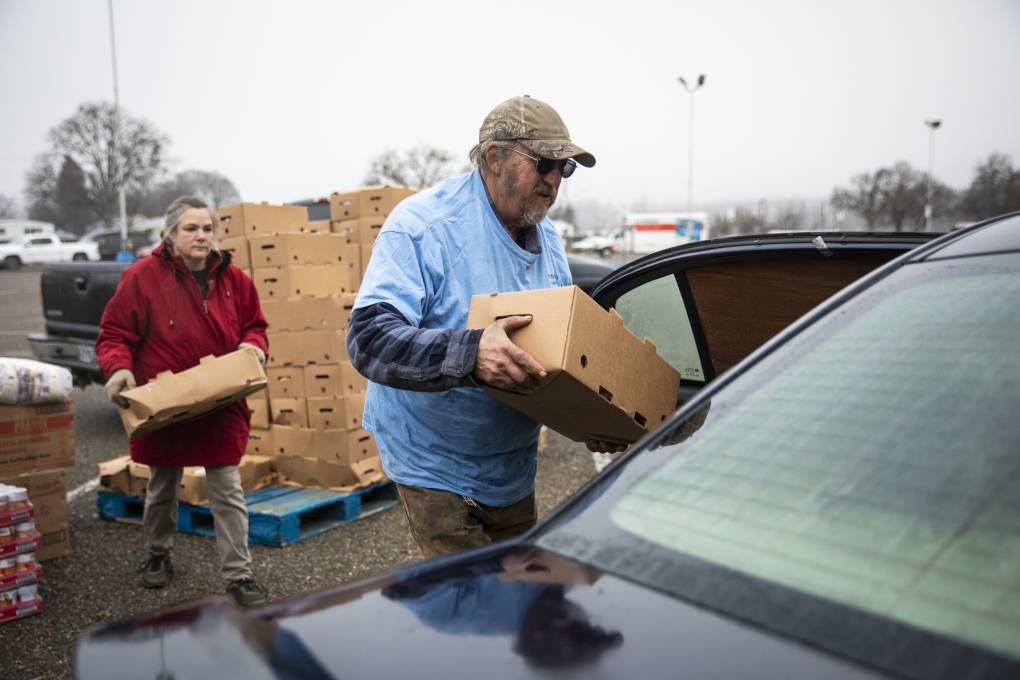
"caption": "Volunteers Terry Scovil (center) and Shendi Klopfer load the car of a community member with food from the Trinity County Food Bank at the Trinity County Fairgrounds on Feb. 8, 2023. ",
"description": null,
"title": "021023-CANNABIS-CRASH-MHN-32-CM",
"credit": "Martin do Nascimento/CalMatters",
"status": "inherit",
"altTag": "A man wearing a blue shirt, green hat and sunglasses holds a cardboard box of food to be moved into a car, with another man and several boxes behind him.",
"isLoading": false,
"fetchFailed": false
},
"news_11969628": {
"type": "attachments",
"id": "news_11969628",
"meta": {
"index": "attachments_1716263798",
"site": "news",
"id": "11969628",
"found": true
},
"parent": 11969623,
"imgSizes": {
"twentyfourteen-full-width": {
"file": "https://cdn.kqed.org/wp-content/uploads/sites/10/2023/12/102623_NB-Rent-Protest_JAH_CM_15-1038x576.jpg",
"width": 1038,
"mimeType": "image/jpeg",
"height": 576
},
"thumbnail": {
"file": "https://cdn.kqed.org/wp-content/uploads/sites/10/2023/12/102623_NB-Rent-Protest_JAH_CM_15-160x107.jpg",
"width": 160,
"mimeType": "image/jpeg",
"height": 107
},
"post-thumbnail": {
"file": "https://cdn.kqed.org/wp-content/uploads/sites/10/2023/12/102623_NB-Rent-Protest_JAH_CM_15-672x372.jpg",
"width": 672,
"mimeType": "image/jpeg",
"height": 372
},
"kqedFullSize": {
"file": "https://cdn.kqed.org/wp-content/uploads/sites/10/2023/12/102623_NB-Rent-Protest_JAH_CM_15.jpg",
"width": 2000,
"height": 1333
},
"large": {
"file": "https://cdn.kqed.org/wp-content/uploads/sites/10/2023/12/102623_NB-Rent-Protest_JAH_CM_15-1020x680.jpg",
"width": 1020,
"mimeType": "image/jpeg",
"height": 680
},
"1536x1536": {
"file": "https://cdn.kqed.org/wp-content/uploads/sites/10/2023/12/102623_NB-Rent-Protest_JAH_CM_15-1536x1024.jpg",
"width": 1536,
"mimeType": "image/jpeg",
"height": 1024
},
"full-width": {
"file": "https://cdn.kqed.org/wp-content/uploads/sites/10/2023/12/102623_NB-Rent-Protest_JAH_CM_15-1920x1280.jpg",
"width": 1920,
"mimeType": "image/jpeg",
"height": 1280
},
"medium": {
"file": "https://cdn.kqed.org/wp-content/uploads/sites/10/2023/12/102623_NB-Rent-Protest_JAH_CM_15-800x533.jpg",
"width": 800,
"mimeType": "image/jpeg",
"height": 533
}
},
"publishDate": 1702403808,
"modified": 1702421085,
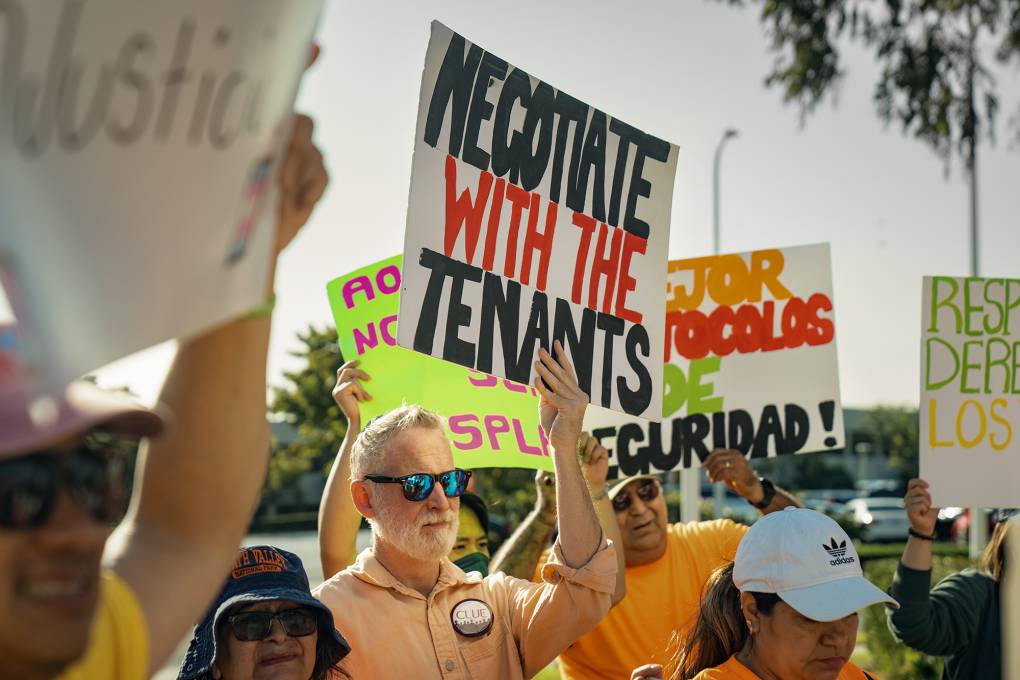
"caption": "Bay Area tenants from the KDF Tenants Association protest housing conditions and rent increases outside the office complex that houses KDF Communities LLC's office in Newport Beach on Oct. 26, 2023. ",
"description": null,
"title": "102623_NB-Rent-Protest_JAH_CM_15",
"credit": "Julie A. Hotz/CalMatters",
"status": "inherit",
"altTag": "A man wearing an orange shirt and sunglasses holds up a sign in a crowd that reads \"Negotiate with the Tenants.\"",
"isLoading": false,
"fetchFailed": false
},
"news_11969528": {
"type": "attachments",
"id": "news_11969528",
"meta": {
"index": "attachments_1716263798",
"site": "news",
"id": "11969528",
"found": true
},
"parent": 11969521,
"imgSizes": {
"twentyfourteen-full-width": {
"file": "https://cdn.kqed.org/wp-content/uploads/sites/10/2023/12/092923-LA-Domestic-Violence-AJ-CM-34-1038x576.jpg",
"width": 1038,
"mimeType": "image/jpeg",
"height": 576
},
"thumbnail": {
"file": "https://cdn.kqed.org/wp-content/uploads/sites/10/2023/12/092923-LA-Domestic-Violence-AJ-CM-34-160x107.jpg",
"width": 160,
"mimeType": "image/jpeg",
"height": 107
},
"post-thumbnail": {
"file": "https://cdn.kqed.org/wp-content/uploads/sites/10/2023/12/092923-LA-Domestic-Violence-AJ-CM-34-672x372.jpg",
"width": 672,
"mimeType": "image/jpeg",
"height": 372
},
"kqedFullSize": {
"file": "https://cdn.kqed.org/wp-content/uploads/sites/10/2023/12/092923-LA-Domestic-Violence-AJ-CM-34.jpg",
"width": 2000,
"height": 1334
},
"large": {
"file": "https://cdn.kqed.org/wp-content/uploads/sites/10/2023/12/092923-LA-Domestic-Violence-AJ-CM-34-1020x680.jpg",
"width": 1020,
"mimeType": "image/jpeg",
"height": 680
},
"1536x1536": {
"file": "https://cdn.kqed.org/wp-content/uploads/sites/10/2023/12/092923-LA-Domestic-Violence-AJ-CM-34-1536x1025.jpg",
"width": 1536,
"mimeType": "image/jpeg",
"height": 1025
},
"full-width": {
"file": "https://cdn.kqed.org/wp-content/uploads/sites/10/2023/12/092923-LA-Domestic-Violence-AJ-CM-34-1920x1281.jpg",
"width": 1920,
"mimeType": "image/jpeg",
"height": 1281
},
"medium": {
"file": "https://cdn.kqed.org/wp-content/uploads/sites/10/2023/12/092923-LA-Domestic-Violence-AJ-CM-34-800x534.jpg",
"width": 800,
"mimeType": "image/jpeg",
"height": 534
}
},
"publishDate": 1702243847,
"modified": 1702243919,
"caption": "Jackie’s oldest son, Raphael, in Monterey Park on Sept. 29, 2023. Raphael saw and experienced the domestic violence in his mother’s relationship when he was a young teenager. Raphael is now in college and plans to work towards being a Dermatologist. His mother, Jackie, is a family advocate for Los Angeles Defense Lawyers, helping families navigate the system. ",
"description": null,
"title": "092923-LA-Domestic-Violence-AJ-CM-34",
"credit": "Alisha Jucevic/CalMatters",
"status": "inherit",
"altTag": "A photo of a woman standing in front of a silhouette of a younger person.",
"isLoading": false,
"fetchFailed": false
},
"news_11969314": {
"type": "attachments",
"id": "news_11969314",
"meta": {
"index": "attachments_1716263798",
"site": "news",
"id": "11969314",
"found": true
},
"parent": 11969301,
"imgSizes": {
"twentyfourteen-full-width": {
"file": "https://cdn.kqed.org/wp-content/uploads/sites/10/2023/12/CalMattersNewsom01-1038x576.jpg",
"width": 1038,
"mimeType": "image/jpeg",
"height": 576
},
"thumbnail": {
"file": "https://cdn.kqed.org/wp-content/uploads/sites/10/2023/12/CalMattersNewsom01-160x107.jpg",
"width": 160,
"mimeType": "image/jpeg",
"height": 107
},
"post-thumbnail": {
"file": "https://cdn.kqed.org/wp-content/uploads/sites/10/2023/12/CalMattersNewsom01-672x372.jpg",
"width": 672,
"mimeType": "image/jpeg",
"height": 372
},
"kqedFullSize": {
"file": "https://cdn.kqed.org/wp-content/uploads/sites/10/2023/12/CalMattersNewsom01.jpg",
"width": 2000,
"height": 1333
},
"large": {
"file": "https://cdn.kqed.org/wp-content/uploads/sites/10/2023/12/CalMattersNewsom01-1020x680.jpg",
"width": 1020,
"mimeType": "image/jpeg",
"height": 680
},
"1536x1536": {
"file": "https://cdn.kqed.org/wp-content/uploads/sites/10/2023/12/CalMattersNewsom01-1536x1024.jpg",
"width": 1536,
"mimeType": "image/jpeg",
"height": 1024
},
"full-width": {
"file": "https://cdn.kqed.org/wp-content/uploads/sites/10/2023/12/CalMattersNewsom01-1920x1280.jpg",
"width": 1920,
"mimeType": "image/jpeg",
"height": 1280
},
"medium": {
"file": "https://cdn.kqed.org/wp-content/uploads/sites/10/2023/12/CalMattersNewsom01-800x533.jpg",
"width": 800,
"mimeType": "image/jpeg",
"height": 533
}
},
"publishDate": 1701986481,
"modified": 1702084463,
"caption": "Gov. Gavin Newsom unveils his revised budget proposal for 2023–24 during a press briefing at the state Natural Resources Agency in Sacramento on May 12, 2023. ",
"description": null,
"title": "CalMattersNewsom01",
"credit": "Rahul Lal/CalMatters",
"status": "inherit",
"altTag": "Gov. Gavin Newsom at a podium with an American and California flag behind him.",
"isLoading": false,
"fetchFailed": false
},
"news_11969232": {
"type": "attachments",
"id": "news_11969232",
"meta": {
"index": "attachments_1716263798",
"site": "news",
"id": "11969232",
"found": true
},
"parent": 11969228,
"imgSizes": {
"twentyfourteen-full-width": {
"file": "https://cdn.kqed.org/wp-content/uploads/sites/10/2023/12/100323-Kevin-McCarthy-AP-CM-01-1038x576.jpeg",
"width": 1038,
"mimeType": "image/jpeg",
"height": 576
},
"thumbnail": {
"file": "https://cdn.kqed.org/wp-content/uploads/sites/10/2023/12/100323-Kevin-McCarthy-AP-CM-01-160x107.jpeg",
"width": 160,
"mimeType": "image/jpeg",
"height": 107
},
"post-thumbnail": {
"file": "https://cdn.kqed.org/wp-content/uploads/sites/10/2023/12/100323-Kevin-McCarthy-AP-CM-01-672x372.jpeg",
"width": 672,
"mimeType": "image/jpeg",
"height": 372
},
"kqedFullSize": {
"file": "https://cdn.kqed.org/wp-content/uploads/sites/10/2023/12/100323-Kevin-McCarthy-AP-CM-01.jpeg",
"width": 2000,
"height": 1333
},
"large": {
"file": "https://cdn.kqed.org/wp-content/uploads/sites/10/2023/12/100323-Kevin-McCarthy-AP-CM-01-1020x680.jpeg",
"width": 1020,
"mimeType": "image/jpeg",
"height": 680
},
"1536x1536": {
"file": "https://cdn.kqed.org/wp-content/uploads/sites/10/2023/12/100323-Kevin-McCarthy-AP-CM-01-1536x1024.jpeg",
"width": 1536,
"mimeType": "image/jpeg",
"height": 1024
},
"full-width": {
"file": "https://cdn.kqed.org/wp-content/uploads/sites/10/2023/12/100323-Kevin-McCarthy-AP-CM-01-1920x1280.jpeg",
"width": 1920,
"mimeType": "image/jpeg",
"height": 1280
},
"medium": {
"file": "https://cdn.kqed.org/wp-content/uploads/sites/10/2023/12/100323-Kevin-McCarthy-AP-CM-01-800x533.jpeg",
"width": 800,
"mimeType": "image/jpeg",
"height": 533
}
},
"publishDate": 1701971500,
"modified": 1707416200,
"caption": "Rep. Kevin McCarthy, a Republican from Bakersfield, talks to reporters at the Capitol on Oct. 3, 2023. On Wednesday, McCarthy announced he was leaving Congress at the end of the year, just about 2 months after his historic ouster as House speaker. ",
"description": null,
"title": "100323-Kevin-McCarthy-AP-CM-01",
"credit": "J. Scott Applewhite/AP",
"status": "inherit",
"altTag": "Kevin McCarthy speaks into a microphone at a press event surrounded by people.",
"isLoading": false,
"fetchFailed": false
},
"news_11969064": {
"type": "attachments",
"id": "news_11969064",
"meta": {
"index": "attachments_1716263798",
"site": "news",
"id": "11969064",
"found": true
},
"parent": 11969051,
"imgSizes": {
"twentyfourteen-full-width": {
"file": "https://ww2.kqed.org/app/uploads/sites/10/2023/12/010423-MaderaCommunityHospital-LV_CM_07-1038x576.jpg",
"width": 1038,
"mimeType": "image/jpeg",
"height": 576
},
"thumbnail": {
"file": "https://ww2.kqed.org/app/uploads/sites/10/2023/12/010423-MaderaCommunityHospital-LV_CM_07-160x107.jpg",
"width": 160,
"mimeType": "image/jpeg",
"height": 107
},
"post-thumbnail": {
"file": "https://ww2.kqed.org/app/uploads/sites/10/2023/12/010423-MaderaCommunityHospital-LV_CM_07-672x372.jpg",
"width": 672,
"mimeType": "image/jpeg",
"height": 372
},
"kqedFullSize": {
"file": "https://ww2.kqed.org/app/uploads/sites/10/2023/12/010423-MaderaCommunityHospital-LV_CM_07.jpg",
"width": 2000,
"height": 1333
},
"large": {
"file": "https://ww2.kqed.org/app/uploads/sites/10/2023/12/010423-MaderaCommunityHospital-LV_CM_07-1020x680.jpg",
"width": 1020,
"mimeType": "image/jpeg",
"height": 680
},
"1536x1536": {
"file": "https://ww2.kqed.org/app/uploads/sites/10/2023/12/010423-MaderaCommunityHospital-LV_CM_07-1536x1024.jpg",
"width": 1536,
"mimeType": "image/jpeg",
"height": 1024
},
"full-width": {
"file": "https://ww2.kqed.org/app/uploads/sites/10/2023/12/010423-MaderaCommunityHospital-LV_CM_07-1920x1280.jpg",
"width": 1920,
"mimeType": "image/jpeg",
"height": 1280
},
"medium": {
"file": "https://ww2.kqed.org/app/uploads/sites/10/2023/12/010423-MaderaCommunityHospital-LV_CM_07-800x533.jpg",
"width": 800,
"mimeType": "image/jpeg",
"height": 533
}
},
"publishDate": 1701803774,
"modified": 1701805285,
"caption": "Outlines of the former Madera Community Hospital sign are covered by a tarp at the hospital's emergency room entrance on Jan. 2, 2023. ",
"description": null,
"title": "010423-MaderaCommunityHospital-LV_CM_07",
"credit": "Larry Valenzuela/CalMatters/CatchLight Local",
"status": "inherit",
"altTag": "A sign of a partially covered building with a tarp reads \"Madera Community.\"",
"isLoading": false,
"fetchFailed": false
},
"news_11968972": {
"type": "attachments",
"id": "news_11968972",
"meta": {
"index": "attachments_1716263798",
"site": "news",
"id": "11968972",
"found": true
},
"parent": 11968966,
"imgSizes": {
"twentyfourteen-full-width": {
"file": "https://ww2.kqed.org/app/uploads/sites/10/2023/12/111623-Rent-Relief-COVID-MG-CM-1038x576.jpg",
"width": 1038,
"mimeType": "image/jpeg",
"height": 576
},
"thumbnail": {
"file": "https://ww2.kqed.org/app/uploads/sites/10/2023/12/111623-Rent-Relief-COVID-MG-CM-160x107.jpg",
"width": 160,
"mimeType": "image/jpeg",
"height": 107
},
"post-thumbnail": {
"file": "https://ww2.kqed.org/app/uploads/sites/10/2023/12/111623-Rent-Relief-COVID-MG-CM-672x372.jpg",
"width": 672,
"mimeType": "image/jpeg",
"height": 372
},
"kqedFullSize": {
"file": "https://ww2.kqed.org/app/uploads/sites/10/2023/12/111623-Rent-Relief-COVID-MG-CM.jpg",
"width": 2000,
"height": 1333
},
"large": {
"file": "https://ww2.kqed.org/app/uploads/sites/10/2023/12/111623-Rent-Relief-COVID-MG-CM-1020x680.jpg",
"width": 1020,
"mimeType": "image/jpeg",
"height": 680
},
"1536x1536": {
"file": "https://ww2.kqed.org/app/uploads/sites/10/2023/12/111623-Rent-Relief-COVID-MG-CM-1536x1024.jpg",
"width": 1536,
"mimeType": "image/jpeg",
"height": 1024
},
"full-width": {
"file": "https://ww2.kqed.org/app/uploads/sites/10/2023/12/111623-Rent-Relief-COVID-MG-CM-1920x1280.jpg",
"width": 1920,
"mimeType": "image/jpeg",
"height": 1280
},
"medium": {
"file": "https://ww2.kqed.org/app/uploads/sites/10/2023/12/111623-Rent-Relief-COVID-MG-CM-800x533.jpg",
"width": 800,
"mimeType": "image/jpeg",
"height": 533
}
},
"publishDate": 1701723591,
"modified": 1701723692,
"caption": null,
"description": null,
"title": "111623-Rent-Relief-COVID-MG-CM",
"credit": "Miguel Gutierrez Jr./CalMatters; iStock",
"status": "inherit",
"altTag": "A graphic illustration showing dollar bills folded into the shape of houses with folders that say \"Past Due\" and \"Eviction Notice\" behind them.",
"isLoading": false,
"fetchFailed": false
}
},
"audioPlayerReducer": {
"postId": "stream_live",
"isPaused": true,
"isPlaying": false,
"pfsActive": false,
"pledgeModalIsOpen": true,
"playerDrawerIsOpen": false,
"liveAudioPlayStartedAt": 0,
"liveAudioPlayContext": ""
},
"authorsReducer": {
"byline_news_11970802": {
"type": "authors",
"id": "byline_news_11970802",
"meta": {
"override": true
},
"slug": "byline_news_11970802",
"name": "\u003ca href=\"https://calmatters.org/author/mikhailzinshteyn/\">Mikhail Zinshteyn\u003c/a>",
"isLoading": false
},
"byline_news_11970640": {
"type": "authors",
"id": "byline_news_11970640",
"meta": {
"override": true
},
"slug": "byline_news_11970640",
"name": "Levi Sumagaysay and Shreya Agrawal",
"isLoading": false
},
"byline_news_11970414": {
"type": "authors",
"id": "byline_news_11970414",
"meta": {
"override": true
},
"slug": "byline_news_11970414",
"name": "\u003ca href=\"https://calmatters.org/author/anaibarra/\">Ana Ibarra\u003c/a>",
"isLoading": false
},
"byline_news_11970242": {
"type": "authors",
"id": "byline_news_11970242",
"meta": {
"override": true
},
"slug": "byline_news_11970242",
"name": "\u003ca href=\"https://calmatters.org/author/jeanne-kuang/\">Jeanne Kuang\u003c/a>",
"isLoading": false
},
"byline_news_11970233": {
"type": "authors",
"id": "byline_news_11970233",
"meta": {
"override": true
},
"slug": "byline_news_11970233",
"name": "\u003ca href=\"https://calmatters.org/author/kristen-hwang/\">Kristen Hwang\u003c/a>, \u003ca href=\"https://calmatters.org/author/anaibarra/\">Ana B. Ibarra\u003c/a>",
"isLoading": false
},
"byline_news_11969781": {
"type": "authors",
"id": "byline_news_11969781",
"meta": {
"override": true
},
"slug": "byline_news_11969781",
"name": "Jeanne Kuang",
"isLoading": false
},
"byline_news_11969623": {
"type": "authors",
"id": "byline_news_11969623",
"meta": {
"override": true
},
"slug": "byline_news_11969623",
"name": "Jeanne Kuang",
"isLoading": false
},
"byline_news_11969521": {
"type": "authors",
"id": "byline_news_11969521",
"meta": {
"override": true
},
"slug": "byline_news_11969521",
"name": "ChrisAnna Mink",
"isLoading": false
},
"byline_news_11969301": {
"type": "authors",
"id": "byline_news_11969301",
"meta": {
"override": true
},
"slug": "byline_news_11969301",
"name": "\u003ca href=\"https://calmatters.org/author/alexei-koseff/\">Alexei Koseff\u003c/a>",
"isLoading": false
},
"byline_news_11969228": {
"type": "authors",
"id": "byline_news_11969228",
"meta": {
"override": true
},
"slug": "byline_news_11969228",
"name": "\u003ca href=\"https://calmatters.org/author/joe-kieta/\">Joe Kieta\u003c/a>",
"isLoading": false
},
"byline_news_11969051": {
"type": "authors",
"id": "byline_news_11969051",
"meta": {
"override": true
},
"slug": "byline_news_11969051",
"name": "\u003ca href=\"https://calmatters.org/author/anaibarra/\">Ana B. Ibarra\u003c/a>",
"isLoading": false
},
"byline_news_11968966": {
"type": "authors",
"id": "byline_news_11968966",
"meta": {
"override": true
},
"slug": "byline_news_11968966",
"name": "\u003ca href=\"https://calmatters.org/author/ben-christopher/\">Ben Christopher\u003c/a>",
"isLoading": false
}
},
"pagesReducer": {
"news_affiliate_calmatters": {
"type": "terms",
"id": "news_18481",
"meta": {
"index": "terms_1716263798",
"site": "news",
"id": "18481",
"score": 15.355862
},
"featImg": null,
"name": "CALmatters",
"description": null,
"taxonomy": "affiliate",
"headData": {
"twImgId": null,
"twTitle": null,
"ogTitle": null,
"ogImgId": null,
"twDescription": null,
"description": null,
"title": "CALmatters Archives | KQED Arts",
"ogDescription": null
},
"ttid": 18515,
"slug": "calmatters",
"isLoading": false,
"title": "CALmatters",
"pageMeta": {
"site": "news",
"WpPageTemplate": "page-topic-editorial",
"currentPage": 40
},
"blocks": [
{
"blockName": "kqed/post-list",
"attrs": {
"layout": "cardArticle2",
"query": "posts/news?affiliate=calmatters",
"seeMore": false,
"paginated": true,
"page": 40
}
},
{
"blockName": "kqed/ad"
}
]
}
},
"pfsSessionReducer": {},
"postsReducer": {
"stream_live": {
"type": "live",
"id": "stream_live",
"audioUrl": "https://streams.kqed.org/kqedradio",
"title": "Live Stream",
"excerpt": "Live Stream information currently unavailable.",
"link": "/radio",
"featImg": "",
"label": {
"name": "KQED Live",
"link": "/"
}
},
"stream_kqedNewscast": {
"type": "posts",
"id": "stream_kqedNewscast",
"audioUrl": "https://www.kqed.org/.stream/anon/radio/RDnews/newscast.mp3?_=1",
"title": "KQED Newscast",
"featImg": "",
"label": {
"name": "88.5 FM",
"link": "/"
}
},
"news_11970802": {
"type": "posts",
"id": "news_11970802",
"meta": {
"index": "posts_1716263798",
"site": "news",
"id": "11970802",
"score": null,
"sort": [
1703368811000
]
},
"guestAuthors": [],
"slug": "for-undocumented-california-students-missing-out-on-financial-aid-a-new-application-could-help",
"title": "For Undocumented California Students Missing Out on Financial Aid, a New Application Could Help",
"publishDate": 1703368811,
"format": "standard",
"headTitle": "For Undocumented California Students Missing Out on Financial Aid, a New Application Could Help | KQED",
"labelTerm": {
"term": 18481,
"site": "news"
},
"content": "\u003cp>Each year more than \u003ca href=\"https://www.csac.ca.gov/post/total-applications\">35,000 undocumented students\u003c/a> with dreams of earning a college degree in California apply for the state’s marquee financial aid program, the Cal Grant — but \u003ca href=\"https://www.csac.ca.gov/post/cal-grant-paid-awards\">only about a third receive it\u003c/a>.\u003c/p>\n\u003cp>With no access to federal financial aid and \u003ca href=\"https://calmatters.org/newsletter/california-democrats-convention/#:~:text=From%20CalMatters%20higher,to%20break%20them.\">few work opportunities\u003c/a>, losing out on state dollars further undermines the ability of undocumented students to pay for school. The Cal Grant, for example, waives tuition at California’s public universities and provides cash awards of about $1,650 to community college students\u003c/p>\n\u003cp>Now, after several years of advocacy and a \u003ca href=\"https://leginfo.legislature.ca.gov/faces/billNavClient.xhtml?bill_id=202320240AB1540\">state law passed this year\u003c/a>, California financial aid administrators are about to debut a revised application meant to get more college grants for undocumented students.\u003c/p>\n\u003cp>[ad fullwidth]\u003c/p>\n\u003cp>“What we all recognized was that we’ve asked these students to go through more processes, more forms, unfortunately to receive less financial aid,” said Jake Brymner, deputy director for policy and public affairs for the California Student Aid Commission. He and a commission staff member provided CalMatters with a virtual walkthrough of the new application.\u003c/p>\n\u003cp>The California Dream Act Application, often called CADAA, will for the first time allow students to also complete a frequently overlooked legal affidavit that’s essential to accessing state aid. The new application \u003ca href=\"https://dream.csac.ca.gov/landing\">will debut by the end of December\u003c/a>.\u003c/p>\n\u003cp>While a seemingly small change, it spares students from having to fill out two documents separately and at different times in the year, which has been the process ever since undocumented students became eligible for state aid through a 2011 state law. That has resulted in many students completing one form but not the other out of confusion or lack of awareness.\u003c/p>\n\u003cp>[pullquote align=\"right\" size=\"medium\" citation=\"Jake Brymner, deputy director for policy and public affairs, California Student Aid Commission\"]‘What we all recognized was that we’ve asked these students to go through more processes, more forms, unfortunately to receive less financial aid.’[/pullquote]For example, among community college students, about 62,000 completed the affidavit but only around 25,000 finished the dream act application in 2021, according to data from the California Student Aid Commission, the state agency behind the application overhaul.\u003c/p>\n\u003cp>Without the application and affidavit, undocumented community college students \u003ca href=\"https://www.csac.ca.gov/sites/main/files/file-attachments/renewing_the_dream_full_report.pdf?1677607402#page=20\">can’t receive the Cal Grant and other related aid (PDF)\u003c/a>, such as a \u003ca href=\"https://icangotocollege.com/financial-aid/student-success-completion-grant\">grant for full-time students\u003c/a> and money in exchange for \u003ca href=\"https://www.csac.ca.gov/sites/main/files/file-attachments/dsig_faq_for_students.pdf?1696383968\">community service (PDF)\u003c/a>. Those three programs together provide more than $14,000 in possible grants annually. Undocumented students at public universities also lose out on key aid. Most undocumented college students in California \u003ca href=\"https://www.csac.ca.gov/sites/main/files/file-attachments/renewing_the_dream_full_report.pdf?1677607402#page=23\">attend a community college (PDF)\u003c/a>.\u003c/p>\n\u003cp>Now the legal affidavit will be embedded in the California Dream Act Application, the result of a 2023 state law created through \u003ca href=\"https://leginfo.legislature.ca.gov/faces/billNavClient.xhtml?bill_id=202320240AB1540\">Assembly Bill 1540\u003c/a>, authored by Mike Fong, a Democrat from Monterey Park.\u003c/p>\n\u003cp>The changes should help students who are in a situation Leo Rodriguez was in when he began college. “When I first enrolled at a community college, I was billed $6,000 because I was incorrectly deemed an international student, a common occurrence for undocumented students,” he wrote in a \u003ca href=\"https://calmatters.org/commentary/2023/05/undocumented-students-college-financial-aid/\">May CalMatters commentary\u003c/a> about affording college as an undocumented student. Though he attended and graduated from a California high school, he didn’t know that he needed the affidavit “to prove eligibility for in-state tuition, and to separately complete a Dream Act application to be considered for financial aid.”\u003c/p>\n\u003cp>A March report by the commission identified many of the hurdles undocumented students face in accessing state aid, including student confusion over the affidavit. All told, only \u003ca href=\"https://calmatters.org/newsletters/whatmatters/2023/03/california-budget-senate-newsom/#:~:text=From%20CalMatters%20higher%20education%20reporter%20Mikhail%20Zinshteyn%3A%C2%A0\">about 14%\u003c/a> of the state’s nearly 100,000 undocumented college students received any state financial aid in 2021–22, in large part because half didn’t take the first step to apply for aid even though many have low incomes. The report \u003ca href=\"https://www.csac.ca.gov/sites/main/files/file-attachments/renewing_the_dream_full_report.pdf?1677607402#page=13\">called for a state law to allow the affidavit (PDF)\u003c/a> to be a part of the dream act application. About half a year later, Fong’s bill was signed into law.\u003c/p>\n\u003cp>The affidavit in question stems from a 2001 law that has \u003ca href=\"https://www.csac.ca.gov/sites/main/files/file-attachments/renewing_the_dream_full_report.pdf?1677607402#page=19\">been amended several times since (PDF)\u003c/a>. It grants \u003ca href=\"https://immigrantsrising.org/wp-content/uploads/Immigrants-Rising_Statewide-AB-540-FAQ.pdf#page=5\">undocumented students, certain visa holders and other college-goers (PDF)\u003c/a> in-state tuition at California’s public universities and community colleges. This is a major perk because students deemed non-residents are charged about three times more in tuition. The in-state designation also makes undocumented students eligible for state grants, such as tuition waivers and cash awards.\u003c/p>\n\u003cp>[aside label=\"Related Stories\" postID=\"news_11969685,news_11928582,news_11923249\"]That’s where the California Dream Act Application and the affidavit intersect: One opens the door for aid, the other lets the applicant walk through it.\u003c/p>\n\u003cp>Students who sign the affidavit declare that they’ve either filed an application to legalize their immigration status in the U.S. or will do so once national law creates such a pathway. \u003ca href=\"https://immigrantsrising.org/wp-content/uploads/Immigrants-Rising_AB-540-Quick-Guide.pdf\">It also has students confirm (PDF)\u003c/a> that they’ve had three years of K–12, adult school or community college education in California, as well as a high school diploma, an equivalent certificate, an associate degree or proof that they’ve taken the minimum set courses needed to transfer to a University of California or California State University campus.\u003c/p>\n\u003cp>Embedding the affidavit in the dream act application is “going to be a big step forward,” but it’s not the only step needed “to ensure that students can receive all the financial aid for whatever they have eligibility for,” said Nancy Jodaitis, director of higher education issues at Immigrants Rising, a San Francisco-based project of \u003ca href=\"https://communityinitiatives.org/project/immigrants-rising/\">a larger nonprofit\u003c/a>.\u003c/p>\n\u003cp>Sending the affidavit to the schools the student hopes to attend is the first step, but all UCs and Cal States, and about half of community colleges, require official transcripts and attendance records from the student. How campuses will notify students with outstanding paperwork will be an ongoing issue to monitor, Jodaitis said.\u003c/p>\n\u003cp>Immigrants Rising in May \u003ca href=\"https://immigrantsrising.org/wp-content/uploads/Immigrants-Rising_Statewide-AB-540-FAQ.pdf\">published a comprehensive guide explaining the affidavit process (PDF)\u003c/a> in partnership with the state’s public colleges and universities. It’s now working on a set of recommendations for how campuses can best apprise students of the remaining paperwork they’ll have to submit once they’ve turned in their affidavit through the dream act. That’ll be published in January, she added.\u003c/p>\n\u003cfigure id=\"attachment_11970805\" class=\"wp-caption alignnone\" style=\"max-width: 1568px\">\u003cimg loading=\"lazy\" decoding=\"async\" class=\"size-full wp-image-11970805\" src=\"https://cdn.kqed.org/wp-content/uploads/sites/10/2023/12/101423_Collge-Info-Berkeley_JY_CM_23-copy.jpg\" alt=\"\" width=\"1568\" height=\"1045\" srcset=\"https://cdn.kqed.org/wp-content/uploads/sites/10/2023/12/101423_Collge-Info-Berkeley_JY_CM_23-copy.jpg 1568w, https://cdn.kqed.org/wp-content/uploads/sites/10/2023/12/101423_Collge-Info-Berkeley_JY_CM_23-copy-800x533.jpg 800w, https://cdn.kqed.org/wp-content/uploads/sites/10/2023/12/101423_Collge-Info-Berkeley_JY_CM_23-copy-1020x680.jpg 1020w, https://cdn.kqed.org/wp-content/uploads/sites/10/2023/12/101423_Collge-Info-Berkeley_JY_CM_23-copy-160x107.jpg 160w, https://cdn.kqed.org/wp-content/uploads/sites/10/2023/12/101423_Collge-Info-Berkeley_JY_CM_23-copy-1536x1024.jpg 1536w\" sizes=\"(max-width: 1568px) 100vw, 1568px\">\u003cfigcaption class=\"wp-caption-text\">FAFSA fact sheets are displayed at College Information Day at UC Berkeley in Berkeley on Oct. 14, 2023. \u003ccite>(Juliana Yamada for CalMatters)\u003c/cite>\u003c/figcaption>\u003c/figure>\n\u003cp>In 2024, UC will ask students to submit the affidavits to the campuses directly, instead of through the dream act application, a spokesperson said. That’s because the UC is \u003ca href=\"https://cshe.berkeley.edu/publications/how-and-why-university-california-got-its-autonomy\">constitutionally independent\u003c/a> of many state laws. \u003ca href=\"https://www.cccco.edu/-/media/CCCCO-Website/docs/report/2023-chaptered-legislation-and-guidance-november-report-a11y.pdf#page=21\">Community colleges (PDF)\u003c/a> and \u003ca href=\"https://leginfo.legislature.ca.gov/faces/billNavClient.xhtml?bill_id=202320240AB1540#:~:text=(B)%C2%A0(i)%C2%A0The%20California%20State%20University\">Cal State\u003c/a> have to comply with the law.\u003c/p>\n\u003cp>Advocates who focus on financial aid for undocumented students say that schools, state agencies and nonprofits that share with students information about college affordability should proactively include the dream act application and its related forms.\u003c/p>\n\u003cp>“I hardly saw financial aid workshops tailored for undocumented students in high school,” wrote Rodriguez. Instead, he mostly encountered information about the federal Free Application for Federal Student Aid, “which sent mixed messages about whether or not I was eligible for financial aid to begin with,” he added.\u003c/p>\n\u003cp>State law \u003ca href=\"https://calmatters.org/education/higher-education/college-beat/2023/11/high-school-financial-aid-applications-increase/\">now requires that high school seniors\u003c/a> complete a financial aid application, with few exceptions. The more school districts and nonprofits can stress the federal financial aid grant \u003cem>and \u003c/em>the dream act application, the likelier undocumented students will hear the message and apply, Jodaitis said.\u003c/p>\n\u003cp>Information students place in the dream act application isn’t shared with the federal government or with immigration authorities, the \u003ca href=\"https://www.csac.ca.gov/sites/main/files/file-attachments/california_dream_act_application_1.pdf?1698767919\">commission and state department of education stressed in a 2022 letter (PDF)\u003c/a>. That’s a message the commission will likely repeat in the face of a presidential election year in which \u003ca href=\"https://www.npr.org/2023/12/13/1218935981/republican-candidates-immigration#:~:text=What%20border%20security%20policies%20should%20the%20U.S.%20put%20in%20place%3F\">anti-immigrant sentiment is bound to take center stage\u003c/a>.\u003c/p>\n\u003cp>Students applying for the dream act who intend to enter college in fall 2024 will submit \u003ca href=\"https://www.csac.ca.gov/sites/main/files/file-attachments/california_dream_act_faq.pdf?1694549553#page=5\">their household’s 2022 income information (PDF)\u003c/a>. Once the application goes live, students pursuing a four-year degree should complete the dream act forms by \u003ca href=\"https://calmatters.org/education/higher-education/college-beat/2023/11/high-school-financial-aid-applications-increase/#:~:text=The%20overhauled%20FAFSA,Student%20Aid%20website.\">April 2 or sooner\u003c/a>. Students planning to attend a community college have until early September to file their paperwork.\u003c/p>\n\u003cp>[ad floatright]\u003c/p>\n",
"blocks": [],
"excerpt": "The financial aid application for undocumented students is cumbersome and confusing, and many students aren’t completing the forms. A new law streamlines the process.",
"status": "publish",
"parent": 0,
"modified": 1721136054,
"stats": {
"hasAudio": false,
"hasVideo": false,
"hasChartOrMap": false,
"iframeSrcs": [],
"hasGoogleForm": false,
"hasGallery": false,
"hasHearkenModule": false,
"hasPolis": false,
"paragraphCount": 25,
"wordCount": 1453
},
"headData": {
"title": "For Undocumented California Students Missing Out on Financial Aid, a New Application Could Help | KQED",
"description": "The financial aid application for undocumented students is cumbersome and confusing, and many students aren’t completing the forms. A new law streamlines the process.",
"ogTitle": "",
"ogDescription": "",
"ogImgId": "",
"twTitle": "",
"twDescription": "",
"twImgId": "",
"schema": {
"@context": "https://schema.org",
"@type": "NewsArticle",
"headline": "For Undocumented California Students Missing Out on Financial Aid, a New Application Could Help",
"datePublished": "2023-12-23T14:00:11-08:00",
"dateModified": "2024-07-16T06:20:54-07:00",
"image": "https://cdn.kqed.org/wp-content/uploads/2020/02/KQED-OG-Image@1x.png",
"isAccessibleForFree": "True",
"publisher": {
"@type": "NewsMediaOrganization",
"@id": "https://www.kqed.org/#organization",
"name": "KQED",
"logo": "https://cdn.kqed.org/wp-content/uploads/2020/02/KQED-OG-Image@1x.png",
"url": "https://www.kqed.org",
"sameAs": [
"https://www.facebook.com/KQED",
"https://twitter.com/KQED",
"https://www.instagram.com/kqed/",
"https://www.tiktok.com/@kqedofficial",
"https://www.linkedin.com/company/kqed",
"https://www.youtube.com/channel/UCeC0IOo7i1P_61zVUWbJ4nw"
]
}
}
},
"sticky": false,
"nprByline": "\u003ca href=\"https://calmatters.org/author/mikhailzinshteyn/\">Mikhail Zinshteyn\u003c/a>",
"excludeFromSiteSearch": "Include",
"showOnAuthorArchivePages": "No",
"articleAge": "0",
"path": "/news/11970802/for-undocumented-california-students-missing-out-on-financial-aid-a-new-application-could-help",
"audioTrackLength": null,
"parsedContent": [
{
"type": "contentString",
"content": "\u003cdiv class=\"post-body\">\u003cp>\u003cp>Each year more than \u003ca href=\"https://www.csac.ca.gov/post/total-applications\">35,000 undocumented students\u003c/a> with dreams of earning a college degree in California apply for the state’s marquee financial aid program, the Cal Grant — but \u003ca href=\"https://www.csac.ca.gov/post/cal-grant-paid-awards\">only about a third receive it\u003c/a>.\u003c/p>\n\u003cp>With no access to federal financial aid and \u003ca href=\"https://calmatters.org/newsletter/california-democrats-convention/#:~:text=From%20CalMatters%20higher,to%20break%20them.\">few work opportunities\u003c/a>, losing out on state dollars further undermines the ability of undocumented students to pay for school. The Cal Grant, for example, waives tuition at California’s public universities and provides cash awards of about $1,650 to community college students\u003c/p>\n\u003cp>Now, after several years of advocacy and a \u003ca href=\"https://leginfo.legislature.ca.gov/faces/billNavClient.xhtml?bill_id=202320240AB1540\">state law passed this year\u003c/a>, California financial aid administrators are about to debut a revised application meant to get more college grants for undocumented students.\u003c/p>\n\u003cp>\u003c/p>\u003c/div>",
"attributes": {
"named": {},
"numeric": []
}
},
{
"type": "component",
"content": "",
"name": "ad",
"attributes": {
"named": {
"label": "fullwidth"
},
"numeric": [
"fullwidth"
]
}
},
{
"type": "contentString",
"content": "\u003cdiv class=\"post-body\">\u003cp>\u003c/p>\n\u003cp>“What we all recognized was that we’ve asked these students to go through more processes, more forms, unfortunately to receive less financial aid,” said Jake Brymner, deputy director for policy and public affairs for the California Student Aid Commission. He and a commission staff member provided CalMatters with a virtual walkthrough of the new application.\u003c/p>\n\u003cp>The California Dream Act Application, often called CADAA, will for the first time allow students to also complete a frequently overlooked legal affidavit that’s essential to accessing state aid. The new application \u003ca href=\"https://dream.csac.ca.gov/landing\">will debut by the end of December\u003c/a>.\u003c/p>\n\u003cp>While a seemingly small change, it spares students from having to fill out two documents separately and at different times in the year, which has been the process ever since undocumented students became eligible for state aid through a 2011 state law. That has resulted in many students completing one form but not the other out of confusion or lack of awareness.\u003c/p>\n\u003cp>\u003c/p>\u003c/div>",
"attributes": {
"named": {},
"numeric": []
}
},
{
"type": "component",
"content": "‘What we all recognized was that we’ve asked these students to go through more processes, more forms, unfortunately to receive less financial aid.’",
"name": "pullquote",
"attributes": {
"named": {
"align": "right",
"size": "medium",
"citation": "Jake Brymner, deputy director for policy and public affairs, California Student Aid Commission",
"label": ""
},
"numeric": []
}
},
{
"type": "contentString",
"content": "\u003cdiv class=\"post-body\">\u003cp>For example, among community college students, about 62,000 completed the affidavit but only around 25,000 finished the dream act application in 2021, according to data from the California Student Aid Commission, the state agency behind the application overhaul.\u003c/p>\n\u003cp>Without the application and affidavit, undocumented community college students \u003ca href=\"https://www.csac.ca.gov/sites/main/files/file-attachments/renewing_the_dream_full_report.pdf?1677607402#page=20\">can’t receive the Cal Grant and other related aid (PDF)\u003c/a>, such as a \u003ca href=\"https://icangotocollege.com/financial-aid/student-success-completion-grant\">grant for full-time students\u003c/a> and money in exchange for \u003ca href=\"https://www.csac.ca.gov/sites/main/files/file-attachments/dsig_faq_for_students.pdf?1696383968\">community service (PDF)\u003c/a>. Those three programs together provide more than $14,000 in possible grants annually. Undocumented students at public universities also lose out on key aid. Most undocumented college students in California \u003ca href=\"https://www.csac.ca.gov/sites/main/files/file-attachments/renewing_the_dream_full_report.pdf?1677607402#page=23\">attend a community college (PDF)\u003c/a>.\u003c/p>\n\u003cp>Now the legal affidavit will be embedded in the California Dream Act Application, the result of a 2023 state law created through \u003ca href=\"https://leginfo.legislature.ca.gov/faces/billNavClient.xhtml?bill_id=202320240AB1540\">Assembly Bill 1540\u003c/a>, authored by Mike Fong, a Democrat from Monterey Park.\u003c/p>\n\u003cp>The changes should help students who are in a situation Leo Rodriguez was in when he began college. “When I first enrolled at a community college, I was billed $6,000 because I was incorrectly deemed an international student, a common occurrence for undocumented students,” he wrote in a \u003ca href=\"https://calmatters.org/commentary/2023/05/undocumented-students-college-financial-aid/\">May CalMatters commentary\u003c/a> about affording college as an undocumented student. Though he attended and graduated from a California high school, he didn’t know that he needed the affidavit “to prove eligibility for in-state tuition, and to separately complete a Dream Act application to be considered for financial aid.”\u003c/p>\n\u003cp>A March report by the commission identified many of the hurdles undocumented students face in accessing state aid, including student confusion over the affidavit. All told, only \u003ca href=\"https://calmatters.org/newsletters/whatmatters/2023/03/california-budget-senate-newsom/#:~:text=From%20CalMatters%20higher%20education%20reporter%20Mikhail%20Zinshteyn%3A%C2%A0\">about 14%\u003c/a> of the state’s nearly 100,000 undocumented college students received any state financial aid in 2021–22, in large part because half didn’t take the first step to apply for aid even though many have low incomes. The report \u003ca href=\"https://www.csac.ca.gov/sites/main/files/file-attachments/renewing_the_dream_full_report.pdf?1677607402#page=13\">called for a state law to allow the affidavit (PDF)\u003c/a> to be a part of the dream act application. About half a year later, Fong’s bill was signed into law.\u003c/p>\n\u003cp>The affidavit in question stems from a 2001 law that has \u003ca href=\"https://www.csac.ca.gov/sites/main/files/file-attachments/renewing_the_dream_full_report.pdf?1677607402#page=19\">been amended several times since (PDF)\u003c/a>. It grants \u003ca href=\"https://immigrantsrising.org/wp-content/uploads/Immigrants-Rising_Statewide-AB-540-FAQ.pdf#page=5\">undocumented students, certain visa holders and other college-goers (PDF)\u003c/a> in-state tuition at California’s public universities and community colleges. This is a major perk because students deemed non-residents are charged about three times more in tuition. The in-state designation also makes undocumented students eligible for state grants, such as tuition waivers and cash awards.\u003c/p>\n\u003cp>\u003c/p>\u003c/div>",
"attributes": {
"named": {},
"numeric": []
}
},
{
"type": "component",
"content": "",
"name": "aside",
"attributes": {
"named": {
"label": "Related Stories ",
"postid": "news_11969685,news_11928582,news_11923249"
},
"numeric": []
}
},
{
"type": "contentString",
"content": "\u003cdiv class=\"post-body\">\u003cp>That’s where the California Dream Act Application and the affidavit intersect: One opens the door for aid, the other lets the applicant walk through it.\u003c/p>\n\u003cp>Students who sign the affidavit declare that they’ve either filed an application to legalize their immigration status in the U.S. or will do so once national law creates such a pathway. \u003ca href=\"https://immigrantsrising.org/wp-content/uploads/Immigrants-Rising_AB-540-Quick-Guide.pdf\">It also has students confirm (PDF)\u003c/a> that they’ve had three years of K–12, adult school or community college education in California, as well as a high school diploma, an equivalent certificate, an associate degree or proof that they’ve taken the minimum set courses needed to transfer to a University of California or California State University campus.\u003c/p>\n\u003cp>Embedding the affidavit in the dream act application is “going to be a big step forward,” but it’s not the only step needed “to ensure that students can receive all the financial aid for whatever they have eligibility for,” said Nancy Jodaitis, director of higher education issues at Immigrants Rising, a San Francisco-based project of \u003ca href=\"https://communityinitiatives.org/project/immigrants-rising/\">a larger nonprofit\u003c/a>.\u003c/p>\n\u003cp>Sending the affidavit to the schools the student hopes to attend is the first step, but all UCs and Cal States, and about half of community colleges, require official transcripts and attendance records from the student. How campuses will notify students with outstanding paperwork will be an ongoing issue to monitor, Jodaitis said.\u003c/p>\n\u003cp>Immigrants Rising in May \u003ca href=\"https://immigrantsrising.org/wp-content/uploads/Immigrants-Rising_Statewide-AB-540-FAQ.pdf\">published a comprehensive guide explaining the affidavit process (PDF)\u003c/a> in partnership with the state’s public colleges and universities. It’s now working on a set of recommendations for how campuses can best apprise students of the remaining paperwork they’ll have to submit once they’ve turned in their affidavit through the dream act. That’ll be published in January, she added.\u003c/p>\n\u003cfigure id=\"attachment_11970805\" class=\"wp-caption alignnone\" style=\"max-width: 1568px\">\u003cimg loading=\"lazy\" decoding=\"async\" class=\"size-full wp-image-11970805\" src=\"https://cdn.kqed.org/wp-content/uploads/sites/10/2023/12/101423_Collge-Info-Berkeley_JY_CM_23-copy.jpg\" alt=\"\" width=\"1568\" height=\"1045\" srcset=\"https://cdn.kqed.org/wp-content/uploads/sites/10/2023/12/101423_Collge-Info-Berkeley_JY_CM_23-copy.jpg 1568w, https://cdn.kqed.org/wp-content/uploads/sites/10/2023/12/101423_Collge-Info-Berkeley_JY_CM_23-copy-800x533.jpg 800w, https://cdn.kqed.org/wp-content/uploads/sites/10/2023/12/101423_Collge-Info-Berkeley_JY_CM_23-copy-1020x680.jpg 1020w, https://cdn.kqed.org/wp-content/uploads/sites/10/2023/12/101423_Collge-Info-Berkeley_JY_CM_23-copy-160x107.jpg 160w, https://cdn.kqed.org/wp-content/uploads/sites/10/2023/12/101423_Collge-Info-Berkeley_JY_CM_23-copy-1536x1024.jpg 1536w\" sizes=\"(max-width: 1568px) 100vw, 1568px\">\u003cfigcaption class=\"wp-caption-text\">FAFSA fact sheets are displayed at College Information Day at UC Berkeley in Berkeley on Oct. 14, 2023. \u003ccite>(Juliana Yamada for CalMatters)\u003c/cite>\u003c/figcaption>\u003c/figure>\n\u003cp>In 2024, UC will ask students to submit the affidavits to the campuses directly, instead of through the dream act application, a spokesperson said. That’s because the UC is \u003ca href=\"https://cshe.berkeley.edu/publications/how-and-why-university-california-got-its-autonomy\">constitutionally independent\u003c/a> of many state laws. \u003ca href=\"https://www.cccco.edu/-/media/CCCCO-Website/docs/report/2023-chaptered-legislation-and-guidance-november-report-a11y.pdf#page=21\">Community colleges (PDF)\u003c/a> and \u003ca href=\"https://leginfo.legislature.ca.gov/faces/billNavClient.xhtml?bill_id=202320240AB1540#:~:text=(B)%C2%A0(i)%C2%A0The%20California%20State%20University\">Cal State\u003c/a> have to comply with the law.\u003c/p>\n\u003cp>Advocates who focus on financial aid for undocumented students say that schools, state agencies and nonprofits that share with students information about college affordability should proactively include the dream act application and its related forms.\u003c/p>\n\u003cp>“I hardly saw financial aid workshops tailored for undocumented students in high school,” wrote Rodriguez. Instead, he mostly encountered information about the federal Free Application for Federal Student Aid, “which sent mixed messages about whether or not I was eligible for financial aid to begin with,” he added.\u003c/p>\n\u003cp>State law \u003ca href=\"https://calmatters.org/education/higher-education/college-beat/2023/11/high-school-financial-aid-applications-increase/\">now requires that high school seniors\u003c/a> complete a financial aid application, with few exceptions. The more school districts and nonprofits can stress the federal financial aid grant \u003cem>and \u003c/em>the dream act application, the likelier undocumented students will hear the message and apply, Jodaitis said.\u003c/p>\n\u003cp>Information students place in the dream act application isn’t shared with the federal government or with immigration authorities, the \u003ca href=\"https://www.csac.ca.gov/sites/main/files/file-attachments/california_dream_act_application_1.pdf?1698767919\">commission and state department of education stressed in a 2022 letter (PDF)\u003c/a>. That’s a message the commission will likely repeat in the face of a presidential election year in which \u003ca href=\"https://www.npr.org/2023/12/13/1218935981/republican-candidates-immigration#:~:text=What%20border%20security%20policies%20should%20the%20U.S.%20put%20in%20place%3F\">anti-immigrant sentiment is bound to take center stage\u003c/a>.\u003c/p>\n\u003cp>Students applying for the dream act who intend to enter college in fall 2024 will submit \u003ca href=\"https://www.csac.ca.gov/sites/main/files/file-attachments/california_dream_act_faq.pdf?1694549553#page=5\">their household’s 2022 income information (PDF)\u003c/a>. Once the application goes live, students pursuing a four-year degree should complete the dream act forms by \u003ca href=\"https://calmatters.org/education/higher-education/college-beat/2023/11/high-school-financial-aid-applications-increase/#:~:text=The%20overhauled%20FAFSA,Student%20Aid%20website.\">April 2 or sooner\u003c/a>. Students planning to attend a community college have until early September to file their paperwork.\u003c/p>\n\u003cp>\u003c/p>\u003c/div>",
"attributes": {
"named": {},
"numeric": []
}
},
{
"type": "component",
"content": "",
"name": "ad",
"attributes": {
"named": {
"label": "floatright"
},
"numeric": [
"floatright"
]
}
},
{
"type": "contentString",
"content": "\u003cdiv class=\"post-body\">\u003cp>\u003c/p>\n\u003c/div>\u003c/p>",
"attributes": {
"named": {},
"numeric": []
}
}
],
"link": "/news/11970802/for-undocumented-california-students-missing-out-on-financial-aid-a-new-application-could-help",
"authors": [
"byline_news_11970802"
],
"categories": [
"news_18540",
"news_8"
],
"tags": [
"news_20415",
"news_20013",
"news_31715",
"news_27626",
"news_22697",
"news_20202"
],
"affiliates": [
"news_18481"
],
"featImg": "news_11970804",
"label": "news_18481"
},
"news_11970640": {
"type": "posts",
"id": "news_11970640",
"meta": {
"index": "posts_1716263798",
"site": "news",
"id": "11970640",
"score": null,
"sort": [
1703196014000
]
},
"parent": 0,
"labelTerm": {},
"blocks": [],
"publishDate": 1703196014,
"format": "standard",
"title": "California’s Upcoming Wage Hikes May Force Employers to Raise Pay to Compete",
"headTitle": "California’s Upcoming Wage Hikes May Force Employers to Raise Pay to Compete | KQED",
"content": "\u003cp>Californians in two industries are set to get new minimum wages just for them next year, and that could lead to pay bumps for other workers, too.\u003c/p>\n\u003cp>This year, Gov. Gavin Newsom signed two union-backed bills to boost fast-food and health care workers’ minimum wages.\u003c/p>\n\u003cp>California-based \u003ca href=\"https://calmatters.org/california-divide/2023/09/minimum-wage-california/\">fast-food workers\u003c/a> for chains with 60 or more locations around the nation will earn at least $20 an hour beginning in April, $4 higher than the overall state minimum wage of $16 that will be effective Jan. 1.\u003c/p>\n\u003cp>In June, \u003ca href=\"https://calmatters.org/health/2023/10/california-minimum-wage-health-care-law/\">health care workers\u003c/a> will earn a minimum of $18, $21 or $23 an hour, depending on what type of facility employs them and where they work.\u003c/p>\n\u003cp>[ad fullwidth]\u003c/p>\n\u003cp>The industry-specific wage increases reflect a shift in unions’ strategies at the Capitol. After the Great Recession, labor groups led campaigns that resulted in then-Gov. Jerry Brown signing a law in 2016 that put California on a path to a $15 minimum wage. That law included inflation adjustments, which is why the minimum wage is higher today. [pullquote size=\"medium\" align=\"right\" citation=\"John Logan, professor of labor studies, San Francisco State University\"]‘Other food-services companies will likely have to increase wages to retain workers in a sector in which chronic understaffing, and the stress and burnout that causes among remaining staff, is already a problem.’[/pullquote]The two new laws are expected to trigger pay increases for about 900,000 Californians, some of whom are earning more than minimum wage today.\u003c/p>\n\u003cp>They are going into effect in a competitive labor market that has seen employers, especially \u003ca href=\"https://www.sgvtribune.com/2023/02/10/these-small-business-owners-are-upbeat-despite-hiring-challenges/\">small businesses\u003c/a>, struggling to hire and retain workers. California’s unemployment rate is 4.8%, which is higher than the federal unemployment rate of 3.7% but is near a historic low.\u003c/p>\n\u003cp>The new fast-food minimum wage could push up pay for other restaurant and food workers, experts say.\u003c/p>\n\u003cp>In a tight labor market, “other food-services companies will likely have to increase wages to retain workers in a sector in which chronic understaffing, and the stress and burnout that causes among remaining staff, is already a problem,” said John Logan, professor of labor studies at San Francisco State University.\u003c/p>\n\u003cfigure id=\"attachment_11970645\" class=\"wp-caption aligncenter\" style=\"max-width: 2000px\">\u003cimg loading=\"lazy\" decoding=\"async\" class=\"size-full wp-image-11970645\" src=\"https://cdn.kqed.org/wp-content/uploads/sites/10/2023/12/CMWage02.jpg\" alt=\"Gov. Gavin Newsom is speaking at a podium, smiling, surrounded by press and cheering people.\" width=\"2000\" height=\"1333\" srcset=\"https://cdn.kqed.org/wp-content/uploads/sites/10/2023/12/CMWage02.jpg 2000w, https://cdn.kqed.org/wp-content/uploads/sites/10/2023/12/CMWage02-800x533.jpg 800w, https://cdn.kqed.org/wp-content/uploads/sites/10/2023/12/CMWage02-1020x680.jpg 1020w, https://cdn.kqed.org/wp-content/uploads/sites/10/2023/12/CMWage02-160x107.jpg 160w, https://cdn.kqed.org/wp-content/uploads/sites/10/2023/12/CMWage02-1536x1024.jpg 1536w, https://cdn.kqed.org/wp-content/uploads/sites/10/2023/12/CMWage02-1920x1280.jpg 1920w\" sizes=\"(max-width: 2000px) 100vw, 2000px\">\u003cfigcaption class=\"wp-caption-text\">Gov. Gavin Newsom signs legislation supporting the rights of fast food workers and boosting wages to $20 an hour, starting in April of 2024, during a press conference at SEIU Local 721 in Los Angeles on Sept. 28, 2023. Anneisha Williams, a leader in Fight for 15 and a Union and a fast food worker, cheers beside him to the right. \u003ccite>(Alisha Jucevic/CalMatters)\u003c/cite>\u003c/figcaption>\u003c/figure>\n\u003cp>Others say the industry-specific minimum wage could have ripple effects in other industries.\u003c/p>\n\u003cp>Keith Miller owns three Subway sandwich shops in Northern California and is a spokesperson for the American Association of Franchisees & Dealers, which opposed the fast-food worker legislation. The law passed with support from major fast-food chains, which gained assurances that unions would drop an initiative that would have made the chains liable for their franchises’ labor violations. [aside postID=news_11954955 hero='https://ww2.kqed.org/app/uploads/sites/10/2023/07/RS66719_GettyImages-1458634098-qut-1020x680.jpg']Under the law, Miller said, franchisors like McDonald’s or Subway avoid responsibility but franchisees like him will bear the costs of paying higher wages.\u003c/p>\n\u003cp>Miller questioned why fast-food workers were singled out as needing a minimum-wage increase and added that it could affect industries such as retail. He said retail workers might switch over to fast food if they can make more money there, or retailers might need to raise their workers’ wages.\u003c/p>\n\u003cp>“It’s kind of a fallacy that this impacts only fast-food workers,” Miller said. “It kind of creates a market rate. In effect, the minimum wage for a lot of people will be $20.”\u003c/p>\n\u003ch2>Upcoming minimum wage measures\u003c/h2>\n\u003cp>In November, California voters will see a ballot initiative that would raise the\u003ca href=\"https://ktla.com/news/california/18-minimum-wage-in-california-what-to-know-about-next-years-ballot-measure/\"> state minimum wage to $18 an hou\u003c/a>r. Billionaire Joe Sanberg backs it.\u003c/p>\n\u003cp>Meanwhile, workers in other industries are also fighting for higher minimum wages. In Los Angeles, a proposed ordinance would institute a \u003ca href=\"https://calmatters.org/california-divide/2023/06/california-minimum-wage-2/\">$25 minimum wage for workers\u003c/a> in the tourism industry before the 2026 World Cup and the 2028 Olympics, which would rise to $30 an hour by 2028. [pullquote size=\"medium\" align=\"right\" citation=\"Keith Miller, franchise owner, Subway\"]‘It’s kind of a fallacy that this impacts only fast-food workers. It kind of creates a market rate. In effect, the minimum wage for a lot of people will be $20.’[/pullquote]Jovan Houston, an airport security worker at Los Angeles International Airport, said she has worked there for six years and makes $19.78 an hour. She said a wage boost would be “extremely” helpful for her and her 13-year-old son. They live with her niece and her four kids because rent is so expensive, Houston said.\u003c/p>\n\u003cp>“It’s cramped, but I can’t afford to move,” she said, adding that she has coworkers “who work two or three days to survive. They’re sleeping in the back on their breaks because they’re tired.”\u003c/p>\n\u003cp>Even as she fights for the Los Angeles ordinance that would raise her wages, Houston thinks it’s possible that her company would cut workers if forced to pay them more.\u003c/p>\n\u003cp>“They might eliminate workers,” Houston said. “I’m definitely worried about that.”\u003c/p>\n\u003ch2>The effects of higher minimum wages\u003c/h2>\n\u003cp>The costs and potential consequences of the higher minimum wages worry some people, including economists and the governor, while others see upsides.\u003c/p>\n\u003cp>Economist Christopher Thornberg, one of the founding partners of Beacon Economics, said that in a competitive market, increasing minimum wages for the lowest-paid workers will lead to higher prices for consumers. For example, \u003ca href=\"https://www.cnbc.com/2023/10/30/mcdonalds-chipotle-to-raise-california-menu-prices-as-fast-food-wages-rise.html#:~:text=McDonald's%20and%20Chipotle%20Mexican%20Grill%20will%20raise%20their%20menu%20prices,quarterly%20earnings%20in%20recent%20days.\">McDonald’s\u003c/a>\u003ca href=\"https://www.cnbc.com/2023/10/30/mcdonalds-chipotle-to-raise-california-menu-prices-as-fast-food-wages-rise.html#:~:text=McDonald's%20and%20Chipotle%20Mexican%20Grill%20will%20raise%20their%20menu%20prices,quarterly%20earnings%20in%20recent%20days.\"> and Chipotle\u003c/a> executives have said they plan to raise prices next year to offset increased labor costs.\u003c/p>\n\u003cp>But Michael Reich, an economics professor at UC Berkeley, said the effect of increased wages on product costs is relatively low and is usually seen in labor-intensive industries like dining and fast food. Reich said that when wages rise 10%, costs in the restaurant industry go up by about 2% to 3%, usually just on a one-time basis instead of a yearly increase.\u003c/p>\n\u003cp>Reich said raising wages for workers can lead to their upward mobility. Any adverse effects, such as higher costs for consumers or contribution to inflation, are negligible, he and other economists said.\u003c/p>\n\u003cp>By increasing minimum wages for the lowest-paid workers, “you raise the standard of living,” Reich said. “That is quite significant.”\u003c/p>\n\u003cfigure id=\"attachment_11970646\" class=\"wp-caption aligncenter\" style=\"max-width: 2000px\">\u003cimg loading=\"lazy\" decoding=\"async\" class=\"size-full wp-image-11970646\" src=\"https://cdn.kqed.org/wp-content/uploads/sites/10/2023/12/CMWage03.jpg\" alt=\"A strike of health care workers hold signs outside of a Kaiser Permanente facility.\" width=\"2000\" height=\"1333\" srcset=\"https://cdn.kqed.org/wp-content/uploads/sites/10/2023/12/CMWage03.jpg 2000w, https://cdn.kqed.org/wp-content/uploads/sites/10/2023/12/CMWage03-800x533.jpg 800w, https://cdn.kqed.org/wp-content/uploads/sites/10/2023/12/CMWage03-1020x680.jpg 1020w, https://cdn.kqed.org/wp-content/uploads/sites/10/2023/12/CMWage03-160x107.jpg 160w, https://cdn.kqed.org/wp-content/uploads/sites/10/2023/12/CMWage03-1536x1024.jpg 1536w, https://cdn.kqed.org/wp-content/uploads/sites/10/2023/12/CMWage03-1920x1280.jpg 1920w\" sizes=\"(max-width: 2000px) 100vw, 2000px\">\u003cfigcaption class=\"wp-caption-text\">Kaiser Permanente employees on strike on Oct. 4, 2023. The workers held a demonstration in front of the Kaiser Permanente South Sacramento location. \u003ccite>(Miguel Gutierrez Jr./CalMatters)\u003c/cite>\u003c/figcaption>\u003c/figure>\n\u003cp>In addition, securing minimum wages for certain groups could eventually be used as a model to benefit other types of workers, such as gig workers who don’t currently have employee status, said Nelson Lichtenstein, a professor at UC Santa Barbara who has written books about labor history.\u003c/p>\n\u003cp>“One could see a wage commission … for the Uber world that can establish certain kinds of criteria, which would have the effect of a minimum wage,” Lichtenstein said.\u003c/p>\n\u003cp>Meanwhile, the new \u003ca href=\"https://calmatters.org/health/2023/11/california-health-care-minimum-wage-cost/\">minimum wage for health care workers\u003c/a> is expected to cost $4 billion in the first year — half from California’s general fund and half from federal funds — during a time when it is facing a gaping budget deficit. So the governor reportedly is \u003ca href=\"https://www.latimes.com/california/story/2023-12-07/as-california-deficit-tops-68-billion-newsom-seeks-changes-to-healthcare-wage-law\">seeking changes\u003c/a>, though it is unclear what form they will take.\u003c/p>\n\u003ch2>What’s next for California labor?\u003c/h2>\n\u003cp>Worker advocates and labor leaders cheer their victories on wages as they strive to improve workers’ lives in other ways.\u003c/p>\n\u003cp>The unions that advocated for the fast-food and health care minimum wages said their list of priorities is long and includes other concerns, such as how artificial intelligence will affect work, housing costs, worker classification and more.\u003c/p>\n\u003cp>“We can talk about leave, minimum wage, etc., but it doesn’t matter if we’re replacing people with robots in the workplace,” said Lorena Gonzalez Fletcher, head of the California Labor Federation.\u003c/p>\n\u003cp>Isabel Urbano, a spokesperson for the Service Employees International Union, which campaigned for the fast-food bill and played a critical role in championing the minimum wage increase Gov. Brown signed in 2016, said: “The wage increase won’t mean anything if we don’t stabilize schedules and have predictable hours.” [pullquote size=\"medium\" align=\"right\" citation=\"Lisa Fu, executive director, California Healthy Nail Salon Collaborative\"]‘What’s happening in the state and around the country with the labor movement has been really, really inspiring for us.’[/pullquote]Lisa Fu, executive director of the worker-advocacy group California Healthy Nail Salon Collaborative, said, “What’s happening in the state and around the country with the labor movement has been really, really inspiring for us.” However, she said her organization’s main goal is to educate nail salon workers and businesses about labor laws. Fu said there is a “widespread” misclassification of such workers as independent contractors who are not entitled to sick pay, breaks and more.\u003c/p>\n\u003cp>While she said a minimum wage is one concern, “understanding of labor laws is the first step” in an industry primarily comprised of Vietnamese immigrants. The median hourly wage for nail salon workers in the state, including tips, is $10.94 an hour, she said, citing American Community Survey data.\u003c/p>\n\u003cp>Gonzalez Fletcher said labor is more focused on pushing for improvements in contracts, which she said tends to help raise the wages of nonunion workers, too. But she said she continues to support any efforts to raise the state minimum wage. “The only way to keep up with inflation is to increase wages,” she said.\u003c/p>\n\u003cp>[ad floatright]\u003c/p>\n",
"stats": {
"hasVideo": false,
"hasChartOrMap": false,
"hasAudio": false,
"hasPolis": false,
"wordCount": 1708,
"hasGoogleForm": false,
"hasGallery": false,
"hasHearkenModule": false,
"iframeSrcs": [],
"paragraphCount": 33
},
"modified": 1703196700,
"excerpt": "California fast-food workers will earn a $20 minimum wage in April. Other employers might have to raise their pay floor to recruit and retain staff.",
"headData": {
"twImgId": "",
"twTitle": "",
"ogTitle": "",
"ogImgId": "",
"twDescription": "",
"description": "California fast-food workers will earn a $20 minimum wage in April. Other employers might have to raise their pay floor to recruit and retain staff.",
"title": "California’s Upcoming Wage Hikes May Force Employers to Raise Pay to Compete | KQED",
"ogDescription": "",
"schema": {
"@context": "https://schema.org",
"@type": "NewsArticle",
"headline": "California’s Upcoming Wage Hikes May Force Employers to Raise Pay to Compete",
"datePublished": "2023-12-21T14:00:14-08:00",
"dateModified": "2023-12-21T14:11:40-08:00",
"image": "https://cdn.kqed.org/wp-content/uploads/2020/02/KQED-OG-Image@1x.png",
"isAccessibleForFree": "True",
"publisher": {
"@type": "NewsMediaOrganization",
"@id": "https://www.kqed.org/#organization",
"name": "KQED",
"logo": "https://cdn.kqed.org/wp-content/uploads/2020/02/KQED-OG-Image@1x.png",
"url": "https://www.kqed.org",
"sameAs": [
"https://www.facebook.com/KQED",
"https://twitter.com/KQED",
"https://www.instagram.com/kqed/",
"https://www.tiktok.com/@kqedofficial",
"https://www.linkedin.com/company/kqed",
"https://www.youtube.com/channel/UCeC0IOo7i1P_61zVUWbJ4nw"
]
}
}
},
"guestAuthors": [],
"slug": "californias-upcoming-wage-hikes-may-force-employers-to-raise-pay-to-compete",
"status": "publish",
"sourceUrl": "https://calmatters.org/",
"nprByline": "Levi Sumagaysay and Shreya Agrawal",
"excludeFromSiteSearch": "Include",
"sticky": false,
"source": "CalMatters",
"showOnAuthorArchivePages": "No",
"articleAge": "0",
"path": "/news/11970640/californias-upcoming-wage-hikes-may-force-employers-to-raise-pay-to-compete",
"audioTrackLength": null,
"parsedContent": [
{
"type": "contentString",
"content": "\u003cdiv class=\"post-body\">\u003cp>\u003cp>Californians in two industries are set to get new minimum wages just for them next year, and that could lead to pay bumps for other workers, too.\u003c/p>\n\u003cp>This year, Gov. Gavin Newsom signed two union-backed bills to boost fast-food and health care workers’ minimum wages.\u003c/p>\n\u003cp>California-based \u003ca href=\"https://calmatters.org/california-divide/2023/09/minimum-wage-california/\">fast-food workers\u003c/a> for chains with 60 or more locations around the nation will earn at least $20 an hour beginning in April, $4 higher than the overall state minimum wage of $16 that will be effective Jan. 1.\u003c/p>\n\u003cp>In June, \u003ca href=\"https://calmatters.org/health/2023/10/california-minimum-wage-health-care-law/\">health care workers\u003c/a> will earn a minimum of $18, $21 or $23 an hour, depending on what type of facility employs them and where they work.\u003c/p>\n\u003cp>\u003c/p>\u003c/div>",
"attributes": {
"named": {},
"numeric": []
}
},
{
"type": "component",
"content": "",
"name": "ad",
"attributes": {
"named": {
"label": "fullwidth"
},
"numeric": [
"fullwidth"
]
}
},
{
"type": "contentString",
"content": "\u003cdiv class=\"post-body\">\u003cp>\u003c/p>\n\u003cp>The industry-specific wage increases reflect a shift in unions’ strategies at the Capitol. After the Great Recession, labor groups led campaigns that resulted in then-Gov. Jerry Brown signing a law in 2016 that put California on a path to a $15 minimum wage. That law included inflation adjustments, which is why the minimum wage is higher today. \u003c/p>\u003c/div>",
"attributes": {
"named": {},
"numeric": []
}
},
{
"type": "component",
"content": "‘Other food-services companies will likely have to increase wages to retain workers in a sector in which chronic understaffing, and the stress and burnout that causes among remaining staff, is already a problem.’",
"name": "pullquote",
"attributes": {
"named": {
"size": "medium",
"align": "right",
"citation": "John Logan, professor of labor studies, San Francisco State University",
"label": ""
},
"numeric": []
}
},
{
"type": "contentString",
"content": "\u003cdiv class=\"post-body\">\u003cp>The two new laws are expected to trigger pay increases for about 900,000 Californians, some of whom are earning more than minimum wage today.\u003c/p>\n\u003cp>They are going into effect in a competitive labor market that has seen employers, especially \u003ca href=\"https://www.sgvtribune.com/2023/02/10/these-small-business-owners-are-upbeat-despite-hiring-challenges/\">small businesses\u003c/a>, struggling to hire and retain workers. California’s unemployment rate is 4.8%, which is higher than the federal unemployment rate of 3.7% but is near a historic low.\u003c/p>\n\u003cp>The new fast-food minimum wage could push up pay for other restaurant and food workers, experts say.\u003c/p>\n\u003cp>In a tight labor market, “other food-services companies will likely have to increase wages to retain workers in a sector in which chronic understaffing, and the stress and burnout that causes among remaining staff, is already a problem,” said John Logan, professor of labor studies at San Francisco State University.\u003c/p>\n\u003cfigure id=\"attachment_11970645\" class=\"wp-caption aligncenter\" style=\"max-width: 2000px\">\u003cimg loading=\"lazy\" decoding=\"async\" class=\"size-full wp-image-11970645\" src=\"https://cdn.kqed.org/wp-content/uploads/sites/10/2023/12/CMWage02.jpg\" alt=\"Gov. Gavin Newsom is speaking at a podium, smiling, surrounded by press and cheering people.\" width=\"2000\" height=\"1333\" srcset=\"https://cdn.kqed.org/wp-content/uploads/sites/10/2023/12/CMWage02.jpg 2000w, https://cdn.kqed.org/wp-content/uploads/sites/10/2023/12/CMWage02-800x533.jpg 800w, https://cdn.kqed.org/wp-content/uploads/sites/10/2023/12/CMWage02-1020x680.jpg 1020w, https://cdn.kqed.org/wp-content/uploads/sites/10/2023/12/CMWage02-160x107.jpg 160w, https://cdn.kqed.org/wp-content/uploads/sites/10/2023/12/CMWage02-1536x1024.jpg 1536w, https://cdn.kqed.org/wp-content/uploads/sites/10/2023/12/CMWage02-1920x1280.jpg 1920w\" sizes=\"(max-width: 2000px) 100vw, 2000px\">\u003cfigcaption class=\"wp-caption-text\">Gov. Gavin Newsom signs legislation supporting the rights of fast food workers and boosting wages to $20 an hour, starting in April of 2024, during a press conference at SEIU Local 721 in Los Angeles on Sept. 28, 2023. Anneisha Williams, a leader in Fight for 15 and a Union and a fast food worker, cheers beside him to the right. \u003ccite>(Alisha Jucevic/CalMatters)\u003c/cite>\u003c/figcaption>\u003c/figure>\n\u003cp>Others say the industry-specific minimum wage could have ripple effects in other industries.\u003c/p>\n\u003cp>Keith Miller owns three Subway sandwich shops in Northern California and is a spokesperson for the American Association of Franchisees & Dealers, which opposed the fast-food worker legislation. The law passed with support from major fast-food chains, which gained assurances that unions would drop an initiative that would have made the chains liable for their franchises’ labor violations. \u003c/p>\u003c/div>",
"attributes": {
"named": {},
"numeric": []
}
},
{
"type": "component",
"content": "",
"name": "aside",
"attributes": {
"named": {
"postid": "news_11954955",
"hero": "https://ww2.kqed.org/app/uploads/sites/10/2023/07/RS66719_GettyImages-1458634098-qut-1020x680.jpg",
"label": ""
},
"numeric": []
}
},
{
"type": "contentString",
"content": "\u003cdiv class=\"post-body\">\u003cp>Under the law, Miller said, franchisors like McDonald’s or Subway avoid responsibility but franchisees like him will bear the costs of paying higher wages.\u003c/p>\n\u003cp>Miller questioned why fast-food workers were singled out as needing a minimum-wage increase and added that it could affect industries such as retail. He said retail workers might switch over to fast food if they can make more money there, or retailers might need to raise their workers’ wages.\u003c/p>\n\u003cp>“It’s kind of a fallacy that this impacts only fast-food workers,” Miller said. “It kind of creates a market rate. In effect, the minimum wage for a lot of people will be $20.”\u003c/p>\n\u003ch2>Upcoming minimum wage measures\u003c/h2>\n\u003cp>In November, California voters will see a ballot initiative that would raise the\u003ca href=\"https://ktla.com/news/california/18-minimum-wage-in-california-what-to-know-about-next-years-ballot-measure/\"> state minimum wage to $18 an hou\u003c/a>r. Billionaire Joe Sanberg backs it.\u003c/p>\n\u003cp>Meanwhile, workers in other industries are also fighting for higher minimum wages. In Los Angeles, a proposed ordinance would institute a \u003ca href=\"https://calmatters.org/california-divide/2023/06/california-minimum-wage-2/\">$25 minimum wage for workers\u003c/a> in the tourism industry before the 2026 World Cup and the 2028 Olympics, which would rise to $30 an hour by 2028. \u003c/p>\u003c/div>",
"attributes": {
"named": {},
"numeric": []
}
},
{
"type": "component",
"content": "‘It’s kind of a fallacy that this impacts only fast-food workers. It kind of creates a market rate. In effect, the minimum wage for a lot of people will be $20.’",
"name": "pullquote",
"attributes": {
"named": {
"size": "medium",
"align": "right",
"citation": "Keith Miller, franchise owner, Subway",
"label": ""
},
"numeric": []
}
},
{
"type": "contentString",
"content": "\u003cdiv class=\"post-body\">\u003cp>Jovan Houston, an airport security worker at Los Angeles International Airport, said she has worked there for six years and makes $19.78 an hour. She said a wage boost would be “extremely” helpful for her and her 13-year-old son. They live with her niece and her four kids because rent is so expensive, Houston said.\u003c/p>\n\u003cp>“It’s cramped, but I can’t afford to move,” she said, adding that she has coworkers “who work two or three days to survive. They’re sleeping in the back on their breaks because they’re tired.”\u003c/p>\n\u003cp>Even as she fights for the Los Angeles ordinance that would raise her wages, Houston thinks it’s possible that her company would cut workers if forced to pay them more.\u003c/p>\n\u003cp>“They might eliminate workers,” Houston said. “I’m definitely worried about that.”\u003c/p>\n\u003ch2>The effects of higher minimum wages\u003c/h2>\n\u003cp>The costs and potential consequences of the higher minimum wages worry some people, including economists and the governor, while others see upsides.\u003c/p>\n\u003cp>Economist Christopher Thornberg, one of the founding partners of Beacon Economics, said that in a competitive market, increasing minimum wages for the lowest-paid workers will lead to higher prices for consumers. For example, \u003ca href=\"https://www.cnbc.com/2023/10/30/mcdonalds-chipotle-to-raise-california-menu-prices-as-fast-food-wages-rise.html#:~:text=McDonald's%20and%20Chipotle%20Mexican%20Grill%20will%20raise%20their%20menu%20prices,quarterly%20earnings%20in%20recent%20days.\">McDonald’s\u003c/a>\u003ca href=\"https://www.cnbc.com/2023/10/30/mcdonalds-chipotle-to-raise-california-menu-prices-as-fast-food-wages-rise.html#:~:text=McDonald's%20and%20Chipotle%20Mexican%20Grill%20will%20raise%20their%20menu%20prices,quarterly%20earnings%20in%20recent%20days.\"> and Chipotle\u003c/a> executives have said they plan to raise prices next year to offset increased labor costs.\u003c/p>\n\u003cp>But Michael Reich, an economics professor at UC Berkeley, said the effect of increased wages on product costs is relatively low and is usually seen in labor-intensive industries like dining and fast food. Reich said that when wages rise 10%, costs in the restaurant industry go up by about 2% to 3%, usually just on a one-time basis instead of a yearly increase.\u003c/p>\n\u003cp>Reich said raising wages for workers can lead to their upward mobility. Any adverse effects, such as higher costs for consumers or contribution to inflation, are negligible, he and other economists said.\u003c/p>\n\u003cp>By increasing minimum wages for the lowest-paid workers, “you raise the standard of living,” Reich said. “That is quite significant.”\u003c/p>\n\u003cfigure id=\"attachment_11970646\" class=\"wp-caption aligncenter\" style=\"max-width: 2000px\">\u003cimg loading=\"lazy\" decoding=\"async\" class=\"size-full wp-image-11970646\" src=\"https://cdn.kqed.org/wp-content/uploads/sites/10/2023/12/CMWage03.jpg\" alt=\"A strike of health care workers hold signs outside of a Kaiser Permanente facility.\" width=\"2000\" height=\"1333\" srcset=\"https://cdn.kqed.org/wp-content/uploads/sites/10/2023/12/CMWage03.jpg 2000w, https://cdn.kqed.org/wp-content/uploads/sites/10/2023/12/CMWage03-800x533.jpg 800w, https://cdn.kqed.org/wp-content/uploads/sites/10/2023/12/CMWage03-1020x680.jpg 1020w, https://cdn.kqed.org/wp-content/uploads/sites/10/2023/12/CMWage03-160x107.jpg 160w, https://cdn.kqed.org/wp-content/uploads/sites/10/2023/12/CMWage03-1536x1024.jpg 1536w, https://cdn.kqed.org/wp-content/uploads/sites/10/2023/12/CMWage03-1920x1280.jpg 1920w\" sizes=\"(max-width: 2000px) 100vw, 2000px\">\u003cfigcaption class=\"wp-caption-text\">Kaiser Permanente employees on strike on Oct. 4, 2023. The workers held a demonstration in front of the Kaiser Permanente South Sacramento location. \u003ccite>(Miguel Gutierrez Jr./CalMatters)\u003c/cite>\u003c/figcaption>\u003c/figure>\n\u003cp>In addition, securing minimum wages for certain groups could eventually be used as a model to benefit other types of workers, such as gig workers who don’t currently have employee status, said Nelson Lichtenstein, a professor at UC Santa Barbara who has written books about labor history.\u003c/p>\n\u003cp>“One could see a wage commission … for the Uber world that can establish certain kinds of criteria, which would have the effect of a minimum wage,” Lichtenstein said.\u003c/p>\n\u003cp>Meanwhile, the new \u003ca href=\"https://calmatters.org/health/2023/11/california-health-care-minimum-wage-cost/\">minimum wage for health care workers\u003c/a> is expected to cost $4 billion in the first year — half from California’s general fund and half from federal funds — during a time when it is facing a gaping budget deficit. So the governor reportedly is \u003ca href=\"https://www.latimes.com/california/story/2023-12-07/as-california-deficit-tops-68-billion-newsom-seeks-changes-to-healthcare-wage-law\">seeking changes\u003c/a>, though it is unclear what form they will take.\u003c/p>\n\u003ch2>What’s next for California labor?\u003c/h2>\n\u003cp>Worker advocates and labor leaders cheer their victories on wages as they strive to improve workers’ lives in other ways.\u003c/p>\n\u003cp>The unions that advocated for the fast-food and health care minimum wages said their list of priorities is long and includes other concerns, such as how artificial intelligence will affect work, housing costs, worker classification and more.\u003c/p>\n\u003cp>“We can talk about leave, minimum wage, etc., but it doesn’t matter if we’re replacing people with robots in the workplace,” said Lorena Gonzalez Fletcher, head of the California Labor Federation.\u003c/p>\n\u003cp>Isabel Urbano, a spokesperson for the Service Employees International Union, which campaigned for the fast-food bill and played a critical role in championing the minimum wage increase Gov. Brown signed in 2016, said: “The wage increase won’t mean anything if we don’t stabilize schedules and have predictable hours.” \u003c/p>\u003c/div>",
"attributes": {
"named": {},
"numeric": []
}
},
{
"type": "component",
"content": "‘What’s happening in the state and around the country with the labor movement has been really, really inspiring for us.’",
"name": "pullquote",
"attributes": {
"named": {
"size": "medium",
"align": "right",
"citation": "Lisa Fu, executive director, California Healthy Nail Salon Collaborative",
"label": ""
},
"numeric": []
}
},
{
"type": "contentString",
"content": "\u003cdiv class=\"post-body\">\u003cp>Lisa Fu, executive director of the worker-advocacy group California Healthy Nail Salon Collaborative, said, “What’s happening in the state and around the country with the labor movement has been really, really inspiring for us.” However, she said her organization’s main goal is to educate nail salon workers and businesses about labor laws. Fu said there is a “widespread” misclassification of such workers as independent contractors who are not entitled to sick pay, breaks and more.\u003c/p>\n\u003cp>While she said a minimum wage is one concern, “understanding of labor laws is the first step” in an industry primarily comprised of Vietnamese immigrants. The median hourly wage for nail salon workers in the state, including tips, is $10.94 an hour, she said, citing American Community Survey data.\u003c/p>\n\u003cp>Gonzalez Fletcher said labor is more focused on pushing for improvements in contracts, which she said tends to help raise the wages of nonunion workers, too. But she said she continues to support any efforts to raise the state minimum wage. “The only way to keep up with inflation is to increase wages,” she said.\u003c/p>\n\u003cp>\u003c/p>\u003c/div>",
"attributes": {
"named": {},
"numeric": []
}
},
{
"type": "component",
"content": "",
"name": "ad",
"attributes": {
"named": {
"label": "floatright"
},
"numeric": [
"floatright"
]
}
},
{
"type": "contentString",
"content": "\u003cdiv class=\"post-body\">\u003cp>\u003c/p>\n\u003c/div>\u003c/p>",
"attributes": {
"named": {},
"numeric": []
}
}
],
"link": "/news/11970640/californias-upcoming-wage-hikes-may-force-employers-to-raise-pay-to-compete",
"authors": [
"byline_news_11970640"
],
"categories": [
"news_8"
],
"tags": [
"news_18538",
"news_30069",
"news_29044",
"news_27626",
"news_16",
"news_24939",
"news_2141"
],
"affiliates": [
"news_18481"
],
"featImg": "news_11970644",
"label": "source_news_11970640"
},
"news_11970414": {
"type": "posts",
"id": "news_11970414",
"meta": {
"index": "posts_1716263798",
"site": "news",
"id": "11970414",
"score": null,
"sort": [
1703016018000
]
},
"guestAuthors": [],
"slug": "they-told-me-i-have-no-coverage-californians-surprised-by-loss-of-medi-cal-insurance",
"title": "Over 930,000 Californians Lost Medi-Cal Coverage This Year Due to ‘Procedural Reasons’",
"publishDate": 1703016018,
"format": "standard",
"headTitle": "Over 930,000 Californians Lost Medi-Cal Coverage This Year Due to ‘Procedural Reasons’ | KQED",
"labelTerm": {
"term": 18481,
"site": "news"
},
"content": "\u003cp>\u003cem>Lea este artículo en \u003ca href=\"https://calmatters.org/calmatters-en-espanol/2023/12/me-dijeron-que-no-tengo-cobertura-californianos-sorprendidos-por-haber-perdido-su-seguro-de-medi-cal/\">español\u003c/a>.\u003c/em>\u003c/p>\n\u003cp>Florinda Miguel took her 6-year-old daughter for a routine dentist appointment in early December, only to find out that her Medi-Cal coverage had lapsed.\u003c/p>\n\u003cp>It took her by surprise. She hadn’t needed to renew her kids’ Medi-Cal coverage in almost four years. The Los Angeles resident said she doesn’t recall getting any notices or renewal paperwork in the mail this year.\u003c/p>\n\u003cp>“I don’t know if they sent it, if it was lost. I don’t know, but I didn’t get it,” Miguel said.\u003c/p>\n\u003cp>Without coverage, her daughter’s dental exam would cost $60, plus the cost of any additional work that needed to be done, so Miguel postponed it until she could get her Medi-Cal reinstated.\u003c/p>\n\u003cp>This spring, \u003ca href=\"https://calmatters.org/health/2023/07/medi-cal-eligibility-california-review/\">states restarted their annual eligibility reviews\u003c/a> for lower-income people enrolled in Medicaid — better known as Medi-Cal in California — after the federal government paused them in 2020 so recipients could automatically maintain their health benefits during the COVID-19 pandemic.[pullquote align=\"right\" size=\"medium\" citation=\"Celia Valdez, Maternal and Child Health Access\"]‘During COVID, the message was ignore, ignore, don’t worry. For close to four years, we told people not to worry, and then all of a sudden, they had to worry.’[/pullquote]Now, six months into the renewed eligibility process, thousands of eligible Californians are finding out, often during doctor’s visits, that they’ve lost their coverage due to missing or incomplete paperwork.\u003c/p>\n\u003cp>More than 930,000 people have had their Medi-Cal coverage terminated this year, according to state data. The vast majority of them — close to 90% — lost coverage because of so-called “procedural reasons,” often entailing problems with paperwork. \u003ca href=\"https://www.kff.org/report-section/medicaid-enrollment-and-unwinding-tracker-overview/\">California has the country’s fourth highest rate\u003c/a> of terminations linked to procedural issues, according to the health policy research organization KFF (formerly known as the Kaiser Family Foundation).\u003c/p>\n\u003cp>Among Californians eligible for Medi-Cal renewals, 47% retained coverage, 15% were kicked off for paperwork problems, 2% no longer qualified and 35% are still under review, the KFF tracker shows.\u003c/p>\n\u003cp>People who lose their \u003ca href=\"https://www.dhcs.ca.gov/keep-your-Medi-Cal/Pages/I-got-a-renewal-form.aspx\">Medi-Cal coverage but are still eligible\u003c/a> can hop back on within a 90-day grace period as long as they submit any missing information through the mail or online. As of October, the program covered 15.1 million people in California.\u003c/p>\n\u003cp>“During COVID, the message was ignore, ignore, don’t worry. For close to four years, we told people not to worry, and then all of a sudden, they had to worry,” said Celia Valdez, director of outreach and education at the Los Angeles nonprofit Maternal and Child Health Access. Her organization helped Miguel reinstate her kids’ Medi-Cal. But experiences like Miguel’s are common, she said.\u003c/p>\n\u003cp>“Many [enrollees] are saying, ‘I couldn’t fill my prescription, I went to the doctor and they told me I have no coverage,’” Valdez said.\u003c/p>\n\u003cp>People who are being disenrolled for “procedural reasons” tend to fall into several buckets, including those who are new to the program and may not understand that they now have to respond to yearly reviews, said Yingjia Huang, assistant deputy director at the California Department of Health Care Services, the state agency that oversees the Medi-Cal program.\u003c/p>\n\u003cp>Other people may now have health insurance through an employer and are not filling out their paperwork because they no longer need Medi-Cal nor would they qualify, Huang said. And some who moved during the pandemic may not have received the renewal alert this year because they neglected to report their new address to their county Medi-Cal office.[aside label=\"more on medi-cal\" tag=\"medi-cal\"]And in some cases, advocates add, county offices may not be processing paperwork on time that was submitted close to the deadline.\u003c/p>\n\u003cp>The Children’s Partnership, a nonprofit children’s advocacy organization, last week \u003ca href=\"https://childrenspartnership.org/wp-content/uploads/2023/03/101691-000_Packard_FinishLine_CA_Deck.pptx.pdf\">published a report \u003c/a>about parents’ and guardians’ experiences with renewing their families’ Medi-Cal. The report noted several obstacles that parents said contributed to their children losing coverage, including unreturned phone calls, long call wait times, confusing instructions, limited access to translators, feelings of discrimination, and lack of awareness.\u003c/p>\n\u003cp>According to the report, gaps in coverage led to delays in care, missed medications and out-of-pocket costs for families.\u003c/p>\n\u003cp>Huang, with the Department of Health Care Services, said the state is working to increase the number of people whose coverage can be renewed automatically using state electronic databases that can verify an enrollee’s income and eligibility.\u003c/p>\n\u003cp>“Our [automatic renewal] rates historically have been lower than many of the other states — they probably have more electronic sources and databases that they can use,” Huang said. She noted the state has been receiving automation tips and technical assistance from the federal government to increase the number of cases that can be renewed automatically.\u003c/p>\n\u003cp>“That just eases the administrative burden on our members as well as our counties,” Huang said.\u003c/p>\n\u003cp>Valdez and other health advocates said there are significant gaps in support for people who have questions or need assistance. She said that calling county Medi-Cal offices can result in hours-long waits, and organizations like hers have limited capacity to fill in the gaps. People who are not connected to an advocate or an enrollment counselor could get lost in the process.\u003c/p>\n\u003cp>[ad fullwidth]\u003c/p>\n\u003cp>Among the \u003ca href=\"https://calmatters.org/health/2023/09/what-to-do-if-you-lose-medi-cal-health-insurance/\">top questions and comments\u003c/a> from people seeking assistance is that the paperwork is too much or too confusing, said Kimberley Graham, director of patient access at AltaMed Health Services, a clinic system in Los Angeles and Orange counties that provides enrollment services.\u003c/p>\n\u003cp>“And they don’t know what to do. So often, the packets are opened, but they’re completely blank,” Graham said. “The next question is, ‘Do I have to do this every year?’”\u003c/p>\n\u003cp>The answer, she said, is “yes.”\u003c/p>\n\u003cp>\u003cem>Supported by the California Health Care Foundation (CHCF), which works to ensure that\u003c/em> \u003cem>people have access to the care they need, when they need it, at a price they can afford. Visit \u003c/em>\u003ca href=\"http://www.chcf.org/\">\u003cem>www.chcf.org\u003c/em>\u003c/a>\u003cem> to learn more.\u003c/em>\u003c/p>\n\u003cp>\u003c/p>\n",
"blocks": [],
"excerpt": "An annual renewal requirement for Medi-Cal was recently reinstated after being suspended for years during the pandemic, causing scores of Californians to unknowingly lose their coverage. ",
"status": "publish",
"parent": 0,
"modified": 1738186292,
"stats": {
"hasAudio": false,
"hasVideo": false,
"hasChartOrMap": false,
"iframeSrcs": [],
"hasGoogleForm": false,
"hasGallery": false,
"hasHearkenModule": false,
"hasPolis": false,
"paragraphCount": 25,
"wordCount": 1084
},
"headData": {
"title": "Over 930,000 Californians Lost Medi-Cal Coverage This Year Due to ‘Procedural Reasons’ | KQED",
"description": "An annual renewal requirement for Medi-Cal was recently reinstated after being suspended for years during the pandemic, causing scores of Californians to unknowingly lose their coverage. ",
"ogTitle": "",
"ogDescription": "",
"ogImgId": "",
"twTitle": "",
"twDescription": "",
"twImgId": "",
"schema": {
"@context": "https://schema.org",
"@type": "NewsArticle",
"headline": "Over 930,000 Californians Lost Medi-Cal Coverage This Year Due to ‘Procedural Reasons’",
"datePublished": "2023-12-19T12:00:18-08:00",
"dateModified": "2025-01-29T13:31:32-08:00",
"image": "https://cdn.kqed.org/wp-content/uploads/2020/02/KQED-OG-Image@1x.png",
"isAccessibleForFree": "True",
"publisher": {
"@type": "NewsMediaOrganization",
"@id": "https://www.kqed.org/#organization",
"name": "KQED",
"logo": "https://cdn.kqed.org/wp-content/uploads/2020/02/KQED-OG-Image@1x.png",
"url": "https://www.kqed.org",
"sameAs": [
"https://www.facebook.com/KQED",
"https://twitter.com/KQED",
"https://www.instagram.com/kqed/",
"https://www.tiktok.com/@kqedofficial",
"https://www.linkedin.com/company/kqed",
"https://www.youtube.com/channel/UCeC0IOo7i1P_61zVUWbJ4nw"
]
}
}
},
"sticky": false,
"nprByline": "\u003ca href=\"https://calmatters.org/author/anaibarra/\">Ana Ibarra\u003c/a>",
"excludeFromSiteSearch": "Include",
"showOnAuthorArchivePages": "No",
"articleAge": "0",
"path": "/news/11970414/they-told-me-i-have-no-coverage-californians-surprised-by-loss-of-medi-cal-insurance",
"audioTrackLength": null,
"parsedContent": [
{
"type": "contentString",
"content": "\u003cdiv class=\"post-body\">\u003cp>\u003cp>\u003cem>Lea este artículo en \u003ca href=\"https://calmatters.org/calmatters-en-espanol/2023/12/me-dijeron-que-no-tengo-cobertura-californianos-sorprendidos-por-haber-perdido-su-seguro-de-medi-cal/\">español\u003c/a>.\u003c/em>\u003c/p>\n\u003cp>Florinda Miguel took her 6-year-old daughter for a routine dentist appointment in early December, only to find out that her Medi-Cal coverage had lapsed.\u003c/p>\n\u003cp>It took her by surprise. She hadn’t needed to renew her kids’ Medi-Cal coverage in almost four years. The Los Angeles resident said she doesn’t recall getting any notices or renewal paperwork in the mail this year.\u003c/p>\n\u003cp>“I don’t know if they sent it, if it was lost. I don’t know, but I didn’t get it,” Miguel said.\u003c/p>\n\u003cp>Without coverage, her daughter’s dental exam would cost $60, plus the cost of any additional work that needed to be done, so Miguel postponed it until she could get her Medi-Cal reinstated.\u003c/p>\n\u003cp>This spring, \u003ca href=\"https://calmatters.org/health/2023/07/medi-cal-eligibility-california-review/\">states restarted their annual eligibility reviews\u003c/a> for lower-income people enrolled in Medicaid — better known as Medi-Cal in California — after the federal government paused them in 2020 so recipients could automatically maintain their health benefits during the COVID-19 pandemic.\u003c/p>\u003c/div>",
"attributes": {
"named": {},
"numeric": []
}
},
{
"type": "component",
"content": "‘During COVID, the message was ignore, ignore, don’t worry. For close to four years, we told people not to worry, and then all of a sudden, they had to worry.’",
"name": "pullquote",
"attributes": {
"named": {
"align": "right",
"size": "medium",
"citation": "Celia Valdez, Maternal and Child Health Access",
"label": ""
},
"numeric": []
}
},
{
"type": "contentString",
"content": "\u003cdiv class=\"post-body\">\u003cp>Now, six months into the renewed eligibility process, thousands of eligible Californians are finding out, often during doctor’s visits, that they’ve lost their coverage due to missing or incomplete paperwork.\u003c/p>\n\u003cp>More than 930,000 people have had their Medi-Cal coverage terminated this year, according to state data. The vast majority of them — close to 90% — lost coverage because of so-called “procedural reasons,” often entailing problems with paperwork. \u003ca href=\"https://www.kff.org/report-section/medicaid-enrollment-and-unwinding-tracker-overview/\">California has the country’s fourth highest rate\u003c/a> of terminations linked to procedural issues, according to the health policy research organization KFF (formerly known as the Kaiser Family Foundation).\u003c/p>\n\u003cp>Among Californians eligible for Medi-Cal renewals, 47% retained coverage, 15% were kicked off for paperwork problems, 2% no longer qualified and 35% are still under review, the KFF tracker shows.\u003c/p>\n\u003cp>People who lose their \u003ca href=\"https://www.dhcs.ca.gov/keep-your-Medi-Cal/Pages/I-got-a-renewal-form.aspx\">Medi-Cal coverage but are still eligible\u003c/a> can hop back on within a 90-day grace period as long as they submit any missing information through the mail or online. As of October, the program covered 15.1 million people in California.\u003c/p>\n\u003cp>“During COVID, the message was ignore, ignore, don’t worry. For close to four years, we told people not to worry, and then all of a sudden, they had to worry,” said Celia Valdez, director of outreach and education at the Los Angeles nonprofit Maternal and Child Health Access. Her organization helped Miguel reinstate her kids’ Medi-Cal. But experiences like Miguel’s are common, she said.\u003c/p>\n\u003cp>“Many [enrollees] are saying, ‘I couldn’t fill my prescription, I went to the doctor and they told me I have no coverage,’” Valdez said.\u003c/p>\n\u003cp>People who are being disenrolled for “procedural reasons” tend to fall into several buckets, including those who are new to the program and may not understand that they now have to respond to yearly reviews, said Yingjia Huang, assistant deputy director at the California Department of Health Care Services, the state agency that oversees the Medi-Cal program.\u003c/p>\n\u003cp>Other people may now have health insurance through an employer and are not filling out their paperwork because they no longer need Medi-Cal nor would they qualify, Huang said. And some who moved during the pandemic may not have received the renewal alert this year because they neglected to report their new address to their county Medi-Cal office.\u003c/p>\u003c/div>",
"attributes": {
"named": {},
"numeric": []
}
},
{
"type": "component",
"content": "",
"name": "aside",
"attributes": {
"named": {
"label": "more on medi-cal ",
"tag": "medi-cal"
},
"numeric": []
}
},
{
"type": "contentString",
"content": "\u003cdiv class=\"post-body\">\u003cp>And in some cases, advocates add, county offices may not be processing paperwork on time that was submitted close to the deadline.\u003c/p>\n\u003cp>The Children’s Partnership, a nonprofit children’s advocacy organization, last week \u003ca href=\"https://childrenspartnership.org/wp-content/uploads/2023/03/101691-000_Packard_FinishLine_CA_Deck.pptx.pdf\">published a report \u003c/a>about parents’ and guardians’ experiences with renewing their families’ Medi-Cal. The report noted several obstacles that parents said contributed to their children losing coverage, including unreturned phone calls, long call wait times, confusing instructions, limited access to translators, feelings of discrimination, and lack of awareness.\u003c/p>\n\u003cp>According to the report, gaps in coverage led to delays in care, missed medications and out-of-pocket costs for families.\u003c/p>\n\u003cp>Huang, with the Department of Health Care Services, said the state is working to increase the number of people whose coverage can be renewed automatically using state electronic databases that can verify an enrollee’s income and eligibility.\u003c/p>\n\u003cp>“Our [automatic renewal] rates historically have been lower than many of the other states — they probably have more electronic sources and databases that they can use,” Huang said. She noted the state has been receiving automation tips and technical assistance from the federal government to increase the number of cases that can be renewed automatically.\u003c/p>\n\u003cp>“That just eases the administrative burden on our members as well as our counties,” Huang said.\u003c/p>\n\u003cp>Valdez and other health advocates said there are significant gaps in support for people who have questions or need assistance. She said that calling county Medi-Cal offices can result in hours-long waits, and organizations like hers have limited capacity to fill in the gaps. People who are not connected to an advocate or an enrollment counselor could get lost in the process.\u003c/p>\n\u003cp>\u003c/p>\u003c/div>",
"attributes": {
"named": {},
"numeric": []
}
},
{
"type": "component",
"content": "",
"name": "ad",
"attributes": {
"named": {
"label": "fullwidth"
},
"numeric": [
"fullwidth"
]
}
},
{
"type": "contentString",
"content": "\u003cdiv class=\"post-body\">\u003cp>\u003c/p>\n\u003cp>Among the \u003ca href=\"https://calmatters.org/health/2023/09/what-to-do-if-you-lose-medi-cal-health-insurance/\">top questions and comments\u003c/a> from people seeking assistance is that the paperwork is too much or too confusing, said Kimberley Graham, director of patient access at AltaMed Health Services, a clinic system in Los Angeles and Orange counties that provides enrollment services.\u003c/p>\n\u003cp>“And they don’t know what to do. So often, the packets are opened, but they’re completely blank,” Graham said. “The next question is, ‘Do I have to do this every year?’”\u003c/p>\n\u003cp>The answer, she said, is “yes.”\u003c/p>\n\u003cp>\u003cem>Supported by the California Health Care Foundation (CHCF), which works to ensure that\u003c/em> \u003cem>people have access to the care they need, when they need it, at a price they can afford. Visit \u003c/em>\u003ca href=\"http://www.chcf.org/\">\u003cem>www.chcf.org\u003c/em>\u003c/a>\u003cem> to learn more.\u003c/em>\u003c/p>\n\u003cp>\u003c/p>\n\u003c/div>\u003c/p>",
"attributes": {
"named": {},
"numeric": []
}
}
],
"link": "/news/11970414/they-told-me-i-have-no-coverage-californians-surprised-by-loss-of-medi-cal-insurance",
"authors": [
"byline_news_11970414"
],
"categories": [
"news_457"
],
"tags": [
"news_27626",
"news_18543",
"news_2605",
"news_30761",
"news_20666"
],
"affiliates": [
"news_18481"
],
"featImg": "news_11970417",
"label": "news_18481"
},
"news_11970242": {
"type": "posts",
"id": "news_11970242",
"meta": {
"index": "posts_1716263798",
"site": "news",
"id": "11970242",
"score": null,
"sort": [
1702825248000
]
},
"parent": 0,
"labelTerm": {
"site": "news",
"term": 18481
},
"blocks": [],
"publishDate": 1702825248,
"format": "standard",
"title": "California Housing Projects for Unhoused on Hold as Developer Defaults",
"headTitle": "California Housing Projects for Unhoused on Hold as Developer Defaults | KQED",
"content": "\u003cp>King City, population 14,000, wanted to show that even small towns can try to solve homelessness.\u003c/p>\n\u003cp>The Monterey County community last year partnered with Los Angeles-based developer Shangri-La Industries to land a grant from Homekey, California’s $3.1 billion program to help cities build affordable housing for their unhoused residents.\u003c/p>\n\u003cp>King City and Shangri-La got $12.4 million to convert a motel into 44 units of permanent housing complete with social services — enough room for the city’s entire unhoused population, said Mayor Mike LeBarre. The city expected the units to open by the end of 2022. But starting late last year, LeBarre said the renovations kept getting delayed.\u003c/p>\n\u003cp>[ad fullwidth]\u003c/p>\n\u003cp>Now, the whole project may be in jeopardy. And the California Department of Housing and Community Development said this week it is investigating Shangri-La for program violations.\u003c/p>\n\u003cp>Shangri-La took out a loan for the conversion, which is now in default, according to filings in the Monterey County Recorder’s Office, putting the project at risk of foreclosure. The developer also failed to record an affordability use restriction — the legal language attached to a deed that guarantees the property remains affordable housing, LeBarre said.\u003c/p>\n\u003cp>This year, Shangri-La defaulted on private loans in seven Homekey-funded motel conversion projects across the state, three of which are already housing unhoused residents. On several of the projects, contractors have filed liens, alleging they weren’t paid.\u003c/p>\n\u003cp>[pullquote align=\"right\" size=\"medium\" citation=\"Pablo Espinoza, spokesperson, Department of Housing and Community Development\"]‘We are aware of violations by Shangri-La Industries with respect to six of the seven Homekey properties for which it is the developer. The state takes seriously any violations and is actively investigating this matter.’[/pullquote]And Shangri-La failed to record affordability restrictions in six of the projects, according to the California Department of Housing and Community Development, which said it is coordinating with the state Attorney General’s office in its investigation.\u003c/p>\n\u003cp>“We are aware of violations by Shangri-La Industries with respect to six of the seven Homekey properties for which it is the developer,” spokesperson Pablo Espinoza wrote in an email to CalMatters on Wednesday. “The state takes seriously any violations and is actively investigating this matter.”\u003c/p>\n\u003cp>In letters the department \u003ca href=\"https://calmatters.org/wp-content/uploads/2023/12/Notice-of-Violations-Final.12.4.23.pdf\">issued to the developer\u003c/a> this month, officials alleged the lack of affordability restrictions and the loans themselves (which made the projects collateral for lenders) violated program agreements with the state.\u003c/p>\n\u003cp>In an interview Thursday, \u003ca href=\"https://www.shangrilaindustries.com/\">Shangri-La\u003c/a> CEO Andy Meyers said the state is partly to blame. He accused the housing department of taking months to approve the affordability agreements, a required step before the documents are recorded.\u003c/p>\n\u003cp>“The state has just taken forever to get these agreements out,” he told CalMatters.\u003c/p>\n\u003cp>Other problems with the projects have stemmed from that, he said. Projects are over budget, in part because Shangri-La has had to pay property taxes when they would be eligible for abatements if the properties were recorded as affordable housing. Lenders also expected the affordability agreements to be recorded, causing some loan defaults on technicalities, he said. Meanwhile, he said, \u003ca href=\"https://www.marketplace.org/2023/10/18/america-needs-more-houses-but-homebuilders-are-hobbled-by-high-interest-rates/\">high-interest rates\u003c/a> over the past two years have made refinancing difficult. The loan defaults were \u003ca href=\"https://therealdeal.com/la/2023/12/01/shangri-la-industries-defaults-on-project-homekey-loans/\">first reported this month\u003c/a> by the real estate news outlet The Real Deal.\u003c/p>\n\u003cp>“There’s been no sense of urgency until there were these recent articles written about the loan defaults,” Meyers said of the housing department’s approving the agreements. “Then all of a sudden, HCD got really engaged and said, ‘We reached out to the Attorney General.’ I don’t give a s–t … I would love to go meet and work things out with HCD.”\u003c/p>\n\u003cp>[aside label=\"Related Stories\" postID=\"news_11961820,news_11954909,news_11953216\"]Espinoza denied Meyers’ allegations, though one city appeared to back up the developer’s claim. In Thousand Oaks, a Los Angeles suburb, Assistant City Manager Ingrid Hardy told CalMatters in an email that the city and developer submitted an affordability agreement for a Homekey project to the state department in February and only received approval to record it within the last week.\u003c/p>\n\u003cp>But Espinoza said the department couldn’t have approved the agreements after Shangri-La had already taken out the loans, and “absent their violation, the recording would have been done in a timely manner.”\u003c/p>\n\u003cp>The department’s probe appears to be its first significant investigation into a private developer for the much-praised \u003ca href=\"https://www.hcd.ca.gov/grants-and-funding/homekey\">Homekey program\u003c/a>.\u003c/p>\n\u003cp>The program — which gives cities, counties and local housing authorities money to build permanent housing for unhoused residents — \u003ca href=\"https://calmatters.org/housing/homelessness/2021/05/newsom-end-homelessness-pandemic-lessons/\">began in 2020 and has mostly funded\u003c/a> hotel and motel conversions. Over the past three years, the housing department has granted $3.1 billion for 226 projects that, when all are completed, promise more than 14,000 units of affordable housing.\u003c/p>\n\u003cp>Shangri-La’s loan defaults throw the future of some of those projects into question. The housing department stressed in an emailed statement that the developer’s grants amount to just 3% of the total public dollars distributed through the program.\u003c/p>\n\u003cp>Meyers, meanwhile, said his company is committed to refinancing its loans and completing construction, which is halted on the four projects that haven’t yet opened.\u003c/p>\n\u003cp>“I’m going to find a way to get these projects done one way or another,” he said.\u003c/p>\n\u003cp>The delays have vexed local officials like LeBarre, who depended on the Homekey program to provide many affordable housing units, especially in small cities with otherwise limited services for the unhoused.\u003c/p>\n\u003cp>Like other local governments Shangri-La worked with, King City didn’t purchase the motel itself and has no ownership stake in it. Instead, the city acted only as a required co-applicant when the developer sought state funds to acquire and renovate the property.\u003c/p>\n\u003cfigure id=\"attachment_11970245\" class=\"wp-caption alignnone\" style=\"max-width: 1568px\">\u003cimg loading=\"lazy\" decoding=\"async\" class=\"size-full wp-image-11970245\" src=\"https://cdn.kqed.org/wp-content/uploads/sites/10/2023/12/111320_ProjectHomekeySites_AW_sized_04-copy.jpg\" alt=\"A view of a motel from the street.\" width=\"1568\" height=\"1045\" srcset=\"https://cdn.kqed.org/wp-content/uploads/sites/10/2023/12/111320_ProjectHomekeySites_AW_sized_04-copy.jpg 1568w, https://cdn.kqed.org/wp-content/uploads/sites/10/2023/12/111320_ProjectHomekeySites_AW_sized_04-copy-800x533.jpg 800w, https://cdn.kqed.org/wp-content/uploads/sites/10/2023/12/111320_ProjectHomekeySites_AW_sized_04-copy-1020x680.jpg 1020w, https://cdn.kqed.org/wp-content/uploads/sites/10/2023/12/111320_ProjectHomekeySites_AW_sized_04-copy-160x107.jpg 160w, https://cdn.kqed.org/wp-content/uploads/sites/10/2023/12/111320_ProjectHomekeySites_AW_sized_04-copy-1536x1024.jpg 1536w\" sizes=\"(max-width: 1568px) 100vw, 1568px\">\u003cfigcaption class=\"wp-caption-text\">Americas Best Value Inn Corte Madera, a Homekey program site, is located next door to an apartment complex at the base of a residential neighborhood in Marin County. \u003ccite>(Anne Wernikoff for CalMatters)\u003c/cite>\u003c/figcaption>\u003c/figure>\n\u003cp>Now, the city is asking for state help to save the property from a possible foreclosure. And it has scrambled to keep dozens of unhoused residents in motel rooms temporarily for months longer than planned. King City moved the residents from a creekbed encampment earlier this year, intending to soon move them into permanent units at the Shangri-La project, LeBarre said.\u003c/p>\n\u003cp>“We’re trying to find solutions of how to keep the project alive,” he said.\u003c/p>\n\u003cp>More than 200 miles south, the city of Thousand Oaks and Shangri-La won a $26.7 million Homekey grant in 2022 to convert a Quality Inn to 77 units of permanent housing. Shangri-La beat out three competing bids, according to a memo city officials prepared in the fall of 2021.\u003c/p>\n\u003cp>Thousand Oaks selected the developer for its “significant motel conversion experience” and because the company had already picked out the property on its own. City officials also noted that Shangri-La’s prior Homekey-funded projects — in Salinas and San Bernardino — were “among the top 10 percent most cost-effective Homekey projects in California” and that the company would not need “any financial capital assistance from the city” to buy or renovate the hotel.\u003c/p>\n\u003cp>[pullquote align=\"right\" size=\"medium\" citation=\"King City Mayor Mike LeBarre\"]‘We’re trying to find solutions of how to keep the project alive.’[/pullquote]Still, Hardy, the assistant city manager, said the city also gave Shangri-La $1.8 million to help with construction. The project was supposed to open before the end of this year. But the developer has defaulted on a $10 million loan and contractors have also filed liens, according to Ventura County property records.\u003c/p>\n\u003cp>Construction is only 20% complete, Hardy said.\u003c/p>\n\u003cp>“The city is obviously extremely concerned and anxious to get this project back on track and resume construction so that we can house our most vulnerable residents,” she wrote. “Our community is relying on this project to serve people experiencing homelessness, especially considering this project was going to be the first of its size in East Ventura County.”\u003c/p>\n\u003cp>Shangri-La’s other projects were motel conversions in San Bernardino and Redlands that have both opened and three in Salinas, where only one project has opened. In all its projects, the developer partnered with the nonprofit Step Up on Second to provide services to residents.\u003c/p>\n\u003cp>Salinas and San Bernardino County officials did not respond to inquiries from CalMatters on Thursday. Step Up officials could not be reached for comment.\u003c/p>\n\u003cp>In Redlands, city spokesperson Carl Baker said an affordability agreement has been recorded. The property opened in January and is “basically fully occupied with approximately 120 residents,” he said.\u003c/p>\n\u003cp>But the project’s troubles aren’t over. This week, Luxlion Industries, a company that provides fire safety services, filed a lien on the property.\u003c/p>\n\u003cp>\u003cem>CalMatters’ investigative reporter \u003c/em>\u003ca href=\"https://calmatters.org/author/laurenhepler/\">\u003cem>Lauren Hepler\u003c/em>\u003c/a>\u003cem> contributed to this story.\u003c/em>\u003c/p>\n\u003cp>[ad floatright]\u003c/p>\n",
"stats": {
"hasVideo": false,
"hasChartOrMap": false,
"hasAudio": false,
"hasPolis": false,
"wordCount": 1552,
"hasGoogleForm": false,
"hasGallery": false,
"hasHearkenModule": false,
"iframeSrcs": [],
"paragraphCount": 36
},
"modified": 1702931800,
"excerpt": "Local officials counted on the state’s Homekey program to convert hotel rooms. But now a major developer has defaulted on loans and the state housing department is investigating.",
"headData": {
"twImgId": "",
"twTitle": "",
"ogTitle": "",
"ogImgId": "",
"twDescription": "",
"description": "Local officials counted on the state’s Homekey program to convert hotel rooms. But now a major developer has defaulted on loans and the state housing department is investigating.",
"title": "California Housing Projects for Unhoused on Hold as Developer Defaults | KQED",
"ogDescription": "",
"schema": {
"@context": "https://schema.org",
"@type": "NewsArticle",
"headline": "California Housing Projects for Unhoused on Hold as Developer Defaults",
"datePublished": "2023-12-17T07:00:48-08:00",
"dateModified": "2023-12-18T12:36:40-08:00",
"image": "https://cdn.kqed.org/wp-content/uploads/2020/02/KQED-OG-Image@1x.png",
"isAccessibleForFree": "True",
"publisher": {
"@type": "NewsMediaOrganization",
"@id": "https://www.kqed.org/#organization",
"name": "KQED",
"logo": "https://cdn.kqed.org/wp-content/uploads/2020/02/KQED-OG-Image@1x.png",
"url": "https://www.kqed.org",
"sameAs": [
"https://www.facebook.com/KQED",
"https://twitter.com/KQED",
"https://www.instagram.com/kqed/",
"https://www.tiktok.com/@kqedofficial",
"https://www.linkedin.com/company/kqed",
"https://www.youtube.com/channel/UCeC0IOo7i1P_61zVUWbJ4nw"
]
}
}
},
"guestAuthors": [],
"slug": "california-housing-projects-for-unhoused-on-hold-as-developer-defaults",
"status": "publish",
"nprByline": "\u003ca href=\"https://calmatters.org/author/jeanne-kuang/\">Jeanne Kuang\u003c/a>",
"excludeFromSiteSearch": "Include",
"sticky": false,
"showOnAuthorArchivePages": "No",
"WpOldSlug": "california-housing-projects-for-homeless-on-hold-as-developer-defaults",
"articleAge": "0",
"path": "/news/11970242/california-housing-projects-for-unhoused-on-hold-as-developer-defaults",
"audioTrackLength": null,
"parsedContent": [
{
"type": "contentString",
"content": "\u003cdiv class=\"post-body\">\u003cp>\u003cp>King City, population 14,000, wanted to show that even small towns can try to solve homelessness.\u003c/p>\n\u003cp>The Monterey County community last year partnered with Los Angeles-based developer Shangri-La Industries to land a grant from Homekey, California’s $3.1 billion program to help cities build affordable housing for their unhoused residents.\u003c/p>\n\u003cp>King City and Shangri-La got $12.4 million to convert a motel into 44 units of permanent housing complete with social services — enough room for the city’s entire unhoused population, said Mayor Mike LeBarre. The city expected the units to open by the end of 2022. But starting late last year, LeBarre said the renovations kept getting delayed.\u003c/p>\n\u003cp>\u003c/p>\u003c/div>",
"attributes": {
"named": {},
"numeric": []
}
},
{
"type": "component",
"content": "",
"name": "ad",
"attributes": {
"named": {
"label": "fullwidth"
},
"numeric": [
"fullwidth"
]
}
},
{
"type": "contentString",
"content": "\u003cdiv class=\"post-body\">\u003cp>\u003c/p>\n\u003cp>Now, the whole project may be in jeopardy. And the California Department of Housing and Community Development said this week it is investigating Shangri-La for program violations.\u003c/p>\n\u003cp>Shangri-La took out a loan for the conversion, which is now in default, according to filings in the Monterey County Recorder’s Office, putting the project at risk of foreclosure. The developer also failed to record an affordability use restriction — the legal language attached to a deed that guarantees the property remains affordable housing, LeBarre said.\u003c/p>\n\u003cp>This year, Shangri-La defaulted on private loans in seven Homekey-funded motel conversion projects across the state, three of which are already housing unhoused residents. On several of the projects, contractors have filed liens, alleging they weren’t paid.\u003c/p>\n\u003cp>\u003c/p>\u003c/div>",
"attributes": {
"named": {},
"numeric": []
}
},
{
"type": "component",
"content": "‘We are aware of violations by Shangri-La Industries with respect to six of the seven Homekey properties for which it is the developer. The state takes seriously any violations and is actively investigating this matter.’",
"name": "pullquote",
"attributes": {
"named": {
"align": "right",
"size": "medium",
"citation": "Pablo Espinoza, spokesperson, Department of Housing and Community Development",
"label": ""
},
"numeric": []
}
},
{
"type": "contentString",
"content": "\u003cdiv class=\"post-body\">\u003cp>And Shangri-La failed to record affordability restrictions in six of the projects, according to the California Department of Housing and Community Development, which said it is coordinating with the state Attorney General’s office in its investigation.\u003c/p>\n\u003cp>“We are aware of violations by Shangri-La Industries with respect to six of the seven Homekey properties for which it is the developer,” spokesperson Pablo Espinoza wrote in an email to CalMatters on Wednesday. “The state takes seriously any violations and is actively investigating this matter.”\u003c/p>\n\u003cp>In letters the department \u003ca href=\"https://calmatters.org/wp-content/uploads/2023/12/Notice-of-Violations-Final.12.4.23.pdf\">issued to the developer\u003c/a> this month, officials alleged the lack of affordability restrictions and the loans themselves (which made the projects collateral for lenders) violated program agreements with the state.\u003c/p>\n\u003cp>In an interview Thursday, \u003ca href=\"https://www.shangrilaindustries.com/\">Shangri-La\u003c/a> CEO Andy Meyers said the state is partly to blame. He accused the housing department of taking months to approve the affordability agreements, a required step before the documents are recorded.\u003c/p>\n\u003cp>“The state has just taken forever to get these agreements out,” he told CalMatters.\u003c/p>\n\u003cp>Other problems with the projects have stemmed from that, he said. Projects are over budget, in part because Shangri-La has had to pay property taxes when they would be eligible for abatements if the properties were recorded as affordable housing. Lenders also expected the affordability agreements to be recorded, causing some loan defaults on technicalities, he said. Meanwhile, he said, \u003ca href=\"https://www.marketplace.org/2023/10/18/america-needs-more-houses-but-homebuilders-are-hobbled-by-high-interest-rates/\">high-interest rates\u003c/a> over the past two years have made refinancing difficult. The loan defaults were \u003ca href=\"https://therealdeal.com/la/2023/12/01/shangri-la-industries-defaults-on-project-homekey-loans/\">first reported this month\u003c/a> by the real estate news outlet The Real Deal.\u003c/p>\n\u003cp>“There’s been no sense of urgency until there were these recent articles written about the loan defaults,” Meyers said of the housing department’s approving the agreements. “Then all of a sudden, HCD got really engaged and said, ‘We reached out to the Attorney General.’ I don’t give a s–t … I would love to go meet and work things out with HCD.”\u003c/p>\n\u003cp>\u003c/p>\u003c/div>",
"attributes": {
"named": {},
"numeric": []
}
},
{
"type": "component",
"content": "",
"name": "aside",
"attributes": {
"named": {
"label": "Related Stories ",
"postid": "news_11961820,news_11954909,news_11953216"
},
"numeric": []
}
},
{
"type": "contentString",
"content": "\u003cdiv class=\"post-body\">\u003cp>Espinoza denied Meyers’ allegations, though one city appeared to back up the developer’s claim. In Thousand Oaks, a Los Angeles suburb, Assistant City Manager Ingrid Hardy told CalMatters in an email that the city and developer submitted an affordability agreement for a Homekey project to the state department in February and only received approval to record it within the last week.\u003c/p>\n\u003cp>But Espinoza said the department couldn’t have approved the agreements after Shangri-La had already taken out the loans, and “absent their violation, the recording would have been done in a timely manner.”\u003c/p>\n\u003cp>The department’s probe appears to be its first significant investigation into a private developer for the much-praised \u003ca href=\"https://www.hcd.ca.gov/grants-and-funding/homekey\">Homekey program\u003c/a>.\u003c/p>\n\u003cp>The program — which gives cities, counties and local housing authorities money to build permanent housing for unhoused residents — \u003ca href=\"https://calmatters.org/housing/homelessness/2021/05/newsom-end-homelessness-pandemic-lessons/\">began in 2020 and has mostly funded\u003c/a> hotel and motel conversions. Over the past three years, the housing department has granted $3.1 billion for 226 projects that, when all are completed, promise more than 14,000 units of affordable housing.\u003c/p>\n\u003cp>Shangri-La’s loan defaults throw the future of some of those projects into question. The housing department stressed in an emailed statement that the developer’s grants amount to just 3% of the total public dollars distributed through the program.\u003c/p>\n\u003cp>Meyers, meanwhile, said his company is committed to refinancing its loans and completing construction, which is halted on the four projects that haven’t yet opened.\u003c/p>\n\u003cp>“I’m going to find a way to get these projects done one way or another,” he said.\u003c/p>\n\u003cp>The delays have vexed local officials like LeBarre, who depended on the Homekey program to provide many affordable housing units, especially in small cities with otherwise limited services for the unhoused.\u003c/p>\n\u003cp>Like other local governments Shangri-La worked with, King City didn’t purchase the motel itself and has no ownership stake in it. Instead, the city acted only as a required co-applicant when the developer sought state funds to acquire and renovate the property.\u003c/p>\n\u003cfigure id=\"attachment_11970245\" class=\"wp-caption alignnone\" style=\"max-width: 1568px\">\u003cimg loading=\"lazy\" decoding=\"async\" class=\"size-full wp-image-11970245\" src=\"https://cdn.kqed.org/wp-content/uploads/sites/10/2023/12/111320_ProjectHomekeySites_AW_sized_04-copy.jpg\" alt=\"A view of a motel from the street.\" width=\"1568\" height=\"1045\" srcset=\"https://cdn.kqed.org/wp-content/uploads/sites/10/2023/12/111320_ProjectHomekeySites_AW_sized_04-copy.jpg 1568w, https://cdn.kqed.org/wp-content/uploads/sites/10/2023/12/111320_ProjectHomekeySites_AW_sized_04-copy-800x533.jpg 800w, https://cdn.kqed.org/wp-content/uploads/sites/10/2023/12/111320_ProjectHomekeySites_AW_sized_04-copy-1020x680.jpg 1020w, https://cdn.kqed.org/wp-content/uploads/sites/10/2023/12/111320_ProjectHomekeySites_AW_sized_04-copy-160x107.jpg 160w, https://cdn.kqed.org/wp-content/uploads/sites/10/2023/12/111320_ProjectHomekeySites_AW_sized_04-copy-1536x1024.jpg 1536w\" sizes=\"(max-width: 1568px) 100vw, 1568px\">\u003cfigcaption class=\"wp-caption-text\">Americas Best Value Inn Corte Madera, a Homekey program site, is located next door to an apartment complex at the base of a residential neighborhood in Marin County. \u003ccite>(Anne Wernikoff for CalMatters)\u003c/cite>\u003c/figcaption>\u003c/figure>\n\u003cp>Now, the city is asking for state help to save the property from a possible foreclosure. And it has scrambled to keep dozens of unhoused residents in motel rooms temporarily for months longer than planned. King City moved the residents from a creekbed encampment earlier this year, intending to soon move them into permanent units at the Shangri-La project, LeBarre said.\u003c/p>\n\u003cp>“We’re trying to find solutions of how to keep the project alive,” he said.\u003c/p>\n\u003cp>More than 200 miles south, the city of Thousand Oaks and Shangri-La won a $26.7 million Homekey grant in 2022 to convert a Quality Inn to 77 units of permanent housing. Shangri-La beat out three competing bids, according to a memo city officials prepared in the fall of 2021.\u003c/p>\n\u003cp>Thousand Oaks selected the developer for its “significant motel conversion experience” and because the company had already picked out the property on its own. City officials also noted that Shangri-La’s prior Homekey-funded projects — in Salinas and San Bernardino — were “among the top 10 percent most cost-effective Homekey projects in California” and that the company would not need “any financial capital assistance from the city” to buy or renovate the hotel.\u003c/p>\n\u003cp>\u003c/p>\u003c/div>",
"attributes": {
"named": {},
"numeric": []
}
},
{
"type": "component",
"content": "‘We’re trying to find solutions of how to keep the project alive.’",
"name": "pullquote",
"attributes": {
"named": {
"align": "right",
"size": "medium",
"citation": "King City Mayor Mike LeBarre",
"label": ""
},
"numeric": []
}
},
{
"type": "contentString",
"content": "\u003cdiv class=\"post-body\">\u003cp>Still, Hardy, the assistant city manager, said the city also gave Shangri-La $1.8 million to help with construction. The project was supposed to open before the end of this year. But the developer has defaulted on a $10 million loan and contractors have also filed liens, according to Ventura County property records.\u003c/p>\n\u003cp>Construction is only 20% complete, Hardy said.\u003c/p>\n\u003cp>“The city is obviously extremely concerned and anxious to get this project back on track and resume construction so that we can house our most vulnerable residents,” she wrote. “Our community is relying on this project to serve people experiencing homelessness, especially considering this project was going to be the first of its size in East Ventura County.”\u003c/p>\n\u003cp>Shangri-La’s other projects were motel conversions in San Bernardino and Redlands that have both opened and three in Salinas, where only one project has opened. In all its projects, the developer partnered with the nonprofit Step Up on Second to provide services to residents.\u003c/p>\n\u003cp>Salinas and San Bernardino County officials did not respond to inquiries from CalMatters on Thursday. Step Up officials could not be reached for comment.\u003c/p>\n\u003cp>In Redlands, city spokesperson Carl Baker said an affordability agreement has been recorded. The property opened in January and is “basically fully occupied with approximately 120 residents,” he said.\u003c/p>\n\u003cp>But the project’s troubles aren’t over. This week, Luxlion Industries, a company that provides fire safety services, filed a lien on the property.\u003c/p>\n\u003cp>\u003cem>CalMatters’ investigative reporter \u003c/em>\u003ca href=\"https://calmatters.org/author/laurenhepler/\">\u003cem>Lauren Hepler\u003c/em>\u003c/a>\u003cem> contributed to this story.\u003c/em>\u003c/p>\n\u003cp>\u003c/p>\u003c/div>",
"attributes": {
"named": {},
"numeric": []
}
},
{
"type": "component",
"content": "",
"name": "ad",
"attributes": {
"named": {
"label": "floatright"
},
"numeric": [
"floatright"
]
}
},
{
"type": "contentString",
"content": "\u003cdiv class=\"post-body\">\u003cp>\u003c/p>\n\u003c/div>\u003c/p>",
"attributes": {
"named": {},
"numeric": []
}
}
],
"link": "/news/11970242/california-housing-projects-for-unhoused-on-hold-as-developer-defaults",
"authors": [
"byline_news_11970242"
],
"categories": [
"news_6266",
"news_8"
],
"tags": [
"news_27626",
"news_33668",
"news_4020",
"news_1775"
],
"affiliates": [
"news_18481"
],
"featImg": "news_11970243",
"label": "news_18481"
},
"news_11970233": {
"type": "posts",
"id": "news_11970233",
"meta": {
"index": "posts_1716263798",
"site": "news",
"id": "11970233",
"score": null,
"sort": [
1702767630000
]
},
"guestAuthors": [],
"slug": "you-have-a-crisis-out-there-gov-gavin-newsom-scolds-counties-over-mental-health-law-delays",
"title": "'You Have a Crisis Out There' — Gov. Gavin Newsom Scolds Counties Over Mental Health Law Delays",
"publishDate": 1702767630,
"format": "standard",
"headTitle": "‘You Have a Crisis Out There’ — Gov. Gavin Newsom Scolds Counties Over Mental Health Law Delays | KQED",
"labelTerm": {
"term": 18481,
"site": "news"
},
"content": "\u003cp>If any year is looked back on as pivotal in California’s fight to curb mental illness, homelessness and drug-related deaths, 2023 could be the one. Gov. Gavin Newsom pushed major — and at times controversial — \u003ca href=\"https://calmatters.org/health/mental-health/2023/08/california-mental-health-services-newsom/\">reforms of the state’s mental and behavioral health systems\u003c/a> through the Legislature, but a mere two months after signing the laws, Newsom accused counties of moving too slowly to adopt them.\u003c/p>\n\u003cp>Newsom on Friday, at a press conference, took local governments to task, publicly pressuring them to take action on the state’s new conservatorship law.\u003c/p>\n\u003cp>“The state has done its job. It’s time for the counties to do their job,” Newsom said.\u003c/p>\n\u003cp>In October, lawmakers significantly loosened long-standing rules limiting who can be placed in involuntary treatment. The change to the state’s conservatorship rules allows people who can’t take care of their own medical needs or personal safety to be deemed “gravely disabled” and placed in treatment facilities without consent. This includes people struggling with addiction.\u003c/p>\n\u003cp>[ad fullwidth]\u003c/p>\n\u003cp>But the vast majority of counties have opted to delay implementing the conservatorship expansion, putting them at odds with the governor’s timeline. They play a critical role in the law because they administer the state’s social services and mental health programs.\u003c/p>\n\u003cp>County leaders said they need more guidance and resources. They argue they lack the staff and funding to move this new policy forward. The law goes into effect in 2024 but allows counties to defer implementation until 2026.\u003c/p>\n\u003cp>Fifty-six counties out of the state’s 58 are requesting permission to delay implementing the law, Tony Vartan, Stanislaus County’s Behavioral Health Director, \u003ca href=\"https://www.youtube.com/watch?v=smlBBytSgQ4\">told his Board of Supervisors\u003c/a> this week.\u003c/p>\n\u003cp>[pullquote align=\"right\" size=\"medium\" citation=\"California Gov. Gavin Newsom\"]‘You have a crisis out there. There’s a crisis on the streets and people are talking about delaying the conservatorship efforts till 2026. We can’t afford to wait.’[/pullquote]Only San Luis Obispo and \u003ca href=\"https://www.sf.gov/news/san-francisco-prepared-implement-new-conservatorship-law-help-people-struggling-severe\">San Francisco\u003c/a> counties plan on beginning implementation next month, Vartan said.\u003c/p>\n\u003cp>Newsom said during Friday’s press call that the “lack of urgency” at the local level was disappointing.\u003c/p>\n\u003cp>“You have a crisis out there. There’s a crisis on the streets and people are talking about delaying the conservatorship efforts till 2026. We can’t afford to wait,” he said.\u003c/p>\n\u003cp>Michelle Doty Cabrera, executive director of the County Behavioral Health Directors Association of California, said in a statement behavioral health departments are “already stretched” thin and need time to coordinate such a complex change. In the past two years, they’ve been hit by increased demand for services, widespread provider shortages, and a series of new state mandates.\u003c/p>\n\u003cp>“County boards of supervisors across California have heard clearly from hospitals, law enforcement officials, and county behavioral health professionals that infrastructure capacity, staffing and training must be in place to make the law successful,” Cabrera said.\u003c/p>\n\u003ch2 id=\"h-california-counties-singled-out\" class=\"wp-block-heading\">California counties singled out\u003c/h2>\n\u003cp>The change comes on the heels of another major Newsom mental health initiative. \u003ca href=\"https://calmatters.org/housing/2022/09/california-lawmakers-approved-care-court-what-comes-next/\">CARE Court\u003c/a>, which passed last year and began rolling out in October, allows people with untreated mental illness to be placed in \u003ca href=\"https://calmatters.org/housing/2023/08/care-court-california-start/\">court-mandated treatment programs and housing\u003c/a>.\u003c/p>\n\u003cp>So far, eight counties are operating a CARE court. Now, most of those early adopters have chosen to delay the conservatorship expansion.\u003c/p>\n\u003cp>[aside label=\"Related Stories\" postID=\"news_11964791,science_1984855,news_11961241\"]One of the counties that is operating a CARE Court, Riverside, is taking more time to adopt the conservatorship law. Newsom singled it out at his press conference.\u003c/p>\n\u003cp>“Riverside County (is) doing great work on CARE Court, but decided not to move forward with the implementation of conservatorship,” Newsom said.\u003c/p>\n\u003cp>Riverside County officials said they’re not ready to carry out changes to the conservatorship law, which carries “significant responsibilities.” The county’s behavioral health department, hospitals and law enforcement need time to expand treatment facilities, increase housing capacity, develop new protocols and train staff, Dr. Matthew Chang, behavioral health director of Riverside University Health System, said to the Riverside County Board of Supervisors.\u003c/p>\n\u003cp>“Setting an implementation date in 2026 would signal our commitment to getting it right for our community,” Chang said during board remarks.\u003c/p>\n\u003ch2 id=\"h-mayors-back-newsom-s-timeline\" class=\"wp-block-heading\">Mayors back Newsom’s timeline\u003c/h2>\n\u003cp>Several California mayors, by contrast, are urging counties to move faster. Mayors often bear the brunt of residents’ complaints about homelessness, but they tend to have little influence over social services and mental health spending.\u003c/p>\n\u003cp>San Diego Mayor Todd Gloria, who supported a majority of Newsom’s mental health reforms, urged his county’s board of supervisors to implement the conservatorship expansion immediately.\u003c/p>\n\u003cfigure id=\"attachment_11970238\" class=\"wp-caption alignright\" style=\"max-width: 1024px\">\u003cimg loading=\"lazy\" decoding=\"async\" class=\"size-full wp-image-11970238\" src=\"https://cdn.kqed.org/wp-content/uploads/sites/10/2023/12/GettyImages-1410298764.jpg\" alt=\"A Latino man in a dark gray suit with a maroon tie gestures as he speaks into a microphone.\" width=\"1024\" height=\"683\" srcset=\"https://cdn.kqed.org/wp-content/uploads/sites/10/2023/12/GettyImages-1410298764.jpg 1024w, https://cdn.kqed.org/wp-content/uploads/sites/10/2023/12/GettyImages-1410298764-800x534.jpg 800w, https://cdn.kqed.org/wp-content/uploads/sites/10/2023/12/GettyImages-1410298764-1020x680.jpg 1020w, https://cdn.kqed.org/wp-content/uploads/sites/10/2023/12/GettyImages-1410298764-160x107.jpg 160w\" sizes=\"(max-width: 1024px) 100vw, 1024px\">\u003cfigcaption class=\"wp-caption-text\">San Diego Mayor Todd Gloria in a photo from July 21, 2022 in San Diego. \u003ccite>(Daniel Knighton/Getty Images)\u003c/cite>\u003c/figcaption>\u003c/figure>\n\u003cp>“While the law allows for counties to delay implementation until 2026, our county is experiencing an unacceptable behavioral health crisis — one all of us see clearly every day in our communities. Putting implementation off will cost people their lives,” Gloria and other \u003ca href=\"https://www.sandiego.gov/sites/default/files/2023-12/20231204-sb43-county-signon-letter-final.pdf\">San Diego County mayors wrote in a letter \u003c/a>to the board this month.\u003c/p>\n\u003cp>Nora Vargas, chair of the board of supervisors, initially proposed delaying implementation to 2025 after hospital and behavioral health leaders argued more people would cycle in and out of the emergency room without proper support.\u003c/p>\n\u003cp>“San Diego County will implement (the conservatorship law) in a way that is methodical and equitable because these are real people and real families seeking care,” Vargas said in a statement to CalMatters.\u003c/p>\n\u003cp>Tim McClain, a spokesperson for San Diego County Health and Human Services Agency, said the county is moving as quickly as possible despite receiving no support from the state.\u003c/p>\n\u003cp>The law “comes with no new resources for hospitals, substance use disorder treatment providers, or county-run public conservator offices. It doesn’t establish clinical assessment criteria that will incline clinicians to extend holds. And it doesn’t do anything to create the operational tools that will actually get people with substance use disorder from (emergency departments) into ongoing addiction treatment,” McClain said in a statement to CalMatters.\u003c/p>\n\u003ch2 id=\"h-demand-on-mental-health-system\" class=\"wp-block-heading\">Demand on mental health system\u003c/h2>\n\u003cp>Among the concerns raised by counties is a dramatic influx in the number of people needing treatment.\u003c/p>\n\u003cp>In Kern and Santa Barbara counties, behavioral health officials have said they expect the number of people who would qualify for involuntary treatment to increase tenfold, \u003ca href=\"https://www.bakersfield.com/news/45-counties-including-kern-to-delay-launch-of-major-mental-health-law/article_6db580bc-90dd-11ee-8f8b-935b4dc28496.html\">\u003cem>The Bakersfield Californian\u003c/em> \u003c/a>and \u003cem>\u003ca href=\"https://www.independent.com/2023/12/12/grave-disability-law-poses-grave-problems-for-santa-barbara-countys-mental-health-system/\">Santa Barbara Independent\u003c/a>\u003c/em> have reported.\u003c/p>\n\u003cp>[pullquote align=\"right\" size=\"medium\" citation=\"Supervisor Robert Rickman, San Joaquin County\"]‘We need the state to provide us with guidance on how we can best apply this law to help the vulnerable and protect people’s civil rights while ensuring their treatment.’[/pullquote]Behavioral health officials in Stanislaus County told their board of supervisors that because the expanded definition of “gravely disabled” will now include people with drug use disorders, the number of conservatees will likely go up. They said they need additional staff and coordination to handle a larger population. There are also very few treatment settings for people with severe substance use disorders in the county, health officials said.\u003c/p>\n\u003cp>The Stanislaus County Board of Supervisors agreed to push back implementation, but supervisors said they would like to enact the law sometime before 2026.\u003c/p>\n\u003cp>In neighboring San Joaquin County, supervisors this week also voted to \u003ca href=\"https://www.sjgov.org/press-releases/press-release-detail/2023/12/13/board-protects-local-services-by-deferring-sb-43\">delay the law’s implementation\u003c/a>.\u003c/p>\n\u003cp>“We need the state to provide us with guidance on how we can best apply this law to help the vulnerable and protect people’s civil rights while ensuring their treatment,” Supervisor Robert Rickman said in a press release.\u003c/p>\n\u003cp>All of the recent changes at the state level target serious mental illness among the state’s growing homeless population, which has ballooned by more than 30% to 170,000 people since Newsom took office in 2019.\u003c/p>\n\u003cp>In March, voters will be asked to approve or reject yet another major overhaul of the state’s mental and behavioral health system. \u003ca href=\"https://calmatters.org/health/mental-health/2023/09/gavin-newsom-mental-health-2024-election/\">Proposition 1\u003c/a> includes two key provisions: a $6.4 billion bond to pay for 10,000 treatment beds and supportive housing and a revamp of the state’s 20-year-old law that funds mental health services through a tax on personal income over $1 million.\u003c/p>\n\u003cp>[ad floatright]\u003c/p>\n",
"blocks": [],
"excerpt": "All but two California counties are delaying their implementation of a new law that makes it easier for a court to place someone in involuntary confinement if they can’t care for their own medical needs or personal safety.",
"status": "publish",
"parent": 0,
"modified": 1722644144,
"stats": {
"hasAudio": false,
"hasVideo": false,
"hasChartOrMap": false,
"iframeSrcs": [],
"hasGoogleForm": false,
"hasGallery": false,
"hasHearkenModule": false,
"hasPolis": false,
"paragraphCount": 35,
"wordCount": 1436
},
"headData": {
"title": "'You Have a Crisis Out There' — Gov. Gavin Newsom Scolds Counties Over Mental Health Law Delays | KQED",
"description": "All but two California counties are delaying their implementation of a new law that makes it easier for a court to place someone in involuntary confinement if they can’t care for their own medical needs or personal safety.",
"ogTitle": "",
"ogDescription": "",
"ogImgId": "",
"twTitle": "",
"twDescription": "",
"twImgId": "",
"schema": {
"@context": "https://schema.org",
"@type": "NewsArticle",
"headline": "'You Have a Crisis Out There' — Gov. Gavin Newsom Scolds Counties Over Mental Health Law Delays",
"datePublished": "2023-12-16T15:00:30-08:00",
"dateModified": "2024-08-02T17:15:44-07:00",
"image": "https://cdn.kqed.org/wp-content/uploads/2020/02/KQED-OG-Image@1x.png",
"isAccessibleForFree": "True",
"publisher": {
"@type": "NewsMediaOrganization",
"@id": "https://www.kqed.org/#organization",
"name": "KQED",
"logo": "https://cdn.kqed.org/wp-content/uploads/2020/02/KQED-OG-Image@1x.png",
"url": "https://www.kqed.org",
"sameAs": [
"https://www.facebook.com/KQED",
"https://twitter.com/KQED",
"https://www.instagram.com/kqed/",
"https://www.tiktok.com/@kqedofficial",
"https://www.linkedin.com/company/kqed",
"https://www.youtube.com/channel/UCeC0IOo7i1P_61zVUWbJ4nw"
]
}
}
},
"sticky": false,
"nprByline": "\u003ca href=\"https://calmatters.org/author/kristen-hwang/\">Kristen Hwang\u003c/a>, \u003ca href=\"https://calmatters.org/author/anaibarra/\">Ana B. Ibarra\u003c/a>",
"excludeFromSiteSearch": "Include",
"showOnAuthorArchivePages": "No",
"articleAge": "0",
"path": "/news/11970233/you-have-a-crisis-out-there-gov-gavin-newsom-scolds-counties-over-mental-health-law-delays",
"audioTrackLength": null,
"parsedContent": [
{
"type": "contentString",
"content": "\u003cdiv class=\"post-body\">\u003cp>\u003cp>If any year is looked back on as pivotal in California’s fight to curb mental illness, homelessness and drug-related deaths, 2023 could be the one. Gov. Gavin Newsom pushed major — and at times controversial — \u003ca href=\"https://calmatters.org/health/mental-health/2023/08/california-mental-health-services-newsom/\">reforms of the state’s mental and behavioral health systems\u003c/a> through the Legislature, but a mere two months after signing the laws, Newsom accused counties of moving too slowly to adopt them.\u003c/p>\n\u003cp>Newsom on Friday, at a press conference, took local governments to task, publicly pressuring them to take action on the state’s new conservatorship law.\u003c/p>\n\u003cp>“The state has done its job. It’s time for the counties to do their job,” Newsom said.\u003c/p>\n\u003cp>In October, lawmakers significantly loosened long-standing rules limiting who can be placed in involuntary treatment. The change to the state’s conservatorship rules allows people who can’t take care of their own medical needs or personal safety to be deemed “gravely disabled” and placed in treatment facilities without consent. This includes people struggling with addiction.\u003c/p>\n\u003cp>\u003c/p>\u003c/div>",
"attributes": {
"named": {},
"numeric": []
}
},
{
"type": "component",
"content": "",
"name": "ad",
"attributes": {
"named": {
"label": "fullwidth"
},
"numeric": [
"fullwidth"
]
}
},
{
"type": "contentString",
"content": "\u003cdiv class=\"post-body\">\u003cp>\u003c/p>\n\u003cp>But the vast majority of counties have opted to delay implementing the conservatorship expansion, putting them at odds with the governor’s timeline. They play a critical role in the law because they administer the state’s social services and mental health programs.\u003c/p>\n\u003cp>County leaders said they need more guidance and resources. They argue they lack the staff and funding to move this new policy forward. The law goes into effect in 2024 but allows counties to defer implementation until 2026.\u003c/p>\n\u003cp>Fifty-six counties out of the state’s 58 are requesting permission to delay implementing the law, Tony Vartan, Stanislaus County’s Behavioral Health Director, \u003ca href=\"https://www.youtube.com/watch?v=smlBBytSgQ4\">told his Board of Supervisors\u003c/a> this week.\u003c/p>\n\u003cp>\u003c/p>\u003c/div>",
"attributes": {
"named": {},
"numeric": []
}
},
{
"type": "component",
"content": "‘You have a crisis out there. There’s a crisis on the streets and people are talking about delaying the conservatorship efforts till 2026. We can’t afford to wait.’",
"name": "pullquote",
"attributes": {
"named": {
"align": "right",
"size": "medium",
"citation": "California Gov. Gavin Newsom",
"label": ""
},
"numeric": []
}
},
{
"type": "contentString",
"content": "\u003cdiv class=\"post-body\">\u003cp>Only San Luis Obispo and \u003ca href=\"https://www.sf.gov/news/san-francisco-prepared-implement-new-conservatorship-law-help-people-struggling-severe\">San Francisco\u003c/a> counties plan on beginning implementation next month, Vartan said.\u003c/p>\n\u003cp>Newsom said during Friday’s press call that the “lack of urgency” at the local level was disappointing.\u003c/p>\n\u003cp>“You have a crisis out there. There’s a crisis on the streets and people are talking about delaying the conservatorship efforts till 2026. We can’t afford to wait,” he said.\u003c/p>\n\u003cp>Michelle Doty Cabrera, executive director of the County Behavioral Health Directors Association of California, said in a statement behavioral health departments are “already stretched” thin and need time to coordinate such a complex change. In the past two years, they’ve been hit by increased demand for services, widespread provider shortages, and a series of new state mandates.\u003c/p>\n\u003cp>“County boards of supervisors across California have heard clearly from hospitals, law enforcement officials, and county behavioral health professionals that infrastructure capacity, staffing and training must be in place to make the law successful,” Cabrera said.\u003c/p>\n\u003ch2 id=\"h-california-counties-singled-out\" class=\"wp-block-heading\">California counties singled out\u003c/h2>\n\u003cp>The change comes on the heels of another major Newsom mental health initiative. \u003ca href=\"https://calmatters.org/housing/2022/09/california-lawmakers-approved-care-court-what-comes-next/\">CARE Court\u003c/a>, which passed last year and began rolling out in October, allows people with untreated mental illness to be placed in \u003ca href=\"https://calmatters.org/housing/2023/08/care-court-california-start/\">court-mandated treatment programs and housing\u003c/a>.\u003c/p>\n\u003cp>So far, eight counties are operating a CARE court. Now, most of those early adopters have chosen to delay the conservatorship expansion.\u003c/p>\n\u003cp>\u003c/p>\u003c/div>",
"attributes": {
"named": {},
"numeric": []
}
},
{
"type": "component",
"content": "",
"name": "aside",
"attributes": {
"named": {
"label": "Related Stories ",
"postid": "news_11964791,science_1984855,news_11961241"
},
"numeric": []
}
},
{
"type": "contentString",
"content": "\u003cdiv class=\"post-body\">\u003cp>One of the counties that is operating a CARE Court, Riverside, is taking more time to adopt the conservatorship law. Newsom singled it out at his press conference.\u003c/p>\n\u003cp>“Riverside County (is) doing great work on CARE Court, but decided not to move forward with the implementation of conservatorship,” Newsom said.\u003c/p>\n\u003cp>Riverside County officials said they’re not ready to carry out changes to the conservatorship law, which carries “significant responsibilities.” The county’s behavioral health department, hospitals and law enforcement need time to expand treatment facilities, increase housing capacity, develop new protocols and train staff, Dr. Matthew Chang, behavioral health director of Riverside University Health System, said to the Riverside County Board of Supervisors.\u003c/p>\n\u003cp>“Setting an implementation date in 2026 would signal our commitment to getting it right for our community,” Chang said during board remarks.\u003c/p>\n\u003ch2 id=\"h-mayors-back-newsom-s-timeline\" class=\"wp-block-heading\">Mayors back Newsom’s timeline\u003c/h2>\n\u003cp>Several California mayors, by contrast, are urging counties to move faster. Mayors often bear the brunt of residents’ complaints about homelessness, but they tend to have little influence over social services and mental health spending.\u003c/p>\n\u003cp>San Diego Mayor Todd Gloria, who supported a majority of Newsom’s mental health reforms, urged his county’s board of supervisors to implement the conservatorship expansion immediately.\u003c/p>\n\u003cfigure id=\"attachment_11970238\" class=\"wp-caption alignright\" style=\"max-width: 1024px\">\u003cimg loading=\"lazy\" decoding=\"async\" class=\"size-full wp-image-11970238\" src=\"https://cdn.kqed.org/wp-content/uploads/sites/10/2023/12/GettyImages-1410298764.jpg\" alt=\"A Latino man in a dark gray suit with a maroon tie gestures as he speaks into a microphone.\" width=\"1024\" height=\"683\" srcset=\"https://cdn.kqed.org/wp-content/uploads/sites/10/2023/12/GettyImages-1410298764.jpg 1024w, https://cdn.kqed.org/wp-content/uploads/sites/10/2023/12/GettyImages-1410298764-800x534.jpg 800w, https://cdn.kqed.org/wp-content/uploads/sites/10/2023/12/GettyImages-1410298764-1020x680.jpg 1020w, https://cdn.kqed.org/wp-content/uploads/sites/10/2023/12/GettyImages-1410298764-160x107.jpg 160w\" sizes=\"(max-width: 1024px) 100vw, 1024px\">\u003cfigcaption class=\"wp-caption-text\">San Diego Mayor Todd Gloria in a photo from July 21, 2022 in San Diego. \u003ccite>(Daniel Knighton/Getty Images)\u003c/cite>\u003c/figcaption>\u003c/figure>\n\u003cp>“While the law allows for counties to delay implementation until 2026, our county is experiencing an unacceptable behavioral health crisis — one all of us see clearly every day in our communities. Putting implementation off will cost people their lives,” Gloria and other \u003ca href=\"https://www.sandiego.gov/sites/default/files/2023-12/20231204-sb43-county-signon-letter-final.pdf\">San Diego County mayors wrote in a letter \u003c/a>to the board this month.\u003c/p>\n\u003cp>Nora Vargas, chair of the board of supervisors, initially proposed delaying implementation to 2025 after hospital and behavioral health leaders argued more people would cycle in and out of the emergency room without proper support.\u003c/p>\n\u003cp>“San Diego County will implement (the conservatorship law) in a way that is methodical and equitable because these are real people and real families seeking care,” Vargas said in a statement to CalMatters.\u003c/p>\n\u003cp>Tim McClain, a spokesperson for San Diego County Health and Human Services Agency, said the county is moving as quickly as possible despite receiving no support from the state.\u003c/p>\n\u003cp>The law “comes with no new resources for hospitals, substance use disorder treatment providers, or county-run public conservator offices. It doesn’t establish clinical assessment criteria that will incline clinicians to extend holds. And it doesn’t do anything to create the operational tools that will actually get people with substance use disorder from (emergency departments) into ongoing addiction treatment,” McClain said in a statement to CalMatters.\u003c/p>\n\u003ch2 id=\"h-demand-on-mental-health-system\" class=\"wp-block-heading\">Demand on mental health system\u003c/h2>\n\u003cp>Among the concerns raised by counties is a dramatic influx in the number of people needing treatment.\u003c/p>\n\u003cp>In Kern and Santa Barbara counties, behavioral health officials have said they expect the number of people who would qualify for involuntary treatment to increase tenfold, \u003ca href=\"https://www.bakersfield.com/news/45-counties-including-kern-to-delay-launch-of-major-mental-health-law/article_6db580bc-90dd-11ee-8f8b-935b4dc28496.html\">\u003cem>The Bakersfield Californian\u003c/em> \u003c/a>and \u003cem>\u003ca href=\"https://www.independent.com/2023/12/12/grave-disability-law-poses-grave-problems-for-santa-barbara-countys-mental-health-system/\">Santa Barbara Independent\u003c/a>\u003c/em> have reported.\u003c/p>\n\u003cp>\u003c/p>\u003c/div>",
"attributes": {
"named": {},
"numeric": []
}
},
{
"type": "component",
"content": "‘We need the state to provide us with guidance on how we can best apply this law to help the vulnerable and protect people’s civil rights while ensuring their treatment.’",
"name": "pullquote",
"attributes": {
"named": {
"align": "right",
"size": "medium",
"citation": "Supervisor Robert Rickman, San Joaquin County",
"label": ""
},
"numeric": []
}
},
{
"type": "contentString",
"content": "\u003cdiv class=\"post-body\">\u003cp>Behavioral health officials in Stanislaus County told their board of supervisors that because the expanded definition of “gravely disabled” will now include people with drug use disorders, the number of conservatees will likely go up. They said they need additional staff and coordination to handle a larger population. There are also very few treatment settings for people with severe substance use disorders in the county, health officials said.\u003c/p>\n\u003cp>The Stanislaus County Board of Supervisors agreed to push back implementation, but supervisors said they would like to enact the law sometime before 2026.\u003c/p>\n\u003cp>In neighboring San Joaquin County, supervisors this week also voted to \u003ca href=\"https://www.sjgov.org/press-releases/press-release-detail/2023/12/13/board-protects-local-services-by-deferring-sb-43\">delay the law’s implementation\u003c/a>.\u003c/p>\n\u003cp>“We need the state to provide us with guidance on how we can best apply this law to help the vulnerable and protect people’s civil rights while ensuring their treatment,” Supervisor Robert Rickman said in a press release.\u003c/p>\n\u003cp>All of the recent changes at the state level target serious mental illness among the state’s growing homeless population, which has ballooned by more than 30% to 170,000 people since Newsom took office in 2019.\u003c/p>\n\u003cp>In March, voters will be asked to approve or reject yet another major overhaul of the state’s mental and behavioral health system. \u003ca href=\"https://calmatters.org/health/mental-health/2023/09/gavin-newsom-mental-health-2024-election/\">Proposition 1\u003c/a> includes two key provisions: a $6.4 billion bond to pay for 10,000 treatment beds and supportive housing and a revamp of the state’s 20-year-old law that funds mental health services through a tax on personal income over $1 million.\u003c/p>\n\u003cp>\u003c/p>\u003c/div>",
"attributes": {
"named": {},
"numeric": []
}
},
{
"type": "component",
"content": "",
"name": "ad",
"attributes": {
"named": {
"label": "floatright"
},
"numeric": [
"floatright"
]
}
},
{
"type": "contentString",
"content": "\u003cdiv class=\"post-body\">\u003cp>\u003c/p>\n\u003c/div>\u003c/p>",
"attributes": {
"named": {},
"numeric": []
}
}
],
"link": "/news/11970233/you-have-a-crisis-out-there-gov-gavin-newsom-scolds-counties-over-mental-health-law-delays",
"authors": [
"byline_news_11970233"
],
"categories": [
"news_31795",
"news_457",
"news_6188",
"news_8"
],
"tags": [
"news_16"
],
"affiliates": [
"news_18481"
],
"featImg": "news_11970234",
"label": "news_18481"
},
"news_11969781": {
"type": "posts",
"id": "news_11969781",
"meta": {
"index": "posts_1716263798",
"site": "news",
"id": "11969781",
"score": null,
"sort": [
1702584014000
]
},
"parent": 0,
"labelTerm": {},
"blocks": [],
"publishDate": 1702584014,
"format": "standard",
"title": "California Food Banks Brace for Impact as Pandemic Aid Dries Up",
"headTitle": "California Food Banks Brace for Impact as Pandemic Aid Dries Up | KQED",
"content": "\u003cp>Food insecurity in California ticked upward over the past year, bringing the share of hardship back up to levels early in the COVID-19 pandemic, according to data released by the California Association of Food Banks on Tuesday.\u003c/p>\n\u003cp>“Families are buying less food,” said May Lynn Tan, the association’s director of research and strategic initiatives, who surveyed food aid recipients this summer. “They’re running out of food, not being able to afford nutritious meals, and worrying more about food.”\u003c/p>\n\u003cp>Advocates credited a pandemic-era federal aid program that gave food assistance recipients more money for groceries to pull food insecurity below 20% of California households between 2021 and 2022. The additional aid, Tan said, helped recipients buy healthier food and become more financially stable.\u003c/p>\n\u003cp>As prices soared last year, food insecurity spiked. Then, the boost in federal aid ended in April. By October, more than 1 in 5 California families — more than 3.1 million households, including 1.1 million with children — were steadily reporting uncertain access to food, \u003ca href=\"https://www.cafoodbanks.org/food-insecurity-data/\">according to Census data analyzed\u003c/a> by the association.\u003c/p>\n\u003cp>While hunger overall is disproportionately borne by people of color, Black families in particular reported sharp increases this year. In April, 30% of Black households in California were food insecure. Six months later, the figure was 40% and nearly half of Black families with children.\u003c/p>\n\u003cp>[ad fullwidth]\u003c/p>\n\u003cp>Anti-poverty advocates had feared a rise in hunger after the end of the aid boost this year, which affected the nearly 3 million California households that receive CalFresh, the federally-funded food stamps program. For three years, the program had given all families receiving CalFresh the highest possible amount of food assistance for their family size each month, with $95 on top for those already receiving the maximum.\u003c/p>\n\u003cp>[aside postID=\"news_11953407,news_11965675,news_11955866\" label=\"Related Stories\"]When the program reverted to ordinary aid levels, the decrease was anywhere from 32% to 40%, depending on the recipient, according to the food banks association. In a survey, the association conducted over the summer, more than two-thirds of the state’s food banks reported increases in the number of clients seeking meals and groceries.\u003c/p>\n\u003cp>The uptick in food insecurity also follows an increase in poverty last year, triggered by the \u003ca href=\"https://www.cafoodbanks.org/blog/safety-net-cuts-in-the-midst-of-high-poverty-worsen-hunger-crisis/\">end of a different pandemic-era policy\u003c/a>. A one-time, yearlong expansion of a tax credit program in 2021 sent thousands of dollars to most families with children and pulled child poverty levels down to historic lows; after it ended, \u003ca href=\"https://calmatters.org/california-divide/2023/10/poverty-rate-california/\">poverty spiked again\u003c/a>.\u003c/p>\n\u003cp>Both trends will likely be the basis of advocates’ calls for California to expand safety net spending next year, even as the state \u003ca href=\"https://calmatters.org/politics/2023/12/budget-deficit-california/\">faces a projected $68 billion deficit\u003c/a> in the 2024-25 fiscal year. That’s double the budget hole California plugged this year.\u003c/p>\n\u003cfigure id=\"attachment_11969784\" class=\"wp-caption aligncenter\" style=\"max-width: 2000px\">\u003ca href=\"https://cdn.kqed.org/wp-content/uploads/sites/10/2023/12/060723-Food-Bank-SKN-CM_12.jpg\">\u003cimg loading=\"lazy\" decoding=\"async\" class=\"size-full wp-image-11969784\" src=\"https://cdn.kqed.org/wp-content/uploads/sites/10/2023/12/060723-Food-Bank-SKN-CM_12.jpg\" alt=\"Two arms place a bag of food in to the back of a vehicle.\" width=\"2000\" height=\"1333\" srcset=\"https://cdn.kqed.org/wp-content/uploads/sites/10/2023/12/060723-Food-Bank-SKN-CM_12.jpg 2000w, https://cdn.kqed.org/wp-content/uploads/sites/10/2023/12/060723-Food-Bank-SKN-CM_12-800x533.jpg 800w, https://cdn.kqed.org/wp-content/uploads/sites/10/2023/12/060723-Food-Bank-SKN-CM_12-1020x680.jpg 1020w, https://cdn.kqed.org/wp-content/uploads/sites/10/2023/12/060723-Food-Bank-SKN-CM_12-160x107.jpg 160w, https://cdn.kqed.org/wp-content/uploads/sites/10/2023/12/060723-Food-Bank-SKN-CM_12-1536x1024.jpg 1536w, https://cdn.kqed.org/wp-content/uploads/sites/10/2023/12/060723-Food-Bank-SKN-CM_12-1920x1280.jpg 1920w\" sizes=\"(max-width: 2000px) 100vw, 2000px\">\u003c/a>\u003cfigcaption class=\"wp-caption-text\">Food Bank of Contra Costa and Solano volunteers and staff load groceries into cars in Vallejo on June 7, 2023. \u003ccite>(Shelby Knowles/CalMatters)\u003c/cite>\u003c/figcaption>\u003c/figure>\n\u003cp>The food insecurity data was outlined by the food banks association Tuesday as it gears up to lobby for the expansion of assistance programs next year, including increasing funding for food banks to buy California produce to distribute to clients and supplementing the federally-funded CalFresh (food stamps) program with state dollars.\u003c/p>\n\u003cp>“It does look like a tough budget year next year, but I don’t think that changes our strategy,” said Becky Silva, the association’s director of government relations.\u003c/p>\n\u003cp>It’ll be a tough sell.\u003c/p>\n\u003cp>California lawmakers and Gov. Gavin Newsom avoided major program cuts when they closed the deficit this year, but it did bring to a halt several years of social services expansions.\u003c/p>\n\u003cp>Still, at a separate Tuesday web conference for anti-poverty advocates and lobbyists hosted by the liberal California Budget and Policy Center, Jessica Bartholow, chief of staff to state Senate Budget chairperson \u003ca href=\"https://calmatters.org/legislator-tracker/nancy-skinner-1954/\">Nancy Skinner\u003c/a>, an Oakland Democrat, urged advocates to continue seeking funding or program expansions.\u003c/p>\n\u003cp>“Don’t ask for less,” she said.\u003c/p>\n\u003cp>\u003c/p>\n\u003cp>\u003cem>CalMatters politics reporter \u003c/em>\u003ca href=\"https://calmatters.org/author/yue-yu/\">\u003cem>Yue Stella Yu\u003c/em>\u003c/a>\u003cem> contributed to this story.\u003c/em>\u003c/p>\n\n",
"stats": {
"hasVideo": false,
"hasChartOrMap": false,
"hasAudio": false,
"hasPolis": false,
"wordCount": 685,
"hasGoogleForm": false,
"hasGallery": false,
"hasHearkenModule": false,
"iframeSrcs": [],
"paragraphCount": 18
},
"modified": 1702591364,
"excerpt": "The California food banks association warns of rising food insecurity, but its pleas for more state aid face a tough slog next year due to the projected budget deficit.",
"headData": {
"twImgId": "",
"twTitle": "",
"ogTitle": "",
"ogImgId": "",
"twDescription": "",
"description": "The California food banks association warns of rising food insecurity, but its pleas for more state aid face a tough slog next year due to the projected budget deficit.",
"title": "California Food Banks Brace for Impact as Pandemic Aid Dries Up | KQED",
"ogDescription": "",
"schema": {
"@context": "https://schema.org",
"@type": "NewsArticle",
"headline": "California Food Banks Brace for Impact as Pandemic Aid Dries Up",
"datePublished": "2023-12-14T12:00:14-08:00",
"dateModified": "2023-12-14T14:02:44-08:00",
"image": "https://cdn.kqed.org/wp-content/uploads/2020/02/KQED-OG-Image@1x.png",
"isAccessibleForFree": "True",
"publisher": {
"@type": "NewsMediaOrganization",
"@id": "https://www.kqed.org/#organization",
"name": "KQED",
"logo": "https://cdn.kqed.org/wp-content/uploads/2020/02/KQED-OG-Image@1x.png",
"url": "https://www.kqed.org",
"sameAs": [
"https://www.facebook.com/KQED",
"https://twitter.com/KQED",
"https://www.instagram.com/kqed/",
"https://www.tiktok.com/@kqedofficial",
"https://www.linkedin.com/company/kqed",
"https://www.youtube.com/channel/UCeC0IOo7i1P_61zVUWbJ4nw"
]
}
}
},
"guestAuthors": [],
"slug": "california-food-banks-brace-for-impact-as-pandemic-aid-dries-up",
"status": "publish",
"sourceUrl": "https://calmatters.org",
"nprByline": "Jeanne Kuang",
"excludeFromSiteSearch": "Include",
"sticky": false,
"source": "CalMatters",
"showOnAuthorArchivePages": "No",
"articleAge": "0",
"path": "/news/11969781/california-food-banks-brace-for-impact-as-pandemic-aid-dries-up",
"audioTrackLength": null,
"parsedContent": [
{
"type": "contentString",
"content": "\u003cdiv class=\"post-body\">\u003cp>\u003cp>Food insecurity in California ticked upward over the past year, bringing the share of hardship back up to levels early in the COVID-19 pandemic, according to data released by the California Association of Food Banks on Tuesday.\u003c/p>\n\u003cp>“Families are buying less food,” said May Lynn Tan, the association’s director of research and strategic initiatives, who surveyed food aid recipients this summer. “They’re running out of food, not being able to afford nutritious meals, and worrying more about food.”\u003c/p>\n\u003cp>Advocates credited a pandemic-era federal aid program that gave food assistance recipients more money for groceries to pull food insecurity below 20% of California households between 2021 and 2022. The additional aid, Tan said, helped recipients buy healthier food and become more financially stable.\u003c/p>\n\u003cp>As prices soared last year, food insecurity spiked. Then, the boost in federal aid ended in April. By October, more than 1 in 5 California families — more than 3.1 million households, including 1.1 million with children — were steadily reporting uncertain access to food, \u003ca href=\"https://www.cafoodbanks.org/food-insecurity-data/\">according to Census data analyzed\u003c/a> by the association.\u003c/p>\n\u003cp>While hunger overall is disproportionately borne by people of color, Black families in particular reported sharp increases this year. In April, 30% of Black households in California were food insecure. Six months later, the figure was 40% and nearly half of Black families with children.\u003c/p>\n\u003cp>\u003c/p>\u003c/div>",
"attributes": {
"named": {},
"numeric": []
}
},
{
"type": "component",
"content": "",
"name": "ad",
"attributes": {
"named": {
"label": "fullwidth"
},
"numeric": [
"fullwidth"
]
}
},
{
"type": "contentString",
"content": "\u003cdiv class=\"post-body\">\u003cp>\u003c/p>\n\u003cp>Anti-poverty advocates had feared a rise in hunger after the end of the aid boost this year, which affected the nearly 3 million California households that receive CalFresh, the federally-funded food stamps program. For three years, the program had given all families receiving CalFresh the highest possible amount of food assistance for their family size each month, with $95 on top for those already receiving the maximum.\u003c/p>\n\u003cp>\u003c/p>\u003c/div>",
"attributes": {
"named": {},
"numeric": []
}
},
{
"type": "component",
"content": "",
"name": "aside",
"attributes": {
"named": {
"postid": "news_11953407,news_11965675,news_11955866",
"label": "Related Stories "
},
"numeric": []
}
},
{
"type": "contentString",
"content": "\u003cdiv class=\"post-body\">\u003cp>When the program reverted to ordinary aid levels, the decrease was anywhere from 32% to 40%, depending on the recipient, according to the food banks association. In a survey, the association conducted over the summer, more than two-thirds of the state’s food banks reported increases in the number of clients seeking meals and groceries.\u003c/p>\n\u003cp>The uptick in food insecurity also follows an increase in poverty last year, triggered by the \u003ca href=\"https://www.cafoodbanks.org/blog/safety-net-cuts-in-the-midst-of-high-poverty-worsen-hunger-crisis/\">end of a different pandemic-era policy\u003c/a>. A one-time, yearlong expansion of a tax credit program in 2021 sent thousands of dollars to most families with children and pulled child poverty levels down to historic lows; after it ended, \u003ca href=\"https://calmatters.org/california-divide/2023/10/poverty-rate-california/\">poverty spiked again\u003c/a>.\u003c/p>\n\u003cp>Both trends will likely be the basis of advocates’ calls for California to expand safety net spending next year, even as the state \u003ca href=\"https://calmatters.org/politics/2023/12/budget-deficit-california/\">faces a projected $68 billion deficit\u003c/a> in the 2024-25 fiscal year. That’s double the budget hole California plugged this year.\u003c/p>\n\u003cfigure id=\"attachment_11969784\" class=\"wp-caption aligncenter\" style=\"max-width: 2000px\">\u003ca href=\"https://cdn.kqed.org/wp-content/uploads/sites/10/2023/12/060723-Food-Bank-SKN-CM_12.jpg\">\u003cimg loading=\"lazy\" decoding=\"async\" class=\"size-full wp-image-11969784\" src=\"https://cdn.kqed.org/wp-content/uploads/sites/10/2023/12/060723-Food-Bank-SKN-CM_12.jpg\" alt=\"Two arms place a bag of food in to the back of a vehicle.\" width=\"2000\" height=\"1333\" srcset=\"https://cdn.kqed.org/wp-content/uploads/sites/10/2023/12/060723-Food-Bank-SKN-CM_12.jpg 2000w, https://cdn.kqed.org/wp-content/uploads/sites/10/2023/12/060723-Food-Bank-SKN-CM_12-800x533.jpg 800w, https://cdn.kqed.org/wp-content/uploads/sites/10/2023/12/060723-Food-Bank-SKN-CM_12-1020x680.jpg 1020w, https://cdn.kqed.org/wp-content/uploads/sites/10/2023/12/060723-Food-Bank-SKN-CM_12-160x107.jpg 160w, https://cdn.kqed.org/wp-content/uploads/sites/10/2023/12/060723-Food-Bank-SKN-CM_12-1536x1024.jpg 1536w, https://cdn.kqed.org/wp-content/uploads/sites/10/2023/12/060723-Food-Bank-SKN-CM_12-1920x1280.jpg 1920w\" sizes=\"(max-width: 2000px) 100vw, 2000px\">\u003c/a>\u003cfigcaption class=\"wp-caption-text\">Food Bank of Contra Costa and Solano volunteers and staff load groceries into cars in Vallejo on June 7, 2023. \u003ccite>(Shelby Knowles/CalMatters)\u003c/cite>\u003c/figcaption>\u003c/figure>\n\u003cp>The food insecurity data was outlined by the food banks association Tuesday as it gears up to lobby for the expansion of assistance programs next year, including increasing funding for food banks to buy California produce to distribute to clients and supplementing the federally-funded CalFresh (food stamps) program with state dollars.\u003c/p>\n\u003cp>“It does look like a tough budget year next year, but I don’t think that changes our strategy,” said Becky Silva, the association’s director of government relations.\u003c/p>\n\u003cp>It’ll be a tough sell.\u003c/p>\n\u003cp>California lawmakers and Gov. Gavin Newsom avoided major program cuts when they closed the deficit this year, but it did bring to a halt several years of social services expansions.\u003c/p>\n\u003cp>Still, at a separate Tuesday web conference for anti-poverty advocates and lobbyists hosted by the liberal California Budget and Policy Center, Jessica Bartholow, chief of staff to state Senate Budget chairperson \u003ca href=\"https://calmatters.org/legislator-tracker/nancy-skinner-1954/\">Nancy Skinner\u003c/a>, an Oakland Democrat, urged advocates to continue seeking funding or program expansions.\u003c/p>\n\u003cp>“Don’t ask for less,” she said.\u003c/p>\n\u003cp>\u003c/p>\n\u003cp>\u003cem>CalMatters politics reporter \u003c/em>\u003ca href=\"https://calmatters.org/author/yue-yu/\">\u003cem>Yue Stella Yu\u003c/em>\u003c/a>\u003cem> contributed to this story.\u003c/em>\u003c/p>\n\n\u003c/div>\u003c/p>",
"attributes": {
"named": {},
"numeric": []
}
}
],
"link": "/news/11969781/california-food-banks-brace-for-impact-as-pandemic-aid-dries-up",
"authors": [
"byline_news_11969781"
],
"categories": [
"news_24114",
"news_8"
],
"tags": [
"news_22578",
"news_27626",
"news_20337",
"news_21602"
],
"affiliates": [
"news_18481"
],
"featImg": "news_11969783",
"label": "source_news_11969781"
},
"news_11969623": {
"type": "posts",
"id": "news_11969623",
"meta": {
"index": "posts_1716263798",
"site": "news",
"id": "11969623",
"score": null,
"sort": [
1702481459000
]
},
"guestAuthors": [],
"slug": "these-californians-live-in-affordable-housing-why-did-their-rent-skyrocket",
"title": "California’s Rent Hikes Hit Low-Income Housing",
"publishDate": 1702481459,
"format": "standard",
"headTitle": "California’s Rent Hikes Hit Low-Income Housing | KQED",
"labelTerm": {
"term": 18481,
"site": "news"
},
"content": "\u003cp>When California lawmakers \u003ca href=\"https://calmatters.org/housing/2019/09/big-rent-hikes-illegal-in-california-heres-what-to-know/\">passed a rent cap\u003c/a> four years ago to protect tenants from large and frequent rent hikes, they exempted hundreds of thousands of units reserved for some of the state’s poorest renters.\u003c/p>\n\u003cp>Low-income housing, after all, is usually built with public subsidies that already impose rent ceilings on developers and property owners. Some are already managed or overseen by local public housing agencies.\u003c/p>\n\u003cp>But California also has more than 350,000 \u003cem>privately\u003c/em> owned low-income housing units — built with the help of federal tax credits — exempted from the state’s rent cap. Residents of some of those units have seen their rents soar despite being the exact demographic the law sought to protect.\u003c/p>\n\u003cp>[pullquote size=\"medium\" align=\"right\" citation=\"Anya Lawler, policy advocate, The California Rural Legal Assistance Foundation\"]‘We don’t have an interest in affordable housing developers not being able to maintain the financial viability of their properties.’[/pullquote]The 2019 law, known as the Tenant Protection Act, prohibits landlords from increasing rents more than a certain amount — \u003ca href=\"https://calmatters.org/housing/2023/06/california-rent-control-settlement/\">10% this year\u003c/a>, though usually it’s less — and more than once a year.\u003c/p>\n\u003cp>It’s meant to guarantee some level of stability for tenants, proponents say. Without it, low-income renters like Miguel Contreras are seeing higher increases.\u003c/p>\n\u003cp>[ad fullwidth]\u003c/p>\n\u003cp>The 53-year-old mechanic was shocked when he opened a letter from his landlord this spring that said rent would go up from $1,828 to $2,138 — an increase of 17%. The two-bedroom apartment in San Jose where he lives was financed in 2006 with low-income housing tax credits and reserved for renters who must make less than the local average. There’s a \u003ca href=\"https://www.treasurer.ca.gov/ctcac/2023/supplemental.asp\">rent ceiling\u003c/a>, but the apartment isn’t otherwise subject to state or local caps on how fast the rent can grow.\u003c/p>\n\u003cp>Contreras said he’s lived in that apartment for more than two decades and, most of the time, got modest rent increases of about $50 a year. But the past two years, the hikes have been higher.\u003c/p>\n\u003cp>When the latest increase kicked in this past July, Contreras paid 25% more than he was just 13 months earlier, according to documents he shared with CalMatters. He said the rent eats up more than half of what Contreras earns each month. He picks up extra work on Sundays, missing church with his family.\u003c/p>\n\u003cfigure id=\"attachment_11969627\" class=\"wp-caption aligncenter\" style=\"max-width: 1600px\">\u003ca href=\"https://cdn.kqed.org/wp-content/uploads/sites/10/2023/12/102623_NB-Rent-Protest_JAH_CM_11.jpg\">\u003cimg loading=\"lazy\" decoding=\"async\" class=\"size-full wp-image-11969627\" src=\"https://cdn.kqed.org/wp-content/uploads/sites/10/2023/12/102623_NB-Rent-Protest_JAH_CM_11.jpg\" alt=\"A person wearing a orange hat and shirt holds up a sign among others dressed in orange and holding signs on the street.\" width=\"1600\" height=\"2000\" srcset=\"https://cdn.kqed.org/wp-content/uploads/sites/10/2023/12/102623_NB-Rent-Protest_JAH_CM_11.jpg 1600w, https://cdn.kqed.org/wp-content/uploads/sites/10/2023/12/102623_NB-Rent-Protest_JAH_CM_11-800x1000.jpg 800w, https://cdn.kqed.org/wp-content/uploads/sites/10/2023/12/102623_NB-Rent-Protest_JAH_CM_11-1020x1275.jpg 1020w, https://cdn.kqed.org/wp-content/uploads/sites/10/2023/12/102623_NB-Rent-Protest_JAH_CM_11-160x200.jpg 160w, https://cdn.kqed.org/wp-content/uploads/sites/10/2023/12/102623_NB-Rent-Protest_JAH_CM_11-1229x1536.jpg 1229w\" sizes=\"(max-width: 1600px) 100vw, 1600px\">\u003c/a>\u003cfigcaption class=\"wp-caption-text\">Bay Area tenants from the KDF Tenants Association protest housing conditions and rent increases outside the office complex that houses KDF Communities LLC’s office in Newport Beach on Oct. 26, 2023. \u003ccite>(Julie A. Hotz/CalMatters)\u003c/cite>\u003c/figcaption>\u003c/figure>\n\u003cp>“It’s hard to live in this apartment, it’s supposed to be affordable,” Contreras said through a Spanish interpreter. “But it’s hard to move out because when you look for another apartment in the San Jose area, it’s very expensive, and it seems the owner is trying to raise the rent to be the same like other apartments that are not affordable.”\u003c/p>\n\u003cp>With the help of the Regional Tenant Organizing Network, an activist group, Contreras and residents of several other low-income housing buildings owned by the same company drove to their landlord’s office in Newport Beach to protest the rent increases, among other complaints.\u003c/p>\n\u003cp>The company, KDF Communities, has seven apartment buildings in the San Jose area and 40 across California. They closed their offices and declined in an email to meet with the tenants, said James Huynh, an organizing network spokesperson. Mayra Peterson, a KDF executive, declined to comment when reached by phone by CalMatters.\u003c/p>\n\u003ch2>Rent cap concerns\u003c/h2>\n\u003cp>Not all private-market tenants are subject to the state’s rent cap.\u003c/p>\n\u003cp>To ease concerns that the regulations would burden small or mom-and-pop landlords, lawmakers carved out exemptions for single-family homes and apartment buildings with only two units if the landlord lives in the other. Situations in which someone rents a room in a landlord’s home are also exempt.\u003c/p>\n\u003cp>Also exempted are deed-restricted affordable housing or housing that receives any kind of government funding to house low-income tenants.\u003c/p>\n\u003cp>“The thinking was, if they’re already rent-restricted, it might not make sense to add another layer of complexity to it,” said David Chiu, the former Assemblymember who authored the 2019 law and current San Francisco city attorney. “This was a heavily negotiated bill.”\u003c/p>\n\u003cp>The exemption for tax credit-funded properties, in particular, has fueled a quiet but complex policy debate over whether to regulate rents further.\u003c/p>\n\u003cp>Factors including inflation, rising insurance costs, and the fact that many tenants were unable to pay rent during the COVID-19 pandemic have led to particularly high rent increases in low-income housing the past two years, said advocates for tenants as well as for nonprofit and for-profit low-income housing developers.\u003c/p>\n\u003cp>In many cases, affordable housing is already subject to federal restrictions on rent by preventing tenants from being charged more than 30% of their income. But in tax credit-funded units, restrictions on rent are tied not to the tenant’s individual income but to the local median income, a figure calculated by the U.S. Department of Housing and Urban Development each year.\u003c/p>\n\u003cp>In wealthy areas or times of high inflation, such as the past two years when median incomes have risen, that can create especially \u003ca href=\"https://www.novoco.com/notes-from-novogradac/record-rental-income-operating-expenses-properties-novogradac-survey-inflation-hud-caps-play\">high rent ceilings\u003c/a>, said Marcos Segura, a staff attorney at the California-based National Housing Law Project.\u003c/p>\n\u003cp>And where state or local rent caps don’t apply, there are few other limits on rents in these affordable housing units, Segura said. As long as the rent stays below the federal ceiling, it can be hiked at whatever percentage and however many times a year a property owner chooses.\u003c/p>\n\u003cp>But advocates who tried to regulate low-income housing further this year say the solution won’t be as simple as adding a rent cap.\u003c/p>\n\u003cp>Anti-poverty groups sponsored \u003ca href=\"https://leginfo.legislature.ca.gov/faces/billTextClient.xhtml?bill_id=202320240AB846\">Assembly Bill 846\u003c/a> this year, which would have imposed such a restriction. It ran aground early in the legislative session over concerns, raised mostly by nonprofit affordable housing developers, that a blanket cap would make it hard for them to keep their properties afloat.\u003c/p>\n\u003cp>[aside postID=\"news_11961732,news_11961026,news_11956396\" label=\"Related Stories\"]Marina Wiant, vice president of government affairs for the California Housing Consortium, which represents both nonprofit and for-profit affordable housing developers, said property owners need to raise rents sometimes to cover operating costs and repairs. The recent growth in median incomes, Wiant said, came after years of stagnation during which affordable housing landlords could raise rents little or not at all.\u003c/p>\n\u003cp>Many low-income housing tenants could not pay rent during the pandemic, putting nonprofit developers in difficult financial positions, she said. Last year, the accounting firm Novogradac published \u003ca href=\"https://calmatters.org/wp-content/uploads/2023/12/2022_novogradacopexreport_ebook.pdf\">a report\u003c/a> that found operating costs for tax credit-funded units in California rose 26% between 2018 and 2021 while rental income only rose 11%.\u003c/p>\n\u003cp>Many affordable housing landlords work with tenants to try to keep rents low, raising rents on those who can afford a hike instead. She said owners are worried a blanket cap will remove that flexibility.\u003c/p>\n\u003cfigure id=\"attachment_11969626\" class=\"wp-caption aligncenter\" style=\"max-width: 2000px\">\u003ca href=\"https://cdn.kqed.org/wp-content/uploads/sites/10/2023/12/102623_NB-Rent-Protest_JAH_CM_01.jpg\">\u003cimg loading=\"lazy\" decoding=\"async\" class=\"size-full wp-image-11969626\" src=\"https://cdn.kqed.org/wp-content/uploads/sites/10/2023/12/102623_NB-Rent-Protest_JAH_CM_01.jpg\" alt=\"A person holds a cell hone horizontally to record a group of people wearing orange shirts.\" width=\"2000\" height=\"1333\" srcset=\"https://cdn.kqed.org/wp-content/uploads/sites/10/2023/12/102623_NB-Rent-Protest_JAH_CM_01.jpg 2000w, https://cdn.kqed.org/wp-content/uploads/sites/10/2023/12/102623_NB-Rent-Protest_JAH_CM_01-800x533.jpg 800w, https://cdn.kqed.org/wp-content/uploads/sites/10/2023/12/102623_NB-Rent-Protest_JAH_CM_01-1020x680.jpg 1020w, https://cdn.kqed.org/wp-content/uploads/sites/10/2023/12/102623_NB-Rent-Protest_JAH_CM_01-160x107.jpg 160w, https://cdn.kqed.org/wp-content/uploads/sites/10/2023/12/102623_NB-Rent-Protest_JAH_CM_01-1536x1024.jpg 1536w, https://cdn.kqed.org/wp-content/uploads/sites/10/2023/12/102623_NB-Rent-Protest_JAH_CM_01-1920x1280.jpg 1920w\" sizes=\"(max-width: 2000px) 100vw, 2000px\">\u003c/a>\u003cfigcaption class=\"wp-caption-text\">Bay Area tenants from the KDF Tenants Association stand in the hallway outside the KDF Communities LLC office, which was unexpectedly closed during business hours, in Newport Beach to read statements and protest housing conditions and rent increases on Oct. 26, 2023. \u003ccite>(Julie A. Hotz/CalMatters)\u003c/cite>\u003c/figcaption>\u003c/figure>\n\u003cp>“We are really trying to navigate, what could be something that helps residents not get hit with large rent increases at one time?” she said. “But that (also) doesn’t fully challenge a property owner from being able to raise rents consistent with the regulations that already exist. And it’s really hard to legislate a solution like that.”\u003c/p>\n\u003cp>Tenant advocates want to bring the bill back next year but said they’re sympathetic to the concerns.\u003c/p>\n\u003cp>“We don’t have an interest in affordable housing developers not being able to maintain the financial viability of their properties,” said Anya Lawler, a policy advocate for one of the bill’s sponsors, the California Rural Legal Assistance Foundation.\u003c/p>\n\u003cp>Nine other states— including New Jersey, Wisconsin, Montana and Oregon — do cap rents on low-income housing tax credit-funded properties. Some limit increases to once per year; others cap annual increases at 5%.\u003c/p>\n\u003ch2>Local efforts\u003c/h2>\n\u003cp>Some activists are pushing for local restrictions instead.\u003c/p>\n\u003cp>In Antioch, the tenant advocacy group Alliance of Californians for Community Empowerment last fall successfully pushed for the city council to pass an ordinance that caps rental growth and includes low-income housing.\u003c/p>\n\u003cp>Tax credit units are now included in local rent caps in Richmond, Fairfax and Oakland.\u003c/p>\n\u003cp>This month, the alliance is filing ballot measures for the November 2024 election in four other Bay Area cities — Redwood City, Larkspur, Pittsburg and San Pablo — and Delano in the Central Valley that would impose local rent camps on tax credit units, legal and policy director Leah Simon-Weisberg told CalMatters.\u003c/p>\n\u003cp>Drafts of the measures show the organization aims to curb rent increases at 3% (like the Antioch cap) and 5%. Simon-Weisberg said she’s particularly concerned about \u003ca href=\"https://www.ft.com/content/3a60c15a-da53-45be-b246-a3f1288d5034\">corporate landlords\u003c/a> buying up affordable housing units and said those owners are more likely than nonprofits to raise rents to the maximum allowed by federal restrictions each year.\u003c/p>\n\u003cp>The proposals are sure to be fought by landlord groups such as the California Apartment Association, who say the properties are already heavily regulated. Low-income housing landlords in California, said spokesperson Debra Carlton, have affordability restrictions for 55 years, so unlike others who are subject to the state’s rent cap, landlords can’t just raise rents to market rates when tenants move out of a unit.\u003c/p>\n\u003cp>“You are getting in the way of owners who have entered into a contract,” Carlton said. “You can’t change the rules on them now … You would really create some problems for those owners who would even want to go into the business.”\u003c/p>\n\u003cp>But to Tachina Garrett, a former post office mail handler who moved into a tax credit property in Antioch after being priced out of San Francisco, the exemption for low-income housing is a “loophole” that should be closed. Garrett, 49, fought for the local rent cap last year after her portion of the rent increased by 40%.\u003c/p>\n\u003cp>[ad floatright]\u003c/p>\n\u003cp>“How are you supposed to live in affordable housing, but it’s not affordable?” she said.\u003c/p>\n\n",
"blocks": [],
"excerpt": "California’s rent cap doesn’t apply to low-income housing, which has its own rules. But with inflation, some tenants have gotten much higher rent increases.",
"status": "publish",
"parent": 0,
"modified": 1721119344,
"stats": {
"hasAudio": false,
"hasVideo": false,
"hasChartOrMap": false,
"iframeSrcs": [],
"hasGoogleForm": false,
"hasGallery": false,
"hasHearkenModule": false,
"hasPolis": false,
"paragraphCount": 40,
"wordCount": 1802
},
"headData": {
"title": "California’s Rent Hikes Hit Low-Income Housing | KQED",
"description": "California’s rent cap doesn’t apply to low-income housing, which has its own rules. But with inflation, some tenants have gotten much higher rent increases.",
"ogTitle": "",
"ogDescription": "",
"ogImgId": "",
"twTitle": "",
"twDescription": "",
"twImgId": "",
"schema": {
"@context": "https://schema.org",
"@type": "NewsArticle",
"headline": "California’s Rent Hikes Hit Low-Income Housing",
"datePublished": "2023-12-13T07:30:59-08:00",
"dateModified": "2024-07-16T01:42:24-07:00",
"image": "https://cdn.kqed.org/wp-content/uploads/2020/02/KQED-OG-Image@1x.png",
"isAccessibleForFree": "True",
"publisher": {
"@type": "NewsMediaOrganization",
"@id": "https://www.kqed.org/#organization",
"name": "KQED",
"logo": "https://cdn.kqed.org/wp-content/uploads/2020/02/KQED-OG-Image@1x.png",
"url": "https://www.kqed.org",
"sameAs": [
"https://www.facebook.com/KQED",
"https://twitter.com/KQED",
"https://www.instagram.com/kqed/",
"https://www.tiktok.com/@kqedofficial",
"https://www.linkedin.com/company/kqed",
"https://www.youtube.com/channel/UCeC0IOo7i1P_61zVUWbJ4nw"
]
}
}
},
"sticky": false,
"nprByline": "Jeanne Kuang",
"excludeFromSiteSearch": "Include",
"showOnAuthorArchivePages": "No",
"articleAge": "0",
"path": "/news/11969623/these-californians-live-in-affordable-housing-why-did-their-rent-skyrocket",
"audioTrackLength": null,
"parsedContent": [
{
"type": "contentString",
"content": "\u003cdiv class=\"post-body\">\u003cp>\u003cp>When California lawmakers \u003ca href=\"https://calmatters.org/housing/2019/09/big-rent-hikes-illegal-in-california-heres-what-to-know/\">passed a rent cap\u003c/a> four years ago to protect tenants from large and frequent rent hikes, they exempted hundreds of thousands of units reserved for some of the state’s poorest renters.\u003c/p>\n\u003cp>Low-income housing, after all, is usually built with public subsidies that already impose rent ceilings on developers and property owners. Some are already managed or overseen by local public housing agencies.\u003c/p>\n\u003cp>But California also has more than 350,000 \u003cem>privately\u003c/em> owned low-income housing units — built with the help of federal tax credits — exempted from the state’s rent cap. Residents of some of those units have seen their rents soar despite being the exact demographic the law sought to protect.\u003c/p>\n\u003cp>\u003c/p>\u003c/div>",
"attributes": {
"named": {},
"numeric": []
}
},
{
"type": "component",
"content": "‘We don’t have an interest in affordable housing developers not being able to maintain the financial viability of their properties.’",
"name": "pullquote",
"attributes": {
"named": {
"size": "medium",
"align": "right",
"citation": "Anya Lawler, policy advocate, The California Rural Legal Assistance Foundation",
"label": ""
},
"numeric": []
}
},
{
"type": "contentString",
"content": "\u003cdiv class=\"post-body\">\u003cp>The 2019 law, known as the Tenant Protection Act, prohibits landlords from increasing rents more than a certain amount — \u003ca href=\"https://calmatters.org/housing/2023/06/california-rent-control-settlement/\">10% this year\u003c/a>, though usually it’s less — and more than once a year.\u003c/p>\n\u003cp>It’s meant to guarantee some level of stability for tenants, proponents say. Without it, low-income renters like Miguel Contreras are seeing higher increases.\u003c/p>\n\u003cp>\u003c/p>\u003c/div>",
"attributes": {
"named": {},
"numeric": []
}
},
{
"type": "component",
"content": "",
"name": "ad",
"attributes": {
"named": {
"label": "fullwidth"
},
"numeric": [
"fullwidth"
]
}
},
{
"type": "contentString",
"content": "\u003cdiv class=\"post-body\">\u003cp>\u003c/p>\n\u003cp>The 53-year-old mechanic was shocked when he opened a letter from his landlord this spring that said rent would go up from $1,828 to $2,138 — an increase of 17%. The two-bedroom apartment in San Jose where he lives was financed in 2006 with low-income housing tax credits and reserved for renters who must make less than the local average. There’s a \u003ca href=\"https://www.treasurer.ca.gov/ctcac/2023/supplemental.asp\">rent ceiling\u003c/a>, but the apartment isn’t otherwise subject to state or local caps on how fast the rent can grow.\u003c/p>\n\u003cp>Contreras said he’s lived in that apartment for more than two decades and, most of the time, got modest rent increases of about $50 a year. But the past two years, the hikes have been higher.\u003c/p>\n\u003cp>When the latest increase kicked in this past July, Contreras paid 25% more than he was just 13 months earlier, according to documents he shared with CalMatters. He said the rent eats up more than half of what Contreras earns each month. He picks up extra work on Sundays, missing church with his family.\u003c/p>\n\u003cfigure id=\"attachment_11969627\" class=\"wp-caption aligncenter\" style=\"max-width: 1600px\">\u003ca href=\"https://cdn.kqed.org/wp-content/uploads/sites/10/2023/12/102623_NB-Rent-Protest_JAH_CM_11.jpg\">\u003cimg loading=\"lazy\" decoding=\"async\" class=\"size-full wp-image-11969627\" src=\"https://cdn.kqed.org/wp-content/uploads/sites/10/2023/12/102623_NB-Rent-Protest_JAH_CM_11.jpg\" alt=\"A person wearing a orange hat and shirt holds up a sign among others dressed in orange and holding signs on the street.\" width=\"1600\" height=\"2000\" srcset=\"https://cdn.kqed.org/wp-content/uploads/sites/10/2023/12/102623_NB-Rent-Protest_JAH_CM_11.jpg 1600w, https://cdn.kqed.org/wp-content/uploads/sites/10/2023/12/102623_NB-Rent-Protest_JAH_CM_11-800x1000.jpg 800w, https://cdn.kqed.org/wp-content/uploads/sites/10/2023/12/102623_NB-Rent-Protest_JAH_CM_11-1020x1275.jpg 1020w, https://cdn.kqed.org/wp-content/uploads/sites/10/2023/12/102623_NB-Rent-Protest_JAH_CM_11-160x200.jpg 160w, https://cdn.kqed.org/wp-content/uploads/sites/10/2023/12/102623_NB-Rent-Protest_JAH_CM_11-1229x1536.jpg 1229w\" sizes=\"(max-width: 1600px) 100vw, 1600px\">\u003c/a>\u003cfigcaption class=\"wp-caption-text\">Bay Area tenants from the KDF Tenants Association protest housing conditions and rent increases outside the office complex that houses KDF Communities LLC’s office in Newport Beach on Oct. 26, 2023. \u003ccite>(Julie A. Hotz/CalMatters)\u003c/cite>\u003c/figcaption>\u003c/figure>\n\u003cp>“It’s hard to live in this apartment, it’s supposed to be affordable,” Contreras said through a Spanish interpreter. “But it’s hard to move out because when you look for another apartment in the San Jose area, it’s very expensive, and it seems the owner is trying to raise the rent to be the same like other apartments that are not affordable.”\u003c/p>\n\u003cp>With the help of the Regional Tenant Organizing Network, an activist group, Contreras and residents of several other low-income housing buildings owned by the same company drove to their landlord’s office in Newport Beach to protest the rent increases, among other complaints.\u003c/p>\n\u003cp>The company, KDF Communities, has seven apartment buildings in the San Jose area and 40 across California. They closed their offices and declined in an email to meet with the tenants, said James Huynh, an organizing network spokesperson. Mayra Peterson, a KDF executive, declined to comment when reached by phone by CalMatters.\u003c/p>\n\u003ch2>Rent cap concerns\u003c/h2>\n\u003cp>Not all private-market tenants are subject to the state’s rent cap.\u003c/p>\n\u003cp>To ease concerns that the regulations would burden small or mom-and-pop landlords, lawmakers carved out exemptions for single-family homes and apartment buildings with only two units if the landlord lives in the other. Situations in which someone rents a room in a landlord’s home are also exempt.\u003c/p>\n\u003cp>Also exempted are deed-restricted affordable housing or housing that receives any kind of government funding to house low-income tenants.\u003c/p>\n\u003cp>“The thinking was, if they’re already rent-restricted, it might not make sense to add another layer of complexity to it,” said David Chiu, the former Assemblymember who authored the 2019 law and current San Francisco city attorney. “This was a heavily negotiated bill.”\u003c/p>\n\u003cp>The exemption for tax credit-funded properties, in particular, has fueled a quiet but complex policy debate over whether to regulate rents further.\u003c/p>\n\u003cp>Factors including inflation, rising insurance costs, and the fact that many tenants were unable to pay rent during the COVID-19 pandemic have led to particularly high rent increases in low-income housing the past two years, said advocates for tenants as well as for nonprofit and for-profit low-income housing developers.\u003c/p>\n\u003cp>In many cases, affordable housing is already subject to federal restrictions on rent by preventing tenants from being charged more than 30% of their income. But in tax credit-funded units, restrictions on rent are tied not to the tenant’s individual income but to the local median income, a figure calculated by the U.S. Department of Housing and Urban Development each year.\u003c/p>\n\u003cp>In wealthy areas or times of high inflation, such as the past two years when median incomes have risen, that can create especially \u003ca href=\"https://www.novoco.com/notes-from-novogradac/record-rental-income-operating-expenses-properties-novogradac-survey-inflation-hud-caps-play\">high rent ceilings\u003c/a>, said Marcos Segura, a staff attorney at the California-based National Housing Law Project.\u003c/p>\n\u003cp>And where state or local rent caps don’t apply, there are few other limits on rents in these affordable housing units, Segura said. As long as the rent stays below the federal ceiling, it can be hiked at whatever percentage and however many times a year a property owner chooses.\u003c/p>\n\u003cp>But advocates who tried to regulate low-income housing further this year say the solution won’t be as simple as adding a rent cap.\u003c/p>\n\u003cp>Anti-poverty groups sponsored \u003ca href=\"https://leginfo.legislature.ca.gov/faces/billTextClient.xhtml?bill_id=202320240AB846\">Assembly Bill 846\u003c/a> this year, which would have imposed such a restriction. It ran aground early in the legislative session over concerns, raised mostly by nonprofit affordable housing developers, that a blanket cap would make it hard for them to keep their properties afloat.\u003c/p>\n\u003cp>\u003c/p>\u003c/div>",
"attributes": {
"named": {},
"numeric": []
}
},
{
"type": "component",
"content": "",
"name": "aside",
"attributes": {
"named": {
"postid": "news_11961732,news_11961026,news_11956396",
"label": "Related Stories "
},
"numeric": []
}
},
{
"type": "contentString",
"content": "\u003cdiv class=\"post-body\">\u003cp>Marina Wiant, vice president of government affairs for the California Housing Consortium, which represents both nonprofit and for-profit affordable housing developers, said property owners need to raise rents sometimes to cover operating costs and repairs. The recent growth in median incomes, Wiant said, came after years of stagnation during which affordable housing landlords could raise rents little or not at all.\u003c/p>\n\u003cp>Many low-income housing tenants could not pay rent during the pandemic, putting nonprofit developers in difficult financial positions, she said. Last year, the accounting firm Novogradac published \u003ca href=\"https://calmatters.org/wp-content/uploads/2023/12/2022_novogradacopexreport_ebook.pdf\">a report\u003c/a> that found operating costs for tax credit-funded units in California rose 26% between 2018 and 2021 while rental income only rose 11%.\u003c/p>\n\u003cp>Many affordable housing landlords work with tenants to try to keep rents low, raising rents on those who can afford a hike instead. She said owners are worried a blanket cap will remove that flexibility.\u003c/p>\n\u003cfigure id=\"attachment_11969626\" class=\"wp-caption aligncenter\" style=\"max-width: 2000px\">\u003ca href=\"https://cdn.kqed.org/wp-content/uploads/sites/10/2023/12/102623_NB-Rent-Protest_JAH_CM_01.jpg\">\u003cimg loading=\"lazy\" decoding=\"async\" class=\"size-full wp-image-11969626\" src=\"https://cdn.kqed.org/wp-content/uploads/sites/10/2023/12/102623_NB-Rent-Protest_JAH_CM_01.jpg\" alt=\"A person holds a cell hone horizontally to record a group of people wearing orange shirts.\" width=\"2000\" height=\"1333\" srcset=\"https://cdn.kqed.org/wp-content/uploads/sites/10/2023/12/102623_NB-Rent-Protest_JAH_CM_01.jpg 2000w, https://cdn.kqed.org/wp-content/uploads/sites/10/2023/12/102623_NB-Rent-Protest_JAH_CM_01-800x533.jpg 800w, https://cdn.kqed.org/wp-content/uploads/sites/10/2023/12/102623_NB-Rent-Protest_JAH_CM_01-1020x680.jpg 1020w, https://cdn.kqed.org/wp-content/uploads/sites/10/2023/12/102623_NB-Rent-Protest_JAH_CM_01-160x107.jpg 160w, https://cdn.kqed.org/wp-content/uploads/sites/10/2023/12/102623_NB-Rent-Protest_JAH_CM_01-1536x1024.jpg 1536w, https://cdn.kqed.org/wp-content/uploads/sites/10/2023/12/102623_NB-Rent-Protest_JAH_CM_01-1920x1280.jpg 1920w\" sizes=\"(max-width: 2000px) 100vw, 2000px\">\u003c/a>\u003cfigcaption class=\"wp-caption-text\">Bay Area tenants from the KDF Tenants Association stand in the hallway outside the KDF Communities LLC office, which was unexpectedly closed during business hours, in Newport Beach to read statements and protest housing conditions and rent increases on Oct. 26, 2023. \u003ccite>(Julie A. Hotz/CalMatters)\u003c/cite>\u003c/figcaption>\u003c/figure>\n\u003cp>“We are really trying to navigate, what could be something that helps residents not get hit with large rent increases at one time?” she said. “But that (also) doesn’t fully challenge a property owner from being able to raise rents consistent with the regulations that already exist. And it’s really hard to legislate a solution like that.”\u003c/p>\n\u003cp>Tenant advocates want to bring the bill back next year but said they’re sympathetic to the concerns.\u003c/p>\n\u003cp>“We don’t have an interest in affordable housing developers not being able to maintain the financial viability of their properties,” said Anya Lawler, a policy advocate for one of the bill’s sponsors, the California Rural Legal Assistance Foundation.\u003c/p>\n\u003cp>Nine other states— including New Jersey, Wisconsin, Montana and Oregon — do cap rents on low-income housing tax credit-funded properties. Some limit increases to once per year; others cap annual increases at 5%.\u003c/p>\n\u003ch2>Local efforts\u003c/h2>\n\u003cp>Some activists are pushing for local restrictions instead.\u003c/p>\n\u003cp>In Antioch, the tenant advocacy group Alliance of Californians for Community Empowerment last fall successfully pushed for the city council to pass an ordinance that caps rental growth and includes low-income housing.\u003c/p>\n\u003cp>Tax credit units are now included in local rent caps in Richmond, Fairfax and Oakland.\u003c/p>\n\u003cp>This month, the alliance is filing ballot measures for the November 2024 election in four other Bay Area cities — Redwood City, Larkspur, Pittsburg and San Pablo — and Delano in the Central Valley that would impose local rent camps on tax credit units, legal and policy director Leah Simon-Weisberg told CalMatters.\u003c/p>\n\u003cp>Drafts of the measures show the organization aims to curb rent increases at 3% (like the Antioch cap) and 5%. Simon-Weisberg said she’s particularly concerned about \u003ca href=\"https://www.ft.com/content/3a60c15a-da53-45be-b246-a3f1288d5034\">corporate landlords\u003c/a> buying up affordable housing units and said those owners are more likely than nonprofits to raise rents to the maximum allowed by federal restrictions each year.\u003c/p>\n\u003cp>The proposals are sure to be fought by landlord groups such as the California Apartment Association, who say the properties are already heavily regulated. Low-income housing landlords in California, said spokesperson Debra Carlton, have affordability restrictions for 55 years, so unlike others who are subject to the state’s rent cap, landlords can’t just raise rents to market rates when tenants move out of a unit.\u003c/p>\n\u003cp>“You are getting in the way of owners who have entered into a contract,” Carlton said. “You can’t change the rules on them now … You would really create some problems for those owners who would even want to go into the business.”\u003c/p>\n\u003cp>But to Tachina Garrett, a former post office mail handler who moved into a tax credit property in Antioch after being priced out of San Francisco, the exemption for low-income housing is a “loophole” that should be closed. Garrett, 49, fought for the local rent cap last year after her portion of the rent increased by 40%.\u003c/p>\n\u003cp>\u003c/p>\u003c/div>",
"attributes": {
"named": {},
"numeric": []
}
},
{
"type": "component",
"content": "",
"name": "ad",
"attributes": {
"named": {
"label": "floatright"
},
"numeric": [
"floatright"
]
}
},
{
"type": "contentString",
"content": "\u003cdiv class=\"post-body\">\u003cp>\u003c/p>\n\u003cp>“How are you supposed to live in affordable housing, but it’s not affordable?” she said.\u003c/p>\n\n\u003c/div>\u003c/p>",
"attributes": {
"named": {},
"numeric": []
}
}
],
"link": "/news/11969623/these-californians-live-in-affordable-housing-why-did-their-rent-skyrocket",
"authors": [
"byline_news_11969623"
],
"categories": [
"news_6266",
"news_8"
],
"tags": [
"news_3921",
"news_27626",
"news_1775"
],
"affiliates": [
"news_18481"
],
"featImg": "news_11969628",
"label": "news_18481"
},
"news_11969521": {
"type": "posts",
"id": "news_11969521",
"meta": {
"index": "posts_1716263798",
"site": "news",
"id": "11969521",
"score": null,
"sort": [
1702247415000
]
},
"parent": 0,
"labelTerm": {
"site": "news",
"term": 18481
},
"blocks": [],
"publishDate": 1702247415,
"format": "standard",
"title": "California Can Take Kids From Abused Moms. Why the Separation Can Harm Both",
"headTitle": "California Can Take Kids From Abused Moms. Why the Separation Can Harm Both | KQED",
"content": "\u003cp>Worried that her abusive partner would kill her or her boys, Jackie had nowhere to go and no one to ask for help. She said her partner had angry outbursts, beat her, degraded her and destroyed things in the house. She knew she had to escape.\u003c/p>\n\u003cp>She called the Los Angeles County Department of Children and Family Services, hoping for a path to a safe place to stay. Instead, she received a warning that struck a different kind of fear in her.\u003c/p>\n\u003cp>If she didn’t leave her partner within 30 days, the child welfare agency would take her four boys.\u003c/p>\n\u003cp>“When I asked for help, they wanted to separate us,” said Jackie, 39, who asked not to use her full name to protect her children’s privacy.\u003c/p>\n\u003cp>The agency’s warning is rooted in a nearly 40-year-old California law that allows child welfare agencies to remove children when they believe an abused parent cannot ensure their kids’ safety. Called “failure to protect,” the law is intended to safeguard kids in dangerous situations.\u003c/p>\n\u003cp>[ad fullwidth]\u003c/p>\n\u003cp>[pullquote size=\"medium\" align=\"right\" citation=\"Emily Berger, lawyer, Los Angeles Dependency Lawyers\"]‘But what we’ve found, and science backs up, is that being removed from your community, your family of origin and your primary caregiver has such a tremendous impact upon a child’s healthy brain development and ability to form attachments.’[/pullquote]But the longstanding practice is facing continued scrutiny as domestic violence advocates raise concerns about the potential to traumatize families further. Meanwhile, other states with similar laws have narrowed the criteria for when a welfare agency can remove a child. Many states have “failure to protect” laws, but California’s is comparably vague, giving social workers wide latitude in deciding when to remove kids.\u003c/p>\n\u003cp>“I just don’t understand how ‘failure to protect’ exists, either as a fair thing or a legal principle,” said Eve Sheedy, a lawyer and expert in domestic violence policy, including as former director of\u003ca href=\"http://publichealth.lacounty.gov/dvcouncil/about/about.htm\"> LA County Domestic Violence Council\u003c/a>.\u003c/p>\n\u003cp>The law puts child welfare workers in the unenviable position of deciding what is more harmful to children — the trauma of being separated from their family or the risks of witnessing more violence or even becoming a target.\u003c/p>\n\u003cp>And it can leave domestic violence victims feeling as if they are being punished for their partners’ abuse.\u003c/p>\n\u003cp>“Right now, the victims are seen just like a perpetrator,” said Marie, 36, a domestic violence survivor who said the Los Angeles child welfare agency took her children from her after her partner abused her. The kids continue to live with their grandparents. Marie also spoke on the condition that her full name would not be published to protect her kids’ privacy.\u003c/p>\n\u003cp>Changing the law is difficult in part because lawmakers and social workers share a commitment to protecting children, and they worry about a shift that could endanger kids.\u003c/p>\n\u003cp>CalMatters spoke with four mothers who lost children because of a failure to protect order, five current and former social workers, eight domestic violence policy experts and advocates and two state lawmakers for this story.\u003c/p>\n\u003cp>All of them stressed that protecting children was their highest priority. Several cited two notorious murders in Los Angeles County where the welfare agency failed to remove children to underscore the hazards of allowing kids to remain in violent households. One was \u003ca href=\"https://www.latimes.com/local/countygovernment/la-me-gabriel-fernandez-20140819-story.html\">Gabriel Fernandez\u003c/a>, who suffered years of gruesome torture and abuse before he was fatally beaten at age 8 in 2013 by his mother and her boyfriend. The other was \u003ca href=\"https://www.latimes.com/local/lanow/la-me-boy-death-20180623-story.html\">Anthony Avalos\u003c/a>, who was also tortured and abused by his mother and her boyfriend before his death at age 10 in 2018.\u003c/p>\n\u003cp>\u003cstrong>“\u003c/strong>In my opinion, the system really did fail those kids,” said Assemblyman\u003ca href=\"https://ad34.asmrc.org/biography/\"> Tom Lackey\u003c/a>, a Palmdale Republican who has been a teacher and a California Highway Patrol officer.\u003c/p>\n\u003cp>He said he has dealt more with children who should’ve been removed from unsafe situations than with unnecessary separations from abused parents for “failure to protect.”\u003c/p>\n\u003cp>[aside postID=\"news_11964331,news_11945997\" label=\"Related Stories\"]No one can say how many California children are separated from family members every year under the law because neither the state nor counties collect that information. The closest estimate comes from a recent report by the UCLA Pritzker Center that showed more than half of Los Angeles County’s 38,618 foster care cases in 2020 involved domestic violence.\u003c/p>\n\u003cp>Jackie, the mother who was alarmed when she received a “failure to protect” warning six years ago, believes the law discourages women from reporting domestic violence.\u003c/p>\n\u003cp>“A lot of women don’t say anything because of fear of being separated from their kids,” she said.\u003c/p>\n\u003ch2>Separation after abuse, drug use\u003c/h2>\n\u003cp>Marie is soft-spoken with sparkling eyes and a gentle manner. She said as a teenager, she got hooked on prescription opioids and was addicted for years. She stopped using in 2015, and within a little more than a year, she graduated from college, got married and had two babies.\u003c/p>\n\u003cp>“It was all too much, and I started using again,” Marie said.\u003c/p>\n\u003cp>Marie said her ex-husband was also addicted to drugs and when he was using, he physically abused her.\u003c/p>\n\u003cfigure id=\"attachment_11969525\" class=\"wp-caption aligncenter\" style=\"max-width: 2000px\">\u003ca href=\"https://cdn.kqed.org/wp-content/uploads/sites/10/2023/12/092923-LA-Domestic-Violence-AJ-CM-19.jpg\">\u003cimg loading=\"lazy\" decoding=\"async\" class=\"size-full wp-image-11969525\" src=\"https://cdn.kqed.org/wp-content/uploads/sites/10/2023/12/092923-LA-Domestic-Violence-AJ-CM-19.jpg\" alt=\"A woman wearing a blue floral shirt, leans her right arm against a pole outside by a house.\" width=\"2000\" height=\"1333\" srcset=\"https://cdn.kqed.org/wp-content/uploads/sites/10/2023/12/092923-LA-Domestic-Violence-AJ-CM-19.jpg 2000w, https://cdn.kqed.org/wp-content/uploads/sites/10/2023/12/092923-LA-Domestic-Violence-AJ-CM-19-800x533.jpg 800w, https://cdn.kqed.org/wp-content/uploads/sites/10/2023/12/092923-LA-Domestic-Violence-AJ-CM-19-1020x680.jpg 1020w, https://cdn.kqed.org/wp-content/uploads/sites/10/2023/12/092923-LA-Domestic-Violence-AJ-CM-19-160x107.jpg 160w, https://cdn.kqed.org/wp-content/uploads/sites/10/2023/12/092923-LA-Domestic-Violence-AJ-CM-19-1536x1024.jpg 1536w, https://cdn.kqed.org/wp-content/uploads/sites/10/2023/12/092923-LA-Domestic-Violence-AJ-CM-19-1920x1280.jpg 1920w\" sizes=\"(max-width: 2000px) 100vw, 2000px\">\u003c/a>\u003cfigcaption class=\"wp-caption-text\">Marie at her home in Culver City on Sept. 29, 2023. Marie lived at Community’s Child after leaving a domestic violence relationship and battling past addictions. She now owns her home and has built a new life for herself and her children. \u003ccite>(Alisha Jucevic/CalMatters)\u003c/cite>\u003c/figcaption>\u003c/figure>\n\u003cfigure id=\"attachment_11969526\" class=\"wp-caption aligncenter\" style=\"max-width: 2000px\">\u003ca href=\"https://cdn.kqed.org/wp-content/uploads/sites/10/2023/12/092923-LA-Domestic-Violence-AJ-CM-24.jpg\">\u003cimg loading=\"lazy\" decoding=\"async\" class=\"size-full wp-image-11969526\" src=\"https://cdn.kqed.org/wp-content/uploads/sites/10/2023/12/092923-LA-Domestic-Violence-AJ-CM-24.jpg\" alt=\"A person holds a handwritten note with butterfly and flower stickers.\" width=\"2000\" height=\"1333\" srcset=\"https://cdn.kqed.org/wp-content/uploads/sites/10/2023/12/092923-LA-Domestic-Violence-AJ-CM-24.jpg 2000w, https://cdn.kqed.org/wp-content/uploads/sites/10/2023/12/092923-LA-Domestic-Violence-AJ-CM-24-800x533.jpg 800w, https://cdn.kqed.org/wp-content/uploads/sites/10/2023/12/092923-LA-Domestic-Violence-AJ-CM-24-1020x680.jpg 1020w, https://cdn.kqed.org/wp-content/uploads/sites/10/2023/12/092923-LA-Domestic-Violence-AJ-CM-24-160x107.jpg 160w, https://cdn.kqed.org/wp-content/uploads/sites/10/2023/12/092923-LA-Domestic-Violence-AJ-CM-24-1536x1024.jpg 1536w, https://cdn.kqed.org/wp-content/uploads/sites/10/2023/12/092923-LA-Domestic-Violence-AJ-CM-24-1920x1280.jpg 1920w\" sizes=\"(max-width: 2000px) 100vw, 2000px\">\u003c/a>\u003cfigcaption class=\"wp-caption-text\">Marie holds a card from one of her kids at her home in Culver City. The card reads, “Thank you for being a very good mom. You been thru a lot but you are still the beast mom in the world.” Marie lived at Community’s Child after leaving a domestic violence relationship and a past of addiction. She now owns her home and has built a new life for herself and her children. \u003ccite>(Alisha Jucevic/CalMatters)\u003c/cite>\u003c/figcaption>\u003c/figure>\n\u003cp>The Department of Children and Family Services removed Marie’s kids for failure to protect them due to domestic violence and substance abuse. At ages 1 and 2, the kids had about a one-week stay in a group home. Marie’s parents adopted the children within six months of opening her case. Adoption typically takes a year or more.\u003c/p>\n\u003cp>She pulled herself out of addiction after she became pregnant again and didn’t want to lose custody of a third child. She entered a substance abuse program in 2017. Next, she and her 2-month-old infant entered Community’s Child, a shelter and development program for homeless single mothers “motivated to achieve self-sufficiency.” Marie now owns her own home and works full-time in the medical field.\u003c/p>\n\u003cp>She and her ex-husband have made peace and co-parent all three children, though the two older kids still live with Marie’s parents. Marie said the kids were very young during the violence and didn’t remember it, but she is still traumatized by the separation.\u003c/p>\n\u003cp>“I wasn’t able to heal in the six months that they gave me,” Marie said. “My family would’ve been a lot different if we had more time.”\u003c/p>\n\u003cp>https://youtu.be/gvy3EjgmHFA?si=fIg0YFDOeAdv2xVH\u003c/p>\n\u003cp>Marie’s circumstances are not unusual. \u003ca href=\"https://www.ncbi.nlm.nih.gov/books/NBK64441/\">One-quarter to one-half\u003c/a> of domestic violence cases occur with other problems, such as \u003ca href=\"https://bmcpublichealth.biomedcentral.com/articles/10.1186/1471-2458-11-109\">parental substance abuse\u003c/a> or mental illness, intergenerational trauma or unemployment, among other stressors.\u003c/p>\n\u003cp>Her story illustrates the difficult choices social workers face every day.\u003c/p>\n\u003ch2>Risk of staying and the risk of removal\u003c/h2>\n\u003cp>The Los Angeles Department of Children and Family Services is the largest child welfare agency in the world, with a budget of nearly $2.8 billion and oversight of \u003ca href=\"https://dcfs.lacounty.gov/wp-content/uploads/2023/08/Factsheet-FY-2022-2023.pdf\">more than 25,000 children\u003c/a> annually. In 2022, 90% of the kids were 18 and younger and more than two-thirds were Black or Hispanic.\u003c/p>\n\u003cp>If a social worker makes the wrong call, children can pay the price with their health or their lives.\u003c/p>\n\u003cp>Two former child welfare social workers said they felt supported by their agency, but deciding when a child was at risk of harm felt like their responsibility, which was difficult and emotionally exhausting.\u003c/p>\n\u003cp>“Child welfare is a judgment-based system. It is human-driven and based upon sticky, personal family dynamic facts,” said Brandon Nichols, director of the \u003ca href=\"https://dcfs.lacounty.gov/\">Department of Children and Family Services\u003c/a>, Los Angeles County’s child protection agency.\u003c/p>\n\u003cp>In U.S. households with domestic violence, \u003ca href=\"https://www.childwelfare.gov/topics/can/factors/family/domviolence/\">30% to 60% also have child maltreatment\u003c/a>, including physical abuse or neglect. In 2020, \u003ca href=\"https://www.cdc.gov/violenceprevention/childabuseandneglect/fastfact.html#:~:text=Child%2520abuse%2520and%2520neglect%2520are%2520common.&text=In%25202020%252C%25201%252C750%2520children%2520died,neglect%2520in%2520the%2520United%2520States.\">1,750 children died\u003c/a> from abuse or neglect in the United States.\u003c/p>\n\u003cp>Dr. Kelly Callahan, director of the\u003ca href=\"https://www.harbor-ucla.org/pediatrics/academics-4/general-pediatrics/hub/\"> Kids In the Dependency System\u003c/a> clinic at Harbor-UCLA Medical Center, said children who witness domestic violence often have psychological or emotional problems.\u003c/p>\n\u003cp>“Children who have witnessed violence between their caretakers can have PTSD (Post-Traumatic Stress Disorder), nightmares, sleep problems, school difficulties and more. They react the same way as children who have been abused,” Callahan said.\u003c/p>\n\u003cp>Because of such harm, proponents of “failure to protect” laws said they’re needed for children’s safety.\u003c/p>\n\u003cfigure id=\"attachment_11969524\" class=\"wp-caption aligncenter\" style=\"max-width: 2000px\">\u003ca href=\"https://cdn.kqed.org/wp-content/uploads/sites/10/2023/12/092923-LA-Domestic-Violence-AJ-CM-08.jpg\">\u003cimg loading=\"lazy\" decoding=\"async\" class=\"size-full wp-image-11969524\" src=\"https://cdn.kqed.org/wp-content/uploads/sites/10/2023/12/092923-LA-Domestic-Violence-AJ-CM-08.jpg\" alt=\"A room with chairs, a table, and books.\" width=\"2000\" height=\"1333\" srcset=\"https://cdn.kqed.org/wp-content/uploads/sites/10/2023/12/092923-LA-Domestic-Violence-AJ-CM-08.jpg 2000w, https://cdn.kqed.org/wp-content/uploads/sites/10/2023/12/092923-LA-Domestic-Violence-AJ-CM-08-800x533.jpg 800w, https://cdn.kqed.org/wp-content/uploads/sites/10/2023/12/092923-LA-Domestic-Violence-AJ-CM-08-1020x680.jpg 1020w, https://cdn.kqed.org/wp-content/uploads/sites/10/2023/12/092923-LA-Domestic-Violence-AJ-CM-08-160x107.jpg 160w, https://cdn.kqed.org/wp-content/uploads/sites/10/2023/12/092923-LA-Domestic-Violence-AJ-CM-08-1536x1024.jpg 1536w, https://cdn.kqed.org/wp-content/uploads/sites/10/2023/12/092923-LA-Domestic-Violence-AJ-CM-08-1920x1280.jpg 1920w\" sizes=\"(max-width: 2000px) 100vw, 2000px\">\u003c/a>\u003cfigcaption class=\"wp-caption-text\">The library and counseling room at Community’s Child in Lomita on Sept. 29, 2023. Community’s Child is a shelter and resource program that provides supplies, food and housing for women and infants who are struggling with homelessness, addiction and poverty. \u003ccite>(Alisha Jucevic/CalMatters)\u003c/cite>\u003c/figcaption>\u003c/figure>\n\u003cp>But \u003ca href=\"https://developingchild.harvard.edu/resources/aces-and-toxic-stress-frequently-asked-questions/\">separation from a parent\u003c/a> can be equally devastating for children. \u003ca href=\"https://www.cdc.gov/violenceprevention/aces/fastfact.html\">Adverse childhood experiences\u003c/a>, such as abuse or witnessing violence, contribute to poor mental and physical health well into adulthood, including risk for early death. A safe, secure relationship with a caring adult, such as a non-offending parent, can\u003ca href=\"https://developingchild.harvard.edu/science/key-concepts/resilience/\"> build resiliency\u003c/a> for a traumatized child.\u003c/p>\n\u003cp>“The courts will often say, ‘We know that being exposed to violence in the home alters a child’s brain chemistry, and we’re going to remove this child and place them in foster care,” said Emily Berger, a lawyer for\u003ca href=\"https://www.ladlinc.org/\"> Los Angeles Dependency Lawyers\u003c/a>, a nonprofit consortium of court-appointed lawyers who defend parents involved in dependency court.\u003c/p>\n\u003cp>“But what we’ve found, and science backs up, is that being removed from your community, your family of origin, and your primary caregiver has such a tremendous impact upon a child’s healthy brain development and ability to form attachments,” she said.\u003c/p>\n\u003ch2>Evolution of ‘failure to protect’\u003c/h2>\n\u003cp>The original \u003ca href=\"https://scholarlycommons.law.case.edu/cgi/viewcontent.cgi?article=1641&context=healthmatrix\">“failure-to-protect” laws\u003c/a> emerged in the 1960s in response to reports of child physical abuse. Under the laws, if a caregiver knew a child was being abused and didn’t report it, that \u003ca href=\"https://www.nyulawreview.org/issues/volume-76-number-1/whos-failing-whom-a-critical-look-at-failure-to-protect-laws/\">caregiver could be prosecuted\u003c/a> the same as the abuser.\u003c/p>\n\u003cp>California’s \u003ca href=\"https://leginfo.legislature.ca.gov/faces/codes_displaySection.xhtml?lawCode=WIC§ionNum=300.\">failure to protect\u003c/a> law falls under a welfare code that states children can become dependents of the court if “the child has suffered or there is a substantial risk that the child will suffer, serious physical harm inflicted non-accidentally upon the child by the child’s parent or guardian.”\u003c/p>\n\u003cp>Listed among the criteria for substantial risk is “the failure or inability of the child’s parent or guardian to adequately supervise or protect the child.”\u003c/p>\n\u003cp>\u003ca href=\"https://lao.ca.gov/reports/2013/ssrv/child-neglect/child-neglect-080813.aspx#:~:text=Neglect%20Is%20the%20Most%20Common%20Reason%20for%20Foster%20Care%20Entry&text=Child%20neglect%20has%20been%20the,foster%20care%20entries%20since%202000.\">Neglect is the leading cause\u003c/a> for children to be placed under the courts’ jurisdiction. Failure to protect is often \u003ca href=\"https://www.childwelfare.gov/pubPDFs/neglect_ch2.pdf\">considered neglect\u003c/a> or emotional abuse in the child welfare and justice systems, including when it’s related to domestic violence.\u003c/p>\n\u003cp>As of 2015, 48 states and four U.S. territories had “failure to protect” laws: Maryland, Wyoming and Puerto Rico did not. The statutes designate the crimes as \u003ca href=\"https://scholarlycommons.law.case.edu/cgi/viewcontent.cgi?article=1641&context=healthmatrix\">misdemeanors or felonies\u003c/a>. In California, neglect is usually charged as a \u003ca href=\"https://leginfo.legislature.ca.gov/faces/codes_displaySection.xhtml?sectionNum=270.&lawCode=PEN\">misdemeanor.\u003c/a>\u003c/p>\n\u003cp>Failure to protect charges \u003ca href=\"https://capitalandmain.com/child-law-penalizes-moms-for-abusive-partners-10-16\">can lead to life sentences\u003c/a> for parents in six states — Oklahoma, Missouri, Nebraska, Nevada, South Carolina and West Virginia. In\u003ca href=\"https://talkpoverty.org/2019/10/25/failure-protect-child-welfare/index.html\"> Texas, the maximum penalty is 99 years\u003c/a>. For some non-offending parents, the penalties have been more severe than for the abuser.\u003c/p>\n\u003cp>Some states, such as New York and Washington, have moved in the \u003ca href=\"https://scholarlycommons.law.case.edu/cgi/viewcontent.cgi?article=1641&context=healthmatrix\">opposite direction \u003c/a>to protect the rights of abuse victims. The New York Court of Appeals in 2004 ruled that \u003ca href=\"https://www.nyclu.org/en/cases/nicholson-v-williams-defending-parental-rights-mothers-who-are-domestic-violence-victims\">witnessing domestic violence did not constitute neglect\u003c/a> and couldn’t be the sole basis for removing children from the non-offending parent.\u003c/p>\n\u003cp>State Sen. Susan Rubio, a Democrat from West Covina, two years ago carried a bill that would have compelled California to study domestic violence in the child welfare system. She told her colleagues at the time the law “fails to recognize” the trauma of a parent “who is a domestic violence survivor.” The bill did not reach Gov. Gavin Newsom.\u003c/p>\n\u003ch2>Would changing domestic violence law matter?\u003c/h2>\n\u003cp>Despite Rubio’s setback, some advocates for domestic violence victims outside of the Capitol are building a case to change California’s law.\u003c/p>\n\u003cp>The Pritzker Center report calls for \u003ca href=\"https://pritzkercenter.ucla.edu/wp-content/uploads/2021/05/Pritzker-Domestic-Violence-Report-Endnotes_final.pdf\">California to consider legislative\u003c/a> reforms similar to the New York Court of Appeals ruling. The report also calls for \u003ca href=\"https://pritzkercenter.ucla.edu/wp-content/uploads/2021/05/Pritzker-Domestic-Violence-Report-Endnotes_final.pdf\">better training\u003c/a> in the complexities of family violence for all child welfare workers, court officers and such mandated reporters as teachers and coaches.\u003c/p>\n\u003cp>“I think we could have legislation that said being victimized by domestic violence is not sufficient basis for charging neglect,” said Sheedy, the former director of LA County Domestic Violence Council.\u003c/p>\n\u003cp>This would be similar to California laws prohibiting the use of \u003ca href=\"https://leginfo.legislature.ca.gov/faces/billNavClient.xhtml?bill_id=202120220AB2085\">poverty\u003c/a> or homelessness as the sole basis for the removal of a child.\u003c/p>\n\u003cp>But others are urging more modest changes even as they express misgivings with the current policy. They worry about rescinding a policy intended to protect a child.\u003c/p>\n\u003cp>“There are definite concerns with ‘failure to protect’ and how it’s being used — it’s being used as a stick,” said Julie McCormick, a lawyer with the Children’s Law Center, a nonprofit legal organization representing children in the dependency system.\u003c/p>\n\u003cp>But, she said, “I wouldn’t say CLC (Children’s Law Center) has the stance that it should be gone. It’s too nuanced to do something blanket. I think that’s why it’s so hard to come up with legislation.”\u003c/p>\n\u003cp>The California Partnership to End Domestic Violence also has looked at the failure to protect the law. It isn’t calling for significant changes.\u003c/p>\n\u003cp>“It’s an issue we’ve tried to look at a couple of ways, but what makes sense statewide is tricky,” said Krista Colon, the partnership’s director.\u003c/p>\n\u003ch2>Ending generations of domestic violence\u003c/h2>\n\u003cp>Jackie, the mother of four boys who was frightened by the warning that she could lose her kids, became an advocate for domestic violence victims after her experience. She is now a parent-partner with the Los Angeles Defense Lawyers and helps other parents navigate the system.\u003c/p>\n\u003cp>Her sons are now 18, 13, 12 and 7. She is stylish and engaging with a ready smile, but she harbors deep trauma. She lived with an abusive partner, the father of her three younger boys, for 10 years.\u003c/p>\n\u003cfigure id=\"attachment_11969527\" class=\"wp-caption aligncenter\" style=\"max-width: 2000px\">\u003ca href=\"https://cdn.kqed.org/wp-content/uploads/sites/10/2023/12/092923-LA-Domestic-Violence-AJ-CM-31.jpg\">\u003cimg loading=\"lazy\" decoding=\"async\" class=\"size-full wp-image-11969527\" src=\"https://cdn.kqed.org/wp-content/uploads/sites/10/2023/12/092923-LA-Domestic-Violence-AJ-CM-31.jpg\" alt=\"A woman in a business suit sits in front of a desk.\" width=\"2000\" height=\"1333\" srcset=\"https://cdn.kqed.org/wp-content/uploads/sites/10/2023/12/092923-LA-Domestic-Violence-AJ-CM-31.jpg 2000w, https://cdn.kqed.org/wp-content/uploads/sites/10/2023/12/092923-LA-Domestic-Violence-AJ-CM-31-800x533.jpg 800w, https://cdn.kqed.org/wp-content/uploads/sites/10/2023/12/092923-LA-Domestic-Violence-AJ-CM-31-1020x680.jpg 1020w, https://cdn.kqed.org/wp-content/uploads/sites/10/2023/12/092923-LA-Domestic-Violence-AJ-CM-31-160x107.jpg 160w, https://cdn.kqed.org/wp-content/uploads/sites/10/2023/12/092923-LA-Domestic-Violence-AJ-CM-31-1536x1024.jpg 1536w, https://cdn.kqed.org/wp-content/uploads/sites/10/2023/12/092923-LA-Domestic-Violence-AJ-CM-31-1920x1280.jpg 1920w\" sizes=\"(max-width: 2000px) 100vw, 2000px\">\u003c/a>\u003cfigcaption class=\"wp-caption-text\">Jackie at her office in Monterey Park on Sept. 29, 2023. Jackie is a domestic violence survivor and is now a family advocate for Los Angeles Defense Lawyers. \u003ccite>(Alisha Jucevic/CalMatters)\u003c/cite>\u003c/figcaption>\u003c/figure>\n\u003cp>“At first, he was the perfect guy,” Jackie said, “Then I moved in with him and little things started happening, like yelling and pushing me.”\u003c/p>\n\u003cp>She grew up with domestic violence in a large, multi-generational Latino household. When her ex-partner became abusive, she thought it was normal. Her grandmother told Jackie she had “to stay. Hispanic men are just like that.”\u003c/p>\n\u003cp>Raphael, Jackie’s oldest son, said he remembers being afraid during the fighting, but as the big brother, he had to be strong to protect his siblings.\u003c/p>\n\u003cp>Jackie called 12 shelters before finding one to take her and her sons. Most shelters don’t accept boys older than 8. Raphael was 11, so he went to live with his biological father.\u003c/p>\n\u003cp>“My dad told me my mom and my brothers were in the shelter. I didn’t know what that meant, and it really scared me,” Raphael said, “It was really tough because I missed my brothers.”\u003c/p>\n\u003cp>https://youtu.be/4g9zMARbCo8?si=zuUiL81K44IT1WWb\u003c/p>\n\u003cp>Although the boys weren’t taken, child welfare’s threat to do so was devastating.\u003c/p>\n\u003cp>“It was drastic and traumatizing,” Jackie said.\u003c/p>\n\u003cp>Yet, she said, calling child welfare saved her life.\u003c/p>\n\u003cp>“When I was living through it, I thought I was doing what I needed to do to protect my kids,” Jackie said.\u003c/p>\n\u003cp>Most abused mothers do.\u003c/p>\n\u003cp>[ad floatright]\u003c/p>\n\u003cp>\u003cem>This article was produced as a project for the USC Annenberg Center for Health Journalism’s 2023 Domestic Violence Impact Fund.\u003c/em>\u003c/p>\n\n",
"stats": {
"hasVideo": false,
"hasChartOrMap": false,
"hasAudio": false,
"hasPolis": false,
"wordCount": 2889,
"hasGoogleForm": false,
"hasGallery": false,
"hasHearkenModule": false,
"iframeSrcs": [],
"paragraphCount": 70
},
"modified": 1702328620,
"excerpt": "California’s ‘failure to protect’ law allows child welfare agencies to take kids from households scarred by domestic violence. Advocates say the separation can worsen a family’s trauma.",
"headData": {
"twImgId": "",
"twTitle": "",
"ogTitle": "",
"ogImgId": "",
"twDescription": "",
"description": "California’s ‘failure to protect’ law allows child welfare agencies to take kids from households scarred by domestic violence. Advocates say the separation can worsen a family’s trauma.",
"title": "California Can Take Kids From Abused Moms. Why the Separation Can Harm Both | KQED",
"ogDescription": "",
"schema": {
"@context": "https://schema.org",
"@type": "NewsArticle",
"headline": "California Can Take Kids From Abused Moms. Why the Separation Can Harm Both",
"datePublished": "2023-12-10T14:30:15-08:00",
"dateModified": "2023-12-11T13:03:40-08:00",
"image": "https://cdn.kqed.org/wp-content/uploads/2020/02/KQED-OG-Image@1x.png",
"isAccessibleForFree": "True",
"publisher": {
"@type": "NewsMediaOrganization",
"@id": "https://www.kqed.org/#organization",
"name": "KQED",
"logo": "https://cdn.kqed.org/wp-content/uploads/2020/02/KQED-OG-Image@1x.png",
"url": "https://www.kqed.org",
"sameAs": [
"https://www.facebook.com/KQED",
"https://twitter.com/KQED",
"https://www.instagram.com/kqed/",
"https://www.tiktok.com/@kqedofficial",
"https://www.linkedin.com/company/kqed",
"https://www.youtube.com/channel/UCeC0IOo7i1P_61zVUWbJ4nw"
]
}
}
},
"guestAuthors": [],
"slug": "california-can-take-kids-from-abused-moms-why-the-separation-can-harm-both",
"status": "publish",
"nprByline": "ChrisAnna Mink",
"excludeFromSiteSearch": "Include",
"sticky": false,
"showOnAuthorArchivePages": "No",
"articleAge": "0",
"path": "/news/11969521/california-can-take-kids-from-abused-moms-why-the-separation-can-harm-both",
"audioTrackLength": null,
"parsedContent": [
{
"type": "contentString",
"content": "\u003cdiv class=\"post-body\">\u003cp>\u003cp>Worried that her abusive partner would kill her or her boys, Jackie had nowhere to go and no one to ask for help. She said her partner had angry outbursts, beat her, degraded her and destroyed things in the house. She knew she had to escape.\u003c/p>\n\u003cp>She called the Los Angeles County Department of Children and Family Services, hoping for a path to a safe place to stay. Instead, she received a warning that struck a different kind of fear in her.\u003c/p>\n\u003cp>If she didn’t leave her partner within 30 days, the child welfare agency would take her four boys.\u003c/p>\n\u003cp>“When I asked for help, they wanted to separate us,” said Jackie, 39, who asked not to use her full name to protect her children’s privacy.\u003c/p>\n\u003cp>The agency’s warning is rooted in a nearly 40-year-old California law that allows child welfare agencies to remove children when they believe an abused parent cannot ensure their kids’ safety. Called “failure to protect,” the law is intended to safeguard kids in dangerous situations.\u003c/p>\n\u003cp>\u003c/p>\u003c/div>",
"attributes": {
"named": {},
"numeric": []
}
},
{
"type": "component",
"content": "",
"name": "ad",
"attributes": {
"named": {
"label": "fullwidth"
},
"numeric": [
"fullwidth"
]
}
},
{
"type": "contentString",
"content": "\u003cdiv class=\"post-body\">\u003cp>\u003c/p>\n\u003cp>\u003c/p>\u003c/div>",
"attributes": {
"named": {},
"numeric": []
}
},
{
"type": "component",
"content": "‘But what we’ve found, and science backs up, is that being removed from your community, your family of origin and your primary caregiver has such a tremendous impact upon a child’s healthy brain development and ability to form attachments.’",
"name": "pullquote",
"attributes": {
"named": {
"size": "medium",
"align": "right",
"citation": "Emily Berger, lawyer, Los Angeles Dependency Lawyers",
"label": ""
},
"numeric": []
}
},
{
"type": "contentString",
"content": "\u003cdiv class=\"post-body\">\u003cp>But the longstanding practice is facing continued scrutiny as domestic violence advocates raise concerns about the potential to traumatize families further. Meanwhile, other states with similar laws have narrowed the criteria for when a welfare agency can remove a child. Many states have “failure to protect” laws, but California’s is comparably vague, giving social workers wide latitude in deciding when to remove kids.\u003c/p>\n\u003cp>“I just don’t understand how ‘failure to protect’ exists, either as a fair thing or a legal principle,” said Eve Sheedy, a lawyer and expert in domestic violence policy, including as former director of\u003ca href=\"http://publichealth.lacounty.gov/dvcouncil/about/about.htm\"> LA County Domestic Violence Council\u003c/a>.\u003c/p>\n\u003cp>The law puts child welfare workers in the unenviable position of deciding what is more harmful to children — the trauma of being separated from their family or the risks of witnessing more violence or even becoming a target.\u003c/p>\n\u003cp>And it can leave domestic violence victims feeling as if they are being punished for their partners’ abuse.\u003c/p>\n\u003cp>“Right now, the victims are seen just like a perpetrator,” said Marie, 36, a domestic violence survivor who said the Los Angeles child welfare agency took her children from her after her partner abused her. The kids continue to live with their grandparents. Marie also spoke on the condition that her full name would not be published to protect her kids’ privacy.\u003c/p>\n\u003cp>Changing the law is difficult in part because lawmakers and social workers share a commitment to protecting children, and they worry about a shift that could endanger kids.\u003c/p>\n\u003cp>CalMatters spoke with four mothers who lost children because of a failure to protect order, five current and former social workers, eight domestic violence policy experts and advocates and two state lawmakers for this story.\u003c/p>\n\u003cp>All of them stressed that protecting children was their highest priority. Several cited two notorious murders in Los Angeles County where the welfare agency failed to remove children to underscore the hazards of allowing kids to remain in violent households. One was \u003ca href=\"https://www.latimes.com/local/countygovernment/la-me-gabriel-fernandez-20140819-story.html\">Gabriel Fernandez\u003c/a>, who suffered years of gruesome torture and abuse before he was fatally beaten at age 8 in 2013 by his mother and her boyfriend. The other was \u003ca href=\"https://www.latimes.com/local/lanow/la-me-boy-death-20180623-story.html\">Anthony Avalos\u003c/a>, who was also tortured and abused by his mother and her boyfriend before his death at age 10 in 2018.\u003c/p>\n\u003cp>\u003cstrong>“\u003c/strong>In my opinion, the system really did fail those kids,” said Assemblyman\u003ca href=\"https://ad34.asmrc.org/biography/\"> Tom Lackey\u003c/a>, a Palmdale Republican who has been a teacher and a California Highway Patrol officer.\u003c/p>\n\u003cp>He said he has dealt more with children who should’ve been removed from unsafe situations than with unnecessary separations from abused parents for “failure to protect.”\u003c/p>\n\u003cp>\u003c/p>\u003c/div>",
"attributes": {
"named": {},
"numeric": []
}
},
{
"type": "component",
"content": "",
"name": "aside",
"attributes": {
"named": {
"postid": "news_11964331,news_11945997",
"label": "Related Stories "
},
"numeric": []
}
},
{
"type": "contentString",
"content": "\u003cdiv class=\"post-body\">\u003cp>No one can say how many California children are separated from family members every year under the law because neither the state nor counties collect that information. The closest estimate comes from a recent report by the UCLA Pritzker Center that showed more than half of Los Angeles County’s 38,618 foster care cases in 2020 involved domestic violence.\u003c/p>\n\u003cp>Jackie, the mother who was alarmed when she received a “failure to protect” warning six years ago, believes the law discourages women from reporting domestic violence.\u003c/p>\n\u003cp>“A lot of women don’t say anything because of fear of being separated from their kids,” she said.\u003c/p>\n\u003ch2>Separation after abuse, drug use\u003c/h2>\n\u003cp>Marie is soft-spoken with sparkling eyes and a gentle manner. She said as a teenager, she got hooked on prescription opioids and was addicted for years. She stopped using in 2015, and within a little more than a year, she graduated from college, got married and had two babies.\u003c/p>\n\u003cp>“It was all too much, and I started using again,” Marie said.\u003c/p>\n\u003cp>Marie said her ex-husband was also addicted to drugs and when he was using, he physically abused her.\u003c/p>\n\u003cfigure id=\"attachment_11969525\" class=\"wp-caption aligncenter\" style=\"max-width: 2000px\">\u003ca href=\"https://cdn.kqed.org/wp-content/uploads/sites/10/2023/12/092923-LA-Domestic-Violence-AJ-CM-19.jpg\">\u003cimg loading=\"lazy\" decoding=\"async\" class=\"size-full wp-image-11969525\" src=\"https://cdn.kqed.org/wp-content/uploads/sites/10/2023/12/092923-LA-Domestic-Violence-AJ-CM-19.jpg\" alt=\"A woman wearing a blue floral shirt, leans her right arm against a pole outside by a house.\" width=\"2000\" height=\"1333\" srcset=\"https://cdn.kqed.org/wp-content/uploads/sites/10/2023/12/092923-LA-Domestic-Violence-AJ-CM-19.jpg 2000w, https://cdn.kqed.org/wp-content/uploads/sites/10/2023/12/092923-LA-Domestic-Violence-AJ-CM-19-800x533.jpg 800w, https://cdn.kqed.org/wp-content/uploads/sites/10/2023/12/092923-LA-Domestic-Violence-AJ-CM-19-1020x680.jpg 1020w, https://cdn.kqed.org/wp-content/uploads/sites/10/2023/12/092923-LA-Domestic-Violence-AJ-CM-19-160x107.jpg 160w, https://cdn.kqed.org/wp-content/uploads/sites/10/2023/12/092923-LA-Domestic-Violence-AJ-CM-19-1536x1024.jpg 1536w, https://cdn.kqed.org/wp-content/uploads/sites/10/2023/12/092923-LA-Domestic-Violence-AJ-CM-19-1920x1280.jpg 1920w\" sizes=\"(max-width: 2000px) 100vw, 2000px\">\u003c/a>\u003cfigcaption class=\"wp-caption-text\">Marie at her home in Culver City on Sept. 29, 2023. Marie lived at Community’s Child after leaving a domestic violence relationship and battling past addictions. She now owns her home and has built a new life for herself and her children. \u003ccite>(Alisha Jucevic/CalMatters)\u003c/cite>\u003c/figcaption>\u003c/figure>\n\u003cfigure id=\"attachment_11969526\" class=\"wp-caption aligncenter\" style=\"max-width: 2000px\">\u003ca href=\"https://cdn.kqed.org/wp-content/uploads/sites/10/2023/12/092923-LA-Domestic-Violence-AJ-CM-24.jpg\">\u003cimg loading=\"lazy\" decoding=\"async\" class=\"size-full wp-image-11969526\" src=\"https://cdn.kqed.org/wp-content/uploads/sites/10/2023/12/092923-LA-Domestic-Violence-AJ-CM-24.jpg\" alt=\"A person holds a handwritten note with butterfly and flower stickers.\" width=\"2000\" height=\"1333\" srcset=\"https://cdn.kqed.org/wp-content/uploads/sites/10/2023/12/092923-LA-Domestic-Violence-AJ-CM-24.jpg 2000w, https://cdn.kqed.org/wp-content/uploads/sites/10/2023/12/092923-LA-Domestic-Violence-AJ-CM-24-800x533.jpg 800w, https://cdn.kqed.org/wp-content/uploads/sites/10/2023/12/092923-LA-Domestic-Violence-AJ-CM-24-1020x680.jpg 1020w, https://cdn.kqed.org/wp-content/uploads/sites/10/2023/12/092923-LA-Domestic-Violence-AJ-CM-24-160x107.jpg 160w, https://cdn.kqed.org/wp-content/uploads/sites/10/2023/12/092923-LA-Domestic-Violence-AJ-CM-24-1536x1024.jpg 1536w, https://cdn.kqed.org/wp-content/uploads/sites/10/2023/12/092923-LA-Domestic-Violence-AJ-CM-24-1920x1280.jpg 1920w\" sizes=\"(max-width: 2000px) 100vw, 2000px\">\u003c/a>\u003cfigcaption class=\"wp-caption-text\">Marie holds a card from one of her kids at her home in Culver City. The card reads, “Thank you for being a very good mom. You been thru a lot but you are still the beast mom in the world.” Marie lived at Community’s Child after leaving a domestic violence relationship and a past of addiction. She now owns her home and has built a new life for herself and her children. \u003ccite>(Alisha Jucevic/CalMatters)\u003c/cite>\u003c/figcaption>\u003c/figure>\n\u003cp>The Department of Children and Family Services removed Marie’s kids for failure to protect them due to domestic violence and substance abuse. At ages 1 and 2, the kids had about a one-week stay in a group home. Marie’s parents adopted the children within six months of opening her case. Adoption typically takes a year or more.\u003c/p>\n\u003cp>She pulled herself out of addiction after she became pregnant again and didn’t want to lose custody of a third child. She entered a substance abuse program in 2017. Next, she and her 2-month-old infant entered Community’s Child, a shelter and development program for homeless single mothers “motivated to achieve self-sufficiency.” Marie now owns her own home and works full-time in the medical field.\u003c/p>\n\u003cp>She and her ex-husband have made peace and co-parent all three children, though the two older kids still live with Marie’s parents. Marie said the kids were very young during the violence and didn’t remember it, but she is still traumatized by the separation.\u003c/p>\n\u003cp>“I wasn’t able to heal in the six months that they gave me,” Marie said. “My family would’ve been a lot different if we had more time.”\u003c/p>\u003c/p>\u003cp>\u003cspan class='utils-parseShortcode-shortcodes-__youtubeShortcode__embedYoutube'>\n \u003cspan class='utils-parseShortcode-shortcodes-__youtubeShortcode__embedYoutubeInside'>\n \u003ciframe\n loading='lazy'\n class='utils-parseShortcode-shortcodes-__youtubeShortcode__youtubePlayer'\n type='text/html'\n src='//www.youtube.com/embed/gvy3EjgmHFA'\n title='//www.youtube.com/embed/gvy3EjgmHFA'\n allowfullscreen='true'\n style='border:0;'>\u003c/iframe>\n \u003c/span>\n \u003c/span>\u003c/p>\u003cp>\u003cp>Marie’s circumstances are not unusual. \u003ca href=\"https://www.ncbi.nlm.nih.gov/books/NBK64441/\">One-quarter to one-half\u003c/a> of domestic violence cases occur with other problems, such as \u003ca href=\"https://bmcpublichealth.biomedcentral.com/articles/10.1186/1471-2458-11-109\">parental substance abuse\u003c/a> or mental illness, intergenerational trauma or unemployment, among other stressors.\u003c/p>\n\u003cp>Her story illustrates the difficult choices social workers face every day.\u003c/p>\n\u003ch2>Risk of staying and the risk of removal\u003c/h2>\n\u003cp>The Los Angeles Department of Children and Family Services is the largest child welfare agency in the world, with a budget of nearly $2.8 billion and oversight of \u003ca href=\"https://dcfs.lacounty.gov/wp-content/uploads/2023/08/Factsheet-FY-2022-2023.pdf\">more than 25,000 children\u003c/a> annually. In 2022, 90% of the kids were 18 and younger and more than two-thirds were Black or Hispanic.\u003c/p>\n\u003cp>If a social worker makes the wrong call, children can pay the price with their health or their lives.\u003c/p>\n\u003cp>Two former child welfare social workers said they felt supported by their agency, but deciding when a child was at risk of harm felt like their responsibility, which was difficult and emotionally exhausting.\u003c/p>\n\u003cp>“Child welfare is a judgment-based system. It is human-driven and based upon sticky, personal family dynamic facts,” said Brandon Nichols, director of the \u003ca href=\"https://dcfs.lacounty.gov/\">Department of Children and Family Services\u003c/a>, Los Angeles County’s child protection agency.\u003c/p>\n\u003cp>In U.S. households with domestic violence, \u003ca href=\"https://www.childwelfare.gov/topics/can/factors/family/domviolence/\">30% to 60% also have child maltreatment\u003c/a>, including physical abuse or neglect. In 2020, \u003ca href=\"https://www.cdc.gov/violenceprevention/childabuseandneglect/fastfact.html#:~:text=Child%2520abuse%2520and%2520neglect%2520are%2520common.&text=In%25202020%252C%25201%252C750%2520children%2520died,neglect%2520in%2520the%2520United%2520States.\">1,750 children died\u003c/a> from abuse or neglect in the United States.\u003c/p>\n\u003cp>Dr. Kelly Callahan, director of the\u003ca href=\"https://www.harbor-ucla.org/pediatrics/academics-4/general-pediatrics/hub/\"> Kids In the Dependency System\u003c/a> clinic at Harbor-UCLA Medical Center, said children who witness domestic violence often have psychological or emotional problems.\u003c/p>\n\u003cp>“Children who have witnessed violence between their caretakers can have PTSD (Post-Traumatic Stress Disorder), nightmares, sleep problems, school difficulties and more. They react the same way as children who have been abused,” Callahan said.\u003c/p>\n\u003cp>Because of such harm, proponents of “failure to protect” laws said they’re needed for children’s safety.\u003c/p>\n\u003cfigure id=\"attachment_11969524\" class=\"wp-caption aligncenter\" style=\"max-width: 2000px\">\u003ca href=\"https://cdn.kqed.org/wp-content/uploads/sites/10/2023/12/092923-LA-Domestic-Violence-AJ-CM-08.jpg\">\u003cimg loading=\"lazy\" decoding=\"async\" class=\"size-full wp-image-11969524\" src=\"https://cdn.kqed.org/wp-content/uploads/sites/10/2023/12/092923-LA-Domestic-Violence-AJ-CM-08.jpg\" alt=\"A room with chairs, a table, and books.\" width=\"2000\" height=\"1333\" srcset=\"https://cdn.kqed.org/wp-content/uploads/sites/10/2023/12/092923-LA-Domestic-Violence-AJ-CM-08.jpg 2000w, https://cdn.kqed.org/wp-content/uploads/sites/10/2023/12/092923-LA-Domestic-Violence-AJ-CM-08-800x533.jpg 800w, https://cdn.kqed.org/wp-content/uploads/sites/10/2023/12/092923-LA-Domestic-Violence-AJ-CM-08-1020x680.jpg 1020w, https://cdn.kqed.org/wp-content/uploads/sites/10/2023/12/092923-LA-Domestic-Violence-AJ-CM-08-160x107.jpg 160w, https://cdn.kqed.org/wp-content/uploads/sites/10/2023/12/092923-LA-Domestic-Violence-AJ-CM-08-1536x1024.jpg 1536w, https://cdn.kqed.org/wp-content/uploads/sites/10/2023/12/092923-LA-Domestic-Violence-AJ-CM-08-1920x1280.jpg 1920w\" sizes=\"(max-width: 2000px) 100vw, 2000px\">\u003c/a>\u003cfigcaption class=\"wp-caption-text\">The library and counseling room at Community’s Child in Lomita on Sept. 29, 2023. Community’s Child is a shelter and resource program that provides supplies, food and housing for women and infants who are struggling with homelessness, addiction and poverty. \u003ccite>(Alisha Jucevic/CalMatters)\u003c/cite>\u003c/figcaption>\u003c/figure>\n\u003cp>But \u003ca href=\"https://developingchild.harvard.edu/resources/aces-and-toxic-stress-frequently-asked-questions/\">separation from a parent\u003c/a> can be equally devastating for children. \u003ca href=\"https://www.cdc.gov/violenceprevention/aces/fastfact.html\">Adverse childhood experiences\u003c/a>, such as abuse or witnessing violence, contribute to poor mental and physical health well into adulthood, including risk for early death. A safe, secure relationship with a caring adult, such as a non-offending parent, can\u003ca href=\"https://developingchild.harvard.edu/science/key-concepts/resilience/\"> build resiliency\u003c/a> for a traumatized child.\u003c/p>\n\u003cp>“The courts will often say, ‘We know that being exposed to violence in the home alters a child’s brain chemistry, and we’re going to remove this child and place them in foster care,” said Emily Berger, a lawyer for\u003ca href=\"https://www.ladlinc.org/\"> Los Angeles Dependency Lawyers\u003c/a>, a nonprofit consortium of court-appointed lawyers who defend parents involved in dependency court.\u003c/p>\n\u003cp>“But what we’ve found, and science backs up, is that being removed from your community, your family of origin, and your primary caregiver has such a tremendous impact upon a child’s healthy brain development and ability to form attachments,” she said.\u003c/p>\n\u003ch2>Evolution of ‘failure to protect’\u003c/h2>\n\u003cp>The original \u003ca href=\"https://scholarlycommons.law.case.edu/cgi/viewcontent.cgi?article=1641&context=healthmatrix\">“failure-to-protect” laws\u003c/a> emerged in the 1960s in response to reports of child physical abuse. Under the laws, if a caregiver knew a child was being abused and didn’t report it, that \u003ca href=\"https://www.nyulawreview.org/issues/volume-76-number-1/whos-failing-whom-a-critical-look-at-failure-to-protect-laws/\">caregiver could be prosecuted\u003c/a> the same as the abuser.\u003c/p>\n\u003cp>California’s \u003ca href=\"https://leginfo.legislature.ca.gov/faces/codes_displaySection.xhtml?lawCode=WIC§ionNum=300.\">failure to protect\u003c/a> law falls under a welfare code that states children can become dependents of the court if “the child has suffered or there is a substantial risk that the child will suffer, serious physical harm inflicted non-accidentally upon the child by the child’s parent or guardian.”\u003c/p>\n\u003cp>Listed among the criteria for substantial risk is “the failure or inability of the child’s parent or guardian to adequately supervise or protect the child.”\u003c/p>\n\u003cp>\u003ca href=\"https://lao.ca.gov/reports/2013/ssrv/child-neglect/child-neglect-080813.aspx#:~:text=Neglect%20Is%20the%20Most%20Common%20Reason%20for%20Foster%20Care%20Entry&text=Child%20neglect%20has%20been%20the,foster%20care%20entries%20since%202000.\">Neglect is the leading cause\u003c/a> for children to be placed under the courts’ jurisdiction. Failure to protect is often \u003ca href=\"https://www.childwelfare.gov/pubPDFs/neglect_ch2.pdf\">considered neglect\u003c/a> or emotional abuse in the child welfare and justice systems, including when it’s related to domestic violence.\u003c/p>\n\u003cp>As of 2015, 48 states and four U.S. territories had “failure to protect” laws: Maryland, Wyoming and Puerto Rico did not. The statutes designate the crimes as \u003ca href=\"https://scholarlycommons.law.case.edu/cgi/viewcontent.cgi?article=1641&context=healthmatrix\">misdemeanors or felonies\u003c/a>. In California, neglect is usually charged as a \u003ca href=\"https://leginfo.legislature.ca.gov/faces/codes_displaySection.xhtml?sectionNum=270.&lawCode=PEN\">misdemeanor.\u003c/a>\u003c/p>\n\u003cp>Failure to protect charges \u003ca href=\"https://capitalandmain.com/child-law-penalizes-moms-for-abusive-partners-10-16\">can lead to life sentences\u003c/a> for parents in six states — Oklahoma, Missouri, Nebraska, Nevada, South Carolina and West Virginia. In\u003ca href=\"https://talkpoverty.org/2019/10/25/failure-protect-child-welfare/index.html\"> Texas, the maximum penalty is 99 years\u003c/a>. For some non-offending parents, the penalties have been more severe than for the abuser.\u003c/p>\n\u003cp>Some states, such as New York and Washington, have moved in the \u003ca href=\"https://scholarlycommons.law.case.edu/cgi/viewcontent.cgi?article=1641&context=healthmatrix\">opposite direction \u003c/a>to protect the rights of abuse victims. The New York Court of Appeals in 2004 ruled that \u003ca href=\"https://www.nyclu.org/en/cases/nicholson-v-williams-defending-parental-rights-mothers-who-are-domestic-violence-victims\">witnessing domestic violence did not constitute neglect\u003c/a> and couldn’t be the sole basis for removing children from the non-offending parent.\u003c/p>\n\u003cp>State Sen. Susan Rubio, a Democrat from West Covina, two years ago carried a bill that would have compelled California to study domestic violence in the child welfare system. She told her colleagues at the time the law “fails to recognize” the trauma of a parent “who is a domestic violence survivor.” The bill did not reach Gov. Gavin Newsom.\u003c/p>\n\u003ch2>Would changing domestic violence law matter?\u003c/h2>\n\u003cp>Despite Rubio’s setback, some advocates for domestic violence victims outside of the Capitol are building a case to change California’s law.\u003c/p>\n\u003cp>The Pritzker Center report calls for \u003ca href=\"https://pritzkercenter.ucla.edu/wp-content/uploads/2021/05/Pritzker-Domestic-Violence-Report-Endnotes_final.pdf\">California to consider legislative\u003c/a> reforms similar to the New York Court of Appeals ruling. The report also calls for \u003ca href=\"https://pritzkercenter.ucla.edu/wp-content/uploads/2021/05/Pritzker-Domestic-Violence-Report-Endnotes_final.pdf\">better training\u003c/a> in the complexities of family violence for all child welfare workers, court officers and such mandated reporters as teachers and coaches.\u003c/p>\n\u003cp>“I think we could have legislation that said being victimized by domestic violence is not sufficient basis for charging neglect,” said Sheedy, the former director of LA County Domestic Violence Council.\u003c/p>\n\u003cp>This would be similar to California laws prohibiting the use of \u003ca href=\"https://leginfo.legislature.ca.gov/faces/billNavClient.xhtml?bill_id=202120220AB2085\">poverty\u003c/a> or homelessness as the sole basis for the removal of a child.\u003c/p>\n\u003cp>But others are urging more modest changes even as they express misgivings with the current policy. They worry about rescinding a policy intended to protect a child.\u003c/p>\n\u003cp>“There are definite concerns with ‘failure to protect’ and how it’s being used — it’s being used as a stick,” said Julie McCormick, a lawyer with the Children’s Law Center, a nonprofit legal organization representing children in the dependency system.\u003c/p>\n\u003cp>But, she said, “I wouldn’t say CLC (Children’s Law Center) has the stance that it should be gone. It’s too nuanced to do something blanket. I think that’s why it’s so hard to come up with legislation.”\u003c/p>\n\u003cp>The California Partnership to End Domestic Violence also has looked at the failure to protect the law. It isn’t calling for significant changes.\u003c/p>\n\u003cp>“It’s an issue we’ve tried to look at a couple of ways, but what makes sense statewide is tricky,” said Krista Colon, the partnership’s director.\u003c/p>\n\u003ch2>Ending generations of domestic violence\u003c/h2>\n\u003cp>Jackie, the mother of four boys who was frightened by the warning that she could lose her kids, became an advocate for domestic violence victims after her experience. She is now a parent-partner with the Los Angeles Defense Lawyers and helps other parents navigate the system.\u003c/p>\n\u003cp>Her sons are now 18, 13, 12 and 7. She is stylish and engaging with a ready smile, but she harbors deep trauma. She lived with an abusive partner, the father of her three younger boys, for 10 years.\u003c/p>\n\u003cfigure id=\"attachment_11969527\" class=\"wp-caption aligncenter\" style=\"max-width: 2000px\">\u003ca href=\"https://cdn.kqed.org/wp-content/uploads/sites/10/2023/12/092923-LA-Domestic-Violence-AJ-CM-31.jpg\">\u003cimg loading=\"lazy\" decoding=\"async\" class=\"size-full wp-image-11969527\" src=\"https://cdn.kqed.org/wp-content/uploads/sites/10/2023/12/092923-LA-Domestic-Violence-AJ-CM-31.jpg\" alt=\"A woman in a business suit sits in front of a desk.\" width=\"2000\" height=\"1333\" srcset=\"https://cdn.kqed.org/wp-content/uploads/sites/10/2023/12/092923-LA-Domestic-Violence-AJ-CM-31.jpg 2000w, https://cdn.kqed.org/wp-content/uploads/sites/10/2023/12/092923-LA-Domestic-Violence-AJ-CM-31-800x533.jpg 800w, https://cdn.kqed.org/wp-content/uploads/sites/10/2023/12/092923-LA-Domestic-Violence-AJ-CM-31-1020x680.jpg 1020w, https://cdn.kqed.org/wp-content/uploads/sites/10/2023/12/092923-LA-Domestic-Violence-AJ-CM-31-160x107.jpg 160w, https://cdn.kqed.org/wp-content/uploads/sites/10/2023/12/092923-LA-Domestic-Violence-AJ-CM-31-1536x1024.jpg 1536w, https://cdn.kqed.org/wp-content/uploads/sites/10/2023/12/092923-LA-Domestic-Violence-AJ-CM-31-1920x1280.jpg 1920w\" sizes=\"(max-width: 2000px) 100vw, 2000px\">\u003c/a>\u003cfigcaption class=\"wp-caption-text\">Jackie at her office in Monterey Park on Sept. 29, 2023. Jackie is a domestic violence survivor and is now a family advocate for Los Angeles Defense Lawyers. \u003ccite>(Alisha Jucevic/CalMatters)\u003c/cite>\u003c/figcaption>\u003c/figure>\n\u003cp>“At first, he was the perfect guy,” Jackie said, “Then I moved in with him and little things started happening, like yelling and pushing me.”\u003c/p>\n\u003cp>She grew up with domestic violence in a large, multi-generational Latino household. When her ex-partner became abusive, she thought it was normal. Her grandmother told Jackie she had “to stay. Hispanic men are just like that.”\u003c/p>\n\u003cp>Raphael, Jackie’s oldest son, said he remembers being afraid during the fighting, but as the big brother, he had to be strong to protect his siblings.\u003c/p>\n\u003cp>Jackie called 12 shelters before finding one to take her and her sons. Most shelters don’t accept boys older than 8. Raphael was 11, so he went to live with his biological father.\u003c/p>\n\u003cp>“My dad told me my mom and my brothers were in the shelter. I didn’t know what that meant, and it really scared me,” Raphael said, “It was really tough because I missed my brothers.”\u003c/p>\u003c/p>\u003cp>\u003cspan class='utils-parseShortcode-shortcodes-__youtubeShortcode__embedYoutube'>\n \u003cspan class='utils-parseShortcode-shortcodes-__youtubeShortcode__embedYoutubeInside'>\n \u003ciframe\n loading='lazy'\n class='utils-parseShortcode-shortcodes-__youtubeShortcode__youtubePlayer'\n type='text/html'\n src='//www.youtube.com/embed/4g9zMARbCo8'\n title='//www.youtube.com/embed/4g9zMARbCo8'\n allowfullscreen='true'\n style='border:0;'>\u003c/iframe>\n \u003c/span>\n \u003c/span>\u003c/p>\u003cp>\u003cp>Although the boys weren’t taken, child welfare’s threat to do so was devastating.\u003c/p>\n\u003cp>“It was drastic and traumatizing,” Jackie said.\u003c/p>\n\u003cp>Yet, she said, calling child welfare saved her life.\u003c/p>\n\u003cp>“When I was living through it, I thought I was doing what I needed to do to protect my kids,” Jackie said.\u003c/p>\n\u003cp>Most abused mothers do.\u003c/p>\n\u003cp>\u003c/p>\u003c/div>",
"attributes": {
"named": {},
"numeric": []
}
},
{
"type": "component",
"content": "",
"name": "ad",
"attributes": {
"named": {
"label": "floatright"
},
"numeric": [
"floatright"
]
}
},
{
"type": "contentString",
"content": "\u003cdiv class=\"post-body\">\u003cp>\u003c/p>\n\u003cp>\u003cem>This article was produced as a project for the USC Annenberg Center for Health Journalism’s 2023 Domestic Violence Impact Fund.\u003c/em>\u003c/p>\n\n\u003c/div>\u003c/p>",
"attributes": {
"named": {},
"numeric": []
}
}
],
"link": "/news/11969521/california-can-take-kids-from-abused-moms-why-the-separation-can-harm-both",
"authors": [
"byline_news_11969521"
],
"categories": [
"news_8"
],
"tags": [
"news_21690",
"news_17759",
"news_27626",
"news_2139",
"news_33623"
],
"affiliates": [
"news_18481"
],
"featImg": "news_11969528",
"label": "news_18481"
},
"news_11969301": {
"type": "posts",
"id": "news_11969301",
"meta": {
"index": "posts_1716263798",
"site": "news",
"id": "11969301",
"score": null,
"sort": [
1702049429000
]
},
"guestAuthors": [],
"slug": "californias-massive-budget-deficit-soars-to-68-billion-officials-say",
"title": "California's Massive Budget Deficit Soars to $68 Billion, Officials Say",
"publishDate": 1702049429,
"format": "standard",
"headTitle": "California’s Massive Budget Deficit Soars to $68 Billion, Officials Say | KQED",
"labelTerm": {},
"content": "\u003cp>With tax revenues in a free fall comparable to the Great Recession and the dot-com bust, California faces a projected $68 billion budget deficit next year that will require spending cuts and reserve funds to close, state finance officials said today.\u003c/p>\n\u003cp>The \u003ca href=\"https://lao.ca.gov/Publications/Report/4819\">new estimate\u003c/a> from the nonpartisan Legislative Analyst’s Office, released as Gov. Gavin Newsom finalizes his January budget proposal, reflects a substantially delayed tax-filing period this fall where collections came in far below what lawmakers expected when they adopted a spending plan over the summer. [pullquote size=\"medium\" align=\"right\" citation=\"California Legislative Analyst Gabriel Petek\"]‘I go with the word ‘serious.’ A serious budget problem.’[/pullquote]This projected deficit would be a record for California. But officials noted that it is partly because the budget has grown so much in recent years — the most recent was \u003ca href=\"https://calmatters.org/politics/2023/06/california-budget-deal-what-you-need-to-know/\">more than $300 billion\u003c/a> — and that the state has closed similar or worse spending gaps, by percentage, in the past.\u003c/p>\n\u003cp>Legislative analyst Gabriel Petek cautioned that California is better prepared to respond to the situation than during the economic recession 15 years ago because it has since built several multibillion-dollar rainy-day funds. However, the state is also looking at a structural deficit of about $30 billion annually going forward.\u003c/p>\n\u003cp>“I go with the word ‘serious.’ A serious budget problem,” Petek said during a briefing with journalists. “I would stop short of calling it a crisis.”\u003c/p>\n\u003cp>[ad fullwidth]\u003c/p>\n\u003cp>H.D. Palmer, a spokesperson for Newsom’s Department of Finance, said the administration will have different numbers when the governor presents his 2024–25 spending plan next month, but Newsom is preparing to address a significant deficit.\u003c/p>\n\u003cp>“Both the Governor and the Legislature have a substantial challenge before them in closing a very large revenue gap in this budget,” Palmer told CalMatters. “The IRS, with the best of intentions, created a situation this year that is entirely new territory.”\u003c/p>\n\u003cp>Severe winter storms prompted the federal government to delay the income tax filing deadline for most Californians from April until November, and the state followed suit, giving an incomplete picture when legislators and the governor \u003ca href=\"https://calmatters.org/politics/2023/06/california-budget-deal-what-you-need-to-know/\">crafted the budget this summer\u003c/a>. [pullquote size=\"medium\" align=\"right\" citation=\"H.D. Palmer, spokesperson, Gov. Gavin Newsom’s Department of Finance\"]‘Both the Governor and the Legislature have a substantial challenge before them in closing a very large revenue gap in this budget. The IRS, with the best of intentions, created a situation this year that is entirely new territory.’[/pullquote]It already accounted for a $30 billion deficit after two years of record surpluses driven by economic recovery and federal aid related to the coronavirus pandemic. But those collections were ultimately another $26 billion below estimates — a drop of 25% from the prior year — digging a financial hole based on money the state committed in its spending plan.\u003c/p>\n\u003cp>This year looks weak as well, according to finance officials. California has been hit particularly hard by inflation, which pinched the housing market; a stock market downturn, affecting capital gains; and a drop in investments in the tech industry, which has pulled back on initial public offerings. Overall tax revenues are projected to be \u003ca href=\"https://calmatters.org/newsletter/california-edd-unemployment-contractor/#wm-story-1\">$58 billion below assumptions\u003c/a> in the multi-year budget window.\u003c/p>\n\u003cp>Though the Legislative Analyst’s Office estimates that tax revenues will begin growing again next year, the recovery will likely be slow, opening up long-term funding shortfalls that could affect essential programs in future years.\u003c/p>\n\u003cp>“There are enough options available to address this immediate problem,” Petek said. “Our high-level suggestion to the Legislature is just to be judicious about reserves because there’s a lot of uncertainty ahead, so preserving some of that resilience would be helpful.”\u003c/p>\n\u003cp>His office recommended that Newsom declare a fiscal emergency, allowing the state to dip into as much as $24 billion of its rainy-day funds and that legislators pull back on one-time spending allocations that have not yet been distributed, potentially saving $10 billion or more that had previously been set aside for transportation, environmental and education programs.\u003c/p>\n\u003cp>Petek also suggested that California could cut the deficit by nearly $17 billion over the next three years by recalculating its constitutionally mandated funding obligation to schools and community colleges, Proposition 98, based on the lower revenues. Though this would decrease the state’s base education funding over the long term, Petek said the immediate effects could be offset with reserves. [aside label='More Stories on California' tag='california']That option, in particular, could encounter stiff resistance in the Legislature. Assembly Speaker \u003ca href=\"https://calmatters.org/legislator-tracker/robert-rivas-1980/\">Robert Rivas\u003c/a>, a Hollister Democrat, released a statement last week when it became clear that tax revenues would be substantially below estimates, committing to a budget that “protects classroom funding.”\u003c/p>\n\u003cp>Newsom and lawmakers are also likely to confront months of tremendous pressure from advocates arguing that their priorities should be protected in any budget solutions. Statements started rolling out mere minutes after the Legislative Analyst’s Office published its report.\u003c/p>\n\u003cp>“California leaders have stepped up before to prioritize Californians who are struggling to get by and they must continue this in 2024,” said Pete Manzo, president & CEO of United Ways of California.\u003c/p>\n\u003cp>Republican legislators chastised their Democratic colleagues for continuing to make new spending commitments in recent budget cycles even as it became clear that the economy was increasingly shaky.\u003c/p>\n\u003cp>“Hopefully, the supermajority will see it is time for a more realistic budget strategy,” Senate Republican Leader \u003ca href=\"https://calmatters.org/legislator-tracker/brian-jones-1968/\">Brian Jones\u003c/a> of San Diego said in a statement, “instead of throwing money at a laundry list of projects that sounds nice on the national television debate stage.”\u003c/p>\n\u003cp>\u003c/p>\n",
"blocks": [],
"excerpt": "California’s Legislative Analyst’s Office projects a 2024–25 budget deficit twice as large as 2023–24. It says the state could dip into reserves and cut some one-time spending.",
"status": "publish",
"parent": 0,
"modified": 1721124839,
"stats": {
"hasAudio": false,
"hasVideo": false,
"hasChartOrMap": false,
"iframeSrcs": [],
"hasGoogleForm": false,
"hasGallery": false,
"hasHearkenModule": false,
"hasPolis": false,
"paragraphCount": 18,
"wordCount": 983
},
"headData": {
"title": "California's Massive Budget Deficit Soars to $68 Billion, Officials Say | KQED",
"description": "California’s Legislative Analyst’s Office projects a 2024–25 budget deficit twice as large as 2023–24. It says the state could dip into reserves and cut some one-time spending.",
"ogTitle": "",
"ogDescription": "",
"ogImgId": "",
"twTitle": "",
"twDescription": "",
"twImgId": "",
"schema": {
"@context": "https://schema.org",
"@type": "NewsArticle",
"headline": "California's Massive Budget Deficit Soars to $68 Billion, Officials Say",
"datePublished": "2023-12-08T07:30:29-08:00",
"dateModified": "2024-07-16T03:13:59-07:00",
"image": "https://cdn.kqed.org/wp-content/uploads/2020/02/KQED-OG-Image@1x.png",
"isAccessibleForFree": "True",
"publisher": {
"@type": "NewsMediaOrganization",
"@id": "https://www.kqed.org/#organization",
"name": "KQED",
"logo": "https://cdn.kqed.org/wp-content/uploads/2020/02/KQED-OG-Image@1x.png",
"url": "https://www.kqed.org",
"sameAs": [
"https://www.facebook.com/KQED",
"https://twitter.com/KQED",
"https://www.instagram.com/kqed/",
"https://www.tiktok.com/@kqedofficial",
"https://www.linkedin.com/company/kqed",
"https://www.youtube.com/channel/UCeC0IOo7i1P_61zVUWbJ4nw"
]
}
}
},
"source": "CalMatters",
"sourceUrl": "https://calmatters.org/",
"sticky": false,
"nprByline": "\u003ca href=\"https://calmatters.org/author/alexei-koseff/\">Alexei Koseff\u003c/a>",
"excludeFromSiteSearch": "Include",
"showOnAuthorArchivePages": "No",
"articleAge": "0",
"path": "/news/11969301/californias-massive-budget-deficit-soars-to-68-billion-officials-say",
"audioTrackLength": null,
"parsedContent": [
{
"type": "contentString",
"content": "\u003cdiv class=\"post-body\">\u003cp>\u003cp>With tax revenues in a free fall comparable to the Great Recession and the dot-com bust, California faces a projected $68 billion budget deficit next year that will require spending cuts and reserve funds to close, state finance officials said today.\u003c/p>\n\u003cp>The \u003ca href=\"https://lao.ca.gov/Publications/Report/4819\">new estimate\u003c/a> from the nonpartisan Legislative Analyst’s Office, released as Gov. Gavin Newsom finalizes his January budget proposal, reflects a substantially delayed tax-filing period this fall where collections came in far below what lawmakers expected when they adopted a spending plan over the summer. \u003c/p>\u003c/div>",
"attributes": {
"named": {},
"numeric": []
}
},
{
"type": "component",
"content": "‘I go with the word ‘serious.’ A serious budget problem.’",
"name": "pullquote",
"attributes": {
"named": {
"size": "medium",
"align": "right",
"citation": "California Legislative Analyst Gabriel Petek",
"label": ""
},
"numeric": []
}
},
{
"type": "contentString",
"content": "\u003cdiv class=\"post-body\">\u003cp>This projected deficit would be a record for California. But officials noted that it is partly because the budget has grown so much in recent years — the most recent was \u003ca href=\"https://calmatters.org/politics/2023/06/california-budget-deal-what-you-need-to-know/\">more than $300 billion\u003c/a> — and that the state has closed similar or worse spending gaps, by percentage, in the past.\u003c/p>\n\u003cp>Legislative analyst Gabriel Petek cautioned that California is better prepared to respond to the situation than during the economic recession 15 years ago because it has since built several multibillion-dollar rainy-day funds. However, the state is also looking at a structural deficit of about $30 billion annually going forward.\u003c/p>\n\u003cp>“I go with the word ‘serious.’ A serious budget problem,” Petek said during a briefing with journalists. “I would stop short of calling it a crisis.”\u003c/p>\n\u003cp>\u003c/p>\u003c/div>",
"attributes": {
"named": {},
"numeric": []
}
},
{
"type": "component",
"content": "",
"name": "ad",
"attributes": {
"named": {
"label": "fullwidth"
},
"numeric": [
"fullwidth"
]
}
},
{
"type": "contentString",
"content": "\u003cdiv class=\"post-body\">\u003cp>\u003c/p>\n\u003cp>H.D. Palmer, a spokesperson for Newsom’s Department of Finance, said the administration will have different numbers when the governor presents his 2024–25 spending plan next month, but Newsom is preparing to address a significant deficit.\u003c/p>\n\u003cp>“Both the Governor and the Legislature have a substantial challenge before them in closing a very large revenue gap in this budget,” Palmer told CalMatters. “The IRS, with the best of intentions, created a situation this year that is entirely new territory.”\u003c/p>\n\u003cp>Severe winter storms prompted the federal government to delay the income tax filing deadline for most Californians from April until November, and the state followed suit, giving an incomplete picture when legislators and the governor \u003ca href=\"https://calmatters.org/politics/2023/06/california-budget-deal-what-you-need-to-know/\">crafted the budget this summer\u003c/a>. \u003c/p>\u003c/div>",
"attributes": {
"named": {},
"numeric": []
}
},
{
"type": "component",
"content": "‘Both the Governor and the Legislature have a substantial challenge before them in closing a very large revenue gap in this budget. The IRS, with the best of intentions, created a situation this year that is entirely new territory.’",
"name": "pullquote",
"attributes": {
"named": {
"size": "medium",
"align": "right",
"citation": "H.D. Palmer, spokesperson, Gov. Gavin Newsom’s Department of Finance",
"label": ""
},
"numeric": []
}
},
{
"type": "contentString",
"content": "\u003cdiv class=\"post-body\">\u003cp>It already accounted for a $30 billion deficit after two years of record surpluses driven by economic recovery and federal aid related to the coronavirus pandemic. But those collections were ultimately another $26 billion below estimates — a drop of 25% from the prior year — digging a financial hole based on money the state committed in its spending plan.\u003c/p>\n\u003cp>This year looks weak as well, according to finance officials. California has been hit particularly hard by inflation, which pinched the housing market; a stock market downturn, affecting capital gains; and a drop in investments in the tech industry, which has pulled back on initial public offerings. Overall tax revenues are projected to be \u003ca href=\"https://calmatters.org/newsletter/california-edd-unemployment-contractor/#wm-story-1\">$58 billion below assumptions\u003c/a> in the multi-year budget window.\u003c/p>\n\u003cp>Though the Legislative Analyst’s Office estimates that tax revenues will begin growing again next year, the recovery will likely be slow, opening up long-term funding shortfalls that could affect essential programs in future years.\u003c/p>\n\u003cp>“There are enough options available to address this immediate problem,” Petek said. “Our high-level suggestion to the Legislature is just to be judicious about reserves because there’s a lot of uncertainty ahead, so preserving some of that resilience would be helpful.”\u003c/p>\n\u003cp>His office recommended that Newsom declare a fiscal emergency, allowing the state to dip into as much as $24 billion of its rainy-day funds and that legislators pull back on one-time spending allocations that have not yet been distributed, potentially saving $10 billion or more that had previously been set aside for transportation, environmental and education programs.\u003c/p>\n\u003cp>Petek also suggested that California could cut the deficit by nearly $17 billion over the next three years by recalculating its constitutionally mandated funding obligation to schools and community colleges, Proposition 98, based on the lower revenues. Though this would decrease the state’s base education funding over the long term, Petek said the immediate effects could be offset with reserves. \u003c/p>\u003c/div>",
"attributes": {
"named": {},
"numeric": []
}
},
{
"type": "component",
"content": "",
"name": "aside",
"attributes": {
"named": {
"label": "More Stories on California ",
"tag": "california"
},
"numeric": []
}
},
{
"type": "contentString",
"content": "\u003cdiv class=\"post-body\">\u003cp>That option, in particular, could encounter stiff resistance in the Legislature. Assembly Speaker \u003ca href=\"https://calmatters.org/legislator-tracker/robert-rivas-1980/\">Robert Rivas\u003c/a>, a Hollister Democrat, released a statement last week when it became clear that tax revenues would be substantially below estimates, committing to a budget that “protects classroom funding.”\u003c/p>\n\u003cp>Newsom and lawmakers are also likely to confront months of tremendous pressure from advocates arguing that their priorities should be protected in any budget solutions. Statements started rolling out mere minutes after the Legislative Analyst’s Office published its report.\u003c/p>\n\u003cp>“California leaders have stepped up before to prioritize Californians who are struggling to get by and they must continue this in 2024,” said Pete Manzo, president & CEO of United Ways of California.\u003c/p>\n\u003cp>Republican legislators chastised their Democratic colleagues for continuing to make new spending commitments in recent budget cycles even as it became clear that the economy was increasingly shaky.\u003c/p>\n\u003cp>“Hopefully, the supermajority will see it is time for a more realistic budget strategy,” Senate Republican Leader \u003ca href=\"https://calmatters.org/legislator-tracker/brian-jones-1968/\">Brian Jones\u003c/a> of San Diego said in a statement, “instead of throwing money at a laundry list of projects that sounds nice on the national television debate stage.”\u003c/p>\n\u003cp>\u003c/p>\n\u003c/div>\u003c/p>",
"attributes": {
"named": {},
"numeric": []
}
}
],
"link": "/news/11969301/californias-massive-budget-deficit-soars-to-68-billion-officials-say",
"authors": [
"byline_news_11969301"
],
"categories": [
"news_8"
],
"tags": [
"news_18538",
"news_402",
"news_27626",
"news_16",
"news_17968"
],
"affiliates": [
"news_18481"
],
"featImg": "news_11969314",
"label": "source_news_11969301"
},
"news_11969228": {
"type": "posts",
"id": "news_11969228",
"meta": {
"index": "posts_1716263798",
"site": "news",
"id": "11969228",
"score": null,
"sort": [
1701972241000
]
},
"guestAuthors": [],
"slug": "kevin-mccarthy-surprise-resignation-sets-off-mad-scramble-to-replace-him",
"title": "Kevin McCarthy's Surprise Resignation Sets Off Mad Scramble to Replace Him",
"publishDate": 1701972241,
"format": "standard",
"headTitle": "Kevin McCarthy’s Surprise Resignation Sets Off Mad Scramble to Replace Him | KQED",
"labelTerm": {
"term": 18481,
"site": "news"
},
"content": "\u003cp>\u003cem>Lea este artículo en \u003ca href=\"https://calmatters.org/calmatters-en-espanol/2023/12/la-dimision-de-mccarthy-desencadena-una-ola-de-especulaciones-sobre-su-reemplazo/\">español\u003c/a>.\u003c/em>\u003c/p>\n\u003cp>Former House Speaker Kevin McCarthy’s announcement Wednesday that he will leave Congress at the end of this month sets off a tidal wave of speculation on who will represent a wide swath of California’s agricultural heartland.\u003c/p>\n\u003cp>The announcement’s timing also sets up McCarthy, a Republican from Bakersfield, to be a potential political kingmaker if he gives an early endorsement. It’s a role he’s played before and relishes. \u003c/p>\n\u003cp>In announcing his resignation in a \u003ca href=\"https://www.wsj.com/articles/kevin-mccarthy-my-next-chapter-house-gop-retirement-california-e4e593d7\">Wall Street Journal op-ed\u003c/a>, McCarthy reiterated that he will “continue to recruit our country’s best and brightest to run for elected office.”\u003c/p>\n\u003cp>One thing is virtually certain: McCarthy’s replacement to represent his reliably conservative district will be a Republican. And one of the names on a possible list of GOP stalwarts is a big one — former Rep. Devin Nunes.\u003c/p>\n\u003cp>[ad fullwidth]\u003c/p>\n\u003cp>The sprawling Godzilla-shaped district is a GOP stronghold as ruby-red as any in California. Its voters supported former President Donald Trump — in 2016 and 2020 — and the recall of Gov. Gavin Newsom by wide margins.\u003c/p>\n\u003cp>We also know the process for how McCarthy will be replaced, at least initially. Since he isn’t leaving his seat until, after the candidate filing deadline, it’s up to Newsom to decide whether to call a special election in early 2024 to fill the remaining months of McCarthy’s current term — which ends in Jan. 2025 — according to the California Secretary of State’s office. A spokesperson for the governor’s office said a special election would need to be called within 14 days of a vacancy but did not answer whether Newsom plans to do so.\u003c/p>\n\u003cp>“We will have more to share once we have specifics from McCarthy about his planned departure,” said Erin Mellon, the spokesperson.\u003c/p>\n\u003cp>In the March primary and November general election, voters in the district will choose their next representative to serve a full two-year term starting in 2025. The filing deadline for candidates is now Dec. 13, according to the Secretary of State.[aside label=\"related coverage\" tag=\"kevin-mccarthy\"]The counties covered by McCarthy’s 20th Congressional District have recently become familiar with this process after Nunes departed at the end of 2021. Connie Conway was elected in June 2022 to fill out the remaining six months of Nunes’ term and served as a caretaker uninterested in re-election.\u003c/p>\n\u003cp>Here are some of the potential candidates who could mount a campaign to replace McCarthy and why they may or may not choose to join the fray:\u003c/p>\n\u003cp>\u003cstrong>Devin Nunes\u003c/strong>: longtime GOP member of Congress and staunch supporter of the former president who left his seat in late 2020 to take over as chief executive of Truth Social, Trump’s social-media venture\u003c/p>\n\u003cp>\u003cstrong>Why it could happen: \u003c/strong>Nunes has a mile-long list of political bonafides, including national name recognition, an $11 million campaign \u003ca href=\"https://rollcall.com/2021/12/08/taking-it-with-them-members-leaving-with-money-in-the-bank/#:~:text=Devin%20Nunes%20holds%20an%20enviable,return%20it%20to%20his%20donors.\">war chest\u003c/a>, and a bridge to the powerful MAGA wing of the Republican Party. He previously represented many Fresno-area voters who now comprise a sizable chunk of McCarthy’s district. He hasn’t disappeared from the local political scene and frequently is a \u003ca href=\"https://omny.fm/shows/ray-appleton/devin-nunes-joins-ray-for-the-entire-hour\">guest on local conservative talk radio\u003c/a>. Election to a GOP stronghold district could be a more secure job than Truth Social’s \u003ca href=\"https://nymag.com/intelligencer/2023/11/trumps-truth-social-is-an-unmitigated-failure.html#:~:text=%E2%80%94%20the%20blank%2Dcheck%20company%20trying,against%20%242.3%20million%20in%20sales.\">shaky prospects\u003c/a>.\u003c/p>\n\u003cp>\u003cstrong>Why it might not\u003c/strong>: If elected, Nunes, who over nearly two decades in Congress had risen up the House ranks to lead the influential Intelligence Committee, would start over as a backbencher. Many speculate the chamber’s current thin GOP majority will be wiped out after the 2024 election, making for a miserable life as a Republican first-termer. He’s also branched out into various unrelated interests after joining Truth Social. He recently started \u003ca href=\"https://www.devinnuneswines.com/\">his own winery\u003c/a> with vintage wines such as \u003ca href=\"https://www.devinnuneswines.com/wines/\">Patriot Cabernet Sauvignon\u003c/a>.\u003c/p>\n\u003cp>\u003cstrong>Vince Fong: \u003c/strong>Republican assemblymember who represents Bakersfield\u003c/p>\n\u003cp>\u003cstrong>Why it could happen: \u003c/strong>At 44, \u003ca href=\"https://calmatters.org/legislator-tracker/vince-fong-1979/\">Fong\u003c/a> could serve for decades and move into a leadership position. The Princeton graduate has long been a favorite of McCarthy’s and served as his district director before his election to the state Assembly in 2016. He was also a former staffer for Republican Rep. Bill Thomas and \u003ca href=\"https://www.kmjnow.com/2023/09/28/gop-calls-on-newsom-to-convene-special-session-to-suspend-gas-tax/\">has helped lead\u003c/a> the failed Republican efforts to suspend California’s gas tax. A lifetime NRA member, he’s pushed back against the state’s Democratic majority on gun control.\u003c/p>\n\u003cp>\u003cstrong>Why it might not: \u003c/strong>Fong is largely unknown in the wealthy Fresno suburbs that are an important part of McCarthy’s district and has no local government experience.\u003c/p>\n\u003cp>\u003cstrong>Shannon Grove: \u003c/strong>Republican state senator who currently represents a district that overlaps with much of McCarthy’s congressional seat\u003c/p>\n\u003cp>\u003cstrong>Why it could happen:\u003c/strong> \u003ca href=\"https://calmatters.org/legislator-tracker/shannon-grove-1965/\">Grove\u003c/a>, a strong supporter of Trump, has built a well-known and popular political brand in Bakersfield, which makes up the bulk of her state Senate district. She won a high-profile \u003ca href=\"https://calmatters.org/justice/2023/07/child-trafficking-bill-california-legislature/\">victory over state Democrats\u003c/a> in the Legislature to reclassify human trafficking of a minor as a felony, a bill\u003cstrong> \u003c/strong>that Newsom signed. Redistricting brought her north to the wealthy and more conservative areas of Fresno and Clovis.\u003c/p>\n\u003cp>\u003cstrong>Why it might not:\u003c/strong> Grove still is a relative unknown to a chunk of McCarthy’s district. She’d have to fundraise at a level she hasn’t achieved in the past. Her MAGA ties could turn off more middle-of-the-road voters in the Fresno suburbs.\u003c/p>\n\u003cp>\u003cstrong>David Valadao: \u003c/strong>Republican who currently represents the 22nd Congressional District\u003c/p>\n\u003cp>\u003cstrong>Why it could happen:\u003c/strong> The Republican from Hanford long has been held up as a political miracle — a Republican who gets elected in Democratic-majority districts. It’s a streak he kept alive for multiple terms until his defeat in the 2018 blue wave, only to regain his seat in 2020. He’s now staring down a rematch with Rudy Salas, his Democratic rival, in a year with Trump on the ballot.\u003c/p>\n\u003cp>Hopscotching one district over could make political life much easier. It wouldn’t be the first time a member of Congress moved districts for greener political pastures. Democrat Josh Harder declined to run for re-election in his Modesto-centered district in 2022, opting instead to \u003ca href=\"https://calmatters.org/california-voter-guide-2022/us-house/house-races/#hot-district-9\">run in a safer Democratic district\u003c/a> centered in Stockton.\u003c/p>\n\u003cp>\u003cstrong>Why it might not:\u003c/strong> Valadao would be viewed as a political carpetbagger. Moving over to McCarthy’s district would leave his current one wide open for Salas and the Democrats. Additionally, his vote to impeach Trump in early 2021 turned off the powerful MAGA bloc.\u003c/p>\n\u003cp>\u003cstrong>Nathan Magsig\u003c/strong>: Fresno County supervisor\u003c/p>\n\u003cp>\u003cstrong>Why it could happen:\u003c/strong> Magsig, also a former Clovis mayor and councilmember, mounted a primary challenge in 2022 against incumbent Rep. Tom McClintock in the newly-drawn 5th Congressional District. He has a history of taking on conservative causes and made waves when he led a majority of Fresno supervisors to \u003ca href=\"https://www.fresnobee.com/fresnoland/article274709081.html\">sue the state\u003c/a> over the renaming of the unincorporated community previously known as Squaw Valley — now called Yokuts Valley.\u003c/p>\n\u003cp>\u003cstrong>Why it might not:\u003c/strong> Magsig’s 2022 McClintock challenge went poorly and angered many Republicans. He has no name recognition in Bakersfield. He opted out of a logical next step to replace termed-out Assemblymember Jim Patterson, a Fresno Republican, and seems content to stay closer to home. There are no term limits for Fresno County supervisors.\u003c/p>\n\u003cp>\u003cstrong>Connie Conway\u003c/strong>: Member of Congress and former state assemblymember\u003c/p>\n\u003cp>\u003cstrong>Why it could happen:\u003c/strong> Conway won a special election in 2022 to fill out the remainder of Nunes’ term. Her long history in the state Legislature gives her all-important name recognition.\u003c/p>\n\u003cp>\u003cstrong>Why it might not:\u003c/strong> The former Assembly minority leader has shown little interest in making Congress her permanent home.\u003c/p>\n\u003cp>[ad floatright]\u003c/p>\n\u003cp>\u003cem>CalMatters Capitol reporter \u003c/em>\u003ca href=\"https://calmatters.org/author/alexei-koseff/\">\u003cem>Alexei Koseff\u003c/em>\u003c/a>\u003cem> contributed to this story.\u003c/em>\u003c/p>\n\n",
"blocks": [],
"excerpt": "The former House speaker's unexpected announcement on Wednesday sparked a wave of speculation on who will replace him. These are some of the potential candidates who could mount a last-minute campaign.",
"status": "publish",
"parent": 0,
"modified": 1728425410,
"stats": {
"hasAudio": false,
"hasVideo": false,
"hasChartOrMap": false,
"iframeSrcs": [],
"hasGoogleForm": false,
"hasGallery": false,
"hasHearkenModule": false,
"hasPolis": false,
"paragraphCount": 32,
"wordCount": 1349
},
"headData": {
"title": "Kevin McCarthy's Surprise Resignation Sets Off Mad Scramble to Replace Him | KQED",
"description": "The former House speaker's unexpected announcement on Wednesday sparked a wave of speculation on who will replace him. These are some of the potential candidates who could mount a last-minute campaign.",
"ogTitle": "",
"ogDescription": "",
"ogImgId": "",
"twTitle": "",
"twDescription": "",
"twImgId": "",
"schema": {
"@context": "https://schema.org",
"@type": "NewsArticle",
"headline": "Kevin McCarthy's Surprise Resignation Sets Off Mad Scramble to Replace Him",
"datePublished": "2023-12-07T10:04:01-08:00",
"dateModified": "2024-10-08T15:10:10-07:00",
"image": "https://cdn.kqed.org/wp-content/uploads/2020/02/KQED-OG-Image@1x.png",
"isAccessibleForFree": "True",
"publisher": {
"@type": "NewsMediaOrganization",
"@id": "https://www.kqed.org/#organization",
"name": "KQED",
"logo": "https://cdn.kqed.org/wp-content/uploads/2020/02/KQED-OG-Image@1x.png",
"url": "https://www.kqed.org",
"sameAs": [
"https://www.facebook.com/KQED",
"https://twitter.com/KQED",
"https://www.instagram.com/kqed/",
"https://www.tiktok.com/@kqedofficial",
"https://www.linkedin.com/company/kqed",
"https://www.youtube.com/channel/UCeC0IOo7i1P_61zVUWbJ4nw"
]
}
}
},
"sticky": false,
"WpOldSlug": "kevin-mccarthys-surprise-resignation-sets-off-mad-scramble-to-replace-him",
"nprByline": "\u003ca href=\"https://calmatters.org/author/joe-kieta/\">Joe Kieta\u003c/a>",
"templateType": "standard",
"featuredImageType": "standard",
"excludeFromSiteSearch": "Include",
"showOnAuthorArchivePages": "No",
"articleAge": "0",
"path": "/news/11969228/kevin-mccarthy-surprise-resignation-sets-off-mad-scramble-to-replace-him",
"audioTrackLength": null,
"parsedContent": [
{
"type": "contentString",
"content": "\u003cdiv class=\"post-body\">\u003cp>\u003cp>\u003cem>Lea este artículo en \u003ca href=\"https://calmatters.org/calmatters-en-espanol/2023/12/la-dimision-de-mccarthy-desencadena-una-ola-de-especulaciones-sobre-su-reemplazo/\">español\u003c/a>.\u003c/em>\u003c/p>\n\u003cp>Former House Speaker Kevin McCarthy’s announcement Wednesday that he will leave Congress at the end of this month sets off a tidal wave of speculation on who will represent a wide swath of California’s agricultural heartland.\u003c/p>\n\u003cp>The announcement’s timing also sets up McCarthy, a Republican from Bakersfield, to be a potential political kingmaker if he gives an early endorsement. It’s a role he’s played before and relishes. \u003c/p>\n\u003cp>In announcing his resignation in a \u003ca href=\"https://www.wsj.com/articles/kevin-mccarthy-my-next-chapter-house-gop-retirement-california-e4e593d7\">Wall Street Journal op-ed\u003c/a>, McCarthy reiterated that he will “continue to recruit our country’s best and brightest to run for elected office.”\u003c/p>\n\u003cp>One thing is virtually certain: McCarthy’s replacement to represent his reliably conservative district will be a Republican. And one of the names on a possible list of GOP stalwarts is a big one — former Rep. Devin Nunes.\u003c/p>\n\u003cp>\u003c/p>\u003c/div>",
"attributes": {
"named": {},
"numeric": []
}
},
{
"type": "component",
"content": "",
"name": "ad",
"attributes": {
"named": {
"label": "fullwidth"
},
"numeric": [
"fullwidth"
]
}
},
{
"type": "contentString",
"content": "\u003cdiv class=\"post-body\">\u003cp>\u003c/p>\n\u003cp>The sprawling Godzilla-shaped district is a GOP stronghold as ruby-red as any in California. Its voters supported former President Donald Trump — in 2016 and 2020 — and the recall of Gov. Gavin Newsom by wide margins.\u003c/p>\n\u003cp>We also know the process for how McCarthy will be replaced, at least initially. Since he isn’t leaving his seat until, after the candidate filing deadline, it’s up to Newsom to decide whether to call a special election in early 2024 to fill the remaining months of McCarthy’s current term — which ends in Jan. 2025 — according to the California Secretary of State’s office. A spokesperson for the governor’s office said a special election would need to be called within 14 days of a vacancy but did not answer whether Newsom plans to do so.\u003c/p>\n\u003cp>“We will have more to share once we have specifics from McCarthy about his planned departure,” said Erin Mellon, the spokesperson.\u003c/p>\n\u003cp>In the March primary and November general election, voters in the district will choose their next representative to serve a full two-year term starting in 2025. The filing deadline for candidates is now Dec. 13, according to the Secretary of State.\u003c/p>\u003c/div>",
"attributes": {
"named": {},
"numeric": []
}
},
{
"type": "component",
"content": "",
"name": "aside",
"attributes": {
"named": {
"label": "related coverage ",
"tag": "kevin-mccarthy"
},
"numeric": []
}
},
{
"type": "contentString",
"content": "\u003cdiv class=\"post-body\">\u003cp>The counties covered by McCarthy’s 20th Congressional District have recently become familiar with this process after Nunes departed at the end of 2021. Connie Conway was elected in June 2022 to fill out the remaining six months of Nunes’ term and served as a caretaker uninterested in re-election.\u003c/p>\n\u003cp>Here are some of the potential candidates who could mount a campaign to replace McCarthy and why they may or may not choose to join the fray:\u003c/p>\n\u003cp>\u003cstrong>Devin Nunes\u003c/strong>: longtime GOP member of Congress and staunch supporter of the former president who left his seat in late 2020 to take over as chief executive of Truth Social, Trump’s social-media venture\u003c/p>\n\u003cp>\u003cstrong>Why it could happen: \u003c/strong>Nunes has a mile-long list of political bonafides, including national name recognition, an $11 million campaign \u003ca href=\"https://rollcall.com/2021/12/08/taking-it-with-them-members-leaving-with-money-in-the-bank/#:~:text=Devin%20Nunes%20holds%20an%20enviable,return%20it%20to%20his%20donors.\">war chest\u003c/a>, and a bridge to the powerful MAGA wing of the Republican Party. He previously represented many Fresno-area voters who now comprise a sizable chunk of McCarthy’s district. He hasn’t disappeared from the local political scene and frequently is a \u003ca href=\"https://omny.fm/shows/ray-appleton/devin-nunes-joins-ray-for-the-entire-hour\">guest on local conservative talk radio\u003c/a>. Election to a GOP stronghold district could be a more secure job than Truth Social’s \u003ca href=\"https://nymag.com/intelligencer/2023/11/trumps-truth-social-is-an-unmitigated-failure.html#:~:text=%E2%80%94%20the%20blank%2Dcheck%20company%20trying,against%20%242.3%20million%20in%20sales.\">shaky prospects\u003c/a>.\u003c/p>\n\u003cp>\u003cstrong>Why it might not\u003c/strong>: If elected, Nunes, who over nearly two decades in Congress had risen up the House ranks to lead the influential Intelligence Committee, would start over as a backbencher. Many speculate the chamber’s current thin GOP majority will be wiped out after the 2024 election, making for a miserable life as a Republican first-termer. He’s also branched out into various unrelated interests after joining Truth Social. He recently started \u003ca href=\"https://www.devinnuneswines.com/\">his own winery\u003c/a> with vintage wines such as \u003ca href=\"https://www.devinnuneswines.com/wines/\">Patriot Cabernet Sauvignon\u003c/a>.\u003c/p>\n\u003cp>\u003cstrong>Vince Fong: \u003c/strong>Republican assemblymember who represents Bakersfield\u003c/p>\n\u003cp>\u003cstrong>Why it could happen: \u003c/strong>At 44, \u003ca href=\"https://calmatters.org/legislator-tracker/vince-fong-1979/\">Fong\u003c/a> could serve for decades and move into a leadership position. The Princeton graduate has long been a favorite of McCarthy’s and served as his district director before his election to the state Assembly in 2016. He was also a former staffer for Republican Rep. Bill Thomas and \u003ca href=\"https://www.kmjnow.com/2023/09/28/gop-calls-on-newsom-to-convene-special-session-to-suspend-gas-tax/\">has helped lead\u003c/a> the failed Republican efforts to suspend California’s gas tax. A lifetime NRA member, he’s pushed back against the state’s Democratic majority on gun control.\u003c/p>\n\u003cp>\u003cstrong>Why it might not: \u003c/strong>Fong is largely unknown in the wealthy Fresno suburbs that are an important part of McCarthy’s district and has no local government experience.\u003c/p>\n\u003cp>\u003cstrong>Shannon Grove: \u003c/strong>Republican state senator who currently represents a district that overlaps with much of McCarthy’s congressional seat\u003c/p>\n\u003cp>\u003cstrong>Why it could happen:\u003c/strong> \u003ca href=\"https://calmatters.org/legislator-tracker/shannon-grove-1965/\">Grove\u003c/a>, a strong supporter of Trump, has built a well-known and popular political brand in Bakersfield, which makes up the bulk of her state Senate district. She won a high-profile \u003ca href=\"https://calmatters.org/justice/2023/07/child-trafficking-bill-california-legislature/\">victory over state Democrats\u003c/a> in the Legislature to reclassify human trafficking of a minor as a felony, a bill\u003cstrong> \u003c/strong>that Newsom signed. Redistricting brought her north to the wealthy and more conservative areas of Fresno and Clovis.\u003c/p>\n\u003cp>\u003cstrong>Why it might not:\u003c/strong> Grove still is a relative unknown to a chunk of McCarthy’s district. She’d have to fundraise at a level she hasn’t achieved in the past. Her MAGA ties could turn off more middle-of-the-road voters in the Fresno suburbs.\u003c/p>\n\u003cp>\u003cstrong>David Valadao: \u003c/strong>Republican who currently represents the 22nd Congressional District\u003c/p>\n\u003cp>\u003cstrong>Why it could happen:\u003c/strong> The Republican from Hanford long has been held up as a political miracle — a Republican who gets elected in Democratic-majority districts. It’s a streak he kept alive for multiple terms until his defeat in the 2018 blue wave, only to regain his seat in 2020. He’s now staring down a rematch with Rudy Salas, his Democratic rival, in a year with Trump on the ballot.\u003c/p>\n\u003cp>Hopscotching one district over could make political life much easier. It wouldn’t be the first time a member of Congress moved districts for greener political pastures. Democrat Josh Harder declined to run for re-election in his Modesto-centered district in 2022, opting instead to \u003ca href=\"https://calmatters.org/california-voter-guide-2022/us-house/house-races/#hot-district-9\">run in a safer Democratic district\u003c/a> centered in Stockton.\u003c/p>\n\u003cp>\u003cstrong>Why it might not:\u003c/strong> Valadao would be viewed as a political carpetbagger. Moving over to McCarthy’s district would leave his current one wide open for Salas and the Democrats. Additionally, his vote to impeach Trump in early 2021 turned off the powerful MAGA bloc.\u003c/p>\n\u003cp>\u003cstrong>Nathan Magsig\u003c/strong>: Fresno County supervisor\u003c/p>\n\u003cp>\u003cstrong>Why it could happen:\u003c/strong> Magsig, also a former Clovis mayor and councilmember, mounted a primary challenge in 2022 against incumbent Rep. Tom McClintock in the newly-drawn 5th Congressional District. He has a history of taking on conservative causes and made waves when he led a majority of Fresno supervisors to \u003ca href=\"https://www.fresnobee.com/fresnoland/article274709081.html\">sue the state\u003c/a> over the renaming of the unincorporated community previously known as Squaw Valley — now called Yokuts Valley.\u003c/p>\n\u003cp>\u003cstrong>Why it might not:\u003c/strong> Magsig’s 2022 McClintock challenge went poorly and angered many Republicans. He has no name recognition in Bakersfield. He opted out of a logical next step to replace termed-out Assemblymember Jim Patterson, a Fresno Republican, and seems content to stay closer to home. There are no term limits for Fresno County supervisors.\u003c/p>\n\u003cp>\u003cstrong>Connie Conway\u003c/strong>: Member of Congress and former state assemblymember\u003c/p>\n\u003cp>\u003cstrong>Why it could happen:\u003c/strong> Conway won a special election in 2022 to fill out the remainder of Nunes’ term. Her long history in the state Legislature gives her all-important name recognition.\u003c/p>\n\u003cp>\u003cstrong>Why it might not:\u003c/strong> The former Assembly minority leader has shown little interest in making Congress her permanent home.\u003c/p>\n\u003cp>\u003c/p>\u003c/div>",
"attributes": {
"named": {},
"numeric": []
}
},
{
"type": "component",
"content": "",
"name": "ad",
"attributes": {
"named": {
"label": "floatright"
},
"numeric": [
"floatright"
]
}
},
{
"type": "contentString",
"content": "\u003cdiv class=\"post-body\">\u003cp>\u003c/p>\n\u003cp>\u003cem>CalMatters Capitol reporter \u003c/em>\u003ca href=\"https://calmatters.org/author/alexei-koseff/\">\u003cem>Alexei Koseff\u003c/em>\u003c/a>\u003cem> contributed to this story.\u003c/em>\u003c/p>\n\n\u003c/div>\u003c/p>",
"attributes": {
"named": {},
"numeric": []
}
}
],
"link": "/news/11969228/kevin-mccarthy-surprise-resignation-sets-off-mad-scramble-to-replace-him",
"authors": [
"byline_news_11969228"
],
"categories": [
"news_8"
],
"tags": [
"news_18538",
"news_20149",
"news_27626",
"news_1891",
"news_17968",
"news_387"
],
"affiliates": [
"news_18481"
],
"featImg": "news_11969232",
"label": "news_18481"
},
"news_11969051": {
"type": "posts",
"id": "news_11969051",
"meta": {
"index": "posts_1716263798",
"site": "news",
"id": "11969051",
"score": null,
"sort": [
1701806433000
]
},
"parent": 0,
"labelTerm": {
"site": "news",
"term": 18481
},
"blocks": [],
"publishDate": 1701806433,
"format": "standard",
"title": "California’s $50 Million Lifeline Saves Bankrupt Hospital from Closure",
"headTitle": "California’s $50 Million Lifeline Saves Bankrupt Hospital from Closure | KQED",
"content": "\u003cp>California’s special emergency fund for financially distressed hospitals probably would not have passed the Legislature this year had it not been for the failure of a rural hospital off Highway 99 in the San Joaquin Valley.\u003c/p>\n\u003cp>The bankruptcy and closure of Madera Community Hospital spurred lawmakers to \u003ca href=\"https://calmatters.org/health/2023/08/california-hospitals-bailout-loans/\">allocate $300 million in loans for it\u003c/a> and other troubled medical facilities. The state began doling out the money this fall, earmarking up to $57 million for Madera alone.\u003c/p>\n\u003cp>But Madera’s share of the money is on hold and in question because the hospital has not yet found a buyer or partner to reopen it almost a year after its closure. Madera Community’s state loan is contingent on securing a purchase or partnership deal.\u003c/p>\n\u003cp>[pullquote size=\"medium\" align=\"right\" citation=\"Steve Stark, CEO, Orchard Hospital\"]‘When we submitted our application, we were down to less than three days of cash on hand.’[/pullquote]And, while some hospitals have started getting their checks, others that applied for money and did not qualify for it are raising questions about the process. They’re calling for more transparency with respect to how the state selects hospitals for funding.\u003c/p>\n\u003cp>The Madera hospital seemed to get a lifeline from \u003ca href=\"https://www.fresnobee.com/news/local/article281957443.html\">Adventist Health\u003c/a>, a West Coast system that had been in talks to take over the defunct hospital. Adventist backed out earlier this month, dealing a setback to Madera County’s hopes of reviving the facility.\u003c/p>\n\u003cp>[ad fullwidth]\u003c/p>\n\u003cp>It marked the second failed effort to find a buyer for the hospital. Trinity Health pulled out of a deal to purchase the struggling hospital in December 2022.\u003c/p>\n\u003cp>“Unfortunately, Adventist Health was unable to find a fiscally viable solution for the costly process of reopening and operating a closed facility,” Adventist Health officials said in an emailed statement.\u003c/p>\n\u003cp>[aside postID=\"news_11959175,news_11958245\" label=\"Related Stories\"]Adventist Health had estimated that restarting services at Madera Community would cost at least \u003ca href=\"https://calmatters.org/wp-content/uploads/2023/08/Madera-LOI-20230727-final.pdf\">$85 million during the first two years\u003c/a> of reopening.\u003c/p>\n\u003cp>Following Madera’s closure in January, a number of community hospitals claimed that they, too, were in financial trouble. Two filed for bankruptcy and several cut service lines, \u003ca href=\"https://calmatters.org/health/2023/11/california-hospitals-close-maternity-wards/\">including labor and delivery\u003c/a> units. The state responded by \u003ca href=\"https://hcai.ca.gov/california-announces-300-million-in-financial-support-for-community-hospitals-across-the-state/\">creating the Distressed Hospital Loan program\u003c/a>; 30 hospitals applied and 17 were selected to receive loans.\u003c/p>\n\u003cp>Four hospitals have received their checks, with the rest expected to go out in the upcoming weeks. Madera stands to receive the largest loan. The state recently increased the amount the hospital could qualify for by $5 million, bringing the total to $57 million.\u003c/p>\n\u003ch2>Potential deals for Madera hospital\u003c/h2>\n\u003cp>Madera Community Hospital could still reopen and receive its loan if another buyer or partner comes through.\u003c/p>\n\u003cp>Two other suitors, American Advanced Management, Inc. and Praise Healthcare, LLC, have expressed interest in taking over. For now, \u003ca href=\"https://www.kvpr.org/local-news/2023-11-28/after-two-failed-deals-two-new-companies-look-to-run-bankrupt-madera-community-hospital\">Madera’s hospital still has dibs on the $52 million\u003c/a>.\u003c/p>\n\u003cp>“The funding is currently reserved for Madera Community Hospital,” said Andrew DiLuccia, a spokesperson for the Department of Health Care Access and Information, which selected which hospitals would get loans.\u003c/p>\n\u003cp>Riley Walter, an attorney representing Madera Community Hospital in bankruptcy court, said the hospital’s board is awaiting paperwork from both suitors before it can move forward. He said he expects that to happen sometime this month.\u003c/p>\n\u003cp>If no suitors follow through on a deal and Madera Community loses out on its loan, the state loans could be returned to the emergency fund for other hospitals to use, said Joe DeAnda, a spokesperson for the State Treasurer’s Office.\u003c/p>\n\u003ch2>Hospitals want more transparency\u003c/h2>\n\u003cp>To qualify for loans, hospitals had to show both financial need and a path to viability. Hospitals with low levels of cash on hand had priority, according to the Department of Health Care Access and Information. Eligible facilities had to be public, community hospitals and not owned by large health systems.\u003c/p>\n\u003cp>Some hospitals that did not receive loans said they wanted to see more transparency from the state’s program. At least one hospital administrator said he was unsatisfied with the response he received in the rejection email.\u003c/p>\n\u003cp>Steve Stark, CEO of Orchard Hospital in Butte County, said his hospital’s situation is similar to that of some of the hospitals that were granted loans.\u003c/p>\n\u003cp>“When we submitted our application, we were down to less than three days of cash on hand,” Stark said. “We had received an audit letter from our auditors in our last fiscal year that indicated that we wouldn’t be around in 12 months. And so by all measures that we could accumulate, we felt like we were distressed, we still are.”\u003c/p>\n\u003cp>Stark said one of the disqualifiers mentioned by the state was that his hospital is under a management agreement in which the Modesto-based company \u003ca href=\"https://americanam.org/\">American Advanced Management\u003c/a> oversees the hospital’s operations. (This is the same company that has expressed interest in taking over Madera Community Hospital.)\u003c/p>\n\u003cp>Other hospitals that were granted loans are also under management agreements, such as Dameron Hospital in Stockton, which has a partnership with Adventist Health.\u003c/p>\n\u003cp>In an emailed response, DiLuccia from the state health care information department said, “provisions within the management agreement made a difference in applicant’s eligibility.”\u003c/p>\n\u003ch2>California sends checks\u003c/h2>\n\u003cp>Chinese Hospital in San Francisco is one of the first four hospitals to receive its loan — close to $10.4 million. The 88-bed hospital has reported a net loss every single year since 2016, according to its financial records.\u003c/p>\n\u003cp>Michael Chung, the hospital’s president, said the hospital’s main challenge as a safety net provider is low reimbursements from Medi-Cal and Medicare that haven’t kept up with the growing cost of care. The hospital leans heavily on state and federal grants, as well as funds from private foundations.\u003c/p>\n\u003cp>“That has worked for 100-plus years, but it’s not able to sustain the hospital any longer,” Chung said.\u003c/p>\n\u003cp>As part of its turnaround plan, Chinese Hospital is seeking to renegotiate reimbursement rates with both private and public insurers, Chung said. Those negotiations can be a hit or miss, he said.\u003c/p>\n\u003cp>Low reimbursement was also a key challenge noted by Watsonville Community Hospital in Santa Cruz County, which qualified for a state loan of $8.3 million. The hospital emerged from bankruptcy only last year and operates under a nonprofit health care district.\u003c/p>\n\u003cp>Nancy Gere, spokesperson for Watsonville Community, said the hospital is renegotiating contracts with health insurance plans, which hadn’t been done in more than 10 years. The hospital is also considering the possibility of a general obligation bond to upgrade the facility and improve the hospital’s financial standing.\u003c/p>\n\u003cp>“Despite all these efforts, our expenses currently still exceed revenues, so the $8.3 million loan from the state of California is incredibly helpful,” Gere said. “The loan funds are being used to help stabilize our operations.”\u003c/p>\n\u003cp>[ad floatright]\u003c/p>\n\u003cp>\u003cem>Supported by the California Health Care Foundation (CHCF), which works to ensure that people have access to the care they need, when they need it, at a price they can afford. Visit \u003c/em>\u003ca href=\"http://www.chcf.org/\">\u003cem>www.chcf.org\u003c/em>\u003c/a>\u003cem> to learn more.\u003c/em>\u003c/p>\n\n",
"stats": {
"hasVideo": false,
"hasChartOrMap": false,
"hasAudio": false,
"hasPolis": false,
"wordCount": 1221,
"hasGoogleForm": false,
"hasGallery": false,
"hasHearkenModule": false,
"iframeSrcs": [],
"paragraphCount": 32
},
"modified": 1701806949,
"excerpt": "Earlier this year, the state created a loan program meant to help struggling hospitals stay afloat and to help reopen Madera County’s only hospital. Almost a year after its closure, Madera continues its search for a buyer or partner.",
"headData": {
"twImgId": "",
"twTitle": "",
"ogTitle": "",
"ogImgId": "",
"twDescription": "",
"description": "Earlier this year, the state created a loan program meant to help struggling hospitals stay afloat and to help reopen Madera County’s only hospital. Almost a year after its closure, Madera continues its search for a buyer or partner.",
"title": "California’s $50 Million Lifeline Saves Bankrupt Hospital from Closure | KQED",
"ogDescription": "",
"schema": {
"@context": "https://schema.org",
"@type": "NewsArticle",
"headline": "California’s $50 Million Lifeline Saves Bankrupt Hospital from Closure",
"datePublished": "2023-12-05T12:00:33-08:00",
"dateModified": "2023-12-05T12:09:09-08:00",
"image": "https://cdn.kqed.org/wp-content/uploads/2020/02/KQED-OG-Image@1x.png",
"isAccessibleForFree": "True",
"publisher": {
"@type": "NewsMediaOrganization",
"@id": "https://www.kqed.org/#organization",
"name": "KQED",
"logo": "https://cdn.kqed.org/wp-content/uploads/2020/02/KQED-OG-Image@1x.png",
"url": "https://www.kqed.org",
"sameAs": [
"https://www.facebook.com/KQED",
"https://twitter.com/KQED",
"https://www.instagram.com/kqed/",
"https://www.tiktok.com/@kqedofficial",
"https://www.linkedin.com/company/kqed",
"https://www.youtube.com/channel/UCeC0IOo7i1P_61zVUWbJ4nw"
]
}
}
},
"guestAuthors": [],
"slug": "california-threw-a-50-million-lifeline-to-a-bankrupt-hospital-its-scrambling-to-reopen",
"status": "publish",
"nprByline": "\u003ca href=\"https://calmatters.org/author/anaibarra/\">Ana B. Ibarra\u003c/a>",
"excludeFromSiteSearch": "Include",
"showOnAuthorArchivePages": "No",
"articleAge": "0",
"path": "/news/11969051/california-threw-a-50-million-lifeline-to-a-bankrupt-hospital-its-scrambling-to-reopen",
"audioTrackLength": null,
"parsedContent": [
{
"type": "contentString",
"content": "\u003cdiv class=\"post-body\">\u003cp>\u003cp>California’s special emergency fund for financially distressed hospitals probably would not have passed the Legislature this year had it not been for the failure of a rural hospital off Highway 99 in the San Joaquin Valley.\u003c/p>\n\u003cp>The bankruptcy and closure of Madera Community Hospital spurred lawmakers to \u003ca href=\"https://calmatters.org/health/2023/08/california-hospitals-bailout-loans/\">allocate $300 million in loans for it\u003c/a> and other troubled medical facilities. The state began doling out the money this fall, earmarking up to $57 million for Madera alone.\u003c/p>\n\u003cp>But Madera’s share of the money is on hold and in question because the hospital has not yet found a buyer or partner to reopen it almost a year after its closure. Madera Community’s state loan is contingent on securing a purchase or partnership deal.\u003c/p>\n\u003cp>\u003c/p>\u003c/div>",
"attributes": {
"named": {},
"numeric": []
}
},
{
"type": "component",
"content": "‘When we submitted our application, we were down to less than three days of cash on hand.’",
"name": "pullquote",
"attributes": {
"named": {
"size": "medium",
"align": "right",
"citation": "Steve Stark, CEO, Orchard Hospital",
"label": ""
},
"numeric": []
}
},
{
"type": "contentString",
"content": "\u003cdiv class=\"post-body\">\u003cp>And, while some hospitals have started getting their checks, others that applied for money and did not qualify for it are raising questions about the process. They’re calling for more transparency with respect to how the state selects hospitals for funding.\u003c/p>\n\u003cp>The Madera hospital seemed to get a lifeline from \u003ca href=\"https://www.fresnobee.com/news/local/article281957443.html\">Adventist Health\u003c/a>, a West Coast system that had been in talks to take over the defunct hospital. Adventist backed out earlier this month, dealing a setback to Madera County’s hopes of reviving the facility.\u003c/p>\n\u003cp>\u003c/p>\u003c/div>",
"attributes": {
"named": {},
"numeric": []
}
},
{
"type": "component",
"content": "",
"name": "ad",
"attributes": {
"named": {
"label": "fullwidth"
},
"numeric": [
"fullwidth"
]
}
},
{
"type": "contentString",
"content": "\u003cdiv class=\"post-body\">\u003cp>\u003c/p>\n\u003cp>It marked the second failed effort to find a buyer for the hospital. Trinity Health pulled out of a deal to purchase the struggling hospital in December 2022.\u003c/p>\n\u003cp>“Unfortunately, Adventist Health was unable to find a fiscally viable solution for the costly process of reopening and operating a closed facility,” Adventist Health officials said in an emailed statement.\u003c/p>\n\u003cp>\u003c/p>\u003c/div>",
"attributes": {
"named": {},
"numeric": []
}
},
{
"type": "component",
"content": "",
"name": "aside",
"attributes": {
"named": {
"postid": "news_11959175,news_11958245",
"label": "Related Stories "
},
"numeric": []
}
},
{
"type": "contentString",
"content": "\u003cdiv class=\"post-body\">\u003cp>Adventist Health had estimated that restarting services at Madera Community would cost at least \u003ca href=\"https://calmatters.org/wp-content/uploads/2023/08/Madera-LOI-20230727-final.pdf\">$85 million during the first two years\u003c/a> of reopening.\u003c/p>\n\u003cp>Following Madera’s closure in January, a number of community hospitals claimed that they, too, were in financial trouble. Two filed for bankruptcy and several cut service lines, \u003ca href=\"https://calmatters.org/health/2023/11/california-hospitals-close-maternity-wards/\">including labor and delivery\u003c/a> units. The state responded by \u003ca href=\"https://hcai.ca.gov/california-announces-300-million-in-financial-support-for-community-hospitals-across-the-state/\">creating the Distressed Hospital Loan program\u003c/a>; 30 hospitals applied and 17 were selected to receive loans.\u003c/p>\n\u003cp>Four hospitals have received their checks, with the rest expected to go out in the upcoming weeks. Madera stands to receive the largest loan. The state recently increased the amount the hospital could qualify for by $5 million, bringing the total to $57 million.\u003c/p>\n\u003ch2>Potential deals for Madera hospital\u003c/h2>\n\u003cp>Madera Community Hospital could still reopen and receive its loan if another buyer or partner comes through.\u003c/p>\n\u003cp>Two other suitors, American Advanced Management, Inc. and Praise Healthcare, LLC, have expressed interest in taking over. For now, \u003ca href=\"https://www.kvpr.org/local-news/2023-11-28/after-two-failed-deals-two-new-companies-look-to-run-bankrupt-madera-community-hospital\">Madera’s hospital still has dibs on the $52 million\u003c/a>.\u003c/p>\n\u003cp>“The funding is currently reserved for Madera Community Hospital,” said Andrew DiLuccia, a spokesperson for the Department of Health Care Access and Information, which selected which hospitals would get loans.\u003c/p>\n\u003cp>Riley Walter, an attorney representing Madera Community Hospital in bankruptcy court, said the hospital’s board is awaiting paperwork from both suitors before it can move forward. He said he expects that to happen sometime this month.\u003c/p>\n\u003cp>If no suitors follow through on a deal and Madera Community loses out on its loan, the state loans could be returned to the emergency fund for other hospitals to use, said Joe DeAnda, a spokesperson for the State Treasurer’s Office.\u003c/p>\n\u003ch2>Hospitals want more transparency\u003c/h2>\n\u003cp>To qualify for loans, hospitals had to show both financial need and a path to viability. Hospitals with low levels of cash on hand had priority, according to the Department of Health Care Access and Information. Eligible facilities had to be public, community hospitals and not owned by large health systems.\u003c/p>\n\u003cp>Some hospitals that did not receive loans said they wanted to see more transparency from the state’s program. At least one hospital administrator said he was unsatisfied with the response he received in the rejection email.\u003c/p>\n\u003cp>Steve Stark, CEO of Orchard Hospital in Butte County, said his hospital’s situation is similar to that of some of the hospitals that were granted loans.\u003c/p>\n\u003cp>“When we submitted our application, we were down to less than three days of cash on hand,” Stark said. “We had received an audit letter from our auditors in our last fiscal year that indicated that we wouldn’t be around in 12 months. And so by all measures that we could accumulate, we felt like we were distressed, we still are.”\u003c/p>\n\u003cp>Stark said one of the disqualifiers mentioned by the state was that his hospital is under a management agreement in which the Modesto-based company \u003ca href=\"https://americanam.org/\">American Advanced Management\u003c/a> oversees the hospital’s operations. (This is the same company that has expressed interest in taking over Madera Community Hospital.)\u003c/p>\n\u003cp>Other hospitals that were granted loans are also under management agreements, such as Dameron Hospital in Stockton, which has a partnership with Adventist Health.\u003c/p>\n\u003cp>In an emailed response, DiLuccia from the state health care information department said, “provisions within the management agreement made a difference in applicant’s eligibility.”\u003c/p>\n\u003ch2>California sends checks\u003c/h2>\n\u003cp>Chinese Hospital in San Francisco is one of the first four hospitals to receive its loan — close to $10.4 million. The 88-bed hospital has reported a net loss every single year since 2016, according to its financial records.\u003c/p>\n\u003cp>Michael Chung, the hospital’s president, said the hospital’s main challenge as a safety net provider is low reimbursements from Medi-Cal and Medicare that haven’t kept up with the growing cost of care. The hospital leans heavily on state and federal grants, as well as funds from private foundations.\u003c/p>\n\u003cp>“That has worked for 100-plus years, but it’s not able to sustain the hospital any longer,” Chung said.\u003c/p>\n\u003cp>As part of its turnaround plan, Chinese Hospital is seeking to renegotiate reimbursement rates with both private and public insurers, Chung said. Those negotiations can be a hit or miss, he said.\u003c/p>\n\u003cp>Low reimbursement was also a key challenge noted by Watsonville Community Hospital in Santa Cruz County, which qualified for a state loan of $8.3 million. The hospital emerged from bankruptcy only last year and operates under a nonprofit health care district.\u003c/p>\n\u003cp>Nancy Gere, spokesperson for Watsonville Community, said the hospital is renegotiating contracts with health insurance plans, which hadn’t been done in more than 10 years. The hospital is also considering the possibility of a general obligation bond to upgrade the facility and improve the hospital’s financial standing.\u003c/p>\n\u003cp>“Despite all these efforts, our expenses currently still exceed revenues, so the $8.3 million loan from the state of California is incredibly helpful,” Gere said. “The loan funds are being used to help stabilize our operations.”\u003c/p>\n\u003cp>\u003c/p>\u003c/div>",
"attributes": {
"named": {},
"numeric": []
}
},
{
"type": "component",
"content": "",
"name": "ad",
"attributes": {
"named": {
"label": "floatright"
},
"numeric": [
"floatright"
]
}
},
{
"type": "contentString",
"content": "\u003cdiv class=\"post-body\">\u003cp>\u003c/p>\n\u003cp>\u003cem>Supported by the California Health Care Foundation (CHCF), which works to ensure that people have access to the care they need, when they need it, at a price they can afford. Visit \u003c/em>\u003ca href=\"http://www.chcf.org/\">\u003cem>www.chcf.org\u003c/em>\u003c/a>\u003cem> to learn more.\u003c/em>\u003c/p>\n\n\u003c/div>\u003c/p>",
"attributes": {
"named": {},
"numeric": []
}
}
],
"link": "/news/11969051/california-threw-a-50-million-lifeline-to-a-bankrupt-hospital-its-scrambling-to-reopen",
"authors": [
"byline_news_11969051"
],
"categories": [
"news_31795",
"news_457",
"news_8"
],
"tags": [
"news_33600",
"news_18659",
"news_33024"
],
"affiliates": [
"news_18481"
],
"featImg": "news_11969064",
"label": "news_18481"
},
"news_11968966": {
"type": "posts",
"id": "news_11968966",
"meta": {
"index": "posts_1716263798",
"site": "news",
"id": "11968966",
"score": null,
"sort": [
1701777643000
]
},
"guestAuthors": [],
"slug": "californias-covid-rent-relief-program-struggles-as-funds-dwindle",
"title": "California's COVID Rent Relief Program Struggles as Funds Dwindle",
"publishDate": 1701777643,
"format": "standard",
"headTitle": "California’s COVID Rent Relief Program Struggles as Funds Dwindle | KQED",
"labelTerm": {
"term": 18481,
"site": "news"
},
"content": "\u003cp>In March 2021, the Los Angeles film industry was just beginning to roar back to life after a prolonged COVID-induced slump, but Michael Addis, a freelance filmmaker, was still deep in the hole. For more than a year, he’d been racking up IOUs to his landlord and the tab stood at $43,792.\u003c/p>\n\u003cp>So Addis turned to an emergency state program designed to help people like him pay down rental debt accumulated during the pandemic.\u003c/p>\n\u003cp>Later, in the summer of 2021, Gov. Gavin Newsom himself had touted the program, Housing Is Key, as the largest of its kind in the nation. “We’re laser-focused on \u003ca href=\"https://www.gov.ca.gov/2021/07/14/california-roars-back-governor-newsom-highlights-nations-largest-rent-relief-program-announces-over-1-billion-in-rental-assistance-requested-to-date/\">getting this assistance out the door as quickly as possible\u003c/a>,” he said at the time.\u003c/p>\n\u003cp>[ad fullwidth]\u003c/p>\n\u003cp>Addis heard back 20 months after he applied.\u003c/p>\n\u003cp>On June 5, 2023 — his 61st birthday — he received an email, which he shared with CalMatters, notifying him that a payment had been approved in full.\u003c/p>\n\u003cp>But by then it was too late. Addis had already downsized, moving out of his apartment a few blocks from the Marina Del Rey harbor to a smaller spot in the San Fernando Valley. He had also borrowed money from members of his family to pay his old landlord back, hoping that he’d be able to write off the new debt with the relief funds from the state. But once the company that owns his apartment complex, Equity Residential, received a check from the state, they sent it back, citing program guidelines that deemed Addis no longer eligible for assistance.\u003c/p>\n\u003cp>“It’s just painful to think that the money that was allocated to solve my problem was sent back and I’m still in debt and now I have to downsize again,” he said, explaining that he’s about to move to Simi Valley, even further from his teenage son, who lives with Addis’ ex-wife. “I’m not in any way leaning on the state but I had a bad year — a bad couple years — and there was a program to help. And they helped me in the worst possible way.”\u003c/p>\n\u003cp>[pullquote size=\"medium\" align=\"right\" citation=\"Anya Svanoe, spokesperson, Alliance of Californians for Community Empowerment\"]‘Tens of thousands of people are at risk of being evicted or made homeless, not because they were ineligible, but because the state ran out of money.’[/pullquote]Addis’ long wait for California’s emergency rental relief program isn’t unusual. Though the application window closed in March 2022, more than 70,000 households still have applications pending on the eve of 2024.\u003c/p>\n\u003cp>California lawmakers created Housing Is Key with billions of dollars in federal relief money, initially guaranteeing everyone who applied in time and was approved \u003ca href=\"https://calmatters.org/newsletters/whatmatters/2022/03/covid-relief-california/\">would get paid\u003c/a>. The ultimate goal of the program was to \u003ca href=\"https://calmatters.org/housing/homelessness/2023/11/california-evictions-post-pandemic/\">stem a flood of evictions\u003c/a>, as state and local \u003ca href=\"https://calmatters.org/housing/2021/06/california-eviction-moratorium-deal/\">emergency eviction bans\u003c/a> came to an end.\u003c/p>\n\u003cp>For many Californians, it’s been a vital lifeline. The program has sent more than $4.7 billion to nearly 370,000 lower-income households, according to data from the state’s Department of Housing and Community Development.\u003c/p>\n\u003cp>But a sizable, unlucky minority of applicants — tenants and landlords alike — have had to wait. … and wait and wait.\u003c/p>\n\u003cp>In the meantime, many have borrowed money from friends and relatives, pleaded and haggled with impatient creditors, missed monthly payments and turned to online support groups for tips on how to sidestep the program’s red tape.\u003c/p>\n\u003cp>Still others have been evicted, though the state doesn’t maintain records on how many.\u003c/p>\n\u003cp>Tenant rights advocates and anti-poverty groups accuse the state of perpetuating a cruel bait-and-switch on some of the state’s neediest. The state’s housing department blames some of those same advocates for the delay, pointing to \u003ca href=\"https://www.ktvu.com/news/judge-orders-california-to-stop-denying-rent-relief-applications\">a lawsuit that slowed down the application review process\u003c/a>.\u003c/p>\n\u003cp>For those still waiting, the hold-up has taken on a new degree of urgency. Housing Is Key might soon be out of cash. Though California’s Housing and Community Development department, which oversees the program, recently “identified additional funding,” it’s unclear whether that will be enough to pay out every last valid claim.\u003c/p>\n\u003ch2>How much is left?\u003c/h2>\n\u003cp>The state’s housing department declined to estimate when the program will run out of money or how many people are likely to get help before that happens. That figure depends on two unknowns: How many of the as-yet unprocessed applications will ultimately be approved and, of those, how much rental debt each applicant is owed.\u003c/p>\n\u003cp>“Given this inherent uncertainty, we remain focused on assisting as many eligible households as possible with the funding we have available,” said Pablo Espinoza, the department’s deputy communications director.\u003c/p>\n\u003cp>But the available figures offer a few hints.\u003c/p>\n\u003cp>As of early November, there were at least 33,658 initial applications still pending, \u003ca href=\"https://housing.ca.gov/pdf/covid19/more_info/covidrrinfo.pdf\">according to data published by the housing department (PDF)\u003c/a>. Another 39,401 applicants were initially denied, but awaiting an appeal review. That’s a total of 73,059 applications.\u003c/p>\n\u003cp>[aside postID=\"news_11967896,news_11952349,news_11949679\" label=\"Related Stories\"]Though CalMatters reported in early October that the \u003ca href=\"https://calmatters.org/housing/2023/10/covid-rent-relief/\">department projected the program would soon be out of money\u003c/a>, program administrators were able to dig up some more. According to Espinoza, because the program is in its “final wind-down” phase, money initially set aside to pay administrative overhead or leftover from locally-run programs is now available to help renters. That’s left a new projected balance of roughly $171 million.\u003c/p>\n\u003cp>But that’s “not nearly enough,” said Anya Svanoe, a spokesperson for Alliance of Californians for Community Empowerment, one of a handful of organizations that sued the department last year over its administration of the rent relief program. “Tens of thousands of people are at risk of being evicted or made homeless, not because they were ineligible, but because the state ran out of money.”\u003c/p>\n\u003cp>Svanoe points to the average pay out, published on the program’s online \u003ca href=\"https://housing.ca.gov/covid_rr/dashboard.html\">data dashboard\u003c/a>: $12,018.\u003c/p>\n\u003cp>Assuming that same average payment, the program’s current funding would only be able to cover a little more than 14,000 people. That would leave the remaining 58,830 applicants, or 80% of the total pool, out of luck.\u003c/p>\n\u003cp>Such a high denial rate wouldn’t be consistent with the history of the program. Housing Is Key administrators \u003ca href=\"https://calmatters.org/housing/2023/06/covid-rent-relief-settlement-california/\">only denied 29% of completed applications\u003c/a> through mid-2022, according to data provided by the department and shared with a coalition of legal aid groups as part of a court settlement reached earlier this year.\u003c/p>\n\u003cp>The denial rate seems to be ticking up as the program draws to a close. In early October, a mere 17% of the remaining applicants had been denied. A month later, the figure was up to 38%.\u003c/p>\n\u003cp>That high denial rate could reflect the fact that applications that have been pending this long are disproportionately complicated and more likely to be rejected.\u003c/p>\n\u003cp>\u003c!-- iframe plugin v.4.3 wordpress.org/plugins/iframe/ -->\u003cbr>\n\u003ciframe loading=\"lazy\" src=\"https://flo.uri.sh/visualisation/15655936/embed?auto=1\" width=\"800\" height=\"300\" scrolling=\"yes\" class=\"iframe-class\" frameborder=\"0\">\u003c/iframe>\u003c/p>\n\u003cp>Asked in October about the possibility that many qualified applicants would not ultimately receive help due to a lack of funds, Espinoza said the program funding was “not infinite” and was never intended to serve all eligible applicants, though he acknowledged that the department and other Newsom administration officials had \u003ca href=\"https://calmatters.org/housing/2023/10/covid-rent-relief/\">falsely said otherwise in the past\u003c/a>.\u003c/p>\n\u003cp>That realization has started to dawn on some long-waiting applicants. Cassandra Smith, a graphic designer and single mother who lives in Westmorland south of the Salton Sea, said she applied in February 2021.\u003c/p>\n\u003cp>“I’m trying to find a way to freelance or do whatever I can do to get the money to just pay it myself because I really don’t think they’re going to have enough money to pay people,” she said. “I can’t sit and depend on it and wait because it’s been two years.”\u003c/p>\n\u003ch2>Unintended consequences?\u003c/h2>\n\u003cp>Anti-poverty organizations have been pressuring the state to speed up the approval process.\u003c/p>\n\u003cp>“These people have been literally waiting for years for a program that is supposed to be an \u003cem>emergency\u003c/em> rental program,” said Madeline Howard, a staff attorney at the Western Center on Law & Poverty.\u003c/p>\n\u003cp>[pullquote align=\"right\" size=\"medium\" citation=\"Madeline Howard, staff attorney, Western Center on Law & Poverty\"]‘These people have been literally waiting for years for a program that is supposed to be an \u003cem>emergency\u003c/em> rental program.’[/pullquote]The Western Center and the Alliance of Californians for Community Empowerment were two of the groups that sued the housing department in June 2022 over what they called an “opaque” application review process that harmed lower-income renters and people of color.\u003c/p>\n\u003cp>A month later, a superior court judge in Alameda County ordered the department to stop denying applications until the court had time to give the program’s review process a once-over. That pause lasted until January 2023, at which point the department was once again allowed to start sending out denials, so long as it explained why each request for assistance was being rejected.\u003c/p>\n\u003cp>The state ultimately settled the case, \u003ca href=\"https://calmatters.org/housing/2023/06/covid-rent-relief-settlement-california/\">agreeing to audit its past denials\u003c/a> and to make the application process more user-friendly.\u003c/p>\n\u003cp>The housing department now lays some of the blame for the sluggish administration of the program on that court ruling, which prevented it from issuing full or partial denials.\u003c/p>\n\u003cp>By early 2023, the program had “approved just about all of the applications we could identify as approvable” and “had let go most of the program staff,” Espinoza said. Getting the program up and running after the legal hold was lifted added more time. An amended contract from March 2023 between the state and the Mississippi-based accounting firm Horne LLP that administers the program tacked an additional year to the agreement.\u003c/p>\n\u003cp>Jackie Zaneri, an attorney with Alliance of Californians for Community Empowerment, dismissed the suggestion that the lawsuit is to blame for the program’s tardiness. Nothing in the legal order halting denials prevented the program from processing applications internally and paying out partial awards.\u003c/p>\n\u003cp>“They chose not to do that,” she said.\u003c/p>\n\u003ch2>The worst kind of help\u003c/h2>\n\u003cp>For renters who do ultimately get help so long after they applied, it may come too late.\u003c/p>\n\u003cp>Angela Okimoto, a 66-year-old former caregiver in Covina, has been waiting on her application since August 2021. In the meantime, she said she was evicted from the garage she was renting. Now she said she has no permanent home.\u003c/p>\n\u003cp>The rental debt listed in her application, which she shared with CalMatters, adds up to $15,270. But even if she wins her appeal, that check would go to her former landlord. That might improve her credit history, but it wouldn’t secure her a new place to live.\u003c/p>\n\u003cp>[pullquote align=\"right\" size=\"medium\" citation=\"Name, organization\"]‘All they tell me is, ‘Yeah, they’re working on it. … just be patient.’ I say, ‘I’m as patient as can be. It’s been two years.”[/pullquote]Okimoto said she checks the online portal and calls the hotline nearly every day anyway.\u003c/p>\n\u003cp>“All they tell me is, ‘Yeah, they’re working on it. … just be patient.’” she said. “I say, ‘I’m as patient as can be. It’s been two years. You can’t get any more patient than that.’”\u003c/p>\n\u003cp>Landlords are also among those waiting.\u003c/p>\n\u003cp>Cindy, who lives near Yuba City north of Sacramento and who asked that her surname not be published so as not to jeopardize her pending payment, said she bought her three-bedroom home in early 2020 and took on two tenants to help her with the mortgage. In late 2021, one of her tenants was unable to pay his rent, so she encouraged him to apply to Housing Is Key.\u003c/p>\n\u003cp>Without his payments, she said she used credit cards to pay her mortgage. “That money is going to come so I’ll just use this to pay this bill,” she said she told herself.\u003c/p>\n\u003cp>Her payment for $13,600 wasn’t approved for nearly two years. She said she’s still waiting on the check in the mail.\u003c/p>\n\u003cp>Had she known at the outset how long the approval process would take, “I would have probably made different arrangements — I don’t know, maybe borrowed money from my parents,” she said. “When I moved in, I had great credit,” she said. As in the case with Addis, the Simi Valley renter, Housing Is Key has a policy of not reimbursing so-called shadow debt, loans taken out to pay down rental debt. Cindy now says she has $20,000 in credit card debt.\u003c/p>\n\u003cp>Last month, she said she unexpectedly lost her job of eight years.\u003c/p>\n\u003ch2>Turning to strangers for help\u003c/h2>\n\u003cp>Leslie Pollock, a private chef in Santa Monica, wonders how she’ll ever be able to move out of her apartment.\u003c/p>\n\u003cp>Living in a rent-controlled unit in Santa Monica, Pollock said she initially applied for help while recuperating from cancer treatment after the pandemic shuttered her business. Even so, she considers herself one of the lucky ones. She’s working again, cancer-free, and only owes three-and-a-half months rent. No one has threatened her with eviction yet.\u003c/p>\n\u003cp>But she still feels stuck. Her landlord is reluctant to do upkeep with the debt outstanding, she said, and she worries about being able to rent anywhere else with so much red ink on her record. Most frustrating of all, she said her application was approved a year ago, but the check was sent to the wrong address. She said she regularly calls the hotline to try to explain the situation, but can never get someone with decision-making power on the phone.\u003c/p>\n\u003cp>“I say, ‘Can I email?’ and they say ‘No, we don’t have capacity to get email,’” Pollock recalled. “They would just say ‘We can’t tell you anything,’ ‘We can’t tell you when that was approved,’ ‘We can’t tell you when that check was cut,’ ‘We can’t tell you …’”\u003c/p>\n\u003cp>Many of the applicants fed up with the program’s hotline or web portal have wound up in a Facebook group created by Bella Allen.\u003c/p>\n\u003cp>The owner of a property management company in Long Beach, Allen set up the private group in 2021 to help a friend who was trying to navigate the new state program.\u003c/p>\n\u003cp>Two years later the Facebook group’s membership has swelled to more than 3,000. Posts include triumphant screenshots of approval letters and despondent post-denial missives. There are requests for help translating the program’s bureaucratese, as well as rants about the state’s housing department or, more frequently, about \u003ca href=\"https://calmatters.org/housing/2021/09/california-rent-relief-contract/\">Horne, the company hired by the state to administer the program\u003c/a>. There’s an occasional meme and no shortage of theories that verge on conspiratorial.\u003c/p>\n\u003cp>As the months have dragged on, the tenor of the posts have grown more desperate and irate. Allen said she has reached out to lawmakers, lawyers, journalists and legal aid groups, all to no avail. She said she spends hours after work and late into the night moderating the group and fielding questions as best she can. But she acknowledged that she isn’t an expert and has no inside knowledge of how the program works.\u003c/p>\n\u003cp>“I don’t know what to tell these people,” she said. “And I’m gutted.”\u003c/p>\n\u003cp>[ad floatright]\u003c/p>\n",
"blocks": [],
"excerpt": "California’s emergency rental relief program has sent more than $4.7 billion to nearly 370,000 lower-income households, but a sizable minority of applicants — tenants and landlords alike — have had to wait longer.",
"status": "publish",
"parent": 0,
"modified": 1721134938,
"stats": {
"hasAudio": false,
"hasVideo": false,
"hasChartOrMap": true,
"iframeSrcs": [
"https://flo.uri.sh/visualisation/15655936/embed"
],
"hasGoogleForm": false,
"hasGallery": false,
"hasHearkenModule": false,
"hasPolis": false,
"paragraphCount": 61,
"wordCount": 2697
},
"headData": {
"title": "California's COVID Rent Relief Program Struggles as Funds Dwindle | KQED",
"description": "California’s emergency rental relief program has sent more than $4.7 billion to nearly 370,000 lower-income households, but a sizable minority of applicants — tenants and landlords alike — have had to wait longer.",
"ogTitle": "",
"ogDescription": "",
"ogImgId": "",
"twTitle": "",
"twDescription": "",
"twImgId": "",
"schema": {
"@context": "https://schema.org",
"@type": "NewsArticle",
"headline": "California's COVID Rent Relief Program Struggles as Funds Dwindle",
"datePublished": "2023-12-05T04:00:43-08:00",
"dateModified": "2024-07-16T06:02:18-07:00",
"image": "https://cdn.kqed.org/wp-content/uploads/2020/02/KQED-OG-Image@1x.png",
"isAccessibleForFree": "True",
"publisher": {
"@type": "NewsMediaOrganization",
"@id": "https://www.kqed.org/#organization",
"name": "KQED",
"logo": "https://cdn.kqed.org/wp-content/uploads/2020/02/KQED-OG-Image@1x.png",
"url": "https://www.kqed.org",
"sameAs": [
"https://www.facebook.com/KQED",
"https://twitter.com/KQED",
"https://www.instagram.com/kqed/",
"https://www.tiktok.com/@kqedofficial",
"https://www.linkedin.com/company/kqed",
"https://www.youtube.com/channel/UCeC0IOo7i1P_61zVUWbJ4nw"
]
}
}
},
"sticky": false,
"nprByline": "\u003ca href=\"https://calmatters.org/author/ben-christopher/\">Ben Christopher\u003c/a>",
"excludeFromSiteSearch": "Include",
"showOnAuthorArchivePages": "No",
"articleAge": "0",
"path": "/news/11968966/californias-covid-rent-relief-program-struggles-as-funds-dwindle",
"audioTrackLength": null,
"parsedContent": [
{
"type": "contentString",
"content": "\u003cdiv class=\"post-body\">\u003cp>\u003cp>In March 2021, the Los Angeles film industry was just beginning to roar back to life after a prolonged COVID-induced slump, but Michael Addis, a freelance filmmaker, was still deep in the hole. For more than a year, he’d been racking up IOUs to his landlord and the tab stood at $43,792.\u003c/p>\n\u003cp>So Addis turned to an emergency state program designed to help people like him pay down rental debt accumulated during the pandemic.\u003c/p>\n\u003cp>Later, in the summer of 2021, Gov. Gavin Newsom himself had touted the program, Housing Is Key, as the largest of its kind in the nation. “We’re laser-focused on \u003ca href=\"https://www.gov.ca.gov/2021/07/14/california-roars-back-governor-newsom-highlights-nations-largest-rent-relief-program-announces-over-1-billion-in-rental-assistance-requested-to-date/\">getting this assistance out the door as quickly as possible\u003c/a>,” he said at the time.\u003c/p>\n\u003cp>\u003c/p>\u003c/div>",
"attributes": {
"named": {},
"numeric": []
}
},
{
"type": "component",
"content": "",
"name": "ad",
"attributes": {
"named": {
"label": "fullwidth"
},
"numeric": [
"fullwidth"
]
}
},
{
"type": "contentString",
"content": "\u003cdiv class=\"post-body\">\u003cp>\u003c/p>\n\u003cp>Addis heard back 20 months after he applied.\u003c/p>\n\u003cp>On June 5, 2023 — his 61st birthday — he received an email, which he shared with CalMatters, notifying him that a payment had been approved in full.\u003c/p>\n\u003cp>But by then it was too late. Addis had already downsized, moving out of his apartment a few blocks from the Marina Del Rey harbor to a smaller spot in the San Fernando Valley. He had also borrowed money from members of his family to pay his old landlord back, hoping that he’d be able to write off the new debt with the relief funds from the state. But once the company that owns his apartment complex, Equity Residential, received a check from the state, they sent it back, citing program guidelines that deemed Addis no longer eligible for assistance.\u003c/p>\n\u003cp>“It’s just painful to think that the money that was allocated to solve my problem was sent back and I’m still in debt and now I have to downsize again,” he said, explaining that he’s about to move to Simi Valley, even further from his teenage son, who lives with Addis’ ex-wife. “I’m not in any way leaning on the state but I had a bad year — a bad couple years — and there was a program to help. And they helped me in the worst possible way.”\u003c/p>\n\u003cp>\u003c/p>\u003c/div>",
"attributes": {
"named": {},
"numeric": []
}
},
{
"type": "component",
"content": "‘Tens of thousands of people are at risk of being evicted or made homeless, not because they were ineligible, but because the state ran out of money.’",
"name": "pullquote",
"attributes": {
"named": {
"size": "medium",
"align": "right",
"citation": "Anya Svanoe, spokesperson, Alliance of Californians for Community Empowerment",
"label": ""
},
"numeric": []
}
},
{
"type": "contentString",
"content": "\u003cdiv class=\"post-body\">\u003cp>Addis’ long wait for California’s emergency rental relief program isn’t unusual. Though the application window closed in March 2022, more than 70,000 households still have applications pending on the eve of 2024.\u003c/p>\n\u003cp>California lawmakers created Housing Is Key with billions of dollars in federal relief money, initially guaranteeing everyone who applied in time and was approved \u003ca href=\"https://calmatters.org/newsletters/whatmatters/2022/03/covid-relief-california/\">would get paid\u003c/a>. The ultimate goal of the program was to \u003ca href=\"https://calmatters.org/housing/homelessness/2023/11/california-evictions-post-pandemic/\">stem a flood of evictions\u003c/a>, as state and local \u003ca href=\"https://calmatters.org/housing/2021/06/california-eviction-moratorium-deal/\">emergency eviction bans\u003c/a> came to an end.\u003c/p>\n\u003cp>For many Californians, it’s been a vital lifeline. The program has sent more than $4.7 billion to nearly 370,000 lower-income households, according to data from the state’s Department of Housing and Community Development.\u003c/p>\n\u003cp>But a sizable, unlucky minority of applicants — tenants and landlords alike — have had to wait. … and wait and wait.\u003c/p>\n\u003cp>In the meantime, many have borrowed money from friends and relatives, pleaded and haggled with impatient creditors, missed monthly payments and turned to online support groups for tips on how to sidestep the program’s red tape.\u003c/p>\n\u003cp>Still others have been evicted, though the state doesn’t maintain records on how many.\u003c/p>\n\u003cp>Tenant rights advocates and anti-poverty groups accuse the state of perpetuating a cruel bait-and-switch on some of the state’s neediest. The state’s housing department blames some of those same advocates for the delay, pointing to \u003ca href=\"https://www.ktvu.com/news/judge-orders-california-to-stop-denying-rent-relief-applications\">a lawsuit that slowed down the application review process\u003c/a>.\u003c/p>\n\u003cp>For those still waiting, the hold-up has taken on a new degree of urgency. Housing Is Key might soon be out of cash. Though California’s Housing and Community Development department, which oversees the program, recently “identified additional funding,” it’s unclear whether that will be enough to pay out every last valid claim.\u003c/p>\n\u003ch2>How much is left?\u003c/h2>\n\u003cp>The state’s housing department declined to estimate when the program will run out of money or how many people are likely to get help before that happens. That figure depends on two unknowns: How many of the as-yet unprocessed applications will ultimately be approved and, of those, how much rental debt each applicant is owed.\u003c/p>\n\u003cp>“Given this inherent uncertainty, we remain focused on assisting as many eligible households as possible with the funding we have available,” said Pablo Espinoza, the department’s deputy communications director.\u003c/p>\n\u003cp>But the available figures offer a few hints.\u003c/p>\n\u003cp>As of early November, there were at least 33,658 initial applications still pending, \u003ca href=\"https://housing.ca.gov/pdf/covid19/more_info/covidrrinfo.pdf\">according to data published by the housing department (PDF)\u003c/a>. Another 39,401 applicants were initially denied, but awaiting an appeal review. That’s a total of 73,059 applications.\u003c/p>\n\u003cp>\u003c/p>\u003c/div>",
"attributes": {
"named": {},
"numeric": []
}
},
{
"type": "component",
"content": "",
"name": "aside",
"attributes": {
"named": {
"postid": "news_11967896,news_11952349,news_11949679",
"label": "Related Stories "
},
"numeric": []
}
},
{
"type": "contentString",
"content": "\u003cdiv class=\"post-body\">\u003cp>Though CalMatters reported in early October that the \u003ca href=\"https://calmatters.org/housing/2023/10/covid-rent-relief/\">department projected the program would soon be out of money\u003c/a>, program administrators were able to dig up some more. According to Espinoza, because the program is in its “final wind-down” phase, money initially set aside to pay administrative overhead or leftover from locally-run programs is now available to help renters. That’s left a new projected balance of roughly $171 million.\u003c/p>\n\u003cp>But that’s “not nearly enough,” said Anya Svanoe, a spokesperson for Alliance of Californians for Community Empowerment, one of a handful of organizations that sued the department last year over its administration of the rent relief program. “Tens of thousands of people are at risk of being evicted or made homeless, not because they were ineligible, but because the state ran out of money.”\u003c/p>\n\u003cp>Svanoe points to the average pay out, published on the program’s online \u003ca href=\"https://housing.ca.gov/covid_rr/dashboard.html\">data dashboard\u003c/a>: $12,018.\u003c/p>\n\u003cp>Assuming that same average payment, the program’s current funding would only be able to cover a little more than 14,000 people. That would leave the remaining 58,830 applicants, or 80% of the total pool, out of luck.\u003c/p>\n\u003cp>Such a high denial rate wouldn’t be consistent with the history of the program. Housing Is Key administrators \u003ca href=\"https://calmatters.org/housing/2023/06/covid-rent-relief-settlement-california/\">only denied 29% of completed applications\u003c/a> through mid-2022, according to data provided by the department and shared with a coalition of legal aid groups as part of a court settlement reached earlier this year.\u003c/p>\n\u003cp>The denial rate seems to be ticking up as the program draws to a close. In early October, a mere 17% of the remaining applicants had been denied. A month later, the figure was up to 38%.\u003c/p>\n\u003cp>That high denial rate could reflect the fact that applications that have been pending this long are disproportionately complicated and more likely to be rejected.\u003c/p>\n\u003cp>\u003c!-- iframe plugin v.4.3 wordpress.org/plugins/iframe/ -->\u003cbr>\n\u003ciframe loading=\"lazy\" src=\"https://flo.uri.sh/visualisation/15655936/embed?auto=1\" width=\"800\" height=\"300\" scrolling=\"yes\" class=\"iframe-class\" frameborder=\"0\">\u003c/iframe>\u003c/p>\n\u003cp>Asked in October about the possibility that many qualified applicants would not ultimately receive help due to a lack of funds, Espinoza said the program funding was “not infinite” and was never intended to serve all eligible applicants, though he acknowledged that the department and other Newsom administration officials had \u003ca href=\"https://calmatters.org/housing/2023/10/covid-rent-relief/\">falsely said otherwise in the past\u003c/a>.\u003c/p>\n\u003cp>That realization has started to dawn on some long-waiting applicants. Cassandra Smith, a graphic designer and single mother who lives in Westmorland south of the Salton Sea, said she applied in February 2021.\u003c/p>\n\u003cp>“I’m trying to find a way to freelance or do whatever I can do to get the money to just pay it myself because I really don’t think they’re going to have enough money to pay people,” she said. “I can’t sit and depend on it and wait because it’s been two years.”\u003c/p>\n\u003ch2>Unintended consequences?\u003c/h2>\n\u003cp>Anti-poverty organizations have been pressuring the state to speed up the approval process.\u003c/p>\n\u003cp>“These people have been literally waiting for years for a program that is supposed to be an \u003cem>emergency\u003c/em> rental program,” said Madeline Howard, a staff attorney at the Western Center on Law & Poverty.\u003c/p>\n\u003cp>\u003c/p>\u003c/div>",
"attributes": {
"named": {},
"numeric": []
}
},
{
"type": "component",
"content": "‘These people have been literally waiting for years for a program that is supposed to be an \u003cem>emergency\u003c/em> rental program.’",
"name": "pullquote",
"attributes": {
"named": {
"align": "right",
"size": "medium",
"citation": "Madeline Howard, staff attorney, Western Center on Law & Poverty",
"label": ""
},
"numeric": []
}
},
{
"type": "contentString",
"content": "\u003cdiv class=\"post-body\">\u003cp>The Western Center and the Alliance of Californians for Community Empowerment were two of the groups that sued the housing department in June 2022 over what they called an “opaque” application review process that harmed lower-income renters and people of color.\u003c/p>\n\u003cp>A month later, a superior court judge in Alameda County ordered the department to stop denying applications until the court had time to give the program’s review process a once-over. That pause lasted until January 2023, at which point the department was once again allowed to start sending out denials, so long as it explained why each request for assistance was being rejected.\u003c/p>\n\u003cp>The state ultimately settled the case, \u003ca href=\"https://calmatters.org/housing/2023/06/covid-rent-relief-settlement-california/\">agreeing to audit its past denials\u003c/a> and to make the application process more user-friendly.\u003c/p>\n\u003cp>The housing department now lays some of the blame for the sluggish administration of the program on that court ruling, which prevented it from issuing full or partial denials.\u003c/p>\n\u003cp>By early 2023, the program had “approved just about all of the applications we could identify as approvable” and “had let go most of the program staff,” Espinoza said. Getting the program up and running after the legal hold was lifted added more time. An amended contract from March 2023 between the state and the Mississippi-based accounting firm Horne LLP that administers the program tacked an additional year to the agreement.\u003c/p>\n\u003cp>Jackie Zaneri, an attorney with Alliance of Californians for Community Empowerment, dismissed the suggestion that the lawsuit is to blame for the program’s tardiness. Nothing in the legal order halting denials prevented the program from processing applications internally and paying out partial awards.\u003c/p>\n\u003cp>“They chose not to do that,” she said.\u003c/p>\n\u003ch2>The worst kind of help\u003c/h2>\n\u003cp>For renters who do ultimately get help so long after they applied, it may come too late.\u003c/p>\n\u003cp>Angela Okimoto, a 66-year-old former caregiver in Covina, has been waiting on her application since August 2021. In the meantime, she said she was evicted from the garage she was renting. Now she said she has no permanent home.\u003c/p>\n\u003cp>The rental debt listed in her application, which she shared with CalMatters, adds up to $15,270. But even if she wins her appeal, that check would go to her former landlord. That might improve her credit history, but it wouldn’t secure her a new place to live.\u003c/p>\n\u003cp>\u003c/p>\u003c/div>",
"attributes": {
"named": {},
"numeric": []
}
},
{
"type": "component",
"content": "‘All they tell me is, ‘Yeah, they’re working on it. … just be patient.’ I say, ‘I’m as patient as can be. It’s been two years.”",
"name": "pullquote",
"attributes": {
"named": {
"align": "right",
"size": "medium",
"citation": "Name, organization",
"label": ""
},
"numeric": []
}
},
{
"type": "contentString",
"content": "\u003cdiv class=\"post-body\">\u003cp>Okimoto said she checks the online portal and calls the hotline nearly every day anyway.\u003c/p>\n\u003cp>“All they tell me is, ‘Yeah, they’re working on it. … just be patient.’” she said. “I say, ‘I’m as patient as can be. It’s been two years. You can’t get any more patient than that.’”\u003c/p>\n\u003cp>Landlords are also among those waiting.\u003c/p>\n\u003cp>Cindy, who lives near Yuba City north of Sacramento and who asked that her surname not be published so as not to jeopardize her pending payment, said she bought her three-bedroom home in early 2020 and took on two tenants to help her with the mortgage. In late 2021, one of her tenants was unable to pay his rent, so she encouraged him to apply to Housing Is Key.\u003c/p>\n\u003cp>Without his payments, she said she used credit cards to pay her mortgage. “That money is going to come so I’ll just use this to pay this bill,” she said she told herself.\u003c/p>\n\u003cp>Her payment for $13,600 wasn’t approved for nearly two years. She said she’s still waiting on the check in the mail.\u003c/p>\n\u003cp>Had she known at the outset how long the approval process would take, “I would have probably made different arrangements — I don’t know, maybe borrowed money from my parents,” she said. “When I moved in, I had great credit,” she said. As in the case with Addis, the Simi Valley renter, Housing Is Key has a policy of not reimbursing so-called shadow debt, loans taken out to pay down rental debt. Cindy now says she has $20,000 in credit card debt.\u003c/p>\n\u003cp>Last month, she said she unexpectedly lost her job of eight years.\u003c/p>\n\u003ch2>Turning to strangers for help\u003c/h2>\n\u003cp>Leslie Pollock, a private chef in Santa Monica, wonders how she’ll ever be able to move out of her apartment.\u003c/p>\n\u003cp>Living in a rent-controlled unit in Santa Monica, Pollock said she initially applied for help while recuperating from cancer treatment after the pandemic shuttered her business. Even so, she considers herself one of the lucky ones. She’s working again, cancer-free, and only owes three-and-a-half months rent. No one has threatened her with eviction yet.\u003c/p>\n\u003cp>But she still feels stuck. Her landlord is reluctant to do upkeep with the debt outstanding, she said, and she worries about being able to rent anywhere else with so much red ink on her record. Most frustrating of all, she said her application was approved a year ago, but the check was sent to the wrong address. She said she regularly calls the hotline to try to explain the situation, but can never get someone with decision-making power on the phone.\u003c/p>\n\u003cp>“I say, ‘Can I email?’ and they say ‘No, we don’t have capacity to get email,’” Pollock recalled. “They would just say ‘We can’t tell you anything,’ ‘We can’t tell you when that was approved,’ ‘We can’t tell you when that check was cut,’ ‘We can’t tell you …’”\u003c/p>\n\u003cp>Many of the applicants fed up with the program’s hotline or web portal have wound up in a Facebook group created by Bella Allen.\u003c/p>\n\u003cp>The owner of a property management company in Long Beach, Allen set up the private group in 2021 to help a friend who was trying to navigate the new state program.\u003c/p>\n\u003cp>Two years later the Facebook group’s membership has swelled to more than 3,000. Posts include triumphant screenshots of approval letters and despondent post-denial missives. There are requests for help translating the program’s bureaucratese, as well as rants about the state’s housing department or, more frequently, about \u003ca href=\"https://calmatters.org/housing/2021/09/california-rent-relief-contract/\">Horne, the company hired by the state to administer the program\u003c/a>. There’s an occasional meme and no shortage of theories that verge on conspiratorial.\u003c/p>\n\u003cp>As the months have dragged on, the tenor of the posts have grown more desperate and irate. Allen said she has reached out to lawmakers, lawyers, journalists and legal aid groups, all to no avail. She said she spends hours after work and late into the night moderating the group and fielding questions as best she can. But she acknowledged that she isn’t an expert and has no inside knowledge of how the program works.\u003c/p>\n\u003cp>“I don’t know what to tell these people,” she said. “And I’m gutted.”\u003c/p>\n\u003cp>\u003c/p>\u003c/div>",
"attributes": {
"named": {},
"numeric": []
}
},
{
"type": "component",
"content": "",
"name": "ad",
"attributes": {
"named": {
"label": "floatright"
},
"numeric": [
"floatright"
]
}
},
{
"type": "contentString",
"content": "\u003cdiv class=\"post-body\">\u003cp>\u003c/p>\n\u003c/div>\u003c/p>",
"attributes": {
"named": {},
"numeric": []
}
}
],
"link": "/news/11968966/californias-covid-rent-relief-program-struggles-as-funds-dwindle",
"authors": [
"byline_news_11968966"
],
"categories": [
"news_6266",
"news_8"
],
"tags": [
"news_27626",
"news_1775"
],
"affiliates": [
"news_18481"
],
"featImg": "news_11968972",
"label": "news_18481"
}
},
"podcastsReducer": {
"isFetching": false,
"fetchFailed": false,
"hasFetched": false,
"podcasts": {}
},
"radioProgramsReducer": {
"isFetching": false,
"fetchFailed": false,
"hasFetched": false,
"radioPrograms": {}
},
"radioSearchSegmentsReducer": {},
"programsReducer": {
"all-things-considered": {
"id": "all-things-considered",
"title": "All Things Considered",
"info": "Every weekday, \u003cem>All Things Considered\u003c/em> hosts Robert Siegel, Audie Cornish, Ari Shapiro, and Kelly McEvers present the program's trademark mix of news, interviews, commentaries, reviews, and offbeat features. Michel Martin hosts on the weekends.",
"airtime": "MON-FRI 1pm-2pm, 4:30pm-6:30pm\u003cbr />SAT-SUN 5pm-6pm",
"imageSrc": "https://cdn.kqed.org/wp-content/uploads/2024/04/All-Things-Considered-Podcast-Tile-360x360-1.jpg",
"officialWebsiteLink": "https://www.npr.org/programs/all-things-considered/",
"meta": {
"site": "news",
"source": "npr"
},
"link": "/radio/program/all-things-considered"
},
"american-suburb-podcast": {
"id": "american-suburb-podcast",
"title": "American Suburb: The Podcast",
"tagline": "The flip side of gentrification, told through one town",
"info": "Gentrification is changing cities across America, forcing people from neighborhoods they have long called home. Call them the displaced. Now those priced out of the Bay Area are looking for a better life in an unlikely place. American Suburb follows this migration to one California town along the Delta, 45 miles from San Francisco. But is this once sleepy suburb ready for them?",
"imageSrc": "https://cdn.kqed.org/wp-content/uploads/2024/04/American-Suburb-Podcast-Tile-703x703-1.jpg",
"officialWebsiteLink": "/news/series/american-suburb-podcast",
"meta": {
"site": "news",
"source": "kqed",
"order": 19
},
"link": "/news/series/american-suburb-podcast/",
"subscribe": {
"npr": "https://rpb3r.app.goo.gl/RBrW",
"apple": "https://itunes.apple.com/WebObjects/MZStore.woa/wa/viewPodcast?mt=2&id=1287748328",
"tuneIn": "https://tunein.com/radio/American-Suburb-p1086805/",
"rss": "https://ww2.kqed.org/news/series/american-suburb-podcast/feed/podcast",
"google": "https://podcasts.google.com/feed/aHR0cHM6Ly9mZWVkcy5tZWdhcGhvbmUuZm0vS1FJTkMzMDExODgxNjA5"
}
},
"baycurious": {
"id": "baycurious",
"title": "Bay Curious",
"tagline": "Exploring the Bay Area, one question at a time",
"info": "KQED’s new podcast, Bay Curious, gets to the bottom of the mysteries — both profound and peculiar — that give the Bay Area its unique identity. And we’ll do it with your help! You ask the questions. You decide what Bay Curious investigates. And you join us on the journey to find the answers.",
"imageSrc": "https://cdn.kqed.org/wp-content/uploads/2024/04/Bay-Curious-Podcast-Tile-703x703-1.jpg",
"imageAlt": "KQED Bay Curious",
"officialWebsiteLink": "/news/series/baycurious",
"meta": {
"site": "news",
"source": "kqed",
"order": 3
},
"link": "/podcasts/baycurious",
"subscribe": {
"apple": "https://podcasts.apple.com/us/podcast/bay-curious/id1172473406",
"npr": "https://www.npr.org/podcasts/500557090/bay-curious",
"rss": "https://ww2.kqed.org/news/category/bay-curious-podcast/feed/podcast",
"amazon": "https://music.amazon.com/podcasts/9a90d476-aa04-455d-9a4c-0871ed6216d4/bay-curious",
"stitcher": "https://www.stitcher.com/podcast/kqed/bay-curious",
"spotify": "https://open.spotify.com/show/6O76IdmhixfijmhTZLIJ8k"
}
},
"bbc-world-service": {
"id": "bbc-world-service",
"title": "BBC World Service",
"info": "The day's top stories from BBC News compiled twice daily in the week, once at weekends.",
"airtime": "MON-FRI 9pm-10pm, TUE-FRI 1am-2am",
"imageSrc": "https://cdn.kqed.org/wp-content/uploads/2024/04/BBC-World-Service-Podcast-Tile-360x360-1.jpg",
"officialWebsiteLink": "https://www.bbc.co.uk/sounds/play/live:bbc_world_service",
"meta": {
"site": "news",
"source": "BBC World Service"
},
"link": "/radio/program/bbc-world-service",
"subscribe": {
"apple": "https://itunes.apple.com/us/podcast/global-news-podcast/id135067274?mt=2",
"tuneIn": "https://tunein.com/radio/BBC-World-Service-p455581/",
"rss": "https://podcasts.files.bbci.co.uk/p02nq0gn.rss"
}
},
"californiareport": {
"id": "californiareport",
"title": "The California Report",
"tagline": "California, day by day",
"info": "KQED’s statewide radio news program providing daily coverage of issues, trends and public policy decisions.",
"imageSrc": "https://cdn.kqed.org/wp-content/uploads/2024/04/The-California-Report-Podcast-Tile-703x703-1.jpg",
"imageAlt": "KQED The California Report",
"officialWebsiteLink": "/californiareport",
"meta": {
"site": "news",
"source": "kqed",
"order": 8
},
"link": "/californiareport",
"subscribe": {
"apple": "https://podcasts.apple.com/us/podcast/kqeds-the-california-report/id79681292",
"amazon": "https://music.amazon.com/podcasts/26099305-72af-4542-9dde-ac1807fe36d5/kqed-s-the-california-report",
"npr": "https://www.npr.org/podcasts/432285393/the-california-report",
"stitcher": "https://www.stitcher.com/podcast/kqedfm-kqeds-the-california-report-podcast-8838",
"rss": "https://ww2.kqed.org/news/tag/tcram/feed/podcast"
}
},
"californiareportmagazine": {
"id": "californiareportmagazine",
"title": "The California Report Magazine",
"tagline": "Your state, your stories",
"info": "Every week, The California Report Magazine takes you on a road trip for the ears: to visit the places and meet the people who make California unique. The in-depth storytelling podcast from the California Report.",
"airtime": "FRI 4:30pm-5pm, 6:30pm-7pm, 11pm-11:30pm",
"imageSrc": "https://cdn.kqed.org/wp-content/uploads/2024/04/The-California-Report-Magazine-Podcast-Tile-703x703-1.jpg",
"imageAlt": "KQED The California Report Magazine",
"officialWebsiteLink": "/californiareportmagazine",
"meta": {
"site": "news",
"source": "kqed",
"order": 10
},
"link": "/californiareportmagazine",
"subscribe": {
"apple": "https://podcasts.apple.com/us/podcast/the-california-report-magazine/id1314750545",
"google": "https://podcasts.google.com/feed/aHR0cHM6Ly9mZWVkcy5tZWdhcGhvbmUuZm0vS1FJTkM3NjkwNjk1OTAz",
"npr": "https://www.npr.org/podcasts/564733126/the-california-report-magazine",
"stitcher": "https://www.stitcher.com/podcast/kqed/the-california-report-magazine",
"rss": "https://ww2.kqed.org/news/tag/tcrmag/feed/podcast"
}
},
"city-arts": {
"id": "city-arts",
"title": "City Arts & Lectures",
"info": "A one-hour radio program to hear celebrated writers, artists and thinkers address contemporary ideas and values, often discussing the creative process. Please note: tapes or transcripts are not available",
"imageSrc": "https://ww2.kqed.org/radio/wp-content/uploads/sites/50/2018/05/cityartsandlecture-300x300.jpg",
"officialWebsiteLink": "https://www.cityarts.net/",
"airtime": "SUN 1pm-2pm, TUE 10pm, WED 1am",
"meta": {
"site": "news",
"source": "City Arts & Lectures"
},
"link": "https://www.cityarts.net",
"subscribe": {
"tuneIn": "https://tunein.com/radio/City-Arts-and-Lectures-p692/",
"rss": "https://www.cityarts.net/feed/"
}
},
"closealltabs": {
"id": "closealltabs",
"title": "Close All Tabs",
"tagline": "Your irreverent guide to the trends redefining our world",
"info": "Close All Tabs breaks down how digital culture shapes our world through thoughtful insights and irreverent humor.",
"imageSrc": "https://cdn.kqed.org/wp-content/uploads/2025/02/CAT_2_Tile-scaled.jpg",
"imageAlt": "KQED Close All Tabs",
"officialWebsiteLink": "/podcasts/closealltabs",
"meta": {
"site": "news",
"source": "kqed",
"order": 1
},
"link": "/podcasts/closealltabs",
"subscribe": {
"apple": "https://podcasts.apple.com/us/podcast/close-all-tabs/id214663465",
"rss": "https://feeds.megaphone.fm/KQINC6993880386",
"amazon": "https://music.amazon.com/podcasts/92d9d4ac-67a3-4eed-b10a-fb45d45b1ef2/close-all-tabs",
"spotify": "https://open.spotify.com/show/6LAJFHnGK1pYXYzv6SIol6?si=deb0cae19813417c"
}
},
"code-switch-life-kit": {
"id": "code-switch-life-kit",
"title": "Code Switch / Life Kit",
"info": "\u003cem>Code Switch\u003c/em>, which listeners will hear in the first part of the hour, has fearless and much-needed conversations about race. Hosted by journalists of color, the show tackles the subject of race head-on, exploring how it impacts every part of society — from politics and pop culture to history, sports and more.\u003cbr />\u003cbr />\u003cem>Life Kit\u003c/em>, which will be in the second part of the hour, guides you through spaces and feelings no one prepares you for — from finances to mental health, from workplace microaggressions to imposter syndrome, from relationships to parenting. The show features experts with real world experience and shares their knowledge. Because everyone needs a little help being human.\u003cbr />\u003cbr />\u003ca href=\"https://www.npr.org/podcasts/510312/codeswitch\">\u003cem>Code Switch\u003c/em> offical site and podcast\u003c/a>\u003cbr />\u003ca href=\"https://www.npr.org/lifekit\">\u003cem>Life Kit\u003c/em> offical site and podcast\u003c/a>\u003cbr />",
"airtime": "SUN 9pm-10pm",
"imageSrc": "https://cdn.kqed.org/wp-content/uploads/2024/04/Code-Switch-Life-Kit-Podcast-Tile-360x360-1.jpg",
"meta": {
"site": "radio",
"source": "npr"
},
"link": "/radio/program/code-switch-life-kit",
"subscribe": {
"apple": "https://podcasts.apple.com/podcast/1112190608?mt=2&at=11l79Y&ct=nprdirectory",
"google": "https://podcasts.google.com/feed/aHR0cHM6Ly93d3cubnByLm9yZy9yc3MvcG9kY2FzdC5waHA_aWQ9NTEwMzEy",
"spotify": "https://open.spotify.com/show/3bExJ9JQpkwNhoHvaIIuyV",
"rss": "https://feeds.npr.org/510312/podcast.xml"
}
},
"commonwealth-club": {
"id": "commonwealth-club",
"title": "Commonwealth Club of California Podcast",
"info": "The Commonwealth Club of California is the nation's oldest and largest public affairs forum. As a non-partisan forum, The Club brings to the public airwaves diverse viewpoints on important topics. The Club's weekly radio broadcast - the oldest in the U.S., dating back to 1924 - is carried across the nation on public radio stations and is now podcasting. Our website archive features audio of our recent programs, as well as selected speeches from our long and distinguished history. This podcast feed is usually updated twice a week and is always un-edited.",
"airtime": "THU 10pm, FRI 1am",
"imageSrc": "https://cdn.kqed.org/wp-content/uploads/2024/04/Commonwealth-Club-Podcast-Tile-360x360-1.jpg",
"officialWebsiteLink": "https://www.commonwealthclub.org/podcasts",
"meta": {
"site": "news",
"source": "Commonwealth Club of California"
},
"link": "/radio/program/commonwealth-club",
"subscribe": {
"apple": "https://itunes.apple.com/us/podcast/commonwealth-club-of-california-podcast/id976334034?mt=2",
"google": "https://podcasts.google.com/feed/aHR0cDovL3d3dy5jb21tb253ZWFsdGhjbHViLm9yZy9hdWRpby9wb2RjYXN0L3dlZWtseS54bWw",
"tuneIn": "https://tunein.com/radio/Commonwealth-Club-of-California-p1060/"
}
},
"forum": {
"id": "forum",
"title": "Forum",
"tagline": "The conversation starts here",
"info": "KQED’s live call-in program discussing local, state, national and international issues, as well as in-depth interviews.",
"airtime": "MON-FRI 9am-11am, 10pm-11pm",
"imageSrc": "https://cdn.kqed.org/wp-content/uploads/2024/04/Forum-Podcast-Tile-703x703-1.jpg",
"imageAlt": "KQED Forum with Mina Kim and Alexis Madrigal",
"officialWebsiteLink": "/forum",
"meta": {
"site": "news",
"source": "kqed",
"order": 9
},
"link": "/forum",
"subscribe": {
"apple": "https://podcasts.apple.com/us/podcast/kqeds-forum/id73329719",
"google": "https://podcasts.google.com/feed/aHR0cHM6Ly9mZWVkcy5tZWdhcGhvbmUuZm0vS1FJTkM5NTU3MzgxNjMz",
"npr": "https://www.npr.org/podcasts/432307980/forum",
"stitcher": "https://www.stitcher.com/podcast/kqedfm-kqeds-forum-podcast",
"rss": "https://feeds.megaphone.fm/KQINC9557381633"
}
},
"freakonomics-radio": {
"id": "freakonomics-radio",
"title": "Freakonomics Radio",
"info": "Freakonomics Radio is a one-hour award-winning podcast and public-radio project hosted by Stephen Dubner, with co-author Steve Levitt as a regular guest. It is produced in partnership with WNYC.",
"imageSrc": "https://ww2.kqed.org/news/wp-content/uploads/sites/10/2018/05/freakonomicsRadio.png",
"officialWebsiteLink": "http://freakonomics.com/",
"airtime": "SUN 1am-2am, SAT 3pm-4pm",
"meta": {
"site": "radio",
"source": "WNYC"
},
"link": "/radio/program/freakonomics-radio",
"subscribe": {
"npr": "https://rpb3r.app.goo.gl/4s8b",
"apple": "https://itunes.apple.com/us/podcast/freakonomics-radio/id354668519",
"tuneIn": "https://tunein.com/podcasts/WNYC-Podcasts/Freakonomics-Radio-p272293/",
"rss": "https://feeds.feedburner.com/freakonomicsradio"
}
},
"fresh-air": {
"id": "fresh-air",
"title": "Fresh Air",
"info": "Hosted by Terry Gross, \u003cem>Fresh Air from WHYY\u003c/em> is the Peabody Award-winning weekday magazine of contemporary arts and issues. One of public radio's most popular programs, Fresh Air features intimate conversations with today's biggest luminaries.",
"airtime": "MON-FRI 7pm-8pm",
"imageSrc": "https://cdn.kqed.org/wp-content/uploads/2024/04/Fresh-Air-Podcast-Tile-360x360-1.jpg",
"officialWebsiteLink": "https://www.npr.org/programs/fresh-air/",
"meta": {
"site": "radio",
"source": "npr"
},
"link": "/radio/program/fresh-air",
"subscribe": {
"npr": "https://rpb3r.app.goo.gl/4s8b",
"apple": "https://itunes.apple.com/WebObjects/MZStore.woa/wa/viewPodcast?s=143441&mt=2&id=214089682&at=11l79Y&ct=nprdirectory",
"tuneIn": "https://tunein.com/radio/Fresh-Air-p17/",
"rss": "https://feeds.npr.org/381444908/podcast.xml"
}
},
"here-and-now": {
"id": "here-and-now",
"title": "Here & Now",
"info": "A live production of NPR and WBUR Boston, in collaboration with stations across the country, Here & Now reflects the fluid world of news as it's happening in the middle of the day, with timely, in-depth news, interviews and conversation. Hosted by Robin Young, Jeremy Hobson and Tonya Mosley.",
"airtime": "MON-THU 11am-12pm",
"imageSrc": "https://cdn.kqed.org/wp-content/uploads/2024/04/Here-And-Now-Podcast-Tile-360x360-1.jpg",
"officialWebsiteLink": "http://www.wbur.org/hereandnow",
"meta": {
"site": "news",
"source": "npr"
},
"link": "/radio/program/here-and-now",
"subsdcribe": {
"apple": "https://itunes.apple.com/WebObjects/MZStore.woa/wa/viewPodcast?mt=2&id=426698661",
"tuneIn": "https://tunein.com/radio/Here--Now-p211/",
"rss": "https://feeds.npr.org/510051/podcast.xml"
}
},
"hidden-brain": {
"id": "hidden-brain",
"title": "Hidden Brain",
"info": "Shankar Vedantam uses science and storytelling to reveal the unconscious patterns that drive human behavior, shape our choices and direct our relationships.",
"imageSrc": "https://ww2.kqed.org/radio/wp-content/uploads/sites/50/2018/05/hiddenbrain.jpg",
"officialWebsiteLink": "https://www.npr.org/series/423302056/hidden-brain",
"airtime": "SUN 7pm-8pm",
"meta": {
"site": "news",
"source": "NPR"
},
"link": "/radio/program/hidden-brain",
"subscribe": {
"apple": "https://itunes.apple.com/us/podcast/hidden-brain/id1028908750?mt=2",
"tuneIn": "https://tunein.com/podcasts/Science-Podcasts/Hidden-Brain-p787503/",
"rss": "https://feeds.npr.org/510308/podcast.xml"
}
},
"how-i-built-this": {
"id": "how-i-built-this",
"title": "How I Built This with Guy Raz",
"info": "Guy Raz dives into the stories behind some of the world's best known companies. How I Built This weaves a narrative journey about innovators, entrepreneurs and idealists—and the movements they built.",
"imageSrc": "https://ww2.kqed.org/news/wp-content/uploads/sites/10/2018/05/howIBuiltThis.png",
"officialWebsiteLink": "https://www.npr.org/podcasts/510313/how-i-built-this",
"airtime": "SUN 7:30pm-8pm",
"meta": {
"site": "news",
"source": "npr"
},
"link": "/radio/program/how-i-built-this",
"subscribe": {
"npr": "https://rpb3r.app.goo.gl/3zxy",
"apple": "https://itunes.apple.com/us/podcast/how-i-built-this-with-guy-raz/id1150510297?mt=2",
"tuneIn": "https://tunein.com/podcasts/Arts--Culture-Podcasts/How-I-Built-This-p910896/",
"rss": "https://feeds.npr.org/510313/podcast.xml"
}
},
"hyphenacion": {
"id": "hyphenacion",
"title": "Hyphenación",
"tagline": "Where conversation and cultura meet",
"info": "What kind of no sabo word is Hyphenación? For us, it’s about living within a hyphenation. Like being a third-gen Mexican-American from the Texas border now living that Bay Area Chicano life. Like Xorje! Each week we bring together a couple of hyphenated Latinos to talk all about personal life choices: family, careers, relationships, belonging … everything is on the table. ",
"imageSrc": "https://cdn.kqed.org/wp-content/uploads/2025/03/Hyphenacion_FinalAssets_PodcastTile.png",
"imageAlt": "KQED Hyphenación",
"officialWebsiteLink": "/podcasts/hyphenacion",
"meta": {
"site": "news",
"source": "kqed",
"order": 15
},
"link": "/podcasts/hyphenacion",
"subscribe": {
"apple": "https://podcasts.apple.com/us/podcast/hyphenaci%C3%B3n/id1191591838",
"spotify": "https://open.spotify.com/show/2p3Fifq96nw9BPcmFdIq0o?si=39209f7b25774f38",
"youtube": "https://www.youtube.com/c/kqedarts",
"amazon": "https://music.amazon.com/podcasts/6c3dd23c-93fb-4aab-97ba-1725fa6315f1/hyphenaci%C3%B3n",
"rss": "https://feeds.megaphone.fm/KQINC2275451163"
}
},
"jerrybrown": {
"id": "jerrybrown",
"title": "The Political Mind of Jerry Brown",
"tagline": "Lessons from a lifetime in politics",
"info": "The Political Mind of Jerry Brown brings listeners the wisdom of the former Governor, Mayor, and presidential candidate. Scott Shafer interviewed Brown for more than 40 hours, covering the former governor's life and half-century in the political game – and Brown has some lessons he'd like to share. ",
"imageSrc": "https://cdn.kqed.org/wp-content/uploads/2024/04/The-Political-Mind-of-Jerry-Brown-Podcast-Tile-703x703-1.jpg",
"imageAlt": "KQED The Political Mind of Jerry Brown",
"officialWebsiteLink": "/podcasts/jerrybrown",
"meta": {
"site": "news",
"source": "kqed",
"order": 18
},
"link": "/podcasts/jerrybrown",
"subscribe": {
"npr": "https://www.npr.org/podcasts/790253322/the-political-mind-of-jerry-brown",
"apple": "https://itunes.apple.com/us/podcast/id1492194549",
"rss": "https://ww2.kqed.org/news/series/jerrybrown/feed/podcast/",
"tuneIn": "http://tun.in/pjGcK",
"stitcher": "https://www.stitcher.com/podcast/kqed/the-political-mind-of-jerry-brown",
"spotify": "https://open.spotify.com/show/54C1dmuyFyKMFttY6X2j6r?si=K8SgRCoISNK6ZbjpXrX5-w",
"amazon": "https://music.amazon.com/podcasts/44420f75-3b0e-4301-ab3b-16da6b09e543/the-political-mind-of-jerry-brown"
}
},
"latino-usa": {
"id": "latino-usa",
"title": "Latino USA",
"airtime": "MON 1am-2am, SUN 6pm-7pm",
"info": "Latino USA, the radio journal of news and culture, is the only national, English-language radio program produced from a Latino perspective.",
"imageSrc": "https://ww2.kqed.org/radio/wp-content/uploads/sites/50/2018/04/latinoUsa.jpg",
"officialWebsiteLink": "http://latinousa.org/",
"meta": {
"site": "news",
"source": "npr"
},
"link": "/radio/program/latino-usa",
"subscribe": {
"npr": "https://rpb3r.app.goo.gl/xtTd",
"apple": "https://itunes.apple.com/WebObjects/MZStore.woa/wa/viewPodcast?s=143441&mt=2&id=79681317&at=11l79Y&ct=nprdirectory",
"tuneIn": "https://tunein.com/radio/Latino-USA-p621/",
"rss": "https://feeds.npr.org/510016/podcast.xml"
}
},
"marketplace": {
"id": "marketplace",
"title": "Marketplace",
"info": "Our flagship program, helmed by Kai Ryssdal, examines what the day in money delivered, through stories, conversations, newsworthy numbers and more. Updated Monday through Friday at about 3:30 p.m. PT.",
"airtime": "MON-FRI 4pm-4:30pm, MON-WED 6:30pm-7pm",
"imageSrc": "https://cdn.kqed.org/wp-content/uploads/2024/04/Marketplace-Podcast-Tile-360x360-1.jpg",
"officialWebsiteLink": "https://www.marketplace.org/",
"meta": {
"site": "news",
"source": "American Public Media"
},
"link": "/radio/program/marketplace",
"subscribe": {
"apple": "https://itunes.apple.com/WebObjects/MZStore.woa/wa/viewPodcast?s=143441&mt=2&id=201853034&at=11l79Y&ct=nprdirectory",
"tuneIn": "https://tunein.com/radio/APM-Marketplace-p88/",
"rss": "https://feeds.publicradio.org/public_feeds/marketplace-pm/rss/rss"
}
},
"masters-of-scale": {
"id": "masters-of-scale",
"title": "Masters of Scale",
"info": "Masters of Scale is an original podcast in which LinkedIn co-founder and Greylock Partner Reid Hoffman sets out to describe and prove theories that explain how great entrepreneurs take their companies from zero to a gazillion in ingenious fashion.",
"airtime": "Every other Wednesday June 12 through October 16 at 8pm (repeats Thursdays at 2am)",
"imageSrc": "https://cdn.kqed.org/wp-content/uploads/2024/04/Masters-of-Scale-Podcast-Tile-360x360-1.jpg",
"officialWebsiteLink": "https://mastersofscale.com/",
"meta": {
"site": "radio",
"source": "WaitWhat"
},
"link": "/radio/program/masters-of-scale",
"subscribe": {
"apple": "http://mastersofscale.app.link/",
"rss": "https://rss.art19.com/masters-of-scale"
}
},
"mindshift": {
"id": "mindshift",
"title": "MindShift",
"tagline": "A podcast about the future of learning and how we raise our kids",
"info": "The MindShift podcast explores the innovations in education that are shaping how kids learn. Hosts Ki Sung and Katrina Schwartz introduce listeners to educators, researchers, parents and students who are developing effective ways to improve how kids learn. We cover topics like how fed-up administrators are developing surprising tactics to deal with classroom disruptions; how listening to podcasts are helping kids develop reading skills; the consequences of overparenting; and why interdisciplinary learning can engage students on all ends of the traditional achievement spectrum. This podcast is part of the MindShift education site, a division of KQED News. KQED is an NPR/PBS member station based in San Francisco. You can also visit the MindShift website for episodes and supplemental blog posts or tweet us \u003ca href=\"https://twitter.com/MindShiftKQED\">@MindShiftKQED\u003c/a> or visit us at \u003ca href=\"/mindshift\">MindShift.KQED.org\u003c/a>",
"imageSrc": "https://cdn.kqed.org/wp-content/uploads/2024/04/Mindshift-Podcast-Tile-703x703-1.jpg",
"imageAlt": "KQED MindShift: How We Will Learn",
"officialWebsiteLink": "/mindshift/",
"meta": {
"site": "news",
"source": "kqed",
"order": 12
},
"link": "/podcasts/mindshift",
"subscribe": {
"apple": "https://podcasts.apple.com/us/podcast/mindshift-podcast/id1078765985",
"google": "https://podcasts.google.com/feed/aHR0cHM6Ly9mZWVkcy5tZWdhcGhvbmUuZm0vS1FJTkM1NzY0NjAwNDI5",
"npr": "https://www.npr.org/podcasts/464615685/mind-shift-podcast",
"stitcher": "https://www.stitcher.com/podcast/kqed/stories-teachers-share",
"spotify": "https://open.spotify.com/show/0MxSpNYZKNprFLCl7eEtyx"
}
},
"morning-edition": {
"id": "morning-edition",
"title": "Morning Edition",
"info": "\u003cem>Morning Edition\u003c/em> takes listeners around the country and the world with multi-faceted stories and commentaries every weekday. Hosts Steve Inskeep, David Greene and Rachel Martin bring you the latest breaking news and features to prepare you for the day.",
"airtime": "MON-FRI 3am-9am",
"imageSrc": "https://cdn.kqed.org/wp-content/uploads/2024/04/Morning-Edition-Podcast-Tile-360x360-1.jpg",
"officialWebsiteLink": "https://www.npr.org/programs/morning-edition/",
"meta": {
"site": "news",
"source": "npr"
},
"link": "/radio/program/morning-edition"
},
"onourwatch": {
"id": "onourwatch",
"title": "On Our Watch",
"tagline": "Deeply-reported investigative journalism",
"info": "For decades, the process for how police police themselves has been inconsistent – if not opaque. In some states, like California, these proceedings were completely hidden. After a new police transparency law unsealed scores of internal affairs files, our reporters set out to examine these cases and the shadow world of police discipline. On Our Watch brings listeners into the rooms where officers are questioned and witnesses are interrogated to find out who this system is really protecting. Is it the officers, or the public they've sworn to serve?",
"imageSrc": "https://cdn.kqed.org/wp-content/uploads/2024/04/On-Our-Watch-Podcast-Tile-703x703-1.jpg",
"imageAlt": "On Our Watch from NPR and KQED",
"officialWebsiteLink": "/podcasts/onourwatch",
"meta": {
"site": "news",
"source": "kqed",
"order": 11
},
"link": "/podcasts/onourwatch",
"subscribe": {
"apple": "https://podcasts.apple.com/podcast/id1567098962",
"google": "https://podcasts.google.com/feed/aHR0cHM6Ly9mZWVkcy5ucHIub3JnLzUxMDM2MC9wb2RjYXN0LnhtbD9zYz1nb29nbGVwb2RjYXN0cw",
"npr": "https://rpb3r.app.goo.gl/onourwatch",
"spotify": "https://open.spotify.com/show/0OLWoyizopu6tY1XiuX70x",
"tuneIn": "https://tunein.com/radio/On-Our-Watch-p1436229/",
"stitcher": "https://www.stitcher.com/show/on-our-watch",
"rss": "https://feeds.npr.org/510360/podcast.xml"
}
},
"on-the-media": {
"id": "on-the-media",
"title": "On The Media",
"info": "Our weekly podcast explores how the media 'sausage' is made, casts an incisive eye on fluctuations in the marketplace of ideas, and examines threats to the freedom of information and expression in America and abroad. For one hour a week, the show tries to lift the veil from the process of \"making media,\" especially news media, because it's through that lens that we see the world and the world sees us",
"airtime": "SUN 2pm-3pm, MON 12am-1am",
"imageSrc": "https://ww2.kqed.org/radio/wp-content/uploads/sites/50/2018/04/onTheMedia.png",
"officialWebsiteLink": "https://www.wnycstudios.org/shows/otm",
"meta": {
"site": "news",
"source": "wnyc"
},
"link": "/radio/program/on-the-media",
"subscribe": {
"apple": "https://itunes.apple.com/us/podcast/on-the-media/id73330715?mt=2",
"tuneIn": "https://tunein.com/radio/On-the-Media-p69/",
"rss": "http://feeds.wnyc.org/onthemedia"
}
},
"pbs-newshour": {
"id": "pbs-newshour",
"title": "PBS NewsHour",
"info": "Analysis, background reports and updates from the PBS NewsHour putting today's news in context.",
"airtime": "MON-FRI 3pm-4pm",
"imageSrc": "https://cdn.kqed.org/wp-content/uploads/2024/04/PBS-News-Hour-Podcast-Tile-360x360-1.jpg",
"officialWebsiteLink": "https://www.pbs.org/newshour/",
"meta": {
"site": "news",
"source": "pbs"
},
"link": "/radio/program/pbs-newshour",
"subscribe": {
"apple": "https://itunes.apple.com/us/podcast/pbs-newshour-full-show/id394432287?mt=2",
"tuneIn": "https://tunein.com/radio/PBS-NewsHour---Full-Show-p425698/",
"rss": "https://www.pbs.org/newshour/feeds/rss/podcasts/show"
}
},
"perspectives": {
"id": "perspectives",
"title": "Perspectives",
"tagline": "KQED's series of daily listener commentaries since 1991",
"info": "KQED's series of daily listener commentaries since 1991.",
"imageSrc": "https://cdn.kqed.org/wp-content/uploads/2025/01/Perspectives_Tile_Final.jpg",
"imageAlt": "KQED Perspectives",
"officialWebsiteLink": "/perspectives/",
"meta": {
"site": "radio",
"source": "kqed",
"order": 14
},
"link": "/perspectives",
"subscribe": {
"apple": "https://podcasts.apple.com/us/podcast/id73801135",
"npr": "https://www.npr.org/podcasts/432309616/perspectives",
"rss": "https://ww2.kqed.org/perspectives/category/perspectives/feed/",
"google": "https://podcasts.google.com/feed/aHR0cHM6Ly93dzIua3FlZC5vcmcvcGVyc3BlY3RpdmVzL2NhdGVnb3J5L3BlcnNwZWN0aXZlcy9mZWVkLw"
}
},
"planet-money": {
"id": "planet-money",
"title": "Planet Money",
"info": "The economy explained. Imagine you could call up a friend and say, Meet me at the bar and tell me what's going on with the economy. Now imagine that's actually a fun evening.",
"airtime": "SUN 3pm-4pm",
"imageSrc": "https://ww2.kqed.org/radio/wp-content/uploads/sites/50/2018/04/planetmoney.jpg",
"officialWebsiteLink": "https://www.npr.org/sections/money/",
"meta": {
"site": "news",
"source": "npr"
},
"link": "/radio/program/planet-money",
"subscribe": {
"npr": "https://rpb3r.app.goo.gl/M4f5",
"apple": "https://itunes.apple.com/us/podcast/planet-money/id290783428?mt=2",
"tuneIn": "https://tunein.com/podcasts/Business--Economics-Podcasts/Planet-Money-p164680/",
"rss": "https://feeds.npr.org/510289/podcast.xml"
}
},
"politicalbreakdown": {
"id": "politicalbreakdown",
"title": "Political Breakdown",
"tagline": "Politics from a personal perspective",
"info": "Political Breakdown is a new series that explores the political intersection of California and the nation. Each week hosts Scott Shafer and Marisa Lagos are joined with a new special guest to unpack politics -- with personality — and offer an insider’s glimpse at how politics happens.",
"airtime": "THU 6:30pm-7pm",
"imageSrc": "https://cdn.kqed.org/wp-content/uploads/2024/04/Political-Breakdown-2024-Podcast-Tile-703x703-1.jpg",
"imageAlt": "KQED Political Breakdown",
"officialWebsiteLink": "/podcasts/politicalbreakdown",
"meta": {
"site": "radio",
"source": "kqed",
"order": 5
},
"link": "/podcasts/politicalbreakdown",
"subscribe": {
"apple": "https://podcasts.apple.com/us/podcast/political-breakdown/id1327641087",
"amazon": "https://music.amazon.com/podcasts/e0c2d153-ad36-4c8d-901d-f1da6a724824/political-breakdown",
"npr": "https://www.npr.org/podcasts/572155894/political-breakdown",
"stitcher": "https://www.stitcher.com/podcast/kqed/political-breakdown",
"spotify": "https://open.spotify.com/show/07RVyIjIdk2WDuVehvBMoN",
"rss": "https://ww2.kqed.org/news/tag/political-breakdown/feed/podcast"
}
},
"possible": {
"id": "possible",
"title": "Possible",
"info": "Possible is hosted by entrepreneur Reid Hoffman and writer Aria Finger. Together in Possible, Hoffman and Finger lead enlightening discussions about building a brighter collective future. The show features interviews with visionary guests like Trevor Noah, Sam Altman and Janette Sadik-Khan. Possible paints an optimistic portrait of the world we can create through science, policy, business, art and our shared humanity. It asks: What if everything goes right for once? How can we get there? Each episode also includes a short fiction story generated by advanced AI GPT-4, serving as a thought-provoking springboard to speculate how humanity could leverage technology for good.",
"airtime": "SUN 2pm",
"imageSrc": "https://cdn.kqed.org/wp-content/uploads/2024/04/Possible-Podcast-Tile-360x360-1.jpg",
"officialWebsiteLink": "https://www.possible.fm/",
"meta": {
"site": "news",
"source": "Possible"
},
"link": "/radio/program/possible",
"subscribe": {
"apple": "https://podcasts.apple.com/us/podcast/possible/id1677184070",
"spotify": "https://open.spotify.com/show/730YpdUSNlMyPQwNnyjp4k"
}
},
"pri-the-world": {
"id": "pri-the-world",
"title": "PRI's The World: Latest Edition",
"info": "Each weekday, host Marco Werman and his team of producers bring you the world's most interesting stories in an hour of radio that reminds us just how small our planet really is.",
"airtime": "MON-FRI 2pm-3pm",
"imageSrc": "https://cdn.kqed.org/wp-content/uploads/2024/04/The-World-Podcast-Tile-360x360-1.jpg",
"officialWebsiteLink": "https://www.pri.org/programs/the-world",
"meta": {
"site": "news",
"source": "PRI"
},
"link": "/radio/program/pri-the-world",
"subscribe": {
"apple": "https://itunes.apple.com/us/podcast/pris-the-world-latest-edition/id278196007?mt=2",
"tuneIn": "https://tunein.com/podcasts/News--Politics-Podcasts/PRIs-The-World-p24/",
"rss": "http://feeds.feedburner.com/pri/theworld"
}
},
"radiolab": {
"id": "radiolab",
"title": "Radiolab",
"info": "A two-time Peabody Award-winner, Radiolab is an investigation told through sounds and stories, and centered around one big idea. In the Radiolab world, information sounds like music and science and culture collide. Hosted by Jad Abumrad and Robert Krulwich, the show is designed for listeners who demand skepticism, but appreciate wonder. WNYC Studios is the producer of other leading podcasts including Freakonomics Radio, Death, Sex & Money, On the Media and many more.",
"airtime": "SUN 12am-1am, SAT 2pm-3pm",
"imageSrc": "https://ww2.kqed.org/radio/wp-content/uploads/sites/50/2018/04/radiolab1400.png",
"officialWebsiteLink": "https://www.wnycstudios.org/shows/radiolab/",
"meta": {
"site": "science",
"source": "WNYC"
},
"link": "/radio/program/radiolab",
"subscribe": {
"apple": "https://itunes.apple.com/us/podcast/radiolab/id152249110?mt=2",
"tuneIn": "https://tunein.com/radio/RadioLab-p68032/",
"rss": "https://feeds.wnyc.org/radiolab"
}
},
"reveal": {
"id": "reveal",
"title": "Reveal",
"info": "Created by The Center for Investigative Reporting and PRX, Reveal is public radios first one-hour weekly radio show and podcast dedicated to investigative reporting. Credible, fact based and without a partisan agenda, Reveal combines the power and artistry of driveway moment storytelling with data-rich reporting on critically important issues. The result is stories that inform and inspire, arming our listeners with information to right injustices, hold the powerful accountable and improve lives.Reveal is hosted by Al Letson and showcases the award-winning work of CIR and newsrooms large and small across the nation. In a radio and podcast market crowded with choices, Reveal focuses on important and often surprising stories that illuminate the world for our listeners.",
"airtime": "SAT 4pm-5pm",
"imageSrc": "https://ww2.kqed.org/radio/wp-content/uploads/sites/50/2018/04/reveal300px.png",
"officialWebsiteLink": "https://www.revealnews.org/episodes/",
"meta": {
"site": "news",
"source": "npr"
},
"link": "/radio/program/reveal",
"subscribe": {
"apple": "https://itunes.apple.com/us/podcast/reveal/id886009669",
"tuneIn": "https://tunein.com/radio/Reveal-p679597/",
"rss": "http://feeds.revealradio.org/revealpodcast"
}
},
"rightnowish": {
"id": "rightnowish",
"title": "Rightnowish",
"tagline": "Art is where you find it",
"info": "Rightnowish digs into life in the Bay Area right now… ish. Journalist Pendarvis Harshaw takes us to galleries painted on the sides of liquor stores in West Oakland. We'll dance in warehouses in the Bayview, make smoothies with kids in South Berkeley, and listen to classical music in a 1984 Cutlass Supreme in Richmond. Every week, Pen talks to movers and shakers about how the Bay Area shapes what they create, and how they shape the place we call home.",
"imageSrc": "https://cdn.kqed.org/wp-content/uploads/2024/04/Rightnowish-Podcast-Tile-500x500-1.jpg",
"imageAlt": "KQED Rightnowish with Pendarvis Harshaw",
"officialWebsiteLink": "/podcasts/rightnowish",
"meta": {
"site": "arts",
"source": "kqed",
"order": 16
},
"link": "/podcasts/rightnowish",
"subscribe": {
"npr": "https://www.npr.org/podcasts/721590300/rightnowish",
"rss": "https://ww2.kqed.org/arts/programs/rightnowish/feed/podcast",
"apple": "https://podcasts.apple.com/us/podcast/rightnowish/id1482187648",
"stitcher": "https://www.stitcher.com/podcast/kqed/rightnowish",
"google": "https://podcasts.google.com/feed/aHR0cHM6Ly9mZWVkcy5tZWdhcGhvbmUuZm0vS1FJTkMxMjU5MTY3NDc4",
"spotify": "https://open.spotify.com/show/7kEJuafTzTVan7B78ttz1I"
}
},
"science-friday": {
"id": "science-friday",
"title": "Science Friday",
"info": "Science Friday is a weekly science talk show, broadcast live over public radio stations nationwide. Each week, the show focuses on science topics that are in the news and tries to bring an educated, balanced discussion to bear on the scientific issues at hand. Panels of expert guests join host Ira Flatow, a veteran science journalist, to discuss science and to take questions from listeners during the call-in portion of the program.",
"airtime": "FRI 11am-1pm",
"imageSrc": "https://cdn.kqed.org/wp-content/uploads/2024/04/Science-Friday-Podcast-Tile-360x360-1.jpg",
"officialWebsiteLink": "https://www.wnycstudios.org/shows/science-friday",
"meta": {
"site": "news",
"source": "npr"
},
"link": "/radio/program/science-friday",
"subscribe": {
"apple": "https://itunes.apple.com/WebObjects/MZStore.woa/wa/viewPodcast?s=143441&mt=2&id=73329284&at=11l79Y&ct=nprdirectory",
"tuneIn": "https://tunein.com/radio/Science-Friday-p394/",
"rss": "http://feeds.wnyc.org/science-friday"
}
},
"snap-judgment": {
"id": "snap-judgment",
"title": "Snap Judgment",
"tagline": "Real stories with killer beats",
"info": "The Snap Judgment radio show and podcast mixes real stories with killer beats to produce cinematic, dramatic radio. Snap's musical brand of storytelling dares listeners to see the world through the eyes of another. This is storytelling... with a BEAT!! Snap first aired on public radio stations nationwide in July 2010. Today, Snap Judgment airs on over 450 public radio stations and is brought to the airwaves by KQED & PRX.",
"airtime": "SAT 1pm-2pm, 9pm-10pm",
"imageSrc": "https://cdn.kqed.org/wp-content/uploads/2024/05/Snap-Judgment-Podcast-Tile-703x703-1.jpg",
"imageAlt": "KQED Snap Judgment",
"officialWebsiteLink": "https://snapjudgment.org",
"meta": {
"site": "arts",
"source": "kqed",
"order": 4
},
"link": "https://snapjudgment.org",
"subscribe": {
"apple": "https://podcasts.apple.com/us/podcast/snap-judgment/id283657561",
"npr": "https://www.npr.org/podcasts/449018144/snap-judgment",
"stitcher": "https://www.pandora.com/podcast/snap-judgment/PC:241?source=stitcher-sunset",
"spotify": "https://open.spotify.com/show/3Cct7ZWmxHNAtLgBTqjC5v",
"rss": "https://snap.feed.snapjudgment.org/"
}
},
"soldout": {
"id": "soldout",
"title": "SOLD OUT: Rethinking Housing in America",
"tagline": "A new future for housing",
"info": "Sold Out: Rethinking Housing in America",
"imageSrc": "https://cdn.kqed.org/wp-content/uploads/2024/04/Sold-Out-Podcast-Tile-703x703-1.jpg",
"imageAlt": "KQED Sold Out: Rethinking Housing in America",
"officialWebsiteLink": "/podcasts/soldout",
"meta": {
"site": "news",
"source": "kqed",
"order": 13
},
"link": "/podcasts/soldout",
"subscribe": {
"npr": "https://www.npr.org/podcasts/911586047/s-o-l-d-o-u-t-a-new-future-for-housing",
"apple": "https://podcasts.apple.com/us/podcast/introducing-sold-out-rethinking-housing-in-america/id1531354937",
"rss": "https://feeds.megaphone.fm/soldout",
"spotify": "https://open.spotify.com/show/38dTBSk2ISFoPiyYNoKn1X",
"stitcher": "https://www.stitcher.com/podcast/kqed/sold-out-rethinking-housing-in-america",
"tunein": "https://tunein.com/radio/SOLD-OUT-Rethinking-Housing-in-America-p1365871/"
}
},
"spooked": {
"id": "spooked",
"title": "Spooked",
"tagline": "True-life supernatural stories",
"info": "",
"imageSrc": "https://cdn.kqed.org/wp-content/uploads/2024/10/Spooked-Podcast-Tile-703x703-1.jpg",
"imageAlt": "KQED Spooked",
"officialWebsiteLink": "https://spookedpodcast.org/",
"meta": {
"site": "news",
"source": "kqed",
"order": 7
},
"link": "https://spookedpodcast.org/",
"subscribe": {
"apple": "https://podcasts.apple.com/us/podcast/spooked/id1279361017",
"npr": "https://www.npr.org/podcasts/549547848/snap-judgment-presents-spooked",
"spotify": "https://open.spotify.com/show/76571Rfl3m7PLJQZKQIGCT",
"rss": "https://feeds.simplecast.com/TBotaapn"
}
},
"tech-nation": {
"id": "tech-nation",
"title": "Tech Nation Radio Podcast",
"info": "Tech Nation is a weekly public radio program, hosted by Dr. Moira Gunn. Founded in 1993, it has grown from a simple interview show to a multi-faceted production, featuring conversations with noted technology and science leaders, and a weekly science and technology-related commentary.",
"airtime": "FRI 10pm",
"imageSrc": "https://cdn.kqed.org/wp-content/uploads/2024/04/Tech-Nation-Radio-Podcast-Tile-360x360-1.jpg",
"officialWebsiteLink": "http://technation.podomatic.com/",
"meta": {
"site": "science",
"source": "Tech Nation Media"
},
"link": "/radio/program/tech-nation",
"subscribe": {
"rss": "https://technation.podomatic.com/rss2.xml"
}
},
"ted-radio-hour": {
"id": "ted-radio-hour",
"title": "TED Radio Hour",
"info": "The TED Radio Hour is a journey through fascinating ideas, astonishing inventions, fresh approaches to old problems, and new ways to think and create.",
"airtime": "SUN 3pm-4pm, SAT 10pm-11pm",
"imageSrc": "https://ww2.kqed.org/radio/wp-content/uploads/sites/50/2018/04/tedRadioHour.jpg",
"officialWebsiteLink": "https://www.npr.org/programs/ted-radio-hour/?showDate=2018-06-22",
"meta": {
"site": "news",
"source": "npr"
},
"link": "/radio/program/ted-radio-hour",
"subscribe": {
"npr": "https://rpb3r.app.goo.gl/8vsS",
"apple": "https://itunes.apple.com/WebObjects/MZStore.woa/wa/viewPodcast?s=143441&mt=2&id=523121474&at=11l79Y&ct=nprdirectory",
"tuneIn": "https://tunein.com/radio/TED-Radio-Hour-p418021/",
"rss": "https://feeds.npr.org/510298/podcast.xml"
}
},
"thebay": {
"id": "thebay",
"title": "The Bay",
"tagline": "Local news to keep you rooted",
"info": "Host Devin Katayama walks you through the biggest story of the day with reporters and newsmakers.",
"imageSrc": "https://cdn.kqed.org/wp-content/uploads/2024/04/The-Bay-Podcast-Tile-703x703-1.jpg",
"imageAlt": "KQED The Bay",
"officialWebsiteLink": "/podcasts/thebay",
"meta": {
"site": "radio",
"source": "kqed",
"order": 2
},
"link": "/podcasts/thebay",
"subscribe": {
"apple": "https://podcasts.apple.com/us/podcast/the-bay/id1350043452",
"amazon": "https://music.amazon.com/podcasts/d800ea4c-7a2c-42f2-b861-edaf78a5db0b/the-bay",
"npr": "https://www.npr.org/podcasts/586725995/the-bay",
"stitcher": "https://www.stitcher.com/podcast/kqed/the-bay",
"spotify": "https://open.spotify.com/show/4BIKBKIujizLHlIlBNaAqQ",
"rss": "https://feeds.megaphone.fm/KQINC8259786327"
}
},
"thelatest": {
"id": "thelatest",
"title": "The Latest",
"tagline": "Trusted local news in real time",
"info": "",
"imageSrc": "https://cdn.kqed.org/wp-content/uploads/2025/05/The-Latest-2025-Podcast-Tile-703x703-1.jpg",
"imageAlt": "KQED The Latest",
"officialWebsiteLink": "/thelatest",
"meta": {
"site": "news",
"source": "kqed",
"order": 6
},
"link": "/thelatest",
"subscribe": {
"apple": "https://podcasts.apple.com/us/podcast/the-latest-from-kqed/id1197721799",
"npr": "https://www.npr.org/podcasts/1257949365/the-latest-from-k-q-e-d",
"spotify": "https://open.spotify.com/show/5KIIXMgM9GTi5AepwOYvIZ?si=bd3053fec7244dba",
"rss": "https://feeds.megaphone.fm/KQINC9137121918"
}
},
"theleap": {
"id": "theleap",
"title": "The Leap",
"tagline": "What if you closed your eyes, and jumped?",
"info": "Stories about people making dramatic, risky changes, told by award-winning public radio reporter Judy Campbell.",
"imageSrc": "https://cdn.kqed.org/wp-content/uploads/2024/04/The-Leap-Podcast-Tile-703x703-1.jpg",
"imageAlt": "KQED The Leap",
"officialWebsiteLink": "/podcasts/theleap",
"meta": {
"site": "news",
"source": "kqed",
"order": 17
},
"link": "/podcasts/theleap",
"subscribe": {
"apple": "https://podcasts.apple.com/us/podcast/the-leap/id1046668171",
"npr": "https://www.npr.org/podcasts/447248267/the-leap",
"stitcher": "https://www.stitcher.com/podcast/kqed/the-leap",
"spotify": "https://open.spotify.com/show/3sSlVHHzU0ytLwuGs1SD1U",
"rss": "https://ww2.kqed.org/news/programs/the-leap/feed/podcast"
}
},
"the-moth-radio-hour": {
"id": "the-moth-radio-hour",
"title": "The Moth Radio Hour",
"info": "Since its launch in 1997, The Moth has presented thousands of true stories, told live and without notes, to standing-room-only crowds worldwide. Moth storytellers stand alone, under a spotlight, with only a microphone and a roomful of strangers. The storyteller and the audience embark on a high-wire act of shared experience which is both terrifying and exhilarating. Since 2008, The Moth podcast has featured many of our favorite stories told live on Moth stages around the country. For information on all of our programs and live events, visit themoth.org.",
"airtime": "SAT 8pm-9pm and SUN 11am-12pm",
"imageSrc": "https://ww2.kqed.org/radio/wp-content/uploads/sites/50/2018/04/theMoth.jpg",
"officialWebsiteLink": "https://themoth.org/",
"meta": {
"site": "arts",
"source": "prx"
},
"link": "/radio/program/the-moth-radio-hour",
"subscribe": {
"apple": "https://itunes.apple.com/us/podcast/the-moth-podcast/id275699983?mt=2",
"tuneIn": "https://tunein.com/radio/The-Moth-p273888/",
"rss": "http://feeds.themoth.org/themothpodcast"
}
},
"the-new-yorker-radio-hour": {
"id": "the-new-yorker-radio-hour",
"title": "The New Yorker Radio Hour",
"info": "The New Yorker Radio Hour is a weekly program presented by the magazine's editor, David Remnick, and produced by WNYC Studios and The New Yorker. Each episode features a diverse mix of interviews, profiles, storytelling, and an occasional burst of humor inspired by the magazine, and shaped by its writers, artists, and editors. This isn't a radio version of a magazine, but something all its own, reflecting the rich possibilities of audio storytelling and conversation. Theme music for the show was composed and performed by Merrill Garbus of tUnE-YArDs.",
"airtime": "SAT 10am-11am",
"imageSrc": "https://cdn.kqed.org/wp-content/uploads/2024/04/The-New-Yorker-Podcast-Tile-360x360-1.jpg",
"officialWebsiteLink": "https://www.wnycstudios.org/shows/tnyradiohour",
"meta": {
"site": "arts",
"source": "WNYC"
},
"link": "/radio/program/the-new-yorker-radio-hour",
"subscribe": {
"apple": "https://itunes.apple.com/us/podcast/id1050430296",
"tuneIn": "https://tunein.com/podcasts/WNYC-Podcasts/New-Yorker-Radio-Hour-p803804/",
"rss": "https://feeds.feedburner.com/newyorkerradiohour"
}
},
"the-sam-sanders-show": {
"id": "the-sam-sanders-show",
"title": "The Sam Sanders Show",
"info": "One of public radio's most dynamic voices, Sam Sanders helped launch The NPR Politics Podcast and hosted NPR's hit show It's Been A Minute. Now, the award-winning host returns with something brand new, The Sam Sanders Show. Every week, Sam Sanders and friends dig into the culture that shapes our lives: what's driving the biggest trends, how artists really think, and even the memes you can't stop scrolling past. Sam is beloved for his way of unpacking the world and bringing you up close to fresh currents and engaging conversations. The Sam Sanders Show is smart, funny and always a good time.",
"airtime": "FRI 12-1pm AND SAT 11am-12pm",
"imageSrc": "https://cdn.kqed.org/wp-content/uploads/2025/11/The-Sam-Sanders-Show-Podcast-Tile-400x400-1.jpg",
"officialWebsiteLink": "https://www.kcrw.com/shows/the-sam-sanders-show/latest",
"meta": {
"site": "arts",
"source": "KCRW"
},
"link": "https://www.kcrw.com/shows/the-sam-sanders-show/latest",
"subscribe": {
"rss": "https://feed.cdnstream1.com/zjb/feed/download/ac/28/59/ac28594c-e1d0-4231-8728-61865cdc80e8.xml"
}
},
"the-splendid-table": {
"id": "the-splendid-table",
"title": "The Splendid Table",
"info": "\u003cem>The Splendid Table\u003c/em> hosts our nation's conversations about cooking, sustainability and food culture.",
"imageSrc": "https://cdn.kqed.org/wp-content/uploads/2024/04/The-Splendid-Table-Podcast-Tile-360x360-1.jpg",
"officialWebsiteLink": "https://www.splendidtable.org/",
"airtime": "SUN 10-11 pm",
"meta": {
"site": "radio",
"source": "npr"
},
"link": "/radio/program/the-splendid-table"
},
"this-american-life": {
"id": "this-american-life",
"title": "This American Life",
"info": "This American Life is a weekly public radio show, heard by 2.2 million people on more than 500 stations. Another 2.5 million people download the weekly podcast. It is hosted by Ira Glass, produced in collaboration with Chicago Public Media, delivered to stations by PRX The Public Radio Exchange, and has won all of the major broadcasting awards.",
"airtime": "SAT 12pm-1pm, 7pm-8pm",
"imageSrc": "https://ww2.kqed.org/radio/wp-content/uploads/sites/50/2018/04/thisAmericanLife.png",
"officialWebsiteLink": "https://www.thisamericanlife.org/",
"meta": {
"site": "news",
"source": "wbez"
},
"link": "/radio/program/this-american-life",
"subscribe": {
"apple": "https://itunes.apple.com/WebObjects/MZStore.woa/wa/viewPodcast?s=143441&mt=2&id=201671138&at=11l79Y&ct=nprdirectory",
"rss": "https://www.thisamericanlife.org/podcast/rss.xml"
}
},
"tinydeskradio": {
"id": "tinydeskradio",
"title": "Tiny Desk Radio",
"info": "We're bringing the best of Tiny Desk to the airwaves, only on public radio.",
"airtime": "SUN 8pm and SAT 9pm",
"imageSrc": "https://cdn.kqed.org/wp-content/uploads/2025/04/300x300-For-Member-Station-Logo-Tiny-Desk-Radio-@2x.png",
"officialWebsiteLink": "https://www.npr.org/series/g-s1-52030/tiny-desk-radio",
"meta": {
"site": "news",
"source": "npr"
},
"link": "/radio/program/tinydeskradio",
"subscribe": {
"rss": "https://feeds.npr.org/g-s1-52030/rss.xml"
}
},
"wait-wait-dont-tell-me": {
"id": "wait-wait-dont-tell-me",
"title": "Wait Wait... Don't Tell Me!",
"info": "Peter Sagal and Bill Kurtis host the weekly NPR News quiz show alongside some of the best and brightest news and entertainment personalities.",
"airtime": "SUN 10am-11am, SAT 11am-12pm, SAT 6pm-7pm",
"imageSrc": "https://cdn.kqed.org/wp-content/uploads/2024/04/Wait-Wait-Podcast-Tile-300x300-1.jpg",
"officialWebsiteLink": "https://www.npr.org/programs/wait-wait-dont-tell-me/",
"meta": {
"site": "news",
"source": "npr"
},
"link": "/radio/program/wait-wait-dont-tell-me",
"subscribe": {
"npr": "https://rpb3r.app.goo.gl/Xogv",
"apple": "https://itunes.apple.com/WebObjects/MZStore.woa/wa/viewPodcast?s=143441&mt=2&id=121493804&at=11l79Y&ct=nprdirectory",
"tuneIn": "https://tunein.com/radio/Wait-Wait-Dont-Tell-Me-p46/",
"rss": "https://feeds.npr.org/344098539/podcast.xml"
}
},
"weekend-edition-saturday": {
"id": "weekend-edition-saturday",
"title": "Weekend Edition Saturday",
"info": "Weekend Edition Saturday wraps up the week's news and offers a mix of analysis and features on a wide range of topics, including arts, sports, entertainment, and human interest stories. The two-hour program is hosted by NPR's Peabody Award-winning Scott Simon.",
"airtime": "SAT 5am-10am",
"imageSrc": "https://cdn.kqed.org/wp-content/uploads/2024/04/Weekend-Edition-Podcast-Tile-360x360-1.jpg",
"officialWebsiteLink": "https://www.npr.org/programs/weekend-edition-saturday/",
"meta": {
"site": "news",
"source": "npr"
},
"link": "/radio/program/weekend-edition-saturday"
},
"weekend-edition-sunday": {
"id": "weekend-edition-sunday",
"title": "Weekend Edition Sunday",
"info": "Weekend Edition Sunday features interviews with newsmakers, artists, scientists, politicians, musicians, writers, theologians and historians. The program has covered news events from Nelson Mandela's 1990 release from a South African prison to the capture of Saddam Hussein.",
"airtime": "SUN 5am-10am",
"imageSrc": "https://cdn.kqed.org/wp-content/uploads/2024/04/Weekend-Edition-Podcast-Tile-360x360-1.jpg",
"officialWebsiteLink": "https://www.npr.org/programs/weekend-edition-sunday/",
"meta": {
"site": "news",
"source": "npr"
},
"link": "/radio/program/weekend-edition-sunday"
}
},
"racesReducer": {},
"racesGenElectionReducer": {},
"racesGenElection2026Reducer": {},
"racesGenElection2026PresidentialReducer": {},
"radioSchedulesReducer": {},
"listsReducer": {
"posts/news?affiliate=calmatters": {
"isFetching": false,
"latestQuery": {
"from": 468,
"size": 12
},
"vitalsOnly": false,
"totalRequested": 12,
"isLoading": false,
"isLoadingMore": true,
"total": {
"value": 1005,
"relation": "eq"
},
"items": [
"news_11970802",
"news_11970640",
"news_11970414",
"news_11970242",
"news_11970233",
"news_11969781",
"news_11969623",
"news_11969521",
"news_11969301",
"news_11969228",
"news_11969051",
"news_11968966"
],
"complete": true
}
},
"recallGuideReducer": {
"intros": {},
"policy": {},
"candidates": {}
},
"savedArticleReducer": {
"articles": [],
"status": {}
},
"newslettersReducer": {
"isFetching": false,
"fetchFailed": false,
"hasFetched": false,
"newsletters": {},
"isSubscribing": false,
"isUnsubscribing": false,
"subscribedNewsletters": {}
},
"termsReducer": {
"about": {
"name": "About",
"type": "terms",
"id": "about",
"slug": "about",
"link": "/about",
"taxonomy": "site"
},
"arts": {
"name": "Arts & Culture",
"grouping": [
"arts",
"pop",
"trulyca"
],
"description": "KQED Arts provides daily in-depth coverage of the Bay Area's music, art, film, performing arts, literature and arts news, as well as cultural commentary and criticism.",
"type": "terms",
"id": "arts",
"slug": "arts",
"link": "/arts",
"taxonomy": "site"
},
"artschool": {
"name": "Art School",
"parent": "arts",
"type": "terms",
"id": "artschool",
"slug": "artschool",
"link": "/artschool",
"taxonomy": "site"
},
"bayareabites": {
"name": "KQED food",
"grouping": [
"food",
"bayareabites",
"checkplease"
],
"parent": "food",
"type": "terms",
"id": "bayareabites",
"slug": "bayareabites",
"link": "/food",
"taxonomy": "site"
},
"bayareahiphop": {
"name": "Bay Area Hiphop",
"type": "terms",
"id": "bayareahiphop",
"slug": "bayareahiphop",
"link": "/bayareahiphop",
"taxonomy": "site"
},
"campaign21": {
"name": "Campaign 21",
"type": "terms",
"id": "campaign21",
"slug": "campaign21",
"link": "/campaign21",
"taxonomy": "site"
},
"careers": {
"name": "Careers",
"type": "terms",
"id": "careers",
"slug": "careers",
"link": "/careers",
"taxonomy": "site"
},
"checkplease": {
"name": "KQED food",
"grouping": [
"food",
"bayareabites",
"checkplease"
],
"parent": "food",
"type": "terms",
"id": "checkplease",
"slug": "checkplease",
"link": "/food",
"taxonomy": "site"
},
"education": {
"name": "Education",
"grouping": [
"education"
],
"type": "terms",
"id": "education",
"slug": "education",
"link": "/education",
"taxonomy": "site"
},
"elections": {
"name": "Elections",
"type": "terms",
"id": "elections",
"slug": "elections",
"link": "/elections",
"taxonomy": "site"
},
"events": {
"name": "Events",
"type": "terms",
"id": "events",
"slug": "events",
"link": "/events",
"taxonomy": "site"
},
"event": {
"name": "Event",
"alias": "events",
"type": "terms",
"id": "event",
"slug": "event",
"link": "/event",
"taxonomy": "site"
},
"filmschoolshorts": {
"name": "Film School Shorts",
"type": "terms",
"id": "filmschoolshorts",
"slug": "filmschoolshorts",
"link": "/filmschoolshorts",
"taxonomy": "site"
},
"food": {
"name": "KQED food",
"grouping": [
"food",
"bayareabites",
"checkplease"
],
"type": "terms",
"id": "food",
"slug": "food",
"link": "/food",
"taxonomy": "site"
},
"forum": {
"name": "Forum",
"relatedContentQuery": "posts/forum?",
"parent": "news",
"type": "terms",
"id": "forum",
"slug": "forum",
"link": "/forum",
"taxonomy": "site"
},
"futureofyou": {
"name": "Future of You",
"grouping": [
"science",
"futureofyou"
],
"parent": "science",
"type": "terms",
"id": "futureofyou",
"slug": "futureofyou",
"link": "/futureofyou",
"taxonomy": "site"
},
"jpepinheart": {
"name": "KQED food",
"relatedContentQuery": "posts/food,bayareabites,checkplease",
"parent": "food",
"type": "terms",
"id": "jpepinheart",
"slug": "jpepinheart",
"link": "/food",
"taxonomy": "site"
},
"liveblog": {
"name": "Live Blog",
"type": "terms",
"id": "liveblog",
"slug": "liveblog",
"link": "/liveblog",
"taxonomy": "site"
},
"livetv": {
"name": "Live TV",
"parent": "tv",
"type": "terms",
"id": "livetv",
"slug": "livetv",
"link": "/livetv",
"taxonomy": "site"
},
"lowdown": {
"name": "The Lowdown",
"relatedContentQuery": "posts/lowdown?",
"parent": "news",
"type": "terms",
"id": "lowdown",
"slug": "lowdown",
"link": "/lowdown",
"taxonomy": "site"
},
"mindshift": {
"name": "Mindshift",
"parent": "news",
"description": "MindShift explores the future of education by highlighting the innovative – and sometimes counterintuitive – ways educators and parents are helping all children succeed.",
"type": "terms",
"id": "mindshift",
"slug": "mindshift",
"link": "/mindshift",
"taxonomy": "site"
},
"news": {
"name": "News",
"grouping": [
"news",
"forum"
],
"type": "terms",
"id": "news",
"slug": "news",
"link": "/news",
"taxonomy": "site"
},
"newsletters": {
"name": "newsletters",
"type": "terms",
"id": "newsletters",
"slug": "newsletters",
"link": "/newsletters",
"taxonomy": "site"
},
"perspectives": {
"name": "Perspectives",
"parent": "radio",
"type": "terms",
"id": "perspectives",
"slug": "perspectives",
"link": "/perspectives",
"taxonomy": "site"
},
"podcasts": {
"name": "Podcasts",
"type": "terms",
"id": "podcasts",
"slug": "podcasts",
"link": "/podcasts",
"taxonomy": "site"
},
"pop": {
"name": "Pop",
"parent": "arts",
"type": "terms",
"id": "pop",
"slug": "pop",
"link": "/pop",
"taxonomy": "site"
},
"pressroom": {
"name": "Pressroom",
"type": "terms",
"id": "pressroom",
"slug": "pressroom",
"link": "/pressroom",
"taxonomy": "site"
},
"quest": {
"name": "Quest",
"parent": "science",
"type": "terms",
"id": "quest",
"slug": "quest",
"link": "/quest",
"taxonomy": "site"
},
"radio": {
"name": "Radio",
"grouping": [
"forum",
"perspectives"
],
"description": "Listen to KQED Public Radio – home of Forum and The California Report – on 88.5 FM in San Francisco, 89.3 FM in Sacramento, 88.3 FM in Santa Rosa and 88.1 FM in Martinez.",
"type": "terms",
"id": "radio",
"slug": "radio",
"link": "/radio",
"taxonomy": "site"
},
"root": {
"name": "KQED",
"image": "https://ww2.kqed.org/app/uploads/2020/02/KQED-OG-Image@1x.png",
"imageWidth": 1200,
"imageHeight": 630,
"headData": {
"title": "KQED | News, Radio, Podcasts, TV | Public Media for Northern California",
"description": "KQED provides public radio, television, and independent reporting on issues that matter to the Bay Area. We’re the NPR and PBS member station for Northern California."
},
"type": "terms",
"id": "root",
"slug": "root",
"link": "/root",
"taxonomy": "site"
},
"science": {
"name": "Science",
"grouping": [
"science",
"futureofyou"
],
"description": "KQED Science brings you award-winning science and environment coverage from the Bay Area and beyond.",
"type": "terms",
"id": "science",
"slug": "science",
"link": "/science",
"taxonomy": "site"
},
"stateofhealth": {
"name": "State of Health",
"parent": "science",
"type": "terms",
"id": "stateofhealth",
"slug": "stateofhealth",
"link": "/stateofhealth",
"taxonomy": "site"
},
"support": {
"name": "Support",
"type": "terms",
"id": "support",
"slug": "support",
"link": "/support",
"taxonomy": "site"
},
"thedolist": {
"name": "The Do List",
"parent": "arts",
"type": "terms",
"id": "thedolist",
"slug": "thedolist",
"link": "/thedolist",
"taxonomy": "site"
},
"trulyca": {
"name": "Truly CA",
"grouping": [
"arts",
"pop",
"trulyca"
],
"parent": "arts",
"type": "terms",
"id": "trulyca",
"slug": "trulyca",
"link": "/trulyca",
"taxonomy": "site"
},
"tv": {
"name": "TV",
"type": "terms",
"id": "tv",
"slug": "tv",
"link": "/tv",
"taxonomy": "site"
},
"voterguide": {
"name": "Voter Guide",
"parent": "elections",
"alias": "elections",
"type": "terms",
"id": "voterguide",
"slug": "voterguide",
"link": "/voterguide",
"taxonomy": "site"
},
"guiaelectoral": {
"name": "Guia Electoral",
"parent": "elections",
"alias": "elections",
"type": "terms",
"id": "guiaelectoral",
"slug": "guiaelectoral",
"link": "/guiaelectoral",
"taxonomy": "site"
},
"news_affiliate_calmatters": {
"isLoading": true
},
"news_18481": {
"type": "terms",
"id": "news_18481",
"meta": {
"index": "terms_1716263798",
"site": "news",
"id": "18481",
"found": true
},
"relationships": {},
"featImg": null,
"name": "CALmatters",
"description": null,
"taxonomy": "affiliate",
"headData": {
"twImgId": null,
"twTitle": null,
"ogTitle": null,
"ogImgId": null,
"twDescription": null,
"description": null,
"title": "CALmatters Archives | KQED Arts",
"ogDescription": null
},
"ttid": 18515,
"slug": "calmatters",
"isLoading": false,
"link": "/news/affiliate/calmatters"
},
"source_news_11970640": {
"type": "terms",
"id": "source_news_11970640",
"meta": {
"override": true
},
"name": "CalMatters",
"link": "https://calmatters.org/",
"isLoading": false
},
"source_news_11969781": {
"type": "terms",
"id": "source_news_11969781",
"meta": {
"override": true
},
"name": "CalMatters",
"link": "https://calmatters.org",
"isLoading": false
},
"source_news_11969301": {
"type": "terms",
"id": "source_news_11969301",
"meta": {
"override": true
},
"name": "CalMatters",
"link": "https://calmatters.org/",
"isLoading": false
},
"news_18540": {
"type": "terms",
"id": "news_18540",
"meta": {
"index": "terms_1716263798",
"site": "news",
"id": "18540",
"found": true
},
"relationships": {},
"featImg": null,
"name": "Education",
"description": null,
"taxonomy": "category",
"headData": {
"twImgId": null,
"twTitle": null,
"ogTitle": null,
"ogImgId": null,
"twDescription": null,
"description": null,
"title": "Education Archives | KQED News",
"ogDescription": null
},
"ttid": 2595,
"slug": "education",
"isLoading": false,
"link": "/news/category/education"
},
"news_8": {
"type": "terms",
"id": "news_8",
"meta": {
"index": "terms_1716263798",
"site": "news",
"id": "8",
"found": true
},
"relationships": {},
"featImg": null,
"name": "News",
"description": null,
"taxonomy": "category",
"headData": {
"twImgId": null,
"twTitle": null,
"ogTitle": null,
"ogImgId": null,
"twDescription": null,
"description": null,
"title": "News Archives | KQED News",
"ogDescription": null
},
"ttid": 8,
"slug": "news",
"isLoading": false,
"link": "/news/category/news"
},
"news_20415": {
"type": "terms",
"id": "news_20415",
"meta": {
"index": "terms_1716263798",
"site": "news",
"id": "20415",
"found": true
},
"relationships": {},
"featImg": null,
"name": "dreamers",
"description": null,
"taxonomy": "tag",
"headData": {
"twImgId": null,
"twTitle": null,
"ogTitle": null,
"ogImgId": null,
"twDescription": null,
"description": null,
"title": "dreamers Archives | KQED News",
"ogDescription": null
},
"ttid": 20432,
"slug": "dreamers",
"isLoading": false,
"link": "/news/tag/dreamers"
},
"news_20013": {
"type": "terms",
"id": "news_20013",
"meta": {
"index": "terms_1716263798",
"site": "news",
"id": "20013",
"found": true
},
"relationships": {},
"featImg": null,
"name": "education",
"description": null,
"taxonomy": "tag",
"headData": {
"twImgId": null,
"twTitle": null,
"ogTitle": null,
"ogImgId": null,
"twDescription": null,
"description": null,
"title": "education Archives | KQED News",
"ogDescription": null
},
"ttid": 20030,
"slug": "education",
"isLoading": false,
"link": "/news/tag/education"
},
"news_31715": {
"type": "terms",
"id": "news_31715",
"meta": {
"index": "terms_1716263798",
"site": "news",
"id": "31715",
"found": true
},
"relationships": {},
"featImg": null,
"name": "FAFSA",
"description": null,
"taxonomy": "tag",
"headData": {
"twImgId": null,
"twTitle": null,
"ogTitle": null,
"ogImgId": null,
"twDescription": null,
"description": null,
"title": "FAFSA Archives | KQED News",
"ogDescription": null
},
"ttid": 31732,
"slug": "fafsa",
"isLoading": false,
"link": "/news/tag/fafsa"
},
"news_27626": {
"type": "terms",
"id": "news_27626",
"meta": {
"index": "terms_1716263798",
"site": "news",
"id": "27626",
"found": true
},
"relationships": {},
"featImg": null,
"name": "featured-news",
"description": null,
"taxonomy": "tag",
"headData": {
"twImgId": null,
"twTitle": null,
"ogTitle": null,
"ogImgId": null,
"twDescription": null,
"description": null,
"title": "featured-news Archives | KQED News",
"ogDescription": null
},
"ttid": 27643,
"slug": "featured-news",
"isLoading": false,
"link": "/news/tag/featured-news"
},
"news_22697": {
"type": "terms",
"id": "news_22697",
"meta": {
"index": "terms_1716263798",
"site": "news",
"id": "22697",
"found": true
},
"relationships": {},
"featImg": null,
"name": "financial aid",
"description": null,
"taxonomy": "tag",
"headData": {
"twImgId": null,
"twTitle": null,
"ogTitle": null,
"ogImgId": null,
"twDescription": null,
"description": null,
"title": "financial aid Archives | KQED News",
"ogDescription": null
},
"ttid": 22714,
"slug": "financial-aid",
"isLoading": false,
"link": "/news/tag/financial-aid"
},
"news_20202": {
"type": "terms",
"id": "news_20202",
"meta": {
"index": "terms_1716263798",
"site": "news",
"id": "20202",
"found": true
},
"relationships": {},
"featImg": null,
"name": "immigration",
"description": null,
"taxonomy": "tag",
"headData": {
"twImgId": null,
"twTitle": null,
"ogTitle": null,
"ogImgId": null,
"twDescription": null,
"description": null,
"title": "immigration Archives | KQED News",
"ogDescription": null
},
"ttid": 20219,
"slug": "immigration",
"isLoading": false,
"link": "/news/tag/immigration"
},
"news_18538": {
"type": "terms",
"id": "news_18538",
"meta": {
"index": "terms_1716263798",
"site": "news",
"id": "18538",
"found": true
},
"relationships": {},
"featImg": null,
"name": "California",
"description": null,
"taxonomy": "tag",
"headData": {
"twImgId": null,
"twTitle": null,
"ogTitle": null,
"ogImgId": null,
"twDescription": null,
"description": null,
"title": "California Archives | KQED News",
"ogDescription": null
},
"ttid": 31,
"slug": "california",
"isLoading": false,
"link": "/news/tag/california"
},
"news_30069": {
"type": "terms",
"id": "news_30069",
"meta": {
"index": "terms_1716263798",
"site": "news",
"id": "30069",
"found": true
},
"relationships": {},
"featImg": null,
"name": "california law",
"description": null,
"taxonomy": "tag",
"headData": {
"twImgId": null,
"twTitle": null,
"ogTitle": null,
"ogImgId": null,
"twDescription": null,
"description": null,
"title": "california law Archives | KQED News",
"ogDescription": null
},
"ttid": 30086,
"slug": "california-law",
"isLoading": false,
"link": "/news/tag/california-law"
},
"news_29044": {
"type": "terms",
"id": "news_29044",
"meta": {
"index": "terms_1716263798",
"site": "news",
"id": "29044",
"found": true
},
"relationships": {},
"featImg": null,
"name": "fast food workers",
"description": null,
"taxonomy": "tag",
"headData": {
"twImgId": null,
"twTitle": null,
"ogTitle": null,
"ogImgId": null,
"twDescription": null,
"description": null,
"title": "fast food workers Archives | KQED News",
"ogDescription": null
},
"ttid": 29061,
"slug": "fast-food-workers",
"isLoading": false,
"link": "/news/tag/fast-food-workers"
},
"news_16": {
"type": "terms",
"id": "news_16",
"meta": {
"index": "terms_1716263798",
"site": "news",
"id": "16",
"found": true
},
"relationships": {},
"featImg": null,
"name": "Gavin Newsom",
"description": null,
"taxonomy": "tag",
"headData": {
"twImgId": null,
"twTitle": null,
"ogTitle": null,
"ogImgId": null,
"twDescription": null,
"description": null,
"title": "Gavin Newsom Archives | KQED News",
"ogDescription": null
},
"ttid": 16,
"slug": "gavin-newsom",
"isLoading": false,
"link": "/news/tag/gavin-newsom"
},
"news_24939": {
"type": "terms",
"id": "news_24939",
"meta": {
"index": "terms_1716263798",
"site": "news",
"id": "24939",
"found": true
},
"relationships": {},
"featImg": null,
"name": "health care workers",
"description": null,
"taxonomy": "tag",
"headData": {
"twImgId": null,
"twTitle": null,
"ogTitle": null,
"ogImgId": null,
"twDescription": null,
"description": null,
"title": "health care workers Archives | KQED News",
"ogDescription": null
},
"ttid": 24956,
"slug": "health-care-workers",
"isLoading": false,
"link": "/news/tag/health-care-workers"
},
"news_2141": {
"type": "terms",
"id": "news_2141",
"meta": {
"index": "terms_1716263798",
"site": "news",
"id": "2141",
"found": true
},
"relationships": {},
"featImg": null,
"name": "minimum wage",
"description": null,
"taxonomy": "tag",
"headData": {
"twImgId": null,
"twTitle": null,
"ogTitle": null,
"ogImgId": null,
"twDescription": null,
"description": null,
"title": "minimum wage Archives | KQED News",
"ogDescription": null
},
"ttid": 2156,
"slug": "minimum-wage",
"isLoading": false,
"link": "/news/tag/minimum-wage"
},
"news_457": {
"type": "terms",
"id": "news_457",
"meta": {
"index": "terms_1716263798",
"site": "news",
"id": "457",
"found": true
},
"relationships": {},
"featImg": null,
"name": "Health",
"description": null,
"taxonomy": "category",
"headData": {
"twImgId": null,
"twTitle": null,
"ogTitle": null,
"ogImgId": null,
"twDescription": null,
"description": null,
"title": "Health Archives | KQED News",
"ogDescription": null
},
"ttid": 16998,
"slug": "health",
"isLoading": false,
"link": "/news/category/health"
},
"news_18543": {
"type": "terms",
"id": "news_18543",
"meta": {
"index": "terms_1716263798",
"site": "news",
"id": "18543",
"found": true
},
"relationships": {},
"featImg": null,
"name": "Health",
"description": null,
"taxonomy": "tag",
"headData": {
"twImgId": null,
"twTitle": null,
"ogTitle": null,
"ogImgId": null,
"twDescription": null,
"description": null,
"title": "Health Archives | KQED News",
"ogDescription": null
},
"ttid": 466,
"slug": "health",
"isLoading": false,
"link": "/news/tag/health"
},
"news_2605": {
"type": "terms",
"id": "news_2605",
"meta": {
"index": "terms_1716263798",
"site": "news",
"id": "2605",
"found": true
},
"relationships": {},
"featImg": null,
"name": "Medi-Cal",
"description": null,
"taxonomy": "tag",
"headData": {
"twImgId": null,
"twTitle": null,
"ogTitle": null,
"ogImgId": null,
"twDescription": null,
"description": null,
"title": "Medi-Cal Archives | KQED News",
"ogDescription": null
},
"ttid": 2621,
"slug": "medi-cal",
"isLoading": false,
"link": "/news/tag/medi-cal"
},
"news_30761": {
"type": "terms",
"id": "news_30761",
"meta": {
"index": "terms_1716263798",
"site": "news",
"id": "30761",
"found": true
},
"relationships": {},
"featImg": null,
"name": "Medi-Cal coverage",
"description": null,
"taxonomy": "tag",
"headData": {
"twImgId": null,
"twTitle": null,
"ogTitle": null,
"ogImgId": null,
"twDescription": null,
"description": null,
"title": "Medi-Cal coverage Archives | KQED News",
"ogDescription": null
},
"ttid": 30778,
"slug": "medi-cal-coverage",
"isLoading": false,
"link": "/news/tag/medi-cal-coverage"
},
"news_20666": {
"type": "terms",
"id": "news_20666",
"meta": {
"index": "terms_1716263798",
"site": "news",
"id": "20666",
"found": true
},
"relationships": {},
"featImg": null,
"name": "Medicaid",
"description": null,
"taxonomy": "tag",
"headData": {
"twImgId": null,
"twTitle": null,
"ogTitle": null,
"ogImgId": null,
"twDescription": null,
"description": null,
"title": "Medicaid Archives | KQED News",
"ogDescription": null
},
"ttid": 20683,
"slug": "medicaid",
"isLoading": false,
"link": "/news/tag/medicaid"
},
"news_6266": {
"type": "terms",
"id": "news_6266",
"meta": {
"index": "terms_1716263798",
"site": "news",
"id": "6266",
"found": true
},
"relationships": {},
"featImg": null,
"name": "Housing",
"description": null,
"taxonomy": "category",
"headData": {
"twImgId": null,
"twTitle": null,
"ogTitle": null,
"ogImgId": null,
"twDescription": null,
"description": null,
"title": "Housing Archives | KQED News",
"ogDescription": null
},
"ttid": 6290,
"slug": "housing",
"isLoading": false,
"link": "/news/category/housing"
},
"news_4020": {
"type": "terms",
"id": "news_4020",
"meta": {
"index": "terms_1716263798",
"site": "news",
"id": "4020",
"found": true
},
"relationships": {},
"name": "Homelessness",
"slug": "homelessness",
"taxonomy": "tag",
"description": null,
"featImg": null,
"headData": {
"title": "Homelessness | KQED News",
"description": null,
"ogTitle": null,
"ogDescription": null,
"ogImgId": null,
"twTitle": null,
"twDescription": null,
"twImgId": null,
"metaRobotsNoIndex": "index"
},
"ttid": 4039,
"isLoading": false,
"link": "/news/tag/homelessness"
},
"news_1775": {
"type": "terms",
"id": "news_1775",
"meta": {
"index": "terms_1716263798",
"site": "news",
"id": "1775",
"found": true
},
"relationships": {},
"featImg": null,
"name": "housing",
"description": null,
"taxonomy": "tag",
"headData": {
"twImgId": null,
"twTitle": null,
"ogTitle": null,
"ogImgId": null,
"twDescription": null,
"description": null,
"title": "housing Archives | KQED News",
"ogDescription": null
},
"ttid": 1790,
"slug": "housing",
"isLoading": false,
"link": "/news/tag/housing"
},
"news_31795": {
"type": "terms",
"id": "news_31795",
"meta": {
"index": "terms_1716263798",
"site": "news",
"id": "31795",
"found": true
},
"relationships": {},
"featImg": null,
"name": "California",
"description": null,
"taxonomy": "category",
"headData": {
"twImgId": null,
"twTitle": null,
"ogTitle": null,
"ogImgId": null,
"twDescription": null,
"description": null,
"title": "California Archives | KQED News",
"ogDescription": null
},
"ttid": 31812,
"slug": "california",
"isLoading": false,
"link": "/news/category/california"
},
"news_6188": {
"type": "terms",
"id": "news_6188",
"meta": {
"index": "terms_1716263798",
"site": "news",
"id": "6188",
"found": true
},
"relationships": {},
"featImg": null,
"name": "Law and Justice",
"description": null,
"taxonomy": "category",
"headData": {
"twImgId": null,
"twTitle": null,
"ogTitle": null,
"ogImgId": null,
"twDescription": null,
"description": null,
"title": "Law and Justice Archives | KQED News",
"ogDescription": null
},
"ttid": 6212,
"slug": "law-and-justice",
"isLoading": false,
"link": "/news/category/law-and-justice"
},
"news_24114": {
"type": "terms",
"id": "news_24114",
"meta": {
"index": "terms_1716263798",
"site": "news",
"id": "24114",
"found": true
},
"relationships": {},
"featImg": null,
"name": "Food",
"description": null,
"taxonomy": "category",
"headData": {
"twImgId": null,
"twTitle": null,
"ogTitle": null,
"ogImgId": null,
"twDescription": null,
"description": null,
"title": "Food Archives | KQED News",
"ogDescription": null
},
"ttid": 24131,
"slug": "food",
"isLoading": false,
"link": "/news/category/food"
},
"news_22578": {
"type": "terms",
"id": "news_22578",
"meta": {
"index": "terms_1716263798",
"site": "news",
"id": "22578",
"found": true
},
"relationships": {},
"featImg": null,
"name": "CalFresh",
"description": null,
"taxonomy": "tag",
"headData": {
"twImgId": null,
"twTitle": null,
"ogTitle": null,
"ogImgId": null,
"twDescription": null,
"description": null,
"title": "CalFresh Archives | KQED News",
"ogDescription": null
},
"ttid": 22595,
"slug": "calfresh",
"isLoading": false,
"link": "/news/tag/calfresh"
},
"news_20337": {
"type": "terms",
"id": "news_20337",
"meta": {
"index": "terms_1716263798",
"site": "news",
"id": "20337",
"found": true
},
"relationships": {},
"featImg": null,
"name": "food banks",
"description": null,
"taxonomy": "tag",
"headData": {
"twImgId": null,
"twTitle": null,
"ogTitle": null,
"ogImgId": null,
"twDescription": null,
"description": null,
"title": "food banks Archives | KQED News",
"ogDescription": null
},
"ttid": 20354,
"slug": "food-banks",
"isLoading": false,
"link": "/news/tag/food-banks"
},
"news_21602": {
"type": "terms",
"id": "news_21602",
"meta": {
"index": "terms_1716263798",
"site": "news",
"id": "21602",
"found": true
},
"relationships": {},
"featImg": null,
"name": "food insecurity",
"description": null,
"taxonomy": "tag",
"headData": {
"twImgId": null,
"twTitle": null,
"ogTitle": null,
"ogImgId": null,
"twDescription": null,
"description": null,
"title": "food insecurity Archives | KQED News",
"ogDescription": null
},
"ttid": 21619,
"slug": "food-insecurity",
"isLoading": false,
"link": "/news/tag/food-insecurity"
},
"news_3921": {
"type": "terms",
"id": "news_3921",
"meta": {
"index": "terms_1716263798",
"site": "news",
"id": "3921",
"found": true
},
"relationships": {},
"featImg": null,
"name": "affordable housing",
"description": null,
"taxonomy": "tag",
"headData": {
"twImgId": null,
"twTitle": null,
"ogTitle": null,
"ogImgId": null,
"twDescription": null,
"description": null,
"title": "affordable housing Archives | KQED News",
"ogDescription": null
},
"ttid": 3940,
"slug": "affordable-housing",
"isLoading": false,
"link": "/news/tag/affordable-housing"
},
"news_21690": {
"type": "terms",
"id": "news_21690",
"meta": {
"index": "terms_1716263798",
"site": "news",
"id": "21690",
"found": true
},
"relationships": {},
"name": "adoption",
"slug": "adoption",
"taxonomy": "tag",
"description": null,
"featImg": null,
"headData": {
"title": "adoption | KQED News",
"description": null,
"ogTitle": null,
"ogDescription": null,
"ogImgId": null,
"twTitle": null,
"twDescription": null,
"twImgId": null,
"metaRobotsNoIndex": "noindex"
},
"ttid": 21707,
"isLoading": false,
"link": "/news/tag/adoption"
},
"news_17759": {
"type": "terms",
"id": "news_17759",
"meta": {
"index": "terms_1716263798",
"site": "news",
"id": "17759",
"found": true
},
"relationships": {},
"featImg": null,
"name": "domestic violence",
"description": null,
"taxonomy": "tag",
"headData": {
"twImgId": null,
"twTitle": null,
"ogTitle": null,
"ogImgId": null,
"twDescription": null,
"description": null,
"title": "domestic violence Archives | KQED News",
"ogDescription": null
},
"ttid": 17793,
"slug": "domestic-violence",
"isLoading": false,
"link": "/news/tag/domestic-violence"
},
"news_2139": {
"type": "terms",
"id": "news_2139",
"meta": {
"index": "terms_1716263798",
"site": "news",
"id": "2139",
"found": true
},
"relationships": {},
"featImg": null,
"name": "ptsd",
"description": null,
"taxonomy": "tag",
"headData": {
"twImgId": null,
"twTitle": null,
"ogTitle": null,
"ogImgId": null,
"twDescription": null,
"description": null,
"title": "ptsd Archives | KQED News",
"ogDescription": null
},
"ttid": 2154,
"slug": "ptsd",
"isLoading": false,
"link": "/news/tag/ptsd"
},
"news_402": {
"type": "terms",
"id": "news_402",
"meta": {
"index": "terms_1716263798",
"site": "news",
"id": "402",
"found": true
},
"relationships": {},
"featImg": null,
"name": "California budget",
"description": null,
"taxonomy": "tag",
"headData": {
"twImgId": null,
"twTitle": null,
"ogTitle": null,
"ogImgId": null,
"twDescription": null,
"description": null,
"title": "California budget Archives | KQED News",
"ogDescription": null
},
"ttid": 410,
"slug": "california-budget",
"isLoading": false,
"link": "/news/tag/california-budget"
},
"news_17968": {
"type": "terms",
"id": "news_17968",
"meta": {
"index": "terms_1716263798",
"site": "news",
"id": "17968",
"found": true
},
"relationships": {},
"name": "Politics",
"slug": "politics",
"taxonomy": "tag",
"description": null,
"featImg": null,
"headData": {
"title": "Politics | KQED News",
"description": null,
"ogTitle": null,
"ogDescription": null,
"ogImgId": null,
"twTitle": null,
"twDescription": null,
"twImgId": null
},
"ttid": 18002,
"isLoading": false,
"link": "/news/tag/politics"
},
"news_20149": {
"type": "terms",
"id": "news_20149",
"meta": {
"index": "terms_1716263798",
"site": "news",
"id": "20149",
"found": true
},
"relationships": {},
"featImg": null,
"name": "Congress",
"description": null,
"taxonomy": "tag",
"headData": {
"twImgId": null,
"twTitle": null,
"ogTitle": null,
"ogImgId": null,
"twDescription": null,
"description": null,
"title": "Congress Archives | KQED News",
"ogDescription": null
},
"ttid": 20166,
"slug": "congress",
"isLoading": false,
"link": "/news/tag/congress"
},
"news_1891": {
"type": "terms",
"id": "news_1891",
"meta": {
"index": "terms_1716263798",
"site": "news",
"id": "1891",
"found": true
},
"relationships": {},
"featImg": null,
"name": "Kevin McCarthy",
"description": null,
"taxonomy": "tag",
"headData": {
"twImgId": null,
"twTitle": null,
"ogTitle": null,
"ogImgId": null,
"twDescription": null,
"description": null,
"title": "Kevin McCarthy Archives | KQED News",
"ogDescription": null
},
"ttid": 1906,
"slug": "kevin-mccarthy",
"isLoading": false,
"link": "/news/tag/kevin-mccarthy"
},
"news_387": {
"type": "terms",
"id": "news_387",
"meta": {
"index": "terms_1716263798",
"site": "news",
"id": "387",
"found": true
},
"relationships": {},
"featImg": null,
"name": "U.S. House of Representatives",
"description": null,
"taxonomy": "tag",
"headData": {
"twImgId": null,
"twTitle": null,
"ogTitle": null,
"ogImgId": null,
"twDescription": null,
"description": null,
"title": "U.S. House of Representatives Archives | KQED News",
"ogDescription": null
},
"ttid": 395,
"slug": "u-s-house-of-representatives",
"isLoading": false,
"link": "/news/tag/u-s-house-of-representatives"
},
"news_18659": {
"type": "terms",
"id": "news_18659",
"meta": {
"index": "terms_1716263798",
"site": "news",
"id": "18659",
"found": true
},
"relationships": {},
"featImg": null,
"name": "hospitals",
"description": null,
"taxonomy": "tag",
"headData": {
"twImgId": null,
"twTitle": null,
"ogTitle": null,
"ogImgId": null,
"twDescription": null,
"description": null,
"title": "hospitals Archives | KQED News",
"ogDescription": null
},
"ttid": 18676,
"slug": "hospitals",
"isLoading": false,
"link": "/news/tag/hospitals"
},
"news_33024": {
"type": "terms",
"id": "news_33024",
"meta": {
"index": "terms_1716263798",
"site": "news",
"id": "33024",
"found": true
},
"relationships": {},
"featImg": null,
"name": "Madera Community Hospital",
"description": null,
"taxonomy": "tag",
"headData": {
"twImgId": null,
"twTitle": null,
"ogTitle": null,
"ogImgId": null,
"twDescription": null,
"description": null,
"title": "Madera Community Hospital Archives | KQED News",
"ogDescription": null
},
"ttid": 33041,
"slug": "madera-community-hospital",
"isLoading": false,
"link": "/news/tag/madera-community-hospital"
}
},
"userPermissionsReducer": {
"wpLoggedIn": false
},
"eventsReducer": {},
"fssReducer": {},
"tvDailyScheduleReducer": {},
"tvWeeklyScheduleReducer": {},
"tvPrimetimeScheduleReducer": {},
"tvMonthlyScheduleReducer": {},
"userAccountReducer": {
"user": {
"email": null,
"emailStatus": "EMAIL_UNVALIDATED",
"loggedStatus": "LOGGED_OUT",
"loggingChecked": false,
"articles": [],
"firstName": null,
"lastName": null,
"phoneNumber": null,
"fetchingMembership": false,
"membershipError": false,
"memberships": [
{
"id": null,
"startDate": null,
"firstName": null,
"lastName": null,
"familyNumber": null,
"memberNumber": null,
"memberSince": null,
"expirationDate": null,
"pfsEligible": false,
"isSustaining": false,
"membershipLevel": "Prospect",
"membershipStatus": "Non Member",
"lastGiftDate": null,
"renewalDate": null,
"lastDonationAmount": null
}
]
},
"authModal": {
"isOpen": false,
"view": "LANDING_VIEW"
},
"error": null
},
"youthMediaReducer": {},
"checkPleaseReducer": {
"filterData": {
"region": {
"key": "Restaurant Region",
"filters": [
"Any Region"
]
},
"cuisine": {
"key": "Restaurant Cuisine",
"filters": [
"Any Cuisine"
]
}
},
"restaurantDataById": {},
"restaurantIdsSorted": [],
"error": null
},
"userAgentReducer": {
"userAgent": "Mozilla/5.0 AppleWebKit/537.36 (KHTML, like Gecko; compatible; ClaudeBot/1.0; +claudebot@anthropic.com)",
"isBot": true
},
"requestOutcomesReducer": {
"notFound": []
}
}