window.__IS_SSR__=true
window.__INITIAL_STATE__={
"attachmentsReducer": {
"audio_0": {
"type": "attachments",
"id": "audio_0",
"imgSizes": {
"kqedFullSize": {
"file": "https://ww2.kqed.org/news/wp-content/themes/KQED-unified/img/audio_bgs/background0.jpg"
}
}
},
"audio_1": {
"type": "attachments",
"id": "audio_1",
"imgSizes": {
"kqedFullSize": {
"file": "https://ww2.kqed.org/news/wp-content/themes/KQED-unified/img/audio_bgs/background1.jpg"
}
}
},
"audio_2": {
"type": "attachments",
"id": "audio_2",
"imgSizes": {
"kqedFullSize": {
"file": "https://ww2.kqed.org/news/wp-content/themes/KQED-unified/img/audio_bgs/background2.jpg"
}
}
},
"audio_3": {
"type": "attachments",
"id": "audio_3",
"imgSizes": {
"kqedFullSize": {
"file": "https://ww2.kqed.org/news/wp-content/themes/KQED-unified/img/audio_bgs/background3.jpg"
}
}
},
"audio_4": {
"type": "attachments",
"id": "audio_4",
"imgSizes": {
"kqedFullSize": {
"file": "https://ww2.kqed.org/news/wp-content/themes/KQED-unified/img/audio_bgs/background4.jpg"
}
}
},
"placeholder": {
"type": "attachments",
"id": "placeholder",
"imgSizes": {
"thumbnail": {
"file": "https://cdn.kqed.org/wp-content/uploads/2024/12/KQED-Default-Image-816638274-2000x1333-1-160x107.jpg",
"width": 160,
"height": 107,
"mimeType": "image/jpeg"
},
"medium": {
"file": "https://cdn.kqed.org/wp-content/uploads/2024/12/KQED-Default-Image-816638274-2000x1333-1-800x533.jpg",
"width": 800,
"height": 533,
"mimeType": "image/jpeg"
},
"medium_large": {
"file": "https://cdn.kqed.org/wp-content/uploads/2024/12/KQED-Default-Image-816638274-2000x1333-1-768x512.jpg",
"width": 768,
"height": 512,
"mimeType": "image/jpeg"
},
"large": {
"file": "https://cdn.kqed.org/wp-content/uploads/2024/12/KQED-Default-Image-816638274-2000x1333-1-1020x680.jpg",
"width": 1020,
"height": 680,
"mimeType": "image/jpeg"
},
"1536x1536": {
"file": "https://cdn.kqed.org/wp-content/uploads/2024/12/KQED-Default-Image-816638274-2000x1333-1-1536x1024.jpg",
"width": 1536,
"height": 1024,
"mimeType": "image/jpeg"
},
"fd-lrg": {
"file": "https://cdn.kqed.org/wp-content/uploads/2024/12/KQED-Default-Image-816638274-2000x1333-1-1536x1024.jpg",
"width": 1536,
"height": 1024,
"mimeType": "image/jpeg"
},
"fd-med": {
"file": "https://cdn.kqed.org/wp-content/uploads/2024/12/KQED-Default-Image-816638274-2000x1333-1-1020x680.jpg",
"width": 1020,
"height": 680,
"mimeType": "image/jpeg"
},
"fd-sm": {
"file": "https://cdn.kqed.org/wp-content/uploads/2024/12/KQED-Default-Image-816638274-2000x1333-1-800x533.jpg",
"width": 800,
"height": 533,
"mimeType": "image/jpeg"
},
"post-thumbnail": {
"file": "https://cdn.kqed.org/wp-content/uploads/2024/12/KQED-Default-Image-816638274-2000x1333-1-672x372.jpg",
"width": 672,
"height": 372,
"mimeType": "image/jpeg"
},
"twentyfourteen-full-width": {
"file": "https://cdn.kqed.org/wp-content/uploads/2024/12/KQED-Default-Image-816638274-2000x1333-1-1038x576.jpg",
"width": 1038,
"height": 576,
"mimeType": "image/jpeg"
},
"xxsmall": {
"file": "https://cdn.kqed.org/wp-content/uploads/2024/12/KQED-Default-Image-816638274-2000x1333-1-160x107.jpg",
"width": 160,
"height": 107,
"mimeType": "image/jpeg"
},
"xsmall": {
"file": "https://cdn.kqed.org/wp-content/uploads/2024/12/KQED-Default-Image-816638274-2000x1333-1-672x372.jpg",
"width": 672,
"height": 372,
"mimeType": "image/jpeg"
},
"small": {
"file": "https://cdn.kqed.org/wp-content/uploads/2024/12/KQED-Default-Image-816638274-2000x1333-1-672x372.jpg",
"width": 672,
"height": 372,
"mimeType": "image/jpeg"
},
"xlarge": {
"file": "https://cdn.kqed.org/wp-content/uploads/2024/12/KQED-Default-Image-816638274-2000x1333-1-1020x680.jpg",
"width": 1020,
"height": 680,
"mimeType": "image/jpeg"
},
"full-width": {
"file": "https://cdn.kqed.org/wp-content/uploads/2024/12/KQED-Default-Image-816638274-2000x1333-1-1920x1280.jpg",
"width": 1920,
"height": 1280,
"mimeType": "image/jpeg"
},
"guest-author-32": {
"file": "https://cdn.kqed.org/wp-content/uploads/2025/01/KQED-Default-Image-816638274-1333x1333-1-160x160.jpg",
"width": 32,
"height": 32,
"mimeType": "image/jpeg"
},
"guest-author-50": {
"file": "https://cdn.kqed.org/wp-content/uploads/2025/01/KQED-Default-Image-816638274-1333x1333-1-160x160.jpg",
"width": 50,
"height": 50,
"mimeType": "image/jpeg"
},
"guest-author-64": {
"file": "https://cdn.kqed.org/wp-content/uploads/2025/01/KQED-Default-Image-816638274-1333x1333-1-160x160.jpg",
"width": 64,
"height": 64,
"mimeType": "image/jpeg"
},
"guest-author-96": {
"file": "https://cdn.kqed.org/wp-content/uploads/2025/01/KQED-Default-Image-816638274-1333x1333-1-160x160.jpg",
"width": 96,
"height": 96,
"mimeType": "image/jpeg"
},
"guest-author-128": {
"file": "https://cdn.kqed.org/wp-content/uploads/2025/01/KQED-Default-Image-816638274-1333x1333-1-160x160.jpg",
"width": 128,
"height": 128,
"mimeType": "image/jpeg"
},
"detail": {
"file": "https://cdn.kqed.org/wp-content/uploads/2025/01/KQED-Default-Image-816638274-1333x1333-1-160x160.jpg",
"width": 160,
"height": 160,
"mimeType": "image/jpeg"
},
"kqedFullSize": {
"file": "https://cdn.kqed.org/wp-content/uploads/2024/12/KQED-Default-Image-816638274-2000x1333-1.jpg",
"width": 2000,
"height": 1333
}
}
},
"news_11988260": {
"type": "attachments",
"id": "news_11988260",
"meta": {
"index": "attachments_1716263798",
"site": "news",
"id": "11988260",
"found": true
},
"title": "061323-ACA-5-Marriage-Equality_SN_CM_009",
"publishDate": 1717100775,
"status": "inherit",
"parent": 11988253,
"modified": 1717100830,
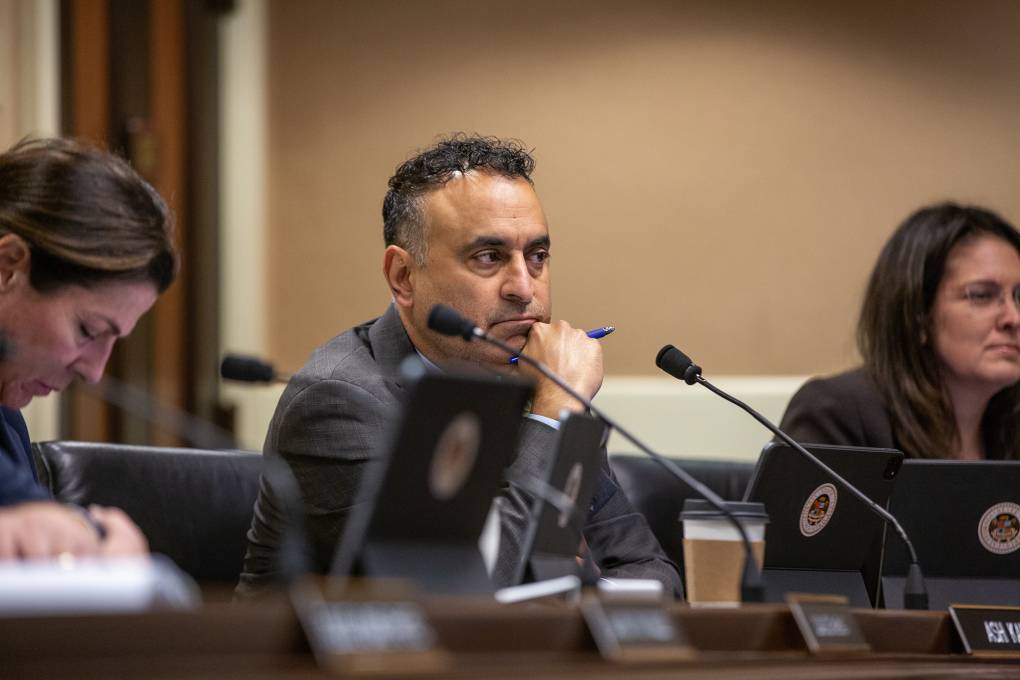
"caption": "Assemblymember Ash Kalra at the state Capitol in Sacramento on June 13, 2023. ",
"credit": "Semantha Norris/CalMatters.",
"altTag": "Two women and a man sit behind desks with microphones and name placards in a room.",
"description": null,
"imgSizes": {
"medium": {
"file": "https://cdn.kqed.org/wp-content/uploads/sites/10/2024/05/061323-ACA-5-Marriage-Equality_SN_CM_009-800x533.jpg",
"width": 800,
"height": 533,
"mimeType": "image/jpeg"
},
"large": {
"file": "https://cdn.kqed.org/wp-content/uploads/sites/10/2024/05/061323-ACA-5-Marriage-Equality_SN_CM_009-1020x680.jpg",
"width": 1020,
"height": 680,
"mimeType": "image/jpeg"
},
"thumbnail": {
"file": "https://cdn.kqed.org/wp-content/uploads/sites/10/2024/05/061323-ACA-5-Marriage-Equality_SN_CM_009-160x107.jpg",
"width": 160,
"height": 107,
"mimeType": "image/jpeg"
},
"1536x1536": {
"file": "https://cdn.kqed.org/wp-content/uploads/sites/10/2024/05/061323-ACA-5-Marriage-Equality_SN_CM_009-1536x1024.jpg",
"width": 1536,
"height": 1024,
"mimeType": "image/jpeg"
},
"post-thumbnail": {
"file": "https://cdn.kqed.org/wp-content/uploads/sites/10/2024/05/061323-ACA-5-Marriage-Equality_SN_CM_009-672x372.jpg",
"width": 672,
"height": 372,
"mimeType": "image/jpeg"
},
"twentyfourteen-full-width": {
"file": "https://cdn.kqed.org/wp-content/uploads/sites/10/2024/05/061323-ACA-5-Marriage-Equality_SN_CM_009-1038x576.jpg",
"width": 1038,
"height": 576,
"mimeType": "image/jpeg"
},
"full-width": {
"file": "https://cdn.kqed.org/wp-content/uploads/sites/10/2024/05/061323-ACA-5-Marriage-Equality_SN_CM_009-1920x1280.jpg",
"width": 1920,
"height": 1280,
"mimeType": "image/jpeg"
},
"kqedFullSize": {
"file": "https://cdn.kqed.org/wp-content/uploads/sites/10/2024/05/061323-ACA-5-Marriage-Equality_SN_CM_009.jpg",
"width": 2000,
"height": 1333
}
},
"isLoading": false,
"fetchFailed": false
},
"news_11988205": {
"type": "attachments",
"id": "news_11988205",
"meta": {
"index": "attachments_1716263798",
"site": "news",
"id": "11988205",
"found": true
},
"title": "CMWageTheft01",
"publishDate": 1717089459,
"status": "inherit",
"parent": 11988204,
"modified": 1717089490,
"caption": "Pizza Hut employees strike in protest of allegations of wage theft and abusive scheduling practices in Los Angeles on Jan. 26, 2024.",
"credit": "Lauren Justice/CalMatters",
"altTag": null,
"description": null,
"imgSizes": {
"medium": {
"file": "https://cdn.kqed.org/wp-content/uploads/sites/10/2024/05/CMWageTheft01-800x533.jpg",
"width": 800,
"height": 533,
"mimeType": "image/jpeg"
},
"large": {
"file": "https://cdn.kqed.org/wp-content/uploads/sites/10/2024/05/CMWageTheft01-1020x680.jpg",
"width": 1020,
"height": 680,
"mimeType": "image/jpeg"
},
"thumbnail": {
"file": "https://cdn.kqed.org/wp-content/uploads/sites/10/2024/05/CMWageTheft01-160x107.jpg",
"width": 160,
"height": 107,
"mimeType": "image/jpeg"
},
"1536x1536": {
"file": "https://cdn.kqed.org/wp-content/uploads/sites/10/2024/05/CMWageTheft01-1536x1024.jpg",
"width": 1536,
"height": 1024,
"mimeType": "image/jpeg"
},
"post-thumbnail": {
"file": "https://cdn.kqed.org/wp-content/uploads/sites/10/2024/05/CMWageTheft01-672x372.jpg",
"width": 672,
"height": 372,
"mimeType": "image/jpeg"
},
"twentyfourteen-full-width": {
"file": "https://cdn.kqed.org/wp-content/uploads/sites/10/2024/05/CMWageTheft01-1038x576.jpg",
"width": 1038,
"height": 576,
"mimeType": "image/jpeg"
},
"full-width": {
"file": "https://cdn.kqed.org/wp-content/uploads/sites/10/2024/05/CMWageTheft01-1920x1280.jpg",
"width": 1920,
"height": 1280,
"mimeType": "image/jpeg"
},
"kqedFullSize": {
"file": "https://cdn.kqed.org/wp-content/uploads/sites/10/2024/05/CMWageTheft01.jpg",
"width": 2000,
"height": 1333
}
},
"isLoading": false,
"fetchFailed": false
},
"news_11988051": {
"type": "attachments",
"id": "news_11988051",
"meta": {
"index": "attachments_1716263798",
"site": "news",
"id": "11988051",
"found": true
},
"title": "11022022-Bail-Bonds-RL-CM-17 copy",
"publishDate": 1717006473,
"status": "inherit",
"parent": 11988049,
"modified": 1717006536,
"caption": "The California Supreme Court has accepted a case that asks whether it is constitutional for judges to set bail at amounts far higher than a defendant can pay.",
"credit": "Rahul Lal/CalMatters",
"altTag": "A neon red sign that reads 'Bail Bonds' inside a window.",
"description": null,
"imgSizes": {
"medium": {
"file": "https://cdn.kqed.org/wp-content/uploads/sites/10/2024/05/11022022-Bail-Bonds-RL-CM-17-copy-800x533.jpg",
"width": 800,
"height": 533,
"mimeType": "image/jpeg"
},
"large": {
"file": "https://cdn.kqed.org/wp-content/uploads/sites/10/2024/05/11022022-Bail-Bonds-RL-CM-17-copy-1020x680.jpg",
"width": 1020,
"height": 680,
"mimeType": "image/jpeg"
},
"thumbnail": {
"file": "https://cdn.kqed.org/wp-content/uploads/sites/10/2024/05/11022022-Bail-Bonds-RL-CM-17-copy-160x107.jpg",
"width": 160,
"height": 107,
"mimeType": "image/jpeg"
},
"1536x1536": {
"file": "https://cdn.kqed.org/wp-content/uploads/sites/10/2024/05/11022022-Bail-Bonds-RL-CM-17-copy-1536x1024.jpg",
"width": 1536,
"height": 1024,
"mimeType": "image/jpeg"
},
"post-thumbnail": {
"file": "https://cdn.kqed.org/wp-content/uploads/sites/10/2024/05/11022022-Bail-Bonds-RL-CM-17-copy-672x372.jpg",
"width": 672,
"height": 372,
"mimeType": "image/jpeg"
},
"twentyfourteen-full-width": {
"file": "https://cdn.kqed.org/wp-content/uploads/sites/10/2024/05/11022022-Bail-Bonds-RL-CM-17-copy-1038x576.jpg",
"width": 1038,
"height": 576,
"mimeType": "image/jpeg"
},
"full-width": {
"file": "https://cdn.kqed.org/wp-content/uploads/sites/10/2024/05/11022022-Bail-Bonds-RL-CM-17-copy-1920x1280.jpg",
"width": 1920,
"height": 1280,
"mimeType": "image/jpeg"
},
"kqedFullSize": {
"file": "https://cdn.kqed.org/wp-content/uploads/sites/10/2024/05/11022022-Bail-Bonds-RL-CM-17-copy.jpg",
"width": 2000,
"height": 1333
}
},
"isLoading": false,
"fetchFailed": false
},
"news_11987883": {
"type": "attachments",
"id": "news_11987883",
"meta": {
"index": "attachments_1716263798",
"site": "news",
"id": "11987883",
"found": true
},
"title": "CMEducation01",
"publishDate": 1716917670,
"status": "inherit",
"parent": 11987878,
"modified": 1716917693,
"caption": "The CSU Long Beach campus on in Long Beach April 24, 2024.",
"credit": "Jules Hotz/CalMatters",
"altTag": null,
"description": null,
"imgSizes": {
"medium": {
"file": "https://cdn.kqed.org/wp-content/uploads/sites/10/2024/05/CMEducation01-800x533.jpg",
"width": 800,
"height": 533,
"mimeType": "image/jpeg"
},
"large": {
"file": "https://cdn.kqed.org/wp-content/uploads/sites/10/2024/05/CMEducation01-1020x680.jpg",
"width": 1020,
"height": 680,
"mimeType": "image/jpeg"
},
"thumbnail": {
"file": "https://cdn.kqed.org/wp-content/uploads/sites/10/2024/05/CMEducation01-160x107.jpg",
"width": 160,
"height": 107,
"mimeType": "image/jpeg"
},
"1536x1536": {
"file": "https://cdn.kqed.org/wp-content/uploads/sites/10/2024/05/CMEducation01-1536x1024.jpg",
"width": 1536,
"height": 1024,
"mimeType": "image/jpeg"
},
"post-thumbnail": {
"file": "https://cdn.kqed.org/wp-content/uploads/sites/10/2024/05/CMEducation01-672x372.jpg",
"width": 672,
"height": 372,
"mimeType": "image/jpeg"
},
"twentyfourteen-full-width": {
"file": "https://cdn.kqed.org/wp-content/uploads/sites/10/2024/05/CMEducation01-1038x576.jpg",
"width": 1038,
"height": 576,
"mimeType": "image/jpeg"
},
"full-width": {
"file": "https://cdn.kqed.org/wp-content/uploads/sites/10/2024/05/CMEducation01-1920x1280.jpg",
"width": 1920,
"height": 1280,
"mimeType": "image/jpeg"
},
"kqedFullSize": {
"file": "https://cdn.kqed.org/wp-content/uploads/sites/10/2024/05/CMEducation01.jpg",
"width": 2000,
"height": 1333
}
},
"isLoading": false,
"fetchFailed": false
},
"news_11987913": {
"type": "attachments",
"id": "news_11987913",
"meta": {
"index": "attachments_1716263798",
"site": "news",
"id": "11987913",
"found": true
},
"title": "The UCLA campus with a pro-Palistinian solidarity encampment",
"publishDate": 1716921911,
"status": "inherit",
"parent": 11987905,
"modified": 1716928025,
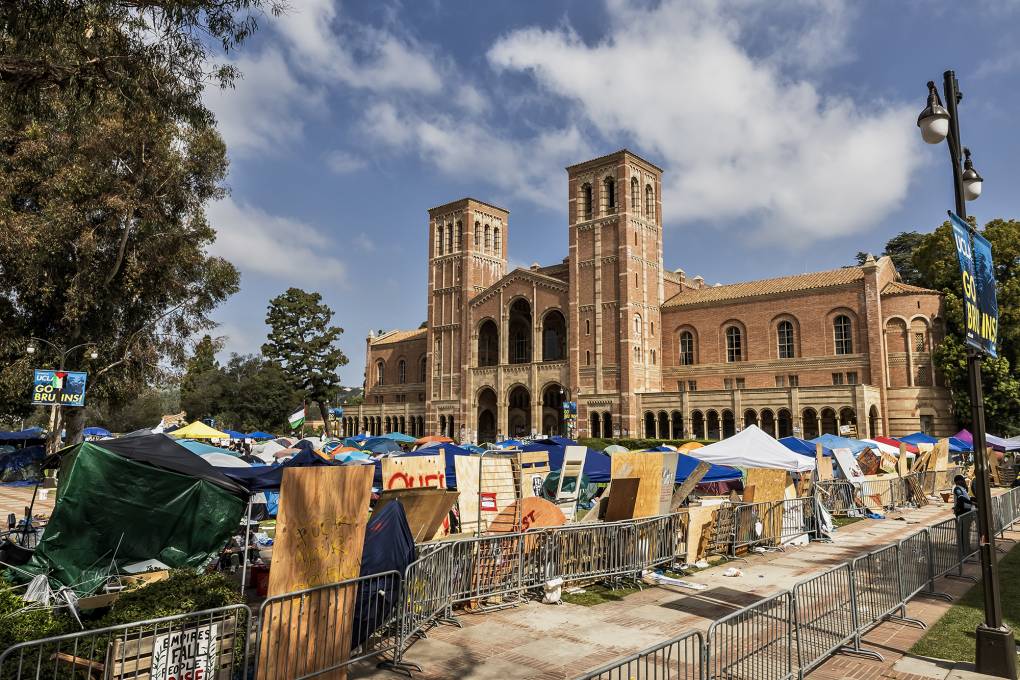
"caption": "A pro-Palestinian encampment at UCLA on May 1, 2024. The encampment was attacked during the night by counter-protesters. Protesters placed new plywood and metal gates around the encampment. ",
"credit": "Ted Soqui/CalMatters",
"altTag": "An encampment with tents and fencing on a college campus.",
"description": null,
"imgSizes": {
"medium": {
"file": "https://cdn.kqed.org/wp-content/uploads/sites/10/2024/05/050124-UCLA-Gaza-Camp-TS-CM-01-800x534.jpg",
"width": 800,
"height": 534,
"mimeType": "image/jpeg"
},
"large": {
"file": "https://cdn.kqed.org/wp-content/uploads/sites/10/2024/05/050124-UCLA-Gaza-Camp-TS-CM-01-1020x680.jpg",
"width": 1020,
"height": 680,
"mimeType": "image/jpeg"
},
"thumbnail": {
"file": "https://cdn.kqed.org/wp-content/uploads/sites/10/2024/05/050124-UCLA-Gaza-Camp-TS-CM-01-160x107.jpg",
"width": 160,
"height": 107,
"mimeType": "image/jpeg"
},
"1536x1536": {
"file": "https://cdn.kqed.org/wp-content/uploads/sites/10/2024/05/050124-UCLA-Gaza-Camp-TS-CM-01-1536x1025.jpg",
"width": 1536,
"height": 1025,
"mimeType": "image/jpeg"
},
"post-thumbnail": {
"file": "https://cdn.kqed.org/wp-content/uploads/sites/10/2024/05/050124-UCLA-Gaza-Camp-TS-CM-01-672x372.jpg",
"width": 672,
"height": 372,
"mimeType": "image/jpeg"
},
"twentyfourteen-full-width": {
"file": "https://cdn.kqed.org/wp-content/uploads/sites/10/2024/05/050124-UCLA-Gaza-Camp-TS-CM-01-1038x576.jpg",
"width": 1038,
"height": 576,
"mimeType": "image/jpeg"
},
"full-width": {
"file": "https://cdn.kqed.org/wp-content/uploads/sites/10/2024/05/050124-UCLA-Gaza-Camp-TS-CM-01-1920x1281.jpg",
"width": 1920,
"height": 1281,
"mimeType": "image/jpeg"
},
"kqedFullSize": {
"file": "https://cdn.kqed.org/wp-content/uploads/sites/10/2024/05/050124-UCLA-Gaza-Camp-TS-CM-01.jpg",
"width": 2000,
"height": 1334
}
},
"isLoading": false,
"fetchFailed": false
},
"news_11987805": {
"type": "attachments",
"id": "news_11987805",
"meta": {
"index": "attachments_1716263798",
"site": "news",
"id": "11987805",
"found": true
},
"title": "European-Coordination_AH_CM_01 copy",
"publishDate": 1716663442,
"status": "inherit",
"parent": 11987803,
"modified": 1716663481,
"caption": null,
"credit": "Illustration by Adriana Heldiz/CalMatters/iStock",
"altTag": null,
"description": null,
"imgSizes": {
"medium": {
"file": "https://cdn.kqed.org/wp-content/uploads/sites/10/2024/05/European-Coordination_AH_CM_01-copy-800x533.jpg",
"width": 800,
"height": 533,
"mimeType": "image/jpeg"
},
"large": {
"file": "https://cdn.kqed.org/wp-content/uploads/sites/10/2024/05/European-Coordination_AH_CM_01-copy-1020x680.jpg",
"width": 1020,
"height": 680,
"mimeType": "image/jpeg"
},
"thumbnail": {
"file": "https://cdn.kqed.org/wp-content/uploads/sites/10/2024/05/European-Coordination_AH_CM_01-copy-160x107.jpg",
"width": 160,
"height": 107,
"mimeType": "image/jpeg"
},
"1536x1536": {
"file": "https://cdn.kqed.org/wp-content/uploads/sites/10/2024/05/European-Coordination_AH_CM_01-copy-1536x1024.jpg",
"width": 1536,
"height": 1024,
"mimeType": "image/jpeg"
},
"post-thumbnail": {
"file": "https://cdn.kqed.org/wp-content/uploads/sites/10/2024/05/European-Coordination_AH_CM_01-copy-672x372.jpg",
"width": 672,
"height": 372,
"mimeType": "image/jpeg"
},
"twentyfourteen-full-width": {
"file": "https://cdn.kqed.org/wp-content/uploads/sites/10/2024/05/European-Coordination_AH_CM_01-copy-1038x576.jpg",
"width": 1038,
"height": 576,
"mimeType": "image/jpeg"
},
"full-width": {
"file": "https://cdn.kqed.org/wp-content/uploads/sites/10/2024/05/European-Coordination_AH_CM_01-copy-1920x1280.jpg",
"width": 1920,
"height": 1280,
"mimeType": "image/jpeg"
},
"kqedFullSize": {
"file": "https://cdn.kqed.org/wp-content/uploads/sites/10/2024/05/European-Coordination_AH_CM_01-copy.jpg",
"width": 2000,
"height": 1333
}
},
"isLoading": false,
"fetchFailed": false
},
"news_11987537": {
"type": "attachments",
"id": "news_11987537",
"meta": {
"index": "attachments_1716263798",
"site": "news",
"id": "11987537",
"found": true
},
"title": "090623_Chico_Homeless_FG_CM_18",
"publishDate": 1716497278,
"status": "inherit",
"parent": 11987494,
"modified": 1716505245,
"caption": "An emergency non-congregate housing site in Chico, Butte County, on Sept. 6, 2023.",
"credit": "Fred Greaves for CalMatters",
"altTag": "Rows of modular tiny houses.",
"description": null,
"imgSizes": {
"medium": {
"file": "https://cdn.kqed.org/wp-content/uploads/sites/10/2024/05/090623_Chico_Homeless_FG_CM_18-800x533.jpg",
"width": 800,
"height": 533,
"mimeType": "image/jpeg"
},
"large": {
"file": "https://cdn.kqed.org/wp-content/uploads/sites/10/2024/05/090623_Chico_Homeless_FG_CM_18-1020x680.jpg",
"width": 1020,
"height": 680,
"mimeType": "image/jpeg"
},
"thumbnail": {
"file": "https://cdn.kqed.org/wp-content/uploads/sites/10/2024/05/090623_Chico_Homeless_FG_CM_18-160x107.jpg",
"width": 160,
"height": 107,
"mimeType": "image/jpeg"
},
"1536x1536": {
"file": "https://cdn.kqed.org/wp-content/uploads/sites/10/2024/05/090623_Chico_Homeless_FG_CM_18-1536x1024.jpg",
"width": 1536,
"height": 1024,
"mimeType": "image/jpeg"
},
"post-thumbnail": {
"file": "https://cdn.kqed.org/wp-content/uploads/sites/10/2024/05/090623_Chico_Homeless_FG_CM_18-672x372.jpg",
"width": 672,
"height": 372,
"mimeType": "image/jpeg"
},
"twentyfourteen-full-width": {
"file": "https://cdn.kqed.org/wp-content/uploads/sites/10/2024/05/090623_Chico_Homeless_FG_CM_18-1038x576.jpg",
"width": 1038,
"height": 576,
"mimeType": "image/jpeg"
},
"full-width": {
"file": "https://cdn.kqed.org/wp-content/uploads/sites/10/2024/05/090623_Chico_Homeless_FG_CM_18-1920x1280.jpg",
"width": 1920,
"height": 1280,
"mimeType": "image/jpeg"
},
"kqedFullSize": {
"file": "https://cdn.kqed.org/wp-content/uploads/sites/10/2024/05/090623_Chico_Homeless_FG_CM_18.jpg",
"width": 2000,
"height": 1333
}
},
"isLoading": false,
"fetchFailed": false
},
"news_11987304": {
"type": "attachments",
"id": "news_11987304",
"meta": {
"index": "attachments_1716263798",
"site": "news",
"id": "11987304",
"found": true
},
"title": "052124_Prop-22_JY_CM_07 copy",
"publishDate": 1716401117,
"status": "inherit",
"parent": 11987299,
"modified": 1776791611,
"caption": "Ride-share driver and SEIU Gig Workers Union member John Mejia (center) speaks during a press conference outside of the Supreme Court of California in San Francisco on May 21, 2024. The state Supreme Court heard oral arguments on Proposition 22, a ballot initiative that ride-share companies, such as Uber and Lyft, to classify drivers as independent contractors. ",
"credit": "Juliana Yamada for CalMatters",
"altTag": null,
"description": null,
"imgSizes": {
"medium": {
"file": "https://cdn.kqed.org/wp-content/uploads/sites/10/2024/05/052124_Prop-22_JY_CM_07-copy-800x533.jpg",
"width": 800,
"height": 533,
"mimeType": "image/jpeg"
},
"large": {
"file": "https://cdn.kqed.org/wp-content/uploads/sites/10/2024/05/052124_Prop-22_JY_CM_07-copy-1020x680.jpg",
"width": 1020,
"height": 680,
"mimeType": "image/jpeg"
},
"thumbnail": {
"file": "https://cdn.kqed.org/wp-content/uploads/sites/10/2024/05/052124_Prop-22_JY_CM_07-copy-160x107.jpg",
"width": 160,
"height": 107,
"mimeType": "image/jpeg"
},
"1536x1536": {
"file": "https://cdn.kqed.org/wp-content/uploads/sites/10/2024/05/052124_Prop-22_JY_CM_07-copy-1536x1024.jpg",
"width": 1536,
"height": 1024,
"mimeType": "image/jpeg"
},
"post-thumbnail": {
"file": "https://cdn.kqed.org/wp-content/uploads/sites/10/2024/05/052124_Prop-22_JY_CM_07-copy-672x372.jpg",
"width": 672,
"height": 372,
"mimeType": "image/jpeg"
},
"twentyfourteen-full-width": {
"file": "https://cdn.kqed.org/wp-content/uploads/sites/10/2024/05/052124_Prop-22_JY_CM_07-copy-1038x576.jpg",
"width": 1038,
"height": 576,
"mimeType": "image/jpeg"
},
"full-width": {
"file": "https://cdn.kqed.org/wp-content/uploads/sites/10/2024/05/052124_Prop-22_JY_CM_07-copy-1920x1280.jpg",
"width": 1920,
"height": 1280,
"mimeType": "image/jpeg"
},
"kqedFullSize": {
"file": "https://cdn.kqed.org/wp-content/uploads/sites/10/2024/05/052124_Prop-22_JY_CM_07-copy.jpg",
"width": 2000,
"height": 1333
}
},
"isLoading": false,
"fetchFailed": false
},
"news_11987219": {
"type": "attachments",
"id": "news_11987219",
"meta": {
"index": "attachments_1716263798",
"site": "news",
"id": "11987219",
"found": true
},
"title": "CMLobbyists01",
"publishDate": 1716334061,
"status": "inherit",
"parent": 11987215,
"modified": 1716334332,
"caption": "The floor of the Assembly during session at the state Capitol in Sacramento on April 29, 2024. ",
"credit": "Miguel Gutierrez Jr./CalMatters",
"altTag": null,
"description": null,
"imgSizes": {
"medium": {
"file": "https://cdn.kqed.org/wp-content/uploads/sites/10/2024/05/CMLobbyists01-800x533.jpg",
"width": 800,
"height": 533,
"mimeType": "image/jpeg"
},
"large": {
"file": "https://cdn.kqed.org/wp-content/uploads/sites/10/2024/05/CMLobbyists01-1020x680.jpg",
"width": 1020,
"height": 680,
"mimeType": "image/jpeg"
},
"thumbnail": {
"file": "https://cdn.kqed.org/wp-content/uploads/sites/10/2024/05/CMLobbyists01-160x107.jpg",
"width": 160,
"height": 107,
"mimeType": "image/jpeg"
},
"1536x1536": {
"file": "https://cdn.kqed.org/wp-content/uploads/sites/10/2024/05/CMLobbyists01-1536x1024.jpg",
"width": 1536,
"height": 1024,
"mimeType": "image/jpeg"
},
"post-thumbnail": {
"file": "https://cdn.kqed.org/wp-content/uploads/sites/10/2024/05/CMLobbyists01-672x372.jpg",
"width": 672,
"height": 372,
"mimeType": "image/jpeg"
},
"twentyfourteen-full-width": {
"file": "https://cdn.kqed.org/wp-content/uploads/sites/10/2024/05/CMLobbyists01-1038x576.jpg",
"width": 1038,
"height": 576,
"mimeType": "image/jpeg"
},
"full-width": {
"file": "https://cdn.kqed.org/wp-content/uploads/sites/10/2024/05/CMLobbyists01-1920x1280.jpg",
"width": 1920,
"height": 1280,
"mimeType": "image/jpeg"
},
"kqedFullSize": {
"file": "https://cdn.kqed.org/wp-content/uploads/sites/10/2024/05/CMLobbyists01.jpg",
"width": 2000,
"height": 1333
}
},
"isLoading": false,
"fetchFailed": false
},
"news_11986900": {
"type": "attachments",
"id": "news_11986900",
"meta": {
"index": "attachments_1716263798",
"site": "news",
"id": "11986900",
"found": true
},
"parent": 11986893,
"imgSizes": {
"twentyfourteen-full-width": {
"file": "https://cdn.kqed.org/wp-content/uploads/sites/10/2024/05/051524-Budget-Rally-RL-CM-12-1038x576.jpg",
"width": 1038,
"mimeType": "image/jpeg",
"height": 576
},
"thumbnail": {
"file": "https://cdn.kqed.org/wp-content/uploads/sites/10/2024/05/051524-Budget-Rally-RL-CM-12-160x107.jpg",
"width": 160,
"mimeType": "image/jpeg",
"height": 107
},
"post-thumbnail": {
"file": "https://cdn.kqed.org/wp-content/uploads/sites/10/2024/05/051524-Budget-Rally-RL-CM-12-672x372.jpg",
"width": 672,
"mimeType": "image/jpeg",
"height": 372
},
"kqedFullSize": {
"file": "https://cdn.kqed.org/wp-content/uploads/sites/10/2024/05/051524-Budget-Rally-RL-CM-12.jpg",
"width": 2000,
"height": 1333
},
"large": {
"file": "https://cdn.kqed.org/wp-content/uploads/sites/10/2024/05/051524-Budget-Rally-RL-CM-12-1020x680.jpg",
"width": 1020,
"mimeType": "image/jpeg",
"height": 680
},
"1536x1536": {
"file": "https://cdn.kqed.org/wp-content/uploads/sites/10/2024/05/051524-Budget-Rally-RL-CM-12-1536x1024.jpg",
"width": 1536,
"mimeType": "image/jpeg",
"height": 1024
},
"full-width": {
"file": "https://cdn.kqed.org/wp-content/uploads/sites/10/2024/05/051524-Budget-Rally-RL-CM-12-1920x1280.jpg",
"width": 1920,
"mimeType": "image/jpeg",
"height": 1280
},
"medium": {
"file": "https://cdn.kqed.org/wp-content/uploads/sites/10/2024/05/051524-Budget-Rally-RL-CM-12-800x533.jpg",
"width": 800,
"mimeType": "image/jpeg",
"height": 533
}
},
"publishDate": 1716224095,
"modified": 1716224342,
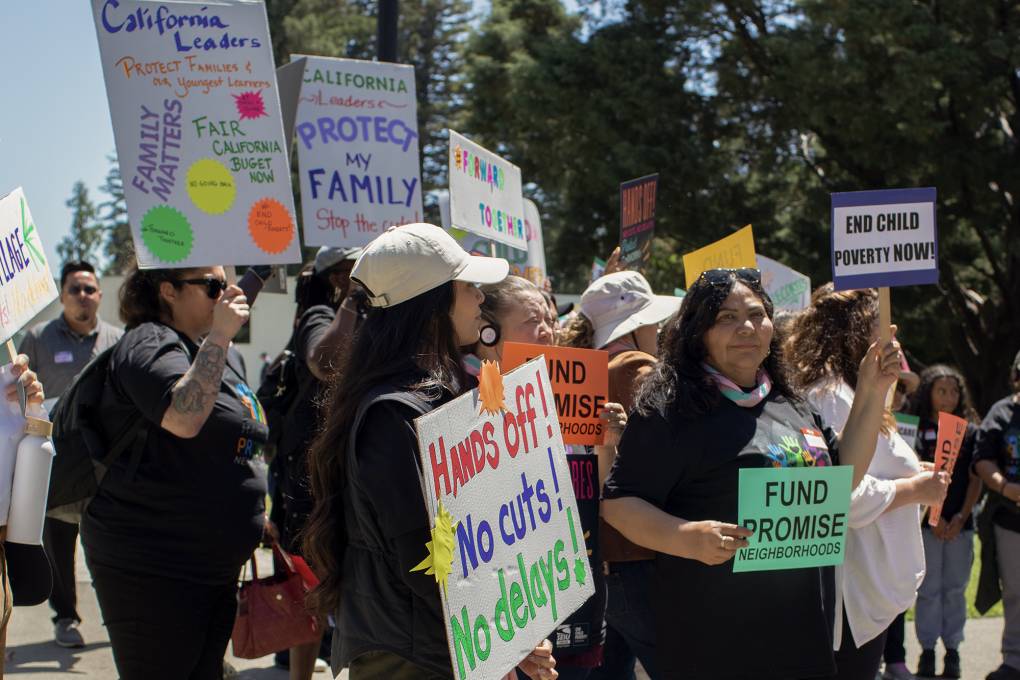
"caption": "Service Employees International Union California and youth advocates rallied at the state Capitol in Sacramento to protest proposed budget cuts on May 15, 2024.",
"description": null,
"title": "051524-Budget-Rally-RL-CM-12",
"credit": "Renee Lopez/CalMatters",
"status": "inherit",
"altTag": "Women wearing dark clothing and holding signs stand together outside.",
"isLoading": false,
"fetchFailed": false
},
"news_11986904": {
"type": "attachments",
"id": "news_11986904",
"meta": {
"index": "attachments_1716263798",
"site": "news",
"id": "11986904",
"found": true
},
"parent": 11986894,
"imgSizes": {
"twentyfourteen-full-width": {
"file": "https://cdn.kqed.org/wp-content/uploads/sites/10/2024/05/CMMeasure01-1038x576.jpg",
"width": 1038,
"mimeType": "image/jpeg",
"height": 576
},
"thumbnail": {
"file": "https://cdn.kqed.org/wp-content/uploads/sites/10/2024/05/CMMeasure01-160x107.jpg",
"width": 160,
"mimeType": "image/jpeg",
"height": 107
},
"post-thumbnail": {
"file": "https://cdn.kqed.org/wp-content/uploads/sites/10/2024/05/CMMeasure01-672x372.jpg",
"width": 672,
"mimeType": "image/jpeg",
"height": 372
},
"kqedFullSize": {
"file": "https://cdn.kqed.org/wp-content/uploads/sites/10/2024/05/CMMeasure01.jpg",
"width": 2000,
"height": 1333
},
"large": {
"file": "https://cdn.kqed.org/wp-content/uploads/sites/10/2024/05/CMMeasure01-1020x680.jpg",
"width": 1020,
"mimeType": "image/jpeg",
"height": 680
},
"1536x1536": {
"file": "https://cdn.kqed.org/wp-content/uploads/sites/10/2024/05/CMMeasure01-1536x1024.jpg",
"width": 1536,
"mimeType": "image/jpeg",
"height": 1024
},
"full-width": {
"file": "https://cdn.kqed.org/wp-content/uploads/sites/10/2024/05/CMMeasure01-1920x1280.jpg",
"width": 1920,
"mimeType": "image/jpeg",
"height": 1280
},
"medium": {
"file": "https://cdn.kqed.org/wp-content/uploads/sites/10/2024/05/CMMeasure01-800x533.jpg",
"width": 800,
"mimeType": "image/jpeg",
"height": 533
}
},
"publishDate": 1716225186,
"modified": 1716225220,
"caption": "Two tents set up across from Roeding Park in a small homeless encampment in Fresno on Feb. 10, 2022.",
"description": null,
"title": "CMMeasure01",
"credit": "Larry Valenzuela/CalMatters",
"status": "inherit",
"altTag": null,
"isLoading": false,
"fetchFailed": false
},
"news_11986873": {
"type": "attachments",
"id": "news_11986873",
"meta": {
"index": "attachments_1716263798",
"site": "news",
"id": "11986873",
"found": true
},
"parent": 11986871,
"imgSizes": {
"twentyfourteen-full-width": {
"file": "https://cdn.kqed.org/wp-content/uploads/sites/10/2024/05/050718-UC-San-Francisco-Parnassus-AP-CM-01-copy-1038x576.jpg",
"width": 1038,
"mimeType": "image/jpeg",
"height": 576
},
"thumbnail": {
"file": "https://cdn.kqed.org/wp-content/uploads/sites/10/2024/05/050718-UC-San-Francisco-Parnassus-AP-CM-01-copy-160x107.jpg",
"width": 160,
"mimeType": "image/jpeg",
"height": 107
},
"post-thumbnail": {
"file": "https://cdn.kqed.org/wp-content/uploads/sites/10/2024/05/050718-UC-San-Francisco-Parnassus-AP-CM-01-copy-672x372.jpg",
"width": 672,
"mimeType": "image/jpeg",
"height": 372
},
"kqedFullSize": {
"file": "https://cdn.kqed.org/wp-content/uploads/sites/10/2024/05/050718-UC-San-Francisco-Parnassus-AP-CM-01-copy.jpg",
"width": 2000,
"height": 1333
},
"large": {
"file": "https://cdn.kqed.org/wp-content/uploads/sites/10/2024/05/050718-UC-San-Francisco-Parnassus-AP-CM-01-copy-1020x680.jpg",
"width": 1020,
"mimeType": "image/jpeg",
"height": 680
},
"1536x1536": {
"file": "https://cdn.kqed.org/wp-content/uploads/sites/10/2024/05/050718-UC-San-Francisco-Parnassus-AP-CM-01-copy-1536x1024.jpg",
"width": 1536,
"mimeType": "image/jpeg",
"height": 1024
},
"full-width": {
"file": "https://cdn.kqed.org/wp-content/uploads/sites/10/2024/05/050718-UC-San-Francisco-Parnassus-AP-CM-01-copy-1920x1280.jpg",
"width": 1920,
"mimeType": "image/jpeg",
"height": 1280
},
"medium": {
"file": "https://cdn.kqed.org/wp-content/uploads/sites/10/2024/05/050718-UC-San-Francisco-Parnassus-AP-CM-01-copy-800x533.jpg",
"width": 800,
"mimeType": "image/jpeg",
"height": 533
}
},
"publishDate": 1716080250,
"modified": 1716080300,
"caption": "Gov. Gavin Newsom wants to postpone a minimum wage increase for California health care workers that is scheduled to take effect in June. Some employers have already begun raising pay. Here, striking workers march outside of the University of California San Francisco Parnassus campus on May 7, 2018.",
"description": null,
"title": "050718-UC-San-Francisco-Parnassus-AP-CM-01 copy",
"credit": "Marcio Jose Sanchez/AP Photo",
"status": "inherit",
"altTag": null,
"isLoading": false,
"fetchFailed": false
}
},
"audioPlayerReducer": {
"postId": "stream_live",
"isPaused": true,
"isPlaying": false,
"pfsActive": false,
"pledgeModalIsOpen": true,
"playerDrawerIsOpen": false,
"liveAudioPlayStartedAt": 0,
"liveAudioPlayContext": ""
},
"authorsReducer": {
"byline_news_11988253": {
"type": "authors",
"id": "byline_news_11988253",
"meta": {
"override": true
},
"slug": "byline_news_11988253",
"name": "Ryan Sabalow, CalMatters",
"isLoading": false
},
"byline_news_11988204": {
"type": "authors",
"id": "byline_news_11988204",
"meta": {
"override": true
},
"slug": "byline_news_11988204",
"name": "Jeanne Kuang, CalMatters",
"isLoading": false
},
"byline_news_11988049": {
"type": "authors",
"id": "byline_news_11988049",
"meta": {
"override": true
},
"slug": "byline_news_11988049",
"name": "\u003ca href=\"https://calmatters.org/author/nigelduara/\">Nigel Duara\u003c/a>",
"isLoading": false
},
"byline_news_11987878": {
"type": "authors",
"id": "byline_news_11987878",
"meta": {
"override": true
},
"slug": "byline_news_11987878",
"name": "Mikhail Zinshteyn, CalMatters",
"isLoading": false
},
"byline_news_11987905": {
"type": "authors",
"id": "byline_news_11987905",
"meta": {
"override": true
},
"slug": "byline_news_11987905",
"name": "Mikhail Zinshteyn, CalMatters",
"isLoading": false
},
"byline_news_11987803": {
"type": "authors",
"id": "byline_news_11987803",
"meta": {
"override": true
},
"slug": "byline_news_11987803",
"name": "\u003ca href=\"https://calmatters.org/author/khari-johnson/\">Khari Johnson\u003c/a>, CalMatters",
"isLoading": false
},
"byline_news_11987494": {
"type": "authors",
"id": "byline_news_11987494",
"meta": {
"override": true
},
"slug": "byline_news_11987494",
"name": "\u003ca href=\"https://calmatters.org/author/marisa-kendall/\">Marisa Kendall\u003c/a>\u003cbr>CalMatters",
"isLoading": false
},
"byline_news_11987299": {
"type": "authors",
"id": "byline_news_11987299",
"meta": {
"override": true
},
"slug": "byline_news_11987299",
"name": "\u003ca href=\"https://calmatters.org/author/levi-sumagaysay/\">Levi Sumagaysay\u003c/a>",
"isLoading": false
},
"byline_news_11987215": {
"type": "authors",
"id": "byline_news_11987215",
"meta": {
"override": true
},
"slug": "byline_news_11987215",
"name": "Jeremia Kimelman, CalMatters ",
"isLoading": false
},
"byline_news_11986893": {
"type": "authors",
"id": "byline_news_11986893",
"meta": {
"override": true
},
"slug": "byline_news_11986893",
"name": "Sameea Kamal, CalMatters",
"isLoading": false
},
"byline_news_11986894": {
"type": "authors",
"id": "byline_news_11986894",
"meta": {
"override": true
},
"slug": "byline_news_11986894",
"name": "Marisa Kendall and Yue Stella Yu, CalMatters",
"isLoading": false
},
"byline_news_11986871": {
"type": "authors",
"id": "byline_news_11986871",
"meta": {
"override": true
},
"slug": "byline_news_11986871",
"name": "\u003ca href=\"https://calmatters.org/author/anaibarra/\">Ana B. Ibarra\u003c/a>",
"isLoading": false
}
},
"pagesReducer": {
"news_affiliate_calmatters": {
"type": "terms",
"id": "news_18481",
"meta": {
"index": "terms_1716263798",
"site": "news",
"id": "18481",
"score": 15.355862
},
"featImg": null,
"name": "CALmatters",
"description": null,
"taxonomy": "affiliate",
"headData": {
"twImgId": null,
"twTitle": null,
"ogTitle": null,
"ogImgId": null,
"twDescription": null,
"description": null,
"title": "CALmatters Archives | KQED Arts",
"ogDescription": null
},
"ttid": 18515,
"slug": "calmatters",
"isLoading": false,
"title": "CALmatters",
"pageMeta": {
"site": "news",
"WpPageTemplate": "page-topic-editorial",
"currentPage": 31
},
"blocks": [
{
"blockName": "kqed/post-list",
"attrs": {
"layout": "cardArticle2",
"query": "posts/news?affiliate=calmatters",
"seeMore": false,
"paginated": true,
"page": 31
}
},
{
"blockName": "kqed/ad"
}
]
}
},
"pfsSessionReducer": {},
"postsReducer": {
"stream_live": {
"type": "live",
"id": "stream_live",
"audioUrl": "https://streams.kqed.org/kqedradio",
"title": "Live Stream",
"excerpt": "Live Stream information currently unavailable.",
"link": "/radio",
"featImg": "",
"label": {
"name": "KQED Live",
"link": "/"
}
},
"stream_kqedNewscast": {
"type": "posts",
"id": "stream_kqedNewscast",
"audioUrl": "https://www.kqed.org/.stream/anon/radio/RDnews/newscast.mp3?_=1",
"title": "KQED Newscast",
"featImg": "",
"label": {
"name": "88.5 FM",
"link": "/"
}
},
"news_11988253": {
"type": "posts",
"id": "news_11988253",
"meta": {
"index": "posts_1716263798",
"site": "news",
"id": "11988253",
"score": null,
"sort": [
1717178430000
]
},
"guestAuthors": [],
"slug": "california-assembly-divided-as-controversial-shoplifting-bill-secures-narrow-victory",
"title": "California Assembly Divided as Controversial Shoplifting Bill Secures Narrow Victory",
"publishDate": 1717178430,
"format": "standard",
"headTitle": "California Assembly Divided as Controversial Shoplifting Bill Secures Narrow Victory | KQED",
"labelTerm": {
"term": 18481,
"site": "news"
},
"content": "\u003cp>Assemblymember \u003ca href=\"https://digitaldemocracy.calmatters.org/legislators/ash-kalra-100938\">Ash Kalra\u003c/a> did something exceptional last week.\u003c/p>\n\u003cp>He was the only legislator to vote “no” on a controversial piece of legislation, while nearly half of the 80 members in the state Assembly — and a majority of the Democrats — did not vote.\u003c/p>\n\u003cp>The bill, which would make it easier to arrest shoplifters, is a recent example of a pattern CalMatters \u003ca href=\"https://calmatters.org/digital-democracy/2024/04/california-democrats-no-votes/\">revealed in April\u003c/a> with legislators dodging votes to avoid offending the bill’s supporters or eliminating a record of their opposition on controversial topics.\u003c/p>\n\u003cp>\u003ca href=\"https://digitaldemocracy.calmatters.org/bills/ca_202320240ab1990\">Assembly Bill 1990\u003c/a> passed the Assembly 44–1 last week with 35 lawmakers not casting a vote, including 32 of the 62 Democrats and the Assembly speaker, Robert Rivas. Some of those not voting had excused absences, but the Legislature’s online record does not distinguish between an absence, an abstention or not voting.\u003c/p>\n\u003cp>[ad fullwidth]\u003c/p>\n\u003cp>The bill would allow police to arrest for shoplifting without a warrant, even if they did not witness the crime. Los Angeles \u003ca href=\"https://digitaldemocracy.calmatters.org/legislators/wendy-carrillo-144588\">Assemblymember Wendy Carillo\u003c/a>, who authored the bill with five Democratic and two Republican coauthors, said it is “in response to the \u003ca href=\"https://digitaldemocracy.calmatters.org/hearings/257760?t=1500&f=4c57845c6abf19d3cc28364cfc28ecb2\">alarming escalation of organized retail theft\u003c/a>,” which has become a \u003ca href=\"https://calmatters.org/newsletter/gavin-newsom-climate-health-homelessness/\">hot-button political issue\u003c/a>.\u003c/p>\n\u003cp>But progressive Democrats, leery of increasing incarceration rates for minor offenses, were uncomfortable with the bill.\u003c/p>\n\u003cp>“Let’s be clear: AB 1990 will not stop retail theft,” Assemblymember \u003ca href=\"https://digitaldemocracy.calmatters.org/legislators/tina-mckinnor-35053\">Tina McKinnor\u003c/a>, a Democrat from Inglewood, \u003ca href=\"https://digitaldemocracy.calmatters.org/hearings/258003?t=432&f=b5127361b557aa9ab030737c51631ae7\">told her colleagues\u003c/a>. “AB 1990 will increase the unnecessary harassment, detention, arrest and mass incarceration of Black and brown Californians.”\u003c/p>\n\u003cp>\u003ca href=\"https://digitaldemocracy.calmatters.org/hearings/258003?t=549&f=b5127361b557aa9ab030737c51631ae7\">She concluded her speech\u003c/a>: “I am asking all of you to please vote ‘no’ on AB 1990.”\u003c/p>\n\u003cp>McKinnor, however, did not vote on the bill.\u003c/p>\n\u003cp>Her office did not respond to CalMatters’ request for an explanation about why she did not vote despite her clear opposition.\u003c/p>\n\u003cp>Kalra, of San Jose, also did not respond to a request from CalMatters to explain why he cast the lone “no” vote.\u003c/p>\n\u003cp>But Kalra has been a longtime champion of progressive causes. He’s a former deputy public defender and the former chair of the Legislature’s \u003ca href=\"https://www.assembly.ca.gov/offices-caucuses/legislative-progressive-caucus\">Progressive Caucus\u003c/a>. He has advocated for legislation that seeks to end \u003ca href=\"https://leginfo.legislature.ca.gov/faces/billNavClient.xhtml?bill_id=201920200AB2542\">systematic racism in the justice system\u003c/a>.\u003c/p>\n\u003cp>For a time, it seemed Kalra would not be the lone Democrat to vote “no” on AB 1990.\u003c/p>\n\u003cp>Fellow Democratic Assemblymember \u003ca href=\"https://digitaldemocracy.calmatters.org/legislators/rick-chavez-zbur-165429\">Rick Chavez Zbur\u003c/a> of Los Angeles was also listed as voting “no,” according \u003ca href=\"https://digitaldemocracy.calmatters.org/hearings/258003?t=845&f=b5127361b557aa9ab030737c51631ae7\">to a video of the voting roll call\u003c/a> captured by CalMatters’ \u003ca href=\"https://digitaldemocracy.calmatters.org/\">Digital Democracy database\u003c/a>.\u003c/p>\n\u003cp>But Zbur, who chairs the \u003ca href=\"https://a51.asmdc.org/press-releases/20240524-zbur-bill-eliminate-barriers-home-supportive-services-ihss-advances-senate\">Assembly Democratic Caucus\u003c/a>, changed his vote after the bill passed so that he would be formally listed as not voting. In the Assembly, members can change their vote on a bill after a hearing has concluded, as long as it doesn’t change the final outcome.\u003c/p>\n\u003cp>Asked to explain why he changed his vote, his spokesperson, Vienna Montague, said in an email that Zbur “does not have a comment at this time.”\u003c/p>\n\u003cp>While AB 1990 survived to advance to the Senate, despite so many lawmakers not voting, other bills haven’t fared as well.\u003c/p>\n\u003cp>[aside postID=\"news_11987415,news_11982393,news_11980483\" label=\"Related Stories\"]Last year, at least 15 bills died due to lack of votes instead of lawmakers voting “no” on them. So far this year, the \u003ca href=\"https://digitaldemocracy.calmatters.org/\">Digital Democracy\u003c/a> database indicates at least 17 bills have died because lawmakers declined to vote.\u003c/p>\n\u003cp>Meanwhile, Senate and Assembly leaders have repeatedly refused to answer CalMatters’ questions about whether the Legislature’s voting rules should change.\u003c/p>\n\u003cp>Politicians may think not voting helps their political career in the long run since they believe it’ll be more difficult for someone to use a controversial “no” vote against them in a campaign ad, said \u003ca href=\"https://polisci.ucsd.edu/people/faculty/faculty-directory/currently-active-faculty/kousser-profile.html\">Thad Kousser\u003c/a>, a former California legislative staffer who’s now a political science professor at UC San Diego. But he said that’s shortsighted. He said any savvy political operative can just as easily say they “failed to support this bill” in an ad.\u003c/p>\n\u003cp>Kousser said if lawmakers really do have strong feelings against a bill, they’re better off voting “no.”\u003c/p>\n\u003cp>“Politicians’ political interests are probably best served by taking a stand that best fits their values and explaining that to voters,” Kousser said.\u003c/p>\n\u003cp>Not voting, he said, is “just another way of saying, ‘I didn’t represent you on this bill.’ ”\u003c/p>\n\u003cp>\u003c/p>\n",
"blocks": [],
"excerpt": "Only one legislator in the California Assembly voted against a controversial shoplifting bill, while dozens of progressive lawmakers declined to vote.",
"status": "publish",
"parent": 0,
"modified": 1717265717,
"stats": {
"hasAudio": false,
"hasVideo": false,
"hasChartOrMap": false,
"iframeSrcs": [],
"hasGoogleForm": false,
"hasGallery": false,
"hasHearkenModule": false,
"hasPolis": false,
"paragraphCount": 25,
"wordCount": 769
},
"headData": {
"title": "California Assembly Divided as Controversial Shoplifting Bill Secures Narrow Victory | KQED",
"description": "Only one legislator in the California Assembly voted against a controversial shoplifting bill, while dozens of progressive lawmakers declined to vote.",
"ogTitle": "",
"ogDescription": "",
"ogImgId": "",
"twTitle": "",
"twDescription": "",
"twImgId": "",
"schema": {
"@context": "https://schema.org",
"@type": "NewsArticle",
"headline": "California Assembly Divided as Controversial Shoplifting Bill Secures Narrow Victory",
"datePublished": "2024-05-31T11:00:30-07:00",
"dateModified": "2024-06-01T11:15:17-07:00",
"image": "https://cdn.kqed.org/wp-content/uploads/2020/02/KQED-OG-Image@1x.png",
"isAccessibleForFree": "True",
"publisher": {
"@type": "NewsMediaOrganization",
"@id": "https://www.kqed.org/#organization",
"name": "KQED",
"logo": "https://cdn.kqed.org/wp-content/uploads/2020/02/KQED-OG-Image@1x.png",
"url": "https://www.kqed.org",
"sameAs": [
"https://www.facebook.com/KQED",
"https://twitter.com/KQED",
"https://www.instagram.com/kqed/",
"https://www.tiktok.com/@kqedofficial",
"https://www.linkedin.com/company/kqed",
"https://www.youtube.com/channel/UCeC0IOo7i1P_61zVUWbJ4nw"
]
}
}
},
"sticky": false,
"nprByline": "Ryan Sabalow, CalMatters",
"nprStoryId": "kqed-11988253",
"excludeFromSiteSearch": "Include",
"showOnAuthorArchivePages": "No",
"articleAge": "0",
"path": "/news/11988253/california-assembly-divided-as-controversial-shoplifting-bill-secures-narrow-victory",
"audioTrackLength": null,
"parsedContent": [
{
"type": "contentString",
"content": "\u003cdiv class=\"post-body\">\u003cp>\u003cp>Assemblymember \u003ca href=\"https://digitaldemocracy.calmatters.org/legislators/ash-kalra-100938\">Ash Kalra\u003c/a> did something exceptional last week.\u003c/p>\n\u003cp>He was the only legislator to vote “no” on a controversial piece of legislation, while nearly half of the 80 members in the state Assembly — and a majority of the Democrats — did not vote.\u003c/p>\n\u003cp>The bill, which would make it easier to arrest shoplifters, is a recent example of a pattern CalMatters \u003ca href=\"https://calmatters.org/digital-democracy/2024/04/california-democrats-no-votes/\">revealed in April\u003c/a> with legislators dodging votes to avoid offending the bill’s supporters or eliminating a record of their opposition on controversial topics.\u003c/p>\n\u003cp>\u003ca href=\"https://digitaldemocracy.calmatters.org/bills/ca_202320240ab1990\">Assembly Bill 1990\u003c/a> passed the Assembly 44–1 last week with 35 lawmakers not casting a vote, including 32 of the 62 Democrats and the Assembly speaker, Robert Rivas. Some of those not voting had excused absences, but the Legislature’s online record does not distinguish between an absence, an abstention or not voting.\u003c/p>\n\u003cp>\u003c/p>\u003c/div>",
"attributes": {
"named": {},
"numeric": []
}
},
{
"type": "component",
"content": "",
"name": "ad",
"attributes": {
"named": {
"label": "fullwidth"
},
"numeric": [
"fullwidth"
]
}
},
{
"type": "contentString",
"content": "\u003cdiv class=\"post-body\">\u003cp>\u003c/p>\n\u003cp>The bill would allow police to arrest for shoplifting without a warrant, even if they did not witness the crime. Los Angeles \u003ca href=\"https://digitaldemocracy.calmatters.org/legislators/wendy-carrillo-144588\">Assemblymember Wendy Carillo\u003c/a>, who authored the bill with five Democratic and two Republican coauthors, said it is “in response to the \u003ca href=\"https://digitaldemocracy.calmatters.org/hearings/257760?t=1500&f=4c57845c6abf19d3cc28364cfc28ecb2\">alarming escalation of organized retail theft\u003c/a>,” which has become a \u003ca href=\"https://calmatters.org/newsletter/gavin-newsom-climate-health-homelessness/\">hot-button political issue\u003c/a>.\u003c/p>\n\u003cp>But progressive Democrats, leery of increasing incarceration rates for minor offenses, were uncomfortable with the bill.\u003c/p>\n\u003cp>“Let’s be clear: AB 1990 will not stop retail theft,” Assemblymember \u003ca href=\"https://digitaldemocracy.calmatters.org/legislators/tina-mckinnor-35053\">Tina McKinnor\u003c/a>, a Democrat from Inglewood, \u003ca href=\"https://digitaldemocracy.calmatters.org/hearings/258003?t=432&f=b5127361b557aa9ab030737c51631ae7\">told her colleagues\u003c/a>. “AB 1990 will increase the unnecessary harassment, detention, arrest and mass incarceration of Black and brown Californians.”\u003c/p>\n\u003cp>\u003ca href=\"https://digitaldemocracy.calmatters.org/hearings/258003?t=549&f=b5127361b557aa9ab030737c51631ae7\">She concluded her speech\u003c/a>: “I am asking all of you to please vote ‘no’ on AB 1990.”\u003c/p>\n\u003cp>McKinnor, however, did not vote on the bill.\u003c/p>\n\u003cp>Her office did not respond to CalMatters’ request for an explanation about why she did not vote despite her clear opposition.\u003c/p>\n\u003cp>Kalra, of San Jose, also did not respond to a request from CalMatters to explain why he cast the lone “no” vote.\u003c/p>\n\u003cp>But Kalra has been a longtime champion of progressive causes. He’s a former deputy public defender and the former chair of the Legislature’s \u003ca href=\"https://www.assembly.ca.gov/offices-caucuses/legislative-progressive-caucus\">Progressive Caucus\u003c/a>. He has advocated for legislation that seeks to end \u003ca href=\"https://leginfo.legislature.ca.gov/faces/billNavClient.xhtml?bill_id=201920200AB2542\">systematic racism in the justice system\u003c/a>.\u003c/p>\n\u003cp>For a time, it seemed Kalra would not be the lone Democrat to vote “no” on AB 1990.\u003c/p>\n\u003cp>Fellow Democratic Assemblymember \u003ca href=\"https://digitaldemocracy.calmatters.org/legislators/rick-chavez-zbur-165429\">Rick Chavez Zbur\u003c/a> of Los Angeles was also listed as voting “no,” according \u003ca href=\"https://digitaldemocracy.calmatters.org/hearings/258003?t=845&f=b5127361b557aa9ab030737c51631ae7\">to a video of the voting roll call\u003c/a> captured by CalMatters’ \u003ca href=\"https://digitaldemocracy.calmatters.org/\">Digital Democracy database\u003c/a>.\u003c/p>\n\u003cp>But Zbur, who chairs the \u003ca href=\"https://a51.asmdc.org/press-releases/20240524-zbur-bill-eliminate-barriers-home-supportive-services-ihss-advances-senate\">Assembly Democratic Caucus\u003c/a>, changed his vote after the bill passed so that he would be formally listed as not voting. In the Assembly, members can change their vote on a bill after a hearing has concluded, as long as it doesn’t change the final outcome.\u003c/p>\n\u003cp>Asked to explain why he changed his vote, his spokesperson, Vienna Montague, said in an email that Zbur “does not have a comment at this time.”\u003c/p>\n\u003cp>While AB 1990 survived to advance to the Senate, despite so many lawmakers not voting, other bills haven’t fared as well.\u003c/p>\n\u003cp>\u003c/p>\u003c/div>",
"attributes": {
"named": {},
"numeric": []
}
},
{
"type": "component",
"content": "",
"name": "aside",
"attributes": {
"named": {
"postid": "news_11987415,news_11982393,news_11980483",
"label": "Related Stories "
},
"numeric": []
}
},
{
"type": "contentString",
"content": "\u003cdiv class=\"post-body\">\u003cp>Last year, at least 15 bills died due to lack of votes instead of lawmakers voting “no” on them. So far this year, the \u003ca href=\"https://digitaldemocracy.calmatters.org/\">Digital Democracy\u003c/a> database indicates at least 17 bills have died because lawmakers declined to vote.\u003c/p>\n\u003cp>Meanwhile, Senate and Assembly leaders have repeatedly refused to answer CalMatters’ questions about whether the Legislature’s voting rules should change.\u003c/p>\n\u003cp>Politicians may think not voting helps their political career in the long run since they believe it’ll be more difficult for someone to use a controversial “no” vote against them in a campaign ad, said \u003ca href=\"https://polisci.ucsd.edu/people/faculty/faculty-directory/currently-active-faculty/kousser-profile.html\">Thad Kousser\u003c/a>, a former California legislative staffer who’s now a political science professor at UC San Diego. But he said that’s shortsighted. He said any savvy political operative can just as easily say they “failed to support this bill” in an ad.\u003c/p>\n\u003cp>Kousser said if lawmakers really do have strong feelings against a bill, they’re better off voting “no.”\u003c/p>\n\u003cp>“Politicians’ political interests are probably best served by taking a stand that best fits their values and explaining that to voters,” Kousser said.\u003c/p>\n\u003cp>Not voting, he said, is “just another way of saying, ‘I didn’t represent you on this bill.’ ”\u003c/p>\n\u003cp>\u003c/p>\n\u003c/div>\u003c/p>",
"attributes": {
"named": {},
"numeric": []
}
}
],
"link": "/news/11988253/california-assembly-divided-as-controversial-shoplifting-bill-secures-narrow-victory",
"authors": [
"byline_news_11988253"
],
"categories": [
"news_8",
"news_13"
],
"tags": [
"news_2842",
"news_2960",
"news_4500",
"news_2027"
],
"affiliates": [
"news_18481"
],
"featImg": "news_11988260",
"label": "news_18481"
},
"news_11988204": {
"type": "posts",
"id": "news_11988204",
"meta": {
"index": "posts_1716263798",
"site": "news",
"id": "11988204",
"score": null,
"sort": [
1717100863000
]
},
"guestAuthors": [],
"slug": "mounting-backlog-of-wage-theft-claims-in-california-due-to-severe-understaffing-and-poor-training-labor-commission-audit-finds",
"title": "Major Wage-Theft Claim Backlog Due to Severe Understaffing at California Labor Agency, Audit Finds",
"publishDate": 1717100863,
"format": "standard",
"headTitle": "Major Wage-Theft Claim Backlog Due to Severe Understaffing at California Labor Agency, Audit Finds | KQED",
"labelTerm": {},
"content": "\u003cp>Severe understaffing, slow hiring, poor training and inefficient bureaucracy combine to slow California’s investigations of wage theft claims, the state auditor’s office concluded Wednesday.\u003c/p>\n\u003cp>The result, according to the \u003ca href=\"https://www.auditor.ca.gov/reports/the-california-labor-commissioners-office/\">audit of the state Labor Commissioner’s Office\u003c/a>, is a backlog of 47,000 claims that take six times longer to resolve than the four months set in state law.\u003c/p>\n\u003cp>Workers are left waiting years for money they claim they are owed when their employers fail to pay the minimum wage, overtime premiums or legally required break times. Then, those who need the office’s help to collect on their back pay only get all their money back 12% of the time.\u003c/p>\n\u003cp>The audit confirms the findings of several recent news reports on the problem, including a \u003ca href=\"https://calmatters.org/series/unpaid-wages-california-workers/\">2022 CalMatters series detailing long waits\u003c/a> and low payouts for workers making claims.\u003c/p>\n\u003cp>[ad fullwidth]\u003c/p>\n\u003cp>The audit stated that it would take the Labor Commissioner’s Office wage claims unit nearly 900 staff members to fully address the backlogs and handle claims in the time required by law. That’s almost three times the positions the unit currently has — about a third of which are vacant.\u003c/p>\n\u003cp>Though auditors pinned the office’s crisis largely to the understaffing, it also found:\u003c/p>\n\u003cul>\n\u003cli>The office has a unit to help workers who win their claims recover the money from resistant employers by placing liens on property, levying bank accounts or, in some cases, revoking the employers’ business licenses. However, that unit didn’t recover any of the money in most cases and often did not use all the methods available.\u003c/li>\n\u003cli>Hiring is overseen by two different human resources departments: the Labor Commissioner and that of the larger Department of Industrial Relations. The auditor found the slow process resulted in the office losing qualified candidates. Pay is also sometimes lower than comparable state and local government jobs, the audit found, particularly for hearing officers.\u003c/li>\n\u003cli>The audit criticized the office for failing to adequately train new staff and supervisors and for using a case management system that was rife with inaccuracies and unreliable data, making it difficult for the office to track the progress of wage claims.\u003c/li>\n\u003c/ul>\n\u003cp>In response to the report, Katrina S. Hagen, the industrial relations director, wrote that the office is working on improvements to the case management system and conducting a study of staff salaries to improve retention. She also noted California is passing increasingly complex new labor laws that may prevent the office from meeting case deadlines even with enough staffing.\u003c/p>\n\u003cp>The wage claim system is decades old. In recent years, California labor officials have increasingly tried alternative enforcement methods, including workplace-wide investigations in low-wage industries with the help of worker advocates. Last week, they announced they would award $8.5 million to 17 local prosecutors to bring criminal charges against problem employers. [aside postID=news_11979626 hero='https://cdn.kqed.org/wp-content/uploads/sites/10/2024/03/SAUL-PEDROZA-26-KQED-1020x680.jpg']However, advocates said the individual claim system is still an important way for workers who believe they’ve been underpaid to recover small amounts without hiring a lawyer.\u003c/p>\n\u003cp>The audit immediately prompted labor leaders to call for the state to prioritize hiring at the Labor Commissioner’s Office. The California Labor Federation said the office should get emergency hiring authority.\u003c/p>\n\u003cp>“Today’s audit findings demonstrate that California workers face an enforcement crisis,” federation leader Lorena Gonzalez said in a statement. “Our state enforcement agencies weren’t designed to handle this magnitude of labor law violations.”\u003c/p>\n\u003cp>Sen. \u003ca href=\"https://digitaldemocracy.calmatters.org/legislators/steven-glazer-165414\">Steve Glazer\u003c/a>, an Orinda Democrat who pushed for the audit last year in response to the news reports, lambasted the office.\u003c/p>\n\u003cp>“The California State Auditor’s report makes clear that our State Labor Commissioner is a toothless enforcer of our wage theft laws,” he said in a statement. “Immediate and decisive action to restore integrity and effectiveness to the Labor Commissioner’s office is needed.”\u003c/p>\n\u003cp>But Glazer isn’t planning any bills to address the issue, his spokesperson Steven Harmon said.\u003cbr>\n[aside label='Related Coverage' tag='immigration']The release of the audit puts pressure on lawmakers and business and labor lobbyists to reach a deal in a simmering battle over another California labor law. A longtime target of the California Chamber of Commerce and other employers’ groups, the Private Attorneys General Act allows workers with private lawyers to take on the role of the state in suing their employers for alleged violations.\u003c/p>\n\u003cp>The class-action suits brought against employers generate about $200 million a year in penalties that get deposited into a fund for state labor enforcement efforts. Workers’ advocates argue those cases are also diverted from what would be an even worse backlog for the Labor Commissioner’s Office.\u003c/p>\n\u003cp>A Chamber-backed measure to repeal the law is scheduled to be on voters’ ballots in November, though business and labor groups have until late June to reach a compromise that could be passed by the Legislature instead.\u003c/p>\n\u003cp>“This is absolutely the worst time to even consider” repealing the law, said Alexandra Suh, co-president of the California Coalition for Worker Power and executive director of the Koreatown Immigrant Workers’ Alliance in LA.\u003c/p>\n\u003cp>The alliance has been helping workers file wage claims for more than 30 years, and Suh said delays at the office have been a longstanding problem.\u003c/p>\n\u003cp>“This audit is even more clear evidence in my mind that we need to preserve PAGA, preserve the right of workers to stand in the shoes of the state to address violations and relieve pressure on the Labor Commissioner’s Office,” Suh said.\u003c/p>\n\u003cp>\u003c/p>\n",
"blocks": [],
"excerpt": "The result, according to the audit of the state Labor Commissioner’s Office, is a backlog of 47,000 claims that take six times longer to resolve than the four months set in state law.",
"status": "publish",
"parent": 0,
"modified": 1717113437,
"stats": {
"hasAudio": false,
"hasVideo": false,
"hasChartOrMap": false,
"iframeSrcs": [],
"hasGoogleForm": false,
"hasGallery": false,
"hasHearkenModule": false,
"hasPolis": false,
"paragraphCount": 20,
"wordCount": 971
},
"headData": {
"title": "Major Wage-Theft Claim Backlog Due to Severe Understaffing at California Labor Agency, Audit Finds | KQED",
"description": "The result, according to the audit of the state Labor Commissioner’s Office, is a backlog of 47,000 claims that take six times longer to resolve than the four months set in state law.",
"ogTitle": "",
"ogDescription": "",
"ogImgId": "",
"twTitle": "",
"twDescription": "",
"twImgId": "",
"schema": {
"@context": "https://schema.org",
"@type": "NewsArticle",
"headline": "Major Wage-Theft Claim Backlog Due to Severe Understaffing at California Labor Agency, Audit Finds",
"datePublished": "2024-05-30T13:27:43-07:00",
"dateModified": "2024-05-30T16:57:17-07:00",
"image": "https://cdn.kqed.org/wp-content/uploads/2020/02/KQED-OG-Image@1x.png",
"isAccessibleForFree": "True",
"publisher": {
"@type": "NewsMediaOrganization",
"@id": "https://www.kqed.org/#organization",
"name": "KQED",
"logo": "https://cdn.kqed.org/wp-content/uploads/2020/02/KQED-OG-Image@1x.png",
"url": "https://www.kqed.org",
"sameAs": [
"https://www.facebook.com/KQED",
"https://twitter.com/KQED",
"https://www.instagram.com/kqed/",
"https://www.tiktok.com/@kqedofficial",
"https://www.linkedin.com/company/kqed",
"https://www.youtube.com/channel/UCeC0IOo7i1P_61zVUWbJ4nw"
]
}
}
},
"source": "CalMatters",
"sourceUrl": "https://calmatters.org/",
"sticky": false,
"nprByline": "Jeanne Kuang, CalMatters",
"nprStoryId": "kqed-11988204",
"excludeFromSiteSearch": "Include",
"showOnAuthorArchivePages": "No",
"articleAge": "0",
"path": "/news/11988204/mounting-backlog-of-wage-theft-claims-in-california-due-to-severe-understaffing-and-poor-training-labor-commission-audit-finds",
"audioTrackLength": null,
"parsedContent": [
{
"type": "contentString",
"content": "\u003cdiv class=\"post-body\">\u003cp>\u003cp>Severe understaffing, slow hiring, poor training and inefficient bureaucracy combine to slow California’s investigations of wage theft claims, the state auditor’s office concluded Wednesday.\u003c/p>\n\u003cp>The result, according to the \u003ca href=\"https://www.auditor.ca.gov/reports/the-california-labor-commissioners-office/\">audit of the state Labor Commissioner’s Office\u003c/a>, is a backlog of 47,000 claims that take six times longer to resolve than the four months set in state law.\u003c/p>\n\u003cp>Workers are left waiting years for money they claim they are owed when their employers fail to pay the minimum wage, overtime premiums or legally required break times. Then, those who need the office’s help to collect on their back pay only get all their money back 12% of the time.\u003c/p>\n\u003cp>The audit confirms the findings of several recent news reports on the problem, including a \u003ca href=\"https://calmatters.org/series/unpaid-wages-california-workers/\">2022 CalMatters series detailing long waits\u003c/a> and low payouts for workers making claims.\u003c/p>\n\u003cp>\u003c/p>\u003c/div>",
"attributes": {
"named": {},
"numeric": []
}
},
{
"type": "component",
"content": "",
"name": "ad",
"attributes": {
"named": {
"label": "fullwidth"
},
"numeric": [
"fullwidth"
]
}
},
{
"type": "contentString",
"content": "\u003cdiv class=\"post-body\">\u003cp>\u003c/p>\n\u003cp>The audit stated that it would take the Labor Commissioner’s Office wage claims unit nearly 900 staff members to fully address the backlogs and handle claims in the time required by law. That’s almost three times the positions the unit currently has — about a third of which are vacant.\u003c/p>\n\u003cp>Though auditors pinned the office’s crisis largely to the understaffing, it also found:\u003c/p>\n\u003cul>\n\u003cli>The office has a unit to help workers who win their claims recover the money from resistant employers by placing liens on property, levying bank accounts or, in some cases, revoking the employers’ business licenses. However, that unit didn’t recover any of the money in most cases and often did not use all the methods available.\u003c/li>\n\u003cli>Hiring is overseen by two different human resources departments: the Labor Commissioner and that of the larger Department of Industrial Relations. The auditor found the slow process resulted in the office losing qualified candidates. Pay is also sometimes lower than comparable state and local government jobs, the audit found, particularly for hearing officers.\u003c/li>\n\u003cli>The audit criticized the office for failing to adequately train new staff and supervisors and for using a case management system that was rife with inaccuracies and unreliable data, making it difficult for the office to track the progress of wage claims.\u003c/li>\n\u003c/ul>\n\u003cp>In response to the report, Katrina S. Hagen, the industrial relations director, wrote that the office is working on improvements to the case management system and conducting a study of staff salaries to improve retention. She also noted California is passing increasingly complex new labor laws that may prevent the office from meeting case deadlines even with enough staffing.\u003c/p>\n\u003cp>The wage claim system is decades old. In recent years, California labor officials have increasingly tried alternative enforcement methods, including workplace-wide investigations in low-wage industries with the help of worker advocates. Last week, they announced they would award $8.5 million to 17 local prosecutors to bring criminal charges against problem employers. \u003c/p>\u003c/div>",
"attributes": {
"named": {},
"numeric": []
}
},
{
"type": "component",
"content": "",
"name": "aside",
"attributes": {
"named": {
"postid": "news_11979626",
"hero": "https://cdn.kqed.org/wp-content/uploads/sites/10/2024/03/SAUL-PEDROZA-26-KQED-1020x680.jpg",
"label": ""
},
"numeric": []
}
},
{
"type": "contentString",
"content": "\u003cdiv class=\"post-body\">\u003cp>However, advocates said the individual claim system is still an important way for workers who believe they’ve been underpaid to recover small amounts without hiring a lawyer.\u003c/p>\n\u003cp>The audit immediately prompted labor leaders to call for the state to prioritize hiring at the Labor Commissioner’s Office. The California Labor Federation said the office should get emergency hiring authority.\u003c/p>\n\u003cp>“Today’s audit findings demonstrate that California workers face an enforcement crisis,” federation leader Lorena Gonzalez said in a statement. “Our state enforcement agencies weren’t designed to handle this magnitude of labor law violations.”\u003c/p>\n\u003cp>Sen. \u003ca href=\"https://digitaldemocracy.calmatters.org/legislators/steven-glazer-165414\">Steve Glazer\u003c/a>, an Orinda Democrat who pushed for the audit last year in response to the news reports, lambasted the office.\u003c/p>\n\u003cp>“The California State Auditor’s report makes clear that our State Labor Commissioner is a toothless enforcer of our wage theft laws,” he said in a statement. “Immediate and decisive action to restore integrity and effectiveness to the Labor Commissioner’s office is needed.”\u003c/p>\n\u003cp>But Glazer isn’t planning any bills to address the issue, his spokesperson Steven Harmon said.\u003cbr>\n\u003c/p>\u003c/div>",
"attributes": {
"named": {},
"numeric": []
}
},
{
"type": "component",
"content": "",
"name": "aside",
"attributes": {
"named": {
"label": "Related Coverage ",
"tag": "immigration"
},
"numeric": []
}
},
{
"type": "contentString",
"content": "\u003cdiv class=\"post-body\">\u003cp>The release of the audit puts pressure on lawmakers and business and labor lobbyists to reach a deal in a simmering battle over another California labor law. A longtime target of the California Chamber of Commerce and other employers’ groups, the Private Attorneys General Act allows workers with private lawyers to take on the role of the state in suing their employers for alleged violations.\u003c/p>\n\u003cp>The class-action suits brought against employers generate about $200 million a year in penalties that get deposited into a fund for state labor enforcement efforts. Workers’ advocates argue those cases are also diverted from what would be an even worse backlog for the Labor Commissioner’s Office.\u003c/p>\n\u003cp>A Chamber-backed measure to repeal the law is scheduled to be on voters’ ballots in November, though business and labor groups have until late June to reach a compromise that could be passed by the Legislature instead.\u003c/p>\n\u003cp>“This is absolutely the worst time to even consider” repealing the law, said Alexandra Suh, co-president of the California Coalition for Worker Power and executive director of the Koreatown Immigrant Workers’ Alliance in LA.\u003c/p>\n\u003cp>The alliance has been helping workers file wage claims for more than 30 years, and Suh said delays at the office have been a longstanding problem.\u003c/p>\n\u003cp>“This audit is even more clear evidence in my mind that we need to preserve PAGA, preserve the right of workers to stand in the shoes of the state to address violations and relieve pressure on the Labor Commissioner’s Office,” Suh said.\u003c/p>\n\u003cp>\u003c/p>\n\u003c/div>\u003c/p>",
"attributes": {
"named": {},
"numeric": []
}
}
],
"link": "/news/11988204/mounting-backlog-of-wage-theft-claims-in-california-due-to-severe-understaffing-and-poor-training-labor-commission-audit-finds",
"authors": [
"byline_news_11988204"
],
"categories": [
"news_31795",
"news_1169",
"news_8"
],
"tags": [
"news_18538",
"news_29044",
"news_20202",
"news_18208"
],
"affiliates": [
"news_18481"
],
"featImg": "news_11988205",
"label": "source_news_11988204"
},
"news_11988049": {
"type": "posts",
"id": "news_11988049",
"meta": {
"index": "posts_1716263798",
"site": "news",
"id": "11988049",
"score": null,
"sort": [
1717016440000
]
},
"guestAuthors": [],
"slug": "how-a-lost-credit-card-and-a-cheeseburger-reignited-californias-debate-over-excessive-bail",
"title": "How a Lost Credit Card and $7 Cheeseburger Reignited California's Debate Over Excessive Bail",
"publishDate": 1717016440,
"format": "standard",
"headTitle": "How a Lost Credit Card and $7 Cheeseburger Reignited California’s Debate Over Excessive Bail | KQED",
"labelTerm": {
"term": 18481,
"site": "news"
},
"content": "\u003cp>By most metrics, Gerald Kowalczyk was a uniquely bad candidate to leave jail before his trial. He had a criminal record of more than 60 convictions, a history of failing to adhere to his release conditions and a pretrial algorithm’s assessment that he presented the highest risk score possible.\u003c/p>\n\u003cp>A San Mateo Superior Court judge set his bail at $75,000, an amount Kowalczyk, homeless and unemployed, could not pay. The charges were that he used someone else’s credit card to buy a $7 cheeseburger.\u003c/p>\n\u003cp>He served six months for the 2021 offense, but his case revived California’s long-running debate over bail amounts, which is still playing out. Now, the California Supreme Court is examining his case to decide if it is constitutional for judges to set bail at amounts far higher than a defendant can pay.\u003c/p>\n\u003cp>[ad fullwidth]\u003c/p>\n\u003cp>The case could help resolve the messy climate around \u003ca href=\"https://calmatters.org/justice/2021/03/waiting-for-justice/\">bail in California\u003c/a> four years after voters, by referendum, \u003ca href=\"https://calmatters.org/justice/2020/11/what-the-failure-of-prop-25-means-for-racial-justice-in-california/\">overturned a law\u003c/a> that would have eliminated the cash bail system. Court decisions and a 2008 voter-approved law have created conflicting directives for judges deciding whether they can hold someone before trial at a price tag the defendant cannot afford.\u003c/p>\n\u003cp>The question for the high court is whether two articles in the California Constitution can harmonize: \u003ca href=\"https://leginfo.legislature.ca.gov/faces/codes_displaySection.xhtml?lawCode=CONS§ionNum=SEC.%2012.&article=I\">a defendant’s right\u003c/a> to be released on bail except for certain violent or sexual crimes and a separate article created by the 2008 ballot measure that instructs judges that “\u003ca href=\"https://leginfo.legislature.ca.gov/faces/codes_displaySection.xhtml?lawCode=CONS§ionNum=SEC.%2028.&article=I\">public safety and the safety of the victim\u003c/a> shall be the primary considerations” in setting bail amounts.\u003c/p>\n\u003cp>“The fundamental question you have to ask yourself is, is money a good proxy for somebody’s culpability,” said Santa Clara University law professor David Ball, who co-authored an amicus brief supporting Kowalczyk. “Are rich people safer than poor people? Are poor people inherently guiltier than rich people? And I don’t believe that’s true.”\u003c/p>\n\u003cp>Kowalczyk was 55 when he was arrested and charged with three counts of theft. He told police he had found credit cards at gas stations around San Mateo and swiped three of them while trying to buy a cheeseburger. He then tried to have the charges refunded, which the restaurant manager refused and attempted to return the food.\u003c/p>\n\u003cp>Kowalczyk was unable to pay his way out of jail, spent six months incarcerated and then pled guilty to one count of theft before he was freed. While in jail, he missed a scheduled surgery on a cyst in his jaw that left him deaf in one ear, according to his appeals lawyers.\u003c/p>\n\u003cp>Before his plea, Kowalczyk appealed to the 1st District Court of Appeal in San Francisco, seeking his release. The case bounced between the appeals court and the Supreme Court until last year when the high court accepted it. Lawyers on both sides have submitted briefs, but the case has not yet been scheduled for oral argument.\u003c/p>\n\u003cp>Further complicating the issue is \u003ca href=\"https://www.courts.ca.gov/opinions/archive/S247278.PDF\">a 2021 California Supreme Court decision (PDF)\u003c/a> that forbids judges from \u003ca href=\"https://calmatters.org/justice/2021/03/supreme-court-bail/\">setting bail amounts\u003c/a> higher than what a defendant can pay unless the defendant is a danger to the public or unlikely to show up for court.\u003c/p>\n\u003cp>That decision did not immediately end cash bail for indigent defendants, \u003ca href=\"https://law.ucla.edu/sites/default/files/PDFs/Criminal_Justice_Program/Coming_Up_Short_Report_2022_WEB.pdf\">a UCLA School of Law review found (PDF)\u003c/a> in late 2022. In fact, the authors said that many judges interpreted the decision to mean they have even more authority to hold people without bail.\u003c/p>\n\u003ch2 id=\"h-disagreement-over-bail-s-purpose\" class=\"wp-block-heading\">Disagreement over bail’s purpose\u003c/h2>\n\u003cp>Ball, the law professor, argues that Kowalczyk’s bail didn’t do what bail is supposed to do: It didn’t make the public any safer because Kowalczyk didn’t present a threat to the public.\u003c/p>\n\u003cp>“This guy was trying to buy a hamburger,” Ball said. “There’s no horror movie that’s ever been made about the guy who bought a hamburger with somebody else’s credit card.”\u003c/p>\n\u003cp>However, San Mateo Deputy District Attorney Joshua Martin, who will argue the case before the Supreme Court, said Kowalczyk’s bail wasn’t about protecting the public but was instead necessary to ensure he would show up to court.\u003c/p>\n\u003cp>“The baseline should be release (from jail) if someone doesn’t have the means to post bond and is not a violent person, that’s our position,” Martin said, “but there is a sort of a rational limit to that when you imagine someone who simply refuses to come back to court.”\u003c/p>\n\u003cp>Nationally, the median bail for felonies was $10,000, but 32% of people who were being held in jail between April 2023 and April 2024 reported an annual income of \u003ca href=\"https://www.prisonpolicy.org/blog/2024/04/15/jails_update/\">less than $10,000\u003c/a>, according to a report from the Prison Policy Initiative, a nonprofit that advocates against mass incarceration.\u003c/p>\n\u003cp>The most recent decision in Kowalczyk’s case was in the 1st District Court of Appeal, which found in December 2022 that the California Constitution “does not prohibit courts from fixing bail at an amount a defendant cannot likely meet” but added a caveat: “It will be the rare case where such a monetary condition is truly necessary.”\u003c/p>\n\u003cp>Kowalczyk’s legal team is appealing that judgment and argues that the appeals court decision muddies the water on bail release decisions, potentially throwing the entire system into chaos.\u003c/p>\n\u003cp>“The lower court’s opinion will cause confusion in the trial courts,” wrote Kowalczyk attorney Marsanne Weese. “This opinion has created a situation in which trial courts can now opt to forego the rigorous evidentiary requirements of (the Constitution) by simply imposing a de facto detention through unaffordable bail.”\u003c/p>\n\u003ch2 id=\"h-high-interest-in-bail-case-at-california-supreme-court\" class=\"wp-block-heading\">High interest in bail case at California Supreme Court\u003c/h2>\n\u003cp>The case has attracted outside attention — 14 organizations filed amicus briefs, 11 supporting Kowalczyk, including those from Human Rights Watch and the bar associations in Alameda, Los Angeles and Santa Clara counties.\u003c/p>\n\u003cp>Three organizations filed in support of the San Mateo District Attorney’s Office, including the conservative Criminal Justice Legal Foundation and the San Francisco District Attorney’s Office.\u003c/p>\n\u003cp>[aside label=\"Related Stories\" postID=\"news_11967757,news_11393155,news_11771620\"]Ball argues that the impact of incarceration on a person’s life needs to be considered in cases of nonviolent, nonsexual crimes.\u003c/p>\n\u003cp>“Being in prison and being in jail harms people because it results in worse outcomes and because you know if you have a job, you’re going to lose it,” Ball said. “I mean, look at him, right? He could have healed himself and gotten housing, which might put him on the path where he doesn’t have to use a fake credit card in order to get some food to eat.\u003c/p>\n\u003cp>“We want that, right? Putting him in jail is not gonna address any of those problems.”\u003c/p>\n\u003cp>Greg Totten, CEO of the California District Attorneys Association, wrote in an amicus brief supporting the government’s case against Kowalczyk that the court system needs the coercive effect of cash bail to keep operating.\u003c/p>\n\u003cp>Eliminating the financial aspect of bail “makes the criminal justice system the proverbial revolving door and undermines the entire voter-approved purposes of the body of laws governing pretrial detention and bail in this state,” Totten wrote, “namely public safety and ensuring that defendants appear in court.”\u003c/p>\n\u003cp>[ad floatright]\u003c/p>\n",
"blocks": [],
"excerpt": "California has conflicting laws and court decisions on what judges should prioritize when setting bail. A case involving a homeless man with a long criminal record could resolve some uncertainty.",
"status": "publish",
"parent": 0,
"modified": 1740516494,
"stats": {
"hasAudio": false,
"hasVideo": false,
"hasChartOrMap": false,
"iframeSrcs": [],
"hasGoogleForm": false,
"hasGallery": false,
"hasHearkenModule": false,
"hasPolis": false,
"paragraphCount": 28,
"wordCount": 1267
},
"headData": {
"title": "How a Lost Credit Card and $7 Cheeseburger Reignited California's Debate Over Excessive Bail | KQED",
"description": "California has conflicting laws and court decisions on what judges should prioritize when setting bail. A case involving a homeless man with a long criminal record could resolve some uncertainty.",
"ogTitle": "",
"ogDescription": "",
"ogImgId": "",
"twTitle": "",
"twDescription": "",
"twImgId": "",
"schema": {
"@context": "https://schema.org",
"@type": "NewsArticle",
"headline": "How a Lost Credit Card and $7 Cheeseburger Reignited California's Debate Over Excessive Bail",
"datePublished": "2024-05-29T14:00:40-07:00",
"dateModified": "2025-02-25T12:48:14-08:00",
"image": "https://cdn.kqed.org/wp-content/uploads/2020/02/KQED-OG-Image@1x.png",
"isAccessibleForFree": "True",
"publisher": {
"@type": "NewsMediaOrganization",
"@id": "https://www.kqed.org/#organization",
"name": "KQED",
"logo": "https://cdn.kqed.org/wp-content/uploads/2020/02/KQED-OG-Image@1x.png",
"url": "https://www.kqed.org",
"sameAs": [
"https://www.facebook.com/KQED",
"https://twitter.com/KQED",
"https://www.instagram.com/kqed/",
"https://www.tiktok.com/@kqedofficial",
"https://www.linkedin.com/company/kqed",
"https://www.youtube.com/channel/UCeC0IOo7i1P_61zVUWbJ4nw"
]
}
}
},
"sticky": false,
"nprByline": "\u003ca href=\"https://calmatters.org/author/nigelduara/\">Nigel Duara\u003c/a>",
"nprStoryId": "kqed-11988049",
"excludeFromSiteSearch": "Include",
"showOnAuthorArchivePages": "No",
"articleAge": "0",
"path": "/news/11988049/how-a-lost-credit-card-and-a-cheeseburger-reignited-californias-debate-over-excessive-bail",
"audioTrackLength": null,
"parsedContent": [
{
"type": "contentString",
"content": "\u003cdiv class=\"post-body\">\u003cp>\u003cp>By most metrics, Gerald Kowalczyk was a uniquely bad candidate to leave jail before his trial. He had a criminal record of more than 60 convictions, a history of failing to adhere to his release conditions and a pretrial algorithm’s assessment that he presented the highest risk score possible.\u003c/p>\n\u003cp>A San Mateo Superior Court judge set his bail at $75,000, an amount Kowalczyk, homeless and unemployed, could not pay. The charges were that he used someone else’s credit card to buy a $7 cheeseburger.\u003c/p>\n\u003cp>He served six months for the 2021 offense, but his case revived California’s long-running debate over bail amounts, which is still playing out. Now, the California Supreme Court is examining his case to decide if it is constitutional for judges to set bail at amounts far higher than a defendant can pay.\u003c/p>\n\u003cp>\u003c/p>\u003c/div>",
"attributes": {
"named": {},
"numeric": []
}
},
{
"type": "component",
"content": "",
"name": "ad",
"attributes": {
"named": {
"label": "fullwidth"
},
"numeric": [
"fullwidth"
]
}
},
{
"type": "contentString",
"content": "\u003cdiv class=\"post-body\">\u003cp>\u003c/p>\n\u003cp>The case could help resolve the messy climate around \u003ca href=\"https://calmatters.org/justice/2021/03/waiting-for-justice/\">bail in California\u003c/a> four years after voters, by referendum, \u003ca href=\"https://calmatters.org/justice/2020/11/what-the-failure-of-prop-25-means-for-racial-justice-in-california/\">overturned a law\u003c/a> that would have eliminated the cash bail system. Court decisions and a 2008 voter-approved law have created conflicting directives for judges deciding whether they can hold someone before trial at a price tag the defendant cannot afford.\u003c/p>\n\u003cp>The question for the high court is whether two articles in the California Constitution can harmonize: \u003ca href=\"https://leginfo.legislature.ca.gov/faces/codes_displaySection.xhtml?lawCode=CONS§ionNum=SEC.%2012.&article=I\">a defendant’s right\u003c/a> to be released on bail except for certain violent or sexual crimes and a separate article created by the 2008 ballot measure that instructs judges that “\u003ca href=\"https://leginfo.legislature.ca.gov/faces/codes_displaySection.xhtml?lawCode=CONS§ionNum=SEC.%2028.&article=I\">public safety and the safety of the victim\u003c/a> shall be the primary considerations” in setting bail amounts.\u003c/p>\n\u003cp>“The fundamental question you have to ask yourself is, is money a good proxy for somebody’s culpability,” said Santa Clara University law professor David Ball, who co-authored an amicus brief supporting Kowalczyk. “Are rich people safer than poor people? Are poor people inherently guiltier than rich people? And I don’t believe that’s true.”\u003c/p>\n\u003cp>Kowalczyk was 55 when he was arrested and charged with three counts of theft. He told police he had found credit cards at gas stations around San Mateo and swiped three of them while trying to buy a cheeseburger. He then tried to have the charges refunded, which the restaurant manager refused and attempted to return the food.\u003c/p>\n\u003cp>Kowalczyk was unable to pay his way out of jail, spent six months incarcerated and then pled guilty to one count of theft before he was freed. While in jail, he missed a scheduled surgery on a cyst in his jaw that left him deaf in one ear, according to his appeals lawyers.\u003c/p>\n\u003cp>Before his plea, Kowalczyk appealed to the 1st District Court of Appeal in San Francisco, seeking his release. The case bounced between the appeals court and the Supreme Court until last year when the high court accepted it. Lawyers on both sides have submitted briefs, but the case has not yet been scheduled for oral argument.\u003c/p>\n\u003cp>Further complicating the issue is \u003ca href=\"https://www.courts.ca.gov/opinions/archive/S247278.PDF\">a 2021 California Supreme Court decision (PDF)\u003c/a> that forbids judges from \u003ca href=\"https://calmatters.org/justice/2021/03/supreme-court-bail/\">setting bail amounts\u003c/a> higher than what a defendant can pay unless the defendant is a danger to the public or unlikely to show up for court.\u003c/p>\n\u003cp>That decision did not immediately end cash bail for indigent defendants, \u003ca href=\"https://law.ucla.edu/sites/default/files/PDFs/Criminal_Justice_Program/Coming_Up_Short_Report_2022_WEB.pdf\">a UCLA School of Law review found (PDF)\u003c/a> in late 2022. In fact, the authors said that many judges interpreted the decision to mean they have even more authority to hold people without bail.\u003c/p>\n\u003ch2 id=\"h-disagreement-over-bail-s-purpose\" class=\"wp-block-heading\">Disagreement over bail’s purpose\u003c/h2>\n\u003cp>Ball, the law professor, argues that Kowalczyk’s bail didn’t do what bail is supposed to do: It didn’t make the public any safer because Kowalczyk didn’t present a threat to the public.\u003c/p>\n\u003cp>“This guy was trying to buy a hamburger,” Ball said. “There’s no horror movie that’s ever been made about the guy who bought a hamburger with somebody else’s credit card.”\u003c/p>\n\u003cp>However, San Mateo Deputy District Attorney Joshua Martin, who will argue the case before the Supreme Court, said Kowalczyk’s bail wasn’t about protecting the public but was instead necessary to ensure he would show up to court.\u003c/p>\n\u003cp>“The baseline should be release (from jail) if someone doesn’t have the means to post bond and is not a violent person, that’s our position,” Martin said, “but there is a sort of a rational limit to that when you imagine someone who simply refuses to come back to court.”\u003c/p>\n\u003cp>Nationally, the median bail for felonies was $10,000, but 32% of people who were being held in jail between April 2023 and April 2024 reported an annual income of \u003ca href=\"https://www.prisonpolicy.org/blog/2024/04/15/jails_update/\">less than $10,000\u003c/a>, according to a report from the Prison Policy Initiative, a nonprofit that advocates against mass incarceration.\u003c/p>\n\u003cp>The most recent decision in Kowalczyk’s case was in the 1st District Court of Appeal, which found in December 2022 that the California Constitution “does not prohibit courts from fixing bail at an amount a defendant cannot likely meet” but added a caveat: “It will be the rare case where such a monetary condition is truly necessary.”\u003c/p>\n\u003cp>Kowalczyk’s legal team is appealing that judgment and argues that the appeals court decision muddies the water on bail release decisions, potentially throwing the entire system into chaos.\u003c/p>\n\u003cp>“The lower court’s opinion will cause confusion in the trial courts,” wrote Kowalczyk attorney Marsanne Weese. “This opinion has created a situation in which trial courts can now opt to forego the rigorous evidentiary requirements of (the Constitution) by simply imposing a de facto detention through unaffordable bail.”\u003c/p>\n\u003ch2 id=\"h-high-interest-in-bail-case-at-california-supreme-court\" class=\"wp-block-heading\">High interest in bail case at California Supreme Court\u003c/h2>\n\u003cp>The case has attracted outside attention — 14 organizations filed amicus briefs, 11 supporting Kowalczyk, including those from Human Rights Watch and the bar associations in Alameda, Los Angeles and Santa Clara counties.\u003c/p>\n\u003cp>Three organizations filed in support of the San Mateo District Attorney’s Office, including the conservative Criminal Justice Legal Foundation and the San Francisco District Attorney’s Office.\u003c/p>\n\u003cp>\u003c/p>\u003c/div>",
"attributes": {
"named": {},
"numeric": []
}
},
{
"type": "component",
"content": "",
"name": "aside",
"attributes": {
"named": {
"label": "Related Stories ",
"postid": "news_11967757,news_11393155,news_11771620"
},
"numeric": []
}
},
{
"type": "contentString",
"content": "\u003cdiv class=\"post-body\">\u003cp>Ball argues that the impact of incarceration on a person’s life needs to be considered in cases of nonviolent, nonsexual crimes.\u003c/p>\n\u003cp>“Being in prison and being in jail harms people because it results in worse outcomes and because you know if you have a job, you’re going to lose it,” Ball said. “I mean, look at him, right? He could have healed himself and gotten housing, which might put him on the path where he doesn’t have to use a fake credit card in order to get some food to eat.\u003c/p>\n\u003cp>“We want that, right? Putting him in jail is not gonna address any of those problems.”\u003c/p>\n\u003cp>Greg Totten, CEO of the California District Attorneys Association, wrote in an amicus brief supporting the government’s case against Kowalczyk that the court system needs the coercive effect of cash bail to keep operating.\u003c/p>\n\u003cp>Eliminating the financial aspect of bail “makes the criminal justice system the proverbial revolving door and undermines the entire voter-approved purposes of the body of laws governing pretrial detention and bail in this state,” Totten wrote, “namely public safety and ensuring that defendants appear in court.”\u003c/p>\n\u003cp>\u003c/p>\u003c/div>",
"attributes": {
"named": {},
"numeric": []
}
},
{
"type": "component",
"content": "",
"name": "ad",
"attributes": {
"named": {
"label": "floatright"
},
"numeric": [
"floatright"
]
}
},
{
"type": "contentString",
"content": "\u003cdiv class=\"post-body\">\u003cp>\u003c/p>\n\u003c/div>\u003c/p>",
"attributes": {
"named": {},
"numeric": []
}
}
],
"link": "/news/11988049/how-a-lost-credit-card-and-a-cheeseburger-reignited-californias-debate-over-excessive-bail",
"authors": [
"byline_news_11988049"
],
"categories": [
"news_6266",
"news_8"
],
"tags": [
"news_4020",
"news_29607"
],
"affiliates": [
"news_18481"
],
"featImg": "news_11988051",
"label": "news_18481"
},
"news_11987878": {
"type": "posts",
"id": "news_11987878",
"meta": {
"index": "posts_1716263798",
"site": "news",
"id": "11987878",
"score": null,
"sort": [
1716930003000
]
},
"guestAuthors": [],
"slug": "cal-state-system-could-face-additional-500-million-deficit-amid-scaled-back-state-aid-and-salary-increases",
"title": "Cal State System Could Face Additional $500 Million Deficit Amid Scaled-Back State Aid and Salary Increases",
"publishDate": 1716930003,
"format": "standard",
"headTitle": "Cal State System Could Face Additional $500 Million Deficit Amid Scaled-Back State Aid and Salary Increases | KQED",
"labelTerm": {},
"content": "\u003cp>Half a billion dollars.\u003c/p>\n\u003cp>That’s how much more California State University’s budget gap will grow in two years under Gov. Gavin Newsom’s \u003ca href=\"https://calmatters.org/politics/2024/05/california-budget-deficit-newsom-may-proposal/\">proposed spending plan\u003c/a> for next year. This fiscal chasm may prompt hiring freezes, raid precious reserves and bring larger class sizes and fewer courses.\u003c/p>\n\u003cp>“We have to do less with less,” Cal State trustee member Christopher J. Steinhauser said. “We are going to have fewer programs, fewer positions. And anyone listening to this meeting, if they think that we can do this without doing that, they’re really kidding themselves.”\u003c/p>\n\u003cp>Senior finance officers from Cal State’s chancellor’s office debuted the sobering figures at last week’s board of trustees meeting. The forecasted deficit could change — legislators and \u003ca href=\"https://calmatters.org/tag/gavin-newsom/\">Newsom\u003c/a> have until late June to finalize a \u003ca href=\"https://calmatters.org/tag/california-budget/\">state budget\u003c/a> that could include more money for the university.\u003c/p>\n\u003cp>[ad fullwidth]\u003c/p>\n\u003cp>Protecting Cal State, community college and University of California ongoing funding from cuts \u003ca href=\"https://www.assembly.ca.gov/media/assembly-budget-subcommittee-no-3-education-finance-20240522?time%5bmedia-element-3548%5d=2205.027925\">“wherever possible” is a priority\u003c/a>, said \u003ca href=\"https://digitaldemocracy.calmatters.org/legislators/david-alvarez-112993\">David Alvarez\u003c/a>, a Democratic assembly member from Chula Vista and chair of the Assembly’s budget subcommittee on education, last week.\u003c/p>\n\u003cp>“We got to stick with the commitments we’re making to the students of California \u003ca href=\"https://digitaldemocracy.calmatters.org/hearings/257992?t=932&f=4e3a5b720eefa3f44944e5f34b23a31c\">in the budget\u003c/a>,” said \u003ca href=\"https://digitaldemocracy.calmatters.org/legislators/greg-wallis-165439\">Greg Wallis\u003c/a>, a Republican assembly member from Rancho Mirage, at the same hearing.\u003c/p>\n\u003cp>But if Newsom’s May budget update becomes law, Cal State would face a three-year operating deficit of $831 million through 2025–26 — more than $500 million greater than what was estimated last September, said Ryan Storm, an assistant vice chancellor at Cal State overseeing the system’s finances, at a trustees meeting last week.\u003c/p>\n\u003ch2>Budget math\u003c/h2>\n\u003cp>The yawning gap is the result of two forces: Newsom \u003ca href=\"https://calmatters.org/education/higher-education/2024/05/california-budget/\">heavily scaling back his promises of growing financial support\u003c/a> for Cal State due to the state’s multibillion-dollar deficit and ever-increasing labor costs fueled by \u003ca href=\"https://calmatters.org/education/higher-education/2024/02/cal-state-faculty-contract/\">recent 5% pay hikes\u003c/a> to much of the system’s roughly 60,000 unionized workers.\u003c/p>\n\u003cp>Other expenses include nearly $80 million in higher health care premiums to provide insurance to its employees in 2024–25.\u003c/p>\n\u003cp>Newsom’s May spending plans for Cal State, the UC and other state agencies are complex, prompting the Legislative Analyst’s Office\u003ca href=\"https://abgt.assembly.ca.gov/system/files/2024-05/may-22-sub-3-agenda-and-memo.pdf#page=14\"> to call them\u003c/a> “opaque and unnecessarily complicated.”\u003c/p>\n\u003cp>After a mix of cuts in 2024–25 and far less new spending in 2025–26 than initially promised, Cal State would see new state revenues that are $470 million less than they anticipated last fall, according to \u003ca href=\"https://youtu.be/US5QqNnXhac?si=IzY2Y7gLmiTmGRW8&t=2257\">summary tables Storm showed the trustees\u003c/a>. A promise to backfill faculty raises to \u003ca href=\"https://calmatters.org/education/2024/01/cal-state-strike/\">end a strike\u003c/a> earlier this year added roughly $30 million to the system’s budget gap.\u003c/p>\n\u003cp>Cal State was already projecting a three-year budget gap of more than $300 million last September. That was even with the assumption of nearly $500 million more in state support through 2026 and roughly $200 million more in new tuition revenue after the board approved tuition hikes of 34% across five years starting this fall.\u003c/p>\n\u003cp>Half a billion dollars is equivalent to the entire operating budget of San Diego State University, among the system’s largest campuses.\u003c/p>\n\u003ch2>Campus strategies\u003c/h2>\n\u003cp>Presidents of the 23 campuses at Cal State gathered in April to quantify what the budget shortfall of more than $800 million would mean for student learning and hiring decisions. It was more of a thought exercise than an implementation plan. The presidents and \u003ca href=\"https://youtu.be/US5QqNnXhac?si=Yel-gg1AimqvN0Zg&t=2491\">system leadership assumed\u003c/a> no new state spending in the next two years — despite Newsom’s May plans. It also assumed workers would get raises in 2024–25 but not in 2025–26.\u003c/p>\n\u003cp>Campuses\u003ca href=\"https://youtu.be/US5QqNnXhac?si=4rNELs6nduiwNJlr&t=2655\"> are considering\u003c/a> increasing class sizes, reducing the number of available courses to reflect student demand and bringing down the number of part-time faculty and lecturers — actions that \u003ca href=\"https://youtu.be/SK22GFX2Kkk?si=fXw8wXV-Q0LO7mol&t=3041\">some campuses undertook\u003c/a> this spring to close a combined $138 million budget gap. Other potential cost-cutting measures include leaving various positions unfilled, not replacing staff and faculty who retire and early-retirement programs at some campuses.\u003c/p>\n\u003cp>So far, the system is not recommending layoffs, but it expects the various hiring freezes and unfilled vacancies will lead to “a reduction of about 450 faculty and staff positions through 25–26,” Storm said last week.\u003c/p>\n\u003cp>The campuses also intend to use more than $500 million in reserves through 2025–26, depleting 22% of the system’s one-time funds intended for emergencies.\u003c/p>\n\u003cp>The April meeting also calculated a projected 2026–27 systemwide deficit of more than $200 million — the cost equivalent of 12,500 classes taught, 1,500 faculty or 1,100 managers, representing a quarter of all the managers at Cal State.\u003c/p>\n\u003ch2>Effect on classes\u003c/h2>\n\u003cp>Cal State trustees in March learned that campuses cut or suspended 137 academic programs and other areas of study in 2024 — a huge jump compared to 2023 and 2022, \u003ca href=\"https://www.calstate.edu/csu-system/board-of-trustees/past-meetings/2024/Documents/EDPOL-binder-Mar-24-27-2024.pdf#page=28\">when only a combined 47 were cut or put on pause\u003c/a>. This occurred “in light of changing enrollment patterns, workforce trends, and resource constraints,” staff wrote to the trustees. The number of new programs is also down. Campuses regularly create additional academic offerings in response to new industries and business trends. In 2024, central office staff projected 30 new programs — below the average of about 60 in the past two years.\u003c/p>\n\u003cp>Assembly budget staff \u003ca href=\"https://abgt.assembly.ca.gov/system/files/2024-05/may-22-sub-3-agenda-and-memo.pdf#page=15\">reported last week that Cal State officials warn\u003c/a> “that timely services for students could lessen and class sizes could grow in the next two years” if the system receives less funding than anticipated.\u003c/p>\n\u003cp>In January, when campuses were planning for a smaller budget gap in 2024–25, Long Beach State’s president, Jane Close Conoley, told CalMatters that it was planning to address its then-projected roughly $10 million deficit in various ways:\u003c/p>\n\u003cul>\n\u003cli>Not replacing its usual churn of 30 to 35 faculty retirements a year, savings of roughly $5 million\u003c/li>\n\u003cli>Not filling open staff positions — savings of roughly $2 million to $2.5 million.\u003c/li>\n\u003cli>Travel freezes, putting off purchases of equipment and pulling from reserves were other options.[aside label='Related Coverage' tag='education']In other instances, professors who’ve been running labs or research projects may be asked to drop those efforts and teach classes.\u003c/li>\n\u003c/ul>\n\u003cp>“So, another way we save money is to say, ‘It’s a great idea, but no, you have to teach,’” Conoley said.\u003c/p>\n\u003cp>A small glimmer of hope is that enrollment seems to be rebounding systemwide, which will generate more revenue for the system and help stanch the projected fiscal bleeding. The system enrolled the equivalent of 7,500 more full-time students this college year. By 2025–26, the system projects to grow its full-time enrollment by 4%, or nearly 14,000 — a change of fortune after Cal State experienced student declines the previous two years.\u003c/p>\n\u003cp>The system is also expecting one-time state money of $240 million to ride out the next few years, Storm said, part of a promise that Newsom made in January and affirmed in May.\u003c/p>\n\u003cp>But some campuses may see even less funding next year when administrators begin rerouting millions of dollars from campuses with declining enrollment to those that are growing — \u003ca href=\"https://calmatters.org/education/higher-education/2023/01/college-enrollment-decline-csu-funding-penalty/#:~:text=So%2C%20a%20new%20plan%3A%20Any,to%20plug%20their%20enrollment%20gaps.\">a plan conceived early last year\u003c/a>. Less money could further impair the ability of campuses to attract new students, some in the system fear.\u003c/p>\n\u003cp>[ad floatright]\u003c/p>\n",
"blocks": [],
"excerpt": "Under Gov. Gavin Newsom’s proposed spending plan, which scales back previously promised financial support, the university system would find itself a half a billion dollars deeper in the hole over the next two years.",
"status": "publish",
"parent": 0,
"modified": 1721151933,
"stats": {
"hasAudio": false,
"hasVideo": false,
"hasChartOrMap": false,
"iframeSrcs": [],
"hasGoogleForm": false,
"hasGallery": false,
"hasHearkenModule": false,
"hasPolis": false,
"paragraphCount": 27,
"wordCount": 1292
},
"headData": {
"title": "Cal State System Could Face Additional $500 Million Deficit Amid Scaled-Back State Aid and Salary Increases | KQED",
"description": "Under Gov. Gavin Newsom’s proposed spending plan, which scales back previously promised financial support, the university system would find itself a half a billion dollars deeper in the hole over the next two years.",
"ogTitle": "",
"ogDescription": "",
"ogImgId": "",
"twTitle": "",
"twDescription": "",
"twImgId": "",
"schema": {
"@context": "https://schema.org",
"@type": "NewsArticle",
"headline": "Cal State System Could Face Additional $500 Million Deficit Amid Scaled-Back State Aid and Salary Increases",
"datePublished": "2024-05-28T14:00:03-07:00",
"dateModified": "2024-07-16T10:45:33-07:00",
"image": "https://cdn.kqed.org/wp-content/uploads/2020/02/KQED-OG-Image@1x.png",
"isAccessibleForFree": "True",
"publisher": {
"@type": "NewsMediaOrganization",
"@id": "https://www.kqed.org/#organization",
"name": "KQED",
"logo": "https://cdn.kqed.org/wp-content/uploads/2020/02/KQED-OG-Image@1x.png",
"url": "https://www.kqed.org",
"sameAs": [
"https://www.facebook.com/KQED",
"https://twitter.com/KQED",
"https://www.instagram.com/kqed/",
"https://www.tiktok.com/@kqedofficial",
"https://www.linkedin.com/company/kqed",
"https://www.youtube.com/channel/UCeC0IOo7i1P_61zVUWbJ4nw"
]
}
}
},
"source": "CalMatters",
"sourceUrl": "https://calmatters.org/",
"sticky": false,
"nprByline": "Mikhail Zinshteyn, CalMatters",
"excludeFromSiteSearch": "Include",
"showOnAuthorArchivePages": "No",
"articleAge": "0",
"path": "/news/11987878/cal-state-system-could-face-additional-500-million-deficit-amid-scaled-back-state-aid-and-salary-increases",
"audioTrackLength": null,
"parsedContent": [
{
"type": "contentString",
"content": "\u003cdiv class=\"post-body\">\u003cp>\u003cp>Half a billion dollars.\u003c/p>\n\u003cp>That’s how much more California State University’s budget gap will grow in two years under Gov. Gavin Newsom’s \u003ca href=\"https://calmatters.org/politics/2024/05/california-budget-deficit-newsom-may-proposal/\">proposed spending plan\u003c/a> for next year. This fiscal chasm may prompt hiring freezes, raid precious reserves and bring larger class sizes and fewer courses.\u003c/p>\n\u003cp>“We have to do less with less,” Cal State trustee member Christopher J. Steinhauser said. “We are going to have fewer programs, fewer positions. And anyone listening to this meeting, if they think that we can do this without doing that, they’re really kidding themselves.”\u003c/p>\n\u003cp>Senior finance officers from Cal State’s chancellor’s office debuted the sobering figures at last week’s board of trustees meeting. The forecasted deficit could change — legislators and \u003ca href=\"https://calmatters.org/tag/gavin-newsom/\">Newsom\u003c/a> have until late June to finalize a \u003ca href=\"https://calmatters.org/tag/california-budget/\">state budget\u003c/a> that could include more money for the university.\u003c/p>\n\u003cp>\u003c/p>\u003c/div>",
"attributes": {
"named": {},
"numeric": []
}
},
{
"type": "component",
"content": "",
"name": "ad",
"attributes": {
"named": {
"label": "fullwidth"
},
"numeric": [
"fullwidth"
]
}
},
{
"type": "contentString",
"content": "\u003cdiv class=\"post-body\">\u003cp>\u003c/p>\n\u003cp>Protecting Cal State, community college and University of California ongoing funding from cuts \u003ca href=\"https://www.assembly.ca.gov/media/assembly-budget-subcommittee-no-3-education-finance-20240522?time%5bmedia-element-3548%5d=2205.027925\">“wherever possible” is a priority\u003c/a>, said \u003ca href=\"https://digitaldemocracy.calmatters.org/legislators/david-alvarez-112993\">David Alvarez\u003c/a>, a Democratic assembly member from Chula Vista and chair of the Assembly’s budget subcommittee on education, last week.\u003c/p>\n\u003cp>“We got to stick with the commitments we’re making to the students of California \u003ca href=\"https://digitaldemocracy.calmatters.org/hearings/257992?t=932&f=4e3a5b720eefa3f44944e5f34b23a31c\">in the budget\u003c/a>,” said \u003ca href=\"https://digitaldemocracy.calmatters.org/legislators/greg-wallis-165439\">Greg Wallis\u003c/a>, a Republican assembly member from Rancho Mirage, at the same hearing.\u003c/p>\n\u003cp>But if Newsom’s May budget update becomes law, Cal State would face a three-year operating deficit of $831 million through 2025–26 — more than $500 million greater than what was estimated last September, said Ryan Storm, an assistant vice chancellor at Cal State overseeing the system’s finances, at a trustees meeting last week.\u003c/p>\n\u003ch2>Budget math\u003c/h2>\n\u003cp>The yawning gap is the result of two forces: Newsom \u003ca href=\"https://calmatters.org/education/higher-education/2024/05/california-budget/\">heavily scaling back his promises of growing financial support\u003c/a> for Cal State due to the state’s multibillion-dollar deficit and ever-increasing labor costs fueled by \u003ca href=\"https://calmatters.org/education/higher-education/2024/02/cal-state-faculty-contract/\">recent 5% pay hikes\u003c/a> to much of the system’s roughly 60,000 unionized workers.\u003c/p>\n\u003cp>Other expenses include nearly $80 million in higher health care premiums to provide insurance to its employees in 2024–25.\u003c/p>\n\u003cp>Newsom’s May spending plans for Cal State, the UC and other state agencies are complex, prompting the Legislative Analyst’s Office\u003ca href=\"https://abgt.assembly.ca.gov/system/files/2024-05/may-22-sub-3-agenda-and-memo.pdf#page=14\"> to call them\u003c/a> “opaque and unnecessarily complicated.”\u003c/p>\n\u003cp>After a mix of cuts in 2024–25 and far less new spending in 2025–26 than initially promised, Cal State would see new state revenues that are $470 million less than they anticipated last fall, according to \u003ca href=\"https://youtu.be/US5QqNnXhac?si=IzY2Y7gLmiTmGRW8&t=2257\">summary tables Storm showed the trustees\u003c/a>. A promise to backfill faculty raises to \u003ca href=\"https://calmatters.org/education/2024/01/cal-state-strike/\">end a strike\u003c/a> earlier this year added roughly $30 million to the system’s budget gap.\u003c/p>\n\u003cp>Cal State was already projecting a three-year budget gap of more than $300 million last September. That was even with the assumption of nearly $500 million more in state support through 2026 and roughly $200 million more in new tuition revenue after the board approved tuition hikes of 34% across five years starting this fall.\u003c/p>\n\u003cp>Half a billion dollars is equivalent to the entire operating budget of San Diego State University, among the system’s largest campuses.\u003c/p>\n\u003ch2>Campus strategies\u003c/h2>\n\u003cp>Presidents of the 23 campuses at Cal State gathered in April to quantify what the budget shortfall of more than $800 million would mean for student learning and hiring decisions. It was more of a thought exercise than an implementation plan. The presidents and \u003ca href=\"https://youtu.be/US5QqNnXhac?si=Yel-gg1AimqvN0Zg&t=2491\">system leadership assumed\u003c/a> no new state spending in the next two years — despite Newsom’s May plans. It also assumed workers would get raises in 2024–25 but not in 2025–26.\u003c/p>\n\u003cp>Campuses\u003ca href=\"https://youtu.be/US5QqNnXhac?si=4rNELs6nduiwNJlr&t=2655\"> are considering\u003c/a> increasing class sizes, reducing the number of available courses to reflect student demand and bringing down the number of part-time faculty and lecturers — actions that \u003ca href=\"https://youtu.be/SK22GFX2Kkk?si=fXw8wXV-Q0LO7mol&t=3041\">some campuses undertook\u003c/a> this spring to close a combined $138 million budget gap. Other potential cost-cutting measures include leaving various positions unfilled, not replacing staff and faculty who retire and early-retirement programs at some campuses.\u003c/p>\n\u003cp>So far, the system is not recommending layoffs, but it expects the various hiring freezes and unfilled vacancies will lead to “a reduction of about 450 faculty and staff positions through 25–26,” Storm said last week.\u003c/p>\n\u003cp>The campuses also intend to use more than $500 million in reserves through 2025–26, depleting 22% of the system’s one-time funds intended for emergencies.\u003c/p>\n\u003cp>The April meeting also calculated a projected 2026–27 systemwide deficit of more than $200 million — the cost equivalent of 12,500 classes taught, 1,500 faculty or 1,100 managers, representing a quarter of all the managers at Cal State.\u003c/p>\n\u003ch2>Effect on classes\u003c/h2>\n\u003cp>Cal State trustees in March learned that campuses cut or suspended 137 academic programs and other areas of study in 2024 — a huge jump compared to 2023 and 2022, \u003ca href=\"https://www.calstate.edu/csu-system/board-of-trustees/past-meetings/2024/Documents/EDPOL-binder-Mar-24-27-2024.pdf#page=28\">when only a combined 47 were cut or put on pause\u003c/a>. This occurred “in light of changing enrollment patterns, workforce trends, and resource constraints,” staff wrote to the trustees. The number of new programs is also down. Campuses regularly create additional academic offerings in response to new industries and business trends. In 2024, central office staff projected 30 new programs — below the average of about 60 in the past two years.\u003c/p>\n\u003cp>Assembly budget staff \u003ca href=\"https://abgt.assembly.ca.gov/system/files/2024-05/may-22-sub-3-agenda-and-memo.pdf#page=15\">reported last week that Cal State officials warn\u003c/a> “that timely services for students could lessen and class sizes could grow in the next two years” if the system receives less funding than anticipated.\u003c/p>\n\u003cp>In January, when campuses were planning for a smaller budget gap in 2024–25, Long Beach State’s president, Jane Close Conoley, told CalMatters that it was planning to address its then-projected roughly $10 million deficit in various ways:\u003c/p>\n\u003cul>\n\u003cli>Not replacing its usual churn of 30 to 35 faculty retirements a year, savings of roughly $5 million\u003c/li>\n\u003cli>Not filling open staff positions — savings of roughly $2 million to $2.5 million.\u003c/li>\n\u003cli>Travel freezes, putting off purchases of equipment and pulling from reserves were other options.\u003c/p>\u003c/div>",
"attributes": {
"named": {},
"numeric": []
}
},
{
"type": "component",
"content": "",
"name": "aside",
"attributes": {
"named": {
"label": "Related Coverage ",
"tag": "education"
},
"numeric": []
}
},
{
"type": "contentString",
"content": "\u003cdiv class=\"post-body\">\u003cp>In other instances, professors who’ve been running labs or research projects may be asked to drop those efforts and teach classes.\u003c/li>\n\u003c/ul>\n\u003cp>“So, another way we save money is to say, ‘It’s a great idea, but no, you have to teach,’” Conoley said.\u003c/p>\n\u003cp>A small glimmer of hope is that enrollment seems to be rebounding systemwide, which will generate more revenue for the system and help stanch the projected fiscal bleeding. The system enrolled the equivalent of 7,500 more full-time students this college year. By 2025–26, the system projects to grow its full-time enrollment by 4%, or nearly 14,000 — a change of fortune after Cal State experienced student declines the previous two years.\u003c/p>\n\u003cp>The system is also expecting one-time state money of $240 million to ride out the next few years, Storm said, part of a promise that Newsom made in January and affirmed in May.\u003c/p>\n\u003cp>But some campuses may see even less funding next year when administrators begin rerouting millions of dollars from campuses with declining enrollment to those that are growing — \u003ca href=\"https://calmatters.org/education/higher-education/2023/01/college-enrollment-decline-csu-funding-penalty/#:~:text=So%2C%20a%20new%20plan%3A%20Any,to%20plug%20their%20enrollment%20gaps.\">a plan conceived early last year\u003c/a>. Less money could further impair the ability of campuses to attract new students, some in the system fear.\u003c/p>\n\u003cp>\u003c/p>\u003c/div>",
"attributes": {
"named": {},
"numeric": []
}
},
{
"type": "component",
"content": "",
"name": "ad",
"attributes": {
"named": {
"label": "floatright"
},
"numeric": [
"floatright"
]
}
},
{
"type": "contentString",
"content": "\u003cdiv class=\"post-body\">\u003cp>\u003c/p>\n\u003c/div>\u003c/p>",
"attributes": {
"named": {},
"numeric": []
}
}
],
"link": "/news/11987878/cal-state-system-could-face-additional-500-million-deficit-amid-scaled-back-state-aid-and-salary-increases",
"authors": [
"byline_news_11987878"
],
"categories": [
"news_31795",
"news_18540",
"news_8"
],
"tags": [
"news_2776",
"news_18538",
"news_20013",
"news_16",
"news_20436"
],
"affiliates": [
"news_18481"
],
"featImg": "news_11987883",
"label": "source_news_11987878"
},
"news_11987905": {
"type": "posts",
"id": "news_11987905",
"meta": {
"index": "posts_1716263798",
"site": "news",
"id": "11987905",
"score": null,
"sort": [
1716922818000
]
},
"guestAuthors": [],
"slug": "following-uc-santa-cruzs-lead-academic-workers-at-uc-davis-and-ucla-join-strike-over-response-to-pro-palestinian-protests",
"title": "Following UC Santa Cruz's Lead, Academic Workers at UC Davis and UCLA Join Strike Over Response to Pro-Palestinian Protests",
"publishDate": 1716922818,
"format": "standard",
"headTitle": "Following UC Santa Cruz’s Lead, Academic Workers at UC Davis and UCLA Join Strike Over Response to Pro-Palestinian Protests | KQED",
"labelTerm": {
"term": 18481,
"site": "news"
},
"content": "\u003cp>Nearly a third of the academic and graduate student workers of the University of California are on strike after the union of 48,000 members escalated its labor standoff by walking off the job at UCLA and UC Davis this morning.\u003c/p>\n\u003cp>With as many as 2,000 UC Santa Cruz graduate students and academic workers picketing since last Monday, Tuesday’s job action brings 12,000 more out of classrooms and laboratories, potentially crippling the university’s mission of educating the roughly 80,000 undergraduates at the three campuses, just two weeks before students begin to take their end-of-quarter finals.\u003c/p>\n\u003cp>Workers, including teaching assistants, academic researchers and graders, are striking not over pay and benefits \u003ca href=\"https://calmatters.org/education/higher-education/2024/05/uc-strike-protests/\">but instead over the UC’s response\u003c/a> to pro-Palestinian protesters who were arrested by police or suspended from their campuses. Some union members were arrested or suspended for their role in the protests. Core to the union’s demands is that the UC offer “amnesty for those who experienced arrest or are facing University discipline,” the union’s public writings state.\u003c/p>\n\u003cp>Some 60 academic workers began picketing at Royce Quad at UCLA by 9 a.m., where just weeks ago, students at a large pro-Palestinian encampment were attacked by counterprotesters.\u003c/p>\n\u003cp>“UC, UC you’re no good, treat your workers like you should,” the picketing academic workers chanted, their ranks gradually growing as more striking workers arrived under a gray sky. “When free speech is under attack, what do we do? Stand up, fight back,” went another chant, the rhythmic pulses of a snare drum accompanying the picketers, who grew to more than 200 by 10:30 a.m.\u003c/p>\n\u003ch2>Origins of strike\u003c/h2>\n\u003cp>UC’s Office of the President \u003ca href=\"https://www.universityofcalifornia.edu/press-room/uc-statement-uaw-vote-conduct-unlawful-strike\">calls the strike illegal\u003c/a>, saying that its contract with the union — itself the result of \u003ca href=\"https://calmatters.org/education/higher-education/2023/01/six-takeaways-for-californians-after-the-uc-graduate-student-worker-strike/\">a six-week-long strike in late 2022\u003c/a> — includes a no-strike provision. The union, UAW 4811, vehemently disagrees with that analysis, \u003ca href=\"https://calmatters.org/wp-content/uploads/2024/05/Copy-of-20240517135607SecondAmendedUnfairPracticeCharge_v2-1.pdf#page=20\">citing legal precedent\u003c/a> that a union can strike over unfair labor practices that fall outside the scope of a union contract. It’s a view shared \u003ca href=\"https://dailybruin.com/2024/05/16/op-ed-uc-offers-deceptive-claims-about-illegality-of-strike-in-letter-to-union-members\">by at least one UCLA law professor\u003c/a>.\u003c/p>\n\u003cp>[ad fullwidth]\u003c/p>\n\u003cp>Both sides have leaned heavily on the state’s Public Employment Relations Board to adjudicate their disputes.\u003c/p>\n\u003cp>[aside postID=\"news_11987737,news_11987499,news_11986910\" label=\"Related Stories\"]Two days after police \u003ca href=\"https://calmatters.org/justice/2024/05/ucla-protest-palestine-police/\">swept the encampments at UCLA\u003c/a> and \u003ca href=\"https://calmatters.org/education/higher-education/2024/05/uc-campus-protests/\">arrested scores of protesters\u003c/a>, the union \u003ca href=\"https://www.uaw4811.org/2024-ulp-charges\">filed an unfair labor practice violation\u003c/a> with the labor relations board. The union then filed similar violations after police cleared encampments at \u003ca href=\"https://www.kpbs.org/news/education/2024/05/06/chp-raids-ucsd-gaza-solidarity-encampment\">UC San Diego\u003c/a> and \u003ca href=\"https://www.latimes.com/california/story/2024-05-15/police-converge-on-pro-palestinian-protest-at-uc-irvine-students-are-told-to-shelter-in-place\">UC Irvine, which \u003c/a>also led to \u003ca href=\"https://calmatters.org/education/higher-education/2024/05/campus-protest-arrests-suspensions/\">arrests of protesters\u003c/a> — and \u003ca href=\"https://drive.google.com/file/d/1ccDronvAQSWJlm1unuqCjACupKmRkkWb/view\">another alleging\u003c/a> that the UC changed its disciplinary rules unilaterally to punish academic workers.\u003c/p>\n\u003cp>“By summoning the police to forcibly arrest and/or issuing interim suspensions to these employees, the University has violated their employee rights,“ the union wrote in one of its submissions to the labor relations board. \u003ca href=\"https://calmatters.org/wp-content/uploads/2024/05/Copy-of-20240517135607SecondAmendedUnfairPracticeCharge_v2-1.pdf#page=3\">The union said\u003c/a> its workers were not only rallying against the war in Gaza but also seeking ways to remove academic research funding sources \u003ca href=\"https://www.labornotes.org/blogs/2024/05/how-uc-researchers-began-saying-no-military-work\">tied to the U.S. military\u003c/a>. Workers also oppose “the discrimination and hostile work environment directed towards Palestinian, Muslim, and pro-Palestine Jewish employees and students.”\u003c/p>\n\u003cp>Unlike a systemwide strike, this “stand up” strike will pursue labor stoppages at certain campuses, a strategy employed by Detroit autoworkers in their \u003ca href=\"https://labornotes.org/2023/10/big-3-buckled-stand-strike-spread\">successful campaign for higher compensation last year\u003c/a>. The approach is meant to apply gradual pressure to management.\u003c/p>\n\u003cp>While the strike is technically distinct from the larger protest movement against the war, the two movements are related. Last Thursday, several hundred UCLA members of the UAW 4811 held a rally in support of their impending strike. Moments later, they joined a student-led protest demanding that the UC call for a cease-fire and divest from weapons manufacturers and the Israeli economy. That same day, protesters erected a short-lived encampment and temporarily took \u003ca href=\"https://calmatters.org/education/higher-education/2024/05/campus-protest-arrests-suspensions/#:~:text=Meanwhile%2C%20also%20in,class%C2%A0%20from%20entering.\">over a campus building before being pushed out by police\u003c/a>.\u003c/p>\n\u003cp>It was a clear sign that, despite hundreds of arrests in May, thousands of students, union members and some faculty remain passionate about their pro-Palestinian advocacy.\u003c/p>\n\u003ch2>Legality of strike debated\u003c/h2>\n\u003cp>Almost 20,000 of the union’s 48,000 members voted on whether to strike two weeks ago and nearly 80% of those who did vote approved the strike authorization.\u003c/p>\n\u003cp>The UC sought an injunction to legally halt the strike, \u003ca href=\"https://calmatters.org/wp-content/uploads/2024/05/SFCO246H_IR_Denial.pdf\">but the labor relations board wrote\u003c/a> last week that UC hadn’t established that an injunction is “just and proper.” The union hailed the ruling. However, the board wrote that it was leaving UC’s request open in the event the university provided better evidence.\u003c/p>\n\u003cp>In a partial victory for the university, \u003ca href=\"https://ucnet.universityofcalifornia.edu/wp-content/uploads/2024/05/SFCO246H_CC1.pdf\">the board issued a complaint that the union\u003c/a> “failed to provide adequate advance notice of its work stoppage, and failed and refused to meet and confer in good faith.” The UC press office, in announcing the board’s response, \u003ca href=\"https://ucnet.universityofcalifornia.edu/labor-news/uaw-news-and-updates-2/#:~:text=PERB%20issues%20complaint%20against%20UAW%C2%A0\">wrote that the labor board\u003c/a> “found enough evidence to suggest that a violation may have occurred, and further examination is warranted.”\u003c/p>\n\u003cp>The union argues in its latest unfair labor practice violation that the UC unilaterally implemented a disciplinary policy that affects UAW 4811 workers. The union \u003ca href=\"https://drive.google.com/file/d/1ccDronvAQSWJlm1unuqCjACupKmRkkWb/view\">seeks an order\u003c/a> telling the UC to “cease and desist from unilaterally changing the terms and conditions of employment related to discipline.”\u003c/p>\n\u003cp>A spokesperson for the UC Office of the President disputes that characterization, writing that these policies aren’t new and reaffirm existing rules. The spokesperson, Heather Hansen, sought to invalidate the central thrust of the union’s demands, writing to CalMatters last week: “By requesting amnesty, UAW is asking the University not to follow its processes but rather to make an exception for its members so that they are not subject to the same accountability measures applicable to all other members of the UC community.”\u003c/p>\n\u003ch2>Effect on student learning\u003c/h2>\n\u003cp>Not all unionized workers have jobs with labor to withhold. Some are paid with fellowships to advance their own research. But most perform a job duty that’s integral to the academic mission of the university. Systemwide, about 20,000 workers are graduate student teaching assistants, tutors or other instructional assistants.\u003c/p>\n\u003cp>Graduate students teach classes, especially introductory courses, run discussion sections and grade student work.\u003c/p>\n\u003cp>Last week, about 60% to 70% of UC Santa Cruz workers who could withhold their labor did, estimated Rebecca Gross, the unit chair of the union at the campus.\u003c/p>\n\u003cp>On the social media platform Reddit, individuals identifying themselves as UCLA students wrote that some of their discussion sessions are \u003ca href=\"https://www.reddit.com/r/ucla/comments/1d1g2rq/classes_affected_by_the_strike/\">being canceled\u003c/a> and that some of their courses are moving online. It “is tragic for me bc I learn 80% of the material from discussion and problem-solving sessions,” wrote one poster.\u003c/p>\n\u003cp>Who’ll pick up the work that the striking workers won’t do is an open question. The governing body of UCLA faculty \u003ca href=\"https://senate.ucla.edu/news/academic-senate-guidance-uaw-strike\">sent a message to professors that\u003c/a> “faculty members cannot be required to take on additional responsibilities for teaching related to a work stoppage.”\u003c/p>\n\u003ch2>Graduate worker anger\u003c/h2>\n\u003cp>Most protesters, including UAW 4811 members, who were arrested, were cited for \u003ca href=\"https://www.nbclosangeles.com/news/local/210-people-arrested-from-ucla-police-chief-confirms/3403435/#:~:text=LAPD%20Interim%20Chief%20Dominic%20Choi,in%20a%20social%20media%20posting.\">failing to follow police orders to disperse\u003c/a>. At UCLA, administrators sent a notice to students and protesters on April 30, a day before police cleared the encampment, that “the established encampment is unlawful and violates university policy” and asked the participants to leave the area or face sanctions. The notice also said that “law enforcement is prepared to arrest individuals, in accordance with applicable law.”\u003c/p>\n\u003cp>The notice added that “for students, those sanctions could include disciplinary measures such as interim suspension that, after proper due process through the student conduct process, could lead to dismissal.”\u003c/p>\n\u003cp>Members of the encampment replied the same day, writing in part, “We will continue to remain here steadfast in our demands.”\u003c/p>\n\u003cp>That night, counterprotesters attacked those in the encampment with pepper spray, wooden sticks and at least one firework as police \u003ca href=\"https://calmatters.org/education/higher-education/2024/05/uc-campus-protests/#:~:text=Counterprotesters%20had%20set%20off%20fireworks%20around%2010%3A30%20p.m.%20Tuesday%2C%20and%20later%2C%20armed%20with%20pepper%20and%20bear%20spray%2C%20physically%20attacked%20those%20residing%20in%20the%20pro%2DPalestinian%20encampment.\">stood by for hours\u003c/a> and made no arrests. Local and national news outlets brought around-the-clock coverage of the violence.\u003c/p>\n\u003cp>The next afternoon, police ordered members of the encampment to disperse. Hours after those orders, police arrested more than 200 people.\u003c/p>\n\u003cp>“In contrast to the lack of police response to the violent attack by anti-Palestine counterprotesters on April 30, 2024, the University summoned a massive number of police officers on the evening of May 1, 2024, for the purpose of ejecting and arresting the employees engaged in peaceful protest in the UCLA Palestine Solidarity Encampment,” union lawyers wrote in one of the unfair labor practice violations \u003ca href=\"https://calmatters.org/wp-content/uploads/2024/05/Copy-of-20240517135607SecondAmendedUnfairPracticeCharge_v2-1.pdf#page=5\">submitted to the state labor relations board\u003c/a>.\u003c/p>\n\u003cp>Kye Shi, a mathematics doctoral student at UCLA, pushed back on the reason to call the police in the first place. “Just because the police say it’s unlawful doesn’t mean that they’re right,” he said.\u003c/p>\n\u003cp>“The unlawful assembly is an excuse by the university to shut us down,” Shi said.\u003c/p>\n\u003cp>UC San Diego issued at least 40 suspensions in the middle of May related to the pro-Palestinian protests, the union wrote in one of its unfair labor practice violations. “Such extreme disciplinary measures in response to peaceful protest activity suppress free expression of ideas and violate the First Amendment,” \u003ca href=\"https://calmatters.org/wp-content/uploads/2024/05/Copy-of-20240517135607SecondAmendedUnfairPracticeCharge_v2-1.pdf#page=11\">it read\u003c/a>.\u003c/p>\n\u003cp>“We are standing up for justice in the workplace, in a way that directly affects not just us, but our students,” said Anny Viloria Winnett, the unit chair of the local UCLA union chapter.\u003c/p>\n\u003cp>[ad floatright]\u003c/p>\n\u003cp>She said the union is taking on a “fight for our ability to be safe on campus, our ability to have free speech and protest on our campus, but it’s also a fight that our students led … and we’re just a continuation of that.”\u003c/p>\n\n",
"blocks": [],
"excerpt": "The expanded walkout comes after student workers were arrested or suspended for participating in protests at several UC campuses. The Office of the President says the strike violates the union contract.",
"status": "publish",
"parent": 0,
"modified": 1716928108,
"stats": {
"hasAudio": false,
"hasVideo": false,
"hasChartOrMap": false,
"iframeSrcs": [],
"hasGoogleForm": false,
"hasGallery": false,
"hasHearkenModule": false,
"hasPolis": false,
"paragraphCount": 35,
"wordCount": 1697
},
"headData": {
"title": "Following UC Santa Cruz's Lead, Academic Workers at UC Davis and UCLA Join Strike Over Response to Pro-Palestinian Protests | KQED",
"description": "The expanded walkout comes after student workers were arrested or suspended for participating in protests at several UC campuses. The Office of the President says the strike violates the union contract.",
"ogTitle": "",
"ogDescription": "",
"ogImgId": "",
"twTitle": "",
"twDescription": "",
"twImgId": "",
"schema": {
"@context": "https://schema.org",
"@type": "NewsArticle",
"headline": "Following UC Santa Cruz's Lead, Academic Workers at UC Davis and UCLA Join Strike Over Response to Pro-Palestinian Protests",
"datePublished": "2024-05-28T12:00:18-07:00",
"dateModified": "2024-05-28T13:28:28-07:00",
"image": "https://cdn.kqed.org/wp-content/uploads/2020/02/KQED-OG-Image@1x.png",
"isAccessibleForFree": "True",
"publisher": {
"@type": "NewsMediaOrganization",
"@id": "https://www.kqed.org/#organization",
"name": "KQED",
"logo": "https://cdn.kqed.org/wp-content/uploads/2020/02/KQED-OG-Image@1x.png",
"url": "https://www.kqed.org",
"sameAs": [
"https://www.facebook.com/KQED",
"https://twitter.com/KQED",
"https://www.instagram.com/kqed/",
"https://www.tiktok.com/@kqedofficial",
"https://www.linkedin.com/company/kqed",
"https://www.youtube.com/channel/UCeC0IOo7i1P_61zVUWbJ4nw"
]
}
}
},
"sticky": false,
"WpOldSlug": "uc-student-workers-expand-strike-to-three-campuses-seeking-amnesty-for-protestors",
"nprByline": "Mikhail Zinshteyn, CalMatters",
"nprStoryId": "kqed-11987905",
"excludeFromSiteSearch": "Include",
"showOnAuthorArchivePages": "No",
"articleAge": "0",
"path": "/news/11987905/following-uc-santa-cruzs-lead-academic-workers-at-uc-davis-and-ucla-join-strike-over-response-to-pro-palestinian-protests",
"audioTrackLength": null,
"parsedContent": [
{
"type": "contentString",
"content": "\u003cdiv class=\"post-body\">\u003cp>\u003cp>Nearly a third of the academic and graduate student workers of the University of California are on strike after the union of 48,000 members escalated its labor standoff by walking off the job at UCLA and UC Davis this morning.\u003c/p>\n\u003cp>With as many as 2,000 UC Santa Cruz graduate students and academic workers picketing since last Monday, Tuesday’s job action brings 12,000 more out of classrooms and laboratories, potentially crippling the university’s mission of educating the roughly 80,000 undergraduates at the three campuses, just two weeks before students begin to take their end-of-quarter finals.\u003c/p>\n\u003cp>Workers, including teaching assistants, academic researchers and graders, are striking not over pay and benefits \u003ca href=\"https://calmatters.org/education/higher-education/2024/05/uc-strike-protests/\">but instead over the UC’s response\u003c/a> to pro-Palestinian protesters who were arrested by police or suspended from their campuses. Some union members were arrested or suspended for their role in the protests. Core to the union’s demands is that the UC offer “amnesty for those who experienced arrest or are facing University discipline,” the union’s public writings state.\u003c/p>\n\u003cp>Some 60 academic workers began picketing at Royce Quad at UCLA by 9 a.m., where just weeks ago, students at a large pro-Palestinian encampment were attacked by counterprotesters.\u003c/p>\n\u003cp>“UC, UC you’re no good, treat your workers like you should,” the picketing academic workers chanted, their ranks gradually growing as more striking workers arrived under a gray sky. “When free speech is under attack, what do we do? Stand up, fight back,” went another chant, the rhythmic pulses of a snare drum accompanying the picketers, who grew to more than 200 by 10:30 a.m.\u003c/p>\n\u003ch2>Origins of strike\u003c/h2>\n\u003cp>UC’s Office of the President \u003ca href=\"https://www.universityofcalifornia.edu/press-room/uc-statement-uaw-vote-conduct-unlawful-strike\">calls the strike illegal\u003c/a>, saying that its contract with the union — itself the result of \u003ca href=\"https://calmatters.org/education/higher-education/2023/01/six-takeaways-for-californians-after-the-uc-graduate-student-worker-strike/\">a six-week-long strike in late 2022\u003c/a> — includes a no-strike provision. The union, UAW 4811, vehemently disagrees with that analysis, \u003ca href=\"https://calmatters.org/wp-content/uploads/2024/05/Copy-of-20240517135607SecondAmendedUnfairPracticeCharge_v2-1.pdf#page=20\">citing legal precedent\u003c/a> that a union can strike over unfair labor practices that fall outside the scope of a union contract. It’s a view shared \u003ca href=\"https://dailybruin.com/2024/05/16/op-ed-uc-offers-deceptive-claims-about-illegality-of-strike-in-letter-to-union-members\">by at least one UCLA law professor\u003c/a>.\u003c/p>\n\u003cp>\u003c/p>\u003c/div>",
"attributes": {
"named": {},
"numeric": []
}
},
{
"type": "component",
"content": "",
"name": "ad",
"attributes": {
"named": {
"label": "fullwidth"
},
"numeric": [
"fullwidth"
]
}
},
{
"type": "contentString",
"content": "\u003cdiv class=\"post-body\">\u003cp>\u003c/p>\n\u003cp>Both sides have leaned heavily on the state’s Public Employment Relations Board to adjudicate their disputes.\u003c/p>\n\u003cp>\u003c/p>\u003c/div>",
"attributes": {
"named": {},
"numeric": []
}
},
{
"type": "component",
"content": "",
"name": "aside",
"attributes": {
"named": {
"postid": "news_11987737,news_11987499,news_11986910",
"label": "Related Stories "
},
"numeric": []
}
},
{
"type": "contentString",
"content": "\u003cdiv class=\"post-body\">\u003cp>Two days after police \u003ca href=\"https://calmatters.org/justice/2024/05/ucla-protest-palestine-police/\">swept the encampments at UCLA\u003c/a> and \u003ca href=\"https://calmatters.org/education/higher-education/2024/05/uc-campus-protests/\">arrested scores of protesters\u003c/a>, the union \u003ca href=\"https://www.uaw4811.org/2024-ulp-charges\">filed an unfair labor practice violation\u003c/a> with the labor relations board. The union then filed similar violations after police cleared encampments at \u003ca href=\"https://www.kpbs.org/news/education/2024/05/06/chp-raids-ucsd-gaza-solidarity-encampment\">UC San Diego\u003c/a> and \u003ca href=\"https://www.latimes.com/california/story/2024-05-15/police-converge-on-pro-palestinian-protest-at-uc-irvine-students-are-told-to-shelter-in-place\">UC Irvine, which \u003c/a>also led to \u003ca href=\"https://calmatters.org/education/higher-education/2024/05/campus-protest-arrests-suspensions/\">arrests of protesters\u003c/a> — and \u003ca href=\"https://drive.google.com/file/d/1ccDronvAQSWJlm1unuqCjACupKmRkkWb/view\">another alleging\u003c/a> that the UC changed its disciplinary rules unilaterally to punish academic workers.\u003c/p>\n\u003cp>“By summoning the police to forcibly arrest and/or issuing interim suspensions to these employees, the University has violated their employee rights,“ the union wrote in one of its submissions to the labor relations board. \u003ca href=\"https://calmatters.org/wp-content/uploads/2024/05/Copy-of-20240517135607SecondAmendedUnfairPracticeCharge_v2-1.pdf#page=3\">The union said\u003c/a> its workers were not only rallying against the war in Gaza but also seeking ways to remove academic research funding sources \u003ca href=\"https://www.labornotes.org/blogs/2024/05/how-uc-researchers-began-saying-no-military-work\">tied to the U.S. military\u003c/a>. Workers also oppose “the discrimination and hostile work environment directed towards Palestinian, Muslim, and pro-Palestine Jewish employees and students.”\u003c/p>\n\u003cp>Unlike a systemwide strike, this “stand up” strike will pursue labor stoppages at certain campuses, a strategy employed by Detroit autoworkers in their \u003ca href=\"https://labornotes.org/2023/10/big-3-buckled-stand-strike-spread\">successful campaign for higher compensation last year\u003c/a>. The approach is meant to apply gradual pressure to management.\u003c/p>\n\u003cp>While the strike is technically distinct from the larger protest movement against the war, the two movements are related. Last Thursday, several hundred UCLA members of the UAW 4811 held a rally in support of their impending strike. Moments later, they joined a student-led protest demanding that the UC call for a cease-fire and divest from weapons manufacturers and the Israeli economy. That same day, protesters erected a short-lived encampment and temporarily took \u003ca href=\"https://calmatters.org/education/higher-education/2024/05/campus-protest-arrests-suspensions/#:~:text=Meanwhile%2C%20also%20in,class%C2%A0%20from%20entering.\">over a campus building before being pushed out by police\u003c/a>.\u003c/p>\n\u003cp>It was a clear sign that, despite hundreds of arrests in May, thousands of students, union members and some faculty remain passionate about their pro-Palestinian advocacy.\u003c/p>\n\u003ch2>Legality of strike debated\u003c/h2>\n\u003cp>Almost 20,000 of the union’s 48,000 members voted on whether to strike two weeks ago and nearly 80% of those who did vote approved the strike authorization.\u003c/p>\n\u003cp>The UC sought an injunction to legally halt the strike, \u003ca href=\"https://calmatters.org/wp-content/uploads/2024/05/SFCO246H_IR_Denial.pdf\">but the labor relations board wrote\u003c/a> last week that UC hadn’t established that an injunction is “just and proper.” The union hailed the ruling. However, the board wrote that it was leaving UC’s request open in the event the university provided better evidence.\u003c/p>\n\u003cp>In a partial victory for the university, \u003ca href=\"https://ucnet.universityofcalifornia.edu/wp-content/uploads/2024/05/SFCO246H_CC1.pdf\">the board issued a complaint that the union\u003c/a> “failed to provide adequate advance notice of its work stoppage, and failed and refused to meet and confer in good faith.” The UC press office, in announcing the board’s response, \u003ca href=\"https://ucnet.universityofcalifornia.edu/labor-news/uaw-news-and-updates-2/#:~:text=PERB%20issues%20complaint%20against%20UAW%C2%A0\">wrote that the labor board\u003c/a> “found enough evidence to suggest that a violation may have occurred, and further examination is warranted.”\u003c/p>\n\u003cp>The union argues in its latest unfair labor practice violation that the UC unilaterally implemented a disciplinary policy that affects UAW 4811 workers. The union \u003ca href=\"https://drive.google.com/file/d/1ccDronvAQSWJlm1unuqCjACupKmRkkWb/view\">seeks an order\u003c/a> telling the UC to “cease and desist from unilaterally changing the terms and conditions of employment related to discipline.”\u003c/p>\n\u003cp>A spokesperson for the UC Office of the President disputes that characterization, writing that these policies aren’t new and reaffirm existing rules. The spokesperson, Heather Hansen, sought to invalidate the central thrust of the union’s demands, writing to CalMatters last week: “By requesting amnesty, UAW is asking the University not to follow its processes but rather to make an exception for its members so that they are not subject to the same accountability measures applicable to all other members of the UC community.”\u003c/p>\n\u003ch2>Effect on student learning\u003c/h2>\n\u003cp>Not all unionized workers have jobs with labor to withhold. Some are paid with fellowships to advance their own research. But most perform a job duty that’s integral to the academic mission of the university. Systemwide, about 20,000 workers are graduate student teaching assistants, tutors or other instructional assistants.\u003c/p>\n\u003cp>Graduate students teach classes, especially introductory courses, run discussion sections and grade student work.\u003c/p>\n\u003cp>Last week, about 60% to 70% of UC Santa Cruz workers who could withhold their labor did, estimated Rebecca Gross, the unit chair of the union at the campus.\u003c/p>\n\u003cp>On the social media platform Reddit, individuals identifying themselves as UCLA students wrote that some of their discussion sessions are \u003ca href=\"https://www.reddit.com/r/ucla/comments/1d1g2rq/classes_affected_by_the_strike/\">being canceled\u003c/a> and that some of their courses are moving online. It “is tragic for me bc I learn 80% of the material from discussion and problem-solving sessions,” wrote one poster.\u003c/p>\n\u003cp>Who’ll pick up the work that the striking workers won’t do is an open question. The governing body of UCLA faculty \u003ca href=\"https://senate.ucla.edu/news/academic-senate-guidance-uaw-strike\">sent a message to professors that\u003c/a> “faculty members cannot be required to take on additional responsibilities for teaching related to a work stoppage.”\u003c/p>\n\u003ch2>Graduate worker anger\u003c/h2>\n\u003cp>Most protesters, including UAW 4811 members, who were arrested, were cited for \u003ca href=\"https://www.nbclosangeles.com/news/local/210-people-arrested-from-ucla-police-chief-confirms/3403435/#:~:text=LAPD%20Interim%20Chief%20Dominic%20Choi,in%20a%20social%20media%20posting.\">failing to follow police orders to disperse\u003c/a>. At UCLA, administrators sent a notice to students and protesters on April 30, a day before police cleared the encampment, that “the established encampment is unlawful and violates university policy” and asked the participants to leave the area or face sanctions. The notice also said that “law enforcement is prepared to arrest individuals, in accordance with applicable law.”\u003c/p>\n\u003cp>The notice added that “for students, those sanctions could include disciplinary measures such as interim suspension that, after proper due process through the student conduct process, could lead to dismissal.”\u003c/p>\n\u003cp>Members of the encampment replied the same day, writing in part, “We will continue to remain here steadfast in our demands.”\u003c/p>\n\u003cp>That night, counterprotesters attacked those in the encampment with pepper spray, wooden sticks and at least one firework as police \u003ca href=\"https://calmatters.org/education/higher-education/2024/05/uc-campus-protests/#:~:text=Counterprotesters%20had%20set%20off%20fireworks%20around%2010%3A30%20p.m.%20Tuesday%2C%20and%20later%2C%20armed%20with%20pepper%20and%20bear%20spray%2C%20physically%20attacked%20those%20residing%20in%20the%20pro%2DPalestinian%20encampment.\">stood by for hours\u003c/a> and made no arrests. Local and national news outlets brought around-the-clock coverage of the violence.\u003c/p>\n\u003cp>The next afternoon, police ordered members of the encampment to disperse. Hours after those orders, police arrested more than 200 people.\u003c/p>\n\u003cp>“In contrast to the lack of police response to the violent attack by anti-Palestine counterprotesters on April 30, 2024, the University summoned a massive number of police officers on the evening of May 1, 2024, for the purpose of ejecting and arresting the employees engaged in peaceful protest in the UCLA Palestine Solidarity Encampment,” union lawyers wrote in one of the unfair labor practice violations \u003ca href=\"https://calmatters.org/wp-content/uploads/2024/05/Copy-of-20240517135607SecondAmendedUnfairPracticeCharge_v2-1.pdf#page=5\">submitted to the state labor relations board\u003c/a>.\u003c/p>\n\u003cp>Kye Shi, a mathematics doctoral student at UCLA, pushed back on the reason to call the police in the first place. “Just because the police say it’s unlawful doesn’t mean that they’re right,” he said.\u003c/p>\n\u003cp>“The unlawful assembly is an excuse by the university to shut us down,” Shi said.\u003c/p>\n\u003cp>UC San Diego issued at least 40 suspensions in the middle of May related to the pro-Palestinian protests, the union wrote in one of its unfair labor practice violations. “Such extreme disciplinary measures in response to peaceful protest activity suppress free expression of ideas and violate the First Amendment,” \u003ca href=\"https://calmatters.org/wp-content/uploads/2024/05/Copy-of-20240517135607SecondAmendedUnfairPracticeCharge_v2-1.pdf#page=11\">it read\u003c/a>.\u003c/p>\n\u003cp>“We are standing up for justice in the workplace, in a way that directly affects not just us, but our students,” said Anny Viloria Winnett, the unit chair of the local UCLA union chapter.\u003c/p>\n\u003cp>\u003c/p>\u003c/div>",
"attributes": {
"named": {},
"numeric": []
}
},
{
"type": "component",
"content": "",
"name": "ad",
"attributes": {
"named": {
"label": "floatright"
},
"numeric": [
"floatright"
]
}
},
{
"type": "contentString",
"content": "\u003cdiv class=\"post-body\">\u003cp>\u003c/p>\n\u003cp>She said the union is taking on a “fight for our ability to be safe on campus, our ability to have free speech and protest on our campus, but it’s also a fight that our students led … and we’re just a continuation of that.”\u003c/p>\n\n\u003c/div>\u003c/p>",
"attributes": {
"named": {},
"numeric": []
}
}
],
"link": "/news/11987905/following-uc-santa-cruzs-lead-academic-workers-at-uc-davis-and-ucla-join-strike-over-response-to-pro-palestinian-protests",
"authors": [
"byline_news_11987905"
],
"categories": [
"news_18540",
"news_8"
],
"tags": [
"news_34008",
"news_20013",
"news_33647",
"news_23180"
],
"affiliates": [
"news_18481"
],
"featImg": "news_11987913",
"label": "news_18481"
},
"news_11987803": {
"type": "posts",
"id": "news_11987803",
"meta": {
"index": "posts_1716263798",
"site": "news",
"id": "11987803",
"score": null,
"sort": [
1716721209000
]
},
"guestAuthors": [],
"slug": "how-california-and-the-eu-work-together-to-regulate-artificial-intelligence",
"title": "How California and the EU Work Together to Regulate Artificial Intelligence",
"publishDate": 1716721209,
"format": "standard",
"headTitle": "How California and the EU Work Together to Regulate Artificial Intelligence | KQED",
"labelTerm": {
"term": 18481,
"site": "news"
},
"content": "\u003cp>While the federal government appears content to sit back and wait, more than 40 U.S. states are \u003ca href=\"https://www.ncsl.org/technology-and-communication/artificial-intelligence-2024-legislation\">considering hundreds of AI regulation bills\u003c/a>.\u003c/p>\n\u003cp>California, with its status as a tech-forward state and huge economy, has a chance to lead the way. So much so, in fact, that the European Union is trying to coordinate with the state on AI laws. The EU opened an office in San Francisco in 2022 and dispatched a tech envoy, Gerard de Graaf, to better communicate about laws and regulations around AI.\u003c/p>\n\u003cp>We are living through what de Graaf calls “the year of AI.” De Graaf and deputy head of the EU office in San Francisco Joanna Smolinska told CalMatters that if California lawmakers pass AI regulation in the coming months, the state can emerge as a standard bearer for the regulation of AI in the United States. In other words: California’s laws could influence the future of AI as we know it.\u003c/p>\n\u003cp>[ad fullwidth]\u003c/p>\n\u003cp>Last month, de Graaf \u003ca href=\"https://x.com/euinsf/status/1782583754227089819?s=46&t=Wgm0bsQsE3C1xGwJEnt30w\">traveled to Sacramento\u003c/a> to speak with several state lawmakers key to AI regulation:\u003c/p>\n\u003cul>\n\u003cli>Assemblymember Rebecca Bauer-Kahan, a San Ramon Democrat, is author of a bill that \u003ca href=\"https://digitaldemocracy.calmatters.org/bills/ca_202320240ab2930?slug=CA_202320240AB2930\">requires businesses and state agencies report results of AI model tests\u003c/a> in an effort to prohibit automated discrimination.\u003c/li>\n\u003cli>Democratic state Sen. Scott Wiener from San Francisco is author of a \u003ca href=\"https://digitaldemocracy.calmatters.org/bills/ca_202320240sb1047?slug=CA_202320240SB1047\">bill to regulate generative AI\u003c/a>.\u003c/li>\n\u003cli>Assemblymember Buffy Wicks, an East Bay Democrat, is author of a bill that would require online platforms put \u003ca href=\"https://digitaldemocracy.calmatters.org/bills/ca_202320240ab3211?slug=CA_202320240AB3211\">watermarks on images and videos generated by AI\u003c/a> — sometimes referred to as “deepfakes” — ahead of elections this fall.\u003c/li>\n\u003cli>And state Sen. Tom Umberg, chair of the Senate Judiciary Committee, who was referred to \u003ca href=\"https://www.politico.com/newsletters/california-playbook/2024/04/15/meet-californias-chief-gatekeeper-for-ai-rules-00152184\">by Politico\u003c/a> as “California’s chief gatekeeper for AI rules.”\u003cstrong> \u003c/strong>\u003c/li>\n\u003c/ul>\n\u003cp>The meeting to discuss the bills was at least the sixth trip de Graaf or other EU officials made to Sacramento in two months. EU officials who helped write the AI Act and EU Commission Vice President Josep Fontelles also made trips to Sacramento and Silicon Valley in recent weeks.\u003c/p>\n\u003cp>This week, EU leaders ended a years-long process with the \u003ca href=\"https://www.consilium.europa.eu/en/press/press-releases/2024/05/21/artificial-intelligence-ai-act-council-gives-final-green-light-to-the-first-worldwide-rules-on-ai/\">passage of the AI Act\u003c/a>, which regulates use of artificial intelligence in 27 nations. It bans emotion recognition at school and in the workplace, prohibits \u003ca href=\"https://www.technologyreview.com/2022/11/22/1063605/china-announced-a-new-social-credit-law-what-does-it-mean/\">social credit scores\u003c/a> such as the kind used in China to reward or punish certain kinds of behavior and some instances of predictive policing. The AI Act applies high risk labels for AI in health care, hiring, and issuing government benefits.\u003c/p>\n\u003cp>There are some notable differences between the EU law and what California lawmakers are considering. The AI Act addresses how law enforcement agencies can use AI, while Bauer-Kahan’s bill does not, and Wicks’ watermarking bill could end up stronger than AI Act requirements. But the California bills and the AI Act both take a risk-based approach to regulation, both advise continued testing and assessment of forms of AI deemed high risk, and both call for watermarking generative AI outputs.\u003c/p>\n\u003cp>“If you take these three bills together, you’re probably at 70%–80% of what we cover in the AI Act,” de Graaf said. “It’s a very solid relationship that we both benefit from.”\u003c/p>\n\u003cp>In the meeting, de Graaf said they discussed draft AI bills, AI bias and risk assessments, advanced AI models, the state of watermarking images and videos made by AI, and which issues to prioritize. The San Francisco office works under the authority of the EU delegation in Washington, D.C., to promote EU tech policy and strengthen cooperation with influential tech and policy figures in the United States.\u003c/p>\n\u003cp>Artificial intelligence can make predictions about people including what movies they want to watch on Netflix or the next words in a sentence, but without high standards and continuous testing, AI that makes critical decisions about people’s lives can automate discrimination. AI has a history of harming people of color, such as \u003ca href=\"https://www.wired.com/story/face-recognition-software-led-to-his-arrest-it-was-dead-wrong/\">police use of face recognition\u003c/a>, \u003ca href=\"https://themarkup.org/locked-out/2021/01/11/the-obscure-yet-powerful-tenant-screening-industry-is-finally-getting-some-scrutiny\">deciding whether to grant an apartment\u003c/a> or \u003ca href=\"https://themarkup.org/denied/2021/08/25/the-secret-bias-hidden-in-mortgage-approval-algorithms\">home mortgage application\u003c/a>. The technology has a demonstrated ability to adversely affect the lives of most people, including women, people with disabilities, the young, the old, and \u003ca href=\"https://calmatters.org/economy/technology/2024/03/california-ai-purchasing-guidelines/\">people who apply for government benefits\u003c/a>.\u003c/p>\n\u003cp>In a recent \u003ca href=\"https://www.kqed.org/news/11983391/meet-the-o-c-state-senator-guiding-californias-ai-regulations\">interview with KQED\u003c/a>, Umberg talked about the importance of striking a balance, insisting “We could get this wrong.” Too little regulation could lead to catastrophic consequences for society, and too much could “strangle the AI industry” that calls California home.\u003c/p>\n\u003cp>Coordination between California and EU officials attempts to combine regulatory initiatives in two uniquely influential markets.\u003c/p>\n\u003cfigure id=\"attachment_11987807\" class=\"wp-caption alignnone\" style=\"max-width: 1568px\">\u003cimg loading=\"lazy\" decoding=\"async\" class=\"size-full wp-image-11987807\" src=\"https://cdn.kqed.org/wp-content/uploads/sites/10/2024/05/Gerard-de-Graaf_AH_CM_01-copy.jpg\" alt=\"\" width=\"1568\" height=\"1045\" srcset=\"https://cdn.kqed.org/wp-content/uploads/sites/10/2024/05/Gerard-de-Graaf_AH_CM_01-copy.jpg 1568w, https://cdn.kqed.org/wp-content/uploads/sites/10/2024/05/Gerard-de-Graaf_AH_CM_01-copy-800x533.jpg 800w, https://cdn.kqed.org/wp-content/uploads/sites/10/2024/05/Gerard-de-Graaf_AH_CM_01-copy-1020x680.jpg 1020w, https://cdn.kqed.org/wp-content/uploads/sites/10/2024/05/Gerard-de-Graaf_AH_CM_01-copy-160x107.jpg 160w, https://cdn.kqed.org/wp-content/uploads/sites/10/2024/05/Gerard-de-Graaf_AH_CM_01-copy-1536x1024.jpg 1536w\" sizes=\"auto, (max-width: 1568px) 100vw, 1568px\">\u003cfigcaption class=\"wp-caption-text\">Gerard de Graaf, senior envoy for digital to the US and head of the European Union office in San Francisco. Photo via Graaf’s X account. \u003ccite>(Illustration by Adriana Heldiz/CalMatters/iStock)\u003c/cite>\u003c/figcaption>\u003c/figure>\n\u003cp>The majority of the top AI companies are \u003ca href=\"https://www.forbes.com.au/news/innovation/ai-50-the-top-artificial-intelligence-startups/\">based in California\u003c/a>, and according to startup tracker Crunchbase, for the past eight months, companies in \u003ca href=\"https://news.crunchbase.com/ai/sf-bay-area-leads-tech-startup-funding\">the San Francisco Bay Area raised more AI investment money than the rest of the world combined\u003c/a>.\u003c/p>\n\u003cp>The General Data Protection Regulation, better known as GDPR, is the European Union’s best known legislation for privacy protection. It also led to coinage of the term “the Brussels effect,” when enforcement of a single law leads to outsized influence in other countries. In this case, the EU law forced tech companies to adopt stricter user protections if they wanted access to the region’s 450 million residents. That law went into effect in 2018, the same year that California passed a similar law. \u003ca href=\"https://techpolicy.unc.edu/wp-content/uploads/2023/12/CTP_state-tech-policy-2023.pdf\">More than a dozen U.S. states followed suit (PDF)\u003c/a>.\u003c/p>\n\u003ch2 id=\"h-defining-ai\" class=\"wp-block-heading\">Defining AI\u003c/h2>\n\u003cp>Coordination is necessary, de Graaf said, because technology is a global industry and it’s important to avoid policy that makes it complicated for businesses to comply with rules around the world.\u003c/p>\n\u003cp>One of the first steps to working together is a shared definition of how to define artificial intelligence so you agree on what technology is covered under a law. De Graaf said his office worked with Bauer-Kahan and Umberg on how to define AI “because if you have very different definitions to start with then convergence or harmonization is almost impossible.”\u003c/p>\n\u003cp>Given the recent passage of the AI Act, the absence of federal action, and the complexity of regulating AI, the Senate Judiciary staff lawyers held numerous meetings with EU officials and staff, Umberg told CalMatters in a statement. The definition of AI used by the California Senate Judiciary committee is informed by a number of voices including federal agencies, the Organization for Economic Co-operation and Development, and the EU.\u003c/p>\n\u003cp>“I strongly believe that we can learn from each other’s work and responsibly regulate AI without harming innovation in this dynamic and quickly-changing environment” Umberg told CalMatters in a written statement.\u003c/p>\n\u003cp>The trio of bills discussed with de Graaf in April passed their respective houses this week. He suspects questions from California lawmakers will get more specific as bills move closer to adoption.\u003c/p>\n\u003cp>California lawmakers\u003ca href=\"https://leginfo.legislature.ca.gov/faces/billSearchClient.xhtml?session_year=20232024&keyword=artificial%20intelligence&house=Both&author=All&lawCode=All\"> proposed more than 100 bills\u003c/a> to regulate AI in the current legislative session.\u003c/p>\n\u003cp>“I think what is now the imperative for the Legislature is to whittle the bills down to a more manageable number,” he said. “I mean, there’s over 50 so that we focused particularly on the bills to these Assembly members or senators themselves.”\u003c/p>\n\u003ch2 id=\"h-state-agency-also-seeks-to-protect-californians-privacy\" class=\"wp-block-heading\">State agency also seeks to protect Californians’ privacy\u003c/h2>\n\u003cp>Elected officials and their staff aren’t the only ones speaking with EU officials. The California Privacy Protection Agency — a state agency made to protect people’s privacy and \u003ca href=\"https://calmatters.org/economy/technology/2024/04/data-broker-registry/\">require businesses comply with data deletion requests\u003c/a> — also speaks regularly with EU officials, including de Graaf.\u003c/p>\n\u003cp>[aside label=\"Related Stories\" postID=\"news_11979306,news_11976097,news_11986133\"]Most states with privacy protection laws rely on state attorneys general for enforcement. California is the only state with an independent agency with enforcement authority to audit businesses, levy fines, or bring businesses to court, said agency executive director Ashkan Soltanti, because key elements of the EU’s privacy protection law influenced the formation of California’s privacy law. De Graaf and Soltani testified about similarities between definitions of AI in California and the EU in \u003ca href=\"https://digitaldemocracy.calmatters.org/hearings/257521?t=3&f=0036d9e555a8bb5dbad0926ac136f3b7\">an assembly privacy committee hearing in February\u003c/a>.\u003c/p>\n\u003cp>“The roots of the agency were inspired at great length by the General Data Protection Regulation (GDPR),” Soltani said. “There’s an interest and a goal, and in fact \u003ca href=\"https://thecpra.org/#1798.199.40(i)\">our statute directs us\u003c/a> to, where possible, make sure that our approach is harmonious with frameworks in other jurisdictions, not just states but internationally as well.”\u003c/p>\n\u003cp>Soltani was hired when the agency was created in 2021. He told CalMatters international coordination is a big part of the job. After hiring staff and attorneys, one of his first orders of business was joining the Global Privacy Assembly, a group of 140 data privacy authorities from around the world. California is the only U.S. state that is a member of the group.\u003c/p>\n\u003cp>Alignment is important for setting the rules of the road for businesses but also for consumers to protect themselves and their communities in a digital world where borders blur.\u003c/p>\n\u003cp>“They don’t think whether they’re doing business with a California company or a European company or an Asian company, particularly if it’s all in English, they just think they’re interacting online, so having consistent frameworks for protection ultimately benefits consumers,” Soltani said.\u003c/p>\n\u003cp>Like California lawmakers, \u003ca href=\"https://calmatters.org/economy/technology/2024/03/california-ai-rules-business/\">the California Privacy Protection Agency is in the process of writing rules for how businesses use AI\u003c/a> and protections for consumers, students and workers. And like the AI Act, draft rules call for impact assessments. Its five-member board will consider passing rules into law in July.\u003c/p>\n\u003cp>The last day of the legislative calendar year for California lawmakers to pass a bill into law is Aug. 31.\u003c/p>\n\u003cp>[ad floatright]\u003c/p>\n",
"blocks": [],
"excerpt": "California policies could have a huge effect on AI going forward. The EU wants to advise and coordinate.",
"status": "publish",
"parent": 0,
"modified": 1740699699,
"stats": {
"hasAudio": false,
"hasVideo": false,
"hasChartOrMap": false,
"iframeSrcs": [],
"hasGoogleForm": false,
"hasGallery": false,
"hasHearkenModule": false,
"hasPolis": false,
"paragraphCount": 31,
"wordCount": 1709
},
"headData": {
"title": "How California and the EU Work Together to Regulate Artificial Intelligence | KQED",
"description": "California policies could have a huge effect on AI going forward. The EU wants to advise and coordinate.",
"ogTitle": "",
"ogDescription": "",
"ogImgId": "",
"twTitle": "",
"twDescription": "",
"twImgId": "",
"schema": {
"@context": "https://schema.org",
"@type": "NewsArticle",
"headline": "How California and the EU Work Together to Regulate Artificial Intelligence",
"datePublished": "2024-05-26T04:00:09-07:00",
"dateModified": "2025-02-27T15:41:39-08:00",
"image": "https://cdn.kqed.org/wp-content/uploads/2020/02/KQED-OG-Image@1x.png",
"isAccessibleForFree": "True",
"publisher": {
"@type": "NewsMediaOrganization",
"@id": "https://www.kqed.org/#organization",
"name": "KQED",
"logo": "https://cdn.kqed.org/wp-content/uploads/2020/02/KQED-OG-Image@1x.png",
"url": "https://www.kqed.org",
"sameAs": [
"https://www.facebook.com/KQED",
"https://twitter.com/KQED",
"https://www.instagram.com/kqed/",
"https://www.tiktok.com/@kqedofficial",
"https://www.linkedin.com/company/kqed",
"https://www.youtube.com/channel/UCeC0IOo7i1P_61zVUWbJ4nw"
]
}
}
},
"sticky": false,
"nprByline": "\u003ca href=\"https://calmatters.org/author/khari-johnson/\">Khari Johnson\u003c/a>, CalMatters",
"nprStoryId": "kqed-11987803",
"excludeFromSiteSearch": "Include",
"showOnAuthorArchivePages": "No",
"articleAge": "0",
"path": "/news/11987803/how-california-and-the-eu-work-together-to-regulate-artificial-intelligence",
"audioTrackLength": null,
"parsedContent": [
{
"type": "contentString",
"content": "\u003cdiv class=\"post-body\">\u003cp>\u003cp>While the federal government appears content to sit back and wait, more than 40 U.S. states are \u003ca href=\"https://www.ncsl.org/technology-and-communication/artificial-intelligence-2024-legislation\">considering hundreds of AI regulation bills\u003c/a>.\u003c/p>\n\u003cp>California, with its status as a tech-forward state and huge economy, has a chance to lead the way. So much so, in fact, that the European Union is trying to coordinate with the state on AI laws. The EU opened an office in San Francisco in 2022 and dispatched a tech envoy, Gerard de Graaf, to better communicate about laws and regulations around AI.\u003c/p>\n\u003cp>We are living through what de Graaf calls “the year of AI.” De Graaf and deputy head of the EU office in San Francisco Joanna Smolinska told CalMatters that if California lawmakers pass AI regulation in the coming months, the state can emerge as a standard bearer for the regulation of AI in the United States. In other words: California’s laws could influence the future of AI as we know it.\u003c/p>\n\u003cp>\u003c/p>\u003c/div>",
"attributes": {
"named": {},
"numeric": []
}
},
{
"type": "component",
"content": "",
"name": "ad",
"attributes": {
"named": {
"label": "fullwidth"
},
"numeric": [
"fullwidth"
]
}
},
{
"type": "contentString",
"content": "\u003cdiv class=\"post-body\">\u003cp>\u003c/p>\n\u003cp>Last month, de Graaf \u003ca href=\"https://x.com/euinsf/status/1782583754227089819?s=46&t=Wgm0bsQsE3C1xGwJEnt30w\">traveled to Sacramento\u003c/a> to speak with several state lawmakers key to AI regulation:\u003c/p>\n\u003cul>\n\u003cli>Assemblymember Rebecca Bauer-Kahan, a San Ramon Democrat, is author of a bill that \u003ca href=\"https://digitaldemocracy.calmatters.org/bills/ca_202320240ab2930?slug=CA_202320240AB2930\">requires businesses and state agencies report results of AI model tests\u003c/a> in an effort to prohibit automated discrimination.\u003c/li>\n\u003cli>Democratic state Sen. Scott Wiener from San Francisco is author of a \u003ca href=\"https://digitaldemocracy.calmatters.org/bills/ca_202320240sb1047?slug=CA_202320240SB1047\">bill to regulate generative AI\u003c/a>.\u003c/li>\n\u003cli>Assemblymember Buffy Wicks, an East Bay Democrat, is author of a bill that would require online platforms put \u003ca href=\"https://digitaldemocracy.calmatters.org/bills/ca_202320240ab3211?slug=CA_202320240AB3211\">watermarks on images and videos generated by AI\u003c/a> — sometimes referred to as “deepfakes” — ahead of elections this fall.\u003c/li>\n\u003cli>And state Sen. Tom Umberg, chair of the Senate Judiciary Committee, who was referred to \u003ca href=\"https://www.politico.com/newsletters/california-playbook/2024/04/15/meet-californias-chief-gatekeeper-for-ai-rules-00152184\">by Politico\u003c/a> as “California’s chief gatekeeper for AI rules.”\u003cstrong> \u003c/strong>\u003c/li>\n\u003c/ul>\n\u003cp>The meeting to discuss the bills was at least the sixth trip de Graaf or other EU officials made to Sacramento in two months. EU officials who helped write the AI Act and EU Commission Vice President Josep Fontelles also made trips to Sacramento and Silicon Valley in recent weeks.\u003c/p>\n\u003cp>This week, EU leaders ended a years-long process with the \u003ca href=\"https://www.consilium.europa.eu/en/press/press-releases/2024/05/21/artificial-intelligence-ai-act-council-gives-final-green-light-to-the-first-worldwide-rules-on-ai/\">passage of the AI Act\u003c/a>, which regulates use of artificial intelligence in 27 nations. It bans emotion recognition at school and in the workplace, prohibits \u003ca href=\"https://www.technologyreview.com/2022/11/22/1063605/china-announced-a-new-social-credit-law-what-does-it-mean/\">social credit scores\u003c/a> such as the kind used in China to reward or punish certain kinds of behavior and some instances of predictive policing. The AI Act applies high risk labels for AI in health care, hiring, and issuing government benefits.\u003c/p>\n\u003cp>There are some notable differences between the EU law and what California lawmakers are considering. The AI Act addresses how law enforcement agencies can use AI, while Bauer-Kahan’s bill does not, and Wicks’ watermarking bill could end up stronger than AI Act requirements. But the California bills and the AI Act both take a risk-based approach to regulation, both advise continued testing and assessment of forms of AI deemed high risk, and both call for watermarking generative AI outputs.\u003c/p>\n\u003cp>“If you take these three bills together, you’re probably at 70%–80% of what we cover in the AI Act,” de Graaf said. “It’s a very solid relationship that we both benefit from.”\u003c/p>\n\u003cp>In the meeting, de Graaf said they discussed draft AI bills, AI bias and risk assessments, advanced AI models, the state of watermarking images and videos made by AI, and which issues to prioritize. The San Francisco office works under the authority of the EU delegation in Washington, D.C., to promote EU tech policy and strengthen cooperation with influential tech and policy figures in the United States.\u003c/p>\n\u003cp>Artificial intelligence can make predictions about people including what movies they want to watch on Netflix or the next words in a sentence, but without high standards and continuous testing, AI that makes critical decisions about people’s lives can automate discrimination. AI has a history of harming people of color, such as \u003ca href=\"https://www.wired.com/story/face-recognition-software-led-to-his-arrest-it-was-dead-wrong/\">police use of face recognition\u003c/a>, \u003ca href=\"https://themarkup.org/locked-out/2021/01/11/the-obscure-yet-powerful-tenant-screening-industry-is-finally-getting-some-scrutiny\">deciding whether to grant an apartment\u003c/a> or \u003ca href=\"https://themarkup.org/denied/2021/08/25/the-secret-bias-hidden-in-mortgage-approval-algorithms\">home mortgage application\u003c/a>. The technology has a demonstrated ability to adversely affect the lives of most people, including women, people with disabilities, the young, the old, and \u003ca href=\"https://calmatters.org/economy/technology/2024/03/california-ai-purchasing-guidelines/\">people who apply for government benefits\u003c/a>.\u003c/p>\n\u003cp>In a recent \u003ca href=\"https://www.kqed.org/news/11983391/meet-the-o-c-state-senator-guiding-californias-ai-regulations\">interview with KQED\u003c/a>, Umberg talked about the importance of striking a balance, insisting “We could get this wrong.” Too little regulation could lead to catastrophic consequences for society, and too much could “strangle the AI industry” that calls California home.\u003c/p>\n\u003cp>Coordination between California and EU officials attempts to combine regulatory initiatives in two uniquely influential markets.\u003c/p>\n\u003cfigure id=\"attachment_11987807\" class=\"wp-caption alignnone\" style=\"max-width: 1568px\">\u003cimg loading=\"lazy\" decoding=\"async\" class=\"size-full wp-image-11987807\" src=\"https://cdn.kqed.org/wp-content/uploads/sites/10/2024/05/Gerard-de-Graaf_AH_CM_01-copy.jpg\" alt=\"\" width=\"1568\" height=\"1045\" srcset=\"https://cdn.kqed.org/wp-content/uploads/sites/10/2024/05/Gerard-de-Graaf_AH_CM_01-copy.jpg 1568w, https://cdn.kqed.org/wp-content/uploads/sites/10/2024/05/Gerard-de-Graaf_AH_CM_01-copy-800x533.jpg 800w, https://cdn.kqed.org/wp-content/uploads/sites/10/2024/05/Gerard-de-Graaf_AH_CM_01-copy-1020x680.jpg 1020w, https://cdn.kqed.org/wp-content/uploads/sites/10/2024/05/Gerard-de-Graaf_AH_CM_01-copy-160x107.jpg 160w, https://cdn.kqed.org/wp-content/uploads/sites/10/2024/05/Gerard-de-Graaf_AH_CM_01-copy-1536x1024.jpg 1536w\" sizes=\"auto, (max-width: 1568px) 100vw, 1568px\">\u003cfigcaption class=\"wp-caption-text\">Gerard de Graaf, senior envoy for digital to the US and head of the European Union office in San Francisco. Photo via Graaf’s X account. \u003ccite>(Illustration by Adriana Heldiz/CalMatters/iStock)\u003c/cite>\u003c/figcaption>\u003c/figure>\n\u003cp>The majority of the top AI companies are \u003ca href=\"https://www.forbes.com.au/news/innovation/ai-50-the-top-artificial-intelligence-startups/\">based in California\u003c/a>, and according to startup tracker Crunchbase, for the past eight months, companies in \u003ca href=\"https://news.crunchbase.com/ai/sf-bay-area-leads-tech-startup-funding\">the San Francisco Bay Area raised more AI investment money than the rest of the world combined\u003c/a>.\u003c/p>\n\u003cp>The General Data Protection Regulation, better known as GDPR, is the European Union’s best known legislation for privacy protection. It also led to coinage of the term “the Brussels effect,” when enforcement of a single law leads to outsized influence in other countries. In this case, the EU law forced tech companies to adopt stricter user protections if they wanted access to the region’s 450 million residents. That law went into effect in 2018, the same year that California passed a similar law. \u003ca href=\"https://techpolicy.unc.edu/wp-content/uploads/2023/12/CTP_state-tech-policy-2023.pdf\">More than a dozen U.S. states followed suit (PDF)\u003c/a>.\u003c/p>\n\u003ch2 id=\"h-defining-ai\" class=\"wp-block-heading\">Defining AI\u003c/h2>\n\u003cp>Coordination is necessary, de Graaf said, because technology is a global industry and it’s important to avoid policy that makes it complicated for businesses to comply with rules around the world.\u003c/p>\n\u003cp>One of the first steps to working together is a shared definition of how to define artificial intelligence so you agree on what technology is covered under a law. De Graaf said his office worked with Bauer-Kahan and Umberg on how to define AI “because if you have very different definitions to start with then convergence or harmonization is almost impossible.”\u003c/p>\n\u003cp>Given the recent passage of the AI Act, the absence of federal action, and the complexity of regulating AI, the Senate Judiciary staff lawyers held numerous meetings with EU officials and staff, Umberg told CalMatters in a statement. The definition of AI used by the California Senate Judiciary committee is informed by a number of voices including federal agencies, the Organization for Economic Co-operation and Development, and the EU.\u003c/p>\n\u003cp>“I strongly believe that we can learn from each other’s work and responsibly regulate AI without harming innovation in this dynamic and quickly-changing environment” Umberg told CalMatters in a written statement.\u003c/p>\n\u003cp>The trio of bills discussed with de Graaf in April passed their respective houses this week. He suspects questions from California lawmakers will get more specific as bills move closer to adoption.\u003c/p>\n\u003cp>California lawmakers\u003ca href=\"https://leginfo.legislature.ca.gov/faces/billSearchClient.xhtml?session_year=20232024&keyword=artificial%20intelligence&house=Both&author=All&lawCode=All\"> proposed more than 100 bills\u003c/a> to regulate AI in the current legislative session.\u003c/p>\n\u003cp>“I think what is now the imperative for the Legislature is to whittle the bills down to a more manageable number,” he said. “I mean, there’s over 50 so that we focused particularly on the bills to these Assembly members or senators themselves.”\u003c/p>\n\u003ch2 id=\"h-state-agency-also-seeks-to-protect-californians-privacy\" class=\"wp-block-heading\">State agency also seeks to protect Californians’ privacy\u003c/h2>\n\u003cp>Elected officials and their staff aren’t the only ones speaking with EU officials. The California Privacy Protection Agency — a state agency made to protect people’s privacy and \u003ca href=\"https://calmatters.org/economy/technology/2024/04/data-broker-registry/\">require businesses comply with data deletion requests\u003c/a> — also speaks regularly with EU officials, including de Graaf.\u003c/p>\n\u003cp>\u003c/p>\u003c/div>",
"attributes": {
"named": {},
"numeric": []
}
},
{
"type": "component",
"content": "",
"name": "aside",
"attributes": {
"named": {
"label": "Related Stories ",
"postid": "news_11979306,news_11976097,news_11986133"
},
"numeric": []
}
},
{
"type": "contentString",
"content": "\u003cdiv class=\"post-body\">\u003cp>Most states with privacy protection laws rely on state attorneys general for enforcement. California is the only state with an independent agency with enforcement authority to audit businesses, levy fines, or bring businesses to court, said agency executive director Ashkan Soltanti, because key elements of the EU’s privacy protection law influenced the formation of California’s privacy law. De Graaf and Soltani testified about similarities between definitions of AI in California and the EU in \u003ca href=\"https://digitaldemocracy.calmatters.org/hearings/257521?t=3&f=0036d9e555a8bb5dbad0926ac136f3b7\">an assembly privacy committee hearing in February\u003c/a>.\u003c/p>\n\u003cp>“The roots of the agency were inspired at great length by the General Data Protection Regulation (GDPR),” Soltani said. “There’s an interest and a goal, and in fact \u003ca href=\"https://thecpra.org/#1798.199.40(i)\">our statute directs us\u003c/a> to, where possible, make sure that our approach is harmonious with frameworks in other jurisdictions, not just states but internationally as well.”\u003c/p>\n\u003cp>Soltani was hired when the agency was created in 2021. He told CalMatters international coordination is a big part of the job. After hiring staff and attorneys, one of his first orders of business was joining the Global Privacy Assembly, a group of 140 data privacy authorities from around the world. California is the only U.S. state that is a member of the group.\u003c/p>\n\u003cp>Alignment is important for setting the rules of the road for businesses but also for consumers to protect themselves and their communities in a digital world where borders blur.\u003c/p>\n\u003cp>“They don’t think whether they’re doing business with a California company or a European company or an Asian company, particularly if it’s all in English, they just think they’re interacting online, so having consistent frameworks for protection ultimately benefits consumers,” Soltani said.\u003c/p>\n\u003cp>Like California lawmakers, \u003ca href=\"https://calmatters.org/economy/technology/2024/03/california-ai-rules-business/\">the California Privacy Protection Agency is in the process of writing rules for how businesses use AI\u003c/a> and protections for consumers, students and workers. And like the AI Act, draft rules call for impact assessments. Its five-member board will consider passing rules into law in July.\u003c/p>\n\u003cp>The last day of the legislative calendar year for California lawmakers to pass a bill into law is Aug. 31.\u003c/p>\n\u003cp>\u003c/p>\u003c/div>",
"attributes": {
"named": {},
"numeric": []
}
},
{
"type": "component",
"content": "",
"name": "ad",
"attributes": {
"named": {
"label": "floatright"
},
"numeric": [
"floatright"
]
}
},
{
"type": "contentString",
"content": "\u003cdiv class=\"post-body\">\u003cp>\u003c/p>\n\u003c/div>\u003c/p>",
"attributes": {
"named": {},
"numeric": []
}
}
],
"link": "/news/11987803/how-california-and-the-eu-work-together-to-regulate-artificial-intelligence",
"authors": [
"byline_news_11987803"
],
"categories": [
"news_31795",
"news_8",
"news_356",
"news_248"
],
"tags": [
"news_25184",
"news_18538",
"news_27626",
"news_1631"
],
"affiliates": [
"news_18481"
],
"featImg": "news_11987805",
"label": "news_18481"
},
"news_11987494": {
"type": "posts",
"id": "news_11987494",
"meta": {
"index": "posts_1716263798",
"site": "news",
"id": "11987494",
"score": null,
"sort": [
1716498046000
]
},
"guestAuthors": [],
"slug": "newsom-promised-1200-tiny-homes-for-unhoused-californians-but-a-year-later-none-have-opened",
"title": "Newsom Promised 1,200 Tiny Homes for Unhoused Californians, but a Year Later None Have Opened",
"publishDate": 1716498046,
"format": "standard",
"headTitle": "Newsom Promised 1,200 Tiny Homes for Unhoused Californians, but a Year Later None Have Opened | KQED",
"labelTerm": {},
"content": "\u003cp>In March 2023, Gov. Gavin Newsom stood before a crowd in Sacramento’s Cal Expo event center and promised — \u003ca href=\"https://www.kqed.org/news/11943746/newsom-will-mobilize-national-guard-to-deliver-1200-tiny-homes-to-address-homelessness-crisis\">he’d send 1,200 tiny homes to shelter homeless residents\u003c/a> in the capital city and three other places throughout the state.\u003c/p>\n\u003cp>The move was part of Newsom’s push to improve the homelessness crisis by quickly moving people out of encampments and into more stable environments. But more than a year later, none of those tiny homes have welcomed a single resident. Only about 150 have even been purchased.\u003c/p>\n\u003cp>Irontown Modular, one of six vendors the state chose to supply the tiny homes in Sacramento, San José, Los Angeles and San Diego County, is “absolutely shocked” that they’ve received no orders, said Kam Valgardson, general manager of the Utah-based company.\u003c/p>\n\u003cp>“The big problem is that the homeless people aren’t getting served,” Valgardson said. “I can complain as a business, but these homeless people are getting no support, no relief. The money’s been promised, but something’s broken in the process, and nobody’s placing orders.”\u003c/p>\n\u003cp>There have been multiple delays and about-faces over everything from how the state funds the units to the ability of local cities and counties to find places to put them. The state has suggested the delays are the fault of local governments. However, tiny homes have failed to materialize even when local leaders moved quickly to approve a project site.\u003c/p>\n\u003cp>[ad fullwidth]\u003c/p>\n\u003cp>In some cases, it’s difficult to know exactly what’s holding up these projects. Communications involving the governor’s office are exempt from the California Public Records Act. Multiple requests by CalMatters for emails between the governor’s office and the cities and counties slated to receive the tiny homes were denied.\u003c/p>\n\u003cp>The state has started construction at the Sacramento tiny home site and has made funding available to the other three cities and counties to buy their own tiny homes — delivering on its promise, Monica Hassan, deputy director of the state’s Department of General Services, said in an email to CalMatters. That bolsters the state’s “already substantial efforts to help tackle the homelessness crisis,” she said.\u003c/p>\n\u003cp>“Focusing solely on timelines diminishes the hard work of numerous individuals dedicated to providing much-needed housing,” she said.\u003c/p>\n\u003ch2>Bringing tiny homes to California\u003c/h2>\n\u003cp>The governor set up a big to-do when he made his tiny home promise in March of last year. He had sample tiny homes set up in the Cal Expo event center to use as a backdrop as he spoke. Local officials, including Sacramento Mayor Darrell Steinberg and San José Mayor Matt Mahan, flanked him to show their support and gratitude.\u003c/p>\n\u003cp>The venue was also strategically chosen — Sacramento planned to set up its allotted 350 tiny homes right there at Cal Expo.\u003c/p>\n\u003cp>The plan was simple: The state would buy the tiny homes. The California National Guard would help prepare and deliver them “\u003ca href=\"https://www.gov.ca.gov/2023/03/16/governor-newsom-announces-1-billion-in-homelessness-funding-launches-states-largest-mobilization-of-small-homes/\">free of charge and ready for occupancy\u003c/a>.” Los Angeles was promised 500 tiny homes, Sacramento 350, San José 200 and San Diego County 150.[aside postID=news_11975319,news_11972474]In October 2023, Newsom’s office gave its first concrete update, revealing \u003ca href=\"https://www.kqed.org/news/11972474/newsom-administration-makes-progress-on-tiny-home-promise\">the six companies it contracted with to supply the tiny homes\u003c/a>. They ranged from \u003ca href=\"https://palletshelter.com/\">Pallet\u003c/a>, a Washington-based company that specializes in sheltering unhoused people and already has multiple sites up and running in California; to \u003ca href=\"https://amegllc.com/what-we-do/modular-home-building/\">AMEG\u003c/a>, a company based outside of Sacramento that does disaster recovery and modular home building but hasn’t built a community for homeless residents before.\u003c/p>\n\u003cp>But the project’s parameters changed. Instead of buying and delivering the units, the state decided to send several of the cities cash grants and let them order the tiny homes themselves. In San José, \u003ca href=\"https://www.kqed.org/news/11975319/newsom-reneges-on-sending-san-jose-tiny-homes-for-the-unhoused\">this left the city on the hook for more money than anticipated\u003c/a>. The state awarded the city $13.3 million. Building the planned tiny homes for 200 people will cost $22.7 million, according to Mayor Mahan.\u003c/p>\n\u003cp>The mayor said San José told the state it would rather get tiny homes with en suite bathrooms, which are more expensive. But, Mahan said, San José was willing to cover the cost difference.\u003c/p>\n\u003cp>Instead, Newsom’s administration decided to provide cash grants in place of fully built tiny homes. It’s more efficient, Hassan said.\u003c/p>\n\u003cp>San José plans to open its tiny home site by July 2025.\u003c/p>\n\u003cp>“This is a solution that, even under this timeframe, is significantly faster and lower cost than many alternatives,” Mahan said. “And we’re grateful for the support, and when unexpected things come up, we just roll with the punches.”\u003c/p>\n\u003cp>Finding space to put these tiny homes — which is the responsibility of local cities and counties — also proved challenging. Plans to place Sacramento’s tiny homes at Cal Expo, where Newsom made his splashy announcement last year, \u003ca href=\"https://www.sacbee.com/opinion/article280376109.html\">fell apart\u003c/a>. Instead, the state intends to set up 175 tiny homes on Stockton Boulevard. The county plans to install the remaining 175 on Watt Avenue.\u003c/p>\n\u003cp>In March, a year after Newsom named San Diego County as one of the tiny home recipients, the County Board of Supervisors finally approved a location for the project in Spring Valley. But there’s still a lot to do. The county has to test the soil and make sure the site is safe. After that, officials plan to start getting community feedback on the planned project. The county has not yet bought the tiny homes or set an opening date.\u003c/p>\n\u003cp>“Like every other homelessness policy solution, local governments are fundamentally the drivers and fundamentally the implementers,” said Jason Elliott, Newsom’s deputy chief of staff. “What the state has done is provide billions of dollars in new investment, dozens and dozens of bills to cut red tape and a policy framework that pushes for faster action to resolve unsheltered encampments. But as we have seen time and time again in California, local commitment and partnership is the other side of that coin.”\u003c/p>\n\u003cp>San José, in contrast to San Diego County, approved plans to set up tiny homes at the Cerone bus yard back in October. Even so, the state didn’t send San José a grant agreement until March, Mahan said.\u003c/p>\n\u003cp>Of the four communities promised tiny homes, the state has made the most progress in Sacramento. In late January and early February, the state bought 155 units from BOSS, a tiny home company based in Montebello in Southern California. Those units, most of which are 70 square feet, have been built and are ready to ship to Stockton Avenue, said Kris Van Giesen, senior vice president of community development.\u003c/p>\n\u003cp>After a brief delay due to rain, a contractor hired by the state has started building out the infrastructure at the Stockton Avenue site, Hassan said. It’s slated to open this fall.\u003c/p>\n\u003cp>In Los Angeles, city officials still haven’t finalized locations for their tiny homes.\u003c/p>\n\u003cp>“The city has been working diligently to evaluate potential sites, coordinate relevant departments and prepare plans that will be submitted to the state by the end of May,” Gabby Maarse, a spokesperson for the mayor’s office, said in an email.\u003c/p>\n\u003ch2>No one is ordering tiny homes\u003c/h2>\n\u003cp>Another big selling point of Newsom’s plan: His administration opened up the contracts so that other cities and counties (in addition to the chosen four) could use their own money to buy tiny homes from the six approved vendors without going through a time-consuming and bureaucratic request for proposal process.\u003c/p>\n\u003cp>That move was supposed to help deploy more tiny homes quickly and, therefore, move more people out of encampments. But CalMatters spoke with all six approved vendors, and none have received any orders through that process.\u003c/p>\n\u003cp>Several companies said a handful of cities have reached out and expressed interest. But without cash from the state, many are finding it hard to pull the trigger.\u003c/p>\n\u003cp>“A lot of these cities are struggling to find the funding they need,” said Amy King, founder and CEO of Pallet.\u003c/p>\n\u003cp>The cheapest Pallet tiny home approved by the state contract sells for $18,900. Add an en suite bathroom, and the price jumps to $55,350. That’s still considerably cheaper than other housing options.[aside postID=news_11964985 hero='https://cdn.kqed.org/wp-content/uploads/sites/10/2023/10/100323-DignityMoves-Tiny-Homes-LE-CM-08-1020x680.jpg']Other companies said the state hasn’t done as much as it could to promote the effort. There’s no website that lists the vendors covered by the state contracts, the available models and price comparisons, said Anmol Mehra, cofounder of Plugin House, an Austin-based modular home company and one of the six approved vendors.\u003c/p>\n\u003cp>And the state insists on approving any promotional materials the vendors put out on their own, Valgardson said. After his company, Irontown Modular accidentally posted marketing materials online prematurely, the state made them take the materials down and get approval. It took almost two months to get the green light, Valgardson said.\u003c/p>\n\u003cp>The tiny home companies said they had to jump through myriad hoops to secure the state contracts. Several said they had to design new products specifically to meet the state’s strict requirements for everything from vapor-resistant light fixtures to emergency exit lighting. It took months and cost tens of thousands of dollars, Valgardson said.\u003c/p>\n\u003cp>David Baldwin, owner of AMEG, expected orders to start rolling in by December of last year. It’s “a little bit frustrating,” he said.\u003c/p>\n\u003cp>[ad floatright]\u003c/p>\n\u003cp>“We’re ready to go,” he said. “We have people chomping at the bit that want to go help.”\u003c/p>\n\n",
"blocks": [],
"excerpt": "Gov. Gavin Newsom said he’d send tiny homes to San José, Los Angeles, Sacramento and San Diego County. Why haven’t any materialized yet?",
"status": "publish",
"parent": 0,
"modified": 1716522336,
"stats": {
"hasAudio": false,
"hasVideo": false,
"hasChartOrMap": false,
"iframeSrcs": [],
"hasGoogleForm": false,
"hasGallery": false,
"hasHearkenModule": false,
"hasPolis": false,
"paragraphCount": 35,
"wordCount": 1681
},
"headData": {
"title": "Newsom Promised 1,200 Tiny Homes for Unhoused Californians, but a Year Later None Have Opened | KQED",
"description": "Gov. Gavin Newsom said he’d send tiny homes to San José, Los Angeles, Sacramento and San Diego County. Why haven’t any materialized yet?",
"ogTitle": "",
"ogDescription": "",
"ogImgId": "",
"twTitle": "",
"twDescription": "",
"twImgId": "",
"schema": {
"@context": "https://schema.org",
"@type": "NewsArticle",
"headline": "Newsom Promised 1,200 Tiny Homes for Unhoused Californians, but a Year Later None Have Opened",
"datePublished": "2024-05-23T14:00:46-07:00",
"dateModified": "2024-05-23T20:45:36-07:00",
"image": "https://cdn.kqed.org/wp-content/uploads/2020/02/KQED-OG-Image@1x.png",
"isAccessibleForFree": "True",
"publisher": {
"@type": "NewsMediaOrganization",
"@id": "https://www.kqed.org/#organization",
"name": "KQED",
"logo": "https://cdn.kqed.org/wp-content/uploads/2020/02/KQED-OG-Image@1x.png",
"url": "https://www.kqed.org",
"sameAs": [
"https://www.facebook.com/KQED",
"https://twitter.com/KQED",
"https://www.instagram.com/kqed/",
"https://www.tiktok.com/@kqedofficial",
"https://www.linkedin.com/company/kqed",
"https://www.youtube.com/channel/UCeC0IOo7i1P_61zVUWbJ4nw"
]
}
}
},
"source": "CalMatters",
"sourceUrl": "https://calmatters.org/author/marisa-kendall/",
"sticky": false,
"nprByline": "\u003ca href=\"https://calmatters.org/author/marisa-kendall/\">Marisa Kendall\u003c/a>\u003cbr>CalMatters",
"nprStoryId": "kqed-11987494",
"excludeFromSiteSearch": "Include",
"showOnAuthorArchivePages": "No",
"articleAge": "0",
"path": "/news/11987494/newsom-promised-1200-tiny-homes-for-unhoused-californians-but-a-year-later-none-have-opened",
"audioTrackLength": null,
"parsedContent": [
{
"type": "contentString",
"content": "\u003cdiv class=\"post-body\">\u003cp>\u003cp>In March 2023, Gov. Gavin Newsom stood before a crowd in Sacramento’s Cal Expo event center and promised — \u003ca href=\"https://www.kqed.org/news/11943746/newsom-will-mobilize-national-guard-to-deliver-1200-tiny-homes-to-address-homelessness-crisis\">he’d send 1,200 tiny homes to shelter homeless residents\u003c/a> in the capital city and three other places throughout the state.\u003c/p>\n\u003cp>The move was part of Newsom’s push to improve the homelessness crisis by quickly moving people out of encampments and into more stable environments. But more than a year later, none of those tiny homes have welcomed a single resident. Only about 150 have even been purchased.\u003c/p>\n\u003cp>Irontown Modular, one of six vendors the state chose to supply the tiny homes in Sacramento, San José, Los Angeles and San Diego County, is “absolutely shocked” that they’ve received no orders, said Kam Valgardson, general manager of the Utah-based company.\u003c/p>\n\u003cp>“The big problem is that the homeless people aren’t getting served,” Valgardson said. “I can complain as a business, but these homeless people are getting no support, no relief. The money’s been promised, but something’s broken in the process, and nobody’s placing orders.”\u003c/p>\n\u003cp>There have been multiple delays and about-faces over everything from how the state funds the units to the ability of local cities and counties to find places to put them. The state has suggested the delays are the fault of local governments. However, tiny homes have failed to materialize even when local leaders moved quickly to approve a project site.\u003c/p>\n\u003cp>\u003c/p>\u003c/div>",
"attributes": {
"named": {},
"numeric": []
}
},
{
"type": "component",
"content": "",
"name": "ad",
"attributes": {
"named": {
"label": "fullwidth"
},
"numeric": [
"fullwidth"
]
}
},
{
"type": "contentString",
"content": "\u003cdiv class=\"post-body\">\u003cp>\u003c/p>\n\u003cp>In some cases, it’s difficult to know exactly what’s holding up these projects. Communications involving the governor’s office are exempt from the California Public Records Act. Multiple requests by CalMatters for emails between the governor’s office and the cities and counties slated to receive the tiny homes were denied.\u003c/p>\n\u003cp>The state has started construction at the Sacramento tiny home site and has made funding available to the other three cities and counties to buy their own tiny homes — delivering on its promise, Monica Hassan, deputy director of the state’s Department of General Services, said in an email to CalMatters. That bolsters the state’s “already substantial efforts to help tackle the homelessness crisis,” she said.\u003c/p>\n\u003cp>“Focusing solely on timelines diminishes the hard work of numerous individuals dedicated to providing much-needed housing,” she said.\u003c/p>\n\u003ch2>Bringing tiny homes to California\u003c/h2>\n\u003cp>The governor set up a big to-do when he made his tiny home promise in March of last year. He had sample tiny homes set up in the Cal Expo event center to use as a backdrop as he spoke. Local officials, including Sacramento Mayor Darrell Steinberg and San José Mayor Matt Mahan, flanked him to show their support and gratitude.\u003c/p>\n\u003cp>The venue was also strategically chosen — Sacramento planned to set up its allotted 350 tiny homes right there at Cal Expo.\u003c/p>\n\u003cp>The plan was simple: The state would buy the tiny homes. The California National Guard would help prepare and deliver them “\u003ca href=\"https://www.gov.ca.gov/2023/03/16/governor-newsom-announces-1-billion-in-homelessness-funding-launches-states-largest-mobilization-of-small-homes/\">free of charge and ready for occupancy\u003c/a>.” Los Angeles was promised 500 tiny homes, Sacramento 350, San José 200 and San Diego County 150.\u003c/p>\u003c/div>",
"attributes": {
"named": {},
"numeric": []
}
},
{
"type": "component",
"content": "",
"name": "aside",
"attributes": {
"named": {
"postid": "news_11975319,news_11972474",
"label": ""
},
"numeric": []
}
},
{
"type": "contentString",
"content": "\u003cdiv class=\"post-body\">\u003cp>In October 2023, Newsom’s office gave its first concrete update, revealing \u003ca href=\"https://www.kqed.org/news/11972474/newsom-administration-makes-progress-on-tiny-home-promise\">the six companies it contracted with to supply the tiny homes\u003c/a>. They ranged from \u003ca href=\"https://palletshelter.com/\">Pallet\u003c/a>, a Washington-based company that specializes in sheltering unhoused people and already has multiple sites up and running in California; to \u003ca href=\"https://amegllc.com/what-we-do/modular-home-building/\">AMEG\u003c/a>, a company based outside of Sacramento that does disaster recovery and modular home building but hasn’t built a community for homeless residents before.\u003c/p>\n\u003cp>But the project’s parameters changed. Instead of buying and delivering the units, the state decided to send several of the cities cash grants and let them order the tiny homes themselves. In San José, \u003ca href=\"https://www.kqed.org/news/11975319/newsom-reneges-on-sending-san-jose-tiny-homes-for-the-unhoused\">this left the city on the hook for more money than anticipated\u003c/a>. The state awarded the city $13.3 million. Building the planned tiny homes for 200 people will cost $22.7 million, according to Mayor Mahan.\u003c/p>\n\u003cp>The mayor said San José told the state it would rather get tiny homes with en suite bathrooms, which are more expensive. But, Mahan said, San José was willing to cover the cost difference.\u003c/p>\n\u003cp>Instead, Newsom’s administration decided to provide cash grants in place of fully built tiny homes. It’s more efficient, Hassan said.\u003c/p>\n\u003cp>San José plans to open its tiny home site by July 2025.\u003c/p>\n\u003cp>“This is a solution that, even under this timeframe, is significantly faster and lower cost than many alternatives,” Mahan said. “And we’re grateful for the support, and when unexpected things come up, we just roll with the punches.”\u003c/p>\n\u003cp>Finding space to put these tiny homes — which is the responsibility of local cities and counties — also proved challenging. Plans to place Sacramento’s tiny homes at Cal Expo, where Newsom made his splashy announcement last year, \u003ca href=\"https://www.sacbee.com/opinion/article280376109.html\">fell apart\u003c/a>. Instead, the state intends to set up 175 tiny homes on Stockton Boulevard. The county plans to install the remaining 175 on Watt Avenue.\u003c/p>\n\u003cp>In March, a year after Newsom named San Diego County as one of the tiny home recipients, the County Board of Supervisors finally approved a location for the project in Spring Valley. But there’s still a lot to do. The county has to test the soil and make sure the site is safe. After that, officials plan to start getting community feedback on the planned project. The county has not yet bought the tiny homes or set an opening date.\u003c/p>\n\u003cp>“Like every other homelessness policy solution, local governments are fundamentally the drivers and fundamentally the implementers,” said Jason Elliott, Newsom’s deputy chief of staff. “What the state has done is provide billions of dollars in new investment, dozens and dozens of bills to cut red tape and a policy framework that pushes for faster action to resolve unsheltered encampments. But as we have seen time and time again in California, local commitment and partnership is the other side of that coin.”\u003c/p>\n\u003cp>San José, in contrast to San Diego County, approved plans to set up tiny homes at the Cerone bus yard back in October. Even so, the state didn’t send San José a grant agreement until March, Mahan said.\u003c/p>\n\u003cp>Of the four communities promised tiny homes, the state has made the most progress in Sacramento. In late January and early February, the state bought 155 units from BOSS, a tiny home company based in Montebello in Southern California. Those units, most of which are 70 square feet, have been built and are ready to ship to Stockton Avenue, said Kris Van Giesen, senior vice president of community development.\u003c/p>\n\u003cp>After a brief delay due to rain, a contractor hired by the state has started building out the infrastructure at the Stockton Avenue site, Hassan said. It’s slated to open this fall.\u003c/p>\n\u003cp>In Los Angeles, city officials still haven’t finalized locations for their tiny homes.\u003c/p>\n\u003cp>“The city has been working diligently to evaluate potential sites, coordinate relevant departments and prepare plans that will be submitted to the state by the end of May,” Gabby Maarse, a spokesperson for the mayor’s office, said in an email.\u003c/p>\n\u003ch2>No one is ordering tiny homes\u003c/h2>\n\u003cp>Another big selling point of Newsom’s plan: His administration opened up the contracts so that other cities and counties (in addition to the chosen four) could use their own money to buy tiny homes from the six approved vendors without going through a time-consuming and bureaucratic request for proposal process.\u003c/p>\n\u003cp>That move was supposed to help deploy more tiny homes quickly and, therefore, move more people out of encampments. But CalMatters spoke with all six approved vendors, and none have received any orders through that process.\u003c/p>\n\u003cp>Several companies said a handful of cities have reached out and expressed interest. But without cash from the state, many are finding it hard to pull the trigger.\u003c/p>\n\u003cp>“A lot of these cities are struggling to find the funding they need,” said Amy King, founder and CEO of Pallet.\u003c/p>\n\u003cp>The cheapest Pallet tiny home approved by the state contract sells for $18,900. Add an en suite bathroom, and the price jumps to $55,350. That’s still considerably cheaper than other housing options.\u003c/p>\u003c/div>",
"attributes": {
"named": {},
"numeric": []
}
},
{
"type": "component",
"content": "",
"name": "aside",
"attributes": {
"named": {
"postid": "news_11964985",
"hero": "https://cdn.kqed.org/wp-content/uploads/sites/10/2023/10/100323-DignityMoves-Tiny-Homes-LE-CM-08-1020x680.jpg",
"label": ""
},
"numeric": []
}
},
{
"type": "contentString",
"content": "\u003cdiv class=\"post-body\">\u003cp>Other companies said the state hasn’t done as much as it could to promote the effort. There’s no website that lists the vendors covered by the state contracts, the available models and price comparisons, said Anmol Mehra, cofounder of Plugin House, an Austin-based modular home company and one of the six approved vendors.\u003c/p>\n\u003cp>And the state insists on approving any promotional materials the vendors put out on their own, Valgardson said. After his company, Irontown Modular accidentally posted marketing materials online prematurely, the state made them take the materials down and get approval. It took almost two months to get the green light, Valgardson said.\u003c/p>\n\u003cp>The tiny home companies said they had to jump through myriad hoops to secure the state contracts. Several said they had to design new products specifically to meet the state’s strict requirements for everything from vapor-resistant light fixtures to emergency exit lighting. It took months and cost tens of thousands of dollars, Valgardson said.\u003c/p>\n\u003cp>David Baldwin, owner of AMEG, expected orders to start rolling in by December of last year. It’s “a little bit frustrating,” he said.\u003c/p>\n\u003cp>\u003c/p>\u003c/div>",
"attributes": {
"named": {},
"numeric": []
}
},
{
"type": "component",
"content": "",
"name": "ad",
"attributes": {
"named": {
"label": "floatright"
},
"numeric": [
"floatright"
]
}
},
{
"type": "contentString",
"content": "\u003cdiv class=\"post-body\">\u003cp>\u003c/p>\n\u003cp>“We’re ready to go,” he said. “We have people chomping at the bit that want to go help.”\u003c/p>\n\n\u003c/div>\u003c/p>",
"attributes": {
"named": {},
"numeric": []
}
}
],
"link": "/news/11987494/newsom-promised-1200-tiny-homes-for-unhoused-californians-but-a-year-later-none-have-opened",
"authors": [
"byline_news_11987494"
],
"categories": [
"news_6266",
"news_8"
],
"tags": [
"news_16",
"news_4020",
"news_22864"
],
"affiliates": [
"news_18481"
],
"featImg": "news_11987537",
"label": "source_news_11987494"
},
"news_11987299": {
"type": "posts",
"id": "news_11987299",
"meta": {
"index": "posts_1716263798",
"site": "news",
"id": "11987299",
"score": null,
"sort": [
1716404424000
]
},
"guestAuthors": [],
"slug": "california-supreme-court-appears-hesitant-to-overrule-voters-on-controversial-gig-worker-law",
"title": "California Supreme Court Appears Hesitant to Overrule Voters on Controversial Gig Worker Law",
"publishDate": 1716404424,
"format": "standard",
"headTitle": "California Supreme Court Appears Hesitant to Overrule Voters on Controversial Gig Worker Law | KQED",
"labelTerm": {
"term": 18481,
"site": "news"
},
"content": "\u003cp>Based on their line of questioning, California Supreme Court justices seemed to be reaching for a compromise as they heard oral arguments on Tuesday in the long-running legal saga over whether gig workers should be considered independent contractors or employees.\u003c/p>\n\u003cp>Proposition 22, the gig industry-backed initiative that 58% of state voters passed in 2020, has been mired in a legal back-and-forth since it became law — including being \u003ca href=\"https://www.latimes.com/business/story/2021-08-20/prop-22-unconstitutional\">ruled unconstitutional\u003c/a> by a Superior Court judge before being \u003ca href=\"https://calmatters.org/economy/2023/03/prop-22-appeal/\">upheld by a state appeals court\u003c/a>. Uber, Lyft, DoorDash, Instacart and other companies have used the law to treat their drivers and delivery workers in California as independent contractors, not as employees.\u003c/p>\n\u003cp>The specific question before the state’s highest court is \u003ca href=\"https://calmatters.org/economy/2024/05/prop-22-oral-arguments/\">whether Proposition 22 conflicts with the state Legislature’s constitutional power\u003c/a> to enforce a complete workers’ compensation system. Because of a clause in the initiative declaring gig workers independent contractors not eligible for workers’ comp, the whole law could be thrown out. But the justices did not seem to want to do that.\u003c/p>\n\u003cp>When Scott Kronland, the lawyer who argued on behalf of SEIU California and four gig workers, said that Proposition 22 conflicts with the Legislature’s exclusive and unlimited authority over workers’ comp, Chief Justice Patricia Guerrero asked whether legislators could restore workers’ comp for gig workers.\u003c/p>\n\u003cp>[ad fullwidth]\u003c/p>\n\u003cp>Associate Justice Goodwin Liu said there is “still ambiguity there” over voter initiative power, which is supposed to be equal to legislative power: “Does that mean voters cannot act in this field (workers’ comp), whatsoever?”\u003c/p>\n\u003cp>Kronland responded that the Legislature’s power over workers’ comp is unlimited.\u003c/p>\n\u003cp>Attorney Jeffrey Fisher, arguing on behalf of the gig companies, said, “The constitution lets voters act on any subject.” That sparked a question from Associate Justice Leondra Kruger: “Could voters by initiative eliminate workers’ comp altogether?”\u003c/p>\n\u003cp>Fisher said yes, but “we’re miles away from that.”\u003c/p>\n\u003cp>At the end of the hour-long oral arguments, Kronland reminded the justices, “If court is going to decide this case on the premise that the Legislature could restore workers’ comp to gig workers … Prop. 22 says this section can’t be amended. The drafters of Prop. 22 put it on the ballot as all or nothing.”\u003c/p>\n\u003cp>If Proposition 22 is thrown out in its entirety, it would affect some gig workers who have come to depend on some of its provisions — such as guaranteed earnings of 120% of minimum wage for the time they spend driving or delivering, which they didn’t have before the initiative became law.\u003c/p>\n\u003cfigure id=\"attachment_11987306\" class=\"wp-caption alignnone\" style=\"max-width: 1568px\">\u003cimg loading=\"lazy\" decoding=\"async\" class=\"size-full wp-image-11987306\" src=\"https://cdn.kqed.org/wp-content/uploads/sites/10/2024/05/052124_Prop-22_JY_CM_02-copy.jpg\" alt=\"\" width=\"1568\" height=\"1045\" srcset=\"https://cdn.kqed.org/wp-content/uploads/sites/10/2024/05/052124_Prop-22_JY_CM_02-copy.jpg 1568w, https://cdn.kqed.org/wp-content/uploads/sites/10/2024/05/052124_Prop-22_JY_CM_02-copy-800x533.jpg 800w, https://cdn.kqed.org/wp-content/uploads/sites/10/2024/05/052124_Prop-22_JY_CM_02-copy-1020x680.jpg 1020w, https://cdn.kqed.org/wp-content/uploads/sites/10/2024/05/052124_Prop-22_JY_CM_02-copy-160x107.jpg 160w, https://cdn.kqed.org/wp-content/uploads/sites/10/2024/05/052124_Prop-22_JY_CM_02-copy-1536x1024.jpg 1536w\" sizes=\"(max-width: 1568px) 100vw, 1568px\">\u003cfigcaption class=\"wp-caption-text\">Ride-share drivers of the California Gig Workers Union hold a press conference outside the Supreme Court of California in San Francisco on May 21, 2024. \u003ccite>(Juliana Yamada for CalMatters)\u003c/cite>\u003c/figcaption>\u003c/figure>\n\u003cp>Cora Mandapat, a Bay Area driver who came to the San Francisco courthouse with the industry-backed group Protect App-Based Drivers + Services, said she gets extra money every week under those guaranteed earnings. She added that she takes an uncle to dialysis, and driving for Lyft gives her the freedom to do that. She said she wished there was a way for some drivers to be employees, “but let me do what I want to do.”\u003c/p>\n\u003cp>Ed Carrasco, a ride-hailing driver and a member of Rideshare Drivers United who came up to San Francisco on Tuesday but drives in the Los Angeles and Orange County areas, said afterward that the justices appeared to be “asking how to modify” Proposition 22 so drivers could qualify for workers’ comp if, for example, the Legislature passed a law that made them eligible.\u003c/p>\n\u003cp>Carrasco and about 100 or so other gig workers and members of workers groups, including Gig Workers Rising, gathered for a rally outside the courthouse ahead of the oral arguments. The gig workers who did not go into the courtroom watched the oral arguments on a big screen they set up outside United Nations Plaza, across from San Francisco City Hall.\u003c/p>\n\u003cp>At the rally, Hector Castellanos, the lead plaintiff in the case, spoke about getting hurt as a gig driver years ago and being unable to get workers’ comp. He said his daughter had to drop out of school to help support his family.\u003c/p>\n\u003cp>“We are asking the justices to stand behind drivers,” Castellanos told the crowd. After the hearing, he told CalMatters that he knows plenty of drivers who regret voting for Proposition 22, which he said was bought by ride-share companies.\u003c/p>\n\u003cp>The court’s seven justices have 90 days to hand down a decision, which could transform the gig economy in California. If Proposition 22 is thrown out, gig companies would be subject to \u003ca href=\"https://leginfo.legislature.ca.gov/faces/billNavClient.xhtml?bill_id=201920200AB5\">Assembly Bill 5\u003c/a>. That law, passed in 2019, would throw the companies’ business models out of whack: The companies could be required to pay employment taxes for their estimated 1.4 million workers around the state and provide those workers with additional benefits they don’t have now, such as sick pay and overtime, and occupational accident insurance beyond the $1 million coverage limit under Proposition 22.\u003c/p>\n\u003cfigure id=\"attachment_11987307\" class=\"wp-caption alignnone\" style=\"max-width: 1568px\">\u003cimg loading=\"lazy\" decoding=\"async\" class=\"size-full wp-image-11987307\" src=\"https://cdn.kqed.org/wp-content/uploads/sites/10/2024/05/052124_Prop-22_JY_CM_06-copy.jpg\" alt=\"\" width=\"1568\" height=\"1045\" srcset=\"https://cdn.kqed.org/wp-content/uploads/sites/10/2024/05/052124_Prop-22_JY_CM_06-copy.jpg 1568w, https://cdn.kqed.org/wp-content/uploads/sites/10/2024/05/052124_Prop-22_JY_CM_06-copy-800x533.jpg 800w, https://cdn.kqed.org/wp-content/uploads/sites/10/2024/05/052124_Prop-22_JY_CM_06-copy-1020x680.jpg 1020w, https://cdn.kqed.org/wp-content/uploads/sites/10/2024/05/052124_Prop-22_JY_CM_06-copy-160x107.jpg 160w, https://cdn.kqed.org/wp-content/uploads/sites/10/2024/05/052124_Prop-22_JY_CM_06-copy-1536x1024.jpg 1536w\" sizes=\"(max-width: 1568px) 100vw, 1568px\">\u003cfigcaption class=\"wp-caption-text\">Ride-share drivers of the California Gig Workers Union march to the Supreme Court of California in San Francisco on May 21, 2024. \u003ccite>(Juliana Yamada for CalMatters)\u003c/cite>\u003c/figcaption>\u003c/figure>\n\u003cp>Opponents of Proposition 22 point to labor-backed studies that reflect continued concerns over pay and inadequate benefits. A study released by the UC Berkeley Labor Center this week found that after expenses are taken into account and not including tips, average earnings for ride-hailing drivers in the state work out to $7.12 an hour, while for delivery workers, that number is $5.93. When tips are included, the study — which is based on data from a third-party app used by gig workers — found that drivers’ average hourly wages were $9.09 an hour, while delivery workers’ average was $13.62.\u003c/p>\n\u003cp>Molly Weedn, a spokesperson for Protect App-Based Drivers + Services, on Monday called the labor center’s study “politically motivated using manipulated data intended to confuse readers and create theatrics the night ahead of the Prop. 22 Supreme Court hearing.” Weedn mentioned gig-industry-backed research that showed average worker earnings of $34.46 “per active hour,” meaning when they are on their way to a ride or delivery or are in the middle of those gigs.\u003c/p>\n\u003cp>[aside label=\"Related Stories\" postID=\"news_11986533,news_11986889,news_11943454\"]The high court’s ruling could have implications outside California. Attempts at ordinances and legislation to address widespread concerns about gig workers’ wages, benefits and protections abound.\u003c/p>\n\u003cp>Katie Wells, \u003ca href=\"https://www.marketwatch.com/story/uber-pitched-itself-as-a-solution-instead-its-a-symptom-of-a-very-broken-job-market-new-book-says-3a04b531\">co-author of \u003cem>Disrupting D.C.: The Rise of Uber and the Fall of the City\u003c/em>,\u003c/a> a book that explored Uber’s rise in the nation’s capital and its relationship to urban decay, said the outcome of the Proposition 22 case “is hugely concerning for those of us who don’t ascribe to Uber and the like’s worldview — the idea that if they don’t like a law, they can get it unwritten.”\u003c/p>\n\u003cp>For example, Wells mentioned recent related developments in Minnesota, where lawmakers \u003ca href=\"https://www.pbs.org/newshour/politics/uber-and-lyft-say-theyll-operate-in-minnesota-after-legislature-passes-driver-pay-compromise\">passed a bill on Sunday\u003c/a> to establish minimum pay rates for Uber and Lyft drivers after the companies threatened to leave the state because of higher proposed minimum rates under a Minneapolis ordinance.\u003c/p>\n\u003cp>“It’s a dangerous set of dominoes,” Wells said. “We can mark the moments in which (gig companies) are trying to undo laws. It’s not in isolation.”\u003c/p>\n\u003cp>[ad floatright]\u003c/p>\n",
"blocks": [],
"excerpt": "California Supreme Court justices appear poised to uphold Proposition 22, a voter-backed initiative passed in 2020.",
"status": "publish",
"parent": 0,
"modified": 1716410720,
"stats": {
"hasAudio": false,
"hasVideo": false,
"hasChartOrMap": false,
"iframeSrcs": [],
"hasGoogleForm": false,
"hasGallery": false,
"hasHearkenModule": false,
"hasPolis": false,
"paragraphCount": 24,
"wordCount": 1308
},
"headData": {
"title": "California Supreme Court Appears Hesitant to Overrule Voters on Controversial Gig Worker Law | KQED",
"description": "California Supreme Court justices appear poised to uphold Proposition 22, a voter-backed initiative passed in 2020.",
"ogTitle": "",
"ogDescription": "",
"ogImgId": "",
"twTitle": "",
"twDescription": "",
"twImgId": "",
"schema": {
"@context": "https://schema.org",
"@type": "NewsArticle",
"headline": "California Supreme Court Appears Hesitant to Overrule Voters on Controversial Gig Worker Law",
"datePublished": "2024-05-22T12:00:24-07:00",
"dateModified": "2024-05-22T13:45:20-07:00",
"image": "https://cdn.kqed.org/wp-content/uploads/2020/02/KQED-OG-Image@1x.png",
"isAccessibleForFree": "True",
"publisher": {
"@type": "NewsMediaOrganization",
"@id": "https://www.kqed.org/#organization",
"name": "KQED",
"logo": "https://cdn.kqed.org/wp-content/uploads/2020/02/KQED-OG-Image@1x.png",
"url": "https://www.kqed.org",
"sameAs": [
"https://www.facebook.com/KQED",
"https://twitter.com/KQED",
"https://www.instagram.com/kqed/",
"https://www.tiktok.com/@kqedofficial",
"https://www.linkedin.com/company/kqed",
"https://www.youtube.com/channel/UCeC0IOo7i1P_61zVUWbJ4nw"
]
}
}
},
"sticky": false,
"nprByline": "\u003ca href=\"https://calmatters.org/author/levi-sumagaysay/\">Levi Sumagaysay\u003c/a>",
"nprStoryId": "kqed-11987299",
"excludeFromSiteSearch": "Include",
"showOnAuthorArchivePages": "No",
"articleAge": "0",
"path": "/news/11987299/california-supreme-court-appears-hesitant-to-overrule-voters-on-controversial-gig-worker-law",
"audioTrackLength": null,
"parsedContent": [
{
"type": "contentString",
"content": "\u003cdiv class=\"post-body\">\u003cp>\u003cp>Based on their line of questioning, California Supreme Court justices seemed to be reaching for a compromise as they heard oral arguments on Tuesday in the long-running legal saga over whether gig workers should be considered independent contractors or employees.\u003c/p>\n\u003cp>Proposition 22, the gig industry-backed initiative that 58% of state voters passed in 2020, has been mired in a legal back-and-forth since it became law — including being \u003ca href=\"https://www.latimes.com/business/story/2021-08-20/prop-22-unconstitutional\">ruled unconstitutional\u003c/a> by a Superior Court judge before being \u003ca href=\"https://calmatters.org/economy/2023/03/prop-22-appeal/\">upheld by a state appeals court\u003c/a>. Uber, Lyft, DoorDash, Instacart and other companies have used the law to treat their drivers and delivery workers in California as independent contractors, not as employees.\u003c/p>\n\u003cp>The specific question before the state’s highest court is \u003ca href=\"https://calmatters.org/economy/2024/05/prop-22-oral-arguments/\">whether Proposition 22 conflicts with the state Legislature’s constitutional power\u003c/a> to enforce a complete workers’ compensation system. Because of a clause in the initiative declaring gig workers independent contractors not eligible for workers’ comp, the whole law could be thrown out. But the justices did not seem to want to do that.\u003c/p>\n\u003cp>When Scott Kronland, the lawyer who argued on behalf of SEIU California and four gig workers, said that Proposition 22 conflicts with the Legislature’s exclusive and unlimited authority over workers’ comp, Chief Justice Patricia Guerrero asked whether legislators could restore workers’ comp for gig workers.\u003c/p>\n\u003cp>\u003c/p>\u003c/div>",
"attributes": {
"named": {},
"numeric": []
}
},
{
"type": "component",
"content": "",
"name": "ad",
"attributes": {
"named": {
"label": "fullwidth"
},
"numeric": [
"fullwidth"
]
}
},
{
"type": "contentString",
"content": "\u003cdiv class=\"post-body\">\u003cp>\u003c/p>\n\u003cp>Associate Justice Goodwin Liu said there is “still ambiguity there” over voter initiative power, which is supposed to be equal to legislative power: “Does that mean voters cannot act in this field (workers’ comp), whatsoever?”\u003c/p>\n\u003cp>Kronland responded that the Legislature’s power over workers’ comp is unlimited.\u003c/p>\n\u003cp>Attorney Jeffrey Fisher, arguing on behalf of the gig companies, said, “The constitution lets voters act on any subject.” That sparked a question from Associate Justice Leondra Kruger: “Could voters by initiative eliminate workers’ comp altogether?”\u003c/p>\n\u003cp>Fisher said yes, but “we’re miles away from that.”\u003c/p>\n\u003cp>At the end of the hour-long oral arguments, Kronland reminded the justices, “If court is going to decide this case on the premise that the Legislature could restore workers’ comp to gig workers … Prop. 22 says this section can’t be amended. The drafters of Prop. 22 put it on the ballot as all or nothing.”\u003c/p>\n\u003cp>If Proposition 22 is thrown out in its entirety, it would affect some gig workers who have come to depend on some of its provisions — such as guaranteed earnings of 120% of minimum wage for the time they spend driving or delivering, which they didn’t have before the initiative became law.\u003c/p>\n\u003cfigure id=\"attachment_11987306\" class=\"wp-caption alignnone\" style=\"max-width: 1568px\">\u003cimg loading=\"lazy\" decoding=\"async\" class=\"size-full wp-image-11987306\" src=\"https://cdn.kqed.org/wp-content/uploads/sites/10/2024/05/052124_Prop-22_JY_CM_02-copy.jpg\" alt=\"\" width=\"1568\" height=\"1045\" srcset=\"https://cdn.kqed.org/wp-content/uploads/sites/10/2024/05/052124_Prop-22_JY_CM_02-copy.jpg 1568w, https://cdn.kqed.org/wp-content/uploads/sites/10/2024/05/052124_Prop-22_JY_CM_02-copy-800x533.jpg 800w, https://cdn.kqed.org/wp-content/uploads/sites/10/2024/05/052124_Prop-22_JY_CM_02-copy-1020x680.jpg 1020w, https://cdn.kqed.org/wp-content/uploads/sites/10/2024/05/052124_Prop-22_JY_CM_02-copy-160x107.jpg 160w, https://cdn.kqed.org/wp-content/uploads/sites/10/2024/05/052124_Prop-22_JY_CM_02-copy-1536x1024.jpg 1536w\" sizes=\"(max-width: 1568px) 100vw, 1568px\">\u003cfigcaption class=\"wp-caption-text\">Ride-share drivers of the California Gig Workers Union hold a press conference outside the Supreme Court of California in San Francisco on May 21, 2024. \u003ccite>(Juliana Yamada for CalMatters)\u003c/cite>\u003c/figcaption>\u003c/figure>\n\u003cp>Cora Mandapat, a Bay Area driver who came to the San Francisco courthouse with the industry-backed group Protect App-Based Drivers + Services, said she gets extra money every week under those guaranteed earnings. She added that she takes an uncle to dialysis, and driving for Lyft gives her the freedom to do that. She said she wished there was a way for some drivers to be employees, “but let me do what I want to do.”\u003c/p>\n\u003cp>Ed Carrasco, a ride-hailing driver and a member of Rideshare Drivers United who came up to San Francisco on Tuesday but drives in the Los Angeles and Orange County areas, said afterward that the justices appeared to be “asking how to modify” Proposition 22 so drivers could qualify for workers’ comp if, for example, the Legislature passed a law that made them eligible.\u003c/p>\n\u003cp>Carrasco and about 100 or so other gig workers and members of workers groups, including Gig Workers Rising, gathered for a rally outside the courthouse ahead of the oral arguments. The gig workers who did not go into the courtroom watched the oral arguments on a big screen they set up outside United Nations Plaza, across from San Francisco City Hall.\u003c/p>\n\u003cp>At the rally, Hector Castellanos, the lead plaintiff in the case, spoke about getting hurt as a gig driver years ago and being unable to get workers’ comp. He said his daughter had to drop out of school to help support his family.\u003c/p>\n\u003cp>“We are asking the justices to stand behind drivers,” Castellanos told the crowd. After the hearing, he told CalMatters that he knows plenty of drivers who regret voting for Proposition 22, which he said was bought by ride-share companies.\u003c/p>\n\u003cp>The court’s seven justices have 90 days to hand down a decision, which could transform the gig economy in California. If Proposition 22 is thrown out, gig companies would be subject to \u003ca href=\"https://leginfo.legislature.ca.gov/faces/billNavClient.xhtml?bill_id=201920200AB5\">Assembly Bill 5\u003c/a>. That law, passed in 2019, would throw the companies’ business models out of whack: The companies could be required to pay employment taxes for their estimated 1.4 million workers around the state and provide those workers with additional benefits they don’t have now, such as sick pay and overtime, and occupational accident insurance beyond the $1 million coverage limit under Proposition 22.\u003c/p>\n\u003cfigure id=\"attachment_11987307\" class=\"wp-caption alignnone\" style=\"max-width: 1568px\">\u003cimg loading=\"lazy\" decoding=\"async\" class=\"size-full wp-image-11987307\" src=\"https://cdn.kqed.org/wp-content/uploads/sites/10/2024/05/052124_Prop-22_JY_CM_06-copy.jpg\" alt=\"\" width=\"1568\" height=\"1045\" srcset=\"https://cdn.kqed.org/wp-content/uploads/sites/10/2024/05/052124_Prop-22_JY_CM_06-copy.jpg 1568w, https://cdn.kqed.org/wp-content/uploads/sites/10/2024/05/052124_Prop-22_JY_CM_06-copy-800x533.jpg 800w, https://cdn.kqed.org/wp-content/uploads/sites/10/2024/05/052124_Prop-22_JY_CM_06-copy-1020x680.jpg 1020w, https://cdn.kqed.org/wp-content/uploads/sites/10/2024/05/052124_Prop-22_JY_CM_06-copy-160x107.jpg 160w, https://cdn.kqed.org/wp-content/uploads/sites/10/2024/05/052124_Prop-22_JY_CM_06-copy-1536x1024.jpg 1536w\" sizes=\"(max-width: 1568px) 100vw, 1568px\">\u003cfigcaption class=\"wp-caption-text\">Ride-share drivers of the California Gig Workers Union march to the Supreme Court of California in San Francisco on May 21, 2024. \u003ccite>(Juliana Yamada for CalMatters)\u003c/cite>\u003c/figcaption>\u003c/figure>\n\u003cp>Opponents of Proposition 22 point to labor-backed studies that reflect continued concerns over pay and inadequate benefits. A study released by the UC Berkeley Labor Center this week found that after expenses are taken into account and not including tips, average earnings for ride-hailing drivers in the state work out to $7.12 an hour, while for delivery workers, that number is $5.93. When tips are included, the study — which is based on data from a third-party app used by gig workers — found that drivers’ average hourly wages were $9.09 an hour, while delivery workers’ average was $13.62.\u003c/p>\n\u003cp>Molly Weedn, a spokesperson for Protect App-Based Drivers + Services, on Monday called the labor center’s study “politically motivated using manipulated data intended to confuse readers and create theatrics the night ahead of the Prop. 22 Supreme Court hearing.” Weedn mentioned gig-industry-backed research that showed average worker earnings of $34.46 “per active hour,” meaning when they are on their way to a ride or delivery or are in the middle of those gigs.\u003c/p>\n\u003cp>\u003c/p>\u003c/div>",
"attributes": {
"named": {},
"numeric": []
}
},
{
"type": "component",
"content": "",
"name": "aside",
"attributes": {
"named": {
"label": "Related Stories ",
"postid": "news_11986533,news_11986889,news_11943454"
},
"numeric": []
}
},
{
"type": "contentString",
"content": "\u003cdiv class=\"post-body\">\u003cp>The high court’s ruling could have implications outside California. Attempts at ordinances and legislation to address widespread concerns about gig workers’ wages, benefits and protections abound.\u003c/p>\n\u003cp>Katie Wells, \u003ca href=\"https://www.marketwatch.com/story/uber-pitched-itself-as-a-solution-instead-its-a-symptom-of-a-very-broken-job-market-new-book-says-3a04b531\">co-author of \u003cem>Disrupting D.C.: The Rise of Uber and the Fall of the City\u003c/em>,\u003c/a> a book that explored Uber’s rise in the nation’s capital and its relationship to urban decay, said the outcome of the Proposition 22 case “is hugely concerning for those of us who don’t ascribe to Uber and the like’s worldview — the idea that if they don’t like a law, they can get it unwritten.”\u003c/p>\n\u003cp>For example, Wells mentioned recent related developments in Minnesota, where lawmakers \u003ca href=\"https://www.pbs.org/newshour/politics/uber-and-lyft-say-theyll-operate-in-minnesota-after-legislature-passes-driver-pay-compromise\">passed a bill on Sunday\u003c/a> to establish minimum pay rates for Uber and Lyft drivers after the companies threatened to leave the state because of higher proposed minimum rates under a Minneapolis ordinance.\u003c/p>\n\u003cp>“It’s a dangerous set of dominoes,” Wells said. “We can mark the moments in which (gig companies) are trying to undo laws. It’s not in isolation.”\u003c/p>\n\u003cp>\u003c/p>\u003c/div>",
"attributes": {
"named": {},
"numeric": []
}
},
{
"type": "component",
"content": "",
"name": "ad",
"attributes": {
"named": {
"label": "floatright"
},
"numeric": [
"floatright"
]
}
},
{
"type": "contentString",
"content": "\u003cdiv class=\"post-body\">\u003cp>\u003c/p>\n\u003c/div>\u003c/p>",
"attributes": {
"named": {},
"numeric": []
}
}
],
"link": "/news/11987299/california-supreme-court-appears-hesitant-to-overrule-voters-on-controversial-gig-worker-law",
"authors": [
"byline_news_11987299"
],
"categories": [
"news_8"
],
"tags": [
"news_548",
"news_26585",
"news_28695"
],
"affiliates": [
"news_18481"
],
"featImg": "news_11987304",
"label": "news_18481"
},
"news_11987215": {
"type": "posts",
"id": "news_11987215",
"meta": {
"index": "posts_1716263798",
"site": "news",
"id": "11987215",
"score": null,
"sort": [
1716400814000
]
},
"guestAuthors": [],
"slug": "california-spent-over-114-million-on-lobbyists-projected-to-hit-another-record-year",
"title": "Special Interest Groups Spent Over $114 Million Lobbying California Officials in First Quarter of 2024",
"publishDate": 1716400814,
"format": "standard",
"headTitle": "Special Interest Groups Spent Over $114 Million Lobbying California Officials in First Quarter of 2024 | KQED",
"labelTerm": {},
"content": "\u003cp>Special interest groups spent more than $114 million lobbying California officials and legislators in the first quarter of this year, matching the pace last year, when a record $480 million was spent to influence state policy decisions.\u003c/p>\n\u003cp>So far, nearly $600 million has been spent since the current two-year session of the Legislature started in January 2023. This year’s pace so far is about $1.25 million per day.\u003c/p>\n\u003cp>The top 10 spenders for the first quarter of 2024, revealed in the latest financial reports filed with the Secretary of State, include nine that have been on the top 10 list since 2005. The only one that wasn’t: Contra Costa County.\u003c/p>\n\u003cp>Here are the 10 organizations that invested the most in state-level lobbying between January and March of this year and how much they spent.\u003c/p>\n\u003cp>[ad fullwidth]\u003c/p>\n\u003cp>\u003cstrong>Chevron: $3 million\u003c/strong>\u003c/p>\n\u003cp>The \u003ca href=\"https://digitaldemocracy.calmatters.org/organizations/-2\">San Ramon-based oil giant\u003c/a> continues to top the list of advocacy spenders, reporting more than $3 million spent between January and the end of March. The last time Chevron wasn’t in the top three spenders was in 2011. It has reported lobbying expenses totaling more than $77.6 million since 2005.\u003c/p>\n\u003cp>The company lobbied the Legislature on several items, including the budget, hydrogen programs, and carbon sequestration. But that isn’t the only institution that Chevron wanted to influence. It also reported advocating before the state Energy Commission, the Public Utilities Commission, the Air Resources Board, the Natural Resources Agency and the Departments of Tax and Fee Administration and Fish and Wildlife.\u003c/p>\n\u003cp>The fossil fuel behemoth took a public position on just one bill so far this year: \u003ca href=\"https://digitaldemocracy.calmatters.org/bills/ca_202320240ab3155\">a proposal\u003c/a> from Assemblymember \u003ca href=\"https://digitaldemocracy.calmatters.org/legislators/laura-friedman-100935\">Laura Friedman\u003c/a>, a Democrat from Burbank, that would make oil well operators liable for civil penalties for health impacts on people who live in the area. Chevron opposed the bill, which is still pending after approval from two committees in the Assembly.\u003c/p>\n\u003cp>\u003c!-- iframe plugin v.4.3 wordpress.org/plugins/iframe/ -->\u003cbr>\n\u003ciframe loading=\"lazy\" src=\"https://datawrapper.dwcdn.net/63Ox1/5/\" width=\"1000\" height=\"625\" scrolling=\"yes\" class=\"iframe-class\" frameborder=\"0\">\u003c/iframe>\u003c/p>\n\u003cp>\u003cstrong>Western States Petroleum Association: $2.5 million\u003c/strong>\u003c/p>\n\u003cp>The \u003ca href=\"https://digitaldemocracy.calmatters.org/organizations/-11778\">oil industry trade group\u003c/a> is Chevron’s perennial partner on the leaderboard. The association is the single-largest spender on state advocacy since 2005, reporting nearly $120 million in total expenses. To put that in some context, the SEIU state council, a labor organization and the next highest-spending group, reported $80 million over the same time period.\u003c/p>\n\u003cp>The fossil fuel lobby \u003ca href=\"https://digitaldemocracy.calmatters.org/organizations/-11778#lobbying-representations\">testified against two \u003c/a>bills in hearings: \u003ca href=\"https://digitaldemocracy.calmatters.org/bills/ca_202320240sb559\">SB 559\u003c/a>, which died in January and would have directed state regulators to phase out offshore drilling in state waters, and \u003ca href=\"https://digitaldemocracy.calmatters.org/bills/ca_202320240ab1866\">AB 1866\u003c/a>, which would require companies to develop plans to eliminate all idle oil wells. The bill is still pending in the Assembly.\u003c/p>\n\u003cp>The group advocated on more than \u003ca href=\"https://digitaldemocracy.calmatters.org/organizations/-11778\">25 other bills since January\u003c/a>.\u003c/p>\n\u003cp>\u003cstrong>California Chamber of Commerce:\u003c/strong> \u003cstrong>$1.2 million\u003c/strong>\u003c/p>\n\u003cp>The \u003ca href=\"https://digitaldemocracy.calmatters.org/organizations/-4\">Chamber of Commerce\u003c/a> spent a little less than $1.2 million to advocate on more than 100 pieces of legislation in the first quarter of 2024, as well as lobbying Cal/OSHA, the Public Utilities Commission, the relatively new Privacy Protection Agency and the Water Resources Control Board. The business trade group testified against a pending bill that would \u003ca href=\"https://digitaldemocracy.calmatters.org/bills/ca_202320240ab82\">prevent people under 18\u003c/a> from buying diet or weight loss supplements over the counter, against a failed bill that would have \u003ca href=\"https://digitaldemocracy.calmatters.org/bills/ca_202320240ab259\">imposed a tax on residents\u003c/a> with more than $1 million in assets, and in support of a still-pending bill that \u003ca href=\"https://digitaldemocracy.calmatters.org/bills/ca_202320240ab2011\">makes permanent a family leave\u003c/a> mediation program for small employers.\u003c/p>\n\u003cp>The Chamber is the sixth-largest lobbyist employer since 2005, spending more than $61 million over that time period.\u003c/p>\n\u003cp>\u003cstrong>Pacific Gas & Electric: $1.15 million\u003c/strong>\u003c/p>\n\u003cp>\u003ca href=\"https://digitaldemocracy.calmatters.org/organizations/-8937\">PG&E\u003c/a> spent nearly $1.15 million advocating for issues, such as undergrounding power lines and the Diablo Canyon nuclear power plant. It also lobbied on 85 bills, including \u003ca href=\"https://digitaldemocracy.calmatters.org/bills/ca_202320240ab2666\">AB 2666\u003c/a>, which would require utilities to annually report to the Public Utilities Commission the amount spent on infrastructure after each approved rate hike, such as the \u003ca href=\"https://calmatters.org/housing/2024/05/californians-electricity-rates/\">one approved\u003cstrong> \u003c/strong>two weeks ago\u003c/a>. Despite PG&E’s opposition to the bill, it passed the Assembly Committee on Utilities and Energy last month.\u003c/p>\n\u003cp>The investor-owned utility, which is regulated by the state, has spent nearly $40 million since 2005 to push its point of view in California.\u003c/p>\n\u003cp>\u003cstrong>Howard Jarvis: $1.05 million\u003c/strong>\u003c/p>\n\u003cp>The \u003ca href=\"https://digitaldemocracy.calmatters.org/organizations/-9\">Howard Jarvis Taxpayers Association\u003c/a> reported spending about $1 million in the first three months of the year. That represents an increase in advocacy by the anti-tax organization from last quarter when it spent just less than $157,000 between October and December last year. However, the spending aligns with the first quarter of 2023, when the association reported $1.15 million in advocacy receipts. The group lobbied on 12 bills this session, including against one from Democratic Assemblymember \u003ca href=\"https://digitaldemocracy.calmatters.org/legislators/alex-lee-162481\">Alex Lee\u003c/a> of Milpitas to \u003ca href=\"https://digitaldemocracy.calmatters.org/bills/ca_202320240ab259\">raise taxes on assets\u003c/a> worth more than $1 million. The bill died in January.\u003c/p>\n\u003cp>Since 2005, the Howard Jarvis Taxpayer Association has invested $34.5 million in pushing its point of view to government officials.\u003c/p>\n\u003cp>\u003c!-- iframe plugin v.4.3 wordpress.org/plugins/iframe/ -->\u003cbr>\n\u003ciframe loading=\"lazy\" src=\"https://datawrapper.dwcdn.net/Sywxi/2/\" width=\"1000\" height=\"575\" scrolling=\"yes\" class=\"iframe-class\" frameborder=\"0\">\u003c/iframe>\u003c/p>\n\u003cp>\u003cstrong>California Hospital Association: $1 million\u003c/strong>\u003c/p>\n\u003cp>The group representing hospitals and health care systems reported spending a little more than $1 million to advocate on 61 pieces of legislation, including \u003ca href=\"https://digitaldemocracy.calmatters.org/bills/ca_202320240ab2200\">a bill\u003c/a> by Democratic Assemblymember \u003ca href=\"https://digitaldemocracy.calmatters.org/legislators/ash-kalra-100938\">Ash Kalra\u003c/a> from San Jose to create a single-payer health care system in California. The hospital association opposes the bill, which died last week.\u003c/p>\n\u003cp>Since 2005, the industry group has invested more than $58 million in lobbying the state government.\u003c/p>\n\u003cp>\u003cstrong>AT&T: $865,000\u003c/strong>\u003c/p>\n\u003cp>AT&T \u003ca href=\"https://cal-access.sos.ca.gov/Lobbying/Employers/Detail.aspx?id=1146836&view=activity\">reported\u003c/a> advocating before the Public Utilities Commission and on two similar bills in the Legislature, \u003ca href=\"https://digitaldemocracy.calmatters.org/bills/ca_202320240ab1588\">one in the Assembly\u003c/a> and \u003ca href=\"https://digitaldemocracy.calmatters.org/bills/ca_202320240sb1179\">one in the Senate\u003c/a>. Both would require state agencies to only procure internet from providers offering affordable home internet service. Though the company reported lobbying on both bills, it didn’t take a public position on either.\u003c/p>\n\u003cp>The telecom company went on the record about a handful of education-related bills. It took public positions in support of five bills last year, four of which have to do with education-related topics, such as \u003ca href=\"https://digitaldemocracy.calmatters.org/bills/ca_202320240ab1251\">credentialing teachers\u003c/a> in computer science and \u003ca href=\"https://digitaldemocracy.calmatters.org/bills/ca_202320240ab873\">media literacy curriculums\u003c/a> for students.\u003c/p>\n\u003cp>AT&T has reported spending more than $63 million to lobby the state government since 2005.\u003c/p>\n\u003cp>\u003cstrong>Contra Costa County: $773,000\u003c/strong>\u003c/p>\n\u003cp>The East Bay Area county spent 65% of the total it spent last year in just the first quarter of this year and reported advocating on seven bills. It supported a bill about \u003ca href=\"https://digitaldemocracy.calmatters.org/bills/ca_202320240ab817\">hosting public meetings online\u003c/a> and another about \u003ca href=\"https://digitaldemocracy.calmatters.org/bills/ca_202320240sb1245\">in-home supportive health service certifications\u003c/a> through an association called Urban Counties.[aside label='Related Coverage' tag='california-law']The $570,000 quarter-over-quarter increase is due to a lobbying blitz in favor of a bill that extends \u003ca href=\"https://digitaldemocracy.calmatters.org/bills/ca_202320240sb1432\">the deadline by which hospitals\u003c/a> must be seismically retrofitted or demolished. The bill is pending in the Senate.\u003c/p>\n\u003cp>Contra Costa County was the only lobbyist employer in the top 10 spenders from last quarter not to be on the same list historically. Since 2005, it has reported spending just under $18 million to push its point of view in state government.\u003c/p>\n\u003cp>\u003cstrong>SEIU State Council: $754,000\u003c/strong>\u003c/p>\n\u003cp>The Service Employees International Union, a labor organization that represents more than 700,000 state workers, including more than 180,000 state employees, spent nearly $754,000 on lobbying so far this year, advocating before the state’s public pension system, the state treasurer, and the governor as well as on 77 different bills.\u003c/p>\n\u003cp>Among those bills, the union reported lobbying for \u003ca href=\"https://digitaldemocracy.calmatters.org/bills/ca_202320240ab518?slug=CA_202320240AB518\">a bill\u003c/a> from Democratic Assemblymember \u003ca href=\"https://digitaldemocracy.calmatters.org/legislators/buffy-wicks-165044\">Buffy Wicks\u003c/a> from Oakland to expand paid family leave benefits for caretakers of seriously ill people.\u003c/p>\n\u003cp>Though the council is near the bottom of this list, it has been the second-largest aggregate spender on lobbying since 2005, reporting more than $80 million in total state-level advocacy expenditures.\u003c/p>\n\u003cp>\u003cstrong>California Teachers Association: $667,000\u003c/strong>\u003c/p>\n\u003cp>The statewide teachers union reported advocating on more legislation than any other group in the top 10: 172 bills and resolutions in just the first three months of this year. The union also reported lobbying on the state budget and before the Commission on Teacher Credentialing, but it did not report a new public position on legislation between January and March. Perhaps that’s not surprising — it’s already on the record for \u003ca href=\"https://digitaldemocracy.calmatters.org/organizations/-1#bill-alignment\">203 pieces of legislation.\u003c/a>\u003c/p>\n\u003cp>The labor group hosts the fourth largest bill lobbying effort since 2005, reporting more than $70 million in lobbying expenses.\u003c/p>\n\u003cp>[ad floatright]\u003c/p>\n",
"blocks": [],
"excerpt": "That matches the pace of last year, when a record $480 million was spent to influence state policy decisions. So far, nearly $600 million has been spent since the current two-year session of the Legislature started in January 2023.",
"status": "publish",
"parent": 0,
"modified": 1716405434,
"stats": {
"hasAudio": false,
"hasVideo": false,
"hasChartOrMap": true,
"iframeSrcs": [
"https://datawrapper.dwcdn.net/63Ox1/5/",
"https://datawrapper.dwcdn.net/Sywxi/2/"
],
"hasGoogleForm": false,
"hasGallery": false,
"hasHearkenModule": false,
"hasPolis": false,
"paragraphCount": 42,
"wordCount": 1461
},
"headData": {
"title": "Special Interest Groups Spent Over $114 Million Lobbying California Officials in First Quarter of 2024 | KQED",
"description": "That matches the pace of last year, when a record $480 million was spent to influence state policy decisions. So far, nearly $600 million has been spent since the current two-year session of the Legislature started in January 2023.",
"ogTitle": "",
"ogDescription": "",
"ogImgId": "",
"twTitle": "",
"twDescription": "",
"twImgId": "",
"schema": {
"@context": "https://schema.org",
"@type": "NewsArticle",
"headline": "Special Interest Groups Spent Over $114 Million Lobbying California Officials in First Quarter of 2024",
"datePublished": "2024-05-22T11:00:14-07:00",
"dateModified": "2024-05-22T12:17:14-07:00",
"image": "https://cdn.kqed.org/wp-content/uploads/2020/02/KQED-OG-Image@1x.png",
"isAccessibleForFree": "True",
"publisher": {
"@type": "NewsMediaOrganization",
"@id": "https://www.kqed.org/#organization",
"name": "KQED",
"logo": "https://cdn.kqed.org/wp-content/uploads/2020/02/KQED-OG-Image@1x.png",
"url": "https://www.kqed.org",
"sameAs": [
"https://www.facebook.com/KQED",
"https://twitter.com/KQED",
"https://www.instagram.com/kqed/",
"https://www.tiktok.com/@kqedofficial",
"https://www.linkedin.com/company/kqed",
"https://www.youtube.com/channel/UCeC0IOo7i1P_61zVUWbJ4nw"
]
}
}
},
"source": "CalMatters",
"sourceUrl": "https://calmatters.org/",
"sticky": false,
"nprByline": "Jeremia Kimelman, CalMatters ",
"nprStoryId": "kqed-11987215",
"excludeFromSiteSearch": "Include",
"showOnAuthorArchivePages": "No",
"articleAge": "0",
"path": "/news/11987215/california-spent-over-114-million-on-lobbyists-projected-to-hit-another-record-year",
"audioTrackLength": null,
"parsedContent": [
{
"type": "contentString",
"content": "\u003cdiv class=\"post-body\">\u003cp>\u003cp>Special interest groups spent more than $114 million lobbying California officials and legislators in the first quarter of this year, matching the pace last year, when a record $480 million was spent to influence state policy decisions.\u003c/p>\n\u003cp>So far, nearly $600 million has been spent since the current two-year session of the Legislature started in January 2023. This year’s pace so far is about $1.25 million per day.\u003c/p>\n\u003cp>The top 10 spenders for the first quarter of 2024, revealed in the latest financial reports filed with the Secretary of State, include nine that have been on the top 10 list since 2005. The only one that wasn’t: Contra Costa County.\u003c/p>\n\u003cp>Here are the 10 organizations that invested the most in state-level lobbying between January and March of this year and how much they spent.\u003c/p>\n\u003cp>\u003c/p>\u003c/div>",
"attributes": {
"named": {},
"numeric": []
}
},
{
"type": "component",
"content": "",
"name": "ad",
"attributes": {
"named": {
"label": "fullwidth"
},
"numeric": [
"fullwidth"
]
}
},
{
"type": "contentString",
"content": "\u003cdiv class=\"post-body\">\u003cp>\u003c/p>\n\u003cp>\u003cstrong>Chevron: $3 million\u003c/strong>\u003c/p>\n\u003cp>The \u003ca href=\"https://digitaldemocracy.calmatters.org/organizations/-2\">San Ramon-based oil giant\u003c/a> continues to top the list of advocacy spenders, reporting more than $3 million spent between January and the end of March. The last time Chevron wasn’t in the top three spenders was in 2011. It has reported lobbying expenses totaling more than $77.6 million since 2005.\u003c/p>\n\u003cp>The company lobbied the Legislature on several items, including the budget, hydrogen programs, and carbon sequestration. But that isn’t the only institution that Chevron wanted to influence. It also reported advocating before the state Energy Commission, the Public Utilities Commission, the Air Resources Board, the Natural Resources Agency and the Departments of Tax and Fee Administration and Fish and Wildlife.\u003c/p>\n\u003cp>The fossil fuel behemoth took a public position on just one bill so far this year: \u003ca href=\"https://digitaldemocracy.calmatters.org/bills/ca_202320240ab3155\">a proposal\u003c/a> from Assemblymember \u003ca href=\"https://digitaldemocracy.calmatters.org/legislators/laura-friedman-100935\">Laura Friedman\u003c/a>, a Democrat from Burbank, that would make oil well operators liable for civil penalties for health impacts on people who live in the area. Chevron opposed the bill, which is still pending after approval from two committees in the Assembly.\u003c/p>\n\u003cp>\u003c!-- iframe plugin v.4.3 wordpress.org/plugins/iframe/ -->\u003cbr>\n\u003ciframe loading=\"lazy\" src=\"https://datawrapper.dwcdn.net/63Ox1/5/\" width=\"1000\" height=\"625\" scrolling=\"yes\" class=\"iframe-class\" frameborder=\"0\">\u003c/iframe>\u003c/p>\n\u003cp>\u003cstrong>Western States Petroleum Association: $2.5 million\u003c/strong>\u003c/p>\n\u003cp>The \u003ca href=\"https://digitaldemocracy.calmatters.org/organizations/-11778\">oil industry trade group\u003c/a> is Chevron’s perennial partner on the leaderboard. The association is the single-largest spender on state advocacy since 2005, reporting nearly $120 million in total expenses. To put that in some context, the SEIU state council, a labor organization and the next highest-spending group, reported $80 million over the same time period.\u003c/p>\n\u003cp>The fossil fuel lobby \u003ca href=\"https://digitaldemocracy.calmatters.org/organizations/-11778#lobbying-representations\">testified against two \u003c/a>bills in hearings: \u003ca href=\"https://digitaldemocracy.calmatters.org/bills/ca_202320240sb559\">SB 559\u003c/a>, which died in January and would have directed state regulators to phase out offshore drilling in state waters, and \u003ca href=\"https://digitaldemocracy.calmatters.org/bills/ca_202320240ab1866\">AB 1866\u003c/a>, which would require companies to develop plans to eliminate all idle oil wells. The bill is still pending in the Assembly.\u003c/p>\n\u003cp>The group advocated on more than \u003ca href=\"https://digitaldemocracy.calmatters.org/organizations/-11778\">25 other bills since January\u003c/a>.\u003c/p>\n\u003cp>\u003cstrong>California Chamber of Commerce:\u003c/strong> \u003cstrong>$1.2 million\u003c/strong>\u003c/p>\n\u003cp>The \u003ca href=\"https://digitaldemocracy.calmatters.org/organizations/-4\">Chamber of Commerce\u003c/a> spent a little less than $1.2 million to advocate on more than 100 pieces of legislation in the first quarter of 2024, as well as lobbying Cal/OSHA, the Public Utilities Commission, the relatively new Privacy Protection Agency and the Water Resources Control Board. The business trade group testified against a pending bill that would \u003ca href=\"https://digitaldemocracy.calmatters.org/bills/ca_202320240ab82\">prevent people under 18\u003c/a> from buying diet or weight loss supplements over the counter, against a failed bill that would have \u003ca href=\"https://digitaldemocracy.calmatters.org/bills/ca_202320240ab259\">imposed a tax on residents\u003c/a> with more than $1 million in assets, and in support of a still-pending bill that \u003ca href=\"https://digitaldemocracy.calmatters.org/bills/ca_202320240ab2011\">makes permanent a family leave\u003c/a> mediation program for small employers.\u003c/p>\n\u003cp>The Chamber is the sixth-largest lobbyist employer since 2005, spending more than $61 million over that time period.\u003c/p>\n\u003cp>\u003cstrong>Pacific Gas & Electric: $1.15 million\u003c/strong>\u003c/p>\n\u003cp>\u003ca href=\"https://digitaldemocracy.calmatters.org/organizations/-8937\">PG&E\u003c/a> spent nearly $1.15 million advocating for issues, such as undergrounding power lines and the Diablo Canyon nuclear power plant. It also lobbied on 85 bills, including \u003ca href=\"https://digitaldemocracy.calmatters.org/bills/ca_202320240ab2666\">AB 2666\u003c/a>, which would require utilities to annually report to the Public Utilities Commission the amount spent on infrastructure after each approved rate hike, such as the \u003ca href=\"https://calmatters.org/housing/2024/05/californians-electricity-rates/\">one approved\u003cstrong> \u003c/strong>two weeks ago\u003c/a>. Despite PG&E’s opposition to the bill, it passed the Assembly Committee on Utilities and Energy last month.\u003c/p>\n\u003cp>The investor-owned utility, which is regulated by the state, has spent nearly $40 million since 2005 to push its point of view in California.\u003c/p>\n\u003cp>\u003cstrong>Howard Jarvis: $1.05 million\u003c/strong>\u003c/p>\n\u003cp>The \u003ca href=\"https://digitaldemocracy.calmatters.org/organizations/-9\">Howard Jarvis Taxpayers Association\u003c/a> reported spending about $1 million in the first three months of the year. That represents an increase in advocacy by the anti-tax organization from last quarter when it spent just less than $157,000 between October and December last year. However, the spending aligns with the first quarter of 2023, when the association reported $1.15 million in advocacy receipts. The group lobbied on 12 bills this session, including against one from Democratic Assemblymember \u003ca href=\"https://digitaldemocracy.calmatters.org/legislators/alex-lee-162481\">Alex Lee\u003c/a> of Milpitas to \u003ca href=\"https://digitaldemocracy.calmatters.org/bills/ca_202320240ab259\">raise taxes on assets\u003c/a> worth more than $1 million. The bill died in January.\u003c/p>\n\u003cp>Since 2005, the Howard Jarvis Taxpayer Association has invested $34.5 million in pushing its point of view to government officials.\u003c/p>\n\u003cp>\u003c!-- iframe plugin v.4.3 wordpress.org/plugins/iframe/ -->\u003cbr>\n\u003ciframe loading=\"lazy\" src=\"https://datawrapper.dwcdn.net/Sywxi/2/\" width=\"1000\" height=\"575\" scrolling=\"yes\" class=\"iframe-class\" frameborder=\"0\">\u003c/iframe>\u003c/p>\n\u003cp>\u003cstrong>California Hospital Association: $1 million\u003c/strong>\u003c/p>\n\u003cp>The group representing hospitals and health care systems reported spending a little more than $1 million to advocate on 61 pieces of legislation, including \u003ca href=\"https://digitaldemocracy.calmatters.org/bills/ca_202320240ab2200\">a bill\u003c/a> by Democratic Assemblymember \u003ca href=\"https://digitaldemocracy.calmatters.org/legislators/ash-kalra-100938\">Ash Kalra\u003c/a> from San Jose to create a single-payer health care system in California. The hospital association opposes the bill, which died last week.\u003c/p>\n\u003cp>Since 2005, the industry group has invested more than $58 million in lobbying the state government.\u003c/p>\n\u003cp>\u003cstrong>AT&T: $865,000\u003c/strong>\u003c/p>\n\u003cp>AT&T \u003ca href=\"https://cal-access.sos.ca.gov/Lobbying/Employers/Detail.aspx?id=1146836&view=activity\">reported\u003c/a> advocating before the Public Utilities Commission and on two similar bills in the Legislature, \u003ca href=\"https://digitaldemocracy.calmatters.org/bills/ca_202320240ab1588\">one in the Assembly\u003c/a> and \u003ca href=\"https://digitaldemocracy.calmatters.org/bills/ca_202320240sb1179\">one in the Senate\u003c/a>. Both would require state agencies to only procure internet from providers offering affordable home internet service. Though the company reported lobbying on both bills, it didn’t take a public position on either.\u003c/p>\n\u003cp>The telecom company went on the record about a handful of education-related bills. It took public positions in support of five bills last year, four of which have to do with education-related topics, such as \u003ca href=\"https://digitaldemocracy.calmatters.org/bills/ca_202320240ab1251\">credentialing teachers\u003c/a> in computer science and \u003ca href=\"https://digitaldemocracy.calmatters.org/bills/ca_202320240ab873\">media literacy curriculums\u003c/a> for students.\u003c/p>\n\u003cp>AT&T has reported spending more than $63 million to lobby the state government since 2005.\u003c/p>\n\u003cp>\u003cstrong>Contra Costa County: $773,000\u003c/strong>\u003c/p>\n\u003cp>The East Bay Area county spent 65% of the total it spent last year in just the first quarter of this year and reported advocating on seven bills. It supported a bill about \u003ca href=\"https://digitaldemocracy.calmatters.org/bills/ca_202320240ab817\">hosting public meetings online\u003c/a> and another about \u003ca href=\"https://digitaldemocracy.calmatters.org/bills/ca_202320240sb1245\">in-home supportive health service certifications\u003c/a> through an association called Urban Counties.\u003c/p>\u003c/div>",
"attributes": {
"named": {},
"numeric": []
}
},
{
"type": "component",
"content": "",
"name": "aside",
"attributes": {
"named": {
"label": "Related Coverage ",
"tag": "california-law"
},
"numeric": []
}
},
{
"type": "contentString",
"content": "\u003cdiv class=\"post-body\">\u003cp>The $570,000 quarter-over-quarter increase is due to a lobbying blitz in favor of a bill that extends \u003ca href=\"https://digitaldemocracy.calmatters.org/bills/ca_202320240sb1432\">the deadline by which hospitals\u003c/a> must be seismically retrofitted or demolished. The bill is pending in the Senate.\u003c/p>\n\u003cp>Contra Costa County was the only lobbyist employer in the top 10 spenders from last quarter not to be on the same list historically. Since 2005, it has reported spending just under $18 million to push its point of view in state government.\u003c/p>\n\u003cp>\u003cstrong>SEIU State Council: $754,000\u003c/strong>\u003c/p>\n\u003cp>The Service Employees International Union, a labor organization that represents more than 700,000 state workers, including more than 180,000 state employees, spent nearly $754,000 on lobbying so far this year, advocating before the state’s public pension system, the state treasurer, and the governor as well as on 77 different bills.\u003c/p>\n\u003cp>Among those bills, the union reported lobbying for \u003ca href=\"https://digitaldemocracy.calmatters.org/bills/ca_202320240ab518?slug=CA_202320240AB518\">a bill\u003c/a> from Democratic Assemblymember \u003ca href=\"https://digitaldemocracy.calmatters.org/legislators/buffy-wicks-165044\">Buffy Wicks\u003c/a> from Oakland to expand paid family leave benefits for caretakers of seriously ill people.\u003c/p>\n\u003cp>Though the council is near the bottom of this list, it has been the second-largest aggregate spender on lobbying since 2005, reporting more than $80 million in total state-level advocacy expenditures.\u003c/p>\n\u003cp>\u003cstrong>California Teachers Association: $667,000\u003c/strong>\u003c/p>\n\u003cp>The statewide teachers union reported advocating on more legislation than any other group in the top 10: 172 bills and resolutions in just the first three months of this year. The union also reported lobbying on the state budget and before the Commission on Teacher Credentialing, but it did not report a new public position on legislation between January and March. Perhaps that’s not surprising — it’s already on the record for \u003ca href=\"https://digitaldemocracy.calmatters.org/organizations/-1#bill-alignment\">203 pieces of legislation.\u003c/a>\u003c/p>\n\u003cp>The labor group hosts the fourth largest bill lobbying effort since 2005, reporting more than $70 million in lobbying expenses.\u003c/p>\n\u003cp>\u003c/p>\u003c/div>",
"attributes": {
"named": {},
"numeric": []
}
},
{
"type": "component",
"content": "",
"name": "ad",
"attributes": {
"named": {
"label": "floatright"
},
"numeric": [
"floatright"
]
}
},
{
"type": "contentString",
"content": "\u003cdiv class=\"post-body\">\u003cp>\u003c/p>\n\u003c/div>\u003c/p>",
"attributes": {
"named": {},
"numeric": []
}
}
],
"link": "/news/11987215/california-spent-over-114-million-on-lobbyists-projected-to-hit-another-record-year",
"authors": [
"byline_news_11987215"
],
"categories": [
"news_31795",
"news_8",
"news_13"
],
"tags": [
"news_18538",
"news_3172",
"news_17968",
"news_18536"
],
"affiliates": [
"news_18481"
],
"featImg": "news_11987219",
"label": "source_news_11987215"
},
"news_11986893": {
"type": "posts",
"id": "news_11986893",
"meta": {
"index": "posts_1716263798",
"site": "news",
"id": "11986893",
"score": null,
"sort": [
1716238823000
]
},
"parent": 0,
"labelTerm": {
"site": "news",
"term": 18481
},
"blocks": [],
"publishDate": 1716238823,
"format": "standard",
"title": "California's Budget Decisions Influenced by Politics, Not Data",
"headTitle": "California’s Budget Decisions Influenced by Politics, Not Data | KQED",
"content": "\u003cp>Frustration came through loud and clear as legislators hurled question after question at the head of the state’s homelessness interagency council: Why, after years of planning and billions of dollars invested, is there so \u003ca href=\"https://www.auditor.ca.gov/reports/2023-102-1/#:~:text=as%20of%202023.-,Figure%201,-California%E2%80%99s%20Population%20of\">little to show for the effort\u003c/a>?\u003c/p>\n\u003cp>“You come into a budget committee, and there’s no numbers,” Assemblymember \u003ca href=\"https://digitaldemocracy.calmatters.org/legislators/philip-ting-30\">Phil Ting\u003c/a>, a San Francisco Democrat, said at the May 6 Assembly committee hearing. “Why is it taking so long?”\u003c/p>\n\u003cp>Assemblymember \u003ca href=\"https://digitaldemocracy.calmatters.org/legislators/vince-fong-100939\">Vince Fong\u003c/a>, a Bakersfield Republican, took issue with the council, saying it needed more money to compile the data. And \u003ca href=\"https://digitaldemocracy.calmatters.org/legislators/christopher-ward-35497\">Chris Ward\u003c/a>, a Democrat from San Diego, said he’d been asking the same questions since 2022: “The fact that we’re still now, three years later here as a state is incredibly frustrating because that guides our decision-making here as a budget.”\u003c/p>\n\u003cp>But even without a full picture of how well the homelessness spending is working, Gov. Gavin Newsom is \u003ca href=\"https://calmatters.org/housing/2024/05/may-revise-2024-homeless-housing/\">proposing cuts to cover the state’s budget deficit\u003c/a>.\u003c/p>\n\u003cp>That’s just one example of how the \u003ca href=\"https://calmatters.org/tag/budget/\">state budget\u003c/a> gets put together, often without fully knowing if a program is paying off. Revenue dictates decisions, and voter-passed initiatives direct some spending. After that, legislators use any available data, negotiate with other officials and listen to their constituents.\u003c/p>\n\u003cp>[ad fullwidth]\u003c/p>\n\u003cp>Advocates and interest groups also lobby them. (More than 650 organizations spent money lobbying on the budget, as well as other issues.)\u003c/p>\n\u003cp>For the 2024–25 budget now before the Legislature, Newsom \u003ca href=\"https://calmatters.org/politics/2024/05/california-budget-deficit-newsom-may-proposal/\">released a revised plan earlier this month\u003c/a> that calls for dipping into reserves, canceling some new spending and cutting existing programs to cover a remaining shortfall of $27.6 billion. The independent Legislative Analyst’s Office, which assesses the budget picture through different calculations, \u003ca href=\"https://lao.ca.gov/Publications/Report/4902\">cites the deficit as $55 billion\u003c/a>, though it generally agrees with Newsom’s overall view of the state’s finances.\u003c/p>\n\u003cp>[aside postID=\"news_11981977,news_11985695,news_11985798\" label=\"Related Stories\"]Today and through this week, the Assembly and Senate will \u003ca href=\"https://www.assembly.ca.gov/schedules-publications/assembly-daily-file\">conduct hearings\u003c/a> on Newsom’s proposals. The Legislature \u003ca href=\"https://calmatters.org/explainers/california-budget-2023/\">faces a June 15 deadline to approve its version\u003c/a>.\u003c/p>\n\u003cp>\u003ca href=\"https://digitaldemocracy.calmatters.org/legislators/jesse-gabriel-160858\">Jesse Gabriel\u003c/a>, who leads the Assembly budget committee, noted that only a handful of legislators have dealt with a deep deficit before. The state had \u003ca href=\"https://calmatters.org/explainers/california-budget-whiplash/\">a record budget surplus as recently as two years ago\u003c/a>, thanks to federal pandemic aid and a roaring stock market; the last lengthy recession \u003ca href=\"https://www.ppic.org/wp-content/uploads/content/pubs/report/R_1211SBR.pdf\">ended in 2009\u003c/a>.\u003c/p>\n\u003cp>“This is a new experience for a lot of people,” the Democrat from Encino told CalMatters. “I think we’re going to have to work really hard together to get on the same page and do the best we can in a really difficult situation.”\u003c/p>\n\u003ch2>State bases money needs on prior year\u003c/h2>\n\u003cp>Addressing California’s deficit is a two-part equation, where increasing revenue could help. But Newsom has ruled out increasing taxes and instead emphasized “right-sizing expenditures,” telling legislators they shouldn’t expect bills with high price tags to pass.\u003c/p>\n\u003cp>For Gabriel, the May 6 hearing by the revamped accountability and oversight committee hints at an appetite for culture change in the Legislature — though one that could take time.\u003c/p>\n\u003cp>“We want to be doing a lot more data-driven decision-making about which programs and services are really delivering results for Californians,” he told CalMatters. “For us, that metric is not. Did the money go out the door? But was it impactful? Did it make a difference in results for the people it was intended to serve?”\u003c/p>\n\u003cfigure id=\"attachment_11986898\" class=\"wp-caption aligncenter\" style=\"max-width: 2000px\">\u003ca href=\"https://cdn.kqed.org/wp-content/uploads/sites/10/2024/05/051024_Newsom-Budget_FG_CM_1.jpg\">\u003cimg loading=\"lazy\" decoding=\"async\" class=\"size-full wp-image-11986898\" src=\"https://cdn.kqed.org/wp-content/uploads/sites/10/2024/05/051024_Newsom-Budget_FG_CM_1.jpg\" alt=\"A white woman wearing glasses stands to the left of TV screen that reads "Governor's Budget May Revision 2024-25."\" width=\"2000\" height=\"1333\" srcset=\"https://cdn.kqed.org/wp-content/uploads/sites/10/2024/05/051024_Newsom-Budget_FG_CM_1.jpg 2000w, https://cdn.kqed.org/wp-content/uploads/sites/10/2024/05/051024_Newsom-Budget_FG_CM_1-800x533.jpg 800w, https://cdn.kqed.org/wp-content/uploads/sites/10/2024/05/051024_Newsom-Budget_FG_CM_1-1020x680.jpg 1020w, https://cdn.kqed.org/wp-content/uploads/sites/10/2024/05/051024_Newsom-Budget_FG_CM_1-160x107.jpg 160w, https://cdn.kqed.org/wp-content/uploads/sites/10/2024/05/051024_Newsom-Budget_FG_CM_1-1536x1024.jpg 1536w, https://cdn.kqed.org/wp-content/uploads/sites/10/2024/05/051024_Newsom-Budget_FG_CM_1-1920x1280.jpg 1920w\" sizes=\"(max-width: 2000px) 100vw, 2000px\">\u003c/a>\u003cfigcaption class=\"wp-caption-text\">Gov. Gavin Newsom unveiled his revised 2024–25 budget proposal at the Capitol Annex Swing Space in Sacramento on May 10, 2024. \u003ccite>(Fred Greaves/CalMatters)\u003c/cite>\u003c/figcaption>\u003c/figure>\n\u003cp>California currently uses “incremental budgeting:” Each department’s or program’s funding request starts with what they spent last year, updated with best estimates of what they need in the coming year. Also known as “baseline budgeting,” it’s the most common approach states take, according to the \u003ca href=\"https://archive.ncsl.org/Portals/1/Documents/lscc/Budgeting-101_%20Legislative-Staff-Certificate-Program_101322_35452.pdf\">National Conference of State Legislatures\u003c/a>.\u003c/p>\n\u003cp>Some public analysis of how programs are working comes from the nonpartisan Legislative Analyst’s Office and state agencies, sometimes at the request of lawmakers.\u003c/p>\n\u003cp>However, a CalMatters analysis published in February \u003ca href=\"https://calmatters.org/politics/capitol/2024/02/california-laws-are-they-working/\">found that 70% of the 1,118 state agency reports\u003c/a> on how laws were working due in the past year had not been submitted to the Office of Legislative Counsel, which keeps reports. And about half of those that were filed were late.\u003c/p>\n\u003cp>California’s budgeting approach is in contrast to two other systems: performance-based budgeting and zero-based budgeting.\u003c/p>\n\u003cp>Performance-based budgeting ties funding to how well programs meet their goals and allows departments more flexibility to use any savings. The data-driven approach can create more transparency, according to \u003ca href=\"https://abgt.assembly.ca.gov/sites/abgt.assembly.ca.gov/files/PBB%20%282%29.pdf\">research commissioned by the Assembly’s Budget Committee in 2012\u003c/a>. But it’s difficult to implement and can be inequitable, according to the National Conference of State Legislatures — for example, by linking school funding to test scores.\u003cstrong> \u003c/strong>\u003c/p>\n\u003cp>Under zero-based budgeting, agency budgets start each year from $0. But no state uses the system in its true form, the conference notes.\u003c/p>\n\u003cp>While more states are moving towards \u003ca href=\"https://documents.ncsl.org/wwwncsl/Center%20for%20Results%20Driven%20Governing/Evidence-to-Drive-Better-Results_02.pdf\">performance-based budgeting\u003c/a> — including Minnesota, New Mexico and Utah — more comprehensive efforts to change California’s system have fizzled.\u003c/p>\n\u003cp>This year, Fong, who is vice chairperson of the Assembly budget committee, introduced a bill requiring state agencies to use zero-based budgeting, but the measure has \u003ca href=\"https://digitaldemocracy.calmatters.org/bills/ca_202320240ab1964\">not been heard in committee\u003c/a>.\u003c/p>\n\u003cp>In 2011, then-Gov. Jerry Brown vetoed a bill requiring state agencies to use performance-based budgeting, saying it would impose a ‘’one size fits all” budget planning process on every state agency and function.\u003c/p>\n\u003cp>“The politically expedient course would be to sign this bill and bask in the pretense that it is some panacea for our budget woes,” he wrote in his veto message. “But the hard truth is that this bill will mandate thousands of hours of work — at the cost of tens of millions of dollars — with little chance of actual improvement.”\u003c/p>\n\u003cp>Instead, Brown advocated what he described as a common sense approach to budgeting that would examine whether some programs or departments should exist at all.\u003c/p>\n\u003cp>Performance-based budgeting also has downsides: A program that’s underperforming may still deserve funding, lobbyist Kristina Bas Hamilton said. “That should be what the policy and budget-making process is about, is having that dialogue,” she said.\u003c/p>\n\u003cp>And just looking at departments or programs doesn’t show the full picture of state spending, argues Scott Graves, budget director of the California Budget & Policy Center, an advocacy and policy group. That’s because of business and other tax breaks, which are typically renewed year after year.\u003c/p>\n\u003cp>“Rarely do policymakers come back around and ask, ‘Do they still make sense? Are they effective? Are they achieving the goal for which they were created?’ And as a result, we end up with a lot of waste on the tax expenditure side of the budget,” he said.\u003c/p>\n\u003cp>“If we’re going to argue for greater scrutiny of state spending and asking what we’re getting for our money, we need to do that not just on the budget side, but we also need to do it on the tax expenditure side.”\u003c/p>\n\u003ch2>Giving taxpayers a voice\u003c/h2>\n\u003cp>Where data doesn’t tell the whole story of which programs are worth funding, public input can fill in some gaps.\u003c/p>\n\u003cp>Both Senate President Pro Tem \u003ca href=\"https://digitaldemocracy.calmatters.org/legislators/mike-mcguire-93\">Mike McGuire\u003c/a> and Gabriel told CalMatters that the budget hearings from January through June are key to the decision-making.\u003c/p>\n\u003cp>McGuire said his office also receives thousands of comments from the public — emails, postcards, requests for meetings and more.\u003c/p>\n\u003cp>“It’s not just one source of feedback, but multiple sources of feedback. And by the way, that’s the way it should be,” he said in an interview with CalMatters. “It’s coming from the public, from members themselves, shaped by their lived experiences and opinions, through advocates for nonprofits.”\u003c/p>\n\u003cp>\u003ca href=\"https://calmatters.org/newsletter/california-budget-cuts/\">Various interest groups have mobilized\u003c/a> to push back on Newsom’s proposed cuts, including rallies at the Capitol or through virtual campaigns.\u003c/p>\n\u003cp>Julie Baker, CEO of CA Arts Advocates, said building coalitions has helped the arts community secure funding from legislators in the past.\u003c/p>\n\u003cp>“They need to know what their constituents care about, and showing up and telling them that we oppose, in this case, the arts cuts — letting them know how that will impact their own communities — is critical for them to understand the decisions that they’re making.”\u003c/p>\n\u003cp>Greater transparency can help the public form an opinion about state spending, but getting that information isn’t easy. State Sen. \u003ca href=\"https://digitaldemocracy.calmatters.org/legislators/roger-niello-165442\">Roger Niello\u003c/a>, a Roseville Republican, introduced a bill that would have \u003ca href=\"https://digitaldemocracy.calmatters.org/bills/ca_202320240sb1114?slug=CA_202320240SB1114\">required state agencies to post their expenditures\u003c/a> in a clear and accessible way for the public, but the Senate’s appropriations committee \u003ca href=\"https://calmatters.org/politics/capitol/2024/05/california-legislature-bills-budget-deficit/\">killed the bill in last week’s “suspense file” hearings\u003c/a>.\u003c/p>\n\u003cfigure id=\"attachment_11986899\" class=\"wp-caption aligncenter\" style=\"max-width: 2000px\">\u003ca href=\"https://cdn.kqed.org/wp-content/uploads/sites/10/2024/05/051524-Budget-Rally-RL-CM-04.jpg\">\u003cimg loading=\"lazy\" decoding=\"async\" class=\"size-full wp-image-11986899\" src=\"https://cdn.kqed.org/wp-content/uploads/sites/10/2024/05/051524-Budget-Rally-RL-CM-04.jpg\" alt=\"A group of people pose and hold signs and balloons outside.\" width=\"2000\" height=\"1333\" srcset=\"https://cdn.kqed.org/wp-content/uploads/sites/10/2024/05/051524-Budget-Rally-RL-CM-04.jpg 2000w, https://cdn.kqed.org/wp-content/uploads/sites/10/2024/05/051524-Budget-Rally-RL-CM-04-800x533.jpg 800w, https://cdn.kqed.org/wp-content/uploads/sites/10/2024/05/051524-Budget-Rally-RL-CM-04-1020x680.jpg 1020w, https://cdn.kqed.org/wp-content/uploads/sites/10/2024/05/051524-Budget-Rally-RL-CM-04-160x107.jpg 160w, https://cdn.kqed.org/wp-content/uploads/sites/10/2024/05/051524-Budget-Rally-RL-CM-04-1536x1024.jpg 1536w, https://cdn.kqed.org/wp-content/uploads/sites/10/2024/05/051524-Budget-Rally-RL-CM-04-1920x1280.jpg 1920w\" sizes=\"(max-width: 2000px) 100vw, 2000px\">\u003c/a>\u003cfigcaption class=\"wp-caption-text\">People rallied at the Capitol in Sacramento in protest of proposed budget cuts on May 15, 2024. \u003ccite>(Renee Lopez/CalMatters)\u003c/cite>\u003c/figcaption>\u003c/figure>\n\u003cp>On May 1, advocacy groups California Budget & Policy Center, Catalyst California and the Million Voters Project launched the \u003ca href=\"https://www.budgetpowerproject.org/\">Budget Power Project\u003c/a>, which plans to hold workshops to understand the budget, as well as lessons on how to advocate — at cities and counties as well as the state Capitol.\u003c/p>\n\u003cp>The idea was conceived during the windfall of federal pandemic aid to ensure that money reached communities most in need — and out of a concern that budgets are often crafted in the shadows.\u003c/p>\n\u003cp>Bas Hamilton — who wrote a book on how to advocate in the Legislature — said the power of public input shouldn’t be underestimated and challenged the notion that the same people, or the loudest people, advocating is a negative.\u003c/p>\n\u003cp>“They might be representing voices that are marginalized, and that might be the only venue they have to get these messages across,” she said. “I would say there’s a lot of lobbyists in the Capitol, but … some of them are fighting the good fight, and having them be the loudest in the room, I would say, isn’t a bad thing at all.”\u003c/p>\n\u003ch2>Changing the budget process\u003c/h2>\n\u003cp>Although the effort to move the state to performance-based budgeting failed, California has seen some big changes to the process — though whether they’ve helped or hurt the state’s finances depends on who you ask.\u003c/p>\n\u003cp>In 2010, \u003ca href=\"https://ballotpedia.org/California_Proposition_25,_Simple_Majority_Vote_to_Enact_State_Budget_Amendment_(2010)\">voters passed Proposition 25\u003c/a>, which required the Legislature to pass a budget by June 15 or lose pay and also lowered the number of votes needed for passage. While that cut down on political gridlock, Jon Coupal, president of the Howard Jarvis Taxpayers Association, said it has led to a shoddy budget that is constantly amended the rest of the year.\u003c/p>\n\u003cp>Because Democrats \u003ca href=\"https://calbudgetcenter.org/resources/californias-supermajority-what-the-legislature-can-do/\">hold a two-thirds “supermajority”\u003c/a> and don’t need Republican votes to pass the budget, there’s no longer a “Big 5” committee, where leaders of both parties negotiate with the governor. It’s now just the Democratic leaders and Newsom. There’s also no Assembly-Senate conference committee that held public hearings.\u003c/p>\n\u003cp>Other efforts to change the process have failed.\u003c/p>\n\u003cp>In 2020, Sen. \u003ca href=\"https://digitaldemocracy.calmatters.org/legislators/scott-wilk-19\">Scott Wilk\u003c/a> introduced a bill to create a \u003ca href=\"https://sr21.senate.ca.gov/content/wilk-introduces-better-budgeting-better-future-act\">two-year budgeting process\u003c/a> — the first year for writing the budget and the second to focus on oversight.\u003c/p>\n\u003cp>“The reason for that, frankly, is our government — we look at input,” the Republican from Lancaster told CalMatters. “We never look at output. I think there’s programs we start that are no longer effective, are no longer needed, yet we’re still spending money because everybody’s building their fiefdom.”\u003c/p>\n\u003cp>A multi-year budget process could have benefits, said Chris Hoene, executive director of the California Budget & Policy Center. “One way to manage the fluctuations that are there would be to sort of admit that economic cycles don’t always adhere to an annual fiscal year.”\u003c/p>\n\u003cp>That could allow the state to put more money into its reserves, he said. The state constitution currently limits that — another topic that comes up during every budget downturn.\u003c/p>\n\u003cp>The Legislature has also made some attempts at more oversight, such as splitting up the health and human services budget subcommittees to hone in on each topic and revamping the accountability committee.\u003c/p>\n\u003cp>Legislators could also be more mindful of bills that add new costs — though they and the governor’s office won’t have a clear picture of added costs until measures are signed in the fall. Gabriel said he tried to send that message at a Democratic Assembly caucus retreat in January.\u003c/p>\n\u003cp>“We tried to be really mindful of the costs because there may be a lot of great policy ideas that folks out there want to pursue,” he said.\u003c/p>\n\u003cp>Another option to rein in costs each year could be to limit the number of bills legislators introduce. But while members say the volume makes it difficult to really weigh what the financial and other impacts of each bill might be, they also say it could hamper their ability to represent constituents.\u003c/p>\n\u003cp>And sometimes, a pricey bill or program is worth the fight, according to some legislators.\u003c/p>\n\u003cp>[ad floatright]\u003c/p>\n\u003cp>“These draconian cuts have real life and death consequences and will push our most vulnerable children, families, and aging Californians into homelessness and starvation,” Sen. \u003ca href=\"https://digitaldemocracy.calmatters.org/legislators/caroline-menjivar-165436\">Caroline Menjivar\u003c/a>, a Democrat from Van Nuys, said in a statement in response to Newsom’s proposal. “As legislators, we hold the power to save the most vulnerable among us … I plan to fight back with everything I have.”\u003c/p>\n\n",
"stats": {
"hasVideo": false,
"hasChartOrMap": false,
"hasAudio": false,
"hasPolis": false,
"wordCount": 2379,
"hasGoogleForm": false,
"hasGallery": false,
"hasHearkenModule": false,
"iframeSrcs": [],
"paragraphCount": 56
},
"modified": 1716235268,
"excerpt": "State lawmakers often don’t know how well a program works before deciding whether to cut or increase spending. Instead, they hear from advocates, interest groups and sometimes the public. Key budget hearings ramp up this week.",
"headData": {
"twImgId": "",
"twTitle": "",
"ogTitle": "",
"ogImgId": "",
"twDescription": "",
"description": "State lawmakers often don’t know how well a program works before deciding whether to cut or increase spending. Instead, they hear from advocates, interest groups and sometimes the public. Key budget hearings ramp up this week.",
"title": "California's Budget Decisions Influenced by Politics, Not Data | KQED",
"ogDescription": "",
"schema": {
"@context": "https://schema.org",
"@type": "NewsArticle",
"headline": "California's Budget Decisions Influenced by Politics, Not Data",
"datePublished": "2024-05-20T14:00:23-07:00",
"dateModified": "2024-05-20T13:01:08-07:00",
"image": "https://cdn.kqed.org/wp-content/uploads/2020/02/KQED-OG-Image@1x.png",
"isAccessibleForFree": "True",
"publisher": {
"@type": "NewsMediaOrganization",
"@id": "https://www.kqed.org/#organization",
"name": "KQED",
"logo": "https://cdn.kqed.org/wp-content/uploads/2020/02/KQED-OG-Image@1x.png",
"url": "https://www.kqed.org",
"sameAs": [
"https://www.facebook.com/KQED",
"https://twitter.com/KQED",
"https://www.instagram.com/kqed/",
"https://www.tiktok.com/@kqedofficial",
"https://www.linkedin.com/company/kqed",
"https://www.youtube.com/channel/UCeC0IOo7i1P_61zVUWbJ4nw"
]
}
}
},
"guestAuthors": [],
"slug": "californias-budget-decisions-influenced-by-politics-not-data",
"status": "publish",
"nprByline": "Sameea Kamal, CalMatters",
"excludeFromSiteSearch": "Include",
"sticky": false,
"showOnAuthorArchivePages": "No",
"articleAge": "0",
"path": "/news/11986893/californias-budget-decisions-influenced-by-politics-not-data",
"audioTrackLength": null,
"parsedContent": [
{
"type": "contentString",
"content": "\u003cdiv class=\"post-body\">\u003cp>\u003cp>Frustration came through loud and clear as legislators hurled question after question at the head of the state’s homelessness interagency council: Why, after years of planning and billions of dollars invested, is there so \u003ca href=\"https://www.auditor.ca.gov/reports/2023-102-1/#:~:text=as%20of%202023.-,Figure%201,-California%E2%80%99s%20Population%20of\">little to show for the effort\u003c/a>?\u003c/p>\n\u003cp>“You come into a budget committee, and there’s no numbers,” Assemblymember \u003ca href=\"https://digitaldemocracy.calmatters.org/legislators/philip-ting-30\">Phil Ting\u003c/a>, a San Francisco Democrat, said at the May 6 Assembly committee hearing. “Why is it taking so long?”\u003c/p>\n\u003cp>Assemblymember \u003ca href=\"https://digitaldemocracy.calmatters.org/legislators/vince-fong-100939\">Vince Fong\u003c/a>, a Bakersfield Republican, took issue with the council, saying it needed more money to compile the data. And \u003ca href=\"https://digitaldemocracy.calmatters.org/legislators/christopher-ward-35497\">Chris Ward\u003c/a>, a Democrat from San Diego, said he’d been asking the same questions since 2022: “The fact that we’re still now, three years later here as a state is incredibly frustrating because that guides our decision-making here as a budget.”\u003c/p>\n\u003cp>But even without a full picture of how well the homelessness spending is working, Gov. Gavin Newsom is \u003ca href=\"https://calmatters.org/housing/2024/05/may-revise-2024-homeless-housing/\">proposing cuts to cover the state’s budget deficit\u003c/a>.\u003c/p>\n\u003cp>That’s just one example of how the \u003ca href=\"https://calmatters.org/tag/budget/\">state budget\u003c/a> gets put together, often without fully knowing if a program is paying off. Revenue dictates decisions, and voter-passed initiatives direct some spending. After that, legislators use any available data, negotiate with other officials and listen to their constituents.\u003c/p>\n\u003cp>\u003c/p>\u003c/div>",
"attributes": {
"named": {},
"numeric": []
}
},
{
"type": "component",
"content": "",
"name": "ad",
"attributes": {
"named": {
"label": "fullwidth"
},
"numeric": [
"fullwidth"
]
}
},
{
"type": "contentString",
"content": "\u003cdiv class=\"post-body\">\u003cp>\u003c/p>\n\u003cp>Advocates and interest groups also lobby them. (More than 650 organizations spent money lobbying on the budget, as well as other issues.)\u003c/p>\n\u003cp>For the 2024–25 budget now before the Legislature, Newsom \u003ca href=\"https://calmatters.org/politics/2024/05/california-budget-deficit-newsom-may-proposal/\">released a revised plan earlier this month\u003c/a> that calls for dipping into reserves, canceling some new spending and cutting existing programs to cover a remaining shortfall of $27.6 billion. The independent Legislative Analyst’s Office, which assesses the budget picture through different calculations, \u003ca href=\"https://lao.ca.gov/Publications/Report/4902\">cites the deficit as $55 billion\u003c/a>, though it generally agrees with Newsom’s overall view of the state’s finances.\u003c/p>\n\u003cp>\u003c/p>\u003c/div>",
"attributes": {
"named": {},
"numeric": []
}
},
{
"type": "component",
"content": "",
"name": "aside",
"attributes": {
"named": {
"postid": "news_11981977,news_11985695,news_11985798",
"label": "Related Stories "
},
"numeric": []
}
},
{
"type": "contentString",
"content": "\u003cdiv class=\"post-body\">\u003cp>Today and through this week, the Assembly and Senate will \u003ca href=\"https://www.assembly.ca.gov/schedules-publications/assembly-daily-file\">conduct hearings\u003c/a> on Newsom’s proposals. The Legislature \u003ca href=\"https://calmatters.org/explainers/california-budget-2023/\">faces a June 15 deadline to approve its version\u003c/a>.\u003c/p>\n\u003cp>\u003ca href=\"https://digitaldemocracy.calmatters.org/legislators/jesse-gabriel-160858\">Jesse Gabriel\u003c/a>, who leads the Assembly budget committee, noted that only a handful of legislators have dealt with a deep deficit before. The state had \u003ca href=\"https://calmatters.org/explainers/california-budget-whiplash/\">a record budget surplus as recently as two years ago\u003c/a>, thanks to federal pandemic aid and a roaring stock market; the last lengthy recession \u003ca href=\"https://www.ppic.org/wp-content/uploads/content/pubs/report/R_1211SBR.pdf\">ended in 2009\u003c/a>.\u003c/p>\n\u003cp>“This is a new experience for a lot of people,” the Democrat from Encino told CalMatters. “I think we’re going to have to work really hard together to get on the same page and do the best we can in a really difficult situation.”\u003c/p>\n\u003ch2>State bases money needs on prior year\u003c/h2>\n\u003cp>Addressing California’s deficit is a two-part equation, where increasing revenue could help. But Newsom has ruled out increasing taxes and instead emphasized “right-sizing expenditures,” telling legislators they shouldn’t expect bills with high price tags to pass.\u003c/p>\n\u003cp>For Gabriel, the May 6 hearing by the revamped accountability and oversight committee hints at an appetite for culture change in the Legislature — though one that could take time.\u003c/p>\n\u003cp>“We want to be doing a lot more data-driven decision-making about which programs and services are really delivering results for Californians,” he told CalMatters. “For us, that metric is not. Did the money go out the door? But was it impactful? Did it make a difference in results for the people it was intended to serve?”\u003c/p>\n\u003cfigure id=\"attachment_11986898\" class=\"wp-caption aligncenter\" style=\"max-width: 2000px\">\u003ca href=\"https://cdn.kqed.org/wp-content/uploads/sites/10/2024/05/051024_Newsom-Budget_FG_CM_1.jpg\">\u003cimg loading=\"lazy\" decoding=\"async\" class=\"size-full wp-image-11986898\" src=\"https://cdn.kqed.org/wp-content/uploads/sites/10/2024/05/051024_Newsom-Budget_FG_CM_1.jpg\" alt=\"A white woman wearing glasses stands to the left of TV screen that reads "Governor's Budget May Revision 2024-25."\" width=\"2000\" height=\"1333\" srcset=\"https://cdn.kqed.org/wp-content/uploads/sites/10/2024/05/051024_Newsom-Budget_FG_CM_1.jpg 2000w, https://cdn.kqed.org/wp-content/uploads/sites/10/2024/05/051024_Newsom-Budget_FG_CM_1-800x533.jpg 800w, https://cdn.kqed.org/wp-content/uploads/sites/10/2024/05/051024_Newsom-Budget_FG_CM_1-1020x680.jpg 1020w, https://cdn.kqed.org/wp-content/uploads/sites/10/2024/05/051024_Newsom-Budget_FG_CM_1-160x107.jpg 160w, https://cdn.kqed.org/wp-content/uploads/sites/10/2024/05/051024_Newsom-Budget_FG_CM_1-1536x1024.jpg 1536w, https://cdn.kqed.org/wp-content/uploads/sites/10/2024/05/051024_Newsom-Budget_FG_CM_1-1920x1280.jpg 1920w\" sizes=\"(max-width: 2000px) 100vw, 2000px\">\u003c/a>\u003cfigcaption class=\"wp-caption-text\">Gov. Gavin Newsom unveiled his revised 2024–25 budget proposal at the Capitol Annex Swing Space in Sacramento on May 10, 2024. \u003ccite>(Fred Greaves/CalMatters)\u003c/cite>\u003c/figcaption>\u003c/figure>\n\u003cp>California currently uses “incremental budgeting:” Each department’s or program’s funding request starts with what they spent last year, updated with best estimates of what they need in the coming year. Also known as “baseline budgeting,” it’s the most common approach states take, according to the \u003ca href=\"https://archive.ncsl.org/Portals/1/Documents/lscc/Budgeting-101_%20Legislative-Staff-Certificate-Program_101322_35452.pdf\">National Conference of State Legislatures\u003c/a>.\u003c/p>\n\u003cp>Some public analysis of how programs are working comes from the nonpartisan Legislative Analyst’s Office and state agencies, sometimes at the request of lawmakers.\u003c/p>\n\u003cp>However, a CalMatters analysis published in February \u003ca href=\"https://calmatters.org/politics/capitol/2024/02/california-laws-are-they-working/\">found that 70% of the 1,118 state agency reports\u003c/a> on how laws were working due in the past year had not been submitted to the Office of Legislative Counsel, which keeps reports. And about half of those that were filed were late.\u003c/p>\n\u003cp>California’s budgeting approach is in contrast to two other systems: performance-based budgeting and zero-based budgeting.\u003c/p>\n\u003cp>Performance-based budgeting ties funding to how well programs meet their goals and allows departments more flexibility to use any savings. The data-driven approach can create more transparency, according to \u003ca href=\"https://abgt.assembly.ca.gov/sites/abgt.assembly.ca.gov/files/PBB%20%282%29.pdf\">research commissioned by the Assembly’s Budget Committee in 2012\u003c/a>. But it’s difficult to implement and can be inequitable, according to the National Conference of State Legislatures — for example, by linking school funding to test scores.\u003cstrong> \u003c/strong>\u003c/p>\n\u003cp>Under zero-based budgeting, agency budgets start each year from $0. But no state uses the system in its true form, the conference notes.\u003c/p>\n\u003cp>While more states are moving towards \u003ca href=\"https://documents.ncsl.org/wwwncsl/Center%20for%20Results%20Driven%20Governing/Evidence-to-Drive-Better-Results_02.pdf\">performance-based budgeting\u003c/a> — including Minnesota, New Mexico and Utah — more comprehensive efforts to change California’s system have fizzled.\u003c/p>\n\u003cp>This year, Fong, who is vice chairperson of the Assembly budget committee, introduced a bill requiring state agencies to use zero-based budgeting, but the measure has \u003ca href=\"https://digitaldemocracy.calmatters.org/bills/ca_202320240ab1964\">not been heard in committee\u003c/a>.\u003c/p>\n\u003cp>In 2011, then-Gov. Jerry Brown vetoed a bill requiring state agencies to use performance-based budgeting, saying it would impose a ‘’one size fits all” budget planning process on every state agency and function.\u003c/p>\n\u003cp>“The politically expedient course would be to sign this bill and bask in the pretense that it is some panacea for our budget woes,” he wrote in his veto message. “But the hard truth is that this bill will mandate thousands of hours of work — at the cost of tens of millions of dollars — with little chance of actual improvement.”\u003c/p>\n\u003cp>Instead, Brown advocated what he described as a common sense approach to budgeting that would examine whether some programs or departments should exist at all.\u003c/p>\n\u003cp>Performance-based budgeting also has downsides: A program that’s underperforming may still deserve funding, lobbyist Kristina Bas Hamilton said. “That should be what the policy and budget-making process is about, is having that dialogue,” she said.\u003c/p>\n\u003cp>And just looking at departments or programs doesn’t show the full picture of state spending, argues Scott Graves, budget director of the California Budget & Policy Center, an advocacy and policy group. That’s because of business and other tax breaks, which are typically renewed year after year.\u003c/p>\n\u003cp>“Rarely do policymakers come back around and ask, ‘Do they still make sense? Are they effective? Are they achieving the goal for which they were created?’ And as a result, we end up with a lot of waste on the tax expenditure side of the budget,” he said.\u003c/p>\n\u003cp>“If we’re going to argue for greater scrutiny of state spending and asking what we’re getting for our money, we need to do that not just on the budget side, but we also need to do it on the tax expenditure side.”\u003c/p>\n\u003ch2>Giving taxpayers a voice\u003c/h2>\n\u003cp>Where data doesn’t tell the whole story of which programs are worth funding, public input can fill in some gaps.\u003c/p>\n\u003cp>Both Senate President Pro Tem \u003ca href=\"https://digitaldemocracy.calmatters.org/legislators/mike-mcguire-93\">Mike McGuire\u003c/a> and Gabriel told CalMatters that the budget hearings from January through June are key to the decision-making.\u003c/p>\n\u003cp>McGuire said his office also receives thousands of comments from the public — emails, postcards, requests for meetings and more.\u003c/p>\n\u003cp>“It’s not just one source of feedback, but multiple sources of feedback. And by the way, that’s the way it should be,” he said in an interview with CalMatters. “It’s coming from the public, from members themselves, shaped by their lived experiences and opinions, through advocates for nonprofits.”\u003c/p>\n\u003cp>\u003ca href=\"https://calmatters.org/newsletter/california-budget-cuts/\">Various interest groups have mobilized\u003c/a> to push back on Newsom’s proposed cuts, including rallies at the Capitol or through virtual campaigns.\u003c/p>\n\u003cp>Julie Baker, CEO of CA Arts Advocates, said building coalitions has helped the arts community secure funding from legislators in the past.\u003c/p>\n\u003cp>“They need to know what their constituents care about, and showing up and telling them that we oppose, in this case, the arts cuts — letting them know how that will impact their own communities — is critical for them to understand the decisions that they’re making.”\u003c/p>\n\u003cp>Greater transparency can help the public form an opinion about state spending, but getting that information isn’t easy. State Sen. \u003ca href=\"https://digitaldemocracy.calmatters.org/legislators/roger-niello-165442\">Roger Niello\u003c/a>, a Roseville Republican, introduced a bill that would have \u003ca href=\"https://digitaldemocracy.calmatters.org/bills/ca_202320240sb1114?slug=CA_202320240SB1114\">required state agencies to post their expenditures\u003c/a> in a clear and accessible way for the public, but the Senate’s appropriations committee \u003ca href=\"https://calmatters.org/politics/capitol/2024/05/california-legislature-bills-budget-deficit/\">killed the bill in last week’s “suspense file” hearings\u003c/a>.\u003c/p>\n\u003cfigure id=\"attachment_11986899\" class=\"wp-caption aligncenter\" style=\"max-width: 2000px\">\u003ca href=\"https://cdn.kqed.org/wp-content/uploads/sites/10/2024/05/051524-Budget-Rally-RL-CM-04.jpg\">\u003cimg loading=\"lazy\" decoding=\"async\" class=\"size-full wp-image-11986899\" src=\"https://cdn.kqed.org/wp-content/uploads/sites/10/2024/05/051524-Budget-Rally-RL-CM-04.jpg\" alt=\"A group of people pose and hold signs and balloons outside.\" width=\"2000\" height=\"1333\" srcset=\"https://cdn.kqed.org/wp-content/uploads/sites/10/2024/05/051524-Budget-Rally-RL-CM-04.jpg 2000w, https://cdn.kqed.org/wp-content/uploads/sites/10/2024/05/051524-Budget-Rally-RL-CM-04-800x533.jpg 800w, https://cdn.kqed.org/wp-content/uploads/sites/10/2024/05/051524-Budget-Rally-RL-CM-04-1020x680.jpg 1020w, https://cdn.kqed.org/wp-content/uploads/sites/10/2024/05/051524-Budget-Rally-RL-CM-04-160x107.jpg 160w, https://cdn.kqed.org/wp-content/uploads/sites/10/2024/05/051524-Budget-Rally-RL-CM-04-1536x1024.jpg 1536w, https://cdn.kqed.org/wp-content/uploads/sites/10/2024/05/051524-Budget-Rally-RL-CM-04-1920x1280.jpg 1920w\" sizes=\"(max-width: 2000px) 100vw, 2000px\">\u003c/a>\u003cfigcaption class=\"wp-caption-text\">People rallied at the Capitol in Sacramento in protest of proposed budget cuts on May 15, 2024. \u003ccite>(Renee Lopez/CalMatters)\u003c/cite>\u003c/figcaption>\u003c/figure>\n\u003cp>On May 1, advocacy groups California Budget & Policy Center, Catalyst California and the Million Voters Project launched the \u003ca href=\"https://www.budgetpowerproject.org/\">Budget Power Project\u003c/a>, which plans to hold workshops to understand the budget, as well as lessons on how to advocate — at cities and counties as well as the state Capitol.\u003c/p>\n\u003cp>The idea was conceived during the windfall of federal pandemic aid to ensure that money reached communities most in need — and out of a concern that budgets are often crafted in the shadows.\u003c/p>\n\u003cp>Bas Hamilton — who wrote a book on how to advocate in the Legislature — said the power of public input shouldn’t be underestimated and challenged the notion that the same people, or the loudest people, advocating is a negative.\u003c/p>\n\u003cp>“They might be representing voices that are marginalized, and that might be the only venue they have to get these messages across,” she said. “I would say there’s a lot of lobbyists in the Capitol, but … some of them are fighting the good fight, and having them be the loudest in the room, I would say, isn’t a bad thing at all.”\u003c/p>\n\u003ch2>Changing the budget process\u003c/h2>\n\u003cp>Although the effort to move the state to performance-based budgeting failed, California has seen some big changes to the process — though whether they’ve helped or hurt the state’s finances depends on who you ask.\u003c/p>\n\u003cp>In 2010, \u003ca href=\"https://ballotpedia.org/California_Proposition_25,_Simple_Majority_Vote_to_Enact_State_Budget_Amendment_(2010)\">voters passed Proposition 25\u003c/a>, which required the Legislature to pass a budget by June 15 or lose pay and also lowered the number of votes needed for passage. While that cut down on political gridlock, Jon Coupal, president of the Howard Jarvis Taxpayers Association, said it has led to a shoddy budget that is constantly amended the rest of the year.\u003c/p>\n\u003cp>Because Democrats \u003ca href=\"https://calbudgetcenter.org/resources/californias-supermajority-what-the-legislature-can-do/\">hold a two-thirds “supermajority”\u003c/a> and don’t need Republican votes to pass the budget, there’s no longer a “Big 5” committee, where leaders of both parties negotiate with the governor. It’s now just the Democratic leaders and Newsom. There’s also no Assembly-Senate conference committee that held public hearings.\u003c/p>\n\u003cp>Other efforts to change the process have failed.\u003c/p>\n\u003cp>In 2020, Sen. \u003ca href=\"https://digitaldemocracy.calmatters.org/legislators/scott-wilk-19\">Scott Wilk\u003c/a> introduced a bill to create a \u003ca href=\"https://sr21.senate.ca.gov/content/wilk-introduces-better-budgeting-better-future-act\">two-year budgeting process\u003c/a> — the first year for writing the budget and the second to focus on oversight.\u003c/p>\n\u003cp>“The reason for that, frankly, is our government — we look at input,” the Republican from Lancaster told CalMatters. “We never look at output. I think there’s programs we start that are no longer effective, are no longer needed, yet we’re still spending money because everybody’s building their fiefdom.”\u003c/p>\n\u003cp>A multi-year budget process could have benefits, said Chris Hoene, executive director of the California Budget & Policy Center. “One way to manage the fluctuations that are there would be to sort of admit that economic cycles don’t always adhere to an annual fiscal year.”\u003c/p>\n\u003cp>That could allow the state to put more money into its reserves, he said. The state constitution currently limits that — another topic that comes up during every budget downturn.\u003c/p>\n\u003cp>The Legislature has also made some attempts at more oversight, such as splitting up the health and human services budget subcommittees to hone in on each topic and revamping the accountability committee.\u003c/p>\n\u003cp>Legislators could also be more mindful of bills that add new costs — though they and the governor’s office won’t have a clear picture of added costs until measures are signed in the fall. Gabriel said he tried to send that message at a Democratic Assembly caucus retreat in January.\u003c/p>\n\u003cp>“We tried to be really mindful of the costs because there may be a lot of great policy ideas that folks out there want to pursue,” he said.\u003c/p>\n\u003cp>Another option to rein in costs each year could be to limit the number of bills legislators introduce. But while members say the volume makes it difficult to really weigh what the financial and other impacts of each bill might be, they also say it could hamper their ability to represent constituents.\u003c/p>\n\u003cp>And sometimes, a pricey bill or program is worth the fight, according to some legislators.\u003c/p>\n\u003cp>\u003c/p>\u003c/div>",
"attributes": {
"named": {},
"numeric": []
}
},
{
"type": "component",
"content": "",
"name": "ad",
"attributes": {
"named": {
"label": "floatright"
},
"numeric": [
"floatright"
]
}
},
{
"type": "contentString",
"content": "\u003cdiv class=\"post-body\">\u003cp>\u003c/p>\n\u003cp>“These draconian cuts have real life and death consequences and will push our most vulnerable children, families, and aging Californians into homelessness and starvation,” Sen. \u003ca href=\"https://digitaldemocracy.calmatters.org/legislators/caroline-menjivar-165436\">Caroline Menjivar\u003c/a>, a Democrat from Van Nuys, said in a statement in response to Newsom’s proposal. “As legislators, we hold the power to save the most vulnerable among us … I plan to fight back with everything I have.”\u003c/p>\n\n\u003c/div>\u003c/p>",
"attributes": {
"named": {},
"numeric": []
}
}
],
"link": "/news/11986893/californias-budget-decisions-influenced-by-politics-not-data",
"authors": [
"byline_news_11986893"
],
"categories": [
"news_8"
],
"tags": [
"news_402"
],
"affiliates": [
"news_18481"
],
"featImg": "news_11986900",
"label": "news_18481"
},
"news_11986894": {
"type": "posts",
"id": "news_11986894",
"meta": {
"index": "posts_1716263798",
"site": "news",
"id": "11986894",
"score": null,
"sort": [
1716231659000
]
},
"guestAuthors": [],
"slug": "tough-on-crime-ballot-measure-claims-to-tackle-housing-crisis-experts-doubtful",
"title": "Tough-on-Crime Ballot Measure Claims to Tackle Housing Crisis, Experts Doubtful",
"publishDate": 1716231659,
"format": "standard",
"headTitle": "Tough-on-Crime Ballot Measure Claims to Tackle Housing Crisis, Experts Doubtful | KQED",
"labelTerm": {},
"content": "\u003cp>Homelessness gets top billing in a measure likely to make it onto your November ballot. Whether the measure has anything to do with homelessness is debatable.\u003c/p>\n\u003cp>The initiative proponents are calling the “\u003ca href=\"https://casafecommunities.com/\">Homelessness, Drug Addiction, and Theft Reduction Act\u003c/a>” would increase penalties for some drug and theft crimes by rolling back\u003cstrong> \u003c/strong>Proposition 47\u003cstrong> \u003c/strong>— the criminal justice changes California voters passed a decade ago. It also would force some people arrested three or more times for drug crimes into treatment.\u003c/p>\n\u003cp>But where does \u003ca href=\"https://calmatters.org/category/housing/homelessness/\">homelessness\u003c/a> factor into this tough-on-crime measure? The initiative includes no money for housing, shelter or treatment beds — leading some experts to question how it would help get California’s more than 181,000 unhoused residents off the street in a state where recent research shows\u003ca href=\"https://calmatters.org/housing/2023/06/california-homeless-growth-report/\"> loss of income is the leading cause\u003c/a> of homelessness. Nor does the measure allocate or create new funding sources to pay cities or counties to enforce it.\u003c/p>\n\u003cp>For Yolo County District Attorney Jeff Reisig, who helped author the proposed ballot measure, the philosophy is simple: The measure would slash the homeless population by pushing those struggling with drug addiction into treatment.\u003c/p>\n\u003cp>[ad fullwidth]\u003c/p>\n\u003cp>“The big part of this, which is the key to the program, is it’s going to be compelled,” Reisig said. “People are going to have to go through the program or accept the consequences.”\u003c/p>\n\u003cp>However, according to Elliott Currie, a professor of criminology, law and society at the University of California Irvine, the measure is based on a false assumption.\u003c/p>\n\u003cp>“The theory is that people are homeless because we’ve been too lenient with drug addiction,” Currie said. “I think I can safely say that I don’t see one shred of serious evidence that that’s what’s going on.”\u003c/p>\n\u003ch2>Did Proposition 47 increase homelessness in California?\u003c/h2>\n\u003cp>The proposed ballot measure targets Proposition 47, which, when passed by voters in 2014, reduced certain theft and drug crimes from felonies to misdemeanors. In some circles, Proposition 47 is now being blamed for a \u003ca href=\"https://calmatters.org/politics/2024/04/california-crime-oakland-san-francisco-businesses-residents/\">perceived increase in crime\u003c/a> — and a fierce debate is raging over \u003ca href=\"https://calmatters.org/politics/capitol/2024/04/california-crime-progressives-bills/\">whether and how to change it\u003c/a>.\u003c/p>\n\u003cp>Backers of the measure, which is likely to qualify for the ballot after it recently \u003ca href=\"https://apnews.com/article/california-crime-ballot-initiative-signatures-theft-fentanyl-e4863b0eb0b8808ea8f5746c60780ba7\">submitted more than 900,000 signatures\u003c/a> (about 547,000 valid ones are required), also blame Proposition 47 for California’s dire homelessness crisis.\u003c/p>\n\u003cp>In the decade that Proposition 47 has been in effect, homelessness in California has grown by more than half — and backers of the proposed ballot measure say the two are “directly connected.” They argue by watering down the legal consequences for drug use, Proposition 47 removed the incentives for homeless Californians to participate in mental health and drug treatment, and as a result, fewer are. Because of that, they argue, more people are living on the streets.[aside label='Related Coverage' tag='housing']“One of the primary root causes of homelessness is serious addiction, which is debilitating and results in people not being able to function or even hold a job,” Reisig said in an interview with CalMatters.\u003c/p>\n\u003cp>It’s true that \u003ca href=\"https://www.innovatingjustice.org/sites/default/files/media/documents/2020-03/report_sentencingreform_03262020.pdf\">participation in drug courts dropped\u003c/a> throughout the state in the wake of Proposition 47. In San Diego County, for example, more than 650 people went through drug court in the year before Proposition 47 passed. By 2021, \u003ca href=\"https://calmatters.org/justice/2022/07/california-drug-courts-prop-47/#:~:text=A%202020%20paper%20from%20the,67%25%20between%202014%20and%202018\">it was down to just 255\u003c/a>.\u003c/p>\n\u003cp>As evidence Proposition 47 is tied to homelessness, backers of the measure point to states with stronger drug laws and smaller homeless populations. Illinois, for example, has a homeless rate about five times less than California’s.\u003c/p>\n\u003cp>But there are a lot of other factors — especially housing costs — contributing to the state’s homelessness crisis. Fair market rent for a \u003ca href=\"https://www.huduser.gov/portal/datasets/fmr/fmrs/FY2024_code/2024state_summary.odn\">two-bedroom in Chicago is just $1,714\u003c/a> — nearly half the going rate in San Francisco. The \u003ca href=\"https://www.huduser.gov/portal/datasets/fmr/fmrs/FY2024_code/2024state_summary.odn\">San Francisco area rate\u003c/a> increased by 72% since Proposition 47 passed, hitting $3,359 this year, according to the U.S. Department of Housing and Urban Development.\u003c/p>\n\u003cp>For some experts who study crime and homelessness, the ballot measure is baffling.\u003c/p>\n\u003cp>“I’m not aware of any data that shows a connection between Prop. 47 and homelessness,” said Charis Kubrin, a professor of criminology at UC Irvine. “So it’s a bit of a puzzle to me why they’re together like that.”\u003c/p>\n\u003cp>Blaming the state’s spike in homelessness on Proposition 47 is “preposterous,” said Sharon Rapport, director of California state policy for the Corporation for Supportive Housing. “All of the changes that the (ballot measure) is proposing have nothing, nothing whatsoever, to do with homelessness.”\u003c/p>\n\u003cp>The organization hasn’t even taken an official position on the measure because, Rapport said, it’s not related to homelessness.\u003c/p>\n\u003cp>\u003ca href=\"https://calmatters.org/housing/2023/06/california-homeless-growth-report/\">The number one reason Californians end up homeless\u003c/a> is a loss of income — not drug use, according to a \u003ca href=\"https://homelessness.ucsf.edu/our-impact/studies/california-statewide-study-people-experiencing-homelessness\">UC San Francisco study\u003c/a> that provides the most comprehensive look yet at the state’s homelessness crisis. And in the six months before becoming homeless, the people surveyed were making a median income of just $960 a month.\u003c/p>\n\u003cp>That doesn’t mean drug use has nothing to do with homelessness. Nearly a third of people surveyed reported using methamphetamines three times a week, while 11% used non-prescribed opioids. Other studies have had varying results: a 2022 Stanford Institute for Economic Policy Research study, which cited research from multiple surveys across several states, showed that \u003ca href=\"https://siepr.stanford.edu/publications/policy-brief/homelessness-california-causes-and-policy-considerations#footnote-1\">43% to 88%\u003c/a> of the homeless population struggled with drug abuse.\u003c/p>\n\u003cp>Drug and alcohol overdoses \u003ca href=\"https://calmatters.org/housing/homelessness/2024/02/homeless-mortality-report/#:~:text=Nationwide%2C%20drug%20and%20alcohol%20overdoses,a%20488%25%20increase%20from%202011.\">are also the leading cause of death\u003c/a> for homeless people nationwide, according to a February study examining mortality rates among unhoused people between 2011 and 2020.\u003c/p>\n\u003cp>But it’s clear not everyone on the streets has an addiction. Therefore, the proposed ballot measure would leave out a large chunk of the state’s homeless population.\u003c/p>\n\u003cp>If the measure helps even a third of California’s 181,000 unhoused residents — that’s a huge number, Reisig said.\u003c/p>\n\u003cp>“I’ll take that,” he said. “I’ll take that number to try and get those people well, and to get them reintegrated, and to keep them out of jail and prison, and keep them from dying on the street of overdose or murder.”\u003c/p>\n\u003cp>This measure might help some people get sober, said Benjamin Henwood, director of the USC Center for Homelessness, Housing and Health Equity Research. But for many people, that won’t be enough to end their homelessness, he said. While being sober might make someone more likely to get a job, it won’t make housing any less expensive.\u003c/p>\n\u003cp>“The question is: Once treatment is up, where do they go?” he said.\u003c/p>\n\u003cp>Under this measure, the answer to that question will depend on each individual county and how much, if any, housing they make available for people coming out of treatment.\u003c/p>\n\u003ch2>How would the Homelessness, Drug Addiction, and Theft Reduction Act work?\u003c/h2>\n\u003cp>If voters approve the proposed ballot measure, certain repeat drug offenses could be prosecuted as a “treatment-mandated felony.” That means the third time someone is arrested for a drug offense, they could be given a choice between jail or mandatory addiction and mental health treatment.\u003c/p>\n\u003cp>The measure says people participating in mandatory treatment also would be offered “shelter, job training, and other services designed to break the cycle of addiction and homelessness.” But it doesn’t say how any of that would be paid for. It would be up to counties to decide whether to offer shelter and other services and how to fund them, Reisig said.[aside postID=news_11986380 hero='https://cdn.kqed.org/wp-content/uploads/sites/10/2024/05/CEO-STORY-15-ZS-KQED-1-1020x680.jpg']“That will have to be deployed in each county to the extent they can do it,” he said.\u003c/p>\n\u003cp>But without guaranteeing those housing services, the measure could actually worsen homelessness, Currie said. There’s already a robust jail-to-homelessness pipeline in California: 43% of those surveyed in the UCSF study were in jail or prison or on probation or parole in the six months before they became homeless.\u003c/p>\n\u003cp>“Anybody who says you’ve got to solve the problem by putting more people behind bars, but you then don’t say anything about how you’re going to help them re-enter when they come out — I think that’s pretty bogus,” Currie said.\u003c/p>\n\u003cp>The measure also doesn’t specify how the mandatory drug and mental health treatment would be funded.\u003c/p>\n\u003cp>Resources for treatment are already stretched thin in California. In a \u003ca href=\"https://www.dhcs.ca.gov/Documents/Assessing-the-Continuum-of-Care-for-BH-Services-in-California.pdf\">2022 survey\u003c/a> by the state’s Department of Health Care Services, 70% of California counties reported “urgently” needing more residential addiction treatment, while nearly 40% didn’t have any residential facilities at all.\u003c/p>\n\u003cp>In addition to providing no new funding, the proposed ballot measure could actually end up \u003cem>reducing \u003c/em>funds for the very programs it’s trying to bolster, according to a \u003ca href=\"https://oag.ca.gov/system/files/initiatives/pdfs/fiscal-impact-estimate-report%2823-0017A1%29.pdf\">report from the independent Legislative Analyst’s Office\u003c/a>. That’s because Proposition 47 saved the state money in criminal justice costs by diverting people away from prison and jail. Those savings are earmarked for projects that provide mental health and substance use treatment (\u003ca href=\"https://www.bscc.ca.gov/wp-content/uploads/Prop-47-C1-final-evaluation-report.pdf\">nearly $104 million was awarded\u003c/a> between 2017 and 2020, and \u003ca href=\"https://www.bscc.ca.gov/wp-content/uploads/2024/02/H-2-Proposition-47-Cohort-2-Final-Evaluation-Report-FINAL-1.pdf\">another $96 million\u003c/a> between 2019 and 2023).\u003c/p>\n\u003cp>By gutting Proposition 47 and funneling more people into the state’s jails and prisons, the Legislative Analyst estimates the proposed ballot measure would eat away at those savings and increase criminal justice costs by as much as tens of millions of dollars per year. That could mean less money for mental health services and addiction treatment.\u003c/p>\n\u003cp>Reisig dismissed that worry, saying, at least in Yolo County, where he is district attorney, Proposition 47 savings haven’t made much difference. “There’s literally nothing that I fear losing through this program,” he said.\u003c/p>\n\u003cp>There is some new money available from other pots. In March, California voters approved a \u003ca href=\"https://calmatters.org/housing/homelessness/2024/01/california-homeless-prop-1/\">$6.4 billion bond\u003c/a> to pay for 6,800 beds in facilities treating mental illness and addiction and as many as 4,350 housing units for people who need those services. The state is \u003ca href=\"https://mentalhealth.ca.gov/\">set to start awarding that money\u003c/a> in the spring and summer of 2025, \u003ca href=\"https://www.gov.ca.gov/2024/05/14/california-moves-faster-to-transform-mental-health-system-for-all-with-urgent-focus-on-most-seriously-ill-homeless/\">Newsom said this month\u003c/a>.\u003c/p>\n\u003cp>But at the same time, to plug a yawning budget deficit, Newsom has \u003ca href=\"https://calmatters.org/housing/2024/05/may-revise-2024-homeless-housing/\">proposed cutting funds\u003c/a> from the Behavioral Health Bridge Housing Program, which provides beds for people who need mental health and addiction services.\u003c/p>\n\u003cp>Currie said he is “skeptical” of the lack of funding mechanisms for treatment programs and other services to ensure homeless people stay off the streets post-treatment. That, he said, could burden counties that already struggle with insufficient funding for such services — one in five homeless people surveyed by UCSF researchers said they sought substance abuse treatment but failed to get it.\u003c/p>\n\u003cp>“You can’t just say, ‘OK, you counties. Since you are swimming in so much money after all … we are going to mandate drug treatment for some people on top of the existing number of clients,’” Currie said.\u003c/p>\n\u003ch2>The politics of homelessness\u003c/h2>\n\u003cp>Some political strategists say the measure’s tie to homelessness represents the campaign’s attempt to capitalize on public concern about the problem. Homelessness is a top issue on California voters’ minds, according to a \u003ca href=\"https://www.ppic.org/publication/ppic-statewide-survey-californians-and-their-government-february-2024/\">February 2024 statewide survey\u003c/a> by the Public Policy Institute of California.\u003c/p>\n\u003cp>“This notion somehow that it addresses homelessness is deceptive and downright farcical,” said Garry South, a longtime Democratic consultant who has worked on ballot measures for more than 20 years.[aside postID=news_11986281 hero='https://cdn.kqed.org/wp-content/uploads/sites/10/2024/05/ALAS_1_WEB-KQED-1020x675.jpg']Homelessness is ultimately due to a lack of housing, he argued, and measures aiming to address the problem without providing housing are “disingenuous.”\u003c/p>\n\u003cp>“You’ve heard the old saying ‘Putting lipstick on a pig,’” South said. “I’m not saying that this measure is a pig, but what I’m saying is it’s a standard procedure … to try to gussy it up with some reference or some provision that really strikes a responsive chord with voters when that’s not really what the initiative is about.”\u003c/p>\n\u003cp>If the measure appears before voters in November, “homelessness” won’t be in the title they see on their ballots. The \u003ca href=\"https://oag.ca.gov/system/files/initiatives/pdfs/Title%20and%20Summary%20%2823-0017A1%29.pdf\">official title\u003c/a> of the measure, chosen by the state attorney general, is: “Allows felony charges and increases sentences for certain drug and theft crimes.”\u003c/p>\n\u003cp>A lot of thought, politics, and \u003ca href=\"https://calmatters.org/politics/2020/08/california-proposition-descriptions-lawsuits-attorney-general/\">sometimes even litigation\u003c/a> goes into drafting the title and summary of a ballot measure. While proponents of a proposition want to entice voters with their description, it’s ultimately the state attorney general’s job to make sure the language is fair.\u003c/p>\n\u003cp>Even without mentioning homelessness, South said the ballot measure could still “pass on its own merits.” He, for one, would likely vote for it as a way to decrease crime.\u003c/p>\n\u003ch2>Drugs and homelessness\u003c/h2>\n\u003cp>Tom Wolf, who has experienced both homelessness and addiction firsthand in San Francisco, said the proposed ballot measure has great potential to help people who were like him.\u003c/p>\n\u003cp>An opioid addiction cost Wolf his job and his home and landed him on the streets of San Francisco’s Tenderloin neighborhood in 2018. He said he worked as a “holder” for nearby drug dealers, safeguarding their stash of narcotics in case they were busted by the police. Sometimes, he stole razor blades from a nearby Target and sold them for money to buy heroin.\u003c/p>\n\u003cp>Wolf said he was arrested on drug charges five times within three months and was released back to the street each time. The sixth time he was arrested, the judge let him sit in jail for three months, where he got sober. Wolf finally called his brother, who said he would bail him out if Wolf went to drug treatment. Wolf agreed. He said that if he had been given the choice between jail and treatment the last time he was picked up, he would have chosen treatment.\u003c/p>\n\u003cp>In June, Wolf will have six years sober. He’s now an advocate for drug policy reform and works as director of West Coast initiatives for the Foundation for Drug Policy Solutions.\u003c/p>\n\u003cp>“That accountability piece was the key to me getting off the street,” he said, “getting sober, becoming willing to accept an opportunity to go to treatment and give recovery an honest try.”\u003c/p>\n\u003cp>[ad floatright]\u003c/p>\n",
"blocks": [],
"excerpt": "Backers of the California ballot measure emphasize housing issues in their campaign to roll back Proposition 47. But would the measure actually help people get housed?",
"status": "publish",
"parent": 0,
"modified": 1740516829,
"stats": {
"hasAudio": false,
"hasVideo": false,
"hasChartOrMap": false,
"iframeSrcs": [],
"hasGoogleForm": false,
"hasGallery": false,
"hasHearkenModule": false,
"hasPolis": false,
"paragraphCount": 52,
"wordCount": 2558
},
"headData": {
"title": "Tough-on-Crime Ballot Measure Claims to Tackle Housing Crisis, Experts Doubtful | KQED",
"description": "Backers of the California ballot measure emphasize housing issues in their campaign to roll back Proposition 47. But would the measure actually help people get housed?",
"ogTitle": "",
"ogDescription": "",
"ogImgId": "",
"twTitle": "",
"twDescription": "",
"twImgId": "",
"schema": {
"@context": "https://schema.org",
"@type": "NewsArticle",
"headline": "Tough-on-Crime Ballot Measure Claims to Tackle Housing Crisis, Experts Doubtful",
"datePublished": "2024-05-20T12:00:59-07:00",
"dateModified": "2025-02-25T12:53:49-08:00",
"image": "https://cdn.kqed.org/wp-content/uploads/2020/02/KQED-OG-Image@1x.png",
"isAccessibleForFree": "True",
"publisher": {
"@type": "NewsMediaOrganization",
"@id": "https://www.kqed.org/#organization",
"name": "KQED",
"logo": "https://cdn.kqed.org/wp-content/uploads/2020/02/KQED-OG-Image@1x.png",
"url": "https://www.kqed.org",
"sameAs": [
"https://www.facebook.com/KQED",
"https://twitter.com/KQED",
"https://www.instagram.com/kqed/",
"https://www.tiktok.com/@kqedofficial",
"https://www.linkedin.com/company/kqed",
"https://www.youtube.com/channel/UCeC0IOo7i1P_61zVUWbJ4nw"
]
}
}
},
"source": "CalMatters",
"sourceUrl": "https://calmatters.org/",
"sticky": false,
"nprByline": "Marisa Kendall and Yue Stella Yu, CalMatters",
"nprStoryId": "kqed-11986894",
"excludeFromSiteSearch": "Include",
"showOnAuthorArchivePages": "No",
"articleAge": "0",
"path": "/news/11986894/tough-on-crime-ballot-measure-claims-to-tackle-housing-crisis-experts-doubtful",
"audioTrackLength": null,
"parsedContent": [
{
"type": "contentString",
"content": "\u003cdiv class=\"post-body\">\u003cp>\u003cp>Homelessness gets top billing in a measure likely to make it onto your November ballot. Whether the measure has anything to do with homelessness is debatable.\u003c/p>\n\u003cp>The initiative proponents are calling the “\u003ca href=\"https://casafecommunities.com/\">Homelessness, Drug Addiction, and Theft Reduction Act\u003c/a>” would increase penalties for some drug and theft crimes by rolling back\u003cstrong> \u003c/strong>Proposition 47\u003cstrong> \u003c/strong>— the criminal justice changes California voters passed a decade ago. It also would force some people arrested three or more times for drug crimes into treatment.\u003c/p>\n\u003cp>But where does \u003ca href=\"https://calmatters.org/category/housing/homelessness/\">homelessness\u003c/a> factor into this tough-on-crime measure? The initiative includes no money for housing, shelter or treatment beds — leading some experts to question how it would help get California’s more than 181,000 unhoused residents off the street in a state where recent research shows\u003ca href=\"https://calmatters.org/housing/2023/06/california-homeless-growth-report/\"> loss of income is the leading cause\u003c/a> of homelessness. Nor does the measure allocate or create new funding sources to pay cities or counties to enforce it.\u003c/p>\n\u003cp>For Yolo County District Attorney Jeff Reisig, who helped author the proposed ballot measure, the philosophy is simple: The measure would slash the homeless population by pushing those struggling with drug addiction into treatment.\u003c/p>\n\u003cp>\u003c/p>\u003c/div>",
"attributes": {
"named": {},
"numeric": []
}
},
{
"type": "component",
"content": "",
"name": "ad",
"attributes": {
"named": {
"label": "fullwidth"
},
"numeric": [
"fullwidth"
]
}
},
{
"type": "contentString",
"content": "\u003cdiv class=\"post-body\">\u003cp>\u003c/p>\n\u003cp>“The big part of this, which is the key to the program, is it’s going to be compelled,” Reisig said. “People are going to have to go through the program or accept the consequences.”\u003c/p>\n\u003cp>However, according to Elliott Currie, a professor of criminology, law and society at the University of California Irvine, the measure is based on a false assumption.\u003c/p>\n\u003cp>“The theory is that people are homeless because we’ve been too lenient with drug addiction,” Currie said. “I think I can safely say that I don’t see one shred of serious evidence that that’s what’s going on.”\u003c/p>\n\u003ch2>Did Proposition 47 increase homelessness in California?\u003c/h2>\n\u003cp>The proposed ballot measure targets Proposition 47, which, when passed by voters in 2014, reduced certain theft and drug crimes from felonies to misdemeanors. In some circles, Proposition 47 is now being blamed for a \u003ca href=\"https://calmatters.org/politics/2024/04/california-crime-oakland-san-francisco-businesses-residents/\">perceived increase in crime\u003c/a> — and a fierce debate is raging over \u003ca href=\"https://calmatters.org/politics/capitol/2024/04/california-crime-progressives-bills/\">whether and how to change it\u003c/a>.\u003c/p>\n\u003cp>Backers of the measure, which is likely to qualify for the ballot after it recently \u003ca href=\"https://apnews.com/article/california-crime-ballot-initiative-signatures-theft-fentanyl-e4863b0eb0b8808ea8f5746c60780ba7\">submitted more than 900,000 signatures\u003c/a> (about 547,000 valid ones are required), also blame Proposition 47 for California’s dire homelessness crisis.\u003c/p>\n\u003cp>In the decade that Proposition 47 has been in effect, homelessness in California has grown by more than half — and backers of the proposed ballot measure say the two are “directly connected.” They argue by watering down the legal consequences for drug use, Proposition 47 removed the incentives for homeless Californians to participate in mental health and drug treatment, and as a result, fewer are. Because of that, they argue, more people are living on the streets.\u003c/p>\u003c/div>",
"attributes": {
"named": {},
"numeric": []
}
},
{
"type": "component",
"content": "",
"name": "aside",
"attributes": {
"named": {
"label": "Related Coverage ",
"tag": "housing"
},
"numeric": []
}
},
{
"type": "contentString",
"content": "\u003cdiv class=\"post-body\">\u003cp>“One of the primary root causes of homelessness is serious addiction, which is debilitating and results in people not being able to function or even hold a job,” Reisig said in an interview with CalMatters.\u003c/p>\n\u003cp>It’s true that \u003ca href=\"https://www.innovatingjustice.org/sites/default/files/media/documents/2020-03/report_sentencingreform_03262020.pdf\">participation in drug courts dropped\u003c/a> throughout the state in the wake of Proposition 47. In San Diego County, for example, more than 650 people went through drug court in the year before Proposition 47 passed. By 2021, \u003ca href=\"https://calmatters.org/justice/2022/07/california-drug-courts-prop-47/#:~:text=A%202020%20paper%20from%20the,67%25%20between%202014%20and%202018\">it was down to just 255\u003c/a>.\u003c/p>\n\u003cp>As evidence Proposition 47 is tied to homelessness, backers of the measure point to states with stronger drug laws and smaller homeless populations. Illinois, for example, has a homeless rate about five times less than California’s.\u003c/p>\n\u003cp>But there are a lot of other factors — especially housing costs — contributing to the state’s homelessness crisis. Fair market rent for a \u003ca href=\"https://www.huduser.gov/portal/datasets/fmr/fmrs/FY2024_code/2024state_summary.odn\">two-bedroom in Chicago is just $1,714\u003c/a> — nearly half the going rate in San Francisco. The \u003ca href=\"https://www.huduser.gov/portal/datasets/fmr/fmrs/FY2024_code/2024state_summary.odn\">San Francisco area rate\u003c/a> increased by 72% since Proposition 47 passed, hitting $3,359 this year, according to the U.S. Department of Housing and Urban Development.\u003c/p>\n\u003cp>For some experts who study crime and homelessness, the ballot measure is baffling.\u003c/p>\n\u003cp>“I’m not aware of any data that shows a connection between Prop. 47 and homelessness,” said Charis Kubrin, a professor of criminology at UC Irvine. “So it’s a bit of a puzzle to me why they’re together like that.”\u003c/p>\n\u003cp>Blaming the state’s spike in homelessness on Proposition 47 is “preposterous,” said Sharon Rapport, director of California state policy for the Corporation for Supportive Housing. “All of the changes that the (ballot measure) is proposing have nothing, nothing whatsoever, to do with homelessness.”\u003c/p>\n\u003cp>The organization hasn’t even taken an official position on the measure because, Rapport said, it’s not related to homelessness.\u003c/p>\n\u003cp>\u003ca href=\"https://calmatters.org/housing/2023/06/california-homeless-growth-report/\">The number one reason Californians end up homeless\u003c/a> is a loss of income — not drug use, according to a \u003ca href=\"https://homelessness.ucsf.edu/our-impact/studies/california-statewide-study-people-experiencing-homelessness\">UC San Francisco study\u003c/a> that provides the most comprehensive look yet at the state’s homelessness crisis. And in the six months before becoming homeless, the people surveyed were making a median income of just $960 a month.\u003c/p>\n\u003cp>That doesn’t mean drug use has nothing to do with homelessness. Nearly a third of people surveyed reported using methamphetamines three times a week, while 11% used non-prescribed opioids. Other studies have had varying results: a 2022 Stanford Institute for Economic Policy Research study, which cited research from multiple surveys across several states, showed that \u003ca href=\"https://siepr.stanford.edu/publications/policy-brief/homelessness-california-causes-and-policy-considerations#footnote-1\">43% to 88%\u003c/a> of the homeless population struggled with drug abuse.\u003c/p>\n\u003cp>Drug and alcohol overdoses \u003ca href=\"https://calmatters.org/housing/homelessness/2024/02/homeless-mortality-report/#:~:text=Nationwide%2C%20drug%20and%20alcohol%20overdoses,a%20488%25%20increase%20from%202011.\">are also the leading cause of death\u003c/a> for homeless people nationwide, according to a February study examining mortality rates among unhoused people between 2011 and 2020.\u003c/p>\n\u003cp>But it’s clear not everyone on the streets has an addiction. Therefore, the proposed ballot measure would leave out a large chunk of the state’s homeless population.\u003c/p>\n\u003cp>If the measure helps even a third of California’s 181,000 unhoused residents — that’s a huge number, Reisig said.\u003c/p>\n\u003cp>“I’ll take that,” he said. “I’ll take that number to try and get those people well, and to get them reintegrated, and to keep them out of jail and prison, and keep them from dying on the street of overdose or murder.”\u003c/p>\n\u003cp>This measure might help some people get sober, said Benjamin Henwood, director of the USC Center for Homelessness, Housing and Health Equity Research. But for many people, that won’t be enough to end their homelessness, he said. While being sober might make someone more likely to get a job, it won’t make housing any less expensive.\u003c/p>\n\u003cp>“The question is: Once treatment is up, where do they go?” he said.\u003c/p>\n\u003cp>Under this measure, the answer to that question will depend on each individual county and how much, if any, housing they make available for people coming out of treatment.\u003c/p>\n\u003ch2>How would the Homelessness, Drug Addiction, and Theft Reduction Act work?\u003c/h2>\n\u003cp>If voters approve the proposed ballot measure, certain repeat drug offenses could be prosecuted as a “treatment-mandated felony.” That means the third time someone is arrested for a drug offense, they could be given a choice between jail or mandatory addiction and mental health treatment.\u003c/p>\n\u003cp>The measure says people participating in mandatory treatment also would be offered “shelter, job training, and other services designed to break the cycle of addiction and homelessness.” But it doesn’t say how any of that would be paid for. It would be up to counties to decide whether to offer shelter and other services and how to fund them, Reisig said.\u003c/p>\u003c/div>",
"attributes": {
"named": {},
"numeric": []
}
},
{
"type": "component",
"content": "",
"name": "aside",
"attributes": {
"named": {
"postid": "news_11986380",
"hero": "https://cdn.kqed.org/wp-content/uploads/sites/10/2024/05/CEO-STORY-15-ZS-KQED-1-1020x680.jpg",
"label": ""
},
"numeric": []
}
},
{
"type": "contentString",
"content": "\u003cdiv class=\"post-body\">\u003cp>“That will have to be deployed in each county to the extent they can do it,” he said.\u003c/p>\n\u003cp>But without guaranteeing those housing services, the measure could actually worsen homelessness, Currie said. There’s already a robust jail-to-homelessness pipeline in California: 43% of those surveyed in the UCSF study were in jail or prison or on probation or parole in the six months before they became homeless.\u003c/p>\n\u003cp>“Anybody who says you’ve got to solve the problem by putting more people behind bars, but you then don’t say anything about how you’re going to help them re-enter when they come out — I think that’s pretty bogus,” Currie said.\u003c/p>\n\u003cp>The measure also doesn’t specify how the mandatory drug and mental health treatment would be funded.\u003c/p>\n\u003cp>Resources for treatment are already stretched thin in California. In a \u003ca href=\"https://www.dhcs.ca.gov/Documents/Assessing-the-Continuum-of-Care-for-BH-Services-in-California.pdf\">2022 survey\u003c/a> by the state’s Department of Health Care Services, 70% of California counties reported “urgently” needing more residential addiction treatment, while nearly 40% didn’t have any residential facilities at all.\u003c/p>\n\u003cp>In addition to providing no new funding, the proposed ballot measure could actually end up \u003cem>reducing \u003c/em>funds for the very programs it’s trying to bolster, according to a \u003ca href=\"https://oag.ca.gov/system/files/initiatives/pdfs/fiscal-impact-estimate-report%2823-0017A1%29.pdf\">report from the independent Legislative Analyst’s Office\u003c/a>. That’s because Proposition 47 saved the state money in criminal justice costs by diverting people away from prison and jail. Those savings are earmarked for projects that provide mental health and substance use treatment (\u003ca href=\"https://www.bscc.ca.gov/wp-content/uploads/Prop-47-C1-final-evaluation-report.pdf\">nearly $104 million was awarded\u003c/a> between 2017 and 2020, and \u003ca href=\"https://www.bscc.ca.gov/wp-content/uploads/2024/02/H-2-Proposition-47-Cohort-2-Final-Evaluation-Report-FINAL-1.pdf\">another $96 million\u003c/a> between 2019 and 2023).\u003c/p>\n\u003cp>By gutting Proposition 47 and funneling more people into the state’s jails and prisons, the Legislative Analyst estimates the proposed ballot measure would eat away at those savings and increase criminal justice costs by as much as tens of millions of dollars per year. That could mean less money for mental health services and addiction treatment.\u003c/p>\n\u003cp>Reisig dismissed that worry, saying, at least in Yolo County, where he is district attorney, Proposition 47 savings haven’t made much difference. “There’s literally nothing that I fear losing through this program,” he said.\u003c/p>\n\u003cp>There is some new money available from other pots. In March, California voters approved a \u003ca href=\"https://calmatters.org/housing/homelessness/2024/01/california-homeless-prop-1/\">$6.4 billion bond\u003c/a> to pay for 6,800 beds in facilities treating mental illness and addiction and as many as 4,350 housing units for people who need those services. The state is \u003ca href=\"https://mentalhealth.ca.gov/\">set to start awarding that money\u003c/a> in the spring and summer of 2025, \u003ca href=\"https://www.gov.ca.gov/2024/05/14/california-moves-faster-to-transform-mental-health-system-for-all-with-urgent-focus-on-most-seriously-ill-homeless/\">Newsom said this month\u003c/a>.\u003c/p>\n\u003cp>But at the same time, to plug a yawning budget deficit, Newsom has \u003ca href=\"https://calmatters.org/housing/2024/05/may-revise-2024-homeless-housing/\">proposed cutting funds\u003c/a> from the Behavioral Health Bridge Housing Program, which provides beds for people who need mental health and addiction services.\u003c/p>\n\u003cp>Currie said he is “skeptical” of the lack of funding mechanisms for treatment programs and other services to ensure homeless people stay off the streets post-treatment. That, he said, could burden counties that already struggle with insufficient funding for such services — one in five homeless people surveyed by UCSF researchers said they sought substance abuse treatment but failed to get it.\u003c/p>\n\u003cp>“You can’t just say, ‘OK, you counties. Since you are swimming in so much money after all … we are going to mandate drug treatment for some people on top of the existing number of clients,’” Currie said.\u003c/p>\n\u003ch2>The politics of homelessness\u003c/h2>\n\u003cp>Some political strategists say the measure’s tie to homelessness represents the campaign’s attempt to capitalize on public concern about the problem. Homelessness is a top issue on California voters’ minds, according to a \u003ca href=\"https://www.ppic.org/publication/ppic-statewide-survey-californians-and-their-government-february-2024/\">February 2024 statewide survey\u003c/a> by the Public Policy Institute of California.\u003c/p>\n\u003cp>“This notion somehow that it addresses homelessness is deceptive and downright farcical,” said Garry South, a longtime Democratic consultant who has worked on ballot measures for more than 20 years.\u003c/p>\u003c/div>",
"attributes": {
"named": {},
"numeric": []
}
},
{
"type": "component",
"content": "",
"name": "aside",
"attributes": {
"named": {
"postid": "news_11986281",
"hero": "https://cdn.kqed.org/wp-content/uploads/sites/10/2024/05/ALAS_1_WEB-KQED-1020x675.jpg",
"label": ""
},
"numeric": []
}
},
{
"type": "contentString",
"content": "\u003cdiv class=\"post-body\">\u003cp>Homelessness is ultimately due to a lack of housing, he argued, and measures aiming to address the problem without providing housing are “disingenuous.”\u003c/p>\n\u003cp>“You’ve heard the old saying ‘Putting lipstick on a pig,’” South said. “I’m not saying that this measure is a pig, but what I’m saying is it’s a standard procedure … to try to gussy it up with some reference or some provision that really strikes a responsive chord with voters when that’s not really what the initiative is about.”\u003c/p>\n\u003cp>If the measure appears before voters in November, “homelessness” won’t be in the title they see on their ballots. The \u003ca href=\"https://oag.ca.gov/system/files/initiatives/pdfs/Title%20and%20Summary%20%2823-0017A1%29.pdf\">official title\u003c/a> of the measure, chosen by the state attorney general, is: “Allows felony charges and increases sentences for certain drug and theft crimes.”\u003c/p>\n\u003cp>A lot of thought, politics, and \u003ca href=\"https://calmatters.org/politics/2020/08/california-proposition-descriptions-lawsuits-attorney-general/\">sometimes even litigation\u003c/a> goes into drafting the title and summary of a ballot measure. While proponents of a proposition want to entice voters with their description, it’s ultimately the state attorney general’s job to make sure the language is fair.\u003c/p>\n\u003cp>Even without mentioning homelessness, South said the ballot measure could still “pass on its own merits.” He, for one, would likely vote for it as a way to decrease crime.\u003c/p>\n\u003ch2>Drugs and homelessness\u003c/h2>\n\u003cp>Tom Wolf, who has experienced both homelessness and addiction firsthand in San Francisco, said the proposed ballot measure has great potential to help people who were like him.\u003c/p>\n\u003cp>An opioid addiction cost Wolf his job and his home and landed him on the streets of San Francisco’s Tenderloin neighborhood in 2018. He said he worked as a “holder” for nearby drug dealers, safeguarding their stash of narcotics in case they were busted by the police. Sometimes, he stole razor blades from a nearby Target and sold them for money to buy heroin.\u003c/p>\n\u003cp>Wolf said he was arrested on drug charges five times within three months and was released back to the street each time. The sixth time he was arrested, the judge let him sit in jail for three months, where he got sober. Wolf finally called his brother, who said he would bail him out if Wolf went to drug treatment. Wolf agreed. He said that if he had been given the choice between jail and treatment the last time he was picked up, he would have chosen treatment.\u003c/p>\n\u003cp>In June, Wolf will have six years sober. He’s now an advocate for drug policy reform and works as director of West Coast initiatives for the Foundation for Drug Policy Solutions.\u003c/p>\n\u003cp>“That accountability piece was the key to me getting off the street,” he said, “getting sober, becoming willing to accept an opportunity to go to treatment and give recovery an honest try.”\u003c/p>\n\u003cp>\u003c/p>\u003c/div>",
"attributes": {
"named": {},
"numeric": []
}
},
{
"type": "component",
"content": "",
"name": "ad",
"attributes": {
"named": {
"label": "floatright"
},
"numeric": [
"floatright"
]
}
},
{
"type": "contentString",
"content": "\u003cdiv class=\"post-body\">\u003cp>\u003c/p>\n\u003c/div>\u003c/p>",
"attributes": {
"named": {},
"numeric": []
}
}
],
"link": "/news/11986894/tough-on-crime-ballot-measure-claims-to-tackle-housing-crisis-experts-doubtful",
"authors": [
"byline_news_11986894"
],
"categories": [
"news_31795",
"news_8",
"news_13"
],
"tags": [
"news_17626",
"news_17968",
"news_18502",
"news_29607"
],
"affiliates": [
"news_18481"
],
"featImg": "news_11986904",
"label": "source_news_11986894"
},
"news_11986871": {
"type": "posts",
"id": "news_11986871",
"meta": {
"index": "posts_1716263798",
"site": "news",
"id": "11986871",
"score": null,
"sort": [
1716123621000
]
},
"guestAuthors": [],
"slug": "california-promised-health-care-workers-a-higher-minimum-wage-but-will-newsom-delay-it",
"title": "California Promised Health Care Workers a Higher Minimum Wage — but Will Newsom Delay It?",
"publishDate": 1716123621,
"format": "standard",
"headTitle": "California Promised Health Care Workers a Higher Minimum Wage — but Will Newsom Delay It? | KQED",
"labelTerm": {
"term": 18481,
"site": "news"
},
"content": "\u003cp>Gov. \u003ca href=\"https://calmatters.org/tag/gavin-newsom/\">Gavin Newsom\u003c/a> is cutting it close. He signed a law last fall that phases in a $25 \u003ca href=\"https://calmatters.org/economy/2023/12/minimum-wage-2024/\">minimum wage\u003c/a> for California’s lowest-paid health care workers beginning June 1. Then, he said he wanted to delay it because of its potential to exacerbate the severe \u003ca href=\"https://calmatters.org/tag/budget/\">state budget\u003c/a> shortfall.\u003c/p>\n\u003cp>But two weeks before the deadline for employers to start paying more to their employees, many health workers are still waiting to hear whether they will in fact see a raise.\u003c/p>\n\u003cp>Some health workers remain hopeful. Others have already been notified by their employers of their upcoming raise or have already started to see increased pay.\u003c/p>\n\u003cp>When Newsom presented his latest budget proposal last week, the governor said negotiations around potential changes to the \u003ca href=\"https://calmatters.org/health/2023/10/california-minimum-wage-health-care-law/\">health worker minimum wage\u003c/a> law, \u003ca href=\"https://leginfo.legislature.ca.gov/faces/billNavClient.xhtml?bill_id=202320240SB525\">Senate Bill 525\u003c/a>, are still taking place. He promised a deal between his administration, the Legislature and proponents of the law would be hashed out in the upcoming weeks.\u003c/p>\n\u003cp>“This budget will not be signed without that deal that we committed to being addressed,” Newsom said. He usually signs a budget for the next fiscal year in late June.\u003c/p>\n\u003cp>Meanwhile the union that advocated for the health care pay increase has launched an advertising campaign that aims to hold Newsom to the law he signed.\u003c/p>\n\u003cp>One ad by Service Employees International Union-United Healthcare Workers West on the \u003ca href=\"https://x.com/seiu_uhw/status/1786116278509527235?s=43\">social media site X \u003c/a>shows a dialysis worker named Alice and it reads, “The dialysis care Alice provides is lifesaving. Yet, with caregivers at her facility starting out at only $18/hr, it’s no wonder there’s a short staffing crisis.\u003c/p>\n\u003cp>[ad fullwidth]\u003c/p>\n\u003cp>A $25/hr minimum wage for healthcare workers will help ensure patients get the care they need.”\u003c/p>\n\u003cp>Nathan Selzer, communications director for SEIU-UHW, said his union posted the messages because, “Our workers were concerned and remain concerned. What we saw in conversations earlier this year was folks really focusing only on money and only on dollars and cents, and not on what those dollars and cents are used for.”\u003c/p>\n\u003cp>SEIU-UHW is an affiliate of SEIU California, which sponsored the law.\u003c/p>\n\u003cp>“We made a decision that we’ve got to make sure we’re reminding people why this was made into law to begin with,” he said.\u003c/p>\n\u003cp>Selzer said he is not directly involved in conversations with the governor’s office and legislators, but that confusion among many workers rings true. “We’ve heard June 1, we’ve heard July 1. It remains to be seen what actually happens here,” he said.\u003c/p>\n\u003ch2>Deadline to postpone minimum wage hike\u003c/h2>\n\u003cp>What exactly is holding up the negotiations is unclear. Lawmakers and Newsom would have to pass and sign legislation that would push back the start date within two weeks to delay it effectively.\u003c/p>\n\u003cp>Newsom said he wanted to postpone the wage increase when he released his initial budget proposal in January. He asked the Legislature for an annual “trigger” that would tie the minimum wage increases to the state’s budget outlook. His administration projects the state is facing a \u003ca href=\"https://calmatters.org/politics/2024/05/california-budget-deficit-newsom-may-proposal/\">$27.6 billion deficit\u003c/a> in 2024–25.\u003c/p>\n\u003cp>The state has estimated the minimum wage increase could cost the state around $4 billion a year. That’s because the state would have to pay for the wage increases for its own employees at state health facilities and because the state may be forced to increase what it reimburses facilities for services provided to patients on Medi-Cal, its insurance program for low-income people, as a way to partially cover the pay raises.\u003c/p>\n\u003cp>The UC Berkeley Labor Center estimates the cost to the state to be much lower. Total health spending in California would increase by about $2.7 billion because of the law, but the state would be responsible only for a fraction of that, according to the Labor Center’s analysis.\u003c/p>\n\u003cp>Laurel Lucia, director of the Health Care Program at the Labor Center, said that there is no requirement in the law that directs the state to raise \u003ca href=\"https://calmatters.org/tag/medi-cal/\">Medi-Cal payments\u003c/a> to hospitals and clinics as a way to make up for the costs of higher wages, but the law could play a role in Medi-Cal rate negotiations.\u003c/p>\n\u003cp>“When the rates were set for 2024, there was recognition in \u003ca href=\"https://www.dhcs.ca.gov/services/Documents/DirectedPymts/CA-CY-2024-Rate-Certification-Report.pdf\">the (rates) report (PDF)\u003c/a> that there might need to be changes to those rates due to” the minimum wage increase, Lucia said.\u003c/p>\n\u003ch2>California hospitals, dialysis clinics raising pay\u003c/h2>\n\u003cp>Absent any confirmed changes to the law, some employers and associations representing health employers say they are moving forward with the raises as scheduled.\u003c/p>\n\u003cp>“As far as we know, the minimum wage for health care workers will be going up as of June 1. We have no information that would indicate otherwise,” Jan Emerson-Shea, a spokesperson for the California Hospitals Association, said in an email this week.\u003c/p>\n\u003cp>[aside label=\"Related Stories\" postID=\"news_11986075,news_11984163,news_11984819\"]The California Kidney Care Alliance, a trade association representing dialysis providers and clinics, said members are following the wage requirements as laid out by the law. “In fact, many providers have already increased wages well ahead of the requirements of the bill,” Jaycob Bytel, a spokesperson for the alliance, said in a statement.\u003c/p>\n\u003cp>\u003ca href=\"https://hcai.ca.gov/wp-content/uploads/2024/04/SB-525-Fact-Sheet-HCAI-Hospital-Lists-04_23_24.pdf\">Depending on where they work (PDF)\u003c/a>, employees are scheduled to receive from $18 to $23 an hour starting next month. That’s compared to the current statewide minimum wage of $16.\u003c/p>\n\u003cp>The wage hike will phase in over the years until workers reach $25 an hour.\u003c/p>\n\u003cp>Some health systems have already notified employees of the upcoming pay boost, including the University of California Health system. In \u003ca href=\"https://ucnet.universityofcalifornia.edu/employee-news/uc-increases-minimum-wage-for-designated-health-care-employees/\">a post on its website\u003c/a>, UC Health said it would be moving forward with their scheduled wage hike of $23 an hour “meeting the most ambitious timeline” of June 1.\u003c/p>\n\u003cp>Meanwhile, some hospitals have already raised wages because of competition in the labor market. As an independent hospital that serves a high rate of lower-income Medi-Cal patients, the wage law requires Kaweah Health Medical Center in Visalia to raise wages starting at $18 an hour.\u003c/p>\n\u003cp>“We are already seeing competitive changes in the market that have forced us to implement pay increases now, so we have not waited for June 1st,” Gary Herbst, chief executive of Kaweah Health, said in an email. “We are exceeding the state required $18 to remain competitive, and to continue recruiting and retaining great employees.”\u003c/p>\n\u003cp>Herbst said he rolled out increases beginning in February, and “will continue to evaluate it as time goes on.” He expects the law to cost his hospital about $30 million a year.\u003c/p>\n\u003cp>[ad floatright]\u003c/p>\n",
"blocks": [],
"excerpt": "A higher minimum wage for health care workers that Gov. Gavin Newsom signed into law is set to take effect in two weeks, but he is racing to delay it because of its potential impact on the state budget deficit.",
"status": "publish",
"parent": 0,
"modified": 1738186231,
"stats": {
"hasAudio": false,
"hasVideo": false,
"hasChartOrMap": false,
"iframeSrcs": [],
"hasGoogleForm": false,
"hasGallery": false,
"hasHearkenModule": false,
"hasPolis": false,
"paragraphCount": 29,
"wordCount": 1156
},
"headData": {
"title": "California Promised Health Care Workers a Higher Minimum Wage — but Will Newsom Delay It? | KQED",
"description": "A higher minimum wage for health care workers that Gov. Gavin Newsom signed into law is set to take effect in two weeks, but he is racing to delay it because of its potential impact on the state budget deficit.",
"ogTitle": "",
"ogDescription": "",
"ogImgId": "",
"twTitle": "",
"twDescription": "",
"twImgId": "",
"schema": {
"@context": "https://schema.org",
"@type": "NewsArticle",
"headline": "California Promised Health Care Workers a Higher Minimum Wage — but Will Newsom Delay It?",
"datePublished": "2024-05-19T06:00:21-07:00",
"dateModified": "2025-01-29T13:30:31-08:00",
"image": "https://cdn.kqed.org/wp-content/uploads/2020/02/KQED-OG-Image@1x.png",
"isAccessibleForFree": "True",
"publisher": {
"@type": "NewsMediaOrganization",
"@id": "https://www.kqed.org/#organization",
"name": "KQED",
"logo": "https://cdn.kqed.org/wp-content/uploads/2020/02/KQED-OG-Image@1x.png",
"url": "https://www.kqed.org",
"sameAs": [
"https://www.facebook.com/KQED",
"https://twitter.com/KQED",
"https://www.instagram.com/kqed/",
"https://www.tiktok.com/@kqedofficial",
"https://www.linkedin.com/company/kqed",
"https://www.youtube.com/channel/UCeC0IOo7i1P_61zVUWbJ4nw"
]
}
}
},
"sticky": false,
"nprByline": "\u003ca href=\"https://calmatters.org/author/anaibarra/\">Ana B. Ibarra\u003c/a>",
"nprStoryId": "kqed-11986871",
"excludeFromSiteSearch": "Include",
"showOnAuthorArchivePages": "No",
"articleAge": "0",
"path": "/news/11986871/california-promised-health-care-workers-a-higher-minimum-wage-but-will-newsom-delay-it",
"audioTrackLength": null,
"parsedContent": [
{
"type": "contentString",
"content": "\u003cdiv class=\"post-body\">\u003cp>\u003cp>Gov. \u003ca href=\"https://calmatters.org/tag/gavin-newsom/\">Gavin Newsom\u003c/a> is cutting it close. He signed a law last fall that phases in a $25 \u003ca href=\"https://calmatters.org/economy/2023/12/minimum-wage-2024/\">minimum wage\u003c/a> for California’s lowest-paid health care workers beginning June 1. Then, he said he wanted to delay it because of its potential to exacerbate the severe \u003ca href=\"https://calmatters.org/tag/budget/\">state budget\u003c/a> shortfall.\u003c/p>\n\u003cp>But two weeks before the deadline for employers to start paying more to their employees, many health workers are still waiting to hear whether they will in fact see a raise.\u003c/p>\n\u003cp>Some health workers remain hopeful. Others have already been notified by their employers of their upcoming raise or have already started to see increased pay.\u003c/p>\n\u003cp>When Newsom presented his latest budget proposal last week, the governor said negotiations around potential changes to the \u003ca href=\"https://calmatters.org/health/2023/10/california-minimum-wage-health-care-law/\">health worker minimum wage\u003c/a> law, \u003ca href=\"https://leginfo.legislature.ca.gov/faces/billNavClient.xhtml?bill_id=202320240SB525\">Senate Bill 525\u003c/a>, are still taking place. He promised a deal between his administration, the Legislature and proponents of the law would be hashed out in the upcoming weeks.\u003c/p>\n\u003cp>“This budget will not be signed without that deal that we committed to being addressed,” Newsom said. He usually signs a budget for the next fiscal year in late June.\u003c/p>\n\u003cp>Meanwhile the union that advocated for the health care pay increase has launched an advertising campaign that aims to hold Newsom to the law he signed.\u003c/p>\n\u003cp>One ad by Service Employees International Union-United Healthcare Workers West on the \u003ca href=\"https://x.com/seiu_uhw/status/1786116278509527235?s=43\">social media site X \u003c/a>shows a dialysis worker named Alice and it reads, “The dialysis care Alice provides is lifesaving. Yet, with caregivers at her facility starting out at only $18/hr, it’s no wonder there’s a short staffing crisis.\u003c/p>\n\u003cp>\u003c/p>\u003c/div>",
"attributes": {
"named": {},
"numeric": []
}
},
{
"type": "component",
"content": "",
"name": "ad",
"attributes": {
"named": {
"label": "fullwidth"
},
"numeric": [
"fullwidth"
]
}
},
{
"type": "contentString",
"content": "\u003cdiv class=\"post-body\">\u003cp>\u003c/p>\n\u003cp>A $25/hr minimum wage for healthcare workers will help ensure patients get the care they need.”\u003c/p>\n\u003cp>Nathan Selzer, communications director for SEIU-UHW, said his union posted the messages because, “Our workers were concerned and remain concerned. What we saw in conversations earlier this year was folks really focusing only on money and only on dollars and cents, and not on what those dollars and cents are used for.”\u003c/p>\n\u003cp>SEIU-UHW is an affiliate of SEIU California, which sponsored the law.\u003c/p>\n\u003cp>“We made a decision that we’ve got to make sure we’re reminding people why this was made into law to begin with,” he said.\u003c/p>\n\u003cp>Selzer said he is not directly involved in conversations with the governor’s office and legislators, but that confusion among many workers rings true. “We’ve heard June 1, we’ve heard July 1. It remains to be seen what actually happens here,” he said.\u003c/p>\n\u003ch2>Deadline to postpone minimum wage hike\u003c/h2>\n\u003cp>What exactly is holding up the negotiations is unclear. Lawmakers and Newsom would have to pass and sign legislation that would push back the start date within two weeks to delay it effectively.\u003c/p>\n\u003cp>Newsom said he wanted to postpone the wage increase when he released his initial budget proposal in January. He asked the Legislature for an annual “trigger” that would tie the minimum wage increases to the state’s budget outlook. His administration projects the state is facing a \u003ca href=\"https://calmatters.org/politics/2024/05/california-budget-deficit-newsom-may-proposal/\">$27.6 billion deficit\u003c/a> in 2024–25.\u003c/p>\n\u003cp>The state has estimated the minimum wage increase could cost the state around $4 billion a year. That’s because the state would have to pay for the wage increases for its own employees at state health facilities and because the state may be forced to increase what it reimburses facilities for services provided to patients on Medi-Cal, its insurance program for low-income people, as a way to partially cover the pay raises.\u003c/p>\n\u003cp>The UC Berkeley Labor Center estimates the cost to the state to be much lower. Total health spending in California would increase by about $2.7 billion because of the law, but the state would be responsible only for a fraction of that, according to the Labor Center’s analysis.\u003c/p>\n\u003cp>Laurel Lucia, director of the Health Care Program at the Labor Center, said that there is no requirement in the law that directs the state to raise \u003ca href=\"https://calmatters.org/tag/medi-cal/\">Medi-Cal payments\u003c/a> to hospitals and clinics as a way to make up for the costs of higher wages, but the law could play a role in Medi-Cal rate negotiations.\u003c/p>\n\u003cp>“When the rates were set for 2024, there was recognition in \u003ca href=\"https://www.dhcs.ca.gov/services/Documents/DirectedPymts/CA-CY-2024-Rate-Certification-Report.pdf\">the (rates) report (PDF)\u003c/a> that there might need to be changes to those rates due to” the minimum wage increase, Lucia said.\u003c/p>\n\u003ch2>California hospitals, dialysis clinics raising pay\u003c/h2>\n\u003cp>Absent any confirmed changes to the law, some employers and associations representing health employers say they are moving forward with the raises as scheduled.\u003c/p>\n\u003cp>“As far as we know, the minimum wage for health care workers will be going up as of June 1. We have no information that would indicate otherwise,” Jan Emerson-Shea, a spokesperson for the California Hospitals Association, said in an email this week.\u003c/p>\n\u003cp>\u003c/p>\u003c/div>",
"attributes": {
"named": {},
"numeric": []
}
},
{
"type": "component",
"content": "",
"name": "aside",
"attributes": {
"named": {
"label": "Related Stories ",
"postid": "news_11986075,news_11984163,news_11984819"
},
"numeric": []
}
},
{
"type": "contentString",
"content": "\u003cdiv class=\"post-body\">\u003cp>The California Kidney Care Alliance, a trade association representing dialysis providers and clinics, said members are following the wage requirements as laid out by the law. “In fact, many providers have already increased wages well ahead of the requirements of the bill,” Jaycob Bytel, a spokesperson for the alliance, said in a statement.\u003c/p>\n\u003cp>\u003ca href=\"https://hcai.ca.gov/wp-content/uploads/2024/04/SB-525-Fact-Sheet-HCAI-Hospital-Lists-04_23_24.pdf\">Depending on where they work (PDF)\u003c/a>, employees are scheduled to receive from $18 to $23 an hour starting next month. That’s compared to the current statewide minimum wage of $16.\u003c/p>\n\u003cp>The wage hike will phase in over the years until workers reach $25 an hour.\u003c/p>\n\u003cp>Some health systems have already notified employees of the upcoming pay boost, including the University of California Health system. In \u003ca href=\"https://ucnet.universityofcalifornia.edu/employee-news/uc-increases-minimum-wage-for-designated-health-care-employees/\">a post on its website\u003c/a>, UC Health said it would be moving forward with their scheduled wage hike of $23 an hour “meeting the most ambitious timeline” of June 1.\u003c/p>\n\u003cp>Meanwhile, some hospitals have already raised wages because of competition in the labor market. As an independent hospital that serves a high rate of lower-income Medi-Cal patients, the wage law requires Kaweah Health Medical Center in Visalia to raise wages starting at $18 an hour.\u003c/p>\n\u003cp>“We are already seeing competitive changes in the market that have forced us to implement pay increases now, so we have not waited for June 1st,” Gary Herbst, chief executive of Kaweah Health, said in an email. “We are exceeding the state required $18 to remain competitive, and to continue recruiting and retaining great employees.”\u003c/p>\n\u003cp>Herbst said he rolled out increases beginning in February, and “will continue to evaluate it as time goes on.” He expects the law to cost his hospital about $30 million a year.\u003c/p>\n\u003cp>\u003c/p>\u003c/div>",
"attributes": {
"named": {},
"numeric": []
}
},
{
"type": "component",
"content": "",
"name": "ad",
"attributes": {
"named": {
"label": "floatright"
},
"numeric": [
"floatright"
]
}
},
{
"type": "contentString",
"content": "\u003cdiv class=\"post-body\">\u003cp>\u003c/p>\n\u003c/div>\u003c/p>",
"attributes": {
"named": {},
"numeric": []
}
}
],
"link": "/news/11986871/california-promised-health-care-workers-a-higher-minimum-wage-but-will-newsom-delay-it",
"authors": [
"byline_news_11986871"
],
"categories": [
"news_457",
"news_8"
],
"tags": [
"news_27626",
"news_16",
"news_18543",
"news_24939"
],
"affiliates": [
"news_18481"
],
"featImg": "news_11986873",
"label": "news_18481"
}
},
"podcastsReducer": {
"isFetching": false,
"fetchFailed": false,
"hasFetched": false,
"podcasts": {}
},
"radioProgramsReducer": {
"isFetching": false,
"fetchFailed": false,
"hasFetched": false,
"radioPrograms": {}
},
"radioSearchSegmentsReducer": {},
"programsReducer": {
"all-things-considered": {
"id": "all-things-considered",
"title": "All Things Considered",
"info": "Every weekday, \u003cem>All Things Considered\u003c/em> hosts Robert Siegel, Audie Cornish, Ari Shapiro, and Kelly McEvers present the program's trademark mix of news, interviews, commentaries, reviews, and offbeat features. Michel Martin hosts on the weekends.",
"airtime": "MON-FRI 1pm-2pm, 4:30pm-6:30pm\u003cbr />SAT-SUN 5pm-6pm",
"imageSrc": "https://cdn.kqed.org/wp-content/uploads/2024/04/All-Things-Considered-Podcast-Tile-360x360-1.jpg",
"officialWebsiteLink": "https://www.npr.org/programs/all-things-considered/",
"meta": {
"site": "news",
"source": "npr"
},
"link": "/radio/program/all-things-considered"
},
"american-suburb-podcast": {
"id": "american-suburb-podcast",
"title": "American Suburb: The Podcast",
"tagline": "The flip side of gentrification, told through one town",
"info": "Gentrification is changing cities across America, forcing people from neighborhoods they have long called home. Call them the displaced. Now those priced out of the Bay Area are looking for a better life in an unlikely place. American Suburb follows this migration to one California town along the Delta, 45 miles from San Francisco. But is this once sleepy suburb ready for them?",
"imageSrc": "https://cdn.kqed.org/wp-content/uploads/2024/04/American-Suburb-Podcast-Tile-703x703-1.jpg",
"officialWebsiteLink": "/news/series/american-suburb-podcast",
"meta": {
"site": "news",
"source": "kqed",
"order": 19
},
"link": "/news/series/american-suburb-podcast/",
"subscribe": {
"npr": "https://rpb3r.app.goo.gl/RBrW",
"apple": "https://itunes.apple.com/WebObjects/MZStore.woa/wa/viewPodcast?mt=2&id=1287748328",
"tuneIn": "https://tunein.com/radio/American-Suburb-p1086805/",
"rss": "https://ww2.kqed.org/news/series/american-suburb-podcast/feed/podcast",
"google": "https://podcasts.google.com/feed/aHR0cHM6Ly9mZWVkcy5tZWdhcGhvbmUuZm0vS1FJTkMzMDExODgxNjA5"
}
},
"baycurious": {
"id": "baycurious",
"title": "Bay Curious",
"tagline": "Exploring the Bay Area, one question at a time",
"info": "KQED’s new podcast, Bay Curious, gets to the bottom of the mysteries — both profound and peculiar — that give the Bay Area its unique identity. And we’ll do it with your help! You ask the questions. You decide what Bay Curious investigates. And you join us on the journey to find the answers.",
"imageSrc": "https://cdn.kqed.org/wp-content/uploads/2024/04/Bay-Curious-Podcast-Tile-703x703-1.jpg",
"imageAlt": "KQED Bay Curious",
"officialWebsiteLink": "/news/series/baycurious",
"meta": {
"site": "news",
"source": "kqed",
"order": 3
},
"link": "/podcasts/baycurious",
"subscribe": {
"apple": "https://podcasts.apple.com/us/podcast/bay-curious/id1172473406",
"npr": "https://www.npr.org/podcasts/500557090/bay-curious",
"rss": "https://ww2.kqed.org/news/category/bay-curious-podcast/feed/podcast",
"amazon": "https://music.amazon.com/podcasts/9a90d476-aa04-455d-9a4c-0871ed6216d4/bay-curious",
"stitcher": "https://www.stitcher.com/podcast/kqed/bay-curious",
"spotify": "https://open.spotify.com/show/6O76IdmhixfijmhTZLIJ8k"
}
},
"bbc-world-service": {
"id": "bbc-world-service",
"title": "BBC World Service",
"info": "The day's top stories from BBC News compiled twice daily in the week, once at weekends.",
"airtime": "MON-FRI 9pm-10pm, TUE-FRI 1am-2am",
"imageSrc": "https://cdn.kqed.org/wp-content/uploads/2024/04/BBC-World-Service-Podcast-Tile-360x360-1.jpg",
"officialWebsiteLink": "https://www.bbc.co.uk/sounds/play/live:bbc_world_service",
"meta": {
"site": "news",
"source": "BBC World Service"
},
"link": "/radio/program/bbc-world-service",
"subscribe": {
"apple": "https://itunes.apple.com/us/podcast/global-news-podcast/id135067274?mt=2",
"tuneIn": "https://tunein.com/radio/BBC-World-Service-p455581/",
"rss": "https://podcasts.files.bbci.co.uk/p02nq0gn.rss"
}
},
"californiareport": {
"id": "californiareport",
"title": "The California Report",
"tagline": "California, day by day",
"info": "KQED’s statewide radio news program providing daily coverage of issues, trends and public policy decisions.",
"imageSrc": "https://cdn.kqed.org/wp-content/uploads/2024/04/The-California-Report-Podcast-Tile-703x703-1.jpg",
"imageAlt": "KQED The California Report",
"officialWebsiteLink": "/californiareport",
"meta": {
"site": "news",
"source": "kqed",
"order": 8
},
"link": "/californiareport",
"subscribe": {
"apple": "https://podcasts.apple.com/us/podcast/kqeds-the-california-report/id79681292",
"amazon": "https://music.amazon.com/podcasts/26099305-72af-4542-9dde-ac1807fe36d5/kqed-s-the-california-report",
"npr": "https://www.npr.org/podcasts/432285393/the-california-report",
"stitcher": "https://www.stitcher.com/podcast/kqedfm-kqeds-the-california-report-podcast-8838",
"rss": "https://ww2.kqed.org/news/tag/tcram/feed/podcast"
}
},
"californiareportmagazine": {
"id": "californiareportmagazine",
"title": "The California Report Magazine",
"tagline": "Your state, your stories",
"info": "Every week, The California Report Magazine takes you on a road trip for the ears: to visit the places and meet the people who make California unique. The in-depth storytelling podcast from the California Report.",
"airtime": "FRI 4:30pm-5pm, 6:30pm-7pm, 11pm-11:30pm",
"imageSrc": "https://cdn.kqed.org/wp-content/uploads/2024/04/The-California-Report-Magazine-Podcast-Tile-703x703-1.jpg",
"imageAlt": "KQED The California Report Magazine",
"officialWebsiteLink": "/californiareportmagazine",
"meta": {
"site": "news",
"source": "kqed",
"order": 10
},
"link": "/californiareportmagazine",
"subscribe": {
"apple": "https://podcasts.apple.com/us/podcast/the-california-report-magazine/id1314750545",
"google": "https://podcasts.google.com/feed/aHR0cHM6Ly9mZWVkcy5tZWdhcGhvbmUuZm0vS1FJTkM3NjkwNjk1OTAz",
"npr": "https://www.npr.org/podcasts/564733126/the-california-report-magazine",
"stitcher": "https://www.stitcher.com/podcast/kqed/the-california-report-magazine",
"rss": "https://ww2.kqed.org/news/tag/tcrmag/feed/podcast"
}
},
"city-arts": {
"id": "city-arts",
"title": "City Arts & Lectures",
"info": "A one-hour radio program to hear celebrated writers, artists and thinkers address contemporary ideas and values, often discussing the creative process. Please note: tapes or transcripts are not available",
"imageSrc": "https://ww2.kqed.org/radio/wp-content/uploads/sites/50/2018/05/cityartsandlecture-300x300.jpg",
"officialWebsiteLink": "https://www.cityarts.net/",
"airtime": "SUN 1pm-2pm, TUE 10pm, WED 1am",
"meta": {
"site": "news",
"source": "City Arts & Lectures"
},
"link": "https://www.cityarts.net",
"subscribe": {
"tuneIn": "https://tunein.com/radio/City-Arts-and-Lectures-p692/",
"rss": "https://www.cityarts.net/feed/"
}
},
"closealltabs": {
"id": "closealltabs",
"title": "Close All Tabs",
"tagline": "Your irreverent guide to the trends redefining our world",
"info": "Close All Tabs breaks down how digital culture shapes our world through thoughtful insights and irreverent humor.",
"imageSrc": "https://cdn.kqed.org/wp-content/uploads/2025/02/CAT_2_Tile-scaled.jpg",
"imageAlt": "KQED Close All Tabs",
"officialWebsiteLink": "/podcasts/closealltabs",
"meta": {
"site": "news",
"source": "kqed",
"order": 1
},
"link": "/podcasts/closealltabs",
"subscribe": {
"apple": "https://podcasts.apple.com/us/podcast/close-all-tabs/id214663465",
"rss": "https://feeds.megaphone.fm/KQINC6993880386",
"amazon": "https://music.amazon.com/podcasts/92d9d4ac-67a3-4eed-b10a-fb45d45b1ef2/close-all-tabs",
"spotify": "https://open.spotify.com/show/6LAJFHnGK1pYXYzv6SIol6?si=deb0cae19813417c"
}
},
"code-switch-life-kit": {
"id": "code-switch-life-kit",
"title": "Code Switch / Life Kit",
"info": "\u003cem>Code Switch\u003c/em>, which listeners will hear in the first part of the hour, has fearless and much-needed conversations about race. Hosted by journalists of color, the show tackles the subject of race head-on, exploring how it impacts every part of society — from politics and pop culture to history, sports and more.\u003cbr />\u003cbr />\u003cem>Life Kit\u003c/em>, which will be in the second part of the hour, guides you through spaces and feelings no one prepares you for — from finances to mental health, from workplace microaggressions to imposter syndrome, from relationships to parenting. The show features experts with real world experience and shares their knowledge. Because everyone needs a little help being human.\u003cbr />\u003cbr />\u003ca href=\"https://www.npr.org/podcasts/510312/codeswitch\">\u003cem>Code Switch\u003c/em> offical site and podcast\u003c/a>\u003cbr />\u003ca href=\"https://www.npr.org/lifekit\">\u003cem>Life Kit\u003c/em> offical site and podcast\u003c/a>\u003cbr />",
"airtime": "SUN 9pm-10pm",
"imageSrc": "https://cdn.kqed.org/wp-content/uploads/2024/04/Code-Switch-Life-Kit-Podcast-Tile-360x360-1.jpg",
"meta": {
"site": "radio",
"source": "npr"
},
"link": "/radio/program/code-switch-life-kit",
"subscribe": {
"apple": "https://podcasts.apple.com/podcast/1112190608?mt=2&at=11l79Y&ct=nprdirectory",
"google": "https://podcasts.google.com/feed/aHR0cHM6Ly93d3cubnByLm9yZy9yc3MvcG9kY2FzdC5waHA_aWQ9NTEwMzEy",
"spotify": "https://open.spotify.com/show/3bExJ9JQpkwNhoHvaIIuyV",
"rss": "https://feeds.npr.org/510312/podcast.xml"
}
},
"commonwealth-club": {
"id": "commonwealth-club",
"title": "Commonwealth Club of California Podcast",
"info": "The Commonwealth Club of California is the nation's oldest and largest public affairs forum. As a non-partisan forum, The Club brings to the public airwaves diverse viewpoints on important topics. The Club's weekly radio broadcast - the oldest in the U.S., dating back to 1924 - is carried across the nation on public radio stations and is now podcasting. Our website archive features audio of our recent programs, as well as selected speeches from our long and distinguished history. This podcast feed is usually updated twice a week and is always un-edited.",
"airtime": "THU 10pm, FRI 1am",
"imageSrc": "https://cdn.kqed.org/wp-content/uploads/2024/04/Commonwealth-Club-Podcast-Tile-360x360-1.jpg",
"officialWebsiteLink": "https://www.commonwealthclub.org/podcasts",
"meta": {
"site": "news",
"source": "Commonwealth Club of California"
},
"link": "/radio/program/commonwealth-club",
"subscribe": {
"apple": "https://itunes.apple.com/us/podcast/commonwealth-club-of-california-podcast/id976334034?mt=2",
"google": "https://podcasts.google.com/feed/aHR0cDovL3d3dy5jb21tb253ZWFsdGhjbHViLm9yZy9hdWRpby9wb2RjYXN0L3dlZWtseS54bWw",
"tuneIn": "https://tunein.com/radio/Commonwealth-Club-of-California-p1060/"
}
},
"forum": {
"id": "forum",
"title": "Forum",
"tagline": "The conversation starts here",
"info": "KQED’s live call-in program discussing local, state, national and international issues, as well as in-depth interviews.",
"airtime": "MON-FRI 9am-11am, 10pm-11pm",
"imageSrc": "https://cdn.kqed.org/wp-content/uploads/2024/04/Forum-Podcast-Tile-703x703-1.jpg",
"imageAlt": "KQED Forum with Mina Kim and Alexis Madrigal",
"officialWebsiteLink": "/forum",
"meta": {
"site": "news",
"source": "kqed",
"order": 9
},
"link": "/forum",
"subscribe": {
"apple": "https://podcasts.apple.com/us/podcast/kqeds-forum/id73329719",
"google": "https://podcasts.google.com/feed/aHR0cHM6Ly9mZWVkcy5tZWdhcGhvbmUuZm0vS1FJTkM5NTU3MzgxNjMz",
"npr": "https://www.npr.org/podcasts/432307980/forum",
"stitcher": "https://www.stitcher.com/podcast/kqedfm-kqeds-forum-podcast",
"rss": "https://feeds.megaphone.fm/KQINC9557381633"
}
},
"freakonomics-radio": {
"id": "freakonomics-radio",
"title": "Freakonomics Radio",
"info": "Freakonomics Radio is a one-hour award-winning podcast and public-radio project hosted by Stephen Dubner, with co-author Steve Levitt as a regular guest. It is produced in partnership with WNYC.",
"imageSrc": "https://ww2.kqed.org/news/wp-content/uploads/sites/10/2018/05/freakonomicsRadio.png",
"officialWebsiteLink": "http://freakonomics.com/",
"airtime": "SUN 1am-2am, SAT 3pm-4pm",
"meta": {
"site": "radio",
"source": "WNYC"
},
"link": "/radio/program/freakonomics-radio",
"subscribe": {
"npr": "https://rpb3r.app.goo.gl/4s8b",
"apple": "https://itunes.apple.com/us/podcast/freakonomics-radio/id354668519",
"tuneIn": "https://tunein.com/podcasts/WNYC-Podcasts/Freakonomics-Radio-p272293/",
"rss": "https://feeds.feedburner.com/freakonomicsradio"
}
},
"fresh-air": {
"id": "fresh-air",
"title": "Fresh Air",
"info": "Hosted by Terry Gross, \u003cem>Fresh Air from WHYY\u003c/em> is the Peabody Award-winning weekday magazine of contemporary arts and issues. One of public radio's most popular programs, Fresh Air features intimate conversations with today's biggest luminaries.",
"airtime": "MON-FRI 7pm-8pm",
"imageSrc": "https://cdn.kqed.org/wp-content/uploads/2024/04/Fresh-Air-Podcast-Tile-360x360-1.jpg",
"officialWebsiteLink": "https://www.npr.org/programs/fresh-air/",
"meta": {
"site": "radio",
"source": "npr"
},
"link": "/radio/program/fresh-air",
"subscribe": {
"npr": "https://rpb3r.app.goo.gl/4s8b",
"apple": "https://itunes.apple.com/WebObjects/MZStore.woa/wa/viewPodcast?s=143441&mt=2&id=214089682&at=11l79Y&ct=nprdirectory",
"tuneIn": "https://tunein.com/radio/Fresh-Air-p17/",
"rss": "https://feeds.npr.org/381444908/podcast.xml"
}
},
"here-and-now": {
"id": "here-and-now",
"title": "Here & Now",
"info": "A live production of NPR and WBUR Boston, in collaboration with stations across the country, Here & Now reflects the fluid world of news as it's happening in the middle of the day, with timely, in-depth news, interviews and conversation. Hosted by Robin Young, Jeremy Hobson and Tonya Mosley.",
"airtime": "MON-THU 11am-12pm",
"imageSrc": "https://cdn.kqed.org/wp-content/uploads/2024/04/Here-And-Now-Podcast-Tile-360x360-1.jpg",
"officialWebsiteLink": "http://www.wbur.org/hereandnow",
"meta": {
"site": "news",
"source": "npr"
},
"link": "/radio/program/here-and-now",
"subsdcribe": {
"apple": "https://itunes.apple.com/WebObjects/MZStore.woa/wa/viewPodcast?mt=2&id=426698661",
"tuneIn": "https://tunein.com/radio/Here--Now-p211/",
"rss": "https://feeds.npr.org/510051/podcast.xml"
}
},
"hidden-brain": {
"id": "hidden-brain",
"title": "Hidden Brain",
"info": "Shankar Vedantam uses science and storytelling to reveal the unconscious patterns that drive human behavior, shape our choices and direct our relationships.",
"imageSrc": "https://ww2.kqed.org/radio/wp-content/uploads/sites/50/2018/05/hiddenbrain.jpg",
"officialWebsiteLink": "https://www.npr.org/series/423302056/hidden-brain",
"airtime": "SUN 7pm-8pm",
"meta": {
"site": "news",
"source": "NPR"
},
"link": "/radio/program/hidden-brain",
"subscribe": {
"apple": "https://itunes.apple.com/us/podcast/hidden-brain/id1028908750?mt=2",
"tuneIn": "https://tunein.com/podcasts/Science-Podcasts/Hidden-Brain-p787503/",
"rss": "https://feeds.npr.org/510308/podcast.xml"
}
},
"how-i-built-this": {
"id": "how-i-built-this",
"title": "How I Built This with Guy Raz",
"info": "Guy Raz dives into the stories behind some of the world's best known companies. How I Built This weaves a narrative journey about innovators, entrepreneurs and idealists—and the movements they built.",
"imageSrc": "https://ww2.kqed.org/news/wp-content/uploads/sites/10/2018/05/howIBuiltThis.png",
"officialWebsiteLink": "https://www.npr.org/podcasts/510313/how-i-built-this",
"airtime": "SUN 7:30pm-8pm",
"meta": {
"site": "news",
"source": "npr"
},
"link": "/radio/program/how-i-built-this",
"subscribe": {
"npr": "https://rpb3r.app.goo.gl/3zxy",
"apple": "https://itunes.apple.com/us/podcast/how-i-built-this-with-guy-raz/id1150510297?mt=2",
"tuneIn": "https://tunein.com/podcasts/Arts--Culture-Podcasts/How-I-Built-This-p910896/",
"rss": "https://feeds.npr.org/510313/podcast.xml"
}
},
"hyphenacion": {
"id": "hyphenacion",
"title": "Hyphenación",
"tagline": "Where conversation and cultura meet",
"info": "What kind of no sabo word is Hyphenación? For us, it’s about living within a hyphenation. Like being a third-gen Mexican-American from the Texas border now living that Bay Area Chicano life. Like Xorje! Each week we bring together a couple of hyphenated Latinos to talk all about personal life choices: family, careers, relationships, belonging … everything is on the table. ",
"imageSrc": "https://cdn.kqed.org/wp-content/uploads/2025/03/Hyphenacion_FinalAssets_PodcastTile.png",
"imageAlt": "KQED Hyphenación",
"officialWebsiteLink": "/podcasts/hyphenacion",
"meta": {
"site": "news",
"source": "kqed",
"order": 15
},
"link": "/podcasts/hyphenacion",
"subscribe": {
"apple": "https://podcasts.apple.com/us/podcast/hyphenaci%C3%B3n/id1191591838",
"spotify": "https://open.spotify.com/show/2p3Fifq96nw9BPcmFdIq0o?si=39209f7b25774f38",
"youtube": "https://www.youtube.com/c/kqedarts",
"amazon": "https://music.amazon.com/podcasts/6c3dd23c-93fb-4aab-97ba-1725fa6315f1/hyphenaci%C3%B3n",
"rss": "https://feeds.megaphone.fm/KQINC2275451163"
}
},
"jerrybrown": {
"id": "jerrybrown",
"title": "The Political Mind of Jerry Brown",
"tagline": "Lessons from a lifetime in politics",
"info": "The Political Mind of Jerry Brown brings listeners the wisdom of the former Governor, Mayor, and presidential candidate. Scott Shafer interviewed Brown for more than 40 hours, covering the former governor's life and half-century in the political game – and Brown has some lessons he'd like to share. ",
"imageSrc": "https://cdn.kqed.org/wp-content/uploads/2024/04/The-Political-Mind-of-Jerry-Brown-Podcast-Tile-703x703-1.jpg",
"imageAlt": "KQED The Political Mind of Jerry Brown",
"officialWebsiteLink": "/podcasts/jerrybrown",
"meta": {
"site": "news",
"source": "kqed",
"order": 18
},
"link": "/podcasts/jerrybrown",
"subscribe": {
"npr": "https://www.npr.org/podcasts/790253322/the-political-mind-of-jerry-brown",
"apple": "https://itunes.apple.com/us/podcast/id1492194549",
"rss": "https://ww2.kqed.org/news/series/jerrybrown/feed/podcast/",
"tuneIn": "http://tun.in/pjGcK",
"stitcher": "https://www.stitcher.com/podcast/kqed/the-political-mind-of-jerry-brown",
"spotify": "https://open.spotify.com/show/54C1dmuyFyKMFttY6X2j6r?si=K8SgRCoISNK6ZbjpXrX5-w",
"amazon": "https://music.amazon.com/podcasts/44420f75-3b0e-4301-ab3b-16da6b09e543/the-political-mind-of-jerry-brown"
}
},
"latino-usa": {
"id": "latino-usa",
"title": "Latino USA",
"airtime": "MON 1am-2am, SUN 6pm-7pm",
"info": "Latino USA, the radio journal of news and culture, is the only national, English-language radio program produced from a Latino perspective.",
"imageSrc": "https://ww2.kqed.org/radio/wp-content/uploads/sites/50/2018/04/latinoUsa.jpg",
"officialWebsiteLink": "http://latinousa.org/",
"meta": {
"site": "news",
"source": "npr"
},
"link": "/radio/program/latino-usa",
"subscribe": {
"npr": "https://rpb3r.app.goo.gl/xtTd",
"apple": "https://itunes.apple.com/WebObjects/MZStore.woa/wa/viewPodcast?s=143441&mt=2&id=79681317&at=11l79Y&ct=nprdirectory",
"tuneIn": "https://tunein.com/radio/Latino-USA-p621/",
"rss": "https://feeds.npr.org/510016/podcast.xml"
}
},
"marketplace": {
"id": "marketplace",
"title": "Marketplace",
"info": "Our flagship program, helmed by Kai Ryssdal, examines what the day in money delivered, through stories, conversations, newsworthy numbers and more. Updated Monday through Friday at about 3:30 p.m. PT.",
"airtime": "MON-FRI 4pm-4:30pm, MON-WED 6:30pm-7pm",
"imageSrc": "https://cdn.kqed.org/wp-content/uploads/2024/04/Marketplace-Podcast-Tile-360x360-1.jpg",
"officialWebsiteLink": "https://www.marketplace.org/",
"meta": {
"site": "news",
"source": "American Public Media"
},
"link": "/radio/program/marketplace",
"subscribe": {
"apple": "https://itunes.apple.com/WebObjects/MZStore.woa/wa/viewPodcast?s=143441&mt=2&id=201853034&at=11l79Y&ct=nprdirectory",
"tuneIn": "https://tunein.com/radio/APM-Marketplace-p88/",
"rss": "https://feeds.publicradio.org/public_feeds/marketplace-pm/rss/rss"
}
},
"masters-of-scale": {
"id": "masters-of-scale",
"title": "Masters of Scale",
"info": "Masters of Scale is an original podcast in which LinkedIn co-founder and Greylock Partner Reid Hoffman sets out to describe and prove theories that explain how great entrepreneurs take their companies from zero to a gazillion in ingenious fashion.",
"airtime": "Every other Wednesday June 12 through October 16 at 8pm (repeats Thursdays at 2am)",
"imageSrc": "https://cdn.kqed.org/wp-content/uploads/2024/04/Masters-of-Scale-Podcast-Tile-360x360-1.jpg",
"officialWebsiteLink": "https://mastersofscale.com/",
"meta": {
"site": "radio",
"source": "WaitWhat"
},
"link": "/radio/program/masters-of-scale",
"subscribe": {
"apple": "http://mastersofscale.app.link/",
"rss": "https://rss.art19.com/masters-of-scale"
}
},
"mindshift": {
"id": "mindshift",
"title": "MindShift",
"tagline": "A podcast about the future of learning and how we raise our kids",
"info": "The MindShift podcast explores the innovations in education that are shaping how kids learn. Hosts Ki Sung and Katrina Schwartz introduce listeners to educators, researchers, parents and students who are developing effective ways to improve how kids learn. We cover topics like how fed-up administrators are developing surprising tactics to deal with classroom disruptions; how listening to podcasts are helping kids develop reading skills; the consequences of overparenting; and why interdisciplinary learning can engage students on all ends of the traditional achievement spectrum. This podcast is part of the MindShift education site, a division of KQED News. KQED is an NPR/PBS member station based in San Francisco. You can also visit the MindShift website for episodes and supplemental blog posts or tweet us \u003ca href=\"https://twitter.com/MindShiftKQED\">@MindShiftKQED\u003c/a> or visit us at \u003ca href=\"/mindshift\">MindShift.KQED.org\u003c/a>",
"imageSrc": "https://cdn.kqed.org/wp-content/uploads/2024/04/Mindshift-Podcast-Tile-703x703-1.jpg",
"imageAlt": "KQED MindShift: How We Will Learn",
"officialWebsiteLink": "/mindshift/",
"meta": {
"site": "news",
"source": "kqed",
"order": 12
},
"link": "/podcasts/mindshift",
"subscribe": {
"apple": "https://podcasts.apple.com/us/podcast/mindshift-podcast/id1078765985",
"google": "https://podcasts.google.com/feed/aHR0cHM6Ly9mZWVkcy5tZWdhcGhvbmUuZm0vS1FJTkM1NzY0NjAwNDI5",
"npr": "https://www.npr.org/podcasts/464615685/mind-shift-podcast",
"stitcher": "https://www.stitcher.com/podcast/kqed/stories-teachers-share",
"spotify": "https://open.spotify.com/show/0MxSpNYZKNprFLCl7eEtyx"
}
},
"morning-edition": {
"id": "morning-edition",
"title": "Morning Edition",
"info": "\u003cem>Morning Edition\u003c/em> takes listeners around the country and the world with multi-faceted stories and commentaries every weekday. Hosts Steve Inskeep, David Greene and Rachel Martin bring you the latest breaking news and features to prepare you for the day.",
"airtime": "MON-FRI 3am-9am",
"imageSrc": "https://cdn.kqed.org/wp-content/uploads/2024/04/Morning-Edition-Podcast-Tile-360x360-1.jpg",
"officialWebsiteLink": "https://www.npr.org/programs/morning-edition/",
"meta": {
"site": "news",
"source": "npr"
},
"link": "/radio/program/morning-edition"
},
"onourwatch": {
"id": "onourwatch",
"title": "On Our Watch",
"tagline": "Deeply-reported investigative journalism",
"info": "For decades, the process for how police police themselves has been inconsistent – if not opaque. In some states, like California, these proceedings were completely hidden. After a new police transparency law unsealed scores of internal affairs files, our reporters set out to examine these cases and the shadow world of police discipline. On Our Watch brings listeners into the rooms where officers are questioned and witnesses are interrogated to find out who this system is really protecting. Is it the officers, or the public they've sworn to serve?",
"imageSrc": "https://cdn.kqed.org/wp-content/uploads/2024/04/On-Our-Watch-Podcast-Tile-703x703-1.jpg",
"imageAlt": "On Our Watch from NPR and KQED",
"officialWebsiteLink": "/podcasts/onourwatch",
"meta": {
"site": "news",
"source": "kqed",
"order": 11
},
"link": "/podcasts/onourwatch",
"subscribe": {
"apple": "https://podcasts.apple.com/podcast/id1567098962",
"google": "https://podcasts.google.com/feed/aHR0cHM6Ly9mZWVkcy5ucHIub3JnLzUxMDM2MC9wb2RjYXN0LnhtbD9zYz1nb29nbGVwb2RjYXN0cw",
"npr": "https://rpb3r.app.goo.gl/onourwatch",
"spotify": "https://open.spotify.com/show/0OLWoyizopu6tY1XiuX70x",
"tuneIn": "https://tunein.com/radio/On-Our-Watch-p1436229/",
"stitcher": "https://www.stitcher.com/show/on-our-watch",
"rss": "https://feeds.npr.org/510360/podcast.xml"
}
},
"on-the-media": {
"id": "on-the-media",
"title": "On The Media",
"info": "Our weekly podcast explores how the media 'sausage' is made, casts an incisive eye on fluctuations in the marketplace of ideas, and examines threats to the freedom of information and expression in America and abroad. For one hour a week, the show tries to lift the veil from the process of \"making media,\" especially news media, because it's through that lens that we see the world and the world sees us",
"airtime": "SUN 2pm-3pm, MON 12am-1am",
"imageSrc": "https://ww2.kqed.org/radio/wp-content/uploads/sites/50/2018/04/onTheMedia.png",
"officialWebsiteLink": "https://www.wnycstudios.org/shows/otm",
"meta": {
"site": "news",
"source": "wnyc"
},
"link": "/radio/program/on-the-media",
"subscribe": {
"apple": "https://itunes.apple.com/us/podcast/on-the-media/id73330715?mt=2",
"tuneIn": "https://tunein.com/radio/On-the-Media-p69/",
"rss": "http://feeds.wnyc.org/onthemedia"
}
},
"pbs-newshour": {
"id": "pbs-newshour",
"title": "PBS NewsHour",
"info": "Analysis, background reports and updates from the PBS NewsHour putting today's news in context.",
"airtime": "MON-FRI 3pm-4pm",
"imageSrc": "https://cdn.kqed.org/wp-content/uploads/2024/04/PBS-News-Hour-Podcast-Tile-360x360-1.jpg",
"officialWebsiteLink": "https://www.pbs.org/newshour/",
"meta": {
"site": "news",
"source": "pbs"
},
"link": "/radio/program/pbs-newshour",
"subscribe": {
"apple": "https://itunes.apple.com/us/podcast/pbs-newshour-full-show/id394432287?mt=2",
"tuneIn": "https://tunein.com/radio/PBS-NewsHour---Full-Show-p425698/",
"rss": "https://www.pbs.org/newshour/feeds/rss/podcasts/show"
}
},
"perspectives": {
"id": "perspectives",
"title": "Perspectives",
"tagline": "KQED's series of daily listener commentaries since 1991",
"info": "KQED's series of daily listener commentaries since 1991.",
"imageSrc": "https://cdn.kqed.org/wp-content/uploads/2025/01/Perspectives_Tile_Final.jpg",
"imageAlt": "KQED Perspectives",
"officialWebsiteLink": "/perspectives/",
"meta": {
"site": "radio",
"source": "kqed",
"order": 14
},
"link": "/perspectives",
"subscribe": {
"apple": "https://podcasts.apple.com/us/podcast/id73801135",
"npr": "https://www.npr.org/podcasts/432309616/perspectives",
"rss": "https://ww2.kqed.org/perspectives/category/perspectives/feed/",
"google": "https://podcasts.google.com/feed/aHR0cHM6Ly93dzIua3FlZC5vcmcvcGVyc3BlY3RpdmVzL2NhdGVnb3J5L3BlcnNwZWN0aXZlcy9mZWVkLw"
}
},
"planet-money": {
"id": "planet-money",
"title": "Planet Money",
"info": "The economy explained. Imagine you could call up a friend and say, Meet me at the bar and tell me what's going on with the economy. Now imagine that's actually a fun evening.",
"airtime": "SUN 3pm-4pm",
"imageSrc": "https://ww2.kqed.org/radio/wp-content/uploads/sites/50/2018/04/planetmoney.jpg",
"officialWebsiteLink": "https://www.npr.org/sections/money/",
"meta": {
"site": "news",
"source": "npr"
},
"link": "/radio/program/planet-money",
"subscribe": {
"npr": "https://rpb3r.app.goo.gl/M4f5",
"apple": "https://itunes.apple.com/us/podcast/planet-money/id290783428?mt=2",
"tuneIn": "https://tunein.com/podcasts/Business--Economics-Podcasts/Planet-Money-p164680/",
"rss": "https://feeds.npr.org/510289/podcast.xml"
}
},
"politicalbreakdown": {
"id": "politicalbreakdown",
"title": "Political Breakdown",
"tagline": "Politics from a personal perspective",
"info": "Political Breakdown is a new series that explores the political intersection of California and the nation. Each week hosts Scott Shafer and Marisa Lagos are joined with a new special guest to unpack politics -- with personality — and offer an insider’s glimpse at how politics happens.",
"airtime": "THU 6:30pm-7pm",
"imageSrc": "https://cdn.kqed.org/wp-content/uploads/2024/04/Political-Breakdown-2024-Podcast-Tile-703x703-1.jpg",
"imageAlt": "KQED Political Breakdown",
"officialWebsiteLink": "/podcasts/politicalbreakdown",
"meta": {
"site": "radio",
"source": "kqed",
"order": 5
},
"link": "/podcasts/politicalbreakdown",
"subscribe": {
"apple": "https://podcasts.apple.com/us/podcast/political-breakdown/id1327641087",
"amazon": "https://music.amazon.com/podcasts/e0c2d153-ad36-4c8d-901d-f1da6a724824/political-breakdown",
"npr": "https://www.npr.org/podcasts/572155894/political-breakdown",
"stitcher": "https://www.stitcher.com/podcast/kqed/political-breakdown",
"spotify": "https://open.spotify.com/show/07RVyIjIdk2WDuVehvBMoN",
"rss": "https://ww2.kqed.org/news/tag/political-breakdown/feed/podcast"
}
},
"possible": {
"id": "possible",
"title": "Possible",
"info": "Possible is hosted by entrepreneur Reid Hoffman and writer Aria Finger. Together in Possible, Hoffman and Finger lead enlightening discussions about building a brighter collective future. The show features interviews with visionary guests like Trevor Noah, Sam Altman and Janette Sadik-Khan. Possible paints an optimistic portrait of the world we can create through science, policy, business, art and our shared humanity. It asks: What if everything goes right for once? How can we get there? Each episode also includes a short fiction story generated by advanced AI GPT-4, serving as a thought-provoking springboard to speculate how humanity could leverage technology for good.",
"airtime": "SUN 2pm",
"imageSrc": "https://cdn.kqed.org/wp-content/uploads/2024/04/Possible-Podcast-Tile-360x360-1.jpg",
"officialWebsiteLink": "https://www.possible.fm/",
"meta": {
"site": "news",
"source": "Possible"
},
"link": "/radio/program/possible",
"subscribe": {
"apple": "https://podcasts.apple.com/us/podcast/possible/id1677184070",
"spotify": "https://open.spotify.com/show/730YpdUSNlMyPQwNnyjp4k"
}
},
"pri-the-world": {
"id": "pri-the-world",
"title": "PRI's The World: Latest Edition",
"info": "Each weekday, host Marco Werman and his team of producers bring you the world's most interesting stories in an hour of radio that reminds us just how small our planet really is.",
"airtime": "MON-FRI 2pm-3pm",
"imageSrc": "https://cdn.kqed.org/wp-content/uploads/2024/04/The-World-Podcast-Tile-360x360-1.jpg",
"officialWebsiteLink": "https://www.pri.org/programs/the-world",
"meta": {
"site": "news",
"source": "PRI"
},
"link": "/radio/program/pri-the-world",
"subscribe": {
"apple": "https://itunes.apple.com/us/podcast/pris-the-world-latest-edition/id278196007?mt=2",
"tuneIn": "https://tunein.com/podcasts/News--Politics-Podcasts/PRIs-The-World-p24/",
"rss": "http://feeds.feedburner.com/pri/theworld"
}
},
"radiolab": {
"id": "radiolab",
"title": "Radiolab",
"info": "A two-time Peabody Award-winner, Radiolab is an investigation told through sounds and stories, and centered around one big idea. In the Radiolab world, information sounds like music and science and culture collide. Hosted by Jad Abumrad and Robert Krulwich, the show is designed for listeners who demand skepticism, but appreciate wonder. WNYC Studios is the producer of other leading podcasts including Freakonomics Radio, Death, Sex & Money, On the Media and many more.",
"airtime": "SUN 12am-1am, SAT 2pm-3pm",
"imageSrc": "https://ww2.kqed.org/radio/wp-content/uploads/sites/50/2018/04/radiolab1400.png",
"officialWebsiteLink": "https://www.wnycstudios.org/shows/radiolab/",
"meta": {
"site": "science",
"source": "WNYC"
},
"link": "/radio/program/radiolab",
"subscribe": {
"apple": "https://itunes.apple.com/us/podcast/radiolab/id152249110?mt=2",
"tuneIn": "https://tunein.com/radio/RadioLab-p68032/",
"rss": "https://feeds.wnyc.org/radiolab"
}
},
"reveal": {
"id": "reveal",
"title": "Reveal",
"info": "Created by The Center for Investigative Reporting and PRX, Reveal is public radios first one-hour weekly radio show and podcast dedicated to investigative reporting. Credible, fact based and without a partisan agenda, Reveal combines the power and artistry of driveway moment storytelling with data-rich reporting on critically important issues. The result is stories that inform and inspire, arming our listeners with information to right injustices, hold the powerful accountable and improve lives.Reveal is hosted by Al Letson and showcases the award-winning work of CIR and newsrooms large and small across the nation. In a radio and podcast market crowded with choices, Reveal focuses on important and often surprising stories that illuminate the world for our listeners.",
"airtime": "SAT 4pm-5pm",
"imageSrc": "https://ww2.kqed.org/radio/wp-content/uploads/sites/50/2018/04/reveal300px.png",
"officialWebsiteLink": "https://www.revealnews.org/episodes/",
"meta": {
"site": "news",
"source": "npr"
},
"link": "/radio/program/reveal",
"subscribe": {
"apple": "https://itunes.apple.com/us/podcast/reveal/id886009669",
"tuneIn": "https://tunein.com/radio/Reveal-p679597/",
"rss": "http://feeds.revealradio.org/revealpodcast"
}
},
"rightnowish": {
"id": "rightnowish",
"title": "Rightnowish",
"tagline": "Art is where you find it",
"info": "Rightnowish digs into life in the Bay Area right now… ish. Journalist Pendarvis Harshaw takes us to galleries painted on the sides of liquor stores in West Oakland. We'll dance in warehouses in the Bayview, make smoothies with kids in South Berkeley, and listen to classical music in a 1984 Cutlass Supreme in Richmond. Every week, Pen talks to movers and shakers about how the Bay Area shapes what they create, and how they shape the place we call home.",
"imageSrc": "https://cdn.kqed.org/wp-content/uploads/2024/04/Rightnowish-Podcast-Tile-500x500-1.jpg",
"imageAlt": "KQED Rightnowish with Pendarvis Harshaw",
"officialWebsiteLink": "/podcasts/rightnowish",
"meta": {
"site": "arts",
"source": "kqed",
"order": 16
},
"link": "/podcasts/rightnowish",
"subscribe": {
"npr": "https://www.npr.org/podcasts/721590300/rightnowish",
"rss": "https://ww2.kqed.org/arts/programs/rightnowish/feed/podcast",
"apple": "https://podcasts.apple.com/us/podcast/rightnowish/id1482187648",
"stitcher": "https://www.stitcher.com/podcast/kqed/rightnowish",
"google": "https://podcasts.google.com/feed/aHR0cHM6Ly9mZWVkcy5tZWdhcGhvbmUuZm0vS1FJTkMxMjU5MTY3NDc4",
"spotify": "https://open.spotify.com/show/7kEJuafTzTVan7B78ttz1I"
}
},
"science-friday": {
"id": "science-friday",
"title": "Science Friday",
"info": "Science Friday is a weekly science talk show, broadcast live over public radio stations nationwide. Each week, the show focuses on science topics that are in the news and tries to bring an educated, balanced discussion to bear on the scientific issues at hand. Panels of expert guests join host Ira Flatow, a veteran science journalist, to discuss science and to take questions from listeners during the call-in portion of the program.",
"airtime": "FRI 11am-1pm",
"imageSrc": "https://cdn.kqed.org/wp-content/uploads/2024/04/Science-Friday-Podcast-Tile-360x360-1.jpg",
"officialWebsiteLink": "https://www.wnycstudios.org/shows/science-friday",
"meta": {
"site": "news",
"source": "npr"
},
"link": "/radio/program/science-friday",
"subscribe": {
"apple": "https://itunes.apple.com/WebObjects/MZStore.woa/wa/viewPodcast?s=143441&mt=2&id=73329284&at=11l79Y&ct=nprdirectory",
"tuneIn": "https://tunein.com/radio/Science-Friday-p394/",
"rss": "http://feeds.wnyc.org/science-friday"
}
},
"snap-judgment": {
"id": "snap-judgment",
"title": "Snap Judgment",
"tagline": "Real stories with killer beats",
"info": "The Snap Judgment radio show and podcast mixes real stories with killer beats to produce cinematic, dramatic radio. Snap's musical brand of storytelling dares listeners to see the world through the eyes of another. This is storytelling... with a BEAT!! Snap first aired on public radio stations nationwide in July 2010. Today, Snap Judgment airs on over 450 public radio stations and is brought to the airwaves by KQED & PRX.",
"airtime": "SAT 1pm-2pm, 9pm-10pm",
"imageSrc": "https://cdn.kqed.org/wp-content/uploads/2024/05/Snap-Judgment-Podcast-Tile-703x703-1.jpg",
"imageAlt": "KQED Snap Judgment",
"officialWebsiteLink": "https://snapjudgment.org",
"meta": {
"site": "arts",
"source": "kqed",
"order": 4
},
"link": "https://snapjudgment.org",
"subscribe": {
"apple": "https://podcasts.apple.com/us/podcast/snap-judgment/id283657561",
"npr": "https://www.npr.org/podcasts/449018144/snap-judgment",
"stitcher": "https://www.pandora.com/podcast/snap-judgment/PC:241?source=stitcher-sunset",
"spotify": "https://open.spotify.com/show/3Cct7ZWmxHNAtLgBTqjC5v",
"rss": "https://snap.feed.snapjudgment.org/"
}
},
"soldout": {
"id": "soldout",
"title": "SOLD OUT: Rethinking Housing in America",
"tagline": "A new future for housing",
"info": "Sold Out: Rethinking Housing in America",
"imageSrc": "https://cdn.kqed.org/wp-content/uploads/2024/04/Sold-Out-Podcast-Tile-703x703-1.jpg",
"imageAlt": "KQED Sold Out: Rethinking Housing in America",
"officialWebsiteLink": "/podcasts/soldout",
"meta": {
"site": "news",
"source": "kqed",
"order": 13
},
"link": "/podcasts/soldout",
"subscribe": {
"npr": "https://www.npr.org/podcasts/911586047/s-o-l-d-o-u-t-a-new-future-for-housing",
"apple": "https://podcasts.apple.com/us/podcast/introducing-sold-out-rethinking-housing-in-america/id1531354937",
"rss": "https://feeds.megaphone.fm/soldout",
"spotify": "https://open.spotify.com/show/38dTBSk2ISFoPiyYNoKn1X",
"stitcher": "https://www.stitcher.com/podcast/kqed/sold-out-rethinking-housing-in-america",
"tunein": "https://tunein.com/radio/SOLD-OUT-Rethinking-Housing-in-America-p1365871/"
}
},
"spooked": {
"id": "spooked",
"title": "Spooked",
"tagline": "True-life supernatural stories",
"info": "",
"imageSrc": "https://cdn.kqed.org/wp-content/uploads/2024/10/Spooked-Podcast-Tile-703x703-1.jpg",
"imageAlt": "KQED Spooked",
"officialWebsiteLink": "https://spookedpodcast.org/",
"meta": {
"site": "news",
"source": "kqed",
"order": 7
},
"link": "https://spookedpodcast.org/",
"subscribe": {
"apple": "https://podcasts.apple.com/us/podcast/spooked/id1279361017",
"npr": "https://www.npr.org/podcasts/549547848/snap-judgment-presents-spooked",
"spotify": "https://open.spotify.com/show/76571Rfl3m7PLJQZKQIGCT",
"rss": "https://feeds.simplecast.com/TBotaapn"
}
},
"tech-nation": {
"id": "tech-nation",
"title": "Tech Nation Radio Podcast",
"info": "Tech Nation is a weekly public radio program, hosted by Dr. Moira Gunn. Founded in 1993, it has grown from a simple interview show to a multi-faceted production, featuring conversations with noted technology and science leaders, and a weekly science and technology-related commentary.",
"airtime": "FRI 10pm",
"imageSrc": "https://cdn.kqed.org/wp-content/uploads/2024/04/Tech-Nation-Radio-Podcast-Tile-360x360-1.jpg",
"officialWebsiteLink": "http://technation.podomatic.com/",
"meta": {
"site": "science",
"source": "Tech Nation Media"
},
"link": "/radio/program/tech-nation",
"subscribe": {
"rss": "https://technation.podomatic.com/rss2.xml"
}
},
"ted-radio-hour": {
"id": "ted-radio-hour",
"title": "TED Radio Hour",
"info": "The TED Radio Hour is a journey through fascinating ideas, astonishing inventions, fresh approaches to old problems, and new ways to think and create.",
"airtime": "SUN 3pm-4pm, SAT 10pm-11pm",
"imageSrc": "https://ww2.kqed.org/radio/wp-content/uploads/sites/50/2018/04/tedRadioHour.jpg",
"officialWebsiteLink": "https://www.npr.org/programs/ted-radio-hour/?showDate=2018-06-22",
"meta": {
"site": "news",
"source": "npr"
},
"link": "/radio/program/ted-radio-hour",
"subscribe": {
"npr": "https://rpb3r.app.goo.gl/8vsS",
"apple": "https://itunes.apple.com/WebObjects/MZStore.woa/wa/viewPodcast?s=143441&mt=2&id=523121474&at=11l79Y&ct=nprdirectory",
"tuneIn": "https://tunein.com/radio/TED-Radio-Hour-p418021/",
"rss": "https://feeds.npr.org/510298/podcast.xml"
}
},
"thebay": {
"id": "thebay",
"title": "The Bay",
"tagline": "Local news to keep you rooted",
"info": "Host Devin Katayama walks you through the biggest story of the day with reporters and newsmakers.",
"imageSrc": "https://cdn.kqed.org/wp-content/uploads/2024/04/The-Bay-Podcast-Tile-703x703-1.jpg",
"imageAlt": "KQED The Bay",
"officialWebsiteLink": "/podcasts/thebay",
"meta": {
"site": "radio",
"source": "kqed",
"order": 2
},
"link": "/podcasts/thebay",
"subscribe": {
"apple": "https://podcasts.apple.com/us/podcast/the-bay/id1350043452",
"amazon": "https://music.amazon.com/podcasts/d800ea4c-7a2c-42f2-b861-edaf78a5db0b/the-bay",
"npr": "https://www.npr.org/podcasts/586725995/the-bay",
"stitcher": "https://www.stitcher.com/podcast/kqed/the-bay",
"spotify": "https://open.spotify.com/show/4BIKBKIujizLHlIlBNaAqQ",
"rss": "https://feeds.megaphone.fm/KQINC8259786327"
}
},
"thelatest": {
"id": "thelatest",
"title": "The Latest",
"tagline": "Trusted local news in real time",
"info": "",
"imageSrc": "https://cdn.kqed.org/wp-content/uploads/2025/05/The-Latest-2025-Podcast-Tile-703x703-1.jpg",
"imageAlt": "KQED The Latest",
"officialWebsiteLink": "/thelatest",
"meta": {
"site": "news",
"source": "kqed",
"order": 6
},
"link": "/thelatest",
"subscribe": {
"apple": "https://podcasts.apple.com/us/podcast/the-latest-from-kqed/id1197721799",
"npr": "https://www.npr.org/podcasts/1257949365/the-latest-from-k-q-e-d",
"spotify": "https://open.spotify.com/show/5KIIXMgM9GTi5AepwOYvIZ?si=bd3053fec7244dba",
"rss": "https://feeds.megaphone.fm/KQINC9137121918"
}
},
"theleap": {
"id": "theleap",
"title": "The Leap",
"tagline": "What if you closed your eyes, and jumped?",
"info": "Stories about people making dramatic, risky changes, told by award-winning public radio reporter Judy Campbell.",
"imageSrc": "https://cdn.kqed.org/wp-content/uploads/2024/04/The-Leap-Podcast-Tile-703x703-1.jpg",
"imageAlt": "KQED The Leap",
"officialWebsiteLink": "/podcasts/theleap",
"meta": {
"site": "news",
"source": "kqed",
"order": 17
},
"link": "/podcasts/theleap",
"subscribe": {
"apple": "https://podcasts.apple.com/us/podcast/the-leap/id1046668171",
"npr": "https://www.npr.org/podcasts/447248267/the-leap",
"stitcher": "https://www.stitcher.com/podcast/kqed/the-leap",
"spotify": "https://open.spotify.com/show/3sSlVHHzU0ytLwuGs1SD1U",
"rss": "https://ww2.kqed.org/news/programs/the-leap/feed/podcast"
}
},
"the-moth-radio-hour": {
"id": "the-moth-radio-hour",
"title": "The Moth Radio Hour",
"info": "Since its launch in 1997, The Moth has presented thousands of true stories, told live and without notes, to standing-room-only crowds worldwide. Moth storytellers stand alone, under a spotlight, with only a microphone and a roomful of strangers. The storyteller and the audience embark on a high-wire act of shared experience which is both terrifying and exhilarating. Since 2008, The Moth podcast has featured many of our favorite stories told live on Moth stages around the country. For information on all of our programs and live events, visit themoth.org.",
"airtime": "SAT 8pm-9pm and SUN 11am-12pm",
"imageSrc": "https://ww2.kqed.org/radio/wp-content/uploads/sites/50/2018/04/theMoth.jpg",
"officialWebsiteLink": "https://themoth.org/",
"meta": {
"site": "arts",
"source": "prx"
},
"link": "/radio/program/the-moth-radio-hour",
"subscribe": {
"apple": "https://itunes.apple.com/us/podcast/the-moth-podcast/id275699983?mt=2",
"tuneIn": "https://tunein.com/radio/The-Moth-p273888/",
"rss": "http://feeds.themoth.org/themothpodcast"
}
},
"the-new-yorker-radio-hour": {
"id": "the-new-yorker-radio-hour",
"title": "The New Yorker Radio Hour",
"info": "The New Yorker Radio Hour is a weekly program presented by the magazine's editor, David Remnick, and produced by WNYC Studios and The New Yorker. Each episode features a diverse mix of interviews, profiles, storytelling, and an occasional burst of humor inspired by the magazine, and shaped by its writers, artists, and editors. This isn't a radio version of a magazine, but something all its own, reflecting the rich possibilities of audio storytelling and conversation. Theme music for the show was composed and performed by Merrill Garbus of tUnE-YArDs.",
"airtime": "SAT 10am-11am",
"imageSrc": "https://cdn.kqed.org/wp-content/uploads/2024/04/The-New-Yorker-Podcast-Tile-360x360-1.jpg",
"officialWebsiteLink": "https://www.wnycstudios.org/shows/tnyradiohour",
"meta": {
"site": "arts",
"source": "WNYC"
},
"link": "/radio/program/the-new-yorker-radio-hour",
"subscribe": {
"apple": "https://itunes.apple.com/us/podcast/id1050430296",
"tuneIn": "https://tunein.com/podcasts/WNYC-Podcasts/New-Yorker-Radio-Hour-p803804/",
"rss": "https://feeds.feedburner.com/newyorkerradiohour"
}
},
"the-sam-sanders-show": {
"id": "the-sam-sanders-show",
"title": "The Sam Sanders Show",
"info": "One of public radio's most dynamic voices, Sam Sanders helped launch The NPR Politics Podcast and hosted NPR's hit show It's Been A Minute. Now, the award-winning host returns with something brand new, The Sam Sanders Show. Every week, Sam Sanders and friends dig into the culture that shapes our lives: what's driving the biggest trends, how artists really think, and even the memes you can't stop scrolling past. Sam is beloved for his way of unpacking the world and bringing you up close to fresh currents and engaging conversations. The Sam Sanders Show is smart, funny and always a good time.",
"airtime": "FRI 12-1pm AND SAT 11am-12pm",
"imageSrc": "https://cdn.kqed.org/wp-content/uploads/2025/11/The-Sam-Sanders-Show-Podcast-Tile-400x400-1.jpg",
"officialWebsiteLink": "https://www.kcrw.com/shows/the-sam-sanders-show/latest",
"meta": {
"site": "arts",
"source": "KCRW"
},
"link": "https://www.kcrw.com/shows/the-sam-sanders-show/latest",
"subscribe": {
"rss": "https://feed.cdnstream1.com/zjb/feed/download/ac/28/59/ac28594c-e1d0-4231-8728-61865cdc80e8.xml"
}
},
"the-splendid-table": {
"id": "the-splendid-table",
"title": "The Splendid Table",
"info": "\u003cem>The Splendid Table\u003c/em> hosts our nation's conversations about cooking, sustainability and food culture.",
"imageSrc": "https://cdn.kqed.org/wp-content/uploads/2024/04/The-Splendid-Table-Podcast-Tile-360x360-1.jpg",
"officialWebsiteLink": "https://www.splendidtable.org/",
"airtime": "SUN 10-11 pm",
"meta": {
"site": "radio",
"source": "npr"
},
"link": "/radio/program/the-splendid-table"
},
"this-american-life": {
"id": "this-american-life",
"title": "This American Life",
"info": "This American Life is a weekly public radio show, heard by 2.2 million people on more than 500 stations. Another 2.5 million people download the weekly podcast. It is hosted by Ira Glass, produced in collaboration with Chicago Public Media, delivered to stations by PRX The Public Radio Exchange, and has won all of the major broadcasting awards.",
"airtime": "SAT 12pm-1pm, 7pm-8pm",
"imageSrc": "https://ww2.kqed.org/radio/wp-content/uploads/sites/50/2018/04/thisAmericanLife.png",
"officialWebsiteLink": "https://www.thisamericanlife.org/",
"meta": {
"site": "news",
"source": "wbez"
},
"link": "/radio/program/this-american-life",
"subscribe": {
"apple": "https://itunes.apple.com/WebObjects/MZStore.woa/wa/viewPodcast?s=143441&mt=2&id=201671138&at=11l79Y&ct=nprdirectory",
"rss": "https://www.thisamericanlife.org/podcast/rss.xml"
}
},
"tinydeskradio": {
"id": "tinydeskradio",
"title": "Tiny Desk Radio",
"info": "We're bringing the best of Tiny Desk to the airwaves, only on public radio.",
"airtime": "SUN 8pm and SAT 9pm",
"imageSrc": "https://cdn.kqed.org/wp-content/uploads/2025/04/300x300-For-Member-Station-Logo-Tiny-Desk-Radio-@2x.png",
"officialWebsiteLink": "https://www.npr.org/series/g-s1-52030/tiny-desk-radio",
"meta": {
"site": "news",
"source": "npr"
},
"link": "/radio/program/tinydeskradio",
"subscribe": {
"rss": "https://feeds.npr.org/g-s1-52030/rss.xml"
}
},
"wait-wait-dont-tell-me": {
"id": "wait-wait-dont-tell-me",
"title": "Wait Wait... Don't Tell Me!",
"info": "Peter Sagal and Bill Kurtis host the weekly NPR News quiz show alongside some of the best and brightest news and entertainment personalities.",
"airtime": "SUN 10am-11am, SAT 11am-12pm, SAT 6pm-7pm",
"imageSrc": "https://cdn.kqed.org/wp-content/uploads/2024/04/Wait-Wait-Podcast-Tile-300x300-1.jpg",
"officialWebsiteLink": "https://www.npr.org/programs/wait-wait-dont-tell-me/",
"meta": {
"site": "news",
"source": "npr"
},
"link": "/radio/program/wait-wait-dont-tell-me",
"subscribe": {
"npr": "https://rpb3r.app.goo.gl/Xogv",
"apple": "https://itunes.apple.com/WebObjects/MZStore.woa/wa/viewPodcast?s=143441&mt=2&id=121493804&at=11l79Y&ct=nprdirectory",
"tuneIn": "https://tunein.com/radio/Wait-Wait-Dont-Tell-Me-p46/",
"rss": "https://feeds.npr.org/344098539/podcast.xml"
}
},
"weekend-edition-saturday": {
"id": "weekend-edition-saturday",
"title": "Weekend Edition Saturday",
"info": "Weekend Edition Saturday wraps up the week's news and offers a mix of analysis and features on a wide range of topics, including arts, sports, entertainment, and human interest stories. The two-hour program is hosted by NPR's Peabody Award-winning Scott Simon.",
"airtime": "SAT 5am-10am",
"imageSrc": "https://cdn.kqed.org/wp-content/uploads/2024/04/Weekend-Edition-Podcast-Tile-360x360-1.jpg",
"officialWebsiteLink": "https://www.npr.org/programs/weekend-edition-saturday/",
"meta": {
"site": "news",
"source": "npr"
},
"link": "/radio/program/weekend-edition-saturday"
},
"weekend-edition-sunday": {
"id": "weekend-edition-sunday",
"title": "Weekend Edition Sunday",
"info": "Weekend Edition Sunday features interviews with newsmakers, artists, scientists, politicians, musicians, writers, theologians and historians. The program has covered news events from Nelson Mandela's 1990 release from a South African prison to the capture of Saddam Hussein.",
"airtime": "SUN 5am-10am",
"imageSrc": "https://cdn.kqed.org/wp-content/uploads/2024/04/Weekend-Edition-Podcast-Tile-360x360-1.jpg",
"officialWebsiteLink": "https://www.npr.org/programs/weekend-edition-sunday/",
"meta": {
"site": "news",
"source": "npr"
},
"link": "/radio/program/weekend-edition-sunday"
}
},
"racesReducer": {},
"racesGenElectionReducer": {},
"racesGenElection2026Reducer": {},
"racesGenElection2026PresidentialReducer": {},
"radioSchedulesReducer": {},
"listsReducer": {
"posts/news?affiliate=calmatters": {
"isFetching": false,
"latestQuery": {
"from": 360,
"size": 12
},
"vitalsOnly": false,
"totalRequested": 12,
"isLoading": false,
"isLoadingMore": true,
"total": {
"value": 1005,
"relation": "eq"
},
"items": [
"news_11988253",
"news_11988204",
"news_11988049",
"news_11987878",
"news_11987905",
"news_11987803",
"news_11987494",
"news_11987299",
"news_11987215",
"news_11986893",
"news_11986894",
"news_11986871"
],
"complete": true
}
},
"recallGuideReducer": {
"intros": {},
"policy": {},
"candidates": {}
},
"savedArticleReducer": {
"articles": [],
"status": {}
},
"newslettersReducer": {
"isFetching": false,
"fetchFailed": false,
"hasFetched": false,
"newsletters": {},
"isSubscribing": false,
"isUnsubscribing": false,
"subscribedNewsletters": {}
},
"termsReducer": {
"about": {
"name": "About",
"type": "terms",
"id": "about",
"slug": "about",
"link": "/about",
"taxonomy": "site"
},
"arts": {
"name": "Arts & Culture",
"grouping": [
"arts",
"pop",
"trulyca"
],
"description": "KQED Arts provides daily in-depth coverage of the Bay Area's music, art, film, performing arts, literature and arts news, as well as cultural commentary and criticism.",
"type": "terms",
"id": "arts",
"slug": "arts",
"link": "/arts",
"taxonomy": "site"
},
"artschool": {
"name": "Art School",
"parent": "arts",
"type": "terms",
"id": "artschool",
"slug": "artschool",
"link": "/artschool",
"taxonomy": "site"
},
"bayareabites": {
"name": "KQED food",
"grouping": [
"food",
"bayareabites",
"checkplease"
],
"parent": "food",
"type": "terms",
"id": "bayareabites",
"slug": "bayareabites",
"link": "/food",
"taxonomy": "site"
},
"bayareahiphop": {
"name": "Bay Area Hiphop",
"type": "terms",
"id": "bayareahiphop",
"slug": "bayareahiphop",
"link": "/bayareahiphop",
"taxonomy": "site"
},
"campaign21": {
"name": "Campaign 21",
"type": "terms",
"id": "campaign21",
"slug": "campaign21",
"link": "/campaign21",
"taxonomy": "site"
},
"careers": {
"name": "Careers",
"type": "terms",
"id": "careers",
"slug": "careers",
"link": "/careers",
"taxonomy": "site"
},
"checkplease": {
"name": "KQED food",
"grouping": [
"food",
"bayareabites",
"checkplease"
],
"parent": "food",
"type": "terms",
"id": "checkplease",
"slug": "checkplease",
"link": "/food",
"taxonomy": "site"
},
"education": {
"name": "Education",
"grouping": [
"education"
],
"type": "terms",
"id": "education",
"slug": "education",
"link": "/education",
"taxonomy": "site"
},
"elections": {
"name": "Elections",
"type": "terms",
"id": "elections",
"slug": "elections",
"link": "/elections",
"taxonomy": "site"
},
"events": {
"name": "Events",
"type": "terms",
"id": "events",
"slug": "events",
"link": "/events",
"taxonomy": "site"
},
"event": {
"name": "Event",
"alias": "events",
"type": "terms",
"id": "event",
"slug": "event",
"link": "/event",
"taxonomy": "site"
},
"filmschoolshorts": {
"name": "Film School Shorts",
"type": "terms",
"id": "filmschoolshorts",
"slug": "filmschoolshorts",
"link": "/filmschoolshorts",
"taxonomy": "site"
},
"food": {
"name": "KQED food",
"grouping": [
"food",
"bayareabites",
"checkplease"
],
"type": "terms",
"id": "food",
"slug": "food",
"link": "/food",
"taxonomy": "site"
},
"forum": {
"name": "Forum",
"relatedContentQuery": "posts/forum?",
"parent": "news",
"type": "terms",
"id": "forum",
"slug": "forum",
"link": "/forum",
"taxonomy": "site"
},
"futureofyou": {
"name": "Future of You",
"grouping": [
"science",
"futureofyou"
],
"parent": "science",
"type": "terms",
"id": "futureofyou",
"slug": "futureofyou",
"link": "/futureofyou",
"taxonomy": "site"
},
"jpepinheart": {
"name": "KQED food",
"relatedContentQuery": "posts/food,bayareabites,checkplease",
"parent": "food",
"type": "terms",
"id": "jpepinheart",
"slug": "jpepinheart",
"link": "/food",
"taxonomy": "site"
},
"liveblog": {
"name": "Live Blog",
"type": "terms",
"id": "liveblog",
"slug": "liveblog",
"link": "/liveblog",
"taxonomy": "site"
},
"livetv": {
"name": "Live TV",
"parent": "tv",
"type": "terms",
"id": "livetv",
"slug": "livetv",
"link": "/livetv",
"taxonomy": "site"
},
"lowdown": {
"name": "The Lowdown",
"relatedContentQuery": "posts/lowdown?",
"parent": "news",
"type": "terms",
"id": "lowdown",
"slug": "lowdown",
"link": "/lowdown",
"taxonomy": "site"
},
"mindshift": {
"name": "Mindshift",
"parent": "news",
"description": "MindShift explores the future of education by highlighting the innovative – and sometimes counterintuitive – ways educators and parents are helping all children succeed.",
"type": "terms",
"id": "mindshift",
"slug": "mindshift",
"link": "/mindshift",
"taxonomy": "site"
},
"news": {
"name": "News",
"grouping": [
"news",
"forum"
],
"type": "terms",
"id": "news",
"slug": "news",
"link": "/news",
"taxonomy": "site"
},
"newsletters": {
"name": "newsletters",
"type": "terms",
"id": "newsletters",
"slug": "newsletters",
"link": "/newsletters",
"taxonomy": "site"
},
"perspectives": {
"name": "Perspectives",
"parent": "radio",
"type": "terms",
"id": "perspectives",
"slug": "perspectives",
"link": "/perspectives",
"taxonomy": "site"
},
"podcasts": {
"name": "Podcasts",
"type": "terms",
"id": "podcasts",
"slug": "podcasts",
"link": "/podcasts",
"taxonomy": "site"
},
"pop": {
"name": "Pop",
"parent": "arts",
"type": "terms",
"id": "pop",
"slug": "pop",
"link": "/pop",
"taxonomy": "site"
},
"pressroom": {
"name": "Pressroom",
"type": "terms",
"id": "pressroom",
"slug": "pressroom",
"link": "/pressroom",
"taxonomy": "site"
},
"quest": {
"name": "Quest",
"parent": "science",
"type": "terms",
"id": "quest",
"slug": "quest",
"link": "/quest",
"taxonomy": "site"
},
"radio": {
"name": "Radio",
"grouping": [
"forum",
"perspectives"
],
"description": "Listen to KQED Public Radio – home of Forum and The California Report – on 88.5 FM in San Francisco, 89.3 FM in Sacramento, 88.3 FM in Santa Rosa and 88.1 FM in Martinez.",
"type": "terms",
"id": "radio",
"slug": "radio",
"link": "/radio",
"taxonomy": "site"
},
"root": {
"name": "KQED",
"image": "https://ww2.kqed.org/app/uploads/2020/02/KQED-OG-Image@1x.png",
"imageWidth": 1200,
"imageHeight": 630,
"headData": {
"title": "KQED | News, Radio, Podcasts, TV | Public Media for Northern California",
"description": "KQED provides public radio, television, and independent reporting on issues that matter to the Bay Area. We’re the NPR and PBS member station for Northern California."
},
"type": "terms",
"id": "root",
"slug": "root",
"link": "/root",
"taxonomy": "site"
},
"science": {
"name": "Science",
"grouping": [
"science",
"futureofyou"
],
"description": "KQED Science brings you award-winning science and environment coverage from the Bay Area and beyond.",
"type": "terms",
"id": "science",
"slug": "science",
"link": "/science",
"taxonomy": "site"
},
"stateofhealth": {
"name": "State of Health",
"parent": "science",
"type": "terms",
"id": "stateofhealth",
"slug": "stateofhealth",
"link": "/stateofhealth",
"taxonomy": "site"
},
"support": {
"name": "Support",
"type": "terms",
"id": "support",
"slug": "support",
"link": "/support",
"taxonomy": "site"
},
"thedolist": {
"name": "The Do List",
"parent": "arts",
"type": "terms",
"id": "thedolist",
"slug": "thedolist",
"link": "/thedolist",
"taxonomy": "site"
},
"trulyca": {
"name": "Truly CA",
"grouping": [
"arts",
"pop",
"trulyca"
],
"parent": "arts",
"type": "terms",
"id": "trulyca",
"slug": "trulyca",
"link": "/trulyca",
"taxonomy": "site"
},
"tv": {
"name": "TV",
"type": "terms",
"id": "tv",
"slug": "tv",
"link": "/tv",
"taxonomy": "site"
},
"voterguide": {
"name": "Voter Guide",
"parent": "elections",
"alias": "elections",
"type": "terms",
"id": "voterguide",
"slug": "voterguide",
"link": "/voterguide",
"taxonomy": "site"
},
"guiaelectoral": {
"name": "Guia Electoral",
"parent": "elections",
"alias": "elections",
"type": "terms",
"id": "guiaelectoral",
"slug": "guiaelectoral",
"link": "/guiaelectoral",
"taxonomy": "site"
},
"news_affiliate_calmatters": {
"isLoading": true
},
"news_18481": {
"type": "terms",
"id": "news_18481",
"meta": {
"index": "terms_1716263798",
"site": "news",
"id": "18481",
"found": true
},
"relationships": {},
"featImg": null,
"name": "CALmatters",
"description": null,
"taxonomy": "affiliate",
"headData": {
"twImgId": null,
"twTitle": null,
"ogTitle": null,
"ogImgId": null,
"twDescription": null,
"description": null,
"title": "CALmatters Archives | KQED Arts",
"ogDescription": null
},
"ttid": 18515,
"slug": "calmatters",
"isLoading": false,
"link": "/news/affiliate/calmatters"
},
"source_news_11988204": {
"type": "terms",
"id": "source_news_11988204",
"meta": {
"override": true
},
"name": "CalMatters",
"link": "https://calmatters.org/",
"isLoading": false
},
"source_news_11987878": {
"type": "terms",
"id": "source_news_11987878",
"meta": {
"override": true
},
"name": "CalMatters",
"link": "https://calmatters.org/",
"isLoading": false
},
"source_news_11987494": {
"type": "terms",
"id": "source_news_11987494",
"meta": {
"override": true
},
"name": "CalMatters",
"link": "https://calmatters.org/author/marisa-kendall/",
"isLoading": false
},
"source_news_11987215": {
"type": "terms",
"id": "source_news_11987215",
"meta": {
"override": true
},
"name": "CalMatters",
"link": "https://calmatters.org/",
"isLoading": false
},
"source_news_11986894": {
"type": "terms",
"id": "source_news_11986894",
"meta": {
"override": true
},
"name": "CalMatters",
"link": "https://calmatters.org/",
"isLoading": false
},
"news_8": {
"type": "terms",
"id": "news_8",
"meta": {
"index": "terms_1716263798",
"site": "news",
"id": "8",
"found": true
},
"relationships": {},
"featImg": null,
"name": "News",
"description": null,
"taxonomy": "category",
"headData": {
"twImgId": null,
"twTitle": null,
"ogTitle": null,
"ogImgId": null,
"twDescription": null,
"description": null,
"title": "News Archives | KQED News",
"ogDescription": null
},
"ttid": 8,
"slug": "news",
"isLoading": false,
"link": "/news/category/news"
},
"news_13": {
"type": "terms",
"id": "news_13",
"meta": {
"index": "terms_1716263798",
"site": "news",
"id": "13",
"found": true
},
"relationships": {},
"name": "Politics",
"slug": "politics",
"taxonomy": "category",
"description": null,
"featImg": null,
"headData": {
"title": "Politics | KQED News",
"description": null,
"ogTitle": null,
"ogDescription": null,
"ogImgId": null,
"twTitle": null,
"twDescription": null,
"twImgId": null
},
"ttid": 13,
"isLoading": false,
"link": "/news/category/politics"
},
"news_2842": {
"type": "terms",
"id": "news_2842",
"meta": {
"index": "terms_1716263798",
"site": "news",
"id": "2842",
"found": true
},
"relationships": {},
"featImg": null,
"name": "incarceration",
"description": null,
"taxonomy": "tag",
"headData": {
"twImgId": null,
"twTitle": null,
"ogTitle": null,
"ogImgId": null,
"twDescription": null,
"description": null,
"title": "incarceration Archives | KQED News",
"ogDescription": null
},
"ttid": 2860,
"slug": "incarceration",
"isLoading": false,
"link": "/news/tag/incarceration"
},
"news_2960": {
"type": "terms",
"id": "news_2960",
"meta": {
"index": "terms_1716263798",
"site": "news",
"id": "2960",
"found": true
},
"relationships": {},
"featImg": null,
"name": "legislation",
"description": null,
"taxonomy": "tag",
"headData": {
"twImgId": null,
"twTitle": null,
"ogTitle": null,
"ogImgId": null,
"twDescription": null,
"description": null,
"title": "legislation Archives | KQED News",
"ogDescription": null
},
"ttid": 2978,
"slug": "legislation",
"isLoading": false,
"link": "/news/tag/legislation"
},
"news_4500": {
"type": "terms",
"id": "news_4500",
"meta": {
"index": "terms_1716263798",
"site": "news",
"id": "4500",
"found": true
},
"relationships": {},
"featImg": null,
"name": "theft",
"description": null,
"taxonomy": "tag",
"headData": {
"twImgId": null,
"twTitle": null,
"ogTitle": null,
"ogImgId": null,
"twDescription": null,
"description": null,
"title": "theft Archives | KQED News",
"ogDescription": null
},
"ttid": 4519,
"slug": "theft",
"isLoading": false,
"link": "/news/tag/theft"
},
"news_2027": {
"type": "terms",
"id": "news_2027",
"meta": {
"index": "terms_1716263798",
"site": "news",
"id": "2027",
"found": true
},
"relationships": {},
"featImg": null,
"name": "voting",
"description": null,
"taxonomy": "tag",
"headData": {
"twImgId": null,
"twTitle": null,
"ogTitle": null,
"ogImgId": null,
"twDescription": null,
"description": null,
"title": "voting Archives | KQED News",
"ogDescription": null
},
"ttid": 2042,
"slug": "voting",
"isLoading": false,
"link": "/news/tag/voting"
},
"news_33745": {
"type": "terms",
"id": "news_33745",
"meta": {
"index": "terms_1716263798",
"site": "news",
"id": "33745",
"found": true
},
"relationships": {},
"featImg": null,
"name": "Criminal Justice",
"description": null,
"taxonomy": "interest",
"headData": {
"twImgId": null,
"twTitle": null,
"ogTitle": null,
"ogImgId": null,
"twDescription": null,
"description": null,
"title": "Criminal Justice Archives | KQED News",
"ogDescription": null
},
"ttid": 33762,
"slug": "criminal-justice",
"isLoading": false,
"link": "/news/interest/criminal-justice"
},
"news_33734": {
"type": "terms",
"id": "news_33734",
"meta": {
"index": "terms_1716263798",
"site": "news",
"id": "33734",
"found": true
},
"relationships": {},
"featImg": null,
"name": "Local Politics",
"description": null,
"taxonomy": "interest",
"headData": {
"twImgId": null,
"twTitle": null,
"ogTitle": null,
"ogImgId": null,
"twDescription": null,
"description": null,
"title": "Local Politics Archives | KQED News",
"ogDescription": null
},
"ttid": 33751,
"slug": "local-politics",
"isLoading": false,
"link": "/news/interest/local-politics"
},
"news_31795": {
"type": "terms",
"id": "news_31795",
"meta": {
"index": "terms_1716263798",
"site": "news",
"id": "31795",
"found": true
},
"relationships": {},
"featImg": null,
"name": "California",
"description": null,
"taxonomy": "category",
"headData": {
"twImgId": null,
"twTitle": null,
"ogTitle": null,
"ogImgId": null,
"twDescription": null,
"description": null,
"title": "California Archives | KQED News",
"ogDescription": null
},
"ttid": 31812,
"slug": "california",
"isLoading": false,
"link": "/news/category/california"
},
"news_1169": {
"type": "terms",
"id": "news_1169",
"meta": {
"index": "terms_1716263798",
"site": "news",
"id": "1169",
"found": true
},
"relationships": {},
"featImg": null,
"name": "Immigration",
"description": null,
"taxonomy": "category",
"headData": {
"twImgId": null,
"twTitle": null,
"ogTitle": null,
"ogImgId": null,
"twDescription": null,
"description": null,
"title": "Immigration Archives | KQED News",
"ogDescription": null
},
"ttid": 1180,
"slug": "immigration",
"isLoading": false,
"link": "/news/category/immigration"
},
"news_18538": {
"type": "terms",
"id": "news_18538",
"meta": {
"index": "terms_1716263798",
"site": "news",
"id": "18538",
"found": true
},
"relationships": {},
"featImg": null,
"name": "California",
"description": null,
"taxonomy": "tag",
"headData": {
"twImgId": null,
"twTitle": null,
"ogTitle": null,
"ogImgId": null,
"twDescription": null,
"description": null,
"title": "California Archives | KQED News",
"ogDescription": null
},
"ttid": 31,
"slug": "california",
"isLoading": false,
"link": "/news/tag/california"
},
"news_29044": {
"type": "terms",
"id": "news_29044",
"meta": {
"index": "terms_1716263798",
"site": "news",
"id": "29044",
"found": true
},
"relationships": {},
"featImg": null,
"name": "fast food workers",
"description": null,
"taxonomy": "tag",
"headData": {
"twImgId": null,
"twTitle": null,
"ogTitle": null,
"ogImgId": null,
"twDescription": null,
"description": null,
"title": "fast food workers Archives | KQED News",
"ogDescription": null
},
"ttid": 29061,
"slug": "fast-food-workers",
"isLoading": false,
"link": "/news/tag/fast-food-workers"
},
"news_20202": {
"type": "terms",
"id": "news_20202",
"meta": {
"index": "terms_1716263798",
"site": "news",
"id": "20202",
"found": true
},
"relationships": {},
"featImg": null,
"name": "immigration",
"description": null,
"taxonomy": "tag",
"headData": {
"twImgId": null,
"twTitle": null,
"ogTitle": null,
"ogImgId": null,
"twDescription": null,
"description": null,
"title": "immigration Archives | KQED News",
"ogDescription": null
},
"ttid": 20219,
"slug": "immigration",
"isLoading": false,
"link": "/news/tag/immigration"
},
"news_18208": {
"type": "terms",
"id": "news_18208",
"meta": {
"index": "terms_1716263798",
"site": "news",
"id": "18208",
"found": true
},
"relationships": {},
"featImg": null,
"name": "wage theft",
"description": null,
"taxonomy": "tag",
"headData": {
"twImgId": null,
"twTitle": null,
"ogTitle": null,
"ogImgId": null,
"twDescription": null,
"description": null,
"title": "wage theft Archives | KQED News",
"ogDescription": null
},
"ttid": 18242,
"slug": "wage-theft",
"isLoading": false,
"link": "/news/tag/wage-theft"
},
"news_33738": {
"type": "terms",
"id": "news_33738",
"meta": {
"index": "terms_1716263798",
"site": "news",
"id": "33738",
"found": true
},
"relationships": {},
"featImg": null,
"name": "California",
"description": null,
"taxonomy": "interest",
"headData": {
"twImgId": null,
"twTitle": null,
"ogTitle": null,
"ogImgId": null,
"twDescription": null,
"description": null,
"title": "California Archives | KQED News",
"ogDescription": null
},
"ttid": 33755,
"slug": "california",
"isLoading": false,
"link": "/news/interest/california"
},
"news_33748": {
"type": "terms",
"id": "news_33748",
"meta": {
"index": "terms_1716263798",
"site": "news",
"id": "33748",
"found": true
},
"relationships": {},
"featImg": null,
"name": "Immigration",
"description": null,
"taxonomy": "interest",
"headData": {
"twImgId": null,
"twTitle": null,
"ogTitle": null,
"ogImgId": null,
"twDescription": null,
"description": null,
"title": "Immigration Archives | KQED News",
"ogDescription": null
},
"ttid": 33765,
"slug": "immigration",
"isLoading": false,
"link": "/news/interest/immigration"
},
"news_33733": {
"type": "terms",
"id": "news_33733",
"meta": {
"index": "terms_1716263798",
"site": "news",
"id": "33733",
"found": true
},
"relationships": {},
"featImg": null,
"name": "News",
"description": null,
"taxonomy": "interest",
"headData": {
"twImgId": null,
"twTitle": null,
"ogTitle": null,
"ogImgId": null,
"twDescription": null,
"description": null,
"title": "News Archives | KQED News",
"ogDescription": null
},
"ttid": 33750,
"slug": "news",
"isLoading": false,
"link": "/news/interest/news"
},
"news_6266": {
"type": "terms",
"id": "news_6266",
"meta": {
"index": "terms_1716263798",
"site": "news",
"id": "6266",
"found": true
},
"relationships": {},
"featImg": null,
"name": "Housing",
"description": null,
"taxonomy": "category",
"headData": {
"twImgId": null,
"twTitle": null,
"ogTitle": null,
"ogImgId": null,
"twDescription": null,
"description": null,
"title": "Housing Archives | KQED News",
"ogDescription": null
},
"ttid": 6290,
"slug": "housing",
"isLoading": false,
"link": "/news/category/housing"
},
"news_4020": {
"type": "terms",
"id": "news_4020",
"meta": {
"index": "terms_1716263798",
"site": "news",
"id": "4020",
"found": true
},
"relationships": {},
"name": "Homelessness",
"slug": "homelessness",
"taxonomy": "tag",
"description": null,
"featImg": null,
"headData": {
"title": "Homelessness | KQED News",
"description": null,
"ogTitle": null,
"ogDescription": null,
"ogImgId": null,
"twTitle": null,
"twDescription": null,
"twImgId": null,
"metaRobotsNoIndex": "index"
},
"ttid": 4039,
"isLoading": false,
"link": "/news/tag/homelessness"
},
"news_29607": {
"type": "terms",
"id": "news_29607",
"meta": {
"index": "terms_1716263798",
"site": "news",
"id": "29607",
"found": true
},
"relationships": {},
"featImg": null,
"name": "unhoused",
"description": null,
"taxonomy": "tag",
"headData": {
"twImgId": null,
"twTitle": null,
"ogTitle": null,
"ogImgId": null,
"twDescription": null,
"description": null,
"title": "unhoused Archives | KQED News",
"ogDescription": null
},
"ttid": 29624,
"slug": "unhoused",
"isLoading": false,
"link": "/news/tag/unhoused"
},
"news_33739": {
"type": "terms",
"id": "news_33739",
"meta": {
"index": "terms_1716263798",
"site": "news",
"id": "33739",
"found": true
},
"relationships": {},
"featImg": null,
"name": "Housing",
"description": null,
"taxonomy": "interest",
"headData": {
"twImgId": null,
"twTitle": null,
"ogTitle": null,
"ogImgId": null,
"twDescription": null,
"description": null,
"title": "Housing Archives | KQED News",
"ogDescription": null
},
"ttid": 33756,
"slug": "housing",
"isLoading": false,
"link": "/news/interest/housing"
},
"news_18540": {
"type": "terms",
"id": "news_18540",
"meta": {
"index": "terms_1716263798",
"site": "news",
"id": "18540",
"found": true
},
"relationships": {},
"featImg": null,
"name": "Education",
"description": null,
"taxonomy": "category",
"headData": {
"twImgId": null,
"twTitle": null,
"ogTitle": null,
"ogImgId": null,
"twDescription": null,
"description": null,
"title": "Education Archives | KQED News",
"ogDescription": null
},
"ttid": 2595,
"slug": "education",
"isLoading": false,
"link": "/news/category/education"
},
"news_2776": {
"type": "terms",
"id": "news_2776",
"meta": {
"index": "terms_1716263798",
"site": "news",
"id": "2776",
"found": true
},
"relationships": {},
"featImg": null,
"name": "Cal State",
"description": null,
"taxonomy": "tag",
"headData": {
"twImgId": null,
"twTitle": null,
"ogTitle": null,
"ogImgId": null,
"twDescription": null,
"description": null,
"title": "Cal State Archives | KQED News",
"ogDescription": null
},
"ttid": 2794,
"slug": "cal-state",
"isLoading": false,
"link": "/news/tag/cal-state"
},
"news_20013": {
"type": "terms",
"id": "news_20013",
"meta": {
"index": "terms_1716263798",
"site": "news",
"id": "20013",
"found": true
},
"relationships": {},
"featImg": null,
"name": "education",
"description": null,
"taxonomy": "tag",
"headData": {
"twImgId": null,
"twTitle": null,
"ogTitle": null,
"ogImgId": null,
"twDescription": null,
"description": null,
"title": "education Archives | KQED News",
"ogDescription": null
},
"ttid": 20030,
"slug": "education",
"isLoading": false,
"link": "/news/tag/education"
},
"news_16": {
"type": "terms",
"id": "news_16",
"meta": {
"index": "terms_1716263798",
"site": "news",
"id": "16",
"found": true
},
"relationships": {},
"featImg": null,
"name": "Gavin Newsom",
"description": null,
"taxonomy": "tag",
"headData": {
"twImgId": null,
"twTitle": null,
"ogTitle": null,
"ogImgId": null,
"twDescription": null,
"description": null,
"title": "Gavin Newsom Archives | KQED News",
"ogDescription": null
},
"ttid": 16,
"slug": "gavin-newsom",
"isLoading": false,
"link": "/news/tag/gavin-newsom"
},
"news_20436": {
"type": "terms",
"id": "news_20436",
"meta": {
"index": "terms_1716263798",
"site": "news",
"id": "20436",
"found": true
},
"relationships": {},
"name": "long beach",
"slug": "long-beach",
"taxonomy": "tag",
"description": null,
"featImg": null,
"headData": {
"title": "long beach | KQED News",
"description": null,
"ogTitle": null,
"ogDescription": null,
"ogImgId": null,
"twTitle": null,
"twDescription": null,
"twImgId": null,
"metaRobotsNoIndex": "noindex"
},
"ttid": 20453,
"isLoading": false,
"link": "/news/tag/long-beach"
},
"news_33746": {
"type": "terms",
"id": "news_33746",
"meta": {
"index": "terms_1716263798",
"site": "news",
"id": "33746",
"found": true
},
"relationships": {},
"featImg": null,
"name": "Education",
"description": null,
"taxonomy": "interest",
"headData": {
"twImgId": null,
"twTitle": null,
"ogTitle": null,
"ogImgId": null,
"twDescription": null,
"description": null,
"title": "Education Archives | KQED News",
"ogDescription": null
},
"ttid": 33763,
"slug": "education",
"isLoading": false,
"link": "/news/interest/education"
},
"news_34008": {
"type": "terms",
"id": "news_34008",
"meta": {
"index": "terms_1716263798",
"site": "news",
"id": "34008",
"found": true
},
"relationships": {},
"featImg": null,
"name": "campus protests",
"description": null,
"taxonomy": "tag",
"headData": {
"twImgId": null,
"twTitle": null,
"ogTitle": null,
"ogImgId": null,
"twDescription": null,
"description": null,
"title": "campus protests Archives | KQED News",
"ogDescription": null
},
"ttid": 34025,
"slug": "campus-protests",
"isLoading": false,
"link": "/news/tag/campus-protests"
},
"news_33647": {
"type": "terms",
"id": "news_33647",
"meta": {
"index": "terms_1716263798",
"site": "news",
"id": "33647",
"found": true
},
"relationships": {},
"featImg": null,
"name": "pro-palestinian protest",
"description": null,
"taxonomy": "tag",
"headData": {
"twImgId": null,
"twTitle": null,
"ogTitle": null,
"ogImgId": null,
"twDescription": null,
"description": null,
"title": "pro-palestinian protest Archives | KQED News",
"ogDescription": null
},
"ttid": 33664,
"slug": "pro-palestinian-protest",
"isLoading": false,
"link": "/news/tag/pro-palestinian-protest"
},
"news_23180": {
"type": "terms",
"id": "news_23180",
"meta": {
"index": "terms_1716263798",
"site": "news",
"id": "23180",
"found": true
},
"relationships": {},
"featImg": null,
"name": "UC strike",
"description": null,
"taxonomy": "tag",
"headData": {
"twImgId": null,
"twTitle": null,
"ogTitle": null,
"ogImgId": null,
"twDescription": null,
"description": null,
"title": "UC strike Archives | KQED News",
"ogDescription": null
},
"ttid": 23197,
"slug": "uc-strike",
"isLoading": false,
"link": "/news/tag/uc-strike"
},
"news_356": {
"type": "terms",
"id": "news_356",
"meta": {
"index": "terms_1716263798",
"site": "news",
"id": "356",
"found": true
},
"relationships": {},
"featImg": null,
"name": "Science",
"description": null,
"taxonomy": "category",
"headData": {
"twImgId": null,
"twTitle": null,
"ogTitle": null,
"ogImgId": null,
"twDescription": null,
"description": null,
"title": "Science Archives | KQED News",
"ogDescription": null
},
"ttid": 364,
"slug": "science",
"isLoading": false,
"link": "/news/category/science"
},
"news_248": {
"type": "terms",
"id": "news_248",
"meta": {
"index": "terms_1716263798",
"site": "news",
"id": "248",
"found": true
},
"relationships": {},
"featImg": null,
"name": "Technology",
"description": null,
"taxonomy": "category",
"headData": {
"twImgId": null,
"twTitle": null,
"ogTitle": null,
"ogImgId": null,
"twDescription": null,
"description": null,
"title": "Technology Archives | KQED News",
"ogDescription": null
},
"ttid": 256,
"slug": "technology",
"isLoading": false,
"link": "/news/category/technology"
},
"news_25184": {
"type": "terms",
"id": "news_25184",
"meta": {
"index": "terms_1716263798",
"site": "news",
"id": "25184",
"found": true
},
"relationships": {},
"featImg": null,
"name": "AI",
"description": null,
"taxonomy": "tag",
"headData": {
"twImgId": null,
"twTitle": null,
"ogTitle": null,
"ogImgId": null,
"twDescription": null,
"description": null,
"title": "AI Archives | KQED News",
"ogDescription": null
},
"ttid": 25201,
"slug": "ai",
"isLoading": false,
"link": "/news/tag/ai"
},
"news_27626": {
"type": "terms",
"id": "news_27626",
"meta": {
"index": "terms_1716263798",
"site": "news",
"id": "27626",
"found": true
},
"relationships": {},
"featImg": null,
"name": "featured-news",
"description": null,
"taxonomy": "tag",
"headData": {
"twImgId": null,
"twTitle": null,
"ogTitle": null,
"ogImgId": null,
"twDescription": null,
"description": null,
"title": "featured-news Archives | KQED News",
"ogDescription": null
},
"ttid": 27643,
"slug": "featured-news",
"isLoading": false,
"link": "/news/tag/featured-news"
},
"news_1631": {
"type": "terms",
"id": "news_1631",
"meta": {
"index": "terms_1716263798",
"site": "news",
"id": "1631",
"found": true
},
"relationships": {},
"name": "Technology",
"slug": "technology",
"taxonomy": "tag",
"description": null,
"featImg": null,
"headData": {
"title": "Technology | KQED News",
"description": null,
"ogTitle": null,
"ogDescription": null,
"ogImgId": null,
"twTitle": null,
"twDescription": null,
"twImgId": null
},
"ttid": 1643,
"isLoading": false,
"link": "/news/tag/technology"
},
"news_33737": {
"type": "terms",
"id": "news_33737",
"meta": {
"index": "terms_1716263798",
"site": "news",
"id": "33737",
"found": true
},
"relationships": {},
"featImg": null,
"name": "Science",
"description": null,
"taxonomy": "interest",
"headData": {
"twImgId": null,
"twTitle": null,
"ogTitle": null,
"ogImgId": null,
"twDescription": null,
"description": null,
"title": "Science Archives | KQED News",
"ogDescription": null
},
"ttid": 33754,
"slug": "science",
"isLoading": false,
"link": "/news/interest/science"
},
"news_33732": {
"type": "terms",
"id": "news_33732",
"meta": {
"index": "terms_1716263798",
"site": "news",
"id": "33732",
"found": true
},
"relationships": {},
"featImg": null,
"name": "Technology",
"description": null,
"taxonomy": "interest",
"headData": {
"twImgId": null,
"twTitle": null,
"ogTitle": null,
"ogImgId": null,
"twDescription": null,
"description": null,
"title": "Technology Archives | KQED News",
"ogDescription": null
},
"ttid": 33749,
"slug": "technology",
"isLoading": false,
"link": "/news/interest/technology"
},
"news_22864": {
"type": "terms",
"id": "news_22864",
"meta": {
"index": "terms_1716263798",
"site": "news",
"id": "22864",
"found": true
},
"relationships": {},
"featImg": null,
"name": "Tiny Homes",
"description": null,
"taxonomy": "tag",
"headData": {
"twImgId": null,
"twTitle": null,
"ogTitle": null,
"ogImgId": null,
"twDescription": null,
"description": null,
"title": "Tiny Homes Archives | KQED News",
"ogDescription": null
},
"ttid": 22881,
"slug": "tiny-homes",
"isLoading": false,
"link": "/news/tag/tiny-homes"
},
"news_548": {
"type": "terms",
"id": "news_548",
"meta": {
"index": "terms_1716263798",
"site": "news",
"id": "548",
"found": true
},
"relationships": {},
"featImg": null,
"name": "California Supreme Court",
"description": null,
"taxonomy": "tag",
"headData": {
"twImgId": null,
"twTitle": null,
"ogTitle": null,
"ogImgId": null,
"twDescription": null,
"description": null,
"title": "California Supreme Court Archives | KQED News",
"ogDescription": null
},
"ttid": 557,
"slug": "california-supreme-court",
"isLoading": false,
"link": "/news/tag/california-supreme-court"
},
"news_26585": {
"type": "terms",
"id": "news_26585",
"meta": {
"index": "terms_1716263798",
"site": "news",
"id": "26585",
"found": true
},
"relationships": {},
"featImg": null,
"name": "gig workers",
"description": null,
"taxonomy": "tag",
"headData": {
"twImgId": null,
"twTitle": null,
"ogTitle": null,
"ogImgId": null,
"twDescription": null,
"description": null,
"title": "gig workers Archives | KQED News",
"ogDescription": null
},
"ttid": 26602,
"slug": "gig-workers",
"isLoading": false,
"link": "/news/tag/gig-workers"
},
"news_28695": {
"type": "terms",
"id": "news_28695",
"meta": {
"index": "terms_1716263798",
"site": "news",
"id": "28695",
"found": true
},
"relationships": {},
"featImg": null,
"name": "proposition 22",
"description": null,
"taxonomy": "tag",
"headData": {
"twImgId": null,
"twTitle": null,
"ogTitle": null,
"ogImgId": null,
"twDescription": null,
"description": null,
"title": "proposition 22 Archives | KQED News",
"ogDescription": null
},
"ttid": 28712,
"slug": "proposition-22",
"isLoading": false,
"link": "/news/tag/proposition-22"
},
"news_3172": {
"type": "terms",
"id": "news_3172",
"meta": {
"index": "terms_1716263798",
"site": "news",
"id": "3172",
"found": true
},
"relationships": {},
"featImg": null,
"name": "lobbying",
"description": null,
"taxonomy": "tag",
"headData": {
"twImgId": null,
"twTitle": null,
"ogTitle": null,
"ogImgId": null,
"twDescription": null,
"description": null,
"title": "lobbying Archives | KQED News",
"ogDescription": null
},
"ttid": 3190,
"slug": "lobbying",
"isLoading": false,
"link": "/news/tag/lobbying"
},
"news_17968": {
"type": "terms",
"id": "news_17968",
"meta": {
"index": "terms_1716263798",
"site": "news",
"id": "17968",
"found": true
},
"relationships": {},
"name": "Politics",
"slug": "politics",
"taxonomy": "tag",
"description": null,
"featImg": null,
"headData": {
"title": "Politics | KQED News",
"description": null,
"ogTitle": null,
"ogDescription": null,
"ogImgId": null,
"twTitle": null,
"twDescription": null,
"twImgId": null
},
"ttid": 18002,
"isLoading": false,
"link": "/news/tag/politics"
},
"news_402": {
"type": "terms",
"id": "news_402",
"meta": {
"index": "terms_1716263798",
"site": "news",
"id": "402",
"found": true
},
"relationships": {},
"featImg": null,
"name": "California budget",
"description": null,
"taxonomy": "tag",
"headData": {
"twImgId": null,
"twTitle": null,
"ogTitle": null,
"ogImgId": null,
"twDescription": null,
"description": null,
"title": "California budget Archives | KQED News",
"ogDescription": null
},
"ttid": 410,
"slug": "california-budget",
"isLoading": false,
"link": "/news/tag/california-budget"
},
"news_17626": {
"type": "terms",
"id": "news_17626",
"meta": {
"index": "terms_1716263798",
"site": "news",
"id": "17626",
"found": true
},
"relationships": {},
"featImg": null,
"name": "crime",
"description": null,
"taxonomy": "tag",
"headData": {
"twImgId": null,
"twTitle": null,
"ogTitle": null,
"ogImgId": null,
"twDescription": null,
"description": null,
"title": "crime Archives | KQED News",
"ogDescription": null
},
"ttid": 17660,
"slug": "crime",
"isLoading": false,
"link": "/news/tag/crime"
},
"news_18502": {
"type": "terms",
"id": "news_18502",
"meta": {
"index": "terms_1716263798",
"site": "news",
"id": "18502",
"found": true
},
"relationships": {},
"featImg": null,
"name": "Proposition 47",
"description": null,
"taxonomy": "tag",
"headData": {
"twImgId": null,
"twTitle": null,
"ogTitle": null,
"ogImgId": null,
"twDescription": null,
"description": null,
"title": "Proposition 47 Archives | KQED News",
"ogDescription": null
},
"ttid": 18536,
"slug": "proposition-47",
"isLoading": false,
"link": "/news/tag/proposition-47"
},
"news_457": {
"type": "terms",
"id": "news_457",
"meta": {
"index": "terms_1716263798",
"site": "news",
"id": "457",
"found": true
},
"relationships": {},
"featImg": null,
"name": "Health",
"description": null,
"taxonomy": "category",
"headData": {
"twImgId": null,
"twTitle": null,
"ogTitle": null,
"ogImgId": null,
"twDescription": null,
"description": null,
"title": "Health Archives | KQED News",
"ogDescription": null
},
"ttid": 16998,
"slug": "health",
"isLoading": false,
"link": "/news/category/health"
},
"news_18543": {
"type": "terms",
"id": "news_18543",
"meta": {
"index": "terms_1716263798",
"site": "news",
"id": "18543",
"found": true
},
"relationships": {},
"featImg": null,
"name": "Health",
"description": null,
"taxonomy": "tag",
"headData": {
"twImgId": null,
"twTitle": null,
"ogTitle": null,
"ogImgId": null,
"twDescription": null,
"description": null,
"title": "Health Archives | KQED News",
"ogDescription": null
},
"ttid": 466,
"slug": "health",
"isLoading": false,
"link": "/news/tag/health"
},
"news_24939": {
"type": "terms",
"id": "news_24939",
"meta": {
"index": "terms_1716263798",
"site": "news",
"id": "24939",
"found": true
},
"relationships": {},
"featImg": null,
"name": "health care workers",
"description": null,
"taxonomy": "tag",
"headData": {
"twImgId": null,
"twTitle": null,
"ogTitle": null,
"ogImgId": null,
"twDescription": null,
"description": null,
"title": "health care workers Archives | KQED News",
"ogDescription": null
},
"ttid": 24956,
"slug": "health-care-workers",
"isLoading": false,
"link": "/news/tag/health-care-workers"
},
"news_33747": {
"type": "terms",
"id": "news_33747",
"meta": {
"index": "terms_1716263798",
"site": "news",
"id": "33747",
"found": true
},
"relationships": {},
"featImg": null,
"name": "Health",
"description": null,
"taxonomy": "interest",
"headData": {
"twImgId": null,
"twTitle": null,
"ogTitle": null,
"ogImgId": null,
"twDescription": null,
"description": null,
"title": "Health Archives | KQED News",
"ogDescription": null
},
"ttid": 33764,
"slug": "health",
"isLoading": false,
"link": "/news/interest/health"
}
},
"userPermissionsReducer": {
"wpLoggedIn": false
},
"eventsReducer": {},
"fssReducer": {},
"tvDailyScheduleReducer": {},
"tvWeeklyScheduleReducer": {},
"tvPrimetimeScheduleReducer": {},
"tvMonthlyScheduleReducer": {},
"userAccountReducer": {
"user": {
"email": null,
"emailStatus": "EMAIL_UNVALIDATED",
"loggedStatus": "LOGGED_OUT",
"loggingChecked": false,
"articles": [],
"firstName": null,
"lastName": null,
"phoneNumber": null,
"fetchingMembership": false,
"membershipError": false,
"memberships": [
{
"id": null,
"startDate": null,
"firstName": null,
"lastName": null,
"familyNumber": null,
"memberNumber": null,
"memberSince": null,
"expirationDate": null,
"pfsEligible": false,
"isSustaining": false,
"membershipLevel": "Prospect",
"membershipStatus": "Non Member",
"lastGiftDate": null,
"renewalDate": null,
"lastDonationAmount": null
}
]
},
"authModal": {
"isOpen": false,
"view": "LANDING_VIEW"
},
"error": null
},
"youthMediaReducer": {},
"checkPleaseReducer": {
"filterData": {
"region": {
"key": "Restaurant Region",
"filters": [
"Any Region"
]
},
"cuisine": {
"key": "Restaurant Cuisine",
"filters": [
"Any Cuisine"
]
}
},
"restaurantDataById": {},
"restaurantIdsSorted": [],
"error": null
},
"userAgentReducer": {
"userAgent": "Mozilla/5.0 AppleWebKit/537.36 (KHTML, like Gecko; compatible; ClaudeBot/1.0; +claudebot@anthropic.com)",
"isBot": true
},
"requestOutcomesReducer": {
"notFound": []
}
}